window.__IS_SSR__=true
window.__INITIAL_STATE__={
"attachmentsReducer": {
"audio_0": {
"type": "attachments",
"id": "audio_0",
"imgSizes": {
"kqedFullSize": {
"file": "https://ww2.kqed.org/news/wp-content/themes/KQED-unified/img/audio_bgs/background0.jpg"
}
}
},
"audio_1": {
"type": "attachments",
"id": "audio_1",
"imgSizes": {
"kqedFullSize": {
"file": "https://ww2.kqed.org/news/wp-content/themes/KQED-unified/img/audio_bgs/background1.jpg"
}
}
},
"audio_2": {
"type": "attachments",
"id": "audio_2",
"imgSizes": {
"kqedFullSize": {
"file": "https://ww2.kqed.org/news/wp-content/themes/KQED-unified/img/audio_bgs/background2.jpg"
}
}
},
"audio_3": {
"type": "attachments",
"id": "audio_3",
"imgSizes": {
"kqedFullSize": {
"file": "https://ww2.kqed.org/news/wp-content/themes/KQED-unified/img/audio_bgs/background3.jpg"
}
}
},
"audio_4": {
"type": "attachments",
"id": "audio_4",
"imgSizes": {
"kqedFullSize": {
"file": "https://ww2.kqed.org/news/wp-content/themes/KQED-unified/img/audio_bgs/background4.jpg"
}
}
},
"placeholder": {
"type": "attachments",
"id": "placeholder",
"imgSizes": {
"thumbnail": {
"file": "https://cdn.kqed.org/wp-content/uploads/2024/12/KQED-Default-Image-816638274-2000x1333-1-160x107.jpg",
"width": 160,
"height": 107,
"mimeType": "image/jpeg"
},
"medium": {
"file": "https://cdn.kqed.org/wp-content/uploads/2024/12/KQED-Default-Image-816638274-2000x1333-1-800x533.jpg",
"width": 800,
"height": 533,
"mimeType": "image/jpeg"
},
"medium_large": {
"file": "https://cdn.kqed.org/wp-content/uploads/2024/12/KQED-Default-Image-816638274-2000x1333-1-768x512.jpg",
"width": 768,
"height": 512,
"mimeType": "image/jpeg"
},
"large": {
"file": "https://cdn.kqed.org/wp-content/uploads/2024/12/KQED-Default-Image-816638274-2000x1333-1-1020x680.jpg",
"width": 1020,
"height": 680,
"mimeType": "image/jpeg"
},
"1536x1536": {
"file": "https://cdn.kqed.org/wp-content/uploads/2024/12/KQED-Default-Image-816638274-2000x1333-1-1536x1024.jpg",
"width": 1536,
"height": 1024,
"mimeType": "image/jpeg"
},
"fd-lrg": {
"file": "https://cdn.kqed.org/wp-content/uploads/2024/12/KQED-Default-Image-816638274-2000x1333-1-1536x1024.jpg",
"width": 1536,
"height": 1024,
"mimeType": "image/jpeg"
},
"fd-med": {
"file": "https://cdn.kqed.org/wp-content/uploads/2024/12/KQED-Default-Image-816638274-2000x1333-1-1020x680.jpg",
"width": 1020,
"height": 680,
"mimeType": "image/jpeg"
},
"fd-sm": {
"file": "https://cdn.kqed.org/wp-content/uploads/2024/12/KQED-Default-Image-816638274-2000x1333-1-800x533.jpg",
"width": 800,
"height": 533,
"mimeType": "image/jpeg"
},
"post-thumbnail": {
"file": "https://cdn.kqed.org/wp-content/uploads/2024/12/KQED-Default-Image-816638274-2000x1333-1-672x372.jpg",
"width": 672,
"height": 372,
"mimeType": "image/jpeg"
},
"twentyfourteen-full-width": {
"file": "https://cdn.kqed.org/wp-content/uploads/2024/12/KQED-Default-Image-816638274-2000x1333-1-1038x576.jpg",
"width": 1038,
"height": 576,
"mimeType": "image/jpeg"
},
"xxsmall": {
"file": "https://cdn.kqed.org/wp-content/uploads/2024/12/KQED-Default-Image-816638274-2000x1333-1-160x107.jpg",
"width": 160,
"height": 107,
"mimeType": "image/jpeg"
},
"xsmall": {
"file": "https://cdn.kqed.org/wp-content/uploads/2024/12/KQED-Default-Image-816638274-2000x1333-1-672x372.jpg",
"width": 672,
"height": 372,
"mimeType": "image/jpeg"
},
"small": {
"file": "https://cdn.kqed.org/wp-content/uploads/2024/12/KQED-Default-Image-816638274-2000x1333-1-672x372.jpg",
"width": 672,
"height": 372,
"mimeType": "image/jpeg"
},
"xlarge": {
"file": "https://cdn.kqed.org/wp-content/uploads/2024/12/KQED-Default-Image-816638274-2000x1333-1-1020x680.jpg",
"width": 1020,
"height": 680,
"mimeType": "image/jpeg"
},
"full-width": {
"file": "https://cdn.kqed.org/wp-content/uploads/2024/12/KQED-Default-Image-816638274-2000x1333-1-1920x1280.jpg",
"width": 1920,
"height": 1280,
"mimeType": "image/jpeg"
},
"guest-author-32": {
"file": "https://cdn.kqed.org/wp-content/uploads/2025/01/KQED-Default-Image-816638274-1333x1333-1-160x160.jpg",
"width": 32,
"height": 32,
"mimeType": "image/jpeg"
},
"guest-author-50": {
"file": "https://cdn.kqed.org/wp-content/uploads/2025/01/KQED-Default-Image-816638274-1333x1333-1-160x160.jpg",
"width": 50,
"height": 50,
"mimeType": "image/jpeg"
},
"guest-author-64": {
"file": "https://cdn.kqed.org/wp-content/uploads/2025/01/KQED-Default-Image-816638274-1333x1333-1-160x160.jpg",
"width": 64,
"height": 64,
"mimeType": "image/jpeg"
},
"guest-author-96": {
"file": "https://cdn.kqed.org/wp-content/uploads/2025/01/KQED-Default-Image-816638274-1333x1333-1-160x160.jpg",
"width": 96,
"height": 96,
"mimeType": "image/jpeg"
},
"guest-author-128": {
"file": "https://cdn.kqed.org/wp-content/uploads/2025/01/KQED-Default-Image-816638274-1333x1333-1-160x160.jpg",
"width": 128,
"height": 128,
"mimeType": "image/jpeg"
},
"detail": {
"file": "https://cdn.kqed.org/wp-content/uploads/2025/01/KQED-Default-Image-816638274-1333x1333-1-160x160.jpg",
"width": 160,
"height": 160,
"mimeType": "image/jpeg"
},
"kqedFullSize": {
"file": "https://cdn.kqed.org/wp-content/uploads/2024/12/KQED-Default-Image-816638274-2000x1333-1.jpg",
"width": 2000,
"height": 1333
}
}
},
"arts_13834566": {
"type": "attachments",
"id": "arts_13834566",
"meta": {
"index": "attachments_1716263798",
"site": "arts",
"id": "13834566",
"found": true
},
"parent": 13833709,
"imgSizes": {
"small": {
"file": "https://ww2.kqed.org/app/uploads/sites/2/2018/06/000025910019-520x345.jpg",
"width": 520,
"mimeType": "image/jpeg",
"height": 345
},
"twentyfourteen-full-width": {
"file": "https://ww2.kqed.org/app/uploads/sites/2/2018/06/000025910019-1038x576.jpg",
"width": 1038,
"mimeType": "image/jpeg",
"height": 576
},
"thumbnail": {
"file": "https://ww2.kqed.org/app/uploads/sites/2/2018/06/000025910019-160x106.jpg",
"width": 160,
"mimeType": "image/jpeg",
"height": 106
},
"fd-sm": {
"file": "https://ww2.kqed.org/app/uploads/sites/2/2018/06/000025910019-960x636.jpg",
"width": 960,
"mimeType": "image/jpeg",
"height": 636
},
"post-thumbnail": {
"file": "https://ww2.kqed.org/app/uploads/sites/2/2018/06/000025910019-672x372.jpg",
"width": 672,
"mimeType": "image/jpeg",
"height": 372
},
"xsmall": {
"file": "https://ww2.kqed.org/app/uploads/sites/2/2018/06/000025910019-375x249.jpg",
"width": 375,
"mimeType": "image/jpeg",
"height": 249
},
"kqedFullSize": {
"file": "https://ww2.kqed.org/app/uploads/sites/2/2018/06/000025910019.jpg",
"width": 1545,
"height": 1024
},
"large": {
"file": "https://ww2.kqed.org/app/uploads/sites/2/2018/06/000025910019-1020x676.jpg",
"width": 1020,
"mimeType": "image/jpeg",
"height": 676
},
"xlarge": {
"file": "https://ww2.kqed.org/app/uploads/sites/2/2018/06/000025910019-1180x782.jpg",
"width": 1180,
"mimeType": "image/jpeg",
"height": 782
},
"complete_open_graph": {
"file": "https://ww2.kqed.org/app/uploads/sites/2/2018/06/000025910019-1200x795.jpg",
"width": 1200,
"mimeType": "image/jpeg",
"height": 795
},
"guest-author-50": {
"file": "https://ww2.kqed.org/app/uploads/sites/2/2018/06/000025910019-50x50.jpg",
"width": 50,
"mimeType": "image/jpeg",
"height": 50
},
"guest-author-96": {
"file": "https://ww2.kqed.org/app/uploads/sites/2/2018/06/000025910019-96x96.jpg",
"width": 96,
"mimeType": "image/jpeg",
"height": 96
},
"medium": {
"file": "https://ww2.kqed.org/app/uploads/sites/2/2018/06/000025910019-800x530.jpg",
"width": 800,
"mimeType": "image/jpeg",
"height": 530
},
"guest-author-64": {
"file": "https://ww2.kqed.org/app/uploads/sites/2/2018/06/000025910019-64x64.jpg",
"width": 64,
"mimeType": "image/jpeg",
"height": 64
},
"guest-author-32": {
"file": "https://ww2.kqed.org/app/uploads/sites/2/2018/06/000025910019-32x32.jpg",
"width": 32,
"mimeType": "image/jpeg",
"height": 32
},
"fd-med": {
"file": "https://ww2.kqed.org/app/uploads/sites/2/2018/06/000025910019-1180x782.jpg",
"width": 1180,
"mimeType": "image/jpeg",
"height": 782
},
"detail": {
"file": "https://ww2.kqed.org/app/uploads/sites/2/2018/06/000025910019-150x150.jpg",
"width": 150,
"mimeType": "image/jpeg",
"height": 150
},
"medium_large": {
"file": "https://ww2.kqed.org/app/uploads/sites/2/2018/06/000025910019-768x509.jpg",
"width": 768,
"mimeType": "image/jpeg",
"height": 509
},
"guest-author-128": {
"file": "https://ww2.kqed.org/app/uploads/sites/2/2018/06/000025910019-128x128.jpg",
"width": 128,
"mimeType": "image/jpeg",
"height": 128
},
"xxsmall": {
"file": "https://ww2.kqed.org/app/uploads/sites/2/2018/06/000025910019-240x159.jpg",
"width": 240,
"mimeType": "image/jpeg",
"height": 159
}
},
"publishDate": 1528338795,
"modified": 1540323510,
"caption": "Jeff Marshall, Tenderloin resident and kite maker, flies one of his creations at Civic Center Plaza. ",
"description": "Jeff Marshall, Tenderloin resident and kite maker, flies one of his creations at Civic Center Plaza. ",
"title": "000025910019",
"credit": "Samantha Shanahan/KQED",
"status": "inherit",
"isLoading": false,
"fetchFailed": false
},
"arts_13834416": {
"type": "attachments",
"id": "arts_13834416",
"meta": {
"index": "attachments_1716263798",
"site": "arts",
"id": "13834416",
"found": true
},
"parent": 13834414,
"imgSizes": {
"small": {
"file": "https://ww2.kqed.org/app/uploads/sites/2/2018/06/Bobby-Castro-Ruby-Ray-520x293.jpg",
"width": 520,
"mimeType": "image/jpeg",
"height": 293
},
"twentyfourteen-full-width": {
"file": "https://ww2.kqed.org/app/uploads/sites/2/2018/06/Bobby-Castro-Ruby-Ray-1038x576.jpg",
"width": 1038,
"mimeType": "image/jpeg",
"height": 576
},
"thumbnail": {
"file": "https://ww2.kqed.org/app/uploads/sites/2/2018/06/Bobby-Castro-Ruby-Ray-160x90.jpg",
"width": 160,
"mimeType": "image/jpeg",
"height": 90
},
"fd-sm": {
"file": "https://ww2.kqed.org/app/uploads/sites/2/2018/06/Bobby-Castro-Ruby-Ray-960x540.jpg",
"width": 960,
"mimeType": "image/jpeg",
"height": 540
},
"post-thumbnail": {
"file": "https://ww2.kqed.org/app/uploads/sites/2/2018/06/Bobby-Castro-Ruby-Ray-672x372.jpg",
"width": 672,
"mimeType": "image/jpeg",
"height": 372
},
"xsmall": {
"file": "https://ww2.kqed.org/app/uploads/sites/2/2018/06/Bobby-Castro-Ruby-Ray-375x211.jpg",
"width": 375,
"mimeType": "image/jpeg",
"height": 211
},
"kqedFullSize": {
"file": "https://ww2.kqed.org/app/uploads/sites/2/2018/06/Bobby-Castro-Ruby-Ray.jpg",
"width": 1920,
"height": 1080
},
"large": {
"file": "https://ww2.kqed.org/app/uploads/sites/2/2018/06/Bobby-Castro-Ruby-Ray-1020x574.jpg",
"width": 1020,
"mimeType": "image/jpeg",
"height": 574
},
"xlarge": {
"file": "https://ww2.kqed.org/app/uploads/sites/2/2018/06/Bobby-Castro-Ruby-Ray-1180x664.jpg",
"width": 1180,
"mimeType": "image/jpeg",
"height": 664
},
"complete_open_graph": {
"file": "https://ww2.kqed.org/app/uploads/sites/2/2018/06/Bobby-Castro-Ruby-Ray-1200x675.jpg",
"width": 1200,
"mimeType": "image/jpeg",
"height": 675
},
"guest-author-50": {
"file": "https://ww2.kqed.org/app/uploads/sites/2/2018/06/Bobby-Castro-Ruby-Ray-50x50.jpg",
"width": 50,
"mimeType": "image/jpeg",
"height": 50
},
"guest-author-96": {
"file": "https://ww2.kqed.org/app/uploads/sites/2/2018/06/Bobby-Castro-Ruby-Ray-96x96.jpg",
"width": 96,
"mimeType": "image/jpeg",
"height": 96
},
"medium": {
"file": "https://ww2.kqed.org/app/uploads/sites/2/2018/06/Bobby-Castro-Ruby-Ray-800x450.jpg",
"width": 800,
"mimeType": "image/jpeg",
"height": 450
},
"guest-author-64": {
"file": "https://ww2.kqed.org/app/uploads/sites/2/2018/06/Bobby-Castro-Ruby-Ray-64x64.jpg",
"width": 64,
"mimeType": "image/jpeg",
"height": 64
},
"guest-author-32": {
"file": "https://ww2.kqed.org/app/uploads/sites/2/2018/06/Bobby-Castro-Ruby-Ray-32x32.jpg",
"width": 32,
"mimeType": "image/jpeg",
"height": 32
},
"fd-lrg": {
"file": "https://ww2.kqed.org/app/uploads/sites/2/2018/06/Bobby-Castro-Ruby-Ray-1920x1080.jpg",
"width": 1920,
"mimeType": "image/jpeg",
"height": 1080
},
"fd-med": {
"file": "https://ww2.kqed.org/app/uploads/sites/2/2018/06/Bobby-Castro-Ruby-Ray-1180x664.jpg",
"width": 1180,
"mimeType": "image/jpeg",
"height": 664
},
"full-width": {
"file": "https://ww2.kqed.org/app/uploads/sites/2/2018/06/Bobby-Castro-Ruby-Ray-1920x1080.jpg",
"width": 1920,
"mimeType": "image/jpeg",
"height": 1080
},
"detail": {
"file": "https://ww2.kqed.org/app/uploads/sites/2/2018/06/Bobby-Castro-Ruby-Ray-150x150.jpg",
"width": 150,
"mimeType": "image/jpeg",
"height": 150
},
"medium_large": {
"file": "https://ww2.kqed.org/app/uploads/sites/2/2018/06/Bobby-Castro-Ruby-Ray-768x432.jpg",
"width": 768,
"mimeType": "image/jpeg",
"height": 432
},
"guest-author-128": {
"file": "https://ww2.kqed.org/app/uploads/sites/2/2018/06/Bobby-Castro-Ruby-Ray-128x128.jpg",
"width": 128,
"mimeType": "image/jpeg",
"height": 128
},
"xxsmall": {
"file": "https://ww2.kqed.org/app/uploads/sites/2/2018/06/Bobby-Castro-Ruby-Ray-240x135.jpg",
"width": 240,
"mimeType": "image/jpeg",
"height": 135
}
},
"publishDate": 1528233263,
"modified": 1528233794,
"caption": "Bobby Castro taking a photo of Ruby Ray near the punk wall downtown in 2013.",
"description": "Bobby Castro taking a photo of Ruby Ray near the punk wall downtown in 2013.",
"title": "Bobby Castro Ruby Ray",
"credit": "Ruby Ray",
"status": "inherit",
"isLoading": false,
"fetchFailed": false
},
"arts_13834337": {
"type": "attachments",
"id": "arts_13834337",
"meta": {
"index": "attachments_1716263798",
"site": "arts",
"id": "13834337",
"found": true
},
"parent": 13834326,
"imgSizes": {
"small": {
"file": "https://ww2.kqed.org/app/uploads/sites/2/2018/06/OakMural-Header-520x347.jpg",
"width": 520,
"mimeType": "image/jpeg",
"height": 347
},
"twentyfourteen-full-width": {
"file": "https://ww2.kqed.org/app/uploads/sites/2/2018/06/OakMural-Header-1038x576.jpg",
"width": 1038,
"mimeType": "image/jpeg",
"height": 576
},
"thumbnail": {
"file": "https://ww2.kqed.org/app/uploads/sites/2/2018/06/OakMural-Header-160x107.jpg",
"width": 160,
"mimeType": "image/jpeg",
"height": 107
},
"fd-sm": {
"file": "https://ww2.kqed.org/app/uploads/sites/2/2018/06/OakMural-Header-960x640.jpg",
"width": 960,
"mimeType": "image/jpeg",
"height": 640
},
"post-thumbnail": {
"file": "https://ww2.kqed.org/app/uploads/sites/2/2018/06/OakMural-Header-672x372.jpg",
"width": 672,
"mimeType": "image/jpeg",
"height": 372
},
"xsmall": {
"file": "https://ww2.kqed.org/app/uploads/sites/2/2018/06/OakMural-Header-375x250.jpg",
"width": 375,
"mimeType": "image/jpeg",
"height": 250
},
"kqedFullSize": {
"file": "https://ww2.kqed.org/app/uploads/sites/2/2018/06/OakMural-Header.jpg",
"width": 1920,
"height": 1280
},
"large": {
"file": "https://ww2.kqed.org/app/uploads/sites/2/2018/06/OakMural-Header-1020x680.jpg",
"width": 1020,
"mimeType": "image/jpeg",
"height": 680
},
"xlarge": {
"file": "https://ww2.kqed.org/app/uploads/sites/2/2018/06/OakMural-Header-1180x787.jpg",
"width": 1180,
"mimeType": "image/jpeg",
"height": 787
},
"complete_open_graph": {
"file": "https://ww2.kqed.org/app/uploads/sites/2/2018/06/OakMural-Header-1200x800.jpg",
"width": 1200,
"mimeType": "image/jpeg",
"height": 800
},
"guest-author-50": {
"file": "https://ww2.kqed.org/app/uploads/sites/2/2018/06/OakMural-Header-50x50.jpg",
"width": 50,
"mimeType": "image/jpeg",
"height": 50
},
"guest-author-96": {
"file": "https://ww2.kqed.org/app/uploads/sites/2/2018/06/OakMural-Header-96x96.jpg",
"width": 96,
"mimeType": "image/jpeg",
"height": 96
},
"medium": {
"file": "https://ww2.kqed.org/app/uploads/sites/2/2018/06/OakMural-Header-800x533.jpg",
"width": 800,
"mimeType": "image/jpeg",
"height": 533
},
"guest-author-64": {
"file": "https://ww2.kqed.org/app/uploads/sites/2/2018/06/OakMural-Header-64x64.jpg",
"width": 64,
"mimeType": "image/jpeg",
"height": 64
},
"guest-author-32": {
"file": "https://ww2.kqed.org/app/uploads/sites/2/2018/06/OakMural-Header-32x32.jpg",
"width": 32,
"mimeType": "image/jpeg",
"height": 32
},
"fd-lrg": {
"file": "https://ww2.kqed.org/app/uploads/sites/2/2018/06/OakMural-Header-1920x1280.jpg",
"width": 1920,
"mimeType": "image/jpeg",
"height": 1280
},
"fd-med": {
"file": "https://ww2.kqed.org/app/uploads/sites/2/2018/06/OakMural-Header-1180x787.jpg",
"width": 1180,
"mimeType": "image/jpeg",
"height": 787
},
"full-width": {
"file": "https://ww2.kqed.org/app/uploads/sites/2/2018/06/OakMural-Header-1920x1280.jpg",
"width": 1920,
"mimeType": "image/jpeg",
"height": 1280
},
"detail": {
"file": "https://ww2.kqed.org/app/uploads/sites/2/2018/06/OakMural-Header-150x150.jpg",
"width": 150,
"mimeType": "image/jpeg",
"height": 150
},
"medium_large": {
"file": "https://ww2.kqed.org/app/uploads/sites/2/2018/06/OakMural-Header-768x512.jpg",
"width": 768,
"mimeType": "image/jpeg",
"height": 512
},
"guest-author-128": {
"file": "https://ww2.kqed.org/app/uploads/sites/2/2018/06/OakMural-Header-128x128.jpg",
"width": 128,
"mimeType": "image/jpeg",
"height": 128
},
"xxsmall": {
"file": "https://ww2.kqed.org/app/uploads/sites/2/2018/06/OakMural-Header-240x160.jpg",
"width": 240,
"mimeType": "image/jpeg",
"height": 160
}
},
"publishDate": 1528182591,
"modified": 1528182627,
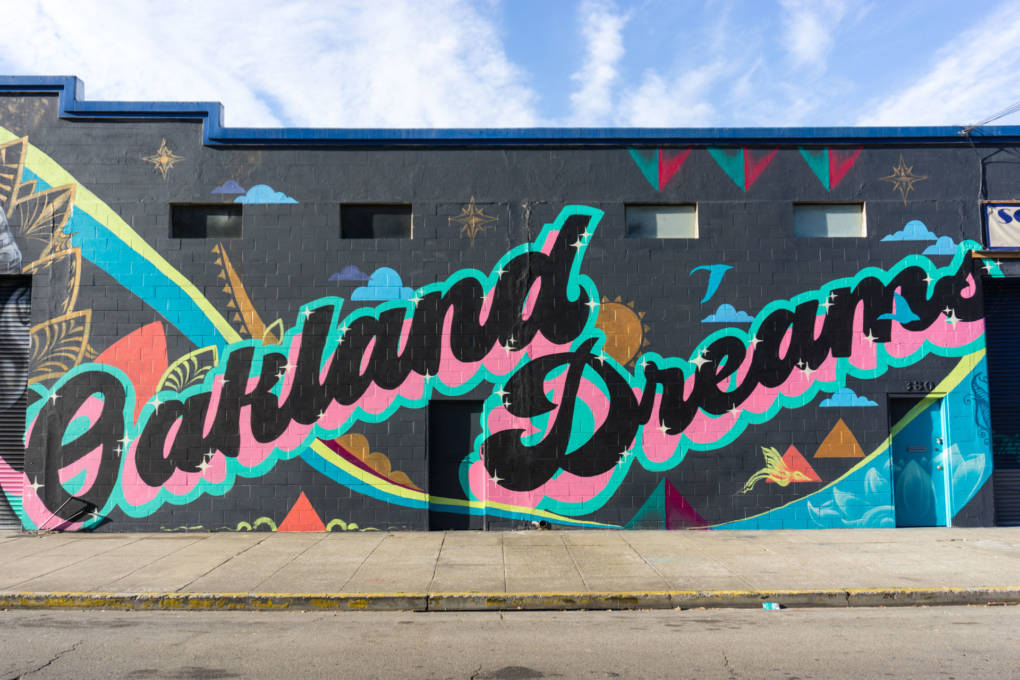
"caption": "Oakland Dreams mural by Trust Your Struggle Collective as part of Oakland Mural Festival 2018.",
"description": null,
"title": "OakMural-Header",
"credit": "Lina Blanco / KQED",
"status": "inherit",
"isLoading": false,
"fetchFailed": false
},
"arts_10837881": {
"type": "attachments",
"id": "arts_10837881",
"meta": {
"index": "attachments_1716263798",
"site": "arts",
"id": "10837881",
"found": true
},
"parent": 10837879,
"imgSizes": {
"twentyfourteen-full-width": {
"file": "https://ww2.kqed.org/app/uploads/sites/2/2015/07/RPSCBest-e1436896453538-1038x576.jpg",
"width": 1038,
"mimeType": "image/jpeg",
"height": 576
},
"thumbnail": {
"file": "https://ww2.kqed.org/app/uploads/sites/2/2015/07/RPSCBest-e1436896453538-400x225.jpg",
"width": 400,
"mimeType": "image/jpeg",
"height": 225
},
"fd-sm": {
"file": "https://ww2.kqed.org/app/uploads/sites/2/2015/07/RPSCBest-e1436896453538-960x540.jpg",
"width": 960,
"mimeType": "image/jpeg",
"height": 540
},
"post-thumbnail": {
"file": "https://ww2.kqed.org/app/uploads/sites/2/2015/07/RPSCBest-e1436896453538-672x372.jpg",
"width": 672,
"mimeType": "image/jpeg",
"height": 372
},
"kqedFullSize": {
"file": "https://ww2.kqed.org/app/uploads/sites/2/2015/07/RPSCBest-e1436896453538.jpg",
"width": 1600,
"height": 900
},
"large": {
"file": "https://ww2.kqed.org/app/uploads/sites/2/2015/07/RPSCBest-e1436896453538-1180x664.jpg",
"width": 1180,
"mimeType": "image/jpeg",
"height": 664
},
"guest-author-96": {
"file": "https://ww2.kqed.org/app/uploads/sites/2/2015/07/RPSCBest-e1436896453538-96x96.jpg",
"width": 96,
"mimeType": "image/jpeg",
"height": 96
},
"medium": {
"file": "https://ww2.kqed.org/app/uploads/sites/2/2015/07/RPSCBest-e1436896453538-800x450.jpg",
"width": 800,
"mimeType": "image/jpeg",
"height": 450
},
"guest-author-64": {
"file": "https://ww2.kqed.org/app/uploads/sites/2/2015/07/RPSCBest-e1436896453538-64x64.jpg",
"width": 64,
"mimeType": "image/jpeg",
"height": 64
},
"guest-author-32": {
"file": "https://ww2.kqed.org/app/uploads/sites/2/2015/07/RPSCBest-e1436896453538-32x32.jpg",
"width": 32,
"mimeType": "image/jpeg",
"height": 32
},
"fd-med": {
"file": "https://ww2.kqed.org/app/uploads/sites/2/2015/07/RPSCBest-e1436896453538-1180x664.jpg",
"width": 1180,
"mimeType": "image/jpeg",
"height": 664
},
"detail": {
"file": "https://ww2.kqed.org/app/uploads/sites/2/2015/07/RPSCBest-e1436896453538-75x75.jpg",
"width": 75,
"mimeType": "image/jpeg",
"height": 75
},
"guest-author-128": {
"file": "https://ww2.kqed.org/app/uploads/sites/2/2015/07/RPSCBest-e1436896453538-128x128.jpg",
"width": 128,
"mimeType": "image/jpeg",
"height": 128
}
},
"publishDate": 1436896402,
"modified": 1528411714,
"caption": "The former storefront of Rock Paper Scissors Collective, before it relocated to Warehouse 416 in downtown Oakland.",
"description": "The former storefront of Rock Paper Scissors Collective, before it relocated to Warehouse 416 in downtown Oakland.",
"title": "RPSCBest",
"credit": "Courtesy of RSPC Facebook Page",
"status": "inherit",
"isLoading": false,
"fetchFailed": false
},
"arts_13834527": {
"type": "attachments",
"id": "arts_13834527",
"meta": {
"index": "attachments_1716263798",
"site": "arts",
"id": "13834527",
"found": true
},
"parent": 13834419,
"imgSizes": {
"small": {
"file": "https://ww2.kqed.org/app/uploads/sites/2/2018/06/Enrique-Chagoya-Critical-Theory_COVER-520x293.jpg",
"width": 520,
"mimeType": "image/jpeg",
"height": 293
},
"twentyfourteen-full-width": {
"file": "https://ww2.kqed.org/app/uploads/sites/2/2018/06/Enrique-Chagoya-Critical-Theory_COVER-1038x576.jpg",
"width": 1038,
"mimeType": "image/jpeg",
"height": 576
},
"thumbnail": {
"file": "https://ww2.kqed.org/app/uploads/sites/2/2018/06/Enrique-Chagoya-Critical-Theory_COVER-160x90.jpg",
"width": 160,
"mimeType": "image/jpeg",
"height": 90
},
"fd-sm": {
"file": "https://ww2.kqed.org/app/uploads/sites/2/2018/06/Enrique-Chagoya-Critical-Theory_COVER-960x540.jpg",
"width": 960,
"mimeType": "image/jpeg",
"height": 540
},
"post-thumbnail": {
"file": "https://ww2.kqed.org/app/uploads/sites/2/2018/06/Enrique-Chagoya-Critical-Theory_COVER-672x372.jpg",
"width": 672,
"mimeType": "image/jpeg",
"height": 372
},
"xsmall": {
"file": "https://ww2.kqed.org/app/uploads/sites/2/2018/06/Enrique-Chagoya-Critical-Theory_COVER-375x211.jpg",
"width": 375,
"mimeType": "image/jpeg",
"height": 211
},
"kqedFullSize": {
"file": "https://ww2.kqed.org/app/uploads/sites/2/2018/06/Enrique-Chagoya-Critical-Theory_COVER.jpg",
"width": 1920,
"height": 1080
},
"large": {
"file": "https://ww2.kqed.org/app/uploads/sites/2/2018/06/Enrique-Chagoya-Critical-Theory_COVER-1020x574.jpg",
"width": 1020,
"mimeType": "image/jpeg",
"height": 574
},
"xlarge": {
"file": "https://ww2.kqed.org/app/uploads/sites/2/2018/06/Enrique-Chagoya-Critical-Theory_COVER-1180x664.jpg",
"width": 1180,
"mimeType": "image/jpeg",
"height": 664
},
"complete_open_graph": {
"file": "https://ww2.kqed.org/app/uploads/sites/2/2018/06/Enrique-Chagoya-Critical-Theory_COVER-1200x675.jpg",
"width": 1200,
"mimeType": "image/jpeg",
"height": 675
},
"guest-author-50": {
"file": "https://ww2.kqed.org/app/uploads/sites/2/2018/06/Enrique-Chagoya-Critical-Theory_COVER-50x50.jpg",
"width": 50,
"mimeType": "image/jpeg",
"height": 50
},
"guest-author-96": {
"file": "https://ww2.kqed.org/app/uploads/sites/2/2018/06/Enrique-Chagoya-Critical-Theory_COVER-96x96.jpg",
"width": 96,
"mimeType": "image/jpeg",
"height": 96
},
"medium": {
"file": "https://ww2.kqed.org/app/uploads/sites/2/2018/06/Enrique-Chagoya-Critical-Theory_COVER-800x450.jpg",
"width": 800,
"mimeType": "image/jpeg",
"height": 450
},
"guest-author-64": {
"file": "https://ww2.kqed.org/app/uploads/sites/2/2018/06/Enrique-Chagoya-Critical-Theory_COVER-64x64.jpg",
"width": 64,
"mimeType": "image/jpeg",
"height": 64
},
"guest-author-32": {
"file": "https://ww2.kqed.org/app/uploads/sites/2/2018/06/Enrique-Chagoya-Critical-Theory_COVER-32x32.jpg",
"width": 32,
"mimeType": "image/jpeg",
"height": 32
},
"fd-lrg": {
"file": "https://ww2.kqed.org/app/uploads/sites/2/2018/06/Enrique-Chagoya-Critical-Theory_COVER-1920x1080.jpg",
"width": 1920,
"mimeType": "image/jpeg",
"height": 1080
},
"fd-med": {
"file": "https://ww2.kqed.org/app/uploads/sites/2/2018/06/Enrique-Chagoya-Critical-Theory_COVER-1180x664.jpg",
"width": 1180,
"mimeType": "image/jpeg",
"height": 664
},
"full-width": {
"file": "https://ww2.kqed.org/app/uploads/sites/2/2018/06/Enrique-Chagoya-Critical-Theory_COVER-1920x1080.jpg",
"width": 1920,
"mimeType": "image/jpeg",
"height": 1080
},
"detail": {
"file": "https://ww2.kqed.org/app/uploads/sites/2/2018/06/Enrique-Chagoya-Critical-Theory_COVER-150x150.jpg",
"width": 150,
"mimeType": "image/jpeg",
"height": 150
},
"medium_large": {
"file": "https://ww2.kqed.org/app/uploads/sites/2/2018/06/Enrique-Chagoya-Critical-Theory_COVER-768x432.jpg",
"width": 768,
"mimeType": "image/jpeg",
"height": 432
},
"guest-author-128": {
"file": "https://ww2.kqed.org/app/uploads/sites/2/2018/06/Enrique-Chagoya-Critical-Theory_COVER-128x128.jpg",
"width": 128,
"mimeType": "image/jpeg",
"height": 128
},
"xxsmall": {
"file": "https://ww2.kqed.org/app/uploads/sites/2/2018/06/Enrique-Chagoya-Critical-Theory_COVER-240x135.jpg",
"width": 240,
"mimeType": "image/jpeg",
"height": 135
}
},
"publishDate": 1528326105,
"modified": 1528326146,
"caption": "Enrique Chagoya, Detail of 'Illegal Alien's Guide To Critical Theory,' 2007.",
"description": "Enrique Chagoya, Detail of 'Illegal Alien's Guide To Critical Theory,' 2007.",
"title": "Enrique-Chagoya-Critical-Theory_COVER",
"credit": "Collection of the Jordan Schnitzer Family Foundation",
"status": "inherit",
"isLoading": false,
"fetchFailed": false
},
"arts_13834314": {
"type": "attachments",
"id": "arts_13834314",
"meta": {
"index": "attachments_1716263798",
"site": "arts",
"id": "13834314",
"found": true
},
"parent": 13834231,
"imgSizes": {
"small": {
"file": "https://ww2.kqed.org/app/uploads/sites/2/2018/06/SFAC-Culture-Catalyst-MACRO-WAVES_COVER-520x293.jpg",
"width": 520,
"mimeType": "image/jpeg",
"height": 293
},
"twentyfourteen-full-width": {
"file": "https://ww2.kqed.org/app/uploads/sites/2/2018/06/SFAC-Culture-Catalyst-MACRO-WAVES_COVER-1024x576.jpg",
"width": 1024,
"mimeType": "image/jpeg",
"height": 576
},
"thumbnail": {
"file": "https://ww2.kqed.org/app/uploads/sites/2/2018/06/SFAC-Culture-Catalyst-MACRO-WAVES_COVER-160x90.jpg",
"width": 160,
"mimeType": "image/jpeg",
"height": 90
},
"fd-sm": {
"file": "https://ww2.kqed.org/app/uploads/sites/2/2018/06/SFAC-Culture-Catalyst-MACRO-WAVES_COVER-960x540.jpg",
"width": 960,
"mimeType": "image/jpeg",
"height": 540
},
"post-thumbnail": {
"file": "https://ww2.kqed.org/app/uploads/sites/2/2018/06/SFAC-Culture-Catalyst-MACRO-WAVES_COVER-672x372.jpg",
"width": 672,
"mimeType": "image/jpeg",
"height": 372
},
"xsmall": {
"file": "https://ww2.kqed.org/app/uploads/sites/2/2018/06/SFAC-Culture-Catalyst-MACRO-WAVES_COVER-375x211.jpg",
"width": 375,
"mimeType": "image/jpeg",
"height": 211
},
"kqedFullSize": {
"file": "https://ww2.kqed.org/app/uploads/sites/2/2018/06/SFAC-Culture-Catalyst-MACRO-WAVES_COVER.jpg",
"width": 1024,
"height": 576
},
"large": {
"file": "https://ww2.kqed.org/app/uploads/sites/2/2018/06/SFAC-Culture-Catalyst-MACRO-WAVES_COVER-1020x574.jpg",
"width": 1020,
"mimeType": "image/jpeg",
"height": 574
},
"guest-author-50": {
"file": "https://ww2.kqed.org/app/uploads/sites/2/2018/06/SFAC-Culture-Catalyst-MACRO-WAVES_COVER-50x50.jpg",
"width": 50,
"mimeType": "image/jpeg",
"height": 50
},
"guest-author-96": {
"file": "https://ww2.kqed.org/app/uploads/sites/2/2018/06/SFAC-Culture-Catalyst-MACRO-WAVES_COVER-96x96.jpg",
"width": 96,
"mimeType": "image/jpeg",
"height": 96
},
"medium": {
"file": "https://ww2.kqed.org/app/uploads/sites/2/2018/06/SFAC-Culture-Catalyst-MACRO-WAVES_COVER-800x450.jpg",
"width": 800,
"mimeType": "image/jpeg",
"height": 450
},
"guest-author-64": {
"file": "https://ww2.kqed.org/app/uploads/sites/2/2018/06/SFAC-Culture-Catalyst-MACRO-WAVES_COVER-64x64.jpg",
"width": 64,
"mimeType": "image/jpeg",
"height": 64
},
"guest-author-32": {
"file": "https://ww2.kqed.org/app/uploads/sites/2/2018/06/SFAC-Culture-Catalyst-MACRO-WAVES_COVER-32x32.jpg",
"width": 32,
"mimeType": "image/jpeg",
"height": 32
},
"detail": {
"file": "https://ww2.kqed.org/app/uploads/sites/2/2018/06/SFAC-Culture-Catalyst-MACRO-WAVES_COVER-150x150.jpg",
"width": 150,
"mimeType": "image/jpeg",
"height": 150
},
"medium_large": {
"file": "https://ww2.kqed.org/app/uploads/sites/2/2018/06/SFAC-Culture-Catalyst-MACRO-WAVES_COVER-768x432.jpg",
"width": 768,
"mimeType": "image/jpeg",
"height": 432
},
"guest-author-128": {
"file": "https://ww2.kqed.org/app/uploads/sites/2/2018/06/SFAC-Culture-Catalyst-MACRO-WAVES_COVER-128x128.jpg",
"width": 128,
"mimeType": "image/jpeg",
"height": 128
},
"xxsmall": {
"file": "https://ww2.kqed.org/app/uploads/sites/2/2018/06/SFAC-Culture-Catalyst-MACRO-WAVES_COVER-240x135.jpg",
"width": 240,
"mimeType": "image/jpeg",
"height": 135
}
},
"publishDate": 1528157554,
"modified": 1528157595,
"caption": "Installation view of MACRO WAVES' work in 'Culture Catalyst.'",
"description": "Installation view of MACRO WAVES' work in 'Culture Catalyst.'",
"title": "SFAC-Culture-Catalyst-MACRO-WAVES_COVER",
"credit": "Phillip Maisel",
"status": "inherit",
"isLoading": false,
"fetchFailed": false
},
"arts_13834249": {
"type": "attachments",
"id": "arts_13834249",
"meta": {
"index": "attachments_1716263798",
"site": "arts",
"id": "13834249",
"found": true
},
"parent": 13834248,
"imgSizes": {
"small": {
"file": "https://ww2.kqed.org/app/uploads/sites/2/2018/06/gettyimages-170287611_custom-971772ce42652aad2ce81b907d3d669dd6d81dae-520x390.jpg",
"width": 520,
"mimeType": "image/jpeg",
"height": 390
},
"twentyfourteen-full-width": {
"file": "https://ww2.kqed.org/app/uploads/sites/2/2018/06/gettyimages-170287611_custom-971772ce42652aad2ce81b907d3d669dd6d81dae-1038x576.jpg",
"width": 1038,
"mimeType": "image/jpeg",
"height": 576
},
"thumbnail": {
"file": "https://ww2.kqed.org/app/uploads/sites/2/2018/06/gettyimages-170287611_custom-971772ce42652aad2ce81b907d3d669dd6d81dae-160x120.jpg",
"width": 160,
"mimeType": "image/jpeg",
"height": 120
},
"fd-sm": {
"file": "https://ww2.kqed.org/app/uploads/sites/2/2018/06/gettyimages-170287611_custom-971772ce42652aad2ce81b907d3d669dd6d81dae-960x719.jpg",
"width": 960,
"mimeType": "image/jpeg",
"height": 719
},
"post-thumbnail": {
"file": "https://ww2.kqed.org/app/uploads/sites/2/2018/06/gettyimages-170287611_custom-971772ce42652aad2ce81b907d3d669dd6d81dae-672x372.jpg",
"width": 672,
"mimeType": "image/jpeg",
"height": 372
},
"xsmall": {
"file": "https://ww2.kqed.org/app/uploads/sites/2/2018/06/gettyimages-170287611_custom-971772ce42652aad2ce81b907d3d669dd6d81dae-375x281.jpg",
"width": 375,
"mimeType": "image/jpeg",
"height": 281
},
"kqedFullSize": {
"file": "https://ww2.kqed.org/app/uploads/sites/2/2018/06/gettyimages-170287611_custom-971772ce42652aad2ce81b907d3d669dd6d81dae.jpg",
"width": 2048,
"height": 1535
},
"large": {
"file": "https://ww2.kqed.org/app/uploads/sites/2/2018/06/gettyimages-170287611_custom-971772ce42652aad2ce81b907d3d669dd6d81dae-1020x764.jpg",
"width": 1020,
"mimeType": "image/jpeg",
"height": 764
},
"xlarge": {
"file": "https://ww2.kqed.org/app/uploads/sites/2/2018/06/gettyimages-170287611_custom-971772ce42652aad2ce81b907d3d669dd6d81dae-1180x884.jpg",
"width": 1180,
"mimeType": "image/jpeg",
"height": 884
},
"complete_open_graph": {
"file": "https://ww2.kqed.org/app/uploads/sites/2/2018/06/gettyimages-170287611_custom-971772ce42652aad2ce81b907d3d669dd6d81dae-1200x899.jpg",
"width": 1200,
"mimeType": "image/jpeg",
"height": 899
},
"guest-author-50": {
"file": "https://ww2.kqed.org/app/uploads/sites/2/2018/06/gettyimages-170287611_custom-971772ce42652aad2ce81b907d3d669dd6d81dae-50x50.jpg",
"width": 50,
"mimeType": "image/jpeg",
"height": 50
},
"guest-author-96": {
"file": "https://ww2.kqed.org/app/uploads/sites/2/2018/06/gettyimages-170287611_custom-971772ce42652aad2ce81b907d3d669dd6d81dae-96x96.jpg",
"width": 96,
"mimeType": "image/jpeg",
"height": 96
},
"medium": {
"file": "https://ww2.kqed.org/app/uploads/sites/2/2018/06/gettyimages-170287611_custom-971772ce42652aad2ce81b907d3d669dd6d81dae-800x599.jpg",
"width": 800,
"mimeType": "image/jpeg",
"height": 599
},
"guest-author-64": {
"file": "https://ww2.kqed.org/app/uploads/sites/2/2018/06/gettyimages-170287611_custom-971772ce42652aad2ce81b907d3d669dd6d81dae-64x64.jpg",
"width": 64,
"mimeType": "image/jpeg",
"height": 64
},
"guest-author-32": {
"file": "https://ww2.kqed.org/app/uploads/sites/2/2018/06/gettyimages-170287611_custom-971772ce42652aad2ce81b907d3d669dd6d81dae-32x32.jpg",
"width": 32,
"mimeType": "image/jpeg",
"height": 32
},
"fd-lrg": {
"file": "https://ww2.kqed.org/app/uploads/sites/2/2018/06/gettyimages-170287611_custom-971772ce42652aad2ce81b907d3d669dd6d81dae-1920x1439.jpg",
"width": 1920,
"mimeType": "image/jpeg",
"height": 1439
},
"fd-med": {
"file": "https://ww2.kqed.org/app/uploads/sites/2/2018/06/gettyimages-170287611_custom-971772ce42652aad2ce81b907d3d669dd6d81dae-1180x884.jpg",
"width": 1180,
"mimeType": "image/jpeg",
"height": 884
},
"full-width": {
"file": "https://ww2.kqed.org/app/uploads/sites/2/2018/06/gettyimages-170287611_custom-971772ce42652aad2ce81b907d3d669dd6d81dae-1920x1439.jpg",
"width": 1920,
"mimeType": "image/jpeg",
"height": 1439
},
"detail": {
"file": "https://ww2.kqed.org/app/uploads/sites/2/2018/06/gettyimages-170287611_custom-971772ce42652aad2ce81b907d3d669dd6d81dae-150x150.jpg",
"width": 150,
"mimeType": "image/jpeg",
"height": 150
},
"medium_large": {
"file": "https://ww2.kqed.org/app/uploads/sites/2/2018/06/gettyimages-170287611_custom-971772ce42652aad2ce81b907d3d669dd6d81dae-768x575.jpg",
"width": 768,
"mimeType": "image/jpeg",
"height": 575
},
"guest-author-128": {
"file": "https://ww2.kqed.org/app/uploads/sites/2/2018/06/gettyimages-170287611_custom-971772ce42652aad2ce81b907d3d669dd6d81dae-128x128.jpg",
"width": 128,
"mimeType": "image/jpeg",
"height": 128
},
"xxsmall": {
"file": "https://ww2.kqed.org/app/uploads/sites/2/2018/06/gettyimages-170287611_custom-971772ce42652aad2ce81b907d3d669dd6d81dae-240x180.jpg",
"width": 240,
"mimeType": "image/jpeg",
"height": 180
}
},
"publishDate": 1528135528,
"modified": 1528135973,
"caption": "In a secret room located in Florence's church of San Lorenzo the walls are covered in drawings believed to be the work of Michelangelo and his disciples.",
"description": "In a secret room located in Florence's church of San Lorenzo the walls are covered in drawings believed to be the work of Michelangelo and his disciples",
"title": "In a secret room located in Florence's church of San Lorenzo the walls are covered in drawings believed to be the work of Michelangelo and his disciples.",
"credit": "Claudio Giovannini/AFP/Getty Images",
"status": "inherit",
"isLoading": false,
"fetchFailed": false
},
"arts_12164010": {
"type": "attachments",
"id": "arts_12164010",
"meta": {
"index": "attachments_1716263798",
"site": "arts",
"id": "12164010",
"found": true
},
"parent": 12158579,
"imgSizes": {
"thumbnail": {
"file": "https://ww2.kqed.org/app/uploads/sites/2/2016/10/BPPEventsCover-400x225.jpg",
"width": 400,
"mimeType": "image/jpeg",
"height": 225
},
"post-thumbnail": {
"file": "https://ww2.kqed.org/app/uploads/sites/2/2016/10/BPPEventsCover-672x372.jpg",
"width": 672,
"mimeType": "image/jpeg",
"height": 372
},
"kqedFullSize": {
"file": "https://ww2.kqed.org/app/uploads/sites/2/2016/10/BPPEventsCover.jpg",
"width": 742,
"height": 417
},
"guest-author-50": {
"file": "https://ww2.kqed.org/app/uploads/sites/2/2016/10/BPPEventsCover-50x50.jpg",
"width": 50,
"mimeType": "image/jpeg",
"height": 50
},
"guest-author-96": {
"file": "https://ww2.kqed.org/app/uploads/sites/2/2016/10/BPPEventsCover-96x96.jpg",
"width": 96,
"mimeType": "image/jpeg",
"height": 96
},
"guest-author-64": {
"file": "https://ww2.kqed.org/app/uploads/sites/2/2016/10/BPPEventsCover-64x64.jpg",
"width": 64,
"mimeType": "image/jpeg",
"height": 64
},
"detail": {
"file": "https://ww2.kqed.org/app/uploads/sites/2/2016/10/BPPEventsCover-150x150.jpg",
"width": 150,
"mimeType": "image/jpeg",
"height": 150
},
"guest-author-32": {
"file": "https://ww2.kqed.org/app/uploads/sites/2/2016/10/BPPEventsCover-32x32.jpg",
"width": 32,
"mimeType": "image/jpeg",
"height": 32
},
"guest-author-128": {
"file": "https://ww2.kqed.org/app/uploads/sites/2/2016/10/BPPEventsCover-128x128.jpg",
"width": 128,
"mimeType": "image/jpeg",
"height": 128
}
},
"publishDate": 1475704095,
"modified": 1475704135,
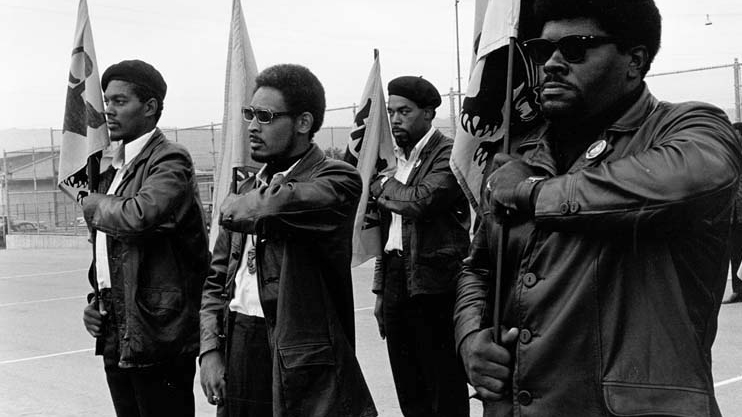
"caption": "The Black Panthers, with Elbert 'Big Man' Howard at right, engaged in a practice drill.",
"description": "The Black Panthers, with Elbert 'Big Man' Howard at right, engaged in a practice drill.",
"title": "BPPEventsCover",
"credit": "Pirkle Jones",
"status": "inherit",
"isLoading": false,
"fetchFailed": false
},
"arts_13833777": {
"type": "attachments",
"id": "arts_13833777",
"meta": {
"index": "attachments_1716263798",
"site": "arts",
"id": "13833777",
"found": true
},
"parent": 13833444,
"imgSizes": {
"small": {
"file": "https://ww2.kqed.org/app/uploads/sites/2/2018/05/Landeros_Kathya_WilliamsCA_COVER-520x293.jpg",
"width": 520,
"mimeType": "image/jpeg",
"height": 293
},
"twentyfourteen-full-width": {
"file": "https://ww2.kqed.org/app/uploads/sites/2/2018/05/Landeros_Kathya_WilliamsCA_COVER-1038x576.jpg",
"width": 1038,
"mimeType": "image/jpeg",
"height": 576
},
"thumbnail": {
"file": "https://ww2.kqed.org/app/uploads/sites/2/2018/05/Landeros_Kathya_WilliamsCA_COVER-160x90.jpg",
"width": 160,
"mimeType": "image/jpeg",
"height": 90
},
"fd-sm": {
"file": "https://ww2.kqed.org/app/uploads/sites/2/2018/05/Landeros_Kathya_WilliamsCA_COVER-960x540.jpg",
"width": 960,
"mimeType": "image/jpeg",
"height": 540
},
"post-thumbnail": {
"file": "https://ww2.kqed.org/app/uploads/sites/2/2018/05/Landeros_Kathya_WilliamsCA_COVER-672x372.jpg",
"width": 672,
"mimeType": "image/jpeg",
"height": 372
},
"xsmall": {
"file": "https://ww2.kqed.org/app/uploads/sites/2/2018/05/Landeros_Kathya_WilliamsCA_COVER-375x211.jpg",
"width": 375,
"mimeType": "image/jpeg",
"height": 211
},
"kqedFullSize": {
"file": "https://ww2.kqed.org/app/uploads/sites/2/2018/05/Landeros_Kathya_WilliamsCA_COVER.jpg",
"width": 1920,
"height": 1080
},
"large": {
"file": "https://ww2.kqed.org/app/uploads/sites/2/2018/05/Landeros_Kathya_WilliamsCA_COVER-1020x574.jpg",
"width": 1020,
"mimeType": "image/jpeg",
"height": 574
},
"xlarge": {
"file": "https://ww2.kqed.org/app/uploads/sites/2/2018/05/Landeros_Kathya_WilliamsCA_COVER-1180x664.jpg",
"width": 1180,
"mimeType": "image/jpeg",
"height": 664
},
"complete_open_graph": {
"file": "https://ww2.kqed.org/app/uploads/sites/2/2018/05/Landeros_Kathya_WilliamsCA_COVER-1200x675.jpg",
"width": 1200,
"mimeType": "image/jpeg",
"height": 675
},
"guest-author-50": {
"file": "https://ww2.kqed.org/app/uploads/sites/2/2018/05/Landeros_Kathya_WilliamsCA_COVER-50x50.jpg",
"width": 50,
"mimeType": "image/jpeg",
"height": 50
},
"guest-author-96": {
"file": "https://ww2.kqed.org/app/uploads/sites/2/2018/05/Landeros_Kathya_WilliamsCA_COVER-96x96.jpg",
"width": 96,
"mimeType": "image/jpeg",
"height": 96
},
"medium": {
"file": "https://ww2.kqed.org/app/uploads/sites/2/2018/05/Landeros_Kathya_WilliamsCA_COVER-800x450.jpg",
"width": 800,
"mimeType": "image/jpeg",
"height": 450
},
"guest-author-64": {
"file": "https://ww2.kqed.org/app/uploads/sites/2/2018/05/Landeros_Kathya_WilliamsCA_COVER-64x64.jpg",
"width": 64,
"mimeType": "image/jpeg",
"height": 64
},
"guest-author-32": {
"file": "https://ww2.kqed.org/app/uploads/sites/2/2018/05/Landeros_Kathya_WilliamsCA_COVER-32x32.jpg",
"width": 32,
"mimeType": "image/jpeg",
"height": 32
},
"fd-lrg": {
"file": "https://ww2.kqed.org/app/uploads/sites/2/2018/05/Landeros_Kathya_WilliamsCA_COVER-1920x1080.jpg",
"width": 1920,
"mimeType": "image/jpeg",
"height": 1080
},
"fd-med": {
"file": "https://ww2.kqed.org/app/uploads/sites/2/2018/05/Landeros_Kathya_WilliamsCA_COVER-1180x664.jpg",
"width": 1180,
"mimeType": "image/jpeg",
"height": 664
},
"full-width": {
"file": "https://ww2.kqed.org/app/uploads/sites/2/2018/05/Landeros_Kathya_WilliamsCA_COVER-1920x1080.jpg",
"width": 1920,
"mimeType": "image/jpeg",
"height": 1080
},
"detail": {
"file": "https://ww2.kqed.org/app/uploads/sites/2/2018/05/Landeros_Kathya_WilliamsCA_COVER-150x150.jpg",
"width": 150,
"mimeType": "image/jpeg",
"height": 150
},
"medium_large": {
"file": "https://ww2.kqed.org/app/uploads/sites/2/2018/05/Landeros_Kathya_WilliamsCA_COVER-768x432.jpg",
"width": 768,
"mimeType": "image/jpeg",
"height": 432
},
"guest-author-128": {
"file": "https://ww2.kqed.org/app/uploads/sites/2/2018/05/Landeros_Kathya_WilliamsCA_COVER-128x128.jpg",
"width": 128,
"mimeType": "image/jpeg",
"height": 128
},
"xxsmall": {
"file": "https://ww2.kqed.org/app/uploads/sites/2/2018/05/Landeros_Kathya_WilliamsCA_COVER-240x135.jpg",
"width": 240,
"mimeType": "image/jpeg",
"height": 135
}
},
"publishDate": 1527642564,
"modified": 1527642622,
"caption": "Kathya Maria Landeros, 'Federal Migrant Farm Worker Community, Williams, California,' 2013.",
"description": null,
"title": "20130607California 001",
"credit": "Courtesy of the artist",
"status": "inherit",
"isLoading": false,
"fetchFailed": false
},
"arts_13833901": {
"type": "attachments",
"id": "arts_13833901",
"meta": {
"index": "attachments_1716263798",
"site": "arts",
"id": "13833901",
"found": true
},
"parent": 13833871,
"imgSizes": {
"small": {
"file": "https://ww2.kqed.org/app/uploads/sites/2/2018/05/Haifa-Feature-Use-520x293.jpg",
"width": 520,
"mimeType": "image/jpeg",
"height": 293
},
"twentyfourteen-full-width": {
"file": "https://ww2.kqed.org/app/uploads/sites/2/2018/05/Haifa-Feature-Use-1038x576.jpg",
"width": 1038,
"mimeType": "image/jpeg",
"height": 576
},
"thumbnail": {
"file": "https://ww2.kqed.org/app/uploads/sites/2/2018/05/Haifa-Feature-Use-160x90.jpg",
"width": 160,
"mimeType": "image/jpeg",
"height": 90
},
"fd-sm": {
"file": "https://ww2.kqed.org/app/uploads/sites/2/2018/05/Haifa-Feature-Use-960x540.jpg",
"width": 960,
"mimeType": "image/jpeg",
"height": 540
},
"post-thumbnail": {
"file": "https://ww2.kqed.org/app/uploads/sites/2/2018/05/Haifa-Feature-Use-672x372.jpg",
"width": 672,
"mimeType": "image/jpeg",
"height": 372
},
"xsmall": {
"file": "https://ww2.kqed.org/app/uploads/sites/2/2018/05/Haifa-Feature-Use-375x211.jpg",
"width": 375,
"mimeType": "image/jpeg",
"height": 211
},
"kqedFullSize": {
"file": "https://ww2.kqed.org/app/uploads/sites/2/2018/05/Haifa-Feature-Use.jpg",
"width": 1920,
"height": 1080
},
"large": {
"file": "https://ww2.kqed.org/app/uploads/sites/2/2018/05/Haifa-Feature-Use-1020x574.jpg",
"width": 1020,
"mimeType": "image/jpeg",
"height": 574
},
"xlarge": {
"file": "https://ww2.kqed.org/app/uploads/sites/2/2018/05/Haifa-Feature-Use-1180x664.jpg",
"width": 1180,
"mimeType": "image/jpeg",
"height": 664
},
"complete_open_graph": {
"file": "https://ww2.kqed.org/app/uploads/sites/2/2018/05/Haifa-Feature-Use-1200x675.jpg",
"width": 1200,
"mimeType": "image/jpeg",
"height": 675
},
"guest-author-50": {
"file": "https://ww2.kqed.org/app/uploads/sites/2/2018/05/Haifa-Feature-Use-50x50.jpg",
"width": 50,
"mimeType": "image/jpeg",
"height": 50
},
"guest-author-96": {
"file": "https://ww2.kqed.org/app/uploads/sites/2/2018/05/Haifa-Feature-Use-96x96.jpg",
"width": 96,
"mimeType": "image/jpeg",
"height": 96
},
"medium": {
"file": "https://ww2.kqed.org/app/uploads/sites/2/2018/05/Haifa-Feature-Use-800x450.jpg",
"width": 800,
"mimeType": "image/jpeg",
"height": 450
},
"guest-author-64": {
"file": "https://ww2.kqed.org/app/uploads/sites/2/2018/05/Haifa-Feature-Use-64x64.jpg",
"width": 64,
"mimeType": "image/jpeg",
"height": 64
},
"guest-author-32": {
"file": "https://ww2.kqed.org/app/uploads/sites/2/2018/05/Haifa-Feature-Use-32x32.jpg",
"width": 32,
"mimeType": "image/jpeg",
"height": 32
},
"fd-lrg": {
"file": "https://ww2.kqed.org/app/uploads/sites/2/2018/05/Haifa-Feature-Use-1920x1080.jpg",
"width": 1920,
"mimeType": "image/jpeg",
"height": 1080
},
"fd-med": {
"file": "https://ww2.kqed.org/app/uploads/sites/2/2018/05/Haifa-Feature-Use-1180x664.jpg",
"width": 1180,
"mimeType": "image/jpeg",
"height": 664
},
"full-width": {
"file": "https://ww2.kqed.org/app/uploads/sites/2/2018/05/Haifa-Feature-Use-1920x1080.jpg",
"width": 1920,
"mimeType": "image/jpeg",
"height": 1080
},
"detail": {
"file": "https://ww2.kqed.org/app/uploads/sites/2/2018/05/Haifa-Feature-Use-150x150.jpg",
"width": 150,
"mimeType": "image/jpeg",
"height": 150
},
"medium_large": {
"file": "https://ww2.kqed.org/app/uploads/sites/2/2018/05/Haifa-Feature-Use-768x432.jpg",
"width": 768,
"mimeType": "image/jpeg",
"height": 432
},
"guest-author-128": {
"file": "https://ww2.kqed.org/app/uploads/sites/2/2018/05/Haifa-Feature-Use-128x128.jpg",
"width": 128,
"mimeType": "image/jpeg",
"height": 128
},
"xxsmall": {
"file": "https://ww2.kqed.org/app/uploads/sites/2/2018/05/Haifa-Feature-Use-240x135.jpg",
"width": 240,
"mimeType": "image/jpeg",
"height": 135
}
},
"publishDate": 1527729938,
"modified": 1527730040,
"caption": "One of the \"Point Of View\" towers ",
"description": "One of the \"Point Of View\" towers ",
"title": "Haifa Feature Use",
"credit": "Courtesy of the San Francisco Arts Commission",
"status": "inherit",
"isLoading": false,
"fetchFailed": false
},
"arts_13833857": {
"type": "attachments",
"id": "arts_13833857",
"meta": {
"index": "attachments_1716263798",
"site": "arts",
"id": "13833857",
"found": true
},
"parent": 13833817,
"imgSizes": {
"small": {
"file": "https://ww2.kqed.org/app/uploads/sites/2/2018/05/08-e1527720308667-520x292.jpg",
"width": 520,
"mimeType": "image/jpeg",
"height": 292
},
"twentyfourteen-full-width": {
"file": "https://ww2.kqed.org/app/uploads/sites/2/2018/05/08-e1527720308667-1038x576.jpg",
"width": 1038,
"mimeType": "image/jpeg",
"height": 576
},
"thumbnail": {
"file": "https://ww2.kqed.org/app/uploads/sites/2/2018/05/08-e1527720308667-160x90.jpg",
"width": 160,
"mimeType": "image/jpeg",
"height": 90
},
"fd-sm": {
"file": "https://ww2.kqed.org/app/uploads/sites/2/2018/05/08-e1527720308667-960x540.jpg",
"width": 960,
"mimeType": "image/jpeg",
"height": 540
},
"post-thumbnail": {
"file": "https://ww2.kqed.org/app/uploads/sites/2/2018/05/08-e1527720308667-672x372.jpg",
"width": 672,
"mimeType": "image/jpeg",
"height": 372
},
"xsmall": {
"file": "https://ww2.kqed.org/app/uploads/sites/2/2018/05/08-e1527720308667-375x211.jpg",
"width": 375,
"mimeType": "image/jpeg",
"height": 211
},
"kqedFullSize": {
"file": "https://ww2.kqed.org/app/uploads/sites/2/2018/05/08-e1527720308667.jpg",
"width": 1300,
"height": 731
},
"large": {
"file": "https://ww2.kqed.org/app/uploads/sites/2/2018/05/08-e1527720308667-1020x574.jpg",
"width": 1020,
"mimeType": "image/jpeg",
"height": 574
},
"xlarge": {
"file": "https://ww2.kqed.org/app/uploads/sites/2/2018/05/08-e1527720308667-1180x664.jpg",
"width": 1180,
"mimeType": "image/jpeg",
"height": 664
},
"complete_open_graph": {
"file": "https://ww2.kqed.org/app/uploads/sites/2/2018/05/08-e1527720308667-1200x675.jpg",
"width": 1200,
"mimeType": "image/jpeg",
"height": 675
},
"guest-author-50": {
"file": "https://ww2.kqed.org/app/uploads/sites/2/2018/05/08-e1527720308667-50x50.jpg",
"width": 50,
"mimeType": "image/jpeg",
"height": 50
},
"guest-author-96": {
"file": "https://ww2.kqed.org/app/uploads/sites/2/2018/05/08-e1527720308667-96x96.jpg",
"width": 96,
"mimeType": "image/jpeg",
"height": 96
},
"medium": {
"file": "https://ww2.kqed.org/app/uploads/sites/2/2018/05/08-e1527720308667-800x450.jpg",
"width": 800,
"mimeType": "image/jpeg",
"height": 450
},
"guest-author-64": {
"file": "https://ww2.kqed.org/app/uploads/sites/2/2018/05/08-e1527720308667-64x64.jpg",
"width": 64,
"mimeType": "image/jpeg",
"height": 64
},
"guest-author-32": {
"file": "https://ww2.kqed.org/app/uploads/sites/2/2018/05/08-e1527720308667-32x32.jpg",
"width": 32,
"mimeType": "image/jpeg",
"height": 32
},
"fd-med": {
"file": "https://ww2.kqed.org/app/uploads/sites/2/2018/05/08-e1527720308667-1180x664.jpg",
"width": 1180,
"mimeType": "image/jpeg",
"height": 664
},
"detail": {
"file": "https://ww2.kqed.org/app/uploads/sites/2/2018/05/08-e1527720308667-150x150.jpg",
"width": 150,
"mimeType": "image/jpeg",
"height": 150
},
"medium_large": {
"file": "https://ww2.kqed.org/app/uploads/sites/2/2018/05/08-e1527720308667-768x432.jpg",
"width": 768,
"mimeType": "image/jpeg",
"height": 432
},
"guest-author-128": {
"file": "https://ww2.kqed.org/app/uploads/sites/2/2018/05/08-e1527720308667-128x128.jpg",
"width": 128,
"mimeType": "image/jpeg",
"height": 128
},
"xxsmall": {
"file": "https://ww2.kqed.org/app/uploads/sites/2/2018/05/08-e1527720308667-240x135.jpg",
"width": 240,
"mimeType": "image/jpeg",
"height": 135
}
},
"publishDate": 1527720181,
"modified": 1527720444,
"caption": "19-year-old Prince captured outside of Schmitt Music in Minneapolis on the eve of releasing his first album 'For You.'",
"description": "19-year-old Prince captured outside of Schmitt Music in Minneapolis on the eve of releasing his first album 'For You.'",
"title": "19-year-old Prince captured outside of Schmitt Music in Minneapolis on the eve of releasing his first album 'For You.'",
"credit": "Robert Whitman",
"status": "inherit",
"isLoading": false,
"fetchFailed": false
},
"arts_13833819": {
"type": "attachments",
"id": "arts_13833819",
"meta": {
"index": "attachments_1716263798",
"site": "arts",
"id": "13833819",
"found": true
},
"parent": 13833740,
"imgSizes": {
"small": {
"file": "https://ww2.kqed.org/app/uploads/sites/2/2018/05/PasionPorFrida69crop-520x293.jpg",
"width": 520,
"mimeType": "image/jpeg",
"height": 293
},
"twentyfourteen-full-width": {
"file": "https://ww2.kqed.org/app/uploads/sites/2/2018/05/PasionPorFrida69crop-1038x576.jpg",
"width": 1038,
"mimeType": "image/jpeg",
"height": 576
},
"thumbnail": {
"file": "https://ww2.kqed.org/app/uploads/sites/2/2018/05/PasionPorFrida69crop-160x90.jpg",
"width": 160,
"mimeType": "image/jpeg",
"height": 90
},
"fd-sm": {
"file": "https://ww2.kqed.org/app/uploads/sites/2/2018/05/PasionPorFrida69crop-960x540.jpg",
"width": 960,
"mimeType": "image/jpeg",
"height": 540
},
"post-thumbnail": {
"file": "https://ww2.kqed.org/app/uploads/sites/2/2018/05/PasionPorFrida69crop-672x372.jpg",
"width": 672,
"mimeType": "image/jpeg",
"height": 372
},
"xsmall": {
"file": "https://ww2.kqed.org/app/uploads/sites/2/2018/05/PasionPorFrida69crop-375x211.jpg",
"width": 375,
"mimeType": "image/jpeg",
"height": 211
},
"kqedFullSize": {
"file": "https://ww2.kqed.org/app/uploads/sites/2/2018/05/PasionPorFrida69crop.jpg",
"width": 1920,
"height": 1080
},
"large": {
"file": "https://ww2.kqed.org/app/uploads/sites/2/2018/05/PasionPorFrida69crop-1020x574.jpg",
"width": 1020,
"mimeType": "image/jpeg",
"height": 574
},
"xlarge": {
"file": "https://ww2.kqed.org/app/uploads/sites/2/2018/05/PasionPorFrida69crop-1180x664.jpg",
"width": 1180,
"mimeType": "image/jpeg",
"height": 664
},
"complete_open_graph": {
"file": "https://ww2.kqed.org/app/uploads/sites/2/2018/05/PasionPorFrida69crop-1200x675.jpg",
"width": 1200,
"mimeType": "image/jpeg",
"height": 675
},
"guest-author-50": {
"file": "https://ww2.kqed.org/app/uploads/sites/2/2018/05/PasionPorFrida69crop-50x50.jpg",
"width": 50,
"mimeType": "image/jpeg",
"height": 50
},
"guest-author-96": {
"file": "https://ww2.kqed.org/app/uploads/sites/2/2018/05/PasionPorFrida69crop-96x96.jpg",
"width": 96,
"mimeType": "image/jpeg",
"height": 96
},
"medium": {
"file": "https://ww2.kqed.org/app/uploads/sites/2/2018/05/PasionPorFrida69crop-800x450.jpg",
"width": 800,
"mimeType": "image/jpeg",
"height": 450
},
"guest-author-64": {
"file": "https://ww2.kqed.org/app/uploads/sites/2/2018/05/PasionPorFrida69crop-64x64.jpg",
"width": 64,
"mimeType": "image/jpeg",
"height": 64
},
"guest-author-32": {
"file": "https://ww2.kqed.org/app/uploads/sites/2/2018/05/PasionPorFrida69crop-32x32.jpg",
"width": 32,
"mimeType": "image/jpeg",
"height": 32
},
"fd-lrg": {
"file": "https://ww2.kqed.org/app/uploads/sites/2/2018/05/PasionPorFrida69crop-1920x1080.jpg",
"width": 1920,
"mimeType": "image/jpeg",
"height": 1080
},
"fd-med": {
"file": "https://ww2.kqed.org/app/uploads/sites/2/2018/05/PasionPorFrida69crop-1180x664.jpg",
"width": 1180,
"mimeType": "image/jpeg",
"height": 664
},
"full-width": {
"file": "https://ww2.kqed.org/app/uploads/sites/2/2018/05/PasionPorFrida69crop-1920x1080.jpg",
"width": 1920,
"mimeType": "image/jpeg",
"height": 1080
},
"detail": {
"file": "https://ww2.kqed.org/app/uploads/sites/2/2018/05/PasionPorFrida69crop-150x150.jpg",
"width": 150,
"mimeType": "image/jpeg",
"height": 150
},
"medium_large": {
"file": "https://ww2.kqed.org/app/uploads/sites/2/2018/05/PasionPorFrida69crop-768x432.jpg",
"width": 768,
"mimeType": "image/jpeg",
"height": 432
},
"guest-author-128": {
"file": "https://ww2.kqed.org/app/uploads/sites/2/2018/05/PasionPorFrida69crop-128x128.jpg",
"width": 128,
"mimeType": "image/jpeg",
"height": 128
},
"xxsmall": {
"file": "https://ww2.kqed.org/app/uploads/sites/2/2018/05/PasionPorFrida69crop-240x135.jpg",
"width": 240,
"mimeType": "image/jpeg",
"height": 135
}
},
"publishDate": 1527707044,
"modified": 1527707581,
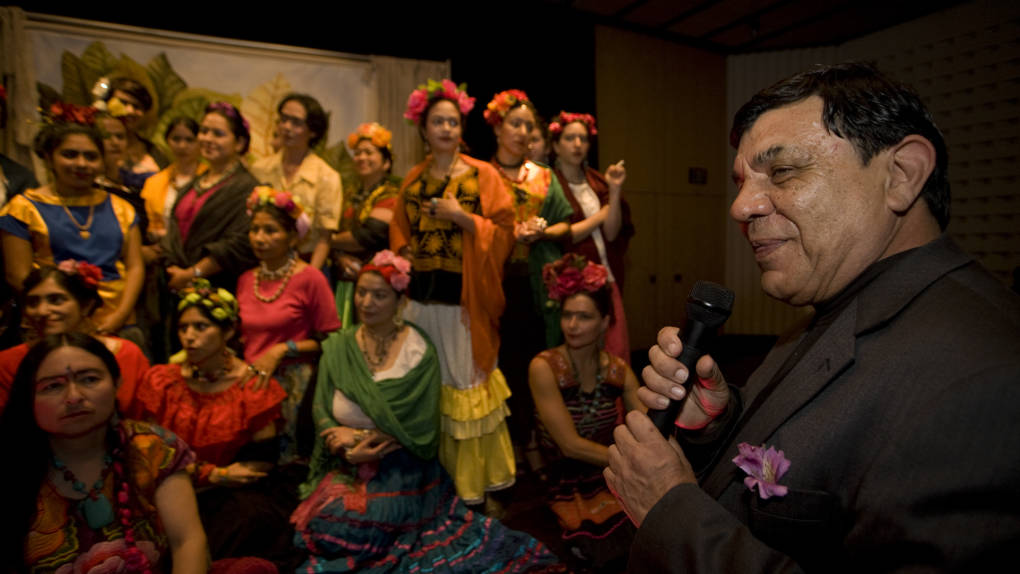
"caption": "A multitude of Fridas converged upon the SFMOMA for the \"Pasión por Frida!\" event — the culmination of the Frida Kahlo exhibit. Curated by Rene Yanez, \"Pasión por Frida!\" was an all day event which the modern day Fridas acted on several stages, painted, sand, wandered the gallery searching for Diego.",
"description": "A multitude of Fridas converged upon the SFMOMA for the \"Pasión por Frida!\" event — the culmination of the Frida Kahlo exhibit. Curated by Rene Yanez, \"Pasión por Frida!\" was an all day event which the modern day Fridas acted on several stages, painted, sand, wandered the gallery searching for Diego.",
"title": "Pasion Por Frida at SFMOMA",
"credit": "Kris Davidson, courtesy SFMOMA",
"status": "inherit",
"isLoading": false,
"fetchFailed": false
}
},
"audioPlayerReducer": {
"postId": "stream_live",
"isPaused": true,
"isPlaying": false,
"pfsActive": false,
"pledgeModalIsOpen": true,
"playerDrawerIsOpen": false,
"liveAudioPlayStartedAt": 0,
"liveAudioPlayContext": ""
},
"authorsReducer": {
"byline_arts_13834248": {
"type": "authors",
"id": "byline_arts_13834248",
"meta": {
"override": true
},
"slug": "byline_arts_13834248",
"name": "Sylvia Poggioli",
"isLoading": false
},
"rseikaly": {
"type": "authors",
"id": "77",
"meta": {
"index": "authors_1716337520",
"id": "77",
"found": true
},
"name": "Roula Seikaly",
"firstName": "Roula",
"lastName": "Seikaly",
"slug": "rseikaly",
"email": "roula@roulaseikaly.com",
"display_author_email": false,
"staff_mastheads": [],
"title": "KQED Contributor",
"bio": "Roula Seikaly in an independent writer and curator based in Berkeley, California, and Senior Editor at \u003ca href=\"http://hafny.org/\">Humble Arts Foundation\u003c/a>. She has curated exhibitions at Colorado Photographic Arts Center, Filter Photo Festival, Blue Sky Gallery, SF Camerawork, SOMArts, and the Utah Museum of Arts. She is a regular contributor to Photograph, Hyerallergic, BOMB Magazine, and KQED Arts.",
"avatar": "https://secure.gravatar.com/avatar/771cde409896af1326a07050f2e4e489?s=600&d=blank&r=g",
"twitter": null,
"facebook": null,
"instagram": null,
"linkedin": null,
"sites": [
{
"site": "arts",
"roles": [
"Contributor",
"contributor"
]
}
],
"headData": {
"title": "Roula Seikaly | KQED",
"description": "KQED Contributor",
"ogImgSrc": "https://secure.gravatar.com/avatar/771cde409896af1326a07050f2e4e489?s=600&d=blank&r=g",
"twImgSrc": "https://secure.gravatar.com/avatar/771cde409896af1326a07050f2e4e489?s=600&d=blank&r=g"
},
"isLoading": false,
"link": "/author/rseikaly"
},
"kjones": {
"type": "authors",
"id": "93",
"meta": {
"index": "authors_1716337520",
"id": "93",
"found": true
},
"name": "Kevin L. Jones",
"firstName": "Kevin",
"lastName": "Jones",
"slug": "kjones",
"email": "kjones@kqed.org",
"display_author_email": false,
"staff_mastheads": [],
"title": null,
"bio": null,
"avatar": "https://secure.gravatar.com/avatar/12c65b5633ed39d0a59bb7f497eff645?s=600&d=blank&r=g",
"twitter": null,
"facebook": null,
"instagram": null,
"linkedin": null,
"sites": [
{
"site": "arts",
"roles": [
"subscriber"
]
},
{
"site": "styleguide",
"roles": [
"contributor"
]
},
{
"site": "artschool",
"roles": [
"subscriber"
]
},
{
"site": "news",
"roles": [
"subscriber"
]
},
{
"site": "pop",
"roles": [
"subscriber"
]
}
],
"headData": {
"title": "Kevin L. Jones | KQED",
"description": null,
"ogImgSrc": "https://secure.gravatar.com/avatar/12c65b5633ed39d0a59bb7f497eff645?s=600&d=blank&r=g",
"twImgSrc": "https://secure.gravatar.com/avatar/12c65b5633ed39d0a59bb7f497eff645?s=600&d=blank&r=g"
},
"isLoading": false,
"link": "/author/kjones"
},
"gmeline": {
"type": "authors",
"id": "185",
"meta": {
"index": "authors_1716337520",
"id": "185",
"found": true
},
"name": "Gabe Meline",
"firstName": "Gabe",
"lastName": "Meline",
"slug": "gmeline",
"email": "gmeline@kqed.org",
"display_author_email": true,
"staff_mastheads": [
"arts"
],
"title": "Senior Editor, KQED Arts & Culture",
"bio": "Gabe Meline entered journalism at age 15 making photocopied zines, and has since earned awards from the Edward R. Murrow Awards, the Society for Professional Journalists, the Online Journalism Awards, the Association of Alternative Newsweeklies and the California Newspaper Publishers Association. Prior to KQED, he was the editor of the \u003cem>North Bay Bohemian\u003c/em> and a touring musician. He lives with his wife and daughter in his hometown of Santa Rosa, CA.",
"avatar": "https://secure.gravatar.com/avatar/5bebe57be0d8bc2dd318934feb47299e2d2d10cba28d09d8d7afb389a2ce2bdd?s=600&d=blank&r=g",
"twitter": null,
"bluesky": null,
"facebook": null,
"instagram": null,
"linkedin": null,
"sites": [
{
"site": "",
"roles": [
"editor"
]
},
{
"site": "arts",
"roles": [
"administrator"
]
},
{
"site": "artschool",
"roles": [
"editor"
]
},
{
"site": "news",
"roles": [
"author"
]
},
{
"site": "pop",
"roles": [
"editor"
]
},
{
"site": "bayareabites",
"roles": [
"editor"
]
},
{
"site": "food",
"roles": [
"editor"
]
},
{
"site": "forum",
"roles": [
"administrator"
]
},
{
"site": "liveblog",
"roles": [
"editor"
]
},
{
"site": "hiphop",
"roles": [
"editor"
]
}
],
"headData": {
"title": "Gabe Meline | KQED",
"description": "Senior Editor, KQED Arts & Culture",
"ogImgSrc": "https://secure.gravatar.com/avatar/5bebe57be0d8bc2dd318934feb47299e2d2d10cba28d09d8d7afb389a2ce2bdd?s=600&d=blank&r=g",
"twImgSrc": "https://secure.gravatar.com/avatar/5bebe57be0d8bc2dd318934feb47299e2d2d10cba28d09d8d7afb389a2ce2bdd?s=600&d=blank&r=g"
},
"isLoading": false,
"link": "/author/gmeline"
},
"mtedford": {
"type": "authors",
"id": "187",
"meta": {
"index": "authors_1716337520",
"id": "187",
"found": true
},
"name": "Matthew Harrison Tedford",
"firstName": "Matthew Harrison",
"lastName": "Tedford",
"slug": "mtedford",
"email": "mhtedford@gmail.com",
"display_author_email": false,
"staff_mastheads": [],
"title": null,
"bio": "\u003ca href=\"http://www.mhtedford.com\">Matthew Harrison Tedford\u003c/a> is a writer whose work focuses on contemporary art, film, and California history. His writing has appeared in \u003cem id=\"yui_3_17_2_1_1403197832753_7692\">Art Practical\u003c/em>, \u003cem>Daily Serving\u003c/em>, \u003cem>Glance\u003c/em> (California College of the Arts), the \u003cem>Huffington Post\u003c/em>, \u003cem>Oakland Standard\u003c/em> (Oakland Museum of California), \u003cem>Open Space\u003c/em> (SFMOMA), \u003cem>Poor Taste Magazine\u003c/em>, \u003cem>SF Weekly\u003c/em>, and \u003cem>Wilder Quarterly\u003c/em>.",
"avatar": "https://secure.gravatar.com/avatar/f6ae15e4c10b73a2ee9215e669ca0328?s=600&d=blank&r=g",
"twitter": null,
"facebook": null,
"instagram": null,
"linkedin": null,
"sites": [
{
"site": "arts",
"roles": [
"contributor"
]
}
],
"headData": {
"title": "Matthew Harrison Tedford | KQED",
"description": null,
"ogImgSrc": "https://secure.gravatar.com/avatar/f6ae15e4c10b73a2ee9215e669ca0328?s=600&d=blank&r=g",
"twImgSrc": "https://secure.gravatar.com/avatar/f6ae15e4c10b73a2ee9215e669ca0328?s=600&d=blank&r=g"
},
"isLoading": false,
"link": "/author/mtedford"
},
"lblanco": {
"type": "authors",
"id": "11357",
"meta": {
"index": "authors_1716337520",
"id": "11357",
"found": true
},
"name": "Lina Blanco",
"firstName": "Lina",
"lastName": "Blanco",
"slug": "lblanco",
"email": "lblanco@kqed.org",
"display_author_email": false,
"staff_mastheads": [],
"title": null,
"bio": "Lina was a Senior Engagement Platforms Manager for KQED News, producing engagement strategies on social media at \u003ca href=\"https://twitter.com/KQEDnews\">@KQEDNews, \u003c/a>via \u003ca href=\"https://www.kqed.org/about/newsletters/\">KQED's daily newsletter\u003c/a> as well as texting campaigns with KQED readers and listeners. She also co-produces for KQED's bilingual news hub \u003ca href=\"https://www.instagram.com/kqedenespanol/\">KQED en Español\u003c/a>.\r\n\r\nLina previously worked for \u003ca href=\"https://kqed.org/arts\">KQED Arts\u003c/a> — supporting audience engagement efforts on the weekly \u003ca href=\"https://www.kqed.org/podcasts/rightnowish\">\u003cem>Rightnowish\u003c/em> \u003c/a>podcast, Webby-winning video series \u003ca href=\"https://www.kqed.org/if-cities-could-dance\">\u003cem>If Cities Could Dance\u003c/em>\u003c/a>, and daily Arts & Culture reporting. She won a \u003ca href=\"https://www.kqed.org/pressroom/10884/murrow\">National 2019 Edward R. Murrow Award for Excellence in Social Media\u003c/a> for KQED's series \u003cem>The Hustle\u003c/em>.\r\n\r\nBefore KQED, Lina worked as a graphic designer and digital storytelling facilitator at the \u003ca href=\"https://www.nativehealth.org/\">Native American Health Center\u003c/a>.\r\n\r\nShe's mom to a senior Chihuahua (plus one black cat) and lives in West Sonoma County on a small farmstead.",
"avatar": "https://secure.gravatar.com/avatar/77ec326d67223c38a436b87bcfd2a2e8?s=600&d=mm&r=g",
"twitter": "LinaBlanco",
"facebook": null,
"instagram": null,
"linkedin": null,
"sites": [
{
"site": "arts",
"roles": [
"subscriber"
]
},
{
"site": "news",
"roles": [
"subscriber"
]
},
{
"site": "pop",
"roles": [
"administrator"
]
},
{
"site": "about",
"roles": [
"administrator"
]
},
{
"site": "bayareabites",
"roles": [
"editor"
]
},
{
"site": "science",
"roles": [
"editor"
]
},
{
"site": "checkplease",
"roles": [
"editor"
]
},
{
"site": "food",
"roles": []
},
{
"site": "perspectives",
"roles": [
"editor"
]
}
],
"headData": {
"title": "Lina Blanco | KQED",
"description": null,
"ogImgSrc": "https://secure.gravatar.com/avatar/77ec326d67223c38a436b87bcfd2a2e8?s=600&d=mm&r=g",
"twImgSrc": "https://secure.gravatar.com/avatar/77ec326d67223c38a436b87bcfd2a2e8?s=600&d=mm&r=g"
},
"isLoading": false,
"link": "/author/lblanco"
},
"sshanahan": {
"type": "authors",
"id": "11409",
"meta": {
"index": "authors_1716337520",
"id": "11409",
"found": true
},
"name": "Samantha Shanahan",
"firstName": "Samantha",
"lastName": "Shanahan",
"slug": "sshanahan",
"email": "sshanahan@kqed.org",
"display_author_email": false,
"staff_mastheads": [],
"title": "KQED Contributor",
"bio": null,
"avatar": "https://secure.gravatar.com/avatar/fa52d5af105ea4981f8e7d8f922740a1?s=600&d=blank&r=g",
"twitter": null,
"facebook": null,
"instagram": null,
"linkedin": null,
"sites": [
{
"site": "arts",
"roles": [
"author"
]
},
{
"site": "news",
"roles": [
"create_posts",
"read_private_posts",
"author"
]
}
],
"headData": {
"title": "Samantha Shanahan | KQED",
"description": "KQED Contributor",
"ogImgSrc": "https://secure.gravatar.com/avatar/fa52d5af105ea4981f8e7d8f922740a1?s=600&d=blank&r=g",
"twImgSrc": "https://secure.gravatar.com/avatar/fa52d5af105ea4981f8e7d8f922740a1?s=600&d=blank&r=g"
},
"isLoading": false,
"link": "/author/sshanahan"
}
},
"pagesReducer": {
"arts_category_visualarts": {
"type": "terms",
"id": "arts_70",
"meta": {
"index": "terms_1716263798",
"site": "arts",
"id": "70",
"score": 14.4071665
},
"featImg": null,
"name": "Visual Arts",
"description": null,
"taxonomy": "category",
"headData": {
"twImgId": null,
"twTitle": null,
"ogTitle": null,
"ogImgId": null,
"twDescription": null,
"description": null,
"title": "Visual Arts Archives | KQED Arts",
"ogDescription": null
},
"ttid": 71,
"slug": "visualarts",
"isLoading": false,
"title": "Visual Arts",
"pageMeta": {
"site": "arts",
"WpPageTemplate": "page-topic-editorial",
"currentPage": 79
},
"blocks": [
{
"blockName": "kqed/post-list",
"attrs": {
"layout": "cardArticle2",
"query": "posts/arts?category=visualarts",
"seeMore": false,
"paginated": true,
"page": 79
}
},
{
"blockName": "kqed/ad"
}
]
}
},
"pfsSessionReducer": {},
"postsReducer": {
"stream_live": {
"type": "live",
"id": "stream_live",
"audioUrl": "https://streams.kqed.org/kqedradio",
"title": "Live Stream",
"excerpt": "Live Stream information currently unavailable.",
"link": "/radio",
"featImg": "",
"label": {
"name": "KQED Live",
"link": "/"
}
},
"stream_kqedNewscast": {
"type": "posts",
"id": "stream_kqedNewscast",
"audioUrl": "https://www.kqed.org/.stream/anon/radio/RDnews/newscast.mp3?_=1",
"title": "KQED Newscast",
"featImg": "",
"label": {
"name": "88.5 FM",
"link": "/"
}
},
"arts_13833709": {
"type": "posts",
"id": "arts_13833709",
"meta": {
"index": "posts_1716263798",
"site": "arts",
"id": "13833709",
"score": null,
"sort": [
1528729216000
]
},
"guestAuthors": [],
"slug": "jeff-marshall-tenderloin-painter-kite-maker",
"title": "Meet Jeff Marshall, the Kite Maker of the Tenderloin",
"publishDate": 1528729216,
"format": "image",
"headTitle": "Meet Jeff Marshall, the Kite Maker of the Tenderloin | KQED",
"labelTerm": {
"site": "arts"
},
"content": "\u003cp>It was 1993 when Jeff Marshall, a 35-year-old born and raised Houstonian, had enough of the Texas heat. So he hitched up his motorcycle and headed for Seattle.\u003c/p>\n\u003cp>Except he never quite got there. Twenty-five years later, Jeff is an irreplaceable member of his Tenderloin community, a painter with a contagious passion for kites. When his creative impulses get bigger than his one-room apartment, he takes to the streets and flies his paintings across the San Francisco skies, proving art can thrive in even the most improbable places.\u003c/p>\n\u003cp>Initially, San Francisco offered a momentary break from his long-ago journey to the Northeast. “I was a little rattled by the time I got this far—I figured I’d find a redwood tree to take a nap under.” He found a job at the now-defunct Fox Photo lab, and never left. “That was a long time ago. But it was how San Francisco kind of sucked me in.”\u003c/p>\n\u003cfigure id=\"attachment_13833711\" class=\"wp-caption aligncenter\" style=\"max-width: 1836px\">\u003cimg loading=\"lazy\" decoding=\"async\" class=\"size-full wp-image-13833711\" src=\"https://ww2.kqed.org/arts/wp-content/uploads/sites/2/2018/05/Screen-Shot-2018-05-29-at-9.56.30-AM.png\" alt=\"\" width=\"1836\" height=\"1388\" srcset=\"https://cdn.kqed.org/wp-content/uploads/sites/2/2018/05/Screen-Shot-2018-05-29-at-9.56.30-AM.png 1836w, https://cdn.kqed.org/wp-content/uploads/sites/2/2018/05/Screen-Shot-2018-05-29-at-9.56.30-AM-160x121.png 160w, https://cdn.kqed.org/wp-content/uploads/sites/2/2018/05/Screen-Shot-2018-05-29-at-9.56.30-AM-800x605.png 800w, https://cdn.kqed.org/wp-content/uploads/sites/2/2018/05/Screen-Shot-2018-05-29-at-9.56.30-AM-768x581.png 768w, https://cdn.kqed.org/wp-content/uploads/sites/2/2018/05/Screen-Shot-2018-05-29-at-9.56.30-AM-1020x771.png 1020w, https://cdn.kqed.org/wp-content/uploads/sites/2/2018/05/Screen-Shot-2018-05-29-at-9.56.30-AM-1200x907.png 1200w, https://cdn.kqed.org/wp-content/uploads/sites/2/2018/05/Screen-Shot-2018-05-29-at-9.56.30-AM-1180x892.png 1180w, https://cdn.kqed.org/wp-content/uploads/sites/2/2018/05/Screen-Shot-2018-05-29-at-9.56.30-AM-960x726.png 960w, https://cdn.kqed.org/wp-content/uploads/sites/2/2018/05/Screen-Shot-2018-05-29-at-9.56.30-AM-240x181.png 240w, https://cdn.kqed.org/wp-content/uploads/sites/2/2018/05/Screen-Shot-2018-05-29-at-9.56.30-AM-375x283.png 375w, https://cdn.kqed.org/wp-content/uploads/sites/2/2018/05/Screen-Shot-2018-05-29-at-9.56.30-AM-520x393.png 520w\" sizes=\"(max-width: 1836px) 100vw, 1836px\">\u003cfigcaption class=\"wp-caption-text\">(Samantha Shanahan/KQED)\u003c/figcaption>\u003c/figure>\n\u003cp>In the city, Jeff found inspiration for his work. And as he painted, his artistic vision transformed, shifting away from the technological demands of photography to more free-form paintings, informed by whatever catches his eye.\u003c/p>\n\u003cp>For Jeff, art is a compulsion, not a choice. “I continuously think of a different path to take,” he says. “I make more art than is very smart. It is part of my M.O.—to just keep creating.”\u003c/p>\n\u003cp>[ad fullwidth]\u003c/p>\n\u003cp>Over the years, Jeff watched the city’s artistic character change. Even in 1993, San Francisco wasn’t cheap, but thanks to the current tech boom and sky-rocketing rents, it’s ever-harder for artists to make ends meet. As high-rise apartments and new restaurants move in, \u003ca href=\"https://www.kqed.org/arts/series/pricedout\" target=\"_blank\" rel=\"noopener\">artists are steadily priced out\u003c/a>.\u003c/p>\n\u003cfigure id=\"attachment_13834478\" class=\"wp-caption aligncenter\" style=\"max-width: 2048px\">\u003cimg loading=\"lazy\" decoding=\"async\" class=\"size-full wp-image-13834478\" src=\"https://ww2.kqed.org/arts/wp-content/uploads/sites/2/2018/06/JM-8.jpg\" alt=\"\" width=\"2048\" height=\"1365\" srcset=\"https://cdn.kqed.org/wp-content/uploads/sites/2/2018/06/JM-8.jpg 2048w, https://cdn.kqed.org/wp-content/uploads/sites/2/2018/06/JM-8-160x107.jpg 160w, https://cdn.kqed.org/wp-content/uploads/sites/2/2018/06/JM-8-800x533.jpg 800w, https://cdn.kqed.org/wp-content/uploads/sites/2/2018/06/JM-8-768x512.jpg 768w, https://cdn.kqed.org/wp-content/uploads/sites/2/2018/06/JM-8-1020x680.jpg 1020w, https://cdn.kqed.org/wp-content/uploads/sites/2/2018/06/JM-8-1200x800.jpg 1200w, https://cdn.kqed.org/wp-content/uploads/sites/2/2018/06/JM-8-1920x1280.jpg 1920w, https://cdn.kqed.org/wp-content/uploads/sites/2/2018/06/JM-8-1180x787.jpg 1180w, https://cdn.kqed.org/wp-content/uploads/sites/2/2018/06/JM-8-960x640.jpg 960w, https://cdn.kqed.org/wp-content/uploads/sites/2/2018/06/JM-8-240x160.jpg 240w, https://cdn.kqed.org/wp-content/uploads/sites/2/2018/06/JM-8-375x250.jpg 375w, https://cdn.kqed.org/wp-content/uploads/sites/2/2018/06/JM-8-520x347.jpg 520w\" sizes=\"(max-width: 2048px) 100vw, 2048px\">\u003cfigcaption class=\"wp-caption-text\">(Samantha Shanahan/KQED)\u003c/figcaption>\u003c/figure>\n\u003cp>Jeff bounced around the city, renting $400-per-month office spaces and living in his studio until he finally found a home in the Tenderloin, one of San Francisco’s densest neighborhoods. Despite its reputation for crime, the Tenderloin has a rich history—entertainment and the arts are woven deeply into its cultural fabric. This, coupled with its low-cost housing options, allows the neighborhood to \u003ca href=\"https://www.kqed.org/news/11665527/why-hasnt-the-tenderloin-gentrified-like-the-rest-of-san-francisco\" target=\"_blank\" rel=\"noopener\">resist the gentrification\u003c/a> seen throughout the rest of San Francisco.\u003c/p>\n\u003cp>Jeff now lives in the Boyd Hotel, a single occupancy resident hotel, or an SRO. Such repurposed hotels make up a large portion of the Tenderloin’s housing stock; nonprofit housing programs and zoning laws keep rents below market rate and a viable option for artists like Jeff.\u003c/p>\n\u003cp>For many members of the city’s low-income communities, such as the formerly homeless, recovering addicts and disabled veterans, SROs are a vital affordable housing solution. As Jeff says, “All of the people who live in this building… they’re not here for no reason.”\u003c/p>\n\u003cfigure id=\"attachment_13834463\" class=\"wp-caption aligncenter\" style=\"max-width: 2048px\">\u003cimg loading=\"lazy\" decoding=\"async\" class=\"size-full wp-image-13834463\" src=\"https://ww2.kqed.org/arts/wp-content/uploads/sites/2/2018/06/JM-55.jpg\" alt=\"\" width=\"2048\" height=\"1365\" srcset=\"https://cdn.kqed.org/wp-content/uploads/sites/2/2018/06/JM-55.jpg 2048w, https://cdn.kqed.org/wp-content/uploads/sites/2/2018/06/JM-55-160x107.jpg 160w, https://cdn.kqed.org/wp-content/uploads/sites/2/2018/06/JM-55-800x533.jpg 800w, https://cdn.kqed.org/wp-content/uploads/sites/2/2018/06/JM-55-768x512.jpg 768w, https://cdn.kqed.org/wp-content/uploads/sites/2/2018/06/JM-55-1020x680.jpg 1020w, https://cdn.kqed.org/wp-content/uploads/sites/2/2018/06/JM-55-1200x800.jpg 1200w, https://cdn.kqed.org/wp-content/uploads/sites/2/2018/06/JM-55-1920x1280.jpg 1920w, https://cdn.kqed.org/wp-content/uploads/sites/2/2018/06/JM-55-1180x787.jpg 1180w, https://cdn.kqed.org/wp-content/uploads/sites/2/2018/06/JM-55-960x640.jpg 960w, https://cdn.kqed.org/wp-content/uploads/sites/2/2018/06/JM-55-240x160.jpg 240w, https://cdn.kqed.org/wp-content/uploads/sites/2/2018/06/JM-55-375x250.jpg 375w, https://cdn.kqed.org/wp-content/uploads/sites/2/2018/06/JM-55-520x347.jpg 520w\" sizes=\"(max-width: 2048px) 100vw, 2048px\">\u003cfigcaption class=\"wp-caption-text\">(Samantha Shanahan/KQED) \u003ccite>((Samantha Shanahan/KQED))\u003c/cite>\u003c/figcaption>\u003c/figure>\n\u003cp>SRO rooms are like a standard dorm room: a single bed, a sink and a desk. The Boyd has 79 units with a communal bathroom on each floor and a laundry facility to serve its residents.\u003c/p>\n\u003cp>Living at the Boyd was never supposed to be a long-term solution. “I was under the impression when I moved in here that this was interim housing, a step before public housing,” Jeff says. “But I haven’t got there yet.”\u003c/p>\n\u003cp>Even securing a room in an SRO is a long, tedious process. Obtaining a larger unit, like Section 8 public housing, takes even longer. Jeff has been on the San Francisco’s Housing Authority’s list for 13 years—since he first moved into the Boyd.\u003c/p>\n\u003cfigure id=\"attachment_13834568\" class=\"wp-caption aligncenter\" style=\"max-width: 2048px\">\u003cimg loading=\"lazy\" decoding=\"async\" class=\"size-full wp-image-13834568\" src=\"https://ww2.kqed.org/arts/wp-content/uploads/sites/2/2018/06/JM-57.jpg\" alt=\"\" width=\"2048\" height=\"1365\" srcset=\"https://cdn.kqed.org/wp-content/uploads/sites/2/2018/06/JM-57.jpg 2048w, https://cdn.kqed.org/wp-content/uploads/sites/2/2018/06/JM-57-160x107.jpg 160w, https://cdn.kqed.org/wp-content/uploads/sites/2/2018/06/JM-57-800x533.jpg 800w, https://cdn.kqed.org/wp-content/uploads/sites/2/2018/06/JM-57-768x512.jpg 768w, https://cdn.kqed.org/wp-content/uploads/sites/2/2018/06/JM-57-1020x680.jpg 1020w, https://cdn.kqed.org/wp-content/uploads/sites/2/2018/06/JM-57-1200x800.jpg 1200w, https://cdn.kqed.org/wp-content/uploads/sites/2/2018/06/JM-57-1920x1280.jpg 1920w, https://cdn.kqed.org/wp-content/uploads/sites/2/2018/06/JM-57-1180x787.jpg 1180w, https://cdn.kqed.org/wp-content/uploads/sites/2/2018/06/JM-57-960x640.jpg 960w, https://cdn.kqed.org/wp-content/uploads/sites/2/2018/06/JM-57-240x160.jpg 240w, https://cdn.kqed.org/wp-content/uploads/sites/2/2018/06/JM-57-375x250.jpg 375w, https://cdn.kqed.org/wp-content/uploads/sites/2/2018/06/JM-57-520x347.jpg 520w\" sizes=\"(max-width: 2048px) 100vw, 2048px\">\u003cfigcaption class=\"wp-caption-text\">(Samantha Shanahan/KQED)\u003c/figcaption>\u003c/figure>\n\u003cfigure id=\"attachment_13833713\" class=\"wp-caption aligncenter\" style=\"max-width: 2048px\">\u003cimg loading=\"lazy\" decoding=\"async\" class=\"size-full wp-image-13833713\" src=\"https://ww2.kqed.org/arts/wp-content/uploads/sites/2/2018/05/JM-4.jpg\" alt=\"\" width=\"2048\" height=\"1365\" srcset=\"https://cdn.kqed.org/wp-content/uploads/sites/2/2018/05/JM-4.jpg 2048w, https://cdn.kqed.org/wp-content/uploads/sites/2/2018/05/JM-4-160x107.jpg 160w, https://cdn.kqed.org/wp-content/uploads/sites/2/2018/05/JM-4-800x533.jpg 800w, https://cdn.kqed.org/wp-content/uploads/sites/2/2018/05/JM-4-768x512.jpg 768w, https://cdn.kqed.org/wp-content/uploads/sites/2/2018/05/JM-4-1020x680.jpg 1020w, https://cdn.kqed.org/wp-content/uploads/sites/2/2018/05/JM-4-1200x800.jpg 1200w, https://cdn.kqed.org/wp-content/uploads/sites/2/2018/05/JM-4-1920x1280.jpg 1920w, https://cdn.kqed.org/wp-content/uploads/sites/2/2018/05/JM-4-1180x787.jpg 1180w, https://cdn.kqed.org/wp-content/uploads/sites/2/2018/05/JM-4-960x640.jpg 960w, https://cdn.kqed.org/wp-content/uploads/sites/2/2018/05/JM-4-240x160.jpg 240w, https://cdn.kqed.org/wp-content/uploads/sites/2/2018/05/JM-4-375x250.jpg 375w, https://cdn.kqed.org/wp-content/uploads/sites/2/2018/05/JM-4-520x347.jpg 520w\" sizes=\"(max-width: 2048px) 100vw, 2048px\">\u003cfigcaption class=\"wp-caption-text\">(Samantha Shanahan/KQED)\u003c/figcaption>\u003c/figure>\n\u003cp>But space limitations don’t quell his urge to create. Jeff’s walls are plastered with artwork: cartoon-like portraits of William Burroughs and Jimi Hendrix, abstract canvases of repeating number nines, and next to his single window, a burlesque-style portrait of two men, posing in lingerie.\u003c/p>\n\u003cp>“That’s Vladimir Putin and Erdogan; he’s the prime minister of Turkey. I saw that on Google Images.”\u003c/p>\n\u003cp>His small space also led him to get outside into nearby parks and revive a favorite childhood activity: kite flying.\u003c/p>\n\u003cfigure id=\"attachment_13833716\" class=\"wp-caption aligncenter\" style=\"max-width: 2048px\">\u003cimg loading=\"lazy\" decoding=\"async\" class=\"size-full wp-image-13833716\" src=\"https://ww2.kqed.org/arts/wp-content/uploads/sites/2/2018/05/JM-13.jpg\" alt=\"\" width=\"2048\" height=\"1365\" srcset=\"https://cdn.kqed.org/wp-content/uploads/sites/2/2018/05/JM-13.jpg 2048w, https://cdn.kqed.org/wp-content/uploads/sites/2/2018/05/JM-13-160x107.jpg 160w, https://cdn.kqed.org/wp-content/uploads/sites/2/2018/05/JM-13-800x533.jpg 800w, https://cdn.kqed.org/wp-content/uploads/sites/2/2018/05/JM-13-768x512.jpg 768w, https://cdn.kqed.org/wp-content/uploads/sites/2/2018/05/JM-13-1020x680.jpg 1020w, https://cdn.kqed.org/wp-content/uploads/sites/2/2018/05/JM-13-1200x800.jpg 1200w, https://cdn.kqed.org/wp-content/uploads/sites/2/2018/05/JM-13-1920x1280.jpg 1920w, https://cdn.kqed.org/wp-content/uploads/sites/2/2018/05/JM-13-1180x787.jpg 1180w, https://cdn.kqed.org/wp-content/uploads/sites/2/2018/05/JM-13-960x640.jpg 960w, https://cdn.kqed.org/wp-content/uploads/sites/2/2018/05/JM-13-240x160.jpg 240w, https://cdn.kqed.org/wp-content/uploads/sites/2/2018/05/JM-13-375x250.jpg 375w, https://cdn.kqed.org/wp-content/uploads/sites/2/2018/05/JM-13-520x347.jpg 520w\" sizes=\"(max-width: 2048px) 100vw, 2048px\">\u003cfigcaption class=\"wp-caption-text\">(Samantha Shanahan/KQED)\u003c/figcaption>\u003c/figure>\n\u003cfigure id=\"attachment_13833717\" class=\"wp-caption aligncenter\" style=\"max-width: 1545px\">\u003cimg loading=\"lazy\" decoding=\"async\" class=\"size-full wp-image-13833717\" src=\"https://ww2.kqed.org/arts/wp-content/uploads/sites/2/2018/05/000025910023.jpg\" alt=\"\" width=\"1545\" height=\"1024\" srcset=\"https://cdn.kqed.org/wp-content/uploads/sites/2/2018/05/000025910023.jpg 1545w, https://cdn.kqed.org/wp-content/uploads/sites/2/2018/05/000025910023-160x106.jpg 160w, https://cdn.kqed.org/wp-content/uploads/sites/2/2018/05/000025910023-800x530.jpg 800w, https://cdn.kqed.org/wp-content/uploads/sites/2/2018/05/000025910023-768x509.jpg 768w, https://cdn.kqed.org/wp-content/uploads/sites/2/2018/05/000025910023-1020x676.jpg 1020w, https://cdn.kqed.org/wp-content/uploads/sites/2/2018/05/000025910023-1200x795.jpg 1200w, https://cdn.kqed.org/wp-content/uploads/sites/2/2018/05/000025910023-1180x782.jpg 1180w, https://cdn.kqed.org/wp-content/uploads/sites/2/2018/05/000025910023-960x636.jpg 960w, https://cdn.kqed.org/wp-content/uploads/sites/2/2018/05/000025910023-240x159.jpg 240w, https://cdn.kqed.org/wp-content/uploads/sites/2/2018/05/000025910023-375x249.jpg 375w, https://cdn.kqed.org/wp-content/uploads/sites/2/2018/05/000025910023-520x345.jpg 520w\" sizes=\"(max-width: 1545px) 100vw, 1545px\">\u003cfigcaption class=\"wp-caption-text\">(Samantha Shanahan/KQED)\u003c/figcaption>\u003c/figure>\n\u003cp>“When I was a kid, I had to beg my dad for 50 cents. It cost 25 cents for string and 25 cents for kites. There was a company called Kite Flyer, out of Boulder, Colorado,” he says. “I remember the specific kites, diamond-shaped ones like this. And I would get hours of fun out them.”\u003c/p>\n\u003cp>In American culture, a diamond shaped kite, an “Eddy” kite, is the most iconic and recognizable style. These are also the quickest and easiest to create—Jeff can whip up an Eddy in less than 10 minutes. But after researching kite flying around the world, he realized the rectangular-shaped format of Chinese kites was the perfect surface for a piece of art.\u003c/p>\n\u003cp>Experimenting with bamboo sticks and tape, Jeff taught himself how to make rectangular kites. The format allows Jeff to combine his two passions, painting everyday objects and notable figures (like Barack Obama) on the three-dimensional “canvas” and flying them across San Francisco. But he didn’t stop there.\u003c/p>\n\u003cp>\u003cimg loading=\"lazy\" decoding=\"async\" class=\"aligncenter size-full wp-image-13833722\" src=\"https://ww2.kqed.org/arts/wp-content/uploads/sites/2/2018/05/KiteMakingStrip.png\" alt=\"\" width=\"1920\" height=\"427\" srcset=\"https://cdn.kqed.org/wp-content/uploads/sites/2/2018/05/KiteMakingStrip.png 1920w, https://cdn.kqed.org/wp-content/uploads/sites/2/2018/05/KiteMakingStrip-160x36.png 160w, https://cdn.kqed.org/wp-content/uploads/sites/2/2018/05/KiteMakingStrip-800x178.png 800w, https://cdn.kqed.org/wp-content/uploads/sites/2/2018/05/KiteMakingStrip-768x171.png 768w, https://cdn.kqed.org/wp-content/uploads/sites/2/2018/05/KiteMakingStrip-1020x227.png 1020w, https://cdn.kqed.org/wp-content/uploads/sites/2/2018/05/KiteMakingStrip-1200x267.png 1200w, https://cdn.kqed.org/wp-content/uploads/sites/2/2018/05/KiteMakingStrip-1180x262.png 1180w, https://cdn.kqed.org/wp-content/uploads/sites/2/2018/05/KiteMakingStrip-960x214.png 960w, https://cdn.kqed.org/wp-content/uploads/sites/2/2018/05/KiteMakingStrip-240x53.png 240w, https://cdn.kqed.org/wp-content/uploads/sites/2/2018/05/KiteMakingStrip-375x83.png 375w, https://cdn.kqed.org/wp-content/uploads/sites/2/2018/05/KiteMakingStrip-520x116.png 520w\" sizes=\"(max-width: 1920px) 100vw, 1920px\">\u003c/p>\n\u003cfigure id=\"attachment_13833723\" class=\"wp-caption aligncenter\" style=\"max-width: 2048px\">\u003cimg loading=\"lazy\" decoding=\"async\" class=\"size-full wp-image-13833723\" src=\"https://ww2.kqed.org/arts/wp-content/uploads/sites/2/2018/05/JM-11.jpg\" alt=\"\" width=\"2048\" height=\"1365\" srcset=\"https://cdn.kqed.org/wp-content/uploads/sites/2/2018/05/JM-11.jpg 2048w, https://cdn.kqed.org/wp-content/uploads/sites/2/2018/05/JM-11-160x107.jpg 160w, https://cdn.kqed.org/wp-content/uploads/sites/2/2018/05/JM-11-800x533.jpg 800w, https://cdn.kqed.org/wp-content/uploads/sites/2/2018/05/JM-11-768x512.jpg 768w, https://cdn.kqed.org/wp-content/uploads/sites/2/2018/05/JM-11-1020x680.jpg 1020w, https://cdn.kqed.org/wp-content/uploads/sites/2/2018/05/JM-11-1200x800.jpg 1200w, https://cdn.kqed.org/wp-content/uploads/sites/2/2018/05/JM-11-1920x1280.jpg 1920w, https://cdn.kqed.org/wp-content/uploads/sites/2/2018/05/JM-11-1180x787.jpg 1180w, https://cdn.kqed.org/wp-content/uploads/sites/2/2018/05/JM-11-960x640.jpg 960w, https://cdn.kqed.org/wp-content/uploads/sites/2/2018/05/JM-11-240x160.jpg 240w, https://cdn.kqed.org/wp-content/uploads/sites/2/2018/05/JM-11-375x250.jpg 375w, https://cdn.kqed.org/wp-content/uploads/sites/2/2018/05/JM-11-520x347.jpg 520w\" sizes=\"(max-width: 2048px) 100vw, 2048px\">\u003cfigcaption class=\"wp-caption-text\">(Samantha Shanahan/KQED)\u003c/figcaption>\u003c/figure>\n\u003cp>“I discovered, in Japan, they have this giant kite-flying contest yearly,” he says. “These kites were two and three stories, ya know, huge. Fifty people pull on the end of the string with someone to direct them which way to go. So I thought ‘Wow, this makes my kites look puny!’”\u003c/p>\n\u003cp>Jeff realized the rectangular shape also enabled him to build and paint larger works, so he stepped up his game. His biggest kite to date is an 8-by-14-foot portrait of Harvey Milk, exhibited at the de Young during one of the museum’s community nights.\u003c/p>\n\u003cp>Jeff’s kite flying has earned him near-celebrity status in the Tenderloin. Rick Darnell, community arts manager at \u003ca href=\"https://www.counterpulse.org/\" target=\"_blank\" rel=\"noopener\">CounterPulse\u003c/a> and a long-time neighborhood resident, refers to Jeff as a “Tenderloin Treasure.” Eager to share his childhood joy of kite flying with others, Jeff hosts kite-making workshops at \u003ca href=\"http://hospitalityhouse.org/\" target=\"_blank\" rel=\"noopener\">Hospitality House\u003c/a>, a free community arts center in the Tenderloin.\u003c/p>\n\u003cp>Jeff’s favorite spot to fly? Just a few blocks away from the Tenderloin, right in front of San Francisco’s City Hall. “People always ask, “Why don’t you go to the beach? But I don’t want to go to the beach,” Jeff says. “This is my neighborhood.”\u003c/p>\n\u003cfigure id=\"attachment_13833726\" class=\"wp-caption aligncenter\" style=\"max-width: 2048px\">\u003cimg loading=\"lazy\" decoding=\"async\" class=\"size-full wp-image-13833726\" src=\"https://ww2.kqed.org/arts/wp-content/uploads/sites/2/2018/05/JM-9.jpg\" alt=\"\" width=\"2048\" height=\"1365\" srcset=\"https://cdn.kqed.org/wp-content/uploads/sites/2/2018/05/JM-9.jpg 2048w, https://cdn.kqed.org/wp-content/uploads/sites/2/2018/05/JM-9-160x107.jpg 160w, https://cdn.kqed.org/wp-content/uploads/sites/2/2018/05/JM-9-800x533.jpg 800w, https://cdn.kqed.org/wp-content/uploads/sites/2/2018/05/JM-9-768x512.jpg 768w, https://cdn.kqed.org/wp-content/uploads/sites/2/2018/05/JM-9-1020x680.jpg 1020w, https://cdn.kqed.org/wp-content/uploads/sites/2/2018/05/JM-9-1200x800.jpg 1200w, https://cdn.kqed.org/wp-content/uploads/sites/2/2018/05/JM-9-1920x1280.jpg 1920w, https://cdn.kqed.org/wp-content/uploads/sites/2/2018/05/JM-9-1180x787.jpg 1180w, https://cdn.kqed.org/wp-content/uploads/sites/2/2018/05/JM-9-960x640.jpg 960w, https://cdn.kqed.org/wp-content/uploads/sites/2/2018/05/JM-9-240x160.jpg 240w, https://cdn.kqed.org/wp-content/uploads/sites/2/2018/05/JM-9-375x250.jpg 375w, https://cdn.kqed.org/wp-content/uploads/sites/2/2018/05/JM-9-520x347.jpg 520w\" sizes=\"(max-width: 2048px) 100vw, 2048px\">\u003cfigcaption class=\"wp-caption-text\">(Samantha Shanahan/KQED)\u003c/figcaption>\u003c/figure>\n\u003cfigure id=\"attachment_13833734\" class=\"wp-caption aligncenter\" style=\"max-width: 1545px\">\u003cimg loading=\"lazy\" decoding=\"async\" class=\"size-full wp-image-13833734\" src=\"https://ww2.kqed.org/arts/wp-content/uploads/sites/2/2018/05/000025910020.jpg\" alt=\"\" width=\"1545\" height=\"1024\" srcset=\"https://cdn.kqed.org/wp-content/uploads/sites/2/2018/05/000025910020.jpg 1545w, https://cdn.kqed.org/wp-content/uploads/sites/2/2018/05/000025910020-160x106.jpg 160w, https://cdn.kqed.org/wp-content/uploads/sites/2/2018/05/000025910020-800x530.jpg 800w, https://cdn.kqed.org/wp-content/uploads/sites/2/2018/05/000025910020-768x509.jpg 768w, https://cdn.kqed.org/wp-content/uploads/sites/2/2018/05/000025910020-1020x676.jpg 1020w, https://cdn.kqed.org/wp-content/uploads/sites/2/2018/05/000025910020-1200x795.jpg 1200w, https://cdn.kqed.org/wp-content/uploads/sites/2/2018/05/000025910020-1180x782.jpg 1180w, https://cdn.kqed.org/wp-content/uploads/sites/2/2018/05/000025910020-960x636.jpg 960w, https://cdn.kqed.org/wp-content/uploads/sites/2/2018/05/000025910020-240x159.jpg 240w, https://cdn.kqed.org/wp-content/uploads/sites/2/2018/05/000025910020-375x249.jpg 375w, https://cdn.kqed.org/wp-content/uploads/sites/2/2018/05/000025910020-520x345.jpg 520w\" sizes=\"(max-width: 1545px) 100vw, 1545px\">\u003cfigcaption class=\"wp-caption-text\">(Samantha Shanahan/KQED)\u003c/figcaption>\u003c/figure>\n\u003cfigure id=\"attachment_13833731\" class=\"wp-caption aligncenter\" style=\"max-width: 1545px\">\u003cimg loading=\"lazy\" decoding=\"async\" class=\"wp-image-13833731 size-full\" src=\"https://ww2.kqed.org/arts/wp-content/uploads/sites/2/2018/05/000025910025.jpg\" alt=\"\" width=\"1545\" height=\"1024\" srcset=\"https://cdn.kqed.org/wp-content/uploads/sites/2/2018/05/000025910025.jpg 1545w, https://cdn.kqed.org/wp-content/uploads/sites/2/2018/05/000025910025-160x106.jpg 160w, https://cdn.kqed.org/wp-content/uploads/sites/2/2018/05/000025910025-800x530.jpg 800w, https://cdn.kqed.org/wp-content/uploads/sites/2/2018/05/000025910025-768x509.jpg 768w, https://cdn.kqed.org/wp-content/uploads/sites/2/2018/05/000025910025-1020x676.jpg 1020w, https://cdn.kqed.org/wp-content/uploads/sites/2/2018/05/000025910025-1200x795.jpg 1200w, https://cdn.kqed.org/wp-content/uploads/sites/2/2018/05/000025910025-1180x782.jpg 1180w, https://cdn.kqed.org/wp-content/uploads/sites/2/2018/05/000025910025-960x636.jpg 960w, https://cdn.kqed.org/wp-content/uploads/sites/2/2018/05/000025910025-240x159.jpg 240w, https://cdn.kqed.org/wp-content/uploads/sites/2/2018/05/000025910025-375x249.jpg 375w, https://cdn.kqed.org/wp-content/uploads/sites/2/2018/05/000025910025-520x345.jpg 520w\" sizes=\"(max-width: 1545px) 100vw, 1545px\">\u003cfigcaption class=\"wp-caption-text\">(Samantha Shanahan/KQED)\u003c/figcaption>\u003c/figure>\n\u003cp>[ad floatright]\u003c/p>\n\u003cp> \u003c/p>\n\u003cfigure id=\"attachment_13833732\" class=\"wp-caption aligncenter\" style=\"max-width: 1024px\">\u003cimg loading=\"lazy\" decoding=\"async\" class=\"wp-image-13833732 size-full\" src=\"https://ww2.kqed.org/arts/wp-content/uploads/sites/2/2018/05/000025910034.jpg\" alt=\"\" width=\"1024\" height=\"1545\" srcset=\"https://cdn.kqed.org/wp-content/uploads/sites/2/2018/05/000025910034.jpg 1024w, https://cdn.kqed.org/wp-content/uploads/sites/2/2018/05/000025910034-160x241.jpg 160w, https://cdn.kqed.org/wp-content/uploads/sites/2/2018/05/000025910034-800x1207.jpg 800w, https://cdn.kqed.org/wp-content/uploads/sites/2/2018/05/000025910034-768x1159.jpg 768w, https://cdn.kqed.org/wp-content/uploads/sites/2/2018/05/000025910034-1020x1539.jpg 1020w, https://cdn.kqed.org/wp-content/uploads/sites/2/2018/05/000025910034-795x1200.jpg 795w, https://cdn.kqed.org/wp-content/uploads/sites/2/2018/05/000025910034-960x1448.jpg 960w, https://cdn.kqed.org/wp-content/uploads/sites/2/2018/05/000025910034-240x362.jpg 240w, https://cdn.kqed.org/wp-content/uploads/sites/2/2018/05/000025910034-375x566.jpg 375w, https://cdn.kqed.org/wp-content/uploads/sites/2/2018/05/000025910034-520x785.jpg 520w\" sizes=\"(max-width: 1024px) 100vw, 1024px\">\u003cfigcaption class=\"wp-caption-text\">(Samantha Shanahan/KQED)\u003c/figcaption>\u003c/figure>\n\u003cfigure id=\"attachment_13834567\" class=\"wp-caption aligncenter\" style=\"max-width: 1439px\">\u003cimg loading=\"lazy\" decoding=\"async\" class=\"size-full wp-image-13834567\" src=\"https://ww2.kqed.org/arts/wp-content/uploads/sites/2/2018/06/000025910018.jpg\" alt=\"\" width=\"1439\" height=\"934\" srcset=\"https://cdn.kqed.org/wp-content/uploads/sites/2/2018/06/000025910018.jpg 1439w, https://cdn.kqed.org/wp-content/uploads/sites/2/2018/06/000025910018-160x104.jpg 160w, https://cdn.kqed.org/wp-content/uploads/sites/2/2018/06/000025910018-800x519.jpg 800w, https://cdn.kqed.org/wp-content/uploads/sites/2/2018/06/000025910018-768x498.jpg 768w, https://cdn.kqed.org/wp-content/uploads/sites/2/2018/06/000025910018-1020x662.jpg 1020w, https://cdn.kqed.org/wp-content/uploads/sites/2/2018/06/000025910018-1200x779.jpg 1200w, https://cdn.kqed.org/wp-content/uploads/sites/2/2018/06/000025910018-1180x766.jpg 1180w, https://cdn.kqed.org/wp-content/uploads/sites/2/2018/06/000025910018-960x623.jpg 960w, https://cdn.kqed.org/wp-content/uploads/sites/2/2018/06/000025910018-240x156.jpg 240w, https://cdn.kqed.org/wp-content/uploads/sites/2/2018/06/000025910018-375x243.jpg 375w, https://cdn.kqed.org/wp-content/uploads/sites/2/2018/06/000025910018-520x338.jpg 520w\" sizes=\"(max-width: 1439px) 100vw, 1439px\">\u003cfigcaption class=\"wp-caption-text\">(Samantha Shanahan/KQED)\u003c/figcaption>\u003c/figure>\n\n",
"blocks": [],
"excerpt": "Jeff Marshall doesn't let the small size of his SRO apartment constrain his desire to create.",
"status": "publish",
"parent": 0,
"modified": 1726771093,
"stats": {
"hasAudio": false,
"hasVideo": false,
"hasChartOrMap": false,
"iframeSrcs": [],
"hasGoogleForm": false,
"hasGallery": false,
"hasHearkenModule": false,
"hasPolis": false,
"paragraphCount": 25,
"wordCount": 1166
},
"headData": {
"title": "Meet Jeff Marshall, the Kite Maker of the Tenderloin | KQED",
"description": "Jeff Marshall doesn't let the small size of his SRO apartment constrain his desire to create.",
"ogTitle": "",
"ogDescription": "",
"ogImgId": "",
"twTitle": "",
"twDescription": "",
"twImgId": "",
"schema": {
"@context": "https://schema.org",
"@type": "Article",
"headline": "Meet Jeff Marshall, the Kite Maker of the Tenderloin",
"datePublished": "2018-06-11T08:00:16-07:00",
"dateModified": "2024-09-19T11:38:13-07:00",
"image": "https://cdn.kqed.org/wp-content/uploads/2020/02/KQED-OG-Image@1x.png"
}
},
"sticky": false,
"path": "/arts/13833709/jeff-marshall-tenderloin-painter-kite-maker",
"audioTrackLength": null,
"parsedContent": [
{
"type": "contentString",
"content": "\u003cdiv class=\"post-body\">\u003cp>\u003cp>It was 1993 when Jeff Marshall, a 35-year-old born and raised Houstonian, had enough of the Texas heat. So he hitched up his motorcycle and headed for Seattle.\u003c/p>\n\u003cp>Except he never quite got there. Twenty-five years later, Jeff is an irreplaceable member of his Tenderloin community, a painter with a contagious passion for kites. When his creative impulses get bigger than his one-room apartment, he takes to the streets and flies his paintings across the San Francisco skies, proving art can thrive in even the most improbable places.\u003c/p>\n\u003cp>Initially, San Francisco offered a momentary break from his long-ago journey to the Northeast. “I was a little rattled by the time I got this far—I figured I’d find a redwood tree to take a nap under.” He found a job at the now-defunct Fox Photo lab, and never left. “That was a long time ago. But it was how San Francisco kind of sucked me in.”\u003c/p>\n\u003cfigure id=\"attachment_13833711\" class=\"wp-caption aligncenter\" style=\"max-width: 1836px\">\u003cimg loading=\"lazy\" decoding=\"async\" class=\"size-full wp-image-13833711\" src=\"https://ww2.kqed.org/arts/wp-content/uploads/sites/2/2018/05/Screen-Shot-2018-05-29-at-9.56.30-AM.png\" alt=\"\" width=\"1836\" height=\"1388\" srcset=\"https://cdn.kqed.org/wp-content/uploads/sites/2/2018/05/Screen-Shot-2018-05-29-at-9.56.30-AM.png 1836w, https://cdn.kqed.org/wp-content/uploads/sites/2/2018/05/Screen-Shot-2018-05-29-at-9.56.30-AM-160x121.png 160w, https://cdn.kqed.org/wp-content/uploads/sites/2/2018/05/Screen-Shot-2018-05-29-at-9.56.30-AM-800x605.png 800w, https://cdn.kqed.org/wp-content/uploads/sites/2/2018/05/Screen-Shot-2018-05-29-at-9.56.30-AM-768x581.png 768w, https://cdn.kqed.org/wp-content/uploads/sites/2/2018/05/Screen-Shot-2018-05-29-at-9.56.30-AM-1020x771.png 1020w, https://cdn.kqed.org/wp-content/uploads/sites/2/2018/05/Screen-Shot-2018-05-29-at-9.56.30-AM-1200x907.png 1200w, https://cdn.kqed.org/wp-content/uploads/sites/2/2018/05/Screen-Shot-2018-05-29-at-9.56.30-AM-1180x892.png 1180w, https://cdn.kqed.org/wp-content/uploads/sites/2/2018/05/Screen-Shot-2018-05-29-at-9.56.30-AM-960x726.png 960w, https://cdn.kqed.org/wp-content/uploads/sites/2/2018/05/Screen-Shot-2018-05-29-at-9.56.30-AM-240x181.png 240w, https://cdn.kqed.org/wp-content/uploads/sites/2/2018/05/Screen-Shot-2018-05-29-at-9.56.30-AM-375x283.png 375w, https://cdn.kqed.org/wp-content/uploads/sites/2/2018/05/Screen-Shot-2018-05-29-at-9.56.30-AM-520x393.png 520w\" sizes=\"(max-width: 1836px) 100vw, 1836px\">\u003cfigcaption class=\"wp-caption-text\">(Samantha Shanahan/KQED)\u003c/figcaption>\u003c/figure>\n\u003cp>In the city, Jeff found inspiration for his work. And as he painted, his artistic vision transformed, shifting away from the technological demands of photography to more free-form paintings, informed by whatever catches his eye.\u003c/p>\n\u003cp>For Jeff, art is a compulsion, not a choice. “I continuously think of a different path to take,” he says. “I make more art than is very smart. It is part of my M.O.—to just keep creating.”\u003c/p>\n\u003cp>\u003c/p>\u003c/div>",
"attributes": {
"named": {},
"numeric": []
}
},
{
"type": "component",
"content": "",
"name": "ad",
"attributes": {
"named": {
"label": "fullwidth"
},
"numeric": [
"fullwidth"
]
}
},
{
"type": "contentString",
"content": "\u003cdiv class=\"post-body\">\u003cp>\u003c/p>\n\u003cp>Over the years, Jeff watched the city’s artistic character change. Even in 1993, San Francisco wasn’t cheap, but thanks to the current tech boom and sky-rocketing rents, it’s ever-harder for artists to make ends meet. As high-rise apartments and new restaurants move in, \u003ca href=\"https://www.kqed.org/arts/series/pricedout\" target=\"_blank\" rel=\"noopener\">artists are steadily priced out\u003c/a>.\u003c/p>\n\u003cfigure id=\"attachment_13834478\" class=\"wp-caption aligncenter\" style=\"max-width: 2048px\">\u003cimg loading=\"lazy\" decoding=\"async\" class=\"size-full wp-image-13834478\" src=\"https://ww2.kqed.org/arts/wp-content/uploads/sites/2/2018/06/JM-8.jpg\" alt=\"\" width=\"2048\" height=\"1365\" srcset=\"https://cdn.kqed.org/wp-content/uploads/sites/2/2018/06/JM-8.jpg 2048w, https://cdn.kqed.org/wp-content/uploads/sites/2/2018/06/JM-8-160x107.jpg 160w, https://cdn.kqed.org/wp-content/uploads/sites/2/2018/06/JM-8-800x533.jpg 800w, https://cdn.kqed.org/wp-content/uploads/sites/2/2018/06/JM-8-768x512.jpg 768w, https://cdn.kqed.org/wp-content/uploads/sites/2/2018/06/JM-8-1020x680.jpg 1020w, https://cdn.kqed.org/wp-content/uploads/sites/2/2018/06/JM-8-1200x800.jpg 1200w, https://cdn.kqed.org/wp-content/uploads/sites/2/2018/06/JM-8-1920x1280.jpg 1920w, https://cdn.kqed.org/wp-content/uploads/sites/2/2018/06/JM-8-1180x787.jpg 1180w, https://cdn.kqed.org/wp-content/uploads/sites/2/2018/06/JM-8-960x640.jpg 960w, https://cdn.kqed.org/wp-content/uploads/sites/2/2018/06/JM-8-240x160.jpg 240w, https://cdn.kqed.org/wp-content/uploads/sites/2/2018/06/JM-8-375x250.jpg 375w, https://cdn.kqed.org/wp-content/uploads/sites/2/2018/06/JM-8-520x347.jpg 520w\" sizes=\"(max-width: 2048px) 100vw, 2048px\">\u003cfigcaption class=\"wp-caption-text\">(Samantha Shanahan/KQED)\u003c/figcaption>\u003c/figure>\n\u003cp>Jeff bounced around the city, renting $400-per-month office spaces and living in his studio until he finally found a home in the Tenderloin, one of San Francisco’s densest neighborhoods. Despite its reputation for crime, the Tenderloin has a rich history—entertainment and the arts are woven deeply into its cultural fabric. This, coupled with its low-cost housing options, allows the neighborhood to \u003ca href=\"https://www.kqed.org/news/11665527/why-hasnt-the-tenderloin-gentrified-like-the-rest-of-san-francisco\" target=\"_blank\" rel=\"noopener\">resist the gentrification\u003c/a> seen throughout the rest of San Francisco.\u003c/p>\n\u003cp>Jeff now lives in the Boyd Hotel, a single occupancy resident hotel, or an SRO. Such repurposed hotels make up a large portion of the Tenderloin’s housing stock; nonprofit housing programs and zoning laws keep rents below market rate and a viable option for artists like Jeff.\u003c/p>\n\u003cp>For many members of the city’s low-income communities, such as the formerly homeless, recovering addicts and disabled veterans, SROs are a vital affordable housing solution. As Jeff says, “All of the people who live in this building… they’re not here for no reason.”\u003c/p>\n\u003cfigure id=\"attachment_13834463\" class=\"wp-caption aligncenter\" style=\"max-width: 2048px\">\u003cimg loading=\"lazy\" decoding=\"async\" class=\"size-full wp-image-13834463\" src=\"https://ww2.kqed.org/arts/wp-content/uploads/sites/2/2018/06/JM-55.jpg\" alt=\"\" width=\"2048\" height=\"1365\" srcset=\"https://cdn.kqed.org/wp-content/uploads/sites/2/2018/06/JM-55.jpg 2048w, https://cdn.kqed.org/wp-content/uploads/sites/2/2018/06/JM-55-160x107.jpg 160w, https://cdn.kqed.org/wp-content/uploads/sites/2/2018/06/JM-55-800x533.jpg 800w, https://cdn.kqed.org/wp-content/uploads/sites/2/2018/06/JM-55-768x512.jpg 768w, https://cdn.kqed.org/wp-content/uploads/sites/2/2018/06/JM-55-1020x680.jpg 1020w, https://cdn.kqed.org/wp-content/uploads/sites/2/2018/06/JM-55-1200x800.jpg 1200w, https://cdn.kqed.org/wp-content/uploads/sites/2/2018/06/JM-55-1920x1280.jpg 1920w, https://cdn.kqed.org/wp-content/uploads/sites/2/2018/06/JM-55-1180x787.jpg 1180w, https://cdn.kqed.org/wp-content/uploads/sites/2/2018/06/JM-55-960x640.jpg 960w, https://cdn.kqed.org/wp-content/uploads/sites/2/2018/06/JM-55-240x160.jpg 240w, https://cdn.kqed.org/wp-content/uploads/sites/2/2018/06/JM-55-375x250.jpg 375w, https://cdn.kqed.org/wp-content/uploads/sites/2/2018/06/JM-55-520x347.jpg 520w\" sizes=\"(max-width: 2048px) 100vw, 2048px\">\u003cfigcaption class=\"wp-caption-text\">(Samantha Shanahan/KQED) \u003ccite>((Samantha Shanahan/KQED))\u003c/cite>\u003c/figcaption>\u003c/figure>\n\u003cp>SRO rooms are like a standard dorm room: a single bed, a sink and a desk. The Boyd has 79 units with a communal bathroom on each floor and a laundry facility to serve its residents.\u003c/p>\n\u003cp>Living at the Boyd was never supposed to be a long-term solution. “I was under the impression when I moved in here that this was interim housing, a step before public housing,” Jeff says. “But I haven’t got there yet.”\u003c/p>\n\u003cp>Even securing a room in an SRO is a long, tedious process. Obtaining a larger unit, like Section 8 public housing, takes even longer. Jeff has been on the San Francisco’s Housing Authority’s list for 13 years—since he first moved into the Boyd.\u003c/p>\n\u003cfigure id=\"attachment_13834568\" class=\"wp-caption aligncenter\" style=\"max-width: 2048px\">\u003cimg loading=\"lazy\" decoding=\"async\" class=\"size-full wp-image-13834568\" src=\"https://ww2.kqed.org/arts/wp-content/uploads/sites/2/2018/06/JM-57.jpg\" alt=\"\" width=\"2048\" height=\"1365\" srcset=\"https://cdn.kqed.org/wp-content/uploads/sites/2/2018/06/JM-57.jpg 2048w, https://cdn.kqed.org/wp-content/uploads/sites/2/2018/06/JM-57-160x107.jpg 160w, https://cdn.kqed.org/wp-content/uploads/sites/2/2018/06/JM-57-800x533.jpg 800w, https://cdn.kqed.org/wp-content/uploads/sites/2/2018/06/JM-57-768x512.jpg 768w, https://cdn.kqed.org/wp-content/uploads/sites/2/2018/06/JM-57-1020x680.jpg 1020w, https://cdn.kqed.org/wp-content/uploads/sites/2/2018/06/JM-57-1200x800.jpg 1200w, https://cdn.kqed.org/wp-content/uploads/sites/2/2018/06/JM-57-1920x1280.jpg 1920w, https://cdn.kqed.org/wp-content/uploads/sites/2/2018/06/JM-57-1180x787.jpg 1180w, https://cdn.kqed.org/wp-content/uploads/sites/2/2018/06/JM-57-960x640.jpg 960w, https://cdn.kqed.org/wp-content/uploads/sites/2/2018/06/JM-57-240x160.jpg 240w, https://cdn.kqed.org/wp-content/uploads/sites/2/2018/06/JM-57-375x250.jpg 375w, https://cdn.kqed.org/wp-content/uploads/sites/2/2018/06/JM-57-520x347.jpg 520w\" sizes=\"(max-width: 2048px) 100vw, 2048px\">\u003cfigcaption class=\"wp-caption-text\">(Samantha Shanahan/KQED)\u003c/figcaption>\u003c/figure>\n\u003cfigure id=\"attachment_13833713\" class=\"wp-caption aligncenter\" style=\"max-width: 2048px\">\u003cimg loading=\"lazy\" decoding=\"async\" class=\"size-full wp-image-13833713\" src=\"https://ww2.kqed.org/arts/wp-content/uploads/sites/2/2018/05/JM-4.jpg\" alt=\"\" width=\"2048\" height=\"1365\" srcset=\"https://cdn.kqed.org/wp-content/uploads/sites/2/2018/05/JM-4.jpg 2048w, https://cdn.kqed.org/wp-content/uploads/sites/2/2018/05/JM-4-160x107.jpg 160w, https://cdn.kqed.org/wp-content/uploads/sites/2/2018/05/JM-4-800x533.jpg 800w, https://cdn.kqed.org/wp-content/uploads/sites/2/2018/05/JM-4-768x512.jpg 768w, https://cdn.kqed.org/wp-content/uploads/sites/2/2018/05/JM-4-1020x680.jpg 1020w, https://cdn.kqed.org/wp-content/uploads/sites/2/2018/05/JM-4-1200x800.jpg 1200w, https://cdn.kqed.org/wp-content/uploads/sites/2/2018/05/JM-4-1920x1280.jpg 1920w, https://cdn.kqed.org/wp-content/uploads/sites/2/2018/05/JM-4-1180x787.jpg 1180w, https://cdn.kqed.org/wp-content/uploads/sites/2/2018/05/JM-4-960x640.jpg 960w, https://cdn.kqed.org/wp-content/uploads/sites/2/2018/05/JM-4-240x160.jpg 240w, https://cdn.kqed.org/wp-content/uploads/sites/2/2018/05/JM-4-375x250.jpg 375w, https://cdn.kqed.org/wp-content/uploads/sites/2/2018/05/JM-4-520x347.jpg 520w\" sizes=\"(max-width: 2048px) 100vw, 2048px\">\u003cfigcaption class=\"wp-caption-text\">(Samantha Shanahan/KQED)\u003c/figcaption>\u003c/figure>\n\u003cp>But space limitations don’t quell his urge to create. Jeff’s walls are plastered with artwork: cartoon-like portraits of William Burroughs and Jimi Hendrix, abstract canvases of repeating number nines, and next to his single window, a burlesque-style portrait of two men, posing in lingerie.\u003c/p>\n\u003cp>“That’s Vladimir Putin and Erdogan; he’s the prime minister of Turkey. I saw that on Google Images.”\u003c/p>\n\u003cp>His small space also led him to get outside into nearby parks and revive a favorite childhood activity: kite flying.\u003c/p>\n\u003cfigure id=\"attachment_13833716\" class=\"wp-caption aligncenter\" style=\"max-width: 2048px\">\u003cimg loading=\"lazy\" decoding=\"async\" class=\"size-full wp-image-13833716\" src=\"https://ww2.kqed.org/arts/wp-content/uploads/sites/2/2018/05/JM-13.jpg\" alt=\"\" width=\"2048\" height=\"1365\" srcset=\"https://cdn.kqed.org/wp-content/uploads/sites/2/2018/05/JM-13.jpg 2048w, https://cdn.kqed.org/wp-content/uploads/sites/2/2018/05/JM-13-160x107.jpg 160w, https://cdn.kqed.org/wp-content/uploads/sites/2/2018/05/JM-13-800x533.jpg 800w, https://cdn.kqed.org/wp-content/uploads/sites/2/2018/05/JM-13-768x512.jpg 768w, https://cdn.kqed.org/wp-content/uploads/sites/2/2018/05/JM-13-1020x680.jpg 1020w, https://cdn.kqed.org/wp-content/uploads/sites/2/2018/05/JM-13-1200x800.jpg 1200w, https://cdn.kqed.org/wp-content/uploads/sites/2/2018/05/JM-13-1920x1280.jpg 1920w, https://cdn.kqed.org/wp-content/uploads/sites/2/2018/05/JM-13-1180x787.jpg 1180w, https://cdn.kqed.org/wp-content/uploads/sites/2/2018/05/JM-13-960x640.jpg 960w, https://cdn.kqed.org/wp-content/uploads/sites/2/2018/05/JM-13-240x160.jpg 240w, https://cdn.kqed.org/wp-content/uploads/sites/2/2018/05/JM-13-375x250.jpg 375w, https://cdn.kqed.org/wp-content/uploads/sites/2/2018/05/JM-13-520x347.jpg 520w\" sizes=\"(max-width: 2048px) 100vw, 2048px\">\u003cfigcaption class=\"wp-caption-text\">(Samantha Shanahan/KQED)\u003c/figcaption>\u003c/figure>\n\u003cfigure id=\"attachment_13833717\" class=\"wp-caption aligncenter\" style=\"max-width: 1545px\">\u003cimg loading=\"lazy\" decoding=\"async\" class=\"size-full wp-image-13833717\" src=\"https://ww2.kqed.org/arts/wp-content/uploads/sites/2/2018/05/000025910023.jpg\" alt=\"\" width=\"1545\" height=\"1024\" srcset=\"https://cdn.kqed.org/wp-content/uploads/sites/2/2018/05/000025910023.jpg 1545w, https://cdn.kqed.org/wp-content/uploads/sites/2/2018/05/000025910023-160x106.jpg 160w, https://cdn.kqed.org/wp-content/uploads/sites/2/2018/05/000025910023-800x530.jpg 800w, https://cdn.kqed.org/wp-content/uploads/sites/2/2018/05/000025910023-768x509.jpg 768w, https://cdn.kqed.org/wp-content/uploads/sites/2/2018/05/000025910023-1020x676.jpg 1020w, https://cdn.kqed.org/wp-content/uploads/sites/2/2018/05/000025910023-1200x795.jpg 1200w, https://cdn.kqed.org/wp-content/uploads/sites/2/2018/05/000025910023-1180x782.jpg 1180w, https://cdn.kqed.org/wp-content/uploads/sites/2/2018/05/000025910023-960x636.jpg 960w, https://cdn.kqed.org/wp-content/uploads/sites/2/2018/05/000025910023-240x159.jpg 240w, https://cdn.kqed.org/wp-content/uploads/sites/2/2018/05/000025910023-375x249.jpg 375w, https://cdn.kqed.org/wp-content/uploads/sites/2/2018/05/000025910023-520x345.jpg 520w\" sizes=\"(max-width: 1545px) 100vw, 1545px\">\u003cfigcaption class=\"wp-caption-text\">(Samantha Shanahan/KQED)\u003c/figcaption>\u003c/figure>\n\u003cp>“When I was a kid, I had to beg my dad for 50 cents. It cost 25 cents for string and 25 cents for kites. There was a company called Kite Flyer, out of Boulder, Colorado,” he says. “I remember the specific kites, diamond-shaped ones like this. And I would get hours of fun out them.”\u003c/p>\n\u003cp>In American culture, a diamond shaped kite, an “Eddy” kite, is the most iconic and recognizable style. These are also the quickest and easiest to create—Jeff can whip up an Eddy in less than 10 minutes. But after researching kite flying around the world, he realized the rectangular-shaped format of Chinese kites was the perfect surface for a piece of art.\u003c/p>\n\u003cp>Experimenting with bamboo sticks and tape, Jeff taught himself how to make rectangular kites. The format allows Jeff to combine his two passions, painting everyday objects and notable figures (like Barack Obama) on the three-dimensional “canvas” and flying them across San Francisco. But he didn’t stop there.\u003c/p>\n\u003cp>\u003cimg loading=\"lazy\" decoding=\"async\" class=\"aligncenter size-full wp-image-13833722\" src=\"https://ww2.kqed.org/arts/wp-content/uploads/sites/2/2018/05/KiteMakingStrip.png\" alt=\"\" width=\"1920\" height=\"427\" srcset=\"https://cdn.kqed.org/wp-content/uploads/sites/2/2018/05/KiteMakingStrip.png 1920w, https://cdn.kqed.org/wp-content/uploads/sites/2/2018/05/KiteMakingStrip-160x36.png 160w, https://cdn.kqed.org/wp-content/uploads/sites/2/2018/05/KiteMakingStrip-800x178.png 800w, https://cdn.kqed.org/wp-content/uploads/sites/2/2018/05/KiteMakingStrip-768x171.png 768w, https://cdn.kqed.org/wp-content/uploads/sites/2/2018/05/KiteMakingStrip-1020x227.png 1020w, https://cdn.kqed.org/wp-content/uploads/sites/2/2018/05/KiteMakingStrip-1200x267.png 1200w, https://cdn.kqed.org/wp-content/uploads/sites/2/2018/05/KiteMakingStrip-1180x262.png 1180w, https://cdn.kqed.org/wp-content/uploads/sites/2/2018/05/KiteMakingStrip-960x214.png 960w, https://cdn.kqed.org/wp-content/uploads/sites/2/2018/05/KiteMakingStrip-240x53.png 240w, https://cdn.kqed.org/wp-content/uploads/sites/2/2018/05/KiteMakingStrip-375x83.png 375w, https://cdn.kqed.org/wp-content/uploads/sites/2/2018/05/KiteMakingStrip-520x116.png 520w\" sizes=\"(max-width: 1920px) 100vw, 1920px\">\u003c/p>\n\u003cfigure id=\"attachment_13833723\" class=\"wp-caption aligncenter\" style=\"max-width: 2048px\">\u003cimg loading=\"lazy\" decoding=\"async\" class=\"size-full wp-image-13833723\" src=\"https://ww2.kqed.org/arts/wp-content/uploads/sites/2/2018/05/JM-11.jpg\" alt=\"\" width=\"2048\" height=\"1365\" srcset=\"https://cdn.kqed.org/wp-content/uploads/sites/2/2018/05/JM-11.jpg 2048w, https://cdn.kqed.org/wp-content/uploads/sites/2/2018/05/JM-11-160x107.jpg 160w, https://cdn.kqed.org/wp-content/uploads/sites/2/2018/05/JM-11-800x533.jpg 800w, https://cdn.kqed.org/wp-content/uploads/sites/2/2018/05/JM-11-768x512.jpg 768w, https://cdn.kqed.org/wp-content/uploads/sites/2/2018/05/JM-11-1020x680.jpg 1020w, https://cdn.kqed.org/wp-content/uploads/sites/2/2018/05/JM-11-1200x800.jpg 1200w, https://cdn.kqed.org/wp-content/uploads/sites/2/2018/05/JM-11-1920x1280.jpg 1920w, https://cdn.kqed.org/wp-content/uploads/sites/2/2018/05/JM-11-1180x787.jpg 1180w, https://cdn.kqed.org/wp-content/uploads/sites/2/2018/05/JM-11-960x640.jpg 960w, https://cdn.kqed.org/wp-content/uploads/sites/2/2018/05/JM-11-240x160.jpg 240w, https://cdn.kqed.org/wp-content/uploads/sites/2/2018/05/JM-11-375x250.jpg 375w, https://cdn.kqed.org/wp-content/uploads/sites/2/2018/05/JM-11-520x347.jpg 520w\" sizes=\"(max-width: 2048px) 100vw, 2048px\">\u003cfigcaption class=\"wp-caption-text\">(Samantha Shanahan/KQED)\u003c/figcaption>\u003c/figure>\n\u003cp>“I discovered, in Japan, they have this giant kite-flying contest yearly,” he says. “These kites were two and three stories, ya know, huge. Fifty people pull on the end of the string with someone to direct them which way to go. So I thought ‘Wow, this makes my kites look puny!’”\u003c/p>\n\u003cp>Jeff realized the rectangular shape also enabled him to build and paint larger works, so he stepped up his game. His biggest kite to date is an 8-by-14-foot portrait of Harvey Milk, exhibited at the de Young during one of the museum’s community nights.\u003c/p>\n\u003cp>Jeff’s kite flying has earned him near-celebrity status in the Tenderloin. Rick Darnell, community arts manager at \u003ca href=\"https://www.counterpulse.org/\" target=\"_blank\" rel=\"noopener\">CounterPulse\u003c/a> and a long-time neighborhood resident, refers to Jeff as a “Tenderloin Treasure.” Eager to share his childhood joy of kite flying with others, Jeff hosts kite-making workshops at \u003ca href=\"http://hospitalityhouse.org/\" target=\"_blank\" rel=\"noopener\">Hospitality House\u003c/a>, a free community arts center in the Tenderloin.\u003c/p>\n\u003cp>Jeff’s favorite spot to fly? Just a few blocks away from the Tenderloin, right in front of San Francisco’s City Hall. “People always ask, “Why don’t you go to the beach? But I don’t want to go to the beach,” Jeff says. “This is my neighborhood.”\u003c/p>\n\u003cfigure id=\"attachment_13833726\" class=\"wp-caption aligncenter\" style=\"max-width: 2048px\">\u003cimg loading=\"lazy\" decoding=\"async\" class=\"size-full wp-image-13833726\" src=\"https://ww2.kqed.org/arts/wp-content/uploads/sites/2/2018/05/JM-9.jpg\" alt=\"\" width=\"2048\" height=\"1365\" srcset=\"https://cdn.kqed.org/wp-content/uploads/sites/2/2018/05/JM-9.jpg 2048w, https://cdn.kqed.org/wp-content/uploads/sites/2/2018/05/JM-9-160x107.jpg 160w, https://cdn.kqed.org/wp-content/uploads/sites/2/2018/05/JM-9-800x533.jpg 800w, https://cdn.kqed.org/wp-content/uploads/sites/2/2018/05/JM-9-768x512.jpg 768w, https://cdn.kqed.org/wp-content/uploads/sites/2/2018/05/JM-9-1020x680.jpg 1020w, https://cdn.kqed.org/wp-content/uploads/sites/2/2018/05/JM-9-1200x800.jpg 1200w, https://cdn.kqed.org/wp-content/uploads/sites/2/2018/05/JM-9-1920x1280.jpg 1920w, https://cdn.kqed.org/wp-content/uploads/sites/2/2018/05/JM-9-1180x787.jpg 1180w, https://cdn.kqed.org/wp-content/uploads/sites/2/2018/05/JM-9-960x640.jpg 960w, https://cdn.kqed.org/wp-content/uploads/sites/2/2018/05/JM-9-240x160.jpg 240w, https://cdn.kqed.org/wp-content/uploads/sites/2/2018/05/JM-9-375x250.jpg 375w, https://cdn.kqed.org/wp-content/uploads/sites/2/2018/05/JM-9-520x347.jpg 520w\" sizes=\"(max-width: 2048px) 100vw, 2048px\">\u003cfigcaption class=\"wp-caption-text\">(Samantha Shanahan/KQED)\u003c/figcaption>\u003c/figure>\n\u003cfigure id=\"attachment_13833734\" class=\"wp-caption aligncenter\" style=\"max-width: 1545px\">\u003cimg loading=\"lazy\" decoding=\"async\" class=\"size-full wp-image-13833734\" src=\"https://ww2.kqed.org/arts/wp-content/uploads/sites/2/2018/05/000025910020.jpg\" alt=\"\" width=\"1545\" height=\"1024\" srcset=\"https://cdn.kqed.org/wp-content/uploads/sites/2/2018/05/000025910020.jpg 1545w, https://cdn.kqed.org/wp-content/uploads/sites/2/2018/05/000025910020-160x106.jpg 160w, https://cdn.kqed.org/wp-content/uploads/sites/2/2018/05/000025910020-800x530.jpg 800w, https://cdn.kqed.org/wp-content/uploads/sites/2/2018/05/000025910020-768x509.jpg 768w, https://cdn.kqed.org/wp-content/uploads/sites/2/2018/05/000025910020-1020x676.jpg 1020w, https://cdn.kqed.org/wp-content/uploads/sites/2/2018/05/000025910020-1200x795.jpg 1200w, https://cdn.kqed.org/wp-content/uploads/sites/2/2018/05/000025910020-1180x782.jpg 1180w, https://cdn.kqed.org/wp-content/uploads/sites/2/2018/05/000025910020-960x636.jpg 960w, https://cdn.kqed.org/wp-content/uploads/sites/2/2018/05/000025910020-240x159.jpg 240w, https://cdn.kqed.org/wp-content/uploads/sites/2/2018/05/000025910020-375x249.jpg 375w, https://cdn.kqed.org/wp-content/uploads/sites/2/2018/05/000025910020-520x345.jpg 520w\" sizes=\"(max-width: 1545px) 100vw, 1545px\">\u003cfigcaption class=\"wp-caption-text\">(Samantha Shanahan/KQED)\u003c/figcaption>\u003c/figure>\n\u003cfigure id=\"attachment_13833731\" class=\"wp-caption aligncenter\" style=\"max-width: 1545px\">\u003cimg loading=\"lazy\" decoding=\"async\" class=\"wp-image-13833731 size-full\" src=\"https://ww2.kqed.org/arts/wp-content/uploads/sites/2/2018/05/000025910025.jpg\" alt=\"\" width=\"1545\" height=\"1024\" srcset=\"https://cdn.kqed.org/wp-content/uploads/sites/2/2018/05/000025910025.jpg 1545w, https://cdn.kqed.org/wp-content/uploads/sites/2/2018/05/000025910025-160x106.jpg 160w, https://cdn.kqed.org/wp-content/uploads/sites/2/2018/05/000025910025-800x530.jpg 800w, https://cdn.kqed.org/wp-content/uploads/sites/2/2018/05/000025910025-768x509.jpg 768w, https://cdn.kqed.org/wp-content/uploads/sites/2/2018/05/000025910025-1020x676.jpg 1020w, https://cdn.kqed.org/wp-content/uploads/sites/2/2018/05/000025910025-1200x795.jpg 1200w, https://cdn.kqed.org/wp-content/uploads/sites/2/2018/05/000025910025-1180x782.jpg 1180w, https://cdn.kqed.org/wp-content/uploads/sites/2/2018/05/000025910025-960x636.jpg 960w, https://cdn.kqed.org/wp-content/uploads/sites/2/2018/05/000025910025-240x159.jpg 240w, https://cdn.kqed.org/wp-content/uploads/sites/2/2018/05/000025910025-375x249.jpg 375w, https://cdn.kqed.org/wp-content/uploads/sites/2/2018/05/000025910025-520x345.jpg 520w\" sizes=\"(max-width: 1545px) 100vw, 1545px\">\u003cfigcaption class=\"wp-caption-text\">(Samantha Shanahan/KQED)\u003c/figcaption>\u003c/figure>\n\u003cp>\u003c/p>\u003c/div>",
"attributes": {
"named": {},
"numeric": []
}
},
{
"type": "component",
"content": "",
"name": "ad",
"attributes": {
"named": {
"label": "floatright"
},
"numeric": [
"floatright"
]
}
},
{
"type": "contentString",
"content": "\u003cdiv class=\"post-body\">\u003cp>\u003c/p>\n\u003cp> \u003c/p>\n\u003cfigure id=\"attachment_13833732\" class=\"wp-caption aligncenter\" style=\"max-width: 1024px\">\u003cimg loading=\"lazy\" decoding=\"async\" class=\"wp-image-13833732 size-full\" src=\"https://ww2.kqed.org/arts/wp-content/uploads/sites/2/2018/05/000025910034.jpg\" alt=\"\" width=\"1024\" height=\"1545\" srcset=\"https://cdn.kqed.org/wp-content/uploads/sites/2/2018/05/000025910034.jpg 1024w, https://cdn.kqed.org/wp-content/uploads/sites/2/2018/05/000025910034-160x241.jpg 160w, https://cdn.kqed.org/wp-content/uploads/sites/2/2018/05/000025910034-800x1207.jpg 800w, https://cdn.kqed.org/wp-content/uploads/sites/2/2018/05/000025910034-768x1159.jpg 768w, https://cdn.kqed.org/wp-content/uploads/sites/2/2018/05/000025910034-1020x1539.jpg 1020w, https://cdn.kqed.org/wp-content/uploads/sites/2/2018/05/000025910034-795x1200.jpg 795w, https://cdn.kqed.org/wp-content/uploads/sites/2/2018/05/000025910034-960x1448.jpg 960w, https://cdn.kqed.org/wp-content/uploads/sites/2/2018/05/000025910034-240x362.jpg 240w, https://cdn.kqed.org/wp-content/uploads/sites/2/2018/05/000025910034-375x566.jpg 375w, https://cdn.kqed.org/wp-content/uploads/sites/2/2018/05/000025910034-520x785.jpg 520w\" sizes=\"(max-width: 1024px) 100vw, 1024px\">\u003cfigcaption class=\"wp-caption-text\">(Samantha Shanahan/KQED)\u003c/figcaption>\u003c/figure>\n\u003cfigure id=\"attachment_13834567\" class=\"wp-caption aligncenter\" style=\"max-width: 1439px\">\u003cimg loading=\"lazy\" decoding=\"async\" class=\"size-full wp-image-13834567\" src=\"https://ww2.kqed.org/arts/wp-content/uploads/sites/2/2018/06/000025910018.jpg\" alt=\"\" width=\"1439\" height=\"934\" srcset=\"https://cdn.kqed.org/wp-content/uploads/sites/2/2018/06/000025910018.jpg 1439w, https://cdn.kqed.org/wp-content/uploads/sites/2/2018/06/000025910018-160x104.jpg 160w, https://cdn.kqed.org/wp-content/uploads/sites/2/2018/06/000025910018-800x519.jpg 800w, https://cdn.kqed.org/wp-content/uploads/sites/2/2018/06/000025910018-768x498.jpg 768w, https://cdn.kqed.org/wp-content/uploads/sites/2/2018/06/000025910018-1020x662.jpg 1020w, https://cdn.kqed.org/wp-content/uploads/sites/2/2018/06/000025910018-1200x779.jpg 1200w, https://cdn.kqed.org/wp-content/uploads/sites/2/2018/06/000025910018-1180x766.jpg 1180w, https://cdn.kqed.org/wp-content/uploads/sites/2/2018/06/000025910018-960x623.jpg 960w, https://cdn.kqed.org/wp-content/uploads/sites/2/2018/06/000025910018-240x156.jpg 240w, https://cdn.kqed.org/wp-content/uploads/sites/2/2018/06/000025910018-375x243.jpg 375w, https://cdn.kqed.org/wp-content/uploads/sites/2/2018/06/000025910018-520x338.jpg 520w\" sizes=\"(max-width: 1439px) 100vw, 1439px\">\u003cfigcaption class=\"wp-caption-text\">(Samantha Shanahan/KQED)\u003c/figcaption>\u003c/figure>\n\n\u003c/div>\u003c/p>",
"attributes": {
"named": {},
"numeric": []
}
}
],
"link": "/arts/13833709/jeff-marshall-tenderloin-painter-kite-maker",
"authors": [
"11409"
],
"categories": [
"arts_70"
],
"tags": [
"arts_1119",
"arts_1118",
"arts_5849",
"arts_596",
"arts_1020"
],
"featImg": "arts_13834566",
"label": "arts"
},
"arts_13834414": {
"type": "posts",
"id": "arts_13834414",
"meta": {
"index": "posts_1716263798",
"site": "arts",
"id": "13834414",
"score": null,
"sort": [
1528418614000
]
},
"guestAuthors": [],
"slug": "celebrating-bobby-castro-photographer-of-san-franciscos-punkest-moments",
"title": "Celebrating Bobby Castro, Photographer of San Francisco's Punkest Moments",
"publishDate": 1528418614,
"format": "standard",
"headTitle": "Celebrating Bobby Castro, Photographer of San Francisco’s Punkest Moments | KQED",
"labelTerm": {
"site": "arts"
},
"content": "\u003cp>Bobby Castro, the photographer who documented San Francisco’s wilder side in the 1970s and ’80s, died Monday. He was 66. \u003c/p>\n\u003cp>Although mostly unrecognized outside of the Bay Area, Castro photographed national luminaries like the Rolling Stones, Billy Idol, Carol Channing and George Lucas. But Castro made his mark documenting the San Francisco punk scene from its very beginning. \u003c/p>\n\u003cp>“He was a real gentleman and didn’t let his ego get in the way of his eye,” fellow San Francisco punk photographer Ruby Ray said. “He was tirelessly dedicated to the punk scene for years without much credit.”\u003c/p>\n\u003cp>https://www.youtube.com/watch?v=HWp79_YFODw\u003c/p>\n\u003cp>Castro was born and raised in San Francisco, and he experimented with art as a high school student, making collages for fun. \u003c/p>\n\u003cp>[ad fullwidth]\u003c/p>\n\u003cp>“I didn’t even think of it as art when I was doing it back then,” Castro said during \u003ca href=\"http://www.blogtalkradio.com/girl-george/2015/05/31/bobby-castro-sf-rock-photographergirlgeo-radio-show-53115\" rel=\"noopener\" target=\"_blank\">an online radio show\u003c/a> in 2015. \u003c/p>\n\u003cp>In the 1970s, Castro began taking photos of San Francisco. He focused on the darker, sadder side of the city, like the then-crumbling amusement park at Ocean Beach, Playland at the Beach.\u003c/p>\n\u003cp>https://www.youtube.com/watch?v=G3q7pH96nfs\u003c/p>\n\u003cp>When punk came to San Francisco, Castro was there with his camera. He had taken pictures of bands before — most notably the Rolling Stones when they played Winterland in 1972. But the burgeoning punk scene inspired Castro, and he became a fixture at clubs like Mabuhay Gardens, Temple Beautiful and the Sound of Music. \u003c/p>\n\u003cp>https://www.youtube.com/watch?v=K3s5q-HMn8w\u003c/p>\n\u003cp>Castro also focused his camera on the women in the male-dominated scene, taking just as many photos of female-fronted bands as he did of the male ones. Notable San Francisco bands he shot include the Avengers, the Mutants and VKTMS. He was also a big supporter of San Francisco’s feminist punks Frightwig, documenting them through their decades-long career, which ended when drummer \u003ca href=\"https://www.kqed.org/arts/13186602/cecilia-kuhn-drummer-for-influential-feminist-punks-frightwig-dies-at-61\" rel=\"noopener\" target=\"_blank\">Cecelia Kuhn passed in 2017\u003c/a>. Frightwig guitarist Mia Simmans said that the band “owes him a huge debt.” \u003c/p>\n\u003cp>“[Castro] was a very dear and close friend. We refinished hardwood floors together for years, and I have eaten my lunch with him hundreds of times,” Simmans said. “He has documented my life mdash; every episode, every band, every kid.”\u003c/p>\n\u003cp>https://www.youtube.com/watch?v=-eH-8jLigKo\u003c/p>\n\u003cp>In recent years, Castro’s been recognized for his work. A film he made featuring his photos of the Mabuhay Gardens was included in the \u003ca href=\"https://www.kqed.org/arts/10963517/in-the-beginning-ruby-ray-discusses-the-earliest-days-of-sf-punk\" rel=\"noopener\" target=\"_blank\">San Francisco Punk Renaissance celebration\u003c/a> in 2015 and later, he had a brick dedicated to him in the San Francisco Music Walk of Fame. \u003c/p>\n\u003cp>Friends of Castro’s said he died of a heart attack Monday morning. There’s been no announcements of any public memorials, but he can be remembered through all the work he posted online on his \u003ca href=\"https://www.youtube.com/channel/UCaq-IsgJZfAKvX9bAEyH4zQ\" rel=\"noopener\" target=\"_blank\">YouTube channel\u003c/a>. But take note: he’d probably prefer you to see his work in person and not on a computer.\u003c/p>\n\u003cp>“It’s not art. It’s not photography if it’s still on a screen,” Castro said in 2015. \u003c/p>\n\u003cp>\u003c/p>\n\u003cp>https://www.youtube.com/watch?v=DprmUHYRAn8\u003c/p>\n\n",
"blocks": [],
"excerpt": "Castro was a fixture in San Francisco's punk scene and took photos of its biggest bands. He died Monday at the age of 66. ",
"status": "publish",
"parent": 0,
"modified": 1726705038,
"stats": {
"hasAudio": false,
"hasVideo": true,
"hasChartOrMap": false,
"iframeSrcs": [],
"hasGoogleForm": false,
"hasGallery": false,
"hasHearkenModule": false,
"hasPolis": false,
"paragraphCount": 14,
"wordCount": 547
},
"headData": {
"title": "Celebrating Bobby Castro, Photographer of San Francisco's Punkest Moments | KQED",
"description": "Castro was a fixture in San Francisco's punk scene and took photos of its biggest bands. He died Monday at the age of 66. ",
"ogTitle": "",
"ogDescription": "",
"ogImgId": "",
"twTitle": "",
"twDescription": "",
"twImgId": "",
"schema": {
"@context": "https://schema.org",
"@type": "Article",
"headline": "Celebrating Bobby Castro, Photographer of San Francisco's Punkest Moments",
"datePublished": "2018-06-07T17:43:34-07:00",
"dateModified": "2024-09-18T17:17:18-07:00",
"image": "https://cdn.kqed.org/wp-content/uploads/2020/02/KQED-OG-Image@1x.png"
}
},
"sticky": false,
"path": "/arts/13834414/celebrating-bobby-castro-photographer-of-san-franciscos-punkest-moments",
"audioTrackLength": null,
"parsedContent": [
{
"type": "contentString",
"content": "\u003cdiv class=\"post-body\">\u003cp>\u003cp>Bobby Castro, the photographer who documented San Francisco’s wilder side in the 1970s and ’80s, died Monday. He was 66. \u003c/p>\n\u003cp>Although mostly unrecognized outside of the Bay Area, Castro photographed national luminaries like the Rolling Stones, Billy Idol, Carol Channing and George Lucas. But Castro made his mark documenting the San Francisco punk scene from its very beginning. \u003c/p>\n\u003cp>“He was a real gentleman and didn’t let his ego get in the way of his eye,” fellow San Francisco punk photographer Ruby Ray said. “He was tirelessly dedicated to the punk scene for years without much credit.”\u003c/p>\u003c/p>\u003cp>\u003cspan class='utils-parseShortcode-shortcodes-__youtubeShortcode__embedYoutube'>\n \u003cspan class='utils-parseShortcode-shortcodes-__youtubeShortcode__embedYoutubeInside'>\n \u003ciframe\n loading='lazy'\n class='utils-parseShortcode-shortcodes-__youtubeShortcode__youtubePlayer'\n type='text/html'\n src='//www.youtube.com/embed/HWp79_YFODw'\n title='//www.youtube.com/embed/HWp79_YFODw'\n allowfullscreen='true'\n style='border:0;'>\u003c/iframe>\n \u003c/span>\n \u003c/span>\u003c/p>\u003cp>\u003cp>Castro was born and raised in San Francisco, and he experimented with art as a high school student, making collages for fun. \u003c/p>\n\u003cp>\u003c/p>\u003c/div>",
"attributes": {
"named": {},
"numeric": []
}
},
{
"type": "component",
"content": "",
"name": "ad",
"attributes": {
"named": {
"label": "fullwidth"
},
"numeric": [
"fullwidth"
]
}
},
{
"type": "contentString",
"content": "\u003cdiv class=\"post-body\">\u003cp>\u003c/p>\n\u003cp>“I didn’t even think of it as art when I was doing it back then,” Castro said during \u003ca href=\"http://www.blogtalkradio.com/girl-george/2015/05/31/bobby-castro-sf-rock-photographergirlgeo-radio-show-53115\" rel=\"noopener\" target=\"_blank\">an online radio show\u003c/a> in 2015. \u003c/p>\n\u003cp>In the 1970s, Castro began taking photos of San Francisco. He focused on the darker, sadder side of the city, like the then-crumbling amusement park at Ocean Beach, Playland at the Beach.\u003c/p>\u003c/p>\u003cp>\u003cspan class='utils-parseShortcode-shortcodes-__youtubeShortcode__embedYoutube'>\n \u003cspan class='utils-parseShortcode-shortcodes-__youtubeShortcode__embedYoutubeInside'>\n \u003ciframe\n loading='lazy'\n class='utils-parseShortcode-shortcodes-__youtubeShortcode__youtubePlayer'\n type='text/html'\n src='//www.youtube.com/embed/G3q7pH96nfs'\n title='//www.youtube.com/embed/G3q7pH96nfs'\n allowfullscreen='true'\n style='border:0;'>\u003c/iframe>\n \u003c/span>\n \u003c/span>\u003c/p>\u003cp>\u003cp>When punk came to San Francisco, Castro was there with his camera. He had taken pictures of bands before — most notably the Rolling Stones when they played Winterland in 1972. But the burgeoning punk scene inspired Castro, and he became a fixture at clubs like Mabuhay Gardens, Temple Beautiful and the Sound of Music. \u003c/p>\u003c/p>\u003cp>\u003cspan class='utils-parseShortcode-shortcodes-__youtubeShortcode__embedYoutube'>\n \u003cspan class='utils-parseShortcode-shortcodes-__youtubeShortcode__embedYoutubeInside'>\n \u003ciframe\n loading='lazy'\n class='utils-parseShortcode-shortcodes-__youtubeShortcode__youtubePlayer'\n type='text/html'\n src='//www.youtube.com/embed/K3s5q-HMn8w'\n title='//www.youtube.com/embed/K3s5q-HMn8w'\n allowfullscreen='true'\n style='border:0;'>\u003c/iframe>\n \u003c/span>\n \u003c/span>\u003c/p>\u003cp>\u003cp>Castro also focused his camera on the women in the male-dominated scene, taking just as many photos of female-fronted bands as he did of the male ones. Notable San Francisco bands he shot include the Avengers, the Mutants and VKTMS. He was also a big supporter of San Francisco’s feminist punks Frightwig, documenting them through their decades-long career, which ended when drummer \u003ca href=\"https://www.kqed.org/arts/13186602/cecilia-kuhn-drummer-for-influential-feminist-punks-frightwig-dies-at-61\" rel=\"noopener\" target=\"_blank\">Cecelia Kuhn passed in 2017\u003c/a>. Frightwig guitarist Mia Simmans said that the band “owes him a huge debt.” \u003c/p>\n\u003cp>“[Castro] was a very dear and close friend. We refinished hardwood floors together for years, and I have eaten my lunch with him hundreds of times,” Simmans said. “He has documented my life mdash; every episode, every band, every kid.”\u003c/p>\u003c/p>\u003cp>\u003cspan class='utils-parseShortcode-shortcodes-__youtubeShortcode__embedYoutube'>\n \u003cspan class='utils-parseShortcode-shortcodes-__youtubeShortcode__embedYoutubeInside'>\n \u003ciframe\n loading='lazy'\n class='utils-parseShortcode-shortcodes-__youtubeShortcode__youtubePlayer'\n type='text/html'\n src='//www.youtube.com/embed/-eH-8jLigKo'\n title='//www.youtube.com/embed/-eH-8jLigKo'\n allowfullscreen='true'\n style='border:0;'>\u003c/iframe>\n \u003c/span>\n \u003c/span>\u003c/p>\u003cp>\u003cp>In recent years, Castro’s been recognized for his work. A film he made featuring his photos of the Mabuhay Gardens was included in the \u003ca href=\"https://www.kqed.org/arts/10963517/in-the-beginning-ruby-ray-discusses-the-earliest-days-of-sf-punk\" rel=\"noopener\" target=\"_blank\">San Francisco Punk Renaissance celebration\u003c/a> in 2015 and later, he had a brick dedicated to him in the San Francisco Music Walk of Fame. \u003c/p>\n\u003cp>Friends of Castro’s said he died of a heart attack Monday morning. There’s been no announcements of any public memorials, but he can be remembered through all the work he posted online on his \u003ca href=\"https://www.youtube.com/channel/UCaq-IsgJZfAKvX9bAEyH4zQ\" rel=\"noopener\" target=\"_blank\">YouTube channel\u003c/a>. But take note: he’d probably prefer you to see his work in person and not on a computer.\u003c/p>\n\u003cp>“It’s not art. It’s not photography if it’s still on a screen,” Castro said in 2015. \u003c/p>\n\u003cp>\u003c/p>\u003c/p>\u003cp>\u003cspan class='utils-parseShortcode-shortcodes-__youtubeShortcode__embedYoutube'>\n \u003cspan class='utils-parseShortcode-shortcodes-__youtubeShortcode__embedYoutubeInside'>\n \u003ciframe\n loading='lazy'\n class='utils-parseShortcode-shortcodes-__youtubeShortcode__youtubePlayer'\n type='text/html'\n src='//www.youtube.com/embed/DprmUHYRAn8'\n title='//www.youtube.com/embed/DprmUHYRAn8'\n allowfullscreen='true'\n style='border:0;'>\u003c/iframe>\n \u003c/span>\n \u003c/span>\u003c/p>\u003cp>\n\u003c/div>\u003c/p>",
"attributes": {
"named": {},
"numeric": []
}
}
],
"link": "/arts/13834414/celebrating-bobby-castro-photographer-of-san-franciscos-punkest-moments",
"authors": [
"93"
],
"categories": [
"arts_235",
"arts_70"
],
"tags": [
"arts_596",
"arts_822",
"arts_913"
],
"featImg": "arts_13834416",
"label": "arts"
},
"arts_13834326": {
"type": "posts",
"id": "arts_13834326",
"meta": {
"index": "posts_1716263798",
"site": "arts",
"id": "13834326",
"score": null,
"sort": [
1528416915000
]
},
"guestAuthors": [],
"slug": "nine-new-murals-to-see-in-oakland-this-summer",
"title": "Nine New Murals To See in Oakland This Summer",
"publishDate": 1528416915,
"format": "image",
"headTitle": "Nine New Murals To See in Oakland This Summer | KQED",
"labelTerm": {
"site": "arts"
},
"content": "\u003cp>After last month’s \u003ca href=\"http://bamfestival.boomity.com/home\" target=\"_blank\" rel=\"noopener\">Oakland Mural Festival\u003c/a>, Oakland’s already-rich street art scene gained nine more stunning surfaces coated with public art. KQED Arts takes you on a tour to find out more about the artists and inspirations behind the murals.\u003c/p>\n\u003cfigure id=\"attachment_13834332\" class=\"wp-caption aligncenter\" style=\"max-width: 800px\">\u003cimg loading=\"lazy\" decoding=\"async\" class=\"wp-image-13834332 size-medium\" src=\"https://ww2.kqed.org/arts/wp-content/uploads/sites/2/2018/06/OakMural-7-800x533.jpg\" alt=\"\" width=\"800\" height=\"533\" srcset=\"https://cdn.kqed.org/wp-content/uploads/sites/2/2018/06/OakMural-7-800x533.jpg 800w, https://cdn.kqed.org/wp-content/uploads/sites/2/2018/06/OakMural-7-160x107.jpg 160w, https://cdn.kqed.org/wp-content/uploads/sites/2/2018/06/OakMural-7-768x512.jpg 768w, https://cdn.kqed.org/wp-content/uploads/sites/2/2018/06/OakMural-7-1020x680.jpg 1020w, https://cdn.kqed.org/wp-content/uploads/sites/2/2018/06/OakMural-7-960x640.jpg 960w, https://cdn.kqed.org/wp-content/uploads/sites/2/2018/06/OakMural-7-240x160.jpg 240w, https://cdn.kqed.org/wp-content/uploads/sites/2/2018/06/OakMural-7-375x250.jpg 375w, https://cdn.kqed.org/wp-content/uploads/sites/2/2018/06/OakMural-7-520x347.jpg 520w, https://cdn.kqed.org/wp-content/uploads/sites/2/2018/06/OakMural-7.jpg 1080w\" sizes=\"(max-width: 800px) 100vw, 800px\">\u003cfigcaption class=\"wp-caption-text\">‘Turfin” mural featuring the likeness of turf dancer No Noiz aka Noh Justice by Lower Bottoms Collective as part of Oakland Mural Festival 2018. \u003ccite>(Lina Blanco / KQED)\u003c/cite>\u003c/figcaption>\u003c/figure>\n\u003ch2>‘Turfin”\u003c/h2>\n\u003cp>\u003cb>Martin Luther King Jr Way and Embarcadero West\u003cbr>\n\u003ca href=\"http://www.creativeshields.com/\" target=\"_blank\" rel=\"noopener\">Creative Shields\u003c/a> a.k.a. Lower Bottoms Collective\u003c/b>\u003c/p>\n\u003cp>High above the train tracks on MLK and Embarcadero West, a turf dancer moves across a glowing Oakland skyline. Rocks quake under the weight of his steps and as he slides his way over massive concrete slabs and takes his first step right out of the frame.\u003c/p>\n\u003cp>“The mission of this was to represent authentic Oakland culture. We saw that possibility through turf dancing and showing that movement on the canvas,” explains James Shields, founder of Creative Shields and creator of the \u003ci>Hip Hop Coloring Book\u003c/i>. But why this mural, and why now?\u003c/p>\n\u003cp>“I feel like we have been losing the true authenticity in Oakland by having so many people come in and take over our equity out here—our space,” says Timothy B., an artist born and raised in Oakland.\u003c/p>\n\u003cp>[ad fullwidth]\u003c/p>\n\u003cp>The muse behind the mural is turf dancer Noh Justice (a.k.a. Nonoiz). When talking about his dance style, Noh Justice sums it up simply with what he calls “a hood ballet.” With turf dance, the creative process starts with anything around him: “Mainly our stories and our lives and things we don’t like to talk about.” It’s not the first mural he’s found himself starring in; he routinely (and proudly) points out another three Oakland walls to his kids.\u003c/p>\n\u003cp>The rocks floating around the dancer capture the force of his moves. “It shows he’s making an impact,” says Timothy, referencing the Hindu god Shiva, who destroys and recreates the world around him. “To me, he’s dancing for change. He’s making an impact and destroying his surroundings to create change for a new way of being.”\u003c/p>\n\u003cp>\u003cem>Follow their work on Instagram: \u003ca href=\"https://www.instagram.com/creativeshields/\" target=\"_blank\" rel=\"noopener\">@creativeshields\u003c/a>, \u003ca href=\"https://www.instagram.com/timothyb_art/\">@timothyb_art\u003c/a>, \u003ca href=\"https://www.instagram.com/chuckinglights/\" target=\"_blank\" rel=\"noopener\">@chuckinglights\u003c/a> and \u003ca href=\"https://www.instagram.com/berj.j.berj/\">@berj.j.berj\u003c/a>.\u003c/em>\u003c/p>\n\u003cfigure id=\"attachment_13834333\" class=\"wp-caption aligncenter\" style=\"max-width: 800px\">\u003cimg loading=\"lazy\" decoding=\"async\" class=\"size-medium wp-image-13834333\" src=\"https://ww2.kqed.org/arts/wp-content/uploads/sites/2/2018/06/OakMural-4-800x464.jpg\" alt=\"\" width=\"800\" height=\"464\" srcset=\"https://cdn.kqed.org/wp-content/uploads/sites/2/2018/06/OakMural-4-800x464.jpg 800w, https://cdn.kqed.org/wp-content/uploads/sites/2/2018/06/OakMural-4-160x93.jpg 160w, https://cdn.kqed.org/wp-content/uploads/sites/2/2018/06/OakMural-4-768x445.jpg 768w, https://cdn.kqed.org/wp-content/uploads/sites/2/2018/06/OakMural-4-1020x591.jpg 1020w, https://cdn.kqed.org/wp-content/uploads/sites/2/2018/06/OakMural-4-960x556.jpg 960w, https://cdn.kqed.org/wp-content/uploads/sites/2/2018/06/OakMural-4-240x139.jpg 240w, https://cdn.kqed.org/wp-content/uploads/sites/2/2018/06/OakMural-4-375x217.jpg 375w, https://cdn.kqed.org/wp-content/uploads/sites/2/2018/06/OakMural-4-520x301.jpg 520w, https://cdn.kqed.org/wp-content/uploads/sites/2/2018/06/OakMural-4.jpg 1080w\" sizes=\"(max-width: 800px) 100vw, 800px\">\u003cfigcaption class=\"wp-caption-text\">Artists Jack and Alise Eastgate review their completed work ‘Warmer Waters’ on the final day of Oakland Mural Festival 2018. \u003ccite>(Lina Blanco / KQED)\u003c/cite>\u003c/figcaption>\u003c/figure>\n\u003ch2>‘Warmer Waters’\u003c/h2>\n\u003cp>\u003cb>Martin Luther King Jr Way and 2nd\u003cbr>\n\u003ca href=\"http://www.aliseeastgate.com\" target=\"_blank\" rel=\"noopener\">Alise\u003c/a> and\u003ca href=\"http://www.jackeastgate.com\"> Jack\u003c/a> Eastgate\u003c/b>\u003c/p>\n\u003cp>Just blocks from the Jack London Inner Harbor, a little girl valiantly rides a whale moving westward. In \u003ci>Warmer Waters\u003c/i> (also known fondly as “Whale Rider”), artists Alise and Jack Eastgate play with movement across time and space. The whale reflects the presence of ancestors, while the little girl, adorned with symbols native to Fiji, stands between the present and future.\u003c/p>\n\u003cp>And their work is timely. Just days before completion, news broke of a beached whale found in the Jack London estuary. The industrialization of the oceans and the waning rights of people to freely move across borders inspire the Oakland-based muralists.\u003c/p>\n\u003cp>“A lot of things felt right about this wall,” says Alise. Located at 679 2nd Street, the two noted the serendipity of the address. 679 is the area code for Fiji, Jack’s birthplace, while the blooming magnolia tree just overhead brings a sense of nostalgia to Louisiana-born Alise.\u003c/p>\n\u003cp>\u003cem>Follow Alise & Jack Eastgate’s work on Instagram at \u003ca href=\"https://www.instagram.com/eastrandstudios/\">@eastrandstudios\u003c/a>.\u003c/em>\u003c/p>\n\u003cfigure id=\"attachment_13834334\" class=\"wp-caption aligncenter\" style=\"max-width: 800px\">\u003cimg loading=\"lazy\" decoding=\"async\" class=\"size-medium wp-image-13834334\" src=\"https://ww2.kqed.org/arts/wp-content/uploads/sites/2/2018/06/OakMural-6-800x533.jpg\" alt=\"\" width=\"800\" height=\"533\" srcset=\"https://cdn.kqed.org/wp-content/uploads/sites/2/2018/06/OakMural-6-800x533.jpg 800w, https://cdn.kqed.org/wp-content/uploads/sites/2/2018/06/OakMural-6-160x107.jpg 160w, https://cdn.kqed.org/wp-content/uploads/sites/2/2018/06/OakMural-6-768x512.jpg 768w, https://cdn.kqed.org/wp-content/uploads/sites/2/2018/06/OakMural-6-1020x680.jpg 1020w, https://cdn.kqed.org/wp-content/uploads/sites/2/2018/06/OakMural-6-960x640.jpg 960w, https://cdn.kqed.org/wp-content/uploads/sites/2/2018/06/OakMural-6-240x160.jpg 240w, https://cdn.kqed.org/wp-content/uploads/sites/2/2018/06/OakMural-6-375x250.jpg 375w, https://cdn.kqed.org/wp-content/uploads/sites/2/2018/06/OakMural-6-520x347.jpg 520w, https://cdn.kqed.org/wp-content/uploads/sites/2/2018/06/OakMural-6.jpg 1080w\" sizes=\"(max-width: 800px) 100vw, 800px\">\u003cfigcaption class=\"wp-caption-text\">‘Know Your Ancestors’ by Mike “Bam” Tyau and Jesus Rodriguez overlooks Martin Luther King Way and 2nd Street near the Port of Oakland. \u003ccite>(Lina Blanco / KQED)\u003c/cite>\u003c/figcaption>\u003c/figure>\n\u003ch2>‘Know Your Ancestors’\u003c/h2>\n\u003cp>\u003cb>Martin Luther King Jr Way and Embarcadero West\u003cbr>\n\u003ca href=\"http://miketyau.com\" target=\"_blank\" rel=\"noopener\">Mike “Bam” Tyau\u003c/a> and \u003ca href=\"https://www.josedejesusrodriguez.com\" target=\"_blank\" rel=\"noopener\">Jesus Rodriguez\u003c/a>\u003c/b>\u003c/p>\n\u003cp>In their latest collaboration, Mike “Bam” Tyau and Jesus Rodriguez pay vibrant homage to their roots. “Besides the Olmec and Chinese motifs as ancestral guardian totems, we painted these to remind people to go to their pillars of support during these trying times,” Mike wrote in an Instagram post at the end of the seven-day-long Oakland Mural Festival.\u003c/p>\n\u003cp>Foliage and mountains encompass two figures, references to the artists’ ancestral homelands. For Tyau, the leaves of the plants ground the composition with symbols pointing back to Mother Earth.\u003c/p>\n\u003cp>\u003cem>Follow Mike “Bam” Tyau and Jesus Rodriguez on Instagram at \u003ca href=\"https://www.instagram.com/miketyau/\" target=\"_blank\" rel=\"noopener\">@miketyau\u003c/a> and \u003ca href=\"https://www.instagram.com/ease_us/\" target=\"_blank\" rel=\"noopener\">@ease_us\u003c/a>.\u003c/em>\u003c/p>\n\u003cfigure id=\"attachment_13834338\" class=\"wp-caption aligncenter\" style=\"max-width: 800px\">\u003cimg loading=\"lazy\" decoding=\"async\" class=\"wp-image-13834338 size-medium\" src=\"https://ww2.kqed.org/arts/wp-content/uploads/sites/2/2018/06/OakMural-10-800x533.jpg\" alt=\"\" width=\"800\" height=\"533\" srcset=\"https://cdn.kqed.org/wp-content/uploads/sites/2/2018/06/OakMural-10-800x533.jpg 800w, https://cdn.kqed.org/wp-content/uploads/sites/2/2018/06/OakMural-10-160x107.jpg 160w, https://cdn.kqed.org/wp-content/uploads/sites/2/2018/06/OakMural-10-768x512.jpg 768w, https://cdn.kqed.org/wp-content/uploads/sites/2/2018/06/OakMural-10-1020x680.jpg 1020w, https://cdn.kqed.org/wp-content/uploads/sites/2/2018/06/OakMural-10-960x640.jpg 960w, https://cdn.kqed.org/wp-content/uploads/sites/2/2018/06/OakMural-10-240x160.jpg 240w, https://cdn.kqed.org/wp-content/uploads/sites/2/2018/06/OakMural-10-375x250.jpg 375w, https://cdn.kqed.org/wp-content/uploads/sites/2/2018/06/OakMural-10-520x347.jpg 520w, https://cdn.kqed.org/wp-content/uploads/sites/2/2018/06/OakMural-10.jpg 1080w\" sizes=\"(max-width: 800px) 100vw, 800px\">\u003cfigcaption class=\"wp-caption-text\">New work ‘Embassy of the Refugee’ by Caleb Duarte coming soon to Broadway and 2nd Street. \u003ccite>(Lina Blanco / KQED)\u003c/cite>\u003c/figcaption>\u003c/figure>\n\u003ch2>‘Embassy Of The Refugee’\u003c/h2>\n\u003cp>\u003cb>2nd and Broadway\u003cbr>\n\u003ca href=\"http://www.calebduarte.org/\" target=\"_blank\" rel=\"noopener\">Caleb Duarte\u003c/a> and Youth from Embassy of the Refugee Project\u003c/b>\u003c/p>\n\u003cp>“Our ability to create myth in order to understand certain realities; is what we do,” Duarte wrote on Instagram, under the image of his latest work. “Those of us with no political or economic power, exiles or displaced working people, turn to the creation of the ‘embassy of the refugee’… as a form of exercising a magical realism in order to thrive.”\u003c/p>\n\u003cp>Straddling a busy street that connects some of Oakland’s homeless encampments with million-dollar condos, Duarte’s silhouette of a figure pushing a shopping cart posits a powerful statement on the pursuit of finding “home.”\u003c/p>\n\u003cp>\u003cem>Follow Caleb Duarte on Instagram at \u003ca href=\"https://www.instagram.com/caleb_arte_/\" target=\"_blank\" rel=\"noopener\">@caleb_arte_\u003c/a>.\u003c/em>\u003c/p>\n\u003cfigure id=\"attachment_13834339\" class=\"wp-caption aligncenter\" style=\"max-width: 800px\">\u003cimg loading=\"lazy\" decoding=\"async\" class=\"size-medium wp-image-13834339\" src=\"https://ww2.kqed.org/arts/wp-content/uploads/sites/2/2018/06/OakMural-5-800x533.jpg\" alt=\"\" width=\"800\" height=\"533\" srcset=\"https://cdn.kqed.org/wp-content/uploads/sites/2/2018/06/OakMural-5-800x533.jpg 800w, https://cdn.kqed.org/wp-content/uploads/sites/2/2018/06/OakMural-5-160x107.jpg 160w, https://cdn.kqed.org/wp-content/uploads/sites/2/2018/06/OakMural-5-768x512.jpg 768w, https://cdn.kqed.org/wp-content/uploads/sites/2/2018/06/OakMural-5-1020x680.jpg 1020w, https://cdn.kqed.org/wp-content/uploads/sites/2/2018/06/OakMural-5-960x640.jpg 960w, https://cdn.kqed.org/wp-content/uploads/sites/2/2018/06/OakMural-5-240x160.jpg 240w, https://cdn.kqed.org/wp-content/uploads/sites/2/2018/06/OakMural-5-375x250.jpg 375w, https://cdn.kqed.org/wp-content/uploads/sites/2/2018/06/OakMural-5-520x347.jpg 520w, https://cdn.kqed.org/wp-content/uploads/sites/2/2018/06/OakMural-5.jpg 1080w\" sizes=\"(max-width: 800px) 100vw, 800px\">\u003cfigcaption class=\"wp-caption-text\">Trust Your Struggle collective unveiled their newest collaboration ‘Oakland Dreams’ as part of Oakland Mural Festival 2018. \u003ccite>(Lina Blanco / KQED)\u003c/cite>\u003c/figcaption>\u003c/figure>\n\u003ch2>‘Oakland Dreams’\u003c/h2>\n\u003cp>\u003cb>4th and Webster\u003cbr>\n\u003ca href=\"http://trustyourstruggle.com\" target=\"_blank\" rel=\"noopener\">Trust Your Struggle Collective\u003c/a>\u003c/b>\u003c/p>\n\u003cp>Two hands rise, palms open, up a wall. For the artists of Trust Your Struggle Collective, they simultaneously signify the power to hold on to, and reach for, your dreams.\u003c/p>\n\u003cp>Perhaps the most visually striking element of the collective’s mural are the two large words spanning the sun-soaked wall: “Oakland Dreams.” The second word pays homage to one of the founding members of the TDK (Those Damn Kids) aerosol collective, Mike “Dream” Francisco, who lost his life to gun violence in a senseless street robbery in 2000.\u003c/p>\n\u003cp>Images of flora and fauna run subtly throughout the mural. A lotus—a symbol often associated with transcendence—blooms from the sidewalk while a yellow hummingbird emerges from a red triangle glistening in the sun. Some interpretations of the hummingbird link back to the Aztec god Huitzilopochtli, a deity associated with the resurrection of a fallen warrior.\u003c/p>\n\u003cp>\u003cem>Follow Trust Your Struggle Collective on Instagram at \u003ca href=\"https://www.instagram.com/trustyourstrugglecollective/\" target=\"_blank\" rel=\"noopener\">@TrustYourStruggleCollective\u003c/a>, \u003ca href=\"https://www.instagram.com/erinyoshi/\" target=\"_blank\" rel=\"noopener\">@erinyoshi\u003c/a>, \u003ca href=\"https://www.instagram.com/nisha.k.sethi/\" target=\"_blank\" rel=\"noopener\">@Nisha.k.Sethi\u003c/a> and \u003ca href=\"https://www.instagram.com/misterbouncer/\" target=\"_blank\" rel=\"noopener\">@misterbouncer\u003c/a>.\u003c/em>\u003c/p>\n\u003cfigure id=\"attachment_13834340\" class=\"wp-caption aligncenter\" style=\"max-width: 800px\">\u003cimg loading=\"lazy\" decoding=\"async\" class=\"wp-image-13834340 size-medium\" src=\"https://ww2.kqed.org/arts/wp-content/uploads/sites/2/2018/06/OakMural-2-800x533.jpg\" alt=\"\" width=\"800\" height=\"533\" srcset=\"https://cdn.kqed.org/wp-content/uploads/sites/2/2018/06/OakMural-2-800x533.jpg 800w, https://cdn.kqed.org/wp-content/uploads/sites/2/2018/06/OakMural-2-160x107.jpg 160w, https://cdn.kqed.org/wp-content/uploads/sites/2/2018/06/OakMural-2-768x512.jpg 768w, https://cdn.kqed.org/wp-content/uploads/sites/2/2018/06/OakMural-2-1020x680.jpg 1020w, https://cdn.kqed.org/wp-content/uploads/sites/2/2018/06/OakMural-2-960x640.jpg 960w, https://cdn.kqed.org/wp-content/uploads/sites/2/2018/06/OakMural-2-240x160.jpg 240w, https://cdn.kqed.org/wp-content/uploads/sites/2/2018/06/OakMural-2-375x250.jpg 375w, https://cdn.kqed.org/wp-content/uploads/sites/2/2018/06/OakMural-2-520x347.jpg 520w, https://cdn.kqed.org/wp-content/uploads/sites/2/2018/06/OakMural-2.jpg 1080w\" sizes=\"(max-width: 800px) 100vw, 800px\">\u003cfigcaption class=\"wp-caption-text\">This mural of a giant rooster and the symbol ‘Han’ by Dave Young Kim and Erik T Burke is imbued with the symbolism of resistance. \u003ccite>(Lina Blanco / KQED)\u003c/cite>\u003c/figcaption>\u003c/figure>\n\u003ch2>‘Han’\u003c/h2>\n\u003cp>\u003cb>3rd and Webster\u003cbr>\n\u003ca href=\"https://www.daveyoungkim.com/\" target=\"_blank\" rel=\"noopener\">Dave Young Kim\u003c/a> and \u003ca href=\"http://eriktburke.com\" target=\"_blank\" rel=\"noopener\">Erik Burke\u003c/a>\u003c/b>\u003c/p>\n\u003cp>Even though this mural revolves around just three core elements—a way-larger-than-life rooster, a Chinese character and a “rising sun”—Dave Young Kim and Erik Burke’s newest work is anything but simple.\u003c/p>\n\u003cp>“The rooster traditionally symbolizes tenaciousness, never giving up,” Kim shared in an Instagram post. And in the composition, the rooster reigns supreme in spite of the Chinese symbol “恨,” pronounced “han” in Korean, that towers over its head.\u003c/p>\n\u003cp>To Kim, the symbol represents a feeling that being downtrodden could be both a burden and a source of empowerment. “It could crush you, or you could rise up and fight til the end,” he says.\u003c/p>\n\u003cp>Fittingly, the mural also gives a nod to Jack London, the prolific author who spent most of his childhood frequenting the waterfront district that now bears his name. Instead of a sun, a circular frame depicts a lone figure in a snowy landscape, facing a radiant fire for warmth. It’s painted after a photograph Burke fixated on for a long time, inspired by a scene in London’s short story “To Build A Fire.”\u003c/p>\n\u003cp>Reflecting on \u003ci>Han\u003c/i>, Kim says he found his “mural soulmate” when working with Burke. They had plenty of time to bond in the two-and-a-half days of long working hours.\u003c/p>\n\u003cp>\u003cem>Follow Dave Young Kim and Erik Burke on Instagram at \u003ca href=\"https://www.instagram.com/daveyoungkim/\" target=\"_blank\" rel=\"noopener\">@daveyoungkim\u003c/a> and \u003ca href=\"https://www.instagram.com/ou35/\" target=\"_blank\" rel=\"noopener\">@ou35\u003c/a>.\u003c/em>\u003c/p>\n\u003cfigure id=\"attachment_13834341\" class=\"wp-caption aligncenter\" style=\"max-width: 800px\">\u003cimg loading=\"lazy\" decoding=\"async\" class=\"size-medium wp-image-13834341\" src=\"https://ww2.kqed.org/arts/wp-content/uploads/sites/2/2018/06/OakMural-3-800x533.jpg\" alt=\"\" width=\"800\" height=\"533\" srcset=\"https://cdn.kqed.org/wp-content/uploads/sites/2/2018/06/OakMural-3-800x533.jpg 800w, https://cdn.kqed.org/wp-content/uploads/sites/2/2018/06/OakMural-3-160x107.jpg 160w, https://cdn.kqed.org/wp-content/uploads/sites/2/2018/06/OakMural-3-768x512.jpg 768w, https://cdn.kqed.org/wp-content/uploads/sites/2/2018/06/OakMural-3-1020x680.jpg 1020w, https://cdn.kqed.org/wp-content/uploads/sites/2/2018/06/OakMural-3-960x640.jpg 960w, https://cdn.kqed.org/wp-content/uploads/sites/2/2018/06/OakMural-3-240x160.jpg 240w, https://cdn.kqed.org/wp-content/uploads/sites/2/2018/06/OakMural-3-375x250.jpg 375w, https://cdn.kqed.org/wp-content/uploads/sites/2/2018/06/OakMural-3-520x347.jpg 520w, https://cdn.kqed.org/wp-content/uploads/sites/2/2018/06/OakMural-3.jpg 1080w\" sizes=\"(max-width: 800px) 100vw, 800px\">\u003cfigcaption class=\"wp-caption-text\">A collaborative work between Los Pobres Artistas muralist collective and students of Oakland International High School present two words ‘Earth’ and ‘Sanctuary.’ \u003ccite>(Lina Blanco / KQED)\u003c/cite>\u003c/figcaption>\u003c/figure>\n\u003ch2>‘Sanctuary Earth’\u003c/h2>\n\u003cp>\u003cb>4th and Webster\u003cbr>\n\u003ca href=\"http://lospobresartistas.com\" target=\"_blank\" rel=\"noopener\">Los Pobres Artists\u003c/a> and students from Oakland International High School\u003c/b>\u003c/p>\n\u003cp>Seven students and members of Los Pobres Artistas focused their creative energies on distilling images from the global refugee crisis. Sprawled across the right and the left sides of the mural are two words in all caps “EARTH” and “SANCTUARY.” At the center, giant hands support a raft filled with female refugees. In the foreground, schools of orange fish rise and fall as if to guide the raft safely to shore.\u003c/p>\n\u003cp>According to Los Pobres co-founder Thomas Jones, the mural stands for the idea that Earth can be a sanctuary for everybody.\u003c/p>\n\u003cp>\u003cem>Follow their work on Instagram \u003ca href=\"https://www.instagram.com/lospobresartistas/\" target=\"_blank\" rel=\"noopener\">@lospobresartistsas\u003c/a>, \u003ca href=\"https://www.instagram.com/hooperarts/\" target=\"_blank\" rel=\"noopener\">@hooperart\u003c/a>, \u003ca href=\"https://www.instagram.com/kilimunoz/\" target=\"_blank\" rel=\"noopener\">@kilimunoz\u003c/a>, \u003ca href=\"https://www.instagram.com/frederickoalvarado/\" target=\"_blank\" rel=\"noopener\">@frederickoalvarado\u003c/a> and \u003ca href=\"https://www.instagram.com/thomasjones_m/\" target=\"_blank\" rel=\"noopener\">@thomasjones_m\u003c/a>.\u003c/em>\u003c/p>\n\u003cfigure id=\"attachment_13834342\" class=\"wp-caption aligncenter\" style=\"max-width: 800px\">\u003cimg loading=\"lazy\" decoding=\"async\" class=\"size-medium wp-image-13834342\" src=\"https://ww2.kqed.org/arts/wp-content/uploads/sites/2/2018/06/OakMural-15-800x533.jpg\" alt=\"\" width=\"800\" height=\"533\" srcset=\"https://cdn.kqed.org/wp-content/uploads/sites/2/2018/06/OakMural-15-800x533.jpg 800w, https://cdn.kqed.org/wp-content/uploads/sites/2/2018/06/OakMural-15-160x107.jpg 160w, https://cdn.kqed.org/wp-content/uploads/sites/2/2018/06/OakMural-15-768x512.jpg 768w, https://cdn.kqed.org/wp-content/uploads/sites/2/2018/06/OakMural-15-1020x680.jpg 1020w, https://cdn.kqed.org/wp-content/uploads/sites/2/2018/06/OakMural-15-960x640.jpg 960w, https://cdn.kqed.org/wp-content/uploads/sites/2/2018/06/OakMural-15-240x160.jpg 240w, https://cdn.kqed.org/wp-content/uploads/sites/2/2018/06/OakMural-15-375x250.jpg 375w, https://cdn.kqed.org/wp-content/uploads/sites/2/2018/06/OakMural-15-520x347.jpg 520w, https://cdn.kqed.org/wp-content/uploads/sites/2/2018/06/OakMural-15.jpg 1080w\" sizes=\"(max-width: 800px) 100vw, 800px\">\u003cfigcaption class=\"wp-caption-text\">The unnamed work by Susan Green and Art Forces spans the back wall of SeaWolf Public House. \u003ccite>(Lina Blanco / KQED)\u003c/cite>\u003c/figcaption>\u003c/figure>\n\u003ch2>Unnamed\u003c/h2>\n\u003cp>\u003cb>4th and Webster\u003cbr>\n\u003ca href=\"http://susangreene.org/art-forces/\" target=\"_blank\" rel=\"noopener\">Susan Greene and Art Forces\u003c/a>\u003c/b>\u003c/p>\n\u003cp>Spanning the rear wall of Seawolf Public House, catch a golden-hued scene in which Cheemah, the “Mother of the Spirit-Fire” descends onto the Port of Oakland atop a giant eagle. Locals might instantly recognize the figure from a bronze statue placed in Jack London Square. Originally sculpted by Osprey Orielle Lake, the mythic being stands for “cultural diversity, world unity and care for the earth.”\u003c/p>\n\u003cp>And while the moment might look idyllic, a somewhat menacing clue stands out in the foreground. Two ships, halfway to shore, allude to the terrible reality of a colonized past.\u003c/p>\n\u003cp>\u003cem>Follow them on Instagram at \u003ca href=\"https://www.instagram.com/artforces/\" target=\"_blank\" rel=\"noopener\">@artforces\u003c/a>, \u003ca href=\"https://www.instagram.com/_attril/\" target=\"_blank\" rel=\"noopener\">@_attril\u003c/a>, \u003ca href=\"https://www.instagram.com/maxallbee/\" target=\"_blank\" rel=\"noopener\">@maxallbee\u003c/a>, \u003ca href=\"https://www.instagram.com/francolafresh/\" target=\"_blank\" rel=\"noopener\">@francolafresh\u003c/a>.\u003c/em>\u003c/p>\n\u003cfigure id=\"attachment_13834343\" class=\"wp-caption aligncenter\" style=\"max-width: 800px\">\u003cimg loading=\"lazy\" decoding=\"async\" class=\"size-medium wp-image-13834343\" src=\"https://ww2.kqed.org/arts/wp-content/uploads/sites/2/2018/06/OakMural-13-800x533.jpg\" alt=\"\" width=\"800\" height=\"533\" srcset=\"https://cdn.kqed.org/wp-content/uploads/sites/2/2018/06/OakMural-13-800x533.jpg 800w, https://cdn.kqed.org/wp-content/uploads/sites/2/2018/06/OakMural-13-160x107.jpg 160w, https://cdn.kqed.org/wp-content/uploads/sites/2/2018/06/OakMural-13-768x512.jpg 768w, https://cdn.kqed.org/wp-content/uploads/sites/2/2018/06/OakMural-13-1020x680.jpg 1020w, https://cdn.kqed.org/wp-content/uploads/sites/2/2018/06/OakMural-13-960x640.jpg 960w, https://cdn.kqed.org/wp-content/uploads/sites/2/2018/06/OakMural-13-240x160.jpg 240w, https://cdn.kqed.org/wp-content/uploads/sites/2/2018/06/OakMural-13-375x250.jpg 375w, https://cdn.kqed.org/wp-content/uploads/sites/2/2018/06/OakMural-13-520x347.jpg 520w, https://cdn.kqed.org/wp-content/uploads/sites/2/2018/06/OakMural-13.jpg 1080w\" sizes=\"(max-width: 800px) 100vw, 800px\">\u003cfigcaption class=\"wp-caption-text\">A tribute to Oakland’s elders and youth in one sprawling work by David Burke and friends.\u003c/figcaption>\u003c/figure>\n\u003ch2>‘Love Letter To Oakland’\u003c/h2>\n\u003cp>\u003cb>4th and Oak\u003cbr>\n\u003ca href=\"http://www.dburke.org/\">David Burke\u003c/a>\u003c/b>\u003c/p>\n\u003cp>In the photo-realistic \u003ci>A Love Letter to Oakland\u003c/i>, Burke and his collaborators bridge two generations. On the left, two Oakland artists, Tureeda Mikell and James Gayles, reach out across the downtown Oakland skyline toward two emerging local heroes — well-known muralist DJ Agana and youth activist Samuel Getachew. Between them, a glow lights their faces.\u003c/p>\n\u003cp>A satellite view of Oakland streets extends across the concrete canvas like roots—an enduring symbol of the city. In an interview with the \u003cem>East Bay Express\u003c/em>, Burke calls out the importance of the festival that allowed for his most recent collaboration: “[The mural] becomes part of their collective experience,” Burke said, “and must reflect the stories, the diversity, the values and the histories of that community.”\u003c/p>\n\u003cp>\u003cem>Follow David Burke and his collaborators on Instagram at \u003ca href=\"https://www.instagram.com/davidburke_studio/\" target=\"_blank\" rel=\"noopener\">@DavidBurke_Studio\u003c/a>, \u003ca href=\"https://www.instagram.com/joevicyeban/\" target=\"_blank\" rel=\"noopener\">@joevicyeban\u003c/a>, \u003ca href=\"https://www.instagram.com/dorias_brannon/\" target=\"_blank\" rel=\"noopener\">@dorias_brannon\u003c/a>, \u003ca href=\"https://www.instagram.com/blacksphinxofquartz/\" target=\"_blank\" rel=\"noopener\">@blacksphinxofquartz\u003c/a>.\u003c/em>\u003c/p>\n\u003cp>\u003cb>To make seeing these beautiful works easier, here’s a map to all the locations:\u003c/b>\u003c/p>\n\u003cp>[ad floatright]\u003c/p>\n\u003cp>\u003c!-- iframe plugin v.4.3 wordpress.org/plugins/iframe/ -->\u003cbr>\n\u003ciframe loading=\"lazy\" src=\"https://www.google.com/maps/d/embed?mid=1RyJwtH-ua5rYKrDET0kKYSXgdfhyMUZ1\" width=\"640\" height=\"480\" scrolling=\"yes\" class=\"iframe-class\" frameborder=\"0\">\u003c/iframe>\u003c/p>\n\n",
"blocks": [],
"excerpt": "Thanks to the Oakland Mural Fest, the Town now has even more public art to purview.",
"status": "publish",
"parent": 0,
"modified": 1726702734,
"stats": {
"hasAudio": false,
"hasVideo": false,
"hasChartOrMap": true,
"iframeSrcs": [
"https://www.google.com/maps/d/embed"
],
"hasGoogleForm": false,
"hasGallery": false,
"hasHearkenModule": false,
"hasPolis": false,
"paragraphCount": 49,
"wordCount": 1905
},
"headData": {
"title": "Nine New Murals To See in Oakland This Summer | KQED",
"description": "Thanks to the Oakland Mural Fest, the Town now has even more public art to purview.",
"ogTitle": "",
"ogDescription": "",
"ogImgId": "",
"twTitle": "",
"twDescription": "",
"twImgId": "",
"schema": {
"@context": "https://schema.org",
"@type": "Article",
"headline": "Nine New Murals To See in Oakland This Summer",
"datePublished": "2018-06-07T17:15:15-07:00",
"dateModified": "2024-09-18T16:38:54-07:00",
"image": "https://cdn.kqed.org/wp-content/uploads/2020/02/KQED-OG-Image@1x.png"
}
},
"sticky": false,
"path": "/arts/13834326/nine-new-murals-to-see-in-oakland-this-summer",
"audioTrackLength": null,
"parsedContent": [
{
"type": "contentString",
"content": "\u003cdiv class=\"post-body\">\u003cp>\u003cp>After last month’s \u003ca href=\"http://bamfestival.boomity.com/home\" target=\"_blank\" rel=\"noopener\">Oakland Mural Festival\u003c/a>, Oakland’s already-rich street art scene gained nine more stunning surfaces coated with public art. KQED Arts takes you on a tour to find out more about the artists and inspirations behind the murals.\u003c/p>\n\u003cfigure id=\"attachment_13834332\" class=\"wp-caption aligncenter\" style=\"max-width: 800px\">\u003cimg loading=\"lazy\" decoding=\"async\" class=\"wp-image-13834332 size-medium\" src=\"https://ww2.kqed.org/arts/wp-content/uploads/sites/2/2018/06/OakMural-7-800x533.jpg\" alt=\"\" width=\"800\" height=\"533\" srcset=\"https://cdn.kqed.org/wp-content/uploads/sites/2/2018/06/OakMural-7-800x533.jpg 800w, https://cdn.kqed.org/wp-content/uploads/sites/2/2018/06/OakMural-7-160x107.jpg 160w, https://cdn.kqed.org/wp-content/uploads/sites/2/2018/06/OakMural-7-768x512.jpg 768w, https://cdn.kqed.org/wp-content/uploads/sites/2/2018/06/OakMural-7-1020x680.jpg 1020w, https://cdn.kqed.org/wp-content/uploads/sites/2/2018/06/OakMural-7-960x640.jpg 960w, https://cdn.kqed.org/wp-content/uploads/sites/2/2018/06/OakMural-7-240x160.jpg 240w, https://cdn.kqed.org/wp-content/uploads/sites/2/2018/06/OakMural-7-375x250.jpg 375w, https://cdn.kqed.org/wp-content/uploads/sites/2/2018/06/OakMural-7-520x347.jpg 520w, https://cdn.kqed.org/wp-content/uploads/sites/2/2018/06/OakMural-7.jpg 1080w\" sizes=\"(max-width: 800px) 100vw, 800px\">\u003cfigcaption class=\"wp-caption-text\">‘Turfin” mural featuring the likeness of turf dancer No Noiz aka Noh Justice by Lower Bottoms Collective as part of Oakland Mural Festival 2018. \u003ccite>(Lina Blanco / KQED)\u003c/cite>\u003c/figcaption>\u003c/figure>\n\u003ch2>‘Turfin”\u003c/h2>\n\u003cp>\u003cb>Martin Luther King Jr Way and Embarcadero West\u003cbr>\n\u003ca href=\"http://www.creativeshields.com/\" target=\"_blank\" rel=\"noopener\">Creative Shields\u003c/a> a.k.a. Lower Bottoms Collective\u003c/b>\u003c/p>\n\u003cp>High above the train tracks on MLK and Embarcadero West, a turf dancer moves across a glowing Oakland skyline. Rocks quake under the weight of his steps and as he slides his way over massive concrete slabs and takes his first step right out of the frame.\u003c/p>\n\u003cp>“The mission of this was to represent authentic Oakland culture. We saw that possibility through turf dancing and showing that movement on the canvas,” explains James Shields, founder of Creative Shields and creator of the \u003ci>Hip Hop Coloring Book\u003c/i>. But why this mural, and why now?\u003c/p>\n\u003cp>“I feel like we have been losing the true authenticity in Oakland by having so many people come in and take over our equity out here—our space,” says Timothy B., an artist born and raised in Oakland.\u003c/p>\n\u003cp>\u003c/p>\u003c/div>",
"attributes": {
"named": {},
"numeric": []
}
},
{
"type": "component",
"content": "",
"name": "ad",
"attributes": {
"named": {
"label": "fullwidth"
},
"numeric": [
"fullwidth"
]
}
},
{
"type": "contentString",
"content": "\u003cdiv class=\"post-body\">\u003cp>\u003c/p>\n\u003cp>The muse behind the mural is turf dancer Noh Justice (a.k.a. Nonoiz). When talking about his dance style, Noh Justice sums it up simply with what he calls “a hood ballet.” With turf dance, the creative process starts with anything around him: “Mainly our stories and our lives and things we don’t like to talk about.” It’s not the first mural he’s found himself starring in; he routinely (and proudly) points out another three Oakland walls to his kids.\u003c/p>\n\u003cp>The rocks floating around the dancer capture the force of his moves. “It shows he’s making an impact,” says Timothy, referencing the Hindu god Shiva, who destroys and recreates the world around him. “To me, he’s dancing for change. He’s making an impact and destroying his surroundings to create change for a new way of being.”\u003c/p>\n\u003cp>\u003cem>Follow their work on Instagram: \u003ca href=\"https://www.instagram.com/creativeshields/\" target=\"_blank\" rel=\"noopener\">@creativeshields\u003c/a>, \u003ca href=\"https://www.instagram.com/timothyb_art/\">@timothyb_art\u003c/a>, \u003ca href=\"https://www.instagram.com/chuckinglights/\" target=\"_blank\" rel=\"noopener\">@chuckinglights\u003c/a> and \u003ca href=\"https://www.instagram.com/berj.j.berj/\">@berj.j.berj\u003c/a>.\u003c/em>\u003c/p>\n\u003cfigure id=\"attachment_13834333\" class=\"wp-caption aligncenter\" style=\"max-width: 800px\">\u003cimg loading=\"lazy\" decoding=\"async\" class=\"size-medium wp-image-13834333\" src=\"https://ww2.kqed.org/arts/wp-content/uploads/sites/2/2018/06/OakMural-4-800x464.jpg\" alt=\"\" width=\"800\" height=\"464\" srcset=\"https://cdn.kqed.org/wp-content/uploads/sites/2/2018/06/OakMural-4-800x464.jpg 800w, https://cdn.kqed.org/wp-content/uploads/sites/2/2018/06/OakMural-4-160x93.jpg 160w, https://cdn.kqed.org/wp-content/uploads/sites/2/2018/06/OakMural-4-768x445.jpg 768w, https://cdn.kqed.org/wp-content/uploads/sites/2/2018/06/OakMural-4-1020x591.jpg 1020w, https://cdn.kqed.org/wp-content/uploads/sites/2/2018/06/OakMural-4-960x556.jpg 960w, https://cdn.kqed.org/wp-content/uploads/sites/2/2018/06/OakMural-4-240x139.jpg 240w, https://cdn.kqed.org/wp-content/uploads/sites/2/2018/06/OakMural-4-375x217.jpg 375w, https://cdn.kqed.org/wp-content/uploads/sites/2/2018/06/OakMural-4-520x301.jpg 520w, https://cdn.kqed.org/wp-content/uploads/sites/2/2018/06/OakMural-4.jpg 1080w\" sizes=\"(max-width: 800px) 100vw, 800px\">\u003cfigcaption class=\"wp-caption-text\">Artists Jack and Alise Eastgate review their completed work ‘Warmer Waters’ on the final day of Oakland Mural Festival 2018. \u003ccite>(Lina Blanco / KQED)\u003c/cite>\u003c/figcaption>\u003c/figure>\n\u003ch2>‘Warmer Waters’\u003c/h2>\n\u003cp>\u003cb>Martin Luther King Jr Way and 2nd\u003cbr>\n\u003ca href=\"http://www.aliseeastgate.com\" target=\"_blank\" rel=\"noopener\">Alise\u003c/a> and\u003ca href=\"http://www.jackeastgate.com\"> Jack\u003c/a> Eastgate\u003c/b>\u003c/p>\n\u003cp>Just blocks from the Jack London Inner Harbor, a little girl valiantly rides a whale moving westward. In \u003ci>Warmer Waters\u003c/i> (also known fondly as “Whale Rider”), artists Alise and Jack Eastgate play with movement across time and space. The whale reflects the presence of ancestors, while the little girl, adorned with symbols native to Fiji, stands between the present and future.\u003c/p>\n\u003cp>And their work is timely. Just days before completion, news broke of a beached whale found in the Jack London estuary. The industrialization of the oceans and the waning rights of people to freely move across borders inspire the Oakland-based muralists.\u003c/p>\n\u003cp>“A lot of things felt right about this wall,” says Alise. Located at 679 2nd Street, the two noted the serendipity of the address. 679 is the area code for Fiji, Jack’s birthplace, while the blooming magnolia tree just overhead brings a sense of nostalgia to Louisiana-born Alise.\u003c/p>\n\u003cp>\u003cem>Follow Alise & Jack Eastgate’s work on Instagram at \u003ca href=\"https://www.instagram.com/eastrandstudios/\">@eastrandstudios\u003c/a>.\u003c/em>\u003c/p>\n\u003cfigure id=\"attachment_13834334\" class=\"wp-caption aligncenter\" style=\"max-width: 800px\">\u003cimg loading=\"lazy\" decoding=\"async\" class=\"size-medium wp-image-13834334\" src=\"https://ww2.kqed.org/arts/wp-content/uploads/sites/2/2018/06/OakMural-6-800x533.jpg\" alt=\"\" width=\"800\" height=\"533\" srcset=\"https://cdn.kqed.org/wp-content/uploads/sites/2/2018/06/OakMural-6-800x533.jpg 800w, https://cdn.kqed.org/wp-content/uploads/sites/2/2018/06/OakMural-6-160x107.jpg 160w, https://cdn.kqed.org/wp-content/uploads/sites/2/2018/06/OakMural-6-768x512.jpg 768w, https://cdn.kqed.org/wp-content/uploads/sites/2/2018/06/OakMural-6-1020x680.jpg 1020w, https://cdn.kqed.org/wp-content/uploads/sites/2/2018/06/OakMural-6-960x640.jpg 960w, https://cdn.kqed.org/wp-content/uploads/sites/2/2018/06/OakMural-6-240x160.jpg 240w, https://cdn.kqed.org/wp-content/uploads/sites/2/2018/06/OakMural-6-375x250.jpg 375w, https://cdn.kqed.org/wp-content/uploads/sites/2/2018/06/OakMural-6-520x347.jpg 520w, https://cdn.kqed.org/wp-content/uploads/sites/2/2018/06/OakMural-6.jpg 1080w\" sizes=\"(max-width: 800px) 100vw, 800px\">\u003cfigcaption class=\"wp-caption-text\">‘Know Your Ancestors’ by Mike “Bam” Tyau and Jesus Rodriguez overlooks Martin Luther King Way and 2nd Street near the Port of Oakland. \u003ccite>(Lina Blanco / KQED)\u003c/cite>\u003c/figcaption>\u003c/figure>\n\u003ch2>‘Know Your Ancestors’\u003c/h2>\n\u003cp>\u003cb>Martin Luther King Jr Way and Embarcadero West\u003cbr>\n\u003ca href=\"http://miketyau.com\" target=\"_blank\" rel=\"noopener\">Mike “Bam” Tyau\u003c/a> and \u003ca href=\"https://www.josedejesusrodriguez.com\" target=\"_blank\" rel=\"noopener\">Jesus Rodriguez\u003c/a>\u003c/b>\u003c/p>\n\u003cp>In their latest collaboration, Mike “Bam” Tyau and Jesus Rodriguez pay vibrant homage to their roots. “Besides the Olmec and Chinese motifs as ancestral guardian totems, we painted these to remind people to go to their pillars of support during these trying times,” Mike wrote in an Instagram post at the end of the seven-day-long Oakland Mural Festival.\u003c/p>\n\u003cp>Foliage and mountains encompass two figures, references to the artists’ ancestral homelands. For Tyau, the leaves of the plants ground the composition with symbols pointing back to Mother Earth.\u003c/p>\n\u003cp>\u003cem>Follow Mike “Bam” Tyau and Jesus Rodriguez on Instagram at \u003ca href=\"https://www.instagram.com/miketyau/\" target=\"_blank\" rel=\"noopener\">@miketyau\u003c/a> and \u003ca href=\"https://www.instagram.com/ease_us/\" target=\"_blank\" rel=\"noopener\">@ease_us\u003c/a>.\u003c/em>\u003c/p>\n\u003cfigure id=\"attachment_13834338\" class=\"wp-caption aligncenter\" style=\"max-width: 800px\">\u003cimg loading=\"lazy\" decoding=\"async\" class=\"wp-image-13834338 size-medium\" src=\"https://ww2.kqed.org/arts/wp-content/uploads/sites/2/2018/06/OakMural-10-800x533.jpg\" alt=\"\" width=\"800\" height=\"533\" srcset=\"https://cdn.kqed.org/wp-content/uploads/sites/2/2018/06/OakMural-10-800x533.jpg 800w, https://cdn.kqed.org/wp-content/uploads/sites/2/2018/06/OakMural-10-160x107.jpg 160w, https://cdn.kqed.org/wp-content/uploads/sites/2/2018/06/OakMural-10-768x512.jpg 768w, https://cdn.kqed.org/wp-content/uploads/sites/2/2018/06/OakMural-10-1020x680.jpg 1020w, https://cdn.kqed.org/wp-content/uploads/sites/2/2018/06/OakMural-10-960x640.jpg 960w, https://cdn.kqed.org/wp-content/uploads/sites/2/2018/06/OakMural-10-240x160.jpg 240w, https://cdn.kqed.org/wp-content/uploads/sites/2/2018/06/OakMural-10-375x250.jpg 375w, https://cdn.kqed.org/wp-content/uploads/sites/2/2018/06/OakMural-10-520x347.jpg 520w, https://cdn.kqed.org/wp-content/uploads/sites/2/2018/06/OakMural-10.jpg 1080w\" sizes=\"(max-width: 800px) 100vw, 800px\">\u003cfigcaption class=\"wp-caption-text\">New work ‘Embassy of the Refugee’ by Caleb Duarte coming soon to Broadway and 2nd Street. \u003ccite>(Lina Blanco / KQED)\u003c/cite>\u003c/figcaption>\u003c/figure>\n\u003ch2>‘Embassy Of The Refugee’\u003c/h2>\n\u003cp>\u003cb>2nd and Broadway\u003cbr>\n\u003ca href=\"http://www.calebduarte.org/\" target=\"_blank\" rel=\"noopener\">Caleb Duarte\u003c/a> and Youth from Embassy of the Refugee Project\u003c/b>\u003c/p>\n\u003cp>“Our ability to create myth in order to understand certain realities; is what we do,” Duarte wrote on Instagram, under the image of his latest work. “Those of us with no political or economic power, exiles or displaced working people, turn to the creation of the ‘embassy of the refugee’… as a form of exercising a magical realism in order to thrive.”\u003c/p>\n\u003cp>Straddling a busy street that connects some of Oakland’s homeless encampments with million-dollar condos, Duarte’s silhouette of a figure pushing a shopping cart posits a powerful statement on the pursuit of finding “home.”\u003c/p>\n\u003cp>\u003cem>Follow Caleb Duarte on Instagram at \u003ca href=\"https://www.instagram.com/caleb_arte_/\" target=\"_blank\" rel=\"noopener\">@caleb_arte_\u003c/a>.\u003c/em>\u003c/p>\n\u003cfigure id=\"attachment_13834339\" class=\"wp-caption aligncenter\" style=\"max-width: 800px\">\u003cimg loading=\"lazy\" decoding=\"async\" class=\"size-medium wp-image-13834339\" src=\"https://ww2.kqed.org/arts/wp-content/uploads/sites/2/2018/06/OakMural-5-800x533.jpg\" alt=\"\" width=\"800\" height=\"533\" srcset=\"https://cdn.kqed.org/wp-content/uploads/sites/2/2018/06/OakMural-5-800x533.jpg 800w, https://cdn.kqed.org/wp-content/uploads/sites/2/2018/06/OakMural-5-160x107.jpg 160w, https://cdn.kqed.org/wp-content/uploads/sites/2/2018/06/OakMural-5-768x512.jpg 768w, https://cdn.kqed.org/wp-content/uploads/sites/2/2018/06/OakMural-5-1020x680.jpg 1020w, https://cdn.kqed.org/wp-content/uploads/sites/2/2018/06/OakMural-5-960x640.jpg 960w, https://cdn.kqed.org/wp-content/uploads/sites/2/2018/06/OakMural-5-240x160.jpg 240w, https://cdn.kqed.org/wp-content/uploads/sites/2/2018/06/OakMural-5-375x250.jpg 375w, https://cdn.kqed.org/wp-content/uploads/sites/2/2018/06/OakMural-5-520x347.jpg 520w, https://cdn.kqed.org/wp-content/uploads/sites/2/2018/06/OakMural-5.jpg 1080w\" sizes=\"(max-width: 800px) 100vw, 800px\">\u003cfigcaption class=\"wp-caption-text\">Trust Your Struggle collective unveiled their newest collaboration ‘Oakland Dreams’ as part of Oakland Mural Festival 2018. \u003ccite>(Lina Blanco / KQED)\u003c/cite>\u003c/figcaption>\u003c/figure>\n\u003ch2>‘Oakland Dreams’\u003c/h2>\n\u003cp>\u003cb>4th and Webster\u003cbr>\n\u003ca href=\"http://trustyourstruggle.com\" target=\"_blank\" rel=\"noopener\">Trust Your Struggle Collective\u003c/a>\u003c/b>\u003c/p>\n\u003cp>Two hands rise, palms open, up a wall. For the artists of Trust Your Struggle Collective, they simultaneously signify the power to hold on to, and reach for, your dreams.\u003c/p>\n\u003cp>Perhaps the most visually striking element of the collective’s mural are the two large words spanning the sun-soaked wall: “Oakland Dreams.” The second word pays homage to one of the founding members of the TDK (Those Damn Kids) aerosol collective, Mike “Dream” Francisco, who lost his life to gun violence in a senseless street robbery in 2000.\u003c/p>\n\u003cp>Images of flora and fauna run subtly throughout the mural. A lotus—a symbol often associated with transcendence—blooms from the sidewalk while a yellow hummingbird emerges from a red triangle glistening in the sun. Some interpretations of the hummingbird link back to the Aztec god Huitzilopochtli, a deity associated with the resurrection of a fallen warrior.\u003c/p>\n\u003cp>\u003cem>Follow Trust Your Struggle Collective on Instagram at \u003ca href=\"https://www.instagram.com/trustyourstrugglecollective/\" target=\"_blank\" rel=\"noopener\">@TrustYourStruggleCollective\u003c/a>, \u003ca href=\"https://www.instagram.com/erinyoshi/\" target=\"_blank\" rel=\"noopener\">@erinyoshi\u003c/a>, \u003ca href=\"https://www.instagram.com/nisha.k.sethi/\" target=\"_blank\" rel=\"noopener\">@Nisha.k.Sethi\u003c/a> and \u003ca href=\"https://www.instagram.com/misterbouncer/\" target=\"_blank\" rel=\"noopener\">@misterbouncer\u003c/a>.\u003c/em>\u003c/p>\n\u003cfigure id=\"attachment_13834340\" class=\"wp-caption aligncenter\" style=\"max-width: 800px\">\u003cimg loading=\"lazy\" decoding=\"async\" class=\"wp-image-13834340 size-medium\" src=\"https://ww2.kqed.org/arts/wp-content/uploads/sites/2/2018/06/OakMural-2-800x533.jpg\" alt=\"\" width=\"800\" height=\"533\" srcset=\"https://cdn.kqed.org/wp-content/uploads/sites/2/2018/06/OakMural-2-800x533.jpg 800w, https://cdn.kqed.org/wp-content/uploads/sites/2/2018/06/OakMural-2-160x107.jpg 160w, https://cdn.kqed.org/wp-content/uploads/sites/2/2018/06/OakMural-2-768x512.jpg 768w, https://cdn.kqed.org/wp-content/uploads/sites/2/2018/06/OakMural-2-1020x680.jpg 1020w, https://cdn.kqed.org/wp-content/uploads/sites/2/2018/06/OakMural-2-960x640.jpg 960w, https://cdn.kqed.org/wp-content/uploads/sites/2/2018/06/OakMural-2-240x160.jpg 240w, https://cdn.kqed.org/wp-content/uploads/sites/2/2018/06/OakMural-2-375x250.jpg 375w, https://cdn.kqed.org/wp-content/uploads/sites/2/2018/06/OakMural-2-520x347.jpg 520w, https://cdn.kqed.org/wp-content/uploads/sites/2/2018/06/OakMural-2.jpg 1080w\" sizes=\"(max-width: 800px) 100vw, 800px\">\u003cfigcaption class=\"wp-caption-text\">This mural of a giant rooster and the symbol ‘Han’ by Dave Young Kim and Erik T Burke is imbued with the symbolism of resistance. \u003ccite>(Lina Blanco / KQED)\u003c/cite>\u003c/figcaption>\u003c/figure>\n\u003ch2>‘Han’\u003c/h2>\n\u003cp>\u003cb>3rd and Webster\u003cbr>\n\u003ca href=\"https://www.daveyoungkim.com/\" target=\"_blank\" rel=\"noopener\">Dave Young Kim\u003c/a> and \u003ca href=\"http://eriktburke.com\" target=\"_blank\" rel=\"noopener\">Erik Burke\u003c/a>\u003c/b>\u003c/p>\n\u003cp>Even though this mural revolves around just three core elements—a way-larger-than-life rooster, a Chinese character and a “rising sun”—Dave Young Kim and Erik Burke’s newest work is anything but simple.\u003c/p>\n\u003cp>“The rooster traditionally symbolizes tenaciousness, never giving up,” Kim shared in an Instagram post. And in the composition, the rooster reigns supreme in spite of the Chinese symbol “恨,” pronounced “han” in Korean, that towers over its head.\u003c/p>\n\u003cp>To Kim, the symbol represents a feeling that being downtrodden could be both a burden and a source of empowerment. “It could crush you, or you could rise up and fight til the end,” he says.\u003c/p>\n\u003cp>Fittingly, the mural also gives a nod to Jack London, the prolific author who spent most of his childhood frequenting the waterfront district that now bears his name. Instead of a sun, a circular frame depicts a lone figure in a snowy landscape, facing a radiant fire for warmth. It’s painted after a photograph Burke fixated on for a long time, inspired by a scene in London’s short story “To Build A Fire.”\u003c/p>\n\u003cp>Reflecting on \u003ci>Han\u003c/i>, Kim says he found his “mural soulmate” when working with Burke. They had plenty of time to bond in the two-and-a-half days of long working hours.\u003c/p>\n\u003cp>\u003cem>Follow Dave Young Kim and Erik Burke on Instagram at \u003ca href=\"https://www.instagram.com/daveyoungkim/\" target=\"_blank\" rel=\"noopener\">@daveyoungkim\u003c/a> and \u003ca href=\"https://www.instagram.com/ou35/\" target=\"_blank\" rel=\"noopener\">@ou35\u003c/a>.\u003c/em>\u003c/p>\n\u003cfigure id=\"attachment_13834341\" class=\"wp-caption aligncenter\" style=\"max-width: 800px\">\u003cimg loading=\"lazy\" decoding=\"async\" class=\"size-medium wp-image-13834341\" src=\"https://ww2.kqed.org/arts/wp-content/uploads/sites/2/2018/06/OakMural-3-800x533.jpg\" alt=\"\" width=\"800\" height=\"533\" srcset=\"https://cdn.kqed.org/wp-content/uploads/sites/2/2018/06/OakMural-3-800x533.jpg 800w, https://cdn.kqed.org/wp-content/uploads/sites/2/2018/06/OakMural-3-160x107.jpg 160w, https://cdn.kqed.org/wp-content/uploads/sites/2/2018/06/OakMural-3-768x512.jpg 768w, https://cdn.kqed.org/wp-content/uploads/sites/2/2018/06/OakMural-3-1020x680.jpg 1020w, https://cdn.kqed.org/wp-content/uploads/sites/2/2018/06/OakMural-3-960x640.jpg 960w, https://cdn.kqed.org/wp-content/uploads/sites/2/2018/06/OakMural-3-240x160.jpg 240w, https://cdn.kqed.org/wp-content/uploads/sites/2/2018/06/OakMural-3-375x250.jpg 375w, https://cdn.kqed.org/wp-content/uploads/sites/2/2018/06/OakMural-3-520x347.jpg 520w, https://cdn.kqed.org/wp-content/uploads/sites/2/2018/06/OakMural-3.jpg 1080w\" sizes=\"(max-width: 800px) 100vw, 800px\">\u003cfigcaption class=\"wp-caption-text\">A collaborative work between Los Pobres Artistas muralist collective and students of Oakland International High School present two words ‘Earth’ and ‘Sanctuary.’ \u003ccite>(Lina Blanco / KQED)\u003c/cite>\u003c/figcaption>\u003c/figure>\n\u003ch2>‘Sanctuary Earth’\u003c/h2>\n\u003cp>\u003cb>4th and Webster\u003cbr>\n\u003ca href=\"http://lospobresartistas.com\" target=\"_blank\" rel=\"noopener\">Los Pobres Artists\u003c/a> and students from Oakland International High School\u003c/b>\u003c/p>\n\u003cp>Seven students and members of Los Pobres Artistas focused their creative energies on distilling images from the global refugee crisis. Sprawled across the right and the left sides of the mural are two words in all caps “EARTH” and “SANCTUARY.” At the center, giant hands support a raft filled with female refugees. In the foreground, schools of orange fish rise and fall as if to guide the raft safely to shore.\u003c/p>\n\u003cp>According to Los Pobres co-founder Thomas Jones, the mural stands for the idea that Earth can be a sanctuary for everybody.\u003c/p>\n\u003cp>\u003cem>Follow their work on Instagram \u003ca href=\"https://www.instagram.com/lospobresartistas/\" target=\"_blank\" rel=\"noopener\">@lospobresartistsas\u003c/a>, \u003ca href=\"https://www.instagram.com/hooperarts/\" target=\"_blank\" rel=\"noopener\">@hooperart\u003c/a>, \u003ca href=\"https://www.instagram.com/kilimunoz/\" target=\"_blank\" rel=\"noopener\">@kilimunoz\u003c/a>, \u003ca href=\"https://www.instagram.com/frederickoalvarado/\" target=\"_blank\" rel=\"noopener\">@frederickoalvarado\u003c/a> and \u003ca href=\"https://www.instagram.com/thomasjones_m/\" target=\"_blank\" rel=\"noopener\">@thomasjones_m\u003c/a>.\u003c/em>\u003c/p>\n\u003cfigure id=\"attachment_13834342\" class=\"wp-caption aligncenter\" style=\"max-width: 800px\">\u003cimg loading=\"lazy\" decoding=\"async\" class=\"size-medium wp-image-13834342\" src=\"https://ww2.kqed.org/arts/wp-content/uploads/sites/2/2018/06/OakMural-15-800x533.jpg\" alt=\"\" width=\"800\" height=\"533\" srcset=\"https://cdn.kqed.org/wp-content/uploads/sites/2/2018/06/OakMural-15-800x533.jpg 800w, https://cdn.kqed.org/wp-content/uploads/sites/2/2018/06/OakMural-15-160x107.jpg 160w, https://cdn.kqed.org/wp-content/uploads/sites/2/2018/06/OakMural-15-768x512.jpg 768w, https://cdn.kqed.org/wp-content/uploads/sites/2/2018/06/OakMural-15-1020x680.jpg 1020w, https://cdn.kqed.org/wp-content/uploads/sites/2/2018/06/OakMural-15-960x640.jpg 960w, https://cdn.kqed.org/wp-content/uploads/sites/2/2018/06/OakMural-15-240x160.jpg 240w, https://cdn.kqed.org/wp-content/uploads/sites/2/2018/06/OakMural-15-375x250.jpg 375w, https://cdn.kqed.org/wp-content/uploads/sites/2/2018/06/OakMural-15-520x347.jpg 520w, https://cdn.kqed.org/wp-content/uploads/sites/2/2018/06/OakMural-15.jpg 1080w\" sizes=\"(max-width: 800px) 100vw, 800px\">\u003cfigcaption class=\"wp-caption-text\">The unnamed work by Susan Green and Art Forces spans the back wall of SeaWolf Public House. \u003ccite>(Lina Blanco / KQED)\u003c/cite>\u003c/figcaption>\u003c/figure>\n\u003ch2>Unnamed\u003c/h2>\n\u003cp>\u003cb>4th and Webster\u003cbr>\n\u003ca href=\"http://susangreene.org/art-forces/\" target=\"_blank\" rel=\"noopener\">Susan Greene and Art Forces\u003c/a>\u003c/b>\u003c/p>\n\u003cp>Spanning the rear wall of Seawolf Public House, catch a golden-hued scene in which Cheemah, the “Mother of the Spirit-Fire” descends onto the Port of Oakland atop a giant eagle. Locals might instantly recognize the figure from a bronze statue placed in Jack London Square. Originally sculpted by Osprey Orielle Lake, the mythic being stands for “cultural diversity, world unity and care for the earth.”\u003c/p>\n\u003cp>And while the moment might look idyllic, a somewhat menacing clue stands out in the foreground. Two ships, halfway to shore, allude to the terrible reality of a colonized past.\u003c/p>\n\u003cp>\u003cem>Follow them on Instagram at \u003ca href=\"https://www.instagram.com/artforces/\" target=\"_blank\" rel=\"noopener\">@artforces\u003c/a>, \u003ca href=\"https://www.instagram.com/_attril/\" target=\"_blank\" rel=\"noopener\">@_attril\u003c/a>, \u003ca href=\"https://www.instagram.com/maxallbee/\" target=\"_blank\" rel=\"noopener\">@maxallbee\u003c/a>, \u003ca href=\"https://www.instagram.com/francolafresh/\" target=\"_blank\" rel=\"noopener\">@francolafresh\u003c/a>.\u003c/em>\u003c/p>\n\u003cfigure id=\"attachment_13834343\" class=\"wp-caption aligncenter\" style=\"max-width: 800px\">\u003cimg loading=\"lazy\" decoding=\"async\" class=\"size-medium wp-image-13834343\" src=\"https://ww2.kqed.org/arts/wp-content/uploads/sites/2/2018/06/OakMural-13-800x533.jpg\" alt=\"\" width=\"800\" height=\"533\" srcset=\"https://cdn.kqed.org/wp-content/uploads/sites/2/2018/06/OakMural-13-800x533.jpg 800w, https://cdn.kqed.org/wp-content/uploads/sites/2/2018/06/OakMural-13-160x107.jpg 160w, https://cdn.kqed.org/wp-content/uploads/sites/2/2018/06/OakMural-13-768x512.jpg 768w, https://cdn.kqed.org/wp-content/uploads/sites/2/2018/06/OakMural-13-1020x680.jpg 1020w, https://cdn.kqed.org/wp-content/uploads/sites/2/2018/06/OakMural-13-960x640.jpg 960w, https://cdn.kqed.org/wp-content/uploads/sites/2/2018/06/OakMural-13-240x160.jpg 240w, https://cdn.kqed.org/wp-content/uploads/sites/2/2018/06/OakMural-13-375x250.jpg 375w, https://cdn.kqed.org/wp-content/uploads/sites/2/2018/06/OakMural-13-520x347.jpg 520w, https://cdn.kqed.org/wp-content/uploads/sites/2/2018/06/OakMural-13.jpg 1080w\" sizes=\"(max-width: 800px) 100vw, 800px\">\u003cfigcaption class=\"wp-caption-text\">A tribute to Oakland’s elders and youth in one sprawling work by David Burke and friends.\u003c/figcaption>\u003c/figure>\n\u003ch2>‘Love Letter To Oakland’\u003c/h2>\n\u003cp>\u003cb>4th and Oak\u003cbr>\n\u003ca href=\"http://www.dburke.org/\">David Burke\u003c/a>\u003c/b>\u003c/p>\n\u003cp>In the photo-realistic \u003ci>A Love Letter to Oakland\u003c/i>, Burke and his collaborators bridge two generations. On the left, two Oakland artists, Tureeda Mikell and James Gayles, reach out across the downtown Oakland skyline toward two emerging local heroes — well-known muralist DJ Agana and youth activist Samuel Getachew. Between them, a glow lights their faces.\u003c/p>\n\u003cp>A satellite view of Oakland streets extends across the concrete canvas like roots—an enduring symbol of the city. In an interview with the \u003cem>East Bay Express\u003c/em>, Burke calls out the importance of the festival that allowed for his most recent collaboration: “[The mural] becomes part of their collective experience,” Burke said, “and must reflect the stories, the diversity, the values and the histories of that community.”\u003c/p>\n\u003cp>\u003cem>Follow David Burke and his collaborators on Instagram at \u003ca href=\"https://www.instagram.com/davidburke_studio/\" target=\"_blank\" rel=\"noopener\">@DavidBurke_Studio\u003c/a>, \u003ca href=\"https://www.instagram.com/joevicyeban/\" target=\"_blank\" rel=\"noopener\">@joevicyeban\u003c/a>, \u003ca href=\"https://www.instagram.com/dorias_brannon/\" target=\"_blank\" rel=\"noopener\">@dorias_brannon\u003c/a>, \u003ca href=\"https://www.instagram.com/blacksphinxofquartz/\" target=\"_blank\" rel=\"noopener\">@blacksphinxofquartz\u003c/a>.\u003c/em>\u003c/p>\n\u003cp>\u003cb>To make seeing these beautiful works easier, here’s a map to all the locations:\u003c/b>\u003c/p>\n\u003cp>\u003c/p>\u003c/div>",
"attributes": {
"named": {},
"numeric": []
}
},
{
"type": "component",
"content": "",
"name": "ad",
"attributes": {
"named": {
"label": "floatright"
},
"numeric": [
"floatright"
]
}
},
{
"type": "contentString",
"content": "\u003cdiv class=\"post-body\">\u003cp>\u003c/p>\n\u003cp>\u003c!-- iframe plugin v.4.3 wordpress.org/plugins/iframe/ -->\u003cbr>\n\u003ciframe loading=\"lazy\" src=\"https://www.google.com/maps/d/embed?mid=1RyJwtH-ua5rYKrDET0kKYSXgdfhyMUZ1\" width=\"640\" height=\"480\" scrolling=\"yes\" class=\"iframe-class\" frameborder=\"0\">\u003c/iframe>\u003c/p>\n\n\u003c/div>\u003c/p>",
"attributes": {
"named": {},
"numeric": []
}
}
],
"link": "/arts/13834326/nine-new-murals-to-see-in-oakland-this-summer",
"authors": [
"11357"
],
"categories": [
"arts_70"
],
"tags": [
"arts_1118",
"arts_903",
"arts_1737",
"arts_1694",
"arts_596",
"arts_1143",
"arts_2628"
],
"featImg": "arts_13834337",
"label": "arts"
},
"arts_13834494": {
"type": "posts",
"id": "arts_13834494",
"meta": {
"index": "posts_1716263798",
"site": "arts",
"id": "13834494",
"score": null,
"sort": [
1528411808000
]
},
"guestAuthors": [],
"slug": "rock-papers-scissors-taking-applications-for-ara-jo-memorial-fund",
"title": "Rock Papers Scissors Taking Applications for Ara Jo Memorial Fund",
"publishDate": 1528411808,
"format": "standard",
"headTitle": "Rock Papers Scissors Taking Applications for Ara Jo Memorial Fund | KQED",
"labelTerm": {
"site": "arts"
},
"content": "\u003cp>Oakland-based art collective \u003ca href=\"https://www.rpscollective.org/\" rel=\"noopener\" target=\"_blank\">Rock Paper Scissors\u003c/a> announced this week that it is accepting applications for a new arts fund that honors the memory of an artist lost in the \u003ca href=\"https://www.kqed.org/arts/program/oakland-warehouse-memorial\" rel=\"noopener\" target=\"_blank\">Ghost Ship Fire\u003c/a>.\u003c/p>\n\u003cp>Through July 15, the collective is accepting applications to the Ara Jo Memorial Fund, named for its 29-year-old member \u003ca href=\"https://www.kqed.org/arts/12456882/ara-jo-a-multitalented-magnetic-personality-in-oaklands-art-scene\" rel=\"noopener\" target=\"_blank\">Ara Christina Jo,\u003c/a> who was one of 36 victims of the fire at an Oakland warehouse in December 2016. \u003c/p>\n\u003cp>The collective, in collaboration with Jo’s family, started the $25,000-fund this year to support “local, community-based artists and projects that benefit the East Bay.” The grants go up to $500, and the collective plans to award them in the summer and winter. This winter, it hopes to collaborate with the East Bay Alternative Book and Zine Festival (EBABZ) to target artists working in printed media.\u003c/p>\n\u003cp>“We hope to keep her collaborative energy and loving spirit alive by supporting projects that align with Ara’s life pursuits,” says grant manager Peter Pendergrass. \u003c/p>\n\u003cp>Jo was an artist and musician who came to Oakland in the mid-aughts from Los Angeles. She joined Rock Paper Scissors in 2009 and held a number of different jobs there, including gallery manager. Described as personifying “pure, unconditional love,” Jo had a knack for bringing people together, as seen in her work to help start Oakland First Fridays. She also provided much-needed encouragement to fellow artists trying to get projects off the ground.\u003c/p>\n\u003cp>[ad fullwidth]\u003c/p>\n\u003cp>“If you shared an idea with Ara, she would ask you all about it, brainstorm it with you, and co-imagine how amazing it would be,” Pendergrass told \u003ca href=\"https://www.kqed.org/arts/12456882/ara-jo-a-multitalented-magnetic-personality-in-oaklands-art-scene\" rel=\"noopener\" target=\"_blank\">KQED following Jo’s death in 2016\u003c/a>. “And in any way she could, she would support you in making it come to fruition.”\u003c/p>\n\u003cp>Pendergrass says that as of this week, he’s received just two applications, and if he receives 20 this first cycle, he’ll be thrilled. \u003c/p>\n\u003cp>\u003c/p>\n\u003cp>For more information on the fund, visit \u003ca href=\"https://www.rpscollective.org/home/2018/6/1/ara-jo-memorial-fund\" rel=\"noopener\" target=\"_blank\">rpscollective.org\u003c/a>. Recipients will be announced July 31.\u003c/p>\n\n",
"blocks": [],
"excerpt": "The new fund will provide grants of up to $500 to East Bay art projects.",
"status": "publish",
"parent": 0,
"modified": 1726705045,
"stats": {
"hasAudio": false,
"hasVideo": false,
"hasChartOrMap": false,
"iframeSrcs": [],
"hasGoogleForm": false,
"hasGallery": false,
"hasHearkenModule": false,
"hasPolis": false,
"paragraphCount": 10,
"wordCount": 352
},
"headData": {
"title": "Rock Papers Scissors Taking Applications for Ara Jo Memorial Fund | KQED",
"description": "The new fund will provide grants of up to $500 to East Bay art projects.",
"ogTitle": "",
"ogDescription": "",
"ogImgId": "",
"twTitle": "",
"twDescription": "",
"twImgId": "",
"schema": {
"@context": "https://schema.org",
"@type": "Article",
"headline": "Rock Papers Scissors Taking Applications for Ara Jo Memorial Fund",
"datePublished": "2018-06-07T15:50:08-07:00",
"dateModified": "2024-09-18T17:17:25-07:00",
"image": "https://cdn.kqed.org/wp-content/uploads/2020/02/KQED-OG-Image@1x.png"
}
},
"sticky": false,
"path": "/arts/13834494/rock-papers-scissors-taking-applications-for-ara-jo-memorial-fund",
"audioTrackLength": null,
"parsedContent": [
{
"type": "contentString",
"content": "\u003cdiv class=\"post-body\">\u003cp>\u003cp>Oakland-based art collective \u003ca href=\"https://www.rpscollective.org/\" rel=\"noopener\" target=\"_blank\">Rock Paper Scissors\u003c/a> announced this week that it is accepting applications for a new arts fund that honors the memory of an artist lost in the \u003ca href=\"https://www.kqed.org/arts/program/oakland-warehouse-memorial\" rel=\"noopener\" target=\"_blank\">Ghost Ship Fire\u003c/a>.\u003c/p>\n\u003cp>Through July 15, the collective is accepting applications to the Ara Jo Memorial Fund, named for its 29-year-old member \u003ca href=\"https://www.kqed.org/arts/12456882/ara-jo-a-multitalented-magnetic-personality-in-oaklands-art-scene\" rel=\"noopener\" target=\"_blank\">Ara Christina Jo,\u003c/a> who was one of 36 victims of the fire at an Oakland warehouse in December 2016. \u003c/p>\n\u003cp>The collective, in collaboration with Jo’s family, started the $25,000-fund this year to support “local, community-based artists and projects that benefit the East Bay.” The grants go up to $500, and the collective plans to award them in the summer and winter. This winter, it hopes to collaborate with the East Bay Alternative Book and Zine Festival (EBABZ) to target artists working in printed media.\u003c/p>\n\u003cp>“We hope to keep her collaborative energy and loving spirit alive by supporting projects that align with Ara’s life pursuits,” says grant manager Peter Pendergrass. \u003c/p>\n\u003cp>Jo was an artist and musician who came to Oakland in the mid-aughts from Los Angeles. She joined Rock Paper Scissors in 2009 and held a number of different jobs there, including gallery manager. Described as personifying “pure, unconditional love,” Jo had a knack for bringing people together, as seen in her work to help start Oakland First Fridays. She also provided much-needed encouragement to fellow artists trying to get projects off the ground.\u003c/p>\n\u003cp>\u003c/p>\u003c/div>",
"attributes": {
"named": {},
"numeric": []
}
},
{
"type": "component",
"content": "",
"name": "ad",
"attributes": {
"named": {
"label": "fullwidth"
},
"numeric": [
"fullwidth"
]
}
},
{
"type": "contentString",
"content": "\u003cdiv class=\"post-body\">\u003cp>\u003c/p>\n\u003cp>“If you shared an idea with Ara, she would ask you all about it, brainstorm it with you, and co-imagine how amazing it would be,” Pendergrass told \u003ca href=\"https://www.kqed.org/arts/12456882/ara-jo-a-multitalented-magnetic-personality-in-oaklands-art-scene\" rel=\"noopener\" target=\"_blank\">KQED following Jo’s death in 2016\u003c/a>. “And in any way she could, she would support you in making it come to fruition.”\u003c/p>\n\u003cp>Pendergrass says that as of this week, he’s received just two applications, and if he receives 20 this first cycle, he’ll be thrilled. \u003c/p>\n\u003cp>\u003c/p>\n\u003cp>For more information on the fund, visit \u003ca href=\"https://www.rpscollective.org/home/2018/6/1/ara-jo-memorial-fund\" rel=\"noopener\" target=\"_blank\">rpscollective.org\u003c/a>. Recipients will be announced July 31.\u003c/p>\n\n\u003c/div>\u003c/p>",
"attributes": {
"named": {},
"numeric": []
}
}
],
"link": "/arts/13834494/rock-papers-scissors-taking-applications-for-ara-jo-memorial-fund",
"authors": [
"93"
],
"categories": [
"arts_235",
"arts_70"
],
"tags": [
"arts_1448",
"arts_1627",
"arts_596"
],
"featImg": "arts_10837881",
"label": "arts"
},
"arts_13834419": {
"type": "posts",
"id": "arts_13834419",
"meta": {
"index": "posts_1716263798",
"site": "arts",
"id": "13834419",
"score": null,
"sort": [
1528383629000
]
},
"parent": 0,
"labelTerm": {
"site": "arts"
},
"blocks": [],
"publishDate": 1528383629,
"format": "standard",
"title": "Enrique Chagoya Packs Elusive Meaning and Acerbic Humor into Wild Pastiche",
"headTitle": "Enrique Chagoya Packs Elusive Meaning and Acerbic Humor into Wild Pastiche | KQED",
"content": "\u003cp>It’s difficult to write about Enrique Chagoya’s art. Much of the San Francisco–based artist’s work is seemingly narrative, and Chagoya’s rich imagery and text provide numerous jumping-off points. But these narratives aren’t always linear (even when presented in the form of seven-foot-long manuscripts), avoiding obvious beginnings, ends and sometimes even consistent internal logic. Meaning is particularly elusive in the body of work on view at Reno’s Nevada Museum of Art in \u003ca href=\"https://www.nevadaart.org/exhibition/enrique-chagoya-reimagining-the-new-world/\">\u003ci>Enrique Chagoya: Reimagining the New World\u003c/i>\u003c/a>.\u003c/p>\n\u003cp>A hallmark of the exhibition is a wild pastiche of iconographies, languages and cultural signifiers. Chagoya’s \u003ci>Escape from Fantasylandia: An Illegal Alien’s Survival Guide\u003c/i>, a 16-panel print that resembles Aztec and Maya codices, epitomizes this approach. Mesoamerican motifs are present throughout, and an 80-inch rendition of the god Quetzalcoatl runs the length of the print. Intricate illustrations populate the panels: skeletons, the devil, serpents, Fantastic Four’s The Thing, Astro Boy and a tertiary character from the \u003ci>Saturday Evening Post\u003c/i> comic \u003ci>Little Lulu\u003c/i>.\u003c/p>\n\u003cp>Full comprehension of the constituent stories in the codex doesn’t appear to be Chagoya’s goal. The text in \u003ci>Escape from Fantasylandia\u003c/i>, for example, appears intermittently in Spanish, Japanese and English. And while many people can read all three languages, that’s a narrower viewership than the artist likely intends. \u003c/p>\n\u003cfigure id=\"attachment_13834448\" class=\"wp-caption aligncenter\" style=\"max-width: 2048px\">\u003cimg loading=\"lazy\" decoding=\"async\" src=\"https://ww2.kqed.org/arts/wp-content/uploads/sites/2/2018/06/Chagoya_Fantasylandia.jpg\" alt=\"Enrique Chagoya, 'Escape from Fantasylandia: An Illegal Alien's Survival Guide,' 2007.\" width=\"2048\" height=\"244\" class=\"size-full wp-image-13834448\" srcset=\"https://cdn.kqed.org/wp-content/uploads/sites/2/2018/06/Chagoya_Fantasylandia.jpg 2048w, https://cdn.kqed.org/wp-content/uploads/sites/2/2018/06/Chagoya_Fantasylandia-160x19.jpg 160w, https://cdn.kqed.org/wp-content/uploads/sites/2/2018/06/Chagoya_Fantasylandia-800x95.jpg 800w, https://cdn.kqed.org/wp-content/uploads/sites/2/2018/06/Chagoya_Fantasylandia-768x91.jpg 768w, https://cdn.kqed.org/wp-content/uploads/sites/2/2018/06/Chagoya_Fantasylandia-1020x121.jpg 1020w, https://cdn.kqed.org/wp-content/uploads/sites/2/2018/06/Chagoya_Fantasylandia-1200x143.jpg 1200w, https://cdn.kqed.org/wp-content/uploads/sites/2/2018/06/Chagoya_Fantasylandia-1920x229.jpg 1920w, https://cdn.kqed.org/wp-content/uploads/sites/2/2018/06/Chagoya_Fantasylandia-1180x140.jpg 1180w, https://cdn.kqed.org/wp-content/uploads/sites/2/2018/06/Chagoya_Fantasylandia-960x114.jpg 960w, https://cdn.kqed.org/wp-content/uploads/sites/2/2018/06/Chagoya_Fantasylandia-240x29.jpg 240w, https://cdn.kqed.org/wp-content/uploads/sites/2/2018/06/Chagoya_Fantasylandia-375x45.jpg 375w, https://cdn.kqed.org/wp-content/uploads/sites/2/2018/06/Chagoya_Fantasylandia-520x62.jpg 520w\" sizes=\"(max-width: 2048px) 100vw, 2048px\">\u003cfigcaption class=\"wp-caption-text\">Enrique Chagoya, ‘Escape from Fantasylandia: An Illegal Alien’s Survival Guide,’ 2007. \u003ccite>(Collection of the Jordan Schnitzer Family Foundation)\u003c/cite>\u003c/figcaption>\u003c/figure>\n\u003cp>Likewise, in much of Chagoya’s work references from popular culture are instantly recognizable, but equally prevalent are the difficult-to-identify characters. These images are more powerful for the broader cultural associations they elicit, instead of simply referencing the specific media from which they originated. \u003ci>Little Lulu\u003c/i> represents 1930s and 1940s Americana, and American pop culture in general, even for the art critic who needs to conduct research just to determine the comic’s origin.\u003c/p>\n\u003cp>Non-Indigenous artists often appropriate Indigenous imagery in such a way that the artists detach signifiers from their historical contexts, erase their meaning and use the appropriated material as exotic adornment. In \u003ci>Escape from Fantasylandia\u003c/i>, Chagoya reverses this process by freeing American and Japanese signifiers from their meaning and incorporating them in a text created from and for an Indigenous or Mexican perspective. For those accustomed to their culture’s international dominance, it can be disorienting to construct meaning from familiar imagery cleaved from its significance.\u003c/p>\n\u003cp>[ad fullwidth]\u003c/p>\n\u003cp>Another piece in the exhibition, \u003ci>Histoire Naturelle des Espécies: Illegal Alien’s Manuscript\u003c/i>, simultaneously takes the form of a Mesoamerican codex and an Enlightenment-era encyclopedia, but the language of this taxonomy of “species” is most at home in a contemporary comparative literature or art history textbook. The codex is a series of humorous classifications: for proto-socialists, an illustration of a brontosaurus; for situationists, a woodpecker; for editors, some kind of millipede; for cultural anthropologists, a bison; a gun-toting bandit represents museum directors; a caged man-headed bird stands for printmakers; and art critics manifest as a less-than-flattering stag beetle.\u003c/p>\n\u003cfigure id=\"attachment_13834453\" class=\"wp-caption aligncenter\" style=\"max-width: 941px\">\u003cimg loading=\"lazy\" decoding=\"async\" src=\"https://ww2.kqed.org/arts/wp-content/uploads/sites/2/2018/06/Chagoya-Histoire.jpg\" alt=\"Enrique Chagoya, 'Histoire Naturelle des Espécies: Illegal Alien's Manuscript' (detail), 2008.\" width=\"941\" height=\"695\" class=\"size-full wp-image-13834453\" srcset=\"https://cdn.kqed.org/wp-content/uploads/sites/2/2018/06/Chagoya-Histoire.jpg 941w, https://cdn.kqed.org/wp-content/uploads/sites/2/2018/06/Chagoya-Histoire-160x118.jpg 160w, https://cdn.kqed.org/wp-content/uploads/sites/2/2018/06/Chagoya-Histoire-800x591.jpg 800w, https://cdn.kqed.org/wp-content/uploads/sites/2/2018/06/Chagoya-Histoire-768x567.jpg 768w, https://cdn.kqed.org/wp-content/uploads/sites/2/2018/06/Chagoya-Histoire-240x177.jpg 240w, https://cdn.kqed.org/wp-content/uploads/sites/2/2018/06/Chagoya-Histoire-375x277.jpg 375w, https://cdn.kqed.org/wp-content/uploads/sites/2/2018/06/Chagoya-Histoire-520x384.jpg 520w\" sizes=\"(max-width: 941px) 100vw, 941px\">\u003cfigcaption class=\"wp-caption-text\">Enrique Chagoya, ‘Histoire Naturelle des Espécies: Illegal Alien’s Manuscript’ (detail), 2008. \u003ccite>(Collection of the Jordan Schnitzer Family Foundation)\u003c/cite>\u003c/figcaption>\u003c/figure>\n\u003cp>In the lithograph, the critical theorist “species,” resembling a man from Assyrian sculpture, proclaims a cryptic fragment: “an expression of free-wheeling non-linear thought in which discrepancies, oppositions and reversals take the place of coherence and resolution.” This seems to be both a tongue-in-cheek description of the artwork itself and a mocking of just-vague-enough-to-make-sense academic speak. Similarly, many of Chagoya’s taxonomic pairings make intuitive sense, but they’re also absurd enough to warrant caution. After all, are art critics really akin to grotesque, easily squashed beetles who feed on rotting fruit?\u003c/p>\n\u003cp>Viewed as a field guide for “illegal aliens,” this piece seems to serve as a warning, especially for those who might interact with the art market or academia. A tower labeled “International Oblivion Fund” stands at one end of this long codex, housing hedge fund managers, economists and mortgage brokers, all represented by conniving, sinister and laughing skeletons. At the other end is a tower housing “the School of Social Sculpture,” performance artists and situationists. Do these towers represent antithetical forces or two sides of the same coin?\u003c/p>\n\u003cfigure id=\"attachment_13834451\" class=\"wp-caption aligncenter\" style=\"max-width: 1200px\">\u003cimg loading=\"lazy\" decoding=\"async\" src=\"https://ww2.kqed.org/arts/wp-content/uploads/sites/2/2018/06/RoadMap_web.jpg\" alt=\"Enrique Chagoya, 'Road Map,' 2003.\" width=\"1200\" height=\"885\" class=\"size-full wp-image-13834451\" srcset=\"https://cdn.kqed.org/wp-content/uploads/sites/2/2018/06/RoadMap_web.jpg 1200w, https://cdn.kqed.org/wp-content/uploads/sites/2/2018/06/RoadMap_web-160x118.jpg 160w, https://cdn.kqed.org/wp-content/uploads/sites/2/2018/06/RoadMap_web-800x590.jpg 800w, https://cdn.kqed.org/wp-content/uploads/sites/2/2018/06/RoadMap_web-768x566.jpg 768w, https://cdn.kqed.org/wp-content/uploads/sites/2/2018/06/RoadMap_web-1020x752.jpg 1020w, https://cdn.kqed.org/wp-content/uploads/sites/2/2018/06/RoadMap_web-1180x870.jpg 1180w, https://cdn.kqed.org/wp-content/uploads/sites/2/2018/06/RoadMap_web-960x708.jpg 960w, https://cdn.kqed.org/wp-content/uploads/sites/2/2018/06/RoadMap_web-240x177.jpg 240w, https://cdn.kqed.org/wp-content/uploads/sites/2/2018/06/RoadMap_web-375x277.jpg 375w, https://cdn.kqed.org/wp-content/uploads/sites/2/2018/06/RoadMap_web-520x384.jpg 520w\" sizes=\"(max-width: 1200px) 100vw, 1200px\">\u003cfigcaption class=\"wp-caption-text\">Enrique Chagoya, ‘Road Map,’ 2003. \u003ccite>(Collection of the Jordan Schnitzer Family Foundation)\u003c/cite>\u003c/figcaption>\u003c/figure>\n\u003cp>The quixotic and elliptical nature of Chagoya’s work isn’t a defect. The artist could surely provide a robust reading list of cogent anti-colonial texts if that’s what he so desired. But that wouldn’t make for much of an art practice. Instead, his mélange of images, texts and designs is a visual confrontation with popular media, institutions, appropriation and dominant culture in general. If meaning is difficult to pin down in Chagoya’s work, it is because it is in the process of being reconstructed.\u003c/p>\n\u003cp>\u003cimg loading=\"lazy\" decoding=\"async\" src=\"https://ww2.kqed.org/arts/wp-content/uploads/sites/2/2016/09/Q.Logo_.Break_.jpg\" alt=\"\" width=\"800\" height=\"78\" class=\"aligncenter size-full wp-image-12127869\" srcset=\"https://cdn.kqed.org/wp-content/uploads/sites/2/2016/09/Q.Logo_.Break_.jpg 800w, https://cdn.kqed.org/wp-content/uploads/sites/2/2016/09/Q.Logo_.Break_-400x39.jpg 400w, https://cdn.kqed.org/wp-content/uploads/sites/2/2016/09/Q.Logo_.Break_-768x75.jpg 768w\" sizes=\"(max-width: 800px) 100vw, 800px\">\u003c/p>\n\u003cp>\u003c/p>\n\u003cp>\u003ci>‘Enrique Chagoya: Reimagining the New World’ is on view at the Nevada Museum of Art in Reno through July 8, 2018.\u003c/i>\u003c/p>\n\n",
"stats": {
"hasVideo": false,
"hasChartOrMap": false,
"hasAudio": false,
"hasPolis": false,
"wordCount": 895,
"hasGoogleForm": false,
"hasGallery": false,
"hasHearkenModule": false,
"iframeSrcs": [],
"paragraphCount": 13
},
"modified": 1705027688,
"excerpt": "Printmaker Enrique Chagoya draws on American comics, Aztec manuscripts and everything in between for his cultural critiques.",
"headData": {
"twImgId": "",
"twTitle": "",
"ogTitle": "",
"ogImgId": "",
"twDescription": "",
"description": "Printmaker Enrique Chagoya draws on American comics, Aztec manuscripts and everything in between for his cultural critiques.",
"title": "Enrique Chagoya Packs Elusive Meaning and Acerbic Humor into Wild Pastiche | KQED",
"ogDescription": "",
"schema": {
"@context": "https://schema.org",
"@type": "Article",
"headline": "Enrique Chagoya Packs Elusive Meaning and Acerbic Humor into Wild Pastiche",
"datePublished": "2018-06-07T08:00:29-07:00",
"dateModified": "2024-01-11T18:48:08-08:00",
"image": "https://cdn.kqed.org/wp-content/uploads/2020/02/KQED-OG-Image@1x.png"
}
},
"guestAuthors": [],
"slug": "enrique-chagoya-nevada-museum-of-art",
"status": "publish",
"sticky": false,
"path": "/arts/13834419/enrique-chagoya-nevada-museum-of-art",
"audioTrackLength": null,
"parsedContent": [
{
"type": "contentString",
"content": "\u003cdiv class=\"post-body\">\u003cp>\u003cp>It’s difficult to write about Enrique Chagoya’s art. Much of the San Francisco–based artist’s work is seemingly narrative, and Chagoya’s rich imagery and text provide numerous jumping-off points. But these narratives aren’t always linear (even when presented in the form of seven-foot-long manuscripts), avoiding obvious beginnings, ends and sometimes even consistent internal logic. Meaning is particularly elusive in the body of work on view at Reno’s Nevada Museum of Art in \u003ca href=\"https://www.nevadaart.org/exhibition/enrique-chagoya-reimagining-the-new-world/\">\u003ci>Enrique Chagoya: Reimagining the New World\u003c/i>\u003c/a>.\u003c/p>\n\u003cp>A hallmark of the exhibition is a wild pastiche of iconographies, languages and cultural signifiers. Chagoya’s \u003ci>Escape from Fantasylandia: An Illegal Alien’s Survival Guide\u003c/i>, a 16-panel print that resembles Aztec and Maya codices, epitomizes this approach. Mesoamerican motifs are present throughout, and an 80-inch rendition of the god Quetzalcoatl runs the length of the print. Intricate illustrations populate the panels: skeletons, the devil, serpents, Fantastic Four’s The Thing, Astro Boy and a tertiary character from the \u003ci>Saturday Evening Post\u003c/i> comic \u003ci>Little Lulu\u003c/i>.\u003c/p>\n\u003cp>Full comprehension of the constituent stories in the codex doesn’t appear to be Chagoya’s goal. The text in \u003ci>Escape from Fantasylandia\u003c/i>, for example, appears intermittently in Spanish, Japanese and English. And while many people can read all three languages, that’s a narrower viewership than the artist likely intends. \u003c/p>\n\u003cfigure id=\"attachment_13834448\" class=\"wp-caption aligncenter\" style=\"max-width: 2048px\">\u003cimg loading=\"lazy\" decoding=\"async\" src=\"https://ww2.kqed.org/arts/wp-content/uploads/sites/2/2018/06/Chagoya_Fantasylandia.jpg\" alt=\"Enrique Chagoya, 'Escape from Fantasylandia: An Illegal Alien's Survival Guide,' 2007.\" width=\"2048\" height=\"244\" class=\"size-full wp-image-13834448\" srcset=\"https://cdn.kqed.org/wp-content/uploads/sites/2/2018/06/Chagoya_Fantasylandia.jpg 2048w, https://cdn.kqed.org/wp-content/uploads/sites/2/2018/06/Chagoya_Fantasylandia-160x19.jpg 160w, https://cdn.kqed.org/wp-content/uploads/sites/2/2018/06/Chagoya_Fantasylandia-800x95.jpg 800w, https://cdn.kqed.org/wp-content/uploads/sites/2/2018/06/Chagoya_Fantasylandia-768x91.jpg 768w, https://cdn.kqed.org/wp-content/uploads/sites/2/2018/06/Chagoya_Fantasylandia-1020x121.jpg 1020w, https://cdn.kqed.org/wp-content/uploads/sites/2/2018/06/Chagoya_Fantasylandia-1200x143.jpg 1200w, https://cdn.kqed.org/wp-content/uploads/sites/2/2018/06/Chagoya_Fantasylandia-1920x229.jpg 1920w, https://cdn.kqed.org/wp-content/uploads/sites/2/2018/06/Chagoya_Fantasylandia-1180x140.jpg 1180w, https://cdn.kqed.org/wp-content/uploads/sites/2/2018/06/Chagoya_Fantasylandia-960x114.jpg 960w, https://cdn.kqed.org/wp-content/uploads/sites/2/2018/06/Chagoya_Fantasylandia-240x29.jpg 240w, https://cdn.kqed.org/wp-content/uploads/sites/2/2018/06/Chagoya_Fantasylandia-375x45.jpg 375w, https://cdn.kqed.org/wp-content/uploads/sites/2/2018/06/Chagoya_Fantasylandia-520x62.jpg 520w\" sizes=\"(max-width: 2048px) 100vw, 2048px\">\u003cfigcaption class=\"wp-caption-text\">Enrique Chagoya, ‘Escape from Fantasylandia: An Illegal Alien’s Survival Guide,’ 2007. \u003ccite>(Collection of the Jordan Schnitzer Family Foundation)\u003c/cite>\u003c/figcaption>\u003c/figure>\n\u003cp>Likewise, in much of Chagoya’s work references from popular culture are instantly recognizable, but equally prevalent are the difficult-to-identify characters. These images are more powerful for the broader cultural associations they elicit, instead of simply referencing the specific media from which they originated. \u003ci>Little Lulu\u003c/i> represents 1930s and 1940s Americana, and American pop culture in general, even for the art critic who needs to conduct research just to determine the comic’s origin.\u003c/p>\n\u003cp>Non-Indigenous artists often appropriate Indigenous imagery in such a way that the artists detach signifiers from their historical contexts, erase their meaning and use the appropriated material as exotic adornment. In \u003ci>Escape from Fantasylandia\u003c/i>, Chagoya reverses this process by freeing American and Japanese signifiers from their meaning and incorporating them in a text created from and for an Indigenous or Mexican perspective. For those accustomed to their culture’s international dominance, it can be disorienting to construct meaning from familiar imagery cleaved from its significance.\u003c/p>\n\u003cp>\u003c/p>\u003c/div>",
"attributes": {
"named": {},
"numeric": []
}
},
{
"type": "component",
"content": "",
"name": "ad",
"attributes": {
"named": {
"label": "fullwidth"
},
"numeric": [
"fullwidth"
]
}
},
{
"type": "contentString",
"content": "\u003cdiv class=\"post-body\">\u003cp>\u003c/p>\n\u003cp>Another piece in the exhibition, \u003ci>Histoire Naturelle des Espécies: Illegal Alien’s Manuscript\u003c/i>, simultaneously takes the form of a Mesoamerican codex and an Enlightenment-era encyclopedia, but the language of this taxonomy of “species” is most at home in a contemporary comparative literature or art history textbook. The codex is a series of humorous classifications: for proto-socialists, an illustration of a brontosaurus; for situationists, a woodpecker; for editors, some kind of millipede; for cultural anthropologists, a bison; a gun-toting bandit represents museum directors; a caged man-headed bird stands for printmakers; and art critics manifest as a less-than-flattering stag beetle.\u003c/p>\n\u003cfigure id=\"attachment_13834453\" class=\"wp-caption aligncenter\" style=\"max-width: 941px\">\u003cimg loading=\"lazy\" decoding=\"async\" src=\"https://ww2.kqed.org/arts/wp-content/uploads/sites/2/2018/06/Chagoya-Histoire.jpg\" alt=\"Enrique Chagoya, 'Histoire Naturelle des Espécies: Illegal Alien's Manuscript' (detail), 2008.\" width=\"941\" height=\"695\" class=\"size-full wp-image-13834453\" srcset=\"https://cdn.kqed.org/wp-content/uploads/sites/2/2018/06/Chagoya-Histoire.jpg 941w, https://cdn.kqed.org/wp-content/uploads/sites/2/2018/06/Chagoya-Histoire-160x118.jpg 160w, https://cdn.kqed.org/wp-content/uploads/sites/2/2018/06/Chagoya-Histoire-800x591.jpg 800w, https://cdn.kqed.org/wp-content/uploads/sites/2/2018/06/Chagoya-Histoire-768x567.jpg 768w, https://cdn.kqed.org/wp-content/uploads/sites/2/2018/06/Chagoya-Histoire-240x177.jpg 240w, https://cdn.kqed.org/wp-content/uploads/sites/2/2018/06/Chagoya-Histoire-375x277.jpg 375w, https://cdn.kqed.org/wp-content/uploads/sites/2/2018/06/Chagoya-Histoire-520x384.jpg 520w\" sizes=\"(max-width: 941px) 100vw, 941px\">\u003cfigcaption class=\"wp-caption-text\">Enrique Chagoya, ‘Histoire Naturelle des Espécies: Illegal Alien’s Manuscript’ (detail), 2008. \u003ccite>(Collection of the Jordan Schnitzer Family Foundation)\u003c/cite>\u003c/figcaption>\u003c/figure>\n\u003cp>In the lithograph, the critical theorist “species,” resembling a man from Assyrian sculpture, proclaims a cryptic fragment: “an expression of free-wheeling non-linear thought in which discrepancies, oppositions and reversals take the place of coherence and resolution.” This seems to be both a tongue-in-cheek description of the artwork itself and a mocking of just-vague-enough-to-make-sense academic speak. Similarly, many of Chagoya’s taxonomic pairings make intuitive sense, but they’re also absurd enough to warrant caution. After all, are art critics really akin to grotesque, easily squashed beetles who feed on rotting fruit?\u003c/p>\n\u003cp>Viewed as a field guide for “illegal aliens,” this piece seems to serve as a warning, especially for those who might interact with the art market or academia. A tower labeled “International Oblivion Fund” stands at one end of this long codex, housing hedge fund managers, economists and mortgage brokers, all represented by conniving, sinister and laughing skeletons. At the other end is a tower housing “the School of Social Sculpture,” performance artists and situationists. Do these towers represent antithetical forces or two sides of the same coin?\u003c/p>\n\u003cfigure id=\"attachment_13834451\" class=\"wp-caption aligncenter\" style=\"max-width: 1200px\">\u003cimg loading=\"lazy\" decoding=\"async\" src=\"https://ww2.kqed.org/arts/wp-content/uploads/sites/2/2018/06/RoadMap_web.jpg\" alt=\"Enrique Chagoya, 'Road Map,' 2003.\" width=\"1200\" height=\"885\" class=\"size-full wp-image-13834451\" srcset=\"https://cdn.kqed.org/wp-content/uploads/sites/2/2018/06/RoadMap_web.jpg 1200w, https://cdn.kqed.org/wp-content/uploads/sites/2/2018/06/RoadMap_web-160x118.jpg 160w, https://cdn.kqed.org/wp-content/uploads/sites/2/2018/06/RoadMap_web-800x590.jpg 800w, https://cdn.kqed.org/wp-content/uploads/sites/2/2018/06/RoadMap_web-768x566.jpg 768w, https://cdn.kqed.org/wp-content/uploads/sites/2/2018/06/RoadMap_web-1020x752.jpg 1020w, https://cdn.kqed.org/wp-content/uploads/sites/2/2018/06/RoadMap_web-1180x870.jpg 1180w, https://cdn.kqed.org/wp-content/uploads/sites/2/2018/06/RoadMap_web-960x708.jpg 960w, https://cdn.kqed.org/wp-content/uploads/sites/2/2018/06/RoadMap_web-240x177.jpg 240w, https://cdn.kqed.org/wp-content/uploads/sites/2/2018/06/RoadMap_web-375x277.jpg 375w, https://cdn.kqed.org/wp-content/uploads/sites/2/2018/06/RoadMap_web-520x384.jpg 520w\" sizes=\"(max-width: 1200px) 100vw, 1200px\">\u003cfigcaption class=\"wp-caption-text\">Enrique Chagoya, ‘Road Map,’ 2003. \u003ccite>(Collection of the Jordan Schnitzer Family Foundation)\u003c/cite>\u003c/figcaption>\u003c/figure>\n\u003cp>The quixotic and elliptical nature of Chagoya’s work isn’t a defect. The artist could surely provide a robust reading list of cogent anti-colonial texts if that’s what he so desired. But that wouldn’t make for much of an art practice. Instead, his mélange of images, texts and designs is a visual confrontation with popular media, institutions, appropriation and dominant culture in general. If meaning is difficult to pin down in Chagoya’s work, it is because it is in the process of being reconstructed.\u003c/p>\n\u003cp>\u003cimg loading=\"lazy\" decoding=\"async\" src=\"https://ww2.kqed.org/arts/wp-content/uploads/sites/2/2016/09/Q.Logo_.Break_.jpg\" alt=\"\" width=\"800\" height=\"78\" class=\"aligncenter size-full wp-image-12127869\" srcset=\"https://cdn.kqed.org/wp-content/uploads/sites/2/2016/09/Q.Logo_.Break_.jpg 800w, https://cdn.kqed.org/wp-content/uploads/sites/2/2016/09/Q.Logo_.Break_-400x39.jpg 400w, https://cdn.kqed.org/wp-content/uploads/sites/2/2016/09/Q.Logo_.Break_-768x75.jpg 768w\" sizes=\"(max-width: 800px) 100vw, 800px\">\u003c/p>\n\u003cp>\u003c/p>\n\u003cp>\u003ci>‘Enrique Chagoya: Reimagining the New World’ is on view at the Nevada Museum of Art in Reno through July 8, 2018.\u003c/i>\u003c/p>\n\n\u003c/div>\u003c/p>",
"attributes": {
"named": {},
"numeric": []
}
}
],
"link": "/arts/13834419/enrique-chagoya-nevada-museum-of-art",
"authors": [
"187"
],
"categories": [
"arts_70"
],
"tags": [
"arts_1118",
"arts_3648",
"arts_596",
"arts_769"
],
"featImg": "arts_13834527",
"label": "arts"
},
"arts_13834231": {
"type": "posts",
"id": "arts_13834231",
"meta": {
"index": "posts_1716263798",
"site": "arts",
"id": "13834231",
"score": null,
"sort": [
1528210850000
]
},
"guestAuthors": [],
"slug": "neighborhood-arts-program-culture-catalyst-sfac",
"title": "How a Grassroots Program Shaped the SF Art Scene, 50 Years On",
"publishDate": 1528210850,
"format": "standard",
"headTitle": "How a Grassroots Program Shaped the SF Art Scene, 50 Years On | KQED",
"labelTerm": {
"site": "arts"
},
"content": "\u003cp>“The N.A.P. was going like a house afire.”\u003c/p>\n\u003cp>When interviewed in Susan Wels’ 2013 book \u003ca href=\"https://books.google.com/books/about/San_Francisco.html?id=VbiQMAEACAAJ\" target=\"_blank\" rel=\"noopener\">\u003ci>San Francisco: Arts for the City – Civic Art and Urban Change, 1932-2012\u003c/i>\u003c/a>, former San Francisco Arts Commission Director \u003ca href=\"https://www.sfgate.com/bayarea/article/Martin-Snipper-S-F-backer-of-public-art-dies-3255968.php\" target=\"_blank\" rel=\"noopener\">Martin Snipper\u003c/a> described the Neighborhood Arts Program (N.A.P.) in terms that perfectly capture the thousands of creative sparks that illuminated the program in the late 1960s. \u003ca href=\"https://www.sfartscommission.org/experience-art/exhibitions/culture-catalyst\" target=\"_blank\" rel=\"noopener\">\u003ci>Culture Catalyst\u003c/i>\u003c/a>, the tightly curated and deeply considered exhibition now on view at the San Francisco Arts Commission Gallery, honors both those fiery early years and its influence on today’s cultural landscape.\u003c/p>\n\u003cfigure id=\"attachment_13834221\" class=\"wp-caption alignright\" style=\"max-width: 683px\">\u003cimg loading=\"lazy\" decoding=\"async\" src=\"https://ww2.kqed.org/arts/wp-content/uploads/sites/2/2018/06/SFAC-Culture-Catalyst-detail-Joe-Ramos-wall.jpg\" alt=\"Detail of work by Joe Ramos in 'Culture Catalyst.'\" width=\"683\" height=\"1024\" class=\"size-full wp-image-13834221\" srcset=\"https://cdn.kqed.org/wp-content/uploads/sites/2/2018/06/SFAC-Culture-Catalyst-detail-Joe-Ramos-wall.jpg 683w, https://cdn.kqed.org/wp-content/uploads/sites/2/2018/06/SFAC-Culture-Catalyst-detail-Joe-Ramos-wall-160x240.jpg 160w, https://cdn.kqed.org/wp-content/uploads/sites/2/2018/06/SFAC-Culture-Catalyst-detail-Joe-Ramos-wall-240x360.jpg 240w, https://cdn.kqed.org/wp-content/uploads/sites/2/2018/06/SFAC-Culture-Catalyst-detail-Joe-Ramos-wall-375x562.jpg 375w, https://cdn.kqed.org/wp-content/uploads/sites/2/2018/06/SFAC-Culture-Catalyst-detail-Joe-Ramos-wall-520x780.jpg 520w\" sizes=\"(max-width: 683px) 100vw, 683px\">\u003cfigcaption class=\"wp-caption-text\">Detail of work by Joe Ramos in ‘Culture Catalyst.’ \u003ccite>(Phillip Maisel)\u003c/cite>\u003c/figcaption>\u003c/figure>\n\u003cp>The SFAC formed the N.A.P. in 1967, profoundly influencing the San Francisco arts scene well into the early 1980s (the program ended in 1984). Born of artist and activist demands that the city support arts programming in San Francisco’s ethnically and economically diverse neighborhoods, the program provided free or low-cost support services to local artists, including portable stages, costume and scenery banks, AV equipment, arts and crafts supplies, and so much more.\u003c/p>\n\u003cp>Federal dollars later fortified the N.A.P. under the 1973 CETA (Comprehensive Education and Training Act) block grant, which funded employment for hundreds of artists who then shared their skills in schools, community centers, hospitals and prisons. Like its Depression-era predecessor \u003ca href=\"https://www2.gwu.edu/~erpapers/teachinger/glossary/federal-project-number1.cfm\" target=\"_blank\" rel=\"noopener\">Federal Project Number One\u003c/a> (collectively identified under the Works Progress Administration), CETA came into being amidst a deep recession and high unemployment. Also like the WPA, federal funding for N.A.P. brought art, its production and appreciation, to the center of cultural life in economically fraught times.\u003c/p>\n\u003cp>\u003cem>Culture Catalyst\u003c/em> curators Kevin B. Chen and Jaime Cortez faced a daunting task: present 50 years of cultural history shaped by thousands of participants and programs throughout San Francisco, and convey how that rich legacy registers today.\u003c/p>\n\u003cp>[ad fullwidth]\u003c/p>\n\u003cp>The first mark was met through intensive research. Interviewing arts administrators and artists who collaborated with the program—including artist \u003ca href=\"http://rudylemcke.com/\" target=\"_blank\" rel=\"noopener\">Rudy Lemcke\u003c/a> and the peerless \u003ca href=\"https://www.kqed.org/arts/13833740/rene-yanez-revered-chicano-artist-and-gallery-founder-dies\" target=\"_blank\" rel=\"noopener\">René Yañez\u003c/a>, whose passing on May 29 devastated many in the San Francisco arts community—Chen and Cortez came to understand and shape the exhibition around what they describe as the N.A.P.’s “decentralized support for the arts.” By acting as a support agency, the city enabled radical grassroots engagement that mirrored the turbulent socio-economic changes unfolding in San Francisco and across the nation.\u003c/p>\n\u003cfigure id=\"attachment_13834223\" class=\"wp-caption aligncenter\" style=\"max-width: 2048px\">\u003cimg loading=\"lazy\" decoding=\"async\" src=\"https://ww2.kqed.org/arts/wp-content/uploads/sites/2/2018/06/SFAC-Culture-Catalyst-exhibiting-artists-Rene-Yanez-Katie-Gilmartin-Dominic-Chen.jpg\" alt=\"Artists René Yañez, Katie Gilmartin and Dominic Chen.\" width=\"2048\" height=\"1367\" class=\"size-full wp-image-13834223\" srcset=\"https://cdn.kqed.org/wp-content/uploads/sites/2/2018/06/SFAC-Culture-Catalyst-exhibiting-artists-Rene-Yanez-Katie-Gilmartin-Dominic-Chen.jpg 2048w, https://cdn.kqed.org/wp-content/uploads/sites/2/2018/06/SFAC-Culture-Catalyst-exhibiting-artists-Rene-Yanez-Katie-Gilmartin-Dominic-Chen-160x107.jpg 160w, https://cdn.kqed.org/wp-content/uploads/sites/2/2018/06/SFAC-Culture-Catalyst-exhibiting-artists-Rene-Yanez-Katie-Gilmartin-Dominic-Chen-800x534.jpg 800w, https://cdn.kqed.org/wp-content/uploads/sites/2/2018/06/SFAC-Culture-Catalyst-exhibiting-artists-Rene-Yanez-Katie-Gilmartin-Dominic-Chen-768x512.jpg 768w, https://cdn.kqed.org/wp-content/uploads/sites/2/2018/06/SFAC-Culture-Catalyst-exhibiting-artists-Rene-Yanez-Katie-Gilmartin-Dominic-Chen-1020x681.jpg 1020w, https://cdn.kqed.org/wp-content/uploads/sites/2/2018/06/SFAC-Culture-Catalyst-exhibiting-artists-Rene-Yanez-Katie-Gilmartin-Dominic-Chen-1200x801.jpg 1200w, https://cdn.kqed.org/wp-content/uploads/sites/2/2018/06/SFAC-Culture-Catalyst-exhibiting-artists-Rene-Yanez-Katie-Gilmartin-Dominic-Chen-1920x1281.jpg 1920w, https://cdn.kqed.org/wp-content/uploads/sites/2/2018/06/SFAC-Culture-Catalyst-exhibiting-artists-Rene-Yanez-Katie-Gilmartin-Dominic-Chen-1180x787.jpg 1180w, https://cdn.kqed.org/wp-content/uploads/sites/2/2018/06/SFAC-Culture-Catalyst-exhibiting-artists-Rene-Yanez-Katie-Gilmartin-Dominic-Chen-960x641.jpg 960w, https://cdn.kqed.org/wp-content/uploads/sites/2/2018/06/SFAC-Culture-Catalyst-exhibiting-artists-Rene-Yanez-Katie-Gilmartin-Dominic-Chen-240x160.jpg 240w, https://cdn.kqed.org/wp-content/uploads/sites/2/2018/06/SFAC-Culture-Catalyst-exhibiting-artists-Rene-Yanez-Katie-Gilmartin-Dominic-Chen-375x250.jpg 375w, https://cdn.kqed.org/wp-content/uploads/sites/2/2018/06/SFAC-Culture-Catalyst-exhibiting-artists-Rene-Yanez-Katie-Gilmartin-Dominic-Chen-520x347.jpg 520w\" sizes=\"(max-width: 2048px) 100vw, 2048px\">\u003cfigcaption class=\"wp-caption-text\">Artists René Yañez, Katie Gilmartin and Dominic Chen. \u003ccite>(Courtesy of SFAC)\u003c/cite>\u003c/figcaption>\u003c/figure>\n\u003cp>In \u003cem>Culture Catalyst\u003c/em>, that engagement is presented in the numerous flyers and posters Chen and Cortez borrowed from the San Francisco Public Library History Center and Special Collections. Though inexpensively produced, these vibrant artifacts—a representative sampling at best—visualize the broad scope of programs, creativity and social engagement around art the N.A.P. unleashed.\u003c/p>\n\u003cp>And five decades on, what is the legacy of the N.A.P.?\u003c/p>\n\u003cp>Chen and Cortez posed that and many other questions to directors and curators of the city’s \u003ca href=\"https://www.sfartscommission.org/experience-art/cultural-centers\" target=\"_blank\" rel=\"noopener\">six cultural centers\u003c/a>—four brick-and-mortar and two virtual spaces that are the living embodiment of the N.A.P. Their answers manifest in the artists selected to represent each organization. \u003c/p>\n\u003cfigure id=\"attachment_13834222\" class=\"wp-caption aligncenter\" style=\"max-width: 1024px\">\u003cimg loading=\"lazy\" decoding=\"async\" src=\"https://ww2.kqed.org/arts/wp-content/uploads/sites/2/2018/06/SFAC-Culture-Catalyst-Eustinov-P-Smith-Viet-Le-Eugene-White.jpg\" alt=\"From L to R: Work by Eustinove P. Smith, Việt Lê and Eugene E. White in 'Culture Catalyst.'\" width=\"1024\" height=\"683\" class=\"size-full wp-image-13834222\" srcset=\"https://cdn.kqed.org/wp-content/uploads/sites/2/2018/06/SFAC-Culture-Catalyst-Eustinov-P-Smith-Viet-Le-Eugene-White.jpg 1024w, https://cdn.kqed.org/wp-content/uploads/sites/2/2018/06/SFAC-Culture-Catalyst-Eustinov-P-Smith-Viet-Le-Eugene-White-160x107.jpg 160w, https://cdn.kqed.org/wp-content/uploads/sites/2/2018/06/SFAC-Culture-Catalyst-Eustinov-P-Smith-Viet-Le-Eugene-White-800x534.jpg 800w, https://cdn.kqed.org/wp-content/uploads/sites/2/2018/06/SFAC-Culture-Catalyst-Eustinov-P-Smith-Viet-Le-Eugene-White-768x512.jpg 768w, https://cdn.kqed.org/wp-content/uploads/sites/2/2018/06/SFAC-Culture-Catalyst-Eustinov-P-Smith-Viet-Le-Eugene-White-1020x680.jpg 1020w, https://cdn.kqed.org/wp-content/uploads/sites/2/2018/06/SFAC-Culture-Catalyst-Eustinov-P-Smith-Viet-Le-Eugene-White-960x640.jpg 960w, https://cdn.kqed.org/wp-content/uploads/sites/2/2018/06/SFAC-Culture-Catalyst-Eustinov-P-Smith-Viet-Le-Eugene-White-240x160.jpg 240w, https://cdn.kqed.org/wp-content/uploads/sites/2/2018/06/SFAC-Culture-Catalyst-Eustinov-P-Smith-Viet-Le-Eugene-White-375x250.jpg 375w, https://cdn.kqed.org/wp-content/uploads/sites/2/2018/06/SFAC-Culture-Catalyst-Eustinov-P-Smith-Viet-Le-Eugene-White-520x347.jpg 520w\" sizes=\"(max-width: 1024px) 100vw, 1024px\">\u003cfigcaption class=\"wp-caption-text\">From L to R: Work by Eustinove P. Smith, Việt Lê and Eugene E. White in ‘Culture Catalyst.’ \u003ccite>(Phillip Maisel)\u003c/cite>\u003c/figcaption>\u003c/figure>\n\u003cp>Situated at the center of the gallery, \u003ca href=\"https://www.macrowaves.xyz/pt-1-shikata-ga-nai/-but\" target=\"_blank\" rel=\"noopener\">MACRO WAVES\u003c/a>‘ installation \u003cem>Pt. 1: 仕方が無い “Shikata ga nai” / but it can be helped\u003c/em> represents the \u003ca href=\"http://www.apiculturalcenter.org/\" rel=\"noopener\" target=\"_blank\">Asian Pacific Islander Cultural Center\u003c/a> and addresses the intergenerational trauma of Japanese internment camps. \u003c/p>\n\u003cp>Representing \u003ca href=\"http://www.somarts.org/\" rel=\"noopener\" target=\"_blank\">SOMArts Cultural Center\u003c/a> on the gallery’s far wall, \u003ca href=\"http://vietle.net/lovebang.html\" target=\"_blank\" rel=\"noopener\">Việt Lê\u003c/a>‘s video piece \u003ci>Love Bang!\u003c/i> playfully examines collective memory, queer love and modernization through a pop music filter in post-war Cambodia and Vietnam. \u003c/p>\n\u003cp>Tucked between MACRO WAVES and Lê’s multimedia pieces, \u003cem>Cousin Nanny and Aunt Julia\u003c/em> and \u003cem>The Jump Rope\u003c/em>, two oil paintings by \u003ca href=\"https://hoodline.com/2015/11/longtime-western-addition-artist-eugene-white-gets-fresh-recognition\" target=\"_blank\" rel=\"noopener\">Eugene. E. White\u003c/a> represent the \u003ca href=\"http://aaacc.org/\" rel=\"noopener\" target=\"_blank\">African American Art and Culture Complex\u003c/a>, demonstrating the contributions of countless artists of color to the city’s cultural diversity. These selections are but three examples of work that doesn’t necessarily get the attention it deserves in San Francisco’s more conservative arts institutions.\u003c/p>\n\u003cfigure id=\"attachment_13834227\" class=\"wp-caption aligncenter\" style=\"max-width: 2048px\">\u003cimg loading=\"lazy\" decoding=\"async\" src=\"https://ww2.kqed.org/arts/wp-content/uploads/sites/2/2018/06/SFAC-Culture-Catalyst-Orlando-de-la-Garza-with-his-painting-and-friends.jpg\" alt=\"Orlando de la Garza with his painting and friends at the SFAC gallery.\" width=\"2048\" height=\"1367\" class=\"size-full wp-image-13834227\" srcset=\"https://cdn.kqed.org/wp-content/uploads/sites/2/2018/06/SFAC-Culture-Catalyst-Orlando-de-la-Garza-with-his-painting-and-friends.jpg 2048w, https://cdn.kqed.org/wp-content/uploads/sites/2/2018/06/SFAC-Culture-Catalyst-Orlando-de-la-Garza-with-his-painting-and-friends-160x107.jpg 160w, https://cdn.kqed.org/wp-content/uploads/sites/2/2018/06/SFAC-Culture-Catalyst-Orlando-de-la-Garza-with-his-painting-and-friends-800x534.jpg 800w, https://cdn.kqed.org/wp-content/uploads/sites/2/2018/06/SFAC-Culture-Catalyst-Orlando-de-la-Garza-with-his-painting-and-friends-768x512.jpg 768w, https://cdn.kqed.org/wp-content/uploads/sites/2/2018/06/SFAC-Culture-Catalyst-Orlando-de-la-Garza-with-his-painting-and-friends-1020x681.jpg 1020w, https://cdn.kqed.org/wp-content/uploads/sites/2/2018/06/SFAC-Culture-Catalyst-Orlando-de-la-Garza-with-his-painting-and-friends-1200x801.jpg 1200w, https://cdn.kqed.org/wp-content/uploads/sites/2/2018/06/SFAC-Culture-Catalyst-Orlando-de-la-Garza-with-his-painting-and-friends-1920x1281.jpg 1920w, https://cdn.kqed.org/wp-content/uploads/sites/2/2018/06/SFAC-Culture-Catalyst-Orlando-de-la-Garza-with-his-painting-and-friends-1180x787.jpg 1180w, https://cdn.kqed.org/wp-content/uploads/sites/2/2018/06/SFAC-Culture-Catalyst-Orlando-de-la-Garza-with-his-painting-and-friends-960x641.jpg 960w, https://cdn.kqed.org/wp-content/uploads/sites/2/2018/06/SFAC-Culture-Catalyst-Orlando-de-la-Garza-with-his-painting-and-friends-240x160.jpg 240w, https://cdn.kqed.org/wp-content/uploads/sites/2/2018/06/SFAC-Culture-Catalyst-Orlando-de-la-Garza-with-his-painting-and-friends-375x250.jpg 375w, https://cdn.kqed.org/wp-content/uploads/sites/2/2018/06/SFAC-Culture-Catalyst-Orlando-de-la-Garza-with-his-painting-and-friends-520x347.jpg 520w\" sizes=\"(max-width: 2048px) 100vw, 2048px\">\u003cfigcaption class=\"wp-caption-text\">Orlando de la Garza with his painting and friends at the SFAC gallery. \u003ccite>(Courtesy of SFAC)\u003c/cite>\u003c/figcaption>\u003c/figure>\n\u003cp>Has San Francisco abandoned its commitment to the grassroots arts programming and community engagement that the program ushered forth?\u003c/p>\n\u003cp>Not at all.\u003c/p>\n\u003cp>Against long economic odds, radical demographic changes and creeping drift toward cultural conservatism, the cultural centers that are the vestiges of the N.A.P. live as what SOMArts Executive Director Maria Jenson describes as “the emotional centers of the city.” \u003c/p>\n\u003cp>“If you can walk out of one of these shows learning one new thing about a people and/or a place and/or a particular moment in history—maybe all three—then we have done our job by providing exhibition opportunities and space to those dedicated to the pursuit of creating mind-opening artwork and events to help create a more equitable society,” she says.\u003c/p>\n\u003cp>\u003cem>Culture Catalyst\u003c/em> proves that the creative fires lit by the Neighborhood Arts Program still burn hot and bright.\u003c/p>\n\u003cp>\u003cimg loading=\"lazy\" decoding=\"async\" src=\"https://ww2.kqed.org/arts/wp-content/uploads/sites/2/2016/09/Q.Logo_.Break_.jpg\" alt=\"\" width=\"800\" height=\"78\" class=\"aligncenter size-full wp-image-12127869\" srcset=\"https://cdn.kqed.org/wp-content/uploads/sites/2/2016/09/Q.Logo_.Break_.jpg 800w, https://cdn.kqed.org/wp-content/uploads/sites/2/2016/09/Q.Logo_.Break_-400x39.jpg 400w, https://cdn.kqed.org/wp-content/uploads/sites/2/2016/09/Q.Logo_.Break_-768x75.jpg 768w\" sizes=\"(max-width: 800px) 100vw, 800px\">\u003c/p>\n\u003cp>\u003c/p>\n\u003cp>\u003cem>‘Culture Catalyst’ is on view at the San Francisco Arts Commission Gallery through June 16, 2018. \u003ca href=\"https://www.sfartscommission.org/experience-art/exhibitions/culture-catalyst\" target=\"_blank\" rel=\"noopener\">Details here\u003c/a>.\u003c/em>\u003c/p>\n\n",
"blocks": [],
"excerpt": "An exhibition at the SFAC looks back at the early days of the Neighborhood Arts Program, and the legacy of that influence on the city's cultural centers today. ",
"status": "publish",
"parent": 0,
"modified": 1726771097,
"stats": {
"hasAudio": false,
"hasVideo": false,
"hasChartOrMap": false,
"iframeSrcs": [],
"hasGoogleForm": false,
"hasGallery": false,
"hasHearkenModule": false,
"hasPolis": false,
"paragraphCount": 21,
"wordCount": 935
},
"headData": {
"title": "How a Grassroots Program Shaped the SF Art Scene, 50 Years On | KQED",
"description": "An exhibition at the SFAC looks back at the early days of the Neighborhood Arts Program, and the legacy of that influence on the city's cultural centers today. ",
"ogTitle": "",
"ogDescription": "",
"ogImgId": "",
"twTitle": "",
"twDescription": "",
"twImgId": "",
"schema": {
"@context": "https://schema.org",
"@type": "Article",
"headline": "How a Grassroots Program Shaped the SF Art Scene, 50 Years On",
"datePublished": "2018-06-05T08:00:50-07:00",
"dateModified": "2024-09-19T11:38:17-07:00",
"image": "https://cdn.kqed.org/wp-content/uploads/2020/02/KQED-OG-Image@1x.png"
}
},
"sticky": false,
"path": "/arts/13834231/neighborhood-arts-program-culture-catalyst-sfac",
"audioTrackLength": null,
"parsedContent": [
{
"type": "contentString",
"content": "\u003cdiv class=\"post-body\">\u003cp>\u003cp>“The N.A.P. was going like a house afire.”\u003c/p>\n\u003cp>When interviewed in Susan Wels’ 2013 book \u003ca href=\"https://books.google.com/books/about/San_Francisco.html?id=VbiQMAEACAAJ\" target=\"_blank\" rel=\"noopener\">\u003ci>San Francisco: Arts for the City – Civic Art and Urban Change, 1932-2012\u003c/i>\u003c/a>, former San Francisco Arts Commission Director \u003ca href=\"https://www.sfgate.com/bayarea/article/Martin-Snipper-S-F-backer-of-public-art-dies-3255968.php\" target=\"_blank\" rel=\"noopener\">Martin Snipper\u003c/a> described the Neighborhood Arts Program (N.A.P.) in terms that perfectly capture the thousands of creative sparks that illuminated the program in the late 1960s. \u003ca href=\"https://www.sfartscommission.org/experience-art/exhibitions/culture-catalyst\" target=\"_blank\" rel=\"noopener\">\u003ci>Culture Catalyst\u003c/i>\u003c/a>, the tightly curated and deeply considered exhibition now on view at the San Francisco Arts Commission Gallery, honors both those fiery early years and its influence on today’s cultural landscape.\u003c/p>\n\u003cfigure id=\"attachment_13834221\" class=\"wp-caption alignright\" style=\"max-width: 683px\">\u003cimg loading=\"lazy\" decoding=\"async\" src=\"https://ww2.kqed.org/arts/wp-content/uploads/sites/2/2018/06/SFAC-Culture-Catalyst-detail-Joe-Ramos-wall.jpg\" alt=\"Detail of work by Joe Ramos in 'Culture Catalyst.'\" width=\"683\" height=\"1024\" class=\"size-full wp-image-13834221\" srcset=\"https://cdn.kqed.org/wp-content/uploads/sites/2/2018/06/SFAC-Culture-Catalyst-detail-Joe-Ramos-wall.jpg 683w, https://cdn.kqed.org/wp-content/uploads/sites/2/2018/06/SFAC-Culture-Catalyst-detail-Joe-Ramos-wall-160x240.jpg 160w, https://cdn.kqed.org/wp-content/uploads/sites/2/2018/06/SFAC-Culture-Catalyst-detail-Joe-Ramos-wall-240x360.jpg 240w, https://cdn.kqed.org/wp-content/uploads/sites/2/2018/06/SFAC-Culture-Catalyst-detail-Joe-Ramos-wall-375x562.jpg 375w, https://cdn.kqed.org/wp-content/uploads/sites/2/2018/06/SFAC-Culture-Catalyst-detail-Joe-Ramos-wall-520x780.jpg 520w\" sizes=\"(max-width: 683px) 100vw, 683px\">\u003cfigcaption class=\"wp-caption-text\">Detail of work by Joe Ramos in ‘Culture Catalyst.’ \u003ccite>(Phillip Maisel)\u003c/cite>\u003c/figcaption>\u003c/figure>\n\u003cp>The SFAC formed the N.A.P. in 1967, profoundly influencing the San Francisco arts scene well into the early 1980s (the program ended in 1984). Born of artist and activist demands that the city support arts programming in San Francisco’s ethnically and economically diverse neighborhoods, the program provided free or low-cost support services to local artists, including portable stages, costume and scenery banks, AV equipment, arts and crafts supplies, and so much more.\u003c/p>\n\u003cp>Federal dollars later fortified the N.A.P. under the 1973 CETA (Comprehensive Education and Training Act) block grant, which funded employment for hundreds of artists who then shared their skills in schools, community centers, hospitals and prisons. Like its Depression-era predecessor \u003ca href=\"https://www2.gwu.edu/~erpapers/teachinger/glossary/federal-project-number1.cfm\" target=\"_blank\" rel=\"noopener\">Federal Project Number One\u003c/a> (collectively identified under the Works Progress Administration), CETA came into being amidst a deep recession and high unemployment. Also like the WPA, federal funding for N.A.P. brought art, its production and appreciation, to the center of cultural life in economically fraught times.\u003c/p>\n\u003cp>\u003cem>Culture Catalyst\u003c/em> curators Kevin B. Chen and Jaime Cortez faced a daunting task: present 50 years of cultural history shaped by thousands of participants and programs throughout San Francisco, and convey how that rich legacy registers today.\u003c/p>\n\u003cp>\u003c/p>\u003c/div>",
"attributes": {
"named": {},
"numeric": []
}
},
{
"type": "component",
"content": "",
"name": "ad",
"attributes": {
"named": {
"label": "fullwidth"
},
"numeric": [
"fullwidth"
]
}
},
{
"type": "contentString",
"content": "\u003cdiv class=\"post-body\">\u003cp>\u003c/p>\n\u003cp>The first mark was met through intensive research. Interviewing arts administrators and artists who collaborated with the program—including artist \u003ca href=\"http://rudylemcke.com/\" target=\"_blank\" rel=\"noopener\">Rudy Lemcke\u003c/a> and the peerless \u003ca href=\"https://www.kqed.org/arts/13833740/rene-yanez-revered-chicano-artist-and-gallery-founder-dies\" target=\"_blank\" rel=\"noopener\">René Yañez\u003c/a>, whose passing on May 29 devastated many in the San Francisco arts community—Chen and Cortez came to understand and shape the exhibition around what they describe as the N.A.P.’s “decentralized support for the arts.” By acting as a support agency, the city enabled radical grassroots engagement that mirrored the turbulent socio-economic changes unfolding in San Francisco and across the nation.\u003c/p>\n\u003cfigure id=\"attachment_13834223\" class=\"wp-caption aligncenter\" style=\"max-width: 2048px\">\u003cimg loading=\"lazy\" decoding=\"async\" src=\"https://ww2.kqed.org/arts/wp-content/uploads/sites/2/2018/06/SFAC-Culture-Catalyst-exhibiting-artists-Rene-Yanez-Katie-Gilmartin-Dominic-Chen.jpg\" alt=\"Artists René Yañez, Katie Gilmartin and Dominic Chen.\" width=\"2048\" height=\"1367\" class=\"size-full wp-image-13834223\" srcset=\"https://cdn.kqed.org/wp-content/uploads/sites/2/2018/06/SFAC-Culture-Catalyst-exhibiting-artists-Rene-Yanez-Katie-Gilmartin-Dominic-Chen.jpg 2048w, https://cdn.kqed.org/wp-content/uploads/sites/2/2018/06/SFAC-Culture-Catalyst-exhibiting-artists-Rene-Yanez-Katie-Gilmartin-Dominic-Chen-160x107.jpg 160w, https://cdn.kqed.org/wp-content/uploads/sites/2/2018/06/SFAC-Culture-Catalyst-exhibiting-artists-Rene-Yanez-Katie-Gilmartin-Dominic-Chen-800x534.jpg 800w, https://cdn.kqed.org/wp-content/uploads/sites/2/2018/06/SFAC-Culture-Catalyst-exhibiting-artists-Rene-Yanez-Katie-Gilmartin-Dominic-Chen-768x512.jpg 768w, https://cdn.kqed.org/wp-content/uploads/sites/2/2018/06/SFAC-Culture-Catalyst-exhibiting-artists-Rene-Yanez-Katie-Gilmartin-Dominic-Chen-1020x681.jpg 1020w, https://cdn.kqed.org/wp-content/uploads/sites/2/2018/06/SFAC-Culture-Catalyst-exhibiting-artists-Rene-Yanez-Katie-Gilmartin-Dominic-Chen-1200x801.jpg 1200w, https://cdn.kqed.org/wp-content/uploads/sites/2/2018/06/SFAC-Culture-Catalyst-exhibiting-artists-Rene-Yanez-Katie-Gilmartin-Dominic-Chen-1920x1281.jpg 1920w, https://cdn.kqed.org/wp-content/uploads/sites/2/2018/06/SFAC-Culture-Catalyst-exhibiting-artists-Rene-Yanez-Katie-Gilmartin-Dominic-Chen-1180x787.jpg 1180w, https://cdn.kqed.org/wp-content/uploads/sites/2/2018/06/SFAC-Culture-Catalyst-exhibiting-artists-Rene-Yanez-Katie-Gilmartin-Dominic-Chen-960x641.jpg 960w, https://cdn.kqed.org/wp-content/uploads/sites/2/2018/06/SFAC-Culture-Catalyst-exhibiting-artists-Rene-Yanez-Katie-Gilmartin-Dominic-Chen-240x160.jpg 240w, https://cdn.kqed.org/wp-content/uploads/sites/2/2018/06/SFAC-Culture-Catalyst-exhibiting-artists-Rene-Yanez-Katie-Gilmartin-Dominic-Chen-375x250.jpg 375w, https://cdn.kqed.org/wp-content/uploads/sites/2/2018/06/SFAC-Culture-Catalyst-exhibiting-artists-Rene-Yanez-Katie-Gilmartin-Dominic-Chen-520x347.jpg 520w\" sizes=\"(max-width: 2048px) 100vw, 2048px\">\u003cfigcaption class=\"wp-caption-text\">Artists René Yañez, Katie Gilmartin and Dominic Chen. \u003ccite>(Courtesy of SFAC)\u003c/cite>\u003c/figcaption>\u003c/figure>\n\u003cp>In \u003cem>Culture Catalyst\u003c/em>, that engagement is presented in the numerous flyers and posters Chen and Cortez borrowed from the San Francisco Public Library History Center and Special Collections. Though inexpensively produced, these vibrant artifacts—a representative sampling at best—visualize the broad scope of programs, creativity and social engagement around art the N.A.P. unleashed.\u003c/p>\n\u003cp>And five decades on, what is the legacy of the N.A.P.?\u003c/p>\n\u003cp>Chen and Cortez posed that and many other questions to directors and curators of the city’s \u003ca href=\"https://www.sfartscommission.org/experience-art/cultural-centers\" target=\"_blank\" rel=\"noopener\">six cultural centers\u003c/a>—four brick-and-mortar and two virtual spaces that are the living embodiment of the N.A.P. Their answers manifest in the artists selected to represent each organization. \u003c/p>\n\u003cfigure id=\"attachment_13834222\" class=\"wp-caption aligncenter\" style=\"max-width: 1024px\">\u003cimg loading=\"lazy\" decoding=\"async\" src=\"https://ww2.kqed.org/arts/wp-content/uploads/sites/2/2018/06/SFAC-Culture-Catalyst-Eustinov-P-Smith-Viet-Le-Eugene-White.jpg\" alt=\"From L to R: Work by Eustinove P. Smith, Việt Lê and Eugene E. White in 'Culture Catalyst.'\" width=\"1024\" height=\"683\" class=\"size-full wp-image-13834222\" srcset=\"https://cdn.kqed.org/wp-content/uploads/sites/2/2018/06/SFAC-Culture-Catalyst-Eustinov-P-Smith-Viet-Le-Eugene-White.jpg 1024w, https://cdn.kqed.org/wp-content/uploads/sites/2/2018/06/SFAC-Culture-Catalyst-Eustinov-P-Smith-Viet-Le-Eugene-White-160x107.jpg 160w, https://cdn.kqed.org/wp-content/uploads/sites/2/2018/06/SFAC-Culture-Catalyst-Eustinov-P-Smith-Viet-Le-Eugene-White-800x534.jpg 800w, https://cdn.kqed.org/wp-content/uploads/sites/2/2018/06/SFAC-Culture-Catalyst-Eustinov-P-Smith-Viet-Le-Eugene-White-768x512.jpg 768w, https://cdn.kqed.org/wp-content/uploads/sites/2/2018/06/SFAC-Culture-Catalyst-Eustinov-P-Smith-Viet-Le-Eugene-White-1020x680.jpg 1020w, https://cdn.kqed.org/wp-content/uploads/sites/2/2018/06/SFAC-Culture-Catalyst-Eustinov-P-Smith-Viet-Le-Eugene-White-960x640.jpg 960w, https://cdn.kqed.org/wp-content/uploads/sites/2/2018/06/SFAC-Culture-Catalyst-Eustinov-P-Smith-Viet-Le-Eugene-White-240x160.jpg 240w, https://cdn.kqed.org/wp-content/uploads/sites/2/2018/06/SFAC-Culture-Catalyst-Eustinov-P-Smith-Viet-Le-Eugene-White-375x250.jpg 375w, https://cdn.kqed.org/wp-content/uploads/sites/2/2018/06/SFAC-Culture-Catalyst-Eustinov-P-Smith-Viet-Le-Eugene-White-520x347.jpg 520w\" sizes=\"(max-width: 1024px) 100vw, 1024px\">\u003cfigcaption class=\"wp-caption-text\">From L to R: Work by Eustinove P. Smith, Việt Lê and Eugene E. White in ‘Culture Catalyst.’ \u003ccite>(Phillip Maisel)\u003c/cite>\u003c/figcaption>\u003c/figure>\n\u003cp>Situated at the center of the gallery, \u003ca href=\"https://www.macrowaves.xyz/pt-1-shikata-ga-nai/-but\" target=\"_blank\" rel=\"noopener\">MACRO WAVES\u003c/a>‘ installation \u003cem>Pt. 1: 仕方が無い “Shikata ga nai” / but it can be helped\u003c/em> represents the \u003ca href=\"http://www.apiculturalcenter.org/\" rel=\"noopener\" target=\"_blank\">Asian Pacific Islander Cultural Center\u003c/a> and addresses the intergenerational trauma of Japanese internment camps. \u003c/p>\n\u003cp>Representing \u003ca href=\"http://www.somarts.org/\" rel=\"noopener\" target=\"_blank\">SOMArts Cultural Center\u003c/a> on the gallery’s far wall, \u003ca href=\"http://vietle.net/lovebang.html\" target=\"_blank\" rel=\"noopener\">Việt Lê\u003c/a>‘s video piece \u003ci>Love Bang!\u003c/i> playfully examines collective memory, queer love and modernization through a pop music filter in post-war Cambodia and Vietnam. \u003c/p>\n\u003cp>Tucked between MACRO WAVES and Lê’s multimedia pieces, \u003cem>Cousin Nanny and Aunt Julia\u003c/em> and \u003cem>The Jump Rope\u003c/em>, two oil paintings by \u003ca href=\"https://hoodline.com/2015/11/longtime-western-addition-artist-eugene-white-gets-fresh-recognition\" target=\"_blank\" rel=\"noopener\">Eugene. E. White\u003c/a> represent the \u003ca href=\"http://aaacc.org/\" rel=\"noopener\" target=\"_blank\">African American Art and Culture Complex\u003c/a>, demonstrating the contributions of countless artists of color to the city’s cultural diversity. These selections are but three examples of work that doesn’t necessarily get the attention it deserves in San Francisco’s more conservative arts institutions.\u003c/p>\n\u003cfigure id=\"attachment_13834227\" class=\"wp-caption aligncenter\" style=\"max-width: 2048px\">\u003cimg loading=\"lazy\" decoding=\"async\" src=\"https://ww2.kqed.org/arts/wp-content/uploads/sites/2/2018/06/SFAC-Culture-Catalyst-Orlando-de-la-Garza-with-his-painting-and-friends.jpg\" alt=\"Orlando de la Garza with his painting and friends at the SFAC gallery.\" width=\"2048\" height=\"1367\" class=\"size-full wp-image-13834227\" srcset=\"https://cdn.kqed.org/wp-content/uploads/sites/2/2018/06/SFAC-Culture-Catalyst-Orlando-de-la-Garza-with-his-painting-and-friends.jpg 2048w, https://cdn.kqed.org/wp-content/uploads/sites/2/2018/06/SFAC-Culture-Catalyst-Orlando-de-la-Garza-with-his-painting-and-friends-160x107.jpg 160w, https://cdn.kqed.org/wp-content/uploads/sites/2/2018/06/SFAC-Culture-Catalyst-Orlando-de-la-Garza-with-his-painting-and-friends-800x534.jpg 800w, https://cdn.kqed.org/wp-content/uploads/sites/2/2018/06/SFAC-Culture-Catalyst-Orlando-de-la-Garza-with-his-painting-and-friends-768x512.jpg 768w, https://cdn.kqed.org/wp-content/uploads/sites/2/2018/06/SFAC-Culture-Catalyst-Orlando-de-la-Garza-with-his-painting-and-friends-1020x681.jpg 1020w, https://cdn.kqed.org/wp-content/uploads/sites/2/2018/06/SFAC-Culture-Catalyst-Orlando-de-la-Garza-with-his-painting-and-friends-1200x801.jpg 1200w, https://cdn.kqed.org/wp-content/uploads/sites/2/2018/06/SFAC-Culture-Catalyst-Orlando-de-la-Garza-with-his-painting-and-friends-1920x1281.jpg 1920w, https://cdn.kqed.org/wp-content/uploads/sites/2/2018/06/SFAC-Culture-Catalyst-Orlando-de-la-Garza-with-his-painting-and-friends-1180x787.jpg 1180w, https://cdn.kqed.org/wp-content/uploads/sites/2/2018/06/SFAC-Culture-Catalyst-Orlando-de-la-Garza-with-his-painting-and-friends-960x641.jpg 960w, https://cdn.kqed.org/wp-content/uploads/sites/2/2018/06/SFAC-Culture-Catalyst-Orlando-de-la-Garza-with-his-painting-and-friends-240x160.jpg 240w, https://cdn.kqed.org/wp-content/uploads/sites/2/2018/06/SFAC-Culture-Catalyst-Orlando-de-la-Garza-with-his-painting-and-friends-375x250.jpg 375w, https://cdn.kqed.org/wp-content/uploads/sites/2/2018/06/SFAC-Culture-Catalyst-Orlando-de-la-Garza-with-his-painting-and-friends-520x347.jpg 520w\" sizes=\"(max-width: 2048px) 100vw, 2048px\">\u003cfigcaption class=\"wp-caption-text\">Orlando de la Garza with his painting and friends at the SFAC gallery. \u003ccite>(Courtesy of SFAC)\u003c/cite>\u003c/figcaption>\u003c/figure>\n\u003cp>Has San Francisco abandoned its commitment to the grassroots arts programming and community engagement that the program ushered forth?\u003c/p>\n\u003cp>Not at all.\u003c/p>\n\u003cp>Against long economic odds, radical demographic changes and creeping drift toward cultural conservatism, the cultural centers that are the vestiges of the N.A.P. live as what SOMArts Executive Director Maria Jenson describes as “the emotional centers of the city.” \u003c/p>\n\u003cp>“If you can walk out of one of these shows learning one new thing about a people and/or a place and/or a particular moment in history—maybe all three—then we have done our job by providing exhibition opportunities and space to those dedicated to the pursuit of creating mind-opening artwork and events to help create a more equitable society,” she says.\u003c/p>\n\u003cp>\u003cem>Culture Catalyst\u003c/em> proves that the creative fires lit by the Neighborhood Arts Program still burn hot and bright.\u003c/p>\n\u003cp>\u003cimg loading=\"lazy\" decoding=\"async\" src=\"https://ww2.kqed.org/arts/wp-content/uploads/sites/2/2016/09/Q.Logo_.Break_.jpg\" alt=\"\" width=\"800\" height=\"78\" class=\"aligncenter size-full wp-image-12127869\" srcset=\"https://cdn.kqed.org/wp-content/uploads/sites/2/2016/09/Q.Logo_.Break_.jpg 800w, https://cdn.kqed.org/wp-content/uploads/sites/2/2016/09/Q.Logo_.Break_-400x39.jpg 400w, https://cdn.kqed.org/wp-content/uploads/sites/2/2016/09/Q.Logo_.Break_-768x75.jpg 768w\" sizes=\"(max-width: 800px) 100vw, 800px\">\u003c/p>\n\u003cp>\u003c/p>\n\u003cp>\u003cem>‘Culture Catalyst’ is on view at the San Francisco Arts Commission Gallery through June 16, 2018. \u003ca href=\"https://www.sfartscommission.org/experience-art/exhibitions/culture-catalyst\" target=\"_blank\" rel=\"noopener\">Details here\u003c/a>.\u003c/em>\u003c/p>\n\n\u003c/div>\u003c/p>",
"attributes": {
"named": {},
"numeric": []
}
}
],
"link": "/arts/13834231/neighborhood-arts-program-culture-catalyst-sfac",
"authors": [
"77"
],
"categories": [
"arts_70"
],
"tags": [
"arts_1118",
"arts_596",
"arts_769",
"arts_1879"
],
"featImg": "arts_13834314",
"label": "arts"
},
"arts_13834248": {
"type": "posts",
"id": "arts_13834248",
"meta": {
"index": "posts_1716263798",
"site": "arts",
"id": "13834248",
"score": null,
"sort": [
1528136231000
]
},
"parent": 0,
"labelTerm": {
"site": "arts",
"term": 137
},
"blocks": [],
"publishDate": 1528136231,
"format": "standard",
"title": "This Room is Thought to Have Been Michelangelo's Secret Hideaway",
"headTitle": "This Room is Thought to Have Been Michelangelo’s Secret Hideaway | KQED",
"content": "\u003cp>It was an art historian’s chance discovery of a lifetime. Over 40 years ago, a museum director in Florence, Italy, found a hidden room whose walls were covered in drawings believed to be the work of Michelangelo and his disciples.\u003c/p>\n\u003cp>Although the drawings are not signed by the master, art experts say some of the sketches in charcoal and chalk are almost certain to be Michelangelo originals. They could shed light not only on the Renaissance artist’s creative process but also on a mysterious and dangerous period in his life.\u003c/p>\n\u003cp>The room is located in Florence’s Basilica di San Lorenzo. That was the official church of the Medici family — the famous patrons of the arts who governed Florence, and later Tuscany, for centuries.\u003c/p>\n\u003cp>Around 1520, the Medicis commissioned Michelangelo to design a family mausoleum. It came to be known as the Medici Chapels.\u003c/p>\n\u003cp>Visitors to the Chapels speak in hushed tones as they admire the nude marble sculptures adorning the tombs of Lorenzo de’ Medici and two other relatives. The naked forms — allegories of four parts of day — project an intense sensation of serenity and philosophical contemplation.\u003c/p>\n\u003cp>[ad fullwidth]\u003c/p>\n\u003cp>But historians believe Michelangelo eventually betrayed his patrons by joining a 1527 revolt that drove the Medicis out of Florence. When the family returned three years later, Michelangelo is thought to have gone into hiding for months — in the secret dwelling below the chapels.\u003c/p>\n\u003cp>The hidden room, 23 feet by 6 1/2 feet, was discovered in 1975 by a museum director who spotted a trapdoor below a wardrobe that led to the room. After cleaning the walls, the museum director discovered dozens of doodles and scribbles on the walls. Some of the drawings called to mind known works by the master.\u003c/p>\n\u003cp>For security reasons, there is no access for the public and researchers need special permission to visit the room.\u003c/p>\n\u003cp>“You have to go down a series of very steep steps, and you start seeing all these drawings that are breathtaking,” says Paola d’Agostino, director of the Bargello Museum that oversees the Medici Chapels.\u003c/p>\n\u003cp>She says the drawings in the hidden room are varied. Some recall Michelangelo’s frescoes in the Sistine Chapel. One is similar to the artist’s bigger-than-life David sculpture.\u003c/p>\n\u003cp>There’s also a drawing of the \u003ca href=\"https://www.britannica.com/topic/Laocoon-Greek-mythology\">Laocoon\u003c/a>, based on a statue from antiquity depicting a mythological attack on a Trojan priest and his two sons by writhing sea snakes. Michelangelo was in Rome when the statue was unearthed in 1506.\u003c/p>\n\u003cp>“Michelangelo was obsessed, as were all the other sculptors of the time,” says D’Agostino, “because it was the incarnation of movement and deep expression in sculpture.”\u003c/p>\n\u003cp>There are as many as 70 different sketches on the room’s walls. Art experts disagree on how many of them were drawn by the master himself.\u003c/p>\n\u003cfigure id=\"attachment_13834250\" class=\"wp-caption aligncenter\" style=\"max-width: 800px\">\u003cimg loading=\"lazy\" decoding=\"async\" src=\"https://ww2.kqed.org/arts/wp-content/uploads/sites/2/2018/06/gettyimages-170287602_custom-9856117743b956b988261a306ee5f74a85e61c9a-800x599.jpg\" alt=\"There are some 60 to 70 different sketches on the walls of the hidden room. Art historians do not believe all the drawings are the work of Michelangelo.\" width=\"800\" height=\"599\" class=\"size-medium wp-image-13834250\" srcset=\"https://cdn.kqed.org/wp-content/uploads/sites/2/2018/06/gettyimages-170287602_custom-9856117743b956b988261a306ee5f74a85e61c9a-800x599.jpg 800w, https://cdn.kqed.org/wp-content/uploads/sites/2/2018/06/gettyimages-170287602_custom-9856117743b956b988261a306ee5f74a85e61c9a-160x120.jpg 160w, https://cdn.kqed.org/wp-content/uploads/sites/2/2018/06/gettyimages-170287602_custom-9856117743b956b988261a306ee5f74a85e61c9a-768x575.jpg 768w, https://cdn.kqed.org/wp-content/uploads/sites/2/2018/06/gettyimages-170287602_custom-9856117743b956b988261a306ee5f74a85e61c9a-1020x764.jpg 1020w, https://cdn.kqed.org/wp-content/uploads/sites/2/2018/06/gettyimages-170287602_custom-9856117743b956b988261a306ee5f74a85e61c9a-1200x899.jpg 1200w, https://cdn.kqed.org/wp-content/uploads/sites/2/2018/06/gettyimages-170287602_custom-9856117743b956b988261a306ee5f74a85e61c9a-1920x1439.jpg 1920w, https://cdn.kqed.org/wp-content/uploads/sites/2/2018/06/gettyimages-170287602_custom-9856117743b956b988261a306ee5f74a85e61c9a-1180x884.jpg 1180w, https://cdn.kqed.org/wp-content/uploads/sites/2/2018/06/gettyimages-170287602_custom-9856117743b956b988261a306ee5f74a85e61c9a-960x719.jpg 960w, https://cdn.kqed.org/wp-content/uploads/sites/2/2018/06/gettyimages-170287602_custom-9856117743b956b988261a306ee5f74a85e61c9a-240x180.jpg 240w, https://cdn.kqed.org/wp-content/uploads/sites/2/2018/06/gettyimages-170287602_custom-9856117743b956b988261a306ee5f74a85e61c9a-375x281.jpg 375w, https://cdn.kqed.org/wp-content/uploads/sites/2/2018/06/gettyimages-170287602_custom-9856117743b956b988261a306ee5f74a85e61c9a-520x390.jpg 520w, https://cdn.kqed.org/wp-content/uploads/sites/2/2018/06/gettyimages-170287602_custom-9856117743b956b988261a306ee5f74a85e61c9a.jpg 2048w\" sizes=\"(max-width: 800px) 100vw, 800px\">\u003cfigcaption class=\"wp-caption-text\">There are some 60 to 70 different sketches on the walls of the hidden room. Art historians do not believe all the drawings are the work of Michelangelo. \u003ccite>(Claudio Giovannini/AFP/Getty Images)\u003c/cite>\u003c/figcaption>\u003c/figure>\n\u003cp>“I think maybe less than half a dozen could possibly be by Michelangelo,” says William Wallace, a Michelangelo scholar at Washington University in St. Louis who has viewed the drawings in Florence.\u003c/p>\n\u003cp>Even if the sketches are not all works by the master, Wallace says their discovery was an exciting addition to Renaissance scholarship.\u003c/p>\n\u003cp>“It’s a glimpse into something of the culture of the time. These drawings are part of the day-to-day routine of what a bunch of people had to do to put together a complicated and important work like the Medici Chapel,” he says.\u003c/p>\n\u003cp>The Medicis pardoned Michelangelo after their return to power. But following the end the republic of Florence, he left his native city for Rome in 1532 and never returned.\u003c/p>\n\u003cp>The mausoleum remained unfinished. Nevertheless, says D’Agostino, it became what she calls the “school of the world.”\u003c/p>\n\u003cp>“It became the place where everybody from all over Europe — draftsmen, sculptors, painters — went to look at Michelangelo’s work,” she says.\u003c/p>\n\u003cp>\u003c/p>\n\u003cp>D’Agostino says that after years of study and careful conservation, she expects the drawings in the secret room will be made visible to the public by 2020. \u003c/p>\n\u003cdiv class=\"fullattribution\">Copyright 2018 NPR. To see more, visit http://www.npr.org/.\u003cimg decoding=\"async\" src=\"https://www.google-analytics.com/__utm.gif?utmac=UA-5828686-4&utmdt=This+Room+Is+Thought+To+Have+Been+Michelangelo%27s+Secret+Hideaway+And+Drawing+Board&utme=8(APIKey)9(MDAxOTAwOTE4MDEyMTkxMDAzNjczZDljZA004)\">\u003c/div>\n\n",
"stats": {
"hasVideo": false,
"hasChartOrMap": false,
"hasAudio": false,
"hasPolis": false,
"wordCount": 748,
"hasGoogleForm": false,
"hasGallery": false,
"hasHearkenModule": false,
"iframeSrcs": [],
"paragraphCount": 22
},
"modified": 1705027708,
"excerpt": "Sketches on the walls of a once hidden room of a museum in Florence help shed light on the Renaissance artist's creative process — and on a mysterious and dangerous period in his life.",
"headData": {
"twImgId": "",
"twTitle": "",
"ogTitle": "",
"ogImgId": "",
"twDescription": "",
"description": "Sketches on the walls of a once hidden room of a museum in Florence help shed light on the Renaissance artist's creative process — and on a mysterious and dangerous period in his life.",
"title": "This Room is Thought to Have Been Michelangelo's Secret Hideaway | KQED",
"ogDescription": "",
"schema": {
"@context": "https://schema.org",
"@type": "Article",
"headline": "This Room is Thought to Have Been Michelangelo's Secret Hideaway",
"datePublished": "2018-06-04T11:17:11-07:00",
"dateModified": "2024-01-11T18:48:28-08:00",
"image": "https://cdn.kqed.org/wp-content/uploads/2020/02/KQED-OG-Image@1x.png"
}
},
"guestAuthors": [],
"slug": "this-room-is-thought-to-have-been-michelangelos-secret-hideaway",
"status": "publish",
"nprApiLink": "http://api.npr.org/query?id=615181742&apiKey=MDAxOTAwOTE4MDEyMTkxMDAzNjczZDljZA004",
"nprByline": "Sylvia Poggioli",
"nprStoryDate": "Sun, 03 Jun 2018 07:01:01 -0400",
"nprLastModifiedDate": "Sun, 03 Jun 2018 07:01:01 -0400",
"sticky": false,
"nprHtmlLink": "https://www.npr.org/sections/parallels/2018/06/03/615181742/this-room-is-thought-to-have-been-michelangelos-secret-hideaway-and-drawing-boar?ft=nprml&f=615181742",
"nprImageAgency": "AFP/Getty Images",
"nprImageCredit": "Claudio Giovannini",
"nprStoryId": "615181742",
"nprRetrievedStory": "1",
"nprPubDate": "Sun, 03 Jun 2018 07:01:00 -0400",
"path": "/arts/13834248/this-room-is-thought-to-have-been-michelangelos-secret-hideaway",
"audioTrackLength": null,
"parsedContent": [
{
"type": "contentString",
"content": "\u003cdiv class=\"post-body\">\u003cp>\u003cp>It was an art historian’s chance discovery of a lifetime. Over 40 years ago, a museum director in Florence, Italy, found a hidden room whose walls were covered in drawings believed to be the work of Michelangelo and his disciples.\u003c/p>\n\u003cp>Although the drawings are not signed by the master, art experts say some of the sketches in charcoal and chalk are almost certain to be Michelangelo originals. They could shed light not only on the Renaissance artist’s creative process but also on a mysterious and dangerous period in his life.\u003c/p>\n\u003cp>The room is located in Florence’s Basilica di San Lorenzo. That was the official church of the Medici family — the famous patrons of the arts who governed Florence, and later Tuscany, for centuries.\u003c/p>\n\u003cp>Around 1520, the Medicis commissioned Michelangelo to design a family mausoleum. It came to be known as the Medici Chapels.\u003c/p>\n\u003cp>Visitors to the Chapels speak in hushed tones as they admire the nude marble sculptures adorning the tombs of Lorenzo de’ Medici and two other relatives. The naked forms — allegories of four parts of day — project an intense sensation of serenity and philosophical contemplation.\u003c/p>\n\u003cp>\u003c/p>\u003c/div>",
"attributes": {
"named": {},
"numeric": []
}
},
{
"type": "component",
"content": "",
"name": "ad",
"attributes": {
"named": {
"label": "fullwidth"
},
"numeric": [
"fullwidth"
]
}
},
{
"type": "contentString",
"content": "\u003cdiv class=\"post-body\">\u003cp>\u003c/p>\n\u003cp>But historians believe Michelangelo eventually betrayed his patrons by joining a 1527 revolt that drove the Medicis out of Florence. When the family returned three years later, Michelangelo is thought to have gone into hiding for months — in the secret dwelling below the chapels.\u003c/p>\n\u003cp>The hidden room, 23 feet by 6 1/2 feet, was discovered in 1975 by a museum director who spotted a trapdoor below a wardrobe that led to the room. After cleaning the walls, the museum director discovered dozens of doodles and scribbles on the walls. Some of the drawings called to mind known works by the master.\u003c/p>\n\u003cp>For security reasons, there is no access for the public and researchers need special permission to visit the room.\u003c/p>\n\u003cp>“You have to go down a series of very steep steps, and you start seeing all these drawings that are breathtaking,” says Paola d’Agostino, director of the Bargello Museum that oversees the Medici Chapels.\u003c/p>\n\u003cp>She says the drawings in the hidden room are varied. Some recall Michelangelo’s frescoes in the Sistine Chapel. One is similar to the artist’s bigger-than-life David sculpture.\u003c/p>\n\u003cp>There’s also a drawing of the \u003ca href=\"https://www.britannica.com/topic/Laocoon-Greek-mythology\">Laocoon\u003c/a>, based on a statue from antiquity depicting a mythological attack on a Trojan priest and his two sons by writhing sea snakes. Michelangelo was in Rome when the statue was unearthed in 1506.\u003c/p>\n\u003cp>“Michelangelo was obsessed, as were all the other sculptors of the time,” says D’Agostino, “because it was the incarnation of movement and deep expression in sculpture.”\u003c/p>\n\u003cp>There are as many as 70 different sketches on the room’s walls. Art experts disagree on how many of them were drawn by the master himself.\u003c/p>\n\u003cfigure id=\"attachment_13834250\" class=\"wp-caption aligncenter\" style=\"max-width: 800px\">\u003cimg loading=\"lazy\" decoding=\"async\" src=\"https://ww2.kqed.org/arts/wp-content/uploads/sites/2/2018/06/gettyimages-170287602_custom-9856117743b956b988261a306ee5f74a85e61c9a-800x599.jpg\" alt=\"There are some 60 to 70 different sketches on the walls of the hidden room. Art historians do not believe all the drawings are the work of Michelangelo.\" width=\"800\" height=\"599\" class=\"size-medium wp-image-13834250\" srcset=\"https://cdn.kqed.org/wp-content/uploads/sites/2/2018/06/gettyimages-170287602_custom-9856117743b956b988261a306ee5f74a85e61c9a-800x599.jpg 800w, https://cdn.kqed.org/wp-content/uploads/sites/2/2018/06/gettyimages-170287602_custom-9856117743b956b988261a306ee5f74a85e61c9a-160x120.jpg 160w, https://cdn.kqed.org/wp-content/uploads/sites/2/2018/06/gettyimages-170287602_custom-9856117743b956b988261a306ee5f74a85e61c9a-768x575.jpg 768w, https://cdn.kqed.org/wp-content/uploads/sites/2/2018/06/gettyimages-170287602_custom-9856117743b956b988261a306ee5f74a85e61c9a-1020x764.jpg 1020w, https://cdn.kqed.org/wp-content/uploads/sites/2/2018/06/gettyimages-170287602_custom-9856117743b956b988261a306ee5f74a85e61c9a-1200x899.jpg 1200w, https://cdn.kqed.org/wp-content/uploads/sites/2/2018/06/gettyimages-170287602_custom-9856117743b956b988261a306ee5f74a85e61c9a-1920x1439.jpg 1920w, https://cdn.kqed.org/wp-content/uploads/sites/2/2018/06/gettyimages-170287602_custom-9856117743b956b988261a306ee5f74a85e61c9a-1180x884.jpg 1180w, https://cdn.kqed.org/wp-content/uploads/sites/2/2018/06/gettyimages-170287602_custom-9856117743b956b988261a306ee5f74a85e61c9a-960x719.jpg 960w, https://cdn.kqed.org/wp-content/uploads/sites/2/2018/06/gettyimages-170287602_custom-9856117743b956b988261a306ee5f74a85e61c9a-240x180.jpg 240w, https://cdn.kqed.org/wp-content/uploads/sites/2/2018/06/gettyimages-170287602_custom-9856117743b956b988261a306ee5f74a85e61c9a-375x281.jpg 375w, https://cdn.kqed.org/wp-content/uploads/sites/2/2018/06/gettyimages-170287602_custom-9856117743b956b988261a306ee5f74a85e61c9a-520x390.jpg 520w, https://cdn.kqed.org/wp-content/uploads/sites/2/2018/06/gettyimages-170287602_custom-9856117743b956b988261a306ee5f74a85e61c9a.jpg 2048w\" sizes=\"(max-width: 800px) 100vw, 800px\">\u003cfigcaption class=\"wp-caption-text\">There are some 60 to 70 different sketches on the walls of the hidden room. Art historians do not believe all the drawings are the work of Michelangelo. \u003ccite>(Claudio Giovannini/AFP/Getty Images)\u003c/cite>\u003c/figcaption>\u003c/figure>\n\u003cp>“I think maybe less than half a dozen could possibly be by Michelangelo,” says William Wallace, a Michelangelo scholar at Washington University in St. Louis who has viewed the drawings in Florence.\u003c/p>\n\u003cp>Even if the sketches are not all works by the master, Wallace says their discovery was an exciting addition to Renaissance scholarship.\u003c/p>\n\u003cp>“It’s a glimpse into something of the culture of the time. These drawings are part of the day-to-day routine of what a bunch of people had to do to put together a complicated and important work like the Medici Chapel,” he says.\u003c/p>\n\u003cp>The Medicis pardoned Michelangelo after their return to power. But following the end the republic of Florence, he left his native city for Rome in 1532 and never returned.\u003c/p>\n\u003cp>The mausoleum remained unfinished. Nevertheless, says D’Agostino, it became what she calls the “school of the world.”\u003c/p>\n\u003cp>“It became the place where everybody from all over Europe — draftsmen, sculptors, painters — went to look at Michelangelo’s work,” she says.\u003c/p>\n\u003cp>\u003c/p>\n\u003cp>D’Agostino says that after years of study and careful conservation, she expects the drawings in the secret room will be made visible to the public by 2020. \u003c/p>\n\u003cdiv class=\"fullattribution\">Copyright 2018 NPR. To see more, visit http://www.npr.org/.\u003cimg decoding=\"async\" src=\"https://www.google-analytics.com/__utm.gif?utmac=UA-5828686-4&utmdt=This+Room+Is+Thought+To+Have+Been+Michelangelo%27s+Secret+Hideaway+And+Drawing+Board&utme=8(APIKey)9(MDAxOTAwOTE4MDEyMTkxMDAzNjczZDljZA004)\">\u003c/div>\n\n\u003c/div>\u003c/p>",
"attributes": {
"named": {},
"numeric": []
}
}
],
"link": "/arts/13834248/this-room-is-thought-to-have-been-michelangelos-secret-hideaway",
"authors": [
"byline_arts_13834248"
],
"categories": [
"arts_70"
],
"tags": [
"arts_1118",
"arts_596"
],
"affiliates": [
"arts_137"
],
"featImg": "arts_13834249",
"label": "arts_137"
},
"arts_13834135": {
"type": "posts",
"id": "arts_13834135",
"meta": {
"index": "posts_1716263798",
"site": "arts",
"id": "13834135",
"score": null,
"sort": [
1527898128000
]
},
"guestAuthors": [],
"slug": "oakland-library-wins-grant-to-digitize-unused-footage-of-the-black-panther-party",
"title": "Oakland Library Wins Grant to Digitize Unused Footage of the Black Panther Party",
"publishDate": 1527898128,
"format": "standard",
"headTitle": "Oakland Library Wins Grant to Digitize Unused Footage of the Black Panther Party | KQED",
"labelTerm": {
"site": "arts"
},
"content": "\u003cp>The African American Museum & Library at Oakland (AAMLO) \u003ca href=\"http://oaklandlibrary.org/news/2018/05/aamlo-awarded-recordings-risk-grant-digitize-black-panther-party-films\" target=\"_blank\" rel=\"noopener\">announced this week\u003c/a> that it won an almost-$20,000 grant to digitize and preserve donated archival footage of the Black Panther Party.\u003c/p>\n\u003cp>The museum and library received the collection of 98 films and four audiotapes in the early ’90s. The reels reportedly consist of unused footage from the documentary film collective \u003ca href=\"http://raisingofamerica.org/about-california-newsreel\" target=\"_blank\" rel=\"noopener\">California Newsreel\u003c/a>, and show the Black Panther Party and other protest movements from the late ’60s and ’70s. But the museum is not sure about what the 16-mm film footage contains, as its archivists haven’t been able to view it.\u003c/p>\n\u003cp>“We don’t even know what’s on the reels,” AAMLO archivist Sean Heyliger said Friday, adding that even the audio they have for the footage isn’t labeled correctly. “Right now we don’t know what goes with what.”\u003c/p>\n\u003cp>Heyliger says a man named Henry Williams donated the footage around 1992 and lost contact with the museum since.\u003c/p>\n\u003cp>Film footage has a limited lifespan—between 50 to 75 years before it begins to deteriorate, according to Heyliger—and though the Williams archival film is still in good condition, the library wants to keep it that way, especially when it could include unseen footage of Black Panther Party co-founder Huey Newton.\u003c/p>\n\u003cp>[ad fullwidth]\u003c/p>\n\u003cp>“It’s important to fill in the gaps about the history of California and African Americans and the Black Power movement that started in California,” museum interim chief curator Susan Anderson told \u003ca href=\"https://hoodline.com/2018/05/african-american-museum-receives-grant-to-digitize-rare-protest-footage\" target=\"_blank\" rel=\"noopener\">Hoodline Wednesday\u003c/a>.\u003c/p>\n\u003cp>The footage also reportedly features recordings of Vietnam War protesters, as well as student protests at Oakland high schools following the police shooting of 16-year-old Melvin Black in 1979.\u003c/p>\n\u003cp>The grant AAMLO received was one of 16 “Recordings at Risk” grants awarded by the Council on Library and Information Resources (CLIR) this spring. The grant specifically for supporting “the preservation of rare and unique audio and audiovisual content.”\u003c/p>\n\u003cp>\u003c/p>\n\u003cp>After digitizing the film, which AAMLO representatives estimate will take a year to complete, the museum will post the film online and make it accessible to the public. The footage will also be made available for licensing to filmmakers.\u003c/p>\n\n",
"blocks": [],
"excerpt": "The grant will be used to digitize 16-mm film reels that contain b-roll footage of the early days of the Black Panther Party and other protest movements. ",
"status": "publish",
"parent": 0,
"modified": 1726705064,
"stats": {
"hasAudio": false,
"hasVideo": false,
"hasChartOrMap": false,
"iframeSrcs": [],
"hasGoogleForm": false,
"hasGallery": false,
"hasHearkenModule": false,
"hasPolis": false,
"paragraphCount": 11,
"wordCount": 382
},
"headData": {
"title": "Oakland Library Wins Grant to Digitize Unused Footage of the Black Panther Party | KQED",
"description": "The grant will be used to digitize 16-mm film reels that contain b-roll footage of the early days of the Black Panther Party and other protest movements. ",
"ogTitle": "",
"ogDescription": "",
"ogImgId": "",
"twTitle": "",
"twDescription": "",
"twImgId": "",
"schema": {
"@context": "https://schema.org",
"@type": "Article",
"headline": "Oakland Library Wins Grant to Digitize Unused Footage of the Black Panther Party",
"datePublished": "2018-06-01T17:08:48-07:00",
"dateModified": "2024-09-18T17:17:44-07:00",
"image": "https://cdn.kqed.org/wp-content/uploads/2020/02/KQED-OG-Image@1x.png"
}
},
"sticky": false,
"path": "/arts/13834135/oakland-library-wins-grant-to-digitize-unused-footage-of-the-black-panther-party",
"audioTrackLength": null,
"parsedContent": [
{
"type": "contentString",
"content": "\u003cdiv class=\"post-body\">\u003cp>\u003cp>The African American Museum & Library at Oakland (AAMLO) \u003ca href=\"http://oaklandlibrary.org/news/2018/05/aamlo-awarded-recordings-risk-grant-digitize-black-panther-party-films\" target=\"_blank\" rel=\"noopener\">announced this week\u003c/a> that it won an almost-$20,000 grant to digitize and preserve donated archival footage of the Black Panther Party.\u003c/p>\n\u003cp>The museum and library received the collection of 98 films and four audiotapes in the early ’90s. The reels reportedly consist of unused footage from the documentary film collective \u003ca href=\"http://raisingofamerica.org/about-california-newsreel\" target=\"_blank\" rel=\"noopener\">California Newsreel\u003c/a>, and show the Black Panther Party and other protest movements from the late ’60s and ’70s. But the museum is not sure about what the 16-mm film footage contains, as its archivists haven’t been able to view it.\u003c/p>\n\u003cp>“We don’t even know what’s on the reels,” AAMLO archivist Sean Heyliger said Friday, adding that even the audio they have for the footage isn’t labeled correctly. “Right now we don’t know what goes with what.”\u003c/p>\n\u003cp>Heyliger says a man named Henry Williams donated the footage around 1992 and lost contact with the museum since.\u003c/p>\n\u003cp>Film footage has a limited lifespan—between 50 to 75 years before it begins to deteriorate, according to Heyliger—and though the Williams archival film is still in good condition, the library wants to keep it that way, especially when it could include unseen footage of Black Panther Party co-founder Huey Newton.\u003c/p>\n\u003cp>\u003c/p>\u003c/div>",
"attributes": {
"named": {},
"numeric": []
}
},
{
"type": "component",
"content": "",
"name": "ad",
"attributes": {
"named": {
"label": "fullwidth"
},
"numeric": [
"fullwidth"
]
}
},
{
"type": "contentString",
"content": "\u003cdiv class=\"post-body\">\u003cp>\u003c/p>\n\u003cp>“It’s important to fill in the gaps about the history of California and African Americans and the Black Power movement that started in California,” museum interim chief curator Susan Anderson told \u003ca href=\"https://hoodline.com/2018/05/african-american-museum-receives-grant-to-digitize-rare-protest-footage\" target=\"_blank\" rel=\"noopener\">Hoodline Wednesday\u003c/a>.\u003c/p>\n\u003cp>The footage also reportedly features recordings of Vietnam War protesters, as well as student protests at Oakland high schools following the police shooting of 16-year-old Melvin Black in 1979.\u003c/p>\n\u003cp>The grant AAMLO received was one of 16 “Recordings at Risk” grants awarded by the Council on Library and Information Resources (CLIR) this spring. The grant specifically for supporting “the preservation of rare and unique audio and audiovisual content.”\u003c/p>\n\u003cp>\u003c/p>\n\u003cp>After digitizing the film, which AAMLO representatives estimate will take a year to complete, the museum will post the film online and make it accessible to the public. The footage will also be made available for licensing to filmmakers.\u003c/p>\n\n\u003c/div>\u003c/p>",
"attributes": {
"named": {},
"numeric": []
}
}
],
"link": "/arts/13834135/oakland-library-wins-grant-to-digitize-unused-footage-of-the-black-panther-party",
"authors": [
"93"
],
"categories": [
"arts_74",
"arts_235",
"arts_70"
],
"tags": [
"arts_1448",
"arts_1346",
"arts_5035",
"arts_596"
],
"featImg": "arts_12164010",
"label": "arts"
},
"arts_13833444": {
"type": "posts",
"id": "arts_13833444",
"meta": {
"index": "posts_1716263798",
"site": "arts",
"id": "13833444",
"score": null,
"sort": [
1527778824000
]
},
"parent": 0,
"labelTerm": {
"site": "arts"
},
"blocks": [],
"publishDate": 1527778824,
"format": "standard",
"title": "In Their Versions of the West, the Landscapes Are Never Empty",
"headTitle": "In Their Versions of the West, the Landscapes Are Never Empty | KQED",
"content": "\u003cp>From 1954 to 1999, Marlboro cigarette advertisements featured a hypermasculine cowboy riding a horse against the backdrop of a Southwestern or Rocky Mountain scene. The images projected a sense of independence and ruggedness within seemingly vast and empty landscapes. They became iconic representations of “the West,” otherwise known as the western United States.\u003c/p>\n\u003cp>Even relatively recent images like these rely on hundreds of years of visual associations of the West with certain ideals about European-American masculinity, adventure and colonial conquest. So by the time a consumer saw the Marlboro Man on the pages of a glossy magazine, the desired associations arose instantaneously. The Marlboro Man both relies upon and propels a certain mythic vision of the West. But there are so many other visions.\u003c/p>\n\u003cp>\u003ca href=\"https://www.sfartscommission.org/experience-art/exhibitions/westward\">\u003ci>Westward\u003c/i>\u003c/a>, a year-long exhibition by the San Francisco Arts Commission at City Hall, presents the perspectives of 10 women photographers focusing on the land and people of the West. These artists focus on family, community, subjectivity, the fragility of ecosystems and other subjects often sidelined in popular depictions of the region.\u003c/p>\n\u003cfigure id=\"attachment_13833449\" class=\"wp-caption aligncenter\" style=\"max-width: 1800px\">\u003cimg loading=\"lazy\" decoding=\"async\" class=\"size-full wp-image-13833449\" src=\"https://ww2.kqed.org/arts/wp-content/uploads/sites/2/2018/05/Greta-Pratt-Fistful-of-Dollars-from-the-series-_A-Cloud-of-Dust_-2016.jpg\" alt=\"Greta Pratt, 'Fistful of Dollars, Browning, MT,' 2016. \" width=\"1800\" height=\"1350\" srcset=\"https://cdn.kqed.org/wp-content/uploads/sites/2/2018/05/Greta-Pratt-Fistful-of-Dollars-from-the-series-_A-Cloud-of-Dust_-2016.jpg 1800w, https://cdn.kqed.org/wp-content/uploads/sites/2/2018/05/Greta-Pratt-Fistful-of-Dollars-from-the-series-_A-Cloud-of-Dust_-2016-160x120.jpg 160w, https://cdn.kqed.org/wp-content/uploads/sites/2/2018/05/Greta-Pratt-Fistful-of-Dollars-from-the-series-_A-Cloud-of-Dust_-2016-800x600.jpg 800w, https://cdn.kqed.org/wp-content/uploads/sites/2/2018/05/Greta-Pratt-Fistful-of-Dollars-from-the-series-_A-Cloud-of-Dust_-2016-768x576.jpg 768w, https://cdn.kqed.org/wp-content/uploads/sites/2/2018/05/Greta-Pratt-Fistful-of-Dollars-from-the-series-_A-Cloud-of-Dust_-2016-1020x765.jpg 1020w, https://cdn.kqed.org/wp-content/uploads/sites/2/2018/05/Greta-Pratt-Fistful-of-Dollars-from-the-series-_A-Cloud-of-Dust_-2016-1200x900.jpg 1200w, https://cdn.kqed.org/wp-content/uploads/sites/2/2018/05/Greta-Pratt-Fistful-of-Dollars-from-the-series-_A-Cloud-of-Dust_-2016-1180x885.jpg 1180w, https://cdn.kqed.org/wp-content/uploads/sites/2/2018/05/Greta-Pratt-Fistful-of-Dollars-from-the-series-_A-Cloud-of-Dust_-2016-960x720.jpg 960w, https://cdn.kqed.org/wp-content/uploads/sites/2/2018/05/Greta-Pratt-Fistful-of-Dollars-from-the-series-_A-Cloud-of-Dust_-2016-240x180.jpg 240w, https://cdn.kqed.org/wp-content/uploads/sites/2/2018/05/Greta-Pratt-Fistful-of-Dollars-from-the-series-_A-Cloud-of-Dust_-2016-375x281.jpg 375w, https://cdn.kqed.org/wp-content/uploads/sites/2/2018/05/Greta-Pratt-Fistful-of-Dollars-from-the-series-_A-Cloud-of-Dust_-2016-520x390.jpg 520w\" sizes=\"(max-width: 1800px) 100vw, 1800px\">\u003cfigcaption class=\"wp-caption-text\">Greta Pratt, ‘Fistful of Dollars, Browning, MT,’ 2016. \u003ccite>(Courtesy of the artist and the San Francisco Arts Commission)\u003c/cite>\u003c/figcaption>\u003c/figure>\n\u003cp>In direct conversation with images of the Marlboro Man is \u003ca href=\"http://www.gretapratt.com\" target=\"_blank\" rel=\"noopener\">Greta Pratt\u003c/a>’s 2016 photograph \u003ci>Fistful of Dollars, Browning, MT\u003c/i>, in which two men ride horses on the sidewalk as they approach a general store and pawn shop. Pratt inverts the romantic image of a solitary man riding his horse in the vast emptiness of the West. Instead, these men seem to be using horses as banal modes of transportation; they exist in an ordinary public environment.\u003c/p>\n\u003cp>But this photograph is also a semiotic nesting doll. The title comes from the name of the general store, which is also the name of a 1964 spaghetti western starring Clint Eastwood. Framed between the two men is a sign advertising a pack of Marlboros for $6.79. Browning, Montana is also the home of the Blackfeet Indian Reservation, and these men are much more likely to be members of that nation than European-American cowboys of American lore.\u003c/p>\n\u003cp>[ad fullwidth]\u003c/p>\n\u003cp>Pratt’s photographs present the West as a domestic place, an approach similarly taken by \u003ca href=\"http://kathyalanderos.com\" target=\"_blank\" rel=\"noopener\">Kathya Maria Landeros\u003c/a>. Landeros’ work in \u003ci>Westward\u003c/i> focuses on Latino communities defined by agricultural economies and immigration. One photograph shows a group of young boys riding bikes on a less-than-verdant lawn between three one-story homes. The photograph captures an almost suburban atmosphere, but the caption reveals that this is actually a federal migrant worker community in the Sacramento Valley.\u003c/p>\n\u003cp>While the subjects in these works are rural agricultural workers and their families—a more modern archetype of the rural West—Landeros’ work reveals a rejection of the solipsism of the lone cowboy in favor of the creation of community even among those without a consistent place to call home.\u003c/p>\n\u003cfigure id=\"attachment_13833460\" class=\"wp-caption aligncenter\" style=\"max-width: 1240px\">\u003cimg loading=\"lazy\" decoding=\"async\" class=\"size-full wp-image-13833460\" src=\"https://ww2.kqed.org/arts/wp-content/uploads/sites/2/2018/05/death-wooed-us.jpg\" alt=\"Donna J. Wan, 'Golden Gate Bridge (#6),' 2013.\" width=\"1240\" height=\"992\" srcset=\"https://cdn.kqed.org/wp-content/uploads/sites/2/2018/05/death-wooed-us.jpg 1240w, https://cdn.kqed.org/wp-content/uploads/sites/2/2018/05/death-wooed-us-160x128.jpg 160w, https://cdn.kqed.org/wp-content/uploads/sites/2/2018/05/death-wooed-us-800x640.jpg 800w, https://cdn.kqed.org/wp-content/uploads/sites/2/2018/05/death-wooed-us-768x614.jpg 768w, https://cdn.kqed.org/wp-content/uploads/sites/2/2018/05/death-wooed-us-1020x816.jpg 1020w, https://cdn.kqed.org/wp-content/uploads/sites/2/2018/05/death-wooed-us-1200x960.jpg 1200w, https://cdn.kqed.org/wp-content/uploads/sites/2/2018/05/death-wooed-us-1180x944.jpg 1180w, https://cdn.kqed.org/wp-content/uploads/sites/2/2018/05/death-wooed-us-960x768.jpg 960w, https://cdn.kqed.org/wp-content/uploads/sites/2/2018/05/death-wooed-us-240x192.jpg 240w, https://cdn.kqed.org/wp-content/uploads/sites/2/2018/05/death-wooed-us-375x300.jpg 375w, https://cdn.kqed.org/wp-content/uploads/sites/2/2018/05/death-wooed-us-520x416.jpg 520w\" sizes=\"(max-width: 1240px) 100vw, 1240px\">\u003cfigcaption class=\"wp-caption-text\">Donna J. Wan, ‘Golden Gate Bridge (#6),’ 2013. \u003ccite>(Courtesy of the artist)\u003c/cite>\u003c/figcaption>\u003c/figure>\n\u003cp>From the Marlboro Man to Yosemite Sam, the West is often thought of as a place of maximum masculinity, a place of grit, determination and heroic self-actualization, particularly for cowboys, miners, bikers and the like. The misleadingly named Pacific Ocean can itself be seen as a site of adventure and danger. But in \u003ci>Death Wooed Us\u003c/i>, \u003ca href=\"http://www.donnajwan.com/\" target=\"_blank\" rel=\"noopener\">Donna J. Wan\u003c/a> presents the California coast in a series of seductive and often airy photographs. \u003ci>Golden Gate Bridge (#6)\u003c/i>, for example, depicts a small sailboat enveloped by the Golden Gate’s hallmark fog. The scene appears calm, but the insignificance of the boat against the backdrop of the Pacific suggests an inherent danger.\u003c/p>\n\u003cp>The settings of \u003ci>Death Wooed Us\u003c/i> aren’t just beautiful sites to Wan—she chose to photograph locations that have attracted those wishing to end their lives. Wan herself was drawn to them when she experienced a severe case of postpartum depression. She says her intention was not to romanticize suicide, but to offer a glimpse into the minds of those who seek out beautiful places in which to die. Though it may take great strength to overcome the desire to end one’s life, Wan is open to and emphasizes this vulnerability.\u003c/p>\n\u003cfigure id=\"attachment_13833450\" class=\"wp-caption aligncenter\" style=\"max-width: 2048px\">\u003cimg loading=\"lazy\" decoding=\"async\" class=\"size-full wp-image-13833450\" src=\"https://ww2.kqed.org/arts/wp-content/uploads/sites/2/2018/05/Dorame_Mercedes_Visions_of_Home.jpg\" alt=\"Mercedes Dorame, 'Visions of home - Xaroochot Huuhuvaroy,' 2013.\" width=\"2048\" height=\"2048\" srcset=\"https://cdn.kqed.org/wp-content/uploads/sites/2/2018/05/Dorame_Mercedes_Visions_of_Home.jpg 2048w, https://cdn.kqed.org/wp-content/uploads/sites/2/2018/05/Dorame_Mercedes_Visions_of_Home-160x160.jpg 160w, https://cdn.kqed.org/wp-content/uploads/sites/2/2018/05/Dorame_Mercedes_Visions_of_Home-800x800.jpg 800w, https://cdn.kqed.org/wp-content/uploads/sites/2/2018/05/Dorame_Mercedes_Visions_of_Home-768x768.jpg 768w, https://cdn.kqed.org/wp-content/uploads/sites/2/2018/05/Dorame_Mercedes_Visions_of_Home-1020x1020.jpg 1020w, https://cdn.kqed.org/wp-content/uploads/sites/2/2018/05/Dorame_Mercedes_Visions_of_Home-1200x1200.jpg 1200w, https://cdn.kqed.org/wp-content/uploads/sites/2/2018/05/Dorame_Mercedes_Visions_of_Home-1920x1920.jpg 1920w, https://cdn.kqed.org/wp-content/uploads/sites/2/2018/05/Dorame_Mercedes_Visions_of_Home-1180x1180.jpg 1180w, https://cdn.kqed.org/wp-content/uploads/sites/2/2018/05/Dorame_Mercedes_Visions_of_Home-960x960.jpg 960w, https://cdn.kqed.org/wp-content/uploads/sites/2/2018/05/Dorame_Mercedes_Visions_of_Home-240x240.jpg 240w, https://cdn.kqed.org/wp-content/uploads/sites/2/2018/05/Dorame_Mercedes_Visions_of_Home-375x375.jpg 375w, https://cdn.kqed.org/wp-content/uploads/sites/2/2018/05/Dorame_Mercedes_Visions_of_Home-520x520.jpg 520w, https://cdn.kqed.org/wp-content/uploads/sites/2/2018/05/Dorame_Mercedes_Visions_of_Home-32x32.jpg 32w, https://cdn.kqed.org/wp-content/uploads/sites/2/2018/05/Dorame_Mercedes_Visions_of_Home-50x50.jpg 50w, https://cdn.kqed.org/wp-content/uploads/sites/2/2018/05/Dorame_Mercedes_Visions_of_Home-64x64.jpg 64w, https://cdn.kqed.org/wp-content/uploads/sites/2/2018/05/Dorame_Mercedes_Visions_of_Home-96x96.jpg 96w, https://cdn.kqed.org/wp-content/uploads/sites/2/2018/05/Dorame_Mercedes_Visions_of_Home-128x128.jpg 128w, https://cdn.kqed.org/wp-content/uploads/sites/2/2018/05/Dorame_Mercedes_Visions_of_Home-150x150.jpg 150w\" sizes=\"(max-width: 2048px) 100vw, 2048px\">\u003cfigcaption class=\"wp-caption-text\">Mercedes Dorame, ‘Visions of home – Xaroochot Huuhuvaroy,’ 2013. \u003ccite>(Courtesy of the artist)\u003c/cite>\u003c/figcaption>\u003c/figure>\n\u003cp>Long before Wan captured her images, one of the most famous early photographers of the Western United States was Timothy O’Sullivan, a member of a federal geological survey of the region in the 1860s. O’Sullivan’s documentation of the region presents landscapes of profound emptiness often with no reference to local human history, which stretches back more than 10,000 years. Erasure of history is an instrument of colonialism that primes societies to take over that which is not theirs. At the same time, calling attention to this history or re-inserting it into the landscape is an act of reclamation.\u003c/p>\n\u003cp>Gabrielino/Tongva artist \u003ca href=\"https://www.mercedesdorame.com/\" target=\"_blank\" rel=\"noopener\">Mercedes Dorame\u003c/a> grapples with the disconnection between land and history forced on many Indigenous people through displacement, removal and loss of sovereignty. This is especially true of Dorame’s tribe, which was historically located in the Los Angeles area and today lacks even federal recognition. In the series \u003ci>Earth the Same as Heaven – ‘Ooxor ‘Eyaa Tokuupar\u003c/i>, Dorame creates and photographs ceremonial interventions into this landscape in order to reconstruct the bonds and cultural memory that have been frayed over generations.\u003c/p>\n\u003cp>In relatively anonymous settings—all photographs are cropped close, only revealing the familiar flora of Southern California—Dorame places items like sage, feathers, metates, cinnamon, red yarn and a fox pelt in a manner that suggests ritual significance. But whether, for example, a fox pelt encircled by cinnamon has a traditional meaning in Gabrielino/Tongva culture is beside the point. Dorame insists that “the imagined can be equally as powerful as facts,” and whatever the story behind these images, they can be seen as a proactive construction or reconstruction of a relationship between the artist and her family’s history.\u003c/p>\n\u003cp>The artists in \u003ci>Westward\u003c/i> don’t present a unified aesthetic or technique for viewing the West. This is not “the feminine way.” Rather, the exhibition demonstrates the complexity and nuance of the region and its landscapes as well as the prevalence of one very specific perspective that dominates in popular culture. \u003ci>Westward\u003c/i> is full of counternarratives while still only scratching the surface.\u003c/p>\n\u003cp>\u003cimg loading=\"lazy\" decoding=\"async\" class=\"aligncenter size-full wp-image-12127869\" src=\"https://ww2.kqed.org/arts/wp-content/uploads/sites/2/2016/09/Q.Logo_.Break_.jpg\" alt=\"\" width=\"800\" height=\"78\" srcset=\"https://cdn.kqed.org/wp-content/uploads/sites/2/2016/09/Q.Logo_.Break_.jpg 800w, https://cdn.kqed.org/wp-content/uploads/sites/2/2016/09/Q.Logo_.Break_-400x39.jpg 400w, https://cdn.kqed.org/wp-content/uploads/sites/2/2016/09/Q.Logo_.Break_-768x75.jpg 768w\" sizes=\"(max-width: 800px) 100vw, 800px\">\u003c/p>\n\u003cp>[ad floatright]\u003c/p>\n\u003cp>\u003ci>‘Westward’ is on view on the ground floor of City Hall in San Francisco through May 10, 2019. \u003ca href=\"https://www.sfartscommission.org/experience-art/exhibitions/westward\" target=\"_blank\" rel=\"noopener\">Details here\u003c/a>.\u003c/i>\u003c/p>\n\n",
"stats": {
"hasVideo": false,
"hasChartOrMap": false,
"hasAudio": false,
"hasPolis": false,
"wordCount": 1114,
"hasGoogleForm": false,
"hasGallery": false,
"hasHearkenModule": false,
"iframeSrcs": [],
"paragraphCount": 17
},
"modified": 1705027733,
"excerpt": "In 'Westward,' 10 women photographers present perspectives on the American West far removed from the Marlboro Man.",
"headData": {
"twImgId": "",
"twTitle": "",
"ogTitle": "",
"ogImgId": "",
"twDescription": "",
"description": "In 'Westward,' 10 women photographers present perspectives on the American West far removed from the Marlboro Man.",
"title": "In Their Versions of the West, the Landscapes Are Never Empty | KQED",
"ogDescription": "",
"schema": {
"@context": "https://schema.org",
"@type": "Article",
"headline": "In Their Versions of the West, the Landscapes Are Never Empty",
"datePublished": "2018-05-31T08:00:24-07:00",
"dateModified": "2024-01-11T18:48:53-08:00",
"image": "https://cdn.kqed.org/wp-content/uploads/2020/02/KQED-OG-Image@1x.png"
}
},
"guestAuthors": [],
"slug": "westward-city-hall-sfac",
"status": "publish",
"sticky": false,
"path": "/arts/13833444/westward-city-hall-sfac",
"audioTrackLength": null,
"parsedContent": [
{
"type": "contentString",
"content": "\u003cdiv class=\"post-body\">\u003cp>\u003cp>From 1954 to 1999, Marlboro cigarette advertisements featured a hypermasculine cowboy riding a horse against the backdrop of a Southwestern or Rocky Mountain scene. The images projected a sense of independence and ruggedness within seemingly vast and empty landscapes. They became iconic representations of “the West,” otherwise known as the western United States.\u003c/p>\n\u003cp>Even relatively recent images like these rely on hundreds of years of visual associations of the West with certain ideals about European-American masculinity, adventure and colonial conquest. So by the time a consumer saw the Marlboro Man on the pages of a glossy magazine, the desired associations arose instantaneously. The Marlboro Man both relies upon and propels a certain mythic vision of the West. But there are so many other visions.\u003c/p>\n\u003cp>\u003ca href=\"https://www.sfartscommission.org/experience-art/exhibitions/westward\">\u003ci>Westward\u003c/i>\u003c/a>, a year-long exhibition by the San Francisco Arts Commission at City Hall, presents the perspectives of 10 women photographers focusing on the land and people of the West. These artists focus on family, community, subjectivity, the fragility of ecosystems and other subjects often sidelined in popular depictions of the region.\u003c/p>\n\u003cfigure id=\"attachment_13833449\" class=\"wp-caption aligncenter\" style=\"max-width: 1800px\">\u003cimg loading=\"lazy\" decoding=\"async\" class=\"size-full wp-image-13833449\" src=\"https://ww2.kqed.org/arts/wp-content/uploads/sites/2/2018/05/Greta-Pratt-Fistful-of-Dollars-from-the-series-_A-Cloud-of-Dust_-2016.jpg\" alt=\"Greta Pratt, 'Fistful of Dollars, Browning, MT,' 2016. \" width=\"1800\" height=\"1350\" srcset=\"https://cdn.kqed.org/wp-content/uploads/sites/2/2018/05/Greta-Pratt-Fistful-of-Dollars-from-the-series-_A-Cloud-of-Dust_-2016.jpg 1800w, https://cdn.kqed.org/wp-content/uploads/sites/2/2018/05/Greta-Pratt-Fistful-of-Dollars-from-the-series-_A-Cloud-of-Dust_-2016-160x120.jpg 160w, https://cdn.kqed.org/wp-content/uploads/sites/2/2018/05/Greta-Pratt-Fistful-of-Dollars-from-the-series-_A-Cloud-of-Dust_-2016-800x600.jpg 800w, https://cdn.kqed.org/wp-content/uploads/sites/2/2018/05/Greta-Pratt-Fistful-of-Dollars-from-the-series-_A-Cloud-of-Dust_-2016-768x576.jpg 768w, https://cdn.kqed.org/wp-content/uploads/sites/2/2018/05/Greta-Pratt-Fistful-of-Dollars-from-the-series-_A-Cloud-of-Dust_-2016-1020x765.jpg 1020w, https://cdn.kqed.org/wp-content/uploads/sites/2/2018/05/Greta-Pratt-Fistful-of-Dollars-from-the-series-_A-Cloud-of-Dust_-2016-1200x900.jpg 1200w, https://cdn.kqed.org/wp-content/uploads/sites/2/2018/05/Greta-Pratt-Fistful-of-Dollars-from-the-series-_A-Cloud-of-Dust_-2016-1180x885.jpg 1180w, https://cdn.kqed.org/wp-content/uploads/sites/2/2018/05/Greta-Pratt-Fistful-of-Dollars-from-the-series-_A-Cloud-of-Dust_-2016-960x720.jpg 960w, https://cdn.kqed.org/wp-content/uploads/sites/2/2018/05/Greta-Pratt-Fistful-of-Dollars-from-the-series-_A-Cloud-of-Dust_-2016-240x180.jpg 240w, https://cdn.kqed.org/wp-content/uploads/sites/2/2018/05/Greta-Pratt-Fistful-of-Dollars-from-the-series-_A-Cloud-of-Dust_-2016-375x281.jpg 375w, https://cdn.kqed.org/wp-content/uploads/sites/2/2018/05/Greta-Pratt-Fistful-of-Dollars-from-the-series-_A-Cloud-of-Dust_-2016-520x390.jpg 520w\" sizes=\"(max-width: 1800px) 100vw, 1800px\">\u003cfigcaption class=\"wp-caption-text\">Greta Pratt, ‘Fistful of Dollars, Browning, MT,’ 2016. \u003ccite>(Courtesy of the artist and the San Francisco Arts Commission)\u003c/cite>\u003c/figcaption>\u003c/figure>\n\u003cp>In direct conversation with images of the Marlboro Man is \u003ca href=\"http://www.gretapratt.com\" target=\"_blank\" rel=\"noopener\">Greta Pratt\u003c/a>’s 2016 photograph \u003ci>Fistful of Dollars, Browning, MT\u003c/i>, in which two men ride horses on the sidewalk as they approach a general store and pawn shop. Pratt inverts the romantic image of a solitary man riding his horse in the vast emptiness of the West. Instead, these men seem to be using horses as banal modes of transportation; they exist in an ordinary public environment.\u003c/p>\n\u003cp>But this photograph is also a semiotic nesting doll. The title comes from the name of the general store, which is also the name of a 1964 spaghetti western starring Clint Eastwood. Framed between the two men is a sign advertising a pack of Marlboros for $6.79. Browning, Montana is also the home of the Blackfeet Indian Reservation, and these men are much more likely to be members of that nation than European-American cowboys of American lore.\u003c/p>\n\u003cp>\u003c/p>\u003c/div>",
"attributes": {
"named": {},
"numeric": []
}
},
{
"type": "component",
"content": "",
"name": "ad",
"attributes": {
"named": {
"label": "fullwidth"
},
"numeric": [
"fullwidth"
]
}
},
{
"type": "contentString",
"content": "\u003cdiv class=\"post-body\">\u003cp>\u003c/p>\n\u003cp>Pratt’s photographs present the West as a domestic place, an approach similarly taken by \u003ca href=\"http://kathyalanderos.com\" target=\"_blank\" rel=\"noopener\">Kathya Maria Landeros\u003c/a>. Landeros’ work in \u003ci>Westward\u003c/i> focuses on Latino communities defined by agricultural economies and immigration. One photograph shows a group of young boys riding bikes on a less-than-verdant lawn between three one-story homes. The photograph captures an almost suburban atmosphere, but the caption reveals that this is actually a federal migrant worker community in the Sacramento Valley.\u003c/p>\n\u003cp>While the subjects in these works are rural agricultural workers and their families—a more modern archetype of the rural West—Landeros’ work reveals a rejection of the solipsism of the lone cowboy in favor of the creation of community even among those without a consistent place to call home.\u003c/p>\n\u003cfigure id=\"attachment_13833460\" class=\"wp-caption aligncenter\" style=\"max-width: 1240px\">\u003cimg loading=\"lazy\" decoding=\"async\" class=\"size-full wp-image-13833460\" src=\"https://ww2.kqed.org/arts/wp-content/uploads/sites/2/2018/05/death-wooed-us.jpg\" alt=\"Donna J. Wan, 'Golden Gate Bridge (#6),' 2013.\" width=\"1240\" height=\"992\" srcset=\"https://cdn.kqed.org/wp-content/uploads/sites/2/2018/05/death-wooed-us.jpg 1240w, https://cdn.kqed.org/wp-content/uploads/sites/2/2018/05/death-wooed-us-160x128.jpg 160w, https://cdn.kqed.org/wp-content/uploads/sites/2/2018/05/death-wooed-us-800x640.jpg 800w, https://cdn.kqed.org/wp-content/uploads/sites/2/2018/05/death-wooed-us-768x614.jpg 768w, https://cdn.kqed.org/wp-content/uploads/sites/2/2018/05/death-wooed-us-1020x816.jpg 1020w, https://cdn.kqed.org/wp-content/uploads/sites/2/2018/05/death-wooed-us-1200x960.jpg 1200w, https://cdn.kqed.org/wp-content/uploads/sites/2/2018/05/death-wooed-us-1180x944.jpg 1180w, https://cdn.kqed.org/wp-content/uploads/sites/2/2018/05/death-wooed-us-960x768.jpg 960w, https://cdn.kqed.org/wp-content/uploads/sites/2/2018/05/death-wooed-us-240x192.jpg 240w, https://cdn.kqed.org/wp-content/uploads/sites/2/2018/05/death-wooed-us-375x300.jpg 375w, https://cdn.kqed.org/wp-content/uploads/sites/2/2018/05/death-wooed-us-520x416.jpg 520w\" sizes=\"(max-width: 1240px) 100vw, 1240px\">\u003cfigcaption class=\"wp-caption-text\">Donna J. Wan, ‘Golden Gate Bridge (#6),’ 2013. \u003ccite>(Courtesy of the artist)\u003c/cite>\u003c/figcaption>\u003c/figure>\n\u003cp>From the Marlboro Man to Yosemite Sam, the West is often thought of as a place of maximum masculinity, a place of grit, determination and heroic self-actualization, particularly for cowboys, miners, bikers and the like. The misleadingly named Pacific Ocean can itself be seen as a site of adventure and danger. But in \u003ci>Death Wooed Us\u003c/i>, \u003ca href=\"http://www.donnajwan.com/\" target=\"_blank\" rel=\"noopener\">Donna J. Wan\u003c/a> presents the California coast in a series of seductive and often airy photographs. \u003ci>Golden Gate Bridge (#6)\u003c/i>, for example, depicts a small sailboat enveloped by the Golden Gate’s hallmark fog. The scene appears calm, but the insignificance of the boat against the backdrop of the Pacific suggests an inherent danger.\u003c/p>\n\u003cp>The settings of \u003ci>Death Wooed Us\u003c/i> aren’t just beautiful sites to Wan—she chose to photograph locations that have attracted those wishing to end their lives. Wan herself was drawn to them when she experienced a severe case of postpartum depression. She says her intention was not to romanticize suicide, but to offer a glimpse into the minds of those who seek out beautiful places in which to die. Though it may take great strength to overcome the desire to end one’s life, Wan is open to and emphasizes this vulnerability.\u003c/p>\n\u003cfigure id=\"attachment_13833450\" class=\"wp-caption aligncenter\" style=\"max-width: 2048px\">\u003cimg loading=\"lazy\" decoding=\"async\" class=\"size-full wp-image-13833450\" src=\"https://ww2.kqed.org/arts/wp-content/uploads/sites/2/2018/05/Dorame_Mercedes_Visions_of_Home.jpg\" alt=\"Mercedes Dorame, 'Visions of home - Xaroochot Huuhuvaroy,' 2013.\" width=\"2048\" height=\"2048\" srcset=\"https://cdn.kqed.org/wp-content/uploads/sites/2/2018/05/Dorame_Mercedes_Visions_of_Home.jpg 2048w, https://cdn.kqed.org/wp-content/uploads/sites/2/2018/05/Dorame_Mercedes_Visions_of_Home-160x160.jpg 160w, https://cdn.kqed.org/wp-content/uploads/sites/2/2018/05/Dorame_Mercedes_Visions_of_Home-800x800.jpg 800w, https://cdn.kqed.org/wp-content/uploads/sites/2/2018/05/Dorame_Mercedes_Visions_of_Home-768x768.jpg 768w, https://cdn.kqed.org/wp-content/uploads/sites/2/2018/05/Dorame_Mercedes_Visions_of_Home-1020x1020.jpg 1020w, https://cdn.kqed.org/wp-content/uploads/sites/2/2018/05/Dorame_Mercedes_Visions_of_Home-1200x1200.jpg 1200w, https://cdn.kqed.org/wp-content/uploads/sites/2/2018/05/Dorame_Mercedes_Visions_of_Home-1920x1920.jpg 1920w, https://cdn.kqed.org/wp-content/uploads/sites/2/2018/05/Dorame_Mercedes_Visions_of_Home-1180x1180.jpg 1180w, https://cdn.kqed.org/wp-content/uploads/sites/2/2018/05/Dorame_Mercedes_Visions_of_Home-960x960.jpg 960w, https://cdn.kqed.org/wp-content/uploads/sites/2/2018/05/Dorame_Mercedes_Visions_of_Home-240x240.jpg 240w, https://cdn.kqed.org/wp-content/uploads/sites/2/2018/05/Dorame_Mercedes_Visions_of_Home-375x375.jpg 375w, https://cdn.kqed.org/wp-content/uploads/sites/2/2018/05/Dorame_Mercedes_Visions_of_Home-520x520.jpg 520w, https://cdn.kqed.org/wp-content/uploads/sites/2/2018/05/Dorame_Mercedes_Visions_of_Home-32x32.jpg 32w, https://cdn.kqed.org/wp-content/uploads/sites/2/2018/05/Dorame_Mercedes_Visions_of_Home-50x50.jpg 50w, https://cdn.kqed.org/wp-content/uploads/sites/2/2018/05/Dorame_Mercedes_Visions_of_Home-64x64.jpg 64w, https://cdn.kqed.org/wp-content/uploads/sites/2/2018/05/Dorame_Mercedes_Visions_of_Home-96x96.jpg 96w, https://cdn.kqed.org/wp-content/uploads/sites/2/2018/05/Dorame_Mercedes_Visions_of_Home-128x128.jpg 128w, https://cdn.kqed.org/wp-content/uploads/sites/2/2018/05/Dorame_Mercedes_Visions_of_Home-150x150.jpg 150w\" sizes=\"(max-width: 2048px) 100vw, 2048px\">\u003cfigcaption class=\"wp-caption-text\">Mercedes Dorame, ‘Visions of home – Xaroochot Huuhuvaroy,’ 2013. \u003ccite>(Courtesy of the artist)\u003c/cite>\u003c/figcaption>\u003c/figure>\n\u003cp>Long before Wan captured her images, one of the most famous early photographers of the Western United States was Timothy O’Sullivan, a member of a federal geological survey of the region in the 1860s. O’Sullivan’s documentation of the region presents landscapes of profound emptiness often with no reference to local human history, which stretches back more than 10,000 years. Erasure of history is an instrument of colonialism that primes societies to take over that which is not theirs. At the same time, calling attention to this history or re-inserting it into the landscape is an act of reclamation.\u003c/p>\n\u003cp>Gabrielino/Tongva artist \u003ca href=\"https://www.mercedesdorame.com/\" target=\"_blank\" rel=\"noopener\">Mercedes Dorame\u003c/a> grapples with the disconnection between land and history forced on many Indigenous people through displacement, removal and loss of sovereignty. This is especially true of Dorame’s tribe, which was historically located in the Los Angeles area and today lacks even federal recognition. In the series \u003ci>Earth the Same as Heaven – ‘Ooxor ‘Eyaa Tokuupar\u003c/i>, Dorame creates and photographs ceremonial interventions into this landscape in order to reconstruct the bonds and cultural memory that have been frayed over generations.\u003c/p>\n\u003cp>In relatively anonymous settings—all photographs are cropped close, only revealing the familiar flora of Southern California—Dorame places items like sage, feathers, metates, cinnamon, red yarn and a fox pelt in a manner that suggests ritual significance. But whether, for example, a fox pelt encircled by cinnamon has a traditional meaning in Gabrielino/Tongva culture is beside the point. Dorame insists that “the imagined can be equally as powerful as facts,” and whatever the story behind these images, they can be seen as a proactive construction or reconstruction of a relationship between the artist and her family’s history.\u003c/p>\n\u003cp>The artists in \u003ci>Westward\u003c/i> don’t present a unified aesthetic or technique for viewing the West. This is not “the feminine way.” Rather, the exhibition demonstrates the complexity and nuance of the region and its landscapes as well as the prevalence of one very specific perspective that dominates in popular culture. \u003ci>Westward\u003c/i> is full of counternarratives while still only scratching the surface.\u003c/p>\n\u003cp>\u003cimg loading=\"lazy\" decoding=\"async\" class=\"aligncenter size-full wp-image-12127869\" src=\"https://ww2.kqed.org/arts/wp-content/uploads/sites/2/2016/09/Q.Logo_.Break_.jpg\" alt=\"\" width=\"800\" height=\"78\" srcset=\"https://cdn.kqed.org/wp-content/uploads/sites/2/2016/09/Q.Logo_.Break_.jpg 800w, https://cdn.kqed.org/wp-content/uploads/sites/2/2016/09/Q.Logo_.Break_-400x39.jpg 400w, https://cdn.kqed.org/wp-content/uploads/sites/2/2016/09/Q.Logo_.Break_-768x75.jpg 768w\" sizes=\"(max-width: 800px) 100vw, 800px\">\u003c/p>\n\u003cp>\u003c/p>\u003c/div>",
"attributes": {
"named": {},
"numeric": []
}
},
{
"type": "component",
"content": "",
"name": "ad",
"attributes": {
"named": {
"label": "floatright"
},
"numeric": [
"floatright"
]
}
},
{
"type": "contentString",
"content": "\u003cdiv class=\"post-body\">\u003cp>\u003c/p>\n\u003cp>\u003ci>‘Westward’ is on view on the ground floor of City Hall in San Francisco through May 10, 2019. \u003ca href=\"https://www.sfartscommission.org/experience-art/exhibitions/westward\" target=\"_blank\" rel=\"noopener\">Details here\u003c/a>.\u003c/i>\u003c/p>\n\n\u003c/div>\u003c/p>",
"attributes": {
"named": {},
"numeric": []
}
}
],
"link": "/arts/13833444/westward-city-hall-sfac",
"authors": [
"187"
],
"categories": [
"arts_70"
],
"tags": [
"arts_1118",
"arts_596",
"arts_822",
"arts_769",
"arts_1879"
],
"featImg": "arts_13833777",
"label": "arts"
},
"arts_13833871": {
"type": "posts",
"id": "arts_13833871",
"meta": {
"index": "posts_1716263798",
"site": "arts",
"id": "13833871",
"score": null,
"sort": [
1527750080000
]
},
"guestAuthors": [],
"slug": "san-francisco-to-unveil-public-art-celebrating-relationship-with-israeli-city",
"title": "San Francisco to Unveil Public Art Celebrating Relationship with Israeli City",
"publishDate": 1527750080,
"format": "standard",
"headTitle": "San Francisco to Unveil Public Art Celebrating Relationship with Israeli City | KQED",
"labelTerm": {
"site": "arts"
},
"content": "\u003cp>San Francisco officials will unveil a new public art installation Thursday morning that celebrates the city’s sister relationship with Haifa, the third largest city in Israel. \u003c/p>\n\u003cp>The ceremony is scheduled for 11am on Pier 27, where the artwork will be revealed. The work celebrates a sister-city relationship that began in 1973, and expected attendees include San Francisco Mayor Mark Farrell and several officials from Haifa.\u003c/p>\n\u003cp>The work, titled “Point of View,” consists of two lighthouse-like structures, one installed along the waterfront in each city. The statues have periscopes that connect to cameras in the other structures, allowing users to see the other city thousands of miles away. \u003c/p>\n\u003cp>“In addition to the values of compassion and inclusion that we share, San Francisco and Haifa are now connected by this remarkable work of art that allows visitors to travel through space and experience the views for which each city is known,” Farrell said. \u003c/p>\n\u003cfigure id=\"attachment_13833911\" class=\"wp-caption alignright\" style=\"max-width: 800px\">\u003cimg loading=\"lazy\" decoding=\"async\" src=\"https://ww2.kqed.org/arts/wp-content/uploads/sites/2/2018/05/POV-statue-Vert-800x1067.jpg\" alt='One half of \"Point Of View\" being installed in San Francisco.' width=\"800\" height=\"1067\" class=\"size-medium wp-image-13833911\" srcset=\"https://cdn.kqed.org/wp-content/uploads/sites/2/2018/05/POV-statue-Vert.jpg 800w, https://cdn.kqed.org/wp-content/uploads/sites/2/2018/05/POV-statue-Vert-160x213.jpg 160w, https://cdn.kqed.org/wp-content/uploads/sites/2/2018/05/POV-statue-Vert-768x1024.jpg 768w, https://cdn.kqed.org/wp-content/uploads/sites/2/2018/05/POV-statue-Vert-240x320.jpg 240w, https://cdn.kqed.org/wp-content/uploads/sites/2/2018/05/POV-statue-Vert-375x500.jpg 375w, https://cdn.kqed.org/wp-content/uploads/sites/2/2018/05/POV-statue-Vert-520x694.jpg 520w\" sizes=\"(max-width: 800px) 100vw, 800px\">\u003cfigcaption class=\"wp-caption-text\">One half of “Point Of View” being installed in San Francisco. \u003ccite>(Courtesy of the San Francisco Arts Commission)\u003c/cite>\u003c/figcaption>\u003c/figure>\n\u003cp>The installation is dedicated to the memory of San Francisco Mayor Ed Lee, who died unexpectedly late last year. He championed the sister city relationship, believing it “would foster greater knowledge of and understanding between our two communities,” according to Kate Patterson, director of communications for the San Francisco Arts Commission.\u003c/p>\n\u003cp>[ad fullwidth]\u003c/p>\n\u003cp>The unveiling ceremony comes at a time of renewed conflict between Israelis and Palestinians. An estimated 121 Palestinians have been killed since March 30, according \u003ca href=\"https://www.aljazeera.com/news/2018/05/israeli-army-projectiles-fired-israel-gaza-180529051139606.html\" rel=\"noopener\" target=\"_blank\">to Al Jazeera\u003c/a>. On Wednesday, Hamas and other Palestinian militant groups announced they would agree to a \u003ca href=\"https://www.cnn.com/2018/05/30/middleeast/hamas-ceasefire-gaza-israel-intl/index.html\" rel=\"noopener\" target=\"_blank\">ceasefire with Israel\u003c/a>. \u003c/p>\n\u003cp>City officials say the project is trying to bring communities together. \u003c/p>\n\u003cp>“We hope the public will understand that this is a project between two great cities that share many things in common in terms of shared progressive values, topography and embrace of cultural and racial diversity,” Patterson said. \u003c/p>\n\u003cp>Israeli “experience designer” Saron Paz conceived “Point Of View,” and Bay Area artist Matthew Passmore designed it. Passmore has installed several works in San Francisco, including a gigantic, \u003ca href=\"http://morelab.com/portfolio/gigantry/\" rel=\"noopener\" target=\"_blank\">interactive play structure\u003c/a> in Hunters Point and a \u003ca href=\"http://morelab.com/portfolio/burrows-street-pocket-park/\" rel=\"noopener\" target=\"_blank\">pocket park on Burrows St. \u003c/a>in the Portola Neighborhood.\u003c/p>\n\u003cp>\u003c/p>\n\u003cp>“Point Of View” is a temporary structure, with a teardown date of May 31, 2019.\u003c/p>\n\n",
"blocks": [],
"excerpt": "Officials from both cities will be on hand at the unveiling of the artwork.",
"status": "publish",
"parent": 0,
"modified": 1726705074,
"stats": {
"hasAudio": false,
"hasVideo": false,
"hasChartOrMap": false,
"iframeSrcs": [],
"hasGoogleForm": false,
"hasGallery": false,
"hasHearkenModule": false,
"hasPolis": false,
"paragraphCount": 12,
"wordCount": 395
},
"headData": {
"title": "San Francisco to Unveil Public Art Celebrating Relationship with Israeli City | KQED",
"description": "Officials from both cities will be on hand at the unveiling of the artwork.",
"ogTitle": "",
"ogDescription": "",
"ogImgId": "",
"twTitle": "",
"twDescription": "",
"twImgId": "",
"schema": {
"@context": "https://schema.org",
"@type": "Article",
"headline": "San Francisco to Unveil Public Art Celebrating Relationship with Israeli City",
"datePublished": "2018-05-31T00:01:20-07:00",
"dateModified": "2024-09-18T17:17:54-07:00",
"image": "https://cdn.kqed.org/wp-content/uploads/2020/02/KQED-OG-Image@1x.png"
}
},
"sticky": false,
"path": "/arts/13833871/san-francisco-to-unveil-public-art-celebrating-relationship-with-israeli-city",
"audioTrackLength": null,
"parsedContent": [
{
"type": "contentString",
"content": "\u003cdiv class=\"post-body\">\u003cp>\u003cp>San Francisco officials will unveil a new public art installation Thursday morning that celebrates the city’s sister relationship with Haifa, the third largest city in Israel. \u003c/p>\n\u003cp>The ceremony is scheduled for 11am on Pier 27, where the artwork will be revealed. The work celebrates a sister-city relationship that began in 1973, and expected attendees include San Francisco Mayor Mark Farrell and several officials from Haifa.\u003c/p>\n\u003cp>The work, titled “Point of View,” consists of two lighthouse-like structures, one installed along the waterfront in each city. The statues have periscopes that connect to cameras in the other structures, allowing users to see the other city thousands of miles away. \u003c/p>\n\u003cp>“In addition to the values of compassion and inclusion that we share, San Francisco and Haifa are now connected by this remarkable work of art that allows visitors to travel through space and experience the views for which each city is known,” Farrell said. \u003c/p>\n\u003cfigure id=\"attachment_13833911\" class=\"wp-caption alignright\" style=\"max-width: 800px\">\u003cimg loading=\"lazy\" decoding=\"async\" src=\"https://ww2.kqed.org/arts/wp-content/uploads/sites/2/2018/05/POV-statue-Vert-800x1067.jpg\" alt='One half of \"Point Of View\" being installed in San Francisco.' width=\"800\" height=\"1067\" class=\"size-medium wp-image-13833911\" srcset=\"https://cdn.kqed.org/wp-content/uploads/sites/2/2018/05/POV-statue-Vert.jpg 800w, https://cdn.kqed.org/wp-content/uploads/sites/2/2018/05/POV-statue-Vert-160x213.jpg 160w, https://cdn.kqed.org/wp-content/uploads/sites/2/2018/05/POV-statue-Vert-768x1024.jpg 768w, https://cdn.kqed.org/wp-content/uploads/sites/2/2018/05/POV-statue-Vert-240x320.jpg 240w, https://cdn.kqed.org/wp-content/uploads/sites/2/2018/05/POV-statue-Vert-375x500.jpg 375w, https://cdn.kqed.org/wp-content/uploads/sites/2/2018/05/POV-statue-Vert-520x694.jpg 520w\" sizes=\"(max-width: 800px) 100vw, 800px\">\u003cfigcaption class=\"wp-caption-text\">One half of “Point Of View” being installed in San Francisco. \u003ccite>(Courtesy of the San Francisco Arts Commission)\u003c/cite>\u003c/figcaption>\u003c/figure>\n\u003cp>The installation is dedicated to the memory of San Francisco Mayor Ed Lee, who died unexpectedly late last year. He championed the sister city relationship, believing it “would foster greater knowledge of and understanding between our two communities,” according to Kate Patterson, director of communications for the San Francisco Arts Commission.\u003c/p>\n\u003cp>\u003c/p>\u003c/div>",
"attributes": {
"named": {},
"numeric": []
}
},
{
"type": "component",
"content": "",
"name": "ad",
"attributes": {
"named": {
"label": "fullwidth"
},
"numeric": [
"fullwidth"
]
}
},
{
"type": "contentString",
"content": "\u003cdiv class=\"post-body\">\u003cp>\u003c/p>\n\u003cp>The unveiling ceremony comes at a time of renewed conflict between Israelis and Palestinians. An estimated 121 Palestinians have been killed since March 30, according \u003ca href=\"https://www.aljazeera.com/news/2018/05/israeli-army-projectiles-fired-israel-gaza-180529051139606.html\" rel=\"noopener\" target=\"_blank\">to Al Jazeera\u003c/a>. On Wednesday, Hamas and other Palestinian militant groups announced they would agree to a \u003ca href=\"https://www.cnn.com/2018/05/30/middleeast/hamas-ceasefire-gaza-israel-intl/index.html\" rel=\"noopener\" target=\"_blank\">ceasefire with Israel\u003c/a>. \u003c/p>\n\u003cp>City officials say the project is trying to bring communities together. \u003c/p>\n\u003cp>“We hope the public will understand that this is a project between two great cities that share many things in common in terms of shared progressive values, topography and embrace of cultural and racial diversity,” Patterson said. \u003c/p>\n\u003cp>Israeli “experience designer” Saron Paz conceived “Point Of View,” and Bay Area artist Matthew Passmore designed it. Passmore has installed several works in San Francisco, including a gigantic, \u003ca href=\"http://morelab.com/portfolio/gigantry/\" rel=\"noopener\" target=\"_blank\">interactive play structure\u003c/a> in Hunters Point and a \u003ca href=\"http://morelab.com/portfolio/burrows-street-pocket-park/\" rel=\"noopener\" target=\"_blank\">pocket park on Burrows St. \u003c/a>in the Portola Neighborhood.\u003c/p>\n\u003cp>\u003c/p>\n\u003cp>“Point Of View” is a temporary structure, with a teardown date of May 31, 2019.\u003c/p>\n\n\u003c/div>\u003c/p>",
"attributes": {
"named": {},
"numeric": []
}
}
],
"link": "/arts/13833871/san-francisco-to-unveil-public-art-celebrating-relationship-with-israeli-city",
"authors": [
"93"
],
"categories": [
"arts_235",
"arts_70"
],
"tags": [
"arts_1448",
"arts_1118",
"arts_1006",
"arts_596",
"arts_1879"
],
"featImg": "arts_13833901",
"label": "arts"
},
"arts_13833817": {
"type": "posts",
"id": "arts_13833817",
"meta": {
"index": "posts_1716263798",
"site": "arts",
"id": "13833817",
"score": null,
"sort": [
1527732059000
]
},
"parent": 0,
"labelTerm": {
"site": "arts",
"term": 140
},
"blocks": [],
"publishDate": 1527732059,
"format": "standard",
"title": "Prince, Before the Fame, Shown in New Photo Exhibition",
"headTitle": "Prince, Before the Fame, Shown in New Photo Exhibition | KQED",
"content": "\u003cp>Prince recorded his debut album \u003cem>For You\u003c/em> over 40 years ago at the Record Plant in Sausalito. By all accounts, he clashed with the producer hired by the record label throughout the recording and mixing—establishing himself as one with a dedicated musical vision right out of the gate. \u003c/p>\n\u003cp>https://www.youtube.com/watch?v=B0Rqc5uQJ_k\u003c/p>\n\u003cp>Now, the photographer hired by the record label exhibits a small exhibit of photographs of Prince, some never before seen, at a new gallery called Family Affair in the Lower Haight. These images of Prince, at just 19 years old, reveal so much about him as an artist and personality. He’s determined, he’s dripping with style, but he hasn’t yet been touched by fame, and it shows.\u003c/p>\n\u003cp>The photographer, Robert Whitman, gave us a glimpse into what it was like to document the unknown Minneapolis musician in 1977.\u003c/p>\n\u003cp>“He was very very shy,” Whitman said. “I was pretty wild and crazy at the time. We just wanted to make some cool pictures together. When we were shooting on the street I was screaming and, you know, he’s kind of shy and he didn’t want the whole world to know what he’s up to. But everybody on the street stopped and looked, and he was annoyed, but I got a lot of interesting expressions from him. And then at one point he just turned around and gave me the finger.”\u003c/p>\n\u003cp>[ad fullwidth]\u003c/p>\n\u003cp>Always an original, Prince ultimately decided to use his own photographer for the album—but these images of him are some of our favorites.\u003c/p>\n\u003cp>\u003c/p>\n\u003cp>\u003cem>Prince: Pre-Fame\u003c/em> is up at Family Affair gallery on Haight Street, right next to Groove Merchant records, with a grand opening on Thursday, June 7 (Prince’s birthday) and running through July 7. \u003ca href=\"https://www.eventbrite.com/e/prince-pre-fame-gallery-opening-tickets-46543054529\" rel=\"noopener\" target=\"_blank\">Details here\u003c/a>.\u003c/p>\n\n",
"stats": {
"hasVideo": true,
"hasChartOrMap": false,
"hasAudio": false,
"hasPolis": false,
"wordCount": 316,
"hasGoogleForm": false,
"hasGallery": false,
"hasHearkenModule": false,
"iframeSrcs": [],
"paragraphCount": 8
},
"modified": 1705027740,
"excerpt": "These early images of Prince, at just 19 years old, reveal the musician's determination and confidence.",
"headData": {
"twImgId": "",
"twTitle": "",
"ogTitle": "",
"ogImgId": "",
"twDescription": "",
"description": "These early images of Prince, at just 19 years old, reveal the musician's determination and confidence.",
"title": "Prince, Before the Fame, Shown in New Photo Exhibition | KQED",
"ogDescription": "",
"schema": {
"@context": "https://schema.org",
"@type": "Article",
"headline": "Prince, Before the Fame, Shown in New Photo Exhibition",
"datePublished": "2018-05-30T19:00:59-07:00",
"dateModified": "2024-01-11T18:49:00-08:00",
"image": "https://cdn.kqed.org/wp-content/uploads/2020/02/KQED-OG-Image@1x.png"
}
},
"guestAuthors": [],
"slug": "prince-before-the-fame-shown-in-new-photo-exhibition",
"status": "publish",
"sticky": false,
"path": "/arts/13833817/prince-before-the-fame-shown-in-new-photo-exhibition",
"audioTrackLength": null,
"parsedContent": [
{
"type": "contentString",
"content": "\u003cdiv class=\"post-body\">\u003cp>\u003cp>Prince recorded his debut album \u003cem>For You\u003c/em> over 40 years ago at the Record Plant in Sausalito. By all accounts, he clashed with the producer hired by the record label throughout the recording and mixing—establishing himself as one with a dedicated musical vision right out of the gate. \u003c/p>\u003c/p>\u003cp>\u003cspan class='utils-parseShortcode-shortcodes-__youtubeShortcode__embedYoutube'>\n \u003cspan class='utils-parseShortcode-shortcodes-__youtubeShortcode__embedYoutubeInside'>\n \u003ciframe\n loading='lazy'\n class='utils-parseShortcode-shortcodes-__youtubeShortcode__youtubePlayer'\n type='text/html'\n src='//www.youtube.com/embed/B0Rqc5uQJ_k'\n title='//www.youtube.com/embed/B0Rqc5uQJ_k'\n allowfullscreen='true'\n style='border:0;'>\u003c/iframe>\n \u003c/span>\n \u003c/span>\u003c/p>\u003cp>\u003cp>Now, the photographer hired by the record label exhibits a small exhibit of photographs of Prince, some never before seen, at a new gallery called Family Affair in the Lower Haight. These images of Prince, at just 19 years old, reveal so much about him as an artist and personality. He’s determined, he’s dripping with style, but he hasn’t yet been touched by fame, and it shows.\u003c/p>\n\u003cp>The photographer, Robert Whitman, gave us a glimpse into what it was like to document the unknown Minneapolis musician in 1977.\u003c/p>\n\u003cp>“He was very very shy,” Whitman said. “I was pretty wild and crazy at the time. We just wanted to make some cool pictures together. When we were shooting on the street I was screaming and, you know, he’s kind of shy and he didn’t want the whole world to know what he’s up to. But everybody on the street stopped and looked, and he was annoyed, but I got a lot of interesting expressions from him. And then at one point he just turned around and gave me the finger.”\u003c/p>\n\u003cp>\u003c/p>\u003c/div>",
"attributes": {
"named": {},
"numeric": []
}
},
{
"type": "component",
"content": "",
"name": "ad",
"attributes": {
"named": {
"label": "fullwidth"
},
"numeric": [
"fullwidth"
]
}
},
{
"type": "contentString",
"content": "\u003cdiv class=\"post-body\">\u003cp>\u003c/p>\n\u003cp>Always an original, Prince ultimately decided to use his own photographer for the album—but these images of him are some of our favorites.\u003c/p>\n\u003cp>\u003c/p>\n\u003cp>\u003cem>Prince: Pre-Fame\u003c/em> is up at Family Affair gallery on Haight Street, right next to Groove Merchant records, with a grand opening on Thursday, June 7 (Prince’s birthday) and running through July 7. \u003ca href=\"https://www.eventbrite.com/e/prince-pre-fame-gallery-opening-tickets-46543054529\" rel=\"noopener\" target=\"_blank\">Details here\u003c/a>.\u003c/p>\n\n\u003c/div>\u003c/p>",
"attributes": {
"named": {},
"numeric": []
}
}
],
"link": "/arts/13833817/prince-before-the-fame-shown-in-new-photo-exhibition",
"authors": [
"185"
],
"programs": [
"arts_140"
],
"categories": [
"arts_69",
"arts_70"
],
"tags": [
"arts_3649",
"arts_596",
"arts_822",
"arts_1424",
"arts_1146"
],
"featImg": "arts_13833857",
"label": "arts_140"
},
"arts_13833740": {
"type": "posts",
"id": "arts_13833740",
"meta": {
"index": "posts_1716263798",
"site": "arts",
"id": "13833740",
"score": null,
"sort": [
1527646003000
]
},
"guestAuthors": [],
"slug": "rene-yanez-revered-chicano-artist-and-gallery-founder-dies",
"title": "René Yañez, Revered Chicano Artist and Gallery Founder, Dies",
"publishDate": 1527646003,
"format": "standard",
"headTitle": "René Yañez, Revered Chicano Artist and Gallery Founder, Dies | KQED",
"labelTerm": {
"site": "arts"
},
"content": "\u003cp>René Yañez, the Chicano artist who helped introduce the United States to Día de Los Muertos and the work of Frida Kahlo, died Tuesday morning from cancer. He was 75.\u003c/p>\n\u003cp>Yañez’s son Rio announced his father’s death on Facebook, saying the influential artist passed “surrounded by people who loved him.” Diagnosed with both prostate and bone cancer seven months before, the revered artist had been hospitalized for the past two weeks.\u003c/p>\n\u003cp>“Throughout the past two weeks my Dad’s spirit has defied every expectation of his mortality to talk, laugh, joke, and sing with us,” \u003ca href=\"https://www.facebook.com/rioyanez/posts/10156920238627573\" rel=\"noopener\" target=\"_blank\">Rio wrote\u003c/a>. “Once my Dad entered the hospital he was never alone, there was always a friend by his side.”\u003c/p>\n\u003cp>Described as “\u003ca href=\"https://www.sfgate.com/art/article/Rene-Ya-ez-an-elder-of-the-Bay-Area-Chicano-12733588.php\" rel=\"noopener\" target=\"_blank\">an elder of the Bay Area Chicano arts movement\u003c/a>,” Yañez spent most of his career in San Francisco, tirelessly promoting the work of Latinx artists and Chicano culture. An accomplished artist himself, his greatest work may have been his impact on the community. \u003c/p>\n\u003cp>“He was instrumental in reconnecting [Chicanos] to the traditions we hold dear, and making them more visible in the United States,” Galería de la Raza’s executive director Ani Rivera said.\u003c/p>\n\u003cp>[ad fullwidth]\u003c/p>\n\u003cp>Yañez came to the United States from Mexico when he was 12 and moved to San Francisco in the ’60s, after being drafted during the Vietnam War. There, he attended several schools, including California College of the Arts and the San Francisco Art Institute.\u003c/p>\n\u003cp>In 1970, he and several other artists co-founded Galería de la Raza, a cultural institution in San Francisco’s Mission District. As the space’s first artistic director, he established the gallery as a premier venue for Chicano art, but also as a home for burgeoning artists. The gallery became a hub for the community, providing services for the neighborhood like youth programs and public murals, which Yañez helped mount.\u003c/p>\n\u003cp>“There was no separation between René and the gallery,” Rivera said.\u003c/p>\n\u003cp>https://www.youtube.com/watch?v=OGBHORYEF_8\u003c/p>\n\u003cp>Yañez made history in 1972 when he and his colleague Ralph Maradiaga brought the Mexican tradition of Día de Los Muertos, or Day of the Dead, to San Francisco. It began with an altar in front of the Galería de la Raza, later expanding to exhibits at the Yerba Buena Center for the Arts. The exhibitions became an annual event, helping establish the holiday as an important cultural celebration in the Mission District. \u003c/p>\n\u003cp>“I came to realize that everything that happens in this country is hybrid. It’s not totally pure,” Yañez later said \u003ca href=\"https://journals.openedition.org/lisa/2858\" rel=\"noopener\" target=\"_blank\">about his gallery’s impact\u003c/a>. “In fact we are creating the culture here.”\u003c/p>\n\u003cp>Later, after the San Francisco Museum of Modern Art (SFMOMA) reportedly declined his idea for a retrospective of Frida Kahlo’s works, Yañez hosted it at Galería de la Raza instead. It was one of the first comprehensive exhibits of Kahlo’s art in the United States, bringing her out of the shadow of husband Diego Rivera to be recognized as a talented artist in her own right.\u003c/p>\n\u003cp>In 2001, with the help of comedian Cheech Marin and his vast collection of Chicano art, Yañez curated \u003ci>Chicano Visions: American Painters on the Verge.\u003c/i> Described as “perhaps the most \u003ca href=\"http://cheechmarin.com/chicano-visions/\" rel=\"noopener\" target=\"_blank\">complete exhibition of Chicano art\u003c/a>,” the exhibit toured the United States for five years, reaching as far as Florida and Minnesota.\u003c/p>\n\u003cp>All the while Yañez promoted the work of others, he made his own art, both physical and performance-based. He started the Chicano comedy group \u003ca href=\"https://library.csun.edu/SCA/Peek-in-the-Stacks/culture-clash\" rel=\"noopener\" target=\"_blank\">Culture Clash\u003c/a> in 1984 and later, with his son Rio, they formed The Great Tortilla Conspiracy, which combined food-based art with humor. \u003c/p>\n\u003cp>https://www.youtube.com/watch?v=sWKFbtSTZkw\u003c/p>\n\u003cp>The community gave back to Yañez in the years before his death. In 2013, he and his family \u003ca href=\"https://www.kqed.org/news/135170/in-san-franciscos-mission-district-evicted-artists-hold-garage-sale-to-pay-for-move\" rel=\"noopener\" target=\"_blank\">faced eviction\u003c/a> from the building they had lived in since 1978. But two years later, the San Francisco Community Land Trust and the Mission Economic Development Agency bought the building, thereby allowing Yañez’s family to stay put. \u003c/p>\n\u003cp>This year, after learning he had just months to live, Yañez and friends curated one last show — a retrospective of his work. The exhibit, \u003ci>\u003ca href=\"https://www.sfgate.com/art/article/Rene-Ya-ez-an-elder-of-the-Bay-Area-Chicano-12733588.php\" rel=\"noopener\" target=\"_blank\">Into The Fade\u003c/a>\u003c/i> at the Luggage Store Gallery, showcased decades of work, from street art and abstract drawings to tortillas and virtual reality pieces. \u003c/p>\n\u003cp>When asked what he wanted to be remembered for before the opening of his show, the thoughtful, gentle Yañez did not mention his art, or his impact on the art world.\u003c/p>\n\u003cp>“I want to be remembered for how lucky I am to have such good friends,” Yañez told \u003ca href=\"http://eltecolote.org/content/en/features/rene-yanez-reflects-on-five-decades-of-being-an-artist-in-the-mission/\" rel=\"noopener\" target=\"_blank\">\u003cem>El Tecolote\u003c/em>\u003c/a>.\u003c/p>\n\u003cp> \u003c/p>\n\u003cp>\u003c/p>\n\u003cp>\u003ci>At press time, a public memorial for Yañez has not been announced. We will update this story when we learn new details.\u003c/i>\u003c/p>\n\u003cfigure id=\"attachment_13833788\" class=\"wp-caption aligncenter\" style=\"max-width: 800px\">\u003cimg loading=\"lazy\" decoding=\"async\" src=\"https://ww2.kqed.org/arts/wp-content/uploads/sites/2/2018/05/Rene-Yanez-2-800x450.jpg\" alt=\"René Yañez in 2017\" width=\"800\" height=\"450\" class=\"size-medium wp-image-13833788\" srcset=\"https://cdn.kqed.org/wp-content/uploads/sites/2/2018/05/Rene-Yanez-2-800x450.jpg 800w, https://cdn.kqed.org/wp-content/uploads/sites/2/2018/05/Rene-Yanez-2-160x90.jpg 160w, https://cdn.kqed.org/wp-content/uploads/sites/2/2018/05/Rene-Yanez-2-768x432.jpg 768w, https://cdn.kqed.org/wp-content/uploads/sites/2/2018/05/Rene-Yanez-2.jpg 960w, https://cdn.kqed.org/wp-content/uploads/sites/2/2018/05/Rene-Yanez-2-240x135.jpg 240w, https://cdn.kqed.org/wp-content/uploads/sites/2/2018/05/Rene-Yanez-2-375x211.jpg 375w, https://cdn.kqed.org/wp-content/uploads/sites/2/2018/05/Rene-Yanez-2-520x293.jpg 520w\" sizes=\"(max-width: 800px) 100vw, 800px\">\u003cfigcaption class=\"wp-caption-text\">René Yañez in 2017 \u003ccite>(Rio Yañez)\u003c/cite>\u003c/figcaption>\u003c/figure>\n\n",
"blocks": [],
"excerpt": "The influential artist helped teach the United States the beauty and importance of Chicano culture.",
"status": "publish",
"parent": 0,
"modified": 1726705087,
"stats": {
"hasAudio": false,
"hasVideo": true,
"hasChartOrMap": false,
"iframeSrcs": [],
"hasGoogleForm": false,
"hasGallery": false,
"hasHearkenModule": false,
"hasPolis": false,
"paragraphCount": 20,
"wordCount": 876
},
"headData": {
"title": "René Yañez, Revered Chicano Artist and Gallery Founder, Dies | KQED",
"description": "The influential artist helped teach the United States the beauty and importance of Chicano culture.",
"ogTitle": "",
"ogDescription": "",
"ogImgId": "",
"twTitle": "",
"twDescription": "",
"twImgId": "",
"schema": {
"@context": "https://schema.org",
"@type": "Article",
"headline": "René Yañez, Revered Chicano Artist and Gallery Founder, Dies",
"datePublished": "2018-05-29T19:06:43-07:00",
"dateModified": "2024-09-18T17:18:07-07:00",
"image": "https://cdn.kqed.org/wp-content/uploads/2020/02/KQED-OG-Image@1x.png"
}
},
"sticky": false,
"path": "/arts/13833740/rene-yanez-revered-chicano-artist-and-gallery-founder-dies",
"audioTrackLength": null,
"parsedContent": [
{
"type": "contentString",
"content": "\u003cdiv class=\"post-body\">\u003cp>\u003cp>René Yañez, the Chicano artist who helped introduce the United States to Día de Los Muertos and the work of Frida Kahlo, died Tuesday morning from cancer. He was 75.\u003c/p>\n\u003cp>Yañez’s son Rio announced his father’s death on Facebook, saying the influential artist passed “surrounded by people who loved him.” Diagnosed with both prostate and bone cancer seven months before, the revered artist had been hospitalized for the past two weeks.\u003c/p>\n\u003cp>“Throughout the past two weeks my Dad’s spirit has defied every expectation of his mortality to talk, laugh, joke, and sing with us,” \u003ca href=\"https://www.facebook.com/rioyanez/posts/10156920238627573\" rel=\"noopener\" target=\"_blank\">Rio wrote\u003c/a>. “Once my Dad entered the hospital he was never alone, there was always a friend by his side.”\u003c/p>\n\u003cp>Described as “\u003ca href=\"https://www.sfgate.com/art/article/Rene-Ya-ez-an-elder-of-the-Bay-Area-Chicano-12733588.php\" rel=\"noopener\" target=\"_blank\">an elder of the Bay Area Chicano arts movement\u003c/a>,” Yañez spent most of his career in San Francisco, tirelessly promoting the work of Latinx artists and Chicano culture. An accomplished artist himself, his greatest work may have been his impact on the community. \u003c/p>\n\u003cp>“He was instrumental in reconnecting [Chicanos] to the traditions we hold dear, and making them more visible in the United States,” Galería de la Raza’s executive director Ani Rivera said.\u003c/p>\n\u003cp>\u003c/p>\u003c/div>",
"attributes": {
"named": {},
"numeric": []
}
},
{
"type": "component",
"content": "",
"name": "ad",
"attributes": {
"named": {
"label": "fullwidth"
},
"numeric": [
"fullwidth"
]
}
},
{
"type": "contentString",
"content": "\u003cdiv class=\"post-body\">\u003cp>\u003c/p>\n\u003cp>Yañez came to the United States from Mexico when he was 12 and moved to San Francisco in the ’60s, after being drafted during the Vietnam War. There, he attended several schools, including California College of the Arts and the San Francisco Art Institute.\u003c/p>\n\u003cp>In 1970, he and several other artists co-founded Galería de la Raza, a cultural institution in San Francisco’s Mission District. As the space’s first artistic director, he established the gallery as a premier venue for Chicano art, but also as a home for burgeoning artists. The gallery became a hub for the community, providing services for the neighborhood like youth programs and public murals, which Yañez helped mount.\u003c/p>\n\u003cp>“There was no separation between René and the gallery,” Rivera said.\u003c/p>\u003c/p>\u003cp>\u003cspan class='utils-parseShortcode-shortcodes-__youtubeShortcode__embedYoutube'>\n \u003cspan class='utils-parseShortcode-shortcodes-__youtubeShortcode__embedYoutubeInside'>\n \u003ciframe\n loading='lazy'\n class='utils-parseShortcode-shortcodes-__youtubeShortcode__youtubePlayer'\n type='text/html'\n src='//www.youtube.com/embed/OGBHORYEF_8'\n title='//www.youtube.com/embed/OGBHORYEF_8'\n allowfullscreen='true'\n style='border:0;'>\u003c/iframe>\n \u003c/span>\n \u003c/span>\u003c/p>\u003cp>\u003cp>Yañez made history in 1972 when he and his colleague Ralph Maradiaga brought the Mexican tradition of Día de Los Muertos, or Day of the Dead, to San Francisco. It began with an altar in front of the Galería de la Raza, later expanding to exhibits at the Yerba Buena Center for the Arts. The exhibitions became an annual event, helping establish the holiday as an important cultural celebration in the Mission District. \u003c/p>\n\u003cp>“I came to realize that everything that happens in this country is hybrid. It’s not totally pure,” Yañez later said \u003ca href=\"https://journals.openedition.org/lisa/2858\" rel=\"noopener\" target=\"_blank\">about his gallery’s impact\u003c/a>. “In fact we are creating the culture here.”\u003c/p>\n\u003cp>Later, after the San Francisco Museum of Modern Art (SFMOMA) reportedly declined his idea for a retrospective of Frida Kahlo’s works, Yañez hosted it at Galería de la Raza instead. It was one of the first comprehensive exhibits of Kahlo’s art in the United States, bringing her out of the shadow of husband Diego Rivera to be recognized as a talented artist in her own right.\u003c/p>\n\u003cp>In 2001, with the help of comedian Cheech Marin and his vast collection of Chicano art, Yañez curated \u003ci>Chicano Visions: American Painters on the Verge.\u003c/i> Described as “perhaps the most \u003ca href=\"http://cheechmarin.com/chicano-visions/\" rel=\"noopener\" target=\"_blank\">complete exhibition of Chicano art\u003c/a>,” the exhibit toured the United States for five years, reaching as far as Florida and Minnesota.\u003c/p>\n\u003cp>All the while Yañez promoted the work of others, he made his own art, both physical and performance-based. He started the Chicano comedy group \u003ca href=\"https://library.csun.edu/SCA/Peek-in-the-Stacks/culture-clash\" rel=\"noopener\" target=\"_blank\">Culture Clash\u003c/a> in 1984 and later, with his son Rio, they formed The Great Tortilla Conspiracy, which combined food-based art with humor. \u003c/p>\u003c/p>\u003cp>\u003cspan class='utils-parseShortcode-shortcodes-__youtubeShortcode__embedYoutube'>\n \u003cspan class='utils-parseShortcode-shortcodes-__youtubeShortcode__embedYoutubeInside'>\n \u003ciframe\n loading='lazy'\n class='utils-parseShortcode-shortcodes-__youtubeShortcode__youtubePlayer'\n type='text/html'\n src='//www.youtube.com/embed/sWKFbtSTZkw'\n title='//www.youtube.com/embed/sWKFbtSTZkw'\n allowfullscreen='true'\n style='border:0;'>\u003c/iframe>\n \u003c/span>\n \u003c/span>\u003c/p>\u003cp>\u003cp>The community gave back to Yañez in the years before his death. In 2013, he and his family \u003ca href=\"https://www.kqed.org/news/135170/in-san-franciscos-mission-district-evicted-artists-hold-garage-sale-to-pay-for-move\" rel=\"noopener\" target=\"_blank\">faced eviction\u003c/a> from the building they had lived in since 1978. But two years later, the San Francisco Community Land Trust and the Mission Economic Development Agency bought the building, thereby allowing Yañez’s family to stay put. \u003c/p>\n\u003cp>This year, after learning he had just months to live, Yañez and friends curated one last show — a retrospective of his work. The exhibit, \u003ci>\u003ca href=\"https://www.sfgate.com/art/article/Rene-Ya-ez-an-elder-of-the-Bay-Area-Chicano-12733588.php\" rel=\"noopener\" target=\"_blank\">Into The Fade\u003c/a>\u003c/i> at the Luggage Store Gallery, showcased decades of work, from street art and abstract drawings to tortillas and virtual reality pieces. \u003c/p>\n\u003cp>When asked what he wanted to be remembered for before the opening of his show, the thoughtful, gentle Yañez did not mention his art, or his impact on the art world.\u003c/p>\n\u003cp>“I want to be remembered for how lucky I am to have such good friends,” Yañez told \u003ca href=\"http://eltecolote.org/content/en/features/rene-yanez-reflects-on-five-decades-of-being-an-artist-in-the-mission/\" rel=\"noopener\" target=\"_blank\">\u003cem>El Tecolote\u003c/em>\u003c/a>.\u003c/p>\n\u003cp> \u003c/p>\n\u003cp>\u003c/p>\n\u003cp>\u003ci>At press time, a public memorial for Yañez has not been announced. We will update this story when we learn new details.\u003c/i>\u003c/p>\n\u003cfigure id=\"attachment_13833788\" class=\"wp-caption aligncenter\" style=\"max-width: 800px\">\u003cimg loading=\"lazy\" decoding=\"async\" src=\"https://ww2.kqed.org/arts/wp-content/uploads/sites/2/2018/05/Rene-Yanez-2-800x450.jpg\" alt=\"René Yañez in 2017\" width=\"800\" height=\"450\" class=\"size-medium wp-image-13833788\" srcset=\"https://cdn.kqed.org/wp-content/uploads/sites/2/2018/05/Rene-Yanez-2-800x450.jpg 800w, https://cdn.kqed.org/wp-content/uploads/sites/2/2018/05/Rene-Yanez-2-160x90.jpg 160w, https://cdn.kqed.org/wp-content/uploads/sites/2/2018/05/Rene-Yanez-2-768x432.jpg 768w, https://cdn.kqed.org/wp-content/uploads/sites/2/2018/05/Rene-Yanez-2.jpg 960w, https://cdn.kqed.org/wp-content/uploads/sites/2/2018/05/Rene-Yanez-2-240x135.jpg 240w, https://cdn.kqed.org/wp-content/uploads/sites/2/2018/05/Rene-Yanez-2-375x211.jpg 375w, https://cdn.kqed.org/wp-content/uploads/sites/2/2018/05/Rene-Yanez-2-520x293.jpg 520w\" sizes=\"(max-width: 800px) 100vw, 800px\">\u003cfigcaption class=\"wp-caption-text\">René Yañez in 2017 \u003ccite>(Rio Yañez)\u003c/cite>\u003c/figcaption>\u003c/figure>\n\n\u003c/div>\u003c/p>",
"attributes": {
"named": {},
"numeric": []
}
}
],
"link": "/arts/13833740/rene-yanez-revered-chicano-artist-and-gallery-founder-dies",
"authors": [
"93"
],
"categories": [
"arts_235",
"arts_70"
],
"tags": [
"arts_2839",
"arts_3447",
"arts_1257",
"arts_596",
"arts_1091"
],
"featImg": "arts_13833819",
"label": "arts"
}
},
"podcastsReducer": {
"isFetching": false,
"fetchFailed": false,
"hasFetched": false,
"podcasts": {}
},
"radioProgramsReducer": {
"isFetching": false,
"fetchFailed": false,
"hasFetched": false,
"radioPrograms": {}
},
"radioSearchSegmentsReducer": {},
"programsReducer": {
"all-things-considered": {
"id": "all-things-considered",
"title": "All Things Considered",
"info": "Every weekday, \u003cem>All Things Considered\u003c/em> hosts Robert Siegel, Audie Cornish, Ari Shapiro, and Kelly McEvers present the program's trademark mix of news, interviews, commentaries, reviews, and offbeat features. Michel Martin hosts on the weekends.",
"airtime": "MON-FRI 1pm-2pm, 4:30pm-6:30pm\u003cbr />SAT-SUN 5pm-6pm",
"imageSrc": "https://cdn.kqed.org/wp-content/uploads/2024/04/All-Things-Considered-Podcast-Tile-360x360-1.jpg",
"officialWebsiteLink": "https://www.npr.org/programs/all-things-considered/",
"meta": {
"site": "news",
"source": "npr"
},
"link": "/radio/program/all-things-considered"
},
"american-suburb-podcast": {
"id": "american-suburb-podcast",
"title": "American Suburb: The Podcast",
"tagline": "The flip side of gentrification, told through one town",
"info": "Gentrification is changing cities across America, forcing people from neighborhoods they have long called home. Call them the displaced. Now those priced out of the Bay Area are looking for a better life in an unlikely place. American Suburb follows this migration to one California town along the Delta, 45 miles from San Francisco. But is this once sleepy suburb ready for them?",
"imageSrc": "https://cdn.kqed.org/wp-content/uploads/2024/04/American-Suburb-Podcast-Tile-703x703-1.jpg",
"officialWebsiteLink": "/news/series/american-suburb-podcast",
"meta": {
"site": "news",
"source": "kqed",
"order": 19
},
"link": "/news/series/american-suburb-podcast/",
"subscribe": {
"npr": "https://rpb3r.app.goo.gl/RBrW",
"apple": "https://itunes.apple.com/WebObjects/MZStore.woa/wa/viewPodcast?mt=2&id=1287748328",
"tuneIn": "https://tunein.com/radio/American-Suburb-p1086805/",
"rss": "https://ww2.kqed.org/news/series/american-suburb-podcast/feed/podcast",
"google": "https://podcasts.google.com/feed/aHR0cHM6Ly9mZWVkcy5tZWdhcGhvbmUuZm0vS1FJTkMzMDExODgxNjA5"
}
},
"baycurious": {
"id": "baycurious",
"title": "Bay Curious",
"tagline": "Exploring the Bay Area, one question at a time",
"info": "KQED’s new podcast, Bay Curious, gets to the bottom of the mysteries — both profound and peculiar — that give the Bay Area its unique identity. And we’ll do it with your help! You ask the questions. You decide what Bay Curious investigates. And you join us on the journey to find the answers.",
"imageSrc": "https://cdn.kqed.org/wp-content/uploads/2024/04/Bay-Curious-Podcast-Tile-703x703-1.jpg",
"imageAlt": "KQED Bay Curious",
"officialWebsiteLink": "/news/series/baycurious",
"meta": {
"site": "news",
"source": "kqed",
"order": 3
},
"link": "/podcasts/baycurious",
"subscribe": {
"apple": "https://podcasts.apple.com/us/podcast/bay-curious/id1172473406",
"npr": "https://www.npr.org/podcasts/500557090/bay-curious",
"rss": "https://ww2.kqed.org/news/category/bay-curious-podcast/feed/podcast",
"amazon": "https://music.amazon.com/podcasts/9a90d476-aa04-455d-9a4c-0871ed6216d4/bay-curious",
"stitcher": "https://www.stitcher.com/podcast/kqed/bay-curious",
"spotify": "https://open.spotify.com/show/6O76IdmhixfijmhTZLIJ8k"
}
},
"bbc-world-service": {
"id": "bbc-world-service",
"title": "BBC World Service",
"info": "The day's top stories from BBC News compiled twice daily in the week, once at weekends.",
"airtime": "MON-FRI 9pm-10pm, TUE-FRI 1am-2am",
"imageSrc": "https://cdn.kqed.org/wp-content/uploads/2024/04/BBC-World-Service-Podcast-Tile-360x360-1.jpg",
"officialWebsiteLink": "https://www.bbc.co.uk/sounds/play/live:bbc_world_service",
"meta": {
"site": "news",
"source": "BBC World Service"
},
"link": "/radio/program/bbc-world-service",
"subscribe": {
"apple": "https://itunes.apple.com/us/podcast/global-news-podcast/id135067274?mt=2",
"tuneIn": "https://tunein.com/radio/BBC-World-Service-p455581/",
"rss": "https://podcasts.files.bbci.co.uk/p02nq0gn.rss"
}
},
"californiareport": {
"id": "californiareport",
"title": "The California Report",
"tagline": "California, day by day",
"info": "KQED’s statewide radio news program providing daily coverage of issues, trends and public policy decisions.",
"imageSrc": "https://cdn.kqed.org/wp-content/uploads/2024/04/The-California-Report-Podcast-Tile-703x703-1.jpg",
"imageAlt": "KQED The California Report",
"officialWebsiteLink": "/californiareport",
"meta": {
"site": "news",
"source": "kqed",
"order": 8
},
"link": "/californiareport",
"subscribe": {
"apple": "https://podcasts.apple.com/us/podcast/kqeds-the-california-report/id79681292",
"amazon": "https://music.amazon.com/podcasts/26099305-72af-4542-9dde-ac1807fe36d5/kqed-s-the-california-report",
"npr": "https://www.npr.org/podcasts/432285393/the-california-report",
"stitcher": "https://www.stitcher.com/podcast/kqedfm-kqeds-the-california-report-podcast-8838",
"rss": "https://ww2.kqed.org/news/tag/tcram/feed/podcast"
}
},
"californiareportmagazine": {
"id": "californiareportmagazine",
"title": "The California Report Magazine",
"tagline": "Your state, your stories",
"info": "Every week, The California Report Magazine takes you on a road trip for the ears: to visit the places and meet the people who make California unique. The in-depth storytelling podcast from the California Report.",
"airtime": "FRI 4:30pm-5pm, 6:30pm-7pm, 11pm-11:30pm",
"imageSrc": "https://cdn.kqed.org/wp-content/uploads/2024/04/The-California-Report-Magazine-Podcast-Tile-703x703-1.jpg",
"imageAlt": "KQED The California Report Magazine",
"officialWebsiteLink": "/californiareportmagazine",
"meta": {
"site": "news",
"source": "kqed",
"order": 10
},
"link": "/californiareportmagazine",
"subscribe": {
"apple": "https://podcasts.apple.com/us/podcast/the-california-report-magazine/id1314750545",
"google": "https://podcasts.google.com/feed/aHR0cHM6Ly9mZWVkcy5tZWdhcGhvbmUuZm0vS1FJTkM3NjkwNjk1OTAz",
"npr": "https://www.npr.org/podcasts/564733126/the-california-report-magazine",
"stitcher": "https://www.stitcher.com/podcast/kqed/the-california-report-magazine",
"rss": "https://ww2.kqed.org/news/tag/tcrmag/feed/podcast"
}
},
"city-arts": {
"id": "city-arts",
"title": "City Arts & Lectures",
"info": "A one-hour radio program to hear celebrated writers, artists and thinkers address contemporary ideas and values, often discussing the creative process. Please note: tapes or transcripts are not available",
"imageSrc": "https://ww2.kqed.org/radio/wp-content/uploads/sites/50/2018/05/cityartsandlecture-300x300.jpg",
"officialWebsiteLink": "https://www.cityarts.net/",
"airtime": "SUN 1pm-2pm, TUE 10pm, WED 1am",
"meta": {
"site": "news",
"source": "City Arts & Lectures"
},
"link": "https://www.cityarts.net",
"subscribe": {
"tuneIn": "https://tunein.com/radio/City-Arts-and-Lectures-p692/",
"rss": "https://www.cityarts.net/feed/"
}
},
"closealltabs": {
"id": "closealltabs",
"title": "Close All Tabs",
"tagline": "Your irreverent guide to the trends redefining our world",
"info": "Close All Tabs breaks down how digital culture shapes our world through thoughtful insights and irreverent humor.",
"imageSrc": "https://cdn.kqed.org/wp-content/uploads/2025/02/CAT_2_Tile-scaled.jpg",
"imageAlt": "KQED Close All Tabs",
"officialWebsiteLink": "/podcasts/closealltabs",
"meta": {
"site": "news",
"source": "kqed",
"order": 1
},
"link": "/podcasts/closealltabs",
"subscribe": {
"apple": "https://podcasts.apple.com/us/podcast/close-all-tabs/id214663465",
"rss": "https://feeds.megaphone.fm/KQINC6993880386",
"amazon": "https://music.amazon.com/podcasts/92d9d4ac-67a3-4eed-b10a-fb45d45b1ef2/close-all-tabs",
"spotify": "https://open.spotify.com/show/6LAJFHnGK1pYXYzv6SIol6?si=deb0cae19813417c"
}
},
"code-switch-life-kit": {
"id": "code-switch-life-kit",
"title": "Code Switch / Life Kit",
"info": "\u003cem>Code Switch\u003c/em>, which listeners will hear in the first part of the hour, has fearless and much-needed conversations about race. Hosted by journalists of color, the show tackles the subject of race head-on, exploring how it impacts every part of society — from politics and pop culture to history, sports and more.\u003cbr />\u003cbr />\u003cem>Life Kit\u003c/em>, which will be in the second part of the hour, guides you through spaces and feelings no one prepares you for — from finances to mental health, from workplace microaggressions to imposter syndrome, from relationships to parenting. The show features experts with real world experience and shares their knowledge. Because everyone needs a little help being human.\u003cbr />\u003cbr />\u003ca href=\"https://www.npr.org/podcasts/510312/codeswitch\">\u003cem>Code Switch\u003c/em> offical site and podcast\u003c/a>\u003cbr />\u003ca href=\"https://www.npr.org/lifekit\">\u003cem>Life Kit\u003c/em> offical site and podcast\u003c/a>\u003cbr />",
"airtime": "SUN 9pm-10pm",
"imageSrc": "https://cdn.kqed.org/wp-content/uploads/2024/04/Code-Switch-Life-Kit-Podcast-Tile-360x360-1.jpg",
"meta": {
"site": "radio",
"source": "npr"
},
"link": "/radio/program/code-switch-life-kit",
"subscribe": {
"apple": "https://podcasts.apple.com/podcast/1112190608?mt=2&at=11l79Y&ct=nprdirectory",
"google": "https://podcasts.google.com/feed/aHR0cHM6Ly93d3cubnByLm9yZy9yc3MvcG9kY2FzdC5waHA_aWQ9NTEwMzEy",
"spotify": "https://open.spotify.com/show/3bExJ9JQpkwNhoHvaIIuyV",
"rss": "https://feeds.npr.org/510312/podcast.xml"
}
},
"commonwealth-club": {
"id": "commonwealth-club",
"title": "Commonwealth Club of California Podcast",
"info": "The Commonwealth Club of California is the nation's oldest and largest public affairs forum. As a non-partisan forum, The Club brings to the public airwaves diverse viewpoints on important topics. The Club's weekly radio broadcast - the oldest in the U.S., dating back to 1924 - is carried across the nation on public radio stations and is now podcasting. Our website archive features audio of our recent programs, as well as selected speeches from our long and distinguished history. This podcast feed is usually updated twice a week and is always un-edited.",
"airtime": "THU 10pm, FRI 1am",
"imageSrc": "https://cdn.kqed.org/wp-content/uploads/2024/04/Commonwealth-Club-Podcast-Tile-360x360-1.jpg",
"officialWebsiteLink": "https://www.commonwealthclub.org/podcasts",
"meta": {
"site": "news",
"source": "Commonwealth Club of California"
},
"link": "/radio/program/commonwealth-club",
"subscribe": {
"apple": "https://itunes.apple.com/us/podcast/commonwealth-club-of-california-podcast/id976334034?mt=2",
"google": "https://podcasts.google.com/feed/aHR0cDovL3d3dy5jb21tb253ZWFsdGhjbHViLm9yZy9hdWRpby9wb2RjYXN0L3dlZWtseS54bWw",
"tuneIn": "https://tunein.com/radio/Commonwealth-Club-of-California-p1060/"
}
},
"forum": {
"id": "forum",
"title": "Forum",
"tagline": "The conversation starts here",
"info": "KQED’s live call-in program discussing local, state, national and international issues, as well as in-depth interviews.",
"airtime": "MON-FRI 9am-11am, 10pm-11pm",
"imageSrc": "https://cdn.kqed.org/wp-content/uploads/2024/04/Forum-Podcast-Tile-703x703-1.jpg",
"imageAlt": "KQED Forum with Mina Kim and Alexis Madrigal",
"officialWebsiteLink": "/forum",
"meta": {
"site": "news",
"source": "kqed",
"order": 9
},
"link": "/forum",
"subscribe": {
"apple": "https://podcasts.apple.com/us/podcast/kqeds-forum/id73329719",
"google": "https://podcasts.google.com/feed/aHR0cHM6Ly9mZWVkcy5tZWdhcGhvbmUuZm0vS1FJTkM5NTU3MzgxNjMz",
"npr": "https://www.npr.org/podcasts/432307980/forum",
"stitcher": "https://www.stitcher.com/podcast/kqedfm-kqeds-forum-podcast",
"rss": "https://feeds.megaphone.fm/KQINC9557381633"
}
},
"freakonomics-radio": {
"id": "freakonomics-radio",
"title": "Freakonomics Radio",
"info": "Freakonomics Radio is a one-hour award-winning podcast and public-radio project hosted by Stephen Dubner, with co-author Steve Levitt as a regular guest. It is produced in partnership with WNYC.",
"imageSrc": "https://ww2.kqed.org/news/wp-content/uploads/sites/10/2018/05/freakonomicsRadio.png",
"officialWebsiteLink": "http://freakonomics.com/",
"airtime": "SUN 1am-2am, SAT 3pm-4pm",
"meta": {
"site": "radio",
"source": "WNYC"
},
"link": "/radio/program/freakonomics-radio",
"subscribe": {
"npr": "https://rpb3r.app.goo.gl/4s8b",
"apple": "https://itunes.apple.com/us/podcast/freakonomics-radio/id354668519",
"tuneIn": "https://tunein.com/podcasts/WNYC-Podcasts/Freakonomics-Radio-p272293/",
"rss": "https://feeds.feedburner.com/freakonomicsradio"
}
},
"fresh-air": {
"id": "fresh-air",
"title": "Fresh Air",
"info": "Hosted by Terry Gross, \u003cem>Fresh Air from WHYY\u003c/em> is the Peabody Award-winning weekday magazine of contemporary arts and issues. One of public radio's most popular programs, Fresh Air features intimate conversations with today's biggest luminaries.",
"airtime": "MON-FRI 7pm-8pm",
"imageSrc": "https://cdn.kqed.org/wp-content/uploads/2024/04/Fresh-Air-Podcast-Tile-360x360-1.jpg",
"officialWebsiteLink": "https://www.npr.org/programs/fresh-air/",
"meta": {
"site": "radio",
"source": "npr"
},
"link": "/radio/program/fresh-air",
"subscribe": {
"npr": "https://rpb3r.app.goo.gl/4s8b",
"apple": "https://itunes.apple.com/WebObjects/MZStore.woa/wa/viewPodcast?s=143441&mt=2&id=214089682&at=11l79Y&ct=nprdirectory",
"tuneIn": "https://tunein.com/radio/Fresh-Air-p17/",
"rss": "https://feeds.npr.org/381444908/podcast.xml"
}
},
"here-and-now": {
"id": "here-and-now",
"title": "Here & Now",
"info": "A live production of NPR and WBUR Boston, in collaboration with stations across the country, Here & Now reflects the fluid world of news as it's happening in the middle of the day, with timely, in-depth news, interviews and conversation. Hosted by Robin Young, Jeremy Hobson and Tonya Mosley.",
"airtime": "MON-THU 11am-12pm",
"imageSrc": "https://cdn.kqed.org/wp-content/uploads/2024/04/Here-And-Now-Podcast-Tile-360x360-1.jpg",
"officialWebsiteLink": "http://www.wbur.org/hereandnow",
"meta": {
"site": "news",
"source": "npr"
},
"link": "/radio/program/here-and-now",
"subsdcribe": {
"apple": "https://itunes.apple.com/WebObjects/MZStore.woa/wa/viewPodcast?mt=2&id=426698661",
"tuneIn": "https://tunein.com/radio/Here--Now-p211/",
"rss": "https://feeds.npr.org/510051/podcast.xml"
}
},
"hidden-brain": {
"id": "hidden-brain",
"title": "Hidden Brain",
"info": "Shankar Vedantam uses science and storytelling to reveal the unconscious patterns that drive human behavior, shape our choices and direct our relationships.",
"imageSrc": "https://ww2.kqed.org/radio/wp-content/uploads/sites/50/2018/05/hiddenbrain.jpg",
"officialWebsiteLink": "https://www.npr.org/series/423302056/hidden-brain",
"airtime": "SUN 7pm-8pm",
"meta": {
"site": "news",
"source": "NPR"
},
"link": "/radio/program/hidden-brain",
"subscribe": {
"apple": "https://itunes.apple.com/us/podcast/hidden-brain/id1028908750?mt=2",
"tuneIn": "https://tunein.com/podcasts/Science-Podcasts/Hidden-Brain-p787503/",
"rss": "https://feeds.npr.org/510308/podcast.xml"
}
},
"how-i-built-this": {
"id": "how-i-built-this",
"title": "How I Built This with Guy Raz",
"info": "Guy Raz dives into the stories behind some of the world's best known companies. How I Built This weaves a narrative journey about innovators, entrepreneurs and idealists—and the movements they built.",
"imageSrc": "https://ww2.kqed.org/news/wp-content/uploads/sites/10/2018/05/howIBuiltThis.png",
"officialWebsiteLink": "https://www.npr.org/podcasts/510313/how-i-built-this",
"airtime": "SUN 7:30pm-8pm",
"meta": {
"site": "news",
"source": "npr"
},
"link": "/radio/program/how-i-built-this",
"subscribe": {
"npr": "https://rpb3r.app.goo.gl/3zxy",
"apple": "https://itunes.apple.com/us/podcast/how-i-built-this-with-guy-raz/id1150510297?mt=2",
"tuneIn": "https://tunein.com/podcasts/Arts--Culture-Podcasts/How-I-Built-This-p910896/",
"rss": "https://feeds.npr.org/510313/podcast.xml"
}
},
"hyphenacion": {
"id": "hyphenacion",
"title": "Hyphenación",
"tagline": "Where conversation and cultura meet",
"info": "What kind of no sabo word is Hyphenación? For us, it’s about living within a hyphenation. Like being a third-gen Mexican-American from the Texas border now living that Bay Area Chicano life. Like Xorje! Each week we bring together a couple of hyphenated Latinos to talk all about personal life choices: family, careers, relationships, belonging … everything is on the table. ",
"imageSrc": "https://cdn.kqed.org/wp-content/uploads/2025/03/Hyphenacion_FinalAssets_PodcastTile.png",
"imageAlt": "KQED Hyphenación",
"officialWebsiteLink": "/podcasts/hyphenacion",
"meta": {
"site": "news",
"source": "kqed",
"order": 15
},
"link": "/podcasts/hyphenacion",
"subscribe": {
"apple": "https://podcasts.apple.com/us/podcast/hyphenaci%C3%B3n/id1191591838",
"spotify": "https://open.spotify.com/show/2p3Fifq96nw9BPcmFdIq0o?si=39209f7b25774f38",
"youtube": "https://www.youtube.com/c/kqedarts",
"amazon": "https://music.amazon.com/podcasts/6c3dd23c-93fb-4aab-97ba-1725fa6315f1/hyphenaci%C3%B3n",
"rss": "https://feeds.megaphone.fm/KQINC2275451163"
}
},
"jerrybrown": {
"id": "jerrybrown",
"title": "The Political Mind of Jerry Brown",
"tagline": "Lessons from a lifetime in politics",
"info": "The Political Mind of Jerry Brown brings listeners the wisdom of the former Governor, Mayor, and presidential candidate. Scott Shafer interviewed Brown for more than 40 hours, covering the former governor's life and half-century in the political game – and Brown has some lessons he'd like to share. ",
"imageSrc": "https://cdn.kqed.org/wp-content/uploads/2024/04/The-Political-Mind-of-Jerry-Brown-Podcast-Tile-703x703-1.jpg",
"imageAlt": "KQED The Political Mind of Jerry Brown",
"officialWebsiteLink": "/podcasts/jerrybrown",
"meta": {
"site": "news",
"source": "kqed",
"order": 18
},
"link": "/podcasts/jerrybrown",
"subscribe": {
"npr": "https://www.npr.org/podcasts/790253322/the-political-mind-of-jerry-brown",
"apple": "https://itunes.apple.com/us/podcast/id1492194549",
"rss": "https://ww2.kqed.org/news/series/jerrybrown/feed/podcast/",
"tuneIn": "http://tun.in/pjGcK",
"stitcher": "https://www.stitcher.com/podcast/kqed/the-political-mind-of-jerry-brown",
"spotify": "https://open.spotify.com/show/54C1dmuyFyKMFttY6X2j6r?si=K8SgRCoISNK6ZbjpXrX5-w",
"amazon": "https://music.amazon.com/podcasts/44420f75-3b0e-4301-ab3b-16da6b09e543/the-political-mind-of-jerry-brown"
}
},
"latino-usa": {
"id": "latino-usa",
"title": "Latino USA",
"airtime": "MON 1am-2am, SUN 6pm-7pm",
"info": "Latino USA, the radio journal of news and culture, is the only national, English-language radio program produced from a Latino perspective.",
"imageSrc": "https://ww2.kqed.org/radio/wp-content/uploads/sites/50/2018/04/latinoUsa.jpg",
"officialWebsiteLink": "http://latinousa.org/",
"meta": {
"site": "news",
"source": "npr"
},
"link": "/radio/program/latino-usa",
"subscribe": {
"npr": "https://rpb3r.app.goo.gl/xtTd",
"apple": "https://itunes.apple.com/WebObjects/MZStore.woa/wa/viewPodcast?s=143441&mt=2&id=79681317&at=11l79Y&ct=nprdirectory",
"tuneIn": "https://tunein.com/radio/Latino-USA-p621/",
"rss": "https://feeds.npr.org/510016/podcast.xml"
}
},
"marketplace": {
"id": "marketplace",
"title": "Marketplace",
"info": "Our flagship program, helmed by Kai Ryssdal, examines what the day in money delivered, through stories, conversations, newsworthy numbers and more. Updated Monday through Friday at about 3:30 p.m. PT.",
"airtime": "MON-FRI 4pm-4:30pm, MON-WED 6:30pm-7pm",
"imageSrc": "https://cdn.kqed.org/wp-content/uploads/2024/04/Marketplace-Podcast-Tile-360x360-1.jpg",
"officialWebsiteLink": "https://www.marketplace.org/",
"meta": {
"site": "news",
"source": "American Public Media"
},
"link": "/radio/program/marketplace",
"subscribe": {
"apple": "https://itunes.apple.com/WebObjects/MZStore.woa/wa/viewPodcast?s=143441&mt=2&id=201853034&at=11l79Y&ct=nprdirectory",
"tuneIn": "https://tunein.com/radio/APM-Marketplace-p88/",
"rss": "https://feeds.publicradio.org/public_feeds/marketplace-pm/rss/rss"
}
},
"masters-of-scale": {
"id": "masters-of-scale",
"title": "Masters of Scale",
"info": "Masters of Scale is an original podcast in which LinkedIn co-founder and Greylock Partner Reid Hoffman sets out to describe and prove theories that explain how great entrepreneurs take their companies from zero to a gazillion in ingenious fashion.",
"airtime": "Every other Wednesday June 12 through October 16 at 8pm (repeats Thursdays at 2am)",
"imageSrc": "https://cdn.kqed.org/wp-content/uploads/2024/04/Masters-of-Scale-Podcast-Tile-360x360-1.jpg",
"officialWebsiteLink": "https://mastersofscale.com/",
"meta": {
"site": "radio",
"source": "WaitWhat"
},
"link": "/radio/program/masters-of-scale",
"subscribe": {
"apple": "http://mastersofscale.app.link/",
"rss": "https://rss.art19.com/masters-of-scale"
}
},
"mindshift": {
"id": "mindshift",
"title": "MindShift",
"tagline": "A podcast about the future of learning and how we raise our kids",
"info": "The MindShift podcast explores the innovations in education that are shaping how kids learn. Hosts Ki Sung and Katrina Schwartz introduce listeners to educators, researchers, parents and students who are developing effective ways to improve how kids learn. We cover topics like how fed-up administrators are developing surprising tactics to deal with classroom disruptions; how listening to podcasts are helping kids develop reading skills; the consequences of overparenting; and why interdisciplinary learning can engage students on all ends of the traditional achievement spectrum. This podcast is part of the MindShift education site, a division of KQED News. KQED is an NPR/PBS member station based in San Francisco. You can also visit the MindShift website for episodes and supplemental blog posts or tweet us \u003ca href=\"https://twitter.com/MindShiftKQED\">@MindShiftKQED\u003c/a> or visit us at \u003ca href=\"/mindshift\">MindShift.KQED.org\u003c/a>",
"imageSrc": "https://cdn.kqed.org/wp-content/uploads/2024/04/Mindshift-Podcast-Tile-703x703-1.jpg",
"imageAlt": "KQED MindShift: How We Will Learn",
"officialWebsiteLink": "/mindshift/",
"meta": {
"site": "news",
"source": "kqed",
"order": 12
},
"link": "/podcasts/mindshift",
"subscribe": {
"apple": "https://podcasts.apple.com/us/podcast/mindshift-podcast/id1078765985",
"google": "https://podcasts.google.com/feed/aHR0cHM6Ly9mZWVkcy5tZWdhcGhvbmUuZm0vS1FJTkM1NzY0NjAwNDI5",
"npr": "https://www.npr.org/podcasts/464615685/mind-shift-podcast",
"stitcher": "https://www.stitcher.com/podcast/kqed/stories-teachers-share",
"spotify": "https://open.spotify.com/show/0MxSpNYZKNprFLCl7eEtyx"
}
},
"morning-edition": {
"id": "morning-edition",
"title": "Morning Edition",
"info": "\u003cem>Morning Edition\u003c/em> takes listeners around the country and the world with multi-faceted stories and commentaries every weekday. Hosts Steve Inskeep, David Greene and Rachel Martin bring you the latest breaking news and features to prepare you for the day.",
"airtime": "MON-FRI 3am-9am",
"imageSrc": "https://cdn.kqed.org/wp-content/uploads/2024/04/Morning-Edition-Podcast-Tile-360x360-1.jpg",
"officialWebsiteLink": "https://www.npr.org/programs/morning-edition/",
"meta": {
"site": "news",
"source": "npr"
},
"link": "/radio/program/morning-edition"
},
"onourwatch": {
"id": "onourwatch",
"title": "On Our Watch",
"tagline": "Deeply-reported investigative journalism",
"info": "For decades, the process for how police police themselves has been inconsistent – if not opaque. In some states, like California, these proceedings were completely hidden. After a new police transparency law unsealed scores of internal affairs files, our reporters set out to examine these cases and the shadow world of police discipline. On Our Watch brings listeners into the rooms where officers are questioned and witnesses are interrogated to find out who this system is really protecting. Is it the officers, or the public they've sworn to serve?",
"imageSrc": "https://cdn.kqed.org/wp-content/uploads/2024/04/On-Our-Watch-Podcast-Tile-703x703-1.jpg",
"imageAlt": "On Our Watch from NPR and KQED",
"officialWebsiteLink": "/podcasts/onourwatch",
"meta": {
"site": "news",
"source": "kqed",
"order": 11
},
"link": "/podcasts/onourwatch",
"subscribe": {
"apple": "https://podcasts.apple.com/podcast/id1567098962",
"google": "https://podcasts.google.com/feed/aHR0cHM6Ly9mZWVkcy5ucHIub3JnLzUxMDM2MC9wb2RjYXN0LnhtbD9zYz1nb29nbGVwb2RjYXN0cw",
"npr": "https://rpb3r.app.goo.gl/onourwatch",
"spotify": "https://open.spotify.com/show/0OLWoyizopu6tY1XiuX70x",
"tuneIn": "https://tunein.com/radio/On-Our-Watch-p1436229/",
"stitcher": "https://www.stitcher.com/show/on-our-watch",
"rss": "https://feeds.npr.org/510360/podcast.xml"
}
},
"on-the-media": {
"id": "on-the-media",
"title": "On The Media",
"info": "Our weekly podcast explores how the media 'sausage' is made, casts an incisive eye on fluctuations in the marketplace of ideas, and examines threats to the freedom of information and expression in America and abroad. For one hour a week, the show tries to lift the veil from the process of \"making media,\" especially news media, because it's through that lens that we see the world and the world sees us",
"airtime": "SUN 2pm-3pm, MON 12am-1am",
"imageSrc": "https://ww2.kqed.org/radio/wp-content/uploads/sites/50/2018/04/onTheMedia.png",
"officialWebsiteLink": "https://www.wnycstudios.org/shows/otm",
"meta": {
"site": "news",
"source": "wnyc"
},
"link": "/radio/program/on-the-media",
"subscribe": {
"apple": "https://itunes.apple.com/us/podcast/on-the-media/id73330715?mt=2",
"tuneIn": "https://tunein.com/radio/On-the-Media-p69/",
"rss": "http://feeds.wnyc.org/onthemedia"
}
},
"pbs-newshour": {
"id": "pbs-newshour",
"title": "PBS NewsHour",
"info": "Analysis, background reports and updates from the PBS NewsHour putting today's news in context.",
"airtime": "MON-FRI 3pm-4pm",
"imageSrc": "https://cdn.kqed.org/wp-content/uploads/2024/04/PBS-News-Hour-Podcast-Tile-360x360-1.jpg",
"officialWebsiteLink": "https://www.pbs.org/newshour/",
"meta": {
"site": "news",
"source": "pbs"
},
"link": "/radio/program/pbs-newshour",
"subscribe": {
"apple": "https://itunes.apple.com/us/podcast/pbs-newshour-full-show/id394432287?mt=2",
"tuneIn": "https://tunein.com/radio/PBS-NewsHour---Full-Show-p425698/",
"rss": "https://www.pbs.org/newshour/feeds/rss/podcasts/show"
}
},
"perspectives": {
"id": "perspectives",
"title": "Perspectives",
"tagline": "KQED's series of daily listener commentaries since 1991",
"info": "KQED's series of daily listener commentaries since 1991.",
"imageSrc": "https://cdn.kqed.org/wp-content/uploads/2025/01/Perspectives_Tile_Final.jpg",
"imageAlt": "KQED Perspectives",
"officialWebsiteLink": "/perspectives/",
"meta": {
"site": "radio",
"source": "kqed",
"order": 14
},
"link": "/perspectives",
"subscribe": {
"apple": "https://podcasts.apple.com/us/podcast/id73801135",
"npr": "https://www.npr.org/podcasts/432309616/perspectives",
"rss": "https://ww2.kqed.org/perspectives/category/perspectives/feed/",
"google": "https://podcasts.google.com/feed/aHR0cHM6Ly93dzIua3FlZC5vcmcvcGVyc3BlY3RpdmVzL2NhdGVnb3J5L3BlcnNwZWN0aXZlcy9mZWVkLw"
}
},
"planet-money": {
"id": "planet-money",
"title": "Planet Money",
"info": "The economy explained. Imagine you could call up a friend and say, Meet me at the bar and tell me what's going on with the economy. Now imagine that's actually a fun evening.",
"airtime": "SUN 3pm-4pm",
"imageSrc": "https://ww2.kqed.org/radio/wp-content/uploads/sites/50/2018/04/planetmoney.jpg",
"officialWebsiteLink": "https://www.npr.org/sections/money/",
"meta": {
"site": "news",
"source": "npr"
},
"link": "/radio/program/planet-money",
"subscribe": {
"npr": "https://rpb3r.app.goo.gl/M4f5",
"apple": "https://itunes.apple.com/us/podcast/planet-money/id290783428?mt=2",
"tuneIn": "https://tunein.com/podcasts/Business--Economics-Podcasts/Planet-Money-p164680/",
"rss": "https://feeds.npr.org/510289/podcast.xml"
}
},
"politicalbreakdown": {
"id": "politicalbreakdown",
"title": "Political Breakdown",
"tagline": "Politics from a personal perspective",
"info": "Political Breakdown is a new series that explores the political intersection of California and the nation. Each week hosts Scott Shafer and Marisa Lagos are joined with a new special guest to unpack politics -- with personality — and offer an insider’s glimpse at how politics happens.",
"airtime": "THU 6:30pm-7pm",
"imageSrc": "https://cdn.kqed.org/wp-content/uploads/2024/04/Political-Breakdown-2024-Podcast-Tile-703x703-1.jpg",
"imageAlt": "KQED Political Breakdown",
"officialWebsiteLink": "/podcasts/politicalbreakdown",
"meta": {
"site": "radio",
"source": "kqed",
"order": 5
},
"link": "/podcasts/politicalbreakdown",
"subscribe": {
"apple": "https://podcasts.apple.com/us/podcast/political-breakdown/id1327641087",
"amazon": "https://music.amazon.com/podcasts/e0c2d153-ad36-4c8d-901d-f1da6a724824/political-breakdown",
"npr": "https://www.npr.org/podcasts/572155894/political-breakdown",
"stitcher": "https://www.stitcher.com/podcast/kqed/political-breakdown",
"spotify": "https://open.spotify.com/show/07RVyIjIdk2WDuVehvBMoN",
"rss": "https://ww2.kqed.org/news/tag/political-breakdown/feed/podcast"
}
},
"possible": {
"id": "possible",
"title": "Possible",
"info": "Possible is hosted by entrepreneur Reid Hoffman and writer Aria Finger. Together in Possible, Hoffman and Finger lead enlightening discussions about building a brighter collective future. The show features interviews with visionary guests like Trevor Noah, Sam Altman and Janette Sadik-Khan. Possible paints an optimistic portrait of the world we can create through science, policy, business, art and our shared humanity. It asks: What if everything goes right for once? How can we get there? Each episode also includes a short fiction story generated by advanced AI GPT-4, serving as a thought-provoking springboard to speculate how humanity could leverage technology for good.",
"airtime": "SUN 2pm",
"imageSrc": "https://cdn.kqed.org/wp-content/uploads/2024/04/Possible-Podcast-Tile-360x360-1.jpg",
"officialWebsiteLink": "https://www.possible.fm/",
"meta": {
"site": "news",
"source": "Possible"
},
"link": "/radio/program/possible",
"subscribe": {
"apple": "https://podcasts.apple.com/us/podcast/possible/id1677184070",
"spotify": "https://open.spotify.com/show/730YpdUSNlMyPQwNnyjp4k"
}
},
"pri-the-world": {
"id": "pri-the-world",
"title": "PRI's The World: Latest Edition",
"info": "Each weekday, host Marco Werman and his team of producers bring you the world's most interesting stories in an hour of radio that reminds us just how small our planet really is.",
"airtime": "MON-FRI 2pm-3pm",
"imageSrc": "https://cdn.kqed.org/wp-content/uploads/2024/04/The-World-Podcast-Tile-360x360-1.jpg",
"officialWebsiteLink": "https://www.pri.org/programs/the-world",
"meta": {
"site": "news",
"source": "PRI"
},
"link": "/radio/program/pri-the-world",
"subscribe": {
"apple": "https://itunes.apple.com/us/podcast/pris-the-world-latest-edition/id278196007?mt=2",
"tuneIn": "https://tunein.com/podcasts/News--Politics-Podcasts/PRIs-The-World-p24/",
"rss": "http://feeds.feedburner.com/pri/theworld"
}
},
"radiolab": {
"id": "radiolab",
"title": "Radiolab",
"info": "A two-time Peabody Award-winner, Radiolab is an investigation told through sounds and stories, and centered around one big idea. In the Radiolab world, information sounds like music and science and culture collide. Hosted by Jad Abumrad and Robert Krulwich, the show is designed for listeners who demand skepticism, but appreciate wonder. WNYC Studios is the producer of other leading podcasts including Freakonomics Radio, Death, Sex & Money, On the Media and many more.",
"airtime": "SUN 12am-1am, SAT 2pm-3pm",
"imageSrc": "https://ww2.kqed.org/radio/wp-content/uploads/sites/50/2018/04/radiolab1400.png",
"officialWebsiteLink": "https://www.wnycstudios.org/shows/radiolab/",
"meta": {
"site": "science",
"source": "WNYC"
},
"link": "/radio/program/radiolab",
"subscribe": {
"apple": "https://itunes.apple.com/us/podcast/radiolab/id152249110?mt=2",
"tuneIn": "https://tunein.com/radio/RadioLab-p68032/",
"rss": "https://feeds.wnyc.org/radiolab"
}
},
"reveal": {
"id": "reveal",
"title": "Reveal",
"info": "Created by The Center for Investigative Reporting and PRX, Reveal is public radios first one-hour weekly radio show and podcast dedicated to investigative reporting. Credible, fact based and without a partisan agenda, Reveal combines the power and artistry of driveway moment storytelling with data-rich reporting on critically important issues. The result is stories that inform and inspire, arming our listeners with information to right injustices, hold the powerful accountable and improve lives.Reveal is hosted by Al Letson and showcases the award-winning work of CIR and newsrooms large and small across the nation. In a radio and podcast market crowded with choices, Reveal focuses on important and often surprising stories that illuminate the world for our listeners.",
"airtime": "SAT 4pm-5pm",
"imageSrc": "https://ww2.kqed.org/radio/wp-content/uploads/sites/50/2018/04/reveal300px.png",
"officialWebsiteLink": "https://www.revealnews.org/episodes/",
"meta": {
"site": "news",
"source": "npr"
},
"link": "/radio/program/reveal",
"subscribe": {
"apple": "https://itunes.apple.com/us/podcast/reveal/id886009669",
"tuneIn": "https://tunein.com/radio/Reveal-p679597/",
"rss": "http://feeds.revealradio.org/revealpodcast"
}
},
"rightnowish": {
"id": "rightnowish",
"title": "Rightnowish",
"tagline": "Art is where you find it",
"info": "Rightnowish digs into life in the Bay Area right now… ish. Journalist Pendarvis Harshaw takes us to galleries painted on the sides of liquor stores in West Oakland. We'll dance in warehouses in the Bayview, make smoothies with kids in South Berkeley, and listen to classical music in a 1984 Cutlass Supreme in Richmond. Every week, Pen talks to movers and shakers about how the Bay Area shapes what they create, and how they shape the place we call home.",
"imageSrc": "https://cdn.kqed.org/wp-content/uploads/2024/04/Rightnowish-Podcast-Tile-500x500-1.jpg",
"imageAlt": "KQED Rightnowish with Pendarvis Harshaw",
"officialWebsiteLink": "/podcasts/rightnowish",
"meta": {
"site": "arts",
"source": "kqed",
"order": 16
},
"link": "/podcasts/rightnowish",
"subscribe": {
"npr": "https://www.npr.org/podcasts/721590300/rightnowish",
"rss": "https://ww2.kqed.org/arts/programs/rightnowish/feed/podcast",
"apple": "https://podcasts.apple.com/us/podcast/rightnowish/id1482187648",
"stitcher": "https://www.stitcher.com/podcast/kqed/rightnowish",
"google": "https://podcasts.google.com/feed/aHR0cHM6Ly9mZWVkcy5tZWdhcGhvbmUuZm0vS1FJTkMxMjU5MTY3NDc4",
"spotify": "https://open.spotify.com/show/7kEJuafTzTVan7B78ttz1I"
}
},
"science-friday": {
"id": "science-friday",
"title": "Science Friday",
"info": "Science Friday is a weekly science talk show, broadcast live over public radio stations nationwide. Each week, the show focuses on science topics that are in the news and tries to bring an educated, balanced discussion to bear on the scientific issues at hand. Panels of expert guests join host Ira Flatow, a veteran science journalist, to discuss science and to take questions from listeners during the call-in portion of the program.",
"airtime": "FRI 11am-1pm",
"imageSrc": "https://cdn.kqed.org/wp-content/uploads/2024/04/Science-Friday-Podcast-Tile-360x360-1.jpg",
"officialWebsiteLink": "https://www.wnycstudios.org/shows/science-friday",
"meta": {
"site": "news",
"source": "npr"
},
"link": "/radio/program/science-friday",
"subscribe": {
"apple": "https://itunes.apple.com/WebObjects/MZStore.woa/wa/viewPodcast?s=143441&mt=2&id=73329284&at=11l79Y&ct=nprdirectory",
"tuneIn": "https://tunein.com/radio/Science-Friday-p394/",
"rss": "http://feeds.wnyc.org/science-friday"
}
},
"snap-judgment": {
"id": "snap-judgment",
"title": "Snap Judgment",
"tagline": "Real stories with killer beats",
"info": "The Snap Judgment radio show and podcast mixes real stories with killer beats to produce cinematic, dramatic radio. Snap's musical brand of storytelling dares listeners to see the world through the eyes of another. This is storytelling... with a BEAT!! Snap first aired on public radio stations nationwide in July 2010. Today, Snap Judgment airs on over 450 public radio stations and is brought to the airwaves by KQED & PRX.",
"airtime": "SAT 1pm-2pm, 9pm-10pm",
"imageSrc": "https://cdn.kqed.org/wp-content/uploads/2024/05/Snap-Judgment-Podcast-Tile-703x703-1.jpg",
"imageAlt": "KQED Snap Judgment",
"officialWebsiteLink": "https://snapjudgment.org",
"meta": {
"site": "arts",
"source": "kqed",
"order": 4
},
"link": "https://snapjudgment.org",
"subscribe": {
"apple": "https://podcasts.apple.com/us/podcast/snap-judgment/id283657561",
"npr": "https://www.npr.org/podcasts/449018144/snap-judgment",
"stitcher": "https://www.pandora.com/podcast/snap-judgment/PC:241?source=stitcher-sunset",
"spotify": "https://open.spotify.com/show/3Cct7ZWmxHNAtLgBTqjC5v",
"rss": "https://snap.feed.snapjudgment.org/"
}
},
"soldout": {
"id": "soldout",
"title": "SOLD OUT: Rethinking Housing in America",
"tagline": "A new future for housing",
"info": "Sold Out: Rethinking Housing in America",
"imageSrc": "https://cdn.kqed.org/wp-content/uploads/2024/04/Sold-Out-Podcast-Tile-703x703-1.jpg",
"imageAlt": "KQED Sold Out: Rethinking Housing in America",
"officialWebsiteLink": "/podcasts/soldout",
"meta": {
"site": "news",
"source": "kqed",
"order": 13
},
"link": "/podcasts/soldout",
"subscribe": {
"npr": "https://www.npr.org/podcasts/911586047/s-o-l-d-o-u-t-a-new-future-for-housing",
"apple": "https://podcasts.apple.com/us/podcast/introducing-sold-out-rethinking-housing-in-america/id1531354937",
"rss": "https://feeds.megaphone.fm/soldout",
"spotify": "https://open.spotify.com/show/38dTBSk2ISFoPiyYNoKn1X",
"stitcher": "https://www.stitcher.com/podcast/kqed/sold-out-rethinking-housing-in-america",
"tunein": "https://tunein.com/radio/SOLD-OUT-Rethinking-Housing-in-America-p1365871/"
}
},
"spooked": {
"id": "spooked",
"title": "Spooked",
"tagline": "True-life supernatural stories",
"info": "",
"imageSrc": "https://cdn.kqed.org/wp-content/uploads/2024/10/Spooked-Podcast-Tile-703x703-1.jpg",
"imageAlt": "KQED Spooked",
"officialWebsiteLink": "https://spookedpodcast.org/",
"meta": {
"site": "news",
"source": "kqed",
"order": 7
},
"link": "https://spookedpodcast.org/",
"subscribe": {
"apple": "https://podcasts.apple.com/us/podcast/spooked/id1279361017",
"npr": "https://www.npr.org/podcasts/549547848/snap-judgment-presents-spooked",
"spotify": "https://open.spotify.com/show/76571Rfl3m7PLJQZKQIGCT",
"rss": "https://feeds.simplecast.com/TBotaapn"
}
},
"tech-nation": {
"id": "tech-nation",
"title": "Tech Nation Radio Podcast",
"info": "Tech Nation is a weekly public radio program, hosted by Dr. Moira Gunn. Founded in 1993, it has grown from a simple interview show to a multi-faceted production, featuring conversations with noted technology and science leaders, and a weekly science and technology-related commentary.",
"airtime": "FRI 10pm",
"imageSrc": "https://cdn.kqed.org/wp-content/uploads/2024/04/Tech-Nation-Radio-Podcast-Tile-360x360-1.jpg",
"officialWebsiteLink": "http://technation.podomatic.com/",
"meta": {
"site": "science",
"source": "Tech Nation Media"
},
"link": "/radio/program/tech-nation",
"subscribe": {
"rss": "https://technation.podomatic.com/rss2.xml"
}
},
"ted-radio-hour": {
"id": "ted-radio-hour",
"title": "TED Radio Hour",
"info": "The TED Radio Hour is a journey through fascinating ideas, astonishing inventions, fresh approaches to old problems, and new ways to think and create.",
"airtime": "SUN 3pm-4pm, SAT 10pm-11pm",
"imageSrc": "https://ww2.kqed.org/radio/wp-content/uploads/sites/50/2018/04/tedRadioHour.jpg",
"officialWebsiteLink": "https://www.npr.org/programs/ted-radio-hour/?showDate=2018-06-22",
"meta": {
"site": "news",
"source": "npr"
},
"link": "/radio/program/ted-radio-hour",
"subscribe": {
"npr": "https://rpb3r.app.goo.gl/8vsS",
"apple": "https://itunes.apple.com/WebObjects/MZStore.woa/wa/viewPodcast?s=143441&mt=2&id=523121474&at=11l79Y&ct=nprdirectory",
"tuneIn": "https://tunein.com/radio/TED-Radio-Hour-p418021/",
"rss": "https://feeds.npr.org/510298/podcast.xml"
}
},
"thebay": {
"id": "thebay",
"title": "The Bay",
"tagline": "Local news to keep you rooted",
"info": "Host Devin Katayama walks you through the biggest story of the day with reporters and newsmakers.",
"imageSrc": "https://cdn.kqed.org/wp-content/uploads/2024/04/The-Bay-Podcast-Tile-703x703-1.jpg",
"imageAlt": "KQED The Bay",
"officialWebsiteLink": "/podcasts/thebay",
"meta": {
"site": "radio",
"source": "kqed",
"order": 2
},
"link": "/podcasts/thebay",
"subscribe": {
"apple": "https://podcasts.apple.com/us/podcast/the-bay/id1350043452",
"amazon": "https://music.amazon.com/podcasts/d800ea4c-7a2c-42f2-b861-edaf78a5db0b/the-bay",
"npr": "https://www.npr.org/podcasts/586725995/the-bay",
"stitcher": "https://www.stitcher.com/podcast/kqed/the-bay",
"spotify": "https://open.spotify.com/show/4BIKBKIujizLHlIlBNaAqQ",
"rss": "https://feeds.megaphone.fm/KQINC8259786327"
}
},
"thelatest": {
"id": "thelatest",
"title": "The Latest",
"tagline": "Trusted local news in real time",
"info": "",
"imageSrc": "https://cdn.kqed.org/wp-content/uploads/2025/05/The-Latest-2025-Podcast-Tile-703x703-1.jpg",
"imageAlt": "KQED The Latest",
"officialWebsiteLink": "/thelatest",
"meta": {
"site": "news",
"source": "kqed",
"order": 6
},
"link": "/thelatest",
"subscribe": {
"apple": "https://podcasts.apple.com/us/podcast/the-latest-from-kqed/id1197721799",
"npr": "https://www.npr.org/podcasts/1257949365/the-latest-from-k-q-e-d",
"spotify": "https://open.spotify.com/show/5KIIXMgM9GTi5AepwOYvIZ?si=bd3053fec7244dba",
"rss": "https://feeds.megaphone.fm/KQINC9137121918"
}
},
"theleap": {
"id": "theleap",
"title": "The Leap",
"tagline": "What if you closed your eyes, and jumped?",
"info": "Stories about people making dramatic, risky changes, told by award-winning public radio reporter Judy Campbell.",
"imageSrc": "https://cdn.kqed.org/wp-content/uploads/2024/04/The-Leap-Podcast-Tile-703x703-1.jpg",
"imageAlt": "KQED The Leap",
"officialWebsiteLink": "/podcasts/theleap",
"meta": {
"site": "news",
"source": "kqed",
"order": 17
},
"link": "/podcasts/theleap",
"subscribe": {
"apple": "https://podcasts.apple.com/us/podcast/the-leap/id1046668171",
"npr": "https://www.npr.org/podcasts/447248267/the-leap",
"stitcher": "https://www.stitcher.com/podcast/kqed/the-leap",
"spotify": "https://open.spotify.com/show/3sSlVHHzU0ytLwuGs1SD1U",
"rss": "https://ww2.kqed.org/news/programs/the-leap/feed/podcast"
}
},
"the-moth-radio-hour": {
"id": "the-moth-radio-hour",
"title": "The Moth Radio Hour",
"info": "Since its launch in 1997, The Moth has presented thousands of true stories, told live and without notes, to standing-room-only crowds worldwide. Moth storytellers stand alone, under a spotlight, with only a microphone and a roomful of strangers. The storyteller and the audience embark on a high-wire act of shared experience which is both terrifying and exhilarating. Since 2008, The Moth podcast has featured many of our favorite stories told live on Moth stages around the country. For information on all of our programs and live events, visit themoth.org.",
"airtime": "SAT 8pm-9pm and SUN 11am-12pm",
"imageSrc": "https://ww2.kqed.org/radio/wp-content/uploads/sites/50/2018/04/theMoth.jpg",
"officialWebsiteLink": "https://themoth.org/",
"meta": {
"site": "arts",
"source": "prx"
},
"link": "/radio/program/the-moth-radio-hour",
"subscribe": {
"apple": "https://itunes.apple.com/us/podcast/the-moth-podcast/id275699983?mt=2",
"tuneIn": "https://tunein.com/radio/The-Moth-p273888/",
"rss": "http://feeds.themoth.org/themothpodcast"
}
},
"the-new-yorker-radio-hour": {
"id": "the-new-yorker-radio-hour",
"title": "The New Yorker Radio Hour",
"info": "The New Yorker Radio Hour is a weekly program presented by the magazine's editor, David Remnick, and produced by WNYC Studios and The New Yorker. Each episode features a diverse mix of interviews, profiles, storytelling, and an occasional burst of humor inspired by the magazine, and shaped by its writers, artists, and editors. This isn't a radio version of a magazine, but something all its own, reflecting the rich possibilities of audio storytelling and conversation. Theme music for the show was composed and performed by Merrill Garbus of tUnE-YArDs.",
"airtime": "SAT 10am-11am",
"imageSrc": "https://cdn.kqed.org/wp-content/uploads/2024/04/The-New-Yorker-Podcast-Tile-360x360-1.jpg",
"officialWebsiteLink": "https://www.wnycstudios.org/shows/tnyradiohour",
"meta": {
"site": "arts",
"source": "WNYC"
},
"link": "/radio/program/the-new-yorker-radio-hour",
"subscribe": {
"apple": "https://itunes.apple.com/us/podcast/id1050430296",
"tuneIn": "https://tunein.com/podcasts/WNYC-Podcasts/New-Yorker-Radio-Hour-p803804/",
"rss": "https://feeds.feedburner.com/newyorkerradiohour"
}
},
"the-sam-sanders-show": {
"id": "the-sam-sanders-show",
"title": "The Sam Sanders Show",
"info": "One of public radio's most dynamic voices, Sam Sanders helped launch The NPR Politics Podcast and hosted NPR's hit show It's Been A Minute. Now, the award-winning host returns with something brand new, The Sam Sanders Show. Every week, Sam Sanders and friends dig into the culture that shapes our lives: what's driving the biggest trends, how artists really think, and even the memes you can't stop scrolling past. Sam is beloved for his way of unpacking the world and bringing you up close to fresh currents and engaging conversations. The Sam Sanders Show is smart, funny and always a good time.",
"airtime": "FRI 12-1pm AND SAT 11am-12pm",
"imageSrc": "https://cdn.kqed.org/wp-content/uploads/2025/11/The-Sam-Sanders-Show-Podcast-Tile-400x400-1.jpg",
"officialWebsiteLink": "https://www.kcrw.com/shows/the-sam-sanders-show/latest",
"meta": {
"site": "arts",
"source": "KCRW"
},
"link": "https://www.kcrw.com/shows/the-sam-sanders-show/latest",
"subscribe": {
"rss": "https://feed.cdnstream1.com/zjb/feed/download/ac/28/59/ac28594c-e1d0-4231-8728-61865cdc80e8.xml"
}
},
"the-splendid-table": {
"id": "the-splendid-table",
"title": "The Splendid Table",
"info": "\u003cem>The Splendid Table\u003c/em> hosts our nation's conversations about cooking, sustainability and food culture.",
"imageSrc": "https://cdn.kqed.org/wp-content/uploads/2024/04/The-Splendid-Table-Podcast-Tile-360x360-1.jpg",
"officialWebsiteLink": "https://www.splendidtable.org/",
"airtime": "SUN 10-11 pm",
"meta": {
"site": "radio",
"source": "npr"
},
"link": "/radio/program/the-splendid-table"
},
"this-american-life": {
"id": "this-american-life",
"title": "This American Life",
"info": "This American Life is a weekly public radio show, heard by 2.2 million people on more than 500 stations. Another 2.5 million people download the weekly podcast. It is hosted by Ira Glass, produced in collaboration with Chicago Public Media, delivered to stations by PRX The Public Radio Exchange, and has won all of the major broadcasting awards.",
"airtime": "SAT 12pm-1pm, 7pm-8pm",
"imageSrc": "https://ww2.kqed.org/radio/wp-content/uploads/sites/50/2018/04/thisAmericanLife.png",
"officialWebsiteLink": "https://www.thisamericanlife.org/",
"meta": {
"site": "news",
"source": "wbez"
},
"link": "/radio/program/this-american-life",
"subscribe": {
"apple": "https://itunes.apple.com/WebObjects/MZStore.woa/wa/viewPodcast?s=143441&mt=2&id=201671138&at=11l79Y&ct=nprdirectory",
"rss": "https://www.thisamericanlife.org/podcast/rss.xml"
}
},
"tinydeskradio": {
"id": "tinydeskradio",
"title": "Tiny Desk Radio",
"info": "We're bringing the best of Tiny Desk to the airwaves, only on public radio.",
"airtime": "SUN 8pm and SAT 9pm",
"imageSrc": "https://cdn.kqed.org/wp-content/uploads/2025/04/300x300-For-Member-Station-Logo-Tiny-Desk-Radio-@2x.png",
"officialWebsiteLink": "https://www.npr.org/series/g-s1-52030/tiny-desk-radio",
"meta": {
"site": "news",
"source": "npr"
},
"link": "/radio/program/tinydeskradio",
"subscribe": {
"rss": "https://feeds.npr.org/g-s1-52030/rss.xml"
}
},
"wait-wait-dont-tell-me": {
"id": "wait-wait-dont-tell-me",
"title": "Wait Wait... Don't Tell Me!",
"info": "Peter Sagal and Bill Kurtis host the weekly NPR News quiz show alongside some of the best and brightest news and entertainment personalities.",
"airtime": "SUN 10am-11am, SAT 11am-12pm, SAT 6pm-7pm",
"imageSrc": "https://cdn.kqed.org/wp-content/uploads/2024/04/Wait-Wait-Podcast-Tile-300x300-1.jpg",
"officialWebsiteLink": "https://www.npr.org/programs/wait-wait-dont-tell-me/",
"meta": {
"site": "news",
"source": "npr"
},
"link": "/radio/program/wait-wait-dont-tell-me",
"subscribe": {
"npr": "https://rpb3r.app.goo.gl/Xogv",
"apple": "https://itunes.apple.com/WebObjects/MZStore.woa/wa/viewPodcast?s=143441&mt=2&id=121493804&at=11l79Y&ct=nprdirectory",
"tuneIn": "https://tunein.com/radio/Wait-Wait-Dont-Tell-Me-p46/",
"rss": "https://feeds.npr.org/344098539/podcast.xml"
}
},
"weekend-edition-saturday": {
"id": "weekend-edition-saturday",
"title": "Weekend Edition Saturday",
"info": "Weekend Edition Saturday wraps up the week's news and offers a mix of analysis and features on a wide range of topics, including arts, sports, entertainment, and human interest stories. The two-hour program is hosted by NPR's Peabody Award-winning Scott Simon.",
"airtime": "SAT 5am-10am",
"imageSrc": "https://cdn.kqed.org/wp-content/uploads/2024/04/Weekend-Edition-Podcast-Tile-360x360-1.jpg",
"officialWebsiteLink": "https://www.npr.org/programs/weekend-edition-saturday/",
"meta": {
"site": "news",
"source": "npr"
},
"link": "/radio/program/weekend-edition-saturday"
},
"weekend-edition-sunday": {
"id": "weekend-edition-sunday",
"title": "Weekend Edition Sunday",
"info": "Weekend Edition Sunday features interviews with newsmakers, artists, scientists, politicians, musicians, writers, theologians and historians. The program has covered news events from Nelson Mandela's 1990 release from a South African prison to the capture of Saddam Hussein.",
"airtime": "SUN 5am-10am",
"imageSrc": "https://cdn.kqed.org/wp-content/uploads/2024/04/Weekend-Edition-Podcast-Tile-360x360-1.jpg",
"officialWebsiteLink": "https://www.npr.org/programs/weekend-edition-sunday/",
"meta": {
"site": "news",
"source": "npr"
},
"link": "/radio/program/weekend-edition-sunday"
}
},
"racesReducer": {},
"racesGenElectionReducer": {},
"racesGenElection2026Reducer": {},
"racesGenElection2026PresidentialReducer": {},
"radioSchedulesReducer": {},
"listsReducer": {
"posts/arts?category=visualarts": {
"isFetching": false,
"latestQuery": {
"from": 936,
"size": 12
},
"vitalsOnly": false,
"totalRequested": 12,
"isLoading": false,
"isLoadingMore": true,
"total": {
"value": 2494,
"relation": "eq"
},
"items": [
"arts_13833709",
"arts_13834414",
"arts_13834326",
"arts_13834494",
"arts_13834419",
"arts_13834231",
"arts_13834248",
"arts_13834135",
"arts_13833444",
"arts_13833871",
"arts_13833817",
"arts_13833740"
],
"complete": true
}
},
"recallGuideReducer": {
"intros": {},
"policy": {},
"candidates": {}
},
"savedArticleReducer": {
"articles": [],
"status": {}
},
"newslettersReducer": {
"isFetching": false,
"fetchFailed": false,
"hasFetched": false,
"newsletters": {},
"isSubscribing": false,
"isUnsubscribing": false,
"subscribedNewsletters": {}
},
"termsReducer": {
"about": {
"name": "About",
"type": "terms",
"id": "about",
"slug": "about",
"link": "/about",
"taxonomy": "site"
},
"arts": {
"name": "Arts & Culture",
"grouping": [
"arts",
"pop",
"trulyca"
],
"description": "KQED Arts provides daily in-depth coverage of the Bay Area's music, art, film, performing arts, literature and arts news, as well as cultural commentary and criticism.",
"type": "terms",
"id": "arts",
"slug": "arts",
"link": "/arts",
"taxonomy": "site"
},
"artschool": {
"name": "Art School",
"parent": "arts",
"type": "terms",
"id": "artschool",
"slug": "artschool",
"link": "/artschool",
"taxonomy": "site"
},
"bayareabites": {
"name": "KQED food",
"grouping": [
"food",
"bayareabites",
"checkplease"
],
"parent": "food",
"type": "terms",
"id": "bayareabites",
"slug": "bayareabites",
"link": "/food",
"taxonomy": "site"
},
"bayareahiphop": {
"name": "Bay Area Hiphop",
"type": "terms",
"id": "bayareahiphop",
"slug": "bayareahiphop",
"link": "/bayareahiphop",
"taxonomy": "site"
},
"campaign21": {
"name": "Campaign 21",
"type": "terms",
"id": "campaign21",
"slug": "campaign21",
"link": "/campaign21",
"taxonomy": "site"
},
"careers": {
"name": "Careers",
"type": "terms",
"id": "careers",
"slug": "careers",
"link": "/careers",
"taxonomy": "site"
},
"checkplease": {
"name": "KQED food",
"grouping": [
"food",
"bayareabites",
"checkplease"
],
"parent": "food",
"type": "terms",
"id": "checkplease",
"slug": "checkplease",
"link": "/food",
"taxonomy": "site"
},
"education": {
"name": "Education",
"grouping": [
"education"
],
"type": "terms",
"id": "education",
"slug": "education",
"link": "/education",
"taxonomy": "site"
},
"elections": {
"name": "Elections",
"type": "terms",
"id": "elections",
"slug": "elections",
"link": "/elections",
"taxonomy": "site"
},
"events": {
"name": "Events",
"type": "terms",
"id": "events",
"slug": "events",
"link": "/events",
"taxonomy": "site"
},
"event": {
"name": "Event",
"alias": "events",
"type": "terms",
"id": "event",
"slug": "event",
"link": "/event",
"taxonomy": "site"
},
"filmschoolshorts": {
"name": "Film School Shorts",
"type": "terms",
"id": "filmschoolshorts",
"slug": "filmschoolshorts",
"link": "/filmschoolshorts",
"taxonomy": "site"
},
"food": {
"name": "KQED food",
"grouping": [
"food",
"bayareabites",
"checkplease"
],
"type": "terms",
"id": "food",
"slug": "food",
"link": "/food",
"taxonomy": "site"
},
"forum": {
"name": "Forum",
"relatedContentQuery": "posts/forum?",
"parent": "news",
"type": "terms",
"id": "forum",
"slug": "forum",
"link": "/forum",
"taxonomy": "site"
},
"futureofyou": {
"name": "Future of You",
"grouping": [
"science",
"futureofyou"
],
"parent": "science",
"type": "terms",
"id": "futureofyou",
"slug": "futureofyou",
"link": "/futureofyou",
"taxonomy": "site"
},
"jpepinheart": {
"name": "KQED food",
"relatedContentQuery": "posts/food,bayareabites,checkplease",
"parent": "food",
"type": "terms",
"id": "jpepinheart",
"slug": "jpepinheart",
"link": "/food",
"taxonomy": "site"
},
"liveblog": {
"name": "Live Blog",
"type": "terms",
"id": "liveblog",
"slug": "liveblog",
"link": "/liveblog",
"taxonomy": "site"
},
"livetv": {
"name": "Live TV",
"parent": "tv",
"type": "terms",
"id": "livetv",
"slug": "livetv",
"link": "/livetv",
"taxonomy": "site"
},
"lowdown": {
"name": "The Lowdown",
"relatedContentQuery": "posts/lowdown?",
"parent": "news",
"type": "terms",
"id": "lowdown",
"slug": "lowdown",
"link": "/lowdown",
"taxonomy": "site"
},
"mindshift": {
"name": "Mindshift",
"parent": "news",
"description": "MindShift explores the future of education by highlighting the innovative – and sometimes counterintuitive – ways educators and parents are helping all children succeed.",
"type": "terms",
"id": "mindshift",
"slug": "mindshift",
"link": "/mindshift",
"taxonomy": "site"
},
"news": {
"name": "News",
"grouping": [
"news",
"forum"
],
"type": "terms",
"id": "news",
"slug": "news",
"link": "/news",
"taxonomy": "site"
},
"newsletters": {
"name": "newsletters",
"type": "terms",
"id": "newsletters",
"slug": "newsletters",
"link": "/newsletters",
"taxonomy": "site"
},
"perspectives": {
"name": "Perspectives",
"parent": "radio",
"type": "terms",
"id": "perspectives",
"slug": "perspectives",
"link": "/perspectives",
"taxonomy": "site"
},
"podcasts": {
"name": "Podcasts",
"type": "terms",
"id": "podcasts",
"slug": "podcasts",
"link": "/podcasts",
"taxonomy": "site"
},
"pop": {
"name": "Pop",
"parent": "arts",
"type": "terms",
"id": "pop",
"slug": "pop",
"link": "/pop",
"taxonomy": "site"
},
"pressroom": {
"name": "Pressroom",
"type": "terms",
"id": "pressroom",
"slug": "pressroom",
"link": "/pressroom",
"taxonomy": "site"
},
"quest": {
"name": "Quest",
"parent": "science",
"type": "terms",
"id": "quest",
"slug": "quest",
"link": "/quest",
"taxonomy": "site"
},
"radio": {
"name": "Radio",
"grouping": [
"forum",
"perspectives"
],
"description": "Listen to KQED Public Radio – home of Forum and The California Report – on 88.5 FM in San Francisco, 89.3 FM in Sacramento, 88.3 FM in Santa Rosa and 88.1 FM in Martinez.",
"type": "terms",
"id": "radio",
"slug": "radio",
"link": "/radio",
"taxonomy": "site"
},
"root": {
"name": "KQED",
"image": "https://ww2.kqed.org/app/uploads/2020/02/KQED-OG-Image@1x.png",
"imageWidth": 1200,
"imageHeight": 630,
"headData": {
"title": "KQED | News, Radio, Podcasts, TV | Public Media for Northern California",
"description": "KQED provides public radio, television, and independent reporting on issues that matter to the Bay Area. We’re the NPR and PBS member station for Northern California."
},
"type": "terms",
"id": "root",
"slug": "root",
"link": "/root",
"taxonomy": "site"
},
"science": {
"name": "Science",
"grouping": [
"science",
"futureofyou"
],
"description": "KQED Science brings you award-winning science and environment coverage from the Bay Area and beyond.",
"type": "terms",
"id": "science",
"slug": "science",
"link": "/science",
"taxonomy": "site"
},
"stateofhealth": {
"name": "State of Health",
"parent": "science",
"type": "terms",
"id": "stateofhealth",
"slug": "stateofhealth",
"link": "/stateofhealth",
"taxonomy": "site"
},
"support": {
"name": "Support",
"type": "terms",
"id": "support",
"slug": "support",
"link": "/support",
"taxonomy": "site"
},
"thedolist": {
"name": "The Do List",
"parent": "arts",
"type": "terms",
"id": "thedolist",
"slug": "thedolist",
"link": "/thedolist",
"taxonomy": "site"
},
"trulyca": {
"name": "Truly CA",
"grouping": [
"arts",
"pop",
"trulyca"
],
"parent": "arts",
"type": "terms",
"id": "trulyca",
"slug": "trulyca",
"link": "/trulyca",
"taxonomy": "site"
},
"tv": {
"name": "TV",
"type": "terms",
"id": "tv",
"slug": "tv",
"link": "/tv",
"taxonomy": "site"
},
"voterguide": {
"name": "Voter Guide",
"parent": "elections",
"alias": "elections",
"type": "terms",
"id": "voterguide",
"slug": "voterguide",
"link": "/voterguide",
"taxonomy": "site"
},
"guiaelectoral": {
"name": "Guia Electoral",
"parent": "elections",
"alias": "elections",
"type": "terms",
"id": "guiaelectoral",
"slug": "guiaelectoral",
"link": "/guiaelectoral",
"taxonomy": "site"
},
"arts_category_visualarts": {
"isLoading": true
},
"arts_70": {
"type": "terms",
"id": "arts_70",
"meta": {
"index": "terms_1716263798",
"site": "arts",
"id": "70",
"found": true
},
"relationships": {},
"featImg": null,
"name": "Visual Arts",
"description": null,
"taxonomy": "category",
"headData": {
"twImgId": null,
"twTitle": null,
"ogTitle": null,
"ogImgId": null,
"twDescription": null,
"description": null,
"title": "Visual Arts Archives | KQED Arts",
"ogDescription": null
},
"ttid": 71,
"slug": "visualarts",
"isLoading": false,
"link": "/arts/category/visualarts"
},
"arts_1119": {
"type": "terms",
"id": "arts_1119",
"meta": {
"index": "terms_1716263798",
"site": "arts",
"id": "1119",
"found": true
},
"relationships": {},
"featImg": null,
"name": "feature",
"description": null,
"taxonomy": "tag",
"headData": {
"twImgId": null,
"twTitle": null,
"ogTitle": null,
"ogImgId": null,
"twDescription": null,
"description": null,
"title": "feature Archives | KQED Arts",
"ogDescription": null
},
"ttid": 1136,
"slug": "feature",
"isLoading": false,
"link": "/arts/tag/feature"
},
"arts_1118": {
"type": "terms",
"id": "arts_1118",
"meta": {
"index": "terms_1716263798",
"site": "arts",
"id": "1118",
"found": true
},
"relationships": {},
"featImg": null,
"name": "featured",
"description": null,
"taxonomy": "tag",
"headData": {
"twImgId": null,
"twTitle": null,
"ogTitle": null,
"ogImgId": null,
"twDescription": null,
"description": null,
"title": "featured Archives | KQED Arts",
"ogDescription": null
},
"ttid": 1135,
"slug": "featured",
"isLoading": false,
"link": "/arts/tag/featured"
},
"arts_5849": {
"type": "terms",
"id": "arts_5849",
"meta": {
"index": "terms_1716263798",
"site": "arts",
"id": "5849",
"found": true
},
"relationships": {},
"featImg": null,
"name": "long",
"description": null,
"taxonomy": "tag",
"headData": {
"twImgId": null,
"twTitle": null,
"ogTitle": null,
"ogImgId": null,
"twDescription": null,
"description": null,
"title": "long Archives | KQED Arts",
"ogDescription": null
},
"ttid": 5861,
"slug": "long",
"isLoading": false,
"link": "/arts/tag/long"
},
"arts_596": {
"type": "terms",
"id": "arts_596",
"meta": {
"index": "terms_1716263798",
"site": "arts",
"id": "596",
"found": true
},
"relationships": {},
"featImg": null,
"name": "ntv",
"description": null,
"taxonomy": "tag",
"headData": {
"twImgId": null,
"twTitle": null,
"ogTitle": null,
"ogImgId": null,
"twDescription": null,
"description": null,
"title": "ntv Archives | KQED Arts",
"ogDescription": null
},
"ttid": 602,
"slug": "ntv",
"isLoading": false,
"link": "/arts/tag/ntv"
},
"arts_1020": {
"type": "terms",
"id": "arts_1020",
"meta": {
"index": "terms_1716263798",
"site": "arts",
"id": "1020",
"found": true
},
"relationships": {},
"featImg": null,
"name": "Tenderloin",
"description": null,
"taxonomy": "tag",
"headData": {
"twImgId": null,
"twTitle": null,
"ogTitle": null,
"ogImgId": null,
"twDescription": null,
"description": null,
"title": "Tenderloin Archives | KQED Arts",
"ogDescription": null
},
"ttid": 1037,
"slug": "tenderloin",
"isLoading": false,
"link": "/arts/tag/tenderloin"
},
"arts_235": {
"type": "terms",
"id": "arts_235",
"meta": {
"index": "terms_1716263798",
"site": "arts",
"id": "235",
"found": true
},
"relationships": {},
"featImg": null,
"name": "News",
"description": null,
"taxonomy": "category",
"headData": {
"twImgId": null,
"twTitle": null,
"ogTitle": null,
"ogImgId": null,
"twDescription": null,
"description": null,
"title": "News Archives | KQED Arts",
"ogDescription": null
},
"ttid": 236,
"slug": "news",
"isLoading": false,
"link": "/arts/category/news"
},
"arts_822": {
"type": "terms",
"id": "arts_822",
"meta": {
"index": "terms_1716263798",
"site": "arts",
"id": "822",
"found": true
},
"relationships": {},
"featImg": null,
"name": "photography",
"description": null,
"taxonomy": "tag",
"headData": {
"twImgId": null,
"twTitle": null,
"ogTitle": null,
"ogImgId": null,
"twDescription": null,
"description": null,
"title": "photography Archives | KQED Arts",
"ogDescription": null
},
"ttid": 840,
"slug": "photography",
"isLoading": false,
"link": "/arts/tag/photography"
},
"arts_913": {
"type": "terms",
"id": "arts_913",
"meta": {
"index": "terms_1716263798",
"site": "arts",
"id": "913",
"found": true
},
"relationships": {},
"featImg": null,
"name": "punk",
"description": null,
"taxonomy": "tag",
"headData": {
"twImgId": null,
"twTitle": null,
"ogTitle": null,
"ogImgId": null,
"twDescription": null,
"description": null,
"title": "punk Archives | KQED Arts",
"ogDescription": null
},
"ttid": 931,
"slug": "punk",
"isLoading": false,
"link": "/arts/tag/punk"
},
"arts_903": {
"type": "terms",
"id": "arts_903",
"meta": {
"index": "terms_1716263798",
"site": "arts",
"id": "903",
"found": true
},
"relationships": {},
"featImg": null,
"name": "graffiti",
"description": null,
"taxonomy": "tag",
"headData": {
"twImgId": null,
"twTitle": null,
"ogTitle": null,
"ogImgId": null,
"twDescription": null,
"description": null,
"title": "graffiti Archives | KQED Arts",
"ogDescription": null
},
"ttid": 921,
"slug": "graffiti",
"isLoading": false,
"link": "/arts/tag/graffiti"
},
"arts_1737": {
"type": "terms",
"id": "arts_1737",
"meta": {
"index": "terms_1716263798",
"site": "arts",
"id": "1737",
"found": true
},
"relationships": {},
"featImg": null,
"name": "murals",
"description": null,
"taxonomy": "tag",
"headData": {
"twImgId": null,
"twTitle": null,
"ogTitle": null,
"ogImgId": null,
"twDescription": null,
"description": null,
"title": "murals Archives | KQED Arts",
"ogDescription": null
},
"ttid": 1749,
"slug": "murals",
"isLoading": false,
"link": "/arts/tag/murals"
},
"arts_1694": {
"type": "terms",
"id": "arts_1694",
"meta": {
"index": "terms_1716263798",
"site": "arts",
"id": "1694",
"found": true
},
"relationships": {},
"featImg": null,
"name": "music festivals",
"description": null,
"taxonomy": "tag",
"headData": {
"twImgId": null,
"twTitle": null,
"ogTitle": null,
"ogImgId": null,
"twDescription": null,
"description": null,
"title": "music festivals Archives | KQED Arts",
"ogDescription": null
},
"ttid": 1706,
"slug": "music-festivals",
"isLoading": false,
"link": "/arts/tag/music-festivals"
},
"arts_1143": {
"type": "terms",
"id": "arts_1143",
"meta": {
"index": "terms_1716263798",
"site": "arts",
"id": "1143",
"found": true
},
"relationships": {},
"featImg": null,
"name": "Oakland",
"description": null,
"taxonomy": "tag",
"headData": {
"twImgId": null,
"twTitle": null,
"ogTitle": null,
"ogImgId": null,
"twDescription": null,
"description": null,
"title": "Oakland Archives | KQED Arts",
"ogDescription": null
},
"ttid": 692,
"slug": "oakland",
"isLoading": false,
"link": "/arts/tag/oakland"
},
"arts_2628": {
"type": "terms",
"id": "arts_2628",
"meta": {
"index": "terms_1716263798",
"site": "arts",
"id": "2628",
"found": true
},
"relationships": {},
"name": "Public Art",
"slug": "public-art",
"taxonomy": "tag",
"description": null,
"featImg": null,
"headData": {
"title": "Public Art | KQED Arts",
"description": null,
"ogTitle": null,
"ogDescription": null,
"ogImgId": null,
"twTitle": null,
"twDescription": null,
"twImgId": null
},
"ttid": 2640,
"isLoading": false,
"link": "/arts/tag/public-art"
},
"arts_1448": {
"type": "terms",
"id": "arts_1448",
"meta": {
"index": "terms_1716263798",
"site": "arts",
"id": "1448",
"found": true
},
"relationships": {},
"featImg": null,
"name": "art wire",
"description": null,
"taxonomy": "tag",
"headData": {
"twImgId": null,
"twTitle": null,
"ogTitle": null,
"ogImgId": null,
"twDescription": null,
"description": null,
"title": "art wire Archives | KQED Arts",
"ogDescription": null
},
"ttid": 1460,
"slug": "art-wire",
"isLoading": false,
"link": "/arts/tag/art-wire"
},
"arts_1627": {
"type": "terms",
"id": "arts_1627",
"meta": {
"index": "terms_1716263798",
"site": "arts",
"id": "1627",
"found": true
},
"relationships": {},
"featImg": null,
"name": "Ghost Ship fire",
"description": null,
"taxonomy": "tag",
"headData": {
"twImgId": null,
"twTitle": null,
"ogTitle": null,
"ogImgId": null,
"twDescription": null,
"description": null,
"title": "Ghost Ship fire Archives | KQED Arts",
"ogDescription": null
},
"ttid": 1639,
"slug": "ghost-ship-fire",
"isLoading": false,
"link": "/arts/tag/ghost-ship-fire"
},
"arts_3648": {
"type": "terms",
"id": "arts_3648",
"meta": {
"index": "terms_1716263798",
"site": "arts",
"id": "3648",
"found": true
},
"relationships": {},
"featImg": null,
"name": "museums",
"description": null,
"taxonomy": "tag",
"headData": {
"twImgId": null,
"twTitle": null,
"ogTitle": null,
"ogImgId": null,
"twDescription": null,
"description": null,
"title": "museums Archives | KQED Arts",
"ogDescription": null
},
"ttid": 3660,
"slug": "museums",
"isLoading": false,
"link": "/arts/tag/museums"
},
"arts_769": {
"type": "terms",
"id": "arts_769",
"meta": {
"index": "terms_1716263798",
"site": "arts",
"id": "769",
"found": true
},
"relationships": {},
"featImg": null,
"name": "review",
"description": null,
"taxonomy": "tag",
"headData": {
"twImgId": null,
"twTitle": null,
"ogTitle": null,
"ogImgId": null,
"twDescription": null,
"description": null,
"title": "review Archives | KQED Arts",
"ogDescription": null
},
"ttid": 787,
"slug": "review",
"isLoading": false,
"link": "/arts/tag/review"
},
"arts_1879": {
"type": "terms",
"id": "arts_1879",
"meta": {
"index": "terms_1716263798",
"site": "arts",
"id": "1879",
"found": true
},
"relationships": {},
"featImg": null,
"name": "sfac",
"description": null,
"taxonomy": "tag",
"headData": {
"twImgId": null,
"twTitle": null,
"ogTitle": null,
"ogImgId": null,
"twDescription": null,
"description": null,
"title": "sfac Archives | KQED Arts",
"ogDescription": null
},
"ttid": 1891,
"slug": "sfac",
"isLoading": false,
"link": "/arts/tag/sfac"
},
"arts_137": {
"type": "terms",
"id": "arts_137",
"meta": {
"index": "terms_1716263798",
"site": "arts",
"id": "137",
"found": true
},
"relationships": {},
"featImg": "https://ww2.kqed.org/app/uploads/sites/2/2014/04/logo-npr-lg1.png",
"name": "NPR",
"description": null,
"taxonomy": "affiliate",
"headData": {
"twImgId": null,
"twTitle": null,
"ogTitle": null,
"ogImgId": null,
"twDescription": null,
"description": null,
"title": "NPR Archives | KQED Arts",
"ogDescription": null
},
"ttid": 138,
"slug": "npr",
"isLoading": false,
"link": "/arts/affiliate/npr"
},
"arts_74": {
"type": "terms",
"id": "arts_74",
"meta": {
"index": "terms_1716263798",
"site": "arts",
"id": "74",
"found": true
},
"relationships": {},
"featImg": null,
"name": "Movies",
"description": null,
"taxonomy": "category",
"headData": {
"twImgId": null,
"twTitle": null,
"ogTitle": null,
"ogImgId": null,
"twDescription": null,
"description": null,
"title": "Movies Archives | KQED Arts",
"ogDescription": null
},
"ttid": 75,
"slug": "movies",
"isLoading": false,
"link": "/arts/category/movies"
},
"arts_1346": {
"type": "terms",
"id": "arts_1346",
"meta": {
"index": "terms_1716263798",
"site": "arts",
"id": "1346",
"found": true
},
"relationships": {},
"featImg": null,
"name": "Black Panthers",
"description": null,
"taxonomy": "tag",
"headData": {
"twImgId": null,
"twTitle": null,
"ogTitle": null,
"ogImgId": null,
"twDescription": null,
"description": null,
"title": "Black Panthers Archives | KQED Arts",
"ogDescription": null
},
"ttid": 1358,
"slug": "black-panthers",
"isLoading": false,
"link": "/arts/tag/black-panthers"
},
"arts_5035": {
"type": "terms",
"id": "arts_5035",
"meta": {
"index": "terms_1716263798",
"site": "arts",
"id": "5035",
"found": true
},
"relationships": {},
"featImg": null,
"name": "Huey Newton",
"description": null,
"taxonomy": "tag",
"headData": {
"twImgId": null,
"twTitle": null,
"ogTitle": null,
"ogImgId": null,
"twDescription": null,
"description": null,
"title": "Huey Newton Archives | KQED Arts",
"ogDescription": null
},
"ttid": 5047,
"slug": "huey-newton",
"isLoading": false,
"link": "/arts/tag/huey-newton"
},
"arts_1006": {
"type": "terms",
"id": "arts_1006",
"meta": {
"index": "terms_1716263798",
"site": "arts",
"id": "1006",
"found": true
},
"relationships": {},
"featImg": null,
"name": "guide",
"description": null,
"taxonomy": "tag",
"headData": {
"twImgId": null,
"twTitle": null,
"ogTitle": null,
"ogImgId": null,
"twDescription": null,
"description": null,
"title": "guide Archives | KQED Arts",
"ogDescription": null
},
"ttid": 1023,
"slug": "guide",
"isLoading": false,
"link": "/arts/tag/guide"
},
"arts_140": {
"type": "terms",
"id": "arts_140",
"meta": {
"index": "terms_1716263798",
"site": "arts",
"id": "140",
"found": true
},
"relationships": {},
"name": "The Do List",
"slug": "the-do-list",
"taxonomy": "program",
"description": null,
"featImg": "https://cdn.kqed.org/wp-content/uploads/sites/2/2015/11/The-Do-LIst-logo-2014-horizontal-015.png",
"headData": {
"title": "The Do List Archives | KQED Arts",
"description": null,
"ogTitle": null,
"ogDescription": null,
"ogImgId": null,
"twTitle": null,
"twDescription": null,
"twImgId": null
},
"ttid": 141,
"isLoading": false,
"link": "/arts/program/the-do-list"
},
"arts_69": {
"type": "terms",
"id": "arts_69",
"meta": {
"index": "terms_1716263798",
"site": "arts",
"id": "69",
"found": true
},
"relationships": {},
"featImg": null,
"name": "Music",
"description": null,
"taxonomy": "category",
"headData": {
"twImgId": null,
"twTitle": null,
"ogTitle": null,
"ogImgId": null,
"twDescription": null,
"description": null,
"title": "Music Archives | KQED Arts",
"ogDescription": null
},
"ttid": 70,
"slug": "music",
"isLoading": false,
"link": "/arts/category/music"
},
"arts_3649": {
"type": "terms",
"id": "arts_3649",
"meta": {
"index": "terms_1716263798",
"site": "arts",
"id": "3649",
"found": true
},
"relationships": {},
"featImg": null,
"name": "galleries",
"description": null,
"taxonomy": "tag",
"headData": {
"twImgId": null,
"twTitle": null,
"ogTitle": null,
"ogImgId": null,
"twDescription": null,
"description": null,
"title": "galleries Archives | KQED Arts",
"ogDescription": null
},
"ttid": 3661,
"slug": "galleries",
"isLoading": false,
"link": "/arts/tag/galleries"
},
"arts_1424": {
"type": "terms",
"id": "arts_1424",
"meta": {
"index": "terms_1716263798",
"site": "arts",
"id": "1424",
"found": true
},
"relationships": {},
"featImg": null,
"name": "Prince",
"description": null,
"taxonomy": "tag",
"headData": {
"twImgId": null,
"twTitle": null,
"ogTitle": null,
"ogImgId": null,
"twDescription": null,
"description": null,
"title": "Prince Archives | KQED Arts",
"ogDescription": null
},
"ttid": 1436,
"slug": "prince",
"isLoading": false,
"link": "/arts/tag/prince"
},
"arts_1146": {
"type": "terms",
"id": "arts_1146",
"meta": {
"index": "terms_1716263798",
"site": "arts",
"id": "1146",
"found": true
},
"relationships": {},
"featImg": null,
"name": "San Francisco",
"description": null,
"taxonomy": "tag",
"headData": {
"twImgId": null,
"twTitle": null,
"ogTitle": null,
"ogImgId": null,
"twDescription": null,
"description": null,
"title": "San Francisco Archives | KQED Arts",
"ogDescription": null
},
"ttid": 701,
"slug": "san-francisco",
"isLoading": false,
"link": "/arts/tag/san-francisco"
},
"arts_2839": {
"type": "terms",
"id": "arts_2839",
"meta": {
"index": "terms_1716263798",
"site": "arts",
"id": "2839",
"found": true
},
"relationships": {},
"featImg": null,
"name": "dia de los muertos",
"description": null,
"taxonomy": "tag",
"headData": {
"twImgId": null,
"twTitle": null,
"ogTitle": null,
"ogImgId": null,
"twDescription": null,
"description": null,
"title": "dia de los muertos Archives | KQED Arts",
"ogDescription": null
},
"ttid": 2851,
"slug": "dia-de-los-muertos",
"isLoading": false,
"link": "/arts/tag/dia-de-los-muertos"
},
"arts_3447": {
"type": "terms",
"id": "arts_3447",
"meta": {
"index": "terms_1716263798",
"site": "arts",
"id": "3447",
"found": true
},
"relationships": {},
"featImg": null,
"name": "galeria de la raza",
"description": null,
"taxonomy": "tag",
"headData": {
"twImgId": null,
"twTitle": null,
"ogTitle": null,
"ogImgId": null,
"twDescription": null,
"description": null,
"title": "galeria de la raza Archives | KQED Arts",
"ogDescription": null
},
"ttid": 3459,
"slug": "galeria-de-la-raza",
"isLoading": false,
"link": "/arts/tag/galeria-de-la-raza"
},
"arts_1257": {
"type": "terms",
"id": "arts_1257",
"meta": {
"index": "terms_1716263798",
"site": "arts",
"id": "1257",
"found": true
},
"relationships": {},
"featImg": null,
"name": "Mission District",
"description": null,
"taxonomy": "tag",
"headData": {
"twImgId": null,
"twTitle": null,
"ogTitle": null,
"ogImgId": null,
"twDescription": null,
"description": null,
"title": "Mission District Archives | KQED Arts",
"ogDescription": null
},
"ttid": 1269,
"slug": "mission-district",
"isLoading": false,
"link": "/arts/tag/mission-district"
},
"arts_1091": {
"type": "terms",
"id": "arts_1091",
"meta": {
"index": "terms_1716263798",
"site": "arts",
"id": "1091",
"found": true
},
"relationships": {},
"featImg": null,
"name": "obit",
"description": null,
"taxonomy": "tag",
"headData": {
"twImgId": null,
"twTitle": null,
"ogTitle": null,
"ogImgId": null,
"twDescription": null,
"description": null,
"title": "obit Archives | KQED Arts",
"ogDescription": null
},
"ttid": 1108,
"slug": "obit",
"isLoading": false,
"link": "/arts/tag/obit"
}
},
"userPermissionsReducer": {
"wpLoggedIn": false
},
"eventsReducer": {},
"fssReducer": {},
"tvDailyScheduleReducer": {},
"tvWeeklyScheduleReducer": {},
"tvPrimetimeScheduleReducer": {},
"tvMonthlyScheduleReducer": {},
"userAccountReducer": {
"user": {
"email": null,
"emailStatus": "EMAIL_UNVALIDATED",
"loggedStatus": "LOGGED_OUT",
"loggingChecked": false,
"articles": [],
"firstName": null,
"lastName": null,
"phoneNumber": null,
"fetchingMembership": false,
"membershipError": false,
"memberships": [
{
"id": null,
"startDate": null,
"firstName": null,
"lastName": null,
"familyNumber": null,
"memberNumber": null,
"memberSince": null,
"expirationDate": null,
"pfsEligible": false,
"isSustaining": false,
"membershipLevel": "Prospect",
"membershipStatus": "Non Member",
"lastGiftDate": null,
"renewalDate": null,
"lastDonationAmount": null
}
]
},
"authModal": {
"isOpen": false,
"view": "LANDING_VIEW"
},
"error": null
},
"youthMediaReducer": {},
"checkPleaseReducer": {
"filterData": {
"region": {
"key": "Restaurant Region",
"filters": [
"Any Region"
]
},
"cuisine": {
"key": "Restaurant Cuisine",
"filters": [
"Any Cuisine"
]
}
},
"restaurantDataById": {},
"restaurantIdsSorted": [],
"error": null
},
"userAgentReducer": {
"userAgent": "Mozilla/5.0 AppleWebKit/537.36 (KHTML, like Gecko; compatible; ClaudeBot/1.0; +claudebot@anthropic.com)",
"isBot": true
},
"requestOutcomesReducer": {
"notFound": []
}
}