window.__IS_SSR__=true
window.__INITIAL_STATE__={
"attachmentsReducer": {
"audio_0": {
"type": "attachments",
"id": "audio_0",
"imgSizes": {
"kqedFullSize": {
"file": "https://ww2.kqed.org/news/wp-content/themes/KQED-unified/img/audio_bgs/background0.jpg"
}
}
},
"audio_1": {
"type": "attachments",
"id": "audio_1",
"imgSizes": {
"kqedFullSize": {
"file": "https://ww2.kqed.org/news/wp-content/themes/KQED-unified/img/audio_bgs/background1.jpg"
}
}
},
"audio_2": {
"type": "attachments",
"id": "audio_2",
"imgSizes": {
"kqedFullSize": {
"file": "https://ww2.kqed.org/news/wp-content/themes/KQED-unified/img/audio_bgs/background2.jpg"
}
}
},
"audio_3": {
"type": "attachments",
"id": "audio_3",
"imgSizes": {
"kqedFullSize": {
"file": "https://ww2.kqed.org/news/wp-content/themes/KQED-unified/img/audio_bgs/background3.jpg"
}
}
},
"audio_4": {
"type": "attachments",
"id": "audio_4",
"imgSizes": {
"kqedFullSize": {
"file": "https://ww2.kqed.org/news/wp-content/themes/KQED-unified/img/audio_bgs/background4.jpg"
}
}
},
"placeholder": {
"type": "attachments",
"id": "placeholder",
"imgSizes": {
"thumbnail": {
"file": "https://cdn.kqed.org/wp-content/uploads/2024/12/KQED-Default-Image-816638274-2000x1333-1-160x107.jpg",
"width": 160,
"height": 107,
"mimeType": "image/jpeg"
},
"medium": {
"file": "https://cdn.kqed.org/wp-content/uploads/2024/12/KQED-Default-Image-816638274-2000x1333-1-800x533.jpg",
"width": 800,
"height": 533,
"mimeType": "image/jpeg"
},
"medium_large": {
"file": "https://cdn.kqed.org/wp-content/uploads/2024/12/KQED-Default-Image-816638274-2000x1333-1-768x512.jpg",
"width": 768,
"height": 512,
"mimeType": "image/jpeg"
},
"large": {
"file": "https://cdn.kqed.org/wp-content/uploads/2024/12/KQED-Default-Image-816638274-2000x1333-1-1020x680.jpg",
"width": 1020,
"height": 680,
"mimeType": "image/jpeg"
},
"1536x1536": {
"file": "https://cdn.kqed.org/wp-content/uploads/2024/12/KQED-Default-Image-816638274-2000x1333-1-1536x1024.jpg",
"width": 1536,
"height": 1024,
"mimeType": "image/jpeg"
},
"fd-lrg": {
"file": "https://cdn.kqed.org/wp-content/uploads/2024/12/KQED-Default-Image-816638274-2000x1333-1-1536x1024.jpg",
"width": 1536,
"height": 1024,
"mimeType": "image/jpeg"
},
"fd-med": {
"file": "https://cdn.kqed.org/wp-content/uploads/2024/12/KQED-Default-Image-816638274-2000x1333-1-1020x680.jpg",
"width": 1020,
"height": 680,
"mimeType": "image/jpeg"
},
"fd-sm": {
"file": "https://cdn.kqed.org/wp-content/uploads/2024/12/KQED-Default-Image-816638274-2000x1333-1-800x533.jpg",
"width": 800,
"height": 533,
"mimeType": "image/jpeg"
},
"post-thumbnail": {
"file": "https://cdn.kqed.org/wp-content/uploads/2024/12/KQED-Default-Image-816638274-2000x1333-1-672x372.jpg",
"width": 672,
"height": 372,
"mimeType": "image/jpeg"
},
"twentyfourteen-full-width": {
"file": "https://cdn.kqed.org/wp-content/uploads/2024/12/KQED-Default-Image-816638274-2000x1333-1-1038x576.jpg",
"width": 1038,
"height": 576,
"mimeType": "image/jpeg"
},
"xxsmall": {
"file": "https://cdn.kqed.org/wp-content/uploads/2024/12/KQED-Default-Image-816638274-2000x1333-1-160x107.jpg",
"width": 160,
"height": 107,
"mimeType": "image/jpeg"
},
"xsmall": {
"file": "https://cdn.kqed.org/wp-content/uploads/2024/12/KQED-Default-Image-816638274-2000x1333-1-672x372.jpg",
"width": 672,
"height": 372,
"mimeType": "image/jpeg"
},
"small": {
"file": "https://cdn.kqed.org/wp-content/uploads/2024/12/KQED-Default-Image-816638274-2000x1333-1-672x372.jpg",
"width": 672,
"height": 372,
"mimeType": "image/jpeg"
},
"xlarge": {
"file": "https://cdn.kqed.org/wp-content/uploads/2024/12/KQED-Default-Image-816638274-2000x1333-1-1020x680.jpg",
"width": 1020,
"height": 680,
"mimeType": "image/jpeg"
},
"full-width": {
"file": "https://cdn.kqed.org/wp-content/uploads/2024/12/KQED-Default-Image-816638274-2000x1333-1-1920x1280.jpg",
"width": 1920,
"height": 1280,
"mimeType": "image/jpeg"
},
"guest-author-32": {
"file": "https://cdn.kqed.org/wp-content/uploads/2025/01/KQED-Default-Image-816638274-1333x1333-1-160x160.jpg",
"width": 32,
"height": 32,
"mimeType": "image/jpeg"
},
"guest-author-50": {
"file": "https://cdn.kqed.org/wp-content/uploads/2025/01/KQED-Default-Image-816638274-1333x1333-1-160x160.jpg",
"width": 50,
"height": 50,
"mimeType": "image/jpeg"
},
"guest-author-64": {
"file": "https://cdn.kqed.org/wp-content/uploads/2025/01/KQED-Default-Image-816638274-1333x1333-1-160x160.jpg",
"width": 64,
"height": 64,
"mimeType": "image/jpeg"
},
"guest-author-96": {
"file": "https://cdn.kqed.org/wp-content/uploads/2025/01/KQED-Default-Image-816638274-1333x1333-1-160x160.jpg",
"width": 96,
"height": 96,
"mimeType": "image/jpeg"
},
"guest-author-128": {
"file": "https://cdn.kqed.org/wp-content/uploads/2025/01/KQED-Default-Image-816638274-1333x1333-1-160x160.jpg",
"width": 128,
"height": 128,
"mimeType": "image/jpeg"
},
"detail": {
"file": "https://cdn.kqed.org/wp-content/uploads/2025/01/KQED-Default-Image-816638274-1333x1333-1-160x160.jpg",
"width": 160,
"height": 160,
"mimeType": "image/jpeg"
},
"kqedFullSize": {
"file": "https://cdn.kqed.org/wp-content/uploads/2024/12/KQED-Default-Image-816638274-2000x1333-1.jpg",
"width": 2000,
"height": 1333
}
}
},
"arts_11944222": {
"type": "attachments",
"id": "arts_11944222",
"meta": {
"index": "attachments_1716263798",
"site": "arts",
"id": "11944222",
"found": true
},
"parent": 11944221,
"imgSizes": {
"twentyfourteen-full-width": {
"file": "https://ww2.kqed.org/app/uploads/sites/2/2016/08/mary-poppuns_small_enl-b42be1dc7ffb7628d7060cf44903c0fc715c718d-1038x576.jpg",
"width": 1038,
"mimeType": "image/jpeg",
"height": 576
},
"thumbnail": {
"file": "https://ww2.kqed.org/app/uploads/sites/2/2016/08/mary-poppuns_small_enl-b42be1dc7ffb7628d7060cf44903c0fc715c718d-400x268.jpg",
"width": 400,
"mimeType": "image/jpeg",
"height": 268
},
"fd-sm": {
"file": "https://ww2.kqed.org/app/uploads/sites/2/2016/08/mary-poppuns_small_enl-b42be1dc7ffb7628d7060cf44903c0fc715c718d-960x644.jpg",
"width": 960,
"mimeType": "image/jpeg",
"height": 644
},
"post-thumbnail": {
"file": "https://ww2.kqed.org/app/uploads/sites/2/2016/08/mary-poppuns_small_enl-b42be1dc7ffb7628d7060cf44903c0fc715c718d-672x372.jpg",
"width": 672,
"mimeType": "image/jpeg",
"height": 372
},
"kqedFullSize": {
"file": "https://ww2.kqed.org/app/uploads/sites/2/2016/08/mary-poppuns_small_enl-b42be1dc7ffb7628d7060cf44903c0fc715c718d.jpg",
"width": 2000,
"height": 1342
},
"large": {
"file": "https://ww2.kqed.org/app/uploads/sites/2/2016/08/mary-poppuns_small_enl-b42be1dc7ffb7628d7060cf44903c0fc715c718d-1180x792.jpg",
"width": 1180,
"mimeType": "image/jpeg",
"height": 792
},
"guest-author-50": {
"file": "https://ww2.kqed.org/app/uploads/sites/2/2016/08/mary-poppuns_small_enl-b42be1dc7ffb7628d7060cf44903c0fc715c718d-50x50.jpg",
"width": 50,
"mimeType": "image/jpeg",
"height": 50
},
"guest-author-96": {
"file": "https://ww2.kqed.org/app/uploads/sites/2/2016/08/mary-poppuns_small_enl-b42be1dc7ffb7628d7060cf44903c0fc715c718d-96x96.jpg",
"width": 96,
"mimeType": "image/jpeg",
"height": 96
},
"medium": {
"file": "https://ww2.kqed.org/app/uploads/sites/2/2016/08/mary-poppuns_small_enl-b42be1dc7ffb7628d7060cf44903c0fc715c718d-800x537.jpg",
"width": 800,
"mimeType": "image/jpeg",
"height": 537
},
"guest-author-64": {
"file": "https://ww2.kqed.org/app/uploads/sites/2/2016/08/mary-poppuns_small_enl-b42be1dc7ffb7628d7060cf44903c0fc715c718d-64x64.jpg",
"width": 64,
"mimeType": "image/jpeg",
"height": 64
},
"guest-author-32": {
"file": "https://ww2.kqed.org/app/uploads/sites/2/2016/08/mary-poppuns_small_enl-b42be1dc7ffb7628d7060cf44903c0fc715c718d-32x32.jpg",
"width": 32,
"mimeType": "image/jpeg",
"height": 32
},
"fd-lrg": {
"file": "https://ww2.kqed.org/app/uploads/sites/2/2016/08/mary-poppuns_small_enl-b42be1dc7ffb7628d7060cf44903c0fc715c718d-1920x1288.jpg",
"width": 1920,
"mimeType": "image/jpeg",
"height": 1288
},
"fd-med": {
"file": "https://ww2.kqed.org/app/uploads/sites/2/2016/08/mary-poppuns_small_enl-b42be1dc7ffb7628d7060cf44903c0fc715c718d-1180x792.jpg",
"width": 1180,
"mimeType": "image/jpeg",
"height": 792
},
"detail": {
"file": "https://ww2.kqed.org/app/uploads/sites/2/2016/08/mary-poppuns_small_enl-b42be1dc7ffb7628d7060cf44903c0fc715c718d-150x150.jpg",
"width": 150,
"mimeType": "image/jpeg",
"height": 150
},
"medium_large": {
"file": "https://ww2.kqed.org/app/uploads/sites/2/2016/08/mary-poppuns_small_enl-b42be1dc7ffb7628d7060cf44903c0fc715c718d-768x515.jpg",
"width": 768,
"mimeType": "image/jpeg",
"height": 515
},
"guest-author-128": {
"file": "https://ww2.kqed.org/app/uploads/sites/2/2016/08/mary-poppuns_small_enl-b42be1dc7ffb7628d7060cf44903c0fc715c718d-128x128.jpg",
"width": 128,
"mimeType": "image/jpeg",
"height": 128
}
},
"publishDate": 1471378434,
"modified": 1471378434,
"caption": null,
"description": "\"Mary POPpuns.\" Tootsie Pop, Tootsie Roll Frooties and Dum Dum wrappers with acrylic and ink on wood. 2016.",
"title": "\"Mary POPpuns.\" Tootsie Pop, Tootsie Roll Frooties and Dum Dum wrappers with acrylic and ink on wood. 2016.",
"credit": null,
"status": "inherit",
"isLoading": false,
"fetchFailed": false
},
"news_11049382": {
"type": "attachments",
"id": "news_11049382",
"meta": {
"index": "attachments_1716263798",
"site": "news",
"id": "11049382",
"found": true
},
"parent": 11048362,
"imgSizes": {
"twentyfourteen-full-width": {
"file": "https://ww2.kqed.org/app/uploads/sites/10/2016/08/Powwow1-1038x576.jpg",
"width": 1038,
"mimeType": "image/jpeg",
"height": 576
},
"thumbnail": {
"file": "https://ww2.kqed.org/app/uploads/sites/10/2016/08/Powwow1-400x259.jpg",
"width": 400,
"mimeType": "image/jpeg",
"height": 259
},
"fd-sm": {
"file": "https://ww2.kqed.org/app/uploads/sites/10/2016/08/Powwow1-960x623.jpg",
"width": 960,
"mimeType": "image/jpeg",
"height": 623
},
"post-thumbnail": {
"file": "https://ww2.kqed.org/app/uploads/sites/10/2016/08/Powwow1-672x372.jpg",
"width": 672,
"mimeType": "image/jpeg",
"height": 372
},
"kqedFullSize": {
"file": "https://ww2.kqed.org/app/uploads/sites/10/2016/08/Powwow1.jpg",
"width": 1920,
"height": 1245
},
"large": {
"file": "https://ww2.kqed.org/app/uploads/sites/10/2016/08/Powwow1-1920x1245.jpg",
"width": 1920,
"mimeType": "image/jpeg",
"height": 1245
},
"guest-author-50": {
"file": "https://ww2.kqed.org/app/uploads/sites/10/2016/08/Powwow1-50x50.jpg",
"width": 50,
"mimeType": "image/jpeg",
"height": 50
},
"guest-author-96": {
"file": "https://ww2.kqed.org/app/uploads/sites/10/2016/08/Powwow1-96x96.jpg",
"width": 96,
"mimeType": "image/jpeg",
"height": 96
},
"medium": {
"file": "https://ww2.kqed.org/app/uploads/sites/10/2016/08/Powwow1-800x519.jpg",
"width": 800,
"mimeType": "image/jpeg",
"height": 519
},
"guest-author-64": {
"file": "https://ww2.kqed.org/app/uploads/sites/10/2016/08/Powwow1-64x64.jpg",
"width": 64,
"mimeType": "image/jpeg",
"height": 64
},
"guest-author-32": {
"file": "https://ww2.kqed.org/app/uploads/sites/10/2016/08/Powwow1-32x32.jpg",
"width": 32,
"mimeType": "image/jpeg",
"height": 32
},
"jmtc-small-thumb": {
"file": "https://ww2.kqed.org/app/uploads/sites/10/2016/08/Powwow1-280x150.jpg",
"width": 280,
"mimeType": "image/jpeg",
"height": 150
},
"fd-lrg": {
"file": "https://ww2.kqed.org/app/uploads/sites/10/2016/08/Powwow1-1920x1245.jpg",
"width": 1920,
"mimeType": "image/jpeg",
"height": 1245
},
"fd-med": {
"file": "https://ww2.kqed.org/app/uploads/sites/10/2016/08/Powwow1-1180x765.jpg",
"width": 1180,
"mimeType": "image/jpeg",
"height": 765
},
"detail": {
"file": "https://ww2.kqed.org/app/uploads/sites/10/2016/08/Powwow1-150x150.jpg",
"width": 150,
"mimeType": "image/jpeg",
"height": 150
},
"guest-author-128": {
"file": "https://ww2.kqed.org/app/uploads/sites/10/2016/08/Powwow1-128x128.jpg",
"width": 128,
"mimeType": "image/jpeg",
"height": 128
}
},
"publishDate": 1471050984,
"modified": 1471051026,
"caption": "Helen Gaddie (L) stands inside the dance circle during the Sierra Mono Museum's 45th annual powwow on August 6, 2016.",
"description": "Helen Gaddie (L) stands inside the dance circle during the Sierra Mono Museum's 45th annual powwow on August 6, 2016.",
"title": "Powwow1",
"credit": "Vanessa Rancano/KQED",
"status": "inherit",
"isLoading": false,
"fetchFailed": false
},
"arts_11930184": {
"type": "attachments",
"id": "arts_11930184",
"meta": {
"index": "attachments_1716263798",
"site": "arts",
"id": "11930184",
"found": true
},
"parent": 11930183,
"imgSizes": {
"thumbnail": {
"file": "https://ww2.kqed.org/app/uploads/sites/2/2016/08/11930183-thumb-400x413.jpg",
"width": 400,
"mimeType": "image/jpeg",
"height": 413
},
"post-thumbnail": {
"file": "https://ww2.kqed.org/app/uploads/sites/2/2016/08/11930183-thumb-400x372.jpg",
"width": 400,
"mimeType": "image/jpeg",
"height": 372
},
"kqedFullSize": {
"file": "https://ww2.kqed.org/app/uploads/sites/2/2016/08/11930183-thumb.jpg",
"width": 400,
"height": 413
},
"guest-author-50": {
"file": "https://ww2.kqed.org/app/uploads/sites/2/2016/08/11930183-thumb-50x50.jpg",
"width": 50,
"mimeType": "image/jpeg",
"height": 50
},
"guest-author-96": {
"file": "https://ww2.kqed.org/app/uploads/sites/2/2016/08/11930183-thumb-96x96.jpg",
"width": 96,
"mimeType": "image/jpeg",
"height": 96
},
"guest-author-64": {
"file": "https://ww2.kqed.org/app/uploads/sites/2/2016/08/11930183-thumb-64x64.jpg",
"width": 64,
"mimeType": "image/jpeg",
"height": 64
},
"detail": {
"file": "https://ww2.kqed.org/app/uploads/sites/2/2016/08/11930183-thumb-150x150.jpg",
"width": 150,
"mimeType": "image/jpeg",
"height": 150
},
"guest-author-32": {
"file": "https://ww2.kqed.org/app/uploads/sites/2/2016/08/11930183-thumb-32x32.jpg",
"width": 32,
"mimeType": "image/jpeg",
"height": 32
},
"guest-author-128": {
"file": "https://ww2.kqed.org/app/uploads/sites/2/2016/08/11930183-thumb-128x128.jpg",
"width": 128,
"mimeType": "image/jpeg",
"height": 128
}
},
"publishDate": 1471073228,
"modified": 1471073228,
"caption": null,
"description": null,
"title": "Thumbnail for 11930183",
"credit": null,
"status": "inherit",
"isLoading": false,
"fetchFailed": false
},
"arts_11918542": {
"type": "attachments",
"id": "arts_11918542",
"meta": {
"index": "attachments_1716263798",
"site": "arts",
"id": "11918542",
"found": true
},
"parent": 11900391,
"imgSizes": {
"twentyfourteen-full-width": {
"file": "https://ww2.kqed.org/app/uploads/sites/2/2016/08/TruthCover-1038x576.jpg",
"width": 1038,
"mimeType": "image/jpeg",
"height": 576
},
"thumbnail": {
"file": "https://ww2.kqed.org/app/uploads/sites/2/2016/08/TruthCover-400x225.jpg",
"width": 400,
"mimeType": "image/jpeg",
"height": 225
},
"fd-sm": {
"file": "https://ww2.kqed.org/app/uploads/sites/2/2016/08/TruthCover-960x541.jpg",
"width": 960,
"mimeType": "image/jpeg",
"height": 541
},
"post-thumbnail": {
"file": "https://ww2.kqed.org/app/uploads/sites/2/2016/08/TruthCover-672x372.jpg",
"width": 672,
"mimeType": "image/jpeg",
"height": 372
},
"kqedFullSize": {
"file": "https://ww2.kqed.org/app/uploads/sites/2/2016/08/TruthCover.jpg",
"width": 1484,
"height": 836
},
"large": {
"file": "https://ww2.kqed.org/app/uploads/sites/2/2016/08/TruthCover-1180x665.jpg",
"width": 1180,
"mimeType": "image/jpeg",
"height": 665
},
"guest-author-50": {
"file": "https://ww2.kqed.org/app/uploads/sites/2/2016/08/TruthCover-50x50.jpg",
"width": 50,
"mimeType": "image/jpeg",
"height": 50
},
"guest-author-96": {
"file": "https://ww2.kqed.org/app/uploads/sites/2/2016/08/TruthCover-96x96.jpg",
"width": 96,
"mimeType": "image/jpeg",
"height": 96
},
"medium": {
"file": "https://ww2.kqed.org/app/uploads/sites/2/2016/08/TruthCover-800x451.jpg",
"width": 800,
"mimeType": "image/jpeg",
"height": 451
},
"guest-author-64": {
"file": "https://ww2.kqed.org/app/uploads/sites/2/2016/08/TruthCover-64x64.jpg",
"width": 64,
"mimeType": "image/jpeg",
"height": 64
},
"guest-author-32": {
"file": "https://ww2.kqed.org/app/uploads/sites/2/2016/08/TruthCover-32x32.jpg",
"width": 32,
"mimeType": "image/jpeg",
"height": 32
},
"fd-med": {
"file": "https://ww2.kqed.org/app/uploads/sites/2/2016/08/TruthCover-1180x665.jpg",
"width": 1180,
"mimeType": "image/jpeg",
"height": 665
},
"detail": {
"file": "https://ww2.kqed.org/app/uploads/sites/2/2016/08/TruthCover-150x150.jpg",
"width": 150,
"mimeType": "image/jpeg",
"height": 150
},
"medium_large": {
"file": "https://ww2.kqed.org/app/uploads/sites/2/2016/08/TruthCover-768x433.jpg",
"width": 768,
"mimeType": "image/jpeg",
"height": 433
},
"guest-author-128": {
"file": "https://ww2.kqed.org/app/uploads/sites/2/2016/08/TruthCover-128x128.jpg",
"width": 128,
"mimeType": "image/jpeg",
"height": 128
}
},
"publishDate": 1470817357,
"modified": 1470817441,
"caption": "Carte de visite of Sojourner Truth with a photograph of her grandson, James Caldwell, on her lap, 1863",
"description": null,
"title": "TruthCover",
"credit": "UC Berkeley Art Museum and Pacific Film Archive, gift of Darcy Grimaldo Grigsby",
"status": "inherit",
"isLoading": false,
"fetchFailed": false
},
"arts_11911805": {
"type": "attachments",
"id": "arts_11911805",
"meta": {
"index": "attachments_1716263798",
"site": "arts",
"id": "11911805",
"found": true
},
"parent": 11911804,
"imgSizes": {
"twentyfourteen-full-width": {
"file": "https://ww2.kqed.org/app/uploads/sites/2/2016/08/Comic-books-1038x576.jpg",
"width": 1038,
"mimeType": "image/jpeg",
"height": 576
},
"thumbnail": {
"file": "https://ww2.kqed.org/app/uploads/sites/2/2016/08/Comic-books-400x225.jpg",
"width": 400,
"mimeType": "image/jpeg",
"height": 225
},
"fd-sm": {
"file": "https://ww2.kqed.org/app/uploads/sites/2/2016/08/Comic-books-960x540.jpg",
"width": 960,
"mimeType": "image/jpeg",
"height": 540
},
"post-thumbnail": {
"file": "https://ww2.kqed.org/app/uploads/sites/2/2016/08/Comic-books-672x372.jpg",
"width": 672,
"mimeType": "image/jpeg",
"height": 372
},
"kqedFullSize": {
"file": "https://ww2.kqed.org/app/uploads/sites/2/2016/08/Comic-books.jpg",
"width": 1920,
"height": 1080
},
"large": {
"file": "https://ww2.kqed.org/app/uploads/sites/2/2016/08/Comic-books-1180x664.jpg",
"width": 1180,
"mimeType": "image/jpeg",
"height": 664
},
"guest-author-50": {
"file": "https://ww2.kqed.org/app/uploads/sites/2/2016/08/Comic-books-50x50.jpg",
"width": 50,
"mimeType": "image/jpeg",
"height": 50
},
"guest-author-96": {
"file": "https://ww2.kqed.org/app/uploads/sites/2/2016/08/Comic-books-96x96.jpg",
"width": 96,
"mimeType": "image/jpeg",
"height": 96
},
"medium": {
"file": "https://ww2.kqed.org/app/uploads/sites/2/2016/08/Comic-books-800x450.jpg",
"width": 800,
"mimeType": "image/jpeg",
"height": 450
},
"guest-author-64": {
"file": "https://ww2.kqed.org/app/uploads/sites/2/2016/08/Comic-books-64x64.jpg",
"width": 64,
"mimeType": "image/jpeg",
"height": 64
},
"guest-author-32": {
"file": "https://ww2.kqed.org/app/uploads/sites/2/2016/08/Comic-books-32x32.jpg",
"width": 32,
"mimeType": "image/jpeg",
"height": 32
},
"fd-lrg": {
"file": "https://ww2.kqed.org/app/uploads/sites/2/2016/08/Comic-books-1920x1080.jpg",
"width": 1920,
"mimeType": "image/jpeg",
"height": 1080
},
"fd-med": {
"file": "https://ww2.kqed.org/app/uploads/sites/2/2016/08/Comic-books-1180x664.jpg",
"width": 1180,
"mimeType": "image/jpeg",
"height": 664
},
"detail": {
"file": "https://ww2.kqed.org/app/uploads/sites/2/2016/08/Comic-books-150x150.jpg",
"width": 150,
"mimeType": "image/jpeg",
"height": 150
},
"medium_large": {
"file": "https://ww2.kqed.org/app/uploads/sites/2/2016/08/Comic-books-768x432.jpg",
"width": 768,
"mimeType": "image/jpeg",
"height": 432
},
"guest-author-128": {
"file": "https://ww2.kqed.org/app/uploads/sites/2/2016/08/Comic-books-128x128.jpg",
"width": 128,
"mimeType": "image/jpeg",
"height": 128
}
},
"publishDate": 1470680167,
"modified": 1470680215,
"caption": "Comic books for sale at Comic-Con International 2016\n",
"description": "Comic books for sale at Comic-Con International 2016",
"title": "Comic-Con International 2016 - Preview Night",
"credit": "Photo: Matt Cowan/Getty Images",
"status": "inherit",
"isLoading": false,
"fetchFailed": false
},
"news_11040596": {
"type": "attachments",
"id": "news_11040596",
"meta": {
"index": "attachments_1716263798",
"site": "news",
"id": "11040596",
"found": true
},
"parent": 11040591,
"imgSizes": {
"jmtc-small-thumb": {
"file": "https://ww2.kqed.org/app/uploads/sites/10/2016/08/MuralMain-280x150.jpg",
"width": 280,
"mimeType": "image/jpeg",
"height": 150
},
"thumbnail": {
"file": "https://ww2.kqed.org/app/uploads/sites/10/2016/08/MuralMain-400x261.jpg",
"width": 400,
"mimeType": "image/jpeg",
"height": 261
},
"post-thumbnail": {
"file": "https://ww2.kqed.org/app/uploads/sites/10/2016/08/MuralMain-590x372.jpg",
"width": 590,
"mimeType": "image/jpeg",
"height": 372
},
"kqedFullSize": {
"file": "https://ww2.kqed.org/app/uploads/sites/10/2016/08/MuralMain.jpg",
"width": 590,
"height": 385
},
"guest-author-50": {
"file": "https://ww2.kqed.org/app/uploads/sites/10/2016/08/MuralMain-50x50.jpg",
"width": 50,
"mimeType": "image/jpeg",
"height": 50
},
"guest-author-96": {
"file": "https://ww2.kqed.org/app/uploads/sites/10/2016/08/MuralMain-96x96.jpg",
"width": 96,
"mimeType": "image/jpeg",
"height": 96
},
"guest-author-64": {
"file": "https://ww2.kqed.org/app/uploads/sites/10/2016/08/MuralMain-64x64.jpg",
"width": 64,
"mimeType": "image/jpeg",
"height": 64
},
"detail": {
"file": "https://ww2.kqed.org/app/uploads/sites/10/2016/08/MuralMain-150x150.jpg",
"width": 150,
"mimeType": "image/jpeg",
"height": 150
},
"guest-author-32": {
"file": "https://ww2.kqed.org/app/uploads/sites/10/2016/08/MuralMain-32x32.jpg",
"width": 32,
"mimeType": "image/jpeg",
"height": 32
},
"guest-author-128": {
"file": "https://ww2.kqed.org/app/uploads/sites/10/2016/08/MuralMain-128x128.jpg",
"width": 128,
"mimeType": "image/jpeg",
"height": 128
}
},
"publishDate": 1470268515,
"modified": 1470268548,
"caption": "When some girls want to take a break from the mural, Nery Gabriel Lemus, a teaching artist with the Armory Center for the Arts, gives them tips on drawing.",
"description": "When some girls want to take a break from the mural, Nery Gabriel Lemus, a teaching artist with the Armory Center for the Arts, gives them tips on drawing.",
"title": "MuralMain",
"credit": "Dan Tuffs/KPCC",
"status": "inherit",
"isLoading": false,
"fetchFailed": false
},
"arts_11891984": {
"type": "attachments",
"id": "arts_11891984",
"meta": {
"index": "attachments_1716263798",
"site": "arts",
"id": "11891984",
"found": true
},
"parent": 11891952,
"imgSizes": {
"twentyfourteen-full-width": {
"file": "https://ww2.kqed.org/app/uploads/sites/2/2016/08/BoomCOVER-1038x576.jpg",
"width": 1038,
"mimeType": "image/jpeg",
"height": 576
},
"thumbnail": {
"file": "https://ww2.kqed.org/app/uploads/sites/2/2016/08/BoomCOVER-400x225.jpg",
"width": 400,
"mimeType": "image/jpeg",
"height": 225
},
"fd-sm": {
"file": "https://ww2.kqed.org/app/uploads/sites/2/2016/08/BoomCOVER-960x540.jpg",
"width": 960,
"mimeType": "image/jpeg",
"height": 540
},
"post-thumbnail": {
"file": "https://ww2.kqed.org/app/uploads/sites/2/2016/08/BoomCOVER-672x372.jpg",
"width": 672,
"mimeType": "image/jpeg",
"height": 372
},
"kqedFullSize": {
"file": "https://ww2.kqed.org/app/uploads/sites/2/2016/08/BoomCOVER.jpg",
"width": 1152,
"height": 648
},
"guest-author-50": {
"file": "https://ww2.kqed.org/app/uploads/sites/2/2016/08/BoomCOVER-50x50.jpg",
"width": 50,
"mimeType": "image/jpeg",
"height": 50
},
"guest-author-96": {
"file": "https://ww2.kqed.org/app/uploads/sites/2/2016/08/BoomCOVER-96x96.jpg",
"width": 96,
"mimeType": "image/jpeg",
"height": 96
},
"medium": {
"file": "https://ww2.kqed.org/app/uploads/sites/2/2016/08/BoomCOVER-800x450.jpg",
"width": 800,
"mimeType": "image/jpeg",
"height": 450
},
"guest-author-64": {
"file": "https://ww2.kqed.org/app/uploads/sites/2/2016/08/BoomCOVER-64x64.jpg",
"width": 64,
"mimeType": "image/jpeg",
"height": 64
},
"guest-author-32": {
"file": "https://ww2.kqed.org/app/uploads/sites/2/2016/08/BoomCOVER-32x32.jpg",
"width": 32,
"mimeType": "image/jpeg",
"height": 32
},
"detail": {
"file": "https://ww2.kqed.org/app/uploads/sites/2/2016/08/BoomCOVER-150x150.jpg",
"width": 150,
"mimeType": "image/jpeg",
"height": 150
},
"medium_large": {
"file": "https://ww2.kqed.org/app/uploads/sites/2/2016/08/BoomCOVER-768x432.jpg",
"width": 768,
"mimeType": "image/jpeg",
"height": 432
},
"guest-author-128": {
"file": "https://ww2.kqed.org/app/uploads/sites/2/2016/08/BoomCOVER-128x128.jpg",
"width": 128,
"mimeType": "image/jpeg",
"height": 128
}
},
"publishDate": 1470255621,
"modified": 1470255697,
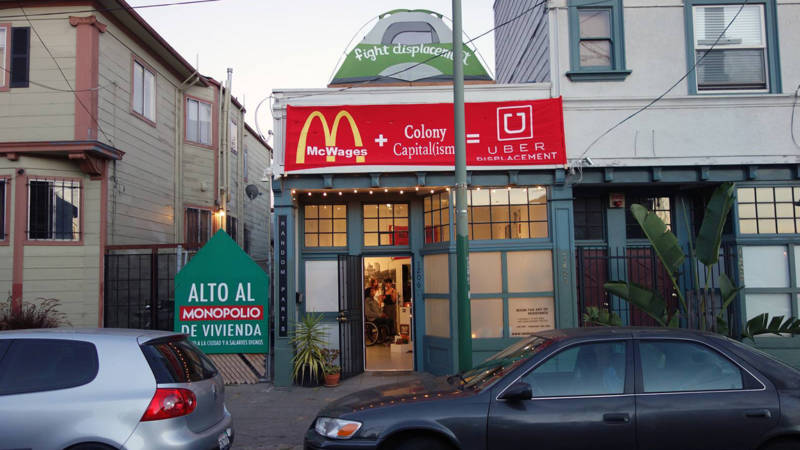
"caption": "Exterior view of Random Parts' exhibition 'Boom: The Art of Resistance, A Diversity of Bay Area Anti-Displacement Tactics.'",
"description": null,
"title": "BoomCOVER",
"credit": "Courtesy of Leslie Dreyer",
"status": "inherit",
"isLoading": false,
"fetchFailed": false
},
"arts_11869882": {
"type": "attachments",
"id": "arts_11869882",
"meta": {
"index": "attachments_1716263798",
"site": "arts",
"id": "11869882",
"found": true
},
"parent": 0,
"imgSizes": {
"twentyfourteen-full-width": {
"file": "https://ww2.kqed.org/app/uploads/sites/2/2016/07/NickiGreenCOVER-1038x576.jpg",
"width": 1038,
"mimeType": "image/jpeg",
"height": 576
},
"thumbnail": {
"file": "https://ww2.kqed.org/app/uploads/sites/2/2016/07/NickiGreenCOVER-400x225.jpg",
"width": 400,
"mimeType": "image/jpeg",
"height": 225
},
"fd-sm": {
"file": "https://ww2.kqed.org/app/uploads/sites/2/2016/07/NickiGreenCOVER-960x540.jpg",
"width": 960,
"mimeType": "image/jpeg",
"height": 540
},
"post-thumbnail": {
"file": "https://ww2.kqed.org/app/uploads/sites/2/2016/07/NickiGreenCOVER-672x372.jpg",
"width": 672,
"mimeType": "image/jpeg",
"height": 372
},
"kqedFullSize": {
"file": "https://ww2.kqed.org/app/uploads/sites/2/2016/07/NickiGreenCOVER.jpg",
"width": 1920,
"height": 1080
},
"large": {
"file": "https://ww2.kqed.org/app/uploads/sites/2/2016/07/NickiGreenCOVER-1180x664.jpg",
"width": 1180,
"mimeType": "image/jpeg",
"height": 664
},
"guest-author-50": {
"file": "https://ww2.kqed.org/app/uploads/sites/2/2016/07/NickiGreenCOVER-50x50.jpg",
"width": 50,
"mimeType": "image/jpeg",
"height": 50
},
"guest-author-96": {
"file": "https://ww2.kqed.org/app/uploads/sites/2/2016/07/NickiGreenCOVER-96x96.jpg",
"width": 96,
"mimeType": "image/jpeg",
"height": 96
},
"medium": {
"file": "https://ww2.kqed.org/app/uploads/sites/2/2016/07/NickiGreenCOVER-800x450.jpg",
"width": 800,
"mimeType": "image/jpeg",
"height": 450
},
"guest-author-64": {
"file": "https://ww2.kqed.org/app/uploads/sites/2/2016/07/NickiGreenCOVER-64x64.jpg",
"width": 64,
"mimeType": "image/jpeg",
"height": 64
},
"guest-author-32": {
"file": "https://ww2.kqed.org/app/uploads/sites/2/2016/07/NickiGreenCOVER-32x32.jpg",
"width": 32,
"mimeType": "image/jpeg",
"height": 32
},
"fd-lrg": {
"file": "https://ww2.kqed.org/app/uploads/sites/2/2016/07/NickiGreenCOVER-1920x1080.jpg",
"width": 1920,
"mimeType": "image/jpeg",
"height": 1080
},
"fd-med": {
"file": "https://ww2.kqed.org/app/uploads/sites/2/2016/07/NickiGreenCOVER-1180x664.jpg",
"width": 1180,
"mimeType": "image/jpeg",
"height": 664
},
"detail": {
"file": "https://ww2.kqed.org/app/uploads/sites/2/2016/07/NickiGreenCOVER-150x150.jpg",
"width": 150,
"mimeType": "image/jpeg",
"height": 150
},
"medium_large": {
"file": "https://ww2.kqed.org/app/uploads/sites/2/2016/07/NickiGreenCOVER-768x432.jpg",
"width": 768,
"mimeType": "image/jpeg",
"height": 432
},
"guest-author-128": {
"file": "https://ww2.kqed.org/app/uploads/sites/2/2016/07/NickiGreenCOVER-128x128.jpg",
"width": 128,
"mimeType": "image/jpeg",
"height": 128
}
},
"publishDate": 1469773094,
"modified": 1469773256,
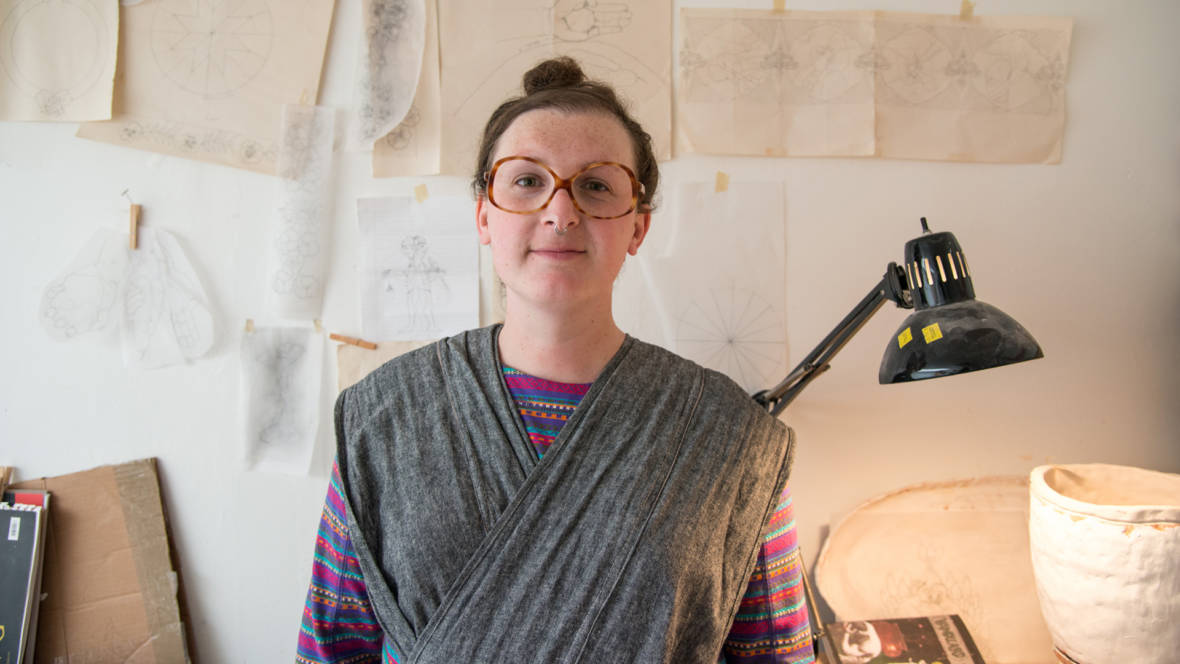
"caption": "Nicki Green in her San Francisco ceramics studio.",
"description": null,
"title": "NickiGreenCOVER",
"credit": "Photo: Graham Holoch / KQED",
"status": "inherit",
"isLoading": false,
"fetchFailed": false
},
"arts_11885724": {
"type": "attachments",
"id": "arts_11885724",
"meta": {
"index": "attachments_1716263798",
"site": "arts",
"id": "11885724",
"found": true
},
"parent": 11885581,
"imgSizes": {
"twentyfourteen-full-width": {
"file": "https://ww2.kqed.org/app/uploads/sites/2/2016/08/IveryCOVER-1038x576.jpg",
"width": 1038,
"mimeType": "image/jpeg",
"height": 576
},
"thumbnail": {
"file": "https://ww2.kqed.org/app/uploads/sites/2/2016/08/IveryCOVER-400x225.jpg",
"width": 400,
"mimeType": "image/jpeg",
"height": 225
},
"fd-sm": {
"file": "https://ww2.kqed.org/app/uploads/sites/2/2016/08/IveryCOVER-960x540.jpg",
"width": 960,
"mimeType": "image/jpeg",
"height": 540
},
"post-thumbnail": {
"file": "https://ww2.kqed.org/app/uploads/sites/2/2016/08/IveryCOVER-672x372.jpg",
"width": 672,
"mimeType": "image/jpeg",
"height": 372
},
"kqedFullSize": {
"file": "https://ww2.kqed.org/app/uploads/sites/2/2016/08/IveryCOVER.jpg",
"width": 1920,
"height": 1080
},
"large": {
"file": "https://ww2.kqed.org/app/uploads/sites/2/2016/08/IveryCOVER-1180x664.jpg",
"width": 1180,
"mimeType": "image/jpeg",
"height": 664
},
"guest-author-50": {
"file": "https://ww2.kqed.org/app/uploads/sites/2/2016/08/IveryCOVER-50x50.jpg",
"width": 50,
"mimeType": "image/jpeg",
"height": 50
},
"guest-author-96": {
"file": "https://ww2.kqed.org/app/uploads/sites/2/2016/08/IveryCOVER-96x96.jpg",
"width": 96,
"mimeType": "image/jpeg",
"height": 96
},
"medium": {
"file": "https://ww2.kqed.org/app/uploads/sites/2/2016/08/IveryCOVER-800x450.jpg",
"width": 800,
"mimeType": "image/jpeg",
"height": 450
},
"guest-author-64": {
"file": "https://ww2.kqed.org/app/uploads/sites/2/2016/08/IveryCOVER-64x64.jpg",
"width": 64,
"mimeType": "image/jpeg",
"height": 64
},
"guest-author-32": {
"file": "https://ww2.kqed.org/app/uploads/sites/2/2016/08/IveryCOVER-32x32.jpg",
"width": 32,
"mimeType": "image/jpeg",
"height": 32
},
"fd-lrg": {
"file": "https://ww2.kqed.org/app/uploads/sites/2/2016/08/IveryCOVER-1920x1080.jpg",
"width": 1920,
"mimeType": "image/jpeg",
"height": 1080
},
"fd-med": {
"file": "https://ww2.kqed.org/app/uploads/sites/2/2016/08/IveryCOVER-1180x664.jpg",
"width": 1180,
"mimeType": "image/jpeg",
"height": 664
},
"detail": {
"file": "https://ww2.kqed.org/app/uploads/sites/2/2016/08/IveryCOVER-150x150.jpg",
"width": 150,
"mimeType": "image/jpeg",
"height": 150
},
"medium_large": {
"file": "https://ww2.kqed.org/app/uploads/sites/2/2016/08/IveryCOVER-768x432.jpg",
"width": 768,
"mimeType": "image/jpeg",
"height": 432
},
"guest-author-128": {
"file": "https://ww2.kqed.org/app/uploads/sites/2/2016/08/IveryCOVER-128x128.jpg",
"width": 128,
"mimeType": "image/jpeg",
"height": 128
}
},
"publishDate": 1470109794,
"modified": 1470109959,
"caption": "Ayana Ivery, 'Our Mother.'",
"description": null,
"title": "IveryCOVER",
"credit": "Photo: Emma Brown / SOMArts",
"status": "inherit",
"isLoading": false,
"fetchFailed": false
},
"pop_32149": {
"type": "attachments",
"id": "pop_32149",
"meta": {
"index": "attachments_1716263798",
"site": "pop",
"id": "32149",
"found": true
},
"parent": 32120,
"imgSizes": {
"twentyfourteen-full-width": {
"file": "https://ww2.kqed.org/app/uploads/sites/12/2016/08/CF.Portraits.MAIN_.jpg-1038x576.jpg",
"width": 1038,
"mimeType": "image/jpeg",
"height": 576
},
"thumbnail": {
"file": "https://ww2.kqed.org/app/uploads/sites/12/2016/08/CF.Portraits.MAIN_.jpg-400x250.jpg",
"width": 400,
"mimeType": "image/jpeg",
"height": 250
},
"fd-sm": {
"file": "https://ww2.kqed.org/app/uploads/sites/12/2016/08/CF.Portraits.MAIN_.jpg-960x600.jpg",
"width": 960,
"mimeType": "image/jpeg",
"height": 600
},
"post-thumbnail": {
"file": "https://ww2.kqed.org/app/uploads/sites/12/2016/08/CF.Portraits.MAIN_.jpg-672x372.jpg",
"width": 672,
"mimeType": "image/jpeg",
"height": 372
},
"kqedFullSize": {
"file": "https://ww2.kqed.org/app/uploads/sites/12/2016/08/CF.Portraits.MAIN_.jpg.jpg",
"width": 1920,
"height": 1200
},
"large": {
"file": "https://ww2.kqed.org/app/uploads/sites/12/2016/08/CF.Portraits.MAIN_.jpg-1440x900.jpg",
"width": 1440,
"mimeType": "image/jpeg",
"height": 900
},
"guest-author-50": {
"file": "https://ww2.kqed.org/app/uploads/sites/12/2016/08/CF.Portraits.MAIN_.jpg-50x50.jpg",
"width": 50,
"mimeType": "image/jpeg",
"height": 50
},
"guest-author-96": {
"file": "https://ww2.kqed.org/app/uploads/sites/12/2016/08/CF.Portraits.MAIN_.jpg-96x96.jpg",
"width": 96,
"mimeType": "image/jpeg",
"height": 96
},
"medium": {
"file": "https://ww2.kqed.org/app/uploads/sites/12/2016/08/CF.Portraits.MAIN_.jpg-800x500.jpg",
"width": 800,
"mimeType": "image/jpeg",
"height": 500
},
"guest-author-64": {
"file": "https://ww2.kqed.org/app/uploads/sites/12/2016/08/CF.Portraits.MAIN_.jpg-64x64.jpg",
"width": 64,
"mimeType": "image/jpeg",
"height": 64
},
"guest-author-32": {
"file": "https://ww2.kqed.org/app/uploads/sites/12/2016/08/CF.Portraits.MAIN_.jpg-32x32.jpg",
"width": 32,
"mimeType": "image/jpeg",
"height": 32
},
"fd-lrg": {
"file": "https://ww2.kqed.org/app/uploads/sites/12/2016/08/CF.Portraits.MAIN_.jpg-1920x1200.jpg",
"width": 1920,
"mimeType": "image/jpeg",
"height": 1200
},
"fd-med": {
"file": "https://ww2.kqed.org/app/uploads/sites/12/2016/08/CF.Portraits.MAIN_.jpg-1180x738.jpg",
"width": 1180,
"mimeType": "image/jpeg",
"height": 738
},
"detail": {
"file": "https://ww2.kqed.org/app/uploads/sites/12/2016/08/CF.Portraits.MAIN_.jpg-150x150.jpg",
"width": 150,
"mimeType": "image/jpeg",
"height": 150
},
"medium_large": {
"file": "https://ww2.kqed.org/app/uploads/sites/12/2016/08/CF.Portraits.MAIN_.jpg-768x480.jpg",
"width": 768,
"mimeType": "image/jpeg",
"height": 480
},
"guest-author-128": {
"file": "https://ww2.kqed.org/app/uploads/sites/12/2016/08/CF.Portraits.MAIN_.jpg-128x128.jpg",
"width": 128,
"mimeType": "image/jpeg",
"height": 128
}
},
"publishDate": 1470092500,
"modified": 1470092500,
"caption": null,
"description": null,
"title": "CF.Portraits.MAIN.jpg",
"credit": null,
"status": "inherit",
"isLoading": false,
"fetchFailed": false
},
"arts_11873390": {
"type": "attachments",
"id": "arts_11873390",
"meta": {
"index": "attachments_1716263798",
"site": "arts",
"id": "11873390",
"found": true
},
"parent": 11873020,
"imgSizes": {
"twentyfourteen-full-width": {
"file": "https://ww2.kqed.org/app/uploads/sites/2/2016/07/Betty-Guy-1038x576.jpg",
"width": 1038,
"mimeType": "image/jpeg",
"height": 576
},
"thumbnail": {
"file": "https://ww2.kqed.org/app/uploads/sites/2/2016/07/Betty-Guy-400x225.jpg",
"width": 400,
"mimeType": "image/jpeg",
"height": 225
},
"fd-sm": {
"file": "https://ww2.kqed.org/app/uploads/sites/2/2016/07/Betty-Guy-960x540.jpg",
"width": 960,
"mimeType": "image/jpeg",
"height": 540
},
"post-thumbnail": {
"file": "https://ww2.kqed.org/app/uploads/sites/2/2016/07/Betty-Guy-672x372.jpg",
"width": 672,
"mimeType": "image/jpeg",
"height": 372
},
"kqedFullSize": {
"file": "https://ww2.kqed.org/app/uploads/sites/2/2016/07/Betty-Guy.jpg",
"width": 1920,
"height": 1080
},
"large": {
"file": "https://ww2.kqed.org/app/uploads/sites/2/2016/07/Betty-Guy-1180x664.jpg",
"width": 1180,
"mimeType": "image/jpeg",
"height": 664
},
"guest-author-50": {
"file": "https://ww2.kqed.org/app/uploads/sites/2/2016/07/Betty-Guy-50x50.jpg",
"width": 50,
"mimeType": "image/jpeg",
"height": 50
},
"guest-author-96": {
"file": "https://ww2.kqed.org/app/uploads/sites/2/2016/07/Betty-Guy-96x96.jpg",
"width": 96,
"mimeType": "image/jpeg",
"height": 96
},
"medium": {
"file": "https://ww2.kqed.org/app/uploads/sites/2/2016/07/Betty-Guy-800x450.jpg",
"width": 800,
"mimeType": "image/jpeg",
"height": 450
},
"guest-author-64": {
"file": "https://ww2.kqed.org/app/uploads/sites/2/2016/07/Betty-Guy-64x64.jpg",
"width": 64,
"mimeType": "image/jpeg",
"height": 64
},
"guest-author-32": {
"file": "https://ww2.kqed.org/app/uploads/sites/2/2016/07/Betty-Guy-32x32.jpg",
"width": 32,
"mimeType": "image/jpeg",
"height": 32
},
"fd-lrg": {
"file": "https://ww2.kqed.org/app/uploads/sites/2/2016/07/Betty-Guy-1920x1080.jpg",
"width": 1920,
"mimeType": "image/jpeg",
"height": 1080
},
"fd-med": {
"file": "https://ww2.kqed.org/app/uploads/sites/2/2016/07/Betty-Guy-1180x664.jpg",
"width": 1180,
"mimeType": "image/jpeg",
"height": 664
},
"detail": {
"file": "https://ww2.kqed.org/app/uploads/sites/2/2016/07/Betty-Guy-150x150.jpg",
"width": 150,
"mimeType": "image/jpeg",
"height": 150
},
"medium_large": {
"file": "https://ww2.kqed.org/app/uploads/sites/2/2016/07/Betty-Guy-768x432.jpg",
"width": 768,
"mimeType": "image/jpeg",
"height": 432
},
"guest-author-128": {
"file": "https://ww2.kqed.org/app/uploads/sites/2/2016/07/Betty-Guy-128x128.jpg",
"width": 128,
"mimeType": "image/jpeg",
"height": 128
}
},
"publishDate": 1469841855,
"modified": 1469841855,
"caption": null,
"description": null,
"title": "Betty Guy",
"credit": null,
"status": "inherit",
"isLoading": false,
"fetchFailed": false
},
"arts_11871772": {
"type": "attachments",
"id": "arts_11871772",
"meta": {
"index": "attachments_1716263798",
"site": "arts",
"id": "11871772",
"found": true
},
"parent": 11869869,
"imgSizes": {
"thumbnail": {
"file": "https://ww2.kqed.org/app/uploads/sites/2/2016/07/Native-Portriats-400x225.jpg",
"width": 400,
"mimeType": "image/jpeg",
"height": 225
},
"post-thumbnail": {
"file": "https://ww2.kqed.org/app/uploads/sites/2/2016/07/Native-Portriats-672x372.jpg",
"width": 672,
"mimeType": "image/jpeg",
"height": 372
},
"kqedFullSize": {
"file": "https://ww2.kqed.org/app/uploads/sites/2/2016/07/Native-Portriats.jpg",
"width": 800,
"height": 450
},
"guest-author-50": {
"file": "https://ww2.kqed.org/app/uploads/sites/2/2016/07/Native-Portriats-50x50.jpg",
"width": 50,
"mimeType": "image/jpeg",
"height": 50
},
"guest-author-96": {
"file": "https://ww2.kqed.org/app/uploads/sites/2/2016/07/Native-Portriats-96x96.jpg",
"width": 96,
"mimeType": "image/jpeg",
"height": 96
},
"medium": {
"file": "https://ww2.kqed.org/app/uploads/sites/2/2016/07/Native-Portriats-800x450.jpg",
"width": 800,
"mimeType": "image/jpeg",
"height": 450
},
"guest-author-64": {
"file": "https://ww2.kqed.org/app/uploads/sites/2/2016/07/Native-Portriats-64x64.jpg",
"width": 64,
"mimeType": "image/jpeg",
"height": 64
},
"detail": {
"file": "https://ww2.kqed.org/app/uploads/sites/2/2016/07/Native-Portriats-150x150.jpg",
"width": 150,
"mimeType": "image/jpeg",
"height": 150
},
"guest-author-32": {
"file": "https://ww2.kqed.org/app/uploads/sites/2/2016/07/Native-Portriats-32x32.jpg",
"width": 32,
"mimeType": "image/jpeg",
"height": 32
},
"medium_large": {
"file": "https://ww2.kqed.org/app/uploads/sites/2/2016/07/Native-Portriats-768x432.jpg",
"width": 768,
"mimeType": "image/jpeg",
"height": 432
},
"guest-author-128": {
"file": "https://ww2.kqed.org/app/uploads/sites/2/2016/07/Native-Portriats-128x128.jpg",
"width": 128,
"mimeType": "image/jpeg",
"height": 128
}
},
"publishDate": 1469811976,
"modified": 1469812010,
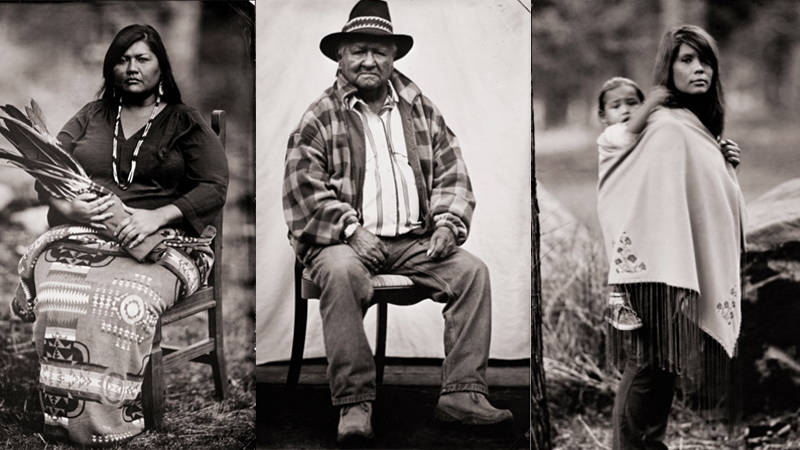
"caption": "\"Native Portraits: Contemporary Tintypes by Ed Drew.\" Courtesy of the artist and Robert Koch Gallery, San Francisco",
"description": null,
"title": "Native Portriats",
"credit": null,
"status": "inherit",
"isLoading": false,
"fetchFailed": false
}
},
"audioPlayerReducer": {
"postId": "stream_live",
"isPaused": true,
"isPlaying": false,
"pfsActive": false,
"pledgeModalIsOpen": true,
"playerDrawerIsOpen": false,
"liveAudioPlayStartedAt": 0,
"liveAudioPlayContext": ""
},
"authorsReducer": {
"byline_arts_11944221": {
"type": "authors",
"id": "byline_arts_11944221",
"meta": {
"override": true
},
"slug": "byline_arts_11944221",
"name": "Carolyn Beans",
"isLoading": false
},
"byline_arts_11911804": {
"type": "authors",
"id": "byline_arts_11911804",
"meta": {
"override": true
},
"slug": "byline_arts_11911804",
"name": "Associated Press",
"isLoading": false
},
"byline_news_11040591": {
"type": "authors",
"id": "byline_news_11040591",
"meta": {
"override": true
},
"slug": "byline_news_11040591",
"name": "\u003cstrong>\u003ca href=\"http://www.scpr.org/about/people/staff/priska-neely\">Priska Neely\u003c/a>\u003cbr>\u003ca href=\"http://www.scpr.org/\">KPCC\u003c/a>\u003c/strong>",
"isLoading": false
},
"byline_arts_11885581": {
"type": "authors",
"id": "byline_arts_11885581",
"meta": {
"override": true
},
"slug": "byline_arts_11885581",
"name": "Luna Malbroux",
"isLoading": false
},
"shotchkiss": {
"type": "authors",
"id": "61",
"meta": {
"index": "authors_1716337520",
"id": "61",
"found": true
},
"name": "Sarah Hotchkiss",
"firstName": "Sarah",
"lastName": "Hotchkiss",
"slug": "shotchkiss",
"email": "shotchkiss@kqed.org",
"display_author_email": true,
"staff_mastheads": [
"arts"
],
"title": "Senior Editor",
"bio": "Sarah Hotchkiss is a San Francisco \u003ca href=\"http://www.sarahhotchkiss.com\">artist\u003c/a> and arts writer. In 2019, she received the Dorothea & Leo Rabkin Foundation grant for visual art journalism and in 2020 she received a Society of Professional Journalists, Northern California award for excellence in arts and culture reporting.",
"avatar": "https://secure.gravatar.com/avatar/bc662df144b3d27fd8b1b6f1c2a420d34e91e53154d411bb7ad353cc8b6cea8d?s=600&d=blank&r=g",
"twitter": null,
"bluesky": null,
"facebook": null,
"instagram": null,
"linkedin": null,
"sites": [
{
"site": "",
"roles": [
"editor"
]
},
{
"site": "arts",
"roles": [
"Contributor",
"administrator"
]
},
{
"site": "artschool",
"roles": [
"administrator"
]
},
{
"site": "news",
"roles": [
"editor"
]
},
{
"site": "pop",
"roles": [
"administrator"
]
},
{
"site": "bayareabites",
"roles": [
"editor"
]
},
{
"site": "spark",
"roles": [
"editor"
]
},
{
"site": "checkplease",
"roles": [
"editor"
]
}
],
"headData": {
"title": "Sarah Hotchkiss | KQED",
"description": "Senior Editor",
"ogImgSrc": "https://secure.gravatar.com/avatar/bc662df144b3d27fd8b1b6f1c2a420d34e91e53154d411bb7ad353cc8b6cea8d?s=600&d=blank&r=g",
"twImgSrc": "https://secure.gravatar.com/avatar/bc662df144b3d27fd8b1b6f1c2a420d34e91e53154d411bb7ad353cc8b6cea8d?s=600&d=blank&r=g"
},
"isLoading": false,
"link": "/author/shotchkiss"
},
"ablaine": {
"type": "authors",
"id": "72",
"meta": {
"index": "authors_1716337520",
"id": "72",
"found": true
},
"name": "Adrienne Blaine",
"firstName": "Adrienne",
"lastName": "Blaine",
"slug": "ablaine",
"email": "adrienneblaine@hotmail.com",
"display_author_email": false,
"staff_mastheads": [],
"title": null,
"bio": "Adrienne Blaine is a Millennial writer from the South Bay. She has a BA in Comparative Literary and Cultural Studies combined with Communications and Media Studies from Franklin University Switzerland. Living in Switzerland for four years and traveling from Morocco to Iceland introduced her to diverse art, culture and food. She currently lives in San Francisco and writes about these topics.",
"avatar": "https://secure.gravatar.com/avatar/10d0a10a2189067e5e3f6fc9fc4ebdf2?s=600&d=blank&r=g",
"twitter": null,
"facebook": null,
"instagram": null,
"linkedin": null,
"sites": [
{
"site": "arts",
"roles": [
"Contributor",
"contributor"
]
},
{
"site": "bayareabites",
"roles": [
"contributor"
]
},
{
"site": "food",
"roles": [
"contributor"
]
}
],
"headData": {
"title": "Adrienne Blaine | KQED",
"description": null,
"ogImgSrc": "https://secure.gravatar.com/avatar/10d0a10a2189067e5e3f6fc9fc4ebdf2?s=600&d=blank&r=g",
"twImgSrc": "https://secure.gravatar.com/avatar/10d0a10a2189067e5e3f6fc9fc4ebdf2?s=600&d=blank&r=g"
},
"isLoading": false,
"link": "/author/ablaine"
},
"rseikaly": {
"type": "authors",
"id": "77",
"meta": {
"index": "authors_1716337520",
"id": "77",
"found": true
},
"name": "Roula Seikaly",
"firstName": "Roula",
"lastName": "Seikaly",
"slug": "rseikaly",
"email": "roula@roulaseikaly.com",
"display_author_email": false,
"staff_mastheads": [],
"title": "KQED Contributor",
"bio": "Roula Seikaly in an independent writer and curator based in Berkeley, California, and Senior Editor at \u003ca href=\"http://hafny.org/\">Humble Arts Foundation\u003c/a>. She has curated exhibitions at Colorado Photographic Arts Center, Filter Photo Festival, Blue Sky Gallery, SF Camerawork, SOMArts, and the Utah Museum of Arts. She is a regular contributor to Photograph, Hyerallergic, BOMB Magazine, and KQED Arts.",
"avatar": "https://secure.gravatar.com/avatar/771cde409896af1326a07050f2e4e489?s=600&d=blank&r=g",
"twitter": null,
"facebook": null,
"instagram": null,
"linkedin": null,
"sites": [
{
"site": "arts",
"roles": [
"Contributor",
"contributor"
]
}
],
"headData": {
"title": "Roula Seikaly | KQED",
"description": "KQED Contributor",
"ogImgSrc": "https://secure.gravatar.com/avatar/771cde409896af1326a07050f2e4e489?s=600&d=blank&r=g",
"twImgSrc": "https://secure.gravatar.com/avatar/771cde409896af1326a07050f2e4e489?s=600&d=blank&r=g"
},
"isLoading": false,
"link": "/author/rseikaly"
},
"kjones": {
"type": "authors",
"id": "93",
"meta": {
"index": "authors_1716337520",
"id": "93",
"found": true
},
"name": "Kevin L. Jones",
"firstName": "Kevin",
"lastName": "Jones",
"slug": "kjones",
"email": "kjones@kqed.org",
"display_author_email": false,
"staff_mastheads": [],
"title": null,
"bio": null,
"avatar": "https://secure.gravatar.com/avatar/12c65b5633ed39d0a59bb7f497eff645?s=600&d=blank&r=g",
"twitter": null,
"facebook": null,
"instagram": null,
"linkedin": null,
"sites": [
{
"site": "arts",
"roles": [
"subscriber"
]
},
{
"site": "styleguide",
"roles": [
"contributor"
]
},
{
"site": "artschool",
"roles": [
"subscriber"
]
},
{
"site": "news",
"roles": [
"subscriber"
]
},
{
"site": "pop",
"roles": [
"subscriber"
]
}
],
"headData": {
"title": "Kevin L. Jones | KQED",
"description": null,
"ogImgSrc": "https://secure.gravatar.com/avatar/12c65b5633ed39d0a59bb7f497eff645?s=600&d=blank&r=g",
"twImgSrc": "https://secure.gravatar.com/avatar/12c65b5633ed39d0a59bb7f497eff645?s=600&d=blank&r=g"
},
"isLoading": false,
"link": "/author/kjones"
},
"gmeline": {
"type": "authors",
"id": "185",
"meta": {
"index": "authors_1716337520",
"id": "185",
"found": true
},
"name": "Gabe Meline",
"firstName": "Gabe",
"lastName": "Meline",
"slug": "gmeline",
"email": "gmeline@kqed.org",
"display_author_email": true,
"staff_mastheads": [
"arts"
],
"title": "Senior Editor, KQED Arts & Culture",
"bio": "Gabe Meline entered journalism at age 15 making photocopied zines, and has since earned awards from the Edward R. Murrow Awards, the Society for Professional Journalists, the Online Journalism Awards, the Association of Alternative Newsweeklies and the California Newspaper Publishers Association. Prior to KQED, he was the editor of the \u003cem>North Bay Bohemian\u003c/em> and a touring musician. He lives with his wife and daughter in his hometown of Santa Rosa, CA.",
"avatar": "https://secure.gravatar.com/avatar/5bebe57be0d8bc2dd318934feb47299e2d2d10cba28d09d8d7afb389a2ce2bdd?s=600&d=blank&r=g",
"twitter": null,
"bluesky": null,
"facebook": null,
"instagram": null,
"linkedin": null,
"sites": [
{
"site": "",
"roles": [
"editor"
]
},
{
"site": "arts",
"roles": [
"administrator"
]
},
{
"site": "artschool",
"roles": [
"editor"
]
},
{
"site": "news",
"roles": [
"author"
]
},
{
"site": "pop",
"roles": [
"editor"
]
},
{
"site": "bayareabites",
"roles": [
"editor"
]
},
{
"site": "food",
"roles": [
"editor"
]
},
{
"site": "forum",
"roles": [
"administrator"
]
},
{
"site": "liveblog",
"roles": [
"editor"
]
},
{
"site": "hiphop",
"roles": [
"editor"
]
}
],
"headData": {
"title": "Gabe Meline | KQED",
"description": "Senior Editor, KQED Arts & Culture",
"ogImgSrc": "https://secure.gravatar.com/avatar/5bebe57be0d8bc2dd318934feb47299e2d2d10cba28d09d8d7afb389a2ce2bdd?s=600&d=blank&r=g",
"twImgSrc": "https://secure.gravatar.com/avatar/5bebe57be0d8bc2dd318934feb47299e2d2d10cba28d09d8d7afb389a2ce2bdd?s=600&d=blank&r=g"
},
"isLoading": false,
"link": "/author/gmeline"
},
"kqed": {
"type": "authors",
"id": "236",
"meta": {
"index": "authors_1716337520",
"id": "236",
"found": true
},
"name": "KQED News Staff",
"firstName": "KQED News Staff",
"lastName": null,
"slug": "kqed",
"email": "faq@kqed.org",
"display_author_email": false,
"staff_mastheads": [],
"title": null,
"bio": null,
"avatar": "https://secure.gravatar.com/avatar/ef0e801a68c4c54afa9180db14084167?s=600&d=blank&r=g",
"twitter": null,
"facebook": null,
"instagram": null,
"linkedin": null,
"sites": [
{
"site": "arts",
"roles": [
"contributor"
]
},
{
"site": "news",
"roles": [
"editor"
]
},
{
"site": "futureofyou",
"roles": [
"author"
]
}
],
"headData": {
"title": "KQED News Staff | KQED",
"description": null,
"ogImgSrc": "https://secure.gravatar.com/avatar/ef0e801a68c4c54afa9180db14084167?s=600&d=blank&r=g",
"twImgSrc": "https://secure.gravatar.com/avatar/ef0e801a68c4c54afa9180db14084167?s=600&d=blank&r=g"
},
"isLoading": false,
"link": "/author/kqed"
},
"vrancano": {
"type": "authors",
"id": "11276",
"meta": {
"index": "authors_1716337520",
"id": "11276",
"found": true
},
"name": "Vanessa Rancaño",
"firstName": "Vanessa",
"lastName": "Rancaño",
"slug": "vrancano",
"email": "vrancano@kqed.org",
"display_author_email": false,
"staff_mastheads": [
"news"
],
"title": "Reporter",
"bio": "Vanessa Rancaño is a features reporter for KQED. She’s also covered homelessness and education for the station and reported from the Central Valley. Her work has aired across public radio, from flagship national news shows to longform narrative podcasts. Before taking up a mic, she worked as a freelance print journalist. She’s been recognized with a number of national and regional awards. Vanessa grew up in California's Central Valley. She's a former NPR Kroc Fellow, and a graduate of the UC Berkeley Graduate School of Journalism.",
"avatar": "https://secure.gravatar.com/avatar/b3a383dfb0e7ee1c17568f2cf067904ab654d6e3de9743fc661f3c788ade1bed?s=600&d=blank&r=g",
"twitter": "vanessarancano",
"bluesky": null,
"facebook": null,
"instagram": null,
"linkedin": null,
"sites": [
{
"site": "arts",
"roles": [
"editor"
]
},
{
"site": "news",
"roles": [
"editor"
]
},
{
"site": "liveblog",
"roles": [
"contributor"
]
}
],
"headData": {
"title": "Vanessa Rancaño | KQED",
"description": "Reporter",
"ogImgSrc": "https://secure.gravatar.com/avatar/b3a383dfb0e7ee1c17568f2cf067904ab654d6e3de9743fc661f3c788ade1bed?s=600&d=blank&r=g",
"twImgSrc": "https://secure.gravatar.com/avatar/b3a383dfb0e7ee1c17568f2cf067904ab654d6e3de9743fc661f3c788ade1bed?s=600&d=blank&r=g"
},
"isLoading": false,
"link": "/author/vrancano"
}
},
"pagesReducer": {
"arts_category_visualarts": {
"type": "terms",
"id": "arts_70",
"meta": {
"index": "terms_1716263798",
"site": "arts",
"id": "70",
"score": 14.407251
},
"featImg": null,
"name": "Visual Arts",
"description": null,
"taxonomy": "category",
"headData": {
"twImgId": null,
"twTitle": null,
"ogTitle": null,
"ogImgId": null,
"twDescription": null,
"description": null,
"title": "Visual Arts Archives | KQED Arts",
"ogDescription": null
},
"ttid": 71,
"slug": "visualarts",
"isLoading": false,
"title": "Visual Arts",
"pageMeta": {
"site": "arts",
"WpPageTemplate": "page-topic-editorial",
"currentPage": 122
},
"blocks": [
{
"blockName": "kqed/post-list",
"attrs": {
"layout": "cardArticle2",
"query": "posts/arts?category=visualarts",
"seeMore": false,
"paginated": true,
"page": 122
}
},
{
"blockName": "kqed/ad"
}
]
}
},
"pfsSessionReducer": {},
"postsReducer": {
"stream_live": {
"type": "live",
"id": "stream_live",
"audioUrl": "https://streams.kqed.org/kqedradio",
"title": "Live Stream",
"excerpt": "Live Stream information currently unavailable.",
"link": "/radio",
"featImg": "",
"label": {
"name": "KQED Live",
"link": "/"
}
},
"stream_kqedNewscast": {
"type": "posts",
"id": "stream_kqedNewscast",
"audioUrl": "https://www.kqed.org/.stream/anon/radio/RDnews/newscast.mp3?_=1",
"title": "KQED Newscast",
"featImg": "",
"label": {
"name": "88.5 FM",
"link": "/"
}
},
"arts_11944221": {
"type": "posts",
"id": "arts_11944221",
"meta": {
"index": "posts_1716263798",
"site": "arts",
"id": "11944221",
"score": null,
"sort": [
1471380553000
]
},
"parent": 0,
"labelTerm": {
"site": "arts",
"term": 137
},
"blocks": [],
"publishDate": 1471380553,
"format": "standard",
"title": "Philly Artist Tastes the Rainbow and Saves the Wrappers",
"headTitle": "Philly Artist Tastes the Rainbow and Saves the Wrappers | KQED",
"content": "\u003cp>Sean Brown knows his way around a candy shop.\u003c/p>\n\u003cp>“My candy knowledge is pretty crazy,” he says. “Put me up against anyone in a candy battle — and I’ll beat them.”\u003c/p>\n\u003cfigure id=\"attachment_11944223\" class=\"wp-caption alignright\" style=\"max-width: 433px\">\u003cimg loading=\"lazy\" decoding=\"async\" src=\"http://ww2.kqed.org/arts/wp-content/uploads/sites/2/2016/08/seanbrown_enl-738b3b517930f9010f3a26ff907a7732c754b40e-433x600.jpg\" alt=\"Philly-based artist Sean Brown transforms the refuse from candy wrappers into art.\" width=\"433\" height=\"600\" class=\"size-medium wp-image-11944223\" srcset=\"https://cdn.kqed.org/wp-content/uploads/sites/2/2016/08/seanbrown_enl-738b3b517930f9010f3a26ff907a7732c754b40e-433x600.jpg 433w, https://cdn.kqed.org/wp-content/uploads/sites/2/2016/08/seanbrown_enl-738b3b517930f9010f3a26ff907a7732c754b40e-400x554.jpg 400w, https://cdn.kqed.org/wp-content/uploads/sites/2/2016/08/seanbrown_enl-738b3b517930f9010f3a26ff907a7732c754b40e-768x1064.jpg 768w, https://cdn.kqed.org/wp-content/uploads/sites/2/2016/08/seanbrown_enl-738b3b517930f9010f3a26ff907a7732c754b40e-852x1180.jpg 852w, https://cdn.kqed.org/wp-content/uploads/sites/2/2016/08/seanbrown_enl-738b3b517930f9010f3a26ff907a7732c754b40e.jpg 866w\" sizes=\"(max-width: 433px) 100vw, 433px\">\u003cfigcaption class=\"wp-caption-text\">Philly-based artist Sean Brown transforms the refuse from candy wrappers into art. \u003ccite>(Photo: Veronica Perez)\u003c/cite>\u003c/figcaption>\u003c/figure>\n\u003cp>But \u003ca href=\"https://seanebrown.wordpress.com/about/\" target=\"_blank\" rel=\"noopener\">Brown\u003c/a> is less interested in the candy than the wrappers. For the past five years, this Philly-based artist and (full disclosure!) former neighbor of mine, has been transforming the refuse from Skittles, Tootsie Pops, Starburst, Mamba — and whatever other candy he can get his hands on — into works of art.\u003c/p>\n\u003cp>Many of the pieces celebrate famous individuals or pay homage to the artists who inspire him. He’s done \u003ca href=\"https://seanebrown.files.wordpress.com/2014/09/st.jpg\">Questlove\u003c/a> in Tootsie Pops and \u003ca href=\"https://seanebrown.wordpress.com/2016/07/29/marilyn/\" target=\"_blank\" rel=\"noopener\">Warhol’s “Marilyn”\u003c/a> in Tootsie Pops, Mamba, Starburst and Andes Creme de Menthe Thins.\u003c/p>\n\u003cp>Brown, who’s been working as an artist since graduating from the Art Institute of Philadelphia in 2007, presents his work in art shows primarily in the Philadelphia and New York areas. His next show is this Sunday at \u003ca href=\"http://www.madgallerynyc.com/\" target=\"_blank\" rel=\"noopener\">MAD Gallery\u003c/a> in New York.\u003c/p>\n\u003cp>[ad fullwidth]\u003c/p>\n\u003cp>He’s sold over 100 of his candy wrapper works, which ranged in price from $50 for a simple depiction of a banana to $5,000 for a detailed remake of a Gustav Klimt work.\u003c/p>\n\u003cp>His hues are limited by his candy wrapper palette — which turns out to be no limitation at all.\u003c/p>\n\u003cfigure id=\"attachment_11944224\" class=\"wp-caption aligncenter\" style=\"max-width: 640px\">\u003cimg loading=\"lazy\" decoding=\"async\" src=\"http://ww2.kqed.org/arts/wp-content/uploads/sites/2/2016/08/number-5_small_enl-cedfd92f650839dbb40d581f6822e5661a8ddbb2-960x1180.jpg\" alt='\"I Saw the Figure 5 in Starburst.\" Starburst wrappers, acrylic and ink on canvas. 2011.' width=\"640\" height=\"787\" class=\"size-large wp-image-11944224\" srcset=\"https://cdn.kqed.org/wp-content/uploads/sites/2/2016/08/number-5_small_enl-cedfd92f650839dbb40d581f6822e5661a8ddbb2-960x1180.jpg 960w, https://cdn.kqed.org/wp-content/uploads/sites/2/2016/08/number-5_small_enl-cedfd92f650839dbb40d581f6822e5661a8ddbb2-400x492.jpg 400w, https://cdn.kqed.org/wp-content/uploads/sites/2/2016/08/number-5_small_enl-cedfd92f650839dbb40d581f6822e5661a8ddbb2-488x600.jpg 488w, https://cdn.kqed.org/wp-content/uploads/sites/2/2016/08/number-5_small_enl-cedfd92f650839dbb40d581f6822e5661a8ddbb2-768x944.jpg 768w, https://cdn.kqed.org/wp-content/uploads/sites/2/2016/08/number-5_small_enl-cedfd92f650839dbb40d581f6822e5661a8ddbb2-1180x1451.jpg 1180w, https://cdn.kqed.org/wp-content/uploads/sites/2/2016/08/number-5_small_enl-cedfd92f650839dbb40d581f6822e5661a8ddbb2.jpg 1627w\" sizes=\"(max-width: 640px) 100vw, 640px\">\u003cfigcaption class=\"wp-caption-text\">“I Saw the Figure 5 in Starburst.” Starburst wrappers, acrylic and ink on canvas. 2011. \u003ccite>(Photo: Courtesy of Sean Brown)\u003c/cite>\u003c/figcaption>\u003c/figure>\n\u003cp>“I had always liked taking candy wrappers off as neatly as possible, and I always liked to keep them as flat as possible,” Brown says. “One day I was sitting with a friend and eating a bunch of candy and I looked at the pile of trash and I thought, ‘I’m going to use this.’… I started putting them on canvasses.”\u003c/p>\n\u003cp>Brown’s first candy wrapper piece was a take on the painting “\u003ca href=\"http://www.metmuseum.org/art/collection/search/488315\" target=\"_blank\" rel=\"noopener\">I Saw the Figure 5 in Gold\u003c/a>” by Charles Demuth. Then he moved on to Warhol and Lichtenstein.\u003c/p>\n\u003cp>“The paintings that I liked, I would recreate but with candy wrappers,” Brown says.\u003c/p>\n\u003cfigure id=\"attachment_11944225\" class=\"wp-caption aligncenter\" style=\"max-width: 640px\">\u003cimg loading=\"lazy\" decoding=\"async\" src=\"http://ww2.kqed.org/arts/wp-content/uploads/sites/2/2016/08/wrapper-palette-3_small_enl-e85d4e4ef18644307abf5aba647b6d495ef4be85-885x1180.jpg\" alt=\"At Brown's studio in Philadelphia, he stores candy wrappers by kind and color in Ziploc bags.\" width=\"640\" height=\"853\" class=\"size-large wp-image-11944225\" srcset=\"https://cdn.kqed.org/wp-content/uploads/sites/2/2016/08/wrapper-palette-3_small_enl-e85d4e4ef18644307abf5aba647b6d495ef4be85-885x1180.jpg 885w, https://cdn.kqed.org/wp-content/uploads/sites/2/2016/08/wrapper-palette-3_small_enl-e85d4e4ef18644307abf5aba647b6d495ef4be85-400x533.jpg 400w, https://cdn.kqed.org/wp-content/uploads/sites/2/2016/08/wrapper-palette-3_small_enl-e85d4e4ef18644307abf5aba647b6d495ef4be85-450x600.jpg 450w, https://cdn.kqed.org/wp-content/uploads/sites/2/2016/08/wrapper-palette-3_small_enl-e85d4e4ef18644307abf5aba647b6d495ef4be85-768x1024.jpg 768w, https://cdn.kqed.org/wp-content/uploads/sites/2/2016/08/wrapper-palette-3_small_enl-e85d4e4ef18644307abf5aba647b6d495ef4be85-1180x1573.jpg 1180w, https://cdn.kqed.org/wp-content/uploads/sites/2/2016/08/wrapper-palette-3_small_enl-e85d4e4ef18644307abf5aba647b6d495ef4be85-960x1280.jpg 960w, https://cdn.kqed.org/wp-content/uploads/sites/2/2016/08/wrapper-palette-3_small_enl-e85d4e4ef18644307abf5aba647b6d495ef4be85.jpg 1500w\" sizes=\"(max-width: 640px) 100vw, 640px\">\u003cfigcaption class=\"wp-caption-text\">At Brown’s studio in Philadelphia, he stores candy wrappers by kind and color in Ziploc bags. \u003ccite>(Photo: Courtesy of Sean Brown)\u003c/cite>\u003c/figcaption>\u003c/figure>\n\u003cp>At Brown’s art shows, he lays out a pile of candy along with a bucket that says, “Enjoy the candy! (I want your wrapper).”\u003c/p>\n\u003cp>These days, he says, “I mostly like other people to eat [the candy]. I’m trying to save myself the diabetes.” He gets a lot of wrappers from donations through word of mouth. “People get excited about the idea,” he says.\u003c/p>\n\u003cp>Tootsie Roll has also sent him boxes of candy and rolls of uncut wrappers.\u003c/p>\n\u003cfigure id=\"attachment_11944226\" class=\"wp-caption aligncenter\" style=\"max-width: 640px\">\u003cimg loading=\"lazy\" decoding=\"async\" src=\"http://ww2.kqed.org/arts/wp-content/uploads/sites/2/2016/08/nat-geo_small_enl-dfc9554796c353d3e33a897c2eebf7919358a773-882x1180.jpg\" alt='\"Nat Geo Too.\" Tootsie Pop, Tootsie Roll Frooties, Mamba, Starburst, Now and Later and Andes Creme de Menthe Thins wrappers with gold leaf and ink on wood. 2015.' width=\"640\" height=\"856\" class=\"size-large wp-image-11944226\" srcset=\"https://cdn.kqed.org/wp-content/uploads/sites/2/2016/08/nat-geo_small_enl-dfc9554796c353d3e33a897c2eebf7919358a773-882x1180.jpg 882w, https://cdn.kqed.org/wp-content/uploads/sites/2/2016/08/nat-geo_small_enl-dfc9554796c353d3e33a897c2eebf7919358a773-400x535.jpg 400w, https://cdn.kqed.org/wp-content/uploads/sites/2/2016/08/nat-geo_small_enl-dfc9554796c353d3e33a897c2eebf7919358a773-449x600.jpg 449w, https://cdn.kqed.org/wp-content/uploads/sites/2/2016/08/nat-geo_small_enl-dfc9554796c353d3e33a897c2eebf7919358a773-768x1027.jpg 768w, https://cdn.kqed.org/wp-content/uploads/sites/2/2016/08/nat-geo_small_enl-dfc9554796c353d3e33a897c2eebf7919358a773-1180x1579.jpg 1180w, https://cdn.kqed.org/wp-content/uploads/sites/2/2016/08/nat-geo_small_enl-dfc9554796c353d3e33a897c2eebf7919358a773-960x1284.jpg 960w, https://cdn.kqed.org/wp-content/uploads/sites/2/2016/08/nat-geo_small_enl-dfc9554796c353d3e33a897c2eebf7919358a773.jpg 1495w\" sizes=\"(max-width: 640px) 100vw, 640px\">\u003cfigcaption class=\"wp-caption-text\">“Nat Geo Too.” Tootsie Pop, Tootsie Roll Frooties, Mamba, Starburst, Now and Later and Andes Creme de Menthe Thins wrappers with gold leaf and ink on wood. 2015. \u003ccite>(Photo: Courtesy of Sean Brown)\u003c/cite>\u003c/figcaption>\u003c/figure>\n\u003cp>Brown describes the Starburst color palette as grand.\u003c/p>\n\u003cp>“Starburst has 11 different shades of red” and also offers good flesh tones, he explains. “Mamba actually also has really good flesh tones. I think I like them better than Starburst. They’re softer and creamier.”\u003c/p>\n\u003cp>Brown is now working on a series he calls Mary POPpuns where — you guessed it — all the works involve puns. He’s already completed the series’s title piece, which relies heavily on lollipop wrappers.\u003c/p>\n\u003cp>Brown envisions candy wrappers will be a part of his art for years to come. “Candy is not going anywhere and they are always going to come out with new flavors and new colors. And [candy] offers that piece of nostalgia for some people.”\u003c/p>\n\u003cfigure id=\"attachment_11944227\" class=\"wp-caption aligncenter\" style=\"max-width: 640px\">\u003cimg loading=\"lazy\" decoding=\"async\" src=\"http://ww2.kqed.org/arts/wp-content/uploads/sites/2/2016/08/banana_small_enl-bf4e3c9584e8864fdb70d1540d0a32c2cd8e1603-885x1180.jpg\" alt=\""Mary Jane's Bones & Bows." Mary Jane wrappers with ink and acrylic screen print on canvas. Artwork by Sean Brown. 2012.\" width=\"640\" height=\"853\" class=\"size-large wp-image-11944227\" srcset=\"https://cdn.kqed.org/wp-content/uploads/sites/2/2016/08/banana_small_enl-bf4e3c9584e8864fdb70d1540d0a32c2cd8e1603-885x1180.jpg 885w, https://cdn.kqed.org/wp-content/uploads/sites/2/2016/08/banana_small_enl-bf4e3c9584e8864fdb70d1540d0a32c2cd8e1603-400x533.jpg 400w, https://cdn.kqed.org/wp-content/uploads/sites/2/2016/08/banana_small_enl-bf4e3c9584e8864fdb70d1540d0a32c2cd8e1603-450x600.jpg 450w, https://cdn.kqed.org/wp-content/uploads/sites/2/2016/08/banana_small_enl-bf4e3c9584e8864fdb70d1540d0a32c2cd8e1603-768x1024.jpg 768w, https://cdn.kqed.org/wp-content/uploads/sites/2/2016/08/banana_small_enl-bf4e3c9584e8864fdb70d1540d0a32c2cd8e1603-1180x1573.jpg 1180w, https://cdn.kqed.org/wp-content/uploads/sites/2/2016/08/banana_small_enl-bf4e3c9584e8864fdb70d1540d0a32c2cd8e1603-960x1280.jpg 960w, https://cdn.kqed.org/wp-content/uploads/sites/2/2016/08/banana_small_enl-bf4e3c9584e8864fdb70d1540d0a32c2cd8e1603.jpg 1500w\" sizes=\"(max-width: 640px) 100vw, 640px\">\u003cfigcaption class=\"wp-caption-text\">“Mary Jane’s Bones & Bows.” Mary Jane wrappers with ink and acrylic screen print on canvas. Artwork by Sean Brown. 2012. \u003ccite>(Photo: Carolyn Beans)\u003c/cite>\u003c/figcaption>\u003c/figure>\n\u003cp>Nostalgia is exactly what prompted my brother to buy me this piece, one of 99 bananas that make up a Warhol-inspired series.\u003c/p>\n\u003cp>\u003c/p>\n\u003cp>My grandmother kept a cabinet full of candy within easy reach of her grand kids. I always went for the Mary Janes. But I never thought to save the wrappers. \u003c/p>\n\u003cdiv class=\"fullattribution\">Copyright 2016 NPR. To see more, visit http://www.npr.org/.\u003cimg decoding=\"async\" src=\"http://www.google-analytics.com/__utm.gif?utmac=UA-5828686-4&utmdt=Philly+Artist+Tastes+The+Rainbow+And+Saves+The+Wrappers&utme=8(APIKey)9(MDAxOTAwOTE4MDEyMTkxMDAzNjczZDljZA004)\">\u003c/div>\n\n",
"stats": {
"hasVideo": false,
"hasChartOrMap": false,
"hasAudio": false,
"hasPolis": false,
"wordCount": 764,
"hasGoogleForm": false,
"hasGallery": false,
"hasHearkenModule": false,
"iframeSrcs": [],
"paragraphCount": 21
},
"modified": 1705033300,
"excerpt": "Philly-based artist Sean Brown transforms the refuse from Skittles, Tootsie Pops, Starburst, Mamba — and whatever other candy he can get his hands on — into works of art.",
"headData": {
"twImgId": "",
"twTitle": "",
"ogTitle": "",
"ogImgId": "",
"twDescription": "",
"description": "Philly-based artist Sean Brown transforms the refuse from Skittles, Tootsie Pops, Starburst, Mamba — and whatever other candy he can get his hands on — into works of art.",
"title": "Philly Artist Tastes the Rainbow and Saves the Wrappers | KQED",
"ogDescription": "",
"schema": {
"@context": "https://schema.org",
"@type": "Article",
"headline": "Philly Artist Tastes the Rainbow and Saves the Wrappers",
"datePublished": "2016-08-16T13:49:13-07:00",
"dateModified": "2024-01-11T20:21:40-08:00",
"image": "https://cdn.kqed.org/wp-content/uploads/2020/02/KQED-OG-Image@1x.png"
}
},
"guestAuthors": [],
"slug": "philly-artist-tastes-the-rainbow-and-saves-the-wrappers",
"status": "publish",
"nprApiLink": "http://api.npr.org/query?id=489305156&apiKey=MDAxOTAwOTE4MDEyMTkxMDAzNjczZDljZA004",
"nprByline": "Carolyn Beans",
"nprStoryDate": "Sat, 13 Aug 2016 08:00:17 -0400",
"nprLastModifiedDate": "Sat, 13 Aug 2016 08:00:17 -0400",
"sticky": false,
"nprHtmlLink": "http://www.npr.org/sections/thesalt/2016/08/13/489305156/philly-artist-tastes-the-rainbow-and-saves-the-wrappers?ft=nprml&f=489305156",
"nprImageAgency": "Courtesy of Sean Brown",
"nprStoryId": "489305156",
"nprRetrievedStory": "1",
"nprPubDate": "Sat, 13 Aug 2016 08:00:00 -0400",
"path": "/arts/11944221/philly-artist-tastes-the-rainbow-and-saves-the-wrappers",
"audioTrackLength": null,
"parsedContent": [
{
"type": "contentString",
"content": "\u003cdiv class=\"post-body\">\u003cp>\u003cp>Sean Brown knows his way around a candy shop.\u003c/p>\n\u003cp>“My candy knowledge is pretty crazy,” he says. “Put me up against anyone in a candy battle — and I’ll beat them.”\u003c/p>\n\u003cfigure id=\"attachment_11944223\" class=\"wp-caption alignright\" style=\"max-width: 433px\">\u003cimg loading=\"lazy\" decoding=\"async\" src=\"http://ww2.kqed.org/arts/wp-content/uploads/sites/2/2016/08/seanbrown_enl-738b3b517930f9010f3a26ff907a7732c754b40e-433x600.jpg\" alt=\"Philly-based artist Sean Brown transforms the refuse from candy wrappers into art.\" width=\"433\" height=\"600\" class=\"size-medium wp-image-11944223\" srcset=\"https://cdn.kqed.org/wp-content/uploads/sites/2/2016/08/seanbrown_enl-738b3b517930f9010f3a26ff907a7732c754b40e-433x600.jpg 433w, https://cdn.kqed.org/wp-content/uploads/sites/2/2016/08/seanbrown_enl-738b3b517930f9010f3a26ff907a7732c754b40e-400x554.jpg 400w, https://cdn.kqed.org/wp-content/uploads/sites/2/2016/08/seanbrown_enl-738b3b517930f9010f3a26ff907a7732c754b40e-768x1064.jpg 768w, https://cdn.kqed.org/wp-content/uploads/sites/2/2016/08/seanbrown_enl-738b3b517930f9010f3a26ff907a7732c754b40e-852x1180.jpg 852w, https://cdn.kqed.org/wp-content/uploads/sites/2/2016/08/seanbrown_enl-738b3b517930f9010f3a26ff907a7732c754b40e.jpg 866w\" sizes=\"(max-width: 433px) 100vw, 433px\">\u003cfigcaption class=\"wp-caption-text\">Philly-based artist Sean Brown transforms the refuse from candy wrappers into art. \u003ccite>(Photo: Veronica Perez)\u003c/cite>\u003c/figcaption>\u003c/figure>\n\u003cp>But \u003ca href=\"https://seanebrown.wordpress.com/about/\" target=\"_blank\" rel=\"noopener\">Brown\u003c/a> is less interested in the candy than the wrappers. For the past five years, this Philly-based artist and (full disclosure!) former neighbor of mine, has been transforming the refuse from Skittles, Tootsie Pops, Starburst, Mamba — and whatever other candy he can get his hands on — into works of art.\u003c/p>\n\u003cp>Many of the pieces celebrate famous individuals or pay homage to the artists who inspire him. He’s done \u003ca href=\"https://seanebrown.files.wordpress.com/2014/09/st.jpg\">Questlove\u003c/a> in Tootsie Pops and \u003ca href=\"https://seanebrown.wordpress.com/2016/07/29/marilyn/\" target=\"_blank\" rel=\"noopener\">Warhol’s “Marilyn”\u003c/a> in Tootsie Pops, Mamba, Starburst and Andes Creme de Menthe Thins.\u003c/p>\n\u003cp>Brown, who’s been working as an artist since graduating from the Art Institute of Philadelphia in 2007, presents his work in art shows primarily in the Philadelphia and New York areas. His next show is this Sunday at \u003ca href=\"http://www.madgallerynyc.com/\" target=\"_blank\" rel=\"noopener\">MAD Gallery\u003c/a> in New York.\u003c/p>\n\u003cp>\u003c/p>\u003c/div>",
"attributes": {
"named": {},
"numeric": []
}
},
{
"type": "component",
"content": "",
"name": "ad",
"attributes": {
"named": {
"label": "fullwidth"
},
"numeric": [
"fullwidth"
]
}
},
{
"type": "contentString",
"content": "\u003cdiv class=\"post-body\">\u003cp>\u003c/p>\n\u003cp>He’s sold over 100 of his candy wrapper works, which ranged in price from $50 for a simple depiction of a banana to $5,000 for a detailed remake of a Gustav Klimt work.\u003c/p>\n\u003cp>His hues are limited by his candy wrapper palette — which turns out to be no limitation at all.\u003c/p>\n\u003cfigure id=\"attachment_11944224\" class=\"wp-caption aligncenter\" style=\"max-width: 640px\">\u003cimg loading=\"lazy\" decoding=\"async\" src=\"http://ww2.kqed.org/arts/wp-content/uploads/sites/2/2016/08/number-5_small_enl-cedfd92f650839dbb40d581f6822e5661a8ddbb2-960x1180.jpg\" alt='\"I Saw the Figure 5 in Starburst.\" Starburst wrappers, acrylic and ink on canvas. 2011.' width=\"640\" height=\"787\" class=\"size-large wp-image-11944224\" srcset=\"https://cdn.kqed.org/wp-content/uploads/sites/2/2016/08/number-5_small_enl-cedfd92f650839dbb40d581f6822e5661a8ddbb2-960x1180.jpg 960w, https://cdn.kqed.org/wp-content/uploads/sites/2/2016/08/number-5_small_enl-cedfd92f650839dbb40d581f6822e5661a8ddbb2-400x492.jpg 400w, https://cdn.kqed.org/wp-content/uploads/sites/2/2016/08/number-5_small_enl-cedfd92f650839dbb40d581f6822e5661a8ddbb2-488x600.jpg 488w, https://cdn.kqed.org/wp-content/uploads/sites/2/2016/08/number-5_small_enl-cedfd92f650839dbb40d581f6822e5661a8ddbb2-768x944.jpg 768w, https://cdn.kqed.org/wp-content/uploads/sites/2/2016/08/number-5_small_enl-cedfd92f650839dbb40d581f6822e5661a8ddbb2-1180x1451.jpg 1180w, https://cdn.kqed.org/wp-content/uploads/sites/2/2016/08/number-5_small_enl-cedfd92f650839dbb40d581f6822e5661a8ddbb2.jpg 1627w\" sizes=\"(max-width: 640px) 100vw, 640px\">\u003cfigcaption class=\"wp-caption-text\">“I Saw the Figure 5 in Starburst.” Starburst wrappers, acrylic and ink on canvas. 2011. \u003ccite>(Photo: Courtesy of Sean Brown)\u003c/cite>\u003c/figcaption>\u003c/figure>\n\u003cp>“I had always liked taking candy wrappers off as neatly as possible, and I always liked to keep them as flat as possible,” Brown says. “One day I was sitting with a friend and eating a bunch of candy and I looked at the pile of trash and I thought, ‘I’m going to use this.’… I started putting them on canvasses.”\u003c/p>\n\u003cp>Brown’s first candy wrapper piece was a take on the painting “\u003ca href=\"http://www.metmuseum.org/art/collection/search/488315\" target=\"_blank\" rel=\"noopener\">I Saw the Figure 5 in Gold\u003c/a>” by Charles Demuth. Then he moved on to Warhol and Lichtenstein.\u003c/p>\n\u003cp>“The paintings that I liked, I would recreate but with candy wrappers,” Brown says.\u003c/p>\n\u003cfigure id=\"attachment_11944225\" class=\"wp-caption aligncenter\" style=\"max-width: 640px\">\u003cimg loading=\"lazy\" decoding=\"async\" src=\"http://ww2.kqed.org/arts/wp-content/uploads/sites/2/2016/08/wrapper-palette-3_small_enl-e85d4e4ef18644307abf5aba647b6d495ef4be85-885x1180.jpg\" alt=\"At Brown's studio in Philadelphia, he stores candy wrappers by kind and color in Ziploc bags.\" width=\"640\" height=\"853\" class=\"size-large wp-image-11944225\" srcset=\"https://cdn.kqed.org/wp-content/uploads/sites/2/2016/08/wrapper-palette-3_small_enl-e85d4e4ef18644307abf5aba647b6d495ef4be85-885x1180.jpg 885w, https://cdn.kqed.org/wp-content/uploads/sites/2/2016/08/wrapper-palette-3_small_enl-e85d4e4ef18644307abf5aba647b6d495ef4be85-400x533.jpg 400w, https://cdn.kqed.org/wp-content/uploads/sites/2/2016/08/wrapper-palette-3_small_enl-e85d4e4ef18644307abf5aba647b6d495ef4be85-450x600.jpg 450w, https://cdn.kqed.org/wp-content/uploads/sites/2/2016/08/wrapper-palette-3_small_enl-e85d4e4ef18644307abf5aba647b6d495ef4be85-768x1024.jpg 768w, https://cdn.kqed.org/wp-content/uploads/sites/2/2016/08/wrapper-palette-3_small_enl-e85d4e4ef18644307abf5aba647b6d495ef4be85-1180x1573.jpg 1180w, https://cdn.kqed.org/wp-content/uploads/sites/2/2016/08/wrapper-palette-3_small_enl-e85d4e4ef18644307abf5aba647b6d495ef4be85-960x1280.jpg 960w, https://cdn.kqed.org/wp-content/uploads/sites/2/2016/08/wrapper-palette-3_small_enl-e85d4e4ef18644307abf5aba647b6d495ef4be85.jpg 1500w\" sizes=\"(max-width: 640px) 100vw, 640px\">\u003cfigcaption class=\"wp-caption-text\">At Brown’s studio in Philadelphia, he stores candy wrappers by kind and color in Ziploc bags. \u003ccite>(Photo: Courtesy of Sean Brown)\u003c/cite>\u003c/figcaption>\u003c/figure>\n\u003cp>At Brown’s art shows, he lays out a pile of candy along with a bucket that says, “Enjoy the candy! (I want your wrapper).”\u003c/p>\n\u003cp>These days, he says, “I mostly like other people to eat [the candy]. I’m trying to save myself the diabetes.” He gets a lot of wrappers from donations through word of mouth. “People get excited about the idea,” he says.\u003c/p>\n\u003cp>Tootsie Roll has also sent him boxes of candy and rolls of uncut wrappers.\u003c/p>\n\u003cfigure id=\"attachment_11944226\" class=\"wp-caption aligncenter\" style=\"max-width: 640px\">\u003cimg loading=\"lazy\" decoding=\"async\" src=\"http://ww2.kqed.org/arts/wp-content/uploads/sites/2/2016/08/nat-geo_small_enl-dfc9554796c353d3e33a897c2eebf7919358a773-882x1180.jpg\" alt='\"Nat Geo Too.\" Tootsie Pop, Tootsie Roll Frooties, Mamba, Starburst, Now and Later and Andes Creme de Menthe Thins wrappers with gold leaf and ink on wood. 2015.' width=\"640\" height=\"856\" class=\"size-large wp-image-11944226\" srcset=\"https://cdn.kqed.org/wp-content/uploads/sites/2/2016/08/nat-geo_small_enl-dfc9554796c353d3e33a897c2eebf7919358a773-882x1180.jpg 882w, https://cdn.kqed.org/wp-content/uploads/sites/2/2016/08/nat-geo_small_enl-dfc9554796c353d3e33a897c2eebf7919358a773-400x535.jpg 400w, https://cdn.kqed.org/wp-content/uploads/sites/2/2016/08/nat-geo_small_enl-dfc9554796c353d3e33a897c2eebf7919358a773-449x600.jpg 449w, https://cdn.kqed.org/wp-content/uploads/sites/2/2016/08/nat-geo_small_enl-dfc9554796c353d3e33a897c2eebf7919358a773-768x1027.jpg 768w, https://cdn.kqed.org/wp-content/uploads/sites/2/2016/08/nat-geo_small_enl-dfc9554796c353d3e33a897c2eebf7919358a773-1180x1579.jpg 1180w, https://cdn.kqed.org/wp-content/uploads/sites/2/2016/08/nat-geo_small_enl-dfc9554796c353d3e33a897c2eebf7919358a773-960x1284.jpg 960w, https://cdn.kqed.org/wp-content/uploads/sites/2/2016/08/nat-geo_small_enl-dfc9554796c353d3e33a897c2eebf7919358a773.jpg 1495w\" sizes=\"(max-width: 640px) 100vw, 640px\">\u003cfigcaption class=\"wp-caption-text\">“Nat Geo Too.” Tootsie Pop, Tootsie Roll Frooties, Mamba, Starburst, Now and Later and Andes Creme de Menthe Thins wrappers with gold leaf and ink on wood. 2015. \u003ccite>(Photo: Courtesy of Sean Brown)\u003c/cite>\u003c/figcaption>\u003c/figure>\n\u003cp>Brown describes the Starburst color palette as grand.\u003c/p>\n\u003cp>“Starburst has 11 different shades of red” and also offers good flesh tones, he explains. “Mamba actually also has really good flesh tones. I think I like them better than Starburst. They’re softer and creamier.”\u003c/p>\n\u003cp>Brown is now working on a series he calls Mary POPpuns where — you guessed it — all the works involve puns. He’s already completed the series’s title piece, which relies heavily on lollipop wrappers.\u003c/p>\n\u003cp>Brown envisions candy wrappers will be a part of his art for years to come. “Candy is not going anywhere and they are always going to come out with new flavors and new colors. And [candy] offers that piece of nostalgia for some people.”\u003c/p>\n\u003cfigure id=\"attachment_11944227\" class=\"wp-caption aligncenter\" style=\"max-width: 640px\">\u003cimg loading=\"lazy\" decoding=\"async\" src=\"http://ww2.kqed.org/arts/wp-content/uploads/sites/2/2016/08/banana_small_enl-bf4e3c9584e8864fdb70d1540d0a32c2cd8e1603-885x1180.jpg\" alt=\""Mary Jane's Bones & Bows." Mary Jane wrappers with ink and acrylic screen print on canvas. Artwork by Sean Brown. 2012.\" width=\"640\" height=\"853\" class=\"size-large wp-image-11944227\" srcset=\"https://cdn.kqed.org/wp-content/uploads/sites/2/2016/08/banana_small_enl-bf4e3c9584e8864fdb70d1540d0a32c2cd8e1603-885x1180.jpg 885w, https://cdn.kqed.org/wp-content/uploads/sites/2/2016/08/banana_small_enl-bf4e3c9584e8864fdb70d1540d0a32c2cd8e1603-400x533.jpg 400w, https://cdn.kqed.org/wp-content/uploads/sites/2/2016/08/banana_small_enl-bf4e3c9584e8864fdb70d1540d0a32c2cd8e1603-450x600.jpg 450w, https://cdn.kqed.org/wp-content/uploads/sites/2/2016/08/banana_small_enl-bf4e3c9584e8864fdb70d1540d0a32c2cd8e1603-768x1024.jpg 768w, https://cdn.kqed.org/wp-content/uploads/sites/2/2016/08/banana_small_enl-bf4e3c9584e8864fdb70d1540d0a32c2cd8e1603-1180x1573.jpg 1180w, https://cdn.kqed.org/wp-content/uploads/sites/2/2016/08/banana_small_enl-bf4e3c9584e8864fdb70d1540d0a32c2cd8e1603-960x1280.jpg 960w, https://cdn.kqed.org/wp-content/uploads/sites/2/2016/08/banana_small_enl-bf4e3c9584e8864fdb70d1540d0a32c2cd8e1603.jpg 1500w\" sizes=\"(max-width: 640px) 100vw, 640px\">\u003cfigcaption class=\"wp-caption-text\">“Mary Jane’s Bones & Bows.” Mary Jane wrappers with ink and acrylic screen print on canvas. Artwork by Sean Brown. 2012. \u003ccite>(Photo: Carolyn Beans)\u003c/cite>\u003c/figcaption>\u003c/figure>\n\u003cp>Nostalgia is exactly what prompted my brother to buy me this piece, one of 99 bananas that make up a Warhol-inspired series.\u003c/p>\n\u003cp>\u003c/p>\n\u003cp>My grandmother kept a cabinet full of candy within easy reach of her grand kids. I always went for the Mary Janes. But I never thought to save the wrappers. \u003c/p>\n\u003cdiv class=\"fullattribution\">Copyright 2016 NPR. To see more, visit http://www.npr.org/.\u003cimg decoding=\"async\" src=\"http://www.google-analytics.com/__utm.gif?utmac=UA-5828686-4&utmdt=Philly+Artist+Tastes+The+Rainbow+And+Saves+The+Wrappers&utme=8(APIKey)9(MDAxOTAwOTE4MDEyMTkxMDAzNjczZDljZA004)\">\u003c/div>\n\n\u003c/div>\u003c/p>",
"attributes": {
"named": {},
"numeric": []
}
}
],
"link": "/arts/11944221/philly-artist-tastes-the-rainbow-and-saves-the-wrappers",
"authors": [
"byline_arts_11944221"
],
"categories": [
"arts_70"
],
"tags": [
"arts_1118",
"arts_596",
"arts_1427"
],
"affiliates": [
"arts_137"
],
"featImg": "arts_11944222",
"label": "arts_137"
},
"news_11048362": {
"type": "posts",
"id": "news_11048362",
"meta": {
"index": "posts_1716263798",
"site": "news",
"id": "11048362",
"score": null,
"sort": [
1471071912000
]
},
"parent": 0,
"labelTerm": {
"site": "news",
"term": 72
},
"blocks": [],
"publishDate": 1471071912,
"format": "image",
"disqusTitle": "Sacred Powwow Draws Native Americans to California Foothills",
"title": "Sacred Powwow Draws Native Americans to California Foothills",
"headTitle": "The California Report | KQED News",
"content": "\u003cp>They came from all over the U.S. to the small foothill town of O'Neals. Members of Indian tribes as far away as South Dakota converged for a powwow to help celebrate the 45th anniversary of the \u003ca href=\"http://sierramonomuseum.org/\">Sierra Mono Museum\u003c/a>.\u003c/p>\n\u003cp>\u003cspan style=\"font-weight: 400\">For the last two summers, wildfires forced cancellation of the \u003c/span>\u003cspan style=\"font-weight: 400\">long-standing \u003ca href=\"https://en.wikipedia.org/wiki/Pow_wow\">powwow\u003c/a>. But not this year.\u003c/span>\u003c/p>\n\u003cp>\u003cspan style=\"font-weight: 400\">On a big lawn in front of a local high school, a ring of tents surrounded a dance circle. Everyone seemed to know the rules: “Come in from the East -- that’s where the sun comes up -- and dance clockwise,” Richard Gonzalez explained. \u003c/span>\u003c/p>\n\u003cp>\u003cspan style=\"font-weight: 400\">“And everybody knows that you don’t run across. This is not a playground. The powwow circle is sacred, like a church,\" he said.\u003c/span>\u003c/p>\n\u003cp>[soundcloud url=\"https://api.soundcloud.com/tracks/278043358\" params=\"color=ff5500&auto_play=false&hide_related=false&show_comments=true&show_user=true&show_reposts=false\" width=\"100%\" height=\"166\" iframe=\"true\" /]\u003c/p>\n\u003cp>\u003cspan style=\"font-weight: 400\">Gonzalez is Lipan Apache. He’s a Vietnam veteran visiting from Texas, but he grew up near here in Fresno. He and a handful of other vets led an opening procession around the circle. Then the dance competitions started.\u003c/span>\u003c/p>\n\u003cp>[ad fullwidth]\u003c/p>\n\u003cp>Away from the contests, in the air-conditioned gym, 86-year-old North Fork Mono Indian Leona Chepo sat with a small group of vendors selling her hand-woven traditional baskets.\u003c/p>\n\u003cp>\u003cspan style=\"font-weight: 400\">These intricate baskets made of deer grass and sedge root are what got this powwow started. “We were losing our baskets,” said Chepo. “People were stealing them from families and selling them for cheap, you know, for their beer.”\u003c/span>\u003c/p>\n\u003cp>\u003cspan style=\"font-weight: 400\">That was in the late '60s, Chepo said, so she and a group of other Mono Indians began looking for a way to protect the baskets -- an important part of their heritage. They decided to start a museum. \u003c/span>\u003c/p>\n\u003cfigure id=\"attachment_11049384\" class=\"wp-caption aligncenter\" style=\"max-width: 800px\">\u003cimg src=\"http://ww2.kqed.org/news/wp-content/uploads/sites/10/2016/08/Powwow2-800x584.jpg\" alt=\"The Sierra Mono Museum's 45th annual powwow started with a procession around the dance circle on Aug. 6. \" width=\"800\" height=\"584\" class=\"size-medium wp-image-11049384\" srcset=\"https://ww2.kqed.org/app/uploads/sites/10/2016/08/Powwow2-800x584.jpg 800w, https://ww2.kqed.org/app/uploads/sites/10/2016/08/Powwow2-400x292.jpg 400w, https://ww2.kqed.org/app/uploads/sites/10/2016/08/Powwow2.jpg 1920w, https://ww2.kqed.org/app/uploads/sites/10/2016/08/Powwow2-1180x861.jpg 1180w, https://ww2.kqed.org/app/uploads/sites/10/2016/08/Powwow2-960x701.jpg 960w\" sizes=\"(max-width: 800px) 100vw, 800px\">\u003cfigcaption class=\"wp-caption-text\">The Sierra Mono Museum's 45th annual powwow started with a procession around the dance circle on Aug. 6. \u003ccite>(The Sierra Mono Museum's 45th annual powwow started with a procession around the dance circle on Aug. 6. )\u003c/cite>\u003c/figcaption>\u003c/figure>\n\u003cp>\u003cspan style=\"font-weight: 400\">To help fund their new endeavor, they got creative. Mono women showed others how to make acorn mush. They sold watermelon. And Chepo’s aunt made baskets while visitors watched.\u003c/span>\u003c/p>\n\u003cp>\u003cspan style=\"font-weight: 400\">\"Once,\" Chepo said, “we made the ugliest beads you ever saw! Our first time to make medallions, they didn’t have no shape. And people bought them. I couldn’t believe it!”\u003c/span>\u003c/p>\n\u003cp>\u003cspan style=\"font-weight: 400\">Finally, they invited some dancers and it grew into a powwow from there. \u003c/span>\u003c/p>\n\u003cp>\u003cspan style=\"font-weight: 400\">Some 45 years later, it’s a local tradition -- and it’s part of a way of life for many Native Americans who spend weekends going to powwows across the country.\u003c/span>\u003c/p>\n\u003cp>\u003cspan style=\"font-weight: 400\">At last weekend's event, there were Shawnee and Kiawah from Oklahoma, Apache from Texas and Chukchansi, Tachi Yokut and other tribes from all over California. \u003c/span>\u003c/p>\n\u003cp>\u003cspan style=\"font-weight: 400\">Along the edge of the circle, 16-year-old Dylan Ashley was getting ready to dance. He’d come all the way from the Pine Ridge Indian Reservation in South Dakota. “We found out there’s a powwow, so we came to check it out,\" he said.\u003c/span>\u003c/p>\n\u003cp>\u003cspan style=\"font-weight: 400\">Dylan is from the Oglala Lakota tribe. He was wearing a bustle made of eagle feathers, and a porcupine hair crest on his head. He was preparing to do a traditional dance. “When you’re dancing you’re telling a story,” he said. “You’re hunting or you’re going into a war.”\u003c/span>\u003c/p>\n\u003cp>\u003cspan style=\"font-weight: 400\">He gripped his eagle talon staff and walked into the circle. He got low to the ground and stepped to the drumbeat while his little sister, Chelyse Hines, watched. “It just makes me feel very happy,” she said. “I love it!” When Dylan walked out, he was shiny with sweat and he couldn’t stop smiling.\u003c/span>\u003c/p>\n\u003cp>\u003cspan style=\"font-weight: 400\">He came with his aunt, Helene Gaddie, who said at home in South Dakota they dance all the time. But Dylan’s sisters live in California, and they rarely go to powwows. Gaddie is trying to change that by helping them learn to dance. She said it’s a way of strengthening their identity. \u003c/span>\u003c/p>\n\u003cp>\u003cspan style=\"font-weight: 400\">“You get to feel free, and know that no matter how hard the United States government tried to abolish native people, we’re still here.”\u003c/span>\u003c/p>\n\u003cp>\u003cspan style=\"font-weight: 400\">Near the end of the first day of the powwow, Mono elder Leona Chepo was still sitting in the gym with her baskets. She laughed with her niece, Sandy Clark, about how the powwow barely breaks even. \u003c/span>\u003c/p>\n\u003cp>\u003cspan style=\"font-weight: 400\">“It’s a lot of work and we’re tired,” Clark said, “but at the end of the day we love it.”\u003c/span>\u003c/p>\n\u003cp>\u003c/p>\n\u003cp>\u003cspan style=\"font-weight: 400\"> Chepo taught Clark how to weave her own baskets, and in the powwow raffle this year, Clark’s basket was the top prize. \u003c/span>\u003c/p>\n\n",
"disqusIdentifier": "11048362 http://ww2.kqed.org/news/?p=11048362",
"disqusUrl": "https://ww2.kqed.org/news/2016/08/13/sacred-powwow-draws-native-americas-to-california-foothills/",
"stats": {
"hasVideo": false,
"hasChartOrMap": false,
"hasAudio": false,
"hasPolis": false,
"wordCount": 844,
"hasGoogleForm": false,
"hasGallery": false,
"hasHearkenModule": false,
"iframeSrcs": [],
"paragraphCount": 24
},
"modified": 1471117003,
"excerpt": "After a two-year hiatus, the Sierra Mono Museum resumed its long-standing powwow to mark its 45th anniversary.",
"headData": {
"twImgId": "",
"twTitle": "",
"ogTitle": "",
"ogImgId": "",
"twDescription": "",
"description": "After a two-year hiatus, the Sierra Mono Museum resumed its long-standing powwow to mark its 45th anniversary.",
"title": "Sacred Powwow Draws Native Americans to California Foothills | KQED",
"ogDescription": "",
"schema": {
"@context": "https://schema.org",
"@type": "NewsArticle",
"headline": "Sacred Powwow Draws Native Americans to California Foothills",
"datePublished": "2016-08-13T00:05:12-07:00",
"dateModified": "2016-08-13T12:36:43-07:00",
"image": "https://cdn.kqed.org/wp-content/uploads/2020/02/KQED-OG-Image@1x.png",
"isAccessibleForFree": "True",
"publisher": {
"@type": "NewsMediaOrganization",
"@id": "https://www.kqed.org/#organization",
"name": "KQED",
"logo": "https://cdn.kqed.org/wp-content/uploads/2020/02/KQED-OG-Image@1x.png",
"url": "https://www.kqed.org",
"sameAs": [
"https://www.facebook.com/KQED",
"https://twitter.com/KQED",
"https://www.instagram.com/kqed/",
"https://www.tiktok.com/@kqedofficial",
"https://www.linkedin.com/company/kqed",
"https://www.youtube.com/channel/UCeC0IOo7i1P_61zVUWbJ4nw"
]
}
}
},
"guestAuthors": [],
"slug": "sacred-powwow-draws-native-americas-to-california-foothills",
"status": "publish",
"path": "/news/11048362/sacred-powwow-draws-native-americas-to-california-foothills",
"audioTrackLength": null,
"parsedContent": [
{
"type": "contentString",
"content": "\u003cdiv class=\"post-body\">\u003cp>\u003cp>They came from all over the U.S. to the small foothill town of O'Neals. Members of Indian tribes as far away as South Dakota converged for a powwow to help celebrate the 45th anniversary of the \u003ca href=\"http://sierramonomuseum.org/\">Sierra Mono Museum\u003c/a>.\u003c/p>\n\u003cp>\u003cspan style=\"font-weight: 400\">For the last two summers, wildfires forced cancellation of the \u003c/span>\u003cspan style=\"font-weight: 400\">long-standing \u003ca href=\"https://en.wikipedia.org/wiki/Pow_wow\">powwow\u003c/a>. But not this year.\u003c/span>\u003c/p>\n\u003cp>\u003cspan style=\"font-weight: 400\">On a big lawn in front of a local high school, a ring of tents surrounded a dance circle. Everyone seemed to know the rules: “Come in from the East -- that’s where the sun comes up -- and dance clockwise,” Richard Gonzalez explained. \u003c/span>\u003c/p>\n\u003cp>\u003cspan style=\"font-weight: 400\">“And everybody knows that you don’t run across. This is not a playground. The powwow circle is sacred, like a church,\" he said.\u003c/span>\u003c/p>\n\u003cp>\u003c/p>\u003cp>\u003cdiv class='utils-parseShortcode-shortcodes-__shortcodes__shortcodeWrapper'>\n \u003ciframe width='100%' height='166'\n scrolling='no' frameborder='no'\n src='https://w.soundcloud.com/player/?url=https://api.soundcloud.com/tracks/278043358&visual=true&color=ff5500&auto_play=false&hide_related=false&show_comments=true&show_user=true&show_reposts=false'\n title='https://api.soundcloud.com/tracks/278043358'>\n \u003c/iframe>\n \u003c/div>\u003c/p>\u003cp>\u003c/p>\n\u003cp>\u003cspan style=\"font-weight: 400\">Gonzalez is Lipan Apache. He’s a Vietnam veteran visiting from Texas, but he grew up near here in Fresno. He and a handful of other vets led an opening procession around the circle. Then the dance competitions started.\u003c/span>\u003c/p>\n\u003cp>\u003c/p>\u003c/div>",
"attributes": {
"named": {},
"numeric": []
}
},
{
"type": "component",
"content": "",
"name": "ad",
"attributes": {
"named": {
"label": "fullwidth"
},
"numeric": [
"fullwidth"
]
}
},
{
"type": "contentString",
"content": "\u003cdiv class=\"post-body\">\u003cp>\u003c/p>\n\u003cp>Away from the contests, in the air-conditioned gym, 86-year-old North Fork Mono Indian Leona Chepo sat with a small group of vendors selling her hand-woven traditional baskets.\u003c/p>\n\u003cp>\u003cspan style=\"font-weight: 400\">These intricate baskets made of deer grass and sedge root are what got this powwow started. “We were losing our baskets,” said Chepo. “People were stealing them from families and selling them for cheap, you know, for their beer.”\u003c/span>\u003c/p>\n\u003cp>\u003cspan style=\"font-weight: 400\">That was in the late '60s, Chepo said, so she and a group of other Mono Indians began looking for a way to protect the baskets -- an important part of their heritage. They decided to start a museum. \u003c/span>\u003c/p>\n\u003cfigure id=\"attachment_11049384\" class=\"wp-caption aligncenter\" style=\"max-width: 800px\">\u003cimg src=\"http://ww2.kqed.org/news/wp-content/uploads/sites/10/2016/08/Powwow2-800x584.jpg\" alt=\"The Sierra Mono Museum's 45th annual powwow started with a procession around the dance circle on Aug. 6. \" width=\"800\" height=\"584\" class=\"size-medium wp-image-11049384\" srcset=\"https://ww2.kqed.org/app/uploads/sites/10/2016/08/Powwow2-800x584.jpg 800w, https://ww2.kqed.org/app/uploads/sites/10/2016/08/Powwow2-400x292.jpg 400w, https://ww2.kqed.org/app/uploads/sites/10/2016/08/Powwow2.jpg 1920w, https://ww2.kqed.org/app/uploads/sites/10/2016/08/Powwow2-1180x861.jpg 1180w, https://ww2.kqed.org/app/uploads/sites/10/2016/08/Powwow2-960x701.jpg 960w\" sizes=\"(max-width: 800px) 100vw, 800px\">\u003cfigcaption class=\"wp-caption-text\">The Sierra Mono Museum's 45th annual powwow started with a procession around the dance circle on Aug. 6. \u003ccite>(The Sierra Mono Museum's 45th annual powwow started with a procession around the dance circle on Aug. 6. )\u003c/cite>\u003c/figcaption>\u003c/figure>\n\u003cp>\u003cspan style=\"font-weight: 400\">To help fund their new endeavor, they got creative. Mono women showed others how to make acorn mush. They sold watermelon. And Chepo’s aunt made baskets while visitors watched.\u003c/span>\u003c/p>\n\u003cp>\u003cspan style=\"font-weight: 400\">\"Once,\" Chepo said, “we made the ugliest beads you ever saw! Our first time to make medallions, they didn’t have no shape. And people bought them. I couldn’t believe it!”\u003c/span>\u003c/p>\n\u003cp>\u003cspan style=\"font-weight: 400\">Finally, they invited some dancers and it grew into a powwow from there. \u003c/span>\u003c/p>\n\u003cp>\u003cspan style=\"font-weight: 400\">Some 45 years later, it’s a local tradition -- and it’s part of a way of life for many Native Americans who spend weekends going to powwows across the country.\u003c/span>\u003c/p>\n\u003cp>\u003cspan style=\"font-weight: 400\">At last weekend's event, there were Shawnee and Kiawah from Oklahoma, Apache from Texas and Chukchansi, Tachi Yokut and other tribes from all over California. \u003c/span>\u003c/p>\n\u003cp>\u003cspan style=\"font-weight: 400\">Along the edge of the circle, 16-year-old Dylan Ashley was getting ready to dance. He’d come all the way from the Pine Ridge Indian Reservation in South Dakota. “We found out there’s a powwow, so we came to check it out,\" he said.\u003c/span>\u003c/p>\n\u003cp>\u003cspan style=\"font-weight: 400\">Dylan is from the Oglala Lakota tribe. He was wearing a bustle made of eagle feathers, and a porcupine hair crest on his head. He was preparing to do a traditional dance. “When you’re dancing you’re telling a story,” he said. “You’re hunting or you’re going into a war.”\u003c/span>\u003c/p>\n\u003cp>\u003cspan style=\"font-weight: 400\">He gripped his eagle talon staff and walked into the circle. He got low to the ground and stepped to the drumbeat while his little sister, Chelyse Hines, watched. “It just makes me feel very happy,” she said. “I love it!” When Dylan walked out, he was shiny with sweat and he couldn’t stop smiling.\u003c/span>\u003c/p>\n\u003cp>\u003cspan style=\"font-weight: 400\">He came with his aunt, Helene Gaddie, who said at home in South Dakota they dance all the time. But Dylan’s sisters live in California, and they rarely go to powwows. Gaddie is trying to change that by helping them learn to dance. She said it’s a way of strengthening their identity. \u003c/span>\u003c/p>\n\u003cp>\u003cspan style=\"font-weight: 400\">“You get to feel free, and know that no matter how hard the United States government tried to abolish native people, we’re still here.”\u003c/span>\u003c/p>\n\u003cp>\u003cspan style=\"font-weight: 400\">Near the end of the first day of the powwow, Mono elder Leona Chepo was still sitting in the gym with her baskets. She laughed with her niece, Sandy Clark, about how the powwow barely breaks even. \u003c/span>\u003c/p>\n\u003cp>\u003cspan style=\"font-weight: 400\">“It’s a lot of work and we’re tired,” Clark said, “but at the end of the day we love it.”\u003c/span>\u003c/p>\n\u003cp>\u003c/p>\n\u003cp>\u003cspan style=\"font-weight: 400\"> Chepo taught Clark how to weave her own baskets, and in the powwow raffle this year, Clark’s basket was the top prize. \u003c/span>\u003c/p>\n\n\u003c/div>\u003c/p>",
"attributes": {
"named": {},
"numeric": []
}
}
],
"link": "/news/11048362/sacred-powwow-draws-native-americas-to-california-foothills",
"authors": [
"11276"
],
"programs": [
"news_72"
],
"categories": [
"news_223",
"news_8"
],
"tags": [
"news_19542",
"news_1262",
"news_17286"
],
"featImg": "news_11049382",
"label": "news_72"
},
"arts_11930183": {
"type": "posts",
"id": "arts_11930183",
"meta": {
"index": "posts_1716263798",
"site": "arts",
"id": "11930183",
"score": null,
"sort": [
1471046475000
]
},
"parent": 0,
"labelTerm": {
"site": "news"
},
"blocks": [],
"publishDate": 1471046475,
"format": "standard",
"title": "The ‘Negro Motorist Green Book’: Window on Yesterday, Lesson for Today",
"headTitle": "The ‘Negro Motorist Green Book’: Window on Yesterday, Lesson for Today | KQED",
"content": "\u003cp>\u003cspan>C\u003c/span>andacy Taylor, a California writer and photographer, was looking for a new way to tell the tale of Route 66, the Mother Road that brought dirt-poor Dust Bowl migrants and generations of dreamers to the Golden State.\u003c/p>\n\u003cp>Taylor started driving the old federal highway back in the early 1990s while working \u003ca href=\"https://ww2.kqed.org/news/2016/08/13/the-green-book-project-route-66-candacy-taylor/\" target=\"_blank\" id=\"rssmi_more\" rel=\"noopener\"> …read more\u003c/a> \u003c/p>\n\u003cp>Source:: \u003ca href=\"https://ww2.kqed.org/news/2016/08/13/the-green-book-project-route-66-candacy-taylor/\" target=\"_blank\" title=\"The ‘Negro Motorist Green Book’: Window on Yesterday, Lesson for Today\" rel=\"noopener\">Arts News\u003c/a>\u003c/p>\n\u003cp>[ad fullwidth]\u003c/p>\u003cp>\u003c/p>\n",
"stats": {
"hasVideo": false,
"hasChartOrMap": false,
"hasAudio": false,
"hasPolis": false,
"wordCount": 60,
"hasGoogleForm": false,
"hasGallery": false,
"hasHearkenModule": false,
"iframeSrcs": [],
"paragraphCount": 5
},
"modified": 1705033323,
"excerpt": "\u003cp>\u003cspan>C\u003c/span>andacy Taylor, a California writer and photographer, was looking for a new way to tell the tale of Route 66, the Mother Road that brought dirt-poor Dust Bowl migrants and generations of dreamers to the Golden State.\u003c/p>\n\u003cp>Taylor started driving the old federal highway back in the early 1990s while working \u003ca href=\"https://ww2.kqed.org/news/2016/08/13/the-green-book-project-route-66-candacy-taylor/\" target=\"_blank\" id=\"rssmi_more\" rel=\"noopener\"> ...read more\u003c/a>",
"headData": {
"twImgId": "",
"twTitle": "",
"ogTitle": "",
"ogImgId": "",
"twDescription": "",
"description": "Candacy Taylor, a California writer and photographer, was looking for a new way to tell the tale of Route 66, the Mother Road that brought dirt-poor Dust Bowl migrants and generations of dreamers to the Golden State.\nTaylor started driving the old federal highway back in the early 1990s while working ...read more",
"title": "The ‘Negro Motorist Green Book’: Window on Yesterday, Lesson for Today | KQED",
"ogDescription": "",
"schema": {
"@context": "https://schema.org",
"@type": "Article",
"headline": "The ‘Negro Motorist Green Book’: Window on Yesterday, Lesson for Today",
"datePublished": "2016-08-12T17:01:15-07:00",
"dateModified": "2024-01-11T20:22:03-08:00",
"image": "https://cdn.kqed.org/wp-content/uploads/2020/02/KQED-OG-Image@1x.png"
}
},
"guestAuthors": [],
"slug": "the-negro-motorist-green-book-window-on-yesterday-lesson-for-today",
"status": "publish",
"redirect": {
"type": "external",
"url": "https://ww2.kqed.org/news/2016/08/13/the-green-book-project-route-66-candacy-taylor/"
},
"rssmiSourceLink": "https://ww2.kqed.org/news/2016/08/13/the-green-book-project-route-66-candacy-taylor/",
"sticky": false,
"path": "/arts/11930183/the-negro-motorist-green-book-window-on-yesterday-lesson-for-today",
"audioTrackLength": null,
"parsedContent": [
{
"type": "contentString",
"content": "\u003cdiv class=\"post-body\">\u003cp>\u003cp>\u003cspan>C\u003c/span>andacy Taylor, a California writer and photographer, was looking for a new way to tell the tale of Route 66, the Mother Road that brought dirt-poor Dust Bowl migrants and generations of dreamers to the Golden State.\u003c/p>\n\u003cp>Taylor started driving the old federal highway back in the early 1990s while working \u003ca href=\"https://ww2.kqed.org/news/2016/08/13/the-green-book-project-route-66-candacy-taylor/\" target=\"_blank\" id=\"rssmi_more\" rel=\"noopener\"> …read more\u003c/a> \u003c/p>\n\u003cp>Source:: \u003ca href=\"https://ww2.kqed.org/news/2016/08/13/the-green-book-project-route-66-candacy-taylor/\" target=\"_blank\" title=\"The ‘Negro Motorist Green Book’: Window on Yesterday, Lesson for Today\" rel=\"noopener\">Arts News\u003c/a>\u003c/p>\n\u003cp>\u003c/p>\u003c/div>",
"attributes": {
"named": {},
"numeric": []
}
},
{
"type": "component",
"content": "",
"name": "ad",
"attributes": {
"named": {
"label": "fullwidth"
},
"numeric": [
"fullwidth"
]
}
},
{
"type": "contentString",
"content": "\u003cdiv class=\"post-body\">\u003cp>\u003c/p>\u003cp>\u003c/p>\n\u003c/div>\u003c/p>",
"attributes": {
"named": {},
"numeric": []
}
}
],
"link": "https://ww2.kqed.org/news/2016/08/13/the-green-book-project-route-66-candacy-taylor/",
"authors": [
"236"
],
"categories": [
"arts_73",
"arts_235",
"arts_70"
],
"featImg": "arts_11930184",
"label": "arts"
},
"arts_11900391": {
"type": "posts",
"id": "arts_11900391",
"meta": {
"index": "posts_1716263798",
"site": "arts",
"id": "11900391",
"score": null,
"sort": [
1470841231000
]
},
"parent": 0,
"labelTerm": {
"site": "arts"
},
"blocks": [],
"publishDate": 1470841231,
"format": "standard",
"title": "Sojourner Truth’s Photographic Shadow Stretches into the 21st Century",
"headTitle": "Sojourner Truth’s Photographic Shadow Stretches into the 21st Century | KQED",
"content": "\u003cp>In the course of her remarkable life, \u003ca href=\"http://www.pbs.org/thisfarbyfaith/people/sojourner_truth.html\">Sojourner Truth\u003c/a> (c. 1797 – 1883) sat for photographic portraits on at least 11 occasions. By itself, this fact is significant. As an illiterate former slave, Truth’s humanity and the humanity of all her fellow African Americans was barely acknowledged, let alone celebrated in an artistic form so esteemed as the portrait. \u003c/p>\n\u003cfigure id=\"attachment_11918541\" class=\"wp-caption alignright\" style=\"max-width: 387px\">\u003cimg loading=\"lazy\" decoding=\"async\" src=\"http://ww2.kqed.org/arts/wp-content/uploads/sites/2/2016/08/Truth640.jpg\" alt=\"Captioned carte de visite of Sojourner Truth, 1864\" width=\"387\" height=\"640\" class=\"size-full wp-image-11918541\" srcset=\"https://cdn.kqed.org/wp-content/uploads/sites/2/2016/08/Truth640.jpg 387w, https://cdn.kqed.org/wp-content/uploads/sites/2/2016/08/Truth640-363x600.jpg 363w\" sizes=\"(max-width: 387px) 100vw, 387px\">\u003cfigcaption class=\"wp-caption-text\">Captioned carte de visite of Sojourner Truth, 1864 \u003ccite>(UC Berkeley Art Museum and Pacific Film Archive, gift of Darcy Grimaldo Grigsby)\u003c/cite>\u003c/figcaption>\u003c/figure>\n\u003cp>“I sell the shadow to support the substance,” it reads beneath her portrait. Truth’s sale of her photographic shadow served causes no less significant than personal and collective emancipation.\u003c/p>\n\u003cp>At the UC Berkeley Art Museum and Pacific Film Archive (BAMPFA), the intimate exhibition \u003ca href=\"http://bampfa.org/program/sojourner-truth-photography-and-fight-against-slavery\" target=\"_blank\" rel=\"noopener\">Sojourner Truth, Photography, and the Fight Against Slavery\u003c/a> presents many of the portraits Truth commissioned. Surrounding those images are their context: the complex paper exchange that by turns “justified” the treatment of enslaved Americans and the Confederate cause, and also helped bolster political resistance to institutionalized human bondage.\u003c/p>\n\u003cp>Twenty-first century image saturation traces its roots directly to photography’s dissemination in the nineteenth century. Though many photographic forms were popular at the time, the \u003ca href=\"http://www.photographymuseum.com/histsw.htm\" target=\"_blank\" rel=\"noopener\">cartes de visite\u003c/a> — small cards fitted with miniature portraits — outstripped \u003ca href=\"http://www.daguerreobase.org/en/knowledge-base/what-is-a-daguerreotype\" target=\"_blank\" rel=\"noopener\">daguerreotypes\u003c/a> and \u003ca href=\"http://www.phototree.com/id_tin.htm\" target=\"_blank\" rel=\"noopener\">tintypes\u003c/a>. Cartes de visite shaped social exchanges — they were both collectible objects and an inexpensive means of establishing one’s identity. \u003c/p>\n\u003cfigure id=\"attachment_11918517\" class=\"wp-caption alignright\" style=\"max-width: 382px\">\u003cimg loading=\"lazy\" decoding=\"async\" src=\"http://ww2.kqed.org/arts/wp-content/uploads/sites/2/2016/08/Douglass640.jpg\" alt=\"Carte de visite of Frederick Douglass, c. 1879\" width=\"382\" height=\"640\" class=\"size-full wp-image-11918517\" srcset=\"https://cdn.kqed.org/wp-content/uploads/sites/2/2016/08/Douglass640.jpg 382w, https://cdn.kqed.org/wp-content/uploads/sites/2/2016/08/Douglass640-358x600.jpg 358w\" sizes=\"(max-width: 382px) 100vw, 382px\">\u003cfigcaption class=\"wp-caption-text\">Carte de visite of Frederick Douglass, c. 1879 \u003ccite>(UC Berkeley Art Museum and Pacific Film Archive, gift of Darcy Grimaldo Grigsby)\u003c/cite>\u003c/figcaption>\u003c/figure>\n\u003cp>While only privileged white Americans could afford to commission painted oil portraits, photographic portraits were easy to produce and inexpensive to purchase. Truth marshaled her prescient understanding of this emerging communication and political tool to support abolitionist and feminist efforts, and to claim herself as more than a product of abject circumstances.\u003c/p>\n\u003cp>[ad fullwidth]\u003c/p>\n\u003cp>Displayed in groupings of three or four objects, the current BAMPFA exhibition comes courtesy of a gift from Darcy Grimaldo Grigsby, a UC Berkeley professor. The exhibition, and Grigsby’s companion publication \u003cem>\u003ca href=\"http://press.uchicago.edu/ucp/books/book/chicago/E/bo20298829.html\" target=\"_blank\" rel=\"noopener\">Enduring Truths: Sojourner’s Shadow and Substance\u003c/a>\u003c/em>, situate Truth’s portraits and their sale within a fresh critical context that includes Civil War-era legal tender, other photographic portraiture and, tellingly, composite cartes de visite featuring disgraced Confederate president \u003ca href=\"https://www.pinterest.com/pin/546061523544312737/\" target=\"_blank\" rel=\"noopener\">Jefferson Davis\u003c/a> dressed as a woman and Abraham Lincoln in blackface.\u003c/p>\n\u003cp>Other cartes de visite feature Civil War veteran and multiple amputee Benjamin Franklin, “redeemed slave child” Fannie Virginia Casseopia Lawrence, and a group of freed children posed as though in a classroom. Grigsby explains that easily-produced and copyrighted cartes de visite were used to raise funds on behalf of a variety of social welfare causes — as much as they were used for political satire. Paper products were produced and circulated throughout the fractured American territory in service of violently divergent ideological agendas.\u003c/p>\n\u003cfigure id=\"attachment_11918532\" class=\"wp-caption alignright\" style=\"max-width: 383px\">\u003cimg loading=\"lazy\" decoding=\"async\" src=\"http://ww2.kqed.org/arts/wp-content/uploads/sites/2/2016/08/Learning640.jpg\" alt=\"Captioned carte de visite (Learning is Wealth. Wilson, Charley, Rebecca & Rosa, Slaves from New Orleans), c. 1864\" width=\"383\" height=\"640\" class=\"size-full wp-image-11918532\" srcset=\"https://cdn.kqed.org/wp-content/uploads/sites/2/2016/08/Learning640.jpg 383w, https://cdn.kqed.org/wp-content/uploads/sites/2/2016/08/Learning640-359x600.jpg 359w\" sizes=\"(max-width: 383px) 100vw, 383px\">\u003cfigcaption class=\"wp-caption-text\">Captioned carte de visite (Learning is Wealth. Wilson, Charley, Rebecca & Rosa, Slaves from New Orleans), c. 1864 \u003ccite>(UC Berkeley Art Museum and Pacific Film Archive, gift of Darcy Grimaldo Grigsby)\u003c/cite>\u003c/figcaption>\u003c/figure>\n\u003cp>\u003cem>Sojourner Truth, Photography, and the Fight Against Slavery\u003c/em> opens against the backdrop of a seemingly never-ending presidential election cycle. In its quiet gallery, the exhibition offers a moment to consider how images are politically instrumentalized, and to what ends. \u003c/p>\n\u003cp>Moreover, it creates space to consider more recent social justice movements — the Black Panther Party and their revolutionary \u003ca href=\"https://ceimlarchives4blackpanther.wordpress.com/\" target=\"_blank\" rel=\"noopener\">newspaper\u003c/a>, the potency of the Black Lives Matter hashtag, and in her beautifully subversive way, Kimberly Drew’s \u003ca href=\"http://museummammy.club/\" target=\"_blank\" rel=\"noopener\">Museum Mammy\u003c/a> Instagram feed — and how they may all be linked to a diminutive Black woman’s monumental shadow. Sojourner Truth’s shadow (and substance) stretch well into the 21st century.\u003c/p>\n\u003cp>\u003c/p>\n\u003cp>\u003cem>\u003cb>Sojourner Truth, Photography, and the Fight Against Slavery\u003c/b> is on view at the Berkeley Art Museum and Pacific Film Archive through Oct. 23. For tickets and more information, visit \u003ca href=\"http://bampfa.org/program/sojourner-truth-photography-and-fight-against-slavery\" target=\"_blank\" rel=\"noopener\">bampfa.org\u003c/a>.\u003c/em>\u003c/p>\n\n",
"stats": {
"hasVideo": false,
"hasChartOrMap": false,
"hasAudio": false,
"hasPolis": false,
"wordCount": 668,
"hasGoogleForm": false,
"hasGallery": false,
"hasHearkenModule": false,
"iframeSrcs": [],
"paragraphCount": 12
},
"modified": 1705033354,
"excerpt": "A new exhibition at BAMPFA shows how photographic images served violently divergent ideological agendas, from abolitionism to the Confederate cause.",
"headData": {
"twImgId": "",
"twTitle": "",
"ogTitle": "",
"ogImgId": "",
"twDescription": "",
"description": "A new exhibition at BAMPFA shows how photographic images served violently divergent ideological agendas, from abolitionism to the Confederate cause.",
"title": "Sojourner Truth’s Photographic Shadow Stretches into the 21st Century | KQED",
"ogDescription": "",
"schema": {
"@context": "https://schema.org",
"@type": "Article",
"headline": "Sojourner Truth’s Photographic Shadow Stretches into the 21st Century",
"datePublished": "2016-08-10T08:00:31-07:00",
"dateModified": "2024-01-11T20:22:34-08:00",
"image": "https://cdn.kqed.org/wp-content/uploads/2020/02/KQED-OG-Image@1x.png"
}
},
"guestAuthors": [],
"slug": "sojourner-truths-photographic-shadow-stretches-into-the-21st-century",
"status": "publish",
"sticky": false,
"path": "/arts/11900391/sojourner-truths-photographic-shadow-stretches-into-the-21st-century",
"audioTrackLength": null,
"parsedContent": [
{
"type": "contentString",
"content": "\u003cdiv class=\"post-body\">\u003cp>\u003cp>In the course of her remarkable life, \u003ca href=\"http://www.pbs.org/thisfarbyfaith/people/sojourner_truth.html\">Sojourner Truth\u003c/a> (c. 1797 – 1883) sat for photographic portraits on at least 11 occasions. By itself, this fact is significant. As an illiterate former slave, Truth’s humanity and the humanity of all her fellow African Americans was barely acknowledged, let alone celebrated in an artistic form so esteemed as the portrait. \u003c/p>\n\u003cfigure id=\"attachment_11918541\" class=\"wp-caption alignright\" style=\"max-width: 387px\">\u003cimg loading=\"lazy\" decoding=\"async\" src=\"http://ww2.kqed.org/arts/wp-content/uploads/sites/2/2016/08/Truth640.jpg\" alt=\"Captioned carte de visite of Sojourner Truth, 1864\" width=\"387\" height=\"640\" class=\"size-full wp-image-11918541\" srcset=\"https://cdn.kqed.org/wp-content/uploads/sites/2/2016/08/Truth640.jpg 387w, https://cdn.kqed.org/wp-content/uploads/sites/2/2016/08/Truth640-363x600.jpg 363w\" sizes=\"(max-width: 387px) 100vw, 387px\">\u003cfigcaption class=\"wp-caption-text\">Captioned carte de visite of Sojourner Truth, 1864 \u003ccite>(UC Berkeley Art Museum and Pacific Film Archive, gift of Darcy Grimaldo Grigsby)\u003c/cite>\u003c/figcaption>\u003c/figure>\n\u003cp>“I sell the shadow to support the substance,” it reads beneath her portrait. Truth’s sale of her photographic shadow served causes no less significant than personal and collective emancipation.\u003c/p>\n\u003cp>At the UC Berkeley Art Museum and Pacific Film Archive (BAMPFA), the intimate exhibition \u003ca href=\"http://bampfa.org/program/sojourner-truth-photography-and-fight-against-slavery\" target=\"_blank\" rel=\"noopener\">Sojourner Truth, Photography, and the Fight Against Slavery\u003c/a> presents many of the portraits Truth commissioned. Surrounding those images are their context: the complex paper exchange that by turns “justified” the treatment of enslaved Americans and the Confederate cause, and also helped bolster political resistance to institutionalized human bondage.\u003c/p>\n\u003cp>Twenty-first century image saturation traces its roots directly to photography’s dissemination in the nineteenth century. Though many photographic forms were popular at the time, the \u003ca href=\"http://www.photographymuseum.com/histsw.htm\" target=\"_blank\" rel=\"noopener\">cartes de visite\u003c/a> — small cards fitted with miniature portraits — outstripped \u003ca href=\"http://www.daguerreobase.org/en/knowledge-base/what-is-a-daguerreotype\" target=\"_blank\" rel=\"noopener\">daguerreotypes\u003c/a> and \u003ca href=\"http://www.phototree.com/id_tin.htm\" target=\"_blank\" rel=\"noopener\">tintypes\u003c/a>. Cartes de visite shaped social exchanges — they were both collectible objects and an inexpensive means of establishing one’s identity. \u003c/p>\n\u003cfigure id=\"attachment_11918517\" class=\"wp-caption alignright\" style=\"max-width: 382px\">\u003cimg loading=\"lazy\" decoding=\"async\" src=\"http://ww2.kqed.org/arts/wp-content/uploads/sites/2/2016/08/Douglass640.jpg\" alt=\"Carte de visite of Frederick Douglass, c. 1879\" width=\"382\" height=\"640\" class=\"size-full wp-image-11918517\" srcset=\"https://cdn.kqed.org/wp-content/uploads/sites/2/2016/08/Douglass640.jpg 382w, https://cdn.kqed.org/wp-content/uploads/sites/2/2016/08/Douglass640-358x600.jpg 358w\" sizes=\"(max-width: 382px) 100vw, 382px\">\u003cfigcaption class=\"wp-caption-text\">Carte de visite of Frederick Douglass, c. 1879 \u003ccite>(UC Berkeley Art Museum and Pacific Film Archive, gift of Darcy Grimaldo Grigsby)\u003c/cite>\u003c/figcaption>\u003c/figure>\n\u003cp>While only privileged white Americans could afford to commission painted oil portraits, photographic portraits were easy to produce and inexpensive to purchase. Truth marshaled her prescient understanding of this emerging communication and political tool to support abolitionist and feminist efforts, and to claim herself as more than a product of abject circumstances.\u003c/p>\n\u003cp>\u003c/p>\u003c/div>",
"attributes": {
"named": {},
"numeric": []
}
},
{
"type": "component",
"content": "",
"name": "ad",
"attributes": {
"named": {
"label": "fullwidth"
},
"numeric": [
"fullwidth"
]
}
},
{
"type": "contentString",
"content": "\u003cdiv class=\"post-body\">\u003cp>\u003c/p>\n\u003cp>Displayed in groupings of three or four objects, the current BAMPFA exhibition comes courtesy of a gift from Darcy Grimaldo Grigsby, a UC Berkeley professor. The exhibition, and Grigsby’s companion publication \u003cem>\u003ca href=\"http://press.uchicago.edu/ucp/books/book/chicago/E/bo20298829.html\" target=\"_blank\" rel=\"noopener\">Enduring Truths: Sojourner’s Shadow and Substance\u003c/a>\u003c/em>, situate Truth’s portraits and their sale within a fresh critical context that includes Civil War-era legal tender, other photographic portraiture and, tellingly, composite cartes de visite featuring disgraced Confederate president \u003ca href=\"https://www.pinterest.com/pin/546061523544312737/\" target=\"_blank\" rel=\"noopener\">Jefferson Davis\u003c/a> dressed as a woman and Abraham Lincoln in blackface.\u003c/p>\n\u003cp>Other cartes de visite feature Civil War veteran and multiple amputee Benjamin Franklin, “redeemed slave child” Fannie Virginia Casseopia Lawrence, and a group of freed children posed as though in a classroom. Grigsby explains that easily-produced and copyrighted cartes de visite were used to raise funds on behalf of a variety of social welfare causes — as much as they were used for political satire. Paper products were produced and circulated throughout the fractured American territory in service of violently divergent ideological agendas.\u003c/p>\n\u003cfigure id=\"attachment_11918532\" class=\"wp-caption alignright\" style=\"max-width: 383px\">\u003cimg loading=\"lazy\" decoding=\"async\" src=\"http://ww2.kqed.org/arts/wp-content/uploads/sites/2/2016/08/Learning640.jpg\" alt=\"Captioned carte de visite (Learning is Wealth. Wilson, Charley, Rebecca & Rosa, Slaves from New Orleans), c. 1864\" width=\"383\" height=\"640\" class=\"size-full wp-image-11918532\" srcset=\"https://cdn.kqed.org/wp-content/uploads/sites/2/2016/08/Learning640.jpg 383w, https://cdn.kqed.org/wp-content/uploads/sites/2/2016/08/Learning640-359x600.jpg 359w\" sizes=\"(max-width: 383px) 100vw, 383px\">\u003cfigcaption class=\"wp-caption-text\">Captioned carte de visite (Learning is Wealth. Wilson, Charley, Rebecca & Rosa, Slaves from New Orleans), c. 1864 \u003ccite>(UC Berkeley Art Museum and Pacific Film Archive, gift of Darcy Grimaldo Grigsby)\u003c/cite>\u003c/figcaption>\u003c/figure>\n\u003cp>\u003cem>Sojourner Truth, Photography, and the Fight Against Slavery\u003c/em> opens against the backdrop of a seemingly never-ending presidential election cycle. In its quiet gallery, the exhibition offers a moment to consider how images are politically instrumentalized, and to what ends. \u003c/p>\n\u003cp>Moreover, it creates space to consider more recent social justice movements — the Black Panther Party and their revolutionary \u003ca href=\"https://ceimlarchives4blackpanther.wordpress.com/\" target=\"_blank\" rel=\"noopener\">newspaper\u003c/a>, the potency of the Black Lives Matter hashtag, and in her beautifully subversive way, Kimberly Drew’s \u003ca href=\"http://museummammy.club/\" target=\"_blank\" rel=\"noopener\">Museum Mammy\u003c/a> Instagram feed — and how they may all be linked to a diminutive Black woman’s monumental shadow. Sojourner Truth’s shadow (and substance) stretch well into the 21st century.\u003c/p>\n\u003cp>\u003c/p>\n\u003cp>\u003cem>\u003cb>Sojourner Truth, Photography, and the Fight Against Slavery\u003c/b> is on view at the Berkeley Art Museum and Pacific Film Archive through Oct. 23. For tickets and more information, visit \u003ca href=\"http://bampfa.org/program/sojourner-truth-photography-and-fight-against-slavery\" target=\"_blank\" rel=\"noopener\">bampfa.org\u003c/a>.\u003c/em>\u003c/p>\n\n\u003c/div>\u003c/p>",
"attributes": {
"named": {},
"numeric": []
}
}
],
"link": "/arts/11900391/sojourner-truths-photographic-shadow-stretches-into-the-21st-century",
"authors": [
"77"
],
"categories": [
"arts_70"
],
"tags": [
"arts_1118",
"arts_596",
"arts_769"
],
"featImg": "arts_11918542",
"label": "arts"
},
"arts_11911804": {
"type": "posts",
"id": "arts_11911804",
"meta": {
"index": "posts_1716263798",
"site": "arts",
"id": "11911804",
"score": null,
"sort": [
1470680375000
]
},
"guestAuthors": [],
"slug": "comics-dealer-says-85000-in-books-stolen-at-convention",
"title": "Comics Dealer Says $85,000 in Books Stolen at Convention",
"publishDate": 1470680375,
"format": "standard",
"headTitle": "Comics Dealer Says $85,000 in Books Stolen at Convention | KQED",
"labelTerm": {
"site": "arts"
},
"content": "\u003cp>A Florida comics dealer says books worth tens of thousands were stolen at a Tampa convention, including two rare editions that marked the first appearance of Spider-Man.\u003c/p>\n\u003cp>Tampa police say Rick Whitelock of Panama City said he brought several boxes of books to the Tampa Bay Comic Con on Thursday and left them in the locked convention center overnight. When he began preparing his booth Friday, one box was missing.\u003c/p>\n\u003cp>Whitelock told the \u003ca href=\"http://bit.ly/2aEKlTw\" target=\"_blank\" rel=\"noopener\">Tampa Bay Times\u003c/a> the box contained such rarities as two copies of \u003cem>Amazing Fantasy\u003c/em> No. 15 from 1962, which features the first appearance of Spider-Man. Another book had the first appearance of the Justice League team of Batman, Superman, Wonder Woman, Aquaman and The Flash.\u003c/p>\n\u003cp>Whitelock says the books are unique and would be difficult to sell unnoticed.\u003c/p>\n\u003cp>___\u003c/p>\n\u003cp>[ad fullwidth]\u003c/p>\n\u003cp>\u003c/p>\n\u003cp>Copyright 2016 The Associated Press. All rights reserved. \u003c/p>\n\n",
"blocks": [],
"excerpt": "Among the items stolen from a Tampa convention were two rare books that marked the first appearance of Spider-Man",
"status": "publish",
"parent": 0,
"modified": 1726709226,
"stats": {
"hasAudio": false,
"hasVideo": false,
"hasChartOrMap": false,
"iframeSrcs": [],
"hasGoogleForm": false,
"hasGallery": false,
"hasHearkenModule": false,
"hasPolis": false,
"paragraphCount": 8,
"wordCount": 144
},
"headData": {
"title": "Comics Dealer Says $85,000 in Books Stolen at Convention | KQED",
"description": "Among the items stolen from a Tampa convention were two rare books that marked the first appearance of Spider-Man",
"ogTitle": "",
"ogDescription": "",
"ogImgId": "",
"twTitle": "",
"twDescription": "",
"twImgId": "",
"schema": {
"@context": "https://schema.org",
"@type": "Article",
"headline": "Comics Dealer Says $85,000 in Books Stolen at Convention",
"datePublished": "2016-08-08T11:19:35-07:00",
"dateModified": "2024-09-18T18:27:06-07:00",
"image": "https://cdn.kqed.org/wp-content/uploads/2020/02/KQED-OG-Image@1x.png"
}
},
"sticky": false,
"nprByline": "Associated Press",
"path": "/arts/11911804/comics-dealer-says-85000-in-books-stolen-at-convention",
"audioTrackLength": null,
"parsedContent": [
{
"type": "contentString",
"content": "\u003cdiv class=\"post-body\">\u003cp>\u003cp>A Florida comics dealer says books worth tens of thousands were stolen at a Tampa convention, including two rare editions that marked the first appearance of Spider-Man.\u003c/p>\n\u003cp>Tampa police say Rick Whitelock of Panama City said he brought several boxes of books to the Tampa Bay Comic Con on Thursday and left them in the locked convention center overnight. When he began preparing his booth Friday, one box was missing.\u003c/p>\n\u003cp>Whitelock told the \u003ca href=\"http://bit.ly/2aEKlTw\" target=\"_blank\" rel=\"noopener\">Tampa Bay Times\u003c/a> the box contained such rarities as two copies of \u003cem>Amazing Fantasy\u003c/em> No. 15 from 1962, which features the first appearance of Spider-Man. Another book had the first appearance of the Justice League team of Batman, Superman, Wonder Woman, Aquaman and The Flash.\u003c/p>\n\u003cp>Whitelock says the books are unique and would be difficult to sell unnoticed.\u003c/p>\n\u003cp>___\u003c/p>\n\u003cp>\u003c/p>\u003c/div>",
"attributes": {
"named": {},
"numeric": []
}
},
{
"type": "component",
"content": "",
"name": "ad",
"attributes": {
"named": {
"label": "fullwidth"
},
"numeric": [
"fullwidth"
]
}
},
{
"type": "contentString",
"content": "\u003cdiv class=\"post-body\">\u003cp>\u003c/p>\n\u003cp>\u003c/p>\n\u003cp>Copyright 2016 The Associated Press. All rights reserved. \u003c/p>\n\n\u003c/div>\u003c/p>",
"attributes": {
"named": {},
"numeric": []
}
}
],
"link": "/arts/11911804/comics-dealer-says-85000-in-books-stolen-at-convention",
"authors": [
"byline_arts_11911804"
],
"categories": [
"arts_73",
"arts_235",
"arts_70"
],
"tags": [
"arts_596",
"arts_1427"
],
"featImg": "arts_11911805",
"label": "arts"
},
"news_11040591": {
"type": "posts",
"id": "news_11040591",
"meta": {
"index": "posts_1716263798",
"site": "news",
"id": "11040591",
"score": null,
"sort": [
1470335326000
]
},
"parent": 0,
"labelTerm": {},
"blocks": [],
"publishDate": 1470335326,
"format": "standard",
"disqusTitle": "Young Inmates Help Turn Solitary Confinement Cells Into Art Spaces",
"title": "Young Inmates Help Turn Solitary Confinement Cells Into Art Spaces",
"headTitle": "The California Report | KQED News",
"content": "\u003cp>Green paint covered tattoos on the girls' hands as they worked on the mural.\u003c/p>\n\u003cp>At Camp Joseph Scott, a juvenile detention center in Santa Clarita, five girls worked on the wall -- some standing, some crouching -- their arms occasionally crisscrossing as they painted the nature scene.\u003c/p>\n\u003cp>\"I find it like a meditating type of therapy,\" said Anaceli, 17, who was five months into a seven-month sentence. (We're not using last names to protect the identities of the minors).\u003c/p>\n\u003cp>\"It actually distracts your mind from being where we actually are for a couple of hours,\" she said. \"So that's why I like coming here.\"\u003c/p>\n\u003cp>[soundcloud url=\"https://api.soundcloud.com/tracks/276811087\" params=\"color=ff5500&auto_play=false&hide_related=false&show_comments=true&show_user=true&show_reposts=false\" width=\"100%\" height=\"166\" iframe=\"true\" /]\u003c/p>\n\u003cp>This building used to be a very undesirable destination. Just around the corner from the mural is a long hallway with 12 cells, each about the size of a parking spot, with just a bed and a small window. In the past, girls could be sent out of the dorms and into isolation, for a few hours or up to 30 days -- only rarely allowed out into this common area.\u003c/p>\n\u003cp>[ad fullwidth]\u003c/p>\n\u003cp>Now, Los Angeles County, home to the nation's largest juvenile justice system, is phasing out the use of that kind of solitary confinement for minors. And so the probation department has been tasked with reimagining the special housing units, or SHUs, that were used to keep young offenders in isolation.\u003c/p>\n\u003cp>The mural project at Camp Scott is one of several arts projects that have been enlisted to help enact that transformation. The change is part of an effort across the county to make juvenile detention centers less punitive and more therapeutic.\u003c/p>\n\u003cp>\"Our question was to like, let’s reimagine something that’s more positive for what they see in here,\" said Joe Galarza, an artist with the Armory Center for the Arts, who worked with the girls on the mural.\u003c/p>\n\u003cfigure id=\"attachment_11040631\" class=\"wp-caption aligncenter\" style=\"max-width: 800px\">\u003cimg class=\"size-medium wp-image-11040631\" src=\"http://ww2.kqed.org/news/wp-content/uploads/sites/10/2016/08/MuralWork1-1-800x534.jpg\" alt=\"All 25 women at Camp Scott were required to participate in the mural project.\" width=\"800\" height=\"534\" srcset=\"https://ww2.kqed.org/app/uploads/sites/10/2016/08/MuralWork1-1-800x534.jpg 800w, https://ww2.kqed.org/app/uploads/sites/10/2016/08/MuralWork1-1-400x267.jpg 400w, https://ww2.kqed.org/app/uploads/sites/10/2016/08/MuralWork1-1.jpg 1920w, https://ww2.kqed.org/app/uploads/sites/10/2016/08/MuralWork1-1-1180x787.jpg 1180w, https://ww2.kqed.org/app/uploads/sites/10/2016/08/MuralWork1-1-960x641.jpg 960w\" sizes=\"(max-width: 800px) 100vw, 800px\">\u003cfigcaption class=\"wp-caption-text\">A young inmate at Camp Scott works on the mural project. \u003ccite>(Dan Tuffs/KPCC)\u003c/cite>\u003c/figcaption>\u003c/figure>\n\u003cp>All of the girls at Camp Scott, about 25, are required to participate in this mural project. In recent months, staff at the facility painted the gray cinderblock walls pink and blue and added pink chairs and a television. This spring the mural project got underway.\u003c/p>\n\u003cp>The artists taught the girls drawing and painting basics and worked with them to plan the design of the mural. It has a road and a tree with round blossoms that will carry the words \"hope\" and \"perseverance.\" On one branch, a bird is perched, ready to take flight.\u003c/p>\n\u003cp>\u003cstrong>Reimagining the SHU\u003cbr>\n\u003c/strong>\u003cbr>\nThe L.A. County Board of Supervisors voted in May to effectively end the practice of placing incarcerated youth in solitary confinement, citing the many studies about the psychological and physical damage of isolation. Under the new guidelines, isolation is to be used only in extreme cases and kids should be monitored and have access to a mental health worker.\u003c/p>\n\u003cp>\"The hope is it’s a learning experience, as opposed to just strictly resolving the issue by locking the kid up behind a locked door and not having to deal with them,\" said interim probation chief Cal Remington.\u003c/p>\n\u003cfigure id=\"attachment_11040633\" class=\"wp-caption aligncenter\" style=\"max-width: 800px\">\u003cimg class=\"size-medium wp-image-11040633\" src=\"http://ww2.kqed.org/news/wp-content/uploads/sites/10/2016/08/SolitaryCell-800x534.jpg\" alt=\"Around the corner from the mural is a row of 12 solitary confinement cells like this one.\" width=\"800\" height=\"534\" srcset=\"https://ww2.kqed.org/app/uploads/sites/10/2016/08/SolitaryCell-800x534.jpg 800w, https://ww2.kqed.org/app/uploads/sites/10/2016/08/SolitaryCell-400x267.jpg 400w, https://ww2.kqed.org/app/uploads/sites/10/2016/08/SolitaryCell.jpg 1920w, https://ww2.kqed.org/app/uploads/sites/10/2016/08/SolitaryCell-1180x787.jpg 1180w, https://ww2.kqed.org/app/uploads/sites/10/2016/08/SolitaryCell-960x641.jpg 960w\" sizes=\"(max-width: 800px) 100vw, 800px\">\u003cfigcaption class=\"wp-caption-text\">Around the corner from the mural is a row of 12 solitary confinement cells like this one. \u003ccite>(Dan Tuffs/KPCC)\u003c/cite>\u003c/figcaption>\u003c/figure>\n\u003cp>The new rules took effect at Camp Scott and two other facilities on May 30, and will go into effect at the rest of the facilities by the end of September. The current SHUs are to be converted into \"cooling down\" areas. Probation is actually hoping to rebrand them as “hope centers.”\u003c/p>\n\u003cp>Just as this shift was getting underway, a cooperative of arts organizations was launching an initiative to provide programming to juvenile offenders year-round. And now, the Arts for Incarcerated Youth Network is working with probation and the young offenders to reimagine the SHU.\u003c/p>\n\u003cp>\"I appreciate the arts community and what they’ve done,\" Remington said. \"And the timing was good in relation to coming up with these cool down areas.\"\u003c/p>\n\u003caside class=\"pullquote alignright\">Under the new guidelines, isolation is to be used only in extreme cases, and kids should have access to a mental health worker.\u003c/aside>\n\u003cp>Murals are going up in the four facilities with SHUs. At one site, artists are planning to coat the walls with chalkboard paint so kids can draw, write and reflect there. In another facility, kids are reflecting on the experience of solitary in creative writing classes.\u003c/p>\n\u003cp>Probation staff are undergoing training in how to diffuse situations and to be sensitive to the trauma kids in the system have faced. As solitary confinement is phased out, some officers worry about safety.\u003c/p>\n\u003cp>\"Of course I think it’s a good idea to change the rules around it, but I don’t think they should eliminate it,\" said Natonya Cantlope, who works at Camp Scott.\u003c/p>\n\u003cp>She said she worries about the elimination of a SHU because there are times when inmates get violent and need to be separated.\u003c/p>\n\u003cp>\"It’s not normal, but it goes down,\" said Cantlope. \"Them taking [solitary confinement] away from us completely? No, because it’s a lot of people that could get hurt.\"\u003c/p>\n\u003cfigure id=\"attachment_11040636\" class=\"wp-caption aligncenter\" style=\"max-width: 800px\">\u003cimg class=\"size-medium wp-image-11040636\" src=\"http://ww2.kqed.org/news/wp-content/uploads/sites/10/2016/08/ProbationOfficer-800x534.jpg\" alt=\"As L.A. County moves away from solitary confinement, probation officer Natonya Cantlope worries about safety when violence breaks out.\" width=\"800\" height=\"534\" srcset=\"https://ww2.kqed.org/app/uploads/sites/10/2016/08/ProbationOfficer-800x534.jpg 800w, https://ww2.kqed.org/app/uploads/sites/10/2016/08/ProbationOfficer-400x267.jpg 400w, https://ww2.kqed.org/app/uploads/sites/10/2016/08/ProbationOfficer.jpg 1920w, https://ww2.kqed.org/app/uploads/sites/10/2016/08/ProbationOfficer-1180x787.jpg 1180w, https://ww2.kqed.org/app/uploads/sites/10/2016/08/ProbationOfficer-960x641.jpg 960w\" sizes=\"(max-width: 800px) 100vw, 800px\">\u003cfigcaption class=\"wp-caption-text\">As L.A. County moves away from solitary confinement, probation officer Natonya Cantlope worries about safety when violence breaks out. \u003ccite>(Dan Tuffs/KPCC)\u003c/cite>\u003c/figcaption>\u003c/figure>\n\u003cp>Jessica Feierman, associate director of the Juvenile Law Center, said concerns like this are a normal part of the change process.\u003c/p>\n\u003cp>\"We operate in the universe of what we know, so when you haven’t seen a facility working effectively without solitary confinement, it becomes really hard to imagine it,\" said Feierman.\u003c/p>\n\u003cp>Nineteen states and the District of Columbia have ended solitary confinement for minors in recent years. Feierman says that positive intervention techniques are key to ensuring that the transition away from the practice goes smoothly.\u003c/p>\n\u003cp>\"So [that means] good programming, thoughtful responses when youth are having trouble, full schedules with things that young people want to do,\" Feierman said.\u003c/p>\n\u003cp>\u003cstrong>More Than Murals\u003cbr>\n\u003c/strong>\u003cbr>\nThere are three juvenile halls, where young offenders are held before sentencing, and 12 camps currently open in L.A. County. Artists with the Arts for Incarcerated Youth Network are working in 10 of those sites -- aiming to keep schedules full by providing visual art, drumming, theater, poetry, creative writing classes and more.\u003c/p>\n\u003cp>The network is made up of the Armory Center for the Arts, Actors' Gang, Coalition for Engaged Education, InsideOut Writers, Rhythm Arts Alliance, Street Poets Inc., Unusual Suspects Theatre Company, WriteGirl/Bold Ink Writers and Jail Guitar Doors.\u003c/p>\n\u003cp>\"We’re so eager to integrate arts both as a diversion and also as part of a successful re-entry strategy for the kids coming out,\" said Kaile Shilling, executive director of the network. \"Putting arts front and center, before, during and after helps.\"\u003c/p>\n\u003cfigure id=\"attachment_11040638\" class=\"wp-caption aligncenter\" style=\"max-width: 800px\">\u003cimg class=\"size-medium wp-image-11040638\" src=\"http://ww2.kqed.org/news/wp-content/uploads/sites/10/2016/08/JoePainting-800x529.jpg\" alt=\"Joe Galarza, a teaching artist with the Armory Center for the Arts, worked with the girls at Camp Scott juvenile detention center for 12 weeks.\" width=\"800\" height=\"529\" srcset=\"https://ww2.kqed.org/app/uploads/sites/10/2016/08/JoePainting-800x529.jpg 800w, https://ww2.kqed.org/app/uploads/sites/10/2016/08/JoePainting-400x264.jpg 400w, https://ww2.kqed.org/app/uploads/sites/10/2016/08/JoePainting.jpg 1920w, https://ww2.kqed.org/app/uploads/sites/10/2016/08/JoePainting-1180x780.jpg 1180w, https://ww2.kqed.org/app/uploads/sites/10/2016/08/JoePainting-960x635.jpg 960w\" sizes=\"(max-width: 800px) 100vw, 800px\">\u003cfigcaption class=\"wp-caption-text\">Joe Galarza, a teaching artist with the Armory Center for the Arts, worked with the girls at Camp Scott juvenile detention center for 12 weeks. \u003ccite>(Dan Tuffs/KPCC)\u003c/cite>\u003c/figcaption>\u003c/figure>\n\u003cp>The programming is taking place in the afternoon or evening hours in 11-week cycles over the coming year. The county is field testing the programs at these sites, with an eye toward a new juvenile facility that will open in the spring. Campus Kilpatrick will have a \"trauma-informed\" approach, focusing less on discipline and more on rehabilitation. It will not have a SHU at all. And the L.A. County Arts Commission is working with probation to embed arts at the core of the curriculum as part of the rehabilitation process.\u003c/p>\n\u003cp>\"I’ve seen over the years the ebb and flow of different theories of how to handle kids who are detained,\" said Sherry Gold, justice deputy for Los Angeles County Supervisor Sheila Kuehl, who co-authored \u003ca href=\"http://supervisorkuehl.com/wp-content/uploads/2016/05/5.3.16-Solitary-Confinement-Motion-REVISED.pdf\">the motion restricting the use of solitary\u003c/a>. \"It’s my opinion that it’s about time that we’re recognizing that arts are a very important part of a program.\"\u003c/p>\n\u003cp>At Camp Scott, the mural project is starting to change the atmosphere on the campus. One girl said that the painting is relaxing and helps her blow off steam. Another said that having the mural in the SHU makes the space feel more peaceful and less like a prison.\u003c/p>\n\u003cp>Since participation was required at the facility, artists Galarza and Nery Gabriel Lemus said that not all of the girls were thrilled to be there. Some started to look forward to it over time, and picked up skills to improve their painting and drawing technique. But even for those who never got into it, there were valuable lessons.\u003c/p>\n\u003cp>\"Everything is interconnected,\" said Lemus. \"Sometimes it’s not just about art per se. Sometimes it’s just about being able to focus on something and get your mind off of the negativity.\"\u003c/p>\n\u003cp>Anaceli is set to go home in June and she says while she’s painting, she dreams of turning her life around once she’s out.\u003c/p>\n\u003cp>\"Engaging yourself in it makes you think a lot of positive things like, do I want to continue my life like the way I was living? Or do I want to become clean and live my life like a normal person?\"\u003c/p>\n\u003cp>[ad floatright]\u003c/p>\n\u003cp>The girls completed the mural in early June and theater workshops are set to start there later this summer.\u003c/p>\n\n",
"disqusIdentifier": "11040591 http://ww2.kqed.org/news/?p=11040591",
"disqusUrl": "https://ww2.kqed.org/news/2016/08/04/young-inmates-help-turn-solitary-confinement-cells-into-art-spaces/",
"stats": {
"hasVideo": false,
"hasChartOrMap": false,
"hasAudio": false,
"hasPolis": false,
"wordCount": 1590,
"hasGoogleForm": false,
"hasGallery": false,
"hasHearkenModule": false,
"iframeSrcs": [],
"paragraphCount": 38
},
"modified": 1470347409,
"excerpt": "As L.A. County phases out solitary confinement for minors, officials are transforming some housing units that were used to keep young offenders in isolation.",
"headData": {
"twImgId": "",
"twTitle": "",
"ogTitle": "",
"ogImgId": "",
"twDescription": "",
"description": "As L.A. County phases out solitary confinement for minors, officials are transforming some housing units that were used to keep young offenders in isolation.",
"title": "Young Inmates Help Turn Solitary Confinement Cells Into Art Spaces | KQED",
"ogDescription": "",
"schema": {
"@context": "https://schema.org",
"@type": "NewsArticle",
"headline": "Young Inmates Help Turn Solitary Confinement Cells Into Art Spaces",
"datePublished": "2016-08-04T11:28:46-07:00",
"dateModified": "2016-08-04T14:50:09-07:00",
"image": "https://cdn.kqed.org/wp-content/uploads/2020/02/KQED-OG-Image@1x.png",
"isAccessibleForFree": "True",
"publisher": {
"@type": "NewsMediaOrganization",
"@id": "https://www.kqed.org/#organization",
"name": "KQED",
"logo": "https://cdn.kqed.org/wp-content/uploads/2020/02/KQED-OG-Image@1x.png",
"url": "https://www.kqed.org",
"sameAs": [
"https://www.facebook.com/KQED",
"https://twitter.com/KQED",
"https://www.instagram.com/kqed/",
"https://www.tiktok.com/@kqedofficial",
"https://www.linkedin.com/company/kqed",
"https://www.youtube.com/channel/UCeC0IOo7i1P_61zVUWbJ4nw"
]
}
}
},
"guestAuthors": [],
"slug": "young-inmates-help-turn-solitary-confinement-cells-into-art-spaces",
"status": "publish",
"sourceUrl": "http://www.scpr.org/",
"nprByline": "\u003cstrong>\u003ca href=\"http://www.scpr.org/about/people/staff/priska-neely\">Priska Neely\u003c/a>\u003cbr>\u003ca href=\"http://www.scpr.org/\">KPCC\u003c/a>\u003c/strong>",
"source": "KPCC",
"path": "/news/11040591/young-inmates-help-turn-solitary-confinement-cells-into-art-spaces",
"audioTrackLength": null,
"parsedContent": [
{
"type": "contentString",
"content": "\u003cdiv class=\"post-body\">\u003cp>\u003cp>Green paint covered tattoos on the girls' hands as they worked on the mural.\u003c/p>\n\u003cp>At Camp Joseph Scott, a juvenile detention center in Santa Clarita, five girls worked on the wall -- some standing, some crouching -- their arms occasionally crisscrossing as they painted the nature scene.\u003c/p>\n\u003cp>\"I find it like a meditating type of therapy,\" said Anaceli, 17, who was five months into a seven-month sentence. (We're not using last names to protect the identities of the minors).\u003c/p>\n\u003cp>\"It actually distracts your mind from being where we actually are for a couple of hours,\" she said. \"So that's why I like coming here.\"\u003c/p>\n\u003cp>\u003c/p>\u003cp>\u003cdiv class='utils-parseShortcode-shortcodes-__shortcodes__shortcodeWrapper'>\n \u003ciframe width='100%' height='166'\n scrolling='no' frameborder='no'\n src='https://w.soundcloud.com/player/?url=https://api.soundcloud.com/tracks/276811087&visual=true&color=ff5500&auto_play=false&hide_related=false&show_comments=true&show_user=true&show_reposts=false'\n title='https://api.soundcloud.com/tracks/276811087'>\n \u003c/iframe>\n \u003c/div>\u003c/p>\u003cp>\u003c/p>\n\u003cp>This building used to be a very undesirable destination. Just around the corner from the mural is a long hallway with 12 cells, each about the size of a parking spot, with just a bed and a small window. In the past, girls could be sent out of the dorms and into isolation, for a few hours or up to 30 days -- only rarely allowed out into this common area.\u003c/p>\n\u003cp>\u003c/p>\u003c/div>",
"attributes": {
"named": {},
"numeric": []
}
},
{
"type": "component",
"content": "",
"name": "ad",
"attributes": {
"named": {
"label": "fullwidth"
},
"numeric": [
"fullwidth"
]
}
},
{
"type": "contentString",
"content": "\u003cdiv class=\"post-body\">\u003cp>\u003c/p>\n\u003cp>Now, Los Angeles County, home to the nation's largest juvenile justice system, is phasing out the use of that kind of solitary confinement for minors. And so the probation department has been tasked with reimagining the special housing units, or SHUs, that were used to keep young offenders in isolation.\u003c/p>\n\u003cp>The mural project at Camp Scott is one of several arts projects that have been enlisted to help enact that transformation. The change is part of an effort across the county to make juvenile detention centers less punitive and more therapeutic.\u003c/p>\n\u003cp>\"Our question was to like, let’s reimagine something that’s more positive for what they see in here,\" said Joe Galarza, an artist with the Armory Center for the Arts, who worked with the girls on the mural.\u003c/p>\n\u003cfigure id=\"attachment_11040631\" class=\"wp-caption aligncenter\" style=\"max-width: 800px\">\u003cimg class=\"size-medium wp-image-11040631\" src=\"http://ww2.kqed.org/news/wp-content/uploads/sites/10/2016/08/MuralWork1-1-800x534.jpg\" alt=\"All 25 women at Camp Scott were required to participate in the mural project.\" width=\"800\" height=\"534\" srcset=\"https://ww2.kqed.org/app/uploads/sites/10/2016/08/MuralWork1-1-800x534.jpg 800w, https://ww2.kqed.org/app/uploads/sites/10/2016/08/MuralWork1-1-400x267.jpg 400w, https://ww2.kqed.org/app/uploads/sites/10/2016/08/MuralWork1-1.jpg 1920w, https://ww2.kqed.org/app/uploads/sites/10/2016/08/MuralWork1-1-1180x787.jpg 1180w, https://ww2.kqed.org/app/uploads/sites/10/2016/08/MuralWork1-1-960x641.jpg 960w\" sizes=\"(max-width: 800px) 100vw, 800px\">\u003cfigcaption class=\"wp-caption-text\">A young inmate at Camp Scott works on the mural project. \u003ccite>(Dan Tuffs/KPCC)\u003c/cite>\u003c/figcaption>\u003c/figure>\n\u003cp>All of the girls at Camp Scott, about 25, are required to participate in this mural project. In recent months, staff at the facility painted the gray cinderblock walls pink and blue and added pink chairs and a television. This spring the mural project got underway.\u003c/p>\n\u003cp>The artists taught the girls drawing and painting basics and worked with them to plan the design of the mural. It has a road and a tree with round blossoms that will carry the words \"hope\" and \"perseverance.\" On one branch, a bird is perched, ready to take flight.\u003c/p>\n\u003cp>\u003cstrong>Reimagining the SHU\u003cbr>\n\u003c/strong>\u003cbr>\nThe L.A. County Board of Supervisors voted in May to effectively end the practice of placing incarcerated youth in solitary confinement, citing the many studies about the psychological and physical damage of isolation. Under the new guidelines, isolation is to be used only in extreme cases and kids should be monitored and have access to a mental health worker.\u003c/p>\n\u003cp>\"The hope is it’s a learning experience, as opposed to just strictly resolving the issue by locking the kid up behind a locked door and not having to deal with them,\" said interim probation chief Cal Remington.\u003c/p>\n\u003cfigure id=\"attachment_11040633\" class=\"wp-caption aligncenter\" style=\"max-width: 800px\">\u003cimg class=\"size-medium wp-image-11040633\" src=\"http://ww2.kqed.org/news/wp-content/uploads/sites/10/2016/08/SolitaryCell-800x534.jpg\" alt=\"Around the corner from the mural is a row of 12 solitary confinement cells like this one.\" width=\"800\" height=\"534\" srcset=\"https://ww2.kqed.org/app/uploads/sites/10/2016/08/SolitaryCell-800x534.jpg 800w, https://ww2.kqed.org/app/uploads/sites/10/2016/08/SolitaryCell-400x267.jpg 400w, https://ww2.kqed.org/app/uploads/sites/10/2016/08/SolitaryCell.jpg 1920w, https://ww2.kqed.org/app/uploads/sites/10/2016/08/SolitaryCell-1180x787.jpg 1180w, https://ww2.kqed.org/app/uploads/sites/10/2016/08/SolitaryCell-960x641.jpg 960w\" sizes=\"(max-width: 800px) 100vw, 800px\">\u003cfigcaption class=\"wp-caption-text\">Around the corner from the mural is a row of 12 solitary confinement cells like this one. \u003ccite>(Dan Tuffs/KPCC)\u003c/cite>\u003c/figcaption>\u003c/figure>\n\u003cp>The new rules took effect at Camp Scott and two other facilities on May 30, and will go into effect at the rest of the facilities by the end of September. The current SHUs are to be converted into \"cooling down\" areas. Probation is actually hoping to rebrand them as “hope centers.”\u003c/p>\n\u003cp>Just as this shift was getting underway, a cooperative of arts organizations was launching an initiative to provide programming to juvenile offenders year-round. And now, the Arts for Incarcerated Youth Network is working with probation and the young offenders to reimagine the SHU.\u003c/p>\n\u003cp>\"I appreciate the arts community and what they’ve done,\" Remington said. \"And the timing was good in relation to coming up with these cool down areas.\"\u003c/p>\n\u003caside class=\"pullquote alignright\">Under the new guidelines, isolation is to be used only in extreme cases, and kids should have access to a mental health worker.\u003c/aside>\n\u003cp>Murals are going up in the four facilities with SHUs. At one site, artists are planning to coat the walls with chalkboard paint so kids can draw, write and reflect there. In another facility, kids are reflecting on the experience of solitary in creative writing classes.\u003c/p>\n\u003cp>Probation staff are undergoing training in how to diffuse situations and to be sensitive to the trauma kids in the system have faced. As solitary confinement is phased out, some officers worry about safety.\u003c/p>\n\u003cp>\"Of course I think it’s a good idea to change the rules around it, but I don’t think they should eliminate it,\" said Natonya Cantlope, who works at Camp Scott.\u003c/p>\n\u003cp>She said she worries about the elimination of a SHU because there are times when inmates get violent and need to be separated.\u003c/p>\n\u003cp>\"It’s not normal, but it goes down,\" said Cantlope. \"Them taking [solitary confinement] away from us completely? No, because it’s a lot of people that could get hurt.\"\u003c/p>\n\u003cfigure id=\"attachment_11040636\" class=\"wp-caption aligncenter\" style=\"max-width: 800px\">\u003cimg class=\"size-medium wp-image-11040636\" src=\"http://ww2.kqed.org/news/wp-content/uploads/sites/10/2016/08/ProbationOfficer-800x534.jpg\" alt=\"As L.A. County moves away from solitary confinement, probation officer Natonya Cantlope worries about safety when violence breaks out.\" width=\"800\" height=\"534\" srcset=\"https://ww2.kqed.org/app/uploads/sites/10/2016/08/ProbationOfficer-800x534.jpg 800w, https://ww2.kqed.org/app/uploads/sites/10/2016/08/ProbationOfficer-400x267.jpg 400w, https://ww2.kqed.org/app/uploads/sites/10/2016/08/ProbationOfficer.jpg 1920w, https://ww2.kqed.org/app/uploads/sites/10/2016/08/ProbationOfficer-1180x787.jpg 1180w, https://ww2.kqed.org/app/uploads/sites/10/2016/08/ProbationOfficer-960x641.jpg 960w\" sizes=\"(max-width: 800px) 100vw, 800px\">\u003cfigcaption class=\"wp-caption-text\">As L.A. County moves away from solitary confinement, probation officer Natonya Cantlope worries about safety when violence breaks out. \u003ccite>(Dan Tuffs/KPCC)\u003c/cite>\u003c/figcaption>\u003c/figure>\n\u003cp>Jessica Feierman, associate director of the Juvenile Law Center, said concerns like this are a normal part of the change process.\u003c/p>\n\u003cp>\"We operate in the universe of what we know, so when you haven’t seen a facility working effectively without solitary confinement, it becomes really hard to imagine it,\" said Feierman.\u003c/p>\n\u003cp>Nineteen states and the District of Columbia have ended solitary confinement for minors in recent years. Feierman says that positive intervention techniques are key to ensuring that the transition away from the practice goes smoothly.\u003c/p>\n\u003cp>\"So [that means] good programming, thoughtful responses when youth are having trouble, full schedules with things that young people want to do,\" Feierman said.\u003c/p>\n\u003cp>\u003cstrong>More Than Murals\u003cbr>\n\u003c/strong>\u003cbr>\nThere are three juvenile halls, where young offenders are held before sentencing, and 12 camps currently open in L.A. County. Artists with the Arts for Incarcerated Youth Network are working in 10 of those sites -- aiming to keep schedules full by providing visual art, drumming, theater, poetry, creative writing classes and more.\u003c/p>\n\u003cp>The network is made up of the Armory Center for the Arts, Actors' Gang, Coalition for Engaged Education, InsideOut Writers, Rhythm Arts Alliance, Street Poets Inc., Unusual Suspects Theatre Company, WriteGirl/Bold Ink Writers and Jail Guitar Doors.\u003c/p>\n\u003cp>\"We’re so eager to integrate arts both as a diversion and also as part of a successful re-entry strategy for the kids coming out,\" said Kaile Shilling, executive director of the network. \"Putting arts front and center, before, during and after helps.\"\u003c/p>\n\u003cfigure id=\"attachment_11040638\" class=\"wp-caption aligncenter\" style=\"max-width: 800px\">\u003cimg class=\"size-medium wp-image-11040638\" src=\"http://ww2.kqed.org/news/wp-content/uploads/sites/10/2016/08/JoePainting-800x529.jpg\" alt=\"Joe Galarza, a teaching artist with the Armory Center for the Arts, worked with the girls at Camp Scott juvenile detention center for 12 weeks.\" width=\"800\" height=\"529\" srcset=\"https://ww2.kqed.org/app/uploads/sites/10/2016/08/JoePainting-800x529.jpg 800w, https://ww2.kqed.org/app/uploads/sites/10/2016/08/JoePainting-400x264.jpg 400w, https://ww2.kqed.org/app/uploads/sites/10/2016/08/JoePainting.jpg 1920w, https://ww2.kqed.org/app/uploads/sites/10/2016/08/JoePainting-1180x780.jpg 1180w, https://ww2.kqed.org/app/uploads/sites/10/2016/08/JoePainting-960x635.jpg 960w\" sizes=\"(max-width: 800px) 100vw, 800px\">\u003cfigcaption class=\"wp-caption-text\">Joe Galarza, a teaching artist with the Armory Center for the Arts, worked with the girls at Camp Scott juvenile detention center for 12 weeks. \u003ccite>(Dan Tuffs/KPCC)\u003c/cite>\u003c/figcaption>\u003c/figure>\n\u003cp>The programming is taking place in the afternoon or evening hours in 11-week cycles over the coming year. The county is field testing the programs at these sites, with an eye toward a new juvenile facility that will open in the spring. Campus Kilpatrick will have a \"trauma-informed\" approach, focusing less on discipline and more on rehabilitation. It will not have a SHU at all. And the L.A. County Arts Commission is working with probation to embed arts at the core of the curriculum as part of the rehabilitation process.\u003c/p>\n\u003cp>\"I’ve seen over the years the ebb and flow of different theories of how to handle kids who are detained,\" said Sherry Gold, justice deputy for Los Angeles County Supervisor Sheila Kuehl, who co-authored \u003ca href=\"http://supervisorkuehl.com/wp-content/uploads/2016/05/5.3.16-Solitary-Confinement-Motion-REVISED.pdf\">the motion restricting the use of solitary\u003c/a>. \"It’s my opinion that it’s about time that we’re recognizing that arts are a very important part of a program.\"\u003c/p>\n\u003cp>At Camp Scott, the mural project is starting to change the atmosphere on the campus. One girl said that the painting is relaxing and helps her blow off steam. Another said that having the mural in the SHU makes the space feel more peaceful and less like a prison.\u003c/p>\n\u003cp>Since participation was required at the facility, artists Galarza and Nery Gabriel Lemus said that not all of the girls were thrilled to be there. Some started to look forward to it over time, and picked up skills to improve their painting and drawing technique. But even for those who never got into it, there were valuable lessons.\u003c/p>\n\u003cp>\"Everything is interconnected,\" said Lemus. \"Sometimes it’s not just about art per se. Sometimes it’s just about being able to focus on something and get your mind off of the negativity.\"\u003c/p>\n\u003cp>Anaceli is set to go home in June and she says while she’s painting, she dreams of turning her life around once she’s out.\u003c/p>\n\u003cp>\"Engaging yourself in it makes you think a lot of positive things like, do I want to continue my life like the way I was living? Or do I want to become clean and live my life like a normal person?\"\u003c/p>\n\u003cp>\u003c/p>\u003c/div>",
"attributes": {
"named": {},
"numeric": []
}
},
{
"type": "component",
"content": "",
"name": "ad",
"attributes": {
"named": {
"label": "floatright"
},
"numeric": [
"floatright"
]
}
},
{
"type": "contentString",
"content": "\u003cdiv class=\"post-body\">\u003cp>\u003c/p>\n\u003cp>The girls completed the mural in early June and theater workshops are set to start there later this summer.\u003c/p>\n\n\u003c/div>\u003c/p>",
"attributes": {
"named": {},
"numeric": []
}
}
],
"link": "/news/11040591/young-inmates-help-turn-solitary-confinement-cells-into-art-spaces",
"authors": [
"byline_news_11040591"
],
"programs": [
"news_72"
],
"categories": [
"news_223",
"news_6188",
"news_8"
],
"tags": [
"news_4",
"news_3113",
"news_17286"
],
"affiliates": [
"news_7055"
],
"featImg": "news_11040596",
"label": "source_news_11040591"
},
"arts_11891952": {
"type": "posts",
"id": "arts_11891952",
"meta": {
"index": "posts_1716263798",
"site": "arts",
"id": "11891952",
"score": null,
"sort": [
1470261627000
]
},
"guestAuthors": [],
"slug": "artful-dodger-no-rest-in-august-art-happenings-aplenty",
"title": "Artful Dodger: No Rest in August, Art Happenings Aplenty",
"publishDate": 1470261627,
"format": "standard",
"headTitle": "Artful Dodger: No Rest in August, Art Happenings Aplenty | KQED",
"labelTerm": {
"term": 140,
"site": "arts"
},
"content": "\u003cp>If, like me, you’re scratching your head wondering where the heck July went, you probably haven’t planned much for August, our final foggy month of “summer” in the Bay Area.\u003c/p>\n\u003cp>And usually that would be okay; August is traditionally a vacation month for the visual arts scene. But for some reason, nobody’s slowing down this year. Blame it on our “art boom” or the lack of beach weather, and reap the benefits.\u003c/p>\n\u003cfigure id=\"attachment_11891983\" class=\"wp-caption alignright\" style=\"max-width: 640px\">\u003cimg loading=\"lazy\" decoding=\"async\" class=\"size-full wp-image-11891983\" src=\"http://ww2.kqed.org/arts/wp-content/uploads/sites/2/2016/08/Boom640.jpg\" alt=\"Installation view of 'Boom: The Art of Resistance, A Diversity of Bay Area Anti-Displacement Tactics.'\" width=\"640\" height=\"427\" srcset=\"https://cdn.kqed.org/wp-content/uploads/sites/2/2016/08/Boom640.jpg 640w, https://cdn.kqed.org/wp-content/uploads/sites/2/2016/08/Boom640-400x267.jpg 400w\" sizes=\"(max-width: 640px) 100vw, 640px\">\u003cfigcaption class=\"wp-caption-text\">Installation view of ‘Boom: The Art of Resistance, A Diversity of Bay Area Anti-Displacement Tactics.’ \u003ccite>(Courtesy of Leslie Dreyer)\u003c/cite>\u003c/figcaption>\u003c/figure>\n\u003ch3>\u003ci>\u003ca href=\"http://www.randomparts.org/boom-the-art-of-resistance\" target=\"_blank\" rel=\"noopener\">Boom: The Art of Resistance, A Diversity of Bay Area Anti-Displacement Tactics\u003c/a>\u003c/i>\u003c/h3>\n\u003ch5>Random Parts, Oakland\u003cbr>\nThrough Aug. 20\u003c/h5>\n\u003cp>The gallery that hosted half of last summer’s \u003ci>\u003ca href=\"http://ww2.kqed.org/arts/2015/06/03/dissidents-tackle-displacement-and-surveillance-in-two-part-exhibition/\" target=\"_blank\" rel=\"noopener\">The Dissidents, the Displaced, and the Outliers\u003c/a>\u003c/i> opens its doors once again for an artist-centered exploration of the changing Bay Area. Artist Leslie Dreyer organizes twelve projects and “countless unnamed movement collaborators” in an exhibition of current anti-displacement tactics, including \u003ca href=\"http://ww2.kqed.org/arts/2016/06/29/we-have-a-right-to-live-here-personal-stories-from-san-franciscos-evicted/\" target=\"_blank\" rel=\"noopener\">Zeph Fishlyn with the Anti-Eviction Mapping Project\u003c/a>, \u003ca href=\"http://www.heart-of-the-city.org/\" target=\"_blank\" rel=\"noopener\">Heart of the City Collective\u003c/a> with \u003ca href=\"https://www.facebook.com/Last-3-Percent-1007065332717404/\" target=\"_blank\" rel=\"noopener\">The Last 3%\u003c/a>, and \u003ca href=\"http://www.poormagazine.org/homefulness\" target=\"_blank\" rel=\"noopener\">Poor Magazine’s Homefulness Project\u003c/a> and \u003ca href=\"http://poormagazine.org/node/3434\" target=\"_blank\" rel=\"noopener\">GentriFukation Tour\u003c/a>. Itching for a way to join the fight against displacement with no idea of where to start? \u003ci>Boom\u003c/i> is part action documentation and part recruitment tool, providing a primer on the many groups and individuals utilizing radical tactics in a struggle as long as it is necessary.\u003c/p>\n\u003cfigure id=\"attachment_11891988\" class=\"wp-caption alignright\" style=\"max-width: 640px\">\u003cimg loading=\"lazy\" decoding=\"async\" class=\"size-full wp-image-11891988\" src=\"http://ww2.kqed.org/arts/wp-content/uploads/sites/2/2016/08/Ramirez1_640.jpg\" alt=\"Yolanda Ramirez, 'Piles of Colored Pencils,' 2015.\" width=\"640\" height=\"480\" srcset=\"https://cdn.kqed.org/wp-content/uploads/sites/2/2016/08/Ramirez1_640.jpg 640w, https://cdn.kqed.org/wp-content/uploads/sites/2/2016/08/Ramirez1_640-400x300.jpg 400w\" sizes=\"(max-width: 640px) 100vw, 640px\">\u003cfigcaption class=\"wp-caption-text\">Yolanda Ramirez, ‘Piles of Colored Pencils,’ 2015. \u003ccite>(Courtesy of Creativity Explored Licensing, LLC)\u003c/cite>\u003c/figcaption>\u003c/figure>\n\u003ch3>\u003ca href=\"https://www.creativityexplored.org/events/exhibitions/3242/shapeshifting\" target=\"_blank\" rel=\"noopener\">Yolanda Ramirez and Evelyn Reyes, \u003ci>Shapeshifting\u003c/i>\u003c/a>\u003c/h3>\n\u003ch5>Creativity Explored, San Francisco\u003cbr>\nThrough Sept. 7\u003c/h5>\n\u003cp>Works by two 20-year-plus veterans of the Creativity Explored studio are paired for the first time in this exhibition of drawings by Yolanda Ramirez and Evelyn Reyes. Reyes, who focuses on one subject for long periods, currently renders abstracted carrots in multiples of three (past subjects have included cakes, garbage cans, fences and fences with sandwiches). Instructor and curator Geri Montano matched the two artists after noticing Ramirez’s own energetic drawings filling with repeated abstract forms, inspired by Reyes’ work. In works like Ramirez’s \u003ci>Piles of Colored Pencils\u003c/i>, what could be an entire field of Reyes’ carrots sprout from the ground. Enjoy large and small meditations on form and repetition in this colorful two-person show.\u003c/p>\n\u003cfigure id=\"attachment_11891985\" class=\"wp-caption alignright\" style=\"max-width: 640px\">\u003cimg loading=\"lazy\" decoding=\"async\" class=\"size-full wp-image-11891985\" src=\"http://ww2.kqed.org/arts/wp-content/uploads/sites/2/2016/08/Ho640.jpg\" alt=\"Amy M. Ho, work in progress.\" width=\"640\" height=\"423\" srcset=\"https://cdn.kqed.org/wp-content/uploads/sites/2/2016/08/Ho640.jpg 640w, https://cdn.kqed.org/wp-content/uploads/sites/2/2016/08/Ho640-400x264.jpg 400w\" sizes=\"(max-width: 640px) 100vw, 640px\">\u003cfigcaption class=\"wp-caption-text\">Amy M. Ho, work in progress. \u003ccite>(Courtesy of Chandra Cerrito Contemporary)\u003c/cite>\u003c/figcaption>\u003c/figure>\n\u003ch3>\u003ca href=\"http://www.chandracerritocontemporary.com/current-exhibition#/spacesfromyesterday/\" target=\"_blank\" rel=\"noopener\">Amy Ho, \u003ci>Spaces From Yesterday: The Garage\u003c/i>\u003c/a>\u003c/h3>\n\u003ch5>Chandra Cerrito Contemporary, Oakland\u003cbr>\nAug. 5 – Sept. 29\u003c/h5>\n\u003cp>What spaces do those confined to prison cells dream of? San Francisco-based Amy M. Ho works with incarcerated artists from San Quentin State Prison to bring inmates’ memories of real spaces to life. Instead of exact replicas, Ho’s reconstructions, large-scale video and architectural installations, center on memory, imagination and lived experience. \u003ci>The Garage\u003c/i>, based on the childhood workshop of Bobby Dean Evans, Jr., is the first of five spaces Ho plans to construct in locations across the Bay Area. Using paper models, projected light and built structures, Ho creates an environment that captures Evans’ memory of his garage as a place of refuge, hope and peace. Learn more about the project and Ho’s longtime engagement with artists in San Quentin at a talk with Tanya Zimbardo on Thurs., Aug. 25, 6-7:30pm.\u003c/p>\n\u003cfigure id=\"attachment_11891986\" class=\"wp-caption alignright\" style=\"max-width: 519px\">\u003cimg loading=\"lazy\" decoding=\"async\" class=\"size-full wp-image-11891986\" src=\"http://ww2.kqed.org/arts/wp-content/uploads/sites/2/2016/08/Ibarra640.jpg\" alt=\"Xandra Ibarra, roach costume.\" width=\"519\" height=\"640\" srcset=\"https://cdn.kqed.org/wp-content/uploads/sites/2/2016/08/Ibarra640.jpg 519w, https://cdn.kqed.org/wp-content/uploads/sites/2/2016/08/Ibarra640-400x493.jpg 400w, https://cdn.kqed.org/wp-content/uploads/sites/2/2016/08/Ibarra640-487x600.jpg 487w\" sizes=\"(max-width: 519px) 100vw, 519px\">\u003cfigcaption class=\"wp-caption-text\">Xandra Ibarra, roach costume. \u003ccite>(Courtesy of Black & White Projects)\u003c/cite>\u003c/figcaption>\u003c/figure>\n\u003ch3>\u003ca href=\"https://blackandwhiteprojects.com/2016/07/11/ibarra2016/\" target=\"_blank\" rel=\"noopener\">Xandra Ibarra, \u003ci>Inventory of Exhaustion\u003c/i>\u003c/a>\u003c/h3>\n\u003ch5>Black & White Projects, San Francisco\u003cbr>\nAug. 5 – Sept. 10\u003c/h5>\n\u003cp>Oakland-based performance artist \u003ca href=\"http://ww2.kqed.org/arts/2015/08/21/xandra-ibarras-burlesque-and-performance-art-challenge-stereotypes/\" target=\"_blank\" rel=\"noopener\">Xandra Ibarra (aka La Chica Boom)\u003c/a> presents large-scale photographic works drawn from her own parody-based performances at the Mission district’s Black & White Projects. Her vacuum-sealed costumes become artifacts of bodily exhaustion and shells of activity. A roach costume, desiccated and shriveled under plastic, is both a reminder of the absence of Ibarra’s body and the lingering residue of the racial stereotypes she manipulates into spectacular performances.\u003c/p>\n\u003cfigure id=\"attachment_11891987\" class=\"wp-caption alignright\" style=\"max-width: 640px\">\u003cimg loading=\"lazy\" decoding=\"async\" class=\"size-full wp-image-11891987\" src=\"http://ww2.kqed.org/arts/wp-content/uploads/sites/2/2016/08/Moro640.jpg\" alt=\"Takeshi Moro, cyanotype on unstretched cotton canvas.\" width=\"640\" height=\"553\" srcset=\"https://cdn.kqed.org/wp-content/uploads/sites/2/2016/08/Moro640.jpg 640w, https://cdn.kqed.org/wp-content/uploads/sites/2/2016/08/Moro640-400x346.jpg 400w\" sizes=\"(max-width: 640px) 100vw, 640px\">\u003cfigcaption class=\"wp-caption-text\">Takeshi Moro, cyanotype on unstretched cotton canvas. \u003ccite>(Courtesy 100%)\u003c/cite>\u003c/figcaption>\u003c/figure>\n\u003ch3>\u003ca href=\"http://100percent.gallery/\" target=\"_blank\" rel=\"noopener\">Takeshi Moro, \u003ci>365 nm\u003c/i>\u003c/a>\u003c/h3>\n\u003ch5>100%, San Francisco\u003cbr>\nAug. 14 – Sept. 18\u003c/h5>\n\u003cp>The always enigmatic 100% gallery (the space, a second-floor bedroom within a Mission district apartment, is actually symbolized by the “Hundred Points” emoji, but we can’t render that here) hosts Santa Clara-based photographer Takeshi Moro for an exhibition of new cyanotypes that feature images of a mother and child in the California landscape. Moro, who also runs \u003ca href=\"http://www.tmoroprojects.org/\" target=\"_blank\" rel=\"noopener\">an exhibition space out of his home\u003c/a> (check out the opening there on Aug. 20), breaks the show down as such: one percent painting, two percent photo, just three percent 365 nm UVA (the wavelength of ultraviolet light), four percent luck and 90 percent “pain in the neck.” This fruitful combination opens with a reception on Sun. Aug. 14 2-6pm. Email the gallery at \u003ca href=\"mailto:100percentgallery@gmail.com\">100percentgallery@gmail.com\u003c/a> for the exact address.\u003c/p>\n\u003cp>[ad fullwidth]\u003c/p>\u003cp>\u003c/p>\n",
"blocks": [],
"excerpt": "August is no time for vacation, the Bay Area arts scene keeps on delivering in this final month of so-called summer.",
"status": "publish",
"parent": 0,
"modified": 1726702031,
"stats": {
"hasAudio": false,
"hasVideo": false,
"hasChartOrMap": false,
"iframeSrcs": [],
"hasGoogleForm": false,
"hasGallery": false,
"hasHearkenModule": false,
"hasPolis": false,
"paragraphCount": 9,
"wordCount": 835
},
"headData": {
"title": "Artful Dodger: No Rest in August, Art Happenings Aplenty | KQED",
"description": "August is no time for vacation, the Bay Area arts scene keeps on delivering in this final month of so-called summer.",
"ogTitle": "",
"ogDescription": "",
"ogImgId": "",
"twTitle": "",
"twDescription": "",
"twImgId": "",
"schema": {
"@context": "https://schema.org",
"@type": "Article",
"headline": "Artful Dodger: No Rest in August, Art Happenings Aplenty",
"datePublished": "2016-08-03T15:00:27-07:00",
"dateModified": "2024-09-18T16:27:11-07:00",
"image": "https://cdn.kqed.org/wp-content/uploads/2020/02/KQED-OG-Image@1x.png"
}
},
"sticky": false,
"path": "/arts/11891952/artful-dodger-no-rest-in-august-art-happenings-aplenty",
"audioTrackLength": null,
"parsedContent": [
{
"type": "contentString",
"content": "\u003cdiv class=\"post-body\">\u003cp>\u003cp>If, like me, you’re scratching your head wondering where the heck July went, you probably haven’t planned much for August, our final foggy month of “summer” in the Bay Area.\u003c/p>\n\u003cp>And usually that would be okay; August is traditionally a vacation month for the visual arts scene. But for some reason, nobody’s slowing down this year. Blame it on our “art boom” or the lack of beach weather, and reap the benefits.\u003c/p>\n\u003cfigure id=\"attachment_11891983\" class=\"wp-caption alignright\" style=\"max-width: 640px\">\u003cimg loading=\"lazy\" decoding=\"async\" class=\"size-full wp-image-11891983\" src=\"http://ww2.kqed.org/arts/wp-content/uploads/sites/2/2016/08/Boom640.jpg\" alt=\"Installation view of 'Boom: The Art of Resistance, A Diversity of Bay Area Anti-Displacement Tactics.'\" width=\"640\" height=\"427\" srcset=\"https://cdn.kqed.org/wp-content/uploads/sites/2/2016/08/Boom640.jpg 640w, https://cdn.kqed.org/wp-content/uploads/sites/2/2016/08/Boom640-400x267.jpg 400w\" sizes=\"(max-width: 640px) 100vw, 640px\">\u003cfigcaption class=\"wp-caption-text\">Installation view of ‘Boom: The Art of Resistance, A Diversity of Bay Area Anti-Displacement Tactics.’ \u003ccite>(Courtesy of Leslie Dreyer)\u003c/cite>\u003c/figcaption>\u003c/figure>\n\u003ch3>\u003ci>\u003ca href=\"http://www.randomparts.org/boom-the-art-of-resistance\" target=\"_blank\" rel=\"noopener\">Boom: The Art of Resistance, A Diversity of Bay Area Anti-Displacement Tactics\u003c/a>\u003c/i>\u003c/h3>\n\u003ch5>Random Parts, Oakland\u003cbr>\nThrough Aug. 20\u003c/h5>\n\u003cp>The gallery that hosted half of last summer’s \u003ci>\u003ca href=\"http://ww2.kqed.org/arts/2015/06/03/dissidents-tackle-displacement-and-surveillance-in-two-part-exhibition/\" target=\"_blank\" rel=\"noopener\">The Dissidents, the Displaced, and the Outliers\u003c/a>\u003c/i> opens its doors once again for an artist-centered exploration of the changing Bay Area. Artist Leslie Dreyer organizes twelve projects and “countless unnamed movement collaborators” in an exhibition of current anti-displacement tactics, including \u003ca href=\"http://ww2.kqed.org/arts/2016/06/29/we-have-a-right-to-live-here-personal-stories-from-san-franciscos-evicted/\" target=\"_blank\" rel=\"noopener\">Zeph Fishlyn with the Anti-Eviction Mapping Project\u003c/a>, \u003ca href=\"http://www.heart-of-the-city.org/\" target=\"_blank\" rel=\"noopener\">Heart of the City Collective\u003c/a> with \u003ca href=\"https://www.facebook.com/Last-3-Percent-1007065332717404/\" target=\"_blank\" rel=\"noopener\">The Last 3%\u003c/a>, and \u003ca href=\"http://www.poormagazine.org/homefulness\" target=\"_blank\" rel=\"noopener\">Poor Magazine’s Homefulness Project\u003c/a> and \u003ca href=\"http://poormagazine.org/node/3434\" target=\"_blank\" rel=\"noopener\">GentriFukation Tour\u003c/a>. Itching for a way to join the fight against displacement with no idea of where to start? \u003ci>Boom\u003c/i> is part action documentation and part recruitment tool, providing a primer on the many groups and individuals utilizing radical tactics in a struggle as long as it is necessary.\u003c/p>\n\u003cfigure id=\"attachment_11891988\" class=\"wp-caption alignright\" style=\"max-width: 640px\">\u003cimg loading=\"lazy\" decoding=\"async\" class=\"size-full wp-image-11891988\" src=\"http://ww2.kqed.org/arts/wp-content/uploads/sites/2/2016/08/Ramirez1_640.jpg\" alt=\"Yolanda Ramirez, 'Piles of Colored Pencils,' 2015.\" width=\"640\" height=\"480\" srcset=\"https://cdn.kqed.org/wp-content/uploads/sites/2/2016/08/Ramirez1_640.jpg 640w, https://cdn.kqed.org/wp-content/uploads/sites/2/2016/08/Ramirez1_640-400x300.jpg 400w\" sizes=\"(max-width: 640px) 100vw, 640px\">\u003cfigcaption class=\"wp-caption-text\">Yolanda Ramirez, ‘Piles of Colored Pencils,’ 2015. \u003ccite>(Courtesy of Creativity Explored Licensing, LLC)\u003c/cite>\u003c/figcaption>\u003c/figure>\n\u003ch3>\u003ca href=\"https://www.creativityexplored.org/events/exhibitions/3242/shapeshifting\" target=\"_blank\" rel=\"noopener\">Yolanda Ramirez and Evelyn Reyes, \u003ci>Shapeshifting\u003c/i>\u003c/a>\u003c/h3>\n\u003ch5>Creativity Explored, San Francisco\u003cbr>\nThrough Sept. 7\u003c/h5>\n\u003cp>Works by two 20-year-plus veterans of the Creativity Explored studio are paired for the first time in this exhibition of drawings by Yolanda Ramirez and Evelyn Reyes. Reyes, who focuses on one subject for long periods, currently renders abstracted carrots in multiples of three (past subjects have included cakes, garbage cans, fences and fences with sandwiches). Instructor and curator Geri Montano matched the two artists after noticing Ramirez’s own energetic drawings filling with repeated abstract forms, inspired by Reyes’ work. In works like Ramirez’s \u003ci>Piles of Colored Pencils\u003c/i>, what could be an entire field of Reyes’ carrots sprout from the ground. Enjoy large and small meditations on form and repetition in this colorful two-person show.\u003c/p>\n\u003cfigure id=\"attachment_11891985\" class=\"wp-caption alignright\" style=\"max-width: 640px\">\u003cimg loading=\"lazy\" decoding=\"async\" class=\"size-full wp-image-11891985\" src=\"http://ww2.kqed.org/arts/wp-content/uploads/sites/2/2016/08/Ho640.jpg\" alt=\"Amy M. Ho, work in progress.\" width=\"640\" height=\"423\" srcset=\"https://cdn.kqed.org/wp-content/uploads/sites/2/2016/08/Ho640.jpg 640w, https://cdn.kqed.org/wp-content/uploads/sites/2/2016/08/Ho640-400x264.jpg 400w\" sizes=\"(max-width: 640px) 100vw, 640px\">\u003cfigcaption class=\"wp-caption-text\">Amy M. Ho, work in progress. \u003ccite>(Courtesy of Chandra Cerrito Contemporary)\u003c/cite>\u003c/figcaption>\u003c/figure>\n\u003ch3>\u003ca href=\"http://www.chandracerritocontemporary.com/current-exhibition#/spacesfromyesterday/\" target=\"_blank\" rel=\"noopener\">Amy Ho, \u003ci>Spaces From Yesterday: The Garage\u003c/i>\u003c/a>\u003c/h3>\n\u003ch5>Chandra Cerrito Contemporary, Oakland\u003cbr>\nAug. 5 – Sept. 29\u003c/h5>\n\u003cp>What spaces do those confined to prison cells dream of? San Francisco-based Amy M. Ho works with incarcerated artists from San Quentin State Prison to bring inmates’ memories of real spaces to life. Instead of exact replicas, Ho’s reconstructions, large-scale video and architectural installations, center on memory, imagination and lived experience. \u003ci>The Garage\u003c/i>, based on the childhood workshop of Bobby Dean Evans, Jr., is the first of five spaces Ho plans to construct in locations across the Bay Area. Using paper models, projected light and built structures, Ho creates an environment that captures Evans’ memory of his garage as a place of refuge, hope and peace. Learn more about the project and Ho’s longtime engagement with artists in San Quentin at a talk with Tanya Zimbardo on Thurs., Aug. 25, 6-7:30pm.\u003c/p>\n\u003cfigure id=\"attachment_11891986\" class=\"wp-caption alignright\" style=\"max-width: 519px\">\u003cimg loading=\"lazy\" decoding=\"async\" class=\"size-full wp-image-11891986\" src=\"http://ww2.kqed.org/arts/wp-content/uploads/sites/2/2016/08/Ibarra640.jpg\" alt=\"Xandra Ibarra, roach costume.\" width=\"519\" height=\"640\" srcset=\"https://cdn.kqed.org/wp-content/uploads/sites/2/2016/08/Ibarra640.jpg 519w, https://cdn.kqed.org/wp-content/uploads/sites/2/2016/08/Ibarra640-400x493.jpg 400w, https://cdn.kqed.org/wp-content/uploads/sites/2/2016/08/Ibarra640-487x600.jpg 487w\" sizes=\"(max-width: 519px) 100vw, 519px\">\u003cfigcaption class=\"wp-caption-text\">Xandra Ibarra, roach costume. \u003ccite>(Courtesy of Black & White Projects)\u003c/cite>\u003c/figcaption>\u003c/figure>\n\u003ch3>\u003ca href=\"https://blackandwhiteprojects.com/2016/07/11/ibarra2016/\" target=\"_blank\" rel=\"noopener\">Xandra Ibarra, \u003ci>Inventory of Exhaustion\u003c/i>\u003c/a>\u003c/h3>\n\u003ch5>Black & White Projects, San Francisco\u003cbr>\nAug. 5 – Sept. 10\u003c/h5>\n\u003cp>Oakland-based performance artist \u003ca href=\"http://ww2.kqed.org/arts/2015/08/21/xandra-ibarras-burlesque-and-performance-art-challenge-stereotypes/\" target=\"_blank\" rel=\"noopener\">Xandra Ibarra (aka La Chica Boom)\u003c/a> presents large-scale photographic works drawn from her own parody-based performances at the Mission district’s Black & White Projects. Her vacuum-sealed costumes become artifacts of bodily exhaustion and shells of activity. A roach costume, desiccated and shriveled under plastic, is both a reminder of the absence of Ibarra’s body and the lingering residue of the racial stereotypes she manipulates into spectacular performances.\u003c/p>\n\u003cfigure id=\"attachment_11891987\" class=\"wp-caption alignright\" style=\"max-width: 640px\">\u003cimg loading=\"lazy\" decoding=\"async\" class=\"size-full wp-image-11891987\" src=\"http://ww2.kqed.org/arts/wp-content/uploads/sites/2/2016/08/Moro640.jpg\" alt=\"Takeshi Moro, cyanotype on unstretched cotton canvas.\" width=\"640\" height=\"553\" srcset=\"https://cdn.kqed.org/wp-content/uploads/sites/2/2016/08/Moro640.jpg 640w, https://cdn.kqed.org/wp-content/uploads/sites/2/2016/08/Moro640-400x346.jpg 400w\" sizes=\"(max-width: 640px) 100vw, 640px\">\u003cfigcaption class=\"wp-caption-text\">Takeshi Moro, cyanotype on unstretched cotton canvas. \u003ccite>(Courtesy 100%)\u003c/cite>\u003c/figcaption>\u003c/figure>\n\u003ch3>\u003ca href=\"http://100percent.gallery/\" target=\"_blank\" rel=\"noopener\">Takeshi Moro, \u003ci>365 nm\u003c/i>\u003c/a>\u003c/h3>\n\u003ch5>100%, San Francisco\u003cbr>\nAug. 14 – Sept. 18\u003c/h5>\n\u003cp>The always enigmatic 100% gallery (the space, a second-floor bedroom within a Mission district apartment, is actually symbolized by the “Hundred Points” emoji, but we can’t render that here) hosts Santa Clara-based photographer Takeshi Moro for an exhibition of new cyanotypes that feature images of a mother and child in the California landscape. Moro, who also runs \u003ca href=\"http://www.tmoroprojects.org/\" target=\"_blank\" rel=\"noopener\">an exhibition space out of his home\u003c/a> (check out the opening there on Aug. 20), breaks the show down as such: one percent painting, two percent photo, just three percent 365 nm UVA (the wavelength of ultraviolet light), four percent luck and 90 percent “pain in the neck.” This fruitful combination opens with a reception on Sun. Aug. 14 2-6pm. Email the gallery at \u003ca href=\"mailto:100percentgallery@gmail.com\">100percentgallery@gmail.com\u003c/a> for the exact address.\u003c/p>\n\u003cp>\u003c/p>\u003c/div>",
"attributes": {
"named": {},
"numeric": []
}
},
{
"type": "component",
"content": "",
"name": "ad",
"attributes": {
"named": {
"label": "fullwidth"
},
"numeric": [
"fullwidth"
]
}
},
{
"type": "contentString",
"content": "\u003cdiv class=\"post-body\">\u003cp>\u003c/p>\u003cp>\u003c/p>\n\u003c/div>\u003c/p>",
"attributes": {
"named": {},
"numeric": []
}
}
],
"link": "/arts/11891952/artful-dodger-no-rest-in-august-art-happenings-aplenty",
"authors": [
"61"
],
"programs": [
"arts_140"
],
"categories": [
"arts_70"
],
"tags": [
"arts_1118",
"arts_1006",
"arts_596"
],
"featImg": "arts_11891984",
"label": "arts_140"
},
"arts_11888270": {
"type": "posts",
"id": "arts_11888270",
"meta": {
"index": "posts_1716263798",
"site": "arts",
"id": "11888270",
"score": null,
"sort": [
1470236440000
]
},
"guestAuthors": [],
"slug": "bay-area-sculpture-right-now-nicki-greens-talismans-of-queer-subtlety",
"title": "Bay Area Sculpture Right Now: Nicki Green's Talismans of Queer Subtlety",
"publishDate": 1470236440,
"format": "image",
"headTitle": "Bay Area Sculpture Right Now: Nicki Green’s Talismans of Queer Subtlety | KQED",
"labelTerm": {
"site": "arts"
},
"content": "\u003cp>When artist \u003ca href=\"http://www.nickigreen.org/\" target=\"_blank\" rel=\"noopener\">Nicki Green\u003c/a> moved to San Francisco from New York to attend the San Francisco Art Institute, she knew she’d come to the right place. “I think I called my parents right after landing and was like, ‘This is it,’” she says. Strangers said hello here. The landscape was beautiful. Green had found her community.\u003c/p>\n\u003cp>“This city is so important to queer history,” Green says, sitting in her San Francisco ceramics studio. “I came out here to go to school but I also think that there was this really intentional desire to come here to be queer or be trans, and to be able to do that in a way that felt safe and comfortable.”\u003c/p>\n\u003cp>While enrolled at SFAI, Green honed her ceramics skills in the sculpture department, finishing her BFA in 2009 with a thesis show of slip-cast ceramic dildos, painted in delicate all-over patterns of blue on white glaze. Just a few remain intact in her studio today, and I get to hold one; it’s like an exquisite Delfware sex toy.\u003c/p>\n\u003cp>In the intervening years, Green’s work has taken different forms — from textiles to glazed bricks to fermentation crocks — each bearing Green’s intricate and illustrative patterning. In the studio, the thin blueish purple lines tracing her ceramic work appear simply decorative at first, but none of Green’s work is \u003cem>simply\u003c/em> anything. On the surfaces of vessels, hands hold pickles, make gestures of blessing, and perform medical procedures on human genitalia. Penises sprout from earthenware crocks, mushrooms bloom, and biblical figures immerse themselves in the ritual waters of the mikvah.\u003c/p>\n\u003cfigure id=\"attachment_11870061\" class=\"wp-caption aligncenter\" style=\"max-width: 1200px\">\u003cimg loading=\"lazy\" decoding=\"async\" class=\"size-full wp-image-11870061\" src=\"http://ww2.kqed.org/arts/wp-content/uploads/sites/2/2016/07/NickiGreenDESK.jpg\" alt=\"In Green's studio.\" width=\"1200\" height=\"801\" srcset=\"https://cdn.kqed.org/wp-content/uploads/sites/2/2016/07/NickiGreenDESK.jpg 1200w, https://cdn.kqed.org/wp-content/uploads/sites/2/2016/07/NickiGreenDESK-400x267.jpg 400w, https://cdn.kqed.org/wp-content/uploads/sites/2/2016/07/NickiGreenDESK-800x534.jpg 800w, https://cdn.kqed.org/wp-content/uploads/sites/2/2016/07/NickiGreenDESK-768x513.jpg 768w, https://cdn.kqed.org/wp-content/uploads/sites/2/2016/07/NickiGreenDESK-1180x788.jpg 1180w, https://cdn.kqed.org/wp-content/uploads/sites/2/2016/07/NickiGreenDESK-960x641.jpg 960w\" sizes=\"(max-width: 1200px) 100vw, 1200px\">\u003cfigcaption class=\"wp-caption-text\">In Green’s studio. \u003ccite>(Photo: Graham Holoch / KQED)\u003c/cite>\u003c/figcaption>\u003c/figure>\n\u003cp>Green uses the form of functional objects as the conceptual basis of her work. A brick is a building material, yes, but it’s also a potential weapon. Jugs can hold tasty liquid, but also Molotov cocktails. And each of these objects offers up its surface as a vehicle for Green’s images, culled from wide-ranging research into mushrooms, Judaica, queer culture and local history.\u003c/p>\n\u003cp>[ad fullwidth]\u003c/p>\n\u003cp>Green’s last big project before she starts at UC Berkeley’s MFA program in the fall is a series of commemorative mugs celebrating the 50th anniversary of the \u003ca href=\"http://ww2.kqed.org/arts/2016/07/21/in-66-on-one-hot-august-night-trans-women-fought-for-their-rights/\" target=\"_blank\" rel=\"noopener\">Compton’s Cafeteria riot\u003c/a>, the first known instance of collective queer resistance to police harassment in U.S. history. Windows were smashed, people spilled out onto the street, a corner newsstand was set ablaze — and it all started, Green notes, with a coffee mug. A trans woman, sick of the continued harassment she and her community faced at the hands of the SFPD, threw her coffee in the face of the officer who grabbed her arm. In an instant, tableware turned into DIY weaponry.\u003c/p>\n\u003cfigure id=\"attachment_11870063\" class=\"wp-caption aligncenter\" style=\"max-width: 1200px\">\u003cimg loading=\"lazy\" decoding=\"async\" class=\"size-full wp-image-11870063\" src=\"http://ww2.kqed.org/arts/wp-content/uploads/sites/2/2016/07/NickiGreenNICKI.jpg\" alt=\"Green working on the Compton's Cafeteria project.\" width=\"1200\" height=\"548\" srcset=\"https://cdn.kqed.org/wp-content/uploads/sites/2/2016/07/NickiGreenNICKI.jpg 1200w, https://cdn.kqed.org/wp-content/uploads/sites/2/2016/07/NickiGreenNICKI-400x183.jpg 400w, https://cdn.kqed.org/wp-content/uploads/sites/2/2016/07/NickiGreenNICKI-800x365.jpg 800w, https://cdn.kqed.org/wp-content/uploads/sites/2/2016/07/NickiGreenNICKI-768x351.jpg 768w, https://cdn.kqed.org/wp-content/uploads/sites/2/2016/07/NickiGreenNICKI-1180x539.jpg 1180w, https://cdn.kqed.org/wp-content/uploads/sites/2/2016/07/NickiGreenNICKI-960x438.jpg 960w\" sizes=\"(max-width: 1200px) 100vw, 1200px\">\u003cfigcaption class=\"wp-caption-text\">Green working on the Compton’s Cafeteria project. \u003ccite>(Photo: Graham Holoch / KQED)\u003c/cite>\u003c/figcaption>\u003c/figure>\n\u003cp>Green’s 50 editioned mugs, sourced from thrift stores around the city, go on display Aug. 16 at San Francisco’s \u003ca href=\"http://www.glbthistory.org/2016/07/26/comptons-riot-art-launch-and-artist-talk/\" target=\"_blank\" rel=\"noopener\">GLBT History Museum\u003c/a>, run by the GLBT Historical Society, which houses in its archives just one box of material on that little-known night. Even the specific date of the riot is lost to history; a violent uprising of San Francisco’s most marginalized citizens didn’t make the pages of a newspaper in August 1966.\u003c/p>\n\u003cp>“Maybe the folks of the Tenderloin, all of the queens and trans women and sex workers, were too busy surviving to think, ‘Let’s archive this,’” Green says of the original Compton’s Cafeteria mugs. “If those objects don’t exist anymore or we have no record of where they are, then as a trans person and as somebody who’s a part of this lineage, I can construct what has not been recognized, and that process mirrors the experience of trans self definition.”\u003c/p>\n\u003cp>While inserting her own objects into the archive of San Francisco queer history, Green also pulls from the material of the past to create new objects. Undecorated bricks labeled “Baker Beach” sit on her studio shelf. A bag of sand collected from the nude section of the beach rests beneath her work table. “If the brick is coming from San Francisco then it’s charged with this energy of the city and the history of the city,” she says. She plans to mix the Baker Beach sand into her earthenware sculptures, imbuing the crocks and urns with that same energy and history, even if it’s invisible to the viewer.\u003c/p>\n\u003cfigure id=\"attachment_11870062\" class=\"wp-caption aligncenter\" style=\"max-width: 1200px\">\u003cimg loading=\"lazy\" decoding=\"async\" class=\"size-full wp-image-11870062\" src=\"http://ww2.kqed.org/arts/wp-content/uploads/sites/2/2016/07/NickiGreenMUGS.jpg\" alt=\"Editioned mugs for Green's GLBT History Museum exhibition.\" width=\"1200\" height=\"791\" srcset=\"https://cdn.kqed.org/wp-content/uploads/sites/2/2016/07/NickiGreenMUGS.jpg 1200w, https://cdn.kqed.org/wp-content/uploads/sites/2/2016/07/NickiGreenMUGS-400x264.jpg 400w, https://cdn.kqed.org/wp-content/uploads/sites/2/2016/07/NickiGreenMUGS-800x527.jpg 800w, https://cdn.kqed.org/wp-content/uploads/sites/2/2016/07/NickiGreenMUGS-768x506.jpg 768w, https://cdn.kqed.org/wp-content/uploads/sites/2/2016/07/NickiGreenMUGS-1180x778.jpg 1180w, https://cdn.kqed.org/wp-content/uploads/sites/2/2016/07/NickiGreenMUGS-960x633.jpg 960w\" sizes=\"(max-width: 1200px) 100vw, 1200px\">\u003cfigcaption class=\"wp-caption-text\">Editioned mugs for Green’s GLBT History Museum exhibition. \u003ccite>(Photo: Graham Holoch / KQED)\u003c/cite>\u003c/figcaption>\u003c/figure>\n\u003cp>With so many references and hidden histories at play in her work, Green admits a viewer’s experience depends on who they are. “On one hand there’s the covert nature of your experiencing this thing visually or even materially and you don’t understand it conceptually,” she says of her sculptures. “The point is that it’s not for anybody but the select few in the know to understand.”\u003c/p>\n\u003cp>Like the \u003ca href=\"https://en.wikipedia.org/wiki/Handkerchief_code\" target=\"_blank\" rel=\"noopener\">hanky codes of the ‘70s and ‘80s\u003c/a> and other modes of coded signaling of queerness, Green enjoys communicating certain messages to specific members of her community. “It’s like, ‘I see you, and this is for you,’” she says.\u003c/p>\n\u003cp>“The intention is not to alienate,” she adds, “but I also think that the preservation of community and material in the wink, wink, nudge, nudge of a covert exchange is really important to me.”\u003c/p>\n\u003cfigure id=\"attachment_11870060\" class=\"wp-caption aligncenter\" style=\"max-width: 1200px\">\u003cimg loading=\"lazy\" decoding=\"async\" class=\"size-full wp-image-11870060\" src=\"http://ww2.kqed.org/arts/wp-content/uploads/sites/2/2016/07/NickiGreenBRICKS.jpg\" alt=\"Glazed and unglazed found bricks on Green's studio shelves.\" width=\"1200\" height=\"887\" srcset=\"https://cdn.kqed.org/wp-content/uploads/sites/2/2016/07/NickiGreenBRICKS.jpg 1200w, https://cdn.kqed.org/wp-content/uploads/sites/2/2016/07/NickiGreenBRICKS-400x296.jpg 400w, https://cdn.kqed.org/wp-content/uploads/sites/2/2016/07/NickiGreenBRICKS-800x591.jpg 800w, https://cdn.kqed.org/wp-content/uploads/sites/2/2016/07/NickiGreenBRICKS-768x568.jpg 768w, https://cdn.kqed.org/wp-content/uploads/sites/2/2016/07/NickiGreenBRICKS-1180x872.jpg 1180w, https://cdn.kqed.org/wp-content/uploads/sites/2/2016/07/NickiGreenBRICKS-960x710.jpg 960w\" sizes=\"(max-width: 1200px) 100vw, 1200px\">\u003cfigcaption class=\"wp-caption-text\">Glazed and unglazed found bricks on Green’s studio shelves. \u003ccite>(Photo: Graham Holoch / KQED)\u003c/cite>\u003c/figcaption>\u003c/figure>\n\u003cp>In the process, her work has evolved to contain increasingly personal symbols. The proliferation of ripple-edged chanterelles on many of Green’s vessels is a departure from patterns made up of what she terms “queer flowers” — pansies, carnations or lavender. “The idea of replacing flowers with fungus felt like a very queer thing,” she says.\u003c/p>\n\u003cp>There was also her discovery, online, of a book titled \u003ci>The Poisonous Mushroom\u003c/i>, a piece of Nazi-era propaganda about hidden “Jewish” mushrooms laying in wait amongst the harmless edible mushrooms of the forest. The cover shows an anti-Semitic caricature of a bearded Jewish face under a mushroom cap.\u003c/p>\n\u003cp>“So much about the development of queer cultural iconography is about reclaiming derogatory concepts and images,” Green says. “So the idea of reclaiming the mushroom feels like this super-empowering thing.” To Green, mushrooms aren’t slimy, deadly fungi, they’re things of alien-like beauty. Their mycelial networks spread underground, helping forests receive nutrients.\u003c/p>\n\u003cfigure id=\"attachment_11870059\" class=\"wp-caption aligncenter\" style=\"max-width: 1200px\">\u003cimg loading=\"lazy\" decoding=\"async\" class=\"size-full wp-image-11870059\" src=\"http://ww2.kqed.org/arts/wp-content/uploads/sites/2/2016/07/NickiGreenBOOKSBAKER.jpg\" alt=\"Green's bookshelf and sand from the nude section of Baker Beach.\" width=\"1200\" height=\"838\" srcset=\"https://cdn.kqed.org/wp-content/uploads/sites/2/2016/07/NickiGreenBOOKSBAKER.jpg 1200w, https://cdn.kqed.org/wp-content/uploads/sites/2/2016/07/NickiGreenBOOKSBAKER-400x279.jpg 400w, https://cdn.kqed.org/wp-content/uploads/sites/2/2016/07/NickiGreenBOOKSBAKER-800x559.jpg 800w, https://cdn.kqed.org/wp-content/uploads/sites/2/2016/07/NickiGreenBOOKSBAKER-768x536.jpg 768w, https://cdn.kqed.org/wp-content/uploads/sites/2/2016/07/NickiGreenBOOKSBAKER-1180x824.jpg 1180w, https://cdn.kqed.org/wp-content/uploads/sites/2/2016/07/NickiGreenBOOKSBAKER-960x670.jpg 960w\" sizes=\"(max-width: 1200px) 100vw, 1200px\">\u003cfigcaption class=\"wp-caption-text\">Green’s bookshelf and sand from the nude section of Baker Beach. \u003ccite>(Photo: Graham Holoch / KQED)\u003c/cite>\u003c/figcaption>\u003c/figure>\n\u003cp>But would I see all that on my own, without Green’s patient explanation of her research practice and reference points? Probably not.\u003c/p>\n\u003cp>“I recognize that a lot of the work that I’m doing is not immediately legible to most people, and the fact that I’m the person who’s drawing the threads means that it’s even less accessible. But I think that the intention is not to deliver information in a really explicit or didactic way.”\u003c/p>\n\u003cp>Ultimately, Green says, it’s about imbuing the glazed surfaces of her sculptures with an amalgamation of images and pattern that carries on the tradition of creating ornate ceramic objects. But buried in that glaze and sealed with extreme heat are references to queer and Jewish history, elements from a past that was not always preserved, because of whose story it told.\u003c/p>\n\u003cp>[ad floatright]\u003c/p>\n\u003cp>Under Green’s corrective hand, that past is newly preserved in ceramic, a material that lasts forever, as a record of Green’s own lived experience.\u003c/p>\n\n",
"blocks": [],
"excerpt": "Like the hanky codes of the ‘70s and ‘80s and other modes of coded signaling of queerness, sculptor Nicki Green enjoys communicating subtle queer messages. “It's like, ‘I see you, and this is for you,’” she says.",
"status": "publish",
"parent": 0,
"modified": 1726703199,
"stats": {
"hasAudio": false,
"hasVideo": false,
"hasChartOrMap": false,
"iframeSrcs": [],
"hasGoogleForm": false,
"hasGallery": false,
"hasHearkenModule": false,
"hasPolis": false,
"paragraphCount": 21,
"wordCount": 1349
},
"headData": {
"title": "Bay Area Sculpture Right Now: Nicki Green's Talismans of Queer Subtlety | KQED",
"description": "Like the hanky codes of the ‘70s and ‘80s and other modes of coded signaling of queerness, sculptor Nicki Green enjoys communicating subtle queer messages. “It's like, ‘I see you, and this is for you,’” she says.",
"ogTitle": "",
"ogDescription": "",
"ogImgId": "",
"twTitle": "",
"twDescription": "",
"twImgId": "",
"schema": {
"@context": "https://schema.org",
"@type": "Article",
"headline": "Bay Area Sculpture Right Now: Nicki Green's Talismans of Queer Subtlety",
"datePublished": "2016-08-03T08:00:40-07:00",
"dateModified": "2024-09-18T16:46:39-07:00",
"image": "https://cdn.kqed.org/wp-content/uploads/2020/02/KQED-OG-Image@1x.png"
}
},
"sticky": false,
"path": "/arts/11888270/bay-area-sculpture-right-now-nicki-greens-talismans-of-queer-subtlety",
"audioTrackLength": null,
"parsedContent": [
{
"type": "contentString",
"content": "\u003cdiv class=\"post-body\">\u003cp>\u003cp>When artist \u003ca href=\"http://www.nickigreen.org/\" target=\"_blank\" rel=\"noopener\">Nicki Green\u003c/a> moved to San Francisco from New York to attend the San Francisco Art Institute, she knew she’d come to the right place. “I think I called my parents right after landing and was like, ‘This is it,’” she says. Strangers said hello here. The landscape was beautiful. Green had found her community.\u003c/p>\n\u003cp>“This city is so important to queer history,” Green says, sitting in her San Francisco ceramics studio. “I came out here to go to school but I also think that there was this really intentional desire to come here to be queer or be trans, and to be able to do that in a way that felt safe and comfortable.”\u003c/p>\n\u003cp>While enrolled at SFAI, Green honed her ceramics skills in the sculpture department, finishing her BFA in 2009 with a thesis show of slip-cast ceramic dildos, painted in delicate all-over patterns of blue on white glaze. Just a few remain intact in her studio today, and I get to hold one; it’s like an exquisite Delfware sex toy.\u003c/p>\n\u003cp>In the intervening years, Green’s work has taken different forms — from textiles to glazed bricks to fermentation crocks — each bearing Green’s intricate and illustrative patterning. In the studio, the thin blueish purple lines tracing her ceramic work appear simply decorative at first, but none of Green’s work is \u003cem>simply\u003c/em> anything. On the surfaces of vessels, hands hold pickles, make gestures of blessing, and perform medical procedures on human genitalia. Penises sprout from earthenware crocks, mushrooms bloom, and biblical figures immerse themselves in the ritual waters of the mikvah.\u003c/p>\n\u003cfigure id=\"attachment_11870061\" class=\"wp-caption aligncenter\" style=\"max-width: 1200px\">\u003cimg loading=\"lazy\" decoding=\"async\" class=\"size-full wp-image-11870061\" src=\"http://ww2.kqed.org/arts/wp-content/uploads/sites/2/2016/07/NickiGreenDESK.jpg\" alt=\"In Green's studio.\" width=\"1200\" height=\"801\" srcset=\"https://cdn.kqed.org/wp-content/uploads/sites/2/2016/07/NickiGreenDESK.jpg 1200w, https://cdn.kqed.org/wp-content/uploads/sites/2/2016/07/NickiGreenDESK-400x267.jpg 400w, https://cdn.kqed.org/wp-content/uploads/sites/2/2016/07/NickiGreenDESK-800x534.jpg 800w, https://cdn.kqed.org/wp-content/uploads/sites/2/2016/07/NickiGreenDESK-768x513.jpg 768w, https://cdn.kqed.org/wp-content/uploads/sites/2/2016/07/NickiGreenDESK-1180x788.jpg 1180w, https://cdn.kqed.org/wp-content/uploads/sites/2/2016/07/NickiGreenDESK-960x641.jpg 960w\" sizes=\"(max-width: 1200px) 100vw, 1200px\">\u003cfigcaption class=\"wp-caption-text\">In Green’s studio. \u003ccite>(Photo: Graham Holoch / KQED)\u003c/cite>\u003c/figcaption>\u003c/figure>\n\u003cp>Green uses the form of functional objects as the conceptual basis of her work. A brick is a building material, yes, but it’s also a potential weapon. Jugs can hold tasty liquid, but also Molotov cocktails. And each of these objects offers up its surface as a vehicle for Green’s images, culled from wide-ranging research into mushrooms, Judaica, queer culture and local history.\u003c/p>\n\u003cp>\u003c/p>\u003c/div>",
"attributes": {
"named": {},
"numeric": []
}
},
{
"type": "component",
"content": "",
"name": "ad",
"attributes": {
"named": {
"label": "fullwidth"
},
"numeric": [
"fullwidth"
]
}
},
{
"type": "contentString",
"content": "\u003cdiv class=\"post-body\">\u003cp>\u003c/p>\n\u003cp>Green’s last big project before she starts at UC Berkeley’s MFA program in the fall is a series of commemorative mugs celebrating the 50th anniversary of the \u003ca href=\"http://ww2.kqed.org/arts/2016/07/21/in-66-on-one-hot-august-night-trans-women-fought-for-their-rights/\" target=\"_blank\" rel=\"noopener\">Compton’s Cafeteria riot\u003c/a>, the first known instance of collective queer resistance to police harassment in U.S. history. Windows were smashed, people spilled out onto the street, a corner newsstand was set ablaze — and it all started, Green notes, with a coffee mug. A trans woman, sick of the continued harassment she and her community faced at the hands of the SFPD, threw her coffee in the face of the officer who grabbed her arm. In an instant, tableware turned into DIY weaponry.\u003c/p>\n\u003cfigure id=\"attachment_11870063\" class=\"wp-caption aligncenter\" style=\"max-width: 1200px\">\u003cimg loading=\"lazy\" decoding=\"async\" class=\"size-full wp-image-11870063\" src=\"http://ww2.kqed.org/arts/wp-content/uploads/sites/2/2016/07/NickiGreenNICKI.jpg\" alt=\"Green working on the Compton's Cafeteria project.\" width=\"1200\" height=\"548\" srcset=\"https://cdn.kqed.org/wp-content/uploads/sites/2/2016/07/NickiGreenNICKI.jpg 1200w, https://cdn.kqed.org/wp-content/uploads/sites/2/2016/07/NickiGreenNICKI-400x183.jpg 400w, https://cdn.kqed.org/wp-content/uploads/sites/2/2016/07/NickiGreenNICKI-800x365.jpg 800w, https://cdn.kqed.org/wp-content/uploads/sites/2/2016/07/NickiGreenNICKI-768x351.jpg 768w, https://cdn.kqed.org/wp-content/uploads/sites/2/2016/07/NickiGreenNICKI-1180x539.jpg 1180w, https://cdn.kqed.org/wp-content/uploads/sites/2/2016/07/NickiGreenNICKI-960x438.jpg 960w\" sizes=\"(max-width: 1200px) 100vw, 1200px\">\u003cfigcaption class=\"wp-caption-text\">Green working on the Compton’s Cafeteria project. \u003ccite>(Photo: Graham Holoch / KQED)\u003c/cite>\u003c/figcaption>\u003c/figure>\n\u003cp>Green’s 50 editioned mugs, sourced from thrift stores around the city, go on display Aug. 16 at San Francisco’s \u003ca href=\"http://www.glbthistory.org/2016/07/26/comptons-riot-art-launch-and-artist-talk/\" target=\"_blank\" rel=\"noopener\">GLBT History Museum\u003c/a>, run by the GLBT Historical Society, which houses in its archives just one box of material on that little-known night. Even the specific date of the riot is lost to history; a violent uprising of San Francisco’s most marginalized citizens didn’t make the pages of a newspaper in August 1966.\u003c/p>\n\u003cp>“Maybe the folks of the Tenderloin, all of the queens and trans women and sex workers, were too busy surviving to think, ‘Let’s archive this,’” Green says of the original Compton’s Cafeteria mugs. “If those objects don’t exist anymore or we have no record of where they are, then as a trans person and as somebody who’s a part of this lineage, I can construct what has not been recognized, and that process mirrors the experience of trans self definition.”\u003c/p>\n\u003cp>While inserting her own objects into the archive of San Francisco queer history, Green also pulls from the material of the past to create new objects. Undecorated bricks labeled “Baker Beach” sit on her studio shelf. A bag of sand collected from the nude section of the beach rests beneath her work table. “If the brick is coming from San Francisco then it’s charged with this energy of the city and the history of the city,” she says. She plans to mix the Baker Beach sand into her earthenware sculptures, imbuing the crocks and urns with that same energy and history, even if it’s invisible to the viewer.\u003c/p>\n\u003cfigure id=\"attachment_11870062\" class=\"wp-caption aligncenter\" style=\"max-width: 1200px\">\u003cimg loading=\"lazy\" decoding=\"async\" class=\"size-full wp-image-11870062\" src=\"http://ww2.kqed.org/arts/wp-content/uploads/sites/2/2016/07/NickiGreenMUGS.jpg\" alt=\"Editioned mugs for Green's GLBT History Museum exhibition.\" width=\"1200\" height=\"791\" srcset=\"https://cdn.kqed.org/wp-content/uploads/sites/2/2016/07/NickiGreenMUGS.jpg 1200w, https://cdn.kqed.org/wp-content/uploads/sites/2/2016/07/NickiGreenMUGS-400x264.jpg 400w, https://cdn.kqed.org/wp-content/uploads/sites/2/2016/07/NickiGreenMUGS-800x527.jpg 800w, https://cdn.kqed.org/wp-content/uploads/sites/2/2016/07/NickiGreenMUGS-768x506.jpg 768w, https://cdn.kqed.org/wp-content/uploads/sites/2/2016/07/NickiGreenMUGS-1180x778.jpg 1180w, https://cdn.kqed.org/wp-content/uploads/sites/2/2016/07/NickiGreenMUGS-960x633.jpg 960w\" sizes=\"(max-width: 1200px) 100vw, 1200px\">\u003cfigcaption class=\"wp-caption-text\">Editioned mugs for Green’s GLBT History Museum exhibition. \u003ccite>(Photo: Graham Holoch / KQED)\u003c/cite>\u003c/figcaption>\u003c/figure>\n\u003cp>With so many references and hidden histories at play in her work, Green admits a viewer’s experience depends on who they are. “On one hand there’s the covert nature of your experiencing this thing visually or even materially and you don’t understand it conceptually,” she says of her sculptures. “The point is that it’s not for anybody but the select few in the know to understand.”\u003c/p>\n\u003cp>Like the \u003ca href=\"https://en.wikipedia.org/wiki/Handkerchief_code\" target=\"_blank\" rel=\"noopener\">hanky codes of the ‘70s and ‘80s\u003c/a> and other modes of coded signaling of queerness, Green enjoys communicating certain messages to specific members of her community. “It’s like, ‘I see you, and this is for you,’” she says.\u003c/p>\n\u003cp>“The intention is not to alienate,” she adds, “but I also think that the preservation of community and material in the wink, wink, nudge, nudge of a covert exchange is really important to me.”\u003c/p>\n\u003cfigure id=\"attachment_11870060\" class=\"wp-caption aligncenter\" style=\"max-width: 1200px\">\u003cimg loading=\"lazy\" decoding=\"async\" class=\"size-full wp-image-11870060\" src=\"http://ww2.kqed.org/arts/wp-content/uploads/sites/2/2016/07/NickiGreenBRICKS.jpg\" alt=\"Glazed and unglazed found bricks on Green's studio shelves.\" width=\"1200\" height=\"887\" srcset=\"https://cdn.kqed.org/wp-content/uploads/sites/2/2016/07/NickiGreenBRICKS.jpg 1200w, https://cdn.kqed.org/wp-content/uploads/sites/2/2016/07/NickiGreenBRICKS-400x296.jpg 400w, https://cdn.kqed.org/wp-content/uploads/sites/2/2016/07/NickiGreenBRICKS-800x591.jpg 800w, https://cdn.kqed.org/wp-content/uploads/sites/2/2016/07/NickiGreenBRICKS-768x568.jpg 768w, https://cdn.kqed.org/wp-content/uploads/sites/2/2016/07/NickiGreenBRICKS-1180x872.jpg 1180w, https://cdn.kqed.org/wp-content/uploads/sites/2/2016/07/NickiGreenBRICKS-960x710.jpg 960w\" sizes=\"(max-width: 1200px) 100vw, 1200px\">\u003cfigcaption class=\"wp-caption-text\">Glazed and unglazed found bricks on Green’s studio shelves. \u003ccite>(Photo: Graham Holoch / KQED)\u003c/cite>\u003c/figcaption>\u003c/figure>\n\u003cp>In the process, her work has evolved to contain increasingly personal symbols. The proliferation of ripple-edged chanterelles on many of Green’s vessels is a departure from patterns made up of what she terms “queer flowers” — pansies, carnations or lavender. “The idea of replacing flowers with fungus felt like a very queer thing,” she says.\u003c/p>\n\u003cp>There was also her discovery, online, of a book titled \u003ci>The Poisonous Mushroom\u003c/i>, a piece of Nazi-era propaganda about hidden “Jewish” mushrooms laying in wait amongst the harmless edible mushrooms of the forest. The cover shows an anti-Semitic caricature of a bearded Jewish face under a mushroom cap.\u003c/p>\n\u003cp>“So much about the development of queer cultural iconography is about reclaiming derogatory concepts and images,” Green says. “So the idea of reclaiming the mushroom feels like this super-empowering thing.” To Green, mushrooms aren’t slimy, deadly fungi, they’re things of alien-like beauty. Their mycelial networks spread underground, helping forests receive nutrients.\u003c/p>\n\u003cfigure id=\"attachment_11870059\" class=\"wp-caption aligncenter\" style=\"max-width: 1200px\">\u003cimg loading=\"lazy\" decoding=\"async\" class=\"size-full wp-image-11870059\" src=\"http://ww2.kqed.org/arts/wp-content/uploads/sites/2/2016/07/NickiGreenBOOKSBAKER.jpg\" alt=\"Green's bookshelf and sand from the nude section of Baker Beach.\" width=\"1200\" height=\"838\" srcset=\"https://cdn.kqed.org/wp-content/uploads/sites/2/2016/07/NickiGreenBOOKSBAKER.jpg 1200w, https://cdn.kqed.org/wp-content/uploads/sites/2/2016/07/NickiGreenBOOKSBAKER-400x279.jpg 400w, https://cdn.kqed.org/wp-content/uploads/sites/2/2016/07/NickiGreenBOOKSBAKER-800x559.jpg 800w, https://cdn.kqed.org/wp-content/uploads/sites/2/2016/07/NickiGreenBOOKSBAKER-768x536.jpg 768w, https://cdn.kqed.org/wp-content/uploads/sites/2/2016/07/NickiGreenBOOKSBAKER-1180x824.jpg 1180w, https://cdn.kqed.org/wp-content/uploads/sites/2/2016/07/NickiGreenBOOKSBAKER-960x670.jpg 960w\" sizes=\"(max-width: 1200px) 100vw, 1200px\">\u003cfigcaption class=\"wp-caption-text\">Green’s bookshelf and sand from the nude section of Baker Beach. \u003ccite>(Photo: Graham Holoch / KQED)\u003c/cite>\u003c/figcaption>\u003c/figure>\n\u003cp>But would I see all that on my own, without Green’s patient explanation of her research practice and reference points? Probably not.\u003c/p>\n\u003cp>“I recognize that a lot of the work that I’m doing is not immediately legible to most people, and the fact that I’m the person who’s drawing the threads means that it’s even less accessible. But I think that the intention is not to deliver information in a really explicit or didactic way.”\u003c/p>\n\u003cp>Ultimately, Green says, it’s about imbuing the glazed surfaces of her sculptures with an amalgamation of images and pattern that carries on the tradition of creating ornate ceramic objects. But buried in that glaze and sealed with extreme heat are references to queer and Jewish history, elements from a past that was not always preserved, because of whose story it told.\u003c/p>\n\u003cp>\u003c/p>\u003c/div>",
"attributes": {
"named": {},
"numeric": []
}
},
{
"type": "component",
"content": "",
"name": "ad",
"attributes": {
"named": {
"label": "floatright"
},
"numeric": [
"floatright"
]
}
},
{
"type": "contentString",
"content": "\u003cdiv class=\"post-body\">\u003cp>\u003c/p>\n\u003cp>Under Green’s corrective hand, that past is newly preserved in ceramic, a material that lasts forever, as a record of Green’s own lived experience.\u003c/p>\n\n\u003c/div>\u003c/p>",
"attributes": {
"named": {},
"numeric": []
}
}
],
"link": "/arts/11888270/bay-area-sculpture-right-now-nicki-greens-talismans-of-queer-subtlety",
"authors": [
"61"
],
"categories": [
"arts_70"
],
"tags": [
"arts_1119",
"arts_1118",
"arts_596"
],
"featImg": "arts_11869882",
"label": "arts"
},
"arts_11885581": {
"type": "posts",
"id": "arts_11885581",
"meta": {
"index": "posts_1716263798",
"site": "arts",
"id": "11885581",
"score": null,
"sort": [
1470150032000
]
},
"parent": 0,
"labelTerm": {
"site": "arts"
},
"blocks": [],
"publishDate": 1470150032,
"format": "standard",
"title": "Crack the Code to Sacred Black Womanhood at SOMArts",
"headTitle": "Crack the Code to Sacred Black Womanhood at SOMArts | KQED",
"content": "\u003cp>Let go of what you think you know about Black womanhood. SOMArts’ current exhibit, \u003cem>\u003ca href=\"http://www.somarts.org/theblackwomanisgod/\" target=\"_blank\" rel=\"noopener\">The Black Woman is God: Reprogramming That God Code\u003c/a>\u003c/em> takes the viewer on a journey beyond definitions, stereotypes and mainstream media, to a forest of ancestors, politics, goddesses, modernity, prayers and spells. The exhibit doesn’t attempt to define as much as it offers an exploration of the many facets of Black womanhood. \u003c/p>\n\u003cfigure id=\"attachment_11885722\" class=\"wp-caption aligncenter\" style=\"max-width: 1200px\">\u003cimg loading=\"lazy\" decoding=\"async\" src=\"http://ww2.kqed.org/arts/wp-content/uploads/sites/2/2016/08/Arterberry1200.jpg\" alt=\"Marissa Arterberry, 'Matriarchal Spirit House: Miracles and Answered Prayers.'\" width=\"1200\" height=\"800\" class=\"size-full wp-image-11885722\" srcset=\"https://cdn.kqed.org/wp-content/uploads/sites/2/2016/08/Arterberry1200.jpg 1200w, https://cdn.kqed.org/wp-content/uploads/sites/2/2016/08/Arterberry1200-400x267.jpg 400w, https://cdn.kqed.org/wp-content/uploads/sites/2/2016/08/Arterberry1200-800x533.jpg 800w, https://cdn.kqed.org/wp-content/uploads/sites/2/2016/08/Arterberry1200-768x512.jpg 768w, https://cdn.kqed.org/wp-content/uploads/sites/2/2016/08/Arterberry1200-1180x787.jpg 1180w, https://cdn.kqed.org/wp-content/uploads/sites/2/2016/08/Arterberry1200-960x640.jpg 960w\" sizes=\"(max-width: 1200px) 100vw, 1200px\">\u003cfigcaption class=\"wp-caption-text\">Marissa Arterberry, ‘Matriarchal Spirit House: Miracles and Answered Prayers.’ \u003ccite>(Photo: Emma Brown / SOMArts)\u003c/cite>\u003c/figcaption>\u003c/figure>\n\u003cp>Curated by Karen Seneferu and Melorra Green, the exhibit showcases work across media that helps visitors reexamine Black womanhood, as depicted by Black female artists. With a vast collection from over 60 intergenerational artists, the exhibit guides viewers on what feels like a spiritual journey through imagery and installations that celebrate the Black woman and her contributions to the world. \u003c/p>\n\u003cp>It’s a far too rare experience to see art focusing on Black women that communicates the diversity of Black identity, spirituality and expressions of womanhood. \u003cem>Black Woman is God\u003c/em> avoids oversimplification and generalizations in a full range of pieces that pay homage to ancestors, West African spiritual practices, the mysticism of the Black womb and modern portrayals of Black women.\u003c/p>\n\u003cfigure id=\"attachment_11885726\" class=\"wp-caption aligncenter\" style=\"max-width: 1200px\">\u003cimg loading=\"lazy\" decoding=\"async\" src=\"http://ww2.kqed.org/arts/wp-content/uploads/sites/2/2016/08/Stargate1200.jpg\" alt=\"Statue: Amana Brembry Johnson, 'Earth.' Wall: Sage Stargate, 'Ancestral Womb Portal.'\" width=\"1200\" height=\"795\" class=\"size-full wp-image-11885726\" srcset=\"https://cdn.kqed.org/wp-content/uploads/sites/2/2016/08/Stargate1200.jpg 1200w, https://cdn.kqed.org/wp-content/uploads/sites/2/2016/08/Stargate1200-400x265.jpg 400w, https://cdn.kqed.org/wp-content/uploads/sites/2/2016/08/Stargate1200-800x530.jpg 800w, https://cdn.kqed.org/wp-content/uploads/sites/2/2016/08/Stargate1200-768x509.jpg 768w, https://cdn.kqed.org/wp-content/uploads/sites/2/2016/08/Stargate1200-1180x782.jpg 1180w, https://cdn.kqed.org/wp-content/uploads/sites/2/2016/08/Stargate1200-960x636.jpg 960w\" sizes=\"(max-width: 1200px) 100vw, 1200px\">\u003cfigcaption class=\"wp-caption-text\">Statue: Amana Brembry Johnson, ‘Earth.’ Wall: Sage Stargate, ‘Ancestral Womb Portal.’ \u003ccite>(Photo: Liam Brooks / SOMArts)\u003c/cite>\u003c/figcaption>\u003c/figure>\n\u003cp>Seneferu explains, “Through an examination of cosmology, womanhood, feminism, politics and psychology, \u003cem>Black Woman is God\u003c/em> challenges gaps and fragments in art history that position Black art as only ancient or contemporary, failing to honor the space in between.” \u003c/p>\n\u003cp>Delve into interactive pieces like \u003cem>ComPAIRative Analysis\u003c/em>, an installation by twin artists Taiwo and Kehinde that explores divine twinhood in Yoruban culture, complete with an altar. Examine the weight and burden of stereotypes in Yetunde Olagbaju’s provocative treatment of the “mammy” trope in \u003cem>MAMMY, MAMMY\u003c/em>, photographs depicting a contemporary Black woman breastfeeding adult men amidst imagery of Aunt Jemima. Marvel at Nye’ Lyn Tho’s captivating photography and graphic design depicting the legacy of slavery, Black women’s contributions and sacrifices in \u003cem>Cash Crop\u003c/em>. \u003c/p>\n\u003cfigure id=\"attachment_11885725\" class=\"wp-caption aligncenter\" style=\"max-width: 1200px\">\u003cimg loading=\"lazy\" decoding=\"async\" src=\"http://ww2.kqed.org/arts/wp-content/uploads/sites/2/2016/08/Mammy1200.jpg\" alt=\"Yetunde Olagbaju 'MAMMY, MAMMY.'\" width=\"1200\" height=\"795\" class=\"size-full wp-image-11885725\" srcset=\"https://cdn.kqed.org/wp-content/uploads/sites/2/2016/08/Mammy1200.jpg 1200w, https://cdn.kqed.org/wp-content/uploads/sites/2/2016/08/Mammy1200-400x265.jpg 400w, https://cdn.kqed.org/wp-content/uploads/sites/2/2016/08/Mammy1200-800x530.jpg 800w, https://cdn.kqed.org/wp-content/uploads/sites/2/2016/08/Mammy1200-768x509.jpg 768w, https://cdn.kqed.org/wp-content/uploads/sites/2/2016/08/Mammy1200-1180x782.jpg 1180w, https://cdn.kqed.org/wp-content/uploads/sites/2/2016/08/Mammy1200-960x636.jpg 960w\" sizes=\"(max-width: 1200px) 100vw, 1200px\">\u003cfigcaption class=\"wp-caption-text\">Yetunde Olagbaju ‘MAMMY, MAMMY.’ \u003ccite>(Photo: Liam Brooks / SOMArts)\u003c/cite>\u003c/figcaption>\u003c/figure>\n\u003cp>Although the positioning of the pieces within the exhibition at times felt overwhelming, individual works still gave me pause. Alice Eastgate’s painting \u003cem>Freed-a\u003c/em> is a beautiful pop of modernity and color that seamlessly honors Frida Kahlo, Black womanhood and mysticism in an exquisite mix of patterns. \u003c/p>\n\u003cp>[ad fullwidth]\u003c/p>\n\u003cp>Make sure you have plenty of time to fully take in Sage Stargate’s \u003ci>Ancestral Womb Portal Mural\u003c/i>, a massive chalk mural capturing the mysticism of the womb, complete with hopes and incantations. Similarly, House of Malico’s \u003ci>Rites of Passage Project\u003c/i> needs ample time; a full room is dedicated to the piece, exploring the process of entering womanhood with video, sculpture and installation. Both of these experiences are so engrossing, you might momentarily forget where you are. \u003c/p>\n\u003cfigure id=\"attachment_11885723\" class=\"wp-caption aligncenter\" style=\"max-width: 1200px\">\u003cimg loading=\"lazy\" decoding=\"async\" src=\"http://ww2.kqed.org/arts/wp-content/uploads/sites/2/2016/08/HouseMalico1200.jpg\" alt=\"The House of Malico, 'Rites of Passage Project.'\" width=\"1200\" height=\"795\" class=\"size-full wp-image-11885723\" srcset=\"https://cdn.kqed.org/wp-content/uploads/sites/2/2016/08/HouseMalico1200.jpg 1200w, https://cdn.kqed.org/wp-content/uploads/sites/2/2016/08/HouseMalico1200-400x265.jpg 400w, https://cdn.kqed.org/wp-content/uploads/sites/2/2016/08/HouseMalico1200-800x530.jpg 800w, https://cdn.kqed.org/wp-content/uploads/sites/2/2016/08/HouseMalico1200-768x509.jpg 768w, https://cdn.kqed.org/wp-content/uploads/sites/2/2016/08/HouseMalico1200-1180x782.jpg 1180w, https://cdn.kqed.org/wp-content/uploads/sites/2/2016/08/HouseMalico1200-960x636.jpg 960w\" sizes=\"(max-width: 1200px) 100vw, 1200px\">\u003cfigcaption class=\"wp-caption-text\">The House of Malico, ‘Rites of Passage Project.’ \u003ccite>(Photo: Liam Brooks / SOMArts)\u003c/cite>\u003c/figcaption>\u003c/figure>\n\u003cp>The question posed to exhibition visitors by the curators is, “When Black women create, are they God?” The works demonstrate the majesty and power of the Black woman in a way that also completely demonstrates her humanity, realness, vulnerability and complexity. In an art scene that often ignores Black women, \u003ci>Black Woman is God\u003c/i> is much needed. It seeks to fill a void where expressions of “femininity” and “Blackness” often leave out the very intersection of those identities. Regardless of who you are, a trip to \u003cem>Black Woman Is God\u003c/em> will pull you closer to examining your own divinity as well. \u003c/p>\n\u003cp> \u003c/p>\n\u003cp>\u003c/p>\n\u003cp>\u003ci>\u003cb>The Black Woman is God: Reprogramming That God Code\u003c/b> is on view at SOMArts in San Francisco through Aug. 17. Visit \u003ca href=\"http://www.somarts.org/theblackwomanisgod/\" target=\"_blank\" rel=\"noopener\">somarts.org\u003c/a> for more information.\u003c/i>\u003c/p>\n\n",
"stats": {
"hasVideo": false,
"hasChartOrMap": false,
"hasAudio": false,
"hasPolis": false,
"wordCount": 646,
"hasGoogleForm": false,
"hasGallery": false,
"hasHearkenModule": false,
"iframeSrcs": [],
"paragraphCount": 11
},
"modified": 1705033427,
"excerpt": "'The Black Woman is God' reexamines Black womanhood with a diverse exhibition of work from 60 intergenerational Black female artists.",
"headData": {
"twImgId": "",
"twTitle": "",
"ogTitle": "",
"ogImgId": "",
"twDescription": "",
"description": "'The Black Woman is God' reexamines Black womanhood with a diverse exhibition of work from 60 intergenerational Black female artists.",
"title": "Crack the Code to Sacred Black Womanhood at SOMArts | KQED",
"ogDescription": "",
"schema": {
"@context": "https://schema.org",
"@type": "Article",
"headline": "Crack the Code to Sacred Black Womanhood at SOMArts",
"datePublished": "2016-08-02T08:00:32-07:00",
"dateModified": "2024-01-11T20:23:47-08:00",
"image": "https://cdn.kqed.org/wp-content/uploads/2020/02/KQED-OG-Image@1x.png"
}
},
"guestAuthors": [],
"slug": "crack-the-code-to-sacred-black-womanhood-at-somarts",
"status": "publish",
"nprByline": "Luna Malbroux",
"sticky": false,
"path": "/arts/11885581/crack-the-code-to-sacred-black-womanhood-at-somarts",
"audioTrackLength": null,
"parsedContent": [
{
"type": "contentString",
"content": "\u003cdiv class=\"post-body\">\u003cp>\u003cp>Let go of what you think you know about Black womanhood. SOMArts’ current exhibit, \u003cem>\u003ca href=\"http://www.somarts.org/theblackwomanisgod/\" target=\"_blank\" rel=\"noopener\">The Black Woman is God: Reprogramming That God Code\u003c/a>\u003c/em> takes the viewer on a journey beyond definitions, stereotypes and mainstream media, to a forest of ancestors, politics, goddesses, modernity, prayers and spells. The exhibit doesn’t attempt to define as much as it offers an exploration of the many facets of Black womanhood. \u003c/p>\n\u003cfigure id=\"attachment_11885722\" class=\"wp-caption aligncenter\" style=\"max-width: 1200px\">\u003cimg loading=\"lazy\" decoding=\"async\" src=\"http://ww2.kqed.org/arts/wp-content/uploads/sites/2/2016/08/Arterberry1200.jpg\" alt=\"Marissa Arterberry, 'Matriarchal Spirit House: Miracles and Answered Prayers.'\" width=\"1200\" height=\"800\" class=\"size-full wp-image-11885722\" srcset=\"https://cdn.kqed.org/wp-content/uploads/sites/2/2016/08/Arterberry1200.jpg 1200w, https://cdn.kqed.org/wp-content/uploads/sites/2/2016/08/Arterberry1200-400x267.jpg 400w, https://cdn.kqed.org/wp-content/uploads/sites/2/2016/08/Arterberry1200-800x533.jpg 800w, https://cdn.kqed.org/wp-content/uploads/sites/2/2016/08/Arterberry1200-768x512.jpg 768w, https://cdn.kqed.org/wp-content/uploads/sites/2/2016/08/Arterberry1200-1180x787.jpg 1180w, https://cdn.kqed.org/wp-content/uploads/sites/2/2016/08/Arterberry1200-960x640.jpg 960w\" sizes=\"(max-width: 1200px) 100vw, 1200px\">\u003cfigcaption class=\"wp-caption-text\">Marissa Arterberry, ‘Matriarchal Spirit House: Miracles and Answered Prayers.’ \u003ccite>(Photo: Emma Brown / SOMArts)\u003c/cite>\u003c/figcaption>\u003c/figure>\n\u003cp>Curated by Karen Seneferu and Melorra Green, the exhibit showcases work across media that helps visitors reexamine Black womanhood, as depicted by Black female artists. With a vast collection from over 60 intergenerational artists, the exhibit guides viewers on what feels like a spiritual journey through imagery and installations that celebrate the Black woman and her contributions to the world. \u003c/p>\n\u003cp>It’s a far too rare experience to see art focusing on Black women that communicates the diversity of Black identity, spirituality and expressions of womanhood. \u003cem>Black Woman is God\u003c/em> avoids oversimplification and generalizations in a full range of pieces that pay homage to ancestors, West African spiritual practices, the mysticism of the Black womb and modern portrayals of Black women.\u003c/p>\n\u003cfigure id=\"attachment_11885726\" class=\"wp-caption aligncenter\" style=\"max-width: 1200px\">\u003cimg loading=\"lazy\" decoding=\"async\" src=\"http://ww2.kqed.org/arts/wp-content/uploads/sites/2/2016/08/Stargate1200.jpg\" alt=\"Statue: Amana Brembry Johnson, 'Earth.' Wall: Sage Stargate, 'Ancestral Womb Portal.'\" width=\"1200\" height=\"795\" class=\"size-full wp-image-11885726\" srcset=\"https://cdn.kqed.org/wp-content/uploads/sites/2/2016/08/Stargate1200.jpg 1200w, https://cdn.kqed.org/wp-content/uploads/sites/2/2016/08/Stargate1200-400x265.jpg 400w, https://cdn.kqed.org/wp-content/uploads/sites/2/2016/08/Stargate1200-800x530.jpg 800w, https://cdn.kqed.org/wp-content/uploads/sites/2/2016/08/Stargate1200-768x509.jpg 768w, https://cdn.kqed.org/wp-content/uploads/sites/2/2016/08/Stargate1200-1180x782.jpg 1180w, https://cdn.kqed.org/wp-content/uploads/sites/2/2016/08/Stargate1200-960x636.jpg 960w\" sizes=\"(max-width: 1200px) 100vw, 1200px\">\u003cfigcaption class=\"wp-caption-text\">Statue: Amana Brembry Johnson, ‘Earth.’ Wall: Sage Stargate, ‘Ancestral Womb Portal.’ \u003ccite>(Photo: Liam Brooks / SOMArts)\u003c/cite>\u003c/figcaption>\u003c/figure>\n\u003cp>Seneferu explains, “Through an examination of cosmology, womanhood, feminism, politics and psychology, \u003cem>Black Woman is God\u003c/em> challenges gaps and fragments in art history that position Black art as only ancient or contemporary, failing to honor the space in between.” \u003c/p>\n\u003cp>Delve into interactive pieces like \u003cem>ComPAIRative Analysis\u003c/em>, an installation by twin artists Taiwo and Kehinde that explores divine twinhood in Yoruban culture, complete with an altar. Examine the weight and burden of stereotypes in Yetunde Olagbaju’s provocative treatment of the “mammy” trope in \u003cem>MAMMY, MAMMY\u003c/em>, photographs depicting a contemporary Black woman breastfeeding adult men amidst imagery of Aunt Jemima. Marvel at Nye’ Lyn Tho’s captivating photography and graphic design depicting the legacy of slavery, Black women’s contributions and sacrifices in \u003cem>Cash Crop\u003c/em>. \u003c/p>\n\u003cfigure id=\"attachment_11885725\" class=\"wp-caption aligncenter\" style=\"max-width: 1200px\">\u003cimg loading=\"lazy\" decoding=\"async\" src=\"http://ww2.kqed.org/arts/wp-content/uploads/sites/2/2016/08/Mammy1200.jpg\" alt=\"Yetunde Olagbaju 'MAMMY, MAMMY.'\" width=\"1200\" height=\"795\" class=\"size-full wp-image-11885725\" srcset=\"https://cdn.kqed.org/wp-content/uploads/sites/2/2016/08/Mammy1200.jpg 1200w, https://cdn.kqed.org/wp-content/uploads/sites/2/2016/08/Mammy1200-400x265.jpg 400w, https://cdn.kqed.org/wp-content/uploads/sites/2/2016/08/Mammy1200-800x530.jpg 800w, https://cdn.kqed.org/wp-content/uploads/sites/2/2016/08/Mammy1200-768x509.jpg 768w, https://cdn.kqed.org/wp-content/uploads/sites/2/2016/08/Mammy1200-1180x782.jpg 1180w, https://cdn.kqed.org/wp-content/uploads/sites/2/2016/08/Mammy1200-960x636.jpg 960w\" sizes=\"(max-width: 1200px) 100vw, 1200px\">\u003cfigcaption class=\"wp-caption-text\">Yetunde Olagbaju ‘MAMMY, MAMMY.’ \u003ccite>(Photo: Liam Brooks / SOMArts)\u003c/cite>\u003c/figcaption>\u003c/figure>\n\u003cp>Although the positioning of the pieces within the exhibition at times felt overwhelming, individual works still gave me pause. Alice Eastgate’s painting \u003cem>Freed-a\u003c/em> is a beautiful pop of modernity and color that seamlessly honors Frida Kahlo, Black womanhood and mysticism in an exquisite mix of patterns. \u003c/p>\n\u003cp>\u003c/p>\u003c/div>",
"attributes": {
"named": {},
"numeric": []
}
},
{
"type": "component",
"content": "",
"name": "ad",
"attributes": {
"named": {
"label": "fullwidth"
},
"numeric": [
"fullwidth"
]
}
},
{
"type": "contentString",
"content": "\u003cdiv class=\"post-body\">\u003cp>\u003c/p>\n\u003cp>Make sure you have plenty of time to fully take in Sage Stargate’s \u003ci>Ancestral Womb Portal Mural\u003c/i>, a massive chalk mural capturing the mysticism of the womb, complete with hopes and incantations. Similarly, House of Malico’s \u003ci>Rites of Passage Project\u003c/i> needs ample time; a full room is dedicated to the piece, exploring the process of entering womanhood with video, sculpture and installation. Both of these experiences are so engrossing, you might momentarily forget where you are. \u003c/p>\n\u003cfigure id=\"attachment_11885723\" class=\"wp-caption aligncenter\" style=\"max-width: 1200px\">\u003cimg loading=\"lazy\" decoding=\"async\" src=\"http://ww2.kqed.org/arts/wp-content/uploads/sites/2/2016/08/HouseMalico1200.jpg\" alt=\"The House of Malico, 'Rites of Passage Project.'\" width=\"1200\" height=\"795\" class=\"size-full wp-image-11885723\" srcset=\"https://cdn.kqed.org/wp-content/uploads/sites/2/2016/08/HouseMalico1200.jpg 1200w, https://cdn.kqed.org/wp-content/uploads/sites/2/2016/08/HouseMalico1200-400x265.jpg 400w, https://cdn.kqed.org/wp-content/uploads/sites/2/2016/08/HouseMalico1200-800x530.jpg 800w, https://cdn.kqed.org/wp-content/uploads/sites/2/2016/08/HouseMalico1200-768x509.jpg 768w, https://cdn.kqed.org/wp-content/uploads/sites/2/2016/08/HouseMalico1200-1180x782.jpg 1180w, https://cdn.kqed.org/wp-content/uploads/sites/2/2016/08/HouseMalico1200-960x636.jpg 960w\" sizes=\"(max-width: 1200px) 100vw, 1200px\">\u003cfigcaption class=\"wp-caption-text\">The House of Malico, ‘Rites of Passage Project.’ \u003ccite>(Photo: Liam Brooks / SOMArts)\u003c/cite>\u003c/figcaption>\u003c/figure>\n\u003cp>The question posed to exhibition visitors by the curators is, “When Black women create, are they God?” The works demonstrate the majesty and power of the Black woman in a way that also completely demonstrates her humanity, realness, vulnerability and complexity. In an art scene that often ignores Black women, \u003ci>Black Woman is God\u003c/i> is much needed. It seeks to fill a void where expressions of “femininity” and “Blackness” often leave out the very intersection of those identities. Regardless of who you are, a trip to \u003cem>Black Woman Is God\u003c/em> will pull you closer to examining your own divinity as well. \u003c/p>\n\u003cp> \u003c/p>\n\u003cp>\u003c/p>\n\u003cp>\u003ci>\u003cb>The Black Woman is God: Reprogramming That God Code\u003c/b> is on view at SOMArts in San Francisco through Aug. 17. Visit \u003ca href=\"http://www.somarts.org/theblackwomanisgod/\" target=\"_blank\" rel=\"noopener\">somarts.org\u003c/a> for more information.\u003c/i>\u003c/p>\n\n\u003c/div>\u003c/p>",
"attributes": {
"named": {},
"numeric": []
}
}
],
"link": "/arts/11885581/crack-the-code-to-sacred-black-womanhood-at-somarts",
"authors": [
"byline_arts_11885581"
],
"categories": [
"arts_70"
],
"tags": [
"arts_1118",
"arts_596",
"arts_769"
],
"featImg": "arts_11885724",
"label": "arts"
},
"pop_32120": {
"type": "posts",
"id": "pop_32120",
"meta": {
"index": "posts_1716263798",
"site": "pop",
"id": "32120",
"score": null,
"sort": [
1470165158000
]
},
"parent": 0,
"labelTerm": {
"site": "pop"
},
"blocks": [],
"publishDate": 1470165158,
"format": "standard",
"disqusTitle": "A Fresh Look at Celebrity Portraiture: County Fair 2016 Edition",
"title": "A Fresh Look at Celebrity Portraiture: County Fair 2016 Edition",
"headTitle": "KQED Pop | KQED Arts",
"content": "\u003cp>Each year when I attend the county fair to observe the local amateur art exhibition, I inevitably think to myself, \"You can keep your Roberta Smiths and Jerry Saltzes of the world, gallivanting from one high-society gallery opening to another. This is the real stuff!\"\u003c/p>\n\u003cp>Nowhere is the honesty and raw insight of young artists on display more than in that evergreen standby of county fair exhibitions: the celebrity portrait. \u003cstrong>Let's look at a few of 2016's highlights, shall we?\u003c/strong>\u003c/p>\n\u003cp>\u003cimg class=\"aligncenter size-full wp-image-32131\" src=\"http://ww2.kqed.org/pop/wp-content/uploads/sites/12/2016/08/CF.Bieber.jpg\" alt=\"Justin Bieber\" width=\"800\" height=\"679\" srcset=\"https://ww2.kqed.org/app/uploads/sites/12/2016/08/CF.Bieber.jpg 800w, https://ww2.kqed.org/app/uploads/sites/12/2016/08/CF.Bieber-400x340.jpg 400w, https://ww2.kqed.org/app/uploads/sites/12/2016/08/CF.Bieber-768x652.jpg 768w\" sizes=\"(max-width: 800px) 100vw, 800px\">\u003c/p>\n\u003cp>First up we have this stunning charcoal-and-pencil interpretation of \u003cstrong>Justin Bieber\u003c/strong>. See how the artist divides the face vertically -- not between young and old, or short hair-long hair, but between Bieber and his own unchanged self in order to convey the young star's duplicitous nature.\u003c/p>\n\u003cp>\u003cimg class=\"aligncenter size-full wp-image-32135\" src=\"http://ww2.kqed.org/pop/wp-content/uploads/sites/12/2016/08/CF.Taylor.jpg\" alt=\"Taylor Swift\" width=\"720\" height=\"952\" srcset=\"https://ww2.kqed.org/app/uploads/sites/12/2016/08/CF.Taylor.jpg 720w, https://ww2.kqed.org/app/uploads/sites/12/2016/08/CF.Taylor-400x529.jpg 400w\" sizes=\"(max-width: 720px) 100vw, 720px\">\u003c/p>\n\u003cp>[ad fullwidth]\u003c/p>\n\u003cp>Next is this felt-marker meditation on the resilience of pop star \u003cstrong>Taylor Swift\u003c/strong>. Using an anime approach, the artist exaggerates Swift's cartooning of herself for fame, while invoking her trademark phrase \"shake it off,\" deployed when criticism of said cartooning arises. An errant \"TS\" logo at right speaks to the star's constancy of self-branding.\u003c/p>\n\u003cp>\u003cimg class=\"aligncenter size-full wp-image-32129\" src=\"http://ww2.kqed.org/pop/wp-content/uploads/sites/12/2016/08/CF.Depp_.jpg\" alt=\"Johnny Depp\" width=\"712\" height=\"960\" srcset=\"https://ww2.kqed.org/app/uploads/sites/12/2016/08/CF.Depp_.jpg 712w, https://ww2.kqed.org/app/uploads/sites/12/2016/08/CF.Depp_-400x539.jpg 400w\" sizes=\"(max-width: 712px) 100vw, 712px\">\u003c/p>\n\u003cp>It's well-known that \u003cstrong>Johnny Depp\u003c/strong> is a human Trojan Horse sent here in charming disguise (\u003cem>Edward Scissorhands\u003c/em>, \u003cem>Benny & Joon\u003c/em>) only to emerge as one of Hollywood's most vile and despicable puppets in a war against good taste. Here, the artist peels away the subtle layers of \"intrigue\" to show Depp's true evil.\u003c/p>\n\u003cp>\u003cimg class=\"aligncenter size-full wp-image-32132\" src=\"http://ww2.kqed.org/pop/wp-content/uploads/sites/12/2016/08/CF.JackSparrow.jpg\" alt=\"CF.JackSparrow\" width=\"720\" height=\"621\" srcset=\"https://ww2.kqed.org/app/uploads/sites/12/2016/08/CF.JackSparrow.jpg 720w, https://ww2.kqed.org/app/uploads/sites/12/2016/08/CF.JackSparrow-400x345.jpg 400w\" sizes=\"(max-width: 720px) 100vw, 720px\">\u003c/p>\n\u003cp>On a related note, who can forget the role which launched the \"new\" Johnny Depp we now know and recoil from? Yes: \u003cstrong>Captain Jack Sparrow\u003c/strong>, portrayed here as formless and without appeal, excavating the true heart of the character.\u003c/p>\n\u003cp>\u003cimg class=\"aligncenter size-full wp-image-32130\" src=\"http://ww2.kqed.org/pop/wp-content/uploads/sites/12/2016/08/CF.MLK_.jpg\" alt=\"CF.MLK\" width=\"720\" height=\"960\" srcset=\"https://ww2.kqed.org/app/uploads/sites/12/2016/08/CF.MLK_.jpg 720w, https://ww2.kqed.org/app/uploads/sites/12/2016/08/CF.MLK_-400x533.jpg 400w\" sizes=\"(max-width: 720px) 100vw, 720px\">\u003c/p>\n\u003cp>\u003cstrong>Martin Luther King, Jr.\u003c/strong> was a great man and needs no introduction nor embellishment. In this spare, tasteful rendition of the civil rights leader, our artist sees Rev. King looking askance at an agitated, anxious American flag in a premonition of the confusion that will one day arrive in the country, 50 years later, when a highly qualified candidate for president will be temporarily overshadowed by a bloviating spray-tanned real estate developer with no political experience.\u003c/p>\n\u003cp>\u003cimg class=\"aligncenter size-full wp-image-32128\" src=\"http://ww2.kqed.org/pop/wp-content/uploads/sites/12/2016/08/CF.Adele_.jpg\" alt=\"CF.Adele\" width=\"720\" height=\"777\" srcset=\"https://ww2.kqed.org/app/uploads/sites/12/2016/08/CF.Adele_.jpg 720w, https://ww2.kqed.org/app/uploads/sites/12/2016/08/CF.Adele_-400x432.jpg 400w\" sizes=\"(max-width: 720px) 100vw, 720px\">\u003c/p>\n\u003cp>Despite an able and considered replication of the cover of \u003cstrong>Adele\u003c/strong>’s wildly popular album \u003cem>25\u003c/em>, this slighted artist received only fourth place. The world's a cold place, I guess. Gotta teach 'em young.\u003c/p>\n\u003cp>\u003cimg class=\"aligncenter size-full wp-image-32127\" src=\"http://ww2.kqed.org/pop/wp-content/uploads/sites/12/2016/08/CF.Grease.jpg\" alt=\"CF.Grease\" width=\"720\" height=\"873\" srcset=\"https://ww2.kqed.org/app/uploads/sites/12/2016/08/CF.Grease.jpg 720w, https://ww2.kqed.org/app/uploads/sites/12/2016/08/CF.Grease-400x485.jpg 400w\" sizes=\"(max-width: 720px) 100vw, 720px\">\u003c/p>\n\u003cp>Seen through a lens of new feminism, the female lead in the nostalgic romp \u003cstrong>\u003cem>Grease\u003c/em>\u003c/strong> deserves reconsideration. Was Sandy a dimwitted prude who succumbs to peer pressure and gender roles to win a man, Danny? Or was she in fact the wiser one all along, in charge of her own agency? This portrayal of the couple, showing her head freakishly larger than Danny's, seems to say as much.\u003c/p>\n\u003cp>\u003cimg class=\"aligncenter size-full wp-image-32134\" src=\"http://ww2.kqed.org/pop/wp-content/uploads/sites/12/2016/08/CF.BBKing.jpg\" alt=\"CF.BBKing\" width=\"720\" height=\"693\" srcset=\"https://ww2.kqed.org/app/uploads/sites/12/2016/08/CF.BBKing.jpg 720w, https://ww2.kqed.org/app/uploads/sites/12/2016/08/CF.BBKing-400x385.jpg 400w, https://ww2.kqed.org/app/uploads/sites/12/2016/08/CF.BBKing-32x32.jpg 32w\" sizes=\"(max-width: 720px) 100vw, 720px\">\u003c/p>\n\u003cp>Ah, the fallen bluesman \u003cstrong>B.B. King\u003c/strong> -- the man who could play a single note on his beloved guitar \"Lucille\" and express all the world's emotion. We said goodnight last year to King, pictured here in photorealism as if pre-repose, at the end of his life, thinking, \"I hope my estate gets fairly divided between those 15 children I had by 15 different women.\"\u003c/p>\n\u003cp>\u003cimg class=\"aligncenter size-full wp-image-32133\" src=\"http://ww2.kqed.org/pop/wp-content/uploads/sites/12/2016/08/CF.Bowie_.jpg\" alt=\"CF.Bowie\" width=\"687\" height=\"945\" srcset=\"https://ww2.kqed.org/app/uploads/sites/12/2016/08/CF.Bowie_.jpg 687w, https://ww2.kqed.org/app/uploads/sites/12/2016/08/CF.Bowie_-400x550.jpg 400w\" sizes=\"(max-width: 687px) 100vw, 687px\">\u003c/p>\n\u003cp>Much of the world learned of androgyny through the starman himself, \u003cstrong>David Bowie\u003c/strong>. In his death, many also came to appreciate the crucial role played in any successful androgyny by high cheekbones. Here, the artist zeroes in on and exaggerates Bowie's ace-in-the-hole: the singer's marvelous facial structure, without which he might have been relegated to opening for Sniff 'n' the Tears and Chilliwack at the Whisky-a-Go-Go.\u003c/p>\n\u003cp>\u003cimg class=\"aligncenter size-full wp-image-32136\" src=\"http://ww2.kqed.org/pop/wp-content/uploads/sites/12/2016/08/CF.Finn_.jpg\" alt=\"CF.Finn\" width=\"720\" height=\"960\" srcset=\"https://ww2.kqed.org/app/uploads/sites/12/2016/08/CF.Finn_.jpg 720w, https://ww2.kqed.org/app/uploads/sites/12/2016/08/CF.Finn_-400x533.jpg 400w\" sizes=\"(max-width: 720px) 100vw, 720px\">\u003c/p>\n\u003cp>Who, at a young age, does not project themselves upon their heroes? In this incisive rendition of the concept, the artist sees herself in the celebrated stoner comedy series \u003cem>Adventure Time\u003c/em> in the visage of \u003cstrong>Finn the Human\u003c/strong>, who in the show was famously introduced to society by defecating on a leaf as an infant, falling into the fecal pile, and then crying loudly until rescued. Would that we all aspired to such tenacity.\u003c/p>\n\u003cp>\u003cimg class=\"aligncenter size-full wp-image-32137\" src=\"http://ww2.kqed.org/pop/wp-content/uploads/sites/12/2016/08/CF.Drake_.jpg\" alt=\"CF.Drake\" width=\"632\" height=\"929\" srcset=\"https://ww2.kqed.org/app/uploads/sites/12/2016/08/CF.Drake_.jpg 632w, https://ww2.kqed.org/app/uploads/sites/12/2016/08/CF.Drake_-400x588.jpg 400w\" sizes=\"(max-width: 632px) 100vw, 632px\">\u003c/p>\n\u003cp>And now our series must draw to a close, saving for last the famous Canadian rapper \u003cstrong>Drake\u003c/strong>. Apart from this work itself, we look specifically at its hanging. Observers of youth trends will note that several years ago, Drake stated that he and his team had \"started from the bottom, now we here,\" indicating a climb of the socio-economic ladder of the rap industry. The fair's preparators return the phrase to its literal usage in height measurement by placing Drake high atop other art on the wall -- all the easier for the \"One Dance\" human meme to surveil upon and steal from Bay Area rap flows, and survey from which upcoming regional artist he might next siphon cultural cachet.\u003c/p>\n\u003cp>\u003c/p>\n\u003cp>\u003cstrong>This has been your 2016 installment of Celebrity Portraiture, County Fair edition\u003c/strong>. Thank you for watching! You all receive a certificate of participation.\u003c/p>\n\n",
"disqusIdentifier": "32120 http://ww2.kqed.org/pop/?p=32120",
"disqusUrl": "https://ww2.kqed.org/pop/2016/08/02/a-fresh-look-at-celebrity-portraiture-county-fair-2016-edition/",
"stats": {
"hasVideo": false,
"hasChartOrMap": false,
"hasAudio": false,
"hasPolis": false,
"wordCount": 828,
"hasGoogleForm": false,
"hasGallery": false,
"hasHearkenModule": false,
"iframeSrcs": [],
"paragraphCount": 27
},
"modified": 1470177061,
"excerpt": "Come along as our art critic finds raw honesty and insight into the world's stars at his local county fair amateur art exhibition.",
"headData": {
"twImgId": "",
"twTitle": "",
"ogTitle": "",
"ogImgId": "",
"twDescription": "",
"description": "Come along as our art critic finds raw honesty and insight into the world's stars at his local county fair amateur art exhibition.",
"title": "A Fresh Look at Celebrity Portraiture: County Fair 2016 Edition | KQED",
"ogDescription": "",
"schema": {
"@context": "https://schema.org",
"@type": "Article",
"headline": "A Fresh Look at Celebrity Portraiture: County Fair 2016 Edition",
"datePublished": "2016-08-02T12:12:38-07:00",
"dateModified": "2016-08-02T15:31:01-07:00",
"image": "https://cdn.kqed.org/wp-content/uploads/2020/02/KQED-OG-Image@1x.png"
}
},
"guestAuthors": [],
"slug": "a-fresh-look-at-celebrity-portraiture-county-fair-2016-edition",
"status": "publish",
"path": "/pop/32120/a-fresh-look-at-celebrity-portraiture-county-fair-2016-edition",
"audioTrackLength": null,
"parsedContent": [
{
"type": "contentString",
"content": "\u003cdiv class=\"post-body\">\u003cp>\u003cp>Each year when I attend the county fair to observe the local amateur art exhibition, I inevitably think to myself, \"You can keep your Roberta Smiths and Jerry Saltzes of the world, gallivanting from one high-society gallery opening to another. This is the real stuff!\"\u003c/p>\n\u003cp>Nowhere is the honesty and raw insight of young artists on display more than in that evergreen standby of county fair exhibitions: the celebrity portrait. \u003cstrong>Let's look at a few of 2016's highlights, shall we?\u003c/strong>\u003c/p>\n\u003cp>\u003cimg class=\"aligncenter size-full wp-image-32131\" src=\"http://ww2.kqed.org/pop/wp-content/uploads/sites/12/2016/08/CF.Bieber.jpg\" alt=\"Justin Bieber\" width=\"800\" height=\"679\" srcset=\"https://ww2.kqed.org/app/uploads/sites/12/2016/08/CF.Bieber.jpg 800w, https://ww2.kqed.org/app/uploads/sites/12/2016/08/CF.Bieber-400x340.jpg 400w, https://ww2.kqed.org/app/uploads/sites/12/2016/08/CF.Bieber-768x652.jpg 768w\" sizes=\"(max-width: 800px) 100vw, 800px\">\u003c/p>\n\u003cp>First up we have this stunning charcoal-and-pencil interpretation of \u003cstrong>Justin Bieber\u003c/strong>. See how the artist divides the face vertically -- not between young and old, or short hair-long hair, but between Bieber and his own unchanged self in order to convey the young star's duplicitous nature.\u003c/p>\n\u003cp>\u003cimg class=\"aligncenter size-full wp-image-32135\" src=\"http://ww2.kqed.org/pop/wp-content/uploads/sites/12/2016/08/CF.Taylor.jpg\" alt=\"Taylor Swift\" width=\"720\" height=\"952\" srcset=\"https://ww2.kqed.org/app/uploads/sites/12/2016/08/CF.Taylor.jpg 720w, https://ww2.kqed.org/app/uploads/sites/12/2016/08/CF.Taylor-400x529.jpg 400w\" sizes=\"(max-width: 720px) 100vw, 720px\">\u003c/p>\n\u003cp>\u003c/p>\u003c/div>",
"attributes": {
"named": {},
"numeric": []
}
},
{
"type": "component",
"content": "",
"name": "ad",
"attributes": {
"named": {
"label": "fullwidth"
},
"numeric": [
"fullwidth"
]
}
},
{
"type": "contentString",
"content": "\u003cdiv class=\"post-body\">\u003cp>\u003c/p>\n\u003cp>Next is this felt-marker meditation on the resilience of pop star \u003cstrong>Taylor Swift\u003c/strong>. Using an anime approach, the artist exaggerates Swift's cartooning of herself for fame, while invoking her trademark phrase \"shake it off,\" deployed when criticism of said cartooning arises. An errant \"TS\" logo at right speaks to the star's constancy of self-branding.\u003c/p>\n\u003cp>\u003cimg class=\"aligncenter size-full wp-image-32129\" src=\"http://ww2.kqed.org/pop/wp-content/uploads/sites/12/2016/08/CF.Depp_.jpg\" alt=\"Johnny Depp\" width=\"712\" height=\"960\" srcset=\"https://ww2.kqed.org/app/uploads/sites/12/2016/08/CF.Depp_.jpg 712w, https://ww2.kqed.org/app/uploads/sites/12/2016/08/CF.Depp_-400x539.jpg 400w\" sizes=\"(max-width: 712px) 100vw, 712px\">\u003c/p>\n\u003cp>It's well-known that \u003cstrong>Johnny Depp\u003c/strong> is a human Trojan Horse sent here in charming disguise (\u003cem>Edward Scissorhands\u003c/em>, \u003cem>Benny & Joon\u003c/em>) only to emerge as one of Hollywood's most vile and despicable puppets in a war against good taste. Here, the artist peels away the subtle layers of \"intrigue\" to show Depp's true evil.\u003c/p>\n\u003cp>\u003cimg class=\"aligncenter size-full wp-image-32132\" src=\"http://ww2.kqed.org/pop/wp-content/uploads/sites/12/2016/08/CF.JackSparrow.jpg\" alt=\"CF.JackSparrow\" width=\"720\" height=\"621\" srcset=\"https://ww2.kqed.org/app/uploads/sites/12/2016/08/CF.JackSparrow.jpg 720w, https://ww2.kqed.org/app/uploads/sites/12/2016/08/CF.JackSparrow-400x345.jpg 400w\" sizes=\"(max-width: 720px) 100vw, 720px\">\u003c/p>\n\u003cp>On a related note, who can forget the role which launched the \"new\" Johnny Depp we now know and recoil from? Yes: \u003cstrong>Captain Jack Sparrow\u003c/strong>, portrayed here as formless and without appeal, excavating the true heart of the character.\u003c/p>\n\u003cp>\u003cimg class=\"aligncenter size-full wp-image-32130\" src=\"http://ww2.kqed.org/pop/wp-content/uploads/sites/12/2016/08/CF.MLK_.jpg\" alt=\"CF.MLK\" width=\"720\" height=\"960\" srcset=\"https://ww2.kqed.org/app/uploads/sites/12/2016/08/CF.MLK_.jpg 720w, https://ww2.kqed.org/app/uploads/sites/12/2016/08/CF.MLK_-400x533.jpg 400w\" sizes=\"(max-width: 720px) 100vw, 720px\">\u003c/p>\n\u003cp>\u003cstrong>Martin Luther King, Jr.\u003c/strong> was a great man and needs no introduction nor embellishment. In this spare, tasteful rendition of the civil rights leader, our artist sees Rev. King looking askance at an agitated, anxious American flag in a premonition of the confusion that will one day arrive in the country, 50 years later, when a highly qualified candidate for president will be temporarily overshadowed by a bloviating spray-tanned real estate developer with no political experience.\u003c/p>\n\u003cp>\u003cimg class=\"aligncenter size-full wp-image-32128\" src=\"http://ww2.kqed.org/pop/wp-content/uploads/sites/12/2016/08/CF.Adele_.jpg\" alt=\"CF.Adele\" width=\"720\" height=\"777\" srcset=\"https://ww2.kqed.org/app/uploads/sites/12/2016/08/CF.Adele_.jpg 720w, https://ww2.kqed.org/app/uploads/sites/12/2016/08/CF.Adele_-400x432.jpg 400w\" sizes=\"(max-width: 720px) 100vw, 720px\">\u003c/p>\n\u003cp>Despite an able and considered replication of the cover of \u003cstrong>Adele\u003c/strong>’s wildly popular album \u003cem>25\u003c/em>, this slighted artist received only fourth place. The world's a cold place, I guess. Gotta teach 'em young.\u003c/p>\n\u003cp>\u003cimg class=\"aligncenter size-full wp-image-32127\" src=\"http://ww2.kqed.org/pop/wp-content/uploads/sites/12/2016/08/CF.Grease.jpg\" alt=\"CF.Grease\" width=\"720\" height=\"873\" srcset=\"https://ww2.kqed.org/app/uploads/sites/12/2016/08/CF.Grease.jpg 720w, https://ww2.kqed.org/app/uploads/sites/12/2016/08/CF.Grease-400x485.jpg 400w\" sizes=\"(max-width: 720px) 100vw, 720px\">\u003c/p>\n\u003cp>Seen through a lens of new feminism, the female lead in the nostalgic romp \u003cstrong>\u003cem>Grease\u003c/em>\u003c/strong> deserves reconsideration. Was Sandy a dimwitted prude who succumbs to peer pressure and gender roles to win a man, Danny? Or was she in fact the wiser one all along, in charge of her own agency? This portrayal of the couple, showing her head freakishly larger than Danny's, seems to say as much.\u003c/p>\n\u003cp>\u003cimg class=\"aligncenter size-full wp-image-32134\" src=\"http://ww2.kqed.org/pop/wp-content/uploads/sites/12/2016/08/CF.BBKing.jpg\" alt=\"CF.BBKing\" width=\"720\" height=\"693\" srcset=\"https://ww2.kqed.org/app/uploads/sites/12/2016/08/CF.BBKing.jpg 720w, https://ww2.kqed.org/app/uploads/sites/12/2016/08/CF.BBKing-400x385.jpg 400w, https://ww2.kqed.org/app/uploads/sites/12/2016/08/CF.BBKing-32x32.jpg 32w\" sizes=\"(max-width: 720px) 100vw, 720px\">\u003c/p>\n\u003cp>Ah, the fallen bluesman \u003cstrong>B.B. King\u003c/strong> -- the man who could play a single note on his beloved guitar \"Lucille\" and express all the world's emotion. We said goodnight last year to King, pictured here in photorealism as if pre-repose, at the end of his life, thinking, \"I hope my estate gets fairly divided between those 15 children I had by 15 different women.\"\u003c/p>\n\u003cp>\u003cimg class=\"aligncenter size-full wp-image-32133\" src=\"http://ww2.kqed.org/pop/wp-content/uploads/sites/12/2016/08/CF.Bowie_.jpg\" alt=\"CF.Bowie\" width=\"687\" height=\"945\" srcset=\"https://ww2.kqed.org/app/uploads/sites/12/2016/08/CF.Bowie_.jpg 687w, https://ww2.kqed.org/app/uploads/sites/12/2016/08/CF.Bowie_-400x550.jpg 400w\" sizes=\"(max-width: 687px) 100vw, 687px\">\u003c/p>\n\u003cp>Much of the world learned of androgyny through the starman himself, \u003cstrong>David Bowie\u003c/strong>. In his death, many also came to appreciate the crucial role played in any successful androgyny by high cheekbones. Here, the artist zeroes in on and exaggerates Bowie's ace-in-the-hole: the singer's marvelous facial structure, without which he might have been relegated to opening for Sniff 'n' the Tears and Chilliwack at the Whisky-a-Go-Go.\u003c/p>\n\u003cp>\u003cimg class=\"aligncenter size-full wp-image-32136\" src=\"http://ww2.kqed.org/pop/wp-content/uploads/sites/12/2016/08/CF.Finn_.jpg\" alt=\"CF.Finn\" width=\"720\" height=\"960\" srcset=\"https://ww2.kqed.org/app/uploads/sites/12/2016/08/CF.Finn_.jpg 720w, https://ww2.kqed.org/app/uploads/sites/12/2016/08/CF.Finn_-400x533.jpg 400w\" sizes=\"(max-width: 720px) 100vw, 720px\">\u003c/p>\n\u003cp>Who, at a young age, does not project themselves upon their heroes? In this incisive rendition of the concept, the artist sees herself in the celebrated stoner comedy series \u003cem>Adventure Time\u003c/em> in the visage of \u003cstrong>Finn the Human\u003c/strong>, who in the show was famously introduced to society by defecating on a leaf as an infant, falling into the fecal pile, and then crying loudly until rescued. Would that we all aspired to such tenacity.\u003c/p>\n\u003cp>\u003cimg class=\"aligncenter size-full wp-image-32137\" src=\"http://ww2.kqed.org/pop/wp-content/uploads/sites/12/2016/08/CF.Drake_.jpg\" alt=\"CF.Drake\" width=\"632\" height=\"929\" srcset=\"https://ww2.kqed.org/app/uploads/sites/12/2016/08/CF.Drake_.jpg 632w, https://ww2.kqed.org/app/uploads/sites/12/2016/08/CF.Drake_-400x588.jpg 400w\" sizes=\"(max-width: 632px) 100vw, 632px\">\u003c/p>\n\u003cp>And now our series must draw to a close, saving for last the famous Canadian rapper \u003cstrong>Drake\u003c/strong>. Apart from this work itself, we look specifically at its hanging. Observers of youth trends will note that several years ago, Drake stated that he and his team had \"started from the bottom, now we here,\" indicating a climb of the socio-economic ladder of the rap industry. The fair's preparators return the phrase to its literal usage in height measurement by placing Drake high atop other art on the wall -- all the easier for the \"One Dance\" human meme to surveil upon and steal from Bay Area rap flows, and survey from which upcoming regional artist he might next siphon cultural cachet.\u003c/p>\n\u003cp>\u003c/p>\n\u003cp>\u003cstrong>This has been your 2016 installment of Celebrity Portraiture, County Fair edition\u003c/strong>. Thank you for watching! You all receive a certificate of participation.\u003c/p>\n\n\u003c/div>\u003c/p>",
"attributes": {
"named": {},
"numeric": []
}
}
],
"link": "/pop/32120/a-fresh-look-at-celebrity-portraiture-county-fair-2016-edition",
"authors": [
"185"
],
"categories": [
"pop_1537"
],
"tags": [
"pop_2849"
],
"featImg": "pop_32149",
"label": "pop"
},
"arts_11873020": {
"type": "posts",
"id": "arts_11873020",
"meta": {
"index": "posts_1716263798",
"site": "arts",
"id": "11873020",
"score": null,
"sort": [
1470095226000
]
},
"guestAuthors": [],
"slug": "betty-guy-internationally-renowned-watercolor-artist-dead-at-95",
"title": "Betty Guy, Internationally Renowned Watercolor Artist, Dead at 95",
"publishDate": 1470095226,
"format": "standard",
"headTitle": "Betty Guy, Internationally Renowned Watercolor Artist, Dead at 95 | KQED",
"labelTerm": {
"site": "arts"
},
"content": "\u003cp>Betty Guy, a beloved, internationally-renowned watercolor artist and San Francisco native, has died. She was 95.\u003c/p>\n\u003cp>Guy, who passed away on July 22 at her home in Bernal Heights, was the house artist for the San Francisco Opera and San Francisco Ballet right up to her death, and counted John Steinbeck and England’s Queen Elizabeth II as fans.\u003c/p>\n\u003cp>“Betty was an incredible chronicler of the artistic richness of San Francisco Opera,” Matthew Shilvock, San Francisco Opera’s general director, said. “Over decades she told in painting the story of our stage, and did so quietly but with humor and incredible heart. She always had a smile (and a kiss) for you and in that smile was everything good about San Francisco Opera. We miss her deeply.”\u003c/p>\n\u003cfigure id=\"attachment_11884896\" class=\"wp-caption alignright\" style=\"max-width: 1920px\">\u003cimg loading=\"lazy\" decoding=\"async\" src=\"http://ww2.kqed.org/arts/wp-content/uploads/sites/2/2016/08/Betty-Cuy-WC-umbrellas.jpeg\" alt='\"In Venice\" by Betty Guy' width=\"1920\" height=\"1625\" class=\"size-full wp-image-11884896\" srcset=\"https://cdn.kqed.org/wp-content/uploads/sites/2/2016/08/Betty-Cuy-WC-umbrellas.jpeg 1920w, https://cdn.kqed.org/wp-content/uploads/sites/2/2016/08/Betty-Cuy-WC-umbrellas-400x339.jpeg 400w, https://cdn.kqed.org/wp-content/uploads/sites/2/2016/08/Betty-Cuy-WC-umbrellas-709x600.jpeg 709w, https://cdn.kqed.org/wp-content/uploads/sites/2/2016/08/Betty-Cuy-WC-umbrellas-768x650.jpeg 768w, https://cdn.kqed.org/wp-content/uploads/sites/2/2016/08/Betty-Cuy-WC-umbrellas-1180x999.jpeg 1180w, https://cdn.kqed.org/wp-content/uploads/sites/2/2016/08/Betty-Cuy-WC-umbrellas-960x813.jpeg 960w\" sizes=\"(max-width: 1920px) 100vw, 1920px\">\u003cfigcaption class=\"wp-caption-text\">“In Venice” by Betty Guy \u003ccite>(Photo: Cy Musiker/KQED)\u003c/cite>\u003c/figcaption>\u003c/figure>\n\u003cp>Born in San Francisco in 1920, Guy developed her painting style while attending UC Berkeley and later, the L’Académie de la Grande Chaumiere in Paris, France. Her big break came in 1961, when her show at San Francisco’s Legion of Honor was described as being “\u003ca href=\"http://www.legacy.com/obituaries/sfgate/obituary.aspx?n=betty-guy&pid=180805557\" target=\"_blank\" rel=\"noopener\">the most delightful show of the year\u003c/a>” by San Francisco Chronicle art critic Alfred Frankenstein.\u003c/p>\n\u003cp>Guy went on to exhibit all over the world, and to work for institutions such as the San Francisco Symphony, the Port of San Francisco and Royal Viking Cruise lines, among others. For three decades she was an in-house artist at the high-end department store Gump’s, making her the artist who worked there the longest.\u003c/p>\n\u003cp>[ad fullwidth]\u003c/p>\n\u003cp>In 1983, Queen Elizabeth II visited San Francisco and received a Guy painting as a gift from the Port of San Francisco. The \u003ca href=\"http://www.meibohmfinearts.com/artists.aspx?ID=114\" target=\"_blank\" rel=\"noopener\">queen later wrote the Port\u003c/a>, thanking its representatives for the painting and adding, “the picture will always awaken some very happy memories of their stay in your lovely city.”\u003c/p>\n\u003cp>Guy managed to come in regularly to work at the San Francisco Opera until recently, when health issues kept her homebound. After her passing, San Francisco Opera retail manager Jay Stebley sent this message to his co-workers:\u003c/p>\n\u003cblockquote>\u003cp>I was afraid that Betty’s health was in decline in the last year when her elfin appearances in the Opera House became fewer until she finally called to say she wouldn’t be bringing her paintings in last fall. She had shown up without fail every season for decades to sketch the dress rehearsals for the wonderful water colors she then had autographed by the artists on stage. Hundreds of patrons have purchased her paintings over the years, the proceeds going to San Francisco Opera, a company she loved with a passion. There are few folks here who don’t know her work since it has appeared on program covers, books about SFO, in galleries and, of course, on SFO stationery and prints. Her distinctive and cheerful style captured the essence of grand opera and she gloried in the beauty of the War Memorial Opera house itself. Please read her obituary; you will realize what an extraordinary and wide-ranging artist she was.\u003c/p>\n\u003cp>And she was a wonderful, loving person, a perpetual smile in sensible shoes. The last couple of seasons, I have been asked almost every night by patrons missing her presence and her work in the Opera Shop about her health and it is with great sadness that I share this news with you. I’ll miss the kiss on my cheek she always dispensed on opening night…\u003c/p>\u003c/blockquote>\n\u003cp>\u003c/p>\n\u003cp>Services will be celebrated for Guy at 11am on Tuesday, Aug. 2 at the Sinai Memorial Chapel in San Francisco.\u003c/p>\n\n",
"blocks": [],
"excerpt": "A San Francisco native, Guy counted John Steninbeck and Queen Elizabeth II as fans of her work.",
"status": "publish",
"parent": 0,
"modified": 1726709255,
"stats": {
"hasAudio": false,
"hasVideo": false,
"hasChartOrMap": false,
"iframeSrcs": [],
"hasGoogleForm": false,
"hasGallery": false,
"hasHearkenModule": false,
"hasPolis": false,
"paragraphCount": 12,
"wordCount": 622
},
"headData": {
"title": "Betty Guy, Internationally Renowned Watercolor Artist, Dead at 95 | KQED",
"description": "A San Francisco native, Guy counted John Steninbeck and Queen Elizabeth II as fans of her work.",
"ogTitle": "",
"ogDescription": "",
"ogImgId": "",
"twTitle": "",
"twDescription": "",
"twImgId": "",
"schema": {
"@context": "https://schema.org",
"@type": "Article",
"headline": "Betty Guy, Internationally Renowned Watercolor Artist, Dead at 95",
"datePublished": "2016-08-01T16:47:06-07:00",
"dateModified": "2024-09-18T18:27:35-07:00",
"image": "https://cdn.kqed.org/wp-content/uploads/2020/02/KQED-OG-Image@1x.png"
}
},
"sticky": false,
"path": "/arts/11873020/betty-guy-internationally-renowned-watercolor-artist-dead-at-95",
"audioTrackLength": null,
"parsedContent": [
{
"type": "contentString",
"content": "\u003cdiv class=\"post-body\">\u003cp>\u003cp>Betty Guy, a beloved, internationally-renowned watercolor artist and San Francisco native, has died. She was 95.\u003c/p>\n\u003cp>Guy, who passed away on July 22 at her home in Bernal Heights, was the house artist for the San Francisco Opera and San Francisco Ballet right up to her death, and counted John Steinbeck and England’s Queen Elizabeth II as fans.\u003c/p>\n\u003cp>“Betty was an incredible chronicler of the artistic richness of San Francisco Opera,” Matthew Shilvock, San Francisco Opera’s general director, said. “Over decades she told in painting the story of our stage, and did so quietly but with humor and incredible heart. She always had a smile (and a kiss) for you and in that smile was everything good about San Francisco Opera. We miss her deeply.”\u003c/p>\n\u003cfigure id=\"attachment_11884896\" class=\"wp-caption alignright\" style=\"max-width: 1920px\">\u003cimg loading=\"lazy\" decoding=\"async\" src=\"http://ww2.kqed.org/arts/wp-content/uploads/sites/2/2016/08/Betty-Cuy-WC-umbrellas.jpeg\" alt='\"In Venice\" by Betty Guy' width=\"1920\" height=\"1625\" class=\"size-full wp-image-11884896\" srcset=\"https://cdn.kqed.org/wp-content/uploads/sites/2/2016/08/Betty-Cuy-WC-umbrellas.jpeg 1920w, https://cdn.kqed.org/wp-content/uploads/sites/2/2016/08/Betty-Cuy-WC-umbrellas-400x339.jpeg 400w, https://cdn.kqed.org/wp-content/uploads/sites/2/2016/08/Betty-Cuy-WC-umbrellas-709x600.jpeg 709w, https://cdn.kqed.org/wp-content/uploads/sites/2/2016/08/Betty-Cuy-WC-umbrellas-768x650.jpeg 768w, https://cdn.kqed.org/wp-content/uploads/sites/2/2016/08/Betty-Cuy-WC-umbrellas-1180x999.jpeg 1180w, https://cdn.kqed.org/wp-content/uploads/sites/2/2016/08/Betty-Cuy-WC-umbrellas-960x813.jpeg 960w\" sizes=\"(max-width: 1920px) 100vw, 1920px\">\u003cfigcaption class=\"wp-caption-text\">“In Venice” by Betty Guy \u003ccite>(Photo: Cy Musiker/KQED)\u003c/cite>\u003c/figcaption>\u003c/figure>\n\u003cp>Born in San Francisco in 1920, Guy developed her painting style while attending UC Berkeley and later, the L’Académie de la Grande Chaumiere in Paris, France. Her big break came in 1961, when her show at San Francisco’s Legion of Honor was described as being “\u003ca href=\"http://www.legacy.com/obituaries/sfgate/obituary.aspx?n=betty-guy&pid=180805557\" target=\"_blank\" rel=\"noopener\">the most delightful show of the year\u003c/a>” by San Francisco Chronicle art critic Alfred Frankenstein.\u003c/p>\n\u003cp>Guy went on to exhibit all over the world, and to work for institutions such as the San Francisco Symphony, the Port of San Francisco and Royal Viking Cruise lines, among others. For three decades she was an in-house artist at the high-end department store Gump’s, making her the artist who worked there the longest.\u003c/p>\n\u003cp>\u003c/p>\u003c/div>",
"attributes": {
"named": {},
"numeric": []
}
},
{
"type": "component",
"content": "",
"name": "ad",
"attributes": {
"named": {
"label": "fullwidth"
},
"numeric": [
"fullwidth"
]
}
},
{
"type": "contentString",
"content": "\u003cdiv class=\"post-body\">\u003cp>\u003c/p>\n\u003cp>In 1983, Queen Elizabeth II visited San Francisco and received a Guy painting as a gift from the Port of San Francisco. The \u003ca href=\"http://www.meibohmfinearts.com/artists.aspx?ID=114\" target=\"_blank\" rel=\"noopener\">queen later wrote the Port\u003c/a>, thanking its representatives for the painting and adding, “the picture will always awaken some very happy memories of their stay in your lovely city.”\u003c/p>\n\u003cp>Guy managed to come in regularly to work at the San Francisco Opera until recently, when health issues kept her homebound. After her passing, San Francisco Opera retail manager Jay Stebley sent this message to his co-workers:\u003c/p>\n\u003cblockquote>\u003cp>I was afraid that Betty’s health was in decline in the last year when her elfin appearances in the Opera House became fewer until she finally called to say she wouldn’t be bringing her paintings in last fall. She had shown up without fail every season for decades to sketch the dress rehearsals for the wonderful water colors she then had autographed by the artists on stage. Hundreds of patrons have purchased her paintings over the years, the proceeds going to San Francisco Opera, a company she loved with a passion. There are few folks here who don’t know her work since it has appeared on program covers, books about SFO, in galleries and, of course, on SFO stationery and prints. Her distinctive and cheerful style captured the essence of grand opera and she gloried in the beauty of the War Memorial Opera house itself. Please read her obituary; you will realize what an extraordinary and wide-ranging artist she was.\u003c/p>\n\u003cp>And she was a wonderful, loving person, a perpetual smile in sensible shoes. The last couple of seasons, I have been asked almost every night by patrons missing her presence and her work in the Opera Shop about her health and it is with great sadness that I share this news with you. I’ll miss the kiss on my cheek she always dispensed on opening night…\u003c/p>\u003c/blockquote>\n\u003cp>\u003c/p>\n\u003cp>Services will be celebrated for Guy at 11am on Tuesday, Aug. 2 at the Sinai Memorial Chapel in San Francisco.\u003c/p>\n\n\u003c/div>\u003c/p>",
"attributes": {
"named": {},
"numeric": []
}
}
],
"link": "/arts/11873020/betty-guy-internationally-renowned-watercolor-artist-dead-at-95",
"authors": [
"93"
],
"categories": [
"arts_235",
"arts_70"
],
"tags": [
"arts_596",
"arts_1091"
],
"featImg": "arts_11873390",
"label": "arts"
},
"arts_11869869": {
"type": "posts",
"id": "arts_11869869",
"meta": {
"index": "posts_1716263798",
"site": "arts",
"id": "11869869",
"score": null,
"sort": [
1470063657000
]
},
"parent": 0,
"labelTerm": {
"site": "arts"
},
"blocks": [],
"publishDate": 1470063657,
"format": "standard",
"title": "Ed Drew’s ‘Native Portraits’ Drawn from Talking Circles, Fixed on Tintypes",
"headTitle": "Ed Drew’s ‘Native Portraits’ Drawn from Talking Circles, Fixed on Tintypes | KQED",
"content": "\u003cp>On July 21, \u003ca href=\"http://www.spaynephotography.com\" target=\"_blank\" rel=\"noopener\">Spayne Martinez\u003c/a> walked into the \u003ca href=\"http://www.californiahistoricalsociety.org/exhibitions/current_exhibitions/\" target=\"_blank\" rel=\"noopener\">California Historical Society\u003c/a> at the corner of Annie and Mission Streets in San Francisco. As an \u003ca href=\"http://www.academyart.edu\" target=\"_blank\" rel=\"noopener\">Academy of Art University\u003c/a> alumna, she probably walked past the building countless times on her way to class in SOMA, but never with a 12-foot picture of her on display in the front windows. Inside, Martinez enthusiastically greeted \u003ca href=\"http://eddrew.com/bio.php\" target=\"_blank\" rel=\"noopener\">Ed Drew\u003c/a>, the photographer of behind \u003cem>\u003ca href=\"http://www.californiahistoricalsociety.org/exhibitions/current_exhibitions/\" target=\"_blank\" rel=\"noopener\">Native Portraits: Contemporary Tintypes\u003c/a>,\u003c/em> on view at the CHS through Nov. 27.\u003c/p>\n\u003cfigure id=\"attachment_11870057\" class=\"wp-caption aligncenter\" style=\"max-width: 468px\">\u003cimg loading=\"lazy\" decoding=\"async\" class=\"size-full wp-image-11870057\" src=\"http://ww2.kqed.org/arts/wp-content/uploads/sites/2/2016/07/Screen-Shot-2016-07-28-at-11.38.18-PM.png\" alt='\"Spayne\"2014-2015 Tintype by Ed Drew. Courtesy of the artist and Robert Koch Gallery, San Francisco.' width=\"468\" height=\"668\">\u003cfigcaption class=\"wp-caption-text\">“Spayne”2014-2015 Tintype by Ed Drew. Courtesy of the artist and Robert Koch Gallery, San Francisco.\u003c/figcaption>\u003c/figure>\n\u003cp>Martinez beamed as she pointed out her son strapped to her back in the portrait and her cousin’s portrait a few frames down. As a \u003ca href=\"http://www.spaynephotography.com\" target=\"_blank\" rel=\"noopener\">professional portrait photographer\u003c/a> herself and a tribal community member of the \u003ca href=\"https://en.wikipedia.org/wiki/Klamath_Basin\" target=\"_blank\" rel=\"noopener\">Klamath Basin\u003c/a>, Martinez has a unique insight into the photographic representations of Native people.\u003c/p>\n\u003cp>In a recent Instagram post, Spayne holds a book of \u003ca href=\"https://en.wikipedia.org/wiki/Edward_S._Curtis\" target=\"_blank\" rel=\"noopener\">Edward S. Curtis\u003c/a> photographs over her face with the caption “Oh Edward” (cue exasperated sigh). Curtis is best known for documenting “\u003ca href=\"http://www.indiebound.org/book/9783836550567\" target=\"_blank\" rel=\"noopener\">The North American Indian\u003c/a>” in the early 1900s. Many Native Americans and Canada’s First People \u003ca href=\"http://ojs.library.ubc.ca/index.php/bcstudies/article/viewFile/1531/1574\" target=\"_blank\" rel=\"noopener\">criticize Curtis\u003c/a> for fabricating historically inaccurate representations of Native people, erasing their modern identities.\u003c/p>\n\u003cp>https://www.instagram.com/p/BITM-jRALNB/?taken-by=_spayne_m\u003c/p>\n\u003cp> \u003c/p>\n\u003cp>[ad fullwidth]\u003c/p>\n\u003cp>Below Martinez’s caption is a comment from Ed Drew, conveying a similar reaction to the problematic photographer.\u003c/p>\n\u003cp>Unlike Curtis and his subjects, Drew and Martinez met during a series of “talking circles” sponsored by \u003ca href=\"http://www.klamathtribalhealth.org\" target=\"_blank\" rel=\"noopener\">Klamath Tribal Health & Family Services\u003c/a>. Tribal mental health worker Monica YellowOwl commissioned Drew to create empowering portraits of community members as part of the meetings.\u003c/p>\n\u003cp>YellowOwl says of the project, “I wanted to somehow capture the different generations of tribal members and their perspectives on surviving trauma and hardships, as well as capture their spirit in these still photos… Upon the first exposure of the tintype, [we] were taken aback by the way it captured the spirit. It was intensely moving.”\u003c/p>\n\u003cfigure id=\"attachment_11870058\" class=\"wp-caption aligncenter\" style=\"max-width: 468px\">\u003cimg loading=\"lazy\" decoding=\"async\" class=\"size-full wp-image-11870058\" src=\"http://ww2.kqed.org/arts/wp-content/uploads/sites/2/2016/07/Screen-Shot-2016-07-28-at-11.38.02-PM.png\" alt='\"Monica\" 2014-15 Tintype by Ed Drew. Courtesy of the artist and Robert Koch Gallery, San Francisco.' width=\"468\" height=\"668\">\u003cfigcaption class=\"wp-caption-text\">“Monica” 2014-15 Tintype by Ed Drew. Courtesy of the artist and Robert Koch Gallery, San Francisco.\u003c/figcaption>\u003c/figure>\n\u003cp>While tribal members of Northern California and Southern Oregon’s Klamath Basin shared their experiences of addiction, tragedy, abuse, crime and racism, Drew developed a deeper appreciation for their struggles, and in turn, shared his own experiences as a person of African American and Puerto Rican descent.\u003c/p>\n\u003cp>“I always have to connect with people when I make photos,” says Drew.\u003c/p>\n\u003cp>Martinez echoed the importance of this connection. “These photographs are way more powerful because he knows something about each of us. He shares a bond with us,” she says.\u003c/p>\n\u003cp>https://www.instagram.com/p/BH277JYgFIf/\u003c/p>\n\u003cp> \u003c/p>\n\u003cp>Museums often frame Native culture as a thing of the past, but Drew flips the script by creating modern portraits with an antiquated photographic technique. Showcasing modern and traditional aspects of the Klamath Basin tribal communities, he places the subjects of his photographs firmly in the present.\u003c/p>\n\u003cp>While Americans continually appropriate Native American culture in fashion, Drew’s portraits show how Tiarah Head reclaims trendy “tribal print” leggings and Arwin Rodney Head sports a hoodie featuring a headdress-wearing skull. Drew encouraged his subjects to wear their own clothes and bring their own props. A portrait of young Montell Weeks in a sweatshirt and jeans shows him holding an iPhone in one hand, a bird wing in another.\u003c/p>\n\u003cfigure id=\"attachment_11871774\" class=\"wp-caption alignright\" style=\"max-width: 640px\">\u003cimg loading=\"lazy\" decoding=\"async\" class=\"wp-image-11871774 size-full\" src=\"http://ww2.kqed.org/arts/wp-content/uploads/sites/2/2016/07/Ed-Drew-2-e1469812194104.jpeg\" alt=\"Self Portrait by Ed Drew. Courtesy Ed Drew.\" width=\"640\" height=\"792\">\u003cfigcaption class=\"wp-caption-text\">Self Portrait by Ed Drew. Courtesy Ed Drew.\u003c/figcaption>\u003c/figure>\n\u003cp>Outside of the \u003ci>Native Portraits\u003c/i> project, Drew’s art focuses on American history from the perspective of minority groups and people of color. He began making 19th-century style tintypes while studying sculpture at the San Francisco Art Institute. He enjoys the physicality of this highly controlled process, using chemicals to create a photographic exposure on a plate of metal.\u003c/p>\n\u003cp>CHS Managing Curator of Exhibitions Erin Garcia notes that tintypes have historically only been used to portray white, privileged subjects. In traditional portraits, architectural columns were used as set pieces to convey strength and virility. In his five-by-seven-inch tintypes, Drew choses instead to use trees and natural settings as the symbols of power for his Native subjects.\u003c/p>\n\u003cp>Each tintype is titled with the first name of the subject, with his or her full name in parenthesis. Drew’s familiarity with his subjects is clear, as is his respect for each of them as individuals within a larger community.\u003c/p>\n\u003cp>\u003c/p>\n\u003cp>\u003cem>\u003cstrong>\u003ca href=\"http://www.californiahistoricalsociety.org/exhibitions/current_exhibitions/\" target=\"_blank\" rel=\"noopener\">Native Portraits: Contemporary Tintypes\u003c/a>\u003c/strong> is on view at the California Historical Society in San Francisco through Nov. 27. For tickets and more information, visit \u003ca href=\"http://www.californiahistoricalsociety.org/exhibitions/current_exhibitions/\" target=\"_blank\" rel=\"noopener\">californiahistoricalsociety.org\u003c/a>.\u003c/em>\u003c/p>\n\n",
"stats": {
"hasVideo": false,
"hasChartOrMap": false,
"hasAudio": false,
"hasPolis": false,
"wordCount": 823,
"hasGoogleForm": false,
"hasGallery": false,
"hasHearkenModule": false,
"iframeSrcs": [],
"paragraphCount": 17
},
"modified": 1705033443,
"excerpt": "Powerful images at California Historical Society uses historical methods to create modern portraits of Klamath Basin tribal communities.",
"headData": {
"twImgId": "",
"twTitle": "",
"ogTitle": "",
"ogImgId": "",
"twDescription": "",
"description": "Powerful images at California Historical Society uses historical methods to create modern portraits of Klamath Basin tribal communities.",
"title": "Ed Drew’s ‘Native Portraits’ Drawn from Talking Circles, Fixed on Tintypes | KQED",
"ogDescription": "",
"schema": {
"@context": "https://schema.org",
"@type": "Article",
"headline": "Ed Drew’s ‘Native Portraits’ Drawn from Talking Circles, Fixed on Tintypes",
"datePublished": "2016-08-01T08:00:57-07:00",
"dateModified": "2024-01-11T20:24:03-08:00",
"image": "https://cdn.kqed.org/wp-content/uploads/2020/02/KQED-OG-Image@1x.png"
}
},
"guestAuthors": [],
"slug": "talking-circles-tintypes-ed-drews-native-portraits",
"status": "publish",
"sticky": false,
"path": "/arts/11869869/talking-circles-tintypes-ed-drews-native-portraits",
"audioTrackLength": null,
"parsedContent": [
{
"type": "contentString",
"content": "\u003cdiv class=\"post-body\">\u003cp>\u003cp>On July 21, \u003ca href=\"http://www.spaynephotography.com\" target=\"_blank\" rel=\"noopener\">Spayne Martinez\u003c/a> walked into the \u003ca href=\"http://www.californiahistoricalsociety.org/exhibitions/current_exhibitions/\" target=\"_blank\" rel=\"noopener\">California Historical Society\u003c/a> at the corner of Annie and Mission Streets in San Francisco. As an \u003ca href=\"http://www.academyart.edu\" target=\"_blank\" rel=\"noopener\">Academy of Art University\u003c/a> alumna, she probably walked past the building countless times on her way to class in SOMA, but never with a 12-foot picture of her on display in the front windows. Inside, Martinez enthusiastically greeted \u003ca href=\"http://eddrew.com/bio.php\" target=\"_blank\" rel=\"noopener\">Ed Drew\u003c/a>, the photographer of behind \u003cem>\u003ca href=\"http://www.californiahistoricalsociety.org/exhibitions/current_exhibitions/\" target=\"_blank\" rel=\"noopener\">Native Portraits: Contemporary Tintypes\u003c/a>,\u003c/em> on view at the CHS through Nov. 27.\u003c/p>\n\u003cfigure id=\"attachment_11870057\" class=\"wp-caption aligncenter\" style=\"max-width: 468px\">\u003cimg loading=\"lazy\" decoding=\"async\" class=\"size-full wp-image-11870057\" src=\"http://ww2.kqed.org/arts/wp-content/uploads/sites/2/2016/07/Screen-Shot-2016-07-28-at-11.38.18-PM.png\" alt='\"Spayne\"2014-2015 Tintype by Ed Drew. Courtesy of the artist and Robert Koch Gallery, San Francisco.' width=\"468\" height=\"668\">\u003cfigcaption class=\"wp-caption-text\">“Spayne”2014-2015 Tintype by Ed Drew. Courtesy of the artist and Robert Koch Gallery, San Francisco.\u003c/figcaption>\u003c/figure>\n\u003cp>Martinez beamed as she pointed out her son strapped to her back in the portrait and her cousin’s portrait a few frames down. As a \u003ca href=\"http://www.spaynephotography.com\" target=\"_blank\" rel=\"noopener\">professional portrait photographer\u003c/a> herself and a tribal community member of the \u003ca href=\"https://en.wikipedia.org/wiki/Klamath_Basin\" target=\"_blank\" rel=\"noopener\">Klamath Basin\u003c/a>, Martinez has a unique insight into the photographic representations of Native people.\u003c/p>\n\u003cp>In a recent Instagram post, Spayne holds a book of \u003ca href=\"https://en.wikipedia.org/wiki/Edward_S._Curtis\" target=\"_blank\" rel=\"noopener\">Edward S. Curtis\u003c/a> photographs over her face with the caption “Oh Edward” (cue exasperated sigh). Curtis is best known for documenting “\u003ca href=\"http://www.indiebound.org/book/9783836550567\" target=\"_blank\" rel=\"noopener\">The North American Indian\u003c/a>” in the early 1900s. Many Native Americans and Canada’s First People \u003ca href=\"http://ojs.library.ubc.ca/index.php/bcstudies/article/viewFile/1531/1574\" target=\"_blank\" rel=\"noopener\">criticize Curtis\u003c/a> for fabricating historically inaccurate representations of Native people, erasing their modern identities.\u003c/p>\u003c/p>\u003c/div>",
"attributes": {
"named": {},
"numeric": []
}
},
{
"type": "component",
"content": "",
"name": "instagramLink",
"attributes": {
"named": {
"instagramUrl": "https://www.instagram.com/p/BITM-jRALNB/?taken-by=_spayne_m"
},
"numeric": []
}
},
{
"type": "contentString",
"content": "\u003cdiv class=\"post-body\">\u003cp>\u003cp> \u003c/p>\n\u003cp>\u003c/p>\u003c/div>",
"attributes": {
"named": {},
"numeric": []
}
},
{
"type": "component",
"content": "",
"name": "ad",
"attributes": {
"named": {
"label": "fullwidth"
},
"numeric": [
"fullwidth"
]
}
},
{
"type": "contentString",
"content": "\u003cdiv class=\"post-body\">\u003cp>\u003c/p>\n\u003cp>Below Martinez’s caption is a comment from Ed Drew, conveying a similar reaction to the problematic photographer.\u003c/p>\n\u003cp>Unlike Curtis and his subjects, Drew and Martinez met during a series of “talking circles” sponsored by \u003ca href=\"http://www.klamathtribalhealth.org\" target=\"_blank\" rel=\"noopener\">Klamath Tribal Health & Family Services\u003c/a>. Tribal mental health worker Monica YellowOwl commissioned Drew to create empowering portraits of community members as part of the meetings.\u003c/p>\n\u003cp>YellowOwl says of the project, “I wanted to somehow capture the different generations of tribal members and their perspectives on surviving trauma and hardships, as well as capture their spirit in these still photos… Upon the first exposure of the tintype, [we] were taken aback by the way it captured the spirit. It was intensely moving.”\u003c/p>\n\u003cfigure id=\"attachment_11870058\" class=\"wp-caption aligncenter\" style=\"max-width: 468px\">\u003cimg loading=\"lazy\" decoding=\"async\" class=\"size-full wp-image-11870058\" src=\"http://ww2.kqed.org/arts/wp-content/uploads/sites/2/2016/07/Screen-Shot-2016-07-28-at-11.38.02-PM.png\" alt='\"Monica\" 2014-15 Tintype by Ed Drew. Courtesy of the artist and Robert Koch Gallery, San Francisco.' width=\"468\" height=\"668\">\u003cfigcaption class=\"wp-caption-text\">“Monica” 2014-15 Tintype by Ed Drew. Courtesy of the artist and Robert Koch Gallery, San Francisco.\u003c/figcaption>\u003c/figure>\n\u003cp>While tribal members of Northern California and Southern Oregon’s Klamath Basin shared their experiences of addiction, tragedy, abuse, crime and racism, Drew developed a deeper appreciation for their struggles, and in turn, shared his own experiences as a person of African American and Puerto Rican descent.\u003c/p>\n\u003cp>“I always have to connect with people when I make photos,” says Drew.\u003c/p>\n\u003cp>Martinez echoed the importance of this connection. “These photographs are way more powerful because he knows something about each of us. He shares a bond with us,” she says.\u003c/p>\u003c/p>\u003c/div>",
"attributes": {
"named": {},
"numeric": []
}
},
{
"type": "component",
"content": "",
"name": "instagramLink",
"attributes": {
"named": {
"instagramUrl": "https://www.instagram.com/p/BH277JYgFIf/"
},
"numeric": []
}
},
{
"type": "contentString",
"content": "\u003cdiv class=\"post-body\">\u003cp>\u003cp> \u003c/p>\n\u003cp>Museums often frame Native culture as a thing of the past, but Drew flips the script by creating modern portraits with an antiquated photographic technique. Showcasing modern and traditional aspects of the Klamath Basin tribal communities, he places the subjects of his photographs firmly in the present.\u003c/p>\n\u003cp>While Americans continually appropriate Native American culture in fashion, Drew’s portraits show how Tiarah Head reclaims trendy “tribal print” leggings and Arwin Rodney Head sports a hoodie featuring a headdress-wearing skull. Drew encouraged his subjects to wear their own clothes and bring their own props. A portrait of young Montell Weeks in a sweatshirt and jeans shows him holding an iPhone in one hand, a bird wing in another.\u003c/p>\n\u003cfigure id=\"attachment_11871774\" class=\"wp-caption alignright\" style=\"max-width: 640px\">\u003cimg loading=\"lazy\" decoding=\"async\" class=\"wp-image-11871774 size-full\" src=\"http://ww2.kqed.org/arts/wp-content/uploads/sites/2/2016/07/Ed-Drew-2-e1469812194104.jpeg\" alt=\"Self Portrait by Ed Drew. Courtesy Ed Drew.\" width=\"640\" height=\"792\">\u003cfigcaption class=\"wp-caption-text\">Self Portrait by Ed Drew. Courtesy Ed Drew.\u003c/figcaption>\u003c/figure>\n\u003cp>Outside of the \u003ci>Native Portraits\u003c/i> project, Drew’s art focuses on American history from the perspective of minority groups and people of color. He began making 19th-century style tintypes while studying sculpture at the San Francisco Art Institute. He enjoys the physicality of this highly controlled process, using chemicals to create a photographic exposure on a plate of metal.\u003c/p>\n\u003cp>CHS Managing Curator of Exhibitions Erin Garcia notes that tintypes have historically only been used to portray white, privileged subjects. In traditional portraits, architectural columns were used as set pieces to convey strength and virility. In his five-by-seven-inch tintypes, Drew choses instead to use trees and natural settings as the symbols of power for his Native subjects.\u003c/p>\n\u003cp>Each tintype is titled with the first name of the subject, with his or her full name in parenthesis. Drew’s familiarity with his subjects is clear, as is his respect for each of them as individuals within a larger community.\u003c/p>\n\u003cp>\u003c/p>\n\u003cp>\u003cem>\u003cstrong>\u003ca href=\"http://www.californiahistoricalsociety.org/exhibitions/current_exhibitions/\" target=\"_blank\" rel=\"noopener\">Native Portraits: Contemporary Tintypes\u003c/a>\u003c/strong> is on view at the California Historical Society in San Francisco through Nov. 27. For tickets and more information, visit \u003ca href=\"http://www.californiahistoricalsociety.org/exhibitions/current_exhibitions/\" target=\"_blank\" rel=\"noopener\">californiahistoricalsociety.org\u003c/a>.\u003c/em>\u003c/p>\n\n\u003c/div>\u003c/p>",
"attributes": {
"named": {},
"numeric": []
}
}
],
"link": "/arts/11869869/talking-circles-tintypes-ed-drews-native-portraits",
"authors": [
"72"
],
"categories": [
"arts_70"
],
"tags": [
"arts_1118",
"arts_596",
"arts_769"
],
"featImg": "arts_11871772",
"label": "arts"
}
},
"podcastsReducer": {
"isFetching": false,
"fetchFailed": false,
"hasFetched": false,
"podcasts": {}
},
"radioProgramsReducer": {
"isFetching": false,
"fetchFailed": false,
"hasFetched": false,
"radioPrograms": {}
},
"radioSearchSegmentsReducer": {},
"programsReducer": {
"all-things-considered": {
"id": "all-things-considered",
"title": "All Things Considered",
"info": "Every weekday, \u003cem>All Things Considered\u003c/em> hosts Robert Siegel, Audie Cornish, Ari Shapiro, and Kelly McEvers present the program's trademark mix of news, interviews, commentaries, reviews, and offbeat features. Michel Martin hosts on the weekends.",
"airtime": "MON-FRI 1pm-2pm, 4:30pm-6:30pm\u003cbr />SAT-SUN 5pm-6pm",
"imageSrc": "https://cdn.kqed.org/wp-content/uploads/2024/04/All-Things-Considered-Podcast-Tile-360x360-1.jpg",
"officialWebsiteLink": "https://www.npr.org/programs/all-things-considered/",
"meta": {
"site": "news",
"source": "npr"
},
"link": "/radio/program/all-things-considered"
},
"american-suburb-podcast": {
"id": "american-suburb-podcast",
"title": "American Suburb: The Podcast",
"tagline": "The flip side of gentrification, told through one town",
"info": "Gentrification is changing cities across America, forcing people from neighborhoods they have long called home. Call them the displaced. Now those priced out of the Bay Area are looking for a better life in an unlikely place. American Suburb follows this migration to one California town along the Delta, 45 miles from San Francisco. But is this once sleepy suburb ready for them?",
"imageSrc": "https://cdn.kqed.org/wp-content/uploads/2024/04/American-Suburb-Podcast-Tile-703x703-1.jpg",
"officialWebsiteLink": "/news/series/american-suburb-podcast",
"meta": {
"site": "news",
"source": "kqed",
"order": 19
},
"link": "/news/series/american-suburb-podcast/",
"subscribe": {
"npr": "https://rpb3r.app.goo.gl/RBrW",
"apple": "https://itunes.apple.com/WebObjects/MZStore.woa/wa/viewPodcast?mt=2&id=1287748328",
"tuneIn": "https://tunein.com/radio/American-Suburb-p1086805/",
"rss": "https://ww2.kqed.org/news/series/american-suburb-podcast/feed/podcast",
"google": "https://podcasts.google.com/feed/aHR0cHM6Ly9mZWVkcy5tZWdhcGhvbmUuZm0vS1FJTkMzMDExODgxNjA5"
}
},
"baycurious": {
"id": "baycurious",
"title": "Bay Curious",
"tagline": "Exploring the Bay Area, one question at a time",
"info": "KQED’s new podcast, Bay Curious, gets to the bottom of the mysteries — both profound and peculiar — that give the Bay Area its unique identity. And we’ll do it with your help! You ask the questions. You decide what Bay Curious investigates. And you join us on the journey to find the answers.",
"imageSrc": "https://cdn.kqed.org/wp-content/uploads/2024/04/Bay-Curious-Podcast-Tile-703x703-1.jpg",
"imageAlt": "KQED Bay Curious",
"officialWebsiteLink": "/news/series/baycurious",
"meta": {
"site": "news",
"source": "kqed",
"order": 3
},
"link": "/podcasts/baycurious",
"subscribe": {
"apple": "https://podcasts.apple.com/us/podcast/bay-curious/id1172473406",
"npr": "https://www.npr.org/podcasts/500557090/bay-curious",
"rss": "https://ww2.kqed.org/news/category/bay-curious-podcast/feed/podcast",
"amazon": "https://music.amazon.com/podcasts/9a90d476-aa04-455d-9a4c-0871ed6216d4/bay-curious",
"stitcher": "https://www.stitcher.com/podcast/kqed/bay-curious",
"spotify": "https://open.spotify.com/show/6O76IdmhixfijmhTZLIJ8k"
}
},
"bbc-world-service": {
"id": "bbc-world-service",
"title": "BBC World Service",
"info": "The day's top stories from BBC News compiled twice daily in the week, once at weekends.",
"airtime": "MON-FRI 9pm-10pm, TUE-FRI 1am-2am",
"imageSrc": "https://cdn.kqed.org/wp-content/uploads/2024/04/BBC-World-Service-Podcast-Tile-360x360-1.jpg",
"officialWebsiteLink": "https://www.bbc.co.uk/sounds/play/live:bbc_world_service",
"meta": {
"site": "news",
"source": "BBC World Service"
},
"link": "/radio/program/bbc-world-service",
"subscribe": {
"apple": "https://itunes.apple.com/us/podcast/global-news-podcast/id135067274?mt=2",
"tuneIn": "https://tunein.com/radio/BBC-World-Service-p455581/",
"rss": "https://podcasts.files.bbci.co.uk/p02nq0gn.rss"
}
},
"californiareport": {
"id": "californiareport",
"title": "The California Report",
"tagline": "California, day by day",
"info": "KQED’s statewide radio news program providing daily coverage of issues, trends and public policy decisions.",
"imageSrc": "https://cdn.kqed.org/wp-content/uploads/2024/04/The-California-Report-Podcast-Tile-703x703-1.jpg",
"imageAlt": "KQED The California Report",
"officialWebsiteLink": "/californiareport",
"meta": {
"site": "news",
"source": "kqed",
"order": 8
},
"link": "/californiareport",
"subscribe": {
"apple": "https://podcasts.apple.com/us/podcast/kqeds-the-california-report/id79681292",
"amazon": "https://music.amazon.com/podcasts/26099305-72af-4542-9dde-ac1807fe36d5/kqed-s-the-california-report",
"npr": "https://www.npr.org/podcasts/432285393/the-california-report",
"stitcher": "https://www.stitcher.com/podcast/kqedfm-kqeds-the-california-report-podcast-8838",
"rss": "https://ww2.kqed.org/news/tag/tcram/feed/podcast"
}
},
"californiareportmagazine": {
"id": "californiareportmagazine",
"title": "The California Report Magazine",
"tagline": "Your state, your stories",
"info": "Every week, The California Report Magazine takes you on a road trip for the ears: to visit the places and meet the people who make California unique. The in-depth storytelling podcast from the California Report.",
"airtime": "FRI 4:30pm-5pm, 6:30pm-7pm, 11pm-11:30pm",
"imageSrc": "https://cdn.kqed.org/wp-content/uploads/2024/04/The-California-Report-Magazine-Podcast-Tile-703x703-1.jpg",
"imageAlt": "KQED The California Report Magazine",
"officialWebsiteLink": "/californiareportmagazine",
"meta": {
"site": "news",
"source": "kqed",
"order": 10
},
"link": "/californiareportmagazine",
"subscribe": {
"apple": "https://podcasts.apple.com/us/podcast/the-california-report-magazine/id1314750545",
"google": "https://podcasts.google.com/feed/aHR0cHM6Ly9mZWVkcy5tZWdhcGhvbmUuZm0vS1FJTkM3NjkwNjk1OTAz",
"npr": "https://www.npr.org/podcasts/564733126/the-california-report-magazine",
"stitcher": "https://www.stitcher.com/podcast/kqed/the-california-report-magazine",
"rss": "https://ww2.kqed.org/news/tag/tcrmag/feed/podcast"
}
},
"city-arts": {
"id": "city-arts",
"title": "City Arts & Lectures",
"info": "A one-hour radio program to hear celebrated writers, artists and thinkers address contemporary ideas and values, often discussing the creative process. Please note: tapes or transcripts are not available",
"imageSrc": "https://ww2.kqed.org/radio/wp-content/uploads/sites/50/2018/05/cityartsandlecture-300x300.jpg",
"officialWebsiteLink": "https://www.cityarts.net/",
"airtime": "SUN 1pm-2pm, TUE 10pm, WED 1am",
"meta": {
"site": "news",
"source": "City Arts & Lectures"
},
"link": "https://www.cityarts.net",
"subscribe": {
"tuneIn": "https://tunein.com/radio/City-Arts-and-Lectures-p692/",
"rss": "https://www.cityarts.net/feed/"
}
},
"closealltabs": {
"id": "closealltabs",
"title": "Close All Tabs",
"tagline": "Your irreverent guide to the trends redefining our world",
"info": "Close All Tabs breaks down how digital culture shapes our world through thoughtful insights and irreverent humor.",
"imageSrc": "https://cdn.kqed.org/wp-content/uploads/2025/02/CAT_2_Tile-scaled.jpg",
"imageAlt": "KQED Close All Tabs",
"officialWebsiteLink": "/podcasts/closealltabs",
"meta": {
"site": "news",
"source": "kqed",
"order": 1
},
"link": "/podcasts/closealltabs",
"subscribe": {
"apple": "https://podcasts.apple.com/us/podcast/close-all-tabs/id214663465",
"rss": "https://feeds.megaphone.fm/KQINC6993880386",
"amazon": "https://music.amazon.com/podcasts/92d9d4ac-67a3-4eed-b10a-fb45d45b1ef2/close-all-tabs",
"spotify": "https://open.spotify.com/show/6LAJFHnGK1pYXYzv6SIol6?si=deb0cae19813417c"
}
},
"code-switch-life-kit": {
"id": "code-switch-life-kit",
"title": "Code Switch / Life Kit",
"info": "\u003cem>Code Switch\u003c/em>, which listeners will hear in the first part of the hour, has fearless and much-needed conversations about race. Hosted by journalists of color, the show tackles the subject of race head-on, exploring how it impacts every part of society — from politics and pop culture to history, sports and more.\u003cbr />\u003cbr />\u003cem>Life Kit\u003c/em>, which will be in the second part of the hour, guides you through spaces and feelings no one prepares you for — from finances to mental health, from workplace microaggressions to imposter syndrome, from relationships to parenting. The show features experts with real world experience and shares their knowledge. Because everyone needs a little help being human.\u003cbr />\u003cbr />\u003ca href=\"https://www.npr.org/podcasts/510312/codeswitch\">\u003cem>Code Switch\u003c/em> offical site and podcast\u003c/a>\u003cbr />\u003ca href=\"https://www.npr.org/lifekit\">\u003cem>Life Kit\u003c/em> offical site and podcast\u003c/a>\u003cbr />",
"airtime": "SUN 9pm-10pm",
"imageSrc": "https://cdn.kqed.org/wp-content/uploads/2024/04/Code-Switch-Life-Kit-Podcast-Tile-360x360-1.jpg",
"meta": {
"site": "radio",
"source": "npr"
},
"link": "/radio/program/code-switch-life-kit",
"subscribe": {
"apple": "https://podcasts.apple.com/podcast/1112190608?mt=2&at=11l79Y&ct=nprdirectory",
"google": "https://podcasts.google.com/feed/aHR0cHM6Ly93d3cubnByLm9yZy9yc3MvcG9kY2FzdC5waHA_aWQ9NTEwMzEy",
"spotify": "https://open.spotify.com/show/3bExJ9JQpkwNhoHvaIIuyV",
"rss": "https://feeds.npr.org/510312/podcast.xml"
}
},
"commonwealth-club": {
"id": "commonwealth-club",
"title": "Commonwealth Club of California Podcast",
"info": "The Commonwealth Club of California is the nation's oldest and largest public affairs forum. As a non-partisan forum, The Club brings to the public airwaves diverse viewpoints on important topics. The Club's weekly radio broadcast - the oldest in the U.S., dating back to 1924 - is carried across the nation on public radio stations and is now podcasting. Our website archive features audio of our recent programs, as well as selected speeches from our long and distinguished history. This podcast feed is usually updated twice a week and is always un-edited.",
"airtime": "THU 10pm, FRI 1am",
"imageSrc": "https://cdn.kqed.org/wp-content/uploads/2024/04/Commonwealth-Club-Podcast-Tile-360x360-1.jpg",
"officialWebsiteLink": "https://www.commonwealthclub.org/podcasts",
"meta": {
"site": "news",
"source": "Commonwealth Club of California"
},
"link": "/radio/program/commonwealth-club",
"subscribe": {
"apple": "https://itunes.apple.com/us/podcast/commonwealth-club-of-california-podcast/id976334034?mt=2",
"google": "https://podcasts.google.com/feed/aHR0cDovL3d3dy5jb21tb253ZWFsdGhjbHViLm9yZy9hdWRpby9wb2RjYXN0L3dlZWtseS54bWw",
"tuneIn": "https://tunein.com/radio/Commonwealth-Club-of-California-p1060/"
}
},
"forum": {
"id": "forum",
"title": "Forum",
"tagline": "The conversation starts here",
"info": "KQED’s live call-in program discussing local, state, national and international issues, as well as in-depth interviews.",
"airtime": "MON-FRI 9am-11am, 10pm-11pm",
"imageSrc": "https://cdn.kqed.org/wp-content/uploads/2024/04/Forum-Podcast-Tile-703x703-1.jpg",
"imageAlt": "KQED Forum with Mina Kim and Alexis Madrigal",
"officialWebsiteLink": "/forum",
"meta": {
"site": "news",
"source": "kqed",
"order": 9
},
"link": "/forum",
"subscribe": {
"apple": "https://podcasts.apple.com/us/podcast/kqeds-forum/id73329719",
"google": "https://podcasts.google.com/feed/aHR0cHM6Ly9mZWVkcy5tZWdhcGhvbmUuZm0vS1FJTkM5NTU3MzgxNjMz",
"npr": "https://www.npr.org/podcasts/432307980/forum",
"stitcher": "https://www.stitcher.com/podcast/kqedfm-kqeds-forum-podcast",
"rss": "https://feeds.megaphone.fm/KQINC9557381633"
}
},
"freakonomics-radio": {
"id": "freakonomics-radio",
"title": "Freakonomics Radio",
"info": "Freakonomics Radio is a one-hour award-winning podcast and public-radio project hosted by Stephen Dubner, with co-author Steve Levitt as a regular guest. It is produced in partnership with WNYC.",
"imageSrc": "https://ww2.kqed.org/news/wp-content/uploads/sites/10/2018/05/freakonomicsRadio.png",
"officialWebsiteLink": "http://freakonomics.com/",
"airtime": "SUN 1am-2am, SAT 3pm-4pm",
"meta": {
"site": "radio",
"source": "WNYC"
},
"link": "/radio/program/freakonomics-radio",
"subscribe": {
"npr": "https://rpb3r.app.goo.gl/4s8b",
"apple": "https://itunes.apple.com/us/podcast/freakonomics-radio/id354668519",
"tuneIn": "https://tunein.com/podcasts/WNYC-Podcasts/Freakonomics-Radio-p272293/",
"rss": "https://feeds.feedburner.com/freakonomicsradio"
}
},
"fresh-air": {
"id": "fresh-air",
"title": "Fresh Air",
"info": "Hosted by Terry Gross, \u003cem>Fresh Air from WHYY\u003c/em> is the Peabody Award-winning weekday magazine of contemporary arts and issues. One of public radio's most popular programs, Fresh Air features intimate conversations with today's biggest luminaries.",
"airtime": "MON-FRI 7pm-8pm",
"imageSrc": "https://cdn.kqed.org/wp-content/uploads/2024/04/Fresh-Air-Podcast-Tile-360x360-1.jpg",
"officialWebsiteLink": "https://www.npr.org/programs/fresh-air/",
"meta": {
"site": "radio",
"source": "npr"
},
"link": "/radio/program/fresh-air",
"subscribe": {
"npr": "https://rpb3r.app.goo.gl/4s8b",
"apple": "https://itunes.apple.com/WebObjects/MZStore.woa/wa/viewPodcast?s=143441&mt=2&id=214089682&at=11l79Y&ct=nprdirectory",
"tuneIn": "https://tunein.com/radio/Fresh-Air-p17/",
"rss": "https://feeds.npr.org/381444908/podcast.xml"
}
},
"here-and-now": {
"id": "here-and-now",
"title": "Here & Now",
"info": "A live production of NPR and WBUR Boston, in collaboration with stations across the country, Here & Now reflects the fluid world of news as it's happening in the middle of the day, with timely, in-depth news, interviews and conversation. Hosted by Robin Young, Jeremy Hobson and Tonya Mosley.",
"airtime": "MON-THU 11am-12pm",
"imageSrc": "https://cdn.kqed.org/wp-content/uploads/2024/04/Here-And-Now-Podcast-Tile-360x360-1.jpg",
"officialWebsiteLink": "http://www.wbur.org/hereandnow",
"meta": {
"site": "news",
"source": "npr"
},
"link": "/radio/program/here-and-now",
"subsdcribe": {
"apple": "https://itunes.apple.com/WebObjects/MZStore.woa/wa/viewPodcast?mt=2&id=426698661",
"tuneIn": "https://tunein.com/radio/Here--Now-p211/",
"rss": "https://feeds.npr.org/510051/podcast.xml"
}
},
"hidden-brain": {
"id": "hidden-brain",
"title": "Hidden Brain",
"info": "Shankar Vedantam uses science and storytelling to reveal the unconscious patterns that drive human behavior, shape our choices and direct our relationships.",
"imageSrc": "https://ww2.kqed.org/radio/wp-content/uploads/sites/50/2018/05/hiddenbrain.jpg",
"officialWebsiteLink": "https://www.npr.org/series/423302056/hidden-brain",
"airtime": "SUN 7pm-8pm",
"meta": {
"site": "news",
"source": "NPR"
},
"link": "/radio/program/hidden-brain",
"subscribe": {
"apple": "https://itunes.apple.com/us/podcast/hidden-brain/id1028908750?mt=2",
"tuneIn": "https://tunein.com/podcasts/Science-Podcasts/Hidden-Brain-p787503/",
"rss": "https://feeds.npr.org/510308/podcast.xml"
}
},
"how-i-built-this": {
"id": "how-i-built-this",
"title": "How I Built This with Guy Raz",
"info": "Guy Raz dives into the stories behind some of the world's best known companies. How I Built This weaves a narrative journey about innovators, entrepreneurs and idealists—and the movements they built.",
"imageSrc": "https://ww2.kqed.org/news/wp-content/uploads/sites/10/2018/05/howIBuiltThis.png",
"officialWebsiteLink": "https://www.npr.org/podcasts/510313/how-i-built-this",
"airtime": "SUN 7:30pm-8pm",
"meta": {
"site": "news",
"source": "npr"
},
"link": "/radio/program/how-i-built-this",
"subscribe": {
"npr": "https://rpb3r.app.goo.gl/3zxy",
"apple": "https://itunes.apple.com/us/podcast/how-i-built-this-with-guy-raz/id1150510297?mt=2",
"tuneIn": "https://tunein.com/podcasts/Arts--Culture-Podcasts/How-I-Built-This-p910896/",
"rss": "https://feeds.npr.org/510313/podcast.xml"
}
},
"hyphenacion": {
"id": "hyphenacion",
"title": "Hyphenación",
"tagline": "Where conversation and cultura meet",
"info": "What kind of no sabo word is Hyphenación? For us, it’s about living within a hyphenation. Like being a third-gen Mexican-American from the Texas border now living that Bay Area Chicano life. Like Xorje! Each week we bring together a couple of hyphenated Latinos to talk all about personal life choices: family, careers, relationships, belonging … everything is on the table. ",
"imageSrc": "https://cdn.kqed.org/wp-content/uploads/2025/03/Hyphenacion_FinalAssets_PodcastTile.png",
"imageAlt": "KQED Hyphenación",
"officialWebsiteLink": "/podcasts/hyphenacion",
"meta": {
"site": "news",
"source": "kqed",
"order": 15
},
"link": "/podcasts/hyphenacion",
"subscribe": {
"apple": "https://podcasts.apple.com/us/podcast/hyphenaci%C3%B3n/id1191591838",
"spotify": "https://open.spotify.com/show/2p3Fifq96nw9BPcmFdIq0o?si=39209f7b25774f38",
"youtube": "https://www.youtube.com/c/kqedarts",
"amazon": "https://music.amazon.com/podcasts/6c3dd23c-93fb-4aab-97ba-1725fa6315f1/hyphenaci%C3%B3n",
"rss": "https://feeds.megaphone.fm/KQINC2275451163"
}
},
"jerrybrown": {
"id": "jerrybrown",
"title": "The Political Mind of Jerry Brown",
"tagline": "Lessons from a lifetime in politics",
"info": "The Political Mind of Jerry Brown brings listeners the wisdom of the former Governor, Mayor, and presidential candidate. Scott Shafer interviewed Brown for more than 40 hours, covering the former governor's life and half-century in the political game – and Brown has some lessons he'd like to share. ",
"imageSrc": "https://cdn.kqed.org/wp-content/uploads/2024/04/The-Political-Mind-of-Jerry-Brown-Podcast-Tile-703x703-1.jpg",
"imageAlt": "KQED The Political Mind of Jerry Brown",
"officialWebsiteLink": "/podcasts/jerrybrown",
"meta": {
"site": "news",
"source": "kqed",
"order": 18
},
"link": "/podcasts/jerrybrown",
"subscribe": {
"npr": "https://www.npr.org/podcasts/790253322/the-political-mind-of-jerry-brown",
"apple": "https://itunes.apple.com/us/podcast/id1492194549",
"rss": "https://ww2.kqed.org/news/series/jerrybrown/feed/podcast/",
"tuneIn": "http://tun.in/pjGcK",
"stitcher": "https://www.stitcher.com/podcast/kqed/the-political-mind-of-jerry-brown",
"spotify": "https://open.spotify.com/show/54C1dmuyFyKMFttY6X2j6r?si=K8SgRCoISNK6ZbjpXrX5-w",
"amazon": "https://music.amazon.com/podcasts/44420f75-3b0e-4301-ab3b-16da6b09e543/the-political-mind-of-jerry-brown"
}
},
"latino-usa": {
"id": "latino-usa",
"title": "Latino USA",
"airtime": "MON 1am-2am, SUN 6pm-7pm",
"info": "Latino USA, the radio journal of news and culture, is the only national, English-language radio program produced from a Latino perspective.",
"imageSrc": "https://ww2.kqed.org/radio/wp-content/uploads/sites/50/2018/04/latinoUsa.jpg",
"officialWebsiteLink": "http://latinousa.org/",
"meta": {
"site": "news",
"source": "npr"
},
"link": "/radio/program/latino-usa",
"subscribe": {
"npr": "https://rpb3r.app.goo.gl/xtTd",
"apple": "https://itunes.apple.com/WebObjects/MZStore.woa/wa/viewPodcast?s=143441&mt=2&id=79681317&at=11l79Y&ct=nprdirectory",
"tuneIn": "https://tunein.com/radio/Latino-USA-p621/",
"rss": "https://feeds.npr.org/510016/podcast.xml"
}
},
"marketplace": {
"id": "marketplace",
"title": "Marketplace",
"info": "Our flagship program, helmed by Kai Ryssdal, examines what the day in money delivered, through stories, conversations, newsworthy numbers and more. Updated Monday through Friday at about 3:30 p.m. PT.",
"airtime": "MON-FRI 4pm-4:30pm, MON-WED 6:30pm-7pm",
"imageSrc": "https://cdn.kqed.org/wp-content/uploads/2024/04/Marketplace-Podcast-Tile-360x360-1.jpg",
"officialWebsiteLink": "https://www.marketplace.org/",
"meta": {
"site": "news",
"source": "American Public Media"
},
"link": "/radio/program/marketplace",
"subscribe": {
"apple": "https://itunes.apple.com/WebObjects/MZStore.woa/wa/viewPodcast?s=143441&mt=2&id=201853034&at=11l79Y&ct=nprdirectory",
"tuneIn": "https://tunein.com/radio/APM-Marketplace-p88/",
"rss": "https://feeds.publicradio.org/public_feeds/marketplace-pm/rss/rss"
}
},
"masters-of-scale": {
"id": "masters-of-scale",
"title": "Masters of Scale",
"info": "Masters of Scale is an original podcast in which LinkedIn co-founder and Greylock Partner Reid Hoffman sets out to describe and prove theories that explain how great entrepreneurs take their companies from zero to a gazillion in ingenious fashion.",
"airtime": "Every other Wednesday June 12 through October 16 at 8pm (repeats Thursdays at 2am)",
"imageSrc": "https://cdn.kqed.org/wp-content/uploads/2024/04/Masters-of-Scale-Podcast-Tile-360x360-1.jpg",
"officialWebsiteLink": "https://mastersofscale.com/",
"meta": {
"site": "radio",
"source": "WaitWhat"
},
"link": "/radio/program/masters-of-scale",
"subscribe": {
"apple": "http://mastersofscale.app.link/",
"rss": "https://rss.art19.com/masters-of-scale"
}
},
"mindshift": {
"id": "mindshift",
"title": "MindShift",
"tagline": "A podcast about the future of learning and how we raise our kids",
"info": "The MindShift podcast explores the innovations in education that are shaping how kids learn. Hosts Ki Sung and Katrina Schwartz introduce listeners to educators, researchers, parents and students who are developing effective ways to improve how kids learn. We cover topics like how fed-up administrators are developing surprising tactics to deal with classroom disruptions; how listening to podcasts are helping kids develop reading skills; the consequences of overparenting; and why interdisciplinary learning can engage students on all ends of the traditional achievement spectrum. This podcast is part of the MindShift education site, a division of KQED News. KQED is an NPR/PBS member station based in San Francisco. You can also visit the MindShift website for episodes and supplemental blog posts or tweet us \u003ca href=\"https://twitter.com/MindShiftKQED\">@MindShiftKQED\u003c/a> or visit us at \u003ca href=\"/mindshift\">MindShift.KQED.org\u003c/a>",
"imageSrc": "https://cdn.kqed.org/wp-content/uploads/2024/04/Mindshift-Podcast-Tile-703x703-1.jpg",
"imageAlt": "KQED MindShift: How We Will Learn",
"officialWebsiteLink": "/mindshift/",
"meta": {
"site": "news",
"source": "kqed",
"order": 12
},
"link": "/podcasts/mindshift",
"subscribe": {
"apple": "https://podcasts.apple.com/us/podcast/mindshift-podcast/id1078765985",
"google": "https://podcasts.google.com/feed/aHR0cHM6Ly9mZWVkcy5tZWdhcGhvbmUuZm0vS1FJTkM1NzY0NjAwNDI5",
"npr": "https://www.npr.org/podcasts/464615685/mind-shift-podcast",
"stitcher": "https://www.stitcher.com/podcast/kqed/stories-teachers-share",
"spotify": "https://open.spotify.com/show/0MxSpNYZKNprFLCl7eEtyx"
}
},
"morning-edition": {
"id": "morning-edition",
"title": "Morning Edition",
"info": "\u003cem>Morning Edition\u003c/em> takes listeners around the country and the world with multi-faceted stories and commentaries every weekday. Hosts Steve Inskeep, David Greene and Rachel Martin bring you the latest breaking news and features to prepare you for the day.",
"airtime": "MON-FRI 3am-9am",
"imageSrc": "https://cdn.kqed.org/wp-content/uploads/2024/04/Morning-Edition-Podcast-Tile-360x360-1.jpg",
"officialWebsiteLink": "https://www.npr.org/programs/morning-edition/",
"meta": {
"site": "news",
"source": "npr"
},
"link": "/radio/program/morning-edition"
},
"onourwatch": {
"id": "onourwatch",
"title": "On Our Watch",
"tagline": "Deeply-reported investigative journalism",
"info": "For decades, the process for how police police themselves has been inconsistent – if not opaque. In some states, like California, these proceedings were completely hidden. After a new police transparency law unsealed scores of internal affairs files, our reporters set out to examine these cases and the shadow world of police discipline. On Our Watch brings listeners into the rooms where officers are questioned and witnesses are interrogated to find out who this system is really protecting. Is it the officers, or the public they've sworn to serve?",
"imageSrc": "https://cdn.kqed.org/wp-content/uploads/2024/04/On-Our-Watch-Podcast-Tile-703x703-1.jpg",
"imageAlt": "On Our Watch from NPR and KQED",
"officialWebsiteLink": "/podcasts/onourwatch",
"meta": {
"site": "news",
"source": "kqed",
"order": 11
},
"link": "/podcasts/onourwatch",
"subscribe": {
"apple": "https://podcasts.apple.com/podcast/id1567098962",
"google": "https://podcasts.google.com/feed/aHR0cHM6Ly9mZWVkcy5ucHIub3JnLzUxMDM2MC9wb2RjYXN0LnhtbD9zYz1nb29nbGVwb2RjYXN0cw",
"npr": "https://rpb3r.app.goo.gl/onourwatch",
"spotify": "https://open.spotify.com/show/0OLWoyizopu6tY1XiuX70x",
"tuneIn": "https://tunein.com/radio/On-Our-Watch-p1436229/",
"stitcher": "https://www.stitcher.com/show/on-our-watch",
"rss": "https://feeds.npr.org/510360/podcast.xml"
}
},
"on-the-media": {
"id": "on-the-media",
"title": "On The Media",
"info": "Our weekly podcast explores how the media 'sausage' is made, casts an incisive eye on fluctuations in the marketplace of ideas, and examines threats to the freedom of information and expression in America and abroad. For one hour a week, the show tries to lift the veil from the process of \"making media,\" especially news media, because it's through that lens that we see the world and the world sees us",
"airtime": "SUN 2pm-3pm, MON 12am-1am",
"imageSrc": "https://ww2.kqed.org/radio/wp-content/uploads/sites/50/2018/04/onTheMedia.png",
"officialWebsiteLink": "https://www.wnycstudios.org/shows/otm",
"meta": {
"site": "news",
"source": "wnyc"
},
"link": "/radio/program/on-the-media",
"subscribe": {
"apple": "https://itunes.apple.com/us/podcast/on-the-media/id73330715?mt=2",
"tuneIn": "https://tunein.com/radio/On-the-Media-p69/",
"rss": "http://feeds.wnyc.org/onthemedia"
}
},
"pbs-newshour": {
"id": "pbs-newshour",
"title": "PBS NewsHour",
"info": "Analysis, background reports and updates from the PBS NewsHour putting today's news in context.",
"airtime": "MON-FRI 3pm-4pm",
"imageSrc": "https://cdn.kqed.org/wp-content/uploads/2024/04/PBS-News-Hour-Podcast-Tile-360x360-1.jpg",
"officialWebsiteLink": "https://www.pbs.org/newshour/",
"meta": {
"site": "news",
"source": "pbs"
},
"link": "/radio/program/pbs-newshour",
"subscribe": {
"apple": "https://itunes.apple.com/us/podcast/pbs-newshour-full-show/id394432287?mt=2",
"tuneIn": "https://tunein.com/radio/PBS-NewsHour---Full-Show-p425698/",
"rss": "https://www.pbs.org/newshour/feeds/rss/podcasts/show"
}
},
"perspectives": {
"id": "perspectives",
"title": "Perspectives",
"tagline": "KQED's series of daily listener commentaries since 1991",
"info": "KQED's series of daily listener commentaries since 1991.",
"imageSrc": "https://cdn.kqed.org/wp-content/uploads/2025/01/Perspectives_Tile_Final.jpg",
"imageAlt": "KQED Perspectives",
"officialWebsiteLink": "/perspectives/",
"meta": {
"site": "radio",
"source": "kqed",
"order": 14
},
"link": "/perspectives",
"subscribe": {
"apple": "https://podcasts.apple.com/us/podcast/id73801135",
"npr": "https://www.npr.org/podcasts/432309616/perspectives",
"rss": "https://ww2.kqed.org/perspectives/category/perspectives/feed/",
"google": "https://podcasts.google.com/feed/aHR0cHM6Ly93dzIua3FlZC5vcmcvcGVyc3BlY3RpdmVzL2NhdGVnb3J5L3BlcnNwZWN0aXZlcy9mZWVkLw"
}
},
"planet-money": {
"id": "planet-money",
"title": "Planet Money",
"info": "The economy explained. Imagine you could call up a friend and say, Meet me at the bar and tell me what's going on with the economy. Now imagine that's actually a fun evening.",
"airtime": "SUN 3pm-4pm",
"imageSrc": "https://ww2.kqed.org/radio/wp-content/uploads/sites/50/2018/04/planetmoney.jpg",
"officialWebsiteLink": "https://www.npr.org/sections/money/",
"meta": {
"site": "news",
"source": "npr"
},
"link": "/radio/program/planet-money",
"subscribe": {
"npr": "https://rpb3r.app.goo.gl/M4f5",
"apple": "https://itunes.apple.com/us/podcast/planet-money/id290783428?mt=2",
"tuneIn": "https://tunein.com/podcasts/Business--Economics-Podcasts/Planet-Money-p164680/",
"rss": "https://feeds.npr.org/510289/podcast.xml"
}
},
"politicalbreakdown": {
"id": "politicalbreakdown",
"title": "Political Breakdown",
"tagline": "Politics from a personal perspective",
"info": "Political Breakdown is a new series that explores the political intersection of California and the nation. Each week hosts Scott Shafer and Marisa Lagos are joined with a new special guest to unpack politics -- with personality — and offer an insider’s glimpse at how politics happens.",
"airtime": "THU 6:30pm-7pm",
"imageSrc": "https://cdn.kqed.org/wp-content/uploads/2024/04/Political-Breakdown-2024-Podcast-Tile-703x703-1.jpg",
"imageAlt": "KQED Political Breakdown",
"officialWebsiteLink": "/podcasts/politicalbreakdown",
"meta": {
"site": "radio",
"source": "kqed",
"order": 5
},
"link": "/podcasts/politicalbreakdown",
"subscribe": {
"apple": "https://podcasts.apple.com/us/podcast/political-breakdown/id1327641087",
"amazon": "https://music.amazon.com/podcasts/e0c2d153-ad36-4c8d-901d-f1da6a724824/political-breakdown",
"npr": "https://www.npr.org/podcasts/572155894/political-breakdown",
"stitcher": "https://www.stitcher.com/podcast/kqed/political-breakdown",
"spotify": "https://open.spotify.com/show/07RVyIjIdk2WDuVehvBMoN",
"rss": "https://ww2.kqed.org/news/tag/political-breakdown/feed/podcast"
}
},
"possible": {
"id": "possible",
"title": "Possible",
"info": "Possible is hosted by entrepreneur Reid Hoffman and writer Aria Finger. Together in Possible, Hoffman and Finger lead enlightening discussions about building a brighter collective future. The show features interviews with visionary guests like Trevor Noah, Sam Altman and Janette Sadik-Khan. Possible paints an optimistic portrait of the world we can create through science, policy, business, art and our shared humanity. It asks: What if everything goes right for once? How can we get there? Each episode also includes a short fiction story generated by advanced AI GPT-4, serving as a thought-provoking springboard to speculate how humanity could leverage technology for good.",
"airtime": "SUN 2pm",
"imageSrc": "https://cdn.kqed.org/wp-content/uploads/2024/04/Possible-Podcast-Tile-360x360-1.jpg",
"officialWebsiteLink": "https://www.possible.fm/",
"meta": {
"site": "news",
"source": "Possible"
},
"link": "/radio/program/possible",
"subscribe": {
"apple": "https://podcasts.apple.com/us/podcast/possible/id1677184070",
"spotify": "https://open.spotify.com/show/730YpdUSNlMyPQwNnyjp4k"
}
},
"pri-the-world": {
"id": "pri-the-world",
"title": "PRI's The World: Latest Edition",
"info": "Each weekday, host Marco Werman and his team of producers bring you the world's most interesting stories in an hour of radio that reminds us just how small our planet really is.",
"airtime": "MON-FRI 2pm-3pm",
"imageSrc": "https://cdn.kqed.org/wp-content/uploads/2024/04/The-World-Podcast-Tile-360x360-1.jpg",
"officialWebsiteLink": "https://www.pri.org/programs/the-world",
"meta": {
"site": "news",
"source": "PRI"
},
"link": "/radio/program/pri-the-world",
"subscribe": {
"apple": "https://itunes.apple.com/us/podcast/pris-the-world-latest-edition/id278196007?mt=2",
"tuneIn": "https://tunein.com/podcasts/News--Politics-Podcasts/PRIs-The-World-p24/",
"rss": "http://feeds.feedburner.com/pri/theworld"
}
},
"radiolab": {
"id": "radiolab",
"title": "Radiolab",
"info": "A two-time Peabody Award-winner, Radiolab is an investigation told through sounds and stories, and centered around one big idea. In the Radiolab world, information sounds like music and science and culture collide. Hosted by Jad Abumrad and Robert Krulwich, the show is designed for listeners who demand skepticism, but appreciate wonder. WNYC Studios is the producer of other leading podcasts including Freakonomics Radio, Death, Sex & Money, On the Media and many more.",
"airtime": "SUN 12am-1am, SAT 2pm-3pm",
"imageSrc": "https://ww2.kqed.org/radio/wp-content/uploads/sites/50/2018/04/radiolab1400.png",
"officialWebsiteLink": "https://www.wnycstudios.org/shows/radiolab/",
"meta": {
"site": "science",
"source": "WNYC"
},
"link": "/radio/program/radiolab",
"subscribe": {
"apple": "https://itunes.apple.com/us/podcast/radiolab/id152249110?mt=2",
"tuneIn": "https://tunein.com/radio/RadioLab-p68032/",
"rss": "https://feeds.wnyc.org/radiolab"
}
},
"reveal": {
"id": "reveal",
"title": "Reveal",
"info": "Created by The Center for Investigative Reporting and PRX, Reveal is public radios first one-hour weekly radio show and podcast dedicated to investigative reporting. Credible, fact based and without a partisan agenda, Reveal combines the power and artistry of driveway moment storytelling with data-rich reporting on critically important issues. The result is stories that inform and inspire, arming our listeners with information to right injustices, hold the powerful accountable and improve lives.Reveal is hosted by Al Letson and showcases the award-winning work of CIR and newsrooms large and small across the nation. In a radio and podcast market crowded with choices, Reveal focuses on important and often surprising stories that illuminate the world for our listeners.",
"airtime": "SAT 4pm-5pm",
"imageSrc": "https://ww2.kqed.org/radio/wp-content/uploads/sites/50/2018/04/reveal300px.png",
"officialWebsiteLink": "https://www.revealnews.org/episodes/",
"meta": {
"site": "news",
"source": "npr"
},
"link": "/radio/program/reveal",
"subscribe": {
"apple": "https://itunes.apple.com/us/podcast/reveal/id886009669",
"tuneIn": "https://tunein.com/radio/Reveal-p679597/",
"rss": "http://feeds.revealradio.org/revealpodcast"
}
},
"rightnowish": {
"id": "rightnowish",
"title": "Rightnowish",
"tagline": "Art is where you find it",
"info": "Rightnowish digs into life in the Bay Area right now… ish. Journalist Pendarvis Harshaw takes us to galleries painted on the sides of liquor stores in West Oakland. We'll dance in warehouses in the Bayview, make smoothies with kids in South Berkeley, and listen to classical music in a 1984 Cutlass Supreme in Richmond. Every week, Pen talks to movers and shakers about how the Bay Area shapes what they create, and how they shape the place we call home.",
"imageSrc": "https://cdn.kqed.org/wp-content/uploads/2024/04/Rightnowish-Podcast-Tile-500x500-1.jpg",
"imageAlt": "KQED Rightnowish with Pendarvis Harshaw",
"officialWebsiteLink": "/podcasts/rightnowish",
"meta": {
"site": "arts",
"source": "kqed",
"order": 16
},
"link": "/podcasts/rightnowish",
"subscribe": {
"npr": "https://www.npr.org/podcasts/721590300/rightnowish",
"rss": "https://ww2.kqed.org/arts/programs/rightnowish/feed/podcast",
"apple": "https://podcasts.apple.com/us/podcast/rightnowish/id1482187648",
"stitcher": "https://www.stitcher.com/podcast/kqed/rightnowish",
"google": "https://podcasts.google.com/feed/aHR0cHM6Ly9mZWVkcy5tZWdhcGhvbmUuZm0vS1FJTkMxMjU5MTY3NDc4",
"spotify": "https://open.spotify.com/show/7kEJuafTzTVan7B78ttz1I"
}
},
"science-friday": {
"id": "science-friday",
"title": "Science Friday",
"info": "Science Friday is a weekly science talk show, broadcast live over public radio stations nationwide. Each week, the show focuses on science topics that are in the news and tries to bring an educated, balanced discussion to bear on the scientific issues at hand. Panels of expert guests join host Ira Flatow, a veteran science journalist, to discuss science and to take questions from listeners during the call-in portion of the program.",
"airtime": "FRI 11am-1pm",
"imageSrc": "https://cdn.kqed.org/wp-content/uploads/2024/04/Science-Friday-Podcast-Tile-360x360-1.jpg",
"officialWebsiteLink": "https://www.wnycstudios.org/shows/science-friday",
"meta": {
"site": "news",
"source": "npr"
},
"link": "/radio/program/science-friday",
"subscribe": {
"apple": "https://itunes.apple.com/WebObjects/MZStore.woa/wa/viewPodcast?s=143441&mt=2&id=73329284&at=11l79Y&ct=nprdirectory",
"tuneIn": "https://tunein.com/radio/Science-Friday-p394/",
"rss": "http://feeds.wnyc.org/science-friday"
}
},
"snap-judgment": {
"id": "snap-judgment",
"title": "Snap Judgment",
"tagline": "Real stories with killer beats",
"info": "The Snap Judgment radio show and podcast mixes real stories with killer beats to produce cinematic, dramatic radio. Snap's musical brand of storytelling dares listeners to see the world through the eyes of another. This is storytelling... with a BEAT!! Snap first aired on public radio stations nationwide in July 2010. Today, Snap Judgment airs on over 450 public radio stations and is brought to the airwaves by KQED & PRX.",
"airtime": "SAT 1pm-2pm, 9pm-10pm",
"imageSrc": "https://cdn.kqed.org/wp-content/uploads/2024/05/Snap-Judgment-Podcast-Tile-703x703-1.jpg",
"imageAlt": "KQED Snap Judgment",
"officialWebsiteLink": "https://snapjudgment.org",
"meta": {
"site": "arts",
"source": "kqed",
"order": 4
},
"link": "https://snapjudgment.org",
"subscribe": {
"apple": "https://podcasts.apple.com/us/podcast/snap-judgment/id283657561",
"npr": "https://www.npr.org/podcasts/449018144/snap-judgment",
"stitcher": "https://www.pandora.com/podcast/snap-judgment/PC:241?source=stitcher-sunset",
"spotify": "https://open.spotify.com/show/3Cct7ZWmxHNAtLgBTqjC5v",
"rss": "https://snap.feed.snapjudgment.org/"
}
},
"soldout": {
"id": "soldout",
"title": "SOLD OUT: Rethinking Housing in America",
"tagline": "A new future for housing",
"info": "Sold Out: Rethinking Housing in America",
"imageSrc": "https://cdn.kqed.org/wp-content/uploads/2024/04/Sold-Out-Podcast-Tile-703x703-1.jpg",
"imageAlt": "KQED Sold Out: Rethinking Housing in America",
"officialWebsiteLink": "/podcasts/soldout",
"meta": {
"site": "news",
"source": "kqed",
"order": 13
},
"link": "/podcasts/soldout",
"subscribe": {
"npr": "https://www.npr.org/podcasts/911586047/s-o-l-d-o-u-t-a-new-future-for-housing",
"apple": "https://podcasts.apple.com/us/podcast/introducing-sold-out-rethinking-housing-in-america/id1531354937",
"rss": "https://feeds.megaphone.fm/soldout",
"spotify": "https://open.spotify.com/show/38dTBSk2ISFoPiyYNoKn1X",
"stitcher": "https://www.stitcher.com/podcast/kqed/sold-out-rethinking-housing-in-america",
"tunein": "https://tunein.com/radio/SOLD-OUT-Rethinking-Housing-in-America-p1365871/"
}
},
"spooked": {
"id": "spooked",
"title": "Spooked",
"tagline": "True-life supernatural stories",
"info": "",
"imageSrc": "https://cdn.kqed.org/wp-content/uploads/2024/10/Spooked-Podcast-Tile-703x703-1.jpg",
"imageAlt": "KQED Spooked",
"officialWebsiteLink": "https://spookedpodcast.org/",
"meta": {
"site": "news",
"source": "kqed",
"order": 7
},
"link": "https://spookedpodcast.org/",
"subscribe": {
"apple": "https://podcasts.apple.com/us/podcast/spooked/id1279361017",
"npr": "https://www.npr.org/podcasts/549547848/snap-judgment-presents-spooked",
"spotify": "https://open.spotify.com/show/76571Rfl3m7PLJQZKQIGCT",
"rss": "https://feeds.simplecast.com/TBotaapn"
}
},
"tech-nation": {
"id": "tech-nation",
"title": "Tech Nation Radio Podcast",
"info": "Tech Nation is a weekly public radio program, hosted by Dr. Moira Gunn. Founded in 1993, it has grown from a simple interview show to a multi-faceted production, featuring conversations with noted technology and science leaders, and a weekly science and technology-related commentary.",
"airtime": "FRI 10pm",
"imageSrc": "https://cdn.kqed.org/wp-content/uploads/2024/04/Tech-Nation-Radio-Podcast-Tile-360x360-1.jpg",
"officialWebsiteLink": "http://technation.podomatic.com/",
"meta": {
"site": "science",
"source": "Tech Nation Media"
},
"link": "/radio/program/tech-nation",
"subscribe": {
"rss": "https://technation.podomatic.com/rss2.xml"
}
},
"ted-radio-hour": {
"id": "ted-radio-hour",
"title": "TED Radio Hour",
"info": "The TED Radio Hour is a journey through fascinating ideas, astonishing inventions, fresh approaches to old problems, and new ways to think and create.",
"airtime": "SUN 3pm-4pm, SAT 10pm-11pm",
"imageSrc": "https://ww2.kqed.org/radio/wp-content/uploads/sites/50/2018/04/tedRadioHour.jpg",
"officialWebsiteLink": "https://www.npr.org/programs/ted-radio-hour/?showDate=2018-06-22",
"meta": {
"site": "news",
"source": "npr"
},
"link": "/radio/program/ted-radio-hour",
"subscribe": {
"npr": "https://rpb3r.app.goo.gl/8vsS",
"apple": "https://itunes.apple.com/WebObjects/MZStore.woa/wa/viewPodcast?s=143441&mt=2&id=523121474&at=11l79Y&ct=nprdirectory",
"tuneIn": "https://tunein.com/radio/TED-Radio-Hour-p418021/",
"rss": "https://feeds.npr.org/510298/podcast.xml"
}
},
"thebay": {
"id": "thebay",
"title": "The Bay",
"tagline": "Local news to keep you rooted",
"info": "Host Devin Katayama walks you through the biggest story of the day with reporters and newsmakers.",
"imageSrc": "https://cdn.kqed.org/wp-content/uploads/2024/04/The-Bay-Podcast-Tile-703x703-1.jpg",
"imageAlt": "KQED The Bay",
"officialWebsiteLink": "/podcasts/thebay",
"meta": {
"site": "radio",
"source": "kqed",
"order": 2
},
"link": "/podcasts/thebay",
"subscribe": {
"apple": "https://podcasts.apple.com/us/podcast/the-bay/id1350043452",
"amazon": "https://music.amazon.com/podcasts/d800ea4c-7a2c-42f2-b861-edaf78a5db0b/the-bay",
"npr": "https://www.npr.org/podcasts/586725995/the-bay",
"stitcher": "https://www.stitcher.com/podcast/kqed/the-bay",
"spotify": "https://open.spotify.com/show/4BIKBKIujizLHlIlBNaAqQ",
"rss": "https://feeds.megaphone.fm/KQINC8259786327"
}
},
"thelatest": {
"id": "thelatest",
"title": "The Latest",
"tagline": "Trusted local news in real time",
"info": "",
"imageSrc": "https://cdn.kqed.org/wp-content/uploads/2025/05/The-Latest-2025-Podcast-Tile-703x703-1.jpg",
"imageAlt": "KQED The Latest",
"officialWebsiteLink": "/thelatest",
"meta": {
"site": "news",
"source": "kqed",
"order": 6
},
"link": "/thelatest",
"subscribe": {
"apple": "https://podcasts.apple.com/us/podcast/the-latest-from-kqed/id1197721799",
"npr": "https://www.npr.org/podcasts/1257949365/the-latest-from-k-q-e-d",
"spotify": "https://open.spotify.com/show/5KIIXMgM9GTi5AepwOYvIZ?si=bd3053fec7244dba",
"rss": "https://feeds.megaphone.fm/KQINC9137121918"
}
},
"theleap": {
"id": "theleap",
"title": "The Leap",
"tagline": "What if you closed your eyes, and jumped?",
"info": "Stories about people making dramatic, risky changes, told by award-winning public radio reporter Judy Campbell.",
"imageSrc": "https://cdn.kqed.org/wp-content/uploads/2024/04/The-Leap-Podcast-Tile-703x703-1.jpg",
"imageAlt": "KQED The Leap",
"officialWebsiteLink": "/podcasts/theleap",
"meta": {
"site": "news",
"source": "kqed",
"order": 17
},
"link": "/podcasts/theleap",
"subscribe": {
"apple": "https://podcasts.apple.com/us/podcast/the-leap/id1046668171",
"npr": "https://www.npr.org/podcasts/447248267/the-leap",
"stitcher": "https://www.stitcher.com/podcast/kqed/the-leap",
"spotify": "https://open.spotify.com/show/3sSlVHHzU0ytLwuGs1SD1U",
"rss": "https://ww2.kqed.org/news/programs/the-leap/feed/podcast"
}
},
"the-moth-radio-hour": {
"id": "the-moth-radio-hour",
"title": "The Moth Radio Hour",
"info": "Since its launch in 1997, The Moth has presented thousands of true stories, told live and without notes, to standing-room-only crowds worldwide. Moth storytellers stand alone, under a spotlight, with only a microphone and a roomful of strangers. The storyteller and the audience embark on a high-wire act of shared experience which is both terrifying and exhilarating. Since 2008, The Moth podcast has featured many of our favorite stories told live on Moth stages around the country. For information on all of our programs and live events, visit themoth.org.",
"airtime": "SAT 8pm-9pm and SUN 11am-12pm",
"imageSrc": "https://ww2.kqed.org/radio/wp-content/uploads/sites/50/2018/04/theMoth.jpg",
"officialWebsiteLink": "https://themoth.org/",
"meta": {
"site": "arts",
"source": "prx"
},
"link": "/radio/program/the-moth-radio-hour",
"subscribe": {
"apple": "https://itunes.apple.com/us/podcast/the-moth-podcast/id275699983?mt=2",
"tuneIn": "https://tunein.com/radio/The-Moth-p273888/",
"rss": "http://feeds.themoth.org/themothpodcast"
}
},
"the-new-yorker-radio-hour": {
"id": "the-new-yorker-radio-hour",
"title": "The New Yorker Radio Hour",
"info": "The New Yorker Radio Hour is a weekly program presented by the magazine's editor, David Remnick, and produced by WNYC Studios and The New Yorker. Each episode features a diverse mix of interviews, profiles, storytelling, and an occasional burst of humor inspired by the magazine, and shaped by its writers, artists, and editors. This isn't a radio version of a magazine, but something all its own, reflecting the rich possibilities of audio storytelling and conversation. Theme music for the show was composed and performed by Merrill Garbus of tUnE-YArDs.",
"airtime": "SAT 10am-11am",
"imageSrc": "https://cdn.kqed.org/wp-content/uploads/2024/04/The-New-Yorker-Podcast-Tile-360x360-1.jpg",
"officialWebsiteLink": "https://www.wnycstudios.org/shows/tnyradiohour",
"meta": {
"site": "arts",
"source": "WNYC"
},
"link": "/radio/program/the-new-yorker-radio-hour",
"subscribe": {
"apple": "https://itunes.apple.com/us/podcast/id1050430296",
"tuneIn": "https://tunein.com/podcasts/WNYC-Podcasts/New-Yorker-Radio-Hour-p803804/",
"rss": "https://feeds.feedburner.com/newyorkerradiohour"
}
},
"the-sam-sanders-show": {
"id": "the-sam-sanders-show",
"title": "The Sam Sanders Show",
"info": "One of public radio's most dynamic voices, Sam Sanders helped launch The NPR Politics Podcast and hosted NPR's hit show It's Been A Minute. Now, the award-winning host returns with something brand new, The Sam Sanders Show. Every week, Sam Sanders and friends dig into the culture that shapes our lives: what's driving the biggest trends, how artists really think, and even the memes you can't stop scrolling past. Sam is beloved for his way of unpacking the world and bringing you up close to fresh currents and engaging conversations. The Sam Sanders Show is smart, funny and always a good time.",
"airtime": "FRI 12-1pm AND SAT 11am-12pm",
"imageSrc": "https://cdn.kqed.org/wp-content/uploads/2025/11/The-Sam-Sanders-Show-Podcast-Tile-400x400-1.jpg",
"officialWebsiteLink": "https://www.kcrw.com/shows/the-sam-sanders-show/latest",
"meta": {
"site": "arts",
"source": "KCRW"
},
"link": "https://www.kcrw.com/shows/the-sam-sanders-show/latest",
"subscribe": {
"rss": "https://feed.cdnstream1.com/zjb/feed/download/ac/28/59/ac28594c-e1d0-4231-8728-61865cdc80e8.xml"
}
},
"the-splendid-table": {
"id": "the-splendid-table",
"title": "The Splendid Table",
"info": "\u003cem>The Splendid Table\u003c/em> hosts our nation's conversations about cooking, sustainability and food culture.",
"imageSrc": "https://cdn.kqed.org/wp-content/uploads/2024/04/The-Splendid-Table-Podcast-Tile-360x360-1.jpg",
"officialWebsiteLink": "https://www.splendidtable.org/",
"airtime": "SUN 10-11 pm",
"meta": {
"site": "radio",
"source": "npr"
},
"link": "/radio/program/the-splendid-table"
},
"this-american-life": {
"id": "this-american-life",
"title": "This American Life",
"info": "This American Life is a weekly public radio show, heard by 2.2 million people on more than 500 stations. Another 2.5 million people download the weekly podcast. It is hosted by Ira Glass, produced in collaboration with Chicago Public Media, delivered to stations by PRX The Public Radio Exchange, and has won all of the major broadcasting awards.",
"airtime": "SAT 12pm-1pm, 7pm-8pm",
"imageSrc": "https://ww2.kqed.org/radio/wp-content/uploads/sites/50/2018/04/thisAmericanLife.png",
"officialWebsiteLink": "https://www.thisamericanlife.org/",
"meta": {
"site": "news",
"source": "wbez"
},
"link": "/radio/program/this-american-life",
"subscribe": {
"apple": "https://itunes.apple.com/WebObjects/MZStore.woa/wa/viewPodcast?s=143441&mt=2&id=201671138&at=11l79Y&ct=nprdirectory",
"rss": "https://www.thisamericanlife.org/podcast/rss.xml"
}
},
"tinydeskradio": {
"id": "tinydeskradio",
"title": "Tiny Desk Radio",
"info": "We're bringing the best of Tiny Desk to the airwaves, only on public radio.",
"airtime": "SUN 8pm and SAT 9pm",
"imageSrc": "https://cdn.kqed.org/wp-content/uploads/2025/04/300x300-For-Member-Station-Logo-Tiny-Desk-Radio-@2x.png",
"officialWebsiteLink": "https://www.npr.org/series/g-s1-52030/tiny-desk-radio",
"meta": {
"site": "news",
"source": "npr"
},
"link": "/radio/program/tinydeskradio",
"subscribe": {
"rss": "https://feeds.npr.org/g-s1-52030/rss.xml"
}
},
"wait-wait-dont-tell-me": {
"id": "wait-wait-dont-tell-me",
"title": "Wait Wait... Don't Tell Me!",
"info": "Peter Sagal and Bill Kurtis host the weekly NPR News quiz show alongside some of the best and brightest news and entertainment personalities.",
"airtime": "SUN 10am-11am, SAT 11am-12pm, SAT 6pm-7pm",
"imageSrc": "https://cdn.kqed.org/wp-content/uploads/2024/04/Wait-Wait-Podcast-Tile-300x300-1.jpg",
"officialWebsiteLink": "https://www.npr.org/programs/wait-wait-dont-tell-me/",
"meta": {
"site": "news",
"source": "npr"
},
"link": "/radio/program/wait-wait-dont-tell-me",
"subscribe": {
"npr": "https://rpb3r.app.goo.gl/Xogv",
"apple": "https://itunes.apple.com/WebObjects/MZStore.woa/wa/viewPodcast?s=143441&mt=2&id=121493804&at=11l79Y&ct=nprdirectory",
"tuneIn": "https://tunein.com/radio/Wait-Wait-Dont-Tell-Me-p46/",
"rss": "https://feeds.npr.org/344098539/podcast.xml"
}
},
"weekend-edition-saturday": {
"id": "weekend-edition-saturday",
"title": "Weekend Edition Saturday",
"info": "Weekend Edition Saturday wraps up the week's news and offers a mix of analysis and features on a wide range of topics, including arts, sports, entertainment, and human interest stories. The two-hour program is hosted by NPR's Peabody Award-winning Scott Simon.",
"airtime": "SAT 5am-10am",
"imageSrc": "https://cdn.kqed.org/wp-content/uploads/2024/04/Weekend-Edition-Podcast-Tile-360x360-1.jpg",
"officialWebsiteLink": "https://www.npr.org/programs/weekend-edition-saturday/",
"meta": {
"site": "news",
"source": "npr"
},
"link": "/radio/program/weekend-edition-saturday"
},
"weekend-edition-sunday": {
"id": "weekend-edition-sunday",
"title": "Weekend Edition Sunday",
"info": "Weekend Edition Sunday features interviews with newsmakers, artists, scientists, politicians, musicians, writers, theologians and historians. The program has covered news events from Nelson Mandela's 1990 release from a South African prison to the capture of Saddam Hussein.",
"airtime": "SUN 5am-10am",
"imageSrc": "https://cdn.kqed.org/wp-content/uploads/2024/04/Weekend-Edition-Podcast-Tile-360x360-1.jpg",
"officialWebsiteLink": "https://www.npr.org/programs/weekend-edition-sunday/",
"meta": {
"site": "news",
"source": "npr"
},
"link": "/radio/program/weekend-edition-sunday"
}
},
"racesReducer": {},
"racesGenElectionReducer": {},
"racesGenElection2026Reducer": {},
"racesGenElection2026PresidentialReducer": {},
"radioSchedulesReducer": {},
"listsReducer": {
"posts/arts?category=visualarts": {
"isFetching": false,
"latestQuery": {
"from": 1452,
"size": 12
},
"vitalsOnly": false,
"totalRequested": 12,
"isLoading": false,
"isLoadingMore": true,
"total": {
"value": 2494,
"relation": "eq"
},
"items": [
"arts_11944221",
"news_11048362",
"arts_11930183",
"arts_11900391",
"arts_11911804",
"news_11040591",
"arts_11891952",
"arts_11888270",
"arts_11885581",
"pop_32120",
"arts_11873020",
"arts_11869869"
],
"complete": true
}
},
"recallGuideReducer": {
"intros": {},
"policy": {},
"candidates": {}
},
"savedArticleReducer": {
"articles": [],
"status": {}
},
"newslettersReducer": {
"isFetching": false,
"fetchFailed": false,
"hasFetched": false,
"newsletters": {},
"isSubscribing": false,
"isUnsubscribing": false,
"subscribedNewsletters": {}
},
"termsReducer": {
"about": {
"name": "About",
"type": "terms",
"id": "about",
"slug": "about",
"link": "/about",
"taxonomy": "site"
},
"arts": {
"name": "Arts & Culture",
"grouping": [
"arts",
"pop",
"trulyca"
],
"description": "KQED Arts provides daily in-depth coverage of the Bay Area's music, art, film, performing arts, literature and arts news, as well as cultural commentary and criticism.",
"type": "terms",
"id": "arts",
"slug": "arts",
"link": "/arts",
"taxonomy": "site"
},
"artschool": {
"name": "Art School",
"parent": "arts",
"type": "terms",
"id": "artschool",
"slug": "artschool",
"link": "/artschool",
"taxonomy": "site"
},
"bayareabites": {
"name": "KQED food",
"grouping": [
"food",
"bayareabites",
"checkplease"
],
"parent": "food",
"type": "terms",
"id": "bayareabites",
"slug": "bayareabites",
"link": "/food",
"taxonomy": "site"
},
"bayareahiphop": {
"name": "Bay Area Hiphop",
"type": "terms",
"id": "bayareahiphop",
"slug": "bayareahiphop",
"link": "/bayareahiphop",
"taxonomy": "site"
},
"campaign21": {
"name": "Campaign 21",
"type": "terms",
"id": "campaign21",
"slug": "campaign21",
"link": "/campaign21",
"taxonomy": "site"
},
"careers": {
"name": "Careers",
"type": "terms",
"id": "careers",
"slug": "careers",
"link": "/careers",
"taxonomy": "site"
},
"checkplease": {
"name": "KQED food",
"grouping": [
"food",
"bayareabites",
"checkplease"
],
"parent": "food",
"type": "terms",
"id": "checkplease",
"slug": "checkplease",
"link": "/food",
"taxonomy": "site"
},
"education": {
"name": "Education",
"grouping": [
"education"
],
"type": "terms",
"id": "education",
"slug": "education",
"link": "/education",
"taxonomy": "site"
},
"elections": {
"name": "Elections",
"type": "terms",
"id": "elections",
"slug": "elections",
"link": "/elections",
"taxonomy": "site"
},
"events": {
"name": "Events",
"type": "terms",
"id": "events",
"slug": "events",
"link": "/events",
"taxonomy": "site"
},
"event": {
"name": "Event",
"alias": "events",
"type": "terms",
"id": "event",
"slug": "event",
"link": "/event",
"taxonomy": "site"
},
"filmschoolshorts": {
"name": "Film School Shorts",
"type": "terms",
"id": "filmschoolshorts",
"slug": "filmschoolshorts",
"link": "/filmschoolshorts",
"taxonomy": "site"
},
"food": {
"name": "KQED food",
"grouping": [
"food",
"bayareabites",
"checkplease"
],
"type": "terms",
"id": "food",
"slug": "food",
"link": "/food",
"taxonomy": "site"
},
"forum": {
"name": "Forum",
"relatedContentQuery": "posts/forum?",
"parent": "news",
"type": "terms",
"id": "forum",
"slug": "forum",
"link": "/forum",
"taxonomy": "site"
},
"futureofyou": {
"name": "Future of You",
"grouping": [
"science",
"futureofyou"
],
"parent": "science",
"type": "terms",
"id": "futureofyou",
"slug": "futureofyou",
"link": "/futureofyou",
"taxonomy": "site"
},
"jpepinheart": {
"name": "KQED food",
"relatedContentQuery": "posts/food,bayareabites,checkplease",
"parent": "food",
"type": "terms",
"id": "jpepinheart",
"slug": "jpepinheart",
"link": "/food",
"taxonomy": "site"
},
"liveblog": {
"name": "Live Blog",
"type": "terms",
"id": "liveblog",
"slug": "liveblog",
"link": "/liveblog",
"taxonomy": "site"
},
"livetv": {
"name": "Live TV",
"parent": "tv",
"type": "terms",
"id": "livetv",
"slug": "livetv",
"link": "/livetv",
"taxonomy": "site"
},
"lowdown": {
"name": "The Lowdown",
"relatedContentQuery": "posts/lowdown?",
"parent": "news",
"type": "terms",
"id": "lowdown",
"slug": "lowdown",
"link": "/lowdown",
"taxonomy": "site"
},
"mindshift": {
"name": "Mindshift",
"parent": "news",
"description": "MindShift explores the future of education by highlighting the innovative – and sometimes counterintuitive – ways educators and parents are helping all children succeed.",
"type": "terms",
"id": "mindshift",
"slug": "mindshift",
"link": "/mindshift",
"taxonomy": "site"
},
"news": {
"name": "News",
"grouping": [
"news",
"forum"
],
"type": "terms",
"id": "news",
"slug": "news",
"link": "/news",
"taxonomy": "site"
},
"newsletters": {
"name": "newsletters",
"type": "terms",
"id": "newsletters",
"slug": "newsletters",
"link": "/newsletters",
"taxonomy": "site"
},
"perspectives": {
"name": "Perspectives",
"parent": "radio",
"type": "terms",
"id": "perspectives",
"slug": "perspectives",
"link": "/perspectives",
"taxonomy": "site"
},
"podcasts": {
"name": "Podcasts",
"type": "terms",
"id": "podcasts",
"slug": "podcasts",
"link": "/podcasts",
"taxonomy": "site"
},
"pop": {
"name": "Pop",
"parent": "arts",
"type": "terms",
"id": "pop",
"slug": "pop",
"link": "/pop",
"taxonomy": "site"
},
"pressroom": {
"name": "Pressroom",
"type": "terms",
"id": "pressroom",
"slug": "pressroom",
"link": "/pressroom",
"taxonomy": "site"
},
"quest": {
"name": "Quest",
"parent": "science",
"type": "terms",
"id": "quest",
"slug": "quest",
"link": "/quest",
"taxonomy": "site"
},
"radio": {
"name": "Radio",
"grouping": [
"forum",
"perspectives"
],
"description": "Listen to KQED Public Radio – home of Forum and The California Report – on 88.5 FM in San Francisco, 89.3 FM in Sacramento, 88.3 FM in Santa Rosa and 88.1 FM in Martinez.",
"type": "terms",
"id": "radio",
"slug": "radio",
"link": "/radio",
"taxonomy": "site"
},
"root": {
"name": "KQED",
"image": "https://ww2.kqed.org/app/uploads/2020/02/KQED-OG-Image@1x.png",
"imageWidth": 1200,
"imageHeight": 630,
"headData": {
"title": "KQED | News, Radio, Podcasts, TV | Public Media for Northern California",
"description": "KQED provides public radio, television, and independent reporting on issues that matter to the Bay Area. We’re the NPR and PBS member station for Northern California."
},
"type": "terms",
"id": "root",
"slug": "root",
"link": "/root",
"taxonomy": "site"
},
"science": {
"name": "Science",
"grouping": [
"science",
"futureofyou"
],
"description": "KQED Science brings you award-winning science and environment coverage from the Bay Area and beyond.",
"type": "terms",
"id": "science",
"slug": "science",
"link": "/science",
"taxonomy": "site"
},
"stateofhealth": {
"name": "State of Health",
"parent": "science",
"type": "terms",
"id": "stateofhealth",
"slug": "stateofhealth",
"link": "/stateofhealth",
"taxonomy": "site"
},
"support": {
"name": "Support",
"type": "terms",
"id": "support",
"slug": "support",
"link": "/support",
"taxonomy": "site"
},
"thedolist": {
"name": "The Do List",
"parent": "arts",
"type": "terms",
"id": "thedolist",
"slug": "thedolist",
"link": "/thedolist",
"taxonomy": "site"
},
"trulyca": {
"name": "Truly CA",
"grouping": [
"arts",
"pop",
"trulyca"
],
"parent": "arts",
"type": "terms",
"id": "trulyca",
"slug": "trulyca",
"link": "/trulyca",
"taxonomy": "site"
},
"tv": {
"name": "TV",
"type": "terms",
"id": "tv",
"slug": "tv",
"link": "/tv",
"taxonomy": "site"
},
"voterguide": {
"name": "Voter Guide",
"parent": "elections",
"alias": "elections",
"type": "terms",
"id": "voterguide",
"slug": "voterguide",
"link": "/voterguide",
"taxonomy": "site"
},
"guiaelectoral": {
"name": "Guia Electoral",
"parent": "elections",
"alias": "elections",
"type": "terms",
"id": "guiaelectoral",
"slug": "guiaelectoral",
"link": "/guiaelectoral",
"taxonomy": "site"
},
"arts_category_visualarts": {
"isLoading": true
},
"arts_70": {
"type": "terms",
"id": "arts_70",
"meta": {
"index": "terms_1716263798",
"site": "arts",
"id": "70",
"found": true
},
"relationships": {},
"featImg": null,
"name": "Visual Arts",
"description": null,
"taxonomy": "category",
"headData": {
"twImgId": null,
"twTitle": null,
"ogTitle": null,
"ogImgId": null,
"twDescription": null,
"description": null,
"title": "Visual Arts Archives | KQED Arts",
"ogDescription": null
},
"ttid": 71,
"slug": "visualarts",
"isLoading": false,
"link": "/arts/category/visualarts"
},
"source_news_11040591": {
"type": "terms",
"id": "source_news_11040591",
"meta": {
"override": true
},
"name": "KPCC",
"link": "http://www.scpr.org/",
"isLoading": false
},
"arts_1118": {
"type": "terms",
"id": "arts_1118",
"meta": {
"index": "terms_1716263798",
"site": "arts",
"id": "1118",
"found": true
},
"relationships": {},
"featImg": null,
"name": "featured",
"description": null,
"taxonomy": "tag",
"headData": {
"twImgId": null,
"twTitle": null,
"ogTitle": null,
"ogImgId": null,
"twDescription": null,
"description": null,
"title": "featured Archives | KQED Arts",
"ogDescription": null
},
"ttid": 1135,
"slug": "featured",
"isLoading": false,
"link": "/arts/tag/featured"
},
"arts_596": {
"type": "terms",
"id": "arts_596",
"meta": {
"index": "terms_1716263798",
"site": "arts",
"id": "596",
"found": true
},
"relationships": {},
"featImg": null,
"name": "ntv",
"description": null,
"taxonomy": "tag",
"headData": {
"twImgId": null,
"twTitle": null,
"ogTitle": null,
"ogImgId": null,
"twDescription": null,
"description": null,
"title": "ntv Archives | KQED Arts",
"ogDescription": null
},
"ttid": 602,
"slug": "ntv",
"isLoading": false,
"link": "/arts/tag/ntv"
},
"arts_1427": {
"type": "terms",
"id": "arts_1427",
"meta": {
"index": "terms_1716263798",
"site": "arts",
"id": "1427",
"found": true
},
"relationships": {},
"featImg": null,
"name": "wire",
"description": null,
"taxonomy": "tag",
"headData": {
"twImgId": null,
"twTitle": null,
"ogTitle": null,
"ogImgId": null,
"twDescription": null,
"description": null,
"title": "wire Archives | KQED Arts",
"ogDescription": null
},
"ttid": 1439,
"slug": "wire",
"isLoading": false,
"link": "/arts/tag/wire"
},
"arts_137": {
"type": "terms",
"id": "arts_137",
"meta": {
"index": "terms_1716263798",
"site": "arts",
"id": "137",
"found": true
},
"relationships": {},
"featImg": "https://ww2.kqed.org/app/uploads/sites/2/2014/04/logo-npr-lg1.png",
"name": "NPR",
"description": null,
"taxonomy": "affiliate",
"headData": {
"twImgId": null,
"twTitle": null,
"ogTitle": null,
"ogImgId": null,
"twDescription": null,
"description": null,
"title": "NPR Archives | KQED Arts",
"ogDescription": null
},
"ttid": 138,
"slug": "npr",
"isLoading": false,
"link": "/arts/affiliate/npr"
},
"news_72": {
"type": "terms",
"id": "news_72",
"meta": {
"index": "terms_1716263798",
"site": "news",
"id": "72",
"found": true
},
"relationships": {},
"featImg": "https://ww2.kqed.org/app/uploads/sites/10/2014/10/TCR-2-Logo-Web-Banners-03.png",
"name": "The California Report",
"description": null,
"taxonomy": "program",
"headData": {
"twImgId": null,
"twTitle": null,
"ogTitle": null,
"ogImgId": null,
"twDescription": null,
"description": null,
"title": "The California Report Archives | KQED News",
"ogDescription": null
},
"ttid": 6969,
"slug": "the-california-report",
"isLoading": false,
"link": "/news/program/the-california-report"
},
"news_223": {
"type": "terms",
"id": "news_223",
"meta": {
"index": "terms_1716263798",
"site": "news",
"id": "223",
"found": true
},
"relationships": {},
"featImg": null,
"name": "Arts and Culture",
"description": null,
"taxonomy": "category",
"headData": {
"twImgId": null,
"twTitle": null,
"ogTitle": null,
"ogImgId": null,
"twDescription": null,
"description": null,
"title": "Arts and Culture Archives | KQED News",
"ogDescription": null
},
"ttid": 231,
"slug": "arts-and-culture",
"isLoading": false,
"link": "/news/category/arts-and-culture"
},
"news_8": {
"type": "terms",
"id": "news_8",
"meta": {
"index": "terms_1716263798",
"site": "news",
"id": "8",
"found": true
},
"relationships": {},
"featImg": null,
"name": "News",
"description": null,
"taxonomy": "category",
"headData": {
"twImgId": null,
"twTitle": null,
"ogTitle": null,
"ogImgId": null,
"twDescription": null,
"description": null,
"title": "News Archives | KQED News",
"ogDescription": null
},
"ttid": 8,
"slug": "news",
"isLoading": false,
"link": "/news/category/news"
},
"news_19542": {
"type": "terms",
"id": "news_19542",
"meta": {
"index": "terms_1716263798",
"site": "news",
"id": "19542",
"found": true
},
"relationships": {},
"featImg": null,
"name": "featured",
"description": null,
"taxonomy": "tag",
"headData": {
"twImgId": null,
"twTitle": null,
"ogTitle": null,
"ogImgId": null,
"twDescription": null,
"description": null,
"title": "featured Archives | KQED News",
"ogDescription": null
},
"ttid": 19559,
"slug": "featured",
"isLoading": false,
"link": "/news/tag/featured"
},
"news_1262": {
"type": "terms",
"id": "news_1262",
"meta": {
"index": "terms_1716263798",
"site": "news",
"id": "1262",
"found": true
},
"relationships": {},
"featImg": null,
"name": "native americans",
"description": null,
"taxonomy": "tag",
"headData": {
"twImgId": null,
"twTitle": null,
"ogTitle": null,
"ogImgId": null,
"twDescription": null,
"description": null,
"title": "native americans Archives | KQED News",
"ogDescription": null
},
"ttid": 1274,
"slug": "native-americans",
"isLoading": false,
"link": "/news/tag/native-americans"
},
"news_17286": {
"type": "terms",
"id": "news_17286",
"meta": {
"index": "terms_1716263798",
"site": "news",
"id": "17286",
"found": true
},
"relationships": {},
"featImg": null,
"name": "tcr",
"description": null,
"taxonomy": "tag",
"headData": {
"twImgId": null,
"twTitle": null,
"ogTitle": null,
"ogImgId": null,
"twDescription": null,
"description": null,
"title": "tcr Archives | KQED News",
"ogDescription": null
},
"ttid": 17318,
"slug": "tcr",
"isLoading": false,
"link": "/news/tag/tcr"
},
"arts_73": {
"type": "terms",
"id": "arts_73",
"meta": {
"index": "terms_1716263798",
"site": "arts",
"id": "73",
"found": true
},
"relationships": {},
"featImg": null,
"name": "Books",
"description": null,
"taxonomy": "category",
"headData": {
"twImgId": null,
"twTitle": null,
"ogTitle": null,
"ogImgId": null,
"twDescription": null,
"description": null,
"title": "Books Archives | KQED Arts",
"ogDescription": null
},
"ttid": 74,
"slug": "literature",
"isLoading": false,
"link": "/arts/category/literature"
},
"arts_235": {
"type": "terms",
"id": "arts_235",
"meta": {
"index": "terms_1716263798",
"site": "arts",
"id": "235",
"found": true
},
"relationships": {},
"featImg": null,
"name": "News",
"description": null,
"taxonomy": "category",
"headData": {
"twImgId": null,
"twTitle": null,
"ogTitle": null,
"ogImgId": null,
"twDescription": null,
"description": null,
"title": "News Archives | KQED Arts",
"ogDescription": null
},
"ttid": 236,
"slug": "news",
"isLoading": false,
"link": "/arts/category/news"
},
"arts_769": {
"type": "terms",
"id": "arts_769",
"meta": {
"index": "terms_1716263798",
"site": "arts",
"id": "769",
"found": true
},
"relationships": {},
"featImg": null,
"name": "review",
"description": null,
"taxonomy": "tag",
"headData": {
"twImgId": null,
"twTitle": null,
"ogTitle": null,
"ogImgId": null,
"twDescription": null,
"description": null,
"title": "review Archives | KQED Arts",
"ogDescription": null
},
"ttid": 787,
"slug": "review",
"isLoading": false,
"link": "/arts/tag/review"
},
"news_6188": {
"type": "terms",
"id": "news_6188",
"meta": {
"index": "terms_1716263798",
"site": "news",
"id": "6188",
"found": true
},
"relationships": {},
"featImg": null,
"name": "Law and Justice",
"description": null,
"taxonomy": "category",
"headData": {
"twImgId": null,
"twTitle": null,
"ogTitle": null,
"ogImgId": null,
"twDescription": null,
"description": null,
"title": "Law and Justice Archives | KQED News",
"ogDescription": null
},
"ttid": 6212,
"slug": "law-and-justice",
"isLoading": false,
"link": "/news/category/law-and-justice"
},
"news_4": {
"type": "terms",
"id": "news_4",
"meta": {
"index": "terms_1716263798",
"site": "news",
"id": "4",
"found": true
},
"relationships": {},
"featImg": null,
"name": "los angeles",
"description": null,
"taxonomy": "tag",
"headData": {
"twImgId": null,
"twTitle": null,
"ogTitle": null,
"ogImgId": null,
"twDescription": null,
"description": null,
"title": "los angeles Archives | KQED News",
"ogDescription": null
},
"ttid": 4,
"slug": "los-angeles",
"isLoading": false,
"link": "/news/tag/los-angeles"
},
"news_3113": {
"type": "terms",
"id": "news_3113",
"meta": {
"index": "terms_1716263798",
"site": "news",
"id": "3113",
"found": true
},
"relationships": {},
"featImg": null,
"name": "solitary confinement",
"description": null,
"taxonomy": "tag",
"headData": {
"twImgId": null,
"twTitle": null,
"ogTitle": null,
"ogImgId": null,
"twDescription": null,
"description": null,
"title": "solitary confinement Archives | KQED News",
"ogDescription": null
},
"ttid": 3131,
"slug": "solitary-confinement",
"isLoading": false,
"link": "/news/tag/solitary-confinement"
},
"news_7055": {
"type": "terms",
"id": "news_7055",
"meta": {
"index": "terms_1716263798",
"site": "news",
"id": "7055",
"found": true
},
"relationships": {},
"featImg": null,
"name": "KPCC",
"description": null,
"taxonomy": "affiliate",
"headData": {
"twImgId": null,
"twTitle": null,
"ogTitle": null,
"ogImgId": null,
"twDescription": null,
"description": null,
"title": "KPCC Archives | KQED Arts",
"ogDescription": null
},
"ttid": 7082,
"slug": "kpcc",
"isLoading": false,
"link": "/news/affiliate/kpcc"
},
"arts_140": {
"type": "terms",
"id": "arts_140",
"meta": {
"index": "terms_1716263798",
"site": "arts",
"id": "140",
"found": true
},
"relationships": {},
"name": "The Do List",
"slug": "the-do-list",
"taxonomy": "program",
"description": null,
"featImg": "https://cdn.kqed.org/wp-content/uploads/sites/2/2015/11/The-Do-LIst-logo-2014-horizontal-015.png",
"headData": {
"title": "The Do List Archives | KQED Arts",
"description": null,
"ogTitle": null,
"ogDescription": null,
"ogImgId": null,
"twTitle": null,
"twDescription": null,
"twImgId": null
},
"ttid": 141,
"isLoading": false,
"link": "/arts/program/the-do-list"
},
"arts_1006": {
"type": "terms",
"id": "arts_1006",
"meta": {
"index": "terms_1716263798",
"site": "arts",
"id": "1006",
"found": true
},
"relationships": {},
"featImg": null,
"name": "guide",
"description": null,
"taxonomy": "tag",
"headData": {
"twImgId": null,
"twTitle": null,
"ogTitle": null,
"ogImgId": null,
"twDescription": null,
"description": null,
"title": "guide Archives | KQED Arts",
"ogDescription": null
},
"ttid": 1023,
"slug": "guide",
"isLoading": false,
"link": "/arts/tag/guide"
},
"arts_1119": {
"type": "terms",
"id": "arts_1119",
"meta": {
"index": "terms_1716263798",
"site": "arts",
"id": "1119",
"found": true
},
"relationships": {},
"featImg": null,
"name": "feature",
"description": null,
"taxonomy": "tag",
"headData": {
"twImgId": null,
"twTitle": null,
"ogTitle": null,
"ogImgId": null,
"twDescription": null,
"description": null,
"title": "feature Archives | KQED Arts",
"ogDescription": null
},
"ttid": 1136,
"slug": "feature",
"isLoading": false,
"link": "/arts/tag/feature"
},
"pop_1537": {
"type": "terms",
"id": "pop_1537",
"meta": {
"index": "terms_1716263798",
"site": "pop",
"id": "1537",
"found": true
},
"relationships": {},
"featImg": null,
"name": "Art",
"description": null,
"taxonomy": "category",
"headData": {
"twImgId": null,
"twTitle": null,
"ogTitle": null,
"ogImgId": null,
"twDescription": null,
"description": null,
"title": "Art Archives | KQED Arts",
"ogDescription": null
},
"ttid": 1540,
"slug": "art-2",
"isLoading": false,
"link": "/pop/category/art-2"
},
"pop_2849": {
"type": "terms",
"id": "pop_2849",
"meta": {
"index": "terms_1716263798",
"site": "pop",
"id": "2849",
"found": true
},
"relationships": {},
"featImg": null,
"name": "ntv",
"description": null,
"taxonomy": "tag",
"headData": {
"twImgId": null,
"twTitle": null,
"ogTitle": null,
"ogImgId": null,
"twDescription": null,
"description": null,
"title": "ntv Archives | KQED Arts",
"ogDescription": null
},
"ttid": 2849,
"slug": "ntv",
"isLoading": false,
"link": "/pop/tag/ntv"
},
"arts_1091": {
"type": "terms",
"id": "arts_1091",
"meta": {
"index": "terms_1716263798",
"site": "arts",
"id": "1091",
"found": true
},
"relationships": {},
"featImg": null,
"name": "obit",
"description": null,
"taxonomy": "tag",
"headData": {
"twImgId": null,
"twTitle": null,
"ogTitle": null,
"ogImgId": null,
"twDescription": null,
"description": null,
"title": "obit Archives | KQED Arts",
"ogDescription": null
},
"ttid": 1108,
"slug": "obit",
"isLoading": false,
"link": "/arts/tag/obit"
}
},
"userPermissionsReducer": {
"wpLoggedIn": false
},
"eventsReducer": {},
"fssReducer": {},
"tvDailyScheduleReducer": {},
"tvWeeklyScheduleReducer": {},
"tvPrimetimeScheduleReducer": {},
"tvMonthlyScheduleReducer": {},
"userAccountReducer": {
"user": {
"email": null,
"emailStatus": "EMAIL_UNVALIDATED",
"loggedStatus": "LOGGED_OUT",
"loggingChecked": false,
"articles": [],
"firstName": null,
"lastName": null,
"phoneNumber": null,
"fetchingMembership": false,
"membershipError": false,
"memberships": [
{
"id": null,
"startDate": null,
"firstName": null,
"lastName": null,
"familyNumber": null,
"memberNumber": null,
"memberSince": null,
"expirationDate": null,
"pfsEligible": false,
"isSustaining": false,
"membershipLevel": "Prospect",
"membershipStatus": "Non Member",
"lastGiftDate": null,
"renewalDate": null,
"lastDonationAmount": null
}
]
},
"authModal": {
"isOpen": false,
"view": "LANDING_VIEW"
},
"error": null
},
"youthMediaReducer": {},
"checkPleaseReducer": {
"filterData": {
"region": {
"key": "Restaurant Region",
"filters": [
"Any Region"
]
},
"cuisine": {
"key": "Restaurant Cuisine",
"filters": [
"Any Cuisine"
]
}
},
"restaurantDataById": {},
"restaurantIdsSorted": [],
"error": null
},
"userAgentReducer": {
"userAgent": "Mozilla/5.0 AppleWebKit/537.36 (KHTML, like Gecko; compatible; ClaudeBot/1.0; +claudebot@anthropic.com)",
"isBot": true
},
"requestOutcomesReducer": {
"notFound": []
}
}