window.__IS_SSR__=true
window.__INITIAL_STATE__={
"attachmentsReducer": {
"audio_0": {
"type": "attachments",
"id": "audio_0",
"imgSizes": {
"kqedFullSize": {
"file": "https://ww2.kqed.org/news/wp-content/themes/KQED-unified/img/audio_bgs/background0.jpg"
}
}
},
"audio_1": {
"type": "attachments",
"id": "audio_1",
"imgSizes": {
"kqedFullSize": {
"file": "https://ww2.kqed.org/news/wp-content/themes/KQED-unified/img/audio_bgs/background1.jpg"
}
}
},
"audio_2": {
"type": "attachments",
"id": "audio_2",
"imgSizes": {
"kqedFullSize": {
"file": "https://ww2.kqed.org/news/wp-content/themes/KQED-unified/img/audio_bgs/background2.jpg"
}
}
},
"audio_3": {
"type": "attachments",
"id": "audio_3",
"imgSizes": {
"kqedFullSize": {
"file": "https://ww2.kqed.org/news/wp-content/themes/KQED-unified/img/audio_bgs/background3.jpg"
}
}
},
"audio_4": {
"type": "attachments",
"id": "audio_4",
"imgSizes": {
"kqedFullSize": {
"file": "https://ww2.kqed.org/news/wp-content/themes/KQED-unified/img/audio_bgs/background4.jpg"
}
}
},
"placeholder": {
"type": "attachments",
"id": "placeholder",
"imgSizes": {
"thumbnail": {
"file": "https://cdn.kqed.org/wp-content/uploads/2024/12/KQED-Default-Image-816638274-2000x1333-1-160x107.jpg",
"width": 160,
"height": 107,
"mimeType": "image/jpeg"
},
"medium": {
"file": "https://cdn.kqed.org/wp-content/uploads/2024/12/KQED-Default-Image-816638274-2000x1333-1-800x533.jpg",
"width": 800,
"height": 533,
"mimeType": "image/jpeg"
},
"medium_large": {
"file": "https://cdn.kqed.org/wp-content/uploads/2024/12/KQED-Default-Image-816638274-2000x1333-1-768x512.jpg",
"width": 768,
"height": 512,
"mimeType": "image/jpeg"
},
"large": {
"file": "https://cdn.kqed.org/wp-content/uploads/2024/12/KQED-Default-Image-816638274-2000x1333-1-1020x680.jpg",
"width": 1020,
"height": 680,
"mimeType": "image/jpeg"
},
"1536x1536": {
"file": "https://cdn.kqed.org/wp-content/uploads/2024/12/KQED-Default-Image-816638274-2000x1333-1-1536x1024.jpg",
"width": 1536,
"height": 1024,
"mimeType": "image/jpeg"
},
"fd-lrg": {
"file": "https://cdn.kqed.org/wp-content/uploads/2024/12/KQED-Default-Image-816638274-2000x1333-1-1536x1024.jpg",
"width": 1536,
"height": 1024,
"mimeType": "image/jpeg"
},
"fd-med": {
"file": "https://cdn.kqed.org/wp-content/uploads/2024/12/KQED-Default-Image-816638274-2000x1333-1-1020x680.jpg",
"width": 1020,
"height": 680,
"mimeType": "image/jpeg"
},
"fd-sm": {
"file": "https://cdn.kqed.org/wp-content/uploads/2024/12/KQED-Default-Image-816638274-2000x1333-1-800x533.jpg",
"width": 800,
"height": 533,
"mimeType": "image/jpeg"
},
"post-thumbnail": {
"file": "https://cdn.kqed.org/wp-content/uploads/2024/12/KQED-Default-Image-816638274-2000x1333-1-672x372.jpg",
"width": 672,
"height": 372,
"mimeType": "image/jpeg"
},
"twentyfourteen-full-width": {
"file": "https://cdn.kqed.org/wp-content/uploads/2024/12/KQED-Default-Image-816638274-2000x1333-1-1038x576.jpg",
"width": 1038,
"height": 576,
"mimeType": "image/jpeg"
},
"xxsmall": {
"file": "https://cdn.kqed.org/wp-content/uploads/2024/12/KQED-Default-Image-816638274-2000x1333-1-160x107.jpg",
"width": 160,
"height": 107,
"mimeType": "image/jpeg"
},
"xsmall": {
"file": "https://cdn.kqed.org/wp-content/uploads/2024/12/KQED-Default-Image-816638274-2000x1333-1-672x372.jpg",
"width": 672,
"height": 372,
"mimeType": "image/jpeg"
},
"small": {
"file": "https://cdn.kqed.org/wp-content/uploads/2024/12/KQED-Default-Image-816638274-2000x1333-1-672x372.jpg",
"width": 672,
"height": 372,
"mimeType": "image/jpeg"
},
"xlarge": {
"file": "https://cdn.kqed.org/wp-content/uploads/2024/12/KQED-Default-Image-816638274-2000x1333-1-1020x680.jpg",
"width": 1020,
"height": 680,
"mimeType": "image/jpeg"
},
"full-width": {
"file": "https://cdn.kqed.org/wp-content/uploads/2024/12/KQED-Default-Image-816638274-2000x1333-1-1920x1280.jpg",
"width": 1920,
"height": 1280,
"mimeType": "image/jpeg"
},
"guest-author-32": {
"file": "https://cdn.kqed.org/wp-content/uploads/2025/01/KQED-Default-Image-816638274-1333x1333-1-160x160.jpg",
"width": 32,
"height": 32,
"mimeType": "image/jpeg"
},
"guest-author-50": {
"file": "https://cdn.kqed.org/wp-content/uploads/2025/01/KQED-Default-Image-816638274-1333x1333-1-160x160.jpg",
"width": 50,
"height": 50,
"mimeType": "image/jpeg"
},
"guest-author-64": {
"file": "https://cdn.kqed.org/wp-content/uploads/2025/01/KQED-Default-Image-816638274-1333x1333-1-160x160.jpg",
"width": 64,
"height": 64,
"mimeType": "image/jpeg"
},
"guest-author-96": {
"file": "https://cdn.kqed.org/wp-content/uploads/2025/01/KQED-Default-Image-816638274-1333x1333-1-160x160.jpg",
"width": 96,
"height": 96,
"mimeType": "image/jpeg"
},
"guest-author-128": {
"file": "https://cdn.kqed.org/wp-content/uploads/2025/01/KQED-Default-Image-816638274-1333x1333-1-160x160.jpg",
"width": 128,
"height": 128,
"mimeType": "image/jpeg"
},
"detail": {
"file": "https://cdn.kqed.org/wp-content/uploads/2025/01/KQED-Default-Image-816638274-1333x1333-1-160x160.jpg",
"width": 160,
"height": 160,
"mimeType": "image/jpeg"
},
"kqedFullSize": {
"file": "https://cdn.kqed.org/wp-content/uploads/2024/12/KQED-Default-Image-816638274-2000x1333-1.jpg",
"width": 2000,
"height": 1333
}
}
},
"news_11062196": {
"type": "attachments",
"id": "news_11062196",
"meta": {
"index": "attachments_1716263798",
"site": "news",
"id": "11062196",
"found": true
},
"parent": 11062056,
"imgSizes": {
"twentyfourteen-full-width": {
"file": "https://ww2.kqed.org/app/uploads/sites/10/2016/08/RS20969_IMG_1953-qut-1038x576.jpg",
"width": 1038,
"mimeType": "image/jpeg",
"height": 576
},
"thumbnail": {
"file": "https://ww2.kqed.org/app/uploads/sites/10/2016/08/RS20969_IMG_1953-qut-400x300.jpg",
"width": 400,
"mimeType": "image/jpeg",
"height": 300
},
"fd-sm": {
"file": "https://ww2.kqed.org/app/uploads/sites/10/2016/08/RS20969_IMG_1953-qut-960x720.jpg",
"width": 960,
"mimeType": "image/jpeg",
"height": 720
},
"post-thumbnail": {
"file": "https://ww2.kqed.org/app/uploads/sites/10/2016/08/RS20969_IMG_1953-qut-672x372.jpg",
"width": 672,
"mimeType": "image/jpeg",
"height": 372
},
"kqedFullSize": {
"file": "https://ww2.kqed.org/app/uploads/sites/10/2016/08/RS20969_IMG_1953-qut.jpg",
"width": 1920,
"height": 1440
},
"large": {
"file": "https://ww2.kqed.org/app/uploads/sites/10/2016/08/RS20969_IMG_1953-qut-1920x1440.jpg",
"width": 1920,
"mimeType": "image/jpeg",
"height": 1440
},
"guest-author-50": {
"file": "https://ww2.kqed.org/app/uploads/sites/10/2016/08/RS20969_IMG_1953-qut-50x50.jpg",
"width": 50,
"mimeType": "image/jpeg",
"height": 50
},
"guest-author-96": {
"file": "https://ww2.kqed.org/app/uploads/sites/10/2016/08/RS20969_IMG_1953-qut-96x96.jpg",
"width": 96,
"mimeType": "image/jpeg",
"height": 96
},
"medium": {
"file": "https://ww2.kqed.org/app/uploads/sites/10/2016/08/RS20969_IMG_1953-qut-800x600.jpg",
"width": 800,
"mimeType": "image/jpeg",
"height": 600
},
"guest-author-64": {
"file": "https://ww2.kqed.org/app/uploads/sites/10/2016/08/RS20969_IMG_1953-qut-64x64.jpg",
"width": 64,
"mimeType": "image/jpeg",
"height": 64
},
"guest-author-32": {
"file": "https://ww2.kqed.org/app/uploads/sites/10/2016/08/RS20969_IMG_1953-qut-32x32.jpg",
"width": 32,
"mimeType": "image/jpeg",
"height": 32
},
"jmtc-small-thumb": {
"file": "https://ww2.kqed.org/app/uploads/sites/10/2016/08/RS20969_IMG_1953-qut-280x150.jpg",
"width": 280,
"mimeType": "image/jpeg",
"height": 150
},
"fd-lrg": {
"file": "https://ww2.kqed.org/app/uploads/sites/10/2016/08/RS20969_IMG_1953-qut-1920x1440.jpg",
"width": 1920,
"mimeType": "image/jpeg",
"height": 1440
},
"fd-med": {
"file": "https://ww2.kqed.org/app/uploads/sites/10/2016/08/RS20969_IMG_1953-qut-1180x885.jpg",
"width": 1180,
"mimeType": "image/jpeg",
"height": 885
},
"detail": {
"file": "https://ww2.kqed.org/app/uploads/sites/10/2016/08/RS20969_IMG_1953-qut-150x150.jpg",
"width": 150,
"mimeType": "image/jpeg",
"height": 150
},
"guest-author-128": {
"file": "https://ww2.kqed.org/app/uploads/sites/10/2016/08/RS20969_IMG_1953-qut-128x128.jpg",
"width": 128,
"mimeType": "image/jpeg",
"height": 128
}
},
"publishDate": 1472249841,
"modified": 1472249917,
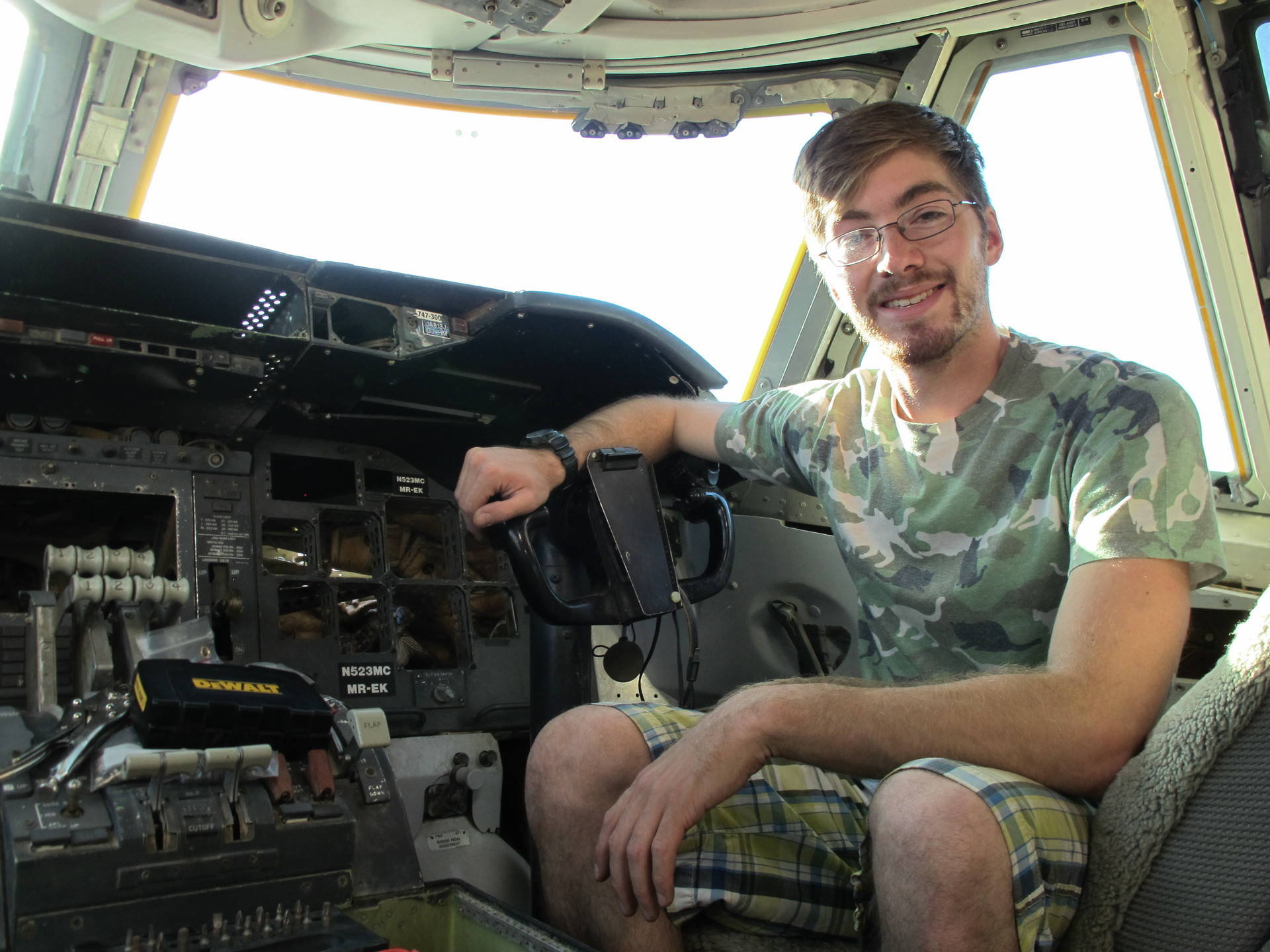
"caption": "Volunteer Nick Avila of San Francisco sits in the 747 cockpit that he's helping to fix up for Burning Man.",
"description": "Volunteer Nick Avila of San Francisco sits in the 747 cockpit that he's helping to fix up for Burning Man.",
"title": "RS20969_IMG_1953-qut",
"credit": "Susan Valot/KQED",
"status": "inherit",
"isLoading": false,
"fetchFailed": false
},
"arts_11819295": {
"type": "attachments",
"id": "arts_11819295",
"meta": {
"index": "attachments_1716263798",
"site": "arts",
"id": "11819295",
"found": true
},
"parent": 11818683,
"imgSizes": {
"thumbnail": {
"file": "https://ww2.kqed.org/app/uploads/sites/2/2016/07/Dennis-Cooper-2-400x225.jpg",
"width": 400,
"mimeType": "image/jpeg",
"height": 225
},
"fd-sm": {
"file": "https://ww2.kqed.org/app/uploads/sites/2/2016/07/Dennis-Cooper-2-960x540.jpg",
"width": 960,
"mimeType": "image/jpeg",
"height": 540
},
"post-thumbnail": {
"file": "https://ww2.kqed.org/app/uploads/sites/2/2016/07/Dennis-Cooper-2-672x372.jpg",
"width": 672,
"mimeType": "image/jpeg",
"height": 372
},
"kqedFullSize": {
"file": "https://ww2.kqed.org/app/uploads/sites/2/2016/07/Dennis-Cooper-2.jpg",
"width": 1000,
"height": 563
},
"guest-author-50": {
"file": "https://ww2.kqed.org/app/uploads/sites/2/2016/07/Dennis-Cooper-2-50x50.jpg",
"width": 50,
"mimeType": "image/jpeg",
"height": 50
},
"guest-author-96": {
"file": "https://ww2.kqed.org/app/uploads/sites/2/2016/07/Dennis-Cooper-2-96x96.jpg",
"width": 96,
"mimeType": "image/jpeg",
"height": 96
},
"medium": {
"file": "https://ww2.kqed.org/app/uploads/sites/2/2016/07/Dennis-Cooper-2-800x450.jpg",
"width": 800,
"mimeType": "image/jpeg",
"height": 450
},
"guest-author-64": {
"file": "https://ww2.kqed.org/app/uploads/sites/2/2016/07/Dennis-Cooper-2-64x64.jpg",
"width": 64,
"mimeType": "image/jpeg",
"height": 64
},
"detail": {
"file": "https://ww2.kqed.org/app/uploads/sites/2/2016/07/Dennis-Cooper-2-150x150.jpg",
"width": 150,
"mimeType": "image/jpeg",
"height": 150
},
"guest-author-32": {
"file": "https://ww2.kqed.org/app/uploads/sites/2/2016/07/Dennis-Cooper-2-32x32.jpg",
"width": 32,
"mimeType": "image/jpeg",
"height": 32
},
"medium_large": {
"file": "https://ww2.kqed.org/app/uploads/sites/2/2016/07/Dennis-Cooper-2-768x432.jpg",
"width": 768,
"mimeType": "image/jpeg",
"height": 432
},
"guest-author-128": {
"file": "https://ww2.kqed.org/app/uploads/sites/2/2016/07/Dennis-Cooper-2-128x128.jpg",
"width": 128,
"mimeType": "image/jpeg",
"height": 128
}
},
"publishDate": 1468627647,
"modified": 1468888374,
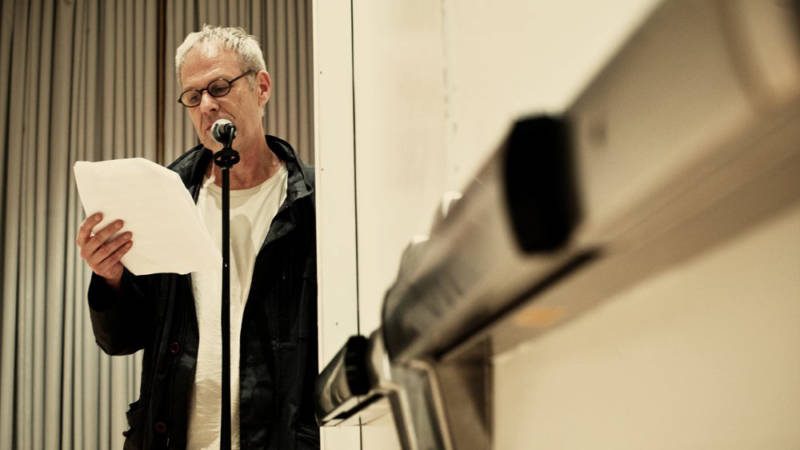
"caption": "Dennis Cooper, 2010",
"description": "Dennis Cooper",
"title": "Dennis Cooper 2",
"credit": "Photo: Christy Pessagno/ courtesy of Dennis Cooper",
"status": "inherit",
"isLoading": false,
"fetchFailed": false
},
"arts_11977171": {
"type": "attachments",
"id": "arts_11977171",
"meta": {
"index": "attachments_1716263798",
"site": "arts",
"id": "11977171",
"found": true
},
"parent": 11976285,
"imgSizes": {
"twentyfourteen-full-width": {
"file": "https://ww2.kqed.org/app/uploads/sites/2/2016/08/IMG_2340-1038x576.jpg",
"width": 1038,
"mimeType": "image/jpeg",
"height": 576
},
"thumbnail": {
"file": "https://ww2.kqed.org/app/uploads/sites/2/2016/08/IMG_2340-400x225.jpg",
"width": 400,
"mimeType": "image/jpeg",
"height": 225
},
"fd-sm": {
"file": "https://ww2.kqed.org/app/uploads/sites/2/2016/08/IMG_2340-960x540.jpg",
"width": 960,
"mimeType": "image/jpeg",
"height": 540
},
"post-thumbnail": {
"file": "https://ww2.kqed.org/app/uploads/sites/2/2016/08/IMG_2340-672x372.jpg",
"width": 672,
"mimeType": "image/jpeg",
"height": 372
},
"kqedFullSize": {
"file": "https://ww2.kqed.org/app/uploads/sites/2/2016/08/IMG_2340.jpg",
"width": 3264,
"height": 1836
},
"large": {
"file": "https://ww2.kqed.org/app/uploads/sites/2/2016/08/IMG_2340-1180x664.jpg",
"width": 1180,
"mimeType": "image/jpeg",
"height": 664
},
"guest-author-50": {
"file": "https://ww2.kqed.org/app/uploads/sites/2/2016/08/IMG_2340-50x50.jpg",
"width": 50,
"mimeType": "image/jpeg",
"height": 50
},
"guest-author-96": {
"file": "https://ww2.kqed.org/app/uploads/sites/2/2016/08/IMG_2340-96x96.jpg",
"width": 96,
"mimeType": "image/jpeg",
"height": 96
},
"medium": {
"file": "https://ww2.kqed.org/app/uploads/sites/2/2016/08/IMG_2340-800x450.jpg",
"width": 800,
"mimeType": "image/jpeg",
"height": 450
},
"guest-author-64": {
"file": "https://ww2.kqed.org/app/uploads/sites/2/2016/08/IMG_2340-64x64.jpg",
"width": 64,
"mimeType": "image/jpeg",
"height": 64
},
"guest-author-32": {
"file": "https://ww2.kqed.org/app/uploads/sites/2/2016/08/IMG_2340-32x32.jpg",
"width": 32,
"mimeType": "image/jpeg",
"height": 32
},
"fd-lrg": {
"file": "https://ww2.kqed.org/app/uploads/sites/2/2016/08/IMG_2340-1920x1080.jpg",
"width": 1920,
"mimeType": "image/jpeg",
"height": 1080
},
"fd-med": {
"file": "https://ww2.kqed.org/app/uploads/sites/2/2016/08/IMG_2340-1180x664.jpg",
"width": 1180,
"mimeType": "image/jpeg",
"height": 664
},
"detail": {
"file": "https://ww2.kqed.org/app/uploads/sites/2/2016/08/IMG_2340-150x150.jpg",
"width": 150,
"mimeType": "image/jpeg",
"height": 150
},
"medium_large": {
"file": "https://ww2.kqed.org/app/uploads/sites/2/2016/08/IMG_2340-768x432.jpg",
"width": 768,
"mimeType": "image/jpeg",
"height": 432
},
"guest-author-128": {
"file": "https://ww2.kqed.org/app/uploads/sites/2/2016/08/IMG_2340-128x128.jpg",
"width": 128,
"mimeType": "image/jpeg",
"height": 128
}
},
"publishDate": 1472100322,
"modified": 1472149779,
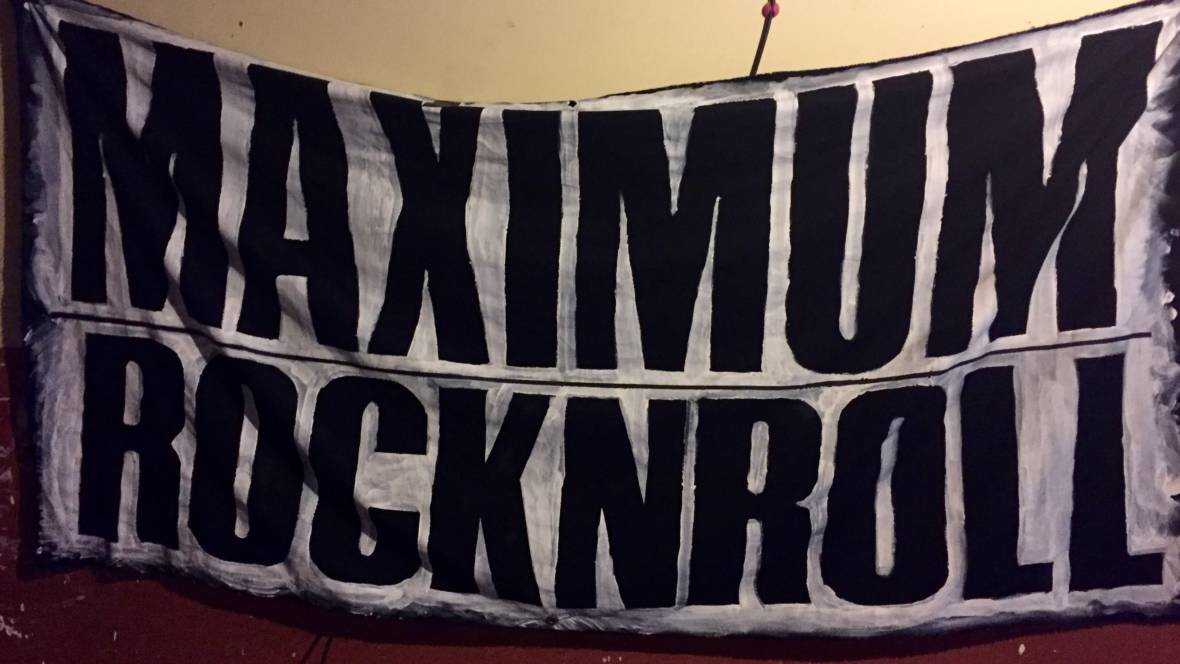
"caption": "A banner at Maximum Rocknroll's office",
"description": "A banner at Maximum Rocknroll's office",
"title": "IMG_2340",
"credit": "Photo: Kevin L. Jones/KQED",
"status": "inherit",
"isLoading": false,
"fetchFailed": false
},
"arts_11975567": {
"type": "attachments",
"id": "arts_11975567",
"meta": {
"index": "attachments_1716263798",
"site": "arts",
"id": "11975567",
"found": true
},
"parent": 11975415,
"imgSizes": {
"twentyfourteen-full-width": {
"file": "https://ww2.kqed.org/app/uploads/sites/2/2016/08/Peter-Doig-painting-1038x576.jpg",
"width": 1038,
"mimeType": "image/jpeg",
"height": 576
},
"thumbnail": {
"file": "https://ww2.kqed.org/app/uploads/sites/2/2016/08/Peter-Doig-painting-400x225.jpg",
"width": 400,
"mimeType": "image/jpeg",
"height": 225
},
"fd-sm": {
"file": "https://ww2.kqed.org/app/uploads/sites/2/2016/08/Peter-Doig-painting-960x540.jpg",
"width": 960,
"mimeType": "image/jpeg",
"height": 540
},
"post-thumbnail": {
"file": "https://ww2.kqed.org/app/uploads/sites/2/2016/08/Peter-Doig-painting-672x372.jpg",
"width": 672,
"mimeType": "image/jpeg",
"height": 372
},
"kqedFullSize": {
"file": "https://ww2.kqed.org/app/uploads/sites/2/2016/08/Peter-Doig-painting.jpg",
"width": 1920,
"height": 1080
},
"large": {
"file": "https://ww2.kqed.org/app/uploads/sites/2/2016/08/Peter-Doig-painting-1180x664.jpg",
"width": 1180,
"mimeType": "image/jpeg",
"height": 664
},
"guest-author-50": {
"file": "https://ww2.kqed.org/app/uploads/sites/2/2016/08/Peter-Doig-painting-50x50.jpg",
"width": 50,
"mimeType": "image/jpeg",
"height": 50
},
"guest-author-96": {
"file": "https://ww2.kqed.org/app/uploads/sites/2/2016/08/Peter-Doig-painting-96x96.jpg",
"width": 96,
"mimeType": "image/jpeg",
"height": 96
},
"medium": {
"file": "https://ww2.kqed.org/app/uploads/sites/2/2016/08/Peter-Doig-painting-800x450.jpg",
"width": 800,
"mimeType": "image/jpeg",
"height": 450
},
"guest-author-64": {
"file": "https://ww2.kqed.org/app/uploads/sites/2/2016/08/Peter-Doig-painting-64x64.jpg",
"width": 64,
"mimeType": "image/jpeg",
"height": 64
},
"guest-author-32": {
"file": "https://ww2.kqed.org/app/uploads/sites/2/2016/08/Peter-Doig-painting-32x32.jpg",
"width": 32,
"mimeType": "image/jpeg",
"height": 32
},
"fd-lrg": {
"file": "https://ww2.kqed.org/app/uploads/sites/2/2016/08/Peter-Doig-painting-1920x1080.jpg",
"width": 1920,
"mimeType": "image/jpeg",
"height": 1080
},
"fd-med": {
"file": "https://ww2.kqed.org/app/uploads/sites/2/2016/08/Peter-Doig-painting-1180x664.jpg",
"width": 1180,
"mimeType": "image/jpeg",
"height": 664
},
"detail": {
"file": "https://ww2.kqed.org/app/uploads/sites/2/2016/08/Peter-Doig-painting-150x150.jpg",
"width": 150,
"mimeType": "image/jpeg",
"height": 150
},
"medium_large": {
"file": "https://ww2.kqed.org/app/uploads/sites/2/2016/08/Peter-Doig-painting-768x432.jpg",
"width": 768,
"mimeType": "image/jpeg",
"height": 432
},
"guest-author-128": {
"file": "https://ww2.kqed.org/app/uploads/sites/2/2016/08/Peter-Doig-painting-128x128.jpg",
"width": 128,
"mimeType": "image/jpeg",
"height": 128
}
},
"publishDate": 1472067960,
"modified": 1472068350,
"caption": "Gallery staff view 'Cabin Essence' by artist Peter Doig (not the painting referred to in this article) ",
"description": "Gallery staff view 'Cabin Essence' by artist Peter Doig (not the painting referred to in this article) ",
"title": "Preview Of Christie's Impressionist, Modern, Post-war And Contemporary Art Sales",
"credit": "Photo: Ben Pruchnie/Getty Images",
"status": "inherit",
"isLoading": false,
"fetchFailed": false
},
"arts_11952133": {
"type": "attachments",
"id": "arts_11952133",
"meta": {
"index": "attachments_1716263798",
"site": "arts",
"id": "11952133",
"found": true
},
"parent": 11952122,
"imgSizes": {
"thumbnail": {
"file": "https://ww2.kqed.org/app/uploads/sites/2/2016/08/casemore_kirkeby_steve_kahn_2016_installation_12_COVER-400x225.jpg",
"width": 400,
"mimeType": "image/jpeg",
"height": 225
},
"fd-sm": {
"file": "https://ww2.kqed.org/app/uploads/sites/2/2016/08/casemore_kirkeby_steve_kahn_2016_installation_12_COVER-960x540.jpg",
"width": 960,
"mimeType": "image/jpeg",
"height": 540
},
"post-thumbnail": {
"file": "https://ww2.kqed.org/app/uploads/sites/2/2016/08/casemore_kirkeby_steve_kahn_2016_installation_12_COVER-672x372.jpg",
"width": 672,
"mimeType": "image/jpeg",
"height": 372
},
"kqedFullSize": {
"file": "https://ww2.kqed.org/app/uploads/sites/2/2016/08/casemore_kirkeby_steve_kahn_2016_installation_12_COVER.jpg",
"width": 1000,
"height": 563
},
"guest-author-50": {
"file": "https://ww2.kqed.org/app/uploads/sites/2/2016/08/casemore_kirkeby_steve_kahn_2016_installation_12_COVER-50x50.jpg",
"width": 50,
"mimeType": "image/jpeg",
"height": 50
},
"guest-author-96": {
"file": "https://ww2.kqed.org/app/uploads/sites/2/2016/08/casemore_kirkeby_steve_kahn_2016_installation_12_COVER-96x96.jpg",
"width": 96,
"mimeType": "image/jpeg",
"height": 96
},
"medium": {
"file": "https://ww2.kqed.org/app/uploads/sites/2/2016/08/casemore_kirkeby_steve_kahn_2016_installation_12_COVER-800x450.jpg",
"width": 800,
"mimeType": "image/jpeg",
"height": 450
},
"guest-author-64": {
"file": "https://ww2.kqed.org/app/uploads/sites/2/2016/08/casemore_kirkeby_steve_kahn_2016_installation_12_COVER-64x64.jpg",
"width": 64,
"mimeType": "image/jpeg",
"height": 64
},
"detail": {
"file": "https://ww2.kqed.org/app/uploads/sites/2/2016/08/casemore_kirkeby_steve_kahn_2016_installation_12_COVER-150x150.jpg",
"width": 150,
"mimeType": "image/jpeg",
"height": 150
},
"guest-author-32": {
"file": "https://ww2.kqed.org/app/uploads/sites/2/2016/08/casemore_kirkeby_steve_kahn_2016_installation_12_COVER-32x32.jpg",
"width": 32,
"mimeType": "image/jpeg",
"height": 32
},
"medium_large": {
"file": "https://ww2.kqed.org/app/uploads/sites/2/2016/08/casemore_kirkeby_steve_kahn_2016_installation_12_COVER-768x432.jpg",
"width": 768,
"mimeType": "image/jpeg",
"height": 432
},
"guest-author-128": {
"file": "https://ww2.kqed.org/app/uploads/sites/2/2016/08/casemore_kirkeby_steve_kahn_2016_installation_12_COVER-128x128.jpg",
"width": 128,
"mimeType": "image/jpeg",
"height": 128
}
},
"publishDate": 1471550572,
"modified": 1471550927,
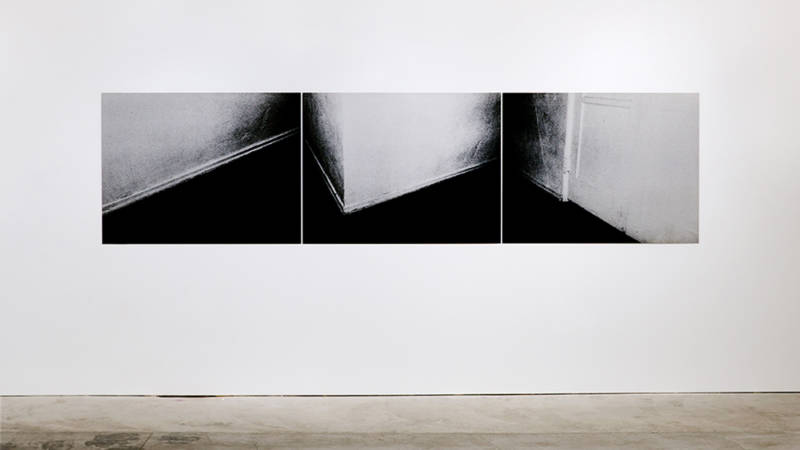
"caption": "Installation view of Steve Kahn, 'Triptych #10,' 1976.",
"description": null,
"title": "Casemore Kirkeby 2016 Installation",
"credit": "Courtesy of Casemore Kirkeby",
"status": "inherit",
"isLoading": false,
"fetchFailed": false
},
"pop_33387": {
"type": "attachments",
"id": "pop_33387",
"meta": {
"index": "attachments_1716263798",
"site": "pop",
"id": "33387",
"found": true
},
"parent": 33376,
"imgSizes": {
"twentyfourteen-full-width": {
"file": "https://ww2.kqed.org/app/uploads/sites/12/2016/08/01-2-1038x576.jpg",
"width": 1038,
"mimeType": "image/jpeg",
"height": 576
},
"thumbnail": {
"file": "https://ww2.kqed.org/app/uploads/sites/12/2016/08/01-2-e1471558993435-400x238.jpg",
"width": 400,
"mimeType": "image/jpeg",
"height": 238
},
"fd-sm": {
"file": "https://ww2.kqed.org/app/uploads/sites/12/2016/08/01-2-960x960.jpg",
"width": 960,
"mimeType": "image/jpeg",
"height": 960
},
"post-thumbnail": {
"file": "https://ww2.kqed.org/app/uploads/sites/12/2016/08/01-2-e1471558993435-672x372.jpg",
"width": 672,
"mimeType": "image/jpeg",
"height": 372
},
"kqedFullSize": {
"file": "https://ww2.kqed.org/app/uploads/sites/12/2016/08/01-2-e1471558993435.jpg",
"width": 869,
"height": 518
},
"guest-author-50": {
"file": "https://ww2.kqed.org/app/uploads/sites/12/2016/08/01-2-e1471558993435-50x50.jpg",
"width": 50,
"mimeType": "image/jpeg",
"height": 50
},
"guest-author-96": {
"file": "https://ww2.kqed.org/app/uploads/sites/12/2016/08/01-2-e1471558993435-96x96.jpg",
"width": 96,
"mimeType": "image/jpeg",
"height": 96
},
"medium": {
"file": "https://ww2.kqed.org/app/uploads/sites/12/2016/08/01-2-e1471558993435-800x477.jpg",
"width": 800,
"mimeType": "image/jpeg",
"height": 477
},
"guest-author-64": {
"file": "https://ww2.kqed.org/app/uploads/sites/12/2016/08/01-2-e1471558993435-64x64.jpg",
"width": 64,
"mimeType": "image/jpeg",
"height": 64
},
"guest-author-32": {
"file": "https://ww2.kqed.org/app/uploads/sites/12/2016/08/01-2-e1471558993435-32x32.jpg",
"width": 32,
"mimeType": "image/jpeg",
"height": 32
},
"detail": {
"file": "https://ww2.kqed.org/app/uploads/sites/12/2016/08/01-2-e1471558993435-150x150.jpg",
"width": 150,
"mimeType": "image/jpeg",
"height": 150
},
"medium_large": {
"file": "https://ww2.kqed.org/app/uploads/sites/12/2016/08/01-2-e1471558993435-768x458.jpg",
"width": 768,
"mimeType": "image/jpeg",
"height": 458
},
"guest-author-128": {
"file": "https://ww2.kqed.org/app/uploads/sites/12/2016/08/01-2-e1471558993435-128x128.jpg",
"width": 128,
"mimeType": "image/jpeg",
"height": 128
}
},
"publishDate": 1471558942,
"modified": 1471559105,
"caption": "Trump, waist-up. ",
"description": null,
"title": "01-2",
"credit": "Peter Lawrence Kane / SF Weekly",
"status": "inherit",
"isLoading": false,
"fetchFailed": false
},
"arts_11948213": {
"type": "attachments",
"id": "arts_11948213",
"meta": {
"index": "attachments_1716263798",
"site": "arts",
"id": "11948213",
"found": true
},
"parent": 11948186,
"imgSizes": {
"twentyfourteen-full-width": {
"file": "https://ww2.kqed.org/app/uploads/sites/2/2016/08/brooks_self-portrait_-1038x576.jpg",
"width": 1038,
"mimeType": "image/jpeg",
"height": 576
},
"thumbnail": {
"file": "https://ww2.kqed.org/app/uploads/sites/2/2016/08/brooks_self-portrait_-400x225.jpg",
"width": 400,
"mimeType": "image/jpeg",
"height": 225
},
"fd-sm": {
"file": "https://ww2.kqed.org/app/uploads/sites/2/2016/08/brooks_self-portrait_-960x540.jpg",
"width": 960,
"mimeType": "image/jpeg",
"height": 540
},
"post-thumbnail": {
"file": "https://ww2.kqed.org/app/uploads/sites/2/2016/08/brooks_self-portrait_-672x372.jpg",
"width": 672,
"mimeType": "image/jpeg",
"height": 372
},
"kqedFullSize": {
"file": "https://ww2.kqed.org/app/uploads/sites/2/2016/08/brooks_self-portrait_.jpg",
"width": 1920,
"height": 1080
},
"large": {
"file": "https://ww2.kqed.org/app/uploads/sites/2/2016/08/brooks_self-portrait_-1180x664.jpg",
"width": 1180,
"mimeType": "image/jpeg",
"height": 664
},
"guest-author-50": {
"file": "https://ww2.kqed.org/app/uploads/sites/2/2016/08/brooks_self-portrait_-50x50.jpg",
"width": 50,
"mimeType": "image/jpeg",
"height": 50
},
"guest-author-96": {
"file": "https://ww2.kqed.org/app/uploads/sites/2/2016/08/brooks_self-portrait_-96x96.jpg",
"width": 96,
"mimeType": "image/jpeg",
"height": 96
},
"medium": {
"file": "https://ww2.kqed.org/app/uploads/sites/2/2016/08/brooks_self-portrait_-800x450.jpg",
"width": 800,
"mimeType": "image/jpeg",
"height": 450
},
"guest-author-64": {
"file": "https://ww2.kqed.org/app/uploads/sites/2/2016/08/brooks_self-portrait_-64x64.jpg",
"width": 64,
"mimeType": "image/jpeg",
"height": 64
},
"guest-author-32": {
"file": "https://ww2.kqed.org/app/uploads/sites/2/2016/08/brooks_self-portrait_-32x32.jpg",
"width": 32,
"mimeType": "image/jpeg",
"height": 32
},
"fd-lrg": {
"file": "https://ww2.kqed.org/app/uploads/sites/2/2016/08/brooks_self-portrait_-1920x1080.jpg",
"width": 1920,
"mimeType": "image/jpeg",
"height": 1080
},
"fd-med": {
"file": "https://ww2.kqed.org/app/uploads/sites/2/2016/08/brooks_self-portrait_-1180x664.jpg",
"width": 1180,
"mimeType": "image/jpeg",
"height": 664
},
"detail": {
"file": "https://ww2.kqed.org/app/uploads/sites/2/2016/08/brooks_self-portrait_-150x150.jpg",
"width": 150,
"mimeType": "image/jpeg",
"height": 150
},
"medium_large": {
"file": "https://ww2.kqed.org/app/uploads/sites/2/2016/08/brooks_self-portrait_-768x432.jpg",
"width": 768,
"mimeType": "image/jpeg",
"height": 432
},
"guest-author-128": {
"file": "https://ww2.kqed.org/app/uploads/sites/2/2016/08/brooks_self-portrait_-128x128.jpg",
"width": 128,
"mimeType": "image/jpeg",
"height": 128
}
},
"publishDate": 1471464034,
"modified": 1471465646,
"caption": "A sample of 'Self Portrait' by Romaine Brooks, 1923",
"description": "A sample of 'Self Portrait' by Romaine Brooks, 1923",
"title": "brooks_self-portrait",
"credit": "Photo: Courtesy of Smithsonian American Art Museum",
"status": "inherit",
"isLoading": false,
"fetchFailed": false
},
"arts_11944740": {
"type": "attachments",
"id": "arts_11944740",
"meta": {
"index": "attachments_1716263798",
"site": "arts",
"id": "11944740",
"found": true
},
"parent": 11944734,
"imgSizes": {
"twentyfourteen-full-width": {
"file": "https://ww2.kqed.org/app/uploads/sites/2/2016/08/HesseCOVER-1038x576.jpg",
"width": 1038,
"mimeType": "image/jpeg",
"height": 576
},
"thumbnail": {
"file": "https://ww2.kqed.org/app/uploads/sites/2/2016/08/HesseCOVER-400x225.jpg",
"width": 400,
"mimeType": "image/jpeg",
"height": 225
},
"fd-sm": {
"file": "https://ww2.kqed.org/app/uploads/sites/2/2016/08/HesseCOVER-960x540.jpg",
"width": 960,
"mimeType": "image/jpeg",
"height": 540
},
"post-thumbnail": {
"file": "https://ww2.kqed.org/app/uploads/sites/2/2016/08/HesseCOVER-672x372.jpg",
"width": 672,
"mimeType": "image/jpeg",
"height": 372
},
"kqedFullSize": {
"file": "https://ww2.kqed.org/app/uploads/sites/2/2016/08/HesseCOVER.jpg",
"width": 1920,
"height": 1080
},
"large": {
"file": "https://ww2.kqed.org/app/uploads/sites/2/2016/08/HesseCOVER-1180x664.jpg",
"width": 1180,
"mimeType": "image/jpeg",
"height": 664
},
"guest-author-50": {
"file": "https://ww2.kqed.org/app/uploads/sites/2/2016/08/HesseCOVER-50x50.jpg",
"width": 50,
"mimeType": "image/jpeg",
"height": 50
},
"guest-author-96": {
"file": "https://ww2.kqed.org/app/uploads/sites/2/2016/08/HesseCOVER-96x96.jpg",
"width": 96,
"mimeType": "image/jpeg",
"height": 96
},
"medium": {
"file": "https://ww2.kqed.org/app/uploads/sites/2/2016/08/HesseCOVER-800x450.jpg",
"width": 800,
"mimeType": "image/jpeg",
"height": 450
},
"guest-author-64": {
"file": "https://ww2.kqed.org/app/uploads/sites/2/2016/08/HesseCOVER-64x64.jpg",
"width": 64,
"mimeType": "image/jpeg",
"height": 64
},
"guest-author-32": {
"file": "https://ww2.kqed.org/app/uploads/sites/2/2016/08/HesseCOVER-32x32.jpg",
"width": 32,
"mimeType": "image/jpeg",
"height": 32
},
"fd-lrg": {
"file": "https://ww2.kqed.org/app/uploads/sites/2/2016/08/HesseCOVER-1920x1080.jpg",
"width": 1920,
"mimeType": "image/jpeg",
"height": 1080
},
"fd-med": {
"file": "https://ww2.kqed.org/app/uploads/sites/2/2016/08/HesseCOVER-1180x664.jpg",
"width": 1180,
"mimeType": "image/jpeg",
"height": 664
},
"detail": {
"file": "https://ww2.kqed.org/app/uploads/sites/2/2016/08/HesseCOVER-150x150.jpg",
"width": 150,
"mimeType": "image/jpeg",
"height": 150
},
"medium_large": {
"file": "https://ww2.kqed.org/app/uploads/sites/2/2016/08/HesseCOVER-768x432.jpg",
"width": 768,
"mimeType": "image/jpeg",
"height": 432
},
"guest-author-128": {
"file": "https://ww2.kqed.org/app/uploads/sites/2/2016/08/HesseCOVER-128x128.jpg",
"width": 128,
"mimeType": "image/jpeg",
"height": 128
}
},
"publishDate": 1471388817,
"modified": 1471412627,
"caption": "Eva Hesse.",
"description": "Eva Hesse.",
"title": "HesseCOVER",
"credit": "Courtesy of Zeitgeist Films",
"status": "inherit",
"isLoading": false,
"fetchFailed": false
},
"bayareabites_111498": {
"type": "attachments",
"id": "bayareabites_111498",
"meta": {
"index": "attachments_1716263798",
"site": "bayareabites",
"id": "111498",
"found": true
},
"parent": 0,
"imgSizes": {
"twentyfourteen-full-width": {
"file": "https://ww2.kqed.org/app/uploads/sites/24/2016/08/amerine-3625-bdee1a1d9eccae93612ad1c0a4437efacb8696c8-1038x576.jpg",
"width": 1038,
"mimeType": "image/jpeg",
"height": 576
},
"thumbnail": {
"file": "https://ww2.kqed.org/app/uploads/sites/24/2016/08/amerine-3625-bdee1a1d9eccae93612ad1c0a4437efacb8696c8-400x267.jpg",
"width": 400,
"mimeType": "image/jpeg",
"height": 267
},
"fd-sm": {
"file": "https://ww2.kqed.org/app/uploads/sites/24/2016/08/amerine-3625-bdee1a1d9eccae93612ad1c0a4437efacb8696c8-960x640.jpg",
"width": 960,
"mimeType": "image/jpeg",
"height": 640
},
"post-thumbnail": {
"file": "https://ww2.kqed.org/app/uploads/sites/24/2016/08/amerine-3625-bdee1a1d9eccae93612ad1c0a4437efacb8696c8-672x372.jpg",
"width": 672,
"mimeType": "image/jpeg",
"height": 372
},
"kqedFullSize": {
"file": "https://ww2.kqed.org/app/uploads/sites/24/2016/08/amerine-3625-bdee1a1d9eccae93612ad1c0a4437efacb8696c8.jpg",
"width": 2000,
"height": 1333
},
"large": {
"file": "https://ww2.kqed.org/app/uploads/sites/24/2016/08/amerine-3625-bdee1a1d9eccae93612ad1c0a4437efacb8696c8-1440x960.jpg",
"width": 1440,
"mimeType": "image/jpeg",
"height": 960
},
"guest-author-50": {
"file": "https://ww2.kqed.org/app/uploads/sites/24/2016/08/amerine-3625-bdee1a1d9eccae93612ad1c0a4437efacb8696c8-50x50.jpg",
"width": 50,
"mimeType": "image/jpeg",
"height": 50
},
"guest-author-96": {
"file": "https://ww2.kqed.org/app/uploads/sites/24/2016/08/amerine-3625-bdee1a1d9eccae93612ad1c0a4437efacb8696c8-96x96.jpg",
"width": 96,
"mimeType": "image/jpeg",
"height": 96
},
"medium": {
"file": "https://ww2.kqed.org/app/uploads/sites/24/2016/08/amerine-3625-bdee1a1d9eccae93612ad1c0a4437efacb8696c8-800x533.jpg",
"width": 800,
"mimeType": "image/jpeg",
"height": 533
},
"guest-author-64": {
"file": "https://ww2.kqed.org/app/uploads/sites/24/2016/08/amerine-3625-bdee1a1d9eccae93612ad1c0a4437efacb8696c8-64x64.jpg",
"width": 64,
"mimeType": "image/jpeg",
"height": 64
},
"guest-author-32": {
"file": "https://ww2.kqed.org/app/uploads/sites/24/2016/08/amerine-3625-bdee1a1d9eccae93612ad1c0a4437efacb8696c8-32x32.jpg",
"width": 32,
"mimeType": "image/jpeg",
"height": 32
},
"cat_post_thumb_sizecategory-posts-2": {
"file": "https://ww2.kqed.org/app/uploads/sites/24/2016/08/amerine-3625-bdee1a1d9eccae93612ad1c0a4437efacb8696c8-150x150.jpg",
"width": 150,
"mimeType": "image/jpeg",
"height": 150
},
"fd-lrg": {
"file": "https://ww2.kqed.org/app/uploads/sites/24/2016/08/amerine-3625-bdee1a1d9eccae93612ad1c0a4437efacb8696c8-1920x1280.jpg",
"width": 1920,
"mimeType": "image/jpeg",
"height": 1280
},
"fd-med": {
"file": "https://ww2.kqed.org/app/uploads/sites/24/2016/08/amerine-3625-bdee1a1d9eccae93612ad1c0a4437efacb8696c8-1180x786.jpg",
"width": 1180,
"mimeType": "image/jpeg",
"height": 786
},
"detail": {
"file": "https://ww2.kqed.org/app/uploads/sites/24/2016/08/amerine-3625-bdee1a1d9eccae93612ad1c0a4437efacb8696c8-150x150.jpg",
"width": 150,
"mimeType": "image/jpeg",
"height": 150
},
"medium_large": {
"file": "https://ww2.kqed.org/app/uploads/sites/24/2016/08/amerine-3625-bdee1a1d9eccae93612ad1c0a4437efacb8696c8-768x512.jpg",
"width": 768,
"mimeType": "image/jpeg",
"height": 512
},
"guest-author-128": {
"file": "https://ww2.kqed.org/app/uploads/sites/24/2016/08/amerine-3625-bdee1a1d9eccae93612ad1c0a4437efacb8696c8-128x128.jpg",
"width": 128,
"mimeType": "image/jpeg",
"height": 128
}
},
"publishDate": 1471453670,
"modified": 1471455305,
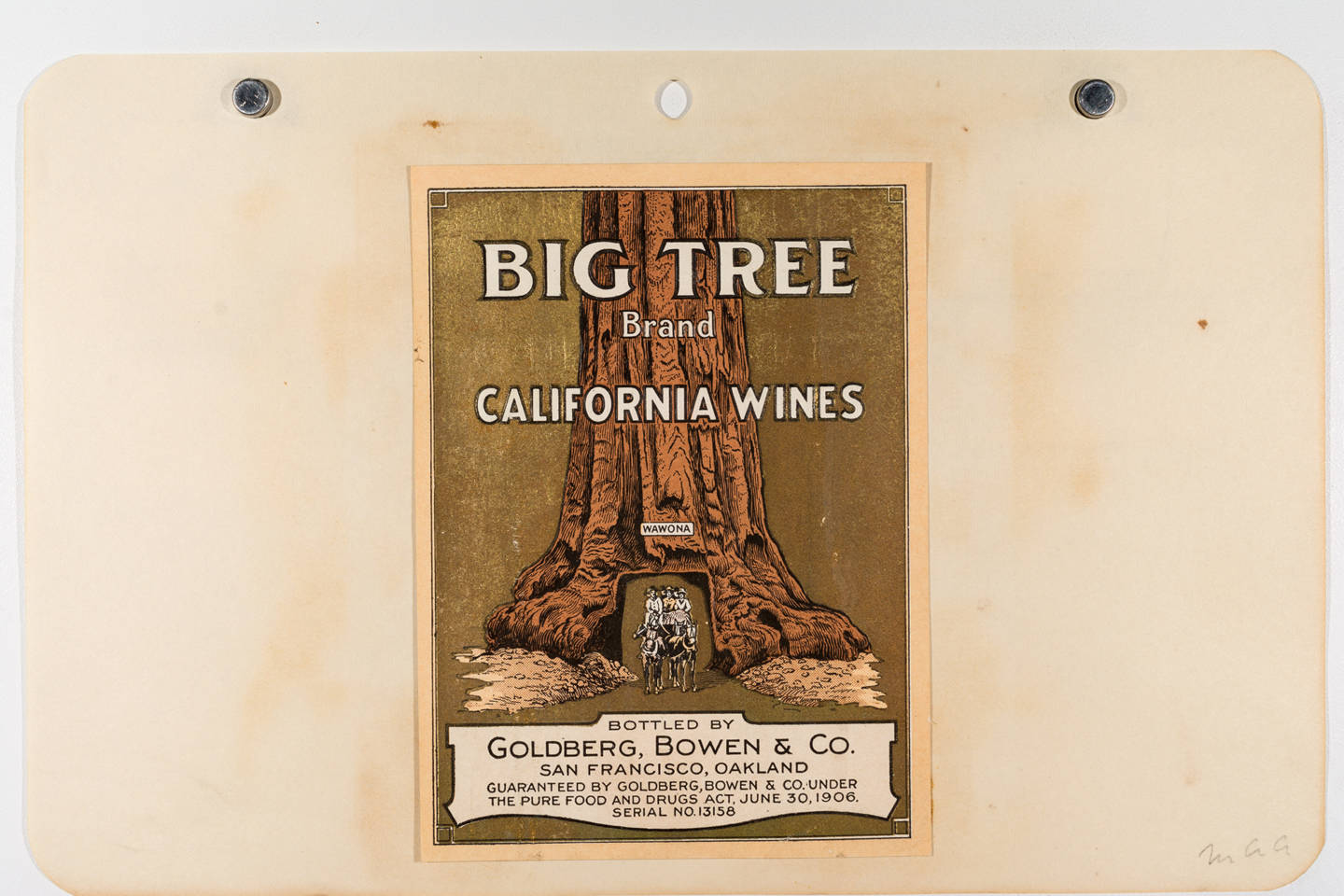
"caption": "A label for Big Tree Brand California wines",
"description": "A label for Big Tree Brand California wines",
"title": "A label for Big Tree Brand California wines",
"credit": null,
"status": "inherit",
"isLoading": false,
"fetchFailed": false
},
"bayareabites_111473": {
"type": "attachments",
"id": "bayareabites_111473",
"meta": {
"index": "attachments_1716263798",
"site": "bayareabites",
"id": "111473",
"found": true
},
"parent": 111472,
"imgSizes": {
"twentyfourteen-full-width": {
"file": "https://ww2.kqed.org/app/uploads/sites/24/2016/08/pcb_8_enl-da9031390adadd4f4ca158825515fa1a44165e21-1038x576.jpg",
"width": 1038,
"mimeType": "image/jpeg",
"height": 576
},
"thumbnail": {
"file": "https://ww2.kqed.org/app/uploads/sites/24/2016/08/pcb_8_enl-da9031390adadd4f4ca158825515fa1a44165e21-400x313.jpg",
"width": 400,
"mimeType": "image/jpeg",
"height": 313
},
"fd-sm": {
"file": "https://ww2.kqed.org/app/uploads/sites/24/2016/08/pcb_8_enl-da9031390adadd4f4ca158825515fa1a44165e21-960x751.jpg",
"width": 960,
"mimeType": "image/jpeg",
"height": 751
},
"post-thumbnail": {
"file": "https://ww2.kqed.org/app/uploads/sites/24/2016/08/pcb_8_enl-da9031390adadd4f4ca158825515fa1a44165e21-672x372.jpg",
"width": 672,
"mimeType": "image/jpeg",
"height": 372
},
"kqedFullSize": {
"file": "https://ww2.kqed.org/app/uploads/sites/24/2016/08/pcb_8_enl-da9031390adadd4f4ca158825515fa1a44165e21.jpg",
"width": 1500,
"height": 1173
},
"large": {
"file": "https://ww2.kqed.org/app/uploads/sites/24/2016/08/pcb_8_enl-da9031390adadd4f4ca158825515fa1a44165e21-1440x1126.jpg",
"width": 1440,
"mimeType": "image/jpeg",
"height": 1126
},
"guest-author-50": {
"file": "https://ww2.kqed.org/app/uploads/sites/24/2016/08/pcb_8_enl-da9031390adadd4f4ca158825515fa1a44165e21-50x50.jpg",
"width": 50,
"mimeType": "image/jpeg",
"height": 50
},
"guest-author-96": {
"file": "https://ww2.kqed.org/app/uploads/sites/24/2016/08/pcb_8_enl-da9031390adadd4f4ca158825515fa1a44165e21-96x96.jpg",
"width": 96,
"mimeType": "image/jpeg",
"height": 96
},
"medium": {
"file": "https://ww2.kqed.org/app/uploads/sites/24/2016/08/pcb_8_enl-da9031390adadd4f4ca158825515fa1a44165e21-800x626.jpg",
"width": 800,
"mimeType": "image/jpeg",
"height": 626
},
"guest-author-64": {
"file": "https://ww2.kqed.org/app/uploads/sites/24/2016/08/pcb_8_enl-da9031390adadd4f4ca158825515fa1a44165e21-64x64.jpg",
"width": 64,
"mimeType": "image/jpeg",
"height": 64
},
"guest-author-32": {
"file": "https://ww2.kqed.org/app/uploads/sites/24/2016/08/pcb_8_enl-da9031390adadd4f4ca158825515fa1a44165e21-32x32.jpg",
"width": 32,
"mimeType": "image/jpeg",
"height": 32
},
"cat_post_thumb_sizecategory-posts-2": {
"file": "https://ww2.kqed.org/app/uploads/sites/24/2016/08/pcb_8_enl-da9031390adadd4f4ca158825515fa1a44165e21-150x150.jpg",
"width": 150,
"mimeType": "image/jpeg",
"height": 150
},
"fd-med": {
"file": "https://ww2.kqed.org/app/uploads/sites/24/2016/08/pcb_8_enl-da9031390adadd4f4ca158825515fa1a44165e21-1180x923.jpg",
"width": 1180,
"mimeType": "image/jpeg",
"height": 923
},
"detail": {
"file": "https://ww2.kqed.org/app/uploads/sites/24/2016/08/pcb_8_enl-da9031390adadd4f4ca158825515fa1a44165e21-150x150.jpg",
"width": 150,
"mimeType": "image/jpeg",
"height": 150
},
"medium_large": {
"file": "https://ww2.kqed.org/app/uploads/sites/24/2016/08/pcb_8_enl-da9031390adadd4f4ca158825515fa1a44165e21-768x601.jpg",
"width": 768,
"mimeType": "image/jpeg",
"height": 601
},
"guest-author-128": {
"file": "https://ww2.kqed.org/app/uploads/sites/24/2016/08/pcb_8_enl-da9031390adadd4f4ca158825515fa1a44165e21-128x128.jpg",
"width": 128,
"mimeType": "image/jpeg",
"height": 128
}
},
"publishDate": 1471417639,
"modified": 1471421347,
"caption": "Neal Slavin, Frankfurters in Full Dress, 1978, with the recipe: Neal Slavin: Nylen's Frankfurters in Full Dress.",
"description": "Neal Slavin,\u003cem> Frankfurters in Full Dress\u003c/em>, 1978, with the recipe: <a href="",
"title": "Neal Slavin, Frankfurters in Full Dress, 1978, with the recipe: Neal Slavin: Nylen's Frankfurters in Full Dress.",
"credit": "Neal Slavin",
"status": "inherit",
"isLoading": false,
"fetchFailed": false
},
"arts_11940358": {
"type": "attachments",
"id": "arts_11940358",
"meta": {
"index": "attachments_1716263798",
"site": "arts",
"id": "11940358",
"found": true
},
"parent": 11939860,
"imgSizes": {
"twentyfourteen-full-width": {
"file": "https://ww2.kqed.org/app/uploads/sites/2/2016/08/Jacques-Terzian-1038x576.jpg",
"width": 1038,
"mimeType": "image/jpeg",
"height": 576
},
"thumbnail": {
"file": "https://ww2.kqed.org/app/uploads/sites/2/2016/08/Jacques-Terzian-400x225.jpg",
"width": 400,
"mimeType": "image/jpeg",
"height": 225
},
"fd-sm": {
"file": "https://ww2.kqed.org/app/uploads/sites/2/2016/08/Jacques-Terzian-960x540.jpg",
"width": 960,
"mimeType": "image/jpeg",
"height": 540
},
"post-thumbnail": {
"file": "https://ww2.kqed.org/app/uploads/sites/2/2016/08/Jacques-Terzian-672x372.jpg",
"width": 672,
"mimeType": "image/jpeg",
"height": 372
},
"kqedFullSize": {
"file": "https://ww2.kqed.org/app/uploads/sites/2/2016/08/Jacques-Terzian.jpg",
"width": 1408,
"height": 792
},
"large": {
"file": "https://ww2.kqed.org/app/uploads/sites/2/2016/08/Jacques-Terzian-1180x664.jpg",
"width": 1180,
"mimeType": "image/jpeg",
"height": 664
},
"guest-author-50": {
"file": "https://ww2.kqed.org/app/uploads/sites/2/2016/08/Jacques-Terzian-50x50.jpg",
"width": 50,
"mimeType": "image/jpeg",
"height": 50
},
"guest-author-96": {
"file": "https://ww2.kqed.org/app/uploads/sites/2/2016/08/Jacques-Terzian-96x96.jpg",
"width": 96,
"mimeType": "image/jpeg",
"height": 96
},
"medium": {
"file": "https://ww2.kqed.org/app/uploads/sites/2/2016/08/Jacques-Terzian-800x450.jpg",
"width": 800,
"mimeType": "image/jpeg",
"height": 450
},
"guest-author-64": {
"file": "https://ww2.kqed.org/app/uploads/sites/2/2016/08/Jacques-Terzian-64x64.jpg",
"width": 64,
"mimeType": "image/jpeg",
"height": 64
},
"guest-author-32": {
"file": "https://ww2.kqed.org/app/uploads/sites/2/2016/08/Jacques-Terzian-32x32.jpg",
"width": 32,
"mimeType": "image/jpeg",
"height": 32
},
"fd-med": {
"file": "https://ww2.kqed.org/app/uploads/sites/2/2016/08/Jacques-Terzian-1180x664.jpg",
"width": 1180,
"mimeType": "image/jpeg",
"height": 664
},
"detail": {
"file": "https://ww2.kqed.org/app/uploads/sites/2/2016/08/Jacques-Terzian-150x150.jpg",
"width": 150,
"mimeType": "image/jpeg",
"height": 150
},
"medium_large": {
"file": "https://ww2.kqed.org/app/uploads/sites/2/2016/08/Jacques-Terzian-768x432.jpg",
"width": 768,
"mimeType": "image/jpeg",
"height": 432
},
"guest-author-128": {
"file": "https://ww2.kqed.org/app/uploads/sites/2/2016/08/Jacques-Terzian-128x128.jpg",
"width": 128,
"mimeType": "image/jpeg",
"height": 128
}
},
"publishDate": 1471292661,
"modified": 1471292796,
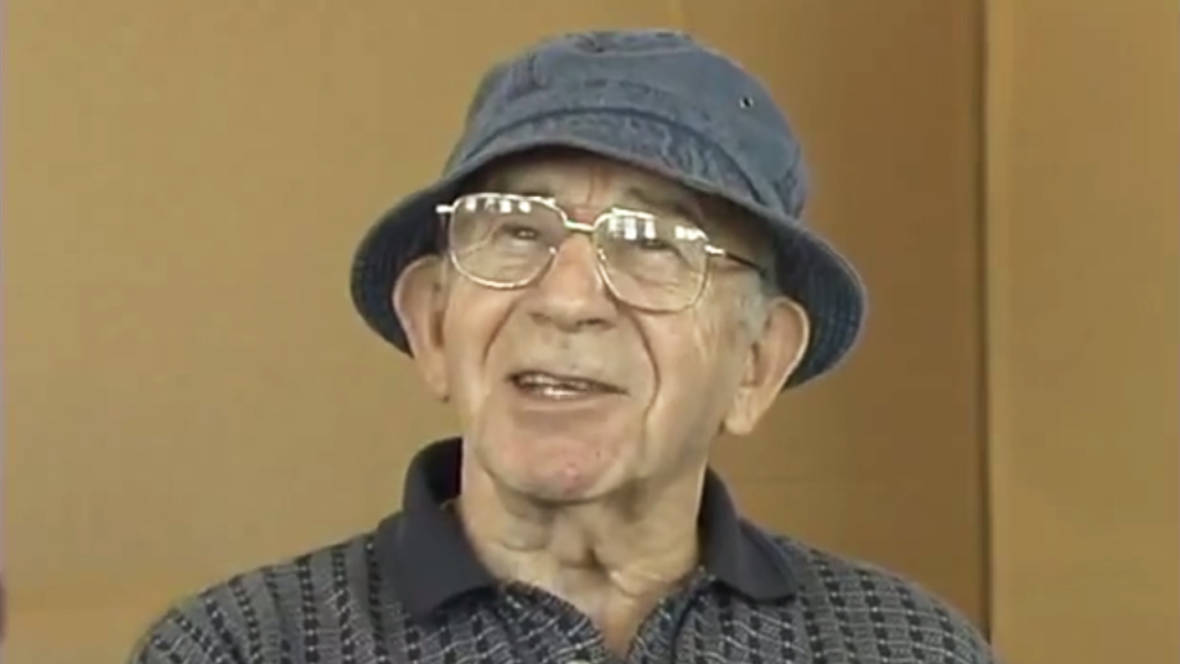
"caption": "Jacques Terzian being interviewed in the film 'Making the Point.'",
"description": "Jacques Terzian being interviewed in the film 'Making the Point.'",
"title": "Jacques Terzian",
"credit": null,
"status": "inherit",
"isLoading": false,
"fetchFailed": false
},
"arts_11944220": {
"type": "attachments",
"id": "arts_11944220",
"meta": {
"index": "attachments_1716263798",
"site": "arts",
"id": "11944220",
"found": true
},
"parent": 0,
"imgSizes": {
"twentyfourteen-full-width": {
"file": "https://ww2.kqed.org/app/uploads/sites/2/2016/08/Fairey.MAIN_-1038x576.jpg",
"width": 1038,
"mimeType": "image/jpeg",
"height": 576
},
"thumbnail": {
"file": "https://ww2.kqed.org/app/uploads/sites/2/2016/08/Fairey.MAIN_-400x225.jpg",
"width": 400,
"mimeType": "image/jpeg",
"height": 225
},
"fd-sm": {
"file": "https://ww2.kqed.org/app/uploads/sites/2/2016/08/Fairey.MAIN_-960x540.jpg",
"width": 960,
"mimeType": "image/jpeg",
"height": 540
},
"post-thumbnail": {
"file": "https://ww2.kqed.org/app/uploads/sites/2/2016/08/Fairey.MAIN_-672x372.jpg",
"width": 672,
"mimeType": "image/jpeg",
"height": 372
},
"kqedFullSize": {
"file": "https://ww2.kqed.org/app/uploads/sites/2/2016/08/Fairey.MAIN_.jpg",
"width": 1920,
"height": 1080
},
"large": {
"file": "https://ww2.kqed.org/app/uploads/sites/2/2016/08/Fairey.MAIN_-1180x664.jpg",
"width": 1180,
"mimeType": "image/jpeg",
"height": 664
},
"guest-author-50": {
"file": "https://ww2.kqed.org/app/uploads/sites/2/2016/08/Fairey.MAIN_-50x50.jpg",
"width": 50,
"mimeType": "image/jpeg",
"height": 50
},
"guest-author-96": {
"file": "https://ww2.kqed.org/app/uploads/sites/2/2016/08/Fairey.MAIN_-96x96.jpg",
"width": 96,
"mimeType": "image/jpeg",
"height": 96
},
"medium": {
"file": "https://ww2.kqed.org/app/uploads/sites/2/2016/08/Fairey.MAIN_-800x450.jpg",
"width": 800,
"mimeType": "image/jpeg",
"height": 450
},
"guest-author-64": {
"file": "https://ww2.kqed.org/app/uploads/sites/2/2016/08/Fairey.MAIN_-64x64.jpg",
"width": 64,
"mimeType": "image/jpeg",
"height": 64
},
"guest-author-32": {
"file": "https://ww2.kqed.org/app/uploads/sites/2/2016/08/Fairey.MAIN_-32x32.jpg",
"width": 32,
"mimeType": "image/jpeg",
"height": 32
},
"fd-lrg": {
"file": "https://ww2.kqed.org/app/uploads/sites/2/2016/08/Fairey.MAIN_-1920x1080.jpg",
"width": 1920,
"mimeType": "image/jpeg",
"height": 1080
},
"fd-med": {
"file": "https://ww2.kqed.org/app/uploads/sites/2/2016/08/Fairey.MAIN_-1180x664.jpg",
"width": 1180,
"mimeType": "image/jpeg",
"height": 664
},
"detail": {
"file": "https://ww2.kqed.org/app/uploads/sites/2/2016/08/Fairey.MAIN_-150x150.jpg",
"width": 150,
"mimeType": "image/jpeg",
"height": 150
},
"medium_large": {
"file": "https://ww2.kqed.org/app/uploads/sites/2/2016/08/Fairey.MAIN_-768x432.jpg",
"width": 768,
"mimeType": "image/jpeg",
"height": 432
},
"guest-author-128": {
"file": "https://ww2.kqed.org/app/uploads/sites/2/2016/08/Fairey.MAIN_-128x128.jpg",
"width": 128,
"mimeType": "image/jpeg",
"height": 128
}
},
"publishDate": 1471376201,
"modified": 1471376338,
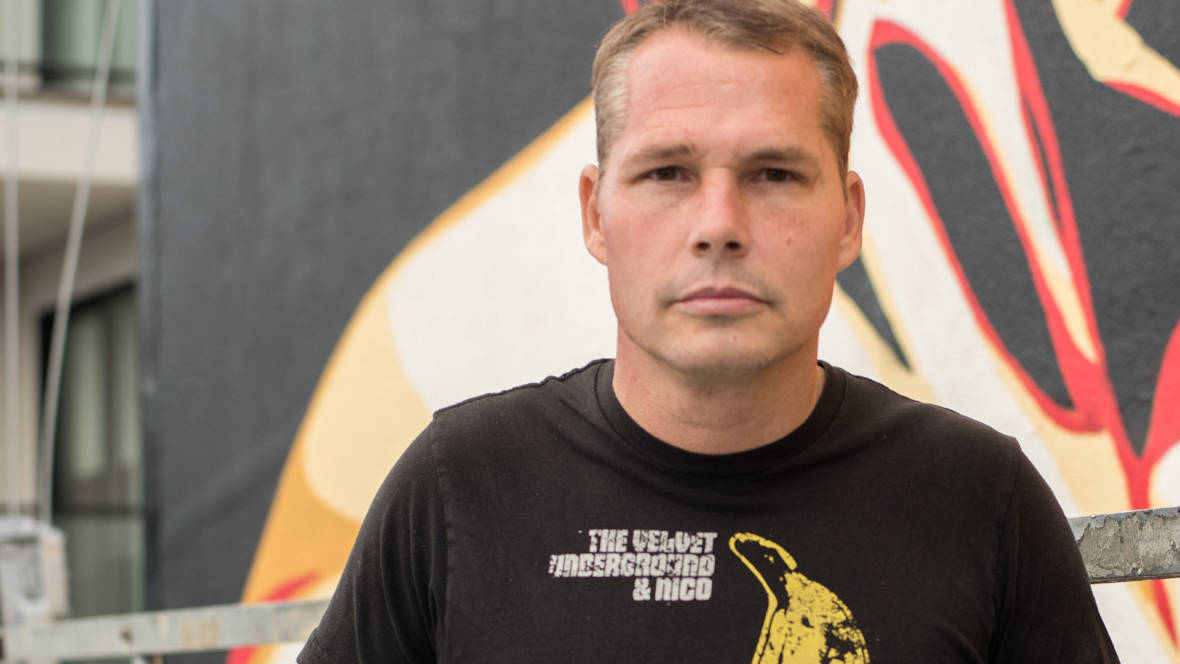
"caption": "Shepard Fairey, well-known for his 'Hope' poster during the 2008 election, focuses now on specific social issues in a new San Francisco project.",
"description": "Shepard Fairey, well-known for his 'Hope' poster during the 2008 election, focuses now on specific social issues in a new San Francisco project.",
"title": "Fairey.MAIN",
"credit": "Photo: Mark Jayson Quines",
"status": "inherit",
"isLoading": false,
"fetchFailed": false
}
},
"audioPlayerReducer": {
"postId": "stream_live",
"isPaused": true,
"isPlaying": false,
"pfsActive": false,
"pledgeModalIsOpen": true,
"playerDrawerIsOpen": false,
"liveAudioPlayStartedAt": 0,
"liveAudioPlayContext": ""
},
"authorsReducer": {
"byline_news_11062056": {
"type": "authors",
"id": "byline_news_11062056",
"meta": {
"override": true
},
"slug": "byline_news_11062056",
"name": "Susan Valot ",
"isLoading": false
},
"byline_arts_11975415": {
"type": "authors",
"id": "byline_arts_11975415",
"meta": {
"override": true
},
"slug": "byline_arts_11975415",
"name": "Associated Press",
"isLoading": false
},
"byline_arts_11948186": {
"type": "authors",
"id": "byline_arts_11948186",
"meta": {
"override": true
},
"slug": "byline_arts_11948186",
"name": "Susan Stamberg",
"isLoading": false
},
"byline_bayareabites_111499": {
"type": "authors",
"id": "byline_bayareabites_111499",
"meta": {
"override": true
},
"slug": "byline_bayareabites_111499",
"name": "Gabriel Rosenberg, \u003ca href=\"https://ww2.kqed.org/bayareabites/author/nprfood/\">NPR Food\u003c/a> ",
"isLoading": false
},
"byline_bayareabites_111472": {
"type": "authors",
"id": "byline_bayareabites_111472",
"meta": {
"override": true
},
"slug": "byline_bayareabites_111472",
"name": "Tove Danovich, \u003ca href=\"https://ww2.kqed.org/bayareabites/author/nprfood/\">NPR Food\u003c/a>",
"isLoading": false
},
"shotchkiss": {
"type": "authors",
"id": "61",
"meta": {
"index": "authors_1716337520",
"id": "61",
"found": true
},
"name": "Sarah Hotchkiss",
"firstName": "Sarah",
"lastName": "Hotchkiss",
"slug": "shotchkiss",
"email": "shotchkiss@kqed.org",
"display_author_email": true,
"staff_mastheads": [
"arts"
],
"title": "Senior Editor",
"bio": "Sarah Hotchkiss is a San Francisco \u003ca href=\"http://www.sarahhotchkiss.com\">artist\u003c/a> and arts writer. In 2019, she received the Dorothea & Leo Rabkin Foundation grant for visual art journalism and in 2020 she received a Society of Professional Journalists, Northern California award for excellence in arts and culture reporting.",
"avatar": "https://secure.gravatar.com/avatar/bc662df144b3d27fd8b1b6f1c2a420d34e91e53154d411bb7ad353cc8b6cea8d?s=600&d=blank&r=g",
"twitter": null,
"bluesky": null,
"facebook": null,
"instagram": null,
"linkedin": null,
"sites": [
{
"site": "",
"roles": [
"editor"
]
},
{
"site": "arts",
"roles": [
"Contributor",
"administrator"
]
},
{
"site": "artschool",
"roles": [
"administrator"
]
},
{
"site": "news",
"roles": [
"editor"
]
},
{
"site": "pop",
"roles": [
"administrator"
]
},
{
"site": "bayareabites",
"roles": [
"editor"
]
},
{
"site": "spark",
"roles": [
"editor"
]
},
{
"site": "checkplease",
"roles": [
"editor"
]
}
],
"headData": {
"title": "Sarah Hotchkiss | KQED",
"description": "Senior Editor",
"ogImgSrc": "https://secure.gravatar.com/avatar/bc662df144b3d27fd8b1b6f1c2a420d34e91e53154d411bb7ad353cc8b6cea8d?s=600&d=blank&r=g",
"twImgSrc": "https://secure.gravatar.com/avatar/bc662df144b3d27fd8b1b6f1c2a420d34e91e53154d411bb7ad353cc8b6cea8d?s=600&d=blank&r=g"
},
"isLoading": false,
"link": "/author/shotchkiss"
},
"kjones": {
"type": "authors",
"id": "93",
"meta": {
"index": "authors_1716337520",
"id": "93",
"found": true
},
"name": "Kevin L. Jones",
"firstName": "Kevin",
"lastName": "Jones",
"slug": "kjones",
"email": "kjones@kqed.org",
"display_author_email": false,
"staff_mastheads": [],
"title": null,
"bio": null,
"avatar": "https://secure.gravatar.com/avatar/12c65b5633ed39d0a59bb7f497eff645?s=600&d=blank&r=g",
"twitter": null,
"facebook": null,
"instagram": null,
"linkedin": null,
"sites": [
{
"site": "arts",
"roles": [
"subscriber"
]
},
{
"site": "styleguide",
"roles": [
"contributor"
]
},
{
"site": "artschool",
"roles": [
"subscriber"
]
},
{
"site": "news",
"roles": [
"subscriber"
]
},
{
"site": "pop",
"roles": [
"subscriber"
]
}
],
"headData": {
"title": "Kevin L. Jones | KQED",
"description": null,
"ogImgSrc": "https://secure.gravatar.com/avatar/12c65b5633ed39d0a59bb7f497eff645?s=600&d=blank&r=g",
"twImgSrc": "https://secure.gravatar.com/avatar/12c65b5633ed39d0a59bb7f497eff645?s=600&d=blank&r=g"
},
"isLoading": false,
"link": "/author/kjones"
},
"dburlison": {
"type": "authors",
"id": "3216",
"meta": {
"index": "authors_1716337520",
"id": "3216",
"found": true
},
"name": "Dani Burlison",
"firstName": "Dani",
"lastName": "Burlison",
"slug": "dburlison",
"email": "danisavestheworld@yahoo.com",
"display_author_email": false,
"staff_mastheads": [],
"title": null,
"bio": "\u003cb id=\"yui_3_16_0_1_1416414652499_5365\" class=\"yiv3033141065\">Dani Burlison\u003c/b> is an award-winning writer, teacher and North Bay resident with a special interest in California's fascinating subcultures. You can find her commentary on writing, feminism, social justice and life with two teen daughters on Twitter at @DaniBurlison.",
"avatar": "https://secure.gravatar.com/avatar/c0b371463a220978c947a5c4ce2da294?s=600&d=blank&r=g",
"twitter": null,
"facebook": null,
"instagram": null,
"linkedin": null,
"sites": [
{
"site": "arts",
"roles": [
"contributor"
]
}
],
"headData": {
"title": "Dani Burlison | KQED",
"description": null,
"ogImgSrc": "https://secure.gravatar.com/avatar/c0b371463a220978c947a5c4ce2da294?s=600&d=blank&r=g",
"twImgSrc": "https://secure.gravatar.com/avatar/c0b371463a220978c947a5c4ce2da294?s=600&d=blank&r=g"
},
"isLoading": false,
"link": "/author/dburlison"
},
"esilvers": {
"type": "authors",
"id": "7237",
"meta": {
"index": "authors_1716337520",
"id": "7237",
"found": true
},
"name": "Emma Silvers",
"firstName": "Emma",
"lastName": "Silvers",
"slug": "esilvers",
"email": "esilvers@kqed.org",
"display_author_email": false,
"staff_mastheads": [],
"title": "KQED Contributor",
"bio": "Emma Silvers is an editor at KQED Arts and a former digital producer at KQED News. Born and raised in the Bay Area, she has previously been an arts and entertainment editor at the \u003cem>San Francisco Chronicle\u003c/em>, \u003cem>SF Weekly\u003c/em> and the \u003cem>San Francisco Bay Guardian.\u003c/em> \u003ca href=\"https://www.emmasilvers.com\">Her work\u003c/a> has also appeared in \u003cem>Rolling Stone\u003c/em>, Pitchfork and \u003cem>Mother Jones\u003c/em>. In 2017 she was the recipient of the Society of Professional Journalists-Northern California's award for arts and culture reporting. In 1993 she \u003ca href=\"https://www.kqed.org/pop/16759/wait-what-my-coworker-was-a-voice-over-hyperventilator-for-jurassic-park\">hyperventilated in \u003cem>Jurassic Park\u003c/em>\u003c/a>.",
"avatar": "https://secure.gravatar.com/avatar/247beada39b88ea5759db1f51dba05cf?s=600&d=blank&r=g",
"twitter": "emmaruthless",
"facebook": null,
"instagram": null,
"linkedin": null,
"sites": [
{
"site": "arts",
"roles": [
"editor"
]
},
{
"site": "news",
"roles": [
"editor"
]
},
{
"site": "pop",
"roles": [
"contributor"
]
},
{
"site": "bayareabites",
"roles": [
"editor"
]
},
{
"site": "food",
"roles": [
"contributor"
]
},
{
"site": "liveblog",
"roles": [
"editor"
]
}
],
"headData": {
"title": "Emma Silvers | KQED",
"description": "KQED Contributor",
"ogImgSrc": "https://secure.gravatar.com/avatar/247beada39b88ea5759db1f51dba05cf?s=600&d=blank&r=g",
"twImgSrc": "https://secure.gravatar.com/avatar/247beada39b88ea5759db1f51dba05cf?s=600&d=blank&r=g"
},
"isLoading": false,
"link": "/author/esilvers"
}
},
"pagesReducer": {
"arts_category_visualarts": {
"type": "terms",
"id": "arts_70",
"meta": {
"index": "terms_1716263798",
"site": "arts",
"id": "70",
"score": 14.407251
},
"featImg": null,
"name": "Visual Arts",
"description": null,
"taxonomy": "category",
"headData": {
"twImgId": null,
"twTitle": null,
"ogTitle": null,
"ogImgId": null,
"twDescription": null,
"description": null,
"title": "Visual Arts Archives | KQED Arts",
"ogDescription": null
},
"ttid": 71,
"slug": "visualarts",
"isLoading": false,
"title": "Visual Arts",
"pageMeta": {
"site": "arts",
"WpPageTemplate": "page-topic-editorial",
"currentPage": 121
},
"blocks": [
{
"blockName": "kqed/post-list",
"attrs": {
"layout": "cardArticle2",
"query": "posts/arts?category=visualarts",
"seeMore": false,
"paginated": true,
"page": 121
}
},
{
"blockName": "kqed/ad"
}
]
}
},
"pfsSessionReducer": {},
"postsReducer": {
"stream_live": {
"type": "live",
"id": "stream_live",
"audioUrl": "https://streams.kqed.org/kqedradio",
"title": "Live Stream",
"excerpt": "Live Stream information currently unavailable.",
"link": "/radio",
"featImg": "",
"label": {
"name": "KQED Live",
"link": "/"
}
},
"stream_kqedNewscast": {
"type": "posts",
"id": "stream_kqedNewscast",
"audioUrl": "https://www.kqed.org/.stream/anon/radio/RDnews/newscast.mp3?_=1",
"title": "KQED Newscast",
"featImg": "",
"label": {
"name": "88.5 FM",
"link": "/"
}
},
"news_11062056": {
"type": "posts",
"id": "news_11062056",
"meta": {
"index": "posts_1716263798",
"site": "news",
"id": "11062056",
"score": null,
"sort": [
1472283039000
]
},
"parent": 0,
"labelTerm": {
"site": "news",
"term": 72
},
"blocks": [],
"publishDate": 1472283039,
"format": "image",
"disqusTitle": "Burning Man Artists Haul Gutted 747 Jetliner to Desert",
"title": "Burning Man Artists Haul Gutted 747 Jetliner to Desert",
"headTitle": "The California Report | KQED News",
"content": "\u003cp>A peculiar sight emerges from the Nevada desert floor: a Boeing 747, sliced in half lengthways. If you step out of the emergency exit, you'll find yourself in a poof of playa dust, amid the hubbub of \u003ca href=\"http://burningman.org/\">Burning Man\u003c/a>, which begins this Sunday.\u003c/p>\n\u003cp>The airplane is a refugee of sorts, born as an idea and pulled from the hundreds of decommissioned planes at the \u003ca href=\"http://www.michaeljohngrist.com/2009/10/airplane-boneyard-in-the-mojave-desert/\">Mojave Boneyard \u003c/a>in California's high desert.\u003c/p>\n\u003cp>Volunteers have spent the last few months working on what's known as the \u003ca href=\"http://www.bigimagination.org/747\">747 Project\u003c/a> at the \u003ca href=\"http://www.mojaveairport.com/\">Mojave Air and Space Port\u003c/a>, about halfway between Bakersfield and Barstow. They've been transforming the jetliner into what they hope will be the world's largest mobile art installation.\u003c/p>\n\u003cp>[soundcloud url=\"https://api.soundcloud.com/tracks/280101563\" params=\"color=ff5500&auto_play=false&hide_related=false&show_comments=true&show_user=true&show_reposts=false\" width=\"100%\" height=\"166\" iframe=\"true\" /]\u003c/p>\n\u003cp>On a recent Thursday, work crews and volunteers used a forklift to move metal beams into place so the plane could be lifted onto the back of a semi truck to make the 500-mile trek up the spine of California, along the eastern Sierra Nevada, to the arts festival in Nevada known for its burning centerpiece.\u003c/p>\n\u003cp>[ad fullwidth]\u003c/p>\n\u003cp>Only the top half of the plane would make the trip this year -- all that was the cabin -- phase one of the 747 Project. The tail is gone. The wings have been clipped. The inside has been cleaned out, leaving a cavernous, seat-less tube with its metal ribs exposed. It's a half football field long and three stories tall. One volunteer jokes that you could fit another plane inside it.\u003c/p>\n\u003cp>The goal is to eventually take the entire plane up to Burning Man.\u003c/p>\n\u003cp>\"How do you eat an elephant? A little bit at a time,\" Ken Feldman jokes. He is the CEO of the \u003ca href=\"http://www.bigimagination.org/\">Big Imagination Foundation\u003c/a>, the nonprofit arts organization that is funding the project with donations and an \u003ca href=\"https://www.indiegogo.com/projects/the-747-project--2#/\">IndieGoGo campaign\u003c/a>.\u003c/p>\n\u003cfigure id=\"attachment_11062199\" class=\"wp-caption aligncenter\" style=\"max-width: 800px\">\u003cimg class=\"size-medium wp-image-11062199\" src=\"http://ww2.kqed.org/news/wp-content/uploads/sites/10/2016/08/RS20970_IMG_1969-qut-800x600.jpg\" alt=\"747 Project creator Ken Feldman (Hawaiian shirt), workers and volunteers help place beams that will help transport the plane to Burning Man.\" width=\"800\" height=\"600\" srcset=\"https://ww2.kqed.org/app/uploads/sites/10/2016/08/RS20970_IMG_1969-qut-800x600.jpg 800w, https://ww2.kqed.org/app/uploads/sites/10/2016/08/RS20970_IMG_1969-qut-400x300.jpg 400w, https://ww2.kqed.org/app/uploads/sites/10/2016/08/RS20970_IMG_1969-qut.jpg 1920w, https://ww2.kqed.org/app/uploads/sites/10/2016/08/RS20970_IMG_1969-qut-1180x885.jpg 1180w, https://ww2.kqed.org/app/uploads/sites/10/2016/08/RS20970_IMG_1969-qut-960x720.jpg 960w\" sizes=\"(max-width: 800px) 100vw, 800px\">\u003cfigcaption class=\"wp-caption-text\">747 Project creator Ken Feldman (Hawaiian shirt), workers and volunteers help place beams that will help transport the plane to Burning Man. \u003ccite>(Susan Valot/KQED)\u003c/cite>\u003c/figcaption>\u003c/figure>\n\u003cp>The plane will be decorated with lights, with DJs playing music and people dancing inside. But as with so many other art projects at Burning Man, this one is interactive.\u003c/p>\n\u003cp>\"You come up through the cargo bay and you come to another staircase and at the top of that is the 'insecurity checkpoint,' where our TSA agents -- Touching Sensitive Areas -- will pat you down and help you get rid of your insecurities,\" Feldman explains. \"Then you move to the baggage check, where another flight attendant will ask you, 'Do you have any emotional baggage that you want to drop off?' \"\u003c/p>\n\u003cp>Then it's on to the boarding zone, where a flight attendant asks where you're going.\u003c/p>\n\u003cp>\"And if someone says, 'Oh, I want to go to Disneyland!' It's like, 'No, no, no: Where, where are you going in \u003cem>life?\u003c/em> Where do you want to go?' And we give you a boarding pass, where you write down on the boarding pass where you are headed.\" Feldman says.\u003c/p>\n\u003cp>Then you staple your boarding pass onto the \"Destination Wall.\"\u003c/p>\n\u003cp>\"The flight attendant gives you a little airplane wings, gives you a little hug and sets you on your way,\" Feldman smiles.\u003c/p>\n\u003cp>Feldman came up with the idea during his second year at Burning Man a few years ago when he saw two bicycles made of fuel tanks of fighter jets. He sketched out the idea in the dust on the ground. His friends told him he was crazy. But seven years later, they're helping him with the plane.\u003c/p>\n\u003cp>Feldman says the idea is to use this interactive art to inspire people to dream big, much like the plane itself -- \"to make the world a better place, right? That's the ultimate inspiration.\"\u003c/p>\n\u003cp>Volunteer Nick Avila drove down from San Francisco to help with the plane. On this particular day, he's troubleshooting how to secure seats in the cockpit and trying to figure out how to rig fake cockpit instruments to do things when people press buttons and take the controls.\u003c/p>\n\u003cfigure id=\"attachment_11062202\" class=\"wp-caption alignright\" style=\"max-width: 800px\">\u003cimg class=\"size-medium wp-image-11062202\" src=\"http://ww2.kqed.org/news/wp-content/uploads/sites/10/2016/08/RS20968_IMG_1971-qut-800x1067.jpg\" alt=\"A view of the Mojave Desert from the back of the 747 Project in August 2016, before it was transported to Burning Man.\" width=\"800\" height=\"1067\" srcset=\"https://ww2.kqed.org/app/uploads/sites/10/2016/08/RS20968_IMG_1971-qut-800x1067.jpg 800w, https://ww2.kqed.org/app/uploads/sites/10/2016/08/RS20968_IMG_1971-qut-400x533.jpg 400w, https://ww2.kqed.org/app/uploads/sites/10/2016/08/RS20968_IMG_1971-qut.jpg 1920w, https://ww2.kqed.org/app/uploads/sites/10/2016/08/RS20968_IMG_1971-qut-1180x1573.jpg 1180w, https://ww2.kqed.org/app/uploads/sites/10/2016/08/RS20968_IMG_1971-qut-960x1280.jpg 960w\" sizes=\"(max-width: 800px) 100vw, 800px\">\u003cfigcaption class=\"wp-caption-text\">A view of the Mojave Desert from the back of the 747 Project in August 2016, before it was transported to Burning Man. \u003ccite>(Susan Valot/KQED)\u003c/cite>\u003c/figcaption>\u003c/figure>\n\u003cp>\"All this stuff is hopefully going to work. Like you can come and pull the throttle up, down.\" Avila shows how the throttle controls move. \"Probably shouldn't move the landing gear thing, but you can move that around. So it'll be cool.\"\u003c/p>\n\u003cp>Avila says the 747 Project is part of the Burning Man tradition of \u003ca href=\"https://www.youtube.com/watch?v=_A8OTGapssc\">art cars\u003c/a>, which people at the festival call \u003ca href=\"http://burningman.org/event/black-rock-city-guide/infrastructure/dept-of-mutant-vehicles/\">\"mutant vehicles.\" \u003c/a> They're basically any vehicle, from bicycles to buses, made to look like something else, like \u003ca href=\"https://www.youtube.com/watch?v=c00w9ec2OF0\">pirate ships\u003c/a>, \u003ca href=\"https://www.youtube.com/watch?v=qMtKtGIw4c8\">dragons\u003c/a> and even \u003ca href=\"https://www.youtube.com/watch?v=zRL9dDHLh1I\">unicorns\u003c/a>.\u003c/p>\n\u003cp>Avila has worked on one art car project before, \u003ca href=\"https://www.facebook.com/BeezusChristSuperCar/?hc_ref=SEARCH&fref=nf\">Beezus Christ Super Car\u003c/a>, a utility cart turned into a bee. He said it was \"1/100th of the size\" of the 747 Project.\u003c/p>\n\u003cp>\"And we would serve honey out the back and preach the teachings of Beezus Christ over a megaphone,\" Avila remembers. \"So it was kind of like a fake religious thing and also we would just give out honey to people. You know, taste the body of Beezus Christ.\"\u003c/p>\n\u003cp>Avila laughs. He says it's the ridiculousness of it all that he loves.\u003c/p>\n\u003cp>\"To me, it's about bringing cool things out that you built for no real reason, other than just to bring it there and share it with people,\" Avila says, pointing out that he has his own ridiculous theme camp at Burning Man this year. It serves coffee and spankings. And it's called \u003ca href=\"https://playaevents.burningman.org/2016/playa_event/20472\">Scarbutts\u003c/a>.\u003c/p>\n\u003cp>\"It's just like almost anything you could ever imagine is going to end up being there eventually,\" Avila says.\u003c/p>\n\u003cp>Next year, Big Imagination plans to bring up the bottom half of the plane, bolt it back to the top and drive it around Burning Man with an airport tug.\u003c/p>\n\u003cp>[ad floatright]\u003c/p>\n\u003cp>Keru McKenzie of Ridgecrest, who's been working on the plane several days a week for the past few weeks, says he's excited to see it come to life in the Nevada desert. \"It's the people and the art and the interaction. It's different than going to a concert or a music festival where you sit in the audience. You know, they might stand and wave and clap and what not. But at Burning Man, you're actually out there being. You're part of the theater.\"\u003c/p>\n\n",
"disqusIdentifier": "11062056 http://ww2.kqed.org/news/?p=11062056",
"disqusUrl": "https://ww2.kqed.org/news/2016/08/27/burning-man-artists-haul-gutted-jetliner-to-desert/",
"stats": {
"hasVideo": false,
"hasChartOrMap": false,
"hasAudio": false,
"hasPolis": false,
"wordCount": 1148,
"hasGoogleForm": false,
"hasGallery": false,
"hasHearkenModule": false,
"iframeSrcs": [],
"paragraphCount": 28
},
"modified": 1472259979,
"excerpt": "The repurposed aircraft's 'flight attendants' urge arts festival participants to 'check your emotional baggage.'",
"headData": {
"twImgId": "",
"twTitle": "",
"ogTitle": "",
"ogImgId": "",
"twDescription": "",
"description": "The repurposed aircraft's 'flight attendants' urge arts festival participants to 'check your emotional baggage.'",
"title": "Burning Man Artists Haul Gutted 747 Jetliner to Desert | KQED",
"ogDescription": "",
"schema": {
"@context": "https://schema.org",
"@type": "NewsArticle",
"headline": "Burning Man Artists Haul Gutted 747 Jetliner to Desert",
"datePublished": "2016-08-27T00:30:39-07:00",
"dateModified": "2016-08-26T18:06:19-07:00",
"image": "https://cdn.kqed.org/wp-content/uploads/2020/02/KQED-OG-Image@1x.png",
"isAccessibleForFree": "True",
"publisher": {
"@type": "NewsMediaOrganization",
"@id": "https://www.kqed.org/#organization",
"name": "KQED",
"logo": "https://cdn.kqed.org/wp-content/uploads/2020/02/KQED-OG-Image@1x.png",
"url": "https://www.kqed.org",
"sameAs": [
"https://www.facebook.com/KQED",
"https://twitter.com/KQED",
"https://www.instagram.com/kqed/",
"https://www.tiktok.com/@kqedofficial",
"https://www.linkedin.com/company/kqed",
"https://www.youtube.com/channel/UCeC0IOo7i1P_61zVUWbJ4nw"
]
}
}
},
"guestAuthors": [],
"slug": "burning-man-artists-haul-gutted-jetliner-to-desert",
"status": "publish",
"nprByline": "Susan Valot ",
"path": "/news/11062056/burning-man-artists-haul-gutted-jetliner-to-desert",
"audioTrackLength": null,
"parsedContent": [
{
"type": "contentString",
"content": "\u003cdiv class=\"post-body\">\u003cp>\u003cp>A peculiar sight emerges from the Nevada desert floor: a Boeing 747, sliced in half lengthways. If you step out of the emergency exit, you'll find yourself in a poof of playa dust, amid the hubbub of \u003ca href=\"http://burningman.org/\">Burning Man\u003c/a>, which begins this Sunday.\u003c/p>\n\u003cp>The airplane is a refugee of sorts, born as an idea and pulled from the hundreds of decommissioned planes at the \u003ca href=\"http://www.michaeljohngrist.com/2009/10/airplane-boneyard-in-the-mojave-desert/\">Mojave Boneyard \u003c/a>in California's high desert.\u003c/p>\n\u003cp>Volunteers have spent the last few months working on what's known as the \u003ca href=\"http://www.bigimagination.org/747\">747 Project\u003c/a> at the \u003ca href=\"http://www.mojaveairport.com/\">Mojave Air and Space Port\u003c/a>, about halfway between Bakersfield and Barstow. They've been transforming the jetliner into what they hope will be the world's largest mobile art installation.\u003c/p>\n\u003cp>\u003c/p>\u003cp>\u003cdiv class='utils-parseShortcode-shortcodes-__shortcodes__shortcodeWrapper'>\n \u003ciframe width='100%' height='166'\n scrolling='no' frameborder='no'\n src='https://w.soundcloud.com/player/?url=https://api.soundcloud.com/tracks/280101563&visual=true&color=ff5500&auto_play=false&hide_related=false&show_comments=true&show_user=true&show_reposts=false'\n title='https://api.soundcloud.com/tracks/280101563'>\n \u003c/iframe>\n \u003c/div>\u003c/p>\u003cp>\u003c/p>\n\u003cp>On a recent Thursday, work crews and volunteers used a forklift to move metal beams into place so the plane could be lifted onto the back of a semi truck to make the 500-mile trek up the spine of California, along the eastern Sierra Nevada, to the arts festival in Nevada known for its burning centerpiece.\u003c/p>\n\u003cp>\u003c/p>\u003c/div>",
"attributes": {
"named": {},
"numeric": []
}
},
{
"type": "component",
"content": "",
"name": "ad",
"attributes": {
"named": {
"label": "fullwidth"
},
"numeric": [
"fullwidth"
]
}
},
{
"type": "contentString",
"content": "\u003cdiv class=\"post-body\">\u003cp>\u003c/p>\n\u003cp>Only the top half of the plane would make the trip this year -- all that was the cabin -- phase one of the 747 Project. The tail is gone. The wings have been clipped. The inside has been cleaned out, leaving a cavernous, seat-less tube with its metal ribs exposed. It's a half football field long and three stories tall. One volunteer jokes that you could fit another plane inside it.\u003c/p>\n\u003cp>The goal is to eventually take the entire plane up to Burning Man.\u003c/p>\n\u003cp>\"How do you eat an elephant? A little bit at a time,\" Ken Feldman jokes. He is the CEO of the \u003ca href=\"http://www.bigimagination.org/\">Big Imagination Foundation\u003c/a>, the nonprofit arts organization that is funding the project with donations and an \u003ca href=\"https://www.indiegogo.com/projects/the-747-project--2#/\">IndieGoGo campaign\u003c/a>.\u003c/p>\n\u003cfigure id=\"attachment_11062199\" class=\"wp-caption aligncenter\" style=\"max-width: 800px\">\u003cimg class=\"size-medium wp-image-11062199\" src=\"http://ww2.kqed.org/news/wp-content/uploads/sites/10/2016/08/RS20970_IMG_1969-qut-800x600.jpg\" alt=\"747 Project creator Ken Feldman (Hawaiian shirt), workers and volunteers help place beams that will help transport the plane to Burning Man.\" width=\"800\" height=\"600\" srcset=\"https://ww2.kqed.org/app/uploads/sites/10/2016/08/RS20970_IMG_1969-qut-800x600.jpg 800w, https://ww2.kqed.org/app/uploads/sites/10/2016/08/RS20970_IMG_1969-qut-400x300.jpg 400w, https://ww2.kqed.org/app/uploads/sites/10/2016/08/RS20970_IMG_1969-qut.jpg 1920w, https://ww2.kqed.org/app/uploads/sites/10/2016/08/RS20970_IMG_1969-qut-1180x885.jpg 1180w, https://ww2.kqed.org/app/uploads/sites/10/2016/08/RS20970_IMG_1969-qut-960x720.jpg 960w\" sizes=\"(max-width: 800px) 100vw, 800px\">\u003cfigcaption class=\"wp-caption-text\">747 Project creator Ken Feldman (Hawaiian shirt), workers and volunteers help place beams that will help transport the plane to Burning Man. \u003ccite>(Susan Valot/KQED)\u003c/cite>\u003c/figcaption>\u003c/figure>\n\u003cp>The plane will be decorated with lights, with DJs playing music and people dancing inside. But as with so many other art projects at Burning Man, this one is interactive.\u003c/p>\n\u003cp>\"You come up through the cargo bay and you come to another staircase and at the top of that is the 'insecurity checkpoint,' where our TSA agents -- Touching Sensitive Areas -- will pat you down and help you get rid of your insecurities,\" Feldman explains. \"Then you move to the baggage check, where another flight attendant will ask you, 'Do you have any emotional baggage that you want to drop off?' \"\u003c/p>\n\u003cp>Then it's on to the boarding zone, where a flight attendant asks where you're going.\u003c/p>\n\u003cp>\"And if someone says, 'Oh, I want to go to Disneyland!' It's like, 'No, no, no: Where, where are you going in \u003cem>life?\u003c/em> Where do you want to go?' And we give you a boarding pass, where you write down on the boarding pass where you are headed.\" Feldman says.\u003c/p>\n\u003cp>Then you staple your boarding pass onto the \"Destination Wall.\"\u003c/p>\n\u003cp>\"The flight attendant gives you a little airplane wings, gives you a little hug and sets you on your way,\" Feldman smiles.\u003c/p>\n\u003cp>Feldman came up with the idea during his second year at Burning Man a few years ago when he saw two bicycles made of fuel tanks of fighter jets. He sketched out the idea in the dust on the ground. His friends told him he was crazy. But seven years later, they're helping him with the plane.\u003c/p>\n\u003cp>Feldman says the idea is to use this interactive art to inspire people to dream big, much like the plane itself -- \"to make the world a better place, right? That's the ultimate inspiration.\"\u003c/p>\n\u003cp>Volunteer Nick Avila drove down from San Francisco to help with the plane. On this particular day, he's troubleshooting how to secure seats in the cockpit and trying to figure out how to rig fake cockpit instruments to do things when people press buttons and take the controls.\u003c/p>\n\u003cfigure id=\"attachment_11062202\" class=\"wp-caption alignright\" style=\"max-width: 800px\">\u003cimg class=\"size-medium wp-image-11062202\" src=\"http://ww2.kqed.org/news/wp-content/uploads/sites/10/2016/08/RS20968_IMG_1971-qut-800x1067.jpg\" alt=\"A view of the Mojave Desert from the back of the 747 Project in August 2016, before it was transported to Burning Man.\" width=\"800\" height=\"1067\" srcset=\"https://ww2.kqed.org/app/uploads/sites/10/2016/08/RS20968_IMG_1971-qut-800x1067.jpg 800w, https://ww2.kqed.org/app/uploads/sites/10/2016/08/RS20968_IMG_1971-qut-400x533.jpg 400w, https://ww2.kqed.org/app/uploads/sites/10/2016/08/RS20968_IMG_1971-qut.jpg 1920w, https://ww2.kqed.org/app/uploads/sites/10/2016/08/RS20968_IMG_1971-qut-1180x1573.jpg 1180w, https://ww2.kqed.org/app/uploads/sites/10/2016/08/RS20968_IMG_1971-qut-960x1280.jpg 960w\" sizes=\"(max-width: 800px) 100vw, 800px\">\u003cfigcaption class=\"wp-caption-text\">A view of the Mojave Desert from the back of the 747 Project in August 2016, before it was transported to Burning Man. \u003ccite>(Susan Valot/KQED)\u003c/cite>\u003c/figcaption>\u003c/figure>\n\u003cp>\"All this stuff is hopefully going to work. Like you can come and pull the throttle up, down.\" Avila shows how the throttle controls move. \"Probably shouldn't move the landing gear thing, but you can move that around. So it'll be cool.\"\u003c/p>\n\u003cp>Avila says the 747 Project is part of the Burning Man tradition of \u003ca href=\"https://www.youtube.com/watch?v=_A8OTGapssc\">art cars\u003c/a>, which people at the festival call \u003ca href=\"http://burningman.org/event/black-rock-city-guide/infrastructure/dept-of-mutant-vehicles/\">\"mutant vehicles.\" \u003c/a> They're basically any vehicle, from bicycles to buses, made to look like something else, like \u003ca href=\"https://www.youtube.com/watch?v=c00w9ec2OF0\">pirate ships\u003c/a>, \u003ca href=\"https://www.youtube.com/watch?v=qMtKtGIw4c8\">dragons\u003c/a> and even \u003ca href=\"https://www.youtube.com/watch?v=zRL9dDHLh1I\">unicorns\u003c/a>.\u003c/p>\n\u003cp>Avila has worked on one art car project before, \u003ca href=\"https://www.facebook.com/BeezusChristSuperCar/?hc_ref=SEARCH&fref=nf\">Beezus Christ Super Car\u003c/a>, a utility cart turned into a bee. He said it was \"1/100th of the size\" of the 747 Project.\u003c/p>\n\u003cp>\"And we would serve honey out the back and preach the teachings of Beezus Christ over a megaphone,\" Avila remembers. \"So it was kind of like a fake religious thing and also we would just give out honey to people. You know, taste the body of Beezus Christ.\"\u003c/p>\n\u003cp>Avila laughs. He says it's the ridiculousness of it all that he loves.\u003c/p>\n\u003cp>\"To me, it's about bringing cool things out that you built for no real reason, other than just to bring it there and share it with people,\" Avila says, pointing out that he has his own ridiculous theme camp at Burning Man this year. It serves coffee and spankings. And it's called \u003ca href=\"https://playaevents.burningman.org/2016/playa_event/20472\">Scarbutts\u003c/a>.\u003c/p>\n\u003cp>\"It's just like almost anything you could ever imagine is going to end up being there eventually,\" Avila says.\u003c/p>\n\u003cp>Next year, Big Imagination plans to bring up the bottom half of the plane, bolt it back to the top and drive it around Burning Man with an airport tug.\u003c/p>\n\u003cp>\u003c/p>\u003c/div>",
"attributes": {
"named": {},
"numeric": []
}
},
{
"type": "component",
"content": "",
"name": "ad",
"attributes": {
"named": {
"label": "floatright"
},
"numeric": [
"floatright"
]
}
},
{
"type": "contentString",
"content": "\u003cdiv class=\"post-body\">\u003cp>\u003c/p>\n\u003cp>Keru McKenzie of Ridgecrest, who's been working on the plane several days a week for the past few weeks, says he's excited to see it come to life in the Nevada desert. \"It's the people and the art and the interaction. It's different than going to a concert or a music festival where you sit in the audience. You know, they might stand and wave and clap and what not. But at Burning Man, you're actually out there being. You're part of the theater.\"\u003c/p>\n\n\u003c/div>\u003c/p>",
"attributes": {
"named": {},
"numeric": []
}
}
],
"link": "/news/11062056/burning-man-artists-haul-gutted-jetliner-to-desert",
"authors": [
"byline_news_11062056"
],
"programs": [
"news_72"
],
"categories": [
"news_223"
],
"tags": [
"news_680",
"news_17286"
],
"featImg": "news_11062196",
"label": "news_72"
},
"arts_11818683": {
"type": "posts",
"id": "arts_11818683",
"meta": {
"index": "posts_1716263798",
"site": "arts",
"id": "11818683",
"score": null,
"sort": [
1472257183000
]
},
"guestAuthors": [],
"slug": "google-gives-back-blog-to-writer-after-removing-it-for-decade-old-image",
"title": "Google Returns Blog to 'Dangerous Writer' Dennis Cooper",
"publishDate": 1472257183,
"format": "standard",
"headTitle": "Google Returns Blog to ‘Dangerous Writer’ Dennis Cooper | KQED",
"labelTerm": {
"site": "arts"
},
"content": "\u003cp>Author Dennis Cooper took on Google over the removal of his long-running blog, and after two months, he’s emerged as a victor: the Goliath of the Internet is giving it back.\u003c/p>\n\u003cp>Cooper, best known for the gritty, drugs-and-sex-fueled series of novels called the \u003ca href=\"http://www.dennis-cooper.net/georgemiles.htm\" target=\"_blank\" rel=\"noopener\">George Miles cycle\u003c/a>, has published regularly on his blog \u003ci>\u003ca href=\"http://denniscooper-theweaklings.blogspot.com/\" target=\"_blank\" rel=\"noopener\">The Weaklings\u003c/a> (\u003c/i>also known as \u003ci>DC’s Blog\u003c/i>) since 2002. But on June 27, he discovered that his blog had vanished. In its place was a note from Google, which hosted it, telling Cooper that his site had been shut down.\u003c/p>\n\u003cp>“They have never said or sent one word to me about what has happened or why,” Cooper said at the time. “I can only guess: either because they had some objection to something I posted on my blog, or it was hacked, or technical problem, or some accident that disabled my account.”\u003c/p>\n\u003cp>When KQED asked why Google removed his blog, the company sent a formulaic response:\u003c/p>\n\u003cblockquote>\u003cp>Thank you for getting in touch. We’re aware of this matter and not able to comment on specific user accounts. Here’s a link to our \u003ca href=\"https://www.google.com/policies/terms/\" target=\"_blank\" rel=\"noopener\">Terms of Service\u003c/a>, \u003ca href=\"https://www.google.com/intl/en_us/mail/help/program_policies.html\" target=\"_blank\" rel=\"noopener\">Gmail Policy\u003c/a> and \u003ca href=\"https://www.blogger.com/content.g?hl=en\" target=\"_blank\" rel=\"noopener\">Blogger Policy\u003c/a>.\u003c/p>\n\u003cp>Best,\u003c/p>\n\u003cp>The Google Press Team\u003c/p>\u003c/blockquote>\n\u003cp>They did not answer any follow up questions.\u003c/p>\n\u003cp>[ad fullwidth]\u003c/p>\n\u003cp>Perplexed, Cooper began reaching out to the press. He said he was worried that he had lost more than 10 years of irreplaceable compositions when his blog was taken down. The losses included two early examples of GIF novels (novels consisting purely of animated GIFs), one of which, \u003ci>Zac’s Haunted House, \u003c/i>had garnered the writer \u003ca href=\"http://www.newyorker.com/books/page-turner/how-dennis-cooper-creates-fiction-from-gifs\" target=\"_blank\" rel=\"noopener\">critical\u003c/a> \u003ca href=\"http://www.theverge.com/2015/1/16/7556041/dennis-cooper-gif-novel-zacs-haunted-house\" target=\"_blank\" rel=\"noopener\">acclaim\u003c/a>. So Cooper lawyered up and continued to push Google to allow him to at least retrieve his archives.\u003c/p>\n\u003cp>“If I get my blog’s contents back, I’m fairly certain I will continue the blog elsewhere,” Cooper said. “If my 10 years of work, thousands of posts, six days a week effort, and my new GIF novel that I spent 7 months working on are totally lost, I think I might be too heartbroken and dispirited to continue.”\u003c/p>\n\u003cp>Cooper successfully fought Google in the media, getting stories in the \u003cem>\u003ca href=\"http://www.nytimes.com/2016/07/30/opinion/sunday/the-blog-that-disappeared.html\" target=\"_blank\" rel=\"noopener\">New York Times\u003c/a>\u003c/em>, the \u003cem>\u003ca href=\"https://www.theguardian.com/books/2016/jul/14/dennis-cooper-google-censorship-dc-blog\" target=\"_blank\" rel=\"noopener\">Guardian\u003c/a>\u003c/em> and the \u003cem>\u003ca href=\"http://www.newyorker.com/culture/culture-desk/why-did-google-erase-dennis-coopers-beloved-literary-blog\" target=\"_blank\" rel=\"noopener\">New Yorker,\u003c/a>\u003c/em> as well as international publications. Also, the free speech advocacy group \u003ca href=\"https://pen.org/blog/pen-concerned-google-suspension-artist-blog\" target=\"_blank\" rel=\"noopener\">PEN America\u003c/a> has had his back for much of the fight and a \u003ca href=\"https://www.change.org/p/google-restore-dennis-cooper-s-blog-and-email\" target=\"_blank\" rel=\"noopener\">Change.org petition\u003c/a> garnered more than 4,000 signatures.\u003c/p>\n\u003cp>Less than a month later, Google’s lawyers reached out to Cooper’s attorney and \u003ca href=\"https://www.facebook.com/permalink.php?story_fbid=1095110797242053&id=214073142012494\" target=\"_blank\" rel=\"noopener\">began working on a resolution\u003c/a>. On Friday, Aug. 26, Cooper, who lives in France, announced on his \u003ca href=\"https://www.facebook.com/Dennis-Coopers-Blog-214073142012494/\" target=\"_blank\" rel=\"noopener\">Facebook page\u003c/a> in the early morning that Google had agreed to \u003ca href=\"https://www.facebook.com/permalink.php?story_fbid=1114019298684536&id=214073142012494\" target=\"_blank\" rel=\"noopener\">give him his blog back\u003c/a>.\u003c/p>\n\u003cp>“I am very, very happy to be able announce that the two month-long Google-related nightmare is over,” Cooper wrote.\u003c/p>\n\u003cblockquote>\u003cp>“The gist: (1) My DC’s blog will restart in a new location on this coming Monday. Watch this space. I have the data for the archive of my disabled blog, but it’s not something that can be uploaded into the new blog intact. I will need to restore each post by hand, and since there are many thousands of posts, that restoration will happen very gradually over time. (2) I have the data for the 10 years of correspondence in my gmail account. (3) My GIF novel ‘Zac’s Freight Elevator’ has been rescued. It will be published as a free download this November. More details on that are forthcoming.”\u003c/p>\u003c/blockquote>\n\u003cp>\u003cb>Why did Google remove Cooper’s blog?\u003c/b>\u003c/p>\n\u003cp>Google was vague regarding Cooper’s blog, forcing Cooper and other commentators to speculate as to why the blog was removed. All pointed to the same thing: Cooper’s regular posts about ads for male prostitutes.\u003c/p>\n\u003cp>Cooper defends this content. “90-plus percent of my blog posts are about experimental art, writing, film, music, video games, amusement parks, etc. Nothing remotely controversial or objectionable,” Cooper said. “Twice a month I do a post that features profile texts I have taken from various websites where male escorts do their business, usually edited, to emphasize their accidental literary qualities and their emotionality. The escorts whose profiles I use are all adults, and any images I use in those posts aren’t pornographic at all and rarely even show genitalia.”\u003c/p>\n\u003cp>Thanks to the Internet archival website the Wayback Machine, we can see a few of these posts. It’s fair to say that Cooper might not be as vigilant as he should in terms of keeping graphic images off his site. (\u003ca href=\"https://web.archive.org/web/20091016193456/http://denniscooper-theweaklings.blogspot.com/\" target=\"_blank\" rel=\"noopener\">See for yourself\u003c/a>, but warning: NSFW)\u003c/p>\n\u003cp>Yet it’s Cooper’s willingness to spotlight touchy subjects like male prostitution that make him the writer he is today. Fearless with his subjects, Cooper was once called “the most dangerous writer in America” by the \u003cem>Village Voice\u003c/em> and “a master of transgressive literature” by the \u003cem>Guardian\u003c/em>.\u003c/p>\n\u003cp>But now Cooper knows the answer, and it’s nothing like he had initially thought. In his Facebook announcement, Cooper said Google removed his blog after someone reported that a picture posted on his blog back in 2006 featured child pornography.\u003c/p>\n\u003cblockquote>\u003cp>In 2006, I did one of those posts where I asked people to send me things they thought were sexy. I had forgotten all about that post until the other day, and I don’t remember what was in it. I do remember that, upon assembling the post, I realized there was some rather pornographic things therein that could potentially get my blog in trouble. So I set up that Self-Portrait Day on a separate page off the blog that could only be accessed on the blog through a link with an adult content warning.\u003c/p>\n\u003cp>According to Google, around the time my account was disabled, some unknown person came across this ten year-old page, thought one of the images on it constituted child pornography, and reported it to Google who immediately disabled my account. Now let me just say that I know there are people who don’t know me or my work well and think I’m some kind of ultra-transgressive shock-creating monster, but I completely assure you that if someone had sent me an image that I thought was child pornography, I would never have uploaded it, period.\u003c/p>\u003c/blockquote>\n\u003cp>Cooper spent months trying to convince Google to let him get into his blog and remove the offending image. He was refused time and time again. “What followed was about three weeks of discussions, negotiations, and so on,” Cooper said. “Finally, a week ago, Google suddenly announced that they were going to send me the data for the DC’s blog and my email account. They did, and that’s how and when the stand-off ended.”\u003c/p>\n\u003cp>Cooper says his blog will be up again by Monday.\u003c/p>\n\u003cp>[ad floatright]\u003c/p>\n\u003cp>\u003ci>Read Cooper’s full statement on his Facebook page:\u003c/i>\u003cbr>\nhttps://www.facebook.com/permalink.php?story_fbid=1114019298684536&id=214073142012494\u003c/p>\n\n",
"blocks": [],
"excerpt": "After a two-month battle, Google is giving back Dennis Cooper's blog after it removed it without warning.",
"status": "publish",
"parent": 0,
"modified": 1726709134,
"stats": {
"hasAudio": false,
"hasVideo": false,
"hasChartOrMap": false,
"iframeSrcs": [],
"hasGoogleForm": false,
"hasGallery": false,
"hasHearkenModule": false,
"hasPolis": false,
"paragraphCount": 27,
"wordCount": 1235
},
"headData": {
"title": "Google Returns Blog to 'Dangerous Writer' Dennis Cooper | KQED",
"description": "After a two-month battle, Google is giving back Dennis Cooper's blog after it removed it without warning.",
"ogTitle": "",
"ogDescription": "",
"ogImgId": "",
"twTitle": "",
"twDescription": "",
"twImgId": "",
"schema": {
"@context": "https://schema.org",
"@type": "Article",
"headline": "Google Returns Blog to 'Dangerous Writer' Dennis Cooper",
"datePublished": "2016-08-26T17:19:43-07:00",
"dateModified": "2024-09-18T18:25:34-07:00",
"image": "https://cdn.kqed.org/wp-content/uploads/2020/02/KQED-OG-Image@1x.png"
}
},
"sticky": false,
"nprStoryId": "492160955",
"path": "/arts/11818683/google-gives-back-blog-to-writer-after-removing-it-for-decade-old-image",
"audioTrackLength": null,
"parsedContent": [
{
"type": "contentString",
"content": "\u003cdiv class=\"post-body\">\u003cp>\u003cp>Author Dennis Cooper took on Google over the removal of his long-running blog, and after two months, he’s emerged as a victor: the Goliath of the Internet is giving it back.\u003c/p>\n\u003cp>Cooper, best known for the gritty, drugs-and-sex-fueled series of novels called the \u003ca href=\"http://www.dennis-cooper.net/georgemiles.htm\" target=\"_blank\" rel=\"noopener\">George Miles cycle\u003c/a>, has published regularly on his blog \u003ci>\u003ca href=\"http://denniscooper-theweaklings.blogspot.com/\" target=\"_blank\" rel=\"noopener\">The Weaklings\u003c/a> (\u003c/i>also known as \u003ci>DC’s Blog\u003c/i>) since 2002. But on June 27, he discovered that his blog had vanished. In its place was a note from Google, which hosted it, telling Cooper that his site had been shut down.\u003c/p>\n\u003cp>“They have never said or sent one word to me about what has happened or why,” Cooper said at the time. “I can only guess: either because they had some objection to something I posted on my blog, or it was hacked, or technical problem, or some accident that disabled my account.”\u003c/p>\n\u003cp>When KQED asked why Google removed his blog, the company sent a formulaic response:\u003c/p>\n\u003cblockquote>\u003cp>Thank you for getting in touch. We’re aware of this matter and not able to comment on specific user accounts. Here’s a link to our \u003ca href=\"https://www.google.com/policies/terms/\" target=\"_blank\" rel=\"noopener\">Terms of Service\u003c/a>, \u003ca href=\"https://www.google.com/intl/en_us/mail/help/program_policies.html\" target=\"_blank\" rel=\"noopener\">Gmail Policy\u003c/a> and \u003ca href=\"https://www.blogger.com/content.g?hl=en\" target=\"_blank\" rel=\"noopener\">Blogger Policy\u003c/a>.\u003c/p>\n\u003cp>Best,\u003c/p>\n\u003cp>The Google Press Team\u003c/p>\u003c/blockquote>\n\u003cp>They did not answer any follow up questions.\u003c/p>\n\u003cp>\u003c/p>\u003c/div>",
"attributes": {
"named": {},
"numeric": []
}
},
{
"type": "component",
"content": "",
"name": "ad",
"attributes": {
"named": {
"label": "fullwidth"
},
"numeric": [
"fullwidth"
]
}
},
{
"type": "contentString",
"content": "\u003cdiv class=\"post-body\">\u003cp>\u003c/p>\n\u003cp>Perplexed, Cooper began reaching out to the press. He said he was worried that he had lost more than 10 years of irreplaceable compositions when his blog was taken down. The losses included two early examples of GIF novels (novels consisting purely of animated GIFs), one of which, \u003ci>Zac’s Haunted House, \u003c/i>had garnered the writer \u003ca href=\"http://www.newyorker.com/books/page-turner/how-dennis-cooper-creates-fiction-from-gifs\" target=\"_blank\" rel=\"noopener\">critical\u003c/a> \u003ca href=\"http://www.theverge.com/2015/1/16/7556041/dennis-cooper-gif-novel-zacs-haunted-house\" target=\"_blank\" rel=\"noopener\">acclaim\u003c/a>. So Cooper lawyered up and continued to push Google to allow him to at least retrieve his archives.\u003c/p>\n\u003cp>“If I get my blog’s contents back, I’m fairly certain I will continue the blog elsewhere,” Cooper said. “If my 10 years of work, thousands of posts, six days a week effort, and my new GIF novel that I spent 7 months working on are totally lost, I think I might be too heartbroken and dispirited to continue.”\u003c/p>\n\u003cp>Cooper successfully fought Google in the media, getting stories in the \u003cem>\u003ca href=\"http://www.nytimes.com/2016/07/30/opinion/sunday/the-blog-that-disappeared.html\" target=\"_blank\" rel=\"noopener\">New York Times\u003c/a>\u003c/em>, the \u003cem>\u003ca href=\"https://www.theguardian.com/books/2016/jul/14/dennis-cooper-google-censorship-dc-blog\" target=\"_blank\" rel=\"noopener\">Guardian\u003c/a>\u003c/em> and the \u003cem>\u003ca href=\"http://www.newyorker.com/culture/culture-desk/why-did-google-erase-dennis-coopers-beloved-literary-blog\" target=\"_blank\" rel=\"noopener\">New Yorker,\u003c/a>\u003c/em> as well as international publications. Also, the free speech advocacy group \u003ca href=\"https://pen.org/blog/pen-concerned-google-suspension-artist-blog\" target=\"_blank\" rel=\"noopener\">PEN America\u003c/a> has had his back for much of the fight and a \u003ca href=\"https://www.change.org/p/google-restore-dennis-cooper-s-blog-and-email\" target=\"_blank\" rel=\"noopener\">Change.org petition\u003c/a> garnered more than 4,000 signatures.\u003c/p>\n\u003cp>Less than a month later, Google’s lawyers reached out to Cooper’s attorney and \u003ca href=\"https://www.facebook.com/permalink.php?story_fbid=1095110797242053&id=214073142012494\" target=\"_blank\" rel=\"noopener\">began working on a resolution\u003c/a>. On Friday, Aug. 26, Cooper, who lives in France, announced on his \u003ca href=\"https://www.facebook.com/Dennis-Coopers-Blog-214073142012494/\" target=\"_blank\" rel=\"noopener\">Facebook page\u003c/a> in the early morning that Google had agreed to \u003ca href=\"https://www.facebook.com/permalink.php?story_fbid=1114019298684536&id=214073142012494\" target=\"_blank\" rel=\"noopener\">give him his blog back\u003c/a>.\u003c/p>\n\u003cp>“I am very, very happy to be able announce that the two month-long Google-related nightmare is over,” Cooper wrote.\u003c/p>\n\u003cblockquote>\u003cp>“The gist: (1) My DC’s blog will restart in a new location on this coming Monday. Watch this space. I have the data for the archive of my disabled blog, but it’s not something that can be uploaded into the new blog intact. I will need to restore each post by hand, and since there are many thousands of posts, that restoration will happen very gradually over time. (2) I have the data for the 10 years of correspondence in my gmail account. (3) My GIF novel ‘Zac’s Freight Elevator’ has been rescued. It will be published as a free download this November. More details on that are forthcoming.”\u003c/p>\u003c/blockquote>\n\u003cp>\u003cb>Why did Google remove Cooper’s blog?\u003c/b>\u003c/p>\n\u003cp>Google was vague regarding Cooper’s blog, forcing Cooper and other commentators to speculate as to why the blog was removed. All pointed to the same thing: Cooper’s regular posts about ads for male prostitutes.\u003c/p>\n\u003cp>Cooper defends this content. “90-plus percent of my blog posts are about experimental art, writing, film, music, video games, amusement parks, etc. Nothing remotely controversial or objectionable,” Cooper said. “Twice a month I do a post that features profile texts I have taken from various websites where male escorts do their business, usually edited, to emphasize their accidental literary qualities and their emotionality. The escorts whose profiles I use are all adults, and any images I use in those posts aren’t pornographic at all and rarely even show genitalia.”\u003c/p>\n\u003cp>Thanks to the Internet archival website the Wayback Machine, we can see a few of these posts. It’s fair to say that Cooper might not be as vigilant as he should in terms of keeping graphic images off his site. (\u003ca href=\"https://web.archive.org/web/20091016193456/http://denniscooper-theweaklings.blogspot.com/\" target=\"_blank\" rel=\"noopener\">See for yourself\u003c/a>, but warning: NSFW)\u003c/p>\n\u003cp>Yet it’s Cooper’s willingness to spotlight touchy subjects like male prostitution that make him the writer he is today. Fearless with his subjects, Cooper was once called “the most dangerous writer in America” by the \u003cem>Village Voice\u003c/em> and “a master of transgressive literature” by the \u003cem>Guardian\u003c/em>.\u003c/p>\n\u003cp>But now Cooper knows the answer, and it’s nothing like he had initially thought. In his Facebook announcement, Cooper said Google removed his blog after someone reported that a picture posted on his blog back in 2006 featured child pornography.\u003c/p>\n\u003cblockquote>\u003cp>In 2006, I did one of those posts where I asked people to send me things they thought were sexy. I had forgotten all about that post until the other day, and I don’t remember what was in it. I do remember that, upon assembling the post, I realized there was some rather pornographic things therein that could potentially get my blog in trouble. So I set up that Self-Portrait Day on a separate page off the blog that could only be accessed on the blog through a link with an adult content warning.\u003c/p>\n\u003cp>According to Google, around the time my account was disabled, some unknown person came across this ten year-old page, thought one of the images on it constituted child pornography, and reported it to Google who immediately disabled my account. Now let me just say that I know there are people who don’t know me or my work well and think I’m some kind of ultra-transgressive shock-creating monster, but I completely assure you that if someone had sent me an image that I thought was child pornography, I would never have uploaded it, period.\u003c/p>\u003c/blockquote>\n\u003cp>Cooper spent months trying to convince Google to let him get into his blog and remove the offending image. He was refused time and time again. “What followed was about three weeks of discussions, negotiations, and so on,” Cooper said. “Finally, a week ago, Google suddenly announced that they were going to send me the data for the DC’s blog and my email account. They did, and that’s how and when the stand-off ended.”\u003c/p>\n\u003cp>Cooper says his blog will be up again by Monday.\u003c/p>\n\u003cp>\u003c/p>\u003c/div>",
"attributes": {
"named": {},
"numeric": []
}
},
{
"type": "component",
"content": "",
"name": "ad",
"attributes": {
"named": {
"label": "floatright"
},
"numeric": [
"floatright"
]
}
},
{
"type": "contentString",
"content": "\u003cdiv class=\"post-body\">\u003cp>\u003c/p>\n\u003cp>\u003ci>Read Cooper’s full statement on his Facebook page:\u003c/i>\u003cbr>\nhttps://www.facebook.com/permalink.php?story_fbid=1114019298684536&id=214073142012494\u003c/p>\n\n\u003c/div>\u003c/p>",
"attributes": {
"named": {},
"numeric": []
}
}
],
"link": "/arts/11818683/google-gives-back-blog-to-writer-after-removing-it-for-decade-old-image",
"authors": [
"93"
],
"categories": [
"arts_73",
"arts_235",
"arts_70"
],
"tags": [
"arts_596",
"arts_1427"
],
"featImg": "arts_11819295",
"label": "arts"
},
"arts_11976285": {
"type": "posts",
"id": "arts_11976285",
"meta": {
"index": "posts_1716263798",
"site": "arts",
"id": "11976285",
"score": null,
"sort": [
1472162423000
]
},
"guestAuthors": [],
"slug": "400-issues-life-at-maximum-rocknroll-after-tim-yohannan",
"title": "400 Issues: Life at 'Maximum Rocknroll' After Tim Yohannan",
"publishDate": 1472162423,
"format": "image",
"headTitle": "400 Issues: Life at ‘Maximum Rocknroll’ After Tim Yohannan | KQED",
"labelTerm": {
"site": "arts"
},
"content": "\u003cp>The staff at \u003ca href=\"http://www.maximumrocknroll.com/\" target=\"_blank\" rel=\"noopener\">\u003cem>Maximum Rocknroll\u003c/em>\u003c/a> are convinced Tim Yohannan haunts their offices. The founder of the punk magazine died in 1998 at age 52 — too soon — and his opinionated ghost likes to make his presence known during odd moments.\u003c/p>\n\u003cp>“[Once] a shelf of books came toppling down when we spent too much time talking about [the band] Integrity,” Grace Ambrose, \u003cem>Maximum Rocknroll\u003c/em>’s current content coordinator, wrote in an email, referring to the long-running Cleveland hardcore band who was probably a little too metal for Yohannan’s taste.\u003c/p>\n\u003cp>There are stories of needles skipping on ‘80s pop records and of push pins suddenly disappearing from a poster on a wall; basically everyone who has lived in the magazine’s office/living space north of the San Francisco Panhandle since Yohannan’s death 18 years ago has had some kind of supernatural experience. But you don’t have to live there to feel his overwhelming presence, it’s in the green tape on every single one of the thousands of records on the office shelves, the custom 7″ covers and other memorabilia, and in the immaculately clean office — a middle finger to anyone who assumes punks are lazy and gross.\u003c/p>\n\u003cp>Yohannan founded\u003cem> Maximum Rocknroll\u003c/em> (\u003cem>MRR\u003c/em>) in 1982; by now it has been around longer without him than it was with him. The magazine’s longevity can be partially credited to his planning: after he was diagnosed with non-Hodgkins lymphoma, Yohannan elected to find not one, but two replacements for himself because he did so much for the magazine. (The staff later found they actually needed three people to fully fill his shoes.)\u003c/p>\n\u003cfigure id=\"attachment_11981518\" class=\"wp-caption alignright\" style=\"max-width: 640px\">\u003cimg loading=\"lazy\" decoding=\"async\" src=\"http://ww2.kqed.org/arts/wp-content/uploads/sites/2/2016/08/Issue-400-Cover-922x1180.jpeg\" alt=\"Cover of Maximum Rocknroll's 400th issue\" width=\"640\" height=\"819\" class=\"size-large wp-image-11981518\" srcset=\"https://cdn.kqed.org/wp-content/uploads/sites/2/2016/08/Issue-400-Cover-922x1180.jpeg 922w, https://cdn.kqed.org/wp-content/uploads/sites/2/2016/08/Issue-400-Cover-400x512.jpeg 400w, https://cdn.kqed.org/wp-content/uploads/sites/2/2016/08/Issue-400-Cover-469x600.jpeg 469w, https://cdn.kqed.org/wp-content/uploads/sites/2/2016/08/Issue-400-Cover-768x983.jpeg 768w, https://cdn.kqed.org/wp-content/uploads/sites/2/2016/08/Issue-400-Cover-1920x2459.jpeg 1920w, https://cdn.kqed.org/wp-content/uploads/sites/2/2016/08/Issue-400-Cover-1180x1511.jpeg 1180w, https://cdn.kqed.org/wp-content/uploads/sites/2/2016/08/Issue-400-Cover-960x1229.jpeg 960w\" sizes=\"(max-width: 640px) 100vw, 640px\">\u003cfigcaption class=\"wp-caption-text\">Cover of Maximum Rocknroll’s 400th issue \u003ccite>(Photo: Shivaun Watchorn)\u003c/cite>\u003c/figcaption>\u003c/figure>\n\u003cp>The staff at \u003cem>Maximum Rocknroll\u003c/em> have also encountered unforeseen obstacles and, without Yohannan’s guidance, managed to keep publishing the zine, never missing a month. Like all legacy print publications, \u003cem>MRR\u003c/em> no longer makes the riches on ad sales that it did during the ’90s (thanks internet). It’s come close to shutting its doors many times, and yet it lives today — the September 2016 issue of the zine is its 400th issue. The issue is dedicated to the volunteers, aka “the shitworkers,” who are mostly responsible for \u003cem>Maximum Rocknroll\u003c/em>’s continuing existence.\u003c/p>\n\u003cp>[ad fullwidth]\u003c/p>\n\u003cp>“It’s an arbitrary numerical milestone, but we always do something for those issues,” \u003cem>MRR\u003c/em> archive coordinator Shivaun Watchorn said. “We have a lot of exciting stuff going on, so we felt like we should support those who made it happen. It’s a labor of love.”\u003c/p>\n\u003cp>\u003cb>After Yohannan’s Death\u003c/b>\u003c/p>\n\u003cp>When Yohannan died in April of 1998, not only was it a tragic end to a local legend, it was sooner than unexpected. The magazine’s staff thought he had at least three more months, and it left the magazine in a bit of a bind; Yohannan still needed to train Mark “Icki” Murrmann.\u003c/p>\n\u003cp>Murrmann, who is now the photo editor at \u003cem>Mother Jones\u003c/em> magazine, applied for the content coordinator position when Yohannan began looking for his replacements. He got far enough along in the process that he was flown out from the Midwest to interview in person, but Yohannan ended up choosing Jen Angel and Jacqueline Pritchard to succeed him. A few months later, he called Murrmann to offer him the job — Yohannan had a falling out with Angel and she was asked to leave the magazine. (She would go on to start \u003cem>Clamor\u003c/em> magazine with Jason Kucsma.)\u003c/p>\n\u003cp>Murrmann drove from Florida to San Francisco and moved into the offices a week after Yohannan died. He says those first days of living at the offices were difficult; the staff was still reeling from Yohannan’s death and Murrmann, who nobody really knew, had to be an authority figure.\u003c/p>\n\u003cfigure id=\"attachment_11979391\" class=\"wp-caption alignright\" style=\"max-width: 800px\">\u003cimg loading=\"lazy\" decoding=\"async\" class=\"size-full wp-image-11979391\" src=\"http://ww2.kqed.org/arts/wp-content/uploads/sites/2/2016/08/Murrmann-2.jpg\" alt='Mark \"Icki\" Murrman' width=\"800\" height=\"531\" srcset=\"https://cdn.kqed.org/wp-content/uploads/sites/2/2016/08/Murrmann-2.jpg 800w, https://cdn.kqed.org/wp-content/uploads/sites/2/2016/08/Murrmann-2-400x266.jpg 400w, https://cdn.kqed.org/wp-content/uploads/sites/2/2016/08/Murrmann-2-768x510.jpg 768w\" sizes=\"(max-width: 800px) 100vw, 800px\">\u003cfigcaption class=\"wp-caption-text\">Mark “Icki” Murrmann \u003ccite>(Photo: Ian Willms)\u003c/cite>\u003c/figcaption>\u003c/figure>\n\u003cp>“It was a really tough time to come into a scene where nobody knew you and you were in charge. People were trying decide if they wanted to stick around,” Murrmann said. “They were also dealing with the fact that somebody had stolen a lot of high value records immediately after Tim’s death.”\u003c/p>\n\u003cp>As it turned out, Murrmann didn’t really need Yohannan’s supervision as Pritchard had been trained by Yohannan. But even if she wasn’t there, Yohannan had it covered before he died, compiling instructions for putting the magazine together. The instructions were in a binder that literally said “How to Run Maximum Rocknroll” on the cover.\u003c/p>\n\u003cp>Murrmann would only last about eight months, and his early exit was the result of the number one rule at \u003cem>MRR\u003c/em>: coordinators are not paid for their work. They live at the offices for free but they cannot receive any compensation, which ensures that those who apply for the position are passionate about the job, not the income.\u003c/p>\n\u003cp>“The three tenets of the magazine were that it will always be on newsprint, nobody will get paid and there will never be a color cover,” Murrmann says. “And those are things that basically handicap it.”\u003c/p>\n\u003cp>Murrmann had to take a second job to pay off debt, there were records he wanted to own and he somehow needed to pay for food. But his options for employment were limited thanks to another rule for coordinators — they both had to be present when the office was open from 10am to 6pm, hours that Yohannan could keep because his job as head of shipping and receiving at UC Berkeley freed him up. Murrmann had to find work during unconventional hours.\u003c/p>\n\u003cp>“I worked all types of odd jobs. I worked as security at Tower Records in the Castro, I worked at a catering company on the graveyard shift washing dishes, I made buttons for Busy Beaver buttons, shit like that,” Murrmann says. “Basically I just wasn’t making enough money and I wound up going back to Indiana.”\u003c/p>\n\u003cp>Murrmann’s employment issues did inspire change at the magazine. The magazine has a board of directors made up of \u003cem>MRR\u003c/em> veterans and Yohannan’s friends, set up to ensure the magazine stays true its mission. The board hires new coordinators, approves price increases, and changed the rules before Murrmann’s departure to hire a third coordinator. Now only one coordinator is required to be at the office when \u003cem>MRR\u003c/em> is open.\u003c/p>\n\u003cfigure id=\"attachment_11976289\" class=\"wp-caption aligncenter\" style=\"max-width: 931px\">\u003cimg loading=\"lazy\" decoding=\"async\" class=\"size-full wp-image-11976289\" src=\"http://ww2.kqed.org/arts/wp-content/uploads/sites/2/2016/08/record_green_tape1.png\" alt=\"A MRR sh*tworker adding green tape to records\" width=\"931\" height=\"808\" srcset=\"https://cdn.kqed.org/wp-content/uploads/sites/2/2016/08/record_green_tape1.png 931w, https://cdn.kqed.org/wp-content/uploads/sites/2/2016/08/record_green_tape1-400x347.png 400w, https://cdn.kqed.org/wp-content/uploads/sites/2/2016/08/record_green_tape1-691x600.png 691w, https://cdn.kqed.org/wp-content/uploads/sites/2/2016/08/record_green_tape1-768x667.png 768w\" sizes=\"(max-width: 931px) 100vw, 931px\">\u003cfigcaption class=\"wp-caption-text\">A MRR shitworker adding green tape to records \u003ccite>(Photo: Courtesy of Maximum Rocknroll)\u003c/cite>\u003c/figcaption>\u003c/figure>\n\u003cp>\u003cb>The End of the Heyday\u003c/b>\u003c/p>\n\u003cp>These changes made it easier for coordinators to support themselves, but it didn’t stop the inevitable revolving door in the position. Since Yohannan’s death, the turnover has been so high in the magazine’s top position that it’s difficult to keep track (but the magazine reportedly has a list). A few have left after a year, some after a couple of months. Occasionally some stay in the position for years, such as Pritchard, Layla Gibbon, Golnar Nikpour and Arwen Curry, the third coordinator brought on while Murrmann was still around.\u003c/p>\n\u003caside class=\"pullquote alignright\">\nDuring my tenure we went from having this surplus to really struggling. Sometimes we felt there was an existential threat to the magazine.\u003cbr>\n\u003ccite>Arwen Curry\u003c/cite>\u003cbr>\n\u003c/aside>\n\u003cp>Curry struck up a friendship with Yohannan over email while she was living in Santa Cruz, singing in punk bands and writing a column for the local weekly. She moved up to San Francisco in 1998 but Yohannan died before she could meet him. Still, she went to work at \u003cem>MRR\u003c/em> reviewing records, and as the difficulties of coordinating the magazine increased, it wasn’t long before the board asked Curry to come on as a third coordinator.\u003c/p>\n\u003cp>It was during the turn of the century when Curry says the magazine would see the end of its most profitable era. Before then, as much as the magazine railed against the punk bands like Green Day and Jawbreaker that went mainstream during the ’90s, punk’s popularity was a tide that lifted all boats, acting as a gateway to the bands on smaller independent labels. \u003cem>MRR\u003c/em> profited from that popularity as much as a not-for-profit magazine could. At the end of each year during those salad days, Yohannan would bust open the overflowing coffers and start giving away the would-be-profits to \u003cem>MRR\u003c/em>-related projects — the all-ages music venue \u003ca href=\"http://www.924gilman.org/\" target=\"_blank\" rel=\"noopener\">924 Gilman\u003c/a>, the record store \u003ca href=\"http://www.salon.com/1999/07/01/epicenter/\" target=\"_blank\" rel=\"noopener\">Epicenter Zone\u003c/a>, Blacklist Mailorder — and to the shitworkers, in the form of Christmas bonuses. “The first year I was there, it was a couple hundred dollars per person,” Curry says.\u003c/p>\n\u003cfigure id=\"attachment_11977525\" class=\"wp-caption alignright\" style=\"max-width: 640px\">\u003cimg loading=\"lazy\" decoding=\"async\" class=\"size-large wp-image-11977525\" src=\"http://ww2.kqed.org/arts/wp-content/uploads/sites/2/2016/08/IMG_2323-1180x885.jpg\" alt=\"A pallet of Maximum Rocknroll issues, ready for distribution\" width=\"640\" height=\"480\" srcset=\"https://cdn.kqed.org/wp-content/uploads/sites/2/2016/08/IMG_2323-1180x885.jpg 1180w, https://cdn.kqed.org/wp-content/uploads/sites/2/2016/08/IMG_2323-400x300.jpg 400w, https://cdn.kqed.org/wp-content/uploads/sites/2/2016/08/IMG_2323-800x600.jpg 800w, https://cdn.kqed.org/wp-content/uploads/sites/2/2016/08/IMG_2323-768x576.jpg 768w, https://cdn.kqed.org/wp-content/uploads/sites/2/2016/08/IMG_2323-1920x1440.jpg 1920w, https://cdn.kqed.org/wp-content/uploads/sites/2/2016/08/IMG_2323-960x720.jpg 960w\" sizes=\"(max-width: 640px) 100vw, 640px\">\u003cfigcaption class=\"wp-caption-text\">A pallet of Maximum Rocknroll issues, ready for distribution \u003ccite>(Photo: Kevin L. Jones/KQED)\u003c/cite>\u003c/figcaption>\u003c/figure>\n\u003cp>“That changed pretty quickly when punk stopped being mainstream again and slipped back into its regular underground home,” Curry says. “During my tenure we went from having this surplus to really struggling. Sometimes we felt there was an existential threat to the magazine.”\u003c/p>\n\u003cp>As the magazine entered the ’00s, ad sales sank and subscriptions began a steady decline that would go on for years.\u003c/p>\n\u003cp>Not only did the money stop coming in like it used to, the magazine stopped its longtime distribution deal with Mordam Records, which began almost in tandem with \u003cem>MRR\u003c/em>. By then, Mordam was working with labels that were too corporate for the \u003cem>Maximum\u003c/em> staff, so they opted to distribute \u003cem>MRR\u003c/em> themselves and hire someone to help sell the magazine.\u003c/p>\n\u003cp>“That was a challenge. Financially it still is, although it’s the best option we found,” Curry says.\u003c/p>\n\u003cp>The magazine stayed afloat, but not without a few close calls.\u003c/p>\n\u003cp>“It was terrifying for me because you really feel, as the coordinator, that despite all the people who are helping, it’s on your shoulders ultimately,” Curry says. “I was feeling the burden of the possibility that an incredible institution would go under when I’m at the helm.”\u003c/p>\n\u003cp>\u003cb>Back in the Black\u003c/b>\u003c/p>\n\u003cp>Curry left the coordinator position in 2004 and would later head to UC Berkeley’s Graduate School of Journalism, earning her master’s degree two years after Murrmann completed his own at the same school. (She became a filmmaker, working at KQED before starting her own production company, which is currently producing a \u003ca href=\"https://ww2.kqed.org/arts/2016/03/02/ursula-k-le-guin-documentary-raises-200000-with-kickstarter/\" target=\"_blank\" rel=\"noopener\">feature-length documentary\u003c/a> about sci-fi author Ursula K. Le Guin.)\u003c/p>\n\u003cfigure id=\"attachment_11375013\" class=\"wp-caption alignright\" style=\"max-width: 640px\">\u003cimg loading=\"lazy\" decoding=\"async\" class=\"size-large wp-image-11375013\" src=\"http://ww2.kqed.org/arts/wp-content/uploads/sites/2/2016/03/Curry-WOUKL-1180x664.jpg\" alt=\"'Worlds of Ursula K Le Guin' director Arwen Curry and SciFi author Le Guin\" width=\"640\" height=\"360\" srcset=\"https://cdn.kqed.org/wp-content/uploads/sites/2/2016/03/Curry-WOUKL-1180x664.jpg 1180w, https://cdn.kqed.org/wp-content/uploads/sites/2/2016/03/Curry-WOUKL-400x225.jpg 400w, https://cdn.kqed.org/wp-content/uploads/sites/2/2016/03/Curry-WOUKL-800x450.jpg 800w, https://cdn.kqed.org/wp-content/uploads/sites/2/2016/03/Curry-WOUKL-768x432.jpg 768w, https://cdn.kqed.org/wp-content/uploads/sites/2/2016/03/Curry-WOUKL-960x540.jpg 960w, https://cdn.kqed.org/wp-content/uploads/sites/2/2016/03/Curry-WOUKL.jpg 1799w\" sizes=\"(max-width: 640px) 100vw, 640px\">\u003cfigcaption class=\"wp-caption-text\">‘Worlds of Ursula K Le Guin’ director Arwen Curry and sci-fi author Le Guin \u003ccite>(Courtesy: Arwen Curry)\u003c/cite>\u003c/figcaption>\u003c/figure>\n\u003cp>Murrmann and Curry continued working for the zine, writing, taking photos and even sitting on the board. And they watched for years as the zine continued to struggle with debt and the fact that \u003ca href=\"http://fortune.com/2015/06/01/print-readership-paywalls/\" target=\"_blank\" rel=\"noopener\">print readership in America has been in constant decline\u003c/a>.\u003c/p>\n\u003cp>“I think I’m exaggerating, but I remember a time five years ago where we went through five coordinators in just as many months,” say Brace Belden, a \u003cem>MRR\u003c/em> columnist since 2008.\u003c/p>\n\u003cp>But now, by all accounts, the state of the magazine is good. Under the leadership of coordinator Grace Ambrose, the magazine has paid off its debts and has even built up a bit of a surplus.\u003c/p>\n\u003cp>“I will say right now that \u003cem>MRR\u003c/em> is definitely in its best incarnation since the ’80s,” Belden says. “Grace does a fucking great job. No knocking any of the other coordinators that have been there since I have been there, but the only person who makes it seem like she’s running a magazine is Grace.”\u003c/p>\n\u003cp>Ambrose, who came to the magazine from Philadelphia in 2014, credits her co-workers — “Nothing that happens at MRR can be credited to any one person,” she says — and some lucky breaks for \u003cem>MRR\u003c/em>‘s current financial standing. With the help of distribution coordinator Eli Wald, she identified and eliminated a lot of “inherited inefficiencies” in all aspects of the magazine’s production and developed a new system for distributing the magazine. She also oversaw the expansion of merchandise options and the release of a Los Crudos double-LP discography (compiled over many years by former \u003cem>MRR\u003c/em> coordinators Mariam Bastani, Martin Sorrondeguy (Los Crudos’s singer), and Lydia Athanasopolou) on the magazine’s label. When the album sold out, the band members donated all the profits to \u003cem>MRR\u003c/em>, enough to pay off a massive debt that had been weighing on the publication for a decade.\u003c/p>\n\u003cfigure id=\"attachment_11980291\" class=\"wp-caption aligncenter\" style=\"max-width: 1024px\">\u003cimg loading=\"lazy\" decoding=\"async\" src=\"http://ww2.kqed.org/arts/wp-content/uploads/sites/2/2016/08/benfordree.jpg\" alt=\"MRR coordinator Grace Ambrose with long-time MRR columnist Bryony Beynon\" width=\"1024\" height=\"679\" class=\"size-full wp-image-11980291\" srcset=\"https://cdn.kqed.org/wp-content/uploads/sites/2/2016/08/benfordree.jpg 1024w, https://cdn.kqed.org/wp-content/uploads/sites/2/2016/08/benfordree-400x265.jpg 400w, https://cdn.kqed.org/wp-content/uploads/sites/2/2016/08/benfordree-800x530.jpg 800w, https://cdn.kqed.org/wp-content/uploads/sites/2/2016/08/benfordree-768x509.jpg 768w, https://cdn.kqed.org/wp-content/uploads/sites/2/2016/08/benfordree-960x637.jpg 960w\" sizes=\"(max-width: 1024px) 100vw, 1024px\">\u003cfigcaption class=\"wp-caption-text\">MRR coordinator Grace Ambrose with long-time MRR columnist Bryony Beynon \u003ccite>(Photo: Ben Fordree)\u003c/cite>\u003c/figcaption>\u003c/figure>\n\u003cp>“Cut costs and make more money, that’s the secret to running a business right? We’re figuring it out,” Ambrose says. “Running a print magazine about punk in San Francisco still seems totally improbable, but we’re making it work.”\u003c/p>\n\u003cp>With the magazine on stable footing, Ambrose and staff are working towards the magazine’s next big project: a digital registration of over 50,000 records at \u003cem>Maximum Rocknroll\u003c/em>. The online archive will include a picture, release information and the magazine’s review of each record or cassette in its massive collection. Ambrose even brought out her friend Shivaun Watchorn, a professional archivist, to help with the massive project.\u003c/p>\n\u003cp>“The magazine always had an international readership and it has always been designed to serve the international punk community. We have so many people that read the magazine that are never going to be able to come visit us here in San Francisco,” Ambrose says. “The idea was to do a project that would help us maintain our physical collections that we have here in the building and preserve them for as long as possible. It’s the biggest and most extensive collection of its kind in the world, and we’re making it discoverable and accessible for people all over.”\u003c/p>\n\u003cp>Back in April of 2016, Watchorn started an \u003ca href=\"https://www.indiegogo.com/projects/maximum-rocknroll-archive-and-database-diy-media#/\" target=\"_blank\" rel=\"noopener\">Indiegogo campaign\u003c/a> to raise $15,000 for the project. Within 24 hours it raised half of its goal, and by the second day it was fully funded. By the end of the two-month campaign, the magazine raised over $26,000 for the project.\u003c/p>\n\u003cfigure id=\"attachment_11977526\" class=\"wp-caption aligncenter\" style=\"max-width: 640px\">\u003cimg loading=\"lazy\" decoding=\"async\" class=\"size-large wp-image-11977526\" src=\"http://ww2.kqed.org/arts/wp-content/uploads/sites/2/2016/08/IMG_2328-1180x885.jpg\" alt=\"MRR archivist Shivaun Watchorn adding records to the magazine's massive database\" width=\"640\" height=\"480\" srcset=\"https://cdn.kqed.org/wp-content/uploads/sites/2/2016/08/IMG_2328-1180x885.jpg 1180w, https://cdn.kqed.org/wp-content/uploads/sites/2/2016/08/IMG_2328-400x300.jpg 400w, https://cdn.kqed.org/wp-content/uploads/sites/2/2016/08/IMG_2328-800x600.jpg 800w, https://cdn.kqed.org/wp-content/uploads/sites/2/2016/08/IMG_2328-768x576.jpg 768w, https://cdn.kqed.org/wp-content/uploads/sites/2/2016/08/IMG_2328-1920x1440.jpg 1920w, https://cdn.kqed.org/wp-content/uploads/sites/2/2016/08/IMG_2328-960x720.jpg 960w\" sizes=\"(max-width: 640px) 100vw, 640px\">\u003cfigcaption class=\"wp-caption-text\">MRR archivist Shivaun Watchorn adding records to the magazine’s massive database \u003ccite>(Photo: Kevin L. Jones/KQED)\u003c/cite>\u003c/figcaption>\u003c/figure>\n\u003cp>\u003cb>Living on as an Example\u003c/b>\u003c/p>\n\u003cp>If Yohannan came back from the dead today, he would see much missing from the \u003cem>Maximum Rocknroll\u003c/em> he left behind. Bruce Roehrs, \u003cem>MRR\u003c/em>‘s longest running columnist, died in 2010. Once-popular columns from Mykel Board and George Tabb have been dropped. Screeching Weasel frontman Ben Weasel, whose column was a favorite in the ’90s, probably wouldn’t be allowed anywhere near the magazine’s offices because of \u003ca href=\"http://www.villagevoice.com/music/ben-weasel-punched-two-women-so-why-do-i-still-want-to-watch-his-band-6639154\" target=\"_blank\" rel=\"noopener\">past incidents\u003c/a>. But the zine is still seen as the “cop of punk” for continuing to comment on issues that pop up in the punk scene, like the \u003ca href=\"http://www.eastbayexpress.com/oakland/boycotters-condemn-924-gilman-st-projects-ethical-backslide/Content?oid=4807011\" target=\"_blank\" rel=\"noopener\">recent Gilman Boycott\u003c/a>. It’s also still read all over the world; to get a record review in \u003cem>MRR \u003c/em>is a huge accomplishment for the unheard-of bands that submit their songs.\u003c/p>\n\u003caside class=\"pullquote alignright\">\nCut costs and make more money, that’s the secret to running a business right?\u003cbr>\n\u003ccite>Grace Ambrose\u003c/cite>\u003cbr>\n\u003c/aside>\n\u003cp>Martin Sprouse, who worked at \u003cem>MRR\u003c/em> for decades and was considered Yohannan’s best friend, says that what mattered most to Yohannan was living by example. Yohannan was known for expressing strong opinions about bands who “sold out,” but these opinions were shared by many in the scene, just like his stances against skinhead violence. Yohannan was so vocal because someone had to say something and the magazine was the perfect pulpit.\u003c/p>\n\u003cp>[ad floatright]\u003c/p>\n\u003cp>“When bands started signing up to majors, we were talking about why that was a bad idea — why would you get in bed with the majors? But bands are always going to do what they want to do and we’re just presenting the alternatives to it, like staying with independent labels,” Sprouse says. “It wasn’t telling people not to do it, it was about living as an example. That’s the key to \u003cem>Maximum\u003c/em> and that’s the key to Gilman. It wasn’t about an idea that lasted six months — \u003cem>Maximum\u003c/em> has lasted 400 issues. That’s incredible, and that’s through living by example.”\u003c/p>\n\n",
"blocks": [],
"excerpt": "One of the biggest punk magazines in the world published its 400th issue in August after years of struggling to stay afloat.",
"status": "publish",
"parent": 0,
"modified": 1726709139,
"stats": {
"hasAudio": false,
"hasVideo": false,
"hasChartOrMap": false,
"iframeSrcs": [],
"hasGoogleForm": false,
"hasGallery": false,
"hasHearkenModule": false,
"hasPolis": false,
"paragraphCount": 44,
"wordCount": 2833
},
"headData": {
"title": "400 Issues: Life at 'Maximum Rocknroll' After Tim Yohannan | KQED",
"description": "One of the biggest punk magazines in the world published its 400th issue in August after years of struggling to stay afloat.",
"ogTitle": "",
"ogDescription": "",
"ogImgId": "",
"twTitle": "",
"twDescription": "",
"twImgId": "",
"schema": {
"@context": "https://schema.org",
"@type": "Article",
"headline": "400 Issues: Life at 'Maximum Rocknroll' After Tim Yohannan",
"datePublished": "2016-08-25T15:00:23-07:00",
"dateModified": "2024-09-18T18:25:39-07:00",
"image": "https://cdn.kqed.org/wp-content/uploads/2020/02/KQED-OG-Image@1x.png"
}
},
"sticky": false,
"path": "/arts/11976285/400-issues-life-at-maximum-rocknroll-after-tim-yohannan",
"audioTrackLength": null,
"parsedContent": [
{
"type": "contentString",
"content": "\u003cdiv class=\"post-body\">\u003cp>\u003cp>The staff at \u003ca href=\"http://www.maximumrocknroll.com/\" target=\"_blank\" rel=\"noopener\">\u003cem>Maximum Rocknroll\u003c/em>\u003c/a> are convinced Tim Yohannan haunts their offices. The founder of the punk magazine died in 1998 at age 52 — too soon — and his opinionated ghost likes to make his presence known during odd moments.\u003c/p>\n\u003cp>“[Once] a shelf of books came toppling down when we spent too much time talking about [the band] Integrity,” Grace Ambrose, \u003cem>Maximum Rocknroll\u003c/em>’s current content coordinator, wrote in an email, referring to the long-running Cleveland hardcore band who was probably a little too metal for Yohannan’s taste.\u003c/p>\n\u003cp>There are stories of needles skipping on ‘80s pop records and of push pins suddenly disappearing from a poster on a wall; basically everyone who has lived in the magazine’s office/living space north of the San Francisco Panhandle since Yohannan’s death 18 years ago has had some kind of supernatural experience. But you don’t have to live there to feel his overwhelming presence, it’s in the green tape on every single one of the thousands of records on the office shelves, the custom 7″ covers and other memorabilia, and in the immaculately clean office — a middle finger to anyone who assumes punks are lazy and gross.\u003c/p>\n\u003cp>Yohannan founded\u003cem> Maximum Rocknroll\u003c/em> (\u003cem>MRR\u003c/em>) in 1982; by now it has been around longer without him than it was with him. The magazine’s longevity can be partially credited to his planning: after he was diagnosed with non-Hodgkins lymphoma, Yohannan elected to find not one, but two replacements for himself because he did so much for the magazine. (The staff later found they actually needed three people to fully fill his shoes.)\u003c/p>\n\u003cfigure id=\"attachment_11981518\" class=\"wp-caption alignright\" style=\"max-width: 640px\">\u003cimg loading=\"lazy\" decoding=\"async\" src=\"http://ww2.kqed.org/arts/wp-content/uploads/sites/2/2016/08/Issue-400-Cover-922x1180.jpeg\" alt=\"Cover of Maximum Rocknroll's 400th issue\" width=\"640\" height=\"819\" class=\"size-large wp-image-11981518\" srcset=\"https://cdn.kqed.org/wp-content/uploads/sites/2/2016/08/Issue-400-Cover-922x1180.jpeg 922w, https://cdn.kqed.org/wp-content/uploads/sites/2/2016/08/Issue-400-Cover-400x512.jpeg 400w, https://cdn.kqed.org/wp-content/uploads/sites/2/2016/08/Issue-400-Cover-469x600.jpeg 469w, https://cdn.kqed.org/wp-content/uploads/sites/2/2016/08/Issue-400-Cover-768x983.jpeg 768w, https://cdn.kqed.org/wp-content/uploads/sites/2/2016/08/Issue-400-Cover-1920x2459.jpeg 1920w, https://cdn.kqed.org/wp-content/uploads/sites/2/2016/08/Issue-400-Cover-1180x1511.jpeg 1180w, https://cdn.kqed.org/wp-content/uploads/sites/2/2016/08/Issue-400-Cover-960x1229.jpeg 960w\" sizes=\"(max-width: 640px) 100vw, 640px\">\u003cfigcaption class=\"wp-caption-text\">Cover of Maximum Rocknroll’s 400th issue \u003ccite>(Photo: Shivaun Watchorn)\u003c/cite>\u003c/figcaption>\u003c/figure>\n\u003cp>The staff at \u003cem>Maximum Rocknroll\u003c/em> have also encountered unforeseen obstacles and, without Yohannan’s guidance, managed to keep publishing the zine, never missing a month. Like all legacy print publications, \u003cem>MRR\u003c/em> no longer makes the riches on ad sales that it did during the ’90s (thanks internet). It’s come close to shutting its doors many times, and yet it lives today — the September 2016 issue of the zine is its 400th issue. The issue is dedicated to the volunteers, aka “the shitworkers,” who are mostly responsible for \u003cem>Maximum Rocknroll\u003c/em>’s continuing existence.\u003c/p>\n\u003cp>\u003c/p>\u003c/div>",
"attributes": {
"named": {},
"numeric": []
}
},
{
"type": "component",
"content": "",
"name": "ad",
"attributes": {
"named": {
"label": "fullwidth"
},
"numeric": [
"fullwidth"
]
}
},
{
"type": "contentString",
"content": "\u003cdiv class=\"post-body\">\u003cp>\u003c/p>\n\u003cp>“It’s an arbitrary numerical milestone, but we always do something for those issues,” \u003cem>MRR\u003c/em> archive coordinator Shivaun Watchorn said. “We have a lot of exciting stuff going on, so we felt like we should support those who made it happen. It’s a labor of love.”\u003c/p>\n\u003cp>\u003cb>After Yohannan’s Death\u003c/b>\u003c/p>\n\u003cp>When Yohannan died in April of 1998, not only was it a tragic end to a local legend, it was sooner than unexpected. The magazine’s staff thought he had at least three more months, and it left the magazine in a bit of a bind; Yohannan still needed to train Mark “Icki” Murrmann.\u003c/p>\n\u003cp>Murrmann, who is now the photo editor at \u003cem>Mother Jones\u003c/em> magazine, applied for the content coordinator position when Yohannan began looking for his replacements. He got far enough along in the process that he was flown out from the Midwest to interview in person, but Yohannan ended up choosing Jen Angel and Jacqueline Pritchard to succeed him. A few months later, he called Murrmann to offer him the job — Yohannan had a falling out with Angel and she was asked to leave the magazine. (She would go on to start \u003cem>Clamor\u003c/em> magazine with Jason Kucsma.)\u003c/p>\n\u003cp>Murrmann drove from Florida to San Francisco and moved into the offices a week after Yohannan died. He says those first days of living at the offices were difficult; the staff was still reeling from Yohannan’s death and Murrmann, who nobody really knew, had to be an authority figure.\u003c/p>\n\u003cfigure id=\"attachment_11979391\" class=\"wp-caption alignright\" style=\"max-width: 800px\">\u003cimg loading=\"lazy\" decoding=\"async\" class=\"size-full wp-image-11979391\" src=\"http://ww2.kqed.org/arts/wp-content/uploads/sites/2/2016/08/Murrmann-2.jpg\" alt='Mark \"Icki\" Murrman' width=\"800\" height=\"531\" srcset=\"https://cdn.kqed.org/wp-content/uploads/sites/2/2016/08/Murrmann-2.jpg 800w, https://cdn.kqed.org/wp-content/uploads/sites/2/2016/08/Murrmann-2-400x266.jpg 400w, https://cdn.kqed.org/wp-content/uploads/sites/2/2016/08/Murrmann-2-768x510.jpg 768w\" sizes=\"(max-width: 800px) 100vw, 800px\">\u003cfigcaption class=\"wp-caption-text\">Mark “Icki” Murrmann \u003ccite>(Photo: Ian Willms)\u003c/cite>\u003c/figcaption>\u003c/figure>\n\u003cp>“It was a really tough time to come into a scene where nobody knew you and you were in charge. People were trying decide if they wanted to stick around,” Murrmann said. “They were also dealing with the fact that somebody had stolen a lot of high value records immediately after Tim’s death.”\u003c/p>\n\u003cp>As it turned out, Murrmann didn’t really need Yohannan’s supervision as Pritchard had been trained by Yohannan. But even if she wasn’t there, Yohannan had it covered before he died, compiling instructions for putting the magazine together. The instructions were in a binder that literally said “How to Run Maximum Rocknroll” on the cover.\u003c/p>\n\u003cp>Murrmann would only last about eight months, and his early exit was the result of the number one rule at \u003cem>MRR\u003c/em>: coordinators are not paid for their work. They live at the offices for free but they cannot receive any compensation, which ensures that those who apply for the position are passionate about the job, not the income.\u003c/p>\n\u003cp>“The three tenets of the magazine were that it will always be on newsprint, nobody will get paid and there will never be a color cover,” Murrmann says. “And those are things that basically handicap it.”\u003c/p>\n\u003cp>Murrmann had to take a second job to pay off debt, there were records he wanted to own and he somehow needed to pay for food. But his options for employment were limited thanks to another rule for coordinators — they both had to be present when the office was open from 10am to 6pm, hours that Yohannan could keep because his job as head of shipping and receiving at UC Berkeley freed him up. Murrmann had to find work during unconventional hours.\u003c/p>\n\u003cp>“I worked all types of odd jobs. I worked as security at Tower Records in the Castro, I worked at a catering company on the graveyard shift washing dishes, I made buttons for Busy Beaver buttons, shit like that,” Murrmann says. “Basically I just wasn’t making enough money and I wound up going back to Indiana.”\u003c/p>\n\u003cp>Murrmann’s employment issues did inspire change at the magazine. The magazine has a board of directors made up of \u003cem>MRR\u003c/em> veterans and Yohannan’s friends, set up to ensure the magazine stays true its mission. The board hires new coordinators, approves price increases, and changed the rules before Murrmann’s departure to hire a third coordinator. Now only one coordinator is required to be at the office when \u003cem>MRR\u003c/em> is open.\u003c/p>\n\u003cfigure id=\"attachment_11976289\" class=\"wp-caption aligncenter\" style=\"max-width: 931px\">\u003cimg loading=\"lazy\" decoding=\"async\" class=\"size-full wp-image-11976289\" src=\"http://ww2.kqed.org/arts/wp-content/uploads/sites/2/2016/08/record_green_tape1.png\" alt=\"A MRR sh*tworker adding green tape to records\" width=\"931\" height=\"808\" srcset=\"https://cdn.kqed.org/wp-content/uploads/sites/2/2016/08/record_green_tape1.png 931w, https://cdn.kqed.org/wp-content/uploads/sites/2/2016/08/record_green_tape1-400x347.png 400w, https://cdn.kqed.org/wp-content/uploads/sites/2/2016/08/record_green_tape1-691x600.png 691w, https://cdn.kqed.org/wp-content/uploads/sites/2/2016/08/record_green_tape1-768x667.png 768w\" sizes=\"(max-width: 931px) 100vw, 931px\">\u003cfigcaption class=\"wp-caption-text\">A MRR shitworker adding green tape to records \u003ccite>(Photo: Courtesy of Maximum Rocknroll)\u003c/cite>\u003c/figcaption>\u003c/figure>\n\u003cp>\u003cb>The End of the Heyday\u003c/b>\u003c/p>\n\u003cp>These changes made it easier for coordinators to support themselves, but it didn’t stop the inevitable revolving door in the position. Since Yohannan’s death, the turnover has been so high in the magazine’s top position that it’s difficult to keep track (but the magazine reportedly has a list). A few have left after a year, some after a couple of months. Occasionally some stay in the position for years, such as Pritchard, Layla Gibbon, Golnar Nikpour and Arwen Curry, the third coordinator brought on while Murrmann was still around.\u003c/p>\n\u003caside class=\"pullquote alignright\">\nDuring my tenure we went from having this surplus to really struggling. Sometimes we felt there was an existential threat to the magazine.\u003cbr>\n\u003ccite>Arwen Curry\u003c/cite>\u003cbr>\n\u003c/aside>\n\u003cp>Curry struck up a friendship with Yohannan over email while she was living in Santa Cruz, singing in punk bands and writing a column for the local weekly. She moved up to San Francisco in 1998 but Yohannan died before she could meet him. Still, she went to work at \u003cem>MRR\u003c/em> reviewing records, and as the difficulties of coordinating the magazine increased, it wasn’t long before the board asked Curry to come on as a third coordinator.\u003c/p>\n\u003cp>It was during the turn of the century when Curry says the magazine would see the end of its most profitable era. Before then, as much as the magazine railed against the punk bands like Green Day and Jawbreaker that went mainstream during the ’90s, punk’s popularity was a tide that lifted all boats, acting as a gateway to the bands on smaller independent labels. \u003cem>MRR\u003c/em> profited from that popularity as much as a not-for-profit magazine could. At the end of each year during those salad days, Yohannan would bust open the overflowing coffers and start giving away the would-be-profits to \u003cem>MRR\u003c/em>-related projects — the all-ages music venue \u003ca href=\"http://www.924gilman.org/\" target=\"_blank\" rel=\"noopener\">924 Gilman\u003c/a>, the record store \u003ca href=\"http://www.salon.com/1999/07/01/epicenter/\" target=\"_blank\" rel=\"noopener\">Epicenter Zone\u003c/a>, Blacklist Mailorder — and to the shitworkers, in the form of Christmas bonuses. “The first year I was there, it was a couple hundred dollars per person,” Curry says.\u003c/p>\n\u003cfigure id=\"attachment_11977525\" class=\"wp-caption alignright\" style=\"max-width: 640px\">\u003cimg loading=\"lazy\" decoding=\"async\" class=\"size-large wp-image-11977525\" src=\"http://ww2.kqed.org/arts/wp-content/uploads/sites/2/2016/08/IMG_2323-1180x885.jpg\" alt=\"A pallet of Maximum Rocknroll issues, ready for distribution\" width=\"640\" height=\"480\" srcset=\"https://cdn.kqed.org/wp-content/uploads/sites/2/2016/08/IMG_2323-1180x885.jpg 1180w, https://cdn.kqed.org/wp-content/uploads/sites/2/2016/08/IMG_2323-400x300.jpg 400w, https://cdn.kqed.org/wp-content/uploads/sites/2/2016/08/IMG_2323-800x600.jpg 800w, https://cdn.kqed.org/wp-content/uploads/sites/2/2016/08/IMG_2323-768x576.jpg 768w, https://cdn.kqed.org/wp-content/uploads/sites/2/2016/08/IMG_2323-1920x1440.jpg 1920w, https://cdn.kqed.org/wp-content/uploads/sites/2/2016/08/IMG_2323-960x720.jpg 960w\" sizes=\"(max-width: 640px) 100vw, 640px\">\u003cfigcaption class=\"wp-caption-text\">A pallet of Maximum Rocknroll issues, ready for distribution \u003ccite>(Photo: Kevin L. Jones/KQED)\u003c/cite>\u003c/figcaption>\u003c/figure>\n\u003cp>“That changed pretty quickly when punk stopped being mainstream again and slipped back into its regular underground home,” Curry says. “During my tenure we went from having this surplus to really struggling. Sometimes we felt there was an existential threat to the magazine.”\u003c/p>\n\u003cp>As the magazine entered the ’00s, ad sales sank and subscriptions began a steady decline that would go on for years.\u003c/p>\n\u003cp>Not only did the money stop coming in like it used to, the magazine stopped its longtime distribution deal with Mordam Records, which began almost in tandem with \u003cem>MRR\u003c/em>. By then, Mordam was working with labels that were too corporate for the \u003cem>Maximum\u003c/em> staff, so they opted to distribute \u003cem>MRR\u003c/em> themselves and hire someone to help sell the magazine.\u003c/p>\n\u003cp>“That was a challenge. Financially it still is, although it’s the best option we found,” Curry says.\u003c/p>\n\u003cp>The magazine stayed afloat, but not without a few close calls.\u003c/p>\n\u003cp>“It was terrifying for me because you really feel, as the coordinator, that despite all the people who are helping, it’s on your shoulders ultimately,” Curry says. “I was feeling the burden of the possibility that an incredible institution would go under when I’m at the helm.”\u003c/p>\n\u003cp>\u003cb>Back in the Black\u003c/b>\u003c/p>\n\u003cp>Curry left the coordinator position in 2004 and would later head to UC Berkeley’s Graduate School of Journalism, earning her master’s degree two years after Murrmann completed his own at the same school. (She became a filmmaker, working at KQED before starting her own production company, which is currently producing a \u003ca href=\"https://ww2.kqed.org/arts/2016/03/02/ursula-k-le-guin-documentary-raises-200000-with-kickstarter/\" target=\"_blank\" rel=\"noopener\">feature-length documentary\u003c/a> about sci-fi author Ursula K. Le Guin.)\u003c/p>\n\u003cfigure id=\"attachment_11375013\" class=\"wp-caption alignright\" style=\"max-width: 640px\">\u003cimg loading=\"lazy\" decoding=\"async\" class=\"size-large wp-image-11375013\" src=\"http://ww2.kqed.org/arts/wp-content/uploads/sites/2/2016/03/Curry-WOUKL-1180x664.jpg\" alt=\"'Worlds of Ursula K Le Guin' director Arwen Curry and SciFi author Le Guin\" width=\"640\" height=\"360\" srcset=\"https://cdn.kqed.org/wp-content/uploads/sites/2/2016/03/Curry-WOUKL-1180x664.jpg 1180w, https://cdn.kqed.org/wp-content/uploads/sites/2/2016/03/Curry-WOUKL-400x225.jpg 400w, https://cdn.kqed.org/wp-content/uploads/sites/2/2016/03/Curry-WOUKL-800x450.jpg 800w, https://cdn.kqed.org/wp-content/uploads/sites/2/2016/03/Curry-WOUKL-768x432.jpg 768w, https://cdn.kqed.org/wp-content/uploads/sites/2/2016/03/Curry-WOUKL-960x540.jpg 960w, https://cdn.kqed.org/wp-content/uploads/sites/2/2016/03/Curry-WOUKL.jpg 1799w\" sizes=\"(max-width: 640px) 100vw, 640px\">\u003cfigcaption class=\"wp-caption-text\">‘Worlds of Ursula K Le Guin’ director Arwen Curry and sci-fi author Le Guin \u003ccite>(Courtesy: Arwen Curry)\u003c/cite>\u003c/figcaption>\u003c/figure>\n\u003cp>Murrmann and Curry continued working for the zine, writing, taking photos and even sitting on the board. And they watched for years as the zine continued to struggle with debt and the fact that \u003ca href=\"http://fortune.com/2015/06/01/print-readership-paywalls/\" target=\"_blank\" rel=\"noopener\">print readership in America has been in constant decline\u003c/a>.\u003c/p>\n\u003cp>“I think I’m exaggerating, but I remember a time five years ago where we went through five coordinators in just as many months,” say Brace Belden, a \u003cem>MRR\u003c/em> columnist since 2008.\u003c/p>\n\u003cp>But now, by all accounts, the state of the magazine is good. Under the leadership of coordinator Grace Ambrose, the magazine has paid off its debts and has even built up a bit of a surplus.\u003c/p>\n\u003cp>“I will say right now that \u003cem>MRR\u003c/em> is definitely in its best incarnation since the ’80s,” Belden says. “Grace does a fucking great job. No knocking any of the other coordinators that have been there since I have been there, but the only person who makes it seem like she’s running a magazine is Grace.”\u003c/p>\n\u003cp>Ambrose, who came to the magazine from Philadelphia in 2014, credits her co-workers — “Nothing that happens at MRR can be credited to any one person,” she says — and some lucky breaks for \u003cem>MRR\u003c/em>‘s current financial standing. With the help of distribution coordinator Eli Wald, she identified and eliminated a lot of “inherited inefficiencies” in all aspects of the magazine’s production and developed a new system for distributing the magazine. She also oversaw the expansion of merchandise options and the release of a Los Crudos double-LP discography (compiled over many years by former \u003cem>MRR\u003c/em> coordinators Mariam Bastani, Martin Sorrondeguy (Los Crudos’s singer), and Lydia Athanasopolou) on the magazine’s label. When the album sold out, the band members donated all the profits to \u003cem>MRR\u003c/em>, enough to pay off a massive debt that had been weighing on the publication for a decade.\u003c/p>\n\u003cfigure id=\"attachment_11980291\" class=\"wp-caption aligncenter\" style=\"max-width: 1024px\">\u003cimg loading=\"lazy\" decoding=\"async\" src=\"http://ww2.kqed.org/arts/wp-content/uploads/sites/2/2016/08/benfordree.jpg\" alt=\"MRR coordinator Grace Ambrose with long-time MRR columnist Bryony Beynon\" width=\"1024\" height=\"679\" class=\"size-full wp-image-11980291\" srcset=\"https://cdn.kqed.org/wp-content/uploads/sites/2/2016/08/benfordree.jpg 1024w, https://cdn.kqed.org/wp-content/uploads/sites/2/2016/08/benfordree-400x265.jpg 400w, https://cdn.kqed.org/wp-content/uploads/sites/2/2016/08/benfordree-800x530.jpg 800w, https://cdn.kqed.org/wp-content/uploads/sites/2/2016/08/benfordree-768x509.jpg 768w, https://cdn.kqed.org/wp-content/uploads/sites/2/2016/08/benfordree-960x637.jpg 960w\" sizes=\"(max-width: 1024px) 100vw, 1024px\">\u003cfigcaption class=\"wp-caption-text\">MRR coordinator Grace Ambrose with long-time MRR columnist Bryony Beynon \u003ccite>(Photo: Ben Fordree)\u003c/cite>\u003c/figcaption>\u003c/figure>\n\u003cp>“Cut costs and make more money, that’s the secret to running a business right? We’re figuring it out,” Ambrose says. “Running a print magazine about punk in San Francisco still seems totally improbable, but we’re making it work.”\u003c/p>\n\u003cp>With the magazine on stable footing, Ambrose and staff are working towards the magazine’s next big project: a digital registration of over 50,000 records at \u003cem>Maximum Rocknroll\u003c/em>. The online archive will include a picture, release information and the magazine’s review of each record or cassette in its massive collection. Ambrose even brought out her friend Shivaun Watchorn, a professional archivist, to help with the massive project.\u003c/p>\n\u003cp>“The magazine always had an international readership and it has always been designed to serve the international punk community. We have so many people that read the magazine that are never going to be able to come visit us here in San Francisco,” Ambrose says. “The idea was to do a project that would help us maintain our physical collections that we have here in the building and preserve them for as long as possible. It’s the biggest and most extensive collection of its kind in the world, and we’re making it discoverable and accessible for people all over.”\u003c/p>\n\u003cp>Back in April of 2016, Watchorn started an \u003ca href=\"https://www.indiegogo.com/projects/maximum-rocknroll-archive-and-database-diy-media#/\" target=\"_blank\" rel=\"noopener\">Indiegogo campaign\u003c/a> to raise $15,000 for the project. Within 24 hours it raised half of its goal, and by the second day it was fully funded. By the end of the two-month campaign, the magazine raised over $26,000 for the project.\u003c/p>\n\u003cfigure id=\"attachment_11977526\" class=\"wp-caption aligncenter\" style=\"max-width: 640px\">\u003cimg loading=\"lazy\" decoding=\"async\" class=\"size-large wp-image-11977526\" src=\"http://ww2.kqed.org/arts/wp-content/uploads/sites/2/2016/08/IMG_2328-1180x885.jpg\" alt=\"MRR archivist Shivaun Watchorn adding records to the magazine's massive database\" width=\"640\" height=\"480\" srcset=\"https://cdn.kqed.org/wp-content/uploads/sites/2/2016/08/IMG_2328-1180x885.jpg 1180w, https://cdn.kqed.org/wp-content/uploads/sites/2/2016/08/IMG_2328-400x300.jpg 400w, https://cdn.kqed.org/wp-content/uploads/sites/2/2016/08/IMG_2328-800x600.jpg 800w, https://cdn.kqed.org/wp-content/uploads/sites/2/2016/08/IMG_2328-768x576.jpg 768w, https://cdn.kqed.org/wp-content/uploads/sites/2/2016/08/IMG_2328-1920x1440.jpg 1920w, https://cdn.kqed.org/wp-content/uploads/sites/2/2016/08/IMG_2328-960x720.jpg 960w\" sizes=\"(max-width: 640px) 100vw, 640px\">\u003cfigcaption class=\"wp-caption-text\">MRR archivist Shivaun Watchorn adding records to the magazine’s massive database \u003ccite>(Photo: Kevin L. Jones/KQED)\u003c/cite>\u003c/figcaption>\u003c/figure>\n\u003cp>\u003cb>Living on as an Example\u003c/b>\u003c/p>\n\u003cp>If Yohannan came back from the dead today, he would see much missing from the \u003cem>Maximum Rocknroll\u003c/em> he left behind. Bruce Roehrs, \u003cem>MRR\u003c/em>‘s longest running columnist, died in 2010. Once-popular columns from Mykel Board and George Tabb have been dropped. Screeching Weasel frontman Ben Weasel, whose column was a favorite in the ’90s, probably wouldn’t be allowed anywhere near the magazine’s offices because of \u003ca href=\"http://www.villagevoice.com/music/ben-weasel-punched-two-women-so-why-do-i-still-want-to-watch-his-band-6639154\" target=\"_blank\" rel=\"noopener\">past incidents\u003c/a>. But the zine is still seen as the “cop of punk” for continuing to comment on issues that pop up in the punk scene, like the \u003ca href=\"http://www.eastbayexpress.com/oakland/boycotters-condemn-924-gilman-st-projects-ethical-backslide/Content?oid=4807011\" target=\"_blank\" rel=\"noopener\">recent Gilman Boycott\u003c/a>. It’s also still read all over the world; to get a record review in \u003cem>MRR \u003c/em>is a huge accomplishment for the unheard-of bands that submit their songs.\u003c/p>\n\u003caside class=\"pullquote alignright\">\nCut costs and make more money, that’s the secret to running a business right?\u003cbr>\n\u003ccite>Grace Ambrose\u003c/cite>\u003cbr>\n\u003c/aside>\n\u003cp>Martin Sprouse, who worked at \u003cem>MRR\u003c/em> for decades and was considered Yohannan’s best friend, says that what mattered most to Yohannan was living by example. Yohannan was known for expressing strong opinions about bands who “sold out,” but these opinions were shared by many in the scene, just like his stances against skinhead violence. Yohannan was so vocal because someone had to say something and the magazine was the perfect pulpit.\u003c/p>\n\u003cp>\u003c/p>\u003c/div>",
"attributes": {
"named": {},
"numeric": []
}
},
{
"type": "component",
"content": "",
"name": "ad",
"attributes": {
"named": {
"label": "floatright"
},
"numeric": [
"floatright"
]
}
},
{
"type": "contentString",
"content": "\u003cdiv class=\"post-body\">\u003cp>\u003c/p>\n\u003cp>“When bands started signing up to majors, we were talking about why that was a bad idea — why would you get in bed with the majors? But bands are always going to do what they want to do and we’re just presenting the alternatives to it, like staying with independent labels,” Sprouse says. “It wasn’t telling people not to do it, it was about living as an example. That’s the key to \u003cem>Maximum\u003c/em> and that’s the key to Gilman. It wasn’t about an idea that lasted six months — \u003cem>Maximum\u003c/em> has lasted 400 issues. That’s incredible, and that’s through living by example.”\u003c/p>\n\n\u003c/div>\u003c/p>",
"attributes": {
"named": {},
"numeric": []
}
}
],
"link": "/arts/11976285/400-issues-life-at-maximum-rocknroll-after-tim-yohannan",
"authors": [
"93"
],
"categories": [
"arts_73",
"arts_69",
"arts_70"
],
"tags": [
"arts_1119",
"arts_1118",
"arts_596"
],
"featImg": "arts_11977171",
"label": "arts"
},
"arts_11975415": {
"type": "posts",
"id": "arts_11975415",
"meta": {
"index": "posts_1716263798",
"site": "arts",
"id": "11975415",
"score": null,
"sort": [
1472068627000
]
},
"guestAuthors": [],
"slug": "us-judge-renowned-artist-didnt-create-disputed-painting",
"title": "US judge: Renowned Artist Didn't Create Disputed Painting",
"publishDate": 1472068627,
"format": "standard",
"headTitle": "US judge: Renowned Artist Didn’t Create Disputed Painting | KQED",
"labelTerm": {
"site": "arts"
},
"content": "\u003cp>A U.S. judge said Tuesday that a celebrated artist was right when he insisted he didn’t paint a work now owned by a retired prison worker, a finding that likely ensures the piece will now be worth a fraction of the previous estimated value of $10 million or more.\u003c/p>\n\u003cp>The ruling came at the end of an unusual bench trial in Chicago that pitted Scottish-born Peter Doig against Canadian Robert Fletcher, who paid just $100 in the 1970s for the desert landscape painting and had hoped for a windfall of millions of dollars in retirement.\u003c/p>\n\u003cp>Authenticity disputes typically arise long after an artist dies, not when the artist is alive and flatly denies a work is his. This case created a stir in the art world, where the principle is widely accepted that artists’ word on whether a work is theirs or not is final.\u003c/p>\n\u003cp>Presiding Judge Gary Feinerman spent nearly two hours explaining his decision and going through evidence, from high school yearbooks to prison records, all of which demonstrated, he said, that Doig “absolutely did not paint the work in question.”\u003c/p>\n\u003cp>In a written statement after the verdict entirely in his favor, Doig, 57, said “justice prevailed, but it was way too long in coming.”\u003c/p>\n\u003cp>[ad fullwidth]\u003c/p>\n\u003cp>“That a living artist has to defend the authorship of his own work should never have come to pass,” he said.\u003c/p>\n\u003cp>The trial stemmed from Fletcher’s 2013 lawsuit in Chicago, where one auctioneer was located, in which he sought millions in damages after the painting’s projected sale price tanked following Doig’s disavowal of it. The judge ruled Fletcher wasn’t entitled to any money.\u003c/p>\n\u003cfigure id=\"attachment_11975566\" class=\"wp-caption aligncenter\" style=\"max-width: 640px\">\u003cimg loading=\"lazy\" decoding=\"async\" src=\"http://ww2.kqed.org/arts/wp-content/uploads/sites/2/2016/08/Doig-suit-1180x664.jpg\" alt=\"Attorney William Zieske (left) and his client Robert Fletcher (right) speak to reporters at the US federal courthouse in Chicago on August 23, 2016, after losing their lawsuit against artist Peter Doig. They accused him of falsely denying authorship of a painting. \" width=\"640\" height=\"360\" class=\"size-large wp-image-11975566\" srcset=\"https://cdn.kqed.org/wp-content/uploads/sites/2/2016/08/Doig-suit-1180x664.jpg 1180w, https://cdn.kqed.org/wp-content/uploads/sites/2/2016/08/Doig-suit-400x225.jpg 400w, https://cdn.kqed.org/wp-content/uploads/sites/2/2016/08/Doig-suit-800x450.jpg 800w, https://cdn.kqed.org/wp-content/uploads/sites/2/2016/08/Doig-suit-768x432.jpg 768w, https://cdn.kqed.org/wp-content/uploads/sites/2/2016/08/Doig-suit.jpg 1920w, https://cdn.kqed.org/wp-content/uploads/sites/2/2016/08/Doig-suit-960x540.jpg 960w\" sizes=\"(max-width: 640px) 100vw, 640px\">\u003cfigcaption class=\"wp-caption-text\">Attorney William Zieske (left) and his client Robert Fletcher (right) speak to reporters at the US federal courthouse in Chicago on August 23, 2016, after losing their lawsuit against artist Peter Doig.\u003cbr>They accused him of falsely denying authorship of a painting. \u003ccite>(Photo: Nova Safo/AFP/Getty Images)\u003c/cite>\u003c/figcaption>\u003c/figure>\n\u003cp>The evidence, the judge said, showed this was a case of imperfect memories, coincidences and mistaken identity. He said it was a different Peter Doige, who spelled his name with an “e,” who created the artwork. Feinerman rejected the idea that Doig, the renowned artist, and Doige were the same person.\u003c/p>\n\u003cp>Fletcher, 62, testified that he bought the painting of a desert landscape while Doig was serving prison time in Canada’s Thunder Bay Correctional Center. But Feinerman said it was Doige — who was several years older and painted at the time — who was briefly in prison.\u003c/p>\n\u003cp>After Tuesday’s decision, when a reporter asked Fletcher if he was still convinced the man he bought the painting from in prison and the internationally acclaimed artist were one and the same despite the judge’s conclusion, he responded: “I am.”\u003c/p>\n\u003cp>Doig, who attended the trial last week but listened to the verdict by telephone, sharply criticized Fletcher’s lawsuit.\u003c/p>\n\u003cp>“That the plaintiffs in this case have shamelessly tried to deny another artist his legacy for money is despicable,” he said.\u003c/p>\n\u003cp>Fletcher’s attorney, William Zieske, said the suit was brought in good faith and an appeal is possible.\u003c/p>\n\u003cp>A key witness for Doig was a Canadian woman, Marilyn Doige Bovard, who told the court the painting was by her now-deceased brother, Peter Doige. She confirmed her brother had been in prison where Fletcher worked in the mid to late ’70s.\u003c/p>\n\u003cp>Doig, who now lives in Trinidad, said he’s never been in prison. While he lived in Canada at the time, he said he was attending school in Toronto, 500 miles from the prison. Feinerman said yearbooks proved Doig was, in fact, in Toronto when Fletcher said he was in prison.\u003c/p>\n\u003cp>Doig’s works are prized for their ethereal scenes often with subjects appearing as ghostly figures. His painting of someone slumped over a canoe, entitled “Swamped,” sold last year at Christie’s for $25.9 million, according to the auction company’s website.\u003c/p>\n\u003cp>Some artists worried the case could set a bad precedent and lead to similar lawsuits, said Amy Adler, who teaches art and the law at New York University School of Law.\u003c/p>\n\u003cp>“This case inspires terror in some artists who fear they could end up in court for denying that a work they did not do isn’t theirs,” Adler said.\u003c/p>\n\u003cp>___\u003c/p>\n\u003cp>\u003c/p>\n\u003cp>Copyright 2016 The Associated Press. All rights reserved. \u003c/p>\n\n",
"blocks": [],
"excerpt": "The ruling likely ensures the piece will now be worth a fraction of the previous estimated value of $10 million or more",
"status": "publish",
"parent": 0,
"modified": 1726709160,
"stats": {
"hasAudio": false,
"hasVideo": false,
"hasChartOrMap": false,
"iframeSrcs": [],
"hasGoogleForm": false,
"hasGallery": false,
"hasHearkenModule": false,
"hasPolis": false,
"paragraphCount": 22,
"wordCount": 765
},
"headData": {
"title": "US judge: Renowned Artist Didn't Create Disputed Painting | KQED",
"description": "The ruling likely ensures the piece will now be worth a fraction of the previous estimated value of $10 million or more",
"ogTitle": "",
"ogDescription": "",
"ogImgId": "",
"twTitle": "",
"twDescription": "",
"twImgId": "",
"schema": {
"@context": "https://schema.org",
"@type": "Article",
"headline": "US judge: Renowned Artist Didn't Create Disputed Painting",
"datePublished": "2016-08-24T12:57:07-07:00",
"dateModified": "2024-09-18T18:26:00-07:00",
"image": "https://cdn.kqed.org/wp-content/uploads/2020/02/KQED-OG-Image@1x.png"
}
},
"sticky": false,
"nprByline": "Associated Press",
"path": "/arts/11975415/us-judge-renowned-artist-didnt-create-disputed-painting",
"audioTrackLength": null,
"parsedContent": [
{
"type": "contentString",
"content": "\u003cdiv class=\"post-body\">\u003cp>\u003cp>A U.S. judge said Tuesday that a celebrated artist was right when he insisted he didn’t paint a work now owned by a retired prison worker, a finding that likely ensures the piece will now be worth a fraction of the previous estimated value of $10 million or more.\u003c/p>\n\u003cp>The ruling came at the end of an unusual bench trial in Chicago that pitted Scottish-born Peter Doig against Canadian Robert Fletcher, who paid just $100 in the 1970s for the desert landscape painting and had hoped for a windfall of millions of dollars in retirement.\u003c/p>\n\u003cp>Authenticity disputes typically arise long after an artist dies, not when the artist is alive and flatly denies a work is his. This case created a stir in the art world, where the principle is widely accepted that artists’ word on whether a work is theirs or not is final.\u003c/p>\n\u003cp>Presiding Judge Gary Feinerman spent nearly two hours explaining his decision and going through evidence, from high school yearbooks to prison records, all of which demonstrated, he said, that Doig “absolutely did not paint the work in question.”\u003c/p>\n\u003cp>In a written statement after the verdict entirely in his favor, Doig, 57, said “justice prevailed, but it was way too long in coming.”\u003c/p>\n\u003cp>\u003c/p>\u003c/div>",
"attributes": {
"named": {},
"numeric": []
}
},
{
"type": "component",
"content": "",
"name": "ad",
"attributes": {
"named": {
"label": "fullwidth"
},
"numeric": [
"fullwidth"
]
}
},
{
"type": "contentString",
"content": "\u003cdiv class=\"post-body\">\u003cp>\u003c/p>\n\u003cp>“That a living artist has to defend the authorship of his own work should never have come to pass,” he said.\u003c/p>\n\u003cp>The trial stemmed from Fletcher’s 2013 lawsuit in Chicago, where one auctioneer was located, in which he sought millions in damages after the painting’s projected sale price tanked following Doig’s disavowal of it. The judge ruled Fletcher wasn’t entitled to any money.\u003c/p>\n\u003cfigure id=\"attachment_11975566\" class=\"wp-caption aligncenter\" style=\"max-width: 640px\">\u003cimg loading=\"lazy\" decoding=\"async\" src=\"http://ww2.kqed.org/arts/wp-content/uploads/sites/2/2016/08/Doig-suit-1180x664.jpg\" alt=\"Attorney William Zieske (left) and his client Robert Fletcher (right) speak to reporters at the US federal courthouse in Chicago on August 23, 2016, after losing their lawsuit against artist Peter Doig. They accused him of falsely denying authorship of a painting. \" width=\"640\" height=\"360\" class=\"size-large wp-image-11975566\" srcset=\"https://cdn.kqed.org/wp-content/uploads/sites/2/2016/08/Doig-suit-1180x664.jpg 1180w, https://cdn.kqed.org/wp-content/uploads/sites/2/2016/08/Doig-suit-400x225.jpg 400w, https://cdn.kqed.org/wp-content/uploads/sites/2/2016/08/Doig-suit-800x450.jpg 800w, https://cdn.kqed.org/wp-content/uploads/sites/2/2016/08/Doig-suit-768x432.jpg 768w, https://cdn.kqed.org/wp-content/uploads/sites/2/2016/08/Doig-suit.jpg 1920w, https://cdn.kqed.org/wp-content/uploads/sites/2/2016/08/Doig-suit-960x540.jpg 960w\" sizes=\"(max-width: 640px) 100vw, 640px\">\u003cfigcaption class=\"wp-caption-text\">Attorney William Zieske (left) and his client Robert Fletcher (right) speak to reporters at the US federal courthouse in Chicago on August 23, 2016, after losing their lawsuit against artist Peter Doig.\u003cbr>They accused him of falsely denying authorship of a painting. \u003ccite>(Photo: Nova Safo/AFP/Getty Images)\u003c/cite>\u003c/figcaption>\u003c/figure>\n\u003cp>The evidence, the judge said, showed this was a case of imperfect memories, coincidences and mistaken identity. He said it was a different Peter Doige, who spelled his name with an “e,” who created the artwork. Feinerman rejected the idea that Doig, the renowned artist, and Doige were the same person.\u003c/p>\n\u003cp>Fletcher, 62, testified that he bought the painting of a desert landscape while Doig was serving prison time in Canada’s Thunder Bay Correctional Center. But Feinerman said it was Doige — who was several years older and painted at the time — who was briefly in prison.\u003c/p>\n\u003cp>After Tuesday’s decision, when a reporter asked Fletcher if he was still convinced the man he bought the painting from in prison and the internationally acclaimed artist were one and the same despite the judge’s conclusion, he responded: “I am.”\u003c/p>\n\u003cp>Doig, who attended the trial last week but listened to the verdict by telephone, sharply criticized Fletcher’s lawsuit.\u003c/p>\n\u003cp>“That the plaintiffs in this case have shamelessly tried to deny another artist his legacy for money is despicable,” he said.\u003c/p>\n\u003cp>Fletcher’s attorney, William Zieske, said the suit was brought in good faith and an appeal is possible.\u003c/p>\n\u003cp>A key witness for Doig was a Canadian woman, Marilyn Doige Bovard, who told the court the painting was by her now-deceased brother, Peter Doige. She confirmed her brother had been in prison where Fletcher worked in the mid to late ’70s.\u003c/p>\n\u003cp>Doig, who now lives in Trinidad, said he’s never been in prison. While he lived in Canada at the time, he said he was attending school in Toronto, 500 miles from the prison. Feinerman said yearbooks proved Doig was, in fact, in Toronto when Fletcher said he was in prison.\u003c/p>\n\u003cp>Doig’s works are prized for their ethereal scenes often with subjects appearing as ghostly figures. His painting of someone slumped over a canoe, entitled “Swamped,” sold last year at Christie’s for $25.9 million, according to the auction company’s website.\u003c/p>\n\u003cp>Some artists worried the case could set a bad precedent and lead to similar lawsuits, said Amy Adler, who teaches art and the law at New York University School of Law.\u003c/p>\n\u003cp>“This case inspires terror in some artists who fear they could end up in court for denying that a work they did not do isn’t theirs,” Adler said.\u003c/p>\n\u003cp>___\u003c/p>\n\u003cp>\u003c/p>\n\u003cp>Copyright 2016 The Associated Press. All rights reserved. \u003c/p>\n\n\u003c/div>\u003c/p>",
"attributes": {
"named": {},
"numeric": []
}
}
],
"link": "/arts/11975415/us-judge-renowned-artist-didnt-create-disputed-painting",
"authors": [
"byline_arts_11975415"
],
"categories": [
"arts_235",
"arts_70"
],
"tags": [
"arts_1254",
"arts_596",
"arts_1427"
],
"featImg": "arts_11975567",
"label": "arts"
},
"arts_11952122": {
"type": "posts",
"id": "arts_11952122",
"meta": {
"index": "posts_1716263798",
"site": "arts",
"id": "11952122",
"score": null,
"sort": [
1471903208000
]
},
"parent": 0,
"labelTerm": {
"site": "arts"
},
"blocks": [],
"publishDate": 1471903208,
"format": "standard",
"title": "Open Your Eyes Behind Steve Kahn's Closed Doors at Casemore Kirkeby",
"headTitle": "Open Your Eyes Behind Steve Kahn’s Closed Doors at Casemore Kirkeby | KQED",
"content": "\u003cp>I didn’t plan on seeing this show. Sometimes you go looking for one thing and you find another. What’s that saying? When one door closes, another door opens. Cringe at this hackneyed utterance, but it just so happens to be the perfect analogy for \u003ca href=\"http://www.stevekahn-fineart.com/\" target=\"_blank\" rel=\"noopener\">Steve Kahn\u003c/a>’s sleek solo show at Casemore Kirkeby, \u003ci>\u003ca href=\"http://casemorekirkeby.com/exhibition/steve-kahn/\" target=\"_blank\" rel=\"noopener\">Mural Triptychs & Door/Window Constructions\u003c/a>\u003c/i> — and not just because his subject matter includes doors.\u003c/p>\n\u003cfigure id=\"attachment_11952134\" class=\"wp-caption aligncenter\" style=\"max-width: 1024px\">\u003cimg loading=\"lazy\" decoding=\"async\" class=\"size-full wp-image-11952134\" src=\"http://ww2.kqed.org/arts/wp-content/uploads/sites/2/2016/08/casemore_kirkeby_steve_kahn_2016_installation_08.jpg\" alt=\"Installation view of 'Mural Triptychs & Door/Window Constructions.'\" width=\"1024\" height=\"683\" srcset=\"https://cdn.kqed.org/wp-content/uploads/sites/2/2016/08/casemore_kirkeby_steve_kahn_2016_installation_08.jpg 1024w, https://cdn.kqed.org/wp-content/uploads/sites/2/2016/08/casemore_kirkeby_steve_kahn_2016_installation_08-400x267.jpg 400w, https://cdn.kqed.org/wp-content/uploads/sites/2/2016/08/casemore_kirkeby_steve_kahn_2016_installation_08-800x534.jpg 800w, https://cdn.kqed.org/wp-content/uploads/sites/2/2016/08/casemore_kirkeby_steve_kahn_2016_installation_08-768x512.jpg 768w, https://cdn.kqed.org/wp-content/uploads/sites/2/2016/08/casemore_kirkeby_steve_kahn_2016_installation_08-960x640.jpg 960w\" sizes=\"(max-width: 1024px) 100vw, 1024px\">\u003cfigcaption class=\"wp-caption-text\">Installation view of ‘Mural Triptychs & Door/Window Constructions.’ \u003ccite>(Courtesy of Casemore Kirkeby)\u003c/cite>\u003c/figcaption>\u003c/figure>\n\u003cp>In 1970s Hollywood, Kahn made a bit of extra money by shooting photographs for a bondage magazine in run-down rent-by-the-day one-room apartments. That commercial work parlayed into photographs of a more artistic sort, and one day, when a hired model didn’t show up, Kahn photographed the empty room itself. (When one door closes…)\u003c/p>\n\u003cp>“The container became more interesting than the content it contained,” he says of the series, which he calls \u003ci>The Hollywood Suites\u003c/i>. These works, on view at Casemore Kirkeby for the first time in 35 years, are remarkably contemporary, in part because Kahn’s prints, with their luscious blacks and analog graininess, look fantastic (dare I say, sexy?), and in part because the psychological space of interiors is infinitely, timelessly rich. (Local practitioners \u003ca href=\"http://www.amymho.com/\" target=\"_blank\" rel=\"noopener\">Amy M. Ho\u003c/a> and \u003ca href=\"http://www.cybelelyle.com/\" target=\"_blank\" rel=\"noopener\">Cybele Lyle\u003c/a> consistently mine that field to excellent results.)\u003c/p>\n\u003cfigure id=\"attachment_11952137\" class=\"wp-caption aligncenter\" style=\"max-width: 1024px\">\u003cimg loading=\"lazy\" decoding=\"async\" class=\"size-full wp-image-11952137\" src=\"http://ww2.kqed.org/arts/wp-content/uploads/sites/2/2016/08/casemore_kirkeby_steve_kahn_2016_installation_24.jpg\" alt=\"Installation view of Steve Kahn, 'Window #22' from 'The Hollywood Suites,' 1976.\" width=\"1024\" height=\"683\" srcset=\"https://cdn.kqed.org/wp-content/uploads/sites/2/2016/08/casemore_kirkeby_steve_kahn_2016_installation_24.jpg 1024w, https://cdn.kqed.org/wp-content/uploads/sites/2/2016/08/casemore_kirkeby_steve_kahn_2016_installation_24-400x267.jpg 400w, https://cdn.kqed.org/wp-content/uploads/sites/2/2016/08/casemore_kirkeby_steve_kahn_2016_installation_24-800x534.jpg 800w, https://cdn.kqed.org/wp-content/uploads/sites/2/2016/08/casemore_kirkeby_steve_kahn_2016_installation_24-768x512.jpg 768w, https://cdn.kqed.org/wp-content/uploads/sites/2/2016/08/casemore_kirkeby_steve_kahn_2016_installation_24-960x640.jpg 960w\" sizes=\"(max-width: 1024px) 100vw, 1024px\">\u003cfigcaption class=\"wp-caption-text\">Installation view of Steve Kahn, ‘Window #22’ from ‘The Hollywood Suites,’ 1976. \u003ccite>(Courtesy of Casemore Kirkeby)\u003c/cite>\u003c/figcaption>\u003c/figure>\n\u003cp>Kahn’s vintage prints of doors, windows, corners, hallways and missing mirrors are devoid of almost any signs of life. The geometric edges of these dark-carpeted, dingy-walled spaces become segmented and scrambled as Kahn arranges Polaroids and gelatin silver prints in orientations that may or may not resemble the actual rooms he photographed.\u003c/p>\n\u003cp>The effect is claustrophobic and disconcerting. Did terrible things happen at the site of these high-contrast images? Or, to a lesser degree, do the Hollywood suites capture feelings of isolation and desperation? In \u003ci>Quadrant #1\u003c/i> (below), four Polaroids in a grid create a fictitious view into a carpeted, four-walled and totally enclosed space. It’s a room with no entry and no exit; the possibility of another door opening isn’t even an option here. Similarly, \u003ci>Triptych #10\u003c/i> shows a wall that appears real enough, but something about the scale is strange — the angles of the corners seem improbable.\u003c/p>\n\u003cfigure id=\"attachment_11952138\" class=\"wp-caption aligncenter\" style=\"max-width: 1024px\">\u003cimg loading=\"lazy\" decoding=\"async\" class=\"size-full wp-image-11952138\" src=\"http://ww2.kqed.org/arts/wp-content/uploads/sites/2/2016/08/casemore_kirkeby_steve_kahn_2016_installation_30.jpg\" alt=\"Installation view of Steve Kahn, 'Quadrant #1,' 1976.\" width=\"1024\" height=\"683\" srcset=\"https://cdn.kqed.org/wp-content/uploads/sites/2/2016/08/casemore_kirkeby_steve_kahn_2016_installation_30.jpg 1024w, https://cdn.kqed.org/wp-content/uploads/sites/2/2016/08/casemore_kirkeby_steve_kahn_2016_installation_30-400x267.jpg 400w, https://cdn.kqed.org/wp-content/uploads/sites/2/2016/08/casemore_kirkeby_steve_kahn_2016_installation_30-800x534.jpg 800w, https://cdn.kqed.org/wp-content/uploads/sites/2/2016/08/casemore_kirkeby_steve_kahn_2016_installation_30-768x512.jpg 768w, https://cdn.kqed.org/wp-content/uploads/sites/2/2016/08/casemore_kirkeby_steve_kahn_2016_installation_30-960x640.jpg 960w\" sizes=\"(max-width: 1024px) 100vw, 1024px\">\u003cfigcaption class=\"wp-caption-text\">Installation view of Steve Kahn, ‘Quadrant #1,’ 1976. \u003ccite>(Courtesy of Casemore Kirkeby)\u003c/cite>\u003c/figcaption>\u003c/figure>\n\u003cp>By rephotographing his Polaroids with 35mm film, and in turn, rephotographing those gelatin silver prints with a large-format camera, Kahn created “generations” of his own images, scaling up output at each turn. And yet, each iteration retains some of the initial immediacy of the Polaroid. Kahn replaces the white edges of his Polaroids with thin strips of mat board or slight spaces between his aluminum-mounted prints.\u003c/p>\n\u003cp>[ad fullwidth]\u003c/p>\n\u003cp>The “mural triptychs” of the exhibition’s dryly factual title are the largest works in the show, smooth gelatin silver prints laid out three wide or stacked three wide. Kahn’s own experiments with presentation clearly flow from these triptychs to the \u003ci>Door/Window Constructions\u003c/i>. Abandoning even the formality of same-sized panels, these uneven triptychs evoke that other saying about closed doors and open windows, a variation on a theme. Some of Kahn’s windows don’t give you the views you might hope for, trapped as you are amidst his “no-exit” spaces. In \u003ci>Door/Window #3\u003c/i>, Kahn flanks a fictional double door with smoggy 1978 views of downtown Los Angeles.\u003c/p>\n\u003cfigure id=\"attachment_11952135\" class=\"wp-caption aligncenter\" style=\"max-width: 1024px\">\u003cimg loading=\"lazy\" decoding=\"async\" class=\"size-full wp-image-11952135\" src=\"http://ww2.kqed.org/arts/wp-content/uploads/sites/2/2016/08/hsbd_07.jpg\" alt=\"Steve Kahn, 'Bound Door #7' from 'The Hollywood Suites,' 1976.\" width=\"1024\" height=\"780\" srcset=\"https://cdn.kqed.org/wp-content/uploads/sites/2/2016/08/hsbd_07.jpg 1024w, https://cdn.kqed.org/wp-content/uploads/sites/2/2016/08/hsbd_07-400x305.jpg 400w, https://cdn.kqed.org/wp-content/uploads/sites/2/2016/08/hsbd_07-788x600.jpg 788w, https://cdn.kqed.org/wp-content/uploads/sites/2/2016/08/hsbd_07-768x585.jpg 768w, https://cdn.kqed.org/wp-content/uploads/sites/2/2016/08/hsbd_07-960x731.jpg 960w\" sizes=\"(max-width: 1024px) 100vw, 1024px\">\u003cfigcaption class=\"wp-caption-text\">Steve Kahn, ‘Bound Door #7’ from ‘The Hollywood Suites,’ 1976. \u003ccite>(Courtesy of Casemore Kirkeby)\u003c/cite>\u003c/figcaption>\u003c/figure>\n\u003cp>It’s tucked into the back room of Casemore Kirkeby where you finally accept you’re forever indoors in Kahn’s images, but where you also realize you might not care. The real treats line up against the back room gallery’s gray walls: small gelatin silver prints of windows with ill-fitting curtains, the places where shaped mirrors used to hang, and Kahn’s “bound doors.” Part \u003ca href=\"http://www.jandlbooks.org/HS_strings.html\" target=\"_blank\" rel=\"noopener\">Harry Smith string figures\u003c/a> and part ridiculous bondage exercise, these images (and Kahn’s strategically scratched polaroids in \u003ci>Acting Out\u003c/i>) show the man behind the camera interested in not just the formal qualities of his work, but in the process and the play involved in making it.\u003c/p>\n\u003cp>Shut your own door behind you and step through the doors at 1275 Minnesota St. for an analogy-affirming art viewing experience.\u003c/p>\n\u003cfigure id=\"attachment_11952127\" class=\"wp-caption aligncenter\" style=\"max-width: 977px\">\u003cimg loading=\"lazy\" decoding=\"async\" class=\"size-full wp-image-11952127\" src=\"http://ww2.kqed.org/arts/wp-content/uploads/sites/2/2016/08/acting_out.jpg\" alt=\"Steve Kahn, 'Acting Out,' 1976.\" width=\"977\" height=\"1024\" srcset=\"https://cdn.kqed.org/wp-content/uploads/sites/2/2016/08/acting_out.jpg 977w, https://cdn.kqed.org/wp-content/uploads/sites/2/2016/08/acting_out-400x419.jpg 400w, https://cdn.kqed.org/wp-content/uploads/sites/2/2016/08/acting_out-572x600.jpg 572w, https://cdn.kqed.org/wp-content/uploads/sites/2/2016/08/acting_out-768x805.jpg 768w, https://cdn.kqed.org/wp-content/uploads/sites/2/2016/08/acting_out-960x1006.jpg 960w\" sizes=\"(max-width: 977px) 100vw, 977px\">\u003cfigcaption class=\"wp-caption-text\">Steve Kahn, ‘Acting Out,’ 1976. \u003ccite>(Courtesy of Casemore Kirkeby)\u003c/cite>\u003c/figcaption>\u003c/figure>\n\u003cp>\u003c/p>\n\u003cp>\u003ci>\u003cb>Mural Triptychs & Door/Window Constructions\u003c/b> is on view at Casemore Kirkeby in San Francisco through Sept. 10. For more information, visit \u003ca href=\"http://casemorekirkeby.com/exhibition/steve-kahn/\" target=\"_blank\" rel=\"noopener\">casemorekirkeby.com\u003c/a>.\u003c/i>\u003c/p>\n\n",
"stats": {
"hasVideo": false,
"hasChartOrMap": false,
"hasAudio": false,
"hasPolis": false,
"wordCount": 825,
"hasGoogleForm": false,
"hasGallery": false,
"hasHearkenModule": false,
"iframeSrcs": [],
"paragraphCount": 12
},
"modified": 1705033245,
"excerpt": "In photographing run-down, rent-by-the-day rooms in 1970s Hollywood, Steve Kahn created fictitious spaces that look as fresh as they are psychologically evocative. ",
"headData": {
"twImgId": "",
"twTitle": "",
"ogTitle": "",
"ogImgId": "",
"twDescription": "",
"description": "In photographing run-down, rent-by-the-day rooms in 1970s Hollywood, Steve Kahn created fictitious spaces that look as fresh as they are psychologically evocative. ",
"title": "Open Your Eyes Behind Steve Kahn's Closed Doors at Casemore Kirkeby | KQED",
"ogDescription": "",
"schema": {
"@context": "https://schema.org",
"@type": "Article",
"headline": "Open Your Eyes Behind Steve Kahn's Closed Doors at Casemore Kirkeby",
"datePublished": "2016-08-22T15:00:08-07:00",
"dateModified": "2024-01-11T20:20:45-08:00",
"image": "https://cdn.kqed.org/wp-content/uploads/2020/02/KQED-OG-Image@1x.png"
}
},
"guestAuthors": [],
"slug": "open-your-eyes-behind-steve-kahns-closed-doors-at-casemore-kirkeby",
"status": "publish",
"sticky": false,
"path": "/arts/11952122/open-your-eyes-behind-steve-kahns-closed-doors-at-casemore-kirkeby",
"audioTrackLength": null,
"parsedContent": [
{
"type": "contentString",
"content": "\u003cdiv class=\"post-body\">\u003cp>\u003cp>I didn’t plan on seeing this show. Sometimes you go looking for one thing and you find another. What’s that saying? When one door closes, another door opens. Cringe at this hackneyed utterance, but it just so happens to be the perfect analogy for \u003ca href=\"http://www.stevekahn-fineart.com/\" target=\"_blank\" rel=\"noopener\">Steve Kahn\u003c/a>’s sleek solo show at Casemore Kirkeby, \u003ci>\u003ca href=\"http://casemorekirkeby.com/exhibition/steve-kahn/\" target=\"_blank\" rel=\"noopener\">Mural Triptychs & Door/Window Constructions\u003c/a>\u003c/i> — and not just because his subject matter includes doors.\u003c/p>\n\u003cfigure id=\"attachment_11952134\" class=\"wp-caption aligncenter\" style=\"max-width: 1024px\">\u003cimg loading=\"lazy\" decoding=\"async\" class=\"size-full wp-image-11952134\" src=\"http://ww2.kqed.org/arts/wp-content/uploads/sites/2/2016/08/casemore_kirkeby_steve_kahn_2016_installation_08.jpg\" alt=\"Installation view of 'Mural Triptychs & Door/Window Constructions.'\" width=\"1024\" height=\"683\" srcset=\"https://cdn.kqed.org/wp-content/uploads/sites/2/2016/08/casemore_kirkeby_steve_kahn_2016_installation_08.jpg 1024w, https://cdn.kqed.org/wp-content/uploads/sites/2/2016/08/casemore_kirkeby_steve_kahn_2016_installation_08-400x267.jpg 400w, https://cdn.kqed.org/wp-content/uploads/sites/2/2016/08/casemore_kirkeby_steve_kahn_2016_installation_08-800x534.jpg 800w, https://cdn.kqed.org/wp-content/uploads/sites/2/2016/08/casemore_kirkeby_steve_kahn_2016_installation_08-768x512.jpg 768w, https://cdn.kqed.org/wp-content/uploads/sites/2/2016/08/casemore_kirkeby_steve_kahn_2016_installation_08-960x640.jpg 960w\" sizes=\"(max-width: 1024px) 100vw, 1024px\">\u003cfigcaption class=\"wp-caption-text\">Installation view of ‘Mural Triptychs & Door/Window Constructions.’ \u003ccite>(Courtesy of Casemore Kirkeby)\u003c/cite>\u003c/figcaption>\u003c/figure>\n\u003cp>In 1970s Hollywood, Kahn made a bit of extra money by shooting photographs for a bondage magazine in run-down rent-by-the-day one-room apartments. That commercial work parlayed into photographs of a more artistic sort, and one day, when a hired model didn’t show up, Kahn photographed the empty room itself. (When one door closes…)\u003c/p>\n\u003cp>“The container became more interesting than the content it contained,” he says of the series, which he calls \u003ci>The Hollywood Suites\u003c/i>. These works, on view at Casemore Kirkeby for the first time in 35 years, are remarkably contemporary, in part because Kahn’s prints, with their luscious blacks and analog graininess, look fantastic (dare I say, sexy?), and in part because the psychological space of interiors is infinitely, timelessly rich. (Local practitioners \u003ca href=\"http://www.amymho.com/\" target=\"_blank\" rel=\"noopener\">Amy M. Ho\u003c/a> and \u003ca href=\"http://www.cybelelyle.com/\" target=\"_blank\" rel=\"noopener\">Cybele Lyle\u003c/a> consistently mine that field to excellent results.)\u003c/p>\n\u003cfigure id=\"attachment_11952137\" class=\"wp-caption aligncenter\" style=\"max-width: 1024px\">\u003cimg loading=\"lazy\" decoding=\"async\" class=\"size-full wp-image-11952137\" src=\"http://ww2.kqed.org/arts/wp-content/uploads/sites/2/2016/08/casemore_kirkeby_steve_kahn_2016_installation_24.jpg\" alt=\"Installation view of Steve Kahn, 'Window #22' from 'The Hollywood Suites,' 1976.\" width=\"1024\" height=\"683\" srcset=\"https://cdn.kqed.org/wp-content/uploads/sites/2/2016/08/casemore_kirkeby_steve_kahn_2016_installation_24.jpg 1024w, https://cdn.kqed.org/wp-content/uploads/sites/2/2016/08/casemore_kirkeby_steve_kahn_2016_installation_24-400x267.jpg 400w, https://cdn.kqed.org/wp-content/uploads/sites/2/2016/08/casemore_kirkeby_steve_kahn_2016_installation_24-800x534.jpg 800w, https://cdn.kqed.org/wp-content/uploads/sites/2/2016/08/casemore_kirkeby_steve_kahn_2016_installation_24-768x512.jpg 768w, https://cdn.kqed.org/wp-content/uploads/sites/2/2016/08/casemore_kirkeby_steve_kahn_2016_installation_24-960x640.jpg 960w\" sizes=\"(max-width: 1024px) 100vw, 1024px\">\u003cfigcaption class=\"wp-caption-text\">Installation view of Steve Kahn, ‘Window #22’ from ‘The Hollywood Suites,’ 1976. \u003ccite>(Courtesy of Casemore Kirkeby)\u003c/cite>\u003c/figcaption>\u003c/figure>\n\u003cp>Kahn’s vintage prints of doors, windows, corners, hallways and missing mirrors are devoid of almost any signs of life. The geometric edges of these dark-carpeted, dingy-walled spaces become segmented and scrambled as Kahn arranges Polaroids and gelatin silver prints in orientations that may or may not resemble the actual rooms he photographed.\u003c/p>\n\u003cp>The effect is claustrophobic and disconcerting. Did terrible things happen at the site of these high-contrast images? Or, to a lesser degree, do the Hollywood suites capture feelings of isolation and desperation? In \u003ci>Quadrant #1\u003c/i> (below), four Polaroids in a grid create a fictitious view into a carpeted, four-walled and totally enclosed space. It’s a room with no entry and no exit; the possibility of another door opening isn’t even an option here. Similarly, \u003ci>Triptych #10\u003c/i> shows a wall that appears real enough, but something about the scale is strange — the angles of the corners seem improbable.\u003c/p>\n\u003cfigure id=\"attachment_11952138\" class=\"wp-caption aligncenter\" style=\"max-width: 1024px\">\u003cimg loading=\"lazy\" decoding=\"async\" class=\"size-full wp-image-11952138\" src=\"http://ww2.kqed.org/arts/wp-content/uploads/sites/2/2016/08/casemore_kirkeby_steve_kahn_2016_installation_30.jpg\" alt=\"Installation view of Steve Kahn, 'Quadrant #1,' 1976.\" width=\"1024\" height=\"683\" srcset=\"https://cdn.kqed.org/wp-content/uploads/sites/2/2016/08/casemore_kirkeby_steve_kahn_2016_installation_30.jpg 1024w, https://cdn.kqed.org/wp-content/uploads/sites/2/2016/08/casemore_kirkeby_steve_kahn_2016_installation_30-400x267.jpg 400w, https://cdn.kqed.org/wp-content/uploads/sites/2/2016/08/casemore_kirkeby_steve_kahn_2016_installation_30-800x534.jpg 800w, https://cdn.kqed.org/wp-content/uploads/sites/2/2016/08/casemore_kirkeby_steve_kahn_2016_installation_30-768x512.jpg 768w, https://cdn.kqed.org/wp-content/uploads/sites/2/2016/08/casemore_kirkeby_steve_kahn_2016_installation_30-960x640.jpg 960w\" sizes=\"(max-width: 1024px) 100vw, 1024px\">\u003cfigcaption class=\"wp-caption-text\">Installation view of Steve Kahn, ‘Quadrant #1,’ 1976. \u003ccite>(Courtesy of Casemore Kirkeby)\u003c/cite>\u003c/figcaption>\u003c/figure>\n\u003cp>By rephotographing his Polaroids with 35mm film, and in turn, rephotographing those gelatin silver prints with a large-format camera, Kahn created “generations” of his own images, scaling up output at each turn. And yet, each iteration retains some of the initial immediacy of the Polaroid. Kahn replaces the white edges of his Polaroids with thin strips of mat board or slight spaces between his aluminum-mounted prints.\u003c/p>\n\u003cp>\u003c/p>\u003c/div>",
"attributes": {
"named": {},
"numeric": []
}
},
{
"type": "component",
"content": "",
"name": "ad",
"attributes": {
"named": {
"label": "fullwidth"
},
"numeric": [
"fullwidth"
]
}
},
{
"type": "contentString",
"content": "\u003cdiv class=\"post-body\">\u003cp>\u003c/p>\n\u003cp>The “mural triptychs” of the exhibition’s dryly factual title are the largest works in the show, smooth gelatin silver prints laid out three wide or stacked three wide. Kahn’s own experiments with presentation clearly flow from these triptychs to the \u003ci>Door/Window Constructions\u003c/i>. Abandoning even the formality of same-sized panels, these uneven triptychs evoke that other saying about closed doors and open windows, a variation on a theme. Some of Kahn’s windows don’t give you the views you might hope for, trapped as you are amidst his “no-exit” spaces. In \u003ci>Door/Window #3\u003c/i>, Kahn flanks a fictional double door with smoggy 1978 views of downtown Los Angeles.\u003c/p>\n\u003cfigure id=\"attachment_11952135\" class=\"wp-caption aligncenter\" style=\"max-width: 1024px\">\u003cimg loading=\"lazy\" decoding=\"async\" class=\"size-full wp-image-11952135\" src=\"http://ww2.kqed.org/arts/wp-content/uploads/sites/2/2016/08/hsbd_07.jpg\" alt=\"Steve Kahn, 'Bound Door #7' from 'The Hollywood Suites,' 1976.\" width=\"1024\" height=\"780\" srcset=\"https://cdn.kqed.org/wp-content/uploads/sites/2/2016/08/hsbd_07.jpg 1024w, https://cdn.kqed.org/wp-content/uploads/sites/2/2016/08/hsbd_07-400x305.jpg 400w, https://cdn.kqed.org/wp-content/uploads/sites/2/2016/08/hsbd_07-788x600.jpg 788w, https://cdn.kqed.org/wp-content/uploads/sites/2/2016/08/hsbd_07-768x585.jpg 768w, https://cdn.kqed.org/wp-content/uploads/sites/2/2016/08/hsbd_07-960x731.jpg 960w\" sizes=\"(max-width: 1024px) 100vw, 1024px\">\u003cfigcaption class=\"wp-caption-text\">Steve Kahn, ‘Bound Door #7’ from ‘The Hollywood Suites,’ 1976. \u003ccite>(Courtesy of Casemore Kirkeby)\u003c/cite>\u003c/figcaption>\u003c/figure>\n\u003cp>It’s tucked into the back room of Casemore Kirkeby where you finally accept you’re forever indoors in Kahn’s images, but where you also realize you might not care. The real treats line up against the back room gallery’s gray walls: small gelatin silver prints of windows with ill-fitting curtains, the places where shaped mirrors used to hang, and Kahn’s “bound doors.” Part \u003ca href=\"http://www.jandlbooks.org/HS_strings.html\" target=\"_blank\" rel=\"noopener\">Harry Smith string figures\u003c/a> and part ridiculous bondage exercise, these images (and Kahn’s strategically scratched polaroids in \u003ci>Acting Out\u003c/i>) show the man behind the camera interested in not just the formal qualities of his work, but in the process and the play involved in making it.\u003c/p>\n\u003cp>Shut your own door behind you and step through the doors at 1275 Minnesota St. for an analogy-affirming art viewing experience.\u003c/p>\n\u003cfigure id=\"attachment_11952127\" class=\"wp-caption aligncenter\" style=\"max-width: 977px\">\u003cimg loading=\"lazy\" decoding=\"async\" class=\"size-full wp-image-11952127\" src=\"http://ww2.kqed.org/arts/wp-content/uploads/sites/2/2016/08/acting_out.jpg\" alt=\"Steve Kahn, 'Acting Out,' 1976.\" width=\"977\" height=\"1024\" srcset=\"https://cdn.kqed.org/wp-content/uploads/sites/2/2016/08/acting_out.jpg 977w, https://cdn.kqed.org/wp-content/uploads/sites/2/2016/08/acting_out-400x419.jpg 400w, https://cdn.kqed.org/wp-content/uploads/sites/2/2016/08/acting_out-572x600.jpg 572w, https://cdn.kqed.org/wp-content/uploads/sites/2/2016/08/acting_out-768x805.jpg 768w, https://cdn.kqed.org/wp-content/uploads/sites/2/2016/08/acting_out-960x1006.jpg 960w\" sizes=\"(max-width: 977px) 100vw, 977px\">\u003cfigcaption class=\"wp-caption-text\">Steve Kahn, ‘Acting Out,’ 1976. \u003ccite>(Courtesy of Casemore Kirkeby)\u003c/cite>\u003c/figcaption>\u003c/figure>\n\u003cp>\u003c/p>\n\u003cp>\u003ci>\u003cb>Mural Triptychs & Door/Window Constructions\u003c/b> is on view at Casemore Kirkeby in San Francisco through Sept. 10. For more information, visit \u003ca href=\"http://casemorekirkeby.com/exhibition/steve-kahn/\" target=\"_blank\" rel=\"noopener\">casemorekirkeby.com\u003c/a>.\u003c/i>\u003c/p>\n\n\u003c/div>\u003c/p>",
"attributes": {
"named": {},
"numeric": []
}
}
],
"link": "/arts/11952122/open-your-eyes-behind-steve-kahns-closed-doors-at-casemore-kirkeby",
"authors": [
"61"
],
"categories": [
"arts_70"
],
"tags": [
"arts_1118",
"arts_596",
"arts_769"
],
"featImg": "arts_11952133",
"label": "arts"
},
"pop_33376": {
"type": "posts",
"id": "pop_33376",
"meta": {
"index": "posts_1716263798",
"site": "pop",
"id": "33376",
"score": null,
"sort": [
1471559811000
]
},
"parent": 0,
"labelTerm": {
"site": "pop"
},
"blocks": [],
"publishDate": 1471559811,
"format": "standard",
"disqusTitle": "So There's a Naked Donald Trump Statue in the Castro Now [NSFW]",
"title": "So There's a Naked Donald Trump Statue in the Castro Now [NSFW]",
"headTitle": "KQED Pop | KQED Arts",
"content": "\u003cp>Another day, another way in which the run-up to this year's election feels less like an actual political process taking place in the United States in the year 2016 and more like, I dunno, a sentient Monty Python sketch that was funny at first but then rapidly got \u003cem>way\u003c/em> out of hand.\u003c/p>\n\u003cp>The latest: A naked, none-too-flattering statue of real estate tycoon and presidential candidate Donald Trump appeared this morning at Jane Warner Plaza in the Castro; \u003ca href=\"https://www.washingtonpost.com/news/morning-mix/wp/2016/08/18/anarchists-unveil-naked-donald-trump-statues-in-several-u-s-cities/\" target=\"_blank\">according to the \u003cem>Washington Post\u003c/em>\u003c/a>, similar statues appeared in public spaces in New York, Cleveland, Los Angeles, and Seattle.\u003c/p>\n\u003cp>https://www.instagram.com/p/BJQX85DjmbG/\u003c/p>\n\u003cp> \u003c/p>\n\u003cp>The statues, to which \u003cem>\u003ca href=\"http://www.sfweekly.com/uncategorized/nsfw-guerrilla-art-group-indecline-installs-naked-trump-statue-castro/\" target=\"_blank\">SF Weekly\u003c/a>\u003c/em> tipped us early this morning, are the work of guerrilla/anarchist artist collective INDECLINE, who left placards bearing their name and the project's fairly straightforward title at each statue's base.\u003c/p>\n\u003cp>[ad fullwidth]\u003c/p>\n\u003cp>\u003ca href=\"http://ww2.kqed.org/pop/wp-content/uploads/sites/12/2016/08/feet.jpg\">\u003cimg class=\"wp-image-33385 size-medium\" src=\"http://ww2.kqed.org/pop/wp-content/uploads/sites/12/2016/08/feet-800x600.jpg\" alt=\"feet\" width=\"800\" height=\"600\" srcset=\"https://ww2.kqed.org/app/uploads/sites/12/2016/08/feet-800x600.jpg 800w, https://ww2.kqed.org/app/uploads/sites/12/2016/08/feet-400x300.jpg 400w, https://ww2.kqed.org/app/uploads/sites/12/2016/08/feet-768x576.jpg 768w, https://ww2.kqed.org/app/uploads/sites/12/2016/08/feet.jpg 960w\" sizes=\"(max-width: 800px) 100vw, 800px\">\u003c/a>\u003c/p>\n\u003cp>The group told the \u003cem>Post\u003c/em> through an anonymous spokesperson that “like it or not, Trump is a larger-than-life figure in world culture at the moment. Looking back in history, that’s how those figures were memorialized and idolized in their time — with statues.”\u003c/p>\n\u003cp>The collective also posted the video below to YouTube, answering some of the \"how\" questions surrounding these statues, if not necessarily the \"why\"s.\u003c/p>\n\u003cp>https://www.youtube.com/watch?v=f7TeTzOgkMs\u003c/p>\n\u003cp>Of note: The artist, going by Ginger here, seems to be kindred spirits with Los Angeles artist Illma Gore, who was \u003ca href=\"https://ww2.kqed.org/arts/2016/03/29/license-to-illma-naked-trump-portrait-gets-artist-banned-from-facebook-ebay/\" target=\"_blank\">banned from Facebook and eBay\u003c/a> in March after her nude portraits of Trump -- which depict the politician with, shall we say, smaller-than-average equipment in his nether regions -- went viral.\u003c/p>\n\u003cp>https://www.instagram.com/p/BJQp6o3j0hj/\u003c/p>\n\u003cp> \u003c/p>\n\u003cp>But apparently size truly doesn't matter -- at least not to the city government departments tasked with setting and enforcing rules about nude statues in public places. As of this writing, the statue in New York City's Union Square had already been removed. (Ours here in San Francisco is still hanging out, wearing a \u003ca href=\"http://sf.funcheap.com/city-guide/san-franciscos-naked-donald-trump-statue/\" target=\"_blank\">\"Make America Gay Again\" \u003c/a>cap.) Asked for a statement, NYC Parks Department spokesperson Sam Biderman issued the following:\u003c/p>\n\u003cp>\"NYC Parks stands firmly against any unpermitted erection in city parks, no matter how small.”\u003c/p>\n\u003cp>\u003c/p>\n\u003cp>\u003cstrong>Update, Aug. 19: \u003c/strong>Our local nude Trump was \u003ca href=\"http://www.sfgate.com/bayarea/article/Naked-Trump-statue-removed-from-Castro-9172813.php\" target=\"_blank\">removed by city workers this morning\u003c/a>, but word on the street is Irish bar Lefty O'Doul's is working to provide it with a new home.\u003c/p>\n\n",
"disqusIdentifier": "33376 http://ww2.kqed.org/pop/?p=33376",
"disqusUrl": "https://ww2.kqed.org/pop/2016/08/18/so-theres-a-naked-donald-trump-statue-in-the-castro-now-nsfw/",
"stats": {
"hasVideo": true,
"hasChartOrMap": false,
"hasAudio": false,
"hasPolis": false,
"wordCount": 433,
"hasGoogleForm": false,
"hasGallery": false,
"hasHearkenModule": false,
"iframeSrcs": [],
"paragraphCount": 12
},
"modified": 1471644431,
"excerpt": "Don't say you weren't warned. ",
"headData": {
"twImgId": "",
"twTitle": "",
"ogTitle": "",
"ogImgId": "",
"twDescription": "",
"description": "Don't say you weren't warned. ",
"title": "So There's a Naked Donald Trump Statue in the Castro Now [NSFW] | KQED",
"ogDescription": "",
"schema": {
"@context": "https://schema.org",
"@type": "Article",
"headline": "So There's a Naked Donald Trump Statue in the Castro Now [NSFW]",
"datePublished": "2016-08-18T15:36:51-07:00",
"dateModified": "2016-08-19T15:07:11-07:00",
"image": "https://cdn.kqed.org/wp-content/uploads/2020/02/KQED-OG-Image@1x.png"
}
},
"guestAuthors": [],
"slug": "so-theres-a-naked-donald-trump-statue-in-the-castro-now-nsfw",
"status": "publish",
"path": "/pop/33376/so-theres-a-naked-donald-trump-statue-in-the-castro-now-nsfw",
"audioTrackLength": null,
"parsedContent": [
{
"type": "contentString",
"content": "\u003cdiv class=\"post-body\">\u003cp>\u003cp>Another day, another way in which the run-up to this year's election feels less like an actual political process taking place in the United States in the year 2016 and more like, I dunno, a sentient Monty Python sketch that was funny at first but then rapidly got \u003cem>way\u003c/em> out of hand.\u003c/p>\n\u003cp>The latest: A naked, none-too-flattering statue of real estate tycoon and presidential candidate Donald Trump appeared this morning at Jane Warner Plaza in the Castro; \u003ca href=\"https://www.washingtonpost.com/news/morning-mix/wp/2016/08/18/anarchists-unveil-naked-donald-trump-statues-in-several-u-s-cities/\" target=\"_blank\">according to the \u003cem>Washington Post\u003c/em>\u003c/a>, similar statues appeared in public spaces in New York, Cleveland, Los Angeles, and Seattle.\u003c/p>\u003c/p>\u003c/div>",
"attributes": {
"named": {},
"numeric": []
}
},
{
"type": "component",
"content": "",
"name": "instagramLink",
"attributes": {
"named": {
"instagramUrl": "https://www.instagram.com/p/BJQX85DjmbG/"
},
"numeric": []
}
},
{
"type": "contentString",
"content": "\u003cdiv class=\"post-body\">\u003cp>\u003cp> \u003c/p>\n\u003cp>The statues, to which \u003cem>\u003ca href=\"http://www.sfweekly.com/uncategorized/nsfw-guerrilla-art-group-indecline-installs-naked-trump-statue-castro/\" target=\"_blank\">SF Weekly\u003c/a>\u003c/em> tipped us early this morning, are the work of guerrilla/anarchist artist collective INDECLINE, who left placards bearing their name and the project's fairly straightforward title at each statue's base.\u003c/p>\n\u003cp>\u003c/p>\u003c/div>",
"attributes": {
"named": {},
"numeric": []
}
},
{
"type": "component",
"content": "",
"name": "ad",
"attributes": {
"named": {
"label": "fullwidth"
},
"numeric": [
"fullwidth"
]
}
},
{
"type": "contentString",
"content": "\u003cdiv class=\"post-body\">\u003cp>\u003c/p>\n\u003cp>\u003ca href=\"http://ww2.kqed.org/pop/wp-content/uploads/sites/12/2016/08/feet.jpg\">\u003cimg class=\"wp-image-33385 size-medium\" src=\"http://ww2.kqed.org/pop/wp-content/uploads/sites/12/2016/08/feet-800x600.jpg\" alt=\"feet\" width=\"800\" height=\"600\" srcset=\"https://ww2.kqed.org/app/uploads/sites/12/2016/08/feet-800x600.jpg 800w, https://ww2.kqed.org/app/uploads/sites/12/2016/08/feet-400x300.jpg 400w, https://ww2.kqed.org/app/uploads/sites/12/2016/08/feet-768x576.jpg 768w, https://ww2.kqed.org/app/uploads/sites/12/2016/08/feet.jpg 960w\" sizes=\"(max-width: 800px) 100vw, 800px\">\u003c/a>\u003c/p>\n\u003cp>The group told the \u003cem>Post\u003c/em> through an anonymous spokesperson that “like it or not, Trump is a larger-than-life figure in world culture at the moment. Looking back in history, that’s how those figures were memorialized and idolized in their time — with statues.”\u003c/p>\n\u003cp>The collective also posted the video below to YouTube, answering some of the \"how\" questions surrounding these statues, if not necessarily the \"why\"s.\u003c/p>\u003c/p>\u003cp>\u003cspan class='utils-parseShortcode-shortcodes-__youtubeShortcode__embedYoutube'>\n \u003cspan class='utils-parseShortcode-shortcodes-__youtubeShortcode__embedYoutubeInside'>\n \u003ciframe\n loading='lazy'\n class='utils-parseShortcode-shortcodes-__youtubeShortcode__youtubePlayer'\n type='text/html'\n src='//www.youtube.com/embed/f7TeTzOgkMs'\n title='//www.youtube.com/embed/f7TeTzOgkMs'\n allowfullscreen='true'\n style='border:0;'>\u003c/iframe>\n \u003c/span>\n \u003c/span>\u003c/p>\u003cp>\u003cp>Of note: The artist, going by Ginger here, seems to be kindred spirits with Los Angeles artist Illma Gore, who was \u003ca href=\"https://ww2.kqed.org/arts/2016/03/29/license-to-illma-naked-trump-portrait-gets-artist-banned-from-facebook-ebay/\" target=\"_blank\">banned from Facebook and eBay\u003c/a> in March after her nude portraits of Trump -- which depict the politician with, shall we say, smaller-than-average equipment in his nether regions -- went viral.\u003c/p>\u003c/p>\u003c/div>",
"attributes": {
"named": {},
"numeric": []
}
},
{
"type": "component",
"content": "",
"name": "instagramLink",
"attributes": {
"named": {
"instagramUrl": "https://www.instagram.com/p/BJQp6o3j0hj/"
},
"numeric": []
}
},
{
"type": "contentString",
"content": "\u003cdiv class=\"post-body\">\u003cp>\u003cp> \u003c/p>\n\u003cp>But apparently size truly doesn't matter -- at least not to the city government departments tasked with setting and enforcing rules about nude statues in public places. As of this writing, the statue in New York City's Union Square had already been removed. (Ours here in San Francisco is still hanging out, wearing a \u003ca href=\"http://sf.funcheap.com/city-guide/san-franciscos-naked-donald-trump-statue/\" target=\"_blank\">\"Make America Gay Again\" \u003c/a>cap.) Asked for a statement, NYC Parks Department spokesperson Sam Biderman issued the following:\u003c/p>\n\u003cp>\"NYC Parks stands firmly against any unpermitted erection in city parks, no matter how small.”\u003c/p>\n\u003cp>\u003c/p>\n\u003cp>\u003cstrong>Update, Aug. 19: \u003c/strong>Our local nude Trump was \u003ca href=\"http://www.sfgate.com/bayarea/article/Naked-Trump-statue-removed-from-Castro-9172813.php\" target=\"_blank\">removed by city workers this morning\u003c/a>, but word on the street is Irish bar Lefty O'Doul's is working to provide it with a new home.\u003c/p>\n\n\u003c/div>\u003c/p>",
"attributes": {
"named": {},
"numeric": []
}
}
],
"link": "/pop/33376/so-theres-a-naked-donald-trump-statue-in-the-castro-now-nsfw",
"authors": [
"7237"
],
"categories": [
"pop_1537",
"pop_1536",
"pop_46"
],
"tags": [
"pop_2827",
"pop_2828",
"pop_2849"
],
"featImg": "pop_33387",
"label": "pop"
},
"arts_11948186": {
"type": "posts",
"id": "arts_11948186",
"meta": {
"index": "posts_1716263798",
"site": "arts",
"id": "11948186",
"score": null,
"sort": [
1471465694000
]
},
"guestAuthors": [],
"slug": "painter-romaine-brooks-challenged-conventions-in-shades-of-gray",
"title": "Painter Romaine Brooks Challenged Conventions in Shades of Gray",
"publishDate": 1471465694,
"format": "aside",
"headTitle": "Painter Romaine Brooks Challenged Conventions in Shades of Gray | KQED",
"labelTerm": {
"term": 137,
"site": "arts"
},
"content": "\u003cp>Twentieth century painter Romaine Brooks introduces herself in a 1923 self-portrait: She wears a narrowly cut, long, black riding jacket with a white blouse. She has short cropped hair, and her eyes are shadowed by a black high hat. There’s the slightest smudge of maybe pink on her lips — otherwise the whole portrait is black and various shades of gray.\u003c/p>\n\u003cfigure id=\"attachment_11948187\" class=\"wp-caption alignright\" style=\"max-width: 640px\">\u003cimg loading=\"lazy\" decoding=\"async\" src=\"http://ww2.kqed.org/arts/wp-content/uploads/sites/2/2016/08/brooks_self-portrait_enl-3c3d466eb8610513d8fe77325b60b6c184b593ff-677x1180.jpg\" alt=\"A wealthy American living in Paris, Romaine Brooks had the freedom to paint whatever and however she wanted. Don't let her sober, 1923 'Self-Portrait' fool you — Smithsonian curator Virginia Mecklenburg says in the 1910s and 1920s, Brooks and her circle of friends had plenty of fun in Paris.\" width=\"640\" height=\"1116\" class=\"size-large wp-image-11948187\" srcset=\"https://cdn.kqed.org/wp-content/uploads/sites/2/2016/08/brooks_self-portrait_enl-3c3d466eb8610513d8fe77325b60b6c184b593ff-677x1180.jpg 677w, https://cdn.kqed.org/wp-content/uploads/sites/2/2016/08/brooks_self-portrait_enl-3c3d466eb8610513d8fe77325b60b6c184b593ff-400x697.jpg 400w, https://cdn.kqed.org/wp-content/uploads/sites/2/2016/08/brooks_self-portrait_enl-3c3d466eb8610513d8fe77325b60b6c184b593ff-344x600.jpg 344w, https://cdn.kqed.org/wp-content/uploads/sites/2/2016/08/brooks_self-portrait_enl-3c3d466eb8610513d8fe77325b60b6c184b593ff-768x1339.jpg 768w, https://cdn.kqed.org/wp-content/uploads/sites/2/2016/08/brooks_self-portrait_enl-3c3d466eb8610513d8fe77325b60b6c184b593ff.jpg 803w\" sizes=\"(max-width: 640px) 100vw, 640px\">\u003cfigcaption class=\"wp-caption-text\">A wealthy American living in Paris, Romaine Brooks had the freedom to paint whatever and however she wanted. Don’t let her sober, 1923 ‘Self-Portrait’ fool you — Smithsonian curator Virginia Mecklenburg says in the 1910s and 1920s, Brooks and her circle of friends had plenty of fun in Paris. \u003ccite>(Photo: Courtesy of Smithsonian American Art Museum)\u003c/cite>\u003c/figcaption>\u003c/figure>\n\u003cp>An American who lived in Paris, Brooks conveys loneliness, strength and vulnerability, says Joe Lucchesi, consulting curator of \u003ca href=\"http://americanart.si.edu/exhibitions/archive/2016/brooks/\" target=\"_blank\" rel=\"noopener\">an exhibit of Brooks’ work\u003c/a> at the Smithsonian — “a kind of careworn but very strong presence all combined in one.”\u003c/p>\n\u003cp>Brooks painted androgynous women and depicted nudes so melancholy they’d make Renoir’s pink ladies weep. She left most of her work to the American Art Museum, where her work is currently on view.\u003c/p>\n\u003cp>The women she paints share a severe palette and a certain mood. In their man-tailored jackets, their aesthetic sensibilities, their intense love relationships, Brooks’ women moved in the artistic circles of 1920s Paris. Poets, novelists, socialites, photographers and painters, they were fashionable and rich. Their money helped insulate them from social constraints of their day.\u003c/p>\n\u003cp>In Brooks’ case, money freed her to paint whatever and however she wanted — the unconventional, androgynous women, the limited, gloomy palette — and to ignore what her Big Guy contemporaries were doing — Picasso and Matisse, whose vivid and revolutionary canvases filled the homes of Gertrude Stein and family.\u003c/p>\n\u003cp>[ad fullwidth]\u003c/p>\n\u003cp>“She really painted as though Picasso and Matisse didn’t exist,” Lucchesi says.\u003c/p>\n\u003cfigure id=\"attachment_11948188\" class=\"wp-caption aligncenter\" style=\"max-width: 640px\">\u003cimg loading=\"lazy\" decoding=\"async\" src=\"http://ww2.kqed.org/arts/wp-content/uploads/sites/2/2016/08/brooks_azalees-blanches_enl-dd3383d4135d4e09406d9c3fd471bb34737d84d1-1180x648.jpg\" alt=\"Brooks' 1910 "Azalées Blanches" (White Azaleas) recalls Édouard Manet's 1863 "Olympia."\" width=\"640\" height=\"351\" class=\"size-large wp-image-11948188\" srcset=\"https://cdn.kqed.org/wp-content/uploads/sites/2/2016/08/brooks_azalees-blanches_enl-dd3383d4135d4e09406d9c3fd471bb34737d84d1-1180x648.jpg 1180w, https://cdn.kqed.org/wp-content/uploads/sites/2/2016/08/brooks_azalees-blanches_enl-dd3383d4135d4e09406d9c3fd471bb34737d84d1-400x220.jpg 400w, https://cdn.kqed.org/wp-content/uploads/sites/2/2016/08/brooks_azalees-blanches_enl-dd3383d4135d4e09406d9c3fd471bb34737d84d1-800x439.jpg 800w, https://cdn.kqed.org/wp-content/uploads/sites/2/2016/08/brooks_azalees-blanches_enl-dd3383d4135d4e09406d9c3fd471bb34737d84d1-768x422.jpg 768w, https://cdn.kqed.org/wp-content/uploads/sites/2/2016/08/brooks_azalees-blanches_enl-dd3383d4135d4e09406d9c3fd471bb34737d84d1-960x527.jpg 960w, https://cdn.kqed.org/wp-content/uploads/sites/2/2016/08/brooks_azalees-blanches_enl-dd3383d4135d4e09406d9c3fd471bb34737d84d1.jpg 1400w\" sizes=\"(max-width: 640px) 100vw, 640px\">\u003cfigcaption class=\"wp-caption-text\">Brooks’ 1910 “Azalées Blanches” (White Azaleas) recalls Édouard Manet’s 1863 “Olympia.” \u003ccite>(Photo: Courtesy of Smithsonian American Art Museum)\u003c/cite>\u003c/figcaption>\u003c/figure>\n\u003cp>Critics liked her, but she didn’t sell much — she didn’t have to. She’d inherited a fortune after a miserable childhood (her unpublished memoir is called \u003cem>No Pleasant Memories\u003c/em>). And so Brooks could mix her whites and blacks into shades of grays and paint \u003cem>White Azaleas\u003c/em> — her 1910 take on Édouard Manet’s famous \u003ca href=\"http://www.musee-orsay.fr/en/collections/works-in-focus/search.html?no_cache=1&zoom=1&tx_damzoom_pi1%5BshowUid%5D=4042\" target=\"_blank\" rel=\"noopener\">Olympia\u003c/a>, nude reclining on couch, staring into space, as a servant brings her a huge arrangement of flowers.\u003c/p>\n\u003cp>“It’s wistful in some ways,” says Smithsonian curator Virginia Mecklenburg. “Wistful, maybe wishful also, but there’s an erotic undertone to Brooks’ nudes. There is some sort of a longing … if not [for] sexual encounter, for emotional intimacy is probably a better way to put it.”\u003c/p>\n\u003cfigure id=\"attachment_11948189\" class=\"wp-caption alignright\" style=\"max-width: 640px\">\u003cimg loading=\"lazy\" decoding=\"async\" src=\"http://ww2.kqed.org/arts/wp-content/uploads/sites/2/2016/08/brooks_la-france-croisee_enl-bbdc97994926f28b6a3eecccec7a2a167fcd7a63-851x1180.jpg\" alt='Brooks sold reproductions of her 1914 \"La France Croisée\" to raise money for the Red Cross during World War I.' width=\"640\" height=\"887\" class=\"size-large wp-image-11948189\" srcset=\"https://cdn.kqed.org/wp-content/uploads/sites/2/2016/08/brooks_la-france-croisee_enl-bbdc97994926f28b6a3eecccec7a2a167fcd7a63-851x1180.jpg 851w, https://cdn.kqed.org/wp-content/uploads/sites/2/2016/08/brooks_la-france-croisee_enl-bbdc97994926f28b6a3eecccec7a2a167fcd7a63-400x554.jpg 400w, https://cdn.kqed.org/wp-content/uploads/sites/2/2016/08/brooks_la-france-croisee_enl-bbdc97994926f28b6a3eecccec7a2a167fcd7a63-433x600.jpg 433w, https://cdn.kqed.org/wp-content/uploads/sites/2/2016/08/brooks_la-france-croisee_enl-bbdc97994926f28b6a3eecccec7a2a167fcd7a63-768x1065.jpg 768w, https://cdn.kqed.org/wp-content/uploads/sites/2/2016/08/brooks_la-france-croisee_enl-bbdc97994926f28b6a3eecccec7a2a167fcd7a63-960x1331.jpg 960w, https://cdn.kqed.org/wp-content/uploads/sites/2/2016/08/brooks_la-france-croisee_enl-bbdc97994926f28b6a3eecccec7a2a167fcd7a63.jpg 1010w\" sizes=\"(max-width: 640px) 100vw, 640px\">\u003cfigcaption class=\"wp-caption-text\">Brooks sold reproductions of her 1914 “La France Croisée” to raise money for the Red Cross during World War I. \u003ccite>(Photo: Courtesy of Smithsonian American Art Museum)\u003c/cite>\u003c/figcaption>\u003c/figure>\n\u003cp>Her bare body twists in our direction — she’s making herself very available. But there’s no come hither in the twist, just melancholy gloom.\u003c/p>\n\u003cp>Brooks and her circle of wealthy women lead gloomy lives on canvas, but Mecklenburg says on the streets, it was different.\u003c/p>\n\u003cp>“They were having a good time in Paris in the teens and the ’20s,” she says. “On the Bois de Boulogne, taking carriage rides, on horses, going to parties, there was a really active, high-energy, friendly, fun relationship among all these women.”\u003c/p>\n\u003cp>\u003c/p>\n\u003cp>At \u003ca href=\"http://americanart.si.edu/exhibitions/archive/2016/brooks/\" target=\"_blank\" rel=\"noopener\">the Romaine Brooks show\u003c/a> at the American Art Museum, you might wish some of that fun showed up on the canvases — but what \u003cem>is \u003c/em>there is a brave sense of modernity and freedom. \u003c/p>\n\u003cdiv class=\"fullattribution\">Copyright 2016 NPR. To see more, visit http://www.npr.org/.\u003cimg decoding=\"async\" src=\"http://www.google-analytics.com/__utm.gif?utmac=UA-5828686-4&utmdt=Painter+Romaine+Brooks+Challenged+Conventions+In+Shades+Of+Gray&utme=8(APIKey)9(MDAxOTAwOTE4MDEyMTkxMDAzNjczZDljZA004)\">\u003c/div>\n\n",
"blocks": [],
"excerpt": "A wealthy American living in Paris, Brooks had the freedom to paint whatever and however she wanted. In a subtle but powerful palette, she depicted androgynous women and melancholy nudes.",
"status": "publish",
"parent": 0,
"modified": 1726771081,
"stats": {
"hasAudio": false,
"hasVideo": false,
"hasChartOrMap": false,
"iframeSrcs": [],
"hasGoogleForm": false,
"hasGallery": false,
"hasHearkenModule": false,
"hasPolis": false,
"paragraphCount": 14,
"wordCount": 668
},
"headData": {
"title": "Painter Romaine Brooks Challenged Conventions in Shades of Gray | KQED",
"description": "A wealthy American living in Paris, Brooks had the freedom to paint whatever and however she wanted. In a subtle but powerful palette, she depicted androgynous women and melancholy nudes.",
"ogTitle": "",
"ogDescription": "",
"ogImgId": "",
"twTitle": "",
"twDescription": "",
"twImgId": "",
"schema": {
"@context": "https://schema.org",
"@type": "Article",
"headline": "Painter Romaine Brooks Challenged Conventions in Shades of Gray",
"datePublished": "2016-08-17T13:28:14-07:00",
"dateModified": "2024-09-19T11:38:01-07:00",
"image": "https://cdn.kqed.org/wp-content/uploads/2020/02/KQED-OG-Image@1x.png"
}
},
"sticky": false,
"nprByline": "Susan Stamberg",
"nprImageAgency": "Smithsonian American Art Museum",
"nprStoryId": "489757481",
"nprApiLink": "http://api.npr.org/query?id=489757481&apiKey=MDAxOTAwOTE4MDEyMTkxMDAzNjczZDljZA004",
"nprHtmlLink": "http://www.npr.org/2016/08/17/489757481/painter-romaine-brooks-challenged-conventions-in-shades-of-gray?ft=nprml&f=489757481",
"nprRetrievedStory": "1",
"nprPubDate": "Wed, 17 Aug 2016 11:36:00 -0400",
"nprStoryDate": "Wed, 17 Aug 2016 04:35:00 -0400",
"nprLastModifiedDate": "Wed, 17 Aug 2016 11:36:46 -0400",
"nprAudio": "http://pd.npr.org/anon.npr-mp3/npr/me/2016/08/20160817_me_painter_romaine_brooks_challenged_conventions_in_shades_of_gray.mp3?orgId=1&topicId=1141&d=212&p=3&story=489757481&t=progseg&e=490300864&seg=9&ft=nprml&f=489757481",
"nprAudioM3u": "http://api.npr.org/m3u/1490314081-8d23f6.m3u?orgId=1&topicId=1141&d=212&p=3&story=489757481&t=progseg&e=490300864&seg=9&ft=nprml&f=489757481",
"path": "/arts/11948186/painter-romaine-brooks-challenged-conventions-in-shades-of-gray",
"audioUrl": "http://pd.npr.org/anon.npr-mp3/npr/me/2016/08/20160817_me_painter_romaine_brooks_challenged_conventions_in_shades_of_gray.mp3?orgId=1&topicId=1141&d=212&p=3&story=489757481&t=progseg&e=490300864&seg=9&ft=nprml&f=489757481",
"audioTrackLength": null,
"parsedContent": [
{
"type": "contentString",
"content": "\u003cdiv class=\"post-body\">\u003cp>\u003cp>Twentieth century painter Romaine Brooks introduces herself in a 1923 self-portrait: She wears a narrowly cut, long, black riding jacket with a white blouse. She has short cropped hair, and her eyes are shadowed by a black high hat. There’s the slightest smudge of maybe pink on her lips — otherwise the whole portrait is black and various shades of gray.\u003c/p>\n\u003cfigure id=\"attachment_11948187\" class=\"wp-caption alignright\" style=\"max-width: 640px\">\u003cimg loading=\"lazy\" decoding=\"async\" src=\"http://ww2.kqed.org/arts/wp-content/uploads/sites/2/2016/08/brooks_self-portrait_enl-3c3d466eb8610513d8fe77325b60b6c184b593ff-677x1180.jpg\" alt=\"A wealthy American living in Paris, Romaine Brooks had the freedom to paint whatever and however she wanted. Don't let her sober, 1923 'Self-Portrait' fool you — Smithsonian curator Virginia Mecklenburg says in the 1910s and 1920s, Brooks and her circle of friends had plenty of fun in Paris.\" width=\"640\" height=\"1116\" class=\"size-large wp-image-11948187\" srcset=\"https://cdn.kqed.org/wp-content/uploads/sites/2/2016/08/brooks_self-portrait_enl-3c3d466eb8610513d8fe77325b60b6c184b593ff-677x1180.jpg 677w, https://cdn.kqed.org/wp-content/uploads/sites/2/2016/08/brooks_self-portrait_enl-3c3d466eb8610513d8fe77325b60b6c184b593ff-400x697.jpg 400w, https://cdn.kqed.org/wp-content/uploads/sites/2/2016/08/brooks_self-portrait_enl-3c3d466eb8610513d8fe77325b60b6c184b593ff-344x600.jpg 344w, https://cdn.kqed.org/wp-content/uploads/sites/2/2016/08/brooks_self-portrait_enl-3c3d466eb8610513d8fe77325b60b6c184b593ff-768x1339.jpg 768w, https://cdn.kqed.org/wp-content/uploads/sites/2/2016/08/brooks_self-portrait_enl-3c3d466eb8610513d8fe77325b60b6c184b593ff.jpg 803w\" sizes=\"(max-width: 640px) 100vw, 640px\">\u003cfigcaption class=\"wp-caption-text\">A wealthy American living in Paris, Romaine Brooks had the freedom to paint whatever and however she wanted. Don’t let her sober, 1923 ‘Self-Portrait’ fool you — Smithsonian curator Virginia Mecklenburg says in the 1910s and 1920s, Brooks and her circle of friends had plenty of fun in Paris. \u003ccite>(Photo: Courtesy of Smithsonian American Art Museum)\u003c/cite>\u003c/figcaption>\u003c/figure>\n\u003cp>An American who lived in Paris, Brooks conveys loneliness, strength and vulnerability, says Joe Lucchesi, consulting curator of \u003ca href=\"http://americanart.si.edu/exhibitions/archive/2016/brooks/\" target=\"_blank\" rel=\"noopener\">an exhibit of Brooks’ work\u003c/a> at the Smithsonian — “a kind of careworn but very strong presence all combined in one.”\u003c/p>\n\u003cp>Brooks painted androgynous women and depicted nudes so melancholy they’d make Renoir’s pink ladies weep. She left most of her work to the American Art Museum, where her work is currently on view.\u003c/p>\n\u003cp>The women she paints share a severe palette and a certain mood. In their man-tailored jackets, their aesthetic sensibilities, their intense love relationships, Brooks’ women moved in the artistic circles of 1920s Paris. Poets, novelists, socialites, photographers and painters, they were fashionable and rich. Their money helped insulate them from social constraints of their day.\u003c/p>\n\u003cp>In Brooks’ case, money freed her to paint whatever and however she wanted — the unconventional, androgynous women, the limited, gloomy palette — and to ignore what her Big Guy contemporaries were doing — Picasso and Matisse, whose vivid and revolutionary canvases filled the homes of Gertrude Stein and family.\u003c/p>\n\u003cp>\u003c/p>\u003c/div>",
"attributes": {
"named": {},
"numeric": []
}
},
{
"type": "component",
"content": "",
"name": "ad",
"attributes": {
"named": {
"label": "fullwidth"
},
"numeric": [
"fullwidth"
]
}
},
{
"type": "contentString",
"content": "\u003cdiv class=\"post-body\">\u003cp>\u003c/p>\n\u003cp>“She really painted as though Picasso and Matisse didn’t exist,” Lucchesi says.\u003c/p>\n\u003cfigure id=\"attachment_11948188\" class=\"wp-caption aligncenter\" style=\"max-width: 640px\">\u003cimg loading=\"lazy\" decoding=\"async\" src=\"http://ww2.kqed.org/arts/wp-content/uploads/sites/2/2016/08/brooks_azalees-blanches_enl-dd3383d4135d4e09406d9c3fd471bb34737d84d1-1180x648.jpg\" alt=\"Brooks' 1910 "Azalées Blanches" (White Azaleas) recalls Édouard Manet's 1863 "Olympia."\" width=\"640\" height=\"351\" class=\"size-large wp-image-11948188\" srcset=\"https://cdn.kqed.org/wp-content/uploads/sites/2/2016/08/brooks_azalees-blanches_enl-dd3383d4135d4e09406d9c3fd471bb34737d84d1-1180x648.jpg 1180w, https://cdn.kqed.org/wp-content/uploads/sites/2/2016/08/brooks_azalees-blanches_enl-dd3383d4135d4e09406d9c3fd471bb34737d84d1-400x220.jpg 400w, https://cdn.kqed.org/wp-content/uploads/sites/2/2016/08/brooks_azalees-blanches_enl-dd3383d4135d4e09406d9c3fd471bb34737d84d1-800x439.jpg 800w, https://cdn.kqed.org/wp-content/uploads/sites/2/2016/08/brooks_azalees-blanches_enl-dd3383d4135d4e09406d9c3fd471bb34737d84d1-768x422.jpg 768w, https://cdn.kqed.org/wp-content/uploads/sites/2/2016/08/brooks_azalees-blanches_enl-dd3383d4135d4e09406d9c3fd471bb34737d84d1-960x527.jpg 960w, https://cdn.kqed.org/wp-content/uploads/sites/2/2016/08/brooks_azalees-blanches_enl-dd3383d4135d4e09406d9c3fd471bb34737d84d1.jpg 1400w\" sizes=\"(max-width: 640px) 100vw, 640px\">\u003cfigcaption class=\"wp-caption-text\">Brooks’ 1910 “Azalées Blanches” (White Azaleas) recalls Édouard Manet’s 1863 “Olympia.” \u003ccite>(Photo: Courtesy of Smithsonian American Art Museum)\u003c/cite>\u003c/figcaption>\u003c/figure>\n\u003cp>Critics liked her, but she didn’t sell much — she didn’t have to. She’d inherited a fortune after a miserable childhood (her unpublished memoir is called \u003cem>No Pleasant Memories\u003c/em>). And so Brooks could mix her whites and blacks into shades of grays and paint \u003cem>White Azaleas\u003c/em> — her 1910 take on Édouard Manet’s famous \u003ca href=\"http://www.musee-orsay.fr/en/collections/works-in-focus/search.html?no_cache=1&zoom=1&tx_damzoom_pi1%5BshowUid%5D=4042\" target=\"_blank\" rel=\"noopener\">Olympia\u003c/a>, nude reclining on couch, staring into space, as a servant brings her a huge arrangement of flowers.\u003c/p>\n\u003cp>“It’s wistful in some ways,” says Smithsonian curator Virginia Mecklenburg. “Wistful, maybe wishful also, but there’s an erotic undertone to Brooks’ nudes. There is some sort of a longing … if not [for] sexual encounter, for emotional intimacy is probably a better way to put it.”\u003c/p>\n\u003cfigure id=\"attachment_11948189\" class=\"wp-caption alignright\" style=\"max-width: 640px\">\u003cimg loading=\"lazy\" decoding=\"async\" src=\"http://ww2.kqed.org/arts/wp-content/uploads/sites/2/2016/08/brooks_la-france-croisee_enl-bbdc97994926f28b6a3eecccec7a2a167fcd7a63-851x1180.jpg\" alt='Brooks sold reproductions of her 1914 \"La France Croisée\" to raise money for the Red Cross during World War I.' width=\"640\" height=\"887\" class=\"size-large wp-image-11948189\" srcset=\"https://cdn.kqed.org/wp-content/uploads/sites/2/2016/08/brooks_la-france-croisee_enl-bbdc97994926f28b6a3eecccec7a2a167fcd7a63-851x1180.jpg 851w, https://cdn.kqed.org/wp-content/uploads/sites/2/2016/08/brooks_la-france-croisee_enl-bbdc97994926f28b6a3eecccec7a2a167fcd7a63-400x554.jpg 400w, https://cdn.kqed.org/wp-content/uploads/sites/2/2016/08/brooks_la-france-croisee_enl-bbdc97994926f28b6a3eecccec7a2a167fcd7a63-433x600.jpg 433w, https://cdn.kqed.org/wp-content/uploads/sites/2/2016/08/brooks_la-france-croisee_enl-bbdc97994926f28b6a3eecccec7a2a167fcd7a63-768x1065.jpg 768w, https://cdn.kqed.org/wp-content/uploads/sites/2/2016/08/brooks_la-france-croisee_enl-bbdc97994926f28b6a3eecccec7a2a167fcd7a63-960x1331.jpg 960w, https://cdn.kqed.org/wp-content/uploads/sites/2/2016/08/brooks_la-france-croisee_enl-bbdc97994926f28b6a3eecccec7a2a167fcd7a63.jpg 1010w\" sizes=\"(max-width: 640px) 100vw, 640px\">\u003cfigcaption class=\"wp-caption-text\">Brooks sold reproductions of her 1914 “La France Croisée” to raise money for the Red Cross during World War I. \u003ccite>(Photo: Courtesy of Smithsonian American Art Museum)\u003c/cite>\u003c/figcaption>\u003c/figure>\n\u003cp>Her bare body twists in our direction — she’s making herself very available. But there’s no come hither in the twist, just melancholy gloom.\u003c/p>\n\u003cp>Brooks and her circle of wealthy women lead gloomy lives on canvas, but Mecklenburg says on the streets, it was different.\u003c/p>\n\u003cp>“They were having a good time in Paris in the teens and the ’20s,” she says. “On the Bois de Boulogne, taking carriage rides, on horses, going to parties, there was a really active, high-energy, friendly, fun relationship among all these women.”\u003c/p>\n\u003cp>\u003c/p>\n\u003cp>At \u003ca href=\"http://americanart.si.edu/exhibitions/archive/2016/brooks/\" target=\"_blank\" rel=\"noopener\">the Romaine Brooks show\u003c/a> at the American Art Museum, you might wish some of that fun showed up on the canvases — but what \u003cem>is \u003c/em>there is a brave sense of modernity and freedom. \u003c/p>\n\u003cdiv class=\"fullattribution\">Copyright 2016 NPR. To see more, visit http://www.npr.org/.\u003cimg decoding=\"async\" src=\"http://www.google-analytics.com/__utm.gif?utmac=UA-5828686-4&utmdt=Painter+Romaine+Brooks+Challenged+Conventions+In+Shades+Of+Gray&utme=8(APIKey)9(MDAxOTAwOTE4MDEyMTkxMDAzNjczZDljZA004)\">\u003c/div>\n\n\u003c/div>\u003c/p>",
"attributes": {
"named": {},
"numeric": []
}
}
],
"link": "/arts/11948186/painter-romaine-brooks-challenged-conventions-in-shades-of-gray",
"authors": [
"byline_arts_11948186"
],
"categories": [
"arts_70"
],
"tags": [
"arts_1118",
"arts_596",
"arts_1427"
],
"affiliates": [
"arts_137"
],
"featImg": "arts_11948213",
"label": "arts_137"
},
"arts_11944734": {
"type": "posts",
"id": "arts_11944734",
"meta": {
"index": "posts_1716263798",
"site": "arts",
"id": "11944734",
"score": null,
"sort": [
1471446057000
]
},
"parent": 0,
"labelTerm": {
"site": "arts"
},
"blocks": [],
"publishDate": 1471446057,
"format": "standard",
"title": "Overdue ‘Eva Hesse’ a Fitting Homage to Sculptor’s Brief, Brilliant Career",
"headTitle": "Overdue ‘Eva Hesse’ a Fitting Homage to Sculptor’s Brief, Brilliant Career | KQED",
"content": "\u003cp>Certain artists become famous not just for what they achieve, but for what the art historical consensus \u003cem>believes\u003c/em> they could have achieved had they not died young. Jean-Michel Basquiat, Francesca Woodman, Keith Haring, Felix Gonzalez-Torres — none reached the age befitting a mid-career retrospective, all left us with the tantalizing beginnings of potentially monumental art practices.\u003c/p>\n\u003cfigure id=\"attachment_11944806\" class=\"wp-caption alignright\" style=\"max-width: 432px\">\u003cimg loading=\"lazy\" decoding=\"async\" src=\"http://ww2.kqed.org/arts/wp-content/uploads/sites/2/2016/08/Poster640.jpg\" alt=\"Opening Friday, Aug. 19 in San Francisco and San Rafael.\" width=\"432\" height=\"640\" class=\"size-full wp-image-11944806\" srcset=\"https://cdn.kqed.org/wp-content/uploads/sites/2/2016/08/Poster640.jpg 432w, https://cdn.kqed.org/wp-content/uploads/sites/2/2016/08/Poster640-400x593.jpg 400w, https://cdn.kqed.org/wp-content/uploads/sites/2/2016/08/Poster640-405x600.jpg 405w\" sizes=\"(max-width: 432px) 100vw, 432px\">\u003cfigcaption class=\"wp-caption-text\">Opening Friday, Aug. 19 in San Francisco and San Rafael. \u003ccite>(Courtesy of Zeitgeist Films)\u003c/cite>\u003c/figcaption>\u003c/figure>\n\u003cp>Sculptor Eva Hesse is a member of this “what might have been” club, a prodigious and adventurous maker who died in 1970 at the age of 34, just five years after bursting onto the New York art scene with her particular brand of “eccentric abstraction.” \u003c/p>\n\u003cp>Marcie Begleiter’s new documentary on Hesse (remarkably, the \u003cem>first\u003c/em> documentary about Hesse’s life and work), simply titled \u003ci>\u003ca href=\"http://www.evahessedoc.com/\" target=\"_blank\" rel=\"noopener\">Eva Hesse\u003c/a>\u003c/i>, dwells not so much on the imagined possibilities of a lengthy career, but on Hesse’s dedication to her art. Hesse’s work is beautiful and important, yes, but Begleiter’s lens focuses on her ability to transform emotional turmoil, personal tragedy and even her own uncertainty into art that was wholly her own. \u003c/p>\n\u003cp>Born into a Jewish family in Hamburg, Germany in 1936, Hesse and her older sister Helen were evacuated via \u003ca href=\"https://en.wikipedia.org/wiki/Kindertransport\" target=\"_blank\" rel=\"noopener\">Kindertransport\u003c/a> to the Netherlands in 1938, away from the Nazi regime. Reunited six months later, the Hesses immigrated to New York City in 1939. They were the only members of their extended family to escape the Holocaust. Learning this, Hesse’s mentally unstable mother took her own life when her youngest daughter was just ten years old.\u003c/p>\n\u003cfigure id=\"attachment_11944741\" class=\"wp-caption aligncenter\" style=\"max-width: 1200px\">\u003cimg loading=\"lazy\" decoding=\"async\" src=\"http://ww2.kqed.org/arts/wp-content/uploads/sites/2/2016/08/HesseAlbers1200.jpg\" alt=\"Eva Hesse and Josef Albers at Yale.\" width=\"1200\" height=\"949\" class=\"size-full wp-image-11944741\" srcset=\"https://cdn.kqed.org/wp-content/uploads/sites/2/2016/08/HesseAlbers1200.jpg 1200w, https://cdn.kqed.org/wp-content/uploads/sites/2/2016/08/HesseAlbers1200-400x316.jpg 400w, https://cdn.kqed.org/wp-content/uploads/sites/2/2016/08/HesseAlbers1200-759x600.jpg 759w, https://cdn.kqed.org/wp-content/uploads/sites/2/2016/08/HesseAlbers1200-768x607.jpg 768w, https://cdn.kqed.org/wp-content/uploads/sites/2/2016/08/HesseAlbers1200-1180x933.jpg 1180w, https://cdn.kqed.org/wp-content/uploads/sites/2/2016/08/HesseAlbers1200-960x759.jpg 960w\" sizes=\"(max-width: 1200px) 100vw, 1200px\">\u003cfigcaption class=\"wp-caption-text\">Eva Hesse and Josef Albers at Yale. \u003ccite>(Courtesy of Zeitgeist Films)\u003c/cite>\u003c/figcaption>\u003c/figure>\n\u003cp>In Begleiter’s retelling, Hesse’s early trauma and sense of isolation fostered within the artist a single-minded focus on her career. After studies at Pratt, Cooper Union and under Josef Albers at Yale, Hesse was determined to “make it” as a painter in New York. “I’m almost too anxious for every moment and every future moment,” she wrote in her journals. “I will paint against every rule.”\u003c/p>\n\u003cp>[ad fullwidth]\u003c/p>\n\u003cp>But painting was not her path. In 1964, Hesse and her then-husband Tom Doyle flew to Kettwig, Germany, for a year-long residency courtesy of a German textile factory owner. There, in the midst of a tumultuous marriage and haunted by the ghosts of her early childhood, Hesse began experimenting with three-dimensional work. She coiled rope on top of canvases, attached appendages to frames, and built up surfaces with texture and color.\u003c/p>\n\u003cp>Despite the playful and bold arrangements of these artworks — hovering partway between painting and sculpture — the documentary shows Hesse full of self-doubt in Germany.\u003c/p>\n\u003cfigure id=\"attachment_11944743\" class=\"wp-caption aligncenter\" style=\"max-width: 1200px\">\u003cimg loading=\"lazy\" decoding=\"async\" src=\"http://ww2.kqed.org/arts/wp-content/uploads/sites/2/2016/08/HesseGermany1200.jpg\" alt=\"Eva Hesse in Kettwig, Germany, 1964.\" width=\"1200\" height=\"880\" class=\"size-full wp-image-11944743\" srcset=\"https://cdn.kqed.org/wp-content/uploads/sites/2/2016/08/HesseGermany1200.jpg 1200w, https://cdn.kqed.org/wp-content/uploads/sites/2/2016/08/HesseGermany1200-400x293.jpg 400w, https://cdn.kqed.org/wp-content/uploads/sites/2/2016/08/HesseGermany1200-800x587.jpg 800w, https://cdn.kqed.org/wp-content/uploads/sites/2/2016/08/HesseGermany1200-768x563.jpg 768w, https://cdn.kqed.org/wp-content/uploads/sites/2/2016/08/HesseGermany1200-1180x865.jpg 1180w, https://cdn.kqed.org/wp-content/uploads/sites/2/2016/08/HesseGermany1200-960x704.jpg 960w\" sizes=\"(max-width: 1200px) 100vw, 1200px\">\u003cfigcaption class=\"wp-caption-text\">Eva Hesse in Kettwig, Germany, 1964. \u003ccite>(Courtesy of Zeitgeist Films)\u003c/cite>\u003c/figcaption>\u003c/figure>\n\u003cp>In one letter exchange between Hesse and her dear friend Sol LeWitt, the famous Minimalist patiently coaches Hesse through her studio frustrations. “Stop worrying about big deep things,” he writes. “You must practice being stupid, dumb, unthinking, empty. Then you’ll be able to do.”\u003c/p>\n\u003cp>Begleiter’s glimpse into this early uncertainty makes Hesse’s later confidence in the fine art world all the more impressive. Her life was full of simultaneous extremes. In 1966, her marriage ended in divorce, her father suddenly died and Lucy Lippard curated Hesse’s formal yet exuberant work into the group show \u003ci>Eccentric Abstraction\u003c/i> at New York’s Fischbach Gallery. \u003c/p>\n\u003cp>Assured of her own skill, she even managed to dismiss the rampant sexism of the 1960s art world. Hilton Kramer of \u003ci>The New York Times\u003c/i> labeled one of her \u003ci>Eccentric Abstraction\u003c/i> sculptures a mere mimic of Jackson Pollock’s drip paintings. Hesse refused to allow herself to be relegated to the background as a “female artist.” \u003c/p>\n\u003cfigure id=\"attachment_11944742\" class=\"wp-caption aligncenter\" style=\"max-width: 1200px\">\u003cimg loading=\"lazy\" decoding=\"async\" src=\"http://ww2.kqed.org/arts/wp-content/uploads/sites/2/2016/08/HesseEccentric1200.jpg\" alt=\"Eva Hesse in front of her work 'Metronomic Irregularity II,' in 'Eccentric Abstraction.'\" width=\"1200\" height=\"811\" class=\"size-full wp-image-11944742\" srcset=\"https://cdn.kqed.org/wp-content/uploads/sites/2/2016/08/HesseEccentric1200.jpg 1200w, https://cdn.kqed.org/wp-content/uploads/sites/2/2016/08/HesseEccentric1200-400x270.jpg 400w, https://cdn.kqed.org/wp-content/uploads/sites/2/2016/08/HesseEccentric1200-800x541.jpg 800w, https://cdn.kqed.org/wp-content/uploads/sites/2/2016/08/HesseEccentric1200-768x519.jpg 768w, https://cdn.kqed.org/wp-content/uploads/sites/2/2016/08/HesseEccentric1200-1180x797.jpg 1180w, https://cdn.kqed.org/wp-content/uploads/sites/2/2016/08/HesseEccentric1200-960x649.jpg 960w\" sizes=\"(max-width: 1200px) 100vw, 1200px\">\u003cfigcaption class=\"wp-caption-text\">Eva Hesse in front of her work ‘Metronomic Irregularity II,’ in ‘Eccentric Abstraction.’ \u003ccite>(Courtesy of Zeitgeist Films)\u003c/cite>\u003c/figcaption>\u003c/figure>\n\u003cp>“The best way to beat discrimination in art is by art,” Hesse wrote. “Excellence has no sex.”\u003c/p>\n\u003cp>As if to prove this point singlehandedly, she returned to Fischbach Gallery in 1968 for her first solo show, filled with strange material investigations and impressive, mesmerizing sculpture. “This is a first one-man show of uncommon interest,” wrote the very same \u003ci>New York Times\u003c/i> critic. In the documentary, Selma Blair (playing the voice of Eva Hesse) reads his adulatory review in its entirety. \u003c/p>\n\u003cp>In her short time as a showing artist, Hesse was part of a cadre of talented artist friends, many of whom lend their talking heads to the documentary. Lucy Lippard, Nancy Holt, Sylvia and Robert Mangold, Richard Serra, Carl Andre and Dan Graham all make appearances. Their contemporary successes — and vitality — make Hesse’s 1970 death all the more heart-wrenching.\u003c/p>\n\u003cfigure id=\"attachment_11944744\" class=\"wp-caption aligncenter\" style=\"max-width: 1200px\">\u003cimg loading=\"lazy\" decoding=\"async\" src=\"http://ww2.kqed.org/arts/wp-content/uploads/sites/2/2016/08/HesseHumor1200.jpg\" alt=\"Hesse's sense of absurdity shines as she "interacts" with her sculpture.\" width=\"1200\" height=\"809\" class=\"size-full wp-image-11944744\" srcset=\"https://cdn.kqed.org/wp-content/uploads/sites/2/2016/08/HesseHumor1200.jpg 1200w, https://cdn.kqed.org/wp-content/uploads/sites/2/2016/08/HesseHumor1200-400x270.jpg 400w, https://cdn.kqed.org/wp-content/uploads/sites/2/2016/08/HesseHumor1200-800x539.jpg 800w, https://cdn.kqed.org/wp-content/uploads/sites/2/2016/08/HesseHumor1200-768x518.jpg 768w, https://cdn.kqed.org/wp-content/uploads/sites/2/2016/08/HesseHumor1200-1180x796.jpg 1180w, https://cdn.kqed.org/wp-content/uploads/sites/2/2016/08/HesseHumor1200-960x647.jpg 960w\" sizes=\"(max-width: 1200px) 100vw, 1200px\">\u003cfigcaption class=\"wp-caption-text\">Hesse’s sense of absurdity shines as she “interacts” with her sculpture. \u003ccite>(Courtesy of Zeitgeist Films)\u003c/cite>\u003c/figcaption>\u003c/figure>\n\u003cp>Begleiter doesn’t spend much time dwelling on the issue of whether or not Hesse’s materials — epoxy, rubber, fiberglass, various polymers — hastened her demise, as many believe. (Hesse died from brain tumors.) The best analog for her brief career comes from Hesse herself, who cared little about the archival qualities of her own work. “Life doesn’t last, art doesn’t last, it doesn’t matter,” she wrote.\u003c/p>\n\u003cp>To her, making the work, and making as much of it as possible, was the best part of being an artist. She took LeWitt’s advice to heart, replacing “making it” with “doing it” and securing her rightful place in art history in the process.\u003c/p>\n\u003cp>https://youtu.be/aov6R8qmf10\u003c/p>\n\u003cp>\u003c/p>\n\u003cp>\u003ci>‘Eva Hesse’ opens Friday, Aug. 19 at the \u003ca href=\"http://www.roxie.com/\" target=\"_blank\" rel=\"noopener\">Roxie Theater\u003c/a> in San Francisco and the \u003ca href=\"http://rafaelfilm.cafilm.org/\" target=\"_blank\" rel=\"noopener\">Christopher B. Smith Rafael Film Center\u003c/a> in San Rafael.\u003c/i>\u003c/p>\n\n",
"stats": {
"hasVideo": false,
"hasChartOrMap": false,
"hasAudio": false,
"hasPolis": false,
"wordCount": 1005,
"hasGoogleForm": false,
"hasGallery": false,
"hasHearkenModule": false,
"iframeSrcs": [],
"paragraphCount": 18
},
"modified": 1705033285,
"excerpt": "The first-ever documentary on the life and work of groundbreaking sculptor Eva Hesse provides welcome insight into a triumphant career tragically cut short.",
"headData": {
"twImgId": "",
"twTitle": "",
"ogTitle": "",
"ogImgId": "",
"twDescription": "",
"description": "The first-ever documentary on the life and work of groundbreaking sculptor Eva Hesse provides welcome insight into a triumphant career tragically cut short.",
"title": "Overdue ‘Eva Hesse’ a Fitting Homage to Sculptor’s Brief, Brilliant Career | KQED",
"ogDescription": "",
"schema": {
"@context": "https://schema.org",
"@type": "Article",
"headline": "Overdue ‘Eva Hesse’ a Fitting Homage to Sculptor’s Brief, Brilliant Career",
"datePublished": "2016-08-17T08:00:57-07:00",
"dateModified": "2024-01-11T20:21:25-08:00",
"image": "https://cdn.kqed.org/wp-content/uploads/2020/02/KQED-OG-Image@1x.png"
}
},
"guestAuthors": [],
"slug": "overdue-eva-hesse-a-fitting-homage-to-sculptors-brief-brilliant-career",
"status": "publish",
"sticky": false,
"path": "/arts/11944734/overdue-eva-hesse-a-fitting-homage-to-sculptors-brief-brilliant-career",
"audioTrackLength": null,
"parsedContent": [
{
"type": "contentString",
"content": "\u003cdiv class=\"post-body\">\u003cp>\u003cp>Certain artists become famous not just for what they achieve, but for what the art historical consensus \u003cem>believes\u003c/em> they could have achieved had they not died young. Jean-Michel Basquiat, Francesca Woodman, Keith Haring, Felix Gonzalez-Torres — none reached the age befitting a mid-career retrospective, all left us with the tantalizing beginnings of potentially monumental art practices.\u003c/p>\n\u003cfigure id=\"attachment_11944806\" class=\"wp-caption alignright\" style=\"max-width: 432px\">\u003cimg loading=\"lazy\" decoding=\"async\" src=\"http://ww2.kqed.org/arts/wp-content/uploads/sites/2/2016/08/Poster640.jpg\" alt=\"Opening Friday, Aug. 19 in San Francisco and San Rafael.\" width=\"432\" height=\"640\" class=\"size-full wp-image-11944806\" srcset=\"https://cdn.kqed.org/wp-content/uploads/sites/2/2016/08/Poster640.jpg 432w, https://cdn.kqed.org/wp-content/uploads/sites/2/2016/08/Poster640-400x593.jpg 400w, https://cdn.kqed.org/wp-content/uploads/sites/2/2016/08/Poster640-405x600.jpg 405w\" sizes=\"(max-width: 432px) 100vw, 432px\">\u003cfigcaption class=\"wp-caption-text\">Opening Friday, Aug. 19 in San Francisco and San Rafael. \u003ccite>(Courtesy of Zeitgeist Films)\u003c/cite>\u003c/figcaption>\u003c/figure>\n\u003cp>Sculptor Eva Hesse is a member of this “what might have been” club, a prodigious and adventurous maker who died in 1970 at the age of 34, just five years after bursting onto the New York art scene with her particular brand of “eccentric abstraction.” \u003c/p>\n\u003cp>Marcie Begleiter’s new documentary on Hesse (remarkably, the \u003cem>first\u003c/em> documentary about Hesse’s life and work), simply titled \u003ci>\u003ca href=\"http://www.evahessedoc.com/\" target=\"_blank\" rel=\"noopener\">Eva Hesse\u003c/a>\u003c/i>, dwells not so much on the imagined possibilities of a lengthy career, but on Hesse’s dedication to her art. Hesse’s work is beautiful and important, yes, but Begleiter’s lens focuses on her ability to transform emotional turmoil, personal tragedy and even her own uncertainty into art that was wholly her own. \u003c/p>\n\u003cp>Born into a Jewish family in Hamburg, Germany in 1936, Hesse and her older sister Helen were evacuated via \u003ca href=\"https://en.wikipedia.org/wiki/Kindertransport\" target=\"_blank\" rel=\"noopener\">Kindertransport\u003c/a> to the Netherlands in 1938, away from the Nazi regime. Reunited six months later, the Hesses immigrated to New York City in 1939. They were the only members of their extended family to escape the Holocaust. Learning this, Hesse’s mentally unstable mother took her own life when her youngest daughter was just ten years old.\u003c/p>\n\u003cfigure id=\"attachment_11944741\" class=\"wp-caption aligncenter\" style=\"max-width: 1200px\">\u003cimg loading=\"lazy\" decoding=\"async\" src=\"http://ww2.kqed.org/arts/wp-content/uploads/sites/2/2016/08/HesseAlbers1200.jpg\" alt=\"Eva Hesse and Josef Albers at Yale.\" width=\"1200\" height=\"949\" class=\"size-full wp-image-11944741\" srcset=\"https://cdn.kqed.org/wp-content/uploads/sites/2/2016/08/HesseAlbers1200.jpg 1200w, https://cdn.kqed.org/wp-content/uploads/sites/2/2016/08/HesseAlbers1200-400x316.jpg 400w, https://cdn.kqed.org/wp-content/uploads/sites/2/2016/08/HesseAlbers1200-759x600.jpg 759w, https://cdn.kqed.org/wp-content/uploads/sites/2/2016/08/HesseAlbers1200-768x607.jpg 768w, https://cdn.kqed.org/wp-content/uploads/sites/2/2016/08/HesseAlbers1200-1180x933.jpg 1180w, https://cdn.kqed.org/wp-content/uploads/sites/2/2016/08/HesseAlbers1200-960x759.jpg 960w\" sizes=\"(max-width: 1200px) 100vw, 1200px\">\u003cfigcaption class=\"wp-caption-text\">Eva Hesse and Josef Albers at Yale. \u003ccite>(Courtesy of Zeitgeist Films)\u003c/cite>\u003c/figcaption>\u003c/figure>\n\u003cp>In Begleiter’s retelling, Hesse’s early trauma and sense of isolation fostered within the artist a single-minded focus on her career. After studies at Pratt, Cooper Union and under Josef Albers at Yale, Hesse was determined to “make it” as a painter in New York. “I’m almost too anxious for every moment and every future moment,” she wrote in her journals. “I will paint against every rule.”\u003c/p>\n\u003cp>\u003c/p>\u003c/div>",
"attributes": {
"named": {},
"numeric": []
}
},
{
"type": "component",
"content": "",
"name": "ad",
"attributes": {
"named": {
"label": "fullwidth"
},
"numeric": [
"fullwidth"
]
}
},
{
"type": "contentString",
"content": "\u003cdiv class=\"post-body\">\u003cp>\u003c/p>\n\u003cp>But painting was not her path. In 1964, Hesse and her then-husband Tom Doyle flew to Kettwig, Germany, for a year-long residency courtesy of a German textile factory owner. There, in the midst of a tumultuous marriage and haunted by the ghosts of her early childhood, Hesse began experimenting with three-dimensional work. She coiled rope on top of canvases, attached appendages to frames, and built up surfaces with texture and color.\u003c/p>\n\u003cp>Despite the playful and bold arrangements of these artworks — hovering partway between painting and sculpture — the documentary shows Hesse full of self-doubt in Germany.\u003c/p>\n\u003cfigure id=\"attachment_11944743\" class=\"wp-caption aligncenter\" style=\"max-width: 1200px\">\u003cimg loading=\"lazy\" decoding=\"async\" src=\"http://ww2.kqed.org/arts/wp-content/uploads/sites/2/2016/08/HesseGermany1200.jpg\" alt=\"Eva Hesse in Kettwig, Germany, 1964.\" width=\"1200\" height=\"880\" class=\"size-full wp-image-11944743\" srcset=\"https://cdn.kqed.org/wp-content/uploads/sites/2/2016/08/HesseGermany1200.jpg 1200w, https://cdn.kqed.org/wp-content/uploads/sites/2/2016/08/HesseGermany1200-400x293.jpg 400w, https://cdn.kqed.org/wp-content/uploads/sites/2/2016/08/HesseGermany1200-800x587.jpg 800w, https://cdn.kqed.org/wp-content/uploads/sites/2/2016/08/HesseGermany1200-768x563.jpg 768w, https://cdn.kqed.org/wp-content/uploads/sites/2/2016/08/HesseGermany1200-1180x865.jpg 1180w, https://cdn.kqed.org/wp-content/uploads/sites/2/2016/08/HesseGermany1200-960x704.jpg 960w\" sizes=\"(max-width: 1200px) 100vw, 1200px\">\u003cfigcaption class=\"wp-caption-text\">Eva Hesse in Kettwig, Germany, 1964. \u003ccite>(Courtesy of Zeitgeist Films)\u003c/cite>\u003c/figcaption>\u003c/figure>\n\u003cp>In one letter exchange between Hesse and her dear friend Sol LeWitt, the famous Minimalist patiently coaches Hesse through her studio frustrations. “Stop worrying about big deep things,” he writes. “You must practice being stupid, dumb, unthinking, empty. Then you’ll be able to do.”\u003c/p>\n\u003cp>Begleiter’s glimpse into this early uncertainty makes Hesse’s later confidence in the fine art world all the more impressive. Her life was full of simultaneous extremes. In 1966, her marriage ended in divorce, her father suddenly died and Lucy Lippard curated Hesse’s formal yet exuberant work into the group show \u003ci>Eccentric Abstraction\u003c/i> at New York’s Fischbach Gallery. \u003c/p>\n\u003cp>Assured of her own skill, she even managed to dismiss the rampant sexism of the 1960s art world. Hilton Kramer of \u003ci>The New York Times\u003c/i> labeled one of her \u003ci>Eccentric Abstraction\u003c/i> sculptures a mere mimic of Jackson Pollock’s drip paintings. Hesse refused to allow herself to be relegated to the background as a “female artist.” \u003c/p>\n\u003cfigure id=\"attachment_11944742\" class=\"wp-caption aligncenter\" style=\"max-width: 1200px\">\u003cimg loading=\"lazy\" decoding=\"async\" src=\"http://ww2.kqed.org/arts/wp-content/uploads/sites/2/2016/08/HesseEccentric1200.jpg\" alt=\"Eva Hesse in front of her work 'Metronomic Irregularity II,' in 'Eccentric Abstraction.'\" width=\"1200\" height=\"811\" class=\"size-full wp-image-11944742\" srcset=\"https://cdn.kqed.org/wp-content/uploads/sites/2/2016/08/HesseEccentric1200.jpg 1200w, https://cdn.kqed.org/wp-content/uploads/sites/2/2016/08/HesseEccentric1200-400x270.jpg 400w, https://cdn.kqed.org/wp-content/uploads/sites/2/2016/08/HesseEccentric1200-800x541.jpg 800w, https://cdn.kqed.org/wp-content/uploads/sites/2/2016/08/HesseEccentric1200-768x519.jpg 768w, https://cdn.kqed.org/wp-content/uploads/sites/2/2016/08/HesseEccentric1200-1180x797.jpg 1180w, https://cdn.kqed.org/wp-content/uploads/sites/2/2016/08/HesseEccentric1200-960x649.jpg 960w\" sizes=\"(max-width: 1200px) 100vw, 1200px\">\u003cfigcaption class=\"wp-caption-text\">Eva Hesse in front of her work ‘Metronomic Irregularity II,’ in ‘Eccentric Abstraction.’ \u003ccite>(Courtesy of Zeitgeist Films)\u003c/cite>\u003c/figcaption>\u003c/figure>\n\u003cp>“The best way to beat discrimination in art is by art,” Hesse wrote. “Excellence has no sex.”\u003c/p>\n\u003cp>As if to prove this point singlehandedly, she returned to Fischbach Gallery in 1968 for her first solo show, filled with strange material investigations and impressive, mesmerizing sculpture. “This is a first one-man show of uncommon interest,” wrote the very same \u003ci>New York Times\u003c/i> critic. In the documentary, Selma Blair (playing the voice of Eva Hesse) reads his adulatory review in its entirety. \u003c/p>\n\u003cp>In her short time as a showing artist, Hesse was part of a cadre of talented artist friends, many of whom lend their talking heads to the documentary. Lucy Lippard, Nancy Holt, Sylvia and Robert Mangold, Richard Serra, Carl Andre and Dan Graham all make appearances. Their contemporary successes — and vitality — make Hesse’s 1970 death all the more heart-wrenching.\u003c/p>\n\u003cfigure id=\"attachment_11944744\" class=\"wp-caption aligncenter\" style=\"max-width: 1200px\">\u003cimg loading=\"lazy\" decoding=\"async\" src=\"http://ww2.kqed.org/arts/wp-content/uploads/sites/2/2016/08/HesseHumor1200.jpg\" alt=\"Hesse's sense of absurdity shines as she "interacts" with her sculpture.\" width=\"1200\" height=\"809\" class=\"size-full wp-image-11944744\" srcset=\"https://cdn.kqed.org/wp-content/uploads/sites/2/2016/08/HesseHumor1200.jpg 1200w, https://cdn.kqed.org/wp-content/uploads/sites/2/2016/08/HesseHumor1200-400x270.jpg 400w, https://cdn.kqed.org/wp-content/uploads/sites/2/2016/08/HesseHumor1200-800x539.jpg 800w, https://cdn.kqed.org/wp-content/uploads/sites/2/2016/08/HesseHumor1200-768x518.jpg 768w, https://cdn.kqed.org/wp-content/uploads/sites/2/2016/08/HesseHumor1200-1180x796.jpg 1180w, https://cdn.kqed.org/wp-content/uploads/sites/2/2016/08/HesseHumor1200-960x647.jpg 960w\" sizes=\"(max-width: 1200px) 100vw, 1200px\">\u003cfigcaption class=\"wp-caption-text\">Hesse’s sense of absurdity shines as she “interacts” with her sculpture. \u003ccite>(Courtesy of Zeitgeist Films)\u003c/cite>\u003c/figcaption>\u003c/figure>\n\u003cp>Begleiter doesn’t spend much time dwelling on the issue of whether or not Hesse’s materials — epoxy, rubber, fiberglass, various polymers — hastened her demise, as many believe. (Hesse died from brain tumors.) The best analog for her brief career comes from Hesse herself, who cared little about the archival qualities of her own work. “Life doesn’t last, art doesn’t last, it doesn’t matter,” she wrote.\u003c/p>\n\u003cp>To her, making the work, and making as much of it as possible, was the best part of being an artist. She took LeWitt’s advice to heart, replacing “making it” with “doing it” and securing her rightful place in art history in the process.\u003c/p>\u003c/p>\u003cp>\u003cspan class='utils-parseShortcode-shortcodes-__youtubeShortcode__embedYoutube'>\n \u003cspan class='utils-parseShortcode-shortcodes-__youtubeShortcode__embedYoutubeInside'>\n \u003ciframe\n loading='lazy'\n class='utils-parseShortcode-shortcodes-__youtubeShortcode__youtubePlayer'\n type='text/html'\n src='//www.youtube.com/embed/aov6R8qmf10'\n title='//www.youtube.com/embed/aov6R8qmf10'\n allowfullscreen='true'\n style='border:0;'>\u003c/iframe>\n \u003c/span>\n \u003c/span>\u003c/p>\u003cp>\u003cp>\u003c/p>\n\u003cp>\u003ci>‘Eva Hesse’ opens Friday, Aug. 19 at the \u003ca href=\"http://www.roxie.com/\" target=\"_blank\" rel=\"noopener\">Roxie Theater\u003c/a> in San Francisco and the \u003ca href=\"http://rafaelfilm.cafilm.org/\" target=\"_blank\" rel=\"noopener\">Christopher B. Smith Rafael Film Center\u003c/a> in San Rafael.\u003c/i>\u003c/p>\n\n\u003c/div>\u003c/p>",
"attributes": {
"named": {},
"numeric": []
}
}
],
"link": "/arts/11944734/overdue-eva-hesse-a-fitting-homage-to-sculptors-brief-brilliant-career",
"authors": [
"61"
],
"categories": [
"arts_70"
],
"tags": [
"arts_1118",
"arts_596",
"arts_769"
],
"featImg": "arts_11944740",
"label": "arts"
},
"bayareabites_111499": {
"type": "posts",
"id": "bayareabites_111499",
"meta": {
"index": "posts_1716263798",
"site": "bayareabites",
"id": "111499",
"score": null,
"sort": [
1471455966000
]
},
"parent": 0,
"labelTerm": {
"site": "bayareabites"
},
"blocks": [],
"publishDate": 1471455966,
"format": "aside",
"disqusTitle": "Distilling The Story Of California Wine, One Label At A Time",
"title": "Distilling The Story Of California Wine, One Label At A Time",
"headTitle": "Bay Area Bites | KQED Food",
"content": "\u003cul>[gallery type=\"slideshow\" link=\"none\" size=\"full\" ids=\"111507,111506,111505,111504,111503,111502,111500,111498,111497,111512\"]\u003c/ul>\n\u003cp>For the first half of the 20th century, nobody would have \u003ca href=\"http://www.npr.org/sections/thesalt/2016/05/24/479163882/the-judgment-of-paris-the-blind-taste-test-that-decanted-the-wine-world\">ever compared the wines\u003c/a> of California's Napa Valley to the great wines of France.\u003c/p>\n\u003cp>\"It's amazing when you think about it,\" says Amy Azzarito, online strategist at the University of California, Davis, library. \"California wines were a joke for a long time. And they're not anymore.\"\u003c/p>\n\u003cp>UC Davis and a man named Maynard Amerine are two central reasons for that turnaround. With a project called \u003ca href=\"https://labelthis.lib.ucdavis.edu/\">Label This\u003c/a>, The Peter J. Shields Library is asking the public to help them distill Amerine's legacy and trace the history of the wine industry in California and across the world.\u003c/p>\n\u003cp>A professor at UC Davis and a pioneer in the fields of wine-making and tasting, Amerine, who died in 1998, explored the world in the mid-1900s with the goal of helping California vineyards to grow better grapes.\u003c/p>\n\u003cp>\"He traveled around the state, he traveled to Europe, drinking wine, learning about wine,\" Azzarito says, \"and then relayed that to California growers to bring that level of production up to the standard that he was drinking in Europe.\"\u003c/p>\n\u003cp>[ad fullwidth]\u003c/p>\n\u003cp>The Peter J. Shields Library now has all of Amerine's papers and assembled artifacts, from his hiring to his retirement in 1974. That includes 5,200 wine bottle labels, which the library has recently digitized, spanning the late 1800s to the 1960s.\u003c/p>\n\u003cp>To determine exactly what its archives contain, the library recently launched a slick web app that allows anyone with Internet access to flip through Amerine's wine label collection. Users can draw a box over a label to mark any text or images; later, they'll be able to transcribe the text and identify the imagery.\u003c/p>\n\u003cp>Azzarito says the program uses a platform called \u003ca href=\"https://www.nypl.org/blog/2015/11/23/scribe-framework-community-transcription\">Scribe\u003c/a>, which was developed by the New York Public Library for a similar project Azzarito created in 2011.\u003c/p>\n\u003cp>That effort, \u003ca href=\"http://menus.nypl.org/\">\"What's on the menu?\",\u003c/a> asked users to transcribe some 9,000 historical restaurant menus and register prices, then geotag the restaurant locations. The library was then able to build a database of menus, tagged with keywords and searchable by date and location, for the librarians and other researchers to feast upon.\u003c/p>\n\u003cp>UC Davis librarians want to accomplish something similar: Create a database of wines sorted by variety, alcohol content, label design, manufacturer and vineyard location.\u003c/p>\n\u003cp>It's an appropriate project for The Peter J. Shields Library, which contains the largest wine research library in the world — 30,000 volumes in over 50 languages. Librarians there support academics and research at UC Davis's Department of Viticulture and Enology, viticulture being the science and study of grapes, and enology being the study of wines.\u003c/p>\n\u003cp>After the repeal of Prohibition in 1933, UC Davis — located an hour away from Napa Valley — was charged with conducting research for the recovering California wine industry and helping to improve the state's grape-growing efforts.\u003c/p>\n\u003cp>\"The university's goal isn't to create that one brilliant bottle of wine,\" says Axel Borg, a food and wine librarian at UC Davis. \"It's to create 9,999 bottles of good wine.\"\u003c/p>\n\u003cp>Amerine, a plant physiologist who grew up in Modesto, Calif. – home of \u003ca href=\"http://www.gallo.com/\">Gallo\u003c/a>, the world's largest winery – was one of the first people hired for this project. In 1935, he joined Alfred J. Winkler in the just-formed Department of Viticulture and Enology.\u003c/p>\n\u003cp>Amerine and Winkler's primary task was figuring out which wine-making grapes grow best in certain climates. Their \u003ca href=\"http://www.winewisdom.com/articles/facts-and-figures/winklers-climate-regions/\">1944 study\u003c/a> on grape zones essentially told farmers where to plant grapes for different types of wine, such as chardonnay or Cabernet.\u003c/p>\n\u003cp>Along with Edward Rossler, a statistician at UC Davis, Amerine was the first to apply sensory science to the wine field, writing the book – \u003ca href=\"https://www.amazon.com/Wines-Sensory-Evaluation-Maynard-Amerine/dp/0716714795\">literally\u003c/a> – on how to taste and evaluate wine.\u003c/p>\n\u003cp>\"If you did what Amerine told you,\" Azzarito says, \"you would make great wine.\"\u003c/p>\n\u003cp>Turning wine-making into a science required a lot of wine-drinking. As his wine-label collection shows, Amerine was a methodical collector. He kept wine labels in a notebook, often grading them and noting whom he drank with.\u003c/p>\n\u003cp>Those grades were no light judgments.\u003c/p>\n\u003cp>\"If these are the pinot noirs that he thinks are an A, he's coming back to California to say this is what our pinots should be like,\" Azzarito says.\u003c/p>\n\u003cp>Azzarito and Borg hope that, by sorting through Amerine's labels – just the surface of the library's historical artifacts – they can begin to understand the forces that shaped California's wine industry into the global powerhouse it is today.\u003c/p>\n\u003cp>Because what Amerine wanted, California made. And the world consumed.\u003c/p>\n\u003cp>\u003c/p>\n\u003cp> \u003cem>Copyright 2016 \u003ca href=\"http://www.npr.org/\" target=\"_blank\">NPR\u003c/a>.\u003c/em>\u003c/p>\n\n",
"disqusIdentifier": "111499 http://ww2.kqed.org/bayareabites/?p=111499",
"disqusUrl": "https://ww2.kqed.org/bayareabites/2016/08/17/distilling-the-story-of-california-wine-one-label-at-a-time/",
"stats": {
"hasVideo": false,
"hasChartOrMap": false,
"hasAudio": false,
"hasPolis": false,
"wordCount": 810,
"hasGoogleForm": false,
"hasGallery": true,
"hasHearkenModule": false,
"iframeSrcs": [],
"paragraphCount": 25
},
"modified": 1471465049,
"excerpt": "At the world's largest wine research library — inside UC Davis — librarians are crowd-sourcing their archives to understand the forces that shaped California's wine industry into a global powerhouse.",
"headData": {
"twImgId": "",
"twTitle": "",
"ogTitle": "",
"ogImgId": "",
"twDescription": "",
"description": "At the world's largest wine research library — inside UC Davis — librarians are crowd-sourcing their archives to understand the forces that shaped California's wine industry into a global powerhouse.",
"title": "Distilling The Story Of California Wine, One Label At A Time | KQED",
"ogDescription": "",
"schema": {
"@context": "https://schema.org",
"@type": "Article",
"headline": "Distilling The Story Of California Wine, One Label At A Time",
"datePublished": "2016-08-17T10:46:06-07:00",
"dateModified": "2016-08-17T13:17:29-07:00",
"image": "https://cdn.kqed.org/wp-content/uploads/2020/02/KQED-OG-Image@1x.png"
}
},
"guestAuthors": [],
"slug": "distilling-the-story-of-california-wine-one-label-at-a-time",
"status": "publish",
"nprByline": "Gabriel Rosenberg, \u003ca href=\"https://ww2.kqed.org/bayareabites/author/nprfood/\">NPR Food\u003c/a> ",
"path": "/bayareabites/111499/distilling-the-story-of-california-wine-one-label-at-a-time",
"audioTrackLength": null,
"parsedContent": [
{
"type": "contentString",
"content": "\u003cdiv class=\"post-body\">\u003cp>\u003cul>\u003c/p>\u003c/div>",
"attributes": {
"named": {},
"numeric": []
}
},
{
"type": "component",
"content": "",
"name": "gallery",
"attributes": {
"named": {
"type": "slideshow",
"link": "none",
"size": "full",
"ids": "111507,111506,111505,111504,111503,111502,111500,111498,111497,111512",
"label": ""
},
"numeric": []
}
},
{
"type": "contentString",
"content": "\u003cdiv class=\"post-body\">\u003cp>\u003c/ul>\n\u003cp>For the first half of the 20th century, nobody would have \u003ca href=\"http://www.npr.org/sections/thesalt/2016/05/24/479163882/the-judgment-of-paris-the-blind-taste-test-that-decanted-the-wine-world\">ever compared the wines\u003c/a> of California's Napa Valley to the great wines of France.\u003c/p>\n\u003cp>\"It's amazing when you think about it,\" says Amy Azzarito, online strategist at the University of California, Davis, library. \"California wines were a joke for a long time. And they're not anymore.\"\u003c/p>\n\u003cp>UC Davis and a man named Maynard Amerine are two central reasons for that turnaround. With a project called \u003ca href=\"https://labelthis.lib.ucdavis.edu/\">Label This\u003c/a>, The Peter J. Shields Library is asking the public to help them distill Amerine's legacy and trace the history of the wine industry in California and across the world.\u003c/p>\n\u003cp>A professor at UC Davis and a pioneer in the fields of wine-making and tasting, Amerine, who died in 1998, explored the world in the mid-1900s with the goal of helping California vineyards to grow better grapes.\u003c/p>\n\u003cp>\"He traveled around the state, he traveled to Europe, drinking wine, learning about wine,\" Azzarito says, \"and then relayed that to California growers to bring that level of production up to the standard that he was drinking in Europe.\"\u003c/p>\n\u003cp>\u003c/p>\u003c/div>",
"attributes": {
"named": {},
"numeric": []
}
},
{
"type": "component",
"content": "",
"name": "ad",
"attributes": {
"named": {
"label": "fullwidth"
},
"numeric": [
"fullwidth"
]
}
},
{
"type": "contentString",
"content": "\u003cdiv class=\"post-body\">\u003cp>\u003c/p>\n\u003cp>The Peter J. Shields Library now has all of Amerine's papers and assembled artifacts, from his hiring to his retirement in 1974. That includes 5,200 wine bottle labels, which the library has recently digitized, spanning the late 1800s to the 1960s.\u003c/p>\n\u003cp>To determine exactly what its archives contain, the library recently launched a slick web app that allows anyone with Internet access to flip through Amerine's wine label collection. Users can draw a box over a label to mark any text or images; later, they'll be able to transcribe the text and identify the imagery.\u003c/p>\n\u003cp>Azzarito says the program uses a platform called \u003ca href=\"https://www.nypl.org/blog/2015/11/23/scribe-framework-community-transcription\">Scribe\u003c/a>, which was developed by the New York Public Library for a similar project Azzarito created in 2011.\u003c/p>\n\u003cp>That effort, \u003ca href=\"http://menus.nypl.org/\">\"What's on the menu?\",\u003c/a> asked users to transcribe some 9,000 historical restaurant menus and register prices, then geotag the restaurant locations. The library was then able to build a database of menus, tagged with keywords and searchable by date and location, for the librarians and other researchers to feast upon.\u003c/p>\n\u003cp>UC Davis librarians want to accomplish something similar: Create a database of wines sorted by variety, alcohol content, label design, manufacturer and vineyard location.\u003c/p>\n\u003cp>It's an appropriate project for The Peter J. Shields Library, which contains the largest wine research library in the world — 30,000 volumes in over 50 languages. Librarians there support academics and research at UC Davis's Department of Viticulture and Enology, viticulture being the science and study of grapes, and enology being the study of wines.\u003c/p>\n\u003cp>After the repeal of Prohibition in 1933, UC Davis — located an hour away from Napa Valley — was charged with conducting research for the recovering California wine industry and helping to improve the state's grape-growing efforts.\u003c/p>\n\u003cp>\"The university's goal isn't to create that one brilliant bottle of wine,\" says Axel Borg, a food and wine librarian at UC Davis. \"It's to create 9,999 bottles of good wine.\"\u003c/p>\n\u003cp>Amerine, a plant physiologist who grew up in Modesto, Calif. – home of \u003ca href=\"http://www.gallo.com/\">Gallo\u003c/a>, the world's largest winery – was one of the first people hired for this project. In 1935, he joined Alfred J. Winkler in the just-formed Department of Viticulture and Enology.\u003c/p>\n\u003cp>Amerine and Winkler's primary task was figuring out which wine-making grapes grow best in certain climates. Their \u003ca href=\"http://www.winewisdom.com/articles/facts-and-figures/winklers-climate-regions/\">1944 study\u003c/a> on grape zones essentially told farmers where to plant grapes for different types of wine, such as chardonnay or Cabernet.\u003c/p>\n\u003cp>Along with Edward Rossler, a statistician at UC Davis, Amerine was the first to apply sensory science to the wine field, writing the book – \u003ca href=\"https://www.amazon.com/Wines-Sensory-Evaluation-Maynard-Amerine/dp/0716714795\">literally\u003c/a> – on how to taste and evaluate wine.\u003c/p>\n\u003cp>\"If you did what Amerine told you,\" Azzarito says, \"you would make great wine.\"\u003c/p>\n\u003cp>Turning wine-making into a science required a lot of wine-drinking. As his wine-label collection shows, Amerine was a methodical collector. He kept wine labels in a notebook, often grading them and noting whom he drank with.\u003c/p>\n\u003cp>Those grades were no light judgments.\u003c/p>\n\u003cp>\"If these are the pinot noirs that he thinks are an A, he's coming back to California to say this is what our pinots should be like,\" Azzarito says.\u003c/p>\n\u003cp>Azzarito and Borg hope that, by sorting through Amerine's labels – just the surface of the library's historical artifacts – they can begin to understand the forces that shaped California's wine industry into the global powerhouse it is today.\u003c/p>\n\u003cp>Because what Amerine wanted, California made. And the world consumed.\u003c/p>\n\u003cp>\u003c/p>\n\u003cp> \u003cem>Copyright 2016 \u003ca href=\"http://www.npr.org/\" target=\"_blank\">NPR\u003c/a>.\u003c/em>\u003c/p>\n\n\u003c/div>\u003c/p>",
"attributes": {
"named": {},
"numeric": []
}
}
],
"link": "/bayareabites/111499/distilling-the-story-of-california-wine-one-label-at-a-time",
"authors": [
"byline_bayareabites_111499"
],
"categories": [
"bayareabites_11028",
"bayareabites_10028",
"bayareabites_119"
],
"tags": [
"bayareabites_12529",
"bayareabites_13161",
"bayareabites_15573"
],
"featImg": "bayareabites_111498",
"label": "bayareabites"
},
"bayareabites_111472": {
"type": "posts",
"id": "bayareabites_111472",
"meta": {
"index": "posts_1716263798",
"site": "bayareabites",
"id": "111472",
"score": null,
"sort": [
1471421755000
]
},
"parent": 0,
"labelTerm": {
"site": "bayareabites"
},
"blocks": [],
"publishDate": 1471421755,
"format": "standard",
"disqusTitle": "From Darkroom To Kitchen: A Time Capsule Of Recipes From Midcentury Photographers",
"title": "From Darkroom To Kitchen: A Time Capsule Of Recipes From Midcentury Photographers",
"headTitle": "Bay Area Bites | KQED Food",
"content": "\u003cp>In 1977, Deborah Barsel, a bored assistant registrar at the \u003ca href=\"https://www.eastman.org/\">George Eastman Museum\u003c/a> in Rochester, N.Y., decided to try a fun side project. She would create a cookbook made up of recipes and images from famous photographers of the day. She sent letters to various artists and put an ad in the museum's magazine asking for submissions. In return, she received 120 photos, recipes and even a postcard from urban photographer John Gossage saying simply: \"I eat out.\"\u003c/p>\n\u003cp>Then, like the projects of so many who leave their jobs for graduate school, the submissions were filed in a box titled \"Photographer's Cookbook\" and stored away for 35 years. The museum's current curator Lisa Hostetler found the box and brought it to print.\u003c/p>\n\u003cp>\u003cem>The Photographer's Cookbook \u003c/em>is a testament to the lost art of recipe writing. Today, thousands of recipes are just a quick Google search away, but there's often very little personality to accompany the bare lists of ingredients and instructions. Then there are the recipes in this book — many of which are not the photographers' dream recipes or even the most impressive items in their culinary arsenals.\u003c/p>\n\u003cfigure id=\"attachment_111474\" class=\"wp-caption aligncenter\" style=\"max-width: 1500px\">\u003cimg src=\"http://ww2.kqed.org/bayareabites/wp-content/uploads/sites/24/2016/08/pcb_10_enl-3de12bab496a6bddf94d76e7f93ae17d356b0a5f.jpg\" alt=\"Stephen Shore, New York City, New York, September–October 1972, with the recipe: Stephen Shore's Key Lime Pie Supreme.\" width=\"1500\" height=\"999\" class=\"size-full wp-image-111474\" srcset=\"https://ww2.kqed.org/app/uploads/sites/24/2016/08/pcb_10_enl-3de12bab496a6bddf94d76e7f93ae17d356b0a5f.jpg 1500w, https://ww2.kqed.org/app/uploads/sites/24/2016/08/pcb_10_enl-3de12bab496a6bddf94d76e7f93ae17d356b0a5f-400x266.jpg 400w, https://ww2.kqed.org/app/uploads/sites/24/2016/08/pcb_10_enl-3de12bab496a6bddf94d76e7f93ae17d356b0a5f-800x533.jpg 800w, https://ww2.kqed.org/app/uploads/sites/24/2016/08/pcb_10_enl-3de12bab496a6bddf94d76e7f93ae17d356b0a5f-768x511.jpg 768w, https://ww2.kqed.org/app/uploads/sites/24/2016/08/pcb_10_enl-3de12bab496a6bddf94d76e7f93ae17d356b0a5f-1440x959.jpg 1440w, https://ww2.kqed.org/app/uploads/sites/24/2016/08/pcb_10_enl-3de12bab496a6bddf94d76e7f93ae17d356b0a5f-1180x786.jpg 1180w, https://ww2.kqed.org/app/uploads/sites/24/2016/08/pcb_10_enl-3de12bab496a6bddf94d76e7f93ae17d356b0a5f-960x639.jpg 960w\" sizes=\"(max-width: 1500px) 100vw, 1500px\">\u003cfigcaption class=\"wp-caption-text\">Stephen Shore, New York City, New York, September–October 1972, with the recipe: Stephen Shore's Key Lime Pie Supreme. \u003ccite>(Stephen Shore/Courtesy of Stephen Shore and 303 Gallery, New York)\u003c/cite>\u003c/figcaption>\u003c/figure>\n\u003cp>Portrait photographer Hans Namuth's peasant bread is less a recipe than a praise of the individuality of bread. Rather than giving exact times, he writes that the baker should \"let rise until doubled in size. (One hour? Two? It depends on the time of year, the temperature of your house, etc.)\" Even the baking temperature itself depends on the oven. He notes, \"I have baked bread in many ovens (always preferring gas ovens) and never found two alike.\"\u003c/p>\n\u003cp>Eileen Cowin writes in the introduction to a recipe for \"vegetable cheese casserole\" that she once read a Tom Robbins novel that mentioned a spray-on substance that made everything taste like chocolate chip cookies. \"That would be my favorite recipe if I could find it. Since I haven't ... \" she trails off, before writing down the ingredients for the much more realistic casserole.\u003c/p>\n\u003cfigure id=\"attachment_111475\" class=\"wp-caption aligncenter\" style=\"max-width: 1500px\">\u003cimg src=\"http://ww2.kqed.org/bayareabites/wp-content/uploads/sites/24/2016/08/pcb_4_enl-f6a6f6334d77fbe8ad06935dcadb07046ce5142c.jpg\" alt=\"Imogen Cunningham, My Kitchen Sink, 1947, with the recipe: Imogen Cunningham's Borscht.\" width=\"1500\" height=\"1176\" class=\"size-full wp-image-111475\" srcset=\"https://ww2.kqed.org/app/uploads/sites/24/2016/08/pcb_4_enl-f6a6f6334d77fbe8ad06935dcadb07046ce5142c.jpg 1500w, https://ww2.kqed.org/app/uploads/sites/24/2016/08/pcb_4_enl-f6a6f6334d77fbe8ad06935dcadb07046ce5142c-400x314.jpg 400w, https://ww2.kqed.org/app/uploads/sites/24/2016/08/pcb_4_enl-f6a6f6334d77fbe8ad06935dcadb07046ce5142c-800x627.jpg 800w, https://ww2.kqed.org/app/uploads/sites/24/2016/08/pcb_4_enl-f6a6f6334d77fbe8ad06935dcadb07046ce5142c-768x602.jpg 768w, https://ww2.kqed.org/app/uploads/sites/24/2016/08/pcb_4_enl-f6a6f6334d77fbe8ad06935dcadb07046ce5142c-1440x1129.jpg 1440w, https://ww2.kqed.org/app/uploads/sites/24/2016/08/pcb_4_enl-f6a6f6334d77fbe8ad06935dcadb07046ce5142c-1180x925.jpg 1180w, https://ww2.kqed.org/app/uploads/sites/24/2016/08/pcb_4_enl-f6a6f6334d77fbe8ad06935dcadb07046ce5142c-960x753.jpg 960w\" sizes=\"(max-width: 1500px) 100vw, 1500px\">\u003cfigcaption class=\"wp-caption-text\">Imogen Cunningham, My Kitchen Sink, 1947, with the recipe: Imogen Cunningham's Borscht. \u003ccite>(Imogen Cunningham/Imogen Cunningham Trust)\u003c/cite>\u003c/figcaption>\u003c/figure>\n\u003cp>Ralph Steiner sent in an offbeat recipe for the loftily named \"zwei vier minute eier,\" or \"two four-minute eggs.\" This is not a guy you should ask to cook you breakfast, much less put in a cookbook, yet his recipe speaks volumes about the type of person he was outside of his photography and experimental films. He proudly states that his two greatest culinary accomplishments are \"How to take a box of cornflakes down from the shelf\" and \"How to boil 2 four-minute eggs.\" He instructs readers to \"watch one's watch watchfully for 240 seconds\" after dropping the eggs into the hot water.\u003c/p>\n\u003cfigure id=\"attachment_111476\" class=\"wp-caption aligncenter\" style=\"max-width: 1500px\">\u003cimg src=\"http://ww2.kqed.org/bayareabites/wp-content/uploads/sites/24/2016/08/pcb_3_enl-4b61d0a65db076dcfe44081e52ecfa4637aa46d9.jpg\" alt=\"William Eggleston, Untitled, 1976; from the series Election Eve, with the recipe: William Eggleston's Cheese Grits Casserole.\" width=\"1500\" height=\"1014\" class=\"size-full wp-image-111476\" srcset=\"https://ww2.kqed.org/app/uploads/sites/24/2016/08/pcb_3_enl-4b61d0a65db076dcfe44081e52ecfa4637aa46d9.jpg 1500w, https://ww2.kqed.org/app/uploads/sites/24/2016/08/pcb_3_enl-4b61d0a65db076dcfe44081e52ecfa4637aa46d9-400x270.jpg 400w, https://ww2.kqed.org/app/uploads/sites/24/2016/08/pcb_3_enl-4b61d0a65db076dcfe44081e52ecfa4637aa46d9-800x541.jpg 800w, https://ww2.kqed.org/app/uploads/sites/24/2016/08/pcb_3_enl-4b61d0a65db076dcfe44081e52ecfa4637aa46d9-768x519.jpg 768w, https://ww2.kqed.org/app/uploads/sites/24/2016/08/pcb_3_enl-4b61d0a65db076dcfe44081e52ecfa4637aa46d9-1440x973.jpg 1440w, https://ww2.kqed.org/app/uploads/sites/24/2016/08/pcb_3_enl-4b61d0a65db076dcfe44081e52ecfa4637aa46d9-1180x798.jpg 1180w, https://ww2.kqed.org/app/uploads/sites/24/2016/08/pcb_3_enl-4b61d0a65db076dcfe44081e52ecfa4637aa46d9-960x649.jpg 960w\" sizes=\"(max-width: 1500px) 100vw, 1500px\">\u003cfigcaption class=\"wp-caption-text\">William Eggleston, Untitled, 1976; from the series Election Eve, with the recipe: William Eggleston's Cheese Grits Casserole. \u003ccite>(William Eggleston/Eggleston Artistic Trust, Courtesy of Cheim & Read, New York)\u003c/cite>\u003c/figcaption>\u003c/figure>\n\u003cp>Forget walking a mile in someone's shoes — the best way to get to know someone is to spend a day (not literally) in their stomach. Each photographer chose one photo to go with the recipes, so the recipes themselves are just part of the fun. The photos are subject to artistic license, however. They are often more representative of the photographer's work than of the recipes themselves.\u003c/p>\n\u003cfigure id=\"attachment_111477\" class=\"wp-caption aligncenter\" style=\"max-width: 1200px\">\u003cimg src=\"http://ww2.kqed.org/bayareabites/wp-content/uploads/sites/24/2016/08/pcb_1_enl-be439002c7256acc35222e70fa51251ee9ddb936.jpg\" alt=\"Ansel Adams, Still Life, San Francisco, 1932, with the recipe: Ansel Adams's Poached Eggs in Beer.\" width=\"1200\" height=\"1500\" class=\"size-full wp-image-111477\" srcset=\"https://ww2.kqed.org/app/uploads/sites/24/2016/08/pcb_1_enl-be439002c7256acc35222e70fa51251ee9ddb936.jpg 1200w, https://ww2.kqed.org/app/uploads/sites/24/2016/08/pcb_1_enl-be439002c7256acc35222e70fa51251ee9ddb936-400x500.jpg 400w, https://ww2.kqed.org/app/uploads/sites/24/2016/08/pcb_1_enl-be439002c7256acc35222e70fa51251ee9ddb936-800x1000.jpg 800w, https://ww2.kqed.org/app/uploads/sites/24/2016/08/pcb_1_enl-be439002c7256acc35222e70fa51251ee9ddb936-768x960.jpg 768w, https://ww2.kqed.org/app/uploads/sites/24/2016/08/pcb_1_enl-be439002c7256acc35222e70fa51251ee9ddb936-1180x1475.jpg 1180w, https://ww2.kqed.org/app/uploads/sites/24/2016/08/pcb_1_enl-be439002c7256acc35222e70fa51251ee9ddb936-960x1200.jpg 960w\" sizes=\"(max-width: 1200px) 100vw, 1200px\">\u003cfigcaption class=\"wp-caption-text\">Ansel Adams, Still Life, San Francisco, 1932, with the recipe: Ansel Adams's Poached Eggs in Beer. \u003ccite>(Ansel Adams/The Ansel Adams Publishing Rights Trust)\u003c/cite>\u003c/figcaption>\u003c/figure>\n\u003cp>Neal Slavin, who specializes in group portraits of everything from bingo clubs to pugs to Miss America contestants, is one of the few who took a photo directly for the cookbook\u003cem>.\u003c/em> At first glance, his hot dog recipe is simple. But he then proceeds to give 12 different frankfurter toppings themed to \"regional costumes\": the New York frankfurter (with sauerkraut); the Southern frankfurter (macaroni and cheese, bacon and even more cheddar cheese); and the Polynesian frankfurter (pineapple rings, cantaloupe and chutney). In the photograph, all 12 types of hot dogs are grouped together in their full culinary glory.\u003c/p>\n\u003cp>[ad fullwidth]\u003c/p>\n\u003cp>Some, like Americana photographer Stephen Shore, who many consider the godfather of the type of food diary photography that regularly graces Instagram, chose a photo that has less to do with the recipe and more to do with a jarring juxtaposition of food and art. Despite the sweetness of the food, Shore's recipe for \"key lime pie supreme\" contains no extra narrative. The photo, titled only \"New York City, New York,\" shows the remnants of what looks like a late night — a cup of coffee spilling into its saucer, a stained table cloth, a cigar and the check signed by Shore himself. If this was a night that had a key lime pie in it, the dessert is long gone.\u003c/p>\n\u003cp>The book's introduction notes that cooking and photography — particularly darkroom photography — have similar subjective elements of mixing, experimentation and tweaking. A person's favorite recipe can shed light on who they are, where they come from, how they view life — or whether they'd just like to forget about cooking and eat out.\u003c/p>\n\u003cfigure id=\"attachment_111478\" class=\"wp-caption aligncenter\" style=\"max-width: 1500px\">\u003cimg src=\"http://ww2.kqed.org/bayareabites/wp-content/uploads/sites/24/2016/08/pcb_2_enl-527510b8caa3e5408f37b4b112f65228383d49f0.jpg\" alt=\"Ralph Steiner, Ham and Eggs, advertisement for The Delineator, 1929, with the recipe: Ralph Steiner's Zwei Vier Minuten Eier.\" width=\"1500\" height=\"1176\" class=\"size-full wp-image-111478\" srcset=\"https://ww2.kqed.org/app/uploads/sites/24/2016/08/pcb_2_enl-527510b8caa3e5408f37b4b112f65228383d49f0.jpg 1500w, https://ww2.kqed.org/app/uploads/sites/24/2016/08/pcb_2_enl-527510b8caa3e5408f37b4b112f65228383d49f0-400x314.jpg 400w, https://ww2.kqed.org/app/uploads/sites/24/2016/08/pcb_2_enl-527510b8caa3e5408f37b4b112f65228383d49f0-800x627.jpg 800w, https://ww2.kqed.org/app/uploads/sites/24/2016/08/pcb_2_enl-527510b8caa3e5408f37b4b112f65228383d49f0-768x602.jpg 768w, https://ww2.kqed.org/app/uploads/sites/24/2016/08/pcb_2_enl-527510b8caa3e5408f37b4b112f65228383d49f0-1440x1129.jpg 1440w, https://ww2.kqed.org/app/uploads/sites/24/2016/08/pcb_2_enl-527510b8caa3e5408f37b4b112f65228383d49f0-1180x925.jpg 1180w, https://ww2.kqed.org/app/uploads/sites/24/2016/08/pcb_2_enl-527510b8caa3e5408f37b4b112f65228383d49f0-960x753.jpg 960w\" sizes=\"(max-width: 1500px) 100vw, 1500px\">\u003cfigcaption class=\"wp-caption-text\">Ralph Steiner, Ham and Eggs, advertisement for The Delineator, 1929, with the recipe: Ralph Steiner's Zwei Vier Minuten Eier. \u003ccite>(Ralph Steiner/Estate of Ralph Steiner, Courtesy of George Eastman Museum)\u003c/cite>\u003c/figcaption>\u003c/figure>\n\u003chr>\n\u003ch3>\u003ca name=\"eggs\">\u003c/a>Recipe: Ansel Adams's Eggs Poached In Beer\u003c/h3>\n\u003cp>1⁄4 cup (1/8 pound) butter\u003c/p>\n\u003cp>Mixed spices\u003c/p>\n\u003cp>Dash sherry\u003c/p>\n\u003cp>1 bottle dark malt liquor or strong ale (ordinary beer is not strong enough)\u003c/p>\n\u003cp>1/4 teaspoon salt\u003c/p>\n\u003cp>2 eggs\u003c/p>\n\u003cp>2 pieces toast\u003c/p>\n\u003cp>Dash paprika\u003c/p>\n\u003cp>Melt butter in microwave oven, but do not allow to brown. Add a dash of mixed spices and sherry.\u003c/p>\n\u003cp>In a small bowl, microwave malt or ale with 1/4 teaspoon salt just to the boiling point. Carefully slide eggs into this hot liquid, cover with paper plate or glass bowl (to retain thermal heat), and cook as desired in microwave. (See note below on microwave cooking.)\u003c/p>\n\u003cp>While eggs are cooking in microwave, make two pieces of toast. Spread part of the butter-spice mix over the toast.\u003c/p>\n\u003cp>Serve eggs on the toast, and pour over the rest of the butter-spice mix. Add a dash of paprika.\u003c/p>\n\u003cp>\u003cem>Note on microwave cooking:\u003c/em>\u003c/p>\n\u003cp>I like my eggs poached soft. I find that 1 egg in the hot ale or malt takes about 1 minute to cook, 2 eggs about 2 minutes, etc., all the way up to 8 eggs about 8 minutes. When working with as many as 8 eggs, the bowl should be moved around every 2–3 minutes.\u003c/p>\n\u003ch3>\u003ca name=\"eier\">\u003c/a>Ralph Steiner's Zwei Vier Minuten Eier\u003c/h3>\n\u003cp>Basically I am more a Basse Cuisine than a Haut Cuisine chef. I got my Cordon Blue not in Paris but in Erie, Pennsylvania. There I learned two accomplishments:\u003c/p>\n\u003cp>a. How to take a box of corn flakes down from the shelf.\u003c/p>\n\u003cp>b. How to boil 2 four minute eggs.\u003c/p>\n\u003cp>Eggs are important! You, of course, recall Samuel Butler's famous solution of the ancient question: \"Which came first, the chicken or the egg?\" He said: \"The egg came first: a chicken is only an egg's way of making another egg.\"\u003c/p>\n\u003cp>Now for my \"favorite\"/only recipe:\u003c/p>\n\u003cp>One puts water an egg's diameter deep into a pan. Turns heat on. When boiling briskly, drop two eggs in from low altitude. Turn heat off. One watches one's watch watchfully for two hundred and forty seconds. At the stroke of two forty, one removes eggs. On opening eggs I always manage to get some bits of shell—or is it \"will\" in my eggs. I never know when to use \"shell\" and when to use \"will.\" Never mind; a bit of shell ingested gives a man shell power.\u003c/p>\n\u003ch3>\u003ca name=\"grits\">\u003c/a>William Eggleston's Cheese Grits Casserole\u003c/h3>\n\u003cp>\u003cem>Makes 6-8 servings\u003c/em>\u003c/p>\n\u003cp>1 cup grits\u003c/p>\n\u003cp>1 teaspoon salt\u003c/p>\n\u003cp>4 cups water\u003c/p>\n\u003cp>1 stick butter\u003c/p>\n\u003cp>1/2 pound velveeta cheese\u003c/p>\n\u003cp>3 eggs, slightly beaten\u003c/p>\n\u003cp>1/3 cup milk\u003c/p>\n\u003cp>Cook as usual grits in salted water until done. Then add butter, cheese, eggs, and milk. Stir until melted smooth. Place in quart casserole, and bake for 1 hour at 350 degrees.\u003c/p>\n\u003ch3>\u003ca name=\"borscht\">\u003c/a>Imogen Cunningham's Borscht\u003c/h3>\n\u003cp>For one thing I do not consider Alice B. Toklas a GREAT cook. Very likely her cooking contributed to the death of Gertrude and herself. Besides her beef stew cooked in burgundy, I can think only of her beautiful soups beginning with gazpacho from everywhere. I do not know how to put it, but exotic eatery is very interesting to me. I think we are all TOO addicted to salt and that we can get enough in vegetables that offer it. We do not know the flavor of anything because we doctor it too much. While I am on soups, I should tell you what I do for borscht. I make a good soup of beef and meat and bones; put some fresh beets in, and when I am ready to serve it, I make it half mine and half Manischewitz (commercial bottle of borscht). I prefer it cold with sour cream.\u003c/p>\n\u003ch3>\u003ca name=\"frankfurters\">\u003c/a>Neal Slavin: Nylen's Frankfurters in Full Dress\u003c/h3>\n\u003cp>My most delightful and favorite \"tidbit gastronomique\" is called the \"Nylen Full-Dress Frank.\" It's named after a professional colleague, Judy Nylen, who not by chance is also its creator ...\u003c/p>\n\u003cp>The frankfurter need not be left naked! It can be formalized, decked out, and ethnicized for a sumptuous midnight snack or fun party fare. Condiments, garnishes, and accents can take on any theme. Those described below are \"regional costumes\" to be grouped buffet style for a party so guests can create their own masterpieces.\u003c/p>\n\u003cp>\u003cem>Serves 24\u003c/em>\u003c/p>\n\u003cp>48 Frankfurters\u003c/p>\n\u003cp>48 Buns\u003c/p>\n\u003cp>Bring 6 quarts of water to a boil in one or more large pots. Remove pots from heat, and put in frankfurters. Cover and let stand 7 minutes. Frankfurters can be served right from the pot, or kept warm on a hot tray set on low. They will last several hours in warm water.\u003c/p>\n\u003cp>Buns can be warmed in an electric bun warmer or an improvised version created by placing a basket in an electric frying pan or wok, wrapping buns in a large napkin and covering.\u003c/p>\n\u003cp>\u003cstrong>DRESSINGS:\u003c/strong>\u003c/p>\n\u003cp>\u003cem>New Yorker\u003c/em>\u003c/p>\n\u003cp>2 cups sauerkraut\u003c/p>\n\u003cp>Heat sauerkraut through and keep warm on hot tray; smother frankfurter.\u003c/p>\n\u003cp>\u003cem>German\u003c/em>\u003c/p>\n\u003cp>1 cup applesauce\u003c/p>\n\u003cp>1 cup crab apples, sliced\u003c/p>\n\u003cp>Spoon applesauce over frankfurter, and garnish with crab apples.\u003c/p>\n\u003cp>\u003cem>Californian\u003c/em>\u003c/p>\n\u003cp>1 pint cherry tomatoes, sliced\u003c/p>\n\u003cp>1 head of curly Spanish lettuce\u003c/p>\n\u003cp>1/2 cup Thousand Island dressing\u003c/p>\n\u003cp>Place lettuce under frankfurter which has been sliced lengthwise; stuff with tomato slices down the center and top with dressing.\u003c/p>\n\u003cp>\u003cem>Southern\u003c/em>\u003c/p>\n\u003cp>2 cups frozen macaroni and cheese, baked according to package\u003c/p>\n\u003cp>1/2 pound bacon, cut in half and fried lightly crisp\u003c/p>\n\u003cp>1 cup cheddar cheese\u003c/p>\n\u003cp>Spoon macaroni onto bun, put in frankfurter, cover with a little more macaroni, top with bacon and grated cheese, and melt in toaster oven.\u003c/p>\n\u003cp>\u003cem>Mexican\u003c/em>\u003c/p>\n\u003cp>4 frying peppers, in rings\u003c/p>\n\u003cp>2 cups chili, without beans\u003c/p>\n\u003cp>1 cup onion, finely chopped\u003c/p>\n\u003cp>Heat chili through, and keep warm on hot tray. String peppers, 3 or 4, on to frankfurter, top with chili and onions.\u003c/p>\n\u003cp>\u003cem>Chinese\u003c/em>\u003c/p>\n\u003cp>1/2 cup water chestnuts, sliced\u003c/p>\n\u003cp>1 cup canned sliced peaches\u003c/p>\n\u003cp>1/2 cup bamboo shoots, sliced\u003c/p>\n\u003cp>1/2 cup sweet and sour sauce\u003c/p>\n\u003cp>Cut frankfurter in short, diagonal slits, and stuff these with water chestnuts. Top with peaches, bamboo shoots, and sauce.\u003c/p>\n\u003cp>\u003cem>Middle Eastern\u003c/em>\u003c/p>\n\u003cp>1 cup kumquats, peeled and quartered\u003c/p>\n\u003cp>1 large red onion, sliced in rings\u003c/p>\n\u003cp>1/2 cup mayonnaise\u003c/p>\n\u003cp>Slice frankfurter lengthwise and stuff with 3 or 4 kumquat quarters, alternating with red onion. Surround with mayonnaise.\u003c/p>\n\u003cp>\u003cem>Irish\u003c/em>\u003c/p>\n\u003cp>2 cups pickle relish—Emerald style\u003c/p>\n\u003cp>1 small bunch watercress\u003c/p>\n\u003cp>Smother frankfurter in relish, and garnish with watercress \"clovers.\"\u003c/p>\n\u003cp>\u003cem>New Englander\u003c/em>\u003c/p>\n\u003cp>2 cups baked beans\u003c/p>\n\u003cp>1 bunch curly parsley\u003c/p>\n\u003cp>Heat beans through, and keep warm on hot tray; spoon over frankfurter, and garnish with parsley.\u003c/p>\n\u003cp>\u003cem>Polynesian\u003c/em>\u003c/p>\n\u003cp>1 cup pineapple rings, halved\u003c/p>\n\u003cp>1/2 cantaloupe, cubed\u003c/p>\n\u003cp>1/2 cup Major Grey's Chutney (may substitute any mango chutney)\u003c/p>\n\u003cp>Place pineapple rings over frankfurter, garnish with cantaloupe, and top with chutney.\u003c/p>\n\u003cp>\u003cem>All American\u003c/em>\u003c/p>\n\u003cp>1 cup brown mustard (or any favorite)\u003c/p>\n\u003cp>1/4 cup snipped chives\u003c/p>\n\u003cp>Smother frankfurter in traditional manner.\u003c/p>\n\u003cp>\u003cem>Italian\u003c/em>\u003c/p>\n\u003cp>1 cup pizza sauce\u003c/p>\n\u003cp>1 cup grated mozzarella cheese\u003c/p>\n\u003cp>1 red bell pepper, in thin strips\u003c/p>\n\u003cp>1 green pepper, sliced in thin strips\u003c/p>\n\u003cp>12 fresh mushrooms, sliced\u003c/p>\n\u003cp>Keep pizza sauce warm on hot tray. Spoon over bun, put in frankfurter, and top with grated cheese, pepper strips, and mushrooms. Put frankfurter in toaster oven to melt cheese.\u003c/p>\n\u003ch3>\u003ca name=\"pie\">\u003c/a>Stephen Shore's Key Lime Pie Supreme\u003c/h3>\n\u003cp>\u003cem>Crust:\u003c/em>\u003c/p>\n\u003cp>Make graham cracker crust following instructions on box, but increasing all the quantities 50 percent. Be sure to use brown sugar.\u003c/p>\n\u003cp>\u003cem>Filling:\u003c/em>\u003c/p>\n\u003cp>1 cup sugar\u003c/p>\n\u003cp>1/4 cup flour\u003c/p>\n\u003cp>3 tablespoons corn starch\u003c/p>\n\u003cp>1/4 teaspoon salt\u003c/p>\n\u003cp>2 cups water\u003c/p>\n\u003cp>3 egg yolks\u003c/p>\n\u003cp>1 tablespoon butter\u003c/p>\n\u003cp>Juice of 2 large limes (approximately 1/3 to 1/2 cup)\u003c/p>\n\u003cp>Grated rind of 2 limes\u003c/p>\n\u003cp>One container of heavy whipping cream\u003c/p>\n\u003cp>Combine sugar, flour, cornstarch, and salt in a saucepan, and stir in water gradually. Cook on medium heat until thickened. Add the beaten egg yolks gradually and return to a low heat and cook for 2 minutes stirring constantly.\u003c/p>\n\u003cp>Stir in the butter, lime juice, and rind and allow them to cool slightly. Pour into the baked pastry shell and cool.\u003c/p>\n\u003cp>\u003cem>Topping:\u003c/em>\u003c/p>\n\u003cp>Make whipped cream with 1 container of heavy whipping cream and sweeten with sugar. \u003c/p>\n\u003cp>[ad floatright]\u003c/p>\n\u003cp> \u003cem>Copyright 2016 \u003ca href=\"http://www.npr.org/\" target=\"_blank\">NPR\u003c/a>.\u003c/em> \u003c/p>\n\n",
"disqusIdentifier": "111472 http://ww2.kqed.org/bayareabites/?p=111472",
"disqusUrl": "https://ww2.kqed.org/bayareabites/2016/08/17/from-darkroom-to-kitchen-a-time-capsule-of-recipes-from-midcentury-photographers/",
"stats": {
"hasVideo": false,
"hasChartOrMap": false,
"hasAudio": false,
"hasPolis": false,
"wordCount": 2308,
"hasGoogleForm": false,
"hasGallery": false,
"hasHearkenModule": false,
"iframeSrcs": [],
"paragraphCount": 125
},
"modified": 1471421755,
"excerpt": "Ansel Adams' poached eggs. William Eggleston's cheese grits casserole. Four decades after being hidden away in a museum, a collection of images and recipes from famed artists finally sees the light.",
"headData": {
"twImgId": "",
"twTitle": "",
"ogTitle": "",
"ogImgId": "",
"twDescription": "",
"description": "Ansel Adams' poached eggs. William Eggleston's cheese grits casserole. Four decades after being hidden away in a museum, a collection of images and recipes from famed artists finally sees the light.",
"title": "From Darkroom To Kitchen: A Time Capsule Of Recipes From Midcentury Photographers | KQED",
"ogDescription": "",
"schema": {
"@context": "https://schema.org",
"@type": "Article",
"headline": "From Darkroom To Kitchen: A Time Capsule Of Recipes From Midcentury Photographers",
"datePublished": "2016-08-17T01:15:55-07:00",
"dateModified": "2016-08-17T01:15:55-07:00",
"image": "https://cdn.kqed.org/wp-content/uploads/2020/02/KQED-OG-Image@1x.png"
}
},
"guestAuthors": [],
"slug": "from-darkroom-to-kitchen-a-time-capsule-of-recipes-from-midcentury-photographers",
"status": "publish",
"nprApiLink": "http://api.npr.org/query?id=487470561&apiKey=MDAxOTAwOTE4MDEyMTkxMDAzNjczZDljZA004",
"nprByline": "Tove Danovich, \u003ca href=\"https://ww2.kqed.org/bayareabites/author/nprfood/\">NPR Food\u003c/a>",
"nprStoryDate": "Tue, 16 Aug 2016 07:00:00 -0400",
"nprLastModifiedDate": "Tue, 16 Aug 2016 11:00:53 -0400",
"nprHtmlLink": "http://www.npr.org/sections/thesalt/2016/08/16/487470561/from-darkroom-to-kitchen-a-time-capsule-of-recipes-from-1970s-photographers?ft=nprml&f=487470561",
"nprImageAgency": "Neal Slavin",
"nprStoryId": "487470561",
"nprRetrievedStory": "1",
"nprPubDate": "Tue, 16 Aug 2016 11:00:00 -0400",
"path": "/bayareabites/111472/from-darkroom-to-kitchen-a-time-capsule-of-recipes-from-midcentury-photographers",
"audioTrackLength": null,
"parsedContent": [
{
"type": "contentString",
"content": "\u003cdiv class=\"post-body\">\u003cp>\u003cp>In 1977, Deborah Barsel, a bored assistant registrar at the \u003ca href=\"https://www.eastman.org/\">George Eastman Museum\u003c/a> in Rochester, N.Y., decided to try a fun side project. She would create a cookbook made up of recipes and images from famous photographers of the day. She sent letters to various artists and put an ad in the museum's magazine asking for submissions. In return, she received 120 photos, recipes and even a postcard from urban photographer John Gossage saying simply: \"I eat out.\"\u003c/p>\n\u003cp>Then, like the projects of so many who leave their jobs for graduate school, the submissions were filed in a box titled \"Photographer's Cookbook\" and stored away for 35 years. The museum's current curator Lisa Hostetler found the box and brought it to print.\u003c/p>\n\u003cp>\u003cem>The Photographer's Cookbook \u003c/em>is a testament to the lost art of recipe writing. Today, thousands of recipes are just a quick Google search away, but there's often very little personality to accompany the bare lists of ingredients and instructions. Then there are the recipes in this book — many of which are not the photographers' dream recipes or even the most impressive items in their culinary arsenals.\u003c/p>\n\u003cfigure id=\"attachment_111474\" class=\"wp-caption aligncenter\" style=\"max-width: 1500px\">\u003cimg src=\"http://ww2.kqed.org/bayareabites/wp-content/uploads/sites/24/2016/08/pcb_10_enl-3de12bab496a6bddf94d76e7f93ae17d356b0a5f.jpg\" alt=\"Stephen Shore, New York City, New York, September–October 1972, with the recipe: Stephen Shore's Key Lime Pie Supreme.\" width=\"1500\" height=\"999\" class=\"size-full wp-image-111474\" srcset=\"https://ww2.kqed.org/app/uploads/sites/24/2016/08/pcb_10_enl-3de12bab496a6bddf94d76e7f93ae17d356b0a5f.jpg 1500w, https://ww2.kqed.org/app/uploads/sites/24/2016/08/pcb_10_enl-3de12bab496a6bddf94d76e7f93ae17d356b0a5f-400x266.jpg 400w, https://ww2.kqed.org/app/uploads/sites/24/2016/08/pcb_10_enl-3de12bab496a6bddf94d76e7f93ae17d356b0a5f-800x533.jpg 800w, https://ww2.kqed.org/app/uploads/sites/24/2016/08/pcb_10_enl-3de12bab496a6bddf94d76e7f93ae17d356b0a5f-768x511.jpg 768w, https://ww2.kqed.org/app/uploads/sites/24/2016/08/pcb_10_enl-3de12bab496a6bddf94d76e7f93ae17d356b0a5f-1440x959.jpg 1440w, https://ww2.kqed.org/app/uploads/sites/24/2016/08/pcb_10_enl-3de12bab496a6bddf94d76e7f93ae17d356b0a5f-1180x786.jpg 1180w, https://ww2.kqed.org/app/uploads/sites/24/2016/08/pcb_10_enl-3de12bab496a6bddf94d76e7f93ae17d356b0a5f-960x639.jpg 960w\" sizes=\"(max-width: 1500px) 100vw, 1500px\">\u003cfigcaption class=\"wp-caption-text\">Stephen Shore, New York City, New York, September–October 1972, with the recipe: Stephen Shore's Key Lime Pie Supreme. \u003ccite>(Stephen Shore/Courtesy of Stephen Shore and 303 Gallery, New York)\u003c/cite>\u003c/figcaption>\u003c/figure>\n\u003cp>Portrait photographer Hans Namuth's peasant bread is less a recipe than a praise of the individuality of bread. Rather than giving exact times, he writes that the baker should \"let rise until doubled in size. (One hour? Two? It depends on the time of year, the temperature of your house, etc.)\" Even the baking temperature itself depends on the oven. He notes, \"I have baked bread in many ovens (always preferring gas ovens) and never found two alike.\"\u003c/p>\n\u003cp>Eileen Cowin writes in the introduction to a recipe for \"vegetable cheese casserole\" that she once read a Tom Robbins novel that mentioned a spray-on substance that made everything taste like chocolate chip cookies. \"That would be my favorite recipe if I could find it. Since I haven't ... \" she trails off, before writing down the ingredients for the much more realistic casserole.\u003c/p>\n\u003cfigure id=\"attachment_111475\" class=\"wp-caption aligncenter\" style=\"max-width: 1500px\">\u003cimg src=\"http://ww2.kqed.org/bayareabites/wp-content/uploads/sites/24/2016/08/pcb_4_enl-f6a6f6334d77fbe8ad06935dcadb07046ce5142c.jpg\" alt=\"Imogen Cunningham, My Kitchen Sink, 1947, with the recipe: Imogen Cunningham's Borscht.\" width=\"1500\" height=\"1176\" class=\"size-full wp-image-111475\" srcset=\"https://ww2.kqed.org/app/uploads/sites/24/2016/08/pcb_4_enl-f6a6f6334d77fbe8ad06935dcadb07046ce5142c.jpg 1500w, https://ww2.kqed.org/app/uploads/sites/24/2016/08/pcb_4_enl-f6a6f6334d77fbe8ad06935dcadb07046ce5142c-400x314.jpg 400w, https://ww2.kqed.org/app/uploads/sites/24/2016/08/pcb_4_enl-f6a6f6334d77fbe8ad06935dcadb07046ce5142c-800x627.jpg 800w, https://ww2.kqed.org/app/uploads/sites/24/2016/08/pcb_4_enl-f6a6f6334d77fbe8ad06935dcadb07046ce5142c-768x602.jpg 768w, https://ww2.kqed.org/app/uploads/sites/24/2016/08/pcb_4_enl-f6a6f6334d77fbe8ad06935dcadb07046ce5142c-1440x1129.jpg 1440w, https://ww2.kqed.org/app/uploads/sites/24/2016/08/pcb_4_enl-f6a6f6334d77fbe8ad06935dcadb07046ce5142c-1180x925.jpg 1180w, https://ww2.kqed.org/app/uploads/sites/24/2016/08/pcb_4_enl-f6a6f6334d77fbe8ad06935dcadb07046ce5142c-960x753.jpg 960w\" sizes=\"(max-width: 1500px) 100vw, 1500px\">\u003cfigcaption class=\"wp-caption-text\">Imogen Cunningham, My Kitchen Sink, 1947, with the recipe: Imogen Cunningham's Borscht. \u003ccite>(Imogen Cunningham/Imogen Cunningham Trust)\u003c/cite>\u003c/figcaption>\u003c/figure>\n\u003cp>Ralph Steiner sent in an offbeat recipe for the loftily named \"zwei vier minute eier,\" or \"two four-minute eggs.\" This is not a guy you should ask to cook you breakfast, much less put in a cookbook, yet his recipe speaks volumes about the type of person he was outside of his photography and experimental films. He proudly states that his two greatest culinary accomplishments are \"How to take a box of cornflakes down from the shelf\" and \"How to boil 2 four-minute eggs.\" He instructs readers to \"watch one's watch watchfully for 240 seconds\" after dropping the eggs into the hot water.\u003c/p>\n\u003cfigure id=\"attachment_111476\" class=\"wp-caption aligncenter\" style=\"max-width: 1500px\">\u003cimg src=\"http://ww2.kqed.org/bayareabites/wp-content/uploads/sites/24/2016/08/pcb_3_enl-4b61d0a65db076dcfe44081e52ecfa4637aa46d9.jpg\" alt=\"William Eggleston, Untitled, 1976; from the series Election Eve, with the recipe: William Eggleston's Cheese Grits Casserole.\" width=\"1500\" height=\"1014\" class=\"size-full wp-image-111476\" srcset=\"https://ww2.kqed.org/app/uploads/sites/24/2016/08/pcb_3_enl-4b61d0a65db076dcfe44081e52ecfa4637aa46d9.jpg 1500w, https://ww2.kqed.org/app/uploads/sites/24/2016/08/pcb_3_enl-4b61d0a65db076dcfe44081e52ecfa4637aa46d9-400x270.jpg 400w, https://ww2.kqed.org/app/uploads/sites/24/2016/08/pcb_3_enl-4b61d0a65db076dcfe44081e52ecfa4637aa46d9-800x541.jpg 800w, https://ww2.kqed.org/app/uploads/sites/24/2016/08/pcb_3_enl-4b61d0a65db076dcfe44081e52ecfa4637aa46d9-768x519.jpg 768w, https://ww2.kqed.org/app/uploads/sites/24/2016/08/pcb_3_enl-4b61d0a65db076dcfe44081e52ecfa4637aa46d9-1440x973.jpg 1440w, https://ww2.kqed.org/app/uploads/sites/24/2016/08/pcb_3_enl-4b61d0a65db076dcfe44081e52ecfa4637aa46d9-1180x798.jpg 1180w, https://ww2.kqed.org/app/uploads/sites/24/2016/08/pcb_3_enl-4b61d0a65db076dcfe44081e52ecfa4637aa46d9-960x649.jpg 960w\" sizes=\"(max-width: 1500px) 100vw, 1500px\">\u003cfigcaption class=\"wp-caption-text\">William Eggleston, Untitled, 1976; from the series Election Eve, with the recipe: William Eggleston's Cheese Grits Casserole. \u003ccite>(William Eggleston/Eggleston Artistic Trust, Courtesy of Cheim & Read, New York)\u003c/cite>\u003c/figcaption>\u003c/figure>\n\u003cp>Forget walking a mile in someone's shoes — the best way to get to know someone is to spend a day (not literally) in their stomach. Each photographer chose one photo to go with the recipes, so the recipes themselves are just part of the fun. The photos are subject to artistic license, however. They are often more representative of the photographer's work than of the recipes themselves.\u003c/p>\n\u003cfigure id=\"attachment_111477\" class=\"wp-caption aligncenter\" style=\"max-width: 1200px\">\u003cimg src=\"http://ww2.kqed.org/bayareabites/wp-content/uploads/sites/24/2016/08/pcb_1_enl-be439002c7256acc35222e70fa51251ee9ddb936.jpg\" alt=\"Ansel Adams, Still Life, San Francisco, 1932, with the recipe: Ansel Adams's Poached Eggs in Beer.\" width=\"1200\" height=\"1500\" class=\"size-full wp-image-111477\" srcset=\"https://ww2.kqed.org/app/uploads/sites/24/2016/08/pcb_1_enl-be439002c7256acc35222e70fa51251ee9ddb936.jpg 1200w, https://ww2.kqed.org/app/uploads/sites/24/2016/08/pcb_1_enl-be439002c7256acc35222e70fa51251ee9ddb936-400x500.jpg 400w, https://ww2.kqed.org/app/uploads/sites/24/2016/08/pcb_1_enl-be439002c7256acc35222e70fa51251ee9ddb936-800x1000.jpg 800w, https://ww2.kqed.org/app/uploads/sites/24/2016/08/pcb_1_enl-be439002c7256acc35222e70fa51251ee9ddb936-768x960.jpg 768w, https://ww2.kqed.org/app/uploads/sites/24/2016/08/pcb_1_enl-be439002c7256acc35222e70fa51251ee9ddb936-1180x1475.jpg 1180w, https://ww2.kqed.org/app/uploads/sites/24/2016/08/pcb_1_enl-be439002c7256acc35222e70fa51251ee9ddb936-960x1200.jpg 960w\" sizes=\"(max-width: 1200px) 100vw, 1200px\">\u003cfigcaption class=\"wp-caption-text\">Ansel Adams, Still Life, San Francisco, 1932, with the recipe: Ansel Adams's Poached Eggs in Beer. \u003ccite>(Ansel Adams/The Ansel Adams Publishing Rights Trust)\u003c/cite>\u003c/figcaption>\u003c/figure>\n\u003cp>Neal Slavin, who specializes in group portraits of everything from bingo clubs to pugs to Miss America contestants, is one of the few who took a photo directly for the cookbook\u003cem>.\u003c/em> At first glance, his hot dog recipe is simple. But he then proceeds to give 12 different frankfurter toppings themed to \"regional costumes\": the New York frankfurter (with sauerkraut); the Southern frankfurter (macaroni and cheese, bacon and even more cheddar cheese); and the Polynesian frankfurter (pineapple rings, cantaloupe and chutney). In the photograph, all 12 types of hot dogs are grouped together in their full culinary glory.\u003c/p>\n\u003cp>\u003c/p>\u003c/div>",
"attributes": {
"named": {},
"numeric": []
}
},
{
"type": "component",
"content": "",
"name": "ad",
"attributes": {
"named": {
"label": "fullwidth"
},
"numeric": [
"fullwidth"
]
}
},
{
"type": "contentString",
"content": "\u003cdiv class=\"post-body\">\u003cp>\u003c/p>\n\u003cp>Some, like Americana photographer Stephen Shore, who many consider the godfather of the type of food diary photography that regularly graces Instagram, chose a photo that has less to do with the recipe and more to do with a jarring juxtaposition of food and art. Despite the sweetness of the food, Shore's recipe for \"key lime pie supreme\" contains no extra narrative. The photo, titled only \"New York City, New York,\" shows the remnants of what looks like a late night — a cup of coffee spilling into its saucer, a stained table cloth, a cigar and the check signed by Shore himself. If this was a night that had a key lime pie in it, the dessert is long gone.\u003c/p>\n\u003cp>The book's introduction notes that cooking and photography — particularly darkroom photography — have similar subjective elements of mixing, experimentation and tweaking. A person's favorite recipe can shed light on who they are, where they come from, how they view life — or whether they'd just like to forget about cooking and eat out.\u003c/p>\n\u003cfigure id=\"attachment_111478\" class=\"wp-caption aligncenter\" style=\"max-width: 1500px\">\u003cimg src=\"http://ww2.kqed.org/bayareabites/wp-content/uploads/sites/24/2016/08/pcb_2_enl-527510b8caa3e5408f37b4b112f65228383d49f0.jpg\" alt=\"Ralph Steiner, Ham and Eggs, advertisement for The Delineator, 1929, with the recipe: Ralph Steiner's Zwei Vier Minuten Eier.\" width=\"1500\" height=\"1176\" class=\"size-full wp-image-111478\" srcset=\"https://ww2.kqed.org/app/uploads/sites/24/2016/08/pcb_2_enl-527510b8caa3e5408f37b4b112f65228383d49f0.jpg 1500w, https://ww2.kqed.org/app/uploads/sites/24/2016/08/pcb_2_enl-527510b8caa3e5408f37b4b112f65228383d49f0-400x314.jpg 400w, https://ww2.kqed.org/app/uploads/sites/24/2016/08/pcb_2_enl-527510b8caa3e5408f37b4b112f65228383d49f0-800x627.jpg 800w, https://ww2.kqed.org/app/uploads/sites/24/2016/08/pcb_2_enl-527510b8caa3e5408f37b4b112f65228383d49f0-768x602.jpg 768w, https://ww2.kqed.org/app/uploads/sites/24/2016/08/pcb_2_enl-527510b8caa3e5408f37b4b112f65228383d49f0-1440x1129.jpg 1440w, https://ww2.kqed.org/app/uploads/sites/24/2016/08/pcb_2_enl-527510b8caa3e5408f37b4b112f65228383d49f0-1180x925.jpg 1180w, https://ww2.kqed.org/app/uploads/sites/24/2016/08/pcb_2_enl-527510b8caa3e5408f37b4b112f65228383d49f0-960x753.jpg 960w\" sizes=\"(max-width: 1500px) 100vw, 1500px\">\u003cfigcaption class=\"wp-caption-text\">Ralph Steiner, Ham and Eggs, advertisement for The Delineator, 1929, with the recipe: Ralph Steiner's Zwei Vier Minuten Eier. \u003ccite>(Ralph Steiner/Estate of Ralph Steiner, Courtesy of George Eastman Museum)\u003c/cite>\u003c/figcaption>\u003c/figure>\n\u003chr>\n\u003ch3>\u003ca name=\"eggs\">\u003c/a>Recipe: Ansel Adams's Eggs Poached In Beer\u003c/h3>\n\u003cp>1⁄4 cup (1/8 pound) butter\u003c/p>\n\u003cp>Mixed spices\u003c/p>\n\u003cp>Dash sherry\u003c/p>\n\u003cp>1 bottle dark malt liquor or strong ale (ordinary beer is not strong enough)\u003c/p>\n\u003cp>1/4 teaspoon salt\u003c/p>\n\u003cp>2 eggs\u003c/p>\n\u003cp>2 pieces toast\u003c/p>\n\u003cp>Dash paprika\u003c/p>\n\u003cp>Melt butter in microwave oven, but do not allow to brown. Add a dash of mixed spices and sherry.\u003c/p>\n\u003cp>In a small bowl, microwave malt or ale with 1/4 teaspoon salt just to the boiling point. Carefully slide eggs into this hot liquid, cover with paper plate or glass bowl (to retain thermal heat), and cook as desired in microwave. (See note below on microwave cooking.)\u003c/p>\n\u003cp>While eggs are cooking in microwave, make two pieces of toast. Spread part of the butter-spice mix over the toast.\u003c/p>\n\u003cp>Serve eggs on the toast, and pour over the rest of the butter-spice mix. Add a dash of paprika.\u003c/p>\n\u003cp>\u003cem>Note on microwave cooking:\u003c/em>\u003c/p>\n\u003cp>I like my eggs poached soft. I find that 1 egg in the hot ale or malt takes about 1 minute to cook, 2 eggs about 2 minutes, etc., all the way up to 8 eggs about 8 minutes. When working with as many as 8 eggs, the bowl should be moved around every 2–3 minutes.\u003c/p>\n\u003ch3>\u003ca name=\"eier\">\u003c/a>Ralph Steiner's Zwei Vier Minuten Eier\u003c/h3>\n\u003cp>Basically I am more a Basse Cuisine than a Haut Cuisine chef. I got my Cordon Blue not in Paris but in Erie, Pennsylvania. There I learned two accomplishments:\u003c/p>\n\u003cp>a. How to take a box of corn flakes down from the shelf.\u003c/p>\n\u003cp>b. How to boil 2 four minute eggs.\u003c/p>\n\u003cp>Eggs are important! You, of course, recall Samuel Butler's famous solution of the ancient question: \"Which came first, the chicken or the egg?\" He said: \"The egg came first: a chicken is only an egg's way of making another egg.\"\u003c/p>\n\u003cp>Now for my \"favorite\"/only recipe:\u003c/p>\n\u003cp>One puts water an egg's diameter deep into a pan. Turns heat on. When boiling briskly, drop two eggs in from low altitude. Turn heat off. One watches one's watch watchfully for two hundred and forty seconds. At the stroke of two forty, one removes eggs. On opening eggs I always manage to get some bits of shell—or is it \"will\" in my eggs. I never know when to use \"shell\" and when to use \"will.\" Never mind; a bit of shell ingested gives a man shell power.\u003c/p>\n\u003ch3>\u003ca name=\"grits\">\u003c/a>William Eggleston's Cheese Grits Casserole\u003c/h3>\n\u003cp>\u003cem>Makes 6-8 servings\u003c/em>\u003c/p>\n\u003cp>1 cup grits\u003c/p>\n\u003cp>1 teaspoon salt\u003c/p>\n\u003cp>4 cups water\u003c/p>\n\u003cp>1 stick butter\u003c/p>\n\u003cp>1/2 pound velveeta cheese\u003c/p>\n\u003cp>3 eggs, slightly beaten\u003c/p>\n\u003cp>1/3 cup milk\u003c/p>\n\u003cp>Cook as usual grits in salted water until done. Then add butter, cheese, eggs, and milk. Stir until melted smooth. Place in quart casserole, and bake for 1 hour at 350 degrees.\u003c/p>\n\u003ch3>\u003ca name=\"borscht\">\u003c/a>Imogen Cunningham's Borscht\u003c/h3>\n\u003cp>For one thing I do not consider Alice B. Toklas a GREAT cook. Very likely her cooking contributed to the death of Gertrude and herself. Besides her beef stew cooked in burgundy, I can think only of her beautiful soups beginning with gazpacho from everywhere. I do not know how to put it, but exotic eatery is very interesting to me. I think we are all TOO addicted to salt and that we can get enough in vegetables that offer it. We do not know the flavor of anything because we doctor it too much. While I am on soups, I should tell you what I do for borscht. I make a good soup of beef and meat and bones; put some fresh beets in, and when I am ready to serve it, I make it half mine and half Manischewitz (commercial bottle of borscht). I prefer it cold with sour cream.\u003c/p>\n\u003ch3>\u003ca name=\"frankfurters\">\u003c/a>Neal Slavin: Nylen's Frankfurters in Full Dress\u003c/h3>\n\u003cp>My most delightful and favorite \"tidbit gastronomique\" is called the \"Nylen Full-Dress Frank.\" It's named after a professional colleague, Judy Nylen, who not by chance is also its creator ...\u003c/p>\n\u003cp>The frankfurter need not be left naked! It can be formalized, decked out, and ethnicized for a sumptuous midnight snack or fun party fare. Condiments, garnishes, and accents can take on any theme. Those described below are \"regional costumes\" to be grouped buffet style for a party so guests can create their own masterpieces.\u003c/p>\n\u003cp>\u003cem>Serves 24\u003c/em>\u003c/p>\n\u003cp>48 Frankfurters\u003c/p>\n\u003cp>48 Buns\u003c/p>\n\u003cp>Bring 6 quarts of water to a boil in one or more large pots. Remove pots from heat, and put in frankfurters. Cover and let stand 7 minutes. Frankfurters can be served right from the pot, or kept warm on a hot tray set on low. They will last several hours in warm water.\u003c/p>\n\u003cp>Buns can be warmed in an electric bun warmer or an improvised version created by placing a basket in an electric frying pan or wok, wrapping buns in a large napkin and covering.\u003c/p>\n\u003cp>\u003cstrong>DRESSINGS:\u003c/strong>\u003c/p>\n\u003cp>\u003cem>New Yorker\u003c/em>\u003c/p>\n\u003cp>2 cups sauerkraut\u003c/p>\n\u003cp>Heat sauerkraut through and keep warm on hot tray; smother frankfurter.\u003c/p>\n\u003cp>\u003cem>German\u003c/em>\u003c/p>\n\u003cp>1 cup applesauce\u003c/p>\n\u003cp>1 cup crab apples, sliced\u003c/p>\n\u003cp>Spoon applesauce over frankfurter, and garnish with crab apples.\u003c/p>\n\u003cp>\u003cem>Californian\u003c/em>\u003c/p>\n\u003cp>1 pint cherry tomatoes, sliced\u003c/p>\n\u003cp>1 head of curly Spanish lettuce\u003c/p>\n\u003cp>1/2 cup Thousand Island dressing\u003c/p>\n\u003cp>Place lettuce under frankfurter which has been sliced lengthwise; stuff with tomato slices down the center and top with dressing.\u003c/p>\n\u003cp>\u003cem>Southern\u003c/em>\u003c/p>\n\u003cp>2 cups frozen macaroni and cheese, baked according to package\u003c/p>\n\u003cp>1/2 pound bacon, cut in half and fried lightly crisp\u003c/p>\n\u003cp>1 cup cheddar cheese\u003c/p>\n\u003cp>Spoon macaroni onto bun, put in frankfurter, cover with a little more macaroni, top with bacon and grated cheese, and melt in toaster oven.\u003c/p>\n\u003cp>\u003cem>Mexican\u003c/em>\u003c/p>\n\u003cp>4 frying peppers, in rings\u003c/p>\n\u003cp>2 cups chili, without beans\u003c/p>\n\u003cp>1 cup onion, finely chopped\u003c/p>\n\u003cp>Heat chili through, and keep warm on hot tray. String peppers, 3 or 4, on to frankfurter, top with chili and onions.\u003c/p>\n\u003cp>\u003cem>Chinese\u003c/em>\u003c/p>\n\u003cp>1/2 cup water chestnuts, sliced\u003c/p>\n\u003cp>1 cup canned sliced peaches\u003c/p>\n\u003cp>1/2 cup bamboo shoots, sliced\u003c/p>\n\u003cp>1/2 cup sweet and sour sauce\u003c/p>\n\u003cp>Cut frankfurter in short, diagonal slits, and stuff these with water chestnuts. Top with peaches, bamboo shoots, and sauce.\u003c/p>\n\u003cp>\u003cem>Middle Eastern\u003c/em>\u003c/p>\n\u003cp>1 cup kumquats, peeled and quartered\u003c/p>\n\u003cp>1 large red onion, sliced in rings\u003c/p>\n\u003cp>1/2 cup mayonnaise\u003c/p>\n\u003cp>Slice frankfurter lengthwise and stuff with 3 or 4 kumquat quarters, alternating with red onion. Surround with mayonnaise.\u003c/p>\n\u003cp>\u003cem>Irish\u003c/em>\u003c/p>\n\u003cp>2 cups pickle relish—Emerald style\u003c/p>\n\u003cp>1 small bunch watercress\u003c/p>\n\u003cp>Smother frankfurter in relish, and garnish with watercress \"clovers.\"\u003c/p>\n\u003cp>\u003cem>New Englander\u003c/em>\u003c/p>\n\u003cp>2 cups baked beans\u003c/p>\n\u003cp>1 bunch curly parsley\u003c/p>\n\u003cp>Heat beans through, and keep warm on hot tray; spoon over frankfurter, and garnish with parsley.\u003c/p>\n\u003cp>\u003cem>Polynesian\u003c/em>\u003c/p>\n\u003cp>1 cup pineapple rings, halved\u003c/p>\n\u003cp>1/2 cantaloupe, cubed\u003c/p>\n\u003cp>1/2 cup Major Grey's Chutney (may substitute any mango chutney)\u003c/p>\n\u003cp>Place pineapple rings over frankfurter, garnish with cantaloupe, and top with chutney.\u003c/p>\n\u003cp>\u003cem>All American\u003c/em>\u003c/p>\n\u003cp>1 cup brown mustard (or any favorite)\u003c/p>\n\u003cp>1/4 cup snipped chives\u003c/p>\n\u003cp>Smother frankfurter in traditional manner.\u003c/p>\n\u003cp>\u003cem>Italian\u003c/em>\u003c/p>\n\u003cp>1 cup pizza sauce\u003c/p>\n\u003cp>1 cup grated mozzarella cheese\u003c/p>\n\u003cp>1 red bell pepper, in thin strips\u003c/p>\n\u003cp>1 green pepper, sliced in thin strips\u003c/p>\n\u003cp>12 fresh mushrooms, sliced\u003c/p>\n\u003cp>Keep pizza sauce warm on hot tray. Spoon over bun, put in frankfurter, and top with grated cheese, pepper strips, and mushrooms. Put frankfurter in toaster oven to melt cheese.\u003c/p>\n\u003ch3>\u003ca name=\"pie\">\u003c/a>Stephen Shore's Key Lime Pie Supreme\u003c/h3>\n\u003cp>\u003cem>Crust:\u003c/em>\u003c/p>\n\u003cp>Make graham cracker crust following instructions on box, but increasing all the quantities 50 percent. Be sure to use brown sugar.\u003c/p>\n\u003cp>\u003cem>Filling:\u003c/em>\u003c/p>\n\u003cp>1 cup sugar\u003c/p>\n\u003cp>1/4 cup flour\u003c/p>\n\u003cp>3 tablespoons corn starch\u003c/p>\n\u003cp>1/4 teaspoon salt\u003c/p>\n\u003cp>2 cups water\u003c/p>\n\u003cp>3 egg yolks\u003c/p>\n\u003cp>1 tablespoon butter\u003c/p>\n\u003cp>Juice of 2 large limes (approximately 1/3 to 1/2 cup)\u003c/p>\n\u003cp>Grated rind of 2 limes\u003c/p>\n\u003cp>One container of heavy whipping cream\u003c/p>\n\u003cp>Combine sugar, flour, cornstarch, and salt in a saucepan, and stir in water gradually. Cook on medium heat until thickened. Add the beaten egg yolks gradually and return to a low heat and cook for 2 minutes stirring constantly.\u003c/p>\n\u003cp>Stir in the butter, lime juice, and rind and allow them to cool slightly. Pour into the baked pastry shell and cool.\u003c/p>\n\u003cp>\u003cem>Topping:\u003c/em>\u003c/p>\n\u003cp>Make whipped cream with 1 container of heavy whipping cream and sweeten with sugar. \u003c/p>\n\u003cp>\u003c/p>\u003c/div>",
"attributes": {
"named": {},
"numeric": []
}
},
{
"type": "component",
"content": "",
"name": "ad",
"attributes": {
"named": {
"label": "floatright"
},
"numeric": [
"floatright"
]
}
},
{
"type": "contentString",
"content": "\u003cdiv class=\"post-body\">\u003cp>\u003c/p>\n\u003cp> \u003cem>Copyright 2016 \u003ca href=\"http://www.npr.org/\" target=\"_blank\">NPR\u003c/a>.\u003c/em> \u003c/p>\n\n\u003c/div>\u003c/p>",
"attributes": {
"named": {},
"numeric": []
}
}
],
"link": "/bayareabites/111472/from-darkroom-to-kitchen-a-time-capsule-of-recipes-from-midcentury-photographers",
"authors": [
"byline_bayareabites_111472"
],
"categories": [
"bayareabites_2254",
"bayareabites_588",
"bayareabites_11028",
"bayareabites_12"
],
"tags": [
"bayareabites_15572",
"bayareabites_15571"
],
"featImg": "bayareabites_111473",
"label": "bayareabites"
},
"arts_11939860": {
"type": "posts",
"id": "arts_11939860",
"meta": {
"index": "posts_1716263798",
"site": "arts",
"id": "11939860",
"score": null,
"sort": [
1471389580000
]
},
"guestAuthors": [],
"slug": "remembering-jacques-terzian-founder-of-hunters-point-artists-colony",
"title": "Remembering Jacques Terzian, Founder of Hunter's Point Artists' Colony",
"publishDate": 1471389580,
"format": "standard",
"headTitle": "Remembering Jacques Terzian, Founder of Hunter’s Point Artists’ Colony | KQED",
"labelTerm": {
"site": "arts"
},
"content": "\u003cp>\u003ca href=\"http://jacquesterzian.com/#pages/profile.html\" target=\"_blank\" rel=\"noopener\">Jacques Terzian\u003c/a>, the artist responsible for founding the artists’ colony at San Francisco’s Hunter’s Point — one of the country’s largest such communities — died on Aug. 6. He was 94.\u003c/p>\n\u003cp>“The shipyard arts community has lost the person whose inspiration, vision and love for the arts and artists brought it into being,” Scott Madison wrote on the \u003ca href=\"http://shipyardartists.com/\" target=\"_blank\" rel=\"noopener\">Hunters Point Shipyard Artists’ website\u003c/a>. “The person who was, for more than two decades, its animated and animating spirit.”\u003c/p>\n\u003cp>Born in 1921 in Fresno, Terzian first came to Hunter’s Point in the 1940s as a shipyard worker, helping repair destroyers, cruisers and submarines that were damaged in the attacks on Pearl Harbor. After attending the Parsons School of Design in New York City, Terzian moved back to the Bay Area in 1951 to pursue a career in interior design.\u003c/p>\n\u003cp>A sculptor, Terzian was among a group of artists who were booted from a San Francisco warehouse space that was demolished to make way for Levi’s Plaza in the early ’70s. But being booted from the space did little to stop Terzian’s artistic pursuits. He doubled down in 1974 and started a new company, Patterns Ltd., which created found object-based industrial design products that ranged from furniture to wall installations.\u003c/p>\n\u003cp>\u003cstrong>Seeing the potential in a superfund site\u003c/strong>\u003c/p>\n\u003cp>[ad fullwidth]\u003c/p>\n\u003cp>Two years after the Hunter’s Point Naval Shipyard was decommissioned in 1974, a private contractor began subletting the leftover structures to various people, including Terzian, who saw the hidden potential of the stark military buildings. They were cheap to rent and had good light — though not much else. The buildings were in the middle of a \u003ca href=\"https://www.asbestos.com/shipyards/hunters-point-naval/\" target=\"_blank\" rel=\"noopener\">superfund site\u003c/a>, rife with industrial contamination.\u003c/p>\n\u003cp>Over the ensuing years, with the help of his son David and daughter Paula, Terzian converted the shipyard’s barracks into artist studios. By 1984, he had created about 300 such spaces, and in the process, established The Point, one of the largest artists’ colonies in the United States. (For context, \u003ca href=\"http://www.carmelcalifornia.com/\" target=\"_blank\" rel=\"noopener\">Carmel By the Sea\u003c/a>, another massive artist colony in California, only houses about 100 artists.) \u003c/p>\n\u003cp>“I found there were so many people that I knew that needed space, and wanted to rent space and sublease from me,” Terzian said in the documentary \u003ca href=\"http://www.thepointart.com/film.html\" target=\"_blank\" rel=\"noopener\">\u003ci>Making the Point \u003c/i>\u003c/a>about the transformation of the Hunter’s Point Shipyard into an arts hub. “I said, ‘Hell, this must be a money maker.’ I really felt that.”\u003c/p>\n\u003cp>\u003ciframe loading=\"lazy\" title=\"Making the Point\" width=\"640\" height=\"480\" src=\"https://www.youtube.com/embed/SFZtAFgcr6U?feature=oembed\" frameborder=\"0\" allow=\"accelerometer; autoplay; clipboard-write; encrypted-media; gyroscope; picture-in-picture; web-share\" referrerpolicy=\"strict-origin-when-cross-origin\" allowfullscreen>\u003c/iframe>\u003c/p>\n\u003cp>In the early 1980s, Terzian hosted one of the first recorded “open studios” events, where members of the public could wander around the resident artists’ workshops and potentially buy their art without having to go through a gallery or dealer. \u003ca href=\"http://shipyardartists.com/open-studios/\" target=\"_blank\" rel=\"noopener\">The Hunter’s Point Open Studios\u003c/a> has gone on on to become a landmark event in the San Francisco cultural calendar, attracting hundreds of people each year. The fall open studios takes place on Saturday, Oct. 15 and Sunday, Oct. 16 this year.\u003c/p>\n\u003cp>\u003cstrong>Long fight with the Navy\u003c/strong>\u003c/p>\n\u003cp>Despite the growing success of the colony, Terzian had to fight to keep it going. The battle began in 1985, when the Navy refused to renew its lease with Terzian’s contractor landlord due to plans to start up the shipyard again and house the USS Missouri there. A coalition of artists and environmentalists came together to oppose the military’s intentions, and for the next four years they succeeded in stopping evictions and derailing the housing of the famous \u003ca href=\"http://pearl-harbor.com/missouri/missouri.html\" target=\"_blank\" rel=\"noopener\">World War II battleship\u003c/a>. The Navy officially canceled its plan to house the “Mighty Mo” there in 1989, and in 1991 the base was officially closed.\u003c/p>\n\u003cp>“Without Jacques a lot of Bay Area artists could not have found affordable studio space, and that was in the 1980’s before it got to be almost impossible,” Karen Mangan commented on Hunters Point Shipyard Artists’ \u003ca href=\"https://www.facebook.com/shipyardartists/posts/10154348332627246\" target=\"_blank\" rel=\"noopener\">Facebook post\u003c/a> about Terzian’s death. “A huge thank you goes out to Jacques and his family for helping so many artists In this very important way.”\u003c/p>\n\u003cp>Terzian, who would joke that he wasn’t an artist, continued to make art throughout his life. He participated in open studios and had a retrospective of his work in 2011. He was also a fan of opera and classical music. When he died peacefully in bed at his home in Walnut Creek, he was listening to an oboe concerto, according to the \u003ca href=\"http://www.sfgate.com/bayarea/article/Jacques-Terzian-founder-of-Hunters-Point-artist-9140452.php\" target=\"_blank\" rel=\"noopener\">San Francisco Chronicle\u003c/a>.\u003c/p>\n\u003cp>\u003c/p>\n\u003cp>He is survived by his two sons and three daughters, six grandchildren and four great grandchildren. \u003c/p>\n\n",
"blocks": [],
"excerpt": "Terzian started one of the country's largest artists' colonies on a decommissioned military base in San Francisco and is also credited with hosting one of the first open studio events in the United States.",
"status": "publish",
"parent": 0,
"modified": 1726709199,
"stats": {
"hasAudio": false,
"hasVideo": true,
"hasChartOrMap": false,
"iframeSrcs": [],
"hasGoogleForm": false,
"hasGallery": false,
"hasHearkenModule": false,
"hasPolis": false,
"paragraphCount": 17,
"wordCount": 808
},
"headData": {
"title": "Remembering Jacques Terzian, Founder of Hunter's Point Artists' Colony | KQED",
"description": "Terzian started one of the country's largest artists' colonies on a decommissioned military base in San Francisco and is also credited with hosting one of the first open studio events in the United States.",
"ogTitle": "",
"ogDescription": "",
"ogImgId": "",
"twTitle": "",
"twDescription": "",
"twImgId": "",
"schema": {
"@context": "https://schema.org",
"@type": "Article",
"headline": "Remembering Jacques Terzian, Founder of Hunter's Point Artists' Colony",
"datePublished": "2016-08-16T16:19:40-07:00",
"dateModified": "2024-09-18T18:26:39-07:00",
"image": "https://cdn.kqed.org/wp-content/uploads/2020/02/KQED-OG-Image@1x.png"
}
},
"sticky": false,
"path": "/arts/11939860/remembering-jacques-terzian-founder-of-hunters-point-artists-colony",
"audioTrackLength": null,
"parsedContent": [
{
"type": "contentString",
"content": "\u003cdiv class=\"post-body\">\u003cp>\u003cp>\u003ca href=\"http://jacquesterzian.com/#pages/profile.html\" target=\"_blank\" rel=\"noopener\">Jacques Terzian\u003c/a>, the artist responsible for founding the artists’ colony at San Francisco’s Hunter’s Point — one of the country’s largest such communities — died on Aug. 6. He was 94.\u003c/p>\n\u003cp>“The shipyard arts community has lost the person whose inspiration, vision and love for the arts and artists brought it into being,” Scott Madison wrote on the \u003ca href=\"http://shipyardartists.com/\" target=\"_blank\" rel=\"noopener\">Hunters Point Shipyard Artists’ website\u003c/a>. “The person who was, for more than two decades, its animated and animating spirit.”\u003c/p>\n\u003cp>Born in 1921 in Fresno, Terzian first came to Hunter’s Point in the 1940s as a shipyard worker, helping repair destroyers, cruisers and submarines that were damaged in the attacks on Pearl Harbor. After attending the Parsons School of Design in New York City, Terzian moved back to the Bay Area in 1951 to pursue a career in interior design.\u003c/p>\n\u003cp>A sculptor, Terzian was among a group of artists who were booted from a San Francisco warehouse space that was demolished to make way for Levi’s Plaza in the early ’70s. But being booted from the space did little to stop Terzian’s artistic pursuits. He doubled down in 1974 and started a new company, Patterns Ltd., which created found object-based industrial design products that ranged from furniture to wall installations.\u003c/p>\n\u003cp>\u003cstrong>Seeing the potential in a superfund site\u003c/strong>\u003c/p>\n\u003cp>\u003c/p>\u003c/div>",
"attributes": {
"named": {},
"numeric": []
}
},
{
"type": "component",
"content": "",
"name": "ad",
"attributes": {
"named": {
"label": "fullwidth"
},
"numeric": [
"fullwidth"
]
}
},
{
"type": "contentString",
"content": "\u003cdiv class=\"post-body\">\u003cp>\u003c/p>\n\u003cp>Two years after the Hunter’s Point Naval Shipyard was decommissioned in 1974, a private contractor began subletting the leftover structures to various people, including Terzian, who saw the hidden potential of the stark military buildings. They were cheap to rent and had good light — though not much else. The buildings were in the middle of a \u003ca href=\"https://www.asbestos.com/shipyards/hunters-point-naval/\" target=\"_blank\" rel=\"noopener\">superfund site\u003c/a>, rife with industrial contamination.\u003c/p>\n\u003cp>Over the ensuing years, with the help of his son David and daughter Paula, Terzian converted the shipyard’s barracks into artist studios. By 1984, he had created about 300 such spaces, and in the process, established The Point, one of the largest artists’ colonies in the United States. (For context, \u003ca href=\"http://www.carmelcalifornia.com/\" target=\"_blank\" rel=\"noopener\">Carmel By the Sea\u003c/a>, another massive artist colony in California, only houses about 100 artists.) \u003c/p>\n\u003cp>“I found there were so many people that I knew that needed space, and wanted to rent space and sublease from me,” Terzian said in the documentary \u003ca href=\"http://www.thepointart.com/film.html\" target=\"_blank\" rel=\"noopener\">\u003ci>Making the Point \u003c/i>\u003c/a>about the transformation of the Hunter’s Point Shipyard into an arts hub. “I said, ‘Hell, this must be a money maker.’ I really felt that.”\u003c/p>\n\u003cp>\u003ciframe loading=\"lazy\" title=\"Making the Point\" width=\"640\" height=\"480\" src=\"https://www.youtube.com/embed/SFZtAFgcr6U?feature=oembed\" frameborder=\"0\" allow=\"accelerometer; autoplay; clipboard-write; encrypted-media; gyroscope; picture-in-picture; web-share\" referrerpolicy=\"strict-origin-when-cross-origin\" allowfullscreen>\u003c/iframe>\u003c/p>\n\u003cp>In the early 1980s, Terzian hosted one of the first recorded “open studios” events, where members of the public could wander around the resident artists’ workshops and potentially buy their art without having to go through a gallery or dealer. \u003ca href=\"http://shipyardartists.com/open-studios/\" target=\"_blank\" rel=\"noopener\">The Hunter’s Point Open Studios\u003c/a> has gone on on to become a landmark event in the San Francisco cultural calendar, attracting hundreds of people each year. The fall open studios takes place on Saturday, Oct. 15 and Sunday, Oct. 16 this year.\u003c/p>\n\u003cp>\u003cstrong>Long fight with the Navy\u003c/strong>\u003c/p>\n\u003cp>Despite the growing success of the colony, Terzian had to fight to keep it going. The battle began in 1985, when the Navy refused to renew its lease with Terzian’s contractor landlord due to plans to start up the shipyard again and house the USS Missouri there. A coalition of artists and environmentalists came together to oppose the military’s intentions, and for the next four years they succeeded in stopping evictions and derailing the housing of the famous \u003ca href=\"http://pearl-harbor.com/missouri/missouri.html\" target=\"_blank\" rel=\"noopener\">World War II battleship\u003c/a>. The Navy officially canceled its plan to house the “Mighty Mo” there in 1989, and in 1991 the base was officially closed.\u003c/p>\n\u003cp>“Without Jacques a lot of Bay Area artists could not have found affordable studio space, and that was in the 1980’s before it got to be almost impossible,” Karen Mangan commented on Hunters Point Shipyard Artists’ \u003ca href=\"https://www.facebook.com/shipyardartists/posts/10154348332627246\" target=\"_blank\" rel=\"noopener\">Facebook post\u003c/a> about Terzian’s death. “A huge thank you goes out to Jacques and his family for helping so many artists In this very important way.”\u003c/p>\n\u003cp>Terzian, who would joke that he wasn’t an artist, continued to make art throughout his life. He participated in open studios and had a retrospective of his work in 2011. He was also a fan of opera and classical music. When he died peacefully in bed at his home in Walnut Creek, he was listening to an oboe concerto, according to the \u003ca href=\"http://www.sfgate.com/bayarea/article/Jacques-Terzian-founder-of-Hunters-Point-artist-9140452.php\" target=\"_blank\" rel=\"noopener\">San Francisco Chronicle\u003c/a>.\u003c/p>\n\u003cp>\u003c/p>\n\u003cp>He is survived by his two sons and three daughters, six grandchildren and four great grandchildren. \u003c/p>\n\n\u003c/div>\u003c/p>",
"attributes": {
"named": {},
"numeric": []
}
}
],
"link": "/arts/11939860/remembering-jacques-terzian-founder-of-hunters-point-artists-colony",
"authors": [
"93"
],
"categories": [
"arts_235",
"arts_70"
],
"tags": [
"arts_596",
"arts_1091"
],
"featImg": "arts_11940358",
"label": "arts"
},
"arts_11940698": {
"type": "posts",
"id": "arts_11940698",
"meta": {
"index": "posts_1716263798",
"site": "arts",
"id": "11940698",
"score": null,
"sort": [
1471384841000
]
},
"parent": 0,
"labelTerm": {
"site": "arts"
},
"blocks": [],
"publishDate": 1471384841,
"format": "image",
"title": "Shepard Fairey Explains Why He's Popping Up All Over San Francisco",
"headTitle": "Shepard Fairey Explains Why He’s Popping Up All Over San Francisco | KQED",
"content": "\u003cp>In 2008, much of America welcomed longtime guerrilla artist \u003ca href=\"https://obeygiant.com/\" target=\"_blank\" rel=\"noopener\">Shepard Fairey\u003c/a>’s work into their homes and onto the bumpers of their cars. Fairey’s iconic \u003ca href=\"https://en.wikipedia.org/wiki/Barack_Obama_%22Hope%22_poster\" target=\"_blank\" rel=\"noopener\">‘HOPE’ poster of then-nominee Barack Obama\u003c/a> gazing thoughtfully toward a new future in red, white and blue became symbolic for a new America — one which signaled a much-welcomed change for many.\u003c/p>\n\u003cp>This election year, however, holds even more collective breath-holding. There is no controversy-free candidate, no beacon of light in the midst of the nation’s ever-present problems, and from Fairey, no inspiring campaign poster motivating Americans to vote. For this election cycle, Fairey is instead focusing on issues of voting rights, childhood poverty, gun culture, workers rights and mass incarceration with his current body of work, \u003cem>American Civics\u003c/em>, which includes two brand new public murals in San Francisco and an exhibition at the \u003ca href=\"http://www.sfae.com/index.php?pg=400135\" target=\"_blank\" rel=\"noopener\">San Francisco Art Exchange\u003c/a>. The work is a collaborative project between Fairey and the estate of photographer \u003ca href=\"http://www.jimmarshallphotographyllc.com/\" target=\"_blank\" rel=\"noopener\">Jim Marshall\u003c/a>, and includes Shepard’s signature serigraph interpretations of Marshall’s work as well as a collection of original photographs from Marshall’s estate.\u003c/p>\n\u003cfigure id=\"attachment_11940700\" class=\"wp-caption aligncenter\" style=\"max-width: 800px\">\u003cimg loading=\"lazy\" decoding=\"async\" class=\"size-medium wp-image-11940700\" src=\"http://ww2.kqed.org/arts/wp-content/uploads/sites/2/2016/08/shepard-chavez-mural-800x534.jpg\" alt=\"Shepard Fairey completes a Cesar Chavez Mural in San Francisco.\" width=\"800\" height=\"534\" srcset=\"https://cdn.kqed.org/wp-content/uploads/sites/2/2016/08/shepard-chavez-mural-800x534.jpg 800w, https://cdn.kqed.org/wp-content/uploads/sites/2/2016/08/shepard-chavez-mural-400x267.jpg 400w, https://cdn.kqed.org/wp-content/uploads/sites/2/2016/08/shepard-chavez-mural-768x512.jpg 768w, https://cdn.kqed.org/wp-content/uploads/sites/2/2016/08/shepard-chavez-mural-1180x787.jpg 1180w, https://cdn.kqed.org/wp-content/uploads/sites/2/2016/08/shepard-chavez-mural-960x641.jpg 960w, https://cdn.kqed.org/wp-content/uploads/sites/2/2016/08/shepard-chavez-mural.jpg 1280w\" sizes=\"(max-width: 800px) 100vw, 800px\">\u003cfigcaption class=\"wp-caption-text\">Shepard Fairey completes a Cesar Chavez Mural in San Francisco. \u003ccite>(Mark Jayson Quines)\u003c/cite>\u003c/figcaption>\u003c/figure>\n\u003cp>“Jim liked my work and had mentioned the possibility of collaborating with me before he died,” says Fairey of the prolific photographer, who is primarily known for portraits of John Coltrane, Jimi Hendrix, Janis Joplin, the Beatles and other musicians. “The idea involved doing something around social justice; I didn’t realize how much work in that arena he had done. When I was able to look through the archives and we talked about issues we all cared about, I was able to find things that I thought would really visually embody those concepts.”\u003c/p>\n\u003cp>Among the photographs Fairey used for the project — as well as two large murals in San Francisco, completed in mid-August — are those of labor organizer \u003ca href=\"http://www.npr.org/2016/08/02/488428577/cesar-chavez-the-life-behind-a-legacy-of-farm-labor-rights\" target=\"_blank\" rel=\"noopener\">Cesar Chavez\u003c/a> and \u003ca href=\"http://www.nytimes.com/2007/05/24/obituaries/24chaney.html?_r=0\" target=\"_blank\" rel=\"noopener\">Fannie Lee Chaney\u003c/a>. Marshall photographed Chaney in 1964 as the FBI informed her that her African-American son, James Chaney, and two of his friends were killed by the Ku Klux Klan for registering black voters.\u003c/p>\n\u003cp>“The voting rights suppression that’s happening right now and also people of color being killed by the police made the Fannie Lee Chaney image very relevant to me,” says Fairey.\u003c/p>\n\u003cfigure id=\"attachment_11940704\" class=\"wp-caption aligncenter\" style=\"max-width: 450px\">\u003cimg loading=\"lazy\" decoding=\"async\" src=\"http://ww2.kqed.org/arts/wp-content/uploads/sites/2/2016/08/shepard-poverty-print-450x600.jpg\" alt=\"Shepard Fairey x Jim Marshall, 'Two Americas,' American Civics Series (Serigraph, 2016).\" width=\"450\" height=\"600\" class=\"size-medium wp-image-11940704\" srcset=\"https://cdn.kqed.org/wp-content/uploads/sites/2/2016/08/shepard-poverty-print-450x600.jpg 450w, https://cdn.kqed.org/wp-content/uploads/sites/2/2016/08/shepard-poverty-print-400x533.jpg 400w, https://cdn.kqed.org/wp-content/uploads/sites/2/2016/08/shepard-poverty-print-768x1024.jpg 768w, https://cdn.kqed.org/wp-content/uploads/sites/2/2016/08/shepard-poverty-print-885x1180.jpg 885w, https://cdn.kqed.org/wp-content/uploads/sites/2/2016/08/shepard-poverty-print-1180x1573.jpg 1180w, https://cdn.kqed.org/wp-content/uploads/sites/2/2016/08/shepard-poverty-print-960x1280.jpg 960w, https://cdn.kqed.org/wp-content/uploads/sites/2/2016/08/shepard-poverty-print.jpg 1500w\" sizes=\"(max-width: 450px) 100vw, 450px\">\u003cfigcaption class=\"wp-caption-text\">Shepard Fairey x Jim Marshall, ‘Two Americas,’ American Civics Series (Serigraph, 2016).\u003c/figcaption>\u003c/figure>\n\u003cp>The decision to create a mural of Cesar Chavez in San Francisco was a natural one for Los Angeles-based Fairey, who hopes to illuminate the importance of workers who provide valuable services in the city, along with their right to live with dignity during a time of skyrocketing costs of living in the Bay Area. The Chavez mural in Hayes Valley drew \u003ca href=\"http://www.ufwfoundation.org/\" target=\"_blank\" rel=\"noopener\">United Farm Workers Foundation\u003c/a> Executive Director Diana Tellefson Torres and her colleagues to San Francisco from their headquarters in Los Angeles to attend the opening of \u003cem>American Civics\u003c/em>. A percentage of the proceeds from the show’s sales will be donated to the organization; ten percent of sales from other prints will benefit the \u003ca href=\"http://www.naacpldf.org/\" target=\"_blank\" rel=\"noopener\">NAACP’s Legal Defense Fund\u003c/a>, the \u003ca href=\"http://shop.calibercollection.com/caliber-foundation\" target=\"_blank\" rel=\"noopener\">Caliber Foundation\u003c/a>, \u003ca href=\"http://www.cut50.org/\" target=\"_blank\" rel=\"noopener\">#cut50\u003c/a>, and \u003ca href=\"https://www.nokidhungry.org/\" target=\"_blank\" rel=\"noopener\">No Kid Hungry\u003c/a>; organizations that Fairey and the Jim Marshall estate selected together.\u003c/p>\n\u003cp>[ad fullwidth]\u003c/p>\n\u003cp>“It’s important for me to not only put a spotlight on the issues I care about, but to support people doing activist work on the ground,” says Fairey. “There are some people who ask ‘Why are these prints this expensive?’ But buying art is a luxury already. If you’re willing to spend X amount, spend a little more and have it do some good. That’s really important to me.”\u003c/p>\n\u003cp>The move from rebel street artist to celebrated public muralist hasn’t been an entirely straightforward process, though, and Fairey’s career continues to teeter in a gray area. Fairey does seek permission to display permanent public art; he’s also racked up 18 arrests and counting (his \u003ca href=\"https://www.theguardian.com/us-news/2015/oct/09/detroit-shepard-fairey-vandalism-case-arts-community\" target=\"_blank\" rel=\"noopener\">case in Detroit\u003c/a> is still open) for his more ‘independent’ work. (During Fairey’s stay in San Francisco, unsanctioned stencils and wheatpastes of his images have \u003ca href=\"https://www.instagram.com/p/BJLWYCVgarY/\" target=\"_blank\" rel=\"noopener\">popped up\u003c/a> \u003ca href=\"https://www.instagram.com/p/BJJzPgFDgT9/\" target=\"_blank\" rel=\"noopener\">around town\u003c/a> on billboards and walls.)\u003c/p>\n\u003cp>“Until there are more opportunities for artists to be a part of the conversation, I feel like artists have to create opportunities for themselves. And that’s what I did,” he says. “But I get it from both sides: I’m too corporate for the street, too street for the corporate.”\u003c/p>\n\u003cp>A common misconception that critics have of Fairey’s public murals is that the pieces have been commissioned, and therefore paid for, by donors. This is not the case, Fairey says, particularly with his latest San Francisco work, which Fairey funded entirely on his own.\u003c/p>\n\u003cfigure id=\"attachment_11940705\" class=\"wp-caption aligncenter\" style=\"max-width: 640px\">\u003cimg loading=\"lazy\" decoding=\"async\" src=\"http://ww2.kqed.org/arts/wp-content/uploads/sites/2/2016/08/shepard-fannie-mural-787x1180.jpg\" alt=\"Shepard Fairey completes a Fannie Lee Chaney Mural in San Francisco.\" width=\"640\" height=\"960\" class=\"size-large wp-image-11940705\" srcset=\"https://cdn.kqed.org/wp-content/uploads/sites/2/2016/08/shepard-fannie-mural-787x1180.jpg 787w, https://cdn.kqed.org/wp-content/uploads/sites/2/2016/08/shepard-fannie-mural-400x600.jpg 400w, https://cdn.kqed.org/wp-content/uploads/sites/2/2016/08/shepard-fannie-mural-768x1151.jpg 768w, https://cdn.kqed.org/wp-content/uploads/sites/2/2016/08/shepard-fannie-mural.jpg 854w\" sizes=\"(max-width: 640px) 100vw, 640px\">\u003cfigcaption class=\"wp-caption-text\">Shepard Fairey completes a Fannie Lee Chaney Mural in San Francisco. \u003ccite>(Mark Jayson Quines)\u003c/cite>\u003c/figcaption>\u003c/figure>\n\u003cp>“I’m never walking away with a profit. But you know, I make decent money with my artwork and my clothing line, so I have the luxury of being able to spend money on the public art that is so important to me. For years and years and years I was just doing it without permission, and taking risks, and getting arrested, but now I think it’s amazing that I get to do things that are going to stay around for a while. Street art is so ephemeral,” says Fairey. “But it’s democratizing art, giving people access to art without having to go to a gallery or museum, and having it be something that they interact with in their daily lives.”\u003c/p>\n\u003cp>Facilitating access to public art isn’t the only driving force behind Fairey’s work. He and wife Amanda had their first of two daughters eleven years ago, just before Al Gore’s documentary \u003cem>An Inconvenient Truth\u003c/em> was released. Looking at the long-term implications of climate change and what impact it would have on his children and future generations was another factor that also motivated him to vigorously support Obama in 2008, “even though it deviated from my rebel brand or rebel image,” he says.\u003c/p>\n\u003cp>“You know, I was a bit of a ‘Live Fast, Die Young’ punk rocker when I was younger. Not that I was a selfish nihilist or anything, but I was just: ‘OK, cool. This will work for the next five minutes’,” says Fairey. “I’m thinking about a lot more than the next five minutes now.”\u003c/p>\n\u003cfigure id=\"attachment_11940706\" class=\"wp-caption aligncenter\" style=\"max-width: 640px\">\u003cimg loading=\"lazy\" decoding=\"async\" src=\"http://ww2.kqed.org/arts/wp-content/uploads/sites/2/2016/08/shepard-gun-culture-885x1180.jpg\" alt=\"Shepard Fairey x Jim Marshall, 'Gun Culture,' American Civics Series (Serigraph, 2016).\" width=\"640\" height=\"853\" class=\"size-large wp-image-11940706\" srcset=\"https://cdn.kqed.org/wp-content/uploads/sites/2/2016/08/shepard-gun-culture-885x1180.jpg 885w, https://cdn.kqed.org/wp-content/uploads/sites/2/2016/08/shepard-gun-culture-400x533.jpg 400w, https://cdn.kqed.org/wp-content/uploads/sites/2/2016/08/shepard-gun-culture-450x600.jpg 450w, https://cdn.kqed.org/wp-content/uploads/sites/2/2016/08/shepard-gun-culture-768x1024.jpg 768w, https://cdn.kqed.org/wp-content/uploads/sites/2/2016/08/shepard-gun-culture.jpg 960w\" sizes=\"(max-width: 640px) 100vw, 640px\">\u003cfigcaption class=\"wp-caption-text\">Shepard Fairey x Jim Marshall, ‘Gun Culture,’ American Civics Series (Serigraph, 2016).\u003c/figcaption>\u003c/figure>\n\u003cp>‘More than the next five minutes’ certainly includes the presidential election in November. While Fairey originally endorsed presidential hopeful Bernie Sanders, he says that Hillary Clinton has his support.\u003c/p>\n\u003cp>“I think that \u003ci>anyone\u003c/i>, even a trained chicken, would be superior to Donald Trump, so of course I support Hillary Clinton. She’s, I think, been on the right side of a lot of issues. But I’m very uncomfortable with her vote for the Iraq war, because I think it was not what she really felt in her heart. I think it was politically expeditious, and I don’t trust people that make decisions that way,” says Fairey. “But I think it would be devastating for the country to have Donald Trump as president.”\u003c/p>\n\u003cp>Fairey points to numerous issues he has with Clinton, and is fully aware that there are no ‘perfect’ candidates out there.\u003c/p>\n\u003cp>“Every election time I’m hoping there is going to be a candidate that aligns with those ideas, but what’s the saying? ‘Don’t let the perfect be the enemy of the good,’” says Fairey. In lieu of a candidate worthy of a repeat of his ‘HOPE’ poster, Fairey says he’ll continue working on issues, like the ones in \u003cem>American Civics\u003c/em>, that he feels passionate about. “Campaign finance reform, decreasing funding for the military, decreasing the power of lobbyists, moving toward a greener economy,” Fairey says, “I’m working toward all of those things.”\u003c/p>\n\u003cp>Much like Fairey’s criticisms of the electoral system and voting rights, he himself is no stranger to criticism as he walks the line between relatively newfound commercial success and his DIY street credit.\u003c/p>\n\u003cp>“It’s better to be driving the conversation than to be a spectator on the sidelines, even if I’m the victim of some hate,” he says. “I’m grateful to have the opportunities to do the things I do, even if it sometimes gets a negative response.”\u003c/p>\n\u003cp> \u003c/p>\n\u003cp>[ad floatright]\u003c/p>\n\u003cp>\u003cem>‘American Civics’ is on display through September at the San Francisco Art Exchange, 458 Geary St, San Francisco. \u003ca href=\"http://www.sfae.com/index.php?pg=400135\" target=\"_blank\" rel=\"noopener\">More details here\u003c/a>.\u003c/em>\u003c/p>\n\n",
"stats": {
"hasVideo": false,
"hasChartOrMap": false,
"hasAudio": false,
"hasPolis": false,
"wordCount": 1538,
"hasGoogleForm": false,
"hasGallery": false,
"hasHearkenModule": false,
"iframeSrcs": [],
"paragraphCount": 22
},
"modified": 1705033296,
"excerpt": "The street artist widely known for his 'Hope' design during Obama's 2008 election discusses his focus on specific social issues for a new San Francisco project.",
"headData": {
"twImgId": "",
"twTitle": "",
"ogTitle": "",
"ogImgId": "",
"twDescription": "",
"description": "The street artist widely known for his 'Hope' design during Obama's 2008 election discusses his focus on specific social issues for a new San Francisco project.",
"title": "Shepard Fairey Explains Why He's Popping Up All Over San Francisco | KQED",
"ogDescription": "",
"schema": {
"@context": "https://schema.org",
"@type": "Article",
"headline": "Shepard Fairey Explains Why He's Popping Up All Over San Francisco",
"datePublished": "2016-08-16T15:00:41-07:00",
"dateModified": "2024-01-11T20:21:36-08:00",
"image": "https://cdn.kqed.org/wp-content/uploads/2020/02/KQED-OG-Image@1x.png"
}
},
"guestAuthors": [],
"slug": "shepard-fairey-explains-why-hes-popping-up-all-over-san-francisco",
"status": "publish",
"sticky": false,
"path": "/arts/11940698/shepard-fairey-explains-why-hes-popping-up-all-over-san-francisco",
"audioTrackLength": null,
"parsedContent": [
{
"type": "contentString",
"content": "\u003cdiv class=\"post-body\">\u003cp>\u003cp>In 2008, much of America welcomed longtime guerrilla artist \u003ca href=\"https://obeygiant.com/\" target=\"_blank\" rel=\"noopener\">Shepard Fairey\u003c/a>’s work into their homes and onto the bumpers of their cars. Fairey’s iconic \u003ca href=\"https://en.wikipedia.org/wiki/Barack_Obama_%22Hope%22_poster\" target=\"_blank\" rel=\"noopener\">‘HOPE’ poster of then-nominee Barack Obama\u003c/a> gazing thoughtfully toward a new future in red, white and blue became symbolic for a new America — one which signaled a much-welcomed change for many.\u003c/p>\n\u003cp>This election year, however, holds even more collective breath-holding. There is no controversy-free candidate, no beacon of light in the midst of the nation’s ever-present problems, and from Fairey, no inspiring campaign poster motivating Americans to vote. For this election cycle, Fairey is instead focusing on issues of voting rights, childhood poverty, gun culture, workers rights and mass incarceration with his current body of work, \u003cem>American Civics\u003c/em>, which includes two brand new public murals in San Francisco and an exhibition at the \u003ca href=\"http://www.sfae.com/index.php?pg=400135\" target=\"_blank\" rel=\"noopener\">San Francisco Art Exchange\u003c/a>. The work is a collaborative project between Fairey and the estate of photographer \u003ca href=\"http://www.jimmarshallphotographyllc.com/\" target=\"_blank\" rel=\"noopener\">Jim Marshall\u003c/a>, and includes Shepard’s signature serigraph interpretations of Marshall’s work as well as a collection of original photographs from Marshall’s estate.\u003c/p>\n\u003cfigure id=\"attachment_11940700\" class=\"wp-caption aligncenter\" style=\"max-width: 800px\">\u003cimg loading=\"lazy\" decoding=\"async\" class=\"size-medium wp-image-11940700\" src=\"http://ww2.kqed.org/arts/wp-content/uploads/sites/2/2016/08/shepard-chavez-mural-800x534.jpg\" alt=\"Shepard Fairey completes a Cesar Chavez Mural in San Francisco.\" width=\"800\" height=\"534\" srcset=\"https://cdn.kqed.org/wp-content/uploads/sites/2/2016/08/shepard-chavez-mural-800x534.jpg 800w, https://cdn.kqed.org/wp-content/uploads/sites/2/2016/08/shepard-chavez-mural-400x267.jpg 400w, https://cdn.kqed.org/wp-content/uploads/sites/2/2016/08/shepard-chavez-mural-768x512.jpg 768w, https://cdn.kqed.org/wp-content/uploads/sites/2/2016/08/shepard-chavez-mural-1180x787.jpg 1180w, https://cdn.kqed.org/wp-content/uploads/sites/2/2016/08/shepard-chavez-mural-960x641.jpg 960w, https://cdn.kqed.org/wp-content/uploads/sites/2/2016/08/shepard-chavez-mural.jpg 1280w\" sizes=\"(max-width: 800px) 100vw, 800px\">\u003cfigcaption class=\"wp-caption-text\">Shepard Fairey completes a Cesar Chavez Mural in San Francisco. \u003ccite>(Mark Jayson Quines)\u003c/cite>\u003c/figcaption>\u003c/figure>\n\u003cp>“Jim liked my work and had mentioned the possibility of collaborating with me before he died,” says Fairey of the prolific photographer, who is primarily known for portraits of John Coltrane, Jimi Hendrix, Janis Joplin, the Beatles and other musicians. “The idea involved doing something around social justice; I didn’t realize how much work in that arena he had done. When I was able to look through the archives and we talked about issues we all cared about, I was able to find things that I thought would really visually embody those concepts.”\u003c/p>\n\u003cp>Among the photographs Fairey used for the project — as well as two large murals in San Francisco, completed in mid-August — are those of labor organizer \u003ca href=\"http://www.npr.org/2016/08/02/488428577/cesar-chavez-the-life-behind-a-legacy-of-farm-labor-rights\" target=\"_blank\" rel=\"noopener\">Cesar Chavez\u003c/a> and \u003ca href=\"http://www.nytimes.com/2007/05/24/obituaries/24chaney.html?_r=0\" target=\"_blank\" rel=\"noopener\">Fannie Lee Chaney\u003c/a>. Marshall photographed Chaney in 1964 as the FBI informed her that her African-American son, James Chaney, and two of his friends were killed by the Ku Klux Klan for registering black voters.\u003c/p>\n\u003cp>“The voting rights suppression that’s happening right now and also people of color being killed by the police made the Fannie Lee Chaney image very relevant to me,” says Fairey.\u003c/p>\n\u003cfigure id=\"attachment_11940704\" class=\"wp-caption aligncenter\" style=\"max-width: 450px\">\u003cimg loading=\"lazy\" decoding=\"async\" src=\"http://ww2.kqed.org/arts/wp-content/uploads/sites/2/2016/08/shepard-poverty-print-450x600.jpg\" alt=\"Shepard Fairey x Jim Marshall, 'Two Americas,' American Civics Series (Serigraph, 2016).\" width=\"450\" height=\"600\" class=\"size-medium wp-image-11940704\" srcset=\"https://cdn.kqed.org/wp-content/uploads/sites/2/2016/08/shepard-poverty-print-450x600.jpg 450w, https://cdn.kqed.org/wp-content/uploads/sites/2/2016/08/shepard-poverty-print-400x533.jpg 400w, https://cdn.kqed.org/wp-content/uploads/sites/2/2016/08/shepard-poverty-print-768x1024.jpg 768w, https://cdn.kqed.org/wp-content/uploads/sites/2/2016/08/shepard-poverty-print-885x1180.jpg 885w, https://cdn.kqed.org/wp-content/uploads/sites/2/2016/08/shepard-poverty-print-1180x1573.jpg 1180w, https://cdn.kqed.org/wp-content/uploads/sites/2/2016/08/shepard-poverty-print-960x1280.jpg 960w, https://cdn.kqed.org/wp-content/uploads/sites/2/2016/08/shepard-poverty-print.jpg 1500w\" sizes=\"(max-width: 450px) 100vw, 450px\">\u003cfigcaption class=\"wp-caption-text\">Shepard Fairey x Jim Marshall, ‘Two Americas,’ American Civics Series (Serigraph, 2016).\u003c/figcaption>\u003c/figure>\n\u003cp>The decision to create a mural of Cesar Chavez in San Francisco was a natural one for Los Angeles-based Fairey, who hopes to illuminate the importance of workers who provide valuable services in the city, along with their right to live with dignity during a time of skyrocketing costs of living in the Bay Area. The Chavez mural in Hayes Valley drew \u003ca href=\"http://www.ufwfoundation.org/\" target=\"_blank\" rel=\"noopener\">United Farm Workers Foundation\u003c/a> Executive Director Diana Tellefson Torres and her colleagues to San Francisco from their headquarters in Los Angeles to attend the opening of \u003cem>American Civics\u003c/em>. A percentage of the proceeds from the show’s sales will be donated to the organization; ten percent of sales from other prints will benefit the \u003ca href=\"http://www.naacpldf.org/\" target=\"_blank\" rel=\"noopener\">NAACP’s Legal Defense Fund\u003c/a>, the \u003ca href=\"http://shop.calibercollection.com/caliber-foundation\" target=\"_blank\" rel=\"noopener\">Caliber Foundation\u003c/a>, \u003ca href=\"http://www.cut50.org/\" target=\"_blank\" rel=\"noopener\">#cut50\u003c/a>, and \u003ca href=\"https://www.nokidhungry.org/\" target=\"_blank\" rel=\"noopener\">No Kid Hungry\u003c/a>; organizations that Fairey and the Jim Marshall estate selected together.\u003c/p>\n\u003cp>\u003c/p>\u003c/div>",
"attributes": {
"named": {},
"numeric": []
}
},
{
"type": "component",
"content": "",
"name": "ad",
"attributes": {
"named": {
"label": "fullwidth"
},
"numeric": [
"fullwidth"
]
}
},
{
"type": "contentString",
"content": "\u003cdiv class=\"post-body\">\u003cp>\u003c/p>\n\u003cp>“It’s important for me to not only put a spotlight on the issues I care about, but to support people doing activist work on the ground,” says Fairey. “There are some people who ask ‘Why are these prints this expensive?’ But buying art is a luxury already. If you’re willing to spend X amount, spend a little more and have it do some good. That’s really important to me.”\u003c/p>\n\u003cp>The move from rebel street artist to celebrated public muralist hasn’t been an entirely straightforward process, though, and Fairey’s career continues to teeter in a gray area. Fairey does seek permission to display permanent public art; he’s also racked up 18 arrests and counting (his \u003ca href=\"https://www.theguardian.com/us-news/2015/oct/09/detroit-shepard-fairey-vandalism-case-arts-community\" target=\"_blank\" rel=\"noopener\">case in Detroit\u003c/a> is still open) for his more ‘independent’ work. (During Fairey’s stay in San Francisco, unsanctioned stencils and wheatpastes of his images have \u003ca href=\"https://www.instagram.com/p/BJLWYCVgarY/\" target=\"_blank\" rel=\"noopener\">popped up\u003c/a> \u003ca href=\"https://www.instagram.com/p/BJJzPgFDgT9/\" target=\"_blank\" rel=\"noopener\">around town\u003c/a> on billboards and walls.)\u003c/p>\n\u003cp>“Until there are more opportunities for artists to be a part of the conversation, I feel like artists have to create opportunities for themselves. And that’s what I did,” he says. “But I get it from both sides: I’m too corporate for the street, too street for the corporate.”\u003c/p>\n\u003cp>A common misconception that critics have of Fairey’s public murals is that the pieces have been commissioned, and therefore paid for, by donors. This is not the case, Fairey says, particularly with his latest San Francisco work, which Fairey funded entirely on his own.\u003c/p>\n\u003cfigure id=\"attachment_11940705\" class=\"wp-caption aligncenter\" style=\"max-width: 640px\">\u003cimg loading=\"lazy\" decoding=\"async\" src=\"http://ww2.kqed.org/arts/wp-content/uploads/sites/2/2016/08/shepard-fannie-mural-787x1180.jpg\" alt=\"Shepard Fairey completes a Fannie Lee Chaney Mural in San Francisco.\" width=\"640\" height=\"960\" class=\"size-large wp-image-11940705\" srcset=\"https://cdn.kqed.org/wp-content/uploads/sites/2/2016/08/shepard-fannie-mural-787x1180.jpg 787w, https://cdn.kqed.org/wp-content/uploads/sites/2/2016/08/shepard-fannie-mural-400x600.jpg 400w, https://cdn.kqed.org/wp-content/uploads/sites/2/2016/08/shepard-fannie-mural-768x1151.jpg 768w, https://cdn.kqed.org/wp-content/uploads/sites/2/2016/08/shepard-fannie-mural.jpg 854w\" sizes=\"(max-width: 640px) 100vw, 640px\">\u003cfigcaption class=\"wp-caption-text\">Shepard Fairey completes a Fannie Lee Chaney Mural in San Francisco. \u003ccite>(Mark Jayson Quines)\u003c/cite>\u003c/figcaption>\u003c/figure>\n\u003cp>“I’m never walking away with a profit. But you know, I make decent money with my artwork and my clothing line, so I have the luxury of being able to spend money on the public art that is so important to me. For years and years and years I was just doing it without permission, and taking risks, and getting arrested, but now I think it’s amazing that I get to do things that are going to stay around for a while. Street art is so ephemeral,” says Fairey. “But it’s democratizing art, giving people access to art without having to go to a gallery or museum, and having it be something that they interact with in their daily lives.”\u003c/p>\n\u003cp>Facilitating access to public art isn’t the only driving force behind Fairey’s work. He and wife Amanda had their first of two daughters eleven years ago, just before Al Gore’s documentary \u003cem>An Inconvenient Truth\u003c/em> was released. Looking at the long-term implications of climate change and what impact it would have on his children and future generations was another factor that also motivated him to vigorously support Obama in 2008, “even though it deviated from my rebel brand or rebel image,” he says.\u003c/p>\n\u003cp>“You know, I was a bit of a ‘Live Fast, Die Young’ punk rocker when I was younger. Not that I was a selfish nihilist or anything, but I was just: ‘OK, cool. This will work for the next five minutes’,” says Fairey. “I’m thinking about a lot more than the next five minutes now.”\u003c/p>\n\u003cfigure id=\"attachment_11940706\" class=\"wp-caption aligncenter\" style=\"max-width: 640px\">\u003cimg loading=\"lazy\" decoding=\"async\" src=\"http://ww2.kqed.org/arts/wp-content/uploads/sites/2/2016/08/shepard-gun-culture-885x1180.jpg\" alt=\"Shepard Fairey x Jim Marshall, 'Gun Culture,' American Civics Series (Serigraph, 2016).\" width=\"640\" height=\"853\" class=\"size-large wp-image-11940706\" srcset=\"https://cdn.kqed.org/wp-content/uploads/sites/2/2016/08/shepard-gun-culture-885x1180.jpg 885w, https://cdn.kqed.org/wp-content/uploads/sites/2/2016/08/shepard-gun-culture-400x533.jpg 400w, https://cdn.kqed.org/wp-content/uploads/sites/2/2016/08/shepard-gun-culture-450x600.jpg 450w, https://cdn.kqed.org/wp-content/uploads/sites/2/2016/08/shepard-gun-culture-768x1024.jpg 768w, https://cdn.kqed.org/wp-content/uploads/sites/2/2016/08/shepard-gun-culture.jpg 960w\" sizes=\"(max-width: 640px) 100vw, 640px\">\u003cfigcaption class=\"wp-caption-text\">Shepard Fairey x Jim Marshall, ‘Gun Culture,’ American Civics Series (Serigraph, 2016).\u003c/figcaption>\u003c/figure>\n\u003cp>‘More than the next five minutes’ certainly includes the presidential election in November. While Fairey originally endorsed presidential hopeful Bernie Sanders, he says that Hillary Clinton has his support.\u003c/p>\n\u003cp>“I think that \u003ci>anyone\u003c/i>, even a trained chicken, would be superior to Donald Trump, so of course I support Hillary Clinton. She’s, I think, been on the right side of a lot of issues. But I’m very uncomfortable with her vote for the Iraq war, because I think it was not what she really felt in her heart. I think it was politically expeditious, and I don’t trust people that make decisions that way,” says Fairey. “But I think it would be devastating for the country to have Donald Trump as president.”\u003c/p>\n\u003cp>Fairey points to numerous issues he has with Clinton, and is fully aware that there are no ‘perfect’ candidates out there.\u003c/p>\n\u003cp>“Every election time I’m hoping there is going to be a candidate that aligns with those ideas, but what’s the saying? ‘Don’t let the perfect be the enemy of the good,’” says Fairey. In lieu of a candidate worthy of a repeat of his ‘HOPE’ poster, Fairey says he’ll continue working on issues, like the ones in \u003cem>American Civics\u003c/em>, that he feels passionate about. “Campaign finance reform, decreasing funding for the military, decreasing the power of lobbyists, moving toward a greener economy,” Fairey says, “I’m working toward all of those things.”\u003c/p>\n\u003cp>Much like Fairey’s criticisms of the electoral system and voting rights, he himself is no stranger to criticism as he walks the line between relatively newfound commercial success and his DIY street credit.\u003c/p>\n\u003cp>“It’s better to be driving the conversation than to be a spectator on the sidelines, even if I’m the victim of some hate,” he says. “I’m grateful to have the opportunities to do the things I do, even if it sometimes gets a negative response.”\u003c/p>\n\u003cp> \u003c/p>\n\u003cp>\u003c/p>\u003c/div>",
"attributes": {
"named": {},
"numeric": []
}
},
{
"type": "component",
"content": "",
"name": "ad",
"attributes": {
"named": {
"label": "floatright"
},
"numeric": [
"floatright"
]
}
},
{
"type": "contentString",
"content": "\u003cdiv class=\"post-body\">\u003cp>\u003c/p>\n\u003cp>\u003cem>‘American Civics’ is on display through September at the San Francisco Art Exchange, 458 Geary St, San Francisco. \u003ca href=\"http://www.sfae.com/index.php?pg=400135\" target=\"_blank\" rel=\"noopener\">More details here\u003c/a>.\u003c/em>\u003c/p>\n\n\u003c/div>\u003c/p>",
"attributes": {
"named": {},
"numeric": []
}
}
],
"link": "/arts/11940698/shepard-fairey-explains-why-hes-popping-up-all-over-san-francisco",
"authors": [
"3216"
],
"categories": [
"arts_70"
],
"tags": [
"arts_1118",
"arts_596"
],
"featImg": "arts_11944220",
"label": "arts"
}
},
"podcastsReducer": {
"isFetching": false,
"fetchFailed": false,
"hasFetched": false,
"podcasts": {}
},
"radioProgramsReducer": {
"isFetching": false,
"fetchFailed": false,
"hasFetched": false,
"radioPrograms": {}
},
"radioSearchSegmentsReducer": {},
"programsReducer": {
"all-things-considered": {
"id": "all-things-considered",
"title": "All Things Considered",
"info": "Every weekday, \u003cem>All Things Considered\u003c/em> hosts Robert Siegel, Audie Cornish, Ari Shapiro, and Kelly McEvers present the program's trademark mix of news, interviews, commentaries, reviews, and offbeat features. Michel Martin hosts on the weekends.",
"airtime": "MON-FRI 1pm-2pm, 4:30pm-6:30pm\u003cbr />SAT-SUN 5pm-6pm",
"imageSrc": "https://cdn.kqed.org/wp-content/uploads/2024/04/All-Things-Considered-Podcast-Tile-360x360-1.jpg",
"officialWebsiteLink": "https://www.npr.org/programs/all-things-considered/",
"meta": {
"site": "news",
"source": "npr"
},
"link": "/radio/program/all-things-considered"
},
"american-suburb-podcast": {
"id": "american-suburb-podcast",
"title": "American Suburb: The Podcast",
"tagline": "The flip side of gentrification, told through one town",
"info": "Gentrification is changing cities across America, forcing people from neighborhoods they have long called home. Call them the displaced. Now those priced out of the Bay Area are looking for a better life in an unlikely place. American Suburb follows this migration to one California town along the Delta, 45 miles from San Francisco. But is this once sleepy suburb ready for them?",
"imageSrc": "https://cdn.kqed.org/wp-content/uploads/2024/04/American-Suburb-Podcast-Tile-703x703-1.jpg",
"officialWebsiteLink": "/news/series/american-suburb-podcast",
"meta": {
"site": "news",
"source": "kqed",
"order": 19
},
"link": "/news/series/american-suburb-podcast/",
"subscribe": {
"npr": "https://rpb3r.app.goo.gl/RBrW",
"apple": "https://itunes.apple.com/WebObjects/MZStore.woa/wa/viewPodcast?mt=2&id=1287748328",
"tuneIn": "https://tunein.com/radio/American-Suburb-p1086805/",
"rss": "https://ww2.kqed.org/news/series/american-suburb-podcast/feed/podcast",
"google": "https://podcasts.google.com/feed/aHR0cHM6Ly9mZWVkcy5tZWdhcGhvbmUuZm0vS1FJTkMzMDExODgxNjA5"
}
},
"baycurious": {
"id": "baycurious",
"title": "Bay Curious",
"tagline": "Exploring the Bay Area, one question at a time",
"info": "KQED’s new podcast, Bay Curious, gets to the bottom of the mysteries — both profound and peculiar — that give the Bay Area its unique identity. And we’ll do it with your help! You ask the questions. You decide what Bay Curious investigates. And you join us on the journey to find the answers.",
"imageSrc": "https://cdn.kqed.org/wp-content/uploads/2024/04/Bay-Curious-Podcast-Tile-703x703-1.jpg",
"imageAlt": "KQED Bay Curious",
"officialWebsiteLink": "/news/series/baycurious",
"meta": {
"site": "news",
"source": "kqed",
"order": 3
},
"link": "/podcasts/baycurious",
"subscribe": {
"apple": "https://podcasts.apple.com/us/podcast/bay-curious/id1172473406",
"npr": "https://www.npr.org/podcasts/500557090/bay-curious",
"rss": "https://ww2.kqed.org/news/category/bay-curious-podcast/feed/podcast",
"amazon": "https://music.amazon.com/podcasts/9a90d476-aa04-455d-9a4c-0871ed6216d4/bay-curious",
"stitcher": "https://www.stitcher.com/podcast/kqed/bay-curious",
"spotify": "https://open.spotify.com/show/6O76IdmhixfijmhTZLIJ8k"
}
},
"bbc-world-service": {
"id": "bbc-world-service",
"title": "BBC World Service",
"info": "The day's top stories from BBC News compiled twice daily in the week, once at weekends.",
"airtime": "MON-FRI 9pm-10pm, TUE-FRI 1am-2am",
"imageSrc": "https://cdn.kqed.org/wp-content/uploads/2024/04/BBC-World-Service-Podcast-Tile-360x360-1.jpg",
"officialWebsiteLink": "https://www.bbc.co.uk/sounds/play/live:bbc_world_service",
"meta": {
"site": "news",
"source": "BBC World Service"
},
"link": "/radio/program/bbc-world-service",
"subscribe": {
"apple": "https://itunes.apple.com/us/podcast/global-news-podcast/id135067274?mt=2",
"tuneIn": "https://tunein.com/radio/BBC-World-Service-p455581/",
"rss": "https://podcasts.files.bbci.co.uk/p02nq0gn.rss"
}
},
"californiareport": {
"id": "californiareport",
"title": "The California Report",
"tagline": "California, day by day",
"info": "KQED’s statewide radio news program providing daily coverage of issues, trends and public policy decisions.",
"imageSrc": "https://cdn.kqed.org/wp-content/uploads/2024/04/The-California-Report-Podcast-Tile-703x703-1.jpg",
"imageAlt": "KQED The California Report",
"officialWebsiteLink": "/californiareport",
"meta": {
"site": "news",
"source": "kqed",
"order": 8
},
"link": "/californiareport",
"subscribe": {
"apple": "https://podcasts.apple.com/us/podcast/kqeds-the-california-report/id79681292",
"amazon": "https://music.amazon.com/podcasts/26099305-72af-4542-9dde-ac1807fe36d5/kqed-s-the-california-report",
"npr": "https://www.npr.org/podcasts/432285393/the-california-report",
"stitcher": "https://www.stitcher.com/podcast/kqedfm-kqeds-the-california-report-podcast-8838",
"rss": "https://ww2.kqed.org/news/tag/tcram/feed/podcast"
}
},
"californiareportmagazine": {
"id": "californiareportmagazine",
"title": "The California Report Magazine",
"tagline": "Your state, your stories",
"info": "Every week, The California Report Magazine takes you on a road trip for the ears: to visit the places and meet the people who make California unique. The in-depth storytelling podcast from the California Report.",
"airtime": "FRI 4:30pm-5pm, 6:30pm-7pm, 11pm-11:30pm",
"imageSrc": "https://cdn.kqed.org/wp-content/uploads/2024/04/The-California-Report-Magazine-Podcast-Tile-703x703-1.jpg",
"imageAlt": "KQED The California Report Magazine",
"officialWebsiteLink": "/californiareportmagazine",
"meta": {
"site": "news",
"source": "kqed",
"order": 10
},
"link": "/californiareportmagazine",
"subscribe": {
"apple": "https://podcasts.apple.com/us/podcast/the-california-report-magazine/id1314750545",
"google": "https://podcasts.google.com/feed/aHR0cHM6Ly9mZWVkcy5tZWdhcGhvbmUuZm0vS1FJTkM3NjkwNjk1OTAz",
"npr": "https://www.npr.org/podcasts/564733126/the-california-report-magazine",
"stitcher": "https://www.stitcher.com/podcast/kqed/the-california-report-magazine",
"rss": "https://ww2.kqed.org/news/tag/tcrmag/feed/podcast"
}
},
"city-arts": {
"id": "city-arts",
"title": "City Arts & Lectures",
"info": "A one-hour radio program to hear celebrated writers, artists and thinkers address contemporary ideas and values, often discussing the creative process. Please note: tapes or transcripts are not available",
"imageSrc": "https://ww2.kqed.org/radio/wp-content/uploads/sites/50/2018/05/cityartsandlecture-300x300.jpg",
"officialWebsiteLink": "https://www.cityarts.net/",
"airtime": "SUN 1pm-2pm, TUE 10pm, WED 1am",
"meta": {
"site": "news",
"source": "City Arts & Lectures"
},
"link": "https://www.cityarts.net",
"subscribe": {
"tuneIn": "https://tunein.com/radio/City-Arts-and-Lectures-p692/",
"rss": "https://www.cityarts.net/feed/"
}
},
"closealltabs": {
"id": "closealltabs",
"title": "Close All Tabs",
"tagline": "Your irreverent guide to the trends redefining our world",
"info": "Close All Tabs breaks down how digital culture shapes our world through thoughtful insights and irreverent humor.",
"imageSrc": "https://cdn.kqed.org/wp-content/uploads/2025/02/CAT_2_Tile-scaled.jpg",
"imageAlt": "KQED Close All Tabs",
"officialWebsiteLink": "/podcasts/closealltabs",
"meta": {
"site": "news",
"source": "kqed",
"order": 1
},
"link": "/podcasts/closealltabs",
"subscribe": {
"apple": "https://podcasts.apple.com/us/podcast/close-all-tabs/id214663465",
"rss": "https://feeds.megaphone.fm/KQINC6993880386",
"amazon": "https://music.amazon.com/podcasts/92d9d4ac-67a3-4eed-b10a-fb45d45b1ef2/close-all-tabs",
"spotify": "https://open.spotify.com/show/6LAJFHnGK1pYXYzv6SIol6?si=deb0cae19813417c"
}
},
"code-switch-life-kit": {
"id": "code-switch-life-kit",
"title": "Code Switch / Life Kit",
"info": "\u003cem>Code Switch\u003c/em>, which listeners will hear in the first part of the hour, has fearless and much-needed conversations about race. Hosted by journalists of color, the show tackles the subject of race head-on, exploring how it impacts every part of society — from politics and pop culture to history, sports and more.\u003cbr />\u003cbr />\u003cem>Life Kit\u003c/em>, which will be in the second part of the hour, guides you through spaces and feelings no one prepares you for — from finances to mental health, from workplace microaggressions to imposter syndrome, from relationships to parenting. The show features experts with real world experience and shares their knowledge. Because everyone needs a little help being human.\u003cbr />\u003cbr />\u003ca href=\"https://www.npr.org/podcasts/510312/codeswitch\">\u003cem>Code Switch\u003c/em> offical site and podcast\u003c/a>\u003cbr />\u003ca href=\"https://www.npr.org/lifekit\">\u003cem>Life Kit\u003c/em> offical site and podcast\u003c/a>\u003cbr />",
"airtime": "SUN 9pm-10pm",
"imageSrc": "https://cdn.kqed.org/wp-content/uploads/2024/04/Code-Switch-Life-Kit-Podcast-Tile-360x360-1.jpg",
"meta": {
"site": "radio",
"source": "npr"
},
"link": "/radio/program/code-switch-life-kit",
"subscribe": {
"apple": "https://podcasts.apple.com/podcast/1112190608?mt=2&at=11l79Y&ct=nprdirectory",
"google": "https://podcasts.google.com/feed/aHR0cHM6Ly93d3cubnByLm9yZy9yc3MvcG9kY2FzdC5waHA_aWQ9NTEwMzEy",
"spotify": "https://open.spotify.com/show/3bExJ9JQpkwNhoHvaIIuyV",
"rss": "https://feeds.npr.org/510312/podcast.xml"
}
},
"commonwealth-club": {
"id": "commonwealth-club",
"title": "Commonwealth Club of California Podcast",
"info": "The Commonwealth Club of California is the nation's oldest and largest public affairs forum. As a non-partisan forum, The Club brings to the public airwaves diverse viewpoints on important topics. The Club's weekly radio broadcast - the oldest in the U.S., dating back to 1924 - is carried across the nation on public radio stations and is now podcasting. Our website archive features audio of our recent programs, as well as selected speeches from our long and distinguished history. This podcast feed is usually updated twice a week and is always un-edited.",
"airtime": "THU 10pm, FRI 1am",
"imageSrc": "https://cdn.kqed.org/wp-content/uploads/2024/04/Commonwealth-Club-Podcast-Tile-360x360-1.jpg",
"officialWebsiteLink": "https://www.commonwealthclub.org/podcasts",
"meta": {
"site": "news",
"source": "Commonwealth Club of California"
},
"link": "/radio/program/commonwealth-club",
"subscribe": {
"apple": "https://itunes.apple.com/us/podcast/commonwealth-club-of-california-podcast/id976334034?mt=2",
"google": "https://podcasts.google.com/feed/aHR0cDovL3d3dy5jb21tb253ZWFsdGhjbHViLm9yZy9hdWRpby9wb2RjYXN0L3dlZWtseS54bWw",
"tuneIn": "https://tunein.com/radio/Commonwealth-Club-of-California-p1060/"
}
},
"forum": {
"id": "forum",
"title": "Forum",
"tagline": "The conversation starts here",
"info": "KQED’s live call-in program discussing local, state, national and international issues, as well as in-depth interviews.",
"airtime": "MON-FRI 9am-11am, 10pm-11pm",
"imageSrc": "https://cdn.kqed.org/wp-content/uploads/2024/04/Forum-Podcast-Tile-703x703-1.jpg",
"imageAlt": "KQED Forum with Mina Kim and Alexis Madrigal",
"officialWebsiteLink": "/forum",
"meta": {
"site": "news",
"source": "kqed",
"order": 9
},
"link": "/forum",
"subscribe": {
"apple": "https://podcasts.apple.com/us/podcast/kqeds-forum/id73329719",
"google": "https://podcasts.google.com/feed/aHR0cHM6Ly9mZWVkcy5tZWdhcGhvbmUuZm0vS1FJTkM5NTU3MzgxNjMz",
"npr": "https://www.npr.org/podcasts/432307980/forum",
"stitcher": "https://www.stitcher.com/podcast/kqedfm-kqeds-forum-podcast",
"rss": "https://feeds.megaphone.fm/KQINC9557381633"
}
},
"freakonomics-radio": {
"id": "freakonomics-radio",
"title": "Freakonomics Radio",
"info": "Freakonomics Radio is a one-hour award-winning podcast and public-radio project hosted by Stephen Dubner, with co-author Steve Levitt as a regular guest. It is produced in partnership with WNYC.",
"imageSrc": "https://ww2.kqed.org/news/wp-content/uploads/sites/10/2018/05/freakonomicsRadio.png",
"officialWebsiteLink": "http://freakonomics.com/",
"airtime": "SUN 1am-2am, SAT 3pm-4pm",
"meta": {
"site": "radio",
"source": "WNYC"
},
"link": "/radio/program/freakonomics-radio",
"subscribe": {
"npr": "https://rpb3r.app.goo.gl/4s8b",
"apple": "https://itunes.apple.com/us/podcast/freakonomics-radio/id354668519",
"tuneIn": "https://tunein.com/podcasts/WNYC-Podcasts/Freakonomics-Radio-p272293/",
"rss": "https://feeds.feedburner.com/freakonomicsradio"
}
},
"fresh-air": {
"id": "fresh-air",
"title": "Fresh Air",
"info": "Hosted by Terry Gross, \u003cem>Fresh Air from WHYY\u003c/em> is the Peabody Award-winning weekday magazine of contemporary arts and issues. One of public radio's most popular programs, Fresh Air features intimate conversations with today's biggest luminaries.",
"airtime": "MON-FRI 7pm-8pm",
"imageSrc": "https://cdn.kqed.org/wp-content/uploads/2024/04/Fresh-Air-Podcast-Tile-360x360-1.jpg",
"officialWebsiteLink": "https://www.npr.org/programs/fresh-air/",
"meta": {
"site": "radio",
"source": "npr"
},
"link": "/radio/program/fresh-air",
"subscribe": {
"npr": "https://rpb3r.app.goo.gl/4s8b",
"apple": "https://itunes.apple.com/WebObjects/MZStore.woa/wa/viewPodcast?s=143441&mt=2&id=214089682&at=11l79Y&ct=nprdirectory",
"tuneIn": "https://tunein.com/radio/Fresh-Air-p17/",
"rss": "https://feeds.npr.org/381444908/podcast.xml"
}
},
"here-and-now": {
"id": "here-and-now",
"title": "Here & Now",
"info": "A live production of NPR and WBUR Boston, in collaboration with stations across the country, Here & Now reflects the fluid world of news as it's happening in the middle of the day, with timely, in-depth news, interviews and conversation. Hosted by Robin Young, Jeremy Hobson and Tonya Mosley.",
"airtime": "MON-THU 11am-12pm",
"imageSrc": "https://cdn.kqed.org/wp-content/uploads/2024/04/Here-And-Now-Podcast-Tile-360x360-1.jpg",
"officialWebsiteLink": "http://www.wbur.org/hereandnow",
"meta": {
"site": "news",
"source": "npr"
},
"link": "/radio/program/here-and-now",
"subsdcribe": {
"apple": "https://itunes.apple.com/WebObjects/MZStore.woa/wa/viewPodcast?mt=2&id=426698661",
"tuneIn": "https://tunein.com/radio/Here--Now-p211/",
"rss": "https://feeds.npr.org/510051/podcast.xml"
}
},
"hidden-brain": {
"id": "hidden-brain",
"title": "Hidden Brain",
"info": "Shankar Vedantam uses science and storytelling to reveal the unconscious patterns that drive human behavior, shape our choices and direct our relationships.",
"imageSrc": "https://ww2.kqed.org/radio/wp-content/uploads/sites/50/2018/05/hiddenbrain.jpg",
"officialWebsiteLink": "https://www.npr.org/series/423302056/hidden-brain",
"airtime": "SUN 7pm-8pm",
"meta": {
"site": "news",
"source": "NPR"
},
"link": "/radio/program/hidden-brain",
"subscribe": {
"apple": "https://itunes.apple.com/us/podcast/hidden-brain/id1028908750?mt=2",
"tuneIn": "https://tunein.com/podcasts/Science-Podcasts/Hidden-Brain-p787503/",
"rss": "https://feeds.npr.org/510308/podcast.xml"
}
},
"how-i-built-this": {
"id": "how-i-built-this",
"title": "How I Built This with Guy Raz",
"info": "Guy Raz dives into the stories behind some of the world's best known companies. How I Built This weaves a narrative journey about innovators, entrepreneurs and idealists—and the movements they built.",
"imageSrc": "https://ww2.kqed.org/news/wp-content/uploads/sites/10/2018/05/howIBuiltThis.png",
"officialWebsiteLink": "https://www.npr.org/podcasts/510313/how-i-built-this",
"airtime": "SUN 7:30pm-8pm",
"meta": {
"site": "news",
"source": "npr"
},
"link": "/radio/program/how-i-built-this",
"subscribe": {
"npr": "https://rpb3r.app.goo.gl/3zxy",
"apple": "https://itunes.apple.com/us/podcast/how-i-built-this-with-guy-raz/id1150510297?mt=2",
"tuneIn": "https://tunein.com/podcasts/Arts--Culture-Podcasts/How-I-Built-This-p910896/",
"rss": "https://feeds.npr.org/510313/podcast.xml"
}
},
"hyphenacion": {
"id": "hyphenacion",
"title": "Hyphenación",
"tagline": "Where conversation and cultura meet",
"info": "What kind of no sabo word is Hyphenación? For us, it’s about living within a hyphenation. Like being a third-gen Mexican-American from the Texas border now living that Bay Area Chicano life. Like Xorje! Each week we bring together a couple of hyphenated Latinos to talk all about personal life choices: family, careers, relationships, belonging … everything is on the table. ",
"imageSrc": "https://cdn.kqed.org/wp-content/uploads/2025/03/Hyphenacion_FinalAssets_PodcastTile.png",
"imageAlt": "KQED Hyphenación",
"officialWebsiteLink": "/podcasts/hyphenacion",
"meta": {
"site": "news",
"source": "kqed",
"order": 15
},
"link": "/podcasts/hyphenacion",
"subscribe": {
"apple": "https://podcasts.apple.com/us/podcast/hyphenaci%C3%B3n/id1191591838",
"spotify": "https://open.spotify.com/show/2p3Fifq96nw9BPcmFdIq0o?si=39209f7b25774f38",
"youtube": "https://www.youtube.com/c/kqedarts",
"amazon": "https://music.amazon.com/podcasts/6c3dd23c-93fb-4aab-97ba-1725fa6315f1/hyphenaci%C3%B3n",
"rss": "https://feeds.megaphone.fm/KQINC2275451163"
}
},
"jerrybrown": {
"id": "jerrybrown",
"title": "The Political Mind of Jerry Brown",
"tagline": "Lessons from a lifetime in politics",
"info": "The Political Mind of Jerry Brown brings listeners the wisdom of the former Governor, Mayor, and presidential candidate. Scott Shafer interviewed Brown for more than 40 hours, covering the former governor's life and half-century in the political game – and Brown has some lessons he'd like to share. ",
"imageSrc": "https://cdn.kqed.org/wp-content/uploads/2024/04/The-Political-Mind-of-Jerry-Brown-Podcast-Tile-703x703-1.jpg",
"imageAlt": "KQED The Political Mind of Jerry Brown",
"officialWebsiteLink": "/podcasts/jerrybrown",
"meta": {
"site": "news",
"source": "kqed",
"order": 18
},
"link": "/podcasts/jerrybrown",
"subscribe": {
"npr": "https://www.npr.org/podcasts/790253322/the-political-mind-of-jerry-brown",
"apple": "https://itunes.apple.com/us/podcast/id1492194549",
"rss": "https://ww2.kqed.org/news/series/jerrybrown/feed/podcast/",
"tuneIn": "http://tun.in/pjGcK",
"stitcher": "https://www.stitcher.com/podcast/kqed/the-political-mind-of-jerry-brown",
"spotify": "https://open.spotify.com/show/54C1dmuyFyKMFttY6X2j6r?si=K8SgRCoISNK6ZbjpXrX5-w",
"amazon": "https://music.amazon.com/podcasts/44420f75-3b0e-4301-ab3b-16da6b09e543/the-political-mind-of-jerry-brown"
}
},
"latino-usa": {
"id": "latino-usa",
"title": "Latino USA",
"airtime": "MON 1am-2am, SUN 6pm-7pm",
"info": "Latino USA, the radio journal of news and culture, is the only national, English-language radio program produced from a Latino perspective.",
"imageSrc": "https://ww2.kqed.org/radio/wp-content/uploads/sites/50/2018/04/latinoUsa.jpg",
"officialWebsiteLink": "http://latinousa.org/",
"meta": {
"site": "news",
"source": "npr"
},
"link": "/radio/program/latino-usa",
"subscribe": {
"npr": "https://rpb3r.app.goo.gl/xtTd",
"apple": "https://itunes.apple.com/WebObjects/MZStore.woa/wa/viewPodcast?s=143441&mt=2&id=79681317&at=11l79Y&ct=nprdirectory",
"tuneIn": "https://tunein.com/radio/Latino-USA-p621/",
"rss": "https://feeds.npr.org/510016/podcast.xml"
}
},
"marketplace": {
"id": "marketplace",
"title": "Marketplace",
"info": "Our flagship program, helmed by Kai Ryssdal, examines what the day in money delivered, through stories, conversations, newsworthy numbers and more. Updated Monday through Friday at about 3:30 p.m. PT.",
"airtime": "MON-FRI 4pm-4:30pm, MON-WED 6:30pm-7pm",
"imageSrc": "https://cdn.kqed.org/wp-content/uploads/2024/04/Marketplace-Podcast-Tile-360x360-1.jpg",
"officialWebsiteLink": "https://www.marketplace.org/",
"meta": {
"site": "news",
"source": "American Public Media"
},
"link": "/radio/program/marketplace",
"subscribe": {
"apple": "https://itunes.apple.com/WebObjects/MZStore.woa/wa/viewPodcast?s=143441&mt=2&id=201853034&at=11l79Y&ct=nprdirectory",
"tuneIn": "https://tunein.com/radio/APM-Marketplace-p88/",
"rss": "https://feeds.publicradio.org/public_feeds/marketplace-pm/rss/rss"
}
},
"masters-of-scale": {
"id": "masters-of-scale",
"title": "Masters of Scale",
"info": "Masters of Scale is an original podcast in which LinkedIn co-founder and Greylock Partner Reid Hoffman sets out to describe and prove theories that explain how great entrepreneurs take their companies from zero to a gazillion in ingenious fashion.",
"airtime": "Every other Wednesday June 12 through October 16 at 8pm (repeats Thursdays at 2am)",
"imageSrc": "https://cdn.kqed.org/wp-content/uploads/2024/04/Masters-of-Scale-Podcast-Tile-360x360-1.jpg",
"officialWebsiteLink": "https://mastersofscale.com/",
"meta": {
"site": "radio",
"source": "WaitWhat"
},
"link": "/radio/program/masters-of-scale",
"subscribe": {
"apple": "http://mastersofscale.app.link/",
"rss": "https://rss.art19.com/masters-of-scale"
}
},
"mindshift": {
"id": "mindshift",
"title": "MindShift",
"tagline": "A podcast about the future of learning and how we raise our kids",
"info": "The MindShift podcast explores the innovations in education that are shaping how kids learn. Hosts Ki Sung and Katrina Schwartz introduce listeners to educators, researchers, parents and students who are developing effective ways to improve how kids learn. We cover topics like how fed-up administrators are developing surprising tactics to deal with classroom disruptions; how listening to podcasts are helping kids develop reading skills; the consequences of overparenting; and why interdisciplinary learning can engage students on all ends of the traditional achievement spectrum. This podcast is part of the MindShift education site, a division of KQED News. KQED is an NPR/PBS member station based in San Francisco. You can also visit the MindShift website for episodes and supplemental blog posts or tweet us \u003ca href=\"https://twitter.com/MindShiftKQED\">@MindShiftKQED\u003c/a> or visit us at \u003ca href=\"/mindshift\">MindShift.KQED.org\u003c/a>",
"imageSrc": "https://cdn.kqed.org/wp-content/uploads/2024/04/Mindshift-Podcast-Tile-703x703-1.jpg",
"imageAlt": "KQED MindShift: How We Will Learn",
"officialWebsiteLink": "/mindshift/",
"meta": {
"site": "news",
"source": "kqed",
"order": 12
},
"link": "/podcasts/mindshift",
"subscribe": {
"apple": "https://podcasts.apple.com/us/podcast/mindshift-podcast/id1078765985",
"google": "https://podcasts.google.com/feed/aHR0cHM6Ly9mZWVkcy5tZWdhcGhvbmUuZm0vS1FJTkM1NzY0NjAwNDI5",
"npr": "https://www.npr.org/podcasts/464615685/mind-shift-podcast",
"stitcher": "https://www.stitcher.com/podcast/kqed/stories-teachers-share",
"spotify": "https://open.spotify.com/show/0MxSpNYZKNprFLCl7eEtyx"
}
},
"morning-edition": {
"id": "morning-edition",
"title": "Morning Edition",
"info": "\u003cem>Morning Edition\u003c/em> takes listeners around the country and the world with multi-faceted stories and commentaries every weekday. Hosts Steve Inskeep, David Greene and Rachel Martin bring you the latest breaking news and features to prepare you for the day.",
"airtime": "MON-FRI 3am-9am",
"imageSrc": "https://cdn.kqed.org/wp-content/uploads/2024/04/Morning-Edition-Podcast-Tile-360x360-1.jpg",
"officialWebsiteLink": "https://www.npr.org/programs/morning-edition/",
"meta": {
"site": "news",
"source": "npr"
},
"link": "/radio/program/morning-edition"
},
"onourwatch": {
"id": "onourwatch",
"title": "On Our Watch",
"tagline": "Deeply-reported investigative journalism",
"info": "For decades, the process for how police police themselves has been inconsistent – if not opaque. In some states, like California, these proceedings were completely hidden. After a new police transparency law unsealed scores of internal affairs files, our reporters set out to examine these cases and the shadow world of police discipline. On Our Watch brings listeners into the rooms where officers are questioned and witnesses are interrogated to find out who this system is really protecting. Is it the officers, or the public they've sworn to serve?",
"imageSrc": "https://cdn.kqed.org/wp-content/uploads/2024/04/On-Our-Watch-Podcast-Tile-703x703-1.jpg",
"imageAlt": "On Our Watch from NPR and KQED",
"officialWebsiteLink": "/podcasts/onourwatch",
"meta": {
"site": "news",
"source": "kqed",
"order": 11
},
"link": "/podcasts/onourwatch",
"subscribe": {
"apple": "https://podcasts.apple.com/podcast/id1567098962",
"google": "https://podcasts.google.com/feed/aHR0cHM6Ly9mZWVkcy5ucHIub3JnLzUxMDM2MC9wb2RjYXN0LnhtbD9zYz1nb29nbGVwb2RjYXN0cw",
"npr": "https://rpb3r.app.goo.gl/onourwatch",
"spotify": "https://open.spotify.com/show/0OLWoyizopu6tY1XiuX70x",
"tuneIn": "https://tunein.com/radio/On-Our-Watch-p1436229/",
"stitcher": "https://www.stitcher.com/show/on-our-watch",
"rss": "https://feeds.npr.org/510360/podcast.xml"
}
},
"on-the-media": {
"id": "on-the-media",
"title": "On The Media",
"info": "Our weekly podcast explores how the media 'sausage' is made, casts an incisive eye on fluctuations in the marketplace of ideas, and examines threats to the freedom of information and expression in America and abroad. For one hour a week, the show tries to lift the veil from the process of \"making media,\" especially news media, because it's through that lens that we see the world and the world sees us",
"airtime": "SUN 2pm-3pm, MON 12am-1am",
"imageSrc": "https://ww2.kqed.org/radio/wp-content/uploads/sites/50/2018/04/onTheMedia.png",
"officialWebsiteLink": "https://www.wnycstudios.org/shows/otm",
"meta": {
"site": "news",
"source": "wnyc"
},
"link": "/radio/program/on-the-media",
"subscribe": {
"apple": "https://itunes.apple.com/us/podcast/on-the-media/id73330715?mt=2",
"tuneIn": "https://tunein.com/radio/On-the-Media-p69/",
"rss": "http://feeds.wnyc.org/onthemedia"
}
},
"pbs-newshour": {
"id": "pbs-newshour",
"title": "PBS NewsHour",
"info": "Analysis, background reports and updates from the PBS NewsHour putting today's news in context.",
"airtime": "MON-FRI 3pm-4pm",
"imageSrc": "https://cdn.kqed.org/wp-content/uploads/2024/04/PBS-News-Hour-Podcast-Tile-360x360-1.jpg",
"officialWebsiteLink": "https://www.pbs.org/newshour/",
"meta": {
"site": "news",
"source": "pbs"
},
"link": "/radio/program/pbs-newshour",
"subscribe": {
"apple": "https://itunes.apple.com/us/podcast/pbs-newshour-full-show/id394432287?mt=2",
"tuneIn": "https://tunein.com/radio/PBS-NewsHour---Full-Show-p425698/",
"rss": "https://www.pbs.org/newshour/feeds/rss/podcasts/show"
}
},
"perspectives": {
"id": "perspectives",
"title": "Perspectives",
"tagline": "KQED's series of daily listener commentaries since 1991",
"info": "KQED's series of daily listener commentaries since 1991.",
"imageSrc": "https://cdn.kqed.org/wp-content/uploads/2025/01/Perspectives_Tile_Final.jpg",
"imageAlt": "KQED Perspectives",
"officialWebsiteLink": "/perspectives/",
"meta": {
"site": "radio",
"source": "kqed",
"order": 14
},
"link": "/perspectives",
"subscribe": {
"apple": "https://podcasts.apple.com/us/podcast/id73801135",
"npr": "https://www.npr.org/podcasts/432309616/perspectives",
"rss": "https://ww2.kqed.org/perspectives/category/perspectives/feed/",
"google": "https://podcasts.google.com/feed/aHR0cHM6Ly93dzIua3FlZC5vcmcvcGVyc3BlY3RpdmVzL2NhdGVnb3J5L3BlcnNwZWN0aXZlcy9mZWVkLw"
}
},
"planet-money": {
"id": "planet-money",
"title": "Planet Money",
"info": "The economy explained. Imagine you could call up a friend and say, Meet me at the bar and tell me what's going on with the economy. Now imagine that's actually a fun evening.",
"airtime": "SUN 3pm-4pm",
"imageSrc": "https://ww2.kqed.org/radio/wp-content/uploads/sites/50/2018/04/planetmoney.jpg",
"officialWebsiteLink": "https://www.npr.org/sections/money/",
"meta": {
"site": "news",
"source": "npr"
},
"link": "/radio/program/planet-money",
"subscribe": {
"npr": "https://rpb3r.app.goo.gl/M4f5",
"apple": "https://itunes.apple.com/us/podcast/planet-money/id290783428?mt=2",
"tuneIn": "https://tunein.com/podcasts/Business--Economics-Podcasts/Planet-Money-p164680/",
"rss": "https://feeds.npr.org/510289/podcast.xml"
}
},
"politicalbreakdown": {
"id": "politicalbreakdown",
"title": "Political Breakdown",
"tagline": "Politics from a personal perspective",
"info": "Political Breakdown is a new series that explores the political intersection of California and the nation. Each week hosts Scott Shafer and Marisa Lagos are joined with a new special guest to unpack politics -- with personality — and offer an insider’s glimpse at how politics happens.",
"airtime": "THU 6:30pm-7pm",
"imageSrc": "https://cdn.kqed.org/wp-content/uploads/2024/04/Political-Breakdown-2024-Podcast-Tile-703x703-1.jpg",
"imageAlt": "KQED Political Breakdown",
"officialWebsiteLink": "/podcasts/politicalbreakdown",
"meta": {
"site": "radio",
"source": "kqed",
"order": 5
},
"link": "/podcasts/politicalbreakdown",
"subscribe": {
"apple": "https://podcasts.apple.com/us/podcast/political-breakdown/id1327641087",
"amazon": "https://music.amazon.com/podcasts/e0c2d153-ad36-4c8d-901d-f1da6a724824/political-breakdown",
"npr": "https://www.npr.org/podcasts/572155894/political-breakdown",
"stitcher": "https://www.stitcher.com/podcast/kqed/political-breakdown",
"spotify": "https://open.spotify.com/show/07RVyIjIdk2WDuVehvBMoN",
"rss": "https://ww2.kqed.org/news/tag/political-breakdown/feed/podcast"
}
},
"possible": {
"id": "possible",
"title": "Possible",
"info": "Possible is hosted by entrepreneur Reid Hoffman and writer Aria Finger. Together in Possible, Hoffman and Finger lead enlightening discussions about building a brighter collective future. The show features interviews with visionary guests like Trevor Noah, Sam Altman and Janette Sadik-Khan. Possible paints an optimistic portrait of the world we can create through science, policy, business, art and our shared humanity. It asks: What if everything goes right for once? How can we get there? Each episode also includes a short fiction story generated by advanced AI GPT-4, serving as a thought-provoking springboard to speculate how humanity could leverage technology for good.",
"airtime": "SUN 2pm",
"imageSrc": "https://cdn.kqed.org/wp-content/uploads/2024/04/Possible-Podcast-Tile-360x360-1.jpg",
"officialWebsiteLink": "https://www.possible.fm/",
"meta": {
"site": "news",
"source": "Possible"
},
"link": "/radio/program/possible",
"subscribe": {
"apple": "https://podcasts.apple.com/us/podcast/possible/id1677184070",
"spotify": "https://open.spotify.com/show/730YpdUSNlMyPQwNnyjp4k"
}
},
"pri-the-world": {
"id": "pri-the-world",
"title": "PRI's The World: Latest Edition",
"info": "Each weekday, host Marco Werman and his team of producers bring you the world's most interesting stories in an hour of radio that reminds us just how small our planet really is.",
"airtime": "MON-FRI 2pm-3pm",
"imageSrc": "https://cdn.kqed.org/wp-content/uploads/2024/04/The-World-Podcast-Tile-360x360-1.jpg",
"officialWebsiteLink": "https://www.pri.org/programs/the-world",
"meta": {
"site": "news",
"source": "PRI"
},
"link": "/radio/program/pri-the-world",
"subscribe": {
"apple": "https://itunes.apple.com/us/podcast/pris-the-world-latest-edition/id278196007?mt=2",
"tuneIn": "https://tunein.com/podcasts/News--Politics-Podcasts/PRIs-The-World-p24/",
"rss": "http://feeds.feedburner.com/pri/theworld"
}
},
"radiolab": {
"id": "radiolab",
"title": "Radiolab",
"info": "A two-time Peabody Award-winner, Radiolab is an investigation told through sounds and stories, and centered around one big idea. In the Radiolab world, information sounds like music and science and culture collide. Hosted by Jad Abumrad and Robert Krulwich, the show is designed for listeners who demand skepticism, but appreciate wonder. WNYC Studios is the producer of other leading podcasts including Freakonomics Radio, Death, Sex & Money, On the Media and many more.",
"airtime": "SUN 12am-1am, SAT 2pm-3pm",
"imageSrc": "https://ww2.kqed.org/radio/wp-content/uploads/sites/50/2018/04/radiolab1400.png",
"officialWebsiteLink": "https://www.wnycstudios.org/shows/radiolab/",
"meta": {
"site": "science",
"source": "WNYC"
},
"link": "/radio/program/radiolab",
"subscribe": {
"apple": "https://itunes.apple.com/us/podcast/radiolab/id152249110?mt=2",
"tuneIn": "https://tunein.com/radio/RadioLab-p68032/",
"rss": "https://feeds.wnyc.org/radiolab"
}
},
"reveal": {
"id": "reveal",
"title": "Reveal",
"info": "Created by The Center for Investigative Reporting and PRX, Reveal is public radios first one-hour weekly radio show and podcast dedicated to investigative reporting. Credible, fact based and without a partisan agenda, Reveal combines the power and artistry of driveway moment storytelling with data-rich reporting on critically important issues. The result is stories that inform and inspire, arming our listeners with information to right injustices, hold the powerful accountable and improve lives.Reveal is hosted by Al Letson and showcases the award-winning work of CIR and newsrooms large and small across the nation. In a radio and podcast market crowded with choices, Reveal focuses on important and often surprising stories that illuminate the world for our listeners.",
"airtime": "SAT 4pm-5pm",
"imageSrc": "https://ww2.kqed.org/radio/wp-content/uploads/sites/50/2018/04/reveal300px.png",
"officialWebsiteLink": "https://www.revealnews.org/episodes/",
"meta": {
"site": "news",
"source": "npr"
},
"link": "/radio/program/reveal",
"subscribe": {
"apple": "https://itunes.apple.com/us/podcast/reveal/id886009669",
"tuneIn": "https://tunein.com/radio/Reveal-p679597/",
"rss": "http://feeds.revealradio.org/revealpodcast"
}
},
"rightnowish": {
"id": "rightnowish",
"title": "Rightnowish",
"tagline": "Art is where you find it",
"info": "Rightnowish digs into life in the Bay Area right now… ish. Journalist Pendarvis Harshaw takes us to galleries painted on the sides of liquor stores in West Oakland. We'll dance in warehouses in the Bayview, make smoothies with kids in South Berkeley, and listen to classical music in a 1984 Cutlass Supreme in Richmond. Every week, Pen talks to movers and shakers about how the Bay Area shapes what they create, and how they shape the place we call home.",
"imageSrc": "https://cdn.kqed.org/wp-content/uploads/2024/04/Rightnowish-Podcast-Tile-500x500-1.jpg",
"imageAlt": "KQED Rightnowish with Pendarvis Harshaw",
"officialWebsiteLink": "/podcasts/rightnowish",
"meta": {
"site": "arts",
"source": "kqed",
"order": 16
},
"link": "/podcasts/rightnowish",
"subscribe": {
"npr": "https://www.npr.org/podcasts/721590300/rightnowish",
"rss": "https://ww2.kqed.org/arts/programs/rightnowish/feed/podcast",
"apple": "https://podcasts.apple.com/us/podcast/rightnowish/id1482187648",
"stitcher": "https://www.stitcher.com/podcast/kqed/rightnowish",
"google": "https://podcasts.google.com/feed/aHR0cHM6Ly9mZWVkcy5tZWdhcGhvbmUuZm0vS1FJTkMxMjU5MTY3NDc4",
"spotify": "https://open.spotify.com/show/7kEJuafTzTVan7B78ttz1I"
}
},
"science-friday": {
"id": "science-friday",
"title": "Science Friday",
"info": "Science Friday is a weekly science talk show, broadcast live over public radio stations nationwide. Each week, the show focuses on science topics that are in the news and tries to bring an educated, balanced discussion to bear on the scientific issues at hand. Panels of expert guests join host Ira Flatow, a veteran science journalist, to discuss science and to take questions from listeners during the call-in portion of the program.",
"airtime": "FRI 11am-1pm",
"imageSrc": "https://cdn.kqed.org/wp-content/uploads/2024/04/Science-Friday-Podcast-Tile-360x360-1.jpg",
"officialWebsiteLink": "https://www.wnycstudios.org/shows/science-friday",
"meta": {
"site": "news",
"source": "npr"
},
"link": "/radio/program/science-friday",
"subscribe": {
"apple": "https://itunes.apple.com/WebObjects/MZStore.woa/wa/viewPodcast?s=143441&mt=2&id=73329284&at=11l79Y&ct=nprdirectory",
"tuneIn": "https://tunein.com/radio/Science-Friday-p394/",
"rss": "http://feeds.wnyc.org/science-friday"
}
},
"snap-judgment": {
"id": "snap-judgment",
"title": "Snap Judgment",
"tagline": "Real stories with killer beats",
"info": "The Snap Judgment radio show and podcast mixes real stories with killer beats to produce cinematic, dramatic radio. Snap's musical brand of storytelling dares listeners to see the world through the eyes of another. This is storytelling... with a BEAT!! Snap first aired on public radio stations nationwide in July 2010. Today, Snap Judgment airs on over 450 public radio stations and is brought to the airwaves by KQED & PRX.",
"airtime": "SAT 1pm-2pm, 9pm-10pm",
"imageSrc": "https://cdn.kqed.org/wp-content/uploads/2024/05/Snap-Judgment-Podcast-Tile-703x703-1.jpg",
"imageAlt": "KQED Snap Judgment",
"officialWebsiteLink": "https://snapjudgment.org",
"meta": {
"site": "arts",
"source": "kqed",
"order": 4
},
"link": "https://snapjudgment.org",
"subscribe": {
"apple": "https://podcasts.apple.com/us/podcast/snap-judgment/id283657561",
"npr": "https://www.npr.org/podcasts/449018144/snap-judgment",
"stitcher": "https://www.pandora.com/podcast/snap-judgment/PC:241?source=stitcher-sunset",
"spotify": "https://open.spotify.com/show/3Cct7ZWmxHNAtLgBTqjC5v",
"rss": "https://snap.feed.snapjudgment.org/"
}
},
"soldout": {
"id": "soldout",
"title": "SOLD OUT: Rethinking Housing in America",
"tagline": "A new future for housing",
"info": "Sold Out: Rethinking Housing in America",
"imageSrc": "https://cdn.kqed.org/wp-content/uploads/2024/04/Sold-Out-Podcast-Tile-703x703-1.jpg",
"imageAlt": "KQED Sold Out: Rethinking Housing in America",
"officialWebsiteLink": "/podcasts/soldout",
"meta": {
"site": "news",
"source": "kqed",
"order": 13
},
"link": "/podcasts/soldout",
"subscribe": {
"npr": "https://www.npr.org/podcasts/911586047/s-o-l-d-o-u-t-a-new-future-for-housing",
"apple": "https://podcasts.apple.com/us/podcast/introducing-sold-out-rethinking-housing-in-america/id1531354937",
"rss": "https://feeds.megaphone.fm/soldout",
"spotify": "https://open.spotify.com/show/38dTBSk2ISFoPiyYNoKn1X",
"stitcher": "https://www.stitcher.com/podcast/kqed/sold-out-rethinking-housing-in-america",
"tunein": "https://tunein.com/radio/SOLD-OUT-Rethinking-Housing-in-America-p1365871/"
}
},
"spooked": {
"id": "spooked",
"title": "Spooked",
"tagline": "True-life supernatural stories",
"info": "",
"imageSrc": "https://cdn.kqed.org/wp-content/uploads/2024/10/Spooked-Podcast-Tile-703x703-1.jpg",
"imageAlt": "KQED Spooked",
"officialWebsiteLink": "https://spookedpodcast.org/",
"meta": {
"site": "news",
"source": "kqed",
"order": 7
},
"link": "https://spookedpodcast.org/",
"subscribe": {
"apple": "https://podcasts.apple.com/us/podcast/spooked/id1279361017",
"npr": "https://www.npr.org/podcasts/549547848/snap-judgment-presents-spooked",
"spotify": "https://open.spotify.com/show/76571Rfl3m7PLJQZKQIGCT",
"rss": "https://feeds.simplecast.com/TBotaapn"
}
},
"tech-nation": {
"id": "tech-nation",
"title": "Tech Nation Radio Podcast",
"info": "Tech Nation is a weekly public radio program, hosted by Dr. Moira Gunn. Founded in 1993, it has grown from a simple interview show to a multi-faceted production, featuring conversations with noted technology and science leaders, and a weekly science and technology-related commentary.",
"airtime": "FRI 10pm",
"imageSrc": "https://cdn.kqed.org/wp-content/uploads/2024/04/Tech-Nation-Radio-Podcast-Tile-360x360-1.jpg",
"officialWebsiteLink": "http://technation.podomatic.com/",
"meta": {
"site": "science",
"source": "Tech Nation Media"
},
"link": "/radio/program/tech-nation",
"subscribe": {
"rss": "https://technation.podomatic.com/rss2.xml"
}
},
"ted-radio-hour": {
"id": "ted-radio-hour",
"title": "TED Radio Hour",
"info": "The TED Radio Hour is a journey through fascinating ideas, astonishing inventions, fresh approaches to old problems, and new ways to think and create.",
"airtime": "SUN 3pm-4pm, SAT 10pm-11pm",
"imageSrc": "https://ww2.kqed.org/radio/wp-content/uploads/sites/50/2018/04/tedRadioHour.jpg",
"officialWebsiteLink": "https://www.npr.org/programs/ted-radio-hour/?showDate=2018-06-22",
"meta": {
"site": "news",
"source": "npr"
},
"link": "/radio/program/ted-radio-hour",
"subscribe": {
"npr": "https://rpb3r.app.goo.gl/8vsS",
"apple": "https://itunes.apple.com/WebObjects/MZStore.woa/wa/viewPodcast?s=143441&mt=2&id=523121474&at=11l79Y&ct=nprdirectory",
"tuneIn": "https://tunein.com/radio/TED-Radio-Hour-p418021/",
"rss": "https://feeds.npr.org/510298/podcast.xml"
}
},
"thebay": {
"id": "thebay",
"title": "The Bay",
"tagline": "Local news to keep you rooted",
"info": "Host Devin Katayama walks you through the biggest story of the day with reporters and newsmakers.",
"imageSrc": "https://cdn.kqed.org/wp-content/uploads/2024/04/The-Bay-Podcast-Tile-703x703-1.jpg",
"imageAlt": "KQED The Bay",
"officialWebsiteLink": "/podcasts/thebay",
"meta": {
"site": "radio",
"source": "kqed",
"order": 2
},
"link": "/podcasts/thebay",
"subscribe": {
"apple": "https://podcasts.apple.com/us/podcast/the-bay/id1350043452",
"amazon": "https://music.amazon.com/podcasts/d800ea4c-7a2c-42f2-b861-edaf78a5db0b/the-bay",
"npr": "https://www.npr.org/podcasts/586725995/the-bay",
"stitcher": "https://www.stitcher.com/podcast/kqed/the-bay",
"spotify": "https://open.spotify.com/show/4BIKBKIujizLHlIlBNaAqQ",
"rss": "https://feeds.megaphone.fm/KQINC8259786327"
}
},
"thelatest": {
"id": "thelatest",
"title": "The Latest",
"tagline": "Trusted local news in real time",
"info": "",
"imageSrc": "https://cdn.kqed.org/wp-content/uploads/2025/05/The-Latest-2025-Podcast-Tile-703x703-1.jpg",
"imageAlt": "KQED The Latest",
"officialWebsiteLink": "/thelatest",
"meta": {
"site": "news",
"source": "kqed",
"order": 6
},
"link": "/thelatest",
"subscribe": {
"apple": "https://podcasts.apple.com/us/podcast/the-latest-from-kqed/id1197721799",
"npr": "https://www.npr.org/podcasts/1257949365/the-latest-from-k-q-e-d",
"spotify": "https://open.spotify.com/show/5KIIXMgM9GTi5AepwOYvIZ?si=bd3053fec7244dba",
"rss": "https://feeds.megaphone.fm/KQINC9137121918"
}
},
"theleap": {
"id": "theleap",
"title": "The Leap",
"tagline": "What if you closed your eyes, and jumped?",
"info": "Stories about people making dramatic, risky changes, told by award-winning public radio reporter Judy Campbell.",
"imageSrc": "https://cdn.kqed.org/wp-content/uploads/2024/04/The-Leap-Podcast-Tile-703x703-1.jpg",
"imageAlt": "KQED The Leap",
"officialWebsiteLink": "/podcasts/theleap",
"meta": {
"site": "news",
"source": "kqed",
"order": 17
},
"link": "/podcasts/theleap",
"subscribe": {
"apple": "https://podcasts.apple.com/us/podcast/the-leap/id1046668171",
"npr": "https://www.npr.org/podcasts/447248267/the-leap",
"stitcher": "https://www.stitcher.com/podcast/kqed/the-leap",
"spotify": "https://open.spotify.com/show/3sSlVHHzU0ytLwuGs1SD1U",
"rss": "https://ww2.kqed.org/news/programs/the-leap/feed/podcast"
}
},
"the-moth-radio-hour": {
"id": "the-moth-radio-hour",
"title": "The Moth Radio Hour",
"info": "Since its launch in 1997, The Moth has presented thousands of true stories, told live and without notes, to standing-room-only crowds worldwide. Moth storytellers stand alone, under a spotlight, with only a microphone and a roomful of strangers. The storyteller and the audience embark on a high-wire act of shared experience which is both terrifying and exhilarating. Since 2008, The Moth podcast has featured many of our favorite stories told live on Moth stages around the country. For information on all of our programs and live events, visit themoth.org.",
"airtime": "SAT 8pm-9pm and SUN 11am-12pm",
"imageSrc": "https://ww2.kqed.org/radio/wp-content/uploads/sites/50/2018/04/theMoth.jpg",
"officialWebsiteLink": "https://themoth.org/",
"meta": {
"site": "arts",
"source": "prx"
},
"link": "/radio/program/the-moth-radio-hour",
"subscribe": {
"apple": "https://itunes.apple.com/us/podcast/the-moth-podcast/id275699983?mt=2",
"tuneIn": "https://tunein.com/radio/The-Moth-p273888/",
"rss": "http://feeds.themoth.org/themothpodcast"
}
},
"the-new-yorker-radio-hour": {
"id": "the-new-yorker-radio-hour",
"title": "The New Yorker Radio Hour",
"info": "The New Yorker Radio Hour is a weekly program presented by the magazine's editor, David Remnick, and produced by WNYC Studios and The New Yorker. Each episode features a diverse mix of interviews, profiles, storytelling, and an occasional burst of humor inspired by the magazine, and shaped by its writers, artists, and editors. This isn't a radio version of a magazine, but something all its own, reflecting the rich possibilities of audio storytelling and conversation. Theme music for the show was composed and performed by Merrill Garbus of tUnE-YArDs.",
"airtime": "SAT 10am-11am",
"imageSrc": "https://cdn.kqed.org/wp-content/uploads/2024/04/The-New-Yorker-Podcast-Tile-360x360-1.jpg",
"officialWebsiteLink": "https://www.wnycstudios.org/shows/tnyradiohour",
"meta": {
"site": "arts",
"source": "WNYC"
},
"link": "/radio/program/the-new-yorker-radio-hour",
"subscribe": {
"apple": "https://itunes.apple.com/us/podcast/id1050430296",
"tuneIn": "https://tunein.com/podcasts/WNYC-Podcasts/New-Yorker-Radio-Hour-p803804/",
"rss": "https://feeds.feedburner.com/newyorkerradiohour"
}
},
"the-sam-sanders-show": {
"id": "the-sam-sanders-show",
"title": "The Sam Sanders Show",
"info": "One of public radio's most dynamic voices, Sam Sanders helped launch The NPR Politics Podcast and hosted NPR's hit show It's Been A Minute. Now, the award-winning host returns with something brand new, The Sam Sanders Show. Every week, Sam Sanders and friends dig into the culture that shapes our lives: what's driving the biggest trends, how artists really think, and even the memes you can't stop scrolling past. Sam is beloved for his way of unpacking the world and bringing you up close to fresh currents and engaging conversations. The Sam Sanders Show is smart, funny and always a good time.",
"airtime": "FRI 12-1pm AND SAT 11am-12pm",
"imageSrc": "https://cdn.kqed.org/wp-content/uploads/2025/11/The-Sam-Sanders-Show-Podcast-Tile-400x400-1.jpg",
"officialWebsiteLink": "https://www.kcrw.com/shows/the-sam-sanders-show/latest",
"meta": {
"site": "arts",
"source": "KCRW"
},
"link": "https://www.kcrw.com/shows/the-sam-sanders-show/latest",
"subscribe": {
"rss": "https://feed.cdnstream1.com/zjb/feed/download/ac/28/59/ac28594c-e1d0-4231-8728-61865cdc80e8.xml"
}
},
"the-splendid-table": {
"id": "the-splendid-table",
"title": "The Splendid Table",
"info": "\u003cem>The Splendid Table\u003c/em> hosts our nation's conversations about cooking, sustainability and food culture.",
"imageSrc": "https://cdn.kqed.org/wp-content/uploads/2024/04/The-Splendid-Table-Podcast-Tile-360x360-1.jpg",
"officialWebsiteLink": "https://www.splendidtable.org/",
"airtime": "SUN 10-11 pm",
"meta": {
"site": "radio",
"source": "npr"
},
"link": "/radio/program/the-splendid-table"
},
"this-american-life": {
"id": "this-american-life",
"title": "This American Life",
"info": "This American Life is a weekly public radio show, heard by 2.2 million people on more than 500 stations. Another 2.5 million people download the weekly podcast. It is hosted by Ira Glass, produced in collaboration with Chicago Public Media, delivered to stations by PRX The Public Radio Exchange, and has won all of the major broadcasting awards.",
"airtime": "SAT 12pm-1pm, 7pm-8pm",
"imageSrc": "https://ww2.kqed.org/radio/wp-content/uploads/sites/50/2018/04/thisAmericanLife.png",
"officialWebsiteLink": "https://www.thisamericanlife.org/",
"meta": {
"site": "news",
"source": "wbez"
},
"link": "/radio/program/this-american-life",
"subscribe": {
"apple": "https://itunes.apple.com/WebObjects/MZStore.woa/wa/viewPodcast?s=143441&mt=2&id=201671138&at=11l79Y&ct=nprdirectory",
"rss": "https://www.thisamericanlife.org/podcast/rss.xml"
}
},
"tinydeskradio": {
"id": "tinydeskradio",
"title": "Tiny Desk Radio",
"info": "We're bringing the best of Tiny Desk to the airwaves, only on public radio.",
"airtime": "SUN 8pm and SAT 9pm",
"imageSrc": "https://cdn.kqed.org/wp-content/uploads/2025/04/300x300-For-Member-Station-Logo-Tiny-Desk-Radio-@2x.png",
"officialWebsiteLink": "https://www.npr.org/series/g-s1-52030/tiny-desk-radio",
"meta": {
"site": "news",
"source": "npr"
},
"link": "/radio/program/tinydeskradio",
"subscribe": {
"rss": "https://feeds.npr.org/g-s1-52030/rss.xml"
}
},
"wait-wait-dont-tell-me": {
"id": "wait-wait-dont-tell-me",
"title": "Wait Wait... Don't Tell Me!",
"info": "Peter Sagal and Bill Kurtis host the weekly NPR News quiz show alongside some of the best and brightest news and entertainment personalities.",
"airtime": "SUN 10am-11am, SAT 11am-12pm, SAT 6pm-7pm",
"imageSrc": "https://cdn.kqed.org/wp-content/uploads/2024/04/Wait-Wait-Podcast-Tile-300x300-1.jpg",
"officialWebsiteLink": "https://www.npr.org/programs/wait-wait-dont-tell-me/",
"meta": {
"site": "news",
"source": "npr"
},
"link": "/radio/program/wait-wait-dont-tell-me",
"subscribe": {
"npr": "https://rpb3r.app.goo.gl/Xogv",
"apple": "https://itunes.apple.com/WebObjects/MZStore.woa/wa/viewPodcast?s=143441&mt=2&id=121493804&at=11l79Y&ct=nprdirectory",
"tuneIn": "https://tunein.com/radio/Wait-Wait-Dont-Tell-Me-p46/",
"rss": "https://feeds.npr.org/344098539/podcast.xml"
}
},
"weekend-edition-saturday": {
"id": "weekend-edition-saturday",
"title": "Weekend Edition Saturday",
"info": "Weekend Edition Saturday wraps up the week's news and offers a mix of analysis and features on a wide range of topics, including arts, sports, entertainment, and human interest stories. The two-hour program is hosted by NPR's Peabody Award-winning Scott Simon.",
"airtime": "SAT 5am-10am",
"imageSrc": "https://cdn.kqed.org/wp-content/uploads/2024/04/Weekend-Edition-Podcast-Tile-360x360-1.jpg",
"officialWebsiteLink": "https://www.npr.org/programs/weekend-edition-saturday/",
"meta": {
"site": "news",
"source": "npr"
},
"link": "/radio/program/weekend-edition-saturday"
},
"weekend-edition-sunday": {
"id": "weekend-edition-sunday",
"title": "Weekend Edition Sunday",
"info": "Weekend Edition Sunday features interviews with newsmakers, artists, scientists, politicians, musicians, writers, theologians and historians. The program has covered news events from Nelson Mandela's 1990 release from a South African prison to the capture of Saddam Hussein.",
"airtime": "SUN 5am-10am",
"imageSrc": "https://cdn.kqed.org/wp-content/uploads/2024/04/Weekend-Edition-Podcast-Tile-360x360-1.jpg",
"officialWebsiteLink": "https://www.npr.org/programs/weekend-edition-sunday/",
"meta": {
"site": "news",
"source": "npr"
},
"link": "/radio/program/weekend-edition-sunday"
}
},
"racesReducer": {},
"racesGenElectionReducer": {},
"racesGenElection2026Reducer": {},
"racesGenElection2026PresidentialReducer": {},
"radioSchedulesReducer": {},
"listsReducer": {
"posts/arts?category=visualarts": {
"isFetching": false,
"latestQuery": {
"from": 1440,
"size": 12
},
"vitalsOnly": false,
"totalRequested": 12,
"isLoading": false,
"isLoadingMore": true,
"total": {
"value": 2494,
"relation": "eq"
},
"items": [
"news_11062056",
"arts_11818683",
"arts_11976285",
"arts_11975415",
"arts_11952122",
"pop_33376",
"arts_11948186",
"arts_11944734",
"bayareabites_111499",
"bayareabites_111472",
"arts_11939860",
"arts_11940698"
],
"complete": true
}
},
"recallGuideReducer": {
"intros": {},
"policy": {},
"candidates": {}
},
"savedArticleReducer": {
"articles": [],
"status": {}
},
"newslettersReducer": {
"isFetching": false,
"fetchFailed": false,
"hasFetched": false,
"newsletters": {},
"isSubscribing": false,
"isUnsubscribing": false,
"subscribedNewsletters": {}
},
"termsReducer": {
"about": {
"name": "About",
"type": "terms",
"id": "about",
"slug": "about",
"link": "/about",
"taxonomy": "site"
},
"arts": {
"name": "Arts & Culture",
"grouping": [
"arts",
"pop",
"trulyca"
],
"description": "KQED Arts provides daily in-depth coverage of the Bay Area's music, art, film, performing arts, literature and arts news, as well as cultural commentary and criticism.",
"type": "terms",
"id": "arts",
"slug": "arts",
"link": "/arts",
"taxonomy": "site"
},
"artschool": {
"name": "Art School",
"parent": "arts",
"type": "terms",
"id": "artschool",
"slug": "artschool",
"link": "/artschool",
"taxonomy": "site"
},
"bayareabites": {
"name": "KQED food",
"grouping": [
"food",
"bayareabites",
"checkplease"
],
"parent": "food",
"type": "terms",
"id": "bayareabites",
"slug": "bayareabites",
"link": "/food",
"taxonomy": "site"
},
"bayareahiphop": {
"name": "Bay Area Hiphop",
"type": "terms",
"id": "bayareahiphop",
"slug": "bayareahiphop",
"link": "/bayareahiphop",
"taxonomy": "site"
},
"campaign21": {
"name": "Campaign 21",
"type": "terms",
"id": "campaign21",
"slug": "campaign21",
"link": "/campaign21",
"taxonomy": "site"
},
"careers": {
"name": "Careers",
"type": "terms",
"id": "careers",
"slug": "careers",
"link": "/careers",
"taxonomy": "site"
},
"checkplease": {
"name": "KQED food",
"grouping": [
"food",
"bayareabites",
"checkplease"
],
"parent": "food",
"type": "terms",
"id": "checkplease",
"slug": "checkplease",
"link": "/food",
"taxonomy": "site"
},
"education": {
"name": "Education",
"grouping": [
"education"
],
"type": "terms",
"id": "education",
"slug": "education",
"link": "/education",
"taxonomy": "site"
},
"elections": {
"name": "Elections",
"type": "terms",
"id": "elections",
"slug": "elections",
"link": "/elections",
"taxonomy": "site"
},
"events": {
"name": "Events",
"type": "terms",
"id": "events",
"slug": "events",
"link": "/events",
"taxonomy": "site"
},
"event": {
"name": "Event",
"alias": "events",
"type": "terms",
"id": "event",
"slug": "event",
"link": "/event",
"taxonomy": "site"
},
"filmschoolshorts": {
"name": "Film School Shorts",
"type": "terms",
"id": "filmschoolshorts",
"slug": "filmschoolshorts",
"link": "/filmschoolshorts",
"taxonomy": "site"
},
"food": {
"name": "KQED food",
"grouping": [
"food",
"bayareabites",
"checkplease"
],
"type": "terms",
"id": "food",
"slug": "food",
"link": "/food",
"taxonomy": "site"
},
"forum": {
"name": "Forum",
"relatedContentQuery": "posts/forum?",
"parent": "news",
"type": "terms",
"id": "forum",
"slug": "forum",
"link": "/forum",
"taxonomy": "site"
},
"futureofyou": {
"name": "Future of You",
"grouping": [
"science",
"futureofyou"
],
"parent": "science",
"type": "terms",
"id": "futureofyou",
"slug": "futureofyou",
"link": "/futureofyou",
"taxonomy": "site"
},
"jpepinheart": {
"name": "KQED food",
"relatedContentQuery": "posts/food,bayareabites,checkplease",
"parent": "food",
"type": "terms",
"id": "jpepinheart",
"slug": "jpepinheart",
"link": "/food",
"taxonomy": "site"
},
"liveblog": {
"name": "Live Blog",
"type": "terms",
"id": "liveblog",
"slug": "liveblog",
"link": "/liveblog",
"taxonomy": "site"
},
"livetv": {
"name": "Live TV",
"parent": "tv",
"type": "terms",
"id": "livetv",
"slug": "livetv",
"link": "/livetv",
"taxonomy": "site"
},
"lowdown": {
"name": "The Lowdown",
"relatedContentQuery": "posts/lowdown?",
"parent": "news",
"type": "terms",
"id": "lowdown",
"slug": "lowdown",
"link": "/lowdown",
"taxonomy": "site"
},
"mindshift": {
"name": "Mindshift",
"parent": "news",
"description": "MindShift explores the future of education by highlighting the innovative – and sometimes counterintuitive – ways educators and parents are helping all children succeed.",
"type": "terms",
"id": "mindshift",
"slug": "mindshift",
"link": "/mindshift",
"taxonomy": "site"
},
"news": {
"name": "News",
"grouping": [
"news",
"forum"
],
"type": "terms",
"id": "news",
"slug": "news",
"link": "/news",
"taxonomy": "site"
},
"newsletters": {
"name": "newsletters",
"type": "terms",
"id": "newsletters",
"slug": "newsletters",
"link": "/newsletters",
"taxonomy": "site"
},
"perspectives": {
"name": "Perspectives",
"parent": "radio",
"type": "terms",
"id": "perspectives",
"slug": "perspectives",
"link": "/perspectives",
"taxonomy": "site"
},
"podcasts": {
"name": "Podcasts",
"type": "terms",
"id": "podcasts",
"slug": "podcasts",
"link": "/podcasts",
"taxonomy": "site"
},
"pop": {
"name": "Pop",
"parent": "arts",
"type": "terms",
"id": "pop",
"slug": "pop",
"link": "/pop",
"taxonomy": "site"
},
"pressroom": {
"name": "Pressroom",
"type": "terms",
"id": "pressroom",
"slug": "pressroom",
"link": "/pressroom",
"taxonomy": "site"
},
"quest": {
"name": "Quest",
"parent": "science",
"type": "terms",
"id": "quest",
"slug": "quest",
"link": "/quest",
"taxonomy": "site"
},
"radio": {
"name": "Radio",
"grouping": [
"forum",
"perspectives"
],
"description": "Listen to KQED Public Radio – home of Forum and The California Report – on 88.5 FM in San Francisco, 89.3 FM in Sacramento, 88.3 FM in Santa Rosa and 88.1 FM in Martinez.",
"type": "terms",
"id": "radio",
"slug": "radio",
"link": "/radio",
"taxonomy": "site"
},
"root": {
"name": "KQED",
"image": "https://ww2.kqed.org/app/uploads/2020/02/KQED-OG-Image@1x.png",
"imageWidth": 1200,
"imageHeight": 630,
"headData": {
"title": "KQED | News, Radio, Podcasts, TV | Public Media for Northern California",
"description": "KQED provides public radio, television, and independent reporting on issues that matter to the Bay Area. We’re the NPR and PBS member station for Northern California."
},
"type": "terms",
"id": "root",
"slug": "root",
"link": "/root",
"taxonomy": "site"
},
"science": {
"name": "Science",
"grouping": [
"science",
"futureofyou"
],
"description": "KQED Science brings you award-winning science and environment coverage from the Bay Area and beyond.",
"type": "terms",
"id": "science",
"slug": "science",
"link": "/science",
"taxonomy": "site"
},
"stateofhealth": {
"name": "State of Health",
"parent": "science",
"type": "terms",
"id": "stateofhealth",
"slug": "stateofhealth",
"link": "/stateofhealth",
"taxonomy": "site"
},
"support": {
"name": "Support",
"type": "terms",
"id": "support",
"slug": "support",
"link": "/support",
"taxonomy": "site"
},
"thedolist": {
"name": "The Do List",
"parent": "arts",
"type": "terms",
"id": "thedolist",
"slug": "thedolist",
"link": "/thedolist",
"taxonomy": "site"
},
"trulyca": {
"name": "Truly CA",
"grouping": [
"arts",
"pop",
"trulyca"
],
"parent": "arts",
"type": "terms",
"id": "trulyca",
"slug": "trulyca",
"link": "/trulyca",
"taxonomy": "site"
},
"tv": {
"name": "TV",
"type": "terms",
"id": "tv",
"slug": "tv",
"link": "/tv",
"taxonomy": "site"
},
"voterguide": {
"name": "Voter Guide",
"parent": "elections",
"alias": "elections",
"type": "terms",
"id": "voterguide",
"slug": "voterguide",
"link": "/voterguide",
"taxonomy": "site"
},
"guiaelectoral": {
"name": "Guia Electoral",
"parent": "elections",
"alias": "elections",
"type": "terms",
"id": "guiaelectoral",
"slug": "guiaelectoral",
"link": "/guiaelectoral",
"taxonomy": "site"
},
"arts_category_visualarts": {
"isLoading": true
},
"arts_70": {
"type": "terms",
"id": "arts_70",
"meta": {
"index": "terms_1716263798",
"site": "arts",
"id": "70",
"found": true
},
"relationships": {},
"featImg": null,
"name": "Visual Arts",
"description": null,
"taxonomy": "category",
"headData": {
"twImgId": null,
"twTitle": null,
"ogTitle": null,
"ogImgId": null,
"twDescription": null,
"description": null,
"title": "Visual Arts Archives | KQED Arts",
"ogDescription": null
},
"ttid": 71,
"slug": "visualarts",
"isLoading": false,
"link": "/arts/category/visualarts"
},
"news_72": {
"type": "terms",
"id": "news_72",
"meta": {
"index": "terms_1716263798",
"site": "news",
"id": "72",
"found": true
},
"relationships": {},
"featImg": "https://ww2.kqed.org/app/uploads/sites/10/2014/10/TCR-2-Logo-Web-Banners-03.png",
"name": "The California Report",
"description": null,
"taxonomy": "program",
"headData": {
"twImgId": null,
"twTitle": null,
"ogTitle": null,
"ogImgId": null,
"twDescription": null,
"description": null,
"title": "The California Report Archives | KQED News",
"ogDescription": null
},
"ttid": 6969,
"slug": "the-california-report",
"isLoading": false,
"link": "/news/program/the-california-report"
},
"news_223": {
"type": "terms",
"id": "news_223",
"meta": {
"index": "terms_1716263798",
"site": "news",
"id": "223",
"found": true
},
"relationships": {},
"featImg": null,
"name": "Arts and Culture",
"description": null,
"taxonomy": "category",
"headData": {
"twImgId": null,
"twTitle": null,
"ogTitle": null,
"ogImgId": null,
"twDescription": null,
"description": null,
"title": "Arts and Culture Archives | KQED News",
"ogDescription": null
},
"ttid": 231,
"slug": "arts-and-culture",
"isLoading": false,
"link": "/news/category/arts-and-culture"
},
"news_680": {
"type": "terms",
"id": "news_680",
"meta": {
"index": "terms_1716263798",
"site": "news",
"id": "680",
"found": true
},
"relationships": {},
"featImg": null,
"name": "Burning Man",
"description": null,
"taxonomy": "tag",
"headData": {
"twImgId": null,
"twTitle": null,
"ogTitle": null,
"ogImgId": null,
"twDescription": null,
"description": null,
"title": "Burning Man Archives | KQED News",
"ogDescription": null
},
"ttid": 689,
"slug": "burning-man",
"isLoading": false,
"link": "/news/tag/burning-man"
},
"news_17286": {
"type": "terms",
"id": "news_17286",
"meta": {
"index": "terms_1716263798",
"site": "news",
"id": "17286",
"found": true
},
"relationships": {},
"featImg": null,
"name": "tcr",
"description": null,
"taxonomy": "tag",
"headData": {
"twImgId": null,
"twTitle": null,
"ogTitle": null,
"ogImgId": null,
"twDescription": null,
"description": null,
"title": "tcr Archives | KQED News",
"ogDescription": null
},
"ttid": 17318,
"slug": "tcr",
"isLoading": false,
"link": "/news/tag/tcr"
},
"arts_73": {
"type": "terms",
"id": "arts_73",
"meta": {
"index": "terms_1716263798",
"site": "arts",
"id": "73",
"found": true
},
"relationships": {},
"featImg": null,
"name": "Books",
"description": null,
"taxonomy": "category",
"headData": {
"twImgId": null,
"twTitle": null,
"ogTitle": null,
"ogImgId": null,
"twDescription": null,
"description": null,
"title": "Books Archives | KQED Arts",
"ogDescription": null
},
"ttid": 74,
"slug": "literature",
"isLoading": false,
"link": "/arts/category/literature"
},
"arts_235": {
"type": "terms",
"id": "arts_235",
"meta": {
"index": "terms_1716263798",
"site": "arts",
"id": "235",
"found": true
},
"relationships": {},
"featImg": null,
"name": "News",
"description": null,
"taxonomy": "category",
"headData": {
"twImgId": null,
"twTitle": null,
"ogTitle": null,
"ogImgId": null,
"twDescription": null,
"description": null,
"title": "News Archives | KQED Arts",
"ogDescription": null
},
"ttid": 236,
"slug": "news",
"isLoading": false,
"link": "/arts/category/news"
},
"arts_596": {
"type": "terms",
"id": "arts_596",
"meta": {
"index": "terms_1716263798",
"site": "arts",
"id": "596",
"found": true
},
"relationships": {},
"featImg": null,
"name": "ntv",
"description": null,
"taxonomy": "tag",
"headData": {
"twImgId": null,
"twTitle": null,
"ogTitle": null,
"ogImgId": null,
"twDescription": null,
"description": null,
"title": "ntv Archives | KQED Arts",
"ogDescription": null
},
"ttid": 602,
"slug": "ntv",
"isLoading": false,
"link": "/arts/tag/ntv"
},
"arts_1427": {
"type": "terms",
"id": "arts_1427",
"meta": {
"index": "terms_1716263798",
"site": "arts",
"id": "1427",
"found": true
},
"relationships": {},
"featImg": null,
"name": "wire",
"description": null,
"taxonomy": "tag",
"headData": {
"twImgId": null,
"twTitle": null,
"ogTitle": null,
"ogImgId": null,
"twDescription": null,
"description": null,
"title": "wire Archives | KQED Arts",
"ogDescription": null
},
"ttid": 1439,
"slug": "wire",
"isLoading": false,
"link": "/arts/tag/wire"
},
"arts_69": {
"type": "terms",
"id": "arts_69",
"meta": {
"index": "terms_1716263798",
"site": "arts",
"id": "69",
"found": true
},
"relationships": {},
"featImg": null,
"name": "Music",
"description": null,
"taxonomy": "category",
"headData": {
"twImgId": null,
"twTitle": null,
"ogTitle": null,
"ogImgId": null,
"twDescription": null,
"description": null,
"title": "Music Archives | KQED Arts",
"ogDescription": null
},
"ttid": 70,
"slug": "music",
"isLoading": false,
"link": "/arts/category/music"
},
"arts_1119": {
"type": "terms",
"id": "arts_1119",
"meta": {
"index": "terms_1716263798",
"site": "arts",
"id": "1119",
"found": true
},
"relationships": {},
"featImg": null,
"name": "feature",
"description": null,
"taxonomy": "tag",
"headData": {
"twImgId": null,
"twTitle": null,
"ogTitle": null,
"ogImgId": null,
"twDescription": null,
"description": null,
"title": "feature Archives | KQED Arts",
"ogDescription": null
},
"ttid": 1136,
"slug": "feature",
"isLoading": false,
"link": "/arts/tag/feature"
},
"arts_1118": {
"type": "terms",
"id": "arts_1118",
"meta": {
"index": "terms_1716263798",
"site": "arts",
"id": "1118",
"found": true
},
"relationships": {},
"featImg": null,
"name": "featured",
"description": null,
"taxonomy": "tag",
"headData": {
"twImgId": null,
"twTitle": null,
"ogTitle": null,
"ogImgId": null,
"twDescription": null,
"description": null,
"title": "featured Archives | KQED Arts",
"ogDescription": null
},
"ttid": 1135,
"slug": "featured",
"isLoading": false,
"link": "/arts/tag/featured"
},
"arts_1254": {
"type": "terms",
"id": "arts_1254",
"meta": {
"index": "terms_1716263798",
"site": "arts",
"id": "1254",
"found": true
},
"relationships": {},
"featImg": null,
"name": "exclude",
"description": null,
"taxonomy": "tag",
"headData": {
"twImgId": null,
"twTitle": null,
"ogTitle": null,
"ogImgId": null,
"twDescription": null,
"description": null,
"title": "exclude Archives | KQED Arts",
"ogDescription": null
},
"ttid": 1266,
"slug": "exclude",
"isLoading": false,
"link": "/arts/tag/exclude"
},
"arts_769": {
"type": "terms",
"id": "arts_769",
"meta": {
"index": "terms_1716263798",
"site": "arts",
"id": "769",
"found": true
},
"relationships": {},
"featImg": null,
"name": "review",
"description": null,
"taxonomy": "tag",
"headData": {
"twImgId": null,
"twTitle": null,
"ogTitle": null,
"ogImgId": null,
"twDescription": null,
"description": null,
"title": "review Archives | KQED Arts",
"ogDescription": null
},
"ttid": 787,
"slug": "review",
"isLoading": false,
"link": "/arts/tag/review"
},
"pop_1537": {
"type": "terms",
"id": "pop_1537",
"meta": {
"index": "terms_1716263798",
"site": "pop",
"id": "1537",
"found": true
},
"relationships": {},
"featImg": null,
"name": "Art",
"description": null,
"taxonomy": "category",
"headData": {
"twImgId": null,
"twTitle": null,
"ogTitle": null,
"ogImgId": null,
"twDescription": null,
"description": null,
"title": "Art Archives | KQED Arts",
"ogDescription": null
},
"ttid": 1540,
"slug": "art-2",
"isLoading": false,
"link": "/pop/category/art-2"
},
"pop_1536": {
"type": "terms",
"id": "pop_1536",
"meta": {
"index": "terms_1716263798",
"site": "pop",
"id": "1536",
"found": true
},
"relationships": {},
"featImg": null,
"name": "News",
"description": null,
"taxonomy": "category",
"headData": {
"twImgId": null,
"twTitle": null,
"ogTitle": null,
"ogImgId": null,
"twDescription": null,
"description": null,
"title": "News Archives | KQED Arts",
"ogDescription": null
},
"ttid": 1539,
"slug": "news-2",
"isLoading": false,
"link": "/pop/category/news-2"
},
"pop_46": {
"type": "terms",
"id": "pop_46",
"meta": {
"index": "terms_1716263798",
"site": "pop",
"id": "46",
"found": true
},
"relationships": {},
"featImg": null,
"name": "San Francisco",
"description": null,
"taxonomy": "category",
"headData": {
"twImgId": null,
"twTitle": null,
"ogTitle": null,
"ogImgId": null,
"twDescription": null,
"description": null,
"title": "San Francisco Archives | KQED Arts",
"ogDescription": null
},
"ttid": 1549,
"slug": "san-francisco",
"isLoading": false,
"link": "/pop/category/san-francisco"
},
"pop_2827": {
"type": "terms",
"id": "pop_2827",
"meta": {
"index": "terms_1716263798",
"site": "pop",
"id": "2827",
"found": true
},
"relationships": {},
"featImg": null,
"name": "donald trump",
"description": null,
"taxonomy": "tag",
"headData": {
"twImgId": null,
"twTitle": null,
"ogTitle": null,
"ogImgId": null,
"twDescription": null,
"description": null,
"title": "donald trump Archives | KQED Arts",
"ogDescription": null
},
"ttid": 2827,
"slug": "donald-trump",
"isLoading": false,
"link": "/pop/tag/donald-trump"
},
"pop_2828": {
"type": "terms",
"id": "pop_2828",
"meta": {
"index": "terms_1716263798",
"site": "pop",
"id": "2828",
"found": true
},
"relationships": {},
"featImg": null,
"name": "election 2016",
"description": null,
"taxonomy": "tag",
"headData": {
"twImgId": null,
"twTitle": null,
"ogTitle": null,
"ogImgId": null,
"twDescription": null,
"description": null,
"title": "election 2016 Archives | KQED Arts",
"ogDescription": null
},
"ttid": 2828,
"slug": "election-2016",
"isLoading": false,
"link": "/pop/tag/election-2016"
},
"pop_2849": {
"type": "terms",
"id": "pop_2849",
"meta": {
"index": "terms_1716263798",
"site": "pop",
"id": "2849",
"found": true
},
"relationships": {},
"featImg": null,
"name": "ntv",
"description": null,
"taxonomy": "tag",
"headData": {
"twImgId": null,
"twTitle": null,
"ogTitle": null,
"ogImgId": null,
"twDescription": null,
"description": null,
"title": "ntv Archives | KQED Arts",
"ogDescription": null
},
"ttid": 2849,
"slug": "ntv",
"isLoading": false,
"link": "/pop/tag/ntv"
},
"arts_137": {
"type": "terms",
"id": "arts_137",
"meta": {
"index": "terms_1716263798",
"site": "arts",
"id": "137",
"found": true
},
"relationships": {},
"featImg": "https://ww2.kqed.org/app/uploads/sites/2/2014/04/logo-npr-lg1.png",
"name": "NPR",
"description": null,
"taxonomy": "affiliate",
"headData": {
"twImgId": null,
"twTitle": null,
"ogTitle": null,
"ogImgId": null,
"twDescription": null,
"description": null,
"title": "NPR Archives | KQED Arts",
"ogDescription": null
},
"ttid": 138,
"slug": "npr",
"isLoading": false,
"link": "/arts/affiliate/npr"
},
"bayareabites_11028": {
"type": "terms",
"id": "bayareabites_11028",
"meta": {
"index": "terms_1716263798",
"site": "bayareabites",
"id": "11028",
"found": true
},
"relationships": {},
"featImg": null,
"name": "food art",
"description": null,
"taxonomy": "category",
"headData": {
"twImgId": null,
"twTitle": null,
"ogTitle": null,
"ogImgId": null,
"twDescription": null,
"description": null,
"title": "food art Archives | KQED Bay Area Bites",
"ogDescription": null
},
"ttid": 7736,
"slug": "food-art",
"isLoading": false,
"link": "/bayareabites/category/food-art"
},
"bayareabites_10028": {
"type": "terms",
"id": "bayareabites_10028",
"meta": {
"index": "terms_1716263798",
"site": "bayareabites",
"id": "10028",
"found": true
},
"relationships": {},
"featImg": null,
"name": "food news",
"description": null,
"taxonomy": "category",
"headData": {
"twImgId": null,
"twTitle": null,
"ogTitle": null,
"ogImgId": null,
"twDescription": null,
"description": null,
"title": "food news Archives | KQED Bay Area Bites",
"ogDescription": null
},
"ttid": 8301,
"slug": "food-news",
"isLoading": false,
"link": "/bayareabites/category/food-news"
},
"bayareabites_119": {
"type": "terms",
"id": "bayareabites_119",
"meta": {
"index": "terms_1716263798",
"site": "bayareabites",
"id": "119",
"found": true
},
"relationships": {},
"featImg": null,
"name": "wine",
"description": null,
"taxonomy": "category",
"headData": {
"twImgId": null,
"twTitle": null,
"ogTitle": null,
"ogImgId": null,
"twDescription": null,
"description": null,
"title": "wine Archives | KQED Bay Area Bites",
"ogDescription": null
},
"ttid": 83,
"slug": "wine",
"isLoading": false,
"link": "/bayareabites/category/wine"
},
"bayareabites_12529": {
"type": "terms",
"id": "bayareabites_12529",
"meta": {
"index": "terms_1716263798",
"site": "bayareabites",
"id": "12529",
"found": true
},
"relationships": {},
"featImg": null,
"name": "california wine",
"description": null,
"taxonomy": "tag",
"headData": {
"twImgId": null,
"twTitle": null,
"ogTitle": null,
"ogImgId": null,
"twDescription": null,
"description": null,
"title": "california wine Archives | KQED Bay Area Bites",
"ogDescription": null
},
"ttid": 6992,
"slug": "california-wine",
"isLoading": false,
"link": "/bayareabites/tag/california-wine"
},
"bayareabites_13161": {
"type": "terms",
"id": "bayareabites_13161",
"meta": {
"index": "terms_1716263798",
"site": "bayareabites",
"id": "13161",
"found": true
},
"relationships": {},
"featImg": null,
"name": "UC Davis",
"description": null,
"taxonomy": "tag",
"headData": {
"twImgId": null,
"twTitle": null,
"ogTitle": null,
"ogImgId": null,
"twDescription": null,
"description": null,
"title": "UC Davis Archives | KQED Bay Area Bites",
"ogDescription": null
},
"ttid": 7624,
"slug": "uc-davis",
"isLoading": false,
"link": "/bayareabites/tag/uc-davis"
},
"bayareabites_15573": {
"type": "terms",
"id": "bayareabites_15573",
"meta": {
"index": "terms_1716263798",
"site": "bayareabites",
"id": "15573",
"found": true
},
"relationships": {},
"featImg": null,
"name": "wine research library",
"description": null,
"taxonomy": "tag",
"headData": {
"twImgId": null,
"twTitle": null,
"ogTitle": null,
"ogImgId": null,
"twDescription": null,
"description": null,
"title": "wine research library Archives | KQED Bay Area Bites",
"ogDescription": null
},
"ttid": 99903,
"slug": "wine-research-library",
"isLoading": false,
"link": "/bayareabites/tag/wine-research-library"
},
"bayareabites_2254": {
"type": "terms",
"id": "bayareabites_2254",
"meta": {
"index": "terms_1716263798",
"site": "bayareabites",
"id": "2254",
"found": true
},
"relationships": {},
"featImg": null,
"name": "books, magazines, newspapers",
"description": null,
"taxonomy": "category",
"headData": {
"twImgId": null,
"twTitle": null,
"ogTitle": null,
"ogImgId": null,
"twDescription": null,
"description": null,
"title": "books, magazines, newspapers Archives | KQED Bay Area Bites",
"ogDescription": null
},
"ttid": 11,
"slug": "books-and-magazines",
"isLoading": false,
"link": "/bayareabites/category/books-and-magazines"
},
"bayareabites_588": {
"type": "terms",
"id": "bayareabites_588",
"meta": {
"index": "terms_1716263798",
"site": "bayareabites",
"id": "588",
"found": true
},
"relationships": {},
"featImg": null,
"name": "cookbooks",
"description": null,
"taxonomy": "category",
"headData": {
"twImgId": null,
"twTitle": null,
"ogTitle": null,
"ogImgId": null,
"twDescription": null,
"description": null,
"title": "cookbooks Archives | KQED Bay Area Bites",
"ogDescription": null
},
"ttid": 76,
"slug": "cookbooks",
"isLoading": false,
"link": "/bayareabites/category/cookbooks"
},
"bayareabites_12": {
"type": "terms",
"id": "bayareabites_12",
"meta": {
"index": "terms_1716263798",
"site": "bayareabites",
"id": "12",
"found": true
},
"relationships": {},
"featImg": null,
"name": "recipes",
"description": null,
"taxonomy": "category",
"headData": {
"twImgId": null,
"twTitle": null,
"ogTitle": null,
"ogImgId": null,
"twDescription": null,
"description": null,
"title": "recipes Archives | KQED Bay Area Bites",
"ogDescription": null
},
"ttid": 10,
"slug": "recipes",
"isLoading": false,
"link": "/bayareabites/category/recipes"
},
"bayareabites_15572": {
"type": "terms",
"id": "bayareabites_15572",
"meta": {
"index": "terms_1716263798",
"site": "bayareabites",
"id": "15572",
"found": true
},
"relationships": {},
"featImg": null,
"name": "Photographer's Cookbook",
"description": null,
"taxonomy": "tag",
"headData": {
"twImgId": null,
"twTitle": null,
"ogTitle": null,
"ogImgId": null,
"twDescription": null,
"description": null,
"title": "Photographer's Cookbook Archives | KQED Bay Area Bites",
"ogDescription": null
},
"ttid": 99902,
"slug": "photographers-cookbook",
"isLoading": false,
"link": "/bayareabites/tag/photographers-cookbook"
},
"bayareabites_15571": {
"type": "terms",
"id": "bayareabites_15571",
"meta": {
"index": "terms_1716263798",
"site": "bayareabites",
"id": "15571",
"found": true
},
"relationships": {},
"featImg": null,
"name": "photographers",
"description": null,
"taxonomy": "tag",
"headData": {
"twImgId": null,
"twTitle": null,
"ogTitle": null,
"ogImgId": null,
"twDescription": null,
"description": null,
"title": "photographers Archives | KQED Bay Area Bites",
"ogDescription": null
},
"ttid": 99901,
"slug": "photographers",
"isLoading": false,
"link": "/bayareabites/tag/photographers"
},
"arts_1091": {
"type": "terms",
"id": "arts_1091",
"meta": {
"index": "terms_1716263798",
"site": "arts",
"id": "1091",
"found": true
},
"relationships": {},
"featImg": null,
"name": "obit",
"description": null,
"taxonomy": "tag",
"headData": {
"twImgId": null,
"twTitle": null,
"ogTitle": null,
"ogImgId": null,
"twDescription": null,
"description": null,
"title": "obit Archives | KQED Arts",
"ogDescription": null
},
"ttid": 1108,
"slug": "obit",
"isLoading": false,
"link": "/arts/tag/obit"
}
},
"userPermissionsReducer": {
"wpLoggedIn": false
},
"eventsReducer": {},
"fssReducer": {},
"tvDailyScheduleReducer": {},
"tvWeeklyScheduleReducer": {},
"tvPrimetimeScheduleReducer": {},
"tvMonthlyScheduleReducer": {},
"userAccountReducer": {
"user": {
"email": null,
"emailStatus": "EMAIL_UNVALIDATED",
"loggedStatus": "LOGGED_OUT",
"loggingChecked": false,
"articles": [],
"firstName": null,
"lastName": null,
"phoneNumber": null,
"fetchingMembership": false,
"membershipError": false,
"memberships": [
{
"id": null,
"startDate": null,
"firstName": null,
"lastName": null,
"familyNumber": null,
"memberNumber": null,
"memberSince": null,
"expirationDate": null,
"pfsEligible": false,
"isSustaining": false,
"membershipLevel": "Prospect",
"membershipStatus": "Non Member",
"lastGiftDate": null,
"renewalDate": null,
"lastDonationAmount": null
}
]
},
"authModal": {
"isOpen": false,
"view": "LANDING_VIEW"
},
"error": null
},
"youthMediaReducer": {},
"checkPleaseReducer": {
"filterData": {
"region": {
"key": "Restaurant Region",
"filters": [
"Any Region"
]
},
"cuisine": {
"key": "Restaurant Cuisine",
"filters": [
"Any Cuisine"
]
}
},
"restaurantDataById": {},
"restaurantIdsSorted": [],
"error": null
},
"userAgentReducer": {
"userAgent": "Mozilla/5.0 AppleWebKit/537.36 (KHTML, like Gecko; compatible; ClaudeBot/1.0; +claudebot@anthropic.com)",
"isBot": true
},
"requestOutcomesReducer": {
"notFound": []
}
}