window.__IS_SSR__=true
window.__INITIAL_STATE__={
"attachmentsReducer": {
"audio_0": {
"type": "attachments",
"id": "audio_0",
"imgSizes": {
"kqedFullSize": {
"file": "https://ww2.kqed.org/news/wp-content/themes/KQED-unified/img/audio_bgs/background0.jpg"
}
}
},
"audio_1": {
"type": "attachments",
"id": "audio_1",
"imgSizes": {
"kqedFullSize": {
"file": "https://ww2.kqed.org/news/wp-content/themes/KQED-unified/img/audio_bgs/background1.jpg"
}
}
},
"audio_2": {
"type": "attachments",
"id": "audio_2",
"imgSizes": {
"kqedFullSize": {
"file": "https://ww2.kqed.org/news/wp-content/themes/KQED-unified/img/audio_bgs/background2.jpg"
}
}
},
"audio_3": {
"type": "attachments",
"id": "audio_3",
"imgSizes": {
"kqedFullSize": {
"file": "https://ww2.kqed.org/news/wp-content/themes/KQED-unified/img/audio_bgs/background3.jpg"
}
}
},
"audio_4": {
"type": "attachments",
"id": "audio_4",
"imgSizes": {
"kqedFullSize": {
"file": "https://ww2.kqed.org/news/wp-content/themes/KQED-unified/img/audio_bgs/background4.jpg"
}
}
},
"placeholder": {
"type": "attachments",
"id": "placeholder",
"imgSizes": {
"thumbnail": {
"file": "https://cdn.kqed.org/wp-content/uploads/2024/12/KQED-Default-Image-816638274-2000x1333-1-160x107.jpg",
"width": 160,
"height": 107,
"mimeType": "image/jpeg"
},
"medium": {
"file": "https://cdn.kqed.org/wp-content/uploads/2024/12/KQED-Default-Image-816638274-2000x1333-1-800x533.jpg",
"width": 800,
"height": 533,
"mimeType": "image/jpeg"
},
"medium_large": {
"file": "https://cdn.kqed.org/wp-content/uploads/2024/12/KQED-Default-Image-816638274-2000x1333-1-768x512.jpg",
"width": 768,
"height": 512,
"mimeType": "image/jpeg"
},
"large": {
"file": "https://cdn.kqed.org/wp-content/uploads/2024/12/KQED-Default-Image-816638274-2000x1333-1-1020x680.jpg",
"width": 1020,
"height": 680,
"mimeType": "image/jpeg"
},
"1536x1536": {
"file": "https://cdn.kqed.org/wp-content/uploads/2024/12/KQED-Default-Image-816638274-2000x1333-1-1536x1024.jpg",
"width": 1536,
"height": 1024,
"mimeType": "image/jpeg"
},
"fd-lrg": {
"file": "https://cdn.kqed.org/wp-content/uploads/2024/12/KQED-Default-Image-816638274-2000x1333-1-1536x1024.jpg",
"width": 1536,
"height": 1024,
"mimeType": "image/jpeg"
},
"fd-med": {
"file": "https://cdn.kqed.org/wp-content/uploads/2024/12/KQED-Default-Image-816638274-2000x1333-1-1020x680.jpg",
"width": 1020,
"height": 680,
"mimeType": "image/jpeg"
},
"fd-sm": {
"file": "https://cdn.kqed.org/wp-content/uploads/2024/12/KQED-Default-Image-816638274-2000x1333-1-800x533.jpg",
"width": 800,
"height": 533,
"mimeType": "image/jpeg"
},
"post-thumbnail": {
"file": "https://cdn.kqed.org/wp-content/uploads/2024/12/KQED-Default-Image-816638274-2000x1333-1-672x372.jpg",
"width": 672,
"height": 372,
"mimeType": "image/jpeg"
},
"twentyfourteen-full-width": {
"file": "https://cdn.kqed.org/wp-content/uploads/2024/12/KQED-Default-Image-816638274-2000x1333-1-1038x576.jpg",
"width": 1038,
"height": 576,
"mimeType": "image/jpeg"
},
"xxsmall": {
"file": "https://cdn.kqed.org/wp-content/uploads/2024/12/KQED-Default-Image-816638274-2000x1333-1-160x107.jpg",
"width": 160,
"height": 107,
"mimeType": "image/jpeg"
},
"xsmall": {
"file": "https://cdn.kqed.org/wp-content/uploads/2024/12/KQED-Default-Image-816638274-2000x1333-1-672x372.jpg",
"width": 672,
"height": 372,
"mimeType": "image/jpeg"
},
"small": {
"file": "https://cdn.kqed.org/wp-content/uploads/2024/12/KQED-Default-Image-816638274-2000x1333-1-672x372.jpg",
"width": 672,
"height": 372,
"mimeType": "image/jpeg"
},
"xlarge": {
"file": "https://cdn.kqed.org/wp-content/uploads/2024/12/KQED-Default-Image-816638274-2000x1333-1-1020x680.jpg",
"width": 1020,
"height": 680,
"mimeType": "image/jpeg"
},
"full-width": {
"file": "https://cdn.kqed.org/wp-content/uploads/2024/12/KQED-Default-Image-816638274-2000x1333-1-1920x1280.jpg",
"width": 1920,
"height": 1280,
"mimeType": "image/jpeg"
},
"guest-author-32": {
"file": "https://cdn.kqed.org/wp-content/uploads/2025/01/KQED-Default-Image-816638274-1333x1333-1-160x160.jpg",
"width": 32,
"height": 32,
"mimeType": "image/jpeg"
},
"guest-author-50": {
"file": "https://cdn.kqed.org/wp-content/uploads/2025/01/KQED-Default-Image-816638274-1333x1333-1-160x160.jpg",
"width": 50,
"height": 50,
"mimeType": "image/jpeg"
},
"guest-author-64": {
"file": "https://cdn.kqed.org/wp-content/uploads/2025/01/KQED-Default-Image-816638274-1333x1333-1-160x160.jpg",
"width": 64,
"height": 64,
"mimeType": "image/jpeg"
},
"guest-author-96": {
"file": "https://cdn.kqed.org/wp-content/uploads/2025/01/KQED-Default-Image-816638274-1333x1333-1-160x160.jpg",
"width": 96,
"height": 96,
"mimeType": "image/jpeg"
},
"guest-author-128": {
"file": "https://cdn.kqed.org/wp-content/uploads/2025/01/KQED-Default-Image-816638274-1333x1333-1-160x160.jpg",
"width": 128,
"height": 128,
"mimeType": "image/jpeg"
},
"detail": {
"file": "https://cdn.kqed.org/wp-content/uploads/2025/01/KQED-Default-Image-816638274-1333x1333-1-160x160.jpg",
"width": 160,
"height": 160,
"mimeType": "image/jpeg"
},
"kqedFullSize": {
"file": "https://cdn.kqed.org/wp-content/uploads/2024/12/KQED-Default-Image-816638274-2000x1333-1.jpg",
"width": 2000,
"height": 1333
}
}
},
"arts_12155712": {
"type": "attachments",
"id": "arts_12155712",
"meta": {
"index": "attachments_1716263798",
"site": "arts",
"id": "12155712",
"found": true
},
"parent": 12154910,
"imgSizes": {
"twentyfourteen-full-width": {
"file": "https://ww2.kqed.org/app/uploads/sites/2/2016/10/RS21346_Monticello-qut-e1475560800108-1038x576.jpg",
"width": 1038,
"mimeType": "image/jpeg",
"height": 576
},
"thumbnail": {
"file": "https://ww2.kqed.org/app/uploads/sites/2/2016/10/RS21346_Monticello-qut-e1475560800108-400x225.jpg",
"width": 400,
"mimeType": "image/jpeg",
"height": 225
},
"fd-sm": {
"file": "https://ww2.kqed.org/app/uploads/sites/2/2016/10/RS21346_Monticello-qut-e1475560800108-960x540.jpg",
"width": 960,
"mimeType": "image/jpeg",
"height": 540
},
"post-thumbnail": {
"file": "https://ww2.kqed.org/app/uploads/sites/2/2016/10/RS21346_Monticello-qut-e1475560800108-672x372.jpg",
"width": 672,
"mimeType": "image/jpeg",
"height": 372
},
"kqedFullSize": {
"file": "https://ww2.kqed.org/app/uploads/sites/2/2016/10/RS21346_Monticello-qut-e1475560800108.jpg",
"width": 1920,
"height": 1080
},
"large": {
"file": "https://ww2.kqed.org/app/uploads/sites/2/2016/10/RS21346_Monticello-qut-e1475560800108-1180x664.jpg",
"width": 1180,
"mimeType": "image/jpeg",
"height": 664
},
"guest-author-50": {
"file": "https://ww2.kqed.org/app/uploads/sites/2/2016/10/RS21346_Monticello-qut-e1475560800108-50x50.jpg",
"width": 50,
"mimeType": "image/jpeg",
"height": 50
},
"guest-author-96": {
"file": "https://ww2.kqed.org/app/uploads/sites/2/2016/10/RS21346_Monticello-qut-e1475560800108-96x96.jpg",
"width": 96,
"mimeType": "image/jpeg",
"height": 96
},
"medium": {
"file": "https://ww2.kqed.org/app/uploads/sites/2/2016/10/RS21346_Monticello-qut-e1475560800108-800x450.jpg",
"width": 800,
"mimeType": "image/jpeg",
"height": 450
},
"guest-author-64": {
"file": "https://ww2.kqed.org/app/uploads/sites/2/2016/10/RS21346_Monticello-qut-e1475560800108-64x64.jpg",
"width": 64,
"mimeType": "image/jpeg",
"height": 64
},
"guest-author-32": {
"file": "https://ww2.kqed.org/app/uploads/sites/2/2016/10/RS21346_Monticello-qut-e1475560800108-32x32.jpg",
"width": 32,
"mimeType": "image/jpeg",
"height": 32
},
"fd-lrg": {
"file": "https://ww2.kqed.org/app/uploads/sites/2/2016/10/RS21346_Monticello-qut-e1475560800108-1920x1080.jpg",
"width": 1920,
"mimeType": "image/jpeg",
"height": 1080
},
"fd-med": {
"file": "https://ww2.kqed.org/app/uploads/sites/2/2016/10/RS21346_Monticello-qut-e1475560800108-1180x664.jpg",
"width": 1180,
"mimeType": "image/jpeg",
"height": 664
},
"detail": {
"file": "https://ww2.kqed.org/app/uploads/sites/2/2016/10/RS21346_Monticello-qut-e1475560800108-150x150.jpg",
"width": 150,
"mimeType": "image/jpeg",
"height": 150
},
"medium_large": {
"file": "https://ww2.kqed.org/app/uploads/sites/2/2016/10/RS21346_Monticello-qut-e1475560800108-768x432.jpg",
"width": 768,
"mimeType": "image/jpeg",
"height": 432
},
"guest-author-128": {
"file": "https://ww2.kqed.org/app/uploads/sites/2/2016/10/RS21346_Monticello-qut-e1475560800108-128x128.jpg",
"width": 128,
"mimeType": "image/jpeg",
"height": 128
}
},
"publishDate": 1475547817,
"modified": 1475548855,
"caption": "Pirkle Jones, Monticello, Berryessa Valley, 1956\n",
"description": "Pirkle Jones, Monticello, Berryessa Valley, 1956\n",
"title": "RS21346_Monticello-qut",
"credit": "Photo: Courtesy of Special Collections, University Library, UC Santa Cruz",
"status": "inherit",
"isLoading": false,
"fetchFailed": false
},
"arts_12153923": {
"type": "attachments",
"id": "arts_12153923",
"meta": {
"index": "attachments_1716263798",
"site": "arts",
"id": "12153923",
"found": true
},
"parent": 12146947,
"imgSizes": {
"thumbnail": {
"file": "https://ww2.kqed.org/app/uploads/sites/2/2016/10/MatissePainting1-400x225.jpg",
"width": 400,
"mimeType": "image/jpeg",
"height": 225
},
"post-thumbnail": {
"file": "https://ww2.kqed.org/app/uploads/sites/2/2016/10/MatissePainting1-672x372.jpg",
"width": 672,
"mimeType": "image/jpeg",
"height": 372
},
"kqedFullSize": {
"file": "https://ww2.kqed.org/app/uploads/sites/2/2016/10/MatissePainting1.jpg",
"width": 800,
"height": 450
},
"guest-author-50": {
"file": "https://ww2.kqed.org/app/uploads/sites/2/2016/10/MatissePainting1-50x50.jpg",
"width": 50,
"mimeType": "image/jpeg",
"height": 50
},
"guest-author-96": {
"file": "https://ww2.kqed.org/app/uploads/sites/2/2016/10/MatissePainting1-96x96.jpg",
"width": 96,
"mimeType": "image/jpeg",
"height": 96
},
"medium": {
"file": "https://ww2.kqed.org/app/uploads/sites/2/2016/10/MatissePainting1-800x450.jpg",
"width": 800,
"mimeType": "image/jpeg",
"height": 450
},
"guest-author-64": {
"file": "https://ww2.kqed.org/app/uploads/sites/2/2016/10/MatissePainting1-64x64.jpg",
"width": 64,
"mimeType": "image/jpeg",
"height": 64
},
"detail": {
"file": "https://ww2.kqed.org/app/uploads/sites/2/2016/10/MatissePainting1-150x150.jpg",
"width": 150,
"mimeType": "image/jpeg",
"height": 150
},
"guest-author-32": {
"file": "https://ww2.kqed.org/app/uploads/sites/2/2016/10/MatissePainting1-32x32.jpg",
"width": 32,
"mimeType": "image/jpeg",
"height": 32
},
"medium_large": {
"file": "https://ww2.kqed.org/app/uploads/sites/2/2016/10/MatissePainting1-768x432.jpg",
"width": 768,
"mimeType": "image/jpeg",
"height": 432
},
"guest-author-128": {
"file": "https://ww2.kqed.org/app/uploads/sites/2/2016/10/MatissePainting1-128x128.jpg",
"width": 128,
"mimeType": "image/jpeg",
"height": 128
}
},
"publishDate": 1475518726,
"modified": 1475518809,
"caption": "Henri Matisse, ‘Vue de Paris,’ circa 1899, one of several works of art referenced in a lawsuit involving a psychiatrist and his patient.",
"description": "Henri Matisse, ‘Vue de Paris,’ circa 1899, one of several works of art referenced in a lawsuit involving a psychiatrist and his patient.",
"title": "MatissePainting1",
"credit": "Recorded in the Henri Matisse Archive No. PZ334",
"status": "inherit",
"isLoading": false,
"fetchFailed": false
},
"arts_12146166": {
"type": "attachments",
"id": "arts_12146166",
"meta": {
"index": "attachments_1716263798",
"site": "arts",
"id": "12146166",
"found": true
},
"parent": 12139849,
"imgSizes": {
"twentyfourteen-full-width": {
"file": "https://ww2.kqed.org/app/uploads/sites/2/2016/10/OctoberCOVER-1038x576.jpg",
"width": 1038,
"mimeType": "image/jpeg",
"height": 576
},
"thumbnail": {
"file": "https://ww2.kqed.org/app/uploads/sites/2/2016/10/OctoberCOVER-400x225.jpg",
"width": 400,
"mimeType": "image/jpeg",
"height": 225
},
"fd-sm": {
"file": "https://ww2.kqed.org/app/uploads/sites/2/2016/10/OctoberCOVER-960x539.jpg",
"width": 960,
"mimeType": "image/jpeg",
"height": 539
},
"post-thumbnail": {
"file": "https://ww2.kqed.org/app/uploads/sites/2/2016/10/OctoberCOVER-672x372.jpg",
"width": 672,
"mimeType": "image/jpeg",
"height": 372
},
"kqedFullSize": {
"file": "https://ww2.kqed.org/app/uploads/sites/2/2016/10/OctoberCOVER.jpg",
"width": 1630,
"height": 916
},
"large": {
"file": "https://ww2.kqed.org/app/uploads/sites/2/2016/10/OctoberCOVER-1180x663.jpg",
"width": 1180,
"mimeType": "image/jpeg",
"height": 663
},
"guest-author-50": {
"file": "https://ww2.kqed.org/app/uploads/sites/2/2016/10/OctoberCOVER-50x50.jpg",
"width": 50,
"mimeType": "image/jpeg",
"height": 50
},
"guest-author-96": {
"file": "https://ww2.kqed.org/app/uploads/sites/2/2016/10/OctoberCOVER-96x96.jpg",
"width": 96,
"mimeType": "image/jpeg",
"height": 96
},
"medium": {
"file": "https://ww2.kqed.org/app/uploads/sites/2/2016/10/OctoberCOVER-800x450.jpg",
"width": 800,
"mimeType": "image/jpeg",
"height": 450
},
"guest-author-64": {
"file": "https://ww2.kqed.org/app/uploads/sites/2/2016/10/OctoberCOVER-64x64.jpg",
"width": 64,
"mimeType": "image/jpeg",
"height": 64
},
"guest-author-32": {
"file": "https://ww2.kqed.org/app/uploads/sites/2/2016/10/OctoberCOVER-32x32.jpg",
"width": 32,
"mimeType": "image/jpeg",
"height": 32
},
"fd-med": {
"file": "https://ww2.kqed.org/app/uploads/sites/2/2016/10/OctoberCOVER-1180x663.jpg",
"width": 1180,
"mimeType": "image/jpeg",
"height": 663
},
"detail": {
"file": "https://ww2.kqed.org/app/uploads/sites/2/2016/10/OctoberCOVER-150x150.jpg",
"width": 150,
"mimeType": "image/jpeg",
"height": 150
},
"medium_large": {
"file": "https://ww2.kqed.org/app/uploads/sites/2/2016/10/OctoberCOVER-768x432.jpg",
"width": 768,
"mimeType": "image/jpeg",
"height": 432
},
"guest-author-128": {
"file": "https://ww2.kqed.org/app/uploads/sites/2/2016/10/OctoberCOVER-128x128.jpg",
"width": 128,
"mimeType": "image/jpeg",
"height": 128
}
},
"publishDate": 1475372825,
"modified": 1475372873,
"caption": "Barry McGee",
"description": "Barry McGee",
"title": "OctoberCOVER",
"credit": "Courtesy of Sites Unseen",
"status": "inherit",
"isLoading": false,
"fetchFailed": false
},
"arts_12128621": {
"type": "attachments",
"id": "arts_12128621",
"meta": {
"index": "attachments_1716263798",
"site": "arts",
"id": "12128621",
"found": true
},
"parent": 12127662,
"imgSizes": {
"twentyfourteen-full-width": {
"file": "https://ww2.kqed.org/app/uploads/sites/2/2016/09/AmandaCover-1038x576.jpg",
"width": 1038,
"mimeType": "image/jpeg",
"height": 576
},
"thumbnail": {
"file": "https://ww2.kqed.org/app/uploads/sites/2/2016/09/AmandaCover-400x225.jpg",
"width": 400,
"mimeType": "image/jpeg",
"height": 225
},
"fd-sm": {
"file": "https://ww2.kqed.org/app/uploads/sites/2/2016/09/AmandaCover-960x540.jpg",
"width": 960,
"mimeType": "image/jpeg",
"height": 540
},
"post-thumbnail": {
"file": "https://ww2.kqed.org/app/uploads/sites/2/2016/09/AmandaCover-672x372.jpg",
"width": 672,
"mimeType": "image/jpeg",
"height": 372
},
"kqedFullSize": {
"file": "https://ww2.kqed.org/app/uploads/sites/2/2016/09/AmandaCover.jpg",
"width": 1920,
"height": 1080
},
"large": {
"file": "https://ww2.kqed.org/app/uploads/sites/2/2016/09/AmandaCover-1180x664.jpg",
"width": 1180,
"mimeType": "image/jpeg",
"height": 664
},
"guest-author-50": {
"file": "https://ww2.kqed.org/app/uploads/sites/2/2016/09/AmandaCover-50x50.jpg",
"width": 50,
"mimeType": "image/jpeg",
"height": 50
},
"guest-author-96": {
"file": "https://ww2.kqed.org/app/uploads/sites/2/2016/09/AmandaCover-96x96.jpg",
"width": 96,
"mimeType": "image/jpeg",
"height": 96
},
"medium": {
"file": "https://ww2.kqed.org/app/uploads/sites/2/2016/09/AmandaCover-800x450.jpg",
"width": 800,
"mimeType": "image/jpeg",
"height": 450
},
"guest-author-64": {
"file": "https://ww2.kqed.org/app/uploads/sites/2/2016/09/AmandaCover-64x64.jpg",
"width": 64,
"mimeType": "image/jpeg",
"height": 64
},
"guest-author-32": {
"file": "https://ww2.kqed.org/app/uploads/sites/2/2016/09/AmandaCover-32x32.jpg",
"width": 32,
"mimeType": "image/jpeg",
"height": 32
},
"fd-lrg": {
"file": "https://ww2.kqed.org/app/uploads/sites/2/2016/09/AmandaCover-1920x1080.jpg",
"width": 1920,
"mimeType": "image/jpeg",
"height": 1080
},
"fd-med": {
"file": "https://ww2.kqed.org/app/uploads/sites/2/2016/09/AmandaCover-1180x664.jpg",
"width": 1180,
"mimeType": "image/jpeg",
"height": 664
},
"detail": {
"file": "https://ww2.kqed.org/app/uploads/sites/2/2016/09/AmandaCover-150x150.jpg",
"width": 150,
"mimeType": "image/jpeg",
"height": 150
},
"medium_large": {
"file": "https://ww2.kqed.org/app/uploads/sites/2/2016/09/AmandaCover-768x432.jpg",
"width": 768,
"mimeType": "image/jpeg",
"height": 432
},
"guest-author-128": {
"file": "https://ww2.kqed.org/app/uploads/sites/2/2016/09/AmandaCover-128x128.jpg",
"width": 128,
"mimeType": "image/jpeg",
"height": 128
}
},
"publishDate": 1475041920,
"modified": 1475041995,
"caption": "Amanda \"Arkansassy\" Harris",
"description": "Amanda \"Arkansassy\" Harris",
"title": "AmandaCover",
"credit": "Photo: Travis Jensen",
"status": "inherit",
"isLoading": false,
"fetchFailed": false
},
"arts_12121964": {
"type": "attachments",
"id": "arts_12121964",
"meta": {
"index": "attachments_1716263798",
"site": "arts",
"id": "12121964",
"found": true
},
"parent": 12119373,
"imgSizes": {
"twentyfourteen-full-width": {
"file": "https://ww2.kqed.org/app/uploads/sites/2/2016/09/alhambra02-1038x576.png",
"width": 1038,
"mimeType": "image/png",
"height": 576
},
"thumbnail": {
"file": "https://ww2.kqed.org/app/uploads/sites/2/2016/09/alhambra02-400x225.png",
"width": 400,
"mimeType": "image/png",
"height": 225
},
"fd-sm": {
"file": "https://ww2.kqed.org/app/uploads/sites/2/2016/09/alhambra02-960x540.png",
"width": 960,
"mimeType": "image/png",
"height": 540
},
"post-thumbnail": {
"file": "https://ww2.kqed.org/app/uploads/sites/2/2016/09/alhambra02-672x372.png",
"width": 672,
"mimeType": "image/png",
"height": 372
},
"kqedFullSize": {
"file": "https://ww2.kqed.org/app/uploads/sites/2/2016/09/alhambra02.png",
"width": 1320,
"height": 743
},
"large": {
"file": "https://ww2.kqed.org/app/uploads/sites/2/2016/09/alhambra02-1180x664.png",
"width": 1180,
"mimeType": "image/png",
"height": 664
},
"guest-author-50": {
"file": "https://ww2.kqed.org/app/uploads/sites/2/2016/09/alhambra02-50x50.png",
"width": 50,
"mimeType": "image/png",
"height": 50
},
"guest-author-96": {
"file": "https://ww2.kqed.org/app/uploads/sites/2/2016/09/alhambra02-96x96.png",
"width": 96,
"mimeType": "image/png",
"height": 96
},
"medium": {
"file": "https://ww2.kqed.org/app/uploads/sites/2/2016/09/alhambra02-800x450.png",
"width": 800,
"mimeType": "image/png",
"height": 450
},
"guest-author-64": {
"file": "https://ww2.kqed.org/app/uploads/sites/2/2016/09/alhambra02-64x64.png",
"width": 64,
"mimeType": "image/png",
"height": 64
},
"guest-author-32": {
"file": "https://ww2.kqed.org/app/uploads/sites/2/2016/09/alhambra02-32x32.png",
"width": 32,
"mimeType": "image/png",
"height": 32
},
"fd-med": {
"file": "https://ww2.kqed.org/app/uploads/sites/2/2016/09/alhambra02-1180x664.png",
"width": 1180,
"mimeType": "image/png",
"height": 664
},
"detail": {
"file": "https://ww2.kqed.org/app/uploads/sites/2/2016/09/alhambra02-150x150.png",
"width": 150,
"mimeType": "image/png",
"height": 150
},
"medium_large": {
"file": "https://ww2.kqed.org/app/uploads/sites/2/2016/09/alhambra02-768x432.png",
"width": 768,
"mimeType": "image/png",
"height": 432
},
"guest-author-128": {
"file": "https://ww2.kqed.org/app/uploads/sites/2/2016/09/alhambra02-128x128.png",
"width": 128,
"mimeType": "image/png",
"height": 128
}
},
"publishDate": 1474915605,
"modified": 1474915684,
"caption": null,
"description": null,
"title": "alhambra02",
"credit": "Courtesy of the Alhambra Project",
"status": "inherit",
"isLoading": false,
"fetchFailed": false
},
"arts_12105386": {
"type": "attachments",
"id": "arts_12105386",
"meta": {
"index": "attachments_1716263798",
"site": "arts",
"id": "12105386",
"found": true
},
"parent": 12086811,
"imgSizes": {
"thumbnail": {
"file": "https://ww2.kqed.org/app/uploads/sites/2/2016/09/43-hls-DíazLewis-34000PillowsCOVER-400x225.jpg",
"width": 400,
"mimeType": "image/jpeg",
"height": 225
},
"post-thumbnail": {
"file": "https://ww2.kqed.org/app/uploads/sites/2/2016/09/43-hls-DíazLewis-34000PillowsCOVER-672x372.jpg",
"width": 672,
"mimeType": "image/jpeg",
"height": 372
},
"kqedFullSize": {
"file": "https://ww2.kqed.org/app/uploads/sites/2/2016/09/43-hls-DíazLewis-34000PillowsCOVER-e1474923872681.jpg",
"width": 799,
"height": 449
},
"guest-author-50": {
"file": "https://ww2.kqed.org/app/uploads/sites/2/2016/09/43-hls-DíazLewis-34000PillowsCOVER-50x50.jpg",
"width": 50,
"mimeType": "image/jpeg",
"height": 50
},
"guest-author-96": {
"file": "https://ww2.kqed.org/app/uploads/sites/2/2016/09/43-hls-DíazLewis-34000PillowsCOVER-96x96.jpg",
"width": 96,
"mimeType": "image/jpeg",
"height": 96
},
"medium": {
"file": "https://ww2.kqed.org/app/uploads/sites/2/2016/09/43-hls-DíazLewis-34000PillowsCOVER-800x450.jpg",
"width": 800,
"mimeType": "image/jpeg",
"height": 450
},
"guest-author-64": {
"file": "https://ww2.kqed.org/app/uploads/sites/2/2016/09/43-hls-DíazLewis-34000PillowsCOVER-64x64.jpg",
"width": 64,
"mimeType": "image/jpeg",
"height": 64
},
"detail": {
"file": "https://ww2.kqed.org/app/uploads/sites/2/2016/09/43-hls-DíazLewis-34000PillowsCOVER-150x150.jpg",
"width": 150,
"mimeType": "image/jpeg",
"height": 150
},
"guest-author-32": {
"file": "https://ww2.kqed.org/app/uploads/sites/2/2016/09/43-hls-DíazLewis-34000PillowsCOVER-32x32.jpg",
"width": 32,
"mimeType": "image/jpeg",
"height": 32
},
"medium_large": {
"file": "https://ww2.kqed.org/app/uploads/sites/2/2016/09/43-hls-DíazLewis-34000PillowsCOVER-768x432.jpg",
"width": 768,
"mimeType": "image/jpeg",
"height": 432
},
"guest-author-128": {
"file": "https://ww2.kqed.org/app/uploads/sites/2/2016/09/43-hls-DíazLewis-34000PillowsCOVER-128x128.jpg",
"width": 128,
"mimeType": "image/jpeg",
"height": 128
}
},
"publishDate": 1474593116,
"modified": 1474593172,
"caption": "Díaz Lewis, '34,000 Pillows,' 2016–ongoing.",
"description": "Díaz Lewis, '34,000 Pillows,' 2016–ongoing.",
"title": "43-hls-DíazLewis-34000PillowsCOVER",
"credit": "Courtesy of the artists and Aspect/Ratio. Photo: Robert Divers Herrick",
"status": "inherit",
"isLoading": false,
"fetchFailed": false
},
"arts_12104406": {
"type": "attachments",
"id": "arts_12104406",
"meta": {
"index": "attachments_1716263798",
"site": "arts",
"id": "12104406",
"found": true
},
"parent": 12104402,
"imgSizes": {
"twentyfourteen-full-width": {
"file": "https://ww2.kqed.org/app/uploads/sites/2/2016/09/The-Shipment-Cast-at-Crowded-Fire-1038x576.jpg",
"width": 1038,
"mimeType": "image/jpeg",
"height": 576
},
"thumbnail": {
"file": "https://ww2.kqed.org/app/uploads/sites/2/2016/09/The-Shipment-Cast-at-Crowded-Fire-400x267.jpg",
"width": 400,
"mimeType": "image/jpeg",
"height": 267
},
"fd-sm": {
"file": "https://ww2.kqed.org/app/uploads/sites/2/2016/09/The-Shipment-Cast-at-Crowded-Fire-960x640.jpg",
"width": 960,
"mimeType": "image/jpeg",
"height": 640
},
"post-thumbnail": {
"file": "https://ww2.kqed.org/app/uploads/sites/2/2016/09/The-Shipment-Cast-at-Crowded-Fire-672x372.jpg",
"width": 672,
"mimeType": "image/jpeg",
"height": 372
},
"kqedFullSize": {
"file": "https://ww2.kqed.org/app/uploads/sites/2/2016/09/The-Shipment-Cast-at-Crowded-Fire.jpg",
"width": 3000,
"height": 2000
},
"large": {
"file": "https://ww2.kqed.org/app/uploads/sites/2/2016/09/The-Shipment-Cast-at-Crowded-Fire-1180x787.jpg",
"width": 1180,
"mimeType": "image/jpeg",
"height": 787
},
"guest-author-50": {
"file": "https://ww2.kqed.org/app/uploads/sites/2/2016/09/The-Shipment-Cast-at-Crowded-Fire-50x50.jpg",
"width": 50,
"mimeType": "image/jpeg",
"height": 50
},
"guest-author-96": {
"file": "https://ww2.kqed.org/app/uploads/sites/2/2016/09/The-Shipment-Cast-at-Crowded-Fire-96x96.jpg",
"width": 96,
"mimeType": "image/jpeg",
"height": 96
},
"medium": {
"file": "https://ww2.kqed.org/app/uploads/sites/2/2016/09/The-Shipment-Cast-at-Crowded-Fire-800x533.jpg",
"width": 800,
"mimeType": "image/jpeg",
"height": 533
},
"guest-author-64": {
"file": "https://ww2.kqed.org/app/uploads/sites/2/2016/09/The-Shipment-Cast-at-Crowded-Fire-64x64.jpg",
"width": 64,
"mimeType": "image/jpeg",
"height": 64
},
"guest-author-32": {
"file": "https://ww2.kqed.org/app/uploads/sites/2/2016/09/The-Shipment-Cast-at-Crowded-Fire-32x32.jpg",
"width": 32,
"mimeType": "image/jpeg",
"height": 32
},
"fd-lrg": {
"file": "https://ww2.kqed.org/app/uploads/sites/2/2016/09/The-Shipment-Cast-at-Crowded-Fire-1920x1280.jpg",
"width": 1920,
"mimeType": "image/jpeg",
"height": 1280
},
"fd-med": {
"file": "https://ww2.kqed.org/app/uploads/sites/2/2016/09/The-Shipment-Cast-at-Crowded-Fire-1180x787.jpg",
"width": 1180,
"mimeType": "image/jpeg",
"height": 787
},
"detail": {
"file": "https://ww2.kqed.org/app/uploads/sites/2/2016/09/The-Shipment-Cast-at-Crowded-Fire-150x150.jpg",
"width": 150,
"mimeType": "image/jpeg",
"height": 150
},
"medium_large": {
"file": "https://ww2.kqed.org/app/uploads/sites/2/2016/09/The-Shipment-Cast-at-Crowded-Fire-768x512.jpg",
"width": 768,
"mimeType": "image/jpeg",
"height": 512
},
"guest-author-128": {
"file": "https://ww2.kqed.org/app/uploads/sites/2/2016/09/The-Shipment-Cast-at-Crowded-Fire-128x128.jpg",
"width": 128,
"mimeType": "image/jpeg",
"height": 128
}
},
"publishDate": 1474573893,
"modified": 1474574049,
"caption": "The cast of Young Jean Lee's The Shipment (left-right) William Hartfield, Nican Robinson, Howard Johnson Jr., Nkechi Emeruwa, and Michael Wayne Turner III",
"description": "The cast of Young Jean Lee's The Shipment (left-right) William Hartfield, Nican Robinson, Howard Johnson Jr., Nkechi Emeruwa, and Michael Wayne Turner III",
"title": "The cast of Young Jean Lee's The Shipment (left-right) William Hartfield, Nican Robinson, Howard Johnson Jr., Nkechi Emeruwa, and Michael Wayne Turner III",
"credit": " Photo: Pak Han/Crowded Fire",
"status": "inherit",
"isLoading": false,
"fetchFailed": false
},
"arts_12097178": {
"type": "attachments",
"id": "arts_12097178",
"meta": {
"index": "attachments_1716263798",
"site": "arts",
"id": "12097178",
"found": true
},
"parent": 12096988,
"imgSizes": {
"twentyfourteen-full-width": {
"file": "https://ww2.kqed.org/app/uploads/sites/2/2016/09/MCC-2007.014-e1474435819315-1038x576.jpg",
"width": 1038,
"mimeType": "image/jpeg",
"height": 576
},
"thumbnail": {
"file": "https://ww2.kqed.org/app/uploads/sites/2/2016/09/MCC-2007.014-e1474435819315-400x225.jpg",
"width": 400,
"mimeType": "image/jpeg",
"height": 225
},
"fd-sm": {
"file": "https://ww2.kqed.org/app/uploads/sites/2/2016/09/MCC-2007.014-e1474435819315-960x540.jpg",
"width": 960,
"mimeType": "image/jpeg",
"height": 540
},
"post-thumbnail": {
"file": "https://ww2.kqed.org/app/uploads/sites/2/2016/09/MCC-2007.014-e1474435819315-672x372.jpg",
"width": 672,
"mimeType": "image/jpeg",
"height": 372
},
"kqedFullSize": {
"file": "https://ww2.kqed.org/app/uploads/sites/2/2016/09/MCC-2007.014-e1474435819315.jpg",
"width": 4023,
"height": 2263
},
"large": {
"file": "https://ww2.kqed.org/app/uploads/sites/2/2016/09/MCC-2007.014-e1474435819315-1180x664.jpg",
"width": 1180,
"mimeType": "image/jpeg",
"height": 664
},
"guest-author-50": {
"file": "https://ww2.kqed.org/app/uploads/sites/2/2016/09/MCC-2007.014-e1474435819315-50x50.jpg",
"width": 50,
"mimeType": "image/jpeg",
"height": 50
},
"guest-author-96": {
"file": "https://ww2.kqed.org/app/uploads/sites/2/2016/09/MCC-2007.014-e1474435819315-96x96.jpg",
"width": 96,
"mimeType": "image/jpeg",
"height": 96
},
"medium": {
"file": "https://ww2.kqed.org/app/uploads/sites/2/2016/09/MCC-2007.014-e1474435819315-800x450.jpg",
"width": 800,
"mimeType": "image/jpeg",
"height": 450
},
"guest-author-64": {
"file": "https://ww2.kqed.org/app/uploads/sites/2/2016/09/MCC-2007.014-e1474435819315-64x64.jpg",
"width": 64,
"mimeType": "image/jpeg",
"height": 64
},
"guest-author-32": {
"file": "https://ww2.kqed.org/app/uploads/sites/2/2016/09/MCC-2007.014-e1474435819315-32x32.jpg",
"width": 32,
"mimeType": "image/jpeg",
"height": 32
},
"fd-lrg": {
"file": "https://ww2.kqed.org/app/uploads/sites/2/2016/09/MCC-2007.014-e1474435819315-1920x1080.jpg",
"width": 1920,
"mimeType": "image/jpeg",
"height": 1080
},
"fd-med": {
"file": "https://ww2.kqed.org/app/uploads/sites/2/2016/09/MCC-2007.014-e1474435819315-1180x664.jpg",
"width": 1180,
"mimeType": "image/jpeg",
"height": 664
},
"detail": {
"file": "https://ww2.kqed.org/app/uploads/sites/2/2016/09/MCC-2007.014-e1474435819315-150x150.jpg",
"width": 150,
"mimeType": "image/jpeg",
"height": 150
},
"medium_large": {
"file": "https://ww2.kqed.org/app/uploads/sites/2/2016/09/MCC-2007.014-e1474435819315-768x432.jpg",
"width": 768,
"mimeType": "image/jpeg",
"height": 432
},
"guest-author-128": {
"file": "https://ww2.kqed.org/app/uploads/sites/2/2016/09/MCC-2007.014-e1474435819315-128x128.jpg",
"width": 128,
"mimeType": "image/jpeg",
"height": 128
}
},
"publishDate": 1474435474,
"modified": 1474437096,
"caption": "Mission Control Center in Tom Sachs' 'Space Program: Europa' at YBCA.",
"description": "Mission Control Center in Tom Sachs' 'Space Program: Europa' at YBCA.",
"title": "MCC 2007.014",
"credit": "Photo: Josh White",
"status": "inherit",
"isLoading": false,
"fetchFailed": false
},
"arts_12100595": {
"type": "attachments",
"id": "arts_12100595",
"meta": {
"index": "attachments_1716263798",
"site": "arts",
"id": "12100595",
"found": true
},
"parent": 12100194,
"imgSizes": {
"thumbnail": {
"file": "https://ww2.kqed.org/app/uploads/sites/2/2016/09/RS21189_VoyagerRecord-qut-400x225.jpg",
"width": 400,
"mimeType": "image/jpeg",
"height": 225
},
"fd-sm": {
"file": "https://ww2.kqed.org/app/uploads/sites/2/2016/09/RS21189_VoyagerRecord-qut-960x540.jpg",
"width": 960,
"mimeType": "image/jpeg",
"height": 540
},
"post-thumbnail": {
"file": "https://ww2.kqed.org/app/uploads/sites/2/2016/09/RS21189_VoyagerRecord-qut-672x372.jpg",
"width": 672,
"mimeType": "image/jpeg",
"height": 372
},
"kqedFullSize": {
"file": "https://ww2.kqed.org/app/uploads/sites/2/2016/09/RS21189_VoyagerRecord-qut.jpg",
"width": 999,
"height": 562
},
"guest-author-50": {
"file": "https://ww2.kqed.org/app/uploads/sites/2/2016/09/RS21189_VoyagerRecord-qut-50x50.jpg",
"width": 50,
"mimeType": "image/jpeg",
"height": 50
},
"guest-author-96": {
"file": "https://ww2.kqed.org/app/uploads/sites/2/2016/09/RS21189_VoyagerRecord-qut-96x96.jpg",
"width": 96,
"mimeType": "image/jpeg",
"height": 96
},
"medium": {
"file": "https://ww2.kqed.org/app/uploads/sites/2/2016/09/RS21189_VoyagerRecord-qut-800x450.jpg",
"width": 800,
"mimeType": "image/jpeg",
"height": 450
},
"guest-author-64": {
"file": "https://ww2.kqed.org/app/uploads/sites/2/2016/09/RS21189_VoyagerRecord-qut-64x64.jpg",
"width": 64,
"mimeType": "image/jpeg",
"height": 64
},
"detail": {
"file": "https://ww2.kqed.org/app/uploads/sites/2/2016/09/RS21189_VoyagerRecord-qut-150x150.jpg",
"width": 150,
"mimeType": "image/jpeg",
"height": 150
},
"guest-author-32": {
"file": "https://ww2.kqed.org/app/uploads/sites/2/2016/09/RS21189_VoyagerRecord-qut-32x32.jpg",
"width": 32,
"mimeType": "image/jpeg",
"height": 32
},
"medium_large": {
"file": "https://ww2.kqed.org/app/uploads/sites/2/2016/09/RS21189_VoyagerRecord-qut-768x432.jpg",
"width": 768,
"mimeType": "image/jpeg",
"height": 432
},
"guest-author-128": {
"file": "https://ww2.kqed.org/app/uploads/sites/2/2016/09/RS21189_VoyagerRecord-qut-128x128.jpg",
"width": 128,
"mimeType": "image/jpeg",
"height": 128
}
},
"publishDate": 1474501579,
"modified": 1474501606,
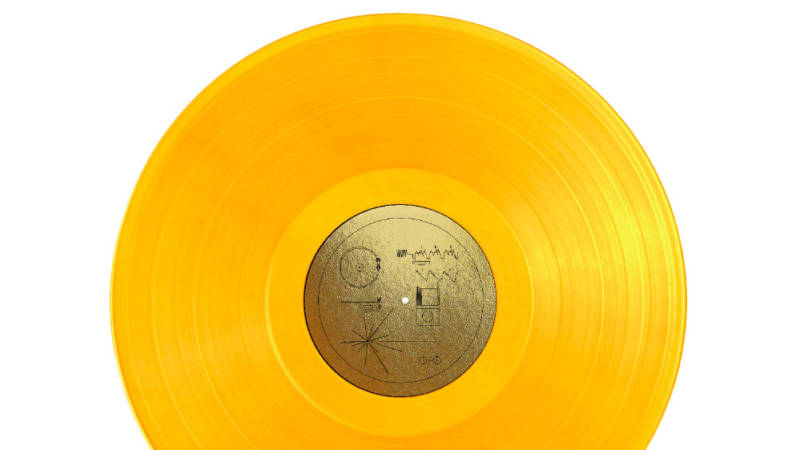
"caption": "A team of California science geeks is attempting a vinyl reissue of the gold records launched into space 40 years ago on the Voyager spacecraft.",
"description": "A team of California science geeks is attempting a vinyl reissue of the gold records launched into space 40 years ago on the Voyager spacecraft.",
"title": "RS21189_VoyagerRecord-qut",
"credit": "Photo: Courtesy of Lawrence Azerrad/LADesign",
"status": "inherit",
"isLoading": false,
"fetchFailed": false
},
"arts_12100592": {
"type": "attachments",
"id": "arts_12100592",
"meta": {
"index": "attachments_1716263798",
"site": "arts",
"id": "12100592",
"found": true
},
"parent": 12100395,
"imgSizes": {
"twentyfourteen-full-width": {
"file": "https://ww2.kqed.org/app/uploads/sites/2/2016/09/Dermont-Pinder-1038x576.jpg",
"width": 1038,
"mimeType": "image/jpeg",
"height": 576
},
"thumbnail": {
"file": "https://ww2.kqed.org/app/uploads/sites/2/2016/09/Dermont-Pinder-400x225.jpg",
"width": 400,
"mimeType": "image/jpeg",
"height": 225
},
"fd-sm": {
"file": "https://ww2.kqed.org/app/uploads/sites/2/2016/09/Dermont-Pinder-960x540.jpg",
"width": 960,
"mimeType": "image/jpeg",
"height": 540
},
"post-thumbnail": {
"file": "https://ww2.kqed.org/app/uploads/sites/2/2016/09/Dermont-Pinder-672x372.jpg",
"width": 672,
"mimeType": "image/jpeg",
"height": 372
},
"kqedFullSize": {
"file": "https://ww2.kqed.org/app/uploads/sites/2/2016/09/Dermont-Pinder.jpg",
"width": 1920,
"height": 1080
},
"large": {
"file": "https://ww2.kqed.org/app/uploads/sites/2/2016/09/Dermont-Pinder-1180x664.jpg",
"width": 1180,
"mimeType": "image/jpeg",
"height": 664
},
"guest-author-50": {
"file": "https://ww2.kqed.org/app/uploads/sites/2/2016/09/Dermont-Pinder-50x50.jpg",
"width": 50,
"mimeType": "image/jpeg",
"height": 50
},
"guest-author-96": {
"file": "https://ww2.kqed.org/app/uploads/sites/2/2016/09/Dermont-Pinder-96x96.jpg",
"width": 96,
"mimeType": "image/jpeg",
"height": 96
},
"medium": {
"file": "https://ww2.kqed.org/app/uploads/sites/2/2016/09/Dermont-Pinder-800x450.jpg",
"width": 800,
"mimeType": "image/jpeg",
"height": 450
},
"guest-author-64": {
"file": "https://ww2.kqed.org/app/uploads/sites/2/2016/09/Dermont-Pinder-64x64.jpg",
"width": 64,
"mimeType": "image/jpeg",
"height": 64
},
"guest-author-32": {
"file": "https://ww2.kqed.org/app/uploads/sites/2/2016/09/Dermont-Pinder-32x32.jpg",
"width": 32,
"mimeType": "image/jpeg",
"height": 32
},
"fd-lrg": {
"file": "https://ww2.kqed.org/app/uploads/sites/2/2016/09/Dermont-Pinder-1920x1080.jpg",
"width": 1920,
"mimeType": "image/jpeg",
"height": 1080
},
"fd-med": {
"file": "https://ww2.kqed.org/app/uploads/sites/2/2016/09/Dermont-Pinder-1180x664.jpg",
"width": 1180,
"mimeType": "image/jpeg",
"height": 664
},
"detail": {
"file": "https://ww2.kqed.org/app/uploads/sites/2/2016/09/Dermont-Pinder-150x150.jpg",
"width": 150,
"mimeType": "image/jpeg",
"height": 150
},
"medium_large": {
"file": "https://ww2.kqed.org/app/uploads/sites/2/2016/09/Dermont-Pinder-768x432.jpg",
"width": 768,
"mimeType": "image/jpeg",
"height": 432
},
"guest-author-128": {
"file": "https://ww2.kqed.org/app/uploads/sites/2/2016/09/Dermont-Pinder-128x128.jpg",
"width": 128,
"mimeType": "image/jpeg",
"height": 128
}
},
"publishDate": 1474500914,
"modified": 1474500992,
"caption": "Demont Pinder poses with his painting at Google 4 NMAAHC celebrating the opening of the National Museum of African American History and Culture ",
"description": "Demont Pinder poses with his painting at Google 4 NMAAHC celebrating the opening of the National Museum of African American History and Culture ",
"title": "Google 4 NMAAHC",
"credit": "Photo: Teresa Kroeger/Getty Images for Google",
"status": "inherit",
"isLoading": false,
"fetchFailed": false
},
"arts_12032074": {
"type": "attachments",
"id": "arts_12032074",
"meta": {
"index": "attachments_1716263798",
"site": "arts",
"id": "12032074",
"found": true
},
"parent": 12029954,
"imgSizes": {
"twentyfourteen-full-width": {
"file": "https://ww2.kqed.org/app/uploads/sites/2/2016/09/leaf-2012_1920-1038x576.jpg",
"width": 1038,
"mimeType": "image/jpeg",
"height": 576
},
"thumbnail": {
"file": "https://ww2.kqed.org/app/uploads/sites/2/2016/09/leaf-2012_1920-400x267.jpg",
"width": 400,
"mimeType": "image/jpeg",
"height": 267
},
"fd-sm": {
"file": "https://ww2.kqed.org/app/uploads/sites/2/2016/09/leaf-2012_1920-960x640.jpg",
"width": 960,
"mimeType": "image/jpeg",
"height": 640
},
"post-thumbnail": {
"file": "https://ww2.kqed.org/app/uploads/sites/2/2016/09/leaf-2012_1920-672x372.jpg",
"width": 672,
"mimeType": "image/jpeg",
"height": 372
},
"kqedFullSize": {
"file": "https://ww2.kqed.org/app/uploads/sites/2/2016/09/leaf-2012_1920.jpg",
"width": 1920,
"height": 1280
},
"large": {
"file": "https://ww2.kqed.org/app/uploads/sites/2/2016/09/leaf-2012_1920-1180x787.jpg",
"width": 1180,
"mimeType": "image/jpeg",
"height": 787
},
"guest-author-50": {
"file": "https://ww2.kqed.org/app/uploads/sites/2/2016/09/leaf-2012_1920-50x50.jpg",
"width": 50,
"mimeType": "image/jpeg",
"height": 50
},
"guest-author-96": {
"file": "https://ww2.kqed.org/app/uploads/sites/2/2016/09/leaf-2012_1920-96x96.jpg",
"width": 96,
"mimeType": "image/jpeg",
"height": 96
},
"medium": {
"file": "https://ww2.kqed.org/app/uploads/sites/2/2016/09/leaf-2012_1920-800x533.jpg",
"width": 800,
"mimeType": "image/jpeg",
"height": 533
},
"guest-author-64": {
"file": "https://ww2.kqed.org/app/uploads/sites/2/2016/09/leaf-2012_1920-64x64.jpg",
"width": 64,
"mimeType": "image/jpeg",
"height": 64
},
"guest-author-32": {
"file": "https://ww2.kqed.org/app/uploads/sites/2/2016/09/leaf-2012_1920-32x32.jpg",
"width": 32,
"mimeType": "image/jpeg",
"height": 32
},
"fd-lrg": {
"file": "https://ww2.kqed.org/app/uploads/sites/2/2016/09/leaf-2012_1920-1920x1280.jpg",
"width": 1920,
"mimeType": "image/jpeg",
"height": 1280
},
"fd-med": {
"file": "https://ww2.kqed.org/app/uploads/sites/2/2016/09/leaf-2012_1920-1180x787.jpg",
"width": 1180,
"mimeType": "image/jpeg",
"height": 787
},
"detail": {
"file": "https://ww2.kqed.org/app/uploads/sites/2/2016/09/leaf-2012_1920-150x150.jpg",
"width": 150,
"mimeType": "image/jpeg",
"height": 150
},
"medium_large": {
"file": "https://ww2.kqed.org/app/uploads/sites/2/2016/09/leaf-2012_1920-768x512.jpg",
"width": 768,
"mimeType": "image/jpeg",
"height": 512
},
"guest-author-128": {
"file": "https://ww2.kqed.org/app/uploads/sites/2/2016/09/leaf-2012_1920-128x128.jpg",
"width": 128,
"mimeType": "image/jpeg",
"height": 128
}
},
"publishDate": 1473181272,
"modified": 1568759755,
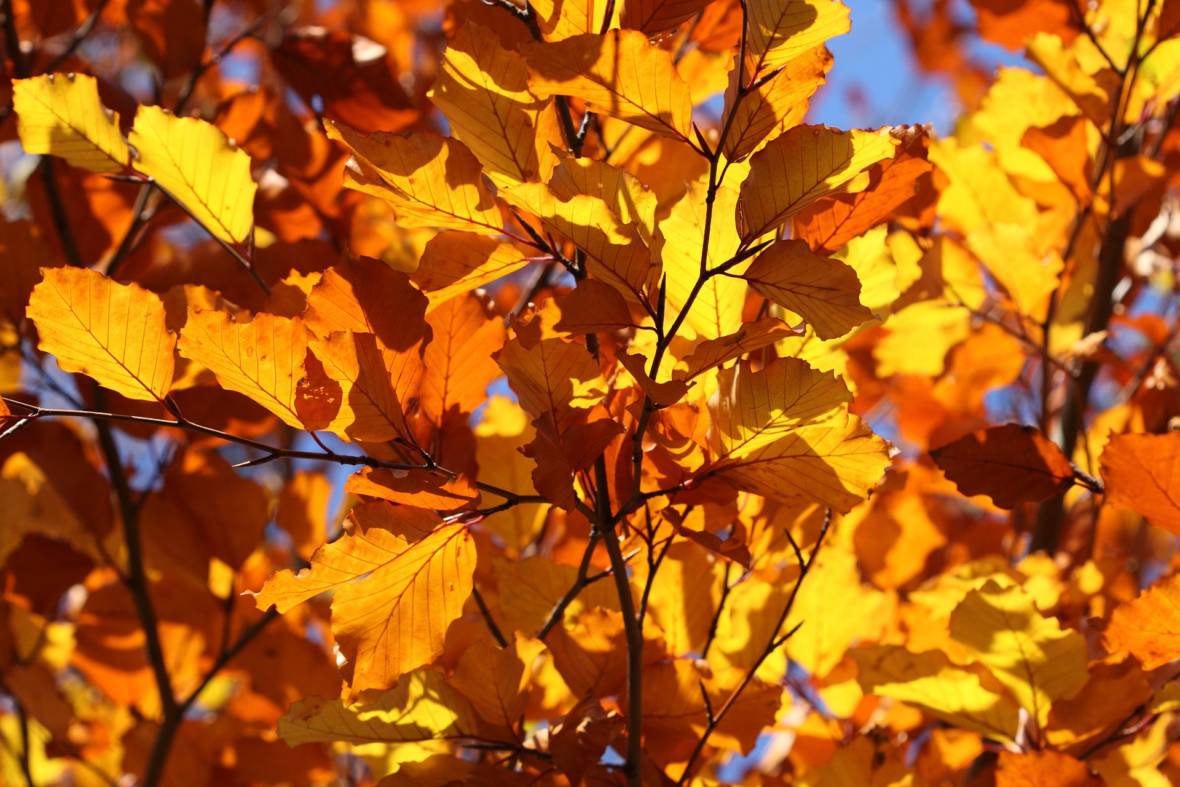
"caption": "Don't believe the hype! When fall comes to the Bay Area, you can see the leaves change color — you just have to travel.",
"description": "Don't believe the hype! When fall comes to the Bay Area, you can see the leaves change color -- you just have to travel.",
"title": "leaf-2012_1920",
"credit": null,
"status": "inherit",
"isLoading": false,
"fetchFailed": false
},
"pop_37091": {
"type": "attachments",
"id": "pop_37091",
"meta": {
"index": "attachments_1716263798",
"site": "pop",
"id": "37091",
"found": true
},
"parent": 36785,
"imgSizes": {
"twentyfourteen-full-width": {
"file": "https://ww2.kqed.org/app/uploads/sites/12/2016/09/2eg7a14-1038x576.png",
"width": 1038,
"mimeType": "image/png",
"height": 576
},
"thumbnail": {
"file": "https://ww2.kqed.org/app/uploads/sites/12/2016/09/2eg7a14-400x225.png",
"width": 400,
"mimeType": "image/png",
"height": 225
},
"fd-sm": {
"file": "https://ww2.kqed.org/app/uploads/sites/12/2016/09/2eg7a14-960x540.png",
"width": 960,
"mimeType": "image/png",
"height": 540
},
"post-thumbnail": {
"file": "https://ww2.kqed.org/app/uploads/sites/12/2016/09/2eg7a14-672x372.png",
"width": 672,
"mimeType": "image/png",
"height": 372
},
"kqedFullSize": {
"file": "https://ww2.kqed.org/app/uploads/sites/12/2016/09/2eg7a14.png",
"width": 1280,
"height": 720
},
"guest-author-50": {
"file": "https://ww2.kqed.org/app/uploads/sites/12/2016/09/2eg7a14-50x50.png",
"width": 50,
"mimeType": "image/png",
"height": 50
},
"guest-author-96": {
"file": "https://ww2.kqed.org/app/uploads/sites/12/2016/09/2eg7a14-96x96.png",
"width": 96,
"mimeType": "image/png",
"height": 96
},
"medium": {
"file": "https://ww2.kqed.org/app/uploads/sites/12/2016/09/2eg7a14-800x450.png",
"width": 800,
"mimeType": "image/png",
"height": 450
},
"guest-author-64": {
"file": "https://ww2.kqed.org/app/uploads/sites/12/2016/09/2eg7a14-64x64.png",
"width": 64,
"mimeType": "image/png",
"height": 64
},
"guest-author-32": {
"file": "https://ww2.kqed.org/app/uploads/sites/12/2016/09/2eg7a14-32x32.png",
"width": 32,
"mimeType": "image/png",
"height": 32
},
"fd-med": {
"file": "https://ww2.kqed.org/app/uploads/sites/12/2016/09/2eg7a14-1180x664.png",
"width": 1180,
"mimeType": "image/png",
"height": 664
},
"detail": {
"file": "https://ww2.kqed.org/app/uploads/sites/12/2016/09/2eg7a14-150x150.png",
"width": 150,
"mimeType": "image/png",
"height": 150
},
"medium_large": {
"file": "https://ww2.kqed.org/app/uploads/sites/12/2016/09/2eg7a14-768x432.png",
"width": 768,
"mimeType": "image/png",
"height": 432
},
"guest-author-128": {
"file": "https://ww2.kqed.org/app/uploads/sites/12/2016/09/2eg7a14-128x128.png",
"width": 128,
"mimeType": "image/png",
"height": 128
}
},
"publishDate": 1473976547,
"modified": 1473976547,
"caption": null,
"description": null,
"title": "2eg7a14",
"credit": null,
"status": "inherit",
"isLoading": false,
"fetchFailed": false
}
},
"audioPlayerReducer": {
"postId": "stream_live",
"isPaused": true,
"isPlaying": false,
"pfsActive": false,
"pledgeModalIsOpen": true,
"playerDrawerIsOpen": false,
"liveAudioPlayStartedAt": 0,
"liveAudioPlayContext": ""
},
"authorsReducer": {
"byline_arts_12146947": {
"type": "authors",
"id": "byline_arts_12146947",
"meta": {
"override": true
},
"slug": "byline_arts_12146947",
"name": "Seth Rosenfeld",
"isLoading": false
},
"byline_arts_12100395": {
"type": "authors",
"id": "byline_arts_12100395",
"meta": {
"override": true
},
"slug": "byline_arts_12100395",
"name": "Errin Haines Whack, Associated Press",
"isLoading": false
},
"mfox": {
"type": "authors",
"id": "22",
"meta": {
"index": "authors_1716337520",
"id": "22",
"found": true
},
"name": "Michael Fox",
"firstName": "Michael",
"lastName": "Fox",
"slug": "mfox",
"email": "foxonfilm@yahoo.com",
"display_author_email": false,
"staff_mastheads": [],
"title": "KQED Contributor",
"bio": "Michael Fox has written about film for dozens of publications since 1987. He is a founding member of the San Francisco Bay Area Film Critics Circle.",
"avatar": "https://secure.gravatar.com/avatar/d9849d6c659c41414795c471d907bb97b396e2a32b88e20e6ff66f65fbdd6dcd?s=600&d=blank&r=g",
"twitter": null,
"bluesky": null,
"facebook": null,
"instagram": null,
"linkedin": null,
"sites": [
{
"site": "arts",
"roles": [
"Contributor",
"contributor"
]
}
],
"headData": {
"title": "Michael Fox | KQED",
"description": "KQED Contributor",
"ogImgSrc": "https://secure.gravatar.com/avatar/d9849d6c659c41414795c471d907bb97b396e2a32b88e20e6ff66f65fbdd6dcd?s=600&d=blank&r=g",
"twImgSrc": "https://secure.gravatar.com/avatar/d9849d6c659c41414795c471d907bb97b396e2a32b88e20e6ff66f65fbdd6dcd?s=600&d=blank&r=g"
},
"isLoading": false,
"link": "/author/mfox"
},
"cmusiker": {
"type": "authors",
"id": "32",
"meta": {
"index": "authors_1716337520",
"id": "32",
"found": true
},
"name": "Cy Musiker",
"firstName": "Cy",
"lastName": "Musiker",
"slug": "cmusiker",
"email": "cmusiker@kqed.org",
"display_author_email": false,
"staff_mastheads": [],
"title": "KQED Contributor",
"bio": "Cy Musiker is a former co-host of The Do List and a former reporter covering the arts for KQED News and The California Report. He loves live performance, especially great theater, jazz, roots music, anything by Mahler. Cy has an MJ from UC Berkeley's School of Journalism, and got his BA from Hampshire College. His work has been recognized by the Society for Professional Journalists with their Sigma Delta Chi Award for Public Service in Journalism. When he can, Cy likes to swim in Tomales Bay, run with his dog in the East Bay Hills, and hike the Sierra.",
"avatar": "https://secure.gravatar.com/avatar/05eaba5c5696ce8f062e4ea2df428a43?s=600&d=blank&r=g",
"twitter": null,
"facebook": null,
"instagram": null,
"linkedin": null,
"sites": [
{
"site": "arts",
"roles": [
"Contributor",
"subscriber"
]
},
{
"site": "news",
"roles": [
"author"
]
},
{
"site": "bayareabites",
"roles": [
"contributor"
]
}
],
"headData": {
"title": "Cy Musiker | KQED",
"description": "KQED Contributor",
"ogImgSrc": "https://secure.gravatar.com/avatar/05eaba5c5696ce8f062e4ea2df428a43?s=600&d=blank&r=g",
"twImgSrc": "https://secure.gravatar.com/avatar/05eaba5c5696ce8f062e4ea2df428a43?s=600&d=blank&r=g"
},
"isLoading": false,
"link": "/author/cmusiker"
},
"shotchkiss": {
"type": "authors",
"id": "61",
"meta": {
"index": "authors_1716337520",
"id": "61",
"found": true
},
"name": "Sarah Hotchkiss",
"firstName": "Sarah",
"lastName": "Hotchkiss",
"slug": "shotchkiss",
"email": "shotchkiss@kqed.org",
"display_author_email": true,
"staff_mastheads": [
"arts"
],
"title": "Senior Editor",
"bio": "Sarah Hotchkiss is a San Francisco \u003ca href=\"http://www.sarahhotchkiss.com\">artist\u003c/a> and arts writer. In 2019, she received the Dorothea & Leo Rabkin Foundation grant for visual art journalism and in 2020 she received a Society of Professional Journalists, Northern California award for excellence in arts and culture reporting.",
"avatar": "https://secure.gravatar.com/avatar/bc662df144b3d27fd8b1b6f1c2a420d34e91e53154d411bb7ad353cc8b6cea8d?s=600&d=blank&r=g",
"twitter": null,
"bluesky": null,
"facebook": null,
"instagram": null,
"linkedin": null,
"sites": [
{
"site": "",
"roles": [
"editor"
]
},
{
"site": "arts",
"roles": [
"Contributor",
"administrator"
]
},
{
"site": "artschool",
"roles": [
"administrator"
]
},
{
"site": "news",
"roles": [
"editor"
]
},
{
"site": "pop",
"roles": [
"administrator"
]
},
{
"site": "bayareabites",
"roles": [
"editor"
]
},
{
"site": "spark",
"roles": [
"editor"
]
},
{
"site": "checkplease",
"roles": [
"editor"
]
}
],
"headData": {
"title": "Sarah Hotchkiss | KQED",
"description": "Senior Editor",
"ogImgSrc": "https://secure.gravatar.com/avatar/bc662df144b3d27fd8b1b6f1c2a420d34e91e53154d411bb7ad353cc8b6cea8d?s=600&d=blank&r=g",
"twImgSrc": "https://secure.gravatar.com/avatar/bc662df144b3d27fd8b1b6f1c2a420d34e91e53154d411bb7ad353cc8b6cea8d?s=600&d=blank&r=g"
},
"isLoading": false,
"link": "/author/shotchkiss"
},
"mtedford": {
"type": "authors",
"id": "187",
"meta": {
"index": "authors_1716337520",
"id": "187",
"found": true
},
"name": "Matthew Harrison Tedford",
"firstName": "Matthew Harrison",
"lastName": "Tedford",
"slug": "mtedford",
"email": "mhtedford@gmail.com",
"display_author_email": false,
"staff_mastheads": [],
"title": null,
"bio": "\u003ca href=\"http://www.mhtedford.com\">Matthew Harrison Tedford\u003c/a> is a writer whose work focuses on contemporary art, film, and California history. His writing has appeared in \u003cem id=\"yui_3_17_2_1_1403197832753_7692\">Art Practical\u003c/em>, \u003cem>Daily Serving\u003c/em>, \u003cem>Glance\u003c/em> (California College of the Arts), the \u003cem>Huffington Post\u003c/em>, \u003cem>Oakland Standard\u003c/em> (Oakland Museum of California), \u003cem>Open Space\u003c/em> (SFMOMA), \u003cem>Poor Taste Magazine\u003c/em>, \u003cem>SF Weekly\u003c/em>, and \u003cem>Wilder Quarterly\u003c/em>.",
"avatar": "https://secure.gravatar.com/avatar/f6ae15e4c10b73a2ee9215e669ca0328?s=600&d=blank&r=g",
"twitter": null,
"facebook": null,
"instagram": null,
"linkedin": null,
"sites": [
{
"site": "arts",
"roles": [
"contributor"
]
}
],
"headData": {
"title": "Matthew Harrison Tedford | KQED",
"description": null,
"ogImgSrc": "https://secure.gravatar.com/avatar/f6ae15e4c10b73a2ee9215e669ca0328?s=600&d=blank&r=g",
"twImgSrc": "https://secure.gravatar.com/avatar/f6ae15e4c10b73a2ee9215e669ca0328?s=600&d=blank&r=g"
},
"isLoading": false,
"link": "/author/mtedford"
},
"rachael-myrow": {
"type": "authors",
"id": "251",
"meta": {
"index": "authors_1716337520",
"id": "251",
"found": true
},
"name": "Rachael Myrow",
"firstName": "Rachael",
"lastName": "Myrow",
"slug": "rachael-myrow",
"email": "rmyrow@kqed.org",
"display_author_email": true,
"staff_mastheads": [
"news"
],
"title": "Senior Editor of KQED's Silicon Valley News Desk",
"bio": "• I write and edit stories about how Silicon Valley power and policies shape everyday life in California. I’m also passionate about making Bay Area history and culture more accessible to a broad public. • I’ve been a journalist for most of my life, starting in high school with The Franklin Press in Los Angeles, where I grew up. While earning my first degree in English at UC Berkeley, I got my start in public radio at KALX-FM. After completing a second degree in journalism at Cal, I landed my first professional job at Marketplace, then moved on to KPCC (now LAist), and then KQED, where I hosted The California Report for more than seven years. • My reporting has appeared on NPR, The World, WBUR’s \u003ci>Here & Now\u003c/i>, and the BBC. I also guest host for KQED’s \u003ci>Forum\u003c/i>, as well as the Commonwealth Club in San Francisco. • I speak periodically on media, democracy and technology issues, and do voiceover work for documentaries and educational video projects. • Outside of the studio, you'll find me hiking Bay Area trails and whipping up Insta-ready meals in my kitchen. • I do not accept gifts, money, or favors from anyone connected to my reporting, I don't pay people for information, and I do not support or donate to political causes. • I strive to treat the people I report on with fairness, honesty, and respect. I also recognize there are often multiple sides to a story and work to verify information through multiple sources and documentation. If I get something wrong, I correct it.",
"avatar": "https://secure.gravatar.com/avatar/3ed8a3c5f26025e4a805ba634cda8cd764906b97438a6d9ce216b044e340da4e?s=600&d=blank&r=g",
"twitter": "rachaelmyrow",
"bluesky": null,
"facebook": null,
"instagram": null,
"linkedin": "https://www.linkedin.com/in/rachaelmyrow/",
"sites": [
{
"site": "arts",
"roles": [
"administrator"
]
},
{
"site": "news",
"roles": [
"edit_others_posts",
"editor"
]
},
{
"site": "futureofyou",
"roles": [
"editor"
]
},
{
"site": "bayareabites",
"roles": [
"editor"
]
},
{
"site": "stateofhealth",
"roles": [
"editor"
]
},
{
"site": "science",
"roles": [
"editor"
]
},
{
"site": "food",
"roles": [
"editor"
]
},
{
"site": "forum",
"roles": [
"editor"
]
},
{
"site": "liveblog",
"roles": [
"author"
]
}
],
"headData": {
"title": "Rachael Myrow | KQED",
"description": "Senior Editor of KQED's Silicon Valley News Desk",
"ogImgSrc": "https://secure.gravatar.com/avatar/3ed8a3c5f26025e4a805ba634cda8cd764906b97438a6d9ce216b044e340da4e?s=600&d=blank&r=g",
"twImgSrc": "https://secure.gravatar.com/avatar/3ed8a3c5f26025e4a805ba634cda8cd764906b97438a6d9ce216b044e340da4e?s=600&d=blank&r=g"
},
"isLoading": false,
"link": "/author/rachael-myrow"
},
"kpawlowska": {
"type": "authors",
"id": "3212",
"meta": {
"index": "authors_1716337520",
"id": "3212",
"found": true
},
"name": "Kasia Pawlowska",
"firstName": "Kasia",
"lastName": "Pawlowska",
"slug": "kpawlowska",
"email": "ohhkasia@gmail.com",
"display_author_email": false,
"staff_mastheads": [],
"title": null,
"bio": "Kasia is a San Francisco based writer. You can follow her on Twitter \u003ca title=\"kasia twitter\" href=\"https://twitter.com/ohhkasia\" target=\"_blank\">@ohhkasia\u003c/a>.",
"avatar": "https://secure.gravatar.com/avatar/b6bb6987474c7c311f305b672d81dc87?s=600&d=blank&r=g",
"twitter": null,
"facebook": null,
"instagram": null,
"linkedin": null,
"sites": [
{
"site": "arts",
"roles": [
"contributor"
]
}
],
"headData": {
"title": "Kasia Pawlowska | KQED",
"description": null,
"ogImgSrc": "https://secure.gravatar.com/avatar/b6bb6987474c7c311f305b672d81dc87?s=600&d=blank&r=g",
"twImgSrc": "https://secure.gravatar.com/avatar/b6bb6987474c7c311f305b672d81dc87?s=600&d=blank&r=g"
},
"isLoading": false,
"link": "/author/kpawlowska"
},
"jwilkins": {
"type": "authors",
"id": "8668",
"meta": {
"index": "authors_1716337520",
"id": "8668",
"found": true
},
"name": "John Wilkins",
"firstName": "John",
"lastName": "Wilkins",
"slug": "jwilkins",
"email": "Johnrwilkins@aol.com",
"display_author_email": false,
"staff_mastheads": [],
"title": null,
"bio": "John Wilkins is the theater critic for KQED Arts. He was the Artistic Director of Last Planet Theatre for ten years and teaches in the Writing and Literature program at CCA. Follow him on Twitter @johnrwilkins2",
"avatar": "https://secure.gravatar.com/avatar/7798fcc8a10bee0e04387b724b492df7?s=600&d=blank&r=g",
"twitter": null,
"facebook": null,
"instagram": null,
"linkedin": null,
"sites": [
{
"site": "arts",
"roles": [
"subscriber"
]
}
],
"headData": {
"title": "John Wilkins | KQED",
"description": null,
"ogImgSrc": "https://secure.gravatar.com/avatar/7798fcc8a10bee0e04387b724b492df7?s=600&d=blank&r=g",
"twImgSrc": "https://secure.gravatar.com/avatar/7798fcc8a10bee0e04387b724b492df7?s=600&d=blank&r=g"
},
"isLoading": false,
"link": "/author/jwilkins"
},
"ralexandra": {
"type": "authors",
"id": "11242",
"meta": {
"index": "authors_1716337520",
"id": "11242",
"found": true
},
"name": "Rae Alexandra",
"firstName": "Rae",
"lastName": "Alexandra",
"slug": "ralexandra",
"email": "ralexandra@kqed.org",
"display_author_email": true,
"staff_mastheads": [],
"title": "Reporter/Producer",
"bio": "Rae Alexandra is a Reporter/Producer for KQED Arts & Culture, and the creator/author of the \u003ca href=\"https://www.kqed.org/arts/program/rebel-girls-from-bay-area-history\">Rebel Girls From Bay Area History\u003c/a> and \u003ca href=\"https://www.kqed.org/bizarrebayarea\">Bizarre Bay Area\u003c/a> series. Her debut book, \u003ca href=\"https://citylights.com/politics-current-events-history/unsung-heroines35-women-who-changed/\">Unsung Heroines: 35 Women Who Changed the Bay Area\u003c/a> was published by City Lights in March 2026. In 2023, Rae was awarded an SPJ Excellence in Journalism Award for Arts & Culture. Rae was born and raised in Wales and subsequently — even after two decades in Northern California — still uses phrases that regularly baffle her coworkers.",
"avatar": "https://secure.gravatar.com/avatar/edfee8176c80cc0a382b051190f5341997df378a934a5774dcb0977732dfd401?s=600&d=blank&r=g",
"twitter": null,
"bluesky": null,
"facebook": null,
"instagram": null,
"linkedin": null,
"sites": [
{
"site": "arts",
"roles": [
"subscriber"
]
},
{
"site": "news",
"roles": [
"subscriber"
]
},
{
"site": "pop",
"roles": [
"subscriber"
]
},
{
"site": "bayareabites",
"roles": [
"subscriber"
]
},
{
"site": "science",
"roles": [
"subscriber"
]
}
],
"headData": {
"title": "Rae Alexandra | KQED",
"description": "Reporter/Producer",
"ogImgSrc": "https://secure.gravatar.com/avatar/edfee8176c80cc0a382b051190f5341997df378a934a5774dcb0977732dfd401?s=600&d=blank&r=g",
"twImgSrc": "https://secure.gravatar.com/avatar/edfee8176c80cc0a382b051190f5341997df378a934a5774dcb0977732dfd401?s=600&d=blank&r=g"
},
"isLoading": false,
"link": "/author/ralexandra"
}
},
"pagesReducer": {
"arts_category_visualarts": {
"type": "terms",
"id": "arts_70",
"meta": {
"index": "terms_1716263798",
"site": "arts",
"id": "70",
"score": 14.4072075
},
"featImg": null,
"name": "Visual Arts",
"description": null,
"taxonomy": "category",
"headData": {
"twImgId": null,
"twTitle": null,
"ogTitle": null,
"ogImgId": null,
"twDescription": null,
"description": null,
"title": "Visual Arts Archives | KQED Arts",
"ogDescription": null
},
"ttid": 71,
"slug": "visualarts",
"isLoading": false,
"title": "Visual Arts",
"pageMeta": {
"site": "arts",
"WpPageTemplate": "page-topic-editorial",
"currentPage": 118
},
"blocks": [
{
"blockName": "kqed/post-list",
"attrs": {
"layout": "cardArticle2",
"query": "posts/arts?category=visualarts",
"seeMore": false,
"paginated": true,
"page": 118
}
},
{
"blockName": "kqed/ad"
}
]
}
},
"pfsSessionReducer": {},
"postsReducer": {
"stream_live": {
"type": "live",
"id": "stream_live",
"audioUrl": "https://streams.kqed.org/kqedradio",
"title": "Live Stream",
"excerpt": "Live Stream information currently unavailable.",
"link": "/radio",
"featImg": "",
"label": {
"name": "KQED Live",
"link": "/"
}
},
"stream_kqedNewscast": {
"type": "posts",
"id": "stream_kqedNewscast",
"audioUrl": "https://www.kqed.org/.stream/anon/radio/RDnews/newscast.mp3?_=1",
"title": "KQED Newscast",
"featImg": "",
"label": {
"name": "88.5 FM",
"link": "/"
}
},
"arts_12154910": {
"type": "posts",
"id": "arts_12154910",
"meta": {
"index": "posts_1716263798",
"site": "arts",
"id": "12154910",
"score": null,
"sort": [
1475560444000
]
},
"guestAuthors": [],
"slug": "uc-santa-cruz-lands-massive-photo-archive-chronicling-california-history",
"title": "UC Santa Cruz Lands Massive Photo Archive Chronicling California History",
"publishDate": 1475560444,
"format": "standard",
"headTitle": "UC Santa Cruz Lands Massive Photo Archive Chronicling California History | KQED",
"labelTerm": {
"site": "arts"
},
"content": "\u003cp>Husband-and-wife photographers Pirkle Jones and Ruth-Marion Baruch had a ringside seat to much of California’s mid 20\u003csup>th\u003c/sup> century. They took tens of thousands of pictures of migrant workers, environmentally threatened communities and perhaps most famously, the Black Panthers during their hey day in Oakland.\u003c/p>\n\u003cp>The vast majority of their work — more than 12,000 prints and 25,000 negatives — \u003ca href=\"http://news.ucsc.edu/2016/10/jones-baruch-gift.html\" target=\"_blank\" rel=\"noopener\">now call UC Santa Cruz home\u003c/a>. It’s the largest single gift in the campus’s history, with an estimated value of $32 million.\u003c/p>\n\u003cp>“They were people who were very interested in documenting social, and political and environmental issues,” says Elisabeth Remak-Honnef, who heads of Special Collections and Archives at UC Santa Cruz.\u003c/p>\n\u003cfigure id=\"attachment_12155711\" class=\"wp-caption alignright\" style=\"max-width: 403px\">\u003cimg loading=\"lazy\" decoding=\"async\" class=\"size-medium wp-image-12155711\" src=\"http://ww2.kqed.org/arts/wp-content/uploads/sites/2/2016/10/RS21344_BlackPanther1-qut-403x600.jpg\" alt=\"Ruth-Marion Baruch, Mother and child, Free Huey Rally, Oakland, 1968\" width=\"403\" height=\"600\" srcset=\"https://cdn.kqed.org/wp-content/uploads/sites/2/2016/10/RS21344_BlackPanther1-qut-403x600.jpg 403w, https://cdn.kqed.org/wp-content/uploads/sites/2/2016/10/RS21344_BlackPanther1-qut-400x596.jpg 400w, https://cdn.kqed.org/wp-content/uploads/sites/2/2016/10/RS21344_BlackPanther1-qut-768x1144.jpg 768w, https://cdn.kqed.org/wp-content/uploads/sites/2/2016/10/RS21344_BlackPanther1-qut-792x1180.jpg 792w, https://cdn.kqed.org/wp-content/uploads/sites/2/2016/10/RS21344_BlackPanther1-qut-1180x1758.jpg 1180w, https://cdn.kqed.org/wp-content/uploads/sites/2/2016/10/RS21344_BlackPanther1-qut-960x1430.jpg 960w, https://cdn.kqed.org/wp-content/uploads/sites/2/2016/10/RS21344_BlackPanther1-qut.jpg 1800w\" sizes=\"(max-width: 403px) 100vw, 403px\">\u003cfigcaption class=\"wp-caption-text\">Ruth-Marion Baruch, Mother and child, Free Huey Rally, Oakland, 1968 \u003ccite>(Photo: Courtesy of Special Collections, University Library, UC Santa Cruz)\u003c/cite>\u003c/figcaption>\u003c/figure>\n\u003cp>Remak-Honnef figures it’ll take at least two years to catalog everything, including a selection of works by big names Jones and Baruch studied and worked with: Ansel Adams, Dorothea Lange, and Edward Weston. But some of the Black Panther photographs have already been sent to the Oakland Museum for this weekend’s opening of \u003ca href=\"http://museumca.org/exhibit/all-power-people-black-panthers-50\" target=\"_blank\" rel=\"noopener\">All Power to the People: Black Panthers at 50\u003c/a>.\u003c/p>\n\u003cp>\u003cstrong>Drawn to California\u003c/strong>\u003c/p>\n\u003cp>[ad fullwidth]\u003c/p>\n\u003cp>Baruch was born in Berlin, and immigrated to New York City in 1927. She got an undergraduate degree at the University of Missouri but came west to attend the California School of Fine Arts (now the San Francisco Art Institute), where she studied with the likes of Ansel Adams, Minor White, Homer Page, and Edward Weston\u003c/p>\n\u003cp>Jones, originally from Shreveport, Louisiana, joined the first class taught by Ansel Adams in 1946. He became Adams’ assistant in 1949 and taught at the school for 28 years, beginning in 1952.\u003c/p>\n\u003cp>Jones and Adams became friends, as well as colleagues, and met Baruch through Adams.\u003c/p>\n\u003cp>Jones and Adams co-taught a summer session at UC Santa Cruz called “Words and Images” in 1969. Though Jones settled in Mill Valley with Baruch, he never forgot UCSC. “He thought [Santa Cruz] was a very beautiful place,” says Remak-Honnef. “He liked the quirkiness of the campus. He liked the political activism on the campus.”\u003c/p>\n\u003cp>The archive will be housed in \u003ca href=\"http://guides.library.ucsc.edu/c.php?g=119809&p=2394http://guides.library.ucsc.edu/speccoll/jones-slideshow444\" target=\"_blank\" rel=\"noopener\">McHenry Library’s Special Collections\u003c/a>, already home to a smaller collection the couple \u003ca href=\"http://www1.ucsc.edu/currents/02-03/01-06/pirkle_jones.html\" target=\"_blank\" rel=\"noopener\">gave to UC Santa Cruz in 2003\u003c/a>. “I really feel this collection has come home to where it belonged and where it was intended to end up,” Remak-Honnef added.\u003c/p>\n\u003cp>[soundcloud url=”https://api.soundcloud.com/tracks/286053711″ params=”color=ff5500&auto_play=false&hide_related=false&show_comments=true&show_user=true&show_reposts=false” width=”100%” height=”166″ iframe=”true” /]\u003c/p>\n\u003cp>\u003cstrong>Black Panther Days\u003c/strong>\u003c/p>\n\u003cp>The Panther series of photographs came about in 1968 when Baruch was introduced to Kathleen Cleaver, wife of Black Panther party leader Eldridge Cleaver. Given unprecedented access to the inner circle of the Black Panthers, Jones and Baruch took photographs from July through October of that year.\u003c/p>\n\u003cp>The photos caused an uproar at the time. San Francisco’s de Young Museum, which was mounting a show, was tempted to cancel the exhibition, but went ahead. The show drew 100,000 visitors.\u003c/p>\n\u003cp>In 2004, Jones told the \u003ca href=\"http://www.latimes.com/local/obituaries/la-me-pirkle-jones24-2009mar24-story.html\" target=\"_blank\" rel=\"noopener\">\u003cem>Los Angeles Times\u003c/em>\u003c/a>, “I had professional clients who said, ‘What in the world are you doing photographing Panthers?’ I’d just sort of shrug my shoulders. I did the talking through the photographs.'”\u003c/p>\n\u003cp>\u003cstrong>Haight Ashbury\u003c/strong>\u003c/p>\n\u003cfigure id=\"attachment_12155521\" class=\"wp-caption alignright\" style=\"max-width: 383px\">\u003cimg loading=\"lazy\" decoding=\"async\" class=\"size-medium wp-image-12155521\" src=\"http://ww2.kqed.org/arts/wp-content/uploads/sites/2/2016/10/RS21345_Haight-qut-383x600.jpg\" alt=\"Ruth-Marion Baruch: Gypsy couple, Haight Ashbury, 1967\" width=\"383\" height=\"600\" srcset=\"https://cdn.kqed.org/wp-content/uploads/sites/2/2016/10/RS21345_Haight-qut-383x600.jpg 383w, https://cdn.kqed.org/wp-content/uploads/sites/2/2016/10/RS21345_Haight-qut-400x627.jpg 400w, https://cdn.kqed.org/wp-content/uploads/sites/2/2016/10/RS21345_Haight-qut-768x1203.jpg 768w, https://cdn.kqed.org/wp-content/uploads/sites/2/2016/10/RS21345_Haight-qut-753x1180.jpg 753w, https://cdn.kqed.org/wp-content/uploads/sites/2/2016/10/RS21345_Haight-qut-1180x1849.jpg 1180w, https://cdn.kqed.org/wp-content/uploads/sites/2/2016/10/RS21345_Haight-qut-960x1504.jpg 960w, https://cdn.kqed.org/wp-content/uploads/sites/2/2016/10/RS21345_Haight-qut.jpg 1800w\" sizes=\"(max-width: 383px) 100vw, 383px\">\u003cfigcaption class=\"wp-caption-text\">Ruth-Marion Baruch: Gypsy couple, Haight Ashbury, 1967 \u003ccite>(Photo: Courtesy of Special Collections, University Library, UC Santa Cruz)\u003c/cite>\u003c/figcaption>\u003c/figure>\n\u003cp>Remak-Honnef says UC Santa Cruz also plans to loan items to the de Young Museum in San Francisco for their upcoming Summer of Love exhibition.\u003c/p>\n\u003cp>“I find that the photos that Ruth-Marion Baruch’s photographs of people are absolutely extraordinary,” Remak Honnef said. “She had a way of capturing human beings that I think was just superb.”\u003c/p>\n\u003cp>That said, not all the photos are of people. Both photographers had a keen interested in Bay Area landscapes, cityscapes, and environmental politics.\u003c/p>\n\u003cp>Jones collaborated with Lange on “The Death of a Valley 1956,” which portrayed the Berryessa Valley in Napa County during the year before completion of the Monticello Dam that flooded the valley. (See photo above.)\u003c/p>\n\u003cp>\u003c/p>\n\u003cp>“The stories Pirkle and Ruth-Marion captured from the 1940s through the 1970s are just as relevant today as when they were created,” Remak Honnef muses. “50 years later, we’re still addressing the very same questions.”\u003c/p>\n\n",
"blocks": [],
"excerpt": "UC Santa Cruz is to house the massive collection of photographers Pirkle Jones and Ruth-Marion Baruch.",
"status": "publish",
"parent": 0,
"modified": 1726708973,
"stats": {
"hasAudio": false,
"hasVideo": false,
"hasChartOrMap": false,
"iframeSrcs": [],
"hasGoogleForm": false,
"hasGallery": false,
"hasHearkenModule": false,
"hasPolis": false,
"paragraphCount": 23,
"wordCount": 819
},
"headData": {
"title": "UC Santa Cruz Lands Massive Photo Archive Chronicling California History | KQED",
"description": "UC Santa Cruz is to house the massive collection of photographers Pirkle Jones and Ruth-Marion Baruch.",
"ogTitle": "",
"ogDescription": "",
"ogImgId": "",
"twTitle": "",
"twDescription": "",
"twImgId": "",
"schema": {
"@context": "https://schema.org",
"@type": "Article",
"headline": "UC Santa Cruz Lands Massive Photo Archive Chronicling California History",
"datePublished": "2016-10-03T22:54:04-07:00",
"dateModified": "2024-09-18T18:22:53-07:00",
"image": "https://cdn.kqed.org/wp-content/uploads/2020/02/KQED-OG-Image@1x.png"
}
},
"sticky": false,
"nprStoryId": "496500458",
"path": "/arts/12154910/uc-santa-cruz-lands-massive-photo-archive-chronicling-california-history",
"audioTrackLength": null,
"parsedContent": [
{
"type": "contentString",
"content": "\u003cdiv class=\"post-body\">\u003cp>\u003cp>Husband-and-wife photographers Pirkle Jones and Ruth-Marion Baruch had a ringside seat to much of California’s mid 20\u003csup>th\u003c/sup> century. They took tens of thousands of pictures of migrant workers, environmentally threatened communities and perhaps most famously, the Black Panthers during their hey day in Oakland.\u003c/p>\n\u003cp>The vast majority of their work — more than 12,000 prints and 25,000 negatives — \u003ca href=\"http://news.ucsc.edu/2016/10/jones-baruch-gift.html\" target=\"_blank\" rel=\"noopener\">now call UC Santa Cruz home\u003c/a>. It’s the largest single gift in the campus’s history, with an estimated value of $32 million.\u003c/p>\n\u003cp>“They were people who were very interested in documenting social, and political and environmental issues,” says Elisabeth Remak-Honnef, who heads of Special Collections and Archives at UC Santa Cruz.\u003c/p>\n\u003cfigure id=\"attachment_12155711\" class=\"wp-caption alignright\" style=\"max-width: 403px\">\u003cimg loading=\"lazy\" decoding=\"async\" class=\"size-medium wp-image-12155711\" src=\"http://ww2.kqed.org/arts/wp-content/uploads/sites/2/2016/10/RS21344_BlackPanther1-qut-403x600.jpg\" alt=\"Ruth-Marion Baruch, Mother and child, Free Huey Rally, Oakland, 1968\" width=\"403\" height=\"600\" srcset=\"https://cdn.kqed.org/wp-content/uploads/sites/2/2016/10/RS21344_BlackPanther1-qut-403x600.jpg 403w, https://cdn.kqed.org/wp-content/uploads/sites/2/2016/10/RS21344_BlackPanther1-qut-400x596.jpg 400w, https://cdn.kqed.org/wp-content/uploads/sites/2/2016/10/RS21344_BlackPanther1-qut-768x1144.jpg 768w, https://cdn.kqed.org/wp-content/uploads/sites/2/2016/10/RS21344_BlackPanther1-qut-792x1180.jpg 792w, https://cdn.kqed.org/wp-content/uploads/sites/2/2016/10/RS21344_BlackPanther1-qut-1180x1758.jpg 1180w, https://cdn.kqed.org/wp-content/uploads/sites/2/2016/10/RS21344_BlackPanther1-qut-960x1430.jpg 960w, https://cdn.kqed.org/wp-content/uploads/sites/2/2016/10/RS21344_BlackPanther1-qut.jpg 1800w\" sizes=\"(max-width: 403px) 100vw, 403px\">\u003cfigcaption class=\"wp-caption-text\">Ruth-Marion Baruch, Mother and child, Free Huey Rally, Oakland, 1968 \u003ccite>(Photo: Courtesy of Special Collections, University Library, UC Santa Cruz)\u003c/cite>\u003c/figcaption>\u003c/figure>\n\u003cp>Remak-Honnef figures it’ll take at least two years to catalog everything, including a selection of works by big names Jones and Baruch studied and worked with: Ansel Adams, Dorothea Lange, and Edward Weston. But some of the Black Panther photographs have already been sent to the Oakland Museum for this weekend’s opening of \u003ca href=\"http://museumca.org/exhibit/all-power-people-black-panthers-50\" target=\"_blank\" rel=\"noopener\">All Power to the People: Black Panthers at 50\u003c/a>.\u003c/p>\n\u003cp>\u003cstrong>Drawn to California\u003c/strong>\u003c/p>\n\u003cp>\u003c/p>\u003c/div>",
"attributes": {
"named": {},
"numeric": []
}
},
{
"type": "component",
"content": "",
"name": "ad",
"attributes": {
"named": {
"label": "fullwidth"
},
"numeric": [
"fullwidth"
]
}
},
{
"type": "contentString",
"content": "\u003cdiv class=\"post-body\">\u003cp>\u003c/p>\n\u003cp>Baruch was born in Berlin, and immigrated to New York City in 1927. She got an undergraduate degree at the University of Missouri but came west to attend the California School of Fine Arts (now the San Francisco Art Institute), where she studied with the likes of Ansel Adams, Minor White, Homer Page, and Edward Weston\u003c/p>\n\u003cp>Jones, originally from Shreveport, Louisiana, joined the first class taught by Ansel Adams in 1946. He became Adams’ assistant in 1949 and taught at the school for 28 years, beginning in 1952.\u003c/p>\n\u003cp>Jones and Adams became friends, as well as colleagues, and met Baruch through Adams.\u003c/p>\n\u003cp>Jones and Adams co-taught a summer session at UC Santa Cruz called “Words and Images” in 1969. Though Jones settled in Mill Valley with Baruch, he never forgot UCSC. “He thought [Santa Cruz] was a very beautiful place,” says Remak-Honnef. “He liked the quirkiness of the campus. He liked the political activism on the campus.”\u003c/p>\n\u003cp>The archive will be housed in \u003ca href=\"http://guides.library.ucsc.edu/c.php?g=119809&p=2394http://guides.library.ucsc.edu/speccoll/jones-slideshow444\" target=\"_blank\" rel=\"noopener\">McHenry Library’s Special Collections\u003c/a>, already home to a smaller collection the couple \u003ca href=\"http://www1.ucsc.edu/currents/02-03/01-06/pirkle_jones.html\" target=\"_blank\" rel=\"noopener\">gave to UC Santa Cruz in 2003\u003c/a>. “I really feel this collection has come home to where it belonged and where it was intended to end up,” Remak-Honnef added.\u003c/p>\n\u003cp>\u003c/p>\u003cp>\u003cdiv class='utils-parseShortcode-shortcodes-__shortcodes__shortcodeWrapper'>\n \u003ciframe width='”100%”' height='”166″'\n scrolling='no' frameborder='no'\n src='https://w.soundcloud.com/player/?url=”https://api.soundcloud.com/tracks/286053711″&visual=true&”color=ff5500&auto_play=false&hide_related=false&show_comments=true&show_user=true&show_reposts=false”'\n title='”https://api.soundcloud.com/tracks/286053711″'>\n \u003c/iframe>\n \u003c/div>\u003c/p>\u003cp>\u003c/p>\n\u003cp>\u003cstrong>Black Panther Days\u003c/strong>\u003c/p>\n\u003cp>The Panther series of photographs came about in 1968 when Baruch was introduced to Kathleen Cleaver, wife of Black Panther party leader Eldridge Cleaver. Given unprecedented access to the inner circle of the Black Panthers, Jones and Baruch took photographs from July through October of that year.\u003c/p>\n\u003cp>The photos caused an uproar at the time. San Francisco’s de Young Museum, which was mounting a show, was tempted to cancel the exhibition, but went ahead. The show drew 100,000 visitors.\u003c/p>\n\u003cp>In 2004, Jones told the \u003ca href=\"http://www.latimes.com/local/obituaries/la-me-pirkle-jones24-2009mar24-story.html\" target=\"_blank\" rel=\"noopener\">\u003cem>Los Angeles Times\u003c/em>\u003c/a>, “I had professional clients who said, ‘What in the world are you doing photographing Panthers?’ I’d just sort of shrug my shoulders. I did the talking through the photographs.'”\u003c/p>\n\u003cp>\u003cstrong>Haight Ashbury\u003c/strong>\u003c/p>\n\u003cfigure id=\"attachment_12155521\" class=\"wp-caption alignright\" style=\"max-width: 383px\">\u003cimg loading=\"lazy\" decoding=\"async\" class=\"size-medium wp-image-12155521\" src=\"http://ww2.kqed.org/arts/wp-content/uploads/sites/2/2016/10/RS21345_Haight-qut-383x600.jpg\" alt=\"Ruth-Marion Baruch: Gypsy couple, Haight Ashbury, 1967\" width=\"383\" height=\"600\" srcset=\"https://cdn.kqed.org/wp-content/uploads/sites/2/2016/10/RS21345_Haight-qut-383x600.jpg 383w, https://cdn.kqed.org/wp-content/uploads/sites/2/2016/10/RS21345_Haight-qut-400x627.jpg 400w, https://cdn.kqed.org/wp-content/uploads/sites/2/2016/10/RS21345_Haight-qut-768x1203.jpg 768w, https://cdn.kqed.org/wp-content/uploads/sites/2/2016/10/RS21345_Haight-qut-753x1180.jpg 753w, https://cdn.kqed.org/wp-content/uploads/sites/2/2016/10/RS21345_Haight-qut-1180x1849.jpg 1180w, https://cdn.kqed.org/wp-content/uploads/sites/2/2016/10/RS21345_Haight-qut-960x1504.jpg 960w, https://cdn.kqed.org/wp-content/uploads/sites/2/2016/10/RS21345_Haight-qut.jpg 1800w\" sizes=\"(max-width: 383px) 100vw, 383px\">\u003cfigcaption class=\"wp-caption-text\">Ruth-Marion Baruch: Gypsy couple, Haight Ashbury, 1967 \u003ccite>(Photo: Courtesy of Special Collections, University Library, UC Santa Cruz)\u003c/cite>\u003c/figcaption>\u003c/figure>\n\u003cp>Remak-Honnef says UC Santa Cruz also plans to loan items to the de Young Museum in San Francisco for their upcoming Summer of Love exhibition.\u003c/p>\n\u003cp>“I find that the photos that Ruth-Marion Baruch’s photographs of people are absolutely extraordinary,” Remak Honnef said. “She had a way of capturing human beings that I think was just superb.”\u003c/p>\n\u003cp>That said, not all the photos are of people. Both photographers had a keen interested in Bay Area landscapes, cityscapes, and environmental politics.\u003c/p>\n\u003cp>Jones collaborated with Lange on “The Death of a Valley 1956,” which portrayed the Berryessa Valley in Napa County during the year before completion of the Monticello Dam that flooded the valley. (See photo above.)\u003c/p>\n\u003cp>\u003c/p>\n\u003cp>“The stories Pirkle and Ruth-Marion captured from the 1940s through the 1970s are just as relevant today as when they were created,” Remak Honnef muses. “50 years later, we’re still addressing the very same questions.”\u003c/p>\n\n\u003c/div>\u003c/p>",
"attributes": {
"named": {},
"numeric": []
}
}
],
"link": "/arts/12154910/uc-santa-cruz-lands-massive-photo-archive-chronicling-california-history",
"authors": [
"251"
],
"categories": [
"arts_70"
],
"tags": [
"arts_1346",
"arts_1119",
"arts_596"
],
"featImg": "arts_12155712",
"label": "arts"
},
"arts_12146947": {
"type": "posts",
"id": "arts_12146947",
"meta": {
"index": "posts_1716263798",
"site": "arts",
"id": "12146947",
"score": null,
"sort": [
1475532047000
]
},
"parent": 0,
"labelTerm": {
"site": "arts"
},
"blocks": [],
"publishDate": 1475532047,
"format": "standard",
"title": "Art and Psychiatry On Trial: The Strange Case of Pierce v. Oremland",
"headTitle": "Art and Psychiatry On Trial: The Strange Case of Pierce v. Oremland | KQED",
"content": "\u003cp>When he died earlier this year, Dr. Jerome D. Oremland was hailed as a leading Bay Area psychiatrist, an art collector and the author of multiple books exploring the overlapping realms of art and psychology.\u003c/p>\n\u003cp>Now, his estate is embroiled in a malpractice lawsuit set for trial Oct. 3 in the San Francisco Superior Court. The suit claims Oremland violated professional boundaries and induced a patient, John Pierce, to give him at least a dozen rare works of art by masters such as French modernist Henri Matisse and Italian Renaissance artist Raphael.\u003c/p>\n\u003cfigure id=\"attachment_12151605\" class=\"wp-caption aligncenter\" style=\"max-width: 520px\">\u003cimg loading=\"lazy\" decoding=\"async\" class=\"size-full wp-image-12151605\" src=\"http://ww2.kqed.org/arts/wp-content/uploads/sites/2/2016/10/MatisseDrawing.jpg\" alt=\"Henri Matisse, 'Nu debout,' 1904.\" width=\"520\" height=\"753\" srcset=\"https://cdn.kqed.org/wp-content/uploads/sites/2/2016/10/MatisseDrawing.jpg 520w, https://cdn.kqed.org/wp-content/uploads/sites/2/2016/10/MatisseDrawing-400x579.jpg 400w, https://cdn.kqed.org/wp-content/uploads/sites/2/2016/10/MatisseDrawing-414x600.jpg 414w\" sizes=\"(max-width: 520px) 100vw, 520px\">\u003cfigcaption class=\"wp-caption-text\">Henri Matisse, ‘Nu debout,’ 1904. \u003ccite>(Recorded in the Henri Matisse Archive)\u003c/cite>\u003c/figcaption>\u003c/figure>\n\u003cp>Pierce’s lawsuit, filed in 2015 before the psychiatrist died, also claims Oremland improperly used his patient as a private detective to conduct “unsavory” investigations, as a handyman to clean his swimming pool, and as “essentially a personal servant,” before manipulating Pierce in an attempt to cover up his allegedly unethical use of a vulnerable patient.\u003c/p>\n\u003cp>In court records, lawyers for Oremland’s estate deny the allegations. They say the patient consented to any business dealings he may have had with Oremland, and any art he gave the doctor was given willingly as payment for psychiatric treatment.\u003c/p>\n\u003ch3>The patient and the psychiatrist\u003c/h3>\n\u003cp>Pierce, the lawsuit says, had a history of psychological difficulties and several hospitalizations before he began intensive therapy with Oremland in 1984.\u003c/p>\n\u003cfigure id=\"attachment_12151608\" class=\"wp-caption aligncenter\" style=\"max-width: 334px\">\u003cimg loading=\"lazy\" decoding=\"async\" class=\"size-full wp-image-12151608\" src=\"http://ww2.kqed.org/arts/wp-content/uploads/sites/2/2016/10/Pierce.jpg\" alt=\"John Pierce\" width=\"334\" height=\"640\" srcset=\"https://cdn.kqed.org/wp-content/uploads/sites/2/2016/10/Pierce.jpg 334w, https://cdn.kqed.org/wp-content/uploads/sites/2/2016/10/Pierce-313x600.jpg 313w\" sizes=\"(max-width: 334px) 100vw, 334px\">\u003cfigcaption class=\"wp-caption-text\">John Pierce. (Photo courtesy John Pierce)\u003c/figcaption>\u003c/figure>\n\u003cp>Oremland was a prominent psychiatrist with a “regal manner,” a “Renaissance man” known for opulent soirees at his Sausalito home and his exacting standards in all things, the \u003cem>San Francisco Chronicle\u003c/em> reported in \u003ca href=\"http://www.sfgate.com/bayarea/article/Dr-Jerome-Oremland-noted-Bay-Area-psychiatrist-6864140.php\" target=\"_blank\" rel=\"noopener\">an obituary\u003c/a> published upon Oremland’s death in February 2016. He died from cancer at age 87.\u003c/p>\n\u003caside class=\"pullquote alignright\">Pierce and Oremland met three times a week for 26 years.\u003c/aside>\n\u003cp>In addition to his private practice, Oremland had served as chief of psychiatry at Children’s Hospital in San Francisco and taught clinical psychiatry at UCSF. His interest in the arts led him to write a novel titled \u003ci>\u003ca href=\"https://www.amazon.com/Man-Who-Killed-Caravaggio/dp/1426960883/ref=sr_1_1?s=books&ie=UTF8&qid=1475098069&sr=1-1\" target=\"_blank\" rel=\"noopener\">The Man Who Killed Caravaggio\u003c/a>\u003c/i>, about the Italian painter, and the nonfiction book \u003cem>Michelangelo’s Sistine Ceiling: A Psychoanalytic Study of Creativity\u003c/em>.\u003c/p>\n\u003cp>[ad fullwidth]\u003c/p>\n\u003cp>Pierce and Oremland met three times a week for 26 years, before gradually reducing the sessions and ending them altogether in mid-2014. Meanwhile, Pierce was a successful building contractor and, like Oremland, collected art.\u003c/p>\n\u003cp>But along the way, the lawsuit claims, Oremland also breached professional boundaries and exploited a vulnerable patient for his own gain.\u003c/p>\n\u003ch3>Trading art for therapy\u003c/h3>\n\u003cp>Pierce, now 67, says in court papers that during therapy sessions with the psychiatrist, he was induced to give Oremland a dozen “high end” art works, including paintings by Matisse, Luca Giordano, Nicolaes Maes and Ferdinand Bol; drawings by Raphael, Joan Miró and Edvard Munch; and a bust of Egon Schiele.\u003c/p>\n\u003cfigure id=\"attachment_12151609\" class=\"wp-caption aligncenter\" style=\"max-width: 535px\">\u003cimg loading=\"lazy\" decoding=\"async\" class=\"size-full wp-image-12151609\" src=\"http://ww2.kqed.org/arts/wp-content/uploads/sites/2/2016/10/Schiele.jpg\" alt=\"Bust of Egon Schiele\" width=\"535\" height=\"708\" srcset=\"https://cdn.kqed.org/wp-content/uploads/sites/2/2016/10/Schiele.jpg 535w, https://cdn.kqed.org/wp-content/uploads/sites/2/2016/10/Schiele-400x529.jpg 400w, https://cdn.kqed.org/wp-content/uploads/sites/2/2016/10/Schiele-453x600.jpg 453w\" sizes=\"(max-width: 535px) 100vw, 535px\">\u003cfigcaption class=\"wp-caption-text\">Bust of Egon Schiele\u003c/figcaption>\u003c/figure>\n\u003cp>During one session, he claims, the psychiatrist convinced Pierce to buy 12 rare David Park woodcuts titled \u003cem>Genesis\u003c/em>, and to give him eight of them.\u003c/p>\n\u003caside class=\"pullquote alignright\">The lawsuit claims Oremland received the artwork at a “fraction” of its value.\u003c/aside>\n\u003cp>Oremland also allegedly “cajoled” Pierce into convincing a friend to sell a rare Albrecht Dürer book, \u003cem>The Little Passion\u003c/em>, to a socialite who was also one of Oremland’s patients. As a commission on the $15,000 sale, the lawsuit claims, Oremland received an old master print. (The lawsuit does not specify the artist.)\u003c/p>\n\u003cp>Although the art was supposedly payment for therapy, the lawsuit claims, Oremland used many of their sessions to solicit art, propose financial schemes and discuss other subjects unrelated to treatment.\u003c/p>\n\u003cp>Geoffrey Spellberg, Pierce’s attorney, said in an interview that the lawsuit claims Oremland received the artwork at a “fraction” of its value and “basically stole it under the guise of providing psychotherapy.”\u003c/p>\n\u003cp>David Shuey and Lisa Ungerer, attorneys for Oremland’s estate, did not respond to requests for comment.\u003c/p>\n\u003ch3>Drawing the line\u003c/h3>\n\u003cp>The American Psychiatric Association’s ethics guidelines warn psychiatrists to respect professional boundaries, because patients “may be especially vulnerable to undue influences.” The APA continues: “the psychiatrist should be sensitive and careful that his/her conduct does not physically, sexually, psychologically, spiritually or financially exploit or harm the patient.”\u003c/p>\n\u003cp>In an interview, Dr. Charles Dike, a member of the APA ethics committee and assistant professor of psychiatry at Yale University, declined comment on the Orlemand lawsuit specifically. He noted that sexual relations with current and former patients are strictly prohibited, and that other involvements outside the therapeutic relationship — such as business dealings, accepting gifts and bartering goods for treatment — are strongly discouraged because they can likewise undermine therapy and lead to exploitation.\u003c/p>\n\u003cfigure id=\"attachment_12151607\" class=\"wp-caption aligncenter\" style=\"max-width: 559px\">\u003cimg loading=\"lazy\" decoding=\"async\" class=\"wp-image-12151607 size-full\" src=\"http://ww2.kqed.org/arts/wp-content/uploads/sites/2/2016/10/Miro-e1475608680678.jpg\" alt=\"Joan Miró, 'Femme et oiseau dans la nuit,' 1972.\" width=\"559\" height=\"755\" srcset=\"https://cdn.kqed.org/wp-content/uploads/sites/2/2016/10/Miro-e1475608680678.jpg 559w, https://cdn.kqed.org/wp-content/uploads/sites/2/2016/10/Miro-e1475608680678-400x540.jpg 400w, https://cdn.kqed.org/wp-content/uploads/sites/2/2016/10/Miro-e1475608680678-444x600.jpg 444w\" sizes=\"(max-width: 559px) 100vw, 559px\">\u003cfigcaption class=\"wp-caption-text\">Joan Miró, ‘Femme et oiseau dans la nuit,’ 1972.\u003c/figcaption>\u003c/figure>\n\u003cp>The frequency of such boundary violations is unknown. \u003cem>Current Psychiatry\u003c/em>, a professional journal, reported in 2008 that an estimated 6 to 10 percent of psychiatrists engaged in sexual relationships with patients. Other kinds of boundary violations occur more often, the journal said.\u003c/p>\n\u003cp>The article concluded, “Don’t foster dependence, use patients for your own gratification, have extra-therapeutic contact, or accept gifts or services from patients.”\u003c/p>\n\u003ch3>Private investigations\u003c/h3>\n\u003cp>The lawsuit maintains Orlemand extracted more than just art from Pierce. During several sessions, the lawsuit claims, Oremland led him to invest in the Cascade Acceptance Corporation, an investment firm with which Oremland had a relationship. Pierce did so, it says, and lost about $350,000.\u003c/p>\n\u003cp>The psychiatrist also allegedly persuaded Pierce, a licensed private detective, to conduct various investigations, some involving other patients.\u003c/p>\n\u003caside class=\"pullquote alignright\">Oremland allegedly had Pierce make repairs on his home, offices and rental units, clear out the home of his deceased brother, and clean his pool.\u003c/aside>\n\u003cp>In one instance, Oremland allegedly revealed to Pierce that another patient was concerned about mysterious charges to the credit card of her husband. At Oremland’s request, Pierce investigated and confirmed the charges were from a “lap dancing establishment,” the lawsuit says.\u003c/p>\n\u003cp>The lawsuit does not identify the patient or her husband.\u003c/p>\n\u003cp>Oremland also prevailed upon Pierce to investigate the man who was to marry his youngest daughter, the lawsuit says.\u003c/p>\n\u003cp>Pierce’s lawsuit claims Oremland used him as “essentially a personal servant.” In a court declaration, he said, “It was common during a therapy session for Dr. Oremland to interrupt the therapy and give me direction as to what work he wanted me to perform.”\u003c/p>\n\u003cp>Oremland allegedly had Pierce make repairs on his home, offices and rental units, clear out the home of his deceased brother, and clean his pool — work the lawsuit values at $200,000.\u003c/p>\n\u003cp>The psychiatrist sometimes invited him to parties for the San Francisco Ballet, the lawsuit says, where he became obligated to make contributions.\u003c/p>\n\u003cp>All the while, Oremland failed to maintain professional objectivity and misdiagnosed Pierce, the lawsuit claims, telling him at one point that he “suffered from bad thoughts” but “I love you.”\u003c/p>\n\u003ch3>‘Legitimate Payment for Therapy’\u003c/h3>\n\u003cp>In 2012, Oremland allegedly moved to cover up his exploitation of Pierce by drafting a statement for Pierce to sign that said the psychiatrist had acted only in Pierce’s interests. A copy of the statement filed in court says, “In summary, Dr. Oremland, he has never profited from our relationship in any way other than the professional fees I pay him.” Pierce claims that Oremland coerced him to sign it.\u003c/p>\n\u003caside class=\"pullquote alignright\">The estate denies Pierce is owed anything.\u003c/aside>\n\u003cp>In the lawsuit, Pierce demands the return of the artwork, compensation for his work, and repayment of fees he paid Oremland. The estate denies Pierce is owed anything.\u003c/p>\n\u003cp>In court records, John D. Teter, the executor of Oremland’s estate, insists that any transfers of art from Pierce to the psychiatrist were legitimate payment for therapy; he further denies that Pierce was injured. Teter did not respond to a request for comment.\u003c/p>\n\u003cp> \u003c/p>\n\u003cp>[ad floatright]\u003c/p>\n\u003cp>\u003cem>Seth Rosenfeld, formerly a staff reporter for the \u003c/em>San Francisco Chronicle\u003cem>, is a San Francisco-based freelance journalist whose work has appeared in the \u003c/em>New York Times\u003cem>, the \u003c/em>Los Angeles Times\u003cem> and \u003c/em>Harper’s Magazine\u003cem>, among other publications. He is the author of \u003c/em>Subversives: The FBI’s War on Student Radicals, and Reagan’s Rise to Power\u003cem>.\u003c/em>\u003c/p>\n\n",
"stats": {
"hasVideo": false,
"hasChartOrMap": false,
"hasAudio": false,
"hasPolis": false,
"wordCount": 1414,
"hasGoogleForm": false,
"hasGallery": false,
"hasHearkenModule": false,
"iframeSrcs": [],
"paragraphCount": 34
},
"modified": 1705032886,
"excerpt": "Did a prominent San Francisco psychiatrist convince a former patient to give him rare works of art -- and more -- in exchange for therapy? ",
"headData": {
"twImgId": "",
"twTitle": "",
"ogTitle": "",
"ogImgId": "",
"twDescription": "",
"description": "Did a prominent San Francisco psychiatrist convince a former patient to give him rare works of art -- and more -- in exchange for therapy? ",
"title": "Art and Psychiatry On Trial: The Strange Case of Pierce v. Oremland | KQED",
"ogDescription": "",
"schema": {
"@context": "https://schema.org",
"@type": "Article",
"headline": "Art and Psychiatry On Trial: The Strange Case of Pierce v. Oremland",
"datePublished": "2016-10-03T15:00:47-07:00",
"dateModified": "2024-01-11T20:14:46-08:00",
"image": "https://cdn.kqed.org/wp-content/uploads/2020/02/KQED-OG-Image@1x.png"
}
},
"guestAuthors": [],
"slug": "art-and-psychiatry-on-trial-the-strange-case-of-pierce-v-oremland",
"status": "publish",
"nprByline": "Seth Rosenfeld",
"sticky": false,
"nprStoryId": "496462035",
"path": "/arts/12146947/art-and-psychiatry-on-trial-the-strange-case-of-pierce-v-oremland",
"audioTrackLength": null,
"parsedContent": [
{
"type": "contentString",
"content": "\u003cdiv class=\"post-body\">\u003cp>\u003cp>When he died earlier this year, Dr. Jerome D. Oremland was hailed as a leading Bay Area psychiatrist, an art collector and the author of multiple books exploring the overlapping realms of art and psychology.\u003c/p>\n\u003cp>Now, his estate is embroiled in a malpractice lawsuit set for trial Oct. 3 in the San Francisco Superior Court. The suit claims Oremland violated professional boundaries and induced a patient, John Pierce, to give him at least a dozen rare works of art by masters such as French modernist Henri Matisse and Italian Renaissance artist Raphael.\u003c/p>\n\u003cfigure id=\"attachment_12151605\" class=\"wp-caption aligncenter\" style=\"max-width: 520px\">\u003cimg loading=\"lazy\" decoding=\"async\" class=\"size-full wp-image-12151605\" src=\"http://ww2.kqed.org/arts/wp-content/uploads/sites/2/2016/10/MatisseDrawing.jpg\" alt=\"Henri Matisse, 'Nu debout,' 1904.\" width=\"520\" height=\"753\" srcset=\"https://cdn.kqed.org/wp-content/uploads/sites/2/2016/10/MatisseDrawing.jpg 520w, https://cdn.kqed.org/wp-content/uploads/sites/2/2016/10/MatisseDrawing-400x579.jpg 400w, https://cdn.kqed.org/wp-content/uploads/sites/2/2016/10/MatisseDrawing-414x600.jpg 414w\" sizes=\"(max-width: 520px) 100vw, 520px\">\u003cfigcaption class=\"wp-caption-text\">Henri Matisse, ‘Nu debout,’ 1904. \u003ccite>(Recorded in the Henri Matisse Archive)\u003c/cite>\u003c/figcaption>\u003c/figure>\n\u003cp>Pierce’s lawsuit, filed in 2015 before the psychiatrist died, also claims Oremland improperly used his patient as a private detective to conduct “unsavory” investigations, as a handyman to clean his swimming pool, and as “essentially a personal servant,” before manipulating Pierce in an attempt to cover up his allegedly unethical use of a vulnerable patient.\u003c/p>\n\u003cp>In court records, lawyers for Oremland’s estate deny the allegations. They say the patient consented to any business dealings he may have had with Oremland, and any art he gave the doctor was given willingly as payment for psychiatric treatment.\u003c/p>\n\u003ch3>The patient and the psychiatrist\u003c/h3>\n\u003cp>Pierce, the lawsuit says, had a history of psychological difficulties and several hospitalizations before he began intensive therapy with Oremland in 1984.\u003c/p>\n\u003cfigure id=\"attachment_12151608\" class=\"wp-caption aligncenter\" style=\"max-width: 334px\">\u003cimg loading=\"lazy\" decoding=\"async\" class=\"size-full wp-image-12151608\" src=\"http://ww2.kqed.org/arts/wp-content/uploads/sites/2/2016/10/Pierce.jpg\" alt=\"John Pierce\" width=\"334\" height=\"640\" srcset=\"https://cdn.kqed.org/wp-content/uploads/sites/2/2016/10/Pierce.jpg 334w, https://cdn.kqed.org/wp-content/uploads/sites/2/2016/10/Pierce-313x600.jpg 313w\" sizes=\"(max-width: 334px) 100vw, 334px\">\u003cfigcaption class=\"wp-caption-text\">John Pierce. (Photo courtesy John Pierce)\u003c/figcaption>\u003c/figure>\n\u003cp>Oremland was a prominent psychiatrist with a “regal manner,” a “Renaissance man” known for opulent soirees at his Sausalito home and his exacting standards in all things, the \u003cem>San Francisco Chronicle\u003c/em> reported in \u003ca href=\"http://www.sfgate.com/bayarea/article/Dr-Jerome-Oremland-noted-Bay-Area-psychiatrist-6864140.php\" target=\"_blank\" rel=\"noopener\">an obituary\u003c/a> published upon Oremland’s death in February 2016. He died from cancer at age 87.\u003c/p>\n\u003caside class=\"pullquote alignright\">Pierce and Oremland met three times a week for 26 years.\u003c/aside>\n\u003cp>In addition to his private practice, Oremland had served as chief of psychiatry at Children’s Hospital in San Francisco and taught clinical psychiatry at UCSF. His interest in the arts led him to write a novel titled \u003ci>\u003ca href=\"https://www.amazon.com/Man-Who-Killed-Caravaggio/dp/1426960883/ref=sr_1_1?s=books&ie=UTF8&qid=1475098069&sr=1-1\" target=\"_blank\" rel=\"noopener\">The Man Who Killed Caravaggio\u003c/a>\u003c/i>, about the Italian painter, and the nonfiction book \u003cem>Michelangelo’s Sistine Ceiling: A Psychoanalytic Study of Creativity\u003c/em>.\u003c/p>\n\u003cp>\u003c/p>\u003c/div>",
"attributes": {
"named": {},
"numeric": []
}
},
{
"type": "component",
"content": "",
"name": "ad",
"attributes": {
"named": {
"label": "fullwidth"
},
"numeric": [
"fullwidth"
]
}
},
{
"type": "contentString",
"content": "\u003cdiv class=\"post-body\">\u003cp>\u003c/p>\n\u003cp>Pierce and Oremland met three times a week for 26 years, before gradually reducing the sessions and ending them altogether in mid-2014. Meanwhile, Pierce was a successful building contractor and, like Oremland, collected art.\u003c/p>\n\u003cp>But along the way, the lawsuit claims, Oremland also breached professional boundaries and exploited a vulnerable patient for his own gain.\u003c/p>\n\u003ch3>Trading art for therapy\u003c/h3>\n\u003cp>Pierce, now 67, says in court papers that during therapy sessions with the psychiatrist, he was induced to give Oremland a dozen “high end” art works, including paintings by Matisse, Luca Giordano, Nicolaes Maes and Ferdinand Bol; drawings by Raphael, Joan Miró and Edvard Munch; and a bust of Egon Schiele.\u003c/p>\n\u003cfigure id=\"attachment_12151609\" class=\"wp-caption aligncenter\" style=\"max-width: 535px\">\u003cimg loading=\"lazy\" decoding=\"async\" class=\"size-full wp-image-12151609\" src=\"http://ww2.kqed.org/arts/wp-content/uploads/sites/2/2016/10/Schiele.jpg\" alt=\"Bust of Egon Schiele\" width=\"535\" height=\"708\" srcset=\"https://cdn.kqed.org/wp-content/uploads/sites/2/2016/10/Schiele.jpg 535w, https://cdn.kqed.org/wp-content/uploads/sites/2/2016/10/Schiele-400x529.jpg 400w, https://cdn.kqed.org/wp-content/uploads/sites/2/2016/10/Schiele-453x600.jpg 453w\" sizes=\"(max-width: 535px) 100vw, 535px\">\u003cfigcaption class=\"wp-caption-text\">Bust of Egon Schiele\u003c/figcaption>\u003c/figure>\n\u003cp>During one session, he claims, the psychiatrist convinced Pierce to buy 12 rare David Park woodcuts titled \u003cem>Genesis\u003c/em>, and to give him eight of them.\u003c/p>\n\u003caside class=\"pullquote alignright\">The lawsuit claims Oremland received the artwork at a “fraction” of its value.\u003c/aside>\n\u003cp>Oremland also allegedly “cajoled” Pierce into convincing a friend to sell a rare Albrecht Dürer book, \u003cem>The Little Passion\u003c/em>, to a socialite who was also one of Oremland’s patients. As a commission on the $15,000 sale, the lawsuit claims, Oremland received an old master print. (The lawsuit does not specify the artist.)\u003c/p>\n\u003cp>Although the art was supposedly payment for therapy, the lawsuit claims, Oremland used many of their sessions to solicit art, propose financial schemes and discuss other subjects unrelated to treatment.\u003c/p>\n\u003cp>Geoffrey Spellberg, Pierce’s attorney, said in an interview that the lawsuit claims Oremland received the artwork at a “fraction” of its value and “basically stole it under the guise of providing psychotherapy.”\u003c/p>\n\u003cp>David Shuey and Lisa Ungerer, attorneys for Oremland’s estate, did not respond to requests for comment.\u003c/p>\n\u003ch3>Drawing the line\u003c/h3>\n\u003cp>The American Psychiatric Association’s ethics guidelines warn psychiatrists to respect professional boundaries, because patients “may be especially vulnerable to undue influences.” The APA continues: “the psychiatrist should be sensitive and careful that his/her conduct does not physically, sexually, psychologically, spiritually or financially exploit or harm the patient.”\u003c/p>\n\u003cp>In an interview, Dr. Charles Dike, a member of the APA ethics committee and assistant professor of psychiatry at Yale University, declined comment on the Orlemand lawsuit specifically. He noted that sexual relations with current and former patients are strictly prohibited, and that other involvements outside the therapeutic relationship — such as business dealings, accepting gifts and bartering goods for treatment — are strongly discouraged because they can likewise undermine therapy and lead to exploitation.\u003c/p>\n\u003cfigure id=\"attachment_12151607\" class=\"wp-caption aligncenter\" style=\"max-width: 559px\">\u003cimg loading=\"lazy\" decoding=\"async\" class=\"wp-image-12151607 size-full\" src=\"http://ww2.kqed.org/arts/wp-content/uploads/sites/2/2016/10/Miro-e1475608680678.jpg\" alt=\"Joan Miró, 'Femme et oiseau dans la nuit,' 1972.\" width=\"559\" height=\"755\" srcset=\"https://cdn.kqed.org/wp-content/uploads/sites/2/2016/10/Miro-e1475608680678.jpg 559w, https://cdn.kqed.org/wp-content/uploads/sites/2/2016/10/Miro-e1475608680678-400x540.jpg 400w, https://cdn.kqed.org/wp-content/uploads/sites/2/2016/10/Miro-e1475608680678-444x600.jpg 444w\" sizes=\"(max-width: 559px) 100vw, 559px\">\u003cfigcaption class=\"wp-caption-text\">Joan Miró, ‘Femme et oiseau dans la nuit,’ 1972.\u003c/figcaption>\u003c/figure>\n\u003cp>The frequency of such boundary violations is unknown. \u003cem>Current Psychiatry\u003c/em>, a professional journal, reported in 2008 that an estimated 6 to 10 percent of psychiatrists engaged in sexual relationships with patients. Other kinds of boundary violations occur more often, the journal said.\u003c/p>\n\u003cp>The article concluded, “Don’t foster dependence, use patients for your own gratification, have extra-therapeutic contact, or accept gifts or services from patients.”\u003c/p>\n\u003ch3>Private investigations\u003c/h3>\n\u003cp>The lawsuit maintains Orlemand extracted more than just art from Pierce. During several sessions, the lawsuit claims, Oremland led him to invest in the Cascade Acceptance Corporation, an investment firm with which Oremland had a relationship. Pierce did so, it says, and lost about $350,000.\u003c/p>\n\u003cp>The psychiatrist also allegedly persuaded Pierce, a licensed private detective, to conduct various investigations, some involving other patients.\u003c/p>\n\u003caside class=\"pullquote alignright\">Oremland allegedly had Pierce make repairs on his home, offices and rental units, clear out the home of his deceased brother, and clean his pool.\u003c/aside>\n\u003cp>In one instance, Oremland allegedly revealed to Pierce that another patient was concerned about mysterious charges to the credit card of her husband. At Oremland’s request, Pierce investigated and confirmed the charges were from a “lap dancing establishment,” the lawsuit says.\u003c/p>\n\u003cp>The lawsuit does not identify the patient or her husband.\u003c/p>\n\u003cp>Oremland also prevailed upon Pierce to investigate the man who was to marry his youngest daughter, the lawsuit says.\u003c/p>\n\u003cp>Pierce’s lawsuit claims Oremland used him as “essentially a personal servant.” In a court declaration, he said, “It was common during a therapy session for Dr. Oremland to interrupt the therapy and give me direction as to what work he wanted me to perform.”\u003c/p>\n\u003cp>Oremland allegedly had Pierce make repairs on his home, offices and rental units, clear out the home of his deceased brother, and clean his pool — work the lawsuit values at $200,000.\u003c/p>\n\u003cp>The psychiatrist sometimes invited him to parties for the San Francisco Ballet, the lawsuit says, where he became obligated to make contributions.\u003c/p>\n\u003cp>All the while, Oremland failed to maintain professional objectivity and misdiagnosed Pierce, the lawsuit claims, telling him at one point that he “suffered from bad thoughts” but “I love you.”\u003c/p>\n\u003ch3>‘Legitimate Payment for Therapy’\u003c/h3>\n\u003cp>In 2012, Oremland allegedly moved to cover up his exploitation of Pierce by drafting a statement for Pierce to sign that said the psychiatrist had acted only in Pierce’s interests. A copy of the statement filed in court says, “In summary, Dr. Oremland, he has never profited from our relationship in any way other than the professional fees I pay him.” Pierce claims that Oremland coerced him to sign it.\u003c/p>\n\u003caside class=\"pullquote alignright\">The estate denies Pierce is owed anything.\u003c/aside>\n\u003cp>In the lawsuit, Pierce demands the return of the artwork, compensation for his work, and repayment of fees he paid Oremland. The estate denies Pierce is owed anything.\u003c/p>\n\u003cp>In court records, John D. Teter, the executor of Oremland’s estate, insists that any transfers of art from Pierce to the psychiatrist were legitimate payment for therapy; he further denies that Pierce was injured. Teter did not respond to a request for comment.\u003c/p>\n\u003cp> \u003c/p>\n\u003cp>\u003c/p>\u003c/div>",
"attributes": {
"named": {},
"numeric": []
}
},
{
"type": "component",
"content": "",
"name": "ad",
"attributes": {
"named": {
"label": "floatright"
},
"numeric": [
"floatright"
]
}
},
{
"type": "contentString",
"content": "\u003cdiv class=\"post-body\">\u003cp>\u003c/p>\n\u003cp>\u003cem>Seth Rosenfeld, formerly a staff reporter for the \u003c/em>San Francisco Chronicle\u003cem>, is a San Francisco-based freelance journalist whose work has appeared in the \u003c/em>New York Times\u003cem>, the \u003c/em>Los Angeles Times\u003cem> and \u003c/em>Harper’s Magazine\u003cem>, among other publications. He is the author of \u003c/em>Subversives: The FBI’s War on Student Radicals, and Reagan’s Rise to Power\u003cem>.\u003c/em>\u003c/p>\n\n\u003c/div>\u003c/p>",
"attributes": {
"named": {},
"numeric": []
}
}
],
"link": "/arts/12146947/art-and-psychiatry-on-trial-the-strange-case-of-pierce-v-oremland",
"authors": [
"byline_arts_12146947"
],
"categories": [
"arts_235",
"arts_70"
],
"tags": [
"arts_1119",
"arts_1118",
"arts_746",
"arts_596"
],
"featImg": "arts_12153923",
"label": "arts"
},
"arts_12139849": {
"type": "posts",
"id": "arts_12139849",
"meta": {
"index": "posts_1716263798",
"site": "arts",
"id": "12139849",
"score": null,
"sort": [
1475521231000
]
},
"parent": 0,
"labelTerm": {
"site": "arts"
},
"blocks": [],
"publishDate": 1475521231,
"format": "standard",
"title": "Artful Dodger: Oodles of Art to Observe this October",
"headTitle": "Artful Dodger: Oodles of Art to Observe this October | KQED",
"content": "\u003cp>You’ve already paid heed to the \u003ca href=\"https://ww2.kqed.org/arts/2016/09/06/fall-visual-arts-picks-be-sure-to-see-these-eight-exhibits/\" target=\"_blank\" rel=\"noopener\">fall arts guide\u003c/a> and marked your calendar for the two major exhibitions not to be missed this month, right? \u003c/p>\n\u003cp>Just in case: \u003ci>\u003ca href=\"http://museumca.org/exhibit/all-power-people-black-panthers-50%5D\" target=\"_blank\" rel=\"noopener\">All Power to the People: The Black Panthers at 50\u003c/a>\u003c/i> opens Oct. 8 at the Oakland Museum of California; and \u003ci>\u003ca href=\"https://www.sfmoma.org/exhibition/bruce-conner-its-all-true/\" target=\"_blank\" rel=\"noopener\">Bruce Conner: It’s All True\u003c/a>\u003c/i> opens Oct. 29 at the San Francisco Museum of Modern Art.\u003c/p>\n\u003cp>With those behemoths out of the way, we can focus on some of the smaller, more far-flung art happenings this month. Grab your layers and get out there!\u003c/p>\n\u003cfigure id=\"attachment_12146161\" class=\"wp-caption alignright\" style=\"max-width: 640px\">\u003cimg loading=\"lazy\" decoding=\"async\" src=\"http://ww2.kqed.org/arts/wp-content/uploads/sites/2/2016/09/Quillian640.jpg\" alt=\"Kathleen Quillian, 'The Speed of Disembodiment.'\" width=\"640\" height=\"480\" class=\"size-full wp-image-12146161\" srcset=\"https://cdn.kqed.org/wp-content/uploads/sites/2/2016/09/Quillian640.jpg 640w, https://cdn.kqed.org/wp-content/uploads/sites/2/2016/09/Quillian640-400x300.jpg 400w\" sizes=\"(max-width: 640px) 100vw, 640px\">\u003cfigcaption class=\"wp-caption-text\">Kathleen Quillian, ‘The Speed of Disembodiment.’ \u003ccite>(Courtesy of Royal NoneSuch Gallery)\u003c/cite>\u003c/figcaption>\u003c/figure>\n\u003ch3>\u003ca href=\"http://www.royalnonesuchgallery.com/special-event/\" target=\"_blank\" rel=\"noopener\">Kathleen Quillian, \u003ci>The Speed of Disembodiment\u003c/i>\u003c/a>\u003c/h3>\n\u003ch5>Thursday, Oct. 6, 7-9pm\u003cbr>\nRoyal NoneSuch Gallery, Oakland\u003cbr>\nFREE!\u003c/h5>\n\u003cp>As co-founder and co-director of \u003ca href=\"http://shapeshifterscinema.com/\" target=\"_blank\" rel=\"noopener\">Shapeshifters Cinema\u003c/a>, a monthly expanded cinema series for things that don’t quite fit on the silver screen of the movie theater \u003ci>or\u003c/i> the white walls of the gallery, \u003ca href=\"http://www.kathleenquillian.com/\" target=\"_blank\" rel=\"noopener\">Kathleen Quillian\u003c/a>’s own work is similarly hard to pin down. \u003ci>The Speed of Disembodiment\u003c/i> combines 16mm film, 35mm slides and video to examine how technology has shaped our understanding of time and space, as well as our surroundings throughout history. As we blindly embrace progress, Quillin asks, how have we distanced ourselves from a natural sense of wonder?\u003c/p>\n\u003cp>\u003cstrong>BONUS:\u003c/strong> Hang around RNG ’til the weekend for a last chance to catch the results of the gallery’s \u003ca href=\"https://ww2.kqed.org/arts/2016/06/23/oakland-gallery-morphs-into-movie-studio-for-summer-of-artist-residencies/\" target=\"_blank\" rel=\"noopener\">summer-long residency series\u003c/a>, with videos by Bonanza, Amber Cady, Carolyn Janssen and Kate Rhoades. The \u003ci>Royal Production Company Video Exhibition\u003c/i> is on view Saturdays and Sundays, from 1-4pm, through Oct. 9.\u003c/p>\n\u003cfigure id=\"attachment_12146162\" class=\"wp-caption alignright\" style=\"max-width: 596px\">\u003cimg loading=\"lazy\" decoding=\"async\" src=\"http://ww2.kqed.org/arts/wp-content/uploads/sites/2/2016/09/SitesUnseen.jpg\" alt=\"Barry McGee, 'Moscone Contemporary Art Centre & Garage' in progress.\" width=\"596\" height=\"598\" class=\"size-full wp-image-12146162\" srcset=\"https://cdn.kqed.org/wp-content/uploads/sites/2/2016/09/SitesUnseen.jpg 596w, https://cdn.kqed.org/wp-content/uploads/sites/2/2016/09/SitesUnseen-400x401.jpg 400w, https://cdn.kqed.org/wp-content/uploads/sites/2/2016/09/SitesUnseen-32x32.jpg 32w, https://cdn.kqed.org/wp-content/uploads/sites/2/2016/09/SitesUnseen-50x50.jpg 50w, https://cdn.kqed.org/wp-content/uploads/sites/2/2016/09/SitesUnseen-64x64.jpg 64w, https://cdn.kqed.org/wp-content/uploads/sites/2/2016/09/SitesUnseen-96x96.jpg 96w, https://cdn.kqed.org/wp-content/uploads/sites/2/2016/09/SitesUnseen-128x128.jpg 128w, https://cdn.kqed.org/wp-content/uploads/sites/2/2016/09/SitesUnseen-150x150.jpg 150w\" sizes=\"(max-width: 596px) 100vw, 596px\">\u003cfigcaption class=\"wp-caption-text\">Barry McGee, ‘Moscone Contemporary Art Centre & Garage’ in progress. \u003ccite>(Courtesy of Sites Unseen)\u003c/cite>\u003c/figcaption>\u003c/figure>\n\u003ch3>\u003ca href=\"https://www.facebook.com/events/699577846861807/706270749525850/\" target=\"_blank\" rel=\"noopener\">Sites Unseen Public Art Presentation\u003c/a>\u003c/h3>\n\u003ch5>Sunday, Oct. 9, 3-6pm\u003cbr>\nAdjacent to Moscone Center Garage at 255 Third Street, San Francisco\u003cbr>\nFREE!\u003c/h5>\n\u003cp>\u003ca href=\"http://sitesunseen.org\" target=\"_blank\" rel=\"noopener\">Sites Unseen\u003c/a>, a new project to bring public art into the alleys of San Francisco’s Yerba Buena neighborhood, celebrates its first large-scale installation, a mural by \u003ca href=\"https://ww2.kqed.org/arts/2015/04/03/a-neighborhood-thing-the-mission-art-scene-in-the-90s-2/\" target=\"_blank\" rel=\"noopener\">Mission School\u003c/a> star Barry McGee, with a launch party next to a parking garage. This isn’t as odd a location as it might seem. McGee’s brightly colored geometric patterns, enigmatic characters and block lettering now adorn the exterior of the Moscone Center Garage, refashioned as the \u003ci>Moscone Contemporary Art Centre & Garage\u003c/i>. Local artists Ramekon O’Arwisters and Leah Rosenberg add temporary color to the event, along with participation by the Los Angeles-based collective Fallen Fruit. \u003c/p>\n\u003cfigure id=\"attachment_12146164\" class=\"wp-caption alignright\" style=\"max-width: 640px\">\u003cimg loading=\"lazy\" decoding=\"async\" src=\"http://ww2.kqed.org/arts/wp-content/uploads/sites/2/2016/09/Sunrise640.jpg\" alt=\"Mik Gaspay, 'Sunrise' in progress, 2016.\" width=\"640\" height=\"360\" class=\"size-full wp-image-12146164\" srcset=\"https://cdn.kqed.org/wp-content/uploads/sites/2/2016/09/Sunrise640.jpg 640w, https://cdn.kqed.org/wp-content/uploads/sites/2/2016/09/Sunrise640-400x225.jpg 400w\" sizes=\"(max-width: 640px) 100vw, 640px\">\u003cfigcaption class=\"wp-caption-text\">Mik Gaspay, ‘Sunrise’ in progress, 2016. \u003ccite>(Courtesy of the artist)\u003c/cite>\u003c/figcaption>\u003c/figure>\n\u003ch3>Mik Gaspay, \u003ci>Sunrise\u003c/i>\u003c/h3>\n\u003ch5>Public celebration: Sunday, Oct. 23, 11am; On view beginning Oct. 15\u003cbr>\nChinese Culture Center, San Francisco\u003cbr>\nFREE!\u003c/h5>\n\u003cp>Remember back in June 2015, when the Chinese Culture Center opened a call for artwork proposals to create an “\u003ca href=\"https://ww2.kqed.org/arts/2015/06/10/bridge-project-to-put-chinatown-on-the-public-art-map/\" target=\"_blank\" rel=\"noopener\">innovative open space\u003c/a>” on the Portsmouth Square pedestrian bridge? Installation is now nearing completion on \u003ci>Sunrise\u003c/i>, a massive tile mosaic created by local artist and commission recipient \u003ca href=\"http://www.mikgaspay.net/\" target=\"_blank\" rel=\"noopener\">Mik Gaspay\u003c/a>. By my shaky calculations, the 850-square-foot piece, an image of a rising sun appropriately placed on the bridge’s eastern side, involves 122,400 individual one-inch tiles. And don’t worry, the public celebration of the installation occurs more than a few hours after actual sunrise.\u003c/p>\n\u003cfigure id=\"attachment_12146163\" class=\"wp-caption alignright\" style=\"max-width: 640px\">\u003cimg loading=\"lazy\" decoding=\"async\" src=\"http://ww2.kqed.org/arts/wp-content/uploads/sites/2/2016/09/Staging640.jpg\" alt=\"Image by Melanie Treuhaft.\" width=\"640\" height=\"359\" class=\"size-full wp-image-12146163\" srcset=\"https://cdn.kqed.org/wp-content/uploads/sites/2/2016/09/Staging640.jpg 640w, https://cdn.kqed.org/wp-content/uploads/sites/2/2016/09/Staging640-400x224.jpg 400w\" sizes=\"(max-width: 640px) 100vw, 640px\">\u003cfigcaption class=\"wp-caption-text\">Image by Melanie Treuhaft. \u003ccite>(Courtesy of CTRL+SHFT Collective)\u003c/cite>\u003c/figcaption>\u003c/figure>\n\u003ch3>\u003ca href=\"http://ctrlshftcollective.com/\" target=\"_blank\" rel=\"noopener\">Melanie Treuhaft, Tammy LePham and Shanna Sordahl, \u003ci>Staging\u003c/i>\u003c/a>\u003c/h3>\n\u003ch5>Oct. 21–23, 2016\u003cbr>\nCTRL+SHFT Collective, Oakland\u003cbr>\nFREE!\u003c/h5>\n\u003cp>Don’t miss the small window in which to see this culminating exhibition by three collaborators — a visual artist with a background in theater, an architect, and a sound artist — as they combine architecture, sound and installation into “a conceptual framework that allows for multiple unintended consequences” (according to the press release). This sounds like art surprises, and I love art surprises. The work will be made during a three-week residency at CTRL+SHFT, a West Oakland studio and exhibition space fittingly dedicated to “hybridization and experimentation.”\u003c/p>\n\u003cfigure id=\"attachment_12146165\" class=\"wp-caption alignright\" style=\"max-width: 640px\">\u003cimg loading=\"lazy\" decoding=\"async\" src=\"http://ww2.kqed.org/arts/wp-content/uploads/sites/2/2016/09/Wilner640.jpg\" alt=\"Martin Wilner, 'January 2015: Jill Tarter (Making History: The Case Histories)' (recto), 2015.\" width=\"640\" height=\"640\" class=\"size-full wp-image-12146165\" srcset=\"https://cdn.kqed.org/wp-content/uploads/sites/2/2016/09/Wilner640.jpg 640w, https://cdn.kqed.org/wp-content/uploads/sites/2/2016/09/Wilner640-400x400.jpg 400w, https://cdn.kqed.org/wp-content/uploads/sites/2/2016/09/Wilner640-600x600.jpg 600w, https://cdn.kqed.org/wp-content/uploads/sites/2/2016/09/Wilner640-32x32.jpg 32w, https://cdn.kqed.org/wp-content/uploads/sites/2/2016/09/Wilner640-50x50.jpg 50w, https://cdn.kqed.org/wp-content/uploads/sites/2/2016/09/Wilner640-64x64.jpg 64w, https://cdn.kqed.org/wp-content/uploads/sites/2/2016/09/Wilner640-96x96.jpg 96w, https://cdn.kqed.org/wp-content/uploads/sites/2/2016/09/Wilner640-128x128.jpg 128w, https://cdn.kqed.org/wp-content/uploads/sites/2/2016/09/Wilner640-150x150.jpg 150w\" sizes=\"(max-width: 640px) 100vw, 640px\">\u003cfigcaption class=\"wp-caption-text\">Martin Wilner, ‘January 2015: Jill Tarter (Making History: The Case Histories)’ (recto), 2015. \u003ccite>(Courtesy of NUMU Los Gatos)\u003c/cite>\u003c/figcaption>\u003c/figure>\n\u003ch3>\u003ca href=\"http://www.numulosgatos.org/exhibitions-2/2016/10/28/making-contact-seti-artists-in-residence\" target=\"_blank\" rel=\"noopener\">\u003ci>Making Contact: SETI Artists in Residence\u003c/i>\u003c/a>\u003c/h3>\n\u003ch5>Oct. 28, 2016–March 5, 2017\u003cbr>\nNew Museum Los Gatos\u003cbr>\nTickets: $6-10 (free for visitors 18 and younger)\u003c/h5>\n\u003cp>The \u003ca href=\"http://www.seti.org/\" target=\"_blank\" rel=\"noopener\">SETI Institute\u003c/a>, founded in 1984, currently employs over 130 scientists, educators and support staff in its mission to “explore, understand and explain the origin, nature and prevalence of life in the universe.” Beginning in 2010, the institute also welcomes artists in residence into its fold. Now, work by seven of those artists is on view, including drawings by New York-based artist and psychiatrist Martin Wilner, who documented his monthly conversations with SETI scientists in \u003ca href=\"https://en.wikipedia.org/wiki/Exquisite_corpse\" target=\"_blank\" rel=\"noopener\">exquisite corpse\u003c/a>-like illustrated diaries.\u003c/p>\n\u003cp>[ad fullwidth]\u003c/p>\u003cp>\u003c/p>\n",
"stats": {
"hasVideo": false,
"hasChartOrMap": false,
"hasAudio": false,
"hasPolis": false,
"wordCount": 812,
"hasGoogleForm": false,
"hasGallery": false,
"hasHearkenModule": false,
"iframeSrcs": [],
"paragraphCount": 11
},
"modified": 1705032887,
"excerpt": "Turn to smaller venues, one-night happenings and public spaces for your Bay Area art experiences this month.",
"headData": {
"twImgId": "",
"twTitle": "",
"ogTitle": "",
"ogImgId": "",
"twDescription": "",
"description": "Turn to smaller venues, one-night happenings and public spaces for your Bay Area art experiences this month.",
"title": "Artful Dodger: Oodles of Art to Observe this October | KQED",
"ogDescription": "",
"schema": {
"@context": "https://schema.org",
"@type": "Article",
"headline": "Artful Dodger: Oodles of Art to Observe this October",
"datePublished": "2016-10-03T12:00:31-07:00",
"dateModified": "2024-01-11T20:14:47-08:00",
"image": "https://cdn.kqed.org/wp-content/uploads/2020/02/KQED-OG-Image@1x.png"
}
},
"guestAuthors": [],
"slug": "artful-dodger-oodles-of-art-to-observe-this-october",
"status": "publish",
"sticky": false,
"nprStoryId": "496433603",
"path": "/arts/12139849/artful-dodger-oodles-of-art-to-observe-this-october",
"audioTrackLength": null,
"parsedContent": [
{
"type": "contentString",
"content": "\u003cdiv class=\"post-body\">\u003cp>\u003cp>You’ve already paid heed to the \u003ca href=\"https://ww2.kqed.org/arts/2016/09/06/fall-visual-arts-picks-be-sure-to-see-these-eight-exhibits/\" target=\"_blank\" rel=\"noopener\">fall arts guide\u003c/a> and marked your calendar for the two major exhibitions not to be missed this month, right? \u003c/p>\n\u003cp>Just in case: \u003ci>\u003ca href=\"http://museumca.org/exhibit/all-power-people-black-panthers-50%5D\" target=\"_blank\" rel=\"noopener\">All Power to the People: The Black Panthers at 50\u003c/a>\u003c/i> opens Oct. 8 at the Oakland Museum of California; and \u003ci>\u003ca href=\"https://www.sfmoma.org/exhibition/bruce-conner-its-all-true/\" target=\"_blank\" rel=\"noopener\">Bruce Conner: It’s All True\u003c/a>\u003c/i> opens Oct. 29 at the San Francisco Museum of Modern Art.\u003c/p>\n\u003cp>With those behemoths out of the way, we can focus on some of the smaller, more far-flung art happenings this month. Grab your layers and get out there!\u003c/p>\n\u003cfigure id=\"attachment_12146161\" class=\"wp-caption alignright\" style=\"max-width: 640px\">\u003cimg loading=\"lazy\" decoding=\"async\" src=\"http://ww2.kqed.org/arts/wp-content/uploads/sites/2/2016/09/Quillian640.jpg\" alt=\"Kathleen Quillian, 'The Speed of Disembodiment.'\" width=\"640\" height=\"480\" class=\"size-full wp-image-12146161\" srcset=\"https://cdn.kqed.org/wp-content/uploads/sites/2/2016/09/Quillian640.jpg 640w, https://cdn.kqed.org/wp-content/uploads/sites/2/2016/09/Quillian640-400x300.jpg 400w\" sizes=\"(max-width: 640px) 100vw, 640px\">\u003cfigcaption class=\"wp-caption-text\">Kathleen Quillian, ‘The Speed of Disembodiment.’ \u003ccite>(Courtesy of Royal NoneSuch Gallery)\u003c/cite>\u003c/figcaption>\u003c/figure>\n\u003ch3>\u003ca href=\"http://www.royalnonesuchgallery.com/special-event/\" target=\"_blank\" rel=\"noopener\">Kathleen Quillian, \u003ci>The Speed of Disembodiment\u003c/i>\u003c/a>\u003c/h3>\n\u003ch5>Thursday, Oct. 6, 7-9pm\u003cbr>\nRoyal NoneSuch Gallery, Oakland\u003cbr>\nFREE!\u003c/h5>\n\u003cp>As co-founder and co-director of \u003ca href=\"http://shapeshifterscinema.com/\" target=\"_blank\" rel=\"noopener\">Shapeshifters Cinema\u003c/a>, a monthly expanded cinema series for things that don’t quite fit on the silver screen of the movie theater \u003ci>or\u003c/i> the white walls of the gallery, \u003ca href=\"http://www.kathleenquillian.com/\" target=\"_blank\" rel=\"noopener\">Kathleen Quillian\u003c/a>’s own work is similarly hard to pin down. \u003ci>The Speed of Disembodiment\u003c/i> combines 16mm film, 35mm slides and video to examine how technology has shaped our understanding of time and space, as well as our surroundings throughout history. As we blindly embrace progress, Quillin asks, how have we distanced ourselves from a natural sense of wonder?\u003c/p>\n\u003cp>\u003cstrong>BONUS:\u003c/strong> Hang around RNG ’til the weekend for a last chance to catch the results of the gallery’s \u003ca href=\"https://ww2.kqed.org/arts/2016/06/23/oakland-gallery-morphs-into-movie-studio-for-summer-of-artist-residencies/\" target=\"_blank\" rel=\"noopener\">summer-long residency series\u003c/a>, with videos by Bonanza, Amber Cady, Carolyn Janssen and Kate Rhoades. The \u003ci>Royal Production Company Video Exhibition\u003c/i> is on view Saturdays and Sundays, from 1-4pm, through Oct. 9.\u003c/p>\n\u003cfigure id=\"attachment_12146162\" class=\"wp-caption alignright\" style=\"max-width: 596px\">\u003cimg loading=\"lazy\" decoding=\"async\" src=\"http://ww2.kqed.org/arts/wp-content/uploads/sites/2/2016/09/SitesUnseen.jpg\" alt=\"Barry McGee, 'Moscone Contemporary Art Centre & Garage' in progress.\" width=\"596\" height=\"598\" class=\"size-full wp-image-12146162\" srcset=\"https://cdn.kqed.org/wp-content/uploads/sites/2/2016/09/SitesUnseen.jpg 596w, https://cdn.kqed.org/wp-content/uploads/sites/2/2016/09/SitesUnseen-400x401.jpg 400w, https://cdn.kqed.org/wp-content/uploads/sites/2/2016/09/SitesUnseen-32x32.jpg 32w, https://cdn.kqed.org/wp-content/uploads/sites/2/2016/09/SitesUnseen-50x50.jpg 50w, https://cdn.kqed.org/wp-content/uploads/sites/2/2016/09/SitesUnseen-64x64.jpg 64w, https://cdn.kqed.org/wp-content/uploads/sites/2/2016/09/SitesUnseen-96x96.jpg 96w, https://cdn.kqed.org/wp-content/uploads/sites/2/2016/09/SitesUnseen-128x128.jpg 128w, https://cdn.kqed.org/wp-content/uploads/sites/2/2016/09/SitesUnseen-150x150.jpg 150w\" sizes=\"(max-width: 596px) 100vw, 596px\">\u003cfigcaption class=\"wp-caption-text\">Barry McGee, ‘Moscone Contemporary Art Centre & Garage’ in progress. \u003ccite>(Courtesy of Sites Unseen)\u003c/cite>\u003c/figcaption>\u003c/figure>\n\u003ch3>\u003ca href=\"https://www.facebook.com/events/699577846861807/706270749525850/\" target=\"_blank\" rel=\"noopener\">Sites Unseen Public Art Presentation\u003c/a>\u003c/h3>\n\u003ch5>Sunday, Oct. 9, 3-6pm\u003cbr>\nAdjacent to Moscone Center Garage at 255 Third Street, San Francisco\u003cbr>\nFREE!\u003c/h5>\n\u003cp>\u003ca href=\"http://sitesunseen.org\" target=\"_blank\" rel=\"noopener\">Sites Unseen\u003c/a>, a new project to bring public art into the alleys of San Francisco’s Yerba Buena neighborhood, celebrates its first large-scale installation, a mural by \u003ca href=\"https://ww2.kqed.org/arts/2015/04/03/a-neighborhood-thing-the-mission-art-scene-in-the-90s-2/\" target=\"_blank\" rel=\"noopener\">Mission School\u003c/a> star Barry McGee, with a launch party next to a parking garage. This isn’t as odd a location as it might seem. McGee’s brightly colored geometric patterns, enigmatic characters and block lettering now adorn the exterior of the Moscone Center Garage, refashioned as the \u003ci>Moscone Contemporary Art Centre & Garage\u003c/i>. Local artists Ramekon O’Arwisters and Leah Rosenberg add temporary color to the event, along with participation by the Los Angeles-based collective Fallen Fruit. \u003c/p>\n\u003cfigure id=\"attachment_12146164\" class=\"wp-caption alignright\" style=\"max-width: 640px\">\u003cimg loading=\"lazy\" decoding=\"async\" src=\"http://ww2.kqed.org/arts/wp-content/uploads/sites/2/2016/09/Sunrise640.jpg\" alt=\"Mik Gaspay, 'Sunrise' in progress, 2016.\" width=\"640\" height=\"360\" class=\"size-full wp-image-12146164\" srcset=\"https://cdn.kqed.org/wp-content/uploads/sites/2/2016/09/Sunrise640.jpg 640w, https://cdn.kqed.org/wp-content/uploads/sites/2/2016/09/Sunrise640-400x225.jpg 400w\" sizes=\"(max-width: 640px) 100vw, 640px\">\u003cfigcaption class=\"wp-caption-text\">Mik Gaspay, ‘Sunrise’ in progress, 2016. \u003ccite>(Courtesy of the artist)\u003c/cite>\u003c/figcaption>\u003c/figure>\n\u003ch3>Mik Gaspay, \u003ci>Sunrise\u003c/i>\u003c/h3>\n\u003ch5>Public celebration: Sunday, Oct. 23, 11am; On view beginning Oct. 15\u003cbr>\nChinese Culture Center, San Francisco\u003cbr>\nFREE!\u003c/h5>\n\u003cp>Remember back in June 2015, when the Chinese Culture Center opened a call for artwork proposals to create an “\u003ca href=\"https://ww2.kqed.org/arts/2015/06/10/bridge-project-to-put-chinatown-on-the-public-art-map/\" target=\"_blank\" rel=\"noopener\">innovative open space\u003c/a>” on the Portsmouth Square pedestrian bridge? Installation is now nearing completion on \u003ci>Sunrise\u003c/i>, a massive tile mosaic created by local artist and commission recipient \u003ca href=\"http://www.mikgaspay.net/\" target=\"_blank\" rel=\"noopener\">Mik Gaspay\u003c/a>. By my shaky calculations, the 850-square-foot piece, an image of a rising sun appropriately placed on the bridge’s eastern side, involves 122,400 individual one-inch tiles. And don’t worry, the public celebration of the installation occurs more than a few hours after actual sunrise.\u003c/p>\n\u003cfigure id=\"attachment_12146163\" class=\"wp-caption alignright\" style=\"max-width: 640px\">\u003cimg loading=\"lazy\" decoding=\"async\" src=\"http://ww2.kqed.org/arts/wp-content/uploads/sites/2/2016/09/Staging640.jpg\" alt=\"Image by Melanie Treuhaft.\" width=\"640\" height=\"359\" class=\"size-full wp-image-12146163\" srcset=\"https://cdn.kqed.org/wp-content/uploads/sites/2/2016/09/Staging640.jpg 640w, https://cdn.kqed.org/wp-content/uploads/sites/2/2016/09/Staging640-400x224.jpg 400w\" sizes=\"(max-width: 640px) 100vw, 640px\">\u003cfigcaption class=\"wp-caption-text\">Image by Melanie Treuhaft. \u003ccite>(Courtesy of CTRL+SHFT Collective)\u003c/cite>\u003c/figcaption>\u003c/figure>\n\u003ch3>\u003ca href=\"http://ctrlshftcollective.com/\" target=\"_blank\" rel=\"noopener\">Melanie Treuhaft, Tammy LePham and Shanna Sordahl, \u003ci>Staging\u003c/i>\u003c/a>\u003c/h3>\n\u003ch5>Oct. 21–23, 2016\u003cbr>\nCTRL+SHFT Collective, Oakland\u003cbr>\nFREE!\u003c/h5>\n\u003cp>Don’t miss the small window in which to see this culminating exhibition by three collaborators — a visual artist with a background in theater, an architect, and a sound artist — as they combine architecture, sound and installation into “a conceptual framework that allows for multiple unintended consequences” (according to the press release). This sounds like art surprises, and I love art surprises. The work will be made during a three-week residency at CTRL+SHFT, a West Oakland studio and exhibition space fittingly dedicated to “hybridization and experimentation.”\u003c/p>\n\u003cfigure id=\"attachment_12146165\" class=\"wp-caption alignright\" style=\"max-width: 640px\">\u003cimg loading=\"lazy\" decoding=\"async\" src=\"http://ww2.kqed.org/arts/wp-content/uploads/sites/2/2016/09/Wilner640.jpg\" alt=\"Martin Wilner, 'January 2015: Jill Tarter (Making History: The Case Histories)' (recto), 2015.\" width=\"640\" height=\"640\" class=\"size-full wp-image-12146165\" srcset=\"https://cdn.kqed.org/wp-content/uploads/sites/2/2016/09/Wilner640.jpg 640w, https://cdn.kqed.org/wp-content/uploads/sites/2/2016/09/Wilner640-400x400.jpg 400w, https://cdn.kqed.org/wp-content/uploads/sites/2/2016/09/Wilner640-600x600.jpg 600w, https://cdn.kqed.org/wp-content/uploads/sites/2/2016/09/Wilner640-32x32.jpg 32w, https://cdn.kqed.org/wp-content/uploads/sites/2/2016/09/Wilner640-50x50.jpg 50w, https://cdn.kqed.org/wp-content/uploads/sites/2/2016/09/Wilner640-64x64.jpg 64w, https://cdn.kqed.org/wp-content/uploads/sites/2/2016/09/Wilner640-96x96.jpg 96w, https://cdn.kqed.org/wp-content/uploads/sites/2/2016/09/Wilner640-128x128.jpg 128w, https://cdn.kqed.org/wp-content/uploads/sites/2/2016/09/Wilner640-150x150.jpg 150w\" sizes=\"(max-width: 640px) 100vw, 640px\">\u003cfigcaption class=\"wp-caption-text\">Martin Wilner, ‘January 2015: Jill Tarter (Making History: The Case Histories)’ (recto), 2015. \u003ccite>(Courtesy of NUMU Los Gatos)\u003c/cite>\u003c/figcaption>\u003c/figure>\n\u003ch3>\u003ca href=\"http://www.numulosgatos.org/exhibitions-2/2016/10/28/making-contact-seti-artists-in-residence\" target=\"_blank\" rel=\"noopener\">\u003ci>Making Contact: SETI Artists in Residence\u003c/i>\u003c/a>\u003c/h3>\n\u003ch5>Oct. 28, 2016–March 5, 2017\u003cbr>\nNew Museum Los Gatos\u003cbr>\nTickets: $6-10 (free for visitors 18 and younger)\u003c/h5>\n\u003cp>The \u003ca href=\"http://www.seti.org/\" target=\"_blank\" rel=\"noopener\">SETI Institute\u003c/a>, founded in 1984, currently employs over 130 scientists, educators and support staff in its mission to “explore, understand and explain the origin, nature and prevalence of life in the universe.” Beginning in 2010, the institute also welcomes artists in residence into its fold. Now, work by seven of those artists is on view, including drawings by New York-based artist and psychiatrist Martin Wilner, who documented his monthly conversations with SETI scientists in \u003ca href=\"https://en.wikipedia.org/wiki/Exquisite_corpse\" target=\"_blank\" rel=\"noopener\">exquisite corpse\u003c/a>-like illustrated diaries.\u003c/p>\n\u003cp>\u003c/p>\u003c/div>",
"attributes": {
"named": {},
"numeric": []
}
},
{
"type": "component",
"content": "",
"name": "ad",
"attributes": {
"named": {
"label": "fullwidth"
},
"numeric": [
"fullwidth"
]
}
},
{
"type": "contentString",
"content": "\u003cdiv class=\"post-body\">\u003cp>\u003c/p>\u003cp>\u003c/p>\n\u003c/div>\u003c/p>",
"attributes": {
"named": {},
"numeric": []
}
}
],
"link": "/arts/12139849/artful-dodger-oodles-of-art-to-observe-this-october",
"authors": [
"61"
],
"categories": [
"arts_70"
],
"tags": [
"arts_1118",
"arts_1006",
"arts_596",
"arts_1334"
],
"featImg": "arts_12146166",
"label": "arts"
},
"arts_12127662": {
"type": "posts",
"id": "arts_12127662",
"meta": {
"index": "posts_1716263798",
"site": "arts",
"id": "12127662",
"score": null,
"sort": [
1475074830000
]
},
"parent": 0,
"labelTerm": {
"site": "arts"
},
"blocks": [],
"publishDate": 1475074830,
"format": "image",
"title": "Holding Space for Amanda 'Arkansassy' Harris",
"headTitle": "Holding Space for Amanda ‘Arkansassy’ Harris | KQED",
"content": "\u003cp>For many in the Bay Area queer and arts communities, the news of Bay Area-based artist Amanda “Arkansassy” Harris’ untimely death came as a shock. The photographer, curator, activist and self-proclaimed “queer high femme charmer from the South” passed away on Friday, Sept. 24. She was 31.\u003c/p>\n\u003cp>Originally from a “one-stoplight town” in Arkansas, Harris moved to San Francisco six years ago in search of a diverse queer and artistic community to call her own. Unlike many transplants to the Bay Area, however, she was keenly sensitive to the reality that the things which drew her here — the region’s diversity, especially — were also disappearing with the influx of new populations. \u003c/p>\n\u003cfigure id=\"attachment_12128627\" class=\"wp-caption aligncenter\" style=\"max-width: 1200px\">\u003cimg loading=\"lazy\" decoding=\"async\" src=\"http://ww2.kqed.org/arts/wp-content/uploads/sites/2/2016/09/AmandaH1200.jpg\" alt='Amanda \"Arkansassy\" Harris' width=\"1200\" height=\"800\" class=\"size-full wp-image-12128627\" srcset=\"https://cdn.kqed.org/wp-content/uploads/sites/2/2016/09/AmandaH1200.jpg 1200w, https://cdn.kqed.org/wp-content/uploads/sites/2/2016/09/AmandaH1200-400x267.jpg 400w, https://cdn.kqed.org/wp-content/uploads/sites/2/2016/09/AmandaH1200-800x533.jpg 800w, https://cdn.kqed.org/wp-content/uploads/sites/2/2016/09/AmandaH1200-768x512.jpg 768w, https://cdn.kqed.org/wp-content/uploads/sites/2/2016/09/AmandaH1200-1180x787.jpg 1180w, https://cdn.kqed.org/wp-content/uploads/sites/2/2016/09/AmandaH1200-960x640.jpg 960w\" sizes=\"(max-width: 1200px) 100vw, 1200px\">\u003cfigcaption class=\"wp-caption-text\">Amanda “Arkansassy” Harris \u003ccite>(Photo: Travis Jensen)\u003c/cite>\u003c/figcaption>\u003c/figure>\n\u003cp>“I love all those things about the Bay Area, and I also mourn that a lot of those things aren’t really staying around,” she told me in August. “I also question my place in that as a white person migrating to the Bay Area. What does that mean for people who have been here for a long time?”\u003c/p>\n\u003cfigure id=\"attachment_12127668\" class=\"wp-caption alignright\" style=\"max-width: 427px\">\u003cimg loading=\"lazy\" decoding=\"async\" src=\"http://ww2.kqed.org/arts/wp-content/uploads/sites/2/2016/09/8D5A1257-e1475042460110.jpg\" alt=\"‘The Lady Ms. Vagina Jenkins’, 2015\" width=\"427\" height=\"640\" class=\"size-full wp-image-12127668\">\u003cfigcaption class=\"wp-caption-text\">‘The Lady Ms. Vagina Jenkins’, 2015 \u003ccite>(Courtesy of Amanda Harris)\u003c/cite>\u003c/figcaption>\u003c/figure>\n\u003cp>Partly in answer to that question, Harris co-curated the exhibition \u003ci>\u003ca href=\"http://www.yallcomebackshow.com/\" target=\"_blank\" rel=\"noopener\">Y’all Come Back: Stories of Queer Southern Migration\u003c/a>\u003c/i> at the \u003ca href=\"http://www.sfcenter.org/\" target=\"_blank\" rel=\"noopener\">SF LGBT Center\u003c/a> for the 2015 National Queer Arts Festival. Featuring work by queer Southern artists, \u003ci>Y’all Come Back\u003c/i> dismantled stereotypes of the South as an intolerant, heteronormative region, employing personal narratives of movement between the Bay Area and the South to draw connections between what might be seen as communities that could not be more different.\u003c/p>\n\u003cp>Harris’ own photo series \u003ci>\u003ca href=\"http://www.arkansassy.com/exodus\" target=\"_blank\" rel=\"noopener\">Exodus\u003c/a>\u003c/i> imagined a mass queer migration to the homesteads of the South. Photographing her subjects in intimate and natural poses against lush rural backgrounds, Harris’ artist statement proposed an alternate reality — or a possible future — in which “queers make their own communities as answers to gentrification… and resist systems of dominance like white supremacy and capitalism.”\u003c/p>\n\u003cfigure id=\"attachment_12127667\" class=\"wp-caption aligncenter\" style=\"max-width: 831px\">\u003cimg loading=\"lazy\" decoding=\"async\" src=\"http://ww2.kqed.org/arts/wp-content/uploads/sites/2/2016/09/WHEEL-RAKES.jpg\" alt=\"From the series 'Roots.'\" width=\"831\" height=\"554\" class=\"size-full wp-image-12127667\" srcset=\"https://cdn.kqed.org/wp-content/uploads/sites/2/2016/09/WHEEL-RAKES.jpg 831w, https://cdn.kqed.org/wp-content/uploads/sites/2/2016/09/WHEEL-RAKES-400x267.jpg 400w, https://cdn.kqed.org/wp-content/uploads/sites/2/2016/09/WHEEL-RAKES-800x533.jpg 800w, https://cdn.kqed.org/wp-content/uploads/sites/2/2016/09/WHEEL-RAKES-768x512.jpg 768w\" sizes=\"(max-width: 831px) 100vw, 831px\">\u003cfigcaption class=\"wp-caption-text\">From the series ‘Roots.’ \u003ccite>(Courtesy of Amanda Harris)\u003c/cite>\u003c/figcaption>\u003c/figure>\n\u003cp>I met Harris through KQED Arts’ \u003ca href=\"https://ww2.kqed.org/arts/2016/07/12/women-to-watch-amanda-arkansassy-harris/\" target=\"_blank\" rel=\"noopener\">Women to Watch\u003c/a> series, profiling 20 local artists, creatives and makers for the month of July, culminating in a live event at the San Francisco Jazz Center on Aug. 3, 2016. Harris’ inclusion on the Women to Watch list was a no-brainer. We admired her artistic accomplishments, her focus on underrepresented communities, and her radical, brave, DIY spirit. The one word she chose to describe herself? “Glitterdone.”\u003c/p>\n\u003cp>[ad fullwidth]\u003c/p>\n\u003cp>[soundcloud url=”https://api.soundcloud.com/tracks/284840600″ params=”auto_play=false&hide_related=false&show_comments=true&show_user=true&show_reposts=false&visual=true” width=”100%” height=”200″ iframe=”true” /]\u003c/p>\n\u003cp>Resistance was a common theme in Harris’ work. The project for which she is perhaps most well-known, \u003ci>\u003ca href=\"http://www.femmespace.net/\" target=\"_blank\" rel=\"noopener\">Femme Space\u003c/a>\u003c/i>, documents queer femmes in places where they’ve experienced marginalization, erasure or invisibility. In one photo in the series, Pizza Cupcake — in patterns, yellow pants and with purple and gold-streaked hair — powerfully stares down the camera on a BART train. In another, Denise proudly poses for Harris in skintight yoga pants, a reaction to Lululemon founder and former CEO Chip Wilson’s statement that “not every woman can wear Lululemon pants.” \u003c/p>\n\u003cfigure id=\"attachment_12127670\" class=\"wp-caption alignright\" style=\"max-width: 427px\">\u003cimg loading=\"lazy\" decoding=\"async\" src=\"http://ww2.kqed.org/arts/wp-content/uploads/sites/2/2016/09/8D5A5056-2-e1475042586991.jpg\" alt=\"‘Kimmie,' 2015\" width=\"427\" height=\"640\" class=\"size-full wp-image-12127670\">\u003cfigcaption class=\"wp-caption-text\">‘Kimmie,’ 2015 \u003ccite>(Courtesy of Amanda Harris)\u003c/cite>\u003c/figcaption>\u003c/figure>\n\u003cp>Other participants in the series, recently featured as \u003ca href=\"http://www.eastbayexpress.com/oakland/femmes-to-the-front-portraits-of-queer-femme-identity/Content?oid=4955846\" target=\"_blank\" rel=\"noopener\">a cover story in the \u003cem>East Bay Express\u003c/em>\u003c/a>, stand in sports bars, in front of high schools and at their workplaces — all places they seek to reclaim. \u003c/p>\n\u003cp>Each of Harris’ \u003ci>Femme Space\u003c/i> portraits includes the subject’s name, age, home base, self-identifying descriptors and a passage about their personal experience, transcribed in their own words. In the 25 portraits featured on the \u003ci>Femme Space\u003c/i> website, femmes speak of their experiences of violence and the pressure to conform to “stereotypical markers of queerness,” but also talk about femme pride and of standing “powerfully, unapologetically in our bodies.” \u003c/p>\n\u003cp>Harris was dedicated to creating a platform for queer femme visibility. As she described her subjects onstage in August: “All genders, all backgrounds, all religions, races, abilities, as many as I can depict. Our daily lives are so full of assumption, it’s so important for us to tell our own stories and be seen in the ways we want to be seen.” \u003c/p>\n\u003cfigure id=\"attachment_12128622\" class=\"wp-caption aligncenter\" style=\"max-width: 1200px\">\u003cimg loading=\"lazy\" decoding=\"async\" src=\"http://ww2.kqed.org/arts/wp-content/uploads/sites/2/2016/09/Amanda1200.jpg\" alt='Amanda \"Arkansassy\" Harris' width=\"1200\" height=\"800\" class=\"size-full wp-image-12128622\" srcset=\"https://cdn.kqed.org/wp-content/uploads/sites/2/2016/09/Amanda1200.jpg 1200w, https://cdn.kqed.org/wp-content/uploads/sites/2/2016/09/Amanda1200-400x267.jpg 400w, https://cdn.kqed.org/wp-content/uploads/sites/2/2016/09/Amanda1200-800x533.jpg 800w, https://cdn.kqed.org/wp-content/uploads/sites/2/2016/09/Amanda1200-768x512.jpg 768w, https://cdn.kqed.org/wp-content/uploads/sites/2/2016/09/Amanda1200-1180x787.jpg 1180w, https://cdn.kqed.org/wp-content/uploads/sites/2/2016/09/Amanda1200-960x640.jpg 960w\" sizes=\"(max-width: 1200px) 100vw, 1200px\">\u003cfigcaption class=\"wp-caption-text\">Amanda “Arkansassy” Harris \u003ccite>(Photo: Travis Jensen)\u003c/cite>\u003c/figcaption>\u003c/figure>\n\u003cp>Though I only had the pleasure of spending 15 short minutes on a stage with Harris, her dedication to her art and her generous spirit were clearly evident. I and so many others mourn the loss of a talented and inspiring artist who was just beginning to make her mark. \u003c/p>\n\u003cp>\u003cimg loading=\"lazy\" decoding=\"async\" src=\"http://ww2.kqed.org/arts/wp-content/uploads/sites/2/2016/09/Q.Logo_.Break_.jpg\" alt=\"Q.Logo.Break\" width=\"800\" height=\"78\" class=\"aligncenter size-full wp-image-12127869\" srcset=\"https://cdn.kqed.org/wp-content/uploads/sites/2/2016/09/Q.Logo_.Break_.jpg 800w, https://cdn.kqed.org/wp-content/uploads/sites/2/2016/09/Q.Logo_.Break_-400x39.jpg 400w, https://cdn.kqed.org/wp-content/uploads/sites/2/2016/09/Q.Logo_.Break_-768x75.jpg 768w\" sizes=\"(max-width: 800px) 100vw, 800px\">\u003c/p>\n\u003cp>\u003cem>A memorial service for Amanda Harris will be held at Sullivan’s Funeral Home in San Francisco on Wednesday, Sept. 28, from 6-8pm. Please visit \u003ca href=\"https://www.facebook.com/events/1312179908827453/\" target=\"_blank\" rel=\"noopener\">the event page\u003c/a> for details. \u003c/em>\u003c/p>\n\u003cp>\u003c/p>\n\u003cp>\u003cem>Additionally, a \u003ca href=\"https://www.gofundme.com/amandaarkansassy\" target=\"_blank\" rel=\"noopener\">GoFundMe campaign\u003c/a> has been established to raise money to cover the funeral and memorial costs. Any additional funds raised will go to an organization Harris supported.\u003cbr>\n\u003c/em>\u003c/p>\n\n",
"stats": {
"hasVideo": false,
"hasChartOrMap": false,
"hasAudio": false,
"hasPolis": false,
"wordCount": 892,
"hasGoogleForm": false,
"hasGallery": false,
"hasHearkenModule": false,
"iframeSrcs": [],
"paragraphCount": 17
},
"modified": 1705032929,
"excerpt": "Remembering the photographer, curator, activist and self-proclaimed \"queer high femme charmer from the South\" and her artistic accomplishments. ",
"headData": {
"twImgId": "",
"twTitle": "",
"ogTitle": "",
"ogImgId": "",
"twDescription": "",
"description": "Remembering the photographer, curator, activist and self-proclaimed "queer high femme charmer from the South" and her artistic accomplishments. ",
"title": "Holding Space for Amanda 'Arkansassy' Harris | KQED",
"ogDescription": "",
"schema": {
"@context": "https://schema.org",
"@type": "Article",
"headline": "Holding Space for Amanda 'Arkansassy' Harris",
"datePublished": "2016-09-28T08:00:30-07:00",
"dateModified": "2024-01-11T20:15:29-08:00",
"image": "https://cdn.kqed.org/wp-content/uploads/2020/02/KQED-OG-Image@1x.png"
}
},
"guestAuthors": [],
"slug": "holding-space-for-amanda-arkansassy-harris",
"status": "publish",
"sticky": false,
"path": "/arts/12127662/holding-space-for-amanda-arkansassy-harris",
"audioTrackLength": null,
"parsedContent": [
{
"type": "contentString",
"content": "\u003cdiv class=\"post-body\">\u003cp>\u003cp>For many in the Bay Area queer and arts communities, the news of Bay Area-based artist Amanda “Arkansassy” Harris’ untimely death came as a shock. The photographer, curator, activist and self-proclaimed “queer high femme charmer from the South” passed away on Friday, Sept. 24. She was 31.\u003c/p>\n\u003cp>Originally from a “one-stoplight town” in Arkansas, Harris moved to San Francisco six years ago in search of a diverse queer and artistic community to call her own. Unlike many transplants to the Bay Area, however, she was keenly sensitive to the reality that the things which drew her here — the region’s diversity, especially — were also disappearing with the influx of new populations. \u003c/p>\n\u003cfigure id=\"attachment_12128627\" class=\"wp-caption aligncenter\" style=\"max-width: 1200px\">\u003cimg loading=\"lazy\" decoding=\"async\" src=\"http://ww2.kqed.org/arts/wp-content/uploads/sites/2/2016/09/AmandaH1200.jpg\" alt='Amanda \"Arkansassy\" Harris' width=\"1200\" height=\"800\" class=\"size-full wp-image-12128627\" srcset=\"https://cdn.kqed.org/wp-content/uploads/sites/2/2016/09/AmandaH1200.jpg 1200w, https://cdn.kqed.org/wp-content/uploads/sites/2/2016/09/AmandaH1200-400x267.jpg 400w, https://cdn.kqed.org/wp-content/uploads/sites/2/2016/09/AmandaH1200-800x533.jpg 800w, https://cdn.kqed.org/wp-content/uploads/sites/2/2016/09/AmandaH1200-768x512.jpg 768w, https://cdn.kqed.org/wp-content/uploads/sites/2/2016/09/AmandaH1200-1180x787.jpg 1180w, https://cdn.kqed.org/wp-content/uploads/sites/2/2016/09/AmandaH1200-960x640.jpg 960w\" sizes=\"(max-width: 1200px) 100vw, 1200px\">\u003cfigcaption class=\"wp-caption-text\">Amanda “Arkansassy” Harris \u003ccite>(Photo: Travis Jensen)\u003c/cite>\u003c/figcaption>\u003c/figure>\n\u003cp>“I love all those things about the Bay Area, and I also mourn that a lot of those things aren’t really staying around,” she told me in August. “I also question my place in that as a white person migrating to the Bay Area. What does that mean for people who have been here for a long time?”\u003c/p>\n\u003cfigure id=\"attachment_12127668\" class=\"wp-caption alignright\" style=\"max-width: 427px\">\u003cimg loading=\"lazy\" decoding=\"async\" src=\"http://ww2.kqed.org/arts/wp-content/uploads/sites/2/2016/09/8D5A1257-e1475042460110.jpg\" alt=\"‘The Lady Ms. Vagina Jenkins’, 2015\" width=\"427\" height=\"640\" class=\"size-full wp-image-12127668\">\u003cfigcaption class=\"wp-caption-text\">‘The Lady Ms. Vagina Jenkins’, 2015 \u003ccite>(Courtesy of Amanda Harris)\u003c/cite>\u003c/figcaption>\u003c/figure>\n\u003cp>Partly in answer to that question, Harris co-curated the exhibition \u003ci>\u003ca href=\"http://www.yallcomebackshow.com/\" target=\"_blank\" rel=\"noopener\">Y’all Come Back: Stories of Queer Southern Migration\u003c/a>\u003c/i> at the \u003ca href=\"http://www.sfcenter.org/\" target=\"_blank\" rel=\"noopener\">SF LGBT Center\u003c/a> for the 2015 National Queer Arts Festival. Featuring work by queer Southern artists, \u003ci>Y’all Come Back\u003c/i> dismantled stereotypes of the South as an intolerant, heteronormative region, employing personal narratives of movement between the Bay Area and the South to draw connections between what might be seen as communities that could not be more different.\u003c/p>\n\u003cp>Harris’ own photo series \u003ci>\u003ca href=\"http://www.arkansassy.com/exodus\" target=\"_blank\" rel=\"noopener\">Exodus\u003c/a>\u003c/i> imagined a mass queer migration to the homesteads of the South. Photographing her subjects in intimate and natural poses against lush rural backgrounds, Harris’ artist statement proposed an alternate reality — or a possible future — in which “queers make their own communities as answers to gentrification… and resist systems of dominance like white supremacy and capitalism.”\u003c/p>\n\u003cfigure id=\"attachment_12127667\" class=\"wp-caption aligncenter\" style=\"max-width: 831px\">\u003cimg loading=\"lazy\" decoding=\"async\" src=\"http://ww2.kqed.org/arts/wp-content/uploads/sites/2/2016/09/WHEEL-RAKES.jpg\" alt=\"From the series 'Roots.'\" width=\"831\" height=\"554\" class=\"size-full wp-image-12127667\" srcset=\"https://cdn.kqed.org/wp-content/uploads/sites/2/2016/09/WHEEL-RAKES.jpg 831w, https://cdn.kqed.org/wp-content/uploads/sites/2/2016/09/WHEEL-RAKES-400x267.jpg 400w, https://cdn.kqed.org/wp-content/uploads/sites/2/2016/09/WHEEL-RAKES-800x533.jpg 800w, https://cdn.kqed.org/wp-content/uploads/sites/2/2016/09/WHEEL-RAKES-768x512.jpg 768w\" sizes=\"(max-width: 831px) 100vw, 831px\">\u003cfigcaption class=\"wp-caption-text\">From the series ‘Roots.’ \u003ccite>(Courtesy of Amanda Harris)\u003c/cite>\u003c/figcaption>\u003c/figure>\n\u003cp>I met Harris through KQED Arts’ \u003ca href=\"https://ww2.kqed.org/arts/2016/07/12/women-to-watch-amanda-arkansassy-harris/\" target=\"_blank\" rel=\"noopener\">Women to Watch\u003c/a> series, profiling 20 local artists, creatives and makers for the month of July, culminating in a live event at the San Francisco Jazz Center on Aug. 3, 2016. Harris’ inclusion on the Women to Watch list was a no-brainer. We admired her artistic accomplishments, her focus on underrepresented communities, and her radical, brave, DIY spirit. The one word she chose to describe herself? “Glitterdone.”\u003c/p>\n\u003cp>\u003c/p>\u003c/div>",
"attributes": {
"named": {},
"numeric": []
}
},
{
"type": "component",
"content": "",
"name": "ad",
"attributes": {
"named": {
"label": "fullwidth"
},
"numeric": [
"fullwidth"
]
}
},
{
"type": "contentString",
"content": "\u003cdiv class=\"post-body\">\u003cp>\u003c/p>\n\u003cp>\u003c/p>\u003cp>\u003cdiv class='utils-parseShortcode-shortcodes-__shortcodes__shortcodeWrapper'>\n \u003ciframe width='”100%”' height='”200″'\n scrolling='no' frameborder='no'\n src='https://w.soundcloud.com/player/?url=”https://api.soundcloud.com/tracks/284840600″&visual=true&”auto_play=false&hide_related=false&show_comments=true&show_user=true&show_reposts=false&visual=true”'\n title='”https://api.soundcloud.com/tracks/284840600″'>\n \u003c/iframe>\n \u003c/div>\u003c/p>\u003cp>\u003c/p>\n\u003cp>Resistance was a common theme in Harris’ work. The project for which she is perhaps most well-known, \u003ci>\u003ca href=\"http://www.femmespace.net/\" target=\"_blank\" rel=\"noopener\">Femme Space\u003c/a>\u003c/i>, documents queer femmes in places where they’ve experienced marginalization, erasure or invisibility. In one photo in the series, Pizza Cupcake — in patterns, yellow pants and with purple and gold-streaked hair — powerfully stares down the camera on a BART train. In another, Denise proudly poses for Harris in skintight yoga pants, a reaction to Lululemon founder and former CEO Chip Wilson’s statement that “not every woman can wear Lululemon pants.” \u003c/p>\n\u003cfigure id=\"attachment_12127670\" class=\"wp-caption alignright\" style=\"max-width: 427px\">\u003cimg loading=\"lazy\" decoding=\"async\" src=\"http://ww2.kqed.org/arts/wp-content/uploads/sites/2/2016/09/8D5A5056-2-e1475042586991.jpg\" alt=\"‘Kimmie,' 2015\" width=\"427\" height=\"640\" class=\"size-full wp-image-12127670\">\u003cfigcaption class=\"wp-caption-text\">‘Kimmie,’ 2015 \u003ccite>(Courtesy of Amanda Harris)\u003c/cite>\u003c/figcaption>\u003c/figure>\n\u003cp>Other participants in the series, recently featured as \u003ca href=\"http://www.eastbayexpress.com/oakland/femmes-to-the-front-portraits-of-queer-femme-identity/Content?oid=4955846\" target=\"_blank\" rel=\"noopener\">a cover story in the \u003cem>East Bay Express\u003c/em>\u003c/a>, stand in sports bars, in front of high schools and at their workplaces — all places they seek to reclaim. \u003c/p>\n\u003cp>Each of Harris’ \u003ci>Femme Space\u003c/i> portraits includes the subject’s name, age, home base, self-identifying descriptors and a passage about their personal experience, transcribed in their own words. In the 25 portraits featured on the \u003ci>Femme Space\u003c/i> website, femmes speak of their experiences of violence and the pressure to conform to “stereotypical markers of queerness,” but also talk about femme pride and of standing “powerfully, unapologetically in our bodies.” \u003c/p>\n\u003cp>Harris was dedicated to creating a platform for queer femme visibility. As she described her subjects onstage in August: “All genders, all backgrounds, all religions, races, abilities, as many as I can depict. Our daily lives are so full of assumption, it’s so important for us to tell our own stories and be seen in the ways we want to be seen.” \u003c/p>\n\u003cfigure id=\"attachment_12128622\" class=\"wp-caption aligncenter\" style=\"max-width: 1200px\">\u003cimg loading=\"lazy\" decoding=\"async\" src=\"http://ww2.kqed.org/arts/wp-content/uploads/sites/2/2016/09/Amanda1200.jpg\" alt='Amanda \"Arkansassy\" Harris' width=\"1200\" height=\"800\" class=\"size-full wp-image-12128622\" srcset=\"https://cdn.kqed.org/wp-content/uploads/sites/2/2016/09/Amanda1200.jpg 1200w, https://cdn.kqed.org/wp-content/uploads/sites/2/2016/09/Amanda1200-400x267.jpg 400w, https://cdn.kqed.org/wp-content/uploads/sites/2/2016/09/Amanda1200-800x533.jpg 800w, https://cdn.kqed.org/wp-content/uploads/sites/2/2016/09/Amanda1200-768x512.jpg 768w, https://cdn.kqed.org/wp-content/uploads/sites/2/2016/09/Amanda1200-1180x787.jpg 1180w, https://cdn.kqed.org/wp-content/uploads/sites/2/2016/09/Amanda1200-960x640.jpg 960w\" sizes=\"(max-width: 1200px) 100vw, 1200px\">\u003cfigcaption class=\"wp-caption-text\">Amanda “Arkansassy” Harris \u003ccite>(Photo: Travis Jensen)\u003c/cite>\u003c/figcaption>\u003c/figure>\n\u003cp>Though I only had the pleasure of spending 15 short minutes on a stage with Harris, her dedication to her art and her generous spirit were clearly evident. I and so many others mourn the loss of a talented and inspiring artist who was just beginning to make her mark. \u003c/p>\n\u003cp>\u003cimg loading=\"lazy\" decoding=\"async\" src=\"http://ww2.kqed.org/arts/wp-content/uploads/sites/2/2016/09/Q.Logo_.Break_.jpg\" alt=\"Q.Logo.Break\" width=\"800\" height=\"78\" class=\"aligncenter size-full wp-image-12127869\" srcset=\"https://cdn.kqed.org/wp-content/uploads/sites/2/2016/09/Q.Logo_.Break_.jpg 800w, https://cdn.kqed.org/wp-content/uploads/sites/2/2016/09/Q.Logo_.Break_-400x39.jpg 400w, https://cdn.kqed.org/wp-content/uploads/sites/2/2016/09/Q.Logo_.Break_-768x75.jpg 768w\" sizes=\"(max-width: 800px) 100vw, 800px\">\u003c/p>\n\u003cp>\u003cem>A memorial service for Amanda Harris will be held at Sullivan’s Funeral Home in San Francisco on Wednesday, Sept. 28, from 6-8pm. Please visit \u003ca href=\"https://www.facebook.com/events/1312179908827453/\" target=\"_blank\" rel=\"noopener\">the event page\u003c/a> for details. \u003c/em>\u003c/p>\n\u003cp>\u003c/p>\n\u003cp>\u003cem>Additionally, a \u003ca href=\"https://www.gofundme.com/amandaarkansassy\" target=\"_blank\" rel=\"noopener\">GoFundMe campaign\u003c/a> has been established to raise money to cover the funeral and memorial costs. Any additional funds raised will go to an organization Harris supported.\u003cbr>\n\u003c/em>\u003c/p>\n\n\u003c/div>\u003c/p>",
"attributes": {
"named": {},
"numeric": []
}
}
],
"link": "/arts/12127662/holding-space-for-amanda-arkansassy-harris",
"authors": [
"61"
],
"categories": [
"arts_70"
],
"tags": [
"arts_1118",
"arts_596",
"arts_1091"
],
"featImg": "arts_12128621",
"label": "arts"
},
"arts_12119373": {
"type": "posts",
"id": "arts_12119373",
"meta": {
"index": "posts_1716263798",
"site": "arts",
"id": "12119373",
"score": null,
"sort": [
1474916445000
]
},
"parent": 0,
"labelTerm": {
"site": "arts"
},
"blocks": [],
"publishDate": 1474916445,
"format": "standard",
"title": "Now Playing! Trade Weightlifting for Movie Watching with 'The Alhambra Project'",
"headTitle": "Now Playing! Trade Weightlifting for Movie Watching with ‘The Alhambra Project’ | KQED",
"content": "\u003cp>\u003ci>Close the laptop, drop that tablet, pause the smartphone and join your fellow humans in Bay Area theaters this week with recommendations from our film critic Michael Fox.\u003c/i>\u003c/p>\n\u003ch3>\u003ci>\u003ca href=\"https://thealhambraproject.com/\" target=\"_blank\" rel=\"noopener\">The Alhambra Project\u003c/a>\u003c/i>\u003c/h3>\n\u003ch5>Friday, Sept. 30, 7-10pm\u003cbr>\nAlhambra Theater / Crunch Gym\u003cbr>\n2330 Polk St, San Francisco\u003c/h5>\n\u003cfigure id=\"attachment_12121963\" class=\"wp-caption alignright\" style=\"max-width: 640px\">\u003cimg loading=\"lazy\" decoding=\"async\" src=\"http://ww2.kqed.org/arts/wp-content/uploads/sites/2/2016/09/Alhambra_invite_image640.jpg\" alt=\"The Alhambra Project\" width=\"640\" height=\"457\" class=\"size-full wp-image-12121963\" srcset=\"https://cdn.kqed.org/wp-content/uploads/sites/2/2016/09/Alhambra_invite_image640.jpg 640w, https://cdn.kqed.org/wp-content/uploads/sites/2/2016/09/Alhambra_invite_image640-400x286.jpg 400w\" sizes=\"(max-width: 640px) 100vw, 640px\">\u003cfigcaption class=\"wp-caption-text\">The Alhambra Project \u003ccite>(Courtesy of the artists)\u003c/cite>\u003c/figcaption>\u003c/figure>\n\u003cp>No evidence remains, other than old photographs, of the Fox Theatre and the other movie palaces whose grand marquees lit up Market Street for much of the 20th century. But we can still take some physical-world pleasure in another shuttered theater, the Alhambra. \u003c/p>\n\u003cp>The handiwork of architect Timothy Pflueger, who designed the Castro Theater a few years earlier, the Polk St. landmark turns 90 on Nov. 5. It’s hard to say who’ll mark the occasion with a cake, as the building has housed a Crunch Gym for several years. However, you can pay your respects on Friday night, Sept. 30, when the doors open to the public (beyond the usual mix of patrons and employees) for the unveiling of local filmmakers and artists Lynn Marie Kirby and Christoph Steger’s \u003ci>The Alhambra Project\u003c/i>. \u003c/p>\n\u003cfigure id=\"attachment_12121965\" class=\"wp-caption aligncenter\" style=\"max-width: 1600px\">\u003cimg loading=\"lazy\" decoding=\"async\" src=\"http://ww2.kqed.org/arts/wp-content/uploads/sites/2/2016/09/Etel-Adan-collaboration.jpg\" alt=\"Etal Adnan\" width=\"1600\" height=\"900\" class=\"size-full wp-image-12121965\" srcset=\"https://cdn.kqed.org/wp-content/uploads/sites/2/2016/09/Etel-Adan-collaboration.jpg 1600w, https://cdn.kqed.org/wp-content/uploads/sites/2/2016/09/Etel-Adan-collaboration-400x225.jpg 400w, https://cdn.kqed.org/wp-content/uploads/sites/2/2016/09/Etel-Adan-collaboration-800x450.jpg 800w, https://cdn.kqed.org/wp-content/uploads/sites/2/2016/09/Etel-Adan-collaboration-768x432.jpg 768w, https://cdn.kqed.org/wp-content/uploads/sites/2/2016/09/Etel-Adan-collaboration-1180x664.jpg 1180w, https://cdn.kqed.org/wp-content/uploads/sites/2/2016/09/Etel-Adan-collaboration-960x540.jpg 960w\" sizes=\"(max-width: 1600px) 100vw, 1600px\">\u003cfigcaption class=\"wp-caption-text\">Etal Adnan \u003ccite>(Courtesy of the Alhambra Project)\u003c/cite>\u003c/figcaption>\u003c/figure>\n\u003cp>Unfolding in and around Pflueger’s Moor-inspired monument, the evening encompasses moving-image installations, the poetry of Lebanese American Etel Adnan, a participatory reenactment of movement in Hollywood movies (including, we hope, George Raft’s coin flips along with Fred Astaire’s tap dancing), oral histories and a tour of Russian Hill. The complex thematic underpinning of Kirby and Steger’s labor-intensive urban chronicle can be summed up in three words: The Alhambra lives!\u003c/p>\n\u003ch3>Also…\u003c/h3>\n\u003cp>It’s never made sense to me why surfers are attracted to surfing films. Watching someone else’s adrenaline rush is a poor substitute for enjoying your own, right? Then I realize that I’m overlooking the basic appeal of nearly all movies, namely enjoying the vicarious pleasure of someone else’s experience from the safety of my aisle seat.\u003c/p>\n\u003cp>[ad fullwidth]\u003c/p>\n\u003cp>\u003c/p>\n\u003cp>Aimed at climbing aficionados but a certified thrillfest for more sedentary types, the touring program \u003ca href=\"http://www.reelrocktour.com/h632z1lize117i7iku40bacgxj8viz\" target=\"_blank\" rel=\"noopener\">Reel Rock 11\u003c/a> brings together five films that take us to dizzying heights with a wide variety of bootstrapping, gravity-defying, sky-sniffing rockhoppers. Reel Rock 11 plays Thursday and Friday evenings, Sept. 29 and 30 at the Castro.\u003c/p>\n\n",
"stats": {
"hasVideo": false,
"hasChartOrMap": false,
"hasAudio": false,
"hasPolis": false,
"wordCount": 400,
"hasGoogleForm": false,
"hasGallery": false,
"hasHearkenModule": false,
"iframeSrcs": [],
"paragraphCount": 8
},
"modified": 1705032940,
"excerpt": "Artists take over Russian Hill's Crunch Gym to celebrate what was once the Alhambra Theater with video, performance and poetry. ",
"headData": {
"twImgId": "",
"twTitle": "",
"ogTitle": "",
"ogImgId": "",
"twDescription": "",
"description": "Artists take over Russian Hill's Crunch Gym to celebrate what was once the Alhambra Theater with video, performance and poetry. ",
"title": "Now Playing! Trade Weightlifting for Movie Watching with 'The Alhambra Project' | KQED",
"ogDescription": "",
"schema": {
"@context": "https://schema.org",
"@type": "Article",
"headline": "Now Playing! Trade Weightlifting for Movie Watching with 'The Alhambra Project'",
"datePublished": "2016-09-26T12:00:45-07:00",
"dateModified": "2024-01-11T20:15:40-08:00",
"image": "https://cdn.kqed.org/wp-content/uploads/2020/02/KQED-OG-Image@1x.png"
}
},
"guestAuthors": [],
"slug": "now-playing-trade-weightlifting-for-movie-watching-with-the-alhambra-project",
"status": "publish",
"sticky": false,
"nprStoryId": "495511783",
"path": "/arts/12119373/now-playing-trade-weightlifting-for-movie-watching-with-the-alhambra-project",
"audioTrackLength": null,
"parsedContent": [
{
"type": "contentString",
"content": "\u003cdiv class=\"post-body\">\u003cp>\u003cp>\u003ci>Close the laptop, drop that tablet, pause the smartphone and join your fellow humans in Bay Area theaters this week with recommendations from our film critic Michael Fox.\u003c/i>\u003c/p>\n\u003ch3>\u003ci>\u003ca href=\"https://thealhambraproject.com/\" target=\"_blank\" rel=\"noopener\">The Alhambra Project\u003c/a>\u003c/i>\u003c/h3>\n\u003ch5>Friday, Sept. 30, 7-10pm\u003cbr>\nAlhambra Theater / Crunch Gym\u003cbr>\n2330 Polk St, San Francisco\u003c/h5>\n\u003cfigure id=\"attachment_12121963\" class=\"wp-caption alignright\" style=\"max-width: 640px\">\u003cimg loading=\"lazy\" decoding=\"async\" src=\"http://ww2.kqed.org/arts/wp-content/uploads/sites/2/2016/09/Alhambra_invite_image640.jpg\" alt=\"The Alhambra Project\" width=\"640\" height=\"457\" class=\"size-full wp-image-12121963\" srcset=\"https://cdn.kqed.org/wp-content/uploads/sites/2/2016/09/Alhambra_invite_image640.jpg 640w, https://cdn.kqed.org/wp-content/uploads/sites/2/2016/09/Alhambra_invite_image640-400x286.jpg 400w\" sizes=\"(max-width: 640px) 100vw, 640px\">\u003cfigcaption class=\"wp-caption-text\">The Alhambra Project \u003ccite>(Courtesy of the artists)\u003c/cite>\u003c/figcaption>\u003c/figure>\n\u003cp>No evidence remains, other than old photographs, of the Fox Theatre and the other movie palaces whose grand marquees lit up Market Street for much of the 20th century. But we can still take some physical-world pleasure in another shuttered theater, the Alhambra. \u003c/p>\n\u003cp>The handiwork of architect Timothy Pflueger, who designed the Castro Theater a few years earlier, the Polk St. landmark turns 90 on Nov. 5. It’s hard to say who’ll mark the occasion with a cake, as the building has housed a Crunch Gym for several years. However, you can pay your respects on Friday night, Sept. 30, when the doors open to the public (beyond the usual mix of patrons and employees) for the unveiling of local filmmakers and artists Lynn Marie Kirby and Christoph Steger’s \u003ci>The Alhambra Project\u003c/i>. \u003c/p>\n\u003cfigure id=\"attachment_12121965\" class=\"wp-caption aligncenter\" style=\"max-width: 1600px\">\u003cimg loading=\"lazy\" decoding=\"async\" src=\"http://ww2.kqed.org/arts/wp-content/uploads/sites/2/2016/09/Etel-Adan-collaboration.jpg\" alt=\"Etal Adnan\" width=\"1600\" height=\"900\" class=\"size-full wp-image-12121965\" srcset=\"https://cdn.kqed.org/wp-content/uploads/sites/2/2016/09/Etel-Adan-collaboration.jpg 1600w, https://cdn.kqed.org/wp-content/uploads/sites/2/2016/09/Etel-Adan-collaboration-400x225.jpg 400w, https://cdn.kqed.org/wp-content/uploads/sites/2/2016/09/Etel-Adan-collaboration-800x450.jpg 800w, https://cdn.kqed.org/wp-content/uploads/sites/2/2016/09/Etel-Adan-collaboration-768x432.jpg 768w, https://cdn.kqed.org/wp-content/uploads/sites/2/2016/09/Etel-Adan-collaboration-1180x664.jpg 1180w, https://cdn.kqed.org/wp-content/uploads/sites/2/2016/09/Etel-Adan-collaboration-960x540.jpg 960w\" sizes=\"(max-width: 1600px) 100vw, 1600px\">\u003cfigcaption class=\"wp-caption-text\">Etal Adnan \u003ccite>(Courtesy of the Alhambra Project)\u003c/cite>\u003c/figcaption>\u003c/figure>\n\u003cp>Unfolding in and around Pflueger’s Moor-inspired monument, the evening encompasses moving-image installations, the poetry of Lebanese American Etel Adnan, a participatory reenactment of movement in Hollywood movies (including, we hope, George Raft’s coin flips along with Fred Astaire’s tap dancing), oral histories and a tour of Russian Hill. The complex thematic underpinning of Kirby and Steger’s labor-intensive urban chronicle can be summed up in three words: The Alhambra lives!\u003c/p>\n\u003ch3>Also…\u003c/h3>\n\u003cp>It’s never made sense to me why surfers are attracted to surfing films. Watching someone else’s adrenaline rush is a poor substitute for enjoying your own, right? Then I realize that I’m overlooking the basic appeal of nearly all movies, namely enjoying the vicarious pleasure of someone else’s experience from the safety of my aisle seat.\u003c/p>\n\u003cp>\u003c/p>\u003c/div>",
"attributes": {
"named": {},
"numeric": []
}
},
{
"type": "component",
"content": "",
"name": "ad",
"attributes": {
"named": {
"label": "fullwidth"
},
"numeric": [
"fullwidth"
]
}
},
{
"type": "contentString",
"content": "\u003cdiv class=\"post-body\">\u003cp>\u003c/p>\n\u003cp>\u003c/p>\n\u003cp>Aimed at climbing aficionados but a certified thrillfest for more sedentary types, the touring program \u003ca href=\"http://www.reelrocktour.com/h632z1lize117i7iku40bacgxj8viz\" target=\"_blank\" rel=\"noopener\">Reel Rock 11\u003c/a> brings together five films that take us to dizzying heights with a wide variety of bootstrapping, gravity-defying, sky-sniffing rockhoppers. Reel Rock 11 plays Thursday and Friday evenings, Sept. 29 and 30 at the Castro.\u003c/p>\n\n\u003c/div>\u003c/p>",
"attributes": {
"named": {},
"numeric": []
}
}
],
"link": "/arts/12119373/now-playing-trade-weightlifting-for-movie-watching-with-the-alhambra-project",
"authors": [
"22"
],
"categories": [
"arts_70"
],
"tags": [
"arts_1118",
"arts_1006",
"arts_596"
],
"featImg": "arts_12121964",
"label": "arts"
},
"arts_12086811": {
"type": "posts",
"id": "arts_12086811",
"meta": {
"index": "posts_1716263798",
"site": "arts",
"id": "12086811",
"score": null,
"sort": [
1474902044000
]
},
"parent": 0,
"labelTerm": {
"site": "arts"
},
"blocks": [],
"publishDate": 1474902044,
"format": "standard",
"title": "Former Military Site Houses the Powerful Artwork of a Post-9/11 World",
"headTitle": "Former Military Site Houses the Powerful Artwork of a Post-9/11 World | KQED",
"content": "\u003cp>As I wandered around the parade grounds at Fort Winfield Scott in San Francisco’s Presidio, looking for the FOR-SITE Foundation’s new exhibition \u003ca href=\"http://www.for-site.org/project/home-land-security/\" target=\"_blank\" rel=\"noopener\">\u003ci>Home Land Security\u003c/i>\u003c/a>, I heard something buzzing overhead. Thinking it was wind-rustled trees or a wasp nest, I looked up to see a small drone flying above me. Later, I found the two middle-school aged boys who were flying the toy in the near-empty historic complex. Still a little lost, I walked past a flag flying at half-mast. For an oblivious second I wondered which congressperson, military official, or civic leader had passed away. Then I remembered the date: September 11.\u003c/p>\n\u003cfigure id=\"attachment_12086995\" class=\"wp-caption aligncenter\" style=\"max-width: 1200px\">\u003cimg loading=\"lazy\" decoding=\"async\" src=\"http://ww2.kqed.org/arts/wp-content/uploads/sites/2/2016/09/2-hls-TirtzahBassel-Concourse-e1474593967909.jpg\" alt=\"Tirtzah Bassel, 'Concourse,' 2016.\" width=\"1200\" height=\"901\" class=\"size-full wp-image-12086995\">\u003cfigcaption class=\"wp-caption-text\">Tirtzah Bassel, ‘Concourse,’ 2016. \u003ccite>(Courtesy of the artist. Photo: Robert Divers Herrick)\u003c/cite>\u003c/figcaption>\u003c/figure>\n\u003cp>The moment struck me. On the 15th anniversary of the 9/11 terrorist attacks, I was looking for an exhibition about the ubiquity of surveillance and security in contemporary life while two children flew a drone on a decommissioned military base. Their toy was a recreational version of the killing machines introduced into our lexicon precisely because of those terrorist attacks.\u003c/p>\n\u003cp>The passage of time is often difficult to quantify. Even major events unfold slowly in retrospect. But the attacks of September 11, 2001, feel like one of those rare moments that unambiguously divide the worlds before and after it. It was the true first day of the 21st century.\u003c/p>\n\u003cp>\u003ci>Home Land Security\u003c/i> displays works in five neighboring sites in the Presidio: the Fort Scott Chapel, three artillery batteries overlooking the Pacific Ocean, and the Nike Administration Building, part of the nation’s Cold War-era anti-aircraft missile program.\u003c/p>\n\u003cfigure id=\"attachment_12086998\" class=\"wp-caption aligncenter\" style=\"max-width: 1200px\">\u003cimg loading=\"lazy\" decoding=\"async\" src=\"http://ww2.kqed.org/arts/wp-content/uploads/sites/2/2016/09/4-hls-MichelePred%E2%80%93Encirclement-e1474594016846.jpg\" alt=\"Michele Pred, 'Encirclement,' 2003.\" width=\"1200\" height=\"901\" class=\"size-full wp-image-12086998\">\u003cfigcaption class=\"wp-caption-text\">Michele Pred, ‘Encirclement,’ 2003. \u003ccite>(Courtesy of the artist and Nancy Hoffman Gallery. Photo: Robert Divers Herrick)\u003c/cite>\u003c/figcaption>\u003c/figure>\n\u003cp>In the latter, a pair of installations by New York-based Israeli artist Tirtzah Bassel and Oakland-based artist Michele Pred encapsulate the changes brought on by the omnipresent security state of the new century.\u003c/p>\n\u003cp>[ad fullwidth]\u003c/p>\n\u003cp>Bassel’s \u003ci>Concourse\u003c/i> (2016) mural wraps around the interior concrete wall of one of the building’s rooms. Made entirely of colored duct tape rather than paint, the mural depicts an everyday scene in the departures hall of an airport. One subject is taking off a belt, several drag oversized suitcases, and all of them wind their way through a labyrinth of stanchions and retractable belts that define contemporary airport security. The duct tape makes the subjects anonymous; their experiences are abstracted. The scene is almost universal: this could be Ben Gurion, JFK, or SFO.\u003c/p>\n\u003cp>On the floor in an adjacent room, Pred’s installation \u003ci>Encirclement\u003c/i> (2003) is a large donut-shaped collection of items confiscated from airport security—another everyday occurrence in the post-9/11 paradigm. The innocuousness of the safety scissors, butter knives, corkscrews, and toy guns contrasts with the potential for violence ascribed to them by the TSA. \u003cem>Encirclement\u003c/em> makes the abstracted elements of Bassel’s \u003ci>Concourse\u003c/i> concrete.\u003c/p>\n\u003cp>Together these works depict a banal oppression. The kids flying the drone outside never knew a world in which people could travel by air without having to strip down, pose for body scans and surrender their fingernail clippers. Instead, they live in a world in which everyone is a potential terrorist.\u003c/p>\n\u003cfigure id=\"attachment_12087001\" class=\"wp-caption aligncenter\" style=\"max-width: 1200px\">\u003cimg loading=\"lazy\" decoding=\"async\" src=\"http://ww2.kqed.org/arts/wp-content/uploads/sites/2/2016/09/33-hls-KrzysztofWodiczko-VeteransFlame-e1474594057123.jpg\" alt=\"Krzysztof Wodiczko, 'Veterans' Flame,' 2009.\" width=\"1200\" height=\"901\" class=\"size-full wp-image-12087001\">\u003cfigcaption class=\"wp-caption-text\">Krzysztof Wodiczko, ‘Veterans’ Flame,’ 2009. \u003ccite>(Courtesy of the artist and Galerie Lelong. Photo: Robert Divers Herrick)\u003c/cite>\u003c/figcaption>\u003c/figure>\n\u003cp>Krzysztof Wodiczko’s installation in nearby Battery Godfrey is a prime example of works in the exhibition that deftly utilize their site. Deep in the dungeon-like 19th-century structure is a long corridor with a projection of a flickering flame at its end. An audio track plays stories of trauma told by Iraq and Afghanistan war veterans. Though Battery Godfrey is unrelated to these contemporary wars, \u003ci>Veterans’ Flame\u003c/i> (2009) gives life to the soldiers that once walked these dark halls. The battery has been inactive for over 70 years, but the stories reanimate it as a place of war.\u003c/p>\n\u003cp>Like the other batteries, Battery Boutelle sits in the shadows of the Golden Gate Bridge, overlooking the Pacific. Iranian-Swedish artist Mandana Moghaddam’s video installation, \u003ci>Exodus\u003c/i> (2012), installed in an empty ammunition storage room, shows suitcases bobbing up and down in ocean waves. The piece references the dangerous journeys — whether by water, land or air — that millions of individuals take to flee violence and persecution, and the many refugees who fail to complete those journeys. Viewers face west as they watch the video, and sound from the piece and from the Pacific blend together. The screen is like a porthole in the battery, a window into the turbulent waters just feet away.\u003c/p>\n\u003cfigure id=\"attachment_12087002\" class=\"wp-caption aligncenter\" style=\"max-width: 1200px\">\u003cimg loading=\"lazy\" decoding=\"async\" src=\"http://ww2.kqed.org/arts/wp-content/uploads/sites/2/2016/09/36-hls-MandanaMoghaddam-Exodus-e1474594147464.jpg\" alt=\"Mandana Moghaddam, 'Exodus,' 2012.\" width=\"1200\" height=\"901\" class=\"size-full wp-image-12087002\">\u003cfigcaption class=\"wp-caption-text\">Mandana Moghaddam, ‘Exodus,’ 2012. \u003ccite>(Courtesy of the artist and Aaran Gallery. Photo: Robert Divers Herrick)\u003c/cite>\u003c/figcaption>\u003c/figure>\n\u003cp>The state of surveillance and security is not uniform across the many countries the 18 artists in the exhibition call home or have called home. Risking one’s life at sea and having scissors confiscated at an airport are incredibly distinct experiences. But each of these artists addresses something shared among the world’s citizens: we are all subjected to forces that wish to watch and control us. And just as no single work can represent the totality of these forces in the world, no exhibition venue can provide the perfect context. But by exhibiting these works at the Presidio, the FOR-SITE Foundation is able to ground them in a tangible site of war and military surveillance, placing the world we live in now in the context of its precedents.\u003c/p>\n\u003cp>\u003c/p>\n\u003cp>\u003cem>\u003cstrong>Home Land Security\u003c/strong> is on view at the Presidio of San Francisco through Dec. 18. For more information, visit \u003ca href=\"http://www.for-site.org/project/home-land-security/\">for-site.org\u003c/a>. \u003c/em>\u003c/p>\n\n",
"stats": {
"hasVideo": false,
"hasChartOrMap": false,
"hasAudio": false,
"hasPolis": false,
"wordCount": 982,
"hasGoogleForm": false,
"hasGallery": false,
"hasHearkenModule": false,
"iframeSrcs": [],
"paragraphCount": 14
},
"modified": 1705032944,
"excerpt": "Historic buildings at the Presidio become the setting for 'Home Land Security,' the FOR-SITE Foundation's exhibition about surveillance and security in modern life. ",
"headData": {
"twImgId": "",
"twTitle": "",
"ogTitle": "",
"ogImgId": "",
"twDescription": "",
"description": "Historic buildings at the Presidio become the setting for 'Home Land Security,' the FOR-SITE Foundation's exhibition about surveillance and security in modern life. ",
"title": "Former Military Site Houses the Powerful Artwork of a Post-9/11 World | KQED",
"ogDescription": "",
"schema": {
"@context": "https://schema.org",
"@type": "Article",
"headline": "Former Military Site Houses the Powerful Artwork of a Post-9/11 World",
"datePublished": "2016-09-26T08:00:44-07:00",
"dateModified": "2024-01-11T20:15:44-08:00",
"image": "https://cdn.kqed.org/wp-content/uploads/2020/02/KQED-OG-Image@1x.png"
}
},
"guestAuthors": [],
"slug": "artwork-and-setting-depict-pre-and-post-911-worlds-in-home-land-security",
"status": "publish",
"sticky": false,
"nprStoryId": "495472317",
"path": "/arts/12086811/artwork-and-setting-depict-pre-and-post-911-worlds-in-home-land-security",
"audioTrackLength": null,
"parsedContent": [
{
"type": "contentString",
"content": "\u003cdiv class=\"post-body\">\u003cp>\u003cp>As I wandered around the parade grounds at Fort Winfield Scott in San Francisco’s Presidio, looking for the FOR-SITE Foundation’s new exhibition \u003ca href=\"http://www.for-site.org/project/home-land-security/\" target=\"_blank\" rel=\"noopener\">\u003ci>Home Land Security\u003c/i>\u003c/a>, I heard something buzzing overhead. Thinking it was wind-rustled trees or a wasp nest, I looked up to see a small drone flying above me. Later, I found the two middle-school aged boys who were flying the toy in the near-empty historic complex. Still a little lost, I walked past a flag flying at half-mast. For an oblivious second I wondered which congressperson, military official, or civic leader had passed away. Then I remembered the date: September 11.\u003c/p>\n\u003cfigure id=\"attachment_12086995\" class=\"wp-caption aligncenter\" style=\"max-width: 1200px\">\u003cimg loading=\"lazy\" decoding=\"async\" src=\"http://ww2.kqed.org/arts/wp-content/uploads/sites/2/2016/09/2-hls-TirtzahBassel-Concourse-e1474593967909.jpg\" alt=\"Tirtzah Bassel, 'Concourse,' 2016.\" width=\"1200\" height=\"901\" class=\"size-full wp-image-12086995\">\u003cfigcaption class=\"wp-caption-text\">Tirtzah Bassel, ‘Concourse,’ 2016. \u003ccite>(Courtesy of the artist. Photo: Robert Divers Herrick)\u003c/cite>\u003c/figcaption>\u003c/figure>\n\u003cp>The moment struck me. On the 15th anniversary of the 9/11 terrorist attacks, I was looking for an exhibition about the ubiquity of surveillance and security in contemporary life while two children flew a drone on a decommissioned military base. Their toy was a recreational version of the killing machines introduced into our lexicon precisely because of those terrorist attacks.\u003c/p>\n\u003cp>The passage of time is often difficult to quantify. Even major events unfold slowly in retrospect. But the attacks of September 11, 2001, feel like one of those rare moments that unambiguously divide the worlds before and after it. It was the true first day of the 21st century.\u003c/p>\n\u003cp>\u003ci>Home Land Security\u003c/i> displays works in five neighboring sites in the Presidio: the Fort Scott Chapel, three artillery batteries overlooking the Pacific Ocean, and the Nike Administration Building, part of the nation’s Cold War-era anti-aircraft missile program.\u003c/p>\n\u003cfigure id=\"attachment_12086998\" class=\"wp-caption aligncenter\" style=\"max-width: 1200px\">\u003cimg loading=\"lazy\" decoding=\"async\" src=\"http://ww2.kqed.org/arts/wp-content/uploads/sites/2/2016/09/4-hls-MichelePred%E2%80%93Encirclement-e1474594016846.jpg\" alt=\"Michele Pred, 'Encirclement,' 2003.\" width=\"1200\" height=\"901\" class=\"size-full wp-image-12086998\">\u003cfigcaption class=\"wp-caption-text\">Michele Pred, ‘Encirclement,’ 2003. \u003ccite>(Courtesy of the artist and Nancy Hoffman Gallery. Photo: Robert Divers Herrick)\u003c/cite>\u003c/figcaption>\u003c/figure>\n\u003cp>In the latter, a pair of installations by New York-based Israeli artist Tirtzah Bassel and Oakland-based artist Michele Pred encapsulate the changes brought on by the omnipresent security state of the new century.\u003c/p>\n\u003cp>\u003c/p>\u003c/div>",
"attributes": {
"named": {},
"numeric": []
}
},
{
"type": "component",
"content": "",
"name": "ad",
"attributes": {
"named": {
"label": "fullwidth"
},
"numeric": [
"fullwidth"
]
}
},
{
"type": "contentString",
"content": "\u003cdiv class=\"post-body\">\u003cp>\u003c/p>\n\u003cp>Bassel’s \u003ci>Concourse\u003c/i> (2016) mural wraps around the interior concrete wall of one of the building’s rooms. Made entirely of colored duct tape rather than paint, the mural depicts an everyday scene in the departures hall of an airport. One subject is taking off a belt, several drag oversized suitcases, and all of them wind their way through a labyrinth of stanchions and retractable belts that define contemporary airport security. The duct tape makes the subjects anonymous; their experiences are abstracted. The scene is almost universal: this could be Ben Gurion, JFK, or SFO.\u003c/p>\n\u003cp>On the floor in an adjacent room, Pred’s installation \u003ci>Encirclement\u003c/i> (2003) is a large donut-shaped collection of items confiscated from airport security—another everyday occurrence in the post-9/11 paradigm. The innocuousness of the safety scissors, butter knives, corkscrews, and toy guns contrasts with the potential for violence ascribed to them by the TSA. \u003cem>Encirclement\u003c/em> makes the abstracted elements of Bassel’s \u003ci>Concourse\u003c/i> concrete.\u003c/p>\n\u003cp>Together these works depict a banal oppression. The kids flying the drone outside never knew a world in which people could travel by air without having to strip down, pose for body scans and surrender their fingernail clippers. Instead, they live in a world in which everyone is a potential terrorist.\u003c/p>\n\u003cfigure id=\"attachment_12087001\" class=\"wp-caption aligncenter\" style=\"max-width: 1200px\">\u003cimg loading=\"lazy\" decoding=\"async\" src=\"http://ww2.kqed.org/arts/wp-content/uploads/sites/2/2016/09/33-hls-KrzysztofWodiczko-VeteransFlame-e1474594057123.jpg\" alt=\"Krzysztof Wodiczko, 'Veterans' Flame,' 2009.\" width=\"1200\" height=\"901\" class=\"size-full wp-image-12087001\">\u003cfigcaption class=\"wp-caption-text\">Krzysztof Wodiczko, ‘Veterans’ Flame,’ 2009. \u003ccite>(Courtesy of the artist and Galerie Lelong. Photo: Robert Divers Herrick)\u003c/cite>\u003c/figcaption>\u003c/figure>\n\u003cp>Krzysztof Wodiczko’s installation in nearby Battery Godfrey is a prime example of works in the exhibition that deftly utilize their site. Deep in the dungeon-like 19th-century structure is a long corridor with a projection of a flickering flame at its end. An audio track plays stories of trauma told by Iraq and Afghanistan war veterans. Though Battery Godfrey is unrelated to these contemporary wars, \u003ci>Veterans’ Flame\u003c/i> (2009) gives life to the soldiers that once walked these dark halls. The battery has been inactive for over 70 years, but the stories reanimate it as a place of war.\u003c/p>\n\u003cp>Like the other batteries, Battery Boutelle sits in the shadows of the Golden Gate Bridge, overlooking the Pacific. Iranian-Swedish artist Mandana Moghaddam’s video installation, \u003ci>Exodus\u003c/i> (2012), installed in an empty ammunition storage room, shows suitcases bobbing up and down in ocean waves. The piece references the dangerous journeys — whether by water, land or air — that millions of individuals take to flee violence and persecution, and the many refugees who fail to complete those journeys. Viewers face west as they watch the video, and sound from the piece and from the Pacific blend together. The screen is like a porthole in the battery, a window into the turbulent waters just feet away.\u003c/p>\n\u003cfigure id=\"attachment_12087002\" class=\"wp-caption aligncenter\" style=\"max-width: 1200px\">\u003cimg loading=\"lazy\" decoding=\"async\" src=\"http://ww2.kqed.org/arts/wp-content/uploads/sites/2/2016/09/36-hls-MandanaMoghaddam-Exodus-e1474594147464.jpg\" alt=\"Mandana Moghaddam, 'Exodus,' 2012.\" width=\"1200\" height=\"901\" class=\"size-full wp-image-12087002\">\u003cfigcaption class=\"wp-caption-text\">Mandana Moghaddam, ‘Exodus,’ 2012. \u003ccite>(Courtesy of the artist and Aaran Gallery. Photo: Robert Divers Herrick)\u003c/cite>\u003c/figcaption>\u003c/figure>\n\u003cp>The state of surveillance and security is not uniform across the many countries the 18 artists in the exhibition call home or have called home. Risking one’s life at sea and having scissors confiscated at an airport are incredibly distinct experiences. But each of these artists addresses something shared among the world’s citizens: we are all subjected to forces that wish to watch and control us. And just as no single work can represent the totality of these forces in the world, no exhibition venue can provide the perfect context. But by exhibiting these works at the Presidio, the FOR-SITE Foundation is able to ground them in a tangible site of war and military surveillance, placing the world we live in now in the context of its precedents.\u003c/p>\n\u003cp>\u003c/p>\n\u003cp>\u003cem>\u003cstrong>Home Land Security\u003c/strong> is on view at the Presidio of San Francisco through Dec. 18. For more information, visit \u003ca href=\"http://www.for-site.org/project/home-land-security/\">for-site.org\u003c/a>. \u003c/em>\u003c/p>\n\n\u003c/div>\u003c/p>",
"attributes": {
"named": {},
"numeric": []
}
}
],
"link": "/arts/12086811/artwork-and-setting-depict-pre-and-post-911-worlds-in-home-land-security",
"authors": [
"187"
],
"categories": [
"arts_70"
],
"tags": [
"arts_1118",
"arts_596",
"arts_769"
],
"featImg": "arts_12105386",
"label": "arts"
},
"arts_12104402": {
"type": "posts",
"id": "arts_12104402",
"meta": {
"index": "posts_1716263798",
"site": "arts",
"id": "12104402",
"score": null,
"sort": [
1474588803000
]
},
"guestAuthors": [],
"slug": "cy-and-davids-picks-a-composer-at-80-an-uncomfortable-comedy-about-race-and-a-magical-musical-world",
"title": "Cy and David's Picks: A Composer at 80, an Uncomfortable Comedy About Race, and a Magical, Musical World",
"publishDate": 1474588803,
"format": "standard",
"headTitle": "Cy and David’s Picks: A Composer at 80, an Uncomfortable Comedy About Race, and a Magical, Musical World | KQED",
"labelTerm": {
"term": 140,
"site": "arts"
},
"content": "\u003cp>[soundcloud url=”https://api.soundcloud.com/tracks/284193182″ params=”color=ff5500&auto_play=false&hide_related=false&show_comments=true&show_user=true&show_reposts=false” width=”100%” height=”166″ iframe=”true” /]\u003c/p>\n\u003ch4>KQED’s Cy Musiker and David Wiegand share their picks for great events around the Bay Area this week.\u003c/h4>\n\u003cp>https://www.youtube.com/watch?v=lxEsC8wTO6Y\u003c/p>\n\u003cp>\u003cstrong>Sept. 29:\u003c/strong> Another great American composer known for groundbreaking work in minimalism is turning 80. We mentioned Steve Reich \u003ca href=\"https://ww2.kqed.org/arts/2016/09/01/cy-and-davids-picks-an-icon-of-minimalism-a-standup-politician-and-a-cure-for-those-post-labor-day-back-to-work-blues/\" target=\"_blank\" rel=\"noopener\">a few weeks ago\u003c/a> — now it’s\u003ca href=\"http://philipglass.com/\" target=\"_blank\" rel=\"noopener\"> Philip Glass\u003c/a>’ turn. And you can celebrate his still-dexterous fingers as he joins four other pianists to play all 20 of Glass’ piano études. He’s working with a terrific team, including the Bay Area’s \u003ca href=\"http://sarahcahill.com/\" target=\"_blank\" rel=\"noopener\"> Sarah Cahill, \u003c/a>jazz pianist \u003ca href=\"http://www.aarondiehl.com/\" target=\"_blank\" rel=\"noopener\">Aaron Diehl\u003c/a>, and Jenny Lin. Glass does a pre-show chat with Stanford Live’s executive director Chris Lorway; I hope he talks about his days driving cab in New York. Tickets for this Bing Hall Concert are scarce, so act fast. Details \u003ca href=\"https://live.stanford.edu/calendar/september-2016/complete-piano-%C3%A9tudes-philip-glass\" target=\"_blank\" rel=\"noopener\">here.\u003c/a>\u003c/p>\n\u003cfigure id=\"attachment_12104803\" class=\"wp-caption aligncenter\" style=\"max-width: 800px\">\u003cimg loading=\"lazy\" decoding=\"async\" class=\"size-medium wp-image-12104803\" src=\"http://ww2.kqed.org/arts/wp-content/uploads/sites/2/2016/09/Clifford-and-Jacobi-800x533.jpg\" alt=\"Richard Clifford and Derek Jacobi in 'Measure and Dido' coming to the Napa Valley Performing Arts Center and Weill Hall at Sonoma State\" width=\"800\" height=\"533\" srcset=\"https://cdn.kqed.org/wp-content/uploads/sites/2/2016/09/Clifford-and-Jacobi-800x533.jpg 800w, https://cdn.kqed.org/wp-content/uploads/sites/2/2016/09/Clifford-and-Jacobi-400x267.jpg 400w, https://cdn.kqed.org/wp-content/uploads/sites/2/2016/09/Clifford-and-Jacobi-768x512.jpg 768w, https://cdn.kqed.org/wp-content/uploads/sites/2/2016/09/Clifford-and-Jacobi-1180x787.jpg 1180w, https://cdn.kqed.org/wp-content/uploads/sites/2/2016/09/Clifford-and-Jacobi-1920x1280.jpg 1920w, https://cdn.kqed.org/wp-content/uploads/sites/2/2016/09/Clifford-and-Jacobi-960x640.jpg 960w\" sizes=\"(max-width: 800px) 100vw, 800px\">\u003cfigcaption class=\"wp-caption-text\">Richard Clifford and Derek Jacobi in ‘Measure and Dido’ coming to the Napa Valley Performing Arts Center and Weill Hall at Sonoma State \u003ccite>(Photo: Courtesy of Folger Shakespeare Library)\u003c/cite>\u003c/figcaption>\u003c/figure>\n\u003cp>\u003cstrong>Sept. 24 and 25\u003c/strong>: \u003ca href=\"https://en.wikipedia.org/wiki/Derek_Jacobi\" target=\"_blank\" rel=\"noopener\">Derek Jacobi \u003c/a>could have retired after making \u003cem>\u003ca href=\"http://www.pbs.org/wgbh/masterpiece/archive/39/39.html\" target=\"_blank\" rel=\"noopener\">I, Claudius\u003c/a>\u003c/em> in 1976, and people would still be talking about how good he was in that BBC series. But he’s still working (\u003ca href=\"http://www.pbs.org/program/vicious/\" target=\"_blank\" rel=\"noopener\">\u003cem>Vicious\u003c/em>\u003c/a> with Ian McKellen), and he’s the biggest star in a touring show from the Folger Shakespeare Library, a fascinating mashup of Shakespeare’s \u003cem>Measure for Measure\u003c/em> with Purcell’s opera \u003cem>Dido and Aeneas\u003c/em>. Jacobi stars with his partner \u003ca href=\"http://www.imdb.com/name/nm0166678/\" target=\"_blank\" rel=\"noopener\">Richard Clifford\u003c/a>, who also directs the show, and musicians of the Folger Consort. This is a coup for the North Bay. The \u003ca href=\"http://lincolntheater.com/\" target=\"_blank\" rel=\"noopener\">Napa Valley Performing Center\u003c/a> in Yountville gets the world premiere, Saturday. Details \u003ca href=\"http://lincolntheater.com/vbo/?page=selectevent&eid=14227&edid=0\" target=\"_blank\" rel=\"noopener\">here.\u003c/a> And then \u003ca href=\"http://gmc.sonoma.edu/events-by-date\" target=\"_blank\" rel=\"noopener\">Weill Hall \u003c/a>at Sonoma State in Rohnert Park gets the second performance. Details \u003ca href=\"http://gmc.sonoma.edu/event/3156910-shakespeare-s-400th-excerpts-from-measure-for\" target=\"_blank\" rel=\"noopener\">here.\u003c/a>\u003c/p>\n\u003cp>https://www.youtube.com/watch?v=w-YaWE0zu-c\u003c/p>\n\u003cp>[ad fullwidth]\u003c/p>\n\u003cp>\u003cstrong>Sept. 23-Oct. 9\u003c/strong>: A musical adaptation of \u003cem>Pride and Prejudice\u003c/em>. Is Jane Austen rolling in her grave? Well, at least there are no zombies. This production from the scrappy \u003ca href=\"http://iamtheatre.org/\" target=\"_blank\" rel=\"noopener\">IAM Theatre\u003c/a> is also a chance to support a local favorite. The songs in \u003cem>Pride and Prejudice the Musical \u003c/em>are by \u003ca href=\"http://www.ritaabrams.com/\" target=\"_blank\" rel=\"noopener\">Rita Abrams\u003c/a>, the former Mill Valley schoolteacher priced out of town a few years ago, and the composer of the hit song “Mill Valley.” Details for this North American premiere are \u003ca href=\"http://www.prideandprejudicemusical.com/\" target=\"_blank\" rel=\"noopener\">here\u003c/a>.\u003c/p>\n\u003cp>https://www.youtube.com/watch?v=qS2MJwmBB5Y\u003c/p>\n\u003cp>\u003cstrong>Sept. 23-25\u003c/strong>: The \u003ca href=\"http://www.dresherensemble.org/\" target=\"_blank\" rel=\"noopener\">Paul Dresher Ensemble \u003c/a>is always pushing the boundaries of music and theater. This time, they’ve enlisted percussionist \u003ca href=\"http://sfcmp.org/steven-schick/\" target=\"_blank\" rel=\"noopener\">Steven Schick \u003c/a>(artistic director for the San Francisco Contemporary Music Players) to shake and bang on a battery of one-of-a-kind instruments in what they’re calling “Schick Experiment,” directed by \u003ca href=\"http://www.rindeeckert.com/\" target=\"_blank\" rel=\"noopener\">Rinde Eckert. \u003c/a>The instruments are as expressive as Schick himself: everything from a piece of sheet metal on a pogo stick to the Hurdy Grande, the Field of Flowers, and the Peacock (a deconstructed pipe organ). The idea seems to be to have fun with sound. We radio people applaud. Details \u003ca href=\"http://www.zspace.org/schick-machine/\" target=\"_blank\" rel=\"noopener\">here\u003c/a>.\u003c/p>\n\u003cp>https://vimeo.com/18516286\u003c/p>\n\u003cp>\u003cstrong>Sept. 22-Oct 15\u003c/strong>: \u003ca href=\"http://youngjeanlee.org/\" target=\"_blank\" rel=\"noopener\">Young Jean Lee\u003c/a> wrote her play \u003cem>The Shipment\u003c/em> back in in 2007, but it feels totally fresh today. It’s about racial stereotyping in American culture, and it premiered before President Obama was inaugurated, before Black Lives matter, and before #OscarsSoWhite, yet Lee told me that she’s shocked at how little has changed since then. “It’s much more disturbing to me now than it was back then,” she says. “You know the issues that it’s addressing hurt more, because we should have gotten further by now.” Lee said she loves the dynamic of how mixed audiences (black and white) watching the show end up also watching each other, trying to gauge how to react. Maybe you should bring a friend. Details for the show’s run at \u003ca href=\"http://www.crowdedfire.org/\" target=\"_blank\" rel=\"noopener\">Crowded Fire Theater\u003c/a> are \u003ca href=\"//www.crowdedfire.org/2016-the-shipment/\" target=\"_blank\" rel=\"noopener\">here\u003c/a>.\u003c/p>\n\u003cfigure id=\"attachment_12104607\" class=\"wp-caption aligncenter\" style=\"max-width: 800px\">\u003cimg loading=\"lazy\" decoding=\"async\" class=\"size-medium wp-image-12104607\" src=\"http://ww2.kqed.org/arts/wp-content/uploads/sites/2/2016/09/Richmond-Art-Center-Celebrates-its-80th-Anniversary-800x450.jpg\" alt=\"Richmond Art Center Celebrates its 80th Anniversary\" width=\"800\" height=\"450\" srcset=\"https://cdn.kqed.org/wp-content/uploads/sites/2/2016/09/Richmond-Art-Center-Celebrates-its-80th-Anniversary-800x450.jpg 800w, https://cdn.kqed.org/wp-content/uploads/sites/2/2016/09/Richmond-Art-Center-Celebrates-its-80th-Anniversary-400x225.jpg 400w, https://cdn.kqed.org/wp-content/uploads/sites/2/2016/09/Richmond-Art-Center-Celebrates-its-80th-Anniversary-768x432.jpg 768w, https://cdn.kqed.org/wp-content/uploads/sites/2/2016/09/Richmond-Art-Center-Celebrates-its-80th-Anniversary-1180x664.jpg 1180w, https://cdn.kqed.org/wp-content/uploads/sites/2/2016/09/Richmond-Art-Center-Celebrates-its-80th-Anniversary-1920x1080.jpg 1920w, https://cdn.kqed.org/wp-content/uploads/sites/2/2016/09/Richmond-Art-Center-Celebrates-its-80th-Anniversary-960x540.jpg 960w, https://cdn.kqed.org/wp-content/uploads/sites/2/2016/09/Richmond-Art-Center-Celebrates-its-80th-Anniversary.jpg 2048w\" sizes=\"(max-width: 800px) 100vw, 800px\">\u003cfigcaption class=\"wp-caption-text\">Richmond Art Center Celebrates its 80th Anniversary \u003ccite>(Photo: Courtesy of Richmond Art Center )\u003c/cite>\u003c/figcaption>\u003c/figure>\n\u003cp>\u003cstrong>Sept. 23-Nov. 12\u003c/strong>: Another 80th birthday now, this time for one of the Bay Area’s best and most innovative art centers. The \u003ca href=\"http://richmondartcenter.org/\" target=\"_blank\" rel=\"noopener\">Richmond Art Center \u003c/a>celebrates with the show \u003cem>Making Our Mark\u003c/em> by some of the great artists who’ve shown there, and their students, featuring work by \u003ca href=\"http://www.hungliu.com/\" target=\"_blank\" rel=\"noopener\">Hung Liu, \u003c/a>Christopher Brown, Squeak Carnwath, Enrique Chagoya, William T. Wiley, and more. This evening the RAC celebrates its role teaching art to thousands of local school kids, with a \u003cem>Back to School Community Celebration\u003c/em> with art-making and food. Tomorrow the \u003ca href=\"http://delsolquartet.com/\" target=\"_blank\" rel=\"noopener\">Del Sol Quartet \u003c/a>plays music by Terry Riley at 2pm — just ten bucks for that. Details for the gallery show and other goodies are \u003ca href=\"http://richmondartcenter.org/\" target=\"_blank\" rel=\"noopener\">here\u003c/a>.\u003c/p>\n\u003cp>https://www.youtube.com/watch?v=IHyLiZTMmqg\u003c/p>\n\u003cp>\u003c/p>\n\u003cp>\u003cstrong>Sept. 23\u003c/strong>: \u003ca href=\"https://deadprezblog.wordpress.com/\" target=\"_blank\" rel=\"noopener\">Dead Prez\u003c/a> is the duo of M1 and stic.man, and their music mixes social justice with pan-Africanism. In fact they make \u003ca href=\"http://publicenemy.com/\" target=\"_blank\" rel=\"noopener\">Public Enemy\u003c/a> look like pussy cats, with lyrics like “You wanna stop terrorists, start with U.S. imperialists.” When he was on Comedy Central, Dave Chapelle opened each episode of \u003cem>Chapelle’s Show\u003c/em> with an instrumental version of the Dead Prez song \u003ca href=\"https://www.youtube.com/watch?v=4jNyr6BJZuI\" target=\"_blank\" rel=\"noopener\">“Hip-Hop.”\u003c/a> They haven’t released an album in a while, but I’m glad they’re touring. Details for their show at the Uptown Nightclub in Oakland are \u003ca href=\"http://www.uptownnightclub.com/event/dead-prez/\" target=\"_blank\" rel=\"noopener\">here\u003c/a>.\u003c/p>\n\n",
"blocks": [],
"excerpt": "KQED's Cy Musiker and David Wiegand share their picks for great events around the Bay Area this week, including Philip Glass, Young Jean Lee, the Paul Dresher Ensemble, Dead Prez and more.",
"status": "publish",
"parent": 0,
"modified": 1726787422,
"stats": {
"hasAudio": false,
"hasVideo": true,
"hasChartOrMap": false,
"iframeSrcs": [],
"hasGoogleForm": false,
"hasGallery": false,
"hasHearkenModule": false,
"hasPolis": false,
"paragraphCount": 10,
"wordCount": 983
},
"headData": {
"title": "Cy and David's Picks: A Composer at 80, an Uncomfortable Comedy About Race, and a Magical, Musical World | KQED",
"description": "KQED's Cy Musiker and David Wiegand share their picks for great events around the Bay Area this week, including Philip Glass, Young Jean Lee, the Paul Dresher Ensemble, Dead Prez and more.",
"ogTitle": "",
"ogDescription": "",
"ogImgId": "",
"twTitle": "",
"twDescription": "",
"twImgId": "",
"schema": {
"@context": "https://schema.org",
"@type": "Article",
"headline": "Cy and David's Picks: A Composer at 80, an Uncomfortable Comedy About Race, and a Magical, Musical World",
"datePublished": "2016-09-22T17:00:03-07:00",
"dateModified": "2024-09-19T16:10:22-07:00",
"image": "https://cdn.kqed.org/wp-content/uploads/2020/02/KQED-OG-Image@1x.png"
}
},
"sticky": false,
"nprStoryId": "495110660",
"path": "/arts/12104402/cy-and-davids-picks-a-composer-at-80-an-uncomfortable-comedy-about-race-and-a-magical-musical-world",
"audioTrackLength": null,
"parsedContent": [
{
"type": "contentString",
"content": "\u003cdiv class=\"post-body\">\u003cp>\u003cp>\u003c/p>\u003cp>\u003cdiv class='utils-parseShortcode-shortcodes-__shortcodes__shortcodeWrapper'>\n \u003ciframe width='”100%”' height='”166″'\n scrolling='no' frameborder='no'\n src='https://w.soundcloud.com/player/?url=”https://api.soundcloud.com/tracks/284193182″&visual=true&”color=ff5500&auto_play=false&hide_related=false&show_comments=true&show_user=true&show_reposts=false”'\n title='”https://api.soundcloud.com/tracks/284193182″'>\n \u003c/iframe>\n \u003c/div>\u003c/p>\u003cp>\u003c/p>\n\u003ch4>KQED’s Cy Musiker and David Wiegand share their picks for great events around the Bay Area this week.\u003c/h4>\u003c/p>\u003cp>\u003cspan class='utils-parseShortcode-shortcodes-__youtubeShortcode__embedYoutube'>\n \u003cspan class='utils-parseShortcode-shortcodes-__youtubeShortcode__embedYoutubeInside'>\n \u003ciframe\n loading='lazy'\n class='utils-parseShortcode-shortcodes-__youtubeShortcode__youtubePlayer'\n type='text/html'\n src='//www.youtube.com/embed/lxEsC8wTO6Y'\n title='//www.youtube.com/embed/lxEsC8wTO6Y'\n allowfullscreen='true'\n style='border:0;'>\u003c/iframe>\n \u003c/span>\n \u003c/span>\u003c/p>\u003cp>\u003cp>\u003cstrong>Sept. 29:\u003c/strong> Another great American composer known for groundbreaking work in minimalism is turning 80. We mentioned Steve Reich \u003ca href=\"https://ww2.kqed.org/arts/2016/09/01/cy-and-davids-picks-an-icon-of-minimalism-a-standup-politician-and-a-cure-for-those-post-labor-day-back-to-work-blues/\" target=\"_blank\" rel=\"noopener\">a few weeks ago\u003c/a> — now it’s\u003ca href=\"http://philipglass.com/\" target=\"_blank\" rel=\"noopener\"> Philip Glass\u003c/a>’ turn. And you can celebrate his still-dexterous fingers as he joins four other pianists to play all 20 of Glass’ piano études. He’s working with a terrific team, including the Bay Area’s \u003ca href=\"http://sarahcahill.com/\" target=\"_blank\" rel=\"noopener\"> Sarah Cahill, \u003c/a>jazz pianist \u003ca href=\"http://www.aarondiehl.com/\" target=\"_blank\" rel=\"noopener\">Aaron Diehl\u003c/a>, and Jenny Lin. Glass does a pre-show chat with Stanford Live’s executive director Chris Lorway; I hope he talks about his days driving cab in New York. Tickets for this Bing Hall Concert are scarce, so act fast. Details \u003ca href=\"https://live.stanford.edu/calendar/september-2016/complete-piano-%C3%A9tudes-philip-glass\" target=\"_blank\" rel=\"noopener\">here.\u003c/a>\u003c/p>\n\u003cfigure id=\"attachment_12104803\" class=\"wp-caption aligncenter\" style=\"max-width: 800px\">\u003cimg loading=\"lazy\" decoding=\"async\" class=\"size-medium wp-image-12104803\" src=\"http://ww2.kqed.org/arts/wp-content/uploads/sites/2/2016/09/Clifford-and-Jacobi-800x533.jpg\" alt=\"Richard Clifford and Derek Jacobi in 'Measure and Dido' coming to the Napa Valley Performing Arts Center and Weill Hall at Sonoma State\" width=\"800\" height=\"533\" srcset=\"https://cdn.kqed.org/wp-content/uploads/sites/2/2016/09/Clifford-and-Jacobi-800x533.jpg 800w, https://cdn.kqed.org/wp-content/uploads/sites/2/2016/09/Clifford-and-Jacobi-400x267.jpg 400w, https://cdn.kqed.org/wp-content/uploads/sites/2/2016/09/Clifford-and-Jacobi-768x512.jpg 768w, https://cdn.kqed.org/wp-content/uploads/sites/2/2016/09/Clifford-and-Jacobi-1180x787.jpg 1180w, https://cdn.kqed.org/wp-content/uploads/sites/2/2016/09/Clifford-and-Jacobi-1920x1280.jpg 1920w, https://cdn.kqed.org/wp-content/uploads/sites/2/2016/09/Clifford-and-Jacobi-960x640.jpg 960w\" sizes=\"(max-width: 800px) 100vw, 800px\">\u003cfigcaption class=\"wp-caption-text\">Richard Clifford and Derek Jacobi in ‘Measure and Dido’ coming to the Napa Valley Performing Arts Center and Weill Hall at Sonoma State \u003ccite>(Photo: Courtesy of Folger Shakespeare Library)\u003c/cite>\u003c/figcaption>\u003c/figure>\n\u003cp>\u003cstrong>Sept. 24 and 25\u003c/strong>: \u003ca href=\"https://en.wikipedia.org/wiki/Derek_Jacobi\" target=\"_blank\" rel=\"noopener\">Derek Jacobi \u003c/a>could have retired after making \u003cem>\u003ca href=\"http://www.pbs.org/wgbh/masterpiece/archive/39/39.html\" target=\"_blank\" rel=\"noopener\">I, Claudius\u003c/a>\u003c/em> in 1976, and people would still be talking about how good he was in that BBC series. But he’s still working (\u003ca href=\"http://www.pbs.org/program/vicious/\" target=\"_blank\" rel=\"noopener\">\u003cem>Vicious\u003c/em>\u003c/a> with Ian McKellen), and he’s the biggest star in a touring show from the Folger Shakespeare Library, a fascinating mashup of Shakespeare’s \u003cem>Measure for Measure\u003c/em> with Purcell’s opera \u003cem>Dido and Aeneas\u003c/em>. Jacobi stars with his partner \u003ca href=\"http://www.imdb.com/name/nm0166678/\" target=\"_blank\" rel=\"noopener\">Richard Clifford\u003c/a>, who also directs the show, and musicians of the Folger Consort. This is a coup for the North Bay. The \u003ca href=\"http://lincolntheater.com/\" target=\"_blank\" rel=\"noopener\">Napa Valley Performing Center\u003c/a> in Yountville gets the world premiere, Saturday. Details \u003ca href=\"http://lincolntheater.com/vbo/?page=selectevent&eid=14227&edid=0\" target=\"_blank\" rel=\"noopener\">here.\u003c/a> And then \u003ca href=\"http://gmc.sonoma.edu/events-by-date\" target=\"_blank\" rel=\"noopener\">Weill Hall \u003c/a>at Sonoma State in Rohnert Park gets the second performance. Details \u003ca href=\"http://gmc.sonoma.edu/event/3156910-shakespeare-s-400th-excerpts-from-measure-for\" target=\"_blank\" rel=\"noopener\">here.\u003c/a>\u003c/p>\u003c/p>\u003cp>\u003cspan class='utils-parseShortcode-shortcodes-__youtubeShortcode__embedYoutube'>\n \u003cspan class='utils-parseShortcode-shortcodes-__youtubeShortcode__embedYoutubeInside'>\n \u003ciframe\n loading='lazy'\n class='utils-parseShortcode-shortcodes-__youtubeShortcode__youtubePlayer'\n type='text/html'\n src='//www.youtube.com/embed/w-YaWE0zu-c'\n title='//www.youtube.com/embed/w-YaWE0zu-c'\n allowfullscreen='true'\n style='border:0;'>\u003c/iframe>\n \u003c/span>\n \u003c/span>\u003c/p>\u003cp>\u003cp>\u003c/p>\u003c/div>",
"attributes": {
"named": {},
"numeric": []
}
},
{
"type": "component",
"content": "",
"name": "ad",
"attributes": {
"named": {
"label": "fullwidth"
},
"numeric": [
"fullwidth"
]
}
},
{
"type": "contentString",
"content": "\u003cdiv class=\"post-body\">\u003cp>\u003c/p>\n\u003cp>\u003cstrong>Sept. 23-Oct. 9\u003c/strong>: A musical adaptation of \u003cem>Pride and Prejudice\u003c/em>. Is Jane Austen rolling in her grave? Well, at least there are no zombies. This production from the scrappy \u003ca href=\"http://iamtheatre.org/\" target=\"_blank\" rel=\"noopener\">IAM Theatre\u003c/a> is also a chance to support a local favorite. The songs in \u003cem>Pride and Prejudice the Musical \u003c/em>are by \u003ca href=\"http://www.ritaabrams.com/\" target=\"_blank\" rel=\"noopener\">Rita Abrams\u003c/a>, the former Mill Valley schoolteacher priced out of town a few years ago, and the composer of the hit song “Mill Valley.” Details for this North American premiere are \u003ca href=\"http://www.prideandprejudicemusical.com/\" target=\"_blank\" rel=\"noopener\">here\u003c/a>.\u003c/p>\u003c/p>\u003cp>\u003cspan class='utils-parseShortcode-shortcodes-__youtubeShortcode__embedYoutube'>\n \u003cspan class='utils-parseShortcode-shortcodes-__youtubeShortcode__embedYoutubeInside'>\n \u003ciframe\n loading='lazy'\n class='utils-parseShortcode-shortcodes-__youtubeShortcode__youtubePlayer'\n type='text/html'\n src='//www.youtube.com/embed/qS2MJwmBB5Y'\n title='//www.youtube.com/embed/qS2MJwmBB5Y'\n allowfullscreen='true'\n style='border:0;'>\u003c/iframe>\n \u003c/span>\n \u003c/span>\u003c/p>\u003cp>\u003cp>\u003cstrong>Sept. 23-25\u003c/strong>: The \u003ca href=\"http://www.dresherensemble.org/\" target=\"_blank\" rel=\"noopener\">Paul Dresher Ensemble \u003c/a>is always pushing the boundaries of music and theater. This time, they’ve enlisted percussionist \u003ca href=\"http://sfcmp.org/steven-schick/\" target=\"_blank\" rel=\"noopener\">Steven Schick \u003c/a>(artistic director for the San Francisco Contemporary Music Players) to shake and bang on a battery of one-of-a-kind instruments in what they’re calling “Schick Experiment,” directed by \u003ca href=\"http://www.rindeeckert.com/\" target=\"_blank\" rel=\"noopener\">Rinde Eckert. \u003c/a>The instruments are as expressive as Schick himself: everything from a piece of sheet metal on a pogo stick to the Hurdy Grande, the Field of Flowers, and the Peacock (a deconstructed pipe organ). The idea seems to be to have fun with sound. We radio people applaud. Details \u003ca href=\"http://www.zspace.org/schick-machine/\" target=\"_blank\" rel=\"noopener\">here\u003c/a>.\u003c/p>\u003c/p>\u003c/div>",
"attributes": {
"named": {},
"numeric": []
}
},
{
"type": "component",
"content": "",
"name": "vimeoLink",
"attributes": {
"named": {
"vimeoId": "18516286"
},
"numeric": []
}
},
{
"type": "contentString",
"content": "\u003cdiv class=\"post-body\">\u003cp>\u003cp>\u003cstrong>Sept. 22-Oct 15\u003c/strong>: \u003ca href=\"http://youngjeanlee.org/\" target=\"_blank\" rel=\"noopener\">Young Jean Lee\u003c/a> wrote her play \u003cem>The Shipment\u003c/em> back in in 2007, but it feels totally fresh today. It’s about racial stereotyping in American culture, and it premiered before President Obama was inaugurated, before Black Lives matter, and before #OscarsSoWhite, yet Lee told me that she’s shocked at how little has changed since then. “It’s much more disturbing to me now than it was back then,” she says. “You know the issues that it’s addressing hurt more, because we should have gotten further by now.” Lee said she loves the dynamic of how mixed audiences (black and white) watching the show end up also watching each other, trying to gauge how to react. Maybe you should bring a friend. Details for the show’s run at \u003ca href=\"http://www.crowdedfire.org/\" target=\"_blank\" rel=\"noopener\">Crowded Fire Theater\u003c/a> are \u003ca href=\"//www.crowdedfire.org/2016-the-shipment/\" target=\"_blank\" rel=\"noopener\">here\u003c/a>.\u003c/p>\n\u003cfigure id=\"attachment_12104607\" class=\"wp-caption aligncenter\" style=\"max-width: 800px\">\u003cimg loading=\"lazy\" decoding=\"async\" class=\"size-medium wp-image-12104607\" src=\"http://ww2.kqed.org/arts/wp-content/uploads/sites/2/2016/09/Richmond-Art-Center-Celebrates-its-80th-Anniversary-800x450.jpg\" alt=\"Richmond Art Center Celebrates its 80th Anniversary\" width=\"800\" height=\"450\" srcset=\"https://cdn.kqed.org/wp-content/uploads/sites/2/2016/09/Richmond-Art-Center-Celebrates-its-80th-Anniversary-800x450.jpg 800w, https://cdn.kqed.org/wp-content/uploads/sites/2/2016/09/Richmond-Art-Center-Celebrates-its-80th-Anniversary-400x225.jpg 400w, https://cdn.kqed.org/wp-content/uploads/sites/2/2016/09/Richmond-Art-Center-Celebrates-its-80th-Anniversary-768x432.jpg 768w, https://cdn.kqed.org/wp-content/uploads/sites/2/2016/09/Richmond-Art-Center-Celebrates-its-80th-Anniversary-1180x664.jpg 1180w, https://cdn.kqed.org/wp-content/uploads/sites/2/2016/09/Richmond-Art-Center-Celebrates-its-80th-Anniversary-1920x1080.jpg 1920w, https://cdn.kqed.org/wp-content/uploads/sites/2/2016/09/Richmond-Art-Center-Celebrates-its-80th-Anniversary-960x540.jpg 960w, https://cdn.kqed.org/wp-content/uploads/sites/2/2016/09/Richmond-Art-Center-Celebrates-its-80th-Anniversary.jpg 2048w\" sizes=\"(max-width: 800px) 100vw, 800px\">\u003cfigcaption class=\"wp-caption-text\">Richmond Art Center Celebrates its 80th Anniversary \u003ccite>(Photo: Courtesy of Richmond Art Center )\u003c/cite>\u003c/figcaption>\u003c/figure>\n\u003cp>\u003cstrong>Sept. 23-Nov. 12\u003c/strong>: Another 80th birthday now, this time for one of the Bay Area’s best and most innovative art centers. The \u003ca href=\"http://richmondartcenter.org/\" target=\"_blank\" rel=\"noopener\">Richmond Art Center \u003c/a>celebrates with the show \u003cem>Making Our Mark\u003c/em> by some of the great artists who’ve shown there, and their students, featuring work by \u003ca href=\"http://www.hungliu.com/\" target=\"_blank\" rel=\"noopener\">Hung Liu, \u003c/a>Christopher Brown, Squeak Carnwath, Enrique Chagoya, William T. Wiley, and more. This evening the RAC celebrates its role teaching art to thousands of local school kids, with a \u003cem>Back to School Community Celebration\u003c/em> with art-making and food. Tomorrow the \u003ca href=\"http://delsolquartet.com/\" target=\"_blank\" rel=\"noopener\">Del Sol Quartet \u003c/a>plays music by Terry Riley at 2pm — just ten bucks for that. Details for the gallery show and other goodies are \u003ca href=\"http://richmondartcenter.org/\" target=\"_blank\" rel=\"noopener\">here\u003c/a>.\u003c/p>\u003c/p>\u003cp>\u003cspan class='utils-parseShortcode-shortcodes-__youtubeShortcode__embedYoutube'>\n \u003cspan class='utils-parseShortcode-shortcodes-__youtubeShortcode__embedYoutubeInside'>\n \u003ciframe\n loading='lazy'\n class='utils-parseShortcode-shortcodes-__youtubeShortcode__youtubePlayer'\n type='text/html'\n src='//www.youtube.com/embed/IHyLiZTMmqg'\n title='//www.youtube.com/embed/IHyLiZTMmqg'\n allowfullscreen='true'\n style='border:0;'>\u003c/iframe>\n \u003c/span>\n \u003c/span>\u003c/p>\u003cp>\u003cp>\u003c/p>\n\u003cp>\u003cstrong>Sept. 23\u003c/strong>: \u003ca href=\"https://deadprezblog.wordpress.com/\" target=\"_blank\" rel=\"noopener\">Dead Prez\u003c/a> is the duo of M1 and stic.man, and their music mixes social justice with pan-Africanism. In fact they make \u003ca href=\"http://publicenemy.com/\" target=\"_blank\" rel=\"noopener\">Public Enemy\u003c/a> look like pussy cats, with lyrics like “You wanna stop terrorists, start with U.S. imperialists.” When he was on Comedy Central, Dave Chapelle opened each episode of \u003cem>Chapelle’s Show\u003c/em> with an instrumental version of the Dead Prez song \u003ca href=\"https://www.youtube.com/watch?v=4jNyr6BJZuI\" target=\"_blank\" rel=\"noopener\">“Hip-Hop.”\u003c/a> They haven’t released an album in a while, but I’m glad they’re touring. Details for their show at the Uptown Nightclub in Oakland are \u003ca href=\"http://www.uptownnightclub.com/event/dead-prez/\" target=\"_blank\" rel=\"noopener\">here\u003c/a>.\u003c/p>\n\n\u003c/div>\u003c/p>",
"attributes": {
"named": {},
"numeric": []
}
}
],
"link": "/arts/12104402/cy-and-davids-picks-a-composer-at-80-an-uncomfortable-comedy-about-race-and-a-magical-musical-world",
"authors": [
"32"
],
"programs": [
"arts_140"
],
"categories": [
"arts_1",
"arts_69",
"arts_235",
"arts_75",
"arts_967",
"arts_70"
],
"tags": [
"arts_1119",
"arts_1118",
"arts_596",
"arts_626"
],
"featImg": "arts_12104406",
"label": "arts_140"
},
"arts_12096988": {
"type": "posts",
"id": "arts_12096988",
"meta": {
"index": "posts_1716263798",
"site": "arts",
"id": "12096988",
"score": null,
"sort": [
1474570826000
]
},
"guestAuthors": [],
"slug": "tom-sachs-leads-space-mission-to-jupiters-europa-without-leaving-earth",
"title": "Tom Sachs Leads Space Mission to Jupiter's Europa Without Leaving Earth",
"publishDate": 1474570826,
"format": "standard",
"headTitle": "Tom Sachs Leads Space Mission to Jupiter’s Europa Without Leaving Earth | KQED",
"labelTerm": {
"term": 140,
"site": "arts"
},
"content": "\u003cp>We live in a world savaged by disbelief, where we’re quick to label everything a scam. So one of the strangest effects of Tom Sachs’ \u003cem>Space Program: Europa — \u003c/em>both the multimedia art installation showing at San Francisco’s Yerba Buena Center for the Arts (YBCA) through Sunday, Jan. 15, and the six-hour performance that Sachs and company undertook for the show’s opening weekend — is how it reconstitutes the possibilities of belief.\u003c/p>\n\u003cp>That it does so by constructing artifacts of a mission to Europa, Jupiter’s icy moon, as a Smithsonian style exhibition, and then re-animating that exhibition through performance, is kind of miracle. No matter how you experience Sachs’ wildly inventive take on exploration, either by roaming through the YBCA galleries or catching all or part of the accompanying performance (which the artist and his team intend to remount once again before the show closes) the message is bracing and consistent: we are creatures of belief and imagination. And these qualities compel us — sometimes vainly and foolishly, but always with joy — to wilder and wilder feats of daring.\u003c/p>\n\u003cfigure id=\"attachment_12097181\" class=\"wp-caption aligncenter\" style=\"max-width: 800px\">\u003cimg loading=\"lazy\" decoding=\"async\" class=\"size-medium wp-image-12097181\" src=\"http://ww2.kqed.org/arts/wp-content/uploads/sites/2/2016/09/Lander-Full-v4-corrected-1-e1474436886216-800x450.jpg\" alt=\"The Landing Excursion Module that the Astronauts use to explore Europa in Tom Sachs' 'Space Program: Europa' at YBCA.\" width=\"800\" height=\"450\" srcset=\"https://cdn.kqed.org/wp-content/uploads/sites/2/2016/09/Lander-Full-v4-corrected-1-e1474436886216-800x450.jpg 800w, https://cdn.kqed.org/wp-content/uploads/sites/2/2016/09/Lander-Full-v4-corrected-1-e1474436886216-400x225.jpg 400w, https://cdn.kqed.org/wp-content/uploads/sites/2/2016/09/Lander-Full-v4-corrected-1-e1474436886216-768x432.jpg 768w, https://cdn.kqed.org/wp-content/uploads/sites/2/2016/09/Lander-Full-v4-corrected-1-e1474436886216-1180x664.jpg 1180w, https://cdn.kqed.org/wp-content/uploads/sites/2/2016/09/Lander-Full-v4-corrected-1-e1474436886216-1920x1080.jpg 1920w, https://cdn.kqed.org/wp-content/uploads/sites/2/2016/09/Lander-Full-v4-corrected-1-e1474436886216-960x540.jpg 960w\" sizes=\"(max-width: 800px) 100vw, 800px\">\u003cfigcaption class=\"wp-caption-text\">The Landing Excursion Module that the Astronauts use to explore Europa in Tom Sachs’ ‘Space Program: Europa’ at YBCA. \u003ccite>(Photo: Josh White)\u003c/cite>\u003c/figcaption>\u003c/figure>\n\u003cp>Stand before “Mission Control Center” in Gallery Two and marvel at its “can do” futurism. Comprised of 50 television screens, a JVC boom box, and a ticking clock, it’s all you need to feel like you’re witnessing the longest human voyage in history. The same goes for the Hibachi grill in the YBCA’s bamboo garden that plays such a crucial role in piercing Europa’s icy surface (a piece in the exhibit that gives new meaning to ice sculpture); and for that matter, the majestic “Landing Excursion Module” in Gallery One, an eye-catching plywood variant on the Apollo 13 lunar module measuring over 20 feet in height and width. The line between art and equipment has never been so thin. It’s a boy scout’s path to the sublime.\u003c/p>\n\u003cp>To see Sachs and a company of at least 20 helpers, including \u003cem>Myth Busters\u003c/em>’ star Adam Savage, turn the exhibition into a performance is thrilling. Sachs prefers to call it a “demonstration”, but that word undersells the sweeping power of what he’s achieved. \u003cem>Space Program: Europa\u003c/em> has the feel of a distant memory coming to life. If the exhibition is the proof, the aftermath of one grand moment in human history, the performance of Sachs’ demonstration is the ghostly reminder of what it took to make it happen.\u003c/p>\n\u003cp>So when we enter the main performance space in Gallery Two, we’re in Mission Control just before the first manned (though both astronauts are women) flight to Europa. Three technical operators sit at the master panel, readying for blast off. Sachs paces the stage, confident and nervous. Of course, it’s all a ritual of performance: From \u003cem>Capricorn 1\u003c/em> to \u003cem>Apollo 13\u003c/em>, the space drama has always been the stuffy cousin to the backstage farce.\u003c/p>\n\u003cfigure id=\"attachment_12097185\" class=\"wp-caption aligncenter\" style=\"max-width: 800px\">\u003cimg loading=\"lazy\" decoding=\"async\" class=\"size-medium wp-image-12097185\" src=\"http://ww2.kqed.org/arts/wp-content/uploads/sites/2/2016/09/Space-Capsule-e1474438282228-800x452.jpg\" alt=\"Ready for the ordeal of a long, long flight in Tom Sachs' 'Space Program: Europa' at YBCA.\" width=\"800\" height=\"452\" srcset=\"https://cdn.kqed.org/wp-content/uploads/sites/2/2016/09/Space-Capsule-e1474438282228-800x452.jpg 800w, https://cdn.kqed.org/wp-content/uploads/sites/2/2016/09/Space-Capsule-e1474438282228-400x226.jpg 400w, https://cdn.kqed.org/wp-content/uploads/sites/2/2016/09/Space-Capsule-e1474438282228-768x434.jpg 768w, https://cdn.kqed.org/wp-content/uploads/sites/2/2016/09/Space-Capsule-e1474438282228-1180x667.jpg 1180w, https://cdn.kqed.org/wp-content/uploads/sites/2/2016/09/Space-Capsule-e1474438282228-1920x1085.jpg 1920w, https://cdn.kqed.org/wp-content/uploads/sites/2/2016/09/Space-Capsule-e1474438282228-960x542.jpg 960w\" sizes=\"(max-width: 800px) 100vw, 800px\">\u003cfigcaption class=\"wp-caption-text\">Ready for the ordeal of a long, long flight in Tom Sachs’ ‘Space Program: Europa’ at YBCA. \u003ccite>(Photo: Josh White)\u003c/cite>\u003c/figcaption>\u003c/figure>\n\u003cp>If we have lost a taste for the momentous nature of space flight, Sachs reminds us how wonderful and challenging the momentous can be, even if just a stunt. So in the quiet right before the start of the mission, the first movement of Gustav Holst’s \u003cem>The Planets\u003c/em>, “\u003ca href=\"https://www.youtube.com/watch?v=cXOanvv4plU\">Mars, the Bringer of Wars\u003c/a>,” roars through the speakers. And we watch on the monitors as the astronauts — in full space suit regalia — jog through the YBCA galleries towards their ship. The museum erupts into applause, the first of many spontaneous expressions of joy throughout the performance.\u003c/p>\n\u003cp>[ad fullwidth]\u003c/p>\n\u003cp>Just like the production of a real mission, Sachs balances these moments of ecstasy with minute details and excruciating boredom. The most memorable section is a 40-minute (it feels longer) tour-de-force, where the astronauts drill into Europa’s frozen surface. When the drill gets stuck in the ice, it takes a pickax, a blowtorch, and the ever-handy Hibachi to save the mission. At first we watch in agony as the clumsy, gloved hands of the astronauts attempt to dislodge the drill. And then we see a bare hand enter the picture to work on the drill, too.\u003c/p>\n\u003cp>It is part of the exquisite charm of Sachs’ vision that he can maintain two fictions at once: that we are in space and that this is a production whose stars, the astronauts, are constantly aided by a backstage team — not just in mission control, but also on Europa with them, like an extra terrestrial team of Mt. Everest Sherpas. In freeing the drill, both worlds collide without comment. And yet the piece feels all the more real for it. So that when Sachs yells, “whatever you do, keep that Hibachi lit,” it becomes a serious concern for both the fiction of the mission and the actual production before us.\u003c/p>\n\u003cp>There are moments of stunning beauty: the astronauts spooning to Al Green’s “\u003ca href=\"https://www.youtube.com/watch?v=COiIC3A0ROM&list=RDCOiIC3A0ROM\">Let’s Stay Together\u003c/a>,” a tea ceremony to mark the last moments on Europa, the sharing of one last Oreo cookie, and the wild celebrations in Mission Control every time a difficult task is completed. And the pleasure comes from the simple realization that human ingenuity never stops.\u003c/p>\n\u003cfigure id=\"attachment_12097187\" class=\"wp-caption aligncenter\" style=\"max-width: 800px\">\u003cimg loading=\"lazy\" decoding=\"async\" class=\"size-medium wp-image-12097187\" src=\"http://ww2.kqed.org/arts/wp-content/uploads/sites/2/2016/09/Tea-Ceremony-e1474437929924-800x451.jpg\" alt=\"The astronauts perform a tea ceremony on Europa in Tom Sachs' 'Space Program: Europa' at YBCA.\" width=\"800\" height=\"451\" srcset=\"https://cdn.kqed.org/wp-content/uploads/sites/2/2016/09/Tea-Ceremony-e1474437929924-800x451.jpg 800w, https://cdn.kqed.org/wp-content/uploads/sites/2/2016/09/Tea-Ceremony-e1474437929924-400x226.jpg 400w, https://cdn.kqed.org/wp-content/uploads/sites/2/2016/09/Tea-Ceremony-e1474437929924-768x433.jpg 768w, https://cdn.kqed.org/wp-content/uploads/sites/2/2016/09/Tea-Ceremony-e1474437929924-1180x665.jpg 1180w, https://cdn.kqed.org/wp-content/uploads/sites/2/2016/09/Tea-Ceremony-e1474437929924-1920x1083.jpg 1920w, https://cdn.kqed.org/wp-content/uploads/sites/2/2016/09/Tea-Ceremony-e1474437929924-960x541.jpg 960w\" sizes=\"(max-width: 800px) 100vw, 800px\">\u003cfigcaption class=\"wp-caption-text\">The astronauts perform a tea ceremony on Europa in Tom Sachs’ ‘Space Program: Europa’ at YBCA. \u003ccite>(Photo: Josh White)\u003c/cite>\u003c/figcaption>\u003c/figure>\n\u003cp>But perhaps the greatest achievement of Sachs’ performance is what he does to time. We can’t help but be aware of it: the performance is epic in length and the clock keeps on ticking. But sometimes it stops without explanation, as if in the high stakes game of space exploration and art, there are moments that just slip away, that we simply cannot catch. And then, of course, you realize that in a fundamental way this performance of \u003cem>Space Program: Europa\u003c/em> isn’t happening. We’re watching something in the present that is by the logic of the exhibition it created, already over. Even in a scam, there are so many beautiful things to believe in.\u003c/p>\n\u003cp>[ad floatright]\u003c/p>\n\u003cp>\u003cstrong>\u003cem>Space Program: Europa\u003c/em> is on display at Yerba Buena Center for the Arts in San Francisco through Sunday, Jan. 15. There will be one more performance of \u003cem>Space Program: Europa\u003c/em> on the closing weekend, also at YBCA. For tickets and information please \u003ca href=\"https://www.ybca.org\">click here\u003c/a>.\u003c/strong>\u003c/p>\n\n",
"blocks": [],
"excerpt": "One of the strangest effects of sculptor Tom Sachs’ 'Space Program: Europa' is how it reconstitutes the possibilities of belief. ",
"status": "publish",
"parent": 0,
"modified": 1726770916,
"stats": {
"hasAudio": false,
"hasVideo": false,
"hasChartOrMap": false,
"iframeSrcs": [],
"hasGoogleForm": false,
"hasGallery": false,
"hasHearkenModule": false,
"hasPolis": false,
"paragraphCount": 13,
"wordCount": 1165
},
"headData": {
"title": "Tom Sachs Leads Space Mission to Jupiter's Europa Without Leaving Earth | KQED",
"description": "One of the strangest effects of sculptor Tom Sachs’ 'Space Program: Europa' is how it reconstitutes the possibilities of belief. ",
"ogTitle": "",
"ogDescription": "",
"ogImgId": "",
"twTitle": "",
"twDescription": "",
"twImgId": "",
"schema": {
"@context": "https://schema.org",
"@type": "Article",
"headline": "Tom Sachs Leads Space Mission to Jupiter's Europa Without Leaving Earth",
"datePublished": "2016-09-22T12:00:26-07:00",
"dateModified": "2024-09-19T11:35:16-07:00",
"image": "https://cdn.kqed.org/wp-content/uploads/2020/02/KQED-OG-Image@1x.png"
}
},
"sticky": false,
"nprStoryId": "495059162",
"path": "/arts/12096988/tom-sachs-leads-space-mission-to-jupiters-europa-without-leaving-earth",
"audioTrackLength": null,
"parsedContent": [
{
"type": "contentString",
"content": "\u003cdiv class=\"post-body\">\u003cp>\u003cp>We live in a world savaged by disbelief, where we’re quick to label everything a scam. So one of the strangest effects of Tom Sachs’ \u003cem>Space Program: Europa — \u003c/em>both the multimedia art installation showing at San Francisco’s Yerba Buena Center for the Arts (YBCA) through Sunday, Jan. 15, and the six-hour performance that Sachs and company undertook for the show’s opening weekend — is how it reconstitutes the possibilities of belief.\u003c/p>\n\u003cp>That it does so by constructing artifacts of a mission to Europa, Jupiter’s icy moon, as a Smithsonian style exhibition, and then re-animating that exhibition through performance, is kind of miracle. No matter how you experience Sachs’ wildly inventive take on exploration, either by roaming through the YBCA galleries or catching all or part of the accompanying performance (which the artist and his team intend to remount once again before the show closes) the message is bracing and consistent: we are creatures of belief and imagination. And these qualities compel us — sometimes vainly and foolishly, but always with joy — to wilder and wilder feats of daring.\u003c/p>\n\u003cfigure id=\"attachment_12097181\" class=\"wp-caption aligncenter\" style=\"max-width: 800px\">\u003cimg loading=\"lazy\" decoding=\"async\" class=\"size-medium wp-image-12097181\" src=\"http://ww2.kqed.org/arts/wp-content/uploads/sites/2/2016/09/Lander-Full-v4-corrected-1-e1474436886216-800x450.jpg\" alt=\"The Landing Excursion Module that the Astronauts use to explore Europa in Tom Sachs' 'Space Program: Europa' at YBCA.\" width=\"800\" height=\"450\" srcset=\"https://cdn.kqed.org/wp-content/uploads/sites/2/2016/09/Lander-Full-v4-corrected-1-e1474436886216-800x450.jpg 800w, https://cdn.kqed.org/wp-content/uploads/sites/2/2016/09/Lander-Full-v4-corrected-1-e1474436886216-400x225.jpg 400w, https://cdn.kqed.org/wp-content/uploads/sites/2/2016/09/Lander-Full-v4-corrected-1-e1474436886216-768x432.jpg 768w, https://cdn.kqed.org/wp-content/uploads/sites/2/2016/09/Lander-Full-v4-corrected-1-e1474436886216-1180x664.jpg 1180w, https://cdn.kqed.org/wp-content/uploads/sites/2/2016/09/Lander-Full-v4-corrected-1-e1474436886216-1920x1080.jpg 1920w, https://cdn.kqed.org/wp-content/uploads/sites/2/2016/09/Lander-Full-v4-corrected-1-e1474436886216-960x540.jpg 960w\" sizes=\"(max-width: 800px) 100vw, 800px\">\u003cfigcaption class=\"wp-caption-text\">The Landing Excursion Module that the Astronauts use to explore Europa in Tom Sachs’ ‘Space Program: Europa’ at YBCA. \u003ccite>(Photo: Josh White)\u003c/cite>\u003c/figcaption>\u003c/figure>\n\u003cp>Stand before “Mission Control Center” in Gallery Two and marvel at its “can do” futurism. Comprised of 50 television screens, a JVC boom box, and a ticking clock, it’s all you need to feel like you’re witnessing the longest human voyage in history. The same goes for the Hibachi grill in the YBCA’s bamboo garden that plays such a crucial role in piercing Europa’s icy surface (a piece in the exhibit that gives new meaning to ice sculpture); and for that matter, the majestic “Landing Excursion Module” in Gallery One, an eye-catching plywood variant on the Apollo 13 lunar module measuring over 20 feet in height and width. The line between art and equipment has never been so thin. It’s a boy scout’s path to the sublime.\u003c/p>\n\u003cp>To see Sachs and a company of at least 20 helpers, including \u003cem>Myth Busters\u003c/em>’ star Adam Savage, turn the exhibition into a performance is thrilling. Sachs prefers to call it a “demonstration”, but that word undersells the sweeping power of what he’s achieved. \u003cem>Space Program: Europa\u003c/em> has the feel of a distant memory coming to life. If the exhibition is the proof, the aftermath of one grand moment in human history, the performance of Sachs’ demonstration is the ghostly reminder of what it took to make it happen.\u003c/p>\n\u003cp>So when we enter the main performance space in Gallery Two, we’re in Mission Control just before the first manned (though both astronauts are women) flight to Europa. Three technical operators sit at the master panel, readying for blast off. Sachs paces the stage, confident and nervous. Of course, it’s all a ritual of performance: From \u003cem>Capricorn 1\u003c/em> to \u003cem>Apollo 13\u003c/em>, the space drama has always been the stuffy cousin to the backstage farce.\u003c/p>\n\u003cfigure id=\"attachment_12097185\" class=\"wp-caption aligncenter\" style=\"max-width: 800px\">\u003cimg loading=\"lazy\" decoding=\"async\" class=\"size-medium wp-image-12097185\" src=\"http://ww2.kqed.org/arts/wp-content/uploads/sites/2/2016/09/Space-Capsule-e1474438282228-800x452.jpg\" alt=\"Ready for the ordeal of a long, long flight in Tom Sachs' 'Space Program: Europa' at YBCA.\" width=\"800\" height=\"452\" srcset=\"https://cdn.kqed.org/wp-content/uploads/sites/2/2016/09/Space-Capsule-e1474438282228-800x452.jpg 800w, https://cdn.kqed.org/wp-content/uploads/sites/2/2016/09/Space-Capsule-e1474438282228-400x226.jpg 400w, https://cdn.kqed.org/wp-content/uploads/sites/2/2016/09/Space-Capsule-e1474438282228-768x434.jpg 768w, https://cdn.kqed.org/wp-content/uploads/sites/2/2016/09/Space-Capsule-e1474438282228-1180x667.jpg 1180w, https://cdn.kqed.org/wp-content/uploads/sites/2/2016/09/Space-Capsule-e1474438282228-1920x1085.jpg 1920w, https://cdn.kqed.org/wp-content/uploads/sites/2/2016/09/Space-Capsule-e1474438282228-960x542.jpg 960w\" sizes=\"(max-width: 800px) 100vw, 800px\">\u003cfigcaption class=\"wp-caption-text\">Ready for the ordeal of a long, long flight in Tom Sachs’ ‘Space Program: Europa’ at YBCA. \u003ccite>(Photo: Josh White)\u003c/cite>\u003c/figcaption>\u003c/figure>\n\u003cp>If we have lost a taste for the momentous nature of space flight, Sachs reminds us how wonderful and challenging the momentous can be, even if just a stunt. So in the quiet right before the start of the mission, the first movement of Gustav Holst’s \u003cem>The Planets\u003c/em>, “\u003ca href=\"https://www.youtube.com/watch?v=cXOanvv4plU\">Mars, the Bringer of Wars\u003c/a>,” roars through the speakers. And we watch on the monitors as the astronauts — in full space suit regalia — jog through the YBCA galleries towards their ship. The museum erupts into applause, the first of many spontaneous expressions of joy throughout the performance.\u003c/p>\n\u003cp>\u003c/p>\u003c/div>",
"attributes": {
"named": {},
"numeric": []
}
},
{
"type": "component",
"content": "",
"name": "ad",
"attributes": {
"named": {
"label": "fullwidth"
},
"numeric": [
"fullwidth"
]
}
},
{
"type": "contentString",
"content": "\u003cdiv class=\"post-body\">\u003cp>\u003c/p>\n\u003cp>Just like the production of a real mission, Sachs balances these moments of ecstasy with minute details and excruciating boredom. The most memorable section is a 40-minute (it feels longer) tour-de-force, where the astronauts drill into Europa’s frozen surface. When the drill gets stuck in the ice, it takes a pickax, a blowtorch, and the ever-handy Hibachi to save the mission. At first we watch in agony as the clumsy, gloved hands of the astronauts attempt to dislodge the drill. And then we see a bare hand enter the picture to work on the drill, too.\u003c/p>\n\u003cp>It is part of the exquisite charm of Sachs’ vision that he can maintain two fictions at once: that we are in space and that this is a production whose stars, the astronauts, are constantly aided by a backstage team — not just in mission control, but also on Europa with them, like an extra terrestrial team of Mt. Everest Sherpas. In freeing the drill, both worlds collide without comment. And yet the piece feels all the more real for it. So that when Sachs yells, “whatever you do, keep that Hibachi lit,” it becomes a serious concern for both the fiction of the mission and the actual production before us.\u003c/p>\n\u003cp>There are moments of stunning beauty: the astronauts spooning to Al Green’s “\u003ca href=\"https://www.youtube.com/watch?v=COiIC3A0ROM&list=RDCOiIC3A0ROM\">Let’s Stay Together\u003c/a>,” a tea ceremony to mark the last moments on Europa, the sharing of one last Oreo cookie, and the wild celebrations in Mission Control every time a difficult task is completed. And the pleasure comes from the simple realization that human ingenuity never stops.\u003c/p>\n\u003cfigure id=\"attachment_12097187\" class=\"wp-caption aligncenter\" style=\"max-width: 800px\">\u003cimg loading=\"lazy\" decoding=\"async\" class=\"size-medium wp-image-12097187\" src=\"http://ww2.kqed.org/arts/wp-content/uploads/sites/2/2016/09/Tea-Ceremony-e1474437929924-800x451.jpg\" alt=\"The astronauts perform a tea ceremony on Europa in Tom Sachs' 'Space Program: Europa' at YBCA.\" width=\"800\" height=\"451\" srcset=\"https://cdn.kqed.org/wp-content/uploads/sites/2/2016/09/Tea-Ceremony-e1474437929924-800x451.jpg 800w, https://cdn.kqed.org/wp-content/uploads/sites/2/2016/09/Tea-Ceremony-e1474437929924-400x226.jpg 400w, https://cdn.kqed.org/wp-content/uploads/sites/2/2016/09/Tea-Ceremony-e1474437929924-768x433.jpg 768w, https://cdn.kqed.org/wp-content/uploads/sites/2/2016/09/Tea-Ceremony-e1474437929924-1180x665.jpg 1180w, https://cdn.kqed.org/wp-content/uploads/sites/2/2016/09/Tea-Ceremony-e1474437929924-1920x1083.jpg 1920w, https://cdn.kqed.org/wp-content/uploads/sites/2/2016/09/Tea-Ceremony-e1474437929924-960x541.jpg 960w\" sizes=\"(max-width: 800px) 100vw, 800px\">\u003cfigcaption class=\"wp-caption-text\">The astronauts perform a tea ceremony on Europa in Tom Sachs’ ‘Space Program: Europa’ at YBCA. \u003ccite>(Photo: Josh White)\u003c/cite>\u003c/figcaption>\u003c/figure>\n\u003cp>But perhaps the greatest achievement of Sachs’ performance is what he does to time. We can’t help but be aware of it: the performance is epic in length and the clock keeps on ticking. But sometimes it stops without explanation, as if in the high stakes game of space exploration and art, there are moments that just slip away, that we simply cannot catch. And then, of course, you realize that in a fundamental way this performance of \u003cem>Space Program: Europa\u003c/em> isn’t happening. We’re watching something in the present that is by the logic of the exhibition it created, already over. Even in a scam, there are so many beautiful things to believe in.\u003c/p>\n\u003cp>\u003c/p>\u003c/div>",
"attributes": {
"named": {},
"numeric": []
}
},
{
"type": "component",
"content": "",
"name": "ad",
"attributes": {
"named": {
"label": "floatright"
},
"numeric": [
"floatright"
]
}
},
{
"type": "contentString",
"content": "\u003cdiv class=\"post-body\">\u003cp>\u003c/p>\n\u003cp>\u003cstrong>\u003cem>Space Program: Europa\u003c/em> is on display at Yerba Buena Center for the Arts in San Francisco through Sunday, Jan. 15. There will be one more performance of \u003cem>Space Program: Europa\u003c/em> on the closing weekend, also at YBCA. For tickets and information please \u003ca href=\"https://www.ybca.org\">click here\u003c/a>.\u003c/strong>\u003c/p>\n\n\u003c/div>\u003c/p>",
"attributes": {
"named": {},
"numeric": []
}
}
],
"link": "/arts/12096988/tom-sachs-leads-space-mission-to-jupiters-europa-without-leaving-earth",
"authors": [
"8668"
],
"programs": [
"arts_140"
],
"categories": [
"arts_235",
"arts_967",
"arts_70"
],
"tags": [
"arts_1118",
"arts_596",
"arts_769"
],
"featImg": "arts_12097178",
"label": "arts_140"
},
"arts_12100194": {
"type": "posts",
"id": "arts_12100194",
"meta": {
"index": "posts_1716263798",
"site": "arts",
"id": "12100194",
"score": null,
"sort": [
1474504924000
]
},
"guestAuthors": [],
"slug": "carl-sagans-intergalactic-mix-tape-could-be-reissued-on-vinyl",
"title": "Carl Sagan's Intergalactic Mix Tape Could be Reissued on Vinyl",
"publishDate": 1474504924,
"format": "standard",
"headTitle": "Carl Sagan’s Intergalactic Mix Tape Could be Reissued on Vinyl | KQED",
"labelTerm": {
"site": "arts"
},
"content": "\u003cp>Somewhere out there, billions and billions of miles from Earth, two Voyager spacecraft are hurtling towards the back of beyond at a rate of more than 35,000 miles per hour. They were sent into outer space in 1977 to take pictures of Jupiter and Saturn — but also in the hopes that maybe, somewhere beyond our solar system, aliens might spot the craft and wonder “Who the heck made those?”\u003c/p>\n\u003cp>Should that happen, each craft holds a copy of a golden record that included, among other things, \u003ca href=\"https://soundcloud.com/nasa/sets/golden-record-greetings-to-the\" target=\"_blank\" rel=\"noopener\">human greetings\u003c/a> recorded in more than 50 languages, \u003ca href=\"https://soundcloud.com/nasa/sets/golden-record-sounds-of\" target=\"_blank\" rel=\"noopener\">sounds peculiar to Earth\u003c/a>, and a selection of greatest musical hits as selected by a team of scientists led by astronomer, astrophysicist and Pulitzer Prize-winning author Carl Sagan.\u003c/p>\n\u003cp>Now a California-based team has launched a \u003ca href=\"https://www.kickstarter.com/projects/ozmarecords/voyager-golden-record-40th-anniversary-edition\" target=\"_blank\" rel=\"noopener\">Kickstarter campaign\u003c/a> to produce a vinyl version in time for the 40th anniversary of the Voyager launches in late August next year.\u003c/p>\n\u003cp>David Pescovitz, co-editor and managing partner of the tech news website \u003ca href=\"http://boingboing.net/\" target=\"_blank\" rel=\"noopener\">Boing Boing\u003c/a>, and a research director at the nonprofit \u003ca title=\"Website for Institute for the Future.\" href=\"http://www.iftf.org/\">Institute for the Future\u003c/a> is leading the effort\u003ca href=\"http://boingboing.net/\" target=\"_blank\" rel=\"noopener\">.\u003c/a> \u003c/p>\n\u003cp>Pescovitz says “In a time when we spend so much of our lives in mediated experiences, we wanted to create something beautiful and tangible that embodies the spirit and magic of the original golden record that right now is 13 billion miles away from this planet. With the other one right on its tail.”\u003c/p>\n\u003cp>[ad fullwidth]\u003c/p>\n\u003cp>\u003cstrong>The hard work was done in the 1970s\u003c/strong>\u003c/p>\n\u003cp>The original records are gold-plated copper disks, packaged inside aluminum cases, designed to survive for a billion years. Just a dozen copies were made, and even fewer are available for public perusal at places like the Smithsonian’s \u003ca href=\"https://airandspace.si.edu/collection-objects/voyager-spacecraft-mock-full-scale\" target=\"_blank\" rel=\"noopener\">National Air and Space Museum\u003c/a> in Washington and the \u003ca href=\"http://voyager.jpl.nasa.gov/spacecraft/goldenrec.html\" target=\"_blank\" rel=\"noopener\">Jet Propulsion Laboratory\u003c/a> in Pasadena.\u003c/p>\n\u003cfigure id=\"attachment_12100596\" class=\"wp-caption aligncenter\" style=\"max-width: 800px\">\u003cimg loading=\"lazy\" decoding=\"async\" class=\"size-medium wp-image-12100596\" src=\"http://ww2.kqed.org/arts/wp-content/uploads/sites/2/2016/09/RS21187_Voyagerjacketcover4-qut-800x450.jpg\" alt=\"The records on the Voyager spacecraft contain sounds and images selected to portray the diversity of life and culture on Earth - minus the yucky bits like war and famine. \" width=\"800\" height=\"450\" srcset=\"https://cdn.kqed.org/wp-content/uploads/sites/2/2016/09/RS21187_Voyagerjacketcover4-qut-800x450.jpg 800w, https://cdn.kqed.org/wp-content/uploads/sites/2/2016/09/RS21187_Voyagerjacketcover4-qut-400x225.jpg 400w, https://cdn.kqed.org/wp-content/uploads/sites/2/2016/09/RS21187_Voyagerjacketcover4-qut-768x432.jpg 768w, https://cdn.kqed.org/wp-content/uploads/sites/2/2016/09/RS21187_Voyagerjacketcover4-qut-1180x664.jpg 1180w, https://cdn.kqed.org/wp-content/uploads/sites/2/2016/09/RS21187_Voyagerjacketcover4-qut.jpg 1920w, https://cdn.kqed.org/wp-content/uploads/sites/2/2016/09/RS21187_Voyagerjacketcover4-qut-960x541.jpg 960w\" sizes=\"(max-width: 800px) 100vw, 800px\">\u003cfigcaption class=\"wp-caption-text\">The records on the Voyager spacecraft contain sounds and images selected to portray the diversity of life and culture on Earth – minus the yucky bits like war and famine. \u003ccite>(Photo: Courtesy of Lawrence Azerrad/LADesign)\u003c/cite>\u003c/figcaption>\u003c/figure>\n\u003cp>How do you decide what to put on an album for the consumption of an unknown life form? Dr. Sagan, who\u003ca title=\"Carl Sagan obituary\" href=\"http://www.nytimes.com/1996/12/21/us/carl-sagan-an-astronomer-who-excelled-at-popularizing-science-is-dead-at-62.html\"> died in 1996\u003c/a>, called it a “bottle cast into the cosmic ocean.”\u003c/p>\n\u003cp>He had a lot of help, including from the creative director of the project, Ann Druyan, who later \u003ca href=\"http://www.npr.org/2010/02/12/123534818/carl-sagan-and-ann-druyans-ultimate-mix-tape\" target=\"_blank\" rel=\"noopener\">married Sagan\u003c/a>.\u003c/p>\n\u003cp>Dr. Sagan and his associates assembled 115 images as well as about 90 minutes of music, ranging from Bach’s Brandenburg Concertos and “Johnny B. Goode” by Chuck Berry, to selections like a 2,500-year-old Chinese folk song called “Flowing Stream.”\u003c/p>\n\u003cp class=\"story-body-text story-content\">Sagan wrote a book about the Golden Record, called \u003ca href=\"https://www.amazon.com/Murmurs-Earth-Voyager-Interstellar-Record/dp/0345315367\" target=\"_blank\" rel=\"noopener\">Murmurs of Earth\u003c/a>, which is considered definitive. But a complete copy of the compilation you can hold in your grubby hands has not been issued since a CD-ROM in 1992 by Warner News Media.\u003c/p>\n\u003cp class=\"story-body-text story-content\">[contextly_sidebar id=”o1lqIXGYjYFAGeaaa0T3M6ayFrwr7iB7″]”This was intended as a gift from humanity to the cosmos,” Pescovitz says. “But it’s also a gift to humanity: a reminder of what we can do when we are at our best. That reminder is perhaps more necessary and relevant today than it was even then.”\u003c/p>\n\u003cp class=\"story-body-text story-content\">Collecting the music and photography rights constitutes the biggest challenge. Pescovitz teamed up with Timothy Daly, a manager at Amoeba Music in San Francisco, and \u003ca href=\"http://laddesign.net/\" target=\"_blank\" rel=\"noopener\">Lawrence Azerrad\u003c/a>, a graphic designer who has created packaging for Miles Davis, The Beach Boys, Wilco and others.\u003c/p>\n\u003cp class=\"story-body-text story-content\">“This was one of the more utopian endeavors of humanity,” says Azerrad, noting the golden record left out the ugly bits of human experience, like war and famine. That may have something to do with the record’s enduring appeal.\u003c/p>\n\u003cp class=\"story-body-text story-content\">“In a lot of ways, it embodies a type of thinking much harder to find in today’s world. We’ve kind of lost that aspiration to look at who we are as a human race.”\u003c/p>\n\u003cfigure id=\"attachment_12100598\" class=\"wp-caption aligncenter\" style=\"max-width: 800px\">\u003cimg loading=\"lazy\" decoding=\"async\" class=\"size-medium wp-image-12100598\" src=\"http://ww2.kqed.org/arts/wp-content/uploads/sites/2/2016/09/RS21190_jon-lomberg-today-qut-800x479.jpg\" alt=\"Jon Lomberg, design director for the Voyager Gold Records, sports one of the many t-shirts inspired by the project.\" width=\"800\" height=\"479\" srcset=\"https://cdn.kqed.org/wp-content/uploads/sites/2/2016/09/RS21190_jon-lomberg-today-qut-800x479.jpg 800w, https://cdn.kqed.org/wp-content/uploads/sites/2/2016/09/RS21190_jon-lomberg-today-qut-400x239.jpg 400w, https://cdn.kqed.org/wp-content/uploads/sites/2/2016/09/RS21190_jon-lomberg-today-qut-768x460.jpg 768w, https://cdn.kqed.org/wp-content/uploads/sites/2/2016/09/RS21190_jon-lomberg-today-qut.jpg 942w\" sizes=\"(max-width: 800px) 100vw, 800px\">\u003cfigcaption class=\"wp-caption-text\">Jon Lomberg, design director for the Voyager Gold Records, sports one of the many t-shirts inspired by the project. \u003ccite>(Photo: Courtesy of Jon Lomberg)\u003c/cite>\u003c/figcaption>\u003c/figure>\n\u003cp class=\"story-body-text story-content\">\u003cstrong>Golden Record Take Two\u003c/strong>\u003c/p>\n\u003cp class=\"story-body-text story-content\">Pescovitz and company aren’t the only ones inspired by the upcoming 40th anniversary of the Voyager launches.\u003c/p>\n\u003cp>\u003c/p>\n\u003cp class=\"story-body-text story-content\">Jon Lomberg, the design director for the original project, is spearheading another, this one to be crowd-sourced. Called \u003ca href=\"http://oneearthmessage.org/\" target=\"_blank\" rel=\"noopener\">One Earth\u003c/a>, the idea is to transmit the message to \u003ca href=\"http://pluto.jhuapl.edu/\" target=\"_blank\" rel=\"noopener\">New Horizons\u003c/a>, another NASA spacecraft headed out of the solar system. “The whole world has changed so much since the 1970s,” Lomberg says. Why not put out something that reflects the ways we have changed since then?\u003c/p>\n\n",
"blocks": [],
"excerpt": "A California group plans a vinyl reissue of the gold records launched into space on Voyagers 1 and 2.",
"status": "publish",
"parent": 0,
"modified": 1726709025,
"stats": {
"hasAudio": false,
"hasVideo": false,
"hasChartOrMap": false,
"iframeSrcs": [],
"hasGoogleForm": false,
"hasGallery": false,
"hasHearkenModule": false,
"hasPolis": false,
"paragraphCount": 12,
"wordCount": 817
},
"headData": {
"title": "Carl Sagan's Intergalactic Mix Tape Could be Reissued on Vinyl | KQED",
"description": "A California group plans a vinyl reissue of the gold records launched into space on Voyagers 1 and 2.",
"ogTitle": "",
"ogDescription": "",
"ogImgId": "",
"twTitle": "",
"twDescription": "",
"twImgId": "",
"schema": {
"@context": "https://schema.org",
"@type": "Article",
"headline": "Carl Sagan's Intergalactic Mix Tape Could be Reissued on Vinyl",
"datePublished": "2016-09-21T17:42:04-07:00",
"dateModified": "2024-09-18T18:23:45-07:00",
"image": "https://cdn.kqed.org/wp-content/uploads/2020/02/KQED-OG-Image@1x.png"
}
},
"sticky": false,
"nprStoryId": "494953918",
"path": "/arts/12100194/carl-sagans-intergalactic-mix-tape-could-be-reissued-on-vinyl",
"audioTrackLength": null,
"parsedContent": [
{
"type": "contentString",
"content": "\u003cdiv class=\"post-body\">\u003cp>\u003cp>Somewhere out there, billions and billions of miles from Earth, two Voyager spacecraft are hurtling towards the back of beyond at a rate of more than 35,000 miles per hour. They were sent into outer space in 1977 to take pictures of Jupiter and Saturn — but also in the hopes that maybe, somewhere beyond our solar system, aliens might spot the craft and wonder “Who the heck made those?”\u003c/p>\n\u003cp>Should that happen, each craft holds a copy of a golden record that included, among other things, \u003ca href=\"https://soundcloud.com/nasa/sets/golden-record-greetings-to-the\" target=\"_blank\" rel=\"noopener\">human greetings\u003c/a> recorded in more than 50 languages, \u003ca href=\"https://soundcloud.com/nasa/sets/golden-record-sounds-of\" target=\"_blank\" rel=\"noopener\">sounds peculiar to Earth\u003c/a>, and a selection of greatest musical hits as selected by a team of scientists led by astronomer, astrophysicist and Pulitzer Prize-winning author Carl Sagan.\u003c/p>\n\u003cp>Now a California-based team has launched a \u003ca href=\"https://www.kickstarter.com/projects/ozmarecords/voyager-golden-record-40th-anniversary-edition\" target=\"_blank\" rel=\"noopener\">Kickstarter campaign\u003c/a> to produce a vinyl version in time for the 40th anniversary of the Voyager launches in late August next year.\u003c/p>\n\u003cp>David Pescovitz, co-editor and managing partner of the tech news website \u003ca href=\"http://boingboing.net/\" target=\"_blank\" rel=\"noopener\">Boing Boing\u003c/a>, and a research director at the nonprofit \u003ca title=\"Website for Institute for the Future.\" href=\"http://www.iftf.org/\">Institute for the Future\u003c/a> is leading the effort\u003ca href=\"http://boingboing.net/\" target=\"_blank\" rel=\"noopener\">.\u003c/a> \u003c/p>\n\u003cp>Pescovitz says “In a time when we spend so much of our lives in mediated experiences, we wanted to create something beautiful and tangible that embodies the spirit and magic of the original golden record that right now is 13 billion miles away from this planet. With the other one right on its tail.”\u003c/p>\n\u003cp>\u003c/p>\u003c/div>",
"attributes": {
"named": {},
"numeric": []
}
},
{
"type": "component",
"content": "",
"name": "ad",
"attributes": {
"named": {
"label": "fullwidth"
},
"numeric": [
"fullwidth"
]
}
},
{
"type": "contentString",
"content": "\u003cdiv class=\"post-body\">\u003cp>\u003c/p>\n\u003cp>\u003cstrong>The hard work was done in the 1970s\u003c/strong>\u003c/p>\n\u003cp>The original records are gold-plated copper disks, packaged inside aluminum cases, designed to survive for a billion years. Just a dozen copies were made, and even fewer are available for public perusal at places like the Smithsonian’s \u003ca href=\"https://airandspace.si.edu/collection-objects/voyager-spacecraft-mock-full-scale\" target=\"_blank\" rel=\"noopener\">National Air and Space Museum\u003c/a> in Washington and the \u003ca href=\"http://voyager.jpl.nasa.gov/spacecraft/goldenrec.html\" target=\"_blank\" rel=\"noopener\">Jet Propulsion Laboratory\u003c/a> in Pasadena.\u003c/p>\n\u003cfigure id=\"attachment_12100596\" class=\"wp-caption aligncenter\" style=\"max-width: 800px\">\u003cimg loading=\"lazy\" decoding=\"async\" class=\"size-medium wp-image-12100596\" src=\"http://ww2.kqed.org/arts/wp-content/uploads/sites/2/2016/09/RS21187_Voyagerjacketcover4-qut-800x450.jpg\" alt=\"The records on the Voyager spacecraft contain sounds and images selected to portray the diversity of life and culture on Earth - minus the yucky bits like war and famine. \" width=\"800\" height=\"450\" srcset=\"https://cdn.kqed.org/wp-content/uploads/sites/2/2016/09/RS21187_Voyagerjacketcover4-qut-800x450.jpg 800w, https://cdn.kqed.org/wp-content/uploads/sites/2/2016/09/RS21187_Voyagerjacketcover4-qut-400x225.jpg 400w, https://cdn.kqed.org/wp-content/uploads/sites/2/2016/09/RS21187_Voyagerjacketcover4-qut-768x432.jpg 768w, https://cdn.kqed.org/wp-content/uploads/sites/2/2016/09/RS21187_Voyagerjacketcover4-qut-1180x664.jpg 1180w, https://cdn.kqed.org/wp-content/uploads/sites/2/2016/09/RS21187_Voyagerjacketcover4-qut.jpg 1920w, https://cdn.kqed.org/wp-content/uploads/sites/2/2016/09/RS21187_Voyagerjacketcover4-qut-960x541.jpg 960w\" sizes=\"(max-width: 800px) 100vw, 800px\">\u003cfigcaption class=\"wp-caption-text\">The records on the Voyager spacecraft contain sounds and images selected to portray the diversity of life and culture on Earth – minus the yucky bits like war and famine. \u003ccite>(Photo: Courtesy of Lawrence Azerrad/LADesign)\u003c/cite>\u003c/figcaption>\u003c/figure>\n\u003cp>How do you decide what to put on an album for the consumption of an unknown life form? Dr. Sagan, who\u003ca title=\"Carl Sagan obituary\" href=\"http://www.nytimes.com/1996/12/21/us/carl-sagan-an-astronomer-who-excelled-at-popularizing-science-is-dead-at-62.html\"> died in 1996\u003c/a>, called it a “bottle cast into the cosmic ocean.”\u003c/p>\n\u003cp>He had a lot of help, including from the creative director of the project, Ann Druyan, who later \u003ca href=\"http://www.npr.org/2010/02/12/123534818/carl-sagan-and-ann-druyans-ultimate-mix-tape\" target=\"_blank\" rel=\"noopener\">married Sagan\u003c/a>.\u003c/p>\n\u003cp>Dr. Sagan and his associates assembled 115 images as well as about 90 minutes of music, ranging from Bach’s Brandenburg Concertos and “Johnny B. Goode” by Chuck Berry, to selections like a 2,500-year-old Chinese folk song called “Flowing Stream.”\u003c/p>\n\u003cp class=\"story-body-text story-content\">Sagan wrote a book about the Golden Record, called \u003ca href=\"https://www.amazon.com/Murmurs-Earth-Voyager-Interstellar-Record/dp/0345315367\" target=\"_blank\" rel=\"noopener\">Murmurs of Earth\u003c/a>, which is considered definitive. But a complete copy of the compilation you can hold in your grubby hands has not been issued since a CD-ROM in 1992 by Warner News Media.\u003c/p>\n\u003cp class=\"story-body-text story-content\">\u003c/p>\u003cp>\u003c/p>\u003cp>”This was intended as a gift from humanity to the cosmos,” Pescovitz says. “But it’s also a gift to humanity: a reminder of what we can do when we are at our best. That reminder is perhaps more necessary and relevant today than it was even then.”\u003c/p>\n\u003cp class=\"story-body-text story-content\">Collecting the music and photography rights constitutes the biggest challenge. Pescovitz teamed up with Timothy Daly, a manager at Amoeba Music in San Francisco, and \u003ca href=\"http://laddesign.net/\" target=\"_blank\" rel=\"noopener\">Lawrence Azerrad\u003c/a>, a graphic designer who has created packaging for Miles Davis, The Beach Boys, Wilco and others.\u003c/p>\n\u003cp class=\"story-body-text story-content\">“This was one of the more utopian endeavors of humanity,” says Azerrad, noting the golden record left out the ugly bits of human experience, like war and famine. That may have something to do with the record’s enduring appeal.\u003c/p>\n\u003cp class=\"story-body-text story-content\">“In a lot of ways, it embodies a type of thinking much harder to find in today’s world. We’ve kind of lost that aspiration to look at who we are as a human race.”\u003c/p>\n\u003cfigure id=\"attachment_12100598\" class=\"wp-caption aligncenter\" style=\"max-width: 800px\">\u003cimg loading=\"lazy\" decoding=\"async\" class=\"size-medium wp-image-12100598\" src=\"http://ww2.kqed.org/arts/wp-content/uploads/sites/2/2016/09/RS21190_jon-lomberg-today-qut-800x479.jpg\" alt=\"Jon Lomberg, design director for the Voyager Gold Records, sports one of the many t-shirts inspired by the project.\" width=\"800\" height=\"479\" srcset=\"https://cdn.kqed.org/wp-content/uploads/sites/2/2016/09/RS21190_jon-lomberg-today-qut-800x479.jpg 800w, https://cdn.kqed.org/wp-content/uploads/sites/2/2016/09/RS21190_jon-lomberg-today-qut-400x239.jpg 400w, https://cdn.kqed.org/wp-content/uploads/sites/2/2016/09/RS21190_jon-lomberg-today-qut-768x460.jpg 768w, https://cdn.kqed.org/wp-content/uploads/sites/2/2016/09/RS21190_jon-lomberg-today-qut.jpg 942w\" sizes=\"(max-width: 800px) 100vw, 800px\">\u003cfigcaption class=\"wp-caption-text\">Jon Lomberg, design director for the Voyager Gold Records, sports one of the many t-shirts inspired by the project. \u003ccite>(Photo: Courtesy of Jon Lomberg)\u003c/cite>\u003c/figcaption>\u003c/figure>\n\u003cp class=\"story-body-text story-content\">\u003cstrong>Golden Record Take Two\u003c/strong>\u003c/p>\n\u003cp class=\"story-body-text story-content\">Pescovitz and company aren’t the only ones inspired by the upcoming 40th anniversary of the Voyager launches.\u003c/p>\n\u003cp>\u003c/p>\n\u003cp class=\"story-body-text story-content\">Jon Lomberg, the design director for the original project, is spearheading another, this one to be crowd-sourced. Called \u003ca href=\"http://oneearthmessage.org/\" target=\"_blank\" rel=\"noopener\">One Earth\u003c/a>, the idea is to transmit the message to \u003ca href=\"http://pluto.jhuapl.edu/\" target=\"_blank\" rel=\"noopener\">New Horizons\u003c/a>, another NASA spacecraft headed out of the solar system. “The whole world has changed so much since the 1970s,” Lomberg says. Why not put out something that reflects the ways we have changed since then?\u003c/p>\n\n\u003c/div>\u003c/p>",
"attributes": {
"named": {},
"numeric": []
}
}
],
"link": "/arts/12100194/carl-sagans-intergalactic-mix-tape-could-be-reissued-on-vinyl",
"authors": [
"251"
],
"categories": [
"arts_69",
"arts_75",
"arts_70"
],
"tags": [
"arts_1119",
"arts_596"
],
"featImg": "arts_12100595",
"label": "arts"
},
"arts_12100395": {
"type": "posts",
"id": "arts_12100395",
"meta": {
"index": "posts_1716263798",
"site": "arts",
"id": "12100395",
"score": null,
"sort": [
1474501078000
]
},
"guestAuthors": [],
"slug": "black-american-journey-finally-enshrined-in-national-museum",
"title": "Black American Journey Finally Enshrined in National Museum",
"publishDate": 1474501078,
"format": "standard",
"headTitle": "Black American Journey Finally Enshrined in National Museum | KQED",
"labelTerm": {
"site": "arts"
},
"content": "\u003cp>When the Smithsonian Museum of African-American History and Culture opens this week alongside the Washington Monument and the National Museum of American History, it will firmly — and finally — anchor the black experience in the nation’s narrative.\u003c/p>\n\u003cp>“In 1915 they say, ‘There should be a monument. There should be a memorial that honors our contribution,'” said Michelle Wilkinson, one of the museum’s curators. “Not just a pile of stone, or a shaft. It needs to be a museum.”\u003c/p>\n\u003cp>Fifty years after the end of the Civil War, black citizens in Washington, D.C., formed the National Memorial Association with the purpose of “erecting a beautiful building, suitable to depict the Negro’s contribution to America.” It would be, they said, “a shrine for posterity.”\u003c/p>\n\u003cp>It has taken a century for their dream to be realized in Washington, a place visited by more than 20 million people from around the world who want to learn about the United States. During that time, other monuments and museums celebrating the stories of other Americans were proposed and built in the nation’s capital.\u003c/p>\n\u003cp>On Saturday, the long wait is over: America’s first black president and first lady will preside over the museum’s opening.\u003c/p>\n\u003cp>[ad fullwidth]\u003c/p>\n\u003cp>Thousands are expected to attend the museum’s inaugural weekend, and millions more will virtually experience the milestone via social media.\u003c/p>\n\u003cp>The imposing space on the National Mall likely will set visitor records. And in an era informed simultaneously by the historic election of President Barack Obama and a succession of killings of unarmed black men at the hands of police, it is a building that will affirm for many that black lives matter.\u003c/p>\n\u003cp>Its facade is unlike anything else in Washington. The building’s outward design — known as the Corona — features walls reaching skyward, evoking the resiliency, faith and hope that has sustained black Americans since they were brought to the country in bondage. Its three-tiered shape is inspired by a symbol from the Yoruba people of West Africa featuring a crown. The 3,600 bronze-colored panels surrounding the building are a tribute to the 19th-century ironwork created by slaves in New Orleans.\u003c/p>\n\u003cp>“The structure itself is imbued with meaning,” said Phil Freelon, the lead architect for the museum. “All these things are subtle. That’s intentional. It has a certain sense to it that is African-American, in the way that our culture is expressive in other areas. We believe architecture can evoke those sorts of emotions.”\u003c/p>\n\u003cp>It is a building that fulfills the original vision of the association members. In a letter addressed to state representatives across the country, the group pled their case for a national memorial, saying, “General memorials do not make the average American think of Negroes. Therefore, the failure to erect a special memorial may and probably will be interpreted as meaning that Negroes have made no great contribution to American advancement in war or in any other field.”\u003c/p>\n\u003cp>They went on to say: “It would be a splendid idea if all this could find a place in a public building in Washington where it would reflect the greatest possible good throughout the country.”\u003c/p>\n\u003cp>Washingtonians have watched the building rise from nothing on a grassy knoll at the bustling intersection of Constitution Avenue and 15th Street. Construction on the museum began in 2012, the same year Obama was re-elected to a second term. It will open four months before he is set to leave office.\u003c/p>\n\u003cp>Standing five stories high with 60 percent of the building below ground, the 400,000-square foot structure attempts to hold four centuries of black history. Visitors begin by descending to the basement and then walk up a series of ramps winding through the origins of slavery, to the bonds of Jim Crow, to an integrated society. Exhibits on the upper floors highlight the unique contributions of blacks to areas of American life, including the military, sports, music, the visual arts, film and television, business, the news media and religion.\u003c/p>\n\u003cp>Artifacts large and small fill the space, sure to evoke feelings of pain and pride from the collective memories of black visitors.\u003c/p>\n\u003cp>There are the ankle shackles that would have been used to restrain people who became slaves after crossing the Atlantic Ocean from the African continent to the Americas. A bill of sale for an enslaved 16-year-old girl named Polly, who was sold for $600 in Arkansas in 1835. A segregated Southern Railway passenger car that would have passed through Kentucky, Tennessee, Georgia and Florida. Glass shards and shotgun shells from the 16th Street Baptist Church in Birmingham, Alabama, where four little girls were killed in a racist bombing in 1963.\u003c/p>\n\u003cp>There also is a biplane used at Alabama’s Tuskegee Institute to train black pilots for Army Air Corps service during World War II. A vintage red Cadillac from rock-and-roll legend Chuck Berry’s personal collection. Harriet Tubman’s hymn book, circa 1876. Michael Jackson’s fedora.\u003c/p>\n\u003cp>Visitors can eat at a cafe featuring authentic black cuisines from four regions of the country: the agricultural South, the Creole coast, the North states, and the Western range. Dishes include Brunswick stew, shrimp and grits, an oyster pan roast, and rainbow trout stuffed with mustard greens.\u003c/p>\n\u003cp>Marcia Morris, a 12th-grade English teacher who lives in nearby Fairfax, Virginia, has closely followed news reports as the museum acquired rare treasures and opening day approached. “The closer it came to completion, the more real it became,” she said.\u003c/p>\n\u003cp>As construction progressed, Morris thought often of her deceased grandparents, who lived during segregation.\u003c/p>\n\u003cp>“A museum just dedicated to the history of black people? That was not in the realm of (my grandfather’s) thought process,” she said. “They weren’t educated. I know the things my grandparents went through. I think we owe something to that generation.”\u003c/p>\n\u003cp>Tickets to the museum are free, but visitors must make reservations for timed tours. Weekends already are booked through early December, and the museum has extended its hours to accommodate the increased demand.\u003c/p>\n\u003cp>Morris ordered tickets next month to coincide with her daughter’s 16th birthday, which she finds a fitting way to mark the occasion.\u003c/p>\n\u003cp>“They have a black president, people on television are black, black is cool to them and their friends,” Morris said of her daughter and son. “I don’t want them to ever not know what black people have gone through.”\u003c/p>\n\u003cp>When Dianne Washington travels south from Harlem to visit the museum at the end of October, she said will be making a trip that is overdue.\u003c/p>\n\u003cp>“We have contributed so much to this country, free of charge,” she said.\u003c/p>\n\u003cp>She is overjoyed that the moment is finally here.\u003c/p>\n\u003cp>“Everything was built on our backs,” she said. “Our ancestors suffered so much. Something should be in place to honor them and their story told properly. Why not us? I can’t wait.”\u003c/p>\n\u003cp>___\u003c/p>\n\u003cp>[ad floatright]\u003c/p>\n\u003cp>Copyright 2016 The Associated Press. All rights reserved.\u003c/p>\n\n",
"blocks": [],
"excerpt": "Thousands are expected to attend the museum's opening, including America's first black president and first lady",
"status": "publish",
"parent": 0,
"modified": 1726709031,
"stats": {
"hasAudio": false,
"hasVideo": false,
"hasChartOrMap": false,
"iframeSrcs": [],
"hasGoogleForm": false,
"hasGallery": false,
"hasHearkenModule": false,
"hasPolis": false,
"paragraphCount": 31,
"wordCount": 1224
},
"headData": {
"title": "Black American Journey Finally Enshrined in National Museum | KQED",
"description": "Thousands are expected to attend the museum's opening, including America's first black president and first lady",
"ogTitle": "",
"ogDescription": "",
"ogImgId": "",
"twTitle": "",
"twDescription": "",
"twImgId": "",
"schema": {
"@context": "https://schema.org",
"@type": "Article",
"headline": "Black American Journey Finally Enshrined in National Museum",
"datePublished": "2016-09-21T16:37:58-07:00",
"dateModified": "2024-09-18T18:23:51-07:00",
"image": "https://cdn.kqed.org/wp-content/uploads/2020/02/KQED-OG-Image@1x.png"
}
},
"sticky": false,
"nprByline": "Errin Haines Whack, Associated Press",
"nprStoryId": "494947524",
"path": "/arts/12100395/black-american-journey-finally-enshrined-in-national-museum",
"audioTrackLength": null,
"parsedContent": [
{
"type": "contentString",
"content": "\u003cdiv class=\"post-body\">\u003cp>\u003cp>When the Smithsonian Museum of African-American History and Culture opens this week alongside the Washington Monument and the National Museum of American History, it will firmly — and finally — anchor the black experience in the nation’s narrative.\u003c/p>\n\u003cp>“In 1915 they say, ‘There should be a monument. There should be a memorial that honors our contribution,'” said Michelle Wilkinson, one of the museum’s curators. “Not just a pile of stone, or a shaft. It needs to be a museum.”\u003c/p>\n\u003cp>Fifty years after the end of the Civil War, black citizens in Washington, D.C., formed the National Memorial Association with the purpose of “erecting a beautiful building, suitable to depict the Negro’s contribution to America.” It would be, they said, “a shrine for posterity.”\u003c/p>\n\u003cp>It has taken a century for their dream to be realized in Washington, a place visited by more than 20 million people from around the world who want to learn about the United States. During that time, other monuments and museums celebrating the stories of other Americans were proposed and built in the nation’s capital.\u003c/p>\n\u003cp>On Saturday, the long wait is over: America’s first black president and first lady will preside over the museum’s opening.\u003c/p>\n\u003cp>\u003c/p>\u003c/div>",
"attributes": {
"named": {},
"numeric": []
}
},
{
"type": "component",
"content": "",
"name": "ad",
"attributes": {
"named": {
"label": "fullwidth"
},
"numeric": [
"fullwidth"
]
}
},
{
"type": "contentString",
"content": "\u003cdiv class=\"post-body\">\u003cp>\u003c/p>\n\u003cp>Thousands are expected to attend the museum’s inaugural weekend, and millions more will virtually experience the milestone via social media.\u003c/p>\n\u003cp>The imposing space on the National Mall likely will set visitor records. And in an era informed simultaneously by the historic election of President Barack Obama and a succession of killings of unarmed black men at the hands of police, it is a building that will affirm for many that black lives matter.\u003c/p>\n\u003cp>Its facade is unlike anything else in Washington. The building’s outward design — known as the Corona — features walls reaching skyward, evoking the resiliency, faith and hope that has sustained black Americans since they were brought to the country in bondage. Its three-tiered shape is inspired by a symbol from the Yoruba people of West Africa featuring a crown. The 3,600 bronze-colored panels surrounding the building are a tribute to the 19th-century ironwork created by slaves in New Orleans.\u003c/p>\n\u003cp>“The structure itself is imbued with meaning,” said Phil Freelon, the lead architect for the museum. “All these things are subtle. That’s intentional. It has a certain sense to it that is African-American, in the way that our culture is expressive in other areas. We believe architecture can evoke those sorts of emotions.”\u003c/p>\n\u003cp>It is a building that fulfills the original vision of the association members. In a letter addressed to state representatives across the country, the group pled their case for a national memorial, saying, “General memorials do not make the average American think of Negroes. Therefore, the failure to erect a special memorial may and probably will be interpreted as meaning that Negroes have made no great contribution to American advancement in war or in any other field.”\u003c/p>\n\u003cp>They went on to say: “It would be a splendid idea if all this could find a place in a public building in Washington where it would reflect the greatest possible good throughout the country.”\u003c/p>\n\u003cp>Washingtonians have watched the building rise from nothing on a grassy knoll at the bustling intersection of Constitution Avenue and 15th Street. Construction on the museum began in 2012, the same year Obama was re-elected to a second term. It will open four months before he is set to leave office.\u003c/p>\n\u003cp>Standing five stories high with 60 percent of the building below ground, the 400,000-square foot structure attempts to hold four centuries of black history. Visitors begin by descending to the basement and then walk up a series of ramps winding through the origins of slavery, to the bonds of Jim Crow, to an integrated society. Exhibits on the upper floors highlight the unique contributions of blacks to areas of American life, including the military, sports, music, the visual arts, film and television, business, the news media and religion.\u003c/p>\n\u003cp>Artifacts large and small fill the space, sure to evoke feelings of pain and pride from the collective memories of black visitors.\u003c/p>\n\u003cp>There are the ankle shackles that would have been used to restrain people who became slaves after crossing the Atlantic Ocean from the African continent to the Americas. A bill of sale for an enslaved 16-year-old girl named Polly, who was sold for $600 in Arkansas in 1835. A segregated Southern Railway passenger car that would have passed through Kentucky, Tennessee, Georgia and Florida. Glass shards and shotgun shells from the 16th Street Baptist Church in Birmingham, Alabama, where four little girls were killed in a racist bombing in 1963.\u003c/p>\n\u003cp>There also is a biplane used at Alabama’s Tuskegee Institute to train black pilots for Army Air Corps service during World War II. A vintage red Cadillac from rock-and-roll legend Chuck Berry’s personal collection. Harriet Tubman’s hymn book, circa 1876. Michael Jackson’s fedora.\u003c/p>\n\u003cp>Visitors can eat at a cafe featuring authentic black cuisines from four regions of the country: the agricultural South, the Creole coast, the North states, and the Western range. Dishes include Brunswick stew, shrimp and grits, an oyster pan roast, and rainbow trout stuffed with mustard greens.\u003c/p>\n\u003cp>Marcia Morris, a 12th-grade English teacher who lives in nearby Fairfax, Virginia, has closely followed news reports as the museum acquired rare treasures and opening day approached. “The closer it came to completion, the more real it became,” she said.\u003c/p>\n\u003cp>As construction progressed, Morris thought often of her deceased grandparents, who lived during segregation.\u003c/p>\n\u003cp>“A museum just dedicated to the history of black people? That was not in the realm of (my grandfather’s) thought process,” she said. “They weren’t educated. I know the things my grandparents went through. I think we owe something to that generation.”\u003c/p>\n\u003cp>Tickets to the museum are free, but visitors must make reservations for timed tours. Weekends already are booked through early December, and the museum has extended its hours to accommodate the increased demand.\u003c/p>\n\u003cp>Morris ordered tickets next month to coincide with her daughter’s 16th birthday, which she finds a fitting way to mark the occasion.\u003c/p>\n\u003cp>“They have a black president, people on television are black, black is cool to them and their friends,” Morris said of her daughter and son. “I don’t want them to ever not know what black people have gone through.”\u003c/p>\n\u003cp>When Dianne Washington travels south from Harlem to visit the museum at the end of October, she said will be making a trip that is overdue.\u003c/p>\n\u003cp>“We have contributed so much to this country, free of charge,” she said.\u003c/p>\n\u003cp>She is overjoyed that the moment is finally here.\u003c/p>\n\u003cp>“Everything was built on our backs,” she said. “Our ancestors suffered so much. Something should be in place to honor them and their story told properly. Why not us? I can’t wait.”\u003c/p>\n\u003cp>___\u003c/p>\n\u003cp>\u003c/p>\u003c/div>",
"attributes": {
"named": {},
"numeric": []
}
},
{
"type": "component",
"content": "",
"name": "ad",
"attributes": {
"named": {
"label": "floatright"
},
"numeric": [
"floatright"
]
}
},
{
"type": "contentString",
"content": "\u003cdiv class=\"post-body\">\u003cp>\u003c/p>\n\u003cp>Copyright 2016 The Associated Press. All rights reserved.\u003c/p>\n\n\u003c/div>\u003c/p>",
"attributes": {
"named": {},
"numeric": []
}
}
],
"link": "/arts/12100395/black-american-journey-finally-enshrined-in-national-museum",
"authors": [
"byline_arts_12100395"
],
"categories": [
"arts_235",
"arts_70"
],
"tags": [
"arts_1254",
"arts_596",
"arts_1427"
],
"featImg": "arts_12100592",
"label": "arts"
},
"arts_12029954": {
"type": "posts",
"id": "arts_12029954",
"meta": {
"index": "posts_1716263798",
"site": "arts",
"id": "12029954",
"score": null,
"sort": [
1474297253000
]
},
"parent": 0,
"labelTerm": {
"site": "arts"
},
"blocks": [],
"publishDate": 1474297253,
"format": "image",
"title": "Fall Foliage: Where to See Seasonal Shades in the Bay Area",
"headTitle": "Fall Foliage: Where to See Seasonal Shades in the Bay Area | KQED",
"content": "\u003cp>\u003cem>Looking for fall colors in the Bay Area? Read on…\u003c/em>\u003c/p>\n\u003cp>Nationwide, September marks the beginning of football season, the pumpkin spice latte invasion and the start of fall. And in many parts of the country, fall is also synonymous with two other things: bundling up — and most notably on the East Coast — leaves changing color. For those of us living in milder climates, the allure of autumnal foliage is intense. Montages of zipping down the road, stopping for cheese tastings (we’re in Vermont, we have to!) and witnessing all sylvan hues play in our minds.\u003c/p>\n\u003cp>Meanwhile, here, September is generally the harbinger of warmer temperatures that last through most of the season. Doesn’t exactly spur us to throw on festive Fair Isle sweaters and live out \u003ca href=\"http://www.dailymotion.com/video/x35sbr_vw-ad-nick-drake-pink-moon_music\" target=\"_blank\" rel=\"noopener\">Volkswagenesque commercial\u003c/a> fantasies. But while this isn’t New England, there are still places to spot summer dwindling away — in the best way. To see the real stunners, Golden Gate National Recreation Area’s Daphne Hatch recommends heading to higher altitudes, “Aspens in the mountains are the best bet in California.” Hatch points out another more local stand out, though this one ought to be taken as a warning, “Poison oak has fall color and it’s already turning pretty red.” So now you know!\u003c/p>\n\u003cp>Not looking to head to the Sierras or beyond? Here are some places to get fall vibes nearby.\u003c/p>\n\u003cdiv class=\"callout noborder\">\n\u003cfigure id=\"attachment_12037894\" class=\"wp-caption alignleft\" style=\"max-width: 400px\">\u003cimg loading=\"lazy\" decoding=\"async\" class=\"size-thumbnail wp-image-12037894\" src=\"http://ww2.kqed.org/arts/wp-content/uploads/sites/2/2016/09/AutumnImage-93-1-400x610.jpg\" alt=\"Filoli autumn color.\" width=\"400\" height=\"610\" srcset=\"https://cdn.kqed.org/wp-content/uploads/sites/2/2016/09/AutumnImage-93-1-400x610.jpg 400w, https://cdn.kqed.org/wp-content/uploads/sites/2/2016/09/AutumnImage-93-1-394x600.jpg 394w, https://cdn.kqed.org/wp-content/uploads/sites/2/2016/09/AutumnImage-93-1-768x1170.jpg 768w, https://cdn.kqed.org/wp-content/uploads/sites/2/2016/09/AutumnImage-93-1-774x1180.jpg 774w, https://cdn.kqed.org/wp-content/uploads/sites/2/2016/09/AutumnImage-93-1-1180x1798.jpg 1180w, https://cdn.kqed.org/wp-content/uploads/sites/2/2016/09/AutumnImage-93-1-960x1463.jpg 960w, https://cdn.kqed.org/wp-content/uploads/sites/2/2016/09/AutumnImage-93-1.jpg 1500w\" sizes=\"(max-width: 400px) 100vw, 400px\">\u003cfigcaption class=\"wp-caption-text\">Filoli autumn color. \u003ccite>(Saxon Holt)\u003c/cite>\u003c/figcaption>\u003c/figure>\n\u003ch3>Filoli\u003c/h3>\n\u003ch5>\u003ca href=\"http://Filoli.org\">More Information \u003c/a>\u003c/h5>\n\u003cp>This vast Woodside estate was originally erected as a substitute. Magnate William Bowers Bourn II and his wife Agnes already owned a country house in Ireland, but wanted one closer to their San Francisco home, and thus, Filoli was built to resolve that issue. In spite of the fact that Filoli is currently celebrating its centennial — which will go on through 2017 — the estate wasn’t open to the public until 1975, when it was acquired by the National Trust for Historic Preservation. Of the lands’ 654 acres, however, it’s the 16 acres of separate gardens that are most worthy of attention. Serving as a transcontinental tour, the gardens feature flora from China, Japan, England, Spain as well as other countries. For specific blooms and times refer to \u003ca href=\"http://www.filoli.org/explore-filoli/the-garden/blooming-calendar.html\" target=\"_blank\" rel=\"noopener\">Filoli’s\u003c/a> calendar. In November and December guests can expect fall colors from trees like parrotias, red oaks and hawthorns.\u003c/p>\n\u003c/div>\n\u003cdiv class=\"callout noborder\">\n\u003cfigure id=\"attachment_12029959\" class=\"wp-caption alignleft\" style=\"max-width: 400px\">\u003cimg loading=\"lazy\" decoding=\"async\" class=\"wp-image-12029959 size-thumbnail\" src=\"http://ww2.kqed.org/arts/wp-content/uploads/sites/2/2016/09/JTG-Temple_Gate_9863-400x267.jpg\" alt=\"Japanese Tea Garden Temple Gate\" width=\"400\" height=\"267\" srcset=\"https://cdn.kqed.org/wp-content/uploads/sites/2/2016/09/JTG-Temple_Gate_9863-400x267.jpg 400w, https://cdn.kqed.org/wp-content/uploads/sites/2/2016/09/JTG-Temple_Gate_9863.jpg 600w\" sizes=\"(max-width: 400px) 100vw, 400px\">\u003cfigcaption class=\"wp-caption-text\">Japanese Tea Garden Temple Gate \u003ccite>(Lee Nelson/ Inetours.com)\u003c/cite>\u003c/figcaption>\u003c/figure>\n\u003ch3>Japanese Tea Garden\u003c/h3>\n\u003ch5>\u003ca href=\"http://japaneseteagardensf.com/\" target=\"_blank\" rel=\"noopener\">More Information\u003c/a>\u003c/h5>\n\u003cp>Nestled next to the deYoung museum in Golden Gate Park, the Tea Garden is the oldest public Japanese garden in the country. Though it is best known for the cherry blossom bloom in March and April, the garden also provides great viewing opportunities in fall. It was created for the 1894 World’s Fair and built out in following years by Japanese landscape architect Makoto Hagiwara who expanded the garden from one acre to the approximate 5 acres it is now. (Curiously enough, Hagiwara is also thought to be an inventor of a \u003ca href=\"http://www.nytimes.com/2008/01/16/dining/16fort.html\" target=\"_blank\" rel=\"noopener\">Chinese restaurant staple \u003c/a> by some as he gave visitors fortune cookies made by a San Francisco baker when he was the lands’ caretaker.) Fall colors can be seen on azaleas, Japanese maples and magnolia among others.\u003c/p>\n\u003c/div>\n\u003cdiv class=\"callout noborder\">\n\u003cfigure id=\"attachment_12032071\" class=\"wp-caption alignleft\" style=\"max-width: 400px\">\u003cimg loading=\"lazy\" decoding=\"async\" class=\"wp-image-12032071 size-thumbnail\" src=\"http://ww2.kqed.org/arts/wp-content/uploads/sites/2/2016/09/Regional_Parks_Botanic_Garden_Sandy-1223-400x300.jpeg\" width=\"400\" height=\"300\" srcset=\"https://cdn.kqed.org/wp-content/uploads/sites/2/2016/09/Regional_Parks_Botanic_Garden_Sandy-1223-400x300.jpeg 400w, https://cdn.kqed.org/wp-content/uploads/sites/2/2016/09/Regional_Parks_Botanic_Garden_Sandy-1223-800x600.jpeg 800w, https://cdn.kqed.org/wp-content/uploads/sites/2/2016/09/Regional_Parks_Botanic_Garden_Sandy-1223-768x576.jpeg 768w, https://cdn.kqed.org/wp-content/uploads/sites/2/2016/09/Regional_Parks_Botanic_Garden_Sandy-1223-1180x885.jpeg 1180w, https://cdn.kqed.org/wp-content/uploads/sites/2/2016/09/Regional_Parks_Botanic_Garden_Sandy-1223-1920x1440.jpeg 1920w, https://cdn.kqed.org/wp-content/uploads/sites/2/2016/09/Regional_Parks_Botanic_Garden_Sandy-1223-960x720.jpeg 960w\" sizes=\"(max-width: 400px) 100vw, 400px\">\u003cfigcaption class=\"wp-caption-text\">Tilden Regional Park Botanical Garden \u003ccite>(Sandy Steinman/Naturalhistorywanderings.com)\u003c/cite>\u003c/figcaption>\u003c/figure>\n\u003ch3>Tilden Regional Park\u003c/h3>\n\u003ch5>\u003ca href=\"http://www.ebparks.org/Page156.aspx\" target=\"_blank\" rel=\"noopener\">More Information\u003c/a>\u003c/h5>\n\u003cp>Named for Charles Lee Tilden, first president of the Park District Board of Directors, this 2,059-acre park is truly all-encompassing. In addition to the miles of hiking trails, camp sites, lakes and a popular \u003ca href=\"http://www.redwoodvalleyrailway.com/\" target=\"_blank\" rel=\"noopener\">steam train\u003c/a>, Tilden also contains a botanical garden. Located in Wildcat Canyon, the garden was opened on New Year’s Day, 1940 and is dedicated solely to the collection, growth, display and preservation of the native plants of California. Here you’ll find nearly the whole collection of California manzanitas as well as almost every type of oak and conifer located in the state. Fall colors are represented on deciduous oaks, dogwoods, willows and others. For specific blooms, take a look at the garden’s calendar or visit Friends of the Regional Parks Botanic Garden \u003ca href=\"http://www.nativeplants.org/\" target=\"_blank\" rel=\"noopener\">site\u003c/a>.\u003c/p>\n\u003c/div>\n\u003cdiv class=\"callout noborder\">\n\u003cfigure id=\"attachment_12041724\" class=\"wp-caption alignleft\" style=\"max-width: 400px\">\u003cimg loading=\"lazy\" decoding=\"async\" class=\"size-thumbnail wp-image-12041724\" src=\"http://ww2.kqed.org/arts/wp-content/uploads/sites/2/2016/09/UC_Botancial_Garden_Fall_Sandy-20-400x252.jpg\" alt=\"UC Botanical Garden at Berkeley\" width=\"400\" height=\"252\" srcset=\"https://cdn.kqed.org/wp-content/uploads/sites/2/2016/09/UC_Botancial_Garden_Fall_Sandy-20-400x252.jpg 400w, https://cdn.kqed.org/wp-content/uploads/sites/2/2016/09/UC_Botancial_Garden_Fall_Sandy-20-800x504.jpg 800w, https://cdn.kqed.org/wp-content/uploads/sites/2/2016/09/UC_Botancial_Garden_Fall_Sandy-20-768x484.jpg 768w, https://cdn.kqed.org/wp-content/uploads/sites/2/2016/09/UC_Botancial_Garden_Fall_Sandy-20-1180x743.jpg 1180w, https://cdn.kqed.org/wp-content/uploads/sites/2/2016/09/UC_Botancial_Garden_Fall_Sandy-20-1920x1209.jpg 1920w, https://cdn.kqed.org/wp-content/uploads/sites/2/2016/09/UC_Botancial_Garden_Fall_Sandy-20-960x605.jpg 960w\" sizes=\"(max-width: 400px) 100vw, 400px\">\u003cfigcaption class=\"wp-caption-text\">UC Botanical Garden at Berkeley \u003ccite>(Sandy Steinman)\u003c/cite>\u003c/figcaption>\u003c/figure>\n\u003ch3>UC Botanical Garden at Berkeley\u003c/h3>\n\u003ch5>\u003ca href=\"http://botanicalgarden.berkeley.edu/\" target=\"_blank\" rel=\"noopener\">More Information\u003c/a>\u003c/h5>\n\u003cp>Nature enthusiast and serious amateur photographer Sandy Steinman operates the site \u003ca href=\"https://naturalhistorywanderings.com\" target=\"_blank\" rel=\"noopener\">Natural History Wanderings \u003c/a>where — among other things — he posts fall color reports for California. Steinman’s top pick in the state for viewing is the Eastern Sierras, which are typically most impressive at the end of September or beginning of October. For local color ,he recommends UC Botanical Garden at Berkeley, “specifically the Asian section,” Steinman emphasizes. “It usually peaks end of November or early December.” His other general suggestions include always try to get up to date reports as rain, wind and temperature as shifts can create both seasonal changes and daily ones, as well.\u003c/p>\n\u003c/div>\n\u003cdiv class=\"callout noborder\">\n\u003cfigure id=\"attachment_12029967\" class=\"wp-caption alignleft\" style=\"max-width: 400px\">\u003cimg loading=\"lazy\" decoding=\"async\" class=\"size-thumbnail wp-image-12029967\" src=\"http://ww2.kqed.org/arts/wp-content/uploads/sites/2/2016/09/4475246552_11bef217bb_o-400x267.jpg\" alt=\"Regusci Winery, Napa Valley\" width=\"400\" height=\"267\" srcset=\"https://cdn.kqed.org/wp-content/uploads/sites/2/2016/09/4475246552_11bef217bb_o-400x267.jpg 400w, https://cdn.kqed.org/wp-content/uploads/sites/2/2016/09/4475246552_11bef217bb_o-800x534.jpg 800w, https://cdn.kqed.org/wp-content/uploads/sites/2/2016/09/4475246552_11bef217bb_o-768x512.jpg 768w, https://cdn.kqed.org/wp-content/uploads/sites/2/2016/09/4475246552_11bef217bb_o-960x640.jpg 960w, https://cdn.kqed.org/wp-content/uploads/sites/2/2016/09/4475246552_11bef217bb_o.jpg 1024w\" sizes=\"(max-width: 400px) 100vw, 400px\">\u003cfigcaption class=\"wp-caption-text\">Regusci Winery, Napa Valley \u003ccite>(Malcolm Carlaw/flickr.com/lightsamples)\u003c/cite>\u003c/figcaption>\u003c/figure>\n\u003ch3>Wine Country\u003c/h3>\n\u003cp>“My personal favorite is to see the vines change color in the Anderson Valley and Dry Creek vineyards,” says Nathan Hale Sargent of the National Park Service and he’s likely not alone. The biggest and most widespread fall transformation in the Bay Area takes place up north where rows of grape vines morph from green to stunning shades of yellow, red and orange. While there is no set place to visit, a drive through Napa and Sonoma counties in upcoming months will make viewing pit stops evident. Fortunately, wine country offers plenty of activities to bookend your journey.\u003c/p>\n\u003c/div>\n\u003cp>[ad fullwidth]\u003c/p>\u003cp>\u003c/p>\n",
"stats": {
"hasVideo": false,
"hasChartOrMap": false,
"hasAudio": false,
"hasPolis": false,
"wordCount": 951,
"hasGoogleForm": false,
"hasGallery": false,
"hasHearkenModule": false,
"iframeSrcs": [],
"paragraphCount": 11
},
"modified": 1705032998,
"excerpt": "Don't believe the hype! When fall comes to the Bay Area, you can see the leaves change color -- you just have to travel.",
"headData": {
"twImgId": "",
"twTitle": "",
"ogTitle": "",
"ogImgId": "",
"twDescription": "",
"description": "Don't believe the hype! When fall comes to the Bay Area, you can see the leaves change color -- you just have to travel.",
"title": "Fall Foliage: Where to See Seasonal Shades in the Bay Area | KQED",
"ogDescription": "",
"schema": {
"@context": "https://schema.org",
"@type": "Article",
"headline": "Fall Foliage: Where to See Seasonal Shades in the Bay Area",
"datePublished": "2016-09-19T08:00:53-07:00",
"dateModified": "2024-01-11T20:16:38-08:00",
"image": "https://cdn.kqed.org/wp-content/uploads/2020/02/KQED-OG-Image@1x.png"
}
},
"guestAuthors": [],
"slug": "fall-foliage-where-to-see-seasonal-shades-in-the-bay-area",
"status": "publish",
"sticky": false,
"path": "/arts/12029954/fall-foliage-where-to-see-seasonal-shades-in-the-bay-area",
"audioTrackLength": null,
"parsedContent": [
{
"type": "contentString",
"content": "\u003cdiv class=\"post-body\">\u003cp>\u003cp>\u003cem>Looking for fall colors in the Bay Area? Read on…\u003c/em>\u003c/p>\n\u003cp>Nationwide, September marks the beginning of football season, the pumpkin spice latte invasion and the start of fall. And in many parts of the country, fall is also synonymous with two other things: bundling up — and most notably on the East Coast — leaves changing color. For those of us living in milder climates, the allure of autumnal foliage is intense. Montages of zipping down the road, stopping for cheese tastings (we’re in Vermont, we have to!) and witnessing all sylvan hues play in our minds.\u003c/p>\n\u003cp>Meanwhile, here, September is generally the harbinger of warmer temperatures that last through most of the season. Doesn’t exactly spur us to throw on festive Fair Isle sweaters and live out \u003ca href=\"http://www.dailymotion.com/video/x35sbr_vw-ad-nick-drake-pink-moon_music\" target=\"_blank\" rel=\"noopener\">Volkswagenesque commercial\u003c/a> fantasies. But while this isn’t New England, there are still places to spot summer dwindling away — in the best way. To see the real stunners, Golden Gate National Recreation Area’s Daphne Hatch recommends heading to higher altitudes, “Aspens in the mountains are the best bet in California.” Hatch points out another more local stand out, though this one ought to be taken as a warning, “Poison oak has fall color and it’s already turning pretty red.” So now you know!\u003c/p>\n\u003cp>Not looking to head to the Sierras or beyond? Here are some places to get fall vibes nearby.\u003c/p>\n\u003cdiv class=\"callout noborder\">\n\u003cfigure id=\"attachment_12037894\" class=\"wp-caption alignleft\" style=\"max-width: 400px\">\u003cimg loading=\"lazy\" decoding=\"async\" class=\"size-thumbnail wp-image-12037894\" src=\"http://ww2.kqed.org/arts/wp-content/uploads/sites/2/2016/09/AutumnImage-93-1-400x610.jpg\" alt=\"Filoli autumn color.\" width=\"400\" height=\"610\" srcset=\"https://cdn.kqed.org/wp-content/uploads/sites/2/2016/09/AutumnImage-93-1-400x610.jpg 400w, https://cdn.kqed.org/wp-content/uploads/sites/2/2016/09/AutumnImage-93-1-394x600.jpg 394w, https://cdn.kqed.org/wp-content/uploads/sites/2/2016/09/AutumnImage-93-1-768x1170.jpg 768w, https://cdn.kqed.org/wp-content/uploads/sites/2/2016/09/AutumnImage-93-1-774x1180.jpg 774w, https://cdn.kqed.org/wp-content/uploads/sites/2/2016/09/AutumnImage-93-1-1180x1798.jpg 1180w, https://cdn.kqed.org/wp-content/uploads/sites/2/2016/09/AutumnImage-93-1-960x1463.jpg 960w, https://cdn.kqed.org/wp-content/uploads/sites/2/2016/09/AutumnImage-93-1.jpg 1500w\" sizes=\"(max-width: 400px) 100vw, 400px\">\u003cfigcaption class=\"wp-caption-text\">Filoli autumn color. \u003ccite>(Saxon Holt)\u003c/cite>\u003c/figcaption>\u003c/figure>\n\u003ch3>Filoli\u003c/h3>\n\u003ch5>\u003ca href=\"http://Filoli.org\">More Information \u003c/a>\u003c/h5>\n\u003cp>This vast Woodside estate was originally erected as a substitute. Magnate William Bowers Bourn II and his wife Agnes already owned a country house in Ireland, but wanted one closer to their San Francisco home, and thus, Filoli was built to resolve that issue. In spite of the fact that Filoli is currently celebrating its centennial — which will go on through 2017 — the estate wasn’t open to the public until 1975, when it was acquired by the National Trust for Historic Preservation. Of the lands’ 654 acres, however, it’s the 16 acres of separate gardens that are most worthy of attention. Serving as a transcontinental tour, the gardens feature flora from China, Japan, England, Spain as well as other countries. For specific blooms and times refer to \u003ca href=\"http://www.filoli.org/explore-filoli/the-garden/blooming-calendar.html\" target=\"_blank\" rel=\"noopener\">Filoli’s\u003c/a> calendar. In November and December guests can expect fall colors from trees like parrotias, red oaks and hawthorns.\u003c/p>\n\u003c/div>\n\u003cdiv class=\"callout noborder\">\n\u003cfigure id=\"attachment_12029959\" class=\"wp-caption alignleft\" style=\"max-width: 400px\">\u003cimg loading=\"lazy\" decoding=\"async\" class=\"wp-image-12029959 size-thumbnail\" src=\"http://ww2.kqed.org/arts/wp-content/uploads/sites/2/2016/09/JTG-Temple_Gate_9863-400x267.jpg\" alt=\"Japanese Tea Garden Temple Gate\" width=\"400\" height=\"267\" srcset=\"https://cdn.kqed.org/wp-content/uploads/sites/2/2016/09/JTG-Temple_Gate_9863-400x267.jpg 400w, https://cdn.kqed.org/wp-content/uploads/sites/2/2016/09/JTG-Temple_Gate_9863.jpg 600w\" sizes=\"(max-width: 400px) 100vw, 400px\">\u003cfigcaption class=\"wp-caption-text\">Japanese Tea Garden Temple Gate \u003ccite>(Lee Nelson/ Inetours.com)\u003c/cite>\u003c/figcaption>\u003c/figure>\n\u003ch3>Japanese Tea Garden\u003c/h3>\n\u003ch5>\u003ca href=\"http://japaneseteagardensf.com/\" target=\"_blank\" rel=\"noopener\">More Information\u003c/a>\u003c/h5>\n\u003cp>Nestled next to the deYoung museum in Golden Gate Park, the Tea Garden is the oldest public Japanese garden in the country. Though it is best known for the cherry blossom bloom in March and April, the garden also provides great viewing opportunities in fall. It was created for the 1894 World’s Fair and built out in following years by Japanese landscape architect Makoto Hagiwara who expanded the garden from one acre to the approximate 5 acres it is now. (Curiously enough, Hagiwara is also thought to be an inventor of a \u003ca href=\"http://www.nytimes.com/2008/01/16/dining/16fort.html\" target=\"_blank\" rel=\"noopener\">Chinese restaurant staple \u003c/a> by some as he gave visitors fortune cookies made by a San Francisco baker when he was the lands’ caretaker.) Fall colors can be seen on azaleas, Japanese maples and magnolia among others.\u003c/p>\n\u003c/div>\n\u003cdiv class=\"callout noborder\">\n\u003cfigure id=\"attachment_12032071\" class=\"wp-caption alignleft\" style=\"max-width: 400px\">\u003cimg loading=\"lazy\" decoding=\"async\" class=\"wp-image-12032071 size-thumbnail\" src=\"http://ww2.kqed.org/arts/wp-content/uploads/sites/2/2016/09/Regional_Parks_Botanic_Garden_Sandy-1223-400x300.jpeg\" width=\"400\" height=\"300\" srcset=\"https://cdn.kqed.org/wp-content/uploads/sites/2/2016/09/Regional_Parks_Botanic_Garden_Sandy-1223-400x300.jpeg 400w, https://cdn.kqed.org/wp-content/uploads/sites/2/2016/09/Regional_Parks_Botanic_Garden_Sandy-1223-800x600.jpeg 800w, https://cdn.kqed.org/wp-content/uploads/sites/2/2016/09/Regional_Parks_Botanic_Garden_Sandy-1223-768x576.jpeg 768w, https://cdn.kqed.org/wp-content/uploads/sites/2/2016/09/Regional_Parks_Botanic_Garden_Sandy-1223-1180x885.jpeg 1180w, https://cdn.kqed.org/wp-content/uploads/sites/2/2016/09/Regional_Parks_Botanic_Garden_Sandy-1223-1920x1440.jpeg 1920w, https://cdn.kqed.org/wp-content/uploads/sites/2/2016/09/Regional_Parks_Botanic_Garden_Sandy-1223-960x720.jpeg 960w\" sizes=\"(max-width: 400px) 100vw, 400px\">\u003cfigcaption class=\"wp-caption-text\">Tilden Regional Park Botanical Garden \u003ccite>(Sandy Steinman/Naturalhistorywanderings.com)\u003c/cite>\u003c/figcaption>\u003c/figure>\n\u003ch3>Tilden Regional Park\u003c/h3>\n\u003ch5>\u003ca href=\"http://www.ebparks.org/Page156.aspx\" target=\"_blank\" rel=\"noopener\">More Information\u003c/a>\u003c/h5>\n\u003cp>Named for Charles Lee Tilden, first president of the Park District Board of Directors, this 2,059-acre park is truly all-encompassing. In addition to the miles of hiking trails, camp sites, lakes and a popular \u003ca href=\"http://www.redwoodvalleyrailway.com/\" target=\"_blank\" rel=\"noopener\">steam train\u003c/a>, Tilden also contains a botanical garden. Located in Wildcat Canyon, the garden was opened on New Year’s Day, 1940 and is dedicated solely to the collection, growth, display and preservation of the native plants of California. Here you’ll find nearly the whole collection of California manzanitas as well as almost every type of oak and conifer located in the state. Fall colors are represented on deciduous oaks, dogwoods, willows and others. For specific blooms, take a look at the garden’s calendar or visit Friends of the Regional Parks Botanic Garden \u003ca href=\"http://www.nativeplants.org/\" target=\"_blank\" rel=\"noopener\">site\u003c/a>.\u003c/p>\n\u003c/div>\n\u003cdiv class=\"callout noborder\">\n\u003cfigure id=\"attachment_12041724\" class=\"wp-caption alignleft\" style=\"max-width: 400px\">\u003cimg loading=\"lazy\" decoding=\"async\" class=\"size-thumbnail wp-image-12041724\" src=\"http://ww2.kqed.org/arts/wp-content/uploads/sites/2/2016/09/UC_Botancial_Garden_Fall_Sandy-20-400x252.jpg\" alt=\"UC Botanical Garden at Berkeley\" width=\"400\" height=\"252\" srcset=\"https://cdn.kqed.org/wp-content/uploads/sites/2/2016/09/UC_Botancial_Garden_Fall_Sandy-20-400x252.jpg 400w, https://cdn.kqed.org/wp-content/uploads/sites/2/2016/09/UC_Botancial_Garden_Fall_Sandy-20-800x504.jpg 800w, https://cdn.kqed.org/wp-content/uploads/sites/2/2016/09/UC_Botancial_Garden_Fall_Sandy-20-768x484.jpg 768w, https://cdn.kqed.org/wp-content/uploads/sites/2/2016/09/UC_Botancial_Garden_Fall_Sandy-20-1180x743.jpg 1180w, https://cdn.kqed.org/wp-content/uploads/sites/2/2016/09/UC_Botancial_Garden_Fall_Sandy-20-1920x1209.jpg 1920w, https://cdn.kqed.org/wp-content/uploads/sites/2/2016/09/UC_Botancial_Garden_Fall_Sandy-20-960x605.jpg 960w\" sizes=\"(max-width: 400px) 100vw, 400px\">\u003cfigcaption class=\"wp-caption-text\">UC Botanical Garden at Berkeley \u003ccite>(Sandy Steinman)\u003c/cite>\u003c/figcaption>\u003c/figure>\n\u003ch3>UC Botanical Garden at Berkeley\u003c/h3>\n\u003ch5>\u003ca href=\"http://botanicalgarden.berkeley.edu/\" target=\"_blank\" rel=\"noopener\">More Information\u003c/a>\u003c/h5>\n\u003cp>Nature enthusiast and serious amateur photographer Sandy Steinman operates the site \u003ca href=\"https://naturalhistorywanderings.com\" target=\"_blank\" rel=\"noopener\">Natural History Wanderings \u003c/a>where — among other things — he posts fall color reports for California. Steinman’s top pick in the state for viewing is the Eastern Sierras, which are typically most impressive at the end of September or beginning of October. For local color ,he recommends UC Botanical Garden at Berkeley, “specifically the Asian section,” Steinman emphasizes. “It usually peaks end of November or early December.” His other general suggestions include always try to get up to date reports as rain, wind and temperature as shifts can create both seasonal changes and daily ones, as well.\u003c/p>\n\u003c/div>\n\u003cdiv class=\"callout noborder\">\n\u003cfigure id=\"attachment_12029967\" class=\"wp-caption alignleft\" style=\"max-width: 400px\">\u003cimg loading=\"lazy\" decoding=\"async\" class=\"size-thumbnail wp-image-12029967\" src=\"http://ww2.kqed.org/arts/wp-content/uploads/sites/2/2016/09/4475246552_11bef217bb_o-400x267.jpg\" alt=\"Regusci Winery, Napa Valley\" width=\"400\" height=\"267\" srcset=\"https://cdn.kqed.org/wp-content/uploads/sites/2/2016/09/4475246552_11bef217bb_o-400x267.jpg 400w, https://cdn.kqed.org/wp-content/uploads/sites/2/2016/09/4475246552_11bef217bb_o-800x534.jpg 800w, https://cdn.kqed.org/wp-content/uploads/sites/2/2016/09/4475246552_11bef217bb_o-768x512.jpg 768w, https://cdn.kqed.org/wp-content/uploads/sites/2/2016/09/4475246552_11bef217bb_o-960x640.jpg 960w, https://cdn.kqed.org/wp-content/uploads/sites/2/2016/09/4475246552_11bef217bb_o.jpg 1024w\" sizes=\"(max-width: 400px) 100vw, 400px\">\u003cfigcaption class=\"wp-caption-text\">Regusci Winery, Napa Valley \u003ccite>(Malcolm Carlaw/flickr.com/lightsamples)\u003c/cite>\u003c/figcaption>\u003c/figure>\n\u003ch3>Wine Country\u003c/h3>\n\u003cp>“My personal favorite is to see the vines change color in the Anderson Valley and Dry Creek vineyards,” says Nathan Hale Sargent of the National Park Service and he’s likely not alone. The biggest and most widespread fall transformation in the Bay Area takes place up north where rows of grape vines morph from green to stunning shades of yellow, red and orange. While there is no set place to visit, a drive through Napa and Sonoma counties in upcoming months will make viewing pit stops evident. Fortunately, wine country offers plenty of activities to bookend your journey.\u003c/p>\n\u003c/div>\n\u003cp>\u003c/p>\u003c/div>",
"attributes": {
"named": {},
"numeric": []
}
},
{
"type": "component",
"content": "",
"name": "ad",
"attributes": {
"named": {
"label": "fullwidth"
},
"numeric": [
"fullwidth"
]
}
},
{
"type": "contentString",
"content": "\u003cdiv class=\"post-body\">\u003cp>\u003c/p>\u003cp>\u003c/p>\n\u003c/div>\u003c/p>",
"attributes": {
"named": {},
"numeric": []
}
}
],
"link": "/arts/12029954/fall-foliage-where-to-see-seasonal-shades-in-the-bay-area",
"authors": [
"3212"
],
"categories": [
"arts_70"
],
"tags": [
"arts_1118",
"arts_1006",
"arts_596",
"arts_973"
],
"featImg": "arts_12032074",
"label": "arts"
},
"pop_36785": {
"type": "posts",
"id": "pop_36785",
"meta": {
"index": "posts_1716263798",
"site": "pop",
"id": "36785",
"score": null,
"sort": [
1474041628000
]
},
"parent": 0,
"labelTerm": {
"site": "pop"
},
"blocks": [],
"publishDate": 1474041628,
"format": "standard",
"disqusTitle": "Does Gwen Stefani's 'Harajuku' Cartoon Really Have Zero Japanese Characters In It?",
"title": "Does Gwen Stefani's 'Harajuku' Cartoon Really Have Zero Japanese Characters In It?",
"headTitle": "KQED Pop | KQED Arts",
"content": "\u003cp>In 2004, if there had been an unofficial Queen of Cultural Appropriation, there is no doubt (pun intended) that Gwen Stefani would have worn the crown. The singer had previously committed a multitude of \u003ca href=\"http://cdn1-www.thefashionspot.com/assets/uploads/gallery/gwen-stefani-birthday/52969824.jpg\">bindi-related\u003c/a> crimes when still fronting her band, but nothing she'd done previously came even close to what happened when she released her debut solo album, \u003cem>Love. Angel. Music. Baby.\u003c/em>\u003c/p>\n\u003cp>Truly, the entire promotional cycle for this thing largely revolved around using silent, smiling Japanese women as human accessories. The four women were given dehumanizing pet names -- Love, Angel, Music and Baby (unsurprisingly) -- and paraded around as dancing props who, quite often, were dressed up in outfits that overtly played into Japanese stereotypes, including ones about schoolgirls. Their likenesses were also turned into perfume bottles and a variety of other clothing accessories for Stefani's L.A.M.B. brand.\u003c/p>\n\u003cp>In case you missed the horror show the first time around, hang onto your jaws and click play:\u003c/p>\n\u003cp>https://www.youtube.com/watch?v=qecNL1266ms\u003c/p>\n\u003cp>Vocal opposition to Stefani's cultural insensitivity was loud at the time -- Margaret Cho comparing the Harajuku girls to a Minstrel show was \u003ca href=\"http://margaretcho.com/2005/10/31/harajuku-girls/\">particularly memorable\u003c/a> -- and it hasn't ever really died down. In 2014, \u003cem>Time\u003c/em> reminded us that Stefani had \"\u003ca href=\"http://time.com/3524847/gwen-stefani-racist-harajuku-girls/\">perpetuated some extremely racist stereotypes\u003c/a>,\" and \u003cem>Vice\u003c/em> did a 10-year anniversary article to pointedly look back on Stefani's \"\u003ca href=\"http://www.vice.com/read/revisiting-gwen-stefanis-racist-pop-frankenstein-ten-years-later-567\">Racist Pop Frankenstein Years\u003c/a>.\"\u003c/p>\n\u003cp>[ad fullwidth]\u003c/p>\n\u003cp>Between that, plus the incident in 2012 when No Doubt had to apologize to Native Americans for the \"cowboys and Indians-themed\" video for \u003ca href=\"https://www.youtube.com/watch?v=40OSktBigHw\">\"Looking Hot\"\u003c/a> (which featured Stefani wearing traditional tribal clothing and DANCING IN A TEEPEE), you'd have thought the singer would have learned to question her own appropriation problems before making them yet again.\u003c/p>\n\u003cp>Nope!\u003c/p>\n\u003cp>Earlier this week, \u003ca href=\"http://www.nick.com/\">Nickelodeon\u003c/a> announced the Oct. 3 debut of \u003ca href=\"http://www.nick.com/kuu-kuu-harajuku/\">\u003cem>Kuu Kuu Harajuku\u003c/em>\u003c/a> -- a cartoon that revives Love, Angel, Music and Baby and puts them in a band (named HJ5) alongside a blond named \"G\" (guess who?). Stefani has said that the animated series is \"for young girls\" and \"celebrates creativity, imagination and individuality.\" Which sounds great until you see what the characters actually look like:\u003c/p>\n\u003cp>\u003cimg class=\"alignnone size-medium wp-image-36792\" src=\"http://ww2.kqed.org/pop/wp-content/uploads/sites/12/2016/09/Screen-Shot-2016-09-13-at-10.04.12-PM-800x446.png\" alt=\"Screen Shot 2016-09-13 at 10.04.12 PM\" width=\"800\" height=\"446\" srcset=\"https://ww2.kqed.org/app/uploads/sites/12/2016/09/Screen-Shot-2016-09-13-at-10.04.12-PM-800x446.png 800w, https://ww2.kqed.org/app/uploads/sites/12/2016/09/Screen-Shot-2016-09-13-at-10.04.12-PM-400x223.png 400w, https://ww2.kqed.org/app/uploads/sites/12/2016/09/Screen-Shot-2016-09-13-at-10.04.12-PM-768x429.png 768w, https://ww2.kqed.org/app/uploads/sites/12/2016/09/Screen-Shot-2016-09-13-at-10.04.12-PM-1440x804.png 1440w, https://ww2.kqed.org/app/uploads/sites/12/2016/09/Screen-Shot-2016-09-13-at-10.04.12-PM-1920x1071.png 1920w, https://ww2.kqed.org/app/uploads/sites/12/2016/09/Screen-Shot-2016-09-13-at-10.04.12-PM-1180x658.png 1180w, https://ww2.kqed.org/app/uploads/sites/12/2016/09/Screen-Shot-2016-09-13-at-10.04.12-PM-960x536.png 960w\" sizes=\"(max-width: 800px) 100vw, 800px\">\u003c/p>\n\u003cp>You might be wondering where the Japanese girls are here. It's hard not to. The school uniforms are still there. And one girl has hair sticks. But these \"Harajuku\" girls, with their long legs, tiny waists, big boots and oversized, made-up eyes, more closely resemble \u003ca href=\"http://www.toysrus.com/graphics/product_images/pTRU1-20937459enh-z6.jpg\">Bratz\u003c/a> dolls (a brand frequently criticized for marketing overly-sexualized female body ideals to tweens) than anything related to \u003ca href=\"https://en.wikipedia.org/wiki/Harajuku\" target=\"_blank\">Harajuku culture.\u003c/a> It seems Stefani (or network executives) thought the best way to deal with the overt cultural appropriation was simply \"let's not have them be Asian anymore.\"\u003c/p>\n\u003cp>There are Stefani fans who will undoubtedly argue that if she had gone with an animated band of obviously Asian characters, that too would have been culturally insensitive. They will say that Gwen is damned if she does, and damned if she doesn't. But there is a very obvious and simple way for Stefani to avoid any more racial and cultural shadiness here: Just remove the word \"Harajuku\" from the show. Problem solved!\u003c/p>\n\u003cp>https://www.youtube.com/watch?v=uOHAU13FfiI\u003c/p>\n\u003cp>Gwen Stefani is a well-established enough artist to make a successful animated show about five girls forming a Spice Girls-style band and having adventures without chucking the word \"Harajuku\" into the title -- especially, seemingly, for the sake of clinging to a problematic theme that she already exhausted 12 years ago. Too late now, though: the show has already been on in Australia for almost a year.\u003c/p>\n\u003cp>It might seem foolish to be upset about anything Gwen Stefani does at this point. Sure, this is \"only\" pop music and a children's TV show we're talking about. But to maintain a career this long, in the face of so much criticism, and to continue carelessly running amok with other nations' cultural, religious and traditional symbolism is truly astonishing at this point -- as is hanging onto the thinnest threads of stolen Harajuku girl culture to sell a very American cartoon.\u003c/p>\n\u003cp>In November of last year, in an interview with Australia's \u003cem>Sunshine Coast Daily\u003c/em>, to promote \u003cem>Kuu Kuu Harajuku\u003c/em>, Stefani said: \"The Harajuku Girls can do anything, they can wear anything, and they can be anything.\"\u003c/p>\n\u003cp>Anything, apparently, but inoffensive.\u003c/p>\n\u003cp> \u003c/p>\n\u003cp>\u003c/p>\n\u003cp> \u003c/p>\n\n",
"disqusIdentifier": "36785 http://ww2.kqed.org/pop/?p=36785",
"disqusUrl": "https://ww2.kqed.org/pop/2016/09/16/does-gwen-stefanis-harajuku-cartoon-really-have-zero-japanese-characters-in-it/",
"stats": {
"hasVideo": true,
"hasChartOrMap": false,
"hasAudio": false,
"hasPolis": false,
"wordCount": 760,
"hasGoogleForm": false,
"hasGallery": false,
"hasHearkenModule": false,
"iframeSrcs": [],
"paragraphCount": 16
},
"modified": 1473978879,
"excerpt": "Gwen Stefani's received plenty of criticism for her appropriation of Japanese culture. So why is she still not getting it right -- with a children's show, no less?",
"headData": {
"twImgId": "",
"twTitle": "",
"ogTitle": "",
"ogImgId": "",
"twDescription": "",
"description": "Gwen Stefani's received plenty of criticism for her appropriation of Japanese culture. So why is she still not getting it right -- with a children's show, no less?",
"title": "Does Gwen Stefani's 'Harajuku' Cartoon Really Have Zero Japanese Characters In It? | KQED",
"ogDescription": "",
"schema": {
"@context": "https://schema.org",
"@type": "Article",
"headline": "Does Gwen Stefani's 'Harajuku' Cartoon Really Have Zero Japanese Characters In It?",
"datePublished": "2016-09-16T09:00:28-07:00",
"dateModified": "2016-09-15T15:34:39-07:00",
"image": "https://cdn.kqed.org/wp-content/uploads/2020/02/KQED-OG-Image@1x.png"
}
},
"guestAuthors": [],
"slug": "does-gwen-stefanis-harajuku-cartoon-really-have-zero-japanese-characters-in-it",
"status": "publish",
"path": "/pop/36785/does-gwen-stefanis-harajuku-cartoon-really-have-zero-japanese-characters-in-it",
"audioTrackLength": null,
"parsedContent": [
{
"type": "contentString",
"content": "\u003cdiv class=\"post-body\">\u003cp>\u003cp>In 2004, if there had been an unofficial Queen of Cultural Appropriation, there is no doubt (pun intended) that Gwen Stefani would have worn the crown. The singer had previously committed a multitude of \u003ca href=\"http://cdn1-www.thefashionspot.com/assets/uploads/gallery/gwen-stefani-birthday/52969824.jpg\">bindi-related\u003c/a> crimes when still fronting her band, but nothing she'd done previously came even close to what happened when she released her debut solo album, \u003cem>Love. Angel. Music. Baby.\u003c/em>\u003c/p>\n\u003cp>Truly, the entire promotional cycle for this thing largely revolved around using silent, smiling Japanese women as human accessories. The four women were given dehumanizing pet names -- Love, Angel, Music and Baby (unsurprisingly) -- and paraded around as dancing props who, quite often, were dressed up in outfits that overtly played into Japanese stereotypes, including ones about schoolgirls. Their likenesses were also turned into perfume bottles and a variety of other clothing accessories for Stefani's L.A.M.B. brand.\u003c/p>\n\u003cp>In case you missed the horror show the first time around, hang onto your jaws and click play:\u003c/p>\u003c/p>\u003cp>\u003cspan class='utils-parseShortcode-shortcodes-__youtubeShortcode__embedYoutube'>\n \u003cspan class='utils-parseShortcode-shortcodes-__youtubeShortcode__embedYoutubeInside'>\n \u003ciframe\n loading='lazy'\n class='utils-parseShortcode-shortcodes-__youtubeShortcode__youtubePlayer'\n type='text/html'\n src='//www.youtube.com/embed/qecNL1266ms'\n title='//www.youtube.com/embed/qecNL1266ms'\n allowfullscreen='true'\n style='border:0;'>\u003c/iframe>\n \u003c/span>\n \u003c/span>\u003c/p>\u003cp>\u003cp>Vocal opposition to Stefani's cultural insensitivity was loud at the time -- Margaret Cho comparing the Harajuku girls to a Minstrel show was \u003ca href=\"http://margaretcho.com/2005/10/31/harajuku-girls/\">particularly memorable\u003c/a> -- and it hasn't ever really died down. In 2014, \u003cem>Time\u003c/em> reminded us that Stefani had \"\u003ca href=\"http://time.com/3524847/gwen-stefani-racist-harajuku-girls/\">perpetuated some extremely racist stereotypes\u003c/a>,\" and \u003cem>Vice\u003c/em> did a 10-year anniversary article to pointedly look back on Stefani's \"\u003ca href=\"http://www.vice.com/read/revisiting-gwen-stefanis-racist-pop-frankenstein-ten-years-later-567\">Racist Pop Frankenstein Years\u003c/a>.\"\u003c/p>\n\u003cp>\u003c/p>\u003c/div>",
"attributes": {
"named": {},
"numeric": []
}
},
{
"type": "component",
"content": "",
"name": "ad",
"attributes": {
"named": {
"label": "fullwidth"
},
"numeric": [
"fullwidth"
]
}
},
{
"type": "contentString",
"content": "\u003cdiv class=\"post-body\">\u003cp>\u003c/p>\n\u003cp>Between that, plus the incident in 2012 when No Doubt had to apologize to Native Americans for the \"cowboys and Indians-themed\" video for \u003ca href=\"https://www.youtube.com/watch?v=40OSktBigHw\">\"Looking Hot\"\u003c/a> (which featured Stefani wearing traditional tribal clothing and DANCING IN A TEEPEE), you'd have thought the singer would have learned to question her own appropriation problems before making them yet again.\u003c/p>\n\u003cp>Nope!\u003c/p>\n\u003cp>Earlier this week, \u003ca href=\"http://www.nick.com/\">Nickelodeon\u003c/a> announced the Oct. 3 debut of \u003ca href=\"http://www.nick.com/kuu-kuu-harajuku/\">\u003cem>Kuu Kuu Harajuku\u003c/em>\u003c/a> -- a cartoon that revives Love, Angel, Music and Baby and puts them in a band (named HJ5) alongside a blond named \"G\" (guess who?). Stefani has said that the animated series is \"for young girls\" and \"celebrates creativity, imagination and individuality.\" Which sounds great until you see what the characters actually look like:\u003c/p>\n\u003cp>\u003cimg class=\"alignnone size-medium wp-image-36792\" src=\"http://ww2.kqed.org/pop/wp-content/uploads/sites/12/2016/09/Screen-Shot-2016-09-13-at-10.04.12-PM-800x446.png\" alt=\"Screen Shot 2016-09-13 at 10.04.12 PM\" width=\"800\" height=\"446\" srcset=\"https://ww2.kqed.org/app/uploads/sites/12/2016/09/Screen-Shot-2016-09-13-at-10.04.12-PM-800x446.png 800w, https://ww2.kqed.org/app/uploads/sites/12/2016/09/Screen-Shot-2016-09-13-at-10.04.12-PM-400x223.png 400w, https://ww2.kqed.org/app/uploads/sites/12/2016/09/Screen-Shot-2016-09-13-at-10.04.12-PM-768x429.png 768w, https://ww2.kqed.org/app/uploads/sites/12/2016/09/Screen-Shot-2016-09-13-at-10.04.12-PM-1440x804.png 1440w, https://ww2.kqed.org/app/uploads/sites/12/2016/09/Screen-Shot-2016-09-13-at-10.04.12-PM-1920x1071.png 1920w, https://ww2.kqed.org/app/uploads/sites/12/2016/09/Screen-Shot-2016-09-13-at-10.04.12-PM-1180x658.png 1180w, https://ww2.kqed.org/app/uploads/sites/12/2016/09/Screen-Shot-2016-09-13-at-10.04.12-PM-960x536.png 960w\" sizes=\"(max-width: 800px) 100vw, 800px\">\u003c/p>\n\u003cp>You might be wondering where the Japanese girls are here. It's hard not to. The school uniforms are still there. And one girl has hair sticks. But these \"Harajuku\" girls, with their long legs, tiny waists, big boots and oversized, made-up eyes, more closely resemble \u003ca href=\"http://www.toysrus.com/graphics/product_images/pTRU1-20937459enh-z6.jpg\">Bratz\u003c/a> dolls (a brand frequently criticized for marketing overly-sexualized female body ideals to tweens) than anything related to \u003ca href=\"https://en.wikipedia.org/wiki/Harajuku\" target=\"_blank\">Harajuku culture.\u003c/a> It seems Stefani (or network executives) thought the best way to deal with the overt cultural appropriation was simply \"let's not have them be Asian anymore.\"\u003c/p>\n\u003cp>There are Stefani fans who will undoubtedly argue that if she had gone with an animated band of obviously Asian characters, that too would have been culturally insensitive. They will say that Gwen is damned if she does, and damned if she doesn't. But there is a very obvious and simple way for Stefani to avoid any more racial and cultural shadiness here: Just remove the word \"Harajuku\" from the show. Problem solved!\u003c/p>\u003c/p>\u003cp>\u003cspan class='utils-parseShortcode-shortcodes-__youtubeShortcode__embedYoutube'>\n \u003cspan class='utils-parseShortcode-shortcodes-__youtubeShortcode__embedYoutubeInside'>\n \u003ciframe\n loading='lazy'\n class='utils-parseShortcode-shortcodes-__youtubeShortcode__youtubePlayer'\n type='text/html'\n src='//www.youtube.com/embed/uOHAU13FfiI'\n title='//www.youtube.com/embed/uOHAU13FfiI'\n allowfullscreen='true'\n style='border:0;'>\u003c/iframe>\n \u003c/span>\n \u003c/span>\u003c/p>\u003cp>\u003cp>Gwen Stefani is a well-established enough artist to make a successful animated show about five girls forming a Spice Girls-style band and having adventures without chucking the word \"Harajuku\" into the title -- especially, seemingly, for the sake of clinging to a problematic theme that she already exhausted 12 years ago. Too late now, though: the show has already been on in Australia for almost a year.\u003c/p>\n\u003cp>It might seem foolish to be upset about anything Gwen Stefani does at this point. Sure, this is \"only\" pop music and a children's TV show we're talking about. But to maintain a career this long, in the face of so much criticism, and to continue carelessly running amok with other nations' cultural, religious and traditional symbolism is truly astonishing at this point -- as is hanging onto the thinnest threads of stolen Harajuku girl culture to sell a very American cartoon.\u003c/p>\n\u003cp>In November of last year, in an interview with Australia's \u003cem>Sunshine Coast Daily\u003c/em>, to promote \u003cem>Kuu Kuu Harajuku\u003c/em>, Stefani said: \"The Harajuku Girls can do anything, they can wear anything, and they can be anything.\"\u003c/p>\n\u003cp>Anything, apparently, but inoffensive.\u003c/p>\n\u003cp> \u003c/p>\n\u003cp>\u003c/p>\n\u003cp> \u003c/p>\n\n\u003c/div>\u003c/p>",
"attributes": {
"named": {},
"numeric": []
}
}
],
"link": "/pop/36785/does-gwen-stefanis-harajuku-cartoon-really-have-zero-japanese-characters-in-it",
"authors": [
"11242"
],
"categories": [
"pop_4",
"pop_3"
],
"tags": [
"pop_2912",
"pop_2911",
"pop_2849"
],
"featImg": "pop_37091",
"label": "pop"
}
},
"podcastsReducer": {
"isFetching": false,
"fetchFailed": false,
"hasFetched": false,
"podcasts": {}
},
"radioProgramsReducer": {
"isFetching": false,
"fetchFailed": false,
"hasFetched": false,
"radioPrograms": {}
},
"radioSearchSegmentsReducer": {},
"programsReducer": {
"all-things-considered": {
"id": "all-things-considered",
"title": "All Things Considered",
"info": "Every weekday, \u003cem>All Things Considered\u003c/em> hosts Robert Siegel, Audie Cornish, Ari Shapiro, and Kelly McEvers present the program's trademark mix of news, interviews, commentaries, reviews, and offbeat features. Michel Martin hosts on the weekends.",
"airtime": "MON-FRI 1pm-2pm, 4:30pm-6:30pm\u003cbr />SAT-SUN 5pm-6pm",
"imageSrc": "https://cdn.kqed.org/wp-content/uploads/2024/04/All-Things-Considered-Podcast-Tile-360x360-1.jpg",
"officialWebsiteLink": "https://www.npr.org/programs/all-things-considered/",
"meta": {
"site": "news",
"source": "npr"
},
"link": "/radio/program/all-things-considered"
},
"american-suburb-podcast": {
"id": "american-suburb-podcast",
"title": "American Suburb: The Podcast",
"tagline": "The flip side of gentrification, told through one town",
"info": "Gentrification is changing cities across America, forcing people from neighborhoods they have long called home. Call them the displaced. Now those priced out of the Bay Area are looking for a better life in an unlikely place. American Suburb follows this migration to one California town along the Delta, 45 miles from San Francisco. But is this once sleepy suburb ready for them?",
"imageSrc": "https://cdn.kqed.org/wp-content/uploads/2024/04/American-Suburb-Podcast-Tile-703x703-1.jpg",
"officialWebsiteLink": "/news/series/american-suburb-podcast",
"meta": {
"site": "news",
"source": "kqed",
"order": 19
},
"link": "/news/series/american-suburb-podcast/",
"subscribe": {
"npr": "https://rpb3r.app.goo.gl/RBrW",
"apple": "https://itunes.apple.com/WebObjects/MZStore.woa/wa/viewPodcast?mt=2&id=1287748328",
"tuneIn": "https://tunein.com/radio/American-Suburb-p1086805/",
"rss": "https://ww2.kqed.org/news/series/american-suburb-podcast/feed/podcast",
"google": "https://podcasts.google.com/feed/aHR0cHM6Ly9mZWVkcy5tZWdhcGhvbmUuZm0vS1FJTkMzMDExODgxNjA5"
}
},
"baycurious": {
"id": "baycurious",
"title": "Bay Curious",
"tagline": "Exploring the Bay Area, one question at a time",
"info": "KQED’s new podcast, Bay Curious, gets to the bottom of the mysteries — both profound and peculiar — that give the Bay Area its unique identity. And we’ll do it with your help! You ask the questions. You decide what Bay Curious investigates. And you join us on the journey to find the answers.",
"imageSrc": "https://cdn.kqed.org/wp-content/uploads/2024/04/Bay-Curious-Podcast-Tile-703x703-1.jpg",
"imageAlt": "KQED Bay Curious",
"officialWebsiteLink": "/news/series/baycurious",
"meta": {
"site": "news",
"source": "kqed",
"order": 3
},
"link": "/podcasts/baycurious",
"subscribe": {
"apple": "https://podcasts.apple.com/us/podcast/bay-curious/id1172473406",
"npr": "https://www.npr.org/podcasts/500557090/bay-curious",
"rss": "https://ww2.kqed.org/news/category/bay-curious-podcast/feed/podcast",
"amazon": "https://music.amazon.com/podcasts/9a90d476-aa04-455d-9a4c-0871ed6216d4/bay-curious",
"stitcher": "https://www.stitcher.com/podcast/kqed/bay-curious",
"spotify": "https://open.spotify.com/show/6O76IdmhixfijmhTZLIJ8k"
}
},
"bbc-world-service": {
"id": "bbc-world-service",
"title": "BBC World Service",
"info": "The day's top stories from BBC News compiled twice daily in the week, once at weekends.",
"airtime": "MON-FRI 9pm-10pm, TUE-FRI 1am-2am",
"imageSrc": "https://cdn.kqed.org/wp-content/uploads/2024/04/BBC-World-Service-Podcast-Tile-360x360-1.jpg",
"officialWebsiteLink": "https://www.bbc.co.uk/sounds/play/live:bbc_world_service",
"meta": {
"site": "news",
"source": "BBC World Service"
},
"link": "/radio/program/bbc-world-service",
"subscribe": {
"apple": "https://itunes.apple.com/us/podcast/global-news-podcast/id135067274?mt=2",
"tuneIn": "https://tunein.com/radio/BBC-World-Service-p455581/",
"rss": "https://podcasts.files.bbci.co.uk/p02nq0gn.rss"
}
},
"californiareport": {
"id": "californiareport",
"title": "The California Report",
"tagline": "California, day by day",
"info": "KQED’s statewide radio news program providing daily coverage of issues, trends and public policy decisions.",
"imageSrc": "https://cdn.kqed.org/wp-content/uploads/2024/04/The-California-Report-Podcast-Tile-703x703-1.jpg",
"imageAlt": "KQED The California Report",
"officialWebsiteLink": "/californiareport",
"meta": {
"site": "news",
"source": "kqed",
"order": 8
},
"link": "/californiareport",
"subscribe": {
"apple": "https://podcasts.apple.com/us/podcast/kqeds-the-california-report/id79681292",
"amazon": "https://music.amazon.com/podcasts/26099305-72af-4542-9dde-ac1807fe36d5/kqed-s-the-california-report",
"npr": "https://www.npr.org/podcasts/432285393/the-california-report",
"stitcher": "https://www.stitcher.com/podcast/kqedfm-kqeds-the-california-report-podcast-8838",
"rss": "https://ww2.kqed.org/news/tag/tcram/feed/podcast"
}
},
"californiareportmagazine": {
"id": "californiareportmagazine",
"title": "The California Report Magazine",
"tagline": "Your state, your stories",
"info": "Every week, The California Report Magazine takes you on a road trip for the ears: to visit the places and meet the people who make California unique. The in-depth storytelling podcast from the California Report.",
"airtime": "FRI 4:30pm-5pm, 6:30pm-7pm, 11pm-11:30pm",
"imageSrc": "https://cdn.kqed.org/wp-content/uploads/2024/04/The-California-Report-Magazine-Podcast-Tile-703x703-1.jpg",
"imageAlt": "KQED The California Report Magazine",
"officialWebsiteLink": "/californiareportmagazine",
"meta": {
"site": "news",
"source": "kqed",
"order": 10
},
"link": "/californiareportmagazine",
"subscribe": {
"apple": "https://podcasts.apple.com/us/podcast/the-california-report-magazine/id1314750545",
"google": "https://podcasts.google.com/feed/aHR0cHM6Ly9mZWVkcy5tZWdhcGhvbmUuZm0vS1FJTkM3NjkwNjk1OTAz",
"npr": "https://www.npr.org/podcasts/564733126/the-california-report-magazine",
"stitcher": "https://www.stitcher.com/podcast/kqed/the-california-report-magazine",
"rss": "https://ww2.kqed.org/news/tag/tcrmag/feed/podcast"
}
},
"city-arts": {
"id": "city-arts",
"title": "City Arts & Lectures",
"info": "A one-hour radio program to hear celebrated writers, artists and thinkers address contemporary ideas and values, often discussing the creative process. Please note: tapes or transcripts are not available",
"imageSrc": "https://ww2.kqed.org/radio/wp-content/uploads/sites/50/2018/05/cityartsandlecture-300x300.jpg",
"officialWebsiteLink": "https://www.cityarts.net/",
"airtime": "SUN 1pm-2pm, TUE 10pm, WED 1am",
"meta": {
"site": "news",
"source": "City Arts & Lectures"
},
"link": "https://www.cityarts.net",
"subscribe": {
"tuneIn": "https://tunein.com/radio/City-Arts-and-Lectures-p692/",
"rss": "https://www.cityarts.net/feed/"
}
},
"closealltabs": {
"id": "closealltabs",
"title": "Close All Tabs",
"tagline": "Your irreverent guide to the trends redefining our world",
"info": "Close All Tabs breaks down how digital culture shapes our world through thoughtful insights and irreverent humor.",
"imageSrc": "https://cdn.kqed.org/wp-content/uploads/2025/02/CAT_2_Tile-scaled.jpg",
"imageAlt": "KQED Close All Tabs",
"officialWebsiteLink": "/podcasts/closealltabs",
"meta": {
"site": "news",
"source": "kqed",
"order": 1
},
"link": "/podcasts/closealltabs",
"subscribe": {
"apple": "https://podcasts.apple.com/us/podcast/close-all-tabs/id214663465",
"rss": "https://feeds.megaphone.fm/KQINC6993880386",
"amazon": "https://music.amazon.com/podcasts/92d9d4ac-67a3-4eed-b10a-fb45d45b1ef2/close-all-tabs",
"spotify": "https://open.spotify.com/show/6LAJFHnGK1pYXYzv6SIol6?si=deb0cae19813417c"
}
},
"code-switch-life-kit": {
"id": "code-switch-life-kit",
"title": "Code Switch / Life Kit",
"info": "\u003cem>Code Switch\u003c/em>, which listeners will hear in the first part of the hour, has fearless and much-needed conversations about race. Hosted by journalists of color, the show tackles the subject of race head-on, exploring how it impacts every part of society — from politics and pop culture to history, sports and more.\u003cbr />\u003cbr />\u003cem>Life Kit\u003c/em>, which will be in the second part of the hour, guides you through spaces and feelings no one prepares you for — from finances to mental health, from workplace microaggressions to imposter syndrome, from relationships to parenting. The show features experts with real world experience and shares their knowledge. Because everyone needs a little help being human.\u003cbr />\u003cbr />\u003ca href=\"https://www.npr.org/podcasts/510312/codeswitch\">\u003cem>Code Switch\u003c/em> offical site and podcast\u003c/a>\u003cbr />\u003ca href=\"https://www.npr.org/lifekit\">\u003cem>Life Kit\u003c/em> offical site and podcast\u003c/a>\u003cbr />",
"airtime": "SUN 9pm-10pm",
"imageSrc": "https://cdn.kqed.org/wp-content/uploads/2024/04/Code-Switch-Life-Kit-Podcast-Tile-360x360-1.jpg",
"meta": {
"site": "radio",
"source": "npr"
},
"link": "/radio/program/code-switch-life-kit",
"subscribe": {
"apple": "https://podcasts.apple.com/podcast/1112190608?mt=2&at=11l79Y&ct=nprdirectory",
"google": "https://podcasts.google.com/feed/aHR0cHM6Ly93d3cubnByLm9yZy9yc3MvcG9kY2FzdC5waHA_aWQ9NTEwMzEy",
"spotify": "https://open.spotify.com/show/3bExJ9JQpkwNhoHvaIIuyV",
"rss": "https://feeds.npr.org/510312/podcast.xml"
}
},
"commonwealth-club": {
"id": "commonwealth-club",
"title": "Commonwealth Club of California Podcast",
"info": "The Commonwealth Club of California is the nation's oldest and largest public affairs forum. As a non-partisan forum, The Club brings to the public airwaves diverse viewpoints on important topics. The Club's weekly radio broadcast - the oldest in the U.S., dating back to 1924 - is carried across the nation on public radio stations and is now podcasting. Our website archive features audio of our recent programs, as well as selected speeches from our long and distinguished history. This podcast feed is usually updated twice a week and is always un-edited.",
"airtime": "THU 10pm, FRI 1am",
"imageSrc": "https://cdn.kqed.org/wp-content/uploads/2024/04/Commonwealth-Club-Podcast-Tile-360x360-1.jpg",
"officialWebsiteLink": "https://www.commonwealthclub.org/podcasts",
"meta": {
"site": "news",
"source": "Commonwealth Club of California"
},
"link": "/radio/program/commonwealth-club",
"subscribe": {
"apple": "https://itunes.apple.com/us/podcast/commonwealth-club-of-california-podcast/id976334034?mt=2",
"google": "https://podcasts.google.com/feed/aHR0cDovL3d3dy5jb21tb253ZWFsdGhjbHViLm9yZy9hdWRpby9wb2RjYXN0L3dlZWtseS54bWw",
"tuneIn": "https://tunein.com/radio/Commonwealth-Club-of-California-p1060/"
}
},
"forum": {
"id": "forum",
"title": "Forum",
"tagline": "The conversation starts here",
"info": "KQED’s live call-in program discussing local, state, national and international issues, as well as in-depth interviews.",
"airtime": "MON-FRI 9am-11am, 10pm-11pm",
"imageSrc": "https://cdn.kqed.org/wp-content/uploads/2024/04/Forum-Podcast-Tile-703x703-1.jpg",
"imageAlt": "KQED Forum with Mina Kim and Alexis Madrigal",
"officialWebsiteLink": "/forum",
"meta": {
"site": "news",
"source": "kqed",
"order": 9
},
"link": "/forum",
"subscribe": {
"apple": "https://podcasts.apple.com/us/podcast/kqeds-forum/id73329719",
"google": "https://podcasts.google.com/feed/aHR0cHM6Ly9mZWVkcy5tZWdhcGhvbmUuZm0vS1FJTkM5NTU3MzgxNjMz",
"npr": "https://www.npr.org/podcasts/432307980/forum",
"stitcher": "https://www.stitcher.com/podcast/kqedfm-kqeds-forum-podcast",
"rss": "https://feeds.megaphone.fm/KQINC9557381633"
}
},
"freakonomics-radio": {
"id": "freakonomics-radio",
"title": "Freakonomics Radio",
"info": "Freakonomics Radio is a one-hour award-winning podcast and public-radio project hosted by Stephen Dubner, with co-author Steve Levitt as a regular guest. It is produced in partnership with WNYC.",
"imageSrc": "https://ww2.kqed.org/news/wp-content/uploads/sites/10/2018/05/freakonomicsRadio.png",
"officialWebsiteLink": "http://freakonomics.com/",
"airtime": "SUN 1am-2am, SAT 3pm-4pm",
"meta": {
"site": "radio",
"source": "WNYC"
},
"link": "/radio/program/freakonomics-radio",
"subscribe": {
"npr": "https://rpb3r.app.goo.gl/4s8b",
"apple": "https://itunes.apple.com/us/podcast/freakonomics-radio/id354668519",
"tuneIn": "https://tunein.com/podcasts/WNYC-Podcasts/Freakonomics-Radio-p272293/",
"rss": "https://feeds.feedburner.com/freakonomicsradio"
}
},
"fresh-air": {
"id": "fresh-air",
"title": "Fresh Air",
"info": "Hosted by Terry Gross, \u003cem>Fresh Air from WHYY\u003c/em> is the Peabody Award-winning weekday magazine of contemporary arts and issues. One of public radio's most popular programs, Fresh Air features intimate conversations with today's biggest luminaries.",
"airtime": "MON-FRI 7pm-8pm",
"imageSrc": "https://cdn.kqed.org/wp-content/uploads/2024/04/Fresh-Air-Podcast-Tile-360x360-1.jpg",
"officialWebsiteLink": "https://www.npr.org/programs/fresh-air/",
"meta": {
"site": "radio",
"source": "npr"
},
"link": "/radio/program/fresh-air",
"subscribe": {
"npr": "https://rpb3r.app.goo.gl/4s8b",
"apple": "https://itunes.apple.com/WebObjects/MZStore.woa/wa/viewPodcast?s=143441&mt=2&id=214089682&at=11l79Y&ct=nprdirectory",
"tuneIn": "https://tunein.com/radio/Fresh-Air-p17/",
"rss": "https://feeds.npr.org/381444908/podcast.xml"
}
},
"here-and-now": {
"id": "here-and-now",
"title": "Here & Now",
"info": "A live production of NPR and WBUR Boston, in collaboration with stations across the country, Here & Now reflects the fluid world of news as it's happening in the middle of the day, with timely, in-depth news, interviews and conversation. Hosted by Robin Young, Jeremy Hobson and Tonya Mosley.",
"airtime": "MON-THU 11am-12pm",
"imageSrc": "https://cdn.kqed.org/wp-content/uploads/2024/04/Here-And-Now-Podcast-Tile-360x360-1.jpg",
"officialWebsiteLink": "http://www.wbur.org/hereandnow",
"meta": {
"site": "news",
"source": "npr"
},
"link": "/radio/program/here-and-now",
"subsdcribe": {
"apple": "https://itunes.apple.com/WebObjects/MZStore.woa/wa/viewPodcast?mt=2&id=426698661",
"tuneIn": "https://tunein.com/radio/Here--Now-p211/",
"rss": "https://feeds.npr.org/510051/podcast.xml"
}
},
"hidden-brain": {
"id": "hidden-brain",
"title": "Hidden Brain",
"info": "Shankar Vedantam uses science and storytelling to reveal the unconscious patterns that drive human behavior, shape our choices and direct our relationships.",
"imageSrc": "https://ww2.kqed.org/radio/wp-content/uploads/sites/50/2018/05/hiddenbrain.jpg",
"officialWebsiteLink": "https://www.npr.org/series/423302056/hidden-brain",
"airtime": "SUN 7pm-8pm",
"meta": {
"site": "news",
"source": "NPR"
},
"link": "/radio/program/hidden-brain",
"subscribe": {
"apple": "https://itunes.apple.com/us/podcast/hidden-brain/id1028908750?mt=2",
"tuneIn": "https://tunein.com/podcasts/Science-Podcasts/Hidden-Brain-p787503/",
"rss": "https://feeds.npr.org/510308/podcast.xml"
}
},
"how-i-built-this": {
"id": "how-i-built-this",
"title": "How I Built This with Guy Raz",
"info": "Guy Raz dives into the stories behind some of the world's best known companies. How I Built This weaves a narrative journey about innovators, entrepreneurs and idealists—and the movements they built.",
"imageSrc": "https://ww2.kqed.org/news/wp-content/uploads/sites/10/2018/05/howIBuiltThis.png",
"officialWebsiteLink": "https://www.npr.org/podcasts/510313/how-i-built-this",
"airtime": "SUN 7:30pm-8pm",
"meta": {
"site": "news",
"source": "npr"
},
"link": "/radio/program/how-i-built-this",
"subscribe": {
"npr": "https://rpb3r.app.goo.gl/3zxy",
"apple": "https://itunes.apple.com/us/podcast/how-i-built-this-with-guy-raz/id1150510297?mt=2",
"tuneIn": "https://tunein.com/podcasts/Arts--Culture-Podcasts/How-I-Built-This-p910896/",
"rss": "https://feeds.npr.org/510313/podcast.xml"
}
},
"hyphenacion": {
"id": "hyphenacion",
"title": "Hyphenación",
"tagline": "Where conversation and cultura meet",
"info": "What kind of no sabo word is Hyphenación? For us, it’s about living within a hyphenation. Like being a third-gen Mexican-American from the Texas border now living that Bay Area Chicano life. Like Xorje! Each week we bring together a couple of hyphenated Latinos to talk all about personal life choices: family, careers, relationships, belonging … everything is on the table. ",
"imageSrc": "https://cdn.kqed.org/wp-content/uploads/2025/03/Hyphenacion_FinalAssets_PodcastTile.png",
"imageAlt": "KQED Hyphenación",
"officialWebsiteLink": "/podcasts/hyphenacion",
"meta": {
"site": "news",
"source": "kqed",
"order": 15
},
"link": "/podcasts/hyphenacion",
"subscribe": {
"apple": "https://podcasts.apple.com/us/podcast/hyphenaci%C3%B3n/id1191591838",
"spotify": "https://open.spotify.com/show/2p3Fifq96nw9BPcmFdIq0o?si=39209f7b25774f38",
"youtube": "https://www.youtube.com/c/kqedarts",
"amazon": "https://music.amazon.com/podcasts/6c3dd23c-93fb-4aab-97ba-1725fa6315f1/hyphenaci%C3%B3n",
"rss": "https://feeds.megaphone.fm/KQINC2275451163"
}
},
"jerrybrown": {
"id": "jerrybrown",
"title": "The Political Mind of Jerry Brown",
"tagline": "Lessons from a lifetime in politics",
"info": "The Political Mind of Jerry Brown brings listeners the wisdom of the former Governor, Mayor, and presidential candidate. Scott Shafer interviewed Brown for more than 40 hours, covering the former governor's life and half-century in the political game – and Brown has some lessons he'd like to share. ",
"imageSrc": "https://cdn.kqed.org/wp-content/uploads/2024/04/The-Political-Mind-of-Jerry-Brown-Podcast-Tile-703x703-1.jpg",
"imageAlt": "KQED The Political Mind of Jerry Brown",
"officialWebsiteLink": "/podcasts/jerrybrown",
"meta": {
"site": "news",
"source": "kqed",
"order": 18
},
"link": "/podcasts/jerrybrown",
"subscribe": {
"npr": "https://www.npr.org/podcasts/790253322/the-political-mind-of-jerry-brown",
"apple": "https://itunes.apple.com/us/podcast/id1492194549",
"rss": "https://ww2.kqed.org/news/series/jerrybrown/feed/podcast/",
"tuneIn": "http://tun.in/pjGcK",
"stitcher": "https://www.stitcher.com/podcast/kqed/the-political-mind-of-jerry-brown",
"spotify": "https://open.spotify.com/show/54C1dmuyFyKMFttY6X2j6r?si=K8SgRCoISNK6ZbjpXrX5-w",
"amazon": "https://music.amazon.com/podcasts/44420f75-3b0e-4301-ab3b-16da6b09e543/the-political-mind-of-jerry-brown"
}
},
"latino-usa": {
"id": "latino-usa",
"title": "Latino USA",
"airtime": "MON 1am-2am, SUN 6pm-7pm",
"info": "Latino USA, the radio journal of news and culture, is the only national, English-language radio program produced from a Latino perspective.",
"imageSrc": "https://ww2.kqed.org/radio/wp-content/uploads/sites/50/2018/04/latinoUsa.jpg",
"officialWebsiteLink": "http://latinousa.org/",
"meta": {
"site": "news",
"source": "npr"
},
"link": "/radio/program/latino-usa",
"subscribe": {
"npr": "https://rpb3r.app.goo.gl/xtTd",
"apple": "https://itunes.apple.com/WebObjects/MZStore.woa/wa/viewPodcast?s=143441&mt=2&id=79681317&at=11l79Y&ct=nprdirectory",
"tuneIn": "https://tunein.com/radio/Latino-USA-p621/",
"rss": "https://feeds.npr.org/510016/podcast.xml"
}
},
"marketplace": {
"id": "marketplace",
"title": "Marketplace",
"info": "Our flagship program, helmed by Kai Ryssdal, examines what the day in money delivered, through stories, conversations, newsworthy numbers and more. Updated Monday through Friday at about 3:30 p.m. PT.",
"airtime": "MON-FRI 4pm-4:30pm, MON-WED 6:30pm-7pm",
"imageSrc": "https://cdn.kqed.org/wp-content/uploads/2024/04/Marketplace-Podcast-Tile-360x360-1.jpg",
"officialWebsiteLink": "https://www.marketplace.org/",
"meta": {
"site": "news",
"source": "American Public Media"
},
"link": "/radio/program/marketplace",
"subscribe": {
"apple": "https://itunes.apple.com/WebObjects/MZStore.woa/wa/viewPodcast?s=143441&mt=2&id=201853034&at=11l79Y&ct=nprdirectory",
"tuneIn": "https://tunein.com/radio/APM-Marketplace-p88/",
"rss": "https://feeds.publicradio.org/public_feeds/marketplace-pm/rss/rss"
}
},
"masters-of-scale": {
"id": "masters-of-scale",
"title": "Masters of Scale",
"info": "Masters of Scale is an original podcast in which LinkedIn co-founder and Greylock Partner Reid Hoffman sets out to describe and prove theories that explain how great entrepreneurs take their companies from zero to a gazillion in ingenious fashion.",
"airtime": "Every other Wednesday June 12 through October 16 at 8pm (repeats Thursdays at 2am)",
"imageSrc": "https://cdn.kqed.org/wp-content/uploads/2024/04/Masters-of-Scale-Podcast-Tile-360x360-1.jpg",
"officialWebsiteLink": "https://mastersofscale.com/",
"meta": {
"site": "radio",
"source": "WaitWhat"
},
"link": "/radio/program/masters-of-scale",
"subscribe": {
"apple": "http://mastersofscale.app.link/",
"rss": "https://rss.art19.com/masters-of-scale"
}
},
"mindshift": {
"id": "mindshift",
"title": "MindShift",
"tagline": "A podcast about the future of learning and how we raise our kids",
"info": "The MindShift podcast explores the innovations in education that are shaping how kids learn. Hosts Ki Sung and Katrina Schwartz introduce listeners to educators, researchers, parents and students who are developing effective ways to improve how kids learn. We cover topics like how fed-up administrators are developing surprising tactics to deal with classroom disruptions; how listening to podcasts are helping kids develop reading skills; the consequences of overparenting; and why interdisciplinary learning can engage students on all ends of the traditional achievement spectrum. This podcast is part of the MindShift education site, a division of KQED News. KQED is an NPR/PBS member station based in San Francisco. You can also visit the MindShift website for episodes and supplemental blog posts or tweet us \u003ca href=\"https://twitter.com/MindShiftKQED\">@MindShiftKQED\u003c/a> or visit us at \u003ca href=\"/mindshift\">MindShift.KQED.org\u003c/a>",
"imageSrc": "https://cdn.kqed.org/wp-content/uploads/2024/04/Mindshift-Podcast-Tile-703x703-1.jpg",
"imageAlt": "KQED MindShift: How We Will Learn",
"officialWebsiteLink": "/mindshift/",
"meta": {
"site": "news",
"source": "kqed",
"order": 12
},
"link": "/podcasts/mindshift",
"subscribe": {
"apple": "https://podcasts.apple.com/us/podcast/mindshift-podcast/id1078765985",
"google": "https://podcasts.google.com/feed/aHR0cHM6Ly9mZWVkcy5tZWdhcGhvbmUuZm0vS1FJTkM1NzY0NjAwNDI5",
"npr": "https://www.npr.org/podcasts/464615685/mind-shift-podcast",
"stitcher": "https://www.stitcher.com/podcast/kqed/stories-teachers-share",
"spotify": "https://open.spotify.com/show/0MxSpNYZKNprFLCl7eEtyx"
}
},
"morning-edition": {
"id": "morning-edition",
"title": "Morning Edition",
"info": "\u003cem>Morning Edition\u003c/em> takes listeners around the country and the world with multi-faceted stories and commentaries every weekday. Hosts Steve Inskeep, David Greene and Rachel Martin bring you the latest breaking news and features to prepare you for the day.",
"airtime": "MON-FRI 3am-9am",
"imageSrc": "https://cdn.kqed.org/wp-content/uploads/2024/04/Morning-Edition-Podcast-Tile-360x360-1.jpg",
"officialWebsiteLink": "https://www.npr.org/programs/morning-edition/",
"meta": {
"site": "news",
"source": "npr"
},
"link": "/radio/program/morning-edition"
},
"onourwatch": {
"id": "onourwatch",
"title": "On Our Watch",
"tagline": "Deeply-reported investigative journalism",
"info": "For decades, the process for how police police themselves has been inconsistent – if not opaque. In some states, like California, these proceedings were completely hidden. After a new police transparency law unsealed scores of internal affairs files, our reporters set out to examine these cases and the shadow world of police discipline. On Our Watch brings listeners into the rooms where officers are questioned and witnesses are interrogated to find out who this system is really protecting. Is it the officers, or the public they've sworn to serve?",
"imageSrc": "https://cdn.kqed.org/wp-content/uploads/2024/04/On-Our-Watch-Podcast-Tile-703x703-1.jpg",
"imageAlt": "On Our Watch from NPR and KQED",
"officialWebsiteLink": "/podcasts/onourwatch",
"meta": {
"site": "news",
"source": "kqed",
"order": 11
},
"link": "/podcasts/onourwatch",
"subscribe": {
"apple": "https://podcasts.apple.com/podcast/id1567098962",
"google": "https://podcasts.google.com/feed/aHR0cHM6Ly9mZWVkcy5ucHIub3JnLzUxMDM2MC9wb2RjYXN0LnhtbD9zYz1nb29nbGVwb2RjYXN0cw",
"npr": "https://rpb3r.app.goo.gl/onourwatch",
"spotify": "https://open.spotify.com/show/0OLWoyizopu6tY1XiuX70x",
"tuneIn": "https://tunein.com/radio/On-Our-Watch-p1436229/",
"stitcher": "https://www.stitcher.com/show/on-our-watch",
"rss": "https://feeds.npr.org/510360/podcast.xml"
}
},
"on-the-media": {
"id": "on-the-media",
"title": "On The Media",
"info": "Our weekly podcast explores how the media 'sausage' is made, casts an incisive eye on fluctuations in the marketplace of ideas, and examines threats to the freedom of information and expression in America and abroad. For one hour a week, the show tries to lift the veil from the process of \"making media,\" especially news media, because it's through that lens that we see the world and the world sees us",
"airtime": "SUN 2pm-3pm, MON 12am-1am",
"imageSrc": "https://ww2.kqed.org/radio/wp-content/uploads/sites/50/2018/04/onTheMedia.png",
"officialWebsiteLink": "https://www.wnycstudios.org/shows/otm",
"meta": {
"site": "news",
"source": "wnyc"
},
"link": "/radio/program/on-the-media",
"subscribe": {
"apple": "https://itunes.apple.com/us/podcast/on-the-media/id73330715?mt=2",
"tuneIn": "https://tunein.com/radio/On-the-Media-p69/",
"rss": "http://feeds.wnyc.org/onthemedia"
}
},
"pbs-newshour": {
"id": "pbs-newshour",
"title": "PBS NewsHour",
"info": "Analysis, background reports and updates from the PBS NewsHour putting today's news in context.",
"airtime": "MON-FRI 3pm-4pm",
"imageSrc": "https://cdn.kqed.org/wp-content/uploads/2024/04/PBS-News-Hour-Podcast-Tile-360x360-1.jpg",
"officialWebsiteLink": "https://www.pbs.org/newshour/",
"meta": {
"site": "news",
"source": "pbs"
},
"link": "/radio/program/pbs-newshour",
"subscribe": {
"apple": "https://itunes.apple.com/us/podcast/pbs-newshour-full-show/id394432287?mt=2",
"tuneIn": "https://tunein.com/radio/PBS-NewsHour---Full-Show-p425698/",
"rss": "https://www.pbs.org/newshour/feeds/rss/podcasts/show"
}
},
"perspectives": {
"id": "perspectives",
"title": "Perspectives",
"tagline": "KQED's series of daily listener commentaries since 1991",
"info": "KQED's series of daily listener commentaries since 1991.",
"imageSrc": "https://cdn.kqed.org/wp-content/uploads/2025/01/Perspectives_Tile_Final.jpg",
"imageAlt": "KQED Perspectives",
"officialWebsiteLink": "/perspectives/",
"meta": {
"site": "radio",
"source": "kqed",
"order": 14
},
"link": "/perspectives",
"subscribe": {
"apple": "https://podcasts.apple.com/us/podcast/id73801135",
"npr": "https://www.npr.org/podcasts/432309616/perspectives",
"rss": "https://ww2.kqed.org/perspectives/category/perspectives/feed/",
"google": "https://podcasts.google.com/feed/aHR0cHM6Ly93dzIua3FlZC5vcmcvcGVyc3BlY3RpdmVzL2NhdGVnb3J5L3BlcnNwZWN0aXZlcy9mZWVkLw"
}
},
"planet-money": {
"id": "planet-money",
"title": "Planet Money",
"info": "The economy explained. Imagine you could call up a friend and say, Meet me at the bar and tell me what's going on with the economy. Now imagine that's actually a fun evening.",
"airtime": "SUN 3pm-4pm",
"imageSrc": "https://ww2.kqed.org/radio/wp-content/uploads/sites/50/2018/04/planetmoney.jpg",
"officialWebsiteLink": "https://www.npr.org/sections/money/",
"meta": {
"site": "news",
"source": "npr"
},
"link": "/radio/program/planet-money",
"subscribe": {
"npr": "https://rpb3r.app.goo.gl/M4f5",
"apple": "https://itunes.apple.com/us/podcast/planet-money/id290783428?mt=2",
"tuneIn": "https://tunein.com/podcasts/Business--Economics-Podcasts/Planet-Money-p164680/",
"rss": "https://feeds.npr.org/510289/podcast.xml"
}
},
"politicalbreakdown": {
"id": "politicalbreakdown",
"title": "Political Breakdown",
"tagline": "Politics from a personal perspective",
"info": "Political Breakdown is a new series that explores the political intersection of California and the nation. Each week hosts Scott Shafer and Marisa Lagos are joined with a new special guest to unpack politics -- with personality — and offer an insider’s glimpse at how politics happens.",
"airtime": "THU 6:30pm-7pm",
"imageSrc": "https://cdn.kqed.org/wp-content/uploads/2024/04/Political-Breakdown-2024-Podcast-Tile-703x703-1.jpg",
"imageAlt": "KQED Political Breakdown",
"officialWebsiteLink": "/podcasts/politicalbreakdown",
"meta": {
"site": "radio",
"source": "kqed",
"order": 5
},
"link": "/podcasts/politicalbreakdown",
"subscribe": {
"apple": "https://podcasts.apple.com/us/podcast/political-breakdown/id1327641087",
"amazon": "https://music.amazon.com/podcasts/e0c2d153-ad36-4c8d-901d-f1da6a724824/political-breakdown",
"npr": "https://www.npr.org/podcasts/572155894/political-breakdown",
"stitcher": "https://www.stitcher.com/podcast/kqed/political-breakdown",
"spotify": "https://open.spotify.com/show/07RVyIjIdk2WDuVehvBMoN",
"rss": "https://ww2.kqed.org/news/tag/political-breakdown/feed/podcast"
}
},
"possible": {
"id": "possible",
"title": "Possible",
"info": "Possible is hosted by entrepreneur Reid Hoffman and writer Aria Finger. Together in Possible, Hoffman and Finger lead enlightening discussions about building a brighter collective future. The show features interviews with visionary guests like Trevor Noah, Sam Altman and Janette Sadik-Khan. Possible paints an optimistic portrait of the world we can create through science, policy, business, art and our shared humanity. It asks: What if everything goes right for once? How can we get there? Each episode also includes a short fiction story generated by advanced AI GPT-4, serving as a thought-provoking springboard to speculate how humanity could leverage technology for good.",
"airtime": "SUN 2pm",
"imageSrc": "https://cdn.kqed.org/wp-content/uploads/2024/04/Possible-Podcast-Tile-360x360-1.jpg",
"officialWebsiteLink": "https://www.possible.fm/",
"meta": {
"site": "news",
"source": "Possible"
},
"link": "/radio/program/possible",
"subscribe": {
"apple": "https://podcasts.apple.com/us/podcast/possible/id1677184070",
"spotify": "https://open.spotify.com/show/730YpdUSNlMyPQwNnyjp4k"
}
},
"pri-the-world": {
"id": "pri-the-world",
"title": "PRI's The World: Latest Edition",
"info": "Each weekday, host Marco Werman and his team of producers bring you the world's most interesting stories in an hour of radio that reminds us just how small our planet really is.",
"airtime": "MON-FRI 2pm-3pm",
"imageSrc": "https://cdn.kqed.org/wp-content/uploads/2024/04/The-World-Podcast-Tile-360x360-1.jpg",
"officialWebsiteLink": "https://www.pri.org/programs/the-world",
"meta": {
"site": "news",
"source": "PRI"
},
"link": "/radio/program/pri-the-world",
"subscribe": {
"apple": "https://itunes.apple.com/us/podcast/pris-the-world-latest-edition/id278196007?mt=2",
"tuneIn": "https://tunein.com/podcasts/News--Politics-Podcasts/PRIs-The-World-p24/",
"rss": "http://feeds.feedburner.com/pri/theworld"
}
},
"radiolab": {
"id": "radiolab",
"title": "Radiolab",
"info": "A two-time Peabody Award-winner, Radiolab is an investigation told through sounds and stories, and centered around one big idea. In the Radiolab world, information sounds like music and science and culture collide. Hosted by Jad Abumrad and Robert Krulwich, the show is designed for listeners who demand skepticism, but appreciate wonder. WNYC Studios is the producer of other leading podcasts including Freakonomics Radio, Death, Sex & Money, On the Media and many more.",
"airtime": "SUN 12am-1am, SAT 2pm-3pm",
"imageSrc": "https://ww2.kqed.org/radio/wp-content/uploads/sites/50/2018/04/radiolab1400.png",
"officialWebsiteLink": "https://www.wnycstudios.org/shows/radiolab/",
"meta": {
"site": "science",
"source": "WNYC"
},
"link": "/radio/program/radiolab",
"subscribe": {
"apple": "https://itunes.apple.com/us/podcast/radiolab/id152249110?mt=2",
"tuneIn": "https://tunein.com/radio/RadioLab-p68032/",
"rss": "https://feeds.wnyc.org/radiolab"
}
},
"reveal": {
"id": "reveal",
"title": "Reveal",
"info": "Created by The Center for Investigative Reporting and PRX, Reveal is public radios first one-hour weekly radio show and podcast dedicated to investigative reporting. Credible, fact based and without a partisan agenda, Reveal combines the power and artistry of driveway moment storytelling with data-rich reporting on critically important issues. The result is stories that inform and inspire, arming our listeners with information to right injustices, hold the powerful accountable and improve lives.Reveal is hosted by Al Letson and showcases the award-winning work of CIR and newsrooms large and small across the nation. In a radio and podcast market crowded with choices, Reveal focuses on important and often surprising stories that illuminate the world for our listeners.",
"airtime": "SAT 4pm-5pm",
"imageSrc": "https://ww2.kqed.org/radio/wp-content/uploads/sites/50/2018/04/reveal300px.png",
"officialWebsiteLink": "https://www.revealnews.org/episodes/",
"meta": {
"site": "news",
"source": "npr"
},
"link": "/radio/program/reveal",
"subscribe": {
"apple": "https://itunes.apple.com/us/podcast/reveal/id886009669",
"tuneIn": "https://tunein.com/radio/Reveal-p679597/",
"rss": "http://feeds.revealradio.org/revealpodcast"
}
},
"rightnowish": {
"id": "rightnowish",
"title": "Rightnowish",
"tagline": "Art is where you find it",
"info": "Rightnowish digs into life in the Bay Area right now… ish. Journalist Pendarvis Harshaw takes us to galleries painted on the sides of liquor stores in West Oakland. We'll dance in warehouses in the Bayview, make smoothies with kids in South Berkeley, and listen to classical music in a 1984 Cutlass Supreme in Richmond. Every week, Pen talks to movers and shakers about how the Bay Area shapes what they create, and how they shape the place we call home.",
"imageSrc": "https://cdn.kqed.org/wp-content/uploads/2024/04/Rightnowish-Podcast-Tile-500x500-1.jpg",
"imageAlt": "KQED Rightnowish with Pendarvis Harshaw",
"officialWebsiteLink": "/podcasts/rightnowish",
"meta": {
"site": "arts",
"source": "kqed",
"order": 16
},
"link": "/podcasts/rightnowish",
"subscribe": {
"npr": "https://www.npr.org/podcasts/721590300/rightnowish",
"rss": "https://ww2.kqed.org/arts/programs/rightnowish/feed/podcast",
"apple": "https://podcasts.apple.com/us/podcast/rightnowish/id1482187648",
"stitcher": "https://www.stitcher.com/podcast/kqed/rightnowish",
"google": "https://podcasts.google.com/feed/aHR0cHM6Ly9mZWVkcy5tZWdhcGhvbmUuZm0vS1FJTkMxMjU5MTY3NDc4",
"spotify": "https://open.spotify.com/show/7kEJuafTzTVan7B78ttz1I"
}
},
"science-friday": {
"id": "science-friday",
"title": "Science Friday",
"info": "Science Friday is a weekly science talk show, broadcast live over public radio stations nationwide. Each week, the show focuses on science topics that are in the news and tries to bring an educated, balanced discussion to bear on the scientific issues at hand. Panels of expert guests join host Ira Flatow, a veteran science journalist, to discuss science and to take questions from listeners during the call-in portion of the program.",
"airtime": "FRI 11am-1pm",
"imageSrc": "https://cdn.kqed.org/wp-content/uploads/2024/04/Science-Friday-Podcast-Tile-360x360-1.jpg",
"officialWebsiteLink": "https://www.wnycstudios.org/shows/science-friday",
"meta": {
"site": "news",
"source": "npr"
},
"link": "/radio/program/science-friday",
"subscribe": {
"apple": "https://itunes.apple.com/WebObjects/MZStore.woa/wa/viewPodcast?s=143441&mt=2&id=73329284&at=11l79Y&ct=nprdirectory",
"tuneIn": "https://tunein.com/radio/Science-Friday-p394/",
"rss": "http://feeds.wnyc.org/science-friday"
}
},
"snap-judgment": {
"id": "snap-judgment",
"title": "Snap Judgment",
"tagline": "Real stories with killer beats",
"info": "The Snap Judgment radio show and podcast mixes real stories with killer beats to produce cinematic, dramatic radio. Snap's musical brand of storytelling dares listeners to see the world through the eyes of another. This is storytelling... with a BEAT!! Snap first aired on public radio stations nationwide in July 2010. Today, Snap Judgment airs on over 450 public radio stations and is brought to the airwaves by KQED & PRX.",
"airtime": "SAT 1pm-2pm, 9pm-10pm",
"imageSrc": "https://cdn.kqed.org/wp-content/uploads/2024/05/Snap-Judgment-Podcast-Tile-703x703-1.jpg",
"imageAlt": "KQED Snap Judgment",
"officialWebsiteLink": "https://snapjudgment.org",
"meta": {
"site": "arts",
"source": "kqed",
"order": 4
},
"link": "https://snapjudgment.org",
"subscribe": {
"apple": "https://podcasts.apple.com/us/podcast/snap-judgment/id283657561",
"npr": "https://www.npr.org/podcasts/449018144/snap-judgment",
"stitcher": "https://www.pandora.com/podcast/snap-judgment/PC:241?source=stitcher-sunset",
"spotify": "https://open.spotify.com/show/3Cct7ZWmxHNAtLgBTqjC5v",
"rss": "https://snap.feed.snapjudgment.org/"
}
},
"soldout": {
"id": "soldout",
"title": "SOLD OUT: Rethinking Housing in America",
"tagline": "A new future for housing",
"info": "Sold Out: Rethinking Housing in America",
"imageSrc": "https://cdn.kqed.org/wp-content/uploads/2024/04/Sold-Out-Podcast-Tile-703x703-1.jpg",
"imageAlt": "KQED Sold Out: Rethinking Housing in America",
"officialWebsiteLink": "/podcasts/soldout",
"meta": {
"site": "news",
"source": "kqed",
"order": 13
},
"link": "/podcasts/soldout",
"subscribe": {
"npr": "https://www.npr.org/podcasts/911586047/s-o-l-d-o-u-t-a-new-future-for-housing",
"apple": "https://podcasts.apple.com/us/podcast/introducing-sold-out-rethinking-housing-in-america/id1531354937",
"rss": "https://feeds.megaphone.fm/soldout",
"spotify": "https://open.spotify.com/show/38dTBSk2ISFoPiyYNoKn1X",
"stitcher": "https://www.stitcher.com/podcast/kqed/sold-out-rethinking-housing-in-america",
"tunein": "https://tunein.com/radio/SOLD-OUT-Rethinking-Housing-in-America-p1365871/"
}
},
"spooked": {
"id": "spooked",
"title": "Spooked",
"tagline": "True-life supernatural stories",
"info": "",
"imageSrc": "https://cdn.kqed.org/wp-content/uploads/2024/10/Spooked-Podcast-Tile-703x703-1.jpg",
"imageAlt": "KQED Spooked",
"officialWebsiteLink": "https://spookedpodcast.org/",
"meta": {
"site": "news",
"source": "kqed",
"order": 7
},
"link": "https://spookedpodcast.org/",
"subscribe": {
"apple": "https://podcasts.apple.com/us/podcast/spooked/id1279361017",
"npr": "https://www.npr.org/podcasts/549547848/snap-judgment-presents-spooked",
"spotify": "https://open.spotify.com/show/76571Rfl3m7PLJQZKQIGCT",
"rss": "https://feeds.simplecast.com/TBotaapn"
}
},
"tech-nation": {
"id": "tech-nation",
"title": "Tech Nation Radio Podcast",
"info": "Tech Nation is a weekly public radio program, hosted by Dr. Moira Gunn. Founded in 1993, it has grown from a simple interview show to a multi-faceted production, featuring conversations with noted technology and science leaders, and a weekly science and technology-related commentary.",
"airtime": "FRI 10pm",
"imageSrc": "https://cdn.kqed.org/wp-content/uploads/2024/04/Tech-Nation-Radio-Podcast-Tile-360x360-1.jpg",
"officialWebsiteLink": "http://technation.podomatic.com/",
"meta": {
"site": "science",
"source": "Tech Nation Media"
},
"link": "/radio/program/tech-nation",
"subscribe": {
"rss": "https://technation.podomatic.com/rss2.xml"
}
},
"ted-radio-hour": {
"id": "ted-radio-hour",
"title": "TED Radio Hour",
"info": "The TED Radio Hour is a journey through fascinating ideas, astonishing inventions, fresh approaches to old problems, and new ways to think and create.",
"airtime": "SUN 3pm-4pm, SAT 10pm-11pm",
"imageSrc": "https://ww2.kqed.org/radio/wp-content/uploads/sites/50/2018/04/tedRadioHour.jpg",
"officialWebsiteLink": "https://www.npr.org/programs/ted-radio-hour/?showDate=2018-06-22",
"meta": {
"site": "news",
"source": "npr"
},
"link": "/radio/program/ted-radio-hour",
"subscribe": {
"npr": "https://rpb3r.app.goo.gl/8vsS",
"apple": "https://itunes.apple.com/WebObjects/MZStore.woa/wa/viewPodcast?s=143441&mt=2&id=523121474&at=11l79Y&ct=nprdirectory",
"tuneIn": "https://tunein.com/radio/TED-Radio-Hour-p418021/",
"rss": "https://feeds.npr.org/510298/podcast.xml"
}
},
"thebay": {
"id": "thebay",
"title": "The Bay",
"tagline": "Local news to keep you rooted",
"info": "Host Devin Katayama walks you through the biggest story of the day with reporters and newsmakers.",
"imageSrc": "https://cdn.kqed.org/wp-content/uploads/2024/04/The-Bay-Podcast-Tile-703x703-1.jpg",
"imageAlt": "KQED The Bay",
"officialWebsiteLink": "/podcasts/thebay",
"meta": {
"site": "radio",
"source": "kqed",
"order": 2
},
"link": "/podcasts/thebay",
"subscribe": {
"apple": "https://podcasts.apple.com/us/podcast/the-bay/id1350043452",
"amazon": "https://music.amazon.com/podcasts/d800ea4c-7a2c-42f2-b861-edaf78a5db0b/the-bay",
"npr": "https://www.npr.org/podcasts/586725995/the-bay",
"stitcher": "https://www.stitcher.com/podcast/kqed/the-bay",
"spotify": "https://open.spotify.com/show/4BIKBKIujizLHlIlBNaAqQ",
"rss": "https://feeds.megaphone.fm/KQINC8259786327"
}
},
"thelatest": {
"id": "thelatest",
"title": "The Latest",
"tagline": "Trusted local news in real time",
"info": "",
"imageSrc": "https://cdn.kqed.org/wp-content/uploads/2025/05/The-Latest-2025-Podcast-Tile-703x703-1.jpg",
"imageAlt": "KQED The Latest",
"officialWebsiteLink": "/thelatest",
"meta": {
"site": "news",
"source": "kqed",
"order": 6
},
"link": "/thelatest",
"subscribe": {
"apple": "https://podcasts.apple.com/us/podcast/the-latest-from-kqed/id1197721799",
"npr": "https://www.npr.org/podcasts/1257949365/the-latest-from-k-q-e-d",
"spotify": "https://open.spotify.com/show/5KIIXMgM9GTi5AepwOYvIZ?si=bd3053fec7244dba",
"rss": "https://feeds.megaphone.fm/KQINC9137121918"
}
},
"theleap": {
"id": "theleap",
"title": "The Leap",
"tagline": "What if you closed your eyes, and jumped?",
"info": "Stories about people making dramatic, risky changes, told by award-winning public radio reporter Judy Campbell.",
"imageSrc": "https://cdn.kqed.org/wp-content/uploads/2024/04/The-Leap-Podcast-Tile-703x703-1.jpg",
"imageAlt": "KQED The Leap",
"officialWebsiteLink": "/podcasts/theleap",
"meta": {
"site": "news",
"source": "kqed",
"order": 17
},
"link": "/podcasts/theleap",
"subscribe": {
"apple": "https://podcasts.apple.com/us/podcast/the-leap/id1046668171",
"npr": "https://www.npr.org/podcasts/447248267/the-leap",
"stitcher": "https://www.stitcher.com/podcast/kqed/the-leap",
"spotify": "https://open.spotify.com/show/3sSlVHHzU0ytLwuGs1SD1U",
"rss": "https://ww2.kqed.org/news/programs/the-leap/feed/podcast"
}
},
"the-moth-radio-hour": {
"id": "the-moth-radio-hour",
"title": "The Moth Radio Hour",
"info": "Since its launch in 1997, The Moth has presented thousands of true stories, told live and without notes, to standing-room-only crowds worldwide. Moth storytellers stand alone, under a spotlight, with only a microphone and a roomful of strangers. The storyteller and the audience embark on a high-wire act of shared experience which is both terrifying and exhilarating. Since 2008, The Moth podcast has featured many of our favorite stories told live on Moth stages around the country. For information on all of our programs and live events, visit themoth.org.",
"airtime": "SAT 8pm-9pm and SUN 11am-12pm",
"imageSrc": "https://ww2.kqed.org/radio/wp-content/uploads/sites/50/2018/04/theMoth.jpg",
"officialWebsiteLink": "https://themoth.org/",
"meta": {
"site": "arts",
"source": "prx"
},
"link": "/radio/program/the-moth-radio-hour",
"subscribe": {
"apple": "https://itunes.apple.com/us/podcast/the-moth-podcast/id275699983?mt=2",
"tuneIn": "https://tunein.com/radio/The-Moth-p273888/",
"rss": "http://feeds.themoth.org/themothpodcast"
}
},
"the-new-yorker-radio-hour": {
"id": "the-new-yorker-radio-hour",
"title": "The New Yorker Radio Hour",
"info": "The New Yorker Radio Hour is a weekly program presented by the magazine's editor, David Remnick, and produced by WNYC Studios and The New Yorker. Each episode features a diverse mix of interviews, profiles, storytelling, and an occasional burst of humor inspired by the magazine, and shaped by its writers, artists, and editors. This isn't a radio version of a magazine, but something all its own, reflecting the rich possibilities of audio storytelling and conversation. Theme music for the show was composed and performed by Merrill Garbus of tUnE-YArDs.",
"airtime": "SAT 10am-11am",
"imageSrc": "https://cdn.kqed.org/wp-content/uploads/2024/04/The-New-Yorker-Podcast-Tile-360x360-1.jpg",
"officialWebsiteLink": "https://www.wnycstudios.org/shows/tnyradiohour",
"meta": {
"site": "arts",
"source": "WNYC"
},
"link": "/radio/program/the-new-yorker-radio-hour",
"subscribe": {
"apple": "https://itunes.apple.com/us/podcast/id1050430296",
"tuneIn": "https://tunein.com/podcasts/WNYC-Podcasts/New-Yorker-Radio-Hour-p803804/",
"rss": "https://feeds.feedburner.com/newyorkerradiohour"
}
},
"the-sam-sanders-show": {
"id": "the-sam-sanders-show",
"title": "The Sam Sanders Show",
"info": "One of public radio's most dynamic voices, Sam Sanders helped launch The NPR Politics Podcast and hosted NPR's hit show It's Been A Minute. Now, the award-winning host returns with something brand new, The Sam Sanders Show. Every week, Sam Sanders and friends dig into the culture that shapes our lives: what's driving the biggest trends, how artists really think, and even the memes you can't stop scrolling past. Sam is beloved for his way of unpacking the world and bringing you up close to fresh currents and engaging conversations. The Sam Sanders Show is smart, funny and always a good time.",
"airtime": "FRI 12-1pm AND SAT 11am-12pm",
"imageSrc": "https://cdn.kqed.org/wp-content/uploads/2025/11/The-Sam-Sanders-Show-Podcast-Tile-400x400-1.jpg",
"officialWebsiteLink": "https://www.kcrw.com/shows/the-sam-sanders-show/latest",
"meta": {
"site": "arts",
"source": "KCRW"
},
"link": "https://www.kcrw.com/shows/the-sam-sanders-show/latest",
"subscribe": {
"rss": "https://feed.cdnstream1.com/zjb/feed/download/ac/28/59/ac28594c-e1d0-4231-8728-61865cdc80e8.xml"
}
},
"the-splendid-table": {
"id": "the-splendid-table",
"title": "The Splendid Table",
"info": "\u003cem>The Splendid Table\u003c/em> hosts our nation's conversations about cooking, sustainability and food culture.",
"imageSrc": "https://cdn.kqed.org/wp-content/uploads/2024/04/The-Splendid-Table-Podcast-Tile-360x360-1.jpg",
"officialWebsiteLink": "https://www.splendidtable.org/",
"airtime": "SUN 10-11 pm",
"meta": {
"site": "radio",
"source": "npr"
},
"link": "/radio/program/the-splendid-table"
},
"this-american-life": {
"id": "this-american-life",
"title": "This American Life",
"info": "This American Life is a weekly public radio show, heard by 2.2 million people on more than 500 stations. Another 2.5 million people download the weekly podcast. It is hosted by Ira Glass, produced in collaboration with Chicago Public Media, delivered to stations by PRX The Public Radio Exchange, and has won all of the major broadcasting awards.",
"airtime": "SAT 12pm-1pm, 7pm-8pm",
"imageSrc": "https://ww2.kqed.org/radio/wp-content/uploads/sites/50/2018/04/thisAmericanLife.png",
"officialWebsiteLink": "https://www.thisamericanlife.org/",
"meta": {
"site": "news",
"source": "wbez"
},
"link": "/radio/program/this-american-life",
"subscribe": {
"apple": "https://itunes.apple.com/WebObjects/MZStore.woa/wa/viewPodcast?s=143441&mt=2&id=201671138&at=11l79Y&ct=nprdirectory",
"rss": "https://www.thisamericanlife.org/podcast/rss.xml"
}
},
"tinydeskradio": {
"id": "tinydeskradio",
"title": "Tiny Desk Radio",
"info": "We're bringing the best of Tiny Desk to the airwaves, only on public radio.",
"airtime": "SUN 8pm and SAT 9pm",
"imageSrc": "https://cdn.kqed.org/wp-content/uploads/2025/04/300x300-For-Member-Station-Logo-Tiny-Desk-Radio-@2x.png",
"officialWebsiteLink": "https://www.npr.org/series/g-s1-52030/tiny-desk-radio",
"meta": {
"site": "news",
"source": "npr"
},
"link": "/radio/program/tinydeskradio",
"subscribe": {
"rss": "https://feeds.npr.org/g-s1-52030/rss.xml"
}
},
"wait-wait-dont-tell-me": {
"id": "wait-wait-dont-tell-me",
"title": "Wait Wait... Don't Tell Me!",
"info": "Peter Sagal and Bill Kurtis host the weekly NPR News quiz show alongside some of the best and brightest news and entertainment personalities.",
"airtime": "SUN 10am-11am, SAT 11am-12pm, SAT 6pm-7pm",
"imageSrc": "https://cdn.kqed.org/wp-content/uploads/2024/04/Wait-Wait-Podcast-Tile-300x300-1.jpg",
"officialWebsiteLink": "https://www.npr.org/programs/wait-wait-dont-tell-me/",
"meta": {
"site": "news",
"source": "npr"
},
"link": "/radio/program/wait-wait-dont-tell-me",
"subscribe": {
"npr": "https://rpb3r.app.goo.gl/Xogv",
"apple": "https://itunes.apple.com/WebObjects/MZStore.woa/wa/viewPodcast?s=143441&mt=2&id=121493804&at=11l79Y&ct=nprdirectory",
"tuneIn": "https://tunein.com/radio/Wait-Wait-Dont-Tell-Me-p46/",
"rss": "https://feeds.npr.org/344098539/podcast.xml"
}
},
"weekend-edition-saturday": {
"id": "weekend-edition-saturday",
"title": "Weekend Edition Saturday",
"info": "Weekend Edition Saturday wraps up the week's news and offers a mix of analysis and features on a wide range of topics, including arts, sports, entertainment, and human interest stories. The two-hour program is hosted by NPR's Peabody Award-winning Scott Simon.",
"airtime": "SAT 5am-10am",
"imageSrc": "https://cdn.kqed.org/wp-content/uploads/2024/04/Weekend-Edition-Podcast-Tile-360x360-1.jpg",
"officialWebsiteLink": "https://www.npr.org/programs/weekend-edition-saturday/",
"meta": {
"site": "news",
"source": "npr"
},
"link": "/radio/program/weekend-edition-saturday"
},
"weekend-edition-sunday": {
"id": "weekend-edition-sunday",
"title": "Weekend Edition Sunday",
"info": "Weekend Edition Sunday features interviews with newsmakers, artists, scientists, politicians, musicians, writers, theologians and historians. The program has covered news events from Nelson Mandela's 1990 release from a South African prison to the capture of Saddam Hussein.",
"airtime": "SUN 5am-10am",
"imageSrc": "https://cdn.kqed.org/wp-content/uploads/2024/04/Weekend-Edition-Podcast-Tile-360x360-1.jpg",
"officialWebsiteLink": "https://www.npr.org/programs/weekend-edition-sunday/",
"meta": {
"site": "news",
"source": "npr"
},
"link": "/radio/program/weekend-edition-sunday"
}
},
"racesReducer": {},
"racesGenElectionReducer": {},
"racesGenElection2026Reducer": {},
"racesGenElection2026PresidentialReducer": {},
"radioSchedulesReducer": {},
"listsReducer": {
"posts/arts?category=visualarts": {
"isFetching": false,
"latestQuery": {
"from": 1404,
"size": 12
},
"vitalsOnly": false,
"totalRequested": 12,
"isLoading": false,
"isLoadingMore": true,
"total": {
"value": 2494,
"relation": "eq"
},
"items": [
"arts_12154910",
"arts_12146947",
"arts_12139849",
"arts_12127662",
"arts_12119373",
"arts_12086811",
"arts_12104402",
"arts_12096988",
"arts_12100194",
"arts_12100395",
"arts_12029954",
"pop_36785"
],
"complete": true
}
},
"recallGuideReducer": {
"intros": {},
"policy": {},
"candidates": {}
},
"savedArticleReducer": {
"articles": [],
"status": {}
},
"newslettersReducer": {
"isFetching": false,
"fetchFailed": false,
"hasFetched": false,
"newsletters": {},
"isSubscribing": false,
"isUnsubscribing": false,
"subscribedNewsletters": {}
},
"termsReducer": {
"about": {
"name": "About",
"type": "terms",
"id": "about",
"slug": "about",
"link": "/about",
"taxonomy": "site"
},
"arts": {
"name": "Arts & Culture",
"grouping": [
"arts",
"pop",
"trulyca"
],
"description": "KQED Arts provides daily in-depth coverage of the Bay Area's music, art, film, performing arts, literature and arts news, as well as cultural commentary and criticism.",
"type": "terms",
"id": "arts",
"slug": "arts",
"link": "/arts",
"taxonomy": "site"
},
"artschool": {
"name": "Art School",
"parent": "arts",
"type": "terms",
"id": "artschool",
"slug": "artschool",
"link": "/artschool",
"taxonomy": "site"
},
"bayareabites": {
"name": "KQED food",
"grouping": [
"food",
"bayareabites",
"checkplease"
],
"parent": "food",
"type": "terms",
"id": "bayareabites",
"slug": "bayareabites",
"link": "/food",
"taxonomy": "site"
},
"bayareahiphop": {
"name": "Bay Area Hiphop",
"type": "terms",
"id": "bayareahiphop",
"slug": "bayareahiphop",
"link": "/bayareahiphop",
"taxonomy": "site"
},
"campaign21": {
"name": "Campaign 21",
"type": "terms",
"id": "campaign21",
"slug": "campaign21",
"link": "/campaign21",
"taxonomy": "site"
},
"careers": {
"name": "Careers",
"type": "terms",
"id": "careers",
"slug": "careers",
"link": "/careers",
"taxonomy": "site"
},
"checkplease": {
"name": "KQED food",
"grouping": [
"food",
"bayareabites",
"checkplease"
],
"parent": "food",
"type": "terms",
"id": "checkplease",
"slug": "checkplease",
"link": "/food",
"taxonomy": "site"
},
"education": {
"name": "Education",
"grouping": [
"education"
],
"type": "terms",
"id": "education",
"slug": "education",
"link": "/education",
"taxonomy": "site"
},
"elections": {
"name": "Elections",
"type": "terms",
"id": "elections",
"slug": "elections",
"link": "/elections",
"taxonomy": "site"
},
"events": {
"name": "Events",
"type": "terms",
"id": "events",
"slug": "events",
"link": "/events",
"taxonomy": "site"
},
"event": {
"name": "Event",
"alias": "events",
"type": "terms",
"id": "event",
"slug": "event",
"link": "/event",
"taxonomy": "site"
},
"filmschoolshorts": {
"name": "Film School Shorts",
"type": "terms",
"id": "filmschoolshorts",
"slug": "filmschoolshorts",
"link": "/filmschoolshorts",
"taxonomy": "site"
},
"food": {
"name": "KQED food",
"grouping": [
"food",
"bayareabites",
"checkplease"
],
"type": "terms",
"id": "food",
"slug": "food",
"link": "/food",
"taxonomy": "site"
},
"forum": {
"name": "Forum",
"relatedContentQuery": "posts/forum?",
"parent": "news",
"type": "terms",
"id": "forum",
"slug": "forum",
"link": "/forum",
"taxonomy": "site"
},
"futureofyou": {
"name": "Future of You",
"grouping": [
"science",
"futureofyou"
],
"parent": "science",
"type": "terms",
"id": "futureofyou",
"slug": "futureofyou",
"link": "/futureofyou",
"taxonomy": "site"
},
"jpepinheart": {
"name": "KQED food",
"relatedContentQuery": "posts/food,bayareabites,checkplease",
"parent": "food",
"type": "terms",
"id": "jpepinheart",
"slug": "jpepinheart",
"link": "/food",
"taxonomy": "site"
},
"liveblog": {
"name": "Live Blog",
"type": "terms",
"id": "liveblog",
"slug": "liveblog",
"link": "/liveblog",
"taxonomy": "site"
},
"livetv": {
"name": "Live TV",
"parent": "tv",
"type": "terms",
"id": "livetv",
"slug": "livetv",
"link": "/livetv",
"taxonomy": "site"
},
"lowdown": {
"name": "The Lowdown",
"relatedContentQuery": "posts/lowdown?",
"parent": "news",
"type": "terms",
"id": "lowdown",
"slug": "lowdown",
"link": "/lowdown",
"taxonomy": "site"
},
"mindshift": {
"name": "Mindshift",
"parent": "news",
"description": "MindShift explores the future of education by highlighting the innovative – and sometimes counterintuitive – ways educators and parents are helping all children succeed.",
"type": "terms",
"id": "mindshift",
"slug": "mindshift",
"link": "/mindshift",
"taxonomy": "site"
},
"news": {
"name": "News",
"grouping": [
"news",
"forum"
],
"type": "terms",
"id": "news",
"slug": "news",
"link": "/news",
"taxonomy": "site"
},
"newsletters": {
"name": "newsletters",
"type": "terms",
"id": "newsletters",
"slug": "newsletters",
"link": "/newsletters",
"taxonomy": "site"
},
"perspectives": {
"name": "Perspectives",
"parent": "radio",
"type": "terms",
"id": "perspectives",
"slug": "perspectives",
"link": "/perspectives",
"taxonomy": "site"
},
"podcasts": {
"name": "Podcasts",
"type": "terms",
"id": "podcasts",
"slug": "podcasts",
"link": "/podcasts",
"taxonomy": "site"
},
"pop": {
"name": "Pop",
"parent": "arts",
"type": "terms",
"id": "pop",
"slug": "pop",
"link": "/pop",
"taxonomy": "site"
},
"pressroom": {
"name": "Pressroom",
"type": "terms",
"id": "pressroom",
"slug": "pressroom",
"link": "/pressroom",
"taxonomy": "site"
},
"quest": {
"name": "Quest",
"parent": "science",
"type": "terms",
"id": "quest",
"slug": "quest",
"link": "/quest",
"taxonomy": "site"
},
"radio": {
"name": "Radio",
"grouping": [
"forum",
"perspectives"
],
"description": "Listen to KQED Public Radio – home of Forum and The California Report – on 88.5 FM in San Francisco, 89.3 FM in Sacramento, 88.3 FM in Santa Rosa and 88.1 FM in Martinez.",
"type": "terms",
"id": "radio",
"slug": "radio",
"link": "/radio",
"taxonomy": "site"
},
"root": {
"name": "KQED",
"image": "https://ww2.kqed.org/app/uploads/2020/02/KQED-OG-Image@1x.png",
"imageWidth": 1200,
"imageHeight": 630,
"headData": {
"title": "KQED | News, Radio, Podcasts, TV | Public Media for Northern California",
"description": "KQED provides public radio, television, and independent reporting on issues that matter to the Bay Area. We’re the NPR and PBS member station for Northern California."
},
"type": "terms",
"id": "root",
"slug": "root",
"link": "/root",
"taxonomy": "site"
},
"science": {
"name": "Science",
"grouping": [
"science",
"futureofyou"
],
"description": "KQED Science brings you award-winning science and environment coverage from the Bay Area and beyond.",
"type": "terms",
"id": "science",
"slug": "science",
"link": "/science",
"taxonomy": "site"
},
"stateofhealth": {
"name": "State of Health",
"parent": "science",
"type": "terms",
"id": "stateofhealth",
"slug": "stateofhealth",
"link": "/stateofhealth",
"taxonomy": "site"
},
"support": {
"name": "Support",
"type": "terms",
"id": "support",
"slug": "support",
"link": "/support",
"taxonomy": "site"
},
"thedolist": {
"name": "The Do List",
"parent": "arts",
"type": "terms",
"id": "thedolist",
"slug": "thedolist",
"link": "/thedolist",
"taxonomy": "site"
},
"trulyca": {
"name": "Truly CA",
"grouping": [
"arts",
"pop",
"trulyca"
],
"parent": "arts",
"type": "terms",
"id": "trulyca",
"slug": "trulyca",
"link": "/trulyca",
"taxonomy": "site"
},
"tv": {
"name": "TV",
"type": "terms",
"id": "tv",
"slug": "tv",
"link": "/tv",
"taxonomy": "site"
},
"voterguide": {
"name": "Voter Guide",
"parent": "elections",
"alias": "elections",
"type": "terms",
"id": "voterguide",
"slug": "voterguide",
"link": "/voterguide",
"taxonomy": "site"
},
"guiaelectoral": {
"name": "Guia Electoral",
"parent": "elections",
"alias": "elections",
"type": "terms",
"id": "guiaelectoral",
"slug": "guiaelectoral",
"link": "/guiaelectoral",
"taxonomy": "site"
},
"arts_category_visualarts": {
"isLoading": true
},
"arts_70": {
"type": "terms",
"id": "arts_70",
"meta": {
"index": "terms_1716263798",
"site": "arts",
"id": "70",
"found": true
},
"relationships": {},
"featImg": null,
"name": "Visual Arts",
"description": null,
"taxonomy": "category",
"headData": {
"twImgId": null,
"twTitle": null,
"ogTitle": null,
"ogImgId": null,
"twDescription": null,
"description": null,
"title": "Visual Arts Archives | KQED Arts",
"ogDescription": null
},
"ttid": 71,
"slug": "visualarts",
"isLoading": false,
"link": "/arts/category/visualarts"
},
"arts_1346": {
"type": "terms",
"id": "arts_1346",
"meta": {
"index": "terms_1716263798",
"site": "arts",
"id": "1346",
"found": true
},
"relationships": {},
"featImg": null,
"name": "Black Panthers",
"description": null,
"taxonomy": "tag",
"headData": {
"twImgId": null,
"twTitle": null,
"ogTitle": null,
"ogImgId": null,
"twDescription": null,
"description": null,
"title": "Black Panthers Archives | KQED Arts",
"ogDescription": null
},
"ttid": 1358,
"slug": "black-panthers",
"isLoading": false,
"link": "/arts/tag/black-panthers"
},
"arts_1119": {
"type": "terms",
"id": "arts_1119",
"meta": {
"index": "terms_1716263798",
"site": "arts",
"id": "1119",
"found": true
},
"relationships": {},
"featImg": null,
"name": "feature",
"description": null,
"taxonomy": "tag",
"headData": {
"twImgId": null,
"twTitle": null,
"ogTitle": null,
"ogImgId": null,
"twDescription": null,
"description": null,
"title": "feature Archives | KQED Arts",
"ogDescription": null
},
"ttid": 1136,
"slug": "feature",
"isLoading": false,
"link": "/arts/tag/feature"
},
"arts_596": {
"type": "terms",
"id": "arts_596",
"meta": {
"index": "terms_1716263798",
"site": "arts",
"id": "596",
"found": true
},
"relationships": {},
"featImg": null,
"name": "ntv",
"description": null,
"taxonomy": "tag",
"headData": {
"twImgId": null,
"twTitle": null,
"ogTitle": null,
"ogImgId": null,
"twDescription": null,
"description": null,
"title": "ntv Archives | KQED Arts",
"ogDescription": null
},
"ttid": 602,
"slug": "ntv",
"isLoading": false,
"link": "/arts/tag/ntv"
},
"arts_235": {
"type": "terms",
"id": "arts_235",
"meta": {
"index": "terms_1716263798",
"site": "arts",
"id": "235",
"found": true
},
"relationships": {},
"featImg": null,
"name": "News",
"description": null,
"taxonomy": "category",
"headData": {
"twImgId": null,
"twTitle": null,
"ogTitle": null,
"ogImgId": null,
"twDescription": null,
"description": null,
"title": "News Archives | KQED Arts",
"ogDescription": null
},
"ttid": 236,
"slug": "news",
"isLoading": false,
"link": "/arts/category/news"
},
"arts_1118": {
"type": "terms",
"id": "arts_1118",
"meta": {
"index": "terms_1716263798",
"site": "arts",
"id": "1118",
"found": true
},
"relationships": {},
"featImg": null,
"name": "featured",
"description": null,
"taxonomy": "tag",
"headData": {
"twImgId": null,
"twTitle": null,
"ogTitle": null,
"ogImgId": null,
"twDescription": null,
"description": null,
"title": "featured Archives | KQED Arts",
"ogDescription": null
},
"ttid": 1135,
"slug": "featured",
"isLoading": false,
"link": "/arts/tag/featured"
},
"arts_746": {
"type": "terms",
"id": "arts_746",
"meta": {
"index": "terms_1716263798",
"site": "arts",
"id": "746",
"found": true
},
"relationships": {},
"featImg": null,
"name": "news",
"description": null,
"taxonomy": "tag",
"headData": {
"twImgId": null,
"twTitle": null,
"ogTitle": null,
"ogImgId": null,
"twDescription": null,
"description": null,
"title": "news Archives | KQED Arts",
"ogDescription": null
},
"ttid": 764,
"slug": "news-2",
"isLoading": false,
"link": "/arts/tag/news-2"
},
"arts_1006": {
"type": "terms",
"id": "arts_1006",
"meta": {
"index": "terms_1716263798",
"site": "arts",
"id": "1006",
"found": true
},
"relationships": {},
"featImg": null,
"name": "guide",
"description": null,
"taxonomy": "tag",
"headData": {
"twImgId": null,
"twTitle": null,
"ogTitle": null,
"ogImgId": null,
"twDescription": null,
"description": null,
"title": "guide Archives | KQED Arts",
"ogDescription": null
},
"ttid": 1023,
"slug": "guide",
"isLoading": false,
"link": "/arts/tag/guide"
},
"arts_1334": {
"type": "terms",
"id": "arts_1334",
"meta": {
"index": "terms_1716263798",
"site": "arts",
"id": "1334",
"found": true
},
"relationships": {},
"featImg": null,
"name": "the do list",
"description": null,
"taxonomy": "tag",
"headData": {
"twImgId": null,
"twTitle": null,
"ogTitle": null,
"ogImgId": null,
"twDescription": null,
"description": null,
"title": "the do list Archives | KQED Arts",
"ogDescription": null
},
"ttid": 1346,
"slug": "the-do-list",
"isLoading": false,
"link": "/arts/tag/the-do-list"
},
"arts_1091": {
"type": "terms",
"id": "arts_1091",
"meta": {
"index": "terms_1716263798",
"site": "arts",
"id": "1091",
"found": true
},
"relationships": {},
"featImg": null,
"name": "obit",
"description": null,
"taxonomy": "tag",
"headData": {
"twImgId": null,
"twTitle": null,
"ogTitle": null,
"ogImgId": null,
"twDescription": null,
"description": null,
"title": "obit Archives | KQED Arts",
"ogDescription": null
},
"ttid": 1108,
"slug": "obit",
"isLoading": false,
"link": "/arts/tag/obit"
},
"arts_769": {
"type": "terms",
"id": "arts_769",
"meta": {
"index": "terms_1716263798",
"site": "arts",
"id": "769",
"found": true
},
"relationships": {},
"featImg": null,
"name": "review",
"description": null,
"taxonomy": "tag",
"headData": {
"twImgId": null,
"twTitle": null,
"ogTitle": null,
"ogImgId": null,
"twDescription": null,
"description": null,
"title": "review Archives | KQED Arts",
"ogDescription": null
},
"ttid": 787,
"slug": "review",
"isLoading": false,
"link": "/arts/tag/review"
},
"arts_140": {
"type": "terms",
"id": "arts_140",
"meta": {
"index": "terms_1716263798",
"site": "arts",
"id": "140",
"found": true
},
"relationships": {},
"name": "The Do List",
"slug": "the-do-list",
"taxonomy": "program",
"description": null,
"featImg": "https://cdn.kqed.org/wp-content/uploads/sites/2/2015/11/The-Do-LIst-logo-2014-horizontal-015.png",
"headData": {
"title": "The Do List Archives | KQED Arts",
"description": null,
"ogTitle": null,
"ogDescription": null,
"ogImgId": null,
"twTitle": null,
"twDescription": null,
"twImgId": null
},
"ttid": 141,
"isLoading": false,
"link": "/arts/program/the-do-list"
},
"arts_1": {
"type": "terms",
"id": "arts_1",
"meta": {
"index": "terms_1716263798",
"site": "arts",
"id": "1",
"found": true
},
"relationships": {},
"featImg": null,
"name": "Arts",
"description": null,
"taxonomy": "category",
"headData": {
"twImgId": null,
"twTitle": null,
"ogTitle": null,
"ogImgId": null,
"twDescription": null,
"description": null,
"title": "Arts Archives | KQED Arts",
"ogDescription": null
},
"ttid": 1,
"slug": "arts",
"isLoading": false,
"link": "/arts/category/arts"
},
"arts_69": {
"type": "terms",
"id": "arts_69",
"meta": {
"index": "terms_1716263798",
"site": "arts",
"id": "69",
"found": true
},
"relationships": {},
"featImg": null,
"name": "Music",
"description": null,
"taxonomy": "category",
"headData": {
"twImgId": null,
"twTitle": null,
"ogTitle": null,
"ogImgId": null,
"twDescription": null,
"description": null,
"title": "Music Archives | KQED Arts",
"ogDescription": null
},
"ttid": 70,
"slug": "music",
"isLoading": false,
"link": "/arts/category/music"
},
"arts_75": {
"type": "terms",
"id": "arts_75",
"meta": {
"index": "terms_1716263798",
"site": "arts",
"id": "75",
"found": true
},
"relationships": {},
"featImg": null,
"name": "Pop Culture",
"description": null,
"taxonomy": "category",
"headData": {
"twImgId": null,
"twTitle": null,
"ogTitle": null,
"ogImgId": null,
"twDescription": null,
"description": null,
"title": "Pop Culture Archives | KQED Arts",
"ogDescription": null
},
"ttid": 76,
"slug": "popculture",
"isLoading": false,
"link": "/arts/category/popculture"
},
"arts_967": {
"type": "terms",
"id": "arts_967",
"meta": {
"index": "terms_1716263798",
"site": "arts",
"id": "967",
"found": true
},
"relationships": {},
"featImg": null,
"name": "Theater",
"description": null,
"taxonomy": "category",
"headData": {
"twImgId": null,
"twTitle": null,
"ogTitle": null,
"ogImgId": null,
"twDescription": null,
"description": null,
"title": "Theater Archives | KQED Arts",
"ogDescription": null
},
"ttid": 985,
"slug": "theater",
"isLoading": false,
"link": "/arts/category/theater"
},
"arts_626": {
"type": "terms",
"id": "arts_626",
"meta": {
"index": "terms_1716263798",
"site": "arts",
"id": "626",
"found": true
},
"relationships": {},
"featImg": null,
"name": "the-do-list-featured",
"description": null,
"taxonomy": "tag",
"headData": {
"twImgId": null,
"twTitle": null,
"ogTitle": null,
"ogImgId": null,
"twDescription": null,
"description": null,
"title": "the-do-list-featured Archives | KQED Arts",
"ogDescription": null
},
"ttid": 634,
"slug": "the-do-list-featured",
"isLoading": false,
"link": "/arts/tag/the-do-list-featured"
},
"arts_1254": {
"type": "terms",
"id": "arts_1254",
"meta": {
"index": "terms_1716263798",
"site": "arts",
"id": "1254",
"found": true
},
"relationships": {},
"featImg": null,
"name": "exclude",
"description": null,
"taxonomy": "tag",
"headData": {
"twImgId": null,
"twTitle": null,
"ogTitle": null,
"ogImgId": null,
"twDescription": null,
"description": null,
"title": "exclude Archives | KQED Arts",
"ogDescription": null
},
"ttid": 1266,
"slug": "exclude",
"isLoading": false,
"link": "/arts/tag/exclude"
},
"arts_1427": {
"type": "terms",
"id": "arts_1427",
"meta": {
"index": "terms_1716263798",
"site": "arts",
"id": "1427",
"found": true
},
"relationships": {},
"featImg": null,
"name": "wire",
"description": null,
"taxonomy": "tag",
"headData": {
"twImgId": null,
"twTitle": null,
"ogTitle": null,
"ogImgId": null,
"twDescription": null,
"description": null,
"title": "wire Archives | KQED Arts",
"ogDescription": null
},
"ttid": 1439,
"slug": "wire",
"isLoading": false,
"link": "/arts/tag/wire"
},
"arts_973": {
"type": "terms",
"id": "arts_973",
"meta": {
"index": "terms_1716263798",
"site": "arts",
"id": "973",
"found": true
},
"relationships": {},
"featImg": null,
"name": "science",
"description": null,
"taxonomy": "tag",
"headData": {
"twImgId": null,
"twTitle": null,
"ogTitle": null,
"ogImgId": null,
"twDescription": null,
"description": null,
"title": "science Archives | KQED Arts",
"ogDescription": null
},
"ttid": 991,
"slug": "science",
"isLoading": false,
"link": "/arts/tag/science"
},
"pop_4": {
"type": "terms",
"id": "pop_4",
"meta": {
"index": "terms_1716263798",
"site": "pop",
"id": "4",
"found": true
},
"relationships": {},
"featImg": null,
"name": "Music",
"description": null,
"taxonomy": "category",
"headData": {
"twImgId": null,
"twTitle": null,
"ogTitle": null,
"ogImgId": null,
"twDescription": null,
"description": null,
"title": "Music Archives | KQED Arts",
"ogDescription": null
},
"ttid": 4,
"slug": "music",
"isLoading": false,
"link": "/pop/category/music"
},
"pop_3": {
"type": "terms",
"id": "pop_3",
"meta": {
"index": "terms_1716263798",
"site": "pop",
"id": "3",
"found": true
},
"relationships": {},
"featImg": null,
"name": "TV",
"description": null,
"taxonomy": "category",
"headData": {
"twImgId": null,
"twTitle": null,
"ogTitle": null,
"ogImgId": null,
"twDescription": null,
"description": null,
"title": "TV Archives | KQED Arts",
"ogDescription": null
},
"ttid": 3,
"slug": "tv",
"isLoading": false,
"link": "/pop/category/tv"
},
"pop_2912": {
"type": "terms",
"id": "pop_2912",
"meta": {
"index": "terms_1716263798",
"site": "pop",
"id": "2912",
"found": true
},
"relationships": {},
"featImg": null,
"name": "cultural appropriation",
"description": null,
"taxonomy": "tag",
"headData": {
"twImgId": null,
"twTitle": null,
"ogTitle": null,
"ogImgId": null,
"twDescription": null,
"description": null,
"title": "cultural appropriation Archives | KQED Arts",
"ogDescription": null
},
"ttid": 2912,
"slug": "cultural-appropriation",
"isLoading": false,
"link": "/pop/tag/cultural-appropriation"
},
"pop_2911": {
"type": "terms",
"id": "pop_2911",
"meta": {
"index": "terms_1716263798",
"site": "pop",
"id": "2911",
"found": true
},
"relationships": {},
"featImg": null,
"name": "gwen stefani",
"description": null,
"taxonomy": "tag",
"headData": {
"twImgId": null,
"twTitle": null,
"ogTitle": null,
"ogImgId": null,
"twDescription": null,
"description": null,
"title": "gwen stefani Archives | KQED Arts",
"ogDescription": null
},
"ttid": 2911,
"slug": "gwen-stefani",
"isLoading": false,
"link": "/pop/tag/gwen-stefani"
},
"pop_2849": {
"type": "terms",
"id": "pop_2849",
"meta": {
"index": "terms_1716263798",
"site": "pop",
"id": "2849",
"found": true
},
"relationships": {},
"featImg": null,
"name": "ntv",
"description": null,
"taxonomy": "tag",
"headData": {
"twImgId": null,
"twTitle": null,
"ogTitle": null,
"ogImgId": null,
"twDescription": null,
"description": null,
"title": "ntv Archives | KQED Arts",
"ogDescription": null
},
"ttid": 2849,
"slug": "ntv",
"isLoading": false,
"link": "/pop/tag/ntv"
}
},
"userPermissionsReducer": {
"wpLoggedIn": false
},
"eventsReducer": {},
"fssReducer": {},
"tvDailyScheduleReducer": {},
"tvWeeklyScheduleReducer": {},
"tvPrimetimeScheduleReducer": {},
"tvMonthlyScheduleReducer": {},
"userAccountReducer": {
"user": {
"email": null,
"emailStatus": "EMAIL_UNVALIDATED",
"loggedStatus": "LOGGED_OUT",
"loggingChecked": false,
"articles": [],
"firstName": null,
"lastName": null,
"phoneNumber": null,
"fetchingMembership": false,
"membershipError": false,
"memberships": [
{
"id": null,
"startDate": null,
"firstName": null,
"lastName": null,
"familyNumber": null,
"memberNumber": null,
"memberSince": null,
"expirationDate": null,
"pfsEligible": false,
"isSustaining": false,
"membershipLevel": "Prospect",
"membershipStatus": "Non Member",
"lastGiftDate": null,
"renewalDate": null,
"lastDonationAmount": null
}
]
},
"authModal": {
"isOpen": false,
"view": "LANDING_VIEW"
},
"error": null
},
"youthMediaReducer": {},
"checkPleaseReducer": {
"filterData": {
"region": {
"key": "Restaurant Region",
"filters": [
"Any Region"
]
},
"cuisine": {
"key": "Restaurant Cuisine",
"filters": [
"Any Cuisine"
]
}
},
"restaurantDataById": {},
"restaurantIdsSorted": [],
"error": null
},
"userAgentReducer": {
"userAgent": "Mozilla/5.0 AppleWebKit/537.36 (KHTML, like Gecko; compatible; ClaudeBot/1.0; +claudebot@anthropic.com)",
"isBot": true
},
"requestOutcomesReducer": {
"notFound": []
}
}