window.__IS_SSR__=true
window.__INITIAL_STATE__={
"attachmentsReducer": {
"audio_0": {
"type": "attachments",
"id": "audio_0",
"imgSizes": {
"kqedFullSize": {
"file": "https://ww2.kqed.org/news/wp-content/themes/KQED-unified/img/audio_bgs/background0.jpg"
}
}
},
"audio_1": {
"type": "attachments",
"id": "audio_1",
"imgSizes": {
"kqedFullSize": {
"file": "https://ww2.kqed.org/news/wp-content/themes/KQED-unified/img/audio_bgs/background1.jpg"
}
}
},
"audio_2": {
"type": "attachments",
"id": "audio_2",
"imgSizes": {
"kqedFullSize": {
"file": "https://ww2.kqed.org/news/wp-content/themes/KQED-unified/img/audio_bgs/background2.jpg"
}
}
},
"audio_3": {
"type": "attachments",
"id": "audio_3",
"imgSizes": {
"kqedFullSize": {
"file": "https://ww2.kqed.org/news/wp-content/themes/KQED-unified/img/audio_bgs/background3.jpg"
}
}
},
"audio_4": {
"type": "attachments",
"id": "audio_4",
"imgSizes": {
"kqedFullSize": {
"file": "https://ww2.kqed.org/news/wp-content/themes/KQED-unified/img/audio_bgs/background4.jpg"
}
}
},
"placeholder": {
"type": "attachments",
"id": "placeholder",
"imgSizes": {
"thumbnail": {
"file": "https://cdn.kqed.org/wp-content/uploads/2024/12/KQED-Default-Image-816638274-2000x1333-1-160x107.jpg",
"width": 160,
"height": 107,
"mimeType": "image/jpeg"
},
"medium": {
"file": "https://cdn.kqed.org/wp-content/uploads/2024/12/KQED-Default-Image-816638274-2000x1333-1-800x533.jpg",
"width": 800,
"height": 533,
"mimeType": "image/jpeg"
},
"medium_large": {
"file": "https://cdn.kqed.org/wp-content/uploads/2024/12/KQED-Default-Image-816638274-2000x1333-1-768x512.jpg",
"width": 768,
"height": 512,
"mimeType": "image/jpeg"
},
"large": {
"file": "https://cdn.kqed.org/wp-content/uploads/2024/12/KQED-Default-Image-816638274-2000x1333-1-1020x680.jpg",
"width": 1020,
"height": 680,
"mimeType": "image/jpeg"
},
"1536x1536": {
"file": "https://cdn.kqed.org/wp-content/uploads/2024/12/KQED-Default-Image-816638274-2000x1333-1-1536x1024.jpg",
"width": 1536,
"height": 1024,
"mimeType": "image/jpeg"
},
"fd-lrg": {
"file": "https://cdn.kqed.org/wp-content/uploads/2024/12/KQED-Default-Image-816638274-2000x1333-1-1536x1024.jpg",
"width": 1536,
"height": 1024,
"mimeType": "image/jpeg"
},
"fd-med": {
"file": "https://cdn.kqed.org/wp-content/uploads/2024/12/KQED-Default-Image-816638274-2000x1333-1-1020x680.jpg",
"width": 1020,
"height": 680,
"mimeType": "image/jpeg"
},
"fd-sm": {
"file": "https://cdn.kqed.org/wp-content/uploads/2024/12/KQED-Default-Image-816638274-2000x1333-1-800x533.jpg",
"width": 800,
"height": 533,
"mimeType": "image/jpeg"
},
"post-thumbnail": {
"file": "https://cdn.kqed.org/wp-content/uploads/2024/12/KQED-Default-Image-816638274-2000x1333-1-672x372.jpg",
"width": 672,
"height": 372,
"mimeType": "image/jpeg"
},
"twentyfourteen-full-width": {
"file": "https://cdn.kqed.org/wp-content/uploads/2024/12/KQED-Default-Image-816638274-2000x1333-1-1038x576.jpg",
"width": 1038,
"height": 576,
"mimeType": "image/jpeg"
},
"xxsmall": {
"file": "https://cdn.kqed.org/wp-content/uploads/2024/12/KQED-Default-Image-816638274-2000x1333-1-160x107.jpg",
"width": 160,
"height": 107,
"mimeType": "image/jpeg"
},
"xsmall": {
"file": "https://cdn.kqed.org/wp-content/uploads/2024/12/KQED-Default-Image-816638274-2000x1333-1-672x372.jpg",
"width": 672,
"height": 372,
"mimeType": "image/jpeg"
},
"small": {
"file": "https://cdn.kqed.org/wp-content/uploads/2024/12/KQED-Default-Image-816638274-2000x1333-1-672x372.jpg",
"width": 672,
"height": 372,
"mimeType": "image/jpeg"
},
"xlarge": {
"file": "https://cdn.kqed.org/wp-content/uploads/2024/12/KQED-Default-Image-816638274-2000x1333-1-1020x680.jpg",
"width": 1020,
"height": 680,
"mimeType": "image/jpeg"
},
"full-width": {
"file": "https://cdn.kqed.org/wp-content/uploads/2024/12/KQED-Default-Image-816638274-2000x1333-1-1920x1280.jpg",
"width": 1920,
"height": 1280,
"mimeType": "image/jpeg"
},
"guest-author-32": {
"file": "https://cdn.kqed.org/wp-content/uploads/2025/01/KQED-Default-Image-816638274-1333x1333-1-160x160.jpg",
"width": 32,
"height": 32,
"mimeType": "image/jpeg"
},
"guest-author-50": {
"file": "https://cdn.kqed.org/wp-content/uploads/2025/01/KQED-Default-Image-816638274-1333x1333-1-160x160.jpg",
"width": 50,
"height": 50,
"mimeType": "image/jpeg"
},
"guest-author-64": {
"file": "https://cdn.kqed.org/wp-content/uploads/2025/01/KQED-Default-Image-816638274-1333x1333-1-160x160.jpg",
"width": 64,
"height": 64,
"mimeType": "image/jpeg"
},
"guest-author-96": {
"file": "https://cdn.kqed.org/wp-content/uploads/2025/01/KQED-Default-Image-816638274-1333x1333-1-160x160.jpg",
"width": 96,
"height": 96,
"mimeType": "image/jpeg"
},
"guest-author-128": {
"file": "https://cdn.kqed.org/wp-content/uploads/2025/01/KQED-Default-Image-816638274-1333x1333-1-160x160.jpg",
"width": 128,
"height": 128,
"mimeType": "image/jpeg"
},
"detail": {
"file": "https://cdn.kqed.org/wp-content/uploads/2025/01/KQED-Default-Image-816638274-1333x1333-1-160x160.jpg",
"width": 160,
"height": 160,
"mimeType": "image/jpeg"
},
"kqedFullSize": {
"file": "https://cdn.kqed.org/wp-content/uploads/2024/12/KQED-Default-Image-816638274-2000x1333-1.jpg",
"width": 2000,
"height": 1333
}
}
},
"arts_12252039": {
"type": "attachments",
"id": "arts_12252039",
"meta": {
"index": "attachments_1716263798",
"site": "arts",
"id": "12252039",
"found": true
},
"parent": 12252038,
"imgSizes": {
"small": {
"file": "https://ww2.kqed.org/app/uploads/sites/2/2016/10/KevinChongposterimage-520x293.jpg",
"width": 520,
"mimeType": "image/jpeg",
"height": 293
},
"twentyfourteen-full-width": {
"file": "https://ww2.kqed.org/app/uploads/sites/2/2016/10/KevinChongposterimage-1038x576.jpg",
"width": 1038,
"mimeType": "image/jpeg",
"height": 576
},
"thumbnail": {
"file": "https://ww2.kqed.org/app/uploads/sites/2/2016/10/KevinChongposterimage-160x90.jpg",
"width": 160,
"mimeType": "image/jpeg",
"height": 90
},
"fd-sm": {
"file": "https://ww2.kqed.org/app/uploads/sites/2/2016/10/KevinChongposterimage-960x540.jpg",
"width": 960,
"mimeType": "image/jpeg",
"height": 540
},
"post-thumbnail": {
"file": "https://ww2.kqed.org/app/uploads/sites/2/2016/10/KevinChongposterimage-672x372.jpg",
"width": 672,
"mimeType": "image/jpeg",
"height": 372
},
"xsmall": {
"file": "https://ww2.kqed.org/app/uploads/sites/2/2016/10/KevinChongposterimage-375x211.jpg",
"width": 375,
"mimeType": "image/jpeg",
"height": 211
},
"kqedFullSize": {
"file": "https://ww2.kqed.org/app/uploads/sites/2/2016/10/KevinChongposterimage.jpg",
"width": 1808,
"height": 1017
},
"large": {
"file": "https://ww2.kqed.org/app/uploads/sites/2/2016/10/KevinChongposterimage-1020x574.jpg",
"width": 1020,
"mimeType": "image/jpeg",
"height": 574
},
"xlarge": {
"file": "https://ww2.kqed.org/app/uploads/sites/2/2016/10/KevinChongposterimage-1180x664.jpg",
"width": 1180,
"mimeType": "image/jpeg",
"height": 664
},
"guest-author-50": {
"file": "https://ww2.kqed.org/app/uploads/sites/2/2016/10/KevinChongposterimage-50x50.jpg",
"width": 50,
"mimeType": "image/jpeg",
"height": 50
},
"guest-author-96": {
"file": "https://ww2.kqed.org/app/uploads/sites/2/2016/10/KevinChongposterimage-96x96.jpg",
"width": 96,
"mimeType": "image/jpeg",
"height": 96
},
"medium": {
"file": "https://ww2.kqed.org/app/uploads/sites/2/2016/10/KevinChongposterimage-800x450.jpg",
"width": 800,
"mimeType": "image/jpeg",
"height": 450
},
"guest-author-64": {
"file": "https://ww2.kqed.org/app/uploads/sites/2/2016/10/KevinChongposterimage-64x64.jpg",
"width": 64,
"mimeType": "image/jpeg",
"height": 64
},
"guest-author-32": {
"file": "https://ww2.kqed.org/app/uploads/sites/2/2016/10/KevinChongposterimage-32x32.jpg",
"width": 32,
"mimeType": "image/jpeg",
"height": 32
},
"fd-med": {
"file": "https://ww2.kqed.org/app/uploads/sites/2/2016/10/KevinChongposterimage-1180x664.jpg",
"width": 1180,
"mimeType": "image/jpeg",
"height": 664
},
"detail": {
"file": "https://ww2.kqed.org/app/uploads/sites/2/2016/10/KevinChongposterimage-150x150.jpg",
"width": 150,
"mimeType": "image/jpeg",
"height": 150
},
"medium_large": {
"file": "https://ww2.kqed.org/app/uploads/sites/2/2016/10/KevinChongposterimage-768x432.jpg",
"width": 768,
"mimeType": "image/jpeg",
"height": 432
},
"guest-author-128": {
"file": "https://ww2.kqed.org/app/uploads/sites/2/2016/10/KevinChongposterimage-128x128.jpg",
"width": 128,
"mimeType": "image/jpeg",
"height": 128
},
"xxsmall": {
"file": "https://ww2.kqed.org/app/uploads/sites/2/2016/10/KevinChongposterimage-240x135.jpg",
"width": 240,
"mimeType": "image/jpeg",
"height": 135
}
},
"publishDate": 1477362663,
"modified": 1477362688,
"caption": "Glass Artist Kevin Chong",
"description": "Glass Artist Kevin Chong",
"title": "KevinChongposterimage",
"credit": null,
"status": "inherit",
"isLoading": false,
"fetchFailed": false
},
"arts_12228690": {
"type": "attachments",
"id": "arts_12228690",
"meta": {
"index": "attachments_1716263798",
"site": "arts",
"id": "12228690",
"found": true
},
"parent": 0,
"imgSizes": {
"small": {
"file": "https://ww2.kqed.org/app/uploads/sites/2/2016/10/Cellista_Cover_Eder-520x293.jpg",
"width": 520,
"mimeType": "image/jpeg",
"height": 293
},
"twentyfourteen-full-width": {
"file": "https://ww2.kqed.org/app/uploads/sites/2/2016/10/Cellista_Cover_Eder-1038x576.jpg",
"width": 1038,
"mimeType": "image/jpeg",
"height": 576
},
"thumbnail": {
"file": "https://ww2.kqed.org/app/uploads/sites/2/2016/10/Cellista_Cover_Eder-160x90.jpg",
"width": 160,
"mimeType": "image/jpeg",
"height": 90
},
"fd-sm": {
"file": "https://ww2.kqed.org/app/uploads/sites/2/2016/10/Cellista_Cover_Eder-960x540.jpg",
"width": 960,
"mimeType": "image/jpeg",
"height": 540
},
"post-thumbnail": {
"file": "https://ww2.kqed.org/app/uploads/sites/2/2016/10/Cellista_Cover_Eder-672x372.jpg",
"width": 672,
"mimeType": "image/jpeg",
"height": 372
},
"xsmall": {
"file": "https://ww2.kqed.org/app/uploads/sites/2/2016/10/Cellista_Cover_Eder-375x211.jpg",
"width": 375,
"mimeType": "image/jpeg",
"height": 211
},
"kqedFullSize": {
"file": "https://ww2.kqed.org/app/uploads/sites/2/2016/10/Cellista_Cover_Eder.jpg",
"width": 1400,
"height": 788
},
"large": {
"file": "https://ww2.kqed.org/app/uploads/sites/2/2016/10/Cellista_Cover_Eder-1020x574.jpg",
"width": 1020,
"mimeType": "image/jpeg",
"height": 574
},
"xlarge": {
"file": "https://ww2.kqed.org/app/uploads/sites/2/2016/10/Cellista_Cover_Eder-1180x664.jpg",
"width": 1180,
"mimeType": "image/jpeg",
"height": 664
},
"guest-author-50": {
"file": "https://ww2.kqed.org/app/uploads/sites/2/2016/10/Cellista_Cover_Eder-50x50.jpg",
"width": 50,
"mimeType": "image/jpeg",
"height": 50
},
"guest-author-96": {
"file": "https://ww2.kqed.org/app/uploads/sites/2/2016/10/Cellista_Cover_Eder-96x96.jpg",
"width": 96,
"mimeType": "image/jpeg",
"height": 96
},
"medium": {
"file": "https://ww2.kqed.org/app/uploads/sites/2/2016/10/Cellista_Cover_Eder-800x450.jpg",
"width": 800,
"mimeType": "image/jpeg",
"height": 450
},
"guest-author-64": {
"file": "https://ww2.kqed.org/app/uploads/sites/2/2016/10/Cellista_Cover_Eder-64x64.jpg",
"width": 64,
"mimeType": "image/jpeg",
"height": 64
},
"guest-author-32": {
"file": "https://ww2.kqed.org/app/uploads/sites/2/2016/10/Cellista_Cover_Eder-32x32.jpg",
"width": 32,
"mimeType": "image/jpeg",
"height": 32
},
"fd-med": {
"file": "https://ww2.kqed.org/app/uploads/sites/2/2016/10/Cellista_Cover_Eder-1180x664.jpg",
"width": 1180,
"mimeType": "image/jpeg",
"height": 664
},
"detail": {
"file": "https://ww2.kqed.org/app/uploads/sites/2/2016/10/Cellista_Cover_Eder-150x150.jpg",
"width": 150,
"mimeType": "image/jpeg",
"height": 150
},
"medium_large": {
"file": "https://ww2.kqed.org/app/uploads/sites/2/2016/10/Cellista_Cover_Eder-768x432.jpg",
"width": 768,
"mimeType": "image/jpeg",
"height": 432
},
"guest-author-128": {
"file": "https://ww2.kqed.org/app/uploads/sites/2/2016/10/Cellista_Cover_Eder-128x128.jpg",
"width": 128,
"mimeType": "image/jpeg",
"height": 128
},
"xxsmall": {
"file": "https://ww2.kqed.org/app/uploads/sites/2/2016/10/Cellista_Cover_Eder-240x135.jpg",
"width": 240,
"mimeType": "image/jpeg",
"height": 135
}
},
"publishDate": 1476933107,
"modified": 1476934662,
"caption": "Cellista \"Finding San Jose\" interview for KQED Arts.",
"description": null,
"title": "Cellista \"Finding San Jose\"",
"credit": "photo by Brian Eder",
"status": "inherit",
"isLoading": false,
"fetchFailed": false
},
"arts_12236593": {
"type": "attachments",
"id": "arts_12236593",
"meta": {
"index": "attachments_1716263798",
"site": "arts",
"id": "12236593",
"found": true
},
"parent": 12236591,
"imgSizes": {
"small": {
"file": "https://ww2.kqed.org/app/uploads/sites/2/2016/10/gettyimages-3433363_enl-42e12fa270912e9462504f69e4a3219dfb082805-520x284.jpg",
"width": 520,
"mimeType": "image/jpeg",
"height": 284
},
"twentyfourteen-full-width": {
"file": "https://ww2.kqed.org/app/uploads/sites/2/2016/10/gettyimages-3433363_enl-42e12fa270912e9462504f69e4a3219dfb082805-1038x576.jpg",
"width": 1038,
"mimeType": "image/jpeg",
"height": 576
},
"thumbnail": {
"file": "https://ww2.kqed.org/app/uploads/sites/2/2016/10/gettyimages-3433363_enl-42e12fa270912e9462504f69e4a3219dfb082805-160x87.jpg",
"width": 160,
"mimeType": "image/jpeg",
"height": 87
},
"fd-sm": {
"file": "https://ww2.kqed.org/app/uploads/sites/2/2016/10/gettyimages-3433363_enl-42e12fa270912e9462504f69e4a3219dfb082805-960x524.jpg",
"width": 960,
"mimeType": "image/jpeg",
"height": 524
},
"post-thumbnail": {
"file": "https://ww2.kqed.org/app/uploads/sites/2/2016/10/gettyimages-3433363_enl-42e12fa270912e9462504f69e4a3219dfb082805-672x372.jpg",
"width": 672,
"mimeType": "image/jpeg",
"height": 372
},
"xsmall": {
"file": "https://ww2.kqed.org/app/uploads/sites/2/2016/10/gettyimages-3433363_enl-42e12fa270912e9462504f69e4a3219dfb082805-375x205.jpg",
"width": 375,
"mimeType": "image/jpeg",
"height": 205
},
"kqedFullSize": {
"file": "https://ww2.kqed.org/app/uploads/sites/2/2016/10/gettyimages-3433363_enl-42e12fa270912e9462504f69e4a3219dfb082805.jpg",
"width": 4304,
"height": 2349
},
"large": {
"file": "https://ww2.kqed.org/app/uploads/sites/2/2016/10/gettyimages-3433363_enl-42e12fa270912e9462504f69e4a3219dfb082805-1020x557.jpg",
"width": 1020,
"mimeType": "image/jpeg",
"height": 557
},
"xlarge": {
"file": "https://ww2.kqed.org/app/uploads/sites/2/2016/10/gettyimages-3433363_enl-42e12fa270912e9462504f69e4a3219dfb082805-1180x644.jpg",
"width": 1180,
"mimeType": "image/jpeg",
"height": 644
},
"guest-author-50": {
"file": "https://ww2.kqed.org/app/uploads/sites/2/2016/10/gettyimages-3433363_enl-42e12fa270912e9462504f69e4a3219dfb082805-50x50.jpg",
"width": 50,
"mimeType": "image/jpeg",
"height": 50
},
"guest-author-96": {
"file": "https://ww2.kqed.org/app/uploads/sites/2/2016/10/gettyimages-3433363_enl-42e12fa270912e9462504f69e4a3219dfb082805-96x96.jpg",
"width": 96,
"mimeType": "image/jpeg",
"height": 96
},
"medium": {
"file": "https://ww2.kqed.org/app/uploads/sites/2/2016/10/gettyimages-3433363_enl-42e12fa270912e9462504f69e4a3219dfb082805-800x437.jpg",
"width": 800,
"mimeType": "image/jpeg",
"height": 437
},
"guest-author-64": {
"file": "https://ww2.kqed.org/app/uploads/sites/2/2016/10/gettyimages-3433363_enl-42e12fa270912e9462504f69e4a3219dfb082805-64x64.jpg",
"width": 64,
"mimeType": "image/jpeg",
"height": 64
},
"guest-author-32": {
"file": "https://ww2.kqed.org/app/uploads/sites/2/2016/10/gettyimages-3433363_enl-42e12fa270912e9462504f69e4a3219dfb082805-32x32.jpg",
"width": 32,
"mimeType": "image/jpeg",
"height": 32
},
"fd-lrg": {
"file": "https://ww2.kqed.org/app/uploads/sites/2/2016/10/gettyimages-3433363_enl-42e12fa270912e9462504f69e4a3219dfb082805-1920x1048.jpg",
"width": 1920,
"mimeType": "image/jpeg",
"height": 1048
},
"fd-med": {
"file": "https://ww2.kqed.org/app/uploads/sites/2/2016/10/gettyimages-3433363_enl-42e12fa270912e9462504f69e4a3219dfb082805-1180x644.jpg",
"width": 1180,
"mimeType": "image/jpeg",
"height": 644
},
"full-width": {
"file": "https://ww2.kqed.org/app/uploads/sites/2/2016/10/gettyimages-3433363_enl-42e12fa270912e9462504f69e4a3219dfb082805-1920x1048.jpg",
"width": 1920,
"mimeType": "image/jpeg",
"height": 1048
},
"detail": {
"file": "https://ww2.kqed.org/app/uploads/sites/2/2016/10/gettyimages-3433363_enl-42e12fa270912e9462504f69e4a3219dfb082805-150x150.jpg",
"width": 150,
"mimeType": "image/jpeg",
"height": 150
},
"medium_large": {
"file": "https://ww2.kqed.org/app/uploads/sites/2/2016/10/gettyimages-3433363_enl-42e12fa270912e9462504f69e4a3219dfb082805-768x419.jpg",
"width": 768,
"mimeType": "image/jpeg",
"height": 419
},
"guest-author-128": {
"file": "https://ww2.kqed.org/app/uploads/sites/2/2016/10/gettyimages-3433363_enl-42e12fa270912e9462504f69e4a3219dfb082805-128x128.jpg",
"width": 128,
"mimeType": "image/jpeg",
"height": 128
},
"xxsmall": {
"file": "https://ww2.kqed.org/app/uploads/sites/2/2016/10/gettyimages-3433363_enl-42e12fa270912e9462504f69e4a3219dfb082805-240x131.jpg",
"width": 240,
"mimeType": "image/jpeg",
"height": 131
}
},
"publishDate": 1477075662,
"modified": 1477081591,
"caption": "The Reading Prison was immortalized in Oscar Wilde's 1897 poem \"The Ballad of Reading Gaol.\" Built in the mid 1800s, it remained operational until 2013.",
"description": "The Reading Prison was immortalized in Oscar Wilde's 1897 poem \u003ca href=\"https://www.poets.org/poetsorg/poem/ballad-reading-gaol\" target=\"_blank\">\"The Ballad of Reading Gaol.\"\u003c/a> Built in the mid 1800s, it remained operational until 2013.",
"title": "The Reading Prison was immortalized in Oscar Wilde's 1897 poem \"The Ballad of Reading Gaol.\" Built in the mid 1800s, it remained operational until 2013.",
"credit": "Photo: Hulton Archive/Getty Images",
"status": "inherit",
"isLoading": false,
"fetchFailed": false
},
"arts_12231618": {
"type": "attachments",
"id": "arts_12231618",
"meta": {
"index": "attachments_1716263798",
"site": "arts",
"id": "12231618",
"found": true
},
"parent": 12231419,
"imgSizes": {
"small": {
"file": "https://ww2.kqed.org/app/uploads/sites/2/2016/10/Studio-Job-for-NLXL-Beauty-at-the-SJ-Museum-of-Art-520x346.jpg",
"width": 520,
"mimeType": "image/jpeg",
"height": 346
},
"twentyfourteen-full-width": {
"file": "https://ww2.kqed.org/app/uploads/sites/2/2016/10/Studio-Job-for-NLXL-Beauty-at-the-SJ-Museum-of-Art-1038x576.jpg",
"width": 1038,
"mimeType": "image/jpeg",
"height": 576
},
"thumbnail": {
"file": "https://ww2.kqed.org/app/uploads/sites/2/2016/10/Studio-Job-for-NLXL-Beauty-at-the-SJ-Museum-of-Art-160x107.jpg",
"width": 160,
"mimeType": "image/jpeg",
"height": 107
},
"fd-sm": {
"file": "https://ww2.kqed.org/app/uploads/sites/2/2016/10/Studio-Job-for-NLXL-Beauty-at-the-SJ-Museum-of-Art-960x639.jpg",
"width": 960,
"mimeType": "image/jpeg",
"height": 639
},
"post-thumbnail": {
"file": "https://ww2.kqed.org/app/uploads/sites/2/2016/10/Studio-Job-for-NLXL-Beauty-at-the-SJ-Museum-of-Art-672x372.jpg",
"width": 672,
"mimeType": "image/jpeg",
"height": 372
},
"xsmall": {
"file": "https://ww2.kqed.org/app/uploads/sites/2/2016/10/Studio-Job-for-NLXL-Beauty-at-the-SJ-Museum-of-Art-375x250.jpg",
"width": 375,
"mimeType": "image/jpeg",
"height": 250
},
"kqedFullSize": {
"file": "https://ww2.kqed.org/app/uploads/sites/2/2016/10/Studio-Job-for-NLXL-Beauty-at-the-SJ-Museum-of-Art.jpg",
"width": 1050,
"height": 699
},
"large": {
"file": "https://ww2.kqed.org/app/uploads/sites/2/2016/10/Studio-Job-for-NLXL-Beauty-at-the-SJ-Museum-of-Art-1020x679.jpg",
"width": 1020,
"mimeType": "image/jpeg",
"height": 679
},
"guest-author-50": {
"file": "https://ww2.kqed.org/app/uploads/sites/2/2016/10/Studio-Job-for-NLXL-Beauty-at-the-SJ-Museum-of-Art-50x50.jpg",
"width": 50,
"mimeType": "image/jpeg",
"height": 50
},
"guest-author-96": {
"file": "https://ww2.kqed.org/app/uploads/sites/2/2016/10/Studio-Job-for-NLXL-Beauty-at-the-SJ-Museum-of-Art-96x96.jpg",
"width": 96,
"mimeType": "image/jpeg",
"height": 96
},
"medium": {
"file": "https://ww2.kqed.org/app/uploads/sites/2/2016/10/Studio-Job-for-NLXL-Beauty-at-the-SJ-Museum-of-Art-800x533.jpg",
"width": 800,
"mimeType": "image/jpeg",
"height": 533
},
"guest-author-64": {
"file": "https://ww2.kqed.org/app/uploads/sites/2/2016/10/Studio-Job-for-NLXL-Beauty-at-the-SJ-Museum-of-Art-64x64.jpg",
"width": 64,
"mimeType": "image/jpeg",
"height": 64
},
"guest-author-32": {
"file": "https://ww2.kqed.org/app/uploads/sites/2/2016/10/Studio-Job-for-NLXL-Beauty-at-the-SJ-Museum-of-Art-32x32.jpg",
"width": 32,
"mimeType": "image/jpeg",
"height": 32
},
"detail": {
"file": "https://ww2.kqed.org/app/uploads/sites/2/2016/10/Studio-Job-for-NLXL-Beauty-at-the-SJ-Museum-of-Art-150x150.jpg",
"width": 150,
"mimeType": "image/jpeg",
"height": 150
},
"medium_large": {
"file": "https://ww2.kqed.org/app/uploads/sites/2/2016/10/Studio-Job-for-NLXL-Beauty-at-the-SJ-Museum-of-Art-768x511.jpg",
"width": 768,
"mimeType": "image/jpeg",
"height": 511
},
"guest-author-128": {
"file": "https://ww2.kqed.org/app/uploads/sites/2/2016/10/Studio-Job-for-NLXL-Beauty-at-the-SJ-Museum-of-Art-128x128.jpg",
"width": 128,
"mimeType": "image/jpeg",
"height": 128
},
"xxsmall": {
"file": "https://ww2.kqed.org/app/uploads/sites/2/2016/10/Studio-Job-for-NLXL-Beauty-at-the-SJ-Museum-of-Art-240x160.jpg",
"width": 240,
"mimeType": "image/jpeg",
"height": 160
}
},
"publishDate": 1476986023,
"modified": 1476986128,
"caption": "Wallpaper design by Studio Job included in the show 'Beauty' at the SJ Museum of Art",
"description": "Wallpaper design by Studio Job included in the show 'Beauty' at the SJ Museum of Art",
"title": "Wallpaper design by Studio Job included in the show 'Beauty' at the SJ Museum of Art",
"credit": "Photo: Studio Job for NLXL courtesy of SJ Museum of Art",
"status": "inherit",
"isLoading": false,
"fetchFailed": false
},
"arts_12228088": {
"type": "attachments",
"id": "arts_12228088",
"meta": {
"index": "attachments_1716263798",
"site": "arts",
"id": "12228088",
"found": true
},
"parent": 12227878,
"imgSizes": {
"small": {
"file": "https://ww2.kqed.org/app/uploads/sites/2/2016/10/Let-There-Be-More-Light_Jessica-Silverman-Gallery-2016_installation-view_PRS-2_COVER-520x293.jpg",
"width": 520,
"mimeType": "image/jpeg",
"height": 293
},
"twentyfourteen-full-width": {
"file": "https://ww2.kqed.org/app/uploads/sites/2/2016/10/Let-There-Be-More-Light_Jessica-Silverman-Gallery-2016_installation-view_PRS-2_COVER-1038x576.jpg",
"width": 1038,
"mimeType": "image/jpeg",
"height": 576
},
"thumbnail": {
"file": "https://ww2.kqed.org/app/uploads/sites/2/2016/10/Let-There-Be-More-Light_Jessica-Silverman-Gallery-2016_installation-view_PRS-2_COVER-160x90.jpg",
"width": 160,
"mimeType": "image/jpeg",
"height": 90
},
"fd-sm": {
"file": "https://ww2.kqed.org/app/uploads/sites/2/2016/10/Let-There-Be-More-Light_Jessica-Silverman-Gallery-2016_installation-view_PRS-2_COVER-960x540.jpg",
"width": 960,
"mimeType": "image/jpeg",
"height": 540
},
"post-thumbnail": {
"file": "https://ww2.kqed.org/app/uploads/sites/2/2016/10/Let-There-Be-More-Light_Jessica-Silverman-Gallery-2016_installation-view_PRS-2_COVER-672x372.jpg",
"width": 672,
"mimeType": "image/jpeg",
"height": 372
},
"xsmall": {
"file": "https://ww2.kqed.org/app/uploads/sites/2/2016/10/Let-There-Be-More-Light_Jessica-Silverman-Gallery-2016_installation-view_PRS-2_COVER-375x211.jpg",
"width": 375,
"mimeType": "image/jpeg",
"height": 211
},
"kqedFullSize": {
"file": "https://ww2.kqed.org/app/uploads/sites/2/2016/10/Let-There-Be-More-Light_Jessica-Silverman-Gallery-2016_installation-view_PRS-2_COVER.jpg",
"width": 1800,
"height": 1013
},
"large": {
"file": "https://ww2.kqed.org/app/uploads/sites/2/2016/10/Let-There-Be-More-Light_Jessica-Silverman-Gallery-2016_installation-view_PRS-2_COVER-1020x574.jpg",
"width": 1020,
"mimeType": "image/jpeg",
"height": 574
},
"xlarge": {
"file": "https://ww2.kqed.org/app/uploads/sites/2/2016/10/Let-There-Be-More-Light_Jessica-Silverman-Gallery-2016_installation-view_PRS-2_COVER-1180x664.jpg",
"width": 1180,
"mimeType": "image/jpeg",
"height": 664
},
"guest-author-50": {
"file": "https://ww2.kqed.org/app/uploads/sites/2/2016/10/Let-There-Be-More-Light_Jessica-Silverman-Gallery-2016_installation-view_PRS-2_COVER-50x50.jpg",
"width": 50,
"mimeType": "image/jpeg",
"height": 50
},
"guest-author-96": {
"file": "https://ww2.kqed.org/app/uploads/sites/2/2016/10/Let-There-Be-More-Light_Jessica-Silverman-Gallery-2016_installation-view_PRS-2_COVER-96x96.jpg",
"width": 96,
"mimeType": "image/jpeg",
"height": 96
},
"medium": {
"file": "https://ww2.kqed.org/app/uploads/sites/2/2016/10/Let-There-Be-More-Light_Jessica-Silverman-Gallery-2016_installation-view_PRS-2_COVER-800x450.jpg",
"width": 800,
"mimeType": "image/jpeg",
"height": 450
},
"guest-author-64": {
"file": "https://ww2.kqed.org/app/uploads/sites/2/2016/10/Let-There-Be-More-Light_Jessica-Silverman-Gallery-2016_installation-view_PRS-2_COVER-64x64.jpg",
"width": 64,
"mimeType": "image/jpeg",
"height": 64
},
"guest-author-32": {
"file": "https://ww2.kqed.org/app/uploads/sites/2/2016/10/Let-There-Be-More-Light_Jessica-Silverman-Gallery-2016_installation-view_PRS-2_COVER-32x32.jpg",
"width": 32,
"mimeType": "image/jpeg",
"height": 32
},
"fd-med": {
"file": "https://ww2.kqed.org/app/uploads/sites/2/2016/10/Let-There-Be-More-Light_Jessica-Silverman-Gallery-2016_installation-view_PRS-2_COVER-1180x664.jpg",
"width": 1180,
"mimeType": "image/jpeg",
"height": 664
},
"detail": {
"file": "https://ww2.kqed.org/app/uploads/sites/2/2016/10/Let-There-Be-More-Light_Jessica-Silverman-Gallery-2016_installation-view_PRS-2_COVER-150x150.jpg",
"width": 150,
"mimeType": "image/jpeg",
"height": 150
},
"medium_large": {
"file": "https://ww2.kqed.org/app/uploads/sites/2/2016/10/Let-There-Be-More-Light_Jessica-Silverman-Gallery-2016_installation-view_PRS-2_COVER-768x432.jpg",
"width": 768,
"mimeType": "image/jpeg",
"height": 432
},
"guest-author-128": {
"file": "https://ww2.kqed.org/app/uploads/sites/2/2016/10/Let-There-Be-More-Light_Jessica-Silverman-Gallery-2016_installation-view_PRS-2_COVER-128x128.jpg",
"width": 128,
"mimeType": "image/jpeg",
"height": 128
},
"xxsmall": {
"file": "https://ww2.kqed.org/app/uploads/sites/2/2016/10/Let-There-Be-More-Light_Jessica-Silverman-Gallery-2016_installation-view_PRS-2_COVER-240x135.jpg",
"width": 240,
"mimeType": "image/jpeg",
"height": 135
}
},
"publishDate": 1476919994,
"modified": 1476920848,
"caption": "Installation view of 'Let There Be (More) Light.'",
"description": "Installation view of 'Let There Be (More) Light.'",
"title": "Let There Be (More) Light_Jessica Silverman Gallery, 2016_installation view_PRS 2_COVER",
"credit": "Courtesy of Jessica Silverman Gallery; Photo by John Wilson White ",
"status": "inherit",
"isLoading": false,
"fetchFailed": false
},
"arts_12227266": {
"type": "attachments",
"id": "arts_12227266",
"meta": {
"index": "attachments_1716263798",
"site": "arts",
"id": "12227266",
"found": true
},
"parent": 12227053,
"imgSizes": {
"small": {
"file": "https://ww2.kqed.org/app/uploads/sites/2/2016/10/Native-American-artifacts-520x293.jpg",
"width": 520,
"mimeType": "image/jpeg",
"height": 293
},
"twentyfourteen-full-width": {
"file": "https://ww2.kqed.org/app/uploads/sites/2/2016/10/Native-American-artifacts-1038x576.jpg",
"width": 1038,
"mimeType": "image/jpeg",
"height": 576
},
"thumbnail": {
"file": "https://ww2.kqed.org/app/uploads/sites/2/2016/10/Native-American-artifacts-160x90.jpg",
"width": 160,
"mimeType": "image/jpeg",
"height": 90
},
"fd-sm": {
"file": "https://ww2.kqed.org/app/uploads/sites/2/2016/10/Native-American-artifacts-960x540.jpg",
"width": 960,
"mimeType": "image/jpeg",
"height": 540
},
"post-thumbnail": {
"file": "https://ww2.kqed.org/app/uploads/sites/2/2016/10/Native-American-artifacts-672x372.jpg",
"width": 672,
"mimeType": "image/jpeg",
"height": 372
},
"xsmall": {
"file": "https://ww2.kqed.org/app/uploads/sites/2/2016/10/Native-American-artifacts-375x211.jpg",
"width": 375,
"mimeType": "image/jpeg",
"height": 211
},
"kqedFullSize": {
"file": "https://ww2.kqed.org/app/uploads/sites/2/2016/10/Native-American-artifacts.jpg",
"width": 1920,
"height": 1080
},
"large": {
"file": "https://ww2.kqed.org/app/uploads/sites/2/2016/10/Native-American-artifacts-1020x574.jpg",
"width": 1020,
"mimeType": "image/jpeg",
"height": 574
},
"xlarge": {
"file": "https://ww2.kqed.org/app/uploads/sites/2/2016/10/Native-American-artifacts-1180x664.jpg",
"width": 1180,
"mimeType": "image/jpeg",
"height": 664
},
"guest-author-50": {
"file": "https://ww2.kqed.org/app/uploads/sites/2/2016/10/Native-American-artifacts-50x50.jpg",
"width": 50,
"mimeType": "image/jpeg",
"height": 50
},
"guest-author-96": {
"file": "https://ww2.kqed.org/app/uploads/sites/2/2016/10/Native-American-artifacts-96x96.jpg",
"width": 96,
"mimeType": "image/jpeg",
"height": 96
},
"medium": {
"file": "https://ww2.kqed.org/app/uploads/sites/2/2016/10/Native-American-artifacts-800x450.jpg",
"width": 800,
"mimeType": "image/jpeg",
"height": 450
},
"guest-author-64": {
"file": "https://ww2.kqed.org/app/uploads/sites/2/2016/10/Native-American-artifacts-64x64.jpg",
"width": 64,
"mimeType": "image/jpeg",
"height": 64
},
"guest-author-32": {
"file": "https://ww2.kqed.org/app/uploads/sites/2/2016/10/Native-American-artifacts-32x32.jpg",
"width": 32,
"mimeType": "image/jpeg",
"height": 32
},
"fd-lrg": {
"file": "https://ww2.kqed.org/app/uploads/sites/2/2016/10/Native-American-artifacts-1920x1080.jpg",
"width": 1920,
"mimeType": "image/jpeg",
"height": 1080
},
"fd-med": {
"file": "https://ww2.kqed.org/app/uploads/sites/2/2016/10/Native-American-artifacts-1180x664.jpg",
"width": 1180,
"mimeType": "image/jpeg",
"height": 664
},
"full-width": {
"file": "https://ww2.kqed.org/app/uploads/sites/2/2016/10/Native-American-artifacts-1920x1080.jpg",
"width": 1920,
"mimeType": "image/jpeg",
"height": 1080
},
"detail": {
"file": "https://ww2.kqed.org/app/uploads/sites/2/2016/10/Native-American-artifacts-150x150.jpg",
"width": 150,
"mimeType": "image/jpeg",
"height": 150
},
"medium_large": {
"file": "https://ww2.kqed.org/app/uploads/sites/2/2016/10/Native-American-artifacts-768x432.jpg",
"width": 768,
"mimeType": "image/jpeg",
"height": 432
},
"guest-author-128": {
"file": "https://ww2.kqed.org/app/uploads/sites/2/2016/10/Native-American-artifacts-128x128.jpg",
"width": 128,
"mimeType": "image/jpeg",
"height": 128
},
"xxsmall": {
"file": "https://ww2.kqed.org/app/uploads/sites/2/2016/10/Native-American-artifacts-240x135.jpg",
"width": 240,
"mimeType": "image/jpeg",
"height": 135
}
},
"publishDate": 1476906977,
"modified": 1476907152,
"caption": "Kevin Gover, Director of the Smithsonian National Museum of the American Indian, speaks during an event at the Smithsonian National Museum of the American Indian to challenge the sale of American Indian artifacts and remains in France on May 24, 2016 in Washington, DC.\n",
"description": "Kevin Gover, Director of the Smithsonian National Museum of the American Indian, speaks during an event at the Smithsonian National Museum of the American Indian to challenge the sale of American Indian artifacts and remains in France on May 24, 2016 in Washington, DC.",
"title": "US-FRANCE-HERITAGE-ART-AUCTION-NATIVE",
"credit": "Photo: Brendan Smialowski/AFP/Getty Images",
"status": "inherit",
"isLoading": false,
"fetchFailed": false
},
"arts_12226261": {
"type": "attachments",
"id": "arts_12226261",
"meta": {
"index": "attachments_1716263798",
"site": "arts",
"id": "12226261",
"found": true
},
"parent": 12223497,
"imgSizes": {
"twentyfourteen-full-width": {
"file": "https://ww2.kqed.org/app/uploads/sites/2/2016/10/JaneKimsketchingwide-1038x576.jpg",
"width": 1038,
"mimeType": "image/jpeg",
"height": 576
},
"thumbnail": {
"file": "https://ww2.kqed.org/app/uploads/sites/2/2016/10/JaneKimsketchingwide-400x225.jpg",
"width": 400,
"mimeType": "image/jpeg",
"height": 225
},
"fd-sm": {
"file": "https://ww2.kqed.org/app/uploads/sites/2/2016/10/JaneKimsketchingwide-960x540.jpg",
"width": 960,
"mimeType": "image/jpeg",
"height": 540
},
"post-thumbnail": {
"file": "https://ww2.kqed.org/app/uploads/sites/2/2016/10/JaneKimsketchingwide-672x372.jpg",
"width": 672,
"mimeType": "image/jpeg",
"height": 372
},
"kqedFullSize": {
"file": "https://ww2.kqed.org/app/uploads/sites/2/2016/10/JaneKimsketchingwide.jpg",
"width": 1720,
"height": 967
},
"large": {
"file": "https://ww2.kqed.org/app/uploads/sites/2/2016/10/JaneKimsketchingwide-1180x663.jpg",
"width": 1180,
"mimeType": "image/jpeg",
"height": 663
},
"guest-author-50": {
"file": "https://ww2.kqed.org/app/uploads/sites/2/2016/10/JaneKimsketchingwide-50x50.jpg",
"width": 50,
"mimeType": "image/jpeg",
"height": 50
},
"guest-author-96": {
"file": "https://ww2.kqed.org/app/uploads/sites/2/2016/10/JaneKimsketchingwide-96x96.jpg",
"width": 96,
"mimeType": "image/jpeg",
"height": 96
},
"medium": {
"file": "https://ww2.kqed.org/app/uploads/sites/2/2016/10/JaneKimsketchingwide-800x450.jpg",
"width": 800,
"mimeType": "image/jpeg",
"height": 450
},
"guest-author-64": {
"file": "https://ww2.kqed.org/app/uploads/sites/2/2016/10/JaneKimsketchingwide-64x64.jpg",
"width": 64,
"mimeType": "image/jpeg",
"height": 64
},
"guest-author-32": {
"file": "https://ww2.kqed.org/app/uploads/sites/2/2016/10/JaneKimsketchingwide-32x32.jpg",
"width": 32,
"mimeType": "image/jpeg",
"height": 32
},
"fd-med": {
"file": "https://ww2.kqed.org/app/uploads/sites/2/2016/10/JaneKimsketchingwide-1180x663.jpg",
"width": 1180,
"mimeType": "image/jpeg",
"height": 663
},
"detail": {
"file": "https://ww2.kqed.org/app/uploads/sites/2/2016/10/JaneKimsketchingwide-150x150.jpg",
"width": 150,
"mimeType": "image/jpeg",
"height": 150
},
"medium_large": {
"file": "https://ww2.kqed.org/app/uploads/sites/2/2016/10/JaneKimsketchingwide-768x432.jpg",
"width": 768,
"mimeType": "image/jpeg",
"height": 432
},
"guest-author-128": {
"file": "https://ww2.kqed.org/app/uploads/sites/2/2016/10/JaneKimsketchingwide-128x128.jpg",
"width": 128,
"mimeType": "image/jpeg",
"height": 128
}
},
"publishDate": 1476888866,
"modified": 1476889107,
"caption": "Science Illustrator Jane Kim",
"description": null,
"title": "Scient Illustrator Jane Kim",
"credit": null,
"status": "inherit",
"isLoading": false,
"fetchFailed": false
},
"arts_12219566": {
"type": "attachments",
"id": "arts_12219566",
"meta": {
"index": "attachments_1716263798",
"site": "arts",
"id": "12219566",
"found": true
},
"parent": 12214472,
"imgSizes": {
"twentyfourteen-full-width": {
"file": "https://ww2.kqed.org/app/uploads/sites/2/2016/10/ConstructionCover-1038x576.jpg",
"width": 1038,
"mimeType": "image/jpeg",
"height": 576
},
"thumbnail": {
"file": "https://ww2.kqed.org/app/uploads/sites/2/2016/10/ConstructionCover-400x225.jpg",
"width": 400,
"mimeType": "image/jpeg",
"height": 225
},
"fd-sm": {
"file": "https://ww2.kqed.org/app/uploads/sites/2/2016/10/ConstructionCover-960x540.jpg",
"width": 960,
"mimeType": "image/jpeg",
"height": 540
},
"post-thumbnail": {
"file": "https://ww2.kqed.org/app/uploads/sites/2/2016/10/ConstructionCover-672x372.jpg",
"width": 672,
"mimeType": "image/jpeg",
"height": 372
},
"kqedFullSize": {
"file": "https://ww2.kqed.org/app/uploads/sites/2/2016/10/ConstructionCover.jpg",
"width": 1920,
"height": 1080
},
"large": {
"file": "https://ww2.kqed.org/app/uploads/sites/2/2016/10/ConstructionCover-1180x664.jpg",
"width": 1180,
"mimeType": "image/jpeg",
"height": 664
},
"guest-author-50": {
"file": "https://ww2.kqed.org/app/uploads/sites/2/2016/10/ConstructionCover-50x50.jpg",
"width": 50,
"mimeType": "image/jpeg",
"height": 50
},
"guest-author-96": {
"file": "https://ww2.kqed.org/app/uploads/sites/2/2016/10/ConstructionCover-96x96.jpg",
"width": 96,
"mimeType": "image/jpeg",
"height": 96
},
"medium": {
"file": "https://ww2.kqed.org/app/uploads/sites/2/2016/10/ConstructionCover-800x450.jpg",
"width": 800,
"mimeType": "image/jpeg",
"height": 450
},
"guest-author-64": {
"file": "https://ww2.kqed.org/app/uploads/sites/2/2016/10/ConstructionCover-64x64.jpg",
"width": 64,
"mimeType": "image/jpeg",
"height": 64
},
"guest-author-32": {
"file": "https://ww2.kqed.org/app/uploads/sites/2/2016/10/ConstructionCover-32x32.jpg",
"width": 32,
"mimeType": "image/jpeg",
"height": 32
},
"fd-lrg": {
"file": "https://ww2.kqed.org/app/uploads/sites/2/2016/10/ConstructionCover-1920x1080.jpg",
"width": 1920,
"mimeType": "image/jpeg",
"height": 1080
},
"fd-med": {
"file": "https://ww2.kqed.org/app/uploads/sites/2/2016/10/ConstructionCover-1180x664.jpg",
"width": 1180,
"mimeType": "image/jpeg",
"height": 664
},
"detail": {
"file": "https://ww2.kqed.org/app/uploads/sites/2/2016/10/ConstructionCover-150x150.jpg",
"width": 150,
"mimeType": "image/jpeg",
"height": 150
},
"medium_large": {
"file": "https://ww2.kqed.org/app/uploads/sites/2/2016/10/ConstructionCover-768x432.jpg",
"width": 768,
"mimeType": "image/jpeg",
"height": 432
},
"guest-author-128": {
"file": "https://ww2.kqed.org/app/uploads/sites/2/2016/10/ConstructionCover-128x128.jpg",
"width": 128,
"mimeType": "image/jpeg",
"height": 128
}
},
"publishDate": 1476767379,
"modified": 1476767401,
"caption": "Screen capture from Cameron Askins' 'Cameron's World.'",
"description": "Screen capture from Cameron Askins' 'Cameron's World.'",
"title": "ConstructionCover",
"credit": "Courtesy of the artist",
"status": "inherit",
"isLoading": false,
"fetchFailed": false
},
"arts_12227055": {
"type": "attachments",
"id": "arts_12227055",
"meta": {
"index": "attachments_1716263798",
"site": "arts",
"id": "12227055",
"found": true
},
"parent": 12208202,
"imgSizes": {
"small": {
"file": "https://ww2.kqed.org/app/uploads/sites/2/2016/10/Sanae-Robinson-Ferguson-COVER-1-520x293.jpg",
"width": 520,
"mimeType": "image/jpeg",
"height": 293
},
"twentyfourteen-full-width": {
"file": "https://ww2.kqed.org/app/uploads/sites/2/2016/10/Sanae-Robinson-Ferguson-COVER-1-1038x576.jpg",
"width": 1038,
"mimeType": "image/jpeg",
"height": 576
},
"thumbnail": {
"file": "https://ww2.kqed.org/app/uploads/sites/2/2016/10/Sanae-Robinson-Ferguson-COVER-1-160x90.jpg",
"width": 160,
"mimeType": "image/jpeg",
"height": 90
},
"fd-sm": {
"file": "https://ww2.kqed.org/app/uploads/sites/2/2016/10/Sanae-Robinson-Ferguson-COVER-1-960x540.jpg",
"width": 960,
"mimeType": "image/jpeg",
"height": 540
},
"post-thumbnail": {
"file": "https://ww2.kqed.org/app/uploads/sites/2/2016/10/Sanae-Robinson-Ferguson-COVER-1-672x372.jpg",
"width": 672,
"mimeType": "image/jpeg",
"height": 372
},
"xsmall": {
"file": "https://ww2.kqed.org/app/uploads/sites/2/2016/10/Sanae-Robinson-Ferguson-COVER-1-375x211.jpg",
"width": 375,
"mimeType": "image/jpeg",
"height": 211
},
"kqedFullSize": {
"file": "https://ww2.kqed.org/app/uploads/sites/2/2016/10/Sanae-Robinson-Ferguson-COVER-1.jpg",
"width": 1920,
"height": 1080
},
"large": {
"file": "https://ww2.kqed.org/app/uploads/sites/2/2016/10/Sanae-Robinson-Ferguson-COVER-1-1020x574.jpg",
"width": 1020,
"mimeType": "image/jpeg",
"height": 574
},
"xlarge": {
"file": "https://ww2.kqed.org/app/uploads/sites/2/2016/10/Sanae-Robinson-Ferguson-COVER-1-1180x664.jpg",
"width": 1180,
"mimeType": "image/jpeg",
"height": 664
},
"guest-author-50": {
"file": "https://ww2.kqed.org/app/uploads/sites/2/2016/10/Sanae-Robinson-Ferguson-COVER-1-50x50.jpg",
"width": 50,
"mimeType": "image/jpeg",
"height": 50
},
"guest-author-96": {
"file": "https://ww2.kqed.org/app/uploads/sites/2/2016/10/Sanae-Robinson-Ferguson-COVER-1-96x96.jpg",
"width": 96,
"mimeType": "image/jpeg",
"height": 96
},
"medium": {
"file": "https://ww2.kqed.org/app/uploads/sites/2/2016/10/Sanae-Robinson-Ferguson-COVER-1-800x450.jpg",
"width": 800,
"mimeType": "image/jpeg",
"height": 450
},
"guest-author-64": {
"file": "https://ww2.kqed.org/app/uploads/sites/2/2016/10/Sanae-Robinson-Ferguson-COVER-1-64x64.jpg",
"width": 64,
"mimeType": "image/jpeg",
"height": 64
},
"guest-author-32": {
"file": "https://ww2.kqed.org/app/uploads/sites/2/2016/10/Sanae-Robinson-Ferguson-COVER-1-32x32.jpg",
"width": 32,
"mimeType": "image/jpeg",
"height": 32
},
"fd-lrg": {
"file": "https://ww2.kqed.org/app/uploads/sites/2/2016/10/Sanae-Robinson-Ferguson-COVER-1-1920x1080.jpg",
"width": 1920,
"mimeType": "image/jpeg",
"height": 1080
},
"fd-med": {
"file": "https://ww2.kqed.org/app/uploads/sites/2/2016/10/Sanae-Robinson-Ferguson-COVER-1-1180x664.jpg",
"width": 1180,
"mimeType": "image/jpeg",
"height": 664
},
"full-width": {
"file": "https://ww2.kqed.org/app/uploads/sites/2/2016/10/Sanae-Robinson-Ferguson-COVER-1-1920x1080.jpg",
"width": 1920,
"mimeType": "image/jpeg",
"height": 1080
},
"detail": {
"file": "https://ww2.kqed.org/app/uploads/sites/2/2016/10/Sanae-Robinson-Ferguson-COVER-1-150x150.jpg",
"width": 150,
"mimeType": "image/jpeg",
"height": 150
},
"medium_large": {
"file": "https://ww2.kqed.org/app/uploads/sites/2/2016/10/Sanae-Robinson-Ferguson-COVER-1-768x432.jpg",
"width": 768,
"mimeType": "image/jpeg",
"height": 432
},
"guest-author-128": {
"file": "https://ww2.kqed.org/app/uploads/sites/2/2016/10/Sanae-Robinson-Ferguson-COVER-1-128x128.jpg",
"width": 128,
"mimeType": "image/jpeg",
"height": 128
},
"xxsmall": {
"file": "https://ww2.kqed.org/app/uploads/sites/2/2016/10/Sanae-Robinson-Ferguson-COVER-1-240x135.jpg",
"width": 240,
"mimeType": "image/jpeg",
"height": 135
}
},
"publishDate": 1476904765,
"modified": 1476904894,
"caption": "Sanae Robinson, \"Ferguson.\"",
"description": "Sanae Robinson, \"Ferguson.\"",
"title": "Sanae-Robinson-Ferguson-COVER",
"credit": "Photo: Courtesy of Betti Ono Gallery",
"status": "inherit",
"isLoading": false,
"fetchFailed": false
},
"arts_12199970": {
"type": "attachments",
"id": "arts_12199970",
"meta": {
"index": "attachments_1716263798",
"site": "arts",
"id": "12199970",
"found": true
},
"parent": 12199961,
"imgSizes": {
"twentyfourteen-full-width": {
"file": "https://ww2.kqed.org/app/uploads/sites/2/2016/10/RS21473_crysanthemums-qut-1038x576.jpg",
"width": 1038,
"mimeType": "image/jpeg",
"height": 576
},
"thumbnail": {
"file": "https://ww2.kqed.org/app/uploads/sites/2/2016/10/RS21473_crysanthemums-qut-400x225.jpg",
"width": 400,
"mimeType": "image/jpeg",
"height": 225
},
"fd-sm": {
"file": "https://ww2.kqed.org/app/uploads/sites/2/2016/10/RS21473_crysanthemums-qut-960x540.jpg",
"width": 960,
"mimeType": "image/jpeg",
"height": 540
},
"post-thumbnail": {
"file": "https://ww2.kqed.org/app/uploads/sites/2/2016/10/RS21473_crysanthemums-qut-672x372.jpg",
"width": 672,
"mimeType": "image/jpeg",
"height": 372
},
"kqedFullSize": {
"file": "https://ww2.kqed.org/app/uploads/sites/2/2016/10/RS21473_crysanthemums-qut.jpg",
"width": 1103,
"height": 621
},
"guest-author-50": {
"file": "https://ww2.kqed.org/app/uploads/sites/2/2016/10/RS21473_crysanthemums-qut-50x50.jpg",
"width": 50,
"mimeType": "image/jpeg",
"height": 50
},
"guest-author-96": {
"file": "https://ww2.kqed.org/app/uploads/sites/2/2016/10/RS21473_crysanthemums-qut-96x96.jpg",
"width": 96,
"mimeType": "image/jpeg",
"height": 96
},
"medium": {
"file": "https://ww2.kqed.org/app/uploads/sites/2/2016/10/RS21473_crysanthemums-qut-800x450.jpg",
"width": 800,
"mimeType": "image/jpeg",
"height": 450
},
"guest-author-64": {
"file": "https://ww2.kqed.org/app/uploads/sites/2/2016/10/RS21473_crysanthemums-qut-64x64.jpg",
"width": 64,
"mimeType": "image/jpeg",
"height": 64
},
"guest-author-32": {
"file": "https://ww2.kqed.org/app/uploads/sites/2/2016/10/RS21473_crysanthemums-qut-32x32.jpg",
"width": 32,
"mimeType": "image/jpeg",
"height": 32
},
"detail": {
"file": "https://ww2.kqed.org/app/uploads/sites/2/2016/10/RS21473_crysanthemums-qut-150x150.jpg",
"width": 150,
"mimeType": "image/jpeg",
"height": 150
},
"medium_large": {
"file": "https://ww2.kqed.org/app/uploads/sites/2/2016/10/RS21473_crysanthemums-qut-768x432.jpg",
"width": 768,
"mimeType": "image/jpeg",
"height": 432
},
"guest-author-128": {
"file": "https://ww2.kqed.org/app/uploads/sites/2/2016/10/RS21473_crysanthemums-qut-128x128.jpg",
"width": 128,
"mimeType": "image/jpeg",
"height": 128
}
},
"publishDate": 1476397129,
"modified": 1476397333,
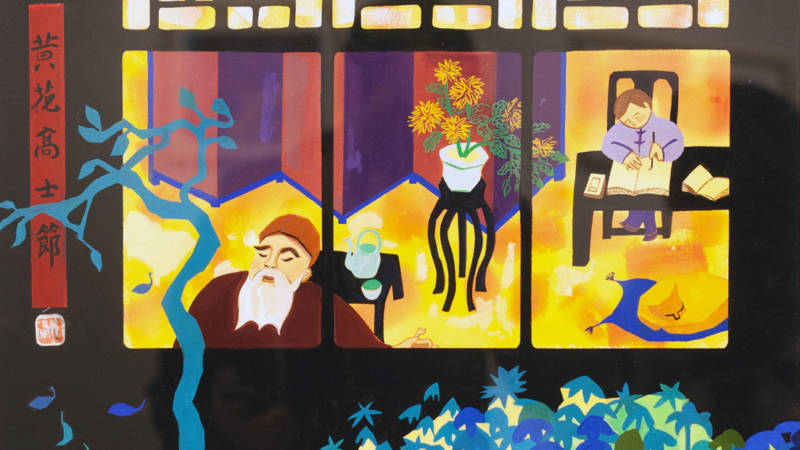
"caption": "Belle Yang never knew her great-grandfather, or the world he inhabited, but her father did. Yang's stories and paintings based on her parents' experiences bring a lost China to life in the US.",
"description": "Belle Yang never knew her great-grandfather, or the world he inhabited, but her father did. Yang's stories and paintings based on her parents' experiences bring a lost China to life in the US.",
"title": "RS21473_crysanthemums-qut",
"credit": "Photo: Courtesy of Belle Yang",
"status": "inherit",
"isLoading": false,
"fetchFailed": false
},
"arts_12199181": {
"type": "attachments",
"id": "arts_12199181",
"meta": {
"index": "attachments_1716263798",
"site": "arts",
"id": "12199181",
"found": true
},
"parent": 12199180,
"imgSizes": {
"twentyfourteen-full-width": {
"file": "https://ww2.kqed.org/app/uploads/sites/2/2016/10/pg-2-david-hockney-in-his-studio-feb-2015_enl-e1f26eddfcd61fc31af011d65e5a2b27b9eb1037-1038x576.jpg",
"width": 1038,
"mimeType": "image/jpeg",
"height": 576
},
"thumbnail": {
"file": "https://ww2.kqed.org/app/uploads/sites/2/2016/10/pg-2-david-hockney-in-his-studio-feb-2015_enl-e1f26eddfcd61fc31af011d65e5a2b27b9eb1037-400x252.jpg",
"width": 400,
"mimeType": "image/jpeg",
"height": 252
},
"fd-sm": {
"file": "https://ww2.kqed.org/app/uploads/sites/2/2016/10/pg-2-david-hockney-in-his-studio-feb-2015_enl-e1f26eddfcd61fc31af011d65e5a2b27b9eb1037-960x606.jpg",
"width": 960,
"mimeType": "image/jpeg",
"height": 606
},
"post-thumbnail": {
"file": "https://ww2.kqed.org/app/uploads/sites/2/2016/10/pg-2-david-hockney-in-his-studio-feb-2015_enl-e1f26eddfcd61fc31af011d65e5a2b27b9eb1037-672x372.jpg",
"width": 672,
"mimeType": "image/jpeg",
"height": 372
},
"kqedFullSize": {
"file": "https://ww2.kqed.org/app/uploads/sites/2/2016/10/pg-2-david-hockney-in-his-studio-feb-2015_enl-e1f26eddfcd61fc31af011d65e5a2b27b9eb1037.jpg",
"width": 3000,
"height": 1893
},
"large": {
"file": "https://ww2.kqed.org/app/uploads/sites/2/2016/10/pg-2-david-hockney-in-his-studio-feb-2015_enl-e1f26eddfcd61fc31af011d65e5a2b27b9eb1037-1180x745.jpg",
"width": 1180,
"mimeType": "image/jpeg",
"height": 745
},
"guest-author-50": {
"file": "https://ww2.kqed.org/app/uploads/sites/2/2016/10/pg-2-david-hockney-in-his-studio-feb-2015_enl-e1f26eddfcd61fc31af011d65e5a2b27b9eb1037-50x50.jpg",
"width": 50,
"mimeType": "image/jpeg",
"height": 50
},
"guest-author-96": {
"file": "https://ww2.kqed.org/app/uploads/sites/2/2016/10/pg-2-david-hockney-in-his-studio-feb-2015_enl-e1f26eddfcd61fc31af011d65e5a2b27b9eb1037-96x96.jpg",
"width": 96,
"mimeType": "image/jpeg",
"height": 96
},
"medium": {
"file": "https://ww2.kqed.org/app/uploads/sites/2/2016/10/pg-2-david-hockney-in-his-studio-feb-2015_enl-e1f26eddfcd61fc31af011d65e5a2b27b9eb1037-800x505.jpg",
"width": 800,
"mimeType": "image/jpeg",
"height": 505
},
"guest-author-64": {
"file": "https://ww2.kqed.org/app/uploads/sites/2/2016/10/pg-2-david-hockney-in-his-studio-feb-2015_enl-e1f26eddfcd61fc31af011d65e5a2b27b9eb1037-64x64.jpg",
"width": 64,
"mimeType": "image/jpeg",
"height": 64
},
"guest-author-32": {
"file": "https://ww2.kqed.org/app/uploads/sites/2/2016/10/pg-2-david-hockney-in-his-studio-feb-2015_enl-e1f26eddfcd61fc31af011d65e5a2b27b9eb1037-32x32.jpg",
"width": 32,
"mimeType": "image/jpeg",
"height": 32
},
"fd-lrg": {
"file": "https://ww2.kqed.org/app/uploads/sites/2/2016/10/pg-2-david-hockney-in-his-studio-feb-2015_enl-e1f26eddfcd61fc31af011d65e5a2b27b9eb1037-1920x1212.jpg",
"width": 1920,
"mimeType": "image/jpeg",
"height": 1212
},
"fd-med": {
"file": "https://ww2.kqed.org/app/uploads/sites/2/2016/10/pg-2-david-hockney-in-his-studio-feb-2015_enl-e1f26eddfcd61fc31af011d65e5a2b27b9eb1037-1180x745.jpg",
"width": 1180,
"mimeType": "image/jpeg",
"height": 745
},
"detail": {
"file": "https://ww2.kqed.org/app/uploads/sites/2/2016/10/pg-2-david-hockney-in-his-studio-feb-2015_enl-e1f26eddfcd61fc31af011d65e5a2b27b9eb1037-150x150.jpg",
"width": 150,
"mimeType": "image/jpeg",
"height": 150
},
"medium_large": {
"file": "https://ww2.kqed.org/app/uploads/sites/2/2016/10/pg-2-david-hockney-in-his-studio-feb-2015_enl-e1f26eddfcd61fc31af011d65e5a2b27b9eb1037-768x485.jpg",
"width": 768,
"mimeType": "image/jpeg",
"height": 485
},
"guest-author-128": {
"file": "https://ww2.kqed.org/app/uploads/sites/2/2016/10/pg-2-david-hockney-in-his-studio-feb-2015_enl-e1f26eddfcd61fc31af011d65e5a2b27b9eb1037-128x128.jpg",
"width": 128,
"mimeType": "image/jpeg",
"height": 128
}
},
"publishDate": 1476381860,
"modified": 1476381860,
"caption": null,
"description": "In a recent series of photographic drawings, David Hockney, shown above in his studio, plays with the relationship between painting and photography.",
"title": "In a recent series of photographic drawings, David Hockney, shown above in his studio, plays with the relationship between painting and photography.",
"credit": null,
"status": "inherit",
"isLoading": false,
"fetchFailed": false
},
"arts_12167803": {
"type": "attachments",
"id": "arts_12167803",
"meta": {
"index": "attachments_1716263798",
"site": "arts",
"id": "12167803",
"found": true
},
"parent": 12164799,
"imgSizes": {
"twentyfourteen-full-width": {
"file": "https://ww2.kqed.org/app/uploads/sites/2/2016/10/COVER-1038x576.jpg",
"width": 1038,
"mimeType": "image/jpeg",
"height": 576
},
"thumbnail": {
"file": "https://ww2.kqed.org/app/uploads/sites/2/2016/10/COVER-400x225.jpg",
"width": 400,
"mimeType": "image/jpeg",
"height": 225
},
"fd-sm": {
"file": "https://ww2.kqed.org/app/uploads/sites/2/2016/10/COVER-960x540.jpg",
"width": 960,
"mimeType": "image/jpeg",
"height": 540
},
"post-thumbnail": {
"file": "https://ww2.kqed.org/app/uploads/sites/2/2016/10/COVER-672x372.jpg",
"width": 672,
"mimeType": "image/jpeg",
"height": 372
},
"kqedFullSize": {
"file": "https://ww2.kqed.org/app/uploads/sites/2/2016/10/COVER.jpg",
"width": 1920,
"height": 1080
},
"large": {
"file": "https://ww2.kqed.org/app/uploads/sites/2/2016/10/COVER-1180x664.jpg",
"width": 1180,
"mimeType": "image/jpeg",
"height": 664
},
"guest-author-50": {
"file": "https://ww2.kqed.org/app/uploads/sites/2/2016/10/COVER-50x50.jpg",
"width": 50,
"mimeType": "image/jpeg",
"height": 50
},
"guest-author-96": {
"file": "https://ww2.kqed.org/app/uploads/sites/2/2016/10/COVER-96x96.jpg",
"width": 96,
"mimeType": "image/jpeg",
"height": 96
},
"medium": {
"file": "https://ww2.kqed.org/app/uploads/sites/2/2016/10/COVER-800x450.jpg",
"width": 800,
"mimeType": "image/jpeg",
"height": 450
},
"guest-author-64": {
"file": "https://ww2.kqed.org/app/uploads/sites/2/2016/10/COVER-64x64.jpg",
"width": 64,
"mimeType": "image/jpeg",
"height": 64
},
"guest-author-32": {
"file": "https://ww2.kqed.org/app/uploads/sites/2/2016/10/COVER-32x32.jpg",
"width": 32,
"mimeType": "image/jpeg",
"height": 32
},
"fd-lrg": {
"file": "https://ww2.kqed.org/app/uploads/sites/2/2016/10/COVER-1920x1080.jpg",
"width": 1920,
"mimeType": "image/jpeg",
"height": 1080
},
"fd-med": {
"file": "https://ww2.kqed.org/app/uploads/sites/2/2016/10/COVER-1180x664.jpg",
"width": 1180,
"mimeType": "image/jpeg",
"height": 664
},
"detail": {
"file": "https://ww2.kqed.org/app/uploads/sites/2/2016/10/COVER-150x150.jpg",
"width": 150,
"mimeType": "image/jpeg",
"height": 150
},
"medium_large": {
"file": "https://ww2.kqed.org/app/uploads/sites/2/2016/10/COVER-768x432.jpg",
"width": 768,
"mimeType": "image/jpeg",
"height": 432
},
"guest-author-128": {
"file": "https://ww2.kqed.org/app/uploads/sites/2/2016/10/COVER-128x128.jpg",
"width": 128,
"mimeType": "image/jpeg",
"height": 128
}
},
"publishDate": 1475775730,
"modified": 1475777533,
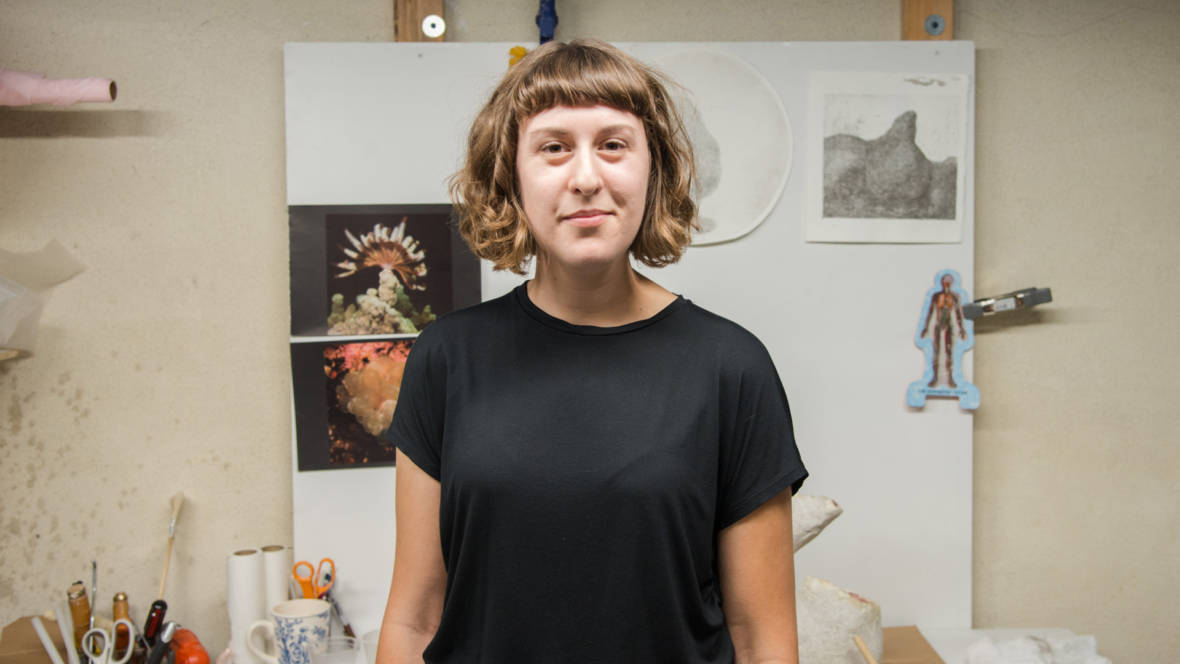
"caption": "Alyssa Lempesis in her West Oakland studio inside Aggregate Space Gallery.",
"description": "Alyssa Lempesis in her West Oakland studio inside Aggregate Space Gallery.",
"title": "COVER",
"credit": "Photo: Graham Holoch / KQED",
"status": "inherit",
"isLoading": false,
"fetchFailed": false
}
},
"audioPlayerReducer": {
"postId": "stream_live",
"isPaused": true,
"isPlaying": false,
"pfsActive": false,
"pledgeModalIsOpen": true,
"playerDrawerIsOpen": false,
"liveAudioPlayStartedAt": 0,
"liveAudioPlayContext": ""
},
"authorsReducer": {
"byline_arts_12252038": {
"type": "authors",
"id": "byline_arts_12252038",
"meta": {
"override": true
},
"slug": "byline_arts_12252038",
"name": "Elie Khadra",
"isLoading": false
},
"byline_arts_12236591": {
"type": "authors",
"id": "byline_arts_12236591",
"meta": {
"override": true
},
"slug": "byline_arts_12236591",
"name": "Vicki Barker",
"isLoading": false
},
"byline_arts_12227053": {
"type": "authors",
"id": "byline_arts_12227053",
"meta": {
"override": true
},
"slug": "byline_arts_12227053",
"name": "Mary Hudetz, Associated Press",
"isLoading": false
},
"byline_arts_12199180": {
"type": "authors",
"id": "byline_arts_12199180",
"meta": {
"override": true
},
"slug": "byline_arts_12199180",
"name": "Susan Stamberg",
"isLoading": false
},
"cmusiker": {
"type": "authors",
"id": "32",
"meta": {
"index": "authors_1716337520",
"id": "32",
"found": true
},
"name": "Cy Musiker",
"firstName": "Cy",
"lastName": "Musiker",
"slug": "cmusiker",
"email": "cmusiker@kqed.org",
"display_author_email": false,
"staff_mastheads": [],
"title": "KQED Contributor",
"bio": "Cy Musiker is a former co-host of The Do List and a former reporter covering the arts for KQED News and The California Report. He loves live performance, especially great theater, jazz, roots music, anything by Mahler. Cy has an MJ from UC Berkeley's School of Journalism, and got his BA from Hampshire College. His work has been recognized by the Society for Professional Journalists with their Sigma Delta Chi Award for Public Service in Journalism. When he can, Cy likes to swim in Tomales Bay, run with his dog in the East Bay Hills, and hike the Sierra.",
"avatar": "https://secure.gravatar.com/avatar/05eaba5c5696ce8f062e4ea2df428a43?s=600&d=blank&r=g",
"twitter": null,
"facebook": null,
"instagram": null,
"linkedin": null,
"sites": [
{
"site": "arts",
"roles": [
"Contributor",
"subscriber"
]
},
{
"site": "news",
"roles": [
"author"
]
},
{
"site": "bayareabites",
"roles": [
"contributor"
]
}
],
"headData": {
"title": "Cy Musiker | KQED",
"description": "KQED Contributor",
"ogImgSrc": "https://secure.gravatar.com/avatar/05eaba5c5696ce8f062e4ea2df428a43?s=600&d=blank&r=g",
"twImgSrc": "https://secure.gravatar.com/avatar/05eaba5c5696ce8f062e4ea2df428a43?s=600&d=blank&r=g"
},
"isLoading": false,
"link": "/author/cmusiker"
},
"shotchkiss": {
"type": "authors",
"id": "61",
"meta": {
"index": "authors_1716337520",
"id": "61",
"found": true
},
"name": "Sarah Hotchkiss",
"firstName": "Sarah",
"lastName": "Hotchkiss",
"slug": "shotchkiss",
"email": "shotchkiss@kqed.org",
"display_author_email": true,
"staff_mastheads": [
"arts"
],
"title": "Senior Editor",
"bio": "Sarah Hotchkiss is a San Francisco \u003ca href=\"http://www.sarahhotchkiss.com\">artist\u003c/a> and arts writer. In 2019, she received the Dorothea & Leo Rabkin Foundation grant for visual art journalism and in 2020 she received a Society of Professional Journalists, Northern California award for excellence in arts and culture reporting.",
"avatar": "https://secure.gravatar.com/avatar/bc662df144b3d27fd8b1b6f1c2a420d34e91e53154d411bb7ad353cc8b6cea8d?s=600&d=blank&r=g",
"twitter": null,
"bluesky": null,
"facebook": null,
"instagram": null,
"linkedin": null,
"sites": [
{
"site": "",
"roles": [
"editor"
]
},
{
"site": "arts",
"roles": [
"Contributor",
"administrator"
]
},
{
"site": "artschool",
"roles": [
"administrator"
]
},
{
"site": "news",
"roles": [
"editor"
]
},
{
"site": "pop",
"roles": [
"administrator"
]
},
{
"site": "bayareabites",
"roles": [
"editor"
]
},
{
"site": "spark",
"roles": [
"editor"
]
},
{
"site": "checkplease",
"roles": [
"editor"
]
}
],
"headData": {
"title": "Sarah Hotchkiss | KQED",
"description": "Senior Editor",
"ogImgSrc": "https://secure.gravatar.com/avatar/bc662df144b3d27fd8b1b6f1c2a420d34e91e53154d411bb7ad353cc8b6cea8d?s=600&d=blank&r=g",
"twImgSrc": "https://secure.gravatar.com/avatar/bc662df144b3d27fd8b1b6f1c2a420d34e91e53154d411bb7ad353cc8b6cea8d?s=600&d=blank&r=g"
},
"isLoading": false,
"link": "/author/shotchkiss"
},
"clakey": {
"type": "authors",
"id": "191",
"meta": {
"index": "authors_1716337520",
"id": "191",
"found": true
},
"name": "Cherri Lakey",
"firstName": "Cherri",
"lastName": "Lakey",
"slug": "clakey",
"email": "cherri@galleryad.com",
"display_author_email": false,
"staff_mastheads": [],
"title": "KQED Contributor",
"bio": "Co-owner/curator of urban contemporary art and culture gallery \u003ca href=\"http://www.galleryAD.com\">ANNO DOMINI\u003c/a> // the second coming of Art & Design and producer of a bunch of other cool projects with partner \u003ca href=\"http://ww2.kqed.org/arts/author/beder/\" target=\"_blank\">Brian Eder.\u003c/a> \u003ca href=\"https://twitter.com/astrogirl\">Follow @astrogirl\u003c/a>\r\n// ",
"avatar": "https://secure.gravatar.com/avatar/29642fbd8e9eef623a3f07213c5b739fbbfe7e1efe98571b1093fabcaade6f08?s=600&d=blank&r=g",
"twitter": null,
"bluesky": null,
"facebook": null,
"instagram": null,
"linkedin": null,
"sites": [
{
"site": "arts",
"roles": [
"subscriber"
]
}
],
"headData": {
"title": "Cherri Lakey | KQED",
"description": "KQED Contributor",
"ogImgSrc": "https://secure.gravatar.com/avatar/29642fbd8e9eef623a3f07213c5b739fbbfe7e1efe98571b1093fabcaade6f08?s=600&d=blank&r=g",
"twImgSrc": "https://secure.gravatar.com/avatar/29642fbd8e9eef623a3f07213c5b739fbbfe7e1efe98571b1093fabcaade6f08?s=600&d=blank&r=g"
},
"isLoading": false,
"link": "/author/clakey"
},
"rachael-myrow": {
"type": "authors",
"id": "251",
"meta": {
"index": "authors_1716337520",
"id": "251",
"found": true
},
"name": "Rachael Myrow",
"firstName": "Rachael",
"lastName": "Myrow",
"slug": "rachael-myrow",
"email": "rmyrow@kqed.org",
"display_author_email": true,
"staff_mastheads": [
"news"
],
"title": "Senior Editor of KQED's Silicon Valley News Desk",
"bio": "• I write and edit stories about how Silicon Valley power and policies shape everyday life in California. I’m also passionate about making Bay Area history and culture more accessible to a broad public. • I’ve been a journalist for most of my life, starting in high school with The Franklin Press in Los Angeles, where I grew up. While earning my first degree in English at UC Berkeley, I got my start in public radio at KALX-FM. After completing a second degree in journalism at Cal, I landed my first professional job at Marketplace, then moved on to KPCC (now LAist), and then KQED, where I hosted The California Report for more than seven years. • My reporting has appeared on NPR, The World, WBUR’s \u003ci>Here & Now\u003c/i>, and the BBC. I also guest host for KQED’s \u003ci>Forum\u003c/i>, as well as the Commonwealth Club in San Francisco. • I speak periodically on media, democracy and technology issues, and do voiceover work for documentaries and educational video projects. • Outside of the studio, you'll find me hiking Bay Area trails and whipping up Insta-ready meals in my kitchen. • I do not accept gifts, money, or favors from anyone connected to my reporting, I don't pay people for information, and I do not support or donate to political causes. • I strive to treat the people I report on with fairness, honesty, and respect. I also recognize there are often multiple sides to a story and work to verify information through multiple sources and documentation. If I get something wrong, I correct it.",
"avatar": "https://secure.gravatar.com/avatar/3ed8a3c5f26025e4a805ba634cda8cd764906b97438a6d9ce216b044e340da4e?s=600&d=blank&r=g",
"twitter": "rachaelmyrow",
"bluesky": null,
"facebook": null,
"instagram": null,
"linkedin": "https://www.linkedin.com/in/rachaelmyrow/",
"sites": [
{
"site": "arts",
"roles": [
"administrator"
]
},
{
"site": "news",
"roles": [
"edit_others_posts",
"editor"
]
},
{
"site": "futureofyou",
"roles": [
"editor"
]
},
{
"site": "bayareabites",
"roles": [
"editor"
]
},
{
"site": "stateofhealth",
"roles": [
"editor"
]
},
{
"site": "science",
"roles": [
"editor"
]
},
{
"site": "food",
"roles": [
"editor"
]
},
{
"site": "forum",
"roles": [
"editor"
]
},
{
"site": "liveblog",
"roles": [
"author"
]
}
],
"headData": {
"title": "Rachael Myrow | KQED",
"description": "Senior Editor of KQED's Silicon Valley News Desk",
"ogImgSrc": "https://secure.gravatar.com/avatar/3ed8a3c5f26025e4a805ba634cda8cd764906b97438a6d9ce216b044e340da4e?s=600&d=blank&r=g",
"twImgSrc": "https://secure.gravatar.com/avatar/3ed8a3c5f26025e4a805ba634cda8cd764906b97438a6d9ce216b044e340da4e?s=600&d=blank&r=g"
},
"isLoading": false,
"link": "/author/rachael-myrow"
},
"dburlison": {
"type": "authors",
"id": "3216",
"meta": {
"index": "authors_1716337520",
"id": "3216",
"found": true
},
"name": "Dani Burlison",
"firstName": "Dani",
"lastName": "Burlison",
"slug": "dburlison",
"email": "danisavestheworld@yahoo.com",
"display_author_email": false,
"staff_mastheads": [],
"title": null,
"bio": "\u003cb id=\"yui_3_16_0_1_1416414652499_5365\" class=\"yiv3033141065\">Dani Burlison\u003c/b> is an award-winning writer, teacher and North Bay resident with a special interest in California's fascinating subcultures. You can find her commentary on writing, feminism, social justice and life with two teen daughters on Twitter at @DaniBurlison.",
"avatar": "https://secure.gravatar.com/avatar/c0b371463a220978c947a5c4ce2da294?s=600&d=blank&r=g",
"twitter": null,
"facebook": null,
"instagram": null,
"linkedin": null,
"sites": [
{
"site": "arts",
"roles": [
"contributor"
]
}
],
"headData": {
"title": "Dani Burlison | KQED",
"description": null,
"ogImgSrc": "https://secure.gravatar.com/avatar/c0b371463a220978c947a5c4ce2da294?s=600&d=blank&r=g",
"twImgSrc": "https://secure.gravatar.com/avatar/c0b371463a220978c947a5c4ce2da294?s=600&d=blank&r=g"
},
"isLoading": false,
"link": "/author/dburlison"
},
"kwhalen": {
"type": "authors",
"id": "3248",
"meta": {
"index": "authors_1716337520",
"id": "3248",
"found": true
},
"name": "Kelly Whalen",
"firstName": "Kelly",
"lastName": "Whalen",
"slug": "kwhalen",
"email": "kwhalen@kqed.org",
"display_author_email": false,
"staff_mastheads": [],
"title": "Senior Video Producer",
"bio": "Kelly Whalen is a filmmaker and educator who directs and produces social justice documentaries and award-winning arts and culture web series. She is the creator of KQED Arts’ three-time Webby Award-winning YouTube series \u003cem>If Cities Could Dance\u003c/em>, featuring dancers across the country representing their cities’ signature moves, and the director of \u003cem>When the Waters Get Deep\u003c/em>, a documentary about Oakland-based artists SOL Development and their work toward healing their communities’ trauma from gun violence.",
"avatar": "https://secure.gravatar.com/avatar/1a2b57e8a13abdcfc3d4966d9c0e1512?s=600&d=blank&r=g",
"twitter": "kellyfilmmaker",
"facebook": null,
"instagram": null,
"linkedin": null,
"sites": [
{
"site": "arts",
"roles": [
"subscriber"
]
}
],
"headData": {
"title": "Kelly Whalen | KQED",
"description": "Senior Video Producer",
"ogImgSrc": "https://secure.gravatar.com/avatar/1a2b57e8a13abdcfc3d4966d9c0e1512?s=600&d=blank&r=g",
"twImgSrc": "https://secure.gravatar.com/avatar/1a2b57e8a13abdcfc3d4966d9c0e1512?s=600&d=blank&r=g"
},
"isLoading": false,
"link": "/author/kwhalen"
}
},
"pagesReducer": {
"arts_category_visualarts": {
"type": "terms",
"id": "arts_70",
"meta": {
"index": "terms_1716263798",
"site": "arts",
"id": "70",
"score": 14.4072075
},
"featImg": null,
"name": "Visual Arts",
"description": null,
"taxonomy": "category",
"headData": {
"twImgId": null,
"twTitle": null,
"ogTitle": null,
"ogImgId": null,
"twDescription": null,
"description": null,
"title": "Visual Arts Archives | KQED Arts",
"ogDescription": null
},
"ttid": 71,
"slug": "visualarts",
"isLoading": false,
"title": "Visual Arts",
"pageMeta": {
"site": "arts",
"WpPageTemplate": "page-topic-editorial",
"currentPage": 117
},
"blocks": [
{
"blockName": "kqed/post-list",
"attrs": {
"layout": "cardArticle2",
"query": "posts/arts?category=visualarts",
"seeMore": false,
"paginated": true,
"page": 117
}
},
{
"blockName": "kqed/ad"
}
]
}
},
"pfsSessionReducer": {},
"postsReducer": {
"stream_live": {
"type": "live",
"id": "stream_live",
"audioUrl": "https://streams.kqed.org/kqedradio",
"title": "Live Stream",
"excerpt": "Live Stream information currently unavailable.",
"link": "/radio",
"featImg": "",
"label": {
"name": "KQED Live",
"link": "/"
}
},
"stream_kqedNewscast": {
"type": "posts",
"id": "stream_kqedNewscast",
"audioUrl": "https://www.kqed.org/.stream/anon/radio/RDnews/newscast.mp3?_=1",
"title": "KQED Newscast",
"featImg": "",
"label": {
"name": "88.5 FM",
"link": "/"
}
},
"arts_12252038": {
"type": "posts",
"id": "arts_12252038",
"meta": {
"index": "posts_1716263798",
"site": "arts",
"id": "12252038",
"score": null,
"sort": [
1477432812000
]
},
"parent": 0,
"labelTerm": {
"site": "arts"
},
"blocks": [],
"publishDate": 1477432812,
"format": "video",
"title": "A Peek Inside the Glass Pumpkin Craze with San Jose Artist Kevin Chong",
"headTitle": "A Peek Inside the Glass Pumpkin Craze with San Jose Artist Kevin Chong | KQED",
"content": "\u003cp>Kevin Chong, owner of San Jose’s Silica Valley Glass Studio, has a special relationship to fire. “Most people run away from fire,” he says. “I embrace it — I play with it every day.”\u003c/p>\n\u003cp>In his 3,500-square-foot studio, Chong produces neon signs, commissioned blown glass work — including lamps, chandeliers and glass awards — and hundreds upon hundreds of pumpkins.\u003c/p>\n\u003cp>“Nothing’s off-limits for making a pumpkin,” Chong says. “That gives me so much freedom to explore color combinations, color techniques, glass-making techniques.”\u003c/p>\n\u003cp>At this year’s 21st annual \u003ca href=\"http://www.greatglasspumpkinpatch.com/\" target=\"_blank\" rel=\"noopener\">Great Glass Pumpkin Patch\u003c/a> in Palo Alto, Chong exhibited 800 glass pumpkins, ranging in price from $45 to $160. He also participated in four other local glass pumpkin festivals, from Carmel to Danville, showcasing his plump, sparkling wares for avid collectors up and down the peninsula.\u003c/p>\n\u003cp>Demand for the fragile and beautiful forms doesn’t seem to die down. “There’s people that collect hundreds of them,” Chong says.\u003c/p>\n\u003cp>[ad fullwidth]\u003c/p>\n\u003cp>Just two years ago, Chong’s career as a glass artist hung in the Bay Area real estate balance. After 24 years in his original location, his lease expired and he began a stressful months-long search for a new location to suit his specific needs.\u003c/p>\n\u003cp>“In this valley, to have my own hot shop, it’s very difficult,” he says. Chong’s furnace runs at 2100 degrees Fahrenheit and he pays $30,000 in utilities alone each year.\u003c/p>\n\u003cp>In his current studio at the edge of downtown San Jose, he describes the pleasure of shaping glass as a dance between the artist and the material. His love affair with glass began in high school, when he took a stained glass class. In his early 20s, he studied neon at trade school in Portland, Oregon, later attending San Jose State’s glassblowing program.\u003c/p>\n\u003cp>And he’s not done learning about his trade. Chong routinely travels to Corning, New York to study with visiting instructors from Murano, the traditional home of Italy’s fanciest glassware.\u003c/p>\n\u003cp>\u003c/p>\n\u003cp>“I wake up excited to start my day playing with glass,” Chong says. “It awakens all your senses.” \u003ci>– Sarah Hotchkiss\u003c/i>\u003c/p>\n\n",
"stats": {
"hasVideo": false,
"hasChartOrMap": false,
"hasAudio": false,
"hasPolis": false,
"wordCount": 388,
"hasGoogleForm": false,
"hasGallery": false,
"hasHearkenModule": false,
"iframeSrcs": [],
"paragraphCount": 12
},
"modified": 1705032680,
"excerpt": "At Silica Valley Glass, things heat up to 2100 degrees Fahrenheit in a dance between a master glass artist and his chosen medium.",
"headData": {
"twImgId": "",
"twTitle": "",
"ogTitle": "",
"ogImgId": "",
"twDescription": "",
"description": "At Silica Valley Glass, things heat up to 2100 degrees Fahrenheit in a dance between a master glass artist and his chosen medium.",
"title": "A Peek Inside the Glass Pumpkin Craze with San Jose Artist Kevin Chong | KQED",
"ogDescription": "",
"schema": {
"@context": "https://schema.org",
"@type": "Article",
"headline": "A Peek Inside the Glass Pumpkin Craze with San Jose Artist Kevin Chong",
"datePublished": "2016-10-25T15:00:12-07:00",
"dateModified": "2024-01-11T20:11:20-08:00",
"image": "https://cdn.kqed.org/wp-content/uploads/2020/02/KQED-OG-Image@1x.png"
}
},
"guestAuthors": [],
"slug": "a-peek-inside-the-glass-pumpkin-craze-with-san-jose-artist-kevin-chong",
"status": "publish",
"videoEmbed": "https://youtu.be/7G_z77rSbnE",
"nprByline": "Elie Khadra",
"sticky": false,
"path": "/arts/12252038/a-peek-inside-the-glass-pumpkin-craze-with-san-jose-artist-kevin-chong",
"audioTrackLength": null,
"parsedContent": [
{
"type": "contentString",
"content": "\u003cdiv class=\"post-body\">\u003cp>\u003cp>Kevin Chong, owner of San Jose’s Silica Valley Glass Studio, has a special relationship to fire. “Most people run away from fire,” he says. “I embrace it — I play with it every day.”\u003c/p>\n\u003cp>In his 3,500-square-foot studio, Chong produces neon signs, commissioned blown glass work — including lamps, chandeliers and glass awards — and hundreds upon hundreds of pumpkins.\u003c/p>\n\u003cp>“Nothing’s off-limits for making a pumpkin,” Chong says. “That gives me so much freedom to explore color combinations, color techniques, glass-making techniques.”\u003c/p>\n\u003cp>At this year’s 21st annual \u003ca href=\"http://www.greatglasspumpkinpatch.com/\" target=\"_blank\" rel=\"noopener\">Great Glass Pumpkin Patch\u003c/a> in Palo Alto, Chong exhibited 800 glass pumpkins, ranging in price from $45 to $160. He also participated in four other local glass pumpkin festivals, from Carmel to Danville, showcasing his plump, sparkling wares for avid collectors up and down the peninsula.\u003c/p>\n\u003cp>Demand for the fragile and beautiful forms doesn’t seem to die down. “There’s people that collect hundreds of them,” Chong says.\u003c/p>\n\u003cp>\u003c/p>\u003c/div>",
"attributes": {
"named": {},
"numeric": []
}
},
{
"type": "component",
"content": "",
"name": "ad",
"attributes": {
"named": {
"label": "fullwidth"
},
"numeric": [
"fullwidth"
]
}
},
{
"type": "contentString",
"content": "\u003cdiv class=\"post-body\">\u003cp>\u003c/p>\n\u003cp>Just two years ago, Chong’s career as a glass artist hung in the Bay Area real estate balance. After 24 years in his original location, his lease expired and he began a stressful months-long search for a new location to suit his specific needs.\u003c/p>\n\u003cp>“In this valley, to have my own hot shop, it’s very difficult,” he says. Chong’s furnace runs at 2100 degrees Fahrenheit and he pays $30,000 in utilities alone each year.\u003c/p>\n\u003cp>In his current studio at the edge of downtown San Jose, he describes the pleasure of shaping glass as a dance between the artist and the material. His love affair with glass began in high school, when he took a stained glass class. In his early 20s, he studied neon at trade school in Portland, Oregon, later attending San Jose State’s glassblowing program.\u003c/p>\n\u003cp>And he’s not done learning about his trade. Chong routinely travels to Corning, New York to study with visiting instructors from Murano, the traditional home of Italy’s fanciest glassware.\u003c/p>\n\u003cp>\u003c/p>\n\u003cp>“I wake up excited to start my day playing with glass,” Chong says. “It awakens all your senses.” \u003ci>– Sarah Hotchkiss\u003c/i>\u003c/p>\n\n\u003c/div>\u003c/p>",
"attributes": {
"named": {},
"numeric": []
}
}
],
"link": "/arts/12252038/a-peek-inside-the-glass-pumpkin-craze-with-san-jose-artist-kevin-chong",
"authors": [
"byline_arts_12252038"
],
"categories": [
"arts_70"
],
"tags": [
"arts_1118",
"arts_1206",
"arts_596",
"arts_3130",
"arts_1007"
],
"featImg": "arts_12252039",
"label": "arts"
},
"arts_12228687": {
"type": "posts",
"id": "arts_12228687",
"meta": {
"index": "posts_1716263798",
"site": "arts",
"id": "12228687",
"score": null,
"sort": [
1477422030000
]
},
"guestAuthors": [],
"slug": "cellistas-finding-san-jose-a-love-letter-to-the-south-bay",
"title": "Cellista's 'Finding San Jose' a Love Letter to the South Bay",
"publishDate": 1477422030,
"format": "standard",
"headTitle": "Cellista’s ‘Finding San Jose’ a Love Letter to the South Bay | KQED",
"labelTerm": {
"site": "arts"
},
"content": "\u003cp>Everyone knows the way to San Jose by now. But finding its pulse and unique voice is the new challenge of the day, one that Cellista has taken head-on in her debut solo album, \u003ca href=\"https://cellista.bandcamp.com/album/finding-san-jos\" target=\"_blank\" rel=\"noopener\">\u003cem>Finding San Jose\u003c/em>\u003c/a>.\u003c/p>\n\u003cp>Cellista (born Freya Seeburger in 1983, in Colorado) arrived onto the San Jose art scene during the autumn of 2010; she firmly planted her black Luis & Clarke carbon fibre cello into the soil of Silicon Valley and has nurtured its roots ever since. Ask her about being a musician in San Jose and she’ll tell you a love story full of hopes, accomplishments and heartbreak. Each track of the album is the response of a musician to finding an independent voice in a place bustling with talent and creativity, both often overshadowed by the tech and manufacturing industries.\u003c/p>\n\u003cfigure id=\"attachment_12229090\" class=\"wp-caption alignright\" style=\"max-width: 420px\">\u003ca href=\"http://ww2.kqed.org/arts/wp-content/uploads/sites/2/2016/10/Cellista_SubZERO14.jpg\">\u003cimg loading=\"lazy\" decoding=\"async\" class=\"wp-image-12229090\" src=\"http://ww2.kqed.org/arts/wp-content/uploads/sites/2/2016/10/Cellista_SubZERO14.jpg\" alt=\"Cellista art installation & performance at SubZERO Festival 2014\" width=\"420\" height=\"630\" srcset=\"https://cdn.kqed.org/wp-content/uploads/sites/2/2016/10/Cellista_SubZERO14.jpg 480w, https://cdn.kqed.org/wp-content/uploads/sites/2/2016/10/Cellista_SubZERO14-160x240.jpg 160w, https://cdn.kqed.org/wp-content/uploads/sites/2/2016/10/Cellista_SubZERO14-240x360.jpg 240w, https://cdn.kqed.org/wp-content/uploads/sites/2/2016/10/Cellista_SubZERO14-375x563.jpg 375w\" sizes=\"(max-width: 420px) 100vw, 420px\">\u003c/a>\u003cfigcaption class=\"wp-caption-text\">Cellista art installation & performance at SubZERO Festival 2014 \u003ccite>(Cherri Lakey)\u003c/cite>\u003c/figcaption>\u003c/figure>\n\u003cp>Her first impression of San Jose — and the reason she and husband Nico decided to move here — was the abundance of the visual arts. “It’s everywhere,” she says. “I’ve never seen anything like it. The community is really strong, really collaborative and really encouraging and in a way that’s completely different from other scenes. It’s special and unique in a way I’ve never seen, even compared to Denver or Paris and other cities, in all my traveling. It just made me want to have a new relationship with art and art making, and my cello is my tool.”\u003c/p>\n\u003cp>One of Cellista’s earliest tool-wielding performances was an outdoor art installation she and visual artist \u003ca href=\"http://tulioflores.com/\" target=\"_blank\" rel=\"noopener\">Tulio Flores\u003c/a> envisioned for the 2014 \u003ca href=\"http://www.subzerofestival.com/\" target=\"_blank\" rel=\"noopener\">SubZERO Festival\u003c/a>. Together they created a dramatic bird cage, large enough to stage her cello and a looping station, and invited audience members to write something about themselves and San Jose on tags that would be tied to the cage. Throughout the event, Cellista chose random tags, using them to improvise music inspired by the feeling the words gave her, and would even vocalize their words through her looping station to add texture to her melodies. “They left very confessional thoughts on those tags,” she says, “as if it were a very sacred space.”\u003c/p>\n\u003cfigure id=\"attachment_12228689\" class=\"wp-caption alignright\" style=\"max-width: 520px\">\u003ca href=\"http://ww2.kqed.org/arts/wp-content/uploads/sites/2/2016/10/Cellista_cover.jpg\">\u003cimg loading=\"lazy\" decoding=\"async\" class=\"wp-image-12228689\" src=\"http://ww2.kqed.org/arts/wp-content/uploads/sites/2/2016/10/Cellista_cover.jpg\" width=\"520\" height=\"508\" srcset=\"https://cdn.kqed.org/wp-content/uploads/sites/2/2016/10/Cellista_cover.jpg 640w, https://cdn.kqed.org/wp-content/uploads/sites/2/2016/10/Cellista_cover-160x156.jpg 160w, https://cdn.kqed.org/wp-content/uploads/sites/2/2016/10/Cellista_cover-240x234.jpg 240w, https://cdn.kqed.org/wp-content/uploads/sites/2/2016/10/Cellista_cover-375x366.jpg 375w, https://cdn.kqed.org/wp-content/uploads/sites/2/2016/10/Cellista_cover-520x508.jpg 520w, https://cdn.kqed.org/wp-content/uploads/sites/2/2016/10/Cellista_cover-32x32.jpg 32w, https://cdn.kqed.org/wp-content/uploads/sites/2/2016/10/Cellista_cover-50x50.jpg 50w, https://cdn.kqed.org/wp-content/uploads/sites/2/2016/10/Cellista_cover-64x64.jpg 64w\" sizes=\"(max-width: 520px) 100vw, 520px\">\u003c/a>\u003cfigcaption class=\"wp-caption-text\">Cellista, ‘Finding San Jose’ album cover.\u003c/figcaption>\u003c/figure>\n\u003cp>Cellista has continued her tag-gathering at different events over the years, and has now amassed over 1,000 tags. A few of those initial tags appear on the album on “\u003ca href=\"https://cellista.bandcamp.com/track/a-conversation-at-trials\" target=\"_blank\" rel=\"noopener\">A Conversation at Trials\u003c/a>.” “I took eight of those tags at random and I gave them to poet \u003ca href=\"http://www.thedavidperez.com/\" target=\"_blank\" rel=\"noopener\">David Perez\u003c/a>,” she explains. “I had him create a poem from those eight tags, and I also gave him eight prompts of my own, and he created this collaged ‘found’ poem which couldn’t exist without San Jose.”\u003c/p>\n\u003cp>[ad fullwidth]\u003c/p>\n\u003cp>It is this broad creative process that makes the album an overall brilliant gem. True to her “pastiche” curatorial style, this inclusion and collaboration with other creatives is what makes \u003cem>Finding San Jose\u003c/em> a captivating and mesmerizing listening experience. The roster of eclectic performers featured on the album include \u003ca href=\"http://www.rykardaparasol.com/\" target=\"_blank\" rel=\"noopener\">Rykarda Parasol\u003c/a>, \u003ca href=\"http://emceeinfinite.tumblr.com/\" target=\"_blank\" rel=\"noopener\">Emcee Infinite\u003c/a>, hip-hop artist \u003ca href=\"http://www.lifeafterhiphop.com/\" target=\"_blank\" rel=\"noopener\">Dem One,\u003c/a> and the \u003ca href=\"http://www.cellista.net/services-1/\" target=\"_blank\" rel=\"noopener\">Juxtapositions Chamber Ensemble\u003c/a>. The distinct differences of genre or styles from song to song might be jarring, were it not for the flow of Cellista’s cello compositions, giving the listener a sensation of being right alongside her. \u003c/p>\n\u003cp>[youtube https://www.youtube.com/watch?v=G4eRQTKV4UY&w=640&h=360] \u003cem>Live performance on the occasion of Cellista’s interview for KQED Arts; filmed and edited by \u003ca href=\"https://ww2.kqed.org/arts/author/beder/\" target=\"_blank\" rel=\"noopener\">Brian Eder\u003c/a>.\u003c/em>\u003c/p>\n\u003cp>As Cellista suggests in the liner notes, on how best to listen to \u003cem>Finding San Jose\u003c/em>: “Be alone. In a candlelit room; root yourself firmly in the present with eyes wide open. Listen all the way through.”\u003c/p>\n\u003cp>Indeed, letting one’s imagination conjure the feeling of leaves crunching beneath the feet and the expressive faces of city dwellers passing by in “\u003ca href=\"https://cellista.bandcamp.com/track/st-james-park\" target=\"_blank\" rel=\"noopener\">St. James Park\u003c/a>” changes one’s perspective of San Jose. Whether you live here or not, it will be a new one that connects you to an alluring persona you can fall in love with — which is what Cellista intended all along.\u003c/p>\n\u003cp>\u003cimg loading=\"lazy\" decoding=\"async\" src=\"http://ww2.kqed.org/arts/wp-content/uploads/sites/2/2016/09/Q.Logo_.Break_-800x78.jpg\" alt=\"Q.Logo.Break\" width=\"800\" height=\"78\" class=\"aligncenter size-medium wp-image-12127869\" srcset=\"https://cdn.kqed.org/wp-content/uploads/sites/2/2016/09/Q.Logo_.Break_.jpg 800w, https://cdn.kqed.org/wp-content/uploads/sites/2/2016/09/Q.Logo_.Break_-400x39.jpg 400w, https://cdn.kqed.org/wp-content/uploads/sites/2/2016/09/Q.Logo_.Break_-768x75.jpg 768w\" sizes=\"(max-width: 800px) 100vw, 800px\">\u003c/p>\n\u003cp>\u003c/p>\n\u003cp>\u003cem>Cellista premieres ‘Finding San Jose’ in a theatrical album release incorporating film, dance, poetry and theater on Saturday, Oct. 29, at Little Boxes Theater in San Francisco. More details \u003ca href=\"https://www.artful.ly/findingsanjose\" target=\"_blank\" rel=\"noopener\">here\u003c/a>.\u003c/em>\u003c/p>\n\n",
"blocks": [],
"excerpt": "Everyone knows the way to San Jose by now. Finding its pulse and unique voice is the new challenge, one that Cellista takes head-on in her debut solo album.",
"status": "publish",
"parent": 0,
"modified": 1726770892,
"stats": {
"hasAudio": false,
"hasVideo": true,
"hasChartOrMap": false,
"iframeSrcs": [],
"hasGoogleForm": false,
"hasGallery": false,
"hasHearkenModule": false,
"hasPolis": false,
"paragraphCount": 13,
"wordCount": 770
},
"headData": {
"title": "Cellista's 'Finding San Jose' a Love Letter to the South Bay | KQED",
"description": "Everyone knows the way to San Jose by now. Finding its pulse and unique voice is the new challenge, one that Cellista takes head-on in her debut solo album.",
"ogTitle": "",
"ogDescription": "",
"ogImgId": "",
"twTitle": "",
"twDescription": "",
"twImgId": "",
"schema": {
"@context": "https://schema.org",
"@type": "Article",
"headline": "Cellista's 'Finding San Jose' a Love Letter to the South Bay",
"datePublished": "2016-10-25T12:00:30-07:00",
"dateModified": "2024-09-19T11:34:52-07:00",
"image": "https://cdn.kqed.org/wp-content/uploads/2020/02/KQED-OG-Image@1x.png"
}
},
"sticky": false,
"path": "/arts/12228687/cellistas-finding-san-jose-a-love-letter-to-the-south-bay",
"audioTrackLength": null,
"parsedContent": [
{
"type": "contentString",
"content": "\u003cdiv class=\"post-body\">\u003cp>\u003cp>Everyone knows the way to San Jose by now. But finding its pulse and unique voice is the new challenge of the day, one that Cellista has taken head-on in her debut solo album, \u003ca href=\"https://cellista.bandcamp.com/album/finding-san-jos\" target=\"_blank\" rel=\"noopener\">\u003cem>Finding San Jose\u003c/em>\u003c/a>.\u003c/p>\n\u003cp>Cellista (born Freya Seeburger in 1983, in Colorado) arrived onto the San Jose art scene during the autumn of 2010; she firmly planted her black Luis & Clarke carbon fibre cello into the soil of Silicon Valley and has nurtured its roots ever since. Ask her about being a musician in San Jose and she’ll tell you a love story full of hopes, accomplishments and heartbreak. Each track of the album is the response of a musician to finding an independent voice in a place bustling with talent and creativity, both often overshadowed by the tech and manufacturing industries.\u003c/p>\n\u003cfigure id=\"attachment_12229090\" class=\"wp-caption alignright\" style=\"max-width: 420px\">\u003ca href=\"http://ww2.kqed.org/arts/wp-content/uploads/sites/2/2016/10/Cellista_SubZERO14.jpg\">\u003cimg loading=\"lazy\" decoding=\"async\" class=\"wp-image-12229090\" src=\"http://ww2.kqed.org/arts/wp-content/uploads/sites/2/2016/10/Cellista_SubZERO14.jpg\" alt=\"Cellista art installation & performance at SubZERO Festival 2014\" width=\"420\" height=\"630\" srcset=\"https://cdn.kqed.org/wp-content/uploads/sites/2/2016/10/Cellista_SubZERO14.jpg 480w, https://cdn.kqed.org/wp-content/uploads/sites/2/2016/10/Cellista_SubZERO14-160x240.jpg 160w, https://cdn.kqed.org/wp-content/uploads/sites/2/2016/10/Cellista_SubZERO14-240x360.jpg 240w, https://cdn.kqed.org/wp-content/uploads/sites/2/2016/10/Cellista_SubZERO14-375x563.jpg 375w\" sizes=\"(max-width: 420px) 100vw, 420px\">\u003c/a>\u003cfigcaption class=\"wp-caption-text\">Cellista art installation & performance at SubZERO Festival 2014 \u003ccite>(Cherri Lakey)\u003c/cite>\u003c/figcaption>\u003c/figure>\n\u003cp>Her first impression of San Jose — and the reason she and husband Nico decided to move here — was the abundance of the visual arts. “It’s everywhere,” she says. “I’ve never seen anything like it. The community is really strong, really collaborative and really encouraging and in a way that’s completely different from other scenes. It’s special and unique in a way I’ve never seen, even compared to Denver or Paris and other cities, in all my traveling. It just made me want to have a new relationship with art and art making, and my cello is my tool.”\u003c/p>\n\u003cp>One of Cellista’s earliest tool-wielding performances was an outdoor art installation she and visual artist \u003ca href=\"http://tulioflores.com/\" target=\"_blank\" rel=\"noopener\">Tulio Flores\u003c/a> envisioned for the 2014 \u003ca href=\"http://www.subzerofestival.com/\" target=\"_blank\" rel=\"noopener\">SubZERO Festival\u003c/a>. Together they created a dramatic bird cage, large enough to stage her cello and a looping station, and invited audience members to write something about themselves and San Jose on tags that would be tied to the cage. Throughout the event, Cellista chose random tags, using them to improvise music inspired by the feeling the words gave her, and would even vocalize their words through her looping station to add texture to her melodies. “They left very confessional thoughts on those tags,” she says, “as if it were a very sacred space.”\u003c/p>\n\u003cfigure id=\"attachment_12228689\" class=\"wp-caption alignright\" style=\"max-width: 520px\">\u003ca href=\"http://ww2.kqed.org/arts/wp-content/uploads/sites/2/2016/10/Cellista_cover.jpg\">\u003cimg loading=\"lazy\" decoding=\"async\" class=\"wp-image-12228689\" src=\"http://ww2.kqed.org/arts/wp-content/uploads/sites/2/2016/10/Cellista_cover.jpg\" width=\"520\" height=\"508\" srcset=\"https://cdn.kqed.org/wp-content/uploads/sites/2/2016/10/Cellista_cover.jpg 640w, https://cdn.kqed.org/wp-content/uploads/sites/2/2016/10/Cellista_cover-160x156.jpg 160w, https://cdn.kqed.org/wp-content/uploads/sites/2/2016/10/Cellista_cover-240x234.jpg 240w, https://cdn.kqed.org/wp-content/uploads/sites/2/2016/10/Cellista_cover-375x366.jpg 375w, https://cdn.kqed.org/wp-content/uploads/sites/2/2016/10/Cellista_cover-520x508.jpg 520w, https://cdn.kqed.org/wp-content/uploads/sites/2/2016/10/Cellista_cover-32x32.jpg 32w, https://cdn.kqed.org/wp-content/uploads/sites/2/2016/10/Cellista_cover-50x50.jpg 50w, https://cdn.kqed.org/wp-content/uploads/sites/2/2016/10/Cellista_cover-64x64.jpg 64w\" sizes=\"(max-width: 520px) 100vw, 520px\">\u003c/a>\u003cfigcaption class=\"wp-caption-text\">Cellista, ‘Finding San Jose’ album cover.\u003c/figcaption>\u003c/figure>\n\u003cp>Cellista has continued her tag-gathering at different events over the years, and has now amassed over 1,000 tags. A few of those initial tags appear on the album on “\u003ca href=\"https://cellista.bandcamp.com/track/a-conversation-at-trials\" target=\"_blank\" rel=\"noopener\">A Conversation at Trials\u003c/a>.” “I took eight of those tags at random and I gave them to poet \u003ca href=\"http://www.thedavidperez.com/\" target=\"_blank\" rel=\"noopener\">David Perez\u003c/a>,” she explains. “I had him create a poem from those eight tags, and I also gave him eight prompts of my own, and he created this collaged ‘found’ poem which couldn’t exist without San Jose.”\u003c/p>\n\u003cp>\u003c/p>\u003c/div>",
"attributes": {
"named": {},
"numeric": []
}
},
{
"type": "component",
"content": "",
"name": "ad",
"attributes": {
"named": {
"label": "fullwidth"
},
"numeric": [
"fullwidth"
]
}
},
{
"type": "contentString",
"content": "\u003cdiv class=\"post-body\">\u003cp>\u003c/p>\n\u003cp>It is this broad creative process that makes the album an overall brilliant gem. True to her “pastiche” curatorial style, this inclusion and collaboration with other creatives is what makes \u003cem>Finding San Jose\u003c/em> a captivating and mesmerizing listening experience. The roster of eclectic performers featured on the album include \u003ca href=\"http://www.rykardaparasol.com/\" target=\"_blank\" rel=\"noopener\">Rykarda Parasol\u003c/a>, \u003ca href=\"http://emceeinfinite.tumblr.com/\" target=\"_blank\" rel=\"noopener\">Emcee Infinite\u003c/a>, hip-hop artist \u003ca href=\"http://www.lifeafterhiphop.com/\" target=\"_blank\" rel=\"noopener\">Dem One,\u003c/a> and the \u003ca href=\"http://www.cellista.net/services-1/\" target=\"_blank\" rel=\"noopener\">Juxtapositions Chamber Ensemble\u003c/a>. The distinct differences of genre or styles from song to song might be jarring, were it not for the flow of Cellista’s cello compositions, giving the listener a sensation of being right alongside her. \u003c/p>\n\u003cp>\u003c/p>\u003cp>\u003cspan class='utils-parseShortcode-shortcodes-__youtubeShortcode__embedYoutube'>\n \u003cspan class='utils-parseShortcode-shortcodes-__youtubeShortcode__embedYoutubeInside'>\n \u003ciframe\n loading='lazy'\n class='utils-parseShortcode-shortcodes-__youtubeShortcode__youtubePlayer'\n type='text/html'\n src='//www.youtube.com/embed/G4eRQTKV4UY'\n title='//www.youtube.com/embed/G4eRQTKV4UY'\n allowfullscreen='true'\n style='border:0;'>\u003c/iframe>\n \u003c/span>\n \u003c/span>\u003c/p>\u003cp> \u003cem>Live performance on the occasion of Cellista’s interview for KQED Arts; filmed and edited by \u003ca href=\"https://ww2.kqed.org/arts/author/beder/\" target=\"_blank\" rel=\"noopener\">Brian Eder\u003c/a>.\u003c/em>\u003c/p>\n\u003cp>As Cellista suggests in the liner notes, on how best to listen to \u003cem>Finding San Jose\u003c/em>: “Be alone. In a candlelit room; root yourself firmly in the present with eyes wide open. Listen all the way through.”\u003c/p>\n\u003cp>Indeed, letting one’s imagination conjure the feeling of leaves crunching beneath the feet and the expressive faces of city dwellers passing by in “\u003ca href=\"https://cellista.bandcamp.com/track/st-james-park\" target=\"_blank\" rel=\"noopener\">St. James Park\u003c/a>” changes one’s perspective of San Jose. Whether you live here or not, it will be a new one that connects you to an alluring persona you can fall in love with — which is what Cellista intended all along.\u003c/p>\n\u003cp>\u003cimg loading=\"lazy\" decoding=\"async\" src=\"http://ww2.kqed.org/arts/wp-content/uploads/sites/2/2016/09/Q.Logo_.Break_-800x78.jpg\" alt=\"Q.Logo.Break\" width=\"800\" height=\"78\" class=\"aligncenter size-medium wp-image-12127869\" srcset=\"https://cdn.kqed.org/wp-content/uploads/sites/2/2016/09/Q.Logo_.Break_.jpg 800w, https://cdn.kqed.org/wp-content/uploads/sites/2/2016/09/Q.Logo_.Break_-400x39.jpg 400w, https://cdn.kqed.org/wp-content/uploads/sites/2/2016/09/Q.Logo_.Break_-768x75.jpg 768w\" sizes=\"(max-width: 800px) 100vw, 800px\">\u003c/p>\n\u003cp>\u003c/p>\n\u003cp>\u003cem>Cellista premieres ‘Finding San Jose’ in a theatrical album release incorporating film, dance, poetry and theater on Saturday, Oct. 29, at Little Boxes Theater in San Francisco. More details \u003ca href=\"https://www.artful.ly/findingsanjose\" target=\"_blank\" rel=\"noopener\">here\u003c/a>.\u003c/em>\u003c/p>\n\n\u003c/div>\u003c/p>",
"attributes": {
"named": {},
"numeric": []
}
}
],
"link": "/arts/12228687/cellistas-finding-san-jose-a-love-letter-to-the-south-bay",
"authors": [
"191"
],
"categories": [
"arts_69",
"arts_70"
],
"tags": [
"arts_1118",
"arts_596",
"arts_769"
],
"featImg": "arts_12228690",
"label": "arts"
},
"arts_12236591": {
"type": "posts",
"id": "arts_12236591",
"meta": {
"index": "posts_1716263798",
"site": "arts",
"id": "12236591",
"score": null,
"sort": [
1477148447000
]
},
"guestAuthors": [],
"slug": "reading-gaol-where-oscar-wilde-was-imprisoned-unlocks-its-gates-for-art",
"title": "Reading Gaol, Where Oscar Wilde was Imprisoned, Unlocks Its Gates for Art",
"publishDate": 1477148447,
"format": "image",
"headTitle": "Reading Gaol, Where Oscar Wilde was Imprisoned, Unlocks Its Gates for Art | KQED",
"labelTerm": {
"term": 137,
"site": "arts"
},
"content": "\u003cp>Beneath Gothic arches and metal walkways, a place of torment has been reclaimed as a place of creative ferment. In 1895, celebrated writer Oscar Wilde — author of \u003cem>The Importance of Being Earnest\u003c/em> and \u003cem>The Picture of Dorian Gray —\u003c/em> was convicted of homosexual activity and sentenced to two years in the infamous Reading Gaol.\u003c/p>\n\u003cp>The British prison, which was operational until 2013, has just reopened for an unusual art exhibition; \u003ca href=\"https://www.artangel.org.uk/project/inside/\" target=\"_blank\" rel=\"noopener\">“Inside”\u003c/a> features installations and texts inspired by the prison and Wilde’s experiences there.\u003c/p>\n\u003cp>Cells where solitary prisoners counted down the days are now filled with art. In one, artist and film director Steve McQueen has draped a gold-plated mosquito net over a bare metal bunk bed. In another, a river flows through the torso of a woman in a diorama by American sculptor Robert Gober. In another, Wilde and his lover, Lord Alfred Douglas, known as Bosie, are reunited in a diptych by Marlene Dumas. The organization behind it all is called \u003ca href=\"https://www.artangel.org.uk/project/inside/\" target=\"_blank\" rel=\"noopener\">Artangel\u003c/a> — it specializes in bringing cutting-edge art into unused and unusual spaces.\u003c/p>\n\u003cp>\u003cimg loading=\"lazy\" decoding=\"async\" src=\"http://ww2.kqed.org/arts/wp-content/uploads/sites/2/2016/10/gettyimages-598319012_custom-ca7f26c5ccf9495f6ecfab3815e8ea5b4b59ac3e.jpg\" alt=\"In one cell, British director and artist Steve McQueen has draped a gold-plated mosquito net over a bare metal bunk bed.\" width=\"200\" height=\"133\" class=\"aligncenter size-full wp-image-12236594\" srcset=\"https://cdn.kqed.org/wp-content/uploads/sites/2/2016/10/gettyimages-598319012_custom-ca7f26c5ccf9495f6ecfab3815e8ea5b4b59ac3e.jpg 200w, https://cdn.kqed.org/wp-content/uploads/sites/2/2016/10/gettyimages-598319012_custom-ca7f26c5ccf9495f6ecfab3815e8ea5b4b59ac3e-160x106.jpg 160w\" sizes=\"(max-width: 200px) 100vw, 200px\">\u003c/p>\n\u003cfigure id=\"attachment_12236992\" class=\"wp-caption aligncenter\" style=\"max-width: 800px\">\u003cimg loading=\"lazy\" decoding=\"async\" src=\"http://ww2.kqed.org/arts/wp-content/uploads/sites/2/2016/10/Gaol-1-800x533.jpg\" alt=\"In one cell, British director and artist Steve McQueen has draped a gold-plated mosquito net over a bare metal bunk bed.\" width=\"800\" height=\"533\" class=\"size-medium wp-image-12236992\" srcset=\"https://cdn.kqed.org/wp-content/uploads/sites/2/2016/10/Gaol-1-800x533.jpg 800w, https://cdn.kqed.org/wp-content/uploads/sites/2/2016/10/Gaol-1-160x107.jpg 160w, https://cdn.kqed.org/wp-content/uploads/sites/2/2016/10/Gaol-1-768x512.jpg 768w, https://cdn.kqed.org/wp-content/uploads/sites/2/2016/10/Gaol-1-1020x679.jpg 1020w, https://cdn.kqed.org/wp-content/uploads/sites/2/2016/10/Gaol-1-1180x786.jpg 1180w, https://cdn.kqed.org/wp-content/uploads/sites/2/2016/10/Gaol-1-960x640.jpg 960w, https://cdn.kqed.org/wp-content/uploads/sites/2/2016/10/Gaol-1-240x160.jpg 240w, https://cdn.kqed.org/wp-content/uploads/sites/2/2016/10/Gaol-1-375x250.jpg 375w, https://cdn.kqed.org/wp-content/uploads/sites/2/2016/10/Gaol-1-520x346.jpg 520w, https://cdn.kqed.org/wp-content/uploads/sites/2/2016/10/Gaol-1.jpg 1300w\" sizes=\"(max-width: 800px) 100vw, 800px\">\u003cfigcaption class=\"wp-caption-text\">In one cell, British director and artist Steve McQueen has draped a gold-plated mosquito net over a bare metal bunk bed. \u003ccite>(Photo: Dan Kitwood/Getty Images)\u003c/cite>\u003c/figcaption>\u003c/figure>\n\u003cp>In the 1980s, nearly 100 years after Wilde was imprisoned in Reading Gaol, Gawain Davis spent three months in the prison for cannabis possession. Leaning over a display case of mug shots of Wilde’s fellow prisoners, Davis observes: “They look like the same sort of people that I was back in here with, 100 years later!”\u003c/p>\n\u003cp>[ad fullwidth]\u003c/p>\n\u003cp>Like Wilde, Davis spent 23 hours a day in his cell. The only sanitation was a bucket he had to empty — or “slop out” — himself: “You were unlocked, let down for breakfast, locked back up again to eat it, unlocked again to slop out, to empty the bucket, then locked up again,” Davis recalls.\u003c/p>\n\u003cp>A miserable existence for sure, but Davis says Wilde had it worse — in Wilde’s day, prisoners weren’t even allowed to talk.\u003c/p>\n\u003cp>When Wilde arrived, Reading Gaol was one great Victorian machine of Christian penance, forcing prisoners to meditate on their crimes in silence, while performing physical labor amid the reek of their own waste.\u003c/p>\n\u003cp>The privations broke Wilde — but they also inspired his last work, \u003ca href=\"https://www.poets.org/poetsorg/poem/ballad-reading-gaol\" target=\"_blank\" rel=\"noopener\">“The Ballad of Reading Gaol,”\u003c/a> which was written after his release. In those two years behind bars, letters were all he was permitted to write.\u003c/p>\n\u003cp>Several cells are filled with the sounds of “Letters of Separation,” named after this form of imprisonment. In one cell, artist Ai Wei Wei is heard reading aloud a letter to his son about his imprisonment in China. In another, playwright Gillian Slovo addresses her dead mother, Ruth First, who was imprisoned and then assassinated under South Africa’s Apartheid regime.\u003c/p>\n\u003cp>All the letters honor the one that inspired them: Wilde’s \u003ca href=\"https://www.bl.uk/collection-items/manuscript-of-de-profundis-by-oscar-wilde\" target=\"_blank\" rel=\"noopener\">De Profundis\u003c/a> — “from the depths” — the 50,000-word letter he wrote to Bosie, his lover and betrayer.\u003c/p>\n\u003cp>Every Sunday, a different performer reads the entire 6-hour text aloud, in front of the original door to Wilde’s cell. Artangel co-director James Lingwood says it wasn’t hard to enlist an A-list cast of readers — including Ralph Fiennes, Ben Whishaw and Patti Smith; all they had to do was reach out to those who’ve cited Wilde as an influence.\u003c/p>\n\u003cfigure id=\"attachment_12236596\" class=\"wp-caption aligncenter\" style=\"max-width: 800px\">\u003cimg loading=\"lazy\" decoding=\"async\" src=\"http://ww2.kqed.org/arts/wp-content/uploads/sites/2/2016/10/gettyimages-598319000_enl-f81274317cae4db93d04844b835a1d1b7d1fd7dd-800x533.jpg\" alt=\"Wilde's cell door is exhibited in the prison chapel. Every Sunday, performers read <a href="https://www.bl.uk/collection-items/manuscript-of-de-profundis-by-oscar-wilde" target="_blank">De Profundis</a> — Wilde's 50,000-word letter he wrote while incarcerate\" width=\"800\" height=\"533\" class=\"size-medium wp-image-12236596\" srcset=\"https://cdn.kqed.org/wp-content/uploads/sites/2/2016/10/gettyimages-598319000_enl-f81274317cae4db93d04844b835a1d1b7d1fd7dd-800x533.jpg 800w, https://cdn.kqed.org/wp-content/uploads/sites/2/2016/10/gettyimages-598319000_enl-f81274317cae4db93d04844b835a1d1b7d1fd7dd-160x107.jpg 160w, https://cdn.kqed.org/wp-content/uploads/sites/2/2016/10/gettyimages-598319000_enl-f81274317cae4db93d04844b835a1d1b7d1fd7dd-768x512.jpg 768w, https://cdn.kqed.org/wp-content/uploads/sites/2/2016/10/gettyimages-598319000_enl-f81274317cae4db93d04844b835a1d1b7d1fd7dd-1020x680.jpg 1020w, https://cdn.kqed.org/wp-content/uploads/sites/2/2016/10/gettyimages-598319000_enl-f81274317cae4db93d04844b835a1d1b7d1fd7dd-1920x1280.jpg 1920w, https://cdn.kqed.org/wp-content/uploads/sites/2/2016/10/gettyimages-598319000_enl-f81274317cae4db93d04844b835a1d1b7d1fd7dd-1180x787.jpg 1180w, https://cdn.kqed.org/wp-content/uploads/sites/2/2016/10/gettyimages-598319000_enl-f81274317cae4db93d04844b835a1d1b7d1fd7dd-960x640.jpg 960w, https://cdn.kqed.org/wp-content/uploads/sites/2/2016/10/gettyimages-598319000_enl-f81274317cae4db93d04844b835a1d1b7d1fd7dd-240x160.jpg 240w, https://cdn.kqed.org/wp-content/uploads/sites/2/2016/10/gettyimages-598319000_enl-f81274317cae4db93d04844b835a1d1b7d1fd7dd-375x250.jpg 375w, https://cdn.kqed.org/wp-content/uploads/sites/2/2016/10/gettyimages-598319000_enl-f81274317cae4db93d04844b835a1d1b7d1fd7dd-520x347.jpg 520w\" sizes=\"(max-width: 800px) 100vw, 800px\">\u003cfigcaption class=\"wp-caption-text\">Wilde’s cell door is exhibited in the prison chapel. Every Sunday, performers read \u003ca href=\"https://www.bl.uk/collection-items/manuscript-of-de-profundis-by-oscar-wilde\" target=\"_blank\" rel=\"noopener\">De Profundis\u003c/a> — Wilde’s 50,000-word letter he wrote while incarcerate \u003ccite>(Photo: Dan Kitwood/Getty Images)\u003c/cite>\u003c/figcaption>\u003c/figure>\n\u003cp>“Almost without any exception they embraced the idea,” Lingwood says. “Because when else would you get the chance to kind of come to terms and pay homage to Oscar Wilde within the very place where he wrote this compelling, extended love letter?”\u003c/p>\n\u003cp>Lingwood has been struck by how much time visitors are spending at the exhibition. Jenny Welsh, a retired chaplain who’s worked at other prisons, traveled 40 miles to visit the jail. She found that the artwork that evoked the isolation of imprisonment was particularly powerful for her.\u003c/p>\n\u003cp>Her husband, Phillip Welsh, a retired clergyman, says the highlight for him was the renewed sense of connection with Wilde.\u003c/p>\n\u003cp>“It was standing in his cell and looking out at the same window and seeing the same patch of sky that he wrote about,” he says.\u003c/p>\n\u003cp>Wilde’s cell — number C33 — is the only one without an original art work. In one corner, visitors have left some flowers.\u003c/p>\n\u003cp>\u003c/p>\n\u003cp>But in a sense, this entire exhibition is a floral offering to an artist seen as a martyr for loving, and living, in the wrong time, and the wrong place. \u003c/p>\n\u003cfigure id=\"attachment_12236592\" class=\"wp-caption aligncenter\" style=\"max-width: 800px\">\u003cimg loading=\"lazy\" decoding=\"async\" src=\"http://ww2.kqed.org/arts/wp-content/uploads/sites/2/2016/10/gettyimages-598309882_custom-08c460c90fec2c285ffd4f0985cad5a0fdb97307-800x533.jpg\" alt=\"Artangel co-director James Lingwood has been struck by how much time visitors are spending at the exhibition.\" width=\"800\" height=\"533\" class=\"size-medium wp-image-12236592\" srcset=\"https://cdn.kqed.org/wp-content/uploads/sites/2/2016/10/gettyimages-598309882_custom-08c460c90fec2c285ffd4f0985cad5a0fdb97307-800x533.jpg 800w, https://cdn.kqed.org/wp-content/uploads/sites/2/2016/10/gettyimages-598309882_custom-08c460c90fec2c285ffd4f0985cad5a0fdb97307-160x107.jpg 160w, https://cdn.kqed.org/wp-content/uploads/sites/2/2016/10/gettyimages-598309882_custom-08c460c90fec2c285ffd4f0985cad5a0fdb97307-768x512.jpg 768w, https://cdn.kqed.org/wp-content/uploads/sites/2/2016/10/gettyimages-598309882_custom-08c460c90fec2c285ffd4f0985cad5a0fdb97307-1020x680.jpg 1020w, https://cdn.kqed.org/wp-content/uploads/sites/2/2016/10/gettyimages-598309882_custom-08c460c90fec2c285ffd4f0985cad5a0fdb97307-1920x1280.jpg 1920w, https://cdn.kqed.org/wp-content/uploads/sites/2/2016/10/gettyimages-598309882_custom-08c460c90fec2c285ffd4f0985cad5a0fdb97307-1180x787.jpg 1180w, https://cdn.kqed.org/wp-content/uploads/sites/2/2016/10/gettyimages-598309882_custom-08c460c90fec2c285ffd4f0985cad5a0fdb97307-960x640.jpg 960w, https://cdn.kqed.org/wp-content/uploads/sites/2/2016/10/gettyimages-598309882_custom-08c460c90fec2c285ffd4f0985cad5a0fdb97307-240x160.jpg 240w, https://cdn.kqed.org/wp-content/uploads/sites/2/2016/10/gettyimages-598309882_custom-08c460c90fec2c285ffd4f0985cad5a0fdb97307-375x250.jpg 375w, https://cdn.kqed.org/wp-content/uploads/sites/2/2016/10/gettyimages-598309882_custom-08c460c90fec2c285ffd4f0985cad5a0fdb97307-520x347.jpg 520w\" sizes=\"(max-width: 800px) 100vw, 800px\">\u003cfigcaption class=\"wp-caption-text\">Artangel co-director James Lingwood has been struck by how much time visitors are spending at the exhibition. \u003ccite>(Photo: Justin Tallis/AFP/Getty Images)\u003c/cite>\u003c/figcaption>\u003c/figure>\n\u003cdiv class=\"fullattribution\">Copyright 2016 NPR. To see more, visit http://www.npr.org/.\u003cimg decoding=\"async\" src=\"http://www.google-analytics.com/__utm.gif?utmac=UA-5828686-4&utmdt=Reading+Gaol%2C+Where+Oscar+Wilde+Was+Imprisoned%2C+Unlocks+Its+Gates+For+Art&utme=8(APIKey)9(MDAxOTAwOTE4MDEyMTkxMDAzNjczZDljZA004)\">\u003c/div>\n\n",
"blocks": [],
"excerpt": "In 1895, Wilde was convicted of homosexual activity and sentenced to two years Reading Gaol. Built in the mid-1800s, the facility was operational until 2013. Now, it's hosting an unusual art exhibit.",
"status": "publish",
"parent": 0,
"modified": 1721151465,
"stats": {
"hasAudio": false,
"hasVideo": false,
"hasChartOrMap": false,
"iframeSrcs": [],
"hasGoogleForm": false,
"hasGallery": false,
"hasHearkenModule": false,
"hasPolis": false,
"paragraphCount": 20,
"wordCount": 863
},
"headData": {
"title": "Reading Gaol, Where Oscar Wilde was Imprisoned, Unlocks Its Gates for Art | KQED",
"description": "In 1895, Wilde was convicted of homosexual activity and sentenced to two years Reading Gaol. Built in the mid-1800s, the facility was operational until 2013. Now, it's hosting an unusual art exhibit.",
"ogTitle": "",
"ogDescription": "",
"ogImgId": "",
"twTitle": "",
"twDescription": "",
"twImgId": "",
"schema": {
"@context": "https://schema.org",
"@type": "Article",
"headline": "Reading Gaol, Where Oscar Wilde was Imprisoned, Unlocks Its Gates for Art",
"datePublished": "2016-10-22T08:00:47-07:00",
"dateModified": "2024-07-16T10:37:45-07:00",
"image": "https://cdn.kqed.org/wp-content/uploads/2020/02/KQED-OG-Image@1x.png"
}
},
"sticky": false,
"nprImageCredit": "Justin Tallis",
"nprByline": "Vicki Barker",
"nprImageAgency": "AFP/Getty Images",
"nprStoryId": "498715561",
"nprApiLink": "http://api.npr.org/query?id=498715561&apiKey=MDAxOTAwOTE4MDEyMTkxMDAzNjczZDljZA004",
"nprHtmlLink": "http://www.npr.org/2016/10/20/498715561/reading-gaol-where-oscar-wilde-was-imprisoned-unlocks-its-gates-for-art?ft=nprml&f=498715561",
"nprRetrievedStory": "1",
"nprPubDate": "Thu, 20 Oct 2016 18:07:00 -0400",
"nprStoryDate": "Thu, 20 Oct 2016 17:51:00 -0400",
"nprLastModifiedDate": "Thu, 20 Oct 2016 18:46:29 -0400",
"nprAudio": "https://ondemand.npr.org/anon.npr-mp3/npr/atc/2016/10/20161020_atc_reading_gaol_reopens.mp3?orgId=1&topicId=1141&d=301&p=2&story=498715561&t=progseg&e=498654409&seg=20&ft=nprml&f=498715561",
"nprAudioM3u": "http://api.npr.org/m3u/1498736871-422f3b.m3u?orgId=1&topicId=1141&d=301&p=2&story=498715561&t=progseg&e=498654409&seg=20&ft=nprml&f=498715561",
"path": "/arts/12236591/reading-gaol-where-oscar-wilde-was-imprisoned-unlocks-its-gates-for-art",
"audioUrl": "https://ondemand.npr.org/anon.npr-mp3/npr/atc/2016/10/20161020_atc_reading_gaol_reopens.mp3?orgId=1&topicId=1141&d=301&p=2&story=498715561&t=progseg&e=498654409&seg=20&ft=nprml&f=498715561",
"audioTrackLength": null,
"parsedContent": [
{
"type": "contentString",
"content": "\u003cdiv class=\"post-body\">\u003cp>\u003cp>Beneath Gothic arches and metal walkways, a place of torment has been reclaimed as a place of creative ferment. In 1895, celebrated writer Oscar Wilde — author of \u003cem>The Importance of Being Earnest\u003c/em> and \u003cem>The Picture of Dorian Gray —\u003c/em> was convicted of homosexual activity and sentenced to two years in the infamous Reading Gaol.\u003c/p>\n\u003cp>The British prison, which was operational until 2013, has just reopened for an unusual art exhibition; \u003ca href=\"https://www.artangel.org.uk/project/inside/\" target=\"_blank\" rel=\"noopener\">“Inside”\u003c/a> features installations and texts inspired by the prison and Wilde’s experiences there.\u003c/p>\n\u003cp>Cells where solitary prisoners counted down the days are now filled with art. In one, artist and film director Steve McQueen has draped a gold-plated mosquito net over a bare metal bunk bed. In another, a river flows through the torso of a woman in a diorama by American sculptor Robert Gober. In another, Wilde and his lover, Lord Alfred Douglas, known as Bosie, are reunited in a diptych by Marlene Dumas. The organization behind it all is called \u003ca href=\"https://www.artangel.org.uk/project/inside/\" target=\"_blank\" rel=\"noopener\">Artangel\u003c/a> — it specializes in bringing cutting-edge art into unused and unusual spaces.\u003c/p>\n\u003cp>\u003cimg loading=\"lazy\" decoding=\"async\" src=\"http://ww2.kqed.org/arts/wp-content/uploads/sites/2/2016/10/gettyimages-598319012_custom-ca7f26c5ccf9495f6ecfab3815e8ea5b4b59ac3e.jpg\" alt=\"In one cell, British director and artist Steve McQueen has draped a gold-plated mosquito net over a bare metal bunk bed.\" width=\"200\" height=\"133\" class=\"aligncenter size-full wp-image-12236594\" srcset=\"https://cdn.kqed.org/wp-content/uploads/sites/2/2016/10/gettyimages-598319012_custom-ca7f26c5ccf9495f6ecfab3815e8ea5b4b59ac3e.jpg 200w, https://cdn.kqed.org/wp-content/uploads/sites/2/2016/10/gettyimages-598319012_custom-ca7f26c5ccf9495f6ecfab3815e8ea5b4b59ac3e-160x106.jpg 160w\" sizes=\"(max-width: 200px) 100vw, 200px\">\u003c/p>\n\u003cfigure id=\"attachment_12236992\" class=\"wp-caption aligncenter\" style=\"max-width: 800px\">\u003cimg loading=\"lazy\" decoding=\"async\" src=\"http://ww2.kqed.org/arts/wp-content/uploads/sites/2/2016/10/Gaol-1-800x533.jpg\" alt=\"In one cell, British director and artist Steve McQueen has draped a gold-plated mosquito net over a bare metal bunk bed.\" width=\"800\" height=\"533\" class=\"size-medium wp-image-12236992\" srcset=\"https://cdn.kqed.org/wp-content/uploads/sites/2/2016/10/Gaol-1-800x533.jpg 800w, https://cdn.kqed.org/wp-content/uploads/sites/2/2016/10/Gaol-1-160x107.jpg 160w, https://cdn.kqed.org/wp-content/uploads/sites/2/2016/10/Gaol-1-768x512.jpg 768w, https://cdn.kqed.org/wp-content/uploads/sites/2/2016/10/Gaol-1-1020x679.jpg 1020w, https://cdn.kqed.org/wp-content/uploads/sites/2/2016/10/Gaol-1-1180x786.jpg 1180w, https://cdn.kqed.org/wp-content/uploads/sites/2/2016/10/Gaol-1-960x640.jpg 960w, https://cdn.kqed.org/wp-content/uploads/sites/2/2016/10/Gaol-1-240x160.jpg 240w, https://cdn.kqed.org/wp-content/uploads/sites/2/2016/10/Gaol-1-375x250.jpg 375w, https://cdn.kqed.org/wp-content/uploads/sites/2/2016/10/Gaol-1-520x346.jpg 520w, https://cdn.kqed.org/wp-content/uploads/sites/2/2016/10/Gaol-1.jpg 1300w\" sizes=\"(max-width: 800px) 100vw, 800px\">\u003cfigcaption class=\"wp-caption-text\">In one cell, British director and artist Steve McQueen has draped a gold-plated mosquito net over a bare metal bunk bed. \u003ccite>(Photo: Dan Kitwood/Getty Images)\u003c/cite>\u003c/figcaption>\u003c/figure>\n\u003cp>In the 1980s, nearly 100 years after Wilde was imprisoned in Reading Gaol, Gawain Davis spent three months in the prison for cannabis possession. Leaning over a display case of mug shots of Wilde’s fellow prisoners, Davis observes: “They look like the same sort of people that I was back in here with, 100 years later!”\u003c/p>\n\u003cp>\u003c/p>\u003c/div>",
"attributes": {
"named": {},
"numeric": []
}
},
{
"type": "component",
"content": "",
"name": "ad",
"attributes": {
"named": {
"label": "fullwidth"
},
"numeric": [
"fullwidth"
]
}
},
{
"type": "contentString",
"content": "\u003cdiv class=\"post-body\">\u003cp>\u003c/p>\n\u003cp>Like Wilde, Davis spent 23 hours a day in his cell. The only sanitation was a bucket he had to empty — or “slop out” — himself: “You were unlocked, let down for breakfast, locked back up again to eat it, unlocked again to slop out, to empty the bucket, then locked up again,” Davis recalls.\u003c/p>\n\u003cp>A miserable existence for sure, but Davis says Wilde had it worse — in Wilde’s day, prisoners weren’t even allowed to talk.\u003c/p>\n\u003cp>When Wilde arrived, Reading Gaol was one great Victorian machine of Christian penance, forcing prisoners to meditate on their crimes in silence, while performing physical labor amid the reek of their own waste.\u003c/p>\n\u003cp>The privations broke Wilde — but they also inspired his last work, \u003ca href=\"https://www.poets.org/poetsorg/poem/ballad-reading-gaol\" target=\"_blank\" rel=\"noopener\">“The Ballad of Reading Gaol,”\u003c/a> which was written after his release. In those two years behind bars, letters were all he was permitted to write.\u003c/p>\n\u003cp>Several cells are filled with the sounds of “Letters of Separation,” named after this form of imprisonment. In one cell, artist Ai Wei Wei is heard reading aloud a letter to his son about his imprisonment in China. In another, playwright Gillian Slovo addresses her dead mother, Ruth First, who was imprisoned and then assassinated under South Africa’s Apartheid regime.\u003c/p>\n\u003cp>All the letters honor the one that inspired them: Wilde’s \u003ca href=\"https://www.bl.uk/collection-items/manuscript-of-de-profundis-by-oscar-wilde\" target=\"_blank\" rel=\"noopener\">De Profundis\u003c/a> — “from the depths” — the 50,000-word letter he wrote to Bosie, his lover and betrayer.\u003c/p>\n\u003cp>Every Sunday, a different performer reads the entire 6-hour text aloud, in front of the original door to Wilde’s cell. Artangel co-director James Lingwood says it wasn’t hard to enlist an A-list cast of readers — including Ralph Fiennes, Ben Whishaw and Patti Smith; all they had to do was reach out to those who’ve cited Wilde as an influence.\u003c/p>\n\u003cfigure id=\"attachment_12236596\" class=\"wp-caption aligncenter\" style=\"max-width: 800px\">\u003cimg loading=\"lazy\" decoding=\"async\" src=\"http://ww2.kqed.org/arts/wp-content/uploads/sites/2/2016/10/gettyimages-598319000_enl-f81274317cae4db93d04844b835a1d1b7d1fd7dd-800x533.jpg\" alt=\"Wilde's cell door is exhibited in the prison chapel. Every Sunday, performers read <a href="https://www.bl.uk/collection-items/manuscript-of-de-profundis-by-oscar-wilde" target="_blank">De Profundis</a> — Wilde's 50,000-word letter he wrote while incarcerate\" width=\"800\" height=\"533\" class=\"size-medium wp-image-12236596\" srcset=\"https://cdn.kqed.org/wp-content/uploads/sites/2/2016/10/gettyimages-598319000_enl-f81274317cae4db93d04844b835a1d1b7d1fd7dd-800x533.jpg 800w, https://cdn.kqed.org/wp-content/uploads/sites/2/2016/10/gettyimages-598319000_enl-f81274317cae4db93d04844b835a1d1b7d1fd7dd-160x107.jpg 160w, https://cdn.kqed.org/wp-content/uploads/sites/2/2016/10/gettyimages-598319000_enl-f81274317cae4db93d04844b835a1d1b7d1fd7dd-768x512.jpg 768w, https://cdn.kqed.org/wp-content/uploads/sites/2/2016/10/gettyimages-598319000_enl-f81274317cae4db93d04844b835a1d1b7d1fd7dd-1020x680.jpg 1020w, https://cdn.kqed.org/wp-content/uploads/sites/2/2016/10/gettyimages-598319000_enl-f81274317cae4db93d04844b835a1d1b7d1fd7dd-1920x1280.jpg 1920w, https://cdn.kqed.org/wp-content/uploads/sites/2/2016/10/gettyimages-598319000_enl-f81274317cae4db93d04844b835a1d1b7d1fd7dd-1180x787.jpg 1180w, https://cdn.kqed.org/wp-content/uploads/sites/2/2016/10/gettyimages-598319000_enl-f81274317cae4db93d04844b835a1d1b7d1fd7dd-960x640.jpg 960w, https://cdn.kqed.org/wp-content/uploads/sites/2/2016/10/gettyimages-598319000_enl-f81274317cae4db93d04844b835a1d1b7d1fd7dd-240x160.jpg 240w, https://cdn.kqed.org/wp-content/uploads/sites/2/2016/10/gettyimages-598319000_enl-f81274317cae4db93d04844b835a1d1b7d1fd7dd-375x250.jpg 375w, https://cdn.kqed.org/wp-content/uploads/sites/2/2016/10/gettyimages-598319000_enl-f81274317cae4db93d04844b835a1d1b7d1fd7dd-520x347.jpg 520w\" sizes=\"(max-width: 800px) 100vw, 800px\">\u003cfigcaption class=\"wp-caption-text\">Wilde’s cell door is exhibited in the prison chapel. Every Sunday, performers read \u003ca href=\"https://www.bl.uk/collection-items/manuscript-of-de-profundis-by-oscar-wilde\" target=\"_blank\" rel=\"noopener\">De Profundis\u003c/a> — Wilde’s 50,000-word letter he wrote while incarcerate \u003ccite>(Photo: Dan Kitwood/Getty Images)\u003c/cite>\u003c/figcaption>\u003c/figure>\n\u003cp>“Almost without any exception they embraced the idea,” Lingwood says. “Because when else would you get the chance to kind of come to terms and pay homage to Oscar Wilde within the very place where he wrote this compelling, extended love letter?”\u003c/p>\n\u003cp>Lingwood has been struck by how much time visitors are spending at the exhibition. Jenny Welsh, a retired chaplain who’s worked at other prisons, traveled 40 miles to visit the jail. She found that the artwork that evoked the isolation of imprisonment was particularly powerful for her.\u003c/p>\n\u003cp>Her husband, Phillip Welsh, a retired clergyman, says the highlight for him was the renewed sense of connection with Wilde.\u003c/p>\n\u003cp>“It was standing in his cell and looking out at the same window and seeing the same patch of sky that he wrote about,” he says.\u003c/p>\n\u003cp>Wilde’s cell — number C33 — is the only one without an original art work. In one corner, visitors have left some flowers.\u003c/p>\n\u003cp>\u003c/p>\n\u003cp>But in a sense, this entire exhibition is a floral offering to an artist seen as a martyr for loving, and living, in the wrong time, and the wrong place. \u003c/p>\n\u003cfigure id=\"attachment_12236592\" class=\"wp-caption aligncenter\" style=\"max-width: 800px\">\u003cimg loading=\"lazy\" decoding=\"async\" src=\"http://ww2.kqed.org/arts/wp-content/uploads/sites/2/2016/10/gettyimages-598309882_custom-08c460c90fec2c285ffd4f0985cad5a0fdb97307-800x533.jpg\" alt=\"Artangel co-director James Lingwood has been struck by how much time visitors are spending at the exhibition.\" width=\"800\" height=\"533\" class=\"size-medium wp-image-12236592\" srcset=\"https://cdn.kqed.org/wp-content/uploads/sites/2/2016/10/gettyimages-598309882_custom-08c460c90fec2c285ffd4f0985cad5a0fdb97307-800x533.jpg 800w, https://cdn.kqed.org/wp-content/uploads/sites/2/2016/10/gettyimages-598309882_custom-08c460c90fec2c285ffd4f0985cad5a0fdb97307-160x107.jpg 160w, https://cdn.kqed.org/wp-content/uploads/sites/2/2016/10/gettyimages-598309882_custom-08c460c90fec2c285ffd4f0985cad5a0fdb97307-768x512.jpg 768w, https://cdn.kqed.org/wp-content/uploads/sites/2/2016/10/gettyimages-598309882_custom-08c460c90fec2c285ffd4f0985cad5a0fdb97307-1020x680.jpg 1020w, https://cdn.kqed.org/wp-content/uploads/sites/2/2016/10/gettyimages-598309882_custom-08c460c90fec2c285ffd4f0985cad5a0fdb97307-1920x1280.jpg 1920w, https://cdn.kqed.org/wp-content/uploads/sites/2/2016/10/gettyimages-598309882_custom-08c460c90fec2c285ffd4f0985cad5a0fdb97307-1180x787.jpg 1180w, https://cdn.kqed.org/wp-content/uploads/sites/2/2016/10/gettyimages-598309882_custom-08c460c90fec2c285ffd4f0985cad5a0fdb97307-960x640.jpg 960w, https://cdn.kqed.org/wp-content/uploads/sites/2/2016/10/gettyimages-598309882_custom-08c460c90fec2c285ffd4f0985cad5a0fdb97307-240x160.jpg 240w, https://cdn.kqed.org/wp-content/uploads/sites/2/2016/10/gettyimages-598309882_custom-08c460c90fec2c285ffd4f0985cad5a0fdb97307-375x250.jpg 375w, https://cdn.kqed.org/wp-content/uploads/sites/2/2016/10/gettyimages-598309882_custom-08c460c90fec2c285ffd4f0985cad5a0fdb97307-520x347.jpg 520w\" sizes=\"(max-width: 800px) 100vw, 800px\">\u003cfigcaption class=\"wp-caption-text\">Artangel co-director James Lingwood has been struck by how much time visitors are spending at the exhibition. \u003ccite>(Photo: Justin Tallis/AFP/Getty Images)\u003c/cite>\u003c/figcaption>\u003c/figure>\n\u003cdiv class=\"fullattribution\">Copyright 2016 NPR. To see more, visit http://www.npr.org/.\u003cimg decoding=\"async\" src=\"http://www.google-analytics.com/__utm.gif?utmac=UA-5828686-4&utmdt=Reading+Gaol%2C+Where+Oscar+Wilde+Was+Imprisoned%2C+Unlocks+Its+Gates+For+Art&utme=8(APIKey)9(MDAxOTAwOTE4MDEyMTkxMDAzNjczZDljZA004)\">\u003c/div>\n\n\u003c/div>\u003c/p>",
"attributes": {
"named": {},
"numeric": []
}
}
],
"link": "/arts/12236591/reading-gaol-where-oscar-wilde-was-imprisoned-unlocks-its-gates-for-art",
"authors": [
"byline_arts_12236591"
],
"categories": [
"arts_235",
"arts_70"
],
"tags": [
"arts_1118",
"arts_596",
"arts_1427"
],
"affiliates": [
"arts_137"
],
"featImg": "arts_12236593",
"label": "arts_137"
},
"arts_12231419": {
"type": "posts",
"id": "arts_12231419",
"meta": {
"index": "posts_1716263798",
"site": "arts",
"id": "12231419",
"score": null,
"sort": [
1477008024000
]
},
"guestAuthors": [],
"slug": "cy-and-davids-picks-tribute-to-a-vibraphonist-unraveling-a-hard-problem-and-what-is-beauty",
"title": "Cy and David's Picks: Tribute to a Vibraphonist, Unraveling a Hard Problem, and What is Beauty",
"publishDate": 1477008024,
"format": "standard",
"headTitle": "Cy and David’s Picks: Tribute to a Vibraphonist, Unraveling a Hard Problem, and What is Beauty | KQED",
"labelTerm": {
"site": "arts"
},
"content": "\u003ch4>KQED’s Cy Musiker and David Wiegand share their picks for great events around the Bay Area this week.\u003c/h4>\n\u003cp>[soundcloud url=”https://api.soundcloud.com/tracks/289227316″ params=”auto_play=false&hide_related=false&show_comments=true&show_user=true&show_reposts=false&visual=true” width=”100%” height=”165″ iframe=”true” /]\u003c/p>\n\u003cp>It’s another full week with tough choices at the Do List. We had room for just a shoutout to Oakland band \u003ca href=\"http://www.theseshen.com/\" target=\"_blank\" rel=\"noopener\">The Seshen’s \u003c/a>new album and record-release concert on \u003ca href=\"http://www.theuctheatre.org/event/1284767-seshen-berkeley/\" target=\"_blank\" rel=\"noopener\">Saturday, Oct. 22 at the UC Theatre\u003c/a> (such heartfelt R&B) with our friends \u003ca href=\"http://bellsatlas.com/\" target=\"_blank\" rel=\"noopener\">Bells Atlas\u003c/a> opening; and a shoutout for Brava Theatre’s presentation of \u003ca href=\"http://www.brava.org/current-shows/current-shows/hill/#.WAkQZfkrKJA\" target=\"_blank\" rel=\"noopener\">\u003cem>On the Hill, I Am Alex Nieto\u003c/em> (Oct. 27–30) \u003c/a>about the young man killed by San Francisco police. \u003ca href=\"https://ww2.kqed.org/arts/2016/04/25/alex-nieto-police-shooting-spurs-young-actors-to-reclaim-their-neighborhood-identity/\" target=\"_blank\" rel=\"noopener\">(See our KQED Arts video here)\u003c/a>. Plus please take \u003ca href=\"https://ww2.kqed.org/arts/2016/10/11/take-the-do-list-survey-you-might-win-kqed-swag/\" target=\"_blank\" rel=\"noopener\">The Do List Survey\u003c/a>, and help us make our show better. Enough. It’s a great list, so read (or listen) on.\u003c/p>\n\u003cp>https://www.youtube.com/watch?v=DqEseMoPZ-o\u003c/p>\n\u003cp>\u003cstrong>Oct. 23\u003c/strong>: The late Bobby Hutcherson played vibraphones with warmth even in his most experimental work (check \u003cem>\u003ca href=\"https://en.wikipedia.org/wiki/Out_to_Lunch!\" target=\"_blank\" rel=\"noopener\">Out to Lunch\u003c/a> \u003c/em>with Eric Dolphy). Over six decades, he led bands and worked with greats like Dolphy, Jackie McLean, McCoy Tyner, Billy Higgins, Joe Chambers, and Herbie Hancock. He was an inaugural member of the \u003ca href=\"https://www.sfjazz.org/sfjazzcollective\" target=\"_blank\" rel=\"noopener\">SFJAZZ Collective\u003c/a>, and on Oct. 23, SFJAZZ honors him with a concert featuring former collaborators like McCoy Tyner, George Cables, Hubert Laws, John Handy and more. Hutcherson died of chronic obstructive pulmonary disease — he always had an oxygen tank onstage during his final performances — and proceeds will go to pay for medical expenses for the Hutcherson family. \u003ca href=\"https://www.sfjazz.org/bobbyhutchersonmemorial\" target=\"_blank\" rel=\"noopener\">Details are here\u003c/a>.\u003c/p>\n\u003cfigure id=\"attachment_12231620\" class=\"wp-caption aligncenter\" style=\"max-width: 800px\">\u003cimg loading=\"lazy\" decoding=\"async\" class=\"size-medium wp-image-12231620\" src=\"http://ww2.kqed.org/arts/wp-content/uploads/sites/2/2016/10/Beauty-at-SJ-Museum-of-Art-800x546.jpg\" alt=\"Work by the LA based furnishing makers Nikolai and Simon Haas, part of the show 'Beauty' at the San Jose Museum of Art\" width=\"800\" height=\"546\" srcset=\"https://cdn.kqed.org/wp-content/uploads/sites/2/2016/10/Beauty-at-SJ-Museum-of-Art-800x546.jpg 800w, https://cdn.kqed.org/wp-content/uploads/sites/2/2016/10/Beauty-at-SJ-Museum-of-Art-160x109.jpg 160w, https://cdn.kqed.org/wp-content/uploads/sites/2/2016/10/Beauty-at-SJ-Museum-of-Art-768x524.jpg 768w, https://cdn.kqed.org/wp-content/uploads/sites/2/2016/10/Beauty-at-SJ-Museum-of-Art-1020x696.jpg 1020w, https://cdn.kqed.org/wp-content/uploads/sites/2/2016/10/Beauty-at-SJ-Museum-of-Art-960x655.jpg 960w, https://cdn.kqed.org/wp-content/uploads/sites/2/2016/10/Beauty-at-SJ-Museum-of-Art-240x164.jpg 240w, https://cdn.kqed.org/wp-content/uploads/sites/2/2016/10/Beauty-at-SJ-Museum-of-Art-375x256.jpg 375w, https://cdn.kqed.org/wp-content/uploads/sites/2/2016/10/Beauty-at-SJ-Museum-of-Art-520x355.jpg 520w, https://cdn.kqed.org/wp-content/uploads/sites/2/2016/10/Beauty-at-SJ-Museum-of-Art.jpg 1050w\" sizes=\"(max-width: 800px) 100vw, 800px\">\u003cfigcaption class=\"wp-caption-text\">Work by the LA based furnishing makers Nikolai and Simon Haas, part of the show ‘Beauty’ at the San Jose Museum of Art \u003ccite>(Photo: Joe Kramm/R & Company and SJ Museum of Art)\u003c/cite>\u003c/figcaption>\u003c/figure>\n\u003cp>\u003cstrong>Continuing through Feb. 19\u003c/strong>: What is beauty? You’ll find a few good theories at the show \u003ca href=\"http://sjmusart.org/exhibition/beauty-cooper-hewitt-design-triennial\" target=\"_blank\" rel=\"noopener\">\u003cem>Beauty \u003c/em>\u003c/a>that’s now running at the San Jose Museum of Art. This is the design triennial curated by the \u003ca href=\"http://www.cooperhewitt.org/\" target=\"_blank\" rel=\"noopener\">Cooper Hewitt Museum\u003c/a> in New York City, and a perfect match for\u003cbr>\nSilicon Valley, since there are more digital and tech-product designers working in the Bay Area than anywhere else in the world.\u003cbr>\nThe exhibit features everything from experimental prototypes and interactive games to tech, fashion and architecture. I love this definition for beauty from the designer \u003ca href=\"http://www.cristinagrajalesinc.com/artists/hechizoo-textiles\" target=\"_blank\" rel=\"noopener\">Hechizoo\u003c/a> (who’s in the show): “When you see beauty, you have this moment of silence, of stillness.” Details are \u003ca href=\"http://sjmusart.org/exhibition/beauty-cooper-hewitt-design-triennial\" target=\"_blank\" rel=\"noopener\">here. \u003c/a>\u003c/p>\n\u003cp>[ad fullwidth]\u003c/p>\n\u003cp>https://www.youtube.com/watch?v=O2K0ptoYpuc\u003c/p>\n\u003cp>\u003cstrong>Oct. 26 and Oct. 30\u003c/strong>: Tabla master and Bay Area resident \u003ca href=\"http://www.zakirhussain.com/\" target=\"_blank\" rel=\"noopener\">Zakir Hussain\u003c/a>’s fingers fly on the tabla (Indian drums similar to bongo drums), but it’s always in the service of telling a story. He loves collaborating with younger performers, and on this tour, Hussain is working with sitarist \u003ca href=\"http://www.niladrikumar.com/\" target=\"_blank\" rel=\"noopener\">Niladri Kumar\u003c/a>, whose father Hussain played with years ago. Playing with younger musicians, Hussain said recently, “stokes the fire under me and gets me going more.” Hussain is a longtime Deadhead, and he and Kumar will be joined at the Cal Performances show by former Grateful Dead drummer Micky Hart as a guest. Details for their \u003ca href=\"https://calperformances.org/performances/2016-17/world-stage/zakir-hussain-niladri-kumar.php\" target=\"_blank\" rel=\"noopener\">Zellerbach Hall show on Oct. 26 are here\u003c/a>, and for their their \u003ca href=\"http://gmc.sonoma.edu/event/3123035-zakir-hussain-niladri-kumar\" target=\"_blank\" rel=\"noopener\">Oct. 30 show at the Green Music Center here\u003c/a>.\u003c/p>\n\u003cfigure id=\"attachment_12231819\" class=\"wp-caption alignright\" style=\"max-width: 800px\">\u003cimg loading=\"lazy\" decoding=\"async\" class=\"size-medium wp-image-12231819\" src=\"http://ww2.kqed.org/arts/wp-content/uploads/sites/2/2016/10/070_THP-800x533.jpg\" alt=\"Brenda Meaney and Vandit Bhatt in Tom Stoppard's 'The Hard Problem' continues at the American Conservatory Theater through Nov. 13\" width=\"800\" height=\"533\" srcset=\"https://cdn.kqed.org/wp-content/uploads/sites/2/2016/10/070_THP-800x533.jpg 800w, https://cdn.kqed.org/wp-content/uploads/sites/2/2016/10/070_THP-160x107.jpg 160w, https://cdn.kqed.org/wp-content/uploads/sites/2/2016/10/070_THP-768x511.jpg 768w, https://cdn.kqed.org/wp-content/uploads/sites/2/2016/10/070_THP-1020x679.jpg 1020w, https://cdn.kqed.org/wp-content/uploads/sites/2/2016/10/070_THP-1920x1278.jpg 1920w, https://cdn.kqed.org/wp-content/uploads/sites/2/2016/10/070_THP-1180x786.jpg 1180w, https://cdn.kqed.org/wp-content/uploads/sites/2/2016/10/070_THP-960x639.jpg 960w, https://cdn.kqed.org/wp-content/uploads/sites/2/2016/10/070_THP-240x160.jpg 240w, https://cdn.kqed.org/wp-content/uploads/sites/2/2016/10/070_THP-375x250.jpg 375w, https://cdn.kqed.org/wp-content/uploads/sites/2/2016/10/070_THP-520x346.jpg 520w\" sizes=\"(max-width: 800px) 100vw, 800px\">\u003cfigcaption class=\"wp-caption-text\">Brenda Meaney and Vandit Bhatt in Tom Stoppard’s ‘The Hard Problem’ continues at the American Conservatory Theater through Nov. 13 \u003ccite>(Photo: Kevin Berne/ACT)\u003c/cite>\u003c/figcaption>\u003c/figure>\n\u003cp>\u003cstrong>Continuing through Nov. 13\u003c/strong>: Tom Stoppard writes dense, smart plays chock full of ideas. His newest is no exception. \u003cem>The Hard Problem\u003c/em> is about a young scientist, a psychologist, exploring the nature of consciousness and altruism — of goodness. This is Stoppard’s 11th time working with director Carey Perloff, artistic director for \u003ca href=\"http://www.act-sf.org/\" target=\"_blank\" rel=\"noopener\">American Conservatory Theater\u003c/a>, and Stoppard told me they make a terrific team. “The great thing about Carey,” said Stoppard during a break in rehearsal, “is she never puts a fence up around herself. She likes her writer to be involved. And above all, she likes my kind of theater. She’s in love with words and ideas. And we just blend very well.” The plays can demand that audiences drink more coffee than cocktails at intermission, but Stoppard is often deft at storytelling too. In this case, there’s a plot involving a lost baby and a wealthy hedge-fund manager. And Stoppard was most flattering about San Francisco audiences and how keen they are to be challenged. “There are cities, no doubt, where some of the audience might say: ‘Listen, you lost me, goodbye.’ In San Francisco, they might say: ‘Listen, you lost me. I’ll come again.’” Details for the show are \u003ca href=\"http://www.act-sf.org/home/box_office/1617_season/the_hard_problem.html\" target=\"_blank\" rel=\"noopener\">here.\u003c/a>\u003c/p>\n\u003cp>\u003c/p>\n\u003cp>https://www.youtube.com/watch?v=BgqAmZHkkTg\u003cbr>\n\u003cstrong>Oct. 21 and 22\u003c/strong>: You can see \u003ca href=\"http://www.kishibashi.com/#intro\" target=\"_blank\" rel=\"noopener\">Kishi Bashi\u003c/a> in his one-man band, live-looping like crazy in the NPR Tiny Desk Concert show above. But he worked more collaboratively (with producer Chris Taylor, engineer Pat Dillet, and drummer Matt Chamberlain) on his new album \u003cem>Sonderlust, \u003c/em>that is “straight from my soul.” The new work is still trademark Kishi Bashi, with lush synths and strings, but with an edge of sadness and loss that sneaks up on you. Kishi Bashi says the songs are about heartbreak, after his success and touring schedule put strains on his marriage. Details for Kishi Bashi’s shows at the \u003ca href=\"http://thefillmore.com/event/kishi-bashi-with-busmans-holiday/\" target=\"_blank\" rel=\"noopener\">Fillmore tonight\u003c/a> \u003ca href=\"http://thefillmore.com/event/kishi-bashi-with-busmans-holiday/\" target=\"_blank\" rel=\"noopener\">are here\u003c/a> and his show at \u003ca href=\"http://www.catalystclub.com/event/1251401-kishi-bashi-santa-cruz/\" target=\"_blank\" rel=\"noopener\">Catalyst in Santa Cruz here.\u003c/a>\u003c/p>\n\n",
"blocks": [],
"excerpt": "KQED's Cy Musiker and David Wiegand share their picks for great events around the Bay Area this week.",
"status": "publish",
"parent": 0,
"modified": 1726787362,
"stats": {
"hasAudio": false,
"hasVideo": true,
"hasChartOrMap": false,
"iframeSrcs": [],
"hasGoogleForm": false,
"hasGallery": false,
"hasHearkenModule": false,
"hasPolis": false,
"paragraphCount": 8,
"wordCount": 1003
},
"headData": {
"title": "Cy and David's Picks: Tribute to a Vibraphonist, Unraveling a Hard Problem, and What is Beauty | KQED",
"description": "KQED's Cy Musiker and David Wiegand share their picks for great events around the Bay Area this week.",
"ogTitle": "",
"ogDescription": "",
"ogImgId": "",
"twTitle": "",
"twDescription": "",
"twImgId": "",
"schema": {
"@context": "https://schema.org",
"@type": "Article",
"headline": "Cy and David's Picks: Tribute to a Vibraphonist, Unraveling a Hard Problem, and What is Beauty",
"datePublished": "2016-10-20T17:00:24-07:00",
"dateModified": "2024-09-19T16:09:22-07:00",
"image": "https://cdn.kqed.org/wp-content/uploads/2020/02/KQED-OG-Image@1x.png"
}
},
"sticky": false,
"path": "/arts/12231419/cy-and-davids-picks-tribute-to-a-vibraphonist-unraveling-a-hard-problem-and-what-is-beauty",
"audioTrackLength": null,
"parsedContent": [
{
"type": "contentString",
"content": "\u003cdiv class=\"post-body\">\u003cp>\u003ch4>KQED’s Cy Musiker and David Wiegand share their picks for great events around the Bay Area this week.\u003c/h4>\n\u003cp>\u003c/p>\u003cp>\u003cdiv class='utils-parseShortcode-shortcodes-__shortcodes__shortcodeWrapper'>\n \u003ciframe width='”100%”' height='”165″'\n scrolling='no' frameborder='no'\n src='https://w.soundcloud.com/player/?url=”https://api.soundcloud.com/tracks/289227316″&visual=true&”auto_play=false&hide_related=false&show_comments=true&show_user=true&show_reposts=false&visual=true”'\n title='”https://api.soundcloud.com/tracks/289227316″'>\n \u003c/iframe>\n \u003c/div>\u003c/p>\u003cp>\u003c/p>\n\u003cp>It’s another full week with tough choices at the Do List. We had room for just a shoutout to Oakland band \u003ca href=\"http://www.theseshen.com/\" target=\"_blank\" rel=\"noopener\">The Seshen’s \u003c/a>new album and record-release concert on \u003ca href=\"http://www.theuctheatre.org/event/1284767-seshen-berkeley/\" target=\"_blank\" rel=\"noopener\">Saturday, Oct. 22 at the UC Theatre\u003c/a> (such heartfelt R&B) with our friends \u003ca href=\"http://bellsatlas.com/\" target=\"_blank\" rel=\"noopener\">Bells Atlas\u003c/a> opening; and a shoutout for Brava Theatre’s presentation of \u003ca href=\"http://www.brava.org/current-shows/current-shows/hill/#.WAkQZfkrKJA\" target=\"_blank\" rel=\"noopener\">\u003cem>On the Hill, I Am Alex Nieto\u003c/em> (Oct. 27–30) \u003c/a>about the young man killed by San Francisco police. \u003ca href=\"https://ww2.kqed.org/arts/2016/04/25/alex-nieto-police-shooting-spurs-young-actors-to-reclaim-their-neighborhood-identity/\" target=\"_blank\" rel=\"noopener\">(See our KQED Arts video here)\u003c/a>. Plus please take \u003ca href=\"https://ww2.kqed.org/arts/2016/10/11/take-the-do-list-survey-you-might-win-kqed-swag/\" target=\"_blank\" rel=\"noopener\">The Do List Survey\u003c/a>, and help us make our show better. Enough. It’s a great list, so read (or listen) on.\u003c/p>\u003c/p>\u003cp>\u003cspan class='utils-parseShortcode-shortcodes-__youtubeShortcode__embedYoutube'>\n \u003cspan class='utils-parseShortcode-shortcodes-__youtubeShortcode__embedYoutubeInside'>\n \u003ciframe\n loading='lazy'\n class='utils-parseShortcode-shortcodes-__youtubeShortcode__youtubePlayer'\n type='text/html'\n src='//www.youtube.com/embed/DqEseMoPZ-o'\n title='//www.youtube.com/embed/DqEseMoPZ-o'\n allowfullscreen='true'\n style='border:0;'>\u003c/iframe>\n \u003c/span>\n \u003c/span>\u003c/p>\u003cp>\u003cp>\u003cstrong>Oct. 23\u003c/strong>: The late Bobby Hutcherson played vibraphones with warmth even in his most experimental work (check \u003cem>\u003ca href=\"https://en.wikipedia.org/wiki/Out_to_Lunch!\" target=\"_blank\" rel=\"noopener\">Out to Lunch\u003c/a> \u003c/em>with Eric Dolphy). Over six decades, he led bands and worked with greats like Dolphy, Jackie McLean, McCoy Tyner, Billy Higgins, Joe Chambers, and Herbie Hancock. He was an inaugural member of the \u003ca href=\"https://www.sfjazz.org/sfjazzcollective\" target=\"_blank\" rel=\"noopener\">SFJAZZ Collective\u003c/a>, and on Oct. 23, SFJAZZ honors him with a concert featuring former collaborators like McCoy Tyner, George Cables, Hubert Laws, John Handy and more. Hutcherson died of chronic obstructive pulmonary disease — he always had an oxygen tank onstage during his final performances — and proceeds will go to pay for medical expenses for the Hutcherson family. \u003ca href=\"https://www.sfjazz.org/bobbyhutchersonmemorial\" target=\"_blank\" rel=\"noopener\">Details are here\u003c/a>.\u003c/p>\n\u003cfigure id=\"attachment_12231620\" class=\"wp-caption aligncenter\" style=\"max-width: 800px\">\u003cimg loading=\"lazy\" decoding=\"async\" class=\"size-medium wp-image-12231620\" src=\"http://ww2.kqed.org/arts/wp-content/uploads/sites/2/2016/10/Beauty-at-SJ-Museum-of-Art-800x546.jpg\" alt=\"Work by the LA based furnishing makers Nikolai and Simon Haas, part of the show 'Beauty' at the San Jose Museum of Art\" width=\"800\" height=\"546\" srcset=\"https://cdn.kqed.org/wp-content/uploads/sites/2/2016/10/Beauty-at-SJ-Museum-of-Art-800x546.jpg 800w, https://cdn.kqed.org/wp-content/uploads/sites/2/2016/10/Beauty-at-SJ-Museum-of-Art-160x109.jpg 160w, https://cdn.kqed.org/wp-content/uploads/sites/2/2016/10/Beauty-at-SJ-Museum-of-Art-768x524.jpg 768w, https://cdn.kqed.org/wp-content/uploads/sites/2/2016/10/Beauty-at-SJ-Museum-of-Art-1020x696.jpg 1020w, https://cdn.kqed.org/wp-content/uploads/sites/2/2016/10/Beauty-at-SJ-Museum-of-Art-960x655.jpg 960w, https://cdn.kqed.org/wp-content/uploads/sites/2/2016/10/Beauty-at-SJ-Museum-of-Art-240x164.jpg 240w, https://cdn.kqed.org/wp-content/uploads/sites/2/2016/10/Beauty-at-SJ-Museum-of-Art-375x256.jpg 375w, https://cdn.kqed.org/wp-content/uploads/sites/2/2016/10/Beauty-at-SJ-Museum-of-Art-520x355.jpg 520w, https://cdn.kqed.org/wp-content/uploads/sites/2/2016/10/Beauty-at-SJ-Museum-of-Art.jpg 1050w\" sizes=\"(max-width: 800px) 100vw, 800px\">\u003cfigcaption class=\"wp-caption-text\">Work by the LA based furnishing makers Nikolai and Simon Haas, part of the show ‘Beauty’ at the San Jose Museum of Art \u003ccite>(Photo: Joe Kramm/R & Company and SJ Museum of Art)\u003c/cite>\u003c/figcaption>\u003c/figure>\n\u003cp>\u003cstrong>Continuing through Feb. 19\u003c/strong>: What is beauty? You’ll find a few good theories at the show \u003ca href=\"http://sjmusart.org/exhibition/beauty-cooper-hewitt-design-triennial\" target=\"_blank\" rel=\"noopener\">\u003cem>Beauty \u003c/em>\u003c/a>that’s now running at the San Jose Museum of Art. This is the design triennial curated by the \u003ca href=\"http://www.cooperhewitt.org/\" target=\"_blank\" rel=\"noopener\">Cooper Hewitt Museum\u003c/a> in New York City, and a perfect match for\u003cbr>\nSilicon Valley, since there are more digital and tech-product designers working in the Bay Area than anywhere else in the world.\u003cbr>\nThe exhibit features everything from experimental prototypes and interactive games to tech, fashion and architecture. I love this definition for beauty from the designer \u003ca href=\"http://www.cristinagrajalesinc.com/artists/hechizoo-textiles\" target=\"_blank\" rel=\"noopener\">Hechizoo\u003c/a> (who’s in the show): “When you see beauty, you have this moment of silence, of stillness.” Details are \u003ca href=\"http://sjmusart.org/exhibition/beauty-cooper-hewitt-design-triennial\" target=\"_blank\" rel=\"noopener\">here. \u003c/a>\u003c/p>\n\u003cp>\u003c/p>\u003c/div>",
"attributes": {
"named": {},
"numeric": []
}
},
{
"type": "component",
"content": "",
"name": "ad",
"attributes": {
"named": {
"label": "fullwidth"
},
"numeric": [
"fullwidth"
]
}
},
{
"type": "contentString",
"content": "\u003cdiv class=\"post-body\">\u003cp>\u003c/p>\u003c/p>\u003cp>\u003cspan class='utils-parseShortcode-shortcodes-__youtubeShortcode__embedYoutube'>\n \u003cspan class='utils-parseShortcode-shortcodes-__youtubeShortcode__embedYoutubeInside'>\n \u003ciframe\n loading='lazy'\n class='utils-parseShortcode-shortcodes-__youtubeShortcode__youtubePlayer'\n type='text/html'\n src='//www.youtube.com/embed/O2K0ptoYpuc'\n title='//www.youtube.com/embed/O2K0ptoYpuc'\n allowfullscreen='true'\n style='border:0;'>\u003c/iframe>\n \u003c/span>\n \u003c/span>\u003c/p>\u003cp>\u003cp>\u003cstrong>Oct. 26 and Oct. 30\u003c/strong>: Tabla master and Bay Area resident \u003ca href=\"http://www.zakirhussain.com/\" target=\"_blank\" rel=\"noopener\">Zakir Hussain\u003c/a>’s fingers fly on the tabla (Indian drums similar to bongo drums), but it’s always in the service of telling a story. He loves collaborating with younger performers, and on this tour, Hussain is working with sitarist \u003ca href=\"http://www.niladrikumar.com/\" target=\"_blank\" rel=\"noopener\">Niladri Kumar\u003c/a>, whose father Hussain played with years ago. Playing with younger musicians, Hussain said recently, “stokes the fire under me and gets me going more.” Hussain is a longtime Deadhead, and he and Kumar will be joined at the Cal Performances show by former Grateful Dead drummer Micky Hart as a guest. Details for their \u003ca href=\"https://calperformances.org/performances/2016-17/world-stage/zakir-hussain-niladri-kumar.php\" target=\"_blank\" rel=\"noopener\">Zellerbach Hall show on Oct. 26 are here\u003c/a>, and for their their \u003ca href=\"http://gmc.sonoma.edu/event/3123035-zakir-hussain-niladri-kumar\" target=\"_blank\" rel=\"noopener\">Oct. 30 show at the Green Music Center here\u003c/a>.\u003c/p>\n\u003cfigure id=\"attachment_12231819\" class=\"wp-caption alignright\" style=\"max-width: 800px\">\u003cimg loading=\"lazy\" decoding=\"async\" class=\"size-medium wp-image-12231819\" src=\"http://ww2.kqed.org/arts/wp-content/uploads/sites/2/2016/10/070_THP-800x533.jpg\" alt=\"Brenda Meaney and Vandit Bhatt in Tom Stoppard's 'The Hard Problem' continues at the American Conservatory Theater through Nov. 13\" width=\"800\" height=\"533\" srcset=\"https://cdn.kqed.org/wp-content/uploads/sites/2/2016/10/070_THP-800x533.jpg 800w, https://cdn.kqed.org/wp-content/uploads/sites/2/2016/10/070_THP-160x107.jpg 160w, https://cdn.kqed.org/wp-content/uploads/sites/2/2016/10/070_THP-768x511.jpg 768w, https://cdn.kqed.org/wp-content/uploads/sites/2/2016/10/070_THP-1020x679.jpg 1020w, https://cdn.kqed.org/wp-content/uploads/sites/2/2016/10/070_THP-1920x1278.jpg 1920w, https://cdn.kqed.org/wp-content/uploads/sites/2/2016/10/070_THP-1180x786.jpg 1180w, https://cdn.kqed.org/wp-content/uploads/sites/2/2016/10/070_THP-960x639.jpg 960w, https://cdn.kqed.org/wp-content/uploads/sites/2/2016/10/070_THP-240x160.jpg 240w, https://cdn.kqed.org/wp-content/uploads/sites/2/2016/10/070_THP-375x250.jpg 375w, https://cdn.kqed.org/wp-content/uploads/sites/2/2016/10/070_THP-520x346.jpg 520w\" sizes=\"(max-width: 800px) 100vw, 800px\">\u003cfigcaption class=\"wp-caption-text\">Brenda Meaney and Vandit Bhatt in Tom Stoppard’s ‘The Hard Problem’ continues at the American Conservatory Theater through Nov. 13 \u003ccite>(Photo: Kevin Berne/ACT)\u003c/cite>\u003c/figcaption>\u003c/figure>\n\u003cp>\u003cstrong>Continuing through Nov. 13\u003c/strong>: Tom Stoppard writes dense, smart plays chock full of ideas. His newest is no exception. \u003cem>The Hard Problem\u003c/em> is about a young scientist, a psychologist, exploring the nature of consciousness and altruism — of goodness. This is Stoppard’s 11th time working with director Carey Perloff, artistic director for \u003ca href=\"http://www.act-sf.org/\" target=\"_blank\" rel=\"noopener\">American Conservatory Theater\u003c/a>, and Stoppard told me they make a terrific team. “The great thing about Carey,” said Stoppard during a break in rehearsal, “is she never puts a fence up around herself. She likes her writer to be involved. And above all, she likes my kind of theater. She’s in love with words and ideas. And we just blend very well.” The plays can demand that audiences drink more coffee than cocktails at intermission, but Stoppard is often deft at storytelling too. In this case, there’s a plot involving a lost baby and a wealthy hedge-fund manager. And Stoppard was most flattering about San Francisco audiences and how keen they are to be challenged. “There are cities, no doubt, where some of the audience might say: ‘Listen, you lost me, goodbye.’ In San Francisco, they might say: ‘Listen, you lost me. I’ll come again.’” Details for the show are \u003ca href=\"http://www.act-sf.org/home/box_office/1617_season/the_hard_problem.html\" target=\"_blank\" rel=\"noopener\">here.\u003c/a>\u003c/p>\n\u003cp>\u003c/p>\n\u003cp>https://www.youtube.com/watch?v=BgqAmZHkkTg\u003cbr>\n\u003cstrong>Oct. 21 and 22\u003c/strong>: You can see \u003ca href=\"http://www.kishibashi.com/#intro\" target=\"_blank\" rel=\"noopener\">Kishi Bashi\u003c/a> in his one-man band, live-looping like crazy in the NPR Tiny Desk Concert show above. But he worked more collaboratively (with producer Chris Taylor, engineer Pat Dillet, and drummer Matt Chamberlain) on his new album \u003cem>Sonderlust, \u003c/em>that is “straight from my soul.” The new work is still trademark Kishi Bashi, with lush synths and strings, but with an edge of sadness and loss that sneaks up on you. Kishi Bashi says the songs are about heartbreak, after his success and touring schedule put strains on his marriage. Details for Kishi Bashi’s shows at the \u003ca href=\"http://thefillmore.com/event/kishi-bashi-with-busmans-holiday/\" target=\"_blank\" rel=\"noopener\">Fillmore tonight\u003c/a> \u003ca href=\"http://thefillmore.com/event/kishi-bashi-with-busmans-holiday/\" target=\"_blank\" rel=\"noopener\">are here\u003c/a> and his show at \u003ca href=\"http://www.catalystclub.com/event/1251401-kishi-bashi-santa-cruz/\" target=\"_blank\" rel=\"noopener\">Catalyst in Santa Cruz here.\u003c/a>\u003c/p>\n\n\u003c/div>\u003c/p>",
"attributes": {
"named": {},
"numeric": []
}
}
],
"link": "/arts/12231419/cy-and-davids-picks-tribute-to-a-vibraphonist-unraveling-a-hard-problem-and-what-is-beauty",
"authors": [
"32"
],
"categories": [
"arts_1",
"arts_69",
"arts_235",
"arts_75",
"arts_967",
"arts_70"
],
"tags": [
"arts_1119",
"arts_1118",
"arts_596",
"arts_626"
],
"featImg": "arts_12231618",
"label": "arts"
},
"arts_12227878": {
"type": "posts",
"id": "arts_12227878",
"meta": {
"index": "posts_1716263798",
"site": "arts",
"id": "12227878",
"score": null,
"sort": [
1476975630000
]
},
"parent": 0,
"labelTerm": {
"site": "arts"
},
"blocks": [],
"publishDate": 1476975630,
"format": "standard",
"title": "And God Said, Let There Be Neon, And It Sputtered",
"headTitle": "And God Said, Let There Be Neon, And It Sputtered | KQED",
"content": "\u003cp>\u003ci>Let There Be (More) Light\u003c/i>, the newest off-site exhibition produced by the Tenderloin’s \u003ca href=\"http://jessicasilvermangallery.com/exhibitions/let-there-be-more-light-curated-by-jens-hoffmann/\" target=\"_blank\" rel=\"noopener\">Jessica Silverman Gallery\u003c/a>, is cleverly subtitled “An illumination by Jens Hoffmann.” Former curator of the CCA Wattis Institute for Contemporary Arts, Hoffmann organized the show of 22 pieces by 21 artists around a simple premise: all the work — save for one instance of fluorescent tubing — is made of neon.\u003c/p>\n\u003cp>But besides the double-wide storefront at 508 Ellis Street, less than a block from the main gallery space, what exactly is being illuminated here?\u003c/p>\n\u003cp>The 40-page full-color exhibition booklet includes a curatorial essay from Hoffmann that attempts to answer that question: “There are many connections between light and art. The most direct one is that they both enable enlightenment — one literally, by bringing light into a dark space, and the other intellectually and aesthetically.” By this line of reasoning, art that uses light as its medium presumably kills two birds with one stone, providing literal \u003ci>and\u003c/i> figurative illumination.\u003c/p>\n\u003cfigure id=\"attachment_12227885\" class=\"wp-caption aligncenter\" style=\"max-width: 800px\">\u003cimg loading=\"lazy\" decoding=\"async\" src=\"http://ww2.kqed.org/arts/wp-content/uploads/sites/2/2016/10/Martinez_Todo-Lo-Que-Brilla-Es-Informacion-2016_800.jpg\" alt=\"Adriana Martinez, 'TODO LO QUE BRILLA ES INFORMACIÓN (EVERYTHING THAT SHINES IS INFORMATION),' 2016.\" width=\"800\" height=\"611\" class=\"size-full wp-image-12227885\" srcset=\"https://cdn.kqed.org/wp-content/uploads/sites/2/2016/10/Martinez_Todo-Lo-Que-Brilla-Es-Informacion-2016_800.jpg 800w, https://cdn.kqed.org/wp-content/uploads/sites/2/2016/10/Martinez_Todo-Lo-Que-Brilla-Es-Informacion-2016_800-160x122.jpg 160w, https://cdn.kqed.org/wp-content/uploads/sites/2/2016/10/Martinez_Todo-Lo-Que-Brilla-Es-Informacion-2016_800-768x587.jpg 768w, https://cdn.kqed.org/wp-content/uploads/sites/2/2016/10/Martinez_Todo-Lo-Que-Brilla-Es-Informacion-2016_800-240x183.jpg 240w, https://cdn.kqed.org/wp-content/uploads/sites/2/2016/10/Martinez_Todo-Lo-Que-Brilla-Es-Informacion-2016_800-375x286.jpg 375w, https://cdn.kqed.org/wp-content/uploads/sites/2/2016/10/Martinez_Todo-Lo-Que-Brilla-Es-Informacion-2016_800-520x397.jpg 520w\" sizes=\"(max-width: 800px) 100vw, 800px\">\u003cfigcaption class=\"wp-caption-text\">Adriana Martinez, ‘TODO LO QUE BRILLA ES INFORMACIÓN (EVERYTHING THAT SHINES IS INFORMATION),’ 2016. \u003ccite>(Courtesy of Jessica Silverman Gallery; Photo by John Wilson White)\u003c/cite>\u003c/figcaption>\u003c/figure>\n\u003cp>Yet without context (the curatorial essay mentions exhibition artists Joseph Kosuth and Keith Sonnier, but fails to specifically address works by any other artists in the show), the bright lights and glowing signs of \u003ci>Let There Be (More) Light\u003c/i>, however brilliant and self-reflexive, are utterly opaque.\u003c/p>\n\u003cp>Sure, artworks exist free of exhibition essays, wall texts, or artist statements all the time. But the show promised enlightenment, and we can’t get there all by ourselves, even if the warm hum of neon provides a meditative soundtrack to the viewing experience.\u003c/p>\n\u003cp>[ad fullwidth]\u003c/p>\n\u003cp>The wall-mounted neon text that dominates the show seems to promise meaningful messages, from Jonathan Monk’s monosyllabic but multicolored \u003ci>Fall\u003c/i> to Adrian Martinez’s \u003ci>TODO LO QUE BRILLA ES INFORMACIÓN\u003c/i>, translated as “everything that shines is information.” But not all information is knowledge, and so these free-floating fragments of text begin to blend together, differentiated only by a particular artist’s typeface and neon color choices. Alfredo Jaar favors a tall and slender font; Dominique Gonzalez-Foerster, a perfect cursive.\u003c/p>\n\u003cp>The show’s standouts are its more abstract, wordless elements, where the pressure to derive meaning is relieved by pure aesthetic enjoyment: Mai-Thu Perret’s \u003ci>Uncle Toby (Yellow)\u003c/i>, Paulina Olowska’s \u003ci>Natascha\u003c/i>, and Keith Sonnier’s \u003ci>Circle Portal A\u003c/i>.\u003c/p>\n\u003cfigure id=\"attachment_12227882\" class=\"wp-caption aligncenter\" style=\"max-width: 1080px\">\u003cimg loading=\"lazy\" decoding=\"async\" src=\"http://ww2.kqed.org/arts/wp-content/uploads/sites/2/2016/10/Sonnier_Circle-Portal-A-2015_neon-wire-and-transformer_80-x-78-x-13-inches_WEB_72.jpg\" alt=\"Keith Sonnier, 'Circle Portal A,' 2015. \" width=\"1080\" height=\"1440\" class=\"size-full wp-image-12227882\" srcset=\"https://cdn.kqed.org/wp-content/uploads/sites/2/2016/10/Sonnier_Circle-Portal-A-2015_neon-wire-and-transformer_80-x-78-x-13-inches_WEB_72.jpg 1080w, https://cdn.kqed.org/wp-content/uploads/sites/2/2016/10/Sonnier_Circle-Portal-A-2015_neon-wire-and-transformer_80-x-78-x-13-inches_WEB_72-160x213.jpg 160w, https://cdn.kqed.org/wp-content/uploads/sites/2/2016/10/Sonnier_Circle-Portal-A-2015_neon-wire-and-transformer_80-x-78-x-13-inches_WEB_72-800x1067.jpg 800w, https://cdn.kqed.org/wp-content/uploads/sites/2/2016/10/Sonnier_Circle-Portal-A-2015_neon-wire-and-transformer_80-x-78-x-13-inches_WEB_72-768x1024.jpg 768w, https://cdn.kqed.org/wp-content/uploads/sites/2/2016/10/Sonnier_Circle-Portal-A-2015_neon-wire-and-transformer_80-x-78-x-13-inches_WEB_72-1020x1360.jpg 1020w, https://cdn.kqed.org/wp-content/uploads/sites/2/2016/10/Sonnier_Circle-Portal-A-2015_neon-wire-and-transformer_80-x-78-x-13-inches_WEB_72-960x1280.jpg 960w, https://cdn.kqed.org/wp-content/uploads/sites/2/2016/10/Sonnier_Circle-Portal-A-2015_neon-wire-and-transformer_80-x-78-x-13-inches_WEB_72-240x320.jpg 240w, https://cdn.kqed.org/wp-content/uploads/sites/2/2016/10/Sonnier_Circle-Portal-A-2015_neon-wire-and-transformer_80-x-78-x-13-inches_WEB_72-375x500.jpg 375w, https://cdn.kqed.org/wp-content/uploads/sites/2/2016/10/Sonnier_Circle-Portal-A-2015_neon-wire-and-transformer_80-x-78-x-13-inches_WEB_72-520x693.jpg 520w\" sizes=\"(max-width: 1080px) 100vw, 1080px\">\u003cfigcaption class=\"wp-caption-text\">Keith Sonnier, ‘Circle Portal A,’ 2015. \u003ccite>(Courtesy of the artist and Maccarone, NY/LA)\u003c/cite>\u003c/figcaption>\u003c/figure>\n\u003cp>To see \u003ci>Let There Be (More) Light\u003c/i>, visitors must first stop by the main gallery (currently showing a beautiful collection of 1960s “portal paintings” by \u003ca href=\"http://jessicasilvermangallery.com/exhibitions/1960s_portal_paintings/\" target=\"_blank\" rel=\"noopener\">Suzanne Blank Redstone\u003c/a>) to get a key-holding gallery employee to open the project space. This process, though roundabout, has the benefit of providing visitors with someone to answer any questions they might have about works in the show. Because even though knowledge of Laurence Sterne’s 18th-century novel \u003ci>Tristram Shandy\u003c/i> isn’t necessary to viewing Perret’s elegant yellow flourish and identifying it as an illustration therein, it’s a good story, and it makes the work — in my opinion — far more intriguing.\u003c/p>\n\u003cp>Further research — should the visitor be so inspired — can be undertaken via the internet after visiting the show. There, we read of Warsaw’s centrally planned “neonization” and \u003ca href=\"http://www.nytimes.com/2016/09/22/t-magazine/paulina-olowska-artist-poland.html\" target=\"_blank\" rel=\"noopener\">its influence on Olowska’s practice\u003c/a>. We refresh our memories of the myth of \u003ca href=\"https://en.wikipedia.org/wiki/Orpheus_and_Eurydice\" target=\"_blank\" rel=\"noopener\">Orpheus and Eurydice\u003c/a>, referenced in Glenn Ligon’s piece. And we learn Steve McQueen’s \u003ci>Remember Me\u003c/i> is one of \u003ca href=\"http://mariangoodman.com/exhibition/2602/installation-views\" target=\"_blank\" rel=\"noopener\">a set of 77 neon texts\u003c/a>, each rendered in a different handwriting. \u003c/p>\n\u003cfigure id=\"attachment_12227884\" class=\"wp-caption aligncenter\" style=\"max-width: 1200px\">\u003cimg loading=\"lazy\" decoding=\"async\" src=\"http://ww2.kqed.org/arts/wp-content/uploads/sites/2/2016/10/McQueen_Remember-Me-2016_1200.jpg\" alt=\"Steve McQueen, 'Remember Me,' 2016.\" width=\"1200\" height=\"801\" class=\"size-full wp-image-12227884\" srcset=\"https://cdn.kqed.org/wp-content/uploads/sites/2/2016/10/McQueen_Remember-Me-2016_1200.jpg 1200w, https://cdn.kqed.org/wp-content/uploads/sites/2/2016/10/McQueen_Remember-Me-2016_1200-160x107.jpg 160w, https://cdn.kqed.org/wp-content/uploads/sites/2/2016/10/McQueen_Remember-Me-2016_1200-800x534.jpg 800w, https://cdn.kqed.org/wp-content/uploads/sites/2/2016/10/McQueen_Remember-Me-2016_1200-768x513.jpg 768w, https://cdn.kqed.org/wp-content/uploads/sites/2/2016/10/McQueen_Remember-Me-2016_1200-1020x681.jpg 1020w, https://cdn.kqed.org/wp-content/uploads/sites/2/2016/10/McQueen_Remember-Me-2016_1200-1180x788.jpg 1180w, https://cdn.kqed.org/wp-content/uploads/sites/2/2016/10/McQueen_Remember-Me-2016_1200-960x641.jpg 960w, https://cdn.kqed.org/wp-content/uploads/sites/2/2016/10/McQueen_Remember-Me-2016_1200-240x160.jpg 240w, https://cdn.kqed.org/wp-content/uploads/sites/2/2016/10/McQueen_Remember-Me-2016_1200-375x250.jpg 375w, https://cdn.kqed.org/wp-content/uploads/sites/2/2016/10/McQueen_Remember-Me-2016_1200-520x347.jpg 520w\" sizes=\"(max-width: 1200px) 100vw, 1200px\">\u003cfigcaption class=\"wp-caption-text\">Steve McQueen, ‘Remember Me,’ 2016. \u003ccite>(Courtesy of the artist and Marian Goodman Gallery, New York, Paris and London; Photo by Rebecca Fanuele.)\u003c/cite>\u003c/figcaption>\u003c/figure>\n\u003cp>Ultimately, further research likely won’t help us understand why all these works were gathered into one double-wide storefront for any reason beyond their shared materiality. And maybe that’s enough of a curatorial premise. It’s just not a path toward intellectual or aesthetic enlightenment, even if God did provide a quote for the exhibition title.\u003c/p>\n\u003cp>\u003cimg loading=\"lazy\" decoding=\"async\" src=\"http://ww2.kqed.org/arts/wp-content/uploads/sites/2/2016/09/Q.Logo_.Break_.jpg\" alt=\"Q.Logo.Break\" width=\"800\" height=\"78\" class=\"aligncenter size-full wp-image-12127869\" srcset=\"https://cdn.kqed.org/wp-content/uploads/sites/2/2016/09/Q.Logo_.Break_.jpg 800w, https://cdn.kqed.org/wp-content/uploads/sites/2/2016/09/Q.Logo_.Break_-400x39.jpg 400w, https://cdn.kqed.org/wp-content/uploads/sites/2/2016/09/Q.Logo_.Break_-768x75.jpg 768w\" sizes=\"(max-width: 800px) 100vw, 800px\">\u003c/p>\n\u003cp>\u003c/p>\n\u003cp>\u003ci>\u003cb>Let There Be (More) Light\u003c/b> is on view at 508 Ellis Street in San Francisco through Nov. 19. For more information visit \u003ca href=\"http://jessicasilvermangallery.com/exhibitions/let-there-be-more-light-curated-by-jens-hoffmann/\" target=\"_blank\" rel=\"noopener\">jessicasilvermangallery.com\u003c/a>.\u003c/i>\u003c/p>\n\n",
"stats": {
"hasVideo": false,
"hasChartOrMap": false,
"hasAudio": false,
"hasPolis": false,
"wordCount": 754,
"hasGoogleForm": false,
"hasGallery": false,
"hasHearkenModule": false,
"iframeSrcs": [],
"paragraphCount": 14
},
"modified": 1705032726,
"excerpt": "A group exhibition curated by Jens Hoffmann illuminates Jessica Silverman Gallery's temporary project space with 22 neon and fluorescent works.",
"headData": {
"twImgId": "",
"twTitle": "",
"ogTitle": "",
"ogImgId": "",
"twDescription": "",
"description": "A group exhibition curated by Jens Hoffmann illuminates Jessica Silverman Gallery's temporary project space with 22 neon and fluorescent works.",
"title": "And God Said, Let There Be Neon, And It Sputtered | KQED",
"ogDescription": "",
"schema": {
"@context": "https://schema.org",
"@type": "Article",
"headline": "And God Said, Let There Be Neon, And It Sputtered",
"datePublished": "2016-10-20T08:00:30-07:00",
"dateModified": "2024-01-11T20:12:06-08:00",
"image": "https://cdn.kqed.org/wp-content/uploads/2020/02/KQED-OG-Image@1x.png"
}
},
"guestAuthors": [],
"slug": "and-god-said-let-there-be-neon-and-it-sputtered",
"status": "publish",
"sticky": false,
"path": "/arts/12227878/and-god-said-let-there-be-neon-and-it-sputtered",
"audioTrackLength": null,
"parsedContent": [
{
"type": "contentString",
"content": "\u003cdiv class=\"post-body\">\u003cp>\u003cp>\u003ci>Let There Be (More) Light\u003c/i>, the newest off-site exhibition produced by the Tenderloin’s \u003ca href=\"http://jessicasilvermangallery.com/exhibitions/let-there-be-more-light-curated-by-jens-hoffmann/\" target=\"_blank\" rel=\"noopener\">Jessica Silverman Gallery\u003c/a>, is cleverly subtitled “An illumination by Jens Hoffmann.” Former curator of the CCA Wattis Institute for Contemporary Arts, Hoffmann organized the show of 22 pieces by 21 artists around a simple premise: all the work — save for one instance of fluorescent tubing — is made of neon.\u003c/p>\n\u003cp>But besides the double-wide storefront at 508 Ellis Street, less than a block from the main gallery space, what exactly is being illuminated here?\u003c/p>\n\u003cp>The 40-page full-color exhibition booklet includes a curatorial essay from Hoffmann that attempts to answer that question: “There are many connections between light and art. The most direct one is that they both enable enlightenment — one literally, by bringing light into a dark space, and the other intellectually and aesthetically.” By this line of reasoning, art that uses light as its medium presumably kills two birds with one stone, providing literal \u003ci>and\u003c/i> figurative illumination.\u003c/p>\n\u003cfigure id=\"attachment_12227885\" class=\"wp-caption aligncenter\" style=\"max-width: 800px\">\u003cimg loading=\"lazy\" decoding=\"async\" src=\"http://ww2.kqed.org/arts/wp-content/uploads/sites/2/2016/10/Martinez_Todo-Lo-Que-Brilla-Es-Informacion-2016_800.jpg\" alt=\"Adriana Martinez, 'TODO LO QUE BRILLA ES INFORMACIÓN (EVERYTHING THAT SHINES IS INFORMATION),' 2016.\" width=\"800\" height=\"611\" class=\"size-full wp-image-12227885\" srcset=\"https://cdn.kqed.org/wp-content/uploads/sites/2/2016/10/Martinez_Todo-Lo-Que-Brilla-Es-Informacion-2016_800.jpg 800w, https://cdn.kqed.org/wp-content/uploads/sites/2/2016/10/Martinez_Todo-Lo-Que-Brilla-Es-Informacion-2016_800-160x122.jpg 160w, https://cdn.kqed.org/wp-content/uploads/sites/2/2016/10/Martinez_Todo-Lo-Que-Brilla-Es-Informacion-2016_800-768x587.jpg 768w, https://cdn.kqed.org/wp-content/uploads/sites/2/2016/10/Martinez_Todo-Lo-Que-Brilla-Es-Informacion-2016_800-240x183.jpg 240w, https://cdn.kqed.org/wp-content/uploads/sites/2/2016/10/Martinez_Todo-Lo-Que-Brilla-Es-Informacion-2016_800-375x286.jpg 375w, https://cdn.kqed.org/wp-content/uploads/sites/2/2016/10/Martinez_Todo-Lo-Que-Brilla-Es-Informacion-2016_800-520x397.jpg 520w\" sizes=\"(max-width: 800px) 100vw, 800px\">\u003cfigcaption class=\"wp-caption-text\">Adriana Martinez, ‘TODO LO QUE BRILLA ES INFORMACIÓN (EVERYTHING THAT SHINES IS INFORMATION),’ 2016. \u003ccite>(Courtesy of Jessica Silverman Gallery; Photo by John Wilson White)\u003c/cite>\u003c/figcaption>\u003c/figure>\n\u003cp>Yet without context (the curatorial essay mentions exhibition artists Joseph Kosuth and Keith Sonnier, but fails to specifically address works by any other artists in the show), the bright lights and glowing signs of \u003ci>Let There Be (More) Light\u003c/i>, however brilliant and self-reflexive, are utterly opaque.\u003c/p>\n\u003cp>Sure, artworks exist free of exhibition essays, wall texts, or artist statements all the time. But the show promised enlightenment, and we can’t get there all by ourselves, even if the warm hum of neon provides a meditative soundtrack to the viewing experience.\u003c/p>\n\u003cp>\u003c/p>\u003c/div>",
"attributes": {
"named": {},
"numeric": []
}
},
{
"type": "component",
"content": "",
"name": "ad",
"attributes": {
"named": {
"label": "fullwidth"
},
"numeric": [
"fullwidth"
]
}
},
{
"type": "contentString",
"content": "\u003cdiv class=\"post-body\">\u003cp>\u003c/p>\n\u003cp>The wall-mounted neon text that dominates the show seems to promise meaningful messages, from Jonathan Monk’s monosyllabic but multicolored \u003ci>Fall\u003c/i> to Adrian Martinez’s \u003ci>TODO LO QUE BRILLA ES INFORMACIÓN\u003c/i>, translated as “everything that shines is information.” But not all information is knowledge, and so these free-floating fragments of text begin to blend together, differentiated only by a particular artist’s typeface and neon color choices. Alfredo Jaar favors a tall and slender font; Dominique Gonzalez-Foerster, a perfect cursive.\u003c/p>\n\u003cp>The show’s standouts are its more abstract, wordless elements, where the pressure to derive meaning is relieved by pure aesthetic enjoyment: Mai-Thu Perret’s \u003ci>Uncle Toby (Yellow)\u003c/i>, Paulina Olowska’s \u003ci>Natascha\u003c/i>, and Keith Sonnier’s \u003ci>Circle Portal A\u003c/i>.\u003c/p>\n\u003cfigure id=\"attachment_12227882\" class=\"wp-caption aligncenter\" style=\"max-width: 1080px\">\u003cimg loading=\"lazy\" decoding=\"async\" src=\"http://ww2.kqed.org/arts/wp-content/uploads/sites/2/2016/10/Sonnier_Circle-Portal-A-2015_neon-wire-and-transformer_80-x-78-x-13-inches_WEB_72.jpg\" alt=\"Keith Sonnier, 'Circle Portal A,' 2015. \" width=\"1080\" height=\"1440\" class=\"size-full wp-image-12227882\" srcset=\"https://cdn.kqed.org/wp-content/uploads/sites/2/2016/10/Sonnier_Circle-Portal-A-2015_neon-wire-and-transformer_80-x-78-x-13-inches_WEB_72.jpg 1080w, https://cdn.kqed.org/wp-content/uploads/sites/2/2016/10/Sonnier_Circle-Portal-A-2015_neon-wire-and-transformer_80-x-78-x-13-inches_WEB_72-160x213.jpg 160w, https://cdn.kqed.org/wp-content/uploads/sites/2/2016/10/Sonnier_Circle-Portal-A-2015_neon-wire-and-transformer_80-x-78-x-13-inches_WEB_72-800x1067.jpg 800w, https://cdn.kqed.org/wp-content/uploads/sites/2/2016/10/Sonnier_Circle-Portal-A-2015_neon-wire-and-transformer_80-x-78-x-13-inches_WEB_72-768x1024.jpg 768w, https://cdn.kqed.org/wp-content/uploads/sites/2/2016/10/Sonnier_Circle-Portal-A-2015_neon-wire-and-transformer_80-x-78-x-13-inches_WEB_72-1020x1360.jpg 1020w, https://cdn.kqed.org/wp-content/uploads/sites/2/2016/10/Sonnier_Circle-Portal-A-2015_neon-wire-and-transformer_80-x-78-x-13-inches_WEB_72-960x1280.jpg 960w, https://cdn.kqed.org/wp-content/uploads/sites/2/2016/10/Sonnier_Circle-Portal-A-2015_neon-wire-and-transformer_80-x-78-x-13-inches_WEB_72-240x320.jpg 240w, https://cdn.kqed.org/wp-content/uploads/sites/2/2016/10/Sonnier_Circle-Portal-A-2015_neon-wire-and-transformer_80-x-78-x-13-inches_WEB_72-375x500.jpg 375w, https://cdn.kqed.org/wp-content/uploads/sites/2/2016/10/Sonnier_Circle-Portal-A-2015_neon-wire-and-transformer_80-x-78-x-13-inches_WEB_72-520x693.jpg 520w\" sizes=\"(max-width: 1080px) 100vw, 1080px\">\u003cfigcaption class=\"wp-caption-text\">Keith Sonnier, ‘Circle Portal A,’ 2015. \u003ccite>(Courtesy of the artist and Maccarone, NY/LA)\u003c/cite>\u003c/figcaption>\u003c/figure>\n\u003cp>To see \u003ci>Let There Be (More) Light\u003c/i>, visitors must first stop by the main gallery (currently showing a beautiful collection of 1960s “portal paintings” by \u003ca href=\"http://jessicasilvermangallery.com/exhibitions/1960s_portal_paintings/\" target=\"_blank\" rel=\"noopener\">Suzanne Blank Redstone\u003c/a>) to get a key-holding gallery employee to open the project space. This process, though roundabout, has the benefit of providing visitors with someone to answer any questions they might have about works in the show. Because even though knowledge of Laurence Sterne’s 18th-century novel \u003ci>Tristram Shandy\u003c/i> isn’t necessary to viewing Perret’s elegant yellow flourish and identifying it as an illustration therein, it’s a good story, and it makes the work — in my opinion — far more intriguing.\u003c/p>\n\u003cp>Further research — should the visitor be so inspired — can be undertaken via the internet after visiting the show. There, we read of Warsaw’s centrally planned “neonization” and \u003ca href=\"http://www.nytimes.com/2016/09/22/t-magazine/paulina-olowska-artist-poland.html\" target=\"_blank\" rel=\"noopener\">its influence on Olowska’s practice\u003c/a>. We refresh our memories of the myth of \u003ca href=\"https://en.wikipedia.org/wiki/Orpheus_and_Eurydice\" target=\"_blank\" rel=\"noopener\">Orpheus and Eurydice\u003c/a>, referenced in Glenn Ligon’s piece. And we learn Steve McQueen’s \u003ci>Remember Me\u003c/i> is one of \u003ca href=\"http://mariangoodman.com/exhibition/2602/installation-views\" target=\"_blank\" rel=\"noopener\">a set of 77 neon texts\u003c/a>, each rendered in a different handwriting. \u003c/p>\n\u003cfigure id=\"attachment_12227884\" class=\"wp-caption aligncenter\" style=\"max-width: 1200px\">\u003cimg loading=\"lazy\" decoding=\"async\" src=\"http://ww2.kqed.org/arts/wp-content/uploads/sites/2/2016/10/McQueen_Remember-Me-2016_1200.jpg\" alt=\"Steve McQueen, 'Remember Me,' 2016.\" width=\"1200\" height=\"801\" class=\"size-full wp-image-12227884\" srcset=\"https://cdn.kqed.org/wp-content/uploads/sites/2/2016/10/McQueen_Remember-Me-2016_1200.jpg 1200w, https://cdn.kqed.org/wp-content/uploads/sites/2/2016/10/McQueen_Remember-Me-2016_1200-160x107.jpg 160w, https://cdn.kqed.org/wp-content/uploads/sites/2/2016/10/McQueen_Remember-Me-2016_1200-800x534.jpg 800w, https://cdn.kqed.org/wp-content/uploads/sites/2/2016/10/McQueen_Remember-Me-2016_1200-768x513.jpg 768w, https://cdn.kqed.org/wp-content/uploads/sites/2/2016/10/McQueen_Remember-Me-2016_1200-1020x681.jpg 1020w, https://cdn.kqed.org/wp-content/uploads/sites/2/2016/10/McQueen_Remember-Me-2016_1200-1180x788.jpg 1180w, https://cdn.kqed.org/wp-content/uploads/sites/2/2016/10/McQueen_Remember-Me-2016_1200-960x641.jpg 960w, https://cdn.kqed.org/wp-content/uploads/sites/2/2016/10/McQueen_Remember-Me-2016_1200-240x160.jpg 240w, https://cdn.kqed.org/wp-content/uploads/sites/2/2016/10/McQueen_Remember-Me-2016_1200-375x250.jpg 375w, https://cdn.kqed.org/wp-content/uploads/sites/2/2016/10/McQueen_Remember-Me-2016_1200-520x347.jpg 520w\" sizes=\"(max-width: 1200px) 100vw, 1200px\">\u003cfigcaption class=\"wp-caption-text\">Steve McQueen, ‘Remember Me,’ 2016. \u003ccite>(Courtesy of the artist and Marian Goodman Gallery, New York, Paris and London; Photo by Rebecca Fanuele.)\u003c/cite>\u003c/figcaption>\u003c/figure>\n\u003cp>Ultimately, further research likely won’t help us understand why all these works were gathered into one double-wide storefront for any reason beyond their shared materiality. And maybe that’s enough of a curatorial premise. It’s just not a path toward intellectual or aesthetic enlightenment, even if God did provide a quote for the exhibition title.\u003c/p>\n\u003cp>\u003cimg loading=\"lazy\" decoding=\"async\" src=\"http://ww2.kqed.org/arts/wp-content/uploads/sites/2/2016/09/Q.Logo_.Break_.jpg\" alt=\"Q.Logo.Break\" width=\"800\" height=\"78\" class=\"aligncenter size-full wp-image-12127869\" srcset=\"https://cdn.kqed.org/wp-content/uploads/sites/2/2016/09/Q.Logo_.Break_.jpg 800w, https://cdn.kqed.org/wp-content/uploads/sites/2/2016/09/Q.Logo_.Break_-400x39.jpg 400w, https://cdn.kqed.org/wp-content/uploads/sites/2/2016/09/Q.Logo_.Break_-768x75.jpg 768w\" sizes=\"(max-width: 800px) 100vw, 800px\">\u003c/p>\n\u003cp>\u003c/p>\n\u003cp>\u003ci>\u003cb>Let There Be (More) Light\u003c/b> is on view at 508 Ellis Street in San Francisco through Nov. 19. For more information visit \u003ca href=\"http://jessicasilvermangallery.com/exhibitions/let-there-be-more-light-curated-by-jens-hoffmann/\" target=\"_blank\" rel=\"noopener\">jessicasilvermangallery.com\u003c/a>.\u003c/i>\u003c/p>\n\n\u003c/div>\u003c/p>",
"attributes": {
"named": {},
"numeric": []
}
}
],
"link": "/arts/12227878/and-god-said-let-there-be-neon-and-it-sputtered",
"authors": [
"61"
],
"categories": [
"arts_70"
],
"tags": [
"arts_1118",
"arts_596",
"arts_769"
],
"featImg": "arts_12228088",
"label": "arts"
},
"arts_12227053": {
"type": "posts",
"id": "arts_12227053",
"meta": {
"index": "posts_1716263798",
"site": "arts",
"id": "12227053",
"score": null,
"sort": [
1476907360000
]
},
"guestAuthors": [],
"slug": "senators-loopholes-allow-for-trafficking-of-tribal-items",
"title": "Senators: Loopholes Allow for Trafficking of Tribal Items",
"publishDate": 1476907360,
"format": "standard",
"headTitle": "Senators: Loopholes Allow for Trafficking of Tribal Items | KQED",
"labelTerm": {
"site": "arts"
},
"content": "\u003cp>A diplomatic push for the return of Native American ceremonial objects from auction houses in Paris has been hampered by loopholes in U.S. laws that authorities and lawmakers say prohibit the trafficking of the federally protected items domestically but don’t explicitly ban dealers from exporting them to foreign markets.\u003c/p>\n\u003cp>The comments from U.S. Sens. Tom Udall and Martin Heinrich, both New Mexico Democrats, came Tuesday before a field hearing in Albuquerque, where tribal leaders and representatives of several federal agencies — including the U.S. State, Interior and Justice departments — testified that a growing international market for ceremonial objects that include masks and shields has made it difficult for tribes to track and repatriate stolen items.\u003c/p>\n\u003cp>“They are not pieces of art. They are spiritual objects deeply important for tribal identity,” Udall said. “Theft not only robs the tribes of a sacred object, it robs them of a piece of their spiritual identity.”\u003c/p>\n\u003cp>French officials have told the Obama administration that they often are unable to intervene in numerous auction house sales of the items at the request of the United States because American laws fall short of making it a crime to send the objects overseas, the senators said.\u003c/p>\n\u003cp>Both are co-sponsors of legislation that would prohibit dealers from exporting the federally protected tribal items and double the prison time to 10 years for violating a statute that criminalizes stealing or unlawfully removing tribal objects from reservations.\u003c/p>\n\u003cp>[ad fullwidth]\u003c/p>\n\u003cp>A U.S. State Department official said French and American authorities will meet at the end of the month to discuss the issue.\u003c/p>\n\u003cp>“We have a very close partnership with the French,” Mark Taplin, a principal deputy assistant secretary within the U.S. Department of State who testified at the field hearing told The Associated Press. “This is one of the relatively few areas where we need to work on finding an agreement.”\u003c/p>\n\u003cp>The Paris auctions have presented a diplomatic dilemma for years between the United States and France. The upcoming bilateral talks between the two countries, and the proposed legislation come as Acoma Pueblo in western New Mexico awaits word on whether a ceremonial shield that was set for auction in May will be returned.\u003c/p>\n\u003cp>EVE auction house in Paris halted the planned sale of the shield after facing immense pressure from top U.S. officials — including Interior Secretary Sally Jewell — and pueblo leaders, who produced an affidavit alleging the shield had been taken during a break-in from an elder’s Acoma Pueblo home.\u003c/p>\n\u003cp>The centuries-old village sits atop a mesa west of Albuquerque.\u003c/p>\n\u003cp>Heinrich’s bill has been met with criticism from collectors who question how U.S. authorities will determine which tribal objects represent sacred ceremonial items. Gregory Schaaf, a historian and retired Native American Studies professor, testified that more criminal penalties for the trafficking of Native American objects may lead some collectors to dispose of the items rather than return them to tribes, even though the proposed legislation allows for an amnesty period for collectors to return federally protect items.\u003c/p>\n\u003cp>“In order to make these sacred objects come home, you have to think from the perspective of other people from other cultures,” he told tribal leaders during the hearing. “You have to think from the perspective of the collector themselves.”\u003c/p>\n\u003cp>He presented leaders from Isleta and Acoma pueblos and the Navajo Nation with sealed boxes that he said contained objects considered sacred by each of the tribes.\u003c/p>\n\u003cp>Tribal officials expressed offense at the move, saying the hearing was not the time or place for returning sacred items. They did not confirm whether the boxes, in fact, contained sacred items before a Bureau of Indian Affairs agent collected them, saying they were “evidence.”\u003c/p>\n\u003cp>\u003c/p>\n\u003cp>“We practice our culture and use these items,” said Gov. Kurt Riley of Acoma Pueblo. “For someone else to tell us what is sacred and what is not, is inappropriate.”\u003c/p>\n\n",
"blocks": [],
"excerpt": "A growing market for ceremonial objects has made it difficult for tribes to track and repatriate stolen items",
"status": "publish",
"parent": 0,
"modified": 1726787366,
"stats": {
"hasAudio": false,
"hasVideo": false,
"hasChartOrMap": false,
"iframeSrcs": [],
"hasGoogleForm": false,
"hasGallery": false,
"hasHearkenModule": false,
"hasPolis": false,
"paragraphCount": 17,
"wordCount": 676
},
"headData": {
"title": "Senators: Loopholes Allow for Trafficking of Tribal Items | KQED",
"description": "A growing market for ceremonial objects has made it difficult for tribes to track and repatriate stolen items",
"ogTitle": "",
"ogDescription": "",
"ogImgId": "",
"twTitle": "",
"twDescription": "",
"twImgId": "",
"schema": {
"@context": "https://schema.org",
"@type": "Article",
"headline": "Senators: Loopholes Allow for Trafficking of Tribal Items",
"datePublished": "2016-10-19T13:02:40-07:00",
"dateModified": "2024-09-19T16:09:26-07:00",
"image": "https://cdn.kqed.org/wp-content/uploads/2020/02/KQED-OG-Image@1x.png"
}
},
"sticky": false,
"nprByline": "Mary Hudetz, Associated Press",
"path": "/arts/12227053/senators-loopholes-allow-for-trafficking-of-tribal-items",
"audioTrackLength": null,
"parsedContent": [
{
"type": "contentString",
"content": "\u003cdiv class=\"post-body\">\u003cp>\u003cp>A diplomatic push for the return of Native American ceremonial objects from auction houses in Paris has been hampered by loopholes in U.S. laws that authorities and lawmakers say prohibit the trafficking of the federally protected items domestically but don’t explicitly ban dealers from exporting them to foreign markets.\u003c/p>\n\u003cp>The comments from U.S. Sens. Tom Udall and Martin Heinrich, both New Mexico Democrats, came Tuesday before a field hearing in Albuquerque, where tribal leaders and representatives of several federal agencies — including the U.S. State, Interior and Justice departments — testified that a growing international market for ceremonial objects that include masks and shields has made it difficult for tribes to track and repatriate stolen items.\u003c/p>\n\u003cp>“They are not pieces of art. They are spiritual objects deeply important for tribal identity,” Udall said. “Theft not only robs the tribes of a sacred object, it robs them of a piece of their spiritual identity.”\u003c/p>\n\u003cp>French officials have told the Obama administration that they often are unable to intervene in numerous auction house sales of the items at the request of the United States because American laws fall short of making it a crime to send the objects overseas, the senators said.\u003c/p>\n\u003cp>Both are co-sponsors of legislation that would prohibit dealers from exporting the federally protected tribal items and double the prison time to 10 years for violating a statute that criminalizes stealing or unlawfully removing tribal objects from reservations.\u003c/p>\n\u003cp>\u003c/p>\u003c/div>",
"attributes": {
"named": {},
"numeric": []
}
},
{
"type": "component",
"content": "",
"name": "ad",
"attributes": {
"named": {
"label": "fullwidth"
},
"numeric": [
"fullwidth"
]
}
},
{
"type": "contentString",
"content": "\u003cdiv class=\"post-body\">\u003cp>\u003c/p>\n\u003cp>A U.S. State Department official said French and American authorities will meet at the end of the month to discuss the issue.\u003c/p>\n\u003cp>“We have a very close partnership with the French,” Mark Taplin, a principal deputy assistant secretary within the U.S. Department of State who testified at the field hearing told The Associated Press. “This is one of the relatively few areas where we need to work on finding an agreement.”\u003c/p>\n\u003cp>The Paris auctions have presented a diplomatic dilemma for years between the United States and France. The upcoming bilateral talks between the two countries, and the proposed legislation come as Acoma Pueblo in western New Mexico awaits word on whether a ceremonial shield that was set for auction in May will be returned.\u003c/p>\n\u003cp>EVE auction house in Paris halted the planned sale of the shield after facing immense pressure from top U.S. officials — including Interior Secretary Sally Jewell — and pueblo leaders, who produced an affidavit alleging the shield had been taken during a break-in from an elder’s Acoma Pueblo home.\u003c/p>\n\u003cp>The centuries-old village sits atop a mesa west of Albuquerque.\u003c/p>\n\u003cp>Heinrich’s bill has been met with criticism from collectors who question how U.S. authorities will determine which tribal objects represent sacred ceremonial items. Gregory Schaaf, a historian and retired Native American Studies professor, testified that more criminal penalties for the trafficking of Native American objects may lead some collectors to dispose of the items rather than return them to tribes, even though the proposed legislation allows for an amnesty period for collectors to return federally protect items.\u003c/p>\n\u003cp>“In order to make these sacred objects come home, you have to think from the perspective of other people from other cultures,” he told tribal leaders during the hearing. “You have to think from the perspective of the collector themselves.”\u003c/p>\n\u003cp>He presented leaders from Isleta and Acoma pueblos and the Navajo Nation with sealed boxes that he said contained objects considered sacred by each of the tribes.\u003c/p>\n\u003cp>Tribal officials expressed offense at the move, saying the hearing was not the time or place for returning sacred items. They did not confirm whether the boxes, in fact, contained sacred items before a Bureau of Indian Affairs agent collected them, saying they were “evidence.”\u003c/p>\n\u003cp>\u003c/p>\n\u003cp>“We practice our culture and use these items,” said Gov. Kurt Riley of Acoma Pueblo. “For someone else to tell us what is sacred and what is not, is inappropriate.”\u003c/p>\n\n\u003c/div>\u003c/p>",
"attributes": {
"named": {},
"numeric": []
}
}
],
"link": "/arts/12227053/senators-loopholes-allow-for-trafficking-of-tribal-items",
"authors": [
"byline_arts_12227053"
],
"categories": [
"arts_235",
"arts_70"
],
"tags": [
"arts_596",
"arts_1427"
],
"featImg": "arts_12227266",
"label": "arts"
},
"arts_12223497": {
"type": "posts",
"id": "arts_12223497",
"meta": {
"index": "posts_1716263798",
"site": "arts",
"id": "12223497",
"score": null,
"sort": [
1476890150000
]
},
"guestAuthors": [],
"slug": "360-video-artist-jane-kim-illustrates-golden-gate-parks-entwined-ecologies",
"title": "360 Video: Artist Jane Kim Illustrates Golden Gate Park's Entwined Ecologies",
"publishDate": 1476890150,
"format": "video",
"headTitle": "360 Video: Artist Jane Kim Illustrates Golden Gate Park’s Entwined Ecologies | KQED",
"labelTerm": {
"site": "arts"
},
"content": "\u003cp>\u003cem>(For mobile viewing, \u003ca href=\"https://youtu.be/ASRVpVN6fxU\" target=\"_blank\" rel=\"noopener\">open this video in your YouTube app\u003c/a>.)\u003c/em>\u003c/p>\n\u003cp>San Francisco artist Jane Kim has painted hundreds of species of plants and animals, from the Sierra’s disappearing bighorn sheep to a giant prehistoric owl that once roamed Cuba. But this year, the science illustrator, who co-founded \u003ca href=\"http://inkdwell.com\" target=\"_blank\" rel=\"noopener\">Ink Dwell studio\u003c/a>, turned her sights closer to home.\u003c/p>\n\u003cp>Kim lives just a few blocks away from Golden Gate Park, its 1,000 acres inhabited by thousands of plants and animals and frequented by 13 million visitors every year, and wanted to explore how the city’s beloved green space came about.\u003c/p>\n\u003caside class=\"alignright\">\n\u003ch3>How to View 360 Videos\u003c/h3>\n\u003cfigure>\u003ca href=\"https://youtu.be/ltH0FyoI4Gg\">\u003cimg decoding=\"async\" src=\"http://ww2.kqed.org/arts/wp-content/uploads/sites/2/2016/10/BisoninGG.jpg\" alt=\"\">\u003c/a>\u003c/figure>\n\u003cul>\n\u003cli>For desktop viewing, the latest versions of the following browsers support 360 video:\u003cstrong> Chrome, Firefox and Internet Explorer\u003c/strong>. Click and drag to navigate around the frame.\u003c/li>\n\u003cli>For iOS or Android mobile viewing, \u003cstrong>open the video directly in your YouTube app\u003c/strong>: \u003ca href=\"https://youtu.be/ASRVpVN6fxU\" target=\"_blank\" rel=\"noopener\">https://youtu.be/GVnQ0Onax4Y\u003c/a>. Move your phone around or use your finger to navigate.\u003c/li>\n\u003cli>To use Google cardboard with your smartphone, click the cardboard icon in the bottom right within the YouTube app. To win a 360 cardboard viewer, check out \u003ca href=\"https://ww2.kqed.org/about/2016/10/21/vr-challenge-win-your-own-360-cardboard-viewer/\" target=\"_blank\" rel=\"noopener\">VR Challenge\u003c/a>.\u003c/li>\n\u003c/ul>\n\u003c/aside>\n\u003cp>As the de Young Museum’s \u003ca href=\"https://deyoung.famsf.org/programs/artist-studio/nonnative-june-artist-residence-jane-kim\" target=\"_blank\" rel=\"noopener\">June 2016 Artist-in-Residence\u003c/a>, she discovered that rapid growth from San Francisco’s “other” boom nearly 150 years ago — the Gold Rush — fueled the park’s creation, and how public opinion prominently influenced what has survived in the park over the years.\u003c/p>\n\u003cp>In this 360 video, KQED Arts captures Kim’s journey into Golden Gate Park’s past and present, immersing the viewer in areas inaccessible to the public — from the middle of the bison paddock to the historic nursery that helped establish the park’s earliest plantings. Animations reveal the radical transformation that San Francisco’s native coastal landscape underwent to become the Golden Gate Park we know and enjoy today.\u003c/p>\n\u003cp>[ad fullwidth]\u003c/p>\n\u003cp>“The ups and downs of species in and out of the park are directly a result of our own behavior and attitudes,” says Kim, who sees parallels between the park and greater San Francisco today. “I started to see similarities between sentiments of wanting to preserve native plants and wildlife in San Francisco and wanting to preserve native culture and people in San Francisco.”\u003c/p>\n\u003cp>Kim grounded her residency at de Young’s Kimball Gallery with a world map tracing the origins of the most common plants in park, as well as the birthplaces of museum visitors. She created several paintings depicting the complex interplay between animals, plants and people when they share the same space. One painting shows a pair of ravens perched in a eucalyptus, weaving a nest of iPhone lightning cables. In another, a coyote and fox play tug-of-war over a Facebook employee lanyard, against the backdrop of invasive ivy.\u003c/p>\n\u003cp>“I hope people ask themselves, ‘What character am I? Who do I relate with in this?’ And that we can move beyond the blanket native and non-native argument, to consider the whole system and how we can make decisions moving forward,” adds Kim, “because the decisions we continue to make are going to shape what Golden Gate Park is for the next 100 years.”\u003c/p>\n\u003cp>\u003c/p>\n\u003cp>\u003cem>See works from Jane Kim’s de Young residency in \u003cstrong>CARBON\u003c/strong> at Gallerie Citi through Nov. 24. For more information on the exhibition visit \u003ca href=\"http://www.gallerieciti.com\" target=\"_blank\" rel=\"noopener\">gallerieciti.com\u003c/a>.\u003c/em>\u003c/p>\n\n",
"blocks": [],
"excerpt": "Immerse yourself in Golden Gate Park, where artist Jane Kim brings the park's ecological history to life.",
"status": "publish",
"parent": 0,
"modified": 1726704365,
"stats": {
"hasAudio": false,
"hasVideo": false,
"hasChartOrMap": false,
"iframeSrcs": [],
"hasGoogleForm": false,
"hasGallery": false,
"hasHearkenModule": false,
"hasPolis": false,
"paragraphCount": 11,
"wordCount": 584
},
"headData": {
"title": "360 Video: Artist Jane Kim Illustrates Golden Gate Park's Entwined Ecologies | KQED",
"description": "Immerse yourself in Golden Gate Park, where artist Jane Kim brings the park's ecological history to life.",
"ogTitle": "",
"ogDescription": "",
"ogImgId": "",
"twTitle": "",
"twDescription": "",
"twImgId": "",
"schema": {
"@context": "https://schema.org",
"@type": "Article",
"headline": "360 Video: Artist Jane Kim Illustrates Golden Gate Park's Entwined Ecologies",
"datePublished": "2016-10-19T08:15:50-07:00",
"dateModified": "2024-09-18T17:06:05-07:00",
"image": "https://cdn.kqed.org/wp-content/uploads/2020/02/KQED-OG-Image@1x.png"
}
},
"videoEmbed": "https://youtu.be/ASRVpVN6fxU",
"sticky": false,
"path": "/arts/12223497/360-video-artist-jane-kim-illustrates-golden-gate-parks-entwined-ecologies",
"audioTrackLength": null,
"parsedContent": [
{
"type": "contentString",
"content": "\u003cdiv class=\"post-body\">\u003cp>\u003cp>\u003cem>(For mobile viewing, \u003ca href=\"https://youtu.be/ASRVpVN6fxU\" target=\"_blank\" rel=\"noopener\">open this video in your YouTube app\u003c/a>.)\u003c/em>\u003c/p>\n\u003cp>San Francisco artist Jane Kim has painted hundreds of species of plants and animals, from the Sierra’s disappearing bighorn sheep to a giant prehistoric owl that once roamed Cuba. But this year, the science illustrator, who co-founded \u003ca href=\"http://inkdwell.com\" target=\"_blank\" rel=\"noopener\">Ink Dwell studio\u003c/a>, turned her sights closer to home.\u003c/p>\n\u003cp>Kim lives just a few blocks away from Golden Gate Park, its 1,000 acres inhabited by thousands of plants and animals and frequented by 13 million visitors every year, and wanted to explore how the city’s beloved green space came about.\u003c/p>\n\u003caside class=\"alignright\">\n\u003ch3>How to View 360 Videos\u003c/h3>\n\u003cfigure>\u003ca href=\"https://youtu.be/ltH0FyoI4Gg\">\u003cimg decoding=\"async\" src=\"http://ww2.kqed.org/arts/wp-content/uploads/sites/2/2016/10/BisoninGG.jpg\" alt=\"\">\u003c/a>\u003c/figure>\n\u003cul>\n\u003cli>For desktop viewing, the latest versions of the following browsers support 360 video:\u003cstrong> Chrome, Firefox and Internet Explorer\u003c/strong>. Click and drag to navigate around the frame.\u003c/li>\n\u003cli>For iOS or Android mobile viewing, \u003cstrong>open the video directly in your YouTube app\u003c/strong>: \u003ca href=\"https://youtu.be/ASRVpVN6fxU\" target=\"_blank\" rel=\"noopener\">https://youtu.be/GVnQ0Onax4Y\u003c/a>. Move your phone around or use your finger to navigate.\u003c/li>\n\u003cli>To use Google cardboard with your smartphone, click the cardboard icon in the bottom right within the YouTube app. To win a 360 cardboard viewer, check out \u003ca href=\"https://ww2.kqed.org/about/2016/10/21/vr-challenge-win-your-own-360-cardboard-viewer/\" target=\"_blank\" rel=\"noopener\">VR Challenge\u003c/a>.\u003c/li>\n\u003c/ul>\n\u003c/aside>\n\u003cp>As the de Young Museum’s \u003ca href=\"https://deyoung.famsf.org/programs/artist-studio/nonnative-june-artist-residence-jane-kim\" target=\"_blank\" rel=\"noopener\">June 2016 Artist-in-Residence\u003c/a>, she discovered that rapid growth from San Francisco’s “other” boom nearly 150 years ago — the Gold Rush — fueled the park’s creation, and how public opinion prominently influenced what has survived in the park over the years.\u003c/p>\n\u003cp>In this 360 video, KQED Arts captures Kim’s journey into Golden Gate Park’s past and present, immersing the viewer in areas inaccessible to the public — from the middle of the bison paddock to the historic nursery that helped establish the park’s earliest plantings. Animations reveal the radical transformation that San Francisco’s native coastal landscape underwent to become the Golden Gate Park we know and enjoy today.\u003c/p>\n\u003cp>\u003c/p>\u003c/div>",
"attributes": {
"named": {},
"numeric": []
}
},
{
"type": "component",
"content": "",
"name": "ad",
"attributes": {
"named": {
"label": "fullwidth"
},
"numeric": [
"fullwidth"
]
}
},
{
"type": "contentString",
"content": "\u003cdiv class=\"post-body\">\u003cp>\u003c/p>\n\u003cp>“The ups and downs of species in and out of the park are directly a result of our own behavior and attitudes,” says Kim, who sees parallels between the park and greater San Francisco today. “I started to see similarities between sentiments of wanting to preserve native plants and wildlife in San Francisco and wanting to preserve native culture and people in San Francisco.”\u003c/p>\n\u003cp>Kim grounded her residency at de Young’s Kimball Gallery with a world map tracing the origins of the most common plants in park, as well as the birthplaces of museum visitors. She created several paintings depicting the complex interplay between animals, plants and people when they share the same space. One painting shows a pair of ravens perched in a eucalyptus, weaving a nest of iPhone lightning cables. In another, a coyote and fox play tug-of-war over a Facebook employee lanyard, against the backdrop of invasive ivy.\u003c/p>\n\u003cp>“I hope people ask themselves, ‘What character am I? Who do I relate with in this?’ And that we can move beyond the blanket native and non-native argument, to consider the whole system and how we can make decisions moving forward,” adds Kim, “because the decisions we continue to make are going to shape what Golden Gate Park is for the next 100 years.”\u003c/p>\n\u003cp>\u003c/p>\n\u003cp>\u003cem>See works from Jane Kim’s de Young residency in \u003cstrong>CARBON\u003c/strong> at Gallerie Citi through Nov. 24. For more information on the exhibition visit \u003ca href=\"http://www.gallerieciti.com\" target=\"_blank\" rel=\"noopener\">gallerieciti.com\u003c/a>.\u003c/em>\u003c/p>\n\n\u003c/div>\u003c/p>",
"attributes": {
"named": {},
"numeric": []
}
}
],
"link": "/arts/12223497/360-video-artist-jane-kim-illustrates-golden-gate-parks-entwined-ecologies",
"authors": [
"3248"
],
"categories": [
"arts_70"
],
"tags": [
"arts_1118",
"arts_596",
"arts_3132",
"arts_1007"
],
"featImg": "arts_12226261",
"label": "arts"
},
"arts_12214472": {
"type": "posts",
"id": "arts_12214472",
"meta": {
"index": "posts_1716263798",
"site": "arts",
"id": "12214472",
"score": null,
"sort": [
1476802804000
]
},
"guestAuthors": [],
"slug": "celebrating-the-bright-lights-big-geocities-of-the-early-internet",
"title": "Celebrating the Bright Lights, Big GeoCities of the Early Internet",
"publishDate": 1476802804,
"format": "standard",
"headTitle": "Celebrating the Bright Lights, Big GeoCities of the Early Internet | KQED",
"labelTerm": {
"site": "arts"
},
"content": "\u003cp>Graphic designer \u003ca href=\"http://helentseng.com/\" target=\"_blank\" rel=\"noopener\">Helen Tseng\u003c/a> and AI policy researcher \u003ca href=\"http://timhwang.org/\" target=\"_blank\" rel=\"noopener\">Tim Hwang\u003c/a> can’t quite remember when they first collaborated on an unusual project. “Was it the tiki thing?” asks Tseng. (That would be the Bay Area Tiki Society; Tseng designed the membership swag.)\u003c/p>\n\u003cp>“Or was it \u003ca href=\"http://tableflip.us/\" target=\"_blank\" rel=\"noopener\">TableFlip\u003c/a>?” Hwang says, referring to a daylong conference on the art and design of tabletop games.\u003c/p>\n\u003cp>Other joint ventures followed, including \u003ca href=\"http://helentseng.com/gruen-day/\" target=\"_blank\" rel=\"noopener\">Gruen Day 2015\u003c/a>, a celebration of 59 years of the enclosed American shopping center (a.k.a. the mall).\u003c/p>\n\u003cp>\u003cimg loading=\"lazy\" decoding=\"async\" class=\"aligncenter size-full wp-image-12214475\" src=\"http://ww2.kqed.org/arts/wp-content/uploads/sites/2/2016/10/InternetSquare.jpg\" alt=\"InternetSquare\" width=\"1200\" height=\"1210\" srcset=\"https://cdn.kqed.org/wp-content/uploads/sites/2/2016/10/InternetSquare.jpg 1200w, https://cdn.kqed.org/wp-content/uploads/sites/2/2016/10/InternetSquare-400x403.jpg 400w, https://cdn.kqed.org/wp-content/uploads/sites/2/2016/10/InternetSquare-595x600.jpg 595w, https://cdn.kqed.org/wp-content/uploads/sites/2/2016/10/InternetSquare-768x774.jpg 768w, https://cdn.kqed.org/wp-content/uploads/sites/2/2016/10/InternetSquare-1170x1180.jpg 1170w, https://cdn.kqed.org/wp-content/uploads/sites/2/2016/10/InternetSquare-1180x1190.jpg 1180w, https://cdn.kqed.org/wp-content/uploads/sites/2/2016/10/InternetSquare-960x968.jpg 960w, https://cdn.kqed.org/wp-content/uploads/sites/2/2016/10/InternetSquare-32x32.jpg 32w, https://cdn.kqed.org/wp-content/uploads/sites/2/2016/10/InternetSquare-50x50.jpg 50w, https://cdn.kqed.org/wp-content/uploads/sites/2/2016/10/InternetSquare-64x64.jpg 64w, https://cdn.kqed.org/wp-content/uploads/sites/2/2016/10/InternetSquare-96x96.jpg 96w, https://cdn.kqed.org/wp-content/uploads/sites/2/2016/10/InternetSquare-128x128.jpg 128w, https://cdn.kqed.org/wp-content/uploads/sites/2/2016/10/InternetSquare-150x150.jpg 150w\" sizes=\"(max-width: 1200px) 100vw, 1200px\">\u003c/p>\n\u003cp>Tseng and Hwang share an enthusiasm for under-celebrated, hiding-in-plain-sight topics, so it’s only fitting that the subject of their latest collaboration is a shared love for the early internet. \u003ci>\u003ca href=\"http://theinternet.show/\" target=\"_blank\" rel=\"noopener\">Internet! A Retrospective\u003c/a>\u003c/i>, on view Oct. 22 and 23 at San Francisco’s \u003ca href=\"http://www.spur.org/\" target=\"_blank\" rel=\"noopener\">SPUR\u003c/a>, brings together artworks, speakers and objects tied to the scrappy era of Web 1.0, a time when the possibilities of the internet seemed hindered only by the low bandwidth of our cranky dial-up modems.\u003c/p>\n\u003cp>[ad fullwidth]\u003c/p>\n\u003cp>“There was this sense of excitement and possibility we remembered from the late ’90s and early 2000s,” Hwang says. “Now everyone’s excited about virtual reality, but there’s a lack of history in that excitement.”\u003c/p>\n\u003cfigure id=\"attachment_12214669\" class=\"wp-caption aligncenter\" style=\"max-width: 1200px\">\u003cimg loading=\"lazy\" decoding=\"async\" class=\"size-full wp-image-12214669\" src=\"http://ww2.kqed.org/arts/wp-content/uploads/sites/2/2016/10/GeocitiesForever.jpg\" alt=\"Screen capture from Aanand Prasad's 'Geocities Forever.'\" width=\"1200\" height=\"797\" srcset=\"https://cdn.kqed.org/wp-content/uploads/sites/2/2016/10/GeocitiesForever.jpg 1200w, https://cdn.kqed.org/wp-content/uploads/sites/2/2016/10/GeocitiesForever-400x266.jpg 400w, https://cdn.kqed.org/wp-content/uploads/sites/2/2016/10/GeocitiesForever-800x531.jpg 800w, https://cdn.kqed.org/wp-content/uploads/sites/2/2016/10/GeocitiesForever-768x510.jpg 768w, https://cdn.kqed.org/wp-content/uploads/sites/2/2016/10/GeocitiesForever-1180x784.jpg 1180w, https://cdn.kqed.org/wp-content/uploads/sites/2/2016/10/GeocitiesForever-960x638.jpg 960w\" sizes=\"(max-width: 1200px) 100vw, 1200px\">\u003cfigcaption class=\"wp-caption-text\">Screen capture from Aanand Prasad’s ‘Geocities Forever.’ \u003ccite>(Courtesy of the artist)\u003c/cite>\u003c/figcaption>\u003c/figure>\n\u003cp>Tseng says she sees the aesthetics of the early web everywhere in design right now — a mixture of nostalgia and unhistorical attraction — but similarly, without much acknowledgement of the original content.\u003c/p>\n\u003cp>Because unlike other mediums and moments in visual history, the early internet is pretty much completely gone. Every now and then you might stumble across a webpage that looks like it came straight out of 1996, but those moments are few and far between.\u003c/p>\n\u003cp>No group of websites more strongly embodied the spirit and visual aesthetics of the early internet than GeoCities, a web-hosting service founded in 1994 that allowed users to build their own webpages for free.\u003c/p>\n\u003cfigure id=\"attachment_12214670\" class=\"wp-caption aligncenter\" style=\"max-width: 1200px\">\u003cimg loading=\"lazy\" decoding=\"async\" class=\"size-full wp-image-12214670\" src=\"http://ww2.kqed.org/arts/wp-content/uploads/sites/2/2016/10/CameronsWorld2.jpg\" alt=\"Screen capture from Cameron Atkins' 'Cameron's World.'\" width=\"1200\" height=\"571\" srcset=\"https://cdn.kqed.org/wp-content/uploads/sites/2/2016/10/CameronsWorld2.jpg 1200w, https://cdn.kqed.org/wp-content/uploads/sites/2/2016/10/CameronsWorld2-400x190.jpg 400w, https://cdn.kqed.org/wp-content/uploads/sites/2/2016/10/CameronsWorld2-800x381.jpg 800w, https://cdn.kqed.org/wp-content/uploads/sites/2/2016/10/CameronsWorld2-768x365.jpg 768w, https://cdn.kqed.org/wp-content/uploads/sites/2/2016/10/CameronsWorld2-1180x561.jpg 1180w, https://cdn.kqed.org/wp-content/uploads/sites/2/2016/10/CameronsWorld2-960x457.jpg 960w\" sizes=\"(max-width: 1200px) 100vw, 1200px\">\u003cfigcaption class=\"wp-caption-text\">Screen capture from Cameron Atkins’ ‘Cameron’s World.’ \u003ccite>(Courtesy of the artist)\u003c/cite>\u003c/figcaption>\u003c/figure>\n\u003cp>Some of Tseng’s earliest interactions with the internet took place on GeoCities. She’s particularly proud of a parody “under construction” page she built, complete with animated falling bricks.\u003c/p>\n\u003cp>When Yahoo!, which purchased GeoCities in 1999, announced a shutdown of the service in 2009, internet archivists and other hosting services rushed to both “save” the GeoCities pages and poach their customers. Several of the artists in \u003ci>Internet!\u003c/i> draw directly from those materials to build homages to what artist Cameron Akin calls “the lost days of unrefined self-expression.”\u003c/p>\n\u003cp>Askin’s \u003ci>\u003ca href=\"http://cameronsworld.net\" target=\"_blank\" rel=\"noopener\">Cameron’s World\u003c/a>\u003c/i>, a web-collage of text and images from thousands of archived GeoCities pages is a catalog of those lost days. The effect — a cascade of GIFs, cacophonous MIDI tunes and thematically-arranged visuals — is at once overwhelming and exhilarating. \u003ci>Cameron’s World\u003c/i> is so unlike the sleek, parallax-driven, Squarespace templates of today that it triggers a sense of acute loss.\u003c/p>\n\u003cfigure id=\"attachment_12214477\" class=\"wp-caption aligncenter\" style=\"max-width: 1200px\">\u003cimg loading=\"lazy\" decoding=\"async\" class=\"size-full wp-image-12214477\" src=\"http://ww2.kqed.org/arts/wp-content/uploads/sites/2/2016/10/Dog.jpg\" alt=\"Screen capture from Olia Lialina's 'on the internet everybody knows you had a dog.'\" width=\"1200\" height=\"753\" srcset=\"https://cdn.kqed.org/wp-content/uploads/sites/2/2016/10/Dog.jpg 1200w, https://cdn.kqed.org/wp-content/uploads/sites/2/2016/10/Dog-400x251.jpg 400w, https://cdn.kqed.org/wp-content/uploads/sites/2/2016/10/Dog-800x502.jpg 800w, https://cdn.kqed.org/wp-content/uploads/sites/2/2016/10/Dog-768x482.jpg 768w, https://cdn.kqed.org/wp-content/uploads/sites/2/2016/10/Dog-1180x740.jpg 1180w, https://cdn.kqed.org/wp-content/uploads/sites/2/2016/10/Dog-960x602.jpg 960w\" sizes=\"(max-width: 1200px) 100vw, 1200px\">\u003cfigcaption class=\"wp-caption-text\">Screen capture from Olia Lialina’s ‘on the internet everybody knows you had a dog.’ \u003ccite>(Courtesy of the artist)\u003c/cite>\u003c/figcaption>\u003c/figure>\n\u003cp>Similarly, Olia Lialina’s \u003ci>\u003ca href=\"http://dogs.geocities.institute/\" target=\"_blank\" rel=\"noopener\">on the internet everybody knows you had a dog\u003c/a>\u003c/i> provides a seemingly never-ending slideshow of GeoCities homepages featuring pet pooches while a MIDI version of Procol Harum’s “A Whiter Shade of Pale” plays on and on and on. It’s boring, but mesmerizing, which could also double as a description of my own experiences with the early internet (AIM, anyone?).\u003c/p>\n\u003cp>Tseng and Hwang are interested in making those ephemeral, personal experiences visible. Morehshin Allahyari’s \u003ci>\u003ca href=\"http://www.morehshin.com/in-mere-spaces-all-things-are-side-by-side-i-2014-present/\" target=\"_blank\" rel=\"noopener\">In Mere Spaces All Things Are Side By Side I\u003c/a>\u003c/i> is a video work that mines the Iranian-born artist’s Yahoo! chat histories from a four-year-long online relationship. The text of her conversations, plagued by evasive language and dropped internet connections, plays out against a bleak 3D-rendered interior space. “My slow and interrupted online being can not escape the oppression of the country I live in,” she types. “But persisting to be online every day is my only way of resisting it.”\u003c/p>\n\u003cp>\u003c!-- iframe plugin v.4.3 wordpress.org/plugins/iframe/ -->\u003cbr>\n\u003ciframe loading=\"lazy\" src=\"https://player.vimeo.com/video/108968300?portrait=0\" width=\"800\" height=\"450\" frameborder=\"0\" scrolling=\"yes\" class=\"iframe-class\">\u003c/iframe>\u003c/p>\n\u003cp>It’s hard not to feel nostalgia in the presence of the early internet, but Tseng and Hwang hope, beyond that, \u003ci>Internet! A Retrospective\u003c/i> provides a sense of context and continuity for the internet of 2016. As Hwang points out, the current iteration of the internet — and its seemingly unfettered growth — is just “another historical blip” in the Bay Area’s long history of digital connection.\u003c/p>\n\u003cp>\u003cimg loading=\"lazy\" decoding=\"async\" src=\"http://ww2.kqed.org/arts/wp-content/uploads/sites/2/2016/09/Q.Logo_.Break_-800x78.jpg\" alt=\"Q.Logo.Break\" width=\"800\" height=\"78\" class=\"aligncenter size-medium wp-image-12127869\" srcset=\"https://cdn.kqed.org/wp-content/uploads/sites/2/2016/09/Q.Logo_.Break_.jpg 800w, https://cdn.kqed.org/wp-content/uploads/sites/2/2016/09/Q.Logo_.Break_-400x39.jpg 400w, https://cdn.kqed.org/wp-content/uploads/sites/2/2016/09/Q.Logo_.Break_-768x75.jpg 768w\" sizes=\"(max-width: 800px) 100vw, 800px\">\u003c/p>\n\u003cp>\u003c/p>\n\u003cp>\u003cem>‘Internet! A Retrospective’ is on view at SPUR in San Francisco, Oct. 22 and 23, 11am-5pm, with an opening reception on Saturday, Oct. 22, 6-9pm. For more information and to donate to the opening night reception (proceeds benefit the Internet Archive), visit \u003ca href=\"http://theinternet.show/\" target=\"_blank\" rel=\"noopener\">theinternet.show\u003c/a>.\u003c/em>\u003c/p>\n\n",
"blocks": [],
"excerpt": "Helen Tseng and Tim Hwang organize 'Internet! A Retrospective,' with artworks, speakers and objects tied to the scrappy era of Web 1.0.",
"status": "publish",
"parent": 0,
"modified": 1726771037,
"stats": {
"hasAudio": false,
"hasVideo": true,
"hasChartOrMap": false,
"iframeSrcs": [],
"hasGoogleForm": false,
"hasGallery": false,
"hasHearkenModule": false,
"hasPolis": false,
"paragraphCount": 20,
"wordCount": 853
},
"headData": {
"title": "Celebrating the Bright Lights, Big GeoCities of the Early Internet | KQED",
"description": "Helen Tseng and Tim Hwang organize 'Internet! A Retrospective,' with artworks, speakers and objects tied to the scrappy era of Web 1.0.",
"ogTitle": "",
"ogDescription": "",
"ogImgId": "",
"twTitle": "",
"twDescription": "",
"twImgId": "",
"schema": {
"@context": "https://schema.org",
"@type": "Article",
"headline": "Celebrating the Bright Lights, Big GeoCities of the Early Internet",
"datePublished": "2016-10-18T08:00:04-07:00",
"dateModified": "2024-09-19T11:37:17-07:00",
"image": "https://cdn.kqed.org/wp-content/uploads/2020/02/KQED-OG-Image@1x.png"
}
},
"sticky": false,
"path": "/arts/12214472/celebrating-the-bright-lights-big-geocities-of-the-early-internet",
"audioTrackLength": null,
"parsedContent": [
{
"type": "contentString",
"content": "\u003cdiv class=\"post-body\">\u003cp>\u003cp>Graphic designer \u003ca href=\"http://helentseng.com/\" target=\"_blank\" rel=\"noopener\">Helen Tseng\u003c/a> and AI policy researcher \u003ca href=\"http://timhwang.org/\" target=\"_blank\" rel=\"noopener\">Tim Hwang\u003c/a> can’t quite remember when they first collaborated on an unusual project. “Was it the tiki thing?” asks Tseng. (That would be the Bay Area Tiki Society; Tseng designed the membership swag.)\u003c/p>\n\u003cp>“Or was it \u003ca href=\"http://tableflip.us/\" target=\"_blank\" rel=\"noopener\">TableFlip\u003c/a>?” Hwang says, referring to a daylong conference on the art and design of tabletop games.\u003c/p>\n\u003cp>Other joint ventures followed, including \u003ca href=\"http://helentseng.com/gruen-day/\" target=\"_blank\" rel=\"noopener\">Gruen Day 2015\u003c/a>, a celebration of 59 years of the enclosed American shopping center (a.k.a. the mall).\u003c/p>\n\u003cp>\u003cimg loading=\"lazy\" decoding=\"async\" class=\"aligncenter size-full wp-image-12214475\" src=\"http://ww2.kqed.org/arts/wp-content/uploads/sites/2/2016/10/InternetSquare.jpg\" alt=\"InternetSquare\" width=\"1200\" height=\"1210\" srcset=\"https://cdn.kqed.org/wp-content/uploads/sites/2/2016/10/InternetSquare.jpg 1200w, https://cdn.kqed.org/wp-content/uploads/sites/2/2016/10/InternetSquare-400x403.jpg 400w, https://cdn.kqed.org/wp-content/uploads/sites/2/2016/10/InternetSquare-595x600.jpg 595w, https://cdn.kqed.org/wp-content/uploads/sites/2/2016/10/InternetSquare-768x774.jpg 768w, https://cdn.kqed.org/wp-content/uploads/sites/2/2016/10/InternetSquare-1170x1180.jpg 1170w, https://cdn.kqed.org/wp-content/uploads/sites/2/2016/10/InternetSquare-1180x1190.jpg 1180w, https://cdn.kqed.org/wp-content/uploads/sites/2/2016/10/InternetSquare-960x968.jpg 960w, https://cdn.kqed.org/wp-content/uploads/sites/2/2016/10/InternetSquare-32x32.jpg 32w, https://cdn.kqed.org/wp-content/uploads/sites/2/2016/10/InternetSquare-50x50.jpg 50w, https://cdn.kqed.org/wp-content/uploads/sites/2/2016/10/InternetSquare-64x64.jpg 64w, https://cdn.kqed.org/wp-content/uploads/sites/2/2016/10/InternetSquare-96x96.jpg 96w, https://cdn.kqed.org/wp-content/uploads/sites/2/2016/10/InternetSquare-128x128.jpg 128w, https://cdn.kqed.org/wp-content/uploads/sites/2/2016/10/InternetSquare-150x150.jpg 150w\" sizes=\"(max-width: 1200px) 100vw, 1200px\">\u003c/p>\n\u003cp>Tseng and Hwang share an enthusiasm for under-celebrated, hiding-in-plain-sight topics, so it’s only fitting that the subject of their latest collaboration is a shared love for the early internet. \u003ci>\u003ca href=\"http://theinternet.show/\" target=\"_blank\" rel=\"noopener\">Internet! A Retrospective\u003c/a>\u003c/i>, on view Oct. 22 and 23 at San Francisco’s \u003ca href=\"http://www.spur.org/\" target=\"_blank\" rel=\"noopener\">SPUR\u003c/a>, brings together artworks, speakers and objects tied to the scrappy era of Web 1.0, a time when the possibilities of the internet seemed hindered only by the low bandwidth of our cranky dial-up modems.\u003c/p>\n\u003cp>\u003c/p>\u003c/div>",
"attributes": {
"named": {},
"numeric": []
}
},
{
"type": "component",
"content": "",
"name": "ad",
"attributes": {
"named": {
"label": "fullwidth"
},
"numeric": [
"fullwidth"
]
}
},
{
"type": "contentString",
"content": "\u003cdiv class=\"post-body\">\u003cp>\u003c/p>\n\u003cp>“There was this sense of excitement and possibility we remembered from the late ’90s and early 2000s,” Hwang says. “Now everyone’s excited about virtual reality, but there’s a lack of history in that excitement.”\u003c/p>\n\u003cfigure id=\"attachment_12214669\" class=\"wp-caption aligncenter\" style=\"max-width: 1200px\">\u003cimg loading=\"lazy\" decoding=\"async\" class=\"size-full wp-image-12214669\" src=\"http://ww2.kqed.org/arts/wp-content/uploads/sites/2/2016/10/GeocitiesForever.jpg\" alt=\"Screen capture from Aanand Prasad's 'Geocities Forever.'\" width=\"1200\" height=\"797\" srcset=\"https://cdn.kqed.org/wp-content/uploads/sites/2/2016/10/GeocitiesForever.jpg 1200w, https://cdn.kqed.org/wp-content/uploads/sites/2/2016/10/GeocitiesForever-400x266.jpg 400w, https://cdn.kqed.org/wp-content/uploads/sites/2/2016/10/GeocitiesForever-800x531.jpg 800w, https://cdn.kqed.org/wp-content/uploads/sites/2/2016/10/GeocitiesForever-768x510.jpg 768w, https://cdn.kqed.org/wp-content/uploads/sites/2/2016/10/GeocitiesForever-1180x784.jpg 1180w, https://cdn.kqed.org/wp-content/uploads/sites/2/2016/10/GeocitiesForever-960x638.jpg 960w\" sizes=\"(max-width: 1200px) 100vw, 1200px\">\u003cfigcaption class=\"wp-caption-text\">Screen capture from Aanand Prasad’s ‘Geocities Forever.’ \u003ccite>(Courtesy of the artist)\u003c/cite>\u003c/figcaption>\u003c/figure>\n\u003cp>Tseng says she sees the aesthetics of the early web everywhere in design right now — a mixture of nostalgia and unhistorical attraction — but similarly, without much acknowledgement of the original content.\u003c/p>\n\u003cp>Because unlike other mediums and moments in visual history, the early internet is pretty much completely gone. Every now and then you might stumble across a webpage that looks like it came straight out of 1996, but those moments are few and far between.\u003c/p>\n\u003cp>No group of websites more strongly embodied the spirit and visual aesthetics of the early internet than GeoCities, a web-hosting service founded in 1994 that allowed users to build their own webpages for free.\u003c/p>\n\u003cfigure id=\"attachment_12214670\" class=\"wp-caption aligncenter\" style=\"max-width: 1200px\">\u003cimg loading=\"lazy\" decoding=\"async\" class=\"size-full wp-image-12214670\" src=\"http://ww2.kqed.org/arts/wp-content/uploads/sites/2/2016/10/CameronsWorld2.jpg\" alt=\"Screen capture from Cameron Atkins' 'Cameron's World.'\" width=\"1200\" height=\"571\" srcset=\"https://cdn.kqed.org/wp-content/uploads/sites/2/2016/10/CameronsWorld2.jpg 1200w, https://cdn.kqed.org/wp-content/uploads/sites/2/2016/10/CameronsWorld2-400x190.jpg 400w, https://cdn.kqed.org/wp-content/uploads/sites/2/2016/10/CameronsWorld2-800x381.jpg 800w, https://cdn.kqed.org/wp-content/uploads/sites/2/2016/10/CameronsWorld2-768x365.jpg 768w, https://cdn.kqed.org/wp-content/uploads/sites/2/2016/10/CameronsWorld2-1180x561.jpg 1180w, https://cdn.kqed.org/wp-content/uploads/sites/2/2016/10/CameronsWorld2-960x457.jpg 960w\" sizes=\"(max-width: 1200px) 100vw, 1200px\">\u003cfigcaption class=\"wp-caption-text\">Screen capture from Cameron Atkins’ ‘Cameron’s World.’ \u003ccite>(Courtesy of the artist)\u003c/cite>\u003c/figcaption>\u003c/figure>\n\u003cp>Some of Tseng’s earliest interactions with the internet took place on GeoCities. She’s particularly proud of a parody “under construction” page she built, complete with animated falling bricks.\u003c/p>\n\u003cp>When Yahoo!, which purchased GeoCities in 1999, announced a shutdown of the service in 2009, internet archivists and other hosting services rushed to both “save” the GeoCities pages and poach their customers. Several of the artists in \u003ci>Internet!\u003c/i> draw directly from those materials to build homages to what artist Cameron Akin calls “the lost days of unrefined self-expression.”\u003c/p>\n\u003cp>Askin’s \u003ci>\u003ca href=\"http://cameronsworld.net\" target=\"_blank\" rel=\"noopener\">Cameron’s World\u003c/a>\u003c/i>, a web-collage of text and images from thousands of archived GeoCities pages is a catalog of those lost days. The effect — a cascade of GIFs, cacophonous MIDI tunes and thematically-arranged visuals — is at once overwhelming and exhilarating. \u003ci>Cameron’s World\u003c/i> is so unlike the sleek, parallax-driven, Squarespace templates of today that it triggers a sense of acute loss.\u003c/p>\n\u003cfigure id=\"attachment_12214477\" class=\"wp-caption aligncenter\" style=\"max-width: 1200px\">\u003cimg loading=\"lazy\" decoding=\"async\" class=\"size-full wp-image-12214477\" src=\"http://ww2.kqed.org/arts/wp-content/uploads/sites/2/2016/10/Dog.jpg\" alt=\"Screen capture from Olia Lialina's 'on the internet everybody knows you had a dog.'\" width=\"1200\" height=\"753\" srcset=\"https://cdn.kqed.org/wp-content/uploads/sites/2/2016/10/Dog.jpg 1200w, https://cdn.kqed.org/wp-content/uploads/sites/2/2016/10/Dog-400x251.jpg 400w, https://cdn.kqed.org/wp-content/uploads/sites/2/2016/10/Dog-800x502.jpg 800w, https://cdn.kqed.org/wp-content/uploads/sites/2/2016/10/Dog-768x482.jpg 768w, https://cdn.kqed.org/wp-content/uploads/sites/2/2016/10/Dog-1180x740.jpg 1180w, https://cdn.kqed.org/wp-content/uploads/sites/2/2016/10/Dog-960x602.jpg 960w\" sizes=\"(max-width: 1200px) 100vw, 1200px\">\u003cfigcaption class=\"wp-caption-text\">Screen capture from Olia Lialina’s ‘on the internet everybody knows you had a dog.’ \u003ccite>(Courtesy of the artist)\u003c/cite>\u003c/figcaption>\u003c/figure>\n\u003cp>Similarly, Olia Lialina’s \u003ci>\u003ca href=\"http://dogs.geocities.institute/\" target=\"_blank\" rel=\"noopener\">on the internet everybody knows you had a dog\u003c/a>\u003c/i> provides a seemingly never-ending slideshow of GeoCities homepages featuring pet pooches while a MIDI version of Procol Harum’s “A Whiter Shade of Pale” plays on and on and on. It’s boring, but mesmerizing, which could also double as a description of my own experiences with the early internet (AIM, anyone?).\u003c/p>\n\u003cp>Tseng and Hwang are interested in making those ephemeral, personal experiences visible. Morehshin Allahyari’s \u003ci>\u003ca href=\"http://www.morehshin.com/in-mere-spaces-all-things-are-side-by-side-i-2014-present/\" target=\"_blank\" rel=\"noopener\">In Mere Spaces All Things Are Side By Side I\u003c/a>\u003c/i> is a video work that mines the Iranian-born artist’s Yahoo! chat histories from a four-year-long online relationship. The text of her conversations, plagued by evasive language and dropped internet connections, plays out against a bleak 3D-rendered interior space. “My slow and interrupted online being can not escape the oppression of the country I live in,” she types. “But persisting to be online every day is my only way of resisting it.”\u003c/p>\n\u003cp>\u003c!-- iframe plugin v.4.3 wordpress.org/plugins/iframe/ -->\u003cbr>\n\u003ciframe loading=\"lazy\" src=\"https://player.vimeo.com/video/108968300?portrait=0\" width=\"800\" height=\"450\" frameborder=\"0\" scrolling=\"yes\" class=\"iframe-class\">\u003c/iframe>\u003c/p>\n\u003cp>It’s hard not to feel nostalgia in the presence of the early internet, but Tseng and Hwang hope, beyond that, \u003ci>Internet! A Retrospective\u003c/i> provides a sense of context and continuity for the internet of 2016. As Hwang points out, the current iteration of the internet — and its seemingly unfettered growth — is just “another historical blip” in the Bay Area’s long history of digital connection.\u003c/p>\n\u003cp>\u003cimg loading=\"lazy\" decoding=\"async\" src=\"http://ww2.kqed.org/arts/wp-content/uploads/sites/2/2016/09/Q.Logo_.Break_-800x78.jpg\" alt=\"Q.Logo.Break\" width=\"800\" height=\"78\" class=\"aligncenter size-medium wp-image-12127869\" srcset=\"https://cdn.kqed.org/wp-content/uploads/sites/2/2016/09/Q.Logo_.Break_.jpg 800w, https://cdn.kqed.org/wp-content/uploads/sites/2/2016/09/Q.Logo_.Break_-400x39.jpg 400w, https://cdn.kqed.org/wp-content/uploads/sites/2/2016/09/Q.Logo_.Break_-768x75.jpg 768w\" sizes=\"(max-width: 800px) 100vw, 800px\">\u003c/p>\n\u003cp>\u003c/p>\n\u003cp>\u003cem>‘Internet! A Retrospective’ is on view at SPUR in San Francisco, Oct. 22 and 23, 11am-5pm, with an opening reception on Saturday, Oct. 22, 6-9pm. For more information and to donate to the opening night reception (proceeds benefit the Internet Archive), visit \u003ca href=\"http://theinternet.show/\" target=\"_blank\" rel=\"noopener\">theinternet.show\u003c/a>.\u003c/em>\u003c/p>\n\n\u003c/div>\u003c/p>",
"attributes": {
"named": {},
"numeric": []
}
}
],
"link": "/arts/12214472/celebrating-the-bright-lights-big-geocities-of-the-early-internet",
"authors": [
"61"
],
"categories": [
"arts_70"
],
"tags": [
"arts_1118",
"arts_596"
],
"featImg": "arts_12219566",
"label": "arts"
},
"arts_12208202": {
"type": "posts",
"id": "arts_12208202",
"meta": {
"index": "posts_1716263798",
"site": "arts",
"id": "12208202",
"score": null,
"sort": [
1476741636000
]
},
"parent": 0,
"labelTerm": {
"site": "arts"
},
"blocks": [],
"publishDate": 1476741636,
"format": "standard",
"title": "25 Years After the Rodney King Beating, How Have We Changed?",
"headTitle": "25 Years After the Rodney King Beating, How Have We Changed? | KQED",
"content": "\u003cp>In the early hours of March 3, 1991, Rodney King was severely beaten by Los Angeles police officers after a high speed chase through a maze of residential neighborhoods and freeways. A video of the incident was filmed from a bystander’s balcony, making it perhaps the first viral piece of documentation of police brutality in America. \u003c/p>\n\u003cp>The clip of the four officers aggressively swinging batons and feet at King — while at least four officers stood by and watched — spread quickly from one news network to the next, igniting outrage that would erupt into a week-long riot the following year, when the officers were acquitted of using excessive force against King. The rioting fanned out across Los Angeles in a wild and dangerous wave, causing 56 deaths, over 2,300 injuries, nearly 7,000 fires and, some argue, a further racial divide across the nation.\u003c/p>\n\u003cfigure id=\"attachment_12218205\" class=\"wp-caption aligncenter\" style=\"max-width: 1200px\">\u003cimg loading=\"lazy\" decoding=\"async\" src=\"http://ww2.kqed.org/arts/wp-content/uploads/sites/2/2016/10/Emory-Douglas-Political-Gridlock-Police-Terror-USA-1200.jpg\" alt=\"Emory Douglas, 'Police Terror USA.'\" width=\"1200\" height=\"1600\" class=\"size-full wp-image-12218205\" srcset=\"https://cdn.kqed.org/wp-content/uploads/sites/2/2016/10/Emory-Douglas-Political-Gridlock-Police-Terror-USA-1200.jpg 1200w, https://cdn.kqed.org/wp-content/uploads/sites/2/2016/10/Emory-Douglas-Political-Gridlock-Police-Terror-USA-1200-400x533.jpg 400w, https://cdn.kqed.org/wp-content/uploads/sites/2/2016/10/Emory-Douglas-Political-Gridlock-Police-Terror-USA-1200-450x600.jpg 450w, https://cdn.kqed.org/wp-content/uploads/sites/2/2016/10/Emory-Douglas-Political-Gridlock-Police-Terror-USA-1200-768x1024.jpg 768w, https://cdn.kqed.org/wp-content/uploads/sites/2/2016/10/Emory-Douglas-Political-Gridlock-Police-Terror-USA-1200-885x1180.jpg 885w, https://cdn.kqed.org/wp-content/uploads/sites/2/2016/10/Emory-Douglas-Political-Gridlock-Police-Terror-USA-1200-1180x1573.jpg 1180w, https://cdn.kqed.org/wp-content/uploads/sites/2/2016/10/Emory-Douglas-Political-Gridlock-Police-Terror-USA-1200-960x1280.jpg 960w\" sizes=\"(max-width: 1200px) 100vw, 1200px\">\u003cfigcaption class=\"wp-caption-text\">Emory Douglas, ‘Police Terror USA.’ \u003ccite>(Courtesy of Betti Ono Gallery)\u003c/cite>\u003c/figcaption>\u003c/figure>\n\u003cp>Peering back over the last two and a half decades, \u003ci>\u003ca href=\"http://viral-rk25.squarespace.com/\" target=\"_blank\" rel=\"noopener\">VIRAL: 25 Years From Rodney King\u003c/a>\u003c/i>, a multi-media art exhibit at \u003ca href=\"https://bettiono.com/\" target=\"_blank\" rel=\"noopener\">Betti Ono Gallery\u003c/a> in Oakland, asks the question everyone wants an answer to: \u003ci>So, America, how have we changed?\u003c/i>\u003c/p>\n\u003cp>Curator Daryl Elaine Stenvoll-Wells, founder of \u003ca href=\"https://www.facebook.com/VIRAL.RK25/?fref=ts\" target=\"_blank\" rel=\"noopener\">Art Responders\u003c/a> (a social media community that allows artists to share creative responses to police brutality, born at the rise of the \u003ca href=\"http://blacklivesmatter.com/\" target=\"_blank\" rel=\"noopener\">Black Lives Matter\u003c/a> movement), helps guide the conversation. The traveling show first debuted in Los Angeles last fall. The current exhibition closes, appropriately, on Oct. 22, the \u003ca href=\"http://www.october22.org/\" target=\"_blank\" rel=\"noopener\">National Day of Protest Against Police Brutality.\u003c/a>\u003c/p>\n\u003cp>At Betti Ono, a timeline of incidents stretches along the gallery walls, highlighting significant laws and socio-technical developments related to police violence against people of color. \u003ci>VIRAL\u003c/i>’s timeline points to major turning points within the criminal justice system and corresponding rises in violent incidents by police. Among these are the \u003ca href=\"http://www.npr.org/2014/09/12/347736999/20-years-later-major-crime-bill-viewed-as-terrible-mistake\" target=\"_blank\" rel=\"noopener\">1994 Criminal Justice Act\u003c/a>, which called for tougher punishment of crimes and increased numbers of law enforcement (in lieu of education and other crime preventing measures).\u003c/p>\n\u003cfigure id=\"attachment_12218208\" class=\"wp-caption aligncenter\" style=\"max-width: 1200px\">\u003cimg loading=\"lazy\" decoding=\"async\" src=\"http://ww2.kqed.org/arts/wp-content/uploads/sites/2/2016/10/Zupa-_Do-Not-Cross_1200.jpg\" alt=\"Zupa, 'Do Not Cross.'\" width=\"1200\" height=\"1595\" class=\"size-full wp-image-12218208\" srcset=\"https://cdn.kqed.org/wp-content/uploads/sites/2/2016/10/Zupa-_Do-Not-Cross_1200.jpg 1200w, https://cdn.kqed.org/wp-content/uploads/sites/2/2016/10/Zupa-_Do-Not-Cross_1200-400x532.jpg 400w, https://cdn.kqed.org/wp-content/uploads/sites/2/2016/10/Zupa-_Do-Not-Cross_1200-451x600.jpg 451w, https://cdn.kqed.org/wp-content/uploads/sites/2/2016/10/Zupa-_Do-Not-Cross_1200-768x1021.jpg 768w, https://cdn.kqed.org/wp-content/uploads/sites/2/2016/10/Zupa-_Do-Not-Cross_1200-888x1180.jpg 888w, https://cdn.kqed.org/wp-content/uploads/sites/2/2016/10/Zupa-_Do-Not-Cross_1200-1180x1568.jpg 1180w, https://cdn.kqed.org/wp-content/uploads/sites/2/2016/10/Zupa-_Do-Not-Cross_1200-960x1276.jpg 960w\" sizes=\"(max-width: 1200px) 100vw, 1200px\">\u003cfigcaption class=\"wp-caption-text\">Zupa, ‘Do Not Cross.’ \u003ccite>(Courtesy of Betti Ono Gallery)\u003c/cite>\u003c/figcaption>\u003c/figure>\n\u003cp>Commentary and fact sheets through the gallery discuss topics such as racial disparities in non-violent crimes, settlement amounts in wrongful death suits, and the inherent flaws in stop and search laws. Notes on violence against people with physical and mental disabilities are also included among the exhibition’s visual art.\u003c/p>\n\u003cp>[ad fullwidth]\u003c/p>\n\u003cp>And the names we all know by now, for all of the wrong reasons, are there too. Sandra Bland. Oscar Grant. Amadou Diallo. Michael Brown. Alex Nieto. Eric Garner. And too many more to include in this space. The loss and grief felt by their families is too immense to be held in a gallery, but it can be felt lingering between its walls. \u003c/p>\n\u003cp>Since Rodney King, similar incidents have been captured on dash cams, body cams and the cell phones of passersby. Evidence of police misconduct is everywhere, yet few in law enforcement are held accountable for the deaths of unarmed men, women and children. \u003cem>So, America, what has changed?\u003c/em>\u003c/p>\n\u003cp>With or without the \u003ci>VIRAL\u003c/i> fact sheets (and the three audio boxes with headphones playing songs by Bay Area favorites like The Coup, Dead Prez, KRS-One, Talib Kweli, Lauryn Hill and Yasiin Bey), the visual work is stark and at times gut-wrenching. \u003c/p>\n\u003cfigure id=\"attachment_12218206\" class=\"wp-caption aligncenter\" style=\"max-width: 1200px\">\u003cimg loading=\"lazy\" decoding=\"async\" src=\"http://ww2.kqed.org/arts/wp-content/uploads/sites/2/2016/10/Overstreet-Ducasse-_Winter-Fashion_1200.jpg\" alt=\"Overstreet Ducasse, 'Winter Fashion.'\" width=\"1200\" height=\"1788\" class=\"size-full wp-image-12218206\" srcset=\"https://cdn.kqed.org/wp-content/uploads/sites/2/2016/10/Overstreet-Ducasse-_Winter-Fashion_1200.jpg 1200w, https://cdn.kqed.org/wp-content/uploads/sites/2/2016/10/Overstreet-Ducasse-_Winter-Fashion_1200-400x596.jpg 400w, https://cdn.kqed.org/wp-content/uploads/sites/2/2016/10/Overstreet-Ducasse-_Winter-Fashion_1200-403x600.jpg 403w, https://cdn.kqed.org/wp-content/uploads/sites/2/2016/10/Overstreet-Ducasse-_Winter-Fashion_1200-768x1144.jpg 768w, https://cdn.kqed.org/wp-content/uploads/sites/2/2016/10/Overstreet-Ducasse-_Winter-Fashion_1200-792x1180.jpg 792w, https://cdn.kqed.org/wp-content/uploads/sites/2/2016/10/Overstreet-Ducasse-_Winter-Fashion_1200-1180x1758.jpg 1180w, https://cdn.kqed.org/wp-content/uploads/sites/2/2016/10/Overstreet-Ducasse-_Winter-Fashion_1200-960x1430.jpg 960w\" sizes=\"(max-width: 1200px) 100vw, 1200px\">\u003cfigcaption class=\"wp-caption-text\">Overstreet Ducasse, ‘Winter Fashion.’ \u003ccite>(Courtesy of Betti Ono Gallery)\u003c/cite>\u003c/figcaption>\u003c/figure>\n\u003cp>Featured artists include Alice Patrick, Sanae Robinson, Susan Mah, Tina Ybarra, Molly Segal, Overstreet Ducasse, Emory Douglas, Paul Barron, Not My Government, Ravi Zupa and many others. The work ranges from depictions of police brutality to portraits of those whose lives were lost, and everything in between. The show is ambitious and vast and touches on the complex and overwhelming emotions the subject matter evokes.\u003c/p>\n\u003cp>Despite the heaviness, a small spark of hope appears on the walls of Betti Ono, however overshadowed it may seem by the current political climate in America. More people are speaking up and taking to the streets. More groups are developing to push back against racism and police brutality, demanding accountability and an end to senseless killings.\u003c/p>\n\u003cp>\u003ci>VIRAL\u003c/i> is a critical piece of the historic moment we are all navigating, and calls, without subtlety, for action. It is an experience for anyone who cares about where we can go from here. To stand in the gallery — engulfed in a timeline of the last 25 years of documented police brutality against people of color — is to stand in equal parts rage and despair, asking again and again and again: \u003ci>So, America, when will this end?\u003c/i>\u003c/p>\n\u003cp> \u003c/p>\n\u003cp>\u003c/p>\n\u003cp>\u003ci>\u003cb>VIRAL: 25 Years From Rodney King\u003c/b> is on view at Betti Ono Gallery in Oakland through Oct. 22. For more information visit \u003ca href=\"http://viral-rk25.squarespace.com/\" target=\"_blank\" rel=\"noopener\">viral-rk25.squarespace.com\u003c/a>.\u003c/i>\u003c/p>\n\n",
"stats": {
"hasVideo": false,
"hasChartOrMap": false,
"hasAudio": false,
"hasPolis": false,
"wordCount": 804,
"hasGoogleForm": false,
"hasGallery": false,
"hasHearkenModule": false,
"iframeSrcs": [],
"paragraphCount": 15
},
"modified": 1705032757,
"excerpt": "'VIRAL' powerfully addresses the past and present of police brutality at Betti Ono Gallery in Oakland.",
"headData": {
"twImgId": "",
"twTitle": "",
"ogTitle": "",
"ogImgId": "",
"twDescription": "",
"description": "'VIRAL' powerfully addresses the past and present of police brutality at Betti Ono Gallery in Oakland.",
"title": "25 Years After the Rodney King Beating, How Have We Changed? | KQED",
"ogDescription": "",
"schema": {
"@context": "https://schema.org",
"@type": "Article",
"headline": "25 Years After the Rodney King Beating, How Have We Changed?",
"datePublished": "2016-10-17T15:00:36-07:00",
"dateModified": "2024-01-11T20:12:37-08:00",
"image": "https://cdn.kqed.org/wp-content/uploads/2020/02/KQED-OG-Image@1x.png"
}
},
"guestAuthors": [],
"slug": "25-years-after-the-rodney-king-beating-how-have-we-changed",
"status": "publish",
"sticky": false,
"path": "/arts/12208202/25-years-after-the-rodney-king-beating-how-have-we-changed",
"audioTrackLength": null,
"parsedContent": [
{
"type": "contentString",
"content": "\u003cdiv class=\"post-body\">\u003cp>\u003cp>In the early hours of March 3, 1991, Rodney King was severely beaten by Los Angeles police officers after a high speed chase through a maze of residential neighborhoods and freeways. A video of the incident was filmed from a bystander’s balcony, making it perhaps the first viral piece of documentation of police brutality in America. \u003c/p>\n\u003cp>The clip of the four officers aggressively swinging batons and feet at King — while at least four officers stood by and watched — spread quickly from one news network to the next, igniting outrage that would erupt into a week-long riot the following year, when the officers were acquitted of using excessive force against King. The rioting fanned out across Los Angeles in a wild and dangerous wave, causing 56 deaths, over 2,300 injuries, nearly 7,000 fires and, some argue, a further racial divide across the nation.\u003c/p>\n\u003cfigure id=\"attachment_12218205\" class=\"wp-caption aligncenter\" style=\"max-width: 1200px\">\u003cimg loading=\"lazy\" decoding=\"async\" src=\"http://ww2.kqed.org/arts/wp-content/uploads/sites/2/2016/10/Emory-Douglas-Political-Gridlock-Police-Terror-USA-1200.jpg\" alt=\"Emory Douglas, 'Police Terror USA.'\" width=\"1200\" height=\"1600\" class=\"size-full wp-image-12218205\" srcset=\"https://cdn.kqed.org/wp-content/uploads/sites/2/2016/10/Emory-Douglas-Political-Gridlock-Police-Terror-USA-1200.jpg 1200w, https://cdn.kqed.org/wp-content/uploads/sites/2/2016/10/Emory-Douglas-Political-Gridlock-Police-Terror-USA-1200-400x533.jpg 400w, https://cdn.kqed.org/wp-content/uploads/sites/2/2016/10/Emory-Douglas-Political-Gridlock-Police-Terror-USA-1200-450x600.jpg 450w, https://cdn.kqed.org/wp-content/uploads/sites/2/2016/10/Emory-Douglas-Political-Gridlock-Police-Terror-USA-1200-768x1024.jpg 768w, https://cdn.kqed.org/wp-content/uploads/sites/2/2016/10/Emory-Douglas-Political-Gridlock-Police-Terror-USA-1200-885x1180.jpg 885w, https://cdn.kqed.org/wp-content/uploads/sites/2/2016/10/Emory-Douglas-Political-Gridlock-Police-Terror-USA-1200-1180x1573.jpg 1180w, https://cdn.kqed.org/wp-content/uploads/sites/2/2016/10/Emory-Douglas-Political-Gridlock-Police-Terror-USA-1200-960x1280.jpg 960w\" sizes=\"(max-width: 1200px) 100vw, 1200px\">\u003cfigcaption class=\"wp-caption-text\">Emory Douglas, ‘Police Terror USA.’ \u003ccite>(Courtesy of Betti Ono Gallery)\u003c/cite>\u003c/figcaption>\u003c/figure>\n\u003cp>Peering back over the last two and a half decades, \u003ci>\u003ca href=\"http://viral-rk25.squarespace.com/\" target=\"_blank\" rel=\"noopener\">VIRAL: 25 Years From Rodney King\u003c/a>\u003c/i>, a multi-media art exhibit at \u003ca href=\"https://bettiono.com/\" target=\"_blank\" rel=\"noopener\">Betti Ono Gallery\u003c/a> in Oakland, asks the question everyone wants an answer to: \u003ci>So, America, how have we changed?\u003c/i>\u003c/p>\n\u003cp>Curator Daryl Elaine Stenvoll-Wells, founder of \u003ca href=\"https://www.facebook.com/VIRAL.RK25/?fref=ts\" target=\"_blank\" rel=\"noopener\">Art Responders\u003c/a> (a social media community that allows artists to share creative responses to police brutality, born at the rise of the \u003ca href=\"http://blacklivesmatter.com/\" target=\"_blank\" rel=\"noopener\">Black Lives Matter\u003c/a> movement), helps guide the conversation. The traveling show first debuted in Los Angeles last fall. The current exhibition closes, appropriately, on Oct. 22, the \u003ca href=\"http://www.october22.org/\" target=\"_blank\" rel=\"noopener\">National Day of Protest Against Police Brutality.\u003c/a>\u003c/p>\n\u003cp>At Betti Ono, a timeline of incidents stretches along the gallery walls, highlighting significant laws and socio-technical developments related to police violence against people of color. \u003ci>VIRAL\u003c/i>’s timeline points to major turning points within the criminal justice system and corresponding rises in violent incidents by police. Among these are the \u003ca href=\"http://www.npr.org/2014/09/12/347736999/20-years-later-major-crime-bill-viewed-as-terrible-mistake\" target=\"_blank\" rel=\"noopener\">1994 Criminal Justice Act\u003c/a>, which called for tougher punishment of crimes and increased numbers of law enforcement (in lieu of education and other crime preventing measures).\u003c/p>\n\u003cfigure id=\"attachment_12218208\" class=\"wp-caption aligncenter\" style=\"max-width: 1200px\">\u003cimg loading=\"lazy\" decoding=\"async\" src=\"http://ww2.kqed.org/arts/wp-content/uploads/sites/2/2016/10/Zupa-_Do-Not-Cross_1200.jpg\" alt=\"Zupa, 'Do Not Cross.'\" width=\"1200\" height=\"1595\" class=\"size-full wp-image-12218208\" srcset=\"https://cdn.kqed.org/wp-content/uploads/sites/2/2016/10/Zupa-_Do-Not-Cross_1200.jpg 1200w, https://cdn.kqed.org/wp-content/uploads/sites/2/2016/10/Zupa-_Do-Not-Cross_1200-400x532.jpg 400w, https://cdn.kqed.org/wp-content/uploads/sites/2/2016/10/Zupa-_Do-Not-Cross_1200-451x600.jpg 451w, https://cdn.kqed.org/wp-content/uploads/sites/2/2016/10/Zupa-_Do-Not-Cross_1200-768x1021.jpg 768w, https://cdn.kqed.org/wp-content/uploads/sites/2/2016/10/Zupa-_Do-Not-Cross_1200-888x1180.jpg 888w, https://cdn.kqed.org/wp-content/uploads/sites/2/2016/10/Zupa-_Do-Not-Cross_1200-1180x1568.jpg 1180w, https://cdn.kqed.org/wp-content/uploads/sites/2/2016/10/Zupa-_Do-Not-Cross_1200-960x1276.jpg 960w\" sizes=\"(max-width: 1200px) 100vw, 1200px\">\u003cfigcaption class=\"wp-caption-text\">Zupa, ‘Do Not Cross.’ \u003ccite>(Courtesy of Betti Ono Gallery)\u003c/cite>\u003c/figcaption>\u003c/figure>\n\u003cp>Commentary and fact sheets through the gallery discuss topics such as racial disparities in non-violent crimes, settlement amounts in wrongful death suits, and the inherent flaws in stop and search laws. Notes on violence against people with physical and mental disabilities are also included among the exhibition’s visual art.\u003c/p>\n\u003cp>\u003c/p>\u003c/div>",
"attributes": {
"named": {},
"numeric": []
}
},
{
"type": "component",
"content": "",
"name": "ad",
"attributes": {
"named": {
"label": "fullwidth"
},
"numeric": [
"fullwidth"
]
}
},
{
"type": "contentString",
"content": "\u003cdiv class=\"post-body\">\u003cp>\u003c/p>\n\u003cp>And the names we all know by now, for all of the wrong reasons, are there too. Sandra Bland. Oscar Grant. Amadou Diallo. Michael Brown. Alex Nieto. Eric Garner. And too many more to include in this space. The loss and grief felt by their families is too immense to be held in a gallery, but it can be felt lingering between its walls. \u003c/p>\n\u003cp>Since Rodney King, similar incidents have been captured on dash cams, body cams and the cell phones of passersby. Evidence of police misconduct is everywhere, yet few in law enforcement are held accountable for the deaths of unarmed men, women and children. \u003cem>So, America, what has changed?\u003c/em>\u003c/p>\n\u003cp>With or without the \u003ci>VIRAL\u003c/i> fact sheets (and the three audio boxes with headphones playing songs by Bay Area favorites like The Coup, Dead Prez, KRS-One, Talib Kweli, Lauryn Hill and Yasiin Bey), the visual work is stark and at times gut-wrenching. \u003c/p>\n\u003cfigure id=\"attachment_12218206\" class=\"wp-caption aligncenter\" style=\"max-width: 1200px\">\u003cimg loading=\"lazy\" decoding=\"async\" src=\"http://ww2.kqed.org/arts/wp-content/uploads/sites/2/2016/10/Overstreet-Ducasse-_Winter-Fashion_1200.jpg\" alt=\"Overstreet Ducasse, 'Winter Fashion.'\" width=\"1200\" height=\"1788\" class=\"size-full wp-image-12218206\" srcset=\"https://cdn.kqed.org/wp-content/uploads/sites/2/2016/10/Overstreet-Ducasse-_Winter-Fashion_1200.jpg 1200w, https://cdn.kqed.org/wp-content/uploads/sites/2/2016/10/Overstreet-Ducasse-_Winter-Fashion_1200-400x596.jpg 400w, https://cdn.kqed.org/wp-content/uploads/sites/2/2016/10/Overstreet-Ducasse-_Winter-Fashion_1200-403x600.jpg 403w, https://cdn.kqed.org/wp-content/uploads/sites/2/2016/10/Overstreet-Ducasse-_Winter-Fashion_1200-768x1144.jpg 768w, https://cdn.kqed.org/wp-content/uploads/sites/2/2016/10/Overstreet-Ducasse-_Winter-Fashion_1200-792x1180.jpg 792w, https://cdn.kqed.org/wp-content/uploads/sites/2/2016/10/Overstreet-Ducasse-_Winter-Fashion_1200-1180x1758.jpg 1180w, https://cdn.kqed.org/wp-content/uploads/sites/2/2016/10/Overstreet-Ducasse-_Winter-Fashion_1200-960x1430.jpg 960w\" sizes=\"(max-width: 1200px) 100vw, 1200px\">\u003cfigcaption class=\"wp-caption-text\">Overstreet Ducasse, ‘Winter Fashion.’ \u003ccite>(Courtesy of Betti Ono Gallery)\u003c/cite>\u003c/figcaption>\u003c/figure>\n\u003cp>Featured artists include Alice Patrick, Sanae Robinson, Susan Mah, Tina Ybarra, Molly Segal, Overstreet Ducasse, Emory Douglas, Paul Barron, Not My Government, Ravi Zupa and many others. The work ranges from depictions of police brutality to portraits of those whose lives were lost, and everything in between. The show is ambitious and vast and touches on the complex and overwhelming emotions the subject matter evokes.\u003c/p>\n\u003cp>Despite the heaviness, a small spark of hope appears on the walls of Betti Ono, however overshadowed it may seem by the current political climate in America. More people are speaking up and taking to the streets. More groups are developing to push back against racism and police brutality, demanding accountability and an end to senseless killings.\u003c/p>\n\u003cp>\u003ci>VIRAL\u003c/i> is a critical piece of the historic moment we are all navigating, and calls, without subtlety, for action. It is an experience for anyone who cares about where we can go from here. To stand in the gallery — engulfed in a timeline of the last 25 years of documented police brutality against people of color — is to stand in equal parts rage and despair, asking again and again and again: \u003ci>So, America, when will this end?\u003c/i>\u003c/p>\n\u003cp> \u003c/p>\n\u003cp>\u003c/p>\n\u003cp>\u003ci>\u003cb>VIRAL: 25 Years From Rodney King\u003c/b> is on view at Betti Ono Gallery in Oakland through Oct. 22. For more information visit \u003ca href=\"http://viral-rk25.squarespace.com/\" target=\"_blank\" rel=\"noopener\">viral-rk25.squarespace.com\u003c/a>.\u003c/i>\u003c/p>\n\n\u003c/div>\u003c/p>",
"attributes": {
"named": {},
"numeric": []
}
}
],
"link": "/arts/12208202/25-years-after-the-rodney-king-beating-how-have-we-changed",
"authors": [
"3216"
],
"categories": [
"arts_70"
],
"tags": [
"arts_1118",
"arts_596",
"arts_769"
],
"featImg": "arts_12227055",
"label": "arts"
},
"arts_12200341": {
"type": "posts",
"id": "arts_12200341",
"meta": {
"index": "posts_1716263798",
"site": "arts",
"id": "12200341",
"score": null,
"sort": [
1476482456000
]
},
"guestAuthors": [],
"slug": "crossing-cultures-the-compelling-tug-of-chinese-memories-on-belle-yang",
"title": "Crossing Cultures: The Compelling Tug of Chinese Memories on Belle Yang",
"publishDate": 1476482456,
"format": "standard",
"headTitle": "Crossing Cultures: The Compelling Tug of Chinese Memories on Belle Yang | KQED",
"labelTerm": {
"site": "arts"
},
"content": "\u003cp>Belle Yang wasn’t always graciously fascinated with her parents tales of days gone by. The family arrived in the San Francisco Bay Area when she was just 7 years old, and like many children of immigrants, Yang was eager to put the old world behind her.\u003c/p>\n\u003cp>“Growing up here,” she says, “I started to go my own way.”\u003c/p>\n\u003cfigure id=\"attachment_12200553\" class=\"wp-caption aligncenter\" style=\"max-width: 800px\">\u003cimg loading=\"lazy\" decoding=\"async\" class=\"size-medium wp-image-12200553\" src=\"http://ww2.kqed.org/arts/wp-content/uploads/sites/2/2016/10/RS21480_81-joseph-laning-belle-new-immigrants-1967-qut-800x450.jpg\" alt=\"The Yang family, early upon their arrival in San Francisco in 1967, looking a little shell-shocked.\" width=\"800\" height=\"450\" srcset=\"https://cdn.kqed.org/wp-content/uploads/sites/2/2016/10/RS21480_81-joseph-laning-belle-new-immigrants-1967-qut-800x450.jpg 800w, https://cdn.kqed.org/wp-content/uploads/sites/2/2016/10/RS21480_81-joseph-laning-belle-new-immigrants-1967-qut-400x225.jpg 400w, https://cdn.kqed.org/wp-content/uploads/sites/2/2016/10/RS21480_81-joseph-laning-belle-new-immigrants-1967-qut-768x432.jpg 768w, https://cdn.kqed.org/wp-content/uploads/sites/2/2016/10/RS21480_81-joseph-laning-belle-new-immigrants-1967-qut-960x540.jpg 960w, https://cdn.kqed.org/wp-content/uploads/sites/2/2016/10/RS21480_81-joseph-laning-belle-new-immigrants-1967-qut.jpg 994w\" sizes=\"(max-width: 800px) 100vw, 800px\">\u003cfigcaption class=\"wp-caption-text\">The Yang family, early upon their arrival in San Francisco in 1967, looking a little shell-shocked. \u003ccite>(Photo: Courtesy of Joseph Laning)\u003c/cite>\u003c/figcaption>\u003c/figure>\n\u003cp>Yang is more frank in the autobiography on her web site, where she writes that she “raged” against the language, iconography, beliefs of her parents: “I wanted to run away from the Chinese universe I had been born into and launch into an American world view, free of the weight of memories.”\u003c/p>\n\u003cp>But after college, in her mid-20s, a relationship went sour, and her physically-abusive boyfriend became a violent stalker. Yang fled to China to escape. For three years, she toured the country and studied classical Chinese art.\u003c/p>\n\u003cfigure id=\"attachment_12200544\" class=\"wp-caption alignright\" style=\"max-width: 429px\">\u003cimg loading=\"lazy\" decoding=\"async\" class=\"size-medium wp-image-12200544\" src=\"http://ww2.kqed.org/arts/wp-content/uploads/sites/2/2016/10/RS21475_44-ForgetSorrow_Page_014-qut-429x600.jpg\" alt=\"A panel from Belle Yang's graphic novel Forget Sorrow: An Ancestral Tale.\" width=\"429\" height=\"600\" srcset=\"https://cdn.kqed.org/wp-content/uploads/sites/2/2016/10/RS21475_44-ForgetSorrow_Page_014-qut-429x600.jpg 429w, https://cdn.kqed.org/wp-content/uploads/sites/2/2016/10/RS21475_44-ForgetSorrow_Page_014-qut-400x559.jpg 400w, https://cdn.kqed.org/wp-content/uploads/sites/2/2016/10/RS21475_44-ForgetSorrow_Page_014-qut-768x1074.jpg 768w, https://cdn.kqed.org/wp-content/uploads/sites/2/2016/10/RS21475_44-ForgetSorrow_Page_014-qut-844x1180.jpg 844w, https://cdn.kqed.org/wp-content/uploads/sites/2/2016/10/RS21475_44-ForgetSorrow_Page_014-qut-1180x1650.jpg 1180w, https://cdn.kqed.org/wp-content/uploads/sites/2/2016/10/RS21475_44-ForgetSorrow_Page_014-qut-960x1342.jpg 960w, https://cdn.kqed.org/wp-content/uploads/sites/2/2016/10/RS21475_44-ForgetSorrow_Page_014-qut.jpg 1916w\" sizes=\"(max-width: 429px) 100vw, 429px\">\u003cfigcaption class=\"wp-caption-text\">A panel from Belle Yang’s graphic novel Forget Sorrow: An Ancestral Tale. \u003ccite>(Photo: Courtesy of Belle Yang)\u003c/cite>\u003c/figcaption>\u003c/figure>\n\u003cp>Then, in 1989, the Tiananmen Square Massacre snapped her to attention. Yang watched in horror as Chinese troops fired on unarmed protesters. Yang wasn’t among the protesters, but the massacre proved to be an “a-ha” moment. She was watching something eerily similar to her own personal experience with the ex-boyfriend.\u003c/p>\n\u003cp>[ad fullwidth]\u003c/p>\n\u003cp>“I was watching the government silencing and mentally abusing its own citizens,” Yang says. “That hit home, and I realized that when I got home, I wanted to serve as a witness to these events.”\u003c/p>\n\u003cp>\u003cstrong>Back In The US, With A Different Attitude\u003c/strong>\u003c/p>\n\u003cp>After three years in China, Yang was ready to relate to her parents with much more intimacy. She wasn’t simply more fluent in Chinese language and art. She had traveled over the landscapes her parents had traversed when they were young.\u003c/p>\n\u003cp>Initially, the stories they told her were snippets of half-awakened memories – not enough detail to constitute a complete narrative. But she persevered. “I set the stories down, and it just grew,” she said.\u003c/p>\n\u003cp>Eventually, she published her first book, \u003ca href=\"http://belleyang.com/adult-nonfiction/baba-a-return-to-china-upon/\" target=\"_blank\" rel=\"noopener\">\u003cem>Baba: A Return to China Upon My Father’s Shoulders\u003c/em>\u003c/a>.\u003c/p>\n\u003cfigure id=\"attachment_12203141\" class=\"wp-caption aligncenter\" style=\"max-width: 800px\">\u003cimg loading=\"lazy\" decoding=\"async\" class=\"size-medium wp-image-12203141\" src=\"http://ww2.kqed.org/arts/wp-content/uploads/sites/2/2016/10/10-cat-at-window-800x452.jpg\" alt='Detail from \"Cat At Window,\" by Belle Yang. Steeped in Chinese tradition, but also evocative of Henri Matisse and Marc Chagall.' width=\"800\" height=\"452\" srcset=\"https://cdn.kqed.org/wp-content/uploads/sites/2/2016/10/10-cat-at-window-800x452.jpg 800w, https://cdn.kqed.org/wp-content/uploads/sites/2/2016/10/10-cat-at-window-400x226.jpg 400w, https://cdn.kqed.org/wp-content/uploads/sites/2/2016/10/10-cat-at-window-768x434.jpg 768w, https://cdn.kqed.org/wp-content/uploads/sites/2/2016/10/10-cat-at-window-1180x666.jpg 1180w, https://cdn.kqed.org/wp-content/uploads/sites/2/2016/10/10-cat-at-window-960x542.jpg 960w, https://cdn.kqed.org/wp-content/uploads/sites/2/2016/10/10-cat-at-window.jpg 1222w\" sizes=\"(max-width: 800px) 100vw, 800px\">\u003cfigcaption class=\"wp-caption-text\">Detail from “Cat At Window,” by Belle Yang. Steeped in Chinese tradition, but also evocative of Henri Matisse and Marc Chagall. \u003ccite>(Photo: Courtesy of Belle Yang)\u003c/cite>\u003c/figcaption>\u003c/figure>\n\u003cp>Over roughly three decades, she’s published 10 illustrated books and a graphic novel.\u003c/p>\n\u003cp>\u003cstrong>Folksy Treatment of Dark History\u003c/strong>\u003c/p>\n\u003cp>For her work, Yang draws on her classic Chinese training and the influence of her father, who’s also an artist. But Yang’s art is a personal amalgamation of her travels through China and Europe. Many of her bright, folksy illustrations bring to mind Marc Chagall, famous for his dreamy depictions of Eastern European Jewish folk culture, a culture that no longer exists. That’s another parallel with the subject matter of Yang’s work.\u003c/p>\n\u003cp>“I fell in love with the folk art that was colorful and naïve and just playful,” she says.\u003c/p>\n\u003cp>There’s another way in which Yang differs. Unlike Chagall’s post-Holocaust work, more nightmarish than dreamy, Yang’s art inhabits a calm, witty space where the viewer is invited to observe the pain and sadness of China’s blood soaked 20\u003csup>th\u003c/sup> century from a safe distance. Some of her books are for children; some are decidedly not.\u003c/p>\n\u003cfigure id=\"attachment_12200547\" class=\"wp-caption aligncenter\" style=\"max-width: 800px\">\u003cimg loading=\"lazy\" decoding=\"async\" class=\"wp-image-12200547 size-medium\" src=\"http://ww2.kqed.org/arts/wp-content/uploads/sites/2/2016/10/RS21477_25-fishmonger-qut-800x451.jpg\" alt='Detail from \"Fishmonger\" relates a story of post-Communist China, when her father returned to a village where he had many friends, only to find people too afraid to talk to him. The village children, the eyes and ears of local party officials, followed close on his heels until he left.' width=\"800\" height=\"451\" srcset=\"https://cdn.kqed.org/wp-content/uploads/sites/2/2016/10/RS21477_25-fishmonger-qut-800x451.jpg 800w, https://cdn.kqed.org/wp-content/uploads/sites/2/2016/10/RS21477_25-fishmonger-qut-400x225.jpg 400w, https://cdn.kqed.org/wp-content/uploads/sites/2/2016/10/RS21477_25-fishmonger-qut-768x433.jpg 768w, https://cdn.kqed.org/wp-content/uploads/sites/2/2016/10/RS21477_25-fishmonger-qut-1180x665.jpg 1180w, https://cdn.kqed.org/wp-content/uploads/sites/2/2016/10/RS21477_25-fishmonger-qut-960x541.jpg 960w, https://cdn.kqed.org/wp-content/uploads/sites/2/2016/10/RS21477_25-fishmonger-qut.jpg 1740w\" sizes=\"(max-width: 800px) 100vw, 800px\">\u003cfigcaption class=\"wp-caption-text\">Detail from “Fishmonger” relates a story of Communist China, when her father returned to a village where he had many friends, only to find people too afraid to talk to him. The village children, the eyes and ears of local party officials, followed close on his heels until he left. \u003ccite>(Photo: Courtesy of Belle Yang)\u003c/cite>\u003c/figcaption>\u003c/figure>\n\u003cp>“The dark seems darker when juxtaposed by something light, bright,” Yang says. “The incongruity of humor makes the words plus pictures much bigger.”\u003c/p>\n\u003cp>\u003cstrong>A Mission to Keep Chinese History Alive\u003c/strong>\u003c/p>\n\u003cp>Gene Luen Yang of San Jose swims in similar artistic waters. He’s a graphic novelist – no relation – who has also mined his experience as a Chinese-American in illustrated books and graphic novels.\u003c/p>\n\u003cp>He compares Belle Yang’s work with that of Art Spiegelman, whose graphic novel \u003ca href=\"https://www.amazon.com/Maus-Survivors-Tale-Art-Spiegelman/dp/0141014083\" target=\"_blank\" rel=\"noopener\">\u003cem>Maus\u003c/em>\u003c/a>, about the Holocaust, is credited with helping people see graphic novels and the like as fitting places to explore tough topics.\u003c/p>\n\u003cp>“Maus is drawn in a way that emphasizes the personal nature of the events,” he says. “Belle’s does the exact same thing. Her art is about drawing the reader into the story.”\u003c/p>\n\u003cfigure id=\"attachment_12200548\" class=\"wp-caption aligncenter\" style=\"max-width: 800px\">\u003cimg loading=\"lazy\" decoding=\"async\" class=\"wp-image-12200548 size-medium\" src=\"http://ww2.kqed.org/arts/wp-content/uploads/sites/2/2016/10/RS21478_30-hannah-is-my-name-qut-800x450.jpg\" alt=\"Detail from the cover art for "Hanna Is My Name: A Young Immigrant's Story."\" width=\"800\" height=\"450\" srcset=\"https://cdn.kqed.org/wp-content/uploads/sites/2/2016/10/RS21478_30-hannah-is-my-name-qut-800x450.jpg 800w, https://cdn.kqed.org/wp-content/uploads/sites/2/2016/10/RS21478_30-hannah-is-my-name-qut-400x225.jpg 400w, https://cdn.kqed.org/wp-content/uploads/sites/2/2016/10/RS21478_30-hannah-is-my-name-qut-768x432.jpg 768w, https://cdn.kqed.org/wp-content/uploads/sites/2/2016/10/RS21478_30-hannah-is-my-name-qut-960x540.jpg 960w, https://cdn.kqed.org/wp-content/uploads/sites/2/2016/10/RS21478_30-hannah-is-my-name-qut.jpg 999w\" sizes=\"(max-width: 800px) 100vw, 800px\">\u003cfigcaption class=\"wp-caption-text\">Detail from the cover art for “Hanna Is My Name: A Young Immigrant’s Story.” \u003ccite>(Photo: Courtesy of Belle Yang)\u003c/cite>\u003c/figcaption>\u003c/figure>\n\u003cp>Gene Yang adds Belle Yang’s work chronicles a history lost to many Chinese-Americans, especially those who parents aren’t as open with their memories, or whose Chinese language skills make it difficult to grasp the subtleties.\u003c/p>\n\u003cp>“Chinese history always feels new to me,” he says. “We are so familiar with European history, that the history of any other country, including the country our ancestors came from feels foreign and now.” Yang’s work, he says, “is bringing something to me that ought to be familiar with me but isn’t.”\u003c/p>\n\u003cp>\u003cstrong>A Few More Stories to Collect and Retell\u003c/strong>\u003c/p>\n\u003cp>Now 56 years old, Belle still lives with her parents. Yang’s dad is 88. Her mom is 84, and because Laning sleepwalks, Belle sleeps in the same room. Which provides yet more material for future stories because her mom also talks in her sleep.\u003c/p>\n\u003cp>[soundcloud url=”https://api.soundcloud.com/tracks/295564261″ params=”color=ff5500&auto_play=false&hide_related=false&show_comments=true&show_user=true&show_reposts=false” width=”100%” height=”166″ iframe=”true” /]\u003c/p>\n\u003cp>“And she enunciates so clearly! She speaks Japanese, she speaks Mandarin Chinese, and also Fujianese, which is a dialect in Taiwan. She has conversations with \u003cem>her\u003c/em> mother at times. I don’t know what that will become, but it could be an interesting project,” Yang said.\u003c/p>\n\u003cp>[ad floatright]\u003c/p>\n\u003cp>\u003cem>You can see for yourself at the \u003cstrong>\u003ca href=\"https://www.scu.edu/desaisset/exhibitions/belleyang/\" target=\"_blank\" rel=\"noopener\">de Saisset Museum\u003c/a>\u003c/strong> at Santa Clara University, which is hosting an exhibition of her work through December 4, 2016.\u003c/em>\u003c/p>\n\n",
"blocks": [],
"excerpt": "Belle Yang's stories and paintings based on her parents' lives bring a lost China to life in the US. ",
"status": "publish",
"parent": 0,
"modified": 1726787374,
"stats": {
"hasAudio": false,
"hasVideo": false,
"hasChartOrMap": false,
"iframeSrcs": [],
"hasGoogleForm": false,
"hasGallery": false,
"hasHearkenModule": false,
"hasPolis": false,
"paragraphCount": 29,
"wordCount": 1130
},
"headData": {
"title": "Crossing Cultures: The Compelling Tug of Chinese Memories on Belle Yang | KQED",
"description": "Belle Yang's stories and paintings based on her parents' lives bring a lost China to life in the US. ",
"ogTitle": "",
"ogDescription": "",
"ogImgId": "",
"twTitle": "",
"twDescription": "",
"twImgId": "",
"schema": {
"@context": "https://schema.org",
"@type": "Article",
"headline": "Crossing Cultures: The Compelling Tug of Chinese Memories on Belle Yang",
"datePublished": "2016-10-14T15:00:56-07:00",
"dateModified": "2024-09-19T16:09:34-07:00",
"image": "https://cdn.kqed.org/wp-content/uploads/2020/02/KQED-OG-Image@1x.png"
}
},
"sticky": false,
"path": "/arts/12200341/crossing-cultures-the-compelling-tug-of-chinese-memories-on-belle-yang",
"audioTrackLength": null,
"parsedContent": [
{
"type": "contentString",
"content": "\u003cdiv class=\"post-body\">\u003cp>\u003cp>Belle Yang wasn’t always graciously fascinated with her parents tales of days gone by. The family arrived in the San Francisco Bay Area when she was just 7 years old, and like many children of immigrants, Yang was eager to put the old world behind her.\u003c/p>\n\u003cp>“Growing up here,” she says, “I started to go my own way.”\u003c/p>\n\u003cfigure id=\"attachment_12200553\" class=\"wp-caption aligncenter\" style=\"max-width: 800px\">\u003cimg loading=\"lazy\" decoding=\"async\" class=\"size-medium wp-image-12200553\" src=\"http://ww2.kqed.org/arts/wp-content/uploads/sites/2/2016/10/RS21480_81-joseph-laning-belle-new-immigrants-1967-qut-800x450.jpg\" alt=\"The Yang family, early upon their arrival in San Francisco in 1967, looking a little shell-shocked.\" width=\"800\" height=\"450\" srcset=\"https://cdn.kqed.org/wp-content/uploads/sites/2/2016/10/RS21480_81-joseph-laning-belle-new-immigrants-1967-qut-800x450.jpg 800w, https://cdn.kqed.org/wp-content/uploads/sites/2/2016/10/RS21480_81-joseph-laning-belle-new-immigrants-1967-qut-400x225.jpg 400w, https://cdn.kqed.org/wp-content/uploads/sites/2/2016/10/RS21480_81-joseph-laning-belle-new-immigrants-1967-qut-768x432.jpg 768w, https://cdn.kqed.org/wp-content/uploads/sites/2/2016/10/RS21480_81-joseph-laning-belle-new-immigrants-1967-qut-960x540.jpg 960w, https://cdn.kqed.org/wp-content/uploads/sites/2/2016/10/RS21480_81-joseph-laning-belle-new-immigrants-1967-qut.jpg 994w\" sizes=\"(max-width: 800px) 100vw, 800px\">\u003cfigcaption class=\"wp-caption-text\">The Yang family, early upon their arrival in San Francisco in 1967, looking a little shell-shocked. \u003ccite>(Photo: Courtesy of Joseph Laning)\u003c/cite>\u003c/figcaption>\u003c/figure>\n\u003cp>Yang is more frank in the autobiography on her web site, where she writes that she “raged” against the language, iconography, beliefs of her parents: “I wanted to run away from the Chinese universe I had been born into and launch into an American world view, free of the weight of memories.”\u003c/p>\n\u003cp>But after college, in her mid-20s, a relationship went sour, and her physically-abusive boyfriend became a violent stalker. Yang fled to China to escape. For three years, she toured the country and studied classical Chinese art.\u003c/p>\n\u003cfigure id=\"attachment_12200544\" class=\"wp-caption alignright\" style=\"max-width: 429px\">\u003cimg loading=\"lazy\" decoding=\"async\" class=\"size-medium wp-image-12200544\" src=\"http://ww2.kqed.org/arts/wp-content/uploads/sites/2/2016/10/RS21475_44-ForgetSorrow_Page_014-qut-429x600.jpg\" alt=\"A panel from Belle Yang's graphic novel Forget Sorrow: An Ancestral Tale.\" width=\"429\" height=\"600\" srcset=\"https://cdn.kqed.org/wp-content/uploads/sites/2/2016/10/RS21475_44-ForgetSorrow_Page_014-qut-429x600.jpg 429w, https://cdn.kqed.org/wp-content/uploads/sites/2/2016/10/RS21475_44-ForgetSorrow_Page_014-qut-400x559.jpg 400w, https://cdn.kqed.org/wp-content/uploads/sites/2/2016/10/RS21475_44-ForgetSorrow_Page_014-qut-768x1074.jpg 768w, https://cdn.kqed.org/wp-content/uploads/sites/2/2016/10/RS21475_44-ForgetSorrow_Page_014-qut-844x1180.jpg 844w, https://cdn.kqed.org/wp-content/uploads/sites/2/2016/10/RS21475_44-ForgetSorrow_Page_014-qut-1180x1650.jpg 1180w, https://cdn.kqed.org/wp-content/uploads/sites/2/2016/10/RS21475_44-ForgetSorrow_Page_014-qut-960x1342.jpg 960w, https://cdn.kqed.org/wp-content/uploads/sites/2/2016/10/RS21475_44-ForgetSorrow_Page_014-qut.jpg 1916w\" sizes=\"(max-width: 429px) 100vw, 429px\">\u003cfigcaption class=\"wp-caption-text\">A panel from Belle Yang’s graphic novel Forget Sorrow: An Ancestral Tale. \u003ccite>(Photo: Courtesy of Belle Yang)\u003c/cite>\u003c/figcaption>\u003c/figure>\n\u003cp>Then, in 1989, the Tiananmen Square Massacre snapped her to attention. Yang watched in horror as Chinese troops fired on unarmed protesters. Yang wasn’t among the protesters, but the massacre proved to be an “a-ha” moment. She was watching something eerily similar to her own personal experience with the ex-boyfriend.\u003c/p>\n\u003cp>\u003c/p>\u003c/div>",
"attributes": {
"named": {},
"numeric": []
}
},
{
"type": "component",
"content": "",
"name": "ad",
"attributes": {
"named": {
"label": "fullwidth"
},
"numeric": [
"fullwidth"
]
}
},
{
"type": "contentString",
"content": "\u003cdiv class=\"post-body\">\u003cp>\u003c/p>\n\u003cp>“I was watching the government silencing and mentally abusing its own citizens,” Yang says. “That hit home, and I realized that when I got home, I wanted to serve as a witness to these events.”\u003c/p>\n\u003cp>\u003cstrong>Back In The US, With A Different Attitude\u003c/strong>\u003c/p>\n\u003cp>After three years in China, Yang was ready to relate to her parents with much more intimacy. She wasn’t simply more fluent in Chinese language and art. She had traveled over the landscapes her parents had traversed when they were young.\u003c/p>\n\u003cp>Initially, the stories they told her were snippets of half-awakened memories – not enough detail to constitute a complete narrative. But she persevered. “I set the stories down, and it just grew,” she said.\u003c/p>\n\u003cp>Eventually, she published her first book, \u003ca href=\"http://belleyang.com/adult-nonfiction/baba-a-return-to-china-upon/\" target=\"_blank\" rel=\"noopener\">\u003cem>Baba: A Return to China Upon My Father’s Shoulders\u003c/em>\u003c/a>.\u003c/p>\n\u003cfigure id=\"attachment_12203141\" class=\"wp-caption aligncenter\" style=\"max-width: 800px\">\u003cimg loading=\"lazy\" decoding=\"async\" class=\"size-medium wp-image-12203141\" src=\"http://ww2.kqed.org/arts/wp-content/uploads/sites/2/2016/10/10-cat-at-window-800x452.jpg\" alt='Detail from \"Cat At Window,\" by Belle Yang. Steeped in Chinese tradition, but also evocative of Henri Matisse and Marc Chagall.' width=\"800\" height=\"452\" srcset=\"https://cdn.kqed.org/wp-content/uploads/sites/2/2016/10/10-cat-at-window-800x452.jpg 800w, https://cdn.kqed.org/wp-content/uploads/sites/2/2016/10/10-cat-at-window-400x226.jpg 400w, https://cdn.kqed.org/wp-content/uploads/sites/2/2016/10/10-cat-at-window-768x434.jpg 768w, https://cdn.kqed.org/wp-content/uploads/sites/2/2016/10/10-cat-at-window-1180x666.jpg 1180w, https://cdn.kqed.org/wp-content/uploads/sites/2/2016/10/10-cat-at-window-960x542.jpg 960w, https://cdn.kqed.org/wp-content/uploads/sites/2/2016/10/10-cat-at-window.jpg 1222w\" sizes=\"(max-width: 800px) 100vw, 800px\">\u003cfigcaption class=\"wp-caption-text\">Detail from “Cat At Window,” by Belle Yang. Steeped in Chinese tradition, but also evocative of Henri Matisse and Marc Chagall. \u003ccite>(Photo: Courtesy of Belle Yang)\u003c/cite>\u003c/figcaption>\u003c/figure>\n\u003cp>Over roughly three decades, she’s published 10 illustrated books and a graphic novel.\u003c/p>\n\u003cp>\u003cstrong>Folksy Treatment of Dark History\u003c/strong>\u003c/p>\n\u003cp>For her work, Yang draws on her classic Chinese training and the influence of her father, who’s also an artist. But Yang’s art is a personal amalgamation of her travels through China and Europe. Many of her bright, folksy illustrations bring to mind Marc Chagall, famous for his dreamy depictions of Eastern European Jewish folk culture, a culture that no longer exists. That’s another parallel with the subject matter of Yang’s work.\u003c/p>\n\u003cp>“I fell in love with the folk art that was colorful and naïve and just playful,” she says.\u003c/p>\n\u003cp>There’s another way in which Yang differs. Unlike Chagall’s post-Holocaust work, more nightmarish than dreamy, Yang’s art inhabits a calm, witty space where the viewer is invited to observe the pain and sadness of China’s blood soaked 20\u003csup>th\u003c/sup> century from a safe distance. Some of her books are for children; some are decidedly not.\u003c/p>\n\u003cfigure id=\"attachment_12200547\" class=\"wp-caption aligncenter\" style=\"max-width: 800px\">\u003cimg loading=\"lazy\" decoding=\"async\" class=\"wp-image-12200547 size-medium\" src=\"http://ww2.kqed.org/arts/wp-content/uploads/sites/2/2016/10/RS21477_25-fishmonger-qut-800x451.jpg\" alt='Detail from \"Fishmonger\" relates a story of post-Communist China, when her father returned to a village where he had many friends, only to find people too afraid to talk to him. The village children, the eyes and ears of local party officials, followed close on his heels until he left.' width=\"800\" height=\"451\" srcset=\"https://cdn.kqed.org/wp-content/uploads/sites/2/2016/10/RS21477_25-fishmonger-qut-800x451.jpg 800w, https://cdn.kqed.org/wp-content/uploads/sites/2/2016/10/RS21477_25-fishmonger-qut-400x225.jpg 400w, https://cdn.kqed.org/wp-content/uploads/sites/2/2016/10/RS21477_25-fishmonger-qut-768x433.jpg 768w, https://cdn.kqed.org/wp-content/uploads/sites/2/2016/10/RS21477_25-fishmonger-qut-1180x665.jpg 1180w, https://cdn.kqed.org/wp-content/uploads/sites/2/2016/10/RS21477_25-fishmonger-qut-960x541.jpg 960w, https://cdn.kqed.org/wp-content/uploads/sites/2/2016/10/RS21477_25-fishmonger-qut.jpg 1740w\" sizes=\"(max-width: 800px) 100vw, 800px\">\u003cfigcaption class=\"wp-caption-text\">Detail from “Fishmonger” relates a story of Communist China, when her father returned to a village where he had many friends, only to find people too afraid to talk to him. The village children, the eyes and ears of local party officials, followed close on his heels until he left. \u003ccite>(Photo: Courtesy of Belle Yang)\u003c/cite>\u003c/figcaption>\u003c/figure>\n\u003cp>“The dark seems darker when juxtaposed by something light, bright,” Yang says. “The incongruity of humor makes the words plus pictures much bigger.”\u003c/p>\n\u003cp>\u003cstrong>A Mission to Keep Chinese History Alive\u003c/strong>\u003c/p>\n\u003cp>Gene Luen Yang of San Jose swims in similar artistic waters. He’s a graphic novelist – no relation – who has also mined his experience as a Chinese-American in illustrated books and graphic novels.\u003c/p>\n\u003cp>He compares Belle Yang’s work with that of Art Spiegelman, whose graphic novel \u003ca href=\"https://www.amazon.com/Maus-Survivors-Tale-Art-Spiegelman/dp/0141014083\" target=\"_blank\" rel=\"noopener\">\u003cem>Maus\u003c/em>\u003c/a>, about the Holocaust, is credited with helping people see graphic novels and the like as fitting places to explore tough topics.\u003c/p>\n\u003cp>“Maus is drawn in a way that emphasizes the personal nature of the events,” he says. “Belle’s does the exact same thing. Her art is about drawing the reader into the story.”\u003c/p>\n\u003cfigure id=\"attachment_12200548\" class=\"wp-caption aligncenter\" style=\"max-width: 800px\">\u003cimg loading=\"lazy\" decoding=\"async\" class=\"wp-image-12200548 size-medium\" src=\"http://ww2.kqed.org/arts/wp-content/uploads/sites/2/2016/10/RS21478_30-hannah-is-my-name-qut-800x450.jpg\" alt=\"Detail from the cover art for "Hanna Is My Name: A Young Immigrant's Story."\" width=\"800\" height=\"450\" srcset=\"https://cdn.kqed.org/wp-content/uploads/sites/2/2016/10/RS21478_30-hannah-is-my-name-qut-800x450.jpg 800w, https://cdn.kqed.org/wp-content/uploads/sites/2/2016/10/RS21478_30-hannah-is-my-name-qut-400x225.jpg 400w, https://cdn.kqed.org/wp-content/uploads/sites/2/2016/10/RS21478_30-hannah-is-my-name-qut-768x432.jpg 768w, https://cdn.kqed.org/wp-content/uploads/sites/2/2016/10/RS21478_30-hannah-is-my-name-qut-960x540.jpg 960w, https://cdn.kqed.org/wp-content/uploads/sites/2/2016/10/RS21478_30-hannah-is-my-name-qut.jpg 999w\" sizes=\"(max-width: 800px) 100vw, 800px\">\u003cfigcaption class=\"wp-caption-text\">Detail from the cover art for “Hanna Is My Name: A Young Immigrant’s Story.” \u003ccite>(Photo: Courtesy of Belle Yang)\u003c/cite>\u003c/figcaption>\u003c/figure>\n\u003cp>Gene Yang adds Belle Yang’s work chronicles a history lost to many Chinese-Americans, especially those who parents aren’t as open with their memories, or whose Chinese language skills make it difficult to grasp the subtleties.\u003c/p>\n\u003cp>“Chinese history always feels new to me,” he says. “We are so familiar with European history, that the history of any other country, including the country our ancestors came from feels foreign and now.” Yang’s work, he says, “is bringing something to me that ought to be familiar with me but isn’t.”\u003c/p>\n\u003cp>\u003cstrong>A Few More Stories to Collect and Retell\u003c/strong>\u003c/p>\n\u003cp>Now 56 years old, Belle still lives with her parents. Yang’s dad is 88. Her mom is 84, and because Laning sleepwalks, Belle sleeps in the same room. Which provides yet more material for future stories because her mom also talks in her sleep.\u003c/p>\n\u003cp>\u003c/p>\u003cp>\u003cdiv class='utils-parseShortcode-shortcodes-__shortcodes__shortcodeWrapper'>\n \u003ciframe width='”100%”' height='”166″'\n scrolling='no' frameborder='no'\n src='https://w.soundcloud.com/player/?url=”https://api.soundcloud.com/tracks/295564261″&visual=true&”color=ff5500&auto_play=false&hide_related=false&show_comments=true&show_user=true&show_reposts=false”'\n title='”https://api.soundcloud.com/tracks/295564261″'>\n \u003c/iframe>\n \u003c/div>\u003c/p>\u003cp>\u003c/p>\n\u003cp>“And she enunciates so clearly! She speaks Japanese, she speaks Mandarin Chinese, and also Fujianese, which is a dialect in Taiwan. She has conversations with \u003cem>her\u003c/em> mother at times. I don’t know what that will become, but it could be an interesting project,” Yang said.\u003c/p>\n\u003cp>\u003c/p>\u003c/div>",
"attributes": {
"named": {},
"numeric": []
}
},
{
"type": "component",
"content": "",
"name": "ad",
"attributes": {
"named": {
"label": "floatright"
},
"numeric": [
"floatright"
]
}
},
{
"type": "contentString",
"content": "\u003cdiv class=\"post-body\">\u003cp>\u003c/p>\n\u003cp>\u003cem>You can see for yourself at the \u003cstrong>\u003ca href=\"https://www.scu.edu/desaisset/exhibitions/belleyang/\" target=\"_blank\" rel=\"noopener\">de Saisset Museum\u003c/a>\u003c/strong> at Santa Clara University, which is hosting an exhibition of her work through December 4, 2016.\u003c/em>\u003c/p>\n\n\u003c/div>\u003c/p>",
"attributes": {
"named": {},
"numeric": []
}
}
],
"link": "/arts/12200341/crossing-cultures-the-compelling-tug-of-chinese-memories-on-belle-yang",
"authors": [
"251"
],
"categories": [
"arts_73",
"arts_70"
],
"tags": [
"arts_5391",
"arts_1119",
"arts_1118",
"arts_596",
"arts_3001"
],
"featImg": "arts_12199970",
"label": "arts"
},
"arts_12199180": {
"type": "posts",
"id": "arts_12199180",
"meta": {
"index": "posts_1716263798",
"site": "arts",
"id": "12199180",
"score": null,
"sort": [
1476385258000
]
},
"parent": 0,
"labelTerm": {
"site": "arts",
"term": 137
},
"blocks": [],
"publishDate": 1476385258,
"format": "standard",
"title": "Artist David Hockney Says the Drive to Create Pictures 'Is Deep Within Us'",
"headTitle": "Artist David Hockney Says the Drive to Create Pictures ‘Is Deep Within Us’ | KQED",
"content": "\u003cp>Artist David Hockney is obsessed with looking. He looks and looks; and then, in his works, he makes \u003cem>us\u003c/em> see what \u003cem>he\u003c/em> sees.\u003c/p>\n\u003cp>The artist says looking and showing are as old as time. “I think the first person to draw an animal on a wall would have perhaps been watched by someone. And then, when he’d got the animal down, the person would’ve grunted or something, and said, ‘I’ve seen something like that.’ ”\u003c/p>\n\u003cp>At nearly 80 years old, Hockney is busier than ever: He’s the subject of a \u003ca href=\"http://www.imdb.com/title/tt4008606/?ref_=ref_ext_NYT\" target=\"_blank\" rel=\"noopener\">new documentary\u003c/a>; he has \u003ca href=\"http://www.tate.org.uk/whats-on/tate-britain/exhibition/david-hockney\" target=\"_blank\" rel=\"noopener\">a big retrospective\u003c/a> in the works at Tate Britain; and he has a new book, \u003cem>A History of Pictures: From the Cave to the Computer Screen\u003c/em>.\u003c/p>\n\u003cp>Hockney believes making pictures is part of human DNA. “Very young people pick up a crayon and start to draw, don’t they? Very, very young people,” he says. ” … I think the idea of making pictures is deep within us.”\u003c/p>\n\u003cp>Today, swap crayons for smart phones and everyone’s making pictures. They may not be artistic, but technically they’re aces. “You can’t take a bad picture, really,” Hockney says. “You can’t take an underexposed picture; you can’t even take an out of focus picture now. My father’s pictures were — he used to take a lot of photographs and they were always a bit out of focus and underexposed. Always. And he died just before the automatic camera came in and the automatic focus. And he’d have been in his element then.”\u003c/p>\n\u003cp>[ad fullwidth]\u003c/p>\n\u003cp>\u003cstrong>Picking Favorites\u003c/strong>\u003c/p>\n\u003cp>Hockney’s \u003cem>A History of Pictures\u003c/em> is chock-full of images — a few photos, but mostly reproductions of paintings he’s loved looking at over the years. His favorite is a quick pen and ink drawing Rembrandt made in 1656. (\u003ca href=\"http://www.britishmuseum.org/research/publications/online_research_catalogues/catalogue_image.aspx?objectId=765074&partId=1&orig=%2fresearch%2fpublications%2fonline_research_catalogues%2frussian_icons%2fcatalogue_of_russian_icons.aspx&sortBy=catNumber&numPages=10¤tPage=1&catalogueOnly=True&catparentPageId=27094&output=bibliography%2f!!%2fOR%2f!!%2f5806%2f!%2f%2f!%2fCatalogue+of+Drawings+by+Rembrandt+and+his+School+in+the+British+Museum%2f!%2f%2f!!%2f%2f!!!%2f&asset_id=18374001\" target=\"_blank\" rel=\"noopener\">You can see it here.\u003c/a>) It shows a mother, a father and a sister teaching a little child to walk. The jot of a curve makes a shoulder; a flick of the brush shows the father squatting, encouraging the child. Hockney thinks it’s a virtuoso piece.\u003c/p>\n\u003cp>“You see the tenderness of the drawing, I think. But you also see … the marks that made the drawing as well,” he says. “I mean, you can look at the mother and see the little ragged dress she has on, but then you see the marks that were made to do this and how few there are.”\u003c/p>\n\u003cp>The drawing is minimal and universal. “Any person anywhere in the world has seen something like this and experienced it,” Hockney says.\u003c/p>\n\u003cp>In addition to Rembrandt, Hockney is crazy for Pablo Picasso (his hero) and Caravaggio. He credits the late 16th-century Italian painter with inventing Hollywood lighting. For example, Caravaggio’s 1599 painting \u003cem>Judith Beheading Holofernes\u003c/em>: “I mean, this is lighting that’s not natural,” he says. No sun could shine so brightly on Judith’s breast and then disappear to make such dark velvety shadows right behind her. Only movies can illuminate like that.\u003c/p>\n\u003cfigure id=\"attachment_12199182\" class=\"wp-caption aligncenter\" style=\"max-width: 798px\">\u003cimg loading=\"lazy\" decoding=\"async\" src=\"http://ww2.kqed.org/arts/wp-content/uploads/sites/2/2016/10/pg-62-caravaggio-judith-beheading-holofernes-1599_enl-3aeb1b5bf5fe00f9baed71cb0103c126531c4646-798x600.jpg\" alt='Hockney says late 16th century Italian painter Caravaggio \"invented Hollywood lighting.\" Above is his 1599 work, \"Judith Beheading Holofernes.\"' width=\"798\" height=\"600\" class=\"size-medium wp-image-12199182\" srcset=\"https://cdn.kqed.org/wp-content/uploads/sites/2/2016/10/pg-62-caravaggio-judith-beheading-holofernes-1599_enl-3aeb1b5bf5fe00f9baed71cb0103c126531c4646-798x600.jpg 798w, https://cdn.kqed.org/wp-content/uploads/sites/2/2016/10/pg-62-caravaggio-judith-beheading-holofernes-1599_enl-3aeb1b5bf5fe00f9baed71cb0103c126531c4646-400x301.jpg 400w, https://cdn.kqed.org/wp-content/uploads/sites/2/2016/10/pg-62-caravaggio-judith-beheading-holofernes-1599_enl-3aeb1b5bf5fe00f9baed71cb0103c126531c4646-768x578.jpg 768w, https://cdn.kqed.org/wp-content/uploads/sites/2/2016/10/pg-62-caravaggio-judith-beheading-holofernes-1599_enl-3aeb1b5bf5fe00f9baed71cb0103c126531c4646-1180x888.jpg 1180w, https://cdn.kqed.org/wp-content/uploads/sites/2/2016/10/pg-62-caravaggio-judith-beheading-holofernes-1599_enl-3aeb1b5bf5fe00f9baed71cb0103c126531c4646-1920x1444.jpg 1920w, https://cdn.kqed.org/wp-content/uploads/sites/2/2016/10/pg-62-caravaggio-judith-beheading-holofernes-1599_enl-3aeb1b5bf5fe00f9baed71cb0103c126531c4646-960x722.jpg 960w\" sizes=\"(max-width: 798px) 100vw, 798px\">\u003cfigcaption class=\"wp-caption-text\">Hockney says late 16th century Italian painter Caravaggio “invented Hollywood lighting.” Above is his 1599 work, “Judith Beheading Holofernes.” \u003ccite>(Photo: Galleria Nazionale d'Arte Antica, Barberini Palace, Rome/Abrams Books)\u003c/cite>\u003c/figcaption>\u003c/figure>\n\u003cp>\u003cstrong>“I Do Get A Deep Pleasure From Looking”\u003c/strong>\u003c/p>\n\u003cp>Light, and where it comes from, is every painter’s preoccupation. And for Hockney, light on water is a particular fascination. “Say a swimming pool: The water is transparent. How do you paint transparency?” he asks. “It’s always a nice problem to me. … Water in a swimming pool is transparent and it has reflections and things. That’s what [it’s] all about — reflections.”\u003c/p>\n\u003cp>Hockney is known for bright, flat paintings of Los Angeles and vivid English landscapes. His best-known painting — 1967’s \u003cem>A Bigger Splash\u003c/em> — shows a California swimming pool the moment after someone has jumped in. (\u003ca href=\"http://www.tate.org.uk/art/artworks/hockney-a-bigger-splash-t03254\" target=\"_blank\" rel=\"noopener\">You can see it here.\u003c/a>) A tan diving board angles in from the bottom right and a lively white splash rises up from the aquamarine water.\u003c/p>\n\u003cp>“I spent longer on the splash than on any other thing in the painting,” Hockney says. “I spent about a week painting it because it’s painted with small brushes. … I mean I didn’t want to just take a brush and splash it like that. I wanted to paint it slowly, and I thought, \u003cem>Then it contradicts the splash, really\u003c/em>.”\u003c/p>\n\u003cp>So many of Hockney’s works are joyful. They feature sundrenched California scenes, British woodlands brimming with fuchsia and neon-green trees, the Grand Canyon in vivid oranges. (When he showed the canyon pieces in London, he put big mirrors in the gallery corners to add dimension to the paintings.)\u003c/p>\n\u003cp>Hockney says the first thing he looks at in anyone’s painting is the surface, “the paint itself and so on. And then you might then see a figure; then you might see something else. But I think, first of all, you see the surface.” It’s a painter’s way of looking. Someone else might look first at the pear, the face, the horse — but not Hockney.\u003c/p>\n\u003cp>\u003c/p>\n\u003cp>That artist believes painting can change the world. In the midst of all our miseries, he says, art lets us see the world as beautiful, thrilling and mysterious. “I do get a deep pleasure from looking,” he says. “I mean, I can look at a little puddle on a road in Yorkshire and just have the rain falling on it and think it’s marvelous. … I see the world as very beautiful.” \u003c/p>\n\u003cfigure id=\"attachment_12199183\" class=\"wp-caption aligncenter\" style=\"max-width: 717px\">\u003cimg loading=\"lazy\" decoding=\"async\" src=\"http://ww2.kqed.org/arts/wp-content/uploads/sites/2/2016/10/pg-6-david-hockney-self-portrait-with-blue-guitar-1977_enl-e15bf7bf26d64dd2714c6f2db41fe64108e9345e-717x600.jpg\" alt='Hockney painted \"Self-Portrait with Blue Guitar\" in 1977.' width=\"717\" height=\"600\" class=\"size-medium wp-image-12199183\" srcset=\"https://cdn.kqed.org/wp-content/uploads/sites/2/2016/10/pg-6-david-hockney-self-portrait-with-blue-guitar-1977_enl-e15bf7bf26d64dd2714c6f2db41fe64108e9345e-717x600.jpg 717w, https://cdn.kqed.org/wp-content/uploads/sites/2/2016/10/pg-6-david-hockney-self-portrait-with-blue-guitar-1977_enl-e15bf7bf26d64dd2714c6f2db41fe64108e9345e-400x335.jpg 400w, https://cdn.kqed.org/wp-content/uploads/sites/2/2016/10/pg-6-david-hockney-self-portrait-with-blue-guitar-1977_enl-e15bf7bf26d64dd2714c6f2db41fe64108e9345e-768x643.jpg 768w, https://cdn.kqed.org/wp-content/uploads/sites/2/2016/10/pg-6-david-hockney-self-portrait-with-blue-guitar-1977_enl-e15bf7bf26d64dd2714c6f2db41fe64108e9345e-1180x987.jpg 1180w, https://cdn.kqed.org/wp-content/uploads/sites/2/2016/10/pg-6-david-hockney-self-portrait-with-blue-guitar-1977_enl-e15bf7bf26d64dd2714c6f2db41fe64108e9345e-1920x1607.jpg 1920w, https://cdn.kqed.org/wp-content/uploads/sites/2/2016/10/pg-6-david-hockney-self-portrait-with-blue-guitar-1977_enl-e15bf7bf26d64dd2714c6f2db41fe64108e9345e-960x803.jpg 960w\" sizes=\"(max-width: 717px) 100vw, 717px\">\u003cfigcaption class=\"wp-caption-text\">Hockney painted “Self-Portrait with Blue Guitar” in 1977. \u003ccite>(Photo: Richard Schmidt/Museum of Modern Art, Ludwig Foundation, Vienna/Abrams Books)\u003c/cite>\u003c/figcaption>\u003c/figure>\n\u003cdiv class=\"fullattribution\">Copyright 2016 NPR. To see more, visit http://www.npr.org/.\u003cimg decoding=\"async\" src=\"http://www.google-analytics.com/__utm.gif?utmac=UA-5828686-4&utmdt=Artist+David+Hockney+Says+The+Drive+To+Create+Pictures+%27Is+Deep+Within+Us%27&utme=8(APIKey)9(MDAxOTAwOTE4MDEyMTkxMDAzNjczZDljZA004)\">\u003c/div>\n\n",
"stats": {
"hasVideo": false,
"hasChartOrMap": false,
"hasAudio": false,
"hasPolis": false,
"wordCount": 1034,
"hasGoogleForm": false,
"hasGallery": false,
"hasHearkenModule": false,
"iframeSrcs": [],
"paragraphCount": 19
},
"modified": 1705032782,
"excerpt": "The nearly 80-year-old artist has written a book called 'A History of Pictures.' It's chock-full of art he's loved looking at, including one painter he credits with inventing Hollywood lighting.",
"headData": {
"twImgId": "",
"twTitle": "",
"ogTitle": "",
"ogImgId": "",
"twDescription": "",
"description": "The nearly 80-year-old artist has written a book called 'A History of Pictures.' It's chock-full of art he's loved looking at, including one painter he credits with inventing Hollywood lighting.",
"title": "Artist David Hockney Says the Drive to Create Pictures 'Is Deep Within Us' | KQED",
"ogDescription": "",
"schema": {
"@context": "https://schema.org",
"@type": "Article",
"headline": "Artist David Hockney Says the Drive to Create Pictures 'Is Deep Within Us'",
"datePublished": "2016-10-13T12:00:58-07:00",
"dateModified": "2024-01-11T20:13:02-08:00",
"image": "https://cdn.kqed.org/wp-content/uploads/2020/02/KQED-OG-Image@1x.png"
}
},
"guestAuthors": [],
"slug": "artist-david-hockney-says-the-drive-to-create-pictures-is-deep-within-us",
"status": "publish",
"nprApiLink": "http://api.npr.org/query?id=497620176&apiKey=MDAxOTAwOTE4MDEyMTkxMDAzNjczZDljZA004",
"nprStoryDate": "Thu, 13 Oct 2016 04:44:00 -0400",
"nprLastModifiedDate": "Thu, 13 Oct 2016 06:24:35 -0400",
"nprHtmlLink": "http://www.npr.org/2016/10/13/497620176/artist-david-hockney-says-the-drive-to-create-pictures-is-deep-within-us?ft=nprml&f=497620176",
"nprAudio": "https://ondemand.npr.org/anon.npr-mp3/npr/me/2016/10/20161013_me_artist_david_hockney_says_the_drive_to_create_pictures_is_deep_within_us.mp3?orgId=1&topicId=1141&aggIds=100876926&d=414&p=3&story=497620176&t=progseg&e=497768197&seg=10&ft=nprml&f=497620176",
"nprImageAgency": "David Hockney/Abrams Books",
"nprAudioM3u": "http://api.npr.org/m3u/1497775080-55b5f5.m3u?orgId=1&topicId=1141&aggIds=100876926&d=414&p=3&story=497620176&t=progseg&e=497768197&seg=10&ft=nprml&f=497620176",
"nprStoryId": "497620176",
"nprByline": "Susan Stamberg",
"sticky": false,
"nprImageCredit": "Richard Schmidt",
"nprRetrievedStory": "1",
"nprPubDate": "Thu, 13 Oct 2016 09:08:00 -0400",
"path": "/arts/12199180/artist-david-hockney-says-the-drive-to-create-pictures-is-deep-within-us",
"audioUrl": "https://ondemand.npr.org/anon.npr-mp3/npr/me/2016/10/20161013_me_artist_david_hockney_says_the_drive_to_create_pictures_is_deep_within_us.mp3?orgId=1&topicId=1141&aggIds=100876926&d=414&p=3&story=497620176&t=progseg&e=497768197&seg=10&ft=nprml&f=497620176",
"audioTrackLength": null,
"parsedContent": [
{
"type": "contentString",
"content": "\u003cdiv class=\"post-body\">\u003cp>\u003cp>Artist David Hockney is obsessed with looking. He looks and looks; and then, in his works, he makes \u003cem>us\u003c/em> see what \u003cem>he\u003c/em> sees.\u003c/p>\n\u003cp>The artist says looking and showing are as old as time. “I think the first person to draw an animal on a wall would have perhaps been watched by someone. And then, when he’d got the animal down, the person would’ve grunted or something, and said, ‘I’ve seen something like that.’ ”\u003c/p>\n\u003cp>At nearly 80 years old, Hockney is busier than ever: He’s the subject of a \u003ca href=\"http://www.imdb.com/title/tt4008606/?ref_=ref_ext_NYT\" target=\"_blank\" rel=\"noopener\">new documentary\u003c/a>; he has \u003ca href=\"http://www.tate.org.uk/whats-on/tate-britain/exhibition/david-hockney\" target=\"_blank\" rel=\"noopener\">a big retrospective\u003c/a> in the works at Tate Britain; and he has a new book, \u003cem>A History of Pictures: From the Cave to the Computer Screen\u003c/em>.\u003c/p>\n\u003cp>Hockney believes making pictures is part of human DNA. “Very young people pick up a crayon and start to draw, don’t they? Very, very young people,” he says. ” … I think the idea of making pictures is deep within us.”\u003c/p>\n\u003cp>Today, swap crayons for smart phones and everyone’s making pictures. They may not be artistic, but technically they’re aces. “You can’t take a bad picture, really,” Hockney says. “You can’t take an underexposed picture; you can’t even take an out of focus picture now. My father’s pictures were — he used to take a lot of photographs and they were always a bit out of focus and underexposed. Always. And he died just before the automatic camera came in and the automatic focus. And he’d have been in his element then.”\u003c/p>\n\u003cp>\u003c/p>\u003c/div>",
"attributes": {
"named": {},
"numeric": []
}
},
{
"type": "component",
"content": "",
"name": "ad",
"attributes": {
"named": {
"label": "fullwidth"
},
"numeric": [
"fullwidth"
]
}
},
{
"type": "contentString",
"content": "\u003cdiv class=\"post-body\">\u003cp>\u003c/p>\n\u003cp>\u003cstrong>Picking Favorites\u003c/strong>\u003c/p>\n\u003cp>Hockney’s \u003cem>A History of Pictures\u003c/em> is chock-full of images — a few photos, but mostly reproductions of paintings he’s loved looking at over the years. His favorite is a quick pen and ink drawing Rembrandt made in 1656. (\u003ca href=\"http://www.britishmuseum.org/research/publications/online_research_catalogues/catalogue_image.aspx?objectId=765074&partId=1&orig=%2fresearch%2fpublications%2fonline_research_catalogues%2frussian_icons%2fcatalogue_of_russian_icons.aspx&sortBy=catNumber&numPages=10¤tPage=1&catalogueOnly=True&catparentPageId=27094&output=bibliography%2f!!%2fOR%2f!!%2f5806%2f!%2f%2f!%2fCatalogue+of+Drawings+by+Rembrandt+and+his+School+in+the+British+Museum%2f!%2f%2f!!%2f%2f!!!%2f&asset_id=18374001\" target=\"_blank\" rel=\"noopener\">You can see it here.\u003c/a>) It shows a mother, a father and a sister teaching a little child to walk. The jot of a curve makes a shoulder; a flick of the brush shows the father squatting, encouraging the child. Hockney thinks it’s a virtuoso piece.\u003c/p>\n\u003cp>“You see the tenderness of the drawing, I think. But you also see … the marks that made the drawing as well,” he says. “I mean, you can look at the mother and see the little ragged dress she has on, but then you see the marks that were made to do this and how few there are.”\u003c/p>\n\u003cp>The drawing is minimal and universal. “Any person anywhere in the world has seen something like this and experienced it,” Hockney says.\u003c/p>\n\u003cp>In addition to Rembrandt, Hockney is crazy for Pablo Picasso (his hero) and Caravaggio. He credits the late 16th-century Italian painter with inventing Hollywood lighting. For example, Caravaggio’s 1599 painting \u003cem>Judith Beheading Holofernes\u003c/em>: “I mean, this is lighting that’s not natural,” he says. No sun could shine so brightly on Judith’s breast and then disappear to make such dark velvety shadows right behind her. Only movies can illuminate like that.\u003c/p>\n\u003cfigure id=\"attachment_12199182\" class=\"wp-caption aligncenter\" style=\"max-width: 798px\">\u003cimg loading=\"lazy\" decoding=\"async\" src=\"http://ww2.kqed.org/arts/wp-content/uploads/sites/2/2016/10/pg-62-caravaggio-judith-beheading-holofernes-1599_enl-3aeb1b5bf5fe00f9baed71cb0103c126531c4646-798x600.jpg\" alt='Hockney says late 16th century Italian painter Caravaggio \"invented Hollywood lighting.\" Above is his 1599 work, \"Judith Beheading Holofernes.\"' width=\"798\" height=\"600\" class=\"size-medium wp-image-12199182\" srcset=\"https://cdn.kqed.org/wp-content/uploads/sites/2/2016/10/pg-62-caravaggio-judith-beheading-holofernes-1599_enl-3aeb1b5bf5fe00f9baed71cb0103c126531c4646-798x600.jpg 798w, https://cdn.kqed.org/wp-content/uploads/sites/2/2016/10/pg-62-caravaggio-judith-beheading-holofernes-1599_enl-3aeb1b5bf5fe00f9baed71cb0103c126531c4646-400x301.jpg 400w, https://cdn.kqed.org/wp-content/uploads/sites/2/2016/10/pg-62-caravaggio-judith-beheading-holofernes-1599_enl-3aeb1b5bf5fe00f9baed71cb0103c126531c4646-768x578.jpg 768w, https://cdn.kqed.org/wp-content/uploads/sites/2/2016/10/pg-62-caravaggio-judith-beheading-holofernes-1599_enl-3aeb1b5bf5fe00f9baed71cb0103c126531c4646-1180x888.jpg 1180w, https://cdn.kqed.org/wp-content/uploads/sites/2/2016/10/pg-62-caravaggio-judith-beheading-holofernes-1599_enl-3aeb1b5bf5fe00f9baed71cb0103c126531c4646-1920x1444.jpg 1920w, https://cdn.kqed.org/wp-content/uploads/sites/2/2016/10/pg-62-caravaggio-judith-beheading-holofernes-1599_enl-3aeb1b5bf5fe00f9baed71cb0103c126531c4646-960x722.jpg 960w\" sizes=\"(max-width: 798px) 100vw, 798px\">\u003cfigcaption class=\"wp-caption-text\">Hockney says late 16th century Italian painter Caravaggio “invented Hollywood lighting.” Above is his 1599 work, “Judith Beheading Holofernes.” \u003ccite>(Photo: Galleria Nazionale d'Arte Antica, Barberini Palace, Rome/Abrams Books)\u003c/cite>\u003c/figcaption>\u003c/figure>\n\u003cp>\u003cstrong>“I Do Get A Deep Pleasure From Looking”\u003c/strong>\u003c/p>\n\u003cp>Light, and where it comes from, is every painter’s preoccupation. And for Hockney, light on water is a particular fascination. “Say a swimming pool: The water is transparent. How do you paint transparency?” he asks. “It’s always a nice problem to me. … Water in a swimming pool is transparent and it has reflections and things. That’s what [it’s] all about — reflections.”\u003c/p>\n\u003cp>Hockney is known for bright, flat paintings of Los Angeles and vivid English landscapes. His best-known painting — 1967’s \u003cem>A Bigger Splash\u003c/em> — shows a California swimming pool the moment after someone has jumped in. (\u003ca href=\"http://www.tate.org.uk/art/artworks/hockney-a-bigger-splash-t03254\" target=\"_blank\" rel=\"noopener\">You can see it here.\u003c/a>) A tan diving board angles in from the bottom right and a lively white splash rises up from the aquamarine water.\u003c/p>\n\u003cp>“I spent longer on the splash than on any other thing in the painting,” Hockney says. “I spent about a week painting it because it’s painted with small brushes. … I mean I didn’t want to just take a brush and splash it like that. I wanted to paint it slowly, and I thought, \u003cem>Then it contradicts the splash, really\u003c/em>.”\u003c/p>\n\u003cp>So many of Hockney’s works are joyful. They feature sundrenched California scenes, British woodlands brimming with fuchsia and neon-green trees, the Grand Canyon in vivid oranges. (When he showed the canyon pieces in London, he put big mirrors in the gallery corners to add dimension to the paintings.)\u003c/p>\n\u003cp>Hockney says the first thing he looks at in anyone’s painting is the surface, “the paint itself and so on. And then you might then see a figure; then you might see something else. But I think, first of all, you see the surface.” It’s a painter’s way of looking. Someone else might look first at the pear, the face, the horse — but not Hockney.\u003c/p>\n\u003cp>\u003c/p>\n\u003cp>That artist believes painting can change the world. In the midst of all our miseries, he says, art lets us see the world as beautiful, thrilling and mysterious. “I do get a deep pleasure from looking,” he says. “I mean, I can look at a little puddle on a road in Yorkshire and just have the rain falling on it and think it’s marvelous. … I see the world as very beautiful.” \u003c/p>\n\u003cfigure id=\"attachment_12199183\" class=\"wp-caption aligncenter\" style=\"max-width: 717px\">\u003cimg loading=\"lazy\" decoding=\"async\" src=\"http://ww2.kqed.org/arts/wp-content/uploads/sites/2/2016/10/pg-6-david-hockney-self-portrait-with-blue-guitar-1977_enl-e15bf7bf26d64dd2714c6f2db41fe64108e9345e-717x600.jpg\" alt='Hockney painted \"Self-Portrait with Blue Guitar\" in 1977.' width=\"717\" height=\"600\" class=\"size-medium wp-image-12199183\" srcset=\"https://cdn.kqed.org/wp-content/uploads/sites/2/2016/10/pg-6-david-hockney-self-portrait-with-blue-guitar-1977_enl-e15bf7bf26d64dd2714c6f2db41fe64108e9345e-717x600.jpg 717w, https://cdn.kqed.org/wp-content/uploads/sites/2/2016/10/pg-6-david-hockney-self-portrait-with-blue-guitar-1977_enl-e15bf7bf26d64dd2714c6f2db41fe64108e9345e-400x335.jpg 400w, https://cdn.kqed.org/wp-content/uploads/sites/2/2016/10/pg-6-david-hockney-self-portrait-with-blue-guitar-1977_enl-e15bf7bf26d64dd2714c6f2db41fe64108e9345e-768x643.jpg 768w, https://cdn.kqed.org/wp-content/uploads/sites/2/2016/10/pg-6-david-hockney-self-portrait-with-blue-guitar-1977_enl-e15bf7bf26d64dd2714c6f2db41fe64108e9345e-1180x987.jpg 1180w, https://cdn.kqed.org/wp-content/uploads/sites/2/2016/10/pg-6-david-hockney-self-portrait-with-blue-guitar-1977_enl-e15bf7bf26d64dd2714c6f2db41fe64108e9345e-1920x1607.jpg 1920w, https://cdn.kqed.org/wp-content/uploads/sites/2/2016/10/pg-6-david-hockney-self-portrait-with-blue-guitar-1977_enl-e15bf7bf26d64dd2714c6f2db41fe64108e9345e-960x803.jpg 960w\" sizes=\"(max-width: 717px) 100vw, 717px\">\u003cfigcaption class=\"wp-caption-text\">Hockney painted “Self-Portrait with Blue Guitar” in 1977. \u003ccite>(Photo: Richard Schmidt/Museum of Modern Art, Ludwig Foundation, Vienna/Abrams Books)\u003c/cite>\u003c/figcaption>\u003c/figure>\n\u003cdiv class=\"fullattribution\">Copyright 2016 NPR. To see more, visit http://www.npr.org/.\u003cimg decoding=\"async\" src=\"http://www.google-analytics.com/__utm.gif?utmac=UA-5828686-4&utmdt=Artist+David+Hockney+Says+The+Drive+To+Create+Pictures+%27Is+Deep+Within+Us%27&utme=8(APIKey)9(MDAxOTAwOTE4MDEyMTkxMDAzNjczZDljZA004)\">\u003c/div>\n\n\u003c/div>\u003c/p>",
"attributes": {
"named": {},
"numeric": []
}
}
],
"link": "/arts/12199180/artist-david-hockney-says-the-drive-to-create-pictures-is-deep-within-us",
"authors": [
"byline_arts_12199180"
],
"categories": [
"arts_73",
"arts_70"
],
"tags": [
"arts_1118",
"arts_596",
"arts_1427"
],
"affiliates": [
"arts_137"
],
"featImg": "arts_12199181",
"label": "arts_137"
},
"arts_12164799": {
"type": "posts",
"id": "arts_12164799",
"meta": {
"index": "posts_1716263798",
"site": "arts",
"id": "12164799",
"score": null,
"sort": [
1476198015000
]
},
"guestAuthors": [],
"slug": "bay-area-sculpture-right-now-alyssa-lempesis-wants-to-gross-you-out",
"title": "Bay Area Sculpture Right Now: Alyssa Lempesis Wants to Gross You Out",
"publishDate": 1476198015,
"format": "image",
"headTitle": "Bay Area Sculpture Right Now: Alyssa Lempesis Wants to Gross You Out | KQED",
"labelTerm": {
"site": "arts"
},
"content": "\u003cp>According to my audio recording of our studio visit, I spent nearly four whole minutes touching one of \u003ca href=\"http://alyssalempesis.com/\" target=\"_blank\" rel=\"noopener\">Alyssa Lempesis\u003c/a>’ sculptures, a set of hands cast out of stretchy “flesh-colored” rubber. \u003c/p>\n\u003cp>I feel bad relating this detail, since most people probably won’t get the chance to enjoy what was to me a simultaneously thrilling and disgusting tactile experience.\u003c/p>\n\u003cp>Inside West Oakland’s \u003ca href=\"https://aggregatespacegallery.org/\" target=\"_blank\" rel=\"noopener\">Aggregate Space Gallery\u003c/a>, up a set of steep stairs to a lofted studio, Lempesis works on surreal organic-looking sculptures and eerie stop-motion animation videos. She wants you to want to touch her work; she identifies with your struggle to keep your hands to yourself. \u003c/p>\n\u003cfigure id=\"attachment_12167818\" class=\"wp-caption aligncenter\" style=\"max-width: 1200px\">\u003cimg loading=\"lazy\" decoding=\"async\" src=\"http://ww2.kqed.org/arts/wp-content/uploads/sites/2/2016/10/HandsHair.jpg\" alt=\"The cast rubber hands; a smaller sculptural work in the studio (L–R).\" width=\"1200\" height=\"791\" class=\"size-full wp-image-12167818\" srcset=\"https://cdn.kqed.org/wp-content/uploads/sites/2/2016/10/HandsHair.jpg 1200w, https://cdn.kqed.org/wp-content/uploads/sites/2/2016/10/HandsHair-400x264.jpg 400w, https://cdn.kqed.org/wp-content/uploads/sites/2/2016/10/HandsHair-800x527.jpg 800w, https://cdn.kqed.org/wp-content/uploads/sites/2/2016/10/HandsHair-768x506.jpg 768w, https://cdn.kqed.org/wp-content/uploads/sites/2/2016/10/HandsHair-1180x778.jpg 1180w, https://cdn.kqed.org/wp-content/uploads/sites/2/2016/10/HandsHair-960x633.jpg 960w\" sizes=\"(max-width: 1200px) 100vw, 1200px\">\u003cfigcaption class=\"wp-caption-text\">The cast rubber hands; A smaller sculptural work in the studio. \u003ccite>(Photo: Graham Holoch / KQED)\u003c/cite>\u003c/figcaption>\u003c/figure>\n\u003cp>“I’m a dangerous person in galleries and museums,” she says. “I’m definitely the kind of person where the security guard is like, ‘Ma’am, please back away from the object, you stay behind the line.’”\u003c/p>\n\u003cp>Part of the tactile attraction in Lempesis’ work is the mystery of its making. Her material lists read like the ingredients of a witchy concoction: nylon flock, Magic Smooth, epoxy, aggregates, hair (real \u003ci>and\u003c/i> fake), sand, atomized metal powder, wool, sausage casings, foams, silicone, latex, Vaseline, the list goes on.\u003c/p>\n\u003cp>[ad fullwidth]\u003c/p>\n\u003cp>The resulting sculptures resemble internal organs, deep-sea creatures, crusty growths and other oddities of the natural world — the types of things that elicit a complicated combination of attraction and revulsion. \u003c/p>\n\u003cfigure id=\"attachment_12167821\" class=\"wp-caption aligncenter\" style=\"max-width: 1200px\">\u003cimg loading=\"lazy\" decoding=\"async\" src=\"http://ww2.kqed.org/arts/wp-content/uploads/sites/2/2016/10/HairLeg.jpg\" alt=\"Material and artwork storage in Lempesis' studio; Sculptures 'flick,' 'crumb' and 'clot,' from left to right.\" width=\"1200\" height=\"791\" class=\"size-full wp-image-12167821\" srcset=\"https://cdn.kqed.org/wp-content/uploads/sites/2/2016/10/HairLeg.jpg 1200w, https://cdn.kqed.org/wp-content/uploads/sites/2/2016/10/HairLeg-400x264.jpg 400w, https://cdn.kqed.org/wp-content/uploads/sites/2/2016/10/HairLeg-800x527.jpg 800w, https://cdn.kqed.org/wp-content/uploads/sites/2/2016/10/HairLeg-768x506.jpg 768w, https://cdn.kqed.org/wp-content/uploads/sites/2/2016/10/HairLeg-1180x778.jpg 1180w, https://cdn.kqed.org/wp-content/uploads/sites/2/2016/10/HairLeg-960x633.jpg 960w\" sizes=\"(max-width: 1200px) 100vw, 1200px\">\u003cfigcaption class=\"wp-caption-text\">Material and artwork storage in Lempesis’ studio; sculptures ‘flick,’ ‘crumb’ and ‘clot’ (L–R). \u003ccite>(Photo: Graham Holoch / KQED)\u003c/cite>\u003c/figcaption>\u003c/figure>\n\u003cp>Drawn to art from an early age, Lempesis went to college intending to study theatrical design. But at the beginning of her sophomore year at UC Berkeley, she fell ill and had to drop out of school to move home. “It was really intense for me,” she says. “I had issues with my immune system and it was sort of debilitating. I was really out of commission for a while.”\u003c/p>\n\u003cp>“After it was all said and done, after all these medications and being in and out of the doctor’s, they told me they had no idea what caused it,” she says.\u003c/p>\n\u003cp>It was a serious illness, she says, but the unknowability of her ailment was “also kind of absurd.” As she recovered, Lempesis felt more than ever that she wanted to commit herself to studying art, beginning with a sculpture class at her local community college. \u003c/p>\n\u003cfigure id=\"attachment_12167820\" class=\"wp-caption aligncenter\" style=\"max-width: 1200px\">\u003cimg loading=\"lazy\" decoding=\"async\" src=\"http://ww2.kqed.org/arts/wp-content/uploads/sites/2/2016/10/ToolsInProg.jpg\" alt=\"Tools in Lempesis' studio; A sculpture in progress.\" width=\"1200\" height=\"837\" class=\"size-full wp-image-12167820\" srcset=\"https://cdn.kqed.org/wp-content/uploads/sites/2/2016/10/ToolsInProg.jpg 1200w, https://cdn.kqed.org/wp-content/uploads/sites/2/2016/10/ToolsInProg-400x279.jpg 400w, https://cdn.kqed.org/wp-content/uploads/sites/2/2016/10/ToolsInProg-800x558.jpg 800w, https://cdn.kqed.org/wp-content/uploads/sites/2/2016/10/ToolsInProg-768x536.jpg 768w, https://cdn.kqed.org/wp-content/uploads/sites/2/2016/10/ToolsInProg-1180x823.jpg 1180w, https://cdn.kqed.org/wp-content/uploads/sites/2/2016/10/ToolsInProg-960x670.jpg 960w\" sizes=\"(max-width: 1200px) 100vw, 1200px\">\u003cfigcaption class=\"wp-caption-text\">Tools in Lempesis’ studio; A sculpture in progress. \u003ccite>(Photo: Graham Holoch / KQED)\u003c/cite>\u003c/figcaption>\u003c/figure>\n\u003cp>“I found momentum taking that course,” she says. “I think that whole issue with being really confronted by my body shifted my awareness of my insides. It shifted my awareness of what I was doing with my work. All this stuff that we walk around with in our bodies that we can’t see — how does it affect us and how we choose to abstract it and make it funny and approachable?”\u003c/p>\n\u003cp>Lempesis’ definition of “approachable” might be a bit different from most people’s understanding of the word. During her April 2016 exhibition at \u003ca href=\"http://www.alterspace.gallery/a/alyssa-lempesis-gulp/\" target=\"_blank\" rel=\"noopener\">Alter Space Gallery\u003c/a>, I watched people watch \u003ci>Gulp\u003c/i>, a short stop-motion animation filled with gooey limbs swathed in blue and fuchsia light. Children squealed in delight to see movements that resembled bodily functions rendered large-scale and autonomous. Some viewers turned sideways, a classic horror-movie watching tactic meant to limit one’s exposure to upsetting images.\u003c/p>\n\u003cp>\u003c!-- iframe plugin v.4.3 wordpress.org/plugins/iframe/ -->\u003cbr>\n\u003ciframe loading=\"lazy\" src=\"https://player.vimeo.com/video/183908032\" width=\"800\" height=\"450\" frameborder=\"0\" scrolling=\"yes\" class=\"iframe-class\">\u003c/iframe>\u003c/p>\n\u003cp>Lempesis says the most common reaction she gets to her work is “Ew, gross!” It makes her day.\u003c/p>\n\u003cp>“There’s something really visceral about stuff moving on its own,” she says. She didn’t start translating her static sculptures into the subjects of stop-motion animations until the end of her MFA program at UC Davis. “I already anthropomorphized my work in the studio,” she says. “I always imagined them moving and so it was only natural that they would start to move.”\u003c/p>\n\u003cp>While her static sculptures and the works she makes for stop-motion animation inform one another, they don’t enter each other’s worlds. One of the biggest differences between the two is the intensity of observation to which Lempesis subjects stop-motion props. \u003c/p>\n\u003cfigure id=\"attachment_12167823\" class=\"wp-caption aligncenter\" style=\"max-width: 1200px\">\u003cimg loading=\"lazy\" decoding=\"async\" src=\"http://ww2.kqed.org/arts/wp-content/uploads/sites/2/2016/10/StopMotion.jpg\" alt=\"Lempesis' stop-motion set-up, complete with colored lights.\" width=\"1200\" height=\"791\" class=\"size-full wp-image-12167823\" srcset=\"https://cdn.kqed.org/wp-content/uploads/sites/2/2016/10/StopMotion.jpg 1200w, https://cdn.kqed.org/wp-content/uploads/sites/2/2016/10/StopMotion-400x264.jpg 400w, https://cdn.kqed.org/wp-content/uploads/sites/2/2016/10/StopMotion-800x527.jpg 800w, https://cdn.kqed.org/wp-content/uploads/sites/2/2016/10/StopMotion-768x506.jpg 768w, https://cdn.kqed.org/wp-content/uploads/sites/2/2016/10/StopMotion-1180x778.jpg 1180w, https://cdn.kqed.org/wp-content/uploads/sites/2/2016/10/StopMotion-960x633.jpg 960w\" sizes=\"(max-width: 1200px) 100vw, 1200px\">\u003cfigcaption class=\"wp-caption-text\">Lempesis’ stop-motion set-up, complete with colored lights. \u003ccite>(Photo: Graham Holoch / KQED)\u003c/cite>\u003c/figcaption>\u003c/figure>\n\u003cp>In addition to spending days, weeks or months meticulously arranging and shooting the frames for a single video, she photographs most of her animations through a macro lens, giving her incredibly detailed views of her tableaux. “It kind of changes the way I think about what I put into my materials,” she says. “Some things that I can’t see with my eye, I can see under my lens.”\u003c/p>\n\u003cp>And beyond what’s actually there, Lempesis’ animations allow her to imbue objects with her own creative imagination. “The way I imagine these things moving or the way I get to experience them while making them, I now get to show you an animation,” she says. “It’s so much more physical and visceral and tactile. I squeeze things and mix things. Things are always sort of twitching and moving and shifting when I’m making them.”\u003c/p>\n\u003cp>“I don’t want my stuff to be dead,” she says of the sculptures and animations alike. “I want it to look alive.”\u003c/p>\n\u003cfigure id=\"attachment_12167817\" class=\"wp-caption aligncenter\" style=\"max-width: 1200px\">\u003cimg loading=\"lazy\" decoding=\"async\" src=\"http://ww2.kqed.org/arts/wp-content/uploads/sites/2/2016/10/SculptureStudies.jpg\" alt=\"Creature-like sculptures in Lempesis' studio.\" width=\"1200\" height=\"791\" class=\"size-full wp-image-12167817\" srcset=\"https://cdn.kqed.org/wp-content/uploads/sites/2/2016/10/SculptureStudies.jpg 1200w, https://cdn.kqed.org/wp-content/uploads/sites/2/2016/10/SculptureStudies-400x264.jpg 400w, https://cdn.kqed.org/wp-content/uploads/sites/2/2016/10/SculptureStudies-800x527.jpg 800w, https://cdn.kqed.org/wp-content/uploads/sites/2/2016/10/SculptureStudies-768x506.jpg 768w, https://cdn.kqed.org/wp-content/uploads/sites/2/2016/10/SculptureStudies-1180x778.jpg 1180w, https://cdn.kqed.org/wp-content/uploads/sites/2/2016/10/SculptureStudies-960x633.jpg 960w\" sizes=\"(max-width: 1200px) 100vw, 1200px\">\u003cfigcaption class=\"wp-caption-text\">Creature-like sculptures in Lempesis’ studio. \u003ccite>(Photo: Graham Holoch / KQED)\u003c/cite>\u003c/figcaption>\u003c/figure>\n\u003cp>Her videos look like clips deemed too weird for \u003ci>Planet Earth\u003c/i>, a combination of filmmaker and biologist Jean Painlevé’s “\u003ca href=\"https://www.youtube.com/channel/UCrmhlRYQ44_PXsc6Qst30Ng/videos\" target=\"_blank\" rel=\"noopener\">scientific-poetic cinema\u003c/a>” and Wes Anderson’s \u003ci>The Life Aquatic with Steve Zissou\u003c/i>.\u003c/p>\n\u003cp>The references to fictionalized underwater creatures aren’t accidental. “I went to the aquarium and was like, ‘Yes! Sea life! This is it! This looks like the land that I want things to live in,’” she says.\u003c/p>\n\u003cp>An oft-quoted statistic from the National Ocean Service states: “For all of our reliance on the ocean, 95 percent of this realm remains unexplored, unseen by human eyes. On land, another frequently repeated estimate (\u003ca href=\"https://www.bostonglobe.com/ideas/2014/09/13/your-body-mostly-microbes-actually-have-idea/qlcoKot4wfUXecjeVaFKFN/story.html\" target=\"_blank\" rel=\"noopener\">that might be wildly inaccurate\u003c/a>, but still breeds discomfort) claims humans are “ten parts microbe, and one part human.” Lempesis revels in these numbers, and in the visual and conceptual similarities between the mysterious underwater terrain and our mysterious bodily insides. \u003c/p>\n\u003cfigure id=\"attachment_12167822\" class=\"wp-caption aligncenter\" style=\"max-width: 1200px\">\u003cimg loading=\"lazy\" decoding=\"async\" src=\"http://ww2.kqed.org/arts/wp-content/uploads/sites/2/2016/10/Books.jpg\" alt=\"Reference books and research in Lempesis' studio; A spread in 'This Living Reef.'\" width=\"1200\" height=\"791\" class=\"size-full wp-image-12167822\" srcset=\"https://cdn.kqed.org/wp-content/uploads/sites/2/2016/10/Books.jpg 1200w, https://cdn.kqed.org/wp-content/uploads/sites/2/2016/10/Books-400x264.jpg 400w, https://cdn.kqed.org/wp-content/uploads/sites/2/2016/10/Books-800x527.jpg 800w, https://cdn.kqed.org/wp-content/uploads/sites/2/2016/10/Books-768x506.jpg 768w, https://cdn.kqed.org/wp-content/uploads/sites/2/2016/10/Books-1180x778.jpg 1180w, https://cdn.kqed.org/wp-content/uploads/sites/2/2016/10/Books-960x633.jpg 960w\" sizes=\"(max-width: 1200px) 100vw, 1200px\">\u003cfigcaption class=\"wp-caption-text\">Reference books and research in Lempesis’ studio; A spread in ‘This Living Reef.’ \u003ccite>(Photo: Graham Holoch / KQED)\u003c/cite>\u003c/figcaption>\u003c/figure>\n\u003cp>“My insides have always been alien to me, and now I’m interested in the alien and unknown of the underwater,” she says. “I like to dig under the surface of things. I want to go deep, under the skin, under the ocean.”\u003c/p>\n\u003cp>If you can stomach it — which you should — she’ll bring you along for the ride.\u003c/p>\n\u003cp>\u003cimg loading=\"lazy\" decoding=\"async\" src=\"http://ww2.kqed.org/arts/wp-content/uploads/sites/2/2016/09/Q.Logo_.Break_-800x78.jpg\" alt=\"Q.Logo.Break\" width=\"800\" height=\"78\" class=\"aligncenter size-medium wp-image-12127869\" srcset=\"https://cdn.kqed.org/wp-content/uploads/sites/2/2016/09/Q.Logo_.Break_.jpg 800w, https://cdn.kqed.org/wp-content/uploads/sites/2/2016/09/Q.Logo_.Break_-400x39.jpg 400w, https://cdn.kqed.org/wp-content/uploads/sites/2/2016/09/Q.Logo_.Break_-768x75.jpg 768w\" sizes=\"(max-width: 800px) 100vw, 800px\">\u003c/p>\n\u003cp>[ad floatright]\u003c/p>\n\u003cp>\u003ci>See Alyssa Lempesis’ work in person at CSU Stanislaus in Turlock, on view in the Building Imagination Center through Oct. 27. Visit \u003ca href=\"http://buildingimagination.com/?ai1ec_event=artist-reception-alyssa-lempesis&instance_id=4313\" target=\"_blank\" rel=\"noopener\">buildingimagination.com\u003c/a> for more information.\u003c/i>\u003c/p>\n\n",
"blocks": [],
"excerpt": "Dive under the surface — of both the human body and the ocean's waves — for the inspiration behind this Oakland-based artist's creature-like sculptures and eerie stop-motion animations. ",
"status": "publish",
"parent": 0,
"modified": 1726703175,
"stats": {
"hasAudio": false,
"hasVideo": true,
"hasChartOrMap": false,
"iframeSrcs": [],
"hasGoogleForm": false,
"hasGallery": false,
"hasHearkenModule": false,
"hasPolis": false,
"paragraphCount": 27,
"wordCount": 1247
},
"headData": {
"title": "Bay Area Sculpture Right Now: Alyssa Lempesis Wants to Gross You Out | KQED",
"description": "Dive under the surface — of both the human body and the ocean's waves — for the inspiration behind this Oakland-based artist's creature-like sculptures and eerie stop-motion animations. ",
"ogTitle": "",
"ogDescription": "",
"ogImgId": "",
"twTitle": "",
"twDescription": "",
"twImgId": "",
"schema": {
"@context": "https://schema.org",
"@type": "Article",
"headline": "Bay Area Sculpture Right Now: Alyssa Lempesis Wants to Gross You Out",
"datePublished": "2016-10-11T08:00:15-07:00",
"dateModified": "2024-09-18T16:46:15-07:00",
"image": "https://cdn.kqed.org/wp-content/uploads/2020/02/KQED-OG-Image@1x.png"
}
},
"sticky": false,
"path": "/arts/12164799/bay-area-sculpture-right-now-alyssa-lempesis-wants-to-gross-you-out",
"audioTrackLength": null,
"parsedContent": [
{
"type": "contentString",
"content": "\u003cdiv class=\"post-body\">\u003cp>\u003cp>According to my audio recording of our studio visit, I spent nearly four whole minutes touching one of \u003ca href=\"http://alyssalempesis.com/\" target=\"_blank\" rel=\"noopener\">Alyssa Lempesis\u003c/a>’ sculptures, a set of hands cast out of stretchy “flesh-colored” rubber. \u003c/p>\n\u003cp>I feel bad relating this detail, since most people probably won’t get the chance to enjoy what was to me a simultaneously thrilling and disgusting tactile experience.\u003c/p>\n\u003cp>Inside West Oakland’s \u003ca href=\"https://aggregatespacegallery.org/\" target=\"_blank\" rel=\"noopener\">Aggregate Space Gallery\u003c/a>, up a set of steep stairs to a lofted studio, Lempesis works on surreal organic-looking sculptures and eerie stop-motion animation videos. She wants you to want to touch her work; she identifies with your struggle to keep your hands to yourself. \u003c/p>\n\u003cfigure id=\"attachment_12167818\" class=\"wp-caption aligncenter\" style=\"max-width: 1200px\">\u003cimg loading=\"lazy\" decoding=\"async\" src=\"http://ww2.kqed.org/arts/wp-content/uploads/sites/2/2016/10/HandsHair.jpg\" alt=\"The cast rubber hands; a smaller sculptural work in the studio (L–R).\" width=\"1200\" height=\"791\" class=\"size-full wp-image-12167818\" srcset=\"https://cdn.kqed.org/wp-content/uploads/sites/2/2016/10/HandsHair.jpg 1200w, https://cdn.kqed.org/wp-content/uploads/sites/2/2016/10/HandsHair-400x264.jpg 400w, https://cdn.kqed.org/wp-content/uploads/sites/2/2016/10/HandsHair-800x527.jpg 800w, https://cdn.kqed.org/wp-content/uploads/sites/2/2016/10/HandsHair-768x506.jpg 768w, https://cdn.kqed.org/wp-content/uploads/sites/2/2016/10/HandsHair-1180x778.jpg 1180w, https://cdn.kqed.org/wp-content/uploads/sites/2/2016/10/HandsHair-960x633.jpg 960w\" sizes=\"(max-width: 1200px) 100vw, 1200px\">\u003cfigcaption class=\"wp-caption-text\">The cast rubber hands; A smaller sculptural work in the studio. \u003ccite>(Photo: Graham Holoch / KQED)\u003c/cite>\u003c/figcaption>\u003c/figure>\n\u003cp>“I’m a dangerous person in galleries and museums,” she says. “I’m definitely the kind of person where the security guard is like, ‘Ma’am, please back away from the object, you stay behind the line.’”\u003c/p>\n\u003cp>Part of the tactile attraction in Lempesis’ work is the mystery of its making. Her material lists read like the ingredients of a witchy concoction: nylon flock, Magic Smooth, epoxy, aggregates, hair (real \u003ci>and\u003c/i> fake), sand, atomized metal powder, wool, sausage casings, foams, silicone, latex, Vaseline, the list goes on.\u003c/p>\n\u003cp>\u003c/p>\u003c/div>",
"attributes": {
"named": {},
"numeric": []
}
},
{
"type": "component",
"content": "",
"name": "ad",
"attributes": {
"named": {
"label": "fullwidth"
},
"numeric": [
"fullwidth"
]
}
},
{
"type": "contentString",
"content": "\u003cdiv class=\"post-body\">\u003cp>\u003c/p>\n\u003cp>The resulting sculptures resemble internal organs, deep-sea creatures, crusty growths and other oddities of the natural world — the types of things that elicit a complicated combination of attraction and revulsion. \u003c/p>\n\u003cfigure id=\"attachment_12167821\" class=\"wp-caption aligncenter\" style=\"max-width: 1200px\">\u003cimg loading=\"lazy\" decoding=\"async\" src=\"http://ww2.kqed.org/arts/wp-content/uploads/sites/2/2016/10/HairLeg.jpg\" alt=\"Material and artwork storage in Lempesis' studio; Sculptures 'flick,' 'crumb' and 'clot,' from left to right.\" width=\"1200\" height=\"791\" class=\"size-full wp-image-12167821\" srcset=\"https://cdn.kqed.org/wp-content/uploads/sites/2/2016/10/HairLeg.jpg 1200w, https://cdn.kqed.org/wp-content/uploads/sites/2/2016/10/HairLeg-400x264.jpg 400w, https://cdn.kqed.org/wp-content/uploads/sites/2/2016/10/HairLeg-800x527.jpg 800w, https://cdn.kqed.org/wp-content/uploads/sites/2/2016/10/HairLeg-768x506.jpg 768w, https://cdn.kqed.org/wp-content/uploads/sites/2/2016/10/HairLeg-1180x778.jpg 1180w, https://cdn.kqed.org/wp-content/uploads/sites/2/2016/10/HairLeg-960x633.jpg 960w\" sizes=\"(max-width: 1200px) 100vw, 1200px\">\u003cfigcaption class=\"wp-caption-text\">Material and artwork storage in Lempesis’ studio; sculptures ‘flick,’ ‘crumb’ and ‘clot’ (L–R). \u003ccite>(Photo: Graham Holoch / KQED)\u003c/cite>\u003c/figcaption>\u003c/figure>\n\u003cp>Drawn to art from an early age, Lempesis went to college intending to study theatrical design. But at the beginning of her sophomore year at UC Berkeley, she fell ill and had to drop out of school to move home. “It was really intense for me,” she says. “I had issues with my immune system and it was sort of debilitating. I was really out of commission for a while.”\u003c/p>\n\u003cp>“After it was all said and done, after all these medications and being in and out of the doctor’s, they told me they had no idea what caused it,” she says.\u003c/p>\n\u003cp>It was a serious illness, she says, but the unknowability of her ailment was “also kind of absurd.” As she recovered, Lempesis felt more than ever that she wanted to commit herself to studying art, beginning with a sculpture class at her local community college. \u003c/p>\n\u003cfigure id=\"attachment_12167820\" class=\"wp-caption aligncenter\" style=\"max-width: 1200px\">\u003cimg loading=\"lazy\" decoding=\"async\" src=\"http://ww2.kqed.org/arts/wp-content/uploads/sites/2/2016/10/ToolsInProg.jpg\" alt=\"Tools in Lempesis' studio; A sculpture in progress.\" width=\"1200\" height=\"837\" class=\"size-full wp-image-12167820\" srcset=\"https://cdn.kqed.org/wp-content/uploads/sites/2/2016/10/ToolsInProg.jpg 1200w, https://cdn.kqed.org/wp-content/uploads/sites/2/2016/10/ToolsInProg-400x279.jpg 400w, https://cdn.kqed.org/wp-content/uploads/sites/2/2016/10/ToolsInProg-800x558.jpg 800w, https://cdn.kqed.org/wp-content/uploads/sites/2/2016/10/ToolsInProg-768x536.jpg 768w, https://cdn.kqed.org/wp-content/uploads/sites/2/2016/10/ToolsInProg-1180x823.jpg 1180w, https://cdn.kqed.org/wp-content/uploads/sites/2/2016/10/ToolsInProg-960x670.jpg 960w\" sizes=\"(max-width: 1200px) 100vw, 1200px\">\u003cfigcaption class=\"wp-caption-text\">Tools in Lempesis’ studio; A sculpture in progress. \u003ccite>(Photo: Graham Holoch / KQED)\u003c/cite>\u003c/figcaption>\u003c/figure>\n\u003cp>“I found momentum taking that course,” she says. “I think that whole issue with being really confronted by my body shifted my awareness of my insides. It shifted my awareness of what I was doing with my work. All this stuff that we walk around with in our bodies that we can’t see — how does it affect us and how we choose to abstract it and make it funny and approachable?”\u003c/p>\n\u003cp>Lempesis’ definition of “approachable” might be a bit different from most people’s understanding of the word. During her April 2016 exhibition at \u003ca href=\"http://www.alterspace.gallery/a/alyssa-lempesis-gulp/\" target=\"_blank\" rel=\"noopener\">Alter Space Gallery\u003c/a>, I watched people watch \u003ci>Gulp\u003c/i>, a short stop-motion animation filled with gooey limbs swathed in blue and fuchsia light. Children squealed in delight to see movements that resembled bodily functions rendered large-scale and autonomous. Some viewers turned sideways, a classic horror-movie watching tactic meant to limit one’s exposure to upsetting images.\u003c/p>\n\u003cp>\u003c!-- iframe plugin v.4.3 wordpress.org/plugins/iframe/ -->\u003cbr>\n\u003ciframe loading=\"lazy\" src=\"https://player.vimeo.com/video/183908032\" width=\"800\" height=\"450\" frameborder=\"0\" scrolling=\"yes\" class=\"iframe-class\">\u003c/iframe>\u003c/p>\n\u003cp>Lempesis says the most common reaction she gets to her work is “Ew, gross!” It makes her day.\u003c/p>\n\u003cp>“There’s something really visceral about stuff moving on its own,” she says. She didn’t start translating her static sculptures into the subjects of stop-motion animations until the end of her MFA program at UC Davis. “I already anthropomorphized my work in the studio,” she says. “I always imagined them moving and so it was only natural that they would start to move.”\u003c/p>\n\u003cp>While her static sculptures and the works she makes for stop-motion animation inform one another, they don’t enter each other’s worlds. One of the biggest differences between the two is the intensity of observation to which Lempesis subjects stop-motion props. \u003c/p>\n\u003cfigure id=\"attachment_12167823\" class=\"wp-caption aligncenter\" style=\"max-width: 1200px\">\u003cimg loading=\"lazy\" decoding=\"async\" src=\"http://ww2.kqed.org/arts/wp-content/uploads/sites/2/2016/10/StopMotion.jpg\" alt=\"Lempesis' stop-motion set-up, complete with colored lights.\" width=\"1200\" height=\"791\" class=\"size-full wp-image-12167823\" srcset=\"https://cdn.kqed.org/wp-content/uploads/sites/2/2016/10/StopMotion.jpg 1200w, https://cdn.kqed.org/wp-content/uploads/sites/2/2016/10/StopMotion-400x264.jpg 400w, https://cdn.kqed.org/wp-content/uploads/sites/2/2016/10/StopMotion-800x527.jpg 800w, https://cdn.kqed.org/wp-content/uploads/sites/2/2016/10/StopMotion-768x506.jpg 768w, https://cdn.kqed.org/wp-content/uploads/sites/2/2016/10/StopMotion-1180x778.jpg 1180w, https://cdn.kqed.org/wp-content/uploads/sites/2/2016/10/StopMotion-960x633.jpg 960w\" sizes=\"(max-width: 1200px) 100vw, 1200px\">\u003cfigcaption class=\"wp-caption-text\">Lempesis’ stop-motion set-up, complete with colored lights. \u003ccite>(Photo: Graham Holoch / KQED)\u003c/cite>\u003c/figcaption>\u003c/figure>\n\u003cp>In addition to spending days, weeks or months meticulously arranging and shooting the frames for a single video, she photographs most of her animations through a macro lens, giving her incredibly detailed views of her tableaux. “It kind of changes the way I think about what I put into my materials,” she says. “Some things that I can’t see with my eye, I can see under my lens.”\u003c/p>\n\u003cp>And beyond what’s actually there, Lempesis’ animations allow her to imbue objects with her own creative imagination. “The way I imagine these things moving or the way I get to experience them while making them, I now get to show you an animation,” she says. “It’s so much more physical and visceral and tactile. I squeeze things and mix things. Things are always sort of twitching and moving and shifting when I’m making them.”\u003c/p>\n\u003cp>“I don’t want my stuff to be dead,” she says of the sculptures and animations alike. “I want it to look alive.”\u003c/p>\n\u003cfigure id=\"attachment_12167817\" class=\"wp-caption aligncenter\" style=\"max-width: 1200px\">\u003cimg loading=\"lazy\" decoding=\"async\" src=\"http://ww2.kqed.org/arts/wp-content/uploads/sites/2/2016/10/SculptureStudies.jpg\" alt=\"Creature-like sculptures in Lempesis' studio.\" width=\"1200\" height=\"791\" class=\"size-full wp-image-12167817\" srcset=\"https://cdn.kqed.org/wp-content/uploads/sites/2/2016/10/SculptureStudies.jpg 1200w, https://cdn.kqed.org/wp-content/uploads/sites/2/2016/10/SculptureStudies-400x264.jpg 400w, https://cdn.kqed.org/wp-content/uploads/sites/2/2016/10/SculptureStudies-800x527.jpg 800w, https://cdn.kqed.org/wp-content/uploads/sites/2/2016/10/SculptureStudies-768x506.jpg 768w, https://cdn.kqed.org/wp-content/uploads/sites/2/2016/10/SculptureStudies-1180x778.jpg 1180w, https://cdn.kqed.org/wp-content/uploads/sites/2/2016/10/SculptureStudies-960x633.jpg 960w\" sizes=\"(max-width: 1200px) 100vw, 1200px\">\u003cfigcaption class=\"wp-caption-text\">Creature-like sculptures in Lempesis’ studio. \u003ccite>(Photo: Graham Holoch / KQED)\u003c/cite>\u003c/figcaption>\u003c/figure>\n\u003cp>Her videos look like clips deemed too weird for \u003ci>Planet Earth\u003c/i>, a combination of filmmaker and biologist Jean Painlevé’s “\u003ca href=\"https://www.youtube.com/channel/UCrmhlRYQ44_PXsc6Qst30Ng/videos\" target=\"_blank\" rel=\"noopener\">scientific-poetic cinema\u003c/a>” and Wes Anderson’s \u003ci>The Life Aquatic with Steve Zissou\u003c/i>.\u003c/p>\n\u003cp>The references to fictionalized underwater creatures aren’t accidental. “I went to the aquarium and was like, ‘Yes! Sea life! This is it! This looks like the land that I want things to live in,’” she says.\u003c/p>\n\u003cp>An oft-quoted statistic from the National Ocean Service states: “For all of our reliance on the ocean, 95 percent of this realm remains unexplored, unseen by human eyes. On land, another frequently repeated estimate (\u003ca href=\"https://www.bostonglobe.com/ideas/2014/09/13/your-body-mostly-microbes-actually-have-idea/qlcoKot4wfUXecjeVaFKFN/story.html\" target=\"_blank\" rel=\"noopener\">that might be wildly inaccurate\u003c/a>, but still breeds discomfort) claims humans are “ten parts microbe, and one part human.” Lempesis revels in these numbers, and in the visual and conceptual similarities between the mysterious underwater terrain and our mysterious bodily insides. \u003c/p>\n\u003cfigure id=\"attachment_12167822\" class=\"wp-caption aligncenter\" style=\"max-width: 1200px\">\u003cimg loading=\"lazy\" decoding=\"async\" src=\"http://ww2.kqed.org/arts/wp-content/uploads/sites/2/2016/10/Books.jpg\" alt=\"Reference books and research in Lempesis' studio; A spread in 'This Living Reef.'\" width=\"1200\" height=\"791\" class=\"size-full wp-image-12167822\" srcset=\"https://cdn.kqed.org/wp-content/uploads/sites/2/2016/10/Books.jpg 1200w, https://cdn.kqed.org/wp-content/uploads/sites/2/2016/10/Books-400x264.jpg 400w, https://cdn.kqed.org/wp-content/uploads/sites/2/2016/10/Books-800x527.jpg 800w, https://cdn.kqed.org/wp-content/uploads/sites/2/2016/10/Books-768x506.jpg 768w, https://cdn.kqed.org/wp-content/uploads/sites/2/2016/10/Books-1180x778.jpg 1180w, https://cdn.kqed.org/wp-content/uploads/sites/2/2016/10/Books-960x633.jpg 960w\" sizes=\"(max-width: 1200px) 100vw, 1200px\">\u003cfigcaption class=\"wp-caption-text\">Reference books and research in Lempesis’ studio; A spread in ‘This Living Reef.’ \u003ccite>(Photo: Graham Holoch / KQED)\u003c/cite>\u003c/figcaption>\u003c/figure>\n\u003cp>“My insides have always been alien to me, and now I’m interested in the alien and unknown of the underwater,” she says. “I like to dig under the surface of things. I want to go deep, under the skin, under the ocean.”\u003c/p>\n\u003cp>If you can stomach it — which you should — she’ll bring you along for the ride.\u003c/p>\n\u003cp>\u003cimg loading=\"lazy\" decoding=\"async\" src=\"http://ww2.kqed.org/arts/wp-content/uploads/sites/2/2016/09/Q.Logo_.Break_-800x78.jpg\" alt=\"Q.Logo.Break\" width=\"800\" height=\"78\" class=\"aligncenter size-medium wp-image-12127869\" srcset=\"https://cdn.kqed.org/wp-content/uploads/sites/2/2016/09/Q.Logo_.Break_.jpg 800w, https://cdn.kqed.org/wp-content/uploads/sites/2/2016/09/Q.Logo_.Break_-400x39.jpg 400w, https://cdn.kqed.org/wp-content/uploads/sites/2/2016/09/Q.Logo_.Break_-768x75.jpg 768w\" sizes=\"(max-width: 800px) 100vw, 800px\">\u003c/p>\n\u003cp>\u003c/p>\u003c/div>",
"attributes": {
"named": {},
"numeric": []
}
},
{
"type": "component",
"content": "",
"name": "ad",
"attributes": {
"named": {
"label": "floatright"
},
"numeric": [
"floatright"
]
}
},
{
"type": "contentString",
"content": "\u003cdiv class=\"post-body\">\u003cp>\u003c/p>\n\u003cp>\u003ci>See Alyssa Lempesis’ work in person at CSU Stanislaus in Turlock, on view in the Building Imagination Center through Oct. 27. Visit \u003ca href=\"http://buildingimagination.com/?ai1ec_event=artist-reception-alyssa-lempesis&instance_id=4313\" target=\"_blank\" rel=\"noopener\">buildingimagination.com\u003c/a> for more information.\u003c/i>\u003c/p>\n\n\u003c/div>\u003c/p>",
"attributes": {
"named": {},
"numeric": []
}
}
],
"link": "/arts/12164799/bay-area-sculpture-right-now-alyssa-lempesis-wants-to-gross-you-out",
"authors": [
"61"
],
"categories": [
"arts_70"
],
"tags": [
"arts_1119",
"arts_1118",
"arts_596"
],
"featImg": "arts_12167803",
"label": "arts"
}
},
"podcastsReducer": {
"isFetching": false,
"fetchFailed": false,
"hasFetched": false,
"podcasts": {}
},
"radioProgramsReducer": {
"isFetching": false,
"fetchFailed": false,
"hasFetched": false,
"radioPrograms": {}
},
"radioSearchSegmentsReducer": {},
"programsReducer": {
"all-things-considered": {
"id": "all-things-considered",
"title": "All Things Considered",
"info": "Every weekday, \u003cem>All Things Considered\u003c/em> hosts Robert Siegel, Audie Cornish, Ari Shapiro, and Kelly McEvers present the program's trademark mix of news, interviews, commentaries, reviews, and offbeat features. Michel Martin hosts on the weekends.",
"airtime": "MON-FRI 1pm-2pm, 4:30pm-6:30pm\u003cbr />SAT-SUN 5pm-6pm",
"imageSrc": "https://cdn.kqed.org/wp-content/uploads/2024/04/All-Things-Considered-Podcast-Tile-360x360-1.jpg",
"officialWebsiteLink": "https://www.npr.org/programs/all-things-considered/",
"meta": {
"site": "news",
"source": "npr"
},
"link": "/radio/program/all-things-considered"
},
"american-suburb-podcast": {
"id": "american-suburb-podcast",
"title": "American Suburb: The Podcast",
"tagline": "The flip side of gentrification, told through one town",
"info": "Gentrification is changing cities across America, forcing people from neighborhoods they have long called home. Call them the displaced. Now those priced out of the Bay Area are looking for a better life in an unlikely place. American Suburb follows this migration to one California town along the Delta, 45 miles from San Francisco. But is this once sleepy suburb ready for them?",
"imageSrc": "https://cdn.kqed.org/wp-content/uploads/2024/04/American-Suburb-Podcast-Tile-703x703-1.jpg",
"officialWebsiteLink": "/news/series/american-suburb-podcast",
"meta": {
"site": "news",
"source": "kqed",
"order": 19
},
"link": "/news/series/american-suburb-podcast/",
"subscribe": {
"npr": "https://rpb3r.app.goo.gl/RBrW",
"apple": "https://itunes.apple.com/WebObjects/MZStore.woa/wa/viewPodcast?mt=2&id=1287748328",
"tuneIn": "https://tunein.com/radio/American-Suburb-p1086805/",
"rss": "https://ww2.kqed.org/news/series/american-suburb-podcast/feed/podcast",
"google": "https://podcasts.google.com/feed/aHR0cHM6Ly9mZWVkcy5tZWdhcGhvbmUuZm0vS1FJTkMzMDExODgxNjA5"
}
},
"baycurious": {
"id": "baycurious",
"title": "Bay Curious",
"tagline": "Exploring the Bay Area, one question at a time",
"info": "KQED’s new podcast, Bay Curious, gets to the bottom of the mysteries — both profound and peculiar — that give the Bay Area its unique identity. And we’ll do it with your help! You ask the questions. You decide what Bay Curious investigates. And you join us on the journey to find the answers.",
"imageSrc": "https://cdn.kqed.org/wp-content/uploads/2024/04/Bay-Curious-Podcast-Tile-703x703-1.jpg",
"imageAlt": "KQED Bay Curious",
"officialWebsiteLink": "/news/series/baycurious",
"meta": {
"site": "news",
"source": "kqed",
"order": 3
},
"link": "/podcasts/baycurious",
"subscribe": {
"apple": "https://podcasts.apple.com/us/podcast/bay-curious/id1172473406",
"npr": "https://www.npr.org/podcasts/500557090/bay-curious",
"rss": "https://ww2.kqed.org/news/category/bay-curious-podcast/feed/podcast",
"amazon": "https://music.amazon.com/podcasts/9a90d476-aa04-455d-9a4c-0871ed6216d4/bay-curious",
"stitcher": "https://www.stitcher.com/podcast/kqed/bay-curious",
"spotify": "https://open.spotify.com/show/6O76IdmhixfijmhTZLIJ8k"
}
},
"bbc-world-service": {
"id": "bbc-world-service",
"title": "BBC World Service",
"info": "The day's top stories from BBC News compiled twice daily in the week, once at weekends.",
"airtime": "MON-FRI 9pm-10pm, TUE-FRI 1am-2am",
"imageSrc": "https://cdn.kqed.org/wp-content/uploads/2024/04/BBC-World-Service-Podcast-Tile-360x360-1.jpg",
"officialWebsiteLink": "https://www.bbc.co.uk/sounds/play/live:bbc_world_service",
"meta": {
"site": "news",
"source": "BBC World Service"
},
"link": "/radio/program/bbc-world-service",
"subscribe": {
"apple": "https://itunes.apple.com/us/podcast/global-news-podcast/id135067274?mt=2",
"tuneIn": "https://tunein.com/radio/BBC-World-Service-p455581/",
"rss": "https://podcasts.files.bbci.co.uk/p02nq0gn.rss"
}
},
"californiareport": {
"id": "californiareport",
"title": "The California Report",
"tagline": "California, day by day",
"info": "KQED’s statewide radio news program providing daily coverage of issues, trends and public policy decisions.",
"imageSrc": "https://cdn.kqed.org/wp-content/uploads/2024/04/The-California-Report-Podcast-Tile-703x703-1.jpg",
"imageAlt": "KQED The California Report",
"officialWebsiteLink": "/californiareport",
"meta": {
"site": "news",
"source": "kqed",
"order": 8
},
"link": "/californiareport",
"subscribe": {
"apple": "https://podcasts.apple.com/us/podcast/kqeds-the-california-report/id79681292",
"amazon": "https://music.amazon.com/podcasts/26099305-72af-4542-9dde-ac1807fe36d5/kqed-s-the-california-report",
"npr": "https://www.npr.org/podcasts/432285393/the-california-report",
"stitcher": "https://www.stitcher.com/podcast/kqedfm-kqeds-the-california-report-podcast-8838",
"rss": "https://ww2.kqed.org/news/tag/tcram/feed/podcast"
}
},
"californiareportmagazine": {
"id": "californiareportmagazine",
"title": "The California Report Magazine",
"tagline": "Your state, your stories",
"info": "Every week, The California Report Magazine takes you on a road trip for the ears: to visit the places and meet the people who make California unique. The in-depth storytelling podcast from the California Report.",
"airtime": "FRI 4:30pm-5pm, 6:30pm-7pm, 11pm-11:30pm",
"imageSrc": "https://cdn.kqed.org/wp-content/uploads/2024/04/The-California-Report-Magazine-Podcast-Tile-703x703-1.jpg",
"imageAlt": "KQED The California Report Magazine",
"officialWebsiteLink": "/californiareportmagazine",
"meta": {
"site": "news",
"source": "kqed",
"order": 10
},
"link": "/californiareportmagazine",
"subscribe": {
"apple": "https://podcasts.apple.com/us/podcast/the-california-report-magazine/id1314750545",
"google": "https://podcasts.google.com/feed/aHR0cHM6Ly9mZWVkcy5tZWdhcGhvbmUuZm0vS1FJTkM3NjkwNjk1OTAz",
"npr": "https://www.npr.org/podcasts/564733126/the-california-report-magazine",
"stitcher": "https://www.stitcher.com/podcast/kqed/the-california-report-magazine",
"rss": "https://ww2.kqed.org/news/tag/tcrmag/feed/podcast"
}
},
"city-arts": {
"id": "city-arts",
"title": "City Arts & Lectures",
"info": "A one-hour radio program to hear celebrated writers, artists and thinkers address contemporary ideas and values, often discussing the creative process. Please note: tapes or transcripts are not available",
"imageSrc": "https://ww2.kqed.org/radio/wp-content/uploads/sites/50/2018/05/cityartsandlecture-300x300.jpg",
"officialWebsiteLink": "https://www.cityarts.net/",
"airtime": "SUN 1pm-2pm, TUE 10pm, WED 1am",
"meta": {
"site": "news",
"source": "City Arts & Lectures"
},
"link": "https://www.cityarts.net",
"subscribe": {
"tuneIn": "https://tunein.com/radio/City-Arts-and-Lectures-p692/",
"rss": "https://www.cityarts.net/feed/"
}
},
"closealltabs": {
"id": "closealltabs",
"title": "Close All Tabs",
"tagline": "Your irreverent guide to the trends redefining our world",
"info": "Close All Tabs breaks down how digital culture shapes our world through thoughtful insights and irreverent humor.",
"imageSrc": "https://cdn.kqed.org/wp-content/uploads/2025/02/CAT_2_Tile-scaled.jpg",
"imageAlt": "KQED Close All Tabs",
"officialWebsiteLink": "/podcasts/closealltabs",
"meta": {
"site": "news",
"source": "kqed",
"order": 1
},
"link": "/podcasts/closealltabs",
"subscribe": {
"apple": "https://podcasts.apple.com/us/podcast/close-all-tabs/id214663465",
"rss": "https://feeds.megaphone.fm/KQINC6993880386",
"amazon": "https://music.amazon.com/podcasts/92d9d4ac-67a3-4eed-b10a-fb45d45b1ef2/close-all-tabs",
"spotify": "https://open.spotify.com/show/6LAJFHnGK1pYXYzv6SIol6?si=deb0cae19813417c"
}
},
"code-switch-life-kit": {
"id": "code-switch-life-kit",
"title": "Code Switch / Life Kit",
"info": "\u003cem>Code Switch\u003c/em>, which listeners will hear in the first part of the hour, has fearless and much-needed conversations about race. Hosted by journalists of color, the show tackles the subject of race head-on, exploring how it impacts every part of society — from politics and pop culture to history, sports and more.\u003cbr />\u003cbr />\u003cem>Life Kit\u003c/em>, which will be in the second part of the hour, guides you through spaces and feelings no one prepares you for — from finances to mental health, from workplace microaggressions to imposter syndrome, from relationships to parenting. The show features experts with real world experience and shares their knowledge. Because everyone needs a little help being human.\u003cbr />\u003cbr />\u003ca href=\"https://www.npr.org/podcasts/510312/codeswitch\">\u003cem>Code Switch\u003c/em> offical site and podcast\u003c/a>\u003cbr />\u003ca href=\"https://www.npr.org/lifekit\">\u003cem>Life Kit\u003c/em> offical site and podcast\u003c/a>\u003cbr />",
"airtime": "SUN 9pm-10pm",
"imageSrc": "https://cdn.kqed.org/wp-content/uploads/2024/04/Code-Switch-Life-Kit-Podcast-Tile-360x360-1.jpg",
"meta": {
"site": "radio",
"source": "npr"
},
"link": "/radio/program/code-switch-life-kit",
"subscribe": {
"apple": "https://podcasts.apple.com/podcast/1112190608?mt=2&at=11l79Y&ct=nprdirectory",
"google": "https://podcasts.google.com/feed/aHR0cHM6Ly93d3cubnByLm9yZy9yc3MvcG9kY2FzdC5waHA_aWQ9NTEwMzEy",
"spotify": "https://open.spotify.com/show/3bExJ9JQpkwNhoHvaIIuyV",
"rss": "https://feeds.npr.org/510312/podcast.xml"
}
},
"commonwealth-club": {
"id": "commonwealth-club",
"title": "Commonwealth Club of California Podcast",
"info": "The Commonwealth Club of California is the nation's oldest and largest public affairs forum. As a non-partisan forum, The Club brings to the public airwaves diverse viewpoints on important topics. The Club's weekly radio broadcast - the oldest in the U.S., dating back to 1924 - is carried across the nation on public radio stations and is now podcasting. Our website archive features audio of our recent programs, as well as selected speeches from our long and distinguished history. This podcast feed is usually updated twice a week and is always un-edited.",
"airtime": "THU 10pm, FRI 1am",
"imageSrc": "https://cdn.kqed.org/wp-content/uploads/2024/04/Commonwealth-Club-Podcast-Tile-360x360-1.jpg",
"officialWebsiteLink": "https://www.commonwealthclub.org/podcasts",
"meta": {
"site": "news",
"source": "Commonwealth Club of California"
},
"link": "/radio/program/commonwealth-club",
"subscribe": {
"apple": "https://itunes.apple.com/us/podcast/commonwealth-club-of-california-podcast/id976334034?mt=2",
"google": "https://podcasts.google.com/feed/aHR0cDovL3d3dy5jb21tb253ZWFsdGhjbHViLm9yZy9hdWRpby9wb2RjYXN0L3dlZWtseS54bWw",
"tuneIn": "https://tunein.com/radio/Commonwealth-Club-of-California-p1060/"
}
},
"forum": {
"id": "forum",
"title": "Forum",
"tagline": "The conversation starts here",
"info": "KQED’s live call-in program discussing local, state, national and international issues, as well as in-depth interviews.",
"airtime": "MON-FRI 9am-11am, 10pm-11pm",
"imageSrc": "https://cdn.kqed.org/wp-content/uploads/2024/04/Forum-Podcast-Tile-703x703-1.jpg",
"imageAlt": "KQED Forum with Mina Kim and Alexis Madrigal",
"officialWebsiteLink": "/forum",
"meta": {
"site": "news",
"source": "kqed",
"order": 9
},
"link": "/forum",
"subscribe": {
"apple": "https://podcasts.apple.com/us/podcast/kqeds-forum/id73329719",
"google": "https://podcasts.google.com/feed/aHR0cHM6Ly9mZWVkcy5tZWdhcGhvbmUuZm0vS1FJTkM5NTU3MzgxNjMz",
"npr": "https://www.npr.org/podcasts/432307980/forum",
"stitcher": "https://www.stitcher.com/podcast/kqedfm-kqeds-forum-podcast",
"rss": "https://feeds.megaphone.fm/KQINC9557381633"
}
},
"freakonomics-radio": {
"id": "freakonomics-radio",
"title": "Freakonomics Radio",
"info": "Freakonomics Radio is a one-hour award-winning podcast and public-radio project hosted by Stephen Dubner, with co-author Steve Levitt as a regular guest. It is produced in partnership with WNYC.",
"imageSrc": "https://ww2.kqed.org/news/wp-content/uploads/sites/10/2018/05/freakonomicsRadio.png",
"officialWebsiteLink": "http://freakonomics.com/",
"airtime": "SUN 1am-2am, SAT 3pm-4pm",
"meta": {
"site": "radio",
"source": "WNYC"
},
"link": "/radio/program/freakonomics-radio",
"subscribe": {
"npr": "https://rpb3r.app.goo.gl/4s8b",
"apple": "https://itunes.apple.com/us/podcast/freakonomics-radio/id354668519",
"tuneIn": "https://tunein.com/podcasts/WNYC-Podcasts/Freakonomics-Radio-p272293/",
"rss": "https://feeds.feedburner.com/freakonomicsradio"
}
},
"fresh-air": {
"id": "fresh-air",
"title": "Fresh Air",
"info": "Hosted by Terry Gross, \u003cem>Fresh Air from WHYY\u003c/em> is the Peabody Award-winning weekday magazine of contemporary arts and issues. One of public radio's most popular programs, Fresh Air features intimate conversations with today's biggest luminaries.",
"airtime": "MON-FRI 7pm-8pm",
"imageSrc": "https://cdn.kqed.org/wp-content/uploads/2024/04/Fresh-Air-Podcast-Tile-360x360-1.jpg",
"officialWebsiteLink": "https://www.npr.org/programs/fresh-air/",
"meta": {
"site": "radio",
"source": "npr"
},
"link": "/radio/program/fresh-air",
"subscribe": {
"npr": "https://rpb3r.app.goo.gl/4s8b",
"apple": "https://itunes.apple.com/WebObjects/MZStore.woa/wa/viewPodcast?s=143441&mt=2&id=214089682&at=11l79Y&ct=nprdirectory",
"tuneIn": "https://tunein.com/radio/Fresh-Air-p17/",
"rss": "https://feeds.npr.org/381444908/podcast.xml"
}
},
"here-and-now": {
"id": "here-and-now",
"title": "Here & Now",
"info": "A live production of NPR and WBUR Boston, in collaboration with stations across the country, Here & Now reflects the fluid world of news as it's happening in the middle of the day, with timely, in-depth news, interviews and conversation. Hosted by Robin Young, Jeremy Hobson and Tonya Mosley.",
"airtime": "MON-THU 11am-12pm",
"imageSrc": "https://cdn.kqed.org/wp-content/uploads/2024/04/Here-And-Now-Podcast-Tile-360x360-1.jpg",
"officialWebsiteLink": "http://www.wbur.org/hereandnow",
"meta": {
"site": "news",
"source": "npr"
},
"link": "/radio/program/here-and-now",
"subsdcribe": {
"apple": "https://itunes.apple.com/WebObjects/MZStore.woa/wa/viewPodcast?mt=2&id=426698661",
"tuneIn": "https://tunein.com/radio/Here--Now-p211/",
"rss": "https://feeds.npr.org/510051/podcast.xml"
}
},
"hidden-brain": {
"id": "hidden-brain",
"title": "Hidden Brain",
"info": "Shankar Vedantam uses science and storytelling to reveal the unconscious patterns that drive human behavior, shape our choices and direct our relationships.",
"imageSrc": "https://ww2.kqed.org/radio/wp-content/uploads/sites/50/2018/05/hiddenbrain.jpg",
"officialWebsiteLink": "https://www.npr.org/series/423302056/hidden-brain",
"airtime": "SUN 7pm-8pm",
"meta": {
"site": "news",
"source": "NPR"
},
"link": "/radio/program/hidden-brain",
"subscribe": {
"apple": "https://itunes.apple.com/us/podcast/hidden-brain/id1028908750?mt=2",
"tuneIn": "https://tunein.com/podcasts/Science-Podcasts/Hidden-Brain-p787503/",
"rss": "https://feeds.npr.org/510308/podcast.xml"
}
},
"how-i-built-this": {
"id": "how-i-built-this",
"title": "How I Built This with Guy Raz",
"info": "Guy Raz dives into the stories behind some of the world's best known companies. How I Built This weaves a narrative journey about innovators, entrepreneurs and idealists—and the movements they built.",
"imageSrc": "https://ww2.kqed.org/news/wp-content/uploads/sites/10/2018/05/howIBuiltThis.png",
"officialWebsiteLink": "https://www.npr.org/podcasts/510313/how-i-built-this",
"airtime": "SUN 7:30pm-8pm",
"meta": {
"site": "news",
"source": "npr"
},
"link": "/radio/program/how-i-built-this",
"subscribe": {
"npr": "https://rpb3r.app.goo.gl/3zxy",
"apple": "https://itunes.apple.com/us/podcast/how-i-built-this-with-guy-raz/id1150510297?mt=2",
"tuneIn": "https://tunein.com/podcasts/Arts--Culture-Podcasts/How-I-Built-This-p910896/",
"rss": "https://feeds.npr.org/510313/podcast.xml"
}
},
"hyphenacion": {
"id": "hyphenacion",
"title": "Hyphenación",
"tagline": "Where conversation and cultura meet",
"info": "What kind of no sabo word is Hyphenación? For us, it’s about living within a hyphenation. Like being a third-gen Mexican-American from the Texas border now living that Bay Area Chicano life. Like Xorje! Each week we bring together a couple of hyphenated Latinos to talk all about personal life choices: family, careers, relationships, belonging … everything is on the table. ",
"imageSrc": "https://cdn.kqed.org/wp-content/uploads/2025/03/Hyphenacion_FinalAssets_PodcastTile.png",
"imageAlt": "KQED Hyphenación",
"officialWebsiteLink": "/podcasts/hyphenacion",
"meta": {
"site": "news",
"source": "kqed",
"order": 15
},
"link": "/podcasts/hyphenacion",
"subscribe": {
"apple": "https://podcasts.apple.com/us/podcast/hyphenaci%C3%B3n/id1191591838",
"spotify": "https://open.spotify.com/show/2p3Fifq96nw9BPcmFdIq0o?si=39209f7b25774f38",
"youtube": "https://www.youtube.com/c/kqedarts",
"amazon": "https://music.amazon.com/podcasts/6c3dd23c-93fb-4aab-97ba-1725fa6315f1/hyphenaci%C3%B3n",
"rss": "https://feeds.megaphone.fm/KQINC2275451163"
}
},
"jerrybrown": {
"id": "jerrybrown",
"title": "The Political Mind of Jerry Brown",
"tagline": "Lessons from a lifetime in politics",
"info": "The Political Mind of Jerry Brown brings listeners the wisdom of the former Governor, Mayor, and presidential candidate. Scott Shafer interviewed Brown for more than 40 hours, covering the former governor's life and half-century in the political game – and Brown has some lessons he'd like to share. ",
"imageSrc": "https://cdn.kqed.org/wp-content/uploads/2024/04/The-Political-Mind-of-Jerry-Brown-Podcast-Tile-703x703-1.jpg",
"imageAlt": "KQED The Political Mind of Jerry Brown",
"officialWebsiteLink": "/podcasts/jerrybrown",
"meta": {
"site": "news",
"source": "kqed",
"order": 18
},
"link": "/podcasts/jerrybrown",
"subscribe": {
"npr": "https://www.npr.org/podcasts/790253322/the-political-mind-of-jerry-brown",
"apple": "https://itunes.apple.com/us/podcast/id1492194549",
"rss": "https://ww2.kqed.org/news/series/jerrybrown/feed/podcast/",
"tuneIn": "http://tun.in/pjGcK",
"stitcher": "https://www.stitcher.com/podcast/kqed/the-political-mind-of-jerry-brown",
"spotify": "https://open.spotify.com/show/54C1dmuyFyKMFttY6X2j6r?si=K8SgRCoISNK6ZbjpXrX5-w",
"amazon": "https://music.amazon.com/podcasts/44420f75-3b0e-4301-ab3b-16da6b09e543/the-political-mind-of-jerry-brown"
}
},
"latino-usa": {
"id": "latino-usa",
"title": "Latino USA",
"airtime": "MON 1am-2am, SUN 6pm-7pm",
"info": "Latino USA, the radio journal of news and culture, is the only national, English-language radio program produced from a Latino perspective.",
"imageSrc": "https://ww2.kqed.org/radio/wp-content/uploads/sites/50/2018/04/latinoUsa.jpg",
"officialWebsiteLink": "http://latinousa.org/",
"meta": {
"site": "news",
"source": "npr"
},
"link": "/radio/program/latino-usa",
"subscribe": {
"npr": "https://rpb3r.app.goo.gl/xtTd",
"apple": "https://itunes.apple.com/WebObjects/MZStore.woa/wa/viewPodcast?s=143441&mt=2&id=79681317&at=11l79Y&ct=nprdirectory",
"tuneIn": "https://tunein.com/radio/Latino-USA-p621/",
"rss": "https://feeds.npr.org/510016/podcast.xml"
}
},
"marketplace": {
"id": "marketplace",
"title": "Marketplace",
"info": "Our flagship program, helmed by Kai Ryssdal, examines what the day in money delivered, through stories, conversations, newsworthy numbers and more. Updated Monday through Friday at about 3:30 p.m. PT.",
"airtime": "MON-FRI 4pm-4:30pm, MON-WED 6:30pm-7pm",
"imageSrc": "https://cdn.kqed.org/wp-content/uploads/2024/04/Marketplace-Podcast-Tile-360x360-1.jpg",
"officialWebsiteLink": "https://www.marketplace.org/",
"meta": {
"site": "news",
"source": "American Public Media"
},
"link": "/radio/program/marketplace",
"subscribe": {
"apple": "https://itunes.apple.com/WebObjects/MZStore.woa/wa/viewPodcast?s=143441&mt=2&id=201853034&at=11l79Y&ct=nprdirectory",
"tuneIn": "https://tunein.com/radio/APM-Marketplace-p88/",
"rss": "https://feeds.publicradio.org/public_feeds/marketplace-pm/rss/rss"
}
},
"masters-of-scale": {
"id": "masters-of-scale",
"title": "Masters of Scale",
"info": "Masters of Scale is an original podcast in which LinkedIn co-founder and Greylock Partner Reid Hoffman sets out to describe and prove theories that explain how great entrepreneurs take their companies from zero to a gazillion in ingenious fashion.",
"airtime": "Every other Wednesday June 12 through October 16 at 8pm (repeats Thursdays at 2am)",
"imageSrc": "https://cdn.kqed.org/wp-content/uploads/2024/04/Masters-of-Scale-Podcast-Tile-360x360-1.jpg",
"officialWebsiteLink": "https://mastersofscale.com/",
"meta": {
"site": "radio",
"source": "WaitWhat"
},
"link": "/radio/program/masters-of-scale",
"subscribe": {
"apple": "http://mastersofscale.app.link/",
"rss": "https://rss.art19.com/masters-of-scale"
}
},
"mindshift": {
"id": "mindshift",
"title": "MindShift",
"tagline": "A podcast about the future of learning and how we raise our kids",
"info": "The MindShift podcast explores the innovations in education that are shaping how kids learn. Hosts Ki Sung and Katrina Schwartz introduce listeners to educators, researchers, parents and students who are developing effective ways to improve how kids learn. We cover topics like how fed-up administrators are developing surprising tactics to deal with classroom disruptions; how listening to podcasts are helping kids develop reading skills; the consequences of overparenting; and why interdisciplinary learning can engage students on all ends of the traditional achievement spectrum. This podcast is part of the MindShift education site, a division of KQED News. KQED is an NPR/PBS member station based in San Francisco. You can also visit the MindShift website for episodes and supplemental blog posts or tweet us \u003ca href=\"https://twitter.com/MindShiftKQED\">@MindShiftKQED\u003c/a> or visit us at \u003ca href=\"/mindshift\">MindShift.KQED.org\u003c/a>",
"imageSrc": "https://cdn.kqed.org/wp-content/uploads/2024/04/Mindshift-Podcast-Tile-703x703-1.jpg",
"imageAlt": "KQED MindShift: How We Will Learn",
"officialWebsiteLink": "/mindshift/",
"meta": {
"site": "news",
"source": "kqed",
"order": 12
},
"link": "/podcasts/mindshift",
"subscribe": {
"apple": "https://podcasts.apple.com/us/podcast/mindshift-podcast/id1078765985",
"google": "https://podcasts.google.com/feed/aHR0cHM6Ly9mZWVkcy5tZWdhcGhvbmUuZm0vS1FJTkM1NzY0NjAwNDI5",
"npr": "https://www.npr.org/podcasts/464615685/mind-shift-podcast",
"stitcher": "https://www.stitcher.com/podcast/kqed/stories-teachers-share",
"spotify": "https://open.spotify.com/show/0MxSpNYZKNprFLCl7eEtyx"
}
},
"morning-edition": {
"id": "morning-edition",
"title": "Morning Edition",
"info": "\u003cem>Morning Edition\u003c/em> takes listeners around the country and the world with multi-faceted stories and commentaries every weekday. Hosts Steve Inskeep, David Greene and Rachel Martin bring you the latest breaking news and features to prepare you for the day.",
"airtime": "MON-FRI 3am-9am",
"imageSrc": "https://cdn.kqed.org/wp-content/uploads/2024/04/Morning-Edition-Podcast-Tile-360x360-1.jpg",
"officialWebsiteLink": "https://www.npr.org/programs/morning-edition/",
"meta": {
"site": "news",
"source": "npr"
},
"link": "/radio/program/morning-edition"
},
"onourwatch": {
"id": "onourwatch",
"title": "On Our Watch",
"tagline": "Deeply-reported investigative journalism",
"info": "For decades, the process for how police police themselves has been inconsistent – if not opaque. In some states, like California, these proceedings were completely hidden. After a new police transparency law unsealed scores of internal affairs files, our reporters set out to examine these cases and the shadow world of police discipline. On Our Watch brings listeners into the rooms where officers are questioned and witnesses are interrogated to find out who this system is really protecting. Is it the officers, or the public they've sworn to serve?",
"imageSrc": "https://cdn.kqed.org/wp-content/uploads/2024/04/On-Our-Watch-Podcast-Tile-703x703-1.jpg",
"imageAlt": "On Our Watch from NPR and KQED",
"officialWebsiteLink": "/podcasts/onourwatch",
"meta": {
"site": "news",
"source": "kqed",
"order": 11
},
"link": "/podcasts/onourwatch",
"subscribe": {
"apple": "https://podcasts.apple.com/podcast/id1567098962",
"google": "https://podcasts.google.com/feed/aHR0cHM6Ly9mZWVkcy5ucHIub3JnLzUxMDM2MC9wb2RjYXN0LnhtbD9zYz1nb29nbGVwb2RjYXN0cw",
"npr": "https://rpb3r.app.goo.gl/onourwatch",
"spotify": "https://open.spotify.com/show/0OLWoyizopu6tY1XiuX70x",
"tuneIn": "https://tunein.com/radio/On-Our-Watch-p1436229/",
"stitcher": "https://www.stitcher.com/show/on-our-watch",
"rss": "https://feeds.npr.org/510360/podcast.xml"
}
},
"on-the-media": {
"id": "on-the-media",
"title": "On The Media",
"info": "Our weekly podcast explores how the media 'sausage' is made, casts an incisive eye on fluctuations in the marketplace of ideas, and examines threats to the freedom of information and expression in America and abroad. For one hour a week, the show tries to lift the veil from the process of \"making media,\" especially news media, because it's through that lens that we see the world and the world sees us",
"airtime": "SUN 2pm-3pm, MON 12am-1am",
"imageSrc": "https://ww2.kqed.org/radio/wp-content/uploads/sites/50/2018/04/onTheMedia.png",
"officialWebsiteLink": "https://www.wnycstudios.org/shows/otm",
"meta": {
"site": "news",
"source": "wnyc"
},
"link": "/radio/program/on-the-media",
"subscribe": {
"apple": "https://itunes.apple.com/us/podcast/on-the-media/id73330715?mt=2",
"tuneIn": "https://tunein.com/radio/On-the-Media-p69/",
"rss": "http://feeds.wnyc.org/onthemedia"
}
},
"pbs-newshour": {
"id": "pbs-newshour",
"title": "PBS NewsHour",
"info": "Analysis, background reports and updates from the PBS NewsHour putting today's news in context.",
"airtime": "MON-FRI 3pm-4pm",
"imageSrc": "https://cdn.kqed.org/wp-content/uploads/2024/04/PBS-News-Hour-Podcast-Tile-360x360-1.jpg",
"officialWebsiteLink": "https://www.pbs.org/newshour/",
"meta": {
"site": "news",
"source": "pbs"
},
"link": "/radio/program/pbs-newshour",
"subscribe": {
"apple": "https://itunes.apple.com/us/podcast/pbs-newshour-full-show/id394432287?mt=2",
"tuneIn": "https://tunein.com/radio/PBS-NewsHour---Full-Show-p425698/",
"rss": "https://www.pbs.org/newshour/feeds/rss/podcasts/show"
}
},
"perspectives": {
"id": "perspectives",
"title": "Perspectives",
"tagline": "KQED's series of daily listener commentaries since 1991",
"info": "KQED's series of daily listener commentaries since 1991.",
"imageSrc": "https://cdn.kqed.org/wp-content/uploads/2025/01/Perspectives_Tile_Final.jpg",
"imageAlt": "KQED Perspectives",
"officialWebsiteLink": "/perspectives/",
"meta": {
"site": "radio",
"source": "kqed",
"order": 14
},
"link": "/perspectives",
"subscribe": {
"apple": "https://podcasts.apple.com/us/podcast/id73801135",
"npr": "https://www.npr.org/podcasts/432309616/perspectives",
"rss": "https://ww2.kqed.org/perspectives/category/perspectives/feed/",
"google": "https://podcasts.google.com/feed/aHR0cHM6Ly93dzIua3FlZC5vcmcvcGVyc3BlY3RpdmVzL2NhdGVnb3J5L3BlcnNwZWN0aXZlcy9mZWVkLw"
}
},
"planet-money": {
"id": "planet-money",
"title": "Planet Money",
"info": "The economy explained. Imagine you could call up a friend and say, Meet me at the bar and tell me what's going on with the economy. Now imagine that's actually a fun evening.",
"airtime": "SUN 3pm-4pm",
"imageSrc": "https://ww2.kqed.org/radio/wp-content/uploads/sites/50/2018/04/planetmoney.jpg",
"officialWebsiteLink": "https://www.npr.org/sections/money/",
"meta": {
"site": "news",
"source": "npr"
},
"link": "/radio/program/planet-money",
"subscribe": {
"npr": "https://rpb3r.app.goo.gl/M4f5",
"apple": "https://itunes.apple.com/us/podcast/planet-money/id290783428?mt=2",
"tuneIn": "https://tunein.com/podcasts/Business--Economics-Podcasts/Planet-Money-p164680/",
"rss": "https://feeds.npr.org/510289/podcast.xml"
}
},
"politicalbreakdown": {
"id": "politicalbreakdown",
"title": "Political Breakdown",
"tagline": "Politics from a personal perspective",
"info": "Political Breakdown is a new series that explores the political intersection of California and the nation. Each week hosts Scott Shafer and Marisa Lagos are joined with a new special guest to unpack politics -- with personality — and offer an insider’s glimpse at how politics happens.",
"airtime": "THU 6:30pm-7pm",
"imageSrc": "https://cdn.kqed.org/wp-content/uploads/2024/04/Political-Breakdown-2024-Podcast-Tile-703x703-1.jpg",
"imageAlt": "KQED Political Breakdown",
"officialWebsiteLink": "/podcasts/politicalbreakdown",
"meta": {
"site": "radio",
"source": "kqed",
"order": 5
},
"link": "/podcasts/politicalbreakdown",
"subscribe": {
"apple": "https://podcasts.apple.com/us/podcast/political-breakdown/id1327641087",
"amazon": "https://music.amazon.com/podcasts/e0c2d153-ad36-4c8d-901d-f1da6a724824/political-breakdown",
"npr": "https://www.npr.org/podcasts/572155894/political-breakdown",
"stitcher": "https://www.stitcher.com/podcast/kqed/political-breakdown",
"spotify": "https://open.spotify.com/show/07RVyIjIdk2WDuVehvBMoN",
"rss": "https://ww2.kqed.org/news/tag/political-breakdown/feed/podcast"
}
},
"possible": {
"id": "possible",
"title": "Possible",
"info": "Possible is hosted by entrepreneur Reid Hoffman and writer Aria Finger. Together in Possible, Hoffman and Finger lead enlightening discussions about building a brighter collective future. The show features interviews with visionary guests like Trevor Noah, Sam Altman and Janette Sadik-Khan. Possible paints an optimistic portrait of the world we can create through science, policy, business, art and our shared humanity. It asks: What if everything goes right for once? How can we get there? Each episode also includes a short fiction story generated by advanced AI GPT-4, serving as a thought-provoking springboard to speculate how humanity could leverage technology for good.",
"airtime": "SUN 2pm",
"imageSrc": "https://cdn.kqed.org/wp-content/uploads/2024/04/Possible-Podcast-Tile-360x360-1.jpg",
"officialWebsiteLink": "https://www.possible.fm/",
"meta": {
"site": "news",
"source": "Possible"
},
"link": "/radio/program/possible",
"subscribe": {
"apple": "https://podcasts.apple.com/us/podcast/possible/id1677184070",
"spotify": "https://open.spotify.com/show/730YpdUSNlMyPQwNnyjp4k"
}
},
"pri-the-world": {
"id": "pri-the-world",
"title": "PRI's The World: Latest Edition",
"info": "Each weekday, host Marco Werman and his team of producers bring you the world's most interesting stories in an hour of radio that reminds us just how small our planet really is.",
"airtime": "MON-FRI 2pm-3pm",
"imageSrc": "https://cdn.kqed.org/wp-content/uploads/2024/04/The-World-Podcast-Tile-360x360-1.jpg",
"officialWebsiteLink": "https://www.pri.org/programs/the-world",
"meta": {
"site": "news",
"source": "PRI"
},
"link": "/radio/program/pri-the-world",
"subscribe": {
"apple": "https://itunes.apple.com/us/podcast/pris-the-world-latest-edition/id278196007?mt=2",
"tuneIn": "https://tunein.com/podcasts/News--Politics-Podcasts/PRIs-The-World-p24/",
"rss": "http://feeds.feedburner.com/pri/theworld"
}
},
"radiolab": {
"id": "radiolab",
"title": "Radiolab",
"info": "A two-time Peabody Award-winner, Radiolab is an investigation told through sounds and stories, and centered around one big idea. In the Radiolab world, information sounds like music and science and culture collide. Hosted by Jad Abumrad and Robert Krulwich, the show is designed for listeners who demand skepticism, but appreciate wonder. WNYC Studios is the producer of other leading podcasts including Freakonomics Radio, Death, Sex & Money, On the Media and many more.",
"airtime": "SUN 12am-1am, SAT 2pm-3pm",
"imageSrc": "https://ww2.kqed.org/radio/wp-content/uploads/sites/50/2018/04/radiolab1400.png",
"officialWebsiteLink": "https://www.wnycstudios.org/shows/radiolab/",
"meta": {
"site": "science",
"source": "WNYC"
},
"link": "/radio/program/radiolab",
"subscribe": {
"apple": "https://itunes.apple.com/us/podcast/radiolab/id152249110?mt=2",
"tuneIn": "https://tunein.com/radio/RadioLab-p68032/",
"rss": "https://feeds.wnyc.org/radiolab"
}
},
"reveal": {
"id": "reveal",
"title": "Reveal",
"info": "Created by The Center for Investigative Reporting and PRX, Reveal is public radios first one-hour weekly radio show and podcast dedicated to investigative reporting. Credible, fact based and without a partisan agenda, Reveal combines the power and artistry of driveway moment storytelling with data-rich reporting on critically important issues. The result is stories that inform and inspire, arming our listeners with information to right injustices, hold the powerful accountable and improve lives.Reveal is hosted by Al Letson and showcases the award-winning work of CIR and newsrooms large and small across the nation. In a radio and podcast market crowded with choices, Reveal focuses on important and often surprising stories that illuminate the world for our listeners.",
"airtime": "SAT 4pm-5pm",
"imageSrc": "https://ww2.kqed.org/radio/wp-content/uploads/sites/50/2018/04/reveal300px.png",
"officialWebsiteLink": "https://www.revealnews.org/episodes/",
"meta": {
"site": "news",
"source": "npr"
},
"link": "/radio/program/reveal",
"subscribe": {
"apple": "https://itunes.apple.com/us/podcast/reveal/id886009669",
"tuneIn": "https://tunein.com/radio/Reveal-p679597/",
"rss": "http://feeds.revealradio.org/revealpodcast"
}
},
"rightnowish": {
"id": "rightnowish",
"title": "Rightnowish",
"tagline": "Art is where you find it",
"info": "Rightnowish digs into life in the Bay Area right now… ish. Journalist Pendarvis Harshaw takes us to galleries painted on the sides of liquor stores in West Oakland. We'll dance in warehouses in the Bayview, make smoothies with kids in South Berkeley, and listen to classical music in a 1984 Cutlass Supreme in Richmond. Every week, Pen talks to movers and shakers about how the Bay Area shapes what they create, and how they shape the place we call home.",
"imageSrc": "https://cdn.kqed.org/wp-content/uploads/2024/04/Rightnowish-Podcast-Tile-500x500-1.jpg",
"imageAlt": "KQED Rightnowish with Pendarvis Harshaw",
"officialWebsiteLink": "/podcasts/rightnowish",
"meta": {
"site": "arts",
"source": "kqed",
"order": 16
},
"link": "/podcasts/rightnowish",
"subscribe": {
"npr": "https://www.npr.org/podcasts/721590300/rightnowish",
"rss": "https://ww2.kqed.org/arts/programs/rightnowish/feed/podcast",
"apple": "https://podcasts.apple.com/us/podcast/rightnowish/id1482187648",
"stitcher": "https://www.stitcher.com/podcast/kqed/rightnowish",
"google": "https://podcasts.google.com/feed/aHR0cHM6Ly9mZWVkcy5tZWdhcGhvbmUuZm0vS1FJTkMxMjU5MTY3NDc4",
"spotify": "https://open.spotify.com/show/7kEJuafTzTVan7B78ttz1I"
}
},
"science-friday": {
"id": "science-friday",
"title": "Science Friday",
"info": "Science Friday is a weekly science talk show, broadcast live over public radio stations nationwide. Each week, the show focuses on science topics that are in the news and tries to bring an educated, balanced discussion to bear on the scientific issues at hand. Panels of expert guests join host Ira Flatow, a veteran science journalist, to discuss science and to take questions from listeners during the call-in portion of the program.",
"airtime": "FRI 11am-1pm",
"imageSrc": "https://cdn.kqed.org/wp-content/uploads/2024/04/Science-Friday-Podcast-Tile-360x360-1.jpg",
"officialWebsiteLink": "https://www.wnycstudios.org/shows/science-friday",
"meta": {
"site": "news",
"source": "npr"
},
"link": "/radio/program/science-friday",
"subscribe": {
"apple": "https://itunes.apple.com/WebObjects/MZStore.woa/wa/viewPodcast?s=143441&mt=2&id=73329284&at=11l79Y&ct=nprdirectory",
"tuneIn": "https://tunein.com/radio/Science-Friday-p394/",
"rss": "http://feeds.wnyc.org/science-friday"
}
},
"snap-judgment": {
"id": "snap-judgment",
"title": "Snap Judgment",
"tagline": "Real stories with killer beats",
"info": "The Snap Judgment radio show and podcast mixes real stories with killer beats to produce cinematic, dramatic radio. Snap's musical brand of storytelling dares listeners to see the world through the eyes of another. This is storytelling... with a BEAT!! Snap first aired on public radio stations nationwide in July 2010. Today, Snap Judgment airs on over 450 public radio stations and is brought to the airwaves by KQED & PRX.",
"airtime": "SAT 1pm-2pm, 9pm-10pm",
"imageSrc": "https://cdn.kqed.org/wp-content/uploads/2024/05/Snap-Judgment-Podcast-Tile-703x703-1.jpg",
"imageAlt": "KQED Snap Judgment",
"officialWebsiteLink": "https://snapjudgment.org",
"meta": {
"site": "arts",
"source": "kqed",
"order": 4
},
"link": "https://snapjudgment.org",
"subscribe": {
"apple": "https://podcasts.apple.com/us/podcast/snap-judgment/id283657561",
"npr": "https://www.npr.org/podcasts/449018144/snap-judgment",
"stitcher": "https://www.pandora.com/podcast/snap-judgment/PC:241?source=stitcher-sunset",
"spotify": "https://open.spotify.com/show/3Cct7ZWmxHNAtLgBTqjC5v",
"rss": "https://snap.feed.snapjudgment.org/"
}
},
"soldout": {
"id": "soldout",
"title": "SOLD OUT: Rethinking Housing in America",
"tagline": "A new future for housing",
"info": "Sold Out: Rethinking Housing in America",
"imageSrc": "https://cdn.kqed.org/wp-content/uploads/2024/04/Sold-Out-Podcast-Tile-703x703-1.jpg",
"imageAlt": "KQED Sold Out: Rethinking Housing in America",
"officialWebsiteLink": "/podcasts/soldout",
"meta": {
"site": "news",
"source": "kqed",
"order": 13
},
"link": "/podcasts/soldout",
"subscribe": {
"npr": "https://www.npr.org/podcasts/911586047/s-o-l-d-o-u-t-a-new-future-for-housing",
"apple": "https://podcasts.apple.com/us/podcast/introducing-sold-out-rethinking-housing-in-america/id1531354937",
"rss": "https://feeds.megaphone.fm/soldout",
"spotify": "https://open.spotify.com/show/38dTBSk2ISFoPiyYNoKn1X",
"stitcher": "https://www.stitcher.com/podcast/kqed/sold-out-rethinking-housing-in-america",
"tunein": "https://tunein.com/radio/SOLD-OUT-Rethinking-Housing-in-America-p1365871/"
}
},
"spooked": {
"id": "spooked",
"title": "Spooked",
"tagline": "True-life supernatural stories",
"info": "",
"imageSrc": "https://cdn.kqed.org/wp-content/uploads/2024/10/Spooked-Podcast-Tile-703x703-1.jpg",
"imageAlt": "KQED Spooked",
"officialWebsiteLink": "https://spookedpodcast.org/",
"meta": {
"site": "news",
"source": "kqed",
"order": 7
},
"link": "https://spookedpodcast.org/",
"subscribe": {
"apple": "https://podcasts.apple.com/us/podcast/spooked/id1279361017",
"npr": "https://www.npr.org/podcasts/549547848/snap-judgment-presents-spooked",
"spotify": "https://open.spotify.com/show/76571Rfl3m7PLJQZKQIGCT",
"rss": "https://feeds.simplecast.com/TBotaapn"
}
},
"tech-nation": {
"id": "tech-nation",
"title": "Tech Nation Radio Podcast",
"info": "Tech Nation is a weekly public radio program, hosted by Dr. Moira Gunn. Founded in 1993, it has grown from a simple interview show to a multi-faceted production, featuring conversations with noted technology and science leaders, and a weekly science and technology-related commentary.",
"airtime": "FRI 10pm",
"imageSrc": "https://cdn.kqed.org/wp-content/uploads/2024/04/Tech-Nation-Radio-Podcast-Tile-360x360-1.jpg",
"officialWebsiteLink": "http://technation.podomatic.com/",
"meta": {
"site": "science",
"source": "Tech Nation Media"
},
"link": "/radio/program/tech-nation",
"subscribe": {
"rss": "https://technation.podomatic.com/rss2.xml"
}
},
"ted-radio-hour": {
"id": "ted-radio-hour",
"title": "TED Radio Hour",
"info": "The TED Radio Hour is a journey through fascinating ideas, astonishing inventions, fresh approaches to old problems, and new ways to think and create.",
"airtime": "SUN 3pm-4pm, SAT 10pm-11pm",
"imageSrc": "https://ww2.kqed.org/radio/wp-content/uploads/sites/50/2018/04/tedRadioHour.jpg",
"officialWebsiteLink": "https://www.npr.org/programs/ted-radio-hour/?showDate=2018-06-22",
"meta": {
"site": "news",
"source": "npr"
},
"link": "/radio/program/ted-radio-hour",
"subscribe": {
"npr": "https://rpb3r.app.goo.gl/8vsS",
"apple": "https://itunes.apple.com/WebObjects/MZStore.woa/wa/viewPodcast?s=143441&mt=2&id=523121474&at=11l79Y&ct=nprdirectory",
"tuneIn": "https://tunein.com/radio/TED-Radio-Hour-p418021/",
"rss": "https://feeds.npr.org/510298/podcast.xml"
}
},
"thebay": {
"id": "thebay",
"title": "The Bay",
"tagline": "Local news to keep you rooted",
"info": "Host Devin Katayama walks you through the biggest story of the day with reporters and newsmakers.",
"imageSrc": "https://cdn.kqed.org/wp-content/uploads/2024/04/The-Bay-Podcast-Tile-703x703-1.jpg",
"imageAlt": "KQED The Bay",
"officialWebsiteLink": "/podcasts/thebay",
"meta": {
"site": "radio",
"source": "kqed",
"order": 2
},
"link": "/podcasts/thebay",
"subscribe": {
"apple": "https://podcasts.apple.com/us/podcast/the-bay/id1350043452",
"amazon": "https://music.amazon.com/podcasts/d800ea4c-7a2c-42f2-b861-edaf78a5db0b/the-bay",
"npr": "https://www.npr.org/podcasts/586725995/the-bay",
"stitcher": "https://www.stitcher.com/podcast/kqed/the-bay",
"spotify": "https://open.spotify.com/show/4BIKBKIujizLHlIlBNaAqQ",
"rss": "https://feeds.megaphone.fm/KQINC8259786327"
}
},
"thelatest": {
"id": "thelatest",
"title": "The Latest",
"tagline": "Trusted local news in real time",
"info": "",
"imageSrc": "https://cdn.kqed.org/wp-content/uploads/2025/05/The-Latest-2025-Podcast-Tile-703x703-1.jpg",
"imageAlt": "KQED The Latest",
"officialWebsiteLink": "/thelatest",
"meta": {
"site": "news",
"source": "kqed",
"order": 6
},
"link": "/thelatest",
"subscribe": {
"apple": "https://podcasts.apple.com/us/podcast/the-latest-from-kqed/id1197721799",
"npr": "https://www.npr.org/podcasts/1257949365/the-latest-from-k-q-e-d",
"spotify": "https://open.spotify.com/show/5KIIXMgM9GTi5AepwOYvIZ?si=bd3053fec7244dba",
"rss": "https://feeds.megaphone.fm/KQINC9137121918"
}
},
"theleap": {
"id": "theleap",
"title": "The Leap",
"tagline": "What if you closed your eyes, and jumped?",
"info": "Stories about people making dramatic, risky changes, told by award-winning public radio reporter Judy Campbell.",
"imageSrc": "https://cdn.kqed.org/wp-content/uploads/2024/04/The-Leap-Podcast-Tile-703x703-1.jpg",
"imageAlt": "KQED The Leap",
"officialWebsiteLink": "/podcasts/theleap",
"meta": {
"site": "news",
"source": "kqed",
"order": 17
},
"link": "/podcasts/theleap",
"subscribe": {
"apple": "https://podcasts.apple.com/us/podcast/the-leap/id1046668171",
"npr": "https://www.npr.org/podcasts/447248267/the-leap",
"stitcher": "https://www.stitcher.com/podcast/kqed/the-leap",
"spotify": "https://open.spotify.com/show/3sSlVHHzU0ytLwuGs1SD1U",
"rss": "https://ww2.kqed.org/news/programs/the-leap/feed/podcast"
}
},
"the-moth-radio-hour": {
"id": "the-moth-radio-hour",
"title": "The Moth Radio Hour",
"info": "Since its launch in 1997, The Moth has presented thousands of true stories, told live and without notes, to standing-room-only crowds worldwide. Moth storytellers stand alone, under a spotlight, with only a microphone and a roomful of strangers. The storyteller and the audience embark on a high-wire act of shared experience which is both terrifying and exhilarating. Since 2008, The Moth podcast has featured many of our favorite stories told live on Moth stages around the country. For information on all of our programs and live events, visit themoth.org.",
"airtime": "SAT 8pm-9pm and SUN 11am-12pm",
"imageSrc": "https://ww2.kqed.org/radio/wp-content/uploads/sites/50/2018/04/theMoth.jpg",
"officialWebsiteLink": "https://themoth.org/",
"meta": {
"site": "arts",
"source": "prx"
},
"link": "/radio/program/the-moth-radio-hour",
"subscribe": {
"apple": "https://itunes.apple.com/us/podcast/the-moth-podcast/id275699983?mt=2",
"tuneIn": "https://tunein.com/radio/The-Moth-p273888/",
"rss": "http://feeds.themoth.org/themothpodcast"
}
},
"the-new-yorker-radio-hour": {
"id": "the-new-yorker-radio-hour",
"title": "The New Yorker Radio Hour",
"info": "The New Yorker Radio Hour is a weekly program presented by the magazine's editor, David Remnick, and produced by WNYC Studios and The New Yorker. Each episode features a diverse mix of interviews, profiles, storytelling, and an occasional burst of humor inspired by the magazine, and shaped by its writers, artists, and editors. This isn't a radio version of a magazine, but something all its own, reflecting the rich possibilities of audio storytelling and conversation. Theme music for the show was composed and performed by Merrill Garbus of tUnE-YArDs.",
"airtime": "SAT 10am-11am",
"imageSrc": "https://cdn.kqed.org/wp-content/uploads/2024/04/The-New-Yorker-Podcast-Tile-360x360-1.jpg",
"officialWebsiteLink": "https://www.wnycstudios.org/shows/tnyradiohour",
"meta": {
"site": "arts",
"source": "WNYC"
},
"link": "/radio/program/the-new-yorker-radio-hour",
"subscribe": {
"apple": "https://itunes.apple.com/us/podcast/id1050430296",
"tuneIn": "https://tunein.com/podcasts/WNYC-Podcasts/New-Yorker-Radio-Hour-p803804/",
"rss": "https://feeds.feedburner.com/newyorkerradiohour"
}
},
"the-sam-sanders-show": {
"id": "the-sam-sanders-show",
"title": "The Sam Sanders Show",
"info": "One of public radio's most dynamic voices, Sam Sanders helped launch The NPR Politics Podcast and hosted NPR's hit show It's Been A Minute. Now, the award-winning host returns with something brand new, The Sam Sanders Show. Every week, Sam Sanders and friends dig into the culture that shapes our lives: what's driving the biggest trends, how artists really think, and even the memes you can't stop scrolling past. Sam is beloved for his way of unpacking the world and bringing you up close to fresh currents and engaging conversations. The Sam Sanders Show is smart, funny and always a good time.",
"airtime": "FRI 12-1pm AND SAT 11am-12pm",
"imageSrc": "https://cdn.kqed.org/wp-content/uploads/2025/11/The-Sam-Sanders-Show-Podcast-Tile-400x400-1.jpg",
"officialWebsiteLink": "https://www.kcrw.com/shows/the-sam-sanders-show/latest",
"meta": {
"site": "arts",
"source": "KCRW"
},
"link": "https://www.kcrw.com/shows/the-sam-sanders-show/latest",
"subscribe": {
"rss": "https://feed.cdnstream1.com/zjb/feed/download/ac/28/59/ac28594c-e1d0-4231-8728-61865cdc80e8.xml"
}
},
"the-splendid-table": {
"id": "the-splendid-table",
"title": "The Splendid Table",
"info": "\u003cem>The Splendid Table\u003c/em> hosts our nation's conversations about cooking, sustainability and food culture.",
"imageSrc": "https://cdn.kqed.org/wp-content/uploads/2024/04/The-Splendid-Table-Podcast-Tile-360x360-1.jpg",
"officialWebsiteLink": "https://www.splendidtable.org/",
"airtime": "SUN 10-11 pm",
"meta": {
"site": "radio",
"source": "npr"
},
"link": "/radio/program/the-splendid-table"
},
"this-american-life": {
"id": "this-american-life",
"title": "This American Life",
"info": "This American Life is a weekly public radio show, heard by 2.2 million people on more than 500 stations. Another 2.5 million people download the weekly podcast. It is hosted by Ira Glass, produced in collaboration with Chicago Public Media, delivered to stations by PRX The Public Radio Exchange, and has won all of the major broadcasting awards.",
"airtime": "SAT 12pm-1pm, 7pm-8pm",
"imageSrc": "https://ww2.kqed.org/radio/wp-content/uploads/sites/50/2018/04/thisAmericanLife.png",
"officialWebsiteLink": "https://www.thisamericanlife.org/",
"meta": {
"site": "news",
"source": "wbez"
},
"link": "/radio/program/this-american-life",
"subscribe": {
"apple": "https://itunes.apple.com/WebObjects/MZStore.woa/wa/viewPodcast?s=143441&mt=2&id=201671138&at=11l79Y&ct=nprdirectory",
"rss": "https://www.thisamericanlife.org/podcast/rss.xml"
}
},
"tinydeskradio": {
"id": "tinydeskradio",
"title": "Tiny Desk Radio",
"info": "We're bringing the best of Tiny Desk to the airwaves, only on public radio.",
"airtime": "SUN 8pm and SAT 9pm",
"imageSrc": "https://cdn.kqed.org/wp-content/uploads/2025/04/300x300-For-Member-Station-Logo-Tiny-Desk-Radio-@2x.png",
"officialWebsiteLink": "https://www.npr.org/series/g-s1-52030/tiny-desk-radio",
"meta": {
"site": "news",
"source": "npr"
},
"link": "/radio/program/tinydeskradio",
"subscribe": {
"rss": "https://feeds.npr.org/g-s1-52030/rss.xml"
}
},
"wait-wait-dont-tell-me": {
"id": "wait-wait-dont-tell-me",
"title": "Wait Wait... Don't Tell Me!",
"info": "Peter Sagal and Bill Kurtis host the weekly NPR News quiz show alongside some of the best and brightest news and entertainment personalities.",
"airtime": "SUN 10am-11am, SAT 11am-12pm, SAT 6pm-7pm",
"imageSrc": "https://cdn.kqed.org/wp-content/uploads/2024/04/Wait-Wait-Podcast-Tile-300x300-1.jpg",
"officialWebsiteLink": "https://www.npr.org/programs/wait-wait-dont-tell-me/",
"meta": {
"site": "news",
"source": "npr"
},
"link": "/radio/program/wait-wait-dont-tell-me",
"subscribe": {
"npr": "https://rpb3r.app.goo.gl/Xogv",
"apple": "https://itunes.apple.com/WebObjects/MZStore.woa/wa/viewPodcast?s=143441&mt=2&id=121493804&at=11l79Y&ct=nprdirectory",
"tuneIn": "https://tunein.com/radio/Wait-Wait-Dont-Tell-Me-p46/",
"rss": "https://feeds.npr.org/344098539/podcast.xml"
}
},
"weekend-edition-saturday": {
"id": "weekend-edition-saturday",
"title": "Weekend Edition Saturday",
"info": "Weekend Edition Saturday wraps up the week's news and offers a mix of analysis and features on a wide range of topics, including arts, sports, entertainment, and human interest stories. The two-hour program is hosted by NPR's Peabody Award-winning Scott Simon.",
"airtime": "SAT 5am-10am",
"imageSrc": "https://cdn.kqed.org/wp-content/uploads/2024/04/Weekend-Edition-Podcast-Tile-360x360-1.jpg",
"officialWebsiteLink": "https://www.npr.org/programs/weekend-edition-saturday/",
"meta": {
"site": "news",
"source": "npr"
},
"link": "/radio/program/weekend-edition-saturday"
},
"weekend-edition-sunday": {
"id": "weekend-edition-sunday",
"title": "Weekend Edition Sunday",
"info": "Weekend Edition Sunday features interviews with newsmakers, artists, scientists, politicians, musicians, writers, theologians and historians. The program has covered news events from Nelson Mandela's 1990 release from a South African prison to the capture of Saddam Hussein.",
"airtime": "SUN 5am-10am",
"imageSrc": "https://cdn.kqed.org/wp-content/uploads/2024/04/Weekend-Edition-Podcast-Tile-360x360-1.jpg",
"officialWebsiteLink": "https://www.npr.org/programs/weekend-edition-sunday/",
"meta": {
"site": "news",
"source": "npr"
},
"link": "/radio/program/weekend-edition-sunday"
}
},
"racesReducer": {},
"racesGenElectionReducer": {},
"racesGenElection2026Reducer": {},
"racesGenElection2026PresidentialReducer": {},
"radioSchedulesReducer": {},
"listsReducer": {
"posts/arts?category=visualarts": {
"isFetching": false,
"latestQuery": {
"from": 1392,
"size": 12
},
"vitalsOnly": false,
"totalRequested": 12,
"isLoading": false,
"isLoadingMore": true,
"total": {
"value": 2494,
"relation": "eq"
},
"items": [
"arts_12252038",
"arts_12228687",
"arts_12236591",
"arts_12231419",
"arts_12227878",
"arts_12227053",
"arts_12223497",
"arts_12214472",
"arts_12208202",
"arts_12200341",
"arts_12199180",
"arts_12164799"
],
"complete": true
}
},
"recallGuideReducer": {
"intros": {},
"policy": {},
"candidates": {}
},
"savedArticleReducer": {
"articles": [],
"status": {}
},
"newslettersReducer": {
"isFetching": false,
"fetchFailed": false,
"hasFetched": false,
"newsletters": {},
"isSubscribing": false,
"isUnsubscribing": false,
"subscribedNewsletters": {}
},
"termsReducer": {
"about": {
"name": "About",
"type": "terms",
"id": "about",
"slug": "about",
"link": "/about",
"taxonomy": "site"
},
"arts": {
"name": "Arts & Culture",
"grouping": [
"arts",
"pop",
"trulyca"
],
"description": "KQED Arts provides daily in-depth coverage of the Bay Area's music, art, film, performing arts, literature and arts news, as well as cultural commentary and criticism.",
"type": "terms",
"id": "arts",
"slug": "arts",
"link": "/arts",
"taxonomy": "site"
},
"artschool": {
"name": "Art School",
"parent": "arts",
"type": "terms",
"id": "artschool",
"slug": "artschool",
"link": "/artschool",
"taxonomy": "site"
},
"bayareabites": {
"name": "KQED food",
"grouping": [
"food",
"bayareabites",
"checkplease"
],
"parent": "food",
"type": "terms",
"id": "bayareabites",
"slug": "bayareabites",
"link": "/food",
"taxonomy": "site"
},
"bayareahiphop": {
"name": "Bay Area Hiphop",
"type": "terms",
"id": "bayareahiphop",
"slug": "bayareahiphop",
"link": "/bayareahiphop",
"taxonomy": "site"
},
"campaign21": {
"name": "Campaign 21",
"type": "terms",
"id": "campaign21",
"slug": "campaign21",
"link": "/campaign21",
"taxonomy": "site"
},
"careers": {
"name": "Careers",
"type": "terms",
"id": "careers",
"slug": "careers",
"link": "/careers",
"taxonomy": "site"
},
"checkplease": {
"name": "KQED food",
"grouping": [
"food",
"bayareabites",
"checkplease"
],
"parent": "food",
"type": "terms",
"id": "checkplease",
"slug": "checkplease",
"link": "/food",
"taxonomy": "site"
},
"education": {
"name": "Education",
"grouping": [
"education"
],
"type": "terms",
"id": "education",
"slug": "education",
"link": "/education",
"taxonomy": "site"
},
"elections": {
"name": "Elections",
"type": "terms",
"id": "elections",
"slug": "elections",
"link": "/elections",
"taxonomy": "site"
},
"events": {
"name": "Events",
"type": "terms",
"id": "events",
"slug": "events",
"link": "/events",
"taxonomy": "site"
},
"event": {
"name": "Event",
"alias": "events",
"type": "terms",
"id": "event",
"slug": "event",
"link": "/event",
"taxonomy": "site"
},
"filmschoolshorts": {
"name": "Film School Shorts",
"type": "terms",
"id": "filmschoolshorts",
"slug": "filmschoolshorts",
"link": "/filmschoolshorts",
"taxonomy": "site"
},
"food": {
"name": "KQED food",
"grouping": [
"food",
"bayareabites",
"checkplease"
],
"type": "terms",
"id": "food",
"slug": "food",
"link": "/food",
"taxonomy": "site"
},
"forum": {
"name": "Forum",
"relatedContentQuery": "posts/forum?",
"parent": "news",
"type": "terms",
"id": "forum",
"slug": "forum",
"link": "/forum",
"taxonomy": "site"
},
"futureofyou": {
"name": "Future of You",
"grouping": [
"science",
"futureofyou"
],
"parent": "science",
"type": "terms",
"id": "futureofyou",
"slug": "futureofyou",
"link": "/futureofyou",
"taxonomy": "site"
},
"jpepinheart": {
"name": "KQED food",
"relatedContentQuery": "posts/food,bayareabites,checkplease",
"parent": "food",
"type": "terms",
"id": "jpepinheart",
"slug": "jpepinheart",
"link": "/food",
"taxonomy": "site"
},
"liveblog": {
"name": "Live Blog",
"type": "terms",
"id": "liveblog",
"slug": "liveblog",
"link": "/liveblog",
"taxonomy": "site"
},
"livetv": {
"name": "Live TV",
"parent": "tv",
"type": "terms",
"id": "livetv",
"slug": "livetv",
"link": "/livetv",
"taxonomy": "site"
},
"lowdown": {
"name": "The Lowdown",
"relatedContentQuery": "posts/lowdown?",
"parent": "news",
"type": "terms",
"id": "lowdown",
"slug": "lowdown",
"link": "/lowdown",
"taxonomy": "site"
},
"mindshift": {
"name": "Mindshift",
"parent": "news",
"description": "MindShift explores the future of education by highlighting the innovative – and sometimes counterintuitive – ways educators and parents are helping all children succeed.",
"type": "terms",
"id": "mindshift",
"slug": "mindshift",
"link": "/mindshift",
"taxonomy": "site"
},
"news": {
"name": "News",
"grouping": [
"news",
"forum"
],
"type": "terms",
"id": "news",
"slug": "news",
"link": "/news",
"taxonomy": "site"
},
"newsletters": {
"name": "newsletters",
"type": "terms",
"id": "newsletters",
"slug": "newsletters",
"link": "/newsletters",
"taxonomy": "site"
},
"perspectives": {
"name": "Perspectives",
"parent": "radio",
"type": "terms",
"id": "perspectives",
"slug": "perspectives",
"link": "/perspectives",
"taxonomy": "site"
},
"podcasts": {
"name": "Podcasts",
"type": "terms",
"id": "podcasts",
"slug": "podcasts",
"link": "/podcasts",
"taxonomy": "site"
},
"pop": {
"name": "Pop",
"parent": "arts",
"type": "terms",
"id": "pop",
"slug": "pop",
"link": "/pop",
"taxonomy": "site"
},
"pressroom": {
"name": "Pressroom",
"type": "terms",
"id": "pressroom",
"slug": "pressroom",
"link": "/pressroom",
"taxonomy": "site"
},
"quest": {
"name": "Quest",
"parent": "science",
"type": "terms",
"id": "quest",
"slug": "quest",
"link": "/quest",
"taxonomy": "site"
},
"radio": {
"name": "Radio",
"grouping": [
"forum",
"perspectives"
],
"description": "Listen to KQED Public Radio – home of Forum and The California Report – on 88.5 FM in San Francisco, 89.3 FM in Sacramento, 88.3 FM in Santa Rosa and 88.1 FM in Martinez.",
"type": "terms",
"id": "radio",
"slug": "radio",
"link": "/radio",
"taxonomy": "site"
},
"root": {
"name": "KQED",
"image": "https://ww2.kqed.org/app/uploads/2020/02/KQED-OG-Image@1x.png",
"imageWidth": 1200,
"imageHeight": 630,
"headData": {
"title": "KQED | News, Radio, Podcasts, TV | Public Media for Northern California",
"description": "KQED provides public radio, television, and independent reporting on issues that matter to the Bay Area. We’re the NPR and PBS member station for Northern California."
},
"type": "terms",
"id": "root",
"slug": "root",
"link": "/root",
"taxonomy": "site"
},
"science": {
"name": "Science",
"grouping": [
"science",
"futureofyou"
],
"description": "KQED Science brings you award-winning science and environment coverage from the Bay Area and beyond.",
"type": "terms",
"id": "science",
"slug": "science",
"link": "/science",
"taxonomy": "site"
},
"stateofhealth": {
"name": "State of Health",
"parent": "science",
"type": "terms",
"id": "stateofhealth",
"slug": "stateofhealth",
"link": "/stateofhealth",
"taxonomy": "site"
},
"support": {
"name": "Support",
"type": "terms",
"id": "support",
"slug": "support",
"link": "/support",
"taxonomy": "site"
},
"thedolist": {
"name": "The Do List",
"parent": "arts",
"type": "terms",
"id": "thedolist",
"slug": "thedolist",
"link": "/thedolist",
"taxonomy": "site"
},
"trulyca": {
"name": "Truly CA",
"grouping": [
"arts",
"pop",
"trulyca"
],
"parent": "arts",
"type": "terms",
"id": "trulyca",
"slug": "trulyca",
"link": "/trulyca",
"taxonomy": "site"
},
"tv": {
"name": "TV",
"type": "terms",
"id": "tv",
"slug": "tv",
"link": "/tv",
"taxonomy": "site"
},
"voterguide": {
"name": "Voter Guide",
"parent": "elections",
"alias": "elections",
"type": "terms",
"id": "voterguide",
"slug": "voterguide",
"link": "/voterguide",
"taxonomy": "site"
},
"guiaelectoral": {
"name": "Guia Electoral",
"parent": "elections",
"alias": "elections",
"type": "terms",
"id": "guiaelectoral",
"slug": "guiaelectoral",
"link": "/guiaelectoral",
"taxonomy": "site"
},
"arts_category_visualarts": {
"isLoading": true
},
"arts_70": {
"type": "terms",
"id": "arts_70",
"meta": {
"index": "terms_1716263798",
"site": "arts",
"id": "70",
"found": true
},
"relationships": {},
"featImg": null,
"name": "Visual Arts",
"description": null,
"taxonomy": "category",
"headData": {
"twImgId": null,
"twTitle": null,
"ogTitle": null,
"ogImgId": null,
"twDescription": null,
"description": null,
"title": "Visual Arts Archives | KQED Arts",
"ogDescription": null
},
"ttid": 71,
"slug": "visualarts",
"isLoading": false,
"link": "/arts/category/visualarts"
},
"arts_1118": {
"type": "terms",
"id": "arts_1118",
"meta": {
"index": "terms_1716263798",
"site": "arts",
"id": "1118",
"found": true
},
"relationships": {},
"featImg": null,
"name": "featured",
"description": null,
"taxonomy": "tag",
"headData": {
"twImgId": null,
"twTitle": null,
"ogTitle": null,
"ogImgId": null,
"twDescription": null,
"description": null,
"title": "featured Archives | KQED Arts",
"ogDescription": null
},
"ttid": 1135,
"slug": "featured",
"isLoading": false,
"link": "/arts/tag/featured"
},
"arts_1206": {
"type": "terms",
"id": "arts_1206",
"meta": {
"index": "terms_1716263798",
"site": "arts",
"id": "1206",
"found": true
},
"relationships": {},
"featImg": null,
"name": "halloween",
"description": null,
"taxonomy": "tag",
"headData": {
"twImgId": null,
"twTitle": null,
"ogTitle": null,
"ogImgId": null,
"twDescription": null,
"description": null,
"title": "halloween Archives | KQED Arts",
"ogDescription": null
},
"ttid": 1218,
"slug": "halloween",
"isLoading": false,
"link": "/arts/tag/halloween"
},
"arts_596": {
"type": "terms",
"id": "arts_596",
"meta": {
"index": "terms_1716263798",
"site": "arts",
"id": "596",
"found": true
},
"relationships": {},
"featImg": null,
"name": "ntv",
"description": null,
"taxonomy": "tag",
"headData": {
"twImgId": null,
"twTitle": null,
"ogTitle": null,
"ogImgId": null,
"twDescription": null,
"description": null,
"title": "ntv Archives | KQED Arts",
"ogDescription": null
},
"ttid": 602,
"slug": "ntv",
"isLoading": false,
"link": "/arts/tag/ntv"
},
"arts_3130": {
"type": "terms",
"id": "arts_3130",
"meta": {
"index": "terms_1716263798",
"site": "arts",
"id": "3130",
"found": true
},
"relationships": {},
"featImg": null,
"name": "unwind",
"description": null,
"taxonomy": "tag",
"headData": {
"twImgId": null,
"twTitle": null,
"ogTitle": null,
"ogImgId": null,
"twDescription": null,
"description": null,
"title": "unwind Archives | KQED Arts",
"ogDescription": null
},
"ttid": 3142,
"slug": "unwind",
"isLoading": false,
"link": "/arts/tag/unwind"
},
"arts_1007": {
"type": "terms",
"id": "arts_1007",
"meta": {
"index": "terms_1716263798",
"site": "arts",
"id": "1007",
"found": true
},
"relationships": {},
"featImg": null,
"name": "video",
"description": null,
"taxonomy": "tag",
"headData": {
"twImgId": null,
"twTitle": null,
"ogTitle": null,
"ogImgId": null,
"twDescription": null,
"description": null,
"title": "video Archives | KQED Arts",
"ogDescription": null
},
"ttid": 1024,
"slug": "video",
"isLoading": false,
"link": "/arts/tag/video"
},
"arts_69": {
"type": "terms",
"id": "arts_69",
"meta": {
"index": "terms_1716263798",
"site": "arts",
"id": "69",
"found": true
},
"relationships": {},
"featImg": null,
"name": "Music",
"description": null,
"taxonomy": "category",
"headData": {
"twImgId": null,
"twTitle": null,
"ogTitle": null,
"ogImgId": null,
"twDescription": null,
"description": null,
"title": "Music Archives | KQED Arts",
"ogDescription": null
},
"ttid": 70,
"slug": "music",
"isLoading": false,
"link": "/arts/category/music"
},
"arts_769": {
"type": "terms",
"id": "arts_769",
"meta": {
"index": "terms_1716263798",
"site": "arts",
"id": "769",
"found": true
},
"relationships": {},
"featImg": null,
"name": "review",
"description": null,
"taxonomy": "tag",
"headData": {
"twImgId": null,
"twTitle": null,
"ogTitle": null,
"ogImgId": null,
"twDescription": null,
"description": null,
"title": "review Archives | KQED Arts",
"ogDescription": null
},
"ttid": 787,
"slug": "review",
"isLoading": false,
"link": "/arts/tag/review"
},
"arts_235": {
"type": "terms",
"id": "arts_235",
"meta": {
"index": "terms_1716263798",
"site": "arts",
"id": "235",
"found": true
},
"relationships": {},
"featImg": null,
"name": "News",
"description": null,
"taxonomy": "category",
"headData": {
"twImgId": null,
"twTitle": null,
"ogTitle": null,
"ogImgId": null,
"twDescription": null,
"description": null,
"title": "News Archives | KQED Arts",
"ogDescription": null
},
"ttid": 236,
"slug": "news",
"isLoading": false,
"link": "/arts/category/news"
},
"arts_1427": {
"type": "terms",
"id": "arts_1427",
"meta": {
"index": "terms_1716263798",
"site": "arts",
"id": "1427",
"found": true
},
"relationships": {},
"featImg": null,
"name": "wire",
"description": null,
"taxonomy": "tag",
"headData": {
"twImgId": null,
"twTitle": null,
"ogTitle": null,
"ogImgId": null,
"twDescription": null,
"description": null,
"title": "wire Archives | KQED Arts",
"ogDescription": null
},
"ttid": 1439,
"slug": "wire",
"isLoading": false,
"link": "/arts/tag/wire"
},
"arts_137": {
"type": "terms",
"id": "arts_137",
"meta": {
"index": "terms_1716263798",
"site": "arts",
"id": "137",
"found": true
},
"relationships": {},
"featImg": "https://ww2.kqed.org/app/uploads/sites/2/2014/04/logo-npr-lg1.png",
"name": "NPR",
"description": null,
"taxonomy": "affiliate",
"headData": {
"twImgId": null,
"twTitle": null,
"ogTitle": null,
"ogImgId": null,
"twDescription": null,
"description": null,
"title": "NPR Archives | KQED Arts",
"ogDescription": null
},
"ttid": 138,
"slug": "npr",
"isLoading": false,
"link": "/arts/affiliate/npr"
},
"arts_1": {
"type": "terms",
"id": "arts_1",
"meta": {
"index": "terms_1716263798",
"site": "arts",
"id": "1",
"found": true
},
"relationships": {},
"featImg": null,
"name": "Arts",
"description": null,
"taxonomy": "category",
"headData": {
"twImgId": null,
"twTitle": null,
"ogTitle": null,
"ogImgId": null,
"twDescription": null,
"description": null,
"title": "Arts Archives | KQED Arts",
"ogDescription": null
},
"ttid": 1,
"slug": "arts",
"isLoading": false,
"link": "/arts/category/arts"
},
"arts_75": {
"type": "terms",
"id": "arts_75",
"meta": {
"index": "terms_1716263798",
"site": "arts",
"id": "75",
"found": true
},
"relationships": {},
"featImg": null,
"name": "Pop Culture",
"description": null,
"taxonomy": "category",
"headData": {
"twImgId": null,
"twTitle": null,
"ogTitle": null,
"ogImgId": null,
"twDescription": null,
"description": null,
"title": "Pop Culture Archives | KQED Arts",
"ogDescription": null
},
"ttid": 76,
"slug": "popculture",
"isLoading": false,
"link": "/arts/category/popculture"
},
"arts_967": {
"type": "terms",
"id": "arts_967",
"meta": {
"index": "terms_1716263798",
"site": "arts",
"id": "967",
"found": true
},
"relationships": {},
"featImg": null,
"name": "Theater",
"description": null,
"taxonomy": "category",
"headData": {
"twImgId": null,
"twTitle": null,
"ogTitle": null,
"ogImgId": null,
"twDescription": null,
"description": null,
"title": "Theater Archives | KQED Arts",
"ogDescription": null
},
"ttid": 985,
"slug": "theater",
"isLoading": false,
"link": "/arts/category/theater"
},
"arts_1119": {
"type": "terms",
"id": "arts_1119",
"meta": {
"index": "terms_1716263798",
"site": "arts",
"id": "1119",
"found": true
},
"relationships": {},
"featImg": null,
"name": "feature",
"description": null,
"taxonomy": "tag",
"headData": {
"twImgId": null,
"twTitle": null,
"ogTitle": null,
"ogImgId": null,
"twDescription": null,
"description": null,
"title": "feature Archives | KQED Arts",
"ogDescription": null
},
"ttid": 1136,
"slug": "feature",
"isLoading": false,
"link": "/arts/tag/feature"
},
"arts_626": {
"type": "terms",
"id": "arts_626",
"meta": {
"index": "terms_1716263798",
"site": "arts",
"id": "626",
"found": true
},
"relationships": {},
"featImg": null,
"name": "the-do-list-featured",
"description": null,
"taxonomy": "tag",
"headData": {
"twImgId": null,
"twTitle": null,
"ogTitle": null,
"ogImgId": null,
"twDescription": null,
"description": null,
"title": "the-do-list-featured Archives | KQED Arts",
"ogDescription": null
},
"ttid": 634,
"slug": "the-do-list-featured",
"isLoading": false,
"link": "/arts/tag/the-do-list-featured"
},
"arts_3132": {
"type": "terms",
"id": "arts_3132",
"meta": {
"index": "terms_1716263798",
"site": "arts",
"id": "3132",
"found": true
},
"relationships": {},
"featImg": null,
"name": "postcards",
"description": null,
"taxonomy": "tag",
"headData": {
"twImgId": null,
"twTitle": null,
"ogTitle": null,
"ogImgId": null,
"twDescription": null,
"description": null,
"title": "postcards Archives | KQED Arts",
"ogDescription": null
},
"ttid": 3144,
"slug": "postcards",
"isLoading": false,
"link": "/arts/tag/postcards"
},
"arts_73": {
"type": "terms",
"id": "arts_73",
"meta": {
"index": "terms_1716263798",
"site": "arts",
"id": "73",
"found": true
},
"relationships": {},
"featImg": null,
"name": "Books",
"description": null,
"taxonomy": "category",
"headData": {
"twImgId": null,
"twTitle": null,
"ogTitle": null,
"ogImgId": null,
"twDescription": null,
"description": null,
"title": "Books Archives | KQED Arts",
"ogDescription": null
},
"ttid": 74,
"slug": "literature",
"isLoading": false,
"link": "/arts/category/literature"
},
"arts_5391": {
"type": "terms",
"id": "arts_5391",
"meta": {
"index": "terms_1716263798",
"site": "arts",
"id": "5391",
"found": true
},
"relationships": {},
"featImg": null,
"name": "china",
"description": null,
"taxonomy": "tag",
"headData": {
"twImgId": null,
"twTitle": null,
"ogTitle": null,
"ogImgId": null,
"twDescription": null,
"description": null,
"title": "china Archives | KQED Arts",
"ogDescription": null
},
"ttid": 5403,
"slug": "china",
"isLoading": false,
"link": "/arts/tag/china"
},
"arts_3001": {
"type": "terms",
"id": "arts_3001",
"meta": {
"index": "terms_1716263798",
"site": "arts",
"id": "3001",
"found": true
},
"relationships": {},
"featImg": null,
"name": "silicon valley",
"description": null,
"taxonomy": "tag",
"headData": {
"twImgId": null,
"twTitle": null,
"ogTitle": null,
"ogImgId": null,
"twDescription": null,
"description": null,
"title": "silicon valley Archives | KQED Arts",
"ogDescription": null
},
"ttid": 3013,
"slug": "silicon-valley",
"isLoading": false,
"link": "/arts/tag/silicon-valley"
}
},
"userPermissionsReducer": {
"wpLoggedIn": false
},
"eventsReducer": {},
"fssReducer": {},
"tvDailyScheduleReducer": {},
"tvWeeklyScheduleReducer": {},
"tvPrimetimeScheduleReducer": {},
"tvMonthlyScheduleReducer": {},
"userAccountReducer": {
"user": {
"email": null,
"emailStatus": "EMAIL_UNVALIDATED",
"loggedStatus": "LOGGED_OUT",
"loggingChecked": false,
"articles": [],
"firstName": null,
"lastName": null,
"phoneNumber": null,
"fetchingMembership": false,
"membershipError": false,
"memberships": [
{
"id": null,
"startDate": null,
"firstName": null,
"lastName": null,
"familyNumber": null,
"memberNumber": null,
"memberSince": null,
"expirationDate": null,
"pfsEligible": false,
"isSustaining": false,
"membershipLevel": "Prospect",
"membershipStatus": "Non Member",
"lastGiftDate": null,
"renewalDate": null,
"lastDonationAmount": null
}
]
},
"authModal": {
"isOpen": false,
"view": "LANDING_VIEW"
},
"error": null
},
"youthMediaReducer": {},
"checkPleaseReducer": {
"filterData": {
"region": {
"key": "Restaurant Region",
"filters": [
"Any Region"
]
},
"cuisine": {
"key": "Restaurant Cuisine",
"filters": [
"Any Cuisine"
]
}
},
"restaurantDataById": {},
"restaurantIdsSorted": [],
"error": null
},
"userAgentReducer": {
"userAgent": "Mozilla/5.0 AppleWebKit/537.36 (KHTML, like Gecko; compatible; ClaudeBot/1.0; +claudebot@anthropic.com)",
"isBot": true
},
"requestOutcomesReducer": {
"notFound": []
}
}