window.__IS_SSR__=true
window.__INITIAL_STATE__={
"attachmentsReducer": {
"audio_0": {
"type": "attachments",
"id": "audio_0",
"imgSizes": {
"kqedFullSize": {
"file": "https://ww2.kqed.org/news/wp-content/themes/KQED-unified/img/audio_bgs/background0.jpg"
}
}
},
"audio_1": {
"type": "attachments",
"id": "audio_1",
"imgSizes": {
"kqedFullSize": {
"file": "https://ww2.kqed.org/news/wp-content/themes/KQED-unified/img/audio_bgs/background1.jpg"
}
}
},
"audio_2": {
"type": "attachments",
"id": "audio_2",
"imgSizes": {
"kqedFullSize": {
"file": "https://ww2.kqed.org/news/wp-content/themes/KQED-unified/img/audio_bgs/background2.jpg"
}
}
},
"audio_3": {
"type": "attachments",
"id": "audio_3",
"imgSizes": {
"kqedFullSize": {
"file": "https://ww2.kqed.org/news/wp-content/themes/KQED-unified/img/audio_bgs/background3.jpg"
}
}
},
"audio_4": {
"type": "attachments",
"id": "audio_4",
"imgSizes": {
"kqedFullSize": {
"file": "https://ww2.kqed.org/news/wp-content/themes/KQED-unified/img/audio_bgs/background4.jpg"
}
}
},
"placeholder": {
"type": "attachments",
"id": "placeholder",
"imgSizes": {
"thumbnail": {
"file": "https://cdn.kqed.org/wp-content/uploads/2024/12/KQED-Default-Image-816638274-2000x1333-1-160x107.jpg",
"width": 160,
"height": 107,
"mimeType": "image/jpeg"
},
"medium": {
"file": "https://cdn.kqed.org/wp-content/uploads/2024/12/KQED-Default-Image-816638274-2000x1333-1-800x533.jpg",
"width": 800,
"height": 533,
"mimeType": "image/jpeg"
},
"medium_large": {
"file": "https://cdn.kqed.org/wp-content/uploads/2024/12/KQED-Default-Image-816638274-2000x1333-1-768x512.jpg",
"width": 768,
"height": 512,
"mimeType": "image/jpeg"
},
"large": {
"file": "https://cdn.kqed.org/wp-content/uploads/2024/12/KQED-Default-Image-816638274-2000x1333-1-1020x680.jpg",
"width": 1020,
"height": 680,
"mimeType": "image/jpeg"
},
"1536x1536": {
"file": "https://cdn.kqed.org/wp-content/uploads/2024/12/KQED-Default-Image-816638274-2000x1333-1-1536x1024.jpg",
"width": 1536,
"height": 1024,
"mimeType": "image/jpeg"
},
"fd-lrg": {
"file": "https://cdn.kqed.org/wp-content/uploads/2024/12/KQED-Default-Image-816638274-2000x1333-1-1536x1024.jpg",
"width": 1536,
"height": 1024,
"mimeType": "image/jpeg"
},
"fd-med": {
"file": "https://cdn.kqed.org/wp-content/uploads/2024/12/KQED-Default-Image-816638274-2000x1333-1-1020x680.jpg",
"width": 1020,
"height": 680,
"mimeType": "image/jpeg"
},
"fd-sm": {
"file": "https://cdn.kqed.org/wp-content/uploads/2024/12/KQED-Default-Image-816638274-2000x1333-1-800x533.jpg",
"width": 800,
"height": 533,
"mimeType": "image/jpeg"
},
"post-thumbnail": {
"file": "https://cdn.kqed.org/wp-content/uploads/2024/12/KQED-Default-Image-816638274-2000x1333-1-672x372.jpg",
"width": 672,
"height": 372,
"mimeType": "image/jpeg"
},
"twentyfourteen-full-width": {
"file": "https://cdn.kqed.org/wp-content/uploads/2024/12/KQED-Default-Image-816638274-2000x1333-1-1038x576.jpg",
"width": 1038,
"height": 576,
"mimeType": "image/jpeg"
},
"xxsmall": {
"file": "https://cdn.kqed.org/wp-content/uploads/2024/12/KQED-Default-Image-816638274-2000x1333-1-160x107.jpg",
"width": 160,
"height": 107,
"mimeType": "image/jpeg"
},
"xsmall": {
"file": "https://cdn.kqed.org/wp-content/uploads/2024/12/KQED-Default-Image-816638274-2000x1333-1-672x372.jpg",
"width": 672,
"height": 372,
"mimeType": "image/jpeg"
},
"small": {
"file": "https://cdn.kqed.org/wp-content/uploads/2024/12/KQED-Default-Image-816638274-2000x1333-1-672x372.jpg",
"width": 672,
"height": 372,
"mimeType": "image/jpeg"
},
"xlarge": {
"file": "https://cdn.kqed.org/wp-content/uploads/2024/12/KQED-Default-Image-816638274-2000x1333-1-1020x680.jpg",
"width": 1020,
"height": 680,
"mimeType": "image/jpeg"
},
"full-width": {
"file": "https://cdn.kqed.org/wp-content/uploads/2024/12/KQED-Default-Image-816638274-2000x1333-1-1920x1280.jpg",
"width": 1920,
"height": 1280,
"mimeType": "image/jpeg"
},
"guest-author-32": {
"file": "https://cdn.kqed.org/wp-content/uploads/2025/01/KQED-Default-Image-816638274-1333x1333-1-160x160.jpg",
"width": 32,
"height": 32,
"mimeType": "image/jpeg"
},
"guest-author-50": {
"file": "https://cdn.kqed.org/wp-content/uploads/2025/01/KQED-Default-Image-816638274-1333x1333-1-160x160.jpg",
"width": 50,
"height": 50,
"mimeType": "image/jpeg"
},
"guest-author-64": {
"file": "https://cdn.kqed.org/wp-content/uploads/2025/01/KQED-Default-Image-816638274-1333x1333-1-160x160.jpg",
"width": 64,
"height": 64,
"mimeType": "image/jpeg"
},
"guest-author-96": {
"file": "https://cdn.kqed.org/wp-content/uploads/2025/01/KQED-Default-Image-816638274-1333x1333-1-160x160.jpg",
"width": 96,
"height": 96,
"mimeType": "image/jpeg"
},
"guest-author-128": {
"file": "https://cdn.kqed.org/wp-content/uploads/2025/01/KQED-Default-Image-816638274-1333x1333-1-160x160.jpg",
"width": 128,
"height": 128,
"mimeType": "image/jpeg"
},
"detail": {
"file": "https://cdn.kqed.org/wp-content/uploads/2025/01/KQED-Default-Image-816638274-1333x1333-1-160x160.jpg",
"width": 160,
"height": 160,
"mimeType": "image/jpeg"
},
"kqedFullSize": {
"file": "https://cdn.kqed.org/wp-content/uploads/2024/12/KQED-Default-Image-816638274-2000x1333-1.jpg",
"width": 2000,
"height": 1333
}
}
},
"arts_13841415": {
"type": "attachments",
"id": "arts_13841415",
"meta": {
"index": "attachments_1716263798",
"site": "arts",
"id": "13841415",
"found": true
},
"parent": 13841413,
"imgSizes": {
"small": {
"file": "https://ww2.kqed.org/app/uploads/sites/2/2018/09/RS32930_Screen-Shot-2018-09-21-at-3.08.46-PM-qut-520x273.jpg",
"width": 520,
"mimeType": "image/jpeg",
"height": 273
},
"twentyfourteen-full-width": {
"file": "https://ww2.kqed.org/app/uploads/sites/2/2018/09/RS32930_Screen-Shot-2018-09-21-at-3.08.46-PM-qut-1038x576.jpg",
"width": 1038,
"mimeType": "image/jpeg",
"height": 576
},
"thumbnail": {
"file": "https://ww2.kqed.org/app/uploads/sites/2/2018/09/RS32930_Screen-Shot-2018-09-21-at-3.08.46-PM-qut-160x84.jpg",
"width": 160,
"mimeType": "image/jpeg",
"height": 84
},
"fd-sm": {
"file": "https://ww2.kqed.org/app/uploads/sites/2/2018/09/RS32930_Screen-Shot-2018-09-21-at-3.08.46-PM-qut-960x505.jpg",
"width": 960,
"mimeType": "image/jpeg",
"height": 505
},
"post-thumbnail": {
"file": "https://ww2.kqed.org/app/uploads/sites/2/2018/09/RS32930_Screen-Shot-2018-09-21-at-3.08.46-PM-qut-672x372.jpg",
"width": 672,
"mimeType": "image/jpeg",
"height": 372
},
"xsmall": {
"file": "https://ww2.kqed.org/app/uploads/sites/2/2018/09/RS32930_Screen-Shot-2018-09-21-at-3.08.46-PM-qut-375x197.jpg",
"width": 375,
"mimeType": "image/jpeg",
"height": 197
},
"kqedFullSize": {
"file": "https://ww2.kqed.org/app/uploads/sites/2/2018/09/RS32930_Screen-Shot-2018-09-21-at-3.08.46-PM-qut.jpg",
"width": 1920,
"height": 1009
},
"large": {
"file": "https://ww2.kqed.org/app/uploads/sites/2/2018/09/RS32930_Screen-Shot-2018-09-21-at-3.08.46-PM-qut-1020x536.jpg",
"width": 1020,
"mimeType": "image/jpeg",
"height": 536
},
"xlarge": {
"file": "https://ww2.kqed.org/app/uploads/sites/2/2018/09/RS32930_Screen-Shot-2018-09-21-at-3.08.46-PM-qut-1180x620.jpg",
"width": 1180,
"mimeType": "image/jpeg",
"height": 620
},
"complete_open_graph": {
"file": "https://ww2.kqed.org/app/uploads/sites/2/2018/09/RS32930_Screen-Shot-2018-09-21-at-3.08.46-PM-qut-1200x631.jpg",
"width": 1200,
"mimeType": "image/jpeg",
"height": 631
},
"guest-author-50": {
"file": "https://ww2.kqed.org/app/uploads/sites/2/2018/09/RS32930_Screen-Shot-2018-09-21-at-3.08.46-PM-qut-50x50.jpg",
"width": 50,
"mimeType": "image/jpeg",
"height": 50
},
"guest-author-96": {
"file": "https://ww2.kqed.org/app/uploads/sites/2/2018/09/RS32930_Screen-Shot-2018-09-21-at-3.08.46-PM-qut-96x96.jpg",
"width": 96,
"mimeType": "image/jpeg",
"height": 96
},
"medium": {
"file": "https://ww2.kqed.org/app/uploads/sites/2/2018/09/RS32930_Screen-Shot-2018-09-21-at-3.08.46-PM-qut-800x420.jpg",
"width": 800,
"mimeType": "image/jpeg",
"height": 420
},
"guest-author-64": {
"file": "https://ww2.kqed.org/app/uploads/sites/2/2018/09/RS32930_Screen-Shot-2018-09-21-at-3.08.46-PM-qut-64x64.jpg",
"width": 64,
"mimeType": "image/jpeg",
"height": 64
},
"guest-author-32": {
"file": "https://ww2.kqed.org/app/uploads/sites/2/2018/09/RS32930_Screen-Shot-2018-09-21-at-3.08.46-PM-qut-32x32.jpg",
"width": 32,
"mimeType": "image/jpeg",
"height": 32
},
"fd-lrg": {
"file": "https://ww2.kqed.org/app/uploads/sites/2/2018/09/RS32930_Screen-Shot-2018-09-21-at-3.08.46-PM-qut-1920x1009.jpg",
"width": 1920,
"mimeType": "image/jpeg",
"height": 1009
},
"fd-med": {
"file": "https://ww2.kqed.org/app/uploads/sites/2/2018/09/RS32930_Screen-Shot-2018-09-21-at-3.08.46-PM-qut-1180x620.jpg",
"width": 1180,
"mimeType": "image/jpeg",
"height": 620
},
"full-width": {
"file": "https://ww2.kqed.org/app/uploads/sites/2/2018/09/RS32930_Screen-Shot-2018-09-21-at-3.08.46-PM-qut-1920x1009.jpg",
"width": 1920,
"mimeType": "image/jpeg",
"height": 1009
},
"detail": {
"file": "https://ww2.kqed.org/app/uploads/sites/2/2018/09/RS32930_Screen-Shot-2018-09-21-at-3.08.46-PM-qut-150x150.jpg",
"width": 150,
"mimeType": "image/jpeg",
"height": 150
},
"medium_large": {
"file": "https://ww2.kqed.org/app/uploads/sites/2/2018/09/RS32930_Screen-Shot-2018-09-21-at-3.08.46-PM-qut-768x404.jpg",
"width": 768,
"mimeType": "image/jpeg",
"height": 404
},
"guest-author-128": {
"file": "https://ww2.kqed.org/app/uploads/sites/2/2018/09/RS32930_Screen-Shot-2018-09-21-at-3.08.46-PM-qut-128x128.jpg",
"width": 128,
"mimeType": "image/jpeg",
"height": 128
},
"xxsmall": {
"file": "https://ww2.kqed.org/app/uploads/sites/2/2018/09/RS32930_Screen-Shot-2018-09-21-at-3.08.46-PM-qut-240x126.jpg",
"width": 240,
"mimeType": "image/jpeg",
"height": 126
}
},
"publishDate": 1537568076,
"modified": 1537626939,
"caption": "Irrfan Khan stars in the 2018 feature film, \"The Song of Scorpions,\" showing in Mountain View as part of the Bay Area South Asian Film Festival.",
"description": "Irrfan Khan stars in the 2018 feature film, \"The Song of Scorpions,\" showing in Mountain View as part of the Bay Area South Asian Film Festival.",
"title": "RS32930_Screen Shot 2018-09-21 at 3.08.46 PM-qut",
"credit": "Photo: Courtesy of Feather Light Films and KNM",
"status": "inherit",
"isLoading": false,
"fetchFailed": false
},
"arts_13841269": {
"type": "attachments",
"id": "arts_13841269",
"meta": {
"index": "attachments_1716263798",
"site": "arts",
"id": "13841269",
"found": true
},
"parent": 13841077,
"imgSizes": {
"small": {
"file": "https://ww2.kqed.org/app/uploads/sites/2/2018/09/Hedwig.MAIN_-520x293.jpg",
"width": 520,
"mimeType": "image/jpeg",
"height": 293
},
"twentyfourteen-full-width": {
"file": "https://ww2.kqed.org/app/uploads/sites/2/2018/09/Hedwig.MAIN_-1038x576.jpg",
"width": 1038,
"mimeType": "image/jpeg",
"height": 576
},
"thumbnail": {
"file": "https://ww2.kqed.org/app/uploads/sites/2/2018/09/Hedwig.MAIN_-160x90.jpg",
"width": 160,
"mimeType": "image/jpeg",
"height": 90
},
"fd-sm": {
"file": "https://ww2.kqed.org/app/uploads/sites/2/2018/09/Hedwig.MAIN_-960x540.jpg",
"width": 960,
"mimeType": "image/jpeg",
"height": 540
},
"post-thumbnail": {
"file": "https://ww2.kqed.org/app/uploads/sites/2/2018/09/Hedwig.MAIN_-672x372.jpg",
"width": 672,
"mimeType": "image/jpeg",
"height": 372
},
"xsmall": {
"file": "https://ww2.kqed.org/app/uploads/sites/2/2018/09/Hedwig.MAIN_-375x211.jpg",
"width": 375,
"mimeType": "image/jpeg",
"height": 211
},
"kqedFullSize": {
"file": "https://ww2.kqed.org/app/uploads/sites/2/2018/09/Hedwig.MAIN_.jpg",
"width": 1920,
"height": 1080
},
"large": {
"file": "https://ww2.kqed.org/app/uploads/sites/2/2018/09/Hedwig.MAIN_-1020x574.jpg",
"width": 1020,
"mimeType": "image/jpeg",
"height": 574
},
"xlarge": {
"file": "https://ww2.kqed.org/app/uploads/sites/2/2018/09/Hedwig.MAIN_-1180x664.jpg",
"width": 1180,
"mimeType": "image/jpeg",
"height": 664
},
"complete_open_graph": {
"file": "https://ww2.kqed.org/app/uploads/sites/2/2018/09/Hedwig.MAIN_-1200x675.jpg",
"width": 1200,
"mimeType": "image/jpeg",
"height": 675
},
"guest-author-50": {
"file": "https://ww2.kqed.org/app/uploads/sites/2/2018/09/Hedwig.MAIN_-50x50.jpg",
"width": 50,
"mimeType": "image/jpeg",
"height": 50
},
"guest-author-96": {
"file": "https://ww2.kqed.org/app/uploads/sites/2/2018/09/Hedwig.MAIN_-96x96.jpg",
"width": 96,
"mimeType": "image/jpeg",
"height": 96
},
"medium": {
"file": "https://ww2.kqed.org/app/uploads/sites/2/2018/09/Hedwig.MAIN_-800x450.jpg",
"width": 800,
"mimeType": "image/jpeg",
"height": 450
},
"guest-author-64": {
"file": "https://ww2.kqed.org/app/uploads/sites/2/2018/09/Hedwig.MAIN_-64x64.jpg",
"width": 64,
"mimeType": "image/jpeg",
"height": 64
},
"guest-author-32": {
"file": "https://ww2.kqed.org/app/uploads/sites/2/2018/09/Hedwig.MAIN_-32x32.jpg",
"width": 32,
"mimeType": "image/jpeg",
"height": 32
},
"fd-lrg": {
"file": "https://ww2.kqed.org/app/uploads/sites/2/2018/09/Hedwig.MAIN_-1920x1080.jpg",
"width": 1920,
"mimeType": "image/jpeg",
"height": 1080
},
"fd-med": {
"file": "https://ww2.kqed.org/app/uploads/sites/2/2018/09/Hedwig.MAIN_-1180x664.jpg",
"width": 1180,
"mimeType": "image/jpeg",
"height": 664
},
"full-width": {
"file": "https://ww2.kqed.org/app/uploads/sites/2/2018/09/Hedwig.MAIN_-1920x1080.jpg",
"width": 1920,
"mimeType": "image/jpeg",
"height": 1080
},
"detail": {
"file": "https://ww2.kqed.org/app/uploads/sites/2/2018/09/Hedwig.MAIN_-150x150.jpg",
"width": 150,
"mimeType": "image/jpeg",
"height": 150
},
"medium_large": {
"file": "https://ww2.kqed.org/app/uploads/sites/2/2018/09/Hedwig.MAIN_-768x432.jpg",
"width": 768,
"mimeType": "image/jpeg",
"height": 432
},
"guest-author-128": {
"file": "https://ww2.kqed.org/app/uploads/sites/2/2018/09/Hedwig.MAIN_-128x128.jpg",
"width": 128,
"mimeType": "image/jpeg",
"height": 128
},
"xxsmall": {
"file": "https://ww2.kqed.org/app/uploads/sites/2/2018/09/Hedwig.MAIN_-240x135.jpg",
"width": 240,
"mimeType": "image/jpeg",
"height": 135
}
},
"publishDate": 1537459253,
"modified": 1537459284,
"caption": "Steven Bolinger, Diogo Zavadski, Coleton Schmitto, Lysol Tony-Romeo rock out as Hedwig and the Angry Inch.",
"description": "Steven Bolinger, Diogo Zavadski, Coleton Schmitto, Lysol Tony-Romeo rock out as Hedwig and the Angry Inch.",
"title": "Hedwig.MAIN",
"credit": "Alexander Belmont",
"status": "inherit",
"isLoading": false,
"fetchFailed": false
},
"arts_13840543": {
"type": "attachments",
"id": "arts_13840543",
"meta": {
"index": "attachments_1716263798",
"site": "arts",
"id": "13840543",
"found": true
},
"parent": 13840541,
"imgSizes": {
"small": {
"file": "https://ww2.kqed.org/app/uploads/sites/2/2018/09/johanna-pfaelzer-2-e1536598749227-520x293.jpg",
"width": 520,
"mimeType": "image/jpeg",
"height": 293
},
"twentyfourteen-full-width": {
"file": "https://ww2.kqed.org/app/uploads/sites/2/2018/09/johanna-pfaelzer-2-e1536598749227-1038x576.jpg",
"width": 1038,
"mimeType": "image/jpeg",
"height": 576
},
"thumbnail": {
"file": "https://ww2.kqed.org/app/uploads/sites/2/2018/09/johanna-pfaelzer-2-e1536598749227-160x90.jpg",
"width": 160,
"mimeType": "image/jpeg",
"height": 90
},
"fd-sm": {
"file": "https://ww2.kqed.org/app/uploads/sites/2/2018/09/johanna-pfaelzer-2-e1536598749227-960x541.jpg",
"width": 960,
"mimeType": "image/jpeg",
"height": 541
},
"post-thumbnail": {
"file": "https://ww2.kqed.org/app/uploads/sites/2/2018/09/johanna-pfaelzer-2-e1536598749227-672x372.jpg",
"width": 672,
"mimeType": "image/jpeg",
"height": 372
},
"xsmall": {
"file": "https://ww2.kqed.org/app/uploads/sites/2/2018/09/johanna-pfaelzer-2-e1536598749227-375x211.jpg",
"width": 375,
"mimeType": "image/jpeg",
"height": 211
},
"kqedFullSize": {
"file": "https://ww2.kqed.org/app/uploads/sites/2/2018/09/johanna-pfaelzer-2-e1536598749227.jpg",
"width": 1725,
"height": 972
},
"large": {
"file": "https://ww2.kqed.org/app/uploads/sites/2/2018/09/johanna-pfaelzer-2-e1536598749227-1020x575.jpg",
"width": 1020,
"mimeType": "image/jpeg",
"height": 575
},
"xlarge": {
"file": "https://ww2.kqed.org/app/uploads/sites/2/2018/09/johanna-pfaelzer-2-e1536598749227-1180x665.jpg",
"width": 1180,
"mimeType": "image/jpeg",
"height": 665
},
"complete_open_graph": {
"file": "https://ww2.kqed.org/app/uploads/sites/2/2018/09/johanna-pfaelzer-2-e1536598749227-1200x676.jpg",
"width": 1200,
"mimeType": "image/jpeg",
"height": 676
},
"guest-author-50": {
"file": "https://ww2.kqed.org/app/uploads/sites/2/2018/09/johanna-pfaelzer-2-e1536598749227-50x50.jpg",
"width": 50,
"mimeType": "image/jpeg",
"height": 50
},
"guest-author-96": {
"file": "https://ww2.kqed.org/app/uploads/sites/2/2018/09/johanna-pfaelzer-2-e1536598749227-96x96.jpg",
"width": 96,
"mimeType": "image/jpeg",
"height": 96
},
"medium": {
"file": "https://ww2.kqed.org/app/uploads/sites/2/2018/09/johanna-pfaelzer-2-e1536598749227-800x451.jpg",
"width": 800,
"mimeType": "image/jpeg",
"height": 451
},
"guest-author-64": {
"file": "https://ww2.kqed.org/app/uploads/sites/2/2018/09/johanna-pfaelzer-2-e1536598749227-64x64.jpg",
"width": 64,
"mimeType": "image/jpeg",
"height": 64
},
"guest-author-32": {
"file": "https://ww2.kqed.org/app/uploads/sites/2/2018/09/johanna-pfaelzer-2-e1536598749227-32x32.jpg",
"width": 32,
"mimeType": "image/jpeg",
"height": 32
},
"fd-lrg": {
"file": "https://ww2.kqed.org/app/uploads/sites/2/2018/09/johanna-pfaelzer-2-1920x1280.jpg",
"width": 1920,
"mimeType": "image/jpeg",
"height": 1280
},
"fd-med": {
"file": "https://ww2.kqed.org/app/uploads/sites/2/2018/09/johanna-pfaelzer-2-e1536598749227-1180x665.jpg",
"width": 1180,
"mimeType": "image/jpeg",
"height": 665
},
"full-width": {
"file": "https://ww2.kqed.org/app/uploads/sites/2/2018/09/johanna-pfaelzer-2-1920x1280.jpg",
"width": 1920,
"mimeType": "image/jpeg",
"height": 1280
},
"detail": {
"file": "https://ww2.kqed.org/app/uploads/sites/2/2018/09/johanna-pfaelzer-2-e1536598749227-150x150.jpg",
"width": 150,
"mimeType": "image/jpeg",
"height": 150
},
"medium_large": {
"file": "https://ww2.kqed.org/app/uploads/sites/2/2018/09/johanna-pfaelzer-2-e1536598749227-768x433.jpg",
"width": 768,
"mimeType": "image/jpeg",
"height": 433
},
"guest-author-128": {
"file": "https://ww2.kqed.org/app/uploads/sites/2/2018/09/johanna-pfaelzer-2-e1536598749227-128x128.jpg",
"width": 128,
"mimeType": "image/jpeg",
"height": 128
},
"xxsmall": {
"file": "https://ww2.kqed.org/app/uploads/sites/2/2018/09/johanna-pfaelzer-2-e1536598749227-240x135.jpg",
"width": 240,
"mimeType": "image/jpeg",
"height": 135
}
},
"publishDate": 1536598682,
"modified": 1536598731,
"caption": "Johanna Pfaelzer, the new artistic director of the Berkeley Repertory Theatre.",
"description": "Johanna Pfaelzer, the new artistic director of the Berkeley Repertory Theatre.",
"title": "johanna-pfaelzer 2",
"credit": "Benjamin Michel/Berkeley Repertory Theatre",
"status": "inherit",
"isLoading": false,
"fetchFailed": false
},
"arts_13840149": {
"type": "attachments",
"id": "arts_13840149",
"meta": {
"index": "attachments_1716263798",
"site": "arts",
"id": "13840149",
"found": true
},
"parent": 13840147,
"imgSizes": {
"small": {
"file": "https://ww2.kqed.org/app/uploads/sites/2/2018/08/RS32664_TheatreWorks_NativeGardens_KevinBerne8-qut-520x347.jpg",
"width": 520,
"mimeType": "image/jpeg",
"height": 347
},
"twentyfourteen-full-width": {
"file": "https://ww2.kqed.org/app/uploads/sites/2/2018/08/RS32664_TheatreWorks_NativeGardens_KevinBerne8-qut-1038x576.jpg",
"width": 1038,
"mimeType": "image/jpeg",
"height": 576
},
"thumbnail": {
"file": "https://ww2.kqed.org/app/uploads/sites/2/2018/08/RS32664_TheatreWorks_NativeGardens_KevinBerne8-qut-160x107.jpg",
"width": 160,
"mimeType": "image/jpeg",
"height": 107
},
"fd-sm": {
"file": "https://ww2.kqed.org/app/uploads/sites/2/2018/08/RS32664_TheatreWorks_NativeGardens_KevinBerne8-qut-960x641.jpg",
"width": 960,
"mimeType": "image/jpeg",
"height": 641
},
"post-thumbnail": {
"file": "https://ww2.kqed.org/app/uploads/sites/2/2018/08/RS32664_TheatreWorks_NativeGardens_KevinBerne8-qut-672x372.jpg",
"width": 672,
"mimeType": "image/jpeg",
"height": 372
},
"xsmall": {
"file": "https://ww2.kqed.org/app/uploads/sites/2/2018/08/RS32664_TheatreWorks_NativeGardens_KevinBerne8-qut-375x250.jpg",
"width": 375,
"mimeType": "image/jpeg",
"height": 250
},
"kqedFullSize": {
"file": "https://ww2.kqed.org/app/uploads/sites/2/2018/08/RS32664_TheatreWorks_NativeGardens_KevinBerne8-qut.jpg",
"width": 1920,
"height": 1282
},
"large": {
"file": "https://ww2.kqed.org/app/uploads/sites/2/2018/08/RS32664_TheatreWorks_NativeGardens_KevinBerne8-qut-1020x681.jpg",
"width": 1020,
"mimeType": "image/jpeg",
"height": 681
},
"xlarge": {
"file": "https://ww2.kqed.org/app/uploads/sites/2/2018/08/RS32664_TheatreWorks_NativeGardens_KevinBerne8-qut-1180x788.jpg",
"width": 1180,
"mimeType": "image/jpeg",
"height": 788
},
"complete_open_graph": {
"file": "https://ww2.kqed.org/app/uploads/sites/2/2018/08/RS32664_TheatreWorks_NativeGardens_KevinBerne8-qut-1200x801.jpg",
"width": 1200,
"mimeType": "image/jpeg",
"height": 801
},
"guest-author-50": {
"file": "https://ww2.kqed.org/app/uploads/sites/2/2018/08/RS32664_TheatreWorks_NativeGardens_KevinBerne8-qut-50x50.jpg",
"width": 50,
"mimeType": "image/jpeg",
"height": 50
},
"guest-author-96": {
"file": "https://ww2.kqed.org/app/uploads/sites/2/2018/08/RS32664_TheatreWorks_NativeGardens_KevinBerne8-qut-96x96.jpg",
"width": 96,
"mimeType": "image/jpeg",
"height": 96
},
"medium": {
"file": "https://ww2.kqed.org/app/uploads/sites/2/2018/08/RS32664_TheatreWorks_NativeGardens_KevinBerne8-qut-800x534.jpg",
"width": 800,
"mimeType": "image/jpeg",
"height": 534
},
"guest-author-64": {
"file": "https://ww2.kqed.org/app/uploads/sites/2/2018/08/RS32664_TheatreWorks_NativeGardens_KevinBerne8-qut-64x64.jpg",
"width": 64,
"mimeType": "image/jpeg",
"height": 64
},
"guest-author-32": {
"file": "https://ww2.kqed.org/app/uploads/sites/2/2018/08/RS32664_TheatreWorks_NativeGardens_KevinBerne8-qut-32x32.jpg",
"width": 32,
"mimeType": "image/jpeg",
"height": 32
},
"fd-lrg": {
"file": "https://ww2.kqed.org/app/uploads/sites/2/2018/08/RS32664_TheatreWorks_NativeGardens_KevinBerne8-qut-1920x1282.jpg",
"width": 1920,
"mimeType": "image/jpeg",
"height": 1282
},
"fd-med": {
"file": "https://ww2.kqed.org/app/uploads/sites/2/2018/08/RS32664_TheatreWorks_NativeGardens_KevinBerne8-qut-1180x788.jpg",
"width": 1180,
"mimeType": "image/jpeg",
"height": 788
},
"full-width": {
"file": "https://ww2.kqed.org/app/uploads/sites/2/2018/08/RS32664_TheatreWorks_NativeGardens_KevinBerne8-qut-1920x1282.jpg",
"width": 1920,
"mimeType": "image/jpeg",
"height": 1282
},
"detail": {
"file": "https://ww2.kqed.org/app/uploads/sites/2/2018/08/RS32664_TheatreWorks_NativeGardens_KevinBerne8-qut-150x150.jpg",
"width": 150,
"mimeType": "image/jpeg",
"height": 150
},
"medium_large": {
"file": "https://ww2.kqed.org/app/uploads/sites/2/2018/08/RS32664_TheatreWorks_NativeGardens_KevinBerne8-qut-768x513.jpg",
"width": 768,
"mimeType": "image/jpeg",
"height": 513
},
"guest-author-128": {
"file": "https://ww2.kqed.org/app/uploads/sites/2/2018/08/RS32664_TheatreWorks_NativeGardens_KevinBerne8-qut-128x128.jpg",
"width": 128,
"mimeType": "image/jpeg",
"height": 128
},
"xxsmall": {
"file": "https://ww2.kqed.org/app/uploads/sites/2/2018/08/RS32664_TheatreWorks_NativeGardens_KevinBerne8-qut-240x160.jpg",
"width": 240,
"mimeType": "image/jpeg",
"height": 160
}
},
"publishDate": 1535768851,
"modified": 1535813188,
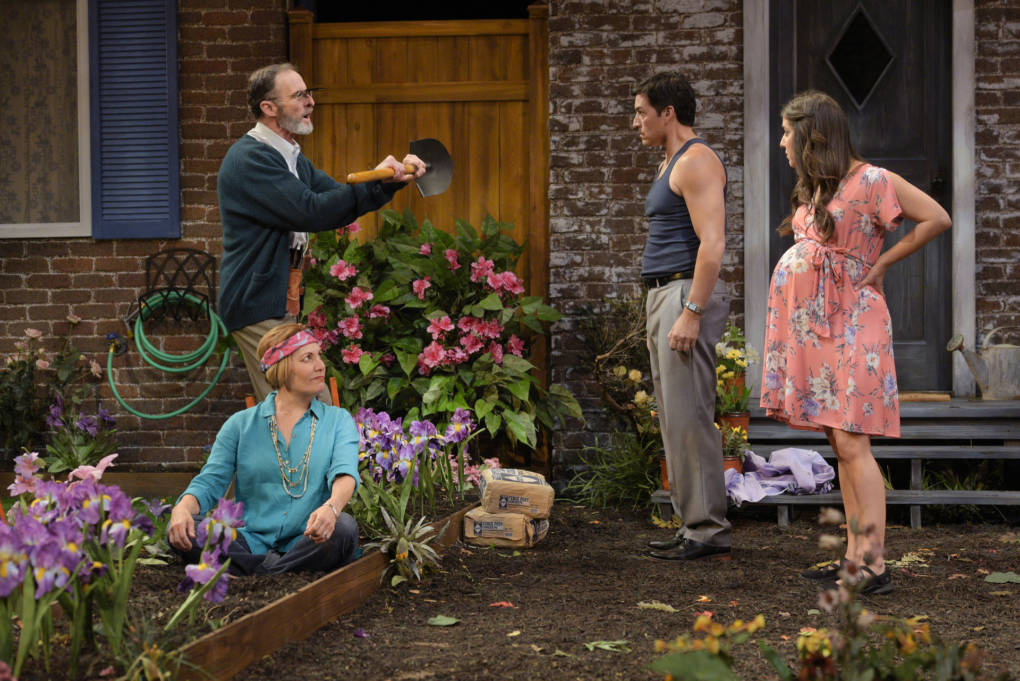
"caption": "Neighbors Pablo (Michael Evans Lopez), Virginia (Amy Resnick), Tania (Marlene Martinez) and Frank (Jackson Davis) get testy with each other in 'Native Gardens' by Karen Zacarías presented by TheatreWorks Silicon Valley.",
"description": "Neighbors Pablo (Michael Evans Lopez), Virginia (Amy Resnick), Tania (Marlene Martinez) and Frank (Jackson Davis) get testy with each other in “Native Gardens” by Karen Zacarías presented by TheatreWorks Silicon Valley.",
"title": "RS32664_TheatreWorks_NativeGardens_KevinBerne8-qut",
"credit": "Courtesy of Kevin Berne",
"status": "inherit",
"isLoading": false,
"fetchFailed": false
},
"arts_13840019": {
"type": "attachments",
"id": "arts_13840019",
"meta": {
"index": "attachments_1716263798",
"site": "arts",
"id": "13840019",
"found": true
},
"parent": 13839807,
"imgSizes": {
"small": {
"file": "https://ww2.kqed.org/app/uploads/sites/2/2018/08/Church.CrowdedFire-520x293.jpg",
"width": 520,
"mimeType": "image/jpeg",
"height": 293
},
"twentyfourteen-full-width": {
"file": "https://ww2.kqed.org/app/uploads/sites/2/2018/08/Church.CrowdedFire-1038x576.jpg",
"width": 1038,
"mimeType": "image/jpeg",
"height": 576
},
"thumbnail": {
"file": "https://ww2.kqed.org/app/uploads/sites/2/2018/08/Church.CrowdedFire-160x90.jpg",
"width": 160,
"mimeType": "image/jpeg",
"height": 90
},
"fd-sm": {
"file": "https://ww2.kqed.org/app/uploads/sites/2/2018/08/Church.CrowdedFire-960x540.jpg",
"width": 960,
"mimeType": "image/jpeg",
"height": 540
},
"post-thumbnail": {
"file": "https://ww2.kqed.org/app/uploads/sites/2/2018/08/Church.CrowdedFire-672x372.jpg",
"width": 672,
"mimeType": "image/jpeg",
"height": 372
},
"xsmall": {
"file": "https://ww2.kqed.org/app/uploads/sites/2/2018/08/Church.CrowdedFire-375x211.jpg",
"width": 375,
"mimeType": "image/jpeg",
"height": 211
},
"kqedFullSize": {
"file": "https://ww2.kqed.org/app/uploads/sites/2/2018/08/Church.CrowdedFire.jpg",
"width": 1920,
"height": 1080
},
"large": {
"file": "https://ww2.kqed.org/app/uploads/sites/2/2018/08/Church.CrowdedFire-1020x574.jpg",
"width": 1020,
"mimeType": "image/jpeg",
"height": 574
},
"xlarge": {
"file": "https://ww2.kqed.org/app/uploads/sites/2/2018/08/Church.CrowdedFire-1180x664.jpg",
"width": 1180,
"mimeType": "image/jpeg",
"height": 664
},
"complete_open_graph": {
"file": "https://ww2.kqed.org/app/uploads/sites/2/2018/08/Church.CrowdedFire-1200x675.jpg",
"width": 1200,
"mimeType": "image/jpeg",
"height": 675
},
"guest-author-50": {
"file": "https://ww2.kqed.org/app/uploads/sites/2/2018/08/Church.CrowdedFire-50x50.jpg",
"width": 50,
"mimeType": "image/jpeg",
"height": 50
},
"guest-author-96": {
"file": "https://ww2.kqed.org/app/uploads/sites/2/2018/08/Church.CrowdedFire-96x96.jpg",
"width": 96,
"mimeType": "image/jpeg",
"height": 96
},
"medium": {
"file": "https://ww2.kqed.org/app/uploads/sites/2/2018/08/Church.CrowdedFire-800x450.jpg",
"width": 800,
"mimeType": "image/jpeg",
"height": 450
},
"guest-author-64": {
"file": "https://ww2.kqed.org/app/uploads/sites/2/2018/08/Church.CrowdedFire-64x64.jpg",
"width": 64,
"mimeType": "image/jpeg",
"height": 64
},
"guest-author-32": {
"file": "https://ww2.kqed.org/app/uploads/sites/2/2018/08/Church.CrowdedFire-32x32.jpg",
"width": 32,
"mimeType": "image/jpeg",
"height": 32
},
"fd-lrg": {
"file": "https://ww2.kqed.org/app/uploads/sites/2/2018/08/Church.CrowdedFire-1920x1080.jpg",
"width": 1920,
"mimeType": "image/jpeg",
"height": 1080
},
"fd-med": {
"file": "https://ww2.kqed.org/app/uploads/sites/2/2018/08/Church.CrowdedFire-1180x664.jpg",
"width": 1180,
"mimeType": "image/jpeg",
"height": 664
},
"full-width": {
"file": "https://ww2.kqed.org/app/uploads/sites/2/2018/08/Church.CrowdedFire-1920x1080.jpg",
"width": 1920,
"mimeType": "image/jpeg",
"height": 1080
},
"detail": {
"file": "https://ww2.kqed.org/app/uploads/sites/2/2018/08/Church.CrowdedFire-150x150.jpg",
"width": 150,
"mimeType": "image/jpeg",
"height": 150
},
"medium_large": {
"file": "https://ww2.kqed.org/app/uploads/sites/2/2018/08/Church.CrowdedFire-768x432.jpg",
"width": 768,
"mimeType": "image/jpeg",
"height": 432
},
"guest-author-128": {
"file": "https://ww2.kqed.org/app/uploads/sites/2/2018/08/Church.CrowdedFire-128x128.jpg",
"width": 128,
"mimeType": "image/jpeg",
"height": 128
},
"xxsmall": {
"file": "https://ww2.kqed.org/app/uploads/sites/2/2018/08/Church.CrowdedFire-240x135.jpg",
"width": 240,
"mimeType": "image/jpeg",
"height": 135
}
},
"publishDate": 1535648832,
"modified": 1535648857,
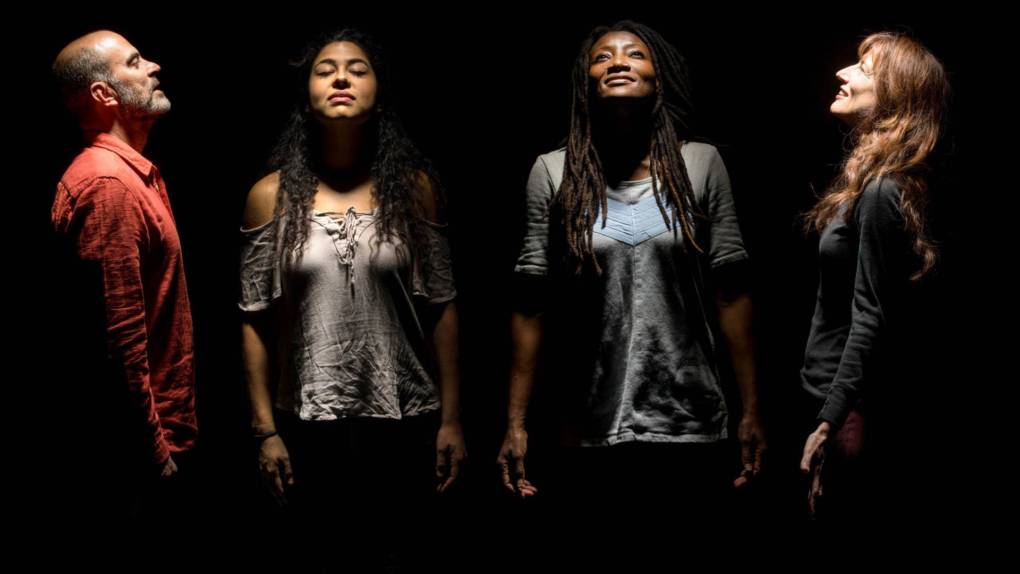
"caption": "Lawrence Radecker, Jordon Don, Nkechi Emeruwa, and Alison Whismore in Crowded Fire's production of 'Church,' by Young Jean Lee.",
"description": null,
"title": "Church.CrowdedFire",
"credit": "Cheshire Issacs",
"status": "inherit",
"isLoading": false,
"fetchFailed": false
},
"arts_13839847": {
"type": "attachments",
"id": "arts_13839847",
"meta": {
"index": "attachments_1716263798",
"site": "arts",
"id": "13839847",
"found": true
},
"parent": 13839769,
"imgSizes": {
"small": {
"file": "https://ww2.kqed.org/app/uploads/sites/2/2018/08/CaesarMaximus.MAIN_-520x293.jpg",
"width": 520,
"mimeType": "image/jpeg",
"height": 293
},
"twentyfourteen-full-width": {
"file": "https://ww2.kqed.org/app/uploads/sites/2/2018/08/CaesarMaximus.MAIN_-1038x576.jpg",
"width": 1038,
"mimeType": "image/jpeg",
"height": 576
},
"thumbnail": {
"file": "https://ww2.kqed.org/app/uploads/sites/2/2018/08/CaesarMaximus.MAIN_-160x90.jpg",
"width": 160,
"mimeType": "image/jpeg",
"height": 90
},
"fd-sm": {
"file": "https://ww2.kqed.org/app/uploads/sites/2/2018/08/CaesarMaximus.MAIN_-960x540.jpg",
"width": 960,
"mimeType": "image/jpeg",
"height": 540
},
"post-thumbnail": {
"file": "https://ww2.kqed.org/app/uploads/sites/2/2018/08/CaesarMaximus.MAIN_-672x372.jpg",
"width": 672,
"mimeType": "image/jpeg",
"height": 372
},
"xsmall": {
"file": "https://ww2.kqed.org/app/uploads/sites/2/2018/08/CaesarMaximus.MAIN_-375x211.jpg",
"width": 375,
"mimeType": "image/jpeg",
"height": 211
},
"kqedFullSize": {
"file": "https://ww2.kqed.org/app/uploads/sites/2/2018/08/CaesarMaximus.MAIN_.jpg",
"width": 1180,
"height": 664
},
"large": {
"file": "https://ww2.kqed.org/app/uploads/sites/2/2018/08/CaesarMaximus.MAIN_-1020x574.jpg",
"width": 1020,
"mimeType": "image/jpeg",
"height": 574
},
"xlarge": {
"file": "https://ww2.kqed.org/app/uploads/sites/2/2018/08/CaesarMaximus.MAIN_-1180x664.jpg",
"width": 1180,
"mimeType": "image/jpeg",
"height": 664
},
"guest-author-50": {
"file": "https://ww2.kqed.org/app/uploads/sites/2/2018/08/CaesarMaximus.MAIN_-50x50.jpg",
"width": 50,
"mimeType": "image/jpeg",
"height": 50
},
"guest-author-96": {
"file": "https://ww2.kqed.org/app/uploads/sites/2/2018/08/CaesarMaximus.MAIN_-96x96.jpg",
"width": 96,
"mimeType": "image/jpeg",
"height": 96
},
"medium": {
"file": "https://ww2.kqed.org/app/uploads/sites/2/2018/08/CaesarMaximus.MAIN_-800x450.jpg",
"width": 800,
"mimeType": "image/jpeg",
"height": 450
},
"guest-author-64": {
"file": "https://ww2.kqed.org/app/uploads/sites/2/2018/08/CaesarMaximus.MAIN_-64x64.jpg",
"width": 64,
"mimeType": "image/jpeg",
"height": 64
},
"guest-author-32": {
"file": "https://ww2.kqed.org/app/uploads/sites/2/2018/08/CaesarMaximus.MAIN_-32x32.jpg",
"width": 32,
"mimeType": "image/jpeg",
"height": 32
},
"fd-med": {
"file": "https://ww2.kqed.org/app/uploads/sites/2/2018/08/CaesarMaximus.MAIN_-1180x664.jpg",
"width": 1180,
"mimeType": "image/jpeg",
"height": 664
},
"detail": {
"file": "https://ww2.kqed.org/app/uploads/sites/2/2018/08/CaesarMaximus.MAIN_-150x150.jpg",
"width": 150,
"mimeType": "image/jpeg",
"height": 150
},
"medium_large": {
"file": "https://ww2.kqed.org/app/uploads/sites/2/2018/08/CaesarMaximus.MAIN_-768x432.jpg",
"width": 768,
"mimeType": "image/jpeg",
"height": 432
},
"guest-author-128": {
"file": "https://ww2.kqed.org/app/uploads/sites/2/2018/08/CaesarMaximus.MAIN_-128x128.jpg",
"width": 128,
"mimeType": "image/jpeg",
"height": 128
},
"xxsmall": {
"file": "https://ww2.kqed.org/app/uploads/sites/2/2018/08/CaesarMaximus.MAIN_-240x135.jpg",
"width": 240,
"mimeType": "image/jpeg",
"height": 135
}
},
"publishDate": 1535489446,
"modified": 1535489469,
"caption": "Antony (Rotimi Agbabiaka), Caesar (Libby Oberlin) and Calpurnia (Lauren Hayes) appear before their adoring public.",
"description": "Antony (Rotimi Agbabiaka), Caesar (Libby Oberlin) and Calpurnia (Lauren Hayes) appear before their adoring public.",
"title": "CaesarMaximus.MAIN",
"credit": "Lauren Matley",
"status": "inherit",
"isLoading": false,
"fetchFailed": false
},
"arts_13839237": {
"type": "attachments",
"id": "arts_13839237",
"meta": {
"index": "attachments_1716263798",
"site": "arts",
"id": "13839237",
"found": true
},
"parent": 0,
"imgSizes": {
"small": {
"file": "https://ww2.kqed.org/app/uploads/sites/2/2018/08/DPeacock_header-520x293.jpg",
"width": 520,
"mimeType": "image/jpeg",
"height": 293
},
"twentyfourteen-full-width": {
"file": "https://ww2.kqed.org/app/uploads/sites/2/2018/08/DPeacock_header-1038x576.jpg",
"width": 1038,
"mimeType": "image/jpeg",
"height": 576
},
"thumbnail": {
"file": "https://ww2.kqed.org/app/uploads/sites/2/2018/08/DPeacock_header-160x90.jpg",
"width": 160,
"mimeType": "image/jpeg",
"height": 90
},
"fd-sm": {
"file": "https://ww2.kqed.org/app/uploads/sites/2/2018/08/DPeacock_header-960x540.jpg",
"width": 960,
"mimeType": "image/jpeg",
"height": 540
},
"post-thumbnail": {
"file": "https://ww2.kqed.org/app/uploads/sites/2/2018/08/DPeacock_header-672x372.jpg",
"width": 672,
"mimeType": "image/jpeg",
"height": 372
},
"xsmall": {
"file": "https://ww2.kqed.org/app/uploads/sites/2/2018/08/DPeacock_header-375x211.jpg",
"width": 375,
"mimeType": "image/jpeg",
"height": 211
},
"kqedFullSize": {
"file": "https://ww2.kqed.org/app/uploads/sites/2/2018/08/DPeacock_header.jpg",
"width": 1920,
"height": 1080
},
"large": {
"file": "https://ww2.kqed.org/app/uploads/sites/2/2018/08/DPeacock_header-1020x574.jpg",
"width": 1020,
"mimeType": "image/jpeg",
"height": 574
},
"xlarge": {
"file": "https://ww2.kqed.org/app/uploads/sites/2/2018/08/DPeacock_header-1180x664.jpg",
"width": 1180,
"mimeType": "image/jpeg",
"height": 664
},
"complete_open_graph": {
"file": "https://ww2.kqed.org/app/uploads/sites/2/2018/08/DPeacock_header-1200x675.jpg",
"width": 1200,
"mimeType": "image/jpeg",
"height": 675
},
"guest-author-50": {
"file": "https://ww2.kqed.org/app/uploads/sites/2/2018/08/DPeacock_header-50x50.jpg",
"width": 50,
"mimeType": "image/jpeg",
"height": 50
},
"guest-author-96": {
"file": "https://ww2.kqed.org/app/uploads/sites/2/2018/08/DPeacock_header-96x96.jpg",
"width": 96,
"mimeType": "image/jpeg",
"height": 96
},
"medium": {
"file": "https://ww2.kqed.org/app/uploads/sites/2/2018/08/DPeacock_header-800x450.jpg",
"width": 800,
"mimeType": "image/jpeg",
"height": 450
},
"guest-author-64": {
"file": "https://ww2.kqed.org/app/uploads/sites/2/2018/08/DPeacock_header-64x64.jpg",
"width": 64,
"mimeType": "image/jpeg",
"height": 64
},
"guest-author-32": {
"file": "https://ww2.kqed.org/app/uploads/sites/2/2018/08/DPeacock_header-32x32.jpg",
"width": 32,
"mimeType": "image/jpeg",
"height": 32
},
"fd-lrg": {
"file": "https://ww2.kqed.org/app/uploads/sites/2/2018/08/DPeacock_header-1920x1080.jpg",
"width": 1920,
"mimeType": "image/jpeg",
"height": 1080
},
"fd-med": {
"file": "https://ww2.kqed.org/app/uploads/sites/2/2018/08/DPeacock_header-1180x664.jpg",
"width": 1180,
"mimeType": "image/jpeg",
"height": 664
},
"full-width": {
"file": "https://ww2.kqed.org/app/uploads/sites/2/2018/08/DPeacock_header-1920x1080.jpg",
"width": 1920,
"mimeType": "image/jpeg",
"height": 1080
},
"detail": {
"file": "https://ww2.kqed.org/app/uploads/sites/2/2018/08/DPeacock_header-150x150.jpg",
"width": 150,
"mimeType": "image/jpeg",
"height": 150
},
"medium_large": {
"file": "https://ww2.kqed.org/app/uploads/sites/2/2018/08/DPeacock_header-768x432.jpg",
"width": 768,
"mimeType": "image/jpeg",
"height": 432
},
"guest-author-128": {
"file": "https://ww2.kqed.org/app/uploads/sites/2/2018/08/DPeacock_header-128x128.jpg",
"width": 128,
"mimeType": "image/jpeg",
"height": 128
},
"xxsmall": {
"file": "https://ww2.kqed.org/app/uploads/sites/2/2018/08/DPeacock_header-240x135.jpg",
"width": 240,
"mimeType": "image/jpeg",
"height": 135
}
},
"publishDate": 1534490967,
"modified": 1535066590,
"caption": "Kathrin Canton, Lexi Adsit, Q Quintero and Devi Peacock (L to R), plus Luna Merbruja (not pictured) are the core leadership of Peacock Rebellion. ",
"description": "Kathrin Canton, Lexi Adsit, Q Quintero and Devi Peacock (L to R), plus Luna Merbruja (not pictured) are the core leadership of Peacock Rebellion. ",
"title": "DPeacock_header",
"credit": "Jean Melesaine",
"status": "inherit",
"isLoading": false,
"fetchFailed": false
},
"arts_13839428": {
"type": "attachments",
"id": "arts_13839428",
"meta": {
"index": "attachments_1716263798",
"site": "arts",
"id": "13839428",
"found": true
},
"parent": 0,
"imgSizes": {
"small": {
"file": "https://ww2.kqed.org/app/uploads/sites/2/2018/08/LMRollins_header-520x293.jpg",
"width": 520,
"mimeType": "image/jpeg",
"height": 293
},
"twentyfourteen-full-width": {
"file": "https://ww2.kqed.org/app/uploads/sites/2/2018/08/LMRollins_header-1038x576.jpg",
"width": 1038,
"mimeType": "image/jpeg",
"height": 576
},
"thumbnail": {
"file": "https://ww2.kqed.org/app/uploads/sites/2/2018/08/LMRollins_header-160x90.jpg",
"width": 160,
"mimeType": "image/jpeg",
"height": 90
},
"fd-sm": {
"file": "https://ww2.kqed.org/app/uploads/sites/2/2018/08/LMRollins_header-960x540.jpg",
"width": 960,
"mimeType": "image/jpeg",
"height": 540
},
"post-thumbnail": {
"file": "https://ww2.kqed.org/app/uploads/sites/2/2018/08/LMRollins_header-672x372.jpg",
"width": 672,
"mimeType": "image/jpeg",
"height": 372
},
"xsmall": {
"file": "https://ww2.kqed.org/app/uploads/sites/2/2018/08/LMRollins_header-375x211.jpg",
"width": 375,
"mimeType": "image/jpeg",
"height": 211
},
"kqedFullSize": {
"file": "https://ww2.kqed.org/app/uploads/sites/2/2018/08/LMRollins_header.jpg",
"width": 1920,
"height": 1080
},
"large": {
"file": "https://ww2.kqed.org/app/uploads/sites/2/2018/08/LMRollins_header-1020x574.jpg",
"width": 1020,
"mimeType": "image/jpeg",
"height": 574
},
"xlarge": {
"file": "https://ww2.kqed.org/app/uploads/sites/2/2018/08/LMRollins_header-1180x664.jpg",
"width": 1180,
"mimeType": "image/jpeg",
"height": 664
},
"complete_open_graph": {
"file": "https://ww2.kqed.org/app/uploads/sites/2/2018/08/LMRollins_header-1200x675.jpg",
"width": 1200,
"mimeType": "image/jpeg",
"height": 675
},
"guest-author-50": {
"file": "https://ww2.kqed.org/app/uploads/sites/2/2018/08/LMRollins_header-50x50.jpg",
"width": 50,
"mimeType": "image/jpeg",
"height": 50
},
"guest-author-96": {
"file": "https://ww2.kqed.org/app/uploads/sites/2/2018/08/LMRollins_header-96x96.jpg",
"width": 96,
"mimeType": "image/jpeg",
"height": 96
},
"medium": {
"file": "https://ww2.kqed.org/app/uploads/sites/2/2018/08/LMRollins_header-800x450.jpg",
"width": 800,
"mimeType": "image/jpeg",
"height": 450
},
"guest-author-64": {
"file": "https://ww2.kqed.org/app/uploads/sites/2/2018/08/LMRollins_header-64x64.jpg",
"width": 64,
"mimeType": "image/jpeg",
"height": 64
},
"guest-author-32": {
"file": "https://ww2.kqed.org/app/uploads/sites/2/2018/08/LMRollins_header-32x32.jpg",
"width": 32,
"mimeType": "image/jpeg",
"height": 32
},
"fd-lrg": {
"file": "https://ww2.kqed.org/app/uploads/sites/2/2018/08/LMRollins_header-1920x1080.jpg",
"width": 1920,
"mimeType": "image/jpeg",
"height": 1080
},
"fd-med": {
"file": "https://ww2.kqed.org/app/uploads/sites/2/2018/08/LMRollins_header-1180x664.jpg",
"width": 1180,
"mimeType": "image/jpeg",
"height": 664
},
"full-width": {
"file": "https://ww2.kqed.org/app/uploads/sites/2/2018/08/LMRollins_header-1920x1080.jpg",
"width": 1920,
"mimeType": "image/jpeg",
"height": 1080
},
"detail": {
"file": "https://ww2.kqed.org/app/uploads/sites/2/2018/08/LMRollins_header-150x150.jpg",
"width": 150,
"mimeType": "image/jpeg",
"height": 150
},
"medium_large": {
"file": "https://ww2.kqed.org/app/uploads/sites/2/2018/08/LMRollins_header-768x432.jpg",
"width": 768,
"mimeType": "image/jpeg",
"height": 432
},
"guest-author-128": {
"file": "https://ww2.kqed.org/app/uploads/sites/2/2018/08/LMRollins_header-128x128.jpg",
"width": 128,
"mimeType": "image/jpeg",
"height": 128
},
"xxsmall": {
"file": "https://ww2.kqed.org/app/uploads/sites/2/2018/08/LMRollins_header-240x135.jpg",
"width": 240,
"mimeType": "image/jpeg",
"height": 135
}
},
"publishDate": 1534789667,
"modified": 1534789781,
"caption": "Lisa Marie Rollins.",
"description": "Lisa Marie Rollins.",
"title": "LMRollins_header",
"credit": "Jean Melesaine",
"status": "inherit",
"isLoading": false,
"fetchFailed": false
},
"arts_13839325": {
"type": "attachments",
"id": "arts_13839325",
"meta": {
"index": "attachments_1716263798",
"site": "arts",
"id": "13839325",
"found": true
},
"parent": 13839312,
"imgSizes": {
"small": {
"file": "https://ww2.kqed.org/app/uploads/sites/2/2018/08/TheFaceOnTheBarroomFloor-2-520x371.jpg",
"width": 520,
"mimeType": "image/jpeg",
"height": 371
},
"twentyfourteen-full-width": {
"file": "https://ww2.kqed.org/app/uploads/sites/2/2018/08/TheFaceOnTheBarroomFloor-2-1038x576.jpg",
"width": 1038,
"mimeType": "image/jpeg",
"height": 576
},
"thumbnail": {
"file": "https://ww2.kqed.org/app/uploads/sites/2/2018/08/TheFaceOnTheBarroomFloor-2-160x114.jpg",
"width": 160,
"mimeType": "image/jpeg",
"height": 114
},
"fd-sm": {
"file": "https://ww2.kqed.org/app/uploads/sites/2/2018/08/TheFaceOnTheBarroomFloor-2-960x685.jpg",
"width": 960,
"mimeType": "image/jpeg",
"height": 685
},
"post-thumbnail": {
"file": "https://ww2.kqed.org/app/uploads/sites/2/2018/08/TheFaceOnTheBarroomFloor-2-672x372.jpg",
"width": 672,
"mimeType": "image/jpeg",
"height": 372
},
"xsmall": {
"file": "https://ww2.kqed.org/app/uploads/sites/2/2018/08/TheFaceOnTheBarroomFloor-2-375x268.jpg",
"width": 375,
"mimeType": "image/jpeg",
"height": 268
},
"kqedFullSize": {
"file": "https://ww2.kqed.org/app/uploads/sites/2/2018/08/TheFaceOnTheBarroomFloor-2.jpg",
"width": 2048,
"height": 1462
},
"large": {
"file": "https://ww2.kqed.org/app/uploads/sites/2/2018/08/TheFaceOnTheBarroomFloor-2-1020x728.jpg",
"width": 1020,
"mimeType": "image/jpeg",
"height": 728
},
"xlarge": {
"file": "https://ww2.kqed.org/app/uploads/sites/2/2018/08/TheFaceOnTheBarroomFloor-2-1180x842.jpg",
"width": 1180,
"mimeType": "image/jpeg",
"height": 842
},
"complete_open_graph": {
"file": "https://ww2.kqed.org/app/uploads/sites/2/2018/08/TheFaceOnTheBarroomFloor-2-1200x856.jpg",
"width": 1200,
"mimeType": "image/jpeg",
"height": 856
},
"guest-author-50": {
"file": "https://ww2.kqed.org/app/uploads/sites/2/2018/08/TheFaceOnTheBarroomFloor-2-50x50.jpg",
"width": 50,
"mimeType": "image/jpeg",
"height": 50
},
"guest-author-96": {
"file": "https://ww2.kqed.org/app/uploads/sites/2/2018/08/TheFaceOnTheBarroomFloor-2-96x96.jpg",
"width": 96,
"mimeType": "image/jpeg",
"height": 96
},
"medium": {
"file": "https://ww2.kqed.org/app/uploads/sites/2/2018/08/TheFaceOnTheBarroomFloor-2-800x571.jpg",
"width": 800,
"mimeType": "image/jpeg",
"height": 571
},
"guest-author-64": {
"file": "https://ww2.kqed.org/app/uploads/sites/2/2018/08/TheFaceOnTheBarroomFloor-2-64x64.jpg",
"width": 64,
"mimeType": "image/jpeg",
"height": 64
},
"guest-author-32": {
"file": "https://ww2.kqed.org/app/uploads/sites/2/2018/08/TheFaceOnTheBarroomFloor-2-32x32.jpg",
"width": 32,
"mimeType": "image/jpeg",
"height": 32
},
"fd-lrg": {
"file": "https://ww2.kqed.org/app/uploads/sites/2/2018/08/TheFaceOnTheBarroomFloor-2-1920x1370.jpg",
"width": 1920,
"mimeType": "image/jpeg",
"height": 1370
},
"fd-med": {
"file": "https://ww2.kqed.org/app/uploads/sites/2/2018/08/TheFaceOnTheBarroomFloor-2-1180x842.jpg",
"width": 1180,
"mimeType": "image/jpeg",
"height": 842
},
"full-width": {
"file": "https://ww2.kqed.org/app/uploads/sites/2/2018/08/TheFaceOnTheBarroomFloor-2-1920x1370.jpg",
"width": 1920,
"mimeType": "image/jpeg",
"height": 1370
},
"detail": {
"file": "https://ww2.kqed.org/app/uploads/sites/2/2018/08/TheFaceOnTheBarroomFloor-2-150x150.jpg",
"width": 150,
"mimeType": "image/jpeg",
"height": 150
},
"medium_large": {
"file": "https://ww2.kqed.org/app/uploads/sites/2/2018/08/TheFaceOnTheBarroomFloor-2-768x548.jpg",
"width": 768,
"mimeType": "image/jpeg",
"height": 548
},
"guest-author-128": {
"file": "https://ww2.kqed.org/app/uploads/sites/2/2018/08/TheFaceOnTheBarroomFloor-2-128x128.jpg",
"width": 128,
"mimeType": "image/jpeg",
"height": 128
},
"xxsmall": {
"file": "https://ww2.kqed.org/app/uploads/sites/2/2018/08/TheFaceOnTheBarroomFloor-2-240x171.jpg",
"width": 240,
"mimeType": "image/jpeg",
"height": 171
}
},
"publishDate": 1534557306,
"modified": 1534557351,
"caption": "The eponymous \"face on the barroom floor\" in Central City, Colorado that inspired the one-act opera by composer Henry Mollicone and librettist John Bowman.",
"description": "The eponymous \"face on the barroom floor\" in Central City, Colorado that inspired the one-act opera by composer Henry Mollicone and librettist John Bowman.",
"title": "TheFaceOnTheBarroomFloor 2",
"credit": "Photo: Courtesy of Teller House",
"status": "inherit",
"isLoading": false,
"fetchFailed": false
},
"arts_13839218": {
"type": "attachments",
"id": "arts_13839218",
"meta": {
"index": "attachments_1716263798",
"site": "arts",
"id": "13839218",
"found": true
},
"parent": 13838959,
"imgSizes": {
"small": {
"file": "https://ww2.kqed.org/app/uploads/sites/2/2018/08/GetGhandiMAIN-520x293.jpg",
"width": 520,
"mimeType": "image/jpeg",
"height": 293
},
"twentyfourteen-full-width": {
"file": "https://ww2.kqed.org/app/uploads/sites/2/2018/08/GetGhandiMAIN-1038x576.jpg",
"width": 1038,
"mimeType": "image/jpeg",
"height": 576
},
"thumbnail": {
"file": "https://ww2.kqed.org/app/uploads/sites/2/2018/08/GetGhandiMAIN-160x90.jpg",
"width": 160,
"mimeType": "image/jpeg",
"height": 90
},
"fd-sm": {
"file": "https://ww2.kqed.org/app/uploads/sites/2/2018/08/GetGhandiMAIN-960x541.jpg",
"width": 960,
"mimeType": "image/jpeg",
"height": 541
},
"post-thumbnail": {
"file": "https://ww2.kqed.org/app/uploads/sites/2/2018/08/GetGhandiMAIN-672x372.jpg",
"width": 672,
"mimeType": "image/jpeg",
"height": 372
},
"xsmall": {
"file": "https://ww2.kqed.org/app/uploads/sites/2/2018/08/GetGhandiMAIN-375x211.jpg",
"width": 375,
"mimeType": "image/jpeg",
"height": 211
},
"kqedFullSize": {
"file": "https://ww2.kqed.org/app/uploads/sites/2/2018/08/GetGhandiMAIN.jpg",
"width": 1920,
"height": 1081
},
"large": {
"file": "https://ww2.kqed.org/app/uploads/sites/2/2018/08/GetGhandiMAIN-1020x574.jpg",
"width": 1020,
"mimeType": "image/jpeg",
"height": 574
},
"xlarge": {
"file": "https://ww2.kqed.org/app/uploads/sites/2/2018/08/GetGhandiMAIN-1180x664.jpg",
"width": 1180,
"mimeType": "image/jpeg",
"height": 664
},
"complete_open_graph": {
"file": "https://ww2.kqed.org/app/uploads/sites/2/2018/08/GetGhandiMAIN-1200x676.jpg",
"width": 1200,
"mimeType": "image/jpeg",
"height": 676
},
"guest-author-50": {
"file": "https://ww2.kqed.org/app/uploads/sites/2/2018/08/GetGhandiMAIN-50x50.jpg",
"width": 50,
"mimeType": "image/jpeg",
"height": 50
},
"guest-author-96": {
"file": "https://ww2.kqed.org/app/uploads/sites/2/2018/08/GetGhandiMAIN-96x96.jpg",
"width": 96,
"mimeType": "image/jpeg",
"height": 96
},
"medium": {
"file": "https://ww2.kqed.org/app/uploads/sites/2/2018/08/GetGhandiMAIN-800x450.jpg",
"width": 800,
"mimeType": "image/jpeg",
"height": 450
},
"guest-author-64": {
"file": "https://ww2.kqed.org/app/uploads/sites/2/2018/08/GetGhandiMAIN-64x64.jpg",
"width": 64,
"mimeType": "image/jpeg",
"height": 64
},
"guest-author-32": {
"file": "https://ww2.kqed.org/app/uploads/sites/2/2018/08/GetGhandiMAIN-32x32.jpg",
"width": 32,
"mimeType": "image/jpeg",
"height": 32
},
"fd-lrg": {
"file": "https://ww2.kqed.org/app/uploads/sites/2/2018/08/GetGhandiMAIN-1920x1081.jpg",
"width": 1920,
"mimeType": "image/jpeg",
"height": 1081
},
"fd-med": {
"file": "https://ww2.kqed.org/app/uploads/sites/2/2018/08/GetGhandiMAIN-1180x664.jpg",
"width": 1180,
"mimeType": "image/jpeg",
"height": 664
},
"full-width": {
"file": "https://ww2.kqed.org/app/uploads/sites/2/2018/08/GetGhandiMAIN-1920x1081.jpg",
"width": 1920,
"mimeType": "image/jpeg",
"height": 1081
},
"detail": {
"file": "https://ww2.kqed.org/app/uploads/sites/2/2018/08/GetGhandiMAIN-150x150.jpg",
"width": 150,
"mimeType": "image/jpeg",
"height": 150
},
"medium_large": {
"file": "https://ww2.kqed.org/app/uploads/sites/2/2018/08/GetGhandiMAIN-768x432.jpg",
"width": 768,
"mimeType": "image/jpeg",
"height": 432
},
"guest-author-128": {
"file": "https://ww2.kqed.org/app/uploads/sites/2/2018/08/GetGhandiMAIN-128x128.jpg",
"width": 128,
"mimeType": "image/jpeg",
"height": 128
},
"xxsmall": {
"file": "https://ww2.kqed.org/app/uploads/sites/2/2018/08/GetGhandiMAIN-240x135.jpg",
"width": 240,
"mimeType": "image/jpeg",
"height": 135
}
},
"publishDate": 1534471938,
"modified": 1534471978,
"caption": "Miranda Swain, Jeri Lynn Cohen, and Patricia Silver plot to #GetGandhi.",
"description": "Miranda Swain, Jeri Lynn Cohen, and Patricia Silver plot to #GetGandhi.",
"title": "GetGhandiMAIN",
"credit": "Julie Schuchard",
"status": "inherit",
"isLoading": false,
"fetchFailed": false
},
"arts_13839050": {
"type": "attachments",
"id": "arts_13839050",
"meta": {
"index": "attachments_1716263798",
"site": "arts",
"id": "13839050",
"found": true
},
"parent": 13839026,
"imgSizes": {
"small": {
"file": "https://ww2.kqed.org/app/uploads/sites/2/2018/08/ISDavisWP-520x293.jpg",
"width": 520,
"mimeType": "image/jpeg",
"height": 293
},
"twentyfourteen-full-width": {
"file": "https://ww2.kqed.org/app/uploads/sites/2/2018/08/ISDavisWP-1038x576.jpg",
"width": 1038,
"mimeType": "image/jpeg",
"height": 576
},
"thumbnail": {
"file": "https://ww2.kqed.org/app/uploads/sites/2/2018/08/ISDavisWP-160x90.jpg",
"width": 160,
"mimeType": "image/jpeg",
"height": 90
},
"fd-sm": {
"file": "https://ww2.kqed.org/app/uploads/sites/2/2018/08/ISDavisWP-960x540.jpg",
"width": 960,
"mimeType": "image/jpeg",
"height": 540
},
"post-thumbnail": {
"file": "https://ww2.kqed.org/app/uploads/sites/2/2018/08/ISDavisWP-672x372.jpg",
"width": 672,
"mimeType": "image/jpeg",
"height": 372
},
"xsmall": {
"file": "https://ww2.kqed.org/app/uploads/sites/2/2018/08/ISDavisWP-375x211.jpg",
"width": 375,
"mimeType": "image/jpeg",
"height": 211
},
"kqedFullSize": {
"file": "https://ww2.kqed.org/app/uploads/sites/2/2018/08/ISDavisWP.jpg",
"width": 1920,
"height": 1080
},
"large": {
"file": "https://ww2.kqed.org/app/uploads/sites/2/2018/08/ISDavisWP-1020x574.jpg",
"width": 1020,
"mimeType": "image/jpeg",
"height": 574
},
"xlarge": {
"file": "https://ww2.kqed.org/app/uploads/sites/2/2018/08/ISDavisWP-1180x664.jpg",
"width": 1180,
"mimeType": "image/jpeg",
"height": 664
},
"complete_open_graph": {
"file": "https://ww2.kqed.org/app/uploads/sites/2/2018/08/ISDavisWP-1200x675.jpg",
"width": 1200,
"mimeType": "image/jpeg",
"height": 675
},
"guest-author-50": {
"file": "https://ww2.kqed.org/app/uploads/sites/2/2018/08/ISDavisWP-50x50.jpg",
"width": 50,
"mimeType": "image/jpeg",
"height": 50
},
"guest-author-96": {
"file": "https://ww2.kqed.org/app/uploads/sites/2/2018/08/ISDavisWP-96x96.jpg",
"width": 96,
"mimeType": "image/jpeg",
"height": 96
},
"medium": {
"file": "https://ww2.kqed.org/app/uploads/sites/2/2018/08/ISDavisWP-800x450.jpg",
"width": 800,
"mimeType": "image/jpeg",
"height": 450
},
"guest-author-64": {
"file": "https://ww2.kqed.org/app/uploads/sites/2/2018/08/ISDavisWP-64x64.jpg",
"width": 64,
"mimeType": "image/jpeg",
"height": 64
},
"guest-author-32": {
"file": "https://ww2.kqed.org/app/uploads/sites/2/2018/08/ISDavisWP-32x32.jpg",
"width": 32,
"mimeType": "image/jpeg",
"height": 32
},
"fd-lrg": {
"file": "https://ww2.kqed.org/app/uploads/sites/2/2018/08/ISDavisWP-1920x1080.jpg",
"width": 1920,
"mimeType": "image/jpeg",
"height": 1080
},
"fd-med": {
"file": "https://ww2.kqed.org/app/uploads/sites/2/2018/08/ISDavisWP-1180x664.jpg",
"width": 1180,
"mimeType": "image/jpeg",
"height": 664
},
"full-width": {
"file": "https://ww2.kqed.org/app/uploads/sites/2/2018/08/ISDavisWP-1920x1080.jpg",
"width": 1920,
"mimeType": "image/jpeg",
"height": 1080
},
"detail": {
"file": "https://ww2.kqed.org/app/uploads/sites/2/2018/08/ISDavisWP-150x150.jpg",
"width": 150,
"mimeType": "image/jpeg",
"height": 150
},
"medium_large": {
"file": "https://ww2.kqed.org/app/uploads/sites/2/2018/08/ISDavisWP-768x432.jpg",
"width": 768,
"mimeType": "image/jpeg",
"height": 432
},
"guest-author-128": {
"file": "https://ww2.kqed.org/app/uploads/sites/2/2018/08/ISDavisWP-128x128.jpg",
"width": 128,
"mimeType": "image/jpeg",
"height": 128
},
"xxsmall": {
"file": "https://ww2.kqed.org/app/uploads/sites/2/2018/08/ISDavisWP-240x135.jpg",
"width": 240,
"mimeType": "image/jpeg",
"height": 135
}
},
"publishDate": 1534294424,
"modified": 1534358790,
"caption": "India Sky Davis, the co-founder of Topsy Turvy Queer Circus, uses circus arts to tell empowering stories that center queer and trans people of color.",
"description": "India Sky India Sky Davis, the co-founder of Topsy Turvy Queer Circus, uses circus arts to tell empowering stories that center queer and trans people of color.",
"title": "ISDavisWP",
"credit": "Jean Melesaine",
"status": "inherit",
"isLoading": false,
"fetchFailed": false
},
"arts_13837720": {
"type": "attachments",
"id": "arts_13837720",
"meta": {
"index": "attachments_1716263798",
"site": "arts",
"id": "13837720",
"found": true
},
"parent": 13837549,
"imgSizes": {
"small": {
"file": "https://ww2.kqed.org/app/uploads/sites/2/2018/07/4.48.MAINrev-520x293.jpg",
"width": 520,
"mimeType": "image/jpeg",
"height": 293
},
"thumbnail": {
"file": "https://ww2.kqed.org/app/uploads/sites/2/2018/07/4.48.MAINrev-160x90.jpg",
"width": 160,
"mimeType": "image/jpeg",
"height": 90
},
"fd-sm": {
"file": "https://ww2.kqed.org/app/uploads/sites/2/2018/07/4.48.MAINrev-960x540.jpg",
"width": 960,
"mimeType": "image/jpeg",
"height": 540
},
"post-thumbnail": {
"file": "https://ww2.kqed.org/app/uploads/sites/2/2018/07/4.48.MAINrev-672x372.jpg",
"width": 672,
"mimeType": "image/jpeg",
"height": 372
},
"xsmall": {
"file": "https://ww2.kqed.org/app/uploads/sites/2/2018/07/4.48.MAINrev-375x211.jpg",
"width": 375,
"mimeType": "image/jpeg",
"height": 211
},
"kqedFullSize": {
"file": "https://ww2.kqed.org/app/uploads/sites/2/2018/07/4.48.MAINrev.jpg",
"width": 1000,
"height": 563
},
"guest-author-50": {
"file": "https://ww2.kqed.org/app/uploads/sites/2/2018/07/4.48.MAINrev-50x50.jpg",
"width": 50,
"mimeType": "image/jpeg",
"height": 50
},
"guest-author-96": {
"file": "https://ww2.kqed.org/app/uploads/sites/2/2018/07/4.48.MAINrev-96x96.jpg",
"width": 96,
"mimeType": "image/jpeg",
"height": 96
},
"medium": {
"file": "https://ww2.kqed.org/app/uploads/sites/2/2018/07/4.48.MAINrev-800x450.jpg",
"width": 800,
"mimeType": "image/jpeg",
"height": 450
},
"guest-author-64": {
"file": "https://ww2.kqed.org/app/uploads/sites/2/2018/07/4.48.MAINrev-64x64.jpg",
"width": 64,
"mimeType": "image/jpeg",
"height": 64
},
"guest-author-32": {
"file": "https://ww2.kqed.org/app/uploads/sites/2/2018/07/4.48.MAINrev-32x32.jpg",
"width": 32,
"mimeType": "image/jpeg",
"height": 32
},
"detail": {
"file": "https://ww2.kqed.org/app/uploads/sites/2/2018/07/4.48.MAINrev-150x150.jpg",
"width": 150,
"mimeType": "image/jpeg",
"height": 150
},
"medium_large": {
"file": "https://ww2.kqed.org/app/uploads/sites/2/2018/07/4.48.MAINrev-768x432.jpg",
"width": 768,
"mimeType": "image/jpeg",
"height": 432
},
"guest-author-128": {
"file": "https://ww2.kqed.org/app/uploads/sites/2/2018/07/4.48.MAINrev-128x128.jpg",
"width": 128,
"mimeType": "image/jpeg",
"height": 128
},
"xxsmall": {
"file": "https://ww2.kqed.org/app/uploads/sites/2/2018/07/4.48.MAINrev-240x135.jpg",
"width": 240,
"mimeType": "image/jpeg",
"height": 135
}
},
"publishDate": 1532552595,
"modified": 1532552624,
"caption": "Jody Christian, Adrian Deane, and Anastasia Barron (front) dance in unison in Anton's Well production of '4.48 Psychosis.' ",
"description": "Jody Christian, Adrian Deane, and Anastasia Barron (front) dance in unison in Anton's Well production of '4.48 Psychosis.' ",
"title": "4.48.MAINrev",
"credit": "Jane Shamaeva",
"status": "inherit",
"isLoading": false,
"fetchFailed": false
}
},
"audioPlayerReducer": {
"postId": "stream_live",
"isPaused": true,
"isPlaying": false,
"pfsActive": false,
"pledgeModalIsOpen": true,
"playerDrawerIsOpen": false,
"liveAudioPlayStartedAt": 0,
"liveAudioPlayContext": ""
},
"authorsReducer": {
"rachael-myrow": {
"type": "authors",
"id": "251",
"meta": {
"index": "authors_1716337520",
"id": "251",
"found": true
},
"name": "Rachael Myrow",
"firstName": "Rachael",
"lastName": "Myrow",
"slug": "rachael-myrow",
"email": "rmyrow@kqed.org",
"display_author_email": true,
"staff_mastheads": [
"news"
],
"title": "Senior Editor of KQED's Silicon Valley News Desk",
"bio": "• I write and edit stories about how Silicon Valley power and policies shape everyday life in California. I’m also passionate about making Bay Area history and culture more accessible to a broad public. • I’ve been a journalist for most of my life, starting in high school with The Franklin Press in Los Angeles, where I grew up. While earning my first degree in English at UC Berkeley, I got my start in public radio at KALX-FM. After completing a second degree in journalism at Cal, I landed my first professional job at Marketplace, then moved on to KPCC (now LAist), and then KQED, where I hosted The California Report for more than seven years. • My reporting has appeared on NPR, The World, WBUR’s \u003ci>Here & Now\u003c/i>, and the BBC. I also guest host for KQED’s \u003ci>Forum\u003c/i>, as well as the Commonwealth Club in San Francisco. • I speak periodically on media, democracy and technology issues, and do voiceover work for documentaries and educational video projects. • Outside of the studio, you'll find me hiking Bay Area trails and whipping up Insta-ready meals in my kitchen. • I do not accept gifts, money, or favors from anyone connected to my reporting, I don't pay people for information, and I do not support or donate to political causes. • I strive to treat the people I report on with fairness, honesty, and respect. I also recognize there are often multiple sides to a story and work to verify information through multiple sources and documentation. If I get something wrong, I correct it.",
"avatar": "https://secure.gravatar.com/avatar/3ed8a3c5f26025e4a805ba634cda8cd764906b97438a6d9ce216b044e340da4e?s=600&d=blank&r=g",
"twitter": "rachaelmyrow",
"bluesky": null,
"facebook": null,
"instagram": null,
"linkedin": "https://www.linkedin.com/in/rachaelmyrow/",
"sites": [
{
"site": "arts",
"roles": [
"administrator"
]
},
{
"site": "news",
"roles": [
"edit_others_posts",
"editor"
]
},
{
"site": "futureofyou",
"roles": [
"editor"
]
},
{
"site": "bayareabites",
"roles": [
"editor"
]
},
{
"site": "stateofhealth",
"roles": [
"editor"
]
},
{
"site": "science",
"roles": [
"editor"
]
},
{
"site": "food",
"roles": [
"editor"
]
},
{
"site": "forum",
"roles": [
"editor"
]
},
{
"site": "liveblog",
"roles": [
"author"
]
}
],
"headData": {
"title": "Rachael Myrow | KQED",
"description": "Senior Editor of KQED's Silicon Valley News Desk",
"ogImgSrc": "https://secure.gravatar.com/avatar/3ed8a3c5f26025e4a805ba634cda8cd764906b97438a6d9ce216b044e340da4e?s=600&d=blank&r=g",
"twImgSrc": "https://secure.gravatar.com/avatar/3ed8a3c5f26025e4a805ba634cda8cd764906b97438a6d9ce216b044e340da4e?s=600&d=blank&r=g"
},
"isLoading": false,
"link": "/author/rachael-myrow"
},
"cveltman": {
"type": "authors",
"id": "8608",
"meta": {
"index": "authors_1716337520",
"id": "8608",
"found": true
},
"name": "Chloe Veltman",
"firstName": "Chloe",
"lastName": "Veltman",
"slug": "cveltman",
"email": "cveltman@kqed.org",
"display_author_email": true,
"staff_mastheads": [],
"title": "Arts and Culture Reporter",
"bio": "Chloe Veltman is a former arts and culture reporter for KQED. Prior to joining the organization, she launched and led the arts bureau at Colorado Public Radio, served as the Bay Area's culture columnist for the New York Times, and was the founder, host and executive producer of VoiceBox, a national award-winning weekly podcast/radio show and live events series all about the human voice. Chloe is the recipient of numerous prizes, grants and fellowships including a Webby Award for her work on interactive storytelling, both the John S Knight Journalism Fellowship and Humanities Center Fellowship at Stanford University, the Sundance Arts Writing Fellowship and a Library of Congress Research Fellowship. She is the author of the book \"On Acting\" and has appeared as a guest lecturer at Yale University and the San Francisco Conservatory of Music among other institutions. She holds a BA in english literature from King's College, Cambridge, and a Masters in Dramaturgy from the Central School of Speech and Drama/Harvard Institute for Advanced Theater Training.\r\n\u003ca href=\"https://www.chloeveltman.com\">www.chloeveltman.com\u003c/a>",
"avatar": "https://secure.gravatar.com/avatar/55403394b00a1ddab683952c2eb2cf85?s=600&d=blank&r=g",
"twitter": "chloeveltman",
"facebook": null,
"instagram": null,
"linkedin": null,
"sites": [
{
"site": "arts",
"roles": []
},
{
"site": "news",
"roles": [
"author"
]
},
{
"site": "pop",
"roles": [
"editor"
]
},
{
"site": "science",
"roles": []
}
],
"headData": {
"title": "Chloe Veltman | KQED",
"description": "Arts and Culture Reporter",
"ogImgSrc": "https://secure.gravatar.com/avatar/55403394b00a1ddab683952c2eb2cf85?s=600&d=blank&r=g",
"twImgSrc": "https://secure.gravatar.com/avatar/55403394b00a1ddab683952c2eb2cf85?s=600&d=blank&r=g"
},
"isLoading": false,
"link": "/author/cveltman"
},
"nvoynovskaya": {
"type": "authors",
"id": "11387",
"meta": {
"index": "authors_1716337520",
"id": "11387",
"found": true
},
"name": "Nastia Voynovskaya",
"firstName": "Nastia",
"lastName": "Voynovskaya",
"slug": "nvoynovskaya",
"email": "nvoynovskaya@kqed.org",
"display_author_email": false,
"staff_mastheads": [
"arts"
],
"title": "Editor and reporter",
"bio": "Nastia Voynovskaya is a reporter, editor and host at KQED Arts & Culture. She's been covering the arts in the Bay Area for over a decade, with a focus on music, queer culture, labor issues and grassroots organizing. She has edited KQED story series such as Trans Bay: A History of San Francisco's Gender-Diverse Community, and co-created KQED's Bay Area hip-hop history project, That's My Word. Nastia's work has been recognized by the Society of Professional Journalists and San Francisco Press Club. She regularly appears on podcasts and radio programs, including NPR's All Songs Considered, and hosts live events where music, culture and conversation meet.",
"avatar": "https://secure.gravatar.com/avatar/5025ee460e5a85d69ca20ea6c6f2f80d7e17795c828f61ea3aecfcd924e9042e?s=600&d=blank&r=g",
"twitter": null,
"bluesky": null,
"facebook": null,
"instagram": "https://www.instagram.com/nananastia/",
"linkedin": null,
"sites": [
{
"site": "",
"roles": [
"editor"
]
},
{
"site": "arts",
"roles": [
"administrator"
]
},
{
"site": "news",
"roles": [
"editor"
]
},
{
"site": "pop",
"roles": [
"administrator"
]
},
{
"site": "bayareabites",
"roles": [
"editor"
]
},
{
"site": "podcasts",
"roles": [
"editor"
]
},
{
"site": "hiphop",
"roles": [
"editor"
]
}
],
"headData": {
"title": "Nastia Voynovskaya | KQED",
"description": "Editor and reporter",
"ogImgSrc": "https://secure.gravatar.com/avatar/5025ee460e5a85d69ca20ea6c6f2f80d7e17795c828f61ea3aecfcd924e9042e?s=600&d=blank&r=g",
"twImgSrc": "https://secure.gravatar.com/avatar/5025ee460e5a85d69ca20ea6c6f2f80d7e17795c828f61ea3aecfcd924e9042e?s=600&d=blank&r=g"
},
"isLoading": false,
"link": "/author/nvoynovskaya"
},
"ngluckstern": {
"type": "authors",
"id": "11497",
"meta": {
"index": "authors_1716337520",
"id": "11497",
"found": true
},
"name": "Nicole Gluckstern",
"firstName": "Nicole",
"lastName": "Gluckstern",
"slug": "ngluckstern",
"email": "gluckstern.nicole@gmail.com",
"display_author_email": false,
"staff_mastheads": [],
"title": "KQED Contributor",
"bio": null,
"avatar": "https://secure.gravatar.com/avatar/2c3d593194017bfe811a998ad03140909de330b22abebf4889e1a564ce5b3495?s=600&d=blank&r=g",
"twitter": null,
"bluesky": null,
"facebook": null,
"instagram": null,
"linkedin": null,
"sites": [
{
"site": "arts",
"roles": [
"contributor"
]
}
],
"headData": {
"title": "Nicole Gluckstern | KQED",
"description": "KQED Contributor",
"ogImgSrc": "https://secure.gravatar.com/avatar/2c3d593194017bfe811a998ad03140909de330b22abebf4889e1a564ce5b3495?s=600&d=blank&r=g",
"twImgSrc": "https://secure.gravatar.com/avatar/2c3d593194017bfe811a998ad03140909de330b22abebf4889e1a564ce5b3495?s=600&d=blank&r=g"
},
"isLoading": false,
"link": "/author/ngluckstern"
}
},
"pagesReducer": {
"arts_category_theater": {
"type": "terms",
"id": "arts_967",
"meta": {
"index": "terms_1716263798",
"site": "arts",
"id": "967",
"score": 12.286945
},
"featImg": null,
"name": "Theater",
"description": null,
"taxonomy": "category",
"headData": {
"twImgId": null,
"twTitle": null,
"ogTitle": null,
"ogImgId": null,
"twDescription": null,
"description": null,
"title": "Theater Archives | KQED Arts",
"ogDescription": null
},
"ttid": 985,
"slug": "theater",
"isLoading": false,
"title": "Theater",
"pageMeta": {
"site": "arts",
"WpPageTemplate": "page-topic-editorial",
"currentPage": 31
},
"blocks": [
{
"blockName": "kqed/post-list",
"attrs": {
"layout": "cardArticle2",
"query": "posts/arts?category=theater",
"seeMore": false,
"paginated": true,
"page": 31
}
},
{
"blockName": "kqed/ad"
}
]
}
},
"pfsSessionReducer": {},
"postsReducer": {
"stream_live": {
"type": "live",
"id": "stream_live",
"audioUrl": "https://streams.kqed.org/kqedradio",
"title": "Live Stream",
"excerpt": "Live Stream information currently unavailable.",
"link": "/radio",
"featImg": "",
"label": {
"name": "KQED Live",
"link": "/"
}
},
"stream_kqedNewscast": {
"type": "posts",
"id": "stream_kqedNewscast",
"audioUrl": "https://www.kqed.org/.stream/anon/radio/RDnews/newscast.mp3?_=1",
"title": "KQED Newscast",
"featImg": "",
"label": {
"name": "88.5 FM",
"link": "/"
}
},
"arts_13841413": {
"type": "posts",
"id": "arts_13841413",
"meta": {
"index": "posts_1716263798",
"site": "arts",
"id": "13841413",
"score": null,
"sort": [
1537621246000
]
},
"guestAuthors": [],
"slug": "bay-area-south-asian-film-festival-showcases-talent-on-both-sides-of-the-pacific",
"title": "Bay Area South Asian Film Festival Showcases Talent on Both Sides of the Pacific",
"publishDate": 1537621246,
"format": "audio",
"headTitle": "Bay Area South Asian Film Festival Showcases Talent on Both Sides of the Pacific | KQED",
"labelTerm": {
"term": 140,
"site": "arts"
},
"content": "\u003cp>Perhaps you’re one of the legions ready to binge-watch season two of the crime thriller \u003ca href=\"https://www.netflix.com/title/80115328\" target=\"_blank\" rel=\"noopener\">\u003cem>Sacred Games\u003c/em>\u003c/a> on Netflix. Season one has proved so popular, the ever expanding streaming video giant is game to bet millions producing another series following the exploits of policeman Sartaj Singh (played by Saif Ali Khan).\u003c/p>\n\u003cp>The show is based on the 2006 novel by \u003ca href=\"https://english.berkeley.edu/users/22\" target=\"_blank\" rel=\"noopener\">Vikram Chandra\u003c/a>, a modern-day Raymond Chandler whose main character in this epic is the city of Mumbai, or at least its seamy underbelly, teaming with chatty, charismatic killers and brooding cops.\u003c/p>\n\u003cp>Perhaps less known is the fact Chandra is a professor at UC Berkeley. He splits his time between Mumbai and Oakland, and he’ll be speaking at panel discussion on technology in entertainment this weekend as part of \u003ca href=\"https://basafilmfestival.com\" target=\"_blank\" rel=\"noopener\">The Bay Area South Asian Film Festival\u003c/a>.[youtube https://www.youtube.com/watch?v=28j8h0RRov4]\u003c/p>\n\u003cp>This is the festival’s debut, which demonstrates a conversation happening across the Pacific between South Asia and the South Asian diaspora here in the San Francisco Bay Area.\u003c/p>\n\u003cp>Aniruddha Dasgupta is festival director, when he’s not working his day job as director of product engineering at Visa. His work putting the festival together, he says, is “my way of actively engaging myself — and also a few other people” seeking entertainment, but also inspiration.\u003c/p>\n\u003cp>[ad fullwidth]\u003c/p>\n\u003cp>Dasgupta says, “We wanted to select films which talk about diversity, innovation and also how we can encourage the next gen[eration of] storytellers.”\u003c/p>\n\u003cp>To that end, this festival is a showcase for politically relevant topics like \u003ca href=\"https://www.washingtonpost.com/news/morning-mix/wp/2017/02/28/suspect-in-kansas-bar-shooting-of-indians-apparently-thought-they-were-iranians/\" target=\"_blank\" rel=\"noopener\">racially motivated violence\u003c/a> and LGBTQ rights. The one documentary on the schedule, Sangeeta Datta’s \u003ci>Bird of Dusk\u003c/i>, profiles a prolific Bengali filmmaker who was also one of the few openly gay figures in Indian cinema.\u003c/p>\n\u003cp>[youtube https://www.youtube.com/watch?v=oqIDoz3nRz8]\u003c/p>\n\u003cp>Before his death in 2013 at 49, Rituparno Ghosh created close to two dozen films, some of which now rest alongside the work of his cinematic idols, Satyajit Ray and Aparna Sen.\u003c/p>\n\u003cp>Some of the feature films and shorts at the festival are available online, but it’s more exciting to watch in a theater filled with hundreds of people primed to celebrate South Asian creativity across the Pacific and here at home.\u003c/p>\n\u003cp>“You get to be sitting in a seat with someone who is as appreciative or more appreciative than you, and so the collective energy in the room starts to matter,” says Vinita Sud Belani, artistic director and founder of the Bay Area-based South Asian theater company \u003ca href=\"http://enacte.org/production/queen/\" target=\"_blank\" rel=\"noopener\">EnActe Arts\u003c/a>, which is performing at the festival.\u003c/p>\n\u003cp>\u003cem>Queen\u003c/em> is a play about two UC Santa Cruz scientists days away from a publishing a paper when they discover a troubling anomaly in their last batch of data. The title of the play refers to the subject their study: colony collapse disorder, the phenomenon that occurs when the majority of worker bees in a colony disappear.\u003c/p>\n\u003cp>The play was written by Madhuri Shekar, who was born in the Bay Area. “We’ve done a play of hers before,” Belani says of Shekar. “She was in her twenties when she started writing theater, and she’s really going places.”\u003c/p>\n\u003cfigure id=\"attachment_13841426\" class=\"wp-caption aligncenter\" style=\"max-width: 800px\">\u003cimg loading=\"lazy\" decoding=\"async\" class=\"wp-image-13841426 size-medium\" src=\"https://ww2.kqed.org/arts/wp-content/uploads/sites/2/2018/09/RS32931_Screen-Shot-2018-09-21-at-7.25.20-PM-qut-800x511.jpg\" alt=\"The Bay Area South Asian Film Festival features a lot more than film, including music, dance and theater; in particular the play Queen, performed by EnActe Arts.\" width=\"800\" height=\"511\" srcset=\"https://cdn.kqed.org/wp-content/uploads/sites/2/2018/09/RS32931_Screen-Shot-2018-09-21-at-7.25.20-PM-qut-800x511.jpg 800w, https://cdn.kqed.org/wp-content/uploads/sites/2/2018/09/RS32931_Screen-Shot-2018-09-21-at-7.25.20-PM-qut-160x102.jpg 160w, https://cdn.kqed.org/wp-content/uploads/sites/2/2018/09/RS32931_Screen-Shot-2018-09-21-at-7.25.20-PM-qut-768x491.jpg 768w, https://cdn.kqed.org/wp-content/uploads/sites/2/2018/09/RS32931_Screen-Shot-2018-09-21-at-7.25.20-PM-qut-1020x652.jpg 1020w, https://cdn.kqed.org/wp-content/uploads/sites/2/2018/09/RS32931_Screen-Shot-2018-09-21-at-7.25.20-PM-qut-1200x767.jpg 1200w, https://cdn.kqed.org/wp-content/uploads/sites/2/2018/09/RS32931_Screen-Shot-2018-09-21-at-7.25.20-PM-qut.jpg 1920w, https://cdn.kqed.org/wp-content/uploads/sites/2/2018/09/RS32931_Screen-Shot-2018-09-21-at-7.25.20-PM-qut-1180x754.jpg 1180w, https://cdn.kqed.org/wp-content/uploads/sites/2/2018/09/RS32931_Screen-Shot-2018-09-21-at-7.25.20-PM-qut-960x614.jpg 960w, https://cdn.kqed.org/wp-content/uploads/sites/2/2018/09/RS32931_Screen-Shot-2018-09-21-at-7.25.20-PM-qut-240x153.jpg 240w, https://cdn.kqed.org/wp-content/uploads/sites/2/2018/09/RS32931_Screen-Shot-2018-09-21-at-7.25.20-PM-qut-375x240.jpg 375w, https://cdn.kqed.org/wp-content/uploads/sites/2/2018/09/RS32931_Screen-Shot-2018-09-21-at-7.25.20-PM-qut-520x332.jpg 520w\" sizes=\"(max-width: 800px) 100vw, 800px\">\u003cfigcaption class=\"wp-caption-text\">The Bay Area South Asian Film Festival features a lot more than film, including music, dance and theater; in particular the play Queen, performed by EnActe Arts. \u003ccite>(Photo: Courtesy of EnActe Arts)\u003c/cite>\u003c/figcaption>\u003c/figure>\n\u003cp>EnActe will perform \u003cem>Queen\u003c/em> again next weekend at DeAnza College’s Visual and Performing Arts Center in Cupertino, where UC Santa Cruz is partnering with the theater company to put on a panel discussion about the topic the play’s researchers are focused on.\u003c/p>\n\u003cp>“There are three women scientists who are going to talk about the reality of being scientists,” Belani says.\u003c/p>\n\u003cp>Altogether, it’s a promising start for a festival produced and tailored to anticipate the interests of a local South Asian audience here in Silicon Valley. Stay tuned to see if there’s a “season two” for the \u003cem>Bay Area South Asian Film Festival\u003c/em>.\u003c/p>\n\u003cp>\u003c/p>\n\u003cp>\u003cem>The \u003cstrong>Bay Area South Asian Film Festival\u003c/strong> runs through Sept. 23, 2018 at the Mountain View Center for the Performing Arts. For more information, click \u003ca href=\"https://basafilmfestival.com\" target=\"_blank\" rel=\"noopener\">\u003cstrong>here\u003c/strong>.\u003c/a>\u003c/em>\u003c/p>\n\n",
"blocks": [],
"excerpt": "The Bay Area South Asian Film Festival launches its debut season September 21-23 in Palo Alto and Mountain View.",
"status": "publish",
"parent": 0,
"modified": 1726770966,
"stats": {
"hasAudio": false,
"hasVideo": true,
"hasChartOrMap": false,
"iframeSrcs": [],
"hasGoogleForm": false,
"hasGallery": false,
"hasHearkenModule": false,
"hasPolis": false,
"paragraphCount": 19,
"wordCount": 735
},
"headData": {
"title": "Bay Area South Asian Film Festival Showcases Talent on Both Sides of the Pacific | KQED",
"description": "The Bay Area South Asian Film Festival launches its debut season September 21-23 in Palo Alto and Mountain View.",
"ogTitle": "",
"ogDescription": "",
"ogImgId": "",
"twTitle": "",
"twDescription": "",
"twImgId": "",
"schema": {
"@context": "https://schema.org",
"@type": "Article",
"headline": "Bay Area South Asian Film Festival Showcases Talent on Both Sides of the Pacific",
"datePublished": "2018-09-22T06:00:46-07:00",
"dateModified": "2024-09-19T11:36:06-07:00",
"image": "https://cdn.kqed.org/wp-content/uploads/2020/02/KQED-OG-Image@1x.png"
}
},
"audioUrl": "https://www.kqed.org/.stream/anon/radio/RDnews/2018/09/SouthAsianFilmFestival.mp3",
"sticky": false,
"audioTrackLength": 112,
"path": "/arts/13841413/bay-area-south-asian-film-festival-showcases-talent-on-both-sides-of-the-pacific",
"parsedContent": [
{
"type": "contentString",
"content": "\u003cdiv class=\"post-body\">\u003cp>\u003cp>Perhaps you’re one of the legions ready to binge-watch season two of the crime thriller \u003ca href=\"https://www.netflix.com/title/80115328\" target=\"_blank\" rel=\"noopener\">\u003cem>Sacred Games\u003c/em>\u003c/a> on Netflix. Season one has proved so popular, the ever expanding streaming video giant is game to bet millions producing another series following the exploits of policeman Sartaj Singh (played by Saif Ali Khan).\u003c/p>\n\u003cp>The show is based on the 2006 novel by \u003ca href=\"https://english.berkeley.edu/users/22\" target=\"_blank\" rel=\"noopener\">Vikram Chandra\u003c/a>, a modern-day Raymond Chandler whose main character in this epic is the city of Mumbai, or at least its seamy underbelly, teaming with chatty, charismatic killers and brooding cops.\u003c/p>\n\u003cp>Perhaps less known is the fact Chandra is a professor at UC Berkeley. He splits his time between Mumbai and Oakland, and he’ll be speaking at panel discussion on technology in entertainment this weekend as part of \u003ca href=\"https://basafilmfestival.com\" target=\"_blank\" rel=\"noopener\">The Bay Area South Asian Film Festival\u003c/a>.\u003c/p>\u003cp>\u003cspan class='utils-parseShortcode-shortcodes-__youtubeShortcode__embedYoutube'>\n \u003cspan class='utils-parseShortcode-shortcodes-__youtubeShortcode__embedYoutubeInside'>\n \u003ciframe\n loading='lazy'\n class='utils-parseShortcode-shortcodes-__youtubeShortcode__youtubePlayer'\n type='text/html'\n src='//www.youtube.com/embed/28j8h0RRov4'\n title='//www.youtube.com/embed/28j8h0RRov4'\n allowfullscreen='true'\n style='border:0;'>\u003c/iframe>\n \u003c/span>\n \u003c/span>\u003c/p>\u003cp>\u003c/p>\n\u003cp>This is the festival’s debut, which demonstrates a conversation happening across the Pacific between South Asia and the South Asian diaspora here in the San Francisco Bay Area.\u003c/p>\n\u003cp>Aniruddha Dasgupta is festival director, when he’s not working his day job as director of product engineering at Visa. His work putting the festival together, he says, is “my way of actively engaging myself — and also a few other people” seeking entertainment, but also inspiration.\u003c/p>\n\u003cp>\u003c/p>\u003c/div>",
"attributes": {
"named": {},
"numeric": []
}
},
{
"type": "component",
"content": "",
"name": "ad",
"attributes": {
"named": {
"label": "fullwidth"
},
"numeric": [
"fullwidth"
]
}
},
{
"type": "contentString",
"content": "\u003cdiv class=\"post-body\">\u003cp>\u003c/p>\n\u003cp>Dasgupta says, “We wanted to select films which talk about diversity, innovation and also how we can encourage the next gen[eration of] storytellers.”\u003c/p>\n\u003cp>To that end, this festival is a showcase for politically relevant topics like \u003ca href=\"https://www.washingtonpost.com/news/morning-mix/wp/2017/02/28/suspect-in-kansas-bar-shooting-of-indians-apparently-thought-they-were-iranians/\" target=\"_blank\" rel=\"noopener\">racially motivated violence\u003c/a> and LGBTQ rights. The one documentary on the schedule, Sangeeta Datta’s \u003ci>Bird of Dusk\u003c/i>, profiles a prolific Bengali filmmaker who was also one of the few openly gay figures in Indian cinema.\u003c/p>\n\u003cp>\u003c/p>\u003cp>\u003cspan class='utils-parseShortcode-shortcodes-__youtubeShortcode__embedYoutube'>\n \u003cspan class='utils-parseShortcode-shortcodes-__youtubeShortcode__embedYoutubeInside'>\n \u003ciframe\n loading='lazy'\n class='utils-parseShortcode-shortcodes-__youtubeShortcode__youtubePlayer'\n type='text/html'\n src='//www.youtube.com/embed/oqIDoz3nRz8'\n title='//www.youtube.com/embed/oqIDoz3nRz8'\n allowfullscreen='true'\n style='border:0;'>\u003c/iframe>\n \u003c/span>\n \u003c/span>\u003c/p>\u003cp>\u003c/p>\n\u003cp>Before his death in 2013 at 49, Rituparno Ghosh created close to two dozen films, some of which now rest alongside the work of his cinematic idols, Satyajit Ray and Aparna Sen.\u003c/p>\n\u003cp>Some of the feature films and shorts at the festival are available online, but it’s more exciting to watch in a theater filled with hundreds of people primed to celebrate South Asian creativity across the Pacific and here at home.\u003c/p>\n\u003cp>“You get to be sitting in a seat with someone who is as appreciative or more appreciative than you, and so the collective energy in the room starts to matter,” says Vinita Sud Belani, artistic director and founder of the Bay Area-based South Asian theater company \u003ca href=\"http://enacte.org/production/queen/\" target=\"_blank\" rel=\"noopener\">EnActe Arts\u003c/a>, which is performing at the festival.\u003c/p>\n\u003cp>\u003cem>Queen\u003c/em> is a play about two UC Santa Cruz scientists days away from a publishing a paper when they discover a troubling anomaly in their last batch of data. The title of the play refers to the subject their study: colony collapse disorder, the phenomenon that occurs when the majority of worker bees in a colony disappear.\u003c/p>\n\u003cp>The play was written by Madhuri Shekar, who was born in the Bay Area. “We’ve done a play of hers before,” Belani says of Shekar. “She was in her twenties when she started writing theater, and she’s really going places.”\u003c/p>\n\u003cfigure id=\"attachment_13841426\" class=\"wp-caption aligncenter\" style=\"max-width: 800px\">\u003cimg loading=\"lazy\" decoding=\"async\" class=\"wp-image-13841426 size-medium\" src=\"https://ww2.kqed.org/arts/wp-content/uploads/sites/2/2018/09/RS32931_Screen-Shot-2018-09-21-at-7.25.20-PM-qut-800x511.jpg\" alt=\"The Bay Area South Asian Film Festival features a lot more than film, including music, dance and theater; in particular the play Queen, performed by EnActe Arts.\" width=\"800\" height=\"511\" srcset=\"https://cdn.kqed.org/wp-content/uploads/sites/2/2018/09/RS32931_Screen-Shot-2018-09-21-at-7.25.20-PM-qut-800x511.jpg 800w, https://cdn.kqed.org/wp-content/uploads/sites/2/2018/09/RS32931_Screen-Shot-2018-09-21-at-7.25.20-PM-qut-160x102.jpg 160w, https://cdn.kqed.org/wp-content/uploads/sites/2/2018/09/RS32931_Screen-Shot-2018-09-21-at-7.25.20-PM-qut-768x491.jpg 768w, https://cdn.kqed.org/wp-content/uploads/sites/2/2018/09/RS32931_Screen-Shot-2018-09-21-at-7.25.20-PM-qut-1020x652.jpg 1020w, https://cdn.kqed.org/wp-content/uploads/sites/2/2018/09/RS32931_Screen-Shot-2018-09-21-at-7.25.20-PM-qut-1200x767.jpg 1200w, https://cdn.kqed.org/wp-content/uploads/sites/2/2018/09/RS32931_Screen-Shot-2018-09-21-at-7.25.20-PM-qut.jpg 1920w, https://cdn.kqed.org/wp-content/uploads/sites/2/2018/09/RS32931_Screen-Shot-2018-09-21-at-7.25.20-PM-qut-1180x754.jpg 1180w, https://cdn.kqed.org/wp-content/uploads/sites/2/2018/09/RS32931_Screen-Shot-2018-09-21-at-7.25.20-PM-qut-960x614.jpg 960w, https://cdn.kqed.org/wp-content/uploads/sites/2/2018/09/RS32931_Screen-Shot-2018-09-21-at-7.25.20-PM-qut-240x153.jpg 240w, https://cdn.kqed.org/wp-content/uploads/sites/2/2018/09/RS32931_Screen-Shot-2018-09-21-at-7.25.20-PM-qut-375x240.jpg 375w, https://cdn.kqed.org/wp-content/uploads/sites/2/2018/09/RS32931_Screen-Shot-2018-09-21-at-7.25.20-PM-qut-520x332.jpg 520w\" sizes=\"(max-width: 800px) 100vw, 800px\">\u003cfigcaption class=\"wp-caption-text\">The Bay Area South Asian Film Festival features a lot more than film, including music, dance and theater; in particular the play Queen, performed by EnActe Arts. \u003ccite>(Photo: Courtesy of EnActe Arts)\u003c/cite>\u003c/figcaption>\u003c/figure>\n\u003cp>EnActe will perform \u003cem>Queen\u003c/em> again next weekend at DeAnza College’s Visual and Performing Arts Center in Cupertino, where UC Santa Cruz is partnering with the theater company to put on a panel discussion about the topic the play’s researchers are focused on.\u003c/p>\n\u003cp>“There are three women scientists who are going to talk about the reality of being scientists,” Belani says.\u003c/p>\n\u003cp>Altogether, it’s a promising start for a festival produced and tailored to anticipate the interests of a local South Asian audience here in Silicon Valley. Stay tuned to see if there’s a “season two” for the \u003cem>Bay Area South Asian Film Festival\u003c/em>.\u003c/p>\n\u003cp>\u003c/p>\n\u003cp>\u003cem>The \u003cstrong>Bay Area South Asian Film Festival\u003c/strong> runs through Sept. 23, 2018 at the Mountain View Center for the Performing Arts. For more information, click \u003ca href=\"https://basafilmfestival.com\" target=\"_blank\" rel=\"noopener\">\u003cstrong>here\u003c/strong>.\u003c/a>\u003c/em>\u003c/p>\n\n\u003c/div>\u003c/p>",
"attributes": {
"named": {},
"numeric": []
}
}
],
"link": "/arts/13841413/bay-area-south-asian-film-festival-showcases-talent-on-both-sides-of-the-pacific",
"authors": [
"251"
],
"programs": [
"arts_140"
],
"categories": [
"arts_1",
"arts_235",
"arts_967",
"arts_990"
],
"tags": [
"arts_1118",
"arts_1201",
"arts_596",
"arts_4642",
"arts_3001",
"arts_5618"
],
"featImg": "arts_13841415",
"label": "arts_140"
},
"arts_13841077": {
"type": "posts",
"id": "arts_13841077",
"meta": {
"index": "posts_1716263798",
"site": "arts",
"id": "13841077",
"score": null,
"sort": [
1537460617000
]
},
"parent": 0,
"labelTerm": {
"site": "arts"
},
"blocks": [],
"publishDate": 1537460617,
"format": "image",
"title": "Try and Tear Me Down: 'Hedwig and the Angry Inch' Unstoppable After 20 Years",
"headTitle": "Try and Tear Me Down: ‘Hedwig and the Angry Inch’ Unstoppable After 20 Years | KQED",
"content": "\u003cp>It’s been 20 years since the outsider rock icon that is Hedwig Schmidt (played by creator John Cameron Mitchell) first took the stage at the Jane Street Theatre in New York City, and \u003cem>Hedwig and the Angry Inch\u003c/em> first began its slow, stiletto-heeled climb into the American consciousness. Eventually hitting Broadway in 2014 in a star-studded run, which variously featured the talents of Neil Patrick Harris, Michael C. Hall, and Darren Criss as the titular genderqueer character, Hedwig has never quite gone out of style.\u003c/p>\n\u003cp>Currently, \u003cem>Hedwig\u003c/em> is at the Victoria Theatre in the Mission, directed by Sailor Galaviz and Jason Hoover for Ray of Light Theatre. And it’s a reminder of why, after two decades, the show resonates with fans both new and old, who often return to the story again and again.\u003c/p>\n\u003cp>My plus one for the evening and confirmed “Hed-head,” Curtis, first saw the musical in Seattle circa 2003, an experience he remembers fondly. The actor in the role of Hedwig was “disgusting,” he recalls admiringly: spitting at the audience, reeling around the space, shouting and generally behaving like the washed-up, down-and-out character on the C-list circuit first envisioned by John Cameron Mitchell and collaborator Stephen Trask. Curtis attended several performances of the Boxcar Theatre runs between 2012 and 2013—which I saw as well—wherein the role of Hedwig was split each night between multiple actors of various genders, ages, and ethnicities. Curtis has also seen the musical performed on Broadway three times, as well as at Golden Gate Theatre in San Francisco, where he saw his favorite Hedwig actor to date: Lena Hall (“she’s so amazing,” he gushes).\u003c/p>\n\u003cfigure id=\"attachment_13841081\" class=\"wp-caption aligncenter\" style=\"max-width: 800px\">\u003cimg loading=\"lazy\" decoding=\"async\" class=\"size-medium wp-image-13841081\" src=\"https://ww2.kqed.org/arts/wp-content/uploads/sites/2/2018/09/ColetonSchmitto_credit_AlexanderBelmont-800x534.jpeg\" alt=\"\" width=\"800\" height=\"534\" srcset=\"https://cdn.kqed.org/wp-content/uploads/sites/2/2018/09/ColetonSchmitto_credit_AlexanderBelmont-800x534.jpeg 800w, https://cdn.kqed.org/wp-content/uploads/sites/2/2018/09/ColetonSchmitto_credit_AlexanderBelmont-160x107.jpeg 160w, https://cdn.kqed.org/wp-content/uploads/sites/2/2018/09/ColetonSchmitto_credit_AlexanderBelmont-768x512.jpeg 768w, https://cdn.kqed.org/wp-content/uploads/sites/2/2018/09/ColetonSchmitto_credit_AlexanderBelmont-960x640.jpeg 960w, https://cdn.kqed.org/wp-content/uploads/sites/2/2018/09/ColetonSchmitto_credit_AlexanderBelmont-240x160.jpeg 240w, https://cdn.kqed.org/wp-content/uploads/sites/2/2018/09/ColetonSchmitto_credit_AlexanderBelmont-375x250.jpeg 375w, https://cdn.kqed.org/wp-content/uploads/sites/2/2018/09/ColetonSchmitto_credit_AlexanderBelmont-520x347.jpeg 520w, https://cdn.kqed.org/wp-content/uploads/sites/2/2018/09/ColetonSchmitto_credit_AlexanderBelmont.jpeg 1000w\" sizes=\"(max-width: 800px) 100vw, 800px\">\u003cfigcaption class=\"wp-caption-text\">Coleton Schmitto as Hedwig at the Victoria Theatre. \u003ccite>(Alexander Belmont)\u003c/cite>\u003c/figcaption>\u003c/figure>\n\u003cp>It’s no dive bar, but the slightly-worse-for-wear Victoria Theatre at 16th and Mission is the next best place to host a rock musical masquerading as a desperate, penniless tour. After the show opens with a heady bang, complete with on-point club lighting (designed by Joe D’Emilio and Leo Hidalgo) and the hard-punching cry of liberation, “Tear Me Down,” Hedwig (played by Coleton Schmitto), reads “one-star Yelp reviews” of the Victoria, making fun of its patchy paint job and tiny bathrooms. Taking the piss out of your locale is a Hedwig tradition, and the Yelp reviews are a great touch (“it’s a good thing San Franciscans are not judgmental or opinionated,” Schmitto deadpans).\u003c/p>\n\u003cp>As Hedwig, the bulk of the exposition rests on Schmitto’s incredibly broad, undeniably masculine shoulders (the feminine aspects of the character more evident in the shredded riot grrrl clothing and giant blond power-ballad-worthy wig, designed respectively by Maggie Whitaker, Chantrelle Grover, Amy Bobeda, and Becky Motorlodge). While he delivers a solid performance, it doesn’t always feel as if he’s inhabiting the character so much as the center stage. Unlike his foil, stagehand and husband Yitzhak (Maya Michal Sherer), whose powerful vocals and crisp enunciation soar even when not using a microphone, Schmitto has either a delivery or a sound mix that frequently garbles his lyrics and obscures their poetry. This isn’t always a problem—I’ve been to plenty of rock shows where the lyrics play second fiddle to the instrumentation. But for those moments in the show where the soul-searching is done in song, it’s a distraction.\u003c/p>\n\u003cfigure id=\"attachment_13841080\" class=\"wp-caption aligncenter\" style=\"max-width: 800px\">\u003cimg loading=\"lazy\" decoding=\"async\" class=\"size-medium wp-image-13841080\" src=\"https://ww2.kqed.org/arts/wp-content/uploads/sites/2/2018/09/HedwigtheAngryInch_credit_AlexanderBelmont-800x534.jpeg\" alt=\"\" width=\"800\" height=\"534\" srcset=\"https://cdn.kqed.org/wp-content/uploads/sites/2/2018/09/HedwigtheAngryInch_credit_AlexanderBelmont-800x534.jpeg 800w, https://cdn.kqed.org/wp-content/uploads/sites/2/2018/09/HedwigtheAngryInch_credit_AlexanderBelmont-160x107.jpeg 160w, https://cdn.kqed.org/wp-content/uploads/sites/2/2018/09/HedwigtheAngryInch_credit_AlexanderBelmont-768x512.jpeg 768w, https://cdn.kqed.org/wp-content/uploads/sites/2/2018/09/HedwigtheAngryInch_credit_AlexanderBelmont-960x640.jpeg 960w, https://cdn.kqed.org/wp-content/uploads/sites/2/2018/09/HedwigtheAngryInch_credit_AlexanderBelmont-240x160.jpeg 240w, https://cdn.kqed.org/wp-content/uploads/sites/2/2018/09/HedwigtheAngryInch_credit_AlexanderBelmont-375x250.jpeg 375w, https://cdn.kqed.org/wp-content/uploads/sites/2/2018/09/HedwigtheAngryInch_credit_AlexanderBelmont-520x347.jpeg 520w, https://cdn.kqed.org/wp-content/uploads/sites/2/2018/09/HedwigtheAngryInch_credit_AlexanderBelmont.jpeg 1000w\" sizes=\"(max-width: 800px) 100vw, 800px\">\u003cfigcaption class=\"wp-caption-text\">Hedwig and the Angry Inch play the Victoria Theatre. \u003ccite>(Alexander Belmont)\u003c/cite>\u003c/figcaption>\u003c/figure>\n\u003cp>What’s not a distraction is the rock-solid, four-piece band, made up of members of the First Church of the Sacred Silversexual, a David Bowie tribute ensemble; Palace of Trash, a Cockettes-inspired performance troupe; and former Thrillpeddlers, a theater company dedicated to reviving works of Grand Guigonal and Theater of the Ridiculous. It’s hard to conceive of a band more steeped in San Francisco’s queer performance scene than David Walker (drums), Diogo Zavaski (Guitar), Lysol Tony-Romeo (bass), and Steven Bolinger (keys, guitar, and musical direction), and as Hedwig’s long-suffering tourmates, their polished delivery often threatens to outshine their supposed dire straits, and the modest container for their talents that is the Victoria Theatre stage.\u003c/p>\n\u003cp>[ad fullwidth]\u003c/p>\n\u003cp>The use of space is also a highpoint of the production, as Hedwig strolls along the wings, engages the audience, and at a climactic moment, ascends a tall ladder, tearing off her clothing, and emerging from her Hot Topic-attired cocoon. No mere bit character hiding in the shadows, Yitzhak runs after her, handing her drinks, holding her mic, picking up her discarded props, at times shining small practical lights on her and on selected audience members, actively participating throughout the show.\u003c/p>\n\u003cfigure id=\"attachment_13841079\" class=\"wp-caption aligncenter\" style=\"max-width: 800px\">\u003cimg loading=\"lazy\" decoding=\"async\" class=\"size-medium wp-image-13841079\" src=\"https://ww2.kqed.org/arts/wp-content/uploads/sites/2/2018/09/ColetonSchmitto_transformation_credit_AlexanderBelmont-800x534.jpeg\" alt=\"\" width=\"800\" height=\"534\" srcset=\"https://cdn.kqed.org/wp-content/uploads/sites/2/2018/09/ColetonSchmitto_transformation_credit_AlexanderBelmont-800x534.jpeg 800w, https://cdn.kqed.org/wp-content/uploads/sites/2/2018/09/ColetonSchmitto_transformation_credit_AlexanderBelmont-160x107.jpeg 160w, https://cdn.kqed.org/wp-content/uploads/sites/2/2018/09/ColetonSchmitto_transformation_credit_AlexanderBelmont-768x512.jpeg 768w, https://cdn.kqed.org/wp-content/uploads/sites/2/2018/09/ColetonSchmitto_transformation_credit_AlexanderBelmont-960x640.jpeg 960w, https://cdn.kqed.org/wp-content/uploads/sites/2/2018/09/ColetonSchmitto_transformation_credit_AlexanderBelmont-240x160.jpeg 240w, https://cdn.kqed.org/wp-content/uploads/sites/2/2018/09/ColetonSchmitto_transformation_credit_AlexanderBelmont-375x250.jpeg 375w, https://cdn.kqed.org/wp-content/uploads/sites/2/2018/09/ColetonSchmitto_transformation_credit_AlexanderBelmont-520x347.jpeg 520w, https://cdn.kqed.org/wp-content/uploads/sites/2/2018/09/ColetonSchmitto_transformation_credit_AlexanderBelmont.jpeg 1000w\" sizes=\"(max-width: 800px) 100vw, 800px\">\u003cfigcaption class=\"wp-caption-text\">Coleton Schmitto as Hedwig transforming. \u003ccite>(Alexander Belmont)\u003c/cite>\u003c/figcaption>\u003c/figure>\n\u003cp>But the true triumph of Hedwig is that no matter who plays the role, where it is performed, or whatever technical issues may arise, the central message of \u003cem>Hedwig\u003c/em> is never lost. The clarion call to “the misfits and the losers” to “lift up your hands” and become whole may sound simplistic on paper. But in a room full of friends and strangers, hands lifted in communal celebration, a pulsing wave of music and light washing over the crowd as Hedwig relinquishes the stage to the long-suffering Yitzhak—dressed to kill in scarlet ruffles and a brunette bouffant—it is the only truth that makes sense in the moment.\u003c/p>\n\u003cp>Or, as Curtis puts it, ultimately \u003cem>Hedwig\u003c/em> is about “being comfortable in your own skin,” whatever skin that happens to be.\u003c/p>\n\u003cp>“It took years for me,” he admits. “But it finally happened.” It can happen for you too, Hedwig reassures us. You just have to let the rock ‘n’ roll in.\u003c/p>\n\u003cfigure id=\"attachment_13841083\" class=\"wp-caption aligncenter\" style=\"max-width: 800px\">\u003cimg loading=\"lazy\" decoding=\"async\" class=\"size-medium wp-image-13841083\" src=\"https://ww2.kqed.org/arts/wp-content/uploads/sites/2/2018/09/MayaMichalSherer_credit_AlexanderBelmont-800x534.jpeg\" alt=\"\" width=\"800\" height=\"534\" srcset=\"https://cdn.kqed.org/wp-content/uploads/sites/2/2018/09/MayaMichalSherer_credit_AlexanderBelmont-800x534.jpeg 800w, https://cdn.kqed.org/wp-content/uploads/sites/2/2018/09/MayaMichalSherer_credit_AlexanderBelmont-160x107.jpeg 160w, https://cdn.kqed.org/wp-content/uploads/sites/2/2018/09/MayaMichalSherer_credit_AlexanderBelmont-768x512.jpeg 768w, https://cdn.kqed.org/wp-content/uploads/sites/2/2018/09/MayaMichalSherer_credit_AlexanderBelmont-960x640.jpeg 960w, https://cdn.kqed.org/wp-content/uploads/sites/2/2018/09/MayaMichalSherer_credit_AlexanderBelmont-240x160.jpeg 240w, https://cdn.kqed.org/wp-content/uploads/sites/2/2018/09/MayaMichalSherer_credit_AlexanderBelmont-375x250.jpeg 375w, https://cdn.kqed.org/wp-content/uploads/sites/2/2018/09/MayaMichalSherer_credit_AlexanderBelmont-520x347.jpeg 520w, https://cdn.kqed.org/wp-content/uploads/sites/2/2018/09/MayaMichalSherer_credit_AlexanderBelmont.jpeg 1000w\" sizes=\"(max-width: 800px) 100vw, 800px\">\u003cfigcaption class=\"wp-caption-text\">Maya Michal Sherer as Yitzhak in ‘Hedwig and the Angry Inch’ at Victoria Theatre. \u003ccite>(Alexander Belmont)\u003c/cite>\u003c/figcaption>\u003c/figure>\n\u003cp>\u003cimg loading=\"lazy\" decoding=\"async\" class=\"aligncenter size-medium wp-image-12127869\" src=\"https://ww2.kqed.org/arts/wp-content/uploads/sites/2/2016/09/Q.Logo_.Break_-800x78.jpg\" alt=\"\" width=\"800\" height=\"78\" srcset=\"https://cdn.kqed.org/wp-content/uploads/sites/2/2016/09/Q.Logo_.Break_.jpg 800w, https://cdn.kqed.org/wp-content/uploads/sites/2/2016/09/Q.Logo_.Break_-400x39.jpg 400w, https://cdn.kqed.org/wp-content/uploads/sites/2/2016/09/Q.Logo_.Break_-768x75.jpg 768w\" sizes=\"(max-width: 800px) 100vw, 800px\">\u003c/p>\n\u003cp>\u003c/p>\n\u003cp>\u003cem>‘Hedwig and the Angry Inch’ plays through Oct. 6 at the Victoria Theatre in San Francisco. Details \u003ca href=\"http://www.rayoflighttheatre.com\">here\u003c/a>.\u003c/em>\u003c/p>\n\n",
"stats": {
"hasVideo": false,
"hasChartOrMap": false,
"hasAudio": false,
"hasPolis": false,
"wordCount": 1038,
"hasGoogleForm": false,
"hasGallery": false,
"hasHearkenModule": false,
"iframeSrcs": [],
"paragraphCount": 14
},
"modified": 1705027231,
"excerpt": "Ray of Light revives John Cameron Mitchell's beloved genderqueer classic at the Victoria Theatre.",
"headData": {
"twImgId": "",
"twTitle": "",
"ogTitle": "",
"ogImgId": "",
"twDescription": "",
"description": "Ray of Light revives John Cameron Mitchell's beloved genderqueer classic at the Victoria Theatre.",
"title": "Try and Tear Me Down: 'Hedwig and the Angry Inch' Unstoppable After 20 Years | KQED",
"ogDescription": "",
"schema": {
"@context": "https://schema.org",
"@type": "Article",
"headline": "Try and Tear Me Down: 'Hedwig and the Angry Inch' Unstoppable After 20 Years",
"datePublished": "2018-09-20T09:23:37-07:00",
"dateModified": "2024-01-11T18:40:31-08:00",
"image": "https://cdn.kqed.org/wp-content/uploads/2020/02/KQED-OG-Image@1x.png"
}
},
"guestAuthors": [],
"slug": "try-and-tear-me-down-hedwig-and-the-angry-inch-unstoppable-after-20-years",
"status": "publish",
"sticky": false,
"path": "/arts/13841077/try-and-tear-me-down-hedwig-and-the-angry-inch-unstoppable-after-20-years",
"audioTrackLength": null,
"parsedContent": [
{
"type": "contentString",
"content": "\u003cdiv class=\"post-body\">\u003cp>\u003cp>It’s been 20 years since the outsider rock icon that is Hedwig Schmidt (played by creator John Cameron Mitchell) first took the stage at the Jane Street Theatre in New York City, and \u003cem>Hedwig and the Angry Inch\u003c/em> first began its slow, stiletto-heeled climb into the American consciousness. Eventually hitting Broadway in 2014 in a star-studded run, which variously featured the talents of Neil Patrick Harris, Michael C. Hall, and Darren Criss as the titular genderqueer character, Hedwig has never quite gone out of style.\u003c/p>\n\u003cp>Currently, \u003cem>Hedwig\u003c/em> is at the Victoria Theatre in the Mission, directed by Sailor Galaviz and Jason Hoover for Ray of Light Theatre. And it’s a reminder of why, after two decades, the show resonates with fans both new and old, who often return to the story again and again.\u003c/p>\n\u003cp>My plus one for the evening and confirmed “Hed-head,” Curtis, first saw the musical in Seattle circa 2003, an experience he remembers fondly. The actor in the role of Hedwig was “disgusting,” he recalls admiringly: spitting at the audience, reeling around the space, shouting and generally behaving like the washed-up, down-and-out character on the C-list circuit first envisioned by John Cameron Mitchell and collaborator Stephen Trask. Curtis attended several performances of the Boxcar Theatre runs between 2012 and 2013—which I saw as well—wherein the role of Hedwig was split each night between multiple actors of various genders, ages, and ethnicities. Curtis has also seen the musical performed on Broadway three times, as well as at Golden Gate Theatre in San Francisco, where he saw his favorite Hedwig actor to date: Lena Hall (“she’s so amazing,” he gushes).\u003c/p>\n\u003cfigure id=\"attachment_13841081\" class=\"wp-caption aligncenter\" style=\"max-width: 800px\">\u003cimg loading=\"lazy\" decoding=\"async\" class=\"size-medium wp-image-13841081\" src=\"https://ww2.kqed.org/arts/wp-content/uploads/sites/2/2018/09/ColetonSchmitto_credit_AlexanderBelmont-800x534.jpeg\" alt=\"\" width=\"800\" height=\"534\" srcset=\"https://cdn.kqed.org/wp-content/uploads/sites/2/2018/09/ColetonSchmitto_credit_AlexanderBelmont-800x534.jpeg 800w, https://cdn.kqed.org/wp-content/uploads/sites/2/2018/09/ColetonSchmitto_credit_AlexanderBelmont-160x107.jpeg 160w, https://cdn.kqed.org/wp-content/uploads/sites/2/2018/09/ColetonSchmitto_credit_AlexanderBelmont-768x512.jpeg 768w, https://cdn.kqed.org/wp-content/uploads/sites/2/2018/09/ColetonSchmitto_credit_AlexanderBelmont-960x640.jpeg 960w, https://cdn.kqed.org/wp-content/uploads/sites/2/2018/09/ColetonSchmitto_credit_AlexanderBelmont-240x160.jpeg 240w, https://cdn.kqed.org/wp-content/uploads/sites/2/2018/09/ColetonSchmitto_credit_AlexanderBelmont-375x250.jpeg 375w, https://cdn.kqed.org/wp-content/uploads/sites/2/2018/09/ColetonSchmitto_credit_AlexanderBelmont-520x347.jpeg 520w, https://cdn.kqed.org/wp-content/uploads/sites/2/2018/09/ColetonSchmitto_credit_AlexanderBelmont.jpeg 1000w\" sizes=\"(max-width: 800px) 100vw, 800px\">\u003cfigcaption class=\"wp-caption-text\">Coleton Schmitto as Hedwig at the Victoria Theatre. \u003ccite>(Alexander Belmont)\u003c/cite>\u003c/figcaption>\u003c/figure>\n\u003cp>It’s no dive bar, but the slightly-worse-for-wear Victoria Theatre at 16th and Mission is the next best place to host a rock musical masquerading as a desperate, penniless tour. After the show opens with a heady bang, complete with on-point club lighting (designed by Joe D’Emilio and Leo Hidalgo) and the hard-punching cry of liberation, “Tear Me Down,” Hedwig (played by Coleton Schmitto), reads “one-star Yelp reviews” of the Victoria, making fun of its patchy paint job and tiny bathrooms. Taking the piss out of your locale is a Hedwig tradition, and the Yelp reviews are a great touch (“it’s a good thing San Franciscans are not judgmental or opinionated,” Schmitto deadpans).\u003c/p>\n\u003cp>As Hedwig, the bulk of the exposition rests on Schmitto’s incredibly broad, undeniably masculine shoulders (the feminine aspects of the character more evident in the shredded riot grrrl clothing and giant blond power-ballad-worthy wig, designed respectively by Maggie Whitaker, Chantrelle Grover, Amy Bobeda, and Becky Motorlodge). While he delivers a solid performance, it doesn’t always feel as if he’s inhabiting the character so much as the center stage. Unlike his foil, stagehand and husband Yitzhak (Maya Michal Sherer), whose powerful vocals and crisp enunciation soar even when not using a microphone, Schmitto has either a delivery or a sound mix that frequently garbles his lyrics and obscures their poetry. This isn’t always a problem—I’ve been to plenty of rock shows where the lyrics play second fiddle to the instrumentation. But for those moments in the show where the soul-searching is done in song, it’s a distraction.\u003c/p>\n\u003cfigure id=\"attachment_13841080\" class=\"wp-caption aligncenter\" style=\"max-width: 800px\">\u003cimg loading=\"lazy\" decoding=\"async\" class=\"size-medium wp-image-13841080\" src=\"https://ww2.kqed.org/arts/wp-content/uploads/sites/2/2018/09/HedwigtheAngryInch_credit_AlexanderBelmont-800x534.jpeg\" alt=\"\" width=\"800\" height=\"534\" srcset=\"https://cdn.kqed.org/wp-content/uploads/sites/2/2018/09/HedwigtheAngryInch_credit_AlexanderBelmont-800x534.jpeg 800w, https://cdn.kqed.org/wp-content/uploads/sites/2/2018/09/HedwigtheAngryInch_credit_AlexanderBelmont-160x107.jpeg 160w, https://cdn.kqed.org/wp-content/uploads/sites/2/2018/09/HedwigtheAngryInch_credit_AlexanderBelmont-768x512.jpeg 768w, https://cdn.kqed.org/wp-content/uploads/sites/2/2018/09/HedwigtheAngryInch_credit_AlexanderBelmont-960x640.jpeg 960w, https://cdn.kqed.org/wp-content/uploads/sites/2/2018/09/HedwigtheAngryInch_credit_AlexanderBelmont-240x160.jpeg 240w, https://cdn.kqed.org/wp-content/uploads/sites/2/2018/09/HedwigtheAngryInch_credit_AlexanderBelmont-375x250.jpeg 375w, https://cdn.kqed.org/wp-content/uploads/sites/2/2018/09/HedwigtheAngryInch_credit_AlexanderBelmont-520x347.jpeg 520w, https://cdn.kqed.org/wp-content/uploads/sites/2/2018/09/HedwigtheAngryInch_credit_AlexanderBelmont.jpeg 1000w\" sizes=\"(max-width: 800px) 100vw, 800px\">\u003cfigcaption class=\"wp-caption-text\">Hedwig and the Angry Inch play the Victoria Theatre. \u003ccite>(Alexander Belmont)\u003c/cite>\u003c/figcaption>\u003c/figure>\n\u003cp>What’s not a distraction is the rock-solid, four-piece band, made up of members of the First Church of the Sacred Silversexual, a David Bowie tribute ensemble; Palace of Trash, a Cockettes-inspired performance troupe; and former Thrillpeddlers, a theater company dedicated to reviving works of Grand Guigonal and Theater of the Ridiculous. It’s hard to conceive of a band more steeped in San Francisco’s queer performance scene than David Walker (drums), Diogo Zavaski (Guitar), Lysol Tony-Romeo (bass), and Steven Bolinger (keys, guitar, and musical direction), and as Hedwig’s long-suffering tourmates, their polished delivery often threatens to outshine their supposed dire straits, and the modest container for their talents that is the Victoria Theatre stage.\u003c/p>\n\u003cp>\u003c/p>\u003c/div>",
"attributes": {
"named": {},
"numeric": []
}
},
{
"type": "component",
"content": "",
"name": "ad",
"attributes": {
"named": {
"label": "fullwidth"
},
"numeric": [
"fullwidth"
]
}
},
{
"type": "contentString",
"content": "\u003cdiv class=\"post-body\">\u003cp>\u003c/p>\n\u003cp>The use of space is also a highpoint of the production, as Hedwig strolls along the wings, engages the audience, and at a climactic moment, ascends a tall ladder, tearing off her clothing, and emerging from her Hot Topic-attired cocoon. No mere bit character hiding in the shadows, Yitzhak runs after her, handing her drinks, holding her mic, picking up her discarded props, at times shining small practical lights on her and on selected audience members, actively participating throughout the show.\u003c/p>\n\u003cfigure id=\"attachment_13841079\" class=\"wp-caption aligncenter\" style=\"max-width: 800px\">\u003cimg loading=\"lazy\" decoding=\"async\" class=\"size-medium wp-image-13841079\" src=\"https://ww2.kqed.org/arts/wp-content/uploads/sites/2/2018/09/ColetonSchmitto_transformation_credit_AlexanderBelmont-800x534.jpeg\" alt=\"\" width=\"800\" height=\"534\" srcset=\"https://cdn.kqed.org/wp-content/uploads/sites/2/2018/09/ColetonSchmitto_transformation_credit_AlexanderBelmont-800x534.jpeg 800w, https://cdn.kqed.org/wp-content/uploads/sites/2/2018/09/ColetonSchmitto_transformation_credit_AlexanderBelmont-160x107.jpeg 160w, https://cdn.kqed.org/wp-content/uploads/sites/2/2018/09/ColetonSchmitto_transformation_credit_AlexanderBelmont-768x512.jpeg 768w, https://cdn.kqed.org/wp-content/uploads/sites/2/2018/09/ColetonSchmitto_transformation_credit_AlexanderBelmont-960x640.jpeg 960w, https://cdn.kqed.org/wp-content/uploads/sites/2/2018/09/ColetonSchmitto_transformation_credit_AlexanderBelmont-240x160.jpeg 240w, https://cdn.kqed.org/wp-content/uploads/sites/2/2018/09/ColetonSchmitto_transformation_credit_AlexanderBelmont-375x250.jpeg 375w, https://cdn.kqed.org/wp-content/uploads/sites/2/2018/09/ColetonSchmitto_transformation_credit_AlexanderBelmont-520x347.jpeg 520w, https://cdn.kqed.org/wp-content/uploads/sites/2/2018/09/ColetonSchmitto_transformation_credit_AlexanderBelmont.jpeg 1000w\" sizes=\"(max-width: 800px) 100vw, 800px\">\u003cfigcaption class=\"wp-caption-text\">Coleton Schmitto as Hedwig transforming. \u003ccite>(Alexander Belmont)\u003c/cite>\u003c/figcaption>\u003c/figure>\n\u003cp>But the true triumph of Hedwig is that no matter who plays the role, where it is performed, or whatever technical issues may arise, the central message of \u003cem>Hedwig\u003c/em> is never lost. The clarion call to “the misfits and the losers” to “lift up your hands” and become whole may sound simplistic on paper. But in a room full of friends and strangers, hands lifted in communal celebration, a pulsing wave of music and light washing over the crowd as Hedwig relinquishes the stage to the long-suffering Yitzhak—dressed to kill in scarlet ruffles and a brunette bouffant—it is the only truth that makes sense in the moment.\u003c/p>\n\u003cp>Or, as Curtis puts it, ultimately \u003cem>Hedwig\u003c/em> is about “being comfortable in your own skin,” whatever skin that happens to be.\u003c/p>\n\u003cp>“It took years for me,” he admits. “But it finally happened.” It can happen for you too, Hedwig reassures us. You just have to let the rock ‘n’ roll in.\u003c/p>\n\u003cfigure id=\"attachment_13841083\" class=\"wp-caption aligncenter\" style=\"max-width: 800px\">\u003cimg loading=\"lazy\" decoding=\"async\" class=\"size-medium wp-image-13841083\" src=\"https://ww2.kqed.org/arts/wp-content/uploads/sites/2/2018/09/MayaMichalSherer_credit_AlexanderBelmont-800x534.jpeg\" alt=\"\" width=\"800\" height=\"534\" srcset=\"https://cdn.kqed.org/wp-content/uploads/sites/2/2018/09/MayaMichalSherer_credit_AlexanderBelmont-800x534.jpeg 800w, https://cdn.kqed.org/wp-content/uploads/sites/2/2018/09/MayaMichalSherer_credit_AlexanderBelmont-160x107.jpeg 160w, https://cdn.kqed.org/wp-content/uploads/sites/2/2018/09/MayaMichalSherer_credit_AlexanderBelmont-768x512.jpeg 768w, https://cdn.kqed.org/wp-content/uploads/sites/2/2018/09/MayaMichalSherer_credit_AlexanderBelmont-960x640.jpeg 960w, https://cdn.kqed.org/wp-content/uploads/sites/2/2018/09/MayaMichalSherer_credit_AlexanderBelmont-240x160.jpeg 240w, https://cdn.kqed.org/wp-content/uploads/sites/2/2018/09/MayaMichalSherer_credit_AlexanderBelmont-375x250.jpeg 375w, https://cdn.kqed.org/wp-content/uploads/sites/2/2018/09/MayaMichalSherer_credit_AlexanderBelmont-520x347.jpeg 520w, https://cdn.kqed.org/wp-content/uploads/sites/2/2018/09/MayaMichalSherer_credit_AlexanderBelmont.jpeg 1000w\" sizes=\"(max-width: 800px) 100vw, 800px\">\u003cfigcaption class=\"wp-caption-text\">Maya Michal Sherer as Yitzhak in ‘Hedwig and the Angry Inch’ at Victoria Theatre. \u003ccite>(Alexander Belmont)\u003c/cite>\u003c/figcaption>\u003c/figure>\n\u003cp>\u003cimg loading=\"lazy\" decoding=\"async\" class=\"aligncenter size-medium wp-image-12127869\" src=\"https://ww2.kqed.org/arts/wp-content/uploads/sites/2/2016/09/Q.Logo_.Break_-800x78.jpg\" alt=\"\" width=\"800\" height=\"78\" srcset=\"https://cdn.kqed.org/wp-content/uploads/sites/2/2016/09/Q.Logo_.Break_.jpg 800w, https://cdn.kqed.org/wp-content/uploads/sites/2/2016/09/Q.Logo_.Break_-400x39.jpg 400w, https://cdn.kqed.org/wp-content/uploads/sites/2/2016/09/Q.Logo_.Break_-768x75.jpg 768w\" sizes=\"(max-width: 800px) 100vw, 800px\">\u003c/p>\n\u003cp>\u003c/p>\n\u003cp>\u003cem>‘Hedwig and the Angry Inch’ plays through Oct. 6 at the Victoria Theatre in San Francisco. Details \u003ca href=\"http://www.rayoflighttheatre.com\">here\u003c/a>.\u003c/em>\u003c/p>\n\n\u003c/div>\u003c/p>",
"attributes": {
"named": {},
"numeric": []
}
}
],
"link": "/arts/13841077/try-and-tear-me-down-hedwig-and-the-angry-inch-unstoppable-after-20-years",
"authors": [
"11497"
],
"categories": [
"arts_69",
"arts_967"
],
"tags": [
"arts_1556",
"arts_1118",
"arts_5654",
"arts_596",
"arts_4640",
"arts_769"
],
"featImg": "arts_13841269",
"label": "arts"
},
"arts_13840541": {
"type": "posts",
"id": "arts_13840541",
"meta": {
"index": "posts_1716263798",
"site": "arts",
"id": "13840541",
"score": null,
"sort": [
1536599722000
]
},
"parent": 0,
"labelTerm": {
"site": "arts"
},
"blocks": [],
"publishDate": 1536599722,
"format": "audio",
"title": "Berkeley Repertory Theatre Appoints New Artistic Director",
"headTitle": "Berkeley Repertory Theatre Appoints New Artistic Director | KQED",
"content": "\u003cp>\u003ca href=\"https://www.berkeleyrep.org/\" target=\"_blank\" rel=\"noopener\">Berkeley Repertory Theatre\u003c/a> has appointed Johanna Pfaelzer as its new artistic director.\u003c/p>\n\u003cp>The major regional performing arts organization announced the hire on Monday, following a year-long search which attracted 160 candidates.\u003c/p>\n\u003cp>The news comes more than one and a half years since Tony Taccone, the company’s previous artistic leader, announced his retirement in January 2017.\u003c/p>\n\u003cp>Over 33 years in the role, Taccone grew Berkeley Rep’s national reputation as a launching pad for Broadway shows like the Green Day musical, \u003cem>American Idiot, \u003c/em>and the Carrie Fisher vehicle, \u003cem>Wishful Drinking\u003c/em>.\u003c/p>\n\u003cp>Pfaelzer will join Berkeley Rep in 2019 from her current position as the artistic director of \u003ca href=\"https://www.newyorkstageandfilm.org/\" target=\"_blank\" rel=\"noopener\">New York Stage and Film\u003c/a>, a performing arts incubator in New York. In that role, Pfaelzer helped to develop the blockbuster musical \u003cem>Hamilton \u003c/em>during its early stages, as well as acclaimed Broadway plays like \u003cem>The Humans. \u003c/em>\u003c/p>\n\u003cfigure id=\"attachment_12946932\" class=\"wp-caption aligncenter\" style=\"max-width: 800px\">\u003cimg loading=\"lazy\" decoding=\"async\" class=\"size-medium wp-image-12946932\" src=\"https://ww2.kqed.org/arts/wp-content/uploads/sites/2/2017/03/HamiltonAction-800x450.jpg\" alt=\"The 'Hamilton' company of the 'Hamilton' national tour, currently at SHN Orpheum Theatre in San Francisco. (Joan Marcus)\" width=\"800\" height=\"450\" srcset=\"https://cdn.kqed.org/wp-content/uploads/sites/2/2017/03/HamiltonAction-800x450.jpg 800w, https://cdn.kqed.org/wp-content/uploads/sites/2/2017/03/HamiltonAction-160x90.jpg 160w, https://cdn.kqed.org/wp-content/uploads/sites/2/2017/03/HamiltonAction-768x432.jpg 768w, https://cdn.kqed.org/wp-content/uploads/sites/2/2017/03/HamiltonAction-1020x574.jpg 1020w, https://cdn.kqed.org/wp-content/uploads/sites/2/2017/03/HamiltonAction.jpg 1920w, https://cdn.kqed.org/wp-content/uploads/sites/2/2017/03/HamiltonAction-1180x664.jpg 1180w, https://cdn.kqed.org/wp-content/uploads/sites/2/2017/03/HamiltonAction-960x540.jpg 960w, https://cdn.kqed.org/wp-content/uploads/sites/2/2017/03/HamiltonAction-240x135.jpg 240w, https://cdn.kqed.org/wp-content/uploads/sites/2/2017/03/HamiltonAction-375x211.jpg 375w, https://cdn.kqed.org/wp-content/uploads/sites/2/2017/03/HamiltonAction-520x293.jpg 520w\" sizes=\"(max-width: 800px) 100vw, 800px\">\u003cfigcaption class=\"wp-caption-text\">The ‘Hamilton’ company of the ‘Hamilton’ national tour, currently at SHN Orpheum Theatre in San Francisco. (Joan Marcus) \u003ccite>(Joan Marcus)\u003c/cite>\u003c/figcaption>\u003c/figure>\n\u003cp>\u003cb>\u003c/b>\u003ci>“\u003c/i>I’m excited to bring a lot of the artistic relationships that I’ve developed over the last two decades to Berkeley Rep,” Pfaelzer said in a phone interview. “That includes specific writers, directors, actors and composers, as well as a set of relationships both with commercial producers and with other not-for-profit theaters.”\u003c/p>\n\u003cp>[ad fullwidth]\u003c/p>\n\u003cp>Pfaelzer named Ngozi Anyanwu, \u003cspan style=\"font-weight: 400\">Ayad Akhtar\u003c/span> and Hamish Linklater among the artists she hopes to bring to Berkeley in the coming years.\u003c/p>\n\u003cp>But she also said she is committed to delving into the Bay Area’s existing artistic pool.\u003c/p>\n\u003cp>\u003cb>\u003c/b>“One of the things is that I feel like that I want to do first is to reacquaint myself in a deep way with who the local artists are here,” Pfaelzer said. “I’m really excited to begin to know them and their work.”\u003c/p>\n\u003cp>Pfaelzer, 49, has Bay Area roots. She spent her early childhood in Berkeley, has family here, and worked for five years as the associate artistic director at the \u003ca href=\"http://www.act-sf.org/\" target=\"_blank\" rel=\"noopener\">American Conservatory Theater \u003c/a>(ACT).\u003c/p>\n\u003cp>Members of the Bay Area theater community are responding positively to the news.\u003c/p>\n\u003cp>“Johanna Pfaelzer has an extraordinary track record of developing thrilling new work, and a deep understanding of the Bay Area community,” said Brad Erickson, executive director of \u003ca href=\"https://www.theatrebayarea.org/\" target=\"_blank\" rel=\"noopener\">Theatre Bay Area\u003c/a>, a regional performing arts service organization. “Berkeley Rep\u003cbr>\ncould not have made a better choice.”\u003c/p>\n\u003cp>“To have Johanna across the Bay is nothing but good news,” said Pam MacKinnon, artistic director of ACT. “She is a sublime choice for her commitment to theater artists, taste, curiosity, and sense of humor.”\u003c/p>\n\u003cp>MacKinnon said she’s known Pfaelzer for more than 15 years. The two worked together during Pfaelzer’s tenure at ACT.\u003c/p>\n\u003cp>In recent decades, the Bay Area’s two biggest theater companies have more or less kept their distance from each other. But with Pfaelzer’s recruitment in the East Bay, MacKinnon hopes that will change. “I can imagine doing exciting programming with Berkeley Rep,” MacKinnon said.\u003c/p>\n\u003cp>\u003c/p>\n\u003cp>Taccone will continue to lead Berkeley Rep through its 2018-19 season. He will direct the world premiere musical \u003cem>Kiss My Aztec!\u003c/em>, by John Leguizamo next spring.\u003c/p>\n\n",
"stats": {
"hasVideo": false,
"hasChartOrMap": false,
"hasAudio": false,
"hasPolis": false,
"wordCount": 559,
"hasGoogleForm": false,
"hasGallery": false,
"hasHearkenModule": false,
"iframeSrcs": [],
"paragraphCount": 18
},
"modified": 1705027271,
"excerpt": "Johanna Pfaelzer, who lived as a child in Berkeley, will join the major regional performing arts organization in 2019. ",
"headData": {
"twImgId": "",
"twTitle": "",
"ogTitle": "",
"ogImgId": "",
"twDescription": "",
"description": "Johanna Pfaelzer, who lived as a child in Berkeley, will join the major regional performing arts organization in 2019. ",
"title": "Berkeley Repertory Theatre Appoints New Artistic Director | KQED",
"ogDescription": "",
"schema": {
"@context": "https://schema.org",
"@type": "Article",
"headline": "Berkeley Repertory Theatre Appoints New Artistic Director",
"datePublished": "2018-09-10T10:15:22-07:00",
"dateModified": "2024-01-11T18:41:11-08:00",
"image": "https://cdn.kqed.org/wp-content/uploads/2020/02/KQED-OG-Image@1x.png"
}
},
"guestAuthors": [],
"slug": "berkeley-repertory-theatre-appoints-new-artistic-director",
"status": "publish",
"audioUrl": "https://www.kqed.org/.stream/anon/radio/RDnews/2018/09/VeltmanBerkeleyRepLeadership.mp3",
"sticky": false,
"audioTrackLength": 70,
"path": "/arts/13840541/berkeley-repertory-theatre-appoints-new-artistic-director",
"audioDuration": 57000,
"parsedContent": [
{
"type": "contentString",
"content": "\u003cdiv class=\"post-body\">\u003cp>\u003cp>\u003ca href=\"https://www.berkeleyrep.org/\" target=\"_blank\" rel=\"noopener\">Berkeley Repertory Theatre\u003c/a> has appointed Johanna Pfaelzer as its new artistic director.\u003c/p>\n\u003cp>The major regional performing arts organization announced the hire on Monday, following a year-long search which attracted 160 candidates.\u003c/p>\n\u003cp>The news comes more than one and a half years since Tony Taccone, the company’s previous artistic leader, announced his retirement in January 2017.\u003c/p>\n\u003cp>Over 33 years in the role, Taccone grew Berkeley Rep’s national reputation as a launching pad for Broadway shows like the Green Day musical, \u003cem>American Idiot, \u003c/em>and the Carrie Fisher vehicle, \u003cem>Wishful Drinking\u003c/em>.\u003c/p>\n\u003cp>Pfaelzer will join Berkeley Rep in 2019 from her current position as the artistic director of \u003ca href=\"https://www.newyorkstageandfilm.org/\" target=\"_blank\" rel=\"noopener\">New York Stage and Film\u003c/a>, a performing arts incubator in New York. In that role, Pfaelzer helped to develop the blockbuster musical \u003cem>Hamilton \u003c/em>during its early stages, as well as acclaimed Broadway plays like \u003cem>The Humans. \u003c/em>\u003c/p>\n\u003cfigure id=\"attachment_12946932\" class=\"wp-caption aligncenter\" style=\"max-width: 800px\">\u003cimg loading=\"lazy\" decoding=\"async\" class=\"size-medium wp-image-12946932\" src=\"https://ww2.kqed.org/arts/wp-content/uploads/sites/2/2017/03/HamiltonAction-800x450.jpg\" alt=\"The 'Hamilton' company of the 'Hamilton' national tour, currently at SHN Orpheum Theatre in San Francisco. (Joan Marcus)\" width=\"800\" height=\"450\" srcset=\"https://cdn.kqed.org/wp-content/uploads/sites/2/2017/03/HamiltonAction-800x450.jpg 800w, https://cdn.kqed.org/wp-content/uploads/sites/2/2017/03/HamiltonAction-160x90.jpg 160w, https://cdn.kqed.org/wp-content/uploads/sites/2/2017/03/HamiltonAction-768x432.jpg 768w, https://cdn.kqed.org/wp-content/uploads/sites/2/2017/03/HamiltonAction-1020x574.jpg 1020w, https://cdn.kqed.org/wp-content/uploads/sites/2/2017/03/HamiltonAction.jpg 1920w, https://cdn.kqed.org/wp-content/uploads/sites/2/2017/03/HamiltonAction-1180x664.jpg 1180w, https://cdn.kqed.org/wp-content/uploads/sites/2/2017/03/HamiltonAction-960x540.jpg 960w, https://cdn.kqed.org/wp-content/uploads/sites/2/2017/03/HamiltonAction-240x135.jpg 240w, https://cdn.kqed.org/wp-content/uploads/sites/2/2017/03/HamiltonAction-375x211.jpg 375w, https://cdn.kqed.org/wp-content/uploads/sites/2/2017/03/HamiltonAction-520x293.jpg 520w\" sizes=\"(max-width: 800px) 100vw, 800px\">\u003cfigcaption class=\"wp-caption-text\">The ‘Hamilton’ company of the ‘Hamilton’ national tour, currently at SHN Orpheum Theatre in San Francisco. (Joan Marcus) \u003ccite>(Joan Marcus)\u003c/cite>\u003c/figcaption>\u003c/figure>\n\u003cp>\u003cb>\u003c/b>\u003ci>“\u003c/i>I’m excited to bring a lot of the artistic relationships that I’ve developed over the last two decades to Berkeley Rep,” Pfaelzer said in a phone interview. “That includes specific writers, directors, actors and composers, as well as a set of relationships both with commercial producers and with other not-for-profit theaters.”\u003c/p>\n\u003cp>\u003c/p>\u003c/div>",
"attributes": {
"named": {},
"numeric": []
}
},
{
"type": "component",
"content": "",
"name": "ad",
"attributes": {
"named": {
"label": "fullwidth"
},
"numeric": [
"fullwidth"
]
}
},
{
"type": "contentString",
"content": "\u003cdiv class=\"post-body\">\u003cp>\u003c/p>\n\u003cp>Pfaelzer named Ngozi Anyanwu, \u003cspan style=\"font-weight: 400\">Ayad Akhtar\u003c/span> and Hamish Linklater among the artists she hopes to bring to Berkeley in the coming years.\u003c/p>\n\u003cp>But she also said she is committed to delving into the Bay Area’s existing artistic pool.\u003c/p>\n\u003cp>\u003cb>\u003c/b>“One of the things is that I feel like that I want to do first is to reacquaint myself in a deep way with who the local artists are here,” Pfaelzer said. “I’m really excited to begin to know them and their work.”\u003c/p>\n\u003cp>Pfaelzer, 49, has Bay Area roots. She spent her early childhood in Berkeley, has family here, and worked for five years as the associate artistic director at the \u003ca href=\"http://www.act-sf.org/\" target=\"_blank\" rel=\"noopener\">American Conservatory Theater \u003c/a>(ACT).\u003c/p>\n\u003cp>Members of the Bay Area theater community are responding positively to the news.\u003c/p>\n\u003cp>“Johanna Pfaelzer has an extraordinary track record of developing thrilling new work, and a deep understanding of the Bay Area community,” said Brad Erickson, executive director of \u003ca href=\"https://www.theatrebayarea.org/\" target=\"_blank\" rel=\"noopener\">Theatre Bay Area\u003c/a>, a regional performing arts service organization. “Berkeley Rep\u003cbr>\ncould not have made a better choice.”\u003c/p>\n\u003cp>“To have Johanna across the Bay is nothing but good news,” said Pam MacKinnon, artistic director of ACT. “She is a sublime choice for her commitment to theater artists, taste, curiosity, and sense of humor.”\u003c/p>\n\u003cp>MacKinnon said she’s known Pfaelzer for more than 15 years. The two worked together during Pfaelzer’s tenure at ACT.\u003c/p>\n\u003cp>In recent decades, the Bay Area’s two biggest theater companies have more or less kept their distance from each other. But with Pfaelzer’s recruitment in the East Bay, MacKinnon hopes that will change. “I can imagine doing exciting programming with Berkeley Rep,” MacKinnon said.\u003c/p>\n\u003cp>\u003c/p>\n\u003cp>Taccone will continue to lead Berkeley Rep through its 2018-19 season. He will direct the world premiere musical \u003cem>Kiss My Aztec!\u003c/em>, by John Leguizamo next spring.\u003c/p>\n\n\u003c/div>\u003c/p>",
"attributes": {
"named": {},
"numeric": []
}
}
],
"link": "/arts/13840541/berkeley-repertory-theatre-appoints-new-artistic-director",
"authors": [
"8608"
],
"categories": [
"arts_1",
"arts_235",
"arts_967"
],
"tags": [
"arts_1237",
"arts_1118",
"arts_746",
"arts_596",
"arts_1072"
],
"featImg": "arts_13840543",
"label": "arts"
},
"arts_13840147": {
"type": "posts",
"id": "arts_13840147",
"meta": {
"index": "posts_1716263798",
"site": "arts",
"id": "13840147",
"score": null,
"sort": [
1535807185000
]
},
"parent": 0,
"labelTerm": {
"site": "arts"
},
"blocks": [],
"publishDate": 1535807185,
"format": "image",
"title": "'Native Gardens' Shows What 'Nice' People Look Like When They Dig in Their Heels",
"headTitle": "‘Native Gardens’ Shows What ‘Nice’ People Look Like When They Dig in Their Heels | KQED",
"content": "\u003cp>Ever fight with your neighbors? Maybe she steals your paper. Or he parks that clunker in front of your house. Or maybe I’m describing \u003cem>you\u003c/em>.\u003c/p>\n\u003cp>Playwright \u003ca href=\"http://www.karenzacarias.com\" target=\"_blank\" rel=\"noopener\">Karen Zacarías\u003c/a> says she was inspired to write \u003cem>Native Gardens \u003c/em>after a dinner party in which a number of her friends related problems with their neighbors. “We all talked about how terrible it is to be in a fight with your neighbor, because it’s where you live, you know. But also, I noticed what all the stories had in common: there was something primal and poetic and absurd.”\u003c/p>\n\u003cp>That got Zacarías thinking, “What if every fight in the world can be narrowed down to four people in a backyard? And what can I learn about myself and my community by looking at it like that?”\u003c/p>\n\u003cp>Zacarías lives in Washington, D.C., but a story about neighbors new and old struggling to find common ground with each other resonates nationwide. In fact, \u003ca href=\"https://theatreworks.org/201819-season/201819-season/native-gardens/\" target=\"_blank\" rel=\"noopener\">TheatreWorks Silicon Valley\u003c/a> is one of six companies to perform it this year alone. Others include the \u003ca href=\"https://www.pasadenaplayhouse.org/event/native-gardens/\" target=\"_blank\" rel=\"noopener\">Pasadena Playhouse\u003c/a>, where \u003cem>Seinfeld\u003c/em> star Jason Alexander is directing, the \u003ca href=\"https://www.theoldglobe.org/pdp/17-18-season/native-gardens/#?startDate=2018-08-01&?endDate=2018-08-31\" target=\"_blank\" rel=\"noopener\">Old Globe\u003c/a> in San Diego and \u003ca href=\"http://www.intiman.org/nativegardens/#showinfo\" target=\"_blank\" rel=\"noopener\">Intiman Theatre\u003c/a> in Seattle.\u003c/p>\n\u003cfigure id=\"attachment_13840151\" class=\"wp-caption aligncenter\" style=\"max-width: 800px\">\u003cimg loading=\"lazy\" decoding=\"async\" class=\"size-medium wp-image-13840151\" src=\"https://ww2.kqed.org/arts/wp-content/uploads/sites/2/2018/08/RS32661_TheatreWorks_NativeGardens_KevinBerne1-qut-800x534.jpg\" alt=\"It's all smiles and laughter before two couples get to know each other, really, in “Native Gardens” by Karen Zacarías presented by TheatreWorks Silicon Valley.\" width=\"800\" height=\"534\" srcset=\"https://cdn.kqed.org/wp-content/uploads/sites/2/2018/08/RS32661_TheatreWorks_NativeGardens_KevinBerne1-qut-800x534.jpg 800w, https://cdn.kqed.org/wp-content/uploads/sites/2/2018/08/RS32661_TheatreWorks_NativeGardens_KevinBerne1-qut-160x107.jpg 160w, https://cdn.kqed.org/wp-content/uploads/sites/2/2018/08/RS32661_TheatreWorks_NativeGardens_KevinBerne1-qut-768x513.jpg 768w, https://cdn.kqed.org/wp-content/uploads/sites/2/2018/08/RS32661_TheatreWorks_NativeGardens_KevinBerne1-qut-1020x681.jpg 1020w, https://cdn.kqed.org/wp-content/uploads/sites/2/2018/08/RS32661_TheatreWorks_NativeGardens_KevinBerne1-qut-1200x801.jpg 1200w, https://cdn.kqed.org/wp-content/uploads/sites/2/2018/08/RS32661_TheatreWorks_NativeGardens_KevinBerne1-qut.jpg 1920w, https://cdn.kqed.org/wp-content/uploads/sites/2/2018/08/RS32661_TheatreWorks_NativeGardens_KevinBerne1-qut-1180x788.jpg 1180w, https://cdn.kqed.org/wp-content/uploads/sites/2/2018/08/RS32661_TheatreWorks_NativeGardens_KevinBerne1-qut-960x641.jpg 960w, https://cdn.kqed.org/wp-content/uploads/sites/2/2018/08/RS32661_TheatreWorks_NativeGardens_KevinBerne1-qut-240x160.jpg 240w, https://cdn.kqed.org/wp-content/uploads/sites/2/2018/08/RS32661_TheatreWorks_NativeGardens_KevinBerne1-qut-375x250.jpg 375w, https://cdn.kqed.org/wp-content/uploads/sites/2/2018/08/RS32661_TheatreWorks_NativeGardens_KevinBerne1-qut-520x347.jpg 520w\" sizes=\"(max-width: 800px) 100vw, 800px\">\u003cfigcaption class=\"wp-caption-text\">It’s all smiles and laughter before two couples get to know each other, really, in “Native Gardens” by Karen Zacarías presented by TheatreWorks Silicon Valley. \u003ccite>(Photo: Courtesy of Kevin Berne)\u003c/cite>\u003c/figcaption>\u003c/figure>\n\u003ch2>\u003cspan style=\"font-weight: 400\">The plot (pun intended)\u003c/span>\u003c/h2>\n\u003cp>\u003cspan style=\"font-weight: 400\">A young Latino couple, \u003c/span>Pablo (Michael Evans Lopez) and Tania (Marlene Martinez),\u003cspan class=\"Apple-converted-space\"> \u003c/span>\u003cspan style=\"font-weight: 400\">moves into a nice suburb in Washington, D.C.. They form a fast friendship with the older white couple next door, \u003c/span>Frank (Jackson Davis) and Virginia (Amy Resnick)\u003cspan style=\"font-weight: 400\">. Both couples listen to NPR. Both couples have strong, if conflicting, philosophies about gardening. \u003c/span>\u003c/p>\n\u003cp>[ad fullwidth]\u003c/p>\n\u003cp>\u003cspan style=\"font-weight: 400\">But then it turns out the fence between them is located two feet onto the young couple’s property. What’s going to happen to \u003c/span>Frank’s potentially prize-winning purple iris and hydrangea?\u003cspan class=\"Apple-converted-space\"> \u003c/span>\u003c/p>\n\u003cp>Awkward.\u003c/p>\n\u003cp>Add a dash of racial tension — it is a border dispute after all — and you have instant comedy. Yes, says Zacarías, who adds she \u003ci>judges\u003c/i> everyone in the play, including herself.\u003cspan class=\"Apple-converted-space\"> Thinking back to a small neighborly dispute she survived, she says “\u003c/span>You know, I wanted it to be right more than I wanted it to be over.”\u003c/p>\n\u003cfigure id=\"attachment_13840153\" class=\"wp-caption aligncenter\" style=\"max-width: 800px\">\u003cimg loading=\"lazy\" decoding=\"async\" class=\"size-medium wp-image-13840153\" src=\"https://ww2.kqed.org/arts/wp-content/uploads/sites/2/2018/08/RS32663_TheatreWorks_NativeGardens_KevinBerne3-qut-800x534.jpg\" alt=\"A simple property line dispute becomes a proxy for issues neighbors find harder to talk about, like racism, sexism, ageism, culture, class, privilege and immigration in “Native Gardens” by Karen Zacarías presented by TheatreWorks Silicon Valley.\" width=\"800\" height=\"534\" srcset=\"https://cdn.kqed.org/wp-content/uploads/sites/2/2018/08/RS32663_TheatreWorks_NativeGardens_KevinBerne3-qut-800x534.jpg 800w, https://cdn.kqed.org/wp-content/uploads/sites/2/2018/08/RS32663_TheatreWorks_NativeGardens_KevinBerne3-qut-160x107.jpg 160w, https://cdn.kqed.org/wp-content/uploads/sites/2/2018/08/RS32663_TheatreWorks_NativeGardens_KevinBerne3-qut-768x513.jpg 768w, https://cdn.kqed.org/wp-content/uploads/sites/2/2018/08/RS32663_TheatreWorks_NativeGardens_KevinBerne3-qut-1020x681.jpg 1020w, https://cdn.kqed.org/wp-content/uploads/sites/2/2018/08/RS32663_TheatreWorks_NativeGardens_KevinBerne3-qut-1200x801.jpg 1200w, https://cdn.kqed.org/wp-content/uploads/sites/2/2018/08/RS32663_TheatreWorks_NativeGardens_KevinBerne3-qut.jpg 1920w, https://cdn.kqed.org/wp-content/uploads/sites/2/2018/08/RS32663_TheatreWorks_NativeGardens_KevinBerne3-qut-1180x788.jpg 1180w, https://cdn.kqed.org/wp-content/uploads/sites/2/2018/08/RS32663_TheatreWorks_NativeGardens_KevinBerne3-qut-960x641.jpg 960w, https://cdn.kqed.org/wp-content/uploads/sites/2/2018/08/RS32663_TheatreWorks_NativeGardens_KevinBerne3-qut-240x160.jpg 240w, https://cdn.kqed.org/wp-content/uploads/sites/2/2018/08/RS32663_TheatreWorks_NativeGardens_KevinBerne3-qut-375x250.jpg 375w, https://cdn.kqed.org/wp-content/uploads/sites/2/2018/08/RS32663_TheatreWorks_NativeGardens_KevinBerne3-qut-520x347.jpg 520w\" sizes=\"(max-width: 800px) 100vw, 800px\">\u003cfigcaption class=\"wp-caption-text\">A simple property line dispute becomes a proxy for issues neighbors find harder to talk about, like racism, sexism, ageism, culture, class, privilege and immigration in “Native Gardens” by Karen Zacarías presented by TheatreWorks Silicon Valley. \u003ccite>(Photo: Courtesy of Kevin Berne)\u003c/cite>\u003c/figcaption>\u003c/figure>\n\u003cp class=\"story_text\">She also wants the audience to change their alliances over the course of the play. Zacarías studied international relations at Stanford, which proved good preparation for this play.\u003cspan class=\"Apple-converted-space\"> She says, \u003c/span>“I think comedy is one of the best ways to talk about things that are thorny.”\u003c/p>\n\u003cp class=\"story_text\">Everybody’s earnest, self-pitying, self-righteous and patronizing. It’s impossible to see the play without thinking of the national border dispute directed by the Trump Administration, but this story could take place in almost any town in Silicon Valley. We can all irritate each other very, very easily, even without the help of politics.\u003c/p>\n\u003cp>\u003c/p>\n\u003cp>\u003cem>\u003cstrong>Native Gardens\u003c/strong>, put on by TheatreWorks Silicon Valley, runs through September 16th at the Mountain View Center \u003c/em>\u003cbr>\n\u003cem>for the Performing Arts. For more info, click \u003ca href=\"https://theatreworks.org/201819-season/201819-season/native-gardens/\" target=\"_blank\" rel=\"noopener\">\u003cstrong>here\u003c/strong>\u003c/a>.\u003c/em>\u003c/p>\n\n",
"stats": {
"hasVideo": false,
"hasChartOrMap": false,
"hasAudio": false,
"hasPolis": false,
"wordCount": 599,
"hasGoogleForm": false,
"hasGallery": false,
"hasHearkenModule": false,
"iframeSrcs": [],
"paragraphCount": 11
},
"modified": 1705027299,
"excerpt": "A property line dispute becomes a proxy for issues neighbors find tough to talk about in “Native Gardens” by Karen Zacarías. ",
"headData": {
"twImgId": "",
"twTitle": "",
"ogTitle": "",
"ogImgId": "",
"twDescription": "",
"description": "A property line dispute becomes a proxy for issues neighbors find tough to talk about in “Native Gardens” by Karen Zacarías. ",
"title": "'Native Gardens' Shows What 'Nice' People Look Like When They Dig in Their Heels | KQED",
"ogDescription": "",
"schema": {
"@context": "https://schema.org",
"@type": "Article",
"headline": "'Native Gardens' Shows What 'Nice' People Look Like When They Dig in Their Heels",
"datePublished": "2018-09-01T06:06:25-07:00",
"dateModified": "2024-01-11T18:41:39-08:00",
"image": "https://cdn.kqed.org/wp-content/uploads/2020/02/KQED-OG-Image@1x.png"
}
},
"guestAuthors": [],
"slug": "native-gardens-shows-what-nice-people-look-like-when-they-dig-in-their-heels",
"status": "publish",
"audioUrl": "https://www.kqed.org/.stream/anon/radio/RDnews/2018/09/MyrowGarden.mp3",
"sticky": false,
"audioTrackLength": 117,
"path": "/arts/13840147/native-gardens-shows-what-nice-people-look-like-when-they-dig-in-their-heels",
"parsedContent": [
{
"type": "contentString",
"content": "\u003cdiv class=\"post-body\">\u003cp>\u003cp>Ever fight with your neighbors? Maybe she steals your paper. Or he parks that clunker in front of your house. Or maybe I’m describing \u003cem>you\u003c/em>.\u003c/p>\n\u003cp>Playwright \u003ca href=\"http://www.karenzacarias.com\" target=\"_blank\" rel=\"noopener\">Karen Zacarías\u003c/a> says she was inspired to write \u003cem>Native Gardens \u003c/em>after a dinner party in which a number of her friends related problems with their neighbors. “We all talked about how terrible it is to be in a fight with your neighbor, because it’s where you live, you know. But also, I noticed what all the stories had in common: there was something primal and poetic and absurd.”\u003c/p>\n\u003cp>That got Zacarías thinking, “What if every fight in the world can be narrowed down to four people in a backyard? And what can I learn about myself and my community by looking at it like that?”\u003c/p>\n\u003cp>Zacarías lives in Washington, D.C., but a story about neighbors new and old struggling to find common ground with each other resonates nationwide. In fact, \u003ca href=\"https://theatreworks.org/201819-season/201819-season/native-gardens/\" target=\"_blank\" rel=\"noopener\">TheatreWorks Silicon Valley\u003c/a> is one of six companies to perform it this year alone. Others include the \u003ca href=\"https://www.pasadenaplayhouse.org/event/native-gardens/\" target=\"_blank\" rel=\"noopener\">Pasadena Playhouse\u003c/a>, where \u003cem>Seinfeld\u003c/em> star Jason Alexander is directing, the \u003ca href=\"https://www.theoldglobe.org/pdp/17-18-season/native-gardens/#?startDate=2018-08-01&?endDate=2018-08-31\" target=\"_blank\" rel=\"noopener\">Old Globe\u003c/a> in San Diego and \u003ca href=\"http://www.intiman.org/nativegardens/#showinfo\" target=\"_blank\" rel=\"noopener\">Intiman Theatre\u003c/a> in Seattle.\u003c/p>\n\u003cfigure id=\"attachment_13840151\" class=\"wp-caption aligncenter\" style=\"max-width: 800px\">\u003cimg loading=\"lazy\" decoding=\"async\" class=\"size-medium wp-image-13840151\" src=\"https://ww2.kqed.org/arts/wp-content/uploads/sites/2/2018/08/RS32661_TheatreWorks_NativeGardens_KevinBerne1-qut-800x534.jpg\" alt=\"It's all smiles and laughter before two couples get to know each other, really, in “Native Gardens” by Karen Zacarías presented by TheatreWorks Silicon Valley.\" width=\"800\" height=\"534\" srcset=\"https://cdn.kqed.org/wp-content/uploads/sites/2/2018/08/RS32661_TheatreWorks_NativeGardens_KevinBerne1-qut-800x534.jpg 800w, https://cdn.kqed.org/wp-content/uploads/sites/2/2018/08/RS32661_TheatreWorks_NativeGardens_KevinBerne1-qut-160x107.jpg 160w, https://cdn.kqed.org/wp-content/uploads/sites/2/2018/08/RS32661_TheatreWorks_NativeGardens_KevinBerne1-qut-768x513.jpg 768w, https://cdn.kqed.org/wp-content/uploads/sites/2/2018/08/RS32661_TheatreWorks_NativeGardens_KevinBerne1-qut-1020x681.jpg 1020w, https://cdn.kqed.org/wp-content/uploads/sites/2/2018/08/RS32661_TheatreWorks_NativeGardens_KevinBerne1-qut-1200x801.jpg 1200w, https://cdn.kqed.org/wp-content/uploads/sites/2/2018/08/RS32661_TheatreWorks_NativeGardens_KevinBerne1-qut.jpg 1920w, https://cdn.kqed.org/wp-content/uploads/sites/2/2018/08/RS32661_TheatreWorks_NativeGardens_KevinBerne1-qut-1180x788.jpg 1180w, https://cdn.kqed.org/wp-content/uploads/sites/2/2018/08/RS32661_TheatreWorks_NativeGardens_KevinBerne1-qut-960x641.jpg 960w, https://cdn.kqed.org/wp-content/uploads/sites/2/2018/08/RS32661_TheatreWorks_NativeGardens_KevinBerne1-qut-240x160.jpg 240w, https://cdn.kqed.org/wp-content/uploads/sites/2/2018/08/RS32661_TheatreWorks_NativeGardens_KevinBerne1-qut-375x250.jpg 375w, https://cdn.kqed.org/wp-content/uploads/sites/2/2018/08/RS32661_TheatreWorks_NativeGardens_KevinBerne1-qut-520x347.jpg 520w\" sizes=\"(max-width: 800px) 100vw, 800px\">\u003cfigcaption class=\"wp-caption-text\">It’s all smiles and laughter before two couples get to know each other, really, in “Native Gardens” by Karen Zacarías presented by TheatreWorks Silicon Valley. \u003ccite>(Photo: Courtesy of Kevin Berne)\u003c/cite>\u003c/figcaption>\u003c/figure>\n\u003ch2>\u003cspan style=\"font-weight: 400\">The plot (pun intended)\u003c/span>\u003c/h2>\n\u003cp>\u003cspan style=\"font-weight: 400\">A young Latino couple, \u003c/span>Pablo (Michael Evans Lopez) and Tania (Marlene Martinez),\u003cspan class=\"Apple-converted-space\"> \u003c/span>\u003cspan style=\"font-weight: 400\">moves into a nice suburb in Washington, D.C.. They form a fast friendship with the older white couple next door, \u003c/span>Frank (Jackson Davis) and Virginia (Amy Resnick)\u003cspan style=\"font-weight: 400\">. Both couples listen to NPR. Both couples have strong, if conflicting, philosophies about gardening. \u003c/span>\u003c/p>\n\u003cp>\u003c/p>\u003c/div>",
"attributes": {
"named": {},
"numeric": []
}
},
{
"type": "component",
"content": "",
"name": "ad",
"attributes": {
"named": {
"label": "fullwidth"
},
"numeric": [
"fullwidth"
]
}
},
{
"type": "contentString",
"content": "\u003cdiv class=\"post-body\">\u003cp>\u003c/p>\n\u003cp>\u003cspan style=\"font-weight: 400\">But then it turns out the fence between them is located two feet onto the young couple’s property. What’s going to happen to \u003c/span>Frank’s potentially prize-winning purple iris and hydrangea?\u003cspan class=\"Apple-converted-space\"> \u003c/span>\u003c/p>\n\u003cp>Awkward.\u003c/p>\n\u003cp>Add a dash of racial tension — it is a border dispute after all — and you have instant comedy. Yes, says Zacarías, who adds she \u003ci>judges\u003c/i> everyone in the play, including herself.\u003cspan class=\"Apple-converted-space\"> Thinking back to a small neighborly dispute she survived, she says “\u003c/span>You know, I wanted it to be right more than I wanted it to be over.”\u003c/p>\n\u003cfigure id=\"attachment_13840153\" class=\"wp-caption aligncenter\" style=\"max-width: 800px\">\u003cimg loading=\"lazy\" decoding=\"async\" class=\"size-medium wp-image-13840153\" src=\"https://ww2.kqed.org/arts/wp-content/uploads/sites/2/2018/08/RS32663_TheatreWorks_NativeGardens_KevinBerne3-qut-800x534.jpg\" alt=\"A simple property line dispute becomes a proxy for issues neighbors find harder to talk about, like racism, sexism, ageism, culture, class, privilege and immigration in “Native Gardens” by Karen Zacarías presented by TheatreWorks Silicon Valley.\" width=\"800\" height=\"534\" srcset=\"https://cdn.kqed.org/wp-content/uploads/sites/2/2018/08/RS32663_TheatreWorks_NativeGardens_KevinBerne3-qut-800x534.jpg 800w, https://cdn.kqed.org/wp-content/uploads/sites/2/2018/08/RS32663_TheatreWorks_NativeGardens_KevinBerne3-qut-160x107.jpg 160w, https://cdn.kqed.org/wp-content/uploads/sites/2/2018/08/RS32663_TheatreWorks_NativeGardens_KevinBerne3-qut-768x513.jpg 768w, https://cdn.kqed.org/wp-content/uploads/sites/2/2018/08/RS32663_TheatreWorks_NativeGardens_KevinBerne3-qut-1020x681.jpg 1020w, https://cdn.kqed.org/wp-content/uploads/sites/2/2018/08/RS32663_TheatreWorks_NativeGardens_KevinBerne3-qut-1200x801.jpg 1200w, https://cdn.kqed.org/wp-content/uploads/sites/2/2018/08/RS32663_TheatreWorks_NativeGardens_KevinBerne3-qut.jpg 1920w, https://cdn.kqed.org/wp-content/uploads/sites/2/2018/08/RS32663_TheatreWorks_NativeGardens_KevinBerne3-qut-1180x788.jpg 1180w, https://cdn.kqed.org/wp-content/uploads/sites/2/2018/08/RS32663_TheatreWorks_NativeGardens_KevinBerne3-qut-960x641.jpg 960w, https://cdn.kqed.org/wp-content/uploads/sites/2/2018/08/RS32663_TheatreWorks_NativeGardens_KevinBerne3-qut-240x160.jpg 240w, https://cdn.kqed.org/wp-content/uploads/sites/2/2018/08/RS32663_TheatreWorks_NativeGardens_KevinBerne3-qut-375x250.jpg 375w, https://cdn.kqed.org/wp-content/uploads/sites/2/2018/08/RS32663_TheatreWorks_NativeGardens_KevinBerne3-qut-520x347.jpg 520w\" sizes=\"(max-width: 800px) 100vw, 800px\">\u003cfigcaption class=\"wp-caption-text\">A simple property line dispute becomes a proxy for issues neighbors find harder to talk about, like racism, sexism, ageism, culture, class, privilege and immigration in “Native Gardens” by Karen Zacarías presented by TheatreWorks Silicon Valley. \u003ccite>(Photo: Courtesy of Kevin Berne)\u003c/cite>\u003c/figcaption>\u003c/figure>\n\u003cp class=\"story_text\">She also wants the audience to change their alliances over the course of the play. Zacarías studied international relations at Stanford, which proved good preparation for this play.\u003cspan class=\"Apple-converted-space\"> She says, \u003c/span>“I think comedy is one of the best ways to talk about things that are thorny.”\u003c/p>\n\u003cp class=\"story_text\">Everybody’s earnest, self-pitying, self-righteous and patronizing. It’s impossible to see the play without thinking of the national border dispute directed by the Trump Administration, but this story could take place in almost any town in Silicon Valley. We can all irritate each other very, very easily, even without the help of politics.\u003c/p>\n\u003cp>\u003c/p>\n\u003cp>\u003cem>\u003cstrong>Native Gardens\u003c/strong>, put on by TheatreWorks Silicon Valley, runs through September 16th at the Mountain View Center \u003c/em>\u003cbr>\n\u003cem>for the Performing Arts. For more info, click \u003ca href=\"https://theatreworks.org/201819-season/201819-season/native-gardens/\" target=\"_blank\" rel=\"noopener\">\u003cstrong>here\u003c/strong>\u003c/a>.\u003c/em>\u003c/p>\n\n\u003c/div>\u003c/p>",
"attributes": {
"named": {},
"numeric": []
}
}
],
"link": "/arts/13840147/native-gardens-shows-what-nice-people-look-like-when-they-dig-in-their-heels",
"authors": [
"251"
],
"categories": [
"arts_1",
"arts_968",
"arts_235",
"arts_967"
],
"tags": [
"arts_1118",
"arts_2286",
"arts_596",
"arts_4642",
"arts_3001",
"arts_5164",
"arts_1815"
],
"featImg": "arts_13840149",
"label": "arts"
},
"arts_13839807": {
"type": "posts",
"id": "arts_13839807",
"meta": {
"index": "posts_1716263798",
"site": "arts",
"id": "13839807",
"score": null,
"sort": [
1535649358000
]
},
"parent": 0,
"labelTerm": {
"site": "arts",
"term": 140
},
"blocks": [],
"publishDate": 1535649358,
"format": "image",
"title": "Fall Into Theater: 9 Bay Area Stage and Performance Picks",
"headTitle": "Fall Into Theater: 9 Bay Area Stage and Performance Picks | KQED",
"content": "\u003cp>Autumn in the Bay Area is a vibrant time for the performing arts, the only real limit being the number of days in a week to fit it all in. During a time when theater companies are either ending seasons or beginning new ones, the overlap creates a truly staggering array of options. World premieres, revisited triumphs, anniversary celebrations, and international visitors fill this season’s arts calendar. Here are but a few of its offerings worth seeing.\u003c/p>\n\u003cfigure id=\"attachment_13840018\" class=\"wp-caption aligncenter\" style=\"max-width: 800px\">\u003cimg loading=\"lazy\" decoding=\"async\" class=\"size-medium wp-image-13840018\" src=\"https://ww2.kqed.org/arts/wp-content/uploads/sites/2/2018/08/YoungJeanLee-800x450.jpg\" alt=\"Young Jean Lee.\" width=\"800\" height=\"450\" srcset=\"https://cdn.kqed.org/wp-content/uploads/sites/2/2018/08/YoungJeanLee-800x450.jpg 800w, https://cdn.kqed.org/wp-content/uploads/sites/2/2018/08/YoungJeanLee-160x90.jpg 160w, https://cdn.kqed.org/wp-content/uploads/sites/2/2018/08/YoungJeanLee-768x432.jpg 768w, https://cdn.kqed.org/wp-content/uploads/sites/2/2018/08/YoungJeanLee-1020x574.jpg 1020w, https://cdn.kqed.org/wp-content/uploads/sites/2/2018/08/YoungJeanLee-960x540.jpg 960w, https://cdn.kqed.org/wp-content/uploads/sites/2/2018/08/YoungJeanLee-240x135.jpg 240w, https://cdn.kqed.org/wp-content/uploads/sites/2/2018/08/YoungJeanLee-375x211.jpg 375w, https://cdn.kqed.org/wp-content/uploads/sites/2/2018/08/YoungJeanLee-520x293.jpg 520w, https://cdn.kqed.org/wp-content/uploads/sites/2/2018/08/YoungJeanLee.jpg 1100w\" sizes=\"(max-width: 800px) 100vw, 800px\">\u003cfigcaption class=\"wp-caption-text\">Young Jean Lee. \u003ccite>(Blaine Davis)\u003c/cite>\u003c/figcaption>\u003c/figure>\n\u003ch2>‘Church’\u003c/h2>\n\u003cp>\u003cb>Crowded Fire Theatre Company, Portrero Stage, San Francisco\u003cbr>\nSept. 13–Oct 6, 2018\u003c/b>\u003cbr>\n\u003ca href=\"http://www.crowdedfire.org/church/\">Details Here\u003c/a>\u003c/p>\n\u003cp>Written over 10 years ago, Young Jean Lee’s faith-finding mission \u003cem>Church\u003c/em> consistently resonates with those who struggle with the losing-my-religion syndrome of the pragmatic empiricist. Raised in a Korean-American evangelical family, Lee knows all too well the feeling of comfort and familiarity a well-timed church service can offer even a skeptic. In \u003cem>Church\u003c/em>, directed for Crowded Fire by Mina Morita, she explores the various manifestations of faith-based thinking for believers and non-believers alike.\u003c/p>\n\u003cfigure id=\"attachment_13839813\" class=\"wp-caption aligncenter\" style=\"max-width: 800px\">\u003cimg loading=\"lazy\" decoding=\"async\" class=\"size-medium wp-image-13839813\" src=\"https://ww2.kqed.org/arts/wp-content/uploads/sites/2/2018/08/FURY-Band-YASSOU_credit_AustinHobart-800x484.jpg\" alt=\"\" width=\"800\" height=\"484\" srcset=\"https://cdn.kqed.org/wp-content/uploads/sites/2/2018/08/FURY-Band-YASSOU_credit_AustinHobart.jpg 800w, https://cdn.kqed.org/wp-content/uploads/sites/2/2018/08/FURY-Band-YASSOU_credit_AustinHobart-160x97.jpg 160w, https://cdn.kqed.org/wp-content/uploads/sites/2/2018/08/FURY-Band-YASSOU_credit_AustinHobart-768x465.jpg 768w, https://cdn.kqed.org/wp-content/uploads/sites/2/2018/08/FURY-Band-YASSOU_credit_AustinHobart-240x145.jpg 240w, https://cdn.kqed.org/wp-content/uploads/sites/2/2018/08/FURY-Band-YASSOU_credit_AustinHobart-375x227.jpg 375w, https://cdn.kqed.org/wp-content/uploads/sites/2/2018/08/FURY-Band-YASSOU_credit_AustinHobart-520x315.jpg 520w\" sizes=\"(max-width: 800px) 100vw, 800px\">\u003cfigcaption class=\"wp-caption-text\">The band YASSOU scores ‘FURY’ at the Midway. \u003ccite>(Austin Hobart)\u003c/cite>\u003c/figcaption>\u003c/figure>\n\u003ch2>‘FURY’\u003c/h2>\n\u003cp>\u003cstrong>The Midway, San Francisco\u003cbr>\nSept. 14–15, 2018\u003c/strong>\u003cbr>\n\u003ca href=\"https://www.furyshow.com/\">Details Here\u003c/a>\u003c/p>\n\u003cp>An ambitious collaboration with Mill Valley-based indie rockers YASSOU and a coterie of high-level Bay Area ballet dancers, \u003cem>FURY\u003c/em> brings the core narrative of \u003cem>Mad Max: Fury Road\u003c/em> to the club. Combining live music, projections, and dance, the show contains themes of hope, heroism, and homecoming for adventurous audiences. Installed at the Midway, a multi-use space in the Dogpatch perhaps best known for late-night electronic music events, \u003cem>FURY\u003c/em>seeks to challenge the norms of ballet performance by integrating it with pop culture touchstones to create a vibrant, immersive experience.\u003c/p>\n\u003cfigure id=\"attachment_13839815\" class=\"wp-caption aligncenter\" style=\"max-width: 800px\">\u003cimg loading=\"lazy\" decoding=\"async\" class=\"size-medium wp-image-13839815\" src=\"https://ww2.kqed.org/arts/wp-content/uploads/sites/2/2018/08/The-cast-of-California-Shakespeare-Theater-%E2%80%99s-2017-production-of-Marcus-Gardley%E2%80%99s-black-odyssey-directed-by-Eric-Ting-photo-by-Kevin-Berne-800x532.jpg\" alt=\"\" width=\"800\" height=\"532\" srcset=\"https://cdn.kqed.org/wp-content/uploads/sites/2/2018/08/The-cast-of-California-Shakespeare-Theater-’s-2017-production-of-Marcus-Gardley’s-black-odyssey-directed-by-Eric-Ting-photo-by-Kevin-Berne.jpg 800w, https://cdn.kqed.org/wp-content/uploads/sites/2/2018/08/The-cast-of-California-Shakespeare-Theater-’s-2017-production-of-Marcus-Gardley’s-black-odyssey-directed-by-Eric-Ting-photo-by-Kevin-Berne-160x106.jpg 160w, https://cdn.kqed.org/wp-content/uploads/sites/2/2018/08/The-cast-of-California-Shakespeare-Theater-’s-2017-production-of-Marcus-Gardley’s-black-odyssey-directed-by-Eric-Ting-photo-by-Kevin-Berne-768x511.jpg 768w, https://cdn.kqed.org/wp-content/uploads/sites/2/2018/08/The-cast-of-California-Shakespeare-Theater-’s-2017-production-of-Marcus-Gardley’s-black-odyssey-directed-by-Eric-Ting-photo-by-Kevin-Berne-240x160.jpg 240w, https://cdn.kqed.org/wp-content/uploads/sites/2/2018/08/The-cast-of-California-Shakespeare-Theater-’s-2017-production-of-Marcus-Gardley’s-black-odyssey-directed-by-Eric-Ting-photo-by-Kevin-Berne-375x249.jpg 375w, https://cdn.kqed.org/wp-content/uploads/sites/2/2018/08/The-cast-of-California-Shakespeare-Theater-’s-2017-production-of-Marcus-Gardley’s-black-odyssey-directed-by-Eric-Ting-photo-by-Kevin-Berne-520x346.jpg 520w\" sizes=\"(max-width: 800px) 100vw, 800px\">\u003cfigcaption class=\"wp-caption-text\">The cast of California Shakespeare Theater’s 2017 production of ‘black odyssey.’ \u003ccite>(Kevin Berne)\u003c/cite>\u003c/figcaption>\u003c/figure>\n\u003ch2>‘black odyssey’\u003c/h2>\n\u003cp>\u003cstrong>California Shakespeare Theater, Bruns Amphitheater, Orinda\u003cbr>\nSept. 25–Oct. 7, 2018\u003c/strong>\u003cbr>\n\u003ca href=\"http://www.calshakes.org/\">Details Here\u003c/a>\u003c/p>\n\u003cp>[ad fullwidth]\u003c/p>\n\u003cp>This revival of Marcus Gardley’s Homeric epic updates the pain and poetry of a man in exile, as one Ulysses Jackson struggles to return home to Oakland after being shipwrecked in another time and place. His journey to find himself, physically and metaphorically, includes the squabbling gods and patient wife of the Greek original, mixed with modern references to Afghanistan, Hurricane Katrina, and the cold-blooded assassinations of black men throughout history. Gardley has a longtime connection to the East Bay, and closes out the Cal Shakes 2018 season with a heroic flourish.\u003c/p>\n\u003cfigure id=\"attachment_13840016\" class=\"wp-caption aligncenter\" style=\"max-width: 800px\">\u003cimg loading=\"lazy\" decoding=\"async\" class=\"size-medium wp-image-13840016\" src=\"https://ww2.kqed.org/arts/wp-content/uploads/sites/2/2018/08/LynnNottage-800x500.jpg\" alt=\"Pulitzer-winning playwright Lynn Nottage.\" width=\"800\" height=\"500\" srcset=\"https://cdn.kqed.org/wp-content/uploads/sites/2/2018/08/LynnNottage-800x500.jpg 800w, https://cdn.kqed.org/wp-content/uploads/sites/2/2018/08/LynnNottage-160x100.jpg 160w, https://cdn.kqed.org/wp-content/uploads/sites/2/2018/08/LynnNottage-768x480.jpg 768w, https://cdn.kqed.org/wp-content/uploads/sites/2/2018/08/LynnNottage-1020x638.jpg 1020w, https://cdn.kqed.org/wp-content/uploads/sites/2/2018/08/LynnNottage-1200x750.jpg 1200w, https://cdn.kqed.org/wp-content/uploads/sites/2/2018/08/LynnNottage.jpg 1920w, https://cdn.kqed.org/wp-content/uploads/sites/2/2018/08/LynnNottage-1180x738.jpg 1180w, https://cdn.kqed.org/wp-content/uploads/sites/2/2018/08/LynnNottage-960x600.jpg 960w, https://cdn.kqed.org/wp-content/uploads/sites/2/2018/08/LynnNottage-240x150.jpg 240w, https://cdn.kqed.org/wp-content/uploads/sites/2/2018/08/LynnNottage-375x234.jpg 375w, https://cdn.kqed.org/wp-content/uploads/sites/2/2018/08/LynnNottage-520x325.jpg 520w\" sizes=\"(max-width: 800px) 100vw, 800px\">\u003cfigcaption class=\"wp-caption-text\">Pulitzer-winning playwright Lynn Nottage.\u003c/figcaption>\u003c/figure>\n\u003ch2>‘Sweat’\u003c/h2>\n\u003cp>\u003cstrong>ACT Geary Theater, San Francisco\u003cbr>\nSept. 26–Oct. 21, 2018\u003c/strong>\u003cbr>\n\u003ca href=\"http://www.act-sf.org/home/box_office/1819_season/sweat/about.html\">Details Here\u003c/a>\u003c/p>\n\u003cp>The first play under the tenure of ACT’s new artistic director Pam MacKinnon, \u003cem>Sweat\u003c/em> is set in a Pennsylvania factory town, where union strife, racial tension, and recession woes are tearing longtime relationships apart. Playwright Lynn Nottage famously spent over two years interviewing the citizens of Reading, Pennsylvania in order to distill their hopes and fears in this very timely and Pulitzer-winning play, hailed by the \u003cem>New Yorker\u003c/em> as “the first theatrical landmark of the Trump era.” Directed by Magic Theatre’s Loretta Greco.\u003c/p>\n\u003cfigure id=\"attachment_13839822\" class=\"wp-caption aligncenter\" style=\"max-width: 800px\">\u003cimg loading=\"lazy\" decoding=\"async\" class=\"size-medium wp-image-13839822\" src=\"https://ww2.kqed.org/arts/wp-content/uploads/sites/2/2018/08/cal-performances-enemy-of-the-people-credit-arno-declair-800x602.jpg\" alt=\"\" width=\"800\" height=\"602\" srcset=\"https://cdn.kqed.org/wp-content/uploads/sites/2/2018/08/cal-performances-enemy-of-the-people-credit-arno-declair.jpg 800w, https://cdn.kqed.org/wp-content/uploads/sites/2/2018/08/cal-performances-enemy-of-the-people-credit-arno-declair-160x120.jpg 160w, https://cdn.kqed.org/wp-content/uploads/sites/2/2018/08/cal-performances-enemy-of-the-people-credit-arno-declair-768x578.jpg 768w, https://cdn.kqed.org/wp-content/uploads/sites/2/2018/08/cal-performances-enemy-of-the-people-credit-arno-declair-240x181.jpg 240w, https://cdn.kqed.org/wp-content/uploads/sites/2/2018/08/cal-performances-enemy-of-the-people-credit-arno-declair-375x282.jpg 375w, https://cdn.kqed.org/wp-content/uploads/sites/2/2018/08/cal-performances-enemy-of-the-people-credit-arno-declair-520x391.jpg 520w\" sizes=\"(max-width: 800px) 100vw, 800px\">\u003cfigcaption class=\"wp-caption-text\">Christoph Gawenda in Schaubühne Theater’s ‘An Enemy of the People.’ \u003ccite>(Arno Declair)\u003c/cite>\u003c/figcaption>\u003c/figure>\n\u003ch2>Schaubühne Theater’s ‘An Enemy of the People’\u003c/h2>\n\u003cp>\u003cstrong>Cal Performances, Zellerbach Hall, Berkeley\u003cbr>\nOct. 12–13, 2018\u003c/strong>\u003cbr>\n\u003ca href=\"http://calperformances.org/performances/2018-19/theater/schaubuhne-an-enemy-of-the-people.php\">Details Here\u003c/a>\u003c/p>\n\u003cp>One of Europe’s top-rated theater companies, Berlin-based Schaubühne Theater first staged its controversial take on Ibsen’s ode to a whistleblower, \u003cem>An Enemy of the People\u003c/em>, in 2012. Rather than lose any of the urgency with which Ibsen imbued it in 1882, this touring production has stirred impassioned audience responses from Avignon to London to New York. Adapted and updated by Floriam Borchmeyer, featuring \u003ca href=\"https://www.schaubuehne.de/en/personen/christoph-gawenda.html\">Christoph Gawenda\u003c/a> as a scruffy, hipster Stockmann, who nonetheless takes his responsibility to the public good seriously, the play is performed in the cast’s native German, with English supertitles.\u003c/p>\n\u003cfigure id=\"attachment_13839820\" class=\"wp-caption aligncenter\" style=\"max-width: 800px\">\u003cimg loading=\"lazy\" decoding=\"async\" class=\"size-medium wp-image-13839820\" src=\"https://ww2.kqed.org/arts/wp-content/uploads/sites/2/2018/08/Traumboy_credit_RaphaelHadad-800x533.jpg\" alt=\"\" width=\"800\" height=\"533\" srcset=\"https://cdn.kqed.org/wp-content/uploads/sites/2/2018/08/Traumboy_credit_RaphaelHadad.jpg 800w, https://cdn.kqed.org/wp-content/uploads/sites/2/2018/08/Traumboy_credit_RaphaelHadad-160x107.jpg 160w, https://cdn.kqed.org/wp-content/uploads/sites/2/2018/08/Traumboy_credit_RaphaelHadad-768x512.jpg 768w, https://cdn.kqed.org/wp-content/uploads/sites/2/2018/08/Traumboy_credit_RaphaelHadad-240x160.jpg 240w, https://cdn.kqed.org/wp-content/uploads/sites/2/2018/08/Traumboy_credit_RaphaelHadad-375x250.jpg 375w, https://cdn.kqed.org/wp-content/uploads/sites/2/2018/08/Traumboy_credit_RaphaelHadad-520x346.jpg 520w\" sizes=\"(max-width: 800px) 100vw, 800px\">\u003cfigcaption class=\"wp-caption-text\">Daniel Hellman in ‘Traumboy’ at CounterPulse. \u003ccite>(Raphael Hadad)\u003c/cite>\u003c/figcaption>\u003c/figure>\n\u003ch2>Weekend at CounterPulse: ‘The Homophobes, a Clown Show’ and ‘Traumboy’\u003c/h2>\n\u003cp>\u003cstrong>CounterPulse, San Francisco\u003cbr>\nOct. 17–19 and Oct. 21, 2018\u003c/strong>\u003cbr>\n\u003ca href=\"http://counterpulse.org\">Details Here\u003c/a>\u003c/p>\n\u003cp>CounterPulse has long championed genre-defying work from both hyperlocal performers and touring ones, and in October the venue co-hosts two edgy out-of-town performances: \u003cem>The Homophobes, a Clown Show\u003c/em>, brought by longtime queer artmaker and director Dino Dinco, and \u003cem>Traumboy \u003c/em>starring Daniel Hellman, a Swiss-born male prostitute and performance artist, in conjunction with the \u003ca href=\"https://www.zurichmeetssanfrancisco.org/events\" target=\"_blank\" rel=\"noopener\">Zürich Meets San Francisco Festival\u003c/a>. \u003cem>The Homophobes\u003c/em>, a genderqueered divine comedy by Argentinean playwright Susana Cook, features a pregnant reverend whose congregation is taken aback by the implications of tangible immaculate conception. \u003cem>Traumboy\u003c/em>, meanwhile, explores the realities and fantasies of male sex work from Hellman’s perspective. Both shows should prove to be fascinating forays, whether on their own or in tandem.\u003c/p>\n\u003cfigure id=\"attachment_13839814\" class=\"wp-caption aligncenter\" style=\"max-width: 700px\">\u003cimg loading=\"lazy\" decoding=\"async\" class=\"size-full wp-image-13839814\" src=\"https://ww2.kqed.org/arts/wp-content/uploads/sites/2/2018/08/Robert-OHara-Headshot_Photo-by-ZACK-DEZON.jpg\" alt=\"\" width=\"700\" height=\"350\" srcset=\"https://cdn.kqed.org/wp-content/uploads/sites/2/2018/08/Robert-OHara-Headshot_Photo-by-ZACK-DEZON.jpg 700w, https://cdn.kqed.org/wp-content/uploads/sites/2/2018/08/Robert-OHara-Headshot_Photo-by-ZACK-DEZON-160x80.jpg 160w, https://cdn.kqed.org/wp-content/uploads/sites/2/2018/08/Robert-OHara-Headshot_Photo-by-ZACK-DEZON-240x120.jpg 240w, https://cdn.kqed.org/wp-content/uploads/sites/2/2018/08/Robert-OHara-Headshot_Photo-by-ZACK-DEZON-375x188.jpg 375w, https://cdn.kqed.org/wp-content/uploads/sites/2/2018/08/Robert-OHara-Headshot_Photo-by-ZACK-DEZON-520x260.jpg 520w\" sizes=\"(max-width: 700px) 100vw, 700px\">\u003cfigcaption class=\"wp-caption-text\">American playwright Robert O’Hara returns to Brava Theater. \u003ccite>(Zack Dezon)\u003c/cite>\u003c/figcaption>\u003c/figure>\n\u003ch2>‘An American Ma(u)l’\u003c/h2>\n\u003cp>\u003cstrong>Brava Theatre, San Francisco\u003cbr>\nOct. 18–Nov. 11, 2018\u003c/strong>\u003cbr>\n\u003ca href=\"https://www.brava.org/all-events/2018/10/18/an-american-maul\">Details Here\u003c/a>\u003c/p>\n\u003cp>The satirical genius of playwright Robert O’Hara has found a solid home with Black Artists Contemporary Cultural Experience, who presented his subversive \u003cem>Bootycandy\u003c/em> in 2017. This fall, they produce his \u003cem>American Ma(u)l\u003c/em>, an irreverent script that brings the cotton gin and all its attendant social and political implications to a futurist America (an improbable scenario which nonetheless seems more and more believable as the current administration progresses). Directed by Edris Cooper-Anifowoshe at Brava Theater.\u003c/p>\n\u003cfigure id=\"attachment_13839819\" class=\"wp-caption aligncenter\" style=\"max-width: 800px\">\u003cimg loading=\"lazy\" decoding=\"async\" class=\"size-medium wp-image-13839819\" src=\"https://ww2.kqed.org/arts/wp-content/uploads/sites/2/2018/08/Kim-Epifano-for-San-Francisco-Trolley-Dances.-Photo-by-Andy-Mogg-800x600.jpg\" alt=\"\" width=\"800\" height=\"600\" srcset=\"https://cdn.kqed.org/wp-content/uploads/sites/2/2018/08/Kim-Epifano-for-San-Francisco-Trolley-Dances.-Photo-by-Andy-Mogg-800x600.jpg 800w, https://cdn.kqed.org/wp-content/uploads/sites/2/2018/08/Kim-Epifano-for-San-Francisco-Trolley-Dances.-Photo-by-Andy-Mogg-160x120.jpg 160w, https://cdn.kqed.org/wp-content/uploads/sites/2/2018/08/Kim-Epifano-for-San-Francisco-Trolley-Dances.-Photo-by-Andy-Mogg-768x576.jpg 768w, https://cdn.kqed.org/wp-content/uploads/sites/2/2018/08/Kim-Epifano-for-San-Francisco-Trolley-Dances.-Photo-by-Andy-Mogg-1020x765.jpg 1020w, https://cdn.kqed.org/wp-content/uploads/sites/2/2018/08/Kim-Epifano-for-San-Francisco-Trolley-Dances.-Photo-by-Andy-Mogg-1200x900.jpg 1200w, https://cdn.kqed.org/wp-content/uploads/sites/2/2018/08/Kim-Epifano-for-San-Francisco-Trolley-Dances.-Photo-by-Andy-Mogg-1920x1441.jpg 1920w, https://cdn.kqed.org/wp-content/uploads/sites/2/2018/08/Kim-Epifano-for-San-Francisco-Trolley-Dances.-Photo-by-Andy-Mogg-1180x885.jpg 1180w, https://cdn.kqed.org/wp-content/uploads/sites/2/2018/08/Kim-Epifano-for-San-Francisco-Trolley-Dances.-Photo-by-Andy-Mogg-960x720.jpg 960w, https://cdn.kqed.org/wp-content/uploads/sites/2/2018/08/Kim-Epifano-for-San-Francisco-Trolley-Dances.-Photo-by-Andy-Mogg-240x180.jpg 240w, https://cdn.kqed.org/wp-content/uploads/sites/2/2018/08/Kim-Epifano-for-San-Francisco-Trolley-Dances.-Photo-by-Andy-Mogg-375x281.jpg 375w, https://cdn.kqed.org/wp-content/uploads/sites/2/2018/08/Kim-Epifano-for-San-Francisco-Trolley-Dances.-Photo-by-Andy-Mogg-520x390.jpg 520w, https://cdn.kqed.org/wp-content/uploads/sites/2/2018/08/Kim-Epifano-for-San-Francisco-Trolley-Dances.-Photo-by-Andy-Mogg.jpg 2048w\" sizes=\"(max-width: 800px) 100vw, 800px\">\u003cfigcaption class=\"wp-caption-text\">Kim Epifano, founder of San Francisco Trolley Dances, prepares for adventure. \u003ccite>(Andy Mogg)\u003c/cite>\u003c/figcaption>\u003c/figure>\n\u003ch2>San Francisco Trolley Dances 15-year Anniversary\u003c/h2>\n\u003cp>\u003cstrong>Mission Creek Park, N-Judah Muni Line, San Francisco\u003cbr>\nOct. 20–21, 2018\u003c/strong>\u003cbr>\n\u003ca href=\"http://epiphanydance.org/\">Details Here\u003c/a>\u003c/p>\n\u003cp>For lovers of the \u003ca href=\"http://www.munidiaries.com/\">Muni Diaries\u003c/a>, SF’s robust, homegrown dance scene, and the hybrid performance/tour model, there’s nothing like this year’s 15-year anniversary for Epiphany Dance Theater’s charming \u003cem>Trolley Dances\u003c/em>, a site-integrated, transit-minded showcase. For the price of a MUNI ticket, riders join the trolley dancers as they meet up at Mission Creek Park, then jump on the N-Judah line to head over to SFMOMA—stopping along the way to experience mini dance performances. A diverse array of companies is involved, including SF stalwarts such as ODC/Dance and Robert Moses’ Kin, traveling guests from San Diego Dance Theater, and festival newcomers such as Aisan Hoss and Dancers and the Hālau Makana Polynesian Cultural Arts company.\u003c/p>\n\u003cfigure id=\"attachment_13839816\" class=\"wp-caption aligncenter\" style=\"max-width: 800px\">\u003cimg loading=\"lazy\" decoding=\"async\" class=\"size-medium wp-image-13839816\" src=\"https://ww2.kqed.org/arts/wp-content/uploads/sites/2/2018/08/RhodessaJones_credit_ThatcherHayward-800x533.jpg\" alt=\"\" width=\"800\" height=\"533\" srcset=\"https://cdn.kqed.org/wp-content/uploads/sites/2/2018/08/RhodessaJones_credit_ThatcherHayward.jpg 800w, https://cdn.kqed.org/wp-content/uploads/sites/2/2018/08/RhodessaJones_credit_ThatcherHayward-160x107.jpg 160w, https://cdn.kqed.org/wp-content/uploads/sites/2/2018/08/RhodessaJones_credit_ThatcherHayward-768x512.jpg 768w, https://cdn.kqed.org/wp-content/uploads/sites/2/2018/08/RhodessaJones_credit_ThatcherHayward-240x160.jpg 240w, https://cdn.kqed.org/wp-content/uploads/sites/2/2018/08/RhodessaJones_credit_ThatcherHayward-375x250.jpg 375w, https://cdn.kqed.org/wp-content/uploads/sites/2/2018/08/RhodessaJones_credit_ThatcherHayward-520x346.jpg 520w\" sizes=\"(max-width: 800px) 100vw, 800px\">\u003cfigcaption class=\"wp-caption-text\">The Medea Project’s Rhodessa Jones. \u003ccite>(Thatcher Hayward)\u003c/cite>\u003c/figcaption>\u003c/figure>\n\u003ch2>‘When Did Your Hands Become a Weapon?’\u003c/h2>\n\u003cp>\u003cstrong>Brava Theatre, San Francisco\u003cbr>\nOct. 25–Nov. 4, 2018\u003c/strong>\u003cbr>\n\u003ca href=\"https://www.brava.org/all-events/2018/10/25/when-did-your-hands-become-a-weapon\">Details Here\u003c/a>\u003c/p>\n\u003cp>[ad floatright]\u003c/p>\n\u003cp>Within Bay Area arts organization Cultural Odyssey are nested several long-term performance projects, including the Medea Project, Theater for Incarcerated Women and HIV Circle. Helmed by Cultural Odyssey’s Rhodessa Jones, the almost-30-year-old Medea Project collaborates with and performs works by incarcerated women and women living with HIV, combining urgent storytelling with physical movement, music, and ritual. \u003cem>When Did Your Hands Become a Weapon?\u003c/em> tackles themes of domestic violence and sexual abuse, as well as the mechanisms we use to survive and heal from it, part of Cultural Odyssey’s 40-year anniversary season.\u003c/p>\n\n",
"stats": {
"hasVideo": false,
"hasChartOrMap": false,
"hasAudio": false,
"hasPolis": false,
"wordCount": 1262,
"hasGoogleForm": false,
"hasGallery": false,
"hasHearkenModule": false,
"iframeSrcs": [],
"paragraphCount": 21
},
"modified": 1705027306,
"excerpt": "Autumn is always a busy time for theater; here are nine of the best shows to see this season.",
"headData": {
"twImgId": "",
"twTitle": "",
"ogTitle": "",
"ogImgId": "",
"twDescription": "",
"description": "Autumn is always a busy time for theater; here are nine of the best shows to see this season.",
"title": "Fall Into Theater: 9 Bay Area Stage and Performance Picks | KQED",
"ogDescription": "",
"schema": {
"@context": "https://schema.org",
"@type": "Article",
"headline": "Fall Into Theater: 9 Bay Area Stage and Performance Picks",
"datePublished": "2018-08-30T10:15:58-07:00",
"dateModified": "2024-01-11T18:41:46-08:00",
"image": "https://cdn.kqed.org/wp-content/uploads/2020/02/KQED-OG-Image@1x.png"
}
},
"guestAuthors": [],
"slug": "fall-into-theater-9-bay-area-stage-and-performance-picks",
"status": "publish",
"sticky": false,
"path": "/arts/13839807/fall-into-theater-9-bay-area-stage-and-performance-picks",
"audioTrackLength": null,
"parsedContent": [
{
"type": "contentString",
"content": "\u003cdiv class=\"post-body\">\u003cp>\u003cp>Autumn in the Bay Area is a vibrant time for the performing arts, the only real limit being the number of days in a week to fit it all in. During a time when theater companies are either ending seasons or beginning new ones, the overlap creates a truly staggering array of options. World premieres, revisited triumphs, anniversary celebrations, and international visitors fill this season’s arts calendar. Here are but a few of its offerings worth seeing.\u003c/p>\n\u003cfigure id=\"attachment_13840018\" class=\"wp-caption aligncenter\" style=\"max-width: 800px\">\u003cimg loading=\"lazy\" decoding=\"async\" class=\"size-medium wp-image-13840018\" src=\"https://ww2.kqed.org/arts/wp-content/uploads/sites/2/2018/08/YoungJeanLee-800x450.jpg\" alt=\"Young Jean Lee.\" width=\"800\" height=\"450\" srcset=\"https://cdn.kqed.org/wp-content/uploads/sites/2/2018/08/YoungJeanLee-800x450.jpg 800w, https://cdn.kqed.org/wp-content/uploads/sites/2/2018/08/YoungJeanLee-160x90.jpg 160w, https://cdn.kqed.org/wp-content/uploads/sites/2/2018/08/YoungJeanLee-768x432.jpg 768w, https://cdn.kqed.org/wp-content/uploads/sites/2/2018/08/YoungJeanLee-1020x574.jpg 1020w, https://cdn.kqed.org/wp-content/uploads/sites/2/2018/08/YoungJeanLee-960x540.jpg 960w, https://cdn.kqed.org/wp-content/uploads/sites/2/2018/08/YoungJeanLee-240x135.jpg 240w, https://cdn.kqed.org/wp-content/uploads/sites/2/2018/08/YoungJeanLee-375x211.jpg 375w, https://cdn.kqed.org/wp-content/uploads/sites/2/2018/08/YoungJeanLee-520x293.jpg 520w, https://cdn.kqed.org/wp-content/uploads/sites/2/2018/08/YoungJeanLee.jpg 1100w\" sizes=\"(max-width: 800px) 100vw, 800px\">\u003cfigcaption class=\"wp-caption-text\">Young Jean Lee. \u003ccite>(Blaine Davis)\u003c/cite>\u003c/figcaption>\u003c/figure>\n\u003ch2>‘Church’\u003c/h2>\n\u003cp>\u003cb>Crowded Fire Theatre Company, Portrero Stage, San Francisco\u003cbr>\nSept. 13–Oct 6, 2018\u003c/b>\u003cbr>\n\u003ca href=\"http://www.crowdedfire.org/church/\">Details Here\u003c/a>\u003c/p>\n\u003cp>Written over 10 years ago, Young Jean Lee’s faith-finding mission \u003cem>Church\u003c/em> consistently resonates with those who struggle with the losing-my-religion syndrome of the pragmatic empiricist. Raised in a Korean-American evangelical family, Lee knows all too well the feeling of comfort and familiarity a well-timed church service can offer even a skeptic. In \u003cem>Church\u003c/em>, directed for Crowded Fire by Mina Morita, she explores the various manifestations of faith-based thinking for believers and non-believers alike.\u003c/p>\n\u003cfigure id=\"attachment_13839813\" class=\"wp-caption aligncenter\" style=\"max-width: 800px\">\u003cimg loading=\"lazy\" decoding=\"async\" class=\"size-medium wp-image-13839813\" src=\"https://ww2.kqed.org/arts/wp-content/uploads/sites/2/2018/08/FURY-Band-YASSOU_credit_AustinHobart-800x484.jpg\" alt=\"\" width=\"800\" height=\"484\" srcset=\"https://cdn.kqed.org/wp-content/uploads/sites/2/2018/08/FURY-Band-YASSOU_credit_AustinHobart.jpg 800w, https://cdn.kqed.org/wp-content/uploads/sites/2/2018/08/FURY-Band-YASSOU_credit_AustinHobart-160x97.jpg 160w, https://cdn.kqed.org/wp-content/uploads/sites/2/2018/08/FURY-Band-YASSOU_credit_AustinHobart-768x465.jpg 768w, https://cdn.kqed.org/wp-content/uploads/sites/2/2018/08/FURY-Band-YASSOU_credit_AustinHobart-240x145.jpg 240w, https://cdn.kqed.org/wp-content/uploads/sites/2/2018/08/FURY-Band-YASSOU_credit_AustinHobart-375x227.jpg 375w, https://cdn.kqed.org/wp-content/uploads/sites/2/2018/08/FURY-Band-YASSOU_credit_AustinHobart-520x315.jpg 520w\" sizes=\"(max-width: 800px) 100vw, 800px\">\u003cfigcaption class=\"wp-caption-text\">The band YASSOU scores ‘FURY’ at the Midway. \u003ccite>(Austin Hobart)\u003c/cite>\u003c/figcaption>\u003c/figure>\n\u003ch2>‘FURY’\u003c/h2>\n\u003cp>\u003cstrong>The Midway, San Francisco\u003cbr>\nSept. 14–15, 2018\u003c/strong>\u003cbr>\n\u003ca href=\"https://www.furyshow.com/\">Details Here\u003c/a>\u003c/p>\n\u003cp>An ambitious collaboration with Mill Valley-based indie rockers YASSOU and a coterie of high-level Bay Area ballet dancers, \u003cem>FURY\u003c/em> brings the core narrative of \u003cem>Mad Max: Fury Road\u003c/em> to the club. Combining live music, projections, and dance, the show contains themes of hope, heroism, and homecoming for adventurous audiences. Installed at the Midway, a multi-use space in the Dogpatch perhaps best known for late-night electronic music events, \u003cem>FURY\u003c/em>seeks to challenge the norms of ballet performance by integrating it with pop culture touchstones to create a vibrant, immersive experience.\u003c/p>\n\u003cfigure id=\"attachment_13839815\" class=\"wp-caption aligncenter\" style=\"max-width: 800px\">\u003cimg loading=\"lazy\" decoding=\"async\" class=\"size-medium wp-image-13839815\" src=\"https://ww2.kqed.org/arts/wp-content/uploads/sites/2/2018/08/The-cast-of-California-Shakespeare-Theater-%E2%80%99s-2017-production-of-Marcus-Gardley%E2%80%99s-black-odyssey-directed-by-Eric-Ting-photo-by-Kevin-Berne-800x532.jpg\" alt=\"\" width=\"800\" height=\"532\" srcset=\"https://cdn.kqed.org/wp-content/uploads/sites/2/2018/08/The-cast-of-California-Shakespeare-Theater-’s-2017-production-of-Marcus-Gardley’s-black-odyssey-directed-by-Eric-Ting-photo-by-Kevin-Berne.jpg 800w, https://cdn.kqed.org/wp-content/uploads/sites/2/2018/08/The-cast-of-California-Shakespeare-Theater-’s-2017-production-of-Marcus-Gardley’s-black-odyssey-directed-by-Eric-Ting-photo-by-Kevin-Berne-160x106.jpg 160w, https://cdn.kqed.org/wp-content/uploads/sites/2/2018/08/The-cast-of-California-Shakespeare-Theater-’s-2017-production-of-Marcus-Gardley’s-black-odyssey-directed-by-Eric-Ting-photo-by-Kevin-Berne-768x511.jpg 768w, https://cdn.kqed.org/wp-content/uploads/sites/2/2018/08/The-cast-of-California-Shakespeare-Theater-’s-2017-production-of-Marcus-Gardley’s-black-odyssey-directed-by-Eric-Ting-photo-by-Kevin-Berne-240x160.jpg 240w, https://cdn.kqed.org/wp-content/uploads/sites/2/2018/08/The-cast-of-California-Shakespeare-Theater-’s-2017-production-of-Marcus-Gardley’s-black-odyssey-directed-by-Eric-Ting-photo-by-Kevin-Berne-375x249.jpg 375w, https://cdn.kqed.org/wp-content/uploads/sites/2/2018/08/The-cast-of-California-Shakespeare-Theater-’s-2017-production-of-Marcus-Gardley’s-black-odyssey-directed-by-Eric-Ting-photo-by-Kevin-Berne-520x346.jpg 520w\" sizes=\"(max-width: 800px) 100vw, 800px\">\u003cfigcaption class=\"wp-caption-text\">The cast of California Shakespeare Theater’s 2017 production of ‘black odyssey.’ \u003ccite>(Kevin Berne)\u003c/cite>\u003c/figcaption>\u003c/figure>\n\u003ch2>‘black odyssey’\u003c/h2>\n\u003cp>\u003cstrong>California Shakespeare Theater, Bruns Amphitheater, Orinda\u003cbr>\nSept. 25–Oct. 7, 2018\u003c/strong>\u003cbr>\n\u003ca href=\"http://www.calshakes.org/\">Details Here\u003c/a>\u003c/p>\n\u003cp>\u003c/p>\u003c/div>",
"attributes": {
"named": {},
"numeric": []
}
},
{
"type": "component",
"content": "",
"name": "ad",
"attributes": {
"named": {
"label": "fullwidth"
},
"numeric": [
"fullwidth"
]
}
},
{
"type": "contentString",
"content": "\u003cdiv class=\"post-body\">\u003cp>\u003c/p>\n\u003cp>This revival of Marcus Gardley’s Homeric epic updates the pain and poetry of a man in exile, as one Ulysses Jackson struggles to return home to Oakland after being shipwrecked in another time and place. His journey to find himself, physically and metaphorically, includes the squabbling gods and patient wife of the Greek original, mixed with modern references to Afghanistan, Hurricane Katrina, and the cold-blooded assassinations of black men throughout history. Gardley has a longtime connection to the East Bay, and closes out the Cal Shakes 2018 season with a heroic flourish.\u003c/p>\n\u003cfigure id=\"attachment_13840016\" class=\"wp-caption aligncenter\" style=\"max-width: 800px\">\u003cimg loading=\"lazy\" decoding=\"async\" class=\"size-medium wp-image-13840016\" src=\"https://ww2.kqed.org/arts/wp-content/uploads/sites/2/2018/08/LynnNottage-800x500.jpg\" alt=\"Pulitzer-winning playwright Lynn Nottage.\" width=\"800\" height=\"500\" srcset=\"https://cdn.kqed.org/wp-content/uploads/sites/2/2018/08/LynnNottage-800x500.jpg 800w, https://cdn.kqed.org/wp-content/uploads/sites/2/2018/08/LynnNottage-160x100.jpg 160w, https://cdn.kqed.org/wp-content/uploads/sites/2/2018/08/LynnNottage-768x480.jpg 768w, https://cdn.kqed.org/wp-content/uploads/sites/2/2018/08/LynnNottage-1020x638.jpg 1020w, https://cdn.kqed.org/wp-content/uploads/sites/2/2018/08/LynnNottage-1200x750.jpg 1200w, https://cdn.kqed.org/wp-content/uploads/sites/2/2018/08/LynnNottage.jpg 1920w, https://cdn.kqed.org/wp-content/uploads/sites/2/2018/08/LynnNottage-1180x738.jpg 1180w, https://cdn.kqed.org/wp-content/uploads/sites/2/2018/08/LynnNottage-960x600.jpg 960w, https://cdn.kqed.org/wp-content/uploads/sites/2/2018/08/LynnNottage-240x150.jpg 240w, https://cdn.kqed.org/wp-content/uploads/sites/2/2018/08/LynnNottage-375x234.jpg 375w, https://cdn.kqed.org/wp-content/uploads/sites/2/2018/08/LynnNottage-520x325.jpg 520w\" sizes=\"(max-width: 800px) 100vw, 800px\">\u003cfigcaption class=\"wp-caption-text\">Pulitzer-winning playwright Lynn Nottage.\u003c/figcaption>\u003c/figure>\n\u003ch2>‘Sweat’\u003c/h2>\n\u003cp>\u003cstrong>ACT Geary Theater, San Francisco\u003cbr>\nSept. 26–Oct. 21, 2018\u003c/strong>\u003cbr>\n\u003ca href=\"http://www.act-sf.org/home/box_office/1819_season/sweat/about.html\">Details Here\u003c/a>\u003c/p>\n\u003cp>The first play under the tenure of ACT’s new artistic director Pam MacKinnon, \u003cem>Sweat\u003c/em> is set in a Pennsylvania factory town, where union strife, racial tension, and recession woes are tearing longtime relationships apart. Playwright Lynn Nottage famously spent over two years interviewing the citizens of Reading, Pennsylvania in order to distill their hopes and fears in this very timely and Pulitzer-winning play, hailed by the \u003cem>New Yorker\u003c/em> as “the first theatrical landmark of the Trump era.” Directed by Magic Theatre’s Loretta Greco.\u003c/p>\n\u003cfigure id=\"attachment_13839822\" class=\"wp-caption aligncenter\" style=\"max-width: 800px\">\u003cimg loading=\"lazy\" decoding=\"async\" class=\"size-medium wp-image-13839822\" src=\"https://ww2.kqed.org/arts/wp-content/uploads/sites/2/2018/08/cal-performances-enemy-of-the-people-credit-arno-declair-800x602.jpg\" alt=\"\" width=\"800\" height=\"602\" srcset=\"https://cdn.kqed.org/wp-content/uploads/sites/2/2018/08/cal-performances-enemy-of-the-people-credit-arno-declair.jpg 800w, https://cdn.kqed.org/wp-content/uploads/sites/2/2018/08/cal-performances-enemy-of-the-people-credit-arno-declair-160x120.jpg 160w, https://cdn.kqed.org/wp-content/uploads/sites/2/2018/08/cal-performances-enemy-of-the-people-credit-arno-declair-768x578.jpg 768w, https://cdn.kqed.org/wp-content/uploads/sites/2/2018/08/cal-performances-enemy-of-the-people-credit-arno-declair-240x181.jpg 240w, https://cdn.kqed.org/wp-content/uploads/sites/2/2018/08/cal-performances-enemy-of-the-people-credit-arno-declair-375x282.jpg 375w, https://cdn.kqed.org/wp-content/uploads/sites/2/2018/08/cal-performances-enemy-of-the-people-credit-arno-declair-520x391.jpg 520w\" sizes=\"(max-width: 800px) 100vw, 800px\">\u003cfigcaption class=\"wp-caption-text\">Christoph Gawenda in Schaubühne Theater’s ‘An Enemy of the People.’ \u003ccite>(Arno Declair)\u003c/cite>\u003c/figcaption>\u003c/figure>\n\u003ch2>Schaubühne Theater’s ‘An Enemy of the People’\u003c/h2>\n\u003cp>\u003cstrong>Cal Performances, Zellerbach Hall, Berkeley\u003cbr>\nOct. 12–13, 2018\u003c/strong>\u003cbr>\n\u003ca href=\"http://calperformances.org/performances/2018-19/theater/schaubuhne-an-enemy-of-the-people.php\">Details Here\u003c/a>\u003c/p>\n\u003cp>One of Europe’s top-rated theater companies, Berlin-based Schaubühne Theater first staged its controversial take on Ibsen’s ode to a whistleblower, \u003cem>An Enemy of the People\u003c/em>, in 2012. Rather than lose any of the urgency with which Ibsen imbued it in 1882, this touring production has stirred impassioned audience responses from Avignon to London to New York. Adapted and updated by Floriam Borchmeyer, featuring \u003ca href=\"https://www.schaubuehne.de/en/personen/christoph-gawenda.html\">Christoph Gawenda\u003c/a> as a scruffy, hipster Stockmann, who nonetheless takes his responsibility to the public good seriously, the play is performed in the cast’s native German, with English supertitles.\u003c/p>\n\u003cfigure id=\"attachment_13839820\" class=\"wp-caption aligncenter\" style=\"max-width: 800px\">\u003cimg loading=\"lazy\" decoding=\"async\" class=\"size-medium wp-image-13839820\" src=\"https://ww2.kqed.org/arts/wp-content/uploads/sites/2/2018/08/Traumboy_credit_RaphaelHadad-800x533.jpg\" alt=\"\" width=\"800\" height=\"533\" srcset=\"https://cdn.kqed.org/wp-content/uploads/sites/2/2018/08/Traumboy_credit_RaphaelHadad.jpg 800w, https://cdn.kqed.org/wp-content/uploads/sites/2/2018/08/Traumboy_credit_RaphaelHadad-160x107.jpg 160w, https://cdn.kqed.org/wp-content/uploads/sites/2/2018/08/Traumboy_credit_RaphaelHadad-768x512.jpg 768w, https://cdn.kqed.org/wp-content/uploads/sites/2/2018/08/Traumboy_credit_RaphaelHadad-240x160.jpg 240w, https://cdn.kqed.org/wp-content/uploads/sites/2/2018/08/Traumboy_credit_RaphaelHadad-375x250.jpg 375w, https://cdn.kqed.org/wp-content/uploads/sites/2/2018/08/Traumboy_credit_RaphaelHadad-520x346.jpg 520w\" sizes=\"(max-width: 800px) 100vw, 800px\">\u003cfigcaption class=\"wp-caption-text\">Daniel Hellman in ‘Traumboy’ at CounterPulse. \u003ccite>(Raphael Hadad)\u003c/cite>\u003c/figcaption>\u003c/figure>\n\u003ch2>Weekend at CounterPulse: ‘The Homophobes, a Clown Show’ and ‘Traumboy’\u003c/h2>\n\u003cp>\u003cstrong>CounterPulse, San Francisco\u003cbr>\nOct. 17–19 and Oct. 21, 2018\u003c/strong>\u003cbr>\n\u003ca href=\"http://counterpulse.org\">Details Here\u003c/a>\u003c/p>\n\u003cp>CounterPulse has long championed genre-defying work from both hyperlocal performers and touring ones, and in October the venue co-hosts two edgy out-of-town performances: \u003cem>The Homophobes, a Clown Show\u003c/em>, brought by longtime queer artmaker and director Dino Dinco, and \u003cem>Traumboy \u003c/em>starring Daniel Hellman, a Swiss-born male prostitute and performance artist, in conjunction with the \u003ca href=\"https://www.zurichmeetssanfrancisco.org/events\" target=\"_blank\" rel=\"noopener\">Zürich Meets San Francisco Festival\u003c/a>. \u003cem>The Homophobes\u003c/em>, a genderqueered divine comedy by Argentinean playwright Susana Cook, features a pregnant reverend whose congregation is taken aback by the implications of tangible immaculate conception. \u003cem>Traumboy\u003c/em>, meanwhile, explores the realities and fantasies of male sex work from Hellman’s perspective. Both shows should prove to be fascinating forays, whether on their own or in tandem.\u003c/p>\n\u003cfigure id=\"attachment_13839814\" class=\"wp-caption aligncenter\" style=\"max-width: 700px\">\u003cimg loading=\"lazy\" decoding=\"async\" class=\"size-full wp-image-13839814\" src=\"https://ww2.kqed.org/arts/wp-content/uploads/sites/2/2018/08/Robert-OHara-Headshot_Photo-by-ZACK-DEZON.jpg\" alt=\"\" width=\"700\" height=\"350\" srcset=\"https://cdn.kqed.org/wp-content/uploads/sites/2/2018/08/Robert-OHara-Headshot_Photo-by-ZACK-DEZON.jpg 700w, https://cdn.kqed.org/wp-content/uploads/sites/2/2018/08/Robert-OHara-Headshot_Photo-by-ZACK-DEZON-160x80.jpg 160w, https://cdn.kqed.org/wp-content/uploads/sites/2/2018/08/Robert-OHara-Headshot_Photo-by-ZACK-DEZON-240x120.jpg 240w, https://cdn.kqed.org/wp-content/uploads/sites/2/2018/08/Robert-OHara-Headshot_Photo-by-ZACK-DEZON-375x188.jpg 375w, https://cdn.kqed.org/wp-content/uploads/sites/2/2018/08/Robert-OHara-Headshot_Photo-by-ZACK-DEZON-520x260.jpg 520w\" sizes=\"(max-width: 700px) 100vw, 700px\">\u003cfigcaption class=\"wp-caption-text\">American playwright Robert O’Hara returns to Brava Theater. \u003ccite>(Zack Dezon)\u003c/cite>\u003c/figcaption>\u003c/figure>\n\u003ch2>‘An American Ma(u)l’\u003c/h2>\n\u003cp>\u003cstrong>Brava Theatre, San Francisco\u003cbr>\nOct. 18–Nov. 11, 2018\u003c/strong>\u003cbr>\n\u003ca href=\"https://www.brava.org/all-events/2018/10/18/an-american-maul\">Details Here\u003c/a>\u003c/p>\n\u003cp>The satirical genius of playwright Robert O’Hara has found a solid home with Black Artists Contemporary Cultural Experience, who presented his subversive \u003cem>Bootycandy\u003c/em> in 2017. This fall, they produce his \u003cem>American Ma(u)l\u003c/em>, an irreverent script that brings the cotton gin and all its attendant social and political implications to a futurist America (an improbable scenario which nonetheless seems more and more believable as the current administration progresses). Directed by Edris Cooper-Anifowoshe at Brava Theater.\u003c/p>\n\u003cfigure id=\"attachment_13839819\" class=\"wp-caption aligncenter\" style=\"max-width: 800px\">\u003cimg loading=\"lazy\" decoding=\"async\" class=\"size-medium wp-image-13839819\" src=\"https://ww2.kqed.org/arts/wp-content/uploads/sites/2/2018/08/Kim-Epifano-for-San-Francisco-Trolley-Dances.-Photo-by-Andy-Mogg-800x600.jpg\" alt=\"\" width=\"800\" height=\"600\" srcset=\"https://cdn.kqed.org/wp-content/uploads/sites/2/2018/08/Kim-Epifano-for-San-Francisco-Trolley-Dances.-Photo-by-Andy-Mogg-800x600.jpg 800w, https://cdn.kqed.org/wp-content/uploads/sites/2/2018/08/Kim-Epifano-for-San-Francisco-Trolley-Dances.-Photo-by-Andy-Mogg-160x120.jpg 160w, https://cdn.kqed.org/wp-content/uploads/sites/2/2018/08/Kim-Epifano-for-San-Francisco-Trolley-Dances.-Photo-by-Andy-Mogg-768x576.jpg 768w, https://cdn.kqed.org/wp-content/uploads/sites/2/2018/08/Kim-Epifano-for-San-Francisco-Trolley-Dances.-Photo-by-Andy-Mogg-1020x765.jpg 1020w, https://cdn.kqed.org/wp-content/uploads/sites/2/2018/08/Kim-Epifano-for-San-Francisco-Trolley-Dances.-Photo-by-Andy-Mogg-1200x900.jpg 1200w, https://cdn.kqed.org/wp-content/uploads/sites/2/2018/08/Kim-Epifano-for-San-Francisco-Trolley-Dances.-Photo-by-Andy-Mogg-1920x1441.jpg 1920w, https://cdn.kqed.org/wp-content/uploads/sites/2/2018/08/Kim-Epifano-for-San-Francisco-Trolley-Dances.-Photo-by-Andy-Mogg-1180x885.jpg 1180w, https://cdn.kqed.org/wp-content/uploads/sites/2/2018/08/Kim-Epifano-for-San-Francisco-Trolley-Dances.-Photo-by-Andy-Mogg-960x720.jpg 960w, https://cdn.kqed.org/wp-content/uploads/sites/2/2018/08/Kim-Epifano-for-San-Francisco-Trolley-Dances.-Photo-by-Andy-Mogg-240x180.jpg 240w, https://cdn.kqed.org/wp-content/uploads/sites/2/2018/08/Kim-Epifano-for-San-Francisco-Trolley-Dances.-Photo-by-Andy-Mogg-375x281.jpg 375w, https://cdn.kqed.org/wp-content/uploads/sites/2/2018/08/Kim-Epifano-for-San-Francisco-Trolley-Dances.-Photo-by-Andy-Mogg-520x390.jpg 520w, https://cdn.kqed.org/wp-content/uploads/sites/2/2018/08/Kim-Epifano-for-San-Francisco-Trolley-Dances.-Photo-by-Andy-Mogg.jpg 2048w\" sizes=\"(max-width: 800px) 100vw, 800px\">\u003cfigcaption class=\"wp-caption-text\">Kim Epifano, founder of San Francisco Trolley Dances, prepares for adventure. \u003ccite>(Andy Mogg)\u003c/cite>\u003c/figcaption>\u003c/figure>\n\u003ch2>San Francisco Trolley Dances 15-year Anniversary\u003c/h2>\n\u003cp>\u003cstrong>Mission Creek Park, N-Judah Muni Line, San Francisco\u003cbr>\nOct. 20–21, 2018\u003c/strong>\u003cbr>\n\u003ca href=\"http://epiphanydance.org/\">Details Here\u003c/a>\u003c/p>\n\u003cp>For lovers of the \u003ca href=\"http://www.munidiaries.com/\">Muni Diaries\u003c/a>, SF’s robust, homegrown dance scene, and the hybrid performance/tour model, there’s nothing like this year’s 15-year anniversary for Epiphany Dance Theater’s charming \u003cem>Trolley Dances\u003c/em>, a site-integrated, transit-minded showcase. For the price of a MUNI ticket, riders join the trolley dancers as they meet up at Mission Creek Park, then jump on the N-Judah line to head over to SFMOMA—stopping along the way to experience mini dance performances. A diverse array of companies is involved, including SF stalwarts such as ODC/Dance and Robert Moses’ Kin, traveling guests from San Diego Dance Theater, and festival newcomers such as Aisan Hoss and Dancers and the Hālau Makana Polynesian Cultural Arts company.\u003c/p>\n\u003cfigure id=\"attachment_13839816\" class=\"wp-caption aligncenter\" style=\"max-width: 800px\">\u003cimg loading=\"lazy\" decoding=\"async\" class=\"size-medium wp-image-13839816\" src=\"https://ww2.kqed.org/arts/wp-content/uploads/sites/2/2018/08/RhodessaJones_credit_ThatcherHayward-800x533.jpg\" alt=\"\" width=\"800\" height=\"533\" srcset=\"https://cdn.kqed.org/wp-content/uploads/sites/2/2018/08/RhodessaJones_credit_ThatcherHayward.jpg 800w, https://cdn.kqed.org/wp-content/uploads/sites/2/2018/08/RhodessaJones_credit_ThatcherHayward-160x107.jpg 160w, https://cdn.kqed.org/wp-content/uploads/sites/2/2018/08/RhodessaJones_credit_ThatcherHayward-768x512.jpg 768w, https://cdn.kqed.org/wp-content/uploads/sites/2/2018/08/RhodessaJones_credit_ThatcherHayward-240x160.jpg 240w, https://cdn.kqed.org/wp-content/uploads/sites/2/2018/08/RhodessaJones_credit_ThatcherHayward-375x250.jpg 375w, https://cdn.kqed.org/wp-content/uploads/sites/2/2018/08/RhodessaJones_credit_ThatcherHayward-520x346.jpg 520w\" sizes=\"(max-width: 800px) 100vw, 800px\">\u003cfigcaption class=\"wp-caption-text\">The Medea Project’s Rhodessa Jones. \u003ccite>(Thatcher Hayward)\u003c/cite>\u003c/figcaption>\u003c/figure>\n\u003ch2>‘When Did Your Hands Become a Weapon?’\u003c/h2>\n\u003cp>\u003cstrong>Brava Theatre, San Francisco\u003cbr>\nOct. 25–Nov. 4, 2018\u003c/strong>\u003cbr>\n\u003ca href=\"https://www.brava.org/all-events/2018/10/25/when-did-your-hands-become-a-weapon\">Details Here\u003c/a>\u003c/p>\n\u003cp>\u003c/p>\u003c/div>",
"attributes": {
"named": {},
"numeric": []
}
},
{
"type": "component",
"content": "",
"name": "ad",
"attributes": {
"named": {
"label": "floatright"
},
"numeric": [
"floatright"
]
}
},
{
"type": "contentString",
"content": "\u003cdiv class=\"post-body\">\u003cp>\u003c/p>\n\u003cp>Within Bay Area arts organization Cultural Odyssey are nested several long-term performance projects, including the Medea Project, Theater for Incarcerated Women and HIV Circle. Helmed by Cultural Odyssey’s Rhodessa Jones, the almost-30-year-old Medea Project collaborates with and performs works by incarcerated women and women living with HIV, combining urgent storytelling with physical movement, music, and ritual. \u003cem>When Did Your Hands Become a Weapon?\u003c/em> tackles themes of domestic violence and sexual abuse, as well as the mechanisms we use to survive and heal from it, part of Cultural Odyssey’s 40-year anniversary season.\u003c/p>\n\n\u003c/div>\u003c/p>",
"attributes": {
"named": {},
"numeric": []
}
}
],
"link": "/arts/13839807/fall-into-theater-9-bay-area-stage-and-performance-picks",
"authors": [
"11497"
],
"programs": [
"arts_140"
],
"categories": [
"arts_967"
],
"tags": [
"arts_1238",
"arts_1185",
"arts_5537",
"arts_1118",
"arts_1006",
"arts_596",
"arts_3129"
],
"featImg": "arts_13840019",
"label": "arts_140"
},
"arts_13839769": {
"type": "posts",
"id": "arts_13839769",
"meta": {
"index": "posts_1716263798",
"site": "arts",
"id": "13839769",
"score": null,
"sort": [
1535554815000
]
},
"parent": 0,
"labelTerm": {
"site": "arts"
},
"blocks": [],
"publishDate": 1535554815,
"format": "standard",
"title": "Hail Caesar! Shakespearean Drama Meets Historical San Francisco in 'Caesar Maximus'",
"headTitle": "Hail Caesar! Shakespearean Drama Meets Historical San Francisco in ‘Caesar Maximus’ | KQED",
"content": "\u003cp>In these politically charged times, the impetus to draw parallels with similarly fraught occasions in history becomes an irresistible pastime. This month, it’s We Players’ turn, with a timely adaptation of Shakespeare’s \u003cem>Julius Caesar\u003c/em> that recalls the origins of Senate obfuscation and the long struggle to distinguish between political and personal ambition within the various seats of office and leadership.\u003c/p>\n\u003cp>Set at the music concourse in Golden Gate Park, with its grand bandshell, the gracious Rideout Fountain, and several pedestrian underpasses, the actors’ Gilded-Age top hats and waistcoats (designed by Brooke Jennings and Kathleen Qiu) lend a raffish, robber-baron aesthetic to the production, neatly fusing Old San Francisco to Old Rome.\u003c/p>\n\u003cfigure id=\"attachment_13839773\" class=\"wp-caption aligncenter\" style=\"max-width: 800px\">\u003cimg loading=\"lazy\" decoding=\"async\" class=\"size-medium wp-image-13839773\" src=\"https://ww2.kqed.org/arts/wp-content/uploads/sites/2/2018/08/Hunter-MacNair-Rotimi-Agbabiaka-Zoltan-DiBartolo-Joseph-Schommer-Alan-Coyne-Oscar-Velarde-Britt-Lauer_credit_LaurenMatley-800x520.jpg\" alt=\"\" width=\"800\" height=\"520\" srcset=\"https://cdn.kqed.org/wp-content/uploads/sites/2/2018/08/Hunter-MacNair-Rotimi-Agbabiaka-Zoltan-DiBartolo-Joseph-Schommer-Alan-Coyne-Oscar-Velarde-Britt-Lauer_credit_LaurenMatley.jpg 800w, https://cdn.kqed.org/wp-content/uploads/sites/2/2018/08/Hunter-MacNair-Rotimi-Agbabiaka-Zoltan-DiBartolo-Joseph-Schommer-Alan-Coyne-Oscar-Velarde-Britt-Lauer_credit_LaurenMatley-160x104.jpg 160w, https://cdn.kqed.org/wp-content/uploads/sites/2/2018/08/Hunter-MacNair-Rotimi-Agbabiaka-Zoltan-DiBartolo-Joseph-Schommer-Alan-Coyne-Oscar-Velarde-Britt-Lauer_credit_LaurenMatley-768x499.jpg 768w, https://cdn.kqed.org/wp-content/uploads/sites/2/2018/08/Hunter-MacNair-Rotimi-Agbabiaka-Zoltan-DiBartolo-Joseph-Schommer-Alan-Coyne-Oscar-Velarde-Britt-Lauer_credit_LaurenMatley-240x156.jpg 240w, https://cdn.kqed.org/wp-content/uploads/sites/2/2018/08/Hunter-MacNair-Rotimi-Agbabiaka-Zoltan-DiBartolo-Joseph-Schommer-Alan-Coyne-Oscar-Velarde-Britt-Lauer_credit_LaurenMatley-375x244.jpg 375w, https://cdn.kqed.org/wp-content/uploads/sites/2/2018/08/Hunter-MacNair-Rotimi-Agbabiaka-Zoltan-DiBartolo-Joseph-Schommer-Alan-Coyne-Oscar-Velarde-Britt-Lauer_credit_LaurenMatley-520x338.jpg 520w\" sizes=\"(max-width: 800px) 100vw, 800px\">\u003cfigcaption class=\"wp-caption-text\">The Cast of Caesar Maximus stroll through Golden Gate Park’s Music Concourse. \u003ccite>(Lauren Matley)\u003c/cite>\u003c/figcaption>\u003c/figure>\n\u003cp>Frequent proponents of cross-casting, We Players has Libby Oberlin in the role of Caesar, which she plays to the hilt with brash swagger, clad in high boots and breeches and brandishing a riding crop. It is her stance as a woman in power that has turned her conspirators against her, We Players suggests, her self-assuredness mistaken for tyranny. As Caesar, Oberlin helps her conspirators set their case at certain moments—particularly when mocking a soothsayer (Emily Stone) come to warn her (not a good look, as one might say in today’s vernacular). But is such careless ego truly a mark of a tyrant? We Players forces us to consider the spectrum of self-absorption, neither excusing Caesar’s behavior nor explicitly condemning it.\u003c/p>\n\u003cp>More compact than certain past We Players productions, \u003cem>Caesar Maximus\u003c/em> (adapted by Nick Medina and director Ava Roy) practically zooms by in just a couple of hours. The action is limited to just a few locations, all within a brief stroll of each other. The cast, too, is streamlined, with most actors doubling their roles, and several characters serving as composites—such as Chris Steele’s impish Casca (who arrives to the Lupercalia on roller skates) speaking lines to woo Caesar to the Senate House originally intended by Shakespeare to be spoken by Decius Brutus. In effect, it plays like a greatest-hits reel of the play, the minutiae mostly not missed as the San Francisco fog settles in for the evening and blankets are passed out to the audience. (Pro tip: do not neglect to bring your layers.)\u003c/p>\n\u003cfigure id=\"attachment_13839772\" class=\"wp-caption aligncenter\" style=\"max-width: 800px\">\u003cimg loading=\"lazy\" decoding=\"async\" class=\"size-medium wp-image-13839772\" src=\"https://ww2.kqed.org/arts/wp-content/uploads/sites/2/2018/08/Alan-Coyne-Hunter-MacNair-Chris-Steele_credit_LaurenMatley-800x475.jpg\" alt=\"\" width=\"800\" height=\"475\" srcset=\"https://cdn.kqed.org/wp-content/uploads/sites/2/2018/08/Alan-Coyne-Hunter-MacNair-Chris-Steele_credit_LaurenMatley-800x475.jpg 800w, https://cdn.kqed.org/wp-content/uploads/sites/2/2018/08/Alan-Coyne-Hunter-MacNair-Chris-Steele_credit_LaurenMatley-160x95.jpg 160w, https://cdn.kqed.org/wp-content/uploads/sites/2/2018/08/Alan-Coyne-Hunter-MacNair-Chris-Steele_credit_LaurenMatley-768x456.jpg 768w, https://cdn.kqed.org/wp-content/uploads/sites/2/2018/08/Alan-Coyne-Hunter-MacNair-Chris-Steele_credit_LaurenMatley-240x142.jpg 240w, https://cdn.kqed.org/wp-content/uploads/sites/2/2018/08/Alan-Coyne-Hunter-MacNair-Chris-Steele_credit_LaurenMatley-375x223.jpg 375w, https://cdn.kqed.org/wp-content/uploads/sites/2/2018/08/Alan-Coyne-Hunter-MacNair-Chris-Steele_credit_LaurenMatley-520x309.jpg 520w, https://cdn.kqed.org/wp-content/uploads/sites/2/2018/08/Alan-Coyne-Hunter-MacNair-Chris-Steele_credit_LaurenMatley.jpg 900w\" sizes=\"(max-width: 800px) 100vw, 800px\">\u003cfigcaption class=\"wp-caption-text\">Alan Coyne, Hunter MacNair and Chris Steele as the conspirators in the plot to kill Caesar. \u003ccite>(Lauren Matley)\u003c/cite>\u003c/figcaption>\u003c/figure>\n\u003cp>The only really disconcerting jolt in the pacing is the swiftness with which Caesar is dispatched to her death. It happens early in the production, before it feels as if enough momentum or acrimony has gathered against her to justify the boldness of the deed. The death itself is curiously bloodless, built up with some neat, slow-motion fighting choreographed by Chris Steele, but leaving the actors in their frozen positions for much too long after. Only Antony’s mellifluous monologue, expertly delivered by Rotimi Agbabiaka, cements the moment with the appropriate solemnity. Agbabiaka anchors Caesar’s funeral scene as well, inciting a too-small mob in a too-large playing area to enact some too-staged violence, setting the stage, as it were, for the eventual downfall of Brutus (Joseph Schommer) and Cassius’ (Hunter Scott MacNair).\u003c/p>\n\u003cp>[ad fullwidth]\u003c/p>\n\u003cp>In every We Players show, there is a concentrated effort to mold the piece visually into its staging ground. For \u003cem>Ondine\u003c/em>, ocean spray crashing against the ruins of Sutro Baths provided an essential backdrop; for \u003cem>Hamlet\u003c/em> on Alcatraz, even the ferry boat on the way to “The Rock” was used for an introductory scene. Here at the music concourse, the actors playing the conspirators lounge against the towering pillars of the bandshell, the vaulted ceiling of which lends architectural gravitas, and high-spirited parades are led through the central promenade. Less immediately intuitive are moments when the audience is led from scene to scene as actors pose in the distance at street level with fluttering red scarves in hand, or the curious choice to eschew the conveniently located seating which already faces the bandshell stage, opting instead to arrange its audience on folding stools a few feet closer to the action.\u003c/p>\n\u003cfigure id=\"attachment_13839771\" class=\"wp-caption aligncenter\" style=\"max-width: 800px\">\u003cimg loading=\"lazy\" decoding=\"async\" class=\"size-medium wp-image-13839771\" src=\"https://ww2.kqed.org/arts/wp-content/uploads/sites/2/2018/08/Emily-Stone-Joseph-Schommer_credit_MarkKitaoka-800x533.jpg\" alt=\"\" width=\"800\" height=\"533\" srcset=\"https://cdn.kqed.org/wp-content/uploads/sites/2/2018/08/Emily-Stone-Joseph-Schommer_credit_MarkKitaoka.jpg 800w, https://cdn.kqed.org/wp-content/uploads/sites/2/2018/08/Emily-Stone-Joseph-Schommer_credit_MarkKitaoka-160x107.jpg 160w, https://cdn.kqed.org/wp-content/uploads/sites/2/2018/08/Emily-Stone-Joseph-Schommer_credit_MarkKitaoka-768x512.jpg 768w, https://cdn.kqed.org/wp-content/uploads/sites/2/2018/08/Emily-Stone-Joseph-Schommer_credit_MarkKitaoka-240x160.jpg 240w, https://cdn.kqed.org/wp-content/uploads/sites/2/2018/08/Emily-Stone-Joseph-Schommer_credit_MarkKitaoka-375x250.jpg 375w, https://cdn.kqed.org/wp-content/uploads/sites/2/2018/08/Emily-Stone-Joseph-Schommer_credit_MarkKitaoka-520x346.jpg 520w\" sizes=\"(max-width: 800px) 100vw, 800px\">\u003cfigcaption class=\"wp-caption-text\">The Timekeeper (Emily Stone) assists Brutus (Joseph Schommer) with his suicide, as the ghost of Caesar watches from the background. \u003ccite>(Mark Kitaoka)\u003c/cite>\u003c/figcaption>\u003c/figure>\n\u003cp>However, the decision to end the play in the dark confines of a low tunnel arching over a pedestrian path at the far end of the concourse is an inspired one. By the beam of a single amber light—framed from behind by the bars of an iron gate, a diaphanous furl of fabric, and the unbowed ghost of Caesar—Cassius and Brutus face their final moments, assisted silently by the production’s audience guide and chief wrangler, the Timekeeper (Emily Stone).\u003c/p>\n\u003cp>Walking back into the light, flanked by overgrown foliage and a burst of pink amaryllis, feels like a triumph. For a moment, everything seems possible: the dispatching of would-be tyrants, the power of a well-turned oratorical phrase to inspire action, and the continual evolution of the “classics” in their ability to reveal modern concerns.\u003c/p>\n\u003cp>\u003cimg loading=\"lazy\" decoding=\"async\" src=\"https://ww2.kqed.org/arts/wp-content/uploads/sites/2/2016/09/Q.Logo_.Break_-800x78.jpg\" alt=\"\" width=\"800\" height=\"78\" class=\"aligncenter size-medium wp-image-12127869\" srcset=\"https://cdn.kqed.org/wp-content/uploads/sites/2/2016/09/Q.Logo_.Break_.jpg 800w, https://cdn.kqed.org/wp-content/uploads/sites/2/2016/09/Q.Logo_.Break_-400x39.jpg 400w, https://cdn.kqed.org/wp-content/uploads/sites/2/2016/09/Q.Logo_.Break_-768x75.jpg 768w\" sizes=\"(max-width: 800px) 100vw, 800px\">\u003c/p>\n\u003cp>\u003c/p>\n\u003cp>\u003cem>‘Caesar Maximus’ runs through Sept. 30 in Golden Gate Park. Details \u003ca href=\"http://www.weplayers.org\"> here\u003c/a>.\u003c/em>\u003c/p>\n\n",
"stats": {
"hasVideo": false,
"hasChartOrMap": false,
"hasAudio": false,
"hasPolis": false,
"wordCount": 897,
"hasGoogleForm": false,
"hasGallery": false,
"hasHearkenModule": false,
"iframeSrcs": [],
"paragraphCount": 12
},
"modified": 1705027312,
"excerpt": "We Players' Gilded-Age reinterpretation of Shakespeare's 'Julius Caesar' plays at Golden Gate Park's music concourse. ",
"headData": {
"twImgId": "",
"twTitle": "",
"ogTitle": "",
"ogImgId": "",
"twDescription": "",
"description": "We Players' Gilded-Age reinterpretation of Shakespeare's 'Julius Caesar' plays at Golden Gate Park's music concourse. ",
"title": "Hail Caesar! Shakespearean Drama Meets Historical San Francisco in 'Caesar Maximus' | KQED",
"ogDescription": "",
"schema": {
"@context": "https://schema.org",
"@type": "Article",
"headline": "Hail Caesar! Shakespearean Drama Meets Historical San Francisco in 'Caesar Maximus'",
"datePublished": "2018-08-29T08:00:15-07:00",
"dateModified": "2024-01-11T18:41:52-08:00",
"image": "https://cdn.kqed.org/wp-content/uploads/2020/02/KQED-OG-Image@1x.png"
}
},
"guestAuthors": [],
"slug": "hail-caesar-shakespearean-drama-meets-historical-san-francisco-in-caesar-maximus",
"status": "publish",
"sticky": false,
"path": "/arts/13839769/hail-caesar-shakespearean-drama-meets-historical-san-francisco-in-caesar-maximus",
"audioTrackLength": null,
"parsedContent": [
{
"type": "contentString",
"content": "\u003cdiv class=\"post-body\">\u003cp>\u003cp>In these politically charged times, the impetus to draw parallels with similarly fraught occasions in history becomes an irresistible pastime. This month, it’s We Players’ turn, with a timely adaptation of Shakespeare’s \u003cem>Julius Caesar\u003c/em> that recalls the origins of Senate obfuscation and the long struggle to distinguish between political and personal ambition within the various seats of office and leadership.\u003c/p>\n\u003cp>Set at the music concourse in Golden Gate Park, with its grand bandshell, the gracious Rideout Fountain, and several pedestrian underpasses, the actors’ Gilded-Age top hats and waistcoats (designed by Brooke Jennings and Kathleen Qiu) lend a raffish, robber-baron aesthetic to the production, neatly fusing Old San Francisco to Old Rome.\u003c/p>\n\u003cfigure id=\"attachment_13839773\" class=\"wp-caption aligncenter\" style=\"max-width: 800px\">\u003cimg loading=\"lazy\" decoding=\"async\" class=\"size-medium wp-image-13839773\" src=\"https://ww2.kqed.org/arts/wp-content/uploads/sites/2/2018/08/Hunter-MacNair-Rotimi-Agbabiaka-Zoltan-DiBartolo-Joseph-Schommer-Alan-Coyne-Oscar-Velarde-Britt-Lauer_credit_LaurenMatley-800x520.jpg\" alt=\"\" width=\"800\" height=\"520\" srcset=\"https://cdn.kqed.org/wp-content/uploads/sites/2/2018/08/Hunter-MacNair-Rotimi-Agbabiaka-Zoltan-DiBartolo-Joseph-Schommer-Alan-Coyne-Oscar-Velarde-Britt-Lauer_credit_LaurenMatley.jpg 800w, https://cdn.kqed.org/wp-content/uploads/sites/2/2018/08/Hunter-MacNair-Rotimi-Agbabiaka-Zoltan-DiBartolo-Joseph-Schommer-Alan-Coyne-Oscar-Velarde-Britt-Lauer_credit_LaurenMatley-160x104.jpg 160w, https://cdn.kqed.org/wp-content/uploads/sites/2/2018/08/Hunter-MacNair-Rotimi-Agbabiaka-Zoltan-DiBartolo-Joseph-Schommer-Alan-Coyne-Oscar-Velarde-Britt-Lauer_credit_LaurenMatley-768x499.jpg 768w, https://cdn.kqed.org/wp-content/uploads/sites/2/2018/08/Hunter-MacNair-Rotimi-Agbabiaka-Zoltan-DiBartolo-Joseph-Schommer-Alan-Coyne-Oscar-Velarde-Britt-Lauer_credit_LaurenMatley-240x156.jpg 240w, https://cdn.kqed.org/wp-content/uploads/sites/2/2018/08/Hunter-MacNair-Rotimi-Agbabiaka-Zoltan-DiBartolo-Joseph-Schommer-Alan-Coyne-Oscar-Velarde-Britt-Lauer_credit_LaurenMatley-375x244.jpg 375w, https://cdn.kqed.org/wp-content/uploads/sites/2/2018/08/Hunter-MacNair-Rotimi-Agbabiaka-Zoltan-DiBartolo-Joseph-Schommer-Alan-Coyne-Oscar-Velarde-Britt-Lauer_credit_LaurenMatley-520x338.jpg 520w\" sizes=\"(max-width: 800px) 100vw, 800px\">\u003cfigcaption class=\"wp-caption-text\">The Cast of Caesar Maximus stroll through Golden Gate Park’s Music Concourse. \u003ccite>(Lauren Matley)\u003c/cite>\u003c/figcaption>\u003c/figure>\n\u003cp>Frequent proponents of cross-casting, We Players has Libby Oberlin in the role of Caesar, which she plays to the hilt with brash swagger, clad in high boots and breeches and brandishing a riding crop. It is her stance as a woman in power that has turned her conspirators against her, We Players suggests, her self-assuredness mistaken for tyranny. As Caesar, Oberlin helps her conspirators set their case at certain moments—particularly when mocking a soothsayer (Emily Stone) come to warn her (not a good look, as one might say in today’s vernacular). But is such careless ego truly a mark of a tyrant? We Players forces us to consider the spectrum of self-absorption, neither excusing Caesar’s behavior nor explicitly condemning it.\u003c/p>\n\u003cp>More compact than certain past We Players productions, \u003cem>Caesar Maximus\u003c/em> (adapted by Nick Medina and director Ava Roy) practically zooms by in just a couple of hours. The action is limited to just a few locations, all within a brief stroll of each other. The cast, too, is streamlined, with most actors doubling their roles, and several characters serving as composites—such as Chris Steele’s impish Casca (who arrives to the Lupercalia on roller skates) speaking lines to woo Caesar to the Senate House originally intended by Shakespeare to be spoken by Decius Brutus. In effect, it plays like a greatest-hits reel of the play, the minutiae mostly not missed as the San Francisco fog settles in for the evening and blankets are passed out to the audience. (Pro tip: do not neglect to bring your layers.)\u003c/p>\n\u003cfigure id=\"attachment_13839772\" class=\"wp-caption aligncenter\" style=\"max-width: 800px\">\u003cimg loading=\"lazy\" decoding=\"async\" class=\"size-medium wp-image-13839772\" src=\"https://ww2.kqed.org/arts/wp-content/uploads/sites/2/2018/08/Alan-Coyne-Hunter-MacNair-Chris-Steele_credit_LaurenMatley-800x475.jpg\" alt=\"\" width=\"800\" height=\"475\" srcset=\"https://cdn.kqed.org/wp-content/uploads/sites/2/2018/08/Alan-Coyne-Hunter-MacNair-Chris-Steele_credit_LaurenMatley-800x475.jpg 800w, https://cdn.kqed.org/wp-content/uploads/sites/2/2018/08/Alan-Coyne-Hunter-MacNair-Chris-Steele_credit_LaurenMatley-160x95.jpg 160w, https://cdn.kqed.org/wp-content/uploads/sites/2/2018/08/Alan-Coyne-Hunter-MacNair-Chris-Steele_credit_LaurenMatley-768x456.jpg 768w, https://cdn.kqed.org/wp-content/uploads/sites/2/2018/08/Alan-Coyne-Hunter-MacNair-Chris-Steele_credit_LaurenMatley-240x142.jpg 240w, https://cdn.kqed.org/wp-content/uploads/sites/2/2018/08/Alan-Coyne-Hunter-MacNair-Chris-Steele_credit_LaurenMatley-375x223.jpg 375w, https://cdn.kqed.org/wp-content/uploads/sites/2/2018/08/Alan-Coyne-Hunter-MacNair-Chris-Steele_credit_LaurenMatley-520x309.jpg 520w, https://cdn.kqed.org/wp-content/uploads/sites/2/2018/08/Alan-Coyne-Hunter-MacNair-Chris-Steele_credit_LaurenMatley.jpg 900w\" sizes=\"(max-width: 800px) 100vw, 800px\">\u003cfigcaption class=\"wp-caption-text\">Alan Coyne, Hunter MacNair and Chris Steele as the conspirators in the plot to kill Caesar. \u003ccite>(Lauren Matley)\u003c/cite>\u003c/figcaption>\u003c/figure>\n\u003cp>The only really disconcerting jolt in the pacing is the swiftness with which Caesar is dispatched to her death. It happens early in the production, before it feels as if enough momentum or acrimony has gathered against her to justify the boldness of the deed. The death itself is curiously bloodless, built up with some neat, slow-motion fighting choreographed by Chris Steele, but leaving the actors in their frozen positions for much too long after. Only Antony’s mellifluous monologue, expertly delivered by Rotimi Agbabiaka, cements the moment with the appropriate solemnity. Agbabiaka anchors Caesar’s funeral scene as well, inciting a too-small mob in a too-large playing area to enact some too-staged violence, setting the stage, as it were, for the eventual downfall of Brutus (Joseph Schommer) and Cassius’ (Hunter Scott MacNair).\u003c/p>\n\u003cp>\u003c/p>\u003c/div>",
"attributes": {
"named": {},
"numeric": []
}
},
{
"type": "component",
"content": "",
"name": "ad",
"attributes": {
"named": {
"label": "fullwidth"
},
"numeric": [
"fullwidth"
]
}
},
{
"type": "contentString",
"content": "\u003cdiv class=\"post-body\">\u003cp>\u003c/p>\n\u003cp>In every We Players show, there is a concentrated effort to mold the piece visually into its staging ground. For \u003cem>Ondine\u003c/em>, ocean spray crashing against the ruins of Sutro Baths provided an essential backdrop; for \u003cem>Hamlet\u003c/em> on Alcatraz, even the ferry boat on the way to “The Rock” was used for an introductory scene. Here at the music concourse, the actors playing the conspirators lounge against the towering pillars of the bandshell, the vaulted ceiling of which lends architectural gravitas, and high-spirited parades are led through the central promenade. Less immediately intuitive are moments when the audience is led from scene to scene as actors pose in the distance at street level with fluttering red scarves in hand, or the curious choice to eschew the conveniently located seating which already faces the bandshell stage, opting instead to arrange its audience on folding stools a few feet closer to the action.\u003c/p>\n\u003cfigure id=\"attachment_13839771\" class=\"wp-caption aligncenter\" style=\"max-width: 800px\">\u003cimg loading=\"lazy\" decoding=\"async\" class=\"size-medium wp-image-13839771\" src=\"https://ww2.kqed.org/arts/wp-content/uploads/sites/2/2018/08/Emily-Stone-Joseph-Schommer_credit_MarkKitaoka-800x533.jpg\" alt=\"\" width=\"800\" height=\"533\" srcset=\"https://cdn.kqed.org/wp-content/uploads/sites/2/2018/08/Emily-Stone-Joseph-Schommer_credit_MarkKitaoka.jpg 800w, https://cdn.kqed.org/wp-content/uploads/sites/2/2018/08/Emily-Stone-Joseph-Schommer_credit_MarkKitaoka-160x107.jpg 160w, https://cdn.kqed.org/wp-content/uploads/sites/2/2018/08/Emily-Stone-Joseph-Schommer_credit_MarkKitaoka-768x512.jpg 768w, https://cdn.kqed.org/wp-content/uploads/sites/2/2018/08/Emily-Stone-Joseph-Schommer_credit_MarkKitaoka-240x160.jpg 240w, https://cdn.kqed.org/wp-content/uploads/sites/2/2018/08/Emily-Stone-Joseph-Schommer_credit_MarkKitaoka-375x250.jpg 375w, https://cdn.kqed.org/wp-content/uploads/sites/2/2018/08/Emily-Stone-Joseph-Schommer_credit_MarkKitaoka-520x346.jpg 520w\" sizes=\"(max-width: 800px) 100vw, 800px\">\u003cfigcaption class=\"wp-caption-text\">The Timekeeper (Emily Stone) assists Brutus (Joseph Schommer) with his suicide, as the ghost of Caesar watches from the background. \u003ccite>(Mark Kitaoka)\u003c/cite>\u003c/figcaption>\u003c/figure>\n\u003cp>However, the decision to end the play in the dark confines of a low tunnel arching over a pedestrian path at the far end of the concourse is an inspired one. By the beam of a single amber light—framed from behind by the bars of an iron gate, a diaphanous furl of fabric, and the unbowed ghost of Caesar—Cassius and Brutus face their final moments, assisted silently by the production’s audience guide and chief wrangler, the Timekeeper (Emily Stone).\u003c/p>\n\u003cp>Walking back into the light, flanked by overgrown foliage and a burst of pink amaryllis, feels like a triumph. For a moment, everything seems possible: the dispatching of would-be tyrants, the power of a well-turned oratorical phrase to inspire action, and the continual evolution of the “classics” in their ability to reveal modern concerns.\u003c/p>\n\u003cp>\u003cimg loading=\"lazy\" decoding=\"async\" src=\"https://ww2.kqed.org/arts/wp-content/uploads/sites/2/2016/09/Q.Logo_.Break_-800x78.jpg\" alt=\"\" width=\"800\" height=\"78\" class=\"aligncenter size-medium wp-image-12127869\" srcset=\"https://cdn.kqed.org/wp-content/uploads/sites/2/2016/09/Q.Logo_.Break_.jpg 800w, https://cdn.kqed.org/wp-content/uploads/sites/2/2016/09/Q.Logo_.Break_-400x39.jpg 400w, https://cdn.kqed.org/wp-content/uploads/sites/2/2016/09/Q.Logo_.Break_-768x75.jpg 768w\" sizes=\"(max-width: 800px) 100vw, 800px\">\u003c/p>\n\u003cp>\u003c/p>\n\u003cp>\u003cem>‘Caesar Maximus’ runs through Sept. 30 in Golden Gate Park. Details \u003ca href=\"http://www.weplayers.org\"> here\u003c/a>.\u003c/em>\u003c/p>\n\n\u003c/div>\u003c/p>",
"attributes": {
"named": {},
"numeric": []
}
}
],
"link": "/arts/13839769/hail-caesar-shakespearean-drama-meets-historical-san-francisco-in-caesar-maximus",
"authors": [
"11497"
],
"categories": [
"arts_967"
],
"tags": [
"arts_1118",
"arts_2427",
"arts_596",
"arts_2087",
"arts_1072"
],
"featImg": "arts_13839847",
"label": "arts"
},
"arts_13839611": {
"type": "posts",
"id": "arts_13839611",
"meta": {
"index": "posts_1716263798",
"site": "arts",
"id": "13839611",
"score": null,
"sort": [
1535139546000
]
},
"guestAuthors": [],
"slug": "bay-brilliant-peacock-rebellion",
"title": "Bay Brilliant: Peacock Rebellion",
"publishDate": 1535139546,
"format": "image",
"headTitle": "Bay Brilliant: Peacock Rebellion | KQED",
"labelTerm": {
"site": "arts"
},
"content": "\u003cp>\u003cem>Welcome to KQED Arts’ \u003ca href=\"https://www.kqed.org/arts/tag/bay-brilliant\" target=\"_blank\" rel=\"noopener\">Bay Brilliant\u003c/a>, a series celebrating 10 local artists, creatives and makers who are pushing boundaries in 2018. Driven by passion for their own disciplines—music, dance, theater, visual art, performance, writing, illustration and more—these artists are true vanguards paving the way in their respective communities.\u003c/em>\u003c/p>\n\u003cp>Using humor and imagination as survival tools is a guiding principle for Peacock Rebellion, an East Oakland-based art and activism collective composed of queer and trans people of color. Led by Devi Peacock, Lexi Adsit, Q Quintero, Kathrin Cantin and Luna Merbruja, the group leverages its many creative talents to engage their communities in social justice causes.\u003c/p>\n\u003cp>Peacock Rebellion may be primarily known for \u003ca href=\"http://www.peacockrebellion.org/shows/\" target=\"_blank\" rel=\"noopener\">Brouhaha\u003c/a>, a hilarious and moving comedic storytelling showcase with a cast of trans women of color. But the group also offers services to the community: They banded together with several other activist-minded collectives to \u003ca href=\"https://www.kqed.org/arts/13003192/oakland-grassroots-groups-unite-to-purchase-23rd-avenue-building\" target=\"_blank\" rel=\"noopener\">purchase a mixed-use building\u003c/a> on 23rd Avenue in Oakland through a land trust deal, securing affordable housing and commercial rent for activist groups and low-income residents. In their new headquarters, they lead performance workshops, offer access to technologies like 3D printers and industrial sewing machines, provide a low-cost event space and host events to activate their community in local politics.\u003c/p>\n\u003cp>The artist-activists in Peacock Rebellion reject the notion that big, bureaucratic nonprofits hold the keys to a more equitable future; instead, their focus is on people power. (They have a board of elders instead of a board of directors, consisting of Cherry Galette of Mangos with Chili, writer-activist Jen-Mei Wu, game developer and author Micha Cárdenas, Kebo Drew of Queer Women of Color Media Arts Project, Pam Peniston of the Queer Cultural Center and musician and filmmaker StormMiguel Florez.)\u003c/p>\n\u003cp>Despite the many institutional barriers and -isms faced by queer and trans people of color, Peacock Rebellion fights for change through their artistry, always keeping their vision for a better world front of mind.\u003c/p>\n\u003cfigure id=\"attachment_13839240\" class=\"wp-caption aligncenter\" style=\"max-width: 800px\">\u003cimg loading=\"lazy\" decoding=\"async\" class=\"size-medium wp-image-13839240\" src=\"https://ww2.kqed.org/arts/wp-content/uploads/sites/2/2018/08/DPeacock_horiz3-800x571.jpg\" alt=\"Peacock Rebellion activates their community of queer and trans people of color with politically-inspired art projects and workshops. \" width=\"800\" height=\"571\" srcset=\"https://cdn.kqed.org/wp-content/uploads/sites/2/2018/08/DPeacock_horiz3-800x571.jpg 800w, https://cdn.kqed.org/wp-content/uploads/sites/2/2018/08/DPeacock_horiz3-160x114.jpg 160w, https://cdn.kqed.org/wp-content/uploads/sites/2/2018/08/DPeacock_horiz3-768x549.jpg 768w, https://cdn.kqed.org/wp-content/uploads/sites/2/2018/08/DPeacock_horiz3-1020x729.jpg 1020w, https://cdn.kqed.org/wp-content/uploads/sites/2/2018/08/DPeacock_horiz3-1200x857.jpg 1200w, https://cdn.kqed.org/wp-content/uploads/sites/2/2018/08/DPeacock_horiz3-1180x843.jpg 1180w, https://cdn.kqed.org/wp-content/uploads/sites/2/2018/08/DPeacock_horiz3-960x686.jpg 960w, https://cdn.kqed.org/wp-content/uploads/sites/2/2018/08/DPeacock_horiz3-240x171.jpg 240w, https://cdn.kqed.org/wp-content/uploads/sites/2/2018/08/DPeacock_horiz3-375x268.jpg 375w, https://cdn.kqed.org/wp-content/uploads/sites/2/2018/08/DPeacock_horiz3-520x371.jpg 520w, https://cdn.kqed.org/wp-content/uploads/sites/2/2018/08/DPeacock_horiz3.jpg 1512w\" sizes=\"(max-width: 800px) 100vw, 800px\">\u003cfigcaption class=\"wp-caption-text\">Peacock Rebellion activates their community of queer and trans people of color with politically-inspired art projects and workshops. \u003ccite>(Jean Melesaine)\u003c/cite>\u003c/figcaption>\u003c/figure>\n\u003cp>\u003cstrong>How would you sum up the mission of Peacock Rebellion? \u003c/strong>\u003c/p>\n\u003cp>[ad fullwidth]\u003c/p>\n\u003cp>\u003cstrong>Devi:\u003c/strong> How do we sum up the mission? Oh, my gosh. First, it came out of a lot of stuff I was doing with [the queer and trans people of color (QTPOC) performance collective] Mangos With Chili, and then I was performing in Queer Rebels and a bunch of these QTPOC groups in the Bay. I was also in art school at Goddard, and I dropped out of art school because I was spending more time organizing students and faculty of color dealing with institutionalized racism than I was working on my art.\u003c/p>\n\u003cp>That’s the one part, and then the other part was I was burning out as an organizer. I was way more effective with a microphone than a megaphone. I was able to move people on stage with social justice messages through my comedy, but in my organizing I wasn’t necessarily reaching the people who weren’t already coming to a march or a protest.\u003c/p>\n\u003cp>\u003cstrong>Lexi:\u003c/strong> I guess I would also just add that in recent years we’ve really centered the organization around trans women of color and trans femmes of color. When I entered the organization in 2012, I was a part of the stand-up cohort. There was a transphobia that came up in that cohort, and me and a number of other trans women of color at the time were really noticing a lack of visible trans women of color artists and art shows. I think Devi did a really amazing job in giving Peacock the space and platform where trans women of color and trans femmes of color can access free, quality arts training and support in that way.\u003c/p>\n\u003cfigure id=\"attachment_13839239\" class=\"wp-caption aligncenter\" style=\"max-width: 800px\">\u003cimg loading=\"lazy\" decoding=\"async\" class=\"size-medium wp-image-13839239\" src=\"https://ww2.kqed.org/arts/wp-content/uploads/sites/2/2018/08/DPeacock_horiz2-800x571.jpg\" alt=\"Lexi Adsit of Peacock Rebellion.\" width=\"800\" height=\"571\" srcset=\"https://cdn.kqed.org/wp-content/uploads/sites/2/2018/08/DPeacock_horiz2-800x571.jpg 800w, https://cdn.kqed.org/wp-content/uploads/sites/2/2018/08/DPeacock_horiz2-160x114.jpg 160w, https://cdn.kqed.org/wp-content/uploads/sites/2/2018/08/DPeacock_horiz2-768x549.jpg 768w, https://cdn.kqed.org/wp-content/uploads/sites/2/2018/08/DPeacock_horiz2-1020x729.jpg 1020w, https://cdn.kqed.org/wp-content/uploads/sites/2/2018/08/DPeacock_horiz2-1200x857.jpg 1200w, https://cdn.kqed.org/wp-content/uploads/sites/2/2018/08/DPeacock_horiz2-1180x843.jpg 1180w, https://cdn.kqed.org/wp-content/uploads/sites/2/2018/08/DPeacock_horiz2-960x686.jpg 960w, https://cdn.kqed.org/wp-content/uploads/sites/2/2018/08/DPeacock_horiz2-240x171.jpg 240w, https://cdn.kqed.org/wp-content/uploads/sites/2/2018/08/DPeacock_horiz2-375x268.jpg 375w, https://cdn.kqed.org/wp-content/uploads/sites/2/2018/08/DPeacock_horiz2-520x371.jpg 520w, https://cdn.kqed.org/wp-content/uploads/sites/2/2018/08/DPeacock_horiz2.jpg 1512w\" sizes=\"(max-width: 800px) 100vw, 800px\">\u003cfigcaption class=\"wp-caption-text\">Lexi Adsit of Peacock Rebellion. \u003ccite>(Jean Melesaine)\u003c/cite>\u003c/figcaption>\u003c/figure>\n\u003cp>\u003cstrong>It seems like the power of the collective is very important to your vision. You guys have a core leadership group of five people, right? Could you talk about the importance of collaboration in making your projects possible? \u003c/strong>\u003c/p>\n\u003cp>\u003cstrong>Lexi:\u003c/strong> Yeah, I think Devi and I both have a lot of experience navigating the nonprofit industrial complex. There’s such a hierarchy [within nonprofits] that repeats very problematic power dynamics. For us, we’re really unique in the sense that we also have a board of elders that don’t really get seen as much but they’re super amazing and provide us a lot of really wonderful feedback and insights.\u003c/p>\n\u003cp>Our structure is really set up in a way where it’s not just one person making the decisions. There’s the core group of five of us, but we’re all still receiving feedback from our artists all the time, or the board of elders all the time, or our community partners and other organizations that we work closely with all the time. We use all that information to really inform our politics and the things that we promote in terms of our newsletter or calls to action.\u003c/p>\n\u003cp>\u003cstrong>Devi:\u003c/strong> Yeah, for me, the idea that somehow the success of an organization is dependent on one person is just such bullsh-t. Everybody’s brilliance actually creates the whole.\u003c/p>\n\u003cp>We need to center femme leadership. That’s why actually almost all of what we do is, I would say, femme emotional labor. The last Brouhaha, we turned it into a festival and 800 people came. Then within a matter of days, all these people showed up for court support [for someone in our community], and to donate directly to trans women of color, and call the DA to drop charges against a trans woman of color who was defending herself against an abuser.\u003c/p>\n\u003cp>All of that stuff is ultimately about the power of the collective. For us, it’s very low infrastructure on purpose, so that we can move very quickly.\u003c/p>\n\u003cfigure id=\"attachment_13839242\" class=\"wp-caption alignright\" style=\"max-width: 800px\">\u003cimg loading=\"lazy\" decoding=\"async\" class=\"size-medium wp-image-13839242\" src=\"https://ww2.kqed.org/arts/wp-content/uploads/sites/2/2018/08/DPeacock_vert-800x1120.jpg\" alt=\"The power of the collective is a guiding principle for the Peacock Rebellion crew.\" width=\"800\" height=\"1120\" srcset=\"https://cdn.kqed.org/wp-content/uploads/sites/2/2018/08/DPeacock_vert-800x1120.jpg 800w, https://cdn.kqed.org/wp-content/uploads/sites/2/2018/08/DPeacock_vert-160x224.jpg 160w, https://cdn.kqed.org/wp-content/uploads/sites/2/2018/08/DPeacock_vert-768x1075.jpg 768w, https://cdn.kqed.org/wp-content/uploads/sites/2/2018/08/DPeacock_vert-1020x1428.jpg 1020w, https://cdn.kqed.org/wp-content/uploads/sites/2/2018/08/DPeacock_vert-857x1200.jpg 857w, https://cdn.kqed.org/wp-content/uploads/sites/2/2018/08/DPeacock_vert-960x1344.jpg 960w, https://cdn.kqed.org/wp-content/uploads/sites/2/2018/08/DPeacock_vert-240x336.jpg 240w, https://cdn.kqed.org/wp-content/uploads/sites/2/2018/08/DPeacock_vert-375x525.jpg 375w, https://cdn.kqed.org/wp-content/uploads/sites/2/2018/08/DPeacock_vert-520x728.jpg 520w, https://cdn.kqed.org/wp-content/uploads/sites/2/2018/08/DPeacock_vert.jpg 1080w\" sizes=\"(max-width: 800px) 100vw, 800px\">\u003cfigcaption class=\"wp-caption-text\">The power of the collective is a guiding principle for the Peacock Rebellion crew. \u003ccite>(Jean Melesaine)\u003c/cite>\u003c/figcaption>\u003c/figure>\n\u003cp>\u003cstrong>It’s been over six months now since you guys officially bought your building on 23rd Avenue in Oakland. What have been some of the biggest challenges of that and the biggest rewards since buying it?\u003c/strong>\u003c/p>\n\u003cp>\u003cstrong>Lexi:\u003c/strong> I think we’re just really fortunate in the situation that we’re in with the work that we do—with the cost of rent, the cost of living—we’re just truly really blessed to have this amazing space on this amazing block, and to have such awesome community partners like Eastside Arts Alliance, \u003ca href=\"http://oaklandsol.weebly.com/\" target=\"_blank\" rel=\"noopener\">Sustaining Ourselves Locally\u003c/a> (SOL), \u003ca href=\"https://www.cyclesofchange.org/bike_shop_the_bikery\" target=\"_blank\" rel=\"noopener\">The Bikery\u003c/a>—all these places that are just right next door to us that are kinship partners.\u003c/p>\n\u003cp>\u003cstrong>Devi:\u003c/strong> For me, I think similarly the blessings around it are because of the collective power. For example, the day that we got that email from our landlord being like, “Hey, I’m going to sell the building in 90 days,” I absolutely cried. And then very quickly we rolled up our sleeves and were like, “All right, well, I guess we’re buying a building.”\u003c/p>\n\u003cp>Our reality as mostly marginalized people is that we’re struggling just to survive day-to-day on top of everything else. The Bikery got robbed a couple days ago. Yesterday there was a fire at The Village, which is just down the block, and we have a close relationship with them as well.\u003c/p>\n\u003cp>How do we, as a collective of collectives, shape something, go out of crisis mode? How do we dream futures where we’re at the center and we can actually thrive?\u003c/p>\n\u003cfigure id=\"attachment_13839241\" class=\"wp-caption alignleft\" style=\"max-width: 800px\">\u003cimg loading=\"lazy\" decoding=\"async\" class=\"size-medium wp-image-13839241\" src=\"https://ww2.kqed.org/arts/wp-content/uploads/sites/2/2018/08/DPeacock_Vert_4-800x1120.jpg\" alt=\"Katherin Canton of Peacock Rebellion. \" width=\"800\" height=\"1120\" srcset=\"https://cdn.kqed.org/wp-content/uploads/sites/2/2018/08/DPeacock_Vert_4-800x1120.jpg 800w, https://cdn.kqed.org/wp-content/uploads/sites/2/2018/08/DPeacock_Vert_4-160x224.jpg 160w, https://cdn.kqed.org/wp-content/uploads/sites/2/2018/08/DPeacock_Vert_4-768x1075.jpg 768w, https://cdn.kqed.org/wp-content/uploads/sites/2/2018/08/DPeacock_Vert_4-1020x1428.jpg 1020w, https://cdn.kqed.org/wp-content/uploads/sites/2/2018/08/DPeacock_Vert_4-857x1200.jpg 857w, https://cdn.kqed.org/wp-content/uploads/sites/2/2018/08/DPeacock_Vert_4-960x1344.jpg 960w, https://cdn.kqed.org/wp-content/uploads/sites/2/2018/08/DPeacock_Vert_4-240x336.jpg 240w, https://cdn.kqed.org/wp-content/uploads/sites/2/2018/08/DPeacock_Vert_4-375x525.jpg 375w, https://cdn.kqed.org/wp-content/uploads/sites/2/2018/08/DPeacock_Vert_4-520x728.jpg 520w, https://cdn.kqed.org/wp-content/uploads/sites/2/2018/08/DPeacock_Vert_4.jpg 1080w\" sizes=\"(max-width: 800px) 100vw, 800px\">\u003cfigcaption class=\"wp-caption-text\">Katherin Canton of Peacock Rebellion. \u003ccite>(Jean Melesaine)\u003c/cite>\u003c/figcaption>\u003c/figure>\n\u003cp>\u003cstrong>\u003cbr>\nWhat programs are you currently running out of your space in addition to Brouhaha?\u003c/strong>\u003cbr>\n\u003cstrong>\u003cbr>\nLexi:\u003c/strong> Currently, our office is closed for renovations, but when we are not closed for renovations we run a monthly maker day. We have this industrial sewing machine, we have 3D printers, we have a strong base of coders and folks involved in tech.\u003c/p>\n\u003cp>We’re currently in talks with an organization to do a writing group. Then we’re preparing for a big spring show, and that’s going to be more of a cabaret-style show, and it’s going to be on mental health.\u003c/p>\n\u003cp>\u003cstrong>Devi:\u003c/strong> Yeah. The spring show is called Magic Mirrors. Luna Merbruja is artistic-directing it. As it’s scheduled, it’s all trans people of color and looking at mental illness as a kind of brilliance.\u003c/p>\n\u003cp>Then we just had a call yesterday to firm up the writing series. It’s a month-long series that’s all trans femmes. That is in collaboration with \u003ca href=\"https://www.heartsparkpress.com/\" target=\"_blank\" rel=\"noopener\">Heartspark Press\u003c/a>, which is an amazing trans press. Luna is actually also teaching that workshop series.\u003c/p>\n\u003cp>The maker days are all focused around social justice. One recent maker day was called We Are Gems. Nastia, brace yourself, because it is all on \u003cem>Steven Universe\u003c/em>. You’ve seen \u003cem>Steven Universe\u003c/em>, yeah?\u003c/p>\n\u003cp>\u003cstrong>Oh, I actually haven’t.\u003c/strong>\u003cbr>\n\u003cstrong>\u003cbr>\nDevi:\u003c/strong> I just watched all five seasons in like two weeks. That’s like a couple hundred episodes. It’s because I cannot believe that that show is on TV, that the government has not shut it down, because I’m like, “This is f-cking incredible.” There’s a lot of queer and trans visibility in the characters, and it’s all about social justice.\u003c/p>\n\u003cfigure id=\"attachment_13839244\" class=\"wp-caption alignright\" style=\"max-width: 800px\">\u003cimg loading=\"lazy\" decoding=\"async\" class=\"size-medium wp-image-13839244\" src=\"https://ww2.kqed.org/arts/wp-content/uploads/sites/2/2018/08/DPeacock_vert3-800x1120.jpg\" alt=\"Q Quintero of Peacock Rebellion.\" width=\"800\" height=\"1120\" srcset=\"https://cdn.kqed.org/wp-content/uploads/sites/2/2018/08/DPeacock_vert3-800x1120.jpg 800w, https://cdn.kqed.org/wp-content/uploads/sites/2/2018/08/DPeacock_vert3-160x224.jpg 160w, https://cdn.kqed.org/wp-content/uploads/sites/2/2018/08/DPeacock_vert3-768x1075.jpg 768w, https://cdn.kqed.org/wp-content/uploads/sites/2/2018/08/DPeacock_vert3-1020x1428.jpg 1020w, https://cdn.kqed.org/wp-content/uploads/sites/2/2018/08/DPeacock_vert3-857x1200.jpg 857w, https://cdn.kqed.org/wp-content/uploads/sites/2/2018/08/DPeacock_vert3-960x1344.jpg 960w, https://cdn.kqed.org/wp-content/uploads/sites/2/2018/08/DPeacock_vert3-240x336.jpg 240w, https://cdn.kqed.org/wp-content/uploads/sites/2/2018/08/DPeacock_vert3-375x525.jpg 375w, https://cdn.kqed.org/wp-content/uploads/sites/2/2018/08/DPeacock_vert3-520x728.jpg 520w, https://cdn.kqed.org/wp-content/uploads/sites/2/2018/08/DPeacock_vert3.jpg 1080w\" sizes=\"(max-width: 800px) 100vw, 800px\">\u003cfigcaption class=\"wp-caption-text\">Q Quintero of Peacock Rebellion. \u003ccite>(Jean Melesaine)\u003c/cite>\u003c/figcaption>\u003c/figure>\n\u003cp>\u003cstrong>\u003cbr>\nI had no idea! \u003c/strong>\u003c/p>\n\u003cp>\u003cstrong>Devi:\u003c/strong> Yeah, like all around empire, capitalism, PTSD, police brutality. There’s all this stuff they cover somehow on this children’s cartoon. So we had this maker day called We Are Gems. Each character [in the show] is a gem, like an amethyst, a rose quartz or that kind of thing. People would actually have to design their gem and then identify their own personal traits in their relationship to social justice.\u003c/p>\n\u003cp>Then we encouraged them to think about what are your core values, and how do you see them in terms of shaping the cultural practices in Oakland? The \u003ca href=\"http://www2.oaklandnet.com/government/o/CityAdministration/d/economic-workforce-development/o/cultural-affairs/cultural-plan/index.htm\" target=\"_blank\" rel=\"noopener\">City of Oakland’s Cultural Plan\u003c/a> is being rewritten for the first time in 30 years, and the last version of the cultural plan is not even a little about equity.\u003c/p>\n\u003cp>We had copies of the City of Oakland’s Cultural Plan, and people, together as a collective of people who had never met before, [used the gem project] to shape their own talking points. We took those talking points, and then we had stations set up for people to call and email the City of Oakland with their ideas about what they want to see in the Cultural Plan. Then we sent the collectively written talking points to our email list with a call-to-action button.\u003c/p>\n\u003cp>\u003cstrong>What would be your wildest dreams of what you can do with your new space? \u003c/strong>\u003c/p>\n\u003cp>\u003cstrong>Lexi:\u003c/strong> Something we are dreaming about and thinking about how to make happen is we want to turn one of the back rooms into a sound studio. People would be able to do podcasts, or record music or audio, or we would be able to run programs out of there.\u003c/p>\n\u003cp>\u003cstrong>Devi:\u003c/strong> I’m also interested in shifting the maker days into an \u003ca href=\"https://www.akpress.org/emergentstrategy.html\" target=\"_blank\" rel=\"noopener\">\u003cem>Emergent Strategy\u003c/em>\u003c/a> training series [based on Adrienne Maree Brown’s radical self-help book]. We’d be taking people through a yearlong study of the \u003cem>Emergent Strategy\u003c/em> framework and book. One example is that a couple months ago someone lit a blanket on fire and threw it over the fence and half of the yard next to us burned. The fire department never came.\u003c/p>\n\u003cp>\u003cstrong>Oh my god, that’s terrible.\u003c/strong>\u003cbr>\n\u003cstrong>\u003cbr>\nDevi:\u003c/strong> We had gone through training on how to use fire extinguishers and stuff, so people from The Bikery ran over and put out the fire. We need to be able to be ready to provide our own solutions, and this is something a lot of people in the building are talking about. So, how do we build out safety teams? We had a skinhead come to the door a couple weeks after the election. I was the only one there, and the person held up this sharpened object to my neck. Spoiler alert, I’m still here. I’m alive.\u003c/p>\n\u003cp>\u003cstrong>That sounds terrifying!\u003c/strong>\u003cbr>\n\u003cstrong>\u003cbr>\nDevi:\u003c/strong> Yeah, it was not the highlight of my day, I will say that. The thing about that, this sh-t is real and I never thought that that would happen in East Oakland, like ever. But, yeah, this sh-t is everywhere.\u003c/p>\n\u003cp>Yeah, so being like what does that look like, what does that look like if there were a giant earthquake or whatever it is, something happens and you lose your communication channels, what do you do? What skills do you have, what can you contribute to the thing, how do you communicate to your crew, who is your crew, what are your plans that are in place.\u003c/p>\n\u003cp>And then also I just want to write some f-cking jokes. You know how there’s \u003cem>Saturday Night Live\u003c/em>? I want to do a thing that’s called \u003cem>Sunday Night Dead\u003c/em>, and do kind of a weekly in-person show where we actually talk about the news, but we talk about it in a way that’s not just trauma-informed but healing-centered with our people, but all comedy.\u003c/p>\n\u003cp>\u003cstrong>What does your ideal future look like for artists in the Bay Area?\u003c/strong>\u003cbr>\n\u003cstrong>\u003cbr>\nLexi:\u003c/strong> That is super easy to answer. I guess starting with the basics, I would love artists to have the ability to live in the Bay Area, survive in the Bay Area.\u003c/p>\n\u003cp>\u003cstrong>Devi:\u003c/strong> Instantly when you said that, I was just like, “Artists need to get paid!” You know? But the truth is, we also need an end to capitalism.\u003c/p>\n\u003cp>What’s true is that our people’s survival always depends on creativity. We have to be able to imagine worlds with ourselves going beyond survival. What I’m hoping for and I think what we’re trying to plant seeds for is that everyone actually sees themselves as an artist and as a creative person, and that we can through that collective creativity imagine worlds together and build worlds together where everyone is held, and cherished, and valued, everybody has dignity, everybody has love, everybody has access. Frankly, around the basics also, everyone should have free, clean access to water and clean air.\u003c/p>\n\u003cp>Also, b-tches need to get paid.\u003c/p>\n\u003cp>\u003cimg loading=\"lazy\" decoding=\"async\" src=\"https://ww2.kqed.org/arts/wp-content/uploads/sites/2/2016/09/Q.Logo_.Break_-800x78.jpg\" alt=\"\" width=\"800\" height=\"78\" class=\"aligncenter size-medium wp-image-12127869\" srcset=\"https://cdn.kqed.org/wp-content/uploads/sites/2/2016/09/Q.Logo_.Break_.jpg 800w, https://cdn.kqed.org/wp-content/uploads/sites/2/2016/09/Q.Logo_.Break_-400x39.jpg 400w, https://cdn.kqed.org/wp-content/uploads/sites/2/2016/09/Q.Logo_.Break_-768x75.jpg 768w\" sizes=\"(max-width: 800px) 100vw, 800px\">\u003c/p>\n\u003cp>[ad floatright]\u003c/p>\n\u003cp>\u003cem>Learn more about Peacock Rebellion \u003ca href=\"http://www.peacockrebellion.org/\" rel=\"noopener\" target=\"_blank\">here\u003c/a>.\u003c/em>\u003c/p>\n\n",
"blocks": [],
"excerpt": "The artist-activist collective uses humor and imagination to provide vital services to their community of queer and trans people of color. ",
"status": "publish",
"parent": 0,
"modified": 1726770994,
"stats": {
"hasAudio": false,
"hasVideo": false,
"hasChartOrMap": false,
"iframeSrcs": [],
"hasGoogleForm": false,
"hasGallery": false,
"hasHearkenModule": false,
"hasPolis": false,
"paragraphCount": 45,
"wordCount": 2488
},
"headData": {
"title": "Bay Brilliant: Peacock Rebellion | KQED",
"description": "The artist-activist collective uses humor and imagination to provide vital services to their community of queer and trans people of color. ",
"ogTitle": "",
"ogDescription": "",
"ogImgId": "",
"twTitle": "",
"twDescription": "",
"twImgId": "",
"schema": {
"@context": "https://schema.org",
"@type": "Article",
"headline": "Bay Brilliant: Peacock Rebellion",
"datePublished": "2018-08-24T12:39:06-07:00",
"dateModified": "2024-09-19T11:36:34-07:00",
"image": "https://cdn.kqed.org/wp-content/uploads/2020/02/KQED-OG-Image@1x.png"
}
},
"sticky": false,
"path": "/arts/13839611/bay-brilliant-peacock-rebellion",
"audioTrackLength": null,
"parsedContent": [
{
"type": "contentString",
"content": "\u003cdiv class=\"post-body\">\u003cp>\u003cp>\u003cem>Welcome to KQED Arts’ \u003ca href=\"https://www.kqed.org/arts/tag/bay-brilliant\" target=\"_blank\" rel=\"noopener\">Bay Brilliant\u003c/a>, a series celebrating 10 local artists, creatives and makers who are pushing boundaries in 2018. Driven by passion for their own disciplines—music, dance, theater, visual art, performance, writing, illustration and more—these artists are true vanguards paving the way in their respective communities.\u003c/em>\u003c/p>\n\u003cp>Using humor and imagination as survival tools is a guiding principle for Peacock Rebellion, an East Oakland-based art and activism collective composed of queer and trans people of color. Led by Devi Peacock, Lexi Adsit, Q Quintero, Kathrin Cantin and Luna Merbruja, the group leverages its many creative talents to engage their communities in social justice causes.\u003c/p>\n\u003cp>Peacock Rebellion may be primarily known for \u003ca href=\"http://www.peacockrebellion.org/shows/\" target=\"_blank\" rel=\"noopener\">Brouhaha\u003c/a>, a hilarious and moving comedic storytelling showcase with a cast of trans women of color. But the group also offers services to the community: They banded together with several other activist-minded collectives to \u003ca href=\"https://www.kqed.org/arts/13003192/oakland-grassroots-groups-unite-to-purchase-23rd-avenue-building\" target=\"_blank\" rel=\"noopener\">purchase a mixed-use building\u003c/a> on 23rd Avenue in Oakland through a land trust deal, securing affordable housing and commercial rent for activist groups and low-income residents. In their new headquarters, they lead performance workshops, offer access to technologies like 3D printers and industrial sewing machines, provide a low-cost event space and host events to activate their community in local politics.\u003c/p>\n\u003cp>The artist-activists in Peacock Rebellion reject the notion that big, bureaucratic nonprofits hold the keys to a more equitable future; instead, their focus is on people power. (They have a board of elders instead of a board of directors, consisting of Cherry Galette of Mangos with Chili, writer-activist Jen-Mei Wu, game developer and author Micha Cárdenas, Kebo Drew of Queer Women of Color Media Arts Project, Pam Peniston of the Queer Cultural Center and musician and filmmaker StormMiguel Florez.)\u003c/p>\n\u003cp>Despite the many institutional barriers and -isms faced by queer and trans people of color, Peacock Rebellion fights for change through their artistry, always keeping their vision for a better world front of mind.\u003c/p>\n\u003cfigure id=\"attachment_13839240\" class=\"wp-caption aligncenter\" style=\"max-width: 800px\">\u003cimg loading=\"lazy\" decoding=\"async\" class=\"size-medium wp-image-13839240\" src=\"https://ww2.kqed.org/arts/wp-content/uploads/sites/2/2018/08/DPeacock_horiz3-800x571.jpg\" alt=\"Peacock Rebellion activates their community of queer and trans people of color with politically-inspired art projects and workshops. \" width=\"800\" height=\"571\" srcset=\"https://cdn.kqed.org/wp-content/uploads/sites/2/2018/08/DPeacock_horiz3-800x571.jpg 800w, https://cdn.kqed.org/wp-content/uploads/sites/2/2018/08/DPeacock_horiz3-160x114.jpg 160w, https://cdn.kqed.org/wp-content/uploads/sites/2/2018/08/DPeacock_horiz3-768x549.jpg 768w, https://cdn.kqed.org/wp-content/uploads/sites/2/2018/08/DPeacock_horiz3-1020x729.jpg 1020w, https://cdn.kqed.org/wp-content/uploads/sites/2/2018/08/DPeacock_horiz3-1200x857.jpg 1200w, https://cdn.kqed.org/wp-content/uploads/sites/2/2018/08/DPeacock_horiz3-1180x843.jpg 1180w, https://cdn.kqed.org/wp-content/uploads/sites/2/2018/08/DPeacock_horiz3-960x686.jpg 960w, https://cdn.kqed.org/wp-content/uploads/sites/2/2018/08/DPeacock_horiz3-240x171.jpg 240w, https://cdn.kqed.org/wp-content/uploads/sites/2/2018/08/DPeacock_horiz3-375x268.jpg 375w, https://cdn.kqed.org/wp-content/uploads/sites/2/2018/08/DPeacock_horiz3-520x371.jpg 520w, https://cdn.kqed.org/wp-content/uploads/sites/2/2018/08/DPeacock_horiz3.jpg 1512w\" sizes=\"(max-width: 800px) 100vw, 800px\">\u003cfigcaption class=\"wp-caption-text\">Peacock Rebellion activates their community of queer and trans people of color with politically-inspired art projects and workshops. \u003ccite>(Jean Melesaine)\u003c/cite>\u003c/figcaption>\u003c/figure>\n\u003cp>\u003cstrong>How would you sum up the mission of Peacock Rebellion? \u003c/strong>\u003c/p>\n\u003cp>\u003c/p>\u003c/div>",
"attributes": {
"named": {},
"numeric": []
}
},
{
"type": "component",
"content": "",
"name": "ad",
"attributes": {
"named": {
"label": "fullwidth"
},
"numeric": [
"fullwidth"
]
}
},
{
"type": "contentString",
"content": "\u003cdiv class=\"post-body\">\u003cp>\u003c/p>\n\u003cp>\u003cstrong>Devi:\u003c/strong> How do we sum up the mission? Oh, my gosh. First, it came out of a lot of stuff I was doing with [the queer and trans people of color (QTPOC) performance collective] Mangos With Chili, and then I was performing in Queer Rebels and a bunch of these QTPOC groups in the Bay. I was also in art school at Goddard, and I dropped out of art school because I was spending more time organizing students and faculty of color dealing with institutionalized racism than I was working on my art.\u003c/p>\n\u003cp>That’s the one part, and then the other part was I was burning out as an organizer. I was way more effective with a microphone than a megaphone. I was able to move people on stage with social justice messages through my comedy, but in my organizing I wasn’t necessarily reaching the people who weren’t already coming to a march or a protest.\u003c/p>\n\u003cp>\u003cstrong>Lexi:\u003c/strong> I guess I would also just add that in recent years we’ve really centered the organization around trans women of color and trans femmes of color. When I entered the organization in 2012, I was a part of the stand-up cohort. There was a transphobia that came up in that cohort, and me and a number of other trans women of color at the time were really noticing a lack of visible trans women of color artists and art shows. I think Devi did a really amazing job in giving Peacock the space and platform where trans women of color and trans femmes of color can access free, quality arts training and support in that way.\u003c/p>\n\u003cfigure id=\"attachment_13839239\" class=\"wp-caption aligncenter\" style=\"max-width: 800px\">\u003cimg loading=\"lazy\" decoding=\"async\" class=\"size-medium wp-image-13839239\" src=\"https://ww2.kqed.org/arts/wp-content/uploads/sites/2/2018/08/DPeacock_horiz2-800x571.jpg\" alt=\"Lexi Adsit of Peacock Rebellion.\" width=\"800\" height=\"571\" srcset=\"https://cdn.kqed.org/wp-content/uploads/sites/2/2018/08/DPeacock_horiz2-800x571.jpg 800w, https://cdn.kqed.org/wp-content/uploads/sites/2/2018/08/DPeacock_horiz2-160x114.jpg 160w, https://cdn.kqed.org/wp-content/uploads/sites/2/2018/08/DPeacock_horiz2-768x549.jpg 768w, https://cdn.kqed.org/wp-content/uploads/sites/2/2018/08/DPeacock_horiz2-1020x729.jpg 1020w, https://cdn.kqed.org/wp-content/uploads/sites/2/2018/08/DPeacock_horiz2-1200x857.jpg 1200w, https://cdn.kqed.org/wp-content/uploads/sites/2/2018/08/DPeacock_horiz2-1180x843.jpg 1180w, https://cdn.kqed.org/wp-content/uploads/sites/2/2018/08/DPeacock_horiz2-960x686.jpg 960w, https://cdn.kqed.org/wp-content/uploads/sites/2/2018/08/DPeacock_horiz2-240x171.jpg 240w, https://cdn.kqed.org/wp-content/uploads/sites/2/2018/08/DPeacock_horiz2-375x268.jpg 375w, https://cdn.kqed.org/wp-content/uploads/sites/2/2018/08/DPeacock_horiz2-520x371.jpg 520w, https://cdn.kqed.org/wp-content/uploads/sites/2/2018/08/DPeacock_horiz2.jpg 1512w\" sizes=\"(max-width: 800px) 100vw, 800px\">\u003cfigcaption class=\"wp-caption-text\">Lexi Adsit of Peacock Rebellion. \u003ccite>(Jean Melesaine)\u003c/cite>\u003c/figcaption>\u003c/figure>\n\u003cp>\u003cstrong>It seems like the power of the collective is very important to your vision. You guys have a core leadership group of five people, right? Could you talk about the importance of collaboration in making your projects possible? \u003c/strong>\u003c/p>\n\u003cp>\u003cstrong>Lexi:\u003c/strong> Yeah, I think Devi and I both have a lot of experience navigating the nonprofit industrial complex. There’s such a hierarchy [within nonprofits] that repeats very problematic power dynamics. For us, we’re really unique in the sense that we also have a board of elders that don’t really get seen as much but they’re super amazing and provide us a lot of really wonderful feedback and insights.\u003c/p>\n\u003cp>Our structure is really set up in a way where it’s not just one person making the decisions. There’s the core group of five of us, but we’re all still receiving feedback from our artists all the time, or the board of elders all the time, or our community partners and other organizations that we work closely with all the time. We use all that information to really inform our politics and the things that we promote in terms of our newsletter or calls to action.\u003c/p>\n\u003cp>\u003cstrong>Devi:\u003c/strong> Yeah, for me, the idea that somehow the success of an organization is dependent on one person is just such bullsh-t. Everybody’s brilliance actually creates the whole.\u003c/p>\n\u003cp>We need to center femme leadership. That’s why actually almost all of what we do is, I would say, femme emotional labor. The last Brouhaha, we turned it into a festival and 800 people came. Then within a matter of days, all these people showed up for court support [for someone in our community], and to donate directly to trans women of color, and call the DA to drop charges against a trans woman of color who was defending herself against an abuser.\u003c/p>\n\u003cp>All of that stuff is ultimately about the power of the collective. For us, it’s very low infrastructure on purpose, so that we can move very quickly.\u003c/p>\n\u003cfigure id=\"attachment_13839242\" class=\"wp-caption alignright\" style=\"max-width: 800px\">\u003cimg loading=\"lazy\" decoding=\"async\" class=\"size-medium wp-image-13839242\" src=\"https://ww2.kqed.org/arts/wp-content/uploads/sites/2/2018/08/DPeacock_vert-800x1120.jpg\" alt=\"The power of the collective is a guiding principle for the Peacock Rebellion crew.\" width=\"800\" height=\"1120\" srcset=\"https://cdn.kqed.org/wp-content/uploads/sites/2/2018/08/DPeacock_vert-800x1120.jpg 800w, https://cdn.kqed.org/wp-content/uploads/sites/2/2018/08/DPeacock_vert-160x224.jpg 160w, https://cdn.kqed.org/wp-content/uploads/sites/2/2018/08/DPeacock_vert-768x1075.jpg 768w, https://cdn.kqed.org/wp-content/uploads/sites/2/2018/08/DPeacock_vert-1020x1428.jpg 1020w, https://cdn.kqed.org/wp-content/uploads/sites/2/2018/08/DPeacock_vert-857x1200.jpg 857w, https://cdn.kqed.org/wp-content/uploads/sites/2/2018/08/DPeacock_vert-960x1344.jpg 960w, https://cdn.kqed.org/wp-content/uploads/sites/2/2018/08/DPeacock_vert-240x336.jpg 240w, https://cdn.kqed.org/wp-content/uploads/sites/2/2018/08/DPeacock_vert-375x525.jpg 375w, https://cdn.kqed.org/wp-content/uploads/sites/2/2018/08/DPeacock_vert-520x728.jpg 520w, https://cdn.kqed.org/wp-content/uploads/sites/2/2018/08/DPeacock_vert.jpg 1080w\" sizes=\"(max-width: 800px) 100vw, 800px\">\u003cfigcaption class=\"wp-caption-text\">The power of the collective is a guiding principle for the Peacock Rebellion crew. \u003ccite>(Jean Melesaine)\u003c/cite>\u003c/figcaption>\u003c/figure>\n\u003cp>\u003cstrong>It’s been over six months now since you guys officially bought your building on 23rd Avenue in Oakland. What have been some of the biggest challenges of that and the biggest rewards since buying it?\u003c/strong>\u003c/p>\n\u003cp>\u003cstrong>Lexi:\u003c/strong> I think we’re just really fortunate in the situation that we’re in with the work that we do—with the cost of rent, the cost of living—we’re just truly really blessed to have this amazing space on this amazing block, and to have such awesome community partners like Eastside Arts Alliance, \u003ca href=\"http://oaklandsol.weebly.com/\" target=\"_blank\" rel=\"noopener\">Sustaining Ourselves Locally\u003c/a> (SOL), \u003ca href=\"https://www.cyclesofchange.org/bike_shop_the_bikery\" target=\"_blank\" rel=\"noopener\">The Bikery\u003c/a>—all these places that are just right next door to us that are kinship partners.\u003c/p>\n\u003cp>\u003cstrong>Devi:\u003c/strong> For me, I think similarly the blessings around it are because of the collective power. For example, the day that we got that email from our landlord being like, “Hey, I’m going to sell the building in 90 days,” I absolutely cried. And then very quickly we rolled up our sleeves and were like, “All right, well, I guess we’re buying a building.”\u003c/p>\n\u003cp>Our reality as mostly marginalized people is that we’re struggling just to survive day-to-day on top of everything else. The Bikery got robbed a couple days ago. Yesterday there was a fire at The Village, which is just down the block, and we have a close relationship with them as well.\u003c/p>\n\u003cp>How do we, as a collective of collectives, shape something, go out of crisis mode? How do we dream futures where we’re at the center and we can actually thrive?\u003c/p>\n\u003cfigure id=\"attachment_13839241\" class=\"wp-caption alignleft\" style=\"max-width: 800px\">\u003cimg loading=\"lazy\" decoding=\"async\" class=\"size-medium wp-image-13839241\" src=\"https://ww2.kqed.org/arts/wp-content/uploads/sites/2/2018/08/DPeacock_Vert_4-800x1120.jpg\" alt=\"Katherin Canton of Peacock Rebellion. \" width=\"800\" height=\"1120\" srcset=\"https://cdn.kqed.org/wp-content/uploads/sites/2/2018/08/DPeacock_Vert_4-800x1120.jpg 800w, https://cdn.kqed.org/wp-content/uploads/sites/2/2018/08/DPeacock_Vert_4-160x224.jpg 160w, https://cdn.kqed.org/wp-content/uploads/sites/2/2018/08/DPeacock_Vert_4-768x1075.jpg 768w, https://cdn.kqed.org/wp-content/uploads/sites/2/2018/08/DPeacock_Vert_4-1020x1428.jpg 1020w, https://cdn.kqed.org/wp-content/uploads/sites/2/2018/08/DPeacock_Vert_4-857x1200.jpg 857w, https://cdn.kqed.org/wp-content/uploads/sites/2/2018/08/DPeacock_Vert_4-960x1344.jpg 960w, https://cdn.kqed.org/wp-content/uploads/sites/2/2018/08/DPeacock_Vert_4-240x336.jpg 240w, https://cdn.kqed.org/wp-content/uploads/sites/2/2018/08/DPeacock_Vert_4-375x525.jpg 375w, https://cdn.kqed.org/wp-content/uploads/sites/2/2018/08/DPeacock_Vert_4-520x728.jpg 520w, https://cdn.kqed.org/wp-content/uploads/sites/2/2018/08/DPeacock_Vert_4.jpg 1080w\" sizes=\"(max-width: 800px) 100vw, 800px\">\u003cfigcaption class=\"wp-caption-text\">Katherin Canton of Peacock Rebellion. \u003ccite>(Jean Melesaine)\u003c/cite>\u003c/figcaption>\u003c/figure>\n\u003cp>\u003cstrong>\u003cbr>\nWhat programs are you currently running out of your space in addition to Brouhaha?\u003c/strong>\u003cbr>\n\u003cstrong>\u003cbr>\nLexi:\u003c/strong> Currently, our office is closed for renovations, but when we are not closed for renovations we run a monthly maker day. We have this industrial sewing machine, we have 3D printers, we have a strong base of coders and folks involved in tech.\u003c/p>\n\u003cp>We’re currently in talks with an organization to do a writing group. Then we’re preparing for a big spring show, and that’s going to be more of a cabaret-style show, and it’s going to be on mental health.\u003c/p>\n\u003cp>\u003cstrong>Devi:\u003c/strong> Yeah. The spring show is called Magic Mirrors. Luna Merbruja is artistic-directing it. As it’s scheduled, it’s all trans people of color and looking at mental illness as a kind of brilliance.\u003c/p>\n\u003cp>Then we just had a call yesterday to firm up the writing series. It’s a month-long series that’s all trans femmes. That is in collaboration with \u003ca href=\"https://www.heartsparkpress.com/\" target=\"_blank\" rel=\"noopener\">Heartspark Press\u003c/a>, which is an amazing trans press. Luna is actually also teaching that workshop series.\u003c/p>\n\u003cp>The maker days are all focused around social justice. One recent maker day was called We Are Gems. Nastia, brace yourself, because it is all on \u003cem>Steven Universe\u003c/em>. You’ve seen \u003cem>Steven Universe\u003c/em>, yeah?\u003c/p>\n\u003cp>\u003cstrong>Oh, I actually haven’t.\u003c/strong>\u003cbr>\n\u003cstrong>\u003cbr>\nDevi:\u003c/strong> I just watched all five seasons in like two weeks. That’s like a couple hundred episodes. It’s because I cannot believe that that show is on TV, that the government has not shut it down, because I’m like, “This is f-cking incredible.” There’s a lot of queer and trans visibility in the characters, and it’s all about social justice.\u003c/p>\n\u003cfigure id=\"attachment_13839244\" class=\"wp-caption alignright\" style=\"max-width: 800px\">\u003cimg loading=\"lazy\" decoding=\"async\" class=\"size-medium wp-image-13839244\" src=\"https://ww2.kqed.org/arts/wp-content/uploads/sites/2/2018/08/DPeacock_vert3-800x1120.jpg\" alt=\"Q Quintero of Peacock Rebellion.\" width=\"800\" height=\"1120\" srcset=\"https://cdn.kqed.org/wp-content/uploads/sites/2/2018/08/DPeacock_vert3-800x1120.jpg 800w, https://cdn.kqed.org/wp-content/uploads/sites/2/2018/08/DPeacock_vert3-160x224.jpg 160w, https://cdn.kqed.org/wp-content/uploads/sites/2/2018/08/DPeacock_vert3-768x1075.jpg 768w, https://cdn.kqed.org/wp-content/uploads/sites/2/2018/08/DPeacock_vert3-1020x1428.jpg 1020w, https://cdn.kqed.org/wp-content/uploads/sites/2/2018/08/DPeacock_vert3-857x1200.jpg 857w, https://cdn.kqed.org/wp-content/uploads/sites/2/2018/08/DPeacock_vert3-960x1344.jpg 960w, https://cdn.kqed.org/wp-content/uploads/sites/2/2018/08/DPeacock_vert3-240x336.jpg 240w, https://cdn.kqed.org/wp-content/uploads/sites/2/2018/08/DPeacock_vert3-375x525.jpg 375w, https://cdn.kqed.org/wp-content/uploads/sites/2/2018/08/DPeacock_vert3-520x728.jpg 520w, https://cdn.kqed.org/wp-content/uploads/sites/2/2018/08/DPeacock_vert3.jpg 1080w\" sizes=\"(max-width: 800px) 100vw, 800px\">\u003cfigcaption class=\"wp-caption-text\">Q Quintero of Peacock Rebellion. \u003ccite>(Jean Melesaine)\u003c/cite>\u003c/figcaption>\u003c/figure>\n\u003cp>\u003cstrong>\u003cbr>\nI had no idea! \u003c/strong>\u003c/p>\n\u003cp>\u003cstrong>Devi:\u003c/strong> Yeah, like all around empire, capitalism, PTSD, police brutality. There’s all this stuff they cover somehow on this children’s cartoon. So we had this maker day called We Are Gems. Each character [in the show] is a gem, like an amethyst, a rose quartz or that kind of thing. People would actually have to design their gem and then identify their own personal traits in their relationship to social justice.\u003c/p>\n\u003cp>Then we encouraged them to think about what are your core values, and how do you see them in terms of shaping the cultural practices in Oakland? The \u003ca href=\"http://www2.oaklandnet.com/government/o/CityAdministration/d/economic-workforce-development/o/cultural-affairs/cultural-plan/index.htm\" target=\"_blank\" rel=\"noopener\">City of Oakland’s Cultural Plan\u003c/a> is being rewritten for the first time in 30 years, and the last version of the cultural plan is not even a little about equity.\u003c/p>\n\u003cp>We had copies of the City of Oakland’s Cultural Plan, and people, together as a collective of people who had never met before, [used the gem project] to shape their own talking points. We took those talking points, and then we had stations set up for people to call and email the City of Oakland with their ideas about what they want to see in the Cultural Plan. Then we sent the collectively written talking points to our email list with a call-to-action button.\u003c/p>\n\u003cp>\u003cstrong>What would be your wildest dreams of what you can do with your new space? \u003c/strong>\u003c/p>\n\u003cp>\u003cstrong>Lexi:\u003c/strong> Something we are dreaming about and thinking about how to make happen is we want to turn one of the back rooms into a sound studio. People would be able to do podcasts, or record music or audio, or we would be able to run programs out of there.\u003c/p>\n\u003cp>\u003cstrong>Devi:\u003c/strong> I’m also interested in shifting the maker days into an \u003ca href=\"https://www.akpress.org/emergentstrategy.html\" target=\"_blank\" rel=\"noopener\">\u003cem>Emergent Strategy\u003c/em>\u003c/a> training series [based on Adrienne Maree Brown’s radical self-help book]. We’d be taking people through a yearlong study of the \u003cem>Emergent Strategy\u003c/em> framework and book. One example is that a couple months ago someone lit a blanket on fire and threw it over the fence and half of the yard next to us burned. The fire department never came.\u003c/p>\n\u003cp>\u003cstrong>Oh my god, that’s terrible.\u003c/strong>\u003cbr>\n\u003cstrong>\u003cbr>\nDevi:\u003c/strong> We had gone through training on how to use fire extinguishers and stuff, so people from The Bikery ran over and put out the fire. We need to be able to be ready to provide our own solutions, and this is something a lot of people in the building are talking about. So, how do we build out safety teams? We had a skinhead come to the door a couple weeks after the election. I was the only one there, and the person held up this sharpened object to my neck. Spoiler alert, I’m still here. I’m alive.\u003c/p>\n\u003cp>\u003cstrong>That sounds terrifying!\u003c/strong>\u003cbr>\n\u003cstrong>\u003cbr>\nDevi:\u003c/strong> Yeah, it was not the highlight of my day, I will say that. The thing about that, this sh-t is real and I never thought that that would happen in East Oakland, like ever. But, yeah, this sh-t is everywhere.\u003c/p>\n\u003cp>Yeah, so being like what does that look like, what does that look like if there were a giant earthquake or whatever it is, something happens and you lose your communication channels, what do you do? What skills do you have, what can you contribute to the thing, how do you communicate to your crew, who is your crew, what are your plans that are in place.\u003c/p>\n\u003cp>And then also I just want to write some f-cking jokes. You know how there’s \u003cem>Saturday Night Live\u003c/em>? I want to do a thing that’s called \u003cem>Sunday Night Dead\u003c/em>, and do kind of a weekly in-person show where we actually talk about the news, but we talk about it in a way that’s not just trauma-informed but healing-centered with our people, but all comedy.\u003c/p>\n\u003cp>\u003cstrong>What does your ideal future look like for artists in the Bay Area?\u003c/strong>\u003cbr>\n\u003cstrong>\u003cbr>\nLexi:\u003c/strong> That is super easy to answer. I guess starting with the basics, I would love artists to have the ability to live in the Bay Area, survive in the Bay Area.\u003c/p>\n\u003cp>\u003cstrong>Devi:\u003c/strong> Instantly when you said that, I was just like, “Artists need to get paid!” You know? But the truth is, we also need an end to capitalism.\u003c/p>\n\u003cp>What’s true is that our people’s survival always depends on creativity. We have to be able to imagine worlds with ourselves going beyond survival. What I’m hoping for and I think what we’re trying to plant seeds for is that everyone actually sees themselves as an artist and as a creative person, and that we can through that collective creativity imagine worlds together and build worlds together where everyone is held, and cherished, and valued, everybody has dignity, everybody has love, everybody has access. Frankly, around the basics also, everyone should have free, clean access to water and clean air.\u003c/p>\n\u003cp>Also, b-tches need to get paid.\u003c/p>\n\u003cp>\u003cimg loading=\"lazy\" decoding=\"async\" src=\"https://ww2.kqed.org/arts/wp-content/uploads/sites/2/2016/09/Q.Logo_.Break_-800x78.jpg\" alt=\"\" width=\"800\" height=\"78\" class=\"aligncenter size-medium wp-image-12127869\" srcset=\"https://cdn.kqed.org/wp-content/uploads/sites/2/2016/09/Q.Logo_.Break_.jpg 800w, https://cdn.kqed.org/wp-content/uploads/sites/2/2016/09/Q.Logo_.Break_-400x39.jpg 400w, https://cdn.kqed.org/wp-content/uploads/sites/2/2016/09/Q.Logo_.Break_-768x75.jpg 768w\" sizes=\"(max-width: 800px) 100vw, 800px\">\u003c/p>\n\u003cp>\u003c/p>\u003c/div>",
"attributes": {
"named": {},
"numeric": []
}
},
{
"type": "component",
"content": "",
"name": "ad",
"attributes": {
"named": {
"label": "floatright"
},
"numeric": [
"floatright"
]
}
},
{
"type": "contentString",
"content": "\u003cdiv class=\"post-body\">\u003cp>\u003c/p>\n\u003cp>\u003cem>Learn more about Peacock Rebellion \u003ca href=\"http://www.peacockrebellion.org/\" rel=\"noopener\" target=\"_blank\">here\u003c/a>.\u003c/em>\u003c/p>\n\n\u003c/div>\u003c/p>",
"attributes": {
"named": {},
"numeric": []
}
}
],
"link": "/arts/13839611/bay-brilliant-peacock-rebellion",
"authors": [
"11387"
],
"categories": [
"arts_968",
"arts_967"
],
"tags": [
"arts_5449",
"arts_1118",
"arts_596"
],
"featImg": "arts_13839237",
"label": "arts"
},
"arts_13839060": {
"type": "posts",
"id": "arts_13839060",
"meta": {
"index": "posts_1716263798",
"site": "arts",
"id": "13839060",
"score": null,
"sort": [
1534964413000
]
},
"guestAuthors": [],
"slug": "bay-brilliant-lisa-marie-rollins",
"title": "Bay Brilliant: Lisa Marie Rollins",
"publishDate": 1534964413,
"format": "image",
"headTitle": "Bay Brilliant: Lisa Marie Rollins | KQED",
"labelTerm": {
"site": "arts"
},
"content": "\u003cp>\u003ci>Welcome to KQED Arts’ \u003ca href=\"https://www.kqed.org/arts/tag/bay-brilliant\" target=\"_blank\" rel=\"noopener\">Bay Brilliant\u003c/a>, a series celebrating 10 local artists, creatives and makers who are pushing boundaries in 2018. Driven by passion for their own disciplines—music, dance, theater, visual art, performance, writing, illustration and more—these artists are true vanguards paving the way in their respective communities.\u003c/i>\u003c/p>\n\u003cp>Although the prolific theatre artist Lisa Marie Rollins identifies primarily as a writer and director, her resume virtually bursts at the seams. She’s an academic, educator, activist, artist and poet. She’s been a Sundance Theatre Fellow, a \u003cem>Colorlines\u003c/em> “Innovator to Watch,” and has an upcoming Djerassi residency for playwriting in September. A powerhouse in word and deed, she’s directed some of the Bay Area’s most thought-provoking and unique productions, including the 2017 West Coast premiere of \u003cem>Hooded\u003c/em>, or \u003cem>Being Black for Dummies\u003c/em> at Custom Made Theatre, and co-directing Crowded Fire’s 2016 production of \u003cem>The Shipment\u003c/em>.\u003c/p>\n\u003cp>Adopted by white parents who refused to acknowledge her black and Filipino ancestry, race consciousness came to Rollins the hard way, by being persistently “othered” by her all-white, conservative Washington State community. Later in life, academia and activism helped develop her artistic imperative for telling not only her own story, but those of others—a key component to her work as a dramaturg and director. Currently an artist-in-residence at both Crowded Fire and Brava Theater, Rollins plans to eventually bring her talents on the road as a traveling director and playwright. \u003c/p>\n\u003cfigure id=\"attachment_13839431\" class=\"wp-caption aligncenter\" style=\"max-width: 800px\">\u003cimg loading=\"lazy\" decoding=\"async\" src=\"https://ww2.kqed.org/arts/wp-content/uploads/sites/2/2018/08/LMRollins_horiz3-800x571.jpg\" alt=\"Lisa Marie Rollins.\" width=\"800\" height=\"571\" class=\"size-medium wp-image-13839431\" srcset=\"https://cdn.kqed.org/wp-content/uploads/sites/2/2018/08/LMRollins_horiz3-800x571.jpg 800w, https://cdn.kqed.org/wp-content/uploads/sites/2/2018/08/LMRollins_horiz3-160x114.jpg 160w, https://cdn.kqed.org/wp-content/uploads/sites/2/2018/08/LMRollins_horiz3-768x549.jpg 768w, https://cdn.kqed.org/wp-content/uploads/sites/2/2018/08/LMRollins_horiz3-1020x729.jpg 1020w, https://cdn.kqed.org/wp-content/uploads/sites/2/2018/08/LMRollins_horiz3-1200x857.jpg 1200w, https://cdn.kqed.org/wp-content/uploads/sites/2/2018/08/LMRollins_horiz3-1180x843.jpg 1180w, https://cdn.kqed.org/wp-content/uploads/sites/2/2018/08/LMRollins_horiz3-960x686.jpg 960w, https://cdn.kqed.org/wp-content/uploads/sites/2/2018/08/LMRollins_horiz3-240x171.jpg 240w, https://cdn.kqed.org/wp-content/uploads/sites/2/2018/08/LMRollins_horiz3-375x268.jpg 375w, https://cdn.kqed.org/wp-content/uploads/sites/2/2018/08/LMRollins_horiz3-520x371.jpg 520w, https://cdn.kqed.org/wp-content/uploads/sites/2/2018/08/LMRollins_horiz3.jpg 1512w\" sizes=\"(max-width: 800px) 100vw, 800px\">\u003cfigcaption class=\"wp-caption-text\">Lisa Marie Rollins. \u003ccite>(Jean Melesaine)\u003c/cite>\u003c/figcaption>\u003c/figure>\n\u003cp>\u003cstrong>You’re about to head off to Djerassi to work on your play \u003cem>Token\u003c/em>. What’s your elevator pitch or synopsis of it?\u003c/strong>\u003c/p>\n\u003cp>Because I grew up in Washington State, I pay attention to a lot of the adoption news from there. And there was a little girl and her brother adopted from Ethiopia into this very conservative, evangelical Christian family that followed this particular type of childrearing practice that includes physical punishment—more than just spankings. And they left her outside in the winter, and she died from a combination of starvation, and hypothermia, and drowning, because she fell with her face in a pool of water and didn’t have the strength to move herself. \u003c/p>\n\u003cp>[ad fullwidth]\u003c/p>\n\u003cp>So this play is based \u003ca href=\"https://en.wikipedia.org/wiki/Death_of_Hana_Grace-Rose_Williams\" rel=\"noopener\" target=\"_blank\">on that\u003c/a>. Basically, there’s a little girl who haunts an adult adoptee, and the adult comes back to her hometown and the little girl is trying to get her attention and talk to her about how she died. It’s sort of a ghost story, sort of a spiritual declaration for the adult woman, and a comment on both the destruction of black families and how to find reconciliation when your ‘original’ family has been torn apart.\u003c/p>\n\u003cp>\u003cstrong>A lot of your writing and playwriting focuses on themes of transracial adoption and identity. Describe what these themes mean to you personally and how they drive you and your work. \u003c/strong>\u003c/p>\n\u003cp>I’d say some of my writing used to focus on themes of transracial adoption but now when I focus on that, whether in writing or directing, it’s expanded beyond that narrative specifically to examine the role government agencies play in denying women of color the right to parent. So it includes considerations of things like the current visibility of the crisis of child removal from detainees.\u003c/p>\n\u003cp>Transracial adoption is part of how I came into my racial consciousness and my understanding of the specific circumstances for black people in the United States. I was born in Washington state and raised with a very conservative, evangelical Christian, Republican family. Being a black and pinay little girl in an all-white setting is a very surreal experience. My parents had been told I ‘wasn’t black’ on the adoption papers, and thus moved me through my younger years with this sensibility. \u003c/p>\n\u003cp>Growing up as a black/brown body in an all-white world, with no mirrors or images that reflect you, can have an extraordinarily damaging impact on how you imagine yourself. But because I was a very smart little girl, I was able to understand when people were being unfair, or when someone was just outright racist, even if I didn’t have those words to identity what was happening. \u003c/p>\n\u003cfigure id=\"attachment_13839430\" class=\"wp-caption aligncenter\" style=\"max-width: 800px\">\u003cimg loading=\"lazy\" decoding=\"async\" src=\"https://ww2.kqed.org/arts/wp-content/uploads/sites/2/2018/08/LMRollins_horiz2-800x571.jpg\" alt=\"Lisa Marie Rollins.\" width=\"800\" height=\"571\" class=\"size-medium wp-image-13839430\" srcset=\"https://cdn.kqed.org/wp-content/uploads/sites/2/2018/08/LMRollins_horiz2-800x571.jpg 800w, https://cdn.kqed.org/wp-content/uploads/sites/2/2018/08/LMRollins_horiz2-160x114.jpg 160w, https://cdn.kqed.org/wp-content/uploads/sites/2/2018/08/LMRollins_horiz2-768x549.jpg 768w, https://cdn.kqed.org/wp-content/uploads/sites/2/2018/08/LMRollins_horiz2-1020x729.jpg 1020w, https://cdn.kqed.org/wp-content/uploads/sites/2/2018/08/LMRollins_horiz2-1200x857.jpg 1200w, https://cdn.kqed.org/wp-content/uploads/sites/2/2018/08/LMRollins_horiz2-1180x843.jpg 1180w, https://cdn.kqed.org/wp-content/uploads/sites/2/2018/08/LMRollins_horiz2-960x686.jpg 960w, https://cdn.kqed.org/wp-content/uploads/sites/2/2018/08/LMRollins_horiz2-240x171.jpg 240w, https://cdn.kqed.org/wp-content/uploads/sites/2/2018/08/LMRollins_horiz2-375x268.jpg 375w, https://cdn.kqed.org/wp-content/uploads/sites/2/2018/08/LMRollins_horiz2-520x371.jpg 520w, https://cdn.kqed.org/wp-content/uploads/sites/2/2018/08/LMRollins_horiz2.jpg 1512w\" sizes=\"(max-width: 800px) 100vw, 800px\">\u003cfigcaption class=\"wp-caption-text\">Lisa Marie Rollins. \u003ccite>(Jean Melesaine)\u003c/cite>\u003c/figcaption>\u003c/figure>\n\u003cp>\u003cstrong>Talk about your experiences with \u003ca href=\"http://www.soloperformanceworkshop.org/\" rel=\"noopener\" target=\"_blank\">Solo Performance Workshop\u003c/a>. Was that your entry into theatre, or a part of your development as a theatre artist?\u003c/strong>\u003c/p>\n\u003cp>I was there from the very beginning, at the very first class facilitated by W. Kamau Bell! I had already been inside the theatre, working backstage or producing, and I really took the Solo Performance Workshop because I wanted to experiment with writing for the stage. That turned into the development of my first play (\u003cem>Ungrateful Daughter\u003c/em>). \u003c/p>\n\u003cp>Moving into directing…people just started asking me to direct their shows, because they knew me from assistant teaching at SPW, and it was just the perfect fit for my sensibility, and the way that I was interested in people developing and sharing their stories. At some point I was asked to dramaturg on larger ensemble pieces. Working with Kamau on the development of his show (\u003cem>The Bell Curve: Ending Racism in About an Hour\u003c/em>) and learning from his years of experience performing on the comedy stage was also really invaluable to how I thought, and learned to think about audiences early on. So yes, SPW was definitely key to a lot of my artistic development. \u003c/p>\n\u003cp>\u003cstrong>How are you able to make a living as an artist given that we live in a very expensive region? What are some of the more creative ways you stay solvent? \u003c/strong>\u003c/p>\n\u003cp>I’ll be absolutely clear that if I didn’t have rent control I would be unable to live here in the Bay Area. Secondly, I’m also a woman who knows what I’m worth. I know what my peers make and I know what white men make and since I do that work—plus the work of supporting and forcing you to change the culture of your institution, not only by my presence but by my willingness to participate in the hard labor of that change—you need to pay me for that shit. Finally, I’ve been teaching on the University level for about 20 years as an adjunct, specifically because I never wanted a full time position. I found an educational home that respects me as an artist and understands that I sit comfortably inside both the academic world and the artist world, and that also helps.\u003c/p>\n\u003cfigure id=\"attachment_13839522\" class=\"wp-caption aligncenter\" style=\"max-width: 800px\">\u003cimg loading=\"lazy\" decoding=\"async\" src=\"https://ww2.kqed.org/arts/wp-content/uploads/sites/2/2018/08/LisaMarieRollinsheadshot-800x1200.jpg\" alt=\"Lisa Marie Rollins.\" width=\"800\" height=\"1200\" class=\"size-medium wp-image-13839522\" srcset=\"https://cdn.kqed.org/wp-content/uploads/sites/2/2018/08/LisaMarieRollinsheadshot.jpg 800w, https://cdn.kqed.org/wp-content/uploads/sites/2/2018/08/LisaMarieRollinsheadshot-160x240.jpg 160w, https://cdn.kqed.org/wp-content/uploads/sites/2/2018/08/LisaMarieRollinsheadshot-768x1152.jpg 768w, https://cdn.kqed.org/wp-content/uploads/sites/2/2018/08/LisaMarieRollinsheadshot-240x360.jpg 240w, https://cdn.kqed.org/wp-content/uploads/sites/2/2018/08/LisaMarieRollinsheadshot-375x563.jpg 375w, https://cdn.kqed.org/wp-content/uploads/sites/2/2018/08/LisaMarieRollinsheadshot-520x780.jpg 520w\" sizes=\"(max-width: 800px) 100vw, 800px\">\u003cfigcaption class=\"wp-caption-text\">Lisa Marie Rollins. \u003ccite>(Nathan Yungerberg)\u003c/cite>\u003c/figcaption>\u003c/figure>\n\u003cp>\u003cstrong>What does your ideal future look like for artists in the Bay Area?\u003c/strong>\u003c/p>\n\u003cp>The thing about other countries is that the arts are subsidized by the government, and so being an artist is just as much of a profession as being anything else. So I would love to see the Bay Area become a place where theatrical institutions are just as supported, so that they can pay people equitable pay. And that, all the way down to the intern, people can actually afford to live here and be able to have the space and time to create rather than just doing a job to get by. It shouldn’t have to be a hustle.\u003c/p>\n\u003cp>\u003cimg loading=\"lazy\" decoding=\"async\" src=\"https://ww2.kqed.org/arts/wp-content/uploads/sites/2/2016/09/Q.Logo_.Break_-800x78.jpg\" alt=\"\" width=\"800\" height=\"78\" class=\"aligncenter size-medium wp-image-12127869\" srcset=\"https://cdn.kqed.org/wp-content/uploads/sites/2/2016/09/Q.Logo_.Break_.jpg 800w, https://cdn.kqed.org/wp-content/uploads/sites/2/2016/09/Q.Logo_.Break_-400x39.jpg 400w, https://cdn.kqed.org/wp-content/uploads/sites/2/2016/09/Q.Logo_.Break_-768x75.jpg 768w\" sizes=\"(max-width: 800px) 100vw, 800px\">\u003c/p>\n\u003cp>[ad floatright]\u003c/p>\n\u003cp>Find more on Lisa Marie Rollins \u003ca href=\"https://twitter.com/thirdrootprod\" rel=\"noopener\" target=\"_blank\">here\u003c/a>. \u003c/p>\n\n",
"blocks": [],
"excerpt": "A powerhouse in word and deed, Rollins is the playwright and director behind some of the Bay Area's most thought-provoking productions.",
"status": "publish",
"parent": 0,
"modified": 1726703404,
"stats": {
"hasAudio": false,
"hasVideo": false,
"hasChartOrMap": false,
"iframeSrcs": [],
"hasGoogleForm": false,
"hasGallery": false,
"hasHearkenModule": false,
"hasPolis": false,
"paragraphCount": 21,
"wordCount": 1253
},
"headData": {
"title": "Bay Brilliant: Lisa Marie Rollins | KQED",
"description": "A powerhouse in word and deed, Rollins is the playwright and director behind some of the Bay Area's most thought-provoking productions.",
"ogTitle": "",
"ogDescription": "",
"ogImgId": "",
"twTitle": "",
"twDescription": "",
"twImgId": "",
"schema": {
"@context": "https://schema.org",
"@type": "Article",
"headline": "Bay Brilliant: Lisa Marie Rollins",
"datePublished": "2018-08-22T12:00:13-07:00",
"dateModified": "2024-09-18T16:50:04-07:00",
"image": "https://cdn.kqed.org/wp-content/uploads/2020/02/KQED-OG-Image@1x.png"
}
},
"sticky": false,
"path": "/arts/13839060/bay-brilliant-lisa-marie-rollins",
"audioTrackLength": null,
"parsedContent": [
{
"type": "contentString",
"content": "\u003cdiv class=\"post-body\">\u003cp>\u003cp>\u003ci>Welcome to KQED Arts’ \u003ca href=\"https://www.kqed.org/arts/tag/bay-brilliant\" target=\"_blank\" rel=\"noopener\">Bay Brilliant\u003c/a>, a series celebrating 10 local artists, creatives and makers who are pushing boundaries in 2018. Driven by passion for their own disciplines—music, dance, theater, visual art, performance, writing, illustration and more—these artists are true vanguards paving the way in their respective communities.\u003c/i>\u003c/p>\n\u003cp>Although the prolific theatre artist Lisa Marie Rollins identifies primarily as a writer and director, her resume virtually bursts at the seams. She’s an academic, educator, activist, artist and poet. She’s been a Sundance Theatre Fellow, a \u003cem>Colorlines\u003c/em> “Innovator to Watch,” and has an upcoming Djerassi residency for playwriting in September. A powerhouse in word and deed, she’s directed some of the Bay Area’s most thought-provoking and unique productions, including the 2017 West Coast premiere of \u003cem>Hooded\u003c/em>, or \u003cem>Being Black for Dummies\u003c/em> at Custom Made Theatre, and co-directing Crowded Fire’s 2016 production of \u003cem>The Shipment\u003c/em>.\u003c/p>\n\u003cp>Adopted by white parents who refused to acknowledge her black and Filipino ancestry, race consciousness came to Rollins the hard way, by being persistently “othered” by her all-white, conservative Washington State community. Later in life, academia and activism helped develop her artistic imperative for telling not only her own story, but those of others—a key component to her work as a dramaturg and director. Currently an artist-in-residence at both Crowded Fire and Brava Theater, Rollins plans to eventually bring her talents on the road as a traveling director and playwright. \u003c/p>\n\u003cfigure id=\"attachment_13839431\" class=\"wp-caption aligncenter\" style=\"max-width: 800px\">\u003cimg loading=\"lazy\" decoding=\"async\" src=\"https://ww2.kqed.org/arts/wp-content/uploads/sites/2/2018/08/LMRollins_horiz3-800x571.jpg\" alt=\"Lisa Marie Rollins.\" width=\"800\" height=\"571\" class=\"size-medium wp-image-13839431\" srcset=\"https://cdn.kqed.org/wp-content/uploads/sites/2/2018/08/LMRollins_horiz3-800x571.jpg 800w, https://cdn.kqed.org/wp-content/uploads/sites/2/2018/08/LMRollins_horiz3-160x114.jpg 160w, https://cdn.kqed.org/wp-content/uploads/sites/2/2018/08/LMRollins_horiz3-768x549.jpg 768w, https://cdn.kqed.org/wp-content/uploads/sites/2/2018/08/LMRollins_horiz3-1020x729.jpg 1020w, https://cdn.kqed.org/wp-content/uploads/sites/2/2018/08/LMRollins_horiz3-1200x857.jpg 1200w, https://cdn.kqed.org/wp-content/uploads/sites/2/2018/08/LMRollins_horiz3-1180x843.jpg 1180w, https://cdn.kqed.org/wp-content/uploads/sites/2/2018/08/LMRollins_horiz3-960x686.jpg 960w, https://cdn.kqed.org/wp-content/uploads/sites/2/2018/08/LMRollins_horiz3-240x171.jpg 240w, https://cdn.kqed.org/wp-content/uploads/sites/2/2018/08/LMRollins_horiz3-375x268.jpg 375w, https://cdn.kqed.org/wp-content/uploads/sites/2/2018/08/LMRollins_horiz3-520x371.jpg 520w, https://cdn.kqed.org/wp-content/uploads/sites/2/2018/08/LMRollins_horiz3.jpg 1512w\" sizes=\"(max-width: 800px) 100vw, 800px\">\u003cfigcaption class=\"wp-caption-text\">Lisa Marie Rollins. \u003ccite>(Jean Melesaine)\u003c/cite>\u003c/figcaption>\u003c/figure>\n\u003cp>\u003cstrong>You’re about to head off to Djerassi to work on your play \u003cem>Token\u003c/em>. What’s your elevator pitch or synopsis of it?\u003c/strong>\u003c/p>\n\u003cp>Because I grew up in Washington State, I pay attention to a lot of the adoption news from there. And there was a little girl and her brother adopted from Ethiopia into this very conservative, evangelical Christian family that followed this particular type of childrearing practice that includes physical punishment—more than just spankings. And they left her outside in the winter, and she died from a combination of starvation, and hypothermia, and drowning, because she fell with her face in a pool of water and didn’t have the strength to move herself. \u003c/p>\n\u003cp>\u003c/p>\u003c/div>",
"attributes": {
"named": {},
"numeric": []
}
},
{
"type": "component",
"content": "",
"name": "ad",
"attributes": {
"named": {
"label": "fullwidth"
},
"numeric": [
"fullwidth"
]
}
},
{
"type": "contentString",
"content": "\u003cdiv class=\"post-body\">\u003cp>\u003c/p>\n\u003cp>So this play is based \u003ca href=\"https://en.wikipedia.org/wiki/Death_of_Hana_Grace-Rose_Williams\" rel=\"noopener\" target=\"_blank\">on that\u003c/a>. Basically, there’s a little girl who haunts an adult adoptee, and the adult comes back to her hometown and the little girl is trying to get her attention and talk to her about how she died. It’s sort of a ghost story, sort of a spiritual declaration for the adult woman, and a comment on both the destruction of black families and how to find reconciliation when your ‘original’ family has been torn apart.\u003c/p>\n\u003cp>\u003cstrong>A lot of your writing and playwriting focuses on themes of transracial adoption and identity. Describe what these themes mean to you personally and how they drive you and your work. \u003c/strong>\u003c/p>\n\u003cp>I’d say some of my writing used to focus on themes of transracial adoption but now when I focus on that, whether in writing or directing, it’s expanded beyond that narrative specifically to examine the role government agencies play in denying women of color the right to parent. So it includes considerations of things like the current visibility of the crisis of child removal from detainees.\u003c/p>\n\u003cp>Transracial adoption is part of how I came into my racial consciousness and my understanding of the specific circumstances for black people in the United States. I was born in Washington state and raised with a very conservative, evangelical Christian, Republican family. Being a black and pinay little girl in an all-white setting is a very surreal experience. My parents had been told I ‘wasn’t black’ on the adoption papers, and thus moved me through my younger years with this sensibility. \u003c/p>\n\u003cp>Growing up as a black/brown body in an all-white world, with no mirrors or images that reflect you, can have an extraordinarily damaging impact on how you imagine yourself. But because I was a very smart little girl, I was able to understand when people were being unfair, or when someone was just outright racist, even if I didn’t have those words to identity what was happening. \u003c/p>\n\u003cfigure id=\"attachment_13839430\" class=\"wp-caption aligncenter\" style=\"max-width: 800px\">\u003cimg loading=\"lazy\" decoding=\"async\" src=\"https://ww2.kqed.org/arts/wp-content/uploads/sites/2/2018/08/LMRollins_horiz2-800x571.jpg\" alt=\"Lisa Marie Rollins.\" width=\"800\" height=\"571\" class=\"size-medium wp-image-13839430\" srcset=\"https://cdn.kqed.org/wp-content/uploads/sites/2/2018/08/LMRollins_horiz2-800x571.jpg 800w, https://cdn.kqed.org/wp-content/uploads/sites/2/2018/08/LMRollins_horiz2-160x114.jpg 160w, https://cdn.kqed.org/wp-content/uploads/sites/2/2018/08/LMRollins_horiz2-768x549.jpg 768w, https://cdn.kqed.org/wp-content/uploads/sites/2/2018/08/LMRollins_horiz2-1020x729.jpg 1020w, https://cdn.kqed.org/wp-content/uploads/sites/2/2018/08/LMRollins_horiz2-1200x857.jpg 1200w, https://cdn.kqed.org/wp-content/uploads/sites/2/2018/08/LMRollins_horiz2-1180x843.jpg 1180w, https://cdn.kqed.org/wp-content/uploads/sites/2/2018/08/LMRollins_horiz2-960x686.jpg 960w, https://cdn.kqed.org/wp-content/uploads/sites/2/2018/08/LMRollins_horiz2-240x171.jpg 240w, https://cdn.kqed.org/wp-content/uploads/sites/2/2018/08/LMRollins_horiz2-375x268.jpg 375w, https://cdn.kqed.org/wp-content/uploads/sites/2/2018/08/LMRollins_horiz2-520x371.jpg 520w, https://cdn.kqed.org/wp-content/uploads/sites/2/2018/08/LMRollins_horiz2.jpg 1512w\" sizes=\"(max-width: 800px) 100vw, 800px\">\u003cfigcaption class=\"wp-caption-text\">Lisa Marie Rollins. \u003ccite>(Jean Melesaine)\u003c/cite>\u003c/figcaption>\u003c/figure>\n\u003cp>\u003cstrong>Talk about your experiences with \u003ca href=\"http://www.soloperformanceworkshop.org/\" rel=\"noopener\" target=\"_blank\">Solo Performance Workshop\u003c/a>. Was that your entry into theatre, or a part of your development as a theatre artist?\u003c/strong>\u003c/p>\n\u003cp>I was there from the very beginning, at the very first class facilitated by W. Kamau Bell! I had already been inside the theatre, working backstage or producing, and I really took the Solo Performance Workshop because I wanted to experiment with writing for the stage. That turned into the development of my first play (\u003cem>Ungrateful Daughter\u003c/em>). \u003c/p>\n\u003cp>Moving into directing…people just started asking me to direct their shows, because they knew me from assistant teaching at SPW, and it was just the perfect fit for my sensibility, and the way that I was interested in people developing and sharing their stories. At some point I was asked to dramaturg on larger ensemble pieces. Working with Kamau on the development of his show (\u003cem>The Bell Curve: Ending Racism in About an Hour\u003c/em>) and learning from his years of experience performing on the comedy stage was also really invaluable to how I thought, and learned to think about audiences early on. So yes, SPW was definitely key to a lot of my artistic development. \u003c/p>\n\u003cp>\u003cstrong>How are you able to make a living as an artist given that we live in a very expensive region? What are some of the more creative ways you stay solvent? \u003c/strong>\u003c/p>\n\u003cp>I’ll be absolutely clear that if I didn’t have rent control I would be unable to live here in the Bay Area. Secondly, I’m also a woman who knows what I’m worth. I know what my peers make and I know what white men make and since I do that work—plus the work of supporting and forcing you to change the culture of your institution, not only by my presence but by my willingness to participate in the hard labor of that change—you need to pay me for that shit. Finally, I’ve been teaching on the University level for about 20 years as an adjunct, specifically because I never wanted a full time position. I found an educational home that respects me as an artist and understands that I sit comfortably inside both the academic world and the artist world, and that also helps.\u003c/p>\n\u003cfigure id=\"attachment_13839522\" class=\"wp-caption aligncenter\" style=\"max-width: 800px\">\u003cimg loading=\"lazy\" decoding=\"async\" src=\"https://ww2.kqed.org/arts/wp-content/uploads/sites/2/2018/08/LisaMarieRollinsheadshot-800x1200.jpg\" alt=\"Lisa Marie Rollins.\" width=\"800\" height=\"1200\" class=\"size-medium wp-image-13839522\" srcset=\"https://cdn.kqed.org/wp-content/uploads/sites/2/2018/08/LisaMarieRollinsheadshot.jpg 800w, https://cdn.kqed.org/wp-content/uploads/sites/2/2018/08/LisaMarieRollinsheadshot-160x240.jpg 160w, https://cdn.kqed.org/wp-content/uploads/sites/2/2018/08/LisaMarieRollinsheadshot-768x1152.jpg 768w, https://cdn.kqed.org/wp-content/uploads/sites/2/2018/08/LisaMarieRollinsheadshot-240x360.jpg 240w, https://cdn.kqed.org/wp-content/uploads/sites/2/2018/08/LisaMarieRollinsheadshot-375x563.jpg 375w, https://cdn.kqed.org/wp-content/uploads/sites/2/2018/08/LisaMarieRollinsheadshot-520x780.jpg 520w\" sizes=\"(max-width: 800px) 100vw, 800px\">\u003cfigcaption class=\"wp-caption-text\">Lisa Marie Rollins. \u003ccite>(Nathan Yungerberg)\u003c/cite>\u003c/figcaption>\u003c/figure>\n\u003cp>\u003cstrong>What does your ideal future look like for artists in the Bay Area?\u003c/strong>\u003c/p>\n\u003cp>The thing about other countries is that the arts are subsidized by the government, and so being an artist is just as much of a profession as being anything else. So I would love to see the Bay Area become a place where theatrical institutions are just as supported, so that they can pay people equitable pay. And that, all the way down to the intern, people can actually afford to live here and be able to have the space and time to create rather than just doing a job to get by. It shouldn’t have to be a hustle.\u003c/p>\n\u003cp>\u003cimg loading=\"lazy\" decoding=\"async\" src=\"https://ww2.kqed.org/arts/wp-content/uploads/sites/2/2016/09/Q.Logo_.Break_-800x78.jpg\" alt=\"\" width=\"800\" height=\"78\" class=\"aligncenter size-medium wp-image-12127869\" srcset=\"https://cdn.kqed.org/wp-content/uploads/sites/2/2016/09/Q.Logo_.Break_.jpg 800w, https://cdn.kqed.org/wp-content/uploads/sites/2/2016/09/Q.Logo_.Break_-400x39.jpg 400w, https://cdn.kqed.org/wp-content/uploads/sites/2/2016/09/Q.Logo_.Break_-768x75.jpg 768w\" sizes=\"(max-width: 800px) 100vw, 800px\">\u003c/p>\n\u003cp>\u003c/p>\u003c/div>",
"attributes": {
"named": {},
"numeric": []
}
},
{
"type": "component",
"content": "",
"name": "ad",
"attributes": {
"named": {
"label": "floatright"
},
"numeric": [
"floatright"
]
}
},
{
"type": "contentString",
"content": "\u003cdiv class=\"post-body\">\u003cp>\u003c/p>\n\u003cp>Find more on Lisa Marie Rollins \u003ca href=\"https://twitter.com/thirdrootprod\" rel=\"noopener\" target=\"_blank\">here\u003c/a>. \u003c/p>\n\n\u003c/div>\u003c/p>",
"attributes": {
"named": {},
"numeric": []
}
}
],
"link": "/arts/13839060/bay-brilliant-lisa-marie-rollins",
"authors": [
"11497"
],
"categories": [
"arts_967"
],
"tags": [
"arts_5449",
"arts_1118",
"arts_596"
],
"featImg": "arts_13839428",
"label": "arts"
},
"arts_13839312": {
"type": "posts",
"id": "arts_13839312",
"meta": {
"index": "posts_1716263798",
"site": "arts",
"id": "13839312",
"score": null,
"sort": [
1534597210000
]
},
"parent": 0,
"labelTerm": {
"site": "arts"
},
"blocks": [],
"publishDate": 1534597210,
"format": "audio",
"title": "'The Face on the Barroom Floor' Celebrates 40 Years",
"headTitle": "‘The Face on the Barroom Floor’ Celebrates 40 Years | KQED",
"content": "\u003cp>Composer \u003ca href=\"http://henrymollicone.com\" target=\"_blank\" rel=\"noopener\">Henry Mollicone\u003c/a> was a young man 40 years ago when the \u003ca href=\"https://centralcityopera.org\" target=\"_blank\" rel=\"noopener\">Central City Opera Company\u003c/a> in Colorado commissioned him to write something short, something its younger singers could cut their teeth on. \u003c/p>\n\u003cp>“To our great shock it caught on like wildfire,” he says.\u003c/p>\n\u003cp>Mollicone, a South Bay local, doesn’t have an exact count as to how many times \u003ci>The Face on the Barroom Floor\u003c/i> has been performed since 1978, but it’s well north of 700. \u003c/p>\n\u003cp>“Unbelievable. We had no idea that it would become a popular work,” he says.\u003c/p>\n\u003cp>No, that’s not a common fate for most modern American operas, even for Mollicone, who’s written more than one popular work in a long, successful career as a composer. Mollicone suspects this opera’s enduring appeal is tied to the fact that it’s cheap to perform.\u003c/p>\n\u003cp>[ad fullwidth]\u003c/p>\n\u003cp>“There’s only three instruments and three singers, and all you need is a set, the barroom set. Or even better, perform it in a barroom,” Mollicone says. \u003c/p>\n\u003cp>Also, there’s the engaging libretto by John Bowman, inspired by a locally-famous painting of a pretty woman’s face on the floor of a hotel bar near the Central City Opera House. The Denver artist who created it, Herndon Davis, was said to have used his wife Juanita as the model, but the concept was inspired by Hugh Antoine D’Arcy’s 1887 poem, \u003ca href=\"https://en.wikipedia.org/wiki/The_Face_upon_the_Barroom_Floor\" target=\"_blank\" rel=\"noopener\">\u003cem>The Face Upon the Floor\u003c/em>\u003c/a>. Here’s a wee excerpt to give you an idea:\u003c/p>\n\u003cdl>\n\u003cdd>\u003cem>Say boys, if you give me just another whiskey, I’ll be glad.\u003c/em>\u003c/dd>\n\u003cdd>\u003cem>And I’ll draw right here a picture, of the face that drove me mad.\u003c/em>\u003c/dd>\n\u003cdd>\u003cem>Give me that piece of chalk with which you mark the baseball score\u003c/em>\u003c/dd>\n\u003cdd>\u003cem>And you shall see the lovely Madeline upon the barroom floor.\u003c/em>\u003c/dd>\n\u003c/dl>\n\u003cp>The poem, it must be said, is a little dated. But it wasn’t anything more than a loose inspiration for the opera. “We created our own story,” Mollicone says.\u003c/p>\n\u003cfigure id=\"attachment_13839328\" class=\"wp-caption aligncenter\" style=\"max-width: 800px\">\u003cimg loading=\"lazy\" decoding=\"async\" class=\"size-medium wp-image-13839328\" src=\"https://ww2.kqed.org/arts/wp-content/uploads/sites/2/2018/08/RS32464_finalccofacedress18_0015-qut-800x533.jpg\" alt=\"The Central City Opera Company still performs the opera it commissioned. In their production earlier this year, Zachary Johnson played Tom and John.\" width=\"800\" height=\"533\" srcset=\"https://cdn.kqed.org/wp-content/uploads/sites/2/2018/08/RS32464_finalccofacedress18_0015-qut-800x533.jpg 800w, https://cdn.kqed.org/wp-content/uploads/sites/2/2018/08/RS32464_finalccofacedress18_0015-qut-160x107.jpg 160w, https://cdn.kqed.org/wp-content/uploads/sites/2/2018/08/RS32464_finalccofacedress18_0015-qut-768x512.jpg 768w, https://cdn.kqed.org/wp-content/uploads/sites/2/2018/08/RS32464_finalccofacedress18_0015-qut-1020x680.jpg 1020w, https://cdn.kqed.org/wp-content/uploads/sites/2/2018/08/RS32464_finalccofacedress18_0015-qut-1200x800.jpg 1200w, https://cdn.kqed.org/wp-content/uploads/sites/2/2018/08/RS32464_finalccofacedress18_0015-qut.jpg 1920w, https://cdn.kqed.org/wp-content/uploads/sites/2/2018/08/RS32464_finalccofacedress18_0015-qut-1180x787.jpg 1180w, https://cdn.kqed.org/wp-content/uploads/sites/2/2018/08/RS32464_finalccofacedress18_0015-qut-960x640.jpg 960w, https://cdn.kqed.org/wp-content/uploads/sites/2/2018/08/RS32464_finalccofacedress18_0015-qut-240x160.jpg 240w, https://cdn.kqed.org/wp-content/uploads/sites/2/2018/08/RS32464_finalccofacedress18_0015-qut-375x250.jpg 375w, https://cdn.kqed.org/wp-content/uploads/sites/2/2018/08/RS32464_finalccofacedress18_0015-qut-520x347.jpg 520w\" sizes=\"(max-width: 800px) 100vw, 800px\">\u003cfigcaption class=\"wp-caption-text\">The Central City Opera Company still performs the opera it commissioned. In their production earlier this year, Zachary Johnson played Tom and John. \u003ccite>(Photo: Courtesy of Amanda Tipton)\u003c/cite>\u003c/figcaption>\u003c/figure>\n\u003cp>The opera tells two tales, separated in time, and parallel in character and theme. The poem’s Madeline becomes a saloon girl in a 19th-century gold mining camp. Her modern counterpart, sung by the same singer, is Isabel, an ambitious up-and-comer in the Central City Opera chorus. Both are loved by two men, and as the opera moves between centuries, the parallel plots come to the same tragic end — all in less than half an hour.\u003c/p>\n\u003cp>Mollicone’s music is accessible, even to non-opera fans, as it draws liberally from jazz and musical theater. “It’s melodic. Like many of my operas, it has popular jazz elements woven into an operatic texture. I call a lot of my operatic works crossover pieces,” he says.\u003c/p>\n\u003cp>Barbara Day Turner and \u003ca href=\"https://www.danielhelfgot.com\" target=\"_blank\" rel=\"noopener\">Daniel Helfgot\u003c/a>, a super couple in the South Bay opera world working on the latest rendition of \u003cem>The Face\u003c/em>, agree. Turner is the founder and music director of the \u003ca href=\"https://sjco.org\" target=\"_blank\" rel=\"noopener\">San Jose Chamber Orchestra\u003c/a>, which is performing \u003ci>The Face on the Barroom Floor\u003c/i> at \u003ca href=\"https://3belowtheaters.com/events/face-barroom-floor/\" target=\"_blank\" rel=\"noopener\">3Below Theaters\u003c/a>.\u003c/p>\n\u003cp>Helfgot is a stage director. “We love Henry Mollicone’s musical language. We’ve done at least three of his operas,” he says.\u003c/p>\n\u003cp>“He really is a treasure,” says Turner, who recalls performing \u003cem>Face on the Barroom Floor\u003c/em> roughly 30 years ago with \u003ca href=\"https://www.operasj.org\" target=\"_blank\" rel=\"noopener\">Opera San Jose\u003c/a>, back when the space \u003ca href=\"http://www.cafestritch.com\" target=\"_blank\" rel=\"noopener\">Cafe Stritch\u003c/a> now occupies was the Eulipia Restaurant and Bar.\u003c/p>\n\u003cp>If you’re thinking a half hour is rather short for a schlep to downtown San Jose, you’ll be pleased to hear there’s more to the evening than the opera. Its performance will be preceded by a selection of Mollicone’s other works, as well as a clip from a 2013 documentary, \u003cem>The Face On The Barroom Floor: The Poem, The Place, The Opera.\u003c/em>\u003cbr>\n[youtube https://www.youtube.com/watch?v=QnKiW8AP4CQ]\u003c/p>\n\u003cp>As for why Turner believes the opera hasn’t aged out of the opera world’s repertoire? “Human relationships and artistry: It’s a story that’s not tied to a time.”\u003c/p>\n\u003cp>Helfgot adds, “Most opera was written reflecting some contemporary issues. The fact that they survive the time is because the musical language is valuable. Most operas premiere and you never hear about them again. So the fact that [\u003cem>The\u003c/em> \u003cem>Face on the Barroom Floor\u003c/em>] has been around for forty years is a really good sign.”\u003c/p>\n\u003cp>\u003c/p>\n\u003cp>\u003cem>\u003cstrong>The Face on the Barroom Floor\u003c/strong> plays August 24-26, 2018 at 3Below Theaters in San Jose. For more information, click \u003ca href=\"https://3belowtheaters.com/events/face-barroom-floor/\" target=\"_blank\" rel=\"noopener\">\u003cstrong>here\u003c/strong>\u003c/a>.\u003c/em>\u003c/p>\n\n",
"stats": {
"hasVideo": true,
"hasChartOrMap": false,
"hasAudio": false,
"hasPolis": false,
"wordCount": 840,
"hasGoogleForm": false,
"hasGallery": false,
"hasHearkenModule": false,
"iframeSrcs": [],
"paragraphCount": 19
},
"modified": 1705027351,
"excerpt": "\"Unbelievable. We had no idea that it would become a popular work,\" says composer and South Bay local, Henry Mollicone.",
"headData": {
"twImgId": "",
"twTitle": "",
"ogTitle": "",
"ogImgId": "",
"twDescription": "",
"description": ""Unbelievable. We had no idea that it would become a popular work," says composer and South Bay local, Henry Mollicone.",
"title": "'The Face on the Barroom Floor' Celebrates 40 Years | KQED",
"ogDescription": "",
"schema": {
"@context": "https://schema.org",
"@type": "Article",
"headline": "'The Face on the Barroom Floor' Celebrates 40 Years",
"datePublished": "2018-08-18T06:00:10-07:00",
"dateModified": "2024-01-11T18:42:31-08:00",
"image": "https://cdn.kqed.org/wp-content/uploads/2020/02/KQED-OG-Image@1x.png"
}
},
"guestAuthors": [],
"slug": "the-face-on-the-barroom-floor-celebrates-40-years",
"status": "publish",
"audioUrl": "https://www.kqed.org/.stream/anon/radio/RDnews/2018/08/MyrowFaceBarroomFloor.mp3",
"sticky": false,
"audioTrackLength": 117,
"path": "/arts/13839312/the-face-on-the-barroom-floor-celebrates-40-years",
"parsedContent": [
{
"type": "contentString",
"content": "\u003cdiv class=\"post-body\">\u003cp>\u003cp>Composer \u003ca href=\"http://henrymollicone.com\" target=\"_blank\" rel=\"noopener\">Henry Mollicone\u003c/a> was a young man 40 years ago when the \u003ca href=\"https://centralcityopera.org\" target=\"_blank\" rel=\"noopener\">Central City Opera Company\u003c/a> in Colorado commissioned him to write something short, something its younger singers could cut their teeth on. \u003c/p>\n\u003cp>“To our great shock it caught on like wildfire,” he says.\u003c/p>\n\u003cp>Mollicone, a South Bay local, doesn’t have an exact count as to how many times \u003ci>The Face on the Barroom Floor\u003c/i> has been performed since 1978, but it’s well north of 700. \u003c/p>\n\u003cp>“Unbelievable. We had no idea that it would become a popular work,” he says.\u003c/p>\n\u003cp>No, that’s not a common fate for most modern American operas, even for Mollicone, who’s written more than one popular work in a long, successful career as a composer. Mollicone suspects this opera’s enduring appeal is tied to the fact that it’s cheap to perform.\u003c/p>\n\u003cp>\u003c/p>\u003c/div>",
"attributes": {
"named": {},
"numeric": []
}
},
{
"type": "component",
"content": "",
"name": "ad",
"attributes": {
"named": {
"label": "fullwidth"
},
"numeric": [
"fullwidth"
]
}
},
{
"type": "contentString",
"content": "\u003cdiv class=\"post-body\">\u003cp>\u003c/p>\n\u003cp>“There’s only three instruments and three singers, and all you need is a set, the barroom set. Or even better, perform it in a barroom,” Mollicone says. \u003c/p>\n\u003cp>Also, there’s the engaging libretto by John Bowman, inspired by a locally-famous painting of a pretty woman’s face on the floor of a hotel bar near the Central City Opera House. The Denver artist who created it, Herndon Davis, was said to have used his wife Juanita as the model, but the concept was inspired by Hugh Antoine D’Arcy’s 1887 poem, \u003ca href=\"https://en.wikipedia.org/wiki/The_Face_upon_the_Barroom_Floor\" target=\"_blank\" rel=\"noopener\">\u003cem>The Face Upon the Floor\u003c/em>\u003c/a>. Here’s a wee excerpt to give you an idea:\u003c/p>\n\u003cdl>\n\u003cdd>\u003cem>Say boys, if you give me just another whiskey, I’ll be glad.\u003c/em>\u003c/dd>\n\u003cdd>\u003cem>And I’ll draw right here a picture, of the face that drove me mad.\u003c/em>\u003c/dd>\n\u003cdd>\u003cem>Give me that piece of chalk with which you mark the baseball score\u003c/em>\u003c/dd>\n\u003cdd>\u003cem>And you shall see the lovely Madeline upon the barroom floor.\u003c/em>\u003c/dd>\n\u003c/dl>\n\u003cp>The poem, it must be said, is a little dated. But it wasn’t anything more than a loose inspiration for the opera. “We created our own story,” Mollicone says.\u003c/p>\n\u003cfigure id=\"attachment_13839328\" class=\"wp-caption aligncenter\" style=\"max-width: 800px\">\u003cimg loading=\"lazy\" decoding=\"async\" class=\"size-medium wp-image-13839328\" src=\"https://ww2.kqed.org/arts/wp-content/uploads/sites/2/2018/08/RS32464_finalccofacedress18_0015-qut-800x533.jpg\" alt=\"The Central City Opera Company still performs the opera it commissioned. In their production earlier this year, Zachary Johnson played Tom and John.\" width=\"800\" height=\"533\" srcset=\"https://cdn.kqed.org/wp-content/uploads/sites/2/2018/08/RS32464_finalccofacedress18_0015-qut-800x533.jpg 800w, https://cdn.kqed.org/wp-content/uploads/sites/2/2018/08/RS32464_finalccofacedress18_0015-qut-160x107.jpg 160w, https://cdn.kqed.org/wp-content/uploads/sites/2/2018/08/RS32464_finalccofacedress18_0015-qut-768x512.jpg 768w, https://cdn.kqed.org/wp-content/uploads/sites/2/2018/08/RS32464_finalccofacedress18_0015-qut-1020x680.jpg 1020w, https://cdn.kqed.org/wp-content/uploads/sites/2/2018/08/RS32464_finalccofacedress18_0015-qut-1200x800.jpg 1200w, https://cdn.kqed.org/wp-content/uploads/sites/2/2018/08/RS32464_finalccofacedress18_0015-qut.jpg 1920w, https://cdn.kqed.org/wp-content/uploads/sites/2/2018/08/RS32464_finalccofacedress18_0015-qut-1180x787.jpg 1180w, https://cdn.kqed.org/wp-content/uploads/sites/2/2018/08/RS32464_finalccofacedress18_0015-qut-960x640.jpg 960w, https://cdn.kqed.org/wp-content/uploads/sites/2/2018/08/RS32464_finalccofacedress18_0015-qut-240x160.jpg 240w, https://cdn.kqed.org/wp-content/uploads/sites/2/2018/08/RS32464_finalccofacedress18_0015-qut-375x250.jpg 375w, https://cdn.kqed.org/wp-content/uploads/sites/2/2018/08/RS32464_finalccofacedress18_0015-qut-520x347.jpg 520w\" sizes=\"(max-width: 800px) 100vw, 800px\">\u003cfigcaption class=\"wp-caption-text\">The Central City Opera Company still performs the opera it commissioned. In their production earlier this year, Zachary Johnson played Tom and John. \u003ccite>(Photo: Courtesy of Amanda Tipton)\u003c/cite>\u003c/figcaption>\u003c/figure>\n\u003cp>The opera tells two tales, separated in time, and parallel in character and theme. The poem’s Madeline becomes a saloon girl in a 19th-century gold mining camp. Her modern counterpart, sung by the same singer, is Isabel, an ambitious up-and-comer in the Central City Opera chorus. Both are loved by two men, and as the opera moves between centuries, the parallel plots come to the same tragic end — all in less than half an hour.\u003c/p>\n\u003cp>Mollicone’s music is accessible, even to non-opera fans, as it draws liberally from jazz and musical theater. “It’s melodic. Like many of my operas, it has popular jazz elements woven into an operatic texture. I call a lot of my operatic works crossover pieces,” he says.\u003c/p>\n\u003cp>Barbara Day Turner and \u003ca href=\"https://www.danielhelfgot.com\" target=\"_blank\" rel=\"noopener\">Daniel Helfgot\u003c/a>, a super couple in the South Bay opera world working on the latest rendition of \u003cem>The Face\u003c/em>, agree. Turner is the founder and music director of the \u003ca href=\"https://sjco.org\" target=\"_blank\" rel=\"noopener\">San Jose Chamber Orchestra\u003c/a>, which is performing \u003ci>The Face on the Barroom Floor\u003c/i> at \u003ca href=\"https://3belowtheaters.com/events/face-barroom-floor/\" target=\"_blank\" rel=\"noopener\">3Below Theaters\u003c/a>.\u003c/p>\n\u003cp>Helfgot is a stage director. “We love Henry Mollicone’s musical language. We’ve done at least three of his operas,” he says.\u003c/p>\n\u003cp>“He really is a treasure,” says Turner, who recalls performing \u003cem>Face on the Barroom Floor\u003c/em> roughly 30 years ago with \u003ca href=\"https://www.operasj.org\" target=\"_blank\" rel=\"noopener\">Opera San Jose\u003c/a>, back when the space \u003ca href=\"http://www.cafestritch.com\" target=\"_blank\" rel=\"noopener\">Cafe Stritch\u003c/a> now occupies was the Eulipia Restaurant and Bar.\u003c/p>\n\u003cp>If you’re thinking a half hour is rather short for a schlep to downtown San Jose, you’ll be pleased to hear there’s more to the evening than the opera. Its performance will be preceded by a selection of Mollicone’s other works, as well as a clip from a 2013 documentary, \u003cem>The Face On The Barroom Floor: The Poem, The Place, The Opera.\u003c/em>\u003cbr>\n\u003c/p>\u003cp>\u003cspan class='utils-parseShortcode-shortcodes-__youtubeShortcode__embedYoutube'>\n \u003cspan class='utils-parseShortcode-shortcodes-__youtubeShortcode__embedYoutubeInside'>\n \u003ciframe\n loading='lazy'\n class='utils-parseShortcode-shortcodes-__youtubeShortcode__youtubePlayer'\n type='text/html'\n src='//www.youtube.com/embed/QnKiW8AP4CQ'\n title='//www.youtube.com/embed/QnKiW8AP4CQ'\n allowfullscreen='true'\n style='border:0;'>\u003c/iframe>\n \u003c/span>\n \u003c/span>\u003c/p>\u003cp>\u003c/p>\n\u003cp>As for why Turner believes the opera hasn’t aged out of the opera world’s repertoire? “Human relationships and artistry: It’s a story that’s not tied to a time.”\u003c/p>\n\u003cp>Helfgot adds, “Most opera was written reflecting some contemporary issues. The fact that they survive the time is because the musical language is valuable. Most operas premiere and you never hear about them again. So the fact that [\u003cem>The\u003c/em> \u003cem>Face on the Barroom Floor\u003c/em>] has been around for forty years is a really good sign.”\u003c/p>\n\u003cp>\u003c/p>\n\u003cp>\u003cem>\u003cstrong>The Face on the Barroom Floor\u003c/strong> plays August 24-26, 2018 at 3Below Theaters in San Jose. For more information, click \u003ca href=\"https://3belowtheaters.com/events/face-barroom-floor/\" target=\"_blank\" rel=\"noopener\">\u003cstrong>here\u003c/strong>\u003c/a>.\u003c/em>\u003c/p>\n\n\u003c/div>\u003c/p>",
"attributes": {
"named": {},
"numeric": []
}
}
],
"link": "/arts/13839312/the-face-on-the-barroom-floor-celebrates-40-years",
"authors": [
"251"
],
"categories": [
"arts_1",
"arts_69",
"arts_235",
"arts_967"
],
"tags": [
"arts_1118",
"arts_596",
"arts_763",
"arts_4642",
"arts_1084",
"arts_5164"
],
"featImg": "arts_13839325",
"label": "arts"
},
"arts_13838959": {
"type": "posts",
"id": "arts_13838959",
"meta": {
"index": "posts_1716263798",
"site": "arts",
"id": "13838959",
"score": null,
"sort": [
1534474855000
]
},
"parent": 0,
"labelTerm": {
"site": "arts"
},
"blocks": [],
"publishDate": 1534474855,
"format": "standard",
"title": "#GetGandhi: A Distinctly San Francisco Comedy Reaching for a Larger Message",
"headTitle": "#GetGandhi: A Distinctly San Francisco Comedy Reaching for a Larger Message | KQED",
"content": "\u003cp>Tucked near the Golden Gate Ferry terminal at the Embarcadero, presiding over the weekend Farmer’s Market, strides a bronze statue of Gandhi. It clutches a staff in one hand, and raises the other in a peaceful gesture. “My Life is My Message,” reads the inscription on the base.\u003c/p>\n\u003cp>You might not have known the statue even existed before seeing local playwright Anne Galjour’s newest work \u003cem>#GetGandhi\u003c/em>, which runs through Aug. 26 at Z Below. But afterward, you might feel the need to go see it for yourself—if only to check if it’s still there.\u003c/p>\n\u003cfigure id=\"attachment_13838961\" class=\"wp-caption aligncenter\" style=\"max-width: 800px\">\u003cimg loading=\"lazy\" decoding=\"async\" class=\"size-medium wp-image-13838961\" src=\"https://ww2.kqed.org/arts/wp-content/uploads/sites/2/2018/08/Anne-GaljourPatricia-SilverJeri-Lynn-CohenNancy-Carlin_credit_JulieSchuchard-800x533.jpg\" alt=\"\" width=\"800\" height=\"533\" srcset=\"https://cdn.kqed.org/wp-content/uploads/sites/2/2018/08/Anne-GaljourPatricia-SilverJeri-Lynn-CohenNancy-Carlin_credit_JulieSchuchard-800x533.jpg 800w, https://cdn.kqed.org/wp-content/uploads/sites/2/2018/08/Anne-GaljourPatricia-SilverJeri-Lynn-CohenNancy-Carlin_credit_JulieSchuchard-160x107.jpg 160w, https://cdn.kqed.org/wp-content/uploads/sites/2/2018/08/Anne-GaljourPatricia-SilverJeri-Lynn-CohenNancy-Carlin_credit_JulieSchuchard-768x512.jpg 768w, https://cdn.kqed.org/wp-content/uploads/sites/2/2018/08/Anne-GaljourPatricia-SilverJeri-Lynn-CohenNancy-Carlin_credit_JulieSchuchard-1020x680.jpg 1020w, https://cdn.kqed.org/wp-content/uploads/sites/2/2018/08/Anne-GaljourPatricia-SilverJeri-Lynn-CohenNancy-Carlin_credit_JulieSchuchard-1200x800.jpg 1200w, https://cdn.kqed.org/wp-content/uploads/sites/2/2018/08/Anne-GaljourPatricia-SilverJeri-Lynn-CohenNancy-Carlin_credit_JulieSchuchard-1920x1280.jpg 1920w, https://cdn.kqed.org/wp-content/uploads/sites/2/2018/08/Anne-GaljourPatricia-SilverJeri-Lynn-CohenNancy-Carlin_credit_JulieSchuchard-1180x786.jpg 1180w, https://cdn.kqed.org/wp-content/uploads/sites/2/2018/08/Anne-GaljourPatricia-SilverJeri-Lynn-CohenNancy-Carlin_credit_JulieSchuchard-960x640.jpg 960w, https://cdn.kqed.org/wp-content/uploads/sites/2/2018/08/Anne-GaljourPatricia-SilverJeri-Lynn-CohenNancy-Carlin_credit_JulieSchuchard-240x160.jpg 240w, https://cdn.kqed.org/wp-content/uploads/sites/2/2018/08/Anne-GaljourPatricia-SilverJeri-Lynn-CohenNancy-Carlin_credit_JulieSchuchard-375x250.jpg 375w, https://cdn.kqed.org/wp-content/uploads/sites/2/2018/08/Anne-GaljourPatricia-SilverJeri-Lynn-CohenNancy-Carlin_credit_JulieSchuchard-520x347.jpg 520w, https://cdn.kqed.org/wp-content/uploads/sites/2/2018/08/Anne-GaljourPatricia-SilverJeri-Lynn-CohenNancy-Carlin_credit_JulieSchuchard.jpg 2000w\" sizes=\"(max-width: 800px) 100vw, 800px\">\u003cfigcaption class=\"wp-caption-text\">The Sisterhood of the Traveling Pantsuits Theatre Collective: Anne Galjour, Patricia Silver, Jeri Lynn Cohen, and Nancy Carlin. \u003ccite>(Julie Schuchard)\u003c/cite>\u003c/figcaption>\u003c/figure>\n\u003cp>Directed with gusto by Nancy Carlin—who, with Galjour, plus actors Jeri Lynn Cohen and Patricia Silver, make up the newly formed Sisterhood of the Traveling Pantsuits Theatre Collective—\u003cem>#GetGandhi\u003c/em> views the mythology of the Mahatma through a #MeToo lens, and finds him disappointingly wanting. So much so, in fact, that aging yoga instructor Helen (played by Cohen) and her academic, first-wave feminist friend Miriam (played by Silver) hatch a plot to knock the statue from its pedestal, simultaneously knocking down the myth of Gandhi. \u003c/p>\n\u003cp>At the core of their censure is Gandhi’s controversial habit of practicing celibacy, or \u003cem>brahmacharya\u003c/em>, by asking female followers, even his grand-niece Manu, to sleep naked by his side. While Miriam, Helen and their millennial counterpart Maya (Miranda Swain) may bicker about semantics (are these actions severe enough to label Gandhi a rapist, or merely a “bad man?”), they eventually come to a consensus around the \u003cem>necessity\u003c/em> of removing the statue. The only obstacle being: \u003cem>how\u003c/em>?\u003c/p>\n\u003cfigure id=\"attachment_13838975\" class=\"wp-caption aligncenter\" style=\"max-width: 800px\">\u003cimg loading=\"lazy\" decoding=\"async\" class=\"size-medium wp-image-13838975\" src=\"https://ww2.kqed.org/arts/wp-content/uploads/sites/2/2018/08/MirandaSwainJeriLynnCohenPatriciaSilver_credit_JulieSchuchard-800x514.jpg\" alt=\"\" width=\"800\" height=\"514\" srcset=\"https://cdn.kqed.org/wp-content/uploads/sites/2/2018/08/MirandaSwainJeriLynnCohenPatriciaSilver_credit_JulieSchuchard-800x514.jpg 800w, https://cdn.kqed.org/wp-content/uploads/sites/2/2018/08/MirandaSwainJeriLynnCohenPatriciaSilver_credit_JulieSchuchard-160x103.jpg 160w, https://cdn.kqed.org/wp-content/uploads/sites/2/2018/08/MirandaSwainJeriLynnCohenPatriciaSilver_credit_JulieSchuchard-768x493.jpg 768w, https://cdn.kqed.org/wp-content/uploads/sites/2/2018/08/MirandaSwainJeriLynnCohenPatriciaSilver_credit_JulieSchuchard-960x616.jpg 960w, https://cdn.kqed.org/wp-content/uploads/sites/2/2018/08/MirandaSwainJeriLynnCohenPatriciaSilver_credit_JulieSchuchard-240x154.jpg 240w, https://cdn.kqed.org/wp-content/uploads/sites/2/2018/08/MirandaSwainJeriLynnCohenPatriciaSilver_credit_JulieSchuchard-375x241.jpg 375w, https://cdn.kqed.org/wp-content/uploads/sites/2/2018/08/MirandaSwainJeriLynnCohenPatriciaSilver_credit_JulieSchuchard-520x334.jpg 520w, https://cdn.kqed.org/wp-content/uploads/sites/2/2018/08/MirandaSwainJeriLynnCohenPatriciaSilver_credit_JulieSchuchard.jpg 1000w\" sizes=\"(max-width: 800px) 100vw, 800px\">\u003cfigcaption class=\"wp-caption-text\">Miranda Swain, Jeri Lynn Cohen, and Patricia Silver flesh out their plan to #GetGandhi. \u003ccite>(Julie Schuchard)\u003c/cite>\u003c/figcaption>\u003c/figure>\n\u003cp>On the surface, \u003cem>#GetGandhi\u003c/em> could be classified as a madcap, low-stakes crime caper. With Miriam as ringleader, and Helen’s baffled family members as foils—her laid-back, NorCal husband Bob (Howard Swain) and exasperated Republican daughter Rebecca (Lyndsy Kail)—Galjour frequently uses her characters to articulate the messaging and inevitable branching out of feminist theory. She underscores the rhetorical and generational divides between acerbic bra-burning Miriam and her feisty acolyte Maya—who loves her hero sincerely, but is not afraid to push back against what she considers outdated mores and attitudes.\u003c/p>\n\u003cp>[ad fullwidth]\u003c/p>\n\u003cp>In one scene, they dicker over whether or not they’ve reached a consensus fairly. In another, they squabble over the use of the word “bitch,” a word that Maya announces is being reclaimed, to Miriam’s dismay. Galjour also positions go-with-the-flow Bob, the sole male in the ensemble, as a self-proclaimed “feminist,” but also has him deliver the line “you’re overreacting” to both of the main women in his life, quietly undermining his ally-ship even as his past life as a Cockette and stay-at-home dad bolsters it. Feminism is complicated, Galjour suggests, and it requires real work to parse what could define it, just as real work is required to parse the Gandhi-attributed inscription, “My Life is My Message.” If Gandhi’s life is his message, the statue-nappers point out furiously, then his legacy is the patriarchy, and #TimesUp for him.\u003c/p>\n\u003cfigure id=\"attachment_13838978\" class=\"wp-caption aligncenter\" style=\"max-width: 800px\">\u003cimg loading=\"lazy\" decoding=\"async\" class=\"size-medium wp-image-13838978\" src=\"https://ww2.kqed.org/arts/wp-content/uploads/sites/2/2018/08/HowardSwainJeriLynnCohen_credit_JulieSchuchard-800x918.jpg\" alt=\"\" width=\"800\" height=\"918\" srcset=\"https://cdn.kqed.org/wp-content/uploads/sites/2/2018/08/HowardSwainJeriLynnCohen_credit_JulieSchuchard-800x918.jpg 800w, https://cdn.kqed.org/wp-content/uploads/sites/2/2018/08/HowardSwainJeriLynnCohen_credit_JulieSchuchard-160x184.jpg 160w, https://cdn.kqed.org/wp-content/uploads/sites/2/2018/08/HowardSwainJeriLynnCohen_credit_JulieSchuchard-768x882.jpg 768w, https://cdn.kqed.org/wp-content/uploads/sites/2/2018/08/HowardSwainJeriLynnCohen_credit_JulieSchuchard-960x1102.jpg 960w, https://cdn.kqed.org/wp-content/uploads/sites/2/2018/08/HowardSwainJeriLynnCohen_credit_JulieSchuchard-240x276.jpg 240w, https://cdn.kqed.org/wp-content/uploads/sites/2/2018/08/HowardSwainJeriLynnCohen_credit_JulieSchuchard-375x431.jpg 375w, https://cdn.kqed.org/wp-content/uploads/sites/2/2018/08/HowardSwainJeriLynnCohen_credit_JulieSchuchard-520x597.jpg 520w, https://cdn.kqed.org/wp-content/uploads/sites/2/2018/08/HowardSwainJeriLynnCohen_credit_JulieSchuchard.jpg 1000w\" sizes=\"(max-width: 800px) 100vw, 800px\">\u003cfigcaption class=\"wp-caption-text\">Bob (Howard Swain) is not thrilled about Helen’s (Jeri Lynn Cohen) plan to #GetGandhi. \u003ccite>(Julie Schuchard)\u003c/cite>\u003c/figcaption>\u003c/figure>\n\u003cp>As a comedy, \u003cem>#GetGhandi\u003c/em> delivers a good many San Francisco-centric chuckles. Site-specific commentary abounds: a giddy rehashing of their midnight drive through the hills; references to Golden Gate Park, Ocean Beach, and the Castro; even an original controversy and protest surrounding the Gandhi statue is mentioned as a driving factor behind Miriam’s plan. Sliding-scale yoga classes, capes vs. tutus for four-year-old “princesses,” a hippie matriarch accusing her status-climbing daughter of being a “late-stage capitalist piglet” are all tropes perfectly tailored to a comfortably liberal, artsy San Francisco demographic. I can’t say how it might it play in Peoria, but for an evening out in the City, it does entertain.\u003c/p>\n\u003cfigure id=\"attachment_13838977\" class=\"wp-caption aligncenter\" style=\"max-width: 800px\">\u003cimg loading=\"lazy\" decoding=\"async\" class=\"size-medium wp-image-13838977\" src=\"https://ww2.kqed.org/arts/wp-content/uploads/sites/2/2018/08/HowardSwainLyndsyKail_credit_JulieSchuchard-800x534.jpg\" alt=\"\" width=\"800\" height=\"534\" srcset=\"https://cdn.kqed.org/wp-content/uploads/sites/2/2018/08/HowardSwainLyndsyKail_credit_JulieSchuchard-800x534.jpg 800w, https://cdn.kqed.org/wp-content/uploads/sites/2/2018/08/HowardSwainLyndsyKail_credit_JulieSchuchard-160x107.jpg 160w, https://cdn.kqed.org/wp-content/uploads/sites/2/2018/08/HowardSwainLyndsyKail_credit_JulieSchuchard-768x512.jpg 768w, https://cdn.kqed.org/wp-content/uploads/sites/2/2018/08/HowardSwainLyndsyKail_credit_JulieSchuchard-960x640.jpg 960w, https://cdn.kqed.org/wp-content/uploads/sites/2/2018/08/HowardSwainLyndsyKail_credit_JulieSchuchard-240x160.jpg 240w, https://cdn.kqed.org/wp-content/uploads/sites/2/2018/08/HowardSwainLyndsyKail_credit_JulieSchuchard-375x250.jpg 375w, https://cdn.kqed.org/wp-content/uploads/sites/2/2018/08/HowardSwainLyndsyKail_credit_JulieSchuchard-520x347.jpg 520w, https://cdn.kqed.org/wp-content/uploads/sites/2/2018/08/HowardSwainLyndsyKail_credit_JulieSchuchard.jpg 1000w\" sizes=\"(max-width: 800px) 100vw, 800px\">\u003cfigcaption class=\"wp-caption-text\">Howard Swain as Bob and Lyndsy Kail as his daughter Rebecca share a tender moment. \u003ccite>(Julie Schuchard)\u003c/cite>\u003c/figcaption>\u003c/figure>\n\u003cp>And like those good-old consciousness-raising women’s liberation groups of yore, plus experience borne from time spent touring with the San Francisco Mime Troupe, the Sisterhood of the Traveling Pantsuits Theatre Collective does attempt to raise awareness in the audience it has. With a brief but passionate primer of India’s own feminist warriors, the \u003ca href=\"http://www.gulabigang.in\">Gulabi Gang\u003c/a>; a discourse against domestic violence; an acknowledgement of Miriam’s own privileged position as an academic with “a retirement plan with health benefits”; and egregious offenses committed by a figure long considered a paragon of virtue and nonviolence, \u003cem>#GetGhandi\u003c/em> offers some timely food for thought while still affording us the opportunity to poke a little fun at our own stereotypes.\u003c/p>\n\u003cp>It may not actually inspire anyone to advocate for removal of the statue from its current pedestal. But it might just cause folks to view it, and our ingrained habit of accepting heroes at face value, with a little more rigor.\u003c/p>\n\u003cp>\u003cimg loading=\"lazy\" decoding=\"async\" src=\"https://ww2.kqed.org/arts/wp-content/uploads/sites/2/2016/09/Q.Logo_.Break_-800x78.jpg\" alt=\"\" width=\"800\" height=\"78\" class=\"aligncenter size-medium wp-image-12127869\" srcset=\"https://cdn.kqed.org/wp-content/uploads/sites/2/2016/09/Q.Logo_.Break_.jpg 800w, https://cdn.kqed.org/wp-content/uploads/sites/2/2016/09/Q.Logo_.Break_-400x39.jpg 400w, https://cdn.kqed.org/wp-content/uploads/sites/2/2016/09/Q.Logo_.Break_-768x75.jpg 768w\" sizes=\"(max-width: 800px) 100vw, 800px\">\u003c/p>\n\u003cp>\u003c/p>\n\u003cp>\u003cem>‘#GetGandhi’ runs through Aug. 26 at Z Below. Details \u003ca href=\"http://www.zspace.org./getgandhi\">here\u003c/a>.\u003c/em>\u003c/p>\n\n",
"stats": {
"hasVideo": false,
"hasChartOrMap": false,
"hasAudio": false,
"hasPolis": false,
"wordCount": 909,
"hasGoogleForm": false,
"hasGallery": false,
"hasHearkenModule": false,
"iframeSrcs": [],
"paragraphCount": 13
},
"modified": 1705027360,
"excerpt": "San Francisco playwright Anne Galjour takes on Gandhi the man through a feminist lens.",
"headData": {
"twImgId": "",
"twTitle": "",
"ogTitle": "",
"ogImgId": "",
"twDescription": "",
"description": "San Francisco playwright Anne Galjour takes on Gandhi the man through a feminist lens.",
"title": "#GetGandhi: A Distinctly San Francisco Comedy Reaching for a Larger Message | KQED",
"ogDescription": "",
"schema": {
"@context": "https://schema.org",
"@type": "Article",
"headline": "#GetGandhi: A Distinctly San Francisco Comedy Reaching for a Larger Message",
"datePublished": "2018-08-16T20:00:55-07:00",
"dateModified": "2024-01-11T18:42:40-08:00",
"image": "https://cdn.kqed.org/wp-content/uploads/2020/02/KQED-OG-Image@1x.png"
}
},
"guestAuthors": [],
"slug": "getgandhi-a-distinctly-san-francisco-comedy-reaching-for-a-larger-message",
"status": "publish",
"sticky": false,
"path": "/arts/13838959/getgandhi-a-distinctly-san-francisco-comedy-reaching-for-a-larger-message",
"audioTrackLength": null,
"parsedContent": [
{
"type": "contentString",
"content": "\u003cdiv class=\"post-body\">\u003cp>\u003cp>Tucked near the Golden Gate Ferry terminal at the Embarcadero, presiding over the weekend Farmer’s Market, strides a bronze statue of Gandhi. It clutches a staff in one hand, and raises the other in a peaceful gesture. “My Life is My Message,” reads the inscription on the base.\u003c/p>\n\u003cp>You might not have known the statue even existed before seeing local playwright Anne Galjour’s newest work \u003cem>#GetGandhi\u003c/em>, which runs through Aug. 26 at Z Below. But afterward, you might feel the need to go see it for yourself—if only to check if it’s still there.\u003c/p>\n\u003cfigure id=\"attachment_13838961\" class=\"wp-caption aligncenter\" style=\"max-width: 800px\">\u003cimg loading=\"lazy\" decoding=\"async\" class=\"size-medium wp-image-13838961\" src=\"https://ww2.kqed.org/arts/wp-content/uploads/sites/2/2018/08/Anne-GaljourPatricia-SilverJeri-Lynn-CohenNancy-Carlin_credit_JulieSchuchard-800x533.jpg\" alt=\"\" width=\"800\" height=\"533\" srcset=\"https://cdn.kqed.org/wp-content/uploads/sites/2/2018/08/Anne-GaljourPatricia-SilverJeri-Lynn-CohenNancy-Carlin_credit_JulieSchuchard-800x533.jpg 800w, https://cdn.kqed.org/wp-content/uploads/sites/2/2018/08/Anne-GaljourPatricia-SilverJeri-Lynn-CohenNancy-Carlin_credit_JulieSchuchard-160x107.jpg 160w, https://cdn.kqed.org/wp-content/uploads/sites/2/2018/08/Anne-GaljourPatricia-SilverJeri-Lynn-CohenNancy-Carlin_credit_JulieSchuchard-768x512.jpg 768w, https://cdn.kqed.org/wp-content/uploads/sites/2/2018/08/Anne-GaljourPatricia-SilverJeri-Lynn-CohenNancy-Carlin_credit_JulieSchuchard-1020x680.jpg 1020w, https://cdn.kqed.org/wp-content/uploads/sites/2/2018/08/Anne-GaljourPatricia-SilverJeri-Lynn-CohenNancy-Carlin_credit_JulieSchuchard-1200x800.jpg 1200w, https://cdn.kqed.org/wp-content/uploads/sites/2/2018/08/Anne-GaljourPatricia-SilverJeri-Lynn-CohenNancy-Carlin_credit_JulieSchuchard-1920x1280.jpg 1920w, https://cdn.kqed.org/wp-content/uploads/sites/2/2018/08/Anne-GaljourPatricia-SilverJeri-Lynn-CohenNancy-Carlin_credit_JulieSchuchard-1180x786.jpg 1180w, https://cdn.kqed.org/wp-content/uploads/sites/2/2018/08/Anne-GaljourPatricia-SilverJeri-Lynn-CohenNancy-Carlin_credit_JulieSchuchard-960x640.jpg 960w, https://cdn.kqed.org/wp-content/uploads/sites/2/2018/08/Anne-GaljourPatricia-SilverJeri-Lynn-CohenNancy-Carlin_credit_JulieSchuchard-240x160.jpg 240w, https://cdn.kqed.org/wp-content/uploads/sites/2/2018/08/Anne-GaljourPatricia-SilverJeri-Lynn-CohenNancy-Carlin_credit_JulieSchuchard-375x250.jpg 375w, https://cdn.kqed.org/wp-content/uploads/sites/2/2018/08/Anne-GaljourPatricia-SilverJeri-Lynn-CohenNancy-Carlin_credit_JulieSchuchard-520x347.jpg 520w, https://cdn.kqed.org/wp-content/uploads/sites/2/2018/08/Anne-GaljourPatricia-SilverJeri-Lynn-CohenNancy-Carlin_credit_JulieSchuchard.jpg 2000w\" sizes=\"(max-width: 800px) 100vw, 800px\">\u003cfigcaption class=\"wp-caption-text\">The Sisterhood of the Traveling Pantsuits Theatre Collective: Anne Galjour, Patricia Silver, Jeri Lynn Cohen, and Nancy Carlin. \u003ccite>(Julie Schuchard)\u003c/cite>\u003c/figcaption>\u003c/figure>\n\u003cp>Directed with gusto by Nancy Carlin—who, with Galjour, plus actors Jeri Lynn Cohen and Patricia Silver, make up the newly formed Sisterhood of the Traveling Pantsuits Theatre Collective—\u003cem>#GetGandhi\u003c/em> views the mythology of the Mahatma through a #MeToo lens, and finds him disappointingly wanting. So much so, in fact, that aging yoga instructor Helen (played by Cohen) and her academic, first-wave feminist friend Miriam (played by Silver) hatch a plot to knock the statue from its pedestal, simultaneously knocking down the myth of Gandhi. \u003c/p>\n\u003cp>At the core of their censure is Gandhi’s controversial habit of practicing celibacy, or \u003cem>brahmacharya\u003c/em>, by asking female followers, even his grand-niece Manu, to sleep naked by his side. While Miriam, Helen and their millennial counterpart Maya (Miranda Swain) may bicker about semantics (are these actions severe enough to label Gandhi a rapist, or merely a “bad man?”), they eventually come to a consensus around the \u003cem>necessity\u003c/em> of removing the statue. The only obstacle being: \u003cem>how\u003c/em>?\u003c/p>\n\u003cfigure id=\"attachment_13838975\" class=\"wp-caption aligncenter\" style=\"max-width: 800px\">\u003cimg loading=\"lazy\" decoding=\"async\" class=\"size-medium wp-image-13838975\" src=\"https://ww2.kqed.org/arts/wp-content/uploads/sites/2/2018/08/MirandaSwainJeriLynnCohenPatriciaSilver_credit_JulieSchuchard-800x514.jpg\" alt=\"\" width=\"800\" height=\"514\" srcset=\"https://cdn.kqed.org/wp-content/uploads/sites/2/2018/08/MirandaSwainJeriLynnCohenPatriciaSilver_credit_JulieSchuchard-800x514.jpg 800w, https://cdn.kqed.org/wp-content/uploads/sites/2/2018/08/MirandaSwainJeriLynnCohenPatriciaSilver_credit_JulieSchuchard-160x103.jpg 160w, https://cdn.kqed.org/wp-content/uploads/sites/2/2018/08/MirandaSwainJeriLynnCohenPatriciaSilver_credit_JulieSchuchard-768x493.jpg 768w, https://cdn.kqed.org/wp-content/uploads/sites/2/2018/08/MirandaSwainJeriLynnCohenPatriciaSilver_credit_JulieSchuchard-960x616.jpg 960w, https://cdn.kqed.org/wp-content/uploads/sites/2/2018/08/MirandaSwainJeriLynnCohenPatriciaSilver_credit_JulieSchuchard-240x154.jpg 240w, https://cdn.kqed.org/wp-content/uploads/sites/2/2018/08/MirandaSwainJeriLynnCohenPatriciaSilver_credit_JulieSchuchard-375x241.jpg 375w, https://cdn.kqed.org/wp-content/uploads/sites/2/2018/08/MirandaSwainJeriLynnCohenPatriciaSilver_credit_JulieSchuchard-520x334.jpg 520w, https://cdn.kqed.org/wp-content/uploads/sites/2/2018/08/MirandaSwainJeriLynnCohenPatriciaSilver_credit_JulieSchuchard.jpg 1000w\" sizes=\"(max-width: 800px) 100vw, 800px\">\u003cfigcaption class=\"wp-caption-text\">Miranda Swain, Jeri Lynn Cohen, and Patricia Silver flesh out their plan to #GetGandhi. \u003ccite>(Julie Schuchard)\u003c/cite>\u003c/figcaption>\u003c/figure>\n\u003cp>On the surface, \u003cem>#GetGandhi\u003c/em> could be classified as a madcap, low-stakes crime caper. With Miriam as ringleader, and Helen’s baffled family members as foils—her laid-back, NorCal husband Bob (Howard Swain) and exasperated Republican daughter Rebecca (Lyndsy Kail)—Galjour frequently uses her characters to articulate the messaging and inevitable branching out of feminist theory. She underscores the rhetorical and generational divides between acerbic bra-burning Miriam and her feisty acolyte Maya—who loves her hero sincerely, but is not afraid to push back against what she considers outdated mores and attitudes.\u003c/p>\n\u003cp>\u003c/p>\u003c/div>",
"attributes": {
"named": {},
"numeric": []
}
},
{
"type": "component",
"content": "",
"name": "ad",
"attributes": {
"named": {
"label": "fullwidth"
},
"numeric": [
"fullwidth"
]
}
},
{
"type": "contentString",
"content": "\u003cdiv class=\"post-body\">\u003cp>\u003c/p>\n\u003cp>In one scene, they dicker over whether or not they’ve reached a consensus fairly. In another, they squabble over the use of the word “bitch,” a word that Maya announces is being reclaimed, to Miriam’s dismay. Galjour also positions go-with-the-flow Bob, the sole male in the ensemble, as a self-proclaimed “feminist,” but also has him deliver the line “you’re overreacting” to both of the main women in his life, quietly undermining his ally-ship even as his past life as a Cockette and stay-at-home dad bolsters it. Feminism is complicated, Galjour suggests, and it requires real work to parse what could define it, just as real work is required to parse the Gandhi-attributed inscription, “My Life is My Message.” If Gandhi’s life is his message, the statue-nappers point out furiously, then his legacy is the patriarchy, and #TimesUp for him.\u003c/p>\n\u003cfigure id=\"attachment_13838978\" class=\"wp-caption aligncenter\" style=\"max-width: 800px\">\u003cimg loading=\"lazy\" decoding=\"async\" class=\"size-medium wp-image-13838978\" src=\"https://ww2.kqed.org/arts/wp-content/uploads/sites/2/2018/08/HowardSwainJeriLynnCohen_credit_JulieSchuchard-800x918.jpg\" alt=\"\" width=\"800\" height=\"918\" srcset=\"https://cdn.kqed.org/wp-content/uploads/sites/2/2018/08/HowardSwainJeriLynnCohen_credit_JulieSchuchard-800x918.jpg 800w, https://cdn.kqed.org/wp-content/uploads/sites/2/2018/08/HowardSwainJeriLynnCohen_credit_JulieSchuchard-160x184.jpg 160w, https://cdn.kqed.org/wp-content/uploads/sites/2/2018/08/HowardSwainJeriLynnCohen_credit_JulieSchuchard-768x882.jpg 768w, https://cdn.kqed.org/wp-content/uploads/sites/2/2018/08/HowardSwainJeriLynnCohen_credit_JulieSchuchard-960x1102.jpg 960w, https://cdn.kqed.org/wp-content/uploads/sites/2/2018/08/HowardSwainJeriLynnCohen_credit_JulieSchuchard-240x276.jpg 240w, https://cdn.kqed.org/wp-content/uploads/sites/2/2018/08/HowardSwainJeriLynnCohen_credit_JulieSchuchard-375x431.jpg 375w, https://cdn.kqed.org/wp-content/uploads/sites/2/2018/08/HowardSwainJeriLynnCohen_credit_JulieSchuchard-520x597.jpg 520w, https://cdn.kqed.org/wp-content/uploads/sites/2/2018/08/HowardSwainJeriLynnCohen_credit_JulieSchuchard.jpg 1000w\" sizes=\"(max-width: 800px) 100vw, 800px\">\u003cfigcaption class=\"wp-caption-text\">Bob (Howard Swain) is not thrilled about Helen’s (Jeri Lynn Cohen) plan to #GetGandhi. \u003ccite>(Julie Schuchard)\u003c/cite>\u003c/figcaption>\u003c/figure>\n\u003cp>As a comedy, \u003cem>#GetGhandi\u003c/em> delivers a good many San Francisco-centric chuckles. Site-specific commentary abounds: a giddy rehashing of their midnight drive through the hills; references to Golden Gate Park, Ocean Beach, and the Castro; even an original controversy and protest surrounding the Gandhi statue is mentioned as a driving factor behind Miriam’s plan. Sliding-scale yoga classes, capes vs. tutus for four-year-old “princesses,” a hippie matriarch accusing her status-climbing daughter of being a “late-stage capitalist piglet” are all tropes perfectly tailored to a comfortably liberal, artsy San Francisco demographic. I can’t say how it might it play in Peoria, but for an evening out in the City, it does entertain.\u003c/p>\n\u003cfigure id=\"attachment_13838977\" class=\"wp-caption aligncenter\" style=\"max-width: 800px\">\u003cimg loading=\"lazy\" decoding=\"async\" class=\"size-medium wp-image-13838977\" src=\"https://ww2.kqed.org/arts/wp-content/uploads/sites/2/2018/08/HowardSwainLyndsyKail_credit_JulieSchuchard-800x534.jpg\" alt=\"\" width=\"800\" height=\"534\" srcset=\"https://cdn.kqed.org/wp-content/uploads/sites/2/2018/08/HowardSwainLyndsyKail_credit_JulieSchuchard-800x534.jpg 800w, https://cdn.kqed.org/wp-content/uploads/sites/2/2018/08/HowardSwainLyndsyKail_credit_JulieSchuchard-160x107.jpg 160w, https://cdn.kqed.org/wp-content/uploads/sites/2/2018/08/HowardSwainLyndsyKail_credit_JulieSchuchard-768x512.jpg 768w, https://cdn.kqed.org/wp-content/uploads/sites/2/2018/08/HowardSwainLyndsyKail_credit_JulieSchuchard-960x640.jpg 960w, https://cdn.kqed.org/wp-content/uploads/sites/2/2018/08/HowardSwainLyndsyKail_credit_JulieSchuchard-240x160.jpg 240w, https://cdn.kqed.org/wp-content/uploads/sites/2/2018/08/HowardSwainLyndsyKail_credit_JulieSchuchard-375x250.jpg 375w, https://cdn.kqed.org/wp-content/uploads/sites/2/2018/08/HowardSwainLyndsyKail_credit_JulieSchuchard-520x347.jpg 520w, https://cdn.kqed.org/wp-content/uploads/sites/2/2018/08/HowardSwainLyndsyKail_credit_JulieSchuchard.jpg 1000w\" sizes=\"(max-width: 800px) 100vw, 800px\">\u003cfigcaption class=\"wp-caption-text\">Howard Swain as Bob and Lyndsy Kail as his daughter Rebecca share a tender moment. \u003ccite>(Julie Schuchard)\u003c/cite>\u003c/figcaption>\u003c/figure>\n\u003cp>And like those good-old consciousness-raising women’s liberation groups of yore, plus experience borne from time spent touring with the San Francisco Mime Troupe, the Sisterhood of the Traveling Pantsuits Theatre Collective does attempt to raise awareness in the audience it has. With a brief but passionate primer of India’s own feminist warriors, the \u003ca href=\"http://www.gulabigang.in\">Gulabi Gang\u003c/a>; a discourse against domestic violence; an acknowledgement of Miriam’s own privileged position as an academic with “a retirement plan with health benefits”; and egregious offenses committed by a figure long considered a paragon of virtue and nonviolence, \u003cem>#GetGhandi\u003c/em> offers some timely food for thought while still affording us the opportunity to poke a little fun at our own stereotypes.\u003c/p>\n\u003cp>It may not actually inspire anyone to advocate for removal of the statue from its current pedestal. But it might just cause folks to view it, and our ingrained habit of accepting heroes at face value, with a little more rigor.\u003c/p>\n\u003cp>\u003cimg loading=\"lazy\" decoding=\"async\" src=\"https://ww2.kqed.org/arts/wp-content/uploads/sites/2/2016/09/Q.Logo_.Break_-800x78.jpg\" alt=\"\" width=\"800\" height=\"78\" class=\"aligncenter size-medium wp-image-12127869\" srcset=\"https://cdn.kqed.org/wp-content/uploads/sites/2/2016/09/Q.Logo_.Break_.jpg 800w, https://cdn.kqed.org/wp-content/uploads/sites/2/2016/09/Q.Logo_.Break_-400x39.jpg 400w, https://cdn.kqed.org/wp-content/uploads/sites/2/2016/09/Q.Logo_.Break_-768x75.jpg 768w\" sizes=\"(max-width: 800px) 100vw, 800px\">\u003c/p>\n\u003cp>\u003c/p>\n\u003cp>\u003cem>‘#GetGandhi’ runs through Aug. 26 at Z Below. Details \u003ca href=\"http://www.zspace.org./getgandhi\">here\u003c/a>.\u003c/em>\u003c/p>\n\n\u003c/div>\u003c/p>",
"attributes": {
"named": {},
"numeric": []
}
}
],
"link": "/arts/13838959/getgandhi-a-distinctly-san-francisco-comedy-reaching-for-a-larger-message",
"authors": [
"11497"
],
"categories": [
"arts_967"
],
"tags": [
"arts_596",
"arts_769"
],
"featImg": "arts_13839218",
"label": "arts"
},
"arts_13839026": {
"type": "posts",
"id": "arts_13839026",
"meta": {
"index": "posts_1716263798",
"site": "arts",
"id": "13839026",
"score": null,
"sort": [
1534359621000
]
},
"guestAuthors": [],
"slug": "bay-brilliant-india-sky-davis",
"title": "Bay Brilliant: India Sky Davis",
"publishDate": 1534359621,
"format": "image",
"headTitle": "Bay Brilliant: India Sky Davis | KQED",
"labelTerm": {
"site": "arts"
},
"content": "\u003cp>\u003cem>Welcome to KQED Arts’ \u003ca href=\"https://www.kqed.org/arts/tag/bay-brilliant\" target=\"_blank\" rel=\"noopener\">Bay Brilliant\u003c/a>, a series celebrating 10 local artists, creatives and makers who are pushing boundaries in 2018. Driven by passion for their own disciplines—music, dance, theater, visual art, performance, writing, illustration and more—these artists are true vanguards paving the way in their respective communities.\u003c/em>\u003c/p>\n\u003cp>Whether directing theater productions, mesmerizing audiences with her acrobatics-based performance art or teaching pole dancing to queer and trans people of color, \u003ca href=\"https://indiaskydavis.com\" target=\"_blank\" rel=\"noopener\">India Sky Davis\u003c/a> redefines what people think when they think of “the circus.”\u003c/p>\n\u003cp>Davis is the artistic director and co-founder of \u003ca href=\"https://www.facebook.com/topsyturvycircus/\" target=\"_blank\" rel=\"noopener\">Topsy Turvy Queer Circus\u003c/a>, the popular show that lights up San Francisco’s Brava Theater every year in the weeks leading up to Pride. Davis and co-founder Indi McCasey have devoted the past three years of Topsy Turvy to a trilogy called \u003cem>Paradise\u003c/em>, a three-part Afrosurrealist play about a fallen angel (played by Davis) who must navigate her way through mystical worlds to fix the order of the universe. An impressive feat of acrobatics and choreography, \u003cem>Paradise\u003c/em> offers a moving story arc about reclaiming one’s personal power.\u003c/p>\n\u003cp>Since its inception in 2012, Topsy Turvy has grown to become the foremost platform for queer circus arts in the Bay Area. Its cast is composed entirely of queer and trans people of color, and several of the cast members are also skilled sign language interpreters who sign while reciting lines and doing backflips. (No biggie.) And, of course, Topsy Turvy’s acting and acrobatics are dazzling.\u003c/p>\n\u003cp>No matter her artistic medium, Davis’ goal is to uplift her community, and the ultra-inclusive spirit of Topsy Turvy has attracted a huge, loyal and super-queer cult following—and sparked valuable conversations about access in performing arts spaces.\u003c/p>\n\u003cp>[ad fullwidth]\u003c/p>\n\u003cp>https://youtu.be/6He5W_LclZg\u003c/p>\n\u003cp>\u003cstrong>I’ve been to Topsy Turvy Queer Circus three times, and it’s so incredibly inclusive. I love that you have sign language as an active part of the show. Has the popularity of Topsy Turvy shifted the conversation in other queer spaces, especially about access for people with disabilities?\u003c/strong>\u003c/p>\n\u003cp>I feel like in the queer community—at least my queer, black, brown community in the Bay Area—there’s discussion and effort around making spaces accessible. Because there are people who have different access needs, I see more effort around having places that are physically accessible and also scent sensitive. But I don’t see as many spaces that have American Sign Language interpretation.\u003c/p>\n\u003cp>Sign language is such a huge, ingrained part of the show because of \u003ca href=\"https://twitter.com/bkazenmaddox?lang=en\" target=\"_blank\" rel=\"noopener\">Brandon Kazen-Maddox\u003c/a>, who’s an interpreter. He’s one of the main performers in the \u003cem>Paradise\u003c/em> series, and I’ve worked with him for over four years. He’s a huge advocate for accessibility to the deaf community. He’s black and queer, and he’s the child of deaf grandparents, so he grew up using sign language. He definitely did a lot of work to make sure that the show was accessible for deaf folks. And not even just accessible, but actually taking sign language to the next level and being really creative in its use and integrating it fully into the show.\u003c/p>\n\u003cp>Also there’s another person, Kevin Abrams, who came in during the second year of \u003cem>Paradise\u003c/em>. He is deaf, so he was brought in as another interpreter and also as another character in the show. The interpreters are characters, and the characters are interpreters.\u003c/p>\n\u003cfigure id=\"attachment_13839051\" class=\"wp-caption aligncenter\" style=\"max-width: 800px\">\u003cimg loading=\"lazy\" decoding=\"async\" class=\"size-medium wp-image-13839051\" src=\"https://ww2.kqed.org/arts/wp-content/uploads/sites/2/2018/08/ISDavisHoriz3-800x571.jpg\" alt=\"India Sky Davis.\" width=\"800\" height=\"571\" srcset=\"https://cdn.kqed.org/wp-content/uploads/sites/2/2018/08/ISDavisHoriz3-800x571.jpg 800w, https://cdn.kqed.org/wp-content/uploads/sites/2/2018/08/ISDavisHoriz3-160x114.jpg 160w, https://cdn.kqed.org/wp-content/uploads/sites/2/2018/08/ISDavisHoriz3-768x549.jpg 768w, https://cdn.kqed.org/wp-content/uploads/sites/2/2018/08/ISDavisHoriz3-1020x729.jpg 1020w, https://cdn.kqed.org/wp-content/uploads/sites/2/2018/08/ISDavisHoriz3-1200x857.jpg 1200w, https://cdn.kqed.org/wp-content/uploads/sites/2/2018/08/ISDavisHoriz3-1180x843.jpg 1180w, https://cdn.kqed.org/wp-content/uploads/sites/2/2018/08/ISDavisHoriz3-960x686.jpg 960w, https://cdn.kqed.org/wp-content/uploads/sites/2/2018/08/ISDavisHoriz3-240x171.jpg 240w, https://cdn.kqed.org/wp-content/uploads/sites/2/2018/08/ISDavisHoriz3-375x268.jpg 375w, https://cdn.kqed.org/wp-content/uploads/sites/2/2018/08/ISDavisHoriz3-520x371.jpg 520w, https://cdn.kqed.org/wp-content/uploads/sites/2/2018/08/ISDavisHoriz3.jpg 1512w\" sizes=\"(max-width: 800px) 100vw, 800px\">\u003cfigcaption class=\"wp-caption-text\">India Sky Davis. \u003ccite>(Jean Melesaine)\u003c/cite>\u003c/figcaption>\u003c/figure>\n\u003cp>\u003cstrong>You have so many different kinds of media that are part of \u003cem>Paradise\u003c/em>: there’s dance, acting and acrobatics, and then the video elements and original music. What’s your process of bringing the whole vision together? \u003c/strong>\u003c/p>\n\u003cp>It’s always really collaborative because it’s a huge project. When I got the idea to do \u003cem>Paradise\u003c/em>, I wanted to also create a platform for brilliant artists. Even creating the story, I created the characters based off of some of the performers that had been in Topsy Turvy who are friends of mine that I’ve worked with for a long time.\u003c/p>\n\u003cp>And so I definitely talked with everyone who’s in the show. I’m like, “This is what the character is,” and then they collaborated with me to bring that character to life. The first year, while I was creating the story, Indira Allegra was writing and I was helping with some edits. We were both writing the second year. And then this year has been the first year that I basically created and wrote the story all by myself. It was a lot of work, but it was also a great experience.\u003c/p>\n\u003cp>There’s people in the cast who are choreographing. I’m not doing everything: I’m giving direction. I’ll do a lot of curation, I’ll select music or even select musicians. \u003ca href=\"https://www.kqed.org/arts/13783251/spellling-a-highlight-at-three-day-black-brown-punk-festival\" target=\"_blank\" rel=\"noopener\">Spellling\u003c/a> did a lot of composing the past two years.\u003c/p>\n\u003cp>Here in the Bay Area, there’s a lot of really amazing and talented artists. My joy—and also, I guess, my practice—is to find people I think are really talented and ask them to lend their talents towards bringing this vision to life.\u003c/p>\n\u003cp>\u003cstrong>That’s a beautiful thing. So what compels you about circus arts as a storytelling medium?\u003c/strong>\u003c/p>\n\u003cp>I think what I like about acrobatic art and aerial dancing and pole dancing is that it’s larger than life. For me, having a super wild imagination—and, I think, wanting to communicate things that are maybe ethereal or hyper-imaginative or fantasy or very surreal—these movement practices where you can transform into anything is really appealing and interesting.\u003c/p>\n\u003cp>I think that I personally have a lot of challenge around the history of American circus. But for me, it’s a tool that I use to communicate these ideas and to bring fantasy and imagination to life.\u003c/p>\n\u003cp>\u003c!-- iframe plugin v.4.3 wordpress.org/plugins/iframe/ -->\u003cbr>\n\u003ciframe loading=\"lazy\" src=\"https://www.facebook.com/plugins/video.php?href=https%3A%2F%2Fwww.facebook.com%2Ftopsyturvycircus%2Fvideos%2F1527865423892209%2F&show_text=0&width=560\" width=\"560\" height=\"315\" style=\"border:none;overflow:hidden\" scrolling=\"no\" frameborder=\"0\" allowtransparency=\"true\" allowfullscreen=\"true\" class=\"iframe-class\">\u003c/iframe>\u003c/p>\n\u003cp>\u003cstrong>You’ve worked in other mediums. Before Topsy Turvy, you were known as a dancer with your group Body Waves, and you’ve done photography and solo performance art pieces. Could you tell me about a couple of those?\u003c/strong>\u003c/p>\n\u003cp>Yeah. When I was in undergrad at Antioch College in Ohio, I did theater and film and dance. I did a lot of video work, so that’s one of the reasons why every \u003cem>Paradise\u003c/em> has had video in it and it’s always a part of the story.\u003c/p>\n\u003cp>And then in terms of my solo work, I’m definitely pretty multidisciplinary. I just actually played [the underground music festival] \u003ca href=\"https://www.kqed.org/arts/13838574/the-multivers-is-illuminated-festival-spotlights-black-and-brown-punks\" target=\"_blank\" rel=\"noopener\">The Multivrs is Illuminated\u003c/a> last Thursday. For that set, I was using a vocal loop pedal and pole dancing in that soundscape. I had a duet with a friend; I was dancing in this light projection that reacts when you move, which a friend of mine who’s a coder made.\u003c/p>\n\u003cp>I like to sing. I really like immersive environments, and I really love imagery. The projects now where I’m creating live soundscapes and dancing within them and working with interactive light is something that I’ve been doing for about a year now.\u003c/p>\n\u003cp>Before that, I performed in bars and nightlife and sometimes toured around solo. I had a solo show called \u003cem>An Angel’s Manifesto\u003c/em> right before the first \u003cem>Paradise\u003c/em> opened [in 2015]. That was a dance show. I had an outdoor pole performance at Frank Ogawa Plaza at night in February that was just addressing violence towards femmes in the street and street harassment.\u003c/p>\n\u003cp>And then there was a photo component, which was a series embodying the different archetypes: one was The World from tarot, another one was like a water spirit in the desert. And that was a collaboration with a friend of mine who’s a photographer.\u003c/p>\n\u003cfigure id=\"attachment_13839048\" class=\"wp-caption aligncenter\" style=\"max-width: 800px\">\u003cimg loading=\"lazy\" decoding=\"async\" class=\"size-medium wp-image-13839048\" src=\"https://ww2.kqed.org/arts/wp-content/uploads/sites/2/2018/08/ISDavisHoriz1-800x571.jpg\" alt=\"India Sky Davis.\" width=\"800\" height=\"571\" srcset=\"https://cdn.kqed.org/wp-content/uploads/sites/2/2018/08/ISDavisHoriz1-800x571.jpg 800w, https://cdn.kqed.org/wp-content/uploads/sites/2/2018/08/ISDavisHoriz1-160x114.jpg 160w, https://cdn.kqed.org/wp-content/uploads/sites/2/2018/08/ISDavisHoriz1-768x549.jpg 768w, https://cdn.kqed.org/wp-content/uploads/sites/2/2018/08/ISDavisHoriz1-1020x729.jpg 1020w, https://cdn.kqed.org/wp-content/uploads/sites/2/2018/08/ISDavisHoriz1-1200x857.jpg 1200w, https://cdn.kqed.org/wp-content/uploads/sites/2/2018/08/ISDavisHoriz1-1180x843.jpg 1180w, https://cdn.kqed.org/wp-content/uploads/sites/2/2018/08/ISDavisHoriz1-960x686.jpg 960w, https://cdn.kqed.org/wp-content/uploads/sites/2/2018/08/ISDavisHoriz1-240x171.jpg 240w, https://cdn.kqed.org/wp-content/uploads/sites/2/2018/08/ISDavisHoriz1-375x268.jpg 375w, https://cdn.kqed.org/wp-content/uploads/sites/2/2018/08/ISDavisHoriz1-520x371.jpg 520w, https://cdn.kqed.org/wp-content/uploads/sites/2/2018/08/ISDavisHoriz1.jpg 1512w\" sizes=\"(max-width: 800px) 100vw, 800px\">\u003cfigcaption class=\"wp-caption-text\">India Sky Davis. \u003ccite>(Jean Melesaine)\u003c/cite>\u003c/figcaption>\u003c/figure>\n\u003cp>\u003cstrong>I’m struck by how you use pole in this really beautiful and sensual way. How did you get into that practice, and how did it became such a key part of your artistry?\u003c/strong>\u003c/p>\n\u003cp>I started pole a long time ago, like maybe 2007, and that was with a friend who was a stripper who had a pole at home. This is before there was this pole studio craze. Maybe you could take a pole class at a sex shop, but it was not popular like it is now. Really, we were just kicking it and playing and teaching ourselves stuff. And we would just take out the pole when we were just having fun or having a party or whatever.\u003c/p>\n\u003cp>So that’s when I first started. I danced very, very briefly right after I graduated from college at a strip club. Then when I moved to Oakland, I brought a pole with me.\u003c/p>\n\u003cp>I had just moved here, I was super broke. I was trying to figure out how I was going to make money during the day. And then I decided I wanted to teach a pole class for queer and trans people of color because that’s just who I wanted to be in class with. It became super popular. I think it was as this popularity of pole dancing was coming, and also the specificity of the space was appealing. I had a lot of fun doing it.\u003c/p>\n\u003cp>I’ve pretty much taught that class consistently for the past six years. It has helped me a lot and has kept me in the pole world.\u003c/p>\n\u003cp>\u003cstrong>In the six years that you’ve been in the Bay Area, things have definitely shifted a lot. Are you feeling some of those effects as an artist?\u003c/strong>\u003c/p>\n\u003cp>Yeah, there’s been a lot of changes over the six years that I’ve been here. I think the biggest change that I feel is just the cost of living, specifically housing. Ideally, I would have a different kind of studio space and living situation. That just isn’t possible for me here.\u003c/p>\n\u003cp>I feel it just by so many people that have been displaced out of their homes and the rise of people that are homeless, living on the street. It’s really intense, and is a huge problem.\u003c/p>\n\u003cp>\u003cstrong>What would be your ideal future for artists in the Bay Area?\u003c/strong>\u003c/p>\n\u003cp>That’s a big question, wow. What I would like to see is for artists—black and brown and queer artists—to get more funding for their work. I would like to see affordable housing for artists, but I would also like to see affordable housing for everyone. I would like to see more equitable pay, like the disparity between how much people are getting paid is so astronomical because we live in this really intense tech industry bubble here where there’s people that are making a ridiculous amount of money and then people that just can’t afford to pay the prices that are out here.\u003c/p>\n\u003cp>[ad floatright]\u003c/p>\n\u003cp>I would like to see more planning and justice around racial equity and housing and access, and just a safer place, a safer community. Where people are prioritized and the land is prioritized and health is prioritized. Yeah, that’s a big question.\u003c/p>\n\n",
"blocks": [],
"excerpt": "India Sky Davis, the co-founder of Topsy Turvy Queer Circus, uses dazzling acrobatics to tell empowering stories that center queer and trans people of color. ",
"status": "publish",
"parent": 0,
"modified": 1726703434,
"stats": {
"hasAudio": false,
"hasVideo": false,
"hasChartOrMap": false,
"iframeSrcs": [],
"hasGoogleForm": false,
"hasGallery": false,
"hasHearkenModule": false,
"hasPolis": false,
"paragraphCount": 37,
"wordCount": 1924
},
"headData": {
"title": "Bay Brilliant: India Sky Davis | KQED",
"description": "India Sky Davis, the co-founder of Topsy Turvy Queer Circus, uses dazzling acrobatics to tell empowering stories that center queer and trans people of color. ",
"ogTitle": "",
"ogDescription": "",
"ogImgId": "",
"twTitle": "",
"twDescription": "",
"twImgId": "",
"schema": {
"@context": "https://schema.org",
"@type": "Article",
"headline": "Bay Brilliant: India Sky Davis",
"datePublished": "2018-08-15T12:00:21-07:00",
"dateModified": "2024-09-18T16:50:34-07:00",
"image": "https://cdn.kqed.org/wp-content/uploads/2020/02/KQED-OG-Image@1x.png"
}
},
"sticky": false,
"path": "/arts/13839026/bay-brilliant-india-sky-davis",
"audioTrackLength": null,
"parsedContent": [
{
"type": "contentString",
"content": "\u003cdiv class=\"post-body\">\u003cp>\u003cp>\u003cem>Welcome to KQED Arts’ \u003ca href=\"https://www.kqed.org/arts/tag/bay-brilliant\" target=\"_blank\" rel=\"noopener\">Bay Brilliant\u003c/a>, a series celebrating 10 local artists, creatives and makers who are pushing boundaries in 2018. Driven by passion for their own disciplines—music, dance, theater, visual art, performance, writing, illustration and more—these artists are true vanguards paving the way in their respective communities.\u003c/em>\u003c/p>\n\u003cp>Whether directing theater productions, mesmerizing audiences with her acrobatics-based performance art or teaching pole dancing to queer and trans people of color, \u003ca href=\"https://indiaskydavis.com\" target=\"_blank\" rel=\"noopener\">India Sky Davis\u003c/a> redefines what people think when they think of “the circus.”\u003c/p>\n\u003cp>Davis is the artistic director and co-founder of \u003ca href=\"https://www.facebook.com/topsyturvycircus/\" target=\"_blank\" rel=\"noopener\">Topsy Turvy Queer Circus\u003c/a>, the popular show that lights up San Francisco’s Brava Theater every year in the weeks leading up to Pride. Davis and co-founder Indi McCasey have devoted the past three years of Topsy Turvy to a trilogy called \u003cem>Paradise\u003c/em>, a three-part Afrosurrealist play about a fallen angel (played by Davis) who must navigate her way through mystical worlds to fix the order of the universe. An impressive feat of acrobatics and choreography, \u003cem>Paradise\u003c/em> offers a moving story arc about reclaiming one’s personal power.\u003c/p>\n\u003cp>Since its inception in 2012, Topsy Turvy has grown to become the foremost platform for queer circus arts in the Bay Area. Its cast is composed entirely of queer and trans people of color, and several of the cast members are also skilled sign language interpreters who sign while reciting lines and doing backflips. (No biggie.) And, of course, Topsy Turvy’s acting and acrobatics are dazzling.\u003c/p>\n\u003cp>No matter her artistic medium, Davis’ goal is to uplift her community, and the ultra-inclusive spirit of Topsy Turvy has attracted a huge, loyal and super-queer cult following—and sparked valuable conversations about access in performing arts spaces.\u003c/p>\n\u003cp>\u003c/p>\u003c/div>",
"attributes": {
"named": {},
"numeric": []
}
},
{
"type": "component",
"content": "",
"name": "ad",
"attributes": {
"named": {
"label": "fullwidth"
},
"numeric": [
"fullwidth"
]
}
},
{
"type": "contentString",
"content": "\u003cdiv class=\"post-body\">\u003cp>\u003c/p>\u003c/p>\u003cp>\u003cspan class='utils-parseShortcode-shortcodes-__youtubeShortcode__embedYoutube'>\n \u003cspan class='utils-parseShortcode-shortcodes-__youtubeShortcode__embedYoutubeInside'>\n \u003ciframe\n loading='lazy'\n class='utils-parseShortcode-shortcodes-__youtubeShortcode__youtubePlayer'\n type='text/html'\n src='//www.youtube.com/embed/6He5W_LclZg'\n title='//www.youtube.com/embed/6He5W_LclZg'\n allowfullscreen='true'\n style='border:0;'>\u003c/iframe>\n \u003c/span>\n \u003c/span>\u003c/p>\u003cp>\u003cp>\u003cstrong>I’ve been to Topsy Turvy Queer Circus three times, and it’s so incredibly inclusive. I love that you have sign language as an active part of the show. Has the popularity of Topsy Turvy shifted the conversation in other queer spaces, especially about access for people with disabilities?\u003c/strong>\u003c/p>\n\u003cp>I feel like in the queer community—at least my queer, black, brown community in the Bay Area—there’s discussion and effort around making spaces accessible. Because there are people who have different access needs, I see more effort around having places that are physically accessible and also scent sensitive. But I don’t see as many spaces that have American Sign Language interpretation.\u003c/p>\n\u003cp>Sign language is such a huge, ingrained part of the show because of \u003ca href=\"https://twitter.com/bkazenmaddox?lang=en\" target=\"_blank\" rel=\"noopener\">Brandon Kazen-Maddox\u003c/a>, who’s an interpreter. He’s one of the main performers in the \u003cem>Paradise\u003c/em> series, and I’ve worked with him for over four years. He’s a huge advocate for accessibility to the deaf community. He’s black and queer, and he’s the child of deaf grandparents, so he grew up using sign language. He definitely did a lot of work to make sure that the show was accessible for deaf folks. And not even just accessible, but actually taking sign language to the next level and being really creative in its use and integrating it fully into the show.\u003c/p>\n\u003cp>Also there’s another person, Kevin Abrams, who came in during the second year of \u003cem>Paradise\u003c/em>. He is deaf, so he was brought in as another interpreter and also as another character in the show. The interpreters are characters, and the characters are interpreters.\u003c/p>\n\u003cfigure id=\"attachment_13839051\" class=\"wp-caption aligncenter\" style=\"max-width: 800px\">\u003cimg loading=\"lazy\" decoding=\"async\" class=\"size-medium wp-image-13839051\" src=\"https://ww2.kqed.org/arts/wp-content/uploads/sites/2/2018/08/ISDavisHoriz3-800x571.jpg\" alt=\"India Sky Davis.\" width=\"800\" height=\"571\" srcset=\"https://cdn.kqed.org/wp-content/uploads/sites/2/2018/08/ISDavisHoriz3-800x571.jpg 800w, https://cdn.kqed.org/wp-content/uploads/sites/2/2018/08/ISDavisHoriz3-160x114.jpg 160w, https://cdn.kqed.org/wp-content/uploads/sites/2/2018/08/ISDavisHoriz3-768x549.jpg 768w, https://cdn.kqed.org/wp-content/uploads/sites/2/2018/08/ISDavisHoriz3-1020x729.jpg 1020w, https://cdn.kqed.org/wp-content/uploads/sites/2/2018/08/ISDavisHoriz3-1200x857.jpg 1200w, https://cdn.kqed.org/wp-content/uploads/sites/2/2018/08/ISDavisHoriz3-1180x843.jpg 1180w, https://cdn.kqed.org/wp-content/uploads/sites/2/2018/08/ISDavisHoriz3-960x686.jpg 960w, https://cdn.kqed.org/wp-content/uploads/sites/2/2018/08/ISDavisHoriz3-240x171.jpg 240w, https://cdn.kqed.org/wp-content/uploads/sites/2/2018/08/ISDavisHoriz3-375x268.jpg 375w, https://cdn.kqed.org/wp-content/uploads/sites/2/2018/08/ISDavisHoriz3-520x371.jpg 520w, https://cdn.kqed.org/wp-content/uploads/sites/2/2018/08/ISDavisHoriz3.jpg 1512w\" sizes=\"(max-width: 800px) 100vw, 800px\">\u003cfigcaption class=\"wp-caption-text\">India Sky Davis. \u003ccite>(Jean Melesaine)\u003c/cite>\u003c/figcaption>\u003c/figure>\n\u003cp>\u003cstrong>You have so many different kinds of media that are part of \u003cem>Paradise\u003c/em>: there’s dance, acting and acrobatics, and then the video elements and original music. What’s your process of bringing the whole vision together? \u003c/strong>\u003c/p>\n\u003cp>It’s always really collaborative because it’s a huge project. When I got the idea to do \u003cem>Paradise\u003c/em>, I wanted to also create a platform for brilliant artists. Even creating the story, I created the characters based off of some of the performers that had been in Topsy Turvy who are friends of mine that I’ve worked with for a long time.\u003c/p>\n\u003cp>And so I definitely talked with everyone who’s in the show. I’m like, “This is what the character is,” and then they collaborated with me to bring that character to life. The first year, while I was creating the story, Indira Allegra was writing and I was helping with some edits. We were both writing the second year. And then this year has been the first year that I basically created and wrote the story all by myself. It was a lot of work, but it was also a great experience.\u003c/p>\n\u003cp>There’s people in the cast who are choreographing. I’m not doing everything: I’m giving direction. I’ll do a lot of curation, I’ll select music or even select musicians. \u003ca href=\"https://www.kqed.org/arts/13783251/spellling-a-highlight-at-three-day-black-brown-punk-festival\" target=\"_blank\" rel=\"noopener\">Spellling\u003c/a> did a lot of composing the past two years.\u003c/p>\n\u003cp>Here in the Bay Area, there’s a lot of really amazing and talented artists. My joy—and also, I guess, my practice—is to find people I think are really talented and ask them to lend their talents towards bringing this vision to life.\u003c/p>\n\u003cp>\u003cstrong>That’s a beautiful thing. So what compels you about circus arts as a storytelling medium?\u003c/strong>\u003c/p>\n\u003cp>I think what I like about acrobatic art and aerial dancing and pole dancing is that it’s larger than life. For me, having a super wild imagination—and, I think, wanting to communicate things that are maybe ethereal or hyper-imaginative or fantasy or very surreal—these movement practices where you can transform into anything is really appealing and interesting.\u003c/p>\n\u003cp>I think that I personally have a lot of challenge around the history of American circus. But for me, it’s a tool that I use to communicate these ideas and to bring fantasy and imagination to life.\u003c/p>\n\u003cp>\u003c!-- iframe plugin v.4.3 wordpress.org/plugins/iframe/ -->\u003cbr>\n\u003ciframe loading=\"lazy\" src=\"https://www.facebook.com/plugins/video.php?href=https%3A%2F%2Fwww.facebook.com%2Ftopsyturvycircus%2Fvideos%2F1527865423892209%2F&show_text=0&width=560\" width=\"560\" height=\"315\" style=\"border:none;overflow:hidden\" scrolling=\"no\" frameborder=\"0\" allowtransparency=\"true\" allowfullscreen=\"true\" class=\"iframe-class\">\u003c/iframe>\u003c/p>\n\u003cp>\u003cstrong>You’ve worked in other mediums. Before Topsy Turvy, you were known as a dancer with your group Body Waves, and you’ve done photography and solo performance art pieces. Could you tell me about a couple of those?\u003c/strong>\u003c/p>\n\u003cp>Yeah. When I was in undergrad at Antioch College in Ohio, I did theater and film and dance. I did a lot of video work, so that’s one of the reasons why every \u003cem>Paradise\u003c/em> has had video in it and it’s always a part of the story.\u003c/p>\n\u003cp>And then in terms of my solo work, I’m definitely pretty multidisciplinary. I just actually played [the underground music festival] \u003ca href=\"https://www.kqed.org/arts/13838574/the-multivers-is-illuminated-festival-spotlights-black-and-brown-punks\" target=\"_blank\" rel=\"noopener\">The Multivrs is Illuminated\u003c/a> last Thursday. For that set, I was using a vocal loop pedal and pole dancing in that soundscape. I had a duet with a friend; I was dancing in this light projection that reacts when you move, which a friend of mine who’s a coder made.\u003c/p>\n\u003cp>I like to sing. I really like immersive environments, and I really love imagery. The projects now where I’m creating live soundscapes and dancing within them and working with interactive light is something that I’ve been doing for about a year now.\u003c/p>\n\u003cp>Before that, I performed in bars and nightlife and sometimes toured around solo. I had a solo show called \u003cem>An Angel’s Manifesto\u003c/em> right before the first \u003cem>Paradise\u003c/em> opened [in 2015]. That was a dance show. I had an outdoor pole performance at Frank Ogawa Plaza at night in February that was just addressing violence towards femmes in the street and street harassment.\u003c/p>\n\u003cp>And then there was a photo component, which was a series embodying the different archetypes: one was The World from tarot, another one was like a water spirit in the desert. And that was a collaboration with a friend of mine who’s a photographer.\u003c/p>\n\u003cfigure id=\"attachment_13839048\" class=\"wp-caption aligncenter\" style=\"max-width: 800px\">\u003cimg loading=\"lazy\" decoding=\"async\" class=\"size-medium wp-image-13839048\" src=\"https://ww2.kqed.org/arts/wp-content/uploads/sites/2/2018/08/ISDavisHoriz1-800x571.jpg\" alt=\"India Sky Davis.\" width=\"800\" height=\"571\" srcset=\"https://cdn.kqed.org/wp-content/uploads/sites/2/2018/08/ISDavisHoriz1-800x571.jpg 800w, https://cdn.kqed.org/wp-content/uploads/sites/2/2018/08/ISDavisHoriz1-160x114.jpg 160w, https://cdn.kqed.org/wp-content/uploads/sites/2/2018/08/ISDavisHoriz1-768x549.jpg 768w, https://cdn.kqed.org/wp-content/uploads/sites/2/2018/08/ISDavisHoriz1-1020x729.jpg 1020w, https://cdn.kqed.org/wp-content/uploads/sites/2/2018/08/ISDavisHoriz1-1200x857.jpg 1200w, https://cdn.kqed.org/wp-content/uploads/sites/2/2018/08/ISDavisHoriz1-1180x843.jpg 1180w, https://cdn.kqed.org/wp-content/uploads/sites/2/2018/08/ISDavisHoriz1-960x686.jpg 960w, https://cdn.kqed.org/wp-content/uploads/sites/2/2018/08/ISDavisHoriz1-240x171.jpg 240w, https://cdn.kqed.org/wp-content/uploads/sites/2/2018/08/ISDavisHoriz1-375x268.jpg 375w, https://cdn.kqed.org/wp-content/uploads/sites/2/2018/08/ISDavisHoriz1-520x371.jpg 520w, https://cdn.kqed.org/wp-content/uploads/sites/2/2018/08/ISDavisHoriz1.jpg 1512w\" sizes=\"(max-width: 800px) 100vw, 800px\">\u003cfigcaption class=\"wp-caption-text\">India Sky Davis. \u003ccite>(Jean Melesaine)\u003c/cite>\u003c/figcaption>\u003c/figure>\n\u003cp>\u003cstrong>I’m struck by how you use pole in this really beautiful and sensual way. How did you get into that practice, and how did it became such a key part of your artistry?\u003c/strong>\u003c/p>\n\u003cp>I started pole a long time ago, like maybe 2007, and that was with a friend who was a stripper who had a pole at home. This is before there was this pole studio craze. Maybe you could take a pole class at a sex shop, but it was not popular like it is now. Really, we were just kicking it and playing and teaching ourselves stuff. And we would just take out the pole when we were just having fun or having a party or whatever.\u003c/p>\n\u003cp>So that’s when I first started. I danced very, very briefly right after I graduated from college at a strip club. Then when I moved to Oakland, I brought a pole with me.\u003c/p>\n\u003cp>I had just moved here, I was super broke. I was trying to figure out how I was going to make money during the day. And then I decided I wanted to teach a pole class for queer and trans people of color because that’s just who I wanted to be in class with. It became super popular. I think it was as this popularity of pole dancing was coming, and also the specificity of the space was appealing. I had a lot of fun doing it.\u003c/p>\n\u003cp>I’ve pretty much taught that class consistently for the past six years. It has helped me a lot and has kept me in the pole world.\u003c/p>\n\u003cp>\u003cstrong>In the six years that you’ve been in the Bay Area, things have definitely shifted a lot. Are you feeling some of those effects as an artist?\u003c/strong>\u003c/p>\n\u003cp>Yeah, there’s been a lot of changes over the six years that I’ve been here. I think the biggest change that I feel is just the cost of living, specifically housing. Ideally, I would have a different kind of studio space and living situation. That just isn’t possible for me here.\u003c/p>\n\u003cp>I feel it just by so many people that have been displaced out of their homes and the rise of people that are homeless, living on the street. It’s really intense, and is a huge problem.\u003c/p>\n\u003cp>\u003cstrong>What would be your ideal future for artists in the Bay Area?\u003c/strong>\u003c/p>\n\u003cp>That’s a big question, wow. What I would like to see is for artists—black and brown and queer artists—to get more funding for their work. I would like to see affordable housing for artists, but I would also like to see affordable housing for everyone. I would like to see more equitable pay, like the disparity between how much people are getting paid is so astronomical because we live in this really intense tech industry bubble here where there’s people that are making a ridiculous amount of money and then people that just can’t afford to pay the prices that are out here.\u003c/p>\n\u003cp>\u003c/p>\u003c/div>",
"attributes": {
"named": {},
"numeric": []
}
},
{
"type": "component",
"content": "",
"name": "ad",
"attributes": {
"named": {
"label": "floatright"
},
"numeric": [
"floatright"
]
}
},
{
"type": "contentString",
"content": "\u003cdiv class=\"post-body\">\u003cp>\u003c/p>\n\u003cp>I would like to see more planning and justice around racial equity and housing and access, and just a safer place, a safer community. Where people are prioritized and the land is prioritized and health is prioritized. Yeah, that’s a big question.\u003c/p>\n\n\u003c/div>\u003c/p>",
"attributes": {
"named": {},
"numeric": []
}
}
],
"link": "/arts/13839026/bay-brilliant-india-sky-davis",
"authors": [
"11387"
],
"categories": [
"arts_967"
],
"tags": [
"arts_5449",
"arts_1707",
"arts_1118",
"arts_596"
],
"featImg": "arts_13839050",
"label": "arts"
},
"arts_13837549": {
"type": "posts",
"id": "arts_13837549",
"meta": {
"index": "posts_1716263798",
"site": "arts",
"id": "13837549",
"score": null,
"sort": [
1532556021000
]
},
"parent": 0,
"labelTerm": {
"site": "arts"
},
"blocks": [],
"publishDate": 1532556021,
"format": "standard",
"title": "Sarah Kane’s '4.48 Psychosis' Finds Empathetic Home at Anton’s Well",
"headTitle": "Sarah Kane’s ‘4.48 Psychosis’ Finds Empathetic Home at Anton’s Well | KQED",
"content": "\u003cp>Although her name is instantly recognized by even casual theater-goers, Sarah Kane’s works have long struggled to find a foothold in the Bay Area. With a few exceptions (such as Shotgun Players’ \u003ca href=\"https://www.kqed.org/arts/13810092/shotgun-players-blasted-is-a-complex-portrayal-of-despair\" rel=\"noopener\" target=\"_blank\">2017 production of \u003cem>Blasted\u003c/em>\u003c/a>), Bay Area companies shy away from her passionately bleak worlds and imperfect, struggling characters.\u003c/p>\n\u003cp>This struggle is not confined solely to her stages. Like other creators of visceral worlds tinged with violence, surrealism, and self-loathing—the Kurt Cobains and the Sylvia Plaths—what Kane will probably always be known for, above all, is her untimely death by suicide at the age of 28.\u003c/p>\n\u003cp>With their production of Kane’s final play \u003cem>4.48 Psychosis\u003c/em> at the small studio stage of Oakland’s Temescal Arts Center, Anton’s Well Theater Company further cements their commitment to bringing the unusual and the overlooked to the Bay Area. (Other recent productions have included \u003cem>The Human Ear\u003c/em>, by Alexandra Wood, and \u003cem>Tender Napalm\u003c/em>, by Philip Ridley.)\u003c/p>\n\u003cp>What makes \u003cem>4.48\u003c/em> unique, even for Kane, is the fact that it consists solely of text, split arbitrarily into 24 sections, no character names, no stage directions, no indication at all of how it should be presented, or even how many actors should be in it. In fact, it reads like a poem, the kind that would not be out of place in an anthology dedicated to new, experimental works. There are even whole sections consisting solely of numbers displayed in a sequence whose meaning is known only to their author.\u003c/p>\n\u003cp>In short, it’s a challenge.\u003c/p>\n\u003cfigure id=\"attachment_13837554\" class=\"wp-caption aligncenter\" style=\"max-width: 800px\">\u003cimg loading=\"lazy\" decoding=\"async\" class=\"size-medium wp-image-13837554\" src=\"https://ww2.kqed.org/arts/wp-content/uploads/sites/2/2018/07/4.48Psychosis_embrace_credit_Jane-Shamaeva-800x514.jpg\" alt=\"\" width=\"800\" height=\"514\" srcset=\"https://cdn.kqed.org/wp-content/uploads/sites/2/2018/07/4.48Psychosis_embrace_credit_Jane-Shamaeva-800x514.jpg 800w, https://cdn.kqed.org/wp-content/uploads/sites/2/2018/07/4.48Psychosis_embrace_credit_Jane-Shamaeva-160x103.jpg 160w, https://cdn.kqed.org/wp-content/uploads/sites/2/2018/07/4.48Psychosis_embrace_credit_Jane-Shamaeva-768x494.jpg 768w, https://cdn.kqed.org/wp-content/uploads/sites/2/2018/07/4.48Psychosis_embrace_credit_Jane-Shamaeva-960x617.jpg 960w, https://cdn.kqed.org/wp-content/uploads/sites/2/2018/07/4.48Psychosis_embrace_credit_Jane-Shamaeva-240x154.jpg 240w, https://cdn.kqed.org/wp-content/uploads/sites/2/2018/07/4.48Psychosis_embrace_credit_Jane-Shamaeva-375x241.jpg 375w, https://cdn.kqed.org/wp-content/uploads/sites/2/2018/07/4.48Psychosis_embrace_credit_Jane-Shamaeva-520x334.jpg 520w, https://cdn.kqed.org/wp-content/uploads/sites/2/2018/07/4.48Psychosis_embrace_credit_Jane-Shamaeva.jpg 1000w\" sizes=\"(max-width: 800px) 100vw, 800px\">\u003cfigcaption class=\"wp-caption-text\">Jody Christian, Adrian Deane, and Anastasia Barron in Anton’s Well production of ‘4.48 Psychosis.’ \u003ccite>(Jane Shamaeva)\u003c/cite>\u003c/figcaption>\u003c/figure>\n\u003cp>Director Robert Estes rises to this challenge with the capable assistance of choreographer Bridgette Loriaux, and a strong cast of three women: Anastasia Barron, Jody Christian, and Adrian Deane. Beginning on three separate corners of the stage, the three advance to the center of the room to dance to the pre-recorded strains of a cello, filling the room with urgent melancholy. Clad in matching trousers of loden green, and button-down shirts of light blue, deep teal, and maroon (costume design by Katja Rivera), they come together only to pull apart, not just once but throughout the play, like pieces of a fragmented mind trying to put itself back together again.\u003c/p>\n\u003cp>[ad fullwidth]\u003c/p>\n\u003cp>In the words spoken by Anastasia Barron, that fragmented mind “shifts as ten thousand cockroaches when a shaft of light enters as all thoughts unite in an instant of accord.” Welcome to the world of Sarah Kane, where 4:48 am is her hour of reckoning, every morning she wakes.\u003c/p>\n\u003cp>It takes time for the three “fragments” to develop into their own unique characters—in part because of the often arbitrary nature of the text, and in part because of the often seemingly arbitrary nature of the action onstage. But as the three actors contort their bodies in symbiosis with the contortions of a mind in turmoil, three major facets of their shared consciousness become apparent. Barron is given the bulk of the poetry—the soul-searching and the self-loathing—with lines that sometimes border on the maudlin.\u003c/p>\n\u003cp>“I’ve never in my life had a problem giving another person what they want,” she says at one point. “But no one’s ever been able to do that for me.” Frequently she lies on her back or on her side, sinking into the floor, fetal with anguish, while Christian and Deane spar more frequently with each other: Deane as righteous self-destruction and Christian as cool rationality and medical diagnoses.\u003c/p>\n\u003cp>“There’s not a drug on earth can make life meaningful.”\u003c/p>\n\u003cp>“Nothing will interfere with your work like suicide.”\u003c/p>\n\u003cfigure id=\"attachment_13837552\" class=\"wp-caption aligncenter\" style=\"max-width: 800px\">\u003cimg loading=\"lazy\" decoding=\"async\" src=\"https://ww2.kqed.org/arts/wp-content/uploads/sites/2/2018/07/4.48Psychosis_actors_credit_Jane-Shamaeva-800x487.jpg\" alt=\"Jody Christian, Adrian Deane, and Anastasia Barron star in Anton's Well production of '4.48 Psychosis.'\" width=\"800\" height=\"487\" class=\"size-medium wp-image-13837552\" srcset=\"https://cdn.kqed.org/wp-content/uploads/sites/2/2018/07/4.48Psychosis_actors_credit_Jane-Shamaeva-800x487.jpg 800w, https://cdn.kqed.org/wp-content/uploads/sites/2/2018/07/4.48Psychosis_actors_credit_Jane-Shamaeva-160x97.jpg 160w, https://cdn.kqed.org/wp-content/uploads/sites/2/2018/07/4.48Psychosis_actors_credit_Jane-Shamaeva-768x467.jpg 768w, https://cdn.kqed.org/wp-content/uploads/sites/2/2018/07/4.48Psychosis_actors_credit_Jane-Shamaeva-1020x621.jpg 1020w, https://cdn.kqed.org/wp-content/uploads/sites/2/2018/07/4.48Psychosis_actors_credit_Jane-Shamaeva-1200x730.jpg 1200w, https://cdn.kqed.org/wp-content/uploads/sites/2/2018/07/4.48Psychosis_actors_credit_Jane-Shamaeva-1920x1168.jpg 1920w, https://cdn.kqed.org/wp-content/uploads/sites/2/2018/07/4.48Psychosis_actors_credit_Jane-Shamaeva-1180x718.jpg 1180w, https://cdn.kqed.org/wp-content/uploads/sites/2/2018/07/4.48Psychosis_actors_credit_Jane-Shamaeva-960x584.jpg 960w, https://cdn.kqed.org/wp-content/uploads/sites/2/2018/07/4.48Psychosis_actors_credit_Jane-Shamaeva-240x146.jpg 240w, https://cdn.kqed.org/wp-content/uploads/sites/2/2018/07/4.48Psychosis_actors_credit_Jane-Shamaeva-375x228.jpg 375w, https://cdn.kqed.org/wp-content/uploads/sites/2/2018/07/4.48Psychosis_actors_credit_Jane-Shamaeva-520x316.jpg 520w, https://cdn.kqed.org/wp-content/uploads/sites/2/2018/07/4.48Psychosis_actors_credit_Jane-Shamaeva.jpg 2000w\" sizes=\"(max-width: 800px) 100vw, 800px\">\u003cfigcaption class=\"wp-caption-text\">Jody Christian, Adrian Deane, and Anastasia Barron star in Anton’s Well production of ‘4.48 Psychosis.’ \u003ccite>(Jane Shamaeva)\u003c/cite>\u003c/figcaption>\u003c/figure>\n\u003cp>While the language is frequently mesmerizing, and the actors remain fierce and focused throughout the piece, the production does have its weak points. The choice to rely on frequent blackouts, strobe lights and ill-suited gobos (provided by Nathan Bogner) in order to differentiate the many sections turn what could be a sustained burst of impassioned turmoil into an enervating series of vignettes, connected to each other only by the constant presence of the actors and the shrewd bitterness of Kane’s words.\u003c/p>\n\u003cp>Staged in the round, the frequently visible faces of fellow audience members, whether rapt or dozing, sometimes distract from the drama onstage. And without a textually provided throughline, the production leaves us equally bereft of a satisfactory \u003cem>denouement\u003c/em>. The play simply ends when it ends, with an understated plea to open the curtains, after which the actors take their bows and leave.\u003c/p>\n\u003cfigure id=\"attachment_13837555\" class=\"wp-caption aligncenter\" style=\"max-width: 800px\">\u003cimg loading=\"lazy\" decoding=\"async\" class=\"size-medium wp-image-13837555\" src=\"https://ww2.kqed.org/arts/wp-content/uploads/sites/2/2018/07/4.48Psychosis_touch_credit_Jane-Shamaeva-800x653.jpg\" alt=\"\" width=\"800\" height=\"653\" srcset=\"https://cdn.kqed.org/wp-content/uploads/sites/2/2018/07/4.48Psychosis_touch_credit_Jane-Shamaeva.jpg 800w, https://cdn.kqed.org/wp-content/uploads/sites/2/2018/07/4.48Psychosis_touch_credit_Jane-Shamaeva-160x131.jpg 160w, https://cdn.kqed.org/wp-content/uploads/sites/2/2018/07/4.48Psychosis_touch_credit_Jane-Shamaeva-768x627.jpg 768w, https://cdn.kqed.org/wp-content/uploads/sites/2/2018/07/4.48Psychosis_touch_credit_Jane-Shamaeva-240x196.jpg 240w, https://cdn.kqed.org/wp-content/uploads/sites/2/2018/07/4.48Psychosis_touch_credit_Jane-Shamaeva-375x306.jpg 375w, https://cdn.kqed.org/wp-content/uploads/sites/2/2018/07/4.48Psychosis_touch_credit_Jane-Shamaeva-520x424.jpg 520w\" sizes=\"(max-width: 800px) 100vw, 800px\">\u003cfigcaption class=\"wp-caption-text\">An empathetic moment with Jody Christian, Adrian Deane, and Anastasia Barron in Anton’s Well production of ‘4.48 Psychosis.’ \u003ccite>(Jane Shamaeva)\u003c/cite>\u003c/figcaption>\u003c/figure>\n\u003cp>Despite this, the rare opportunity to see this little-staged work is worth the effort. Few plays go so boldly into the misunderstood territory of the troubled mind as \u003cem>4.48 Psychosis\u003c/em>, and Estes and his fearless cast are to be commended. Through their unconventional staging they imbue this difficult piece with moments of real beauty and empathy, drawing the audience to bear witness to a human condition that is so frequently ignored, misinterpreted, or rejected. This production may not be a perfect distillation of the above, but it shouldn’t be overlooked.\u003c/p>\n\u003cp>\u003cimg loading=\"lazy\" decoding=\"async\" src=\"https://ww2.kqed.org/arts/wp-content/uploads/sites/2/2016/09/Q.Logo_.Break_-800x78.jpg\" alt=\"\" width=\"800\" height=\"78\" class=\"aligncenter size-medium wp-image-12127869\" srcset=\"https://cdn.kqed.org/wp-content/uploads/sites/2/2016/09/Q.Logo_.Break_.jpg 800w, https://cdn.kqed.org/wp-content/uploads/sites/2/2016/09/Q.Logo_.Break_-400x39.jpg 400w, https://cdn.kqed.org/wp-content/uploads/sites/2/2016/09/Q.Logo_.Break_-768x75.jpg 768w\" sizes=\"(max-width: 800px) 100vw, 800px\">\u003c/p>\n\u003cp>\u003c/p>\n\u003cp>\u003cem>‘4.48 Psychosis’ runs through Aug. 5 at Temescal Arts Center in Oakland. Details \u003ca href=\"https://antonswell.org/2018/07/14/uncompromising-4-48-psychosis-opens-on-friday-july-14/\">here\u003c/a>.\u003c/em>\u003c/p>\n\n",
"stats": {
"hasVideo": false,
"hasChartOrMap": false,
"hasAudio": false,
"hasPolis": false,
"wordCount": 954,
"hasGoogleForm": false,
"hasGallery": false,
"hasHearkenModule": false,
"iframeSrcs": [],
"paragraphCount": 18
},
"modified": 1705027453,
"excerpt": "A rare production in Oakland of Sarah Kane’s visceral exploration of clinical depression is well worth its challenges.",
"headData": {
"twImgId": "",
"twTitle": "",
"ogTitle": "",
"ogImgId": "",
"twDescription": "",
"description": "A rare production in Oakland of Sarah Kane’s visceral exploration of clinical depression is well worth its challenges.",
"title": "Sarah Kane’s '4.48 Psychosis' Finds Empathetic Home at Anton’s Well | KQED",
"ogDescription": "",
"schema": {
"@context": "https://schema.org",
"@type": "Article",
"headline": "Sarah Kane’s '4.48 Psychosis' Finds Empathetic Home at Anton’s Well",
"datePublished": "2018-07-25T15:00:21-07:00",
"dateModified": "2024-01-11T18:44:13-08:00",
"image": "https://cdn.kqed.org/wp-content/uploads/2020/02/KQED-OG-Image@1x.png"
}
},
"guestAuthors": [],
"slug": "sarah-kanes-4-48-psychosis-finds-empathetic-home-at-antons-well",
"status": "publish",
"sticky": false,
"path": "/arts/13837549/sarah-kanes-4-48-psychosis-finds-empathetic-home-at-antons-well",
"audioTrackLength": null,
"parsedContent": [
{
"type": "contentString",
"content": "\u003cdiv class=\"post-body\">\u003cp>\u003cp>Although her name is instantly recognized by even casual theater-goers, Sarah Kane’s works have long struggled to find a foothold in the Bay Area. With a few exceptions (such as Shotgun Players’ \u003ca href=\"https://www.kqed.org/arts/13810092/shotgun-players-blasted-is-a-complex-portrayal-of-despair\" rel=\"noopener\" target=\"_blank\">2017 production of \u003cem>Blasted\u003c/em>\u003c/a>), Bay Area companies shy away from her passionately bleak worlds and imperfect, struggling characters.\u003c/p>\n\u003cp>This struggle is not confined solely to her stages. Like other creators of visceral worlds tinged with violence, surrealism, and self-loathing—the Kurt Cobains and the Sylvia Plaths—what Kane will probably always be known for, above all, is her untimely death by suicide at the age of 28.\u003c/p>\n\u003cp>With their production of Kane’s final play \u003cem>4.48 Psychosis\u003c/em> at the small studio stage of Oakland’s Temescal Arts Center, Anton’s Well Theater Company further cements their commitment to bringing the unusual and the overlooked to the Bay Area. (Other recent productions have included \u003cem>The Human Ear\u003c/em>, by Alexandra Wood, and \u003cem>Tender Napalm\u003c/em>, by Philip Ridley.)\u003c/p>\n\u003cp>What makes \u003cem>4.48\u003c/em> unique, even for Kane, is the fact that it consists solely of text, split arbitrarily into 24 sections, no character names, no stage directions, no indication at all of how it should be presented, or even how many actors should be in it. In fact, it reads like a poem, the kind that would not be out of place in an anthology dedicated to new, experimental works. There are even whole sections consisting solely of numbers displayed in a sequence whose meaning is known only to their author.\u003c/p>\n\u003cp>In short, it’s a challenge.\u003c/p>\n\u003cfigure id=\"attachment_13837554\" class=\"wp-caption aligncenter\" style=\"max-width: 800px\">\u003cimg loading=\"lazy\" decoding=\"async\" class=\"size-medium wp-image-13837554\" src=\"https://ww2.kqed.org/arts/wp-content/uploads/sites/2/2018/07/4.48Psychosis_embrace_credit_Jane-Shamaeva-800x514.jpg\" alt=\"\" width=\"800\" height=\"514\" srcset=\"https://cdn.kqed.org/wp-content/uploads/sites/2/2018/07/4.48Psychosis_embrace_credit_Jane-Shamaeva-800x514.jpg 800w, https://cdn.kqed.org/wp-content/uploads/sites/2/2018/07/4.48Psychosis_embrace_credit_Jane-Shamaeva-160x103.jpg 160w, https://cdn.kqed.org/wp-content/uploads/sites/2/2018/07/4.48Psychosis_embrace_credit_Jane-Shamaeva-768x494.jpg 768w, https://cdn.kqed.org/wp-content/uploads/sites/2/2018/07/4.48Psychosis_embrace_credit_Jane-Shamaeva-960x617.jpg 960w, https://cdn.kqed.org/wp-content/uploads/sites/2/2018/07/4.48Psychosis_embrace_credit_Jane-Shamaeva-240x154.jpg 240w, https://cdn.kqed.org/wp-content/uploads/sites/2/2018/07/4.48Psychosis_embrace_credit_Jane-Shamaeva-375x241.jpg 375w, https://cdn.kqed.org/wp-content/uploads/sites/2/2018/07/4.48Psychosis_embrace_credit_Jane-Shamaeva-520x334.jpg 520w, https://cdn.kqed.org/wp-content/uploads/sites/2/2018/07/4.48Psychosis_embrace_credit_Jane-Shamaeva.jpg 1000w\" sizes=\"(max-width: 800px) 100vw, 800px\">\u003cfigcaption class=\"wp-caption-text\">Jody Christian, Adrian Deane, and Anastasia Barron in Anton’s Well production of ‘4.48 Psychosis.’ \u003ccite>(Jane Shamaeva)\u003c/cite>\u003c/figcaption>\u003c/figure>\n\u003cp>Director Robert Estes rises to this challenge with the capable assistance of choreographer Bridgette Loriaux, and a strong cast of three women: Anastasia Barron, Jody Christian, and Adrian Deane. Beginning on three separate corners of the stage, the three advance to the center of the room to dance to the pre-recorded strains of a cello, filling the room with urgent melancholy. Clad in matching trousers of loden green, and button-down shirts of light blue, deep teal, and maroon (costume design by Katja Rivera), they come together only to pull apart, not just once but throughout the play, like pieces of a fragmented mind trying to put itself back together again.\u003c/p>\n\u003cp>\u003c/p>\u003c/div>",
"attributes": {
"named": {},
"numeric": []
}
},
{
"type": "component",
"content": "",
"name": "ad",
"attributes": {
"named": {
"label": "fullwidth"
},
"numeric": [
"fullwidth"
]
}
},
{
"type": "contentString",
"content": "\u003cdiv class=\"post-body\">\u003cp>\u003c/p>\n\u003cp>In the words spoken by Anastasia Barron, that fragmented mind “shifts as ten thousand cockroaches when a shaft of light enters as all thoughts unite in an instant of accord.” Welcome to the world of Sarah Kane, where 4:48 am is her hour of reckoning, every morning she wakes.\u003c/p>\n\u003cp>It takes time for the three “fragments” to develop into their own unique characters—in part because of the often arbitrary nature of the text, and in part because of the often seemingly arbitrary nature of the action onstage. But as the three actors contort their bodies in symbiosis with the contortions of a mind in turmoil, three major facets of their shared consciousness become apparent. Barron is given the bulk of the poetry—the soul-searching and the self-loathing—with lines that sometimes border on the maudlin.\u003c/p>\n\u003cp>“I’ve never in my life had a problem giving another person what they want,” she says at one point. “But no one’s ever been able to do that for me.” Frequently she lies on her back or on her side, sinking into the floor, fetal with anguish, while Christian and Deane spar more frequently with each other: Deane as righteous self-destruction and Christian as cool rationality and medical diagnoses.\u003c/p>\n\u003cp>“There’s not a drug on earth can make life meaningful.”\u003c/p>\n\u003cp>“Nothing will interfere with your work like suicide.”\u003c/p>\n\u003cfigure id=\"attachment_13837552\" class=\"wp-caption aligncenter\" style=\"max-width: 800px\">\u003cimg loading=\"lazy\" decoding=\"async\" src=\"https://ww2.kqed.org/arts/wp-content/uploads/sites/2/2018/07/4.48Psychosis_actors_credit_Jane-Shamaeva-800x487.jpg\" alt=\"Jody Christian, Adrian Deane, and Anastasia Barron star in Anton's Well production of '4.48 Psychosis.'\" width=\"800\" height=\"487\" class=\"size-medium wp-image-13837552\" srcset=\"https://cdn.kqed.org/wp-content/uploads/sites/2/2018/07/4.48Psychosis_actors_credit_Jane-Shamaeva-800x487.jpg 800w, https://cdn.kqed.org/wp-content/uploads/sites/2/2018/07/4.48Psychosis_actors_credit_Jane-Shamaeva-160x97.jpg 160w, https://cdn.kqed.org/wp-content/uploads/sites/2/2018/07/4.48Psychosis_actors_credit_Jane-Shamaeva-768x467.jpg 768w, https://cdn.kqed.org/wp-content/uploads/sites/2/2018/07/4.48Psychosis_actors_credit_Jane-Shamaeva-1020x621.jpg 1020w, https://cdn.kqed.org/wp-content/uploads/sites/2/2018/07/4.48Psychosis_actors_credit_Jane-Shamaeva-1200x730.jpg 1200w, https://cdn.kqed.org/wp-content/uploads/sites/2/2018/07/4.48Psychosis_actors_credit_Jane-Shamaeva-1920x1168.jpg 1920w, https://cdn.kqed.org/wp-content/uploads/sites/2/2018/07/4.48Psychosis_actors_credit_Jane-Shamaeva-1180x718.jpg 1180w, https://cdn.kqed.org/wp-content/uploads/sites/2/2018/07/4.48Psychosis_actors_credit_Jane-Shamaeva-960x584.jpg 960w, https://cdn.kqed.org/wp-content/uploads/sites/2/2018/07/4.48Psychosis_actors_credit_Jane-Shamaeva-240x146.jpg 240w, https://cdn.kqed.org/wp-content/uploads/sites/2/2018/07/4.48Psychosis_actors_credit_Jane-Shamaeva-375x228.jpg 375w, https://cdn.kqed.org/wp-content/uploads/sites/2/2018/07/4.48Psychosis_actors_credit_Jane-Shamaeva-520x316.jpg 520w, https://cdn.kqed.org/wp-content/uploads/sites/2/2018/07/4.48Psychosis_actors_credit_Jane-Shamaeva.jpg 2000w\" sizes=\"(max-width: 800px) 100vw, 800px\">\u003cfigcaption class=\"wp-caption-text\">Jody Christian, Adrian Deane, and Anastasia Barron star in Anton’s Well production of ‘4.48 Psychosis.’ \u003ccite>(Jane Shamaeva)\u003c/cite>\u003c/figcaption>\u003c/figure>\n\u003cp>While the language is frequently mesmerizing, and the actors remain fierce and focused throughout the piece, the production does have its weak points. The choice to rely on frequent blackouts, strobe lights and ill-suited gobos (provided by Nathan Bogner) in order to differentiate the many sections turn what could be a sustained burst of impassioned turmoil into an enervating series of vignettes, connected to each other only by the constant presence of the actors and the shrewd bitterness of Kane’s words.\u003c/p>\n\u003cp>Staged in the round, the frequently visible faces of fellow audience members, whether rapt or dozing, sometimes distract from the drama onstage. And without a textually provided throughline, the production leaves us equally bereft of a satisfactory \u003cem>denouement\u003c/em>. The play simply ends when it ends, with an understated plea to open the curtains, after which the actors take their bows and leave.\u003c/p>\n\u003cfigure id=\"attachment_13837555\" class=\"wp-caption aligncenter\" style=\"max-width: 800px\">\u003cimg loading=\"lazy\" decoding=\"async\" class=\"size-medium wp-image-13837555\" src=\"https://ww2.kqed.org/arts/wp-content/uploads/sites/2/2018/07/4.48Psychosis_touch_credit_Jane-Shamaeva-800x653.jpg\" alt=\"\" width=\"800\" height=\"653\" srcset=\"https://cdn.kqed.org/wp-content/uploads/sites/2/2018/07/4.48Psychosis_touch_credit_Jane-Shamaeva.jpg 800w, https://cdn.kqed.org/wp-content/uploads/sites/2/2018/07/4.48Psychosis_touch_credit_Jane-Shamaeva-160x131.jpg 160w, https://cdn.kqed.org/wp-content/uploads/sites/2/2018/07/4.48Psychosis_touch_credit_Jane-Shamaeva-768x627.jpg 768w, https://cdn.kqed.org/wp-content/uploads/sites/2/2018/07/4.48Psychosis_touch_credit_Jane-Shamaeva-240x196.jpg 240w, https://cdn.kqed.org/wp-content/uploads/sites/2/2018/07/4.48Psychosis_touch_credit_Jane-Shamaeva-375x306.jpg 375w, https://cdn.kqed.org/wp-content/uploads/sites/2/2018/07/4.48Psychosis_touch_credit_Jane-Shamaeva-520x424.jpg 520w\" sizes=\"(max-width: 800px) 100vw, 800px\">\u003cfigcaption class=\"wp-caption-text\">An empathetic moment with Jody Christian, Adrian Deane, and Anastasia Barron in Anton’s Well production of ‘4.48 Psychosis.’ \u003ccite>(Jane Shamaeva)\u003c/cite>\u003c/figcaption>\u003c/figure>\n\u003cp>Despite this, the rare opportunity to see this little-staged work is worth the effort. Few plays go so boldly into the misunderstood territory of the troubled mind as \u003cem>4.48 Psychosis\u003c/em>, and Estes and his fearless cast are to be commended. Through their unconventional staging they imbue this difficult piece with moments of real beauty and empathy, drawing the audience to bear witness to a human condition that is so frequently ignored, misinterpreted, or rejected. This production may not be a perfect distillation of the above, but it shouldn’t be overlooked.\u003c/p>\n\u003cp>\u003cimg loading=\"lazy\" decoding=\"async\" src=\"https://ww2.kqed.org/arts/wp-content/uploads/sites/2/2016/09/Q.Logo_.Break_-800x78.jpg\" alt=\"\" width=\"800\" height=\"78\" class=\"aligncenter size-medium wp-image-12127869\" srcset=\"https://cdn.kqed.org/wp-content/uploads/sites/2/2016/09/Q.Logo_.Break_.jpg 800w, https://cdn.kqed.org/wp-content/uploads/sites/2/2016/09/Q.Logo_.Break_-400x39.jpg 400w, https://cdn.kqed.org/wp-content/uploads/sites/2/2016/09/Q.Logo_.Break_-768x75.jpg 768w\" sizes=\"(max-width: 800px) 100vw, 800px\">\u003c/p>\n\u003cp>\u003c/p>\n\u003cp>\u003cem>‘4.48 Psychosis’ runs through Aug. 5 at Temescal Arts Center in Oakland. Details \u003ca href=\"https://antonswell.org/2018/07/14/uncompromising-4-48-psychosis-opens-on-friday-july-14/\">here\u003c/a>.\u003c/em>\u003c/p>\n\n\u003c/div>\u003c/p>",
"attributes": {
"named": {},
"numeric": []
}
}
],
"link": "/arts/13837549/sarah-kanes-4-48-psychosis-finds-empathetic-home-at-antons-well",
"authors": [
"11497"
],
"categories": [
"arts_967"
],
"tags": [
"arts_1118",
"arts_3649",
"arts_596",
"arts_769"
],
"featImg": "arts_13837720",
"label": "arts"
}
},
"podcastsReducer": {
"isFetching": false,
"fetchFailed": false,
"hasFetched": false,
"podcasts": {}
},
"radioProgramsReducer": {
"isFetching": false,
"fetchFailed": false,
"hasFetched": false,
"radioPrograms": {}
},
"radioSearchSegmentsReducer": {},
"programsReducer": {
"all-things-considered": {
"id": "all-things-considered",
"title": "All Things Considered",
"info": "Every weekday, \u003cem>All Things Considered\u003c/em> hosts Robert Siegel, Audie Cornish, Ari Shapiro, and Kelly McEvers present the program's trademark mix of news, interviews, commentaries, reviews, and offbeat features. Michel Martin hosts on the weekends.",
"airtime": "MON-FRI 1pm-2pm, 4:30pm-6:30pm\u003cbr />SAT-SUN 5pm-6pm",
"imageSrc": "https://cdn.kqed.org/wp-content/uploads/2024/04/All-Things-Considered-Podcast-Tile-360x360-1.jpg",
"officialWebsiteLink": "https://www.npr.org/programs/all-things-considered/",
"meta": {
"site": "news",
"source": "npr"
},
"link": "/radio/program/all-things-considered"
},
"american-suburb-podcast": {
"id": "american-suburb-podcast",
"title": "American Suburb: The Podcast",
"tagline": "The flip side of gentrification, told through one town",
"info": "Gentrification is changing cities across America, forcing people from neighborhoods they have long called home. Call them the displaced. Now those priced out of the Bay Area are looking for a better life in an unlikely place. American Suburb follows this migration to one California town along the Delta, 45 miles from San Francisco. But is this once sleepy suburb ready for them?",
"imageSrc": "https://cdn.kqed.org/wp-content/uploads/2024/04/American-Suburb-Podcast-Tile-703x703-1.jpg",
"officialWebsiteLink": "/news/series/american-suburb-podcast",
"meta": {
"site": "news",
"source": "kqed",
"order": 19
},
"link": "/news/series/american-suburb-podcast/",
"subscribe": {
"npr": "https://rpb3r.app.goo.gl/RBrW",
"apple": "https://itunes.apple.com/WebObjects/MZStore.woa/wa/viewPodcast?mt=2&id=1287748328",
"tuneIn": "https://tunein.com/radio/American-Suburb-p1086805/",
"rss": "https://ww2.kqed.org/news/series/american-suburb-podcast/feed/podcast",
"google": "https://podcasts.google.com/feed/aHR0cHM6Ly9mZWVkcy5tZWdhcGhvbmUuZm0vS1FJTkMzMDExODgxNjA5"
}
},
"baycurious": {
"id": "baycurious",
"title": "Bay Curious",
"tagline": "Exploring the Bay Area, one question at a time",
"info": "KQED’s new podcast, Bay Curious, gets to the bottom of the mysteries — both profound and peculiar — that give the Bay Area its unique identity. And we’ll do it with your help! You ask the questions. You decide what Bay Curious investigates. And you join us on the journey to find the answers.",
"imageSrc": "https://cdn.kqed.org/wp-content/uploads/2024/04/Bay-Curious-Podcast-Tile-703x703-1.jpg",
"imageAlt": "KQED Bay Curious",
"officialWebsiteLink": "/news/series/baycurious",
"meta": {
"site": "news",
"source": "kqed",
"order": 3
},
"link": "/podcasts/baycurious",
"subscribe": {
"apple": "https://podcasts.apple.com/us/podcast/bay-curious/id1172473406",
"npr": "https://www.npr.org/podcasts/500557090/bay-curious",
"rss": "https://ww2.kqed.org/news/category/bay-curious-podcast/feed/podcast",
"amazon": "https://music.amazon.com/podcasts/9a90d476-aa04-455d-9a4c-0871ed6216d4/bay-curious",
"stitcher": "https://www.stitcher.com/podcast/kqed/bay-curious",
"spotify": "https://open.spotify.com/show/6O76IdmhixfijmhTZLIJ8k"
}
},
"bbc-world-service": {
"id": "bbc-world-service",
"title": "BBC World Service",
"info": "The day's top stories from BBC News compiled twice daily in the week, once at weekends.",
"airtime": "MON-FRI 9pm-10pm, TUE-FRI 1am-2am",
"imageSrc": "https://cdn.kqed.org/wp-content/uploads/2024/04/BBC-World-Service-Podcast-Tile-360x360-1.jpg",
"officialWebsiteLink": "https://www.bbc.co.uk/sounds/play/live:bbc_world_service",
"meta": {
"site": "news",
"source": "BBC World Service"
},
"link": "/radio/program/bbc-world-service",
"subscribe": {
"apple": "https://itunes.apple.com/us/podcast/global-news-podcast/id135067274?mt=2",
"tuneIn": "https://tunein.com/radio/BBC-World-Service-p455581/",
"rss": "https://podcasts.files.bbci.co.uk/p02nq0gn.rss"
}
},
"californiareport": {
"id": "californiareport",
"title": "The California Report",
"tagline": "California, day by day",
"info": "KQED’s statewide radio news program providing daily coverage of issues, trends and public policy decisions.",
"imageSrc": "https://cdn.kqed.org/wp-content/uploads/2024/04/The-California-Report-Podcast-Tile-703x703-1.jpg",
"imageAlt": "KQED The California Report",
"officialWebsiteLink": "/californiareport",
"meta": {
"site": "news",
"source": "kqed",
"order": 8
},
"link": "/californiareport",
"subscribe": {
"apple": "https://podcasts.apple.com/us/podcast/kqeds-the-california-report/id79681292",
"amazon": "https://music.amazon.com/podcasts/26099305-72af-4542-9dde-ac1807fe36d5/kqed-s-the-california-report",
"npr": "https://www.npr.org/podcasts/432285393/the-california-report",
"stitcher": "https://www.stitcher.com/podcast/kqedfm-kqeds-the-california-report-podcast-8838",
"rss": "https://ww2.kqed.org/news/tag/tcram/feed/podcast"
}
},
"californiareportmagazine": {
"id": "californiareportmagazine",
"title": "The California Report Magazine",
"tagline": "Your state, your stories",
"info": "Every week, The California Report Magazine takes you on a road trip for the ears: to visit the places and meet the people who make California unique. The in-depth storytelling podcast from the California Report.",
"airtime": "FRI 4:30pm-5pm, 6:30pm-7pm, 11pm-11:30pm",
"imageSrc": "https://cdn.kqed.org/wp-content/uploads/2024/04/The-California-Report-Magazine-Podcast-Tile-703x703-1.jpg",
"imageAlt": "KQED The California Report Magazine",
"officialWebsiteLink": "/californiareportmagazine",
"meta": {
"site": "news",
"source": "kqed",
"order": 10
},
"link": "/californiareportmagazine",
"subscribe": {
"apple": "https://podcasts.apple.com/us/podcast/the-california-report-magazine/id1314750545",
"google": "https://podcasts.google.com/feed/aHR0cHM6Ly9mZWVkcy5tZWdhcGhvbmUuZm0vS1FJTkM3NjkwNjk1OTAz",
"npr": "https://www.npr.org/podcasts/564733126/the-california-report-magazine",
"stitcher": "https://www.stitcher.com/podcast/kqed/the-california-report-magazine",
"rss": "https://ww2.kqed.org/news/tag/tcrmag/feed/podcast"
}
},
"city-arts": {
"id": "city-arts",
"title": "City Arts & Lectures",
"info": "A one-hour radio program to hear celebrated writers, artists and thinkers address contemporary ideas and values, often discussing the creative process. Please note: tapes or transcripts are not available",
"imageSrc": "https://ww2.kqed.org/radio/wp-content/uploads/sites/50/2018/05/cityartsandlecture-300x300.jpg",
"officialWebsiteLink": "https://www.cityarts.net/",
"airtime": "SUN 1pm-2pm, TUE 10pm, WED 1am",
"meta": {
"site": "news",
"source": "City Arts & Lectures"
},
"link": "https://www.cityarts.net",
"subscribe": {
"tuneIn": "https://tunein.com/radio/City-Arts-and-Lectures-p692/",
"rss": "https://www.cityarts.net/feed/"
}
},
"closealltabs": {
"id": "closealltabs",
"title": "Close All Tabs",
"tagline": "Your irreverent guide to the trends redefining our world",
"info": "Close All Tabs breaks down how digital culture shapes our world through thoughtful insights and irreverent humor.",
"imageSrc": "https://cdn.kqed.org/wp-content/uploads/2025/02/CAT_2_Tile-scaled.jpg",
"imageAlt": "KQED Close All Tabs",
"officialWebsiteLink": "/podcasts/closealltabs",
"meta": {
"site": "news",
"source": "kqed",
"order": 1
},
"link": "/podcasts/closealltabs",
"subscribe": {
"apple": "https://podcasts.apple.com/us/podcast/close-all-tabs/id214663465",
"rss": "https://feeds.megaphone.fm/KQINC6993880386",
"amazon": "https://music.amazon.com/podcasts/92d9d4ac-67a3-4eed-b10a-fb45d45b1ef2/close-all-tabs",
"spotify": "https://open.spotify.com/show/6LAJFHnGK1pYXYzv6SIol6?si=deb0cae19813417c"
}
},
"code-switch-life-kit": {
"id": "code-switch-life-kit",
"title": "Code Switch / Life Kit",
"info": "\u003cem>Code Switch\u003c/em>, which listeners will hear in the first part of the hour, has fearless and much-needed conversations about race. Hosted by journalists of color, the show tackles the subject of race head-on, exploring how it impacts every part of society — from politics and pop culture to history, sports and more.\u003cbr />\u003cbr />\u003cem>Life Kit\u003c/em>, which will be in the second part of the hour, guides you through spaces and feelings no one prepares you for — from finances to mental health, from workplace microaggressions to imposter syndrome, from relationships to parenting. The show features experts with real world experience and shares their knowledge. Because everyone needs a little help being human.\u003cbr />\u003cbr />\u003ca href=\"https://www.npr.org/podcasts/510312/codeswitch\">\u003cem>Code Switch\u003c/em> offical site and podcast\u003c/a>\u003cbr />\u003ca href=\"https://www.npr.org/lifekit\">\u003cem>Life Kit\u003c/em> offical site and podcast\u003c/a>\u003cbr />",
"airtime": "SUN 9pm-10pm",
"imageSrc": "https://cdn.kqed.org/wp-content/uploads/2024/04/Code-Switch-Life-Kit-Podcast-Tile-360x360-1.jpg",
"meta": {
"site": "radio",
"source": "npr"
},
"link": "/radio/program/code-switch-life-kit",
"subscribe": {
"apple": "https://podcasts.apple.com/podcast/1112190608?mt=2&at=11l79Y&ct=nprdirectory",
"google": "https://podcasts.google.com/feed/aHR0cHM6Ly93d3cubnByLm9yZy9yc3MvcG9kY2FzdC5waHA_aWQ9NTEwMzEy",
"spotify": "https://open.spotify.com/show/3bExJ9JQpkwNhoHvaIIuyV",
"rss": "https://feeds.npr.org/510312/podcast.xml"
}
},
"commonwealth-club": {
"id": "commonwealth-club",
"title": "Commonwealth Club of California Podcast",
"info": "The Commonwealth Club of California is the nation's oldest and largest public affairs forum. As a non-partisan forum, The Club brings to the public airwaves diverse viewpoints on important topics. The Club's weekly radio broadcast - the oldest in the U.S., dating back to 1924 - is carried across the nation on public radio stations and is now podcasting. Our website archive features audio of our recent programs, as well as selected speeches from our long and distinguished history. This podcast feed is usually updated twice a week and is always un-edited.",
"airtime": "THU 10pm, FRI 1am",
"imageSrc": "https://cdn.kqed.org/wp-content/uploads/2024/04/Commonwealth-Club-Podcast-Tile-360x360-1.jpg",
"officialWebsiteLink": "https://www.commonwealthclub.org/podcasts",
"meta": {
"site": "news",
"source": "Commonwealth Club of California"
},
"link": "/radio/program/commonwealth-club",
"subscribe": {
"apple": "https://itunes.apple.com/us/podcast/commonwealth-club-of-california-podcast/id976334034?mt=2",
"google": "https://podcasts.google.com/feed/aHR0cDovL3d3dy5jb21tb253ZWFsdGhjbHViLm9yZy9hdWRpby9wb2RjYXN0L3dlZWtseS54bWw",
"tuneIn": "https://tunein.com/radio/Commonwealth-Club-of-California-p1060/"
}
},
"forum": {
"id": "forum",
"title": "Forum",
"tagline": "The conversation starts here",
"info": "KQED’s live call-in program discussing local, state, national and international issues, as well as in-depth interviews.",
"airtime": "MON-FRI 9am-11am, 10pm-11pm",
"imageSrc": "https://cdn.kqed.org/wp-content/uploads/2024/04/Forum-Podcast-Tile-703x703-1.jpg",
"imageAlt": "KQED Forum with Mina Kim and Alexis Madrigal",
"officialWebsiteLink": "/forum",
"meta": {
"site": "news",
"source": "kqed",
"order": 9
},
"link": "/forum",
"subscribe": {
"apple": "https://podcasts.apple.com/us/podcast/kqeds-forum/id73329719",
"google": "https://podcasts.google.com/feed/aHR0cHM6Ly9mZWVkcy5tZWdhcGhvbmUuZm0vS1FJTkM5NTU3MzgxNjMz",
"npr": "https://www.npr.org/podcasts/432307980/forum",
"stitcher": "https://www.stitcher.com/podcast/kqedfm-kqeds-forum-podcast",
"rss": "https://feeds.megaphone.fm/KQINC9557381633"
}
},
"freakonomics-radio": {
"id": "freakonomics-radio",
"title": "Freakonomics Radio",
"info": "Freakonomics Radio is a one-hour award-winning podcast and public-radio project hosted by Stephen Dubner, with co-author Steve Levitt as a regular guest. It is produced in partnership with WNYC.",
"imageSrc": "https://ww2.kqed.org/news/wp-content/uploads/sites/10/2018/05/freakonomicsRadio.png",
"officialWebsiteLink": "http://freakonomics.com/",
"airtime": "SUN 1am-2am, SAT 3pm-4pm",
"meta": {
"site": "radio",
"source": "WNYC"
},
"link": "/radio/program/freakonomics-radio",
"subscribe": {
"npr": "https://rpb3r.app.goo.gl/4s8b",
"apple": "https://itunes.apple.com/us/podcast/freakonomics-radio/id354668519",
"tuneIn": "https://tunein.com/podcasts/WNYC-Podcasts/Freakonomics-Radio-p272293/",
"rss": "https://feeds.feedburner.com/freakonomicsradio"
}
},
"fresh-air": {
"id": "fresh-air",
"title": "Fresh Air",
"info": "Hosted by Terry Gross, \u003cem>Fresh Air from WHYY\u003c/em> is the Peabody Award-winning weekday magazine of contemporary arts and issues. One of public radio's most popular programs, Fresh Air features intimate conversations with today's biggest luminaries.",
"airtime": "MON-FRI 7pm-8pm",
"imageSrc": "https://cdn.kqed.org/wp-content/uploads/2024/04/Fresh-Air-Podcast-Tile-360x360-1.jpg",
"officialWebsiteLink": "https://www.npr.org/programs/fresh-air/",
"meta": {
"site": "radio",
"source": "npr"
},
"link": "/radio/program/fresh-air",
"subscribe": {
"npr": "https://rpb3r.app.goo.gl/4s8b",
"apple": "https://itunes.apple.com/WebObjects/MZStore.woa/wa/viewPodcast?s=143441&mt=2&id=214089682&at=11l79Y&ct=nprdirectory",
"tuneIn": "https://tunein.com/radio/Fresh-Air-p17/",
"rss": "https://feeds.npr.org/381444908/podcast.xml"
}
},
"here-and-now": {
"id": "here-and-now",
"title": "Here & Now",
"info": "A live production of NPR and WBUR Boston, in collaboration with stations across the country, Here & Now reflects the fluid world of news as it's happening in the middle of the day, with timely, in-depth news, interviews and conversation. Hosted by Robin Young, Jeremy Hobson and Tonya Mosley.",
"airtime": "MON-THU 11am-12pm",
"imageSrc": "https://cdn.kqed.org/wp-content/uploads/2024/04/Here-And-Now-Podcast-Tile-360x360-1.jpg",
"officialWebsiteLink": "http://www.wbur.org/hereandnow",
"meta": {
"site": "news",
"source": "npr"
},
"link": "/radio/program/here-and-now",
"subsdcribe": {
"apple": "https://itunes.apple.com/WebObjects/MZStore.woa/wa/viewPodcast?mt=2&id=426698661",
"tuneIn": "https://tunein.com/radio/Here--Now-p211/",
"rss": "https://feeds.npr.org/510051/podcast.xml"
}
},
"hidden-brain": {
"id": "hidden-brain",
"title": "Hidden Brain",
"info": "Shankar Vedantam uses science and storytelling to reveal the unconscious patterns that drive human behavior, shape our choices and direct our relationships.",
"imageSrc": "https://ww2.kqed.org/radio/wp-content/uploads/sites/50/2018/05/hiddenbrain.jpg",
"officialWebsiteLink": "https://www.npr.org/series/423302056/hidden-brain",
"airtime": "SUN 7pm-8pm",
"meta": {
"site": "news",
"source": "NPR"
},
"link": "/radio/program/hidden-brain",
"subscribe": {
"apple": "https://itunes.apple.com/us/podcast/hidden-brain/id1028908750?mt=2",
"tuneIn": "https://tunein.com/podcasts/Science-Podcasts/Hidden-Brain-p787503/",
"rss": "https://feeds.npr.org/510308/podcast.xml"
}
},
"how-i-built-this": {
"id": "how-i-built-this",
"title": "How I Built This with Guy Raz",
"info": "Guy Raz dives into the stories behind some of the world's best known companies. How I Built This weaves a narrative journey about innovators, entrepreneurs and idealists—and the movements they built.",
"imageSrc": "https://ww2.kqed.org/news/wp-content/uploads/sites/10/2018/05/howIBuiltThis.png",
"officialWebsiteLink": "https://www.npr.org/podcasts/510313/how-i-built-this",
"airtime": "SUN 7:30pm-8pm",
"meta": {
"site": "news",
"source": "npr"
},
"link": "/radio/program/how-i-built-this",
"subscribe": {
"npr": "https://rpb3r.app.goo.gl/3zxy",
"apple": "https://itunes.apple.com/us/podcast/how-i-built-this-with-guy-raz/id1150510297?mt=2",
"tuneIn": "https://tunein.com/podcasts/Arts--Culture-Podcasts/How-I-Built-This-p910896/",
"rss": "https://feeds.npr.org/510313/podcast.xml"
}
},
"hyphenacion": {
"id": "hyphenacion",
"title": "Hyphenación",
"tagline": "Where conversation and cultura meet",
"info": "What kind of no sabo word is Hyphenación? For us, it’s about living within a hyphenation. Like being a third-gen Mexican-American from the Texas border now living that Bay Area Chicano life. Like Xorje! Each week we bring together a couple of hyphenated Latinos to talk all about personal life choices: family, careers, relationships, belonging … everything is on the table. ",
"imageSrc": "https://cdn.kqed.org/wp-content/uploads/2025/03/Hyphenacion_FinalAssets_PodcastTile.png",
"imageAlt": "KQED Hyphenación",
"officialWebsiteLink": "/podcasts/hyphenacion",
"meta": {
"site": "news",
"source": "kqed",
"order": 15
},
"link": "/podcasts/hyphenacion",
"subscribe": {
"apple": "https://podcasts.apple.com/us/podcast/hyphenaci%C3%B3n/id1191591838",
"spotify": "https://open.spotify.com/show/2p3Fifq96nw9BPcmFdIq0o?si=39209f7b25774f38",
"youtube": "https://www.youtube.com/c/kqedarts",
"amazon": "https://music.amazon.com/podcasts/6c3dd23c-93fb-4aab-97ba-1725fa6315f1/hyphenaci%C3%B3n",
"rss": "https://feeds.megaphone.fm/KQINC2275451163"
}
},
"jerrybrown": {
"id": "jerrybrown",
"title": "The Political Mind of Jerry Brown",
"tagline": "Lessons from a lifetime in politics",
"info": "The Political Mind of Jerry Brown brings listeners the wisdom of the former Governor, Mayor, and presidential candidate. Scott Shafer interviewed Brown for more than 40 hours, covering the former governor's life and half-century in the political game – and Brown has some lessons he'd like to share. ",
"imageSrc": "https://cdn.kqed.org/wp-content/uploads/2024/04/The-Political-Mind-of-Jerry-Brown-Podcast-Tile-703x703-1.jpg",
"imageAlt": "KQED The Political Mind of Jerry Brown",
"officialWebsiteLink": "/podcasts/jerrybrown",
"meta": {
"site": "news",
"source": "kqed",
"order": 18
},
"link": "/podcasts/jerrybrown",
"subscribe": {
"npr": "https://www.npr.org/podcasts/790253322/the-political-mind-of-jerry-brown",
"apple": "https://itunes.apple.com/us/podcast/id1492194549",
"rss": "https://ww2.kqed.org/news/series/jerrybrown/feed/podcast/",
"tuneIn": "http://tun.in/pjGcK",
"stitcher": "https://www.stitcher.com/podcast/kqed/the-political-mind-of-jerry-brown",
"spotify": "https://open.spotify.com/show/54C1dmuyFyKMFttY6X2j6r?si=K8SgRCoISNK6ZbjpXrX5-w",
"amazon": "https://music.amazon.com/podcasts/44420f75-3b0e-4301-ab3b-16da6b09e543/the-political-mind-of-jerry-brown"
}
},
"latino-usa": {
"id": "latino-usa",
"title": "Latino USA",
"airtime": "MON 1am-2am, SUN 6pm-7pm",
"info": "Latino USA, the radio journal of news and culture, is the only national, English-language radio program produced from a Latino perspective.",
"imageSrc": "https://ww2.kqed.org/radio/wp-content/uploads/sites/50/2018/04/latinoUsa.jpg",
"officialWebsiteLink": "http://latinousa.org/",
"meta": {
"site": "news",
"source": "npr"
},
"link": "/radio/program/latino-usa",
"subscribe": {
"npr": "https://rpb3r.app.goo.gl/xtTd",
"apple": "https://itunes.apple.com/WebObjects/MZStore.woa/wa/viewPodcast?s=143441&mt=2&id=79681317&at=11l79Y&ct=nprdirectory",
"tuneIn": "https://tunein.com/radio/Latino-USA-p621/",
"rss": "https://feeds.npr.org/510016/podcast.xml"
}
},
"marketplace": {
"id": "marketplace",
"title": "Marketplace",
"info": "Our flagship program, helmed by Kai Ryssdal, examines what the day in money delivered, through stories, conversations, newsworthy numbers and more. Updated Monday through Friday at about 3:30 p.m. PT.",
"airtime": "MON-FRI 4pm-4:30pm, MON-WED 6:30pm-7pm",
"imageSrc": "https://cdn.kqed.org/wp-content/uploads/2024/04/Marketplace-Podcast-Tile-360x360-1.jpg",
"officialWebsiteLink": "https://www.marketplace.org/",
"meta": {
"site": "news",
"source": "American Public Media"
},
"link": "/radio/program/marketplace",
"subscribe": {
"apple": "https://itunes.apple.com/WebObjects/MZStore.woa/wa/viewPodcast?s=143441&mt=2&id=201853034&at=11l79Y&ct=nprdirectory",
"tuneIn": "https://tunein.com/radio/APM-Marketplace-p88/",
"rss": "https://feeds.publicradio.org/public_feeds/marketplace-pm/rss/rss"
}
},
"masters-of-scale": {
"id": "masters-of-scale",
"title": "Masters of Scale",
"info": "Masters of Scale is an original podcast in which LinkedIn co-founder and Greylock Partner Reid Hoffman sets out to describe and prove theories that explain how great entrepreneurs take their companies from zero to a gazillion in ingenious fashion.",
"airtime": "Every other Wednesday June 12 through October 16 at 8pm (repeats Thursdays at 2am)",
"imageSrc": "https://cdn.kqed.org/wp-content/uploads/2024/04/Masters-of-Scale-Podcast-Tile-360x360-1.jpg",
"officialWebsiteLink": "https://mastersofscale.com/",
"meta": {
"site": "radio",
"source": "WaitWhat"
},
"link": "/radio/program/masters-of-scale",
"subscribe": {
"apple": "http://mastersofscale.app.link/",
"rss": "https://rss.art19.com/masters-of-scale"
}
},
"mindshift": {
"id": "mindshift",
"title": "MindShift",
"tagline": "A podcast about the future of learning and how we raise our kids",
"info": "The MindShift podcast explores the innovations in education that are shaping how kids learn. Hosts Ki Sung and Katrina Schwartz introduce listeners to educators, researchers, parents and students who are developing effective ways to improve how kids learn. We cover topics like how fed-up administrators are developing surprising tactics to deal with classroom disruptions; how listening to podcasts are helping kids develop reading skills; the consequences of overparenting; and why interdisciplinary learning can engage students on all ends of the traditional achievement spectrum. This podcast is part of the MindShift education site, a division of KQED News. KQED is an NPR/PBS member station based in San Francisco. You can also visit the MindShift website for episodes and supplemental blog posts or tweet us \u003ca href=\"https://twitter.com/MindShiftKQED\">@MindShiftKQED\u003c/a> or visit us at \u003ca href=\"/mindshift\">MindShift.KQED.org\u003c/a>",
"imageSrc": "https://cdn.kqed.org/wp-content/uploads/2024/04/Mindshift-Podcast-Tile-703x703-1.jpg",
"imageAlt": "KQED MindShift: How We Will Learn",
"officialWebsiteLink": "/mindshift/",
"meta": {
"site": "news",
"source": "kqed",
"order": 12
},
"link": "/podcasts/mindshift",
"subscribe": {
"apple": "https://podcasts.apple.com/us/podcast/mindshift-podcast/id1078765985",
"google": "https://podcasts.google.com/feed/aHR0cHM6Ly9mZWVkcy5tZWdhcGhvbmUuZm0vS1FJTkM1NzY0NjAwNDI5",
"npr": "https://www.npr.org/podcasts/464615685/mind-shift-podcast",
"stitcher": "https://www.stitcher.com/podcast/kqed/stories-teachers-share",
"spotify": "https://open.spotify.com/show/0MxSpNYZKNprFLCl7eEtyx"
}
},
"morning-edition": {
"id": "morning-edition",
"title": "Morning Edition",
"info": "\u003cem>Morning Edition\u003c/em> takes listeners around the country and the world with multi-faceted stories and commentaries every weekday. Hosts Steve Inskeep, David Greene and Rachel Martin bring you the latest breaking news and features to prepare you for the day.",
"airtime": "MON-FRI 3am-9am",
"imageSrc": "https://cdn.kqed.org/wp-content/uploads/2024/04/Morning-Edition-Podcast-Tile-360x360-1.jpg",
"officialWebsiteLink": "https://www.npr.org/programs/morning-edition/",
"meta": {
"site": "news",
"source": "npr"
},
"link": "/radio/program/morning-edition"
},
"onourwatch": {
"id": "onourwatch",
"title": "On Our Watch",
"tagline": "Deeply-reported investigative journalism",
"info": "For decades, the process for how police police themselves has been inconsistent – if not opaque. In some states, like California, these proceedings were completely hidden. After a new police transparency law unsealed scores of internal affairs files, our reporters set out to examine these cases and the shadow world of police discipline. On Our Watch brings listeners into the rooms where officers are questioned and witnesses are interrogated to find out who this system is really protecting. Is it the officers, or the public they've sworn to serve?",
"imageSrc": "https://cdn.kqed.org/wp-content/uploads/2024/04/On-Our-Watch-Podcast-Tile-703x703-1.jpg",
"imageAlt": "On Our Watch from NPR and KQED",
"officialWebsiteLink": "/podcasts/onourwatch",
"meta": {
"site": "news",
"source": "kqed",
"order": 11
},
"link": "/podcasts/onourwatch",
"subscribe": {
"apple": "https://podcasts.apple.com/podcast/id1567098962",
"google": "https://podcasts.google.com/feed/aHR0cHM6Ly9mZWVkcy5ucHIub3JnLzUxMDM2MC9wb2RjYXN0LnhtbD9zYz1nb29nbGVwb2RjYXN0cw",
"npr": "https://rpb3r.app.goo.gl/onourwatch",
"spotify": "https://open.spotify.com/show/0OLWoyizopu6tY1XiuX70x",
"tuneIn": "https://tunein.com/radio/On-Our-Watch-p1436229/",
"stitcher": "https://www.stitcher.com/show/on-our-watch",
"rss": "https://feeds.npr.org/510360/podcast.xml"
}
},
"on-the-media": {
"id": "on-the-media",
"title": "On The Media",
"info": "Our weekly podcast explores how the media 'sausage' is made, casts an incisive eye on fluctuations in the marketplace of ideas, and examines threats to the freedom of information and expression in America and abroad. For one hour a week, the show tries to lift the veil from the process of \"making media,\" especially news media, because it's through that lens that we see the world and the world sees us",
"airtime": "SUN 2pm-3pm, MON 12am-1am",
"imageSrc": "https://ww2.kqed.org/radio/wp-content/uploads/sites/50/2018/04/onTheMedia.png",
"officialWebsiteLink": "https://www.wnycstudios.org/shows/otm",
"meta": {
"site": "news",
"source": "wnyc"
},
"link": "/radio/program/on-the-media",
"subscribe": {
"apple": "https://itunes.apple.com/us/podcast/on-the-media/id73330715?mt=2",
"tuneIn": "https://tunein.com/radio/On-the-Media-p69/",
"rss": "http://feeds.wnyc.org/onthemedia"
}
},
"pbs-newshour": {
"id": "pbs-newshour",
"title": "PBS NewsHour",
"info": "Analysis, background reports and updates from the PBS NewsHour putting today's news in context.",
"airtime": "MON-FRI 3pm-4pm",
"imageSrc": "https://cdn.kqed.org/wp-content/uploads/2024/04/PBS-News-Hour-Podcast-Tile-360x360-1.jpg",
"officialWebsiteLink": "https://www.pbs.org/newshour/",
"meta": {
"site": "news",
"source": "pbs"
},
"link": "/radio/program/pbs-newshour",
"subscribe": {
"apple": "https://itunes.apple.com/us/podcast/pbs-newshour-full-show/id394432287?mt=2",
"tuneIn": "https://tunein.com/radio/PBS-NewsHour---Full-Show-p425698/",
"rss": "https://www.pbs.org/newshour/feeds/rss/podcasts/show"
}
},
"perspectives": {
"id": "perspectives",
"title": "Perspectives",
"tagline": "KQED's series of daily listener commentaries since 1991",
"info": "KQED's series of daily listener commentaries since 1991.",
"imageSrc": "https://cdn.kqed.org/wp-content/uploads/2025/01/Perspectives_Tile_Final.jpg",
"imageAlt": "KQED Perspectives",
"officialWebsiteLink": "/perspectives/",
"meta": {
"site": "radio",
"source": "kqed",
"order": 14
},
"link": "/perspectives",
"subscribe": {
"apple": "https://podcasts.apple.com/us/podcast/id73801135",
"npr": "https://www.npr.org/podcasts/432309616/perspectives",
"rss": "https://ww2.kqed.org/perspectives/category/perspectives/feed/",
"google": "https://podcasts.google.com/feed/aHR0cHM6Ly93dzIua3FlZC5vcmcvcGVyc3BlY3RpdmVzL2NhdGVnb3J5L3BlcnNwZWN0aXZlcy9mZWVkLw"
}
},
"planet-money": {
"id": "planet-money",
"title": "Planet Money",
"info": "The economy explained. Imagine you could call up a friend and say, Meet me at the bar and tell me what's going on with the economy. Now imagine that's actually a fun evening.",
"airtime": "SUN 3pm-4pm",
"imageSrc": "https://ww2.kqed.org/radio/wp-content/uploads/sites/50/2018/04/planetmoney.jpg",
"officialWebsiteLink": "https://www.npr.org/sections/money/",
"meta": {
"site": "news",
"source": "npr"
},
"link": "/radio/program/planet-money",
"subscribe": {
"npr": "https://rpb3r.app.goo.gl/M4f5",
"apple": "https://itunes.apple.com/us/podcast/planet-money/id290783428?mt=2",
"tuneIn": "https://tunein.com/podcasts/Business--Economics-Podcasts/Planet-Money-p164680/",
"rss": "https://feeds.npr.org/510289/podcast.xml"
}
},
"politicalbreakdown": {
"id": "politicalbreakdown",
"title": "Political Breakdown",
"tagline": "Politics from a personal perspective",
"info": "Political Breakdown is a new series that explores the political intersection of California and the nation. Each week hosts Scott Shafer and Marisa Lagos are joined with a new special guest to unpack politics -- with personality — and offer an insider’s glimpse at how politics happens.",
"airtime": "THU 6:30pm-7pm",
"imageSrc": "https://cdn.kqed.org/wp-content/uploads/2024/04/Political-Breakdown-2024-Podcast-Tile-703x703-1.jpg",
"imageAlt": "KQED Political Breakdown",
"officialWebsiteLink": "/podcasts/politicalbreakdown",
"meta": {
"site": "radio",
"source": "kqed",
"order": 5
},
"link": "/podcasts/politicalbreakdown",
"subscribe": {
"apple": "https://podcasts.apple.com/us/podcast/political-breakdown/id1327641087",
"amazon": "https://music.amazon.com/podcasts/e0c2d153-ad36-4c8d-901d-f1da6a724824/political-breakdown",
"npr": "https://www.npr.org/podcasts/572155894/political-breakdown",
"stitcher": "https://www.stitcher.com/podcast/kqed/political-breakdown",
"spotify": "https://open.spotify.com/show/07RVyIjIdk2WDuVehvBMoN",
"rss": "https://ww2.kqed.org/news/tag/political-breakdown/feed/podcast"
}
},
"possible": {
"id": "possible",
"title": "Possible",
"info": "Possible is hosted by entrepreneur Reid Hoffman and writer Aria Finger. Together in Possible, Hoffman and Finger lead enlightening discussions about building a brighter collective future. The show features interviews with visionary guests like Trevor Noah, Sam Altman and Janette Sadik-Khan. Possible paints an optimistic portrait of the world we can create through science, policy, business, art and our shared humanity. It asks: What if everything goes right for once? How can we get there? Each episode also includes a short fiction story generated by advanced AI GPT-4, serving as a thought-provoking springboard to speculate how humanity could leverage technology for good.",
"airtime": "SUN 2pm",
"imageSrc": "https://cdn.kqed.org/wp-content/uploads/2024/04/Possible-Podcast-Tile-360x360-1.jpg",
"officialWebsiteLink": "https://www.possible.fm/",
"meta": {
"site": "news",
"source": "Possible"
},
"link": "/radio/program/possible",
"subscribe": {
"apple": "https://podcasts.apple.com/us/podcast/possible/id1677184070",
"spotify": "https://open.spotify.com/show/730YpdUSNlMyPQwNnyjp4k"
}
},
"pri-the-world": {
"id": "pri-the-world",
"title": "PRI's The World: Latest Edition",
"info": "Each weekday, host Marco Werman and his team of producers bring you the world's most interesting stories in an hour of radio that reminds us just how small our planet really is.",
"airtime": "MON-FRI 2pm-3pm",
"imageSrc": "https://cdn.kqed.org/wp-content/uploads/2024/04/The-World-Podcast-Tile-360x360-1.jpg",
"officialWebsiteLink": "https://www.pri.org/programs/the-world",
"meta": {
"site": "news",
"source": "PRI"
},
"link": "/radio/program/pri-the-world",
"subscribe": {
"apple": "https://itunes.apple.com/us/podcast/pris-the-world-latest-edition/id278196007?mt=2",
"tuneIn": "https://tunein.com/podcasts/News--Politics-Podcasts/PRIs-The-World-p24/",
"rss": "http://feeds.feedburner.com/pri/theworld"
}
},
"radiolab": {
"id": "radiolab",
"title": "Radiolab",
"info": "A two-time Peabody Award-winner, Radiolab is an investigation told through sounds and stories, and centered around one big idea. In the Radiolab world, information sounds like music and science and culture collide. Hosted by Jad Abumrad and Robert Krulwich, the show is designed for listeners who demand skepticism, but appreciate wonder. WNYC Studios is the producer of other leading podcasts including Freakonomics Radio, Death, Sex & Money, On the Media and many more.",
"airtime": "SUN 12am-1am, SAT 2pm-3pm",
"imageSrc": "https://ww2.kqed.org/radio/wp-content/uploads/sites/50/2018/04/radiolab1400.png",
"officialWebsiteLink": "https://www.wnycstudios.org/shows/radiolab/",
"meta": {
"site": "science",
"source": "WNYC"
},
"link": "/radio/program/radiolab",
"subscribe": {
"apple": "https://itunes.apple.com/us/podcast/radiolab/id152249110?mt=2",
"tuneIn": "https://tunein.com/radio/RadioLab-p68032/",
"rss": "https://feeds.wnyc.org/radiolab"
}
},
"reveal": {
"id": "reveal",
"title": "Reveal",
"info": "Created by The Center for Investigative Reporting and PRX, Reveal is public radios first one-hour weekly radio show and podcast dedicated to investigative reporting. Credible, fact based and without a partisan agenda, Reveal combines the power and artistry of driveway moment storytelling with data-rich reporting on critically important issues. The result is stories that inform and inspire, arming our listeners with information to right injustices, hold the powerful accountable and improve lives.Reveal is hosted by Al Letson and showcases the award-winning work of CIR and newsrooms large and small across the nation. In a radio and podcast market crowded with choices, Reveal focuses on important and often surprising stories that illuminate the world for our listeners.",
"airtime": "SAT 4pm-5pm",
"imageSrc": "https://ww2.kqed.org/radio/wp-content/uploads/sites/50/2018/04/reveal300px.png",
"officialWebsiteLink": "https://www.revealnews.org/episodes/",
"meta": {
"site": "news",
"source": "npr"
},
"link": "/radio/program/reveal",
"subscribe": {
"apple": "https://itunes.apple.com/us/podcast/reveal/id886009669",
"tuneIn": "https://tunein.com/radio/Reveal-p679597/",
"rss": "http://feeds.revealradio.org/revealpodcast"
}
},
"rightnowish": {
"id": "rightnowish",
"title": "Rightnowish",
"tagline": "Art is where you find it",
"info": "Rightnowish digs into life in the Bay Area right now… ish. Journalist Pendarvis Harshaw takes us to galleries painted on the sides of liquor stores in West Oakland. We'll dance in warehouses in the Bayview, make smoothies with kids in South Berkeley, and listen to classical music in a 1984 Cutlass Supreme in Richmond. Every week, Pen talks to movers and shakers about how the Bay Area shapes what they create, and how they shape the place we call home.",
"imageSrc": "https://cdn.kqed.org/wp-content/uploads/2024/04/Rightnowish-Podcast-Tile-500x500-1.jpg",
"imageAlt": "KQED Rightnowish with Pendarvis Harshaw",
"officialWebsiteLink": "/podcasts/rightnowish",
"meta": {
"site": "arts",
"source": "kqed",
"order": 16
},
"link": "/podcasts/rightnowish",
"subscribe": {
"npr": "https://www.npr.org/podcasts/721590300/rightnowish",
"rss": "https://ww2.kqed.org/arts/programs/rightnowish/feed/podcast",
"apple": "https://podcasts.apple.com/us/podcast/rightnowish/id1482187648",
"stitcher": "https://www.stitcher.com/podcast/kqed/rightnowish",
"google": "https://podcasts.google.com/feed/aHR0cHM6Ly9mZWVkcy5tZWdhcGhvbmUuZm0vS1FJTkMxMjU5MTY3NDc4",
"spotify": "https://open.spotify.com/show/7kEJuafTzTVan7B78ttz1I"
}
},
"science-friday": {
"id": "science-friday",
"title": "Science Friday",
"info": "Science Friday is a weekly science talk show, broadcast live over public radio stations nationwide. Each week, the show focuses on science topics that are in the news and tries to bring an educated, balanced discussion to bear on the scientific issues at hand. Panels of expert guests join host Ira Flatow, a veteran science journalist, to discuss science and to take questions from listeners during the call-in portion of the program.",
"airtime": "FRI 11am-1pm",
"imageSrc": "https://cdn.kqed.org/wp-content/uploads/2024/04/Science-Friday-Podcast-Tile-360x360-1.jpg",
"officialWebsiteLink": "https://www.wnycstudios.org/shows/science-friday",
"meta": {
"site": "news",
"source": "npr"
},
"link": "/radio/program/science-friday",
"subscribe": {
"apple": "https://itunes.apple.com/WebObjects/MZStore.woa/wa/viewPodcast?s=143441&mt=2&id=73329284&at=11l79Y&ct=nprdirectory",
"tuneIn": "https://tunein.com/radio/Science-Friday-p394/",
"rss": "http://feeds.wnyc.org/science-friday"
}
},
"snap-judgment": {
"id": "snap-judgment",
"title": "Snap Judgment",
"tagline": "Real stories with killer beats",
"info": "The Snap Judgment radio show and podcast mixes real stories with killer beats to produce cinematic, dramatic radio. Snap's musical brand of storytelling dares listeners to see the world through the eyes of another. This is storytelling... with a BEAT!! Snap first aired on public radio stations nationwide in July 2010. Today, Snap Judgment airs on over 450 public radio stations and is brought to the airwaves by KQED & PRX.",
"airtime": "SAT 1pm-2pm, 9pm-10pm",
"imageSrc": "https://cdn.kqed.org/wp-content/uploads/2024/05/Snap-Judgment-Podcast-Tile-703x703-1.jpg",
"imageAlt": "KQED Snap Judgment",
"officialWebsiteLink": "https://snapjudgment.org",
"meta": {
"site": "arts",
"source": "kqed",
"order": 4
},
"link": "https://snapjudgment.org",
"subscribe": {
"apple": "https://podcasts.apple.com/us/podcast/snap-judgment/id283657561",
"npr": "https://www.npr.org/podcasts/449018144/snap-judgment",
"stitcher": "https://www.pandora.com/podcast/snap-judgment/PC:241?source=stitcher-sunset",
"spotify": "https://open.spotify.com/show/3Cct7ZWmxHNAtLgBTqjC5v",
"rss": "https://snap.feed.snapjudgment.org/"
}
},
"soldout": {
"id": "soldout",
"title": "SOLD OUT: Rethinking Housing in America",
"tagline": "A new future for housing",
"info": "Sold Out: Rethinking Housing in America",
"imageSrc": "https://cdn.kqed.org/wp-content/uploads/2024/04/Sold-Out-Podcast-Tile-703x703-1.jpg",
"imageAlt": "KQED Sold Out: Rethinking Housing in America",
"officialWebsiteLink": "/podcasts/soldout",
"meta": {
"site": "news",
"source": "kqed",
"order": 13
},
"link": "/podcasts/soldout",
"subscribe": {
"npr": "https://www.npr.org/podcasts/911586047/s-o-l-d-o-u-t-a-new-future-for-housing",
"apple": "https://podcasts.apple.com/us/podcast/introducing-sold-out-rethinking-housing-in-america/id1531354937",
"rss": "https://feeds.megaphone.fm/soldout",
"spotify": "https://open.spotify.com/show/38dTBSk2ISFoPiyYNoKn1X",
"stitcher": "https://www.stitcher.com/podcast/kqed/sold-out-rethinking-housing-in-america",
"tunein": "https://tunein.com/radio/SOLD-OUT-Rethinking-Housing-in-America-p1365871/"
}
},
"spooked": {
"id": "spooked",
"title": "Spooked",
"tagline": "True-life supernatural stories",
"info": "",
"imageSrc": "https://cdn.kqed.org/wp-content/uploads/2024/10/Spooked-Podcast-Tile-703x703-1.jpg",
"imageAlt": "KQED Spooked",
"officialWebsiteLink": "https://spookedpodcast.org/",
"meta": {
"site": "news",
"source": "kqed",
"order": 7
},
"link": "https://spookedpodcast.org/",
"subscribe": {
"apple": "https://podcasts.apple.com/us/podcast/spooked/id1279361017",
"npr": "https://www.npr.org/podcasts/549547848/snap-judgment-presents-spooked",
"spotify": "https://open.spotify.com/show/76571Rfl3m7PLJQZKQIGCT",
"rss": "https://feeds.simplecast.com/TBotaapn"
}
},
"tech-nation": {
"id": "tech-nation",
"title": "Tech Nation Radio Podcast",
"info": "Tech Nation is a weekly public radio program, hosted by Dr. Moira Gunn. Founded in 1993, it has grown from a simple interview show to a multi-faceted production, featuring conversations with noted technology and science leaders, and a weekly science and technology-related commentary.",
"airtime": "FRI 10pm",
"imageSrc": "https://cdn.kqed.org/wp-content/uploads/2024/04/Tech-Nation-Radio-Podcast-Tile-360x360-1.jpg",
"officialWebsiteLink": "http://technation.podomatic.com/",
"meta": {
"site": "science",
"source": "Tech Nation Media"
},
"link": "/radio/program/tech-nation",
"subscribe": {
"rss": "https://technation.podomatic.com/rss2.xml"
}
},
"ted-radio-hour": {
"id": "ted-radio-hour",
"title": "TED Radio Hour",
"info": "The TED Radio Hour is a journey through fascinating ideas, astonishing inventions, fresh approaches to old problems, and new ways to think and create.",
"airtime": "SUN 3pm-4pm, SAT 10pm-11pm",
"imageSrc": "https://ww2.kqed.org/radio/wp-content/uploads/sites/50/2018/04/tedRadioHour.jpg",
"officialWebsiteLink": "https://www.npr.org/programs/ted-radio-hour/?showDate=2018-06-22",
"meta": {
"site": "news",
"source": "npr"
},
"link": "/radio/program/ted-radio-hour",
"subscribe": {
"npr": "https://rpb3r.app.goo.gl/8vsS",
"apple": "https://itunes.apple.com/WebObjects/MZStore.woa/wa/viewPodcast?s=143441&mt=2&id=523121474&at=11l79Y&ct=nprdirectory",
"tuneIn": "https://tunein.com/radio/TED-Radio-Hour-p418021/",
"rss": "https://feeds.npr.org/510298/podcast.xml"
}
},
"thebay": {
"id": "thebay",
"title": "The Bay",
"tagline": "Local news to keep you rooted",
"info": "Host Devin Katayama walks you through the biggest story of the day with reporters and newsmakers.",
"imageSrc": "https://cdn.kqed.org/wp-content/uploads/2024/04/The-Bay-Podcast-Tile-703x703-1.jpg",
"imageAlt": "KQED The Bay",
"officialWebsiteLink": "/podcasts/thebay",
"meta": {
"site": "radio",
"source": "kqed",
"order": 2
},
"link": "/podcasts/thebay",
"subscribe": {
"apple": "https://podcasts.apple.com/us/podcast/the-bay/id1350043452",
"amazon": "https://music.amazon.com/podcasts/d800ea4c-7a2c-42f2-b861-edaf78a5db0b/the-bay",
"npr": "https://www.npr.org/podcasts/586725995/the-bay",
"stitcher": "https://www.stitcher.com/podcast/kqed/the-bay",
"spotify": "https://open.spotify.com/show/4BIKBKIujizLHlIlBNaAqQ",
"rss": "https://feeds.megaphone.fm/KQINC8259786327"
}
},
"thelatest": {
"id": "thelatest",
"title": "The Latest",
"tagline": "Trusted local news in real time",
"info": "",
"imageSrc": "https://cdn.kqed.org/wp-content/uploads/2025/05/The-Latest-2025-Podcast-Tile-703x703-1.jpg",
"imageAlt": "KQED The Latest",
"officialWebsiteLink": "/thelatest",
"meta": {
"site": "news",
"source": "kqed",
"order": 6
},
"link": "/thelatest",
"subscribe": {
"apple": "https://podcasts.apple.com/us/podcast/the-latest-from-kqed/id1197721799",
"npr": "https://www.npr.org/podcasts/1257949365/the-latest-from-k-q-e-d",
"spotify": "https://open.spotify.com/show/5KIIXMgM9GTi5AepwOYvIZ?si=bd3053fec7244dba",
"rss": "https://feeds.megaphone.fm/KQINC9137121918"
}
},
"theleap": {
"id": "theleap",
"title": "The Leap",
"tagline": "What if you closed your eyes, and jumped?",
"info": "Stories about people making dramatic, risky changes, told by award-winning public radio reporter Judy Campbell.",
"imageSrc": "https://cdn.kqed.org/wp-content/uploads/2024/04/The-Leap-Podcast-Tile-703x703-1.jpg",
"imageAlt": "KQED The Leap",
"officialWebsiteLink": "/podcasts/theleap",
"meta": {
"site": "news",
"source": "kqed",
"order": 17
},
"link": "/podcasts/theleap",
"subscribe": {
"apple": "https://podcasts.apple.com/us/podcast/the-leap/id1046668171",
"npr": "https://www.npr.org/podcasts/447248267/the-leap",
"stitcher": "https://www.stitcher.com/podcast/kqed/the-leap",
"spotify": "https://open.spotify.com/show/3sSlVHHzU0ytLwuGs1SD1U",
"rss": "https://ww2.kqed.org/news/programs/the-leap/feed/podcast"
}
},
"the-moth-radio-hour": {
"id": "the-moth-radio-hour",
"title": "The Moth Radio Hour",
"info": "Since its launch in 1997, The Moth has presented thousands of true stories, told live and without notes, to standing-room-only crowds worldwide. Moth storytellers stand alone, under a spotlight, with only a microphone and a roomful of strangers. The storyteller and the audience embark on a high-wire act of shared experience which is both terrifying and exhilarating. Since 2008, The Moth podcast has featured many of our favorite stories told live on Moth stages around the country. For information on all of our programs and live events, visit themoth.org.",
"airtime": "SAT 8pm-9pm and SUN 11am-12pm",
"imageSrc": "https://ww2.kqed.org/radio/wp-content/uploads/sites/50/2018/04/theMoth.jpg",
"officialWebsiteLink": "https://themoth.org/",
"meta": {
"site": "arts",
"source": "prx"
},
"link": "/radio/program/the-moth-radio-hour",
"subscribe": {
"apple": "https://itunes.apple.com/us/podcast/the-moth-podcast/id275699983?mt=2",
"tuneIn": "https://tunein.com/radio/The-Moth-p273888/",
"rss": "http://feeds.themoth.org/themothpodcast"
}
},
"the-new-yorker-radio-hour": {
"id": "the-new-yorker-radio-hour",
"title": "The New Yorker Radio Hour",
"info": "The New Yorker Radio Hour is a weekly program presented by the magazine's editor, David Remnick, and produced by WNYC Studios and The New Yorker. Each episode features a diverse mix of interviews, profiles, storytelling, and an occasional burst of humor inspired by the magazine, and shaped by its writers, artists, and editors. This isn't a radio version of a magazine, but something all its own, reflecting the rich possibilities of audio storytelling and conversation. Theme music for the show was composed and performed by Merrill Garbus of tUnE-YArDs.",
"airtime": "SAT 10am-11am",
"imageSrc": "https://cdn.kqed.org/wp-content/uploads/2024/04/The-New-Yorker-Podcast-Tile-360x360-1.jpg",
"officialWebsiteLink": "https://www.wnycstudios.org/shows/tnyradiohour",
"meta": {
"site": "arts",
"source": "WNYC"
},
"link": "/radio/program/the-new-yorker-radio-hour",
"subscribe": {
"apple": "https://itunes.apple.com/us/podcast/id1050430296",
"tuneIn": "https://tunein.com/podcasts/WNYC-Podcasts/New-Yorker-Radio-Hour-p803804/",
"rss": "https://feeds.feedburner.com/newyorkerradiohour"
}
},
"the-sam-sanders-show": {
"id": "the-sam-sanders-show",
"title": "The Sam Sanders Show",
"info": "One of public radio's most dynamic voices, Sam Sanders helped launch The NPR Politics Podcast and hosted NPR's hit show It's Been A Minute. Now, the award-winning host returns with something brand new, The Sam Sanders Show. Every week, Sam Sanders and friends dig into the culture that shapes our lives: what's driving the biggest trends, how artists really think, and even the memes you can't stop scrolling past. Sam is beloved for his way of unpacking the world and bringing you up close to fresh currents and engaging conversations. The Sam Sanders Show is smart, funny and always a good time.",
"airtime": "FRI 12-1pm AND SAT 11am-12pm",
"imageSrc": "https://cdn.kqed.org/wp-content/uploads/2025/11/The-Sam-Sanders-Show-Podcast-Tile-400x400-1.jpg",
"officialWebsiteLink": "https://www.kcrw.com/shows/the-sam-sanders-show/latest",
"meta": {
"site": "arts",
"source": "KCRW"
},
"link": "https://www.kcrw.com/shows/the-sam-sanders-show/latest",
"subscribe": {
"rss": "https://feed.cdnstream1.com/zjb/feed/download/ac/28/59/ac28594c-e1d0-4231-8728-61865cdc80e8.xml"
}
},
"the-splendid-table": {
"id": "the-splendid-table",
"title": "The Splendid Table",
"info": "\u003cem>The Splendid Table\u003c/em> hosts our nation's conversations about cooking, sustainability and food culture.",
"imageSrc": "https://cdn.kqed.org/wp-content/uploads/2024/04/The-Splendid-Table-Podcast-Tile-360x360-1.jpg",
"officialWebsiteLink": "https://www.splendidtable.org/",
"airtime": "SUN 10-11 pm",
"meta": {
"site": "radio",
"source": "npr"
},
"link": "/radio/program/the-splendid-table"
},
"this-american-life": {
"id": "this-american-life",
"title": "This American Life",
"info": "This American Life is a weekly public radio show, heard by 2.2 million people on more than 500 stations. Another 2.5 million people download the weekly podcast. It is hosted by Ira Glass, produced in collaboration with Chicago Public Media, delivered to stations by PRX The Public Radio Exchange, and has won all of the major broadcasting awards.",
"airtime": "SAT 12pm-1pm, 7pm-8pm",
"imageSrc": "https://ww2.kqed.org/radio/wp-content/uploads/sites/50/2018/04/thisAmericanLife.png",
"officialWebsiteLink": "https://www.thisamericanlife.org/",
"meta": {
"site": "news",
"source": "wbez"
},
"link": "/radio/program/this-american-life",
"subscribe": {
"apple": "https://itunes.apple.com/WebObjects/MZStore.woa/wa/viewPodcast?s=143441&mt=2&id=201671138&at=11l79Y&ct=nprdirectory",
"rss": "https://www.thisamericanlife.org/podcast/rss.xml"
}
},
"tinydeskradio": {
"id": "tinydeskradio",
"title": "Tiny Desk Radio",
"info": "We're bringing the best of Tiny Desk to the airwaves, only on public radio.",
"airtime": "SUN 8pm and SAT 9pm",
"imageSrc": "https://cdn.kqed.org/wp-content/uploads/2025/04/300x300-For-Member-Station-Logo-Tiny-Desk-Radio-@2x.png",
"officialWebsiteLink": "https://www.npr.org/series/g-s1-52030/tiny-desk-radio",
"meta": {
"site": "news",
"source": "npr"
},
"link": "/radio/program/tinydeskradio",
"subscribe": {
"rss": "https://feeds.npr.org/g-s1-52030/rss.xml"
}
},
"wait-wait-dont-tell-me": {
"id": "wait-wait-dont-tell-me",
"title": "Wait Wait... Don't Tell Me!",
"info": "Peter Sagal and Bill Kurtis host the weekly NPR News quiz show alongside some of the best and brightest news and entertainment personalities.",
"airtime": "SUN 10am-11am, SAT 11am-12pm, SAT 6pm-7pm",
"imageSrc": "https://cdn.kqed.org/wp-content/uploads/2024/04/Wait-Wait-Podcast-Tile-300x300-1.jpg",
"officialWebsiteLink": "https://www.npr.org/programs/wait-wait-dont-tell-me/",
"meta": {
"site": "news",
"source": "npr"
},
"link": "/radio/program/wait-wait-dont-tell-me",
"subscribe": {
"npr": "https://rpb3r.app.goo.gl/Xogv",
"apple": "https://itunes.apple.com/WebObjects/MZStore.woa/wa/viewPodcast?s=143441&mt=2&id=121493804&at=11l79Y&ct=nprdirectory",
"tuneIn": "https://tunein.com/radio/Wait-Wait-Dont-Tell-Me-p46/",
"rss": "https://feeds.npr.org/344098539/podcast.xml"
}
},
"weekend-edition-saturday": {
"id": "weekend-edition-saturday",
"title": "Weekend Edition Saturday",
"info": "Weekend Edition Saturday wraps up the week's news and offers a mix of analysis and features on a wide range of topics, including arts, sports, entertainment, and human interest stories. The two-hour program is hosted by NPR's Peabody Award-winning Scott Simon.",
"airtime": "SAT 5am-10am",
"imageSrc": "https://cdn.kqed.org/wp-content/uploads/2024/04/Weekend-Edition-Podcast-Tile-360x360-1.jpg",
"officialWebsiteLink": "https://www.npr.org/programs/weekend-edition-saturday/",
"meta": {
"site": "news",
"source": "npr"
},
"link": "/radio/program/weekend-edition-saturday"
},
"weekend-edition-sunday": {
"id": "weekend-edition-sunday",
"title": "Weekend Edition Sunday",
"info": "Weekend Edition Sunday features interviews with newsmakers, artists, scientists, politicians, musicians, writers, theologians and historians. The program has covered news events from Nelson Mandela's 1990 release from a South African prison to the capture of Saddam Hussein.",
"airtime": "SUN 5am-10am",
"imageSrc": "https://cdn.kqed.org/wp-content/uploads/2024/04/Weekend-Edition-Podcast-Tile-360x360-1.jpg",
"officialWebsiteLink": "https://www.npr.org/programs/weekend-edition-sunday/",
"meta": {
"site": "news",
"source": "npr"
},
"link": "/radio/program/weekend-edition-sunday"
}
},
"racesReducer": {},
"racesGenElectionReducer": {},
"racesGenElection2026Reducer": {},
"racesGenElection2026PresidentialReducer": {},
"radioSchedulesReducer": {},
"listsReducer": {
"posts/arts?category=theater": {
"isFetching": false,
"latestQuery": {
"from": 360,
"size": 12
},
"vitalsOnly": false,
"totalRequested": 12,
"isLoading": false,
"isLoadingMore": true,
"total": {
"value": 983,
"relation": "eq"
},
"items": [
"arts_13841413",
"arts_13841077",
"arts_13840541",
"arts_13840147",
"arts_13839807",
"arts_13839769",
"arts_13839611",
"arts_13839060",
"arts_13839312",
"arts_13838959",
"arts_13839026",
"arts_13837549"
],
"complete": true
}
},
"recallGuideReducer": {
"intros": {},
"policy": {},
"candidates": {}
},
"savedArticleReducer": {
"articles": [],
"status": {}
},
"newslettersReducer": {
"isFetching": false,
"fetchFailed": false,
"hasFetched": false,
"newsletters": {},
"isSubscribing": false,
"isUnsubscribing": false,
"subscribedNewsletters": {}
},
"termsReducer": {
"about": {
"name": "About",
"type": "terms",
"id": "about",
"slug": "about",
"link": "/about",
"taxonomy": "site"
},
"arts": {
"name": "Arts & Culture",
"grouping": [
"arts",
"pop",
"trulyca"
],
"description": "KQED Arts provides daily in-depth coverage of the Bay Area's music, art, film, performing arts, literature and arts news, as well as cultural commentary and criticism.",
"type": "terms",
"id": "arts",
"slug": "arts",
"link": "/arts",
"taxonomy": "site"
},
"artschool": {
"name": "Art School",
"parent": "arts",
"type": "terms",
"id": "artschool",
"slug": "artschool",
"link": "/artschool",
"taxonomy": "site"
},
"bayareabites": {
"name": "KQED food",
"grouping": [
"food",
"bayareabites",
"checkplease"
],
"parent": "food",
"type": "terms",
"id": "bayareabites",
"slug": "bayareabites",
"link": "/food",
"taxonomy": "site"
},
"bayareahiphop": {
"name": "Bay Area Hiphop",
"type": "terms",
"id": "bayareahiphop",
"slug": "bayareahiphop",
"link": "/bayareahiphop",
"taxonomy": "site"
},
"campaign21": {
"name": "Campaign 21",
"type": "terms",
"id": "campaign21",
"slug": "campaign21",
"link": "/campaign21",
"taxonomy": "site"
},
"careers": {
"name": "Careers",
"type": "terms",
"id": "careers",
"slug": "careers",
"link": "/careers",
"taxonomy": "site"
},
"checkplease": {
"name": "KQED food",
"grouping": [
"food",
"bayareabites",
"checkplease"
],
"parent": "food",
"type": "terms",
"id": "checkplease",
"slug": "checkplease",
"link": "/food",
"taxonomy": "site"
},
"education": {
"name": "Education",
"grouping": [
"education"
],
"type": "terms",
"id": "education",
"slug": "education",
"link": "/education",
"taxonomy": "site"
},
"elections": {
"name": "Elections",
"type": "terms",
"id": "elections",
"slug": "elections",
"link": "/elections",
"taxonomy": "site"
},
"events": {
"name": "Events",
"type": "terms",
"id": "events",
"slug": "events",
"link": "/events",
"taxonomy": "site"
},
"event": {
"name": "Event",
"alias": "events",
"type": "terms",
"id": "event",
"slug": "event",
"link": "/event",
"taxonomy": "site"
},
"filmschoolshorts": {
"name": "Film School Shorts",
"type": "terms",
"id": "filmschoolshorts",
"slug": "filmschoolshorts",
"link": "/filmschoolshorts",
"taxonomy": "site"
},
"food": {
"name": "KQED food",
"grouping": [
"food",
"bayareabites",
"checkplease"
],
"type": "terms",
"id": "food",
"slug": "food",
"link": "/food",
"taxonomy": "site"
},
"forum": {
"name": "Forum",
"relatedContentQuery": "posts/forum?",
"parent": "news",
"type": "terms",
"id": "forum",
"slug": "forum",
"link": "/forum",
"taxonomy": "site"
},
"futureofyou": {
"name": "Future of You",
"grouping": [
"science",
"futureofyou"
],
"parent": "science",
"type": "terms",
"id": "futureofyou",
"slug": "futureofyou",
"link": "/futureofyou",
"taxonomy": "site"
},
"jpepinheart": {
"name": "KQED food",
"relatedContentQuery": "posts/food,bayareabites,checkplease",
"parent": "food",
"type": "terms",
"id": "jpepinheart",
"slug": "jpepinheart",
"link": "/food",
"taxonomy": "site"
},
"liveblog": {
"name": "Live Blog",
"type": "terms",
"id": "liveblog",
"slug": "liveblog",
"link": "/liveblog",
"taxonomy": "site"
},
"livetv": {
"name": "Live TV",
"parent": "tv",
"type": "terms",
"id": "livetv",
"slug": "livetv",
"link": "/livetv",
"taxonomy": "site"
},
"lowdown": {
"name": "The Lowdown",
"relatedContentQuery": "posts/lowdown?",
"parent": "news",
"type": "terms",
"id": "lowdown",
"slug": "lowdown",
"link": "/lowdown",
"taxonomy": "site"
},
"mindshift": {
"name": "Mindshift",
"parent": "news",
"description": "MindShift explores the future of education by highlighting the innovative – and sometimes counterintuitive – ways educators and parents are helping all children succeed.",
"type": "terms",
"id": "mindshift",
"slug": "mindshift",
"link": "/mindshift",
"taxonomy": "site"
},
"news": {
"name": "News",
"grouping": [
"news",
"forum"
],
"type": "terms",
"id": "news",
"slug": "news",
"link": "/news",
"taxonomy": "site"
},
"newsletters": {
"name": "newsletters",
"type": "terms",
"id": "newsletters",
"slug": "newsletters",
"link": "/newsletters",
"taxonomy": "site"
},
"perspectives": {
"name": "Perspectives",
"parent": "radio",
"type": "terms",
"id": "perspectives",
"slug": "perspectives",
"link": "/perspectives",
"taxonomy": "site"
},
"podcasts": {
"name": "Podcasts",
"type": "terms",
"id": "podcasts",
"slug": "podcasts",
"link": "/podcasts",
"taxonomy": "site"
},
"pop": {
"name": "Pop",
"parent": "arts",
"type": "terms",
"id": "pop",
"slug": "pop",
"link": "/pop",
"taxonomy": "site"
},
"pressroom": {
"name": "Pressroom",
"type": "terms",
"id": "pressroom",
"slug": "pressroom",
"link": "/pressroom",
"taxonomy": "site"
},
"quest": {
"name": "Quest",
"parent": "science",
"type": "terms",
"id": "quest",
"slug": "quest",
"link": "/quest",
"taxonomy": "site"
},
"radio": {
"name": "Radio",
"grouping": [
"forum",
"perspectives"
],
"description": "Listen to KQED Public Radio – home of Forum and The California Report – on 88.5 FM in San Francisco, 89.3 FM in Sacramento, 88.3 FM in Santa Rosa and 88.1 FM in Martinez.",
"type": "terms",
"id": "radio",
"slug": "radio",
"link": "/radio",
"taxonomy": "site"
},
"root": {
"name": "KQED",
"image": "https://ww2.kqed.org/app/uploads/2020/02/KQED-OG-Image@1x.png",
"imageWidth": 1200,
"imageHeight": 630,
"headData": {
"title": "KQED | News, Radio, Podcasts, TV | Public Media for Northern California",
"description": "KQED provides public radio, television, and independent reporting on issues that matter to the Bay Area. We’re the NPR and PBS member station for Northern California."
},
"type": "terms",
"id": "root",
"slug": "root",
"link": "/root",
"taxonomy": "site"
},
"science": {
"name": "Science",
"grouping": [
"science",
"futureofyou"
],
"description": "KQED Science brings you award-winning science and environment coverage from the Bay Area and beyond.",
"type": "terms",
"id": "science",
"slug": "science",
"link": "/science",
"taxonomy": "site"
},
"stateofhealth": {
"name": "State of Health",
"parent": "science",
"type": "terms",
"id": "stateofhealth",
"slug": "stateofhealth",
"link": "/stateofhealth",
"taxonomy": "site"
},
"support": {
"name": "Support",
"type": "terms",
"id": "support",
"slug": "support",
"link": "/support",
"taxonomy": "site"
},
"thedolist": {
"name": "The Do List",
"parent": "arts",
"type": "terms",
"id": "thedolist",
"slug": "thedolist",
"link": "/thedolist",
"taxonomy": "site"
},
"trulyca": {
"name": "Truly CA",
"grouping": [
"arts",
"pop",
"trulyca"
],
"parent": "arts",
"type": "terms",
"id": "trulyca",
"slug": "trulyca",
"link": "/trulyca",
"taxonomy": "site"
},
"tv": {
"name": "TV",
"type": "terms",
"id": "tv",
"slug": "tv",
"link": "/tv",
"taxonomy": "site"
},
"voterguide": {
"name": "Voter Guide",
"parent": "elections",
"alias": "elections",
"type": "terms",
"id": "voterguide",
"slug": "voterguide",
"link": "/voterguide",
"taxonomy": "site"
},
"guiaelectoral": {
"name": "Guia Electoral",
"parent": "elections",
"alias": "elections",
"type": "terms",
"id": "guiaelectoral",
"slug": "guiaelectoral",
"link": "/guiaelectoral",
"taxonomy": "site"
},
"arts_category_theater": {
"isLoading": true
},
"arts_967": {
"type": "terms",
"id": "arts_967",
"meta": {
"index": "terms_1716263798",
"site": "arts",
"id": "967",
"found": true
},
"relationships": {},
"featImg": null,
"name": "Theater",
"description": null,
"taxonomy": "category",
"headData": {
"twImgId": null,
"twTitle": null,
"ogTitle": null,
"ogImgId": null,
"twDescription": null,
"description": null,
"title": "Theater Archives | KQED Arts",
"ogDescription": null
},
"ttid": 985,
"slug": "theater",
"isLoading": false,
"link": "/arts/category/theater"
},
"arts_140": {
"type": "terms",
"id": "arts_140",
"meta": {
"index": "terms_1716263798",
"site": "arts",
"id": "140",
"found": true
},
"relationships": {},
"name": "The Do List",
"slug": "the-do-list",
"taxonomy": "program",
"description": null,
"featImg": "https://cdn.kqed.org/wp-content/uploads/sites/2/2015/11/The-Do-LIst-logo-2014-horizontal-015.png",
"headData": {
"title": "The Do List Archives | KQED Arts",
"description": null,
"ogTitle": null,
"ogDescription": null,
"ogImgId": null,
"twTitle": null,
"twDescription": null,
"twImgId": null
},
"ttid": 141,
"isLoading": false,
"link": "/arts/program/the-do-list"
},
"arts_1": {
"type": "terms",
"id": "arts_1",
"meta": {
"index": "terms_1716263798",
"site": "arts",
"id": "1",
"found": true
},
"relationships": {},
"featImg": null,
"name": "Arts",
"description": null,
"taxonomy": "category",
"headData": {
"twImgId": null,
"twTitle": null,
"ogTitle": null,
"ogImgId": null,
"twDescription": null,
"description": null,
"title": "Arts Archives | KQED Arts",
"ogDescription": null
},
"ttid": 1,
"slug": "arts",
"isLoading": false,
"link": "/arts/category/arts"
},
"arts_235": {
"type": "terms",
"id": "arts_235",
"meta": {
"index": "terms_1716263798",
"site": "arts",
"id": "235",
"found": true
},
"relationships": {},
"featImg": null,
"name": "News",
"description": null,
"taxonomy": "category",
"headData": {
"twImgId": null,
"twTitle": null,
"ogTitle": null,
"ogImgId": null,
"twDescription": null,
"description": null,
"title": "News Archives | KQED Arts",
"ogDescription": null
},
"ttid": 236,
"slug": "news",
"isLoading": false,
"link": "/arts/category/news"
},
"arts_990": {
"type": "terms",
"id": "arts_990",
"meta": {
"index": "terms_1716263798",
"site": "arts",
"id": "990",
"found": true
},
"relationships": {},
"featImg": null,
"name": "TV",
"description": null,
"taxonomy": "category",
"headData": {
"twImgId": null,
"twTitle": null,
"ogTitle": null,
"ogImgId": null,
"twDescription": null,
"description": null,
"title": "TV Archives | KQED Arts",
"ogDescription": null
},
"ttid": 1008,
"slug": "tv",
"isLoading": false,
"link": "/arts/category/tv"
},
"arts_1118": {
"type": "terms",
"id": "arts_1118",
"meta": {
"index": "terms_1716263798",
"site": "arts",
"id": "1118",
"found": true
},
"relationships": {},
"featImg": null,
"name": "featured",
"description": null,
"taxonomy": "tag",
"headData": {
"twImgId": null,
"twTitle": null,
"ogTitle": null,
"ogImgId": null,
"twDescription": null,
"description": null,
"title": "featured Archives | KQED Arts",
"ogDescription": null
},
"ttid": 1135,
"slug": "featured",
"isLoading": false,
"link": "/arts/tag/featured"
},
"arts_1201": {
"type": "terms",
"id": "arts_1201",
"meta": {
"index": "terms_1716263798",
"site": "arts",
"id": "1201",
"found": true
},
"relationships": {},
"featImg": null,
"name": "film festivals",
"description": null,
"taxonomy": "tag",
"headData": {
"twImgId": null,
"twTitle": null,
"ogTitle": null,
"ogImgId": null,
"twDescription": null,
"description": null,
"title": "film festivals Archives | KQED Arts",
"ogDescription": null
},
"ttid": 1213,
"slug": "film-festivals",
"isLoading": false,
"link": "/arts/tag/film-festivals"
},
"arts_596": {
"type": "terms",
"id": "arts_596",
"meta": {
"index": "terms_1716263798",
"site": "arts",
"id": "596",
"found": true
},
"relationships": {},
"featImg": null,
"name": "ntv",
"description": null,
"taxonomy": "tag",
"headData": {
"twImgId": null,
"twTitle": null,
"ogTitle": null,
"ogImgId": null,
"twDescription": null,
"description": null,
"title": "ntv Archives | KQED Arts",
"ogDescription": null
},
"ttid": 602,
"slug": "ntv",
"isLoading": false,
"link": "/arts/tag/ntv"
},
"arts_4642": {
"type": "terms",
"id": "arts_4642",
"meta": {
"index": "terms_1716263798",
"site": "arts",
"id": "4642",
"found": true
},
"relationships": {},
"featImg": null,
"name": "Rachael Myrow",
"description": null,
"taxonomy": "tag",
"headData": {
"twImgId": null,
"twTitle": null,
"ogTitle": null,
"ogImgId": null,
"twDescription": null,
"description": null,
"title": "Rachael Myrow Archives | KQED Arts",
"ogDescription": null
},
"ttid": 4654,
"slug": "rachael-myrow",
"isLoading": false,
"link": "/arts/tag/rachael-myrow"
},
"arts_3001": {
"type": "terms",
"id": "arts_3001",
"meta": {
"index": "terms_1716263798",
"site": "arts",
"id": "3001",
"found": true
},
"relationships": {},
"featImg": null,
"name": "silicon valley",
"description": null,
"taxonomy": "tag",
"headData": {
"twImgId": null,
"twTitle": null,
"ogTitle": null,
"ogImgId": null,
"twDescription": null,
"description": null,
"title": "silicon valley Archives | KQED Arts",
"ogDescription": null
},
"ttid": 3013,
"slug": "silicon-valley",
"isLoading": false,
"link": "/arts/tag/silicon-valley"
},
"arts_5618": {
"type": "terms",
"id": "arts_5618",
"meta": {
"index": "terms_1716263798",
"site": "arts",
"id": "5618",
"found": true
},
"relationships": {},
"featImg": null,
"name": "SVfeature",
"description": null,
"taxonomy": "tag",
"headData": {
"twImgId": null,
"twTitle": null,
"ogTitle": null,
"ogImgId": null,
"twDescription": null,
"description": null,
"title": "SVfeature Archives | KQED Arts",
"ogDescription": null
},
"ttid": 5630,
"slug": "svfeature",
"isLoading": false,
"link": "/arts/tag/svfeature"
},
"arts_69": {
"type": "terms",
"id": "arts_69",
"meta": {
"index": "terms_1716263798",
"site": "arts",
"id": "69",
"found": true
},
"relationships": {},
"featImg": null,
"name": "Music",
"description": null,
"taxonomy": "category",
"headData": {
"twImgId": null,
"twTitle": null,
"ogTitle": null,
"ogImgId": null,
"twDescription": null,
"description": null,
"title": "Music Archives | KQED Arts",
"ogDescription": null
},
"ttid": 70,
"slug": "music",
"isLoading": false,
"link": "/arts/category/music"
},
"arts_1556": {
"type": "terms",
"id": "arts_1556",
"meta": {
"index": "terms_1716263798",
"site": "arts",
"id": "1556",
"found": true
},
"relationships": {},
"featImg": null,
"name": "drag",
"description": null,
"taxonomy": "tag",
"headData": {
"twImgId": null,
"twTitle": null,
"ogTitle": null,
"ogImgId": null,
"twDescription": null,
"description": null,
"title": "drag Archives | KQED Arts",
"ogDescription": null
},
"ttid": 1568,
"slug": "drag",
"isLoading": false,
"link": "/arts/tag/drag"
},
"arts_5654": {
"type": "terms",
"id": "arts_5654",
"meta": {
"index": "terms_1716263798",
"site": "arts",
"id": "5654",
"found": true
},
"relationships": {},
"featImg": null,
"name": "hedwig and the angry inch",
"description": null,
"taxonomy": "tag",
"headData": {
"twImgId": null,
"twTitle": null,
"ogTitle": null,
"ogImgId": null,
"twDescription": null,
"description": null,
"title": "hedwig and the angry inch Archives | KQED Arts",
"ogDescription": null
},
"ttid": 5666,
"slug": "hedwig-and-the-angry-inch",
"isLoading": false,
"link": "/arts/tag/hedwig-and-the-angry-inch"
},
"arts_4640": {
"type": "terms",
"id": "arts_4640",
"meta": {
"index": "terms_1716263798",
"site": "arts",
"id": "4640",
"found": true
},
"relationships": {},
"featImg": null,
"name": "queer",
"description": null,
"taxonomy": "tag",
"headData": {
"twImgId": null,
"twTitle": null,
"ogTitle": null,
"ogImgId": null,
"twDescription": null,
"description": null,
"title": "queer Archives | KQED Arts",
"ogDescription": null
},
"ttid": 4652,
"slug": "queer",
"isLoading": false,
"link": "/arts/tag/queer"
},
"arts_769": {
"type": "terms",
"id": "arts_769",
"meta": {
"index": "terms_1716263798",
"site": "arts",
"id": "769",
"found": true
},
"relationships": {},
"featImg": null,
"name": "review",
"description": null,
"taxonomy": "tag",
"headData": {
"twImgId": null,
"twTitle": null,
"ogTitle": null,
"ogImgId": null,
"twDescription": null,
"description": null,
"title": "review Archives | KQED Arts",
"ogDescription": null
},
"ttid": 787,
"slug": "review",
"isLoading": false,
"link": "/arts/tag/review"
},
"arts_1237": {
"type": "terms",
"id": "arts_1237",
"meta": {
"index": "terms_1716263798",
"site": "arts",
"id": "1237",
"found": true
},
"relationships": {},
"featImg": null,
"name": "Berkeley Rep",
"description": null,
"taxonomy": "tag",
"headData": {
"twImgId": null,
"twTitle": null,
"ogTitle": null,
"ogImgId": null,
"twDescription": null,
"description": null,
"title": "Berkeley Rep Archives | KQED Arts",
"ogDescription": null
},
"ttid": 1249,
"slug": "berkeley-rep",
"isLoading": false,
"link": "/arts/tag/berkeley-rep"
},
"arts_746": {
"type": "terms",
"id": "arts_746",
"meta": {
"index": "terms_1716263798",
"site": "arts",
"id": "746",
"found": true
},
"relationships": {},
"featImg": null,
"name": "news",
"description": null,
"taxonomy": "tag",
"headData": {
"twImgId": null,
"twTitle": null,
"ogTitle": null,
"ogImgId": null,
"twDescription": null,
"description": null,
"title": "news Archives | KQED Arts",
"ogDescription": null
},
"ttid": 764,
"slug": "news-2",
"isLoading": false,
"link": "/arts/tag/news-2"
},
"arts_1072": {
"type": "terms",
"id": "arts_1072",
"meta": {
"index": "terms_1716263798",
"site": "arts",
"id": "1072",
"found": true
},
"relationships": {},
"featImg": null,
"name": "theater",
"description": null,
"taxonomy": "tag",
"headData": {
"twImgId": null,
"twTitle": null,
"ogTitle": null,
"ogImgId": null,
"twDescription": null,
"description": null,
"title": "theater Archives | KQED Arts",
"ogDescription": null
},
"ttid": 1089,
"slug": "theater",
"isLoading": false,
"link": "/arts/tag/theater"
},
"arts_968": {
"type": "terms",
"id": "arts_968",
"meta": {
"index": "terms_1716263798",
"site": "arts",
"id": "968",
"found": true
},
"relationships": {},
"featImg": null,
"name": "Comedy",
"description": null,
"taxonomy": "category",
"headData": {
"twImgId": null,
"twTitle": null,
"ogTitle": null,
"ogImgId": null,
"twDescription": null,
"description": null,
"title": "Comedy Archives | KQED Arts",
"ogDescription": null
},
"ttid": 986,
"slug": "comedy",
"isLoading": false,
"link": "/arts/category/comedy"
},
"arts_2286": {
"type": "terms",
"id": "arts_2286",
"meta": {
"index": "terms_1716263798",
"site": "arts",
"id": "2286",
"found": true
},
"relationships": {},
"featImg": null,
"name": "Mountain View",
"description": null,
"taxonomy": "tag",
"headData": {
"twImgId": null,
"twTitle": null,
"ogTitle": null,
"ogImgId": null,
"twDescription": null,
"description": null,
"title": "Mountain View Archives | KQED Arts",
"ogDescription": null
},
"ttid": 2298,
"slug": "mountain-view",
"isLoading": false,
"link": "/arts/tag/mountain-view"
},
"arts_5164": {
"type": "terms",
"id": "arts_5164",
"meta": {
"index": "terms_1716263798",
"site": "arts",
"id": "5164",
"found": true
},
"relationships": {},
"featImg": null,
"name": "SVCulture",
"description": null,
"taxonomy": "tag",
"headData": {
"twImgId": null,
"twTitle": null,
"ogTitle": null,
"ogImgId": null,
"twDescription": null,
"description": null,
"title": "SVCulture Archives | KQED Arts",
"ogDescription": null
},
"ttid": 5176,
"slug": "svculture",
"isLoading": false,
"link": "/arts/tag/svculture"
},
"arts_1815": {
"type": "terms",
"id": "arts_1815",
"meta": {
"index": "terms_1716263798",
"site": "arts",
"id": "1815",
"found": true
},
"relationships": {},
"featImg": null,
"name": "theatreworks silicon valley",
"description": null,
"taxonomy": "tag",
"headData": {
"twImgId": null,
"twTitle": null,
"ogTitle": null,
"ogImgId": null,
"twDescription": null,
"description": null,
"title": "theatreworks silicon valley Archives | KQED Arts",
"ogDescription": null
},
"ttid": 1827,
"slug": "theatreworks-silicon-valley",
"isLoading": false,
"link": "/arts/tag/theatreworks-silicon-valley"
},
"arts_1238": {
"type": "terms",
"id": "arts_1238",
"meta": {
"index": "terms_1716263798",
"site": "arts",
"id": "1238",
"found": true
},
"relationships": {},
"featImg": null,
"name": "ACT",
"description": null,
"taxonomy": "tag",
"headData": {
"twImgId": null,
"twTitle": null,
"ogTitle": null,
"ogImgId": null,
"twDescription": null,
"description": null,
"title": "ACT Archives | KQED Arts",
"ogDescription": null
},
"ttid": 1250,
"slug": "act",
"isLoading": false,
"link": "/arts/tag/act"
},
"arts_1185": {
"type": "terms",
"id": "arts_1185",
"meta": {
"index": "terms_1716263798",
"site": "arts",
"id": "1185",
"found": true
},
"relationships": {},
"featImg": null,
"name": "Crowded Fire",
"description": null,
"taxonomy": "tag",
"headData": {
"twImgId": null,
"twTitle": null,
"ogTitle": null,
"ogImgId": null,
"twDescription": null,
"description": null,
"title": "Crowded Fire Archives | KQED Arts",
"ogDescription": null
},
"ttid": 1197,
"slug": "crowded-fire",
"isLoading": false,
"link": "/arts/tag/crowded-fire"
},
"arts_5537": {
"type": "terms",
"id": "arts_5537",
"meta": {
"index": "terms_1716263798",
"site": "arts",
"id": "5537",
"found": true
},
"relationships": {},
"featImg": null,
"name": "fall arts guide 2018",
"description": null,
"taxonomy": "tag",
"headData": {
"twImgId": null,
"twTitle": null,
"ogTitle": null,
"ogImgId": null,
"twDescription": null,
"description": null,
"title": "fall arts guide 2018 Archives | KQED Arts",
"ogDescription": null
},
"ttid": 5549,
"slug": "fall-arts-guide-2018",
"isLoading": false,
"link": "/arts/tag/fall-arts-guide-2018"
},
"arts_1006": {
"type": "terms",
"id": "arts_1006",
"meta": {
"index": "terms_1716263798",
"site": "arts",
"id": "1006",
"found": true
},
"relationships": {},
"featImg": null,
"name": "guide",
"description": null,
"taxonomy": "tag",
"headData": {
"twImgId": null,
"twTitle": null,
"ogTitle": null,
"ogImgId": null,
"twDescription": null,
"description": null,
"title": "guide Archives | KQED Arts",
"ogDescription": null
},
"ttid": 1023,
"slug": "guide",
"isLoading": false,
"link": "/arts/tag/guide"
},
"arts_3129": {
"type": "terms",
"id": "arts_3129",
"meta": {
"index": "terms_1716263798",
"site": "arts",
"id": "3129",
"found": true
},
"relationships": {},
"featImg": null,
"name": "SHN",
"description": null,
"taxonomy": "tag",
"headData": {
"twImgId": null,
"twTitle": null,
"ogTitle": null,
"ogImgId": null,
"twDescription": null,
"description": null,
"title": "SHN Archives | KQED Arts",
"ogDescription": null
},
"ttid": 3141,
"slug": "shn",
"isLoading": false,
"link": "/arts/tag/shn"
},
"arts_2427": {
"type": "terms",
"id": "arts_2427",
"meta": {
"index": "terms_1716263798",
"site": "arts",
"id": "2427",
"found": true
},
"relationships": {},
"featImg": null,
"name": "Golden Gate Park",
"description": null,
"taxonomy": "tag",
"headData": {
"twImgId": null,
"twTitle": null,
"ogTitle": null,
"ogImgId": null,
"twDescription": null,
"description": null,
"title": "Golden Gate Park Archives | KQED Arts",
"ogDescription": null
},
"ttid": 2439,
"slug": "golden-gate-park",
"isLoading": false,
"link": "/arts/tag/golden-gate-park"
},
"arts_2087": {
"type": "terms",
"id": "arts_2087",
"meta": {
"index": "terms_1716263798",
"site": "arts",
"id": "2087",
"found": true
},
"relationships": {},
"featImg": null,
"name": "shakespeare",
"description": null,
"taxonomy": "tag",
"headData": {
"twImgId": null,
"twTitle": null,
"ogTitle": null,
"ogImgId": null,
"twDescription": null,
"description": null,
"title": "shakespeare Archives | KQED Arts",
"ogDescription": null
},
"ttid": 2099,
"slug": "shakespeare",
"isLoading": false,
"link": "/arts/tag/shakespeare"
},
"arts_5449": {
"type": "terms",
"id": "arts_5449",
"meta": {
"index": "terms_1716263798",
"site": "arts",
"id": "5449",
"found": true
},
"relationships": {},
"featImg": null,
"name": "bay brilliant",
"description": null,
"taxonomy": "tag",
"headData": {
"twImgId": null,
"twTitle": null,
"ogTitle": null,
"ogImgId": null,
"twDescription": null,
"description": null,
"title": "bay brilliant Archives | KQED Arts",
"ogDescription": null
},
"ttid": 5461,
"slug": "bay-brilliant",
"isLoading": false,
"link": "/arts/tag/bay-brilliant"
},
"arts_763": {
"type": "terms",
"id": "arts_763",
"meta": {
"index": "terms_1716263798",
"site": "arts",
"id": "763",
"found": true
},
"relationships": {},
"featImg": null,
"name": "Opera",
"description": null,
"taxonomy": "tag",
"headData": {
"twImgId": null,
"twTitle": null,
"ogTitle": null,
"ogImgId": null,
"twDescription": null,
"description": null,
"title": "Opera Archives | KQED Arts",
"ogDescription": null
},
"ttid": 781,
"slug": "opera",
"isLoading": false,
"link": "/arts/tag/opera"
},
"arts_1084": {
"type": "terms",
"id": "arts_1084",
"meta": {
"index": "terms_1716263798",
"site": "arts",
"id": "1084",
"found": true
},
"relationships": {},
"featImg": null,
"name": "San Jose",
"description": null,
"taxonomy": "tag",
"headData": {
"twImgId": null,
"twTitle": null,
"ogTitle": null,
"ogImgId": null,
"twDescription": null,
"description": null,
"title": "San Jose Archives | KQED Arts",
"ogDescription": null
},
"ttid": 1101,
"slug": "san-jose",
"isLoading": false,
"link": "/arts/tag/san-jose"
},
"arts_1707": {
"type": "terms",
"id": "arts_1707",
"meta": {
"index": "terms_1716263798",
"site": "arts",
"id": "1707",
"found": true
},
"relationships": {},
"featImg": null,
"name": "Circus",
"description": null,
"taxonomy": "tag",
"headData": {
"twImgId": null,
"twTitle": null,
"ogTitle": null,
"ogImgId": null,
"twDescription": null,
"description": null,
"title": "Circus Archives | KQED Arts",
"ogDescription": null
},
"ttid": 1719,
"slug": "circus",
"isLoading": false,
"link": "/arts/tag/circus"
},
"arts_3649": {
"type": "terms",
"id": "arts_3649",
"meta": {
"index": "terms_1716263798",
"site": "arts",
"id": "3649",
"found": true
},
"relationships": {},
"featImg": null,
"name": "galleries",
"description": null,
"taxonomy": "tag",
"headData": {
"twImgId": null,
"twTitle": null,
"ogTitle": null,
"ogImgId": null,
"twDescription": null,
"description": null,
"title": "galleries Archives | KQED Arts",
"ogDescription": null
},
"ttid": 3661,
"slug": "galleries",
"isLoading": false,
"link": "/arts/tag/galleries"
}
},
"userPermissionsReducer": {
"wpLoggedIn": false
},
"eventsReducer": {},
"fssReducer": {},
"tvDailyScheduleReducer": {},
"tvWeeklyScheduleReducer": {},
"tvPrimetimeScheduleReducer": {},
"tvMonthlyScheduleReducer": {},
"userAccountReducer": {
"user": {
"email": null,
"emailStatus": "EMAIL_UNVALIDATED",
"loggedStatus": "LOGGED_OUT",
"loggingChecked": false,
"articles": [],
"firstName": null,
"lastName": null,
"phoneNumber": null,
"fetchingMembership": false,
"membershipError": false,
"memberships": [
{
"id": null,
"startDate": null,
"firstName": null,
"lastName": null,
"familyNumber": null,
"memberNumber": null,
"memberSince": null,
"expirationDate": null,
"pfsEligible": false,
"isSustaining": false,
"membershipLevel": "Prospect",
"membershipStatus": "Non Member",
"lastGiftDate": null,
"renewalDate": null,
"lastDonationAmount": null
}
]
},
"authModal": {
"isOpen": false,
"view": "LANDING_VIEW"
},
"error": null
},
"youthMediaReducer": {},
"checkPleaseReducer": {
"filterData": {
"region": {
"key": "Restaurant Region",
"filters": [
"Any Region"
]
},
"cuisine": {
"key": "Restaurant Cuisine",
"filters": [
"Any Cuisine"
]
}
},
"restaurantDataById": {},
"restaurantIdsSorted": [],
"error": null
},
"userAgentReducer": {
"userAgent": "Mozilla/5.0 AppleWebKit/537.36 (KHTML, like Gecko; compatible; ClaudeBot/1.0; +claudebot@anthropic.com)",
"isBot": true
},
"requestOutcomesReducer": {
"notFound": []
}
}