window.__IS_SSR__=true
window.__INITIAL_STATE__={
"attachmentsReducer": {
"audio_0": {
"type": "attachments",
"id": "audio_0",
"imgSizes": {
"kqedFullSize": {
"file": "https://ww2.kqed.org/news/wp-content/themes/KQED-unified/img/audio_bgs/background0.jpg"
}
}
},
"audio_1": {
"type": "attachments",
"id": "audio_1",
"imgSizes": {
"kqedFullSize": {
"file": "https://ww2.kqed.org/news/wp-content/themes/KQED-unified/img/audio_bgs/background1.jpg"
}
}
},
"audio_2": {
"type": "attachments",
"id": "audio_2",
"imgSizes": {
"kqedFullSize": {
"file": "https://ww2.kqed.org/news/wp-content/themes/KQED-unified/img/audio_bgs/background2.jpg"
}
}
},
"audio_3": {
"type": "attachments",
"id": "audio_3",
"imgSizes": {
"kqedFullSize": {
"file": "https://ww2.kqed.org/news/wp-content/themes/KQED-unified/img/audio_bgs/background3.jpg"
}
}
},
"audio_4": {
"type": "attachments",
"id": "audio_4",
"imgSizes": {
"kqedFullSize": {
"file": "https://ww2.kqed.org/news/wp-content/themes/KQED-unified/img/audio_bgs/background4.jpg"
}
}
},
"placeholder": {
"type": "attachments",
"id": "placeholder",
"imgSizes": {
"thumbnail": {
"file": "https://cdn.kqed.org/wp-content/uploads/2024/12/KQED-Default-Image-816638274-2000x1333-1-160x107.jpg",
"width": 160,
"height": 107,
"mimeType": "image/jpeg"
},
"medium": {
"file": "https://cdn.kqed.org/wp-content/uploads/2024/12/KQED-Default-Image-816638274-2000x1333-1-800x533.jpg",
"width": 800,
"height": 533,
"mimeType": "image/jpeg"
},
"medium_large": {
"file": "https://cdn.kqed.org/wp-content/uploads/2024/12/KQED-Default-Image-816638274-2000x1333-1-768x512.jpg",
"width": 768,
"height": 512,
"mimeType": "image/jpeg"
},
"large": {
"file": "https://cdn.kqed.org/wp-content/uploads/2024/12/KQED-Default-Image-816638274-2000x1333-1-1020x680.jpg",
"width": 1020,
"height": 680,
"mimeType": "image/jpeg"
},
"1536x1536": {
"file": "https://cdn.kqed.org/wp-content/uploads/2024/12/KQED-Default-Image-816638274-2000x1333-1-1536x1024.jpg",
"width": 1536,
"height": 1024,
"mimeType": "image/jpeg"
},
"fd-lrg": {
"file": "https://cdn.kqed.org/wp-content/uploads/2024/12/KQED-Default-Image-816638274-2000x1333-1-1536x1024.jpg",
"width": 1536,
"height": 1024,
"mimeType": "image/jpeg"
},
"fd-med": {
"file": "https://cdn.kqed.org/wp-content/uploads/2024/12/KQED-Default-Image-816638274-2000x1333-1-1020x680.jpg",
"width": 1020,
"height": 680,
"mimeType": "image/jpeg"
},
"fd-sm": {
"file": "https://cdn.kqed.org/wp-content/uploads/2024/12/KQED-Default-Image-816638274-2000x1333-1-800x533.jpg",
"width": 800,
"height": 533,
"mimeType": "image/jpeg"
},
"post-thumbnail": {
"file": "https://cdn.kqed.org/wp-content/uploads/2024/12/KQED-Default-Image-816638274-2000x1333-1-672x372.jpg",
"width": 672,
"height": 372,
"mimeType": "image/jpeg"
},
"twentyfourteen-full-width": {
"file": "https://cdn.kqed.org/wp-content/uploads/2024/12/KQED-Default-Image-816638274-2000x1333-1-1038x576.jpg",
"width": 1038,
"height": 576,
"mimeType": "image/jpeg"
},
"xxsmall": {
"file": "https://cdn.kqed.org/wp-content/uploads/2024/12/KQED-Default-Image-816638274-2000x1333-1-160x107.jpg",
"width": 160,
"height": 107,
"mimeType": "image/jpeg"
},
"xsmall": {
"file": "https://cdn.kqed.org/wp-content/uploads/2024/12/KQED-Default-Image-816638274-2000x1333-1-672x372.jpg",
"width": 672,
"height": 372,
"mimeType": "image/jpeg"
},
"small": {
"file": "https://cdn.kqed.org/wp-content/uploads/2024/12/KQED-Default-Image-816638274-2000x1333-1-672x372.jpg",
"width": 672,
"height": 372,
"mimeType": "image/jpeg"
},
"xlarge": {
"file": "https://cdn.kqed.org/wp-content/uploads/2024/12/KQED-Default-Image-816638274-2000x1333-1-1020x680.jpg",
"width": 1020,
"height": 680,
"mimeType": "image/jpeg"
},
"full-width": {
"file": "https://cdn.kqed.org/wp-content/uploads/2024/12/KQED-Default-Image-816638274-2000x1333-1-1920x1280.jpg",
"width": 1920,
"height": 1280,
"mimeType": "image/jpeg"
},
"guest-author-32": {
"file": "https://cdn.kqed.org/wp-content/uploads/2025/01/KQED-Default-Image-816638274-1333x1333-1-160x160.jpg",
"width": 32,
"height": 32,
"mimeType": "image/jpeg"
},
"guest-author-50": {
"file": "https://cdn.kqed.org/wp-content/uploads/2025/01/KQED-Default-Image-816638274-1333x1333-1-160x160.jpg",
"width": 50,
"height": 50,
"mimeType": "image/jpeg"
},
"guest-author-64": {
"file": "https://cdn.kqed.org/wp-content/uploads/2025/01/KQED-Default-Image-816638274-1333x1333-1-160x160.jpg",
"width": 64,
"height": 64,
"mimeType": "image/jpeg"
},
"guest-author-96": {
"file": "https://cdn.kqed.org/wp-content/uploads/2025/01/KQED-Default-Image-816638274-1333x1333-1-160x160.jpg",
"width": 96,
"height": 96,
"mimeType": "image/jpeg"
},
"guest-author-128": {
"file": "https://cdn.kqed.org/wp-content/uploads/2025/01/KQED-Default-Image-816638274-1333x1333-1-160x160.jpg",
"width": 128,
"height": 128,
"mimeType": "image/jpeg"
},
"detail": {
"file": "https://cdn.kqed.org/wp-content/uploads/2025/01/KQED-Default-Image-816638274-1333x1333-1-160x160.jpg",
"width": 160,
"height": 160,
"mimeType": "image/jpeg"
},
"kqedFullSize": {
"file": "https://cdn.kqed.org/wp-content/uploads/2024/12/KQED-Default-Image-816638274-2000x1333-1.jpg",
"width": 2000,
"height": 1333
}
}
},
"arts_13924906": {
"type": "attachments",
"id": "arts_13924906",
"meta": {
"index": "attachments_1716263798",
"site": "arts",
"id": "13924906",
"found": true
},
"parent": 13924905,
"imgSizes": {
"twentyfourteen-full-width": {
"file": "https://ww2.kqed.org/app/uploads/sites/2/2023/02/BurtBacharach-1038x576.jpg",
"width": 1038,
"mimeType": "image/jpeg",
"height": 576
},
"thumbnail": {
"file": "https://ww2.kqed.org/app/uploads/sites/2/2023/02/BurtBacharach-160x90.jpg",
"width": 160,
"mimeType": "image/jpeg",
"height": 90
},
"post-thumbnail": {
"file": "https://ww2.kqed.org/app/uploads/sites/2/2023/02/BurtBacharach-672x372.jpg",
"width": 672,
"mimeType": "image/jpeg",
"height": 372
},
"kqedFullSize": {
"file": "https://ww2.kqed.org/app/uploads/sites/2/2023/02/BurtBacharach-scaled.jpg",
"width": 2560,
"height": 1440
},
"2048x2048": {
"file": "https://ww2.kqed.org/app/uploads/sites/2/2023/02/BurtBacharach-2048x1152.jpg",
"width": 2048,
"mimeType": "image/jpeg",
"height": 1152
},
"large": {
"file": "https://ww2.kqed.org/app/uploads/sites/2/2023/02/BurtBacharach-1020x574.jpg",
"width": 1020,
"mimeType": "image/jpeg",
"height": 574
},
"1536x1536": {
"file": "https://ww2.kqed.org/app/uploads/sites/2/2023/02/BurtBacharach-1536x864.jpg",
"width": 1536,
"mimeType": "image/jpeg",
"height": 864
},
"full-width": {
"file": "https://ww2.kqed.org/app/uploads/sites/2/2023/02/BurtBacharach-1920x1080.jpg",
"width": 1920,
"mimeType": "image/jpeg",
"height": 1080
},
"medium": {
"file": "https://ww2.kqed.org/app/uploads/sites/2/2023/02/BurtBacharach-800x450.jpg",
"width": 800,
"mimeType": "image/jpeg",
"height": 450
},
"medium_large": {
"file": "https://ww2.kqed.org/app/uploads/sites/2/2023/02/BurtBacharach-768x432.jpg",
"width": 768,
"mimeType": "image/jpeg",
"height": 432
}
},
"publishDate": 1675955936,
"modified": 1675955969,
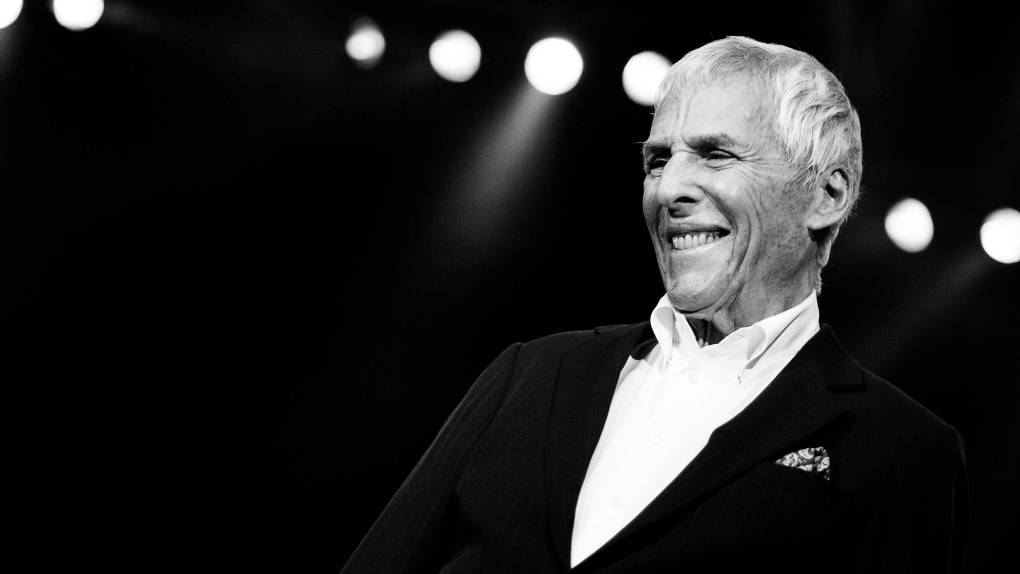
"caption": "Burt Bacharach, American pianist, composer and music producer performs live on stage at the HSBC Brasil on April 20, 2013.",
"description": null,
"title": "BurtBacharach",
"credit": "Mauricio Santana/Getty Images",
"status": "inherit",
"altTag": null,
"isLoading": false,
"fetchFailed": false
},
"arts_13923885": {
"type": "attachments",
"id": "arts_13923885",
"meta": {
"index": "attachments_1716263798",
"site": "arts",
"id": "13923885",
"found": true
},
"parent": 13923883,
"imgSizes": {
"twentyfourteen-full-width": {
"file": "https://ww2.kqed.org/app/uploads/sites/2/2023/01/gettyimages-1152157889_wide-48ba17e8da248ac0593df80d88fffb320ac89111-1-1038x576.jpg",
"width": 1038,
"mimeType": "image/jpeg",
"height": 576
},
"thumbnail": {
"file": "https://ww2.kqed.org/app/uploads/sites/2/2023/01/gettyimages-1152157889_wide-48ba17e8da248ac0593df80d88fffb320ac89111-1-160x90.jpg",
"width": 160,
"mimeType": "image/jpeg",
"height": 90
},
"post-thumbnail": {
"file": "https://ww2.kqed.org/app/uploads/sites/2/2023/01/gettyimages-1152157889_wide-48ba17e8da248ac0593df80d88fffb320ac89111-1-672x372.jpg",
"width": 672,
"mimeType": "image/jpeg",
"height": 372
},
"kqedFullSize": {
"file": "https://ww2.kqed.org/app/uploads/sites/2/2023/01/gettyimages-1152157889_wide-48ba17e8da248ac0593df80d88fffb320ac89111-1-scaled.jpg",
"width": 2560,
"height": 1440
},
"2048x2048": {
"file": "https://ww2.kqed.org/app/uploads/sites/2/2023/01/gettyimages-1152157889_wide-48ba17e8da248ac0593df80d88fffb320ac89111-1-2048x1152.jpg",
"width": 2048,
"mimeType": "image/jpeg",
"height": 1152
},
"large": {
"file": "https://ww2.kqed.org/app/uploads/sites/2/2023/01/gettyimages-1152157889_wide-48ba17e8da248ac0593df80d88fffb320ac89111-1-1020x574.jpg",
"width": 1020,
"mimeType": "image/jpeg",
"height": 574
},
"1536x1536": {
"file": "https://ww2.kqed.org/app/uploads/sites/2/2023/01/gettyimages-1152157889_wide-48ba17e8da248ac0593df80d88fffb320ac89111-1-1536x864.jpg",
"width": 1536,
"mimeType": "image/jpeg",
"height": 864
},
"full-width": {
"file": "https://ww2.kqed.org/app/uploads/sites/2/2023/01/gettyimages-1152157889_wide-48ba17e8da248ac0593df80d88fffb320ac89111-1-1920x1080.jpg",
"width": 1920,
"mimeType": "image/jpeg",
"height": 1080
},
"medium": {
"file": "https://ww2.kqed.org/app/uploads/sites/2/2023/01/gettyimages-1152157889_wide-48ba17e8da248ac0593df80d88fffb320ac89111-1-800x450.jpg",
"width": 800,
"mimeType": "image/jpeg",
"height": 450
},
"medium_large": {
"file": "https://ww2.kqed.org/app/uploads/sites/2/2023/01/gettyimages-1152157889_wide-48ba17e8da248ac0593df80d88fffb320ac89111-1-768x432.jpg",
"width": 768,
"mimeType": "image/jpeg",
"height": 432
}
},
"publishDate": 1674172953,
"modified": 1674173139,
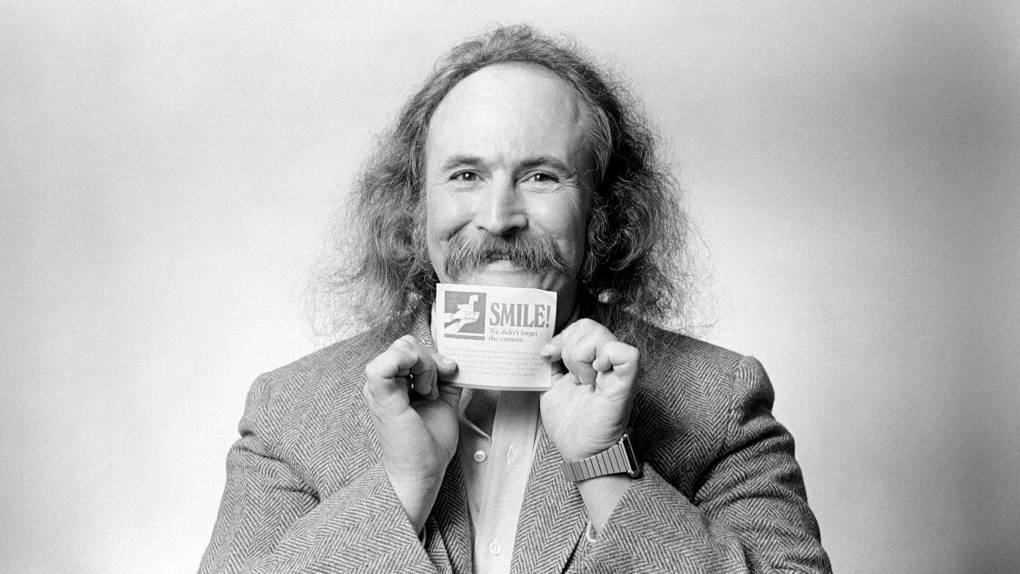
"caption": "David Crosby, photographed in New York on Aug. 3, 1984.",
"description": "David Crosby, photographed in New York on August 3, 1984.",
"title": "David Crosby, photographed in New York on August 3, 1984.",
"credit": "Ebet Roberts/Redferns",
"status": "inherit",
"altTag": "a black and white photo of a middle aged man with long hair and a mustache holding a card that reads 'smile!'",
"isLoading": false,
"fetchFailed": false
},
"arts_13923692": {
"type": "attachments",
"id": "arts_13923692",
"meta": {
"index": "attachments_1716263798",
"site": "arts",
"id": "13923692",
"found": true
},
"parent": 13923691,
"imgSizes": {
"twentyfourteen-full-width": {
"file": "https://ww2.kqed.org/app/uploads/sites/2/2023/01/LisaMarie-1024x576.jpg",
"width": 1024,
"mimeType": "image/jpeg",
"height": 576
},
"thumbnail": {
"file": "https://ww2.kqed.org/app/uploads/sites/2/2023/01/LisaMarie-160x115.jpg",
"width": 160,
"mimeType": "image/jpeg",
"height": 115
},
"post-thumbnail": {
"file": "https://ww2.kqed.org/app/uploads/sites/2/2023/01/LisaMarie-672x372.jpg",
"width": 672,
"mimeType": "image/jpeg",
"height": 372
},
"kqedFullSize": {
"file": "https://ww2.kqed.org/app/uploads/sites/2/2023/01/LisaMarie.jpg",
"width": 1024,
"height": 736
},
"large": {
"file": "https://ww2.kqed.org/app/uploads/sites/2/2023/01/LisaMarie-1020x733.jpg",
"width": 1020,
"mimeType": "image/jpeg",
"height": 733
},
"medium": {
"file": "https://ww2.kqed.org/app/uploads/sites/2/2023/01/LisaMarie-800x575.jpg",
"width": 800,
"mimeType": "image/jpeg",
"height": 575
},
"medium_large": {
"file": "https://ww2.kqed.org/app/uploads/sites/2/2023/01/LisaMarie-768x552.jpg",
"width": 768,
"mimeType": "image/jpeg",
"height": 552
}
},
"publishDate": 1673630971,
"modified": 1673631041,
"caption": "Lisa Marie Presley performs in 2014 to promote her album 'Storm & Grace' at the Blue Note in Tokyo, Japan. ",
"description": null,
"title": "Lisa Marie Presley Promotes New Album 'Storm and Grace'",
"credit": "Jun Sato/WireImage",
"status": "inherit",
"altTag": "A woman in a black dress holding a gold microphone against a black background",
"isLoading": false,
"fetchFailed": false
},
"arts_13923471": {
"type": "attachments",
"id": "arts_13923471",
"meta": {
"index": "attachments_1716263798",
"site": "arts",
"id": "13923471",
"found": true
},
"parent": 13923399,
"imgSizes": {
"twentyfourteen-full-width": {
"file": "https://ww2.kqed.org/app/uploads/sites/2/2023/01/Dave-Schubert-1038x576.jpg",
"width": 1038,
"mimeType": "image/jpeg",
"height": 576
},
"thumbnail": {
"file": "https://ww2.kqed.org/app/uploads/sites/2/2023/01/Dave-Schubert-160x99.jpg",
"width": 160,
"mimeType": "image/jpeg",
"height": 99
},
"post-thumbnail": {
"file": "https://ww2.kqed.org/app/uploads/sites/2/2023/01/Dave-Schubert-672x372.jpg",
"width": 672,
"mimeType": "image/jpeg",
"height": 372
},
"kqedFullSize": {
"file": "https://ww2.kqed.org/app/uploads/sites/2/2023/01/Dave-Schubert-scaled.jpg",
"width": 2560,
"height": 1584
},
"2048x2048": {
"file": "https://ww2.kqed.org/app/uploads/sites/2/2023/01/Dave-Schubert-2048x1267.jpg",
"width": 2048,
"mimeType": "image/jpeg",
"height": 1267
},
"large": {
"file": "https://ww2.kqed.org/app/uploads/sites/2/2023/01/Dave-Schubert-1020x631.jpg",
"width": 1020,
"mimeType": "image/jpeg",
"height": 631
},
"1536x1536": {
"file": "https://ww2.kqed.org/app/uploads/sites/2/2023/01/Dave-Schubert-1536x951.jpg",
"width": 1536,
"mimeType": "image/jpeg",
"height": 951
},
"full-width": {
"file": "https://ww2.kqed.org/app/uploads/sites/2/2023/01/Dave-Schubert-1920x1188.jpg",
"width": 1920,
"mimeType": "image/jpeg",
"height": 1188
},
"medium": {
"file": "https://ww2.kqed.org/app/uploads/sites/2/2023/01/Dave-Schubert-800x495.jpg",
"width": 800,
"mimeType": "image/jpeg",
"height": 495
},
"medium_large": {
"file": "https://ww2.kqed.org/app/uploads/sites/2/2023/01/Dave-Schubert-768x475.jpg",
"width": 768,
"mimeType": "image/jpeg",
"height": 475
}
},
"publishDate": 1673250916,
"modified": 1673294298,
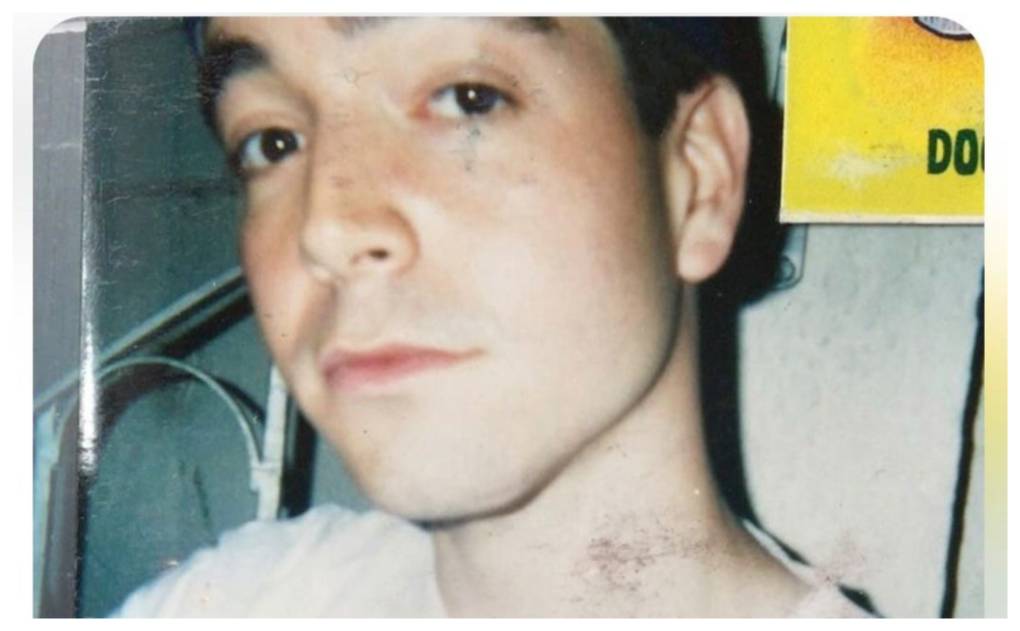
"caption": "Dave Schubert during his formative years studying at SFAI. 'He was always up for anything and had the best smile and smirk,' says friend Lindsay Mapes. 'He captured the most insanely real and raw moments in his images.'",
"description": null,
"title": "Dave Schubert during his formative years studying at SFAI. \"He was always up for anything and had the best smile and smirk,\" says friend Lindsay Mapes. \"He captured the most insanely real and raw moments in his images.\"",
"credit": "Lindsay Mapes",
"status": "inherit",
"altTag": "A man with a strong jawline, brown eyes and docile expression stares into the camera.",
"isLoading": false,
"fetchFailed": false
},
"arts_13923143": {
"type": "attachments",
"id": "arts_13923143",
"meta": {
"index": "attachments_1716263798",
"site": "arts",
"id": "13923143",
"found": true
},
"parent": 13923138,
"imgSizes": {
"twentyfourteen-full-width": {
"file": "https://ww2.kqed.org/app/uploads/sites/2/2022/12/GettyImages-1257366767_COVER-1038x576.jpg",
"width": 1038,
"mimeType": "image/jpeg",
"height": 576
},
"thumbnail": {
"file": "https://ww2.kqed.org/app/uploads/sites/2/2022/12/GettyImages-1257366767_COVER-160x90.jpg",
"width": 160,
"mimeType": "image/jpeg",
"height": 90
},
"post-thumbnail": {
"file": "https://ww2.kqed.org/app/uploads/sites/2/2022/12/GettyImages-1257366767_COVER-672x372.jpg",
"width": 672,
"mimeType": "image/jpeg",
"height": 372
},
"kqedFullSize": {
"file": "https://ww2.kqed.org/app/uploads/sites/2/2022/12/GettyImages-1257366767_COVER.jpg",
"width": 1920,
"height": 1080
},
"large": {
"file": "https://ww2.kqed.org/app/uploads/sites/2/2022/12/GettyImages-1257366767_COVER-1020x574.jpg",
"width": 1020,
"mimeType": "image/jpeg",
"height": 574
},
"1536x1536": {
"file": "https://ww2.kqed.org/app/uploads/sites/2/2022/12/GettyImages-1257366767_COVER-1536x864.jpg",
"width": 1536,
"mimeType": "image/jpeg",
"height": 864
},
"medium": {
"file": "https://ww2.kqed.org/app/uploads/sites/2/2022/12/GettyImages-1257366767_COVER-800x450.jpg",
"width": 800,
"mimeType": "image/jpeg",
"height": 450
},
"medium_large": {
"file": "https://ww2.kqed.org/app/uploads/sites/2/2022/12/GettyImages-1257366767_COVER-768x432.jpg",
"width": 768,
"mimeType": "image/jpeg",
"height": 432
}
},
"publishDate": 1672353386,
"modified": 1672353756,
"caption": "Dame Vivienne Westwood on July 21, 2020 during a protest for Julian Assange at Old Bailey in London.",
"description": null,
"title": "GettyImages-1257366767_COVER",
"credit": "Mike Marsland/WireImage",
"status": "inherit",
"altTag": "Older white woman in colorful baseball cap and yellow blazer smiles open-mouthed",
"isLoading": false,
"fetchFailed": false
},
"arts_13923121": {
"type": "attachments",
"id": "arts_13923121",
"meta": {
"index": "attachments_1716263798",
"site": "arts",
"id": "13923121",
"found": true
},
"parent": 13923120,
"imgSizes": {
"twentyfourteen-full-width": {
"file": "https://ww2.kqed.org/app/uploads/sites/2/2022/12/Pele.pc_-1024x576.jpg",
"width": 1024,
"mimeType": "image/jpeg",
"height": 576
},
"thumbnail": {
"file": "https://ww2.kqed.org/app/uploads/sites/2/2022/12/Pele.pc_-160x102.jpg",
"width": 160,
"mimeType": "image/jpeg",
"height": 102
},
"post-thumbnail": {
"file": "https://ww2.kqed.org/app/uploads/sites/2/2022/12/Pele.pc_-672x372.jpg",
"width": 672,
"mimeType": "image/jpeg",
"height": 372
},
"kqedFullSize": {
"file": "https://ww2.kqed.org/app/uploads/sites/2/2022/12/Pele.pc_.jpg",
"width": 1024,
"height": 653
},
"large": {
"file": "https://ww2.kqed.org/app/uploads/sites/2/2022/12/Pele.pc_-1020x650.jpg",
"width": 1020,
"mimeType": "image/jpeg",
"height": 650
},
"medium": {
"file": "https://ww2.kqed.org/app/uploads/sites/2/2022/12/Pele.pc_-800x510.jpg",
"width": 800,
"mimeType": "image/jpeg",
"height": 510
},
"medium_large": {
"file": "https://ww2.kqed.org/app/uploads/sites/2/2022/12/Pele.pc_-768x490.jpg",
"width": 768,
"mimeType": "image/jpeg",
"height": 490
}
},
"publishDate": 1672341535,
"modified": 1672341622,
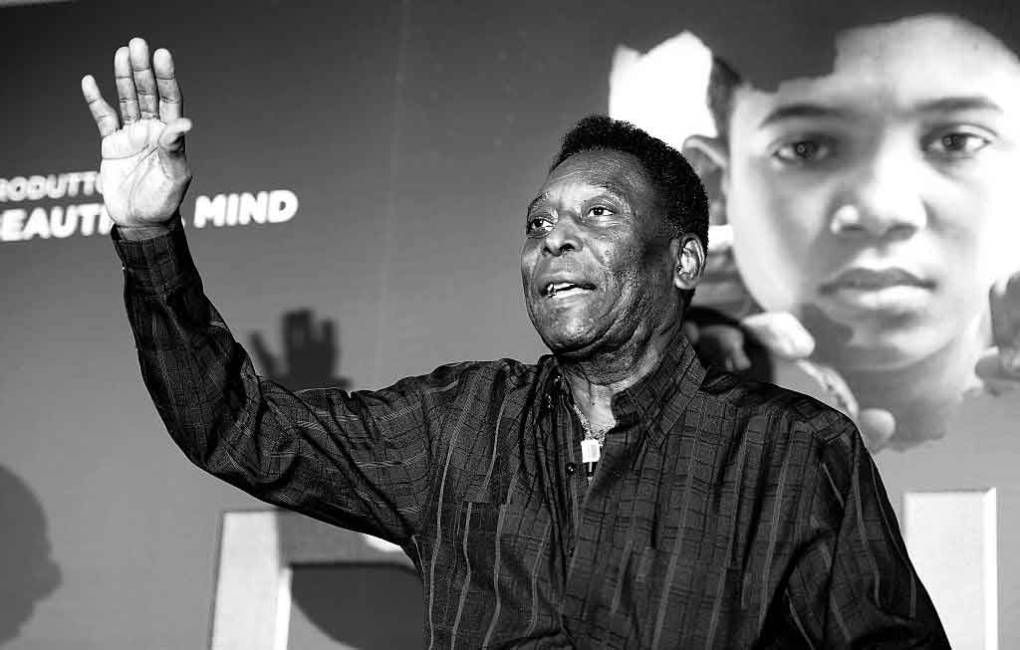
"caption": "Edson Arantes do Nascimento, aka Pele, attends the 'Pele' photocall on May 25, 2016 in Milan, Italy. The giant of the sport died on Thursday at age 82.",
"description": null,
"title": "Pele.pc",
"credit": "Pier Marco Tacca/Getty Images",
"status": "inherit",
"altTag": "A man waves from the stage",
"isLoading": false,
"fetchFailed": false
},
"arts_13922843": {
"type": "attachments",
"id": "arts_13922843",
"meta": {
"index": "attachments_1716263798",
"site": "arts",
"id": "13922843",
"found": true
},
"parent": 13922842,
"imgSizes": {
"twentyfourteen-full-width": {
"file": "https://ww2.kqed.org/app/uploads/sites/2/2022/12/gettyimages-139101001-1e583f2094a79654549e425966495d44aa5a124f-1038x576.jpg",
"width": 1038,
"mimeType": "image/jpeg",
"height": 576
},
"thumbnail": {
"file": "https://ww2.kqed.org/app/uploads/sites/2/2022/12/gettyimages-139101001-1e583f2094a79654549e425966495d44aa5a124f-160x120.jpg",
"width": 160,
"mimeType": "image/jpeg",
"height": 120
},
"post-thumbnail": {
"file": "https://ww2.kqed.org/app/uploads/sites/2/2022/12/gettyimages-139101001-1e583f2094a79654549e425966495d44aa5a124f-672x372.jpg",
"width": 672,
"mimeType": "image/jpeg",
"height": 372
},
"kqedFullSize": {
"file": "https://ww2.kqed.org/app/uploads/sites/2/2022/12/gettyimages-139101001-1e583f2094a79654549e425966495d44aa5a124f-scaled.jpg",
"width": 2560,
"height": 1920
},
"2048x2048": {
"file": "https://ww2.kqed.org/app/uploads/sites/2/2022/12/gettyimages-139101001-1e583f2094a79654549e425966495d44aa5a124f-2048x1536.jpg",
"width": 2048,
"mimeType": "image/jpeg",
"height": 1536
},
"large": {
"file": "https://ww2.kqed.org/app/uploads/sites/2/2022/12/gettyimages-139101001-1e583f2094a79654549e425966495d44aa5a124f-1020x765.jpg",
"width": 1020,
"mimeType": "image/jpeg",
"height": 765
},
"1536x1536": {
"file": "https://ww2.kqed.org/app/uploads/sites/2/2022/12/gettyimages-139101001-1e583f2094a79654549e425966495d44aa5a124f-1536x1152.jpg",
"width": 1536,
"mimeType": "image/jpeg",
"height": 1152
},
"full-width": {
"file": "https://ww2.kqed.org/app/uploads/sites/2/2022/12/gettyimages-139101001-1e583f2094a79654549e425966495d44aa5a124f-1920x1440.jpg",
"width": 1920,
"mimeType": "image/jpeg",
"height": 1440
},
"medium": {
"file": "https://ww2.kqed.org/app/uploads/sites/2/2022/12/gettyimages-139101001-1e583f2094a79654549e425966495d44aa5a124f-800x600.jpg",
"width": 800,
"mimeType": "image/jpeg",
"height": 600
},
"medium_large": {
"file": "https://ww2.kqed.org/app/uploads/sites/2/2022/12/gettyimages-139101001-1e583f2094a79654549e425966495d44aa5a124f-768x576.jpg",
"width": 768,
"mimeType": "image/jpeg",
"height": 576
}
},
"publishDate": 1671472939,
"modified": 1671475550,
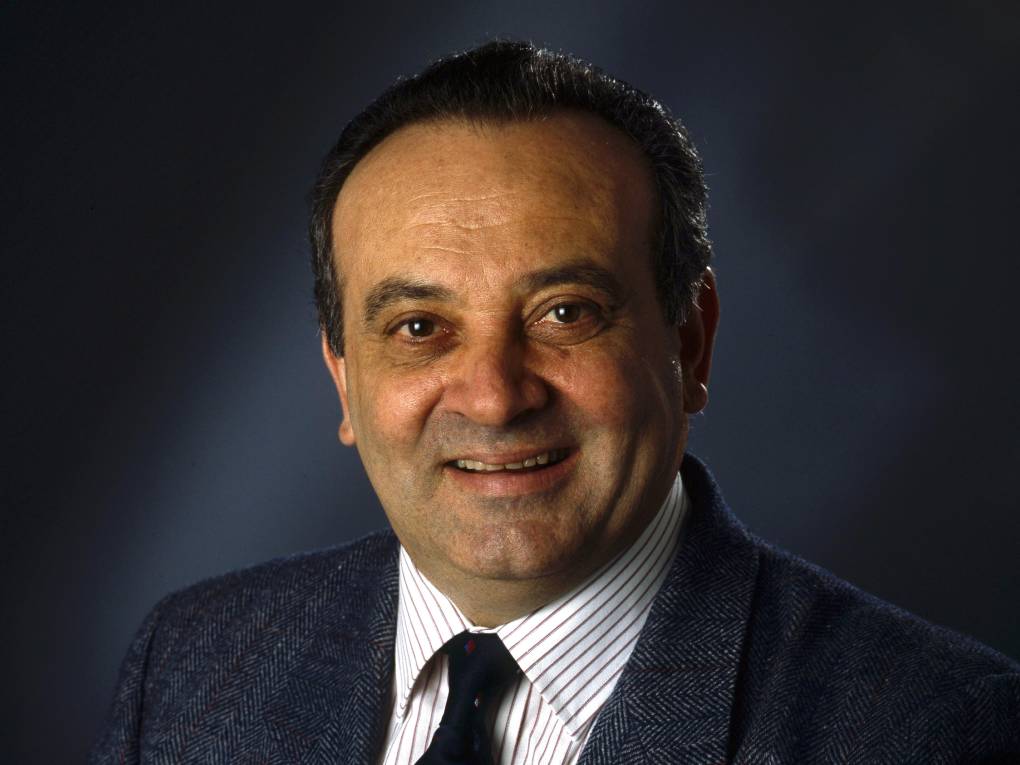
"caption": "Angelo Badalamenti in a portrait taken Feb. 9, 1990. The composer, best known for his work with director David Lynch, died Dec. 11, 2022.",
"description": "TWIN PEAKS - Gallery - Shoot Date: February 9, 1990. (Photo by ABC Photo Archives/Disney General Entertainment Content via Getty Images)\nMUSIC COMPOSER ANGELO BADALAMENTI",
"title": "Angelo Badalamenti in a portrait taken Feb. 9, 1990. The composer, best known for his work with director David Lynch, died Dec. 11, 2022.",
"credit": "ABC Photo Archives/Disney General Entertainment Content via Getty Images",
"status": "inherit",
"altTag": null,
"isLoading": false,
"fetchFailed": false
},
"arts_13922725": {
"type": "attachments",
"id": "arts_13922725",
"meta": {
"index": "attachments_1716263798",
"site": "arts",
"id": "13922725",
"found": true
},
"parent": 13922655,
"imgSizes": {
"twentyfourteen-full-width": {
"file": "https://ww2.kqed.org/app/uploads/sites/2/2022/12/Musicians-2022-edit_COVER_final-1038x576.jpg",
"width": 1038,
"mimeType": "image/jpeg",
"height": 576
},
"thumbnail": {
"file": "https://ww2.kqed.org/app/uploads/sites/2/2022/12/Musicians-2022-edit_COVER_final-160x90.jpg",
"width": 160,
"mimeType": "image/jpeg",
"height": 90
},
"post-thumbnail": {
"file": "https://ww2.kqed.org/app/uploads/sites/2/2022/12/Musicians-2022-edit_COVER_final-672x372.jpg",
"width": 672,
"mimeType": "image/jpeg",
"height": 372
},
"kqedFullSize": {
"file": "https://ww2.kqed.org/app/uploads/sites/2/2022/12/Musicians-2022-edit_COVER_final.jpg",
"width": 1920,
"height": 1080
},
"large": {
"file": "https://ww2.kqed.org/app/uploads/sites/2/2022/12/Musicians-2022-edit_COVER_final-1020x574.jpg",
"width": 1020,
"mimeType": "image/jpeg",
"height": 574
},
"1536x1536": {
"file": "https://ww2.kqed.org/app/uploads/sites/2/2022/12/Musicians-2022-edit_COVER_final-1536x864.jpg",
"width": 1536,
"mimeType": "image/jpeg",
"height": 864
},
"medium": {
"file": "https://ww2.kqed.org/app/uploads/sites/2/2022/12/Musicians-2022-edit_COVER_final-800x450.jpg",
"width": 800,
"mimeType": "image/jpeg",
"height": 450
},
"medium_large": {
"file": "https://ww2.kqed.org/app/uploads/sites/2/2022/12/Musicians-2022-edit_COVER_final-768x432.jpg",
"width": 768,
"mimeType": "image/jpeg",
"height": 432
}
},
"publishDate": 1671069179,
"modified": 1671069212,
"caption": "Clockwise from top left: Muziki Duane Roberson, YouTube; Rich Armstrong, courtesy of the artist; Freddie Hughes, photo by William Mercer McLeod, courtesy of Chris Burn; Richard Hadlock, photo by Andrew Gilbert; Don Lewis, photo courtesy of Julie Lewis; Dave Smith, Wikimedia Commons; Marvin Holmes, photo by Cheryl Fabio; Andrew Speight, photo by Kishore Seshadri, courtesy Stanford Jazz Workshop. ",
"description": null,
"title": "Musicians-2022-edit_COVER_final",
"credit": "Collage by Sarah Hotchkiss/KQED",
"status": "inherit",
"altTag": "a photo collage featuring eight men holding guitars, saxophones and trumpets",
"isLoading": false,
"fetchFailed": false
},
"arts_13922333": {
"type": "attachments",
"id": "arts_13922333",
"meta": {
"index": "attachments_1716263798",
"site": "arts",
"id": "13922333",
"found": true
},
"parent": 13922327,
"imgSizes": {
"thumbnail": {
"file": "https://ww2.kqed.org/app/uploads/sites/2/2022/12/BobMcGrath-160x90.jpg",
"width": 160,
"mimeType": "image/jpeg",
"height": 90
},
"post-thumbnail": {
"file": "https://ww2.kqed.org/app/uploads/sites/2/2022/12/BobMcGrath-672x372.jpg",
"width": 672,
"mimeType": "image/jpeg",
"height": 372
},
"kqedFullSize": {
"file": "https://ww2.kqed.org/app/uploads/sites/2/2022/12/BobMcGrath.jpg",
"width": 1020,
"height": 574
},
"medium": {
"file": "https://ww2.kqed.org/app/uploads/sites/2/2022/12/BobMcGrath-800x450.jpg",
"width": 800,
"mimeType": "image/jpeg",
"height": 450
},
"medium_large": {
"file": "https://ww2.kqed.org/app/uploads/sites/2/2022/12/BobMcGrath-768x432.jpg",
"width": 768,
"mimeType": "image/jpeg",
"height": 432
}
},
"publishDate": 1670260815,
"modified": 1670260875,
"caption": "Bob McGrath, the longtime, original cast member of the iconic children's show 'Sesame Street,' died on Sunday.",
"description": null,
"title": "BobMcGrath",
"credit": "Larry Busacca/Getty Images for AFTRA",
"status": "inherit",
"altTag": null,
"isLoading": false,
"fetchFailed": false
},
"arts_13922066": {
"type": "attachments",
"id": "arts_13922066",
"meta": {
"index": "attachments_1716263798",
"site": "arts",
"id": "13922066",
"found": true
},
"parent": 13922065,
"imgSizes": {
"twentyfourteen-full-width": {
"file": "https://ww2.kqed.org/app/uploads/sites/2/2022/11/AwesomeOrchestra.Alex_-1038x576.jpg",
"width": 1038,
"mimeType": "image/jpeg",
"height": 576
},
"thumbnail": {
"file": "https://ww2.kqed.org/app/uploads/sites/2/2022/11/AwesomeOrchestra.Alex_-160x90.jpg",
"width": 160,
"mimeType": "image/jpeg",
"height": 90
},
"post-thumbnail": {
"file": "https://ww2.kqed.org/app/uploads/sites/2/2022/11/AwesomeOrchestra.Alex_-672x372.jpg",
"width": 672,
"mimeType": "image/jpeg",
"height": 372
},
"kqedFullSize": {
"file": "https://ww2.kqed.org/app/uploads/sites/2/2022/11/AwesomeOrchestra.Alex_.jpg",
"width": 1600,
"height": 900
},
"large": {
"file": "https://ww2.kqed.org/app/uploads/sites/2/2022/11/AwesomeOrchestra.Alex_-1020x574.jpg",
"width": 1020,
"mimeType": "image/jpeg",
"height": 574
},
"1536x1536": {
"file": "https://ww2.kqed.org/app/uploads/sites/2/2022/11/AwesomeOrchestra.Alex_-1536x864.jpg",
"width": 1536,
"mimeType": "image/jpeg",
"height": 864
},
"medium": {
"file": "https://ww2.kqed.org/app/uploads/sites/2/2022/11/AwesomeOrchestra.Alex_-800x450.jpg",
"width": 800,
"mimeType": "image/jpeg",
"height": 450
},
"medium_large": {
"file": "https://ww2.kqed.org/app/uploads/sites/2/2022/11/AwesomeOrchestra.Alex_-768x432.jpg",
"width": 768,
"mimeType": "image/jpeg",
"height": 432
}
},
"publishDate": 1669758049,
"modified": 1669758545,
"caption": "Composer Arturo Rodriguez at Awesöme Orchestra's End-of-Year Concert in 2019.",
"description": null,
"title": "AwesomeOrchestra.Alex",
"credit": "Dave Weiland",
"status": "inherit",
"altTag": "A man in a red shirt stands among an orchestra, with members holding various instruments",
"isLoading": false,
"fetchFailed": false
},
"arts_13921199": {
"type": "attachments",
"id": "arts_13921199",
"meta": {
"index": "attachments_1716263798",
"site": "arts",
"id": "13921199",
"found": true
},
"parent": 13921196,
"imgSizes": {
"twentyfourteen-full-width": {
"file": "https://ww2.kqed.org/app/uploads/sites/2/2022/11/Screen-Shot-2022-11-01-at-6.17.43-PM-1038x576.png",
"width": 1038,
"mimeType": "image/png",
"height": 576
},
"thumbnail": {
"file": "https://ww2.kqed.org/app/uploads/sites/2/2022/11/Screen-Shot-2022-11-01-at-6.17.43-PM-160x95.png",
"width": 160,
"mimeType": "image/png",
"height": 95
},
"post-thumbnail": {
"file": "https://ww2.kqed.org/app/uploads/sites/2/2022/11/Screen-Shot-2022-11-01-at-6.17.43-PM-672x372.png",
"width": 672,
"mimeType": "image/png",
"height": 372
},
"kqedFullSize": {
"file": "https://ww2.kqed.org/app/uploads/sites/2/2022/11/Screen-Shot-2022-11-01-at-6.17.43-PM.png",
"width": 2438,
"height": 1444
},
"2048x2048": {
"file": "https://ww2.kqed.org/app/uploads/sites/2/2022/11/Screen-Shot-2022-11-01-at-6.17.43-PM-2048x1213.png",
"width": 2048,
"mimeType": "image/png",
"height": 1213
},
"large": {
"file": "https://ww2.kqed.org/app/uploads/sites/2/2022/11/Screen-Shot-2022-11-01-at-6.17.43-PM-1020x604.png",
"width": 1020,
"mimeType": "image/png",
"height": 604
},
"1536x1536": {
"file": "https://ww2.kqed.org/app/uploads/sites/2/2022/11/Screen-Shot-2022-11-01-at-6.17.43-PM-1536x910.png",
"width": 1536,
"mimeType": "image/png",
"height": 910
},
"full-width": {
"file": "https://ww2.kqed.org/app/uploads/sites/2/2022/11/Screen-Shot-2022-11-01-at-6.17.43-PM-1920x1137.png",
"width": 1920,
"mimeType": "image/png",
"height": 1137
},
"medium": {
"file": "https://ww2.kqed.org/app/uploads/sites/2/2022/11/Screen-Shot-2022-11-01-at-6.17.43-PM-800x474.png",
"width": 800,
"mimeType": "image/png",
"height": 474
},
"medium_large": {
"file": "https://ww2.kqed.org/app/uploads/sites/2/2022/11/Screen-Shot-2022-11-01-at-6.17.43-PM-768x455.png",
"width": 768,
"mimeType": "image/png",
"height": 455
}
},
"publishDate": 1667351889,
"modified": 1667351994,
"caption": "Julie Powell attends a screening of 'Julie & Julia' at the Paley Center For Media on August 4, 2009 in New York City.",
"description": null,
"title": "Julie Powell attends a screening of 'Julie & Julia' at the Paley Center For Media on August 4, 2009 in New York City.",
"credit": "Astrid Stawiarz/Getty Images",
"status": "inherit",
"altTag": "A smiling white woman with shoulder length brown hair stands next to a movie poster for 'Julie & Julia'. She is wearing a casual blue dress and minimal make-up.",
"isLoading": false,
"fetchFailed": false
},
"arts_13920272": {
"type": "attachments",
"id": "arts_13920272",
"meta": {
"index": "attachments_1716263798",
"site": "arts",
"id": "13920272",
"found": true
},
"parent": 13920271,
"imgSizes": {
"twentyfourteen-full-width": {
"file": "https://ww2.kqed.org/app/uploads/sites/2/2022/10/GettyImages-563564061-1024x576.jpg",
"width": 1024,
"mimeType": "image/jpeg",
"height": 576
},
"thumbnail": {
"file": "https://ww2.kqed.org/app/uploads/sites/2/2022/10/GettyImages-563564061-160x113.jpg",
"width": 160,
"mimeType": "image/jpeg",
"height": 113
},
"post-thumbnail": {
"file": "https://ww2.kqed.org/app/uploads/sites/2/2022/10/GettyImages-563564061-672x372.jpg",
"width": 672,
"mimeType": "image/jpeg",
"height": 372
},
"kqedFullSize": {
"file": "https://ww2.kqed.org/app/uploads/sites/2/2022/10/GettyImages-563564061.jpg",
"width": 1024,
"height": 725
},
"large": {
"file": "https://ww2.kqed.org/app/uploads/sites/2/2022/10/GettyImages-563564061-1020x722.jpg",
"width": 1020,
"mimeType": "image/jpeg",
"height": 722
},
"medium": {
"file": "https://ww2.kqed.org/app/uploads/sites/2/2022/10/GettyImages-563564061-800x566.jpg",
"width": 800,
"mimeType": "image/jpeg",
"height": 566
},
"medium_large": {
"file": "https://ww2.kqed.org/app/uploads/sites/2/2022/10/GettyImages-563564061-768x544.jpg",
"width": 768,
"mimeType": "image/jpeg",
"height": 544
}
},
"publishDate": 1665451731,
"modified": 1665452249,
"caption": "Art Laboe, seen here at his Hollywood offices in 2003. Laboe, a pioneering disc jockey who hosted a syndicated oldies show for decades, died Friday, Oct. 7, 2022. Laboe is credited with helping end segregation in Southern California by organizing live DJ shows at drive-in eateries that attracted whites, Blacks and Latinos who danced to rock-n-roll. He was 97. ",
"description": null,
"title": "ART LABOE is a veteran rock deejay who is still heard on KHHTFM and will be hosting an oldies conce",
"credit": "Gary Friedman/Los Angeles Times via Getty Images",
"status": "inherit",
"altTag": null,
"isLoading": false,
"fetchFailed": false
}
},
"audioPlayerReducer": {
"postId": "stream_live",
"isPaused": true,
"isPlaying": false,
"pfsActive": false,
"pledgeModalIsOpen": true,
"playerDrawerIsOpen": false,
"liveAudioPlayStartedAt": 0,
"liveAudioPlayContext": ""
},
"authorsReducer": {
"byline_arts_13924905": {
"type": "authors",
"id": "byline_arts_13924905",
"meta": {
"override": true
},
"slug": "byline_arts_13924905",
"name": "Hillel Italie, Associated Press",
"isLoading": false
},
"byline_arts_13923883": {
"type": "authors",
"id": "byline_arts_13923883",
"meta": {
"override": true
},
"slug": "byline_arts_13923883",
"name": "Annie Zaleski",
"isLoading": false
},
"byline_arts_13923691": {
"type": "authors",
"id": "byline_arts_13923691",
"meta": {
"override": true
},
"slug": "byline_arts_13923691",
"name": "Kristin M. Hall and Hillel Italie, Associated Press",
"isLoading": false
},
"byline_arts_13923138": {
"type": "authors",
"id": "byline_arts_13923138",
"meta": {
"override": true
},
"slug": "byline_arts_13923138",
"name": "Gregory Katz\u003cbr />Associated Press",
"isLoading": false
},
"byline_arts_13923120": {
"type": "authors",
"id": "byline_arts_13923120",
"meta": {
"override": true
},
"slug": "byline_arts_13923120",
"name": "Tales Azzoni and Mauricio Savarese, Associated Press",
"isLoading": false
},
"byline_arts_13922842": {
"type": "authors",
"id": "byline_arts_13922842",
"meta": {
"override": true
},
"slug": "byline_arts_13922842",
"name": "Meaghan Garvey",
"isLoading": false
},
"byline_arts_13922327": {
"type": "authors",
"id": "byline_arts_13922327",
"meta": {
"override": true
},
"slug": "byline_arts_13922327",
"name": "Emma Bowman",
"isLoading": false
},
"byline_arts_13921196": {
"type": "authors",
"id": "byline_arts_13921196",
"meta": {
"override": true
},
"slug": "byline_arts_13921196",
"name": "Mark Kennedy",
"isLoading": false
},
"byline_arts_13920271": {
"type": "authors",
"id": "byline_arts_13920271",
"meta": {
"override": true
},
"slug": "byline_arts_13920271",
"name": "Christopher Weber, Associated Press",
"isLoading": false
},
"agilbert": {
"type": "authors",
"id": "86",
"meta": {
"index": "authors_1716337520",
"id": "86",
"found": true
},
"name": "Andrew Gilbert",
"firstName": "Andrew",
"lastName": "Gilbert",
"slug": "agilbert",
"email": "jazzscribe@aol.com",
"display_author_email": false,
"staff_mastheads": [],
"title": "KQED Contributor",
"bio": "A Los Angeles native based in the Berkeley area since 1996, Andrew Gilbert covers jazz, international music and dance for KQED's \u003ci>California Report, \u003c/i>the\u003ci> Mercury News\u003c/i>, \u003ci>San Francisco Chronicle\u003c/i>, \u003ci>Berkeleyside.com\u003c/i>, and other publications. He is available for weddings and bar and bat mitzvahs. #jazzscribe",
"avatar": "https://secure.gravatar.com/avatar/d7bcafdbefdd39e9a68f88724ca616eb4e7a5a6bff9cdfb62de652a1e1751471?s=600&d=blank&r=g",
"twitter": null,
"bluesky": null,
"facebook": null,
"instagram": null,
"linkedin": null,
"sites": [
{
"site": "arts",
"roles": [
"Contributor",
"author"
]
},
{
"site": "news",
"roles": [
"author"
]
}
],
"headData": {
"title": "Andrew Gilbert | KQED",
"description": "KQED Contributor",
"ogImgSrc": "https://secure.gravatar.com/avatar/d7bcafdbefdd39e9a68f88724ca616eb4e7a5a6bff9cdfb62de652a1e1751471?s=600&d=blank&r=g",
"twImgSrc": "https://secure.gravatar.com/avatar/d7bcafdbefdd39e9a68f88724ca616eb4e7a5a6bff9cdfb62de652a1e1751471?s=600&d=blank&r=g"
},
"isLoading": false,
"link": "/author/agilbert"
},
"ralexandra": {
"type": "authors",
"id": "11242",
"meta": {
"index": "authors_1716337520",
"id": "11242",
"found": true
},
"name": "Rae Alexandra",
"firstName": "Rae",
"lastName": "Alexandra",
"slug": "ralexandra",
"email": "ralexandra@kqed.org",
"display_author_email": true,
"staff_mastheads": [],
"title": "Reporter/Producer",
"bio": "Rae Alexandra is a Reporter/Producer for KQED Arts & Culture, and the creator/author of the \u003ca href=\"https://www.kqed.org/arts/program/rebel-girls-from-bay-area-history\">Rebel Girls From Bay Area History\u003c/a> and \u003ca href=\"https://www.kqed.org/bizarrebayarea\">Bizarre Bay Area\u003c/a> series. Her debut book, \u003ca href=\"https://citylights.com/politics-current-events-history/unsung-heroines35-women-who-changed/\">Unsung Heroines: 35 Women Who Changed the Bay Area\u003c/a> was published by City Lights in March 2026. In 2023, Rae was awarded an SPJ Excellence in Journalism Award for Arts & Culture. Rae was born and raised in Wales and subsequently — even after two decades in Northern California — still uses phrases that regularly baffle her coworkers.",
"avatar": "https://secure.gravatar.com/avatar/edfee8176c80cc0a382b051190f5341997df378a934a5774dcb0977732dfd401?s=600&d=blank&r=g",
"twitter": null,
"bluesky": null,
"facebook": null,
"instagram": null,
"linkedin": null,
"sites": [
{
"site": "arts",
"roles": [
"subscriber"
]
},
{
"site": "news",
"roles": [
"subscriber"
]
},
{
"site": "pop",
"roles": [
"subscriber"
]
},
{
"site": "bayareabites",
"roles": [
"subscriber"
]
},
{
"site": "science",
"roles": [
"subscriber"
]
}
],
"headData": {
"title": "Rae Alexandra | KQED",
"description": "Reporter/Producer",
"ogImgSrc": "https://secure.gravatar.com/avatar/edfee8176c80cc0a382b051190f5341997df378a934a5774dcb0977732dfd401?s=600&d=blank&r=g",
"twImgSrc": "https://secure.gravatar.com/avatar/edfee8176c80cc0a382b051190f5341997df378a934a5774dcb0977732dfd401?s=600&d=blank&r=g"
},
"isLoading": false,
"link": "/author/ralexandra"
},
"ksong": {
"type": "authors",
"id": "11813",
"meta": {
"index": "authors_1716337520",
"id": "11813",
"found": true
},
"name": "Kristie Song",
"firstName": "Kristie",
"lastName": "Song",
"slug": "ksong",
"email": "ksong@kqed.org",
"display_author_email": false,
"staff_mastheads": [],
"title": "Editorial Intern ",
"bio": "Kristie Song is an Arts & Culture Intern at KQED. She is currently a graduate student at UC Berkeley, where she studies audio and multimedia journalism. Previously, she covered the local community for Oakland North, produced episodes for The Science of Happiness, and served as news director for KUCI, UC Irvine’s radio station. Outside of reporting, she likes drawing comics, listening to angsty rock, and practicing the guitar.",
"avatar": "https://secure.gravatar.com/avatar/c1149e78c3c44f92d4945a8ab0711af6?s=600&d=blank&r=g",
"twitter": null,
"facebook": null,
"instagram": null,
"linkedin": null,
"sites": [
{
"site": "arts",
"roles": [
"editor"
]
}
],
"headData": {
"title": "Kristie Song | KQED",
"description": "Editorial Intern ",
"ogImgSrc": "https://secure.gravatar.com/avatar/c1149e78c3c44f92d4945a8ab0711af6?s=600&d=blank&r=g",
"twImgSrc": "https://secure.gravatar.com/avatar/c1149e78c3c44f92d4945a8ab0711af6?s=600&d=blank&r=g"
},
"isLoading": false,
"link": "/author/ksong"
}
},
"pagesReducer": {
"arts_category_remembrance": {
"type": "terms",
"id": "arts_1564",
"meta": {
"index": "terms_1716263798",
"site": "arts",
"id": "1564",
"score": 13.107925
},
"featImg": null,
"name": "Remembrance",
"description": null,
"taxonomy": "category",
"headData": {
"twImgId": null,
"twTitle": null,
"ogTitle": null,
"ogImgId": null,
"twDescription": null,
"description": null,
"title": "Remembrance Archives | KQED Arts",
"ogDescription": null
},
"ttid": 1576,
"slug": "remembrance",
"isLoading": false,
"title": "Remembrance",
"pageMeta": {
"site": "arts",
"WpPageTemplate": "page-topic-editorial",
"currentPage": 9
},
"blocks": [
{
"blockName": "kqed/post-list",
"attrs": {
"layout": "cardArticle2",
"query": "posts/arts?category=remembrance",
"seeMore": false,
"paginated": true,
"page": 9
}
},
{
"blockName": "kqed/ad"
}
]
}
},
"pfsSessionReducer": {},
"postsReducer": {
"stream_live": {
"type": "live",
"id": "stream_live",
"audioUrl": "https://streams.kqed.org/kqedradio",
"title": "Live Stream",
"excerpt": "Live Stream information currently unavailable.",
"link": "/radio",
"featImg": "",
"label": {
"name": "KQED Live",
"link": "/"
}
},
"stream_kqedNewscast": {
"type": "posts",
"id": "stream_kqedNewscast",
"audioUrl": "https://www.kqed.org/.stream/anon/radio/RDnews/newscast.mp3?_=1",
"title": "KQED Newscast",
"featImg": "",
"label": {
"name": "88.5 FM",
"link": "/"
}
},
"arts_13924905": {
"type": "posts",
"id": "arts_13924905",
"meta": {
"index": "posts_1716263798",
"site": "arts",
"id": "13924905",
"score": null,
"sort": [
1675956124000
]
},
"parent": 0,
"labelTerm": {
"site": "arts"
},
"blocks": [],
"publishDate": 1675956124,
"format": "standard",
"title": "Burt Bacharach, Legendary Composer of Pop Songs, Dies at 94",
"headTitle": "Burt Bacharach, Legendary Composer of Pop Songs, Dies at 94 | KQED",
"content": "\u003cp>Burt Bacharach, the singularly gifted and popular composer and Oscar winner who delighted millions with the quirky arrangements and unforgettable melodies of “Walk on By,” “Do You Know the Way to San Jose” and dozens of other hits, has died at 94.\u003c/p>\n\u003cp>Bacharach died Wednesday at home in Los Angeles of natural causes, publicist Tina Brausam said Thursday.\u003c/p>\n\u003cp>Over the past 70 years, only Lennon-McCartney, Carole King and a handful of others rivaled his genius for instantly catchy songs that remained performed, played and hummed long after they were written. He had a run of top 10 hits from the 1950s into the 21st century, and his music was heard everywhere from movie soundtracks and radios to home stereo systems and iPods, whether “Alfie” and “I Say a Little Prayer” or “I’ll Never Fall in Love Again” and “This Guy’s in Love with You.”\u003c/p>\n\u003cp>https://www.youtube.com/watch?v=7Ifw8JhDBvs\u003c/p>\n\u003cp>Dionne Warwick was his favorite interpreter, but Bacharach, usually in tandem with lyricist Hal David, also created prime material for Aretha Franklin, Dusty Springfield, Tom Jones and many others. Elvis Presley, the Beatles and Frank Sinatra were among the countless artists who covered his songs, with more recent performers who sung or sampled him including White Stripes, Twista and Ashanti. “Walk On By” alone was covered by everyone from Warwick and Isaac Hayes to the British punk band the Stranglers and Cyndi Lauper.\u003c/p>\n\u003cp>[ad fullwidth]\u003c/p>\n\u003cp>Bacharach was both an innovator and throwback, and his career seemed to run parallel to the rock era. He grew up on jazz and classical music and had little taste for rock when he was breaking into the business in the 1950s. His sensibility often seemed more aligned with Tin Pan Alley than with Bob Dylan, John Lennon and other writers who later emerged, but rock composers appreciated the depth of his seemingly old-fashioned sensibility.\u003c/p>\n\u003cp>“The shorthand version of him is that he’s something to do with easy listening,” Elvis Costello, who wrote the 1998 album “Painted from Memory” with Bacharach, said in a 2018 interview with The Associated Press. “It may be agreeable to listen to these songs, but there’s nothing easy about them. Try playing them. Try singing them.”\u003c/p>\n\u003cp>He triumphed in many artforms. He was an eight-time Grammy winner, a prize-winning Broadway composer for “Promises, Promises” and a three-time Oscar winner. He received two Academy Awards in 1970, for the score of “Butch Cassidy and the Sundance Kid” and for the song “Raindrops Keep Fallin’ on My Head” (shared with David). In 1982, he and his then-wife, lyricist Carole Bayer Sager, won Oscars for “Best That You Can Do,” the theme from “Arthur. His other movie soundtracks included “What’s New, Pussycat?”, “Alfie” and the 1967 James Bond spoof “Casino Royale.”\u003c/p>\n\u003cp>Bacharach was well rewarded, and well connected. He was a frequent guest at the White House, whether the president was Republican or Democrat. And in 2012, he was presented the Gershwin Prize by Barack Obama, who had sung a few seconds of “Walk on By” during a campaign appearance.\u003c/p>\n\u003cp>https://www.youtube.com/watch?v=qo8nLMCLT60\u003c/p>\n\u003cp>In his life, and in his music, he stood apart. Fellow songwriter Sammy Cahn liked to joke that the smiling, wavy-haired Bacharach was the first composer he ever knew who didn’t look like a dentist. Bacharach was a “swinger,” as they called such men in his time, whose many romances included actor Angie Dickinson, to whom he was married from 1965-80, and Sager, his wife from 1982-1991.\u003c/p>\n\u003cp>Married four times, he formed his most lasting ties to work. He was a perfectionist who took three weeks to write “Alfie” and might spend hours tweaking a single chord. Sager once observed that Bacharach’s life routines essentially stayed the same — only the wives changed.\u003c/p>\n\u003cp>It began with the melodies — strong yet interspersed with changing rhythms and surprising harmonics. He credited much of his style to his love of bebop and to his classical education, especially under the tutelage of Darius Milhaud, the famed composer. He once played a piece for piano, violin and oboe for Milhaud that contained a melody he was ashamed to have written, as 12-point atonal music was in vogue at the time. Milhaud, who liked the piece, advised the young man, “Never be afraid of the melody.”\u003c/p>\n\u003cp>“That was a great affirmation for me,” Bacharach recalled in 2004.\u003c/p>\n\u003cp>Bacharach was essentially a pop composer, but his songs became hits for country artists (Marty Robbins), rhythm and blues performers (Chuck Jackson), soul (Franklin, Luther Vandross) and synth-pop (Naked Eyes). He reached a new generation of listeners in the 1990s with the help of Costello and others. Mike Myers would recall hearing the sultry “The Look of Love” on the radio and finding fast inspiration for his “Austin Powers” retro spy comedies, in which Bacharach made cameos.\u003c/p>\n\u003cp>In the 21st century, he was still testing new ground, writing his own lyrics and recording with rapper Dr. Dre.\u003c/p>\n\u003cp>He was married to his first wife, Paula Stewart, from 1953-58, and married for a fourth time, to Jane Hansen, in 1993. He is survived by Hansen, as well as his children Oliver, Raleigh and Cristopher, Brausam said. He was preceded in death by his daughter with Dickinson, Nikki Bacharach.\u003c/p>\n\u003cp>https://www.youtube.com/watch?v=-2UpwpTAd8U\u003c/p>\n\u003cp>Bacharach knew the very heights of acclaim, but he remembered himself as a loner growing up, a short and self-conscious boy so uncomfortable with being Jewish he even taunted other Jews. His favorite book as a kid was Ernest Hemingway’s “The Sun Also Rises”; he related to the sexually impotent Jake Barnes, regarding himself as “socially impotent.”\u003c/p>\n\u003cp>He was born in Kansas City, Missouri, but soon moved to New York City. His father was a syndicated columnist, his mother a pianist who encouraged the boy to study music. Although he was more interested in sports, he practiced piano every day after school, not wanting to disappoint his mother. While still a minor, he would sneak into jazz clubs, bearing a fake ID, and hear such greats as Dizzy Gillespie and Count Basie.\u003c/p>\n\u003cp>“They were just so incredibly exciting that all of a sudden, I got into music in a way I never had before,” he recalled in the memoir “Anyone Who Had a Heart,” published in 2013. “What I heard in those clubs turned my head around.”\u003c/p>\n\u003cp>He was a poor student in high school, but managed to gain a spot at the music conservatory at McGill University in Montreal. He wrote his first song at McGill and listened for months to Mel Torme’s “The Christmas Song.” Music also may have saved Bacharach’s life. He was drafted into the Army in the late 1940s and was still on active duty during the Korean War. But officers stateside soon learned of his gifts and wanted him around. When he did go overseas, it was to Germany, where he wrote orchestrations for a recreation center on the local military base.\u003c/p>\n\u003cp>After his discharge, he returned to New York and tried to break into the music business. He had little success at first as a songwriter, but he became a popular arranger and accompanist, touring with Vic Damone, the Ames Brothers and Polly Stewart, who became his first wife. When a friend who had been touring with Marlene Dietrich was unable to make a show in Las Vegas, he asked Bacharach to step in.\u003c/p>\n\u003cp>The young musician and ageless singer quickly clicked and Bacharach traveled the world with her in the late ‘50s and early ‘60s. During each performance, she would introduce him in grand style: “I would like you to meet the man, he’s my arranger, he’s my accompanist, he’s my conductor, and I wish I could say he’s my composer. But that isn’t true. He’s everybody’s composer … Burt Bacharach!”\u003c/p>\n\u003cp>Meanwhile, he had met his ideal songwriter partner — David, as businesslike as Bacharach was mercurial, so domesticated that he would leave each night at 5 to catch the train back to his wife and children on Long Island. Working in a tiny office in Broadway’s celebrated Brill Building, they produced their first million-seller, “Magic Moments,” sung in 1958 by Perry Como. In 1962, they spotted a backup singer for the Drifters, Warwick, who had a “very special kind of grace and elegance,” Bacharach recalled.\u003c/p>\n\u003cp>The trio produced hit after hit, starting with “Don’t Make Me Over” and continuing with “Walk on By,” “I Say a Little Prayer,” “Do You Know the Way to San Jose,” “Trains and Boats and Planes,” “Anyone Who Had a Heart” and more. The songs were as complicated to record as they were easy to hear. Bacharach liked to experiment with time signatures and arrangements, such as having two pianists play on “Walk on By,” their performances just slightly out of synch to give the song “a jagged kind of feeling,” he wrote in his memoir.\u003c/p>\n\u003cp>https://www.youtube.com/watch?v=XieZAjBTkr4\u003c/p>\n\u003cp>Besides Warwick, the Bacharach-David team was producing winners for other performers. Among them: “Make It Easy on Yourself” for Jerry Butler, “What the World Needs Now Is Love” for Jackie DeShannon and “This Guy’s in Love with You” for Herb Alpert.\u003c/p>\n\u003cp>The partnership ended badly with the dismal failure of a 1973 musical remake of “Lost Horizon.” Bacharach became so depressed he isolated himself in his Del Mar vacation home and refused to work.\u003c/p>\n\u003cp>“I didn’t want to write with Hal or anybody,” he told the AP in 2004. Nor did he want to fulfill a commitment to record Warwick. She and David both sued him.\u003c/p>\n\u003cp>Bacharach and David eventually reconciled. When David died in 2012, Bacharach praised him for writing lyrics “like a miniature movie.” Meanwhile, he kept working, vowing never to retire, always believing that a good song could make a difference.\u003c/p>\n\u003cp>“Music softens the heart, makes you feel something if it’s good, brings in emotion that you might not have felt before,” he told the AP in 2018. “It’s a very powerful thing if you’re able to do to it, if you have it in your heart to do something like that.”\u003c/p>\n\u003cp> \u003c/p>\n\u003cp>[ad floatright]\u003c/p>\n\u003cp>\u003cem>The late Associated Press writer Bob Thomas was a contributor to this report from Los Angeles.\u003c/em>\u003c/p>\n\n",
"stats": {
"hasVideo": true,
"hasChartOrMap": false,
"hasAudio": false,
"hasPolis": false,
"wordCount": 1867,
"hasGoogleForm": false,
"hasGallery": false,
"hasHearkenModule": false,
"iframeSrcs": [],
"paragraphCount": 31
},
"modified": 1705005867,
"excerpt": "The man behind \"Walk on By,\" \"Do You Know the Way to San Jose\" and dozens of other hits died at his home in Los Angeles.",
"headData": {
"twImgId": "",
"twTitle": "",
"ogTitle": "",
"ogImgId": "",
"twDescription": "",
"description": "The man behind "Walk on By," "Do You Know the Way to San Jose" and dozens of other hits died at his home in Los Angeles.",
"title": "Burt Bacharach, Legendary Composer of Pop Songs, Dies at 94 | KQED",
"ogDescription": "",
"schema": {
"@context": "https://schema.org",
"@type": "Article",
"headline": "Burt Bacharach, Legendary Composer of Pop Songs, Dies at 94",
"datePublished": "2023-02-09T07:22:04-08:00",
"dateModified": "2024-01-11T12:44:27-08:00",
"image": "https://cdn.kqed.org/wp-content/uploads/2020/02/KQED-OG-Image@1x.png"
}
},
"guestAuthors": [],
"slug": "burt-bacharach-dies-at-94",
"status": "publish",
"templateType": "standard",
"nprByline": "Hillel Italie, Associated Press",
"excludeFromSiteSearch": "Include",
"featuredImageType": "standard",
"sticky": false,
"showOnAuthorArchivePages": "No",
"WpOldSlug": "burt-bacharach-legendary-composer-of-pop-songs-dies-at-94",
"articleAge": "0",
"path": "/arts/13924905/burt-bacharach-dies-at-94",
"audioTrackLength": null,
"parsedContent": [
{
"type": "contentString",
"content": "\u003cdiv class=\"post-body\">\u003cp>\u003cp>Burt Bacharach, the singularly gifted and popular composer and Oscar winner who delighted millions with the quirky arrangements and unforgettable melodies of “Walk on By,” “Do You Know the Way to San Jose” and dozens of other hits, has died at 94.\u003c/p>\n\u003cp>Bacharach died Wednesday at home in Los Angeles of natural causes, publicist Tina Brausam said Thursday.\u003c/p>\n\u003cp>Over the past 70 years, only Lennon-McCartney, Carole King and a handful of others rivaled his genius for instantly catchy songs that remained performed, played and hummed long after they were written. He had a run of top 10 hits from the 1950s into the 21st century, and his music was heard everywhere from movie soundtracks and radios to home stereo systems and iPods, whether “Alfie” and “I Say a Little Prayer” or “I’ll Never Fall in Love Again” and “This Guy’s in Love with You.”\u003c/p>\u003c/p>\u003cp>\u003cspan class='utils-parseShortcode-shortcodes-__youtubeShortcode__embedYoutube'>\n \u003cspan class='utils-parseShortcode-shortcodes-__youtubeShortcode__embedYoutubeInside'>\n \u003ciframe\n loading='lazy'\n class='utils-parseShortcode-shortcodes-__youtubeShortcode__youtubePlayer'\n type='text/html'\n src='//www.youtube.com/embed/7Ifw8JhDBvs'\n title='//www.youtube.com/embed/7Ifw8JhDBvs'\n allowfullscreen='true'\n style='border:0;'>\u003c/iframe>\n \u003c/span>\n \u003c/span>\u003c/p>\u003cp>\u003cp>Dionne Warwick was his favorite interpreter, but Bacharach, usually in tandem with lyricist Hal David, also created prime material for Aretha Franklin, Dusty Springfield, Tom Jones and many others. Elvis Presley, the Beatles and Frank Sinatra were among the countless artists who covered his songs, with more recent performers who sung or sampled him including White Stripes, Twista and Ashanti. “Walk On By” alone was covered by everyone from Warwick and Isaac Hayes to the British punk band the Stranglers and Cyndi Lauper.\u003c/p>\n\u003cp>\u003c/p>\u003c/div>",
"attributes": {
"named": {},
"numeric": []
}
},
{
"type": "component",
"content": "",
"name": "ad",
"attributes": {
"named": {
"label": "fullwidth"
},
"numeric": [
"fullwidth"
]
}
},
{
"type": "contentString",
"content": "\u003cdiv class=\"post-body\">\u003cp>\u003c/p>\n\u003cp>Bacharach was both an innovator and throwback, and his career seemed to run parallel to the rock era. He grew up on jazz and classical music and had little taste for rock when he was breaking into the business in the 1950s. His sensibility often seemed more aligned with Tin Pan Alley than with Bob Dylan, John Lennon and other writers who later emerged, but rock composers appreciated the depth of his seemingly old-fashioned sensibility.\u003c/p>\n\u003cp>“The shorthand version of him is that he’s something to do with easy listening,” Elvis Costello, who wrote the 1998 album “Painted from Memory” with Bacharach, said in a 2018 interview with The Associated Press. “It may be agreeable to listen to these songs, but there’s nothing easy about them. Try playing them. Try singing them.”\u003c/p>\n\u003cp>He triumphed in many artforms. He was an eight-time Grammy winner, a prize-winning Broadway composer for “Promises, Promises” and a three-time Oscar winner. He received two Academy Awards in 1970, for the score of “Butch Cassidy and the Sundance Kid” and for the song “Raindrops Keep Fallin’ on My Head” (shared with David). In 1982, he and his then-wife, lyricist Carole Bayer Sager, won Oscars for “Best That You Can Do,” the theme from “Arthur. His other movie soundtracks included “What’s New, Pussycat?”, “Alfie” and the 1967 James Bond spoof “Casino Royale.”\u003c/p>\n\u003cp>Bacharach was well rewarded, and well connected. He was a frequent guest at the White House, whether the president was Republican or Democrat. And in 2012, he was presented the Gershwin Prize by Barack Obama, who had sung a few seconds of “Walk on By” during a campaign appearance.\u003c/p>\u003c/p>\u003cp>\u003cspan class='utils-parseShortcode-shortcodes-__youtubeShortcode__embedYoutube'>\n \u003cspan class='utils-parseShortcode-shortcodes-__youtubeShortcode__embedYoutubeInside'>\n \u003ciframe\n loading='lazy'\n class='utils-parseShortcode-shortcodes-__youtubeShortcode__youtubePlayer'\n type='text/html'\n src='//www.youtube.com/embed/qo8nLMCLT60'\n title='//www.youtube.com/embed/qo8nLMCLT60'\n allowfullscreen='true'\n style='border:0;'>\u003c/iframe>\n \u003c/span>\n \u003c/span>\u003c/p>\u003cp>\u003cp>In his life, and in his music, he stood apart. Fellow songwriter Sammy Cahn liked to joke that the smiling, wavy-haired Bacharach was the first composer he ever knew who didn’t look like a dentist. Bacharach was a “swinger,” as they called such men in his time, whose many romances included actor Angie Dickinson, to whom he was married from 1965-80, and Sager, his wife from 1982-1991.\u003c/p>\n\u003cp>Married four times, he formed his most lasting ties to work. He was a perfectionist who took three weeks to write “Alfie” and might spend hours tweaking a single chord. Sager once observed that Bacharach’s life routines essentially stayed the same — only the wives changed.\u003c/p>\n\u003cp>It began with the melodies — strong yet interspersed with changing rhythms and surprising harmonics. He credited much of his style to his love of bebop and to his classical education, especially under the tutelage of Darius Milhaud, the famed composer. He once played a piece for piano, violin and oboe for Milhaud that contained a melody he was ashamed to have written, as 12-point atonal music was in vogue at the time. Milhaud, who liked the piece, advised the young man, “Never be afraid of the melody.”\u003c/p>\n\u003cp>“That was a great affirmation for me,” Bacharach recalled in 2004.\u003c/p>\n\u003cp>Bacharach was essentially a pop composer, but his songs became hits for country artists (Marty Robbins), rhythm and blues performers (Chuck Jackson), soul (Franklin, Luther Vandross) and synth-pop (Naked Eyes). He reached a new generation of listeners in the 1990s with the help of Costello and others. Mike Myers would recall hearing the sultry “The Look of Love” on the radio and finding fast inspiration for his “Austin Powers” retro spy comedies, in which Bacharach made cameos.\u003c/p>\n\u003cp>In the 21st century, he was still testing new ground, writing his own lyrics and recording with rapper Dr. Dre.\u003c/p>\n\u003cp>He was married to his first wife, Paula Stewart, from 1953-58, and married for a fourth time, to Jane Hansen, in 1993. He is survived by Hansen, as well as his children Oliver, Raleigh and Cristopher, Brausam said. He was preceded in death by his daughter with Dickinson, Nikki Bacharach.\u003c/p>\u003c/p>\u003cp>\u003cspan class='utils-parseShortcode-shortcodes-__youtubeShortcode__embedYoutube'>\n \u003cspan class='utils-parseShortcode-shortcodes-__youtubeShortcode__embedYoutubeInside'>\n \u003ciframe\n loading='lazy'\n class='utils-parseShortcode-shortcodes-__youtubeShortcode__youtubePlayer'\n type='text/html'\n src='//www.youtube.com/embed/-2UpwpTAd8U'\n title='//www.youtube.com/embed/-2UpwpTAd8U'\n allowfullscreen='true'\n style='border:0;'>\u003c/iframe>\n \u003c/span>\n \u003c/span>\u003c/p>\u003cp>\u003cp>Bacharach knew the very heights of acclaim, but he remembered himself as a loner growing up, a short and self-conscious boy so uncomfortable with being Jewish he even taunted other Jews. His favorite book as a kid was Ernest Hemingway’s “The Sun Also Rises”; he related to the sexually impotent Jake Barnes, regarding himself as “socially impotent.”\u003c/p>\n\u003cp>He was born in Kansas City, Missouri, but soon moved to New York City. His father was a syndicated columnist, his mother a pianist who encouraged the boy to study music. Although he was more interested in sports, he practiced piano every day after school, not wanting to disappoint his mother. While still a minor, he would sneak into jazz clubs, bearing a fake ID, and hear such greats as Dizzy Gillespie and Count Basie.\u003c/p>\n\u003cp>“They were just so incredibly exciting that all of a sudden, I got into music in a way I never had before,” he recalled in the memoir “Anyone Who Had a Heart,” published in 2013. “What I heard in those clubs turned my head around.”\u003c/p>\n\u003cp>He was a poor student in high school, but managed to gain a spot at the music conservatory at McGill University in Montreal. He wrote his first song at McGill and listened for months to Mel Torme’s “The Christmas Song.” Music also may have saved Bacharach’s life. He was drafted into the Army in the late 1940s and was still on active duty during the Korean War. But officers stateside soon learned of his gifts and wanted him around. When he did go overseas, it was to Germany, where he wrote orchestrations for a recreation center on the local military base.\u003c/p>\n\u003cp>After his discharge, he returned to New York and tried to break into the music business. He had little success at first as a songwriter, but he became a popular arranger and accompanist, touring with Vic Damone, the Ames Brothers and Polly Stewart, who became his first wife. When a friend who had been touring with Marlene Dietrich was unable to make a show in Las Vegas, he asked Bacharach to step in.\u003c/p>\n\u003cp>The young musician and ageless singer quickly clicked and Bacharach traveled the world with her in the late ‘50s and early ‘60s. During each performance, she would introduce him in grand style: “I would like you to meet the man, he’s my arranger, he’s my accompanist, he’s my conductor, and I wish I could say he’s my composer. But that isn’t true. He’s everybody’s composer … Burt Bacharach!”\u003c/p>\n\u003cp>Meanwhile, he had met his ideal songwriter partner — David, as businesslike as Bacharach was mercurial, so domesticated that he would leave each night at 5 to catch the train back to his wife and children on Long Island. Working in a tiny office in Broadway’s celebrated Brill Building, they produced their first million-seller, “Magic Moments,” sung in 1958 by Perry Como. In 1962, they spotted a backup singer for the Drifters, Warwick, who had a “very special kind of grace and elegance,” Bacharach recalled.\u003c/p>\n\u003cp>The trio produced hit after hit, starting with “Don’t Make Me Over” and continuing with “Walk on By,” “I Say a Little Prayer,” “Do You Know the Way to San Jose,” “Trains and Boats and Planes,” “Anyone Who Had a Heart” and more. The songs were as complicated to record as they were easy to hear. Bacharach liked to experiment with time signatures and arrangements, such as having two pianists play on “Walk on By,” their performances just slightly out of synch to give the song “a jagged kind of feeling,” he wrote in his memoir.\u003c/p>\u003c/p>\u003cp>\u003cspan class='utils-parseShortcode-shortcodes-__youtubeShortcode__embedYoutube'>\n \u003cspan class='utils-parseShortcode-shortcodes-__youtubeShortcode__embedYoutubeInside'>\n \u003ciframe\n loading='lazy'\n class='utils-parseShortcode-shortcodes-__youtubeShortcode__youtubePlayer'\n type='text/html'\n src='//www.youtube.com/embed/XieZAjBTkr4'\n title='//www.youtube.com/embed/XieZAjBTkr4'\n allowfullscreen='true'\n style='border:0;'>\u003c/iframe>\n \u003c/span>\n \u003c/span>\u003c/p>\u003cp>\u003cp>Besides Warwick, the Bacharach-David team was producing winners for other performers. Among them: “Make It Easy on Yourself” for Jerry Butler, “What the World Needs Now Is Love” for Jackie DeShannon and “This Guy’s in Love with You” for Herb Alpert.\u003c/p>\n\u003cp>The partnership ended badly with the dismal failure of a 1973 musical remake of “Lost Horizon.” Bacharach became so depressed he isolated himself in his Del Mar vacation home and refused to work.\u003c/p>\n\u003cp>“I didn’t want to write with Hal or anybody,” he told the AP in 2004. Nor did he want to fulfill a commitment to record Warwick. She and David both sued him.\u003c/p>\n\u003cp>Bacharach and David eventually reconciled. When David died in 2012, Bacharach praised him for writing lyrics “like a miniature movie.” Meanwhile, he kept working, vowing never to retire, always believing that a good song could make a difference.\u003c/p>\n\u003cp>“Music softens the heart, makes you feel something if it’s good, brings in emotion that you might not have felt before,” he told the AP in 2018. “It’s a very powerful thing if you’re able to do to it, if you have it in your heart to do something like that.”\u003c/p>\n\u003cp> \u003c/p>\n\u003cp>\u003c/p>\u003c/div>",
"attributes": {
"named": {},
"numeric": []
}
},
{
"type": "component",
"content": "",
"name": "ad",
"attributes": {
"named": {
"label": "floatright"
},
"numeric": [
"floatright"
]
}
},
{
"type": "contentString",
"content": "\u003cdiv class=\"post-body\">\u003cp>\u003c/p>\n\u003cp>\u003cem>The late Associated Press writer Bob Thomas was a contributor to this report from Los Angeles.\u003c/em>\u003c/p>\n\n\u003c/div>\u003c/p>",
"attributes": {
"named": {},
"numeric": []
}
}
],
"link": "/arts/13924905/burt-bacharach-dies-at-94",
"authors": [
"byline_arts_13924905"
],
"categories": [
"arts_1",
"arts_69",
"arts_235",
"arts_75",
"arts_1564"
],
"tags": [
"arts_10278",
"arts_1091"
],
"featImg": "arts_13924906",
"label": "arts"
},
"arts_13923883": {
"type": "posts",
"id": "arts_13923883",
"meta": {
"index": "posts_1716263798",
"site": "arts",
"id": "13923883",
"score": null,
"sort": [
1674173489000
]
},
"guestAuthors": [],
"slug": "crosby-stills-nash-co-founder-david-crosby-has-died-at-81",
"title": "Crosby, Stills & Nash Co-Founder David Crosby Has Died at 81",
"publishDate": 1674173489,
"format": "standard",
"headTitle": "Crosby, Stills & Nash Co-Founder David Crosby Has Died at 81 | KQED",
"labelTerm": {
"term": 10778,
"site": "arts"
},
"content": "\u003cp>\u003ca href=\"https://www.npr.org/artists/15396847/david-crosby\">David Crosby\u003c/a>, a prominent figure of the free-spirited 1970s Laurel Canyon scene who helped bring folk-rock mainstream with both \u003ca href=\"https://www.npr.org/artists/15786738/the-byrds\">The Byrds\u003c/a> and \u003ca href=\"https://www.npr.org/artists/104401754/crosby-stills-nash\">Crosby, Stills & Nash\u003c/a>, has died at 81. His publicist Michael Jensen confirmed the artist’s death to NPR; no cause of death was given.\u003c/p>\n\u003cp>Crosby had long dealt with serious health problems, including multiple heart attacks, diabetes and hepatitis C, for which he had a liver transplant in 1994. In spite of those challenges, the veteran musician enjoyed a creative hot streak in recent years. He added five solo albums to his catalog between 2014 and 2021, and toured frequently with two sets of collaborators, the Lighthouse Band (which featured \u003ca href=\"https://www.npr.org/artists/474878869/snarky-puppy\">Snarky Puppy\u003c/a> bandleader Michael League) and the Sky Trails Band, featuring his son, James Raymond, on keyboards.\u003c/p>\n\u003cp>Crosby’s focus on touring stretched all the way back to his early professional days, when he was a nomadic folk musician honing his performance skills on the road. In the late 1950s, Crosby started performing at coffeehouses in Santa Barbara, Calif., but soon began traveling around the U.S., popping up in southern Florida, Chicago and Boulder, Colo. Crosby also spent a formative period in Greenwich Village, where he teamed up to play at the then-new Bitter End with Chicago musician Terry Callier.\u003c/p>\n\u003cp>[ad fullwidth]\u003c/p>\n\u003cp>His long and successful solo career notwithstanding, Crosby thrived on collaboration — a trait he discovered as a young child, after being mesmerized by a symphony orchestra performance. “The idea of cooperative effort to make something bigger than any one person could ever do was stuck in my head,” he wrote in his 1988 autobiography, \u003cem>Long Time Gone\u003c/em>. “That’s why I love being a harmony singer, why I love being in a group.”\u003c/p>\n\u003cp>Crosby’s first big successes came as a founding member of expansive California country-folk troupe The Byrds. The group hit its commercial peak during his tenure, earning two No. 1 singles — covers of \u003ca href=\"https://www.npr.org/artists/15869924/pete-seeger\">Pete Seeger\u003c/a>’s “Turn! Turn! Turn!” and \u003ca href=\"https://www.npr.org/artists/15193203/bob-dylan\">Bob Dylan\u003c/a>’s ‘Mr. Tambourine Man’ — and reaching the Top 20 with the stormy classic “Eight Miles High.” Crosby co-wrote the latter, and penned several other memorable Byrds songs, including the lilting, jangly “Lady Friend.” He was instrumental in helping the group develop its harmony-rich vocal approach and kaleidoscopic sound, which incorporated psychedelic rock, jazz and twangy folk, and has taken credit for introducing bandmate \u003ca href=\"https://www.npr.org/artists/16269974/roger-mcguinn\">Roger McGuinn\u003c/a> to the music of \u003ca href=\"https://www.npr.org/artists/15394783/john-coltrane\">John Coltrane\u003c/a> and \u003ca href=\"https://www.npr.org/artists/17093771/ravi-shankar\">Ravi Shankar\u003c/a>.\u003c/p>\n\u003cp>In 1967, Crosby was fired from the Byrds over growing personality and creative conflicts (although he later returned to produce and perform on 1973’s \u003cem>Byrds\u003c/em>). At loose ends, he immersed himself in sailing, one of his childhood passions, buying a schooner for $25,000 with money borrowed from The Monkees’ Peter Tork. The boat would be a source of solace and inspiration for decades; he wrote songs including “Wooden Ships,” “The Lee Shore” and “Page 43” while on board.\u003c/p>\n\u003cp>https://www.youtube.com/watch?v=-ZZYXlJ8-k0\u003c/p>\n\u003cp>Crosby was born on Aug. 14, 1941, and grew up in Southern California. His father was cinematographer Floyd Crosby, who won an Academy Award for his work on 1931’s \u003cem>Tabu: A Story of the South Seas\u003c/em>, as well as a Golden Globe for cinematography for 1952’s \u003cem>High Noon\u003c/em>. (Crosby himself influenced another notable corner of Hollywood: He often \u003ca href=\"https://twitter.com/thedavidcrosby/status/1018631062279221248\">said\u003c/a> that Dennis Hopper took inspiration from his look and attitude for 1969’s \u003cem>Easy Rider\u003c/em>.)\u003c/p>\n\u003cp>As a kid, Crosby fell hard for \u003ca href=\"https://www.npr.org/artists/15181907/the-everly-brothers\">The Everly Brothers\u003c/a>, the genesis of his lifelong fascination with close harmony, further cemented by his family’s regular sing-along sessions. His older brother, Ethan, introduced him to jazz, a genre he would touch on throughout his career, including with his late ‘90s/early ‘00s band CPR and on a ruminative 2017 solo album, \u003cem>Sky Trails.\u003c/em>\u003c/p>\n\u003cp>Crosby’s formative influences became more prominent in his partnership with \u003ca href=\"https://www.npr.org/artists/15399328/stephen-stills\">Stephen Stills\u003c/a> and \u003ca href=\"https://www.npr.org/artists/15412309/graham-nash\">Graham Nash\u003c/a>, with whom he explored novel ways of expressing harmony. In \u003cem>Long Time Gone\u003c/em>, Crosby deconstructs the group’s unique vocal approach with typical concision, noting the group sang “nonparallel stuff” influenced by classical music, late ‘50s and early ‘60s jazz and the Everlys. “I did some of my very best work being subtle, moving the middle part around in internal shifts that kept it happening,” he wrote.\u003c/p>\n\u003cp>Crosby’s ocean-clear tenor meshed seamlessly with the voices of Stills and Nash in hushed and haunting ways, particularly on his own “Guinnevere.” His songwriting contributions pushed the band in new directions — in particular, the rhythmic cadences of “Déjà Vu” and the loose arrangements and boho instrumental tone of “Wooden Ships.”\u003c/p>\n\u003cp>As a trio, Crosby, Stills and Nash was both commercially and critically adored. Its self-titled 1969 debut led to an performance at Woodstock and Grammy for best new artist, while 1970’s \u003cem>Déjà Vu \u003c/em>— by which point Neil Young had joined, adding another letter to the band’s name — touched on both the comforts of tradition and the seismic generational shifts that were underway. Months after \u003cem>Déjà Vu\u003c/em>‘s release, CSNY would become a leading voice of the nation’s anti-war movement, recording the Young-penned “Ohio” in response to the May 1970 shooting of four students at Kent State University. His 1971 solo album, \u003cem>If I Could Only Remember My Name\u003c/em>, a sprawling psych-folk touchstone offering studio intricacy and experimental gambits, further illuminated his off-the-beaten-path outlook.\u003c/p>\n\u003cfigure id=\"attachment_13923886\" class=\"wp-caption aligncenter\" style=\"max-width: 800px\">\u003ca href=\"https://ww2.kqed.org/app/uploads/sites/2/2023/01/gettyimages-84998940-518b363ab923d686c2a7d69e650a00333f4f641a-scaled.jpg\">\u003cimg loading=\"lazy\" decoding=\"async\" class=\"size-medium wp-image-13923886\" src=\"https://ww2.kqed.org/app/uploads/sites/2/2023/01/gettyimages-84998940-518b363ab923d686c2a7d69e650a00333f4f641a-800x600.jpg\" alt=\"a four-piece band of white men with long hair record music in a studio in the 1970s\" width=\"800\" height=\"600\" srcset=\"https://cdn.kqed.org/wp-content/uploads/sites/2/2023/01/gettyimages-84998940-518b363ab923d686c2a7d69e650a00333f4f641a-800x600.jpg 800w, https://cdn.kqed.org/wp-content/uploads/sites/2/2023/01/gettyimages-84998940-518b363ab923d686c2a7d69e650a00333f4f641a-1020x765.jpg 1020w, https://cdn.kqed.org/wp-content/uploads/sites/2/2023/01/gettyimages-84998940-518b363ab923d686c2a7d69e650a00333f4f641a-160x120.jpg 160w, https://cdn.kqed.org/wp-content/uploads/sites/2/2023/01/gettyimages-84998940-518b363ab923d686c2a7d69e650a00333f4f641a-768x576.jpg 768w, https://cdn.kqed.org/wp-content/uploads/sites/2/2023/01/gettyimages-84998940-518b363ab923d686c2a7d69e650a00333f4f641a-1536x1152.jpg 1536w, https://cdn.kqed.org/wp-content/uploads/sites/2/2023/01/gettyimages-84998940-518b363ab923d686c2a7d69e650a00333f4f641a-2048x1536.jpg 2048w, https://cdn.kqed.org/wp-content/uploads/sites/2/2023/01/gettyimages-84998940-518b363ab923d686c2a7d69e650a00333f4f641a-1920x1440.jpg 1920w\" sizes=\"(max-width: 800px) 100vw, 800px\">\u003c/a>\u003cfigcaption class=\"wp-caption-text\">Crosby, Stills, Nash & Young recording in 1970. \u003ccite>(RB/Redferns)\u003c/cite>\u003c/figcaption>\u003c/figure>\n\u003cp>Over the years, Crosby — who was inducted into the Rock & Roll Hall of Fame twice, as a member of the Byrds and CSN — continued performing with various collaborators, with Graham Nash serving as his steadiest foil well into the mid-2010s. Ever opinionated and brutally honest, he was an open book about his personal flaws and failings, as well as how he felt about his peers. This no-nonsense personality made him both endearing and prickly, especially as a bandmate — CSNY’s internal conflicts and disagreements were legendary.\u003c/p>\n\u003cp>But also, much later and perhaps surprisingly, it made him a natural for the concise and quippy nature of Twitter. Crosby shared wide-ranging thoughts about politics and music on the site, and answered fan questions, both about his own career (he told one fan he “was not the right guy for the job” to when asked whether it was true that he was supposed to have worked on Leonard Cohen’s second album) and about those in his orbit (“Was Jerry Garcia a tenor?”\u003ca href=\"https://twitter.com/thedavidcrosby/status/961950937051877376\"> Answer\u003c/a>: “Tenor/baritone.”). Such lovable terseness even landed him \u003ca href=\"https://www.rollingstone.com/t/ask-croz/\">an advice column\u003c/a> in \u003cem>Rolling Stone\u003c/em>.\u003c/p>\n\u003cp>Crosby’s career was marked by countless reinventions and second chances. Years of well-documented substance abuse led to tumultuous relationships in and out of music, multiple arrests and even a nine-month stint in a Texas prison in the ‘80s. Remarkably, his voice remained strong and unweathered, a fact Crosby himself found inexplicable, as he explained to Cameron Crowe in the 2019 documentary \u003cem>David Crosby: Remember My Name\u003c/em>. Yet the film also reflected plenty of humility, portraying a musician facing his mortality by trying not to dwell on the past.\u003c/p>\n\u003cp>“I’ve hurt a lot of people,” \u003ca href=\"https://www.wbur.org/hereandnow/2019/07/18/remember-my-name-david-crosby\">Crosby told \u003cem>Here & Now\u003c/em>\u003c/a>, the midday news show from NPR and WBUR, in 2019. “I’ve helped a lot more. I just have to be able to look at it and understand it and learn from it. I’m not beating myself up about any of it. Truthfully, I’m actually pretty happy with the guy I am now. I’m trying real hard to be a decent human being. And I like it.”\u003c/p>\n\u003cdiv class=\"fullattribution\">\u003cem>Copyright 2023 NPR. To see more, \u003ca href=\"https://www.npr.org\" target=\"_blank\" rel=\"noopener noreferrer\">visit NPR\u003c/a>.\u003cimg decoding=\"async\" src=\"https://www.google-analytics.com/__utm.gif?utmac=UA-5828686-4&utmdt=Crosby%2C+Stills+%26+Nash+co-founder+David+Crosby+has+died+at+81&utme=8(APIKey)9(MDAxOTAwOTE4MDEyMTkxMDAzNjczZDljZA004)\">\u003c/em>\u003c/div>\n\u003cp>[ad floatright]\u003c/p>\n",
"blocks": [],
"excerpt": "Crosby was a prominent figure of the free-spirited 1970s Laurel Canyon scene who helped bring folk-rock mainstream.",
"status": "publish",
"parent": 0,
"modified": 1726759114,
"stats": {
"hasAudio": false,
"hasVideo": true,
"hasChartOrMap": false,
"iframeSrcs": [],
"hasGoogleForm": false,
"hasGallery": false,
"hasHearkenModule": false,
"hasPolis": false,
"paragraphCount": 17,
"wordCount": 1380
},
"headData": {
"title": "Crosby, Stills & Nash Co-Founder David Crosby Has Died at 81 | KQED",
"description": "Crosby was a prominent figure of the free-spirited 1970s Laurel Canyon scene who helped bring folk-rock mainstream.",
"ogTitle": "",
"ogDescription": "",
"ogImgId": "",
"twTitle": "",
"twDescription": "",
"twImgId": "",
"schema": {
"@context": "https://schema.org",
"@type": "Article",
"headline": "Crosby, Stills & Nash Co-Founder David Crosby Has Died at 81",
"datePublished": "2023-01-19T16:11:29-08:00",
"dateModified": "2024-09-19T08:18:34-07:00",
"image": "https://cdn.kqed.org/wp-content/uploads/2020/02/KQED-OG-Image@1x.png"
}
},
"sticky": false,
"nprImageCredit": "Ebet Roberts",
"nprByline": "Annie Zaleski",
"nprImageAgency": "Redferns",
"nprStoryId": "750902962",
"nprApiLink": "http://api.npr.org/query?id=750902962&apiKey=MDAxOTAwOTE4MDEyMTkxMDAzNjczZDljZA004",
"nprHtmlLink": "https://www.npr.org/2023/01/19/750902962/david-crosby-obituary?ft=nprml&f=750902962",
"nprRetrievedStory": "1",
"nprPubDate": "Thu, 19 Jan 2023 19:01:00 -0500",
"nprStoryDate": "Thu, 19 Jan 2023 18:51:16 -0500",
"nprLastModifiedDate": "Thu, 19 Jan 2023 19:01:45 -0500",
"templateType": "standard",
"featuredImageType": "standard",
"excludeFromSiteSearch": "Include",
"showOnAuthorArchivePages": "No",
"articleAge": "0",
"path": "/arts/13923883/crosby-stills-nash-co-founder-david-crosby-has-died-at-81",
"audioTrackLength": null,
"parsedContent": [
{
"type": "contentString",
"content": "\u003cdiv class=\"post-body\">\u003cp>\u003cp>\u003ca href=\"https://www.npr.org/artists/15396847/david-crosby\">David Crosby\u003c/a>, a prominent figure of the free-spirited 1970s Laurel Canyon scene who helped bring folk-rock mainstream with both \u003ca href=\"https://www.npr.org/artists/15786738/the-byrds\">The Byrds\u003c/a> and \u003ca href=\"https://www.npr.org/artists/104401754/crosby-stills-nash\">Crosby, Stills & Nash\u003c/a>, has died at 81. His publicist Michael Jensen confirmed the artist’s death to NPR; no cause of death was given.\u003c/p>\n\u003cp>Crosby had long dealt with serious health problems, including multiple heart attacks, diabetes and hepatitis C, for which he had a liver transplant in 1994. In spite of those challenges, the veteran musician enjoyed a creative hot streak in recent years. He added five solo albums to his catalog between 2014 and 2021, and toured frequently with two sets of collaborators, the Lighthouse Band (which featured \u003ca href=\"https://www.npr.org/artists/474878869/snarky-puppy\">Snarky Puppy\u003c/a> bandleader Michael League) and the Sky Trails Band, featuring his son, James Raymond, on keyboards.\u003c/p>\n\u003cp>Crosby’s focus on touring stretched all the way back to his early professional days, when he was a nomadic folk musician honing his performance skills on the road. In the late 1950s, Crosby started performing at coffeehouses in Santa Barbara, Calif., but soon began traveling around the U.S., popping up in southern Florida, Chicago and Boulder, Colo. Crosby also spent a formative period in Greenwich Village, where he teamed up to play at the then-new Bitter End with Chicago musician Terry Callier.\u003c/p>\n\u003cp>\u003c/p>\u003c/div>",
"attributes": {
"named": {},
"numeric": []
}
},
{
"type": "component",
"content": "",
"name": "ad",
"attributes": {
"named": {
"label": "fullwidth"
},
"numeric": [
"fullwidth"
]
}
},
{
"type": "contentString",
"content": "\u003cdiv class=\"post-body\">\u003cp>\u003c/p>\n\u003cp>His long and successful solo career notwithstanding, Crosby thrived on collaboration — a trait he discovered as a young child, after being mesmerized by a symphony orchestra performance. “The idea of cooperative effort to make something bigger than any one person could ever do was stuck in my head,” he wrote in his 1988 autobiography, \u003cem>Long Time Gone\u003c/em>. “That’s why I love being a harmony singer, why I love being in a group.”\u003c/p>\n\u003cp>Crosby’s first big successes came as a founding member of expansive California country-folk troupe The Byrds. The group hit its commercial peak during his tenure, earning two No. 1 singles — covers of \u003ca href=\"https://www.npr.org/artists/15869924/pete-seeger\">Pete Seeger\u003c/a>’s “Turn! Turn! Turn!” and \u003ca href=\"https://www.npr.org/artists/15193203/bob-dylan\">Bob Dylan\u003c/a>’s ‘Mr. Tambourine Man’ — and reaching the Top 20 with the stormy classic “Eight Miles High.” Crosby co-wrote the latter, and penned several other memorable Byrds songs, including the lilting, jangly “Lady Friend.” He was instrumental in helping the group develop its harmony-rich vocal approach and kaleidoscopic sound, which incorporated psychedelic rock, jazz and twangy folk, and has taken credit for introducing bandmate \u003ca href=\"https://www.npr.org/artists/16269974/roger-mcguinn\">Roger McGuinn\u003c/a> to the music of \u003ca href=\"https://www.npr.org/artists/15394783/john-coltrane\">John Coltrane\u003c/a> and \u003ca href=\"https://www.npr.org/artists/17093771/ravi-shankar\">Ravi Shankar\u003c/a>.\u003c/p>\n\u003cp>In 1967, Crosby was fired from the Byrds over growing personality and creative conflicts (although he later returned to produce and perform on 1973’s \u003cem>Byrds\u003c/em>). At loose ends, he immersed himself in sailing, one of his childhood passions, buying a schooner for $25,000 with money borrowed from The Monkees’ Peter Tork. The boat would be a source of solace and inspiration for decades; he wrote songs including “Wooden Ships,” “The Lee Shore” and “Page 43” while on board.\u003c/p>\u003c/p>\u003cp>\u003cspan class='utils-parseShortcode-shortcodes-__youtubeShortcode__embedYoutube'>\n \u003cspan class='utils-parseShortcode-shortcodes-__youtubeShortcode__embedYoutubeInside'>\n \u003ciframe\n loading='lazy'\n class='utils-parseShortcode-shortcodes-__youtubeShortcode__youtubePlayer'\n type='text/html'\n src='//www.youtube.com/embed/-ZZYXlJ8-k0'\n title='//www.youtube.com/embed/-ZZYXlJ8-k0'\n allowfullscreen='true'\n style='border:0;'>\u003c/iframe>\n \u003c/span>\n \u003c/span>\u003c/p>\u003cp>\u003cp>Crosby was born on Aug. 14, 1941, and grew up in Southern California. His father was cinematographer Floyd Crosby, who won an Academy Award for his work on 1931’s \u003cem>Tabu: A Story of the South Seas\u003c/em>, as well as a Golden Globe for cinematography for 1952’s \u003cem>High Noon\u003c/em>. (Crosby himself influenced another notable corner of Hollywood: He often \u003ca href=\"https://twitter.com/thedavidcrosby/status/1018631062279221248\">said\u003c/a> that Dennis Hopper took inspiration from his look and attitude for 1969’s \u003cem>Easy Rider\u003c/em>.)\u003c/p>\n\u003cp>As a kid, Crosby fell hard for \u003ca href=\"https://www.npr.org/artists/15181907/the-everly-brothers\">The Everly Brothers\u003c/a>, the genesis of his lifelong fascination with close harmony, further cemented by his family’s regular sing-along sessions. His older brother, Ethan, introduced him to jazz, a genre he would touch on throughout his career, including with his late ‘90s/early ‘00s band CPR and on a ruminative 2017 solo album, \u003cem>Sky Trails.\u003c/em>\u003c/p>\n\u003cp>Crosby’s formative influences became more prominent in his partnership with \u003ca href=\"https://www.npr.org/artists/15399328/stephen-stills\">Stephen Stills\u003c/a> and \u003ca href=\"https://www.npr.org/artists/15412309/graham-nash\">Graham Nash\u003c/a>, with whom he explored novel ways of expressing harmony. In \u003cem>Long Time Gone\u003c/em>, Crosby deconstructs the group’s unique vocal approach with typical concision, noting the group sang “nonparallel stuff” influenced by classical music, late ‘50s and early ‘60s jazz and the Everlys. “I did some of my very best work being subtle, moving the middle part around in internal shifts that kept it happening,” he wrote.\u003c/p>\n\u003cp>Crosby’s ocean-clear tenor meshed seamlessly with the voices of Stills and Nash in hushed and haunting ways, particularly on his own “Guinnevere.” His songwriting contributions pushed the band in new directions — in particular, the rhythmic cadences of “Déjà Vu” and the loose arrangements and boho instrumental tone of “Wooden Ships.”\u003c/p>\n\u003cp>As a trio, Crosby, Stills and Nash was both commercially and critically adored. Its self-titled 1969 debut led to an performance at Woodstock and Grammy for best new artist, while 1970’s \u003cem>Déjà Vu \u003c/em>— by which point Neil Young had joined, adding another letter to the band’s name — touched on both the comforts of tradition and the seismic generational shifts that were underway. Months after \u003cem>Déjà Vu\u003c/em>‘s release, CSNY would become a leading voice of the nation’s anti-war movement, recording the Young-penned “Ohio” in response to the May 1970 shooting of four students at Kent State University. His 1971 solo album, \u003cem>If I Could Only Remember My Name\u003c/em>, a sprawling psych-folk touchstone offering studio intricacy and experimental gambits, further illuminated his off-the-beaten-path outlook.\u003c/p>\n\u003cfigure id=\"attachment_13923886\" class=\"wp-caption aligncenter\" style=\"max-width: 800px\">\u003ca href=\"https://ww2.kqed.org/app/uploads/sites/2/2023/01/gettyimages-84998940-518b363ab923d686c2a7d69e650a00333f4f641a-scaled.jpg\">\u003cimg loading=\"lazy\" decoding=\"async\" class=\"size-medium wp-image-13923886\" src=\"https://ww2.kqed.org/app/uploads/sites/2/2023/01/gettyimages-84998940-518b363ab923d686c2a7d69e650a00333f4f641a-800x600.jpg\" alt=\"a four-piece band of white men with long hair record music in a studio in the 1970s\" width=\"800\" height=\"600\" srcset=\"https://cdn.kqed.org/wp-content/uploads/sites/2/2023/01/gettyimages-84998940-518b363ab923d686c2a7d69e650a00333f4f641a-800x600.jpg 800w, https://cdn.kqed.org/wp-content/uploads/sites/2/2023/01/gettyimages-84998940-518b363ab923d686c2a7d69e650a00333f4f641a-1020x765.jpg 1020w, https://cdn.kqed.org/wp-content/uploads/sites/2/2023/01/gettyimages-84998940-518b363ab923d686c2a7d69e650a00333f4f641a-160x120.jpg 160w, https://cdn.kqed.org/wp-content/uploads/sites/2/2023/01/gettyimages-84998940-518b363ab923d686c2a7d69e650a00333f4f641a-768x576.jpg 768w, https://cdn.kqed.org/wp-content/uploads/sites/2/2023/01/gettyimages-84998940-518b363ab923d686c2a7d69e650a00333f4f641a-1536x1152.jpg 1536w, https://cdn.kqed.org/wp-content/uploads/sites/2/2023/01/gettyimages-84998940-518b363ab923d686c2a7d69e650a00333f4f641a-2048x1536.jpg 2048w, https://cdn.kqed.org/wp-content/uploads/sites/2/2023/01/gettyimages-84998940-518b363ab923d686c2a7d69e650a00333f4f641a-1920x1440.jpg 1920w\" sizes=\"(max-width: 800px) 100vw, 800px\">\u003c/a>\u003cfigcaption class=\"wp-caption-text\">Crosby, Stills, Nash & Young recording in 1970. \u003ccite>(RB/Redferns)\u003c/cite>\u003c/figcaption>\u003c/figure>\n\u003cp>Over the years, Crosby — who was inducted into the Rock & Roll Hall of Fame twice, as a member of the Byrds and CSN — continued performing with various collaborators, with Graham Nash serving as his steadiest foil well into the mid-2010s. Ever opinionated and brutally honest, he was an open book about his personal flaws and failings, as well as how he felt about his peers. This no-nonsense personality made him both endearing and prickly, especially as a bandmate — CSNY’s internal conflicts and disagreements were legendary.\u003c/p>\n\u003cp>But also, much later and perhaps surprisingly, it made him a natural for the concise and quippy nature of Twitter. Crosby shared wide-ranging thoughts about politics and music on the site, and answered fan questions, both about his own career (he told one fan he “was not the right guy for the job” to when asked whether it was true that he was supposed to have worked on Leonard Cohen’s second album) and about those in his orbit (“Was Jerry Garcia a tenor?”\u003ca href=\"https://twitter.com/thedavidcrosby/status/961950937051877376\"> Answer\u003c/a>: “Tenor/baritone.”). Such lovable terseness even landed him \u003ca href=\"https://www.rollingstone.com/t/ask-croz/\">an advice column\u003c/a> in \u003cem>Rolling Stone\u003c/em>.\u003c/p>\n\u003cp>Crosby’s career was marked by countless reinventions and second chances. Years of well-documented substance abuse led to tumultuous relationships in and out of music, multiple arrests and even a nine-month stint in a Texas prison in the ‘80s. Remarkably, his voice remained strong and unweathered, a fact Crosby himself found inexplicable, as he explained to Cameron Crowe in the 2019 documentary \u003cem>David Crosby: Remember My Name\u003c/em>. Yet the film also reflected plenty of humility, portraying a musician facing his mortality by trying not to dwell on the past.\u003c/p>\n\u003cp>“I’ve hurt a lot of people,” \u003ca href=\"https://www.wbur.org/hereandnow/2019/07/18/remember-my-name-david-crosby\">Crosby told \u003cem>Here & Now\u003c/em>\u003c/a>, the midday news show from NPR and WBUR, in 2019. “I’ve helped a lot more. I just have to be able to look at it and understand it and learn from it. I’m not beating myself up about any of it. Truthfully, I’m actually pretty happy with the guy I am now. I’m trying real hard to be a decent human being. And I like it.”\u003c/p>\n\u003cdiv class=\"fullattribution\">\u003cem>Copyright 2023 NPR. To see more, \u003ca href=\"https://www.npr.org\" target=\"_blank\" rel=\"noopener noreferrer\">visit NPR\u003c/a>.\u003cimg decoding=\"async\" src=\"https://www.google-analytics.com/__utm.gif?utmac=UA-5828686-4&utmdt=Crosby%2C+Stills+%26+Nash+co-founder+David+Crosby+has+died+at+81&utme=8(APIKey)9(MDAxOTAwOTE4MDEyMTkxMDAzNjczZDljZA004)\">\u003c/em>\u003c/div>\n\u003cp>\u003c/p>\u003c/div>",
"attributes": {
"named": {},
"numeric": []
}
},
{
"type": "component",
"content": "",
"name": "ad",
"attributes": {
"named": {
"label": "floatright"
},
"numeric": [
"floatright"
]
}
},
{
"type": "contentString",
"content": "\u003cdiv class=\"post-body\">\u003cp>\u003c/p>\n\u003c/div>\u003c/p>",
"attributes": {
"named": {},
"numeric": []
}
}
],
"link": "/arts/13923883/crosby-stills-nash-co-founder-david-crosby-has-died-at-81",
"authors": [
"byline_arts_13923883"
],
"categories": [
"arts_1",
"arts_69",
"arts_1564"
],
"tags": [
"arts_8530",
"arts_1091",
"arts_905"
],
"affiliates": [
"arts_10778"
],
"featImg": "arts_13923885",
"label": "arts_10778"
},
"arts_13923691": {
"type": "posts",
"id": "arts_13923691",
"meta": {
"index": "posts_1716263798",
"site": "arts",
"id": "13923691",
"score": null,
"sort": [
1673631514000
]
},
"parent": 0,
"labelTerm": {
"site": "arts"
},
"blocks": [],
"publishDate": 1673631514,
"format": "standard",
"title": "Lisa Marie Presley, Singer and Only Child of Elvis, Dies at 54",
"headTitle": "Lisa Marie Presley, Singer and Only Child of Elvis, Dies at 54 | KQED",
"content": "\u003cp>Lisa Marie Presley, the only child of Elvis Presley and a singer-songwriter dedicated to her father’s legacy, died Thursday after being hospitalized for a medical emergency. She was 54.\u003c/p>\n\u003cp>Her death in a Los Angeles hospital was confirmed by her mother, Priscilla, a few hours after her daughter was rushed to the hospital by paramedics after a medical episode at her home.\u003c/p>\n\u003cp>“It is with a heavy heart that I must share the devastating news that my beautiful daughter Lisa Marie has left us,” Priscilla Presley said in a statement. “She was the most passionate, strong and loving woman I have ever known.”\u003c/p>\n\u003cp>Presley shared her father’s brooding charisma — the hooded eyes, the insolent smile, the low, sultry voice — and followed him professionally, releasing her own rock albums in the 2000s, and appearing on stage with Pat Benatar and Richard Hawley among others.\u003c/p>\n\u003cp>She even formed direct musical ties with her father, joining her voice to such Elvis recordings as “In the Ghetto” and “Don’t Cry Daddy,” a mournful ballad which had reminded him of the early death of his mother (and Lisa Marie’s grandmother), Gladys Presley.\u003c/p>\n\u003cp>[ad fullwidth]\u003c/p>\n\u003cp>“It’s been all my life,” she told The Associated Press in 2012, speaking of her father’s influence. “It’s not something that I now listen to and it’s different. Although I might listen closer. I remain consistent on the fact that I’ve always been an admirer. He’s always influenced me.”\u003c/p>\n\u003cp>Her birth, nine months exactly after her parents’ wedding, was international news and her background was rarely far from her mind. With the release last year of Baz Luhrmann’s major musical feature “Elvis,” Lisa Marie and Priscilla Presley had been attending red carpets and award shows alongside stars from the film.\u003c/p>\n\u003cp>She was at the Golden Globes on Tuesday, on hand to celebrate Austin Butler’s award for playing her father. Just days before, she was in Memphis at Graceland — the mansion where Elvis lived, and died — on Jan. 8 to celebrate her father’s birth anniversary.\u003c/p>\n\u003cp>Presley lived with her mother, an actor known for “Dallas” and the “Naked Gun” movies, in California after her parents split up in 1973. She recalled early memories of her dad during her visits to Graceland, riding golf carts through the neighborhood and seeing his daily entrances down the stairs.\u003c/p>\n\u003cp>“He was always fully, fully geared up. You’d never see him in his pajamas coming down the steps, ever,” she told The Associated Press in 2012. “You’d never see him in anything but ‘ready to be seen’ attire.”\u003c/p>\n\u003cp>Elvis Presley died in August 1977, when he was just 42, and she 9 years old. Lisa Marie was staying at Graceland at the time and would recall him kissing her goodnight hours before he would collapse and never recover. When she next saw him, the following day, he was lying face down in the bathroom.\u003c/p>\n\u003cp>“I just had a feeling,” she told Rolling Stone in 2003. “He wasn’t doing well. All I know is I had it (a feeling), and it happened. I was obsessed with death at a very early age.”\u003c/p>\n\u003cp>She would later make headlines of her own. Struggles with drugs and some very public marriages. Her four husbands included Michael Jackson and Nicolas Cage.\u003c/p>\n\u003cp>Jackson and Presley were married in the Dominican Republic in 1994, but the marriage ended two years later and was defined by numerous awkward public appearances, including an unexpected kiss from Jackson during the MTV Video Music Awards and a joint interview with Diane Sawyer when she defended her husband against allegations he had sexually abused a minor.\u003c/p>\n\u003cp>Her other celebrity marriage was even shorter: Cage filed for divorce after four months of marriage in 2002.\u003c/p>\n\u003cp>“I had to sort of run into many walls and trees,” she told the AP in 2012. “But now I can also look back at it and tell you all the stuff that was going on around me and all the different people around me and all the awww — and it was not a good situation anyway. That wasn’t helping. Either way, it was a growing process. It was just in a different way. It was just out in front of everybody all the time. Because it’s all documented of course.”\u003c/p>\n\u003cp>Lisa Marie became involved in numerous humanitarian causes, from anti-poverty programs administered through the Elvis Presley Charitable Foundation to relief efforts after Hurricane Katrina. She would receive formal citations from New Orleans and Memphis, Tennessee for her work.\u003c/p>\n\u003cp>Presley had two children, actor Riley Keough, born in 1989, and Benjamin Keough, born in 1992, with her former husband Danny Keough. She also had twin daughters, Harper and Finley Lockwood, with ex-husband Michael Lockwood in 2008.\u003c/p>\n\u003cp>Her marriage to Lockwood would end in a combative and protracted divorce that began in 2016 and still was not resolved when she died, though they were declared single in 2021. The fight saw the girls, now 15, put temporarily in protective custody in 2017. Presley and Lockwood later had joint custody, but were still at odds over the issue, with Lockwood seeking more child support from Presley.\u003c/p>\n\u003cp>Benjamin Keough died by suicide in 2020 at 27. Presley was vocal about her grief, writing in an essay last August that she had “been living in the horrific reality of its unrelenting grips since my son’s death two years ago.”\u003c/p>\n\u003cp>“I’ve dealt with death, grief and loss since the age of 9 years old. I’ve had more than anyone’s fair share of it in my lifetime and somehow, I’ve made it this far,” she wrote in an essay shared with People magazine.\u003c/p>\n\u003cp>“But this one, the death of my beautiful, beautiful son? The sweetest and most incredible being that I have ever had the privilege of knowing, who made me feel so honored every single day to be his mother? Who was so much like his grandfather on so many levels that he actually scared me? Which made me worry about him even more than I naturally would have?” the essay continued. “No. Just no … no no no no …”\u003c/p>\n\u003cp>Lisa Marie became the sole heir of the Elvis Presley Trust after her father died. Along with Elvis Presley Enterprises, the trust managed Graceland and other assets until she sold her majority interest in 2005. She retained ownership of Graceland Mansion itself, the 13 acres around it and items inside the home. Her son is buried there, along with her father and other members of the Presley family.\u003c/p>\n\u003cp>Lisa Marie Presley is a former Scientologist — her son was born in 1992 under guidelines set by Church of Scientology founder L. Ron Hubbard, according to an AP story at the time — but later broke with Scientology.\u003c/p>\n\u003cp>Lisa Marie and Priscilla Presley would make regular trips to Graceland during huge fan celebrations on the anniversaries of Elvis’ death and birthday. One of the two airplanes at Graceland is named the Lisa Marie.\u003c/p>\n\u003cp>After her first album “To Whom It May Concern,” in 2003, some fans came out to see her perform just out of curiosity given her famous family, she told the AP in 2005.\u003c/p>\n\u003cp>“First I had to overcome a pre-speculated idea of me,” she said of the barriers to becoming a singer-songwriter.\u003c/p>\n\u003cp>“I had to sort of burst through that and introduce myself, and that was the first hurdle, and then now sing in front of everybody, and then that was the second one, and I’m the offspring of — you know, who I’m the offspring of — I had a few hurdles to get through, no doubt about it,” she continued. “But the scales never tipped in the other direction too much.”\u003c/p>\n\u003cp> \u003c/p>\n\u003cp>[ad floatright]\u003c/p>\n\u003cp>\u003cem>Entertainment Writers Andrew Dalton and Ryan Pearson contributed to this report.\u003c/em>\u003c/p>\n\n",
"stats": {
"hasVideo": false,
"hasChartOrMap": false,
"hasAudio": false,
"hasPolis": false,
"wordCount": 1400,
"hasGoogleForm": false,
"hasGallery": false,
"hasHearkenModule": false,
"iframeSrcs": [],
"paragraphCount": 31
},
"modified": 1705005977,
"excerpt": "Presley shared her father’s brooding charisma, and followed him professionally in music.",
"headData": {
"twImgId": "",
"twTitle": "",
"ogTitle": "",
"ogImgId": "",
"twDescription": "",
"description": "Presley shared her father’s brooding charisma, and followed him professionally in music.",
"title": "Lisa Marie Presley, Singer and Only Child of Elvis, Dies at 54 | KQED",
"ogDescription": "",
"schema": {
"@context": "https://schema.org",
"@type": "Article",
"headline": "Lisa Marie Presley, Singer and Only Child of Elvis, Dies at 54",
"datePublished": "2023-01-13T09:38:34-08:00",
"dateModified": "2024-01-11T12:46:17-08:00",
"image": "https://cdn.kqed.org/wp-content/uploads/2020/02/KQED-OG-Image@1x.png"
}
},
"guestAuthors": [],
"slug": "lisa-marie-presley-singer-and-only-child-of-elvis-dies-at-54",
"status": "publish",
"templateType": "standard",
"nprByline": "Kristin M. Hall and Hillel Italie, Associated Press",
"excludeFromSiteSearch": "Include",
"featuredImageType": "standard",
"sticky": false,
"showOnAuthorArchivePages": "No",
"articleAge": "0",
"path": "/arts/13923691/lisa-marie-presley-singer-and-only-child-of-elvis-dies-at-54",
"audioTrackLength": null,
"parsedContent": [
{
"type": "contentString",
"content": "\u003cdiv class=\"post-body\">\u003cp>\u003cp>Lisa Marie Presley, the only child of Elvis Presley and a singer-songwriter dedicated to her father’s legacy, died Thursday after being hospitalized for a medical emergency. She was 54.\u003c/p>\n\u003cp>Her death in a Los Angeles hospital was confirmed by her mother, Priscilla, a few hours after her daughter was rushed to the hospital by paramedics after a medical episode at her home.\u003c/p>\n\u003cp>“It is with a heavy heart that I must share the devastating news that my beautiful daughter Lisa Marie has left us,” Priscilla Presley said in a statement. “She was the most passionate, strong and loving woman I have ever known.”\u003c/p>\n\u003cp>Presley shared her father’s brooding charisma — the hooded eyes, the insolent smile, the low, sultry voice — and followed him professionally, releasing her own rock albums in the 2000s, and appearing on stage with Pat Benatar and Richard Hawley among others.\u003c/p>\n\u003cp>She even formed direct musical ties with her father, joining her voice to such Elvis recordings as “In the Ghetto” and “Don’t Cry Daddy,” a mournful ballad which had reminded him of the early death of his mother (and Lisa Marie’s grandmother), Gladys Presley.\u003c/p>\n\u003cp>\u003c/p>\u003c/div>",
"attributes": {
"named": {},
"numeric": []
}
},
{
"type": "component",
"content": "",
"name": "ad",
"attributes": {
"named": {
"label": "fullwidth"
},
"numeric": [
"fullwidth"
]
}
},
{
"type": "contentString",
"content": "\u003cdiv class=\"post-body\">\u003cp>\u003c/p>\n\u003cp>“It’s been all my life,” she told The Associated Press in 2012, speaking of her father’s influence. “It’s not something that I now listen to and it’s different. Although I might listen closer. I remain consistent on the fact that I’ve always been an admirer. He’s always influenced me.”\u003c/p>\n\u003cp>Her birth, nine months exactly after her parents’ wedding, was international news and her background was rarely far from her mind. With the release last year of Baz Luhrmann’s major musical feature “Elvis,” Lisa Marie and Priscilla Presley had been attending red carpets and award shows alongside stars from the film.\u003c/p>\n\u003cp>She was at the Golden Globes on Tuesday, on hand to celebrate Austin Butler’s award for playing her father. Just days before, she was in Memphis at Graceland — the mansion where Elvis lived, and died — on Jan. 8 to celebrate her father’s birth anniversary.\u003c/p>\n\u003cp>Presley lived with her mother, an actor known for “Dallas” and the “Naked Gun” movies, in California after her parents split up in 1973. She recalled early memories of her dad during her visits to Graceland, riding golf carts through the neighborhood and seeing his daily entrances down the stairs.\u003c/p>\n\u003cp>“He was always fully, fully geared up. You’d never see him in his pajamas coming down the steps, ever,” she told The Associated Press in 2012. “You’d never see him in anything but ‘ready to be seen’ attire.”\u003c/p>\n\u003cp>Elvis Presley died in August 1977, when he was just 42, and she 9 years old. Lisa Marie was staying at Graceland at the time and would recall him kissing her goodnight hours before he would collapse and never recover. When she next saw him, the following day, he was lying face down in the bathroom.\u003c/p>\n\u003cp>“I just had a feeling,” she told Rolling Stone in 2003. “He wasn’t doing well. All I know is I had it (a feeling), and it happened. I was obsessed with death at a very early age.”\u003c/p>\n\u003cp>She would later make headlines of her own. Struggles with drugs and some very public marriages. Her four husbands included Michael Jackson and Nicolas Cage.\u003c/p>\n\u003cp>Jackson and Presley were married in the Dominican Republic in 1994, but the marriage ended two years later and was defined by numerous awkward public appearances, including an unexpected kiss from Jackson during the MTV Video Music Awards and a joint interview with Diane Sawyer when she defended her husband against allegations he had sexually abused a minor.\u003c/p>\n\u003cp>Her other celebrity marriage was even shorter: Cage filed for divorce after four months of marriage in 2002.\u003c/p>\n\u003cp>“I had to sort of run into many walls and trees,” she told the AP in 2012. “But now I can also look back at it and tell you all the stuff that was going on around me and all the different people around me and all the awww — and it was not a good situation anyway. That wasn’t helping. Either way, it was a growing process. It was just in a different way. It was just out in front of everybody all the time. Because it’s all documented of course.”\u003c/p>\n\u003cp>Lisa Marie became involved in numerous humanitarian causes, from anti-poverty programs administered through the Elvis Presley Charitable Foundation to relief efforts after Hurricane Katrina. She would receive formal citations from New Orleans and Memphis, Tennessee for her work.\u003c/p>\n\u003cp>Presley had two children, actor Riley Keough, born in 1989, and Benjamin Keough, born in 1992, with her former husband Danny Keough. She also had twin daughters, Harper and Finley Lockwood, with ex-husband Michael Lockwood in 2008.\u003c/p>\n\u003cp>Her marriage to Lockwood would end in a combative and protracted divorce that began in 2016 and still was not resolved when she died, though they were declared single in 2021. The fight saw the girls, now 15, put temporarily in protective custody in 2017. Presley and Lockwood later had joint custody, but were still at odds over the issue, with Lockwood seeking more child support from Presley.\u003c/p>\n\u003cp>Benjamin Keough died by suicide in 2020 at 27. Presley was vocal about her grief, writing in an essay last August that she had “been living in the horrific reality of its unrelenting grips since my son’s death two years ago.”\u003c/p>\n\u003cp>“I’ve dealt with death, grief and loss since the age of 9 years old. I’ve had more than anyone’s fair share of it in my lifetime and somehow, I’ve made it this far,” she wrote in an essay shared with People magazine.\u003c/p>\n\u003cp>“But this one, the death of my beautiful, beautiful son? The sweetest and most incredible being that I have ever had the privilege of knowing, who made me feel so honored every single day to be his mother? Who was so much like his grandfather on so many levels that he actually scared me? Which made me worry about him even more than I naturally would have?” the essay continued. “No. Just no … no no no no …”\u003c/p>\n\u003cp>Lisa Marie became the sole heir of the Elvis Presley Trust after her father died. Along with Elvis Presley Enterprises, the trust managed Graceland and other assets until she sold her majority interest in 2005. She retained ownership of Graceland Mansion itself, the 13 acres around it and items inside the home. Her son is buried there, along with her father and other members of the Presley family.\u003c/p>\n\u003cp>Lisa Marie Presley is a former Scientologist — her son was born in 1992 under guidelines set by Church of Scientology founder L. Ron Hubbard, according to an AP story at the time — but later broke with Scientology.\u003c/p>\n\u003cp>Lisa Marie and Priscilla Presley would make regular trips to Graceland during huge fan celebrations on the anniversaries of Elvis’ death and birthday. One of the two airplanes at Graceland is named the Lisa Marie.\u003c/p>\n\u003cp>After her first album “To Whom It May Concern,” in 2003, some fans came out to see her perform just out of curiosity given her famous family, she told the AP in 2005.\u003c/p>\n\u003cp>“First I had to overcome a pre-speculated idea of me,” she said of the barriers to becoming a singer-songwriter.\u003c/p>\n\u003cp>“I had to sort of burst through that and introduce myself, and that was the first hurdle, and then now sing in front of everybody, and then that was the second one, and I’m the offspring of — you know, who I’m the offspring of — I had a few hurdles to get through, no doubt about it,” she continued. “But the scales never tipped in the other direction too much.”\u003c/p>\n\u003cp> \u003c/p>\n\u003cp>\u003c/p>\u003c/div>",
"attributes": {
"named": {},
"numeric": []
}
},
{
"type": "component",
"content": "",
"name": "ad",
"attributes": {
"named": {
"label": "floatright"
},
"numeric": [
"floatright"
]
}
},
{
"type": "contentString",
"content": "\u003cdiv class=\"post-body\">\u003cp>\u003c/p>\n\u003cp>\u003cem>Entertainment Writers Andrew Dalton and Ryan Pearson contributed to this report.\u003c/em>\u003c/p>\n\n\u003c/div>\u003c/p>",
"attributes": {
"named": {},
"numeric": []
}
}
],
"link": "/arts/13923691/lisa-marie-presley-singer-and-only-child-of-elvis-dies-at-54",
"authors": [
"byline_arts_13923691"
],
"categories": [
"arts_1",
"arts_69",
"arts_1564"
],
"tags": [
"arts_10278",
"arts_4919",
"arts_1091",
"arts_905"
],
"featImg": "arts_13923692",
"label": "arts"
},
"arts_13923399": {
"type": "posts",
"id": "arts_13923399",
"meta": {
"index": "posts_1716263798",
"site": "arts",
"id": "13923399",
"score": null,
"sort": [
1673295530000
]
},
"guestAuthors": [],
"slug": "honoring-dave-schubert-san-franciscos-wildest-street-photographer",
"title": "Honoring Dave Schubert, San Francisco’s Wildest Street Photographer",
"publishDate": 1673295530,
"format": "standard",
"headTitle": "Honoring Dave Schubert, San Francisco’s Wildest Street Photographer | KQED",
"labelTerm": {
"site": "arts"
},
"content": "\u003cp>On Friday morning, I got word that my favorite San Francisco photographer \u003ca href=\"https://www.instagram.com/daveschubertsf/\">Dave Schubert\u003c/a> had died suddenly. The long-time Mission District resident was discovered on Thursday, Jan. 5 by concerned friends at the 26th Street home Schubert lived in for two decades.\u003c/p>\n\u003cp>Schubert’s work had been a minor obsession of mine ever since 2005, when I first saw one of his photographs at a \u003ca href=\"https://www.kqed.org/arts/13936275/111-minna-30th-anniversary-show-review-jeremy-fish-alec-huxley-sam-flores-interview\">111 Minna\u003c/a> show. The photo in question — a chaotic 16th Street brawl involving seven people and a bicycle — has hung in my home ever since. It offers a perfect snapshot of Mission District nightlife as I knew it back then: a grimy, hedonistic community of bartenders, graffiti writers, skaters, punks and bike messengers.\u003c/p>\n\u003cfigure id=\"attachment_13923401\" class=\"wp-caption aligncenter\" style=\"max-width: 800px\">\u003cimg loading=\"lazy\" decoding=\"async\" class=\"size-medium wp-image-13923401\" src=\"https://ww2.kqed.org/app/uploads/sites/2/2023/01/Screen-Shot-2023-01-06-at-11.57.33-AM-800x1226.png\" alt=\"A cluster of seven people push and pull each other in a street fight. A woman lies on the ground underneath it all, a bicycle laying on the ground in front of her.\" width=\"800\" height=\"1226\" srcset=\"https://cdn.kqed.org/wp-content/uploads/sites/2/2023/01/Screen-Shot-2023-01-06-at-11.57.33-AM-800x1226.png 800w, https://cdn.kqed.org/wp-content/uploads/sites/2/2023/01/Screen-Shot-2023-01-06-at-11.57.33-AM-160x245.png 160w, https://cdn.kqed.org/wp-content/uploads/sites/2/2023/01/Screen-Shot-2023-01-06-at-11.57.33-AM-768x1177.png 768w, https://cdn.kqed.org/wp-content/uploads/sites/2/2023/01/Screen-Shot-2023-01-06-at-11.57.33-AM.png 860w\" sizes=\"(max-width: 800px) 100vw, 800px\">\u003cfigcaption class=\"wp-caption-text\">Dave Schubert captured this fight outside Delirium on 16th Street in 2003. \u003ccite>(Dave Schubert)\u003c/cite>\u003c/figcaption>\u003c/figure>\n\u003cp>This underworld of smart-ass scrappers, non-stop taggers and street-fighting drunkards was a large part of why I fell in love with San Francisco in the first place. And Schubert documented all of it. Back then, in the late ’90s and early 2000s, it felt like there were no consequences for any amount of ill-advised behavior. If there \u003ci>was\u003c/i> trouble? Well, the story you told the next day was just that much better. In the 18 years since I first found Schubert’s work, no one has captured that chaos better than he did.\u003c/p>\n\u003cp>Schubert and I lived only a few blocks from each other in the Mission, so back in September 2022, I invited him out to lunch to talk about his work. He met me in the back of Old Jerusalem on Mission Street. In person, Schubert was sweet, polite, humble, and just a little wild-eyed. He told me right off the bat that he’d hit his head a lot over the years and showed me \u003ca href=\"https://www.instagram.com/p/CLDyx_BsECr/\">photos of him swollen and bleeding\u003c/a> to prove it. “Bloody head shots,” he called them. He had a whole collection.\u003c/p>\n\u003cfigure id=\"attachment_13923473\" class=\"wp-caption aligncenter\" style=\"max-width: 800px\">\u003cimg loading=\"lazy\" decoding=\"async\" class=\"size-medium wp-image-13923473\" src=\"https://ww2.kqed.org/app/uploads/sites/2/2023/01/Screen-Shot-2023-01-09-at-12.17.47-AM-800x979.png\" alt=\"A young man with blood on his forehead and cheek, with a large lump forming on the side of his face, looks blankly at the camera. \" width=\"800\" height=\"979\" srcset=\"https://cdn.kqed.org/wp-content/uploads/sites/2/2023/01/Screen-Shot-2023-01-09-at-12.17.47-AM-800x979.png 800w, https://cdn.kqed.org/wp-content/uploads/sites/2/2023/01/Screen-Shot-2023-01-09-at-12.17.47-AM-1020x1248.png 1020w, https://cdn.kqed.org/wp-content/uploads/sites/2/2023/01/Screen-Shot-2023-01-09-at-12.17.47-AM-160x196.png 160w, https://cdn.kqed.org/wp-content/uploads/sites/2/2023/01/Screen-Shot-2023-01-09-at-12.17.47-AM-768x940.png 768w, https://cdn.kqed.org/wp-content/uploads/sites/2/2023/01/Screen-Shot-2023-01-09-at-12.17.47-AM.png 1056w\" sizes=\"(max-width: 800px) 100vw, 800px\">\u003cfigcaption class=\"wp-caption-text\">One of Schubert’s self-portraits, this one documenting the aftermath of a bicycle accident. \u003ccite>(Dave Schubert)\u003c/cite>\u003c/figcaption>\u003c/figure>\n\u003cp>But Schubert was also incredibly smart; a scholar about the history of photography and an easy conversationalist. We talked for longer than I expected that day about a wide array of topics. We talked about Schubert’s earliest photography inspirations: \u003ca href=\"https://en.wikipedia.org/wiki/Bob_Richardson_(photographer)\">Bob Richardson\u003c/a>, \u003ca href=\"https://en.wikipedia.org/wiki/Richard_Avedon\">Richard Avedon\u003c/a> and \u003ca href=\"https://en.wikipedia.org/wiki/Robert_Frank\">Robert Frank\u003c/a>. We talked about the history of the Mission. We talked about dead friends, in particular \u003ca href=\"https://www.instagram.com/p/Cf0ZVR9u0DI/\">his best friend Dash Snow\u003c/a>, who Schubert memorialized with \u003ca href=\"https://panopticonpress.bigcartel.com/product/dash-i-miss-you-ap-edition\">a fanzine of photos\u003c/a> after Snow’s death in 2009.\u003c/p>\n\u003cp>[ad fullwidth]\u003c/p>\n\u003cp>Schubert moved to the city in 1995 after being awarded a scholarship to study photography at the \u003ca href=\"https://www.kqed.org/arts/tag/sfai\">San Francisco Art Institute\u003c/a>. Once he arrived, Schubert immersed himself in the Bay’s thriving skateboarding and graffiti scene. Back on the East Coast, he’d been a prolific skate videographer, primarily in Washington, D.C. On that September day, we talked about his more recent work for \u003ca href=\"https://www.skatedeluxe.com/en/gx1000-shop\">GX1000\u003c/a>, his friend’s skate company.\u003c/p>\n\u003cfigure id=\"attachment_13923413\" class=\"wp-caption aligncenter\" style=\"max-width: 800px\">\u003cimg loading=\"lazy\" decoding=\"async\" class=\"size-medium wp-image-13923413\" src=\"https://ww2.kqed.org/app/uploads/sites/2/2023/01/Screen-Shot-2023-01-06-at-4.10.30-PM-800x956.png\" alt=\"A man wearing blue jeans, flannel shirt and a chicken head mask perches on top of a graffitied bathroom stall, money falling from his hands.\" width=\"800\" height=\"956\" srcset=\"https://cdn.kqed.org/wp-content/uploads/sites/2/2023/01/Screen-Shot-2023-01-06-at-4.10.30-PM-800x956.png 800w, https://cdn.kqed.org/wp-content/uploads/sites/2/2023/01/Screen-Shot-2023-01-06-at-4.10.30-PM-160x191.png 160w, https://cdn.kqed.org/wp-content/uploads/sites/2/2023/01/Screen-Shot-2023-01-06-at-4.10.30-PM-768x918.png 768w, https://cdn.kqed.org/wp-content/uploads/sites/2/2023/01/Screen-Shot-2023-01-06-at-4.10.30-PM.png 1014w\" sizes=\"(max-width: 800px) 100vw, 800px\">\u003cfigcaption class=\"wp-caption-text\">Photo taken at The Cock, a New York City gay bar. \u003ccite>(Dave Schubert)\u003c/cite>\u003c/figcaption>\u003c/figure>\n\u003cp>Best of all, we talked about the trouble he’d found himself in while taking photos of strangers doing illegal things — a habit Schubert had that reflected his audacious approach to his craft. He told me of one incident when a group of sex workers attacked him for taking a photo of them smoking crack in the Tenderloin. Mid-attack, Schubert told me, one of them began biting his finger. Hard.\u003c/p>\n\u003cp>“I had just watched a nature film with sharks that week though,” Schubert casually told me. “And it said if you’re attacked by a reef shark, don’t pull your hand out of its mouth because your flesh will tear. Instead, hit it in the throat so it will release you. So that’s what I did. That’s how I got the prostitute off my finger.”\u003c/p>\n\u003cp>Talking to Schubert, these kinds of stories weren’t unusual. They were simply how he lived his life: on the edge, always adjacent to trouble, illuminating the darkest sides of city living with his camera, so that the rest of the world might see it too.\u003c/p>\n\u003cfigure id=\"attachment_13923404\" class=\"wp-caption aligncenter\" style=\"max-width: 800px\">\u003cimg loading=\"lazy\" decoding=\"async\" class=\"size-medium wp-image-13923404\" src=\"https://ww2.kqed.org/app/uploads/sites/2/2023/01/Screen-Shot-2023-01-06-at-11.55.41-AM-800x517.png\" alt=\"A man stands casually wearing black clothing and an San Francisco 49ers baseball cap, while a woman casually tags a Muni bus in San Francisco. The bus doors are still open.\" width=\"800\" height=\"517\" srcset=\"https://cdn.kqed.org/wp-content/uploads/sites/2/2023/01/Screen-Shot-2023-01-06-at-11.55.41-AM-800x517.png 800w, https://cdn.kqed.org/wp-content/uploads/sites/2/2023/01/Screen-Shot-2023-01-06-at-11.55.41-AM-1020x659.png 1020w, https://cdn.kqed.org/wp-content/uploads/sites/2/2023/01/Screen-Shot-2023-01-06-at-11.55.41-AM-160x103.png 160w, https://cdn.kqed.org/wp-content/uploads/sites/2/2023/01/Screen-Shot-2023-01-06-at-11.55.41-AM-768x496.png 768w, https://cdn.kqed.org/wp-content/uploads/sites/2/2023/01/Screen-Shot-2023-01-06-at-11.55.41-AM-1536x993.png 1536w, https://cdn.kqed.org/wp-content/uploads/sites/2/2023/01/Screen-Shot-2023-01-06-at-11.55.41-AM.png 1550w\" sizes=\"(max-width: 800px) 100vw, 800px\">\u003cfigcaption class=\"wp-caption-text\">Every day acts of vandalism in SF, as captured by Dave Schubert. \u003ccite>(Dave Schubert)\u003c/cite>\u003c/figcaption>\u003c/figure>\n\u003cp>“He had a drive and passion for his work that is hard to find these days,” says Lindsay Mape, who first befriended Schubert in 1995. “I was studying painting at SFAI and he would sneak in with me and use the dark rooms all day long to print his film, while I painted in the studios downstairs. Then we would leave and go hang in the Mission or the TL all night, finding trouble, hanging with friends, laughing and chilling with my dog.\u003c/p>\n\u003cp>“He didn’t have a nasty bone in his body,” she remembers. “Genuinely the sweetest soul.”\u003c/p>\n\u003cp>Noah Lang of the San Francisco gallery \u003ca href=\"https://www.instagram.com/p/CnFgYPMS43k/\">Electric Works\u003c/a>, who first befriended Schubert in 1999, has similar memories of the photographer. “Even in his darkest times, he never had any anger,” Lang says. “He was an unstoppable force of positivity. He was very generous. He was interested in sharing everything that he had. He would have 17-year-old skaters email him saying they liked his work and he would just send them [a print]. He was not looking for fame or fortune ever. He just wanted enough money to live and make his books and that was pretty much it.\u003c/p>\n\u003cp>“I feel like street photographers are born noticers,” Lang continues. “They notice all the things that we see but don’t find remarkable, and then they synthesize it. Dave was a really great noticer and synthesizer of the coral reef around him. He knew everything about it. He could see it all and he would make a photo of it and turn normalcy into poetry in 1/60 of a second.”\u003c/p>\n\u003cfigure id=\"attachment_13923472\" class=\"wp-caption aligncenter\" style=\"max-width: 800px\">\u003cimg loading=\"lazy\" decoding=\"async\" class=\"size-medium wp-image-13923472\" src=\"https://ww2.kqed.org/app/uploads/sites/2/2023/01/Screen-Shot-2023-01-09-at-12.08.00-AM-800x512.png\" alt=\"\" width=\"800\" height=\"512\" srcset=\"https://cdn.kqed.org/wp-content/uploads/sites/2/2023/01/Screen-Shot-2023-01-09-at-12.08.00-AM-800x512.png 800w, https://cdn.kqed.org/wp-content/uploads/sites/2/2023/01/Screen-Shot-2023-01-09-at-12.08.00-AM-1020x653.png 1020w, https://cdn.kqed.org/wp-content/uploads/sites/2/2023/01/Screen-Shot-2023-01-09-at-12.08.00-AM-160x102.png 160w, https://cdn.kqed.org/wp-content/uploads/sites/2/2023/01/Screen-Shot-2023-01-09-at-12.08.00-AM-768x491.png 768w, https://cdn.kqed.org/wp-content/uploads/sites/2/2023/01/Screen-Shot-2023-01-09-at-12.08.00-AM-1536x983.png 1536w, https://cdn.kqed.org/wp-content/uploads/sites/2/2023/01/Screen-Shot-2023-01-09-at-12.08.00-AM.png 1910w\" sizes=\"(max-width: 800px) 100vw, 800px\">\u003cfigcaption class=\"wp-caption-text\">A very young Stevie Williams (skateboarder) poses between friends at Pulaski Park in Washington, D.C., 1993. \u003ccite>(Dave Schubert)\u003c/cite>\u003c/figcaption>\u003c/figure>\n\u003cp>Tributes poured in for Schubert over the weekend as news of his untimely death spread.\u003c/p>\n\u003cp>Artist \u003ca href=\"https://www.instagram.com/steveespopowers/\">Steve Powers wrote on Instagram\u003c/a>: “I don’t know a better photographer that shot both skateboarding and graffiti as well as Dave did, but, as he would say about bragging, ‘Don’t tell it, show it’ … Dave Schubert didn’t take pictures, he took the time to love and to show the love.”\u003c/p>\n\u003cp>\u003ca href=\"https://www.juxtapoz.com/news/photography/the-chaos-he-memorialized-rip-san-francisco-photography-legend-dave-schubert/\">Evan Pricco of \u003cem>Juxtapoz\u003c/em> wrote\u003c/a>: “It feels as if an era of San Francisco has passed with the news of the death of photographer, Dave Schubert. Many of my earliest memories of art, of underground culture, of life being fucking lived, was through the lens and eye of Dave Schubert. He was telling me the story of my home city without me even being conscious of it.”\u003c/p>\n\u003cp>\u003cimg loading=\"lazy\" decoding=\"async\" class=\"aligncenter size-medium wp-image-12127869\" src=\"https://ww2.kqed.org/arts/wp-content/uploads/sites/2/2016/09/Q.Logo_.Break_-800x78.jpg\" alt=\"\" width=\"800\" height=\"78\" srcset=\"https://cdn.kqed.org/wp-content/uploads/sites/2/2016/09/Q.Logo_.Break_.jpg 800w, https://cdn.kqed.org/wp-content/uploads/sites/2/2016/09/Q.Logo_.Break_-400x39.jpg 400w, https://cdn.kqed.org/wp-content/uploads/sites/2/2016/09/Q.Logo_.Break_-768x75.jpg 768w\" sizes=\"(max-width: 800px) 100vw, 800px\">\u003c/p>\n\u003cp>\u003cem>Noah Lang and friends have set up a fundraising campaign to save and preserve Dave Schubert’s photographic archive. \u003ca href=\"https://www.gofundme.com/f/dave-schuberts-photographic-legacy?qid=93785caa04562f1ed1bf1235d03c5de5\" target=\"_blank\" rel=\"noopener noreferrer\">Details can be found on their GoFundMe page\u003c/a>.\u003c/em>\u003c/p>\n\u003cp>[ad floatright]\u003c/p>\n\u003cp>\u003cem>An exhibit of Schubert’s photography will be on display at San Francisco’s \u003ca href=\"https://etaletc.com/\">Et Al. Etc. Gallery\u003c/a> (2831 Mission Street) between July 29 and Aug. 18, 2023.\u003c/em>\u003c/p>\n\n",
"blocks": [],
"excerpt": "The underground legend, beloved by skaters, graffiti artists and San Francisco dirtbags, has died at the age of 49.",
"status": "publish",
"parent": 0,
"modified": 1726759139,
"stats": {
"hasAudio": false,
"hasVideo": false,
"hasChartOrMap": false,
"iframeSrcs": [],
"hasGoogleForm": false,
"hasGallery": false,
"hasHearkenModule": false,
"hasPolis": false,
"paragraphCount": 21,
"wordCount": 1246
},
"headData": {
"title": "Honoring Dave Schubert, San Francisco’s Wildest Street Photographer | KQED",
"description": "The underground legend, beloved by skaters, graffiti artists and San Francisco dirtbags, has died at the age of 49.",
"ogTitle": "",
"ogDescription": "",
"ogImgId": "",
"twTitle": "",
"twDescription": "",
"twImgId": "",
"schema": {
"@context": "https://schema.org",
"@type": "Article",
"headline": "Honoring Dave Schubert, San Francisco’s Wildest Street Photographer",
"datePublished": "2023-01-09T12:18:50-08:00",
"dateModified": "2024-09-19T08:18:59-07:00",
"image": "https://cdn.kqed.org/wp-content/uploads/2020/02/KQED-OG-Image@1x.png"
}
},
"audioUrl": "https://traffic.omny.fm/d/clips/0af137ef-751e-4b19-a055-aaef00d2d578/ffca7e9f-6831-4[…]f-aaef00f5a073/98b418c4-9fbc-4c0e-a691-af8f0007282f/audio.mp3",
"sticky": false,
"templateType": "standard",
"featuredImageType": "standard",
"excludeFromSiteSearch": "Include",
"articleAge": "0",
"path": "/arts/13923399/honoring-dave-schubert-san-franciscos-wildest-street-photographer",
"audioTrackLength": null,
"parsedContent": [
{
"type": "contentString",
"content": "\u003cdiv class=\"post-body\">\u003cp>\u003cp>On Friday morning, I got word that my favorite San Francisco photographer \u003ca href=\"https://www.instagram.com/daveschubertsf/\">Dave Schubert\u003c/a> had died suddenly. The long-time Mission District resident was discovered on Thursday, Jan. 5 by concerned friends at the 26th Street home Schubert lived in for two decades.\u003c/p>\n\u003cp>Schubert’s work had been a minor obsession of mine ever since 2005, when I first saw one of his photographs at a \u003ca href=\"https://www.kqed.org/arts/13936275/111-minna-30th-anniversary-show-review-jeremy-fish-alec-huxley-sam-flores-interview\">111 Minna\u003c/a> show. The photo in question — a chaotic 16th Street brawl involving seven people and a bicycle — has hung in my home ever since. It offers a perfect snapshot of Mission District nightlife as I knew it back then: a grimy, hedonistic community of bartenders, graffiti writers, skaters, punks and bike messengers.\u003c/p>\n\u003cfigure id=\"attachment_13923401\" class=\"wp-caption aligncenter\" style=\"max-width: 800px\">\u003cimg loading=\"lazy\" decoding=\"async\" class=\"size-medium wp-image-13923401\" src=\"https://ww2.kqed.org/app/uploads/sites/2/2023/01/Screen-Shot-2023-01-06-at-11.57.33-AM-800x1226.png\" alt=\"A cluster of seven people push and pull each other in a street fight. A woman lies on the ground underneath it all, a bicycle laying on the ground in front of her.\" width=\"800\" height=\"1226\" srcset=\"https://cdn.kqed.org/wp-content/uploads/sites/2/2023/01/Screen-Shot-2023-01-06-at-11.57.33-AM-800x1226.png 800w, https://cdn.kqed.org/wp-content/uploads/sites/2/2023/01/Screen-Shot-2023-01-06-at-11.57.33-AM-160x245.png 160w, https://cdn.kqed.org/wp-content/uploads/sites/2/2023/01/Screen-Shot-2023-01-06-at-11.57.33-AM-768x1177.png 768w, https://cdn.kqed.org/wp-content/uploads/sites/2/2023/01/Screen-Shot-2023-01-06-at-11.57.33-AM.png 860w\" sizes=\"(max-width: 800px) 100vw, 800px\">\u003cfigcaption class=\"wp-caption-text\">Dave Schubert captured this fight outside Delirium on 16th Street in 2003. \u003ccite>(Dave Schubert)\u003c/cite>\u003c/figcaption>\u003c/figure>\n\u003cp>This underworld of smart-ass scrappers, non-stop taggers and street-fighting drunkards was a large part of why I fell in love with San Francisco in the first place. And Schubert documented all of it. Back then, in the late ’90s and early 2000s, it felt like there were no consequences for any amount of ill-advised behavior. If there \u003ci>was\u003c/i> trouble? Well, the story you told the next day was just that much better. In the 18 years since I first found Schubert’s work, no one has captured that chaos better than he did.\u003c/p>\n\u003cp>Schubert and I lived only a few blocks from each other in the Mission, so back in September 2022, I invited him out to lunch to talk about his work. He met me in the back of Old Jerusalem on Mission Street. In person, Schubert was sweet, polite, humble, and just a little wild-eyed. He told me right off the bat that he’d hit his head a lot over the years and showed me \u003ca href=\"https://www.instagram.com/p/CLDyx_BsECr/\">photos of him swollen and bleeding\u003c/a> to prove it. “Bloody head shots,” he called them. He had a whole collection.\u003c/p>\n\u003cfigure id=\"attachment_13923473\" class=\"wp-caption aligncenter\" style=\"max-width: 800px\">\u003cimg loading=\"lazy\" decoding=\"async\" class=\"size-medium wp-image-13923473\" src=\"https://ww2.kqed.org/app/uploads/sites/2/2023/01/Screen-Shot-2023-01-09-at-12.17.47-AM-800x979.png\" alt=\"A young man with blood on his forehead and cheek, with a large lump forming on the side of his face, looks blankly at the camera. \" width=\"800\" height=\"979\" srcset=\"https://cdn.kqed.org/wp-content/uploads/sites/2/2023/01/Screen-Shot-2023-01-09-at-12.17.47-AM-800x979.png 800w, https://cdn.kqed.org/wp-content/uploads/sites/2/2023/01/Screen-Shot-2023-01-09-at-12.17.47-AM-1020x1248.png 1020w, https://cdn.kqed.org/wp-content/uploads/sites/2/2023/01/Screen-Shot-2023-01-09-at-12.17.47-AM-160x196.png 160w, https://cdn.kqed.org/wp-content/uploads/sites/2/2023/01/Screen-Shot-2023-01-09-at-12.17.47-AM-768x940.png 768w, https://cdn.kqed.org/wp-content/uploads/sites/2/2023/01/Screen-Shot-2023-01-09-at-12.17.47-AM.png 1056w\" sizes=\"(max-width: 800px) 100vw, 800px\">\u003cfigcaption class=\"wp-caption-text\">One of Schubert’s self-portraits, this one documenting the aftermath of a bicycle accident. \u003ccite>(Dave Schubert)\u003c/cite>\u003c/figcaption>\u003c/figure>\n\u003cp>But Schubert was also incredibly smart; a scholar about the history of photography and an easy conversationalist. We talked for longer than I expected that day about a wide array of topics. We talked about Schubert’s earliest photography inspirations: \u003ca href=\"https://en.wikipedia.org/wiki/Bob_Richardson_(photographer)\">Bob Richardson\u003c/a>, \u003ca href=\"https://en.wikipedia.org/wiki/Richard_Avedon\">Richard Avedon\u003c/a> and \u003ca href=\"https://en.wikipedia.org/wiki/Robert_Frank\">Robert Frank\u003c/a>. We talked about the history of the Mission. We talked about dead friends, in particular \u003ca href=\"https://www.instagram.com/p/Cf0ZVR9u0DI/\">his best friend Dash Snow\u003c/a>, who Schubert memorialized with \u003ca href=\"https://panopticonpress.bigcartel.com/product/dash-i-miss-you-ap-edition\">a fanzine of photos\u003c/a> after Snow’s death in 2009.\u003c/p>\n\u003cp>\u003c/p>\u003c/div>",
"attributes": {
"named": {},
"numeric": []
}
},
{
"type": "component",
"content": "",
"name": "ad",
"attributes": {
"named": {
"label": "fullwidth"
},
"numeric": [
"fullwidth"
]
}
},
{
"type": "contentString",
"content": "\u003cdiv class=\"post-body\">\u003cp>\u003c/p>\n\u003cp>Schubert moved to the city in 1995 after being awarded a scholarship to study photography at the \u003ca href=\"https://www.kqed.org/arts/tag/sfai\">San Francisco Art Institute\u003c/a>. Once he arrived, Schubert immersed himself in the Bay’s thriving skateboarding and graffiti scene. Back on the East Coast, he’d been a prolific skate videographer, primarily in Washington, D.C. On that September day, we talked about his more recent work for \u003ca href=\"https://www.skatedeluxe.com/en/gx1000-shop\">GX1000\u003c/a>, his friend’s skate company.\u003c/p>\n\u003cfigure id=\"attachment_13923413\" class=\"wp-caption aligncenter\" style=\"max-width: 800px\">\u003cimg loading=\"lazy\" decoding=\"async\" class=\"size-medium wp-image-13923413\" src=\"https://ww2.kqed.org/app/uploads/sites/2/2023/01/Screen-Shot-2023-01-06-at-4.10.30-PM-800x956.png\" alt=\"A man wearing blue jeans, flannel shirt and a chicken head mask perches on top of a graffitied bathroom stall, money falling from his hands.\" width=\"800\" height=\"956\" srcset=\"https://cdn.kqed.org/wp-content/uploads/sites/2/2023/01/Screen-Shot-2023-01-06-at-4.10.30-PM-800x956.png 800w, https://cdn.kqed.org/wp-content/uploads/sites/2/2023/01/Screen-Shot-2023-01-06-at-4.10.30-PM-160x191.png 160w, https://cdn.kqed.org/wp-content/uploads/sites/2/2023/01/Screen-Shot-2023-01-06-at-4.10.30-PM-768x918.png 768w, https://cdn.kqed.org/wp-content/uploads/sites/2/2023/01/Screen-Shot-2023-01-06-at-4.10.30-PM.png 1014w\" sizes=\"(max-width: 800px) 100vw, 800px\">\u003cfigcaption class=\"wp-caption-text\">Photo taken at The Cock, a New York City gay bar. \u003ccite>(Dave Schubert)\u003c/cite>\u003c/figcaption>\u003c/figure>\n\u003cp>Best of all, we talked about the trouble he’d found himself in while taking photos of strangers doing illegal things — a habit Schubert had that reflected his audacious approach to his craft. He told me of one incident when a group of sex workers attacked him for taking a photo of them smoking crack in the Tenderloin. Mid-attack, Schubert told me, one of them began biting his finger. Hard.\u003c/p>\n\u003cp>“I had just watched a nature film with sharks that week though,” Schubert casually told me. “And it said if you’re attacked by a reef shark, don’t pull your hand out of its mouth because your flesh will tear. Instead, hit it in the throat so it will release you. So that’s what I did. That’s how I got the prostitute off my finger.”\u003c/p>\n\u003cp>Talking to Schubert, these kinds of stories weren’t unusual. They were simply how he lived his life: on the edge, always adjacent to trouble, illuminating the darkest sides of city living with his camera, so that the rest of the world might see it too.\u003c/p>\n\u003cfigure id=\"attachment_13923404\" class=\"wp-caption aligncenter\" style=\"max-width: 800px\">\u003cimg loading=\"lazy\" decoding=\"async\" class=\"size-medium wp-image-13923404\" src=\"https://ww2.kqed.org/app/uploads/sites/2/2023/01/Screen-Shot-2023-01-06-at-11.55.41-AM-800x517.png\" alt=\"A man stands casually wearing black clothing and an San Francisco 49ers baseball cap, while a woman casually tags a Muni bus in San Francisco. The bus doors are still open.\" width=\"800\" height=\"517\" srcset=\"https://cdn.kqed.org/wp-content/uploads/sites/2/2023/01/Screen-Shot-2023-01-06-at-11.55.41-AM-800x517.png 800w, https://cdn.kqed.org/wp-content/uploads/sites/2/2023/01/Screen-Shot-2023-01-06-at-11.55.41-AM-1020x659.png 1020w, https://cdn.kqed.org/wp-content/uploads/sites/2/2023/01/Screen-Shot-2023-01-06-at-11.55.41-AM-160x103.png 160w, https://cdn.kqed.org/wp-content/uploads/sites/2/2023/01/Screen-Shot-2023-01-06-at-11.55.41-AM-768x496.png 768w, https://cdn.kqed.org/wp-content/uploads/sites/2/2023/01/Screen-Shot-2023-01-06-at-11.55.41-AM-1536x993.png 1536w, https://cdn.kqed.org/wp-content/uploads/sites/2/2023/01/Screen-Shot-2023-01-06-at-11.55.41-AM.png 1550w\" sizes=\"(max-width: 800px) 100vw, 800px\">\u003cfigcaption class=\"wp-caption-text\">Every day acts of vandalism in SF, as captured by Dave Schubert. \u003ccite>(Dave Schubert)\u003c/cite>\u003c/figcaption>\u003c/figure>\n\u003cp>“He had a drive and passion for his work that is hard to find these days,” says Lindsay Mape, who first befriended Schubert in 1995. “I was studying painting at SFAI and he would sneak in with me and use the dark rooms all day long to print his film, while I painted in the studios downstairs. Then we would leave and go hang in the Mission or the TL all night, finding trouble, hanging with friends, laughing and chilling with my dog.\u003c/p>\n\u003cp>“He didn’t have a nasty bone in his body,” she remembers. “Genuinely the sweetest soul.”\u003c/p>\n\u003cp>Noah Lang of the San Francisco gallery \u003ca href=\"https://www.instagram.com/p/CnFgYPMS43k/\">Electric Works\u003c/a>, who first befriended Schubert in 1999, has similar memories of the photographer. “Even in his darkest times, he never had any anger,” Lang says. “He was an unstoppable force of positivity. He was very generous. He was interested in sharing everything that he had. He would have 17-year-old skaters email him saying they liked his work and he would just send them [a print]. He was not looking for fame or fortune ever. He just wanted enough money to live and make his books and that was pretty much it.\u003c/p>\n\u003cp>“I feel like street photographers are born noticers,” Lang continues. “They notice all the things that we see but don’t find remarkable, and then they synthesize it. Dave was a really great noticer and synthesizer of the coral reef around him. He knew everything about it. He could see it all and he would make a photo of it and turn normalcy into poetry in 1/60 of a second.”\u003c/p>\n\u003cfigure id=\"attachment_13923472\" class=\"wp-caption aligncenter\" style=\"max-width: 800px\">\u003cimg loading=\"lazy\" decoding=\"async\" class=\"size-medium wp-image-13923472\" src=\"https://ww2.kqed.org/app/uploads/sites/2/2023/01/Screen-Shot-2023-01-09-at-12.08.00-AM-800x512.png\" alt=\"\" width=\"800\" height=\"512\" srcset=\"https://cdn.kqed.org/wp-content/uploads/sites/2/2023/01/Screen-Shot-2023-01-09-at-12.08.00-AM-800x512.png 800w, https://cdn.kqed.org/wp-content/uploads/sites/2/2023/01/Screen-Shot-2023-01-09-at-12.08.00-AM-1020x653.png 1020w, https://cdn.kqed.org/wp-content/uploads/sites/2/2023/01/Screen-Shot-2023-01-09-at-12.08.00-AM-160x102.png 160w, https://cdn.kqed.org/wp-content/uploads/sites/2/2023/01/Screen-Shot-2023-01-09-at-12.08.00-AM-768x491.png 768w, https://cdn.kqed.org/wp-content/uploads/sites/2/2023/01/Screen-Shot-2023-01-09-at-12.08.00-AM-1536x983.png 1536w, https://cdn.kqed.org/wp-content/uploads/sites/2/2023/01/Screen-Shot-2023-01-09-at-12.08.00-AM.png 1910w\" sizes=\"(max-width: 800px) 100vw, 800px\">\u003cfigcaption class=\"wp-caption-text\">A very young Stevie Williams (skateboarder) poses between friends at Pulaski Park in Washington, D.C., 1993. \u003ccite>(Dave Schubert)\u003c/cite>\u003c/figcaption>\u003c/figure>\n\u003cp>Tributes poured in for Schubert over the weekend as news of his untimely death spread.\u003c/p>\n\u003cp>Artist \u003ca href=\"https://www.instagram.com/steveespopowers/\">Steve Powers wrote on Instagram\u003c/a>: “I don’t know a better photographer that shot both skateboarding and graffiti as well as Dave did, but, as he would say about bragging, ‘Don’t tell it, show it’ … Dave Schubert didn’t take pictures, he took the time to love and to show the love.”\u003c/p>\n\u003cp>\u003ca href=\"https://www.juxtapoz.com/news/photography/the-chaos-he-memorialized-rip-san-francisco-photography-legend-dave-schubert/\">Evan Pricco of \u003cem>Juxtapoz\u003c/em> wrote\u003c/a>: “It feels as if an era of San Francisco has passed with the news of the death of photographer, Dave Schubert. Many of my earliest memories of art, of underground culture, of life being fucking lived, was through the lens and eye of Dave Schubert. He was telling me the story of my home city without me even being conscious of it.”\u003c/p>\n\u003cp>\u003cimg loading=\"lazy\" decoding=\"async\" class=\"aligncenter size-medium wp-image-12127869\" src=\"https://ww2.kqed.org/arts/wp-content/uploads/sites/2/2016/09/Q.Logo_.Break_-800x78.jpg\" alt=\"\" width=\"800\" height=\"78\" srcset=\"https://cdn.kqed.org/wp-content/uploads/sites/2/2016/09/Q.Logo_.Break_.jpg 800w, https://cdn.kqed.org/wp-content/uploads/sites/2/2016/09/Q.Logo_.Break_-400x39.jpg 400w, https://cdn.kqed.org/wp-content/uploads/sites/2/2016/09/Q.Logo_.Break_-768x75.jpg 768w\" sizes=\"(max-width: 800px) 100vw, 800px\">\u003c/p>\n\u003cp>\u003cem>Noah Lang and friends have set up a fundraising campaign to save and preserve Dave Schubert’s photographic archive. \u003ca href=\"https://www.gofundme.com/f/dave-schuberts-photographic-legacy?qid=93785caa04562f1ed1bf1235d03c5de5\" target=\"_blank\" rel=\"noopener noreferrer\">Details can be found on their GoFundMe page\u003c/a>.\u003c/em>\u003c/p>\n\u003cp>\u003c/p>\u003c/div>",
"attributes": {
"named": {},
"numeric": []
}
},
{
"type": "component",
"content": "",
"name": "ad",
"attributes": {
"named": {
"label": "floatright"
},
"numeric": [
"floatright"
]
}
},
{
"type": "contentString",
"content": "\u003cdiv class=\"post-body\">\u003cp>\u003c/p>\n\u003cp>\u003cem>An exhibit of Schubert’s photography will be on display at San Francisco’s \u003ca href=\"https://etaletc.com/\">Et Al. Etc. Gallery\u003c/a> (2831 Mission Street) between July 29 and Aug. 18, 2023.\u003c/em>\u003c/p>\n\n\u003c/div>\u003c/p>",
"attributes": {
"named": {},
"numeric": []
}
}
],
"link": "/arts/13923399/honoring-dave-schubert-san-franciscos-wildest-street-photographer",
"authors": [
"11242"
],
"categories": [
"arts_1",
"arts_1564"
],
"tags": [
"arts_10278",
"arts_903",
"arts_822",
"arts_1146",
"arts_1442",
"arts_8291",
"arts_901"
],
"featImg": "arts_13923471",
"label": "arts"
},
"arts_13923138": {
"type": "posts",
"id": "arts_13923138",
"meta": {
"index": "posts_1716263798",
"site": "arts",
"id": "13923138",
"score": null,
"sort": [
1672354832000
]
},
"parent": 0,
"labelTerm": {
"site": "arts"
},
"blocks": [],
"publishDate": 1672354832,
"format": "standard",
"title": "Vivienne Westwood, Influential Fashion Maverick and Punk Icon, Dies at 81",
"headTitle": "Vivienne Westwood, Influential Fashion Maverick and Punk Icon, Dies at 81 | KQED",
"content": "\u003cp>Vivienne Westwood, an influential fashion maverick who played a key role in the punk movement, died Thursday at 81.\u003c/p>\n\u003cp>Westwood’s eponymous fashion house announced her death on social media platforms, saying she died peacefully. A cause of death was not disclosed.\u003c/p>\n\u003cp>“Vivienne continued to do the things she loved, up until the last moment, designing, working on her art, writing her book, and changing the world for the better,” the statement said. “She led an amazing life. Her innovation and impact over the last 60 years has been immense and will continue into the future.”\u003c/p>\n\u003cp>Westwood’s fashion career began in the 1970s with the punk explosion, when her radical approach to urban street style took the world by storm. But she went on to enjoy a long career highlighted by a string of triumphant runway shows in London, Paris, Milan and New York.\u003c/p>\n\u003cp>The name Westwood became synonymous with style and attitude even as she shifted focus from year to year. Her range was vast and her work was never predictable.\u003c/p>\n\u003cp>[ad fullwidth]\u003c/p>\n\u003cp>As her stature grew, she seemed to transcend fashion, with her designs shown in museum collections throughout the world. The young woman who had scorned the British establishment eventually became one of its leading lights, and she used her elite position to lobby for environmental reforms even as she kept her hair dyed the bright shade of orange that became her trademark.\u003c/p>\n\u003cfigure id=\"attachment_13923142\" class=\"wp-caption aligncenter\" style=\"max-width: 1200px\">\u003cimg loading=\"lazy\" decoding=\"async\" src=\"https://ww2.kqed.org/app/uploads/sites/2/2022/12/GettyImages-1200810788_crap.jpg\" alt='Older white woman with finger in mouth and other hand pointing to \"I love crap\" button' width=\"1200\" height=\"794\" class=\"size-full wp-image-13923142\" srcset=\"https://cdn.kqed.org/wp-content/uploads/sites/2/2022/12/GettyImages-1200810788_crap.jpg 1200w, https://cdn.kqed.org/wp-content/uploads/sites/2/2022/12/GettyImages-1200810788_crap-800x529.jpg 800w, https://cdn.kqed.org/wp-content/uploads/sites/2/2022/12/GettyImages-1200810788_crap-1020x675.jpg 1020w, https://cdn.kqed.org/wp-content/uploads/sites/2/2022/12/GettyImages-1200810788_crap-160x106.jpg 160w, https://cdn.kqed.org/wp-content/uploads/sites/2/2022/12/GettyImages-1200810788_crap-768x508.jpg 768w\" sizes=\"(max-width: 1200px) 100vw, 1200px\">\u003cfigcaption class=\"wp-caption-text\">Dame Vivienne Westwood attends the Vivienne Westwood AW20/21 presentation and exhibition during London Fashion Week, February 2020 at London’s Serpentine Gallery. \u003ccite>(Dave Benett/Getty Images)\u003c/cite>\u003c/figcaption>\u003c/figure>\n\u003cp>Andrew Bolton, curator of the Costume Institute at the Metropolitan Museum of New York, said Westwood would be celebrated for pioneering the punk look, pairing a radical fashion approach with the anarchic punk sounds developed by the Sex Pistols, managed by her then-partner, Malcolm McLaren.\u003c/p>\n\u003cp>“They gave the punk movement a look, a style, and it was so radical it broke from anything in the past,” he said. “The ripped shirts, the safety pins, the provocative slogans. She introduced postmodernism. It was so influential from the mid-70s. The punk movement has never dissipated — it’s become part of our fashion vocabulary. It’s mainstream now.”\u003c/p>\n\u003cp>Westwood’s long career was full of contradictions: She was a lifelong rebel who was honored several times by Queen Elizabeth II. She dressed like a teenager even in her 60s and became an outspoken advocate of fighting global warming, warning of planetary doom if climate change was not controlled.\u003c/p>\n\u003cp>In her punk days, Westwood’s clothes were often intentionally shocking: T-shirts decorated with drawings of naked boys, and “bondage pants” with sadomasochistic overtones were standard fare in her popular London shops. But Westwood was able to make the transition from punk to haute couture without missing a beat, keeping her career going without stooping to self-caricature.\u003c/p>\n\u003cp>“She was always trying to reinvent fashion. Her work is provocative, it’s transgressive. It’s very much rooted in the English tradition of pastiche and irony and satire. She is very proud of her Englishness, and still she sends it up,” Bolton said.\u003c/p>\n\u003cp>One of those transgressive and contentious designs featured a swastika, an inverted image of Jesus Christ on the cross and the word “Destroy.” In an autobiography written with Ian Kelly, she said it was meant as part of a statement against politicians torturing people, citing Chile’s Augusto Pinochet. When asked if she regretted the swastika design in a 2009 interview with Time magazine, Westwood said no.\u003c/p>\n\u003cp>“I don’t, because we were just saying to the older generation, ‘We don’t accept your values or your taboos, and you’re all fascists,’” she responded.\u003c/p>\n\u003cfigure id=\"attachment_13923141\" class=\"wp-caption aligncenter\" style=\"max-width: 1200px\">\u003cimg loading=\"lazy\" decoding=\"async\" src=\"https://ww2.kqed.org/app/uploads/sites/2/2022/12/GettyImages-1181802149_1200.jpg\" alt=\"Group of people walking, talking, carrying flags and two men wearing headdresses\" width=\"1200\" height=\"798\" class=\"size-full wp-image-13923141\" srcset=\"https://cdn.kqed.org/wp-content/uploads/sites/2/2022/12/GettyImages-1181802149_1200.jpg 1200w, https://cdn.kqed.org/wp-content/uploads/sites/2/2022/12/GettyImages-1181802149_1200-800x532.jpg 800w, https://cdn.kqed.org/wp-content/uploads/sites/2/2022/12/GettyImages-1181802149_1200-1020x678.jpg 1020w, https://cdn.kqed.org/wp-content/uploads/sites/2/2022/12/GettyImages-1181802149_1200-160x106.jpg 160w, https://cdn.kqed.org/wp-content/uploads/sites/2/2022/12/GettyImages-1181802149_1200-768x511.jpg 768w\" sizes=\"(max-width: 1200px) 100vw, 1200px\">\u003cfigcaption class=\"wp-caption-text\">Benny Wenda, the founder of the Free West Papua Campaign and Chairman of the United Liberation Movement for West Papua politically exiled in the UK, Dame Vivienne Westwood and Joe Corré and Extinction Rebellion on their way to a protest action. \u003ccite>(Ollie Millington/Getty Images)\u003c/cite>\u003c/figcaption>\u003c/figure>\n\u003cp>She approached her work with gusto in her early years, but over time seemed to tire of the clamor and buzz. After decades of designing, she sometimes spoke wistfully of moving beyond fashion so she could concentrate on environmental matters and educational projects.\u003c/p>\n\u003cp>“Fashion can be so boring,” she told The Associated Press after unveiling one of her new collections at a 2010 show. “I’m trying to find something else to do.” At the time, she was talking up plans to start a television series about art and science.\u003c/p>\n\u003cp>Her runway shows were always the most chic events, drawing stars from the glittery world of film, music, and television who wanted to bask in Westwood’s reflected glory. But still she spoke out against consumerism and conspicuous consumption, even urging people not to buy her expensive, beautifully made clothes.\u003c/p>\n\u003cp>“I just tell people, stop buying clothes,” she said. “Why not protect this gift of life while we have it? I don’t take the attitude that destruction is inevitable. Some of us would like to stop that and help people survive.”\u003c/p>\n\u003cp>Westwood was a self-taught designer with no formal fashion training. She told \u003cem>Marie Claire\u003c/em> that she learned how to make her own clothes as a teenager by following patterns. When she wanted to sell 1950s-style clothes at her first shop, she found old clothes in markets and took them apart to understand the cut and construction.\u003c/p>\n\u003cp>“It was not a very efficient way of making clothes, but it was a great way for me to build up my technique,” she told the magazine.\u003c/p>\n\u003cp>Westwood was born in the Derbyshire village of Glossop on April 8, 1941. Her family moved to London in 1957 and she attended art school for one term.\u003c/p>\n\u003cp>She met McLaren in the 1960s while working as a primary school teacher after separating from her first husband, Derek Westwood. She and McLaren opened a small shop on the King’s Road in Chelsea in 1971, the tail end of the “Swinging London” era ushered in by the Beatles and the Rolling Stones.\u003c/p>\n\u003cfigure id=\"attachment_13923140\" class=\"wp-caption aligncenter\" style=\"max-width: 1200px\">\u003cimg loading=\"lazy\" decoding=\"async\" src=\"https://ww2.kqed.org/app/uploads/sites/2/2022/12/GettyImages-592334364_1200.jpg\" alt=\"White man holds up peace sign, white woman drapes arm over his neck\" width=\"1200\" height=\"803\" class=\"size-full wp-image-13923140\" srcset=\"https://cdn.kqed.org/wp-content/uploads/sites/2/2022/12/GettyImages-592334364_1200.jpg 1200w, https://cdn.kqed.org/wp-content/uploads/sites/2/2022/12/GettyImages-592334364_1200-800x535.jpg 800w, https://cdn.kqed.org/wp-content/uploads/sites/2/2022/12/GettyImages-592334364_1200-1020x683.jpg 1020w, https://cdn.kqed.org/wp-content/uploads/sites/2/2022/12/GettyImages-592334364_1200-160x107.jpg 160w, https://cdn.kqed.org/wp-content/uploads/sites/2/2022/12/GettyImages-592334364_1200-768x514.jpg 768w\" sizes=\"(max-width: 1200px) 100vw, 1200px\">\u003cfigcaption class=\"wp-caption-text\">Malcolm McLaren and Vivienne Westwood outside Bow Street Magistrate Court after being remanded on bail for fighting in 1977. \u003ccite>(Bill Kennedy/Mirrorpix/Mirrorpix via Getty Images)\u003c/cite>\u003c/figcaption>\u003c/figure>\n\u003cp>The shop changed its name and focus several times, operating as “SEX” — Westwood and McLaren were fined in 1975 for an “indecent exhibition” there — and “World’s End” and “Seditionaries.”\u003c/p>\n\u003cp>“Vivienne is gone and the world is already a less interesting place. Love you Viv,” \u003ca href=\"https://twitter.com/ChrissieHynde/status/1608579881528623104\">tweeted Chrissie Hynde\u003c/a>, the frontwoman of the Pretenders and a former worker at the couple’s store.\u003c/p>\n\u003cp>Westwood moved into a fresh type of designing with her “Pirates” collection, exhibited in her first catwalk show in 1981. That breakthrough is credited with taking Westwood in a more traditional direction, showing her interest in incorporating historical British designs into contemporary clothes.\u003c/p>\n\u003cp>It was also an important step in an ongoing rapprochement between Westwood and the fashion world. The rebel eventually became one of its most celebrated stars, known for reinterpreting opulent dresses from the past and often finding inspiration in 18th century paintings.\u003c/p>\n\u003cp>But she still found ways to shock: Her Statue of Liberty corset in 1987 is remembered as the start of “underwear as outerwear” trend.\u003c/p>\n\u003cp>She eventually branched out into a range of business activities, including an alliance with Italian designer Giorgio Armani, and developed her ready-to-wear Red Label line, her more exclusive Gold Label line, a menswear collection and fragrances called Boudoir and Libertine. Westwood shops opened in New York, Hong Kong, Milan and several other major cities.\u003c/p>\n\u003cp>She was named designer of the year by the British Fashion Council in 1990 and 1991.\u003c/p>\n\u003cp>Her uneasy relationship with the British establishment is perhaps best exemplified by her 1992 trip to Buckingham Palace to receive an Order of the British Empire medal from Queen Elizabeth II: She wore no underwear, and posed for photographers in a way that made that abundantly clear.\u003c/p>\n\u003cp>Apparently the queen was not offended: Westwood was invited back to receive the even more auspicious designation of Dame Commander of the British Empire — the female equivalent of a knighthood — in 2006.\u003c/p>\n\u003cp>Westwood is survived by her second husband, Austrian-born Andreas Kronthaler, and her two sons.\u003c/p>\n\u003cp>The first, fashion photographer Ben Westwood, was her son with Derek Westwood. The second, Joe Corré — her son with McLaren — co-founded the upscale Agent Provocateur lingerie line.\u003c/p>\n\u003cp>[ad floatright]\u003c/p>\n\u003cp>\u003ci>Katz, a longtime correspondent for The Associated Press who died in 2020, was the principal writer of this obituary.\u003c/i>\u003c/p>\n\n",
"stats": {
"hasVideo": false,
"hasChartOrMap": false,
"hasAudio": false,
"hasPolis": false,
"wordCount": 1497,
"hasGoogleForm": false,
"hasGallery": false,
"hasHearkenModule": false,
"iframeSrcs": [],
"paragraphCount": 35
},
"modified": 1705006024,
"excerpt": "Westwood’s fashion career began in the 1970s with the punk explosion, when her radical approach to urban street style took the world by storm.",
"headData": {
"twImgId": "",
"twTitle": "",
"socialTitle": "Vivienne Westwood, Fashion Designer and Activist, Dies at 81 %%page%% %%sep%% KQED",
"ogTitle": "",
"ogImgId": "",
"twDescription": "",
"description": "Westwood’s fashion career began in the 1970s with the punk explosion, when her radical approach to urban street style took the world by storm.",
"title": "Vivienne Westwood, Fashion Designer and Activist, Dies at 81 | KQED",
"ogDescription": "",
"schema": {
"@context": "https://schema.org",
"@type": "Article",
"headline": "Vivienne Westwood, Influential Fashion Maverick and Punk Icon, Dies at 81",
"datePublished": "2022-12-29T15:00:32-08:00",
"dateModified": "2024-01-11T12:47:04-08:00",
"image": "https://cdn.kqed.org/wp-content/uploads/2020/02/KQED-OG-Image@1x.png"
}
},
"guestAuthors": [],
"slug": "vivienne-westwood-fashion-designer-punk-icon-obituary",
"status": "publish",
"templateType": "standard",
"nprByline": "Gregory Katz\u003cbr />Associated Press",
"excludeFromSiteSearch": "Include",
"featuredImageType": "standard",
"sticky": false,
"showOnAuthorArchivePages": "No",
"articleAge": "0",
"path": "/arts/13923138/vivienne-westwood-fashion-designer-punk-icon-obituary",
"audioTrackLength": null,
"parsedContent": [
{
"type": "contentString",
"content": "\u003cdiv class=\"post-body\">\u003cp>\u003cp>Vivienne Westwood, an influential fashion maverick who played a key role in the punk movement, died Thursday at 81.\u003c/p>\n\u003cp>Westwood’s eponymous fashion house announced her death on social media platforms, saying she died peacefully. A cause of death was not disclosed.\u003c/p>\n\u003cp>“Vivienne continued to do the things she loved, up until the last moment, designing, working on her art, writing her book, and changing the world for the better,” the statement said. “She led an amazing life. Her innovation and impact over the last 60 years has been immense and will continue into the future.”\u003c/p>\n\u003cp>Westwood’s fashion career began in the 1970s with the punk explosion, when her radical approach to urban street style took the world by storm. But she went on to enjoy a long career highlighted by a string of triumphant runway shows in London, Paris, Milan and New York.\u003c/p>\n\u003cp>The name Westwood became synonymous with style and attitude even as she shifted focus from year to year. Her range was vast and her work was never predictable.\u003c/p>\n\u003cp>\u003c/p>\u003c/div>",
"attributes": {
"named": {},
"numeric": []
}
},
{
"type": "component",
"content": "",
"name": "ad",
"attributes": {
"named": {
"label": "fullwidth"
},
"numeric": [
"fullwidth"
]
}
},
{
"type": "contentString",
"content": "\u003cdiv class=\"post-body\">\u003cp>\u003c/p>\n\u003cp>As her stature grew, she seemed to transcend fashion, with her designs shown in museum collections throughout the world. The young woman who had scorned the British establishment eventually became one of its leading lights, and she used her elite position to lobby for environmental reforms even as she kept her hair dyed the bright shade of orange that became her trademark.\u003c/p>\n\u003cfigure id=\"attachment_13923142\" class=\"wp-caption aligncenter\" style=\"max-width: 1200px\">\u003cimg loading=\"lazy\" decoding=\"async\" src=\"https://ww2.kqed.org/app/uploads/sites/2/2022/12/GettyImages-1200810788_crap.jpg\" alt='Older white woman with finger in mouth and other hand pointing to \"I love crap\" button' width=\"1200\" height=\"794\" class=\"size-full wp-image-13923142\" srcset=\"https://cdn.kqed.org/wp-content/uploads/sites/2/2022/12/GettyImages-1200810788_crap.jpg 1200w, https://cdn.kqed.org/wp-content/uploads/sites/2/2022/12/GettyImages-1200810788_crap-800x529.jpg 800w, https://cdn.kqed.org/wp-content/uploads/sites/2/2022/12/GettyImages-1200810788_crap-1020x675.jpg 1020w, https://cdn.kqed.org/wp-content/uploads/sites/2/2022/12/GettyImages-1200810788_crap-160x106.jpg 160w, https://cdn.kqed.org/wp-content/uploads/sites/2/2022/12/GettyImages-1200810788_crap-768x508.jpg 768w\" sizes=\"(max-width: 1200px) 100vw, 1200px\">\u003cfigcaption class=\"wp-caption-text\">Dame Vivienne Westwood attends the Vivienne Westwood AW20/21 presentation and exhibition during London Fashion Week, February 2020 at London’s Serpentine Gallery. \u003ccite>(Dave Benett/Getty Images)\u003c/cite>\u003c/figcaption>\u003c/figure>\n\u003cp>Andrew Bolton, curator of the Costume Institute at the Metropolitan Museum of New York, said Westwood would be celebrated for pioneering the punk look, pairing a radical fashion approach with the anarchic punk sounds developed by the Sex Pistols, managed by her then-partner, Malcolm McLaren.\u003c/p>\n\u003cp>“They gave the punk movement a look, a style, and it was so radical it broke from anything in the past,” he said. “The ripped shirts, the safety pins, the provocative slogans. She introduced postmodernism. It was so influential from the mid-70s. The punk movement has never dissipated — it’s become part of our fashion vocabulary. It’s mainstream now.”\u003c/p>\n\u003cp>Westwood’s long career was full of contradictions: She was a lifelong rebel who was honored several times by Queen Elizabeth II. She dressed like a teenager even in her 60s and became an outspoken advocate of fighting global warming, warning of planetary doom if climate change was not controlled.\u003c/p>\n\u003cp>In her punk days, Westwood’s clothes were often intentionally shocking: T-shirts decorated with drawings of naked boys, and “bondage pants” with sadomasochistic overtones were standard fare in her popular London shops. But Westwood was able to make the transition from punk to haute couture without missing a beat, keeping her career going without stooping to self-caricature.\u003c/p>\n\u003cp>“She was always trying to reinvent fashion. Her work is provocative, it’s transgressive. It’s very much rooted in the English tradition of pastiche and irony and satire. She is very proud of her Englishness, and still she sends it up,” Bolton said.\u003c/p>\n\u003cp>One of those transgressive and contentious designs featured a swastika, an inverted image of Jesus Christ on the cross and the word “Destroy.” In an autobiography written with Ian Kelly, she said it was meant as part of a statement against politicians torturing people, citing Chile’s Augusto Pinochet. When asked if she regretted the swastika design in a 2009 interview with Time magazine, Westwood said no.\u003c/p>\n\u003cp>“I don’t, because we were just saying to the older generation, ‘We don’t accept your values or your taboos, and you’re all fascists,’” she responded.\u003c/p>\n\u003cfigure id=\"attachment_13923141\" class=\"wp-caption aligncenter\" style=\"max-width: 1200px\">\u003cimg loading=\"lazy\" decoding=\"async\" src=\"https://ww2.kqed.org/app/uploads/sites/2/2022/12/GettyImages-1181802149_1200.jpg\" alt=\"Group of people walking, talking, carrying flags and two men wearing headdresses\" width=\"1200\" height=\"798\" class=\"size-full wp-image-13923141\" srcset=\"https://cdn.kqed.org/wp-content/uploads/sites/2/2022/12/GettyImages-1181802149_1200.jpg 1200w, https://cdn.kqed.org/wp-content/uploads/sites/2/2022/12/GettyImages-1181802149_1200-800x532.jpg 800w, https://cdn.kqed.org/wp-content/uploads/sites/2/2022/12/GettyImages-1181802149_1200-1020x678.jpg 1020w, https://cdn.kqed.org/wp-content/uploads/sites/2/2022/12/GettyImages-1181802149_1200-160x106.jpg 160w, https://cdn.kqed.org/wp-content/uploads/sites/2/2022/12/GettyImages-1181802149_1200-768x511.jpg 768w\" sizes=\"(max-width: 1200px) 100vw, 1200px\">\u003cfigcaption class=\"wp-caption-text\">Benny Wenda, the founder of the Free West Papua Campaign and Chairman of the United Liberation Movement for West Papua politically exiled in the UK, Dame Vivienne Westwood and Joe Corré and Extinction Rebellion on their way to a protest action. \u003ccite>(Ollie Millington/Getty Images)\u003c/cite>\u003c/figcaption>\u003c/figure>\n\u003cp>She approached her work with gusto in her early years, but over time seemed to tire of the clamor and buzz. After decades of designing, she sometimes spoke wistfully of moving beyond fashion so she could concentrate on environmental matters and educational projects.\u003c/p>\n\u003cp>“Fashion can be so boring,” she told The Associated Press after unveiling one of her new collections at a 2010 show. “I’m trying to find something else to do.” At the time, she was talking up plans to start a television series about art and science.\u003c/p>\n\u003cp>Her runway shows were always the most chic events, drawing stars from the glittery world of film, music, and television who wanted to bask in Westwood’s reflected glory. But still she spoke out against consumerism and conspicuous consumption, even urging people not to buy her expensive, beautifully made clothes.\u003c/p>\n\u003cp>“I just tell people, stop buying clothes,” she said. “Why not protect this gift of life while we have it? I don’t take the attitude that destruction is inevitable. Some of us would like to stop that and help people survive.”\u003c/p>\n\u003cp>Westwood was a self-taught designer with no formal fashion training. She told \u003cem>Marie Claire\u003c/em> that she learned how to make her own clothes as a teenager by following patterns. When she wanted to sell 1950s-style clothes at her first shop, she found old clothes in markets and took them apart to understand the cut and construction.\u003c/p>\n\u003cp>“It was not a very efficient way of making clothes, but it was a great way for me to build up my technique,” she told the magazine.\u003c/p>\n\u003cp>Westwood was born in the Derbyshire village of Glossop on April 8, 1941. Her family moved to London in 1957 and she attended art school for one term.\u003c/p>\n\u003cp>She met McLaren in the 1960s while working as a primary school teacher after separating from her first husband, Derek Westwood. She and McLaren opened a small shop on the King’s Road in Chelsea in 1971, the tail end of the “Swinging London” era ushered in by the Beatles and the Rolling Stones.\u003c/p>\n\u003cfigure id=\"attachment_13923140\" class=\"wp-caption aligncenter\" style=\"max-width: 1200px\">\u003cimg loading=\"lazy\" decoding=\"async\" src=\"https://ww2.kqed.org/app/uploads/sites/2/2022/12/GettyImages-592334364_1200.jpg\" alt=\"White man holds up peace sign, white woman drapes arm over his neck\" width=\"1200\" height=\"803\" class=\"size-full wp-image-13923140\" srcset=\"https://cdn.kqed.org/wp-content/uploads/sites/2/2022/12/GettyImages-592334364_1200.jpg 1200w, https://cdn.kqed.org/wp-content/uploads/sites/2/2022/12/GettyImages-592334364_1200-800x535.jpg 800w, https://cdn.kqed.org/wp-content/uploads/sites/2/2022/12/GettyImages-592334364_1200-1020x683.jpg 1020w, https://cdn.kqed.org/wp-content/uploads/sites/2/2022/12/GettyImages-592334364_1200-160x107.jpg 160w, https://cdn.kqed.org/wp-content/uploads/sites/2/2022/12/GettyImages-592334364_1200-768x514.jpg 768w\" sizes=\"(max-width: 1200px) 100vw, 1200px\">\u003cfigcaption class=\"wp-caption-text\">Malcolm McLaren and Vivienne Westwood outside Bow Street Magistrate Court after being remanded on bail for fighting in 1977. \u003ccite>(Bill Kennedy/Mirrorpix/Mirrorpix via Getty Images)\u003c/cite>\u003c/figcaption>\u003c/figure>\n\u003cp>The shop changed its name and focus several times, operating as “SEX” — Westwood and McLaren were fined in 1975 for an “indecent exhibition” there — and “World’s End” and “Seditionaries.”\u003c/p>\n\u003cp>“Vivienne is gone and the world is already a less interesting place. Love you Viv,” \u003ca href=\"https://twitter.com/ChrissieHynde/status/1608579881528623104\">tweeted Chrissie Hynde\u003c/a>, the frontwoman of the Pretenders and a former worker at the couple’s store.\u003c/p>\n\u003cp>Westwood moved into a fresh type of designing with her “Pirates” collection, exhibited in her first catwalk show in 1981. That breakthrough is credited with taking Westwood in a more traditional direction, showing her interest in incorporating historical British designs into contemporary clothes.\u003c/p>\n\u003cp>It was also an important step in an ongoing rapprochement between Westwood and the fashion world. The rebel eventually became one of its most celebrated stars, known for reinterpreting opulent dresses from the past and often finding inspiration in 18th century paintings.\u003c/p>\n\u003cp>But she still found ways to shock: Her Statue of Liberty corset in 1987 is remembered as the start of “underwear as outerwear” trend.\u003c/p>\n\u003cp>She eventually branched out into a range of business activities, including an alliance with Italian designer Giorgio Armani, and developed her ready-to-wear Red Label line, her more exclusive Gold Label line, a menswear collection and fragrances called Boudoir and Libertine. Westwood shops opened in New York, Hong Kong, Milan and several other major cities.\u003c/p>\n\u003cp>She was named designer of the year by the British Fashion Council in 1990 and 1991.\u003c/p>\n\u003cp>Her uneasy relationship with the British establishment is perhaps best exemplified by her 1992 trip to Buckingham Palace to receive an Order of the British Empire medal from Queen Elizabeth II: She wore no underwear, and posed for photographers in a way that made that abundantly clear.\u003c/p>\n\u003cp>Apparently the queen was not offended: Westwood was invited back to receive the even more auspicious designation of Dame Commander of the British Empire — the female equivalent of a knighthood — in 2006.\u003c/p>\n\u003cp>Westwood is survived by her second husband, Austrian-born Andreas Kronthaler, and her two sons.\u003c/p>\n\u003cp>The first, fashion photographer Ben Westwood, was her son with Derek Westwood. The second, Joe Corré — her son with McLaren — co-founded the upscale Agent Provocateur lingerie line.\u003c/p>\n\u003cp>\u003c/p>\u003c/div>",
"attributes": {
"named": {},
"numeric": []
}
},
{
"type": "component",
"content": "",
"name": "ad",
"attributes": {
"named": {
"label": "floatright"
},
"numeric": [
"floatright"
]
}
},
{
"type": "contentString",
"content": "\u003cdiv class=\"post-body\">\u003cp>\u003c/p>\n\u003cp>\u003ci>Katz, a longtime correspondent for The Associated Press who died in 2020, was the principal writer of this obituary.\u003c/i>\u003c/p>\n\n\u003c/div>\u003c/p>",
"attributes": {
"named": {},
"numeric": []
}
}
],
"link": "/arts/13923138/vivienne-westwood-fashion-designer-punk-icon-obituary",
"authors": [
"byline_arts_13923138"
],
"categories": [
"arts_1",
"arts_76",
"arts_1564"
],
"tags": [
"arts_1696",
"arts_1091",
"arts_913"
],
"featImg": "arts_13923143",
"label": "arts"
},
"arts_13923120": {
"type": "posts",
"id": "arts_13923120",
"meta": {
"index": "posts_1716263798",
"site": "arts",
"id": "13923120",
"score": null,
"sort": [
1672341946000
]
},
"parent": 0,
"labelTerm": {
"site": "arts"
},
"blocks": [],
"publishDate": 1672341946,
"format": "standard",
"title": "Pelé, Brazil’s Mighty King of ‘Beautiful Game,’ Dies at 82",
"headTitle": "Pelé, Brazil’s Mighty King of ‘Beautiful Game,’ Dies at 82 | KQED",
"content": "\u003cp>Pelé, the Brazilian king of soccer who won a record three World Cups and became one of the most commanding sports figures of the last century, died Thursday. He was 82.\u003c/p>\n\u003cp>The standard-bearer of “the beautiful game” had undergone treatment for colon cancer since 2021. He had been hospitalized for the last month with multiple ailments.\u003c/p>\n\u003cp>His agent Joe Fraga confirmed his death.\u003c/p>\n\u003cp>Widely regarded as one of soccer’s greatest players, Pelé spent nearly two decades enchanting fans and dazzling opponents as the game’s most prolific scorer with Brazilian club Santos and the Brazil national team.\u003c/p>\n\u003cp>His grace, athleticism and mesmerizing moves transfixed players and fans. He orchestrated a fast, fluid style that revolutionized the sport — a samba-like flair that personified his country’s elegance on the field.\u003c/p>\n\u003cp>[ad fullwidth]\u003c/p>\n\u003cp>He carried Brazil to soccer’s heights and became a global ambassador for his sport in a journey that began on the streets of Sao Paulo state, where he would kick a sock stuffed with newspapers or rags.\u003c/p>\n\u003cp>In the conversation about soccer’s greatest players, only the late Diego Maradona, Lionel Messi and Cristiano Ronaldo are mentioned alongside Pelé.\u003c/p>\n\u003cfigure id=\"attachment_13923122\" class=\"wp-caption aligncenter\" style=\"max-width: 800px\">\u003cimg loading=\"lazy\" decoding=\"async\" src=\"https://ww2.kqed.org/app/uploads/sites/2/2022/12/Pele.obit_-800x450.jpg\" alt=\"A man is hoisted above his teammates on the field after victory\" width=\"800\" height=\"450\" class=\"size-medium wp-image-13923122\" srcset=\"https://cdn.kqed.org/wp-content/uploads/sites/2/2022/12/Pele.obit_-800x450.jpg 800w, https://cdn.kqed.org/wp-content/uploads/sites/2/2022/12/Pele.obit_-1020x574.jpg 1020w, https://cdn.kqed.org/wp-content/uploads/sites/2/2022/12/Pele.obit_-160x90.jpg 160w, https://cdn.kqed.org/wp-content/uploads/sites/2/2022/12/Pele.obit_-768x432.jpg 768w, https://cdn.kqed.org/wp-content/uploads/sites/2/2022/12/Pele.obit_.jpg 1024w\" sizes=\"(max-width: 800px) 100vw, 800px\">\u003cfigcaption class=\"wp-caption-text\">Edson Arantes Do Nascimento Pele of Brazil celebrates the victory after winnings the 1970 World Cup in Mexico match between Brazil and Italy at Estadio Azteca on June 21 in Città del Messico, Mexico. \u003ccite>(Alessandro Sabattini/Getty Images)\u003c/cite>\u003c/figcaption>\u003c/figure>\n\u003cp>Different sources, counting different sets of games, list Pelé’s goal totals anywhere between 650 (league matches) and 1,281 (all senior matches, some against low-level competition.)\u003c/p>\n\u003cp>The player who would be dubbed “The King” was introduced to the world at 17 at the 1958 World Cup in Sweden, the youngest player ever at the tournament. He was carried off the field on teammates’ shoulders after scoring two goals in Brazil’s 5-2 victory over the host country in the final.\u003c/p>\n\u003cp>Injury limited him to just two games when Brazil retained the world title in 1962, but Pelé was the emblem of his country’s World Cup triumph of 1970 in Mexico. He scored in the final and set up Carlos Alberto with a nonchalant pass for the last goal in a 4-1 victory over Italy.\u003c/p>\n\u003cp>The image of Pelé in a bright, yellow Brazil jersey, with the No. 10 stamped on the back, remains alive with soccer fans everywhere. As does his trademark goal celebration — a leap with a right fist thrust high above his head.\u003c/p>\n\u003cp>Pelé’s fame was such that in 1967 factions of a civil war in Nigeria agreed to a brief cease-fire so he could play an exhibition match in the country. He was knighted by Britain’s Queen Elizabeth II in 1997. When he visited Washington to help popularize the game in North America, it was the U.S. president who stuck out his hand first.\u003c/p>\n\u003cp>“My name is Ronald Reagan, I’m the president of the United States of America,” the host said to his visitor. “But you don’t need to introduce yourself because everyone knows who Pelé is.”\u003c/p>\n\u003cp>https://www.youtube.com/watch?v=bUTRZGCiiFs\u003c/p>\n\u003cp>Pelé was Brazil’s first modern Black national hero but rarely spoke about racism in a country where the rich and powerful tend to hail from the white minority.\u003c/p>\n\u003cp>Opposing fans taunted Pelé with monkey chants at home and all over the world.\u003c/p>\n\u003cp>“He said that he would never play if he had to stop every time he heard those chants,” said Angelica Basthi, one of Pelé’s biographers. “He is key for Black people’s pride in Brazil, but never wanted to be a flagbearer.”\u003c/p>\n\u003cp>Pelé’s life after soccer took many forms. He was a politician — Brazil’s Extraordinary Minister for Sport — a wealthy businessman, and an ambassador for UNESCO and the United Nations.\u003c/p>\n\u003cp>He had roles in movies, soap operas and even composed songs and recorded CDs of popular Brazilian music.\u003c/p>\n\u003cp>As his health deteriorated, his travels and appearances became less frequent. He was often seen in a wheelchair during his final years and did not attend a ceremony to unveil a statue of him representing Brazil’s 1970 World Cup team. Pelé spent his 80th birthday isolated with a few family members at a beach home.\u003c/p>\n\u003cp>Born Edson Arantes do Nascimento, in the small city of Tres Coracoes in the interior of Minas Gerais state on Oct. 23, 1940, Pelé grew up shining shoes to buy his modest soccer gear.\u003c/p>\n\u003cp>Pelé’s talent drew attention when he was 11, and a local professional player brought him to Santos’ youth squads. It didn’t take long for him to make it to the senior squad.\u003c/p>\n\u003cp>Despite his youth and 5-foot-8 frame, he scored against grown men with the same ease he displayed against friends back home. He debuted with the Brazilian club at 16 in 1956, and the club quickly gained worldwide recognition.\u003c/p>\n\u003cp>The name Pelé came from him mispronouncing the name of a player called Bilé.\u003c/p>\n\u003cp>He went to the 1958 World Cup as a reserve but became a key player for his country’s championship team. His first goal, in which he flicked the ball over the head of a defender and raced around him to volley it home, was voted as one of the best in World Cup history.\u003c/p>\n\u003cp>The 1966 World Cup in England — won by the hosts — was a bitter one for Pelé, by then already considered the world’s top player. Brazil was knocked out in the group stage and Pelé, angry at the rough treatment, swore it was his last World Cup.\u003c/p>\n\u003cp>He changed his mind and was rejuvenated in the 1970 World Cup. In a game against England, he struck a header for a certain score, but the great goalkeeper Gordon Banks flipped the ball over the bar in an astonishing move. Pelé likened the save — one of the best in World Cup history — to a “salmon climbing up a waterfall.” Later, he scored the opening goal in the final against Italy, his last World Cup match.\u003c/p>\n\u003cp>In all, Pelé played 114 matches with Brazil, scoring a record 95 goals, including 77 in official matches.\u003c/p>\n\u003cp>His run with Santos stretched over three decades until he went into semi-retirement after the 1972 season. Wealthy European clubs tried to sign him, but the Brazilian government intervened to keep him from being sold, declaring him a national treasure.\u003c/p>\n\u003cp>On the field, Pelé’s energy, vision and imagination drove a gifted Brazilian national team with a fast, fluid style of play that exemplified “O Jogo Bonito” — Portuguese for “The Beautiful Game.” His 1977 autobiography, “My Life and the Beautiful Game,” made the phrase part of soccer’s lexicon.\u003c/p>\n\u003cp>In 1975, he joined the New York Cosmos of the North American Soccer League. Although 34 and past his prime, Pelé gave soccer a higher profile in North America. He led the Cosmos to the 1977 league title and scored 64 goals in three seasons.\u003c/p>\n\u003cp>Pelé ended his career on Oct. 1, 1977, in an exhibition between the Cosmos and Santos before a crowd in New Jersey of some 77,000. He played half the game with each club. Among the dignitaries on hand was perhaps the only other athlete whose renown spanned the globe — Muhammad Ali.\u003c/p>\n\u003cp>Pelé would endure difficult times in his personal life, especially when his son Edinho was arrested on drug-related charges. Pelé had two daughters out of wedlock and five children from his first two marriages, to Rosemeri dos Reis Cholbi and Assiria Seixas Lemos. He later married businesswoman Marcia Cibele Aoki.\u003c/p>\n\u003cp>___\u003c/p>\n\u003cp>Azzoni reported from Madrid.\u003c/p>\n\u003cp>[ad floatright]\u003c/p>\n\u003cp>___\u003c/p>\n\n",
"stats": {
"hasVideo": true,
"hasChartOrMap": false,
"hasAudio": false,
"hasPolis": false,
"wordCount": 1357,
"hasGoogleForm": false,
"hasGallery": false,
"hasHearkenModule": false,
"iframeSrcs": [],
"paragraphCount": 37
},
"modified": 1705006027,
"excerpt": "The Brazilian king of soccer, who won a record three World Cups, died Thursday. ",
"headData": {
"twImgId": "",
"twTitle": "",
"ogTitle": "",
"ogImgId": "",
"twDescription": "",
"description": "The Brazilian king of soccer, who won a record three World Cups, died Thursday. ",
"title": "Pelé, Brazil’s Mighty King of ‘Beautiful Game,’ Dies at 82 | KQED",
"ogDescription": "",
"schema": {
"@context": "https://schema.org",
"@type": "Article",
"headline": "Pelé, Brazil’s Mighty King of ‘Beautiful Game,’ Dies at 82",
"datePublished": "2022-12-29T11:25:46-08:00",
"dateModified": "2024-01-11T12:47:07-08:00",
"image": "https://cdn.kqed.org/wp-content/uploads/2020/02/KQED-OG-Image@1x.png"
}
},
"guestAuthors": [],
"slug": "pele-brazilian-soccer-champion-died",
"status": "publish",
"templateType": "standard",
"nprByline": "Tales Azzoni and Mauricio Savarese, Associated Press",
"excludeFromSiteSearch": "Include",
"featuredImageType": "standard",
"sticky": false,
"showOnAuthorArchivePages": "No",
"WpOldSlug": "pele-brazils-mighty-king-of-beautiful-game-dies-at-82",
"articleAge": "0",
"path": "/arts/13923120/pele-brazilian-soccer-champion-died",
"audioTrackLength": null,
"parsedContent": [
{
"type": "contentString",
"content": "\u003cdiv class=\"post-body\">\u003cp>\u003cp>Pelé, the Brazilian king of soccer who won a record three World Cups and became one of the most commanding sports figures of the last century, died Thursday. He was 82.\u003c/p>\n\u003cp>The standard-bearer of “the beautiful game” had undergone treatment for colon cancer since 2021. He had been hospitalized for the last month with multiple ailments.\u003c/p>\n\u003cp>His agent Joe Fraga confirmed his death.\u003c/p>\n\u003cp>Widely regarded as one of soccer’s greatest players, Pelé spent nearly two decades enchanting fans and dazzling opponents as the game’s most prolific scorer with Brazilian club Santos and the Brazil national team.\u003c/p>\n\u003cp>His grace, athleticism and mesmerizing moves transfixed players and fans. He orchestrated a fast, fluid style that revolutionized the sport — a samba-like flair that personified his country’s elegance on the field.\u003c/p>\n\u003cp>\u003c/p>\u003c/div>",
"attributes": {
"named": {},
"numeric": []
}
},
{
"type": "component",
"content": "",
"name": "ad",
"attributes": {
"named": {
"label": "fullwidth"
},
"numeric": [
"fullwidth"
]
}
},
{
"type": "contentString",
"content": "\u003cdiv class=\"post-body\">\u003cp>\u003c/p>\n\u003cp>He carried Brazil to soccer’s heights and became a global ambassador for his sport in a journey that began on the streets of Sao Paulo state, where he would kick a sock stuffed with newspapers or rags.\u003c/p>\n\u003cp>In the conversation about soccer’s greatest players, only the late Diego Maradona, Lionel Messi and Cristiano Ronaldo are mentioned alongside Pelé.\u003c/p>\n\u003cfigure id=\"attachment_13923122\" class=\"wp-caption aligncenter\" style=\"max-width: 800px\">\u003cimg loading=\"lazy\" decoding=\"async\" src=\"https://ww2.kqed.org/app/uploads/sites/2/2022/12/Pele.obit_-800x450.jpg\" alt=\"A man is hoisted above his teammates on the field after victory\" width=\"800\" height=\"450\" class=\"size-medium wp-image-13923122\" srcset=\"https://cdn.kqed.org/wp-content/uploads/sites/2/2022/12/Pele.obit_-800x450.jpg 800w, https://cdn.kqed.org/wp-content/uploads/sites/2/2022/12/Pele.obit_-1020x574.jpg 1020w, https://cdn.kqed.org/wp-content/uploads/sites/2/2022/12/Pele.obit_-160x90.jpg 160w, https://cdn.kqed.org/wp-content/uploads/sites/2/2022/12/Pele.obit_-768x432.jpg 768w, https://cdn.kqed.org/wp-content/uploads/sites/2/2022/12/Pele.obit_.jpg 1024w\" sizes=\"(max-width: 800px) 100vw, 800px\">\u003cfigcaption class=\"wp-caption-text\">Edson Arantes Do Nascimento Pele of Brazil celebrates the victory after winnings the 1970 World Cup in Mexico match between Brazil and Italy at Estadio Azteca on June 21 in Città del Messico, Mexico. \u003ccite>(Alessandro Sabattini/Getty Images)\u003c/cite>\u003c/figcaption>\u003c/figure>\n\u003cp>Different sources, counting different sets of games, list Pelé’s goal totals anywhere between 650 (league matches) and 1,281 (all senior matches, some against low-level competition.)\u003c/p>\n\u003cp>The player who would be dubbed “The King” was introduced to the world at 17 at the 1958 World Cup in Sweden, the youngest player ever at the tournament. He was carried off the field on teammates’ shoulders after scoring two goals in Brazil’s 5-2 victory over the host country in the final.\u003c/p>\n\u003cp>Injury limited him to just two games when Brazil retained the world title in 1962, but Pelé was the emblem of his country’s World Cup triumph of 1970 in Mexico. He scored in the final and set up Carlos Alberto with a nonchalant pass for the last goal in a 4-1 victory over Italy.\u003c/p>\n\u003cp>The image of Pelé in a bright, yellow Brazil jersey, with the No. 10 stamped on the back, remains alive with soccer fans everywhere. As does his trademark goal celebration — a leap with a right fist thrust high above his head.\u003c/p>\n\u003cp>Pelé’s fame was such that in 1967 factions of a civil war in Nigeria agreed to a brief cease-fire so he could play an exhibition match in the country. He was knighted by Britain’s Queen Elizabeth II in 1997. When he visited Washington to help popularize the game in North America, it was the U.S. president who stuck out his hand first.\u003c/p>\n\u003cp>“My name is Ronald Reagan, I’m the president of the United States of America,” the host said to his visitor. “But you don’t need to introduce yourself because everyone knows who Pelé is.”\u003c/p>\u003c/p>\u003cp>\u003cspan class='utils-parseShortcode-shortcodes-__youtubeShortcode__embedYoutube'>\n \u003cspan class='utils-parseShortcode-shortcodes-__youtubeShortcode__embedYoutubeInside'>\n \u003ciframe\n loading='lazy'\n class='utils-parseShortcode-shortcodes-__youtubeShortcode__youtubePlayer'\n type='text/html'\n src='//www.youtube.com/embed/bUTRZGCiiFs'\n title='//www.youtube.com/embed/bUTRZGCiiFs'\n allowfullscreen='true'\n style='border:0;'>\u003c/iframe>\n \u003c/span>\n \u003c/span>\u003c/p>\u003cp>\u003cp>Pelé was Brazil’s first modern Black national hero but rarely spoke about racism in a country where the rich and powerful tend to hail from the white minority.\u003c/p>\n\u003cp>Opposing fans taunted Pelé with monkey chants at home and all over the world.\u003c/p>\n\u003cp>“He said that he would never play if he had to stop every time he heard those chants,” said Angelica Basthi, one of Pelé’s biographers. “He is key for Black people’s pride in Brazil, but never wanted to be a flagbearer.”\u003c/p>\n\u003cp>Pelé’s life after soccer took many forms. He was a politician — Brazil’s Extraordinary Minister for Sport — a wealthy businessman, and an ambassador for UNESCO and the United Nations.\u003c/p>\n\u003cp>He had roles in movies, soap operas and even composed songs and recorded CDs of popular Brazilian music.\u003c/p>\n\u003cp>As his health deteriorated, his travels and appearances became less frequent. He was often seen in a wheelchair during his final years and did not attend a ceremony to unveil a statue of him representing Brazil’s 1970 World Cup team. Pelé spent his 80th birthday isolated with a few family members at a beach home.\u003c/p>\n\u003cp>Born Edson Arantes do Nascimento, in the small city of Tres Coracoes in the interior of Minas Gerais state on Oct. 23, 1940, Pelé grew up shining shoes to buy his modest soccer gear.\u003c/p>\n\u003cp>Pelé’s talent drew attention when he was 11, and a local professional player brought him to Santos’ youth squads. It didn’t take long for him to make it to the senior squad.\u003c/p>\n\u003cp>Despite his youth and 5-foot-8 frame, he scored against grown men with the same ease he displayed against friends back home. He debuted with the Brazilian club at 16 in 1956, and the club quickly gained worldwide recognition.\u003c/p>\n\u003cp>The name Pelé came from him mispronouncing the name of a player called Bilé.\u003c/p>\n\u003cp>He went to the 1958 World Cup as a reserve but became a key player for his country’s championship team. His first goal, in which he flicked the ball over the head of a defender and raced around him to volley it home, was voted as one of the best in World Cup history.\u003c/p>\n\u003cp>The 1966 World Cup in England — won by the hosts — was a bitter one for Pelé, by then already considered the world’s top player. Brazil was knocked out in the group stage and Pelé, angry at the rough treatment, swore it was his last World Cup.\u003c/p>\n\u003cp>He changed his mind and was rejuvenated in the 1970 World Cup. In a game against England, he struck a header for a certain score, but the great goalkeeper Gordon Banks flipped the ball over the bar in an astonishing move. Pelé likened the save — one of the best in World Cup history — to a “salmon climbing up a waterfall.” Later, he scored the opening goal in the final against Italy, his last World Cup match.\u003c/p>\n\u003cp>In all, Pelé played 114 matches with Brazil, scoring a record 95 goals, including 77 in official matches.\u003c/p>\n\u003cp>His run with Santos stretched over three decades until he went into semi-retirement after the 1972 season. Wealthy European clubs tried to sign him, but the Brazilian government intervened to keep him from being sold, declaring him a national treasure.\u003c/p>\n\u003cp>On the field, Pelé’s energy, vision and imagination drove a gifted Brazilian national team with a fast, fluid style of play that exemplified “O Jogo Bonito” — Portuguese for “The Beautiful Game.” His 1977 autobiography, “My Life and the Beautiful Game,” made the phrase part of soccer’s lexicon.\u003c/p>\n\u003cp>In 1975, he joined the New York Cosmos of the North American Soccer League. Although 34 and past his prime, Pelé gave soccer a higher profile in North America. He led the Cosmos to the 1977 league title and scored 64 goals in three seasons.\u003c/p>\n\u003cp>Pelé ended his career on Oct. 1, 1977, in an exhibition between the Cosmos and Santos before a crowd in New Jersey of some 77,000. He played half the game with each club. Among the dignitaries on hand was perhaps the only other athlete whose renown spanned the globe — Muhammad Ali.\u003c/p>\n\u003cp>Pelé would endure difficult times in his personal life, especially when his son Edinho was arrested on drug-related charges. Pelé had two daughters out of wedlock and five children from his first two marriages, to Rosemeri dos Reis Cholbi and Assiria Seixas Lemos. He later married businesswoman Marcia Cibele Aoki.\u003c/p>\n\u003cp>___\u003c/p>\n\u003cp>Azzoni reported from Madrid.\u003c/p>\n\u003cp>\u003c/p>\u003c/div>",
"attributes": {
"named": {},
"numeric": []
}
},
{
"type": "component",
"content": "",
"name": "ad",
"attributes": {
"named": {
"label": "floatright"
},
"numeric": [
"floatright"
]
}
},
{
"type": "contentString",
"content": "\u003cdiv class=\"post-body\">\u003cp>\u003c/p>\n\u003cp>___\u003c/p>\n\n\u003c/div>\u003c/p>",
"attributes": {
"named": {},
"numeric": []
}
}
],
"link": "/arts/13923120/pele-brazilian-soccer-champion-died",
"authors": [
"byline_arts_13923120"
],
"categories": [
"arts_1",
"arts_235",
"arts_1564",
"arts_13238"
],
"tags": [
"arts_8273",
"arts_4506"
],
"featImg": "arts_13923121",
"label": "arts"
},
"arts_13922842": {
"type": "posts",
"id": "arts_13922842",
"meta": {
"index": "posts_1716263798",
"site": "arts",
"id": "13922842",
"score": null,
"sort": [
1671475881000
]
},
"parent": 0,
"labelTerm": {
"site": "arts",
"term": 10778
},
"blocks": [],
"publishDate": 1671475881,
"format": "standard",
"title": "The Fantasia of Angelo Badalamenti, Veil-Piercing Composer",
"headTitle": "The Fantasia of Angelo Badalamenti, Veil-Piercing Composer | KQED",
"content": "\u003cp>A girl walks into a diner and goes straight for the jukebox, and \u003ca href=\"https://www.youtube.com/watch?v=DF43b38k0Mw\">the song\u003c/a> she puts on is a strange one: a wordless, off-centered jazz number that slinks around, snapping its fingers and occasionally erupting in fits of woodwind and brass. “God, I love this music,” the girl sighs. “Isn’t it too dreamy?” In the middle of the restaurant she begins to sway — eyes closed, head back, arms out like airplane wings, lost in a mesmerizing and vaguely concerning trance. At other times the girl’s air of mystery is cannily performed; here it is plain to all witnesses that the song has taken her somewhere else. At this moment, in \u003ca href=\"https://www.youtube.com/watch?v=Kr7gBYgk_7c\">this scene\u003c/a>, I and presumably millions of others fell obsessively in love with the television series \u003cem>Twin Peaks\u003c/em> and, without then knowing, the music of Angelo Badalamenti, the conductor and composer who \u003ca href=\"https://www.npr.org/2022/12/14/1142894262/twin-peaks-composer-angelo-badalamenti-died-sunday-at-age-85\">died last week at 85\u003c/a> and whose partnership with David Lynch was intrinsic to the director’s famous sensibility — the terror, the absurdity, the wild pain and sublime beauty and distinctly American ambient psychosis, the sincerity beneath it all. That part of the scene was unrehearsed, a pure reaction to the sounds; Lynch had given no warning to the actress, Sherilynn Fenn, that she’d be dancing to “this really cool, sexy, jazzy thing that Angelo and I just wrote!”\u003c/p>\n\u003cp>https://www.youtube.com/watch?v=DF43b38k0Mw\u003c/p>\n\u003cp>Seeing Badalamenti’s name flicker elegantly across a Lynch film’s opening credits — over \u003ca href=\"https://www.youtube.com/watch?v=ZXfYNMwTe68\">blue velvet curtains\u003c/a>, \u003ca href=\"https://www.youtube.com/watch?v=rr5ZWwKEE9o\">billowing flames\u003c/a>, \u003ca href=\"https://www.youtube.com/watch?v=FTUxRX6cwDk\">headlights on a two-lane highway\u003c/a> or \u003ca href=\"https://www.youtube.com/watch?v=PrltOLHkzs0\">the glow of television static\u003c/a> — you might envision a stately Italian maestro with an impressive scarf collection and discerning taste for espresso, not unlike the bit part he \u003ca href=\"https://www.youtube.com/watch?v=aVI-Jew-iHo\">played hysterically\u003c/a> in \u003cem>Mulholland Drive\u003c/em>. In fact he was a cheerful, paunchy fellow for whom inspiration sometimes struck during a round of golf at the North Jersey Country Club, a Brooklyn-born son of a fishmonger who initially needed a translator for Lynch’s gee-whiz lingo. (“This is peachy keen!” Lynch yelped upon hearing Badalamenti’s demo work with actress Isabella Rossellini for her haunted rendition of \u003cem>Blue Velvet\u003c/em>‘s namesake song, the filmmaker and composer’s first encounter. “You know, I’m from Bensonhurst — we don’t use those words,” Badalamenti laughed \u003ca href=\"https://www.rollingstone.com/music/music-news/dream-team-the-semi-mysterious-story-behind-the-music-of-twin-peaks-78506/\">decades later\u003c/a>.) As a child, Sunday nights meant gathering around the Victrola as his grandfather worked himself to tears narrating the storylines of Italian operas, early evidence of music’s capacity to make someone weep. Angelo spent his teenage summers accompanying Catskills resort singers on piano, earned a bachelor’s degree in French horn from the Manhattan School of Music and taught music to junior high students in Brooklyn; meanwhile he wrote jingles and torch songs under the pen name Andy Badale. (Two of them, \u003ca href=\"https://songwhip.com/nina-simone/iholdnogrudge\">“I Hold No Grudge”\u003c/a> and “\u003ca href=\"https://songwhip.com/nina-simone/he-aint-comin-home-no-more\">He Ain’t Comin’ Home No More\u003c/a>,” appear on Nina Simone’s 1967 album \u003cem>High Priestess of Soul\u003c/em>.) Badalamenti had scored a few films before stepping onto \u003cem>Blue Velvet\u003c/em>‘s set, but his soundtrack for the 1986 classic marked his big break and the start of a 30-plus-year mind-meld with one of America’s great auteurs.\u003c/p>\n\u003cp>There’s a serendipity to so many of Badalamenti’s arrangements for Lynch, which serve as our emotional compass for navigating the director’s uncanny worlds. So impressed was Lynch with Badalamenti’s vocal coaching he invited the musician to collaborate on an original theme for \u003cem>Blue Velvet\u003c/em>, offering no more guidance than this: “Make it like the wind, Angelo. It should be a song that floats on the sea of time.” (With them, it was always this way; sometimes Lynch would instruct his friend, “I’m gonna need some music that’s gonna tear the hearts out of people!” and at other times, a shared glance over coffee and turkey sandwiches was all it took.) Badalamenti sat down at the keyboard and out came “\u003ca href=\"https://www.youtube.com/watch?v=TMDvOhmLmg4\">Mysteries of Love\u003c/a>,” a liturgical-sounding synth arrangement I like to think of as the composer’s “blinding light of love” mode, to borrow a line from the film — startlingly hopeful music for piercing through the darkness. For its vocals he recruited a chorus girl he’d met off-Broadway by the name of Julee Cruise, whose belting musical theater voice he coaxed to sound like an angel who’d awoken on earth on the back of a stranger’s motorcycle. \u003c/p>\n\u003cp>https://www.youtube.com/watch?v=ry5vs331sMY\u003c/p>\n\u003cp>[ad fullwidth]\u003c/p>\n\u003cp>That full-immersion feeling of Lynch’s work is in part because its characters are witness to the same otherworldly Badalamenti music we are, in any number of moody dives: the \u003ca href=\"https://www.youtube.com/watch?v=6wCfI2Czhjc\">ghostly “banda”\u003c/a> of \u003cem>Mulholland Drive\u003c/em>‘s Silencio, \u003cem>Lost Highway\u003c/em>‘s \u003ca href=\"https://www.youtube.com/watch?v=PyZlYj8jpt8\">sax freak-out\u003c/a> at Club Luna or jazz legend Jimmy Scott’s breathtaking performance of “\u003ca href=\"https://www.youtube.com/watch?v=2vOg0HyJpvI\">Sycamore Trees\u003c/a>,” live from the strobe-lit Black Lodge. (Lately I’ve been returning to “\u003ca href=\"https://www.youtube.com/watch?v=zUMR3cR1qSY\">A Real Indication\u003c/a>,” where Badalamenti raps so weirdly it made Lynch laugh until he got a hernia — a rare moment of levity in the brutal \u003cem>Fire Walk With Me\u003c/em>.) But there’s nothing quite like Julee Cruise onstage at \u003cem>Twin Peaks\u003c/em>‘ Roadhouse, bringing a room of bikers, loggers and rockabilly teens to hysterical tears with her rendition of \u003ca href=\"https://www.youtube.com/watch?v=s-VRRVLGPC4\">“The World Spins”\u003c/a> while awful things happen outside. The song first appeared on Cruise’s 1989 debut \u003cem>Floating into the Night\u003c/em>, a Badalamenti-produced collection of heavenly dream pop. A year later another instrumental from that album would become the most gorgeous \u003ca href=\"https://www.youtube.com/watch?v=Z30zg9a5M5k\">theme song\u003c/a> in television history, the opening notes of which function like that sycamore-shrouded portal to \u003cem>Twin Peak\u003c/em>‘s stylish underworld.\u003c/p>\n\u003cfigure id=\"attachment_13922852\" class=\"wp-caption aligncenter\" style=\"max-width: 800px\">\u003cimg loading=\"lazy\" decoding=\"async\" src=\"https://ww2.kqed.org/app/uploads/sites/2/2022/12/twinpeaks.jpg\" alt=\"\" width=\"600\" height=\"782\" class=\"size-full wp-image-13922852\" srcset=\"https://cdn.kqed.org/wp-content/uploads/sites/2/2022/12/twinpeaks.jpg 800w, https://cdn.kqed.org/wp-content/uploads/sites/2/2022/12/twinpeaks-160x208.jpg 160w, https://cdn.kqed.org/wp-content/uploads/sites/2/2022/12/twinpeaks-768x1000.jpg 768w\" sizes=\"(max-width: 600px) 100vw, 600px\">\u003cfigcaption class=\"wp-caption-text\">Badalamenti, bottom right, with the cast of Twin Peaks in a photo taken July 7, 1990. \u003ccite>(ABC Photo Archives/Disney General Entertainment Content via Getty Images)\u003c/cite>\u003c/figcaption>\u003c/figure>\n\u003cp>The day after Badalamenti’s death, my Twitter timeline was mercifully bombarded with a \u003ca href=\"https://www.youtube.com/watch?v=e-eqgr_gn4k\">video\u003c/a> of the composer from 2018, the most moving account of creative collaboration I have ever seen. The 81-year old sits at the aged Fender Rhodes, where he composed all \u003cem>Twin Peaks\u003c/em>‘ major themes, pointing happily to the spot where Lynch would sit beside him and dictate the images in his mind (before a single scene of \u003cem>Twin Peaks\u003c/em> had been shot). “And David would say, ‘Okay, Angelo, we’re in a dark woods now, and there’s a soft wind blowing through some sycamore trees, and there’s a moon out, and there’s some animal sounds in the background, and you can hear the hoot of an owl…’ And I started playing…” Badalamenti plays the minor introductory chords of “Laura Palmer’s Theme,” in whose spare elements the essence of \u003cem>Twin Peaks\u003c/em> is contained — the persistence of love in the face of supernatural tragedy. “Then he would say, ‘Okay, Angelo, now we gotta make a change, because from behind the tree in the back of the woods, there’s this very lonely girl, her name is Laura Palmer…” In his Brooklyn accent it comes out “Laura Palma,” and as he changes keys and builds to a crescendo, he shuts his eyes and goes on in Lynch’s voice: “‘Oh, that’s it! Angelo, oh, that’s tearin’ my heart out! Now she’s starting to leave, so fall down — keep falling — go back into the dark woods. That’s it. Keep going.’ ” He releases the song’s final chord and opens his eyes, and they shine with love and pride. “David got up, he gave me a big hug, and he said, ‘Angelo, that’s \u003cem>Twin Peaks\u003c/em>.’ ” That’s the way Lynch and Badalamenti worked: a mystic connection through pure instinct and feeling, building off one another until they’d summoned a universe. \u003c/p>\n\u003cfigure id=\"attachment_13922845\" class=\"wp-caption aligncenter\" style=\"max-width: 800px\">\u003cimg loading=\"lazy\" decoding=\"async\" src=\"https://ww2.kqed.org/app/uploads/sites/2/2022/12/gettyimages-85129552_wide-f5631190d5d36cfda4aa7aebc4176b113de8435a-800x450.jpg\" alt=\"\" width=\"800\" height=\"450\" class=\"size-medium wp-image-13922845\" srcset=\"https://cdn.kqed.org/wp-content/uploads/sites/2/2022/12/gettyimages-85129552_wide-f5631190d5d36cfda4aa7aebc4176b113de8435a-800x450.jpg 800w, https://cdn.kqed.org/wp-content/uploads/sites/2/2022/12/gettyimages-85129552_wide-f5631190d5d36cfda4aa7aebc4176b113de8435a-1020x574.jpg 1020w, https://cdn.kqed.org/wp-content/uploads/sites/2/2022/12/gettyimages-85129552_wide-f5631190d5d36cfda4aa7aebc4176b113de8435a-160x90.jpg 160w, https://cdn.kqed.org/wp-content/uploads/sites/2/2022/12/gettyimages-85129552_wide-f5631190d5d36cfda4aa7aebc4176b113de8435a-768x432.jpg 768w, https://cdn.kqed.org/wp-content/uploads/sites/2/2022/12/gettyimages-85129552_wide-f5631190d5d36cfda4aa7aebc4176b113de8435a-1536x864.jpg 1536w, https://cdn.kqed.org/wp-content/uploads/sites/2/2022/12/gettyimages-85129552_wide-f5631190d5d36cfda4aa7aebc4176b113de8435a-1920x1080.jpg 1920w, https://cdn.kqed.org/wp-content/uploads/sites/2/2022/12/gettyimages-85129552_wide-f5631190d5d36cfda4aa7aebc4176b113de8435a.jpg 1958w\" sizes=\"(max-width: 800px) 100vw, 800px\">\u003cfigcaption class=\"wp-caption-text\">A still from the pilot episode of Twin Peaks, featuring Michael Ontkean as Sheriff Harry S. Truman (left) and Kyle MacLachlan as Special Agent Dale Cooper. \u003ccite>(Peaks'. (Photo by CBS Photo Archive/Getty Images)\u003c/cite>\u003c/figcaption>\u003c/figure>\n\u003cp>[ad floatright]\u003c/p>\n\u003cp>Tuning into \u003ca href=\"https://www.npr.org/2017/07/19/538091293/twin-peaks-the-return\">the return of Twin Peaks\u003c/a> twenty-five years after the original cliffhanger, I remember it feeling \u003cem>wrong\u003c/em>: Why were we in a cold New York City warehouse? Who were these horrible doppelgängers? Where were the rustic wood interiors? What happened to the world I loved? Of course we’re meant to think this — it’s a deliberate play against our nostalgia — and it isn’t until the new season’s fourth hour that the slow chords of “Laura Palmer’s Theme” crescendo into the background, instantly triggering twenty-five years of memories. In the moment, it felt like home, and today it seems like a miracle, the chance to let Badalamenti tear our hearts out one last time. \u003c/p>\n\u003cdiv class=\"fullattribution\">Copyright 2022 NPR. To see more, visit https://www.npr.org.\u003cimg decoding=\"async\" src=\"https://www.google-analytics.com/__utm.gif?utmac=UA-5828686-4&utmdt=The+fantasia+of+Angelo+Badalamenti%2C+veil-piercing+composer&utme=8(APIKey)9(MDAxOTAwOTE4MDEyMTkxMDAzNjczZDljZA004)\">\u003c/div>\n\n",
"stats": {
"hasVideo": true,
"hasChartOrMap": false,
"hasAudio": false,
"hasPolis": false,
"wordCount": 1580,
"hasGoogleForm": false,
"hasGallery": false,
"hasHearkenModule": false,
"iframeSrcs": [],
"paragraphCount": 8
},
"modified": 1705006044,
"excerpt": "Badalamenti's music, soft and bizarre and surging, was an emotional compass for the uncanny creations of director David Lynch.",
"headData": {
"twImgId": "",
"twTitle": "",
"ogTitle": "",
"ogImgId": "",
"twDescription": "",
"description": "Badalamenti's music, soft and bizarre and surging, was an emotional compass for the uncanny creations of director David Lynch.",
"title": "The Fantasia of Angelo Badalamenti, Veil-Piercing Composer | KQED",
"ogDescription": "",
"schema": {
"@context": "https://schema.org",
"@type": "Article",
"headline": "The Fantasia of Angelo Badalamenti, Veil-Piercing Composer",
"datePublished": "2022-12-19T10:51:21-08:00",
"dateModified": "2024-01-11T12:47:24-08:00",
"image": "https://cdn.kqed.org/wp-content/uploads/2020/02/KQED-OG-Image@1x.png"
}
},
"guestAuthors": [],
"slug": "angelo-badalamenti-remembrance",
"status": "publish",
"nprApiLink": "http://api.npr.org/query?id=1144137378&apiKey=MDAxOTAwOTE4MDEyMTkxMDAzNjczZDljZA004",
"templateType": "standard",
"nprStoryDate": "Mon, 19 Dec 2022 12:46:34 -0500",
"excludeFromSiteSearch": "Include",
"nprLastModifiedDate": "Mon, 19 Dec 2022 13:00:37 -0500",
"featuredImageType": "standard",
"nprHtmlLink": "https://www.npr.org/2022/12/19/1144137378/the-fantasia-of-angelo-badalamenti-veil-piercing-composer?ft=nprml&f=1144137378",
"nprImageAgency": "Disney General Entertainment Content via Getty Images",
"nprStoryId": "1144137378",
"nprByline": "Meaghan Garvey",
"sticky": false,
"nprImageCredit": "ABC Photo Archives",
"showOnAuthorArchivePages": "No",
"WpOldSlug": "the-fantasia-of-angelo-badalamenti-veil-piercing-composer",
"articleAge": "0",
"nprRetrievedStory": "1",
"nprPubDate": "Mon, 19 Dec 2022 13:00:00 -0500",
"path": "/arts/13922842/angelo-badalamenti-remembrance",
"audioTrackLength": null,
"parsedContent": [
{
"type": "contentString",
"content": "\u003cdiv class=\"post-body\">\u003cp>\u003cp>A girl walks into a diner and goes straight for the jukebox, and \u003ca href=\"https://www.youtube.com/watch?v=DF43b38k0Mw\">the song\u003c/a> she puts on is a strange one: a wordless, off-centered jazz number that slinks around, snapping its fingers and occasionally erupting in fits of woodwind and brass. “God, I love this music,” the girl sighs. “Isn’t it too dreamy?” In the middle of the restaurant she begins to sway — eyes closed, head back, arms out like airplane wings, lost in a mesmerizing and vaguely concerning trance. At other times the girl’s air of mystery is cannily performed; here it is plain to all witnesses that the song has taken her somewhere else. At this moment, in \u003ca href=\"https://www.youtube.com/watch?v=Kr7gBYgk_7c\">this scene\u003c/a>, I and presumably millions of others fell obsessively in love with the television series \u003cem>Twin Peaks\u003c/em> and, without then knowing, the music of Angelo Badalamenti, the conductor and composer who \u003ca href=\"https://www.npr.org/2022/12/14/1142894262/twin-peaks-composer-angelo-badalamenti-died-sunday-at-age-85\">died last week at 85\u003c/a> and whose partnership with David Lynch was intrinsic to the director’s famous sensibility — the terror, the absurdity, the wild pain and sublime beauty and distinctly American ambient psychosis, the sincerity beneath it all. That part of the scene was unrehearsed, a pure reaction to the sounds; Lynch had given no warning to the actress, Sherilynn Fenn, that she’d be dancing to “this really cool, sexy, jazzy thing that Angelo and I just wrote!”\u003c/p>\u003c/p>\u003cp>\u003cspan class='utils-parseShortcode-shortcodes-__youtubeShortcode__embedYoutube'>\n \u003cspan class='utils-parseShortcode-shortcodes-__youtubeShortcode__embedYoutubeInside'>\n \u003ciframe\n loading='lazy'\n class='utils-parseShortcode-shortcodes-__youtubeShortcode__youtubePlayer'\n type='text/html'\n src='//www.youtube.com/embed/DF43b38k0Mw'\n title='//www.youtube.com/embed/DF43b38k0Mw'\n allowfullscreen='true'\n style='border:0;'>\u003c/iframe>\n \u003c/span>\n \u003c/span>\u003c/p>\u003cp>\u003cp>Seeing Badalamenti’s name flicker elegantly across a Lynch film’s opening credits — over \u003ca href=\"https://www.youtube.com/watch?v=ZXfYNMwTe68\">blue velvet curtains\u003c/a>, \u003ca href=\"https://www.youtube.com/watch?v=rr5ZWwKEE9o\">billowing flames\u003c/a>, \u003ca href=\"https://www.youtube.com/watch?v=FTUxRX6cwDk\">headlights on a two-lane highway\u003c/a> or \u003ca href=\"https://www.youtube.com/watch?v=PrltOLHkzs0\">the glow of television static\u003c/a> — you might envision a stately Italian maestro with an impressive scarf collection and discerning taste for espresso, not unlike the bit part he \u003ca href=\"https://www.youtube.com/watch?v=aVI-Jew-iHo\">played hysterically\u003c/a> in \u003cem>Mulholland Drive\u003c/em>. In fact he was a cheerful, paunchy fellow for whom inspiration sometimes struck during a round of golf at the North Jersey Country Club, a Brooklyn-born son of a fishmonger who initially needed a translator for Lynch’s gee-whiz lingo. (“This is peachy keen!” Lynch yelped upon hearing Badalamenti’s demo work with actress Isabella Rossellini for her haunted rendition of \u003cem>Blue Velvet\u003c/em>‘s namesake song, the filmmaker and composer’s first encounter. “You know, I’m from Bensonhurst — we don’t use those words,” Badalamenti laughed \u003ca href=\"https://www.rollingstone.com/music/music-news/dream-team-the-semi-mysterious-story-behind-the-music-of-twin-peaks-78506/\">decades later\u003c/a>.) As a child, Sunday nights meant gathering around the Victrola as his grandfather worked himself to tears narrating the storylines of Italian operas, early evidence of music’s capacity to make someone weep. Angelo spent his teenage summers accompanying Catskills resort singers on piano, earned a bachelor’s degree in French horn from the Manhattan School of Music and taught music to junior high students in Brooklyn; meanwhile he wrote jingles and torch songs under the pen name Andy Badale. (Two of them, \u003ca href=\"https://songwhip.com/nina-simone/iholdnogrudge\">“I Hold No Grudge”\u003c/a> and “\u003ca href=\"https://songwhip.com/nina-simone/he-aint-comin-home-no-more\">He Ain’t Comin’ Home No More\u003c/a>,” appear on Nina Simone’s 1967 album \u003cem>High Priestess of Soul\u003c/em>.) Badalamenti had scored a few films before stepping onto \u003cem>Blue Velvet\u003c/em>‘s set, but his soundtrack for the 1986 classic marked his big break and the start of a 30-plus-year mind-meld with one of America’s great auteurs.\u003c/p>\n\u003cp>There’s a serendipity to so many of Badalamenti’s arrangements for Lynch, which serve as our emotional compass for navigating the director’s uncanny worlds. So impressed was Lynch with Badalamenti’s vocal coaching he invited the musician to collaborate on an original theme for \u003cem>Blue Velvet\u003c/em>, offering no more guidance than this: “Make it like the wind, Angelo. It should be a song that floats on the sea of time.” (With them, it was always this way; sometimes Lynch would instruct his friend, “I’m gonna need some music that’s gonna tear the hearts out of people!” and at other times, a shared glance over coffee and turkey sandwiches was all it took.) Badalamenti sat down at the keyboard and out came “\u003ca href=\"https://www.youtube.com/watch?v=TMDvOhmLmg4\">Mysteries of Love\u003c/a>,” a liturgical-sounding synth arrangement I like to think of as the composer’s “blinding light of love” mode, to borrow a line from the film — startlingly hopeful music for piercing through the darkness. For its vocals he recruited a chorus girl he’d met off-Broadway by the name of Julee Cruise, whose belting musical theater voice he coaxed to sound like an angel who’d awoken on earth on the back of a stranger’s motorcycle. \u003c/p>\u003c/p>\u003cp>\u003cspan class='utils-parseShortcode-shortcodes-__youtubeShortcode__embedYoutube'>\n \u003cspan class='utils-parseShortcode-shortcodes-__youtubeShortcode__embedYoutubeInside'>\n \u003ciframe\n loading='lazy'\n class='utils-parseShortcode-shortcodes-__youtubeShortcode__youtubePlayer'\n type='text/html'\n src='//www.youtube.com/embed/ry5vs331sMY'\n title='//www.youtube.com/embed/ry5vs331sMY'\n allowfullscreen='true'\n style='border:0;'>\u003c/iframe>\n \u003c/span>\n \u003c/span>\u003c/p>\u003cp>\u003cp>\u003c/p>\u003c/div>",
"attributes": {
"named": {},
"numeric": []
}
},
{
"type": "component",
"content": "",
"name": "ad",
"attributes": {
"named": {
"label": "fullwidth"
},
"numeric": [
"fullwidth"
]
}
},
{
"type": "contentString",
"content": "\u003cdiv class=\"post-body\">\u003cp>\u003c/p>\n\u003cp>That full-immersion feeling of Lynch’s work is in part because its characters are witness to the same otherworldly Badalamenti music we are, in any number of moody dives: the \u003ca href=\"https://www.youtube.com/watch?v=6wCfI2Czhjc\">ghostly “banda”\u003c/a> of \u003cem>Mulholland Drive\u003c/em>‘s Silencio, \u003cem>Lost Highway\u003c/em>‘s \u003ca href=\"https://www.youtube.com/watch?v=PyZlYj8jpt8\">sax freak-out\u003c/a> at Club Luna or jazz legend Jimmy Scott’s breathtaking performance of “\u003ca href=\"https://www.youtube.com/watch?v=2vOg0HyJpvI\">Sycamore Trees\u003c/a>,” live from the strobe-lit Black Lodge. (Lately I’ve been returning to “\u003ca href=\"https://www.youtube.com/watch?v=zUMR3cR1qSY\">A Real Indication\u003c/a>,” where Badalamenti raps so weirdly it made Lynch laugh until he got a hernia — a rare moment of levity in the brutal \u003cem>Fire Walk With Me\u003c/em>.) But there’s nothing quite like Julee Cruise onstage at \u003cem>Twin Peaks\u003c/em>‘ Roadhouse, bringing a room of bikers, loggers and rockabilly teens to hysterical tears with her rendition of \u003ca href=\"https://www.youtube.com/watch?v=s-VRRVLGPC4\">“The World Spins”\u003c/a> while awful things happen outside. The song first appeared on Cruise’s 1989 debut \u003cem>Floating into the Night\u003c/em>, a Badalamenti-produced collection of heavenly dream pop. A year later another instrumental from that album would become the most gorgeous \u003ca href=\"https://www.youtube.com/watch?v=Z30zg9a5M5k\">theme song\u003c/a> in television history, the opening notes of which function like that sycamore-shrouded portal to \u003cem>Twin Peak\u003c/em>‘s stylish underworld.\u003c/p>\n\u003cfigure id=\"attachment_13922852\" class=\"wp-caption aligncenter\" style=\"max-width: 800px\">\u003cimg loading=\"lazy\" decoding=\"async\" src=\"https://ww2.kqed.org/app/uploads/sites/2/2022/12/twinpeaks.jpg\" alt=\"\" width=\"600\" height=\"782\" class=\"size-full wp-image-13922852\" srcset=\"https://cdn.kqed.org/wp-content/uploads/sites/2/2022/12/twinpeaks.jpg 800w, https://cdn.kqed.org/wp-content/uploads/sites/2/2022/12/twinpeaks-160x208.jpg 160w, https://cdn.kqed.org/wp-content/uploads/sites/2/2022/12/twinpeaks-768x1000.jpg 768w\" sizes=\"(max-width: 600px) 100vw, 600px\">\u003cfigcaption class=\"wp-caption-text\">Badalamenti, bottom right, with the cast of Twin Peaks in a photo taken July 7, 1990. \u003ccite>(ABC Photo Archives/Disney General Entertainment Content via Getty Images)\u003c/cite>\u003c/figcaption>\u003c/figure>\n\u003cp>The day after Badalamenti’s death, my Twitter timeline was mercifully bombarded with a \u003ca href=\"https://www.youtube.com/watch?v=e-eqgr_gn4k\">video\u003c/a> of the composer from 2018, the most moving account of creative collaboration I have ever seen. The 81-year old sits at the aged Fender Rhodes, where he composed all \u003cem>Twin Peaks\u003c/em>‘ major themes, pointing happily to the spot where Lynch would sit beside him and dictate the images in his mind (before a single scene of \u003cem>Twin Peaks\u003c/em> had been shot). “And David would say, ‘Okay, Angelo, we’re in a dark woods now, and there’s a soft wind blowing through some sycamore trees, and there’s a moon out, and there’s some animal sounds in the background, and you can hear the hoot of an owl…’ And I started playing…” Badalamenti plays the minor introductory chords of “Laura Palmer’s Theme,” in whose spare elements the essence of \u003cem>Twin Peaks\u003c/em> is contained — the persistence of love in the face of supernatural tragedy. “Then he would say, ‘Okay, Angelo, now we gotta make a change, because from behind the tree in the back of the woods, there’s this very lonely girl, her name is Laura Palmer…” In his Brooklyn accent it comes out “Laura Palma,” and as he changes keys and builds to a crescendo, he shuts his eyes and goes on in Lynch’s voice: “‘Oh, that’s it! Angelo, oh, that’s tearin’ my heart out! Now she’s starting to leave, so fall down — keep falling — go back into the dark woods. That’s it. Keep going.’ ” He releases the song’s final chord and opens his eyes, and they shine with love and pride. “David got up, he gave me a big hug, and he said, ‘Angelo, that’s \u003cem>Twin Peaks\u003c/em>.’ ” That’s the way Lynch and Badalamenti worked: a mystic connection through pure instinct and feeling, building off one another until they’d summoned a universe. \u003c/p>\n\u003cfigure id=\"attachment_13922845\" class=\"wp-caption aligncenter\" style=\"max-width: 800px\">\u003cimg loading=\"lazy\" decoding=\"async\" src=\"https://ww2.kqed.org/app/uploads/sites/2/2022/12/gettyimages-85129552_wide-f5631190d5d36cfda4aa7aebc4176b113de8435a-800x450.jpg\" alt=\"\" width=\"800\" height=\"450\" class=\"size-medium wp-image-13922845\" srcset=\"https://cdn.kqed.org/wp-content/uploads/sites/2/2022/12/gettyimages-85129552_wide-f5631190d5d36cfda4aa7aebc4176b113de8435a-800x450.jpg 800w, https://cdn.kqed.org/wp-content/uploads/sites/2/2022/12/gettyimages-85129552_wide-f5631190d5d36cfda4aa7aebc4176b113de8435a-1020x574.jpg 1020w, https://cdn.kqed.org/wp-content/uploads/sites/2/2022/12/gettyimages-85129552_wide-f5631190d5d36cfda4aa7aebc4176b113de8435a-160x90.jpg 160w, https://cdn.kqed.org/wp-content/uploads/sites/2/2022/12/gettyimages-85129552_wide-f5631190d5d36cfda4aa7aebc4176b113de8435a-768x432.jpg 768w, https://cdn.kqed.org/wp-content/uploads/sites/2/2022/12/gettyimages-85129552_wide-f5631190d5d36cfda4aa7aebc4176b113de8435a-1536x864.jpg 1536w, https://cdn.kqed.org/wp-content/uploads/sites/2/2022/12/gettyimages-85129552_wide-f5631190d5d36cfda4aa7aebc4176b113de8435a-1920x1080.jpg 1920w, https://cdn.kqed.org/wp-content/uploads/sites/2/2022/12/gettyimages-85129552_wide-f5631190d5d36cfda4aa7aebc4176b113de8435a.jpg 1958w\" sizes=\"(max-width: 800px) 100vw, 800px\">\u003cfigcaption class=\"wp-caption-text\">A still from the pilot episode of Twin Peaks, featuring Michael Ontkean as Sheriff Harry S. Truman (left) and Kyle MacLachlan as Special Agent Dale Cooper. \u003ccite>(Peaks'. (Photo by CBS Photo Archive/Getty Images)\u003c/cite>\u003c/figcaption>\u003c/figure>\n\u003cp>\u003c/p>\u003c/div>",
"attributes": {
"named": {},
"numeric": []
}
},
{
"type": "component",
"content": "",
"name": "ad",
"attributes": {
"named": {
"label": "floatright"
},
"numeric": [
"floatright"
]
}
},
{
"type": "contentString",
"content": "\u003cdiv class=\"post-body\">\u003cp>\u003c/p>\n\u003cp>Tuning into \u003ca href=\"https://www.npr.org/2017/07/19/538091293/twin-peaks-the-return\">the return of Twin Peaks\u003c/a> twenty-five years after the original cliffhanger, I remember it feeling \u003cem>wrong\u003c/em>: Why were we in a cold New York City warehouse? Who were these horrible doppelgängers? Where were the rustic wood interiors? What happened to the world I loved? Of course we’re meant to think this — it’s a deliberate play against our nostalgia — and it isn’t until the new season’s fourth hour that the slow chords of “Laura Palmer’s Theme” crescendo into the background, instantly triggering twenty-five years of memories. In the moment, it felt like home, and today it seems like a miracle, the chance to let Badalamenti tear our hearts out one last time. \u003c/p>\n\u003cdiv class=\"fullattribution\">Copyright 2022 NPR. To see more, visit https://www.npr.org.\u003cimg decoding=\"async\" src=\"https://www.google-analytics.com/__utm.gif?utmac=UA-5828686-4&utmdt=The+fantasia+of+Angelo+Badalamenti%2C+veil-piercing+composer&utme=8(APIKey)9(MDAxOTAwOTE4MDEyMTkxMDAzNjczZDljZA004)\">\u003c/div>\n\n\u003c/div>\u003c/p>",
"attributes": {
"named": {},
"numeric": []
}
}
],
"link": "/arts/13922842/angelo-badalamenti-remembrance",
"authors": [
"byline_arts_13922842"
],
"categories": [
"arts_1",
"arts_74",
"arts_1564",
"arts_990"
],
"tags": [
"arts_977",
"arts_1091"
],
"affiliates": [
"arts_10778"
],
"featImg": "arts_13922843",
"label": "arts_10778"
},
"arts_13922655": {
"type": "posts",
"id": "arts_13922655",
"meta": {
"index": "posts_1716263798",
"site": "arts",
"id": "13922655",
"score": null,
"sort": [
1671129349000
]
},
"parent": 0,
"labelTerm": {},
"blocks": [],
"publishDate": 1671129349,
"format": "standard",
"title": "8 Bay Area Musicians We Lost in 2022",
"headTitle": "8 Bay Area Musicians We Lost in 2022 | KQED",
"content": "\u003cp>For the Bay Area music scene, it was a year of grateful if tentative recovery. It was also marked by a steady drumbeat of loss. Here, we remember eight artists from the jazz, soul, R&B and electronic music community who died in 2022.\u003c/p>\n\u003cp>Among the more recent and raw departures was Australian-born alto saxophonist \u003cstrong>Andrew Speight\u003c/strong>, who was killed on Dec. 1 near his home in Burlingame when his Porsche was struck by north and southbound Caltrain locomotives at the Broadway Station. Known as “Hurricane” due to the gale force power of his solos, the 58-year-old Speight was a ubiquitous and often galvanizing presence on Bay Area stages. He also served as the longtime director of San Francisco State University’s jazz program and was a Stanford Jazz Workshop faculty member.\u003c/p>\n\u003cp>Word of his death sparked a torrent of social media tributes from former students and colleagues who described his vaunted musicianship and generosity. “This man gave and gave and gave,” wrote fellow saxophonist and educator Patrick Wolff. “Heart, wisdom, knowledge, eighth notes, history, mentorship, funny criticism, painful criticism, fire, late night friendship, car advice, reed advice, more eighth notes, the right chord changes, which record to get, which horn to get and probably one or three more choruses than anyone else had to give.”\u003c/p>\n\u003cp>https://www.youtube.com/watch?v=RIc7DkMcHUs\u003c/p>\n\u003cp>Speight’s slim discography meant that he didn’t receive as much national recognition as he could have, but he made an indelible impression on albums like 2006’s \u003cem>Marsalis Music Honors Series: Jimmy Cobb\u003c/em>, a project honoring the legendary drummer, produced by good friend Branford Marsalis. Speight himself co-produced 2008’s \u003cem>Tough Guys\u003c/em> by the Generations Ensemble, an all-star project that brought veteran masters Jimmy Cobb, trumpeter Marcus Belgrave, pianist Ronnie Mathews and bassist Ray Drummond to SFSU. His family will hold a series of events, including a funeral and a \u003ca href=\"https://www.facebook.com/events/1347680332636292/?ref=newsfeed\">flower-powered protest\u003c/a> at the Burlingame crash site, on Dec. 18.\u003c/p>\n\u003cp>[ad fullwidth]\u003c/p>\n\u003cp>While Speight preached and lived the bebop gospel, trumpeter and vocalist \u003cstrong>Rich Armstrong\u003c/strong> embodied jazz’s populist possibilities as a charismatic entertainer. He was the kind of player who became a centerpiece in any band he joined, providing a steady live-wire current with his musical ebullience. His sudden death at 55 on Oct. 7 inspired an outpouring of memories and tributes reflecting how widely he circulated on the Bay Area music scene.\u003c/p>\n\u003cp>Armstrong seemed to be everywhere, and every band he played with took on some of his joyous go-for-broke spirit. Those included Roberta Donnay’s Prohibition Mob Band, Lydia Pense and Cold Blood, the Blue Moon Gypsies, which he co-led, and various iterations of the Jazz Mafia collective. Jazz and funk, R&B and pop, rock and soul — Armstrong was game for anything, and had a sixth sense for adding just what any particular situation needed, like a \u003ca href=\"https://www.facebook.com/kevbasskeys/videos/514421596737730\">torrid plunger mute solo\u003c/a> with Boz Scaggs.\u003c/p>\n\u003cp>https://www.youtube.com/watch?v=zaVy6H3k5cQ\u003c/p>\n\u003cp>Oakland jazz pianist \u003cstrong>Muziki Duane Roberson\u003c/strong>’s death on Aug. 28, at the age of 76, deprives the scene of a well-traveled artist who made it a point to take younger players under his wing. A Vietnam War vet who spent 12 years as keyboard player and music director for the San Francisco Mime Troupe, Roberson was a mainstay on the Bay Area scene as a bandleader and accompanist. He mentored many younger Bay Area artists, most conspicuously through this work with the Berkeley jazz/funk/Latin/poetry group Mingus Amungus, which emerged out of Berkeley High in the mid-1990s.\u003c/p>\n\u003cp>The East Bay’s soul and R&B community also suffered numerous losses in 2022, starting Jan. 1 with Oakland guitarist, songwriter, producer, and label owner \u003cstrong>Marvin Holmes\u003c/strong>. A patriarch of Oakland funk as the leader of Marvin Holmes & The Uptights, he spread East Bay flavor around the nation with the 1969 hit “\u003ca href=\"https://www.youtube.com/watch?v=aafbcMrMtGk\">The Funky Mule, Part 1 & 2\u003c/a>.” His bands served as a proving ground for generations of Bay Area musicians, and Holmes bridged musical eras when he played on several seminal Too $hort albums in the 1980s.\u003c/p>\n\u003cp>https://www.youtube.com/watch?v=wPr0KoudDmc\u003c/p>\n\u003cp>In a one-two punch to the East Bay scene’s gut, vocalist \u003cstrong>Freddie Hughes\u003c/strong> followed Holmes in death just two weeks later on Jan. 18. The Oakland-reared soul belter’s international renown, particularly in the United Kingdom, stood in stark contrast to his relatively low profile at home. While his recording career hit an early peak with the 1968 hit “\u003ca href=\"https://www.youtube.com/watch?v=asYkS0YXyzI\">Send My Baby Back\u003c/a>,” Hughes played an essential role in shaping the sound of East Bay soul in an era defined by church-trained Black vocalists who brought the fervent pleas of gospel to secular settings. Hughes died at the age of 78 from leukemia and COVID-19 complications, according his son Derick Hughes (the former vocalist with Tower of Power and Roberta Flack).\u003c/p>\n\u003cp>With a career predating the Bay Area’s 1960s soul pioneers, reed player \u003cstrong>Richard Hadlock\u003c/strong> was one of the last figures from the trad jazz scene that flourished in the Bay Area in the years after World War II. (Thankfully, vocalist Barbara Dane is still with us). A saxophonist, publisher, journalist, historian, educator and broadcaster who long called Berkeley home, Hadlock is best known in some circles as the author of \u003cem>Jazz Masters of the 20s\u003c/em> (Da Capo), a seminal book of biographical sketches first published in 1965. He died on Feb. 2 at the age of 94.\u003c/p>\n\u003cp>https://www.youtube.com/watch?v=4qmGw74tW2Y\u003c/p>\n\u003cp>As a DJ, Hadlock introduced his \u003cem>Annals of Jazz\u003c/em> show on the San Francisco station KJAZ in 1959, followed by a nearly two-decade run at on KQED. In 1982, he brought \u003cem>Annals of Jazz\u003c/em> to Bay Area jazz station KCSM, resulting in a body of work that earned him the 2020 Marian McPartland-Willis Conover Award for Lifetime Achievement by the Jazz Journalists Association.\u003c/p>\n\u003cp>But it was as a clarinetist that he first moved to the Bay Area, when trombonist Turk Murphy hired Hadlock for his Dixieland band. Hadlock played with just about all the leading figures on the traditional jazz scene over the decades, while also teaching kindergarten in Berkeley and writing concert reviews, newspaper columns and liner notes (including a Grammy-nominated essay for a Time-Life box set on pianist Joe Sullivan).\u003c/p>\n\u003cp>https://www.youtube.com/watch?v=0gOZGw-AMxs&feature=emb_imp_woyt\u003c/p>\n\u003cp>Death also took a toll on leading figures who’ve made the Bay Area a crucial incubator of new musical technologies. Electronic music innovator \u003cstrong>Don Lewis\u003c/strong>, whose Live Electronic Orchestra system allowed him to simultaneously control multiple synthesizers and other instruments via custom keyboards, died on Nov. 6 at the age of 81. Based in Pleasanton since 1981, he worked widely across the industry, collaborating on the seminal Roland TR-808 drum machine with the company’s founder Ikutarô Kakehashi and designing sounds for the Yamaha DX7 and Hammond and ARP keyboards. In popular music, he collaborated with Michael Jackson, Quincy Jones and the Beach Boys.\u003c/p>\n\u003cp>[ad floatright]\u003c/p>\n\u003cp>San Francisco-born \u003cstrong>David Smith\u003c/strong>, who died on May 31 at the age of 72, opened up new possibilities for musicians interested in creating electronic music with the first fully programmable synthesizer, the Prophet-5. The UC Berkeley-trained engineer also spearheaded the development of MIDI, the standard protocol for synchronizing audio equipment with electronic instruments. In 2013, he and Roland founder Ikutaro Kakehashi received a Technical Grammy Award for their role in developing MIDI, a game-changing interface.\u003c/p>\n\n",
"stats": {
"hasVideo": true,
"hasChartOrMap": false,
"hasAudio": false,
"hasPolis": false,
"wordCount": 1294,
"hasGoogleForm": false,
"hasGallery": false,
"hasHearkenModule": false,
"iframeSrcs": [],
"paragraphCount": 16
},
"modified": 1705006055,
"excerpt": "In a year of tentative recovery, the local music scene also suffered loss. Here are eight artists who were integral to the community.",
"headData": {
"twImgId": "",
"twTitle": "",
"ogTitle": "",
"ogImgId": "",
"twDescription": "",
"description": "In a year of tentative recovery, the local music scene also suffered loss. Here are eight artists who were integral to the community.",
"title": "8 Bay Area Musicians We Lost in 2022 | KQED",
"ogDescription": "",
"schema": {
"@context": "https://schema.org",
"@type": "Article",
"headline": "8 Bay Area Musicians We Lost in 2022",
"datePublished": "2022-12-15T10:35:49-08:00",
"dateModified": "2024-01-11T12:47:35-08:00",
"image": "https://cdn.kqed.org/wp-content/uploads/2020/02/KQED-OG-Image@1x.png"
}
},
"guestAuthors": [],
"slug": "8-bay-area-musicians-we-lost-in-2022",
"status": "publish",
"templateType": "standard",
"excludeFromSiteSearch": "Include",
"featuredImageType": "standard",
"sticky": false,
"source": "In Memorium",
"articleAge": "0",
"path": "/arts/13922655/8-bay-area-musicians-we-lost-in-2022",
"audioTrackLength": null,
"parsedContent": [
{
"type": "contentString",
"content": "\u003cdiv class=\"post-body\">\u003cp>\u003cp>For the Bay Area music scene, it was a year of grateful if tentative recovery. It was also marked by a steady drumbeat of loss. Here, we remember eight artists from the jazz, soul, R&B and electronic music community who died in 2022.\u003c/p>\n\u003cp>Among the more recent and raw departures was Australian-born alto saxophonist \u003cstrong>Andrew Speight\u003c/strong>, who was killed on Dec. 1 near his home in Burlingame when his Porsche was struck by north and southbound Caltrain locomotives at the Broadway Station. Known as “Hurricane” due to the gale force power of his solos, the 58-year-old Speight was a ubiquitous and often galvanizing presence on Bay Area stages. He also served as the longtime director of San Francisco State University’s jazz program and was a Stanford Jazz Workshop faculty member.\u003c/p>\n\u003cp>Word of his death sparked a torrent of social media tributes from former students and colleagues who described his vaunted musicianship and generosity. “This man gave and gave and gave,” wrote fellow saxophonist and educator Patrick Wolff. “Heart, wisdom, knowledge, eighth notes, history, mentorship, funny criticism, painful criticism, fire, late night friendship, car advice, reed advice, more eighth notes, the right chord changes, which record to get, which horn to get and probably one or three more choruses than anyone else had to give.”\u003c/p>\u003c/p>\u003cp>\u003cspan class='utils-parseShortcode-shortcodes-__youtubeShortcode__embedYoutube'>\n \u003cspan class='utils-parseShortcode-shortcodes-__youtubeShortcode__embedYoutubeInside'>\n \u003ciframe\n loading='lazy'\n class='utils-parseShortcode-shortcodes-__youtubeShortcode__youtubePlayer'\n type='text/html'\n src='//www.youtube.com/embed/RIc7DkMcHUs'\n title='//www.youtube.com/embed/RIc7DkMcHUs'\n allowfullscreen='true'\n style='border:0;'>\u003c/iframe>\n \u003c/span>\n \u003c/span>\u003c/p>\u003cp>\u003cp>Speight’s slim discography meant that he didn’t receive as much national recognition as he could have, but he made an indelible impression on albums like 2006’s \u003cem>Marsalis Music Honors Series: Jimmy Cobb\u003c/em>, a project honoring the legendary drummer, produced by good friend Branford Marsalis. Speight himself co-produced 2008’s \u003cem>Tough Guys\u003c/em> by the Generations Ensemble, an all-star project that brought veteran masters Jimmy Cobb, trumpeter Marcus Belgrave, pianist Ronnie Mathews and bassist Ray Drummond to SFSU. His family will hold a series of events, including a funeral and a \u003ca href=\"https://www.facebook.com/events/1347680332636292/?ref=newsfeed\">flower-powered protest\u003c/a> at the Burlingame crash site, on Dec. 18.\u003c/p>\n\u003cp>\u003c/p>\u003c/div>",
"attributes": {
"named": {},
"numeric": []
}
},
{
"type": "component",
"content": "",
"name": "ad",
"attributes": {
"named": {
"label": "fullwidth"
},
"numeric": [
"fullwidth"
]
}
},
{
"type": "contentString",
"content": "\u003cdiv class=\"post-body\">\u003cp>\u003c/p>\n\u003cp>While Speight preached and lived the bebop gospel, trumpeter and vocalist \u003cstrong>Rich Armstrong\u003c/strong> embodied jazz’s populist possibilities as a charismatic entertainer. He was the kind of player who became a centerpiece in any band he joined, providing a steady live-wire current with his musical ebullience. His sudden death at 55 on Oct. 7 inspired an outpouring of memories and tributes reflecting how widely he circulated on the Bay Area music scene.\u003c/p>\n\u003cp>Armstrong seemed to be everywhere, and every band he played with took on some of his joyous go-for-broke spirit. Those included Roberta Donnay’s Prohibition Mob Band, Lydia Pense and Cold Blood, the Blue Moon Gypsies, which he co-led, and various iterations of the Jazz Mafia collective. Jazz and funk, R&B and pop, rock and soul — Armstrong was game for anything, and had a sixth sense for adding just what any particular situation needed, like a \u003ca href=\"https://www.facebook.com/kevbasskeys/videos/514421596737730\">torrid plunger mute solo\u003c/a> with Boz Scaggs.\u003c/p>\u003c/p>\u003cp>\u003cspan class='utils-parseShortcode-shortcodes-__youtubeShortcode__embedYoutube'>\n \u003cspan class='utils-parseShortcode-shortcodes-__youtubeShortcode__embedYoutubeInside'>\n \u003ciframe\n loading='lazy'\n class='utils-parseShortcode-shortcodes-__youtubeShortcode__youtubePlayer'\n type='text/html'\n src='//www.youtube.com/embed/zaVy6H3k5cQ'\n title='//www.youtube.com/embed/zaVy6H3k5cQ'\n allowfullscreen='true'\n style='border:0;'>\u003c/iframe>\n \u003c/span>\n \u003c/span>\u003c/p>\u003cp>\u003cp>Oakland jazz pianist \u003cstrong>Muziki Duane Roberson\u003c/strong>’s death on Aug. 28, at the age of 76, deprives the scene of a well-traveled artist who made it a point to take younger players under his wing. A Vietnam War vet who spent 12 years as keyboard player and music director for the San Francisco Mime Troupe, Roberson was a mainstay on the Bay Area scene as a bandleader and accompanist. He mentored many younger Bay Area artists, most conspicuously through this work with the Berkeley jazz/funk/Latin/poetry group Mingus Amungus, which emerged out of Berkeley High in the mid-1990s.\u003c/p>\n\u003cp>The East Bay’s soul and R&B community also suffered numerous losses in 2022, starting Jan. 1 with Oakland guitarist, songwriter, producer, and label owner \u003cstrong>Marvin Holmes\u003c/strong>. A patriarch of Oakland funk as the leader of Marvin Holmes & The Uptights, he spread East Bay flavor around the nation with the 1969 hit “\u003ca href=\"https://www.youtube.com/watch?v=aafbcMrMtGk\">The Funky Mule, Part 1 & 2\u003c/a>.” His bands served as a proving ground for generations of Bay Area musicians, and Holmes bridged musical eras when he played on several seminal Too $hort albums in the 1980s.\u003c/p>\u003c/p>\u003cp>\u003cspan class='utils-parseShortcode-shortcodes-__youtubeShortcode__embedYoutube'>\n \u003cspan class='utils-parseShortcode-shortcodes-__youtubeShortcode__embedYoutubeInside'>\n \u003ciframe\n loading='lazy'\n class='utils-parseShortcode-shortcodes-__youtubeShortcode__youtubePlayer'\n type='text/html'\n src='//www.youtube.com/embed/wPr0KoudDmc'\n title='//www.youtube.com/embed/wPr0KoudDmc'\n allowfullscreen='true'\n style='border:0;'>\u003c/iframe>\n \u003c/span>\n \u003c/span>\u003c/p>\u003cp>\u003cp>In a one-two punch to the East Bay scene’s gut, vocalist \u003cstrong>Freddie Hughes\u003c/strong> followed Holmes in death just two weeks later on Jan. 18. The Oakland-reared soul belter’s international renown, particularly in the United Kingdom, stood in stark contrast to his relatively low profile at home. While his recording career hit an early peak with the 1968 hit “\u003ca href=\"https://www.youtube.com/watch?v=asYkS0YXyzI\">Send My Baby Back\u003c/a>,” Hughes played an essential role in shaping the sound of East Bay soul in an era defined by church-trained Black vocalists who brought the fervent pleas of gospel to secular settings. Hughes died at the age of 78 from leukemia and COVID-19 complications, according his son Derick Hughes (the former vocalist with Tower of Power and Roberta Flack).\u003c/p>\n\u003cp>With a career predating the Bay Area’s 1960s soul pioneers, reed player \u003cstrong>Richard Hadlock\u003c/strong> was one of the last figures from the trad jazz scene that flourished in the Bay Area in the years after World War II. (Thankfully, vocalist Barbara Dane is still with us). A saxophonist, publisher, journalist, historian, educator and broadcaster who long called Berkeley home, Hadlock is best known in some circles as the author of \u003cem>Jazz Masters of the 20s\u003c/em> (Da Capo), a seminal book of biographical sketches first published in 1965. He died on Feb. 2 at the age of 94.\u003c/p>\u003c/p>\u003cp>\u003cspan class='utils-parseShortcode-shortcodes-__youtubeShortcode__embedYoutube'>\n \u003cspan class='utils-parseShortcode-shortcodes-__youtubeShortcode__embedYoutubeInside'>\n \u003ciframe\n loading='lazy'\n class='utils-parseShortcode-shortcodes-__youtubeShortcode__youtubePlayer'\n type='text/html'\n src='//www.youtube.com/embed/4qmGw74tW2Y'\n title='//www.youtube.com/embed/4qmGw74tW2Y'\n allowfullscreen='true'\n style='border:0;'>\u003c/iframe>\n \u003c/span>\n \u003c/span>\u003c/p>\u003cp>\u003cp>As a DJ, Hadlock introduced his \u003cem>Annals of Jazz\u003c/em> show on the San Francisco station KJAZ in 1959, followed by a nearly two-decade run at on KQED. In 1982, he brought \u003cem>Annals of Jazz\u003c/em> to Bay Area jazz station KCSM, resulting in a body of work that earned him the 2020 Marian McPartland-Willis Conover Award for Lifetime Achievement by the Jazz Journalists Association.\u003c/p>\n\u003cp>But it was as a clarinetist that he first moved to the Bay Area, when trombonist Turk Murphy hired Hadlock for his Dixieland band. Hadlock played with just about all the leading figures on the traditional jazz scene over the decades, while also teaching kindergarten in Berkeley and writing concert reviews, newspaper columns and liner notes (including a Grammy-nominated essay for a Time-Life box set on pianist Joe Sullivan).\u003c/p>\u003c/p>\u003cp>\u003cspan class='utils-parseShortcode-shortcodes-__youtubeShortcode__embedYoutube'>\n \u003cspan class='utils-parseShortcode-shortcodes-__youtubeShortcode__embedYoutubeInside'>\n \u003ciframe\n loading='lazy'\n class='utils-parseShortcode-shortcodes-__youtubeShortcode__youtubePlayer'\n type='text/html'\n src='//www.youtube.com/embed/0gOZGw-AMxs'\n title='//www.youtube.com/embed/0gOZGw-AMxs'\n allowfullscreen='true'\n style='border:0;'>\u003c/iframe>\n \u003c/span>\n \u003c/span>\u003c/p>\u003cp>\u003cp>Death also took a toll on leading figures who’ve made the Bay Area a crucial incubator of new musical technologies. Electronic music innovator \u003cstrong>Don Lewis\u003c/strong>, whose Live Electronic Orchestra system allowed him to simultaneously control multiple synthesizers and other instruments via custom keyboards, died on Nov. 6 at the age of 81. Based in Pleasanton since 1981, he worked widely across the industry, collaborating on the seminal Roland TR-808 drum machine with the company’s founder Ikutarô Kakehashi and designing sounds for the Yamaha DX7 and Hammond and ARP keyboards. In popular music, he collaborated with Michael Jackson, Quincy Jones and the Beach Boys.\u003c/p>\n\u003cp>\u003c/p>\u003c/div>",
"attributes": {
"named": {},
"numeric": []
}
},
{
"type": "component",
"content": "",
"name": "ad",
"attributes": {
"named": {
"label": "floatright"
},
"numeric": [
"floatright"
]
}
},
{
"type": "contentString",
"content": "\u003cdiv class=\"post-body\">\u003cp>\u003c/p>\n\u003cp>San Francisco-born \u003cstrong>David Smith\u003c/strong>, who died on May 31 at the age of 72, opened up new possibilities for musicians interested in creating electronic music with the first fully programmable synthesizer, the Prophet-5. The UC Berkeley-trained engineer also spearheaded the development of MIDI, the standard protocol for synchronizing audio equipment with electronic instruments. In 2013, he and Roland founder Ikutaro Kakehashi received a Technical Grammy Award for their role in developing MIDI, a game-changing interface.\u003c/p>\n\n\u003c/div>\u003c/p>",
"attributes": {
"named": {},
"numeric": []
}
}
],
"link": "/arts/13922655/8-bay-area-musicians-we-lost-in-2022",
"authors": [
"86"
],
"categories": [
"arts_1",
"arts_69",
"arts_1564"
],
"tags": [
"arts_10278",
"arts_1091"
],
"featImg": "arts_13922725",
"label": "source_arts_13922655"
},
"arts_13922327": {
"type": "posts",
"id": "arts_13922327",
"meta": {
"index": "posts_1716263798",
"site": "arts",
"id": "13922327",
"score": null,
"sort": [
1670261035000
]
},
"parent": 0,
"labelTerm": {
"site": "arts",
"term": 137
},
"blocks": [],
"publishDate": 1670261035,
"format": "aside",
"title": "Bob McGrath, Longtime Star of 'Sesame Street,' Dies at 90",
"headTitle": "Bob McGrath, Longtime Star of ‘Sesame Street,’ Dies at 90 | KQED",
"content": "\u003cfigure id=\"attachment_13922328\" class=\"wp-caption aligncenter\" style=\"max-width: 640px\">\u003cimg loading=\"lazy\" decoding=\"async\" src=\"https://ww2.kqed.org/app/uploads/sites/2/2022/12/gettyimages-96966020_custom-9999609f027c2d488b7aed9124f07b042df59b4c-1020x1178.jpg\" alt=\"A man in a suit and bowtie waves to the camera in a dark room\" width=\"640\" height=\"739\" class=\"size-large wp-image-13922328\" srcset=\"https://cdn.kqed.org/wp-content/uploads/sites/2/2022/12/gettyimages-96966020_custom-9999609f027c2d488b7aed9124f07b042df59b4c-1020x1178.jpg 1020w, https://cdn.kqed.org/wp-content/uploads/sites/2/2022/12/gettyimages-96966020_custom-9999609f027c2d488b7aed9124f07b042df59b4c-800x924.jpg 800w, https://cdn.kqed.org/wp-content/uploads/sites/2/2022/12/gettyimages-96966020_custom-9999609f027c2d488b7aed9124f07b042df59b4c-160x185.jpg 160w, https://cdn.kqed.org/wp-content/uploads/sites/2/2022/12/gettyimages-96966020_custom-9999609f027c2d488b7aed9124f07b042df59b4c-768x887.jpg 768w, https://cdn.kqed.org/wp-content/uploads/sites/2/2022/12/gettyimages-96966020_custom-9999609f027c2d488b7aed9124f07b042df59b4c-1330x1536.jpg 1330w, https://cdn.kqed.org/wp-content/uploads/sites/2/2022/12/gettyimages-96966020_custom-9999609f027c2d488b7aed9124f07b042df59b4c-1774x2048.jpg 1774w, https://cdn.kqed.org/wp-content/uploads/sites/2/2022/12/gettyimages-96966020_custom-9999609f027c2d488b7aed9124f07b042df59b4c-1920x2217.jpg 1920w\" sizes=\"(max-width: 640px) 100vw, 640px\">\u003cfigcaption class=\"wp-caption-text\">Bob McGrath is seen at the 2010 AFTRA AMEE Awards in 2010. McGrath, the longtime, original cast member of the iconic children’s show ‘Sesame Street,’ died on Sunday. \u003ccite>(Larry Busacca/Getty Images for AFTRA)\u003c/cite>\u003c/figcaption>\u003c/figure>\n\u003cp>Bob McGrath, an actor and recording artist who was an original cast member on \u003cem>Sesame Street\u003c/em>, died on Sunday. He was 90.\u003c/p>\n\u003cp>McGrath died of complications from a stroke, his daughter Cat McGrath confirmed to NPR.\u003c/p>\n\u003cp>The actor’s death was announced by family members on social media: “He died peacefully at home, surrounded by his family,” read the post on McGrath’s \u003ca href=\"https://www.facebook.com/bob.mcgrath.7165/posts/pfbid09EXZXQucDg3iyoGrSGkKe85JpsYsGTztXkvrZyVJPvD5NDw8U67T6fcNSvzfSxa6l\">Facebook page\u003c/a>.\u003c/p>\n\u003cp>McGrath, one of \u003cem>Sesame\u003c/em> \u003cem>Street\u003c/em>‘s first human cast members who starred in the children’s television show 1969 pilot, became a show regular for nearly five decades, playing the friendly neighbor character Bob Johnson, alongside Big Bird and a host of other beloved Muppets.\u003c/p>\n\u003cp>[aside postID='arts_11867386']Sesame Workshop shared a statement on social media mourning “a beloved member of the Sesame Street family for over 50 years.”\u003c/p>\n\u003cp>[ad fullwidth]\u003c/p>\n\u003cp>“Bob embodied the melodies of Sesame Street like no one else, and his performances brought joy and wonder to generations of children around the world, whether teaching them the ABCs, the people in their neighborhood, or the simple joy of feeling music in their hearts,” the \u003ca href=\"https://twitter.com/SesameWorkshop/status/1599557469113843712?s=20&t=R0_Yt6RkyIwYUKeNJTclBQ\">Workshop said on Twitter\u003c/a>.\u003c/p>\n\u003cp>Born in Ottawa, Ill., McGrath studied music at the University of Michigan and, later, the Manhattan School of Music. McGrath was a veteran performer by the time Sesame Street recruited him. In 1962, NBC brought on the tenor singer to perform as part of Mitch Miller’s family-friendly ensemble TV show, \u003cem>Sing Along With Mitch\u003c/em>. After the show was canceled two years later, McGrath continued to sing with the group, holding down a residency at Las Vegas’ Desert Inn. He took his talents on tour in Japan, where he found a fervent teenage fanbase, \u003ca href=\"https://bob-mcgrath.com/bob/\">according to the biography page on his website\u003c/a>.\u003c/p>\n\u003cfigure id=\"attachment_13922332\" class=\"wp-caption aligncenter\" style=\"max-width: 800px\">\u003cimg loading=\"lazy\" decoding=\"async\" src=\"https://ww2.kqed.org/app/uploads/sites/2/2022/12/BobMcGrath.Parade.jpg\" alt=\"A parade float with a Sesame Street theme moves down Broadway in New York City \" width=\"800\" height=\"593\" class=\"size-full wp-image-13922332\" srcset=\"https://cdn.kqed.org/wp-content/uploads/sites/2/2022/12/BobMcGrath.Parade.jpg 800w, https://cdn.kqed.org/wp-content/uploads/sites/2/2022/12/BobMcGrath.Parade-160x119.jpg 160w, https://cdn.kqed.org/wp-content/uploads/sites/2/2022/12/BobMcGrath.Parade-768x569.jpg 768w\" sizes=\"(max-width: 800px) 100vw, 800px\">\u003cfigcaption class=\"wp-caption-text\">Sesame Street’s Bob McGrath waves to the crowd while riding on a float during the 2009 Macy’s Thanksgiving Day parade in New York City. The longtime, original cast member of the iconic children’s show died on Sunday.\u003cbr> \u003ccite>(Michael Loccisano/Getty Images)\u003c/cite>\u003c/figcaption>\u003c/figure>\n\u003cp>It was Dave Connell, a fellow University of Michigan alum who worked as a producer for \u003cem>Captain Kangaroo\u003c/em> before executive producing \u003cem>Sesame Street\u003c/em>, who approached McGrath about auditioning for the kids show. \u003c/p>\n\u003cp>McGrath, who hoped instead to break into the U.S. teenage market with his own show, according to his site, had no interest in working on a children’s program at first. \u003c/p>\n\u003cp>But after he was shown tapes of Muppets creator Jim Henson’s work, he \u003ca href=\"https://www.youtube.com/watch?v=AYv83c2ZYXA\">told a crowd at a 2016 convention in Florida\u003c/a>, he was “totally blown away.”\u003c/p>\n\u003cp>“I thought, to heck with that teenage thing, this is what I want to do,” he said. “Because it was obvious from the very, very beginning this was going to be a very unique and incredible show.”\u003c/p>\n\u003cp>[aside postID='arts_11864851']In 2017, \u003ca href=\"https://www.npr.org/2016/08/03/488548572/c-is-for-contract-longtime-actors-in-grown-up-dispute-with-sesame-street\">Sesame Workshop cut McGrath\u003c/a> and two other longtime cast members from the show, deciding not to renew their contracts. In response to the cast shakeup, the \u003ca href=\"https://www.kqed.org/arts/11864851/sesame-street-lets-go-longtime-cast-members-bob-gordon-and-luis\">Workshop had pointed\u003c/a> to its need to constantly adapt its content to children’s educational needs.\u003c/p>\n\u003cp>Although McGrath ended his run on the show that year, he continued to make public appearances tied to Sesame Street, including his feature in the 2021 HBO documentary \u003cem>Street Gang: How We Got to Sesame Street\u003c/em>. \u003c/p>\n\u003cp>\u003c/p>\n\u003cp>McGrath, a father to five children and a grandfather to eight, is survived by his wife Ann Sperry. \u003c/p>\n\u003cdiv class=\"fullattribution\">Copyright 2022 NPR. To see more, visit \u003ca href=\"https://www.npr.org\">NPR\u003c/a>.\u003cimg decoding=\"async\" src=\"https://www.google-analytics.com/__utm.gif?utmac=UA-5828686-4&utmdt=Bob+McGrath%2C+longtime+star+of+%27Sesame+Street%2C%27+has+died+at+90&utme=8(APIKey)9(MDAxOTAwOTE4MDEyMTkxMDAzNjczZDljZA004)\">\u003c/div>\n\n",
"stats": {
"hasVideo": false,
"hasChartOrMap": false,
"hasAudio": false,
"hasPolis": false,
"wordCount": 633,
"hasGoogleForm": false,
"hasGallery": false,
"hasHearkenModule": false,
"iframeSrcs": [],
"paragraphCount": 16
},
"modified": 1705006094,
"excerpt": "McGrath, who starred as 'Bob Johnson' on the beloved children's program, died on Sunday after complications from a stroke, according to his family.",
"headData": {
"twImgId": "",
"twTitle": "",
"ogTitle": "",
"ogImgId": "",
"twDescription": "",
"description": "McGrath, who starred as 'Bob Johnson' on the beloved children's program, died on Sunday after complications from a stroke, according to his family.",
"title": "Bob McGrath, Longtime Star of 'Sesame Street,' Dies at 90 | KQED",
"ogDescription": "",
"schema": {
"@context": "https://schema.org",
"@type": "Article",
"headline": "Bob McGrath, Longtime Star of 'Sesame Street,' Dies at 90",
"datePublished": "2022-12-05T09:23:55-08:00",
"dateModified": "2024-01-11T12:48:14-08:00",
"image": "https://cdn.kqed.org/wp-content/uploads/2020/02/KQED-OG-Image@1x.png"
}
},
"guestAuthors": [],
"slug": "bob-mcgrath-longtime-star-of-sesame-street-dies-at-90",
"status": "publish",
"nprApiLink": "http://api.npr.org/query?id=1140661012&apiKey=MDAxOTAwOTE4MDEyMTkxMDAzNjczZDljZA004",
"templateType": "standard",
"nprStoryDate": "Sun, 04 Dec 2022 23:17:19 -0500",
"excludeFromSiteSearch": "Include",
"nprLastModifiedDate": "Sun, 04 Dec 2022 23:35:52 -0500",
"featuredImageType": "standard",
"nprHtmlLink": "https://www.npr.org/2022/12/04/1140661012/bob-mcgrath-sesame-street-died?ft=nprml&f=1140661012",
"nprImageAgency": "Getty Images for AFTRA",
"nprStoryId": "1140661012",
"nprByline": "Emma Bowman",
"sticky": false,
"nprImageCredit": "Larry Busacca",
"showOnAuthorArchivePages": "No",
"nprRetrievedStory": "1",
"nprPubDate": "Sun, 04 Dec 2022 23:35:00 -0500",
"path": "/arts/13922327/bob-mcgrath-longtime-star-of-sesame-street-dies-at-90",
"audioTrackLength": null,
"parsedContent": [
{
"type": "contentString",
"content": "\u003cdiv class=\"post-body\">\u003cp>\u003cfigure id=\"attachment_13922328\" class=\"wp-caption aligncenter\" style=\"max-width: 640px\">\u003cimg loading=\"lazy\" decoding=\"async\" src=\"https://ww2.kqed.org/app/uploads/sites/2/2022/12/gettyimages-96966020_custom-9999609f027c2d488b7aed9124f07b042df59b4c-1020x1178.jpg\" alt=\"A man in a suit and bowtie waves to the camera in a dark room\" width=\"640\" height=\"739\" class=\"size-large wp-image-13922328\" srcset=\"https://cdn.kqed.org/wp-content/uploads/sites/2/2022/12/gettyimages-96966020_custom-9999609f027c2d488b7aed9124f07b042df59b4c-1020x1178.jpg 1020w, https://cdn.kqed.org/wp-content/uploads/sites/2/2022/12/gettyimages-96966020_custom-9999609f027c2d488b7aed9124f07b042df59b4c-800x924.jpg 800w, https://cdn.kqed.org/wp-content/uploads/sites/2/2022/12/gettyimages-96966020_custom-9999609f027c2d488b7aed9124f07b042df59b4c-160x185.jpg 160w, https://cdn.kqed.org/wp-content/uploads/sites/2/2022/12/gettyimages-96966020_custom-9999609f027c2d488b7aed9124f07b042df59b4c-768x887.jpg 768w, https://cdn.kqed.org/wp-content/uploads/sites/2/2022/12/gettyimages-96966020_custom-9999609f027c2d488b7aed9124f07b042df59b4c-1330x1536.jpg 1330w, https://cdn.kqed.org/wp-content/uploads/sites/2/2022/12/gettyimages-96966020_custom-9999609f027c2d488b7aed9124f07b042df59b4c-1774x2048.jpg 1774w, https://cdn.kqed.org/wp-content/uploads/sites/2/2022/12/gettyimages-96966020_custom-9999609f027c2d488b7aed9124f07b042df59b4c-1920x2217.jpg 1920w\" sizes=\"(max-width: 640px) 100vw, 640px\">\u003cfigcaption class=\"wp-caption-text\">Bob McGrath is seen at the 2010 AFTRA AMEE Awards in 2010. McGrath, the longtime, original cast member of the iconic children’s show ‘Sesame Street,’ died on Sunday. \u003ccite>(Larry Busacca/Getty Images for AFTRA)\u003c/cite>\u003c/figcaption>\u003c/figure>\n\u003cp>Bob McGrath, an actor and recording artist who was an original cast member on \u003cem>Sesame Street\u003c/em>, died on Sunday. He was 90.\u003c/p>\n\u003cp>McGrath died of complications from a stroke, his daughter Cat McGrath confirmed to NPR.\u003c/p>\n\u003cp>The actor’s death was announced by family members on social media: “He died peacefully at home, surrounded by his family,” read the post on McGrath’s \u003ca href=\"https://www.facebook.com/bob.mcgrath.7165/posts/pfbid09EXZXQucDg3iyoGrSGkKe85JpsYsGTztXkvrZyVJPvD5NDw8U67T6fcNSvzfSxa6l\">Facebook page\u003c/a>.\u003c/p>\n\u003cp>McGrath, one of \u003cem>Sesame\u003c/em> \u003cem>Street\u003c/em>‘s first human cast members who starred in the children’s television show 1969 pilot, became a show regular for nearly five decades, playing the friendly neighbor character Bob Johnson, alongside Big Bird and a host of other beloved Muppets.\u003c/p>\n\u003cp>\u003c/p>\u003c/div>",
"attributes": {
"named": {},
"numeric": []
}
},
{
"type": "component",
"content": "",
"name": "aside",
"attributes": {
"named": {
"postid": "arts_11867386",
"label": ""
},
"numeric": []
}
},
{
"type": "contentString",
"content": "\u003cdiv class=\"post-body\">\u003cp>Sesame Workshop shared a statement on social media mourning “a beloved member of the Sesame Street family for over 50 years.”\u003c/p>\n\u003cp>\u003c/p>\u003c/div>",
"attributes": {
"named": {},
"numeric": []
}
},
{
"type": "component",
"content": "",
"name": "ad",
"attributes": {
"named": {
"label": "fullwidth"
},
"numeric": [
"fullwidth"
]
}
},
{
"type": "contentString",
"content": "\u003cdiv class=\"post-body\">\u003cp>\u003c/p>\n\u003cp>“Bob embodied the melodies of Sesame Street like no one else, and his performances brought joy and wonder to generations of children around the world, whether teaching them the ABCs, the people in their neighborhood, or the simple joy of feeling music in their hearts,” the \u003ca href=\"https://twitter.com/SesameWorkshop/status/1599557469113843712?s=20&t=R0_Yt6RkyIwYUKeNJTclBQ\">Workshop said on Twitter\u003c/a>.\u003c/p>\n\u003cp>Born in Ottawa, Ill., McGrath studied music at the University of Michigan and, later, the Manhattan School of Music. McGrath was a veteran performer by the time Sesame Street recruited him. In 1962, NBC brought on the tenor singer to perform as part of Mitch Miller’s family-friendly ensemble TV show, \u003cem>Sing Along With Mitch\u003c/em>. After the show was canceled two years later, McGrath continued to sing with the group, holding down a residency at Las Vegas’ Desert Inn. He took his talents on tour in Japan, where he found a fervent teenage fanbase, \u003ca href=\"https://bob-mcgrath.com/bob/\">according to the biography page on his website\u003c/a>.\u003c/p>\n\u003cfigure id=\"attachment_13922332\" class=\"wp-caption aligncenter\" style=\"max-width: 800px\">\u003cimg loading=\"lazy\" decoding=\"async\" src=\"https://ww2.kqed.org/app/uploads/sites/2/2022/12/BobMcGrath.Parade.jpg\" alt=\"A parade float with a Sesame Street theme moves down Broadway in New York City \" width=\"800\" height=\"593\" class=\"size-full wp-image-13922332\" srcset=\"https://cdn.kqed.org/wp-content/uploads/sites/2/2022/12/BobMcGrath.Parade.jpg 800w, https://cdn.kqed.org/wp-content/uploads/sites/2/2022/12/BobMcGrath.Parade-160x119.jpg 160w, https://cdn.kqed.org/wp-content/uploads/sites/2/2022/12/BobMcGrath.Parade-768x569.jpg 768w\" sizes=\"(max-width: 800px) 100vw, 800px\">\u003cfigcaption class=\"wp-caption-text\">Sesame Street’s Bob McGrath waves to the crowd while riding on a float during the 2009 Macy’s Thanksgiving Day parade in New York City. The longtime, original cast member of the iconic children’s show died on Sunday.\u003cbr> \u003ccite>(Michael Loccisano/Getty Images)\u003c/cite>\u003c/figcaption>\u003c/figure>\n\u003cp>It was Dave Connell, a fellow University of Michigan alum who worked as a producer for \u003cem>Captain Kangaroo\u003c/em> before executive producing \u003cem>Sesame Street\u003c/em>, who approached McGrath about auditioning for the kids show. \u003c/p>\n\u003cp>McGrath, who hoped instead to break into the U.S. teenage market with his own show, according to his site, had no interest in working on a children’s program at first. \u003c/p>\n\u003cp>But after he was shown tapes of Muppets creator Jim Henson’s work, he \u003ca href=\"https://www.youtube.com/watch?v=AYv83c2ZYXA\">told a crowd at a 2016 convention in Florida\u003c/a>, he was “totally blown away.”\u003c/p>\n\u003cp>“I thought, to heck with that teenage thing, this is what I want to do,” he said. “Because it was obvious from the very, very beginning this was going to be a very unique and incredible show.”\u003c/p>\n\u003cp>\u003c/p>\u003c/div>",
"attributes": {
"named": {},
"numeric": []
}
},
{
"type": "component",
"content": "",
"name": "aside",
"attributes": {
"named": {
"postid": "arts_11864851",
"label": ""
},
"numeric": []
}
},
{
"type": "contentString",
"content": "\u003cdiv class=\"post-body\">\u003cp>In 2017, \u003ca href=\"https://www.npr.org/2016/08/03/488548572/c-is-for-contract-longtime-actors-in-grown-up-dispute-with-sesame-street\">Sesame Workshop cut McGrath\u003c/a> and two other longtime cast members from the show, deciding not to renew their contracts. In response to the cast shakeup, the \u003ca href=\"https://www.kqed.org/arts/11864851/sesame-street-lets-go-longtime-cast-members-bob-gordon-and-luis\">Workshop had pointed\u003c/a> to its need to constantly adapt its content to children’s educational needs.\u003c/p>\n\u003cp>Although McGrath ended his run on the show that year, he continued to make public appearances tied to Sesame Street, including his feature in the 2021 HBO documentary \u003cem>Street Gang: How We Got to Sesame Street\u003c/em>. \u003c/p>\n\u003cp>\u003c/p>\n\u003cp>McGrath, a father to five children and a grandfather to eight, is survived by his wife Ann Sperry. \u003c/p>\n\u003cdiv class=\"fullattribution\">Copyright 2022 NPR. To see more, visit \u003ca href=\"https://www.npr.org\">NPR\u003c/a>.\u003cimg decoding=\"async\" src=\"https://www.google-analytics.com/__utm.gif?utmac=UA-5828686-4&utmdt=Bob+McGrath%2C+longtime+star+of+%27Sesame+Street%2C%27+has+died+at+90&utme=8(APIKey)9(MDAxOTAwOTE4MDEyMTkxMDAzNjczZDljZA004)\">\u003c/div>\n\n\u003c/div>\u003c/p>",
"attributes": {
"named": {},
"numeric": []
}
}
],
"link": "/arts/13922327/bob-mcgrath-longtime-star-of-sesame-street-dies-at-90",
"authors": [
"byline_arts_13922327"
],
"categories": [
"arts_1",
"arts_235",
"arts_1564",
"arts_990"
],
"tags": [
"arts_16917",
"arts_10278",
"arts_930",
"arts_1091",
"arts_1191"
],
"affiliates": [
"arts_137"
],
"featImg": "arts_13922333",
"label": "arts_137"
},
"arts_13922065": {
"type": "posts",
"id": "arts_13922065",
"meta": {
"index": "posts_1716263798",
"site": "arts",
"id": "13922065",
"score": null,
"sort": [
1669759148000
]
},
"parent": 0,
"labelTerm": {
"site": "arts",
"term": 140
},
"blocks": [],
"publishDate": 1669759148,
"format": "standard",
"title": "‘Requiem Sinfónica’ Honors Ghost Ship Victims with Music and Hope",
"headTitle": "‘Requiem Sinfónica’ Honors Ghost Ship Victims with Music and Hope | KQED",
"content": "\u003cp>In the late hours of Dec. 2, 2016, a fire swept through the Ghost Ship warehouse in Oakland and \u003ca href=\"https://www.kqed.org/ghostshipmemorial\">claimed the lives of 36 people\u003c/a> — a loss that left friends, families and the Oakland artist community confused and hollow. Angry and disheartened at the lack of answers and accountability following the tragedy, flutist and composer \u003ca href=\"https://artietrodriguez.wixsite.com/artierodriguezflute\">Arturo Rodriguez\u003c/a> began developing \u003cem>Requiem Sinfónica: A Requiem Without Words\u003c/em>, a commemorative nine-movement orchestral suite that \u003ca href=\"https://www.eventbrite.com/e/awesome-orchestra-presents-requiem-sinfonica-requiem-without-words-tickets-420791989167\">debuts in full on Saturday, Dec. 3\u003c/a>, at the Malonga Casquelourd Center in Oakland.\u003c/p>\n\u003cp>For Rodriguez, the process of writing the requiem mirrored his restlessness about the tragedy. Melodies and themes floated in and out of his head. Unrefined echoes of cello and lower bass notes appeared like shadows, looming overhead as he tried to jot them all down. As Rodriguez contemplated the form of the musical requiem, where the journey of souls toward paradise is traditionally explored through lyricism, he opted to forego a choir and focus on the instrumentation.\u003c/p>\n\u003cp>[aside link1='https://www.kqed.org/ghostshipmemorial,Honoring Those Lost to the Ghost Ship Fire' hero='https://cdn.kqed.org/wp-content/uploads/sites/2/2017/02/OaklandFireMemorial-11x17.jpg']“My work is supposed to represent the silencing of voices. I don’t know what their last words were,” Rodriguez said. “I can only imagine what they were thinking to themselves. So in a way, this music is their thoughts in musical form: it’s their acceptance, their trauma, their anger, hate, every emotion.”\u003c/p>\n\u003cp>With the support of fellow members from \u003ca href=\"https://awesomeorchestra.org/\">Awesöme Orchestra Collective\u003c/a>, a nonprofit that hosts open music-reading sessions to make orchestral music and performance more accessible, Rodriguez hopes to highlight the sense of hope and family he’s gained from connecting with musicians and family members personally impacted by the tragedy.\u003c/p>\n\u003cp>“It’s so beautifully humanizing, the way that they love each other and look out for each other. I think, because the music is so involved, I became involved,” said Rodriguez. “It was an opportunity to really become invested in something that was not myself and my own musical exploration. It was also like, ‘What do I want to tell the families with this music? How do I want to express my gratitude to them?’”\u003c/p>\n\u003cfigure id=\"attachment_13922067\" class=\"wp-caption aligncenter\" style=\"max-width: 800px\">\u003cimg loading=\"lazy\" decoding=\"async\" src=\"https://ww2.kqed.org/app/uploads/sites/2/2022/11/AOC.rehearsal-800x411.jpg\" alt=\"A room of symphonic musicians plays with music stands and instruments\" width=\"800\" height=\"411\" class=\"size-medium wp-image-13922067\" srcset=\"https://cdn.kqed.org/wp-content/uploads/sites/2/2022/11/AOC.rehearsal-800x411.jpg 800w, https://cdn.kqed.org/wp-content/uploads/sites/2/2022/11/AOC.rehearsal-1020x523.jpg 1020w, https://cdn.kqed.org/wp-content/uploads/sites/2/2022/11/AOC.rehearsal-160x82.jpg 160w, https://cdn.kqed.org/wp-content/uploads/sites/2/2022/11/AOC.rehearsal-768x394.jpg 768w, https://cdn.kqed.org/wp-content/uploads/sites/2/2022/11/AOC.rehearsal-1536x788.jpg 1536w, https://cdn.kqed.org/wp-content/uploads/sites/2/2022/11/AOC.rehearsal.jpg 1600w\" sizes=\"(max-width: 800px) 100vw, 800px\">\u003cfigcaption class=\"wp-caption-text\">Awesöme Orchestra members rehearse ‘Requiem Sinfónica.’\u003cbr> \u003ccite>(Courtesy Arturo Rodriguez)\u003c/cite>\u003c/figcaption>\u003c/figure>\n\u003cp>Through nine movements, Rodriguez layers various percussion, brass, woodwind and strings into lush musical scenes that depict coming to terms with death, and a journey toward peace. David Möschler, Awesöme Orchestra artistic director and Requiem Sinfónica conductor, explains that many of the musicians in the 65-piece ensemble have a personal connection to the fire, and have been rehearsing arduously to perfect Rodriguez’s complex composition.\u003c/p>\n\u003cp>[ad fullwidth]\u003c/p>\n\u003cp>“The music requires a lot of endurance from the players because of its length. Because of the wide range of eclectic, stylistic influences, the music can switch really quickly from one mood to another,” said Möschler. “Any of the players will tell you, it’s not a piece to show up and just sort of sightread. It really requires focus and knowing how it goes, and the style and the sound.”\u003c/p>\n\u003cp>[aside postID='arts_13793868']Rodriguez spent over three years revising and workshopping the 90-minute requiem, with the entire process spanning six years. And as the various musical elements shifted, his intentions evolved.\u003c/p>\n\u003cp>“I’m starting to look at it [Requiem Sinfónica] as an ask to our political leaders and social leaders to allow us to have more of a voice,” said Rodriguez. “What does a safe artist’s space look like? How do we take care of the people that essentially create the culture that life is based on? These are questions that I want answered.” \u003c/p>\n\u003cp>On Saturday, the concert hall will fill with the low hum and vibrations of tuning instruments. Swirling with these sounds will be anticipation, grief, celebration and hope — and as family and friends hold one another, their loved ones will continue to live on in the music all around them.\u003c/p>\n\u003cp>\u003cimg loading=\"lazy\" decoding=\"async\" src=\"https://ww2.kqed.org/app/uploads/sites/2/2017/03/Q.Logo_.Break_-400x39.jpg\" alt=\"\" width=\"400\" height=\"39\" class=\"aligncenter size-full wp-image-12904247\" srcset=\"https://cdn.kqed.org/wp-content/uploads/sites/2/2017/03/Q.Logo_.Break_-400x39.jpg 400w, https://cdn.kqed.org/wp-content/uploads/sites/2/2017/03/Q.Logo_.Break_-400x39-160x16.jpg 160w, https://cdn.kqed.org/wp-content/uploads/sites/2/2017/03/Q.Logo_.Break_-400x39-240x23.jpg 240w, https://cdn.kqed.org/wp-content/uploads/sites/2/2017/03/Q.Logo_.Break_-400x39-375x37.jpg 375w\" sizes=\"(max-width: 400px) 100vw, 400px\">\u003c/p>\n\u003cp>\u003c/p>\n\u003cp>\u003cem>‘Requiem Sinfónica: A Requiem Without Words’ premieres Saturday, Dec. 3, at the Malonga Casquelord Center for the Arts in Oakland. Attendance is free. In-person seats are limited; a \u003ca href=\"https://docs.google.com/forms/d/e/1FAIpQLSe2h0-cz_kL9WySNOpDadnFsyRWHUdW_J5rOdWlt-aoLjWhAg/viewform\">livestream link is available\u003c/a> upon RSVP. \u003ca href=\"https://www.eventbrite.com/e/awesome-orchestra-presents-requiem-sinfonica-requiem-without-words-tickets-420791989167\">Details here\u003c/a>.\u003c/em>\u003c/p>\n\n",
"stats": {
"hasVideo": false,
"hasChartOrMap": false,
"hasAudio": false,
"hasPolis": false,
"wordCount": 755,
"hasGoogleForm": false,
"hasGallery": false,
"hasHearkenModule": false,
"iframeSrcs": [],
"paragraphCount": 14
},
"modified": 1705006119,
"excerpt": "Composer Arturo Rodriguez premieres his musical remembrance for the 36 people who died in the 2016 Ghost Ship fire in Oakland.",
"headData": {
"twImgId": "",
"twTitle": "",
"ogTitle": "",
"ogImgId": "",
"twDescription": "",
"description": "Composer Arturo Rodriguez premieres his musical remembrance for the 36 people who died in the 2016 Ghost Ship fire in Oakland.",
"title": "‘Requiem Sinfónica’ Honors Ghost Ship Victims with Music and Hope | KQED",
"ogDescription": "",
"schema": {
"@context": "https://schema.org",
"@type": "Article",
"headline": "‘Requiem Sinfónica’ Honors Ghost Ship Victims with Music and Hope",
"datePublished": "2022-11-29T13:59:08-08:00",
"dateModified": "2024-01-11T12:48:39-08:00",
"image": "https://cdn.kqed.org/wp-content/uploads/2020/02/KQED-OG-Image@1x.png"
}
},
"guestAuthors": [],
"slug": "requiem-sinfonica-ghost-ship",
"status": "publish",
"templateType": "standard",
"excludeFromSiteSearch": "Include",
"featuredImageType": "standard",
"sticky": false,
"WpOldSlug": "requiem-sinfonica-honors-ghost-ship-victims-with-music-and-hope",
"path": "/arts/13922065/requiem-sinfonica-ghost-ship",
"audioTrackLength": null,
"parsedContent": [
{
"type": "contentString",
"content": "\u003cdiv class=\"post-body\">\u003cp>\u003cp>In the late hours of Dec. 2, 2016, a fire swept through the Ghost Ship warehouse in Oakland and \u003ca href=\"https://www.kqed.org/ghostshipmemorial\">claimed the lives of 36 people\u003c/a> — a loss that left friends, families and the Oakland artist community confused and hollow. Angry and disheartened at the lack of answers and accountability following the tragedy, flutist and composer \u003ca href=\"https://artietrodriguez.wixsite.com/artierodriguezflute\">Arturo Rodriguez\u003c/a> began developing \u003cem>Requiem Sinfónica: A Requiem Without Words\u003c/em>, a commemorative nine-movement orchestral suite that \u003ca href=\"https://www.eventbrite.com/e/awesome-orchestra-presents-requiem-sinfonica-requiem-without-words-tickets-420791989167\">debuts in full on Saturday, Dec. 3\u003c/a>, at the Malonga Casquelourd Center in Oakland.\u003c/p>\n\u003cp>For Rodriguez, the process of writing the requiem mirrored his restlessness about the tragedy. Melodies and themes floated in and out of his head. Unrefined echoes of cello and lower bass notes appeared like shadows, looming overhead as he tried to jot them all down. As Rodriguez contemplated the form of the musical requiem, where the journey of souls toward paradise is traditionally explored through lyricism, he opted to forego a choir and focus on the instrumentation.\u003c/p>\n\u003cp>\u003c/p>\u003c/div>",
"attributes": {
"named": {},
"numeric": []
}
},
{
"type": "component",
"content": "",
"name": "aside",
"attributes": {
"named": {
"link1": "https://www.kqed.org/ghostshipmemorial,Honoring Those Lost to the Ghost Ship Fire",
"hero": "https://cdn.kqed.org/wp-content/uploads/sites/2/2017/02/OaklandFireMemorial-11x17.jpg",
"label": ""
},
"numeric": []
}
},
{
"type": "contentString",
"content": "\u003cdiv class=\"post-body\">\u003cp>“My work is supposed to represent the silencing of voices. I don’t know what their last words were,” Rodriguez said. “I can only imagine what they were thinking to themselves. So in a way, this music is their thoughts in musical form: it’s their acceptance, their trauma, their anger, hate, every emotion.”\u003c/p>\n\u003cp>With the support of fellow members from \u003ca href=\"https://awesomeorchestra.org/\">Awesöme Orchestra Collective\u003c/a>, a nonprofit that hosts open music-reading sessions to make orchestral music and performance more accessible, Rodriguez hopes to highlight the sense of hope and family he’s gained from connecting with musicians and family members personally impacted by the tragedy.\u003c/p>\n\u003cp>“It’s so beautifully humanizing, the way that they love each other and look out for each other. I think, because the music is so involved, I became involved,” said Rodriguez. “It was an opportunity to really become invested in something that was not myself and my own musical exploration. It was also like, ‘What do I want to tell the families with this music? How do I want to express my gratitude to them?’”\u003c/p>\n\u003cfigure id=\"attachment_13922067\" class=\"wp-caption aligncenter\" style=\"max-width: 800px\">\u003cimg loading=\"lazy\" decoding=\"async\" src=\"https://ww2.kqed.org/app/uploads/sites/2/2022/11/AOC.rehearsal-800x411.jpg\" alt=\"A room of symphonic musicians plays with music stands and instruments\" width=\"800\" height=\"411\" class=\"size-medium wp-image-13922067\" srcset=\"https://cdn.kqed.org/wp-content/uploads/sites/2/2022/11/AOC.rehearsal-800x411.jpg 800w, https://cdn.kqed.org/wp-content/uploads/sites/2/2022/11/AOC.rehearsal-1020x523.jpg 1020w, https://cdn.kqed.org/wp-content/uploads/sites/2/2022/11/AOC.rehearsal-160x82.jpg 160w, https://cdn.kqed.org/wp-content/uploads/sites/2/2022/11/AOC.rehearsal-768x394.jpg 768w, https://cdn.kqed.org/wp-content/uploads/sites/2/2022/11/AOC.rehearsal-1536x788.jpg 1536w, https://cdn.kqed.org/wp-content/uploads/sites/2/2022/11/AOC.rehearsal.jpg 1600w\" sizes=\"(max-width: 800px) 100vw, 800px\">\u003cfigcaption class=\"wp-caption-text\">Awesöme Orchestra members rehearse ‘Requiem Sinfónica.’\u003cbr> \u003ccite>(Courtesy Arturo Rodriguez)\u003c/cite>\u003c/figcaption>\u003c/figure>\n\u003cp>Through nine movements, Rodriguez layers various percussion, brass, woodwind and strings into lush musical scenes that depict coming to terms with death, and a journey toward peace. David Möschler, Awesöme Orchestra artistic director and Requiem Sinfónica conductor, explains that many of the musicians in the 65-piece ensemble have a personal connection to the fire, and have been rehearsing arduously to perfect Rodriguez’s complex composition.\u003c/p>\n\u003cp>\u003c/p>\u003c/div>",
"attributes": {
"named": {},
"numeric": []
}
},
{
"type": "component",
"content": "",
"name": "ad",
"attributes": {
"named": {
"label": "fullwidth"
},
"numeric": [
"fullwidth"
]
}
},
{
"type": "contentString",
"content": "\u003cdiv class=\"post-body\">\u003cp>\u003c/p>\n\u003cp>“The music requires a lot of endurance from the players because of its length. Because of the wide range of eclectic, stylistic influences, the music can switch really quickly from one mood to another,” said Möschler. “Any of the players will tell you, it’s not a piece to show up and just sort of sightread. It really requires focus and knowing how it goes, and the style and the sound.”\u003c/p>\n\u003cp>\u003c/p>\u003c/div>",
"attributes": {
"named": {},
"numeric": []
}
},
{
"type": "component",
"content": "",
"name": "aside",
"attributes": {
"named": {
"postid": "arts_13793868",
"label": ""
},
"numeric": []
}
},
{
"type": "contentString",
"content": "\u003cdiv class=\"post-body\">\u003cp>Rodriguez spent over three years revising and workshopping the 90-minute requiem, with the entire process spanning six years. And as the various musical elements shifted, his intentions evolved.\u003c/p>\n\u003cp>“I’m starting to look at it [Requiem Sinfónica] as an ask to our political leaders and social leaders to allow us to have more of a voice,” said Rodriguez. “What does a safe artist’s space look like? How do we take care of the people that essentially create the culture that life is based on? These are questions that I want answered.” \u003c/p>\n\u003cp>On Saturday, the concert hall will fill with the low hum and vibrations of tuning instruments. Swirling with these sounds will be anticipation, grief, celebration and hope — and as family and friends hold one another, their loved ones will continue to live on in the music all around them.\u003c/p>\n\u003cp>\u003cimg loading=\"lazy\" decoding=\"async\" src=\"https://ww2.kqed.org/app/uploads/sites/2/2017/03/Q.Logo_.Break_-400x39.jpg\" alt=\"\" width=\"400\" height=\"39\" class=\"aligncenter size-full wp-image-12904247\" srcset=\"https://cdn.kqed.org/wp-content/uploads/sites/2/2017/03/Q.Logo_.Break_-400x39.jpg 400w, https://cdn.kqed.org/wp-content/uploads/sites/2/2017/03/Q.Logo_.Break_-400x39-160x16.jpg 160w, https://cdn.kqed.org/wp-content/uploads/sites/2/2017/03/Q.Logo_.Break_-400x39-240x23.jpg 240w, https://cdn.kqed.org/wp-content/uploads/sites/2/2017/03/Q.Logo_.Break_-400x39-375x37.jpg 375w\" sizes=\"(max-width: 400px) 100vw, 400px\">\u003c/p>\n\u003cp>\u003c/p>\n\u003cp>\u003cem>‘Requiem Sinfónica: A Requiem Without Words’ premieres Saturday, Dec. 3, at the Malonga Casquelord Center for the Arts in Oakland. Attendance is free. In-person seats are limited; a \u003ca href=\"https://docs.google.com/forms/d/e/1FAIpQLSe2h0-cz_kL9WySNOpDadnFsyRWHUdW_J5rOdWlt-aoLjWhAg/viewform\">livestream link is available\u003c/a> upon RSVP. \u003ca href=\"https://www.eventbrite.com/e/awesome-orchestra-presents-requiem-sinfonica-requiem-without-words-tickets-420791989167\">Details here\u003c/a>.\u003c/em>\u003c/p>\n\n\u003c/div>\u003c/p>",
"attributes": {
"named": {},
"numeric": []
}
}
],
"link": "/arts/13922065/requiem-sinfonica-ghost-ship",
"authors": [
"11813"
],
"programs": [
"arts_140"
],
"categories": [
"arts_1",
"arts_69",
"arts_1564"
],
"tags": [
"arts_15393",
"arts_1559",
"arts_1627",
"arts_2819",
"arts_1143",
"arts_585"
],
"featImg": "arts_13922066",
"label": "arts_140"
},
"arts_13921196": {
"type": "posts",
"id": "arts_13921196",
"meta": {
"index": "posts_1716263798",
"site": "arts",
"id": "13921196",
"score": null,
"sort": [
1667352137000
]
},
"parent": 0,
"labelTerm": {},
"blocks": [],
"publishDate": 1667352137,
"format": "standard",
"title": "Julie Powell, Food Writer of ‘Julie & Julia,’ Dies at 49",
"headTitle": "Julie Powell, Food Writer of ‘Julie & Julia,’ Dies at 49 | KQED",
"content": "\u003cp>Food writer Julie Powell, who became an internet darling after blogging for a year about making every recipe in Julia Child’s \u003cem>Mastering the Art of French Cooking\u003c/em>, leading to a book deal and a film adaptation, has died. She was 49.\u003c/p>\n\u003cp>Powell died of cardiac arrest Oct. 26 at her home in upstate New York, the \u003cem>New York Times\u003c/em> reported. Her death was confirmed by Judy Clain, Powell’s email and editor in chief of Little, Brown.\u003c/p>\n\u003cp>“She was a brilliant writer and a daring, original person and she will not be forgotten,” Clain said in a statement. “We are sending our deepest condolences to all who knew and loved Julie, whether personally or through the deep connections she forged with readers of her memoirs.”\u003c/p>\n\u003cp>Powell’s 2005 book \u003cem>Julie & Julia: 365 Days, 524 Recipes, 1 Tiny Apartment Kitchen\u003c/em> became the hit, Nora Ephron-directed film \u003cem>Julie & Julia\u003c/em>, with the author portrayed in the movie by Amy Adams and Meryl Streep as Child.\u003c/p>\n\u003cp>https://www.youtube.com/watch?v=ozRK7VXQl-k\u003c/p>\n\u003cp>[ad fullwidth]\u003c/p>\n\u003cp>Her sophomore and last effort — titled \u003cem>Cleaving: A Story of Marriage, Meat and Obsession\u003c/em> — was a bit jarring in its honesty. Powell revealed she had an affair, the pain of loving two men at once, of her fondness for sadomasochism and even a bout of self-punishing sex with a stranger.\u003c/p>\n\u003cp>“People coming from the movie \u003cem>Julie & Julia\u003c/em> and picking up \u003cem>Cleaving\u003c/em> are going to be in for some emotional whiplash,” she told the Associated Press in 2009. “I don’t believe it’s going to be a Nora Ephron movie.”\u003c/p>\n\u003cp>Powell began her affair in 2004 as she was putting the finishing touches on her first book, a time she writes when she was “starry-eyed and vaguely discontented and had too much time on my hands.”\u003c/p>\n\u003cfigure id=\"attachment_13921198\" class=\"wp-caption aligncenter\" style=\"max-width: 800px\">\u003cimg loading=\"lazy\" decoding=\"async\" class=\"size-medium wp-image-13921198\" src=\"https://ww2.kqed.org/app/uploads/sites/2/2022/11/GettyImages-526172052-800x532.jpg\" alt=\"A woman dressed casually smiles while holding up a book. A sign behind her reads 'Cleaving, Julie Powell.'\" width=\"800\" height=\"532\">\u003cfigcaption class=\"wp-caption-text\">Julie Powell attending a ‘Cleaving’ book signing at Barnes and Noble in New York City. \u003ccite>(Lars Niki/ Corbis via Getty Images)\u003c/cite>\u003c/figcaption>\u003c/figure>\n\u003cp>By 2006, she had landed an apprenticeship at a butcher shop two hours north of New York City, which offered an escape from her crumbling marriage and a place to explore her childhood curiosity with butchers.\u003c/p>\n\u003cp>“The way they held a knife in their hand was like an extension of themselves,” she said. “I’m a very clumsy person. I don’t play sports. That kind of physical skill is really foreign to me, and I’m really envious of that.”\u003c/p>\n\u003cp>[aside postid='bayareabites_6046']The book explores the link between butchering and her own tortured romantic life. At one point, while cutting the connective tissue on a pig’s leg, she writes: “It’s sad, but a relief as well, to know that two things so closely bound together can separate with so little violence, leaving smooth surfaces instead of bloody shreds.”\u003c/p>\n\u003cp>Her book tapped into the growing interest in old school butchery and her experience slicing meat actually resulted in her eating less of it. She was an advocate for humanely raised and slaughtered animals.\u003c/p>\n\u003cp>“People want to get their hands dirty. People want to participate in the process. People want to know where their food is coming from,” Powell said. “People don’t want the mystery anymore.”\u003c/p>\n\u003cp>She is survived by her husband, Eric.\u003c/p>\n\u003cp>\u003c/p>\n\u003cp>\u003cem>Copyright 2022 Associate Press.\u003c/em>\u003c/p>\n\n",
"stats": {
"hasVideo": true,
"hasChartOrMap": false,
"hasAudio": false,
"hasPolis": false,
"wordCount": 581,
"hasGoogleForm": false,
"hasGallery": false,
"hasHearkenModule": false,
"iframeSrcs": [],
"paragraphCount": 16
},
"modified": 1705006196,
"excerpt": "The author, who prompted a resurgence of interest in the recipes of Julia Child, has died.",
"headData": {
"twImgId": "",
"twTitle": "",
"ogTitle": "",
"ogImgId": "",
"twDescription": "",
"description": "The author, who prompted a resurgence of interest in the recipes of Julia Child, has died.",
"title": "Julie Powell, Food Writer of ‘Julie & Julia,’ Dies at 49 | KQED",
"ogDescription": "",
"schema": {
"@context": "https://schema.org",
"@type": "Article",
"headline": "Julie Powell, Food Writer of ‘Julie & Julia,’ Dies at 49",
"datePublished": "2022-11-01T18:22:17-07:00",
"dateModified": "2024-01-11T12:49:56-08:00",
"image": "https://cdn.kqed.org/wp-content/uploads/2020/02/KQED-OG-Image@1x.png"
}
},
"guestAuthors": [],
"slug": "julie-powell-food-writer-of-julie-julia-dies-at-49",
"status": "publish",
"sourceUrl": "/food/",
"templateType": "standard",
"nprByline": "Mark Kennedy",
"excludeFromSiteSearch": "Include",
"featuredImageType": "standard",
"sticky": false,
"source": "Food",
"showOnAuthorArchivePages": "No",
"path": "/arts/13921196/julie-powell-food-writer-of-julie-julia-dies-at-49",
"audioTrackLength": null,
"parsedContent": [
{
"type": "contentString",
"content": "\u003cdiv class=\"post-body\">\u003cp>\u003cp>Food writer Julie Powell, who became an internet darling after blogging for a year about making every recipe in Julia Child’s \u003cem>Mastering the Art of French Cooking\u003c/em>, leading to a book deal and a film adaptation, has died. She was 49.\u003c/p>\n\u003cp>Powell died of cardiac arrest Oct. 26 at her home in upstate New York, the \u003cem>New York Times\u003c/em> reported. Her death was confirmed by Judy Clain, Powell’s email and editor in chief of Little, Brown.\u003c/p>\n\u003cp>“She was a brilliant writer and a daring, original person and she will not be forgotten,” Clain said in a statement. “We are sending our deepest condolences to all who knew and loved Julie, whether personally or through the deep connections she forged with readers of her memoirs.”\u003c/p>\n\u003cp>Powell’s 2005 book \u003cem>Julie & Julia: 365 Days, 524 Recipes, 1 Tiny Apartment Kitchen\u003c/em> became the hit, Nora Ephron-directed film \u003cem>Julie & Julia\u003c/em>, with the author portrayed in the movie by Amy Adams and Meryl Streep as Child.\u003c/p>\u003c/p>\u003cp>\u003cspan class='utils-parseShortcode-shortcodes-__youtubeShortcode__embedYoutube'>\n \u003cspan class='utils-parseShortcode-shortcodes-__youtubeShortcode__embedYoutubeInside'>\n \u003ciframe\n loading='lazy'\n class='utils-parseShortcode-shortcodes-__youtubeShortcode__youtubePlayer'\n type='text/html'\n src='//www.youtube.com/embed/ozRK7VXQl-k'\n title='//www.youtube.com/embed/ozRK7VXQl-k'\n allowfullscreen='true'\n style='border:0;'>\u003c/iframe>\n \u003c/span>\n \u003c/span>\u003c/p>\u003cp>\u003cp>\u003c/p>\u003c/div>",
"attributes": {
"named": {},
"numeric": []
}
},
{
"type": "component",
"content": "",
"name": "ad",
"attributes": {
"named": {
"label": "fullwidth"
},
"numeric": [
"fullwidth"
]
}
},
{
"type": "contentString",
"content": "\u003cdiv class=\"post-body\">\u003cp>\u003c/p>\n\u003cp>Her sophomore and last effort — titled \u003cem>Cleaving: A Story of Marriage, Meat and Obsession\u003c/em> — was a bit jarring in its honesty. Powell revealed she had an affair, the pain of loving two men at once, of her fondness for sadomasochism and even a bout of self-punishing sex with a stranger.\u003c/p>\n\u003cp>“People coming from the movie \u003cem>Julie & Julia\u003c/em> and picking up \u003cem>Cleaving\u003c/em> are going to be in for some emotional whiplash,” she told the Associated Press in 2009. “I don’t believe it’s going to be a Nora Ephron movie.”\u003c/p>\n\u003cp>Powell began her affair in 2004 as she was putting the finishing touches on her first book, a time she writes when she was “starry-eyed and vaguely discontented and had too much time on my hands.”\u003c/p>\n\u003cfigure id=\"attachment_13921198\" class=\"wp-caption aligncenter\" style=\"max-width: 800px\">\u003cimg loading=\"lazy\" decoding=\"async\" class=\"size-medium wp-image-13921198\" src=\"https://ww2.kqed.org/app/uploads/sites/2/2022/11/GettyImages-526172052-800x532.jpg\" alt=\"A woman dressed casually smiles while holding up a book. A sign behind her reads 'Cleaving, Julie Powell.'\" width=\"800\" height=\"532\">\u003cfigcaption class=\"wp-caption-text\">Julie Powell attending a ‘Cleaving’ book signing at Barnes and Noble in New York City. \u003ccite>(Lars Niki/ Corbis via Getty Images)\u003c/cite>\u003c/figcaption>\u003c/figure>\n\u003cp>By 2006, she had landed an apprenticeship at a butcher shop two hours north of New York City, which offered an escape from her crumbling marriage and a place to explore her childhood curiosity with butchers.\u003c/p>\n\u003cp>“The way they held a knife in their hand was like an extension of themselves,” she said. “I’m a very clumsy person. I don’t play sports. That kind of physical skill is really foreign to me, and I’m really envious of that.”\u003c/p>\n\u003cp>\u003c/p>\u003c/div>",
"attributes": {
"named": {},
"numeric": []
}
},
{
"type": "component",
"content": "",
"name": "aside",
"attributes": {
"named": {
"postid": "bayareabites_6046",
"label": ""
},
"numeric": []
}
},
{
"type": "contentString",
"content": "\u003cdiv class=\"post-body\">\u003cp>The book explores the link between butchering and her own tortured romantic life. At one point, while cutting the connective tissue on a pig’s leg, she writes: “It’s sad, but a relief as well, to know that two things so closely bound together can separate with so little violence, leaving smooth surfaces instead of bloody shreds.”\u003c/p>\n\u003cp>Her book tapped into the growing interest in old school butchery and her experience slicing meat actually resulted in her eating less of it. She was an advocate for humanely raised and slaughtered animals.\u003c/p>\n\u003cp>“People want to get their hands dirty. People want to participate in the process. People want to know where their food is coming from,” Powell said. “People don’t want the mystery anymore.”\u003c/p>\n\u003cp>She is survived by her husband, Eric.\u003c/p>\n\u003cp>\u003c/p>\n\u003cp>\u003cem>Copyright 2022 Associate Press.\u003c/em>\u003c/p>\n\n\u003c/div>\u003c/p>",
"attributes": {
"named": {},
"numeric": []
}
}
],
"link": "/arts/13921196/julie-powell-food-writer-of-julie-julia-dies-at-49",
"authors": [
"byline_arts_13921196"
],
"categories": [
"arts_1",
"arts_73",
"arts_12276",
"arts_1564"
],
"featImg": "arts_13921199",
"label": "source_arts_13921196"
},
"arts_13920271": {
"type": "posts",
"id": "arts_13920271",
"meta": {
"index": "posts_1716263798",
"site": "arts",
"id": "13920271",
"score": null,
"sort": [
1665452378000
]
},
"parent": 0,
"labelTerm": {
"site": "arts"
},
"blocks": [],
"publishDate": 1665452378,
"format": "standard",
"title": "Art Laboe, Longtime Radio DJ and Promoter, Dies at 97",
"headTitle": "Art Laboe, Longtime Radio DJ and Promoter, Dies at 97 | KQED",
"content": "\u003cp>Art Laboe, the pioneering radio DJ who read heartfelt song dedications to generations of loyal listeners and was credited with helping end segregation in Southern California during an eight-decade broadcast career, has died. He was 97.\u003c/p>\n\u003cp>Laboe died Friday night at home in Palm Springs, California, after catching pneumonia, said Joanna Morones, a spokesperson for Laboe’s production company, Dart Entertainment.\u003c/p>\n\u003cp>His final show was produced last week and broadcast Sunday night.\u003c/p>\n\u003cp>Laboe is credited with helping end segregation in Southern California by organizing live DJ shows at drive-in eateries that attracted white, Black and Latino listeners who danced to rock ‘n’ roll — and shocked an older generation still listening to Frank Sinatra and Big Band music.\u003c/p>\n\u003cp>The DJ is also credited with coining the phrase “oldies but goodies.” In 1957, he started Original Sound Record, Inc. and in 1958, released the compilation album \u003cem>Oldies But Goodies: Vol. 1\u003c/em>, which stayed on the Billboard’s Top 100 chart for 183 weeks.\u003c/p>\n\u003cfigure id=\"attachment_13920273\" class=\"wp-caption aligncenter\" style=\"max-width: 449px\">\u003cimg loading=\"lazy\" decoding=\"async\" src=\"https://ww2.kqed.org/app/uploads/sites/2/2022/10/GettyImages-74258282.jpg\" alt=\"\" width=\"449\" height=\"594\" class=\"size-full wp-image-13920273\" srcset=\"https://cdn.kqed.org/wp-content/uploads/sites/2/2022/10/GettyImages-74258282.jpg 449w, https://cdn.kqed.org/wp-content/uploads/sites/2/2022/10/GettyImages-74258282-160x212.jpg 160w\" sizes=\"(max-width: 449px) 100vw, 449px\">\u003cfigcaption class=\"wp-caption-text\">Art Laboe and host of the television show ‘American Bandstand’ Dick Clark chat, circa 1960. \u003ccite>(Michael Ochs Archives/Getty Images)\u003c/cite>\u003c/figcaption>\u003c/figure>\n\u003cp>He later developed a strong following among Mexican Americans for hosting the syndicated \u003cem>The Art Laboe Connection Show\u003c/em>. His baritone voice invited listeners to call in dedications and request a ’50s-era rock ‘n’ roll love ballad or a rhythm and blues tune from Alicia Keys.\u003c/p>\n\u003cp>[ad fullwidth]\u003c/p>\n\u003cp>His radio shows gave the families of incarcerated loved ones, in particular, a platform to speak to their relatives by dedicating songs and sending heartfelt messages and updates. California and Arizona inmates would send in their own dedications and ask Laboe for updates from family.\u003c/p>\n\u003cp>It’s a role Laboe said he felt honored to play.\u003c/p>\n\u003cp>“I don’t judge,” Laboe said in a 2018 interview with The Associated Press at his Palm Springs studio. “I like people.”\u003c/p>\n\u003cp>He often told a story about a woman who came by the studio so her toddler could tell her father, who was serving time for a violent crime, “Daddy, I love you.”\u003c/p>\n\u003cp>“It was the first time he had heard his baby’s voice,” Laboe said. “And this tough, hard-nosed guy burst into tears.”\u003c/p>\n\u003cp>Anthony Macias, a University of California, Riverside ethnic studies professor, said the music Laboe played went with the dedications, enhancing the messages. For example, songs like Little Anthony & the Imperials’ “I’m on the Outside (Looking In)” and War’s “Don’t Let No One Get You Down” spoke of perseverance and a desire to be accepted.\u003c/p>\n\u003cfigure id=\"attachment_13920275\" class=\"wp-caption aligncenter\" style=\"max-width: 800px\">\u003cimg loading=\"lazy\" decoding=\"async\" src=\"https://ww2.kqed.org/app/uploads/sites/2/2022/10/1000-800x600.jpg\" alt=\"\" width=\"800\" height=\"600\" class=\"size-medium wp-image-13920275\" srcset=\"https://cdn.kqed.org/wp-content/uploads/sites/2/2022/10/1000-800x600.jpg 800w, https://cdn.kqed.org/wp-content/uploads/sites/2/2022/10/1000-160x120.jpg 160w, https://cdn.kqed.org/wp-content/uploads/sites/2/2022/10/1000-768x576.jpg 768w, https://cdn.kqed.org/wp-content/uploads/sites/2/2022/10/1000.jpg 1000w\" sizes=\"(max-width: 800px) 100vw, 800px\">\u003cfigcaption class=\"wp-caption-text\">Art Laboe in his studio on Oct. 9, 2018, in Palm Springs, Calif. \u003ccite>(AP Photo/Russell Contreras)\u003c/cite>\u003c/figcaption>\u003c/figure>\n\u003cp>Born Arthur Egnoian in Salt Lake City to an Armenian-American family, Laboe grew up during the Great Depression in a Mormon household run by a single mom. His sister sent him his first radio when he was 8 years old. The voices and stories that came from it enveloped him.\u003c/p>\n\u003cp>“And I haven’t let go since,” Laboe said.\u003c/p>\n\u003cp>He moved to California, attended Stanford University and served in the U.S. Navy during World War II. Eventually, he landed a job as a radio announcer at KSAN in San Francisco and adopted the name Art Laboe after a boss suggested he take the last name of a secretary to sound more American.\u003c/p>\n\u003cp>He later returned to the Southern California area, but a radio station owner told the aspiring announcer he should work on becoming a “radio personality” instead. As a DJ for KXLA in Los Angeles, Laboe bought station time and hosted live overnight music shows from drive-ins where he would meet underground rockabilly and R&B musicians. “I got my own built-in research,” Laboe said.\u003c/p>\n\u003cp>He soon became one of the first DJs to play R&B and rock ‘n’ roll in California. Teen listeners soon identified Laboe’s voice with the fledgling rock ‘n’ roll scene. By 1956, Laboe had an afternoon show and became the city’s top radio program. Cars jammed Sunset Boulevard where Laboe broadcast his show, and advertisers jumped to get a piece of the action.\u003c/p>\n\u003cp>When Elvis Presley came to Hollywood, Laboe was one of the few to get an interview with the new rockabilly star.\u003c/p>\n\u003cp>[aside postID='arts_13907004']The scene that Laboe helped cultivate in California became of the nation’s most diverse. Places such as the El Monte’s American Legion Stadium played much of the music Laboe aired on his radio show, giving birth to a new youth subculture.\u003c/p>\n\u003cp>Laboe maintained a strong following throughout the years and transformed into a promoter of aging rock ‘n’ roll acts who never faded from Mexican-American fans of oldies. A permanent display of Laboe’s contributions resides in the Rock and Roll Hall of Fame Museum in Cleveland.\u003c/p>\n\u003cp>In 2015, iHeartMedia’s KHHT-FM dropped Laboe’s syndicated oldies show after the station abruptly switched to a hip-hop format, sparking angry protests in Los Angeles. “Without Art Laboe, I’m So Lonely I Could Cry,” \u003ca href=\"https://www.zocalopublicsquare.org/2015/03/02/without-art-laboe-im-so-lonely-i-could-cry/ideas/nexus/\">wrote essayist\u003c/a> Adam Vine. Later that year, Laboe returned to the Los Angeles airwaves on another station.\u003c/p>\n\u003cp>Lalo Alcaraz, a syndicated cartoonist and television writer who grew up listening to Laboe in San Diego, said the DJ maintained a strong following among Mexican Americans for generations because he always played Latino, white and Black artists together on his shows. Laboe also didn’t appear to judge listeners who asked for dedications for loved ones in prison, Alcaraz said.\u003c/p>\n\u003cp>“Here is someone who gave a voice to the most humble of us all through music,” Alcaraz said. “He brought us together. That’s why we sought him out.”\u003c/p>\n\u003cp>Alex Nogales, president and CEO of the Los Angeles-based National Hispanic Media Coalition, said generations of Latino fans attended Laboe-sponsored concerts to hear the likes of Smokey Robinson, The Spinners or Sunny & The Sunliners.\u003c/p>\n\u003cp>“I see these really tough looking guys in the crowd. I mean, they look scary,” Nogales said. “Then Art comes out and they just melt. They love him.”\u003c/p>\n\u003cp> \u003c/p>\n\u003cp>\u003c/p>\n\u003cp>\u003cem>Former Associated Press reporter Russell Contreras contributed biographical material to this report.\u003c/em>\u003c/p>\n\n",
"stats": {
"hasVideo": false,
"hasChartOrMap": false,
"hasAudio": false,
"hasPolis": false,
"wordCount": 1090,
"hasGoogleForm": false,
"hasGallery": false,
"hasHearkenModule": false,
"iframeSrcs": [],
"paragraphCount": 28
},
"modified": 1705006282,
"excerpt": "The 'Oldies But Goodies' radio personality helped desegregate youth culture through call-in shows and rock 'n' roll concerts in Southern California. ",
"headData": {
"twImgId": "",
"twTitle": "",
"ogTitle": "",
"ogImgId": "",
"twDescription": "",
"description": "The 'Oldies But Goodies' radio personality helped desegregate youth culture through call-in shows and rock 'n' roll concerts in Southern California. ",
"title": "Art Laboe, Longtime Radio DJ and Promoter, Dies at 97 | KQED",
"ogDescription": "",
"schema": {
"@context": "https://schema.org",
"@type": "Article",
"headline": "Art Laboe, Longtime Radio DJ and Promoter, Dies at 97",
"datePublished": "2022-10-10T18:39:38-07:00",
"dateModified": "2024-01-11T12:51:22-08:00",
"image": "https://cdn.kqed.org/wp-content/uploads/2020/02/KQED-OG-Image@1x.png"
}
},
"guestAuthors": [],
"slug": "art-laboe-longtime-radio-dj-and-promoter-dies-at-97",
"status": "publish",
"templateType": "standard",
"nprByline": "Christopher Weber, Associated Press",
"excludeFromSiteSearch": "Include",
"featuredImageType": "standard",
"sticky": false,
"showOnAuthorArchivePages": "No",
"path": "/arts/13920271/art-laboe-longtime-radio-dj-and-promoter-dies-at-97",
"audioTrackLength": null,
"parsedContent": [
{
"type": "contentString",
"content": "\u003cdiv class=\"post-body\">\u003cp>\u003cp>Art Laboe, the pioneering radio DJ who read heartfelt song dedications to generations of loyal listeners and was credited with helping end segregation in Southern California during an eight-decade broadcast career, has died. He was 97.\u003c/p>\n\u003cp>Laboe died Friday night at home in Palm Springs, California, after catching pneumonia, said Joanna Morones, a spokesperson for Laboe’s production company, Dart Entertainment.\u003c/p>\n\u003cp>His final show was produced last week and broadcast Sunday night.\u003c/p>\n\u003cp>Laboe is credited with helping end segregation in Southern California by organizing live DJ shows at drive-in eateries that attracted white, Black and Latino listeners who danced to rock ‘n’ roll — and shocked an older generation still listening to Frank Sinatra and Big Band music.\u003c/p>\n\u003cp>The DJ is also credited with coining the phrase “oldies but goodies.” In 1957, he started Original Sound Record, Inc. and in 1958, released the compilation album \u003cem>Oldies But Goodies: Vol. 1\u003c/em>, which stayed on the Billboard’s Top 100 chart for 183 weeks.\u003c/p>\n\u003cfigure id=\"attachment_13920273\" class=\"wp-caption aligncenter\" style=\"max-width: 449px\">\u003cimg loading=\"lazy\" decoding=\"async\" src=\"https://ww2.kqed.org/app/uploads/sites/2/2022/10/GettyImages-74258282.jpg\" alt=\"\" width=\"449\" height=\"594\" class=\"size-full wp-image-13920273\" srcset=\"https://cdn.kqed.org/wp-content/uploads/sites/2/2022/10/GettyImages-74258282.jpg 449w, https://cdn.kqed.org/wp-content/uploads/sites/2/2022/10/GettyImages-74258282-160x212.jpg 160w\" sizes=\"(max-width: 449px) 100vw, 449px\">\u003cfigcaption class=\"wp-caption-text\">Art Laboe and host of the television show ‘American Bandstand’ Dick Clark chat, circa 1960. \u003ccite>(Michael Ochs Archives/Getty Images)\u003c/cite>\u003c/figcaption>\u003c/figure>\n\u003cp>He later developed a strong following among Mexican Americans for hosting the syndicated \u003cem>The Art Laboe Connection Show\u003c/em>. His baritone voice invited listeners to call in dedications and request a ’50s-era rock ‘n’ roll love ballad or a rhythm and blues tune from Alicia Keys.\u003c/p>\n\u003cp>\u003c/p>\u003c/div>",
"attributes": {
"named": {},
"numeric": []
}
},
{
"type": "component",
"content": "",
"name": "ad",
"attributes": {
"named": {
"label": "fullwidth"
},
"numeric": [
"fullwidth"
]
}
},
{
"type": "contentString",
"content": "\u003cdiv class=\"post-body\">\u003cp>\u003c/p>\n\u003cp>His radio shows gave the families of incarcerated loved ones, in particular, a platform to speak to their relatives by dedicating songs and sending heartfelt messages and updates. California and Arizona inmates would send in their own dedications and ask Laboe for updates from family.\u003c/p>\n\u003cp>It’s a role Laboe said he felt honored to play.\u003c/p>\n\u003cp>“I don’t judge,” Laboe said in a 2018 interview with The Associated Press at his Palm Springs studio. “I like people.”\u003c/p>\n\u003cp>He often told a story about a woman who came by the studio so her toddler could tell her father, who was serving time for a violent crime, “Daddy, I love you.”\u003c/p>\n\u003cp>“It was the first time he had heard his baby’s voice,” Laboe said. “And this tough, hard-nosed guy burst into tears.”\u003c/p>\n\u003cp>Anthony Macias, a University of California, Riverside ethnic studies professor, said the music Laboe played went with the dedications, enhancing the messages. For example, songs like Little Anthony & the Imperials’ “I’m on the Outside (Looking In)” and War’s “Don’t Let No One Get You Down” spoke of perseverance and a desire to be accepted.\u003c/p>\n\u003cfigure id=\"attachment_13920275\" class=\"wp-caption aligncenter\" style=\"max-width: 800px\">\u003cimg loading=\"lazy\" decoding=\"async\" src=\"https://ww2.kqed.org/app/uploads/sites/2/2022/10/1000-800x600.jpg\" alt=\"\" width=\"800\" height=\"600\" class=\"size-medium wp-image-13920275\" srcset=\"https://cdn.kqed.org/wp-content/uploads/sites/2/2022/10/1000-800x600.jpg 800w, https://cdn.kqed.org/wp-content/uploads/sites/2/2022/10/1000-160x120.jpg 160w, https://cdn.kqed.org/wp-content/uploads/sites/2/2022/10/1000-768x576.jpg 768w, https://cdn.kqed.org/wp-content/uploads/sites/2/2022/10/1000.jpg 1000w\" sizes=\"(max-width: 800px) 100vw, 800px\">\u003cfigcaption class=\"wp-caption-text\">Art Laboe in his studio on Oct. 9, 2018, in Palm Springs, Calif. \u003ccite>(AP Photo/Russell Contreras)\u003c/cite>\u003c/figcaption>\u003c/figure>\n\u003cp>Born Arthur Egnoian in Salt Lake City to an Armenian-American family, Laboe grew up during the Great Depression in a Mormon household run by a single mom. His sister sent him his first radio when he was 8 years old. The voices and stories that came from it enveloped him.\u003c/p>\n\u003cp>“And I haven’t let go since,” Laboe said.\u003c/p>\n\u003cp>He moved to California, attended Stanford University and served in the U.S. Navy during World War II. Eventually, he landed a job as a radio announcer at KSAN in San Francisco and adopted the name Art Laboe after a boss suggested he take the last name of a secretary to sound more American.\u003c/p>\n\u003cp>He later returned to the Southern California area, but a radio station owner told the aspiring announcer he should work on becoming a “radio personality” instead. As a DJ for KXLA in Los Angeles, Laboe bought station time and hosted live overnight music shows from drive-ins where he would meet underground rockabilly and R&B musicians. “I got my own built-in research,” Laboe said.\u003c/p>\n\u003cp>He soon became one of the first DJs to play R&B and rock ‘n’ roll in California. Teen listeners soon identified Laboe’s voice with the fledgling rock ‘n’ roll scene. By 1956, Laboe had an afternoon show and became the city’s top radio program. Cars jammed Sunset Boulevard where Laboe broadcast his show, and advertisers jumped to get a piece of the action.\u003c/p>\n\u003cp>When Elvis Presley came to Hollywood, Laboe was one of the few to get an interview with the new rockabilly star.\u003c/p>\n\u003cp>\u003c/p>\u003c/div>",
"attributes": {
"named": {},
"numeric": []
}
},
{
"type": "component",
"content": "",
"name": "aside",
"attributes": {
"named": {
"postid": "arts_13907004",
"label": ""
},
"numeric": []
}
},
{
"type": "contentString",
"content": "\u003cdiv class=\"post-body\">\u003cp>The scene that Laboe helped cultivate in California became of the nation’s most diverse. Places such as the El Monte’s American Legion Stadium played much of the music Laboe aired on his radio show, giving birth to a new youth subculture.\u003c/p>\n\u003cp>Laboe maintained a strong following throughout the years and transformed into a promoter of aging rock ‘n’ roll acts who never faded from Mexican-American fans of oldies. A permanent display of Laboe’s contributions resides in the Rock and Roll Hall of Fame Museum in Cleveland.\u003c/p>\n\u003cp>In 2015, iHeartMedia’s KHHT-FM dropped Laboe’s syndicated oldies show after the station abruptly switched to a hip-hop format, sparking angry protests in Los Angeles. “Without Art Laboe, I’m So Lonely I Could Cry,” \u003ca href=\"https://www.zocalopublicsquare.org/2015/03/02/without-art-laboe-im-so-lonely-i-could-cry/ideas/nexus/\">wrote essayist\u003c/a> Adam Vine. Later that year, Laboe returned to the Los Angeles airwaves on another station.\u003c/p>\n\u003cp>Lalo Alcaraz, a syndicated cartoonist and television writer who grew up listening to Laboe in San Diego, said the DJ maintained a strong following among Mexican Americans for generations because he always played Latino, white and Black artists together on his shows. Laboe also didn’t appear to judge listeners who asked for dedications for loved ones in prison, Alcaraz said.\u003c/p>\n\u003cp>“Here is someone who gave a voice to the most humble of us all through music,” Alcaraz said. “He brought us together. That’s why we sought him out.”\u003c/p>\n\u003cp>Alex Nogales, president and CEO of the Los Angeles-based National Hispanic Media Coalition, said generations of Latino fans attended Laboe-sponsored concerts to hear the likes of Smokey Robinson, The Spinners or Sunny & The Sunliners.\u003c/p>\n\u003cp>“I see these really tough looking guys in the crowd. I mean, they look scary,” Nogales said. “Then Art comes out and they just melt. They love him.”\u003c/p>\n\u003cp> \u003c/p>\n\u003cp>\u003c/p>\n\u003cp>\u003cem>Former Associated Press reporter Russell Contreras contributed biographical material to this report.\u003c/em>\u003c/p>\n\n\u003c/div>\u003c/p>",
"attributes": {
"named": {},
"numeric": []
}
}
],
"link": "/arts/13920271/art-laboe-longtime-radio-dj-and-promoter-dies-at-97",
"authors": [
"byline_arts_13920271"
],
"categories": [
"arts_1",
"arts_69",
"arts_1564"
],
"tags": [
"arts_10772"
],
"featImg": "arts_13920272",
"label": "arts"
}
},
"podcastsReducer": {
"isFetching": false,
"fetchFailed": false,
"hasFetched": false,
"podcasts": {}
},
"radioProgramsReducer": {
"isFetching": false,
"fetchFailed": false,
"hasFetched": false,
"radioPrograms": {}
},
"radioSearchSegmentsReducer": {},
"programsReducer": {
"all-things-considered": {
"id": "all-things-considered",
"title": "All Things Considered",
"info": "Every weekday, \u003cem>All Things Considered\u003c/em> hosts Robert Siegel, Audie Cornish, Ari Shapiro, and Kelly McEvers present the program's trademark mix of news, interviews, commentaries, reviews, and offbeat features. Michel Martin hosts on the weekends.",
"airtime": "MON-FRI 1pm-2pm, 4:30pm-6:30pm\u003cbr />SAT-SUN 5pm-6pm",
"imageSrc": "https://cdn.kqed.org/wp-content/uploads/2024/04/All-Things-Considered-Podcast-Tile-360x360-1.jpg",
"officialWebsiteLink": "https://www.npr.org/programs/all-things-considered/",
"meta": {
"site": "news",
"source": "npr"
},
"link": "/radio/program/all-things-considered"
},
"american-suburb-podcast": {
"id": "american-suburb-podcast",
"title": "American Suburb: The Podcast",
"tagline": "The flip side of gentrification, told through one town",
"info": "Gentrification is changing cities across America, forcing people from neighborhoods they have long called home. Call them the displaced. Now those priced out of the Bay Area are looking for a better life in an unlikely place. American Suburb follows this migration to one California town along the Delta, 45 miles from San Francisco. But is this once sleepy suburb ready for them?",
"imageSrc": "https://cdn.kqed.org/wp-content/uploads/2024/04/American-Suburb-Podcast-Tile-703x703-1.jpg",
"officialWebsiteLink": "/news/series/american-suburb-podcast",
"meta": {
"site": "news",
"source": "kqed",
"order": 19
},
"link": "/news/series/american-suburb-podcast/",
"subscribe": {
"npr": "https://rpb3r.app.goo.gl/RBrW",
"apple": "https://itunes.apple.com/WebObjects/MZStore.woa/wa/viewPodcast?mt=2&id=1287748328",
"tuneIn": "https://tunein.com/radio/American-Suburb-p1086805/",
"rss": "https://ww2.kqed.org/news/series/american-suburb-podcast/feed/podcast",
"google": "https://podcasts.google.com/feed/aHR0cHM6Ly9mZWVkcy5tZWdhcGhvbmUuZm0vS1FJTkMzMDExODgxNjA5"
}
},
"baycurious": {
"id": "baycurious",
"title": "Bay Curious",
"tagline": "Exploring the Bay Area, one question at a time",
"info": "KQED’s new podcast, Bay Curious, gets to the bottom of the mysteries — both profound and peculiar — that give the Bay Area its unique identity. And we’ll do it with your help! You ask the questions. You decide what Bay Curious investigates. And you join us on the journey to find the answers.",
"imageSrc": "https://cdn.kqed.org/wp-content/uploads/2024/04/Bay-Curious-Podcast-Tile-703x703-1.jpg",
"imageAlt": "KQED Bay Curious",
"officialWebsiteLink": "/news/series/baycurious",
"meta": {
"site": "news",
"source": "kqed",
"order": 3
},
"link": "/podcasts/baycurious",
"subscribe": {
"apple": "https://podcasts.apple.com/us/podcast/bay-curious/id1172473406",
"npr": "https://www.npr.org/podcasts/500557090/bay-curious",
"rss": "https://ww2.kqed.org/news/category/bay-curious-podcast/feed/podcast",
"amazon": "https://music.amazon.com/podcasts/9a90d476-aa04-455d-9a4c-0871ed6216d4/bay-curious",
"stitcher": "https://www.stitcher.com/podcast/kqed/bay-curious",
"spotify": "https://open.spotify.com/show/6O76IdmhixfijmhTZLIJ8k"
}
},
"bbc-world-service": {
"id": "bbc-world-service",
"title": "BBC World Service",
"info": "The day's top stories from BBC News compiled twice daily in the week, once at weekends.",
"airtime": "MON-FRI 9pm-10pm, TUE-FRI 1am-2am",
"imageSrc": "https://cdn.kqed.org/wp-content/uploads/2024/04/BBC-World-Service-Podcast-Tile-360x360-1.jpg",
"officialWebsiteLink": "https://www.bbc.co.uk/sounds/play/live:bbc_world_service",
"meta": {
"site": "news",
"source": "BBC World Service"
},
"link": "/radio/program/bbc-world-service",
"subscribe": {
"apple": "https://itunes.apple.com/us/podcast/global-news-podcast/id135067274?mt=2",
"tuneIn": "https://tunein.com/radio/BBC-World-Service-p455581/",
"rss": "https://podcasts.files.bbci.co.uk/p02nq0gn.rss"
}
},
"californiareport": {
"id": "californiareport",
"title": "The California Report",
"tagline": "California, day by day",
"info": "KQED’s statewide radio news program providing daily coverage of issues, trends and public policy decisions.",
"imageSrc": "https://cdn.kqed.org/wp-content/uploads/2024/04/The-California-Report-Podcast-Tile-703x703-1.jpg",
"imageAlt": "KQED The California Report",
"officialWebsiteLink": "/californiareport",
"meta": {
"site": "news",
"source": "kqed",
"order": 8
},
"link": "/californiareport",
"subscribe": {
"apple": "https://podcasts.apple.com/us/podcast/kqeds-the-california-report/id79681292",
"amazon": "https://music.amazon.com/podcasts/26099305-72af-4542-9dde-ac1807fe36d5/kqed-s-the-california-report",
"npr": "https://www.npr.org/podcasts/432285393/the-california-report",
"stitcher": "https://www.stitcher.com/podcast/kqedfm-kqeds-the-california-report-podcast-8838",
"rss": "https://ww2.kqed.org/news/tag/tcram/feed/podcast"
}
},
"californiareportmagazine": {
"id": "californiareportmagazine",
"title": "The California Report Magazine",
"tagline": "Your state, your stories",
"info": "Every week, The California Report Magazine takes you on a road trip for the ears: to visit the places and meet the people who make California unique. The in-depth storytelling podcast from the California Report.",
"airtime": "FRI 4:30pm-5pm, 6:30pm-7pm, 11pm-11:30pm",
"imageSrc": "https://cdn.kqed.org/wp-content/uploads/2024/04/The-California-Report-Magazine-Podcast-Tile-703x703-1.jpg",
"imageAlt": "KQED The California Report Magazine",
"officialWebsiteLink": "/californiareportmagazine",
"meta": {
"site": "news",
"source": "kqed",
"order": 10
},
"link": "/californiareportmagazine",
"subscribe": {
"apple": "https://podcasts.apple.com/us/podcast/the-california-report-magazine/id1314750545",
"google": "https://podcasts.google.com/feed/aHR0cHM6Ly9mZWVkcy5tZWdhcGhvbmUuZm0vS1FJTkM3NjkwNjk1OTAz",
"npr": "https://www.npr.org/podcasts/564733126/the-california-report-magazine",
"stitcher": "https://www.stitcher.com/podcast/kqed/the-california-report-magazine",
"rss": "https://ww2.kqed.org/news/tag/tcrmag/feed/podcast"
}
},
"city-arts": {
"id": "city-arts",
"title": "City Arts & Lectures",
"info": "A one-hour radio program to hear celebrated writers, artists and thinkers address contemporary ideas and values, often discussing the creative process. Please note: tapes or transcripts are not available",
"imageSrc": "https://ww2.kqed.org/radio/wp-content/uploads/sites/50/2018/05/cityartsandlecture-300x300.jpg",
"officialWebsiteLink": "https://www.cityarts.net/",
"airtime": "SUN 1pm-2pm, TUE 10pm, WED 1am",
"meta": {
"site": "news",
"source": "City Arts & Lectures"
},
"link": "https://www.cityarts.net",
"subscribe": {
"tuneIn": "https://tunein.com/radio/City-Arts-and-Lectures-p692/",
"rss": "https://www.cityarts.net/feed/"
}
},
"closealltabs": {
"id": "closealltabs",
"title": "Close All Tabs",
"tagline": "Your irreverent guide to the trends redefining our world",
"info": "Close All Tabs breaks down how digital culture shapes our world through thoughtful insights and irreverent humor.",
"imageSrc": "https://cdn.kqed.org/wp-content/uploads/2025/02/CAT_2_Tile-scaled.jpg",
"imageAlt": "KQED Close All Tabs",
"officialWebsiteLink": "/podcasts/closealltabs",
"meta": {
"site": "news",
"source": "kqed",
"order": 1
},
"link": "/podcasts/closealltabs",
"subscribe": {
"apple": "https://podcasts.apple.com/us/podcast/close-all-tabs/id214663465",
"rss": "https://feeds.megaphone.fm/KQINC6993880386",
"amazon": "https://music.amazon.com/podcasts/92d9d4ac-67a3-4eed-b10a-fb45d45b1ef2/close-all-tabs",
"spotify": "https://open.spotify.com/show/6LAJFHnGK1pYXYzv6SIol6?si=deb0cae19813417c"
}
},
"code-switch-life-kit": {
"id": "code-switch-life-kit",
"title": "Code Switch / Life Kit",
"info": "\u003cem>Code Switch\u003c/em>, which listeners will hear in the first part of the hour, has fearless and much-needed conversations about race. Hosted by journalists of color, the show tackles the subject of race head-on, exploring how it impacts every part of society — from politics and pop culture to history, sports and more.\u003cbr />\u003cbr />\u003cem>Life Kit\u003c/em>, which will be in the second part of the hour, guides you through spaces and feelings no one prepares you for — from finances to mental health, from workplace microaggressions to imposter syndrome, from relationships to parenting. The show features experts with real world experience and shares their knowledge. Because everyone needs a little help being human.\u003cbr />\u003cbr />\u003ca href=\"https://www.npr.org/podcasts/510312/codeswitch\">\u003cem>Code Switch\u003c/em> offical site and podcast\u003c/a>\u003cbr />\u003ca href=\"https://www.npr.org/lifekit\">\u003cem>Life Kit\u003c/em> offical site and podcast\u003c/a>\u003cbr />",
"airtime": "SUN 9pm-10pm",
"imageSrc": "https://cdn.kqed.org/wp-content/uploads/2024/04/Code-Switch-Life-Kit-Podcast-Tile-360x360-1.jpg",
"meta": {
"site": "radio",
"source": "npr"
},
"link": "/radio/program/code-switch-life-kit",
"subscribe": {
"apple": "https://podcasts.apple.com/podcast/1112190608?mt=2&at=11l79Y&ct=nprdirectory",
"google": "https://podcasts.google.com/feed/aHR0cHM6Ly93d3cubnByLm9yZy9yc3MvcG9kY2FzdC5waHA_aWQ9NTEwMzEy",
"spotify": "https://open.spotify.com/show/3bExJ9JQpkwNhoHvaIIuyV",
"rss": "https://feeds.npr.org/510312/podcast.xml"
}
},
"commonwealth-club": {
"id": "commonwealth-club",
"title": "Commonwealth Club of California Podcast",
"info": "The Commonwealth Club of California is the nation's oldest and largest public affairs forum. As a non-partisan forum, The Club brings to the public airwaves diverse viewpoints on important topics. The Club's weekly radio broadcast - the oldest in the U.S., dating back to 1924 - is carried across the nation on public radio stations and is now podcasting. Our website archive features audio of our recent programs, as well as selected speeches from our long and distinguished history. This podcast feed is usually updated twice a week and is always un-edited.",
"airtime": "THU 10pm, FRI 1am",
"imageSrc": "https://cdn.kqed.org/wp-content/uploads/2024/04/Commonwealth-Club-Podcast-Tile-360x360-1.jpg",
"officialWebsiteLink": "https://www.commonwealthclub.org/podcasts",
"meta": {
"site": "news",
"source": "Commonwealth Club of California"
},
"link": "/radio/program/commonwealth-club",
"subscribe": {
"apple": "https://itunes.apple.com/us/podcast/commonwealth-club-of-california-podcast/id976334034?mt=2",
"google": "https://podcasts.google.com/feed/aHR0cDovL3d3dy5jb21tb253ZWFsdGhjbHViLm9yZy9hdWRpby9wb2RjYXN0L3dlZWtseS54bWw",
"tuneIn": "https://tunein.com/radio/Commonwealth-Club-of-California-p1060/"
}
},
"forum": {
"id": "forum",
"title": "Forum",
"tagline": "The conversation starts here",
"info": "KQED’s live call-in program discussing local, state, national and international issues, as well as in-depth interviews.",
"airtime": "MON-FRI 9am-11am, 10pm-11pm",
"imageSrc": "https://cdn.kqed.org/wp-content/uploads/2024/04/Forum-Podcast-Tile-703x703-1.jpg",
"imageAlt": "KQED Forum with Mina Kim and Alexis Madrigal",
"officialWebsiteLink": "/forum",
"meta": {
"site": "news",
"source": "kqed",
"order": 9
},
"link": "/forum",
"subscribe": {
"apple": "https://podcasts.apple.com/us/podcast/kqeds-forum/id73329719",
"google": "https://podcasts.google.com/feed/aHR0cHM6Ly9mZWVkcy5tZWdhcGhvbmUuZm0vS1FJTkM5NTU3MzgxNjMz",
"npr": "https://www.npr.org/podcasts/432307980/forum",
"stitcher": "https://www.stitcher.com/podcast/kqedfm-kqeds-forum-podcast",
"rss": "https://feeds.megaphone.fm/KQINC9557381633"
}
},
"freakonomics-radio": {
"id": "freakonomics-radio",
"title": "Freakonomics Radio",
"info": "Freakonomics Radio is a one-hour award-winning podcast and public-radio project hosted by Stephen Dubner, with co-author Steve Levitt as a regular guest. It is produced in partnership with WNYC.",
"imageSrc": "https://ww2.kqed.org/news/wp-content/uploads/sites/10/2018/05/freakonomicsRadio.png",
"officialWebsiteLink": "http://freakonomics.com/",
"airtime": "SUN 1am-2am, SAT 3pm-4pm",
"meta": {
"site": "radio",
"source": "WNYC"
},
"link": "/radio/program/freakonomics-radio",
"subscribe": {
"npr": "https://rpb3r.app.goo.gl/4s8b",
"apple": "https://itunes.apple.com/us/podcast/freakonomics-radio/id354668519",
"tuneIn": "https://tunein.com/podcasts/WNYC-Podcasts/Freakonomics-Radio-p272293/",
"rss": "https://feeds.feedburner.com/freakonomicsradio"
}
},
"fresh-air": {
"id": "fresh-air",
"title": "Fresh Air",
"info": "Hosted by Terry Gross, \u003cem>Fresh Air from WHYY\u003c/em> is the Peabody Award-winning weekday magazine of contemporary arts and issues. One of public radio's most popular programs, Fresh Air features intimate conversations with today's biggest luminaries.",
"airtime": "MON-FRI 7pm-8pm",
"imageSrc": "https://cdn.kqed.org/wp-content/uploads/2024/04/Fresh-Air-Podcast-Tile-360x360-1.jpg",
"officialWebsiteLink": "https://www.npr.org/programs/fresh-air/",
"meta": {
"site": "radio",
"source": "npr"
},
"link": "/radio/program/fresh-air",
"subscribe": {
"npr": "https://rpb3r.app.goo.gl/4s8b",
"apple": "https://itunes.apple.com/WebObjects/MZStore.woa/wa/viewPodcast?s=143441&mt=2&id=214089682&at=11l79Y&ct=nprdirectory",
"tuneIn": "https://tunein.com/radio/Fresh-Air-p17/",
"rss": "https://feeds.npr.org/381444908/podcast.xml"
}
},
"here-and-now": {
"id": "here-and-now",
"title": "Here & Now",
"info": "A live production of NPR and WBUR Boston, in collaboration with stations across the country, Here & Now reflects the fluid world of news as it's happening in the middle of the day, with timely, in-depth news, interviews and conversation. Hosted by Robin Young, Jeremy Hobson and Tonya Mosley.",
"airtime": "MON-THU 11am-12pm",
"imageSrc": "https://cdn.kqed.org/wp-content/uploads/2024/04/Here-And-Now-Podcast-Tile-360x360-1.jpg",
"officialWebsiteLink": "http://www.wbur.org/hereandnow",
"meta": {
"site": "news",
"source": "npr"
},
"link": "/radio/program/here-and-now",
"subsdcribe": {
"apple": "https://itunes.apple.com/WebObjects/MZStore.woa/wa/viewPodcast?mt=2&id=426698661",
"tuneIn": "https://tunein.com/radio/Here--Now-p211/",
"rss": "https://feeds.npr.org/510051/podcast.xml"
}
},
"hidden-brain": {
"id": "hidden-brain",
"title": "Hidden Brain",
"info": "Shankar Vedantam uses science and storytelling to reveal the unconscious patterns that drive human behavior, shape our choices and direct our relationships.",
"imageSrc": "https://ww2.kqed.org/radio/wp-content/uploads/sites/50/2018/05/hiddenbrain.jpg",
"officialWebsiteLink": "https://www.npr.org/series/423302056/hidden-brain",
"airtime": "SUN 7pm-8pm",
"meta": {
"site": "news",
"source": "NPR"
},
"link": "/radio/program/hidden-brain",
"subscribe": {
"apple": "https://itunes.apple.com/us/podcast/hidden-brain/id1028908750?mt=2",
"tuneIn": "https://tunein.com/podcasts/Science-Podcasts/Hidden-Brain-p787503/",
"rss": "https://feeds.npr.org/510308/podcast.xml"
}
},
"how-i-built-this": {
"id": "how-i-built-this",
"title": "How I Built This with Guy Raz",
"info": "Guy Raz dives into the stories behind some of the world's best known companies. How I Built This weaves a narrative journey about innovators, entrepreneurs and idealists—and the movements they built.",
"imageSrc": "https://ww2.kqed.org/news/wp-content/uploads/sites/10/2018/05/howIBuiltThis.png",
"officialWebsiteLink": "https://www.npr.org/podcasts/510313/how-i-built-this",
"airtime": "SUN 7:30pm-8pm",
"meta": {
"site": "news",
"source": "npr"
},
"link": "/radio/program/how-i-built-this",
"subscribe": {
"npr": "https://rpb3r.app.goo.gl/3zxy",
"apple": "https://itunes.apple.com/us/podcast/how-i-built-this-with-guy-raz/id1150510297?mt=2",
"tuneIn": "https://tunein.com/podcasts/Arts--Culture-Podcasts/How-I-Built-This-p910896/",
"rss": "https://feeds.npr.org/510313/podcast.xml"
}
},
"hyphenacion": {
"id": "hyphenacion",
"title": "Hyphenación",
"tagline": "Where conversation and cultura meet",
"info": "What kind of no sabo word is Hyphenación? For us, it’s about living within a hyphenation. Like being a third-gen Mexican-American from the Texas border now living that Bay Area Chicano life. Like Xorje! Each week we bring together a couple of hyphenated Latinos to talk all about personal life choices: family, careers, relationships, belonging … everything is on the table. ",
"imageSrc": "https://cdn.kqed.org/wp-content/uploads/2025/03/Hyphenacion_FinalAssets_PodcastTile.png",
"imageAlt": "KQED Hyphenación",
"officialWebsiteLink": "/podcasts/hyphenacion",
"meta": {
"site": "news",
"source": "kqed",
"order": 15
},
"link": "/podcasts/hyphenacion",
"subscribe": {
"apple": "https://podcasts.apple.com/us/podcast/hyphenaci%C3%B3n/id1191591838",
"spotify": "https://open.spotify.com/show/2p3Fifq96nw9BPcmFdIq0o?si=39209f7b25774f38",
"youtube": "https://www.youtube.com/c/kqedarts",
"amazon": "https://music.amazon.com/podcasts/6c3dd23c-93fb-4aab-97ba-1725fa6315f1/hyphenaci%C3%B3n",
"rss": "https://feeds.megaphone.fm/KQINC2275451163"
}
},
"jerrybrown": {
"id": "jerrybrown",
"title": "The Political Mind of Jerry Brown",
"tagline": "Lessons from a lifetime in politics",
"info": "The Political Mind of Jerry Brown brings listeners the wisdom of the former Governor, Mayor, and presidential candidate. Scott Shafer interviewed Brown for more than 40 hours, covering the former governor's life and half-century in the political game – and Brown has some lessons he'd like to share. ",
"imageSrc": "https://cdn.kqed.org/wp-content/uploads/2024/04/The-Political-Mind-of-Jerry-Brown-Podcast-Tile-703x703-1.jpg",
"imageAlt": "KQED The Political Mind of Jerry Brown",
"officialWebsiteLink": "/podcasts/jerrybrown",
"meta": {
"site": "news",
"source": "kqed",
"order": 18
},
"link": "/podcasts/jerrybrown",
"subscribe": {
"npr": "https://www.npr.org/podcasts/790253322/the-political-mind-of-jerry-brown",
"apple": "https://itunes.apple.com/us/podcast/id1492194549",
"rss": "https://ww2.kqed.org/news/series/jerrybrown/feed/podcast/",
"tuneIn": "http://tun.in/pjGcK",
"stitcher": "https://www.stitcher.com/podcast/kqed/the-political-mind-of-jerry-brown",
"spotify": "https://open.spotify.com/show/54C1dmuyFyKMFttY6X2j6r?si=K8SgRCoISNK6ZbjpXrX5-w",
"amazon": "https://music.amazon.com/podcasts/44420f75-3b0e-4301-ab3b-16da6b09e543/the-political-mind-of-jerry-brown"
}
},
"latino-usa": {
"id": "latino-usa",
"title": "Latino USA",
"airtime": "MON 1am-2am, SUN 6pm-7pm",
"info": "Latino USA, the radio journal of news and culture, is the only national, English-language radio program produced from a Latino perspective.",
"imageSrc": "https://ww2.kqed.org/radio/wp-content/uploads/sites/50/2018/04/latinoUsa.jpg",
"officialWebsiteLink": "http://latinousa.org/",
"meta": {
"site": "news",
"source": "npr"
},
"link": "/radio/program/latino-usa",
"subscribe": {
"npr": "https://rpb3r.app.goo.gl/xtTd",
"apple": "https://itunes.apple.com/WebObjects/MZStore.woa/wa/viewPodcast?s=143441&mt=2&id=79681317&at=11l79Y&ct=nprdirectory",
"tuneIn": "https://tunein.com/radio/Latino-USA-p621/",
"rss": "https://feeds.npr.org/510016/podcast.xml"
}
},
"marketplace": {
"id": "marketplace",
"title": "Marketplace",
"info": "Our flagship program, helmed by Kai Ryssdal, examines what the day in money delivered, through stories, conversations, newsworthy numbers and more. Updated Monday through Friday at about 3:30 p.m. PT.",
"airtime": "MON-FRI 4pm-4:30pm, MON-WED 6:30pm-7pm",
"imageSrc": "https://cdn.kqed.org/wp-content/uploads/2024/04/Marketplace-Podcast-Tile-360x360-1.jpg",
"officialWebsiteLink": "https://www.marketplace.org/",
"meta": {
"site": "news",
"source": "American Public Media"
},
"link": "/radio/program/marketplace",
"subscribe": {
"apple": "https://itunes.apple.com/WebObjects/MZStore.woa/wa/viewPodcast?s=143441&mt=2&id=201853034&at=11l79Y&ct=nprdirectory",
"tuneIn": "https://tunein.com/radio/APM-Marketplace-p88/",
"rss": "https://feeds.publicradio.org/public_feeds/marketplace-pm/rss/rss"
}
},
"masters-of-scale": {
"id": "masters-of-scale",
"title": "Masters of Scale",
"info": "Masters of Scale is an original podcast in which LinkedIn co-founder and Greylock Partner Reid Hoffman sets out to describe and prove theories that explain how great entrepreneurs take their companies from zero to a gazillion in ingenious fashion.",
"airtime": "Every other Wednesday June 12 through October 16 at 8pm (repeats Thursdays at 2am)",
"imageSrc": "https://cdn.kqed.org/wp-content/uploads/2024/04/Masters-of-Scale-Podcast-Tile-360x360-1.jpg",
"officialWebsiteLink": "https://mastersofscale.com/",
"meta": {
"site": "radio",
"source": "WaitWhat"
},
"link": "/radio/program/masters-of-scale",
"subscribe": {
"apple": "http://mastersofscale.app.link/",
"rss": "https://rss.art19.com/masters-of-scale"
}
},
"mindshift": {
"id": "mindshift",
"title": "MindShift",
"tagline": "A podcast about the future of learning and how we raise our kids",
"info": "The MindShift podcast explores the innovations in education that are shaping how kids learn. Hosts Ki Sung and Katrina Schwartz introduce listeners to educators, researchers, parents and students who are developing effective ways to improve how kids learn. We cover topics like how fed-up administrators are developing surprising tactics to deal with classroom disruptions; how listening to podcasts are helping kids develop reading skills; the consequences of overparenting; and why interdisciplinary learning can engage students on all ends of the traditional achievement spectrum. This podcast is part of the MindShift education site, a division of KQED News. KQED is an NPR/PBS member station based in San Francisco. You can also visit the MindShift website for episodes and supplemental blog posts or tweet us \u003ca href=\"https://twitter.com/MindShiftKQED\">@MindShiftKQED\u003c/a> or visit us at \u003ca href=\"/mindshift\">MindShift.KQED.org\u003c/a>",
"imageSrc": "https://cdn.kqed.org/wp-content/uploads/2024/04/Mindshift-Podcast-Tile-703x703-1.jpg",
"imageAlt": "KQED MindShift: How We Will Learn",
"officialWebsiteLink": "/mindshift/",
"meta": {
"site": "news",
"source": "kqed",
"order": 12
},
"link": "/podcasts/mindshift",
"subscribe": {
"apple": "https://podcasts.apple.com/us/podcast/mindshift-podcast/id1078765985",
"google": "https://podcasts.google.com/feed/aHR0cHM6Ly9mZWVkcy5tZWdhcGhvbmUuZm0vS1FJTkM1NzY0NjAwNDI5",
"npr": "https://www.npr.org/podcasts/464615685/mind-shift-podcast",
"stitcher": "https://www.stitcher.com/podcast/kqed/stories-teachers-share",
"spotify": "https://open.spotify.com/show/0MxSpNYZKNprFLCl7eEtyx"
}
},
"morning-edition": {
"id": "morning-edition",
"title": "Morning Edition",
"info": "\u003cem>Morning Edition\u003c/em> takes listeners around the country and the world with multi-faceted stories and commentaries every weekday. Hosts Steve Inskeep, David Greene and Rachel Martin bring you the latest breaking news and features to prepare you for the day.",
"airtime": "MON-FRI 3am-9am",
"imageSrc": "https://cdn.kqed.org/wp-content/uploads/2024/04/Morning-Edition-Podcast-Tile-360x360-1.jpg",
"officialWebsiteLink": "https://www.npr.org/programs/morning-edition/",
"meta": {
"site": "news",
"source": "npr"
},
"link": "/radio/program/morning-edition"
},
"onourwatch": {
"id": "onourwatch",
"title": "On Our Watch",
"tagline": "Deeply-reported investigative journalism",
"info": "For decades, the process for how police police themselves has been inconsistent – if not opaque. In some states, like California, these proceedings were completely hidden. After a new police transparency law unsealed scores of internal affairs files, our reporters set out to examine these cases and the shadow world of police discipline. On Our Watch brings listeners into the rooms where officers are questioned and witnesses are interrogated to find out who this system is really protecting. Is it the officers, or the public they've sworn to serve?",
"imageSrc": "https://cdn.kqed.org/wp-content/uploads/2024/04/On-Our-Watch-Podcast-Tile-703x703-1.jpg",
"imageAlt": "On Our Watch from NPR and KQED",
"officialWebsiteLink": "/podcasts/onourwatch",
"meta": {
"site": "news",
"source": "kqed",
"order": 11
},
"link": "/podcasts/onourwatch",
"subscribe": {
"apple": "https://podcasts.apple.com/podcast/id1567098962",
"google": "https://podcasts.google.com/feed/aHR0cHM6Ly9mZWVkcy5ucHIub3JnLzUxMDM2MC9wb2RjYXN0LnhtbD9zYz1nb29nbGVwb2RjYXN0cw",
"npr": "https://rpb3r.app.goo.gl/onourwatch",
"spotify": "https://open.spotify.com/show/0OLWoyizopu6tY1XiuX70x",
"tuneIn": "https://tunein.com/radio/On-Our-Watch-p1436229/",
"stitcher": "https://www.stitcher.com/show/on-our-watch",
"rss": "https://feeds.npr.org/510360/podcast.xml"
}
},
"on-the-media": {
"id": "on-the-media",
"title": "On The Media",
"info": "Our weekly podcast explores how the media 'sausage' is made, casts an incisive eye on fluctuations in the marketplace of ideas, and examines threats to the freedom of information and expression in America and abroad. For one hour a week, the show tries to lift the veil from the process of \"making media,\" especially news media, because it's through that lens that we see the world and the world sees us",
"airtime": "SUN 2pm-3pm, MON 12am-1am",
"imageSrc": "https://ww2.kqed.org/radio/wp-content/uploads/sites/50/2018/04/onTheMedia.png",
"officialWebsiteLink": "https://www.wnycstudios.org/shows/otm",
"meta": {
"site": "news",
"source": "wnyc"
},
"link": "/radio/program/on-the-media",
"subscribe": {
"apple": "https://itunes.apple.com/us/podcast/on-the-media/id73330715?mt=2",
"tuneIn": "https://tunein.com/radio/On-the-Media-p69/",
"rss": "http://feeds.wnyc.org/onthemedia"
}
},
"pbs-newshour": {
"id": "pbs-newshour",
"title": "PBS NewsHour",
"info": "Analysis, background reports and updates from the PBS NewsHour putting today's news in context.",
"airtime": "MON-FRI 3pm-4pm",
"imageSrc": "https://cdn.kqed.org/wp-content/uploads/2024/04/PBS-News-Hour-Podcast-Tile-360x360-1.jpg",
"officialWebsiteLink": "https://www.pbs.org/newshour/",
"meta": {
"site": "news",
"source": "pbs"
},
"link": "/radio/program/pbs-newshour",
"subscribe": {
"apple": "https://itunes.apple.com/us/podcast/pbs-newshour-full-show/id394432287?mt=2",
"tuneIn": "https://tunein.com/radio/PBS-NewsHour---Full-Show-p425698/",
"rss": "https://www.pbs.org/newshour/feeds/rss/podcasts/show"
}
},
"perspectives": {
"id": "perspectives",
"title": "Perspectives",
"tagline": "KQED's series of daily listener commentaries since 1991",
"info": "KQED's series of daily listener commentaries since 1991.",
"imageSrc": "https://cdn.kqed.org/wp-content/uploads/2025/01/Perspectives_Tile_Final.jpg",
"imageAlt": "KQED Perspectives",
"officialWebsiteLink": "/perspectives/",
"meta": {
"site": "radio",
"source": "kqed",
"order": 14
},
"link": "/perspectives",
"subscribe": {
"apple": "https://podcasts.apple.com/us/podcast/id73801135",
"npr": "https://www.npr.org/podcasts/432309616/perspectives",
"rss": "https://ww2.kqed.org/perspectives/category/perspectives/feed/",
"google": "https://podcasts.google.com/feed/aHR0cHM6Ly93dzIua3FlZC5vcmcvcGVyc3BlY3RpdmVzL2NhdGVnb3J5L3BlcnNwZWN0aXZlcy9mZWVkLw"
}
},
"planet-money": {
"id": "planet-money",
"title": "Planet Money",
"info": "The economy explained. Imagine you could call up a friend and say, Meet me at the bar and tell me what's going on with the economy. Now imagine that's actually a fun evening.",
"airtime": "SUN 3pm-4pm",
"imageSrc": "https://ww2.kqed.org/radio/wp-content/uploads/sites/50/2018/04/planetmoney.jpg",
"officialWebsiteLink": "https://www.npr.org/sections/money/",
"meta": {
"site": "news",
"source": "npr"
},
"link": "/radio/program/planet-money",
"subscribe": {
"npr": "https://rpb3r.app.goo.gl/M4f5",
"apple": "https://itunes.apple.com/us/podcast/planet-money/id290783428?mt=2",
"tuneIn": "https://tunein.com/podcasts/Business--Economics-Podcasts/Planet-Money-p164680/",
"rss": "https://feeds.npr.org/510289/podcast.xml"
}
},
"politicalbreakdown": {
"id": "politicalbreakdown",
"title": "Political Breakdown",
"tagline": "Politics from a personal perspective",
"info": "Political Breakdown is a new series that explores the political intersection of California and the nation. Each week hosts Scott Shafer and Marisa Lagos are joined with a new special guest to unpack politics -- with personality — and offer an insider’s glimpse at how politics happens.",
"airtime": "THU 6:30pm-7pm",
"imageSrc": "https://cdn.kqed.org/wp-content/uploads/2024/04/Political-Breakdown-2024-Podcast-Tile-703x703-1.jpg",
"imageAlt": "KQED Political Breakdown",
"officialWebsiteLink": "/podcasts/politicalbreakdown",
"meta": {
"site": "radio",
"source": "kqed",
"order": 5
},
"link": "/podcasts/politicalbreakdown",
"subscribe": {
"apple": "https://podcasts.apple.com/us/podcast/political-breakdown/id1327641087",
"amazon": "https://music.amazon.com/podcasts/e0c2d153-ad36-4c8d-901d-f1da6a724824/political-breakdown",
"npr": "https://www.npr.org/podcasts/572155894/political-breakdown",
"stitcher": "https://www.stitcher.com/podcast/kqed/political-breakdown",
"spotify": "https://open.spotify.com/show/07RVyIjIdk2WDuVehvBMoN",
"rss": "https://ww2.kqed.org/news/tag/political-breakdown/feed/podcast"
}
},
"possible": {
"id": "possible",
"title": "Possible",
"info": "Possible is hosted by entrepreneur Reid Hoffman and writer Aria Finger. Together in Possible, Hoffman and Finger lead enlightening discussions about building a brighter collective future. The show features interviews with visionary guests like Trevor Noah, Sam Altman and Janette Sadik-Khan. Possible paints an optimistic portrait of the world we can create through science, policy, business, art and our shared humanity. It asks: What if everything goes right for once? How can we get there? Each episode also includes a short fiction story generated by advanced AI GPT-4, serving as a thought-provoking springboard to speculate how humanity could leverage technology for good.",
"airtime": "SUN 2pm",
"imageSrc": "https://cdn.kqed.org/wp-content/uploads/2024/04/Possible-Podcast-Tile-360x360-1.jpg",
"officialWebsiteLink": "https://www.possible.fm/",
"meta": {
"site": "news",
"source": "Possible"
},
"link": "/radio/program/possible",
"subscribe": {
"apple": "https://podcasts.apple.com/us/podcast/possible/id1677184070",
"spotify": "https://open.spotify.com/show/730YpdUSNlMyPQwNnyjp4k"
}
},
"pri-the-world": {
"id": "pri-the-world",
"title": "PRI's The World: Latest Edition",
"info": "Each weekday, host Marco Werman and his team of producers bring you the world's most interesting stories in an hour of radio that reminds us just how small our planet really is.",
"airtime": "MON-FRI 2pm-3pm",
"imageSrc": "https://cdn.kqed.org/wp-content/uploads/2024/04/The-World-Podcast-Tile-360x360-1.jpg",
"officialWebsiteLink": "https://www.pri.org/programs/the-world",
"meta": {
"site": "news",
"source": "PRI"
},
"link": "/radio/program/pri-the-world",
"subscribe": {
"apple": "https://itunes.apple.com/us/podcast/pris-the-world-latest-edition/id278196007?mt=2",
"tuneIn": "https://tunein.com/podcasts/News--Politics-Podcasts/PRIs-The-World-p24/",
"rss": "http://feeds.feedburner.com/pri/theworld"
}
},
"radiolab": {
"id": "radiolab",
"title": "Radiolab",
"info": "A two-time Peabody Award-winner, Radiolab is an investigation told through sounds and stories, and centered around one big idea. In the Radiolab world, information sounds like music and science and culture collide. Hosted by Jad Abumrad and Robert Krulwich, the show is designed for listeners who demand skepticism, but appreciate wonder. WNYC Studios is the producer of other leading podcasts including Freakonomics Radio, Death, Sex & Money, On the Media and many more.",
"airtime": "SUN 12am-1am, SAT 2pm-3pm",
"imageSrc": "https://ww2.kqed.org/radio/wp-content/uploads/sites/50/2018/04/radiolab1400.png",
"officialWebsiteLink": "https://www.wnycstudios.org/shows/radiolab/",
"meta": {
"site": "science",
"source": "WNYC"
},
"link": "/radio/program/radiolab",
"subscribe": {
"apple": "https://itunes.apple.com/us/podcast/radiolab/id152249110?mt=2",
"tuneIn": "https://tunein.com/radio/RadioLab-p68032/",
"rss": "https://feeds.wnyc.org/radiolab"
}
},
"reveal": {
"id": "reveal",
"title": "Reveal",
"info": "Created by The Center for Investigative Reporting and PRX, Reveal is public radios first one-hour weekly radio show and podcast dedicated to investigative reporting. Credible, fact based and without a partisan agenda, Reveal combines the power and artistry of driveway moment storytelling with data-rich reporting on critically important issues. The result is stories that inform and inspire, arming our listeners with information to right injustices, hold the powerful accountable and improve lives.Reveal is hosted by Al Letson and showcases the award-winning work of CIR and newsrooms large and small across the nation. In a radio and podcast market crowded with choices, Reveal focuses on important and often surprising stories that illuminate the world for our listeners.",
"airtime": "SAT 4pm-5pm",
"imageSrc": "https://ww2.kqed.org/radio/wp-content/uploads/sites/50/2018/04/reveal300px.png",
"officialWebsiteLink": "https://www.revealnews.org/episodes/",
"meta": {
"site": "news",
"source": "npr"
},
"link": "/radio/program/reveal",
"subscribe": {
"apple": "https://itunes.apple.com/us/podcast/reveal/id886009669",
"tuneIn": "https://tunein.com/radio/Reveal-p679597/",
"rss": "http://feeds.revealradio.org/revealpodcast"
}
},
"rightnowish": {
"id": "rightnowish",
"title": "Rightnowish",
"tagline": "Art is where you find it",
"info": "Rightnowish digs into life in the Bay Area right now… ish. Journalist Pendarvis Harshaw takes us to galleries painted on the sides of liquor stores in West Oakland. We'll dance in warehouses in the Bayview, make smoothies with kids in South Berkeley, and listen to classical music in a 1984 Cutlass Supreme in Richmond. Every week, Pen talks to movers and shakers about how the Bay Area shapes what they create, and how they shape the place we call home.",
"imageSrc": "https://cdn.kqed.org/wp-content/uploads/2024/04/Rightnowish-Podcast-Tile-500x500-1.jpg",
"imageAlt": "KQED Rightnowish with Pendarvis Harshaw",
"officialWebsiteLink": "/podcasts/rightnowish",
"meta": {
"site": "arts",
"source": "kqed",
"order": 16
},
"link": "/podcasts/rightnowish",
"subscribe": {
"npr": "https://www.npr.org/podcasts/721590300/rightnowish",
"rss": "https://ww2.kqed.org/arts/programs/rightnowish/feed/podcast",
"apple": "https://podcasts.apple.com/us/podcast/rightnowish/id1482187648",
"stitcher": "https://www.stitcher.com/podcast/kqed/rightnowish",
"google": "https://podcasts.google.com/feed/aHR0cHM6Ly9mZWVkcy5tZWdhcGhvbmUuZm0vS1FJTkMxMjU5MTY3NDc4",
"spotify": "https://open.spotify.com/show/7kEJuafTzTVan7B78ttz1I"
}
},
"science-friday": {
"id": "science-friday",
"title": "Science Friday",
"info": "Science Friday is a weekly science talk show, broadcast live over public radio stations nationwide. Each week, the show focuses on science topics that are in the news and tries to bring an educated, balanced discussion to bear on the scientific issues at hand. Panels of expert guests join host Ira Flatow, a veteran science journalist, to discuss science and to take questions from listeners during the call-in portion of the program.",
"airtime": "FRI 11am-1pm",
"imageSrc": "https://cdn.kqed.org/wp-content/uploads/2024/04/Science-Friday-Podcast-Tile-360x360-1.jpg",
"officialWebsiteLink": "https://www.wnycstudios.org/shows/science-friday",
"meta": {
"site": "news",
"source": "npr"
},
"link": "/radio/program/science-friday",
"subscribe": {
"apple": "https://itunes.apple.com/WebObjects/MZStore.woa/wa/viewPodcast?s=143441&mt=2&id=73329284&at=11l79Y&ct=nprdirectory",
"tuneIn": "https://tunein.com/radio/Science-Friday-p394/",
"rss": "http://feeds.wnyc.org/science-friday"
}
},
"snap-judgment": {
"id": "snap-judgment",
"title": "Snap Judgment",
"tagline": "Real stories with killer beats",
"info": "The Snap Judgment radio show and podcast mixes real stories with killer beats to produce cinematic, dramatic radio. Snap's musical brand of storytelling dares listeners to see the world through the eyes of another. This is storytelling... with a BEAT!! Snap first aired on public radio stations nationwide in July 2010. Today, Snap Judgment airs on over 450 public radio stations and is brought to the airwaves by KQED & PRX.",
"airtime": "SAT 1pm-2pm, 9pm-10pm",
"imageSrc": "https://cdn.kqed.org/wp-content/uploads/2024/05/Snap-Judgment-Podcast-Tile-703x703-1.jpg",
"imageAlt": "KQED Snap Judgment",
"officialWebsiteLink": "https://snapjudgment.org",
"meta": {
"site": "arts",
"source": "kqed",
"order": 4
},
"link": "https://snapjudgment.org",
"subscribe": {
"apple": "https://podcasts.apple.com/us/podcast/snap-judgment/id283657561",
"npr": "https://www.npr.org/podcasts/449018144/snap-judgment",
"stitcher": "https://www.pandora.com/podcast/snap-judgment/PC:241?source=stitcher-sunset",
"spotify": "https://open.spotify.com/show/3Cct7ZWmxHNAtLgBTqjC5v",
"rss": "https://snap.feed.snapjudgment.org/"
}
},
"soldout": {
"id": "soldout",
"title": "SOLD OUT: Rethinking Housing in America",
"tagline": "A new future for housing",
"info": "Sold Out: Rethinking Housing in America",
"imageSrc": "https://cdn.kqed.org/wp-content/uploads/2024/04/Sold-Out-Podcast-Tile-703x703-1.jpg",
"imageAlt": "KQED Sold Out: Rethinking Housing in America",
"officialWebsiteLink": "/podcasts/soldout",
"meta": {
"site": "news",
"source": "kqed",
"order": 13
},
"link": "/podcasts/soldout",
"subscribe": {
"npr": "https://www.npr.org/podcasts/911586047/s-o-l-d-o-u-t-a-new-future-for-housing",
"apple": "https://podcasts.apple.com/us/podcast/introducing-sold-out-rethinking-housing-in-america/id1531354937",
"rss": "https://feeds.megaphone.fm/soldout",
"spotify": "https://open.spotify.com/show/38dTBSk2ISFoPiyYNoKn1X",
"stitcher": "https://www.stitcher.com/podcast/kqed/sold-out-rethinking-housing-in-america",
"tunein": "https://tunein.com/radio/SOLD-OUT-Rethinking-Housing-in-America-p1365871/"
}
},
"spooked": {
"id": "spooked",
"title": "Spooked",
"tagline": "True-life supernatural stories",
"info": "",
"imageSrc": "https://cdn.kqed.org/wp-content/uploads/2024/10/Spooked-Podcast-Tile-703x703-1.jpg",
"imageAlt": "KQED Spooked",
"officialWebsiteLink": "https://spookedpodcast.org/",
"meta": {
"site": "news",
"source": "kqed",
"order": 7
},
"link": "https://spookedpodcast.org/",
"subscribe": {
"apple": "https://podcasts.apple.com/us/podcast/spooked/id1279361017",
"npr": "https://www.npr.org/podcasts/549547848/snap-judgment-presents-spooked",
"spotify": "https://open.spotify.com/show/76571Rfl3m7PLJQZKQIGCT",
"rss": "https://feeds.simplecast.com/TBotaapn"
}
},
"tech-nation": {
"id": "tech-nation",
"title": "Tech Nation Radio Podcast",
"info": "Tech Nation is a weekly public radio program, hosted by Dr. Moira Gunn. Founded in 1993, it has grown from a simple interview show to a multi-faceted production, featuring conversations with noted technology and science leaders, and a weekly science and technology-related commentary.",
"airtime": "FRI 10pm",
"imageSrc": "https://cdn.kqed.org/wp-content/uploads/2024/04/Tech-Nation-Radio-Podcast-Tile-360x360-1.jpg",
"officialWebsiteLink": "http://technation.podomatic.com/",
"meta": {
"site": "science",
"source": "Tech Nation Media"
},
"link": "/radio/program/tech-nation",
"subscribe": {
"rss": "https://technation.podomatic.com/rss2.xml"
}
},
"ted-radio-hour": {
"id": "ted-radio-hour",
"title": "TED Radio Hour",
"info": "The TED Radio Hour is a journey through fascinating ideas, astonishing inventions, fresh approaches to old problems, and new ways to think and create.",
"airtime": "SUN 3pm-4pm, SAT 10pm-11pm",
"imageSrc": "https://ww2.kqed.org/radio/wp-content/uploads/sites/50/2018/04/tedRadioHour.jpg",
"officialWebsiteLink": "https://www.npr.org/programs/ted-radio-hour/?showDate=2018-06-22",
"meta": {
"site": "news",
"source": "npr"
},
"link": "/radio/program/ted-radio-hour",
"subscribe": {
"npr": "https://rpb3r.app.goo.gl/8vsS",
"apple": "https://itunes.apple.com/WebObjects/MZStore.woa/wa/viewPodcast?s=143441&mt=2&id=523121474&at=11l79Y&ct=nprdirectory",
"tuneIn": "https://tunein.com/radio/TED-Radio-Hour-p418021/",
"rss": "https://feeds.npr.org/510298/podcast.xml"
}
},
"thebay": {
"id": "thebay",
"title": "The Bay",
"tagline": "Local news to keep you rooted",
"info": "Host Devin Katayama walks you through the biggest story of the day with reporters and newsmakers.",
"imageSrc": "https://cdn.kqed.org/wp-content/uploads/2024/04/The-Bay-Podcast-Tile-703x703-1.jpg",
"imageAlt": "KQED The Bay",
"officialWebsiteLink": "/podcasts/thebay",
"meta": {
"site": "radio",
"source": "kqed",
"order": 2
},
"link": "/podcasts/thebay",
"subscribe": {
"apple": "https://podcasts.apple.com/us/podcast/the-bay/id1350043452",
"amazon": "https://music.amazon.com/podcasts/d800ea4c-7a2c-42f2-b861-edaf78a5db0b/the-bay",
"npr": "https://www.npr.org/podcasts/586725995/the-bay",
"stitcher": "https://www.stitcher.com/podcast/kqed/the-bay",
"spotify": "https://open.spotify.com/show/4BIKBKIujizLHlIlBNaAqQ",
"rss": "https://feeds.megaphone.fm/KQINC8259786327"
}
},
"thelatest": {
"id": "thelatest",
"title": "The Latest",
"tagline": "Trusted local news in real time",
"info": "",
"imageSrc": "https://cdn.kqed.org/wp-content/uploads/2025/05/The-Latest-2025-Podcast-Tile-703x703-1.jpg",
"imageAlt": "KQED The Latest",
"officialWebsiteLink": "/thelatest",
"meta": {
"site": "news",
"source": "kqed",
"order": 6
},
"link": "/thelatest",
"subscribe": {
"apple": "https://podcasts.apple.com/us/podcast/the-latest-from-kqed/id1197721799",
"npr": "https://www.npr.org/podcasts/1257949365/the-latest-from-k-q-e-d",
"spotify": "https://open.spotify.com/show/5KIIXMgM9GTi5AepwOYvIZ?si=bd3053fec7244dba",
"rss": "https://feeds.megaphone.fm/KQINC9137121918"
}
},
"theleap": {
"id": "theleap",
"title": "The Leap",
"tagline": "What if you closed your eyes, and jumped?",
"info": "Stories about people making dramatic, risky changes, told by award-winning public radio reporter Judy Campbell.",
"imageSrc": "https://cdn.kqed.org/wp-content/uploads/2024/04/The-Leap-Podcast-Tile-703x703-1.jpg",
"imageAlt": "KQED The Leap",
"officialWebsiteLink": "/podcasts/theleap",
"meta": {
"site": "news",
"source": "kqed",
"order": 17
},
"link": "/podcasts/theleap",
"subscribe": {
"apple": "https://podcasts.apple.com/us/podcast/the-leap/id1046668171",
"npr": "https://www.npr.org/podcasts/447248267/the-leap",
"stitcher": "https://www.stitcher.com/podcast/kqed/the-leap",
"spotify": "https://open.spotify.com/show/3sSlVHHzU0ytLwuGs1SD1U",
"rss": "https://ww2.kqed.org/news/programs/the-leap/feed/podcast"
}
},
"the-moth-radio-hour": {
"id": "the-moth-radio-hour",
"title": "The Moth Radio Hour",
"info": "Since its launch in 1997, The Moth has presented thousands of true stories, told live and without notes, to standing-room-only crowds worldwide. Moth storytellers stand alone, under a spotlight, with only a microphone and a roomful of strangers. The storyteller and the audience embark on a high-wire act of shared experience which is both terrifying and exhilarating. Since 2008, The Moth podcast has featured many of our favorite stories told live on Moth stages around the country. For information on all of our programs and live events, visit themoth.org.",
"airtime": "SAT 8pm-9pm and SUN 11am-12pm",
"imageSrc": "https://ww2.kqed.org/radio/wp-content/uploads/sites/50/2018/04/theMoth.jpg",
"officialWebsiteLink": "https://themoth.org/",
"meta": {
"site": "arts",
"source": "prx"
},
"link": "/radio/program/the-moth-radio-hour",
"subscribe": {
"apple": "https://itunes.apple.com/us/podcast/the-moth-podcast/id275699983?mt=2",
"tuneIn": "https://tunein.com/radio/The-Moth-p273888/",
"rss": "http://feeds.themoth.org/themothpodcast"
}
},
"the-new-yorker-radio-hour": {
"id": "the-new-yorker-radio-hour",
"title": "The New Yorker Radio Hour",
"info": "The New Yorker Radio Hour is a weekly program presented by the magazine's editor, David Remnick, and produced by WNYC Studios and The New Yorker. Each episode features a diverse mix of interviews, profiles, storytelling, and an occasional burst of humor inspired by the magazine, and shaped by its writers, artists, and editors. This isn't a radio version of a magazine, but something all its own, reflecting the rich possibilities of audio storytelling and conversation. Theme music for the show was composed and performed by Merrill Garbus of tUnE-YArDs.",
"airtime": "SAT 10am-11am",
"imageSrc": "https://cdn.kqed.org/wp-content/uploads/2024/04/The-New-Yorker-Podcast-Tile-360x360-1.jpg",
"officialWebsiteLink": "https://www.wnycstudios.org/shows/tnyradiohour",
"meta": {
"site": "arts",
"source": "WNYC"
},
"link": "/radio/program/the-new-yorker-radio-hour",
"subscribe": {
"apple": "https://itunes.apple.com/us/podcast/id1050430296",
"tuneIn": "https://tunein.com/podcasts/WNYC-Podcasts/New-Yorker-Radio-Hour-p803804/",
"rss": "https://feeds.feedburner.com/newyorkerradiohour"
}
},
"the-sam-sanders-show": {
"id": "the-sam-sanders-show",
"title": "The Sam Sanders Show",
"info": "One of public radio's most dynamic voices, Sam Sanders helped launch The NPR Politics Podcast and hosted NPR's hit show It's Been A Minute. Now, the award-winning host returns with something brand new, The Sam Sanders Show. Every week, Sam Sanders and friends dig into the culture that shapes our lives: what's driving the biggest trends, how artists really think, and even the memes you can't stop scrolling past. Sam is beloved for his way of unpacking the world and bringing you up close to fresh currents and engaging conversations. The Sam Sanders Show is smart, funny and always a good time.",
"airtime": "FRI 12-1pm AND SAT 11am-12pm",
"imageSrc": "https://cdn.kqed.org/wp-content/uploads/2025/11/The-Sam-Sanders-Show-Podcast-Tile-400x400-1.jpg",
"officialWebsiteLink": "https://www.kcrw.com/shows/the-sam-sanders-show/latest",
"meta": {
"site": "arts",
"source": "KCRW"
},
"link": "https://www.kcrw.com/shows/the-sam-sanders-show/latest",
"subscribe": {
"rss": "https://feed.cdnstream1.com/zjb/feed/download/ac/28/59/ac28594c-e1d0-4231-8728-61865cdc80e8.xml"
}
},
"the-splendid-table": {
"id": "the-splendid-table",
"title": "The Splendid Table",
"info": "\u003cem>The Splendid Table\u003c/em> hosts our nation's conversations about cooking, sustainability and food culture.",
"imageSrc": "https://cdn.kqed.org/wp-content/uploads/2024/04/The-Splendid-Table-Podcast-Tile-360x360-1.jpg",
"officialWebsiteLink": "https://www.splendidtable.org/",
"airtime": "SUN 10-11 pm",
"meta": {
"site": "radio",
"source": "npr"
},
"link": "/radio/program/the-splendid-table"
},
"this-american-life": {
"id": "this-american-life",
"title": "This American Life",
"info": "This American Life is a weekly public radio show, heard by 2.2 million people on more than 500 stations. Another 2.5 million people download the weekly podcast. It is hosted by Ira Glass, produced in collaboration with Chicago Public Media, delivered to stations by PRX The Public Radio Exchange, and has won all of the major broadcasting awards.",
"airtime": "SAT 12pm-1pm, 7pm-8pm",
"imageSrc": "https://ww2.kqed.org/radio/wp-content/uploads/sites/50/2018/04/thisAmericanLife.png",
"officialWebsiteLink": "https://www.thisamericanlife.org/",
"meta": {
"site": "news",
"source": "wbez"
},
"link": "/radio/program/this-american-life",
"subscribe": {
"apple": "https://itunes.apple.com/WebObjects/MZStore.woa/wa/viewPodcast?s=143441&mt=2&id=201671138&at=11l79Y&ct=nprdirectory",
"rss": "https://www.thisamericanlife.org/podcast/rss.xml"
}
},
"tinydeskradio": {
"id": "tinydeskradio",
"title": "Tiny Desk Radio",
"info": "We're bringing the best of Tiny Desk to the airwaves, only on public radio.",
"airtime": "SUN 8pm and SAT 9pm",
"imageSrc": "https://cdn.kqed.org/wp-content/uploads/2025/04/300x300-For-Member-Station-Logo-Tiny-Desk-Radio-@2x.png",
"officialWebsiteLink": "https://www.npr.org/series/g-s1-52030/tiny-desk-radio",
"meta": {
"site": "news",
"source": "npr"
},
"link": "/radio/program/tinydeskradio",
"subscribe": {
"rss": "https://feeds.npr.org/g-s1-52030/rss.xml"
}
},
"wait-wait-dont-tell-me": {
"id": "wait-wait-dont-tell-me",
"title": "Wait Wait... Don't Tell Me!",
"info": "Peter Sagal and Bill Kurtis host the weekly NPR News quiz show alongside some of the best and brightest news and entertainment personalities.",
"airtime": "SUN 10am-11am, SAT 11am-12pm, SAT 6pm-7pm",
"imageSrc": "https://cdn.kqed.org/wp-content/uploads/2024/04/Wait-Wait-Podcast-Tile-300x300-1.jpg",
"officialWebsiteLink": "https://www.npr.org/programs/wait-wait-dont-tell-me/",
"meta": {
"site": "news",
"source": "npr"
},
"link": "/radio/program/wait-wait-dont-tell-me",
"subscribe": {
"npr": "https://rpb3r.app.goo.gl/Xogv",
"apple": "https://itunes.apple.com/WebObjects/MZStore.woa/wa/viewPodcast?s=143441&mt=2&id=121493804&at=11l79Y&ct=nprdirectory",
"tuneIn": "https://tunein.com/radio/Wait-Wait-Dont-Tell-Me-p46/",
"rss": "https://feeds.npr.org/344098539/podcast.xml"
}
},
"weekend-edition-saturday": {
"id": "weekend-edition-saturday",
"title": "Weekend Edition Saturday",
"info": "Weekend Edition Saturday wraps up the week's news and offers a mix of analysis and features on a wide range of topics, including arts, sports, entertainment, and human interest stories. The two-hour program is hosted by NPR's Peabody Award-winning Scott Simon.",
"airtime": "SAT 5am-10am",
"imageSrc": "https://cdn.kqed.org/wp-content/uploads/2024/04/Weekend-Edition-Podcast-Tile-360x360-1.jpg",
"officialWebsiteLink": "https://www.npr.org/programs/weekend-edition-saturday/",
"meta": {
"site": "news",
"source": "npr"
},
"link": "/radio/program/weekend-edition-saturday"
},
"weekend-edition-sunday": {
"id": "weekend-edition-sunday",
"title": "Weekend Edition Sunday",
"info": "Weekend Edition Sunday features interviews with newsmakers, artists, scientists, politicians, musicians, writers, theologians and historians. The program has covered news events from Nelson Mandela's 1990 release from a South African prison to the capture of Saddam Hussein.",
"airtime": "SUN 5am-10am",
"imageSrc": "https://cdn.kqed.org/wp-content/uploads/2024/04/Weekend-Edition-Podcast-Tile-360x360-1.jpg",
"officialWebsiteLink": "https://www.npr.org/programs/weekend-edition-sunday/",
"meta": {
"site": "news",
"source": "npr"
},
"link": "/radio/program/weekend-edition-sunday"
}
},
"racesReducer": {},
"racesGenElectionReducer": {},
"racesGenElection2026Reducer": {},
"racesGenElection2026PresidentialReducer": {},
"radioSchedulesReducer": {},
"listsReducer": {
"posts/arts?category=remembrance": {
"isFetching": false,
"latestQuery": {
"from": 96,
"size": 12
},
"vitalsOnly": false,
"totalRequested": 12,
"isLoading": false,
"isLoadingMore": true,
"total": {
"value": 298,
"relation": "eq"
},
"items": [
"arts_13924905",
"arts_13923883",
"arts_13923691",
"arts_13923399",
"arts_13923138",
"arts_13923120",
"arts_13922842",
"arts_13922655",
"arts_13922327",
"arts_13922065",
"arts_13921196",
"arts_13920271"
],
"complete": true
}
},
"recallGuideReducer": {
"intros": {},
"policy": {},
"candidates": {}
},
"savedArticleReducer": {
"articles": [],
"status": {}
},
"newslettersReducer": {
"isFetching": false,
"fetchFailed": false,
"hasFetched": false,
"newsletters": {},
"isSubscribing": false,
"isUnsubscribing": false,
"subscribedNewsletters": {}
},
"termsReducer": {
"about": {
"name": "About",
"type": "terms",
"id": "about",
"slug": "about",
"link": "/about",
"taxonomy": "site"
},
"arts": {
"name": "Arts & Culture",
"grouping": [
"arts",
"pop",
"trulyca"
],
"description": "KQED Arts provides daily in-depth coverage of the Bay Area's music, art, film, performing arts, literature and arts news, as well as cultural commentary and criticism.",
"type": "terms",
"id": "arts",
"slug": "arts",
"link": "/arts",
"taxonomy": "site"
},
"artschool": {
"name": "Art School",
"parent": "arts",
"type": "terms",
"id": "artschool",
"slug": "artschool",
"link": "/artschool",
"taxonomy": "site"
},
"bayareabites": {
"name": "KQED food",
"grouping": [
"food",
"bayareabites",
"checkplease"
],
"parent": "food",
"type": "terms",
"id": "bayareabites",
"slug": "bayareabites",
"link": "/food",
"taxonomy": "site"
},
"bayareahiphop": {
"name": "Bay Area Hiphop",
"type": "terms",
"id": "bayareahiphop",
"slug": "bayareahiphop",
"link": "/bayareahiphop",
"taxonomy": "site"
},
"campaign21": {
"name": "Campaign 21",
"type": "terms",
"id": "campaign21",
"slug": "campaign21",
"link": "/campaign21",
"taxonomy": "site"
},
"careers": {
"name": "Careers",
"type": "terms",
"id": "careers",
"slug": "careers",
"link": "/careers",
"taxonomy": "site"
},
"checkplease": {
"name": "KQED food",
"grouping": [
"food",
"bayareabites",
"checkplease"
],
"parent": "food",
"type": "terms",
"id": "checkplease",
"slug": "checkplease",
"link": "/food",
"taxonomy": "site"
},
"education": {
"name": "Education",
"grouping": [
"education"
],
"type": "terms",
"id": "education",
"slug": "education",
"link": "/education",
"taxonomy": "site"
},
"elections": {
"name": "Elections",
"type": "terms",
"id": "elections",
"slug": "elections",
"link": "/elections",
"taxonomy": "site"
},
"events": {
"name": "Events",
"type": "terms",
"id": "events",
"slug": "events",
"link": "/events",
"taxonomy": "site"
},
"event": {
"name": "Event",
"alias": "events",
"type": "terms",
"id": "event",
"slug": "event",
"link": "/event",
"taxonomy": "site"
},
"filmschoolshorts": {
"name": "Film School Shorts",
"type": "terms",
"id": "filmschoolshorts",
"slug": "filmschoolshorts",
"link": "/filmschoolshorts",
"taxonomy": "site"
},
"food": {
"name": "KQED food",
"grouping": [
"food",
"bayareabites",
"checkplease"
],
"type": "terms",
"id": "food",
"slug": "food",
"link": "/food",
"taxonomy": "site"
},
"forum": {
"name": "Forum",
"relatedContentQuery": "posts/forum?",
"parent": "news",
"type": "terms",
"id": "forum",
"slug": "forum",
"link": "/forum",
"taxonomy": "site"
},
"futureofyou": {
"name": "Future of You",
"grouping": [
"science",
"futureofyou"
],
"parent": "science",
"type": "terms",
"id": "futureofyou",
"slug": "futureofyou",
"link": "/futureofyou",
"taxonomy": "site"
},
"jpepinheart": {
"name": "KQED food",
"relatedContentQuery": "posts/food,bayareabites,checkplease",
"parent": "food",
"type": "terms",
"id": "jpepinheart",
"slug": "jpepinheart",
"link": "/food",
"taxonomy": "site"
},
"liveblog": {
"name": "Live Blog",
"type": "terms",
"id": "liveblog",
"slug": "liveblog",
"link": "/liveblog",
"taxonomy": "site"
},
"livetv": {
"name": "Live TV",
"parent": "tv",
"type": "terms",
"id": "livetv",
"slug": "livetv",
"link": "/livetv",
"taxonomy": "site"
},
"lowdown": {
"name": "The Lowdown",
"relatedContentQuery": "posts/lowdown?",
"parent": "news",
"type": "terms",
"id": "lowdown",
"slug": "lowdown",
"link": "/lowdown",
"taxonomy": "site"
},
"mindshift": {
"name": "Mindshift",
"parent": "news",
"description": "MindShift explores the future of education by highlighting the innovative – and sometimes counterintuitive – ways educators and parents are helping all children succeed.",
"type": "terms",
"id": "mindshift",
"slug": "mindshift",
"link": "/mindshift",
"taxonomy": "site"
},
"news": {
"name": "News",
"grouping": [
"news",
"forum"
],
"type": "terms",
"id": "news",
"slug": "news",
"link": "/news",
"taxonomy": "site"
},
"newsletters": {
"name": "newsletters",
"type": "terms",
"id": "newsletters",
"slug": "newsletters",
"link": "/newsletters",
"taxonomy": "site"
},
"perspectives": {
"name": "Perspectives",
"parent": "radio",
"type": "terms",
"id": "perspectives",
"slug": "perspectives",
"link": "/perspectives",
"taxonomy": "site"
},
"podcasts": {
"name": "Podcasts",
"type": "terms",
"id": "podcasts",
"slug": "podcasts",
"link": "/podcasts",
"taxonomy": "site"
},
"pop": {
"name": "Pop",
"parent": "arts",
"type": "terms",
"id": "pop",
"slug": "pop",
"link": "/pop",
"taxonomy": "site"
},
"pressroom": {
"name": "Pressroom",
"type": "terms",
"id": "pressroom",
"slug": "pressroom",
"link": "/pressroom",
"taxonomy": "site"
},
"quest": {
"name": "Quest",
"parent": "science",
"type": "terms",
"id": "quest",
"slug": "quest",
"link": "/quest",
"taxonomy": "site"
},
"radio": {
"name": "Radio",
"grouping": [
"forum",
"perspectives"
],
"description": "Listen to KQED Public Radio – home of Forum and The California Report – on 88.5 FM in San Francisco, 89.3 FM in Sacramento, 88.3 FM in Santa Rosa and 88.1 FM in Martinez.",
"type": "terms",
"id": "radio",
"slug": "radio",
"link": "/radio",
"taxonomy": "site"
},
"root": {
"name": "KQED",
"image": "https://ww2.kqed.org/app/uploads/2020/02/KQED-OG-Image@1x.png",
"imageWidth": 1200,
"imageHeight": 630,
"headData": {
"title": "KQED | News, Radio, Podcasts, TV | Public Media for Northern California",
"description": "KQED provides public radio, television, and independent reporting on issues that matter to the Bay Area. We’re the NPR and PBS member station for Northern California."
},
"type": "terms",
"id": "root",
"slug": "root",
"link": "/root",
"taxonomy": "site"
},
"science": {
"name": "Science",
"grouping": [
"science",
"futureofyou"
],
"description": "KQED Science brings you award-winning science and environment coverage from the Bay Area and beyond.",
"type": "terms",
"id": "science",
"slug": "science",
"link": "/science",
"taxonomy": "site"
},
"stateofhealth": {
"name": "State of Health",
"parent": "science",
"type": "terms",
"id": "stateofhealth",
"slug": "stateofhealth",
"link": "/stateofhealth",
"taxonomy": "site"
},
"support": {
"name": "Support",
"type": "terms",
"id": "support",
"slug": "support",
"link": "/support",
"taxonomy": "site"
},
"thedolist": {
"name": "The Do List",
"parent": "arts",
"type": "terms",
"id": "thedolist",
"slug": "thedolist",
"link": "/thedolist",
"taxonomy": "site"
},
"trulyca": {
"name": "Truly CA",
"grouping": [
"arts",
"pop",
"trulyca"
],
"parent": "arts",
"type": "terms",
"id": "trulyca",
"slug": "trulyca",
"link": "/trulyca",
"taxonomy": "site"
},
"tv": {
"name": "TV",
"type": "terms",
"id": "tv",
"slug": "tv",
"link": "/tv",
"taxonomy": "site"
},
"voterguide": {
"name": "Voter Guide",
"parent": "elections",
"alias": "elections",
"type": "terms",
"id": "voterguide",
"slug": "voterguide",
"link": "/voterguide",
"taxonomy": "site"
},
"guiaelectoral": {
"name": "Guia Electoral",
"parent": "elections",
"alias": "elections",
"type": "terms",
"id": "guiaelectoral",
"slug": "guiaelectoral",
"link": "/guiaelectoral",
"taxonomy": "site"
},
"arts_category_remembrance": {
"isLoading": true
},
"arts_1564": {
"type": "terms",
"id": "arts_1564",
"meta": {
"index": "terms_1716263798",
"site": "arts",
"id": "1564",
"found": true
},
"relationships": {},
"featImg": null,
"name": "Remembrance",
"description": null,
"taxonomy": "category",
"headData": {
"twImgId": null,
"twTitle": null,
"ogTitle": null,
"ogImgId": null,
"twDescription": null,
"description": null,
"title": "Remembrance Archives | KQED Arts",
"ogDescription": null
},
"ttid": 1576,
"slug": "remembrance",
"isLoading": false,
"link": "/arts/category/remembrance"
},
"source_arts_13922655": {
"type": "terms",
"id": "source_arts_13922655",
"meta": {
"override": true
},
"name": "In Memorium",
"isLoading": false
},
"source_arts_13921196": {
"type": "terms",
"id": "source_arts_13921196",
"meta": {
"override": true
},
"name": "Food",
"link": "/food/",
"isLoading": false
},
"arts_1": {
"type": "terms",
"id": "arts_1",
"meta": {
"index": "terms_1716263798",
"site": "arts",
"id": "1",
"found": true
},
"relationships": {},
"featImg": null,
"name": "Arts",
"description": null,
"taxonomy": "category",
"headData": {
"twImgId": null,
"twTitle": null,
"ogTitle": null,
"ogImgId": null,
"twDescription": null,
"description": null,
"title": "Arts Archives | KQED Arts",
"ogDescription": null
},
"ttid": 1,
"slug": "arts",
"isLoading": false,
"link": "/arts/category/arts"
},
"arts_69": {
"type": "terms",
"id": "arts_69",
"meta": {
"index": "terms_1716263798",
"site": "arts",
"id": "69",
"found": true
},
"relationships": {},
"featImg": null,
"name": "Music",
"description": null,
"taxonomy": "category",
"headData": {
"twImgId": null,
"twTitle": null,
"ogTitle": null,
"ogImgId": null,
"twDescription": null,
"description": null,
"title": "Music Archives | KQED Arts",
"ogDescription": null
},
"ttid": 70,
"slug": "music",
"isLoading": false,
"link": "/arts/category/music"
},
"arts_235": {
"type": "terms",
"id": "arts_235",
"meta": {
"index": "terms_1716263798",
"site": "arts",
"id": "235",
"found": true
},
"relationships": {},
"featImg": null,
"name": "News",
"description": null,
"taxonomy": "category",
"headData": {
"twImgId": null,
"twTitle": null,
"ogTitle": null,
"ogImgId": null,
"twDescription": null,
"description": null,
"title": "News Archives | KQED Arts",
"ogDescription": null
},
"ttid": 236,
"slug": "news",
"isLoading": false,
"link": "/arts/category/news"
},
"arts_75": {
"type": "terms",
"id": "arts_75",
"meta": {
"index": "terms_1716263798",
"site": "arts",
"id": "75",
"found": true
},
"relationships": {},
"featImg": null,
"name": "Pop Culture",
"description": null,
"taxonomy": "category",
"headData": {
"twImgId": null,
"twTitle": null,
"ogTitle": null,
"ogImgId": null,
"twDescription": null,
"description": null,
"title": "Pop Culture Archives | KQED Arts",
"ogDescription": null
},
"ttid": 76,
"slug": "popculture",
"isLoading": false,
"link": "/arts/category/popculture"
},
"arts_10278": {
"type": "terms",
"id": "arts_10278",
"meta": {
"index": "terms_1716263798",
"site": "arts",
"id": "10278",
"found": true
},
"relationships": {},
"featImg": null,
"name": "featured-arts",
"description": null,
"taxonomy": "tag",
"headData": {
"twImgId": null,
"twTitle": null,
"ogTitle": null,
"ogImgId": null,
"twDescription": null,
"description": null,
"title": "featured-arts Archives | KQED Arts",
"ogDescription": null
},
"ttid": 10290,
"slug": "featured-arts",
"isLoading": false,
"link": "/arts/tag/featured-arts"
},
"arts_1091": {
"type": "terms",
"id": "arts_1091",
"meta": {
"index": "terms_1716263798",
"site": "arts",
"id": "1091",
"found": true
},
"relationships": {},
"featImg": null,
"name": "obit",
"description": null,
"taxonomy": "tag",
"headData": {
"twImgId": null,
"twTitle": null,
"ogTitle": null,
"ogImgId": null,
"twDescription": null,
"description": null,
"title": "obit Archives | KQED Arts",
"ogDescription": null
},
"ttid": 1108,
"slug": "obit",
"isLoading": false,
"link": "/arts/tag/obit"
},
"arts_8530": {
"type": "terms",
"id": "arts_8530",
"meta": {
"index": "terms_1716263798",
"site": "arts",
"id": "8530",
"found": true
},
"relationships": {},
"featImg": null,
"name": "1970s",
"description": null,
"taxonomy": "tag",
"headData": {
"twImgId": null,
"twTitle": null,
"ogTitle": null,
"ogImgId": null,
"twDescription": null,
"description": null,
"title": "1970s Archives | KQED Arts",
"ogDescription": null
},
"ttid": 8542,
"slug": "1970s",
"isLoading": false,
"link": "/arts/tag/1970s"
},
"arts_905": {
"type": "terms",
"id": "arts_905",
"meta": {
"index": "terms_1716263798",
"site": "arts",
"id": "905",
"found": true
},
"relationships": {},
"featImg": null,
"name": "rock",
"description": null,
"taxonomy": "tag",
"headData": {
"twImgId": null,
"twTitle": null,
"ogTitle": null,
"ogImgId": null,
"twDescription": null,
"description": null,
"title": "rock Archives | KQED Arts",
"ogDescription": null
},
"ttid": 923,
"slug": "rock",
"isLoading": false,
"link": "/arts/tag/rock"
},
"arts_10778": {
"type": "terms",
"id": "arts_10778",
"meta": {
"index": "terms_1716263798",
"site": "arts",
"id": "10778",
"found": true
},
"relationships": {},
"featImg": null,
"name": "NPR",
"description": null,
"taxonomy": "affiliate",
"headData": {
"twImgId": null,
"twTitle": null,
"ogTitle": null,
"ogImgId": null,
"twDescription": null,
"description": null,
"title": "NPR Archives | KQED Arts",
"ogDescription": null
},
"ttid": 10790,
"slug": "his-is-a-good-time-to-start-a-garden-heres-how",
"isLoading": false,
"link": "/arts/affiliate/his-is-a-good-time-to-start-a-garden-heres-how"
},
"arts_4919": {
"type": "terms",
"id": "arts_4919",
"meta": {
"index": "terms_1716263798",
"site": "arts",
"id": "4919",
"found": true
},
"relationships": {},
"featImg": null,
"name": "Michael Jackson",
"description": null,
"taxonomy": "tag",
"headData": {
"twImgId": null,
"twTitle": null,
"ogTitle": null,
"ogImgId": null,
"twDescription": null,
"description": null,
"title": "Michael Jackson Archives | KQED Arts",
"ogDescription": null
},
"ttid": 4931,
"slug": "michael-jackson",
"isLoading": false,
"link": "/arts/tag/michael-jackson"
},
"arts_903": {
"type": "terms",
"id": "arts_903",
"meta": {
"index": "terms_1716263798",
"site": "arts",
"id": "903",
"found": true
},
"relationships": {},
"featImg": null,
"name": "graffiti",
"description": null,
"taxonomy": "tag",
"headData": {
"twImgId": null,
"twTitle": null,
"ogTitle": null,
"ogImgId": null,
"twDescription": null,
"description": null,
"title": "graffiti Archives | KQED Arts",
"ogDescription": null
},
"ttid": 921,
"slug": "graffiti",
"isLoading": false,
"link": "/arts/tag/graffiti"
},
"arts_822": {
"type": "terms",
"id": "arts_822",
"meta": {
"index": "terms_1716263798",
"site": "arts",
"id": "822",
"found": true
},
"relationships": {},
"featImg": null,
"name": "photography",
"description": null,
"taxonomy": "tag",
"headData": {
"twImgId": null,
"twTitle": null,
"ogTitle": null,
"ogImgId": null,
"twDescription": null,
"description": null,
"title": "photography Archives | KQED Arts",
"ogDescription": null
},
"ttid": 840,
"slug": "photography",
"isLoading": false,
"link": "/arts/tag/photography"
},
"arts_1146": {
"type": "terms",
"id": "arts_1146",
"meta": {
"index": "terms_1716263798",
"site": "arts",
"id": "1146",
"found": true
},
"relationships": {},
"featImg": null,
"name": "San Francisco",
"description": null,
"taxonomy": "tag",
"headData": {
"twImgId": null,
"twTitle": null,
"ogTitle": null,
"ogImgId": null,
"twDescription": null,
"description": null,
"title": "San Francisco Archives | KQED Arts",
"ogDescription": null
},
"ttid": 701,
"slug": "san-francisco",
"isLoading": false,
"link": "/arts/tag/san-francisco"
},
"arts_1442": {
"type": "terms",
"id": "arts_1442",
"meta": {
"index": "terms_1716263798",
"site": "arts",
"id": "1442",
"found": true
},
"relationships": {},
"featImg": null,
"name": "skateboarding",
"description": null,
"taxonomy": "tag",
"headData": {
"twImgId": null,
"twTitle": null,
"ogTitle": null,
"ogImgId": null,
"twDescription": null,
"description": null,
"title": "skateboarding Archives | KQED Arts",
"ogDescription": null
},
"ttid": 1454,
"slug": "skateboarding",
"isLoading": false,
"link": "/arts/tag/skateboarding"
},
"arts_8291": {
"type": "terms",
"id": "arts_8291",
"meta": {
"index": "terms_1716263798",
"site": "arts",
"id": "8291",
"found": true
},
"relationships": {},
"featImg": null,
"name": "subculture",
"description": null,
"taxonomy": "tag",
"headData": {
"twImgId": null,
"twTitle": null,
"ogTitle": null,
"ogImgId": null,
"twDescription": null,
"description": null,
"title": "subculture Archives | KQED Arts",
"ogDescription": null
},
"ttid": 8303,
"slug": "subculture",
"isLoading": false,
"link": "/arts/tag/subculture"
},
"arts_901": {
"type": "terms",
"id": "arts_901",
"meta": {
"index": "terms_1716263798",
"site": "arts",
"id": "901",
"found": true
},
"relationships": {},
"featImg": null,
"name": "visual art",
"description": null,
"taxonomy": "tag",
"headData": {
"twImgId": null,
"twTitle": null,
"ogTitle": null,
"ogImgId": null,
"twDescription": null,
"description": null,
"title": "visual art Archives | KQED Arts",
"ogDescription": null
},
"ttid": 919,
"slug": "visual-art",
"isLoading": false,
"link": "/arts/tag/visual-art"
},
"arts_76": {
"type": "terms",
"id": "arts_76",
"meta": {
"index": "terms_1716263798",
"site": "arts",
"id": "76",
"found": true
},
"relationships": {},
"featImg": null,
"name": "Fashion/Design",
"description": null,
"taxonomy": "category",
"headData": {
"twImgId": null,
"twTitle": null,
"ogTitle": null,
"ogImgId": null,
"twDescription": null,
"description": null,
"title": "Fashion/Design Archives | KQED Arts",
"ogDescription": null
},
"ttid": 77,
"slug": "design",
"isLoading": false,
"link": "/arts/category/design"
},
"arts_1696": {
"type": "terms",
"id": "arts_1696",
"meta": {
"index": "terms_1716263798",
"site": "arts",
"id": "1696",
"found": true
},
"relationships": {},
"featImg": null,
"name": "fashion",
"description": null,
"taxonomy": "tag",
"headData": {
"twImgId": null,
"twTitle": null,
"ogTitle": null,
"ogImgId": null,
"twDescription": null,
"description": null,
"title": "fashion Archives | KQED Arts",
"ogDescription": null
},
"ttid": 1708,
"slug": "fashion",
"isLoading": false,
"link": "/arts/tag/fashion"
},
"arts_913": {
"type": "terms",
"id": "arts_913",
"meta": {
"index": "terms_1716263798",
"site": "arts",
"id": "913",
"found": true
},
"relationships": {},
"featImg": null,
"name": "punk",
"description": null,
"taxonomy": "tag",
"headData": {
"twImgId": null,
"twTitle": null,
"ogTitle": null,
"ogImgId": null,
"twDescription": null,
"description": null,
"title": "punk Archives | KQED Arts",
"ogDescription": null
},
"ttid": 931,
"slug": "punk",
"isLoading": false,
"link": "/arts/tag/punk"
},
"arts_13238": {
"type": "terms",
"id": "arts_13238",
"meta": {
"index": "terms_1716263798",
"site": "arts",
"id": "13238",
"found": true
},
"relationships": {},
"featImg": null,
"name": "Sports",
"description": null,
"taxonomy": "category",
"headData": {
"twImgId": null,
"twTitle": null,
"ogTitle": null,
"ogImgId": null,
"twDescription": null,
"description": null,
"title": "Sports Archives | KQED Arts",
"ogDescription": null
},
"ttid": 13250,
"slug": "sports",
"isLoading": false,
"link": "/arts/category/sports"
},
"arts_8273": {
"type": "terms",
"id": "arts_8273",
"meta": {
"index": "terms_1716263798",
"site": "arts",
"id": "8273",
"found": true
},
"relationships": {},
"featImg": null,
"name": "football",
"description": null,
"taxonomy": "tag",
"headData": {
"twImgId": null,
"twTitle": null,
"ogTitle": null,
"ogImgId": null,
"twDescription": null,
"description": null,
"title": "football Archives | KQED Arts",
"ogDescription": null
},
"ttid": 8285,
"slug": "football",
"isLoading": false,
"link": "/arts/tag/football"
},
"arts_4506": {
"type": "terms",
"id": "arts_4506",
"meta": {
"index": "terms_1716263798",
"site": "arts",
"id": "4506",
"found": true
},
"relationships": {},
"featImg": null,
"name": "Sports",
"description": null,
"taxonomy": "tag",
"headData": {
"twImgId": null,
"twTitle": null,
"ogTitle": null,
"ogImgId": null,
"twDescription": null,
"description": null,
"title": "Sports Archives | KQED Arts",
"ogDescription": null
},
"ttid": 4518,
"slug": "sports",
"isLoading": false,
"link": "/arts/tag/sports"
},
"arts_74": {
"type": "terms",
"id": "arts_74",
"meta": {
"index": "terms_1716263798",
"site": "arts",
"id": "74",
"found": true
},
"relationships": {},
"featImg": null,
"name": "Movies",
"description": null,
"taxonomy": "category",
"headData": {
"twImgId": null,
"twTitle": null,
"ogTitle": null,
"ogImgId": null,
"twDescription": null,
"description": null,
"title": "Movies Archives | KQED Arts",
"ogDescription": null
},
"ttid": 75,
"slug": "movies",
"isLoading": false,
"link": "/arts/category/movies"
},
"arts_990": {
"type": "terms",
"id": "arts_990",
"meta": {
"index": "terms_1716263798",
"site": "arts",
"id": "990",
"found": true
},
"relationships": {},
"featImg": null,
"name": "TV",
"description": null,
"taxonomy": "category",
"headData": {
"twImgId": null,
"twTitle": null,
"ogTitle": null,
"ogImgId": null,
"twDescription": null,
"description": null,
"title": "TV Archives | KQED Arts",
"ogDescription": null
},
"ttid": 1008,
"slug": "tv",
"isLoading": false,
"link": "/arts/category/tv"
},
"arts_977": {
"type": "terms",
"id": "arts_977",
"meta": {
"index": "terms_1716263798",
"site": "arts",
"id": "977",
"found": true
},
"relationships": {},
"name": "Film",
"slug": "film",
"taxonomy": "tag",
"description": null,
"featImg": null,
"headData": {
"title": "Film Archives | KQED Arts",
"description": null,
"ogTitle": null,
"ogDescription": null,
"ogImgId": null,
"twTitle": null,
"twDescription": null,
"twImgId": null
},
"ttid": 995,
"isLoading": false,
"link": "/arts/tag/film"
},
"arts_16917": {
"type": "terms",
"id": "arts_16917",
"meta": {
"index": "terms_1716263798",
"site": "arts",
"id": "16917",
"found": true
},
"relationships": {},
"featImg": null,
"name": "children's television workshop",
"description": null,
"taxonomy": "tag",
"headData": {
"twImgId": null,
"twTitle": null,
"ogTitle": null,
"ogImgId": null,
"twDescription": null,
"description": null,
"title": "children's television workshop Archives | KQED Arts",
"ogDescription": null
},
"ttid": 16929,
"slug": "childrens-television-workshop",
"isLoading": false,
"link": "/arts/tag/childrens-television-workshop"
},
"arts_930": {
"type": "terms",
"id": "arts_930",
"meta": {
"index": "terms_1716263798",
"site": "arts",
"id": "930",
"found": true
},
"relationships": {},
"featImg": null,
"name": "kids",
"description": null,
"taxonomy": "tag",
"headData": {
"twImgId": null,
"twTitle": null,
"ogTitle": null,
"ogImgId": null,
"twDescription": null,
"description": null,
"title": "kids Archives | KQED Arts",
"ogDescription": null
},
"ttid": 948,
"slug": "kids",
"isLoading": false,
"link": "/arts/tag/kids"
},
"arts_1191": {
"type": "terms",
"id": "arts_1191",
"meta": {
"index": "terms_1716263798",
"site": "arts",
"id": "1191",
"found": true
},
"relationships": {},
"featImg": null,
"name": "Sesame Street",
"description": null,
"taxonomy": "tag",
"headData": {
"twImgId": null,
"twTitle": null,
"socialTitle": "Sesame Street in the Bay: Fun & Learning for the Bay's Little Ones",
"ogTitle": null,
"ogImgId": null,
"twDescription": null,
"description": "Learn with Elmo, Grover & friends in sunny San Francisco! KQED shares Sesame Street's Bay Area adventures, songs, and educational resources.",
"metaRobotsNoIndex": "index",
"title": "Sesame Street in the Bay: Fun & Learning for the Bay's Little Ones",
"ogDescription": null
},
"ttid": 1203,
"slug": "sesame-street",
"isLoading": false,
"link": "/arts/tag/sesame-street"
},
"arts_137": {
"type": "terms",
"id": "arts_137",
"meta": {
"index": "terms_1716263798",
"site": "arts",
"id": "137",
"found": true
},
"relationships": {},
"featImg": "https://ww2.kqed.org/app/uploads/sites/2/2014/04/logo-npr-lg1.png",
"name": "NPR",
"description": null,
"taxonomy": "affiliate",
"headData": {
"twImgId": null,
"twTitle": null,
"ogTitle": null,
"ogImgId": null,
"twDescription": null,
"description": null,
"title": "NPR Archives | KQED Arts",
"ogDescription": null
},
"ttid": 138,
"slug": "npr",
"isLoading": false,
"link": "/arts/affiliate/npr"
},
"arts_140": {
"type": "terms",
"id": "arts_140",
"meta": {
"index": "terms_1716263798",
"site": "arts",
"id": "140",
"found": true
},
"relationships": {},
"name": "The Do List",
"slug": "the-do-list",
"taxonomy": "program",
"description": null,
"featImg": "https://cdn.kqed.org/wp-content/uploads/sites/2/2015/11/The-Do-LIst-logo-2014-horizontal-015.png",
"headData": {
"title": "The Do List Archives | KQED Arts",
"description": null,
"ogTitle": null,
"ogDescription": null,
"ogImgId": null,
"twTitle": null,
"twDescription": null,
"twImgId": null
},
"ttid": 141,
"isLoading": false,
"link": "/arts/program/the-do-list"
},
"arts_15393": {
"type": "terms",
"id": "arts_15393",
"meta": {
"index": "terms_1716263798",
"site": "arts",
"id": "15393",
"found": true
},
"relationships": {},
"featImg": null,
"name": "classical",
"description": null,
"taxonomy": "tag",
"headData": {
"twImgId": null,
"twTitle": null,
"ogTitle": null,
"ogImgId": null,
"twDescription": null,
"description": null,
"title": "classical Archives | KQED Arts",
"ogDescription": null
},
"ttid": 15405,
"slug": "classical",
"isLoading": false,
"link": "/arts/tag/classical"
},
"arts_1559": {
"type": "terms",
"id": "arts_1559",
"meta": {
"index": "terms_1716263798",
"site": "arts",
"id": "1559",
"found": true
},
"relationships": {},
"featImg": null,
"name": "ghost ship",
"description": null,
"taxonomy": "tag",
"headData": {
"twImgId": null,
"twTitle": null,
"ogTitle": null,
"ogImgId": null,
"twDescription": null,
"description": null,
"title": "ghost ship Archives | KQED Arts",
"ogDescription": null
},
"ttid": 1571,
"slug": "ghost-ship",
"isLoading": false,
"link": "/arts/tag/ghost-ship"
},
"arts_1627": {
"type": "terms",
"id": "arts_1627",
"meta": {
"index": "terms_1716263798",
"site": "arts",
"id": "1627",
"found": true
},
"relationships": {},
"featImg": null,
"name": "Ghost Ship fire",
"description": null,
"taxonomy": "tag",
"headData": {
"twImgId": null,
"twTitle": null,
"ogTitle": null,
"ogImgId": null,
"twDescription": null,
"description": null,
"title": "Ghost Ship fire Archives | KQED Arts",
"ogDescription": null
},
"ttid": 1639,
"slug": "ghost-ship-fire",
"isLoading": false,
"link": "/arts/tag/ghost-ship-fire"
},
"arts_2819": {
"type": "terms",
"id": "arts_2819",
"meta": {
"index": "terms_1716263798",
"site": "arts",
"id": "2819",
"found": true
},
"relationships": {},
"featImg": null,
"name": "Malonga Casquelourd Center for the Arts",
"description": null,
"taxonomy": "tag",
"headData": {
"twImgId": null,
"twTitle": null,
"ogTitle": null,
"ogImgId": null,
"twDescription": null,
"description": null,
"title": "Malonga Casquelourd Center for the Arts Archives | KQED Arts",
"ogDescription": null
},
"ttid": 2831,
"slug": "malonga-casquelourd-center-for-the-arts",
"isLoading": false,
"link": "/arts/tag/malonga-casquelourd-center-for-the-arts"
},
"arts_1143": {
"type": "terms",
"id": "arts_1143",
"meta": {
"index": "terms_1716263798",
"site": "arts",
"id": "1143",
"found": true
},
"relationships": {},
"featImg": null,
"name": "Oakland",
"description": null,
"taxonomy": "tag",
"headData": {
"twImgId": null,
"twTitle": null,
"ogTitle": null,
"ogImgId": null,
"twDescription": null,
"description": null,
"title": "Oakland Archives | KQED Arts",
"ogDescription": null
},
"ttid": 692,
"slug": "oakland",
"isLoading": false,
"link": "/arts/tag/oakland"
},
"arts_585": {
"type": "terms",
"id": "arts_585",
"meta": {
"index": "terms_1716263798",
"site": "arts",
"id": "585",
"found": true
},
"relationships": {},
"featImg": null,
"name": "thedolist",
"description": null,
"taxonomy": "tag",
"headData": {
"twImgId": null,
"twTitle": null,
"ogTitle": null,
"ogImgId": null,
"twDescription": null,
"description": null,
"title": "thedolist Archives | KQED Arts",
"ogDescription": null
},
"ttid": 590,
"slug": "thedolist",
"isLoading": false,
"link": "/arts/tag/thedolist"
},
"arts_73": {
"type": "terms",
"id": "arts_73",
"meta": {
"index": "terms_1716263798",
"site": "arts",
"id": "73",
"found": true
},
"relationships": {},
"featImg": null,
"name": "Books",
"description": null,
"taxonomy": "category",
"headData": {
"twImgId": null,
"twTitle": null,
"ogTitle": null,
"ogImgId": null,
"twDescription": null,
"description": null,
"title": "Books Archives | KQED Arts",
"ogDescription": null
},
"ttid": 74,
"slug": "literature",
"isLoading": false,
"link": "/arts/category/literature"
},
"arts_12276": {
"type": "terms",
"id": "arts_12276",
"meta": {
"index": "terms_1716263798",
"site": "arts",
"id": "12276",
"found": true
},
"relationships": {},
"featImg": null,
"name": "Food",
"description": null,
"taxonomy": "category",
"headData": {
"twImgId": null,
"twTitle": null,
"ogTitle": null,
"ogImgId": null,
"twDescription": null,
"description": "Explore the Bay Area culinary scene through KQED's food stories, recipes, dining experiences, and stories from the diverse tastemakers that define the Bay's cuisines.",
"title": "Bay Area Food Archives, Articles, News, and Reviews | KQED",
"ogDescription": null
},
"ttid": 12288,
"slug": "food",
"isLoading": false,
"link": "/arts/category/food"
},
"arts_10772": {
"type": "terms",
"id": "arts_10772",
"meta": {
"index": "terms_1716263798",
"site": "arts",
"id": "10772",
"found": true
},
"relationships": {},
"name": "1950s",
"slug": "1950s",
"taxonomy": "tag",
"description": null,
"featImg": null,
"headData": {
"title": "1950s | KQED Arts",
"description": null,
"ogTitle": null,
"ogDescription": null,
"ogImgId": null,
"twTitle": null,
"twDescription": null,
"twImgId": null
},
"ttid": 10784,
"isLoading": false,
"link": "/arts/tag/1950s"
}
},
"userPermissionsReducer": {
"wpLoggedIn": false
},
"eventsReducer": {},
"fssReducer": {},
"tvDailyScheduleReducer": {},
"tvWeeklyScheduleReducer": {},
"tvPrimetimeScheduleReducer": {},
"tvMonthlyScheduleReducer": {},
"userAccountReducer": {
"user": {
"email": null,
"emailStatus": "EMAIL_UNVALIDATED",
"loggedStatus": "LOGGED_OUT",
"loggingChecked": false,
"articles": [],
"firstName": null,
"lastName": null,
"phoneNumber": null,
"fetchingMembership": false,
"membershipError": false,
"memberships": [
{
"id": null,
"startDate": null,
"firstName": null,
"lastName": null,
"familyNumber": null,
"memberNumber": null,
"memberSince": null,
"expirationDate": null,
"pfsEligible": false,
"isSustaining": false,
"membershipLevel": "Prospect",
"membershipStatus": "Non Member",
"lastGiftDate": null,
"renewalDate": null,
"lastDonationAmount": null
}
]
},
"authModal": {
"isOpen": false,
"view": "LANDING_VIEW"
},
"error": null
},
"youthMediaReducer": {},
"checkPleaseReducer": {
"filterData": {
"region": {
"key": "Restaurant Region",
"filters": [
"Any Region"
]
},
"cuisine": {
"key": "Restaurant Cuisine",
"filters": [
"Any Cuisine"
]
}
},
"restaurantDataById": {},
"restaurantIdsSorted": [],
"error": null
},
"userAgentReducer": {
"userAgent": "Mozilla/5.0 AppleWebKit/537.36 (KHTML, like Gecko; compatible; ClaudeBot/1.0; +claudebot@anthropic.com)",
"isBot": true
},
"requestOutcomesReducer": {
"notFound": []
}
}