window.__IS_SSR__=true
window.__INITIAL_STATE__={
"attachmentsReducer": {
"audio_0": {
"type": "attachments",
"id": "audio_0",
"imgSizes": {
"kqedFullSize": {
"file": "https://ww2.kqed.org/news/wp-content/themes/KQED-unified/img/audio_bgs/background0.jpg"
}
}
},
"audio_1": {
"type": "attachments",
"id": "audio_1",
"imgSizes": {
"kqedFullSize": {
"file": "https://ww2.kqed.org/news/wp-content/themes/KQED-unified/img/audio_bgs/background1.jpg"
}
}
},
"audio_2": {
"type": "attachments",
"id": "audio_2",
"imgSizes": {
"kqedFullSize": {
"file": "https://ww2.kqed.org/news/wp-content/themes/KQED-unified/img/audio_bgs/background2.jpg"
}
}
},
"audio_3": {
"type": "attachments",
"id": "audio_3",
"imgSizes": {
"kqedFullSize": {
"file": "https://ww2.kqed.org/news/wp-content/themes/KQED-unified/img/audio_bgs/background3.jpg"
}
}
},
"audio_4": {
"type": "attachments",
"id": "audio_4",
"imgSizes": {
"kqedFullSize": {
"file": "https://ww2.kqed.org/news/wp-content/themes/KQED-unified/img/audio_bgs/background4.jpg"
}
}
},
"placeholder": {
"type": "attachments",
"id": "placeholder",
"imgSizes": {
"thumbnail": {
"file": "https://cdn.kqed.org/wp-content/uploads/2024/12/KQED-Default-Image-816638274-2000x1333-1-160x107.jpg",
"width": 160,
"height": 107,
"mimeType": "image/jpeg"
},
"medium": {
"file": "https://cdn.kqed.org/wp-content/uploads/2024/12/KQED-Default-Image-816638274-2000x1333-1-800x533.jpg",
"width": 800,
"height": 533,
"mimeType": "image/jpeg"
},
"medium_large": {
"file": "https://cdn.kqed.org/wp-content/uploads/2024/12/KQED-Default-Image-816638274-2000x1333-1-768x512.jpg",
"width": 768,
"height": 512,
"mimeType": "image/jpeg"
},
"large": {
"file": "https://cdn.kqed.org/wp-content/uploads/2024/12/KQED-Default-Image-816638274-2000x1333-1-1020x680.jpg",
"width": 1020,
"height": 680,
"mimeType": "image/jpeg"
},
"1536x1536": {
"file": "https://cdn.kqed.org/wp-content/uploads/2024/12/KQED-Default-Image-816638274-2000x1333-1-1536x1024.jpg",
"width": 1536,
"height": 1024,
"mimeType": "image/jpeg"
},
"fd-lrg": {
"file": "https://cdn.kqed.org/wp-content/uploads/2024/12/KQED-Default-Image-816638274-2000x1333-1-1536x1024.jpg",
"width": 1536,
"height": 1024,
"mimeType": "image/jpeg"
},
"fd-med": {
"file": "https://cdn.kqed.org/wp-content/uploads/2024/12/KQED-Default-Image-816638274-2000x1333-1-1020x680.jpg",
"width": 1020,
"height": 680,
"mimeType": "image/jpeg"
},
"fd-sm": {
"file": "https://cdn.kqed.org/wp-content/uploads/2024/12/KQED-Default-Image-816638274-2000x1333-1-800x533.jpg",
"width": 800,
"height": 533,
"mimeType": "image/jpeg"
},
"post-thumbnail": {
"file": "https://cdn.kqed.org/wp-content/uploads/2024/12/KQED-Default-Image-816638274-2000x1333-1-672x372.jpg",
"width": 672,
"height": 372,
"mimeType": "image/jpeg"
},
"twentyfourteen-full-width": {
"file": "https://cdn.kqed.org/wp-content/uploads/2024/12/KQED-Default-Image-816638274-2000x1333-1-1038x576.jpg",
"width": 1038,
"height": 576,
"mimeType": "image/jpeg"
},
"xxsmall": {
"file": "https://cdn.kqed.org/wp-content/uploads/2024/12/KQED-Default-Image-816638274-2000x1333-1-160x107.jpg",
"width": 160,
"height": 107,
"mimeType": "image/jpeg"
},
"xsmall": {
"file": "https://cdn.kqed.org/wp-content/uploads/2024/12/KQED-Default-Image-816638274-2000x1333-1-672x372.jpg",
"width": 672,
"height": 372,
"mimeType": "image/jpeg"
},
"small": {
"file": "https://cdn.kqed.org/wp-content/uploads/2024/12/KQED-Default-Image-816638274-2000x1333-1-672x372.jpg",
"width": 672,
"height": 372,
"mimeType": "image/jpeg"
},
"xlarge": {
"file": "https://cdn.kqed.org/wp-content/uploads/2024/12/KQED-Default-Image-816638274-2000x1333-1-1020x680.jpg",
"width": 1020,
"height": 680,
"mimeType": "image/jpeg"
},
"full-width": {
"file": "https://cdn.kqed.org/wp-content/uploads/2024/12/KQED-Default-Image-816638274-2000x1333-1-1920x1280.jpg",
"width": 1920,
"height": 1280,
"mimeType": "image/jpeg"
},
"guest-author-32": {
"file": "https://cdn.kqed.org/wp-content/uploads/2025/01/KQED-Default-Image-816638274-1333x1333-1-160x160.jpg",
"width": 32,
"height": 32,
"mimeType": "image/jpeg"
},
"guest-author-50": {
"file": "https://cdn.kqed.org/wp-content/uploads/2025/01/KQED-Default-Image-816638274-1333x1333-1-160x160.jpg",
"width": 50,
"height": 50,
"mimeType": "image/jpeg"
},
"guest-author-64": {
"file": "https://cdn.kqed.org/wp-content/uploads/2025/01/KQED-Default-Image-816638274-1333x1333-1-160x160.jpg",
"width": 64,
"height": 64,
"mimeType": "image/jpeg"
},
"guest-author-96": {
"file": "https://cdn.kqed.org/wp-content/uploads/2025/01/KQED-Default-Image-816638274-1333x1333-1-160x160.jpg",
"width": 96,
"height": 96,
"mimeType": "image/jpeg"
},
"guest-author-128": {
"file": "https://cdn.kqed.org/wp-content/uploads/2025/01/KQED-Default-Image-816638274-1333x1333-1-160x160.jpg",
"width": 128,
"height": 128,
"mimeType": "image/jpeg"
},
"detail": {
"file": "https://cdn.kqed.org/wp-content/uploads/2025/01/KQED-Default-Image-816638274-1333x1333-1-160x160.jpg",
"width": 160,
"height": 160,
"mimeType": "image/jpeg"
},
"kqedFullSize": {
"file": "https://cdn.kqed.org/wp-content/uploads/2024/12/KQED-Default-Image-816638274-2000x1333-1.jpg",
"width": 2000,
"height": 1333
}
}
},
"arts_13963949": {
"type": "attachments",
"id": "arts_13963949",
"meta": {
"index": "attachments_1716263798",
"site": "arts",
"id": "13963949",
"found": true
},
"title": "James Earl Jones, pictured here in 2014, followed in the footsteps of actors like Sidney Poitier, Paul Robeson and Canada Lee, all of whom refused to be limited by stereotypical roles.",
"publishDate": 1725922022,
"status": "inherit",
"parent": 13963948,
"modified": 1725922490,
"caption": "James Earl Jones, pictured here in 2014, followed in the footsteps of actors like Sidney Poitier, Paul Robeson and Canada Lee, all of whom refused to be limited by stereotypical roles.",
"credit": "Jesse Dittmar for The Washington Post/Getty Images",
"altTag": "A portrait of a senior Black man with a white beard. He is wearing a black suit and round glasses.",
"description": null,
"imgSizes": {
"medium": {
"file": "https://cdn.kqed.org/wp-content/uploads/sites/2/2024/09/gettyimages-463747494small_slide-068f5e2ed27fb7f0d39190432f5cf02d2da2c1cf-800x533.jpeg",
"width": 800,
"height": 533,
"mimeType": "image/jpeg"
},
"large": {
"file": "https://cdn.kqed.org/wp-content/uploads/sites/2/2024/09/gettyimages-463747494small_slide-068f5e2ed27fb7f0d39190432f5cf02d2da2c1cf-1020x680.jpeg",
"width": 1020,
"height": 680,
"mimeType": "image/jpeg"
},
"thumbnail": {
"file": "https://cdn.kqed.org/wp-content/uploads/sites/2/2024/09/gettyimages-463747494small_slide-068f5e2ed27fb7f0d39190432f5cf02d2da2c1cf-160x107.jpeg",
"width": 160,
"height": 107,
"mimeType": "image/jpeg"
},
"medium_large": {
"file": "https://cdn.kqed.org/wp-content/uploads/sites/2/2024/09/gettyimages-463747494small_slide-068f5e2ed27fb7f0d39190432f5cf02d2da2c1cf-768x512.jpeg",
"width": 768,
"height": 512,
"mimeType": "image/jpeg"
},
"1536x1536": {
"file": "https://cdn.kqed.org/wp-content/uploads/sites/2/2024/09/gettyimages-463747494small_slide-068f5e2ed27fb7f0d39190432f5cf02d2da2c1cf-1536x1023.jpeg",
"width": 1536,
"height": 1023,
"mimeType": "image/jpeg"
},
"2048x2048": {
"file": "https://cdn.kqed.org/wp-content/uploads/sites/2/2024/09/gettyimages-463747494small_slide-068f5e2ed27fb7f0d39190432f5cf02d2da2c1cf-2048x1365.jpeg",
"width": 2048,
"height": 1365,
"mimeType": "image/jpeg"
},
"post-thumbnail": {
"file": "https://cdn.kqed.org/wp-content/uploads/sites/2/2024/09/gettyimages-463747494small_slide-068f5e2ed27fb7f0d39190432f5cf02d2da2c1cf-672x372.jpeg",
"width": 672,
"height": 372,
"mimeType": "image/jpeg"
},
"twentyfourteen-full-width": {
"file": "https://cdn.kqed.org/wp-content/uploads/sites/2/2024/09/gettyimages-463747494small_slide-068f5e2ed27fb7f0d39190432f5cf02d2da2c1cf-1038x576.jpeg",
"width": 1038,
"height": 576,
"mimeType": "image/jpeg"
},
"full-width": {
"file": "https://cdn.kqed.org/wp-content/uploads/sites/2/2024/09/gettyimages-463747494small_slide-068f5e2ed27fb7f0d39190432f5cf02d2da2c1cf-1920x1279.jpeg",
"width": 1920,
"height": 1279,
"mimeType": "image/jpeg"
},
"kqedFullSize": {
"file": "https://cdn.kqed.org/wp-content/uploads/sites/2/2024/09/gettyimages-463747494small_slide-068f5e2ed27fb7f0d39190432f5cf02d2da2c1cf-scaled-e1725922415864.jpeg",
"width": 2000,
"height": 1333
}
},
"isLoading": false,
"fetchFailed": false
},
"arts_13961795": {
"type": "attachments",
"id": "arts_13961795",
"meta": {
"index": "attachments_1716263798",
"site": "arts",
"id": "13961795",
"found": true
},
"title": "SilverCrest.Ext.ThomasHawk",
"publishDate": 1722377187,
"status": "inherit",
"parent": 13961794,
"modified": 1722377487,
"caption": "Silver Crest Donut Shop was a compelling relic from an era of plentiful 24-hour diners. ",
"credit": "Thomas Hawk/Flickr",
"altTag": null,
"description": null,
"imgSizes": {
"medium": {
"file": "https://cdn.kqed.org/wp-content/uploads/sites/2/2024/07/SilverCrest.Ext_.ThomasHawk-800x534.jpg",
"width": 800,
"height": 534,
"mimeType": "image/jpeg"
},
"large": {
"file": "https://cdn.kqed.org/wp-content/uploads/sites/2/2024/07/SilverCrest.Ext_.ThomasHawk-1020x680.jpg",
"width": 1020,
"height": 680,
"mimeType": "image/jpeg"
},
"thumbnail": {
"file": "https://cdn.kqed.org/wp-content/uploads/sites/2/2024/07/SilverCrest.Ext_.ThomasHawk-160x107.jpg",
"width": 160,
"height": 107,
"mimeType": "image/jpeg"
},
"medium_large": {
"file": "https://cdn.kqed.org/wp-content/uploads/sites/2/2024/07/SilverCrest.Ext_.ThomasHawk-768x512.jpg",
"width": 768,
"height": 512,
"mimeType": "image/jpeg"
},
"1536x1536": {
"file": "https://cdn.kqed.org/wp-content/uploads/sites/2/2024/07/SilverCrest.Ext_.ThomasHawk-1536x1025.jpg",
"width": 1536,
"height": 1025,
"mimeType": "image/jpeg"
},
"post-thumbnail": {
"file": "https://cdn.kqed.org/wp-content/uploads/sites/2/2024/07/SilverCrest.Ext_.ThomasHawk-672x372.jpg",
"width": 672,
"height": 372,
"mimeType": "image/jpeg"
},
"twentyfourteen-full-width": {
"file": "https://cdn.kqed.org/wp-content/uploads/sites/2/2024/07/SilverCrest.Ext_.ThomasHawk-1038x576.jpg",
"width": 1038,
"height": 576,
"mimeType": "image/jpeg"
},
"full-width": {
"file": "https://cdn.kqed.org/wp-content/uploads/sites/2/2024/07/SilverCrest.Ext_.ThomasHawk-1920x1281.jpg",
"width": 1920,
"height": 1281,
"mimeType": "image/jpeg"
},
"kqedFullSize": {
"file": "https://cdn.kqed.org/wp-content/uploads/sites/2/2024/07/SilverCrest.Ext_.ThomasHawk.jpg",
"width": 2000,
"height": 1334
}
},
"isLoading": false,
"fetchFailed": false
},
"arts_13843026": {
"type": "attachments",
"id": "arts_13843026",
"meta": {
"index": "attachments_1716263798",
"site": "arts",
"id": "13843026",
"found": true
},
"parent": 13843019,
"imgSizes": {
"small": {
"file": "https://ww2.kqed.org/app/uploads/sites/2/2018/10/mistah-fab-kenzie-hiero-day-2018-520x293.jpg",
"width": 520,
"mimeType": "image/jpeg",
"height": 293
},
"thumbnail": {
"file": "https://ww2.kqed.org/app/uploads/sites/2/2018/10/mistah-fab-kenzie-hiero-day-2018-160x90.jpg",
"width": 160,
"mimeType": "image/jpeg",
"height": 90
},
"post-thumbnail": {
"file": "https://ww2.kqed.org/app/uploads/sites/2/2018/10/mistah-fab-kenzie-hiero-day-2018-672x372.jpg",
"width": 672,
"mimeType": "image/jpeg",
"height": 372
},
"xsmall": {
"file": "https://ww2.kqed.org/app/uploads/sites/2/2018/10/mistah-fab-kenzie-hiero-day-2018-375x211.jpg",
"width": 375,
"mimeType": "image/jpeg",
"height": 211
},
"kqedFullSize": {
"file": "https://ww2.kqed.org/app/uploads/sites/2/2018/10/mistah-fab-kenzie-hiero-day-2018.jpg",
"width": 800,
"height": 450
},
"guest-author-50": {
"file": "https://ww2.kqed.org/app/uploads/sites/2/2018/10/mistah-fab-kenzie-hiero-day-2018-50x50.jpg",
"width": 50,
"mimeType": "image/jpeg",
"height": 50
},
"guest-author-96": {
"file": "https://ww2.kqed.org/app/uploads/sites/2/2018/10/mistah-fab-kenzie-hiero-day-2018-96x96.jpg",
"width": 96,
"mimeType": "image/jpeg",
"height": 96
},
"medium": {
"file": "https://ww2.kqed.org/app/uploads/sites/2/2018/10/mistah-fab-kenzie-hiero-day-2018-800x450.jpg",
"width": 800,
"mimeType": "image/jpeg",
"height": 450
},
"guest-author-64": {
"file": "https://ww2.kqed.org/app/uploads/sites/2/2018/10/mistah-fab-kenzie-hiero-day-2018-64x64.jpg",
"width": 64,
"mimeType": "image/jpeg",
"height": 64
},
"guest-author-32": {
"file": "https://ww2.kqed.org/app/uploads/sites/2/2018/10/mistah-fab-kenzie-hiero-day-2018-32x32.jpg",
"width": 32,
"mimeType": "image/jpeg",
"height": 32
},
"detail": {
"file": "https://ww2.kqed.org/app/uploads/sites/2/2018/10/mistah-fab-kenzie-hiero-day-2018-150x150.jpg",
"width": 150,
"mimeType": "image/jpeg",
"height": 150
},
"medium_large": {
"file": "https://ww2.kqed.org/app/uploads/sites/2/2018/10/mistah-fab-kenzie-hiero-day-2018-768x432.jpg",
"width": 768,
"mimeType": "image/jpeg",
"height": 432
},
"guest-author-128": {
"file": "https://ww2.kqed.org/app/uploads/sites/2/2018/10/mistah-fab-kenzie-hiero-day-2018-128x128.jpg",
"width": 128,
"mimeType": "image/jpeg",
"height": 128
},
"xxsmall": {
"file": "https://ww2.kqed.org/app/uploads/sites/2/2018/10/mistah-fab-kenzie-hiero-day-2018-240x135.jpg",
"width": 240,
"mimeType": "image/jpeg",
"height": 135
}
},
"publishDate": 1539738259,
"modified": 1539738297,
"caption": "Mistah F.A.B. and Kenzie Smith at Hiero Day 2018.",
"description": "Mistah F.A.B. and Kenzie Smith at Hiero Day 2018.",
"title": "mistah fab kenzie hiero day 2018",
"credit": "Estefany Gonzalez",
"status": "inherit",
"isLoading": false,
"fetchFailed": false
},
"arts_13959417": {
"type": "attachments",
"id": "arts_13959417",
"meta": {
"index": "attachments_1716263798",
"site": "arts",
"id": "13959417",
"found": true
},
"title": "‘When The Sea Came Alive: An Oral History of D-Day’ by Garrett M. Graff.",
"publishDate": 1717710639,
"status": "inherit",
"parent": 13959414,
"modified": 1717710788,
"caption": "‘When The Sea Came Alive: An Oral History of D-Day’ by Garrett M. Graff.",
"credit": "Blackstone",
"altTag": "A book cover showing soldiers crowded into the back of a boat during World War II.",
"description": null,
"imgSizes": {
"medium": {
"file": "https://cdn.kqed.org/wp-content/uploads/sites/2/2024/06/Screen-Shot-2024-06-06-at-2.50.00-PM-800x1097.png",
"width": 800,
"height": 1097,
"mimeType": "image/png"
},
"thumbnail": {
"file": "https://cdn.kqed.org/wp-content/uploads/sites/2/2024/06/Screen-Shot-2024-06-06-at-2.50.00-PM-160x219.png",
"width": 160,
"height": 219,
"mimeType": "image/png"
},
"medium_large": {
"file": "https://cdn.kqed.org/wp-content/uploads/sites/2/2024/06/Screen-Shot-2024-06-06-at-2.50.00-PM-768x1053.png",
"width": 768,
"height": 1053,
"mimeType": "image/png"
},
"post-thumbnail": {
"file": "https://cdn.kqed.org/wp-content/uploads/sites/2/2024/06/Screen-Shot-2024-06-06-at-2.50.00-PM-672x372.png",
"width": 672,
"height": 372,
"mimeType": "image/png"
},
"twentyfourteen-full-width": {
"file": "https://cdn.kqed.org/wp-content/uploads/sites/2/2024/06/Screen-Shot-2024-06-06-at-2.50.00-PM-884x576.png",
"width": 884,
"height": 576,
"mimeType": "image/png"
},
"kqedFullSize": {
"file": "https://cdn.kqed.org/wp-content/uploads/sites/2/2024/06/Screen-Shot-2024-06-06-at-2.50.00-PM.png",
"width": 884,
"height": 1212
}
},
"isLoading": false,
"fetchFailed": false
},
"arts_13958371": {
"type": "attachments",
"id": "arts_13958371",
"meta": {
"index": "attachments_1716263798",
"site": "arts",
"id": "13958371",
"found": true
},
"title": "GettyImages-1172590941",
"publishDate": 1716415102,
"status": "inherit",
"parent": 13958367,
"modified": 1716415148,
"caption": "(L–R) The band Train — Jimmy Stafford, Rob Hotchkiss, Scott Underwood, Pat Monahan and Charlie Colin — in Chicago, Illinois, July 3, 1998.",
"credit": "Paul Natkin/Getty Images",
"altTag": null,
"description": null,
"imgSizes": {
"medium": {
"file": "https://cdn.kqed.org/wp-content/uploads/sites/2/2024/05/GettyImages-1172590941-800x450.jpg",
"width": 800,
"height": 450,
"mimeType": "image/jpeg"
},
"large": {
"file": "https://cdn.kqed.org/wp-content/uploads/sites/2/2024/05/GettyImages-1172590941-1020x574.jpg",
"width": 1020,
"height": 574,
"mimeType": "image/jpeg"
},
"thumbnail": {
"file": "https://cdn.kqed.org/wp-content/uploads/sites/2/2024/05/GettyImages-1172590941-160x90.jpg",
"width": 160,
"height": 90,
"mimeType": "image/jpeg"
},
"medium_large": {
"file": "https://cdn.kqed.org/wp-content/uploads/sites/2/2024/05/GettyImages-1172590941-768x432.jpg",
"width": 768,
"height": 432,
"mimeType": "image/jpeg"
},
"1536x1536": {
"file": "https://cdn.kqed.org/wp-content/uploads/sites/2/2024/05/GettyImages-1172590941-1536x864.jpg",
"width": 1536,
"height": 864,
"mimeType": "image/jpeg"
},
"post-thumbnail": {
"file": "https://cdn.kqed.org/wp-content/uploads/sites/2/2024/05/GettyImages-1172590941-672x372.jpg",
"width": 672,
"height": 372,
"mimeType": "image/jpeg"
},
"twentyfourteen-full-width": {
"file": "https://cdn.kqed.org/wp-content/uploads/sites/2/2024/05/GettyImages-1172590941-1038x576.jpg",
"width": 1038,
"height": 576,
"mimeType": "image/jpeg"
},
"kqedFullSize": {
"file": "https://cdn.kqed.org/wp-content/uploads/sites/2/2024/05/GettyImages-1172590941.jpg",
"width": 1920,
"height": 1080
}
},
"isLoading": false,
"fetchFailed": false
},
"arts_13957522": {
"type": "attachments",
"id": "arts_13957522",
"meta": {
"index": "attachments_1716263798",
"site": "arts",
"id": "13957522",
"found": true
},
"parent": 0,
"imgSizes": {
"twentyfourteen-full-width": {
"file": "https://cdn.kqed.org/wp-content/uploads/sites/2/2024/05/IMG_9318-1038x576.jpg",
"width": 1038,
"mimeType": "image/jpeg",
"height": 576
},
"thumbnail": {
"file": "https://cdn.kqed.org/wp-content/uploads/sites/2/2024/05/IMG_9318-160x90.jpg",
"width": 160,
"mimeType": "image/jpeg",
"height": 90
},
"post-thumbnail": {
"file": "https://cdn.kqed.org/wp-content/uploads/sites/2/2024/05/IMG_9318-672x372.jpg",
"width": 672,
"mimeType": "image/jpeg",
"height": 372
},
"kqedFullSize": {
"file": "https://cdn.kqed.org/wp-content/uploads/sites/2/2024/05/IMG_9318.jpg",
"width": 1920,
"height": 1080
},
"large": {
"file": "https://cdn.kqed.org/wp-content/uploads/sites/2/2024/05/IMG_9318-1020x574.jpg",
"width": 1020,
"mimeType": "image/jpeg",
"height": 574
},
"1536x1536": {
"file": "https://cdn.kqed.org/wp-content/uploads/sites/2/2024/05/IMG_9318-1536x864.jpg",
"width": 1536,
"mimeType": "image/jpeg",
"height": 864
},
"medium": {
"file": "https://cdn.kqed.org/wp-content/uploads/sites/2/2024/05/IMG_9318-800x450.jpg",
"width": 800,
"mimeType": "image/jpeg",
"height": 450
},
"medium_large": {
"file": "https://cdn.kqed.org/wp-content/uploads/sites/2/2024/05/IMG_9318-768x432.jpg",
"width": 768,
"mimeType": "image/jpeg",
"height": 432
}
},
"publishDate": 1715217227,
"modified": 1715217962,
"caption": "Barbara Stauffacher Solomon, seen here surrounded by her designs. The artist and pioneer of supergraphics died at her home Tuesday night at age 95.",
"description": null,
"title": "IMG_9318",
"credit": "Courtesy Chris Grunder",
"status": "inherit",
"altTag": null,
"isLoading": false,
"fetchFailed": false
},
"arts_13957476": {
"type": "attachments",
"id": "arts_13957476",
"meta": {
"index": "attachments_1716263798",
"site": "arts",
"id": "13957476",
"found": true
},
"parent": 13957475,
"imgSizes": {
"twentyfourteen-full-width": {
"file": "https://cdn.kqed.org/wp-content/uploads/sites/2/2024/05/steve-albini_wide-e9fb3303e073a668489d08b4807fb8823cbbf441-1038x576.jpg",
"width": 1038,
"mimeType": "image/jpeg",
"height": 576
},
"thumbnail": {
"file": "https://cdn.kqed.org/wp-content/uploads/sites/2/2024/05/steve-albini_wide-e9fb3303e073a668489d08b4807fb8823cbbf441-160x90.jpg",
"width": 160,
"mimeType": "image/jpeg",
"height": 90
},
"post-thumbnail": {
"file": "https://cdn.kqed.org/wp-content/uploads/sites/2/2024/05/steve-albini_wide-e9fb3303e073a668489d08b4807fb8823cbbf441-672x372.jpg",
"width": 672,
"mimeType": "image/jpeg",
"height": 372
},
"kqedFullSize": {
"file": "https://cdn.kqed.org/wp-content/uploads/sites/2/2024/05/steve-albini_wide-e9fb3303e073a668489d08b4807fb8823cbbf441-scaled-e1715196061326.jpg",
"width": 1920,
"height": 1080
},
"2048x2048": {
"file": "https://cdn.kqed.org/wp-content/uploads/sites/2/2024/05/steve-albini_wide-e9fb3303e073a668489d08b4807fb8823cbbf441-2048x1152.jpg",
"width": 2048,
"mimeType": "image/jpeg",
"height": 1152
},
"large": {
"file": "https://cdn.kqed.org/wp-content/uploads/sites/2/2024/05/steve-albini_wide-e9fb3303e073a668489d08b4807fb8823cbbf441-1020x574.jpg",
"width": 1020,
"mimeType": "image/jpeg",
"height": 574
},
"1536x1536": {
"file": "https://cdn.kqed.org/wp-content/uploads/sites/2/2024/05/steve-albini_wide-e9fb3303e073a668489d08b4807fb8823cbbf441-1536x864.jpg",
"width": 1536,
"mimeType": "image/jpeg",
"height": 864
},
"full-width": {
"file": "https://cdn.kqed.org/wp-content/uploads/sites/2/2024/05/steve-albini_wide-e9fb3303e073a668489d08b4807fb8823cbbf441-1920x1080.jpg",
"width": 1920,
"mimeType": "image/jpeg",
"height": 1080
},
"medium": {
"file": "https://cdn.kqed.org/wp-content/uploads/sites/2/2024/05/steve-albini_wide-e9fb3303e073a668489d08b4807fb8823cbbf441-800x450.jpg",
"width": 800,
"mimeType": "image/jpeg",
"height": 450
},
"medium_large": {
"file": "https://cdn.kqed.org/wp-content/uploads/sites/2/2024/05/steve-albini_wide-e9fb3303e073a668489d08b4807fb8823cbbf441-768x432.jpg",
"width": 768,
"mimeType": "image/jpeg",
"height": 432
}
},
"publishDate": 1715194345,
"modified": 1715196140,
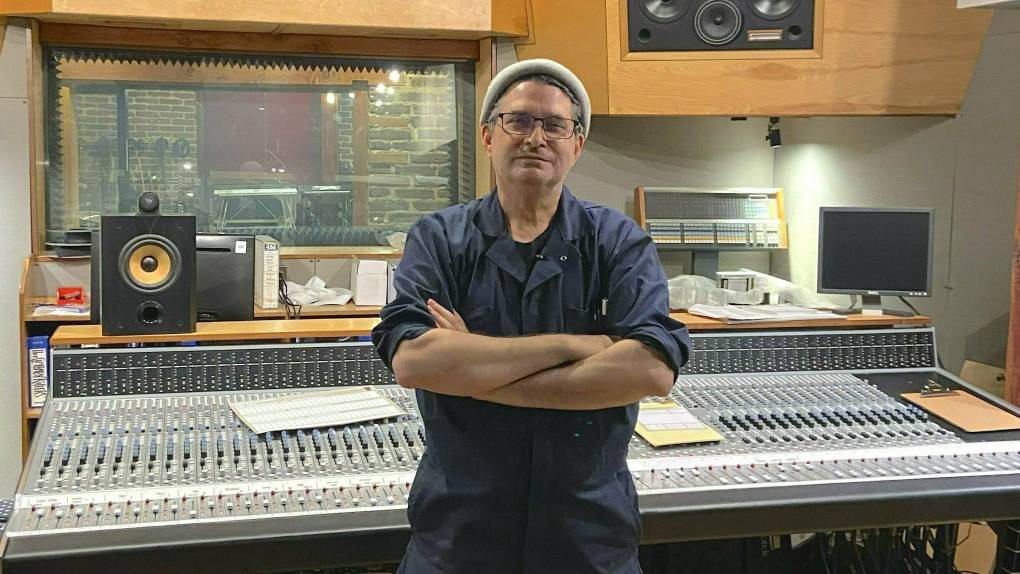
"caption": "Steve Albini in his Electrical Audio studios in Chicago in 2023.",
"description": null,
"title": "Steve Albini in his Electrical Audio studios in Chicago in 2023.",
"credit": "John Semley/ WXPN",
"status": "inherit",
"altTag": "A man in overalls and a beanie stands, arms folded, in front of a music studio control desk.",
"isLoading": false,
"fetchFailed": false
},
"arts_13957230": {
"type": "attachments",
"id": "arts_13957230",
"meta": {
"index": "attachments_1716263798",
"site": "arts",
"id": "13957230",
"found": true
},
"parent": 13957227,
"imgSizes": {
"thumbnail": {
"file": "https://cdn.kqed.org/wp-content/uploads/sites/2/2024/05/GettyImages-85553769-1-160x90.jpg",
"width": 160,
"mimeType": "image/jpeg",
"height": 90
},
"post-thumbnail": {
"file": "https://cdn.kqed.org/wp-content/uploads/sites/2/2024/05/GettyImages-85553769-1-672x372.jpg",
"width": 672,
"mimeType": "image/jpeg",
"height": 372
},
"kqedFullSize": {
"file": "https://cdn.kqed.org/wp-content/uploads/sites/2/2024/05/GettyImages-85553769-1.jpg",
"width": 1024,
"height": 576
},
"large": {
"file": "https://cdn.kqed.org/wp-content/uploads/sites/2/2024/05/GettyImages-85553769-1-1020x574.jpg",
"width": 1020,
"mimeType": "image/jpeg",
"height": 574
},
"medium": {
"file": "https://cdn.kqed.org/wp-content/uploads/sites/2/2024/05/GettyImages-85553769-1-800x450.jpg",
"width": 800,
"mimeType": "image/jpeg",
"height": 450
},
"medium_large": {
"file": "https://cdn.kqed.org/wp-content/uploads/sites/2/2024/05/GettyImages-85553769-1-768x432.jpg",
"width": 768,
"mimeType": "image/jpeg",
"height": 432
}
},
"publishDate": 1714773207,
"modified": 1714773275,
"caption": "Gary Floyd (right) of The Dicks performs during the 2009 SXSW Music Festival on March 18, 2009 in Austin, Texas.",
"description": null,
"title": "2009 SXSW Music Festival - Day 1",
"credit": "Gary Miller/FilmMagic",
"status": "inherit",
"altTag": null,
"isLoading": false,
"fetchFailed": false
},
"arts_13956006": {
"type": "attachments",
"id": "arts_13956006",
"meta": {
"index": "attachments_1716263798",
"site": "arts",
"id": "13956006",
"found": true
},
"parent": 13955977,
"imgSizes": {
"twentyfourteen-full-width": {
"file": "https://cdn.kqed.org/wp-content/uploads/sites/2/2024/04/CalvinKeys-1038x576.jpg",
"width": 1038,
"mimeType": "image/jpeg",
"height": 576
},
"thumbnail": {
"file": "https://cdn.kqed.org/wp-content/uploads/sites/2/2024/04/CalvinKeys-160x90.jpg",
"width": 160,
"mimeType": "image/jpeg",
"height": 90
},
"post-thumbnail": {
"file": "https://cdn.kqed.org/wp-content/uploads/sites/2/2024/04/CalvinKeys-672x372.jpg",
"width": 672,
"mimeType": "image/jpeg",
"height": 372
},
"kqedFullSize": {
"file": "https://cdn.kqed.org/wp-content/uploads/sites/2/2024/04/CalvinKeys.jpg",
"width": 1058,
"height": 595
},
"large": {
"file": "https://cdn.kqed.org/wp-content/uploads/sites/2/2024/04/CalvinKeys-1020x574.jpg",
"width": 1020,
"mimeType": "image/jpeg",
"height": 574
},
"medium": {
"file": "https://cdn.kqed.org/wp-content/uploads/sites/2/2024/04/CalvinKeys-800x450.jpg",
"width": 800,
"mimeType": "image/jpeg",
"height": 450
},
"medium_large": {
"file": "https://cdn.kqed.org/wp-content/uploads/sites/2/2024/04/CalvinKeys-768x432.jpg",
"width": 768,
"mimeType": "image/jpeg",
"height": 432
}
},
"publishDate": 1713214640,
"modified": 1713232970,
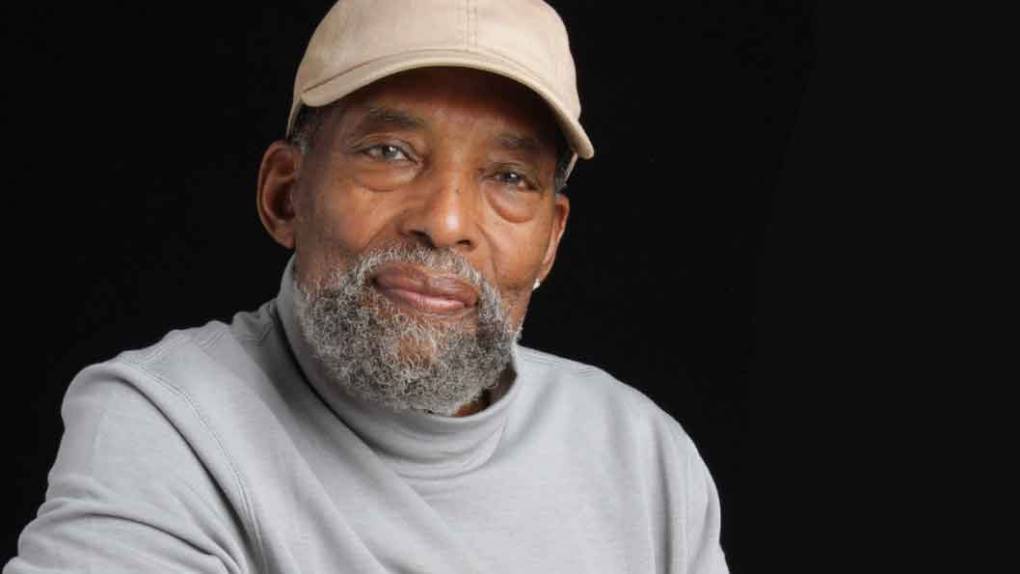
"caption": "Oakland jazz guitarist Calvin Keys rose to global acclaim, playing with dozens of jazz giants and releasing numerous classic recordings.",
"description": null,
"title": "CalvinKeys",
"credit": "Jim Denis",
"status": "inherit",
"altTag": "A smiling Black man in a ballcap and greying beard, wearing a grey sweatshirt.",
"isLoading": false,
"fetchFailed": false
},
"arts_13955932": {
"type": "attachments",
"id": "arts_13955932",
"meta": {
"index": "attachments_1716263798",
"site": "arts",
"id": "13955932",
"found": true
},
"parent": 13955930,
"imgSizes": {
"twentyfourteen-full-width": {
"file": "https://cdn.kqed.org/wp-content/uploads/sites/2/2024/04/GettyImages-1181949313-1038x576.jpg",
"width": 1038,
"mimeType": "image/jpeg",
"height": 576
},
"thumbnail": {
"file": "https://cdn.kqed.org/wp-content/uploads/sites/2/2024/04/GettyImages-1181949313-160x120.jpg",
"width": 160,
"mimeType": "image/jpeg",
"height": 120
},
"post-thumbnail": {
"file": "https://cdn.kqed.org/wp-content/uploads/sites/2/2024/04/GettyImages-1181949313-672x372.jpg",
"width": 672,
"mimeType": "image/jpeg",
"height": 372
},
"kqedFullSize": {
"file": "https://cdn.kqed.org/wp-content/uploads/sites/2/2024/04/GettyImages-1181949313.jpg",
"width": 1920,
"height": 1440
},
"large": {
"file": "https://cdn.kqed.org/wp-content/uploads/sites/2/2024/04/GettyImages-1181949313-1020x765.jpg",
"width": 1020,
"mimeType": "image/jpeg",
"height": 765
},
"1536x1536": {
"file": "https://cdn.kqed.org/wp-content/uploads/sites/2/2024/04/GettyImages-1181949313-1536x1152.jpg",
"width": 1536,
"mimeType": "image/jpeg",
"height": 1152
},
"medium": {
"file": "https://cdn.kqed.org/wp-content/uploads/sites/2/2024/04/GettyImages-1181949313-800x600.jpg",
"width": 800,
"mimeType": "image/jpeg",
"height": 600
},
"medium_large": {
"file": "https://cdn.kqed.org/wp-content/uploads/sites/2/2024/04/GettyImages-1181949313-768x576.jpg",
"width": 768,
"mimeType": "image/jpeg",
"height": 576
}
},
"publishDate": 1712966387,
"modified": 1712966429,
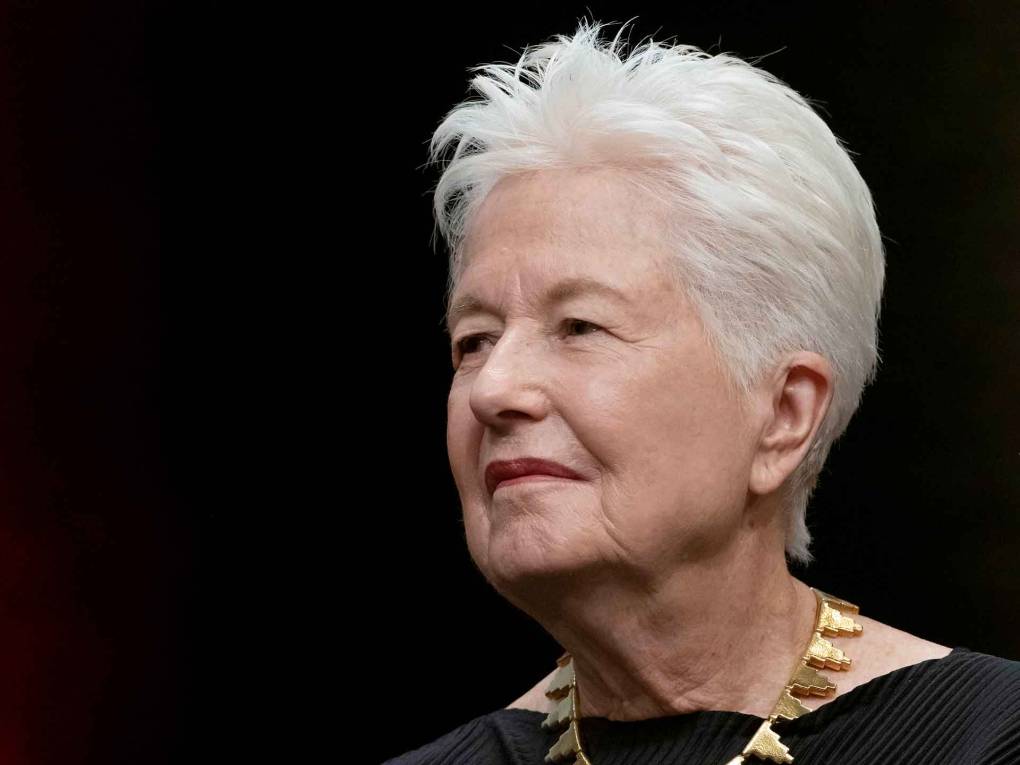
"caption": "Eleanor Coppola attends a tribute to Francis Ford Coppola during the 11th Film Festival Lumiere on October 18, 2019 in Lyon, France. ",
"description": null,
"title": "GettyImages-1181949313",
"credit": "Arnold Jerocki/Getty Images",
"status": "inherit",
"altTag": null,
"isLoading": false,
"fetchFailed": false
},
"arts_13955849": {
"type": "attachments",
"id": "arts_13955849",
"meta": {
"index": "attachments_1716263798",
"site": "arts",
"id": "13955849",
"found": true
},
"parent": 13955821,
"imgSizes": {
"twentyfourteen-full-width": {
"file": "https://cdn.kqed.org/wp-content/uploads/sites/2/2024/04/GettyImages-1321644250-1-1038x576.jpg",
"width": 1038,
"mimeType": "image/jpeg",
"height": 576
},
"thumbnail": {
"file": "https://cdn.kqed.org/wp-content/uploads/sites/2/2024/04/GettyImages-1321644250-1-160x90.jpg",
"width": 160,
"mimeType": "image/jpeg",
"height": 90
},
"post-thumbnail": {
"file": "https://cdn.kqed.org/wp-content/uploads/sites/2/2024/04/GettyImages-1321644250-1-672x372.jpg",
"width": 672,
"mimeType": "image/jpeg",
"height": 372
},
"kqedFullSize": {
"file": "https://cdn.kqed.org/wp-content/uploads/sites/2/2024/04/GettyImages-1321644250-1.jpg",
"width": 1920,
"height": 1080
},
"large": {
"file": "https://cdn.kqed.org/wp-content/uploads/sites/2/2024/04/GettyImages-1321644250-1-1020x574.jpg",
"width": 1020,
"mimeType": "image/jpeg",
"height": 574
},
"1536x1536": {
"file": "https://cdn.kqed.org/wp-content/uploads/sites/2/2024/04/GettyImages-1321644250-1-1536x864.jpg",
"width": 1536,
"mimeType": "image/jpeg",
"height": 864
},
"medium": {
"file": "https://cdn.kqed.org/wp-content/uploads/sites/2/2024/04/GettyImages-1321644250-1-800x450.jpg",
"width": 800,
"mimeType": "image/jpeg",
"height": 450
},
"medium_large": {
"file": "https://cdn.kqed.org/wp-content/uploads/sites/2/2024/04/GettyImages-1321644250-1-768x432.jpg",
"width": 768,
"mimeType": "image/jpeg",
"height": 432
}
},
"publishDate": 1712873084,
"modified": 1712873155,
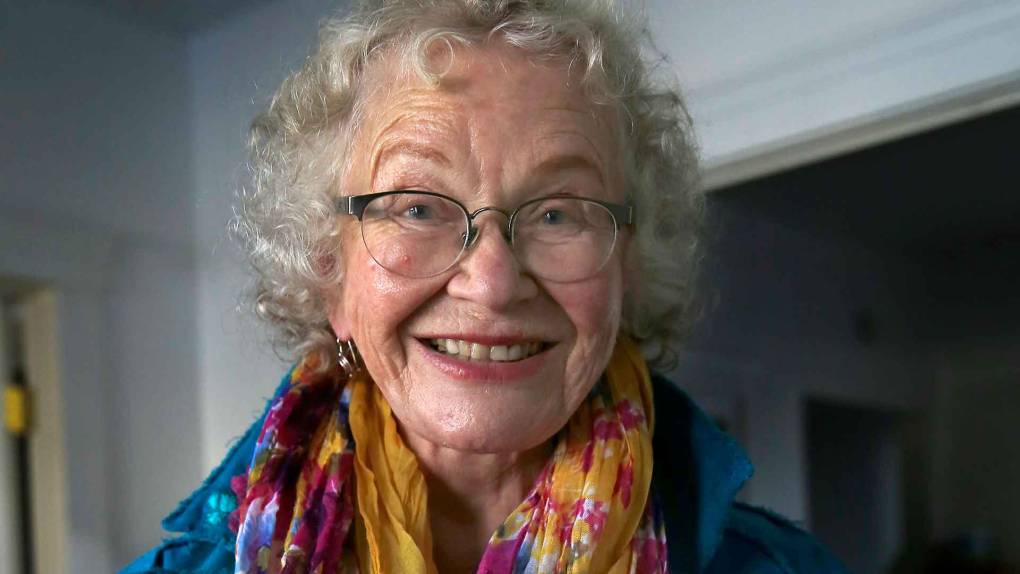
"caption": "Trina Robbins, the first woman to draw Wonder Woman and an underground force for women in comics, died in San Francisco on Wednesday. ",
"description": null,
"title": "GettyImages-1321644250",
"credit": "Liz Hafalia/ The San Francisco Chronicle via Getty Images",
"status": "inherit",
"altTag": "A senior white woman smiling as she holds up a comic book titled 'It Aint Me Babe.’",
"isLoading": false,
"fetchFailed": false
},
"arts_13954546": {
"type": "attachments",
"id": "arts_13954546",
"meta": {
"index": "attachments_1716263798",
"site": "arts",
"id": "13954546",
"found": true
},
"parent": 13954520,
"imgSizes": {
"twentyfourteen-full-width": {
"file": "https://cdn.kqed.org/wp-content/uploads/sites/2/2024/03/IMG_1856-cropped-1-1038x576.jpg",
"width": 1038,
"mimeType": "image/jpeg",
"height": 576
},
"thumbnail": {
"file": "https://cdn.kqed.org/wp-content/uploads/sites/2/2024/03/IMG_1856-cropped-1-160x90.jpg",
"width": 160,
"mimeType": "image/jpeg",
"height": 90
},
"post-thumbnail": {
"file": "https://cdn.kqed.org/wp-content/uploads/sites/2/2024/03/IMG_1856-cropped-1-672x372.jpg",
"width": 672,
"mimeType": "image/jpeg",
"height": 372
},
"kqedFullSize": {
"file": "https://cdn.kqed.org/wp-content/uploads/sites/2/2024/03/IMG_1856-cropped-1-scaled.jpg",
"width": 2560,
"height": 1440
},
"2048x2048": {
"file": "https://cdn.kqed.org/wp-content/uploads/sites/2/2024/03/IMG_1856-cropped-1-2048x1152.jpg",
"width": 2048,
"mimeType": "image/jpeg",
"height": 1152
},
"large": {
"file": "https://cdn.kqed.org/wp-content/uploads/sites/2/2024/03/IMG_1856-cropped-1-1020x574.jpg",
"width": 1020,
"mimeType": "image/jpeg",
"height": 574
},
"1536x1536": {
"file": "https://cdn.kqed.org/wp-content/uploads/sites/2/2024/03/IMG_1856-cropped-1-1536x864.jpg",
"width": 1536,
"mimeType": "image/jpeg",
"height": 864
},
"full-width": {
"file": "https://cdn.kqed.org/wp-content/uploads/sites/2/2024/03/IMG_1856-cropped-1-1920x1080.jpg",
"width": 1920,
"mimeType": "image/jpeg",
"height": 1080
},
"medium": {
"file": "https://cdn.kqed.org/wp-content/uploads/sites/2/2024/03/IMG_1856-cropped-1-800x450.jpg",
"width": 800,
"mimeType": "image/jpeg",
"height": 450
},
"medium_large": {
"file": "https://cdn.kqed.org/wp-content/uploads/sites/2/2024/03/IMG_1856-cropped-1-768x432.jpg",
"width": 768,
"mimeType": "image/jpeg",
"height": 432
}
},
"publishDate": 1711038033,
"modified": 1711058069,
"caption": "Zoe Reidy Watts was a beloved poet, ceramicist and multi-hyphenate artist. Her death at 25 years old, allegedly at the hands of her boyfriend, has sent shockwaves through the Bay Area arts community.",
"description": null,
"title": "IMG_1856-cropped",
"credit": "Sasha Tahergorabi",
"status": "inherit",
"altTag": "A young woman poses in front of Lake Merritt.",
"isLoading": false,
"fetchFailed": false
}
},
"audioPlayerReducer": {
"postId": "stream_live",
"isPaused": true,
"isPlaying": false,
"pfsActive": false,
"pledgeModalIsOpen": true,
"playerDrawerIsOpen": false,
"liveAudioPlayStartedAt": 0,
"liveAudioPlayContext": ""
},
"authorsReducer": {
"byline_arts_13963948": {
"type": "authors",
"id": "byline_arts_13963948",
"meta": {
"override": true
},
"slug": "byline_arts_13963948",
"name": "Allison Keyes, NPR",
"isLoading": false
},
"byline_arts_13959414": {
"type": "authors",
"id": "byline_arts_13959414",
"meta": {
"override": true
},
"slug": "byline_arts_13959414",
"name": "Andrew DeMillo, Associated Press",
"isLoading": false
},
"byline_arts_13957475": {
"type": "authors",
"id": "byline_arts_13957475",
"meta": {
"override": true
},
"slug": "byline_arts_13957475",
"name": "Lars Gotrich, NPR",
"isLoading": false
},
"byline_arts_13955930": {
"type": "authors",
"id": "byline_arts_13955930",
"meta": {
"override": true
},
"slug": "byline_arts_13955930",
"name": "Jake Coyle and Lindsey Bahr, Associated Press",
"isLoading": false
},
"gmeline": {
"type": "authors",
"id": "185",
"meta": {
"index": "authors_1716337520",
"id": "185",
"found": true
},
"name": "Gabe Meline",
"firstName": "Gabe",
"lastName": "Meline",
"slug": "gmeline",
"email": "gmeline@kqed.org",
"display_author_email": true,
"staff_mastheads": [
"arts"
],
"title": "Senior Editor, KQED Arts & Culture",
"bio": "Gabe Meline entered journalism at age 15 making photocopied zines, and has since earned awards from the Edward R. Murrow Awards, the Society for Professional Journalists, the Online Journalism Awards, the Association of Alternative Newsweeklies and the California Newspaper Publishers Association. Prior to KQED, he was the editor of the \u003cem>North Bay Bohemian\u003c/em> and a touring musician. He lives with his wife and daughter in his hometown of Santa Rosa, CA.",
"avatar": "https://secure.gravatar.com/avatar/5bebe57be0d8bc2dd318934feb47299e2d2d10cba28d09d8d7afb389a2ce2bdd?s=600&d=blank&r=g",
"twitter": null,
"bluesky": null,
"facebook": null,
"instagram": null,
"linkedin": null,
"sites": [
{
"site": "",
"roles": [
"editor"
]
},
{
"site": "arts",
"roles": [
"administrator"
]
},
{
"site": "artschool",
"roles": [
"editor"
]
},
{
"site": "news",
"roles": [
"author"
]
},
{
"site": "pop",
"roles": [
"editor"
]
},
{
"site": "bayareabites",
"roles": [
"editor"
]
},
{
"site": "food",
"roles": [
"editor"
]
},
{
"site": "forum",
"roles": [
"administrator"
]
},
{
"site": "liveblog",
"roles": [
"editor"
]
},
{
"site": "hiphop",
"roles": [
"editor"
]
}
],
"headData": {
"title": "Gabe Meline | KQED",
"description": "Senior Editor, KQED Arts & Culture",
"ogImgSrc": "https://secure.gravatar.com/avatar/5bebe57be0d8bc2dd318934feb47299e2d2d10cba28d09d8d7afb389a2ce2bdd?s=600&d=blank&r=g",
"twImgSrc": "https://secure.gravatar.com/avatar/5bebe57be0d8bc2dd318934feb47299e2d2d10cba28d09d8d7afb389a2ce2bdd?s=600&d=blank&r=g"
},
"isLoading": false,
"link": "/author/gmeline"
},
"ralexandra": {
"type": "authors",
"id": "11242",
"meta": {
"index": "authors_1716337520",
"id": "11242",
"found": true
},
"name": "Rae Alexandra",
"firstName": "Rae",
"lastName": "Alexandra",
"slug": "ralexandra",
"email": "ralexandra@kqed.org",
"display_author_email": true,
"staff_mastheads": [],
"title": "Reporter/Producer",
"bio": "Rae Alexandra is a Reporter/Producer for KQED Arts & Culture, and the creator/author of the \u003ca href=\"https://www.kqed.org/arts/program/rebel-girls-from-bay-area-history\">Rebel Girls From Bay Area History\u003c/a> and \u003ca href=\"https://www.kqed.org/bizarrebayarea\">Bizarre Bay Area\u003c/a> series. Her debut book, \u003ca href=\"https://citylights.com/politics-current-events-history/unsung-heroines35-women-who-changed/\">Unsung Heroines: 35 Women Who Changed the Bay Area\u003c/a> was published by City Lights in March 2026. In 2023, Rae was awarded an SPJ Excellence in Journalism Award for Arts & Culture. Rae was born and raised in Wales and subsequently — even after two decades in Northern California — still uses phrases that regularly baffle her coworkers.",
"avatar": "https://secure.gravatar.com/avatar/edfee8176c80cc0a382b051190f5341997df378a934a5774dcb0977732dfd401?s=600&d=blank&r=g",
"twitter": null,
"bluesky": null,
"facebook": null,
"instagram": null,
"linkedin": null,
"sites": [
{
"site": "arts",
"roles": [
"subscriber"
]
},
{
"site": "news",
"roles": [
"subscriber"
]
},
{
"site": "pop",
"roles": [
"subscriber"
]
},
{
"site": "bayareabites",
"roles": [
"subscriber"
]
},
{
"site": "science",
"roles": [
"subscriber"
]
}
],
"headData": {
"title": "Rae Alexandra | KQED",
"description": "Reporter/Producer",
"ogImgSrc": "https://secure.gravatar.com/avatar/edfee8176c80cc0a382b051190f5341997df378a934a5774dcb0977732dfd401?s=600&d=blank&r=g",
"twImgSrc": "https://secure.gravatar.com/avatar/edfee8176c80cc0a382b051190f5341997df378a934a5774dcb0977732dfd401?s=600&d=blank&r=g"
},
"isLoading": false,
"link": "/author/ralexandra"
},
"nvoynovskaya": {
"type": "authors",
"id": "11387",
"meta": {
"index": "authors_1716337520",
"id": "11387",
"found": true
},
"name": "Nastia Voynovskaya",
"firstName": "Nastia",
"lastName": "Voynovskaya",
"slug": "nvoynovskaya",
"email": "nvoynovskaya@kqed.org",
"display_author_email": false,
"staff_mastheads": [
"arts"
],
"title": "Editor and reporter",
"bio": "Nastia Voynovskaya is a reporter, editor and host at KQED Arts & Culture. She's been covering the arts in the Bay Area for over a decade, with a focus on music, queer culture, labor issues and grassroots organizing. She has edited KQED story series such as Trans Bay: A History of San Francisco's Gender-Diverse Community, and co-created KQED's Bay Area hip-hop history project, That's My Word. Nastia's work has been recognized by the Society of Professional Journalists and San Francisco Press Club. She regularly appears on podcasts and radio programs, including NPR's All Songs Considered, and hosts live events where music, culture and conversation meet.",
"avatar": "https://secure.gravatar.com/avatar/5025ee460e5a85d69ca20ea6c6f2f80d7e17795c828f61ea3aecfcd924e9042e?s=600&d=blank&r=g",
"twitter": null,
"bluesky": null,
"facebook": null,
"instagram": "https://www.instagram.com/nananastia/",
"linkedin": null,
"sites": [
{
"site": "",
"roles": [
"editor"
]
},
{
"site": "arts",
"roles": [
"administrator"
]
},
{
"site": "news",
"roles": [
"editor"
]
},
{
"site": "pop",
"roles": [
"administrator"
]
},
{
"site": "bayareabites",
"roles": [
"editor"
]
},
{
"site": "podcasts",
"roles": [
"editor"
]
},
{
"site": "hiphop",
"roles": [
"editor"
]
}
],
"headData": {
"title": "Nastia Voynovskaya | KQED",
"description": "Editor and reporter",
"ogImgSrc": "https://secure.gravatar.com/avatar/5025ee460e5a85d69ca20ea6c6f2f80d7e17795c828f61ea3aecfcd924e9042e?s=600&d=blank&r=g",
"twImgSrc": "https://secure.gravatar.com/avatar/5025ee460e5a85d69ca20ea6c6f2f80d7e17795c828f61ea3aecfcd924e9042e?s=600&d=blank&r=g"
},
"isLoading": false,
"link": "/author/nvoynovskaya"
},
"ltsai": {
"type": "authors",
"id": "11743",
"meta": {
"index": "authors_1716337520",
"id": "11743",
"found": true
},
"name": "Luke Tsai",
"firstName": "Luke",
"lastName": "Tsai",
"slug": "ltsai",
"email": "ltsai@kqed.org",
"display_author_email": true,
"staff_mastheads": [
"arts"
],
"title": "Food Editor",
"bio": "Luke Tsai is KQED's food editor and resident stinky tofu connoisseur. Prior to KQED, he was an editor at Eater SF, \u003cem>San Francisco \u003c/em>magazine, and the \u003cem>East Bay Express\u003c/em>, and his work has also appeared in TASTE, the \u003cem>San Francisco Chronicle\u003c/em>, and the \u003cem>Best Food Writing\u003c/em> anthology. When he isn't writing or editing, you'll find him eating most everything he can get his hands on.",
"avatar": "https://secure.gravatar.com/avatar/1e59b45bf191526e7339d6ba46e33a57b2030d25c27660ecc64ea3cb863e34f7?s=600&d=blank&r=g",
"twitter": "theluketsai",
"bluesky": null,
"facebook": null,
"instagram": null,
"linkedin": null,
"sites": [
{
"site": "",
"roles": [
"editor"
]
},
{
"site": "arts",
"roles": [
"administrator"
]
},
{
"site": "news",
"roles": [
"editor",
"contributor"
]
},
{
"site": "bayareabites",
"roles": [
"editor"
]
},
{
"site": "food",
"roles": [
"editor"
]
}
],
"headData": {
"title": "Luke Tsai | KQED",
"description": "Food Editor",
"ogImgSrc": "https://secure.gravatar.com/avatar/1e59b45bf191526e7339d6ba46e33a57b2030d25c27660ecc64ea3cb863e34f7?s=600&d=blank&r=g",
"twImgSrc": "https://secure.gravatar.com/avatar/1e59b45bf191526e7339d6ba46e33a57b2030d25c27660ecc64ea3cb863e34f7?s=600&d=blank&r=g"
},
"isLoading": false,
"link": "/author/ltsai"
},
"achazaro": {
"type": "authors",
"id": "11748",
"meta": {
"index": "authors_1716337520",
"id": "11748",
"found": true
},
"name": "Alan Chazaro",
"firstName": "Alan",
"lastName": "Chazaro",
"slug": "achazaro",
"email": "agchazaro@gmail.com",
"display_author_email": true,
"staff_mastheads": [],
"title": "Food Writer and Reporter",
"bio": "Alan Chazaro is the author of \u003cem>This Is Not a Frank Ocean Cover Album\u003c/em> (Black Lawrence Press, 2019), \u003cem>Piñata Theory\u003c/em> (Black Lawrence Press, 2020), and \u003cem>Notes from the Eastern Span of the Bay Bridge\u003c/em> (Ghost City Press, 2021). He is a graduate of June Jordan’s Poetry for the People program at UC Berkeley and a former Lawrence Ferlinghetti Fellow at the University of San Francisco. He writes about sports, food, art, music, education, and culture while repping the Bay on \u003ca href=\"https://twitter.com/alan_chazaro\">Twitter\u003c/a> and \u003ca href=\"https://www.instagram.com/alan_chazaro/?hl=en\">Instagram\u003c/a> at @alan_chazaro.",
"avatar": "https://secure.gravatar.com/avatar/ea8b6dd970fc5c29e7a188e7d5861df7?s=600&d=blank&r=g",
"twitter": "alan_chazaro",
"facebook": null,
"instagram": null,
"linkedin": null,
"sites": [
{
"site": "arts",
"roles": [
"contributor"
]
},
{
"site": "news",
"roles": [
"editor"
]
}
],
"headData": {
"title": "Alan Chazaro | KQED",
"description": "Food Writer and Reporter",
"ogImgSrc": "https://secure.gravatar.com/avatar/ea8b6dd970fc5c29e7a188e7d5861df7?s=600&d=blank&r=g",
"twImgSrc": "https://secure.gravatar.com/avatar/ea8b6dd970fc5c29e7a188e7d5861df7?s=600&d=blank&r=g"
},
"isLoading": false,
"link": "/author/achazaro"
}
},
"pagesReducer": {
"arts_category_remembrance": {
"type": "terms",
"id": "arts_1564",
"meta": {
"index": "terms_1716263798",
"site": "arts",
"id": "1564",
"score": 13.107925
},
"featImg": null,
"name": "Remembrance",
"description": null,
"taxonomy": "category",
"headData": {
"twImgId": null,
"twTitle": null,
"ogTitle": null,
"ogImgId": null,
"twDescription": null,
"description": null,
"title": "Remembrance Archives | KQED Arts",
"ogDescription": null
},
"ttid": 1576,
"slug": "remembrance",
"isLoading": false,
"title": "Remembrance",
"pageMeta": {
"site": "arts",
"WpPageTemplate": "page-topic-editorial",
"currentPage": 6
},
"blocks": [
{
"blockName": "kqed/post-list",
"attrs": {
"layout": "cardArticle2",
"query": "posts/arts?category=remembrance",
"seeMore": false,
"paginated": true,
"page": 6
}
},
{
"blockName": "kqed/ad"
}
]
}
},
"pfsSessionReducer": {},
"postsReducer": {
"stream_live": {
"type": "live",
"id": "stream_live",
"audioUrl": "https://streams.kqed.org/kqedradio",
"title": "Live Stream",
"excerpt": "Live Stream information currently unavailable.",
"link": "/radio",
"featImg": "",
"label": {
"name": "KQED Live",
"link": "/"
}
},
"stream_kqedNewscast": {
"type": "posts",
"id": "stream_kqedNewscast",
"audioUrl": "https://www.kqed.org/.stream/anon/radio/RDnews/newscast.mp3?_=1",
"title": "KQED Newscast",
"featImg": "",
"label": {
"name": "88.5 FM",
"link": "/"
}
},
"arts_13963948": {
"type": "posts",
"id": "arts_13963948",
"meta": {
"index": "posts_1716263798",
"site": "arts",
"id": "13963948",
"score": null,
"sort": [
1725922720000
]
},
"guestAuthors": [],
"slug": "actor-and-beloved-baritone-james-earl-jones-dies-at-93",
"title": "Actor and Beloved Baritone James Earl Jones Dies at 93",
"publishDate": 1725922720,
"format": "standard",
"headTitle": "Actor and Beloved Baritone James Earl Jones Dies at 93 | KQED",
"labelTerm": {
"term": 137,
"site": "arts"
},
"content": "\u003cp>One of America’s most beloved actors, James Earl Jones, died Monday at age 93. He was at home in Dutchess County, N.Y. surrounded by his family, his longtime agent Barry McPherson confirmed to NPR.\u003c/p>\n\u003cp>In addition to an illustrious stage career — which included roles in classics like \u003cem>Macbeth\u003c/em>, \u003cem>Othello\u003c/em> and \u003cem>The Iceman Cometh\u003c/em> — Jones also had an extensive film career, appearing in \u003cem>Dr. Strangelove\u003c/em>, \u003cem>Field of Dreams\u003c/em>, and \u003cem>The Hunt for Red October\u003c/em>. He voiced Mufasa in \u003cem>The Lion King,\u003c/em> and as Darth Vader, he delivered \u003ca href=\"http://www.starwars.com/video/i-am-your-father\">the line that still sends shivers up the spines of \u003cem>Star Wars\u003c/em> fans\u003c/a>: “I am your father.”\u003c/p>\n\u003cp>James Earl Jones was born on Jan. 17, 1931, in Arkabutla, Miss. He was raised by his grandparents. When he was 5 years old, the family moved to a rural farm in Dublin, Mich. Jones said the move so traumatized him that he developed a severe stutter that continued until he was in high school.\u003c/p>\n\u003cp>“I was able to function as a farm kid, doing all those chores where you call animals,” he told WHYY’s \u003cem>Fresh Air \u003c/em>in 1993, “and I certainly let the family know what my needs were. But when strangers came to the house, the mute happened. I didn’t want to confront them and I wasn’t ready. I hid in a state of muteness.”\u003c/p>\n\u003cp>Then a high school teacher found a way to help: “He one day discovered that I wrote poetry and he said to me, ‘This poem is so good I can’t believe you wrote it. The way you can prove it to me is to get up in front of the class and recite it by heart.’ And I accepted the challenge and did it, and we both realized we had a means — we had a way of regaining the power of speech through poetry.”\u003c/p>\n\u003cp>[ad fullwidth]\u003c/p>\n\u003cp>And what a power it was. Jones’ baritone came complete with its own echo chamber. His voice became one of the most instantly recognizable in entertainment history.\u003c/p>\n\u003cp>Everything about him was big: his commanding stage presence, the intensity of his glance and his brilliance at his chosen craft. Woodie King Jr. is founder of New York’s New Federal Theater, which has been producing shows by and about African-Americans throughout its history. He first became aware of Jones in the early 1960s.\u003c/p>\n\u003cp>“I was a young aspiring actor who had come into New York and he had all the elements of acting — physicality, vocal range, psychically in tune with what was going on,” King says. “And I wanted to be that kind of artist who had that kind of freedom with his instrument.”\u003c/p>\n\u003cp>King saw Jones’ critically acclaimed performance in a 1961 production of Jean Genet’s \u003cem>The Blacks\u003c/em>. He also worked with Jones in a 1968 Broadway production of Howard Sackler’s \u003cem>The Great White Hope\u003c/em>, based on the life of champion black boxer Jack Johnson.\u003c/p>\n\u003cp>“It was an unbelievable kind of performance,” King recalled. “It was an amazing metamorphosis, watching him transform himself into this vicious boxer.”\u003c/p>\n\u003cp>Jones won a Tony for that role, as well as an Oscar nomination for the 1970 film adaptation, and he won a second Tony in 1987 for his role in August Wilson’s \u003cem>Fences\u003c/em>.\u003c/p>\n\u003cp>His first film role was as bombardier Lothar Zogg in Stanley Kubrick’s 1964 classic \u003cem>Dr. Strangelove\u003c/em>. In 1972’s \u003cem>The Man\u003c/em>, Jones played the first Black president; in the 1974 black classic \u003cem>Claudine, \u003c/em>he played a garbage man who charms a date out of a welfare mom; and in 1989’s \u003cem>Field of Dreams\u003c/em>, he \u003ca href=\"https://youtu.be/z6U1p0hehtg?t=5s\">explained why people would care about a baseball diamond in an Iowa cornfield\u003c/a>. Jones \u003ca href=\"http://www.broadway.com/buzz/162156/tony-nominee-james-earl-jones-on-four-decades-of-great-performances-from-othello-to-the-best-man/\">has said\u003c/a> that one of his favorite roles was that of the South African reverend in \u003cem>Cry, the Beloved Country\u003c/em>.\u003c/p>\n\u003cp>Jones’ voice has pervaded pop culture: He’s the voice of CNN and Verizon, and even showed up on a few episodes of \u003cem>The Simpsons\u003c/em>, which managed to kid the actor about his kaleidoscopic work \u003ca href=\"https://youtu.be/PX05DJWNj3k?t=1m4s\">in one fell swoop\u003c/a>.\u003c/p>\n\u003cp>In his conversation with \u003cem>Fresh Air\u003c/em>, Jones remembered the beginning of his voice-over career with amusement. “I think the first commercials I did … they asked me to ‘just give us the sound of God.’ … They were not embarrassed about saying that.”\u003c/p>\n\u003cfigure id=\"attachment_13963951\" class=\"wp-caption aligncenter\" style=\"max-width: 2000px\">\u003cimg loading=\"lazy\" decoding=\"async\" class=\"size-full wp-image-13963951\" src=\"https://cdn.kqed.org/wp-content/uploads/sites/2/2024/09/JEJ.png\" alt=\"A Black man wearing a suit stretches out his arms and bows his head on stage, surrounded by applauding fellow cast members.\" width=\"2000\" height=\"1330\" srcset=\"https://cdn.kqed.org/wp-content/uploads/sites/2/2024/09/JEJ.png 2000w, https://cdn.kqed.org/wp-content/uploads/sites/2/2024/09/JEJ-800x532.png 800w, https://cdn.kqed.org/wp-content/uploads/sites/2/2024/09/JEJ-1020x678.png 1020w, https://cdn.kqed.org/wp-content/uploads/sites/2/2024/09/JEJ-160x106.png 160w, https://cdn.kqed.org/wp-content/uploads/sites/2/2024/09/JEJ-768x511.png 768w, https://cdn.kqed.org/wp-content/uploads/sites/2/2024/09/JEJ-1536x1021.png 1536w, https://cdn.kqed.org/wp-content/uploads/sites/2/2024/09/JEJ-1920x1277.png 1920w\" sizes=\"(max-width: 2000px) 100vw, 2000px\">\u003cfigcaption class=\"wp-caption-text\">Jones takes a bow after his final performance in Broadway’s ‘You Can’t Take It With You’ in 2015. \u003ccite>(Grant Lamos IV/Getty Images)\u003c/cite>\u003c/figcaption>\u003c/figure>\n\u003cp>New Federal Theater’s Woodie King said Jones was a warm, somewhat shy man who was a powerful artist. He followed in the footsteps of actors like Sidney Poitier, Paul Robeson and Canada Lee, all of whom refused to be limited by the old stereotypical roles of butlers or buffoons. Jones saw theater as a place for all people.\u003c/p>\n\u003cp>\u003c/p>\n\u003cp>“What you have is a master craftsman at work,” King said. “He makes young people aware of the vast possibilities of this business when you are a craftsman. … The Broadway stage sees him as really colorless — not Black or white, but a brilliant artist.”\u003c/p>\n\n",
"blocks": [],
"excerpt": "Everything about Jones was big: his stage presence, the intensity of his glance and the brilliance of his craft.",
"status": "publish",
"parent": 0,
"modified": 1725922720,
"stats": {
"hasAudio": false,
"hasVideo": false,
"hasChartOrMap": false,
"iframeSrcs": [],
"hasGoogleForm": false,
"hasGallery": false,
"hasHearkenModule": false,
"hasPolis": false,
"paragraphCount": 18,
"wordCount": 900
},
"headData": {
"title": "James Earl Jones Dies at 93 | KQED",
"description": "Everything about Jones was big: his stage presence, the intensity of his glance and the brilliance of his craft.",
"ogTitle": "Actor and Beloved Baritone James Earl Jones Dies at 93",
"ogDescription": "",
"ogImgId": "",
"twTitle": "Actor and Beloved Baritone James Earl Jones Dies at 93",
"twDescription": "",
"twImgId": "",
"socialTitle": "James Earl Jones Dies at 93 %%page%% %%sep%% KQED",
"schema": {
"@context": "https://schema.org",
"@type": "Article",
"headline": "Actor and Beloved Baritone James Earl Jones Dies at 93",
"datePublished": "2024-09-09T15:58:40-07:00",
"dateModified": "2024-09-09T15:58:40-07:00",
"image": "https://cdn.kqed.org/wp-content/uploads/2020/02/KQED-OG-Image@1x.png"
}
},
"sticky": false,
"nprByline": "Allison Keyes, NPR",
"nprStoryId": "462417634",
"nprHtmlLink": "https://www.npr.org/2024/09/09/462417634/james-earl-jones-dies-at-93",
"nprRetrievedStory": "1",
"nprPubDate": "2024-09-09T17:14:22.954-04:00",
"nprStoryDate": "2024-09-09T17:14:22.954-04:00",
"nprLastModifiedDate": "2024-09-09T18:08:02.112-04:00",
"templateType": "standard",
"featuredImageType": "standard",
"excludeFromSiteSearch": "Include",
"showOnAuthorArchivePages": "No",
"articleAge": "0",
"path": "/arts/13963948/actor-and-beloved-baritone-james-earl-jones-dies-at-93",
"audioTrackLength": null,
"parsedContent": [
{
"type": "contentString",
"content": "\u003cdiv class=\"post-body\">\u003cp>\u003cp>One of America’s most beloved actors, James Earl Jones, died Monday at age 93. He was at home in Dutchess County, N.Y. surrounded by his family, his longtime agent Barry McPherson confirmed to NPR.\u003c/p>\n\u003cp>In addition to an illustrious stage career — which included roles in classics like \u003cem>Macbeth\u003c/em>, \u003cem>Othello\u003c/em> and \u003cem>The Iceman Cometh\u003c/em> — Jones also had an extensive film career, appearing in \u003cem>Dr. Strangelove\u003c/em>, \u003cem>Field of Dreams\u003c/em>, and \u003cem>The Hunt for Red October\u003c/em>. He voiced Mufasa in \u003cem>The Lion King,\u003c/em> and as Darth Vader, he delivered \u003ca href=\"http://www.starwars.com/video/i-am-your-father\">the line that still sends shivers up the spines of \u003cem>Star Wars\u003c/em> fans\u003c/a>: “I am your father.”\u003c/p>\n\u003cp>James Earl Jones was born on Jan. 17, 1931, in Arkabutla, Miss. He was raised by his grandparents. When he was 5 years old, the family moved to a rural farm in Dublin, Mich. Jones said the move so traumatized him that he developed a severe stutter that continued until he was in high school.\u003c/p>\n\u003cp>“I was able to function as a farm kid, doing all those chores where you call animals,” he told WHYY’s \u003cem>Fresh Air \u003c/em>in 1993, “and I certainly let the family know what my needs were. But when strangers came to the house, the mute happened. I didn’t want to confront them and I wasn’t ready. I hid in a state of muteness.”\u003c/p>\n\u003cp>Then a high school teacher found a way to help: “He one day discovered that I wrote poetry and he said to me, ‘This poem is so good I can’t believe you wrote it. The way you can prove it to me is to get up in front of the class and recite it by heart.’ And I accepted the challenge and did it, and we both realized we had a means — we had a way of regaining the power of speech through poetry.”\u003c/p>\n\u003cp>\u003c/p>\u003c/div>",
"attributes": {
"named": {},
"numeric": []
}
},
{
"type": "component",
"content": "",
"name": "ad",
"attributes": {
"named": {
"label": "fullwidth"
},
"numeric": [
"fullwidth"
]
}
},
{
"type": "contentString",
"content": "\u003cdiv class=\"post-body\">\u003cp>\u003c/p>\n\u003cp>And what a power it was. Jones’ baritone came complete with its own echo chamber. His voice became one of the most instantly recognizable in entertainment history.\u003c/p>\n\u003cp>Everything about him was big: his commanding stage presence, the intensity of his glance and his brilliance at his chosen craft. Woodie King Jr. is founder of New York’s New Federal Theater, which has been producing shows by and about African-Americans throughout its history. He first became aware of Jones in the early 1960s.\u003c/p>\n\u003cp>“I was a young aspiring actor who had come into New York and he had all the elements of acting — physicality, vocal range, psychically in tune with what was going on,” King says. “And I wanted to be that kind of artist who had that kind of freedom with his instrument.”\u003c/p>\n\u003cp>King saw Jones’ critically acclaimed performance in a 1961 production of Jean Genet’s \u003cem>The Blacks\u003c/em>. He also worked with Jones in a 1968 Broadway production of Howard Sackler’s \u003cem>The Great White Hope\u003c/em>, based on the life of champion black boxer Jack Johnson.\u003c/p>\n\u003cp>“It was an unbelievable kind of performance,” King recalled. “It was an amazing metamorphosis, watching him transform himself into this vicious boxer.”\u003c/p>\n\u003cp>Jones won a Tony for that role, as well as an Oscar nomination for the 1970 film adaptation, and he won a second Tony in 1987 for his role in August Wilson’s \u003cem>Fences\u003c/em>.\u003c/p>\n\u003cp>His first film role was as bombardier Lothar Zogg in Stanley Kubrick’s 1964 classic \u003cem>Dr. Strangelove\u003c/em>. In 1972’s \u003cem>The Man\u003c/em>, Jones played the first Black president; in the 1974 black classic \u003cem>Claudine, \u003c/em>he played a garbage man who charms a date out of a welfare mom; and in 1989’s \u003cem>Field of Dreams\u003c/em>, he \u003ca href=\"https://youtu.be/z6U1p0hehtg?t=5s\">explained why people would care about a baseball diamond in an Iowa cornfield\u003c/a>. Jones \u003ca href=\"http://www.broadway.com/buzz/162156/tony-nominee-james-earl-jones-on-four-decades-of-great-performances-from-othello-to-the-best-man/\">has said\u003c/a> that one of his favorite roles was that of the South African reverend in \u003cem>Cry, the Beloved Country\u003c/em>.\u003c/p>\n\u003cp>Jones’ voice has pervaded pop culture: He’s the voice of CNN and Verizon, and even showed up on a few episodes of \u003cem>The Simpsons\u003c/em>, which managed to kid the actor about his kaleidoscopic work \u003ca href=\"https://youtu.be/PX05DJWNj3k?t=1m4s\">in one fell swoop\u003c/a>.\u003c/p>\n\u003cp>In his conversation with \u003cem>Fresh Air\u003c/em>, Jones remembered the beginning of his voice-over career with amusement. “I think the first commercials I did … they asked me to ‘just give us the sound of God.’ … They were not embarrassed about saying that.”\u003c/p>\n\u003cfigure id=\"attachment_13963951\" class=\"wp-caption aligncenter\" style=\"max-width: 2000px\">\u003cimg loading=\"lazy\" decoding=\"async\" class=\"size-full wp-image-13963951\" src=\"https://cdn.kqed.org/wp-content/uploads/sites/2/2024/09/JEJ.png\" alt=\"A Black man wearing a suit stretches out his arms and bows his head on stage, surrounded by applauding fellow cast members.\" width=\"2000\" height=\"1330\" srcset=\"https://cdn.kqed.org/wp-content/uploads/sites/2/2024/09/JEJ.png 2000w, https://cdn.kqed.org/wp-content/uploads/sites/2/2024/09/JEJ-800x532.png 800w, https://cdn.kqed.org/wp-content/uploads/sites/2/2024/09/JEJ-1020x678.png 1020w, https://cdn.kqed.org/wp-content/uploads/sites/2/2024/09/JEJ-160x106.png 160w, https://cdn.kqed.org/wp-content/uploads/sites/2/2024/09/JEJ-768x511.png 768w, https://cdn.kqed.org/wp-content/uploads/sites/2/2024/09/JEJ-1536x1021.png 1536w, https://cdn.kqed.org/wp-content/uploads/sites/2/2024/09/JEJ-1920x1277.png 1920w\" sizes=\"(max-width: 2000px) 100vw, 2000px\">\u003cfigcaption class=\"wp-caption-text\">Jones takes a bow after his final performance in Broadway’s ‘You Can’t Take It With You’ in 2015. \u003ccite>(Grant Lamos IV/Getty Images)\u003c/cite>\u003c/figcaption>\u003c/figure>\n\u003cp>New Federal Theater’s Woodie King said Jones was a warm, somewhat shy man who was a powerful artist. He followed in the footsteps of actors like Sidney Poitier, Paul Robeson and Canada Lee, all of whom refused to be limited by the old stereotypical roles of butlers or buffoons. Jones saw theater as a place for all people.\u003c/p>\n\u003cp>\u003c/p>\n\u003cp>“What you have is a master craftsman at work,” King said. “He makes young people aware of the vast possibilities of this business when you are a craftsman. … The Broadway stage sees him as really colorless — not Black or white, but a brilliant artist.”\u003c/p>\n\n\u003c/div>\u003c/p>",
"attributes": {
"named": {},
"numeric": []
}
}
],
"link": "/arts/13963948/actor-and-beloved-baritone-james-earl-jones-dies-at-93",
"authors": [
"byline_arts_13963948"
],
"categories": [
"arts_1",
"arts_74",
"arts_235",
"arts_75",
"arts_1564"
],
"tags": [
"arts_21789"
],
"affiliates": [
"arts_137"
],
"featImg": "arts_13963949",
"label": "arts_137"
},
"arts_13961794": {
"type": "posts",
"id": "arts_13961794",
"meta": {
"index": "posts_1716263798",
"site": "arts",
"id": "13961794",
"score": null,
"sort": [
1722377925000
]
},
"guestAuthors": [],
"slug": "silver-crest-closed-sf-donut-shop",
"title": "R.I.P., Silver Crest Donut Shop",
"publishDate": 1722377925,
"format": "standard",
"headTitle": "R.I.P., Silver Crest Donut Shop | KQED",
"labelTerm": {},
"content": "\u003cp>And so it has finally closed, the portal to another dimension, the 24-hour purveyor of eggs and cigarettes and baked goods that claimed to be donuts, the David Lynch film come to life right here in San Francisco.\u003c/p>\n\u003cp>I’m talking, of course, about \u003ca href=\"https://www.latimes.com/california/story/2023-12-23/silver-crest-donut-24-hour-business-battle-to-stay-open\">Silver Crest\u003c/a>, the donut shop on Bayshore Boulevard that improbably stayed open for over 50 years, becoming a San Francisco institution. Along the way, it also became a restaurant and bar, a hangout for drunks, a set for photoshoots and at least \u003ca href=\"https://youtu.be/lcqwfFKagH4?feature=shared\">one music video\u003c/a>, and a late-night “Heyyy, you wanna see something \u003cem>really\u003c/em> weird?” double-dare for area teenagers. \u003c/p>\n\u003cp>As the \u003cem>San Francisco Chronicle\u003c/em> \u003ca href=\"https://www.sfchronicle.com/food/restaurants/article/silver-crest-donut-shop-closed-19606798.php\">reports\u003c/a>, Silver Crest was boarded up Monday, seemingly for good. My immediate reaction was conflicting feelings of shock that such an institution could ever close and wonder that it lasted so long.\u003c/p>\n\u003cp>You see, I actually \u003cem>went\u003c/em> to Silver Crest, at least when I was in the area. I never ventured into the bar in the back, but I regularly sidled up and bought a donut to go. Like the Old Clam House just down the boulevard, it seemed like a place that deserved support while it was around, instead of mourned when it was gone. \u003c/p>\n\u003cfigure id=\"attachment_13961796\" class=\"wp-caption aligncenter\" style=\"max-width: 2000px\">\u003cimg loading=\"lazy\" decoding=\"async\" src=\"https://cdn.kqed.org/wp-content/uploads/sites/2/2024/07/SilverCrest.Counter.jpg\" alt=\"\" width=\"2000\" height=\"1520\" class=\"size-full wp-image-13961796\" srcset=\"https://cdn.kqed.org/wp-content/uploads/sites/2/2024/07/SilverCrest.Counter.jpg 2000w, https://cdn.kqed.org/wp-content/uploads/sites/2/2024/07/SilverCrest.Counter-800x608.jpg 800w, https://cdn.kqed.org/wp-content/uploads/sites/2/2024/07/SilverCrest.Counter-1020x775.jpg 1020w, https://cdn.kqed.org/wp-content/uploads/sites/2/2024/07/SilverCrest.Counter-160x122.jpg 160w, https://cdn.kqed.org/wp-content/uploads/sites/2/2024/07/SilverCrest.Counter-768x584.jpg 768w, https://cdn.kqed.org/wp-content/uploads/sites/2/2024/07/SilverCrest.Counter-1536x1167.jpg 1536w, https://cdn.kqed.org/wp-content/uploads/sites/2/2024/07/SilverCrest.Counter-1920x1459.jpg 1920w\" sizes=\"(max-width: 2000px) 100vw, 2000px\">\u003cfigcaption class=\"wp-caption-text\">Silver Crest was co-owned by George and Nina Giavris, who opened it in 1970. \u003ccite>(Gabe Meline/KQED)\u003c/cite>\u003c/figcaption>\u003c/figure>\n\u003cp>If you also went to Silver Crest, you already know the ambiance. A fading menu, posted above a formica lunch counter with fixed seats. Usually empty. “CASH ONLY” signs. Countertop jukeboxes that didn’t work. Five wooden 1950s pinball machines against the wall that amazingly did work.\u003c/p>\n\u003cp>[ad fullwidth]\u003c/p>\n\u003cp>And to the left, tended to by an older woman who’d eventually emerge from the bar area: a cash register, a row of cigarettes, a sad houseplant, and a display case of donuts. \u003c/p>\n\u003cp>Were they donuts, though? Those five-inch-diameter puffs of dry bread, topped with a tart glaze that only made them taste weirder?\u003c/p>\n\u003cp>Just last week, on the way back from SFO, I suggested to my wife that we stop at Silver Crest. “I don’t like donuts,” she said. “You know that.”\u003c/p>\n\u003cp>“Oh, but these are not really donuts,” I replied. “In fact, I’m not even sure if Silver Crest is a real place that exists on this Earth.”\u003c/p>\n\u003cp>I couldn’t talk her into it, the way I talked other friends into visiting Silver Crest with me, always late at night. The owners, George and Nina Giavris, routinely said in interviews that they lost the front door key years ago. The neon sign out front still boasts — at least until someone steals it — “WE NEVER CLOSE.”\u003c/p>\n\u003cp>\u003c/p>\n\u003cp>Well, Silver Crest finally closed. It may not have been as popular as Tommy’s Joynt, or as enduring as Red’s Java House. But it did feel like a misunderstood runt of that particular family, and San Francisco will be a little less surreal without it. \u003c/p>\n\n",
"blocks": [],
"excerpt": "A eulogy for San Francisco's 24-hour institution and David Lynch film come to life. ",
"status": "publish",
"parent": 0,
"modified": 1722443558,
"stats": {
"hasAudio": false,
"hasVideo": false,
"hasChartOrMap": false,
"iframeSrcs": [],
"hasGoogleForm": false,
"hasGallery": false,
"hasHearkenModule": false,
"hasPolis": false,
"paragraphCount": 13,
"wordCount": 518
},
"headData": {
"title": "R.I.P., Silver Crest Donut Shop | KQED",
"description": "A eulogy for San Francisco's 24-hour institution and David Lynch film come to life. ",
"ogTitle": "",
"ogDescription": "",
"ogImgId": "",
"twTitle": "",
"twDescription": "",
"twImgId": "",
"schema": {
"@context": "https://schema.org",
"@type": "Article",
"headline": "R.I.P., Silver Crest Donut Shop",
"datePublished": "2024-07-30T15:18:45-07:00",
"dateModified": "2024-07-31T09:32:38-07:00",
"image": "https://cdn.kqed.org/wp-content/uploads/2020/02/KQED-OG-Image@1x.png"
}
},
"source": "Food",
"sourceUrl": "https://www.kqed.org/food",
"sticky": false,
"nprStoryId": "kqed-13961794",
"templateType": "standard",
"featuredImageType": "standard",
"excludeFromSiteSearch": "Include",
"articleAge": "0",
"path": "/arts/13961794/silver-crest-closed-sf-donut-shop",
"audioTrackLength": null,
"parsedContent": [
{
"type": "contentString",
"content": "\u003cdiv class=\"post-body\">\u003cp>\u003cp>And so it has finally closed, the portal to another dimension, the 24-hour purveyor of eggs and cigarettes and baked goods that claimed to be donuts, the David Lynch film come to life right here in San Francisco.\u003c/p>\n\u003cp>I’m talking, of course, about \u003ca href=\"https://www.latimes.com/california/story/2023-12-23/silver-crest-donut-24-hour-business-battle-to-stay-open\">Silver Crest\u003c/a>, the donut shop on Bayshore Boulevard that improbably stayed open for over 50 years, becoming a San Francisco institution. Along the way, it also became a restaurant and bar, a hangout for drunks, a set for photoshoots and at least \u003ca href=\"https://youtu.be/lcqwfFKagH4?feature=shared\">one music video\u003c/a>, and a late-night “Heyyy, you wanna see something \u003cem>really\u003c/em> weird?” double-dare for area teenagers. \u003c/p>\n\u003cp>As the \u003cem>San Francisco Chronicle\u003c/em> \u003ca href=\"https://www.sfchronicle.com/food/restaurants/article/silver-crest-donut-shop-closed-19606798.php\">reports\u003c/a>, Silver Crest was boarded up Monday, seemingly for good. My immediate reaction was conflicting feelings of shock that such an institution could ever close and wonder that it lasted so long.\u003c/p>\n\u003cp>You see, I actually \u003cem>went\u003c/em> to Silver Crest, at least when I was in the area. I never ventured into the bar in the back, but I regularly sidled up and bought a donut to go. Like the Old Clam House just down the boulevard, it seemed like a place that deserved support while it was around, instead of mourned when it was gone. \u003c/p>\n\u003cfigure id=\"attachment_13961796\" class=\"wp-caption aligncenter\" style=\"max-width: 2000px\">\u003cimg loading=\"lazy\" decoding=\"async\" src=\"https://cdn.kqed.org/wp-content/uploads/sites/2/2024/07/SilverCrest.Counter.jpg\" alt=\"\" width=\"2000\" height=\"1520\" class=\"size-full wp-image-13961796\" srcset=\"https://cdn.kqed.org/wp-content/uploads/sites/2/2024/07/SilverCrest.Counter.jpg 2000w, https://cdn.kqed.org/wp-content/uploads/sites/2/2024/07/SilverCrest.Counter-800x608.jpg 800w, https://cdn.kqed.org/wp-content/uploads/sites/2/2024/07/SilverCrest.Counter-1020x775.jpg 1020w, https://cdn.kqed.org/wp-content/uploads/sites/2/2024/07/SilverCrest.Counter-160x122.jpg 160w, https://cdn.kqed.org/wp-content/uploads/sites/2/2024/07/SilverCrest.Counter-768x584.jpg 768w, https://cdn.kqed.org/wp-content/uploads/sites/2/2024/07/SilverCrest.Counter-1536x1167.jpg 1536w, https://cdn.kqed.org/wp-content/uploads/sites/2/2024/07/SilverCrest.Counter-1920x1459.jpg 1920w\" sizes=\"(max-width: 2000px) 100vw, 2000px\">\u003cfigcaption class=\"wp-caption-text\">Silver Crest was co-owned by George and Nina Giavris, who opened it in 1970. \u003ccite>(Gabe Meline/KQED)\u003c/cite>\u003c/figcaption>\u003c/figure>\n\u003cp>If you also went to Silver Crest, you already know the ambiance. A fading menu, posted above a formica lunch counter with fixed seats. Usually empty. “CASH ONLY” signs. Countertop jukeboxes that didn’t work. Five wooden 1950s pinball machines against the wall that amazingly did work.\u003c/p>\n\u003cp>\u003c/p>\u003c/div>",
"attributes": {
"named": {},
"numeric": []
}
},
{
"type": "component",
"content": "",
"name": "ad",
"attributes": {
"named": {
"label": "fullwidth"
},
"numeric": [
"fullwidth"
]
}
},
{
"type": "contentString",
"content": "\u003cdiv class=\"post-body\">\u003cp>\u003c/p>\n\u003cp>And to the left, tended to by an older woman who’d eventually emerge from the bar area: a cash register, a row of cigarettes, a sad houseplant, and a display case of donuts. \u003c/p>\n\u003cp>Were they donuts, though? Those five-inch-diameter puffs of dry bread, topped with a tart glaze that only made them taste weirder?\u003c/p>\n\u003cp>Just last week, on the way back from SFO, I suggested to my wife that we stop at Silver Crest. “I don’t like donuts,” she said. “You know that.”\u003c/p>\n\u003cp>“Oh, but these are not really donuts,” I replied. “In fact, I’m not even sure if Silver Crest is a real place that exists on this Earth.”\u003c/p>\n\u003cp>I couldn’t talk her into it, the way I talked other friends into visiting Silver Crest with me, always late at night. The owners, George and Nina Giavris, routinely said in interviews that they lost the front door key years ago. The neon sign out front still boasts — at least until someone steals it — “WE NEVER CLOSE.”\u003c/p>\n\u003cp>\u003c/p>\n\u003cp>Well, Silver Crest finally closed. It may not have been as popular as Tommy’s Joynt, or as enduring as Red’s Java House. But it did feel like a misunderstood runt of that particular family, and San Francisco will be a little less surreal without it. \u003c/p>\n\n\u003c/div>\u003c/p>",
"attributes": {
"named": {},
"numeric": []
}
}
],
"link": "/arts/13961794/silver-crest-closed-sf-donut-shop",
"authors": [
"185"
],
"categories": [
"arts_1",
"arts_12276",
"arts_1564"
],
"tags": [
"arts_10331",
"arts_22235",
"arts_8805"
],
"featImg": "arts_13961795",
"label": "source_arts_13961794"
},
"arts_13961419": {
"type": "posts",
"id": "arts_13961419",
"meta": {
"index": "posts_1716263798",
"site": "arts",
"id": "13961419",
"score": null,
"sort": [
1721687962000
]
},
"guestAuthors": [],
"slug": "kenzie-smith-bbq-becky-oakland-activist-dies-at-43",
"title": "Kenzie Smith, Oakland Activist Involved In ‘BBQ Becky’ Incident, Dies at 43",
"publishDate": 1721687962,
"format": "standard",
"headTitle": "Kenzie Smith, Oakland Activist Involved In ‘BBQ Becky’ Incident, Dies at 43 | KQED",
"labelTerm": {
"site": "arts"
},
"content": "\u003cp>Kenzie Smith, an Oakland activist, community advocate and onetime city council candidate, unexpectedly died over the weekend at age 43. As of Monday, the circumstances of his death were unclear.\u003c/p>\n\u003cp>News of Smith’s passing began to circulate among friends and family members on Saturday morning. The news became public on Sunday, July 21, when Oakland rapper Stanley “Mistah F.A.B.” Cox posted a heartfelt message on Instagram.\u003c/p>\n\u003cp>“Saddened to wake up and share the news that my lil brother\u003ca href=\"https://www.instagram.com/kenzie4oakland/\"> @kenzie4oakland\u003c/a> ‘Carlos’\u003ca href=\"https://www.instagram.com/dopeeramagazine/\"> @dopeeramagazine\u003c/a> passed yesterday… I promise I will not let your work go down the drain… To Kenzie’s immediate family and friends, I send my love and deepest condolences, and to us, his extended family, let’s us remember his love and grace!”\u003c/p>\n\u003cp>Raised in Oakland, Smith had been involved in grassroots politics as the CEO of \u003ca href=\"https://communityrebirthone.org/\">Community Rebirth\u003c/a>, a nonprofit program designed to support those wrestling with mental health and homelessness. He stayed involved with organizations like the Oakland Roots and Oakland Ballers as a cultural ambassador, and helped organize backpack drives for Oakland students as well as food drives for the homeless.\u003c/p>\n\u003cp>Perhaps most notably, \u003ca href=\"https://www.kqed.org/arts/13832886/were-still-here-bbqn-while-black-draws-out-oaklanders-in-force\">Smith was involved with “BBQ’n While Black”\u003c/a> — a yearly celebration of Black joy centered on food and positivity, hosted by \u003ca href=\"https://www.instagram.com/hmtwnhero/?hl=en\">Jhamel Robinson\u003c/a> and Logan McWilliams at Lake Merritt.\u003c/p>\n\u003cfigure id=\"attachment_13961434\" class=\"wp-caption aligncenter\" style=\"max-width: 720px\">\u003cimg loading=\"lazy\" decoding=\"async\" class=\"size-full wp-image-13961434\" src=\"https://cdn.kqed.org/wp-content/uploads/sites/2/2024/07/kenziesmith_720.jpg\" alt=\"a man's portrait as he looks away from the camera on an Oakland street\" width=\"720\" height=\"412\" srcset=\"https://cdn.kqed.org/wp-content/uploads/sites/2/2024/07/kenziesmith_720.jpg 720w, https://cdn.kqed.org/wp-content/uploads/sites/2/2024/07/kenziesmith_720-160x92.jpg 160w\" sizes=\"(max-width: 720px) 100vw, 720px\">\u003cfigcaption class=\"wp-caption-text\">Kenzie Smith, pictured during his campaign for Oakland City Council in 2018, left an impact on Oakland’s community. \u003ccite>(Kenzie Smith for City Council)\u003c/cite>\u003c/figcaption>\u003c/figure>\n\u003cp>“He was always on the frontline for the people,” said Robinson, who met Smith in 2017, one year before their friend group co-organized the first “BBQn While Black.”\u003c/p>\n\u003cp>[ad fullwidth]\u003c/p>\n\u003cp>“He was truly about the community and helping people. A genuine soul. A protector. He always took care of his mom after his father passed away [10 years ago],” Robinson added.\u003c/p>\n\u003cp>In 2018, Smith inadvertently became a public figure when he and his friend Onsayo Abram were accosted by an angry white woman, \u003ca href=\"https://www.youtube.com/watch?v=LgaU1h0QiLo\">Jennifer Schulte, who called the police while Smith and Abram barbecued at Lake Merritt in Oakland\u003c/a>. The incident was recorded by Smith’s then-wife, Michelle Dione, and became virally known as “BBQ Becky.” The encounter transformed into a \u003ca href=\"https://www.bbc.com/news/newsbeat-44167760\">popular meme\u003c/a>, a \u003ca href=\"https://www.youtube.com/watch?v=CghM163-OwE\">reference in rap songs\u003c/a>, and even \u003ca href=\"https://www.inverse.com/article/45080-snl-takes-on-bbq-becky-meme-with-aidy-bryant-as-the-woman-on-the-phone\">a parody sketch in \u003ci>Saturday Night Live\u003c/i>\u003c/a>. (Smith and Abram were not charged with any wrongdoing).\u003c/p>\n\u003cp>https://www.youtube.com/watch?v=4QUdgKECnmA\u003c/p>\n\u003cp>“[Smith] helped change things around the lake, pushing for things that happened to him not to happen [to others],” Robinson said. To Robinson, Smith personified hope for Oakland, even among the city’s most turbulent times. When Robinson first \u003ca href=\"https://www.instagram.com/hmtwnhero.jpg/?hl=en\">got into amateur photography, it was Smith who hooked him up with his first camera\u003c/a>.\u003c/p>\n\u003cp>Robinson’s praise of Smith was echoed by others.\u003c/p>\n\u003cp>“BBQ WHILE BLACK WILL BE BIGGER THEN EVER. You stood for OAKLAND, you stood for justice for Oakland, not just us but for all. I’m gone miss you like a mf,” the Oakland artist known as \u003ca href=\"https://www.instagram.com/business_splashgang/?hl=en\">Splashgang\u003c/a> shared on Instagram. “THE SUPPORT YOU GAVE TO THE BAY AREA CULTURE AND THE DEDICATION YOU GAVE TO @dopeeramagazine is epic.”\u003c/p>\n\u003cp>For years, Smith oversaw \u003ca href=\"https://www.instagram.com/dopeeramagazine/\">Dope Era Magazine\u003c/a>, an online media platform he co-founded with Mistah F.A.B to provide coverage about local issues and rising artists. In 2018, Smith ran for Oakland’s District 2 City Council, after being nominated for a position on Oakland’s Park and Recreation Advisory Committee. According to Robinson, Smith had plans to run again in 2026, and was already preparing campaign literature.\u003c/p>\n\u003cp>On \u003ca href=\"https://www.reddit.com/r/oakland/comments/1e8t09d/kenzie_smith_passed_away/\">a thread about Smith on Reddit\u003c/a>, various Oakland residents left messages of remembrance.\u003c/p>\n\u003cp>“He leaves a little hole in Oakland’s heart,” one user wrote. Another commented “No! We need more grassroots problem solving folks like him.” Other public figures like San Francisco rapper \u003ca href=\"https://www.instagram.com/p/C9smJ5kyXyF/?img_index=1\">Cellski\u003c/a> have also praised his work.\u003c/p>\n\u003cp>\u003c/p>\n\u003cp>On Sunday, an impromptu remembrance from Smith was held in Oakland, where those who knew him shared memories, and condolences for his family. A formal candlelight memorial has not yet been announced.\u003c/p>\n\n",
"blocks": [],
"excerpt": "The community advocate and onetime city council candidate was ‘always on the frontline for the people.’",
"status": "publish",
"parent": 0,
"modified": 1726700994,
"stats": {
"hasAudio": false,
"hasVideo": true,
"hasChartOrMap": false,
"iframeSrcs": [],
"hasGoogleForm": false,
"hasGallery": false,
"hasHearkenModule": false,
"hasPolis": false,
"paragraphCount": 17,
"wordCount": 714
},
"headData": {
"title": "Kenzie Smith, Oakland Activist Involved In ‘BBQ Becky’ Incident, Dies at 43 | KQED",
"description": "The community advocate and onetime city council candidate was ‘always on the frontline for the people.’",
"ogTitle": "",
"ogDescription": "",
"ogImgId": "",
"twTitle": "",
"twDescription": "",
"twImgId": "",
"schema": {
"@context": "https://schema.org",
"@type": "Article",
"headline": "Kenzie Smith, Oakland Activist Involved In ‘BBQ Becky’ Incident, Dies at 43",
"datePublished": "2024-07-22T15:39:22-07:00",
"dateModified": "2024-09-18T16:09:54-07:00",
"image": "https://cdn.kqed.org/wp-content/uploads/2020/02/KQED-OG-Image@1x.png"
}
},
"sticky": false,
"nprStoryId": "kqed-13961419",
"templateType": "standard",
"featuredImageType": "standard",
"excludeFromSiteSearch": "Include",
"articleAge": "0",
"path": "/arts/13961419/kenzie-smith-bbq-becky-oakland-activist-dies-at-43",
"audioTrackLength": null,
"parsedContent": [
{
"type": "contentString",
"content": "\u003cdiv class=\"post-body\">\u003cp>\u003cp>Kenzie Smith, an Oakland activist, community advocate and onetime city council candidate, unexpectedly died over the weekend at age 43. As of Monday, the circumstances of his death were unclear.\u003c/p>\n\u003cp>News of Smith’s passing began to circulate among friends and family members on Saturday morning. The news became public on Sunday, July 21, when Oakland rapper Stanley “Mistah F.A.B.” Cox posted a heartfelt message on Instagram.\u003c/p>\n\u003cp>“Saddened to wake up and share the news that my lil brother\u003ca href=\"https://www.instagram.com/kenzie4oakland/\"> @kenzie4oakland\u003c/a> ‘Carlos’\u003ca href=\"https://www.instagram.com/dopeeramagazine/\"> @dopeeramagazine\u003c/a> passed yesterday… I promise I will not let your work go down the drain… To Kenzie’s immediate family and friends, I send my love and deepest condolences, and to us, his extended family, let’s us remember his love and grace!”\u003c/p>\n\u003cp>Raised in Oakland, Smith had been involved in grassroots politics as the CEO of \u003ca href=\"https://communityrebirthone.org/\">Community Rebirth\u003c/a>, a nonprofit program designed to support those wrestling with mental health and homelessness. He stayed involved with organizations like the Oakland Roots and Oakland Ballers as a cultural ambassador, and helped organize backpack drives for Oakland students as well as food drives for the homeless.\u003c/p>\n\u003cp>Perhaps most notably, \u003ca href=\"https://www.kqed.org/arts/13832886/were-still-here-bbqn-while-black-draws-out-oaklanders-in-force\">Smith was involved with “BBQ’n While Black”\u003c/a> — a yearly celebration of Black joy centered on food and positivity, hosted by \u003ca href=\"https://www.instagram.com/hmtwnhero/?hl=en\">Jhamel Robinson\u003c/a> and Logan McWilliams at Lake Merritt.\u003c/p>\n\u003cfigure id=\"attachment_13961434\" class=\"wp-caption aligncenter\" style=\"max-width: 720px\">\u003cimg loading=\"lazy\" decoding=\"async\" class=\"size-full wp-image-13961434\" src=\"https://cdn.kqed.org/wp-content/uploads/sites/2/2024/07/kenziesmith_720.jpg\" alt=\"a man's portrait as he looks away from the camera on an Oakland street\" width=\"720\" height=\"412\" srcset=\"https://cdn.kqed.org/wp-content/uploads/sites/2/2024/07/kenziesmith_720.jpg 720w, https://cdn.kqed.org/wp-content/uploads/sites/2/2024/07/kenziesmith_720-160x92.jpg 160w\" sizes=\"(max-width: 720px) 100vw, 720px\">\u003cfigcaption class=\"wp-caption-text\">Kenzie Smith, pictured during his campaign for Oakland City Council in 2018, left an impact on Oakland’s community. \u003ccite>(Kenzie Smith for City Council)\u003c/cite>\u003c/figcaption>\u003c/figure>\n\u003cp>“He was always on the frontline for the people,” said Robinson, who met Smith in 2017, one year before their friend group co-organized the first “BBQn While Black.”\u003c/p>\n\u003cp>\u003c/p>\u003c/div>",
"attributes": {
"named": {},
"numeric": []
}
},
{
"type": "component",
"content": "",
"name": "ad",
"attributes": {
"named": {
"label": "fullwidth"
},
"numeric": [
"fullwidth"
]
}
},
{
"type": "contentString",
"content": "\u003cdiv class=\"post-body\">\u003cp>\u003c/p>\n\u003cp>“He was truly about the community and helping people. A genuine soul. A protector. He always took care of his mom after his father passed away [10 years ago],” Robinson added.\u003c/p>\n\u003cp>In 2018, Smith inadvertently became a public figure when he and his friend Onsayo Abram were accosted by an angry white woman, \u003ca href=\"https://www.youtube.com/watch?v=LgaU1h0QiLo\">Jennifer Schulte, who called the police while Smith and Abram barbecued at Lake Merritt in Oakland\u003c/a>. The incident was recorded by Smith’s then-wife, Michelle Dione, and became virally known as “BBQ Becky.” The encounter transformed into a \u003ca href=\"https://www.bbc.com/news/newsbeat-44167760\">popular meme\u003c/a>, a \u003ca href=\"https://www.youtube.com/watch?v=CghM163-OwE\">reference in rap songs\u003c/a>, and even \u003ca href=\"https://www.inverse.com/article/45080-snl-takes-on-bbq-becky-meme-with-aidy-bryant-as-the-woman-on-the-phone\">a parody sketch in \u003ci>Saturday Night Live\u003c/i>\u003c/a>. (Smith and Abram were not charged with any wrongdoing).\u003c/p>\u003c/p>\u003cp>\u003cspan class='utils-parseShortcode-shortcodes-__youtubeShortcode__embedYoutube'>\n \u003cspan class='utils-parseShortcode-shortcodes-__youtubeShortcode__embedYoutubeInside'>\n \u003ciframe\n loading='lazy'\n class='utils-parseShortcode-shortcodes-__youtubeShortcode__youtubePlayer'\n type='text/html'\n src='//www.youtube.com/embed/4QUdgKECnmA'\n title='//www.youtube.com/embed/4QUdgKECnmA'\n allowfullscreen='true'\n style='border:0;'>\u003c/iframe>\n \u003c/span>\n \u003c/span>\u003c/p>\u003cp>\u003cp>“[Smith] helped change things around the lake, pushing for things that happened to him not to happen [to others],” Robinson said. To Robinson, Smith personified hope for Oakland, even among the city’s most turbulent times. When Robinson first \u003ca href=\"https://www.instagram.com/hmtwnhero.jpg/?hl=en\">got into amateur photography, it was Smith who hooked him up with his first camera\u003c/a>.\u003c/p>\n\u003cp>Robinson’s praise of Smith was echoed by others.\u003c/p>\n\u003cp>“BBQ WHILE BLACK WILL BE BIGGER THEN EVER. You stood for OAKLAND, you stood for justice for Oakland, not just us but for all. I’m gone miss you like a mf,” the Oakland artist known as \u003ca href=\"https://www.instagram.com/business_splashgang/?hl=en\">Splashgang\u003c/a> shared on Instagram. “THE SUPPORT YOU GAVE TO THE BAY AREA CULTURE AND THE DEDICATION YOU GAVE TO @dopeeramagazine is epic.”\u003c/p>\n\u003cp>For years, Smith oversaw \u003ca href=\"https://www.instagram.com/dopeeramagazine/\">Dope Era Magazine\u003c/a>, an online media platform he co-founded with Mistah F.A.B to provide coverage about local issues and rising artists. In 2018, Smith ran for Oakland’s District 2 City Council, after being nominated for a position on Oakland’s Park and Recreation Advisory Committee. According to Robinson, Smith had plans to run again in 2026, and was already preparing campaign literature.\u003c/p>\n\u003cp>On \u003ca href=\"https://www.reddit.com/r/oakland/comments/1e8t09d/kenzie_smith_passed_away/\">a thread about Smith on Reddit\u003c/a>, various Oakland residents left messages of remembrance.\u003c/p>\n\u003cp>“He leaves a little hole in Oakland’s heart,” one user wrote. Another commented “No! We need more grassroots problem solving folks like him.” Other public figures like San Francisco rapper \u003ca href=\"https://www.instagram.com/p/C9smJ5kyXyF/?img_index=1\">Cellski\u003c/a> have also praised his work.\u003c/p>\n\u003cp>\u003c/p>\n\u003cp>On Sunday, an impromptu remembrance from Smith was held in Oakland, where those who knew him shared memories, and condolences for his family. A formal candlelight memorial has not yet been announced.\u003c/p>\n\n\u003c/div>\u003c/p>",
"attributes": {
"named": {},
"numeric": []
}
}
],
"link": "/arts/13961419/kenzie-smith-bbq-becky-oakland-activist-dies-at-43",
"authors": [
"11748"
],
"categories": [
"arts_1",
"arts_1564"
],
"tags": [
"arts_10278",
"arts_1785",
"arts_1768",
"arts_1143",
"arts_21789"
],
"featImg": "arts_13843026",
"label": "arts"
},
"arts_13959414": {
"type": "posts",
"id": "arts_13959414",
"meta": {
"index": "posts_1716263798",
"site": "arts",
"id": "13959414",
"score": null,
"sort": [
1717711048000
]
},
"guestAuthors": [],
"slug": "d-day-new-book-when-the-sea-came-alive-review-wwii",
"title": "‘When the Sea Came Alive’ Expands Understanding of D-Day Invasion",
"publishDate": 1717711048,
"format": "aside",
"headTitle": "‘When the Sea Came Alive’ Expands Understanding of D-Day Invasion | KQED",
"labelTerm": {
"term": 140,
"site": "arts"
},
"content": "\u003cfigure id=\"attachment_13959417\" class=\"wp-caption aligncenter\" style=\"max-width: 884px\">\u003cimg loading=\"lazy\" decoding=\"async\" class=\"size-full wp-image-13959417\" src=\"https://cdn.kqed.org/wp-content/uploads/sites/2/2024/06/Screen-Shot-2024-06-06-at-2.50.00-PM.png\" alt=\"A book cover showing soldiers crowded into the back of a boat during World War II.\" width=\"884\" height=\"1212\" srcset=\"https://cdn.kqed.org/wp-content/uploads/sites/2/2024/06/Screen-Shot-2024-06-06-at-2.50.00-PM.png 884w, https://cdn.kqed.org/wp-content/uploads/sites/2/2024/06/Screen-Shot-2024-06-06-at-2.50.00-PM-800x1097.png 800w, https://cdn.kqed.org/wp-content/uploads/sites/2/2024/06/Screen-Shot-2024-06-06-at-2.50.00-PM-160x219.png 160w, https://cdn.kqed.org/wp-content/uploads/sites/2/2024/06/Screen-Shot-2024-06-06-at-2.50.00-PM-768x1053.png 768w\" sizes=\"auto, (max-width: 884px) 100vw, 884px\">\u003cfigcaption class=\"wp-caption-text\">‘When The Sea Came Alive: An Oral History of D-Day’ by Garrett M. Graff. \u003ccite>(Blackstone)\u003c/cite>\u003c/figcaption>\u003c/figure>\n\u003cp>Writing about the Allied invasion of Normandy, Garrett M. Graff is treading onto familiar history with his latest book.\u003c/p>\n\u003cp>From books by historian Stephen Ambrose to films like Steven Spielberg’s \u003cem>Saving Private Ryan\u003c/em>, there’s ample works chronicling the June 6, 1944, landing during World War II that ultimately led to the downfall of Nazi Germany.\u003c/p>\n\u003cp>[aside postid='arts_13959163']But in \u003cem>When The Sea Came Alive: An Oral History of D-Day\u003c/em>, Graff weaves together hundreds of eyewitness accounts to create a history that stands alongside those works, expanding readers’ understanding of D-Day and offering a new, complete portrait in time for the 80th anniversary commemorations.\u003c/p>\n\u003cp>The oral history begins with a look at the planning of the operation, going back to 1943, and the buildup of personnel and equipment in the months leading up to the operation.\u003c/p>\n\u003cp>Graff uses a wide array and diversity of voices that give a fuller picture of the lead-up to the invasion, as well as the fighting itself. The book excels in highlighting the experiences of Black soldiers who landed on D-Day beaches and women who were part of the story, such as correspondent Martha Gellhorn.\u003c/p>\n\u003cp>[ad fullwidth]\u003c/p>\n\u003cp>But it should come as no surprise that the most harrowing portions of the book remain the landing and the battles that occurred on D-Day itself, with vivid first-hand accounts. Graff skills at sifting through the accounts and documents propel the action throughout the book.\u003c/p>\n\u003cp>Graff’s book is a testimony to the value in preserving memories from grand historical events, demonstrating how much can be unearthed from even the most familiar stories.\u003c/p>\n\u003chr>\n\u003cp>\u003c/p>\n\u003cp>\u003cem>‘When The Sea Came Alive: An Oral History of D-Day’ by Garrett M. Graff is out now, via Blackstone.\u003c/em>\u003c/p>\n\n",
"blocks": [],
"excerpt": "Garrett M. Graff's new book offers a new, complete portrait just in time for the 80th anniversary commemorations.",
"status": "publish",
"parent": 0,
"modified": 1741715547,
"stats": {
"hasAudio": false,
"hasVideo": false,
"hasChartOrMap": false,
"iframeSrcs": [],
"hasGoogleForm": false,
"hasGallery": false,
"hasHearkenModule": false,
"hasPolis": false,
"paragraphCount": 10,
"wordCount": 317
},
"headData": {
"title": "Book Review: ‘When The Sea Came Alive’ by Garrett M. Graff | KQED",
"description": "Garrett M. Graff's new book offers a new, complete portrait just in time for the 80th anniversary commemorations.",
"ogTitle": "‘When the Sea Came Alive’ Expands Understanding of D-Day Invasion",
"ogDescription": "",
"ogImgId": "",
"twTitle": "‘When the Sea Came Alive’ Expands Understanding of D-Day Invasion",
"twDescription": "",
"twImgId": "",
"socialTitle": "Book Review: ‘When The Sea Came Alive’ by Garrett M. Graff%%page%% %%sep%% KQED",
"schema": {
"@context": "https://schema.org",
"@type": "Article",
"headline": "‘When the Sea Came Alive’ Expands Understanding of D-Day Invasion",
"datePublished": "2024-06-06T14:57:28-07:00",
"dateModified": "2025-03-11T10:52:27-07:00",
"image": "https://cdn.kqed.org/wp-content/uploads/2020/02/KQED-OG-Image@1x.png"
}
},
"sticky": false,
"nprByline": "Andrew DeMillo, Associated Press",
"nprStoryId": "kqed-13959414",
"templateType": "standard",
"featuredImageType": "standard",
"excludeFromSiteSearch": "Include",
"showOnAuthorArchivePages": "No",
"articleAge": "0",
"path": "/arts/13959414/d-day-new-book-when-the-sea-came-alive-review-wwii",
"audioTrackLength": null,
"parsedContent": [
{
"type": "contentString",
"content": "\u003cdiv class=\"post-body\">\u003cp>\u003cfigure id=\"attachment_13959417\" class=\"wp-caption aligncenter\" style=\"max-width: 884px\">\u003cimg loading=\"lazy\" decoding=\"async\" class=\"size-full wp-image-13959417\" src=\"https://cdn.kqed.org/wp-content/uploads/sites/2/2024/06/Screen-Shot-2024-06-06-at-2.50.00-PM.png\" alt=\"A book cover showing soldiers crowded into the back of a boat during World War II.\" width=\"884\" height=\"1212\" srcset=\"https://cdn.kqed.org/wp-content/uploads/sites/2/2024/06/Screen-Shot-2024-06-06-at-2.50.00-PM.png 884w, https://cdn.kqed.org/wp-content/uploads/sites/2/2024/06/Screen-Shot-2024-06-06-at-2.50.00-PM-800x1097.png 800w, https://cdn.kqed.org/wp-content/uploads/sites/2/2024/06/Screen-Shot-2024-06-06-at-2.50.00-PM-160x219.png 160w, https://cdn.kqed.org/wp-content/uploads/sites/2/2024/06/Screen-Shot-2024-06-06-at-2.50.00-PM-768x1053.png 768w\" sizes=\"auto, (max-width: 884px) 100vw, 884px\">\u003cfigcaption class=\"wp-caption-text\">‘When The Sea Came Alive: An Oral History of D-Day’ by Garrett M. Graff. \u003ccite>(Blackstone)\u003c/cite>\u003c/figcaption>\u003c/figure>\n\u003cp>Writing about the Allied invasion of Normandy, Garrett M. Graff is treading onto familiar history with his latest book.\u003c/p>\n\u003cp>From books by historian Stephen Ambrose to films like Steven Spielberg’s \u003cem>Saving Private Ryan\u003c/em>, there’s ample works chronicling the June 6, 1944, landing during World War II that ultimately led to the downfall of Nazi Germany.\u003c/p>\n\u003cp>\u003c/p>\u003c/div>",
"attributes": {
"named": {},
"numeric": []
}
},
{
"type": "component",
"content": "",
"name": "aside",
"attributes": {
"named": {
"postid": "arts_13959163",
"label": ""
},
"numeric": []
}
},
{
"type": "contentString",
"content": "\u003cdiv class=\"post-body\">\u003cp>But in \u003cem>When The Sea Came Alive: An Oral History of D-Day\u003c/em>, Graff weaves together hundreds of eyewitness accounts to create a history that stands alongside those works, expanding readers’ understanding of D-Day and offering a new, complete portrait in time for the 80th anniversary commemorations.\u003c/p>\n\u003cp>The oral history begins with a look at the planning of the operation, going back to 1943, and the buildup of personnel and equipment in the months leading up to the operation.\u003c/p>\n\u003cp>Graff uses a wide array and diversity of voices that give a fuller picture of the lead-up to the invasion, as well as the fighting itself. The book excels in highlighting the experiences of Black soldiers who landed on D-Day beaches and women who were part of the story, such as correspondent Martha Gellhorn.\u003c/p>\n\u003cp>\u003c/p>\u003c/div>",
"attributes": {
"named": {},
"numeric": []
}
},
{
"type": "component",
"content": "",
"name": "ad",
"attributes": {
"named": {
"label": "fullwidth"
},
"numeric": [
"fullwidth"
]
}
},
{
"type": "contentString",
"content": "\u003cdiv class=\"post-body\">\u003cp>\u003c/p>\n\u003cp>But it should come as no surprise that the most harrowing portions of the book remain the landing and the battles that occurred on D-Day itself, with vivid first-hand accounts. Graff skills at sifting through the accounts and documents propel the action throughout the book.\u003c/p>\n\u003cp>Graff’s book is a testimony to the value in preserving memories from grand historical events, demonstrating how much can be unearthed from even the most familiar stories.\u003c/p>\n\u003chr>\n\u003cp>\u003c/p>\n\u003cp>\u003cem>‘When The Sea Came Alive: An Oral History of D-Day’ by Garrett M. Graff is out now, via Blackstone.\u003c/em>\u003c/p>\n\n\u003c/div>\u003c/p>",
"attributes": {
"named": {},
"numeric": []
}
}
],
"link": "/arts/13959414/d-day-new-book-when-the-sea-came-alive-review-wwii",
"authors": [
"byline_arts_13959414"
],
"programs": [
"arts_140"
],
"categories": [
"arts_1",
"arts_73",
"arts_7862",
"arts_1564"
],
"tags": [
"arts_22296",
"arts_769",
"arts_585",
"arts_3038"
],
"featImg": "arts_13959417",
"label": "arts_140"
},
"arts_13958367": {
"type": "posts",
"id": "arts_13958367",
"meta": {
"index": "posts_1716263798",
"site": "arts",
"id": "13958367",
"score": null,
"sort": [
1716415207000
]
},
"guestAuthors": [],
"slug": "charlie-colin-san-francisco-band-train-dies-at-58",
"title": "Founding Member of Train Dies Unexpectedly at 58",
"publishDate": 1716415207,
"format": "standard",
"headTitle": "Founding Member of Train Dies Unexpectedly at 58 | KQED",
"labelTerm": {
"site": "arts"
},
"content": "\u003cp>Charlie Colin, a founding member of the San Francisco rock band Train, has died at age 58. \u003c/p>\n\u003cp>Colin had been living in Brussels and was housesitting for a friend when he apparently slipped and fell in the shower, according to a \u003ca href=\"https://www.tmz.com/2024/05/22/charlie-colin-dead-dies-train-founding-member-fall-shower/\">TMZ\u003c/a> report.\u003c/p>\n\u003cp>Train was formed in San Francisco in the mid-1990s, and went on to enjoy massive commercial success with hits like “Hey Soul Sister,” “Drops of Jupiter” and “Save Me, San Francisco.”\u003c/p>\n\u003cfigure id=\"attachment_13958370\" class=\"wp-caption aligncenter\" style=\"max-width: 1920px\">\u003cimg loading=\"lazy\" decoding=\"async\" src=\"https://cdn.kqed.org/wp-content/uploads/sites/2/2024/05/GettyImages-75562915.jpg\" alt=\"A man in sunglasses plays the bass guitar while a man sings next to him\" width=\"1920\" height=\"1080\" class=\"size-full wp-image-13958370\" srcset=\"https://cdn.kqed.org/wp-content/uploads/sites/2/2024/05/GettyImages-75562915.jpg 1920w, https://cdn.kqed.org/wp-content/uploads/sites/2/2024/05/GettyImages-75562915-800x450.jpg 800w, https://cdn.kqed.org/wp-content/uploads/sites/2/2024/05/GettyImages-75562915-1020x574.jpg 1020w, https://cdn.kqed.org/wp-content/uploads/sites/2/2024/05/GettyImages-75562915-160x90.jpg 160w, https://cdn.kqed.org/wp-content/uploads/sites/2/2024/05/GettyImages-75562915-768x432.jpg 768w, https://cdn.kqed.org/wp-content/uploads/sites/2/2024/05/GettyImages-75562915-1536x864.jpg 1536w\" sizes=\"(max-width: 1920px) 100vw, 1920px\">\u003cfigcaption class=\"wp-caption-text\">(L–R) Charlie Colin and Pat Monahan of Train perform at the Borgata in Atlantic City in 2006. \u003ccite>(Nick Valinote/FilmMagic)\u003c/cite>\u003c/figcaption>\u003c/figure>\n\u003cp>Colin’s mother told TMZ that, in Brussels, Colin had been teaching a music masterclass and working at a studio. It was unclear exactly when he died; his body was discovered when friends returned to the home he had been housesitting. \u003c/p>\n\u003cp>Train, led by frontman Pat Monahan, posted a remembrance on Wednesday. \u003c/p>\n\u003cp>[ad fullwidth]\u003c/p>\n\u003cp>\u003c/p>\n\u003cp>“When I met Charlie Colin, front left, I fell in love with him,” it read. “He was THE sweetest guy and what a handsome chap. Let’s make a band that’s the only reasonable thing to do. His unique bass playing and beautiful guitar work helped get folks to notice us in SF and beyond. I’ll always have a warm place for him in my heart. I always tried to pull him closer but he had a vision of his own. You’re a legend, Charlie. Go charm the pants off those angels.”\u003c/p>\n\n",
"blocks": [],
"excerpt": "Charlie Colin, the band's founding bassist, died in Brussels, his mother said. ",
"status": "publish",
"parent": 0,
"modified": 1716415207,
"stats": {
"hasAudio": false,
"hasVideo": false,
"hasChartOrMap": false,
"iframeSrcs": [],
"hasGoogleForm": false,
"hasGallery": false,
"hasHearkenModule": false,
"hasPolis": false,
"paragraphCount": 8,
"wordCount": 261
},
"headData": {
"title": "Founding Member of Train Dies Unexpectedly at 58 | KQED",
"description": "Charlie Colin, the band's founding bassist, died in Brussels, his mother said. ",
"ogTitle": "",
"ogDescription": "",
"ogImgId": "",
"twTitle": "",
"twDescription": "",
"twImgId": "",
"schema": {
"@context": "https://schema.org",
"@type": "Article",
"headline": "Founding Member of Train Dies Unexpectedly at 58",
"datePublished": "2024-05-22T15:00:07-07:00",
"dateModified": "2024-05-22T15:00:07-07:00",
"image": "https://cdn.kqed.org/wp-content/uploads/2020/02/KQED-OG-Image@1x.png"
}
},
"sticky": false,
"nprStoryId": "kqed-13958367",
"templateType": "standard",
"featuredImageType": "standard",
"excludeFromSiteSearch": "Include",
"articleAge": "0",
"path": "/arts/13958367/charlie-colin-san-francisco-band-train-dies-at-58",
"audioTrackLength": null,
"parsedContent": [
{
"type": "contentString",
"content": "\u003cdiv class=\"post-body\">\u003cp>\u003cp>Charlie Colin, a founding member of the San Francisco rock band Train, has died at age 58. \u003c/p>\n\u003cp>Colin had been living in Brussels and was housesitting for a friend when he apparently slipped and fell in the shower, according to a \u003ca href=\"https://www.tmz.com/2024/05/22/charlie-colin-dead-dies-train-founding-member-fall-shower/\">TMZ\u003c/a> report.\u003c/p>\n\u003cp>Train was formed in San Francisco in the mid-1990s, and went on to enjoy massive commercial success with hits like “Hey Soul Sister,” “Drops of Jupiter” and “Save Me, San Francisco.”\u003c/p>\n\u003cfigure id=\"attachment_13958370\" class=\"wp-caption aligncenter\" style=\"max-width: 1920px\">\u003cimg loading=\"lazy\" decoding=\"async\" src=\"https://cdn.kqed.org/wp-content/uploads/sites/2/2024/05/GettyImages-75562915.jpg\" alt=\"A man in sunglasses plays the bass guitar while a man sings next to him\" width=\"1920\" height=\"1080\" class=\"size-full wp-image-13958370\" srcset=\"https://cdn.kqed.org/wp-content/uploads/sites/2/2024/05/GettyImages-75562915.jpg 1920w, https://cdn.kqed.org/wp-content/uploads/sites/2/2024/05/GettyImages-75562915-800x450.jpg 800w, https://cdn.kqed.org/wp-content/uploads/sites/2/2024/05/GettyImages-75562915-1020x574.jpg 1020w, https://cdn.kqed.org/wp-content/uploads/sites/2/2024/05/GettyImages-75562915-160x90.jpg 160w, https://cdn.kqed.org/wp-content/uploads/sites/2/2024/05/GettyImages-75562915-768x432.jpg 768w, https://cdn.kqed.org/wp-content/uploads/sites/2/2024/05/GettyImages-75562915-1536x864.jpg 1536w\" sizes=\"(max-width: 1920px) 100vw, 1920px\">\u003cfigcaption class=\"wp-caption-text\">(L–R) Charlie Colin and Pat Monahan of Train perform at the Borgata in Atlantic City in 2006. \u003ccite>(Nick Valinote/FilmMagic)\u003c/cite>\u003c/figcaption>\u003c/figure>\n\u003cp>Colin’s mother told TMZ that, in Brussels, Colin had been teaching a music masterclass and working at a studio. It was unclear exactly when he died; his body was discovered when friends returned to the home he had been housesitting. \u003c/p>\n\u003cp>Train, led by frontman Pat Monahan, posted a remembrance on Wednesday. \u003c/p>\n\u003cp>\u003c/p>\u003c/div>",
"attributes": {
"named": {},
"numeric": []
}
},
{
"type": "component",
"content": "",
"name": "ad",
"attributes": {
"named": {
"label": "fullwidth"
},
"numeric": [
"fullwidth"
]
}
},
{
"type": "contentString",
"content": "\u003cdiv class=\"post-body\">\u003cp>\u003c/p>\n\u003cp>\u003c/p>\n\u003cp>“When I met Charlie Colin, front left, I fell in love with him,” it read. “He was THE sweetest guy and what a handsome chap. Let’s make a band that’s the only reasonable thing to do. His unique bass playing and beautiful guitar work helped get folks to notice us in SF and beyond. I’ll always have a warm place for him in my heart. I always tried to pull him closer but he had a vision of his own. You’re a legend, Charlie. Go charm the pants off those angels.”\u003c/p>\n\n\u003c/div>\u003c/p>",
"attributes": {
"named": {},
"numeric": []
}
}
],
"link": "/arts/13958367/charlie-colin-san-francisco-band-train-dies-at-58",
"authors": [
"185"
],
"categories": [
"arts_1",
"arts_69",
"arts_1564"
],
"tags": [
"arts_21789",
"arts_22122"
],
"featImg": "arts_13958371",
"label": "arts"
},
"arts_13957530": {
"type": "posts",
"id": "arts_13957530",
"meta": {
"index": "posts_1716263798",
"site": "arts",
"id": "13957530",
"score": null,
"sort": [
1715220738000
]
},
"parent": 0,
"labelTerm": {
"site": "arts"
},
"blocks": [],
"publishDate": 1715220738,
"format": "aside",
"title": "Barbara Stauffacher Solomon, Visionary Artist Who Invented Supergraphics, Dies at 95",
"headTitle": "Barbara Stauffacher Solomon, Visionary Artist Who Invented Supergraphics, Dies at 95 | KQED",
"content": "\u003cfigure id=\"attachment_13957526\" class=\"wp-caption aligncenter\" style=\"max-width: 1436px\">\u003cimg loading=\"lazy\" decoding=\"async\" src=\"https://cdn.kqed.org/wp-content/uploads/sites/2/2024/05/Barbara.top_.jpg\" alt=\"\" width=\"1436\" height=\"1920\" class=\"size-full wp-image-13957526\" srcset=\"https://cdn.kqed.org/wp-content/uploads/sites/2/2024/05/Barbara.top_.jpg 1436w, https://cdn.kqed.org/wp-content/uploads/sites/2/2024/05/Barbara.top_-800x1070.jpg 800w, https://cdn.kqed.org/wp-content/uploads/sites/2/2024/05/Barbara.top_-1020x1364.jpg 1020w, https://cdn.kqed.org/wp-content/uploads/sites/2/2024/05/Barbara.top_-160x214.jpg 160w, https://cdn.kqed.org/wp-content/uploads/sites/2/2024/05/Barbara.top_-768x1027.jpg 768w, https://cdn.kqed.org/wp-content/uploads/sites/2/2024/05/Barbara.top_-1149x1536.jpg 1149w\" sizes=\"(max-width: 1436px) 100vw, 1436px\">\u003cfigcaption class=\"wp-caption-text\">Barbara Stauffacher Solomon, seen here surrounded by her designs. The artist and pioneer of supergraphics died at her home Tuesday night at age 95. \u003ccite>(Courtesy Chris Grunder)\u003c/cite>\u003c/figcaption>\u003c/figure>\n\u003cp>Barbara Stauffacher Solomon, a giant in the worlds of landscape architecture and graphic design who spearheaded the colorful supergraphics movement of the 1960s and ’70s, died last night at her home in San Francisco. She was 95.\u003c/p>\n\u003cp>According to her daughter, the Los Angeles-based artist Nellie King Solomon, Stauffacher Solomon had been in hospice care for some time, and had reached the point where she was no longer able to eat, drink or talk. “Her body expired,” Solomon said. “She had a huge life! There’s no tragedy.”\u003c/p>\n\u003cp>In spite of her declining health, Stauffacher Solomon was a prolific artist up until the very end. Recent projects include a series of drawings displayed on the walls above a \u003ca href=\"https://staircase.place/\">red-painted staircase\u003c/a> in the Inner Richmond, a \u003ca href=\"https://www.vonbartha.com/events/welcome-sign-st-moritz/\">95-foot-long “WELCOME” sign\u003c/a> installed on the retaining wall outside the train station in Moritz, Switzerland, and a large-scale, stripe-themed installation that currently occupies the entire \u003ca href=\"https://www.sfmoma.org/exhibition/barbara-stauffacher-solomon-strips-of-stripes/\">second-floor lobby of SFMOMA\u003c/a>. \u003c/p>\n\u003cp>“She died with Liquid Paper on her hands,” Solomon said. “She wrestled it with the nurses.”\u003c/p>\n\u003cfigure id=\"attachment_13938883\" class=\"wp-caption aligncenter\" style=\"max-width: 2000px\">\u003cimg loading=\"lazy\" decoding=\"async\" src=\"https://cdn.kqed.org/wp-content/uploads/sites/2/2023/12/Barbara-Stauffacher-Solomon-Stripes-of-Stripes-SFMOMA-installation-view-4-2023-photo-by-Don-Ross_2000.jpg\" alt=\"Red and black stripes painted on white walls and ceilings of lobby space\" width=\"2000\" height=\"1333\" class=\"size-full wp-image-13938883\" srcset=\"https://cdn.kqed.org/wp-content/uploads/sites/2/2023/12/Barbara-Stauffacher-Solomon-Stripes-of-Stripes-SFMOMA-installation-view-4-2023-photo-by-Don-Ross_2000.jpg 2000w, https://cdn.kqed.org/wp-content/uploads/sites/2/2023/12/Barbara-Stauffacher-Solomon-Stripes-of-Stripes-SFMOMA-installation-view-4-2023-photo-by-Don-Ross_2000-800x533.jpg 800w, https://cdn.kqed.org/wp-content/uploads/sites/2/2023/12/Barbara-Stauffacher-Solomon-Stripes-of-Stripes-SFMOMA-installation-view-4-2023-photo-by-Don-Ross_2000-1020x680.jpg 1020w, https://cdn.kqed.org/wp-content/uploads/sites/2/2023/12/Barbara-Stauffacher-Solomon-Stripes-of-Stripes-SFMOMA-installation-view-4-2023-photo-by-Don-Ross_2000-160x107.jpg 160w, https://cdn.kqed.org/wp-content/uploads/sites/2/2023/12/Barbara-Stauffacher-Solomon-Stripes-of-Stripes-SFMOMA-installation-view-4-2023-photo-by-Don-Ross_2000-768x512.jpg 768w, https://cdn.kqed.org/wp-content/uploads/sites/2/2023/12/Barbara-Stauffacher-Solomon-Stripes-of-Stripes-SFMOMA-installation-view-4-2023-photo-by-Don-Ross_2000-1536x1024.jpg 1536w, https://cdn.kqed.org/wp-content/uploads/sites/2/2023/12/Barbara-Stauffacher-Solomon-Stripes-of-Stripes-SFMOMA-installation-view-4-2023-photo-by-Don-Ross_2000-1920x1280.jpg 1920w\" sizes=\"(max-width: 2000px) 100vw, 2000px\">\u003cfigcaption class=\"wp-caption-text\">Barbara Stauffacher Solomon, ‘Strips of Stripes’ at SFMOMA. \u003ccite>(Don Ross)\u003c/cite>\u003c/figcaption>\u003c/figure>\n\u003cp>Chris Grunder, a San Francisco artist who worked as Stauffacher Solomon’s studio assistant and informal caregiver for much of the past few years, said that he was inspired by her ability to overcome adversity — “reinventing herself five times over in 70-plus years,” he said.\u003c/p>\n\u003cp>[ad fullwidth]\u003c/p>\n\u003cp>After her first husband, the filmmaker Frank Stauffacher, died, Stauffacher Solomon moved to Basel, Switzerland, to study graphic design and learn skills that she could use to support herself and her young child. She returned to San Francisco in the early ’60s to open her own graphic design firm. \u003c/p>\n\u003cfigure id=\"attachment_13839100\" class=\"wp-caption aligncenter\" style=\"max-width: 640px\">\u003cimg loading=\"lazy\" decoding=\"async\" src=\"https://cdn.kqed.org/wp-content/uploads/sites/2/2018/08/Event_Artist-Talk_2018-08-16_Barbara-Stauffacher-Solomon_001_640.jpg\" alt=\"Barbara Stauffacher Solomon in 1955.\" width=\"640\" height=\"865\" class=\"size-full wp-image-13839100\" srcset=\"https://cdn.kqed.org/wp-content/uploads/sites/2/2018/08/Event_Artist-Talk_2018-08-16_Barbara-Stauffacher-Solomon_001_640.jpg 640w, https://cdn.kqed.org/wp-content/uploads/sites/2/2018/08/Event_Artist-Talk_2018-08-16_Barbara-Stauffacher-Solomon_001_640-160x216.jpg 160w, https://cdn.kqed.org/wp-content/uploads/sites/2/2018/08/Event_Artist-Talk_2018-08-16_Barbara-Stauffacher-Solomon_001_640-240x324.jpg 240w, https://cdn.kqed.org/wp-content/uploads/sites/2/2018/08/Event_Artist-Talk_2018-08-16_Barbara-Stauffacher-Solomon_001_640-375x507.jpg 375w, https://cdn.kqed.org/wp-content/uploads/sites/2/2018/08/Event_Artist-Talk_2018-08-16_Barbara-Stauffacher-Solomon_001_640-520x703.jpg 520w\" sizes=\"(max-width: 640px) 100vw, 640px\">\u003cfigcaption class=\"wp-caption-text\">Barbara Stauffacher Solomon in 1955. \u003ccite>(Courtesy of BAMPFA)\u003c/cite>\u003c/figcaption>\u003c/figure>\n\u003cp>Soon after, Stauffacher Solomon took on the design project that she will likely be remembered most for, at an experimental housing development known as \u003ca href=\"https://www.tsra.org/\">Sea Ranch\u003c/a> on the Sonoma coast. She designed the ram’s horn–inspired logo, as well as the bold, large-scale graphic elements that are painted inside several buildings at Sea Ranch, including, most famously, its \u003ca href=\"https://searanch.ced.berkeley.edu/s/sea-ranch/page/moonraker\">athletic center\u003c/a>. The new style of graphics and environmental architecture that she created came to be known as supergraphics — a design movement that blended “the rigor of Swiss modernism with the color and style of [Stauffacher Solomon’s] West Coast sensibility,” as KQED’s Sarah Hotchkiss described it in a \u003ca href=\"https://www.kqed.org/arts/13839094/barbara-stauffacher-solomon-bampfa-art-wall\">2018 profile of the artist\u003c/a>.\u003c/p>\n\u003cfigure id=\"attachment_13957527\" class=\"wp-caption aligncenter\" style=\"max-width: 1920px\">\u003cimg loading=\"lazy\" decoding=\"async\" src=\"https://cdn.kqed.org/wp-content/uploads/sites/2/2024/05/GettyImages-1240494355.jpg\" alt=\"\" width=\"1920\" height=\"1281\" class=\"size-full wp-image-13957527\" srcset=\"https://cdn.kqed.org/wp-content/uploads/sites/2/2024/05/GettyImages-1240494355.jpg 1920w, https://cdn.kqed.org/wp-content/uploads/sites/2/2024/05/GettyImages-1240494355-800x534.jpg 800w, https://cdn.kqed.org/wp-content/uploads/sites/2/2024/05/GettyImages-1240494355-1020x681.jpg 1020w, https://cdn.kqed.org/wp-content/uploads/sites/2/2024/05/GettyImages-1240494355-160x107.jpg 160w, https://cdn.kqed.org/wp-content/uploads/sites/2/2024/05/GettyImages-1240494355-768x512.jpg 768w, https://cdn.kqed.org/wp-content/uploads/sites/2/2024/05/GettyImages-1240494355-1536x1025.jpg 1536w\" sizes=\"(max-width: 1920px) 100vw, 1920px\">\u003cfigcaption class=\"wp-caption-text\">The rams horns at the Sea Ranch Lodge as designed by artist Barbara Stauffacher Solomon. \u003ccite>(Myung J. Chun / Los Angeles Times via Getty Images)\u003c/cite>\u003c/figcaption>\u003c/figure>\n\u003cp>But Solomon asserted that the “hard-edged” supergraphics are only one part of her mother’s artistic legacy. “There was this whole schmaltzy side to her,” she said. She loved 1930s French music; she loved gardens and meadows; she spent years working primarily as a landscape architect. Some of Solomon’s favorite memories with her mother were of “breaking and entering” into historical gardens — experiences that she documented in her 1989 book, \u003cem>Green Architecture & the Agrarian Garden\u003c/em>.\u003c/p>\n\u003cp>In more recent years, Stauffacher Solomon revisited the supergraphics style that she helped popularize, perhaps most notably for her recent SFMOMA atrium project. Joseph Becker, SFMOMA’s Associate Curator of Architecture and Design, said he had been collaborating with Stauffacher Solomon for years, describing her as “an incredible sparring partner and visionary who suffered no fools.” \u003c/p>\n\u003cfigure id=\"attachment_13957524\" class=\"wp-caption aligncenter\" style=\"max-width: 1920px\">\u003cimg loading=\"lazy\" decoding=\"async\" src=\"https://cdn.kqed.org/wp-content/uploads/sites/2/2024/05/DSC00061.jpg\" alt=\"\" width=\"1920\" height=\"1079\" class=\"size-full wp-image-13957524\" srcset=\"https://cdn.kqed.org/wp-content/uploads/sites/2/2024/05/DSC00061.jpg 1920w, https://cdn.kqed.org/wp-content/uploads/sites/2/2024/05/DSC00061-800x450.jpg 800w, https://cdn.kqed.org/wp-content/uploads/sites/2/2024/05/DSC00061-1020x573.jpg 1020w, https://cdn.kqed.org/wp-content/uploads/sites/2/2024/05/DSC00061-160x90.jpg 160w, https://cdn.kqed.org/wp-content/uploads/sites/2/2024/05/DSC00061-768x432.jpg 768w, https://cdn.kqed.org/wp-content/uploads/sites/2/2024/05/DSC00061-1536x863.jpg 1536w\" sizes=\"(max-width: 1920px) 100vw, 1920px\">\u003cfigcaption class=\"wp-caption-text\">Barbara Stauffacher Solomon with her daughter Nellie and granddaughter Fia. \u003ccite>(Courtesy Nellie King Solomon)\u003c/cite>\u003c/figcaption>\u003c/figure>\n\u003cp>“She overcame tremendous adversity in the early part of her career, developing her own graphic design practice in a world not hospitable to women setting out on their own and making a name for themselves,” Becker said. “One of the reasons was because she had an exacting vision and attitude. To work with someone like that, even though she was 95, her clarity was undeniable. She knew exactly what she wanted, saw all sides of the project.”\u003c/p>\n\u003cp>The museum currently has new Stauffacher Solomon work that it’s partnering with the City of San Francisco to present: a massive, 300-foot-long \u003ca href=\"https://www.sfartscommission.org/content/minna-natoma-art-corridor-project-street-paving\">street paving project on Minna Street\u003c/a> featuring a graphic pattern made of red boots as an homage to Minna Rae Simpson, the street’s supposed namesake.\u003c/p>\n\u003cp>“What an absolute San Francisco treasure,” Becker said of Stauffacher Solomon. “Hands down, one of the best.”\u003c/p>\n\u003cfigure id=\"attachment_13957523\" class=\"wp-caption aligncenter\" style=\"max-width: 1920px\">\u003cimg loading=\"lazy\" decoding=\"async\" src=\"https://cdn.kqed.org/wp-content/uploads/sites/2/2024/05/IMG_9498.jpg\" alt=\"\" width=\"1920\" height=\"1443\" class=\"size-full wp-image-13957523\" srcset=\"https://cdn.kqed.org/wp-content/uploads/sites/2/2024/05/IMG_9498.jpg 1920w, https://cdn.kqed.org/wp-content/uploads/sites/2/2024/05/IMG_9498-800x601.jpg 800w, https://cdn.kqed.org/wp-content/uploads/sites/2/2024/05/IMG_9498-1020x767.jpg 1020w, https://cdn.kqed.org/wp-content/uploads/sites/2/2024/05/IMG_9498-160x120.jpg 160w, https://cdn.kqed.org/wp-content/uploads/sites/2/2024/05/IMG_9498-768x577.jpg 768w, https://cdn.kqed.org/wp-content/uploads/sites/2/2024/05/IMG_9498-1536x1154.jpg 1536w\" sizes=\"(max-width: 1920px) 100vw, 1920px\">\u003cfigcaption class=\"wp-caption-text\">Barbara Stauffacher Solomon, going through some of her many files. \u003ccite>(Courtesy Chris Grunder)\u003c/cite>\u003c/figcaption>\u003c/figure>\n\u003cp>Grunder, who met Stauffacher Solomon in 2019, said he “clicked [with her] in a way I never clicked with any friend ever.” Working closely with her as her “accomplice” these past few years, he says what he learned most from her is that you “can have an absolutely wonderful life without trying to please everybody.”\u003c/p>\n\u003cp>“Truthfully, she was incredibly prickly to a lot of people, and incredibly sweet and devoted to others,” Grunder said.\u003c/p>\n\u003cp>In recent years, he said, what Stauffacher Solomon seemed proudest of were her books — many of them an eccentric mix of drawings, abstractions and some rhyming text. The one she’d just completed, \u003cem>See the Invisible\u003c/em>, due to be released by \u003ca href=\"https://www.colpapress.com/collections/frontpage\">Colpa Press\u003c/a> later this year, focuses on a theme Grunder says Stauffacher Solomon was obsessed with: making things that are visible invisible — with how design can be almost entirely invisible.\u003c/p>\n\u003cfigure id=\"attachment_13839103\" class=\"wp-caption aligncenter\" style=\"max-width: 1920px\">\u003cimg loading=\"lazy\" decoding=\"async\" src=\"https://cdn.kqed.org/wp-content/uploads/sites/2/2018/08/BAMPFA-Mural_8-18_007_COVER.jpg\" alt=\"Installation view of Barbara Stauffacher Solomon's 'Land(e)scape 2018' at BAMPFA.\" width=\"1920\" height=\"1080\" class=\"size-full wp-image-13839103\" srcset=\"https://cdn.kqed.org/wp-content/uploads/sites/2/2018/08/BAMPFA-Mural_8-18_007_COVER.jpg 1920w, https://cdn.kqed.org/wp-content/uploads/sites/2/2018/08/BAMPFA-Mural_8-18_007_COVER-160x90.jpg 160w, https://cdn.kqed.org/wp-content/uploads/sites/2/2018/08/BAMPFA-Mural_8-18_007_COVER-800x450.jpg 800w, https://cdn.kqed.org/wp-content/uploads/sites/2/2018/08/BAMPFA-Mural_8-18_007_COVER-768x432.jpg 768w, https://cdn.kqed.org/wp-content/uploads/sites/2/2018/08/BAMPFA-Mural_8-18_007_COVER-1020x574.jpg 1020w, https://cdn.kqed.org/wp-content/uploads/sites/2/2018/08/BAMPFA-Mural_8-18_007_COVER-1200x675.jpg 1200w, https://cdn.kqed.org/wp-content/uploads/sites/2/2018/08/BAMPFA-Mural_8-18_007_COVER-1180x664.jpg 1180w, https://cdn.kqed.org/wp-content/uploads/sites/2/2018/08/BAMPFA-Mural_8-18_007_COVER-960x540.jpg 960w, https://cdn.kqed.org/wp-content/uploads/sites/2/2018/08/BAMPFA-Mural_8-18_007_COVER-240x135.jpg 240w, https://cdn.kqed.org/wp-content/uploads/sites/2/2018/08/BAMPFA-Mural_8-18_007_COVER-375x211.jpg 375w, https://cdn.kqed.org/wp-content/uploads/sites/2/2018/08/BAMPFA-Mural_8-18_007_COVER-520x293.jpg 520w\" sizes=\"(max-width: 1920px) 100vw, 1920px\">\u003cfigcaption class=\"wp-caption-text\">Installation view of Barbara Stauffacher Solomon’s ‘Land(e)scape 2018’ at BAMPFA. \u003ccite>(Johnna Arnold)\u003c/cite>\u003c/figcaption>\u003c/figure>\n\u003cp>Grunder recalls a time when Stauffacher Solomon referred, offhandedly, to her signs on Market Street in San Francisco. “Maybe you’re confused,” Grunder remembers saying to her. When did she ever get commissioned to do an installation on Market Street? So, she sent him down to Market and 3rd and had him look: “There, there,” she told him.\u003c/p>\n\u003cp>As it turns out, Stauffacher Solomon had designed the \u003cem>\u003ca href=\"https://www.google.com/maps/@37.7879043,-122.4033387,3a,75y,204.09h,101.03t/data=!3m7!1e1!3m5!1shUg8nuEWC6jtk-GaO4ZOgA!2e0!6shttps:%2F%2Fstreetviewpixels-pa.googleapis.com%2Fv1%2Fthumbnail%3Fpanoid%3DhUg8nuEWC6jtk-GaO4ZOgA%26cb_client%3Dmaps_sv.share%26w%3D900%26h%3D600%26yaw%3D204.08666956826983%26pitch%3D-11.025780054833689%26thumbfov%3D90!7i16384!8i8192?coh=205410&entry=ttu\">actual street signs\u003c/a>\u003c/em>. “Ta-da,” she said, when he finally made the connection.\u003c/p>\n\u003cp>As SFMOMA’s Becker put it, “We’re surrounded by works by Bobbie even if we’re not aware of it,” using the name used by Stauffacher Solomon’s friends.\u003c/p>\n\u003cfigure id=\"attachment_13957525\" class=\"wp-caption aligncenter\" style=\"max-width: 1920px\">\u003cimg loading=\"lazy\" decoding=\"async\" src=\"https://cdn.kqed.org/wp-content/uploads/sites/2/2024/05/IMG_1041.jpg\" alt=\"\" width=\"1920\" height=\"1920\" class=\"size-full wp-image-13957525\" srcset=\"https://cdn.kqed.org/wp-content/uploads/sites/2/2024/05/IMG_1041.jpg 1920w, https://cdn.kqed.org/wp-content/uploads/sites/2/2024/05/IMG_1041-800x800.jpg 800w, https://cdn.kqed.org/wp-content/uploads/sites/2/2024/05/IMG_1041-1020x1020.jpg 1020w, https://cdn.kqed.org/wp-content/uploads/sites/2/2024/05/IMG_1041-160x160.jpg 160w, https://cdn.kqed.org/wp-content/uploads/sites/2/2024/05/IMG_1041-768x768.jpg 768w, https://cdn.kqed.org/wp-content/uploads/sites/2/2024/05/IMG_1041-1536x1536.jpg 1536w\" sizes=\"(max-width: 1920px) 100vw, 1920px\">\u003cfigcaption class=\"wp-caption-text\">Barbara Stauffacher Solomon with her daughter Nellie, granddaughter Fia, and a display of her work. \u003ccite>(Courtesy Nellie King Solomon)\u003c/cite>\u003c/figcaption>\u003c/figure>\n\u003cp>Having spent much of the past decade fielding questions about legacy, Stauffacher Solomon was delighted to surprise one such inquisitor by saying she’d like to be remembered “for being a good mommy.” According to Solomon, her mother really did view herself as a mother and a grandmother first, even before her career, as someone who made the conscious choice to “build the next generation and have the best work of your life.” \u003c/p>\n\u003cp>“Because the art world and the design world are primarily a man’s world, they want you to choose between the two. I think that’s antiquated and ridiculous,” Solomon said. In that way, she believes that she and her own 16-year-old daughter, Fia — a budding singer-songwriter in her own right — are tasked with carrying on Stauffacher Solomon’s true legacy.\u003c/p>\n\u003cp>On Sunday, May 12, at 3 p.m., the family will hold a public memorial for Stauffacher Solomon at \u003ca href=\"https://presidio.gov/explore/attractions/crissy-field-east-beach\">Crissy Field East Beach\u003c/a>, in front of the changing rooms. “That was where she used to walk her dog Jake,” Solomon said. “The beach is where she hung out.” \u003c/p>\n\u003cp>[ad floatright]\u003c/p>\n\u003cp>She hopes friends, colleagues and other well-wishers who knew her mother will come ready with stories to share to give her a proper send-off.\u003c/p>\n\n",
"stats": {
"hasVideo": false,
"hasChartOrMap": false,
"hasAudio": false,
"hasPolis": false,
"wordCount": 1357,
"hasGoogleForm": false,
"hasGallery": false,
"hasHearkenModule": false,
"iframeSrcs": [],
"paragraphCount": 24
},
"modified": 1715977757,
"excerpt": "The San Francisco-born designer and landscape architect was known for her colorful, oversized work.",
"headData": {
"twImgId": "",
"twTitle": "Barbara Stauffacher Solomon, Visionary Artist Who Invented Supergraphics, Dies at 95",
"socialTitle": "Artist Barbara Stauffacher Solomon Dies at 95 %%page%% %%sep%% KQED",
"ogTitle": "Barbara Stauffacher Solomon, Visionary Artist Who Invented Supergraphics, Dies at 95",
"ogImgId": "",
"twDescription": "",
"description": "The San Francisco-born designer and landscape architect was known for her colorful, oversized work.",
"title": "Artist Barbara Stauffacher Solomon Dies at 95 | KQED",
"ogDescription": "",
"schema": {
"@context": "https://schema.org",
"@type": "Article",
"headline": "Barbara Stauffacher Solomon, Visionary Artist Who Invented Supergraphics, Dies at 95",
"datePublished": "2024-05-08T19:12:18-07:00",
"dateModified": "2024-05-17T13:29:17-07:00",
"image": "https://cdn.kqed.org/wp-content/uploads/2020/02/KQED-OG-Image@1x.png"
}
},
"guestAuthors": [],
"slug": "barbara-stauffacher-solomon-supergraphics-obituary",
"status": "publish",
"templateType": "standard",
"excludeFromSiteSearch": "Include",
"featuredImageType": "standard",
"sticky": false,
"articleAge": "0",
"nprStoryId": "kqed-13957530",
"path": "/arts/13957530/barbara-stauffacher-solomon-supergraphics-obituary",
"audioTrackLength": null,
"parsedContent": [
{
"type": "contentString",
"content": "\u003cdiv class=\"post-body\">\u003cp>\u003cfigure id=\"attachment_13957526\" class=\"wp-caption aligncenter\" style=\"max-width: 1436px\">\u003cimg loading=\"lazy\" decoding=\"async\" src=\"https://cdn.kqed.org/wp-content/uploads/sites/2/2024/05/Barbara.top_.jpg\" alt=\"\" width=\"1436\" height=\"1920\" class=\"size-full wp-image-13957526\" srcset=\"https://cdn.kqed.org/wp-content/uploads/sites/2/2024/05/Barbara.top_.jpg 1436w, https://cdn.kqed.org/wp-content/uploads/sites/2/2024/05/Barbara.top_-800x1070.jpg 800w, https://cdn.kqed.org/wp-content/uploads/sites/2/2024/05/Barbara.top_-1020x1364.jpg 1020w, https://cdn.kqed.org/wp-content/uploads/sites/2/2024/05/Barbara.top_-160x214.jpg 160w, https://cdn.kqed.org/wp-content/uploads/sites/2/2024/05/Barbara.top_-768x1027.jpg 768w, https://cdn.kqed.org/wp-content/uploads/sites/2/2024/05/Barbara.top_-1149x1536.jpg 1149w\" sizes=\"(max-width: 1436px) 100vw, 1436px\">\u003cfigcaption class=\"wp-caption-text\">Barbara Stauffacher Solomon, seen here surrounded by her designs. The artist and pioneer of supergraphics died at her home Tuesday night at age 95. \u003ccite>(Courtesy Chris Grunder)\u003c/cite>\u003c/figcaption>\u003c/figure>\n\u003cp>Barbara Stauffacher Solomon, a giant in the worlds of landscape architecture and graphic design who spearheaded the colorful supergraphics movement of the 1960s and ’70s, died last night at her home in San Francisco. She was 95.\u003c/p>\n\u003cp>According to her daughter, the Los Angeles-based artist Nellie King Solomon, Stauffacher Solomon had been in hospice care for some time, and had reached the point where she was no longer able to eat, drink or talk. “Her body expired,” Solomon said. “She had a huge life! There’s no tragedy.”\u003c/p>\n\u003cp>In spite of her declining health, Stauffacher Solomon was a prolific artist up until the very end. Recent projects include a series of drawings displayed on the walls above a \u003ca href=\"https://staircase.place/\">red-painted staircase\u003c/a> in the Inner Richmond, a \u003ca href=\"https://www.vonbartha.com/events/welcome-sign-st-moritz/\">95-foot-long “WELCOME” sign\u003c/a> installed on the retaining wall outside the train station in Moritz, Switzerland, and a large-scale, stripe-themed installation that currently occupies the entire \u003ca href=\"https://www.sfmoma.org/exhibition/barbara-stauffacher-solomon-strips-of-stripes/\">second-floor lobby of SFMOMA\u003c/a>. \u003c/p>\n\u003cp>“She died with Liquid Paper on her hands,” Solomon said. “She wrestled it with the nurses.”\u003c/p>\n\u003cfigure id=\"attachment_13938883\" class=\"wp-caption aligncenter\" style=\"max-width: 2000px\">\u003cimg loading=\"lazy\" decoding=\"async\" src=\"https://cdn.kqed.org/wp-content/uploads/sites/2/2023/12/Barbara-Stauffacher-Solomon-Stripes-of-Stripes-SFMOMA-installation-view-4-2023-photo-by-Don-Ross_2000.jpg\" alt=\"Red and black stripes painted on white walls and ceilings of lobby space\" width=\"2000\" height=\"1333\" class=\"size-full wp-image-13938883\" srcset=\"https://cdn.kqed.org/wp-content/uploads/sites/2/2023/12/Barbara-Stauffacher-Solomon-Stripes-of-Stripes-SFMOMA-installation-view-4-2023-photo-by-Don-Ross_2000.jpg 2000w, https://cdn.kqed.org/wp-content/uploads/sites/2/2023/12/Barbara-Stauffacher-Solomon-Stripes-of-Stripes-SFMOMA-installation-view-4-2023-photo-by-Don-Ross_2000-800x533.jpg 800w, https://cdn.kqed.org/wp-content/uploads/sites/2/2023/12/Barbara-Stauffacher-Solomon-Stripes-of-Stripes-SFMOMA-installation-view-4-2023-photo-by-Don-Ross_2000-1020x680.jpg 1020w, https://cdn.kqed.org/wp-content/uploads/sites/2/2023/12/Barbara-Stauffacher-Solomon-Stripes-of-Stripes-SFMOMA-installation-view-4-2023-photo-by-Don-Ross_2000-160x107.jpg 160w, https://cdn.kqed.org/wp-content/uploads/sites/2/2023/12/Barbara-Stauffacher-Solomon-Stripes-of-Stripes-SFMOMA-installation-view-4-2023-photo-by-Don-Ross_2000-768x512.jpg 768w, https://cdn.kqed.org/wp-content/uploads/sites/2/2023/12/Barbara-Stauffacher-Solomon-Stripes-of-Stripes-SFMOMA-installation-view-4-2023-photo-by-Don-Ross_2000-1536x1024.jpg 1536w, https://cdn.kqed.org/wp-content/uploads/sites/2/2023/12/Barbara-Stauffacher-Solomon-Stripes-of-Stripes-SFMOMA-installation-view-4-2023-photo-by-Don-Ross_2000-1920x1280.jpg 1920w\" sizes=\"(max-width: 2000px) 100vw, 2000px\">\u003cfigcaption class=\"wp-caption-text\">Barbara Stauffacher Solomon, ‘Strips of Stripes’ at SFMOMA. \u003ccite>(Don Ross)\u003c/cite>\u003c/figcaption>\u003c/figure>\n\u003cp>Chris Grunder, a San Francisco artist who worked as Stauffacher Solomon’s studio assistant and informal caregiver for much of the past few years, said that he was inspired by her ability to overcome adversity — “reinventing herself five times over in 70-plus years,” he said.\u003c/p>\n\u003cp>\u003c/p>\u003c/div>",
"attributes": {
"named": {},
"numeric": []
}
},
{
"type": "component",
"content": "",
"name": "ad",
"attributes": {
"named": {
"label": "fullwidth"
},
"numeric": [
"fullwidth"
]
}
},
{
"type": "contentString",
"content": "\u003cdiv class=\"post-body\">\u003cp>\u003c/p>\n\u003cp>After her first husband, the filmmaker Frank Stauffacher, died, Stauffacher Solomon moved to Basel, Switzerland, to study graphic design and learn skills that she could use to support herself and her young child. She returned to San Francisco in the early ’60s to open her own graphic design firm. \u003c/p>\n\u003cfigure id=\"attachment_13839100\" class=\"wp-caption aligncenter\" style=\"max-width: 640px\">\u003cimg loading=\"lazy\" decoding=\"async\" src=\"https://cdn.kqed.org/wp-content/uploads/sites/2/2018/08/Event_Artist-Talk_2018-08-16_Barbara-Stauffacher-Solomon_001_640.jpg\" alt=\"Barbara Stauffacher Solomon in 1955.\" width=\"640\" height=\"865\" class=\"size-full wp-image-13839100\" srcset=\"https://cdn.kqed.org/wp-content/uploads/sites/2/2018/08/Event_Artist-Talk_2018-08-16_Barbara-Stauffacher-Solomon_001_640.jpg 640w, https://cdn.kqed.org/wp-content/uploads/sites/2/2018/08/Event_Artist-Talk_2018-08-16_Barbara-Stauffacher-Solomon_001_640-160x216.jpg 160w, https://cdn.kqed.org/wp-content/uploads/sites/2/2018/08/Event_Artist-Talk_2018-08-16_Barbara-Stauffacher-Solomon_001_640-240x324.jpg 240w, https://cdn.kqed.org/wp-content/uploads/sites/2/2018/08/Event_Artist-Talk_2018-08-16_Barbara-Stauffacher-Solomon_001_640-375x507.jpg 375w, https://cdn.kqed.org/wp-content/uploads/sites/2/2018/08/Event_Artist-Talk_2018-08-16_Barbara-Stauffacher-Solomon_001_640-520x703.jpg 520w\" sizes=\"(max-width: 640px) 100vw, 640px\">\u003cfigcaption class=\"wp-caption-text\">Barbara Stauffacher Solomon in 1955. \u003ccite>(Courtesy of BAMPFA)\u003c/cite>\u003c/figcaption>\u003c/figure>\n\u003cp>Soon after, Stauffacher Solomon took on the design project that she will likely be remembered most for, at an experimental housing development known as \u003ca href=\"https://www.tsra.org/\">Sea Ranch\u003c/a> on the Sonoma coast. She designed the ram’s horn–inspired logo, as well as the bold, large-scale graphic elements that are painted inside several buildings at Sea Ranch, including, most famously, its \u003ca href=\"https://searanch.ced.berkeley.edu/s/sea-ranch/page/moonraker\">athletic center\u003c/a>. The new style of graphics and environmental architecture that she created came to be known as supergraphics — a design movement that blended “the rigor of Swiss modernism with the color and style of [Stauffacher Solomon’s] West Coast sensibility,” as KQED’s Sarah Hotchkiss described it in a \u003ca href=\"https://www.kqed.org/arts/13839094/barbara-stauffacher-solomon-bampfa-art-wall\">2018 profile of the artist\u003c/a>.\u003c/p>\n\u003cfigure id=\"attachment_13957527\" class=\"wp-caption aligncenter\" style=\"max-width: 1920px\">\u003cimg loading=\"lazy\" decoding=\"async\" src=\"https://cdn.kqed.org/wp-content/uploads/sites/2/2024/05/GettyImages-1240494355.jpg\" alt=\"\" width=\"1920\" height=\"1281\" class=\"size-full wp-image-13957527\" srcset=\"https://cdn.kqed.org/wp-content/uploads/sites/2/2024/05/GettyImages-1240494355.jpg 1920w, https://cdn.kqed.org/wp-content/uploads/sites/2/2024/05/GettyImages-1240494355-800x534.jpg 800w, https://cdn.kqed.org/wp-content/uploads/sites/2/2024/05/GettyImages-1240494355-1020x681.jpg 1020w, https://cdn.kqed.org/wp-content/uploads/sites/2/2024/05/GettyImages-1240494355-160x107.jpg 160w, https://cdn.kqed.org/wp-content/uploads/sites/2/2024/05/GettyImages-1240494355-768x512.jpg 768w, https://cdn.kqed.org/wp-content/uploads/sites/2/2024/05/GettyImages-1240494355-1536x1025.jpg 1536w\" sizes=\"(max-width: 1920px) 100vw, 1920px\">\u003cfigcaption class=\"wp-caption-text\">The rams horns at the Sea Ranch Lodge as designed by artist Barbara Stauffacher Solomon. \u003ccite>(Myung J. Chun / Los Angeles Times via Getty Images)\u003c/cite>\u003c/figcaption>\u003c/figure>\n\u003cp>But Solomon asserted that the “hard-edged” supergraphics are only one part of her mother’s artistic legacy. “There was this whole schmaltzy side to her,” she said. She loved 1930s French music; she loved gardens and meadows; she spent years working primarily as a landscape architect. Some of Solomon’s favorite memories with her mother were of “breaking and entering” into historical gardens — experiences that she documented in her 1989 book, \u003cem>Green Architecture & the Agrarian Garden\u003c/em>.\u003c/p>\n\u003cp>In more recent years, Stauffacher Solomon revisited the supergraphics style that she helped popularize, perhaps most notably for her recent SFMOMA atrium project. Joseph Becker, SFMOMA’s Associate Curator of Architecture and Design, said he had been collaborating with Stauffacher Solomon for years, describing her as “an incredible sparring partner and visionary who suffered no fools.” \u003c/p>\n\u003cfigure id=\"attachment_13957524\" class=\"wp-caption aligncenter\" style=\"max-width: 1920px\">\u003cimg loading=\"lazy\" decoding=\"async\" src=\"https://cdn.kqed.org/wp-content/uploads/sites/2/2024/05/DSC00061.jpg\" alt=\"\" width=\"1920\" height=\"1079\" class=\"size-full wp-image-13957524\" srcset=\"https://cdn.kqed.org/wp-content/uploads/sites/2/2024/05/DSC00061.jpg 1920w, https://cdn.kqed.org/wp-content/uploads/sites/2/2024/05/DSC00061-800x450.jpg 800w, https://cdn.kqed.org/wp-content/uploads/sites/2/2024/05/DSC00061-1020x573.jpg 1020w, https://cdn.kqed.org/wp-content/uploads/sites/2/2024/05/DSC00061-160x90.jpg 160w, https://cdn.kqed.org/wp-content/uploads/sites/2/2024/05/DSC00061-768x432.jpg 768w, https://cdn.kqed.org/wp-content/uploads/sites/2/2024/05/DSC00061-1536x863.jpg 1536w\" sizes=\"(max-width: 1920px) 100vw, 1920px\">\u003cfigcaption class=\"wp-caption-text\">Barbara Stauffacher Solomon with her daughter Nellie and granddaughter Fia. \u003ccite>(Courtesy Nellie King Solomon)\u003c/cite>\u003c/figcaption>\u003c/figure>\n\u003cp>“She overcame tremendous adversity in the early part of her career, developing her own graphic design practice in a world not hospitable to women setting out on their own and making a name for themselves,” Becker said. “One of the reasons was because she had an exacting vision and attitude. To work with someone like that, even though she was 95, her clarity was undeniable. She knew exactly what she wanted, saw all sides of the project.”\u003c/p>\n\u003cp>The museum currently has new Stauffacher Solomon work that it’s partnering with the City of San Francisco to present: a massive, 300-foot-long \u003ca href=\"https://www.sfartscommission.org/content/minna-natoma-art-corridor-project-street-paving\">street paving project on Minna Street\u003c/a> featuring a graphic pattern made of red boots as an homage to Minna Rae Simpson, the street’s supposed namesake.\u003c/p>\n\u003cp>“What an absolute San Francisco treasure,” Becker said of Stauffacher Solomon. “Hands down, one of the best.”\u003c/p>\n\u003cfigure id=\"attachment_13957523\" class=\"wp-caption aligncenter\" style=\"max-width: 1920px\">\u003cimg loading=\"lazy\" decoding=\"async\" src=\"https://cdn.kqed.org/wp-content/uploads/sites/2/2024/05/IMG_9498.jpg\" alt=\"\" width=\"1920\" height=\"1443\" class=\"size-full wp-image-13957523\" srcset=\"https://cdn.kqed.org/wp-content/uploads/sites/2/2024/05/IMG_9498.jpg 1920w, https://cdn.kqed.org/wp-content/uploads/sites/2/2024/05/IMG_9498-800x601.jpg 800w, https://cdn.kqed.org/wp-content/uploads/sites/2/2024/05/IMG_9498-1020x767.jpg 1020w, https://cdn.kqed.org/wp-content/uploads/sites/2/2024/05/IMG_9498-160x120.jpg 160w, https://cdn.kqed.org/wp-content/uploads/sites/2/2024/05/IMG_9498-768x577.jpg 768w, https://cdn.kqed.org/wp-content/uploads/sites/2/2024/05/IMG_9498-1536x1154.jpg 1536w\" sizes=\"(max-width: 1920px) 100vw, 1920px\">\u003cfigcaption class=\"wp-caption-text\">Barbara Stauffacher Solomon, going through some of her many files. \u003ccite>(Courtesy Chris Grunder)\u003c/cite>\u003c/figcaption>\u003c/figure>\n\u003cp>Grunder, who met Stauffacher Solomon in 2019, said he “clicked [with her] in a way I never clicked with any friend ever.” Working closely with her as her “accomplice” these past few years, he says what he learned most from her is that you “can have an absolutely wonderful life without trying to please everybody.”\u003c/p>\n\u003cp>“Truthfully, she was incredibly prickly to a lot of people, and incredibly sweet and devoted to others,” Grunder said.\u003c/p>\n\u003cp>In recent years, he said, what Stauffacher Solomon seemed proudest of were her books — many of them an eccentric mix of drawings, abstractions and some rhyming text. The one she’d just completed, \u003cem>See the Invisible\u003c/em>, due to be released by \u003ca href=\"https://www.colpapress.com/collections/frontpage\">Colpa Press\u003c/a> later this year, focuses on a theme Grunder says Stauffacher Solomon was obsessed with: making things that are visible invisible — with how design can be almost entirely invisible.\u003c/p>\n\u003cfigure id=\"attachment_13839103\" class=\"wp-caption aligncenter\" style=\"max-width: 1920px\">\u003cimg loading=\"lazy\" decoding=\"async\" src=\"https://cdn.kqed.org/wp-content/uploads/sites/2/2018/08/BAMPFA-Mural_8-18_007_COVER.jpg\" alt=\"Installation view of Barbara Stauffacher Solomon's 'Land(e)scape 2018' at BAMPFA.\" width=\"1920\" height=\"1080\" class=\"size-full wp-image-13839103\" srcset=\"https://cdn.kqed.org/wp-content/uploads/sites/2/2018/08/BAMPFA-Mural_8-18_007_COVER.jpg 1920w, https://cdn.kqed.org/wp-content/uploads/sites/2/2018/08/BAMPFA-Mural_8-18_007_COVER-160x90.jpg 160w, https://cdn.kqed.org/wp-content/uploads/sites/2/2018/08/BAMPFA-Mural_8-18_007_COVER-800x450.jpg 800w, https://cdn.kqed.org/wp-content/uploads/sites/2/2018/08/BAMPFA-Mural_8-18_007_COVER-768x432.jpg 768w, https://cdn.kqed.org/wp-content/uploads/sites/2/2018/08/BAMPFA-Mural_8-18_007_COVER-1020x574.jpg 1020w, https://cdn.kqed.org/wp-content/uploads/sites/2/2018/08/BAMPFA-Mural_8-18_007_COVER-1200x675.jpg 1200w, https://cdn.kqed.org/wp-content/uploads/sites/2/2018/08/BAMPFA-Mural_8-18_007_COVER-1180x664.jpg 1180w, https://cdn.kqed.org/wp-content/uploads/sites/2/2018/08/BAMPFA-Mural_8-18_007_COVER-960x540.jpg 960w, https://cdn.kqed.org/wp-content/uploads/sites/2/2018/08/BAMPFA-Mural_8-18_007_COVER-240x135.jpg 240w, https://cdn.kqed.org/wp-content/uploads/sites/2/2018/08/BAMPFA-Mural_8-18_007_COVER-375x211.jpg 375w, https://cdn.kqed.org/wp-content/uploads/sites/2/2018/08/BAMPFA-Mural_8-18_007_COVER-520x293.jpg 520w\" sizes=\"(max-width: 1920px) 100vw, 1920px\">\u003cfigcaption class=\"wp-caption-text\">Installation view of Barbara Stauffacher Solomon’s ‘Land(e)scape 2018’ at BAMPFA. \u003ccite>(Johnna Arnold)\u003c/cite>\u003c/figcaption>\u003c/figure>\n\u003cp>Grunder recalls a time when Stauffacher Solomon referred, offhandedly, to her signs on Market Street in San Francisco. “Maybe you’re confused,” Grunder remembers saying to her. When did she ever get commissioned to do an installation on Market Street? So, she sent him down to Market and 3rd and had him look: “There, there,” she told him.\u003c/p>\n\u003cp>As it turns out, Stauffacher Solomon had designed the \u003cem>\u003ca href=\"https://www.google.com/maps/@37.7879043,-122.4033387,3a,75y,204.09h,101.03t/data=!3m7!1e1!3m5!1shUg8nuEWC6jtk-GaO4ZOgA!2e0!6shttps:%2F%2Fstreetviewpixels-pa.googleapis.com%2Fv1%2Fthumbnail%3Fpanoid%3DhUg8nuEWC6jtk-GaO4ZOgA%26cb_client%3Dmaps_sv.share%26w%3D900%26h%3D600%26yaw%3D204.08666956826983%26pitch%3D-11.025780054833689%26thumbfov%3D90!7i16384!8i8192?coh=205410&entry=ttu\">actual street signs\u003c/a>\u003c/em>. “Ta-da,” she said, when he finally made the connection.\u003c/p>\n\u003cp>As SFMOMA’s Becker put it, “We’re surrounded by works by Bobbie even if we’re not aware of it,” using the name used by Stauffacher Solomon’s friends.\u003c/p>\n\u003cfigure id=\"attachment_13957525\" class=\"wp-caption aligncenter\" style=\"max-width: 1920px\">\u003cimg loading=\"lazy\" decoding=\"async\" src=\"https://cdn.kqed.org/wp-content/uploads/sites/2/2024/05/IMG_1041.jpg\" alt=\"\" width=\"1920\" height=\"1920\" class=\"size-full wp-image-13957525\" srcset=\"https://cdn.kqed.org/wp-content/uploads/sites/2/2024/05/IMG_1041.jpg 1920w, https://cdn.kqed.org/wp-content/uploads/sites/2/2024/05/IMG_1041-800x800.jpg 800w, https://cdn.kqed.org/wp-content/uploads/sites/2/2024/05/IMG_1041-1020x1020.jpg 1020w, https://cdn.kqed.org/wp-content/uploads/sites/2/2024/05/IMG_1041-160x160.jpg 160w, https://cdn.kqed.org/wp-content/uploads/sites/2/2024/05/IMG_1041-768x768.jpg 768w, https://cdn.kqed.org/wp-content/uploads/sites/2/2024/05/IMG_1041-1536x1536.jpg 1536w\" sizes=\"(max-width: 1920px) 100vw, 1920px\">\u003cfigcaption class=\"wp-caption-text\">Barbara Stauffacher Solomon with her daughter Nellie, granddaughter Fia, and a display of her work. \u003ccite>(Courtesy Nellie King Solomon)\u003c/cite>\u003c/figcaption>\u003c/figure>\n\u003cp>Having spent much of the past decade fielding questions about legacy, Stauffacher Solomon was delighted to surprise one such inquisitor by saying she’d like to be remembered “for being a good mommy.” According to Solomon, her mother really did view herself as a mother and a grandmother first, even before her career, as someone who made the conscious choice to “build the next generation and have the best work of your life.” \u003c/p>\n\u003cp>“Because the art world and the design world are primarily a man’s world, they want you to choose between the two. I think that’s antiquated and ridiculous,” Solomon said. In that way, she believes that she and her own 16-year-old daughter, Fia — a budding singer-songwriter in her own right — are tasked with carrying on Stauffacher Solomon’s true legacy.\u003c/p>\n\u003cp>On Sunday, May 12, at 3 p.m., the family will hold a public memorial for Stauffacher Solomon at \u003ca href=\"https://presidio.gov/explore/attractions/crissy-field-east-beach\">Crissy Field East Beach\u003c/a>, in front of the changing rooms. “That was where she used to walk her dog Jake,” Solomon said. “The beach is where she hung out.” \u003c/p>\n\u003cp>\u003c/p>\u003c/div>",
"attributes": {
"named": {},
"numeric": []
}
},
{
"type": "component",
"content": "",
"name": "ad",
"attributes": {
"named": {
"label": "floatright"
},
"numeric": [
"floatright"
]
}
},
{
"type": "contentString",
"content": "\u003cdiv class=\"post-body\">\u003cp>\u003c/p>\n\u003cp>She hopes friends, colleagues and other well-wishers who knew her mother will come ready with stories to share to give her a proper send-off.\u003c/p>\n\n\u003c/div>\u003c/p>",
"attributes": {
"named": {},
"numeric": []
}
}
],
"link": "/arts/13957530/barbara-stauffacher-solomon-supergraphics-obituary",
"authors": [
"11743"
],
"categories": [
"arts_1",
"arts_235",
"arts_1564",
"arts_70"
],
"tags": [
"arts_10342",
"arts_10278",
"arts_1091",
"arts_21789",
"arts_1146",
"arts_1381"
],
"featImg": "arts_13957522",
"label": "arts"
},
"arts_13957475": {
"type": "posts",
"id": "arts_13957475",
"meta": {
"index": "posts_1716263798",
"site": "arts",
"id": "13957475",
"score": null,
"sort": [
1715196173000
]
},
"parent": 0,
"labelTerm": {
"site": "arts",
"term": 137
},
"blocks": [],
"publishDate": 1715196173,
"format": "standard",
"title": "Steve Albini, Iconoclastic Rock Musician and Engineer, Dies at 61",
"headTitle": "Steve Albini, Iconoclastic Rock Musician and Engineer, Dies at 61 | KQED",
"content": "\u003cp>Steve Albini, renowned for decades as a distinctive underground musician and recording engineer, died Tuesday night of a heart attack. Staff at his Chicago recording studio, Electrical Audio, confirmed news of his death with NPR. Albini was 61 years old.\u003c/p>\n\u003cp>As a performer, he fronted Shellac and Big Black, two indie-rock bands that pushed punk and noise past absurd and abrasive limits. Albini famously did not like to be called a “producer,” but he worked on — by \u003ca href=\"https://web.archive.org/web/20180625075305/https://www.freepresshouston.com/the-steve-albini-interview/\">his own estimate\u003c/a> — “a couple thousand” albums as a recording engineer, including classics like the Pixies’ \u003cem>Surfer Rosa\u003c/em>, Nirvana’s \u003cem>In Utero\u003c/em> and PJ Harvey’s \u003cem>Rid of Me\u003c/em>.\u003c/p>\n\u003cp>Shellac’s sixth studio album,\u003cem> To All Trains\u003c/em>, is set to be released May 17.\u003c/p>\n\u003cp>[ad fullwidth]\u003c/p>\u003cp>\u003c/p>\n",
"stats": {
"hasVideo": false,
"hasChartOrMap": false,
"hasAudio": false,
"hasPolis": false,
"wordCount": 134,
"hasGoogleForm": false,
"hasGallery": false,
"hasHearkenModule": false,
"iframeSrcs": [],
"paragraphCount": 5
},
"modified": 1715196173,
"excerpt": "Albini led abrasive alternative bands and recorded albums for Nirvana, Pixies and Jawbreaker, among a multitude of others.",
"headData": {
"twImgId": "",
"twTitle": "Steve Albini, Iconoclastic Rock Musician and Engineer, Dies at 61",
"socialTitle": "Steve Albini, Underground Musician and Engineer, Dies at 61 %%page%% %%sep%% KQED",
"ogTitle": "Steve Albini, Iconoclastic Rock Musician and Engineer, Dies at 61",
"ogImgId": "",
"twDescription": "",
"description": "Albini led abrasive alternative bands and recorded albums for Nirvana, Pixies and Jawbreaker, among a multitude of others.",
"title": "Steve Albini, Underground Musician and Engineer, Dies at 61 | KQED",
"ogDescription": "",
"schema": {
"@context": "https://schema.org",
"@type": "Article",
"headline": "Steve Albini, Iconoclastic Rock Musician and Engineer, Dies at 61",
"datePublished": "2024-05-08T12:22:53-07:00",
"dateModified": "2024-05-08T12:22:53-07:00",
"image": "https://cdn.kqed.org/wp-content/uploads/2020/02/KQED-OG-Image@1x.png"
}
},
"guestAuthors": [],
"slug": "steve-albini-iconoclastic-rock-musician-and-engineer-dies-at-61",
"status": "publish",
"templateType": "standard",
"nprStoryDate": "2024-05-08T13:47:22-04:00",
"excludeFromSiteSearch": "Include",
"nprLastModifiedDate": "2024-05-08T13:47:22-04:00",
"featuredImageType": "standard",
"nprHtmlLink": "https://www.npr.org/2024/05/08/1249976709/steve-albini-iconoclastic-rock-musician-and-engineer-dies-at-61",
"nprStoryId": "1249976709",
"nprByline": "Lars Gotrich, NPR",
"sticky": false,
"showOnAuthorArchivePages": "No",
"articleAge": "0",
"nprRetrievedStory": "1",
"nprPubDate": "2024-05-08T13:47:22-04:00",
"path": "/arts/13957475/steve-albini-iconoclastic-rock-musician-and-engineer-dies-at-61",
"audioTrackLength": null,
"parsedContent": [
{
"type": "contentString",
"content": "\u003cdiv class=\"post-body\">\u003cp>\u003cp>Steve Albini, renowned for decades as a distinctive underground musician and recording engineer, died Tuesday night of a heart attack. Staff at his Chicago recording studio, Electrical Audio, confirmed news of his death with NPR. Albini was 61 years old.\u003c/p>\n\u003cp>As a performer, he fronted Shellac and Big Black, two indie-rock bands that pushed punk and noise past absurd and abrasive limits. Albini famously did not like to be called a “producer,” but he worked on — by \u003ca href=\"https://web.archive.org/web/20180625075305/https://www.freepresshouston.com/the-steve-albini-interview/\">his own estimate\u003c/a> — “a couple thousand” albums as a recording engineer, including classics like the Pixies’ \u003cem>Surfer Rosa\u003c/em>, Nirvana’s \u003cem>In Utero\u003c/em> and PJ Harvey’s \u003cem>Rid of Me\u003c/em>.\u003c/p>\n\u003cp>Shellac’s sixth studio album,\u003cem> To All Trains\u003c/em>, is set to be released May 17.\u003c/p>\n\u003cp>\u003c/p>\u003c/div>",
"attributes": {
"named": {},
"numeric": []
}
},
{
"type": "component",
"content": "",
"name": "ad",
"attributes": {
"named": {
"label": "fullwidth"
},
"numeric": [
"fullwidth"
]
}
},
{
"type": "contentString",
"content": "\u003cdiv class=\"post-body\">\u003cp>\u003c/p>\u003cp>\u003c/p>\n\u003c/div>\u003c/p>",
"attributes": {
"named": {},
"numeric": []
}
}
],
"link": "/arts/13957475/steve-albini-iconoclastic-rock-musician-and-engineer-dies-at-61",
"authors": [
"byline_arts_13957475"
],
"categories": [
"arts_1",
"arts_69",
"arts_1564"
],
"affiliates": [
"arts_137"
],
"featImg": "arts_13957476",
"label": "arts_137"
},
"arts_13957227": {
"type": "posts",
"id": "arts_13957227",
"meta": {
"index": "posts_1716263798",
"site": "arts",
"id": "13957227",
"score": null,
"sort": [
1714774495000
]
},
"parent": 0,
"labelTerm": {
"site": "arts"
},
"blocks": [],
"publishDate": 1714774495,
"format": "standard",
"title": "Gary Floyd, San Francisco Queer Punk Iconoclast, Has Died",
"headTitle": "Gary Floyd, San Francisco Queer Punk Iconoclast, Has Died | KQED",
"content": "\u003cp>Punk rock legend Gary Floyd, an unapologetic singer who helped start the queercore movement in the 1980s, has died from congenital heart failure at 71 years old, \u003ca href=\"https://www.austinchronicle.com/daily/music/2024-05-03/gary-floyd-scene-defining-singer-of-austin-punks-the-dicks-has-died/\">\u003cem>The Austin Chronicle\u003c/em> reports\u003c/a>.\u003c/p>\n\u003cp>In music as in life, Floyd championed anti-fascist, anti-oppression causes. Before his music career, he was a conscientious objector of the Vietnam War.\u003c/p>\n\u003cp>Floyd first rose to fame in Texas with his band The Dicks, whose 1980 single “Hate the Police” remains a hardcore anthem. Floyd’s bold stage presence with the band, sometimes in full drag, captivated audiences in Austin during the Raegan era, and their songs like “No Nazi’s Friend” became a rallying cry.\u003c/p>\n\u003cp>Through his Alternative Tentacles label, Jello Biafra released the Dicks’ 1985 album \u003cem>These People\u003c/em> and reissued the band’s 1983 debut album \u003cem>Kill From the Heart\u003c/em>.\u003c/p>\n\u003cp>“My God, a 300-pound communist drag queen who can sing like Janis Joplin,” Biafra said of seeing Floyd for the first time,\u003ca href=\"https://www.austinchronicle.com/music/2000-05-12/77163/\"> in a 2000 \u003cem>Austin Chronicle\u003c/em> interview\u003c/a>.\u003c/p>\n\u003cp>[ad fullwidth]\u003c/p>\n\u003cp>https://youtu.be/z8O2ToQ_Dok?si=V9Teqg2qW9BhGo_Q\u003c/p>\n\u003cp>Floyd relocated to San Francisco in 1982, where he remained for the rest of his life. There, he relaunched The Dicks, and played in newer bands, including Sister Double Happiness, Black Kali Ma and the Buddha Brothers.\u003c/p>\n\u003cp>“SF is changing so much,” Floyd \u003ca href=\"https://www.maximumrocknroll.com/gary-floyd-interview/\">told \u003cem>Maximum Rocknroll\u003c/em>\u003c/a> in 2014. “A city of money, rents are stupid but people somehow pay them. Many things that brought me here and kept me here are gone.”\u003c/p>\n\u003cp>Later in life, Floyd became a Buddhist, gave up drinking and pursued other artforms while struggling with diabetes and other health issues. His memoir \u003cem>Please Bee Nice: My Life Up ’Til Now\u003c/em> was published in 2014, and his Dicks lyric book \u003cem>I Said That\u003c/em> followed in 2017. In 2022, he exhibited his colorful, chaotic visual artworks at a solo show in Austin titled \u003ci>Maybe We’ll See Butterflies\u003c/i>.\u003c/p>\n\u003cp>https://youtu.be/FStWWeWOXJA?si=Gpp4086tEAN-VIat\u003c/p>\n\u003cp>\u003c/p>\n\u003cp>As Floyd’s friend Biafra \u003ca href=\"https://alternativetentacles.com/blogs/news/remembering-gary-floyd\">remembered him today\u003c/a>: “Out Queerpunk from the very beginning. Flamboyant, fierce; and a deeply spiritual being who did so much to lift so many hearts and spirits. A singer’s singer, truly. Punk, Southern Rock grunge, and especially the Blues. It all came from the blues, and he could touch and penetrate like no other.”\u003c/p>\n\n",
"stats": {
"hasVideo": false,
"hasChartOrMap": false,
"hasAudio": false,
"hasPolis": false,
"wordCount": 400,
"hasGoogleForm": false,
"hasGallery": false,
"hasHearkenModule": false,
"iframeSrcs": [],
"paragraphCount": 11
},
"modified": 1714775102,
"excerpt": "The Dicks frontman impacted a generation with his anti-fascist anthems and performances in drag. ",
"headData": {
"twImgId": "",
"twTitle": "",
"ogTitle": "",
"ogImgId": "",
"twDescription": "",
"description": "The Dicks frontman impacted a generation with his anti-fascist anthems and performances in drag. ",
"title": "Gary Floyd, San Francisco Queer Punk Iconoclast, Has Died | KQED",
"ogDescription": "",
"schema": {
"@context": "https://schema.org",
"@type": "Article",
"headline": "Gary Floyd, San Francisco Queer Punk Iconoclast, Has Died",
"datePublished": "2024-05-03T15:14:55-07:00",
"dateModified": "2024-05-03T15:25:02-07:00",
"image": "https://cdn.kqed.org/wp-content/uploads/2020/02/KQED-OG-Image@1x.png"
}
},
"guestAuthors": [],
"slug": "gary-floyd-san-francisco-queer-punk-iconoclast-has-died",
"status": "publish",
"templateType": "standard",
"excludeFromSiteSearch": "Include",
"featuredImageType": "standard",
"sticky": false,
"articleAge": "0",
"nprStoryId": "kqed-13957227",
"path": "/arts/13957227/gary-floyd-san-francisco-queer-punk-iconoclast-has-died",
"audioTrackLength": null,
"parsedContent": [
{
"type": "contentString",
"content": "\u003cdiv class=\"post-body\">\u003cp>\u003cp>Punk rock legend Gary Floyd, an unapologetic singer who helped start the queercore movement in the 1980s, has died from congenital heart failure at 71 years old, \u003ca href=\"https://www.austinchronicle.com/daily/music/2024-05-03/gary-floyd-scene-defining-singer-of-austin-punks-the-dicks-has-died/\">\u003cem>The Austin Chronicle\u003c/em> reports\u003c/a>.\u003c/p>\n\u003cp>In music as in life, Floyd championed anti-fascist, anti-oppression causes. Before his music career, he was a conscientious objector of the Vietnam War.\u003c/p>\n\u003cp>Floyd first rose to fame in Texas with his band The Dicks, whose 1980 single “Hate the Police” remains a hardcore anthem. Floyd’s bold stage presence with the band, sometimes in full drag, captivated audiences in Austin during the Raegan era, and their songs like “No Nazi’s Friend” became a rallying cry.\u003c/p>\n\u003cp>Through his Alternative Tentacles label, Jello Biafra released the Dicks’ 1985 album \u003cem>These People\u003c/em> and reissued the band’s 1983 debut album \u003cem>Kill From the Heart\u003c/em>.\u003c/p>\n\u003cp>“My God, a 300-pound communist drag queen who can sing like Janis Joplin,” Biafra said of seeing Floyd for the first time,\u003ca href=\"https://www.austinchronicle.com/music/2000-05-12/77163/\"> in a 2000 \u003cem>Austin Chronicle\u003c/em> interview\u003c/a>.\u003c/p>\n\u003cp>\u003c/p>\u003c/div>",
"attributes": {
"named": {},
"numeric": []
}
},
{
"type": "component",
"content": "",
"name": "ad",
"attributes": {
"named": {
"label": "fullwidth"
},
"numeric": [
"fullwidth"
]
}
},
{
"type": "contentString",
"content": "\u003cdiv class=\"post-body\">\u003cp>\u003c/p>\u003c/p>\u003cp>\u003cspan class='utils-parseShortcode-shortcodes-__youtubeShortcode__embedYoutube'>\n \u003cspan class='utils-parseShortcode-shortcodes-__youtubeShortcode__embedYoutubeInside'>\n \u003ciframe\n loading='lazy'\n class='utils-parseShortcode-shortcodes-__youtubeShortcode__youtubePlayer'\n type='text/html'\n src='//www.youtube.com/embed/z8O2ToQ_Dok'\n title='//www.youtube.com/embed/z8O2ToQ_Dok'\n allowfullscreen='true'\n style='border:0;'>\u003c/iframe>\n \u003c/span>\n \u003c/span>\u003c/p>\u003cp>\u003cp>Floyd relocated to San Francisco in 1982, where he remained for the rest of his life. There, he relaunched The Dicks, and played in newer bands, including Sister Double Happiness, Black Kali Ma and the Buddha Brothers.\u003c/p>\n\u003cp>“SF is changing so much,” Floyd \u003ca href=\"https://www.maximumrocknroll.com/gary-floyd-interview/\">told \u003cem>Maximum Rocknroll\u003c/em>\u003c/a> in 2014. “A city of money, rents are stupid but people somehow pay them. Many things that brought me here and kept me here are gone.”\u003c/p>\n\u003cp>Later in life, Floyd became a Buddhist, gave up drinking and pursued other artforms while struggling with diabetes and other health issues. His memoir \u003cem>Please Bee Nice: My Life Up ’Til Now\u003c/em> was published in 2014, and his Dicks lyric book \u003cem>I Said That\u003c/em> followed in 2017. In 2022, he exhibited his colorful, chaotic visual artworks at a solo show in Austin titled \u003ci>Maybe We’ll See Butterflies\u003c/i>.\u003c/p>\u003c/p>\u003cp>\u003cspan class='utils-parseShortcode-shortcodes-__youtubeShortcode__embedYoutube'>\n \u003cspan class='utils-parseShortcode-shortcodes-__youtubeShortcode__embedYoutubeInside'>\n \u003ciframe\n loading='lazy'\n class='utils-parseShortcode-shortcodes-__youtubeShortcode__youtubePlayer'\n type='text/html'\n src='//www.youtube.com/embed/FStWWeWOXJA'\n title='//www.youtube.com/embed/FStWWeWOXJA'\n allowfullscreen='true'\n style='border:0;'>\u003c/iframe>\n \u003c/span>\n \u003c/span>\u003c/p>\u003cp>\u003cp>\u003c/p>\n\u003cp>As Floyd’s friend Biafra \u003ca href=\"https://alternativetentacles.com/blogs/news/remembering-gary-floyd\">remembered him today\u003c/a>: “Out Queerpunk from the very beginning. Flamboyant, fierce; and a deeply spiritual being who did so much to lift so many hearts and spirits. A singer’s singer, truly. Punk, Southern Rock grunge, and especially the Blues. It all came from the blues, and he could touch and penetrate like no other.”\u003c/p>\n\n\u003c/div>\u003c/p>",
"attributes": {
"named": {},
"numeric": []
}
}
],
"link": "/arts/13957227/gary-floyd-san-francisco-queer-punk-iconoclast-has-died",
"authors": [
"11387"
],
"categories": [
"arts_1",
"arts_69",
"arts_235",
"arts_1564"
],
"tags": [
"arts_10278",
"arts_913",
"arts_1079"
],
"featImg": "arts_13957230",
"label": "arts"
},
"arts_13955977": {
"type": "posts",
"id": "arts_13955977",
"meta": {
"index": "posts_1716263798",
"site": "arts",
"id": "13955977",
"score": null,
"sort": [
1713215781000
]
},
"parent": 0,
"labelTerm": {
"site": "arts"
},
"blocks": [],
"publishDate": 1713215781,
"format": "standard",
"title": "Calvin Keys, Widely Loved Jazz Guitarist With Endless Soul, Dies at 82",
"headTitle": "Calvin Keys, Widely Loved Jazz Guitarist With Endless Soul, Dies at 82 | KQED",
"content": "\u003cp>Calvin Keys, the Oakland-based jazz guitarist who worked with giants like Ray Charles and Ahmad Jamal, and who possessed a unique style both on stage and records, died Sunday afternoon. He was 82. \u003c/p>\n\u003cp>Keys was surrounded at Berkeley’s Alta Bates Medical Center on Sunday by family and loved ones from the Bay Area music scene, said his close friend and musical collaborator, Art Maxwell. The cause of death was complications due to a stroke.\u003c/p>\n\u003cp>“The world has just lost a wonderful person and musician,” said the bassist Henry Franklin, who played and recorded with Keys. “He was very prolific on his instrument, very inventive, and I’m sure he’s got one of the first seats in the big orchestra in the sky.”\u003c/p>\n\u003cfigure id=\"attachment_13956010\" class=\"wp-caption aligncenter\" style=\"max-width: 1264px\">\u003cimg loading=\"lazy\" decoding=\"async\" src=\"https://cdn.kqed.org/wp-content/uploads/sites/2/2024/04/GettyImages-507929027.jpg\" alt=\"\" width=\"1264\" height=\"1920\" class=\"size-full wp-image-13956010\" srcset=\"https://cdn.kqed.org/wp-content/uploads/sites/2/2024/04/GettyImages-507929027.jpg 1264w, https://cdn.kqed.org/wp-content/uploads/sites/2/2024/04/GettyImages-507929027-800x1215.jpg 800w, https://cdn.kqed.org/wp-content/uploads/sites/2/2024/04/GettyImages-507929027-1020x1549.jpg 1020w, https://cdn.kqed.org/wp-content/uploads/sites/2/2024/04/GettyImages-507929027-160x243.jpg 160w, https://cdn.kqed.org/wp-content/uploads/sites/2/2024/04/GettyImages-507929027-768x1167.jpg 768w, https://cdn.kqed.org/wp-content/uploads/sites/2/2024/04/GettyImages-507929027-1011x1536.jpg 1011w\" sizes=\"(max-width: 1264px) 100vw, 1264px\">\u003cfigcaption class=\"wp-caption-text\">Calvin Keys performing in San Francisco, circa 1977. \u003ccite>(Tom Copi/Michael Ochs Archives/Getty Images)\u003c/cite>\u003c/figcaption>\u003c/figure>\n\u003cp>In addition to Ray Charles and Ahmad Jamal, Keys played with the likes of Donald Byrd, Lou Donaldson, Bobby Hutcherson, Tony Bennett, Earl “Fatha” Hines, Joe Henderson, Carmen McRea, Pharoah Sanders, Freddie Hubbard, Woody Shaw, Eddie Henderson, Stanley Turrentine and many, many others.\u003c/p>\n\u003cp>Maxwell remembered first seeing Keys at Laney College in Oakland in 1978, and later joining his band for shows at 57th Street Gallery and Geoffrey’s Inner Circle. Eventually he would become Keys’ musical director, and played with him for the past decade.\u003c/p>\n\u003cp>[ad fullwidth]\u003c/p>\n\u003cp>“Calvin was the real deal,” Maxwell said. “He was a very handsome man, very warm, and extremely nice to almost everybody.” \u003c/p>\n\u003cp>Maxwell recalled when Keys, a few years ago, successfully petitioned Spotify to pay him for royalties due. “He took me out to a restaurant,” Maxwell said, “and said ‘Go ahead, get the best steak! Get everything, dessert, whatever you want!’ That was Calvin.”\u003c/p>\n\u003cfigure id=\"attachment_13956008\" class=\"wp-caption aligncenter\" style=\"max-width: 1920px\">\u003cimg loading=\"lazy\" decoding=\"async\" src=\"https://cdn.kqed.org/wp-content/uploads/sites/2/2024/04/5.jpg\" alt=\"\" width=\"1920\" height=\"1431\" class=\"size-full wp-image-13956008\" srcset=\"https://cdn.kqed.org/wp-content/uploads/sites/2/2024/04/5.jpg 1920w, https://cdn.kqed.org/wp-content/uploads/sites/2/2024/04/5-800x596.jpg 800w, https://cdn.kqed.org/wp-content/uploads/sites/2/2024/04/5-1020x760.jpg 1020w, https://cdn.kqed.org/wp-content/uploads/sites/2/2024/04/5-160x119.jpg 160w, https://cdn.kqed.org/wp-content/uploads/sites/2/2024/04/5-768x572.jpg 768w, https://cdn.kqed.org/wp-content/uploads/sites/2/2024/04/5-1536x1145.jpg 1536w\" sizes=\"(max-width: 1920px) 100vw, 1920px\">\u003cfigcaption class=\"wp-caption-text\">Calvin Keys. \u003ccite>(Artist photo)\u003c/cite>\u003c/figcaption>\u003c/figure>\n\u003cp>Calvin Keys was born Feb. 6, 1942 in Omaha, Nebraska. As a young boy, his father, a drummer, used to sneak him into local ballrooms to hear performers like Little Richard and James Brown. He would soon learn guitar, and join jam sessions in town with touring artists like George Benson and Brother Jack McDuff. At the age of 15, Keys moved to Kansas City and soon began touring as a young teenager.\u003c/p>\n\u003cp>Keys played in top trios with popular organists like Jimmy McGriff and Jimmy Smith, and worked with Ray Charles on and off for 15 years. A move to Los Angeles in the late 1960s connected him with the Black Jazz record label, for which he recorded two era-defining albums: 1971’s \u003cem>Shawn-Neeq\u003c/em> and 1974’s \u003cem>Proceed With Caution\u003c/em>. He moved to the Bay Area in 1975.\u003c/p>\n\u003cp>\u003cem>\u003cstrong>Watch\u003c/strong>: \u003ca href=\"https://www.youtube.com/live/pC0Qa1zJmrM?si=DF1HedoMKLdhiH5J&t=3907\">Calvin Keys on stage at KQED, interviewed by Bianca Taylor\u003c/a>.\u003c/em>\u003c/p>\n\u003cp>After joining pianist Ahmad Jamal’s group, Keys spent six years touring and recording with the jazz giant. He sometimes told the story of Miles Davis, an avowed Jamal fan, once asking Jamal after a show if he could audition Keys for his own group — an offer Keys declined. \u003c/p>\n\u003cfigure id=\"attachment_13956007\" class=\"wp-caption aligncenter\" style=\"max-width: 1535px\">\u003cimg loading=\"lazy\" decoding=\"async\" src=\"https://cdn.kqed.org/wp-content/uploads/sites/2/2024/04/16.jpg\" alt=\"\" width=\"1535\" height=\"1920\" class=\"size-full wp-image-13956007\" srcset=\"https://cdn.kqed.org/wp-content/uploads/sites/2/2024/04/16.jpg 1535w, https://cdn.kqed.org/wp-content/uploads/sites/2/2024/04/16-800x1001.jpg 800w, https://cdn.kqed.org/wp-content/uploads/sites/2/2024/04/16-1020x1276.jpg 1020w, https://cdn.kqed.org/wp-content/uploads/sites/2/2024/04/16-160x200.jpg 160w, https://cdn.kqed.org/wp-content/uploads/sites/2/2024/04/16-768x961.jpg 768w, https://cdn.kqed.org/wp-content/uploads/sites/2/2024/04/16-1228x1536.jpg 1228w\" sizes=\"(max-width: 1535px) 100vw, 1535px\">\u003cfigcaption class=\"wp-caption-text\">Calvin Keys on stage with his hollow-body guitar on stage. Keys performed at small clubs and community events into his 80s. \u003ccite>(Artist photo)\u003c/cite>\u003c/figcaption>\u003c/figure>\n\u003cp>Gregory Howe, the Bay Area producer and musician who under his Wide Hive Records label released four albums by Keys starting in 2000, said that Keys “was just an authoritative voice on his instrument.” He recalled his first experience with Keys in the recording studio, when he nailed a guitar solo in one take. \u003c/p>\n\u003cp>“He arrived in this \u003cem>huge\u003c/em> ’70s Cadillac,” Howe said. “We had this little recording studio in North Beach, and we couldn’t find anywhere to park the car!”\u003c/p>\n\u003cp>[aside postID='arts_13935159']Howe also remembered Keys’ sharp personal style, and how he would show up to record in “really clean” outfits that matched his high-class talent. \u003c/p>\n\u003cp>“When he would play, you \u003cem>had\u003c/em> to listen,” Howe said. “The way he could weave a solo, I don’t know any other guitarist that had that caliber of soulfulness and musical strength.”\u003c/p>\n\u003cp>Keys enjoyed a small renaissance in the 2010s as his early albums garnered more attention, including in places as distant as Europe and Japan. In 2012, the Bay Area label Tompkins Square reissued \u003cem>Shawn-Neeq\u003c/em>; \u003cem>Proceed With Caution\u003c/em> and 1985’s \u003cem>Full Court Press\u003c/em> have also been reissued in recent years. \u003c/p>\n\u003cfigure id=\"attachment_13956009\" class=\"wp-caption aligncenter\" style=\"max-width: 1920px\">\u003cimg loading=\"lazy\" decoding=\"async\" src=\"https://cdn.kqed.org/wp-content/uploads/sites/2/2024/04/61i8yhpYBqL._UF10001000_QL80_.jpg\" alt=\"\" width=\"1920\" height=\"1920\" class=\"size-full wp-image-13956009\" srcset=\"https://cdn.kqed.org/wp-content/uploads/sites/2/2024/04/61i8yhpYBqL._UF10001000_QL80_.jpg 1920w, https://cdn.kqed.org/wp-content/uploads/sites/2/2024/04/61i8yhpYBqL._UF10001000_QL80_-800x800.jpg 800w, https://cdn.kqed.org/wp-content/uploads/sites/2/2024/04/61i8yhpYBqL._UF10001000_QL80_-1020x1020.jpg 1020w, https://cdn.kqed.org/wp-content/uploads/sites/2/2024/04/61i8yhpYBqL._UF10001000_QL80_-160x160.jpg 160w, https://cdn.kqed.org/wp-content/uploads/sites/2/2024/04/61i8yhpYBqL._UF10001000_QL80_-768x768.jpg 768w, https://cdn.kqed.org/wp-content/uploads/sites/2/2024/04/61i8yhpYBqL._UF10001000_QL80_-1536x1536.jpg 1536w\" sizes=\"(max-width: 1920px) 100vw, 1920px\">\u003cfigcaption class=\"wp-caption-text\">Calvin Keys’ first album as a leader, ‘Shawn-Neeq,’ has been reissued multiple times since its release in 1971. \u003ccite>(Black Jazz)\u003c/cite>\u003c/figcaption>\u003c/figure>\n\u003cp>Keys was a teacher at the Oakland Public Conservatory and frequently taught his skills to the younger generation at camps and in private lessons.\u003c/p>\n\u003cp>On stage, Keys continued to perform locally, including at clubs like Yoshi’s, up to the end. He refused suggestions to retire, even as he underwent quadruple bypass surgery in 1997 and back surgery in recent years, Maxwell said.\u003c/p>\n\u003cp>\u003c/p>\n\u003cp>Terrace Martin, the famed keyboardist and hip-hop producer, and Keys’ godson, \u003ca href=\"https://www.instagram.com/p/C5yGq43r6gh/?hl=en&img_index=1\">said on Instagram\u003c/a>: “A true master teacher has transitioned. Rest in power, love and peace to Calvin Keys. I love you.”\u003c/p>\n\n",
"stats": {
"hasVideo": false,
"hasChartOrMap": false,
"hasAudio": false,
"hasPolis": false,
"wordCount": 881,
"hasGoogleForm": false,
"hasGallery": false,
"hasHearkenModule": false,
"iframeSrcs": [],
"paragraphCount": 21
},
"modified": 1713399419,
"excerpt": "The stylish Oakland guitarist, remembered as innovative and generous, played with dozens of jazz greats.",
"headData": {
"twImgId": "",
"twTitle": "Calvin Keys, Widely Loved Jazz Guitarist With Endless Soul, Dies at 82",
"socialTitle": "Calvin Keys, Jazz Guitarist With Endless Soul, Dies at 82 %%page%% %%sep%% KQED",
"ogTitle": "Calvin Keys, Widely Loved Jazz Guitarist With Endless Soul, Dies at 82",
"ogImgId": "",
"twDescription": "",
"description": "The stylish Oakland guitarist, remembered as innovative and generous, played with dozens of jazz greats.",
"title": "Calvin Keys, Jazz Guitarist With Endless Soul, Dies at 82 | KQED",
"ogDescription": "",
"schema": {
"@context": "https://schema.org",
"@type": "Article",
"headline": "Calvin Keys, Widely Loved Jazz Guitarist With Endless Soul, Dies at 82",
"datePublished": "2024-04-15T14:16:21-07:00",
"dateModified": "2024-04-17T17:16:59-07:00",
"image": "https://cdn.kqed.org/wp-content/uploads/2020/02/KQED-OG-Image@1x.png"
}
},
"guestAuthors": [],
"slug": "calvin-keys-jazz-guitarist-dies-obit-oakland",
"status": "publish",
"templateType": "standard",
"audioUrl": "https://traffic.omny.fm/d/clips/0af137ef-751e-4b19-a055-aaef00d2d578/ffca7e9f-6831-41c5-bcaf-aaef00f5a073/f582ee74-90eb-466c-aa23-b15500fe9994/audio.mp3",
"excludeFromSiteSearch": "Include",
"featuredImageType": "standard",
"sticky": false,
"articleAge": "0",
"path": "/arts/13955977/calvin-keys-jazz-guitarist-dies-obit-oakland",
"audioTrackLength": null,
"parsedContent": [
{
"type": "contentString",
"content": "\u003cdiv class=\"post-body\">\u003cp>\u003cp>Calvin Keys, the Oakland-based jazz guitarist who worked with giants like Ray Charles and Ahmad Jamal, and who possessed a unique style both on stage and records, died Sunday afternoon. He was 82. \u003c/p>\n\u003cp>Keys was surrounded at Berkeley’s Alta Bates Medical Center on Sunday by family and loved ones from the Bay Area music scene, said his close friend and musical collaborator, Art Maxwell. The cause of death was complications due to a stroke.\u003c/p>\n\u003cp>“The world has just lost a wonderful person and musician,” said the bassist Henry Franklin, who played and recorded with Keys. “He was very prolific on his instrument, very inventive, and I’m sure he’s got one of the first seats in the big orchestra in the sky.”\u003c/p>\n\u003cfigure id=\"attachment_13956010\" class=\"wp-caption aligncenter\" style=\"max-width: 1264px\">\u003cimg loading=\"lazy\" decoding=\"async\" src=\"https://cdn.kqed.org/wp-content/uploads/sites/2/2024/04/GettyImages-507929027.jpg\" alt=\"\" width=\"1264\" height=\"1920\" class=\"size-full wp-image-13956010\" srcset=\"https://cdn.kqed.org/wp-content/uploads/sites/2/2024/04/GettyImages-507929027.jpg 1264w, https://cdn.kqed.org/wp-content/uploads/sites/2/2024/04/GettyImages-507929027-800x1215.jpg 800w, https://cdn.kqed.org/wp-content/uploads/sites/2/2024/04/GettyImages-507929027-1020x1549.jpg 1020w, https://cdn.kqed.org/wp-content/uploads/sites/2/2024/04/GettyImages-507929027-160x243.jpg 160w, https://cdn.kqed.org/wp-content/uploads/sites/2/2024/04/GettyImages-507929027-768x1167.jpg 768w, https://cdn.kqed.org/wp-content/uploads/sites/2/2024/04/GettyImages-507929027-1011x1536.jpg 1011w\" sizes=\"(max-width: 1264px) 100vw, 1264px\">\u003cfigcaption class=\"wp-caption-text\">Calvin Keys performing in San Francisco, circa 1977. \u003ccite>(Tom Copi/Michael Ochs Archives/Getty Images)\u003c/cite>\u003c/figcaption>\u003c/figure>\n\u003cp>In addition to Ray Charles and Ahmad Jamal, Keys played with the likes of Donald Byrd, Lou Donaldson, Bobby Hutcherson, Tony Bennett, Earl “Fatha” Hines, Joe Henderson, Carmen McRea, Pharoah Sanders, Freddie Hubbard, Woody Shaw, Eddie Henderson, Stanley Turrentine and many, many others.\u003c/p>\n\u003cp>Maxwell remembered first seeing Keys at Laney College in Oakland in 1978, and later joining his band for shows at 57th Street Gallery and Geoffrey’s Inner Circle. Eventually he would become Keys’ musical director, and played with him for the past decade.\u003c/p>\n\u003cp>\u003c/p>\u003c/div>",
"attributes": {
"named": {},
"numeric": []
}
},
{
"type": "component",
"content": "",
"name": "ad",
"attributes": {
"named": {
"label": "fullwidth"
},
"numeric": [
"fullwidth"
]
}
},
{
"type": "contentString",
"content": "\u003cdiv class=\"post-body\">\u003cp>\u003c/p>\n\u003cp>“Calvin was the real deal,” Maxwell said. “He was a very handsome man, very warm, and extremely nice to almost everybody.” \u003c/p>\n\u003cp>Maxwell recalled when Keys, a few years ago, successfully petitioned Spotify to pay him for royalties due. “He took me out to a restaurant,” Maxwell said, “and said ‘Go ahead, get the best steak! Get everything, dessert, whatever you want!’ That was Calvin.”\u003c/p>\n\u003cfigure id=\"attachment_13956008\" class=\"wp-caption aligncenter\" style=\"max-width: 1920px\">\u003cimg loading=\"lazy\" decoding=\"async\" src=\"https://cdn.kqed.org/wp-content/uploads/sites/2/2024/04/5.jpg\" alt=\"\" width=\"1920\" height=\"1431\" class=\"size-full wp-image-13956008\" srcset=\"https://cdn.kqed.org/wp-content/uploads/sites/2/2024/04/5.jpg 1920w, https://cdn.kqed.org/wp-content/uploads/sites/2/2024/04/5-800x596.jpg 800w, https://cdn.kqed.org/wp-content/uploads/sites/2/2024/04/5-1020x760.jpg 1020w, https://cdn.kqed.org/wp-content/uploads/sites/2/2024/04/5-160x119.jpg 160w, https://cdn.kqed.org/wp-content/uploads/sites/2/2024/04/5-768x572.jpg 768w, https://cdn.kqed.org/wp-content/uploads/sites/2/2024/04/5-1536x1145.jpg 1536w\" sizes=\"(max-width: 1920px) 100vw, 1920px\">\u003cfigcaption class=\"wp-caption-text\">Calvin Keys. \u003ccite>(Artist photo)\u003c/cite>\u003c/figcaption>\u003c/figure>\n\u003cp>Calvin Keys was born Feb. 6, 1942 in Omaha, Nebraska. As a young boy, his father, a drummer, used to sneak him into local ballrooms to hear performers like Little Richard and James Brown. He would soon learn guitar, and join jam sessions in town with touring artists like George Benson and Brother Jack McDuff. At the age of 15, Keys moved to Kansas City and soon began touring as a young teenager.\u003c/p>\n\u003cp>Keys played in top trios with popular organists like Jimmy McGriff and Jimmy Smith, and worked with Ray Charles on and off for 15 years. A move to Los Angeles in the late 1960s connected him with the Black Jazz record label, for which he recorded two era-defining albums: 1971’s \u003cem>Shawn-Neeq\u003c/em> and 1974’s \u003cem>Proceed With Caution\u003c/em>. He moved to the Bay Area in 1975.\u003c/p>\n\u003cp>\u003cem>\u003cstrong>Watch\u003c/strong>: \u003ca href=\"https://www.youtube.com/live/pC0Qa1zJmrM?si=DF1HedoMKLdhiH5J&t=3907\">Calvin Keys on stage at KQED, interviewed by Bianca Taylor\u003c/a>.\u003c/em>\u003c/p>\n\u003cp>After joining pianist Ahmad Jamal’s group, Keys spent six years touring and recording with the jazz giant. He sometimes told the story of Miles Davis, an avowed Jamal fan, once asking Jamal after a show if he could audition Keys for his own group — an offer Keys declined. \u003c/p>\n\u003cfigure id=\"attachment_13956007\" class=\"wp-caption aligncenter\" style=\"max-width: 1535px\">\u003cimg loading=\"lazy\" decoding=\"async\" src=\"https://cdn.kqed.org/wp-content/uploads/sites/2/2024/04/16.jpg\" alt=\"\" width=\"1535\" height=\"1920\" class=\"size-full wp-image-13956007\" srcset=\"https://cdn.kqed.org/wp-content/uploads/sites/2/2024/04/16.jpg 1535w, https://cdn.kqed.org/wp-content/uploads/sites/2/2024/04/16-800x1001.jpg 800w, https://cdn.kqed.org/wp-content/uploads/sites/2/2024/04/16-1020x1276.jpg 1020w, https://cdn.kqed.org/wp-content/uploads/sites/2/2024/04/16-160x200.jpg 160w, https://cdn.kqed.org/wp-content/uploads/sites/2/2024/04/16-768x961.jpg 768w, https://cdn.kqed.org/wp-content/uploads/sites/2/2024/04/16-1228x1536.jpg 1228w\" sizes=\"(max-width: 1535px) 100vw, 1535px\">\u003cfigcaption class=\"wp-caption-text\">Calvin Keys on stage with his hollow-body guitar on stage. Keys performed at small clubs and community events into his 80s. \u003ccite>(Artist photo)\u003c/cite>\u003c/figcaption>\u003c/figure>\n\u003cp>Gregory Howe, the Bay Area producer and musician who under his Wide Hive Records label released four albums by Keys starting in 2000, said that Keys “was just an authoritative voice on his instrument.” He recalled his first experience with Keys in the recording studio, when he nailed a guitar solo in one take. \u003c/p>\n\u003cp>“He arrived in this \u003cem>huge\u003c/em> ’70s Cadillac,” Howe said. “We had this little recording studio in North Beach, and we couldn’t find anywhere to park the car!”\u003c/p>\n\u003cp>\u003c/p>\u003c/div>",
"attributes": {
"named": {},
"numeric": []
}
},
{
"type": "component",
"content": "",
"name": "aside",
"attributes": {
"named": {
"postid": "arts_13935159",
"label": ""
},
"numeric": []
}
},
{
"type": "contentString",
"content": "\u003cdiv class=\"post-body\">\u003cp>Howe also remembered Keys’ sharp personal style, and how he would show up to record in “really clean” outfits that matched his high-class talent. \u003c/p>\n\u003cp>“When he would play, you \u003cem>had\u003c/em> to listen,” Howe said. “The way he could weave a solo, I don’t know any other guitarist that had that caliber of soulfulness and musical strength.”\u003c/p>\n\u003cp>Keys enjoyed a small renaissance in the 2010s as his early albums garnered more attention, including in places as distant as Europe and Japan. In 2012, the Bay Area label Tompkins Square reissued \u003cem>Shawn-Neeq\u003c/em>; \u003cem>Proceed With Caution\u003c/em> and 1985’s \u003cem>Full Court Press\u003c/em> have also been reissued in recent years. \u003c/p>\n\u003cfigure id=\"attachment_13956009\" class=\"wp-caption aligncenter\" style=\"max-width: 1920px\">\u003cimg loading=\"lazy\" decoding=\"async\" src=\"https://cdn.kqed.org/wp-content/uploads/sites/2/2024/04/61i8yhpYBqL._UF10001000_QL80_.jpg\" alt=\"\" width=\"1920\" height=\"1920\" class=\"size-full wp-image-13956009\" srcset=\"https://cdn.kqed.org/wp-content/uploads/sites/2/2024/04/61i8yhpYBqL._UF10001000_QL80_.jpg 1920w, https://cdn.kqed.org/wp-content/uploads/sites/2/2024/04/61i8yhpYBqL._UF10001000_QL80_-800x800.jpg 800w, https://cdn.kqed.org/wp-content/uploads/sites/2/2024/04/61i8yhpYBqL._UF10001000_QL80_-1020x1020.jpg 1020w, https://cdn.kqed.org/wp-content/uploads/sites/2/2024/04/61i8yhpYBqL._UF10001000_QL80_-160x160.jpg 160w, https://cdn.kqed.org/wp-content/uploads/sites/2/2024/04/61i8yhpYBqL._UF10001000_QL80_-768x768.jpg 768w, https://cdn.kqed.org/wp-content/uploads/sites/2/2024/04/61i8yhpYBqL._UF10001000_QL80_-1536x1536.jpg 1536w\" sizes=\"(max-width: 1920px) 100vw, 1920px\">\u003cfigcaption class=\"wp-caption-text\">Calvin Keys’ first album as a leader, ‘Shawn-Neeq,’ has been reissued multiple times since its release in 1971. \u003ccite>(Black Jazz)\u003c/cite>\u003c/figcaption>\u003c/figure>\n\u003cp>Keys was a teacher at the Oakland Public Conservatory and frequently taught his skills to the younger generation at camps and in private lessons.\u003c/p>\n\u003cp>On stage, Keys continued to perform locally, including at clubs like Yoshi’s, up to the end. He refused suggestions to retire, even as he underwent quadruple bypass surgery in 1997 and back surgery in recent years, Maxwell said.\u003c/p>\n\u003cp>\u003c/p>\n\u003cp>Terrace Martin, the famed keyboardist and hip-hop producer, and Keys’ godson, \u003ca href=\"https://www.instagram.com/p/C5yGq43r6gh/?hl=en&img_index=1\">said on Instagram\u003c/a>: “A true master teacher has transitioned. Rest in power, love and peace to Calvin Keys. I love you.”\u003c/p>\n\n\u003c/div>\u003c/p>",
"attributes": {
"named": {},
"numeric": []
}
}
],
"link": "/arts/13955977/calvin-keys-jazz-guitarist-dies-obit-oakland",
"authors": [
"185"
],
"categories": [
"arts_1",
"arts_69",
"arts_235",
"arts_1564"
],
"tags": [
"arts_10278",
"arts_22080",
"arts_1420",
"arts_21789"
],
"featImg": "arts_13956006",
"label": "arts"
},
"arts_13955930": {
"type": "posts",
"id": "arts_13955930",
"meta": {
"index": "posts_1716263798",
"site": "arts",
"id": "13955930",
"score": null,
"sort": [
1712966959000
]
},
"parent": 0,
"labelTerm": {
"site": "arts"
},
"blocks": [],
"publishDate": 1712966959,
"format": "standard",
"title": "Eleanor Coppola, Matriarch of a Filmmaking Family, Dies at 87",
"headTitle": "Eleanor Coppola, Matriarch of a Filmmaking Family, Dies at 87 | KQED",
"content": "\u003cp>Eleanor Coppola, who documented the making of some of her husband Francis Ford Coppola’s iconic films, including the infamously tortured production of \u003cem>Apocalypse Now\u003c/em>, and who raised a family of filmmakers, has died. She was 87.\u003c/p>\n\u003cp>Coppola died Friday surrounded by family at home in Rutherford, California, her family announced in a statement. No cause of death was given.\u003c/p>\n\u003cp>Eleanor, who grew up in Orange County, California, met Francis while working as an assistant art director on his directorial debut, the Roger Corman-produced 1963 horror film \u003cem>Dementia 13\u003c/em>. (She had studied design at UCLA.) Within months of dating, Eleanor became pregnant and the couple were wed in Las Vegas in February 1963.\u003c/p>\n\u003cfigure id=\"attachment_13955933\" class=\"wp-caption aligncenter\" style=\"max-width: 1920px\">\u003cimg loading=\"lazy\" decoding=\"async\" src=\"https://cdn.kqed.org/wp-content/uploads/sites/2/2024/04/AP24103823039786.jpg\" alt=\"\" width=\"1920\" height=\"1267\" class=\"size-full wp-image-13955933\" srcset=\"https://cdn.kqed.org/wp-content/uploads/sites/2/2024/04/AP24103823039786.jpg 1920w, https://cdn.kqed.org/wp-content/uploads/sites/2/2024/04/AP24103823039786-800x528.jpg 800w, https://cdn.kqed.org/wp-content/uploads/sites/2/2024/04/AP24103823039786-1020x673.jpg 1020w, https://cdn.kqed.org/wp-content/uploads/sites/2/2024/04/AP24103823039786-160x106.jpg 160w, https://cdn.kqed.org/wp-content/uploads/sites/2/2024/04/AP24103823039786-768x507.jpg 768w, https://cdn.kqed.org/wp-content/uploads/sites/2/2024/04/AP24103823039786-1536x1014.jpg 1536w\" sizes=\"(max-width: 1920px) 100vw, 1920px\">\u003cfigcaption class=\"wp-caption-text\">Francis Coppola and wife, Eleanor, pose July 16, 1991, in Los Angeles. Eleanor Coppola, who documented the making of some of her husband Francis Ford Coppola’s iconic films, including the infamously tortured production of ‘Apocalypse Now,’ and who raised a family of filmmakers, died Friday, April 12, 2024. She was 87. \u003ccite>(AP Photo/Chris Martinez, File)\u003c/cite>\u003c/figcaption>\u003c/figure>\n\u003cp>Their first-born, Gian-Carlo, quickly became a regular presence in his father’s films, as did their subsequent children, Roman (born in 1965) and Sofia (born in 1971). After acting in their father’s films and growing up on sets, all would go into the movies.\u003c/p>\n\u003cp>“I don’t know what the family has given except I hope they’ve set an example of a family encouraging each other in their creative process whatever it may be,” Eleanor told The Associated Press in 2017. “It happens in our family that everyone chose to sort of follow in the family business. We weren’t asking them to or expecting them to, but they did. At one point Sofia said, ‘The nut does not fall far from the tree.'”\u003c/p>\n\u003cp>[ad fullwidth]\u003c/p>\n\u003cp>Gian-Carlo, who’s seen in the background of many of his father’s films and had begun doing second-unit photography, died at the age of 22 in a 1986 boating accident. He was killed while riding in a boat piloted by Griffin O’Neal, son of Ryan O’Neal, who was found guilty of negligence.\u003c/p>\n\u003cp>[aside postID='forum_201208101000']Roman directed several movies of his own and regularly collaborates with Wes Anderson. He’s president of his father’s San Francisco-based film company, American Zoetrope.\u003c/p>\n\u003cp>Sofia became one of the most acclaimed filmmakers of her generation as the writer-director of films including \u003cem>The Virgin Suicides\u003c/em>, \u003cem>Lost in Translation\u003c/em> and the 2023 release \u003cem>Priscilla\u003c/em>. Sofia dedicated that film to her mother.\u003c/p>\n\u003cfigure id=\"attachment_13955934\" class=\"wp-caption aligncenter\" style=\"max-width: 1920px\">\u003cimg loading=\"lazy\" decoding=\"async\" src=\"https://cdn.kqed.org/wp-content/uploads/sites/2/2024/04/AP24103823159000.jpg\" alt=\"\" width=\"1920\" height=\"1256\" class=\"size-full wp-image-13955934\" srcset=\"https://cdn.kqed.org/wp-content/uploads/sites/2/2024/04/AP24103823159000.jpg 1920w, https://cdn.kqed.org/wp-content/uploads/sites/2/2024/04/AP24103823159000-800x523.jpg 800w, https://cdn.kqed.org/wp-content/uploads/sites/2/2024/04/AP24103823159000-1020x667.jpg 1020w, https://cdn.kqed.org/wp-content/uploads/sites/2/2024/04/AP24103823159000-160x105.jpg 160w, https://cdn.kqed.org/wp-content/uploads/sites/2/2024/04/AP24103823159000-768x502.jpg 768w, https://cdn.kqed.org/wp-content/uploads/sites/2/2024/04/AP24103823159000-1536x1005.jpg 1536w\" sizes=\"(max-width: 1920px) 100vw, 1920px\">\u003cfigcaption class=\"wp-caption-text\">Eleanor Coppola, seen in her Los Angeles home in January 1992, turned the turbulent making of ‘Apocalypse Now’ in the Philippines by her husband, Francis Coppola, into ‘Hearts of Darkness: A Filmmaker’s Apocalypse.’ \u003ccite>(AP Photo/Craig Fujii)\u003c/cite>\u003c/figcaption>\u003c/figure>\n\u003cp>In joining the family business, the Coppola children weren’t just following in their father’s footsteps but their mother’s, too. Beginning on 1979’s \u003cem>Apocalypse Now\u003c/em>, Eleanor frequently documented the behind-the-scenes life of Francis’ films. The Philippines-set shoot of \u003cem>Apocalypse Now\u003c/em> lasted 238 days. A typhoon destroyed sets. Martin Sheen had a heart attack. A member of the construction crew died.\u003c/p>\n\u003cp>Eleanor documented much of the chaos in what would become one of the most famous making-of films about moviemaking, 1991’s \u003cem>Hearts of Darkness: A Filmmaker’s Apocalypse\u003c/em>.\u003c/p>\n\u003cp>“I was just trying to keep myself occupied with something to do because we were out there for so long,” Eleanor told CNN in 1991. “They wanted five minutes for a TV promotional or something and I thought sooner of later I could get five minutes of film and then it went on to 15 minutes.”\u003c/p>\n\u003cp>“I just kept shooting but I had no idea … the evolution of myself that I saw with my camera,” continued Eleanor, who ended up shooting 60 hours of footage. “So, it was a surprise for both of us and a life changing experience.”\u003c/p>\n\u003cp>Eleanor also published \u003cem>Notes: On the Making of ‘Apocalypse Now’\u003c/em> in 1979. While the film focused on the film set tumult, the book charted some of Eleanor’s inner turmoil, including the challenges of being married to a larger-than-life figure. She wrote of being a “woman isolated from my friends, my affairs and my projects” during their year in Manilla. She also frankly discusses Francis having an extramarital affair.\u003c/p>\n\u003cp>“There is part of me that has been waiting for Francis to leave me, or die, so that I can get my life the way I want it,” wrote Eleanor. “I wonder if I have the guts to get it the way I want it with him in it.”\u003c/p>\n\u003cfigure id=\"attachment_13955935\" class=\"wp-caption aligncenter\" style=\"max-width: 1474px\">\u003cimg loading=\"lazy\" decoding=\"async\" src=\"https://cdn.kqed.org/wp-content/uploads/sites/2/2024/04/Eleanor.CourtesyPhoto.Family.AP_.jpg\" alt=\"\" width=\"1474\" height=\"1920\" class=\"size-full wp-image-13955935\" srcset=\"https://cdn.kqed.org/wp-content/uploads/sites/2/2024/04/Eleanor.CourtesyPhoto.Family.AP_.jpg 1474w, https://cdn.kqed.org/wp-content/uploads/sites/2/2024/04/Eleanor.CourtesyPhoto.Family.AP_-800x1042.jpg 800w, https://cdn.kqed.org/wp-content/uploads/sites/2/2024/04/Eleanor.CourtesyPhoto.Family.AP_-1020x1329.jpg 1020w, https://cdn.kqed.org/wp-content/uploads/sites/2/2024/04/Eleanor.CourtesyPhoto.Family.AP_-160x208.jpg 160w, https://cdn.kqed.org/wp-content/uploads/sites/2/2024/04/Eleanor.CourtesyPhoto.Family.AP_-768x1000.jpg 768w, https://cdn.kqed.org/wp-content/uploads/sites/2/2024/04/Eleanor.CourtesyPhoto.Family.AP_-1179x1536.jpg 1179w\" sizes=\"(max-width: 1474px) 100vw, 1474px\">\u003cfigcaption class=\"wp-caption-text\">An undated portrait of Eleanor Coppola, released by the Coppola family. Eleanor Coppola died on Friday at 87. \u003ccite>(Chad Keig/AP)\u003c/cite>\u003c/figcaption>\u003c/figure>\n\u003cp>They remained together, though, throughout her life. And Eleanor continued to seek out creative outlets for herself. She documented several more of her husband’s films, as well as Roman’s \u003cem>CQ\u003c/em> and Sofia’s \u003cem>Marie Antoinette\u003c/em>. She wrote a memoir in 2008, \u003cem>Notes on a Life\u003c/em>.\u003c/p>\n\u003cp>In 2016, at the age of 80, Eleanor made her narrative debut in \u003cem>Paris Can Wait\u003c/em>, a romantic comedy starring Diane Lane. She followed that up with \u003cem>Love Is Love Is Love\u003c/em> in 2020. Eleanor had initially set out only to write the screenplay to \u003cem>Paris Can Wait\u003c/em>.\u003c/p>\n\u003cp>“One morning at the breakfast table my husband said, ‘Well you should direct it.’ I was totally startled,” Eleanor told The AP. “But I said ‘Well, I never wrote a script before and I’ve never directed, why not?’ I was kind of saying ‘why not’ to everything.”\u003c/p>\n\u003cp>Eleanor died just as Francis is preparing a long-planned, self-financed epic, \u003cem>Metropolis\u003c/em>, which is to premiere next month at the Cannes Film Festival.\u003c/p>\n\u003cp>She is survived by her husband; her son Roman and his wife, Jen, their children, Pascale, Marcello and Alessandro; her daughter Sofia and her husband, Thomas, their children Romy and Cosima; her granddaughter Gia and her husband, Honor, and their child Beaumont; and by her brother William Neil and his wife, Lisa.\u003c/p>\n\u003cp>Eleanor recently completed her third memoir, the family said. In the manuscript she wrote:\u003c/p>\n\u003cp>[ad floatright]\u003c/p>\n\u003cp>“I appreciate how my unexpected life has stretched and pulled me in so many extraordinary ways and taken me in a multitude of directions beyond my wildest imaginings.”\u003c/p>\n\n",
"stats": {
"hasVideo": false,
"hasChartOrMap": false,
"hasAudio": false,
"hasPolis": false,
"wordCount": 1127,
"hasGoogleForm": false,
"hasGallery": false,
"hasHearkenModule": false,
"iframeSrcs": [],
"paragraphCount": 23
},
"modified": 1712966959,
"excerpt": "The mother to Sofia and Roman Coppola and wife to Francis Ford Coppola died at home in Napa County.",
"headData": {
"twImgId": "",
"twTitle": "",
"ogTitle": "",
"ogImgId": "",
"twDescription": "",
"description": "The mother to Sofia and Roman Coppola and wife to Francis Ford Coppola died at home in Napa County.",
"title": "Eleanor Coppola, Matriarch of a Filmmaking Family, Dies at 87 | KQED",
"ogDescription": "",
"schema": {
"@context": "https://schema.org",
"@type": "Article",
"headline": "Eleanor Coppola, Matriarch of a Filmmaking Family, Dies at 87",
"datePublished": "2024-04-12T17:09:19-07:00",
"dateModified": "2024-04-12T17:09:19-07:00",
"image": "https://cdn.kqed.org/wp-content/uploads/2020/02/KQED-OG-Image@1x.png"
}
},
"guestAuthors": [],
"slug": "eleanor-coppola-matriarch-of-a-filmmaking-family-dies-at-87",
"status": "publish",
"templateType": "standard",
"nprByline": "Jake Coyle and Lindsey Bahr, Associated Press",
"excludeFromSiteSearch": "Include",
"featuredImageType": "standard",
"sticky": false,
"showOnAuthorArchivePages": "No",
"articleAge": "0",
"path": "/arts/13955930/eleanor-coppola-matriarch-of-a-filmmaking-family-dies-at-87",
"audioTrackLength": null,
"parsedContent": [
{
"type": "contentString",
"content": "\u003cdiv class=\"post-body\">\u003cp>\u003cp>Eleanor Coppola, who documented the making of some of her husband Francis Ford Coppola’s iconic films, including the infamously tortured production of \u003cem>Apocalypse Now\u003c/em>, and who raised a family of filmmakers, has died. She was 87.\u003c/p>\n\u003cp>Coppola died Friday surrounded by family at home in Rutherford, California, her family announced in a statement. No cause of death was given.\u003c/p>\n\u003cp>Eleanor, who grew up in Orange County, California, met Francis while working as an assistant art director on his directorial debut, the Roger Corman-produced 1963 horror film \u003cem>Dementia 13\u003c/em>. (She had studied design at UCLA.) Within months of dating, Eleanor became pregnant and the couple were wed in Las Vegas in February 1963.\u003c/p>\n\u003cfigure id=\"attachment_13955933\" class=\"wp-caption aligncenter\" style=\"max-width: 1920px\">\u003cimg loading=\"lazy\" decoding=\"async\" src=\"https://cdn.kqed.org/wp-content/uploads/sites/2/2024/04/AP24103823039786.jpg\" alt=\"\" width=\"1920\" height=\"1267\" class=\"size-full wp-image-13955933\" srcset=\"https://cdn.kqed.org/wp-content/uploads/sites/2/2024/04/AP24103823039786.jpg 1920w, https://cdn.kqed.org/wp-content/uploads/sites/2/2024/04/AP24103823039786-800x528.jpg 800w, https://cdn.kqed.org/wp-content/uploads/sites/2/2024/04/AP24103823039786-1020x673.jpg 1020w, https://cdn.kqed.org/wp-content/uploads/sites/2/2024/04/AP24103823039786-160x106.jpg 160w, https://cdn.kqed.org/wp-content/uploads/sites/2/2024/04/AP24103823039786-768x507.jpg 768w, https://cdn.kqed.org/wp-content/uploads/sites/2/2024/04/AP24103823039786-1536x1014.jpg 1536w\" sizes=\"(max-width: 1920px) 100vw, 1920px\">\u003cfigcaption class=\"wp-caption-text\">Francis Coppola and wife, Eleanor, pose July 16, 1991, in Los Angeles. Eleanor Coppola, who documented the making of some of her husband Francis Ford Coppola’s iconic films, including the infamously tortured production of ‘Apocalypse Now,’ and who raised a family of filmmakers, died Friday, April 12, 2024. She was 87. \u003ccite>(AP Photo/Chris Martinez, File)\u003c/cite>\u003c/figcaption>\u003c/figure>\n\u003cp>Their first-born, Gian-Carlo, quickly became a regular presence in his father’s films, as did their subsequent children, Roman (born in 1965) and Sofia (born in 1971). After acting in their father’s films and growing up on sets, all would go into the movies.\u003c/p>\n\u003cp>“I don’t know what the family has given except I hope they’ve set an example of a family encouraging each other in their creative process whatever it may be,” Eleanor told The Associated Press in 2017. “It happens in our family that everyone chose to sort of follow in the family business. We weren’t asking them to or expecting them to, but they did. At one point Sofia said, ‘The nut does not fall far from the tree.'”\u003c/p>\n\u003cp>\u003c/p>\u003c/div>",
"attributes": {
"named": {},
"numeric": []
}
},
{
"type": "component",
"content": "",
"name": "ad",
"attributes": {
"named": {
"label": "fullwidth"
},
"numeric": [
"fullwidth"
]
}
},
{
"type": "contentString",
"content": "\u003cdiv class=\"post-body\">\u003cp>\u003c/p>\n\u003cp>Gian-Carlo, who’s seen in the background of many of his father’s films and had begun doing second-unit photography, died at the age of 22 in a 1986 boating accident. He was killed while riding in a boat piloted by Griffin O’Neal, son of Ryan O’Neal, who was found guilty of negligence.\u003c/p>\n\u003cp>\u003c/p>\u003c/div>",
"attributes": {
"named": {},
"numeric": []
}
},
{
"type": "component",
"content": "",
"name": "aside",
"attributes": {
"named": {
"postid": "forum_201208101000",
"label": ""
},
"numeric": []
}
},
{
"type": "contentString",
"content": "\u003cdiv class=\"post-body\">\u003cp>Roman directed several movies of his own and regularly collaborates with Wes Anderson. He’s president of his father’s San Francisco-based film company, American Zoetrope.\u003c/p>\n\u003cp>Sofia became one of the most acclaimed filmmakers of her generation as the writer-director of films including \u003cem>The Virgin Suicides\u003c/em>, \u003cem>Lost in Translation\u003c/em> and the 2023 release \u003cem>Priscilla\u003c/em>. Sofia dedicated that film to her mother.\u003c/p>\n\u003cfigure id=\"attachment_13955934\" class=\"wp-caption aligncenter\" style=\"max-width: 1920px\">\u003cimg loading=\"lazy\" decoding=\"async\" src=\"https://cdn.kqed.org/wp-content/uploads/sites/2/2024/04/AP24103823159000.jpg\" alt=\"\" width=\"1920\" height=\"1256\" class=\"size-full wp-image-13955934\" srcset=\"https://cdn.kqed.org/wp-content/uploads/sites/2/2024/04/AP24103823159000.jpg 1920w, https://cdn.kqed.org/wp-content/uploads/sites/2/2024/04/AP24103823159000-800x523.jpg 800w, https://cdn.kqed.org/wp-content/uploads/sites/2/2024/04/AP24103823159000-1020x667.jpg 1020w, https://cdn.kqed.org/wp-content/uploads/sites/2/2024/04/AP24103823159000-160x105.jpg 160w, https://cdn.kqed.org/wp-content/uploads/sites/2/2024/04/AP24103823159000-768x502.jpg 768w, https://cdn.kqed.org/wp-content/uploads/sites/2/2024/04/AP24103823159000-1536x1005.jpg 1536w\" sizes=\"(max-width: 1920px) 100vw, 1920px\">\u003cfigcaption class=\"wp-caption-text\">Eleanor Coppola, seen in her Los Angeles home in January 1992, turned the turbulent making of ‘Apocalypse Now’ in the Philippines by her husband, Francis Coppola, into ‘Hearts of Darkness: A Filmmaker’s Apocalypse.’ \u003ccite>(AP Photo/Craig Fujii)\u003c/cite>\u003c/figcaption>\u003c/figure>\n\u003cp>In joining the family business, the Coppola children weren’t just following in their father’s footsteps but their mother’s, too. Beginning on 1979’s \u003cem>Apocalypse Now\u003c/em>, Eleanor frequently documented the behind-the-scenes life of Francis’ films. The Philippines-set shoot of \u003cem>Apocalypse Now\u003c/em> lasted 238 days. A typhoon destroyed sets. Martin Sheen had a heart attack. A member of the construction crew died.\u003c/p>\n\u003cp>Eleanor documented much of the chaos in what would become one of the most famous making-of films about moviemaking, 1991’s \u003cem>Hearts of Darkness: A Filmmaker’s Apocalypse\u003c/em>.\u003c/p>\n\u003cp>“I was just trying to keep myself occupied with something to do because we were out there for so long,” Eleanor told CNN in 1991. “They wanted five minutes for a TV promotional or something and I thought sooner of later I could get five minutes of film and then it went on to 15 minutes.”\u003c/p>\n\u003cp>“I just kept shooting but I had no idea … the evolution of myself that I saw with my camera,” continued Eleanor, who ended up shooting 60 hours of footage. “So, it was a surprise for both of us and a life changing experience.”\u003c/p>\n\u003cp>Eleanor also published \u003cem>Notes: On the Making of ‘Apocalypse Now’\u003c/em> in 1979. While the film focused on the film set tumult, the book charted some of Eleanor’s inner turmoil, including the challenges of being married to a larger-than-life figure. She wrote of being a “woman isolated from my friends, my affairs and my projects” during their year in Manilla. She also frankly discusses Francis having an extramarital affair.\u003c/p>\n\u003cp>“There is part of me that has been waiting for Francis to leave me, or die, so that I can get my life the way I want it,” wrote Eleanor. “I wonder if I have the guts to get it the way I want it with him in it.”\u003c/p>\n\u003cfigure id=\"attachment_13955935\" class=\"wp-caption aligncenter\" style=\"max-width: 1474px\">\u003cimg loading=\"lazy\" decoding=\"async\" src=\"https://cdn.kqed.org/wp-content/uploads/sites/2/2024/04/Eleanor.CourtesyPhoto.Family.AP_.jpg\" alt=\"\" width=\"1474\" height=\"1920\" class=\"size-full wp-image-13955935\" srcset=\"https://cdn.kqed.org/wp-content/uploads/sites/2/2024/04/Eleanor.CourtesyPhoto.Family.AP_.jpg 1474w, https://cdn.kqed.org/wp-content/uploads/sites/2/2024/04/Eleanor.CourtesyPhoto.Family.AP_-800x1042.jpg 800w, https://cdn.kqed.org/wp-content/uploads/sites/2/2024/04/Eleanor.CourtesyPhoto.Family.AP_-1020x1329.jpg 1020w, https://cdn.kqed.org/wp-content/uploads/sites/2/2024/04/Eleanor.CourtesyPhoto.Family.AP_-160x208.jpg 160w, https://cdn.kqed.org/wp-content/uploads/sites/2/2024/04/Eleanor.CourtesyPhoto.Family.AP_-768x1000.jpg 768w, https://cdn.kqed.org/wp-content/uploads/sites/2/2024/04/Eleanor.CourtesyPhoto.Family.AP_-1179x1536.jpg 1179w\" sizes=\"(max-width: 1474px) 100vw, 1474px\">\u003cfigcaption class=\"wp-caption-text\">An undated portrait of Eleanor Coppola, released by the Coppola family. Eleanor Coppola died on Friday at 87. \u003ccite>(Chad Keig/AP)\u003c/cite>\u003c/figcaption>\u003c/figure>\n\u003cp>They remained together, though, throughout her life. And Eleanor continued to seek out creative outlets for herself. She documented several more of her husband’s films, as well as Roman’s \u003cem>CQ\u003c/em> and Sofia’s \u003cem>Marie Antoinette\u003c/em>. She wrote a memoir in 2008, \u003cem>Notes on a Life\u003c/em>.\u003c/p>\n\u003cp>In 2016, at the age of 80, Eleanor made her narrative debut in \u003cem>Paris Can Wait\u003c/em>, a romantic comedy starring Diane Lane. She followed that up with \u003cem>Love Is Love Is Love\u003c/em> in 2020. Eleanor had initially set out only to write the screenplay to \u003cem>Paris Can Wait\u003c/em>.\u003c/p>\n\u003cp>“One morning at the breakfast table my husband said, ‘Well you should direct it.’ I was totally startled,” Eleanor told The AP. “But I said ‘Well, I never wrote a script before and I’ve never directed, why not?’ I was kind of saying ‘why not’ to everything.”\u003c/p>\n\u003cp>Eleanor died just as Francis is preparing a long-planned, self-financed epic, \u003cem>Metropolis\u003c/em>, which is to premiere next month at the Cannes Film Festival.\u003c/p>\n\u003cp>She is survived by her husband; her son Roman and his wife, Jen, their children, Pascale, Marcello and Alessandro; her daughter Sofia and her husband, Thomas, their children Romy and Cosima; her granddaughter Gia and her husband, Honor, and their child Beaumont; and by her brother William Neil and his wife, Lisa.\u003c/p>\n\u003cp>Eleanor recently completed her third memoir, the family said. In the manuscript she wrote:\u003c/p>\n\u003cp>\u003c/p>\u003c/div>",
"attributes": {
"named": {},
"numeric": []
}
},
{
"type": "component",
"content": "",
"name": "ad",
"attributes": {
"named": {
"label": "floatright"
},
"numeric": [
"floatright"
]
}
},
{
"type": "contentString",
"content": "\u003cdiv class=\"post-body\">\u003cp>\u003c/p>\n\u003cp>“I appreciate how my unexpected life has stretched and pulled me in so many extraordinary ways and taken me in a multitude of directions beyond my wildest imaginings.”\u003c/p>\n\n\u003c/div>\u003c/p>",
"attributes": {
"named": {},
"numeric": []
}
}
],
"link": "/arts/13955930/eleanor-coppola-matriarch-of-a-filmmaking-family-dies-at-87",
"authors": [
"byline_arts_13955930"
],
"categories": [
"arts_1",
"arts_74",
"arts_235",
"arts_1564"
],
"tags": [
"arts_3852",
"arts_1855",
"arts_22076",
"arts_21789"
],
"featImg": "arts_13955932",
"label": "arts"
},
"arts_13955821": {
"type": "posts",
"id": "arts_13955821",
"meta": {
"index": "posts_1716263798",
"site": "arts",
"id": "13955821",
"score": null,
"sort": [
1712873447000
]
},
"guestAuthors": [],
"slug": "trina-robbins-feminist-cartoonist-dies-at-85",
"title": "Trina Robbins, Feminist Cartoonist and ‘Wimmen’s Comix’ Founder, Dies at 85",
"publishDate": 1712873447,
"format": "aside",
"headTitle": "Trina Robbins, Feminist Cartoonist and ‘Wimmen’s Comix’ Founder, Dies at 85 | KQED",
"labelTerm": {
"site": "arts"
},
"content": "\u003cfigure id=\"attachment_13955828\" class=\"wp-caption aligncenter\" style=\"max-width: 1708px\">\u003cimg loading=\"lazy\" decoding=\"async\" class=\"size-full wp-image-13955828\" src=\"https://cdn.kqed.org/wp-content/uploads/sites/2/2024/04/GettyImages-1321644250-scaled.jpg\" alt=\"A senior white woman smiling as she holds up a comic book titled 'It Aint Me Babe.’\" width=\"1708\" height=\"2560\" srcset=\"https://cdn.kqed.org/wp-content/uploads/sites/2/2024/04/GettyImages-1321644250-scaled.jpg 1708w, https://cdn.kqed.org/wp-content/uploads/sites/2/2024/04/GettyImages-1321644250-800x1199.jpg 800w, https://cdn.kqed.org/wp-content/uploads/sites/2/2024/04/GettyImages-1321644250-1020x1529.jpg 1020w, https://cdn.kqed.org/wp-content/uploads/sites/2/2024/04/GettyImages-1321644250-160x240.jpg 160w, https://cdn.kqed.org/wp-content/uploads/sites/2/2024/04/GettyImages-1321644250-768x1151.jpg 768w, https://cdn.kqed.org/wp-content/uploads/sites/2/2024/04/GettyImages-1321644250-1025x1536.jpg 1025w, https://cdn.kqed.org/wp-content/uploads/sites/2/2024/04/GettyImages-1321644250-1366x2048.jpg 1366w, https://cdn.kqed.org/wp-content/uploads/sites/2/2024/04/GettyImages-1321644250-1920x2878.jpg 1920w\" sizes=\"(max-width: 1708px) 100vw, 1708px\">\u003cfigcaption class=\"wp-caption-text\">Trina Robbins, the first woman to draw Wonder Woman and an underground force for women in comics, died in San Francisco on Wednesday. \u003ccite>(Liz Hafalia/ The San Francisco Chronicle via Getty Images)\u003c/cite>\u003c/figcaption>\u003c/figure>\n\u003cp>Trina Robbins, the groundbreaking San Francisco comic book artist, writer, editor and feminist, died on Wednesday at the age of 85. Robbins is primarily remembered for establishing — and popularizing — feminist comic books, raising women’s voices and for being the first woman to ever draw Wonder Woman comics.\u003c/p>\n\u003cp>The comic book world was quick to share its grief and reverence for Robbins and her work.\u003c/p>\n\u003cp>“You showed me what it looks like to lift up others,” Bay Area cartoonist \u003ca href=\"https://www.instagram.com/marinaomiart/\">MariNaomi\u003c/a> wrote \u003ca href=\"https://www.facebook.com/marinaomi/posts/pfbid0jaoBGfzSATry1CH3MUn9v3KS3xyG6QEJKAuYXaiQAggXpZmvipcAjfEEi7aQstU2l\">on Facebook\u003c/a>, “how easy it is to do, and how much that small gesture can mean to a young artist. It can change their life.”\u003c/p>\n\u003cp>“She proved over and over that you didn’t have to be ‘one of the boys’ to make comics,” wrote the Canadian graphic novelist \u003ca href=\"https://www.facebook.com/miriam.libicki/posts/pfbid0XuhDt8dkGtGG5LHdT9R8gisXwFCTyLWP8ZRJhJQ7uVfpR4znQurJ8qcYAmKThuP7l\">Miriam Libicki\u003c/a>. “She made highly influential superhero and underground comics, she wasn’t afraid to be a reviled feminist ball-buster, and she did it all unapologetically as a fashion-loving femme.”\u003c/p>\n\u003cfigure id=\"attachment_13955835\" class=\"wp-caption aligncenter\" style=\"max-width: 600px\">\u003cimg loading=\"lazy\" decoding=\"async\" class=\"size-full wp-image-13955835\" src=\"https://cdn.kqed.org/wp-content/uploads/sites/2/2024/04/Trina-Robbins-2016-Emma-Silvers-1.jpg\" alt=\"A senior white woman sits on a blanket-covered couch smiling.\" width=\"600\" height=\"450\" srcset=\"https://cdn.kqed.org/wp-content/uploads/sites/2/2024/04/Trina-Robbins-2016-Emma-Silvers-1.jpg 800w, https://cdn.kqed.org/wp-content/uploads/sites/2/2024/04/Trina-Robbins-2016-Emma-Silvers-1-160x120.jpg 160w, https://cdn.kqed.org/wp-content/uploads/sites/2/2024/04/Trina-Robbins-2016-Emma-Silvers-1-768x576.jpg 768w\" sizes=\"(max-width: 600px) 100vw, 600px\">\u003cfigcaption class=\"wp-caption-text\">Trina Robbins at her San Francisco home near Duboce Triangle in 2016. \u003ccite>(Emma Silvers)\u003c/cite>\u003c/figcaption>\u003c/figure>\n\u003cp>When Robbins first arrived in San Francisco from New York in 1970, she faced an underground comics scene that was thriving but still very much a boys’ club. Feeling shut out and lacking in collaborators, Robbins gathered together every female cartoonist she could find. Together, they made \u003cem>It Ain’t Me, Babe\u003c/em>, the first collection of comics created entirely by women. Printed by San Francisco underground comics publisher \u003ca href=\"https://lastgasp.com/\">Last Gasp\u003c/a>, it was a swift hit, selling 40,000 copies in three printings. It was also a game-changer for comic book artistry in the Bay and beyond.\u003c/p>\n\u003cp>[ad fullwidth]\u003c/p>\n\u003cp>Within two years, \u003cem>It Ain’t Me, Babe\u003c/em> had grown into a serialized collection called \u003cem>Wimmen’s Comix\u003c/em>. (Robbins’ contributions to the first issue included “\u003ca href=\"https://worldqueerstory.wordpress.com/tag/sandy-comes-out/\">Sandy Comes Out\u003c/a>,” featuring the first openly lesbian character in comics.) The uncompromising publication was edited by 10 different women over 17 issues, and would go on to run for 20 years. In 2016, every issue of \u003cem>Wimmen’s Comix\u003c/em> was immortalized in a two-volume book published by Fantagraphics. At the time, \u003ca href=\"https://www.kqed.org/pop/22085/sex-drugs-and-equal-pay-wimmens-comix-get-their-due\">Robbins discussed her early motivations\u003c/a> with KQED Arts.\u003c/p>\n\u003cp>“In the early ’70s, many of the guys’ comics were very misogynistic,” Robbins said. “When I would criticize [their comics] depicting rape as funny, they’d say ‘Oh, you just don’t have a sense of humor.’ So much of our [inspiration] was just saying, ‘Women have to have a voice.’ We have to be able to speak out if we want things to improve.”\u003c/p>\n\u003cfigure id=\"attachment_13955832\" class=\"wp-caption aligncenter\" style=\"max-width: 1440px\">\u003cimg loading=\"lazy\" decoding=\"async\" class=\"size-full wp-image-13955832\" src=\"https://cdn.kqed.org/wp-content/uploads/sites/2/2024/04/teenage-abortion-1440x1299-1.jpg\" alt=\"A full page illustration of a worried girl and a man standing nearby. It's titled "A Teenage Abortion."\" width=\"1440\" height=\"1299\" srcset=\"https://cdn.kqed.org/wp-content/uploads/sites/2/2024/04/teenage-abortion-1440x1299-1.jpg 1440w, https://cdn.kqed.org/wp-content/uploads/sites/2/2024/04/teenage-abortion-1440x1299-1-800x722.jpg 800w, https://cdn.kqed.org/wp-content/uploads/sites/2/2024/04/teenage-abortion-1440x1299-1-1020x920.jpg 1020w, https://cdn.kqed.org/wp-content/uploads/sites/2/2024/04/teenage-abortion-1440x1299-1-160x144.jpg 160w, https://cdn.kqed.org/wp-content/uploads/sites/2/2024/04/teenage-abortion-1440x1299-1-768x693.jpg 768w\" sizes=\"(max-width: 1440px) 100vw, 1440px\">\u003cfigcaption class=\"wp-caption-text\">‘Wimmen’s Comix’ depicted women’s issues in unapologetic terms. \u003ccite>(Emma Silvers)\u003c/cite>\u003c/figcaption>\u003c/figure>\n\u003cp>In her work, Robbins also illuminated forgotten female comic book artists who had inspired her growing up, including \u003ca href=\"//www.amazon.com/Gladys-Parker-Comics-Passion-Fashion/dp/1613451814/ref=sr_1_4\">Gladys Parker\u003c/a>, \u003ca href=\"https://www.amazon.com/Lily-Ren%C3%A9e-Escape-Artist-Holocaust/dp/0761381147/ref=sr_1_5m\">Lily Renée\u003c/a> and \u003ca href=\"https://www.amazon.com/Nell-Brinkley-Woman-Early-Century/dp/0786411511/ref=sr_1_25\">Nell Brinkley\u003c/a>, bringing them to life in a series of graphic novels. Robbins also penned \u003ca href=\"https://www.parigibooks.com/pages/books/23594/trina-robbins/a-century-of-women-cartoonists\">\u003cem>A Century of Women Cartoonists\u003c/em>\u003c/a>, \u003ca href=\"https://www.goodreads.com/en/book/show/136566\">\u003cem>The Great Women Cartoonists\u003c/em>\u003c/a> and \u003cem>\u003ca href=\"https://archive.org/details/fromgirlstogrrrl0000robb\">From Girls to Grrrlz: A History of [Female] Comics From Teens to Zines\u003c/a>. \u003c/em>Her 2017 memoir, \u003ca href=\"https://www.fantagraphics.com/products/last-girl-standing\">\u003cem>Last Girl Standing\u003c/em>\u003c/a>, featured a 1966 photograph of Robbins on the cover, surrounded by friends backstage at a Donovan concert in Los Angeles. At the time, before the ascent of her comics, she worked as a fashion designer and boutique owner.\u003c/p>\n\u003cp>In the ’80s, Robbins created unabashedly feminine series like \u003ca href=\"https://www.indyplanet.com/california-girls\">\u003cem>California Girls \u003c/em>\u003c/a>and \u003cem>\u003ca href=\"https://www.cbr.com/misty-young-girl-comic-marvel/\">Meet Misty\u003c/a>, \u003c/em>which was published by Marvel’s Star Comics imprint. In 1985, her work on \u003cem>Wonder Woman\u003c/em> began, immortalized with \u003cem>The Legend of Wonder Woman\u003c/em> series.\u003c/p>\n\u003cp>In the ’90s, Robbins published \u003cem>Choices\u003c/em>, a \u003ca href=\"https://www.amazon.com/Choices-pro-choice-anthology-National-Organization/dp/B0028GAGHQ\">comics anthology for the National Organization of Women\u003c/a> that raised money for pro-choice causes. She also cofounded Friends of Lulu — an organization that, for almost two decades, elevated women’s voices in the comic book industry.\u003c/p>\n\u003cp>In 2013, Robbins was inducted into the Will Eisner Hall of Fame at San Diego Comic-Con.\u003c/p>\n\u003cp>\u003c/p>\n\u003cp>“Decades of love for this art and this community. There is no replacement for her,” \u003ca href=\"https://www.facebook.com/gail.simone.90/posts/pfbid032RF5TWBDHVHtKsXjQnTnRviy7ERTeGWNicFXfwFfZXiTdtj7ansNqCUQ6LANRxC4l\">Gail Simone wrote\u003c/a> in Robbins’ honor. “We are blessed with her books, her art, and her guidance, and those all will live on.”\u003c/p>\n\n",
"blocks": [],
"excerpt": "Robbins popularized feminist comic books and became the first woman to draw Wonder Woman comics.",
"status": "publish",
"parent": 0,
"modified": 1726770999,
"stats": {
"hasAudio": false,
"hasVideo": false,
"hasChartOrMap": false,
"iframeSrcs": [],
"hasGoogleForm": false,
"hasGallery": false,
"hasHearkenModule": false,
"hasPolis": false,
"paragraphCount": 14,
"wordCount": 765
},
"headData": {
"title": "Obituary: Trina Robbins, Groundbreaking Feminist Cartoonist | KQED",
"description": "Robbins popularized feminist comic books and became the first woman to draw Wonder Woman comics.",
"ogTitle": "Trina Robbins, Feminist Cartoonist and ‘Wimmen’s Comix’ Founder, Dies at 85",
"ogDescription": "",
"ogImgId": "",
"twTitle": "Trina Robbins, Feminist Cartoonist and ‘Wimmen’s Comix’ Founder, Dies at 85",
"twDescription": "",
"twImgId": "",
"socialTitle": "Obituary: Trina Robbins, Groundbreaking Feminist Cartoonist %%page%% %%sep%% KQED",
"schema": {
"@context": "https://schema.org",
"@type": "Article",
"headline": "Trina Robbins, Feminist Cartoonist and ‘Wimmen’s Comix’ Founder, Dies at 85",
"datePublished": "2024-04-11T15:10:47-07:00",
"dateModified": "2024-09-19T11:36:39-07:00",
"image": "https://cdn.kqed.org/wp-content/uploads/2020/02/KQED-OG-Image@1x.png"
}
},
"sticky": false,
"templateType": "standard",
"featuredImageType": "standard",
"excludeFromSiteSearch": "Include",
"articleAge": "0",
"path": "/arts/13955821/trina-robbins-feminist-cartoonist-dies-at-85",
"audioTrackLength": null,
"parsedContent": [
{
"type": "contentString",
"content": "\u003cdiv class=\"post-body\">\u003cp>\u003cfigure id=\"attachment_13955828\" class=\"wp-caption aligncenter\" style=\"max-width: 1708px\">\u003cimg loading=\"lazy\" decoding=\"async\" class=\"size-full wp-image-13955828\" src=\"https://cdn.kqed.org/wp-content/uploads/sites/2/2024/04/GettyImages-1321644250-scaled.jpg\" alt=\"A senior white woman smiling as she holds up a comic book titled 'It Aint Me Babe.’\" width=\"1708\" height=\"2560\" srcset=\"https://cdn.kqed.org/wp-content/uploads/sites/2/2024/04/GettyImages-1321644250-scaled.jpg 1708w, https://cdn.kqed.org/wp-content/uploads/sites/2/2024/04/GettyImages-1321644250-800x1199.jpg 800w, https://cdn.kqed.org/wp-content/uploads/sites/2/2024/04/GettyImages-1321644250-1020x1529.jpg 1020w, https://cdn.kqed.org/wp-content/uploads/sites/2/2024/04/GettyImages-1321644250-160x240.jpg 160w, https://cdn.kqed.org/wp-content/uploads/sites/2/2024/04/GettyImages-1321644250-768x1151.jpg 768w, https://cdn.kqed.org/wp-content/uploads/sites/2/2024/04/GettyImages-1321644250-1025x1536.jpg 1025w, https://cdn.kqed.org/wp-content/uploads/sites/2/2024/04/GettyImages-1321644250-1366x2048.jpg 1366w, https://cdn.kqed.org/wp-content/uploads/sites/2/2024/04/GettyImages-1321644250-1920x2878.jpg 1920w\" sizes=\"(max-width: 1708px) 100vw, 1708px\">\u003cfigcaption class=\"wp-caption-text\">Trina Robbins, the first woman to draw Wonder Woman and an underground force for women in comics, died in San Francisco on Wednesday. \u003ccite>(Liz Hafalia/ The San Francisco Chronicle via Getty Images)\u003c/cite>\u003c/figcaption>\u003c/figure>\n\u003cp>Trina Robbins, the groundbreaking San Francisco comic book artist, writer, editor and feminist, died on Wednesday at the age of 85. Robbins is primarily remembered for establishing — and popularizing — feminist comic books, raising women’s voices and for being the first woman to ever draw Wonder Woman comics.\u003c/p>\n\u003cp>The comic book world was quick to share its grief and reverence for Robbins and her work.\u003c/p>\n\u003cp>“You showed me what it looks like to lift up others,” Bay Area cartoonist \u003ca href=\"https://www.instagram.com/marinaomiart/\">MariNaomi\u003c/a> wrote \u003ca href=\"https://www.facebook.com/marinaomi/posts/pfbid0jaoBGfzSATry1CH3MUn9v3KS3xyG6QEJKAuYXaiQAggXpZmvipcAjfEEi7aQstU2l\">on Facebook\u003c/a>, “how easy it is to do, and how much that small gesture can mean to a young artist. It can change their life.”\u003c/p>\n\u003cp>“She proved over and over that you didn’t have to be ‘one of the boys’ to make comics,” wrote the Canadian graphic novelist \u003ca href=\"https://www.facebook.com/miriam.libicki/posts/pfbid0XuhDt8dkGtGG5LHdT9R8gisXwFCTyLWP8ZRJhJQ7uVfpR4znQurJ8qcYAmKThuP7l\">Miriam Libicki\u003c/a>. “She made highly influential superhero and underground comics, she wasn’t afraid to be a reviled feminist ball-buster, and she did it all unapologetically as a fashion-loving femme.”\u003c/p>\n\u003cfigure id=\"attachment_13955835\" class=\"wp-caption aligncenter\" style=\"max-width: 600px\">\u003cimg loading=\"lazy\" decoding=\"async\" class=\"size-full wp-image-13955835\" src=\"https://cdn.kqed.org/wp-content/uploads/sites/2/2024/04/Trina-Robbins-2016-Emma-Silvers-1.jpg\" alt=\"A senior white woman sits on a blanket-covered couch smiling.\" width=\"600\" height=\"450\" srcset=\"https://cdn.kqed.org/wp-content/uploads/sites/2/2024/04/Trina-Robbins-2016-Emma-Silvers-1.jpg 800w, https://cdn.kqed.org/wp-content/uploads/sites/2/2024/04/Trina-Robbins-2016-Emma-Silvers-1-160x120.jpg 160w, https://cdn.kqed.org/wp-content/uploads/sites/2/2024/04/Trina-Robbins-2016-Emma-Silvers-1-768x576.jpg 768w\" sizes=\"(max-width: 600px) 100vw, 600px\">\u003cfigcaption class=\"wp-caption-text\">Trina Robbins at her San Francisco home near Duboce Triangle in 2016. \u003ccite>(Emma Silvers)\u003c/cite>\u003c/figcaption>\u003c/figure>\n\u003cp>When Robbins first arrived in San Francisco from New York in 1970, she faced an underground comics scene that was thriving but still very much a boys’ club. Feeling shut out and lacking in collaborators, Robbins gathered together every female cartoonist she could find. Together, they made \u003cem>It Ain’t Me, Babe\u003c/em>, the first collection of comics created entirely by women. Printed by San Francisco underground comics publisher \u003ca href=\"https://lastgasp.com/\">Last Gasp\u003c/a>, it was a swift hit, selling 40,000 copies in three printings. It was also a game-changer for comic book artistry in the Bay and beyond.\u003c/p>\n\u003cp>\u003c/p>\u003c/div>",
"attributes": {
"named": {},
"numeric": []
}
},
{
"type": "component",
"content": "",
"name": "ad",
"attributes": {
"named": {
"label": "fullwidth"
},
"numeric": [
"fullwidth"
]
}
},
{
"type": "contentString",
"content": "\u003cdiv class=\"post-body\">\u003cp>\u003c/p>\n\u003cp>Within two years, \u003cem>It Ain’t Me, Babe\u003c/em> had grown into a serialized collection called \u003cem>Wimmen’s Comix\u003c/em>. (Robbins’ contributions to the first issue included “\u003ca href=\"https://worldqueerstory.wordpress.com/tag/sandy-comes-out/\">Sandy Comes Out\u003c/a>,” featuring the first openly lesbian character in comics.) The uncompromising publication was edited by 10 different women over 17 issues, and would go on to run for 20 years. In 2016, every issue of \u003cem>Wimmen’s Comix\u003c/em> was immortalized in a two-volume book published by Fantagraphics. At the time, \u003ca href=\"https://www.kqed.org/pop/22085/sex-drugs-and-equal-pay-wimmens-comix-get-their-due\">Robbins discussed her early motivations\u003c/a> with KQED Arts.\u003c/p>\n\u003cp>“In the early ’70s, many of the guys’ comics were very misogynistic,” Robbins said. “When I would criticize [their comics] depicting rape as funny, they’d say ‘Oh, you just don’t have a sense of humor.’ So much of our [inspiration] was just saying, ‘Women have to have a voice.’ We have to be able to speak out if we want things to improve.”\u003c/p>\n\u003cfigure id=\"attachment_13955832\" class=\"wp-caption aligncenter\" style=\"max-width: 1440px\">\u003cimg loading=\"lazy\" decoding=\"async\" class=\"size-full wp-image-13955832\" src=\"https://cdn.kqed.org/wp-content/uploads/sites/2/2024/04/teenage-abortion-1440x1299-1.jpg\" alt=\"A full page illustration of a worried girl and a man standing nearby. It's titled "A Teenage Abortion."\" width=\"1440\" height=\"1299\" srcset=\"https://cdn.kqed.org/wp-content/uploads/sites/2/2024/04/teenage-abortion-1440x1299-1.jpg 1440w, https://cdn.kqed.org/wp-content/uploads/sites/2/2024/04/teenage-abortion-1440x1299-1-800x722.jpg 800w, https://cdn.kqed.org/wp-content/uploads/sites/2/2024/04/teenage-abortion-1440x1299-1-1020x920.jpg 1020w, https://cdn.kqed.org/wp-content/uploads/sites/2/2024/04/teenage-abortion-1440x1299-1-160x144.jpg 160w, https://cdn.kqed.org/wp-content/uploads/sites/2/2024/04/teenage-abortion-1440x1299-1-768x693.jpg 768w\" sizes=\"(max-width: 1440px) 100vw, 1440px\">\u003cfigcaption class=\"wp-caption-text\">‘Wimmen’s Comix’ depicted women’s issues in unapologetic terms. \u003ccite>(Emma Silvers)\u003c/cite>\u003c/figcaption>\u003c/figure>\n\u003cp>In her work, Robbins also illuminated forgotten female comic book artists who had inspired her growing up, including \u003ca href=\"//www.amazon.com/Gladys-Parker-Comics-Passion-Fashion/dp/1613451814/ref=sr_1_4\">Gladys Parker\u003c/a>, \u003ca href=\"https://www.amazon.com/Lily-Ren%C3%A9e-Escape-Artist-Holocaust/dp/0761381147/ref=sr_1_5m\">Lily Renée\u003c/a> and \u003ca href=\"https://www.amazon.com/Nell-Brinkley-Woman-Early-Century/dp/0786411511/ref=sr_1_25\">Nell Brinkley\u003c/a>, bringing them to life in a series of graphic novels. Robbins also penned \u003ca href=\"https://www.parigibooks.com/pages/books/23594/trina-robbins/a-century-of-women-cartoonists\">\u003cem>A Century of Women Cartoonists\u003c/em>\u003c/a>, \u003ca href=\"https://www.goodreads.com/en/book/show/136566\">\u003cem>The Great Women Cartoonists\u003c/em>\u003c/a> and \u003cem>\u003ca href=\"https://archive.org/details/fromgirlstogrrrl0000robb\">From Girls to Grrrlz: A History of [Female] Comics From Teens to Zines\u003c/a>. \u003c/em>Her 2017 memoir, \u003ca href=\"https://www.fantagraphics.com/products/last-girl-standing\">\u003cem>Last Girl Standing\u003c/em>\u003c/a>, featured a 1966 photograph of Robbins on the cover, surrounded by friends backstage at a Donovan concert in Los Angeles. At the time, before the ascent of her comics, she worked as a fashion designer and boutique owner.\u003c/p>\n\u003cp>In the ’80s, Robbins created unabashedly feminine series like \u003ca href=\"https://www.indyplanet.com/california-girls\">\u003cem>California Girls \u003c/em>\u003c/a>and \u003cem>\u003ca href=\"https://www.cbr.com/misty-young-girl-comic-marvel/\">Meet Misty\u003c/a>, \u003c/em>which was published by Marvel’s Star Comics imprint. In 1985, her work on \u003cem>Wonder Woman\u003c/em> began, immortalized with \u003cem>The Legend of Wonder Woman\u003c/em> series.\u003c/p>\n\u003cp>In the ’90s, Robbins published \u003cem>Choices\u003c/em>, a \u003ca href=\"https://www.amazon.com/Choices-pro-choice-anthology-National-Organization/dp/B0028GAGHQ\">comics anthology for the National Organization of Women\u003c/a> that raised money for pro-choice causes. She also cofounded Friends of Lulu — an organization that, for almost two decades, elevated women’s voices in the comic book industry.\u003c/p>\n\u003cp>In 2013, Robbins was inducted into the Will Eisner Hall of Fame at San Diego Comic-Con.\u003c/p>\n\u003cp>\u003c/p>\n\u003cp>“Decades of love for this art and this community. There is no replacement for her,” \u003ca href=\"https://www.facebook.com/gail.simone.90/posts/pfbid032RF5TWBDHVHtKsXjQnTnRviy7ERTeGWNicFXfwFfZXiTdtj7ansNqCUQ6LANRxC4l\">Gail Simone wrote\u003c/a> in Robbins’ honor. “We are blessed with her books, her art, and her guidance, and those all will live on.”\u003c/p>\n\n\u003c/div>\u003c/p>",
"attributes": {
"named": {},
"numeric": []
}
}
],
"link": "/arts/13955821/trina-robbins-feminist-cartoonist-dies-at-85",
"authors": [
"11242"
],
"categories": [
"arts_1",
"arts_75",
"arts_1564"
],
"tags": [
"arts_7584",
"arts_1942",
"arts_10278",
"arts_1962",
"arts_21789"
],
"featImg": "arts_13955849",
"label": "arts"
},
"arts_13954520": {
"type": "posts",
"id": "arts_13954520",
"meta": {
"index": "posts_1716263798",
"site": "arts",
"id": "13954520",
"score": null,
"sort": [
1711043746000
]
},
"parent": 0,
"labelTerm": {
"site": "arts"
},
"blocks": [],
"publishDate": 1711043746,
"format": "standard",
"title": "Remembering Zoe Reidy Watts, an Artist Who Embodied ‘Radical Love’",
"headTitle": "Remembering Zoe Reidy Watts, an Artist Who Embodied ‘Radical Love’ | KQED",
"content": "\u003cp>People close to Zoe Nika Reidy Watts remember her for her exuberant energy. At friends’ shows, she’d usually be in the front, cheering the loudest. In poetry workshops, she would volunteer to share first, making others feel comfortable with getting vulnerable, too. And in the ceramics studio, her warmth and enthusiasm left everyone in the room feeling at ease.\u003c/p>\n\u003cp>The young artist’s death is deeply felt in the many creative communities she was a part of in Oakland and San Francisco. On March 1, the 25-year-old was \u003ca href=\"https://www.mercurynews.com/2024/03/08/oakland-man-charged-with-beating-girlfriend-to-death/\">killed in an alleged domestic violence incident\u003c/a> in her boyfriend Victor Frieson III’s Oakland apartment. Frieson is currently being held without bail on murder charges in Santa Rita Jail in Dublin.\u003c/p>\n\u003cp>“Some people grieve alone. I can’t this time around because my friendship with Zoe was so marked and largely defined by our connection to community,” says musician and activist \u003ca href=\"https://www.instagram.com/jadaimani510\">Jada Imani\u003c/a>, who is \u003ca href=\"https://www.instagram.com/p/C4dqWXNxprl/?img_index=5\">organizing a memorial event\u003c/a> for Reidy Watts at Oakland’s Alan Blueford Center for Justice on March 31. A similar gathering was held recently at Clayroom SF, where Reidy Watts was an artist in residence, and another is planned for \u003ca href=\"https://www.instagram.com/p/C4wmHQsRlOU/?img_index=1\">March 21 at her alma mater\u003c/a>, San Francisco State University.\u003c/p>\n\u003cfigure id=\"attachment_13954539\" class=\"wp-caption aligncenter\" style=\"max-width: 1512px\">\u003cimg loading=\"lazy\" decoding=\"async\" class=\"size-full wp-image-13954539\" src=\"https://cdn.kqed.org/wp-content/uploads/sites/2/2024/03/IMG_7629.jpeg\" alt=\"\" width=\"1512\" height=\"2016\" srcset=\"https://cdn.kqed.org/wp-content/uploads/sites/2/2024/03/IMG_7629.jpeg 1512w, https://cdn.kqed.org/wp-content/uploads/sites/2/2024/03/IMG_7629-800x1067.jpeg 800w, https://cdn.kqed.org/wp-content/uploads/sites/2/2024/03/IMG_7629-1020x1360.jpeg 1020w, https://cdn.kqed.org/wp-content/uploads/sites/2/2024/03/IMG_7629-160x213.jpeg 160w, https://cdn.kqed.org/wp-content/uploads/sites/2/2024/03/IMG_7629-768x1024.jpeg 768w, https://cdn.kqed.org/wp-content/uploads/sites/2/2024/03/IMG_7629-1152x1536.jpeg 1152w\" sizes=\"(max-width: 1512px) 100vw, 1512px\">\u003cfigcaption class=\"wp-caption-text\">Zoe Reidy Watts in 2023. \u003ccite>(Eric Peterson)\u003c/cite>\u003c/figcaption>\u003c/figure>\n\u003cp>Imani describes her connection with Reidy Watts as “cosmic.” The two became close in high school. They shared the same birthday, and bonded over their mixed Black and white heritage and similar upbringing.\u003c/p>\n\u003cp>“So basically we were twins,” Imani says. “We started just doing life together — making our vision boards together, making art together, visiting jams and cyphers and open mics and gatherings together. And healing, really getting into the generational trauma and challenges, and our role on planet Earth and the kind of people we wanted to be, the magic we wanted to conjure.”\u003c/p>\n\u003cp>[ad fullwidth]\u003c/p>\n\u003cp>Reidy Watts’ artistic talents and drive were evident early on. As a teen, she joined Youth Speaks’ SPOKES Youth Advisory Board, and began performing at poetry slams. Poet \u003ca href=\"https://www.instagram.com/jtlusong/\">Jean JT Teodoro\u003c/a> was the program coordinator at the time, and remembers her enthusiastic, vibrant presence.\u003c/p>\n\u003cp>“She persevered through a lot of struggle [at home],” Teodoro says, “and she [was] also a role model.”\u003c/p>\n\u003cfigure id=\"attachment_13954541\" class=\"wp-caption aligncenter\" style=\"max-width: 1920px\">\u003cimg loading=\"lazy\" decoding=\"async\" class=\"size-full wp-image-13954541\" src=\"https://cdn.kqed.org/wp-content/uploads/sites/2/2024/03/IMG_1891-scaled.jpeg\" alt=\"A young woman lays in the grass at Lake Merritt.\" width=\"1920\" height=\"2560\" srcset=\"https://cdn.kqed.org/wp-content/uploads/sites/2/2024/03/IMG_1891-scaled.jpeg 1920w, https://cdn.kqed.org/wp-content/uploads/sites/2/2024/03/IMG_1891-800x1067.jpeg 800w, https://cdn.kqed.org/wp-content/uploads/sites/2/2024/03/IMG_1891-1020x1360.jpeg 1020w, https://cdn.kqed.org/wp-content/uploads/sites/2/2024/03/IMG_1891-160x213.jpeg 160w, https://cdn.kqed.org/wp-content/uploads/sites/2/2024/03/IMG_1891-768x1024.jpeg 768w, https://cdn.kqed.org/wp-content/uploads/sites/2/2024/03/IMG_1891-1152x1536.jpeg 1152w, https://cdn.kqed.org/wp-content/uploads/sites/2/2024/03/IMG_1891-1536x2048.jpeg 1536w\" sizes=\"(max-width: 1920px) 100vw, 1920px\">\u003cfigcaption class=\"wp-caption-text\">Zoe Reidy Watts. \u003ccite>(Sasha Tahergorabi)\u003c/cite>\u003c/figcaption>\u003c/figure>\n\u003cp>Teodoro never forgot Reidy Watts’ performance at the 2017 Youth Speaks Teen Poetry Slam, where her verses revealed a sharp analysis of class inequality that was well beyond her years. “She was talking about how people were being exploited [and] commodified, and how there are a wealthy few who are taking too much,” they add.\u003c/p>\n\u003cp>In those days, Reidy Watts had a \u003ca href=\"https://www.youtube.com/@crazygirlheartbreaka\">YouTube channel\u003c/a> where she’d upload videos of herself in her bedroom, reciting poems where she reflected on her personal growth and offered encouraging words for others. Over the years, her love of poetry expanded into rapping and hosting open mics.\u003c/p>\n\u003cp>https://youtu.be/vnPhi8HH-N8?si=REYfE2g82ZPTNeTF\u003c/p>\n\u003cp>“She was so unafraid to put her whole self into her art with no embarrassment, no shame,” says musician \u003ca href=\"https://www.instagram.com/1yciaa\">Lycia Yousfi\u003c/a>, another friend since high school. “You would look at it and be like, ‘I feel something from this.’”\u003c/p>\n\u003cp>Yousfi considered Reidy Watts to be an embodiment of what she calls “radical love.” She was “the first person who really pushed me to be positive and be happy despite the circumstances,” Yousfi says.\u003c/p>\n\u003cp>Photographer and interdisciplinary artist \u003ca href=\"https://www.instagram.com/gaia.te/\">Gaia\u003c/a> also had a spiritual connection with Reidy Watts. With another close friend, they formed a spiritual group called Bay Area Brujxs, where they came together to “learn about different types of Indigenous wisdom, altar building, poetry making, painting,” she says.\u003c/p>\n\u003cfigure id=\"attachment_13954547\" class=\"wp-caption aligncenter\" style=\"max-width: 2560px\">\u003cimg loading=\"lazy\" decoding=\"async\" class=\"size-full wp-image-13954547\" src=\"https://cdn.kqed.org/wp-content/uploads/sites/2/2024/03/48057411378_2f29dace91_o-1-scaled.jpg\" alt=\"\" width=\"2560\" height=\"1707\" srcset=\"https://cdn.kqed.org/wp-content/uploads/sites/2/2024/03/48057411378_2f29dace91_o-1-scaled.jpg 2560w, https://cdn.kqed.org/wp-content/uploads/sites/2/2024/03/48057411378_2f29dace91_o-1-800x533.jpg 800w, https://cdn.kqed.org/wp-content/uploads/sites/2/2024/03/48057411378_2f29dace91_o-1-1020x680.jpg 1020w, https://cdn.kqed.org/wp-content/uploads/sites/2/2024/03/48057411378_2f29dace91_o-1-160x107.jpg 160w, https://cdn.kqed.org/wp-content/uploads/sites/2/2024/03/48057411378_2f29dace91_o-1-768x512.jpg 768w, https://cdn.kqed.org/wp-content/uploads/sites/2/2024/03/48057411378_2f29dace91_o-1-1536x1024.jpg 1536w, https://cdn.kqed.org/wp-content/uploads/sites/2/2024/03/48057411378_2f29dace91_o-1-2048x1365.jpg 2048w, https://cdn.kqed.org/wp-content/uploads/sites/2/2024/03/48057411378_2f29dace91_o-1-1920x1280.jpg 1920w\" sizes=\"(max-width: 2560px) 100vw, 2560px\">\u003cfigcaption class=\"wp-caption-text\">Zoe Reidy Watts (center) and friends model hoodies she designed. \u003ccite>(Gaia)\u003c/cite>\u003c/figcaption>\u003c/figure>\n\u003cp>Her commitment to community was also evident in the way she supported her friends through challenging life circumstances, including abusive relationships and family problems. Her sisterhood, Gaia says, “healed me through one of the hardest things that I’ve ever had to experience.”\u003c/p>\n\u003cp>Gender-based violence was the subject of a body of screen printed work Reidy Watts created in 2019 for an Oakland exhibition called \u003ca href=\"https://rootsartistregistry.com/eve.html?fbclid=IwAR3xkV1m9xl9D9R2ArBZQslbBYIBYtQaxOfRrnxyxRnZ0zaGPJr8I1K-0kE\">\u003cem>EvE: Empowerment vs. Exploitation\u003c/em>\u003c/a>, presented by the arts nonprofit Tea Roots. She made pieces that addressed her Black foremothers’ trauma, and grappled with her mixed identity.\u003c/p>\n\u003cp>A piece called \u003ci>Ghost Ride the Wind\u003c/i> turned the focus to healing. In her artist statement, Reidy Watts wrote: “The image is one of safety. The mother is passing down the secrets of the wind to her children as they look up to their ancestors riding the wind in the sky. It is these moments of beauty … that we feel safe enough to heal from the trauma in our blood.”\u003c/p>\n\u003cp>In 2020, Reidy Watts worked as a screen printing instructor at Mission Cultural Center for Latino Arts. Two years later, she got a job at Clayroom SF as a technician, and became an \u003ca href=\"https://www.instagram.com/clayroomsf/p/CvtHAVlLpS7/?img_index=1\">artist in residence\u003c/a> in 2023. She spent her residency building out a world of amoeba-like ceramic organisms inspired by her love of nature. \u003ca href=\"https://www.instagram.com/cicada.ceramics/?hl=en\">Jonah Nuñez\u003c/a>, the studio manager at the time, says it became clear she was going through difficulties when she missed sessions, but she was determined to push through and complete her exhibition.\u003c/p>\n\u003cp>“I vividly remember her emotions after the show and how proud she was,” he says. “She kept saying that this is only the start. She immediately applied to other residencies. … It was really cool to see how empowered she felt.”\u003c/p>\n\u003cfigure id=\"attachment_13954544\" class=\"wp-caption aligncenter\" style=\"max-width: 2560px\">\u003cimg loading=\"lazy\" decoding=\"async\" class=\"size-full wp-image-13954544\" src=\"https://cdn.kqed.org/wp-content/uploads/sites/2/2024/03/IMG_6756-scaled.jpg\" alt=\"A group of friends laugh together. \" width=\"2560\" height=\"1707\" srcset=\"https://cdn.kqed.org/wp-content/uploads/sites/2/2024/03/IMG_6756-scaled.jpg 2560w, https://cdn.kqed.org/wp-content/uploads/sites/2/2024/03/IMG_6756-800x533.jpg 800w, https://cdn.kqed.org/wp-content/uploads/sites/2/2024/03/IMG_6756-1020x680.jpg 1020w, https://cdn.kqed.org/wp-content/uploads/sites/2/2024/03/IMG_6756-160x107.jpg 160w, https://cdn.kqed.org/wp-content/uploads/sites/2/2024/03/IMG_6756-768x512.jpg 768w, https://cdn.kqed.org/wp-content/uploads/sites/2/2024/03/IMG_6756-1536x1024.jpg 1536w, https://cdn.kqed.org/wp-content/uploads/sites/2/2024/03/IMG_6756-2048x1365.jpg 2048w, https://cdn.kqed.org/wp-content/uploads/sites/2/2024/03/IMG_6756-1920x1280.jpg 1920w\" sizes=\"(max-width: 2560px) 100vw, 2560px\">\u003cfigcaption class=\"wp-caption-text\">Zoe Reidy Watts’ loved ones remember her magnetic personality. \u003ccite>(Gaia)\u003c/cite>\u003c/figcaption>\u003c/figure>\n\u003cp>Reidy Watts’ untimely death has left her many communities devastated. It’s also forced conversations about how to address domestic violence within them. Reidy Watts had previously accused Frieson of abuse and sexual assault, according to police. He has a prior conviction for causing serious bodily injury during a battery, and is a registered sex offender.\u003c/p>\n\u003cp>Reidy Watts’ poetry mentor Teodoro and others say there needs to be a cultural shift of men holding other men accountable. “There’s so much in our culture that normalizes violence against women and violence in general,” they say.\u003c/p>\n\u003cp>“Men in their own circles need to tell their friends to stop doing what they’re doing,” says Yousfi. “Their friends, their brothers, their cousins. Because that’s how you get across to someone, when someone who looks and thinks like them is being like, ‘Yo, this is wrong.’”\u003c/p>\n\u003cp>In addition to holding the vigil at Alan Blueford Center on March 31, Jada Imani is rallying Reidy Watts’ friends and supporters to show up to Frieson’s plea hearing at 9 a.m. on April 10 at Oakland’s Wiley W. Manuel Courthouse, wearing T-shirts and buttons with her image.\u003c/p>\n\u003cp>Though highly critical of the criminal justice system and carceral punishment, Imani says it feels like the only choice here. “This world is unfortunately extremely unimaginative and built on violence,” she says. “And I hate to participate in that with this call for a life sentence. However, I feel I have no other choice.”\u003c/p>\n\u003cp>\u003cimg loading=\"lazy\" decoding=\"async\" class=\"aligncenter size-full wp-image-12127869\" src=\"https://cdn.kqed.org/wp-content/uploads/sites/2/2016/09/Q.Logo_.Break_.jpg\" alt=\"\" width=\"800\" height=\"78\" srcset=\"https://cdn.kqed.org/wp-content/uploads/sites/2/2016/09/Q.Logo_.Break_.jpg 800w, https://cdn.kqed.org/wp-content/uploads/sites/2/2016/09/Q.Logo_.Break_-400x39.jpg 400w, https://cdn.kqed.org/wp-content/uploads/sites/2/2016/09/Q.Logo_.Break_-768x75.jpg 768w\" sizes=\"(max-width: 800px) 100vw, 800px\">\u003c/p>\n\u003cp>[ad floatright]\u003c/p>\n\u003cp>\u003cem>A celebration of life for Zoe Reidy Watts takes place at the Alan Blueford Center for Justice (2434 Telegraph Ave., Oakland) on March 31, 3–6 p.m. There will be an altar, story circle, dancing and more.\u003c/em>\u003c/p>\n\n",
"stats": {
"hasVideo": false,
"hasChartOrMap": false,
"hasAudio": false,
"hasPolis": false,
"wordCount": 1282,
"hasGoogleForm": false,
"hasGallery": false,
"hasHearkenModule": false,
"iframeSrcs": [],
"paragraphCount": 26
},
"modified": 1712689042,
"excerpt": "The beloved poet, ceramicist and multihyphenate artist was killed March 1 in an alleged domestic violence incident. ",
"headData": {
"twImgId": "",
"twTitle": "Remembering Zoe Reidy Watts, an Artist Who Embodied ‘Radical Love’",
"socialTitle": "Remembering Zoe Reidy Watts, an Artist at the Start of Her Career %%page%% %%sep%% KQED",
"ogTitle": "Remembering Zoe Reidy Watts, an Artist Who Embodied ‘Radical Love’",
"ogImgId": "",
"twDescription": "",
"description": "The beloved poet, ceramicist and multihyphenate artist was killed March 1 in an alleged domestic violence incident. ",
"title": "Remembering Zoe Reidy Watts, an Artist at the Start of Her Career | KQED",
"ogDescription": "",
"schema": {
"@context": "https://schema.org",
"@type": "Article",
"headline": "Remembering Zoe Reidy Watts, an Artist Who Embodied ‘Radical Love’",
"datePublished": "2024-03-21T10:55:46-07:00",
"dateModified": "2024-04-09T11:57:22-07:00",
"image": "https://cdn.kqed.org/wp-content/uploads/2020/02/KQED-OG-Image@1x.png"
}
},
"guestAuthors": [],
"slug": "remembering-zoe-reidy-watts-oakland-artist-poet",
"status": "publish",
"templateType": "standard",
"excludeFromSiteSearch": "Include",
"featuredImageType": "standard",
"sticky": false,
"articleAge": "0",
"path": "/arts/13954520/remembering-zoe-reidy-watts-oakland-artist-poet",
"audioTrackLength": null,
"parsedContent": [
{
"type": "contentString",
"content": "\u003cdiv class=\"post-body\">\u003cp>\u003cp>People close to Zoe Nika Reidy Watts remember her for her exuberant energy. At friends’ shows, she’d usually be in the front, cheering the loudest. In poetry workshops, she would volunteer to share first, making others feel comfortable with getting vulnerable, too. And in the ceramics studio, her warmth and enthusiasm left everyone in the room feeling at ease.\u003c/p>\n\u003cp>The young artist’s death is deeply felt in the many creative communities she was a part of in Oakland and San Francisco. On March 1, the 25-year-old was \u003ca href=\"https://www.mercurynews.com/2024/03/08/oakland-man-charged-with-beating-girlfriend-to-death/\">killed in an alleged domestic violence incident\u003c/a> in her boyfriend Victor Frieson III’s Oakland apartment. Frieson is currently being held without bail on murder charges in Santa Rita Jail in Dublin.\u003c/p>\n\u003cp>“Some people grieve alone. I can’t this time around because my friendship with Zoe was so marked and largely defined by our connection to community,” says musician and activist \u003ca href=\"https://www.instagram.com/jadaimani510\">Jada Imani\u003c/a>, who is \u003ca href=\"https://www.instagram.com/p/C4dqWXNxprl/?img_index=5\">organizing a memorial event\u003c/a> for Reidy Watts at Oakland’s Alan Blueford Center for Justice on March 31. A similar gathering was held recently at Clayroom SF, where Reidy Watts was an artist in residence, and another is planned for \u003ca href=\"https://www.instagram.com/p/C4wmHQsRlOU/?img_index=1\">March 21 at her alma mater\u003c/a>, San Francisco State University.\u003c/p>\n\u003cfigure id=\"attachment_13954539\" class=\"wp-caption aligncenter\" style=\"max-width: 1512px\">\u003cimg loading=\"lazy\" decoding=\"async\" class=\"size-full wp-image-13954539\" src=\"https://cdn.kqed.org/wp-content/uploads/sites/2/2024/03/IMG_7629.jpeg\" alt=\"\" width=\"1512\" height=\"2016\" srcset=\"https://cdn.kqed.org/wp-content/uploads/sites/2/2024/03/IMG_7629.jpeg 1512w, https://cdn.kqed.org/wp-content/uploads/sites/2/2024/03/IMG_7629-800x1067.jpeg 800w, https://cdn.kqed.org/wp-content/uploads/sites/2/2024/03/IMG_7629-1020x1360.jpeg 1020w, https://cdn.kqed.org/wp-content/uploads/sites/2/2024/03/IMG_7629-160x213.jpeg 160w, https://cdn.kqed.org/wp-content/uploads/sites/2/2024/03/IMG_7629-768x1024.jpeg 768w, https://cdn.kqed.org/wp-content/uploads/sites/2/2024/03/IMG_7629-1152x1536.jpeg 1152w\" sizes=\"(max-width: 1512px) 100vw, 1512px\">\u003cfigcaption class=\"wp-caption-text\">Zoe Reidy Watts in 2023. \u003ccite>(Eric Peterson)\u003c/cite>\u003c/figcaption>\u003c/figure>\n\u003cp>Imani describes her connection with Reidy Watts as “cosmic.” The two became close in high school. They shared the same birthday, and bonded over their mixed Black and white heritage and similar upbringing.\u003c/p>\n\u003cp>“So basically we were twins,” Imani says. “We started just doing life together — making our vision boards together, making art together, visiting jams and cyphers and open mics and gatherings together. And healing, really getting into the generational trauma and challenges, and our role on planet Earth and the kind of people we wanted to be, the magic we wanted to conjure.”\u003c/p>\n\u003cp>\u003c/p>\u003c/div>",
"attributes": {
"named": {},
"numeric": []
}
},
{
"type": "component",
"content": "",
"name": "ad",
"attributes": {
"named": {
"label": "fullwidth"
},
"numeric": [
"fullwidth"
]
}
},
{
"type": "contentString",
"content": "\u003cdiv class=\"post-body\">\u003cp>\u003c/p>\n\u003cp>Reidy Watts’ artistic talents and drive were evident early on. As a teen, she joined Youth Speaks’ SPOKES Youth Advisory Board, and began performing at poetry slams. Poet \u003ca href=\"https://www.instagram.com/jtlusong/\">Jean JT Teodoro\u003c/a> was the program coordinator at the time, and remembers her enthusiastic, vibrant presence.\u003c/p>\n\u003cp>“She persevered through a lot of struggle [at home],” Teodoro says, “and she [was] also a role model.”\u003c/p>\n\u003cfigure id=\"attachment_13954541\" class=\"wp-caption aligncenter\" style=\"max-width: 1920px\">\u003cimg loading=\"lazy\" decoding=\"async\" class=\"size-full wp-image-13954541\" src=\"https://cdn.kqed.org/wp-content/uploads/sites/2/2024/03/IMG_1891-scaled.jpeg\" alt=\"A young woman lays in the grass at Lake Merritt.\" width=\"1920\" height=\"2560\" srcset=\"https://cdn.kqed.org/wp-content/uploads/sites/2/2024/03/IMG_1891-scaled.jpeg 1920w, https://cdn.kqed.org/wp-content/uploads/sites/2/2024/03/IMG_1891-800x1067.jpeg 800w, https://cdn.kqed.org/wp-content/uploads/sites/2/2024/03/IMG_1891-1020x1360.jpeg 1020w, https://cdn.kqed.org/wp-content/uploads/sites/2/2024/03/IMG_1891-160x213.jpeg 160w, https://cdn.kqed.org/wp-content/uploads/sites/2/2024/03/IMG_1891-768x1024.jpeg 768w, https://cdn.kqed.org/wp-content/uploads/sites/2/2024/03/IMG_1891-1152x1536.jpeg 1152w, https://cdn.kqed.org/wp-content/uploads/sites/2/2024/03/IMG_1891-1536x2048.jpeg 1536w\" sizes=\"(max-width: 1920px) 100vw, 1920px\">\u003cfigcaption class=\"wp-caption-text\">Zoe Reidy Watts. \u003ccite>(Sasha Tahergorabi)\u003c/cite>\u003c/figcaption>\u003c/figure>\n\u003cp>Teodoro never forgot Reidy Watts’ performance at the 2017 Youth Speaks Teen Poetry Slam, where her verses revealed a sharp analysis of class inequality that was well beyond her years. “She was talking about how people were being exploited [and] commodified, and how there are a wealthy few who are taking too much,” they add.\u003c/p>\n\u003cp>In those days, Reidy Watts had a \u003ca href=\"https://www.youtube.com/@crazygirlheartbreaka\">YouTube channel\u003c/a> where she’d upload videos of herself in her bedroom, reciting poems where she reflected on her personal growth and offered encouraging words for others. Over the years, her love of poetry expanded into rapping and hosting open mics.\u003c/p>\u003c/p>\u003cp>\u003cspan class='utils-parseShortcode-shortcodes-__youtubeShortcode__embedYoutube'>\n \u003cspan class='utils-parseShortcode-shortcodes-__youtubeShortcode__embedYoutubeInside'>\n \u003ciframe\n loading='lazy'\n class='utils-parseShortcode-shortcodes-__youtubeShortcode__youtubePlayer'\n type='text/html'\n src='//www.youtube.com/embed/vnPhi8HH-N8'\n title='//www.youtube.com/embed/vnPhi8HH-N8'\n allowfullscreen='true'\n style='border:0;'>\u003c/iframe>\n \u003c/span>\n \u003c/span>\u003c/p>\u003cp>\u003cp>“She was so unafraid to put her whole self into her art with no embarrassment, no shame,” says musician \u003ca href=\"https://www.instagram.com/1yciaa\">Lycia Yousfi\u003c/a>, another friend since high school. “You would look at it and be like, ‘I feel something from this.’”\u003c/p>\n\u003cp>Yousfi considered Reidy Watts to be an embodiment of what she calls “radical love.” She was “the first person who really pushed me to be positive and be happy despite the circumstances,” Yousfi says.\u003c/p>\n\u003cp>Photographer and interdisciplinary artist \u003ca href=\"https://www.instagram.com/gaia.te/\">Gaia\u003c/a> also had a spiritual connection with Reidy Watts. With another close friend, they formed a spiritual group called Bay Area Brujxs, where they came together to “learn about different types of Indigenous wisdom, altar building, poetry making, painting,” she says.\u003c/p>\n\u003cfigure id=\"attachment_13954547\" class=\"wp-caption aligncenter\" style=\"max-width: 2560px\">\u003cimg loading=\"lazy\" decoding=\"async\" class=\"size-full wp-image-13954547\" src=\"https://cdn.kqed.org/wp-content/uploads/sites/2/2024/03/48057411378_2f29dace91_o-1-scaled.jpg\" alt=\"\" width=\"2560\" height=\"1707\" srcset=\"https://cdn.kqed.org/wp-content/uploads/sites/2/2024/03/48057411378_2f29dace91_o-1-scaled.jpg 2560w, https://cdn.kqed.org/wp-content/uploads/sites/2/2024/03/48057411378_2f29dace91_o-1-800x533.jpg 800w, https://cdn.kqed.org/wp-content/uploads/sites/2/2024/03/48057411378_2f29dace91_o-1-1020x680.jpg 1020w, https://cdn.kqed.org/wp-content/uploads/sites/2/2024/03/48057411378_2f29dace91_o-1-160x107.jpg 160w, https://cdn.kqed.org/wp-content/uploads/sites/2/2024/03/48057411378_2f29dace91_o-1-768x512.jpg 768w, https://cdn.kqed.org/wp-content/uploads/sites/2/2024/03/48057411378_2f29dace91_o-1-1536x1024.jpg 1536w, https://cdn.kqed.org/wp-content/uploads/sites/2/2024/03/48057411378_2f29dace91_o-1-2048x1365.jpg 2048w, https://cdn.kqed.org/wp-content/uploads/sites/2/2024/03/48057411378_2f29dace91_o-1-1920x1280.jpg 1920w\" sizes=\"(max-width: 2560px) 100vw, 2560px\">\u003cfigcaption class=\"wp-caption-text\">Zoe Reidy Watts (center) and friends model hoodies she designed. \u003ccite>(Gaia)\u003c/cite>\u003c/figcaption>\u003c/figure>\n\u003cp>Her commitment to community was also evident in the way she supported her friends through challenging life circumstances, including abusive relationships and family problems. Her sisterhood, Gaia says, “healed me through one of the hardest things that I’ve ever had to experience.”\u003c/p>\n\u003cp>Gender-based violence was the subject of a body of screen printed work Reidy Watts created in 2019 for an Oakland exhibition called \u003ca href=\"https://rootsartistregistry.com/eve.html?fbclid=IwAR3xkV1m9xl9D9R2ArBZQslbBYIBYtQaxOfRrnxyxRnZ0zaGPJr8I1K-0kE\">\u003cem>EvE: Empowerment vs. Exploitation\u003c/em>\u003c/a>, presented by the arts nonprofit Tea Roots. She made pieces that addressed her Black foremothers’ trauma, and grappled with her mixed identity.\u003c/p>\n\u003cp>A piece called \u003ci>Ghost Ride the Wind\u003c/i> turned the focus to healing. In her artist statement, Reidy Watts wrote: “The image is one of safety. The mother is passing down the secrets of the wind to her children as they look up to their ancestors riding the wind in the sky. It is these moments of beauty … that we feel safe enough to heal from the trauma in our blood.”\u003c/p>\n\u003cp>In 2020, Reidy Watts worked as a screen printing instructor at Mission Cultural Center for Latino Arts. Two years later, she got a job at Clayroom SF as a technician, and became an \u003ca href=\"https://www.instagram.com/clayroomsf/p/CvtHAVlLpS7/?img_index=1\">artist in residence\u003c/a> in 2023. She spent her residency building out a world of amoeba-like ceramic organisms inspired by her love of nature. \u003ca href=\"https://www.instagram.com/cicada.ceramics/?hl=en\">Jonah Nuñez\u003c/a>, the studio manager at the time, says it became clear she was going through difficulties when she missed sessions, but she was determined to push through and complete her exhibition.\u003c/p>\n\u003cp>“I vividly remember her emotions after the show and how proud she was,” he says. “She kept saying that this is only the start. She immediately applied to other residencies. … It was really cool to see how empowered she felt.”\u003c/p>\n\u003cfigure id=\"attachment_13954544\" class=\"wp-caption aligncenter\" style=\"max-width: 2560px\">\u003cimg loading=\"lazy\" decoding=\"async\" class=\"size-full wp-image-13954544\" src=\"https://cdn.kqed.org/wp-content/uploads/sites/2/2024/03/IMG_6756-scaled.jpg\" alt=\"A group of friends laugh together. \" width=\"2560\" height=\"1707\" srcset=\"https://cdn.kqed.org/wp-content/uploads/sites/2/2024/03/IMG_6756-scaled.jpg 2560w, https://cdn.kqed.org/wp-content/uploads/sites/2/2024/03/IMG_6756-800x533.jpg 800w, https://cdn.kqed.org/wp-content/uploads/sites/2/2024/03/IMG_6756-1020x680.jpg 1020w, https://cdn.kqed.org/wp-content/uploads/sites/2/2024/03/IMG_6756-160x107.jpg 160w, https://cdn.kqed.org/wp-content/uploads/sites/2/2024/03/IMG_6756-768x512.jpg 768w, https://cdn.kqed.org/wp-content/uploads/sites/2/2024/03/IMG_6756-1536x1024.jpg 1536w, https://cdn.kqed.org/wp-content/uploads/sites/2/2024/03/IMG_6756-2048x1365.jpg 2048w, https://cdn.kqed.org/wp-content/uploads/sites/2/2024/03/IMG_6756-1920x1280.jpg 1920w\" sizes=\"(max-width: 2560px) 100vw, 2560px\">\u003cfigcaption class=\"wp-caption-text\">Zoe Reidy Watts’ loved ones remember her magnetic personality. \u003ccite>(Gaia)\u003c/cite>\u003c/figcaption>\u003c/figure>\n\u003cp>Reidy Watts’ untimely death has left her many communities devastated. It’s also forced conversations about how to address domestic violence within them. Reidy Watts had previously accused Frieson of abuse and sexual assault, according to police. He has a prior conviction for causing serious bodily injury during a battery, and is a registered sex offender.\u003c/p>\n\u003cp>Reidy Watts’ poetry mentor Teodoro and others say there needs to be a cultural shift of men holding other men accountable. “There’s so much in our culture that normalizes violence against women and violence in general,” they say.\u003c/p>\n\u003cp>“Men in their own circles need to tell their friends to stop doing what they’re doing,” says Yousfi. “Their friends, their brothers, their cousins. Because that’s how you get across to someone, when someone who looks and thinks like them is being like, ‘Yo, this is wrong.’”\u003c/p>\n\u003cp>In addition to holding the vigil at Alan Blueford Center on March 31, Jada Imani is rallying Reidy Watts’ friends and supporters to show up to Frieson’s plea hearing at 9 a.m. on April 10 at Oakland’s Wiley W. Manuel Courthouse, wearing T-shirts and buttons with her image.\u003c/p>\n\u003cp>Though highly critical of the criminal justice system and carceral punishment, Imani says it feels like the only choice here. “This world is unfortunately extremely unimaginative and built on violence,” she says. “And I hate to participate in that with this call for a life sentence. However, I feel I have no other choice.”\u003c/p>\n\u003cp>\u003cimg loading=\"lazy\" decoding=\"async\" class=\"aligncenter size-full wp-image-12127869\" src=\"https://cdn.kqed.org/wp-content/uploads/sites/2/2016/09/Q.Logo_.Break_.jpg\" alt=\"\" width=\"800\" height=\"78\" srcset=\"https://cdn.kqed.org/wp-content/uploads/sites/2/2016/09/Q.Logo_.Break_.jpg 800w, https://cdn.kqed.org/wp-content/uploads/sites/2/2016/09/Q.Logo_.Break_-400x39.jpg 400w, https://cdn.kqed.org/wp-content/uploads/sites/2/2016/09/Q.Logo_.Break_-768x75.jpg 768w\" sizes=\"(max-width: 800px) 100vw, 800px\">\u003c/p>\n\u003cp>\u003c/p>\u003c/div>",
"attributes": {
"named": {},
"numeric": []
}
},
{
"type": "component",
"content": "",
"name": "ad",
"attributes": {
"named": {
"label": "floatright"
},
"numeric": [
"floatright"
]
}
},
{
"type": "contentString",
"content": "\u003cdiv class=\"post-body\">\u003cp>\u003c/p>\n\u003cp>\u003cem>A celebration of life for Zoe Reidy Watts takes place at the Alan Blueford Center for Justice (2434 Telegraph Ave., Oakland) on March 31, 3–6 p.m. There will be an altar, story circle, dancing and more.\u003c/em>\u003c/p>\n\n\u003c/div>\u003c/p>",
"attributes": {
"named": {},
"numeric": []
}
}
],
"link": "/arts/13954520/remembering-zoe-reidy-watts-oakland-artist-poet",
"authors": [
"11387"
],
"categories": [
"arts_1",
"arts_1564"
],
"tags": [
"arts_10342",
"arts_1143",
"arts_1091",
"arts_1146"
],
"featImg": "arts_13954546",
"label": "arts"
}
},
"podcastsReducer": {
"isFetching": false,
"fetchFailed": false,
"hasFetched": false,
"podcasts": {}
},
"radioProgramsReducer": {
"isFetching": false,
"fetchFailed": false,
"hasFetched": false,
"radioPrograms": {}
},
"radioSearchSegmentsReducer": {},
"programsReducer": {
"all-things-considered": {
"id": "all-things-considered",
"title": "All Things Considered",
"info": "Every weekday, \u003cem>All Things Considered\u003c/em> hosts Robert Siegel, Audie Cornish, Ari Shapiro, and Kelly McEvers present the program's trademark mix of news, interviews, commentaries, reviews, and offbeat features. Michel Martin hosts on the weekends.",
"airtime": "MON-FRI 1pm-2pm, 4:30pm-6:30pm\u003cbr />SAT-SUN 5pm-6pm",
"imageSrc": "https://cdn.kqed.org/wp-content/uploads/2024/04/All-Things-Considered-Podcast-Tile-360x360-1.jpg",
"officialWebsiteLink": "https://www.npr.org/programs/all-things-considered/",
"meta": {
"site": "news",
"source": "npr"
},
"link": "/radio/program/all-things-considered"
},
"american-suburb-podcast": {
"id": "american-suburb-podcast",
"title": "American Suburb: The Podcast",
"tagline": "The flip side of gentrification, told through one town",
"info": "Gentrification is changing cities across America, forcing people from neighborhoods they have long called home. Call them the displaced. Now those priced out of the Bay Area are looking for a better life in an unlikely place. American Suburb follows this migration to one California town along the Delta, 45 miles from San Francisco. But is this once sleepy suburb ready for them?",
"imageSrc": "https://cdn.kqed.org/wp-content/uploads/2024/04/American-Suburb-Podcast-Tile-703x703-1.jpg",
"officialWebsiteLink": "/news/series/american-suburb-podcast",
"meta": {
"site": "news",
"source": "kqed",
"order": 19
},
"link": "/news/series/american-suburb-podcast/",
"subscribe": {
"npr": "https://rpb3r.app.goo.gl/RBrW",
"apple": "https://itunes.apple.com/WebObjects/MZStore.woa/wa/viewPodcast?mt=2&id=1287748328",
"tuneIn": "https://tunein.com/radio/American-Suburb-p1086805/",
"rss": "https://ww2.kqed.org/news/series/american-suburb-podcast/feed/podcast",
"google": "https://podcasts.google.com/feed/aHR0cHM6Ly9mZWVkcy5tZWdhcGhvbmUuZm0vS1FJTkMzMDExODgxNjA5"
}
},
"baycurious": {
"id": "baycurious",
"title": "Bay Curious",
"tagline": "Exploring the Bay Area, one question at a time",
"info": "KQED’s new podcast, Bay Curious, gets to the bottom of the mysteries — both profound and peculiar — that give the Bay Area its unique identity. And we’ll do it with your help! You ask the questions. You decide what Bay Curious investigates. And you join us on the journey to find the answers.",
"imageSrc": "https://cdn.kqed.org/wp-content/uploads/2024/04/Bay-Curious-Podcast-Tile-703x703-1.jpg",
"imageAlt": "KQED Bay Curious",
"officialWebsiteLink": "/news/series/baycurious",
"meta": {
"site": "news",
"source": "kqed",
"order": 3
},
"link": "/podcasts/baycurious",
"subscribe": {
"apple": "https://podcasts.apple.com/us/podcast/bay-curious/id1172473406",
"npr": "https://www.npr.org/podcasts/500557090/bay-curious",
"rss": "https://ww2.kqed.org/news/category/bay-curious-podcast/feed/podcast",
"amazon": "https://music.amazon.com/podcasts/9a90d476-aa04-455d-9a4c-0871ed6216d4/bay-curious",
"stitcher": "https://www.stitcher.com/podcast/kqed/bay-curious",
"spotify": "https://open.spotify.com/show/6O76IdmhixfijmhTZLIJ8k"
}
},
"bbc-world-service": {
"id": "bbc-world-service",
"title": "BBC World Service",
"info": "The day's top stories from BBC News compiled twice daily in the week, once at weekends.",
"airtime": "MON-FRI 9pm-10pm, TUE-FRI 1am-2am",
"imageSrc": "https://cdn.kqed.org/wp-content/uploads/2024/04/BBC-World-Service-Podcast-Tile-360x360-1.jpg",
"officialWebsiteLink": "https://www.bbc.co.uk/sounds/play/live:bbc_world_service",
"meta": {
"site": "news",
"source": "BBC World Service"
},
"link": "/radio/program/bbc-world-service",
"subscribe": {
"apple": "https://itunes.apple.com/us/podcast/global-news-podcast/id135067274?mt=2",
"tuneIn": "https://tunein.com/radio/BBC-World-Service-p455581/",
"rss": "https://podcasts.files.bbci.co.uk/p02nq0gn.rss"
}
},
"californiareport": {
"id": "californiareport",
"title": "The California Report",
"tagline": "California, day by day",
"info": "KQED’s statewide radio news program providing daily coverage of issues, trends and public policy decisions.",
"imageSrc": "https://cdn.kqed.org/wp-content/uploads/2024/04/The-California-Report-Podcast-Tile-703x703-1.jpg",
"imageAlt": "KQED The California Report",
"officialWebsiteLink": "/californiareport",
"meta": {
"site": "news",
"source": "kqed",
"order": 8
},
"link": "/californiareport",
"subscribe": {
"apple": "https://podcasts.apple.com/us/podcast/kqeds-the-california-report/id79681292",
"amazon": "https://music.amazon.com/podcasts/26099305-72af-4542-9dde-ac1807fe36d5/kqed-s-the-california-report",
"npr": "https://www.npr.org/podcasts/432285393/the-california-report",
"stitcher": "https://www.stitcher.com/podcast/kqedfm-kqeds-the-california-report-podcast-8838",
"rss": "https://ww2.kqed.org/news/tag/tcram/feed/podcast"
}
},
"californiareportmagazine": {
"id": "californiareportmagazine",
"title": "The California Report Magazine",
"tagline": "Your state, your stories",
"info": "Every week, The California Report Magazine takes you on a road trip for the ears: to visit the places and meet the people who make California unique. The in-depth storytelling podcast from the California Report.",
"airtime": "FRI 4:30pm-5pm, 6:30pm-7pm, 11pm-11:30pm",
"imageSrc": "https://cdn.kqed.org/wp-content/uploads/2024/04/The-California-Report-Magazine-Podcast-Tile-703x703-1.jpg",
"imageAlt": "KQED The California Report Magazine",
"officialWebsiteLink": "/californiareportmagazine",
"meta": {
"site": "news",
"source": "kqed",
"order": 10
},
"link": "/californiareportmagazine",
"subscribe": {
"apple": "https://podcasts.apple.com/us/podcast/the-california-report-magazine/id1314750545",
"google": "https://podcasts.google.com/feed/aHR0cHM6Ly9mZWVkcy5tZWdhcGhvbmUuZm0vS1FJTkM3NjkwNjk1OTAz",
"npr": "https://www.npr.org/podcasts/564733126/the-california-report-magazine",
"stitcher": "https://www.stitcher.com/podcast/kqed/the-california-report-magazine",
"rss": "https://ww2.kqed.org/news/tag/tcrmag/feed/podcast"
}
},
"city-arts": {
"id": "city-arts",
"title": "City Arts & Lectures",
"info": "A one-hour radio program to hear celebrated writers, artists and thinkers address contemporary ideas and values, often discussing the creative process. Please note: tapes or transcripts are not available",
"imageSrc": "https://ww2.kqed.org/radio/wp-content/uploads/sites/50/2018/05/cityartsandlecture-300x300.jpg",
"officialWebsiteLink": "https://www.cityarts.net/",
"airtime": "SUN 1pm-2pm, TUE 10pm, WED 1am",
"meta": {
"site": "news",
"source": "City Arts & Lectures"
},
"link": "https://www.cityarts.net",
"subscribe": {
"tuneIn": "https://tunein.com/radio/City-Arts-and-Lectures-p692/",
"rss": "https://www.cityarts.net/feed/"
}
},
"closealltabs": {
"id": "closealltabs",
"title": "Close All Tabs",
"tagline": "Your irreverent guide to the trends redefining our world",
"info": "Close All Tabs breaks down how digital culture shapes our world through thoughtful insights and irreverent humor.",
"imageSrc": "https://cdn.kqed.org/wp-content/uploads/2025/02/CAT_2_Tile-scaled.jpg",
"imageAlt": "KQED Close All Tabs",
"officialWebsiteLink": "/podcasts/closealltabs",
"meta": {
"site": "news",
"source": "kqed",
"order": 1
},
"link": "/podcasts/closealltabs",
"subscribe": {
"apple": "https://podcasts.apple.com/us/podcast/close-all-tabs/id214663465",
"rss": "https://feeds.megaphone.fm/KQINC6993880386",
"amazon": "https://music.amazon.com/podcasts/92d9d4ac-67a3-4eed-b10a-fb45d45b1ef2/close-all-tabs",
"spotify": "https://open.spotify.com/show/6LAJFHnGK1pYXYzv6SIol6?si=deb0cae19813417c"
}
},
"code-switch-life-kit": {
"id": "code-switch-life-kit",
"title": "Code Switch / Life Kit",
"info": "\u003cem>Code Switch\u003c/em>, which listeners will hear in the first part of the hour, has fearless and much-needed conversations about race. Hosted by journalists of color, the show tackles the subject of race head-on, exploring how it impacts every part of society — from politics and pop culture to history, sports and more.\u003cbr />\u003cbr />\u003cem>Life Kit\u003c/em>, which will be in the second part of the hour, guides you through spaces and feelings no one prepares you for — from finances to mental health, from workplace microaggressions to imposter syndrome, from relationships to parenting. The show features experts with real world experience and shares their knowledge. Because everyone needs a little help being human.\u003cbr />\u003cbr />\u003ca href=\"https://www.npr.org/podcasts/510312/codeswitch\">\u003cem>Code Switch\u003c/em> offical site and podcast\u003c/a>\u003cbr />\u003ca href=\"https://www.npr.org/lifekit\">\u003cem>Life Kit\u003c/em> offical site and podcast\u003c/a>\u003cbr />",
"airtime": "SUN 9pm-10pm",
"imageSrc": "https://cdn.kqed.org/wp-content/uploads/2024/04/Code-Switch-Life-Kit-Podcast-Tile-360x360-1.jpg",
"meta": {
"site": "radio",
"source": "npr"
},
"link": "/radio/program/code-switch-life-kit",
"subscribe": {
"apple": "https://podcasts.apple.com/podcast/1112190608?mt=2&at=11l79Y&ct=nprdirectory",
"google": "https://podcasts.google.com/feed/aHR0cHM6Ly93d3cubnByLm9yZy9yc3MvcG9kY2FzdC5waHA_aWQ9NTEwMzEy",
"spotify": "https://open.spotify.com/show/3bExJ9JQpkwNhoHvaIIuyV",
"rss": "https://feeds.npr.org/510312/podcast.xml"
}
},
"commonwealth-club": {
"id": "commonwealth-club",
"title": "Commonwealth Club of California Podcast",
"info": "The Commonwealth Club of California is the nation's oldest and largest public affairs forum. As a non-partisan forum, The Club brings to the public airwaves diverse viewpoints on important topics. The Club's weekly radio broadcast - the oldest in the U.S., dating back to 1924 - is carried across the nation on public radio stations and is now podcasting. Our website archive features audio of our recent programs, as well as selected speeches from our long and distinguished history. This podcast feed is usually updated twice a week and is always un-edited.",
"airtime": "THU 10pm, FRI 1am",
"imageSrc": "https://cdn.kqed.org/wp-content/uploads/2024/04/Commonwealth-Club-Podcast-Tile-360x360-1.jpg",
"officialWebsiteLink": "https://www.commonwealthclub.org/podcasts",
"meta": {
"site": "news",
"source": "Commonwealth Club of California"
},
"link": "/radio/program/commonwealth-club",
"subscribe": {
"apple": "https://itunes.apple.com/us/podcast/commonwealth-club-of-california-podcast/id976334034?mt=2",
"google": "https://podcasts.google.com/feed/aHR0cDovL3d3dy5jb21tb253ZWFsdGhjbHViLm9yZy9hdWRpby9wb2RjYXN0L3dlZWtseS54bWw",
"tuneIn": "https://tunein.com/radio/Commonwealth-Club-of-California-p1060/"
}
},
"forum": {
"id": "forum",
"title": "Forum",
"tagline": "The conversation starts here",
"info": "KQED’s live call-in program discussing local, state, national and international issues, as well as in-depth interviews.",
"airtime": "MON-FRI 9am-11am, 10pm-11pm",
"imageSrc": "https://cdn.kqed.org/wp-content/uploads/2024/04/Forum-Podcast-Tile-703x703-1.jpg",
"imageAlt": "KQED Forum with Mina Kim and Alexis Madrigal",
"officialWebsiteLink": "/forum",
"meta": {
"site": "news",
"source": "kqed",
"order": 9
},
"link": "/forum",
"subscribe": {
"apple": "https://podcasts.apple.com/us/podcast/kqeds-forum/id73329719",
"google": "https://podcasts.google.com/feed/aHR0cHM6Ly9mZWVkcy5tZWdhcGhvbmUuZm0vS1FJTkM5NTU3MzgxNjMz",
"npr": "https://www.npr.org/podcasts/432307980/forum",
"stitcher": "https://www.stitcher.com/podcast/kqedfm-kqeds-forum-podcast",
"rss": "https://feeds.megaphone.fm/KQINC9557381633"
}
},
"freakonomics-radio": {
"id": "freakonomics-radio",
"title": "Freakonomics Radio",
"info": "Freakonomics Radio is a one-hour award-winning podcast and public-radio project hosted by Stephen Dubner, with co-author Steve Levitt as a regular guest. It is produced in partnership with WNYC.",
"imageSrc": "https://ww2.kqed.org/news/wp-content/uploads/sites/10/2018/05/freakonomicsRadio.png",
"officialWebsiteLink": "http://freakonomics.com/",
"airtime": "SUN 1am-2am, SAT 3pm-4pm",
"meta": {
"site": "radio",
"source": "WNYC"
},
"link": "/radio/program/freakonomics-radio",
"subscribe": {
"npr": "https://rpb3r.app.goo.gl/4s8b",
"apple": "https://itunes.apple.com/us/podcast/freakonomics-radio/id354668519",
"tuneIn": "https://tunein.com/podcasts/WNYC-Podcasts/Freakonomics-Radio-p272293/",
"rss": "https://feeds.feedburner.com/freakonomicsradio"
}
},
"fresh-air": {
"id": "fresh-air",
"title": "Fresh Air",
"info": "Hosted by Terry Gross, \u003cem>Fresh Air from WHYY\u003c/em> is the Peabody Award-winning weekday magazine of contemporary arts and issues. One of public radio's most popular programs, Fresh Air features intimate conversations with today's biggest luminaries.",
"airtime": "MON-FRI 7pm-8pm",
"imageSrc": "https://cdn.kqed.org/wp-content/uploads/2024/04/Fresh-Air-Podcast-Tile-360x360-1.jpg",
"officialWebsiteLink": "https://www.npr.org/programs/fresh-air/",
"meta": {
"site": "radio",
"source": "npr"
},
"link": "/radio/program/fresh-air",
"subscribe": {
"npr": "https://rpb3r.app.goo.gl/4s8b",
"apple": "https://itunes.apple.com/WebObjects/MZStore.woa/wa/viewPodcast?s=143441&mt=2&id=214089682&at=11l79Y&ct=nprdirectory",
"tuneIn": "https://tunein.com/radio/Fresh-Air-p17/",
"rss": "https://feeds.npr.org/381444908/podcast.xml"
}
},
"here-and-now": {
"id": "here-and-now",
"title": "Here & Now",
"info": "A live production of NPR and WBUR Boston, in collaboration with stations across the country, Here & Now reflects the fluid world of news as it's happening in the middle of the day, with timely, in-depth news, interviews and conversation. Hosted by Robin Young, Jeremy Hobson and Tonya Mosley.",
"airtime": "MON-THU 11am-12pm",
"imageSrc": "https://cdn.kqed.org/wp-content/uploads/2024/04/Here-And-Now-Podcast-Tile-360x360-1.jpg",
"officialWebsiteLink": "http://www.wbur.org/hereandnow",
"meta": {
"site": "news",
"source": "npr"
},
"link": "/radio/program/here-and-now",
"subsdcribe": {
"apple": "https://itunes.apple.com/WebObjects/MZStore.woa/wa/viewPodcast?mt=2&id=426698661",
"tuneIn": "https://tunein.com/radio/Here--Now-p211/",
"rss": "https://feeds.npr.org/510051/podcast.xml"
}
},
"hidden-brain": {
"id": "hidden-brain",
"title": "Hidden Brain",
"info": "Shankar Vedantam uses science and storytelling to reveal the unconscious patterns that drive human behavior, shape our choices and direct our relationships.",
"imageSrc": "https://ww2.kqed.org/radio/wp-content/uploads/sites/50/2018/05/hiddenbrain.jpg",
"officialWebsiteLink": "https://www.npr.org/series/423302056/hidden-brain",
"airtime": "SUN 7pm-8pm",
"meta": {
"site": "news",
"source": "NPR"
},
"link": "/radio/program/hidden-brain",
"subscribe": {
"apple": "https://itunes.apple.com/us/podcast/hidden-brain/id1028908750?mt=2",
"tuneIn": "https://tunein.com/podcasts/Science-Podcasts/Hidden-Brain-p787503/",
"rss": "https://feeds.npr.org/510308/podcast.xml"
}
},
"how-i-built-this": {
"id": "how-i-built-this",
"title": "How I Built This with Guy Raz",
"info": "Guy Raz dives into the stories behind some of the world's best known companies. How I Built This weaves a narrative journey about innovators, entrepreneurs and idealists—and the movements they built.",
"imageSrc": "https://ww2.kqed.org/news/wp-content/uploads/sites/10/2018/05/howIBuiltThis.png",
"officialWebsiteLink": "https://www.npr.org/podcasts/510313/how-i-built-this",
"airtime": "SUN 7:30pm-8pm",
"meta": {
"site": "news",
"source": "npr"
},
"link": "/radio/program/how-i-built-this",
"subscribe": {
"npr": "https://rpb3r.app.goo.gl/3zxy",
"apple": "https://itunes.apple.com/us/podcast/how-i-built-this-with-guy-raz/id1150510297?mt=2",
"tuneIn": "https://tunein.com/podcasts/Arts--Culture-Podcasts/How-I-Built-This-p910896/",
"rss": "https://feeds.npr.org/510313/podcast.xml"
}
},
"hyphenacion": {
"id": "hyphenacion",
"title": "Hyphenación",
"tagline": "Where conversation and cultura meet",
"info": "What kind of no sabo word is Hyphenación? For us, it’s about living within a hyphenation. Like being a third-gen Mexican-American from the Texas border now living that Bay Area Chicano life. Like Xorje! Each week we bring together a couple of hyphenated Latinos to talk all about personal life choices: family, careers, relationships, belonging … everything is on the table. ",
"imageSrc": "https://cdn.kqed.org/wp-content/uploads/2025/03/Hyphenacion_FinalAssets_PodcastTile.png",
"imageAlt": "KQED Hyphenación",
"officialWebsiteLink": "/podcasts/hyphenacion",
"meta": {
"site": "news",
"source": "kqed",
"order": 15
},
"link": "/podcasts/hyphenacion",
"subscribe": {
"apple": "https://podcasts.apple.com/us/podcast/hyphenaci%C3%B3n/id1191591838",
"spotify": "https://open.spotify.com/show/2p3Fifq96nw9BPcmFdIq0o?si=39209f7b25774f38",
"youtube": "https://www.youtube.com/c/kqedarts",
"amazon": "https://music.amazon.com/podcasts/6c3dd23c-93fb-4aab-97ba-1725fa6315f1/hyphenaci%C3%B3n",
"rss": "https://feeds.megaphone.fm/KQINC2275451163"
}
},
"jerrybrown": {
"id": "jerrybrown",
"title": "The Political Mind of Jerry Brown",
"tagline": "Lessons from a lifetime in politics",
"info": "The Political Mind of Jerry Brown brings listeners the wisdom of the former Governor, Mayor, and presidential candidate. Scott Shafer interviewed Brown for more than 40 hours, covering the former governor's life and half-century in the political game – and Brown has some lessons he'd like to share. ",
"imageSrc": "https://cdn.kqed.org/wp-content/uploads/2024/04/The-Political-Mind-of-Jerry-Brown-Podcast-Tile-703x703-1.jpg",
"imageAlt": "KQED The Political Mind of Jerry Brown",
"officialWebsiteLink": "/podcasts/jerrybrown",
"meta": {
"site": "news",
"source": "kqed",
"order": 18
},
"link": "/podcasts/jerrybrown",
"subscribe": {
"npr": "https://www.npr.org/podcasts/790253322/the-political-mind-of-jerry-brown",
"apple": "https://itunes.apple.com/us/podcast/id1492194549",
"rss": "https://ww2.kqed.org/news/series/jerrybrown/feed/podcast/",
"tuneIn": "http://tun.in/pjGcK",
"stitcher": "https://www.stitcher.com/podcast/kqed/the-political-mind-of-jerry-brown",
"spotify": "https://open.spotify.com/show/54C1dmuyFyKMFttY6X2j6r?si=K8SgRCoISNK6ZbjpXrX5-w",
"amazon": "https://music.amazon.com/podcasts/44420f75-3b0e-4301-ab3b-16da6b09e543/the-political-mind-of-jerry-brown"
}
},
"latino-usa": {
"id": "latino-usa",
"title": "Latino USA",
"airtime": "MON 1am-2am, SUN 6pm-7pm",
"info": "Latino USA, the radio journal of news and culture, is the only national, English-language radio program produced from a Latino perspective.",
"imageSrc": "https://ww2.kqed.org/radio/wp-content/uploads/sites/50/2018/04/latinoUsa.jpg",
"officialWebsiteLink": "http://latinousa.org/",
"meta": {
"site": "news",
"source": "npr"
},
"link": "/radio/program/latino-usa",
"subscribe": {
"npr": "https://rpb3r.app.goo.gl/xtTd",
"apple": "https://itunes.apple.com/WebObjects/MZStore.woa/wa/viewPodcast?s=143441&mt=2&id=79681317&at=11l79Y&ct=nprdirectory",
"tuneIn": "https://tunein.com/radio/Latino-USA-p621/",
"rss": "https://feeds.npr.org/510016/podcast.xml"
}
},
"marketplace": {
"id": "marketplace",
"title": "Marketplace",
"info": "Our flagship program, helmed by Kai Ryssdal, examines what the day in money delivered, through stories, conversations, newsworthy numbers and more. Updated Monday through Friday at about 3:30 p.m. PT.",
"airtime": "MON-FRI 4pm-4:30pm, MON-WED 6:30pm-7pm",
"imageSrc": "https://cdn.kqed.org/wp-content/uploads/2024/04/Marketplace-Podcast-Tile-360x360-1.jpg",
"officialWebsiteLink": "https://www.marketplace.org/",
"meta": {
"site": "news",
"source": "American Public Media"
},
"link": "/radio/program/marketplace",
"subscribe": {
"apple": "https://itunes.apple.com/WebObjects/MZStore.woa/wa/viewPodcast?s=143441&mt=2&id=201853034&at=11l79Y&ct=nprdirectory",
"tuneIn": "https://tunein.com/radio/APM-Marketplace-p88/",
"rss": "https://feeds.publicradio.org/public_feeds/marketplace-pm/rss/rss"
}
},
"masters-of-scale": {
"id": "masters-of-scale",
"title": "Masters of Scale",
"info": "Masters of Scale is an original podcast in which LinkedIn co-founder and Greylock Partner Reid Hoffman sets out to describe and prove theories that explain how great entrepreneurs take their companies from zero to a gazillion in ingenious fashion.",
"airtime": "Every other Wednesday June 12 through October 16 at 8pm (repeats Thursdays at 2am)",
"imageSrc": "https://cdn.kqed.org/wp-content/uploads/2024/04/Masters-of-Scale-Podcast-Tile-360x360-1.jpg",
"officialWebsiteLink": "https://mastersofscale.com/",
"meta": {
"site": "radio",
"source": "WaitWhat"
},
"link": "/radio/program/masters-of-scale",
"subscribe": {
"apple": "http://mastersofscale.app.link/",
"rss": "https://rss.art19.com/masters-of-scale"
}
},
"mindshift": {
"id": "mindshift",
"title": "MindShift",
"tagline": "A podcast about the future of learning and how we raise our kids",
"info": "The MindShift podcast explores the innovations in education that are shaping how kids learn. Hosts Ki Sung and Katrina Schwartz introduce listeners to educators, researchers, parents and students who are developing effective ways to improve how kids learn. We cover topics like how fed-up administrators are developing surprising tactics to deal with classroom disruptions; how listening to podcasts are helping kids develop reading skills; the consequences of overparenting; and why interdisciplinary learning can engage students on all ends of the traditional achievement spectrum. This podcast is part of the MindShift education site, a division of KQED News. KQED is an NPR/PBS member station based in San Francisco. You can also visit the MindShift website for episodes and supplemental blog posts or tweet us \u003ca href=\"https://twitter.com/MindShiftKQED\">@MindShiftKQED\u003c/a> or visit us at \u003ca href=\"/mindshift\">MindShift.KQED.org\u003c/a>",
"imageSrc": "https://cdn.kqed.org/wp-content/uploads/2024/04/Mindshift-Podcast-Tile-703x703-1.jpg",
"imageAlt": "KQED MindShift: How We Will Learn",
"officialWebsiteLink": "/mindshift/",
"meta": {
"site": "news",
"source": "kqed",
"order": 12
},
"link": "/podcasts/mindshift",
"subscribe": {
"apple": "https://podcasts.apple.com/us/podcast/mindshift-podcast/id1078765985",
"google": "https://podcasts.google.com/feed/aHR0cHM6Ly9mZWVkcy5tZWdhcGhvbmUuZm0vS1FJTkM1NzY0NjAwNDI5",
"npr": "https://www.npr.org/podcasts/464615685/mind-shift-podcast",
"stitcher": "https://www.stitcher.com/podcast/kqed/stories-teachers-share",
"spotify": "https://open.spotify.com/show/0MxSpNYZKNprFLCl7eEtyx"
}
},
"morning-edition": {
"id": "morning-edition",
"title": "Morning Edition",
"info": "\u003cem>Morning Edition\u003c/em> takes listeners around the country and the world with multi-faceted stories and commentaries every weekday. Hosts Steve Inskeep, David Greene and Rachel Martin bring you the latest breaking news and features to prepare you for the day.",
"airtime": "MON-FRI 3am-9am",
"imageSrc": "https://cdn.kqed.org/wp-content/uploads/2024/04/Morning-Edition-Podcast-Tile-360x360-1.jpg",
"officialWebsiteLink": "https://www.npr.org/programs/morning-edition/",
"meta": {
"site": "news",
"source": "npr"
},
"link": "/radio/program/morning-edition"
},
"onourwatch": {
"id": "onourwatch",
"title": "On Our Watch",
"tagline": "Deeply-reported investigative journalism",
"info": "For decades, the process for how police police themselves has been inconsistent – if not opaque. In some states, like California, these proceedings were completely hidden. After a new police transparency law unsealed scores of internal affairs files, our reporters set out to examine these cases and the shadow world of police discipline. On Our Watch brings listeners into the rooms where officers are questioned and witnesses are interrogated to find out who this system is really protecting. Is it the officers, or the public they've sworn to serve?",
"imageSrc": "https://cdn.kqed.org/wp-content/uploads/2024/04/On-Our-Watch-Podcast-Tile-703x703-1.jpg",
"imageAlt": "On Our Watch from NPR and KQED",
"officialWebsiteLink": "/podcasts/onourwatch",
"meta": {
"site": "news",
"source": "kqed",
"order": 11
},
"link": "/podcasts/onourwatch",
"subscribe": {
"apple": "https://podcasts.apple.com/podcast/id1567098962",
"google": "https://podcasts.google.com/feed/aHR0cHM6Ly9mZWVkcy5ucHIub3JnLzUxMDM2MC9wb2RjYXN0LnhtbD9zYz1nb29nbGVwb2RjYXN0cw",
"npr": "https://rpb3r.app.goo.gl/onourwatch",
"spotify": "https://open.spotify.com/show/0OLWoyizopu6tY1XiuX70x",
"tuneIn": "https://tunein.com/radio/On-Our-Watch-p1436229/",
"stitcher": "https://www.stitcher.com/show/on-our-watch",
"rss": "https://feeds.npr.org/510360/podcast.xml"
}
},
"on-the-media": {
"id": "on-the-media",
"title": "On The Media",
"info": "Our weekly podcast explores how the media 'sausage' is made, casts an incisive eye on fluctuations in the marketplace of ideas, and examines threats to the freedom of information and expression in America and abroad. For one hour a week, the show tries to lift the veil from the process of \"making media,\" especially news media, because it's through that lens that we see the world and the world sees us",
"airtime": "SUN 2pm-3pm, MON 12am-1am",
"imageSrc": "https://ww2.kqed.org/radio/wp-content/uploads/sites/50/2018/04/onTheMedia.png",
"officialWebsiteLink": "https://www.wnycstudios.org/shows/otm",
"meta": {
"site": "news",
"source": "wnyc"
},
"link": "/radio/program/on-the-media",
"subscribe": {
"apple": "https://itunes.apple.com/us/podcast/on-the-media/id73330715?mt=2",
"tuneIn": "https://tunein.com/radio/On-the-Media-p69/",
"rss": "http://feeds.wnyc.org/onthemedia"
}
},
"pbs-newshour": {
"id": "pbs-newshour",
"title": "PBS NewsHour",
"info": "Analysis, background reports and updates from the PBS NewsHour putting today's news in context.",
"airtime": "MON-FRI 3pm-4pm",
"imageSrc": "https://cdn.kqed.org/wp-content/uploads/2024/04/PBS-News-Hour-Podcast-Tile-360x360-1.jpg",
"officialWebsiteLink": "https://www.pbs.org/newshour/",
"meta": {
"site": "news",
"source": "pbs"
},
"link": "/radio/program/pbs-newshour",
"subscribe": {
"apple": "https://itunes.apple.com/us/podcast/pbs-newshour-full-show/id394432287?mt=2",
"tuneIn": "https://tunein.com/radio/PBS-NewsHour---Full-Show-p425698/",
"rss": "https://www.pbs.org/newshour/feeds/rss/podcasts/show"
}
},
"perspectives": {
"id": "perspectives",
"title": "Perspectives",
"tagline": "KQED's series of daily listener commentaries since 1991",
"info": "KQED's series of daily listener commentaries since 1991.",
"imageSrc": "https://cdn.kqed.org/wp-content/uploads/2025/01/Perspectives_Tile_Final.jpg",
"imageAlt": "KQED Perspectives",
"officialWebsiteLink": "/perspectives/",
"meta": {
"site": "radio",
"source": "kqed",
"order": 14
},
"link": "/perspectives",
"subscribe": {
"apple": "https://podcasts.apple.com/us/podcast/id73801135",
"npr": "https://www.npr.org/podcasts/432309616/perspectives",
"rss": "https://ww2.kqed.org/perspectives/category/perspectives/feed/",
"google": "https://podcasts.google.com/feed/aHR0cHM6Ly93dzIua3FlZC5vcmcvcGVyc3BlY3RpdmVzL2NhdGVnb3J5L3BlcnNwZWN0aXZlcy9mZWVkLw"
}
},
"planet-money": {
"id": "planet-money",
"title": "Planet Money",
"info": "The economy explained. Imagine you could call up a friend and say, Meet me at the bar and tell me what's going on with the economy. Now imagine that's actually a fun evening.",
"airtime": "SUN 3pm-4pm",
"imageSrc": "https://ww2.kqed.org/radio/wp-content/uploads/sites/50/2018/04/planetmoney.jpg",
"officialWebsiteLink": "https://www.npr.org/sections/money/",
"meta": {
"site": "news",
"source": "npr"
},
"link": "/radio/program/planet-money",
"subscribe": {
"npr": "https://rpb3r.app.goo.gl/M4f5",
"apple": "https://itunes.apple.com/us/podcast/planet-money/id290783428?mt=2",
"tuneIn": "https://tunein.com/podcasts/Business--Economics-Podcasts/Planet-Money-p164680/",
"rss": "https://feeds.npr.org/510289/podcast.xml"
}
},
"politicalbreakdown": {
"id": "politicalbreakdown",
"title": "Political Breakdown",
"tagline": "Politics from a personal perspective",
"info": "Political Breakdown is a new series that explores the political intersection of California and the nation. Each week hosts Scott Shafer and Marisa Lagos are joined with a new special guest to unpack politics -- with personality — and offer an insider’s glimpse at how politics happens.",
"airtime": "THU 6:30pm-7pm",
"imageSrc": "https://cdn.kqed.org/wp-content/uploads/2024/04/Political-Breakdown-2024-Podcast-Tile-703x703-1.jpg",
"imageAlt": "KQED Political Breakdown",
"officialWebsiteLink": "/podcasts/politicalbreakdown",
"meta": {
"site": "radio",
"source": "kqed",
"order": 5
},
"link": "/podcasts/politicalbreakdown",
"subscribe": {
"apple": "https://podcasts.apple.com/us/podcast/political-breakdown/id1327641087",
"amazon": "https://music.amazon.com/podcasts/e0c2d153-ad36-4c8d-901d-f1da6a724824/political-breakdown",
"npr": "https://www.npr.org/podcasts/572155894/political-breakdown",
"stitcher": "https://www.stitcher.com/podcast/kqed/political-breakdown",
"spotify": "https://open.spotify.com/show/07RVyIjIdk2WDuVehvBMoN",
"rss": "https://ww2.kqed.org/news/tag/political-breakdown/feed/podcast"
}
},
"possible": {
"id": "possible",
"title": "Possible",
"info": "Possible is hosted by entrepreneur Reid Hoffman and writer Aria Finger. Together in Possible, Hoffman and Finger lead enlightening discussions about building a brighter collective future. The show features interviews with visionary guests like Trevor Noah, Sam Altman and Janette Sadik-Khan. Possible paints an optimistic portrait of the world we can create through science, policy, business, art and our shared humanity. It asks: What if everything goes right for once? How can we get there? Each episode also includes a short fiction story generated by advanced AI GPT-4, serving as a thought-provoking springboard to speculate how humanity could leverage technology for good.",
"airtime": "SUN 2pm",
"imageSrc": "https://cdn.kqed.org/wp-content/uploads/2024/04/Possible-Podcast-Tile-360x360-1.jpg",
"officialWebsiteLink": "https://www.possible.fm/",
"meta": {
"site": "news",
"source": "Possible"
},
"link": "/radio/program/possible",
"subscribe": {
"apple": "https://podcasts.apple.com/us/podcast/possible/id1677184070",
"spotify": "https://open.spotify.com/show/730YpdUSNlMyPQwNnyjp4k"
}
},
"pri-the-world": {
"id": "pri-the-world",
"title": "PRI's The World: Latest Edition",
"info": "Each weekday, host Marco Werman and his team of producers bring you the world's most interesting stories in an hour of radio that reminds us just how small our planet really is.",
"airtime": "MON-FRI 2pm-3pm",
"imageSrc": "https://cdn.kqed.org/wp-content/uploads/2024/04/The-World-Podcast-Tile-360x360-1.jpg",
"officialWebsiteLink": "https://www.pri.org/programs/the-world",
"meta": {
"site": "news",
"source": "PRI"
},
"link": "/radio/program/pri-the-world",
"subscribe": {
"apple": "https://itunes.apple.com/us/podcast/pris-the-world-latest-edition/id278196007?mt=2",
"tuneIn": "https://tunein.com/podcasts/News--Politics-Podcasts/PRIs-The-World-p24/",
"rss": "http://feeds.feedburner.com/pri/theworld"
}
},
"radiolab": {
"id": "radiolab",
"title": "Radiolab",
"info": "A two-time Peabody Award-winner, Radiolab is an investigation told through sounds and stories, and centered around one big idea. In the Radiolab world, information sounds like music and science and culture collide. Hosted by Jad Abumrad and Robert Krulwich, the show is designed for listeners who demand skepticism, but appreciate wonder. WNYC Studios is the producer of other leading podcasts including Freakonomics Radio, Death, Sex & Money, On the Media and many more.",
"airtime": "SUN 12am-1am, SAT 2pm-3pm",
"imageSrc": "https://ww2.kqed.org/radio/wp-content/uploads/sites/50/2018/04/radiolab1400.png",
"officialWebsiteLink": "https://www.wnycstudios.org/shows/radiolab/",
"meta": {
"site": "science",
"source": "WNYC"
},
"link": "/radio/program/radiolab",
"subscribe": {
"apple": "https://itunes.apple.com/us/podcast/radiolab/id152249110?mt=2",
"tuneIn": "https://tunein.com/radio/RadioLab-p68032/",
"rss": "https://feeds.wnyc.org/radiolab"
}
},
"reveal": {
"id": "reveal",
"title": "Reveal",
"info": "Created by The Center for Investigative Reporting and PRX, Reveal is public radios first one-hour weekly radio show and podcast dedicated to investigative reporting. Credible, fact based and without a partisan agenda, Reveal combines the power and artistry of driveway moment storytelling with data-rich reporting on critically important issues. The result is stories that inform and inspire, arming our listeners with information to right injustices, hold the powerful accountable and improve lives.Reveal is hosted by Al Letson and showcases the award-winning work of CIR and newsrooms large and small across the nation. In a radio and podcast market crowded with choices, Reveal focuses on important and often surprising stories that illuminate the world for our listeners.",
"airtime": "SAT 4pm-5pm",
"imageSrc": "https://ww2.kqed.org/radio/wp-content/uploads/sites/50/2018/04/reveal300px.png",
"officialWebsiteLink": "https://www.revealnews.org/episodes/",
"meta": {
"site": "news",
"source": "npr"
},
"link": "/radio/program/reveal",
"subscribe": {
"apple": "https://itunes.apple.com/us/podcast/reveal/id886009669",
"tuneIn": "https://tunein.com/radio/Reveal-p679597/",
"rss": "http://feeds.revealradio.org/revealpodcast"
}
},
"rightnowish": {
"id": "rightnowish",
"title": "Rightnowish",
"tagline": "Art is where you find it",
"info": "Rightnowish digs into life in the Bay Area right now… ish. Journalist Pendarvis Harshaw takes us to galleries painted on the sides of liquor stores in West Oakland. We'll dance in warehouses in the Bayview, make smoothies with kids in South Berkeley, and listen to classical music in a 1984 Cutlass Supreme in Richmond. Every week, Pen talks to movers and shakers about how the Bay Area shapes what they create, and how they shape the place we call home.",
"imageSrc": "https://cdn.kqed.org/wp-content/uploads/2024/04/Rightnowish-Podcast-Tile-500x500-1.jpg",
"imageAlt": "KQED Rightnowish with Pendarvis Harshaw",
"officialWebsiteLink": "/podcasts/rightnowish",
"meta": {
"site": "arts",
"source": "kqed",
"order": 16
},
"link": "/podcasts/rightnowish",
"subscribe": {
"npr": "https://www.npr.org/podcasts/721590300/rightnowish",
"rss": "https://ww2.kqed.org/arts/programs/rightnowish/feed/podcast",
"apple": "https://podcasts.apple.com/us/podcast/rightnowish/id1482187648",
"stitcher": "https://www.stitcher.com/podcast/kqed/rightnowish",
"google": "https://podcasts.google.com/feed/aHR0cHM6Ly9mZWVkcy5tZWdhcGhvbmUuZm0vS1FJTkMxMjU5MTY3NDc4",
"spotify": "https://open.spotify.com/show/7kEJuafTzTVan7B78ttz1I"
}
},
"science-friday": {
"id": "science-friday",
"title": "Science Friday",
"info": "Science Friday is a weekly science talk show, broadcast live over public radio stations nationwide. Each week, the show focuses on science topics that are in the news and tries to bring an educated, balanced discussion to bear on the scientific issues at hand. Panels of expert guests join host Ira Flatow, a veteran science journalist, to discuss science and to take questions from listeners during the call-in portion of the program.",
"airtime": "FRI 11am-1pm",
"imageSrc": "https://cdn.kqed.org/wp-content/uploads/2024/04/Science-Friday-Podcast-Tile-360x360-1.jpg",
"officialWebsiteLink": "https://www.wnycstudios.org/shows/science-friday",
"meta": {
"site": "news",
"source": "npr"
},
"link": "/radio/program/science-friday",
"subscribe": {
"apple": "https://itunes.apple.com/WebObjects/MZStore.woa/wa/viewPodcast?s=143441&mt=2&id=73329284&at=11l79Y&ct=nprdirectory",
"tuneIn": "https://tunein.com/radio/Science-Friday-p394/",
"rss": "http://feeds.wnyc.org/science-friday"
}
},
"snap-judgment": {
"id": "snap-judgment",
"title": "Snap Judgment",
"tagline": "Real stories with killer beats",
"info": "The Snap Judgment radio show and podcast mixes real stories with killer beats to produce cinematic, dramatic radio. Snap's musical brand of storytelling dares listeners to see the world through the eyes of another. This is storytelling... with a BEAT!! Snap first aired on public radio stations nationwide in July 2010. Today, Snap Judgment airs on over 450 public radio stations and is brought to the airwaves by KQED & PRX.",
"airtime": "SAT 1pm-2pm, 9pm-10pm",
"imageSrc": "https://cdn.kqed.org/wp-content/uploads/2024/05/Snap-Judgment-Podcast-Tile-703x703-1.jpg",
"imageAlt": "KQED Snap Judgment",
"officialWebsiteLink": "https://snapjudgment.org",
"meta": {
"site": "arts",
"source": "kqed",
"order": 4
},
"link": "https://snapjudgment.org",
"subscribe": {
"apple": "https://podcasts.apple.com/us/podcast/snap-judgment/id283657561",
"npr": "https://www.npr.org/podcasts/449018144/snap-judgment",
"stitcher": "https://www.pandora.com/podcast/snap-judgment/PC:241?source=stitcher-sunset",
"spotify": "https://open.spotify.com/show/3Cct7ZWmxHNAtLgBTqjC5v",
"rss": "https://snap.feed.snapjudgment.org/"
}
},
"soldout": {
"id": "soldout",
"title": "SOLD OUT: Rethinking Housing in America",
"tagline": "A new future for housing",
"info": "Sold Out: Rethinking Housing in America",
"imageSrc": "https://cdn.kqed.org/wp-content/uploads/2024/04/Sold-Out-Podcast-Tile-703x703-1.jpg",
"imageAlt": "KQED Sold Out: Rethinking Housing in America",
"officialWebsiteLink": "/podcasts/soldout",
"meta": {
"site": "news",
"source": "kqed",
"order": 13
},
"link": "/podcasts/soldout",
"subscribe": {
"npr": "https://www.npr.org/podcasts/911586047/s-o-l-d-o-u-t-a-new-future-for-housing",
"apple": "https://podcasts.apple.com/us/podcast/introducing-sold-out-rethinking-housing-in-america/id1531354937",
"rss": "https://feeds.megaphone.fm/soldout",
"spotify": "https://open.spotify.com/show/38dTBSk2ISFoPiyYNoKn1X",
"stitcher": "https://www.stitcher.com/podcast/kqed/sold-out-rethinking-housing-in-america",
"tunein": "https://tunein.com/radio/SOLD-OUT-Rethinking-Housing-in-America-p1365871/"
}
},
"spooked": {
"id": "spooked",
"title": "Spooked",
"tagline": "True-life supernatural stories",
"info": "",
"imageSrc": "https://cdn.kqed.org/wp-content/uploads/2024/10/Spooked-Podcast-Tile-703x703-1.jpg",
"imageAlt": "KQED Spooked",
"officialWebsiteLink": "https://spookedpodcast.org/",
"meta": {
"site": "news",
"source": "kqed",
"order": 7
},
"link": "https://spookedpodcast.org/",
"subscribe": {
"apple": "https://podcasts.apple.com/us/podcast/spooked/id1279361017",
"npr": "https://www.npr.org/podcasts/549547848/snap-judgment-presents-spooked",
"spotify": "https://open.spotify.com/show/76571Rfl3m7PLJQZKQIGCT",
"rss": "https://feeds.simplecast.com/TBotaapn"
}
},
"tech-nation": {
"id": "tech-nation",
"title": "Tech Nation Radio Podcast",
"info": "Tech Nation is a weekly public radio program, hosted by Dr. Moira Gunn. Founded in 1993, it has grown from a simple interview show to a multi-faceted production, featuring conversations with noted technology and science leaders, and a weekly science and technology-related commentary.",
"airtime": "FRI 10pm",
"imageSrc": "https://cdn.kqed.org/wp-content/uploads/2024/04/Tech-Nation-Radio-Podcast-Tile-360x360-1.jpg",
"officialWebsiteLink": "http://technation.podomatic.com/",
"meta": {
"site": "science",
"source": "Tech Nation Media"
},
"link": "/radio/program/tech-nation",
"subscribe": {
"rss": "https://technation.podomatic.com/rss2.xml"
}
},
"ted-radio-hour": {
"id": "ted-radio-hour",
"title": "TED Radio Hour",
"info": "The TED Radio Hour is a journey through fascinating ideas, astonishing inventions, fresh approaches to old problems, and new ways to think and create.",
"airtime": "SUN 3pm-4pm, SAT 10pm-11pm",
"imageSrc": "https://ww2.kqed.org/radio/wp-content/uploads/sites/50/2018/04/tedRadioHour.jpg",
"officialWebsiteLink": "https://www.npr.org/programs/ted-radio-hour/?showDate=2018-06-22",
"meta": {
"site": "news",
"source": "npr"
},
"link": "/radio/program/ted-radio-hour",
"subscribe": {
"npr": "https://rpb3r.app.goo.gl/8vsS",
"apple": "https://itunes.apple.com/WebObjects/MZStore.woa/wa/viewPodcast?s=143441&mt=2&id=523121474&at=11l79Y&ct=nprdirectory",
"tuneIn": "https://tunein.com/radio/TED-Radio-Hour-p418021/",
"rss": "https://feeds.npr.org/510298/podcast.xml"
}
},
"thebay": {
"id": "thebay",
"title": "The Bay",
"tagline": "Local news to keep you rooted",
"info": "Host Devin Katayama walks you through the biggest story of the day with reporters and newsmakers.",
"imageSrc": "https://cdn.kqed.org/wp-content/uploads/2024/04/The-Bay-Podcast-Tile-703x703-1.jpg",
"imageAlt": "KQED The Bay",
"officialWebsiteLink": "/podcasts/thebay",
"meta": {
"site": "radio",
"source": "kqed",
"order": 2
},
"link": "/podcasts/thebay",
"subscribe": {
"apple": "https://podcasts.apple.com/us/podcast/the-bay/id1350043452",
"amazon": "https://music.amazon.com/podcasts/d800ea4c-7a2c-42f2-b861-edaf78a5db0b/the-bay",
"npr": "https://www.npr.org/podcasts/586725995/the-bay",
"stitcher": "https://www.stitcher.com/podcast/kqed/the-bay",
"spotify": "https://open.spotify.com/show/4BIKBKIujizLHlIlBNaAqQ",
"rss": "https://feeds.megaphone.fm/KQINC8259786327"
}
},
"thelatest": {
"id": "thelatest",
"title": "The Latest",
"tagline": "Trusted local news in real time",
"info": "",
"imageSrc": "https://cdn.kqed.org/wp-content/uploads/2025/05/The-Latest-2025-Podcast-Tile-703x703-1.jpg",
"imageAlt": "KQED The Latest",
"officialWebsiteLink": "/thelatest",
"meta": {
"site": "news",
"source": "kqed",
"order": 6
},
"link": "/thelatest",
"subscribe": {
"apple": "https://podcasts.apple.com/us/podcast/the-latest-from-kqed/id1197721799",
"npr": "https://www.npr.org/podcasts/1257949365/the-latest-from-k-q-e-d",
"spotify": "https://open.spotify.com/show/5KIIXMgM9GTi5AepwOYvIZ?si=bd3053fec7244dba",
"rss": "https://feeds.megaphone.fm/KQINC9137121918"
}
},
"theleap": {
"id": "theleap",
"title": "The Leap",
"tagline": "What if you closed your eyes, and jumped?",
"info": "Stories about people making dramatic, risky changes, told by award-winning public radio reporter Judy Campbell.",
"imageSrc": "https://cdn.kqed.org/wp-content/uploads/2024/04/The-Leap-Podcast-Tile-703x703-1.jpg",
"imageAlt": "KQED The Leap",
"officialWebsiteLink": "/podcasts/theleap",
"meta": {
"site": "news",
"source": "kqed",
"order": 17
},
"link": "/podcasts/theleap",
"subscribe": {
"apple": "https://podcasts.apple.com/us/podcast/the-leap/id1046668171",
"npr": "https://www.npr.org/podcasts/447248267/the-leap",
"stitcher": "https://www.stitcher.com/podcast/kqed/the-leap",
"spotify": "https://open.spotify.com/show/3sSlVHHzU0ytLwuGs1SD1U",
"rss": "https://ww2.kqed.org/news/programs/the-leap/feed/podcast"
}
},
"the-moth-radio-hour": {
"id": "the-moth-radio-hour",
"title": "The Moth Radio Hour",
"info": "Since its launch in 1997, The Moth has presented thousands of true stories, told live and without notes, to standing-room-only crowds worldwide. Moth storytellers stand alone, under a spotlight, with only a microphone and a roomful of strangers. The storyteller and the audience embark on a high-wire act of shared experience which is both terrifying and exhilarating. Since 2008, The Moth podcast has featured many of our favorite stories told live on Moth stages around the country. For information on all of our programs and live events, visit themoth.org.",
"airtime": "SAT 8pm-9pm and SUN 11am-12pm",
"imageSrc": "https://ww2.kqed.org/radio/wp-content/uploads/sites/50/2018/04/theMoth.jpg",
"officialWebsiteLink": "https://themoth.org/",
"meta": {
"site": "arts",
"source": "prx"
},
"link": "/radio/program/the-moth-radio-hour",
"subscribe": {
"apple": "https://itunes.apple.com/us/podcast/the-moth-podcast/id275699983?mt=2",
"tuneIn": "https://tunein.com/radio/The-Moth-p273888/",
"rss": "http://feeds.themoth.org/themothpodcast"
}
},
"the-new-yorker-radio-hour": {
"id": "the-new-yorker-radio-hour",
"title": "The New Yorker Radio Hour",
"info": "The New Yorker Radio Hour is a weekly program presented by the magazine's editor, David Remnick, and produced by WNYC Studios and The New Yorker. Each episode features a diverse mix of interviews, profiles, storytelling, and an occasional burst of humor inspired by the magazine, and shaped by its writers, artists, and editors. This isn't a radio version of a magazine, but something all its own, reflecting the rich possibilities of audio storytelling and conversation. Theme music for the show was composed and performed by Merrill Garbus of tUnE-YArDs.",
"airtime": "SAT 10am-11am",
"imageSrc": "https://cdn.kqed.org/wp-content/uploads/2024/04/The-New-Yorker-Podcast-Tile-360x360-1.jpg",
"officialWebsiteLink": "https://www.wnycstudios.org/shows/tnyradiohour",
"meta": {
"site": "arts",
"source": "WNYC"
},
"link": "/radio/program/the-new-yorker-radio-hour",
"subscribe": {
"apple": "https://itunes.apple.com/us/podcast/id1050430296",
"tuneIn": "https://tunein.com/podcasts/WNYC-Podcasts/New-Yorker-Radio-Hour-p803804/",
"rss": "https://feeds.feedburner.com/newyorkerradiohour"
}
},
"the-sam-sanders-show": {
"id": "the-sam-sanders-show",
"title": "The Sam Sanders Show",
"info": "One of public radio's most dynamic voices, Sam Sanders helped launch The NPR Politics Podcast and hosted NPR's hit show It's Been A Minute. Now, the award-winning host returns with something brand new, The Sam Sanders Show. Every week, Sam Sanders and friends dig into the culture that shapes our lives: what's driving the biggest trends, how artists really think, and even the memes you can't stop scrolling past. Sam is beloved for his way of unpacking the world and bringing you up close to fresh currents and engaging conversations. The Sam Sanders Show is smart, funny and always a good time.",
"airtime": "FRI 12-1pm AND SAT 11am-12pm",
"imageSrc": "https://cdn.kqed.org/wp-content/uploads/2025/11/The-Sam-Sanders-Show-Podcast-Tile-400x400-1.jpg",
"officialWebsiteLink": "https://www.kcrw.com/shows/the-sam-sanders-show/latest",
"meta": {
"site": "arts",
"source": "KCRW"
},
"link": "https://www.kcrw.com/shows/the-sam-sanders-show/latest",
"subscribe": {
"rss": "https://feed.cdnstream1.com/zjb/feed/download/ac/28/59/ac28594c-e1d0-4231-8728-61865cdc80e8.xml"
}
},
"the-splendid-table": {
"id": "the-splendid-table",
"title": "The Splendid Table",
"info": "\u003cem>The Splendid Table\u003c/em> hosts our nation's conversations about cooking, sustainability and food culture.",
"imageSrc": "https://cdn.kqed.org/wp-content/uploads/2024/04/The-Splendid-Table-Podcast-Tile-360x360-1.jpg",
"officialWebsiteLink": "https://www.splendidtable.org/",
"airtime": "SUN 10-11 pm",
"meta": {
"site": "radio",
"source": "npr"
},
"link": "/radio/program/the-splendid-table"
},
"this-american-life": {
"id": "this-american-life",
"title": "This American Life",
"info": "This American Life is a weekly public radio show, heard by 2.2 million people on more than 500 stations. Another 2.5 million people download the weekly podcast. It is hosted by Ira Glass, produced in collaboration with Chicago Public Media, delivered to stations by PRX The Public Radio Exchange, and has won all of the major broadcasting awards.",
"airtime": "SAT 12pm-1pm, 7pm-8pm",
"imageSrc": "https://ww2.kqed.org/radio/wp-content/uploads/sites/50/2018/04/thisAmericanLife.png",
"officialWebsiteLink": "https://www.thisamericanlife.org/",
"meta": {
"site": "news",
"source": "wbez"
},
"link": "/radio/program/this-american-life",
"subscribe": {
"apple": "https://itunes.apple.com/WebObjects/MZStore.woa/wa/viewPodcast?s=143441&mt=2&id=201671138&at=11l79Y&ct=nprdirectory",
"rss": "https://www.thisamericanlife.org/podcast/rss.xml"
}
},
"tinydeskradio": {
"id": "tinydeskradio",
"title": "Tiny Desk Radio",
"info": "We're bringing the best of Tiny Desk to the airwaves, only on public radio.",
"airtime": "SUN 8pm and SAT 9pm",
"imageSrc": "https://cdn.kqed.org/wp-content/uploads/2025/04/300x300-For-Member-Station-Logo-Tiny-Desk-Radio-@2x.png",
"officialWebsiteLink": "https://www.npr.org/series/g-s1-52030/tiny-desk-radio",
"meta": {
"site": "news",
"source": "npr"
},
"link": "/radio/program/tinydeskradio",
"subscribe": {
"rss": "https://feeds.npr.org/g-s1-52030/rss.xml"
}
},
"wait-wait-dont-tell-me": {
"id": "wait-wait-dont-tell-me",
"title": "Wait Wait... Don't Tell Me!",
"info": "Peter Sagal and Bill Kurtis host the weekly NPR News quiz show alongside some of the best and brightest news and entertainment personalities.",
"airtime": "SUN 10am-11am, SAT 11am-12pm, SAT 6pm-7pm",
"imageSrc": "https://cdn.kqed.org/wp-content/uploads/2024/04/Wait-Wait-Podcast-Tile-300x300-1.jpg",
"officialWebsiteLink": "https://www.npr.org/programs/wait-wait-dont-tell-me/",
"meta": {
"site": "news",
"source": "npr"
},
"link": "/radio/program/wait-wait-dont-tell-me",
"subscribe": {
"npr": "https://rpb3r.app.goo.gl/Xogv",
"apple": "https://itunes.apple.com/WebObjects/MZStore.woa/wa/viewPodcast?s=143441&mt=2&id=121493804&at=11l79Y&ct=nprdirectory",
"tuneIn": "https://tunein.com/radio/Wait-Wait-Dont-Tell-Me-p46/",
"rss": "https://feeds.npr.org/344098539/podcast.xml"
}
},
"weekend-edition-saturday": {
"id": "weekend-edition-saturday",
"title": "Weekend Edition Saturday",
"info": "Weekend Edition Saturday wraps up the week's news and offers a mix of analysis and features on a wide range of topics, including arts, sports, entertainment, and human interest stories. The two-hour program is hosted by NPR's Peabody Award-winning Scott Simon.",
"airtime": "SAT 5am-10am",
"imageSrc": "https://cdn.kqed.org/wp-content/uploads/2024/04/Weekend-Edition-Podcast-Tile-360x360-1.jpg",
"officialWebsiteLink": "https://www.npr.org/programs/weekend-edition-saturday/",
"meta": {
"site": "news",
"source": "npr"
},
"link": "/radio/program/weekend-edition-saturday"
},
"weekend-edition-sunday": {
"id": "weekend-edition-sunday",
"title": "Weekend Edition Sunday",
"info": "Weekend Edition Sunday features interviews with newsmakers, artists, scientists, politicians, musicians, writers, theologians and historians. The program has covered news events from Nelson Mandela's 1990 release from a South African prison to the capture of Saddam Hussein.",
"airtime": "SUN 5am-10am",
"imageSrc": "https://cdn.kqed.org/wp-content/uploads/2024/04/Weekend-Edition-Podcast-Tile-360x360-1.jpg",
"officialWebsiteLink": "https://www.npr.org/programs/weekend-edition-sunday/",
"meta": {
"site": "news",
"source": "npr"
},
"link": "/radio/program/weekend-edition-sunday"
}
},
"racesReducer": {},
"racesGenElectionReducer": {},
"racesGenElection2026Reducer": {},
"racesGenElection2026PresidentialReducer": {},
"radioSchedulesReducer": {},
"listsReducer": {
"posts/arts?category=remembrance": {
"isFetching": false,
"latestQuery": {
"from": 60,
"size": 12
},
"vitalsOnly": false,
"totalRequested": 12,
"isLoading": false,
"isLoadingMore": true,
"total": {
"value": 298,
"relation": "eq"
},
"items": [
"arts_13963948",
"arts_13961794",
"arts_13961419",
"arts_13959414",
"arts_13958367",
"arts_13957530",
"arts_13957475",
"arts_13957227",
"arts_13955977",
"arts_13955930",
"arts_13955821",
"arts_13954520"
],
"complete": true
}
},
"recallGuideReducer": {
"intros": {},
"policy": {},
"candidates": {}
},
"savedArticleReducer": {
"articles": [],
"status": {}
},
"newslettersReducer": {
"isFetching": false,
"fetchFailed": false,
"hasFetched": false,
"newsletters": {},
"isSubscribing": false,
"isUnsubscribing": false,
"subscribedNewsletters": {}
},
"termsReducer": {
"about": {
"name": "About",
"type": "terms",
"id": "about",
"slug": "about",
"link": "/about",
"taxonomy": "site"
},
"arts": {
"name": "Arts & Culture",
"grouping": [
"arts",
"pop",
"trulyca"
],
"description": "KQED Arts provides daily in-depth coverage of the Bay Area's music, art, film, performing arts, literature and arts news, as well as cultural commentary and criticism.",
"type": "terms",
"id": "arts",
"slug": "arts",
"link": "/arts",
"taxonomy": "site"
},
"artschool": {
"name": "Art School",
"parent": "arts",
"type": "terms",
"id": "artschool",
"slug": "artschool",
"link": "/artschool",
"taxonomy": "site"
},
"bayareabites": {
"name": "KQED food",
"grouping": [
"food",
"bayareabites",
"checkplease"
],
"parent": "food",
"type": "terms",
"id": "bayareabites",
"slug": "bayareabites",
"link": "/food",
"taxonomy": "site"
},
"bayareahiphop": {
"name": "Bay Area Hiphop",
"type": "terms",
"id": "bayareahiphop",
"slug": "bayareahiphop",
"link": "/bayareahiphop",
"taxonomy": "site"
},
"campaign21": {
"name": "Campaign 21",
"type": "terms",
"id": "campaign21",
"slug": "campaign21",
"link": "/campaign21",
"taxonomy": "site"
},
"careers": {
"name": "Careers",
"type": "terms",
"id": "careers",
"slug": "careers",
"link": "/careers",
"taxonomy": "site"
},
"checkplease": {
"name": "KQED food",
"grouping": [
"food",
"bayareabites",
"checkplease"
],
"parent": "food",
"type": "terms",
"id": "checkplease",
"slug": "checkplease",
"link": "/food",
"taxonomy": "site"
},
"education": {
"name": "Education",
"grouping": [
"education"
],
"type": "terms",
"id": "education",
"slug": "education",
"link": "/education",
"taxonomy": "site"
},
"elections": {
"name": "Elections",
"type": "terms",
"id": "elections",
"slug": "elections",
"link": "/elections",
"taxonomy": "site"
},
"events": {
"name": "Events",
"type": "terms",
"id": "events",
"slug": "events",
"link": "/events",
"taxonomy": "site"
},
"event": {
"name": "Event",
"alias": "events",
"type": "terms",
"id": "event",
"slug": "event",
"link": "/event",
"taxonomy": "site"
},
"filmschoolshorts": {
"name": "Film School Shorts",
"type": "terms",
"id": "filmschoolshorts",
"slug": "filmschoolshorts",
"link": "/filmschoolshorts",
"taxonomy": "site"
},
"food": {
"name": "KQED food",
"grouping": [
"food",
"bayareabites",
"checkplease"
],
"type": "terms",
"id": "food",
"slug": "food",
"link": "/food",
"taxonomy": "site"
},
"forum": {
"name": "Forum",
"relatedContentQuery": "posts/forum?",
"parent": "news",
"type": "terms",
"id": "forum",
"slug": "forum",
"link": "/forum",
"taxonomy": "site"
},
"futureofyou": {
"name": "Future of You",
"grouping": [
"science",
"futureofyou"
],
"parent": "science",
"type": "terms",
"id": "futureofyou",
"slug": "futureofyou",
"link": "/futureofyou",
"taxonomy": "site"
},
"jpepinheart": {
"name": "KQED food",
"relatedContentQuery": "posts/food,bayareabites,checkplease",
"parent": "food",
"type": "terms",
"id": "jpepinheart",
"slug": "jpepinheart",
"link": "/food",
"taxonomy": "site"
},
"liveblog": {
"name": "Live Blog",
"type": "terms",
"id": "liveblog",
"slug": "liveblog",
"link": "/liveblog",
"taxonomy": "site"
},
"livetv": {
"name": "Live TV",
"parent": "tv",
"type": "terms",
"id": "livetv",
"slug": "livetv",
"link": "/livetv",
"taxonomy": "site"
},
"lowdown": {
"name": "The Lowdown",
"relatedContentQuery": "posts/lowdown?",
"parent": "news",
"type": "terms",
"id": "lowdown",
"slug": "lowdown",
"link": "/lowdown",
"taxonomy": "site"
},
"mindshift": {
"name": "Mindshift",
"parent": "news",
"description": "MindShift explores the future of education by highlighting the innovative – and sometimes counterintuitive – ways educators and parents are helping all children succeed.",
"type": "terms",
"id": "mindshift",
"slug": "mindshift",
"link": "/mindshift",
"taxonomy": "site"
},
"news": {
"name": "News",
"grouping": [
"news",
"forum"
],
"type": "terms",
"id": "news",
"slug": "news",
"link": "/news",
"taxonomy": "site"
},
"newsletters": {
"name": "newsletters",
"type": "terms",
"id": "newsletters",
"slug": "newsletters",
"link": "/newsletters",
"taxonomy": "site"
},
"perspectives": {
"name": "Perspectives",
"parent": "radio",
"type": "terms",
"id": "perspectives",
"slug": "perspectives",
"link": "/perspectives",
"taxonomy": "site"
},
"podcasts": {
"name": "Podcasts",
"type": "terms",
"id": "podcasts",
"slug": "podcasts",
"link": "/podcasts",
"taxonomy": "site"
},
"pop": {
"name": "Pop",
"parent": "arts",
"type": "terms",
"id": "pop",
"slug": "pop",
"link": "/pop",
"taxonomy": "site"
},
"pressroom": {
"name": "Pressroom",
"type": "terms",
"id": "pressroom",
"slug": "pressroom",
"link": "/pressroom",
"taxonomy": "site"
},
"quest": {
"name": "Quest",
"parent": "science",
"type": "terms",
"id": "quest",
"slug": "quest",
"link": "/quest",
"taxonomy": "site"
},
"radio": {
"name": "Radio",
"grouping": [
"forum",
"perspectives"
],
"description": "Listen to KQED Public Radio – home of Forum and The California Report – on 88.5 FM in San Francisco, 89.3 FM in Sacramento, 88.3 FM in Santa Rosa and 88.1 FM in Martinez.",
"type": "terms",
"id": "radio",
"slug": "radio",
"link": "/radio",
"taxonomy": "site"
},
"root": {
"name": "KQED",
"image": "https://ww2.kqed.org/app/uploads/2020/02/KQED-OG-Image@1x.png",
"imageWidth": 1200,
"imageHeight": 630,
"headData": {
"title": "KQED | News, Radio, Podcasts, TV | Public Media for Northern California",
"description": "KQED provides public radio, television, and independent reporting on issues that matter to the Bay Area. We’re the NPR and PBS member station for Northern California."
},
"type": "terms",
"id": "root",
"slug": "root",
"link": "/root",
"taxonomy": "site"
},
"science": {
"name": "Science",
"grouping": [
"science",
"futureofyou"
],
"description": "KQED Science brings you award-winning science and environment coverage from the Bay Area and beyond.",
"type": "terms",
"id": "science",
"slug": "science",
"link": "/science",
"taxonomy": "site"
},
"stateofhealth": {
"name": "State of Health",
"parent": "science",
"type": "terms",
"id": "stateofhealth",
"slug": "stateofhealth",
"link": "/stateofhealth",
"taxonomy": "site"
},
"support": {
"name": "Support",
"type": "terms",
"id": "support",
"slug": "support",
"link": "/support",
"taxonomy": "site"
},
"thedolist": {
"name": "The Do List",
"parent": "arts",
"type": "terms",
"id": "thedolist",
"slug": "thedolist",
"link": "/thedolist",
"taxonomy": "site"
},
"trulyca": {
"name": "Truly CA",
"grouping": [
"arts",
"pop",
"trulyca"
],
"parent": "arts",
"type": "terms",
"id": "trulyca",
"slug": "trulyca",
"link": "/trulyca",
"taxonomy": "site"
},
"tv": {
"name": "TV",
"type": "terms",
"id": "tv",
"slug": "tv",
"link": "/tv",
"taxonomy": "site"
},
"voterguide": {
"name": "Voter Guide",
"parent": "elections",
"alias": "elections",
"type": "terms",
"id": "voterguide",
"slug": "voterguide",
"link": "/voterguide",
"taxonomy": "site"
},
"guiaelectoral": {
"name": "Guia Electoral",
"parent": "elections",
"alias": "elections",
"type": "terms",
"id": "guiaelectoral",
"slug": "guiaelectoral",
"link": "/guiaelectoral",
"taxonomy": "site"
},
"arts_category_remembrance": {
"isLoading": true
},
"arts_1564": {
"type": "terms",
"id": "arts_1564",
"meta": {
"index": "terms_1716263798",
"site": "arts",
"id": "1564",
"found": true
},
"relationships": {},
"featImg": null,
"name": "Remembrance",
"description": null,
"taxonomy": "category",
"headData": {
"twImgId": null,
"twTitle": null,
"ogTitle": null,
"ogImgId": null,
"twDescription": null,
"description": null,
"title": "Remembrance Archives | KQED Arts",
"ogDescription": null
},
"ttid": 1576,
"slug": "remembrance",
"isLoading": false,
"link": "/arts/category/remembrance"
},
"source_arts_13961794": {
"type": "terms",
"id": "source_arts_13961794",
"meta": {
"override": true
},
"name": "Food",
"link": "https://www.kqed.org/food",
"isLoading": false
},
"arts_1": {
"type": "terms",
"id": "arts_1",
"meta": {
"index": "terms_1716263798",
"site": "arts",
"id": "1",
"found": true
},
"relationships": {},
"featImg": null,
"name": "Arts",
"description": null,
"taxonomy": "category",
"headData": {
"twImgId": null,
"twTitle": null,
"ogTitle": null,
"ogImgId": null,
"twDescription": null,
"description": null,
"title": "Arts Archives | KQED Arts",
"ogDescription": null
},
"ttid": 1,
"slug": "arts",
"isLoading": false,
"link": "/arts/category/arts"
},
"arts_74": {
"type": "terms",
"id": "arts_74",
"meta": {
"index": "terms_1716263798",
"site": "arts",
"id": "74",
"found": true
},
"relationships": {},
"featImg": null,
"name": "Movies",
"description": null,
"taxonomy": "category",
"headData": {
"twImgId": null,
"twTitle": null,
"ogTitle": null,
"ogImgId": null,
"twDescription": null,
"description": null,
"title": "Movies Archives | KQED Arts",
"ogDescription": null
},
"ttid": 75,
"slug": "movies",
"isLoading": false,
"link": "/arts/category/movies"
},
"arts_235": {
"type": "terms",
"id": "arts_235",
"meta": {
"index": "terms_1716263798",
"site": "arts",
"id": "235",
"found": true
},
"relationships": {},
"featImg": null,
"name": "News",
"description": null,
"taxonomy": "category",
"headData": {
"twImgId": null,
"twTitle": null,
"ogTitle": null,
"ogImgId": null,
"twDescription": null,
"description": null,
"title": "News Archives | KQED Arts",
"ogDescription": null
},
"ttid": 236,
"slug": "news",
"isLoading": false,
"link": "/arts/category/news"
},
"arts_75": {
"type": "terms",
"id": "arts_75",
"meta": {
"index": "terms_1716263798",
"site": "arts",
"id": "75",
"found": true
},
"relationships": {},
"featImg": null,
"name": "Pop Culture",
"description": null,
"taxonomy": "category",
"headData": {
"twImgId": null,
"twTitle": null,
"ogTitle": null,
"ogImgId": null,
"twDescription": null,
"description": null,
"title": "Pop Culture Archives | KQED Arts",
"ogDescription": null
},
"ttid": 76,
"slug": "popculture",
"isLoading": false,
"link": "/arts/category/popculture"
},
"arts_21789": {
"type": "terms",
"id": "arts_21789",
"meta": {
"index": "terms_1716263798",
"site": "arts",
"id": "21789",
"found": true
},
"relationships": {},
"featImg": null,
"name": "obituary",
"description": null,
"taxonomy": "tag",
"headData": {
"twImgId": null,
"twTitle": null,
"ogTitle": null,
"ogImgId": null,
"twDescription": null,
"description": null,
"title": "obituary Archives | KQED Arts",
"ogDescription": null
},
"ttid": 21801,
"slug": "obituary",
"isLoading": false,
"link": "/arts/tag/obituary"
},
"arts_137": {
"type": "terms",
"id": "arts_137",
"meta": {
"index": "terms_1716263798",
"site": "arts",
"id": "137",
"found": true
},
"relationships": {},
"featImg": "https://ww2.kqed.org/app/uploads/sites/2/2014/04/logo-npr-lg1.png",
"name": "NPR",
"description": null,
"taxonomy": "affiliate",
"headData": {
"twImgId": null,
"twTitle": null,
"ogTitle": null,
"ogImgId": null,
"twDescription": null,
"description": null,
"title": "NPR Archives | KQED Arts",
"ogDescription": null
},
"ttid": 138,
"slug": "npr",
"isLoading": false,
"link": "/arts/affiliate/npr"
},
"arts_21866": {
"type": "terms",
"id": "arts_21866",
"meta": {
"index": "terms_1716263798",
"site": "arts",
"id": "21866",
"found": true
},
"relationships": {},
"featImg": null,
"name": "Arts and Culture",
"description": null,
"taxonomy": "interest",
"headData": {
"twImgId": null,
"twTitle": null,
"ogTitle": null,
"ogImgId": null,
"twDescription": null,
"description": null,
"title": "Arts and Culture Archives | KQED Arts",
"ogDescription": null
},
"ttid": 21878,
"slug": "arts-and-culture",
"isLoading": false,
"link": "/arts/interest/arts-and-culture"
},
"arts_21879": {
"type": "terms",
"id": "arts_21879",
"meta": {
"index": "terms_1716263798",
"site": "arts",
"id": "21879",
"found": true
},
"relationships": {},
"featImg": null,
"name": "Entertainment",
"description": null,
"taxonomy": "interest",
"headData": {
"twImgId": null,
"twTitle": null,
"ogTitle": null,
"ogImgId": null,
"twDescription": null,
"description": null,
"title": "Entertainment Archives | KQED Arts",
"ogDescription": null
},
"ttid": 21891,
"slug": "entertainment",
"isLoading": false,
"link": "/arts/interest/entertainment"
},
"arts_12276": {
"type": "terms",
"id": "arts_12276",
"meta": {
"index": "terms_1716263798",
"site": "arts",
"id": "12276",
"found": true
},
"relationships": {},
"featImg": null,
"name": "Food",
"description": null,
"taxonomy": "category",
"headData": {
"twImgId": null,
"twTitle": null,
"ogTitle": null,
"ogImgId": null,
"twDescription": null,
"description": "Explore the Bay Area culinary scene through KQED's food stories, recipes, dining experiences, and stories from the diverse tastemakers that define the Bay's cuisines.",
"title": "Bay Area Food Archives, Articles, News, and Reviews | KQED",
"ogDescription": null
},
"ttid": 12288,
"slug": "food",
"isLoading": false,
"link": "/arts/category/food"
},
"arts_10331": {
"type": "terms",
"id": "arts_10331",
"meta": {
"index": "terms_1716263798",
"site": "arts",
"id": "10331",
"found": true
},
"relationships": {},
"featImg": null,
"name": "closures",
"description": null,
"taxonomy": "tag",
"headData": {
"twImgId": null,
"twTitle": null,
"ogTitle": null,
"ogImgId": null,
"twDescription": null,
"description": null,
"title": "closures Archives | KQED Arts",
"ogDescription": null
},
"ttid": 10343,
"slug": "closures",
"isLoading": false,
"link": "/arts/tag/closures"
},
"arts_22235": {
"type": "terms",
"id": "arts_22235",
"meta": {
"index": "terms_1716263798",
"site": "arts",
"id": "22235",
"found": true
},
"relationships": {},
"name": "diners",
"slug": "diners",
"taxonomy": "tag",
"description": null,
"featImg": null,
"headData": {
"title": "diners Archives | KQED Arts",
"description": null,
"ogTitle": null,
"ogDescription": null,
"ogImgId": null,
"twTitle": null,
"twDescription": null,
"twImgId": null
},
"ttid": 22247,
"isLoading": false,
"link": "/arts/tag/diners"
},
"arts_8805": {
"type": "terms",
"id": "arts_8805",
"meta": {
"index": "terms_1716263798",
"site": "arts",
"id": "8805",
"found": true
},
"relationships": {},
"featImg": null,
"name": "late night",
"description": null,
"taxonomy": "tag",
"headData": {
"twImgId": null,
"twTitle": null,
"ogTitle": null,
"ogImgId": null,
"twDescription": null,
"description": null,
"title": "late night Archives | KQED Arts",
"ogDescription": null
},
"ttid": 8817,
"slug": "late-night",
"isLoading": false,
"link": "/arts/tag/late-night"
},
"arts_21865": {
"type": "terms",
"id": "arts_21865",
"meta": {
"index": "terms_1716263798",
"site": "arts",
"id": "21865",
"found": true
},
"relationships": {},
"featImg": null,
"name": "Food and Drink",
"description": null,
"taxonomy": "interest",
"headData": {
"twImgId": null,
"twTitle": null,
"ogTitle": null,
"ogImgId": null,
"twDescription": null,
"description": null,
"title": "Food and Drink Archives | KQED Arts",
"ogDescription": null
},
"ttid": 21877,
"slug": "food-and-drink",
"isLoading": false,
"link": "/arts/interest/food-and-drink"
},
"arts_21859": {
"type": "terms",
"id": "arts_21859",
"meta": {
"index": "terms_1716263798",
"site": "arts",
"id": "21859",
"found": true
},
"relationships": {},
"featImg": null,
"name": "San Francisco",
"description": null,
"taxonomy": "interest",
"headData": {
"twImgId": null,
"twTitle": null,
"ogTitle": null,
"ogImgId": null,
"twDescription": null,
"description": null,
"title": "San Francisco Archives | KQED Arts",
"ogDescription": null
},
"ttid": 21871,
"slug": "san-francisco",
"isLoading": false,
"link": "/arts/interest/san-francisco"
},
"arts_10278": {
"type": "terms",
"id": "arts_10278",
"meta": {
"index": "terms_1716263798",
"site": "arts",
"id": "10278",
"found": true
},
"relationships": {},
"featImg": null,
"name": "featured-arts",
"description": null,
"taxonomy": "tag",
"headData": {
"twImgId": null,
"twTitle": null,
"ogTitle": null,
"ogImgId": null,
"twDescription": null,
"description": null,
"title": "featured-arts Archives | KQED Arts",
"ogDescription": null
},
"ttid": 10290,
"slug": "featured-arts",
"isLoading": false,
"link": "/arts/tag/featured-arts"
},
"arts_1785": {
"type": "terms",
"id": "arts_1785",
"meta": {
"index": "terms_1716263798",
"site": "arts",
"id": "1785",
"found": true
},
"relationships": {},
"featImg": null,
"name": "lake merritt",
"description": null,
"taxonomy": "tag",
"headData": {
"twImgId": null,
"twTitle": null,
"ogTitle": null,
"ogImgId": null,
"twDescription": null,
"description": null,
"title": "lake merritt Archives | KQED Arts",
"ogDescription": null
},
"ttid": 1797,
"slug": "lake-merritt",
"isLoading": false,
"link": "/arts/tag/lake-merritt"
},
"arts_1768": {
"type": "terms",
"id": "arts_1768",
"meta": {
"index": "terms_1716263798",
"site": "arts",
"id": "1768",
"found": true
},
"relationships": {},
"featImg": null,
"name": "mistah fab",
"description": null,
"taxonomy": "tag",
"headData": {
"twImgId": null,
"twTitle": null,
"ogTitle": null,
"ogImgId": null,
"twDescription": null,
"description": null,
"title": "mistah fab Archives | KQED Arts",
"ogDescription": null
},
"ttid": 1780,
"slug": "mistah-fab",
"isLoading": false,
"link": "/arts/tag/mistah-fab"
},
"arts_1143": {
"type": "terms",
"id": "arts_1143",
"meta": {
"index": "terms_1716263798",
"site": "arts",
"id": "1143",
"found": true
},
"relationships": {},
"featImg": null,
"name": "Oakland",
"description": null,
"taxonomy": "tag",
"headData": {
"twImgId": null,
"twTitle": null,
"ogTitle": null,
"ogImgId": null,
"twDescription": null,
"description": null,
"title": "Oakland Archives | KQED Arts",
"ogDescription": null
},
"ttid": 692,
"slug": "oakland",
"isLoading": false,
"link": "/arts/tag/oakland"
},
"arts_21871": {
"type": "terms",
"id": "arts_21871",
"meta": {
"index": "terms_1716263798",
"site": "arts",
"id": "21871",
"found": true
},
"relationships": {},
"featImg": null,
"name": "East Bay",
"description": null,
"taxonomy": "interest",
"headData": {
"twImgId": null,
"twTitle": null,
"ogTitle": null,
"ogImgId": null,
"twDescription": null,
"description": null,
"title": "East Bay Archives | KQED Arts",
"ogDescription": null
},
"ttid": 21883,
"slug": "east-bay",
"isLoading": false,
"link": "/arts/interest/east-bay"
},
"arts_21864": {
"type": "terms",
"id": "arts_21864",
"meta": {
"index": "terms_1716263798",
"site": "arts",
"id": "21864",
"found": true
},
"relationships": {},
"featImg": null,
"name": "Local Politics",
"description": null,
"taxonomy": "interest",
"headData": {
"twImgId": null,
"twTitle": null,
"ogTitle": null,
"ogImgId": null,
"twDescription": null,
"description": null,
"title": "Local Politics Archives | KQED Arts",
"ogDescription": null
},
"ttid": 21876,
"slug": "local-politics",
"isLoading": false,
"link": "/arts/interest/local-politics"
},
"arts_21863": {
"type": "terms",
"id": "arts_21863",
"meta": {
"index": "terms_1716263798",
"site": "arts",
"id": "21863",
"found": true
},
"relationships": {},
"featImg": null,
"name": "News",
"description": null,
"taxonomy": "interest",
"headData": {
"twImgId": null,
"twTitle": null,
"ogTitle": null,
"ogImgId": null,
"twDescription": null,
"description": null,
"title": "News Archives | KQED Arts",
"ogDescription": null
},
"ttid": 21875,
"slug": "news",
"isLoading": false,
"link": "/arts/interest/news"
},
"arts_21860": {
"type": "terms",
"id": "arts_21860",
"meta": {
"index": "terms_1716263798",
"site": "arts",
"id": "21860",
"found": true
},
"relationships": {},
"featImg": null,
"name": "Oakland",
"description": null,
"taxonomy": "interest",
"headData": {
"twImgId": null,
"twTitle": null,
"ogTitle": null,
"ogImgId": null,
"twDescription": null,
"description": null,
"title": "Oakland Archives | KQED Arts",
"ogDescription": null
},
"ttid": 21872,
"slug": "oakland",
"isLoading": false,
"link": "/arts/interest/oakland"
},
"arts_140": {
"type": "terms",
"id": "arts_140",
"meta": {
"index": "terms_1716263798",
"site": "arts",
"id": "140",
"found": true
},
"relationships": {},
"name": "The Do List",
"slug": "the-do-list",
"taxonomy": "program",
"description": null,
"featImg": "https://cdn.kqed.org/wp-content/uploads/sites/2/2015/11/The-Do-LIst-logo-2014-horizontal-015.png",
"headData": {
"title": "The Do List Archives | KQED Arts",
"description": null,
"ogTitle": null,
"ogDescription": null,
"ogImgId": null,
"twTitle": null,
"twDescription": null,
"twImgId": null
},
"ttid": 141,
"isLoading": false,
"link": "/arts/program/the-do-list"
},
"arts_73": {
"type": "terms",
"id": "arts_73",
"meta": {
"index": "terms_1716263798",
"site": "arts",
"id": "73",
"found": true
},
"relationships": {},
"featImg": null,
"name": "Books",
"description": null,
"taxonomy": "category",
"headData": {
"twImgId": null,
"twTitle": null,
"ogTitle": null,
"ogImgId": null,
"twDescription": null,
"description": null,
"title": "Books Archives | KQED Arts",
"ogDescription": null
},
"ttid": 74,
"slug": "literature",
"isLoading": false,
"link": "/arts/category/literature"
},
"arts_7862": {
"type": "terms",
"id": "arts_7862",
"meta": {
"index": "terms_1716263798",
"site": "arts",
"id": "7862",
"found": true
},
"relationships": {},
"featImg": null,
"name": "History",
"description": null,
"taxonomy": "category",
"headData": {
"twImgId": null,
"twTitle": null,
"ogTitle": null,
"ogImgId": null,
"twDescription": null,
"description": null,
"title": "History Archives | KQED Arts",
"ogDescription": null
},
"ttid": 7874,
"slug": "history",
"isLoading": false,
"link": "/arts/category/history"
},
"arts_22296": {
"type": "terms",
"id": "arts_22296",
"meta": {
"index": "terms_1716263798",
"site": "arts",
"id": "22296",
"found": true
},
"relationships": {},
"name": "nonfiction",
"slug": "nonfiction",
"taxonomy": "tag",
"description": null,
"featImg": null,
"headData": {
"title": "nonfiction | KQED Arts",
"description": null,
"ogTitle": null,
"ogDescription": null,
"ogImgId": null,
"twTitle": null,
"twDescription": null,
"twImgId": null
},
"ttid": 22308,
"isLoading": false,
"link": "/arts/tag/nonfiction"
},
"arts_769": {
"type": "terms",
"id": "arts_769",
"meta": {
"index": "terms_1716263798",
"site": "arts",
"id": "769",
"found": true
},
"relationships": {},
"featImg": null,
"name": "review",
"description": null,
"taxonomy": "tag",
"headData": {
"twImgId": null,
"twTitle": null,
"ogTitle": null,
"ogImgId": null,
"twDescription": null,
"description": null,
"title": "review Archives | KQED Arts",
"ogDescription": null
},
"ttid": 787,
"slug": "review",
"isLoading": false,
"link": "/arts/tag/review"
},
"arts_585": {
"type": "terms",
"id": "arts_585",
"meta": {
"index": "terms_1716263798",
"site": "arts",
"id": "585",
"found": true
},
"relationships": {},
"featImg": null,
"name": "thedolist",
"description": null,
"taxonomy": "tag",
"headData": {
"twImgId": null,
"twTitle": null,
"ogTitle": null,
"ogImgId": null,
"twDescription": null,
"description": null,
"title": "thedolist Archives | KQED Arts",
"ogDescription": null
},
"ttid": 590,
"slug": "thedolist",
"isLoading": false,
"link": "/arts/tag/thedolist"
},
"arts_3038": {
"type": "terms",
"id": "arts_3038",
"meta": {
"index": "terms_1716263798",
"site": "arts",
"id": "3038",
"found": true
},
"relationships": {},
"featImg": null,
"name": "World War II",
"description": null,
"taxonomy": "tag",
"headData": {
"twImgId": null,
"twTitle": null,
"ogTitle": null,
"ogImgId": null,
"twDescription": null,
"description": null,
"title": "World War II Archives | KQED Arts",
"ogDescription": null
},
"ttid": 3050,
"slug": "world-war-ii",
"isLoading": false,
"link": "/arts/tag/world-war-ii"
},
"arts_69": {
"type": "terms",
"id": "arts_69",
"meta": {
"index": "terms_1716263798",
"site": "arts",
"id": "69",
"found": true
},
"relationships": {},
"featImg": null,
"name": "Music",
"description": null,
"taxonomy": "category",
"headData": {
"twImgId": null,
"twTitle": null,
"ogTitle": null,
"ogImgId": null,
"twDescription": null,
"description": null,
"title": "Music Archives | KQED Arts",
"ogDescription": null
},
"ttid": 70,
"slug": "music",
"isLoading": false,
"link": "/arts/category/music"
},
"arts_22122": {
"type": "terms",
"id": "arts_22122",
"meta": {
"index": "terms_1716263798",
"site": "arts",
"id": "22122",
"found": true
},
"relationships": {},
"featImg": null,
"name": "rock music",
"description": null,
"taxonomy": "tag",
"headData": {
"twImgId": null,
"twTitle": null,
"ogTitle": null,
"ogImgId": null,
"twDescription": null,
"description": null,
"title": "rock music Archives | KQED Arts",
"ogDescription": null
},
"ttid": 22134,
"slug": "rock-music",
"isLoading": false,
"link": "/arts/tag/rock-music"
},
"arts_70": {
"type": "terms",
"id": "arts_70",
"meta": {
"index": "terms_1716263798",
"site": "arts",
"id": "70",
"found": true
},
"relationships": {},
"featImg": null,
"name": "Visual Arts",
"description": null,
"taxonomy": "category",
"headData": {
"twImgId": null,
"twTitle": null,
"ogTitle": null,
"ogImgId": null,
"twDescription": null,
"description": null,
"title": "Visual Arts Archives | KQED Arts",
"ogDescription": null
},
"ttid": 71,
"slug": "visualarts",
"isLoading": false,
"link": "/arts/category/visualarts"
},
"arts_10342": {
"type": "terms",
"id": "arts_10342",
"meta": {
"index": "terms_1716263798",
"site": "arts",
"id": "10342",
"found": true
},
"relationships": {},
"featImg": null,
"name": "editorspick",
"description": null,
"taxonomy": "tag",
"headData": {
"twImgId": null,
"twTitle": null,
"ogTitle": null,
"ogImgId": null,
"twDescription": null,
"description": null,
"title": "editorspick Archives | KQED Arts",
"ogDescription": null
},
"ttid": 10354,
"slug": "editorspick",
"isLoading": false,
"link": "/arts/tag/editorspick"
},
"arts_1091": {
"type": "terms",
"id": "arts_1091",
"meta": {
"index": "terms_1716263798",
"site": "arts",
"id": "1091",
"found": true
},
"relationships": {},
"featImg": null,
"name": "obit",
"description": null,
"taxonomy": "tag",
"headData": {
"twImgId": null,
"twTitle": null,
"ogTitle": null,
"ogImgId": null,
"twDescription": null,
"description": null,
"title": "obit Archives | KQED Arts",
"ogDescription": null
},
"ttid": 1108,
"slug": "obit",
"isLoading": false,
"link": "/arts/tag/obit"
},
"arts_1146": {
"type": "terms",
"id": "arts_1146",
"meta": {
"index": "terms_1716263798",
"site": "arts",
"id": "1146",
"found": true
},
"relationships": {},
"featImg": null,
"name": "San Francisco",
"description": null,
"taxonomy": "tag",
"headData": {
"twImgId": null,
"twTitle": null,
"ogTitle": null,
"ogImgId": null,
"twDescription": null,
"description": null,
"title": "San Francisco Archives | KQED Arts",
"ogDescription": null
},
"ttid": 701,
"slug": "san-francisco",
"isLoading": false,
"link": "/arts/tag/san-francisco"
},
"arts_1381": {
"type": "terms",
"id": "arts_1381",
"meta": {
"index": "terms_1716263798",
"site": "arts",
"id": "1381",
"found": true
},
"relationships": {},
"featImg": null,
"name": "SFMOMA",
"description": null,
"taxonomy": "tag",
"headData": {
"twImgId": null,
"twTitle": null,
"ogTitle": null,
"ogImgId": null,
"twDescription": null,
"description": null,
"title": "SFMOMA Archives | KQED Arts",
"ogDescription": null
},
"ttid": 1393,
"slug": "sfmoma",
"isLoading": false,
"link": "/arts/tag/sfmoma"
},
"arts_913": {
"type": "terms",
"id": "arts_913",
"meta": {
"index": "terms_1716263798",
"site": "arts",
"id": "913",
"found": true
},
"relationships": {},
"featImg": null,
"name": "punk",
"description": null,
"taxonomy": "tag",
"headData": {
"twImgId": null,
"twTitle": null,
"ogTitle": null,
"ogImgId": null,
"twDescription": null,
"description": null,
"title": "punk Archives | KQED Arts",
"ogDescription": null
},
"ttid": 931,
"slug": "punk",
"isLoading": false,
"link": "/arts/tag/punk"
},
"arts_1079": {
"type": "terms",
"id": "arts_1079",
"meta": {
"index": "terms_1716263798",
"site": "arts",
"id": "1079",
"found": true
},
"relationships": {},
"featImg": null,
"name": "rememberance",
"description": null,
"taxonomy": "tag",
"headData": {
"twImgId": null,
"twTitle": null,
"ogTitle": null,
"ogImgId": null,
"twDescription": null,
"description": null,
"title": "rememberance Archives | KQED Arts",
"ogDescription": null
},
"ttid": 1096,
"slug": "rememberance",
"isLoading": false,
"link": "/arts/tag/rememberance"
},
"arts_22080": {
"type": "terms",
"id": "arts_22080",
"meta": {
"index": "terms_1716263798",
"site": "arts",
"id": "22080",
"found": true
},
"relationships": {},
"featImg": null,
"name": "guitar",
"description": null,
"taxonomy": "tag",
"headData": {
"twImgId": null,
"twTitle": null,
"ogTitle": null,
"ogImgId": null,
"twDescription": null,
"description": null,
"title": "guitar Archives | KQED Arts",
"ogDescription": null
},
"ttid": 22092,
"slug": "guitar",
"isLoading": false,
"link": "/arts/tag/guitar"
},
"arts_1420": {
"type": "terms",
"id": "arts_1420",
"meta": {
"index": "terms_1716263798",
"site": "arts",
"id": "1420",
"found": true
},
"relationships": {},
"featImg": null,
"name": "jazz",
"description": null,
"taxonomy": "tag",
"headData": {
"twImgId": null,
"twTitle": null,
"ogTitle": null,
"ogImgId": null,
"twDescription": null,
"description": null,
"title": "jazz Archives | KQED Arts",
"ogDescription": null
},
"ttid": 1432,
"slug": "jazz",
"isLoading": false,
"link": "/arts/tag/jazz"
},
"arts_21872": {
"type": "terms",
"id": "arts_21872",
"meta": {
"index": "terms_1716263798",
"site": "arts",
"id": "21872",
"found": true
},
"relationships": {},
"featImg": null,
"name": "Berkeley",
"description": null,
"taxonomy": "interest",
"headData": {
"twImgId": null,
"twTitle": null,
"ogTitle": null,
"ogImgId": null,
"twDescription": null,
"description": null,
"title": "Berkeley Archives | KQED Arts",
"ogDescription": null
},
"ttid": 21884,
"slug": "berkeley",
"isLoading": false,
"link": "/arts/interest/berkeley"
},
"arts_3852": {
"type": "terms",
"id": "arts_3852",
"meta": {
"index": "terms_1716263798",
"site": "arts",
"id": "3852",
"found": true
},
"relationships": {},
"featImg": null,
"name": "filmmaking",
"description": null,
"taxonomy": "tag",
"headData": {
"twImgId": null,
"twTitle": null,
"ogTitle": null,
"ogImgId": null,
"twDescription": null,
"description": null,
"title": "filmmaking Archives | KQED Arts",
"ogDescription": null
},
"ttid": 3864,
"slug": "filmmaking",
"isLoading": false,
"link": "/arts/tag/filmmaking"
},
"arts_1855": {
"type": "terms",
"id": "arts_1855",
"meta": {
"index": "terms_1716263798",
"site": "arts",
"id": "1855",
"found": true
},
"relationships": {},
"featImg": null,
"name": "napa",
"description": null,
"taxonomy": "tag",
"headData": {
"twImgId": null,
"twTitle": null,
"ogTitle": null,
"ogImgId": null,
"twDescription": null,
"description": null,
"title": "napa Archives | KQED Arts",
"ogDescription": null
},
"ttid": 1867,
"slug": "napa",
"isLoading": false,
"link": "/arts/tag/napa"
},
"arts_22076": {
"type": "terms",
"id": "arts_22076",
"meta": {
"index": "terms_1716263798",
"site": "arts",
"id": "22076",
"found": true
},
"relationships": {},
"featImg": null,
"name": "napa county",
"description": null,
"taxonomy": "tag",
"headData": {
"twImgId": null,
"twTitle": null,
"ogTitle": null,
"ogImgId": null,
"twDescription": null,
"description": null,
"title": "napa county Archives | KQED Arts",
"ogDescription": null
},
"ttid": 22088,
"slug": "napa-county",
"isLoading": false,
"link": "/arts/tag/napa-county"
},
"arts_7584": {
"type": "terms",
"id": "arts_7584",
"meta": {
"index": "terms_1716263798",
"site": "arts",
"id": "7584",
"found": true
},
"relationships": {},
"featImg": null,
"name": "comic books",
"description": null,
"taxonomy": "tag",
"headData": {
"twImgId": null,
"twTitle": null,
"ogTitle": null,
"ogImgId": null,
"twDescription": null,
"description": null,
"title": "comic books Archives | KQED Arts",
"ogDescription": null
},
"ttid": 7596,
"slug": "comic-books",
"isLoading": false,
"link": "/arts/tag/comic-books"
},
"arts_1942": {
"type": "terms",
"id": "arts_1942",
"meta": {
"index": "terms_1716263798",
"site": "arts",
"id": "1942",
"found": true
},
"relationships": {},
"featImg": null,
"name": "comics",
"description": null,
"taxonomy": "tag",
"headData": {
"twImgId": null,
"twTitle": null,
"ogTitle": null,
"ogImgId": null,
"twDescription": null,
"description": null,
"title": "comics Archives | KQED Arts",
"ogDescription": null
},
"ttid": 1954,
"slug": "comics",
"isLoading": false,
"link": "/arts/tag/comics"
},
"arts_1962": {
"type": "terms",
"id": "arts_1962",
"meta": {
"index": "terms_1716263798",
"site": "arts",
"id": "1962",
"found": true
},
"relationships": {},
"featImg": null,
"name": "feminism",
"description": null,
"taxonomy": "tag",
"headData": {
"twImgId": null,
"twTitle": null,
"ogTitle": null,
"ogImgId": null,
"twDescription": null,
"description": null,
"title": "feminism Archives | KQED Arts",
"ogDescription": null
},
"ttid": 1974,
"slug": "feminism",
"isLoading": false,
"link": "/arts/tag/feminism"
}
},
"userPermissionsReducer": {
"wpLoggedIn": false
},
"eventsReducer": {},
"fssReducer": {},
"tvDailyScheduleReducer": {},
"tvWeeklyScheduleReducer": {},
"tvPrimetimeScheduleReducer": {},
"tvMonthlyScheduleReducer": {},
"userAccountReducer": {
"user": {
"email": null,
"emailStatus": "EMAIL_UNVALIDATED",
"loggedStatus": "LOGGED_OUT",
"loggingChecked": false,
"articles": [],
"firstName": null,
"lastName": null,
"phoneNumber": null,
"fetchingMembership": false,
"membershipError": false,
"memberships": [
{
"id": null,
"startDate": null,
"firstName": null,
"lastName": null,
"familyNumber": null,
"memberNumber": null,
"memberSince": null,
"expirationDate": null,
"pfsEligible": false,
"isSustaining": false,
"membershipLevel": "Prospect",
"membershipStatus": "Non Member",
"lastGiftDate": null,
"renewalDate": null,
"lastDonationAmount": null
}
]
},
"authModal": {
"isOpen": false,
"view": "LANDING_VIEW"
},
"error": null
},
"youthMediaReducer": {},
"checkPleaseReducer": {
"filterData": {
"region": {
"key": "Restaurant Region",
"filters": [
"Any Region"
]
},
"cuisine": {
"key": "Restaurant Cuisine",
"filters": [
"Any Cuisine"
]
}
},
"restaurantDataById": {},
"restaurantIdsSorted": [],
"error": null
},
"userAgentReducer": {
"userAgent": "Mozilla/5.0 AppleWebKit/537.36 (KHTML, like Gecko; compatible; ClaudeBot/1.0; +claudebot@anthropic.com)",
"isBot": true
},
"requestOutcomesReducer": {
"notFound": []
}
}