window.__IS_SSR__=true
window.__INITIAL_STATE__={
"attachmentsReducer": {
"audio_0": {
"type": "attachments",
"id": "audio_0",
"imgSizes": {
"kqedFullSize": {
"file": "https://ww2.kqed.org/news/wp-content/themes/KQED-unified/img/audio_bgs/background0.jpg"
}
}
},
"audio_1": {
"type": "attachments",
"id": "audio_1",
"imgSizes": {
"kqedFullSize": {
"file": "https://ww2.kqed.org/news/wp-content/themes/KQED-unified/img/audio_bgs/background1.jpg"
}
}
},
"audio_2": {
"type": "attachments",
"id": "audio_2",
"imgSizes": {
"kqedFullSize": {
"file": "https://ww2.kqed.org/news/wp-content/themes/KQED-unified/img/audio_bgs/background2.jpg"
}
}
},
"audio_3": {
"type": "attachments",
"id": "audio_3",
"imgSizes": {
"kqedFullSize": {
"file": "https://ww2.kqed.org/news/wp-content/themes/KQED-unified/img/audio_bgs/background3.jpg"
}
}
},
"audio_4": {
"type": "attachments",
"id": "audio_4",
"imgSizes": {
"kqedFullSize": {
"file": "https://ww2.kqed.org/news/wp-content/themes/KQED-unified/img/audio_bgs/background4.jpg"
}
}
},
"placeholder": {
"type": "attachments",
"id": "placeholder",
"imgSizes": {
"thumbnail": {
"file": "https://cdn.kqed.org/wp-content/uploads/2024/12/KQED-Default-Image-816638274-2000x1333-1-160x107.jpg",
"width": 160,
"height": 107,
"mimeType": "image/jpeg"
},
"medium": {
"file": "https://cdn.kqed.org/wp-content/uploads/2024/12/KQED-Default-Image-816638274-2000x1333-1-800x533.jpg",
"width": 800,
"height": 533,
"mimeType": "image/jpeg"
},
"medium_large": {
"file": "https://cdn.kqed.org/wp-content/uploads/2024/12/KQED-Default-Image-816638274-2000x1333-1-768x512.jpg",
"width": 768,
"height": 512,
"mimeType": "image/jpeg"
},
"large": {
"file": "https://cdn.kqed.org/wp-content/uploads/2024/12/KQED-Default-Image-816638274-2000x1333-1-1020x680.jpg",
"width": 1020,
"height": 680,
"mimeType": "image/jpeg"
},
"1536x1536": {
"file": "https://cdn.kqed.org/wp-content/uploads/2024/12/KQED-Default-Image-816638274-2000x1333-1-1536x1024.jpg",
"width": 1536,
"height": 1024,
"mimeType": "image/jpeg"
},
"fd-lrg": {
"file": "https://cdn.kqed.org/wp-content/uploads/2024/12/KQED-Default-Image-816638274-2000x1333-1-1536x1024.jpg",
"width": 1536,
"height": 1024,
"mimeType": "image/jpeg"
},
"fd-med": {
"file": "https://cdn.kqed.org/wp-content/uploads/2024/12/KQED-Default-Image-816638274-2000x1333-1-1020x680.jpg",
"width": 1020,
"height": 680,
"mimeType": "image/jpeg"
},
"fd-sm": {
"file": "https://cdn.kqed.org/wp-content/uploads/2024/12/KQED-Default-Image-816638274-2000x1333-1-800x533.jpg",
"width": 800,
"height": 533,
"mimeType": "image/jpeg"
},
"post-thumbnail": {
"file": "https://cdn.kqed.org/wp-content/uploads/2024/12/KQED-Default-Image-816638274-2000x1333-1-672x372.jpg",
"width": 672,
"height": 372,
"mimeType": "image/jpeg"
},
"twentyfourteen-full-width": {
"file": "https://cdn.kqed.org/wp-content/uploads/2024/12/KQED-Default-Image-816638274-2000x1333-1-1038x576.jpg",
"width": 1038,
"height": 576,
"mimeType": "image/jpeg"
},
"xxsmall": {
"file": "https://cdn.kqed.org/wp-content/uploads/2024/12/KQED-Default-Image-816638274-2000x1333-1-160x107.jpg",
"width": 160,
"height": 107,
"mimeType": "image/jpeg"
},
"xsmall": {
"file": "https://cdn.kqed.org/wp-content/uploads/2024/12/KQED-Default-Image-816638274-2000x1333-1-672x372.jpg",
"width": 672,
"height": 372,
"mimeType": "image/jpeg"
},
"small": {
"file": "https://cdn.kqed.org/wp-content/uploads/2024/12/KQED-Default-Image-816638274-2000x1333-1-672x372.jpg",
"width": 672,
"height": 372,
"mimeType": "image/jpeg"
},
"xlarge": {
"file": "https://cdn.kqed.org/wp-content/uploads/2024/12/KQED-Default-Image-816638274-2000x1333-1-1020x680.jpg",
"width": 1020,
"height": 680,
"mimeType": "image/jpeg"
},
"full-width": {
"file": "https://cdn.kqed.org/wp-content/uploads/2024/12/KQED-Default-Image-816638274-2000x1333-1-1920x1280.jpg",
"width": 1920,
"height": 1280,
"mimeType": "image/jpeg"
},
"guest-author-32": {
"file": "https://cdn.kqed.org/wp-content/uploads/2025/01/KQED-Default-Image-816638274-1333x1333-1-160x160.jpg",
"width": 32,
"height": 32,
"mimeType": "image/jpeg"
},
"guest-author-50": {
"file": "https://cdn.kqed.org/wp-content/uploads/2025/01/KQED-Default-Image-816638274-1333x1333-1-160x160.jpg",
"width": 50,
"height": 50,
"mimeType": "image/jpeg"
},
"guest-author-64": {
"file": "https://cdn.kqed.org/wp-content/uploads/2025/01/KQED-Default-Image-816638274-1333x1333-1-160x160.jpg",
"width": 64,
"height": 64,
"mimeType": "image/jpeg"
},
"guest-author-96": {
"file": "https://cdn.kqed.org/wp-content/uploads/2025/01/KQED-Default-Image-816638274-1333x1333-1-160x160.jpg",
"width": 96,
"height": 96,
"mimeType": "image/jpeg"
},
"guest-author-128": {
"file": "https://cdn.kqed.org/wp-content/uploads/2025/01/KQED-Default-Image-816638274-1333x1333-1-160x160.jpg",
"width": 128,
"height": 128,
"mimeType": "image/jpeg"
},
"detail": {
"file": "https://cdn.kqed.org/wp-content/uploads/2025/01/KQED-Default-Image-816638274-1333x1333-1-160x160.jpg",
"width": 160,
"height": 160,
"mimeType": "image/jpeg"
},
"kqedFullSize": {
"file": "https://cdn.kqed.org/wp-content/uploads/2024/12/KQED-Default-Image-816638274-2000x1333-1.jpg",
"width": 2000,
"height": 1333
}
}
},
"arts_13871066": {
"type": "attachments",
"id": "arts_13871066",
"meta": {
"index": "attachments_1716263798",
"site": "arts",
"id": "13871066",
"found": true
},
"parent": 13871065,
"imgSizes": {
"twentyfourteen-full-width": {
"file": "https://ww2.kqed.org/app/uploads/sites/2/2019/12/gettyimages-1178683444-a5cd1aa14d4bd9224b4796b9bae7acd04ff00d62-895x576.jpg",
"width": 895,
"mimeType": "image/jpeg",
"height": 576
},
"thumbnail": {
"file": "https://ww2.kqed.org/app/uploads/sites/2/2019/12/gettyimages-1178683444-a5cd1aa14d4bd9224b4796b9bae7acd04ff00d62-160x120.jpg",
"width": 160,
"mimeType": "image/jpeg",
"height": 120
},
"post-thumbnail": {
"file": "https://ww2.kqed.org/app/uploads/sites/2/2019/12/gettyimages-1178683444-a5cd1aa14d4bd9224b4796b9bae7acd04ff00d62-672x372.jpg",
"width": 672,
"mimeType": "image/jpeg",
"height": 372
},
"kqedFullSize": {
"file": "https://ww2.kqed.org/app/uploads/sites/2/2019/12/gettyimages-1178683444-a5cd1aa14d4bd9224b4796b9bae7acd04ff00d62.jpg",
"width": 895,
"height": 671
},
"medium": {
"file": "https://ww2.kqed.org/app/uploads/sites/2/2019/12/gettyimages-1178683444-a5cd1aa14d4bd9224b4796b9bae7acd04ff00d62-800x600.jpg",
"width": 800,
"mimeType": "image/jpeg",
"height": 600
},
"medium_large": {
"file": "https://ww2.kqed.org/app/uploads/sites/2/2019/12/gettyimages-1178683444-a5cd1aa14d4bd9224b4796b9bae7acd04ff00d62-768x576.jpg",
"width": 768,
"mimeType": "image/jpeg",
"height": 576
}
},
"publishDate": 1575824577,
"modified": 1575824577,
"caption": null,
"description": "Juice WRLD, seen here performing in Oakland, Calif., in September, reportedly died on Sunday in Chicago at age 21.",
"title": "Juice WRLD, seen here performing in Oakland, Calif., in September, reportedly died on Sunday in Chicago at age 21.",
"credit": null,
"status": "inherit",
"isLoading": false,
"fetchFailed": false
},
"arts_13870599": {
"type": "attachments",
"id": "arts_13870599",
"meta": {
"index": "attachments_1716263798",
"site": "arts",
"id": "13870599",
"found": true
},
"parent": 13870360,
"imgSizes": {
"twentyfourteen-full-width": {
"file": "https://ww2.kqed.org/app/uploads/sites/2/2019/11/Screen-Shot-2019-12-02-at-12.53.58-PM-1038x576.png",
"width": 1038,
"mimeType": "image/png",
"height": 576
},
"thumbnail": {
"file": "https://ww2.kqed.org/app/uploads/sites/2/2019/11/Screen-Shot-2019-12-02-at-12.53.58-PM-160x90.png",
"width": 160,
"mimeType": "image/png",
"height": 90
},
"post-thumbnail": {
"file": "https://ww2.kqed.org/app/uploads/sites/2/2019/11/Screen-Shot-2019-12-02-at-12.53.58-PM-672x372.png",
"width": 672,
"mimeType": "image/png",
"height": 372
},
"kqedFullSize": {
"file": "https://ww2.kqed.org/app/uploads/sites/2/2019/11/Screen-Shot-2019-12-02-at-12.53.58-PM.png",
"width": 1282,
"height": 719
},
"large": {
"file": "https://ww2.kqed.org/app/uploads/sites/2/2019/11/Screen-Shot-2019-12-02-at-12.53.58-PM-1020x572.png",
"width": 1020,
"mimeType": "image/png",
"height": 572
},
"complete_open_graph": {
"file": "https://ww2.kqed.org/app/uploads/sites/2/2019/11/Screen-Shot-2019-12-02-at-12.53.58-PM-1200x673.png",
"width": 1200,
"mimeType": "image/png",
"height": 673
},
"medium": {
"file": "https://ww2.kqed.org/app/uploads/sites/2/2019/11/Screen-Shot-2019-12-02-at-12.53.58-PM-800x449.png",
"width": 800,
"mimeType": "image/png",
"height": 449
},
"medium_large": {
"file": "https://ww2.kqed.org/app/uploads/sites/2/2019/11/Screen-Shot-2019-12-02-at-12.53.58-PM-768x431.png",
"width": 768,
"mimeType": "image/png",
"height": 431
}
},
"publishDate": 1575320142,
"modified": 1575320200,
"caption": "Lil BUB",
"description": "Lil BUB",
"title": "Lil BUB",
"credit": "\"Lil BUB's Magical Yule LOG Video\"/YouTube",
"status": "inherit",
"isLoading": false,
"fetchFailed": false
},
"arts_13869499": {
"type": "attachments",
"id": "arts_13869499",
"meta": {
"index": "attachments_1716263798",
"site": "arts",
"id": "13869499",
"found": true
},
"parent": 13869498,
"imgSizes": {
"twentyfourteen-full-width": {
"file": "https://ww2.kqed.org/app/uploads/sites/2/2019/11/ap_19309771276892-8930b94d711106900f27805e6c1c32583c5300d2-1038x576.jpg",
"width": 1038,
"mimeType": "image/jpeg",
"height": 576
},
"thumbnail": {
"file": "https://ww2.kqed.org/app/uploads/sites/2/2019/11/ap_19309771276892-8930b94d711106900f27805e6c1c32583c5300d2-160x120.jpg",
"width": 160,
"mimeType": "image/jpeg",
"height": 120
},
"post-thumbnail": {
"file": "https://ww2.kqed.org/app/uploads/sites/2/2019/11/ap_19309771276892-8930b94d711106900f27805e6c1c32583c5300d2-672x372.jpg",
"width": 672,
"mimeType": "image/jpeg",
"height": 372
},
"kqedFullSize": {
"file": "https://ww2.kqed.org/app/uploads/sites/2/2019/11/ap_19309771276892-8930b94d711106900f27805e6c1c32583c5300d2.jpg",
"width": 2692,
"height": 2019
},
"large": {
"file": "https://ww2.kqed.org/app/uploads/sites/2/2019/11/ap_19309771276892-8930b94d711106900f27805e6c1c32583c5300d2-1020x765.jpg",
"width": 1020,
"mimeType": "image/jpeg",
"height": 765
},
"complete_open_graph": {
"file": "https://ww2.kqed.org/app/uploads/sites/2/2019/11/ap_19309771276892-8930b94d711106900f27805e6c1c32583c5300d2-1200x900.jpg",
"width": 1200,
"mimeType": "image/jpeg",
"height": 900
},
"full-width": {
"file": "https://ww2.kqed.org/app/uploads/sites/2/2019/11/ap_19309771276892-8930b94d711106900f27805e6c1c32583c5300d2-1920x1440.jpg",
"width": 1920,
"mimeType": "image/jpeg",
"height": 1440
},
"medium": {
"file": "https://ww2.kqed.org/app/uploads/sites/2/2019/11/ap_19309771276892-8930b94d711106900f27805e6c1c32583c5300d2-800x600.jpg",
"width": 800,
"mimeType": "image/jpeg",
"height": 600
},
"medium_large": {
"file": "https://ww2.kqed.org/app/uploads/sites/2/2019/11/ap_19309771276892-8930b94d711106900f27805e6c1c32583c5300d2-768x576.jpg",
"width": 768,
"mimeType": "image/jpeg",
"height": 576
}
},
"publishDate": 1573057820,
"modified": 1573058101,
"caption": "Author Ernest J. Gaines, who wrote The Autobiography of Miss Jane Pittman, shown in his San Francisco home in 1977. His poor childhood on a small Louisiana plantation inspired eight novels.\n",
"description": "Author Ernest J. Gaines, who wrote \u003cem>The Autobiography of Miss Jane Pittman\u003c/em>, shown in his San Francisco home in 1977. His poor childhood on a small Louisiana plantation inspired eight novels.",
"title": "Author Ernest J. Gaines, who wrote The Autobiography of Miss Jane Pittman, shown in his San Francisco home in 1977. His poor childhood on a small Louisiana plantation inspired eight novels.",
"credit": "Associated Press",
"status": "inherit",
"isLoading": false,
"fetchFailed": false
},
"arts_13867847": {
"type": "attachments",
"id": "arts_13867847",
"meta": {
"index": "attachments_1716263798",
"site": "arts",
"id": "13867847",
"found": true
},
"parent": 13867846,
"imgSizes": {
"twentyfourteen-full-width": {
"file": "https://ww2.kqed.org/app/uploads/sites/2/2019/10/2019-09-20-bobross-mshaw-final2_custom-1cbb04b94087726cb5bd630be14d6e5d914560ee-1038x576.jpg",
"width": 1038,
"mimeType": "image/jpeg",
"height": 576
},
"thumbnail": {
"file": "https://ww2.kqed.org/app/uploads/sites/2/2019/10/2019-09-20-bobross-mshaw-final2_custom-1cbb04b94087726cb5bd630be14d6e5d914560ee-160x107.jpg",
"width": 160,
"mimeType": "image/jpeg",
"height": 107
},
"post-thumbnail": {
"file": "https://ww2.kqed.org/app/uploads/sites/2/2019/10/2019-09-20-bobross-mshaw-final2_custom-1cbb04b94087726cb5bd630be14d6e5d914560ee-672x372.jpg",
"width": 672,
"mimeType": "image/jpeg",
"height": 372
},
"kqedFullSize": {
"file": "https://ww2.kqed.org/app/uploads/sites/2/2019/10/2019-09-20-bobross-mshaw-final2_custom-1cbb04b94087726cb5bd630be14d6e5d914560ee.jpg",
"width": 2048,
"height": 1368
},
"large": {
"file": "https://ww2.kqed.org/app/uploads/sites/2/2019/10/2019-09-20-bobross-mshaw-final2_custom-1cbb04b94087726cb5bd630be14d6e5d914560ee-1020x681.jpg",
"width": 1020,
"mimeType": "image/jpeg",
"height": 681
},
"complete_open_graph": {
"file": "https://ww2.kqed.org/app/uploads/sites/2/2019/10/2019-09-20-bobross-mshaw-final2_custom-1cbb04b94087726cb5bd630be14d6e5d914560ee-1200x801.jpg",
"width": 1200,
"mimeType": "image/jpeg",
"height": 801
},
"full-width": {
"file": "https://ww2.kqed.org/app/uploads/sites/2/2019/10/2019-09-20-bobross-mshaw-final2_custom-1cbb04b94087726cb5bd630be14d6e5d914560ee-1920x1282.jpg",
"width": 1920,
"mimeType": "image/jpeg",
"height": 1282
},
"medium": {
"file": "https://ww2.kqed.org/app/uploads/sites/2/2019/10/2019-09-20-bobross-mshaw-final2_custom-1cbb04b94087726cb5bd630be14d6e5d914560ee-800x534.jpg",
"width": 800,
"mimeType": "image/jpeg",
"height": 534
},
"medium_large": {
"file": "https://ww2.kqed.org/app/uploads/sites/2/2019/10/2019-09-20-bobross-mshaw-final2_custom-1cbb04b94087726cb5bd630be14d6e5d914560ee-768x513.jpg",
"width": 768,
"mimeType": "image/jpeg",
"height": 513
}
},
"publishDate": 1570560872,
"modified": 1570565123,
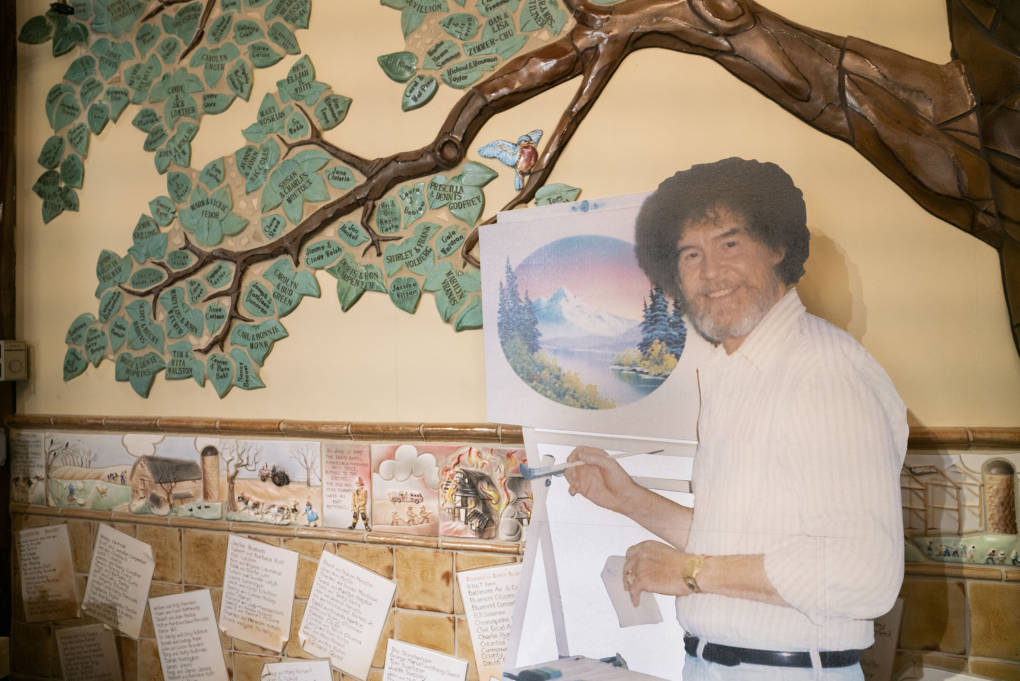
"caption": "A life size cut out of Bob Ross stands up against the wall where the historical tree of the Franklin Park Arts Center is painted. Bob Ross Inc. is located in Herndon, Va., which is only 27 miles from the exhibit. According to managing director, Elizabeth Bracey, the exhibit was intentionally kept close to headquarters.",
"description": "A life size cut out of Bob Ross stands up against the wall where the historical tree of the Franklin Park Arts Center is painted. Bob Ross Inc. is located in Herndon, Va., which is only 27 miles from the exhibit. According to managing director, Elizabeth Bracey, the exhibit was intentionally kept close to headquarters.",
"title": "A life size cut out of Bob Ross stands up against the wall where the historical tree of the Franklin Park Arts Center is painted. Bob Ross Inc. is located in Herndon, Va., which is only 27 miles from the exhibit. According to managing director, Elizabeth Bracey, the exhibit was intentionally kept close to headquarters.",
"credit": null,
"status": "inherit",
"isLoading": false,
"fetchFailed": false
},
"arts_13867618": {
"type": "attachments",
"id": "arts_13867618",
"meta": {
"index": "attachments_1716263798",
"site": "arts",
"id": "13867618",
"found": true
},
"parent": 13867617,
"imgSizes": {
"twentyfourteen-full-width": {
"file": "https://ww2.kqed.org/app/uploads/sites/2/2019/10/gettyimages-176441914-5c198a21053b03c61b60db4fb4c515849c90e1c5-1038x576.jpg",
"width": 1038,
"mimeType": "image/jpeg",
"height": 576
},
"thumbnail": {
"file": "https://ww2.kqed.org/app/uploads/sites/2/2019/10/gettyimages-176441914-5c198a21053b03c61b60db4fb4c515849c90e1c5-160x120.jpg",
"width": 160,
"mimeType": "image/jpeg",
"height": 120
},
"post-thumbnail": {
"file": "https://ww2.kqed.org/app/uploads/sites/2/2019/10/gettyimages-176441914-5c198a21053b03c61b60db4fb4c515849c90e1c5-672x372.jpg",
"width": 672,
"mimeType": "image/jpeg",
"height": 372
},
"kqedFullSize": {
"file": "https://ww2.kqed.org/app/uploads/sites/2/2019/10/gettyimages-176441914-5c198a21053b03c61b60db4fb4c515849c90e1c5.jpg",
"width": 2048,
"height": 1537
},
"large": {
"file": "https://ww2.kqed.org/app/uploads/sites/2/2019/10/gettyimages-176441914-5c198a21053b03c61b60db4fb4c515849c90e1c5-1020x766.jpg",
"width": 1020,
"mimeType": "image/jpeg",
"height": 766
},
"complete_open_graph": {
"file": "https://ww2.kqed.org/app/uploads/sites/2/2019/10/gettyimages-176441914-5c198a21053b03c61b60db4fb4c515849c90e1c5-1200x901.jpg",
"width": 1200,
"mimeType": "image/jpeg",
"height": 901
},
"full-width": {
"file": "https://ww2.kqed.org/app/uploads/sites/2/2019/10/gettyimages-176441914-5c198a21053b03c61b60db4fb4c515849c90e1c5-1920x1441.jpg",
"width": 1920,
"mimeType": "image/jpeg",
"height": 1441
},
"medium": {
"file": "https://ww2.kqed.org/app/uploads/sites/2/2019/10/gettyimages-176441914-5c198a21053b03c61b60db4fb4c515849c90e1c5-800x601.jpg",
"width": 800,
"mimeType": "image/jpeg",
"height": 601
},
"medium_large": {
"file": "https://ww2.kqed.org/app/uploads/sites/2/2019/10/gettyimages-176441914-5c198a21053b03c61b60db4fb4c515849c90e1c5-768x577.jpg",
"width": 768,
"mimeType": "image/jpeg",
"height": 577
}
},
"publishDate": 1570128168,
"modified": 1570128667,
"caption": "Kim Shattuck, photographed during an event at the Grammy Museum in Los Angeles on Aug. 12, 2013.",
"description": "Kim Shattuck, photographed during an event at the Grammy Museum in Los Angeles on Aug. 12, 2013.",
"title": "Kim Shattuck, photographed during an event at the Grammy Museum in Los Angeles on Aug. 12, 2013.",
"credit": "Mark Sullivan/WireImage/Getty Images",
"status": "inherit",
"isLoading": false,
"fetchFailed": false
},
"arts_13867042": {
"type": "attachments",
"id": "arts_13867042",
"meta": {
"index": "attachments_1716263798",
"site": "arts",
"id": "13867042",
"found": true
},
"parent": 13867040,
"imgSizes": {
"thumbnail": {
"file": "https://ww2.kqed.org/app/uploads/sites/2/2019/09/RobertHunter-160x90.jpg",
"width": 160,
"mimeType": "image/jpeg",
"height": 90
},
"post-thumbnail": {
"file": "https://ww2.kqed.org/app/uploads/sites/2/2019/09/RobertHunter-672x372.jpg",
"width": 672,
"mimeType": "image/jpeg",
"height": 372
},
"kqedFullSize": {
"file": "https://ww2.kqed.org/app/uploads/sites/2/2019/09/RobertHunter.jpg",
"width": 800,
"height": 450
},
"medium": {
"file": "https://ww2.kqed.org/app/uploads/sites/2/2019/09/RobertHunter-800x450.jpg",
"width": 800,
"mimeType": "image/jpeg",
"height": 450
},
"medium_large": {
"file": "https://ww2.kqed.org/app/uploads/sites/2/2019/09/RobertHunter-768x432.jpg",
"width": 768,
"mimeType": "image/jpeg",
"height": 432
}
},
"publishDate": 1569354422,
"modified": 1569354446,
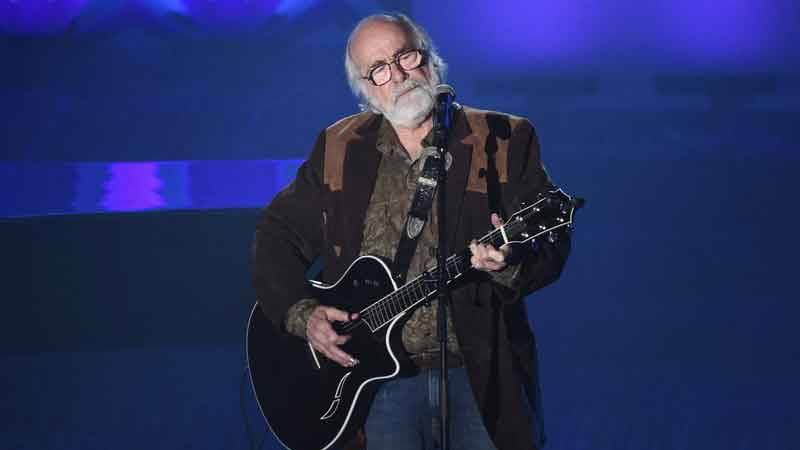
"caption": "This June 18, 2015 file photo shows Robert Hunter at the 46th Annual Songwriters Hall Of Fame Induction and Awards Gala in New York. Hunter, the man behind the poetic and mystical words for many of the Grateful Dead’s finest songs, died Monday, Sept. 23, 2019, at his Northern California home, according to Grateful Dead drummer Mickey Hart. He was 78. ",
"description": "This June 18, 2015 file photo shows Robert Hunter at the 46th Annual Songwriters Hall Of Fame Induction and Awards Gala in New York. Hunter, the man behind the poetic and mystical words for many of the Grateful Dead’s finest songs, died Monday, Sept. 23, 2019, at his Northern California home, according to Grateful Dead drummer Mickey Hart. He was 78. ",
"title": "RobertHunter",
"credit": "Evan Agostini/Invision/AP, File",
"status": "inherit",
"isLoading": false,
"fetchFailed": false
},
"arts_13866502": {
"type": "attachments",
"id": "arts_13866502",
"meta": {
"index": "attachments_1716263798",
"site": "arts",
"id": "13866502",
"found": true
},
"parent": 13866501,
"imgSizes": {
"twentyfourteen-full-width": {
"file": "https://ww2.kqed.org/app/uploads/sites/2/2019/09/gettyimages-946374960-47ffa8d08d6856cee76a44935e9f2e6749be336b-1016x576.jpg",
"width": 1016,
"mimeType": "image/jpeg",
"height": 576
},
"thumbnail": {
"file": "https://ww2.kqed.org/app/uploads/sites/2/2019/09/gettyimages-946374960-47ffa8d08d6856cee76a44935e9f2e6749be336b-160x120.jpg",
"width": 160,
"mimeType": "image/jpeg",
"height": 120
},
"post-thumbnail": {
"file": "https://ww2.kqed.org/app/uploads/sites/2/2019/09/gettyimages-946374960-47ffa8d08d6856cee76a44935e9f2e6749be336b-672x372.jpg",
"width": 672,
"mimeType": "image/jpeg",
"height": 372
},
"kqedFullSize": {
"file": "https://ww2.kqed.org/app/uploads/sites/2/2019/09/gettyimages-946374960-47ffa8d08d6856cee76a44935e9f2e6749be336b.jpg",
"width": 1016,
"height": 762
},
"medium": {
"file": "https://ww2.kqed.org/app/uploads/sites/2/2019/09/gettyimages-946374960-47ffa8d08d6856cee76a44935e9f2e6749be336b-800x600.jpg",
"width": 800,
"mimeType": "image/jpeg",
"height": 600
},
"medium_large": {
"file": "https://ww2.kqed.org/app/uploads/sites/2/2019/09/gettyimages-946374960-47ffa8d08d6856cee76a44935e9f2e6749be336b-768x576.jpg",
"width": 768,
"mimeType": "image/jpeg",
"height": 576
}
},
"publishDate": 1568668260,
"modified": 1568668441,
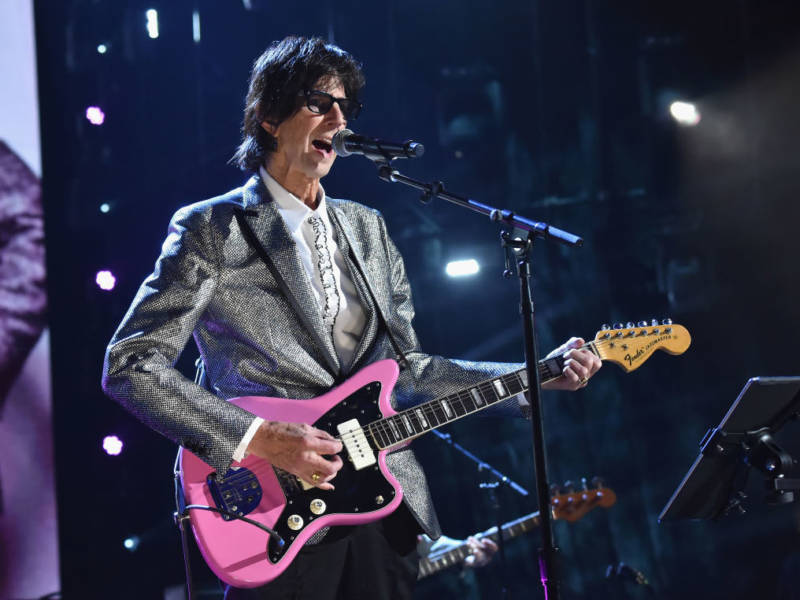
"caption": "Ric Ocasek of The Cars, performing at the group's induction ceremony into the Rock & Roll Hall of Fame in 2018. Ocasek died Sunday.",
"description": "Ric Ocasek of The Cars, performing at the group's induction ceremony into the Rock",
"title": "Ric Ocasek of The Cars, performing at the group's induction ceremony into the Rock & Roll Hall of Fame in 2018. Ocasek died Sunday.",
"credit": "Kevin Mazur/Getty Images For the Rock & Roll Hall of Fame",
"status": "inherit",
"isLoading": false,
"fetchFailed": false
},
"arts_13866340": {
"type": "attachments",
"id": "arts_13866340",
"meta": {
"index": "attachments_1716263798",
"site": "arts",
"id": "13866340",
"found": true
},
"parent": 13866339,
"imgSizes": {
"twentyfourteen-full-width": {
"file": "https://ww2.kqed.org/app/uploads/sites/2/2019/09/gettyimages-52438079-f23a3998f6e7cecf08cff5268ebed3ab8c5f52cb-1038x576.jpg",
"width": 1038,
"mimeType": "image/jpeg",
"height": 576
},
"thumbnail": {
"file": "https://ww2.kqed.org/app/uploads/sites/2/2019/09/gettyimages-52438079-f23a3998f6e7cecf08cff5268ebed3ab8c5f52cb-160x120.jpg",
"width": 160,
"mimeType": "image/jpeg",
"height": 120
},
"post-thumbnail": {
"file": "https://ww2.kqed.org/app/uploads/sites/2/2019/09/gettyimages-52438079-f23a3998f6e7cecf08cff5268ebed3ab8c5f52cb-672x372.jpg",
"width": 672,
"mimeType": "image/jpeg",
"height": 372
},
"kqedFullSize": {
"file": "https://ww2.kqed.org/app/uploads/sites/2/2019/09/gettyimages-52438079-f23a3998f6e7cecf08cff5268ebed3ab8c5f52cb-e1568334982171.jpg",
"width": 1920,
"height": 1440
},
"large": {
"file": "https://ww2.kqed.org/app/uploads/sites/2/2019/09/gettyimages-52438079-f23a3998f6e7cecf08cff5268ebed3ab8c5f52cb-1020x765.jpg",
"width": 1020,
"mimeType": "image/jpeg",
"height": 765
},
"complete_open_graph": {
"file": "https://ww2.kqed.org/app/uploads/sites/2/2019/09/gettyimages-52438079-f23a3998f6e7cecf08cff5268ebed3ab8c5f52cb-1200x900.jpg",
"width": 1200,
"mimeType": "image/jpeg",
"height": 900
},
"full-width": {
"file": "https://ww2.kqed.org/app/uploads/sites/2/2019/09/gettyimages-52438079-f23a3998f6e7cecf08cff5268ebed3ab8c5f52cb-1920x1440.jpg",
"width": 1920,
"mimeType": "image/jpeg",
"height": 1440
},
"medium": {
"file": "https://ww2.kqed.org/app/uploads/sites/2/2019/09/gettyimages-52438079-f23a3998f6e7cecf08cff5268ebed3ab8c5f52cb-800x600.jpg",
"width": 800,
"mimeType": "image/jpeg",
"height": 600
},
"medium_large": {
"file": "https://ww2.kqed.org/app/uploads/sites/2/2019/09/gettyimages-52438079-f23a3998f6e7cecf08cff5268ebed3ab8c5f52cb-768x576.jpg",
"width": 768,
"mimeType": "image/jpeg",
"height": 576
}
},
"publishDate": 1568333048,
"modified": 1568334974,
"caption": "Singer, songwriter and visual artist Daniel Johnston performs in Austin, Texas, in 2005. Johnston died on Wednesday.",
"description": "Singer, songwriter and visual artist Daniel Johnston performs in Austin, Texas, in 2005. Johnston died on Wednesday.",
"title": "Singer, songwriter and visual artist Daniel Johnston performs in Austin, Texas, in 2005. Johnston died on Wednesday.",
"credit": "Jana Birchum/Getty Images",
"status": "inherit",
"isLoading": false,
"fetchFailed": false
},
"arts_13866279": {
"type": "attachments",
"id": "arts_13866279",
"meta": {
"index": "attachments_1716263798",
"site": "arts",
"id": "13866279",
"found": true
},
"parent": 13866278,
"imgSizes": {
"twentyfourteen-full-width": {
"file": "https://ww2.kqed.org/app/uploads/sites/2/2019/09/gettyimages-114339289-edit-10662a58ccc6e9f01dae6c9f7606e23f3304f61c-1038x576.jpg",
"width": 1038,
"mimeType": "image/jpeg",
"height": 576
},
"thumbnail": {
"file": "https://ww2.kqed.org/app/uploads/sites/2/2019/09/gettyimages-114339289-edit-10662a58ccc6e9f01dae6c9f7606e23f3304f61c-160x120.jpg",
"width": 160,
"mimeType": "image/jpeg",
"height": 120
},
"post-thumbnail": {
"file": "https://ww2.kqed.org/app/uploads/sites/2/2019/09/gettyimages-114339289-edit-10662a58ccc6e9f01dae6c9f7606e23f3304f61c-672x372.jpg",
"width": 672,
"mimeType": "image/jpeg",
"height": 372
},
"kqedFullSize": {
"file": "https://ww2.kqed.org/app/uploads/sites/2/2019/09/gettyimages-114339289-edit-10662a58ccc6e9f01dae6c9f7606e23f3304f61c.jpg",
"width": 2048,
"height": 1536
},
"large": {
"file": "https://ww2.kqed.org/app/uploads/sites/2/2019/09/gettyimages-114339289-edit-10662a58ccc6e9f01dae6c9f7606e23f3304f61c-1020x765.jpg",
"width": 1020,
"mimeType": "image/jpeg",
"height": 765
},
"complete_open_graph": {
"file": "https://ww2.kqed.org/app/uploads/sites/2/2019/09/gettyimages-114339289-edit-10662a58ccc6e9f01dae6c9f7606e23f3304f61c-1200x900.jpg",
"width": 1200,
"mimeType": "image/jpeg",
"height": 900
},
"full-width": {
"file": "https://ww2.kqed.org/app/uploads/sites/2/2019/09/gettyimages-114339289-edit-10662a58ccc6e9f01dae6c9f7606e23f3304f61c-1920x1440.jpg",
"width": 1920,
"mimeType": "image/jpeg",
"height": 1440
},
"medium": {
"file": "https://ww2.kqed.org/app/uploads/sites/2/2019/09/gettyimages-114339289-edit-10662a58ccc6e9f01dae6c9f7606e23f3304f61c-800x600.jpg",
"width": 800,
"mimeType": "image/jpeg",
"height": 600
},
"medium_large": {
"file": "https://ww2.kqed.org/app/uploads/sites/2/2019/09/gettyimages-114339289-edit-10662a58ccc6e9f01dae6c9f7606e23f3304f61c-768x576.jpg",
"width": 768,
"mimeType": "image/jpeg",
"height": 576
}
},
"publishDate": 1568314161,
"modified": 1568314255,
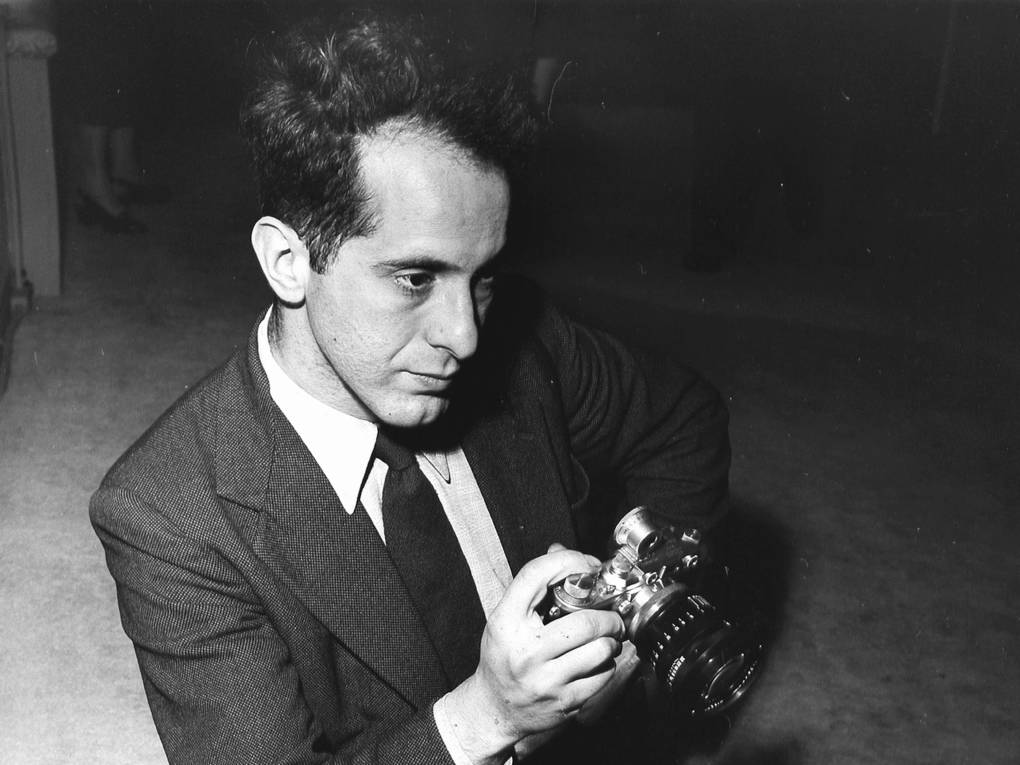
"caption": "Photographer Robert Frank holds a camera in 1954. His photo book, The Americans, changed the way people saw photography and the way they saw the U.S. Frank died on Monday at the age of 94.",
"description": "Photographer Robert Frank holds a camera in 1954. His photo book, \u003cem>The Americans,\u003c/em> changed the way people saw photography and the way they saw the U.S.\u003cem> \u003c/em>Frank died on Monday at the age of 94.",
"title": "Photographer Robert Frank holds a camera in 1954. His photo book, The Americans, changed the way people saw photography and the way they saw the U.S. Frank died on Monday at the age of 94.",
"credit": "Fred Stein Archive/Getty Images",
"status": "inherit",
"isLoading": false,
"fetchFailed": false
},
"arts_13864878": {
"type": "attachments",
"id": "arts_13864878",
"meta": {
"index": "attachments_1716263798",
"site": "arts",
"id": "13864878",
"found": true
},
"parent": 13864877,
"imgSizes": {
"twentyfourteen-full-width": {
"file": "https://ww2.kqed.org/app/uploads/sites/2/2019/08/815rduqfmdl-b4a9224801ec207714aaadf6e433e70de44ae126-1038x576.jpg",
"width": 1038,
"mimeType": "image/jpeg",
"height": 576
},
"thumbnail": {
"file": "https://ww2.kqed.org/app/uploads/sites/2/2019/08/815rduqfmdl-b4a9224801ec207714aaadf6e433e70de44ae126-160x120.jpg",
"width": 160,
"mimeType": "image/jpeg",
"height": 120
},
"post-thumbnail": {
"file": "https://ww2.kqed.org/app/uploads/sites/2/2019/08/815rduqfmdl-b4a9224801ec207714aaadf6e433e70de44ae126-672x372.jpg",
"width": 672,
"mimeType": "image/jpeg",
"height": 372
},
"kqedFullSize": {
"file": "https://ww2.kqed.org/app/uploads/sites/2/2019/08/815rduqfmdl-b4a9224801ec207714aaadf6e433e70de44ae126.jpg",
"width": 1665,
"height": 1249
},
"large": {
"file": "https://ww2.kqed.org/app/uploads/sites/2/2019/08/815rduqfmdl-b4a9224801ec207714aaadf6e433e70de44ae126-1020x765.jpg",
"width": 1020,
"mimeType": "image/jpeg",
"height": 765
},
"complete_open_graph": {
"file": "https://ww2.kqed.org/app/uploads/sites/2/2019/08/815rduqfmdl-b4a9224801ec207714aaadf6e433e70de44ae126-1200x900.jpg",
"width": 1200,
"mimeType": "image/jpeg",
"height": 900
},
"medium": {
"file": "https://ww2.kqed.org/app/uploads/sites/2/2019/08/815rduqfmdl-b4a9224801ec207714aaadf6e433e70de44ae126-800x600.jpg",
"width": 800,
"mimeType": "image/jpeg",
"height": 600
},
"medium_large": {
"file": "https://ww2.kqed.org/app/uploads/sites/2/2019/08/815rduqfmdl-b4a9224801ec207714aaadf6e433e70de44ae126-768x576.jpg",
"width": 768,
"mimeType": "image/jpeg",
"height": 576
}
},
"publishDate": 1566853804,
"modified": 1566854196,
"caption": "'Basquiat' by Paolo Parisi.",
"description": "'Basquiat' by Paolo Parisi.",
"title": "'Basquiat' by Paolo Parisi.",
"credit": null,
"status": "inherit",
"isLoading": false,
"fetchFailed": false
},
"arts_13863455": {
"type": "attachments",
"id": "arts_13863455",
"meta": {
"index": "attachments_1716263798",
"site": "arts",
"id": "13863455",
"found": true
},
"parent": 13863441,
"imgSizes": {
"twentyfourteen-full-width": {
"file": "https://ww2.kqed.org/app/uploads/sites/2/2019/08/ElLlantoDelPaso-1920-1-1038x576.jpg",
"width": 1038,
"mimeType": "image/jpeg",
"height": 576
},
"thumbnail": {
"file": "https://ww2.kqed.org/app/uploads/sites/2/2019/08/ElLlantoDelPaso-1920-1-160x90.jpg",
"width": 160,
"mimeType": "image/jpeg",
"height": 90
},
"post-thumbnail": {
"file": "https://ww2.kqed.org/app/uploads/sites/2/2019/08/ElLlantoDelPaso-1920-1-672x372.jpg",
"width": 672,
"mimeType": "image/jpeg",
"height": 372
},
"kqedFullSize": {
"file": "https://ww2.kqed.org/app/uploads/sites/2/2019/08/ElLlantoDelPaso-1920-1.jpg",
"width": 1920,
"height": 1080
},
"large": {
"file": "https://ww2.kqed.org/app/uploads/sites/2/2019/08/ElLlantoDelPaso-1920-1-1020x574.jpg",
"width": 1020,
"mimeType": "image/jpeg",
"height": 574
},
"complete_open_graph": {
"file": "https://ww2.kqed.org/app/uploads/sites/2/2019/08/ElLlantoDelPaso-1920-1-1200x675.jpg",
"width": 1200,
"mimeType": "image/jpeg",
"height": 675
},
"full-width": {
"file": "https://ww2.kqed.org/app/uploads/sites/2/2019/08/ElLlantoDelPaso-1920-1-1920x1080.jpg",
"width": 1920,
"mimeType": "image/jpeg",
"height": 1080
},
"medium": {
"file": "https://ww2.kqed.org/app/uploads/sites/2/2019/08/ElLlantoDelPaso-1920-1-800x450.jpg",
"width": 800,
"mimeType": "image/jpeg",
"height": 450
},
"medium_large": {
"file": "https://ww2.kqed.org/app/uploads/sites/2/2019/08/ElLlantoDelPaso-1920-1-768x432.jpg",
"width": 768,
"mimeType": "image/jpeg",
"height": 432
}
},
"publishDate": 1565341114,
"modified": 1565377649,
"caption": "Two young singers perform \"El Llanto de El Paso Texas,\" a corrido written by Josue Rodriguez, at a vigil outside the Cielo Vista Walmart, the site of a mass shooting on Aug. 3 that killed 22 people. ",
"description": "Two young singers perform \"El Llanto de El Paso Texas,\" a corrido written by Josue Rodriguez, at a vigil outside the Cielo Vista Walmart, the site of a mass shooting on Aug. 3 that killed 22 people. ",
"title": "ElLlantoDelPaso-1920",
"credit": "Screengrab / Omar Ornelas via USA Today on Twitter",
"status": "inherit",
"isLoading": false,
"fetchFailed": false
},
"arts_13863124": {
"type": "attachments",
"id": "arts_13863124",
"meta": {
"index": "attachments_1716263798",
"site": "arts",
"id": "13863124",
"found": true
},
"parent": 13863108,
"imgSizes": {
"twentyfourteen-full-width": {
"file": "https://ww2.kqed.org/app/uploads/sites/2/2019/08/Toni-GettyImages-978660564-1038x576.jpg",
"width": 1038,
"mimeType": "image/jpeg",
"height": 576
},
"thumbnail": {
"file": "https://ww2.kqed.org/app/uploads/sites/2/2019/08/Toni-GettyImages-978660564-160x107.jpg",
"width": 160,
"mimeType": "image/jpeg",
"height": 107
},
"post-thumbnail": {
"file": "https://ww2.kqed.org/app/uploads/sites/2/2019/08/Toni-GettyImages-978660564-672x372.jpg",
"width": 672,
"mimeType": "image/jpeg",
"height": 372
},
"kqedFullSize": {
"file": "https://ww2.kqed.org/app/uploads/sites/2/2019/08/Toni-GettyImages-978660564.jpg",
"width": 1920,
"height": 1280
},
"large": {
"file": "https://ww2.kqed.org/app/uploads/sites/2/2019/08/Toni-GettyImages-978660564-1020x680.jpg",
"width": 1020,
"mimeType": "image/jpeg",
"height": 680
},
"complete_open_graph": {
"file": "https://ww2.kqed.org/app/uploads/sites/2/2019/08/Toni-GettyImages-978660564-1200x800.jpg",
"width": 1200,
"mimeType": "image/jpeg",
"height": 800
},
"full-width": {
"file": "https://ww2.kqed.org/app/uploads/sites/2/2019/08/Toni-GettyImages-978660564-1920x1280.jpg",
"width": 1920,
"mimeType": "image/jpeg",
"height": 1280
},
"medium": {
"file": "https://ww2.kqed.org/app/uploads/sites/2/2019/08/Toni-GettyImages-978660564-800x533.jpg",
"width": 800,
"mimeType": "image/jpeg",
"height": 533
},
"medium_large": {
"file": "https://ww2.kqed.org/app/uploads/sites/2/2019/08/Toni-GettyImages-978660564-768x512.jpg",
"width": 768,
"mimeType": "image/jpeg",
"height": 512
}
},
"publishDate": 1565113394,
"modified": 1565113422,
"caption": "U.S. author Toni Morrison smiles in her office at Princeton University in New Jersey, while being interviewed by reporters on October 7, 1993. - Morrison said \"I am outrageously happy\" after hearing that she had won the Nobel Prize for Literature.",
"description": "U.S. author Toni Morrison smiles in her office at Princeton University in New Jersey, while being interviewed by reporters on October 7, 1993. - Morrison said \"I am outrageously happy\" after hearing that she had won the Nobel Prize for Literature.",
"title": "Toni-GettyImages-978660564",
"credit": "DON EMMERT/AFP/Getty Images",
"status": "inherit",
"isLoading": false,
"fetchFailed": false
}
},
"audioPlayerReducer": {
"postId": "stream_live",
"isPaused": true,
"isPlaying": false,
"pfsActive": false,
"pledgeModalIsOpen": true,
"playerDrawerIsOpen": false,
"liveAudioPlayStartedAt": 0,
"liveAudioPlayContext": ""
},
"authorsReducer": {
"byline_arts_13871065": {
"type": "authors",
"id": "byline_arts_13871065",
"meta": {
"override": true
},
"slug": "byline_arts_13871065",
"name": "Anastasia Tsioulcas",
"isLoading": false
},
"byline_arts_13869498": {
"type": "authors",
"id": "byline_arts_13869498",
"meta": {
"override": true
},
"slug": "byline_arts_13869498",
"name": "Richard Gonzales",
"isLoading": false
},
"byline_arts_13867846": {
"type": "authors",
"id": "byline_arts_13867846",
"meta": {
"override": true
},
"slug": "byline_arts_13867846",
"name": "Kat Lonsdorf",
"isLoading": false
},
"byline_arts_13867617": {
"type": "authors",
"id": "byline_arts_13867617",
"meta": {
"override": true
},
"slug": "byline_arts_13867617",
"name": "Lars Gotrich",
"isLoading": false
},
"byline_arts_13867040": {
"type": "authors",
"id": "byline_arts_13867040",
"meta": {
"override": true
},
"slug": "byline_arts_13867040",
"name": "John Rogers, Associated Press",
"isLoading": false
},
"byline_arts_13866501": {
"type": "authors",
"id": "byline_arts_13866501",
"meta": {
"override": true
},
"slug": "byline_arts_13866501",
"name": "Anastasia Tsioulcas",
"isLoading": false
},
"byline_arts_13866339": {
"type": "authors",
"id": "byline_arts_13866339",
"meta": {
"override": true
},
"slug": "byline_arts_13866339",
"name": "Anastasia Tsioulcas",
"isLoading": false
},
"byline_arts_13866278": {
"type": "authors",
"id": "byline_arts_13866278",
"meta": {
"override": true
},
"slug": "byline_arts_13866278",
"name": "Tom Cole",
"isLoading": false
},
"byline_arts_13864877": {
"type": "authors",
"id": "byline_arts_13864877",
"meta": {
"override": true
},
"slug": "byline_arts_13864877",
"name": "ETELKA LEHOCZKY",
"isLoading": false
},
"byline_arts_13863108": {
"type": "authors",
"id": "byline_arts_13863108",
"meta": {
"override": true
},
"slug": "byline_arts_13863108",
"name": "The Associated Press, KQED Arts Staff",
"isLoading": false
},
"ralexandra": {
"type": "authors",
"id": "11242",
"meta": {
"index": "authors_1716337520",
"id": "11242",
"found": true
},
"name": "Rae Alexandra",
"firstName": "Rae",
"lastName": "Alexandra",
"slug": "ralexandra",
"email": "ralexandra@kqed.org",
"display_author_email": true,
"staff_mastheads": [],
"title": "Reporter/Producer",
"bio": "Rae Alexandra is a Reporter/Producer for KQED Arts & Culture, and the creator/author of the \u003ca href=\"https://www.kqed.org/arts/program/rebel-girls-from-bay-area-history\">Rebel Girls From Bay Area History\u003c/a> and \u003ca href=\"https://www.kqed.org/bizarrebayarea\">Bizarre Bay Area\u003c/a> series. Her debut book, \u003ca href=\"https://citylights.com/politics-current-events-history/unsung-heroines35-women-who-changed/\">Unsung Heroines: 35 Women Who Changed the Bay Area\u003c/a> was published by City Lights in March 2026. In 2023, Rae was awarded an SPJ Excellence in Journalism Award for Arts & Culture. Rae was born and raised in Wales and subsequently — even after two decades in Northern California — still uses phrases that regularly baffle her coworkers.",
"avatar": "https://secure.gravatar.com/avatar/edfee8176c80cc0a382b051190f5341997df378a934a5774dcb0977732dfd401?s=600&d=blank&r=g",
"twitter": null,
"bluesky": null,
"facebook": null,
"instagram": null,
"linkedin": null,
"sites": [
{
"site": "arts",
"roles": [
"subscriber"
]
},
{
"site": "news",
"roles": [
"subscriber"
]
},
{
"site": "pop",
"roles": [
"subscriber"
]
},
{
"site": "bayareabites",
"roles": [
"subscriber"
]
},
{
"site": "science",
"roles": [
"subscriber"
]
}
],
"headData": {
"title": "Rae Alexandra | KQED",
"description": "Reporter/Producer",
"ogImgSrc": "https://secure.gravatar.com/avatar/edfee8176c80cc0a382b051190f5341997df378a934a5774dcb0977732dfd401?s=600&d=blank&r=g",
"twImgSrc": "https://secure.gravatar.com/avatar/edfee8176c80cc0a382b051190f5341997df378a934a5774dcb0977732dfd401?s=600&d=blank&r=g"
},
"isLoading": false,
"link": "/author/ralexandra"
},
"lblanco": {
"type": "authors",
"id": "11357",
"meta": {
"index": "authors_1716337520",
"id": "11357",
"found": true
},
"name": "Lina Blanco",
"firstName": "Lina",
"lastName": "Blanco",
"slug": "lblanco",
"email": "lblanco@kqed.org",
"display_author_email": false,
"staff_mastheads": [],
"title": null,
"bio": "Lina was a Senior Engagement Platforms Manager for KQED News, producing engagement strategies on social media at \u003ca href=\"https://twitter.com/KQEDnews\">@KQEDNews, \u003c/a>via \u003ca href=\"https://www.kqed.org/about/newsletters/\">KQED's daily newsletter\u003c/a> as well as texting campaigns with KQED readers and listeners. She also co-produces for KQED's bilingual news hub \u003ca href=\"https://www.instagram.com/kqedenespanol/\">KQED en Español\u003c/a>.\r\n\r\nLina previously worked for \u003ca href=\"https://kqed.org/arts\">KQED Arts\u003c/a> — supporting audience engagement efforts on the weekly \u003ca href=\"https://www.kqed.org/podcasts/rightnowish\">\u003cem>Rightnowish\u003c/em> \u003c/a>podcast, Webby-winning video series \u003ca href=\"https://www.kqed.org/if-cities-could-dance\">\u003cem>If Cities Could Dance\u003c/em>\u003c/a>, and daily Arts & Culture reporting. She won a \u003ca href=\"https://www.kqed.org/pressroom/10884/murrow\">National 2019 Edward R. Murrow Award for Excellence in Social Media\u003c/a> for KQED's series \u003cem>The Hustle\u003c/em>.\r\n\r\nBefore KQED, Lina worked as a graphic designer and digital storytelling facilitator at the \u003ca href=\"https://www.nativehealth.org/\">Native American Health Center\u003c/a>.\r\n\r\nShe's mom to a senior Chihuahua (plus one black cat) and lives in West Sonoma County on a small farmstead.",
"avatar": "https://secure.gravatar.com/avatar/77ec326d67223c38a436b87bcfd2a2e8?s=600&d=mm&r=g",
"twitter": "LinaBlanco",
"facebook": null,
"instagram": null,
"linkedin": null,
"sites": [
{
"site": "arts",
"roles": [
"subscriber"
]
},
{
"site": "news",
"roles": [
"subscriber"
]
},
{
"site": "pop",
"roles": [
"administrator"
]
},
{
"site": "about",
"roles": [
"administrator"
]
},
{
"site": "bayareabites",
"roles": [
"editor"
]
},
{
"site": "science",
"roles": [
"editor"
]
},
{
"site": "checkplease",
"roles": [
"editor"
]
},
{
"site": "food",
"roles": []
},
{
"site": "perspectives",
"roles": [
"editor"
]
}
],
"headData": {
"title": "Lina Blanco | KQED",
"description": null,
"ogImgSrc": "https://secure.gravatar.com/avatar/77ec326d67223c38a436b87bcfd2a2e8?s=600&d=mm&r=g",
"twImgSrc": "https://secure.gravatar.com/avatar/77ec326d67223c38a436b87bcfd2a2e8?s=600&d=mm&r=g"
},
"isLoading": false,
"link": "/author/lblanco"
}
},
"pagesReducer": {
"arts_category_remembrance": {
"type": "terms",
"id": "arts_1564",
"meta": {
"index": "terms_1716263798",
"site": "arts",
"id": "1564",
"score": 13.1078825
},
"featImg": null,
"name": "Remembrance",
"description": null,
"taxonomy": "category",
"headData": {
"twImgId": null,
"twTitle": null,
"ogTitle": null,
"ogImgId": null,
"twDescription": null,
"description": null,
"title": "Remembrance Archives | KQED Arts",
"ogDescription": null
},
"ttid": 1576,
"slug": "remembrance",
"isLoading": false,
"title": "Remembrance",
"pageMeta": {
"site": "arts",
"WpPageTemplate": "page-topic-editorial",
"currentPage": 18
},
"blocks": [
{
"blockName": "kqed/post-list",
"attrs": {
"layout": "cardArticle2",
"query": "posts/arts?category=remembrance",
"seeMore": false,
"paginated": true,
"page": 18
}
},
{
"blockName": "kqed/ad"
}
]
}
},
"pfsSessionReducer": {},
"postsReducer": {
"stream_live": {
"type": "live",
"id": "stream_live",
"audioUrl": "https://streams.kqed.org/kqedradio",
"title": "Live Stream",
"excerpt": "Live Stream information currently unavailable.",
"link": "/radio",
"featImg": "",
"label": {
"name": "KQED Live",
"link": "/"
}
},
"stream_kqedNewscast": {
"type": "posts",
"id": "stream_kqedNewscast",
"audioUrl": "https://www.kqed.org/.stream/anon/radio/RDnews/newscast.mp3?_=1",
"title": "KQED Newscast",
"featImg": "",
"label": {
"name": "88.5 FM",
"link": "/"
}
},
"arts_13871065": {
"type": "posts",
"id": "arts_13871065",
"meta": {
"index": "posts_1716263798",
"site": "arts",
"id": "13871065",
"score": null,
"sort": [
1575824801000
]
},
"parent": 0,
"labelTerm": {
"site": "arts"
},
"blocks": [],
"publishDate": 1575824801,
"format": "standard",
"title": "Rapper Juice WRLD Dead At Age 21",
"headTitle": "Rapper Juice WRLD Dead At Age 21 | KQED",
"content": "\u003cp>According to media reports, the fast-rising rapper Juice WRLD has died at age 21 after a medical emergency at Chicago’s Midway Airport. TMZ first \u003ca href=\"https://chicago.suntimes.com/2019/12/8/21001244/chicago-rapper-juice-wrld-dead-midway-airport-seizure\">reported\u003c/a> the death, saying that witnesses saw him having a seizure after disembarking from a private plane.\u003c/p>\n\u003cp>The Chicago Police Department confirmed to NPR on Sunday morning that a “21-year-old male suffered a medical emergency” at Midway, and was transported to Christ Hospital, where he was pronounced dead. The CPD spokesperson said that detectives are conducting a death investigation, but no further information was available.\u003c/p>\n\u003cp>Juice WRLD was born Jarad Anthony Higgins in 1998, and grew up in the Chicago area. In March, the rapper hit No. 1 on the \u003ca href=\"https://www.billboard.com/articles/columns/chart-beat/8502815/juice-wrld-billboard-200-no-1-album-death-race-for-love\">Billboard 200\u003c/a> chart with his album \u003cem>Death Race for Love\u003c/em>; earlier this week, Spotify announced that he was among the \u003ca href=\"https://www.billboard.com/articles/business/streaming/8545219/drake-ed-sheeran-spotifys-most-streamed-decade-wrapped\">top five\u003c/a> male artists streamed in the U.S. this year.\u003c/p>\n\u003cp>He first came to mainstream recognition with a 2017 EP, \u003cem>Nothings Different\u003c/em>; soon after, he signed a contract with Interscope worth a \u003ca href=\"https://www.billboard.com/articles/columns/hip-hop/8244598/juice-wrld-signs-interscope-3-million-joint-venture\">reported\u003c/a> $3 million. One of the EP’s singles, “\u003ca href=\"https://www.youtube.com/watch?v=mzB1VGEGcSU\">Lucid Dreams\u003c/a>,” went to No. 2 on the Billboard Hot 100. \u003c/p>\n\u003cp>In an unpublished interview with NPR’s Rodney Carmichael recorded this March, Juice WRLD talked about his reputation for making emo rap, and how, in his opinion, hip-hop has evolved towards emotional vulnerability. \u003c/p>\n\u003cp>[ad fullwidth]\u003c/p>\n\u003cp>“I feel like people are not afraid to touch on all their emotions,” he said. “Back in the day, especially when everybody was trying to act hard all the time, I feel like people just wasn’t touching on that side of their life. I don’t know if they were scared or they was in fear … but I feel as though some of the people now are more mature and more grown than the people back then because they talk about everything that they went through. Everything, not just the violence.”\u003c/p>\n\u003cp>\u003c/p>\n\u003cp>Juice WRLD continued, “If they was involved in traphouses and violence and all that other stuff, they don’t just talk about that. They talk about everything. One song could be about a band or a traphouse. The next song could be about somebody writing love letters and crying in the traphouse because they shorty left them or cheated or something.” \u003c/p>\n\u003cdiv class=\"fullattribution\">Copyright 2019 NPR. To see more, visit \u003ca href=\"https://www.npr.org\" rel=\"noopener noreferrer\" target=\"_blank\">NPR\u003c/a>.\u003cimg decoding=\"async\" src=\"https://www.google-analytics.com/__utm.gif?utmac=UA-5828686-4&utmdt=Reports%3A+Rapper+Juice+WRLD+Dead+At+Age+21&utme=8(APIKey)9(MDAxOTAwOTE4MDEyMTkxMDAzNjczZDljZA004)\">\u003c/div>\n\n",
"stats": {
"hasVideo": false,
"hasChartOrMap": false,
"hasAudio": false,
"hasPolis": false,
"wordCount": 405,
"hasGoogleForm": false,
"hasGallery": false,
"hasHearkenModule": false,
"iframeSrcs": [],
"paragraphCount": 9
},
"modified": 1705021714,
"excerpt": "The fast-rising rapper collapsed at a Chicago airport in the early hours on Sunday. ",
"headData": {
"twImgId": "",
"twTitle": "",
"ogTitle": "",
"ogImgId": "",
"twDescription": "",
"description": "The fast-rising rapper collapsed at a Chicago airport in the early hours on Sunday. ",
"title": "Rapper Juice WRLD Dead At Age 21 | KQED",
"ogDescription": "",
"schema": {
"@context": "https://schema.org",
"@type": "Article",
"headline": "Rapper Juice WRLD Dead At Age 21",
"datePublished": "2019-12-08T09:06:41-08:00",
"dateModified": "2024-01-11T17:08:34-08:00",
"image": "https://cdn.kqed.org/wp-content/uploads/2020/02/KQED-OG-Image@1x.png"
}
},
"guestAuthors": [],
"slug": "rapper-juice-wrld-dead-at-age-21",
"status": "publish",
"nprApiLink": "http://api.npr.org/query?id=786064628&apiKey=MDAxOTAwOTE4MDEyMTkxMDAzNjczZDljZA004",
"templateType": "standard",
"nprStoryDate": "Sun, 08 Dec 2019 11:29:52 -0500",
"nprLastModifiedDate": "Sun, 08 Dec 2019 11:33:54 -0500",
"featuredImageType": "standard",
"nprHtmlLink": "https://www.npr.org/2019/12/08/786064628/reports-rapper-juice-wrld-dead-at-age-21?ft=nprml&f=786064628",
"nprImageAgency": "Getty Images",
"nprStoryId": "786064628",
"nprByline": "Anastasia Tsioulcas",
"sticky": false,
"nprImageCredit": "Tim Mosenfelder",
"nprRetrievedStory": "1",
"nprPubDate": "Sun, 08 Dec 2019 11:33:00 -0500",
"path": "/arts/13871065/rapper-juice-wrld-dead-at-age-21",
"audioTrackLength": null,
"parsedContent": [
{
"type": "contentString",
"content": "\u003cdiv class=\"post-body\">\u003cp>\u003cp>According to media reports, the fast-rising rapper Juice WRLD has died at age 21 after a medical emergency at Chicago’s Midway Airport. TMZ first \u003ca href=\"https://chicago.suntimes.com/2019/12/8/21001244/chicago-rapper-juice-wrld-dead-midway-airport-seizure\">reported\u003c/a> the death, saying that witnesses saw him having a seizure after disembarking from a private plane.\u003c/p>\n\u003cp>The Chicago Police Department confirmed to NPR on Sunday morning that a “21-year-old male suffered a medical emergency” at Midway, and was transported to Christ Hospital, where he was pronounced dead. The CPD spokesperson said that detectives are conducting a death investigation, but no further information was available.\u003c/p>\n\u003cp>Juice WRLD was born Jarad Anthony Higgins in 1998, and grew up in the Chicago area. In March, the rapper hit No. 1 on the \u003ca href=\"https://www.billboard.com/articles/columns/chart-beat/8502815/juice-wrld-billboard-200-no-1-album-death-race-for-love\">Billboard 200\u003c/a> chart with his album \u003cem>Death Race for Love\u003c/em>; earlier this week, Spotify announced that he was among the \u003ca href=\"https://www.billboard.com/articles/business/streaming/8545219/drake-ed-sheeran-spotifys-most-streamed-decade-wrapped\">top five\u003c/a> male artists streamed in the U.S. this year.\u003c/p>\n\u003cp>He first came to mainstream recognition with a 2017 EP, \u003cem>Nothings Different\u003c/em>; soon after, he signed a contract with Interscope worth a \u003ca href=\"https://www.billboard.com/articles/columns/hip-hop/8244598/juice-wrld-signs-interscope-3-million-joint-venture\">reported\u003c/a> $3 million. One of the EP’s singles, “\u003ca href=\"https://www.youtube.com/watch?v=mzB1VGEGcSU\">Lucid Dreams\u003c/a>,” went to No. 2 on the Billboard Hot 100. \u003c/p>\n\u003cp>In an unpublished interview with NPR’s Rodney Carmichael recorded this March, Juice WRLD talked about his reputation for making emo rap, and how, in his opinion, hip-hop has evolved towards emotional vulnerability. \u003c/p>\n\u003cp>\u003c/p>\u003c/div>",
"attributes": {
"named": {},
"numeric": []
}
},
{
"type": "component",
"content": "",
"name": "ad",
"attributes": {
"named": {
"label": "fullwidth"
},
"numeric": [
"fullwidth"
]
}
},
{
"type": "contentString",
"content": "\u003cdiv class=\"post-body\">\u003cp>\u003c/p>\n\u003cp>“I feel like people are not afraid to touch on all their emotions,” he said. “Back in the day, especially when everybody was trying to act hard all the time, I feel like people just wasn’t touching on that side of their life. I don’t know if they were scared or they was in fear … but I feel as though some of the people now are more mature and more grown than the people back then because they talk about everything that they went through. Everything, not just the violence.”\u003c/p>\n\u003cp>\u003c/p>\n\u003cp>Juice WRLD continued, “If they was involved in traphouses and violence and all that other stuff, they don’t just talk about that. They talk about everything. One song could be about a band or a traphouse. The next song could be about somebody writing love letters and crying in the traphouse because they shorty left them or cheated or something.” \u003c/p>\n\u003cdiv class=\"fullattribution\">Copyright 2019 NPR. To see more, visit \u003ca href=\"https://www.npr.org\" rel=\"noopener noreferrer\" target=\"_blank\">NPR\u003c/a>.\u003cimg decoding=\"async\" src=\"https://www.google-analytics.com/__utm.gif?utmac=UA-5828686-4&utmdt=Reports%3A+Rapper+Juice+WRLD+Dead+At+Age+21&utme=8(APIKey)9(MDAxOTAwOTE4MDEyMTkxMDAzNjczZDljZA004)\">\u003c/div>\n\n\u003c/div>\u003c/p>",
"attributes": {
"named": {},
"numeric": []
}
}
],
"link": "/arts/13871065/rapper-juice-wrld-dead-at-age-21",
"authors": [
"byline_arts_13871065"
],
"categories": [
"arts_69",
"arts_1564"
],
"tags": [
"arts_1091"
],
"featImg": "arts_13871066",
"label": "arts"
},
"arts_13870554": {
"type": "posts",
"id": "arts_13870554",
"meta": {
"index": "posts_1716263798",
"site": "arts",
"id": "13870554",
"score": null,
"sort": [
1575322600000
]
},
"parent": 0,
"labelTerm": {
"site": "arts"
},
"blocks": [],
"publishDate": 1575322600,
"format": "standard",
"title": "Lil BUB, the Internet's Favorite Dwarf Cat is Dead; Long Live Lil BUB",
"headTitle": "Lil BUB, the Internet’s Favorite Dwarf Cat is Dead; Long Live Lil BUB | KQED",
"content": "\u003cp>She was the rescued feral cat from Indiana with dreamy green eyes, four extra toes and a tongue even more famous than Miley’s. But on Monday morning, news broke that \u003ca href=\"http://lilbub.com/\" target=\"_blank\" rel=\"noopener noreferrer\">Lil BUB\u003c/a> had waddled off to the catnip palace in the sky, breaking the hearts of her 3 million Facebook fans.\u003c/p>\n\u003cp>https://twitter.com/IAMLILBUB/status/1201552296489967621\u003c/p>\n\u003cp>Never held back by her dwarfism, in her short life this four-pound kitty achieved more than many humans five times her age. BUB helped out creatures less fortunate than herself by raising over $300,000 for the ASPCA via \u003ca href=\"https://store.lilbub.com/\" target=\"_blank\" rel=\"noopener noreferrer\">merch sales\u003c/a>, public appearances and other \u003ca href=\"https://secure.aspca.org/donate/lilbub\" target=\"_blank\" rel=\"noopener noreferrer\">fundraising\u003c/a> efforts. Possibly even more remarkably, an hour-long video of her \u003ca href=\"https://www.youtube.com/watch?v=ZuHZSbPJhaY\" target=\"_blank\" rel=\"noopener noreferrer\">purring in front of a fireplace\u003c/a> once garnered over 4 million views on YouTube.\u003c/p>\n\u003cp>And that’s not all. In addition to authoring her own book, \u003ca href=\"https://www.amazon.com/Lil-BUBs-Book-Extraordinary-Amazing/dp/B00NAK01KQ\" target=\"_blank\" rel=\"noopener noreferrer\">\u003cem>Lil BUB’s Lil Book: The Extraordinary Life of the Most Amazing Cat on the Planet\u003c/em>\u003c/a>, BUB also appeared in two movies—\u003ca href=\"https://www.imdb.com/title/tt4383594/fullcredits/?ref_=tt_ov_st_sm\" target=\"_blank\" rel=\"noopener noreferrer\">\u003cem>Nine Lives\u003c/em>\u003c/a> (starring Christopher Walken!) and \u003ca href=\"https://www.imdb.com/title/tt4057146/?ref_=nv_sr_srsg_0\" target=\"_blank\" rel=\"noopener noreferrer\">\u003cem>I’ll Be Next Door For Christmas\u003c/em>\u003c/a>—as well as a documentary about her life and origins, titled \u003ca href=\"https://www.youtube.com/watch?v=gNyW-GKOG2k\" target=\"_blank\" rel=\"noopener noreferrer\">\u003cem>Lil BUB & Friends\u003c/em>\u003c/a>.\u003c/p>\n\u003cp>Her YouTube talk show (why \u003cem>wouldn’t\u003c/em> she have one of those?) featured guests like \u003ca href=\"https://www.youtube.com/watch?v=mbICDkQb46g\" target=\"_blank\" rel=\"noopener noreferrer\">Michelle Obama\u003c/a>, \u003ca href=\"https://www.youtube.com/watch?v=r7tETcTnQcM\" target=\"_blank\" rel=\"noopener noreferrer\">Whoopi Goldberg\u003c/a> and punk rock hero \u003ca href=\"https://www.youtube.com/watch?v=HW4mwjSIkoE\" target=\"_blank\" rel=\"noopener noreferrer\">Steve Albini\u003c/a>.\u003c/p>\n\u003cp>https://www.youtube.com/watch?v=r7tETcTnQcM&t=173s\u003c/p>\n\u003cp>BUB tried to sum up her own enduring appeal in her book. “My limitless wisdom and razor-sharp wit, paired with my ability to overcome disabilities,” she wrote, “provide laughter, hope and inspiration to humans all over the world.” Arguably though, her spirit was best captured on the duet she recorded with party pal Andrew WK, on which he sang: “Stronger than a lion / Cuter than a baby / You bounce through space / Like a magical feline lady.”\u003c/p>\n\u003cp>She does now, Andrew WK. She does now.\u003c/p>\n\u003cp>https://www.youtube.com/watch?v=gVYRR1Fj17M\u003c/p>\n\u003cp>[ad fullwidth]\u003c/p>\n\u003cp>\u003c/p>\n",
"stats": {
"hasVideo": true,
"hasChartOrMap": false,
"hasAudio": false,
"hasPolis": false,
"wordCount": 334,
"hasGoogleForm": false,
"hasGallery": false,
"hasHearkenModule": false,
"iframeSrcs": [],
"paragraphCount": 8
},
"modified": 1705021753,
"excerpt": "One of the internet's most popular special needs cats is no longer with us—but her spirit will live on.",
"headData": {
"twImgId": "",
"twTitle": "",
"ogTitle": "",
"ogImgId": "",
"twDescription": "",
"description": "One of the internet's most popular special needs cats is no longer with us—but her spirit will live on.",
"title": "Lil BUB, the Internet's Favorite Dwarf Cat is Dead; Long Live Lil BUB | KQED",
"ogDescription": "",
"schema": {
"@context": "https://schema.org",
"@type": "Article",
"headline": "Lil BUB, the Internet's Favorite Dwarf Cat is Dead; Long Live Lil BUB",
"datePublished": "2019-12-02T13:36:40-08:00",
"dateModified": "2024-01-11T17:09:13-08:00",
"image": "https://cdn.kqed.org/wp-content/uploads/2020/02/KQED-OG-Image@1x.png"
}
},
"guestAuthors": [],
"slug": "lil-bub-the-internets-favorite-dwarf-cat-is-dead-long-live-lil-bub",
"status": "publish",
"templateType": "standard",
"featuredImageType": "standard",
"sticky": false,
"path": "/arts/13870554/lil-bub-the-internets-favorite-dwarf-cat-is-dead-long-live-lil-bub",
"audioTrackLength": null,
"parsedContent": [
{
"type": "contentString",
"content": "\u003cdiv class=\"post-body\">\u003cp>\u003cp>She was the rescued feral cat from Indiana with dreamy green eyes, four extra toes and a tongue even more famous than Miley’s. But on Monday morning, news broke that \u003ca href=\"http://lilbub.com/\" target=\"_blank\" rel=\"noopener noreferrer\">Lil BUB\u003c/a> had waddled off to the catnip palace in the sky, breaking the hearts of her 3 million Facebook fans.\u003c/p>\u003c/p>\u003c/div>",
"attributes": {
"named": {},
"numeric": []
}
},
{
"type": "component",
"content": "",
"name": "singleTwitterStatus",
"attributes": {
"named": {
"id": "1201552296489967621"
},
"numeric": []
}
},
{
"type": "contentString",
"content": "\u003cdiv class=\"post-body\">\u003cp>\n\u003cp>Never held back by her dwarfism, in her short life this four-pound kitty achieved more than many humans five times her age. BUB helped out creatures less fortunate than herself by raising over $300,000 for the ASPCA via \u003ca href=\"https://store.lilbub.com/\" target=\"_blank\" rel=\"noopener noreferrer\">merch sales\u003c/a>, public appearances and other \u003ca href=\"https://secure.aspca.org/donate/lilbub\" target=\"_blank\" rel=\"noopener noreferrer\">fundraising\u003c/a> efforts. Possibly even more remarkably, an hour-long video of her \u003ca href=\"https://www.youtube.com/watch?v=ZuHZSbPJhaY\" target=\"_blank\" rel=\"noopener noreferrer\">purring in front of a fireplace\u003c/a> once garnered over 4 million views on YouTube.\u003c/p>\n\u003cp>And that’s not all. In addition to authoring her own book, \u003ca href=\"https://www.amazon.com/Lil-BUBs-Book-Extraordinary-Amazing/dp/B00NAK01KQ\" target=\"_blank\" rel=\"noopener noreferrer\">\u003cem>Lil BUB’s Lil Book: The Extraordinary Life of the Most Amazing Cat on the Planet\u003c/em>\u003c/a>, BUB also appeared in two movies—\u003ca href=\"https://www.imdb.com/title/tt4383594/fullcredits/?ref_=tt_ov_st_sm\" target=\"_blank\" rel=\"noopener noreferrer\">\u003cem>Nine Lives\u003c/em>\u003c/a> (starring Christopher Walken!) and \u003ca href=\"https://www.imdb.com/title/tt4057146/?ref_=nv_sr_srsg_0\" target=\"_blank\" rel=\"noopener noreferrer\">\u003cem>I’ll Be Next Door For Christmas\u003c/em>\u003c/a>—as well as a documentary about her life and origins, titled \u003ca href=\"https://www.youtube.com/watch?v=gNyW-GKOG2k\" target=\"_blank\" rel=\"noopener noreferrer\">\u003cem>Lil BUB & Friends\u003c/em>\u003c/a>.\u003c/p>\n\u003cp>Her YouTube talk show (why \u003cem>wouldn’t\u003c/em> she have one of those?) featured guests like \u003ca href=\"https://www.youtube.com/watch?v=mbICDkQb46g\" target=\"_blank\" rel=\"noopener noreferrer\">Michelle Obama\u003c/a>, \u003ca href=\"https://www.youtube.com/watch?v=r7tETcTnQcM\" target=\"_blank\" rel=\"noopener noreferrer\">Whoopi Goldberg\u003c/a> and punk rock hero \u003ca href=\"https://www.youtube.com/watch?v=HW4mwjSIkoE\" target=\"_blank\" rel=\"noopener noreferrer\">Steve Albini\u003c/a>.\u003c/p>\u003c/p>\u003cp>\u003cspan class='utils-parseShortcode-shortcodes-__youtubeShortcode__embedYoutube'>\n \u003cspan class='utils-parseShortcode-shortcodes-__youtubeShortcode__embedYoutubeInside'>\n \u003ciframe\n loading='lazy'\n class='utils-parseShortcode-shortcodes-__youtubeShortcode__youtubePlayer'\n type='text/html'\n src='//www.youtube.com/embed/r7tETcTnQcM'\n title='//www.youtube.com/embed/r7tETcTnQcM'\n allowfullscreen='true'\n style='border:0;'>\u003c/iframe>\n \u003c/span>\n \u003c/span>\u003c/p>\u003cp>\u003cp>BUB tried to sum up her own enduring appeal in her book. “My limitless wisdom and razor-sharp wit, paired with my ability to overcome disabilities,” she wrote, “provide laughter, hope and inspiration to humans all over the world.” Arguably though, her spirit was best captured on the duet she recorded with party pal Andrew WK, on which he sang: “Stronger than a lion / Cuter than a baby / You bounce through space / Like a magical feline lady.”\u003c/p>\n\u003cp>She does now, Andrew WK. She does now.\u003c/p>\u003c/p>\u003cp>\u003cspan class='utils-parseShortcode-shortcodes-__youtubeShortcode__embedYoutube'>\n \u003cspan class='utils-parseShortcode-shortcodes-__youtubeShortcode__embedYoutubeInside'>\n \u003ciframe\n loading='lazy'\n class='utils-parseShortcode-shortcodes-__youtubeShortcode__youtubePlayer'\n type='text/html'\n src='//www.youtube.com/embed/gVYRR1Fj17M'\n title='//www.youtube.com/embed/gVYRR1Fj17M'\n allowfullscreen='true'\n style='border:0;'>\u003c/iframe>\n \u003c/span>\n \u003c/span>\u003c/p>\u003cp>\u003cp>\u003c/p>\u003c/div>",
"attributes": {
"named": {},
"numeric": []
}
},
{
"type": "component",
"content": "",
"name": "ad",
"attributes": {
"named": {
"label": "fullwidth"
},
"numeric": [
"fullwidth"
]
}
},
{
"type": "contentString",
"content": "\u003cdiv class=\"post-body\">\u003cp>\u003c/p>\n\u003cp>\u003c/p>\n\u003c/div>\u003c/p>",
"attributes": {
"named": {},
"numeric": []
}
}
],
"link": "/arts/13870554/lil-bub-the-internets-favorite-dwarf-cat-is-dead-long-live-lil-bub",
"authors": [
"11242"
],
"categories": [
"arts_75",
"arts_1564"
],
"tags": [
"arts_9340",
"arts_2391",
"arts_4554"
],
"featImg": "arts_13870599",
"label": "arts"
},
"arts_13869498": {
"type": "posts",
"id": "arts_13869498",
"meta": {
"index": "posts_1716263798",
"site": "arts",
"id": "13869498",
"score": null,
"sort": [
1573058143000
]
},
"guestAuthors": [],
"slug": "novelist-ernest-j-gaines-dies-at-age-86",
"title": "Novelist Ernest J. Gaines Dies At Age 86",
"publishDate": 1573058143,
"format": "standard",
"headTitle": "Novelist Ernest J. Gaines Dies At Age 86 | KQED",
"labelTerm": {
"site": "arts"
},
"content": "\u003cp>Novelist Ernest J. Gaines, acclaimed author of \u003cem>The Autobiography of Miss Jane Pittman\u003c/em>, and other novels about the struggles of African Americans in rural Louisiana, died at his home in Oscar, La., Tuesday at the age of 86.\u003c/p>\n\u003cp>Gaines died in his sleep of cardiac arrest, \u003ca href=\"https://apnews.com/e9fe833a0686427eaa6cf3cc768d264d\">according\u003c/a> to The Associated Press, citing the Baton Rouge Area Foundation. He is survived by his wife Dianne Saulney Gaines, four stepchildren and nine siblings.\u003c/p>\n\u003cp>The son of sharecroppers, Gaines was born on a plantation in Pointe Coupee Parish, near Baton Rouge. He attended school for little more than five months out of the year. But that was more education than his family before him had received. He would say later in life that his ear for the stories of his elders was developed as he wrote letters for adults who couldn’t read or write.\u003c/p>\n\u003cp>In the late 1940s, at the age of 15, his family moved to the Northern California city of Vallejo, about 30 miles north of San Francisco. He told \u003ca href=\"https://www.youtube.com/watch?v=aTHwqrPLu7Y\">interviewer Lawrence Bridges\u003c/a> that in California he could do something that had been forbidden in the South: visit a library. Gaines later attended San Francisco State University. His early writing earned him a Wallace Stegner fellowship at Stanford University.\u003c/p>\n\u003cp>Gaines returned to Louisiana in 1963, inspired by James Meredith’s bid to enroll in the then-all-white University of Mississippi. He took it as a sign that the South was changing and that he could be a part of that change.\u003c/p>\n\u003cp>[ad fullwidth]\u003c/p>\n\u003cp>“As I’ve said many times before, the two greatest moves I’ve made was on the day I left Louisiana in ’48, and on the day I came back to Louisiana in ’63,” he would later \u003ca href=\"https://www.braf.org/stories/2019/11/5/an-interview-with-the-late-ernest-j-gaines-from-2007\">tell an interviewer\u003c/a>.\u003c/p>\n\u003cp>Less than 10 years later, in 1971, he published the novel that brought him attention, \u003cem>The Autobiography of Miss Jane Pittman\u003c/em>. It told the story of a black woman born as a slave who lives long enough to witness the civil rights era. It was later adapted for a television movie in 1974 starring Cicely Tyson and won nine Emmy Awards.\u003c/p>\n\u003cp>Gaines would \u003ca href=\"https://www.washingtonpost.com/local/obituaries/ernest-j-gaines-author-of-autobiography-of-miss-jane-pittman-dies-at-86/2019/11/05/2b89840c-000b-11ea-8bab-0fc209e065a8_story.html\">later say\u003c/a> that the fictional Jane Pittman was modeled after his disabled great-aunt, Augustine Jefferson, who could not walk, but was strong enough to raise a family.\u003c/p>\n\u003cp>Another novel, \u003cem>A Gathering of Old Men,\u003c/em> a tale of a group of aging black men sharing stories about their lives in rural and segregated Louisiana, published in 1983, was made into a movie in 1987.\u003c/p>\n\u003cp>Gaines won the National Book Critics Circle Award in 1993 for his novel\u003cem> A Lesson Before Dying\u003c/em>, a story about a young Southern black man waiting to be executed for a crime he did not commit. It later became a best-seller.\u003c/p>\n\u003cp>Gaines \u003ca href=\"https://www.washingtonpost.com/local/obituaries/ernest-j-gaines-author-of-autobiography-of-miss-jane-pittman-dies-at-86/2019/11/05/2b89840c-000b-11ea-8bab-0fc209e065a8_story.html\">published eight novels\u003c/a> and many short stories.\u003c/p>\n\u003cp>Gaines was honored with \u003ca href=\"https://www.nytimes.com/2019/11/05/books/ernest-gaines-dead.html\">numerous other awards\u003c/a> including a Guggenheim Fellowship and grants from the National Endowment for the Arts. He was named a MacArthur Fellow — the coveted “genius grant”– in 1993. President Bill Clinton \u003ca href=\"https://www.neh.gov/about/awards/national-humanities-medals/ernest-j-gaines\">awarded \u003c/a>Gaines the National Humanities Medal in 2000. In 2013, President Barack Obama \u003ca href=\"https://www.achievement.org/achiever/ernest-j-gaines/\">awarded \u003c/a>him the National Medal of Arts.\u003c/p>\n\u003cp>With the earnings from his books and television movies, Gaines built a home on plantation land he had worked as a child and near a cemetery where his family members were buried.\u003c/p>\n\u003cp>In an interview with Fourth Quarter 2007, published by the \u003ca href=\"https://www.braf.org/stories/2019/11/5/an-interview-with-the-late-ernest-j-gaines-from-2007\">Baton Rouge Area Foundation\u003c/a>, Gaines talked about his home in False River, La. — the nexus between the past and the present, and between the land and his ancestors whose lives and labor inspired his work.\u003c/p>\n\u003cp>\u003c/p>\n\u003cp>“If Auntie [Augusteen Jefferson] could sit here with me, or my stepfather who took me away from here, or my Uncle George, who used to take me to those old beat-up bars in Baton Rouge—if I could, I’d just buy him a good glass of Gentleman Jack, and we could sit here and talk. Oh, I wish I could do that.” \u003c/p>\n\u003cdiv class=\"fullattribution\">Copyright 2019 NPR. To see more, visit \u003ca href=\"https://www.npr.org\" rel=\"noopener\" target=\"_blank\">NPR\u003c/a>.\u003cimg decoding=\"async\" src=\"https://www.google-analytics.com/__utm.gif?utmac=UA-5828686-4&utmdt=Novelist+Ernest+J.+Gaines+Dies+At+Age+86&utme=8(APIKey)9(MDAxOTAwOTE4MDEyMTkxMDAzNjczZDljZA004)\">\u003c/div>\n\n",
"blocks": [],
"excerpt": "He won awards for his depictions of rural Louisiana featuring universal themes of hard work, sacrifice and resilience. His book \u003cem>The Autobiography of Miss Jane Pittman\u003c/em> became a much-honored TV movie.",
"status": "publish",
"parent": 0,
"modified": 1726764938,
"stats": {
"hasAudio": false,
"hasVideo": false,
"hasChartOrMap": false,
"iframeSrcs": [],
"hasGoogleForm": false,
"hasGallery": false,
"hasHearkenModule": false,
"hasPolis": false,
"paragraphCount": 17,
"wordCount": 692
},
"headData": {
"title": "Novelist Ernest J. Gaines Dies At Age 86 | KQED",
"description": "He won awards for his depictions of rural Louisiana featuring universal themes of hard work, sacrifice and resilience. His book The Autobiography of Miss Jane Pittman became a much-honored TV movie.",
"ogTitle": "",
"ogDescription": "",
"ogImgId": "",
"twTitle": "",
"twDescription": "",
"twImgId": "",
"schema": {
"@context": "https://schema.org",
"@type": "Article",
"headline": "Novelist Ernest J. Gaines Dies At Age 86",
"datePublished": "2019-11-06T08:35:43-08:00",
"dateModified": "2024-09-19T09:55:38-07:00",
"image": "https://cdn.kqed.org/wp-content/uploads/2020/02/KQED-OG-Image@1x.png"
}
},
"sticky": false,
"nprByline": "Richard Gonzales",
"nprImageAgency": "AP",
"nprStoryId": "776618453",
"nprApiLink": "http://api.npr.org/query?id=776618453&apiKey=MDAxOTAwOTE4MDEyMTkxMDAzNjczZDljZA004",
"nprHtmlLink": "https://www.npr.org/novelist-ernest-j-gaines-dies-at-age-86?ft=nprml&f=776618453",
"nprRetrievedStory": "1",
"nprPubDate": "Wed, 06 Nov 2019 08:21:00 -0500",
"nprStoryDate": "Tue, 05 Nov 2019 23:24:00 -0500",
"nprLastModifiedDate": "Wed, 06 Nov 2019 08:21:42 -0500",
"templateType": "standard",
"featuredImageType": "standard",
"path": "/arts/13869498/novelist-ernest-j-gaines-dies-at-age-86",
"audioTrackLength": null,
"parsedContent": [
{
"type": "contentString",
"content": "\u003cdiv class=\"post-body\">\u003cp>\u003cp>Novelist Ernest J. Gaines, acclaimed author of \u003cem>The Autobiography of Miss Jane Pittman\u003c/em>, and other novels about the struggles of African Americans in rural Louisiana, died at his home in Oscar, La., Tuesday at the age of 86.\u003c/p>\n\u003cp>Gaines died in his sleep of cardiac arrest, \u003ca href=\"https://apnews.com/e9fe833a0686427eaa6cf3cc768d264d\">according\u003c/a> to The Associated Press, citing the Baton Rouge Area Foundation. He is survived by his wife Dianne Saulney Gaines, four stepchildren and nine siblings.\u003c/p>\n\u003cp>The son of sharecroppers, Gaines was born on a plantation in Pointe Coupee Parish, near Baton Rouge. He attended school for little more than five months out of the year. But that was more education than his family before him had received. He would say later in life that his ear for the stories of his elders was developed as he wrote letters for adults who couldn’t read or write.\u003c/p>\n\u003cp>In the late 1940s, at the age of 15, his family moved to the Northern California city of Vallejo, about 30 miles north of San Francisco. He told \u003ca href=\"https://www.youtube.com/watch?v=aTHwqrPLu7Y\">interviewer Lawrence Bridges\u003c/a> that in California he could do something that had been forbidden in the South: visit a library. Gaines later attended San Francisco State University. His early writing earned him a Wallace Stegner fellowship at Stanford University.\u003c/p>\n\u003cp>Gaines returned to Louisiana in 1963, inspired by James Meredith’s bid to enroll in the then-all-white University of Mississippi. He took it as a sign that the South was changing and that he could be a part of that change.\u003c/p>\n\u003cp>\u003c/p>\u003c/div>",
"attributes": {
"named": {},
"numeric": []
}
},
{
"type": "component",
"content": "",
"name": "ad",
"attributes": {
"named": {
"label": "fullwidth"
},
"numeric": [
"fullwidth"
]
}
},
{
"type": "contentString",
"content": "\u003cdiv class=\"post-body\">\u003cp>\u003c/p>\n\u003cp>“As I’ve said many times before, the two greatest moves I’ve made was on the day I left Louisiana in ’48, and on the day I came back to Louisiana in ’63,” he would later \u003ca href=\"https://www.braf.org/stories/2019/11/5/an-interview-with-the-late-ernest-j-gaines-from-2007\">tell an interviewer\u003c/a>.\u003c/p>\n\u003cp>Less than 10 years later, in 1971, he published the novel that brought him attention, \u003cem>The Autobiography of Miss Jane Pittman\u003c/em>. It told the story of a black woman born as a slave who lives long enough to witness the civil rights era. It was later adapted for a television movie in 1974 starring Cicely Tyson and won nine Emmy Awards.\u003c/p>\n\u003cp>Gaines would \u003ca href=\"https://www.washingtonpost.com/local/obituaries/ernest-j-gaines-author-of-autobiography-of-miss-jane-pittman-dies-at-86/2019/11/05/2b89840c-000b-11ea-8bab-0fc209e065a8_story.html\">later say\u003c/a> that the fictional Jane Pittman was modeled after his disabled great-aunt, Augustine Jefferson, who could not walk, but was strong enough to raise a family.\u003c/p>\n\u003cp>Another novel, \u003cem>A Gathering of Old Men,\u003c/em> a tale of a group of aging black men sharing stories about their lives in rural and segregated Louisiana, published in 1983, was made into a movie in 1987.\u003c/p>\n\u003cp>Gaines won the National Book Critics Circle Award in 1993 for his novel\u003cem> A Lesson Before Dying\u003c/em>, a story about a young Southern black man waiting to be executed for a crime he did not commit. It later became a best-seller.\u003c/p>\n\u003cp>Gaines \u003ca href=\"https://www.washingtonpost.com/local/obituaries/ernest-j-gaines-author-of-autobiography-of-miss-jane-pittman-dies-at-86/2019/11/05/2b89840c-000b-11ea-8bab-0fc209e065a8_story.html\">published eight novels\u003c/a> and many short stories.\u003c/p>\n\u003cp>Gaines was honored with \u003ca href=\"https://www.nytimes.com/2019/11/05/books/ernest-gaines-dead.html\">numerous other awards\u003c/a> including a Guggenheim Fellowship and grants from the National Endowment for the Arts. He was named a MacArthur Fellow — the coveted “genius grant”– in 1993. President Bill Clinton \u003ca href=\"https://www.neh.gov/about/awards/national-humanities-medals/ernest-j-gaines\">awarded \u003c/a>Gaines the National Humanities Medal in 2000. In 2013, President Barack Obama \u003ca href=\"https://www.achievement.org/achiever/ernest-j-gaines/\">awarded \u003c/a>him the National Medal of Arts.\u003c/p>\n\u003cp>With the earnings from his books and television movies, Gaines built a home on plantation land he had worked as a child and near a cemetery where his family members were buried.\u003c/p>\n\u003cp>In an interview with Fourth Quarter 2007, published by the \u003ca href=\"https://www.braf.org/stories/2019/11/5/an-interview-with-the-late-ernest-j-gaines-from-2007\">Baton Rouge Area Foundation\u003c/a>, Gaines talked about his home in False River, La. — the nexus between the past and the present, and between the land and his ancestors whose lives and labor inspired his work.\u003c/p>\n\u003cp>\u003c/p>\n\u003cp>“If Auntie [Augusteen Jefferson] could sit here with me, or my stepfather who took me away from here, or my Uncle George, who used to take me to those old beat-up bars in Baton Rouge—if I could, I’d just buy him a good glass of Gentleman Jack, and we could sit here and talk. Oh, I wish I could do that.” \u003c/p>\n\u003cdiv class=\"fullattribution\">Copyright 2019 NPR. To see more, visit \u003ca href=\"https://www.npr.org\" rel=\"noopener\" target=\"_blank\">NPR\u003c/a>.\u003cimg decoding=\"async\" src=\"https://www.google-analytics.com/__utm.gif?utmac=UA-5828686-4&utmdt=Novelist+Ernest+J.+Gaines+Dies+At+Age+86&utme=8(APIKey)9(MDAxOTAwOTE4MDEyMTkxMDAzNjczZDljZA004)\">\u003c/div>\n\n\u003c/div>\u003c/p>",
"attributes": {
"named": {},
"numeric": []
}
}
],
"link": "/arts/13869498/novelist-ernest-j-gaines-dies-at-age-86",
"authors": [
"byline_arts_13869498"
],
"categories": [
"arts_73",
"arts_235",
"arts_1564"
],
"tags": [
"arts_1091",
"arts_3800"
],
"featImg": "arts_13869499",
"label": "arts"
},
"arts_13867846": {
"type": "posts",
"id": "arts_13867846",
"meta": {
"index": "posts_1716263798",
"site": "arts",
"id": "13867846",
"score": null,
"sort": [
1570565277000
]
},
"parent": 0,
"labelTerm": {
"site": "arts"
},
"blocks": [],
"publishDate": 1570565277,
"format": "standard",
"title": "The Lasting Legacy of Bob Ross and His Colorful World of 'Happy Accidents'",
"headTitle": "The Lasting Legacy of Bob Ross and His Colorful World of ‘Happy Accidents’ | KQED",
"content": "\u003cp>On a recent Friday afternoon, Sandra Hill leads a painting class at an arts center nestled amid rolling Virginia hills, about an hour and a half drive northwest of Washington, D.C.\u003c/p>\n\u003cp>Each of the 10 adult students has a canvas balanced on an easel in front of them. They’re dabbing paintbrushes loaded with dark green paint along the edge of a lake, the beginnings of a glowing sunset in the background.\u003c/p>\n\u003cp>“And think tree! Don’t just go tap, tap, tap any old place. Remember, trees have depth to them!” she reminds the class.\u003c/p>\n\u003cp>But this is no ordinary painting lesson: The students have come to Purcellville, Va., from as far away as Texas to learn to paint in the distinctive style and palette of Bob Ross, the \u003ca href=\"https://www.orlandosentinel.com/news/os-xpm-1990-07-07-9007060122-story.html\">Air Force sergeant-turned-painter\u003c/a> who rose to public media fame in the 1980s and ’90s with his TV show \u003cem>The Joy of Painting\u003c/em>. Over 31 seasons and more than 400 episodes, Ross became known for his hushed, soothing tones, big bushy hair, vivid landscapes and “happy little trees.”\u003c/p>\n\u003cp>“It’s almost spiritual,” Cliff Nolan, a painter from nearby Manassas, Va., says about being in the class at the \u003ca href=\"http://www.franklinparkartscenter.org/\">Franklin Park Arts Center\u003c/a>. In a room lined with 24 original Ross paintings, Nolan pulls a laminated photo book out of his pocket. It’s filled with pictures of paintings inspired by Ross’ work, using the wet-on-wet painting technique he used.\u003c/p>\n\u003cp>[ad fullwidth]\u003c/p>\n\u003cp>“Bob is just wonderful,” Nolan says with a sigh. “Or, was.”\u003c/p>\n\u003cp>Ross died from cancer in 1995 at age 52. But the popularity of this quirky pop icon continues to soar, among fans old and new.\u003c/p>\n\u003cp>\u003cem>The Joy of Painting\u003c/em> is broadcast every day on some PBS stations across the country and is available on-demand to millions of viewers on Netflix and YouTube. There are Bob Ross bobbleheads, board games, underwear and coffee mugs. The Smithsonian’s National Museum Of American History recently acquired four of his paintings for their permanent collection. And Ross—a throwback to the pre-Internet era—has a surprisingly huge following \u003ca href=\"https://www.twitch.tv/bobross\">on Twitch\u003c/a>, the streaming platform best known for video games, where fans can comment in real-time while he paints.\u003c/p>\n\u003cp>Ross left behind thousands of paintings, which \u003ca href=\"https://www.nytimes.com/2019/07/12/arts/bob-ross-paintings-mystery.html\">rarely go on display\u003c/a>. So when the current solo exhibition opened at the Franklin Park Arts Center, fans flocked to the small dairy-barn-turned-gallery.\u003c/p>\n\u003cp>Elizabeth Bracey, the center’s director, worked with Bob Ross, Inc., to put the show together. Based nearby in Herndon, Va., the company—which Ross started with his business partners Annette and Walter Kowalski—owns most of Ross’ paintings.\u003c/p>\n\u003cp>“We knew it was going to be popular, but not like this,” Bracey says.\u003c/p>\n\u003cfigure id=\"attachment_13867854\" class=\"wp-caption aligncenter\" style=\"max-width: 800px\">\u003cimg loading=\"lazy\" decoding=\"async\" class=\"size-medium wp-image-13867854\" src=\"https://ww2.kqed.org/arts/wp-content/uploads/sites/2/2019/10/photo_composite_bob_ross_mshaw_custom-3f1e7381c79ce383ac2aedc925178624dced9427-s2400-c85-800x293.png\" alt='Left: Cliff Nolan holds a book of his own paintings that he has done in the \"Bob Ross\" style. Right: Sara Monteleone, wears a Bob Ross wig while she follows along with Sandra Hill, a Certified Ross Instructor, during the recent painting class.' width=\"800\" height=\"293\" srcset=\"https://cdn.kqed.org/wp-content/uploads/sites/2/2019/10/photo_composite_bob_ross_mshaw_custom-3f1e7381c79ce383ac2aedc925178624dced9427-s2400-c85-800x293.png 800w, https://cdn.kqed.org/wp-content/uploads/sites/2/2019/10/photo_composite_bob_ross_mshaw_custom-3f1e7381c79ce383ac2aedc925178624dced9427-s2400-c85-160x59.png 160w, https://cdn.kqed.org/wp-content/uploads/sites/2/2019/10/photo_composite_bob_ross_mshaw_custom-3f1e7381c79ce383ac2aedc925178624dced9427-s2400-c85-768x282.png 768w, https://cdn.kqed.org/wp-content/uploads/sites/2/2019/10/photo_composite_bob_ross_mshaw_custom-3f1e7381c79ce383ac2aedc925178624dced9427-s2400-c85-1020x374.png 1020w, https://cdn.kqed.org/wp-content/uploads/sites/2/2019/10/photo_composite_bob_ross_mshaw_custom-3f1e7381c79ce383ac2aedc925178624dced9427-s2400-c85-1200x440.png 1200w, https://cdn.kqed.org/wp-content/uploads/sites/2/2019/10/photo_composite_bob_ross_mshaw_custom-3f1e7381c79ce383ac2aedc925178624dced9427-s2400-c85.png 1366w\" sizes=\"(max-width: 800px) 100vw, 800px\">\u003cfigcaption class=\"wp-caption-text\">Left: Cliff Nolan holds a book of his own paintings that he has done in the “Bob Ross” style. Right: Sara Monteleone, wears a Bob Ross wig while she follows along with Sandra Hill, a Certified Ross Instructor, during the recent painting class. \u003ccite>(Mhari Shaw/NPR)\u003c/cite>\u003c/figcaption>\u003c/figure>\n\u003cp>Thousands of people have visited the show since it opened last month. Bracey says she’s expecting at least 15,000 by the time the exhibition closes on Oct. 15. That’s half the number of visitors the art center usually sees in an entire year. It’s become a kind of unexpected pilgrimage for fans, from all over and all walks of life.\u003c/p>\n\u003cp>“Little kids starting at like 4, all the way to grandmas and grandpas and every ethnicity, you know, every state. It’s everybody,” Bracey says. “Everybody loves him, [he] resonates with [everybody] in some way.”\u003c/p>\n\u003cp>The show is a wonderland of colorful sunsets, forests tucked into snowy mountains, and waves crashing against rocky cliffs, with paintings named things like \u003cem>Sunset Aglow\u003c/em>, \u003cem>Home Before Nightfall\u003c/em> and \u003cem>Daisies at Dawn\u003c/em>.\u003c/p>\n\u003cfigure id=\"attachment_13867862\" class=\"wp-caption aligncenter\" style=\"max-width: 800px\">\u003cimg loading=\"lazy\" decoding=\"async\" class=\"size-medium wp-image-13867862\" src=\"https://ww2.kqed.org/arts/wp-content/uploads/sites/2/2019/10/2019-09-20-bobross-mshaw-02_custom-daaac53f0d8f1b36d322404ab5f879781855975f-s1000-c85-800x557.jpg\" alt=\"'Happy Accidents: An Exhibit of Bob Ross Paintings' will be on display the Franklin Parks Art Center, in Purcellville, Va., through Oct. 15.\" width=\"800\" height=\"557\" srcset=\"https://cdn.kqed.org/wp-content/uploads/sites/2/2019/10/2019-09-20-bobross-mshaw-02_custom-daaac53f0d8f1b36d322404ab5f879781855975f-s1000-c85-800x557.jpg 800w, https://cdn.kqed.org/wp-content/uploads/sites/2/2019/10/2019-09-20-bobross-mshaw-02_custom-daaac53f0d8f1b36d322404ab5f879781855975f-s1000-c85-160x111.jpg 160w, https://cdn.kqed.org/wp-content/uploads/sites/2/2019/10/2019-09-20-bobross-mshaw-02_custom-daaac53f0d8f1b36d322404ab5f879781855975f-s1000-c85-768x535.jpg 768w, https://cdn.kqed.org/wp-content/uploads/sites/2/2019/10/2019-09-20-bobross-mshaw-02_custom-daaac53f0d8f1b36d322404ab5f879781855975f-s1000-c85.jpg 1000w\" sizes=\"(max-width: 800px) 100vw, 800px\">\u003cfigcaption class=\"wp-caption-text\">‘Happy Accidents: An Exhibit of Bob Ross Paintings’ will be on display the Franklin Parks Art Center, in Purcellville, Va., through Oct. 15. \u003ccite>(Mhari Shaw/NPR)\u003c/cite>\u003c/figcaption>\u003c/figure>\n\u003cp>“I like to think that there are places like this that still exist in the world, that don’t have cell phone towers and high rises and things like that. It just seems like such an amazing magical place,” Bracey says, staring at a painting called \u003ca href=\"https://www.youtube.com/watch?v=hEyR2FDp-00\">Splendor of Autumn\u003cem>.\u003c/em>\u003c/a>\u003c/p>\n\u003cp>There’s a lake with towering birch trees in the foreground, and bold pops of fall foliage framing the canvas. And hung next to it, is a quote, something he said during the episode while he was painting it: “If painting does nothing else for you, it should make you happy.”\u003c/p>\n\u003cp>The whole exhibition is like this, the paintings and quotes sharing the spotlight, side by side. Even when he was alive, Ross’ draw wasn’t just his paintings, it was also the way he talked.\u003c/p>\n\u003cblockquote>\u003cp>Maybe in our world, there lives a big old cloud right up here. He just sort of floats around and has a good time all day. You know, clouds are one of the freest things in nature I believe. So, just let them go. Shoot, just let them have fun.\u003c/p>\n\u003cp>— \u003ca href=\"https://www.youtube.com/watch?v=gMEZp47VKC0\">The Joy Of Painting, Season 26, Episode 12 “Sunset Aglow”\u003c/a>\u003c/p>\u003c/blockquote>\n\u003cblockquote>\u003cp>Any person who has ever wanted to put a dream on canvas, you can do it. You don’t have to go to school half your life, you don’t have to know Leonardo da Vinci as a personal friend.\u003c/p>\n\u003cp>—\u003ca href=\"https://www.youtube.com/watch?v=Tnb2cXKKuWM\"> The Joy Of Painting, Season 29, Episode 7 “Cypress Creek”\u003c/a>\u003c/p>\u003c/blockquote>\n\u003cp>Bob Ross made viewers want to lean in closer to the screen so they didn’t miss anything. He could be wonderfully weird and deeply emotional.\u003c/p>\n\u003cp>Jerry Saltz, senior art critic at \u003cem>New York\u003c/em> magazine, says that was one of the things that made Ross great. “Once you set eyes on that guy you’re kinda locked in for 25 minutes,” he says, referring to the length of an episode. “It’s you alone in your dorky studio in your apartment, wearing an old shirt, and just working.”\u003c/p>\n\u003cp>Ross captivated and connected with audiences, but he did much more.\u003c/p>\n\u003cp>“People think that he’s just kitsch and cute and a little Buddha and fun happy little accidents … but Bob Ross breaks down painting into its component parts,” he says.\u003c/p>\n\u003cp>There was no irony, and the closest thing to a gimmick was \u003ca href=\"https://www.youtube.com/watch?v=xpNrn0_97LM\">a pet squirrel named Peapod\u003c/a> he would occasionally bottle feed on screen. Instead, he demystified the process for viewers in each episode, creating one landscape, from start to finish: a blank canvas transformed before their eyes.\u003c/p>\n\u003cp>https://www.youtube.com/watch?v=1koOWsj70d4\u003c/p>\n\u003cp>“And then he adds a beautiful bit at the end: You can do this, too,” Saltz says. “You have to banish self-doubt. And at the end of the session, it’s done. And he’s basically saying, ‘And then we’ll do another happy little accident tomorrow.'”\u003c/p>\n\u003cp>Ross didn’t want people to buy his paintings—in fact, he didn’t sell paintings once he started his television show—he wanted viewers to create their own. As long as they just tried to paint, Ross said, it will be right, no matter what.\u003c/p>\n\u003cp>That Bob Ross attitude lives on at the painting class in Purcellville, where the landscapes lining the walls practically whisper encouragement to the budding artists.\u003c/p>\n\u003cp>The students all have palettes set out with Ross’ signature colors—titanium white, alizarin crimson, midnight black. Three women in the back of the class are wearing big, bushy Bob Ross-style wigs. The soothing sound of paintbrush on canvas, another J\u003cem>oy of Painting\u003c/em> signature, fills the room.\u003c/p>\n\u003cp>Susan Rossi sits at the front of the class. She flew all the way from Texas to attend. She’s fussing with the row of trees along the lakeshore in her painting, dabbing them with a look of concern.\u003c/p>\n\u003cp>“Oh no, no don’t you worry,” Hill, the instructor, says, coming up behind her. “There’s no mistakes here, we can fix that. These are happy accidents!”\u003c/p>\n\u003cp>Rossi, 70, started learning to paint from Ross’ TV show after a stroke four years ago left her partially paralyzed and unable to work. \u003cem>The Joy of Painting \u003c/em>had a profound effect on her.\u003c/p>\n\u003cp>“It brought something out of me I didn’t know was in there,” Rossi says with a smile. “You think, wow, no limits! You can move clouds, you can change mountains. I guess that’s what you learn from Bob Ross. Don’t put limits on your life.”\u003c/p>\n\u003cfigure id=\"attachment_13867848\" class=\"wp-caption aligncenter\" style=\"max-width: 800px\">\u003cimg loading=\"lazy\" decoding=\"async\" class=\"size-medium wp-image-13867848\" src=\"https://ww2.kqed.org/arts/wp-content/uploads/sites/2/2019/10/2019-09-20-bobross-mshaw-final6-554bbf4307619347c363b825833a0c8259835a7d-800x600.jpg\" alt=\"Susan Rossi traveled from Texas to participate in the class and see the exhibit. Rossi has used Bob Ross as a type of therapy after suffering from a stroke four years ago.\" width=\"800\" height=\"600\" srcset=\"https://cdn.kqed.org/wp-content/uploads/sites/2/2019/10/2019-09-20-bobross-mshaw-final6-554bbf4307619347c363b825833a0c8259835a7d-800x600.jpg 800w, https://cdn.kqed.org/wp-content/uploads/sites/2/2019/10/2019-09-20-bobross-mshaw-final6-554bbf4307619347c363b825833a0c8259835a7d-160x120.jpg 160w, https://cdn.kqed.org/wp-content/uploads/sites/2/2019/10/2019-09-20-bobross-mshaw-final6-554bbf4307619347c363b825833a0c8259835a7d-768x576.jpg 768w, https://cdn.kqed.org/wp-content/uploads/sites/2/2019/10/2019-09-20-bobross-mshaw-final6-554bbf4307619347c363b825833a0c8259835a7d-1020x765.jpg 1020w, https://cdn.kqed.org/wp-content/uploads/sites/2/2019/10/2019-09-20-bobross-mshaw-final6-554bbf4307619347c363b825833a0c8259835a7d-1200x900.jpg 1200w, https://cdn.kqed.org/wp-content/uploads/sites/2/2019/10/2019-09-20-bobross-mshaw-final6-554bbf4307619347c363b825833a0c8259835a7d-1920x1440.jpg 1920w, https://cdn.kqed.org/wp-content/uploads/sites/2/2019/10/2019-09-20-bobross-mshaw-final6-554bbf4307619347c363b825833a0c8259835a7d.jpg 2048w\" sizes=\"(max-width: 800px) 100vw, 800px\">\u003cfigcaption class=\"wp-caption-text\">Susan Rossi traveled from Texas to participate in the class and see the exhibit. Rossi has used Bob Ross as a type of therapy after suffering from a stroke four years ago. \u003ccite>(Mhari Shaw/NPR)\u003c/cite>\u003c/figcaption>\u003c/figure>\n\u003cp>Ross himself was surprisingly philosophical during the show, often casually whispering big ideas to viewers before returning to his instruction. These sprinkles of wisdom have lived on \u003ca href=\"https://www.amazon.com/Happy-Little-Accidents-Wisdom-Ross/dp/0762462787\">in quote books\u003c/a> and internet memes.\u003c/p>\n\u003cp>One that pops up often is from an episode that Ross taped in 1992, after his wife, Jane, died from cancer. In the episode, he’s painting a scene with a lake resting between two majestic mountains. He loads his brush up with a dark mixture of paint and starts to dab it all across the bottom of the mountains.\u003c/p>\n\u003cp>Don’t worry, he tells viewers, I’m only adding this dark for contrast.\u003c/p>\n\u003cp>“Gotta have dark. Gotta have opposites, dark and light, light and dark, continually in painting. If you have light on light, you have nothing. If you have dark on dark, you basically have nothing,” he practically whispers, his brush tapping rhythmically on the canvas. “It’s like in life. Gotta have a little sadness once in a while so you know when the good times come.”\u003c/p>\n\u003cp>He looks at the camera and quietly says, “I’m waiting on the good times now.”\u003c/p>\n\u003cp>Then he turns back to his painting, instructing viewers on the next step.\u003c/p>\n\u003cp>Maybe what’s made Bob Ross so everlasting is really that simple. He reminds people that the dark is there for a reason, and helps them find the light when they need it.\u003c/p>\n\u003cp>[ad floatright]\u003c/p>\n\u003cp>\u003cem>Maureen Pao edited the Web story. Matt Ozug edited the audio story.\u003c/em>\u003c/p>\n\u003cdiv class=\"fullattribution\">\u003cem>Copyright 2019 NPR. To see more, visit \u003ca href=\"https://www.npr.org\" target=\"_blank\" rel=\"noopener noreferrer\">NPR\u003c/a>.\u003cimg decoding=\"async\" src=\"https://www.google-analytics.com/__utm.gif?utmac=UA-5828686-4&utmdt=The+Lasting+Legacy+Of+Bob+Ross+And+His+Colorful+World+Of+%27Happy+Accidents%27&utme=8(APIKey)9(MDAxOTAwOTE4MDEyMTkxMDAzNjczZDljZA004)\">\u003c/em>\u003c/div>\n\n",
"stats": {
"hasVideo": true,
"hasChartOrMap": false,
"hasAudio": false,
"hasPolis": false,
"wordCount": 1803,
"hasGoogleForm": false,
"hasGallery": false,
"hasHearkenModule": false,
"iframeSrcs": [],
"paragraphCount": 44
},
"modified": 1705022022,
"excerpt": "The bushy-haired former Air Force sergeant with the soothing voice rose to fame in the 1980s and '90s with his PBS show 'The Joy of Painting'. Bob Ross died in 1995, but his popularity endures.",
"headData": {
"twImgId": "",
"twTitle": "",
"ogTitle": "",
"ogImgId": "",
"twDescription": "",
"description": "The bushy-haired former Air Force sergeant with the soothing voice rose to fame in the 1980s and '90s with his PBS show 'The Joy of Painting'. Bob Ross died in 1995, but his popularity endures.",
"title": "The Lasting Legacy of Bob Ross and His Colorful World of 'Happy Accidents' | KQED",
"ogDescription": "",
"schema": {
"@context": "https://schema.org",
"@type": "Article",
"headline": "The Lasting Legacy of Bob Ross and His Colorful World of 'Happy Accidents'",
"datePublished": "2019-10-08T13:07:57-07:00",
"dateModified": "2024-01-11T17:13:42-08:00",
"image": "https://cdn.kqed.org/wp-content/uploads/2020/02/KQED-OG-Image@1x.png"
}
},
"guestAuthors": [],
"slug": "the-lasting-legacy-of-bob-ross-and-his-colorful-world-of-happy-accidents",
"status": "publish",
"templateType": "standard",
"nprByline": "Kat Lonsdorf",
"featuredImageType": "standard",
"sticky": false,
"nprImageAgency": "NPR",
"nprImageCredit": "Mhari Shaw",
"path": "/arts/13867846/the-lasting-legacy-of-bob-ross-and-his-colorful-world-of-happy-accidents",
"audioTrackLength": null,
"parsedContent": [
{
"type": "contentString",
"content": "\u003cdiv class=\"post-body\">\u003cp>\u003cp>On a recent Friday afternoon, Sandra Hill leads a painting class at an arts center nestled amid rolling Virginia hills, about an hour and a half drive northwest of Washington, D.C.\u003c/p>\n\u003cp>Each of the 10 adult students has a canvas balanced on an easel in front of them. They’re dabbing paintbrushes loaded with dark green paint along the edge of a lake, the beginnings of a glowing sunset in the background.\u003c/p>\n\u003cp>“And think tree! Don’t just go tap, tap, tap any old place. Remember, trees have depth to them!” she reminds the class.\u003c/p>\n\u003cp>But this is no ordinary painting lesson: The students have come to Purcellville, Va., from as far away as Texas to learn to paint in the distinctive style and palette of Bob Ross, the \u003ca href=\"https://www.orlandosentinel.com/news/os-xpm-1990-07-07-9007060122-story.html\">Air Force sergeant-turned-painter\u003c/a> who rose to public media fame in the 1980s and ’90s with his TV show \u003cem>The Joy of Painting\u003c/em>. Over 31 seasons and more than 400 episodes, Ross became known for his hushed, soothing tones, big bushy hair, vivid landscapes and “happy little trees.”\u003c/p>\n\u003cp>“It’s almost spiritual,” Cliff Nolan, a painter from nearby Manassas, Va., says about being in the class at the \u003ca href=\"http://www.franklinparkartscenter.org/\">Franklin Park Arts Center\u003c/a>. In a room lined with 24 original Ross paintings, Nolan pulls a laminated photo book out of his pocket. It’s filled with pictures of paintings inspired by Ross’ work, using the wet-on-wet painting technique he used.\u003c/p>\n\u003cp>\u003c/p>\u003c/div>",
"attributes": {
"named": {},
"numeric": []
}
},
{
"type": "component",
"content": "",
"name": "ad",
"attributes": {
"named": {
"label": "fullwidth"
},
"numeric": [
"fullwidth"
]
}
},
{
"type": "contentString",
"content": "\u003cdiv class=\"post-body\">\u003cp>\u003c/p>\n\u003cp>“Bob is just wonderful,” Nolan says with a sigh. “Or, was.”\u003c/p>\n\u003cp>Ross died from cancer in 1995 at age 52. But the popularity of this quirky pop icon continues to soar, among fans old and new.\u003c/p>\n\u003cp>\u003cem>The Joy of Painting\u003c/em> is broadcast every day on some PBS stations across the country and is available on-demand to millions of viewers on Netflix and YouTube. There are Bob Ross bobbleheads, board games, underwear and coffee mugs. The Smithsonian’s National Museum Of American History recently acquired four of his paintings for their permanent collection. And Ross—a throwback to the pre-Internet era—has a surprisingly huge following \u003ca href=\"https://www.twitch.tv/bobross\">on Twitch\u003c/a>, the streaming platform best known for video games, where fans can comment in real-time while he paints.\u003c/p>\n\u003cp>Ross left behind thousands of paintings, which \u003ca href=\"https://www.nytimes.com/2019/07/12/arts/bob-ross-paintings-mystery.html\">rarely go on display\u003c/a>. So when the current solo exhibition opened at the Franklin Park Arts Center, fans flocked to the small dairy-barn-turned-gallery.\u003c/p>\n\u003cp>Elizabeth Bracey, the center’s director, worked with Bob Ross, Inc., to put the show together. Based nearby in Herndon, Va., the company—which Ross started with his business partners Annette and Walter Kowalski—owns most of Ross’ paintings.\u003c/p>\n\u003cp>“We knew it was going to be popular, but not like this,” Bracey says.\u003c/p>\n\u003cfigure id=\"attachment_13867854\" class=\"wp-caption aligncenter\" style=\"max-width: 800px\">\u003cimg loading=\"lazy\" decoding=\"async\" class=\"size-medium wp-image-13867854\" src=\"https://ww2.kqed.org/arts/wp-content/uploads/sites/2/2019/10/photo_composite_bob_ross_mshaw_custom-3f1e7381c79ce383ac2aedc925178624dced9427-s2400-c85-800x293.png\" alt='Left: Cliff Nolan holds a book of his own paintings that he has done in the \"Bob Ross\" style. Right: Sara Monteleone, wears a Bob Ross wig while she follows along with Sandra Hill, a Certified Ross Instructor, during the recent painting class.' width=\"800\" height=\"293\" srcset=\"https://cdn.kqed.org/wp-content/uploads/sites/2/2019/10/photo_composite_bob_ross_mshaw_custom-3f1e7381c79ce383ac2aedc925178624dced9427-s2400-c85-800x293.png 800w, https://cdn.kqed.org/wp-content/uploads/sites/2/2019/10/photo_composite_bob_ross_mshaw_custom-3f1e7381c79ce383ac2aedc925178624dced9427-s2400-c85-160x59.png 160w, https://cdn.kqed.org/wp-content/uploads/sites/2/2019/10/photo_composite_bob_ross_mshaw_custom-3f1e7381c79ce383ac2aedc925178624dced9427-s2400-c85-768x282.png 768w, https://cdn.kqed.org/wp-content/uploads/sites/2/2019/10/photo_composite_bob_ross_mshaw_custom-3f1e7381c79ce383ac2aedc925178624dced9427-s2400-c85-1020x374.png 1020w, https://cdn.kqed.org/wp-content/uploads/sites/2/2019/10/photo_composite_bob_ross_mshaw_custom-3f1e7381c79ce383ac2aedc925178624dced9427-s2400-c85-1200x440.png 1200w, https://cdn.kqed.org/wp-content/uploads/sites/2/2019/10/photo_composite_bob_ross_mshaw_custom-3f1e7381c79ce383ac2aedc925178624dced9427-s2400-c85.png 1366w\" sizes=\"(max-width: 800px) 100vw, 800px\">\u003cfigcaption class=\"wp-caption-text\">Left: Cliff Nolan holds a book of his own paintings that he has done in the “Bob Ross” style. Right: Sara Monteleone, wears a Bob Ross wig while she follows along with Sandra Hill, a Certified Ross Instructor, during the recent painting class. \u003ccite>(Mhari Shaw/NPR)\u003c/cite>\u003c/figcaption>\u003c/figure>\n\u003cp>Thousands of people have visited the show since it opened last month. Bracey says she’s expecting at least 15,000 by the time the exhibition closes on Oct. 15. That’s half the number of visitors the art center usually sees in an entire year. It’s become a kind of unexpected pilgrimage for fans, from all over and all walks of life.\u003c/p>\n\u003cp>“Little kids starting at like 4, all the way to grandmas and grandpas and every ethnicity, you know, every state. It’s everybody,” Bracey says. “Everybody loves him, [he] resonates with [everybody] in some way.”\u003c/p>\n\u003cp>The show is a wonderland of colorful sunsets, forests tucked into snowy mountains, and waves crashing against rocky cliffs, with paintings named things like \u003cem>Sunset Aglow\u003c/em>, \u003cem>Home Before Nightfall\u003c/em> and \u003cem>Daisies at Dawn\u003c/em>.\u003c/p>\n\u003cfigure id=\"attachment_13867862\" class=\"wp-caption aligncenter\" style=\"max-width: 800px\">\u003cimg loading=\"lazy\" decoding=\"async\" class=\"size-medium wp-image-13867862\" src=\"https://ww2.kqed.org/arts/wp-content/uploads/sites/2/2019/10/2019-09-20-bobross-mshaw-02_custom-daaac53f0d8f1b36d322404ab5f879781855975f-s1000-c85-800x557.jpg\" alt=\"'Happy Accidents: An Exhibit of Bob Ross Paintings' will be on display the Franklin Parks Art Center, in Purcellville, Va., through Oct. 15.\" width=\"800\" height=\"557\" srcset=\"https://cdn.kqed.org/wp-content/uploads/sites/2/2019/10/2019-09-20-bobross-mshaw-02_custom-daaac53f0d8f1b36d322404ab5f879781855975f-s1000-c85-800x557.jpg 800w, https://cdn.kqed.org/wp-content/uploads/sites/2/2019/10/2019-09-20-bobross-mshaw-02_custom-daaac53f0d8f1b36d322404ab5f879781855975f-s1000-c85-160x111.jpg 160w, https://cdn.kqed.org/wp-content/uploads/sites/2/2019/10/2019-09-20-bobross-mshaw-02_custom-daaac53f0d8f1b36d322404ab5f879781855975f-s1000-c85-768x535.jpg 768w, https://cdn.kqed.org/wp-content/uploads/sites/2/2019/10/2019-09-20-bobross-mshaw-02_custom-daaac53f0d8f1b36d322404ab5f879781855975f-s1000-c85.jpg 1000w\" sizes=\"(max-width: 800px) 100vw, 800px\">\u003cfigcaption class=\"wp-caption-text\">‘Happy Accidents: An Exhibit of Bob Ross Paintings’ will be on display the Franklin Parks Art Center, in Purcellville, Va., through Oct. 15. \u003ccite>(Mhari Shaw/NPR)\u003c/cite>\u003c/figcaption>\u003c/figure>\n\u003cp>“I like to think that there are places like this that still exist in the world, that don’t have cell phone towers and high rises and things like that. It just seems like such an amazing magical place,” Bracey says, staring at a painting called \u003ca href=\"https://www.youtube.com/watch?v=hEyR2FDp-00\">Splendor of Autumn\u003cem>.\u003c/em>\u003c/a>\u003c/p>\n\u003cp>There’s a lake with towering birch trees in the foreground, and bold pops of fall foliage framing the canvas. And hung next to it, is a quote, something he said during the episode while he was painting it: “If painting does nothing else for you, it should make you happy.”\u003c/p>\n\u003cp>The whole exhibition is like this, the paintings and quotes sharing the spotlight, side by side. Even when he was alive, Ross’ draw wasn’t just his paintings, it was also the way he talked.\u003c/p>\n\u003cblockquote>\u003cp>Maybe in our world, there lives a big old cloud right up here. He just sort of floats around and has a good time all day. You know, clouds are one of the freest things in nature I believe. So, just let them go. Shoot, just let them have fun.\u003c/p>\n\u003cp>— \u003ca href=\"https://www.youtube.com/watch?v=gMEZp47VKC0\">The Joy Of Painting, Season 26, Episode 12 “Sunset Aglow”\u003c/a>\u003c/p>\u003c/blockquote>\n\u003cblockquote>\u003cp>Any person who has ever wanted to put a dream on canvas, you can do it. You don’t have to go to school half your life, you don’t have to know Leonardo da Vinci as a personal friend.\u003c/p>\n\u003cp>—\u003ca href=\"https://www.youtube.com/watch?v=Tnb2cXKKuWM\"> The Joy Of Painting, Season 29, Episode 7 “Cypress Creek”\u003c/a>\u003c/p>\u003c/blockquote>\n\u003cp>Bob Ross made viewers want to lean in closer to the screen so they didn’t miss anything. He could be wonderfully weird and deeply emotional.\u003c/p>\n\u003cp>Jerry Saltz, senior art critic at \u003cem>New York\u003c/em> magazine, says that was one of the things that made Ross great. “Once you set eyes on that guy you’re kinda locked in for 25 minutes,” he says, referring to the length of an episode. “It’s you alone in your dorky studio in your apartment, wearing an old shirt, and just working.”\u003c/p>\n\u003cp>Ross captivated and connected with audiences, but he did much more.\u003c/p>\n\u003cp>“People think that he’s just kitsch and cute and a little Buddha and fun happy little accidents … but Bob Ross breaks down painting into its component parts,” he says.\u003c/p>\n\u003cp>There was no irony, and the closest thing to a gimmick was \u003ca href=\"https://www.youtube.com/watch?v=xpNrn0_97LM\">a pet squirrel named Peapod\u003c/a> he would occasionally bottle feed on screen. Instead, he demystified the process for viewers in each episode, creating one landscape, from start to finish: a blank canvas transformed before their eyes.\u003c/p>\u003c/p>\u003cp>\u003cspan class='utils-parseShortcode-shortcodes-__youtubeShortcode__embedYoutube'>\n \u003cspan class='utils-parseShortcode-shortcodes-__youtubeShortcode__embedYoutubeInside'>\n \u003ciframe\n loading='lazy'\n class='utils-parseShortcode-shortcodes-__youtubeShortcode__youtubePlayer'\n type='text/html'\n src='//www.youtube.com/embed/1koOWsj70d4'\n title='//www.youtube.com/embed/1koOWsj70d4'\n allowfullscreen='true'\n style='border:0;'>\u003c/iframe>\n \u003c/span>\n \u003c/span>\u003c/p>\u003cp>\u003cp>“And then he adds a beautiful bit at the end: You can do this, too,” Saltz says. “You have to banish self-doubt. And at the end of the session, it’s done. And he’s basically saying, ‘And then we’ll do another happy little accident tomorrow.'”\u003c/p>\n\u003cp>Ross didn’t want people to buy his paintings—in fact, he didn’t sell paintings once he started his television show—he wanted viewers to create their own. As long as they just tried to paint, Ross said, it will be right, no matter what.\u003c/p>\n\u003cp>That Bob Ross attitude lives on at the painting class in Purcellville, where the landscapes lining the walls practically whisper encouragement to the budding artists.\u003c/p>\n\u003cp>The students all have palettes set out with Ross’ signature colors—titanium white, alizarin crimson, midnight black. Three women in the back of the class are wearing big, bushy Bob Ross-style wigs. The soothing sound of paintbrush on canvas, another J\u003cem>oy of Painting\u003c/em> signature, fills the room.\u003c/p>\n\u003cp>Susan Rossi sits at the front of the class. She flew all the way from Texas to attend. She’s fussing with the row of trees along the lakeshore in her painting, dabbing them with a look of concern.\u003c/p>\n\u003cp>“Oh no, no don’t you worry,” Hill, the instructor, says, coming up behind her. “There’s no mistakes here, we can fix that. These are happy accidents!”\u003c/p>\n\u003cp>Rossi, 70, started learning to paint from Ross’ TV show after a stroke four years ago left her partially paralyzed and unable to work. \u003cem>The Joy of Painting \u003c/em>had a profound effect on her.\u003c/p>\n\u003cp>“It brought something out of me I didn’t know was in there,” Rossi says with a smile. “You think, wow, no limits! You can move clouds, you can change mountains. I guess that’s what you learn from Bob Ross. Don’t put limits on your life.”\u003c/p>\n\u003cfigure id=\"attachment_13867848\" class=\"wp-caption aligncenter\" style=\"max-width: 800px\">\u003cimg loading=\"lazy\" decoding=\"async\" class=\"size-medium wp-image-13867848\" src=\"https://ww2.kqed.org/arts/wp-content/uploads/sites/2/2019/10/2019-09-20-bobross-mshaw-final6-554bbf4307619347c363b825833a0c8259835a7d-800x600.jpg\" alt=\"Susan Rossi traveled from Texas to participate in the class and see the exhibit. Rossi has used Bob Ross as a type of therapy after suffering from a stroke four years ago.\" width=\"800\" height=\"600\" srcset=\"https://cdn.kqed.org/wp-content/uploads/sites/2/2019/10/2019-09-20-bobross-mshaw-final6-554bbf4307619347c363b825833a0c8259835a7d-800x600.jpg 800w, https://cdn.kqed.org/wp-content/uploads/sites/2/2019/10/2019-09-20-bobross-mshaw-final6-554bbf4307619347c363b825833a0c8259835a7d-160x120.jpg 160w, https://cdn.kqed.org/wp-content/uploads/sites/2/2019/10/2019-09-20-bobross-mshaw-final6-554bbf4307619347c363b825833a0c8259835a7d-768x576.jpg 768w, https://cdn.kqed.org/wp-content/uploads/sites/2/2019/10/2019-09-20-bobross-mshaw-final6-554bbf4307619347c363b825833a0c8259835a7d-1020x765.jpg 1020w, https://cdn.kqed.org/wp-content/uploads/sites/2/2019/10/2019-09-20-bobross-mshaw-final6-554bbf4307619347c363b825833a0c8259835a7d-1200x900.jpg 1200w, https://cdn.kqed.org/wp-content/uploads/sites/2/2019/10/2019-09-20-bobross-mshaw-final6-554bbf4307619347c363b825833a0c8259835a7d-1920x1440.jpg 1920w, https://cdn.kqed.org/wp-content/uploads/sites/2/2019/10/2019-09-20-bobross-mshaw-final6-554bbf4307619347c363b825833a0c8259835a7d.jpg 2048w\" sizes=\"(max-width: 800px) 100vw, 800px\">\u003cfigcaption class=\"wp-caption-text\">Susan Rossi traveled from Texas to participate in the class and see the exhibit. Rossi has used Bob Ross as a type of therapy after suffering from a stroke four years ago. \u003ccite>(Mhari Shaw/NPR)\u003c/cite>\u003c/figcaption>\u003c/figure>\n\u003cp>Ross himself was surprisingly philosophical during the show, often casually whispering big ideas to viewers before returning to his instruction. These sprinkles of wisdom have lived on \u003ca href=\"https://www.amazon.com/Happy-Little-Accidents-Wisdom-Ross/dp/0762462787\">in quote books\u003c/a> and internet memes.\u003c/p>\n\u003cp>One that pops up often is from an episode that Ross taped in 1992, after his wife, Jane, died from cancer. In the episode, he’s painting a scene with a lake resting between two majestic mountains. He loads his brush up with a dark mixture of paint and starts to dab it all across the bottom of the mountains.\u003c/p>\n\u003cp>Don’t worry, he tells viewers, I’m only adding this dark for contrast.\u003c/p>\n\u003cp>“Gotta have dark. Gotta have opposites, dark and light, light and dark, continually in painting. If you have light on light, you have nothing. If you have dark on dark, you basically have nothing,” he practically whispers, his brush tapping rhythmically on the canvas. “It’s like in life. Gotta have a little sadness once in a while so you know when the good times come.”\u003c/p>\n\u003cp>He looks at the camera and quietly says, “I’m waiting on the good times now.”\u003c/p>\n\u003cp>Then he turns back to his painting, instructing viewers on the next step.\u003c/p>\n\u003cp>Maybe what’s made Bob Ross so everlasting is really that simple. He reminds people that the dark is there for a reason, and helps them find the light when they need it.\u003c/p>\n\u003cp>\u003c/p>\u003c/div>",
"attributes": {
"named": {},
"numeric": []
}
},
{
"type": "component",
"content": "",
"name": "ad",
"attributes": {
"named": {
"label": "floatright"
},
"numeric": [
"floatright"
]
}
},
{
"type": "contentString",
"content": "\u003cdiv class=\"post-body\">\u003cp>\u003c/p>\n\u003cp>\u003cem>Maureen Pao edited the Web story. Matt Ozug edited the audio story.\u003c/em>\u003c/p>\n\u003cdiv class=\"fullattribution\">\u003cem>Copyright 2019 NPR. To see more, visit \u003ca href=\"https://www.npr.org\" target=\"_blank\" rel=\"noopener noreferrer\">NPR\u003c/a>.\u003cimg decoding=\"async\" src=\"https://www.google-analytics.com/__utm.gif?utmac=UA-5828686-4&utmdt=The+Lasting+Legacy+Of+Bob+Ross+And+His+Colorful+World+Of+%27Happy+Accidents%27&utme=8(APIKey)9(MDAxOTAwOTE4MDEyMTkxMDAzNjczZDljZA004)\">\u003c/em>\u003c/div>\n\n\u003c/div>\u003c/p>",
"attributes": {
"named": {},
"numeric": []
}
}
],
"link": "/arts/13867846/the-lasting-legacy-of-bob-ross-and-his-colorful-world-of-happy-accidents",
"authors": [
"byline_arts_13867846"
],
"categories": [
"arts_75",
"arts_1564",
"arts_990"
],
"tags": [
"arts_4565",
"arts_901"
],
"featImg": "arts_13867847",
"label": "arts"
},
"arts_13867617": {
"type": "posts",
"id": "arts_13867617",
"meta": {
"index": "posts_1716263798",
"site": "arts",
"id": "13867617",
"score": null,
"sort": [
1570128811000
]
},
"parent": 0,
"labelTerm": {
"site": "arts",
"term": 137
},
"blocks": [],
"publishDate": 1570128811,
"format": "standard",
"title": "Kim Shattuck, an Enduring Presence in L.A. Punk, Dead at 56",
"headTitle": "Kim Shattuck, an Enduring Presence in L.A. Punk, Dead at 56 | KQED",
"content": "\u003cp>Kim Shattuck, the guitarist, singer and songwriter of The Muffs, The Pandoras and The Coolies died Wednesday after a two-year battle with ALS, as confirmed to \u003cem>NPR\u003c/em> by Omnivore Recordings co-founder Cheryl Pawelski. She was 56.\u003c/p>\n\u003cp>“We are very sorry to announce the passing of our bandmate and dear friend Kim Shattuck,” the Muffs’ Ronnie Barnett and Roy McDonald \u003ca href=\"https://www.facebook.com/TheMuffsMusic/posts/10156590341185382\">wrote in a statement\u003c/a>. “Besides being a brilliant songwriter, rocking guitarist and singer/screamer extraordinaire, Kim was a true force of nature. While battling ALS, Kim produced our last album, overseeing every part of the record from tracking to artwork. She was our best friend and playing her songs was an honor. Goodbye Kimba. We love you more than we could ever say.”\u003c/p>\n\u003cp>“All of us at Omnivore Recordings are devastated by the loss of our friend Kim Shattuck of The Muffs,” her most recent record label shares. “We’re thinking about all her friends and fans, especially her family and bandmates. Her creative fire will endure and inspire artists of tomorrow. We’re so grateful to have been in the audience and to have played a small part in getting more of her music out into the world.”\u003c/p>\n\u003cp>Shattuck was a music-world lifer, through and through. She spent much of the 1980s in The Pandoras, a band initially inspired by ’60s psychedelic and garage-rock and later went full-on Hollywood hard-rock. In 1991, after leaving The Pandoras, Shattuck and former bandmate Melanie Vammen formed The Muffs. While the L.A. band’s punky spunk was very much of its era—a cover of Kim Wilde’s “Kids in America” appeared on the \u003cem>Clueless\u003c/em> soundtrack and, it should be noted, inspired pretty much every cover of that song going forward—Shattuck’s gritty rasp and love for ’60s pop music sounded like nothing else on ’90s alternative-rock radio. The Muffs released five albums up until 1999—\u003cem>The Muffs; Blonder and Blonder; Happy Birthday to Me;\u003c/em> and\u003cem> Alert Today, Alive Tomorrow—\u003c/em>with studio returns in 2004 (\u003cem>Really Really Happy\u003c/em>) and 2014 (\u003cem>Whoop Dee Doo\u003c/em>). A new album, \u003cem>No Holiday\u003c/em>, is scheduled to be \u003ca href=\"http://omnivorerecordings.com/shop/no-holiday/\">released\u003c/a> on Oct. 18.\u003c/p>\n\u003cp>https://www.youtube.com/watch?v=vsxyaZhdW1s\u003c/p>\n\u003cp>[ad fullwidth]\u003c/p>\n\u003cp>While Shattuck had one foot in college radio and another in popular music, throughout her career she stuck to her roots by guesting on songs by underground punk bands like NOFX, Bowling for Soup, Fastbacks, The Mr. T Experience and The Dollyrots. She later joined the Pixies as a bassist on a 2013 tour following the departure of Kim Deal, but was dismissed after five months. (Of the exit, she \u003ca href=\"https://www.nme.com/news/music/pixies-39-1239648#djIPS2Qr8R7cZcFv.99\">told \u003cem>NME\u003c/em>\u003c/a>: “I get the feeling they’re more introverted people than I am.”)\u003c/p>\n\u003cp>More recently, Shattuck recently teamed up with Melanie Vammen to start The Coolies, which released its \u003ca href=\"https://thecoolieswcr.bandcamp.com/album/uh-oh-its-the-coolies\">debut EP\u003c/a> in July, with all profits going to The ALS Association Golden West Chapter. Shattuck never publicly revealed her diagnosis; asked why the band chose this charity, she told the online magazine \u003cem>Vents\u003c/em> \u003ca href=\"https://ventsmagazine.com/2019/07/11/interview-punk-supergroup-the-coolies-feat-kim-shattuck-melanie-vammen-and-palmyra-delran/\">in July\u003c/a>, “Sadly, it runs in my damn family, and that disease is a mystery to just about every scientist! We are definitely interested in finding a cure for ALS! Cure it already!”\u003c/p>\n\u003cp>Both contemporaries and young musicians paid tribute.\u003c/p>\n\u003cp>“So bummed Kim Shattuck died,” \u003ca href=\"https://www.npr.org/artists/647037067/the-distillers\">The Distillers\u003c/a>‘ Brody Dalle-Homme \u003ca href=\"https://twitter.com/BrodyDHomme/status/1179634196769230848\">writes on Twitter\u003c/a>. “She was HUGELY underrated. Badass guitar player and great voice, really cool songs.”\u003c/p>\n\u003cp>“RIP to Kim Shattuck. One of the all time great voices,” Damian Abraham of hardcore band \u003ca href=\"https://www.npr.org/artists/98800181/f-up\">F***** Up\u003c/a> says, \u003ca href=\"https://twitter.com/leftfordamian/status/1179545424291606528\">adding\u003c/a>, “LISTEN TO THE MUFFS!!!”\u003c/p>\n\u003cp>“A very big inspiration to me. Such style / huge tunes,” \u003ca href=\"https://www.npr.org/artists/166018370/waxahatchee\">Waxahatchee\u003c/a>‘s Katie Crutchfield writes on \u003ca href=\"https://www.instagram.com/p/B3IsQY1gQHB/\">Instagram\u003c/a>, sharing stills from The Muffs’ “Sad Tomorrow” video, a song that perfectly illustrates Shattuck’s hooky pop-punk prowess and vintage-store chic.\u003c/p>\n\u003cp>From the first ten seconds, you always knew it was a Muffs song. Shattuck screamed so sweetly, so savagely—and looked damn cool while doing so. Shattuck was a force of life who splashed vibrant colors onto punk, in songs both tough and vulnerable, with big power chords and bigger feelings about heartbreak, broken worlds and righteous anger.\u003c/p>\n\u003cp>\u003c/p>\n\u003cp>In an NPR Music project about women’s work in the music industry, Shattuck—always independent, forever punk—\u003ca href=\"https://www.npr.org/buckets/music/women/artist.php?artistId=100\">offered\u003c/a> a straightforward piece of advice: “Don’t get a manager. Do it yourself. Be true to your vision and be strong.”\u003c/p>\n\u003cdiv class=\"fullattribution\">\u003cem>Copyright 2019 NPR. To see more, visit \u003ca href=\"https://www.npr.org\" target=\"_blank\" rel=\"noopener\">NPR\u003c/a>.\u003cimg decoding=\"async\" src=\"https://www.google-analytics.com/__utm.gif?utmac=UA-5828686-4&utmdt=Kim+Shattuck%2C+An+Enduring+Presence+In+L.A.+Punk%2C+Dead+At+56&utme=8(APIKey)9(MDAxOTAwOTE4MDEyMTkxMDAzNjczZDljZA004)\">\u003c/em>\u003c/div>\n\n",
"stats": {
"hasVideo": true,
"hasChartOrMap": false,
"hasAudio": false,
"hasPolis": false,
"wordCount": 791,
"hasGoogleForm": false,
"hasGallery": false,
"hasHearkenModule": false,
"iframeSrcs": [],
"paragraphCount": 14
},
"modified": 1705022046,
"excerpt": "In addition to fronting The Muffs, The Pandoras and The Coolies, Shattuck lent her talents to a wide swath of some of L.A.'s most-beloved bands.",
"headData": {
"twImgId": "",
"twTitle": "",
"ogTitle": "",
"ogImgId": "",
"twDescription": "",
"description": "In addition to fronting The Muffs, The Pandoras and The Coolies, Shattuck lent her talents to a wide swath of some of L.A.'s most-beloved bands.",
"title": "Kim Shattuck, an Enduring Presence in L.A. Punk, Dead at 56 | KQED",
"ogDescription": "",
"schema": {
"@context": "https://schema.org",
"@type": "Article",
"headline": "Kim Shattuck, an Enduring Presence in L.A. Punk, Dead at 56",
"datePublished": "2019-10-03T11:53:31-07:00",
"dateModified": "2024-01-11T17:14:06-08:00",
"image": "https://cdn.kqed.org/wp-content/uploads/2020/02/KQED-OG-Image@1x.png"
}
},
"guestAuthors": [],
"slug": "kim-shattuck-an-enduring-presence-in-l-a-punk-dead-at-56",
"status": "publish",
"nprApiLink": "http://api.npr.org/query?id=766780466&apiKey=MDAxOTAwOTE4MDEyMTkxMDAzNjczZDljZA004",
"templateType": "standard",
"nprStoryDate": "Thu, 03 Oct 2019 11:46:00 -0400",
"nprLastModifiedDate": "Thu, 03 Oct 2019 13:36:47 -0400",
"featuredImageType": "standard",
"nprHtmlLink": "https://www.npr.org/2019/10/03/766780466/kim-shattuck-an-enduring-presence-in-l-a-punk-dead-at-56?ft=nprml&f=766780466",
"nprImageAgency": "WireImage/Getty Images",
"nprStoryId": "766780466",
"nprByline": "Lars Gotrich",
"sticky": false,
"nprImageCredit": "Mark Sullivan",
"nprRetrievedStory": "1",
"nprPubDate": "Thu, 03 Oct 2019 13:36:00 -0400",
"path": "/arts/13867617/kim-shattuck-an-enduring-presence-in-l-a-punk-dead-at-56",
"audioTrackLength": null,
"parsedContent": [
{
"type": "contentString",
"content": "\u003cdiv class=\"post-body\">\u003cp>\u003cp>Kim Shattuck, the guitarist, singer and songwriter of The Muffs, The Pandoras and The Coolies died Wednesday after a two-year battle with ALS, as confirmed to \u003cem>NPR\u003c/em> by Omnivore Recordings co-founder Cheryl Pawelski. She was 56.\u003c/p>\n\u003cp>“We are very sorry to announce the passing of our bandmate and dear friend Kim Shattuck,” the Muffs’ Ronnie Barnett and Roy McDonald \u003ca href=\"https://www.facebook.com/TheMuffsMusic/posts/10156590341185382\">wrote in a statement\u003c/a>. “Besides being a brilliant songwriter, rocking guitarist and singer/screamer extraordinaire, Kim was a true force of nature. While battling ALS, Kim produced our last album, overseeing every part of the record from tracking to artwork. She was our best friend and playing her songs was an honor. Goodbye Kimba. We love you more than we could ever say.”\u003c/p>\n\u003cp>“All of us at Omnivore Recordings are devastated by the loss of our friend Kim Shattuck of The Muffs,” her most recent record label shares. “We’re thinking about all her friends and fans, especially her family and bandmates. Her creative fire will endure and inspire artists of tomorrow. We’re so grateful to have been in the audience and to have played a small part in getting more of her music out into the world.”\u003c/p>\n\u003cp>Shattuck was a music-world lifer, through and through. She spent much of the 1980s in The Pandoras, a band initially inspired by ’60s psychedelic and garage-rock and later went full-on Hollywood hard-rock. In 1991, after leaving The Pandoras, Shattuck and former bandmate Melanie Vammen formed The Muffs. While the L.A. band’s punky spunk was very much of its era—a cover of Kim Wilde’s “Kids in America” appeared on the \u003cem>Clueless\u003c/em> soundtrack and, it should be noted, inspired pretty much every cover of that song going forward—Shattuck’s gritty rasp and love for ’60s pop music sounded like nothing else on ’90s alternative-rock radio. The Muffs released five albums up until 1999—\u003cem>The Muffs; Blonder and Blonder; Happy Birthday to Me;\u003c/em> and\u003cem> Alert Today, Alive Tomorrow—\u003c/em>with studio returns in 2004 (\u003cem>Really Really Happy\u003c/em>) and 2014 (\u003cem>Whoop Dee Doo\u003c/em>). A new album, \u003cem>No Holiday\u003c/em>, is scheduled to be \u003ca href=\"http://omnivorerecordings.com/shop/no-holiday/\">released\u003c/a> on Oct. 18.\u003c/p>\u003c/p>\u003cp>\u003cspan class='utils-parseShortcode-shortcodes-__youtubeShortcode__embedYoutube'>\n \u003cspan class='utils-parseShortcode-shortcodes-__youtubeShortcode__embedYoutubeInside'>\n \u003ciframe\n loading='lazy'\n class='utils-parseShortcode-shortcodes-__youtubeShortcode__youtubePlayer'\n type='text/html'\n src='//www.youtube.com/embed/vsxyaZhdW1s'\n title='//www.youtube.com/embed/vsxyaZhdW1s'\n allowfullscreen='true'\n style='border:0;'>\u003c/iframe>\n \u003c/span>\n \u003c/span>\u003c/p>\u003cp>\u003cp>\u003c/p>\u003c/div>",
"attributes": {
"named": {},
"numeric": []
}
},
{
"type": "component",
"content": "",
"name": "ad",
"attributes": {
"named": {
"label": "fullwidth"
},
"numeric": [
"fullwidth"
]
}
},
{
"type": "contentString",
"content": "\u003cdiv class=\"post-body\">\u003cp>\u003c/p>\n\u003cp>While Shattuck had one foot in college radio and another in popular music, throughout her career she stuck to her roots by guesting on songs by underground punk bands like NOFX, Bowling for Soup, Fastbacks, The Mr. T Experience and The Dollyrots. She later joined the Pixies as a bassist on a 2013 tour following the departure of Kim Deal, but was dismissed after five months. (Of the exit, she \u003ca href=\"https://www.nme.com/news/music/pixies-39-1239648#djIPS2Qr8R7cZcFv.99\">told \u003cem>NME\u003c/em>\u003c/a>: “I get the feeling they’re more introverted people than I am.”)\u003c/p>\n\u003cp>More recently, Shattuck recently teamed up with Melanie Vammen to start The Coolies, which released its \u003ca href=\"https://thecoolieswcr.bandcamp.com/album/uh-oh-its-the-coolies\">debut EP\u003c/a> in July, with all profits going to The ALS Association Golden West Chapter. Shattuck never publicly revealed her diagnosis; asked why the band chose this charity, she told the online magazine \u003cem>Vents\u003c/em> \u003ca href=\"https://ventsmagazine.com/2019/07/11/interview-punk-supergroup-the-coolies-feat-kim-shattuck-melanie-vammen-and-palmyra-delran/\">in July\u003c/a>, “Sadly, it runs in my damn family, and that disease is a mystery to just about every scientist! We are definitely interested in finding a cure for ALS! Cure it already!”\u003c/p>\n\u003cp>Both contemporaries and young musicians paid tribute.\u003c/p>\n\u003cp>“So bummed Kim Shattuck died,” \u003ca href=\"https://www.npr.org/artists/647037067/the-distillers\">The Distillers\u003c/a>‘ Brody Dalle-Homme \u003ca href=\"https://twitter.com/BrodyDHomme/status/1179634196769230848\">writes on Twitter\u003c/a>. “She was HUGELY underrated. Badass guitar player and great voice, really cool songs.”\u003c/p>\n\u003cp>“RIP to Kim Shattuck. One of the all time great voices,” Damian Abraham of hardcore band \u003ca href=\"https://www.npr.org/artists/98800181/f-up\">F***** Up\u003c/a> says, \u003ca href=\"https://twitter.com/leftfordamian/status/1179545424291606528\">adding\u003c/a>, “LISTEN TO THE MUFFS!!!”\u003c/p>\n\u003cp>“A very big inspiration to me. Such style / huge tunes,” \u003ca href=\"https://www.npr.org/artists/166018370/waxahatchee\">Waxahatchee\u003c/a>‘s Katie Crutchfield writes on \u003ca href=\"https://www.instagram.com/p/B3IsQY1gQHB/\">Instagram\u003c/a>, sharing stills from The Muffs’ “Sad Tomorrow” video, a song that perfectly illustrates Shattuck’s hooky pop-punk prowess and vintage-store chic.\u003c/p>\n\u003cp>From the first ten seconds, you always knew it was a Muffs song. Shattuck screamed so sweetly, so savagely—and looked damn cool while doing so. Shattuck was a force of life who splashed vibrant colors onto punk, in songs both tough and vulnerable, with big power chords and bigger feelings about heartbreak, broken worlds and righteous anger.\u003c/p>\n\u003cp>\u003c/p>\n\u003cp>In an NPR Music project about women’s work in the music industry, Shattuck—always independent, forever punk—\u003ca href=\"https://www.npr.org/buckets/music/women/artist.php?artistId=100\">offered\u003c/a> a straightforward piece of advice: “Don’t get a manager. Do it yourself. Be true to your vision and be strong.”\u003c/p>\n\u003cdiv class=\"fullattribution\">\u003cem>Copyright 2019 NPR. To see more, visit \u003ca href=\"https://www.npr.org\" target=\"_blank\" rel=\"noopener\">NPR\u003c/a>.\u003cimg decoding=\"async\" src=\"https://www.google-analytics.com/__utm.gif?utmac=UA-5828686-4&utmdt=Kim+Shattuck%2C+An+Enduring+Presence+In+L.A.+Punk%2C+Dead+At+56&utme=8(APIKey)9(MDAxOTAwOTE4MDEyMTkxMDAzNjczZDljZA004)\">\u003c/em>\u003c/div>\n\n\u003c/div>\u003c/p>",
"attributes": {
"named": {},
"numeric": []
}
}
],
"link": "/arts/13867617/kim-shattuck-an-enduring-presence-in-l-a-punk-dead-at-56",
"authors": [
"byline_arts_13867617"
],
"categories": [
"arts_69",
"arts_1564"
],
"tags": [
"arts_1091"
],
"affiliates": [
"arts_137"
],
"featImg": "arts_13867618",
"label": "arts_137"
},
"arts_13867040": {
"type": "posts",
"id": "arts_13867040",
"meta": {
"index": "posts_1716263798",
"site": "arts",
"id": "13867040",
"score": null,
"sort": [
1569354654000
]
},
"parent": 0,
"labelTerm": {
"site": "arts"
},
"blocks": [],
"publishDate": 1569354654,
"format": "standard",
"title": "Robert Hunter, the Grateful Dead’s Poetic Lyricist, Dies at 78",
"headTitle": "Robert Hunter, the Grateful Dead’s Poetic Lyricist, Dies at 78 | KQED",
"content": "\u003cp>Robert Hunter, the man behind the poetic and mystical words for many of the Grateful Dead’s finest songs, has died at age 78.\u003c/p>\n\u003cp>Grateful Dead drummer Mickey Hart says Hunter died Monday at his Northern California home. The cause of death was not disclosed.\u003c/p>\n\u003cp>Although proficient on a number of instruments including guitar, violin, cello and trumpet, Hunter never appeared on stage with the Grateful Dead.\u003c/p>\n\u003cp>Instead he was content to stay in the background and let his written words speak for him during the band’s 30-year run that ended with the 1995 death of guitarist Jerry Garcia.\u003c/p>\n\u003cp>Hunter’s songs included such classics as “Truckin’,” ″Uncle John’s Band,” ″Box of Rain” and “Ripple.”\u003c/p>\n\u003cp>[ad fullwidth]\u003c/p>\n\u003cp>\u003c/p>\n\u003cp>He also collaborated with Bob Dylan and others, including Hart and other members of the Grateful Dead.\u003c/p>\n\n",
"stats": {
"hasVideo": false,
"hasChartOrMap": false,
"hasAudio": false,
"hasPolis": false,
"wordCount": 150,
"hasGoogleForm": false,
"hasGallery": false,
"hasHearkenModule": false,
"iframeSrcs": [],
"paragraphCount": 8
},
"modified": 1705022094,
"excerpt": "Hunter died Monday at his Northern California home.",
"headData": {
"twImgId": "",
"twTitle": "",
"ogTitle": "",
"ogImgId": "",
"twDescription": "",
"description": "Hunter died Monday at his Northern California home.",
"title": "Robert Hunter, the Grateful Dead’s Poetic Lyricist, Dies at 78 | KQED",
"ogDescription": "",
"schema": {
"@context": "https://schema.org",
"@type": "Article",
"headline": "Robert Hunter, the Grateful Dead’s Poetic Lyricist, Dies at 78",
"datePublished": "2019-09-24T12:50:54-07:00",
"dateModified": "2024-01-11T17:14:54-08:00",
"image": "https://cdn.kqed.org/wp-content/uploads/2020/02/KQED-OG-Image@1x.png"
}
},
"guestAuthors": [],
"slug": "robert-hunter-the-grateful-deads-poetic-lyricist-dies-at-78",
"status": "publish",
"templateType": "standard",
"nprByline": "John Rogers, Associated Press",
"featuredImageType": "standard",
"sticky": false,
"path": "/arts/13867040/robert-hunter-the-grateful-deads-poetic-lyricist-dies-at-78",
"audioTrackLength": null,
"parsedContent": [
{
"type": "contentString",
"content": "\u003cdiv class=\"post-body\">\u003cp>\u003cp>Robert Hunter, the man behind the poetic and mystical words for many of the Grateful Dead’s finest songs, has died at age 78.\u003c/p>\n\u003cp>Grateful Dead drummer Mickey Hart says Hunter died Monday at his Northern California home. The cause of death was not disclosed.\u003c/p>\n\u003cp>Although proficient on a number of instruments including guitar, violin, cello and trumpet, Hunter never appeared on stage with the Grateful Dead.\u003c/p>\n\u003cp>Instead he was content to stay in the background and let his written words speak for him during the band’s 30-year run that ended with the 1995 death of guitarist Jerry Garcia.\u003c/p>\n\u003cp>Hunter’s songs included such classics as “Truckin’,” ″Uncle John’s Band,” ″Box of Rain” and “Ripple.”\u003c/p>\n\u003cp>\u003c/p>\u003c/div>",
"attributes": {
"named": {},
"numeric": []
}
},
{
"type": "component",
"content": "",
"name": "ad",
"attributes": {
"named": {
"label": "fullwidth"
},
"numeric": [
"fullwidth"
]
}
},
{
"type": "contentString",
"content": "\u003cdiv class=\"post-body\">\u003cp>\u003c/p>\n\u003cp>\u003c/p>\n\u003cp>He also collaborated with Bob Dylan and others, including Hart and other members of the Grateful Dead.\u003c/p>\n\n\u003c/div>\u003c/p>",
"attributes": {
"named": {},
"numeric": []
}
}
],
"link": "/arts/13867040/robert-hunter-the-grateful-deads-poetic-lyricist-dies-at-78",
"authors": [
"byline_arts_13867040"
],
"categories": [
"arts_69",
"arts_235",
"arts_1564"
],
"tags": [
"arts_1845",
"arts_1091"
],
"featImg": "arts_13867042",
"label": "arts"
},
"arts_13866501": {
"type": "posts",
"id": "arts_13866501",
"meta": {
"index": "posts_1716263798",
"site": "arts",
"id": "13866501",
"score": null,
"sort": [
1568668595000
]
},
"guestAuthors": [],
"slug": "remembering-ric-ocasek-rock-roll-hall-of-famer-and-frontman-of-the-cars",
"title": "Remembering Ric Ocasek, Rock & Roll Hall of Famer and Frontman Of The Cars",
"publishDate": 1568668595,
"format": "standard",
"headTitle": "Remembering Ric Ocasek, Rock & Roll Hall of Famer and Frontman Of The Cars | KQED",
"labelTerm": {
"term": 137,
"site": "arts"
},
"content": "\u003cp>\u003cstrong>Updated at 4:18 p.m. Monday\u003c/strong>\u003c/p>\n\u003cp>Ric Ocasek, the lead singer of the rock band The Cars, died Sunday in New York; he was found unconscious Sunday afternoon at his townhouse in Manhattan. A New York Police Department spokesman confirmed Ocasek’s death to NPR. There is some confusion about Ocasek’s age: The NYPD said that he was 75; public records list his age as 70 years old.\u003c/p>\n\u003cp>On Monday, the New York City Office of Chief Medical Examiner told NPR in a statement that Ocasek died of heart disease, specifically hypertensive and atherosclerotic cardiovascular disease, with pulmonary emphysema as a contributing condition. (OCME also lists the singer’s age as 75.)\u003c/p>\n\u003cp>The Boston-based band was inducted into the Rock & Roll Hall of Fame in 2018; the Rock Hall \u003ca href=\"https://www.rockhall.com/inductees/cars?gclid=CjwKCAjwwvfrBRBIEiwA2nFiPR6ZqPqJ-1nBQ_Y-sHi_5GAAAyzL74sTlm2Y4J22xBC6I6tI1upsWhoCNuoQAvD_BwE\">called\u003c/a> The Cars “the ultimate New Wave dream machine: a hook-savvy super-charged quintet that fused 60s pop, 70s glam and avant-rock minimalism into a decade of dashboard-radio nirvana.”\u003c/p>\n\u003cp>[aside tag='rock, rock-n-roll' label='More Stories For You']\u003c/p>\n\u003cp>Ocasek — The Cars’ lead singer, guitarist and songwriter — was born in Baltimore (as Richard Otcasek) and raised in Cleveland. He co-founded the group with Benjamin Orr, a bassist and vocalist with whom he had begun playing in Ohio. The two began traveling as a duo before landing in Boston. The Cars came together in 1976 with three other musicians: guitarist Elliot Easton, keyboard player Greg Hawkes and drummer David Robinson.\u003c/p>\n\u003cp>Within a year, the group was signed to Elektra. During the initial wave of publicity for their eponymous debut album, then-\u003cem>Rolling Stone \u003c/em>critic Jon Pareles \u003ca href=\"https://www.rollingstone.com/music/music-news/the-cars-ric-ocasek-boston-new-wave-band-cover-176467/\">predicted\u003c/a> the band’s lasting appeal. He wrote: “Everybody liked it: New Wavers recognized Ocasek’s Velvet Underground debts and the cunning ambivalence of his lyrics, while rock fans and radio programmers picked up on the catchy tunes and meticulous arrangements.”\u003c/p>\n\u003cp>Several cuts from \u003cem>The Cars\u003c/em> became instant radio staples, including “Just What I Needed,” “Good Times Roll,” “My Best Friend’s Girl” and “You’re All I’ve Got Tonight.” Each of the group’s next four albums emerged as huge commercial successes as well.\u003c/p>\n\u003cp>But even at its most Top 40-friendly, The Cars wove offbeat, New Wave elements into its sound and look that were a perfect match for the MTV age, such as in 1984’s “\u003ca href=\"https://www.youtube.com/watch?v=3dOx510kyOs\">You Might Think\u003c/a>,” which won the first-ever Video of the Year honor at the MTV Video Music Awards.\u003c/p>\n\u003cp>Ocasek also worked in A&R and produced work by New Wave-era peers like Suicide and Romeo Void. The Cars broke up in 1988, but Ocasek’s influence in rock extended well beyond the apex of the group’s career. In addition to releasing half a dozen solo albums, he worked as a producer for leading bands of a younger generation, including Weezer, No Doubt, Guided by Voices and Bad Religion. Orr died of pancreatic cancer in 2000, but in 2011, the surviving members of The Cars reunited and released a new album, \u003cem>Move Like This\u003c/em>.\u003c/p>\n\u003cdiv class=\"fullattribution\">Copyright 2019 \u003ca href=\"https://www.npr.org\">NPR\u003c/a>.\u003c/div>\n\u003cp>[ad fullwidth]\u003c/p>\n\u003cp>\u003c/p>\n",
"blocks": [],
"excerpt": "The lead singer of The Cars — the offbeat Boston rock band that became a mainstay of radio in the 1980s — died Sunday afternoon in Manhattan.",
"status": "publish",
"parent": 0,
"modified": 1726704489,
"stats": {
"hasAudio": false,
"hasVideo": false,
"hasChartOrMap": false,
"iframeSrcs": [],
"hasGoogleForm": false,
"hasGallery": false,
"hasHearkenModule": false,
"hasPolis": false,
"paragraphCount": 12,
"wordCount": 544
},
"headData": {
"title": "Remembering Ric Ocasek, Rock & Roll Hall of Famer and Frontman Of The Cars | KQED",
"description": "The lead singer of The Cars — the offbeat Boston rock band that became a mainstay of radio in the 1980s — died Sunday afternoon in Manhattan.",
"ogTitle": "",
"ogDescription": "",
"ogImgId": "",
"twTitle": "",
"twDescription": "",
"twImgId": "",
"schema": {
"@context": "https://schema.org",
"@type": "Article",
"headline": "Remembering Ric Ocasek, Rock & Roll Hall of Famer and Frontman Of The Cars",
"datePublished": "2019-09-16T14:16:35-07:00",
"dateModified": "2024-09-18T17:08:09-07:00",
"image": "https://cdn.kqed.org/wp-content/uploads/2020/02/KQED-OG-Image@1x.png"
}
},
"sticky": false,
"nprImageCredit": "Kevin Mazur",
"nprByline": "Anastasia Tsioulcas",
"nprImageAgency": "Getty Images For the Rock & Roll Hall of Fame",
"nprStoryId": "761076999",
"nprApiLink": "http://api.npr.org/query?id=761076999&apiKey=MDAxOTAwOTE4MDEyMTkxMDAzNjczZDljZA004",
"nprHtmlLink": "https://www.npr.org/2019/09/15/761076999/ric-ocasek-frontman-of-the-cars-has-died?ft=nprml&f=761076999",
"nprRetrievedStory": "1",
"nprPubDate": "Mon, 16 Sep 2019 16:24:00 -0400",
"nprStoryDate": "Sun, 15 Sep 2019 22:01:00 -0400",
"nprLastModifiedDate": "Mon, 16 Sep 2019 16:24:48 -0400",
"path": "/arts/13866501/remembering-ric-ocasek-rock-roll-hall-of-famer-and-frontman-of-the-cars",
"audioTrackLength": null,
"parsedContent": [
{
"type": "contentString",
"content": "\u003cdiv class=\"post-body\">\u003cp>\u003cp>\u003cstrong>Updated at 4:18 p.m. Monday\u003c/strong>\u003c/p>\n\u003cp>Ric Ocasek, the lead singer of the rock band The Cars, died Sunday in New York; he was found unconscious Sunday afternoon at his townhouse in Manhattan. A New York Police Department spokesman confirmed Ocasek’s death to NPR. There is some confusion about Ocasek’s age: The NYPD said that he was 75; public records list his age as 70 years old.\u003c/p>\n\u003cp>On Monday, the New York City Office of Chief Medical Examiner told NPR in a statement that Ocasek died of heart disease, specifically hypertensive and atherosclerotic cardiovascular disease, with pulmonary emphysema as a contributing condition. (OCME also lists the singer’s age as 75.)\u003c/p>\n\u003cp>The Boston-based band was inducted into the Rock & Roll Hall of Fame in 2018; the Rock Hall \u003ca href=\"https://www.rockhall.com/inductees/cars?gclid=CjwKCAjwwvfrBRBIEiwA2nFiPR6ZqPqJ-1nBQ_Y-sHi_5GAAAyzL74sTlm2Y4J22xBC6I6tI1upsWhoCNuoQAvD_BwE\">called\u003c/a> The Cars “the ultimate New Wave dream machine: a hook-savvy super-charged quintet that fused 60s pop, 70s glam and avant-rock minimalism into a decade of dashboard-radio nirvana.”\u003c/p>\n\u003cp>\u003c/p>\u003c/div>",
"attributes": {
"named": {},
"numeric": []
}
},
{
"type": "component",
"content": "",
"name": "aside",
"attributes": {
"named": {
"tag": "rock, rock-n-roll",
"label": "More Stories For You "
},
"numeric": []
}
},
{
"type": "contentString",
"content": "\u003cdiv class=\"post-body\">\u003cp>\u003c/p>\n\u003cp>Ocasek — The Cars’ lead singer, guitarist and songwriter — was born in Baltimore (as Richard Otcasek) and raised in Cleveland. He co-founded the group with Benjamin Orr, a bassist and vocalist with whom he had begun playing in Ohio. The two began traveling as a duo before landing in Boston. The Cars came together in 1976 with three other musicians: guitarist Elliot Easton, keyboard player Greg Hawkes and drummer David Robinson.\u003c/p>\n\u003cp>Within a year, the group was signed to Elektra. During the initial wave of publicity for their eponymous debut album, then-\u003cem>Rolling Stone \u003c/em>critic Jon Pareles \u003ca href=\"https://www.rollingstone.com/music/music-news/the-cars-ric-ocasek-boston-new-wave-band-cover-176467/\">predicted\u003c/a> the band’s lasting appeal. He wrote: “Everybody liked it: New Wavers recognized Ocasek’s Velvet Underground debts and the cunning ambivalence of his lyrics, while rock fans and radio programmers picked up on the catchy tunes and meticulous arrangements.”\u003c/p>\n\u003cp>Several cuts from \u003cem>The Cars\u003c/em> became instant radio staples, including “Just What I Needed,” “Good Times Roll,” “My Best Friend’s Girl” and “You’re All I’ve Got Tonight.” Each of the group’s next four albums emerged as huge commercial successes as well.\u003c/p>\n\u003cp>But even at its most Top 40-friendly, The Cars wove offbeat, New Wave elements into its sound and look that were a perfect match for the MTV age, such as in 1984’s “\u003ca href=\"https://www.youtube.com/watch?v=3dOx510kyOs\">You Might Think\u003c/a>,” which won the first-ever Video of the Year honor at the MTV Video Music Awards.\u003c/p>\n\u003cp>Ocasek also worked in A&R and produced work by New Wave-era peers like Suicide and Romeo Void. The Cars broke up in 1988, but Ocasek’s influence in rock extended well beyond the apex of the group’s career. In addition to releasing half a dozen solo albums, he worked as a producer for leading bands of a younger generation, including Weezer, No Doubt, Guided by Voices and Bad Religion. Orr died of pancreatic cancer in 2000, but in 2011, the surviving members of The Cars reunited and released a new album, \u003cem>Move Like This\u003c/em>.\u003c/p>\n\u003cdiv class=\"fullattribution\">Copyright 2019 \u003ca href=\"https://www.npr.org\">NPR\u003c/a>.\u003c/div>\n\u003cp>\u003c/p>\u003c/div>",
"attributes": {
"named": {},
"numeric": []
}
},
{
"type": "component",
"content": "",
"name": "ad",
"attributes": {
"named": {
"label": "fullwidth"
},
"numeric": [
"fullwidth"
]
}
},
{
"type": "contentString",
"content": "\u003cdiv class=\"post-body\">\u003cp>\u003c/p>\n\u003cp>\u003c/p>\n\u003c/div>\u003c/p>",
"attributes": {
"named": {},
"numeric": []
}
}
],
"link": "/arts/13866501/remembering-ric-ocasek-rock-roll-hall-of-famer-and-frontman-of-the-cars",
"authors": [
"byline_arts_13866501"
],
"categories": [
"arts_69",
"arts_235",
"arts_1564"
],
"tags": [
"arts_7525",
"arts_596",
"arts_905"
],
"affiliates": [
"arts_137"
],
"featImg": "arts_13866502",
"label": "arts_137"
},
"arts_13866339": {
"type": "posts",
"id": "arts_13866339",
"meta": {
"index": "posts_1716263798",
"site": "arts",
"id": "13866339",
"score": null,
"sort": [
1568335354000
]
},
"guestAuthors": [],
"slug": "daniel-johnston-acclaimed-cult-icon-singer-songwriter-dies-at-58",
"title": "Daniel Johnston, Acclaimed Cult Icon and Singer-Songwriter, Dies At 58",
"publishDate": 1568335354,
"format": "standard",
"headTitle": "Daniel Johnston, Acclaimed Cult Icon and Singer-Songwriter, Dies At 58 | KQED",
"labelTerm": {
"term": 137,
"site": "arts"
},
"content": "\u003cp>The outsider singer, songwriter and visual artist Daniel Johnston has died. His death was confirmed to NPR by his brother, Dick Johnston, who said that Daniel had just been released on Tuesday from a hospital, where he had been treated for kidney issues. Dick Johnston said that Tuesday night, Daniel had seemed well, but he was found dead at his home in Waller, Texas, near Houston, Wednesday morning. He was 58 years old.\u003c/p>\n\u003cp>His sister, Margy Johnston, told the \u003ca href=\"https://www.austinchronicle.com/daily/music/2019-09-11/austin-singer-songwriter-daniel-johnston-dead-at-58/\">Austin Chronicle\u003c/a> in 2018 that he had been physically unwell in recent years; in a \u003ca href=\"https://www.nytimes.com/2017/09/27/arts/music/daniel-johnston-final-concerts.html\">2017 profile\u003c/a>, \u003cem>The New York Times\u003c/em> reported that he had struggled with diabetes, a kidney infection and hydrocephalus, in addition to the manic depression and schizophrenia that he bore for most of his adult life.\u003c/p>\n\u003cp>Born Jan. 22, 1961, in Sacramento, Calif., Johnston was a musician’s musician, whose guileless lyrics about love and isolation found significant fans who brought his singular songs to a wider audience. Tom Waits, Yo La Tengo, Bright Eyes and many other bands covered Johnston’s achingly sincere songs of alienation. Wayne Coyne of the Flaming Lips\u003ca href=\"https://www.austinchronicle.com/daily/music/2019-01-21/hi-how-are-you-day-wayne-coyne/\"> said\u003c/a>, of his music, “There’s definitely some absolutely pure, emotional thing that happens in his songs.” Kurt Cobain wore a T-shirt featuring the art from Johnston’s 1983 cassette \u003cem>Hi, How Are You. \u003c/em>\u003c/p>\n\u003cp>https://youtu.be/3OvWFurOBk8\u003c/p>\n\u003cp>He was beloved as a visual artist and cartoonist too: In 2006, the Whitney Museum of American Art chose him for its famed \u003ca href=\"https://whitney.org/exhibitions/2006-biennial\">Biennial\u003c/a>.\u003c/p>\n\u003cp>[ad fullwidth]\u003c/p>\n\u003cp>In 2005, he was the subject of a documentary, the Jeff Feuerzeig-directed\u003ca href=\"https://www.imdb.com/title/tt0436231/\"> The Devil and Daniel Johnston\u003c/a>, that traced his art-making and his significant struggles; the film won the documentary directing award at the Sundance Film Festival that year.\u003c/p>\n\u003cp>https://youtu.be/wJZOe65eA4Y\u003c/p>\n\u003cp>Dick Johnston also told NPR on Wednesday that the family has been working with director \u003ca href=\"https://catastrophictheatre.com/production/speeding-motorcycle/\">Jason Nodler\u003c/a> to create a biographical film of Daniel Johnston’s life, based on the stage work \u003cem>Speeding Motorcycle, \u003c/em>which Nodler directed and which is based on Johnston’s songs. “It’s so sad that he won’t get to see it,” Dick Johnston said.\u003c/p>\n\u003cp>\u003c/p>\n\u003cp>As news of his death spread, many musicians and artists have taken to social media to pay tribute to Johnston. “There are not enough words I can say about the … vitality of Daniel Johnston’s musical spirit,” Zola Jesus wrote on \u003ca href=\"https://twitter.com/ZOLAJESUS/status/1171883463584178176?s=20\">Twitter\u003c/a>. “He was a huge inspiration to me, to follow my creative impulses no matter how messy or simple.”\u003c/p>\n\u003cdiv class=\"fullattribution\">Copyright 2019 \u003ca href=\"https://www.npr.org\">NPR\u003c/a>.\u003c/div>\n\n",
"blocks": [],
"excerpt": "The outsider musician struggled with mental health issues throughout his adult life but found devoted fans, including major rock stars. He was found dead at his Texas home Wednesday morning.",
"status": "publish",
"parent": 0,
"modified": 1726704494,
"stats": {
"hasAudio": false,
"hasVideo": false,
"hasChartOrMap": false,
"iframeSrcs": [],
"hasGoogleForm": false,
"hasGallery": false,
"hasHearkenModule": false,
"hasPolis": false,
"paragraphCount": 9,
"wordCount": 438
},
"headData": {
"title": "Daniel Johnston, Acclaimed Cult Icon and Singer-Songwriter, Dies At 58 | KQED",
"description": "The outsider musician struggled with mental health issues throughout his adult life but found devoted fans, including major rock stars. He was found dead at his Texas home Wednesday morning.",
"ogTitle": "",
"ogDescription": "",
"ogImgId": "",
"twTitle": "",
"twDescription": "",
"twImgId": "",
"schema": {
"@context": "https://schema.org",
"@type": "Article",
"headline": "Daniel Johnston, Acclaimed Cult Icon and Singer-Songwriter, Dies At 58",
"datePublished": "2019-09-12T17:42:34-07:00",
"dateModified": "2024-09-18T17:08:14-07:00",
"image": "https://cdn.kqed.org/wp-content/uploads/2020/02/KQED-OG-Image@1x.png"
}
},
"sticky": false,
"nprImageCredit": "Jana Birchum",
"nprByline": "Anastasia Tsioulcas",
"nprImageAgency": "Getty Images",
"nprStoryId": "759904906",
"nprApiLink": "http://api.npr.org/query?id=759904906&apiKey=MDAxOTAwOTE4MDEyMTkxMDAzNjczZDljZA004",
"nprHtmlLink": "https://www.npr.org/2019/09/11/759904906/daniel-johnston-acclaimed-singer-songwriter-dies-at-58?ft=nprml&f=759904906",
"nprRetrievedStory": "1",
"nprPubDate": "Thu, 12 Sep 2019 12:05:00 -0400",
"nprStoryDate": "Wed, 11 Sep 2019 17:33:00 -0400",
"nprLastModifiedDate": "Thu, 12 Sep 2019 07:51:55 -0400",
"nprAudio": "https://ondemand.npr.org/anon.npr-mp3/npr/me/2019/09/20190912_me_daniel_johnston_acclaimed_singer-songwriter_dies_at_58.mp3?orgId=1&topicId=1106&d=130&p=3&story=759904906&ft=nprml&f=759904906",
"nprAudioM3u": "http://api.npr.org/m3u/1760077466-26a04a.m3u?orgId=1&topicId=1106&d=130&p=3&story=759904906&ft=nprml&f=759904906",
"audioTrackLength": 131,
"templateType": "standard",
"featuredImageType": "standard",
"path": "/arts/13866339/daniel-johnston-acclaimed-cult-icon-singer-songwriter-dies-at-58",
"audioUrl": "https://ondemand.npr.org/anon.npr-mp3/npr/me/2019/09/20190912_me_daniel_johnston_acclaimed_singer-songwriter_dies_at_58.mp3?orgId=1&topicId=1106&d=130&p=3&story=759904906&ft=nprml&f=759904906",
"parsedContent": [
{
"type": "contentString",
"content": "\u003cdiv class=\"post-body\">\u003cp>\u003cp>The outsider singer, songwriter and visual artist Daniel Johnston has died. His death was confirmed to NPR by his brother, Dick Johnston, who said that Daniel had just been released on Tuesday from a hospital, where he had been treated for kidney issues. Dick Johnston said that Tuesday night, Daniel had seemed well, but he was found dead at his home in Waller, Texas, near Houston, Wednesday morning. He was 58 years old.\u003c/p>\n\u003cp>His sister, Margy Johnston, told the \u003ca href=\"https://www.austinchronicle.com/daily/music/2019-09-11/austin-singer-songwriter-daniel-johnston-dead-at-58/\">Austin Chronicle\u003c/a> in 2018 that he had been physically unwell in recent years; in a \u003ca href=\"https://www.nytimes.com/2017/09/27/arts/music/daniel-johnston-final-concerts.html\">2017 profile\u003c/a>, \u003cem>The New York Times\u003c/em> reported that he had struggled with diabetes, a kidney infection and hydrocephalus, in addition to the manic depression and schizophrenia that he bore for most of his adult life.\u003c/p>\n\u003cp>Born Jan. 22, 1961, in Sacramento, Calif., Johnston was a musician’s musician, whose guileless lyrics about love and isolation found significant fans who brought his singular songs to a wider audience. Tom Waits, Yo La Tengo, Bright Eyes and many other bands covered Johnston’s achingly sincere songs of alienation. Wayne Coyne of the Flaming Lips\u003ca href=\"https://www.austinchronicle.com/daily/music/2019-01-21/hi-how-are-you-day-wayne-coyne/\"> said\u003c/a>, of his music, “There’s definitely some absolutely pure, emotional thing that happens in his songs.” Kurt Cobain wore a T-shirt featuring the art from Johnston’s 1983 cassette \u003cem>Hi, How Are You. \u003c/em>\u003c/p>\u003c/p>\u003cp>\u003cspan class='utils-parseShortcode-shortcodes-__youtubeShortcode__embedYoutube'>\n \u003cspan class='utils-parseShortcode-shortcodes-__youtubeShortcode__embedYoutubeInside'>\n \u003ciframe\n loading='lazy'\n class='utils-parseShortcode-shortcodes-__youtubeShortcode__youtubePlayer'\n type='text/html'\n src='//www.youtube.com/embed/3OvWFurOBk8'\n title='//www.youtube.com/embed/3OvWFurOBk8'\n allowfullscreen='true'\n style='border:0;'>\u003c/iframe>\n \u003c/span>\n \u003c/span>\u003c/p>\u003cp>\u003cp>He was beloved as a visual artist and cartoonist too: In 2006, the Whitney Museum of American Art chose him for its famed \u003ca href=\"https://whitney.org/exhibitions/2006-biennial\">Biennial\u003c/a>.\u003c/p>\n\u003cp>\u003c/p>\u003c/div>",
"attributes": {
"named": {},
"numeric": []
}
},
{
"type": "component",
"content": "",
"name": "ad",
"attributes": {
"named": {
"label": "fullwidth"
},
"numeric": [
"fullwidth"
]
}
},
{
"type": "contentString",
"content": "\u003cdiv class=\"post-body\">\u003cp>\u003c/p>\n\u003cp>In 2005, he was the subject of a documentary, the Jeff Feuerzeig-directed\u003ca href=\"https://www.imdb.com/title/tt0436231/\"> The Devil and Daniel Johnston\u003c/a>, that traced his art-making and his significant struggles; the film won the documentary directing award at the Sundance Film Festival that year.\u003c/p>\u003c/p>\u003cp>\u003cspan class='utils-parseShortcode-shortcodes-__youtubeShortcode__embedYoutube'>\n \u003cspan class='utils-parseShortcode-shortcodes-__youtubeShortcode__embedYoutubeInside'>\n \u003ciframe\n loading='lazy'\n class='utils-parseShortcode-shortcodes-__youtubeShortcode__youtubePlayer'\n type='text/html'\n src='//www.youtube.com/embed/wJZOe65eA4Y'\n title='//www.youtube.com/embed/wJZOe65eA4Y'\n allowfullscreen='true'\n style='border:0;'>\u003c/iframe>\n \u003c/span>\n \u003c/span>\u003c/p>\u003cp>\u003cp>Dick Johnston also told NPR on Wednesday that the family has been working with director \u003ca href=\"https://catastrophictheatre.com/production/speeding-motorcycle/\">Jason Nodler\u003c/a> to create a biographical film of Daniel Johnston’s life, based on the stage work \u003cem>Speeding Motorcycle, \u003c/em>which Nodler directed and which is based on Johnston’s songs. “It’s so sad that he won’t get to see it,” Dick Johnston said.\u003c/p>\n\u003cp>\u003c/p>\n\u003cp>As news of his death spread, many musicians and artists have taken to social media to pay tribute to Johnston. “There are not enough words I can say about the … vitality of Daniel Johnston’s musical spirit,” Zola Jesus wrote on \u003ca href=\"https://twitter.com/ZOLAJESUS/status/1171883463584178176?s=20\">Twitter\u003c/a>. “He was a huge inspiration to me, to follow my creative impulses no matter how messy or simple.”\u003c/p>\n\u003cdiv class=\"fullattribution\">Copyright 2019 \u003ca href=\"https://www.npr.org\">NPR\u003c/a>.\u003c/div>\n\n\u003c/div>\u003c/p>",
"attributes": {
"named": {},
"numeric": []
}
}
],
"link": "/arts/13866339/daniel-johnston-acclaimed-cult-icon-singer-songwriter-dies-at-58",
"authors": [
"byline_arts_13866339"
],
"categories": [
"arts_69",
"arts_235",
"arts_1564"
],
"tags": [
"arts_596",
"arts_5779"
],
"affiliates": [
"arts_137"
],
"featImg": "arts_13866340",
"label": "arts_137"
},
"arts_13866278": {
"type": "posts",
"id": "arts_13866278",
"meta": {
"index": "posts_1716263798",
"site": "arts",
"id": "13866278",
"score": null,
"sort": [
1568314449000
]
},
"parent": 0,
"labelTerm": {
"site": "arts"
},
"blocks": [],
"publishDate": 1568314449,
"format": "standard",
"title": "Remembering Influential Documentary Photographer Robert Frank",
"headTitle": "Remembering Influential Documentary Photographer Robert Frank | KQED",
"content": "\u003cp>Influential photographer and filmmaker Robert Frank has died at the age of 94. He died of natural causes on Monday night in Nova Scotia, Canada. His death was confirmed by his longtime friend and gallerist Peter MacGill.\u003c/p>\n\u003cp>He was best known for \u003ca href=\"https://www.npr.org/2009/02/13/100688154/americans-the-book-that-changed-photography\">his 1959 book \u003cem>The Americans\u003c/em>\u003c/a>, a collection of black-and-white photographs he took while road-tripping across the country starting in 1955. Frank’s images were dark, grainy and free from nostalgia; they showed a country at odds with the optimistic views of prosperity that characterized so much American photography at the time.\u003c/p>\n\u003cp>His Leica camera captured gay men in New York, factory workers in Detroit and a segregated trolley in New Orleans — sour and defiant white faces in front and the anguished face of a black man in back.\u003c/p>\n\u003cfigure id=\"attachment_13866280\" class=\"wp-caption alignright\" style=\"max-width: 800px\">\u003cimg loading=\"lazy\" decoding=\"async\" class=\"size-medium wp-image-13866280\" src=\"https://ww2.kqed.org/arts/wp-content/uploads/sites/2/2019/09/c15302_sbd-rf_custom-18acc0a05aa078146b7ebfd6e0ca625ae855e642-800x497.jpg\" alt=\"Trolley – New Orleans, 1955.\" width=\"800\" height=\"497\" srcset=\"https://cdn.kqed.org/wp-content/uploads/sites/2/2019/09/c15302_sbd-rf_custom-18acc0a05aa078146b7ebfd6e0ca625ae855e642-800x497.jpg 800w, https://cdn.kqed.org/wp-content/uploads/sites/2/2019/09/c15302_sbd-rf_custom-18acc0a05aa078146b7ebfd6e0ca625ae855e642-160x99.jpg 160w, https://cdn.kqed.org/wp-content/uploads/sites/2/2019/09/c15302_sbd-rf_custom-18acc0a05aa078146b7ebfd6e0ca625ae855e642-768x477.jpg 768w, https://cdn.kqed.org/wp-content/uploads/sites/2/2019/09/c15302_sbd-rf_custom-18acc0a05aa078146b7ebfd6e0ca625ae855e642-1020x633.jpg 1020w, https://cdn.kqed.org/wp-content/uploads/sites/2/2019/09/c15302_sbd-rf_custom-18acc0a05aa078146b7ebfd6e0ca625ae855e642-1200x745.jpg 1200w, https://cdn.kqed.org/wp-content/uploads/sites/2/2019/09/c15302_sbd-rf_custom-18acc0a05aa078146b7ebfd6e0ca625ae855e642-1920x1192.jpg 1920w, https://cdn.kqed.org/wp-content/uploads/sites/2/2019/09/c15302_sbd-rf_custom-18acc0a05aa078146b7ebfd6e0ca625ae855e642.jpg 2048w\" sizes=\"(max-width: 800px) 100vw, 800px\">\u003cfigcaption class=\"wp-caption-text\">Trolley – New Orleans, 1955. \u003ccite>(Robert Frank/National Gallery of Art, Washington, Gift of Maria and Lee Friedlander)\u003c/cite>\u003c/figcaption>\u003c/figure>\n\u003cp>The book was savaged — mainstream critics called Frank sloppy and joyless. And Frank remembered the slights.\u003c/p>\n\u003cp>“The Museum of Modern Art wouldn’t even sell the book,” he told NPR for a story in 1994. “I mean, certain things, one doesn’t forget so easy. But the younger people caught on.”\u003c/p>\n\u003cp>[ad fullwidth]\u003c/p>\n\u003cp>Eventually, the photographs in \u003cem>The Americans\u003c/em> became canon, inspiring legions. \u003ca href=\"https://www.joelmeyerowitz.com/\">Photographer Joel Meyerowitz\u003c/a> remembered watching Frank at work early on.\u003c/p>\n\u003cp>“And it was such an unbelievable and powerful experience watching him twisting, turning, bobbing, weaving,” Meyerowitz said in 1994. “And every time I heard his Leica go ‘click,’ I would see the moment freeze in front of Robert.”\u003c/p>\n\u003cfigure id=\"attachment_13866281\" class=\"wp-caption alignright\" style=\"max-width: 800px\">\u003cimg loading=\"lazy\" decoding=\"async\" class=\"size-medium wp-image-13866281\" src=\"https://ww2.kqed.org/arts/wp-content/uploads/sites/2/2019/09/c12010_sbd_custom-a3ee60b48c9ab452be169c41ba2fc77ac1d027d9-800x540.jpg\" alt=\"Parade – Hoboken, New Jersey, 1955.\" width=\"800\" height=\"540\" srcset=\"https://cdn.kqed.org/wp-content/uploads/sites/2/2019/09/c12010_sbd_custom-a3ee60b48c9ab452be169c41ba2fc77ac1d027d9-800x540.jpg 800w, https://cdn.kqed.org/wp-content/uploads/sites/2/2019/09/c12010_sbd_custom-a3ee60b48c9ab452be169c41ba2fc77ac1d027d9-160x108.jpg 160w, https://cdn.kqed.org/wp-content/uploads/sites/2/2019/09/c12010_sbd_custom-a3ee60b48c9ab452be169c41ba2fc77ac1d027d9-768x518.jpg 768w, https://cdn.kqed.org/wp-content/uploads/sites/2/2019/09/c12010_sbd_custom-a3ee60b48c9ab452be169c41ba2fc77ac1d027d9-1020x688.jpg 1020w, https://cdn.kqed.org/wp-content/uploads/sites/2/2019/09/c12010_sbd_custom-a3ee60b48c9ab452be169c41ba2fc77ac1d027d9-1200x810.jpg 1200w, https://cdn.kqed.org/wp-content/uploads/sites/2/2019/09/c12010_sbd_custom-a3ee60b48c9ab452be169c41ba2fc77ac1d027d9-1920x1296.jpg 1920w, https://cdn.kqed.org/wp-content/uploads/sites/2/2019/09/c12010_sbd_custom-a3ee60b48c9ab452be169c41ba2fc77ac1d027d9.jpg 2048w\" sizes=\"(max-width: 800px) 100vw, 800px\">\u003cfigcaption class=\"wp-caption-text\">Parade – Hoboken, New Jersey, 1955. \u003ccite>(Robert Frank/National Gallery of Art, Washington, Robert Frank Collection, Robert B. Menschel Fund)\u003c/cite>\u003c/figcaption>\u003c/figure>\n\u003cp>Born in Switzerland in 1924, Frank came to the United States in 1947. Even then, his pictures were seen as too rough, spontaneous, personal. He was turned down by the respected photo agency Magnum.\u003c/p>\n\u003cp>But Frank knew what he wanted to do and he had the training to back up his vision, as the late poet Allen Ginsburg pointed out in 1994.\u003c/p>\n\u003cp>“Robert has this fantastic education since he was 17 as an apprentice to an industrial photographer,” Ginsburg said. “So he knows the chemicals of it. He knows how to light a factory with magnesium flares. So he’s got fantastic discipline which he applies to being able to be spontaneous.”\u003c/p>\n\u003cfigure id=\"attachment_13866282\" class=\"wp-caption alignright\" style=\"max-width: 800px\">\u003cimg loading=\"lazy\" decoding=\"async\" class=\"size-medium wp-image-13866282\" src=\"https://ww2.kqed.org/arts/wp-content/uploads/sites/2/2019/09/r-20110215-0032_sbd_custom-9dad814bddcc679596d5ba8650f650062727fadf-800x544.jpg\" alt=\"Restaurant – U.S. 1 leaving Columbia, South Carolina, 1955.\" width=\"800\" height=\"544\" srcset=\"https://cdn.kqed.org/wp-content/uploads/sites/2/2019/09/r-20110215-0032_sbd_custom-9dad814bddcc679596d5ba8650f650062727fadf-800x544.jpg 800w, https://cdn.kqed.org/wp-content/uploads/sites/2/2019/09/r-20110215-0032_sbd_custom-9dad814bddcc679596d5ba8650f650062727fadf-160x109.jpg 160w, https://cdn.kqed.org/wp-content/uploads/sites/2/2019/09/r-20110215-0032_sbd_custom-9dad814bddcc679596d5ba8650f650062727fadf-768x522.jpg 768w, https://cdn.kqed.org/wp-content/uploads/sites/2/2019/09/r-20110215-0032_sbd_custom-9dad814bddcc679596d5ba8650f650062727fadf-1020x694.jpg 1020w, https://cdn.kqed.org/wp-content/uploads/sites/2/2019/09/r-20110215-0032_sbd_custom-9dad814bddcc679596d5ba8650f650062727fadf-1200x816.jpg 1200w, https://cdn.kqed.org/wp-content/uploads/sites/2/2019/09/r-20110215-0032_sbd_custom-9dad814bddcc679596d5ba8650f650062727fadf-1920x1306.jpg 1920w, https://cdn.kqed.org/wp-content/uploads/sites/2/2019/09/r-20110215-0032_sbd_custom-9dad814bddcc679596d5ba8650f650062727fadf.jpg 2048w\" sizes=\"(max-width: 800px) 100vw, 800px\">\u003cfigcaption class=\"wp-caption-text\">Restaurant – U.S. 1 leaving Columbia, South Carolina, 1955. \u003ccite>(Robert Frank/National Gallery of Art, Washington, Robert Frank Collection, The Robert and Anne Bass Fund)\u003c/cite>\u003c/figcaption>\u003c/figure>\n\u003cp>Ginsburg was a friend and photography student of Frank. He also starred in Frank’s first film, 1959’s \u003cem>Pull My Daisy\u003c/em>. It was based on part of an unproduced play by Jack Kerouac and featured the author as narrator.\u003c/p>\n\u003cp>\u003cem>Pull My Daisy\u003c/em>, and the other experimental, autobiographical films Robert Frank made, were his reaction to a restlessness he felt around still photography.\u003c/p>\n\u003cp>“In still photography, you have to come up with one good picture, maybe two or three,” he told NPR in 1988. “But that’s only three frames. There’s no rhythm. Still photography isn’t music. Film is really, in a way, based on a rhythm, like music.”\u003c/p>\n\u003cp>Yet Frank’s films shared a lot with his photographs. They were personal; they evoked emotions as much as they told stories. They’re like home movies, and he made more than 20 of them before returning to photography. By then, he was a legend, acknowledged as an inspiration by such noted artists as Ed Ruscha, Lee Friedlander and Garry Winogrand.\u003c/p>\n\u003cp>What comes through in all of Frank’s work is his ability to catch a moment. And that came from truly looking.\u003c/p>\n\u003cp>“Like a boxer trains for a fight, a photographer, by walking the streets, and watching, and taking pictures, and coming home, and going out the next day — same thing again, taking pictures,” Frank said in 2009. “It doesn’t matter how many he takes, or if he takes any at all. It gets you prepared to know what you should take pictures of.”\u003c/p>\n\u003cfigure id=\"attachment_13866283\" class=\"wp-caption alignright\" style=\"max-width: 800px\">\u003cimg loading=\"lazy\" decoding=\"async\" class=\"size-medium wp-image-13866283\" src=\"https://ww2.kqed.org/arts/wp-content/uploads/sites/2/2019/09/r-20110310-0022_sbd_custom-37040bb906d9b16742067295aa616a6584586a57-800x637.jpg\" alt='\"New York City, 7 Bleecker Street,\" 1993.' width=\"800\" height=\"637\" srcset=\"https://cdn.kqed.org/wp-content/uploads/sites/2/2019/09/r-20110310-0022_sbd_custom-37040bb906d9b16742067295aa616a6584586a57-800x637.jpg 800w, https://cdn.kqed.org/wp-content/uploads/sites/2/2019/09/r-20110310-0022_sbd_custom-37040bb906d9b16742067295aa616a6584586a57-160x127.jpg 160w, https://cdn.kqed.org/wp-content/uploads/sites/2/2019/09/r-20110310-0022_sbd_custom-37040bb906d9b16742067295aa616a6584586a57-768x612.jpg 768w, https://cdn.kqed.org/wp-content/uploads/sites/2/2019/09/r-20110310-0022_sbd_custom-37040bb906d9b16742067295aa616a6584586a57-1020x812.jpg 1020w, https://cdn.kqed.org/wp-content/uploads/sites/2/2019/09/r-20110310-0022_sbd_custom-37040bb906d9b16742067295aa616a6584586a57-1200x956.jpg 1200w, https://cdn.kqed.org/wp-content/uploads/sites/2/2019/09/r-20110310-0022_sbd_custom-37040bb906d9b16742067295aa616a6584586a57-1920x1529.jpg 1920w, https://cdn.kqed.org/wp-content/uploads/sites/2/2019/09/r-20110310-0022_sbd_custom-37040bb906d9b16742067295aa616a6584586a57.jpg 2048w\" sizes=\"(max-width: 800px) 100vw, 800px\">\u003cfigcaption class=\"wp-caption-text\">“New York City, 7 Bleecker Street,” 1993. \u003ccite>(Robert Frank/National Gallery of Art, Washington, Robert Frank Collection)\u003c/cite>\u003c/figcaption>\u003c/figure>\n\u003cp>In one 1985 video called “Home Improvements,” he films his own reflection through a glass door. He seems to capture how he saw his work in the voiceover narration.\u003c/p>\n\u003cp>\u003c/p>\n\u003cp>“I’m always looking outside trying to look inside,” Frank says. “Trying to tell something that’s true. But maybe nothing is really true. Except what’s out there, and what’s out there is always different.”\u003c/p>\n\u003cdiv class=\"fullattribution\">Copyright 2019 \u003ca href=\"https://www.npr.org\">NPR\u003c/a>. \u003cimg decoding=\"async\" src=\"https://www.google-analytics.com/__utm.gif?utmac=UA-5828686-4&utmdt=Influential+Documentary+Photographer+Robert+Frank+Dies+At+94&utme=8(APIKey)9(MDAxOTAwOTE4MDEyMTkxMDAzNjczZDljZA004)\">\u003c/div>\n\n",
"stats": {
"hasVideo": false,
"hasChartOrMap": false,
"hasAudio": false,
"hasPolis": false,
"wordCount": 813,
"hasGoogleForm": false,
"hasGallery": false,
"hasHearkenModule": false,
"iframeSrcs": [],
"paragraphCount": 20
},
"modified": 1705022164,
"excerpt": "In \u003cem>The Americans\u003c/em>, a book of photos taken while road-tripping across the country in the 1950s, his portrait of the United States was dark, grainy and free from nostalgia. He died on Monday night.",
"headData": {
"twImgId": "",
"twTitle": "",
"ogTitle": "",
"ogImgId": "",
"twDescription": "",
"description": "In The Americans, a book of photos taken while road-tripping across the country in the 1950s, his portrait of the United States was dark, grainy and free from nostalgia. He died on Monday night.",
"title": "Remembering Influential Documentary Photographer Robert Frank | KQED",
"ogDescription": "",
"schema": {
"@context": "https://schema.org",
"@type": "Article",
"headline": "Remembering Influential Documentary Photographer Robert Frank",
"datePublished": "2019-09-12T11:54:09-07:00",
"dateModified": "2024-01-11T17:16:04-08:00",
"image": "https://cdn.kqed.org/wp-content/uploads/2020/02/KQED-OG-Image@1x.png"
}
},
"guestAuthors": [],
"slug": "remembering-influential-documentary-photographer-robert-frank",
"status": "publish",
"nprApiLink": "http://api.npr.org/query?id=759386718&apiKey=MDAxOTAwOTE4MDEyMTkxMDAzNjczZDljZA004",
"templateType": "standard",
"nprStoryDate": "Tue, 10 Sep 2019 12:28:00 -0400",
"nprLastModifiedDate": "Tue, 10 Sep 2019 17:46:30 -0400",
"featuredImageType": "standard",
"nprHtmlLink": "https://www.npr.org/sections/pictureshow/2019/09/10/759386718/influential-documentary-photographer-robert-frank-dies-at-94?ft=nprml&f=759386718",
"nprAudio": "https://ondemand.npr.org/anon.npr-mp3/npr/atc/2019/09/20190910_atc_influential_documentary_photographer_robert_frank_dies_at_94.mp3?orgId=1&topicId=1143&d=245&p=2&story=759386718&ft=nprml&f=759386718",
"nprImageAgency": "Getty Images",
"nprAudioM3u": "http://api.npr.org/m3u/1759554344-c76e6e.m3u?orgId=1&topicId=1143&d=245&p=2&story=759386718&ft=nprml&f=759386718",
"nprStoryId": "759386718",
"nprByline": "Tom Cole",
"sticky": false,
"audioTrackLength": 245,
"nprImageCredit": "Fred Stein Archive",
"nprRetrievedStory": "1",
"nprPubDate": "Tue, 10 Sep 2019 18:54:00 -0400",
"path": "/arts/13866278/remembering-influential-documentary-photographer-robert-frank",
"audioUrl": "https://ondemand.npr.org/anon.npr-mp3/npr/atc/2019/09/20190910_atc_influential_documentary_photographer_robert_frank_dies_at_94.mp3?orgId=1&topicId=1143&d=245&p=2&story=759386718&ft=nprml&f=759386718",
"parsedContent": [
{
"type": "contentString",
"content": "\u003cdiv class=\"post-body\">\u003cp>\u003cp>Influential photographer and filmmaker Robert Frank has died at the age of 94. He died of natural causes on Monday night in Nova Scotia, Canada. His death was confirmed by his longtime friend and gallerist Peter MacGill.\u003c/p>\n\u003cp>He was best known for \u003ca href=\"https://www.npr.org/2009/02/13/100688154/americans-the-book-that-changed-photography\">his 1959 book \u003cem>The Americans\u003c/em>\u003c/a>, a collection of black-and-white photographs he took while road-tripping across the country starting in 1955. Frank’s images were dark, grainy and free from nostalgia; they showed a country at odds with the optimistic views of prosperity that characterized so much American photography at the time.\u003c/p>\n\u003cp>His Leica camera captured gay men in New York, factory workers in Detroit and a segregated trolley in New Orleans — sour and defiant white faces in front and the anguished face of a black man in back.\u003c/p>\n\u003cfigure id=\"attachment_13866280\" class=\"wp-caption alignright\" style=\"max-width: 800px\">\u003cimg loading=\"lazy\" decoding=\"async\" class=\"size-medium wp-image-13866280\" src=\"https://ww2.kqed.org/arts/wp-content/uploads/sites/2/2019/09/c15302_sbd-rf_custom-18acc0a05aa078146b7ebfd6e0ca625ae855e642-800x497.jpg\" alt=\"Trolley – New Orleans, 1955.\" width=\"800\" height=\"497\" srcset=\"https://cdn.kqed.org/wp-content/uploads/sites/2/2019/09/c15302_sbd-rf_custom-18acc0a05aa078146b7ebfd6e0ca625ae855e642-800x497.jpg 800w, https://cdn.kqed.org/wp-content/uploads/sites/2/2019/09/c15302_sbd-rf_custom-18acc0a05aa078146b7ebfd6e0ca625ae855e642-160x99.jpg 160w, https://cdn.kqed.org/wp-content/uploads/sites/2/2019/09/c15302_sbd-rf_custom-18acc0a05aa078146b7ebfd6e0ca625ae855e642-768x477.jpg 768w, https://cdn.kqed.org/wp-content/uploads/sites/2/2019/09/c15302_sbd-rf_custom-18acc0a05aa078146b7ebfd6e0ca625ae855e642-1020x633.jpg 1020w, https://cdn.kqed.org/wp-content/uploads/sites/2/2019/09/c15302_sbd-rf_custom-18acc0a05aa078146b7ebfd6e0ca625ae855e642-1200x745.jpg 1200w, https://cdn.kqed.org/wp-content/uploads/sites/2/2019/09/c15302_sbd-rf_custom-18acc0a05aa078146b7ebfd6e0ca625ae855e642-1920x1192.jpg 1920w, https://cdn.kqed.org/wp-content/uploads/sites/2/2019/09/c15302_sbd-rf_custom-18acc0a05aa078146b7ebfd6e0ca625ae855e642.jpg 2048w\" sizes=\"(max-width: 800px) 100vw, 800px\">\u003cfigcaption class=\"wp-caption-text\">Trolley – New Orleans, 1955. \u003ccite>(Robert Frank/National Gallery of Art, Washington, Gift of Maria and Lee Friedlander)\u003c/cite>\u003c/figcaption>\u003c/figure>\n\u003cp>The book was savaged — mainstream critics called Frank sloppy and joyless. And Frank remembered the slights.\u003c/p>\n\u003cp>“The Museum of Modern Art wouldn’t even sell the book,” he told NPR for a story in 1994. “I mean, certain things, one doesn’t forget so easy. But the younger people caught on.”\u003c/p>\n\u003cp>\u003c/p>\u003c/div>",
"attributes": {
"named": {},
"numeric": []
}
},
{
"type": "component",
"content": "",
"name": "ad",
"attributes": {
"named": {
"label": "fullwidth"
},
"numeric": [
"fullwidth"
]
}
},
{
"type": "contentString",
"content": "\u003cdiv class=\"post-body\">\u003cp>\u003c/p>\n\u003cp>Eventually, the photographs in \u003cem>The Americans\u003c/em> became canon, inspiring legions. \u003ca href=\"https://www.joelmeyerowitz.com/\">Photographer Joel Meyerowitz\u003c/a> remembered watching Frank at work early on.\u003c/p>\n\u003cp>“And it was such an unbelievable and powerful experience watching him twisting, turning, bobbing, weaving,” Meyerowitz said in 1994. “And every time I heard his Leica go ‘click,’ I would see the moment freeze in front of Robert.”\u003c/p>\n\u003cfigure id=\"attachment_13866281\" class=\"wp-caption alignright\" style=\"max-width: 800px\">\u003cimg loading=\"lazy\" decoding=\"async\" class=\"size-medium wp-image-13866281\" src=\"https://ww2.kqed.org/arts/wp-content/uploads/sites/2/2019/09/c12010_sbd_custom-a3ee60b48c9ab452be169c41ba2fc77ac1d027d9-800x540.jpg\" alt=\"Parade – Hoboken, New Jersey, 1955.\" width=\"800\" height=\"540\" srcset=\"https://cdn.kqed.org/wp-content/uploads/sites/2/2019/09/c12010_sbd_custom-a3ee60b48c9ab452be169c41ba2fc77ac1d027d9-800x540.jpg 800w, https://cdn.kqed.org/wp-content/uploads/sites/2/2019/09/c12010_sbd_custom-a3ee60b48c9ab452be169c41ba2fc77ac1d027d9-160x108.jpg 160w, https://cdn.kqed.org/wp-content/uploads/sites/2/2019/09/c12010_sbd_custom-a3ee60b48c9ab452be169c41ba2fc77ac1d027d9-768x518.jpg 768w, https://cdn.kqed.org/wp-content/uploads/sites/2/2019/09/c12010_sbd_custom-a3ee60b48c9ab452be169c41ba2fc77ac1d027d9-1020x688.jpg 1020w, https://cdn.kqed.org/wp-content/uploads/sites/2/2019/09/c12010_sbd_custom-a3ee60b48c9ab452be169c41ba2fc77ac1d027d9-1200x810.jpg 1200w, https://cdn.kqed.org/wp-content/uploads/sites/2/2019/09/c12010_sbd_custom-a3ee60b48c9ab452be169c41ba2fc77ac1d027d9-1920x1296.jpg 1920w, https://cdn.kqed.org/wp-content/uploads/sites/2/2019/09/c12010_sbd_custom-a3ee60b48c9ab452be169c41ba2fc77ac1d027d9.jpg 2048w\" sizes=\"(max-width: 800px) 100vw, 800px\">\u003cfigcaption class=\"wp-caption-text\">Parade – Hoboken, New Jersey, 1955. \u003ccite>(Robert Frank/National Gallery of Art, Washington, Robert Frank Collection, Robert B. Menschel Fund)\u003c/cite>\u003c/figcaption>\u003c/figure>\n\u003cp>Born in Switzerland in 1924, Frank came to the United States in 1947. Even then, his pictures were seen as too rough, spontaneous, personal. He was turned down by the respected photo agency Magnum.\u003c/p>\n\u003cp>But Frank knew what he wanted to do and he had the training to back up his vision, as the late poet Allen Ginsburg pointed out in 1994.\u003c/p>\n\u003cp>“Robert has this fantastic education since he was 17 as an apprentice to an industrial photographer,” Ginsburg said. “So he knows the chemicals of it. He knows how to light a factory with magnesium flares. So he’s got fantastic discipline which he applies to being able to be spontaneous.”\u003c/p>\n\u003cfigure id=\"attachment_13866282\" class=\"wp-caption alignright\" style=\"max-width: 800px\">\u003cimg loading=\"lazy\" decoding=\"async\" class=\"size-medium wp-image-13866282\" src=\"https://ww2.kqed.org/arts/wp-content/uploads/sites/2/2019/09/r-20110215-0032_sbd_custom-9dad814bddcc679596d5ba8650f650062727fadf-800x544.jpg\" alt=\"Restaurant – U.S. 1 leaving Columbia, South Carolina, 1955.\" width=\"800\" height=\"544\" srcset=\"https://cdn.kqed.org/wp-content/uploads/sites/2/2019/09/r-20110215-0032_sbd_custom-9dad814bddcc679596d5ba8650f650062727fadf-800x544.jpg 800w, https://cdn.kqed.org/wp-content/uploads/sites/2/2019/09/r-20110215-0032_sbd_custom-9dad814bddcc679596d5ba8650f650062727fadf-160x109.jpg 160w, https://cdn.kqed.org/wp-content/uploads/sites/2/2019/09/r-20110215-0032_sbd_custom-9dad814bddcc679596d5ba8650f650062727fadf-768x522.jpg 768w, https://cdn.kqed.org/wp-content/uploads/sites/2/2019/09/r-20110215-0032_sbd_custom-9dad814bddcc679596d5ba8650f650062727fadf-1020x694.jpg 1020w, https://cdn.kqed.org/wp-content/uploads/sites/2/2019/09/r-20110215-0032_sbd_custom-9dad814bddcc679596d5ba8650f650062727fadf-1200x816.jpg 1200w, https://cdn.kqed.org/wp-content/uploads/sites/2/2019/09/r-20110215-0032_sbd_custom-9dad814bddcc679596d5ba8650f650062727fadf-1920x1306.jpg 1920w, https://cdn.kqed.org/wp-content/uploads/sites/2/2019/09/r-20110215-0032_sbd_custom-9dad814bddcc679596d5ba8650f650062727fadf.jpg 2048w\" sizes=\"(max-width: 800px) 100vw, 800px\">\u003cfigcaption class=\"wp-caption-text\">Restaurant – U.S. 1 leaving Columbia, South Carolina, 1955. \u003ccite>(Robert Frank/National Gallery of Art, Washington, Robert Frank Collection, The Robert and Anne Bass Fund)\u003c/cite>\u003c/figcaption>\u003c/figure>\n\u003cp>Ginsburg was a friend and photography student of Frank. He also starred in Frank’s first film, 1959’s \u003cem>Pull My Daisy\u003c/em>. It was based on part of an unproduced play by Jack Kerouac and featured the author as narrator.\u003c/p>\n\u003cp>\u003cem>Pull My Daisy\u003c/em>, and the other experimental, autobiographical films Robert Frank made, were his reaction to a restlessness he felt around still photography.\u003c/p>\n\u003cp>“In still photography, you have to come up with one good picture, maybe two or three,” he told NPR in 1988. “But that’s only three frames. There’s no rhythm. Still photography isn’t music. Film is really, in a way, based on a rhythm, like music.”\u003c/p>\n\u003cp>Yet Frank’s films shared a lot with his photographs. They were personal; they evoked emotions as much as they told stories. They’re like home movies, and he made more than 20 of them before returning to photography. By then, he was a legend, acknowledged as an inspiration by such noted artists as Ed Ruscha, Lee Friedlander and Garry Winogrand.\u003c/p>\n\u003cp>What comes through in all of Frank’s work is his ability to catch a moment. And that came from truly looking.\u003c/p>\n\u003cp>“Like a boxer trains for a fight, a photographer, by walking the streets, and watching, and taking pictures, and coming home, and going out the next day — same thing again, taking pictures,” Frank said in 2009. “It doesn’t matter how many he takes, or if he takes any at all. It gets you prepared to know what you should take pictures of.”\u003c/p>\n\u003cfigure id=\"attachment_13866283\" class=\"wp-caption alignright\" style=\"max-width: 800px\">\u003cimg loading=\"lazy\" decoding=\"async\" class=\"size-medium wp-image-13866283\" src=\"https://ww2.kqed.org/arts/wp-content/uploads/sites/2/2019/09/r-20110310-0022_sbd_custom-37040bb906d9b16742067295aa616a6584586a57-800x637.jpg\" alt='\"New York City, 7 Bleecker Street,\" 1993.' width=\"800\" height=\"637\" srcset=\"https://cdn.kqed.org/wp-content/uploads/sites/2/2019/09/r-20110310-0022_sbd_custom-37040bb906d9b16742067295aa616a6584586a57-800x637.jpg 800w, https://cdn.kqed.org/wp-content/uploads/sites/2/2019/09/r-20110310-0022_sbd_custom-37040bb906d9b16742067295aa616a6584586a57-160x127.jpg 160w, https://cdn.kqed.org/wp-content/uploads/sites/2/2019/09/r-20110310-0022_sbd_custom-37040bb906d9b16742067295aa616a6584586a57-768x612.jpg 768w, https://cdn.kqed.org/wp-content/uploads/sites/2/2019/09/r-20110310-0022_sbd_custom-37040bb906d9b16742067295aa616a6584586a57-1020x812.jpg 1020w, https://cdn.kqed.org/wp-content/uploads/sites/2/2019/09/r-20110310-0022_sbd_custom-37040bb906d9b16742067295aa616a6584586a57-1200x956.jpg 1200w, https://cdn.kqed.org/wp-content/uploads/sites/2/2019/09/r-20110310-0022_sbd_custom-37040bb906d9b16742067295aa616a6584586a57-1920x1529.jpg 1920w, https://cdn.kqed.org/wp-content/uploads/sites/2/2019/09/r-20110310-0022_sbd_custom-37040bb906d9b16742067295aa616a6584586a57.jpg 2048w\" sizes=\"(max-width: 800px) 100vw, 800px\">\u003cfigcaption class=\"wp-caption-text\">“New York City, 7 Bleecker Street,” 1993. \u003ccite>(Robert Frank/National Gallery of Art, Washington, Robert Frank Collection)\u003c/cite>\u003c/figcaption>\u003c/figure>\n\u003cp>In one 1985 video called “Home Improvements,” he films his own reflection through a glass door. He seems to capture how he saw his work in the voiceover narration.\u003c/p>\n\u003cp>\u003c/p>\n\u003cp>“I’m always looking outside trying to look inside,” Frank says. “Trying to tell something that’s true. But maybe nothing is really true. Except what’s out there, and what’s out there is always different.”\u003c/p>\n\u003cdiv class=\"fullattribution\">Copyright 2019 \u003ca href=\"https://www.npr.org\">NPR\u003c/a>. \u003cimg decoding=\"async\" src=\"https://www.google-analytics.com/__utm.gif?utmac=UA-5828686-4&utmdt=Influential+Documentary+Photographer+Robert+Frank+Dies+At+94&utme=8(APIKey)9(MDAxOTAwOTE4MDEyMTkxMDAzNjczZDljZA004)\">\u003c/div>\n\n\u003c/div>\u003c/p>",
"attributes": {
"named": {},
"numeric": []
}
}
],
"link": "/arts/13866278/remembering-influential-documentary-photographer-robert-frank",
"authors": [
"byline_arts_13866278"
],
"categories": [
"arts_75",
"arts_1564",
"arts_70"
],
"tags": [
"arts_7525",
"arts_596",
"arts_822",
"arts_3650"
],
"featImg": "arts_13866279",
"label": "arts"
},
"arts_13864877": {
"type": "posts",
"id": "arts_13864877",
"meta": {
"index": "posts_1716263798",
"site": "arts",
"id": "13864877",
"score": null,
"sort": [
1566855261000
]
},
"parent": 0,
"labelTerm": {
"site": "arts",
"term": 137
},
"blocks": [],
"publishDate": 1566855261,
"format": "standard",
"title": "When Comic Art Meets High Art, the Results Will Surprise You",
"headTitle": "When Comic Art Meets High Art, the Results Will Surprise You | KQED",
"content": "\u003cp>There are two graphic novels out this summer about Jean-Michel Basquiat, and you’re definitely going to hate one of them. Which one? That’s harder to say. \u003ca href=\"https://www.npr.org/books/titles/753548833/basquiat\">Julian Voloj and Søren Mosdal’s \u003cem>Basquiat\u003c/em>\u003c/a> and Paolo Parisi’s \u003cem>Basquiat: A Graphic Novel\u003c/em> couldn’t be more different: Mosdal emulates the artist’s agitated lines, while Parisi uses flat zones of primary color, in the style of Basquiat’s mentor Andy Warhol. Aficionados will doubtless disagree about which book works—but that was probably inevitable. There’s something inherently odd about using one artistic tradition to depict the life (to say nothing of reproducing the work) of an artist from a different tradition. And yet, not only are a growing number of cartoonists creating books about famous artists, but their approaches are dizzyingly varied. When is a comic book a fitting tribute to an icon?\u003c/p>\n\u003cp>It’s a question that numerous publishers and creators are eager to address. Andy Warhol, Salvador Dalí, Jackson Pollock and Francis Bacon have all been memorialized in panel form in recent years. It’s not a stretch to use the quintessentially modern medium of comics to capture the life of a 20th-century artist; the free-flowing \u003ca href=\"https://www.npr.org/books/titles/753549304/niki-de-saint-phalle-the-garden-of-secrets\">\u003cem>Niki de Saint Phalle: The Garden of Secrets\u003c/em>, by Dominique Osuch and Sandrine Martin\u003c/a>, is a particularly ingenious tribute to an underappreciated figure. But even Velázquez, Caravaggio and Goya are getting cartoon treatments.\u003c/p>\n\u003cfigure id=\"attachment_13864881\" class=\"wp-caption alignright\" style=\"max-width: 400px\">\u003cimg loading=\"lazy\" decoding=\"async\" class=\"size-full wp-image-13864881\" src=\"https://ww2.kqed.org/arts/wp-content/uploads/sites/2/2019/08/9781780676234_vert-f3820b39a689f697f3eec80fb4d0ced2901a9228-s600-c85.jpg\" alt=\"'This Is Monet' by Sara Pappworth and Aude Van Ryn.\" width=\"400\" height=\"524\" srcset=\"https://cdn.kqed.org/wp-content/uploads/sites/2/2019/08/9781780676234_vert-f3820b39a689f697f3eec80fb4d0ced2901a9228-s600-c85.jpg 400w, https://cdn.kqed.org/wp-content/uploads/sites/2/2019/08/9781780676234_vert-f3820b39a689f697f3eec80fb4d0ced2901a9228-s600-c85-160x210.jpg 160w\" sizes=\"(max-width: 400px) 100vw, 400px\">\u003cfigcaption class=\"wp-caption-text\">‘This Is Monet’\u003cbr>by Sara Pappworth and Aude Van Ryn.\u003c/figcaption>\u003c/figure>\n\u003cp>The results of such attempts vary widely, but one rule is clear: Don’t reproduce the artist’s paintings if you can possibly get away with it. That’s the misstep of \u003ca href=\"https://www.npr.org/books/titles/753550360/monet-itinerant-of-light\">\u003cem>Monet: Itinerant of Light\u003c/em>, by Salva Rubio and Efa\u003c/a>. Efa envisions the world around Monet the way the artist would paint it, with vivid patches of light and dark dappling every scene. It makes for a beautiful book—that is, until you get to Efa’s recreations of Monet’s best-known paintings, which naturally suffer by comparison with the originals. In \u003cem>This Is Monet\u003c/em>, on the other hand, illustrator Aude Van Ryn doesn’t attempt to duplicate her subject’s famous works. Instead, the book intersperses color plates of the actual paintings with Van Ryn’s drawings of scenes from Monet’s life. (In one particularly charming interlude, the Monet family helps to carry canvases in a wheelbarrow). Van Ryn’s style is complementary without being imitative—a tough balancing act that Efa doesn’t pull off.\u003c/p>\n\u003cp>\u003cem>This Is Monet\u003c/em> is part of an unusual series from British publisher Laurence King that combines biographical text, reproductions and modern illustrations. “I wanted to be able to show, in illustrations, the pop culture that existed around the artists,” series editor Catherine Ingram says. “Even … Old Masters paintings, they’ve got a vibrant visual culture they’re tapping on. That visual culture is missing from art history books. It’s time to get back to that, to get the illustrators involved.”\u003c/p>\n\u003cfigure id=\"attachment_13864884\" class=\"wp-caption alignright\" style=\"max-width: 400px\">\u003cimg loading=\"lazy\" decoding=\"async\" class=\"wp-image-13864884 size-full\" src=\"https://ww2.kqed.org/arts/wp-content/uploads/sites/2/2019/08/9781606996140_vert-5e578a0a74eec04174f2260e3d7848fada43ffa9-s600-c85.jpg\" alt=\"'7 Miles a Second' by David Wojnarowicz, James Romberger and Marguerite Van Cook.\" width=\"400\" height=\"541\" srcset=\"https://cdn.kqed.org/wp-content/uploads/sites/2/2019/08/9781606996140_vert-5e578a0a74eec04174f2260e3d7848fada43ffa9-s600-c85.jpg 400w, https://cdn.kqed.org/wp-content/uploads/sites/2/2019/08/9781606996140_vert-5e578a0a74eec04174f2260e3d7848fada43ffa9-s600-c85-160x216.jpg 160w\" sizes=\"(max-width: 400px) 100vw, 400px\">\u003cfigcaption class=\"wp-caption-text\">‘7 Miles a Second’\u003cbr>by David Wojnarowicz, James Romberger and Marguerite Van Cook.\u003c/figcaption>\u003c/figure>\n\u003cp>Some corners of the art world have always embraced comics, of course. In 1988, David Wojnarowicz asked his friend and fellow East Village artist James Romberger to collaborate with him on \u003cem>Seven Miles a Second,\u003c/em> an adaptation of Wojnarowicz’ autobiographical writings. Romberger, whose depictions of downtown New York life can be found in many museums’ collections, had to finish the book alone after Wojnarowicz died of AIDS in 1992. But he was aided by Marguerite Van Cook, who’d shown Wojnarowicz in her gallery, gone on road trips with him and had long discussions with him about color theory. Van Cook gave the book its explosive palette. (The book was reissued by Fantagraphics in 2013 and is now being self-published by Romberger and Van Cook.)\u003c/p>\n\u003cp>[ad fullwidth]\u003c/p>\n\u003cp>“Marguerite kind of lets things rush outside the lines,” Romberger says. “The color is running, smushing together—it’s not so defined. In comics the lines are usually… meant to hold in the color. Marguerite does something where the color is actually erupting outside of the lines, breaking the boundaries. Which kind of suits David, who’s someone who was very much against boundaries.”\u003c/p>\n\u003cp>\u003cem>Seven Miles a Second\u003c/em> remains a landmark crossover between comic art and fine art. It was a similar desire to bridge the high-low divide that led Boston’s Isabella Stewart Gardner Museum to incorporate comics into its spring Botticelli exhibit. The museum hired Karl Stevens, known for such graphic novels as 2010’s \u003cem>The Lodger\u003c/em> and last year’s \u003cem>The Winner\u003c/em>, to create cartoons of the Roman myths behind Botticelli’s \u003cem>The Tragedy of Lucretia\u003c/em> and \u003cem>The Story of Virginia.\u003c/em>\u003c/p>\n\u003cfigure id=\"attachment_13864885\" class=\"wp-caption alignnone\" style=\"max-width: 600px\">\u003cimg loading=\"lazy\" decoding=\"async\" class=\"size-full wp-image-13864885\" src=\"https://ww2.kqed.org/arts/wp-content/uploads/sites/2/2019/08/2019_botticelli_heroines-heroes01-95e4b54b9f3f1ee651aa214ccdaca752d83f199e-s600-c85.jpg\" alt=\"The Isabella Stewart Gardner Museum in Boston hired graphic novelist Karl Stevens to create cartoons of the Roman myths behind some of Botticelli's paintings.\" width=\"600\" height=\"450\" srcset=\"https://cdn.kqed.org/wp-content/uploads/sites/2/2019/08/2019_botticelli_heroines-heroes01-95e4b54b9f3f1ee651aa214ccdaca752d83f199e-s600-c85.jpg 600w, https://cdn.kqed.org/wp-content/uploads/sites/2/2019/08/2019_botticelli_heroines-heroes01-95e4b54b9f3f1ee651aa214ccdaca752d83f199e-s600-c85-160x120.jpg 160w\" sizes=\"(max-width: 600px) 100vw, 600px\">\u003cfigcaption class=\"wp-caption-text\">The Isabella Stewart Gardner Museum in Boston hired graphic novelist Karl Stevens to create cartoons of the Roman myths behind some of Botticelli’s paintings. \u003ccite>(David Matthews/Courtesy of the Isabella Stewart Gardner Museum)\u003c/cite>\u003c/figcaption>\u003c/figure>\n\u003cp>“I thought one of the ways we could make Botticelli appealing to an audience who were not familiar with him was to approach these narrative paintings through the lens of a graphic novel,” says Nathaniel Silver, the William and Lia Poorvu Curator of the Collection at the museum. Stevens puts it a bit differently: “Museums have gotten tighter with cash, and they need to find ways to bring in the rabble.” Stevens believes the mainstream art world will always look down its nose at comics to some degree. Comic art, he notes, has “always been seen as an offshoot of commercial art, which it was originally. It was designed for the mass market. It wasn’t designed for elitist rich people, which is [who] fine art has always been for.”\u003c/p>\n\u003cp>That may explain the fascinating energy that infuses so many graphic novels about art. Illustrating artists’ lives through a lowbrow medium detaches them from their elevated creations and places them back on a human plane. Silver notes that while Stevens’ work on the Botticelli exhibit might seem humble, his position isn’t so different from what Botticelli’s was in his own time. Both then and now, Silver says, artists had to struggle to capture the attention of a broad, easily distractible audience.\u003c/p>\n\u003cp>“We tried to show how these stories were reinterpreted by Botticelli in his time to make them relevant to a contemporary audience in the Renaissance,” Silver says. “In the same way, they can be reinterpreted in our time, to make them relevant to a contemporary audience in 2019.”\u003c/p>\n\u003cp>[ad floatright]\u003c/p>\n\u003cp>\u003cem>Etelka Lehoczky has written about books for\u003c/em> The Atlantic, The Los Angeles Review of Books \u003cem>and\u003c/em> The New York Times. \u003cem>She tweets at\u003c/em> \u003ca href=\"https://urldefense.proofpoint.com/v2/url?u=https-3A__twitter.com_EtelkaL&d=DwMFaQ&c=E2nBno7hEddFhl23N5nD1Q&r=eDR3RhrQF9JBI8Rzx0SRPw&m=vR6dskFG6Pki76w8marL327xnaWSpIVAqnkFp2Pm3ak&s=Mdo8__hjawldjbQthelAboNsxAd-9SFUx24643NrlUM&e=\">@EtelkaL\u003c/a>.\u003c/p>\n\u003cdiv class=\"fullattribution\">\u003cem>Copyright 2019 NPR. To see more, visit \u003ca href=\"https://www.npr.org\">NPR\u003c/a>.\u003cimg decoding=\"async\" src=\"https://www.google-analytics.com/__utm.gif?utmac=UA-5828686-4&utmdt=When+Comic+Art+Meets+High+Art%2C+the+Results+Will+Surprise+You&utme=8(APIKey)9(MDAxOTAwOTE4MDEyMTkxMDAzNjczZDljZA004)\">\u003c/em>\u003c/div>\n\n",
"stats": {
"hasVideo": false,
"hasChartOrMap": false,
"hasAudio": false,
"hasPolis": false,
"wordCount": 1184,
"hasGoogleForm": false,
"hasGallery": false,
"hasHearkenModule": false,
"iframeSrcs": [],
"paragraphCount": 13
},
"modified": 1705022256,
"excerpt": "In recent years, several graphic novel biographies of fine artists have come out—some more successful than others. One rule is clear: Don't reproduce an artist's paintings if you can avoid it.",
"headData": {
"twImgId": "",
"twTitle": "",
"ogTitle": "",
"ogImgId": "",
"twDescription": "",
"description": "In recent years, several graphic novel biographies of fine artists have come out—some more successful than others. One rule is clear: Don't reproduce an artist's paintings if you can avoid it.",
"title": "When Comic Art Meets High Art, the Results Will Surprise You | KQED",
"ogDescription": "",
"schema": {
"@context": "https://schema.org",
"@type": "Article",
"headline": "When Comic Art Meets High Art, the Results Will Surprise You",
"datePublished": "2019-08-26T14:34:21-07:00",
"dateModified": "2024-01-11T17:17:36-08:00",
"image": "https://cdn.kqed.org/wp-content/uploads/2020/02/KQED-OG-Image@1x.png"
}
},
"guestAuthors": [],
"slug": "when-comic-art-meets-high-art-the-results-will-surprise-you",
"status": "publish",
"templateType": "standard",
"nprByline": "ETELKA LEHOCZKY",
"featuredImageType": "standard",
"sticky": false,
"nprImageAgency": "Laurence King Publishing",
"path": "/arts/13864877/when-comic-art-meets-high-art-the-results-will-surprise-you",
"audioTrackLength": null,
"parsedContent": [
{
"type": "contentString",
"content": "\u003cdiv class=\"post-body\">\u003cp>\u003cp>There are two graphic novels out this summer about Jean-Michel Basquiat, and you’re definitely going to hate one of them. Which one? That’s harder to say. \u003ca href=\"https://www.npr.org/books/titles/753548833/basquiat\">Julian Voloj and Søren Mosdal’s \u003cem>Basquiat\u003c/em>\u003c/a> and Paolo Parisi’s \u003cem>Basquiat: A Graphic Novel\u003c/em> couldn’t be more different: Mosdal emulates the artist’s agitated lines, while Parisi uses flat zones of primary color, in the style of Basquiat’s mentor Andy Warhol. Aficionados will doubtless disagree about which book works—but that was probably inevitable. There’s something inherently odd about using one artistic tradition to depict the life (to say nothing of reproducing the work) of an artist from a different tradition. And yet, not only are a growing number of cartoonists creating books about famous artists, but their approaches are dizzyingly varied. When is a comic book a fitting tribute to an icon?\u003c/p>\n\u003cp>It’s a question that numerous publishers and creators are eager to address. Andy Warhol, Salvador Dalí, Jackson Pollock and Francis Bacon have all been memorialized in panel form in recent years. It’s not a stretch to use the quintessentially modern medium of comics to capture the life of a 20th-century artist; the free-flowing \u003ca href=\"https://www.npr.org/books/titles/753549304/niki-de-saint-phalle-the-garden-of-secrets\">\u003cem>Niki de Saint Phalle: The Garden of Secrets\u003c/em>, by Dominique Osuch and Sandrine Martin\u003c/a>, is a particularly ingenious tribute to an underappreciated figure. But even Velázquez, Caravaggio and Goya are getting cartoon treatments.\u003c/p>\n\u003cfigure id=\"attachment_13864881\" class=\"wp-caption alignright\" style=\"max-width: 400px\">\u003cimg loading=\"lazy\" decoding=\"async\" class=\"size-full wp-image-13864881\" src=\"https://ww2.kqed.org/arts/wp-content/uploads/sites/2/2019/08/9781780676234_vert-f3820b39a689f697f3eec80fb4d0ced2901a9228-s600-c85.jpg\" alt=\"'This Is Monet' by Sara Pappworth and Aude Van Ryn.\" width=\"400\" height=\"524\" srcset=\"https://cdn.kqed.org/wp-content/uploads/sites/2/2019/08/9781780676234_vert-f3820b39a689f697f3eec80fb4d0ced2901a9228-s600-c85.jpg 400w, https://cdn.kqed.org/wp-content/uploads/sites/2/2019/08/9781780676234_vert-f3820b39a689f697f3eec80fb4d0ced2901a9228-s600-c85-160x210.jpg 160w\" sizes=\"(max-width: 400px) 100vw, 400px\">\u003cfigcaption class=\"wp-caption-text\">‘This Is Monet’\u003cbr>by Sara Pappworth and Aude Van Ryn.\u003c/figcaption>\u003c/figure>\n\u003cp>The results of such attempts vary widely, but one rule is clear: Don’t reproduce the artist’s paintings if you can possibly get away with it. That’s the misstep of \u003ca href=\"https://www.npr.org/books/titles/753550360/monet-itinerant-of-light\">\u003cem>Monet: Itinerant of Light\u003c/em>, by Salva Rubio and Efa\u003c/a>. Efa envisions the world around Monet the way the artist would paint it, with vivid patches of light and dark dappling every scene. It makes for a beautiful book—that is, until you get to Efa’s recreations of Monet’s best-known paintings, which naturally suffer by comparison with the originals. In \u003cem>This Is Monet\u003c/em>, on the other hand, illustrator Aude Van Ryn doesn’t attempt to duplicate her subject’s famous works. Instead, the book intersperses color plates of the actual paintings with Van Ryn’s drawings of scenes from Monet’s life. (In one particularly charming interlude, the Monet family helps to carry canvases in a wheelbarrow). Van Ryn’s style is complementary without being imitative—a tough balancing act that Efa doesn’t pull off.\u003c/p>\n\u003cp>\u003cem>This Is Monet\u003c/em> is part of an unusual series from British publisher Laurence King that combines biographical text, reproductions and modern illustrations. “I wanted to be able to show, in illustrations, the pop culture that existed around the artists,” series editor Catherine Ingram says. “Even … Old Masters paintings, they’ve got a vibrant visual culture they’re tapping on. That visual culture is missing from art history books. It’s time to get back to that, to get the illustrators involved.”\u003c/p>\n\u003cfigure id=\"attachment_13864884\" class=\"wp-caption alignright\" style=\"max-width: 400px\">\u003cimg loading=\"lazy\" decoding=\"async\" class=\"wp-image-13864884 size-full\" src=\"https://ww2.kqed.org/arts/wp-content/uploads/sites/2/2019/08/9781606996140_vert-5e578a0a74eec04174f2260e3d7848fada43ffa9-s600-c85.jpg\" alt=\"'7 Miles a Second' by David Wojnarowicz, James Romberger and Marguerite Van Cook.\" width=\"400\" height=\"541\" srcset=\"https://cdn.kqed.org/wp-content/uploads/sites/2/2019/08/9781606996140_vert-5e578a0a74eec04174f2260e3d7848fada43ffa9-s600-c85.jpg 400w, https://cdn.kqed.org/wp-content/uploads/sites/2/2019/08/9781606996140_vert-5e578a0a74eec04174f2260e3d7848fada43ffa9-s600-c85-160x216.jpg 160w\" sizes=\"(max-width: 400px) 100vw, 400px\">\u003cfigcaption class=\"wp-caption-text\">‘7 Miles a Second’\u003cbr>by David Wojnarowicz, James Romberger and Marguerite Van Cook.\u003c/figcaption>\u003c/figure>\n\u003cp>Some corners of the art world have always embraced comics, of course. In 1988, David Wojnarowicz asked his friend and fellow East Village artist James Romberger to collaborate with him on \u003cem>Seven Miles a Second,\u003c/em> an adaptation of Wojnarowicz’ autobiographical writings. Romberger, whose depictions of downtown New York life can be found in many museums’ collections, had to finish the book alone after Wojnarowicz died of AIDS in 1992. But he was aided by Marguerite Van Cook, who’d shown Wojnarowicz in her gallery, gone on road trips with him and had long discussions with him about color theory. Van Cook gave the book its explosive palette. (The book was reissued by Fantagraphics in 2013 and is now being self-published by Romberger and Van Cook.)\u003c/p>\n\u003cp>\u003c/p>\u003c/div>",
"attributes": {
"named": {},
"numeric": []
}
},
{
"type": "component",
"content": "",
"name": "ad",
"attributes": {
"named": {
"label": "fullwidth"
},
"numeric": [
"fullwidth"
]
}
},
{
"type": "contentString",
"content": "\u003cdiv class=\"post-body\">\u003cp>\u003c/p>\n\u003cp>“Marguerite kind of lets things rush outside the lines,” Romberger says. “The color is running, smushing together—it’s not so defined. In comics the lines are usually… meant to hold in the color. Marguerite does something where the color is actually erupting outside of the lines, breaking the boundaries. Which kind of suits David, who’s someone who was very much against boundaries.”\u003c/p>\n\u003cp>\u003cem>Seven Miles a Second\u003c/em> remains a landmark crossover between comic art and fine art. It was a similar desire to bridge the high-low divide that led Boston’s Isabella Stewart Gardner Museum to incorporate comics into its spring Botticelli exhibit. The museum hired Karl Stevens, known for such graphic novels as 2010’s \u003cem>The Lodger\u003c/em> and last year’s \u003cem>The Winner\u003c/em>, to create cartoons of the Roman myths behind Botticelli’s \u003cem>The Tragedy of Lucretia\u003c/em> and \u003cem>The Story of Virginia.\u003c/em>\u003c/p>\n\u003cfigure id=\"attachment_13864885\" class=\"wp-caption alignnone\" style=\"max-width: 600px\">\u003cimg loading=\"lazy\" decoding=\"async\" class=\"size-full wp-image-13864885\" src=\"https://ww2.kqed.org/arts/wp-content/uploads/sites/2/2019/08/2019_botticelli_heroines-heroes01-95e4b54b9f3f1ee651aa214ccdaca752d83f199e-s600-c85.jpg\" alt=\"The Isabella Stewart Gardner Museum in Boston hired graphic novelist Karl Stevens to create cartoons of the Roman myths behind some of Botticelli's paintings.\" width=\"600\" height=\"450\" srcset=\"https://cdn.kqed.org/wp-content/uploads/sites/2/2019/08/2019_botticelli_heroines-heroes01-95e4b54b9f3f1ee651aa214ccdaca752d83f199e-s600-c85.jpg 600w, https://cdn.kqed.org/wp-content/uploads/sites/2/2019/08/2019_botticelli_heroines-heroes01-95e4b54b9f3f1ee651aa214ccdaca752d83f199e-s600-c85-160x120.jpg 160w\" sizes=\"(max-width: 600px) 100vw, 600px\">\u003cfigcaption class=\"wp-caption-text\">The Isabella Stewart Gardner Museum in Boston hired graphic novelist Karl Stevens to create cartoons of the Roman myths behind some of Botticelli’s paintings. \u003ccite>(David Matthews/Courtesy of the Isabella Stewart Gardner Museum)\u003c/cite>\u003c/figcaption>\u003c/figure>\n\u003cp>“I thought one of the ways we could make Botticelli appealing to an audience who were not familiar with him was to approach these narrative paintings through the lens of a graphic novel,” says Nathaniel Silver, the William and Lia Poorvu Curator of the Collection at the museum. Stevens puts it a bit differently: “Museums have gotten tighter with cash, and they need to find ways to bring in the rabble.” Stevens believes the mainstream art world will always look down its nose at comics to some degree. Comic art, he notes, has “always been seen as an offshoot of commercial art, which it was originally. It was designed for the mass market. It wasn’t designed for elitist rich people, which is [who] fine art has always been for.”\u003c/p>\n\u003cp>That may explain the fascinating energy that infuses so many graphic novels about art. Illustrating artists’ lives through a lowbrow medium detaches them from their elevated creations and places them back on a human plane. Silver notes that while Stevens’ work on the Botticelli exhibit might seem humble, his position isn’t so different from what Botticelli’s was in his own time. Both then and now, Silver says, artists had to struggle to capture the attention of a broad, easily distractible audience.\u003c/p>\n\u003cp>“We tried to show how these stories were reinterpreted by Botticelli in his time to make them relevant to a contemporary audience in the Renaissance,” Silver says. “In the same way, they can be reinterpreted in our time, to make them relevant to a contemporary audience in 2019.”\u003c/p>\n\u003cp>\u003c/p>\u003c/div>",
"attributes": {
"named": {},
"numeric": []
}
},
{
"type": "component",
"content": "",
"name": "ad",
"attributes": {
"named": {
"label": "floatright"
},
"numeric": [
"floatright"
]
}
},
{
"type": "contentString",
"content": "\u003cdiv class=\"post-body\">\u003cp>\u003c/p>\n\u003cp>\u003cem>Etelka Lehoczky has written about books for\u003c/em> The Atlantic, The Los Angeles Review of Books \u003cem>and\u003c/em> The New York Times. \u003cem>She tweets at\u003c/em> \u003ca href=\"https://urldefense.proofpoint.com/v2/url?u=https-3A__twitter.com_EtelkaL&d=DwMFaQ&c=E2nBno7hEddFhl23N5nD1Q&r=eDR3RhrQF9JBI8Rzx0SRPw&m=vR6dskFG6Pki76w8marL327xnaWSpIVAqnkFp2Pm3ak&s=Mdo8__hjawldjbQthelAboNsxAd-9SFUx24643NrlUM&e=\">@EtelkaL\u003c/a>.\u003c/p>\n\u003cdiv class=\"fullattribution\">\u003cem>Copyright 2019 NPR. To see more, visit \u003ca href=\"https://www.npr.org\">NPR\u003c/a>.\u003cimg decoding=\"async\" src=\"https://www.google-analytics.com/__utm.gif?utmac=UA-5828686-4&utmdt=When+Comic+Art+Meets+High+Art%2C+the+Results+Will+Surprise+You&utme=8(APIKey)9(MDAxOTAwOTE4MDEyMTkxMDAzNjczZDljZA004)\">\u003c/em>\u003c/div>\n\n\u003c/div>\u003c/p>",
"attributes": {
"named": {},
"numeric": []
}
}
],
"link": "/arts/13864877/when-comic-art-meets-high-art-the-results-will-surprise-you",
"authors": [
"byline_arts_13864877"
],
"categories": [
"arts_1",
"arts_73",
"arts_75",
"arts_1564"
],
"tags": [
"arts_3752"
],
"affiliates": [
"arts_137"
],
"featImg": "arts_13864878",
"label": "arts_137"
},
"arts_13863441": {
"type": "posts",
"id": "arts_13863441",
"meta": {
"index": "posts_1716263798",
"site": "arts",
"id": "13863441",
"score": null,
"sort": [
1565372774000
]
},
"guestAuthors": [],
"slug": "el-llanto-de-el-paso-corrido-walmart-shooting",
"title": "El Paso and the Strength of the Mexican Corrido",
"publishDate": 1565372774,
"format": "standard",
"headTitle": "El Paso and the Strength of the Mexican Corrido | KQED",
"labelTerm": {
"site": "arts"
},
"content": "\u003cp>As a crowd gathered Tuesday night outside the Walmart in Cielo Vista, El Paso, strums of two guitars drifted through the air.\u003c/p>\n\u003cp>Their 3/4 cadence held an onlooking circle of mourners, many of them standing tall through their tears. Just three days before, on this spot, a white supremacist-fueled massacre claimed the lives of 22 people and wounded 26.\u003c/p>\n\u003cp>Two young men thrummed together before a circle of silent onlookers, as they began their song:\u003c/p>\n\u003cp>https://twitter.com/fotornelas/status/1158942680019156992\u003c/p>\n\u003cp>Photojournalist \u003ca href=\"https://twitter.com/fotornelas\" target=\"_blank\" rel=\"noopener noreferrer\">Omar Ornelas\u003c/a> of USA Today Network captured this scene at a vigil just one night before Donald Trump’s visit to El Paso. The \u003cem>corrido\u003c/em>, “\u003ca href=\"https://www.youtube.com/watch?v=XCb3DFg_TMU\" target=\"_blank\" rel=\"noopener noreferrer\">El Llanto de El Paso Texas\u003c/a>,” attributed to songwriter Josue Rodriguez, sparked an immediate emotional outpouring from viewers, many of whom grew up listening to familiar melodies in Mexican households.\u003c/p>\n\u003cp>To many, it may be just a song. But for me and many others, after the deadliest attack \u003ca href=\"https://www.vox.com/2019/8/6/20756750/el-paso-shooter-targeted-latinx-walmart\" target=\"_blank\" rel=\"noopener noreferrer\">targeting our people\u003c/a> in recent U.S. history, it’s an act of strength and resilience we need now more than ever.\u003c/p>\n\u003ch2>A Long Oral Tradition\u003c/h2>\n\u003cp>The Mexican oral tradition of the \u003ci>corrido\u003c/i> allows us to look critically at and heal from disturbing events. It gives us the power look death in the eye. To name it. To inspire empathy among the masses, and take action against threats on one’s freedom, sovereignty and right to live.\u003c/p>\n\u003cp>It’s the \u003cem>llanto\u003c/em>, the collective cry that brings people together—\u003cem>el canto del pueblo, \u003c/em>or the song of the people—that says: “We do not fear you. You have only made us stronger. Your hate will only bring us closer.”\u003c/p>\n\u003cp>As the lyrics of “El Llanto de El Paso Texas” say:\u003c/p>\n\u003cblockquote>\u003cp>A Saturday morning on August 3,\u003cbr>\nat the Walmart in Cielo Vista\u003cbr>\npeople peacefully walked,\u003cbr>\nbut they could never imagine\u003cbr>\ntheir lives would change.\u003c/p>\n\u003cp>They heard several shots,\u003cbr>\na gun unloading.\u003cbr>\nThe massacre began,\u003cbr>\nand my people were scared.\u003cbr>\nThe could not find where to run,\u003cbr>\nbut they all helped each other.\u003c/p>\n\u003cp>These events that I tell you,\u003cbr>\nthe news reported 22 killed,\u003cbr>\nand 26 badly injured.\u003cbr>\nEl Chucho [El Paso] is sad,\u003cbr>\nmany families are in mourning.\u003c/p>\n\u003cp>It was an act of terrorism\u003cbr>\nthat this monster caused.\u003cbr>\nHe wanted to break my people,\u003cbr>\nbut he didn’t succeed.\u003cbr>\nNow we’re more united than ever,\u003cbr>\nmany thanks to God.\u003c/p>\u003c/blockquote>\n\u003cp>\u003cem>Corridos\u003c/em>, based on the Spanish word \u003cem>correr\u003c/em> (“to run”), are folk songs that capture a collective cry against injustice; the musicologist Henry Cowell called them “\u003ca href=\"https://folkways.si.edu/mexican-corridos/latin-world/music/album/smithsonian\" target=\"_blank\" rel=\"noopener noreferrer\">stories told in song\u003c/a>.” Over generations, their form of balladic storytelling became known as “border music,” although their roots predate the U.S.-Mexico border we know today.\u003c/p>\n\u003cp>At the outset of the \u003ca href=\"https://laii.unm.edu/info/k-12-educators/assets/documents/mexican-revolution/music-of-the-revolution.pdf\" target=\"_blank\" rel=\"noopener noreferrer\">Mexican revolution\u003c/a>, \u003cem>cantantes\u003c/em> would carry their guitars from town to town with songs like “\u003ca href=\"https://www.youtube.com/watch?v=hlGtOv-QEQQ\" target=\"_blank\" rel=\"noopener noreferrer\">La Adelita\u003c/a>,” recounting tales of peasant soldiers and indigenous communities rising up against an elite governing class in Mexico. This creative dissemination of the news—delivered across \u003ca href=\"http://artsedge.kennedy-center.org/~/media/ArtsEdge/LessonPrintables/grade-9-12/corridos_about_mex_rev_what_is_a_corrido.ashx\" target=\"_blank\" rel=\"noopener noreferrer\">36 lines\u003c/a> in 3/4 time—built a backbone to a growing resistance.\u003c/p>\n\u003cp>Even today, \u003cem>corridos\u003c/em> put a human face on even the most difficult circumstances.\u003c/p>\n\u003ch2>‘The Corrido Does Not Tell Lies’\u003c/h2>\n\u003cp>In 2004, celebrated San Jose-based \u003ci>norteño\u003c/i> band \u003ca href=\"https://www.kqed.org/arts/tag/los-tigres-del-norte\" target=\"_blank\" rel=\"noopener noreferrer\">Los Tigres del Norte\u003c/a> \u003ca href=\"https://www.emol.com/noticias/magazine/2004/04/22/145666/mexico-piden-censurar-cancion-de-los-tigres-del-norte-sobre-mujeres-asesinadas.html\" target=\"_blank\" rel=\"noopener noreferrer\">sparred\u003c/a> with the Mexican state of Chihuahua over their \u003ci>corrido\u003c/i> “Las Mujeres de Juárez\u003cem>.” \u003c/em>Against a jolting, upbeat tempo, its lyrics reveal a crisis outside the north Mexican border town—mass femicide of hundreds of \u003cem>maquiladora\u003c/em> workers:\u003c/p>\n\u003cblockquote>\u003cp>Humiliating and abusive,\u003cbr>\nThe untouchable impunity,\u003cbr>\nThe bones in the desert\u003cbr>\nTell the raw truth\u003cbr>\nThe dead women of Juárez\u003cbr>\nAre a national embarrassment.\u003c/p>\u003c/blockquote>\n\u003cp>In the final stanza, singer Jorge Hernandez calls for an investigation into the murdered women left in the deserts of Chihuahua:\u003c/p>\n\u003cblockquote>\u003cp>Because there are several thousands of dead women\u003cbr>\nIn clandestine cemeteries\u003cbr>\nMany missing women\u003cbr>\nThat I refuse to believe\u003cbr>\nIt’s the people’s demand\u003cbr>\nThat the law sheds light on this.\u003c/p>\u003c/blockquote>\n\u003cp>Threatening censorship, the governor of Chihuahua claimed the lyrics were too macabre for mass consumption and would incite fear in a region grappling with excessive violence. Critics argued that the real reason the state wanted to squash the song was to avoid upsetting a regional economy fueled by industrial production along the border.\u003c/p>\n\u003cp>Guadalupe Morfin Otero, a government commissioner who worked on the case of the murdered women of Juárez, defended the song. “It seems to me that the corrido does not tell lies,” he said. “This and other artistic expressions that have surfaced on this theme are valid when they are an expression of solidarity.”\u003c/p>\n\u003ch2>Reclaiming the Narrative\u003c/h2>\n\u003cp>Earlier this week, a recording of mariachis performing Juan Gabriel’s “Amor Eterno” at the El Paso vigil captivated a country grieving in the wake of three mass shootings in one week. The \u003cem>bolero\u003c/em>, written by Gabriel after his mother’s death, was made popular by Spanish singer Rocío Durcal. Its heartrending rendition, illuminated by candlelight in El Paso, hit home for many Latinos, who hold the song close to their heart in times of grief and loss.\u003c/p>\n\u003cblockquote class=\"twitter-tweet\" data-width=\"550\" data-dnt=\"true\">\n\u003cp lang=\"en\" dir=\"ltr\">If you come from a Mexican family, you know this song. It's usually sung at funerals as a last good bye. It ends with the promise that one day we will reunite.\u003c/p>\n\u003cp>Today, \u003ca href=\"https://twitter.com/hashtag/ElPaso?src=hash&ref_src=twsrc%5Etfw\">#ElPaso\u003c/a> sang it to the 20 victims of Saturday's massacre. \u003ca href=\"https://twitter.com/hashtag/AmorEterno?src=hash&ref_src=twsrc%5Etfw\">#AmorEterno\u003c/a> \u003ca href=\"https://t.co/EUACgnqIsl\">pic.twitter.com/EUACgnqIsl\u003c/a>\u003c/p>\n\u003cp>— Angélica María Casas (@AngelicaMCasas) \u003ca href=\"https://twitter.com/AngelicaMCasas/status/1158255630043537408?ref_src=twsrc%5Etfw\">August 5, 2019\u003c/a>\u003c/p>\u003c/blockquote>\n\u003cp>\u003cscript async src=\"https://platform.twitter.com/widgets.js\" charset=\"utf-8\">\u003c/script>\u003c/p>\n\u003cp>At a time when Latinos are targeted, stigmatized and falsely accused en masse, it’s critical we reclaim our own narratives. By deconstructing tragedies like the mass shooting in El Paso, line by line, the \u003cem>corrido\u003c/em> provides a deeper understanding to a grieving community, and says to the rest of the world, “this is \u003cem>our\u003c/em> story.”\u003c/p>\n\u003cp>Passed from guitar to guitar, handed down from grandparent to parent to young one, \u003cem>corridos \u003c/em>like “El Llanto de El Paso Texas” help us make sense of the madness. And even in this moment of fractured families, driven apart by steel, concrete and bullets, our strength carries on.\u003c/p>\n\u003cp>\u003cem>Sobrevivimos\u003c/em>.\u003c/p>\n\u003cp>[ad fullwidth]\u003c/p>\n\u003cp>\u003c/p>\n",
"blocks": [],
"excerpt": "In storytelling through song, corridos say: 'We do not fear you. You have only made us stronger. Your hate will only bring us closer.'\r\n",
"status": "publish",
"parent": 0,
"modified": 1726766448,
"stats": {
"hasAudio": false,
"hasVideo": false,
"hasChartOrMap": false,
"iframeSrcs": [],
"hasGoogleForm": false,
"hasGallery": false,
"hasHearkenModule": false,
"hasPolis": false,
"paragraphCount": 30,
"wordCount": 1071
},
"headData": {
"title": "El Paso and the Strength of the Mexican Corrido | KQED",
"description": "In storytelling through song, corridos say: 'We do not fear you. You have only made us stronger. Your hate will only bring us closer.'\r\n",
"ogTitle": "",
"ogDescription": "",
"ogImgId": "",
"twTitle": "",
"twDescription": "",
"twImgId": "",
"schema": {
"@context": "https://schema.org",
"@type": "Article",
"headline": "El Paso and the Strength of the Mexican Corrido",
"datePublished": "2019-08-09T10:46:14-07:00",
"dateModified": "2024-09-19T10:20:48-07:00",
"image": "https://cdn.kqed.org/wp-content/uploads/2020/02/KQED-OG-Image@1x.png"
}
},
"sticky": false,
"templateType": "standard",
"featuredImageType": "standard",
"excludeFromSiteSearch": "Include",
"articleAge": "0",
"path": "/arts/13863441/el-llanto-de-el-paso-corrido-walmart-shooting",
"audioTrackLength": null,
"parsedContent": [
{
"type": "contentString",
"content": "\u003cdiv class=\"post-body\">\u003cp>\u003cp>As a crowd gathered Tuesday night outside the Walmart in Cielo Vista, El Paso, strums of two guitars drifted through the air.\u003c/p>\n\u003cp>Their 3/4 cadence held an onlooking circle of mourners, many of them standing tall through their tears. Just three days before, on this spot, a white supremacist-fueled massacre claimed the lives of 22 people and wounded 26.\u003c/p>\n\u003cp>Two young men thrummed together before a circle of silent onlookers, as they began their song:\u003c/p>\u003c/p>\u003c/div>",
"attributes": {
"named": {},
"numeric": []
}
},
{
"type": "component",
"content": "",
"name": "singleTwitterStatus",
"attributes": {
"named": {
"id": "1158942680019156992"
},
"numeric": []
}
},
{
"type": "contentString",
"content": "\u003cdiv class=\"post-body\">\u003cp>\n\u003cp>Photojournalist \u003ca href=\"https://twitter.com/fotornelas\" target=\"_blank\" rel=\"noopener noreferrer\">Omar Ornelas\u003c/a> of USA Today Network captured this scene at a vigil just one night before Donald Trump’s visit to El Paso. The \u003cem>corrido\u003c/em>, “\u003ca href=\"https://www.youtube.com/watch?v=XCb3DFg_TMU\" target=\"_blank\" rel=\"noopener noreferrer\">El Llanto de El Paso Texas\u003c/a>,” attributed to songwriter Josue Rodriguez, sparked an immediate emotional outpouring from viewers, many of whom grew up listening to familiar melodies in Mexican households.\u003c/p>\n\u003cp>To many, it may be just a song. But for me and many others, after the deadliest attack \u003ca href=\"https://www.vox.com/2019/8/6/20756750/el-paso-shooter-targeted-latinx-walmart\" target=\"_blank\" rel=\"noopener noreferrer\">targeting our people\u003c/a> in recent U.S. history, it’s an act of strength and resilience we need now more than ever.\u003c/p>\n\u003ch2>A Long Oral Tradition\u003c/h2>\n\u003cp>The Mexican oral tradition of the \u003ci>corrido\u003c/i> allows us to look critically at and heal from disturbing events. It gives us the power look death in the eye. To name it. To inspire empathy among the masses, and take action against threats on one’s freedom, sovereignty and right to live.\u003c/p>\n\u003cp>It’s the \u003cem>llanto\u003c/em>, the collective cry that brings people together—\u003cem>el canto del pueblo, \u003c/em>or the song of the people—that says: “We do not fear you. You have only made us stronger. Your hate will only bring us closer.”\u003c/p>\n\u003cp>As the lyrics of “El Llanto de El Paso Texas” say:\u003c/p>\n\u003cblockquote>\u003cp>A Saturday morning on August 3,\u003cbr>\nat the Walmart in Cielo Vista\u003cbr>\npeople peacefully walked,\u003cbr>\nbut they could never imagine\u003cbr>\ntheir lives would change.\u003c/p>\n\u003cp>They heard several shots,\u003cbr>\na gun unloading.\u003cbr>\nThe massacre began,\u003cbr>\nand my people were scared.\u003cbr>\nThe could not find where to run,\u003cbr>\nbut they all helped each other.\u003c/p>\n\u003cp>These events that I tell you,\u003cbr>\nthe news reported 22 killed,\u003cbr>\nand 26 badly injured.\u003cbr>\nEl Chucho [El Paso] is sad,\u003cbr>\nmany families are in mourning.\u003c/p>\n\u003cp>It was an act of terrorism\u003cbr>\nthat this monster caused.\u003cbr>\nHe wanted to break my people,\u003cbr>\nbut he didn’t succeed.\u003cbr>\nNow we’re more united than ever,\u003cbr>\nmany thanks to God.\u003c/p>\u003c/blockquote>\n\u003cp>\u003cem>Corridos\u003c/em>, based on the Spanish word \u003cem>correr\u003c/em> (“to run”), are folk songs that capture a collective cry against injustice; the musicologist Henry Cowell called them “\u003ca href=\"https://folkways.si.edu/mexican-corridos/latin-world/music/album/smithsonian\" target=\"_blank\" rel=\"noopener noreferrer\">stories told in song\u003c/a>.” Over generations, their form of balladic storytelling became known as “border music,” although their roots predate the U.S.-Mexico border we know today.\u003c/p>\n\u003cp>At the outset of the \u003ca href=\"https://laii.unm.edu/info/k-12-educators/assets/documents/mexican-revolution/music-of-the-revolution.pdf\" target=\"_blank\" rel=\"noopener noreferrer\">Mexican revolution\u003c/a>, \u003cem>cantantes\u003c/em> would carry their guitars from town to town with songs like “\u003ca href=\"https://www.youtube.com/watch?v=hlGtOv-QEQQ\" target=\"_blank\" rel=\"noopener noreferrer\">La Adelita\u003c/a>,” recounting tales of peasant soldiers and indigenous communities rising up against an elite governing class in Mexico. This creative dissemination of the news—delivered across \u003ca href=\"http://artsedge.kennedy-center.org/~/media/ArtsEdge/LessonPrintables/grade-9-12/corridos_about_mex_rev_what_is_a_corrido.ashx\" target=\"_blank\" rel=\"noopener noreferrer\">36 lines\u003c/a> in 3/4 time—built a backbone to a growing resistance.\u003c/p>\n\u003cp>Even today, \u003cem>corridos\u003c/em> put a human face on even the most difficult circumstances.\u003c/p>\n\u003ch2>‘The Corrido Does Not Tell Lies’\u003c/h2>\n\u003cp>In 2004, celebrated San Jose-based \u003ci>norteño\u003c/i> band \u003ca href=\"https://www.kqed.org/arts/tag/los-tigres-del-norte\" target=\"_blank\" rel=\"noopener noreferrer\">Los Tigres del Norte\u003c/a> \u003ca href=\"https://www.emol.com/noticias/magazine/2004/04/22/145666/mexico-piden-censurar-cancion-de-los-tigres-del-norte-sobre-mujeres-asesinadas.html\" target=\"_blank\" rel=\"noopener noreferrer\">sparred\u003c/a> with the Mexican state of Chihuahua over their \u003ci>corrido\u003c/i> “Las Mujeres de Juárez\u003cem>.” \u003c/em>Against a jolting, upbeat tempo, its lyrics reveal a crisis outside the north Mexican border town—mass femicide of hundreds of \u003cem>maquiladora\u003c/em> workers:\u003c/p>\n\u003cblockquote>\u003cp>Humiliating and abusive,\u003cbr>\nThe untouchable impunity,\u003cbr>\nThe bones in the desert\u003cbr>\nTell the raw truth\u003cbr>\nThe dead women of Juárez\u003cbr>\nAre a national embarrassment.\u003c/p>\u003c/blockquote>\n\u003cp>In the final stanza, singer Jorge Hernandez calls for an investigation into the murdered women left in the deserts of Chihuahua:\u003c/p>\n\u003cblockquote>\u003cp>Because there are several thousands of dead women\u003cbr>\nIn clandestine cemeteries\u003cbr>\nMany missing women\u003cbr>\nThat I refuse to believe\u003cbr>\nIt’s the people’s demand\u003cbr>\nThat the law sheds light on this.\u003c/p>\u003c/blockquote>\n\u003cp>Threatening censorship, the governor of Chihuahua claimed the lyrics were too macabre for mass consumption and would incite fear in a region grappling with excessive violence. Critics argued that the real reason the state wanted to squash the song was to avoid upsetting a regional economy fueled by industrial production along the border.\u003c/p>\n\u003cp>Guadalupe Morfin Otero, a government commissioner who worked on the case of the murdered women of Juárez, defended the song. “It seems to me that the corrido does not tell lies,” he said. “This and other artistic expressions that have surfaced on this theme are valid when they are an expression of solidarity.”\u003c/p>\n\u003ch2>Reclaiming the Narrative\u003c/h2>\n\u003cp>Earlier this week, a recording of mariachis performing Juan Gabriel’s “Amor Eterno” at the El Paso vigil captivated a country grieving in the wake of three mass shootings in one week. The \u003cem>bolero\u003c/em>, written by Gabriel after his mother’s death, was made popular by Spanish singer Rocío Durcal. Its heartrending rendition, illuminated by candlelight in El Paso, hit home for many Latinos, who hold the song close to their heart in times of grief and loss.\u003c/p>\n\u003cblockquote class=\"twitter-tweet\" data-width=\"550\" data-dnt=\"true\">\n\u003cp lang=\"en\" dir=\"ltr\">If you come from a Mexican family, you know this song. It's usually sung at funerals as a last good bye. It ends with the promise that one day we will reunite.\u003c/p>\n\u003cp>Today, \u003ca href=\"https://twitter.com/hashtag/ElPaso?src=hash&ref_src=twsrc%5Etfw\">#ElPaso\u003c/a> sang it to the 20 victims of Saturday's massacre. \u003ca href=\"https://twitter.com/hashtag/AmorEterno?src=hash&ref_src=twsrc%5Etfw\">#AmorEterno\u003c/a> \u003ca href=\"https://t.co/EUACgnqIsl\">pic.twitter.com/EUACgnqIsl\u003c/a>\u003c/p>\n\u003cp>— Angélica María Casas (@AngelicaMCasas) \u003ca href=\"https://twitter.com/AngelicaMCasas/status/1158255630043537408?ref_src=twsrc%5Etfw\">August 5, 2019\u003c/a>\u003c/p>\u003c/blockquote>\n\u003cp>\u003cscript async src=\"https://platform.twitter.com/widgets.js\" charset=\"utf-8\">\u003c/script>\u003c/p>\n\u003cp>At a time when Latinos are targeted, stigmatized and falsely accused en masse, it’s critical we reclaim our own narratives. By deconstructing tragedies like the mass shooting in El Paso, line by line, the \u003cem>corrido\u003c/em> provides a deeper understanding to a grieving community, and says to the rest of the world, “this is \u003cem>our\u003c/em> story.”\u003c/p>\n\u003cp>Passed from guitar to guitar, handed down from grandparent to parent to young one, \u003cem>corridos \u003c/em>like “El Llanto de El Paso Texas” help us make sense of the madness. And even in this moment of fractured families, driven apart by steel, concrete and bullets, our strength carries on.\u003c/p>\n\u003cp>\u003cem>Sobrevivimos\u003c/em>.\u003c/p>\n\u003cp>\u003c/p>\u003c/div>",
"attributes": {
"named": {},
"numeric": []
}
},
{
"type": "component",
"content": "",
"name": "ad",
"attributes": {
"named": {
"label": "fullwidth"
},
"numeric": [
"fullwidth"
]
}
},
{
"type": "contentString",
"content": "\u003cdiv class=\"post-body\">\u003cp>\u003c/p>\n\u003cp>\u003c/p>\n\u003c/div>\u003c/p>",
"attributes": {
"named": {},
"numeric": []
}
}
],
"link": "/arts/13863441/el-llanto-de-el-paso-corrido-walmart-shooting",
"authors": [
"11357"
],
"categories": [
"arts_2303",
"arts_69",
"arts_235",
"arts_1564"
],
"tags": [
"arts_2767",
"arts_8050",
"arts_1118",
"arts_2415",
"arts_3081",
"arts_5573",
"arts_596"
],
"featImg": "arts_13863455",
"label": "arts"
},
"arts_13863108": {
"type": "posts",
"id": "arts_13863108",
"meta": {
"index": "posts_1716263798",
"site": "arts",
"id": "13863108",
"score": null,
"sort": [
1565119607000
]
},
"guestAuthors": [],
"slug": "barack-obama-beyonce-on-the-legacy-of-toni-morrison",
"title": "Barack Obama, Beyoncé on the Legacy of Toni Morrison",
"publishDate": 1565119607,
"format": "image",
"headTitle": "Barack Obama, Beyoncé on the Legacy of Toni Morrison | KQED",
"labelTerm": {
"site": "arts"
},
"content": "\u003cp>Nobel laureate Toni Morrison, who transformed modern literature with stories centered on black lives, died Monday evening. Her transcendental work \u003cem>Beloved\u003c/em> received a Pulitzer Prize for Fiction in 1988, two years after it published in 1987.\u003c/p>\n\u003cp>In 2012, former President Barack Obama presented her with the Medal of Freedom, the nation’s highest civilian honor, bestowed upon individuals who have made especially meritorious contributions to the security or national interests of the United States, to world peace, or to cultural or other significant public or private endeavors.\u003c/p>\n\u003cp>In her 88 years, Morrison lit the path for generations of future writers and activists with novels about love, loss, power and resistance.\u003c/p>\n\u003cp>Her legacy and impact were felt by many, who shared their reflections at the news of her passing. You can find them below.\u003c/p>\n\u003cp>\u003cimg loading=\"lazy\" decoding=\"async\" class=\"aligncenter size-medium wp-image-12127869\" src=\"https://ww2.kqed.org/arts/wp-content/uploads/sites/2/2016/09/Q.Logo_.Break_-800x78.jpg\" alt=\"\" width=\"800\" height=\"78\" srcset=\"https://cdn.kqed.org/wp-content/uploads/sites/2/2016/09/Q.Logo_.Break_.jpg 800w, https://cdn.kqed.org/wp-content/uploads/sites/2/2016/09/Q.Logo_.Break_-400x39.jpg 400w, https://cdn.kqed.org/wp-content/uploads/sites/2/2016/09/Q.Logo_.Break_-768x75.jpg 768w\" sizes=\"(max-width: 800px) 100vw, 800px\">\u003c/p>\n\u003cp>“Toni Morrison was a national treasure. Her writing was not just beautiful but meaningful—a challenge to our conscience and a call to greater empathy. She was as good a storyteller, as captivating, in person as she was on the page. And so even as Michelle and I mourn her loss and send our warmest sympathies to her family and friends, we know that her stories—that our stories—will always be with us, and with those who come after, and on and on, for all time.” — former President Barack Obama, via Twitter.\u003c/p>\n\u003cp>“‘If you surrender to the air, you can ride it.’ Rest in paradise.” — Beyoncé, on her website.\u003c/p>\n\u003cp>“The passing of Toni Morrison is a mandate to all others in the field to fulfill the high calling that her work and her life demonstrated. Her words, her wisdom, her undying love and commitment to her people are forever engraved in the pages of history, but her artistic, remarkable literary voice will be deeply missed.” — Rep. John Lewis, in a statement.\u003c/p>\n\u003cp>“RIP Toni Morrison. This is a devastating loss to the world of words, to our understanding of power and its reach, to the cultivation of empathy, to rich, nuanced, elegant storytelling. Her work was a gift to everyone who had the pleasure of reading her.” — Roxane Gay, via Twitter.\u003c/p>\n\u003cp>“Today, the world lost a storyteller of unmatched empathy, elegance and power. Toni Morrison’s belief that language is the “measure of our lives” leaves an extraordinary, inspiring inheritance, and her beautiful writing will continue to be a blessing for generations to come.” — House Speaker Nancy Pelosi, via Twitter.\u003c/p>\n\u003cp>“Toni Morrison was a towering intellect, a brilliant scribe of our nation’s complex stories, a heartbreaking journalist of our deepest desires, and a groundbreaking author who destroyed precepts, walls and those who dared underestimate her capacity. Rest well and in peace.” — former Georgia Democratic gubernatorial candidate Stacey Abrams, via Twitter.\u003c/p>\n\u003cp>“She was the best of us: our strength, our hope, and most importantly, our history. I grieve her passing though I know she will never, ever be gone.” — Walter Mosley, via Facebook.\u003c/p>\n\u003cfigure id=\"attachment_13863129\" class=\"wp-caption aligncenter\" style=\"max-width: 800px\">\u003cimg loading=\"lazy\" decoding=\"async\" class=\"size-medium wp-image-13863129\" src=\"https://ww2.kqed.org/arts/wp-content/uploads/sites/2/2019/08/GettyImages-145423521-800x552.jpg\" alt=\"Novelist Toni Morrison and U.S. President Barack Obama share a moment after she was presented with a Presidential Medal of Freedom. \" width=\"800\" height=\"552\" srcset=\"https://cdn.kqed.org/wp-content/uploads/sites/2/2019/08/GettyImages-145423521-800x552.jpg 800w, https://cdn.kqed.org/wp-content/uploads/sites/2/2019/08/GettyImages-145423521-160x110.jpg 160w, https://cdn.kqed.org/wp-content/uploads/sites/2/2019/08/GettyImages-145423521-768x530.jpg 768w, https://cdn.kqed.org/wp-content/uploads/sites/2/2019/08/GettyImages-145423521-1020x703.jpg 1020w, https://cdn.kqed.org/wp-content/uploads/sites/2/2019/08/GettyImages-145423521.jpg 1024w\" sizes=\"(max-width: 800px) 100vw, 800px\">\u003cfigcaption class=\"wp-caption-text\">Novelist Toni Morrison and U.S. President Barack Obama share a moment after she was presented with a Presidential Medal of Freedom. \u003ccite>(Alex Wong/Getty Images)\u003c/cite>\u003c/figcaption>\u003c/figure>\n\u003cp>“In the passing of Toni Morrison, we lost one of our greatest voices & storytellers. Holding close those touched by her being & her gift. Her work gave us power, hope & freedom. While our world shines a little less bright today, we know “something that is loved is never lost.” — U.S. Sen. Kamala Harris, via Twitter.\u003c/p>\n\u003cp>“My heart hurts. Her greatness was absolute. Her words changed worlds. Her work always belonged to the immortal, and her name will never be forgotten.” — author Elizabeth Gilbert, via Facebook.\u003c/p>\n\u003cp>“‘We die. That may be the meaning of life. But we do language. That may be the measure of our lives.’ Holding all those touched by Toni Morrison in my heart today.” — U.S. Rep. Ilhan Omar, via Twitter.\u003c/p>\n\u003cp>“Genius has moved on. She made me understand “writer” was a fine profession. I grew up wanting to be only her. Dinner with her was a night I will never forget. Rest, Queen.” — Shonda Rhimes, via Twitter.\u003c/p>\n\u003cp>“Aw man Toni Morrison taught me the word Rememory. RIP to a incredibly powerful and impactful woman.” — Chance the Rapper, via Twitter.\u003c/p>\n\u003cp>“Oh, no. So deeply saddened. Thank you for everything, Ms. Morrison.” — Celeste Ng, via Twitter.\u003c/p>\n\u003cp>https://www.youtube.com/watch?v=t8pDyXX1rf0\u003c/p>\n\u003cp>“‘If you are free, you need to free somebody else. If you have some power, then your job is to empower somebody else.’ — Toni Morrison. Today we lost an American legend. May she rest in peace.” — U.S. Sen. Bernie Sanders, via Twitter.\u003c/p>\n\u003cp>“Toni Morrison was the first African-American woman to win a Nobel Prize. May she rest in power. #RememberHerName” — Billie Jean King, via Twitter.\u003c/p>\n\u003cp>“Her words were like mirrors to our collective souls. Like pillows to cushion the blows. Like mothers to wrap us in love. Like friends to hold our hands and see us through the darkness. #RipToniMorrison (heart) you. May we lift her up in the light of goodness and hold her there.” — Gabrielle Union, via Twitter.\u003c/p>\n\u003cp>[ad fullwidth]\u003c/p>\n\u003cp>\u003c/p>\n",
"blocks": [],
"excerpt": "\"We know that her stories— that our stories—will always be with us, and with those who come after, and on and on, for all time.\"",
"status": "publish",
"parent": 0,
"modified": 1726766507,
"stats": {
"hasAudio": false,
"hasVideo": true,
"hasChartOrMap": false,
"iframeSrcs": [],
"hasGoogleForm": false,
"hasGallery": false,
"hasHearkenModule": false,
"hasPolis": false,
"paragraphCount": 23,
"wordCount": 913
},
"headData": {
"title": "Barack Obama, Beyoncé on the Legacy of Toni Morrison | KQED",
"description": ""We know that her stories— that our stories—will always be with us, and with those who come after, and on and on, for all time."",
"ogTitle": "",
"ogDescription": "",
"ogImgId": "",
"twTitle": "",
"twDescription": "",
"twImgId": "",
"schema": {
"@context": "https://schema.org",
"@type": "Article",
"headline": "Barack Obama, Beyoncé on the Legacy of Toni Morrison",
"datePublished": "2019-08-06T12:26:47-07:00",
"dateModified": "2024-09-19T10:21:47-07:00",
"image": "https://cdn.kqed.org/wp-content/uploads/2020/02/KQED-OG-Image@1x.png"
}
},
"sticky": false,
"nprByline": "The Associated Press, KQED Arts Staff",
"templateType": "standard",
"featuredImageType": "standard",
"path": "/arts/13863108/barack-obama-beyonce-on-the-legacy-of-toni-morrison",
"audioTrackLength": null,
"parsedContent": [
{
"type": "contentString",
"content": "\u003cdiv class=\"post-body\">\u003cp>\u003cp>Nobel laureate Toni Morrison, who transformed modern literature with stories centered on black lives, died Monday evening. Her transcendental work \u003cem>Beloved\u003c/em> received a Pulitzer Prize for Fiction in 1988, two years after it published in 1987.\u003c/p>\n\u003cp>In 2012, former President Barack Obama presented her with the Medal of Freedom, the nation’s highest civilian honor, bestowed upon individuals who have made especially meritorious contributions to the security or national interests of the United States, to world peace, or to cultural or other significant public or private endeavors.\u003c/p>\n\u003cp>In her 88 years, Morrison lit the path for generations of future writers and activists with novels about love, loss, power and resistance.\u003c/p>\n\u003cp>Her legacy and impact were felt by many, who shared their reflections at the news of her passing. You can find them below.\u003c/p>\n\u003cp>\u003cimg loading=\"lazy\" decoding=\"async\" class=\"aligncenter size-medium wp-image-12127869\" src=\"https://ww2.kqed.org/arts/wp-content/uploads/sites/2/2016/09/Q.Logo_.Break_-800x78.jpg\" alt=\"\" width=\"800\" height=\"78\" srcset=\"https://cdn.kqed.org/wp-content/uploads/sites/2/2016/09/Q.Logo_.Break_.jpg 800w, https://cdn.kqed.org/wp-content/uploads/sites/2/2016/09/Q.Logo_.Break_-400x39.jpg 400w, https://cdn.kqed.org/wp-content/uploads/sites/2/2016/09/Q.Logo_.Break_-768x75.jpg 768w\" sizes=\"(max-width: 800px) 100vw, 800px\">\u003c/p>\n\u003cp>“Toni Morrison was a national treasure. Her writing was not just beautiful but meaningful—a challenge to our conscience and a call to greater empathy. She was as good a storyteller, as captivating, in person as she was on the page. And so even as Michelle and I mourn her loss and send our warmest sympathies to her family and friends, we know that her stories—that our stories—will always be with us, and with those who come after, and on and on, for all time.” — former President Barack Obama, via Twitter.\u003c/p>\n\u003cp>“‘If you surrender to the air, you can ride it.’ Rest in paradise.” — Beyoncé, on her website.\u003c/p>\n\u003cp>“The passing of Toni Morrison is a mandate to all others in the field to fulfill the high calling that her work and her life demonstrated. Her words, her wisdom, her undying love and commitment to her people are forever engraved in the pages of history, but her artistic, remarkable literary voice will be deeply missed.” — Rep. John Lewis, in a statement.\u003c/p>\n\u003cp>“RIP Toni Morrison. This is a devastating loss to the world of words, to our understanding of power and its reach, to the cultivation of empathy, to rich, nuanced, elegant storytelling. Her work was a gift to everyone who had the pleasure of reading her.” — Roxane Gay, via Twitter.\u003c/p>\n\u003cp>“Today, the world lost a storyteller of unmatched empathy, elegance and power. Toni Morrison’s belief that language is the “measure of our lives” leaves an extraordinary, inspiring inheritance, and her beautiful writing will continue to be a blessing for generations to come.” — House Speaker Nancy Pelosi, via Twitter.\u003c/p>\n\u003cp>“Toni Morrison was a towering intellect, a brilliant scribe of our nation’s complex stories, a heartbreaking journalist of our deepest desires, and a groundbreaking author who destroyed precepts, walls and those who dared underestimate her capacity. Rest well and in peace.” — former Georgia Democratic gubernatorial candidate Stacey Abrams, via Twitter.\u003c/p>\n\u003cp>“She was the best of us: our strength, our hope, and most importantly, our history. I grieve her passing though I know she will never, ever be gone.” — Walter Mosley, via Facebook.\u003c/p>\n\u003cfigure id=\"attachment_13863129\" class=\"wp-caption aligncenter\" style=\"max-width: 800px\">\u003cimg loading=\"lazy\" decoding=\"async\" class=\"size-medium wp-image-13863129\" src=\"https://ww2.kqed.org/arts/wp-content/uploads/sites/2/2019/08/GettyImages-145423521-800x552.jpg\" alt=\"Novelist Toni Morrison and U.S. President Barack Obama share a moment after she was presented with a Presidential Medal of Freedom. \" width=\"800\" height=\"552\" srcset=\"https://cdn.kqed.org/wp-content/uploads/sites/2/2019/08/GettyImages-145423521-800x552.jpg 800w, https://cdn.kqed.org/wp-content/uploads/sites/2/2019/08/GettyImages-145423521-160x110.jpg 160w, https://cdn.kqed.org/wp-content/uploads/sites/2/2019/08/GettyImages-145423521-768x530.jpg 768w, https://cdn.kqed.org/wp-content/uploads/sites/2/2019/08/GettyImages-145423521-1020x703.jpg 1020w, https://cdn.kqed.org/wp-content/uploads/sites/2/2019/08/GettyImages-145423521.jpg 1024w\" sizes=\"(max-width: 800px) 100vw, 800px\">\u003cfigcaption class=\"wp-caption-text\">Novelist Toni Morrison and U.S. President Barack Obama share a moment after she was presented with a Presidential Medal of Freedom. \u003ccite>(Alex Wong/Getty Images)\u003c/cite>\u003c/figcaption>\u003c/figure>\n\u003cp>“In the passing of Toni Morrison, we lost one of our greatest voices & storytellers. Holding close those touched by her being & her gift. Her work gave us power, hope & freedom. While our world shines a little less bright today, we know “something that is loved is never lost.” — U.S. Sen. Kamala Harris, via Twitter.\u003c/p>\n\u003cp>“My heart hurts. Her greatness was absolute. Her words changed worlds. Her work always belonged to the immortal, and her name will never be forgotten.” — author Elizabeth Gilbert, via Facebook.\u003c/p>\n\u003cp>“‘We die. That may be the meaning of life. But we do language. That may be the measure of our lives.’ Holding all those touched by Toni Morrison in my heart today.” — U.S. Rep. Ilhan Omar, via Twitter.\u003c/p>\n\u003cp>“Genius has moved on. She made me understand “writer” was a fine profession. I grew up wanting to be only her. Dinner with her was a night I will never forget. Rest, Queen.” — Shonda Rhimes, via Twitter.\u003c/p>\n\u003cp>“Aw man Toni Morrison taught me the word Rememory. RIP to a incredibly powerful and impactful woman.” — Chance the Rapper, via Twitter.\u003c/p>\n\u003cp>“Oh, no. So deeply saddened. Thank you for everything, Ms. Morrison.” — Celeste Ng, via Twitter.\u003c/p>\u003c/p>\u003cp>\u003cspan class='utils-parseShortcode-shortcodes-__youtubeShortcode__embedYoutube'>\n \u003cspan class='utils-parseShortcode-shortcodes-__youtubeShortcode__embedYoutubeInside'>\n \u003ciframe\n loading='lazy'\n class='utils-parseShortcode-shortcodes-__youtubeShortcode__youtubePlayer'\n type='text/html'\n src='//www.youtube.com/embed/t8pDyXX1rf0'\n title='//www.youtube.com/embed/t8pDyXX1rf0'\n allowfullscreen='true'\n style='border:0;'>\u003c/iframe>\n \u003c/span>\n \u003c/span>\u003c/p>\u003cp>\u003cp>“‘If you are free, you need to free somebody else. If you have some power, then your job is to empower somebody else.’ — Toni Morrison. Today we lost an American legend. May she rest in peace.” — U.S. Sen. Bernie Sanders, via Twitter.\u003c/p>\n\u003cp>“Toni Morrison was the first African-American woman to win a Nobel Prize. May she rest in power. #RememberHerName” — Billie Jean King, via Twitter.\u003c/p>\n\u003cp>“Her words were like mirrors to our collective souls. Like pillows to cushion the blows. Like mothers to wrap us in love. Like friends to hold our hands and see us through the darkness. #RipToniMorrison (heart) you. May we lift her up in the light of goodness and hold her there.” — Gabrielle Union, via Twitter.\u003c/p>\n\u003cp>\u003c/p>\u003c/div>",
"attributes": {
"named": {},
"numeric": []
}
},
{
"type": "component",
"content": "",
"name": "ad",
"attributes": {
"named": {
"label": "fullwidth"
},
"numeric": [
"fullwidth"
]
}
},
{
"type": "contentString",
"content": "\u003cdiv class=\"post-body\">\u003cp>\u003c/p>\n\u003cp>\u003c/p>\n\u003c/div>\u003c/p>",
"attributes": {
"named": {},
"numeric": []
}
}
],
"link": "/arts/13863108/barack-obama-beyonce-on-the-legacy-of-toni-morrison",
"authors": [
"byline_arts_13863108"
],
"categories": [
"arts_1",
"arts_73",
"arts_235",
"arts_1564"
],
"tags": [
"arts_1686",
"arts_7525",
"arts_596",
"arts_5826",
"arts_8141",
"arts_6713"
],
"featImg": "arts_13863124",
"label": "arts"
}
},
"podcastsReducer": {
"isFetching": false,
"fetchFailed": false,
"hasFetched": false,
"podcasts": {}
},
"radioProgramsReducer": {
"isFetching": false,
"fetchFailed": false,
"hasFetched": false,
"radioPrograms": {}
},
"radioSearchSegmentsReducer": {},
"programsReducer": {
"all-things-considered": {
"id": "all-things-considered",
"title": "All Things Considered",
"info": "Every weekday, \u003cem>All Things Considered\u003c/em> hosts Robert Siegel, Audie Cornish, Ari Shapiro, and Kelly McEvers present the program's trademark mix of news, interviews, commentaries, reviews, and offbeat features. Michel Martin hosts on the weekends.",
"airtime": "MON-FRI 1pm-2pm, 4:30pm-6:30pm\u003cbr />SAT-SUN 5pm-6pm",
"imageSrc": "https://cdn.kqed.org/wp-content/uploads/2024/04/All-Things-Considered-Podcast-Tile-360x360-1.jpg",
"officialWebsiteLink": "https://www.npr.org/programs/all-things-considered/",
"meta": {
"site": "news",
"source": "npr"
},
"link": "/radio/program/all-things-considered"
},
"american-suburb-podcast": {
"id": "american-suburb-podcast",
"title": "American Suburb: The Podcast",
"tagline": "The flip side of gentrification, told through one town",
"info": "Gentrification is changing cities across America, forcing people from neighborhoods they have long called home. Call them the displaced. Now those priced out of the Bay Area are looking for a better life in an unlikely place. American Suburb follows this migration to one California town along the Delta, 45 miles from San Francisco. But is this once sleepy suburb ready for them?",
"imageSrc": "https://cdn.kqed.org/wp-content/uploads/2024/04/American-Suburb-Podcast-Tile-703x703-1.jpg",
"officialWebsiteLink": "/news/series/american-suburb-podcast",
"meta": {
"site": "news",
"source": "kqed",
"order": 19
},
"link": "/news/series/american-suburb-podcast/",
"subscribe": {
"npr": "https://rpb3r.app.goo.gl/RBrW",
"apple": "https://itunes.apple.com/WebObjects/MZStore.woa/wa/viewPodcast?mt=2&id=1287748328",
"tuneIn": "https://tunein.com/radio/American-Suburb-p1086805/",
"rss": "https://ww2.kqed.org/news/series/american-suburb-podcast/feed/podcast",
"google": "https://podcasts.google.com/feed/aHR0cHM6Ly9mZWVkcy5tZWdhcGhvbmUuZm0vS1FJTkMzMDExODgxNjA5"
}
},
"baycurious": {
"id": "baycurious",
"title": "Bay Curious",
"tagline": "Exploring the Bay Area, one question at a time",
"info": "KQED’s new podcast, Bay Curious, gets to the bottom of the mysteries — both profound and peculiar — that give the Bay Area its unique identity. And we’ll do it with your help! You ask the questions. You decide what Bay Curious investigates. And you join us on the journey to find the answers.",
"imageSrc": "https://cdn.kqed.org/wp-content/uploads/2024/04/Bay-Curious-Podcast-Tile-703x703-1.jpg",
"imageAlt": "KQED Bay Curious",
"officialWebsiteLink": "/news/series/baycurious",
"meta": {
"site": "news",
"source": "kqed",
"order": 3
},
"link": "/podcasts/baycurious",
"subscribe": {
"apple": "https://podcasts.apple.com/us/podcast/bay-curious/id1172473406",
"npr": "https://www.npr.org/podcasts/500557090/bay-curious",
"rss": "https://ww2.kqed.org/news/category/bay-curious-podcast/feed/podcast",
"amazon": "https://music.amazon.com/podcasts/9a90d476-aa04-455d-9a4c-0871ed6216d4/bay-curious",
"stitcher": "https://www.stitcher.com/podcast/kqed/bay-curious",
"spotify": "https://open.spotify.com/show/6O76IdmhixfijmhTZLIJ8k"
}
},
"bbc-world-service": {
"id": "bbc-world-service",
"title": "BBC World Service",
"info": "The day's top stories from BBC News compiled twice daily in the week, once at weekends.",
"airtime": "MON-FRI 9pm-10pm, TUE-FRI 1am-2am",
"imageSrc": "https://cdn.kqed.org/wp-content/uploads/2024/04/BBC-World-Service-Podcast-Tile-360x360-1.jpg",
"officialWebsiteLink": "https://www.bbc.co.uk/sounds/play/live:bbc_world_service",
"meta": {
"site": "news",
"source": "BBC World Service"
},
"link": "/radio/program/bbc-world-service",
"subscribe": {
"apple": "https://itunes.apple.com/us/podcast/global-news-podcast/id135067274?mt=2",
"tuneIn": "https://tunein.com/radio/BBC-World-Service-p455581/",
"rss": "https://podcasts.files.bbci.co.uk/p02nq0gn.rss"
}
},
"californiareport": {
"id": "californiareport",
"title": "The California Report",
"tagline": "California, day by day",
"info": "KQED’s statewide radio news program providing daily coverage of issues, trends and public policy decisions.",
"imageSrc": "https://cdn.kqed.org/wp-content/uploads/2024/04/The-California-Report-Podcast-Tile-703x703-1.jpg",
"imageAlt": "KQED The California Report",
"officialWebsiteLink": "/californiareport",
"meta": {
"site": "news",
"source": "kqed",
"order": 8
},
"link": "/californiareport",
"subscribe": {
"apple": "https://podcasts.apple.com/us/podcast/kqeds-the-california-report/id79681292",
"amazon": "https://music.amazon.com/podcasts/26099305-72af-4542-9dde-ac1807fe36d5/kqed-s-the-california-report",
"npr": "https://www.npr.org/podcasts/432285393/the-california-report",
"stitcher": "https://www.stitcher.com/podcast/kqedfm-kqeds-the-california-report-podcast-8838",
"rss": "https://ww2.kqed.org/news/tag/tcram/feed/podcast"
}
},
"californiareportmagazine": {
"id": "californiareportmagazine",
"title": "The California Report Magazine",
"tagline": "Your state, your stories",
"info": "Every week, The California Report Magazine takes you on a road trip for the ears: to visit the places and meet the people who make California unique. The in-depth storytelling podcast from the California Report.",
"airtime": "FRI 4:30pm-5pm, 6:30pm-7pm, 11pm-11:30pm",
"imageSrc": "https://cdn.kqed.org/wp-content/uploads/2024/04/The-California-Report-Magazine-Podcast-Tile-703x703-1.jpg",
"imageAlt": "KQED The California Report Magazine",
"officialWebsiteLink": "/californiareportmagazine",
"meta": {
"site": "news",
"source": "kqed",
"order": 10
},
"link": "/californiareportmagazine",
"subscribe": {
"apple": "https://podcasts.apple.com/us/podcast/the-california-report-magazine/id1314750545",
"google": "https://podcasts.google.com/feed/aHR0cHM6Ly9mZWVkcy5tZWdhcGhvbmUuZm0vS1FJTkM3NjkwNjk1OTAz",
"npr": "https://www.npr.org/podcasts/564733126/the-california-report-magazine",
"stitcher": "https://www.stitcher.com/podcast/kqed/the-california-report-magazine",
"rss": "https://ww2.kqed.org/news/tag/tcrmag/feed/podcast"
}
},
"city-arts": {
"id": "city-arts",
"title": "City Arts & Lectures",
"info": "A one-hour radio program to hear celebrated writers, artists and thinkers address contemporary ideas and values, often discussing the creative process. Please note: tapes or transcripts are not available",
"imageSrc": "https://ww2.kqed.org/radio/wp-content/uploads/sites/50/2018/05/cityartsandlecture-300x300.jpg",
"officialWebsiteLink": "https://www.cityarts.net/",
"airtime": "SUN 1pm-2pm, TUE 10pm, WED 1am",
"meta": {
"site": "news",
"source": "City Arts & Lectures"
},
"link": "https://www.cityarts.net",
"subscribe": {
"tuneIn": "https://tunein.com/radio/City-Arts-and-Lectures-p692/",
"rss": "https://www.cityarts.net/feed/"
}
},
"closealltabs": {
"id": "closealltabs",
"title": "Close All Tabs",
"tagline": "Your irreverent guide to the trends redefining our world",
"info": "Close All Tabs breaks down how digital culture shapes our world through thoughtful insights and irreverent humor.",
"imageSrc": "https://cdn.kqed.org/wp-content/uploads/2025/02/CAT_2_Tile-scaled.jpg",
"imageAlt": "KQED Close All Tabs",
"officialWebsiteLink": "/podcasts/closealltabs",
"meta": {
"site": "news",
"source": "kqed",
"order": 1
},
"link": "/podcasts/closealltabs",
"subscribe": {
"apple": "https://podcasts.apple.com/us/podcast/close-all-tabs/id214663465",
"rss": "https://feeds.megaphone.fm/KQINC6993880386",
"amazon": "https://music.amazon.com/podcasts/92d9d4ac-67a3-4eed-b10a-fb45d45b1ef2/close-all-tabs",
"spotify": "https://open.spotify.com/show/6LAJFHnGK1pYXYzv6SIol6?si=deb0cae19813417c"
}
},
"code-switch-life-kit": {
"id": "code-switch-life-kit",
"title": "Code Switch / Life Kit",
"info": "\u003cem>Code Switch\u003c/em>, which listeners will hear in the first part of the hour, has fearless and much-needed conversations about race. Hosted by journalists of color, the show tackles the subject of race head-on, exploring how it impacts every part of society — from politics and pop culture to history, sports and more.\u003cbr />\u003cbr />\u003cem>Life Kit\u003c/em>, which will be in the second part of the hour, guides you through spaces and feelings no one prepares you for — from finances to mental health, from workplace microaggressions to imposter syndrome, from relationships to parenting. The show features experts with real world experience and shares their knowledge. Because everyone needs a little help being human.\u003cbr />\u003cbr />\u003ca href=\"https://www.npr.org/podcasts/510312/codeswitch\">\u003cem>Code Switch\u003c/em> offical site and podcast\u003c/a>\u003cbr />\u003ca href=\"https://www.npr.org/lifekit\">\u003cem>Life Kit\u003c/em> offical site and podcast\u003c/a>\u003cbr />",
"airtime": "SUN 9pm-10pm",
"imageSrc": "https://cdn.kqed.org/wp-content/uploads/2024/04/Code-Switch-Life-Kit-Podcast-Tile-360x360-1.jpg",
"meta": {
"site": "radio",
"source": "npr"
},
"link": "/radio/program/code-switch-life-kit",
"subscribe": {
"apple": "https://podcasts.apple.com/podcast/1112190608?mt=2&at=11l79Y&ct=nprdirectory",
"google": "https://podcasts.google.com/feed/aHR0cHM6Ly93d3cubnByLm9yZy9yc3MvcG9kY2FzdC5waHA_aWQ9NTEwMzEy",
"spotify": "https://open.spotify.com/show/3bExJ9JQpkwNhoHvaIIuyV",
"rss": "https://feeds.npr.org/510312/podcast.xml"
}
},
"commonwealth-club": {
"id": "commonwealth-club",
"title": "Commonwealth Club of California Podcast",
"info": "The Commonwealth Club of California is the nation's oldest and largest public affairs forum. As a non-partisan forum, The Club brings to the public airwaves diverse viewpoints on important topics. The Club's weekly radio broadcast - the oldest in the U.S., dating back to 1924 - is carried across the nation on public radio stations and is now podcasting. Our website archive features audio of our recent programs, as well as selected speeches from our long and distinguished history. This podcast feed is usually updated twice a week and is always un-edited.",
"airtime": "THU 10pm, FRI 1am",
"imageSrc": "https://cdn.kqed.org/wp-content/uploads/2024/04/Commonwealth-Club-Podcast-Tile-360x360-1.jpg",
"officialWebsiteLink": "https://www.commonwealthclub.org/podcasts",
"meta": {
"site": "news",
"source": "Commonwealth Club of California"
},
"link": "/radio/program/commonwealth-club",
"subscribe": {
"apple": "https://itunes.apple.com/us/podcast/commonwealth-club-of-california-podcast/id976334034?mt=2",
"google": "https://podcasts.google.com/feed/aHR0cDovL3d3dy5jb21tb253ZWFsdGhjbHViLm9yZy9hdWRpby9wb2RjYXN0L3dlZWtseS54bWw",
"tuneIn": "https://tunein.com/radio/Commonwealth-Club-of-California-p1060/"
}
},
"forum": {
"id": "forum",
"title": "Forum",
"tagline": "The conversation starts here",
"info": "KQED’s live call-in program discussing local, state, national and international issues, as well as in-depth interviews.",
"airtime": "MON-FRI 9am-11am, 10pm-11pm",
"imageSrc": "https://cdn.kqed.org/wp-content/uploads/2024/04/Forum-Podcast-Tile-703x703-1.jpg",
"imageAlt": "KQED Forum with Mina Kim and Alexis Madrigal",
"officialWebsiteLink": "/forum",
"meta": {
"site": "news",
"source": "kqed",
"order": 9
},
"link": "/forum",
"subscribe": {
"apple": "https://podcasts.apple.com/us/podcast/kqeds-forum/id73329719",
"google": "https://podcasts.google.com/feed/aHR0cHM6Ly9mZWVkcy5tZWdhcGhvbmUuZm0vS1FJTkM5NTU3MzgxNjMz",
"npr": "https://www.npr.org/podcasts/432307980/forum",
"stitcher": "https://www.stitcher.com/podcast/kqedfm-kqeds-forum-podcast",
"rss": "https://feeds.megaphone.fm/KQINC9557381633"
}
},
"freakonomics-radio": {
"id": "freakonomics-radio",
"title": "Freakonomics Radio",
"info": "Freakonomics Radio is a one-hour award-winning podcast and public-radio project hosted by Stephen Dubner, with co-author Steve Levitt as a regular guest. It is produced in partnership with WNYC.",
"imageSrc": "https://ww2.kqed.org/news/wp-content/uploads/sites/10/2018/05/freakonomicsRadio.png",
"officialWebsiteLink": "http://freakonomics.com/",
"airtime": "SUN 1am-2am, SAT 3pm-4pm",
"meta": {
"site": "radio",
"source": "WNYC"
},
"link": "/radio/program/freakonomics-radio",
"subscribe": {
"npr": "https://rpb3r.app.goo.gl/4s8b",
"apple": "https://itunes.apple.com/us/podcast/freakonomics-radio/id354668519",
"tuneIn": "https://tunein.com/podcasts/WNYC-Podcasts/Freakonomics-Radio-p272293/",
"rss": "https://feeds.feedburner.com/freakonomicsradio"
}
},
"fresh-air": {
"id": "fresh-air",
"title": "Fresh Air",
"info": "Hosted by Terry Gross, \u003cem>Fresh Air from WHYY\u003c/em> is the Peabody Award-winning weekday magazine of contemporary arts and issues. One of public radio's most popular programs, Fresh Air features intimate conversations with today's biggest luminaries.",
"airtime": "MON-FRI 7pm-8pm",
"imageSrc": "https://cdn.kqed.org/wp-content/uploads/2024/04/Fresh-Air-Podcast-Tile-360x360-1.jpg",
"officialWebsiteLink": "https://www.npr.org/programs/fresh-air/",
"meta": {
"site": "radio",
"source": "npr"
},
"link": "/radio/program/fresh-air",
"subscribe": {
"npr": "https://rpb3r.app.goo.gl/4s8b",
"apple": "https://itunes.apple.com/WebObjects/MZStore.woa/wa/viewPodcast?s=143441&mt=2&id=214089682&at=11l79Y&ct=nprdirectory",
"tuneIn": "https://tunein.com/radio/Fresh-Air-p17/",
"rss": "https://feeds.npr.org/381444908/podcast.xml"
}
},
"here-and-now": {
"id": "here-and-now",
"title": "Here & Now",
"info": "A live production of NPR and WBUR Boston, in collaboration with stations across the country, Here & Now reflects the fluid world of news as it's happening in the middle of the day, with timely, in-depth news, interviews and conversation. Hosted by Robin Young, Jeremy Hobson and Tonya Mosley.",
"airtime": "MON-THU 11am-12pm",
"imageSrc": "https://cdn.kqed.org/wp-content/uploads/2024/04/Here-And-Now-Podcast-Tile-360x360-1.jpg",
"officialWebsiteLink": "http://www.wbur.org/hereandnow",
"meta": {
"site": "news",
"source": "npr"
},
"link": "/radio/program/here-and-now",
"subsdcribe": {
"apple": "https://itunes.apple.com/WebObjects/MZStore.woa/wa/viewPodcast?mt=2&id=426698661",
"tuneIn": "https://tunein.com/radio/Here--Now-p211/",
"rss": "https://feeds.npr.org/510051/podcast.xml"
}
},
"hidden-brain": {
"id": "hidden-brain",
"title": "Hidden Brain",
"info": "Shankar Vedantam uses science and storytelling to reveal the unconscious patterns that drive human behavior, shape our choices and direct our relationships.",
"imageSrc": "https://ww2.kqed.org/radio/wp-content/uploads/sites/50/2018/05/hiddenbrain.jpg",
"officialWebsiteLink": "https://www.npr.org/series/423302056/hidden-brain",
"airtime": "SUN 7pm-8pm",
"meta": {
"site": "news",
"source": "NPR"
},
"link": "/radio/program/hidden-brain",
"subscribe": {
"apple": "https://itunes.apple.com/us/podcast/hidden-brain/id1028908750?mt=2",
"tuneIn": "https://tunein.com/podcasts/Science-Podcasts/Hidden-Brain-p787503/",
"rss": "https://feeds.npr.org/510308/podcast.xml"
}
},
"how-i-built-this": {
"id": "how-i-built-this",
"title": "How I Built This with Guy Raz",
"info": "Guy Raz dives into the stories behind some of the world's best known companies. How I Built This weaves a narrative journey about innovators, entrepreneurs and idealists—and the movements they built.",
"imageSrc": "https://ww2.kqed.org/news/wp-content/uploads/sites/10/2018/05/howIBuiltThis.png",
"officialWebsiteLink": "https://www.npr.org/podcasts/510313/how-i-built-this",
"airtime": "SUN 7:30pm-8pm",
"meta": {
"site": "news",
"source": "npr"
},
"link": "/radio/program/how-i-built-this",
"subscribe": {
"npr": "https://rpb3r.app.goo.gl/3zxy",
"apple": "https://itunes.apple.com/us/podcast/how-i-built-this-with-guy-raz/id1150510297?mt=2",
"tuneIn": "https://tunein.com/podcasts/Arts--Culture-Podcasts/How-I-Built-This-p910896/",
"rss": "https://feeds.npr.org/510313/podcast.xml"
}
},
"hyphenacion": {
"id": "hyphenacion",
"title": "Hyphenación",
"tagline": "Where conversation and cultura meet",
"info": "What kind of no sabo word is Hyphenación? For us, it’s about living within a hyphenation. Like being a third-gen Mexican-American from the Texas border now living that Bay Area Chicano life. Like Xorje! Each week we bring together a couple of hyphenated Latinos to talk all about personal life choices: family, careers, relationships, belonging … everything is on the table. ",
"imageSrc": "https://cdn.kqed.org/wp-content/uploads/2025/03/Hyphenacion_FinalAssets_PodcastTile.png",
"imageAlt": "KQED Hyphenación",
"officialWebsiteLink": "/podcasts/hyphenacion",
"meta": {
"site": "news",
"source": "kqed",
"order": 15
},
"link": "/podcasts/hyphenacion",
"subscribe": {
"apple": "https://podcasts.apple.com/us/podcast/hyphenaci%C3%B3n/id1191591838",
"spotify": "https://open.spotify.com/show/2p3Fifq96nw9BPcmFdIq0o?si=39209f7b25774f38",
"youtube": "https://www.youtube.com/c/kqedarts",
"amazon": "https://music.amazon.com/podcasts/6c3dd23c-93fb-4aab-97ba-1725fa6315f1/hyphenaci%C3%B3n",
"rss": "https://feeds.megaphone.fm/KQINC2275451163"
}
},
"jerrybrown": {
"id": "jerrybrown",
"title": "The Political Mind of Jerry Brown",
"tagline": "Lessons from a lifetime in politics",
"info": "The Political Mind of Jerry Brown brings listeners the wisdom of the former Governor, Mayor, and presidential candidate. Scott Shafer interviewed Brown for more than 40 hours, covering the former governor's life and half-century in the political game – and Brown has some lessons he'd like to share. ",
"imageSrc": "https://cdn.kqed.org/wp-content/uploads/2024/04/The-Political-Mind-of-Jerry-Brown-Podcast-Tile-703x703-1.jpg",
"imageAlt": "KQED The Political Mind of Jerry Brown",
"officialWebsiteLink": "/podcasts/jerrybrown",
"meta": {
"site": "news",
"source": "kqed",
"order": 18
},
"link": "/podcasts/jerrybrown",
"subscribe": {
"npr": "https://www.npr.org/podcasts/790253322/the-political-mind-of-jerry-brown",
"apple": "https://itunes.apple.com/us/podcast/id1492194549",
"rss": "https://ww2.kqed.org/news/series/jerrybrown/feed/podcast/",
"tuneIn": "http://tun.in/pjGcK",
"stitcher": "https://www.stitcher.com/podcast/kqed/the-political-mind-of-jerry-brown",
"spotify": "https://open.spotify.com/show/54C1dmuyFyKMFttY6X2j6r?si=K8SgRCoISNK6ZbjpXrX5-w",
"amazon": "https://music.amazon.com/podcasts/44420f75-3b0e-4301-ab3b-16da6b09e543/the-political-mind-of-jerry-brown"
}
},
"latino-usa": {
"id": "latino-usa",
"title": "Latino USA",
"airtime": "MON 1am-2am, SUN 6pm-7pm",
"info": "Latino USA, the radio journal of news and culture, is the only national, English-language radio program produced from a Latino perspective.",
"imageSrc": "https://ww2.kqed.org/radio/wp-content/uploads/sites/50/2018/04/latinoUsa.jpg",
"officialWebsiteLink": "http://latinousa.org/",
"meta": {
"site": "news",
"source": "npr"
},
"link": "/radio/program/latino-usa",
"subscribe": {
"npr": "https://rpb3r.app.goo.gl/xtTd",
"apple": "https://itunes.apple.com/WebObjects/MZStore.woa/wa/viewPodcast?s=143441&mt=2&id=79681317&at=11l79Y&ct=nprdirectory",
"tuneIn": "https://tunein.com/radio/Latino-USA-p621/",
"rss": "https://feeds.npr.org/510016/podcast.xml"
}
},
"marketplace": {
"id": "marketplace",
"title": "Marketplace",
"info": "Our flagship program, helmed by Kai Ryssdal, examines what the day in money delivered, through stories, conversations, newsworthy numbers and more. Updated Monday through Friday at about 3:30 p.m. PT.",
"airtime": "MON-FRI 4pm-4:30pm, MON-WED 6:30pm-7pm",
"imageSrc": "https://cdn.kqed.org/wp-content/uploads/2024/04/Marketplace-Podcast-Tile-360x360-1.jpg",
"officialWebsiteLink": "https://www.marketplace.org/",
"meta": {
"site": "news",
"source": "American Public Media"
},
"link": "/radio/program/marketplace",
"subscribe": {
"apple": "https://itunes.apple.com/WebObjects/MZStore.woa/wa/viewPodcast?s=143441&mt=2&id=201853034&at=11l79Y&ct=nprdirectory",
"tuneIn": "https://tunein.com/radio/APM-Marketplace-p88/",
"rss": "https://feeds.publicradio.org/public_feeds/marketplace-pm/rss/rss"
}
},
"masters-of-scale": {
"id": "masters-of-scale",
"title": "Masters of Scale",
"info": "Masters of Scale is an original podcast in which LinkedIn co-founder and Greylock Partner Reid Hoffman sets out to describe and prove theories that explain how great entrepreneurs take their companies from zero to a gazillion in ingenious fashion.",
"airtime": "Every other Wednesday June 12 through October 16 at 8pm (repeats Thursdays at 2am)",
"imageSrc": "https://cdn.kqed.org/wp-content/uploads/2024/04/Masters-of-Scale-Podcast-Tile-360x360-1.jpg",
"officialWebsiteLink": "https://mastersofscale.com/",
"meta": {
"site": "radio",
"source": "WaitWhat"
},
"link": "/radio/program/masters-of-scale",
"subscribe": {
"apple": "http://mastersofscale.app.link/",
"rss": "https://rss.art19.com/masters-of-scale"
}
},
"mindshift": {
"id": "mindshift",
"title": "MindShift",
"tagline": "A podcast about the future of learning and how we raise our kids",
"info": "The MindShift podcast explores the innovations in education that are shaping how kids learn. Hosts Ki Sung and Katrina Schwartz introduce listeners to educators, researchers, parents and students who are developing effective ways to improve how kids learn. We cover topics like how fed-up administrators are developing surprising tactics to deal with classroom disruptions; how listening to podcasts are helping kids develop reading skills; the consequences of overparenting; and why interdisciplinary learning can engage students on all ends of the traditional achievement spectrum. This podcast is part of the MindShift education site, a division of KQED News. KQED is an NPR/PBS member station based in San Francisco. You can also visit the MindShift website for episodes and supplemental blog posts or tweet us \u003ca href=\"https://twitter.com/MindShiftKQED\">@MindShiftKQED\u003c/a> or visit us at \u003ca href=\"/mindshift\">MindShift.KQED.org\u003c/a>",
"imageSrc": "https://cdn.kqed.org/wp-content/uploads/2024/04/Mindshift-Podcast-Tile-703x703-1.jpg",
"imageAlt": "KQED MindShift: How We Will Learn",
"officialWebsiteLink": "/mindshift/",
"meta": {
"site": "news",
"source": "kqed",
"order": 12
},
"link": "/podcasts/mindshift",
"subscribe": {
"apple": "https://podcasts.apple.com/us/podcast/mindshift-podcast/id1078765985",
"google": "https://podcasts.google.com/feed/aHR0cHM6Ly9mZWVkcy5tZWdhcGhvbmUuZm0vS1FJTkM1NzY0NjAwNDI5",
"npr": "https://www.npr.org/podcasts/464615685/mind-shift-podcast",
"stitcher": "https://www.stitcher.com/podcast/kqed/stories-teachers-share",
"spotify": "https://open.spotify.com/show/0MxSpNYZKNprFLCl7eEtyx"
}
},
"morning-edition": {
"id": "morning-edition",
"title": "Morning Edition",
"info": "\u003cem>Morning Edition\u003c/em> takes listeners around the country and the world with multi-faceted stories and commentaries every weekday. Hosts Steve Inskeep, David Greene and Rachel Martin bring you the latest breaking news and features to prepare you for the day.",
"airtime": "MON-FRI 3am-9am",
"imageSrc": "https://cdn.kqed.org/wp-content/uploads/2024/04/Morning-Edition-Podcast-Tile-360x360-1.jpg",
"officialWebsiteLink": "https://www.npr.org/programs/morning-edition/",
"meta": {
"site": "news",
"source": "npr"
},
"link": "/radio/program/morning-edition"
},
"onourwatch": {
"id": "onourwatch",
"title": "On Our Watch",
"tagline": "Deeply-reported investigative journalism",
"info": "For decades, the process for how police police themselves has been inconsistent – if not opaque. In some states, like California, these proceedings were completely hidden. After a new police transparency law unsealed scores of internal affairs files, our reporters set out to examine these cases and the shadow world of police discipline. On Our Watch brings listeners into the rooms where officers are questioned and witnesses are interrogated to find out who this system is really protecting. Is it the officers, or the public they've sworn to serve?",
"imageSrc": "https://cdn.kqed.org/wp-content/uploads/2024/04/On-Our-Watch-Podcast-Tile-703x703-1.jpg",
"imageAlt": "On Our Watch from NPR and KQED",
"officialWebsiteLink": "/podcasts/onourwatch",
"meta": {
"site": "news",
"source": "kqed",
"order": 11
},
"link": "/podcasts/onourwatch",
"subscribe": {
"apple": "https://podcasts.apple.com/podcast/id1567098962",
"google": "https://podcasts.google.com/feed/aHR0cHM6Ly9mZWVkcy5ucHIub3JnLzUxMDM2MC9wb2RjYXN0LnhtbD9zYz1nb29nbGVwb2RjYXN0cw",
"npr": "https://rpb3r.app.goo.gl/onourwatch",
"spotify": "https://open.spotify.com/show/0OLWoyizopu6tY1XiuX70x",
"tuneIn": "https://tunein.com/radio/On-Our-Watch-p1436229/",
"stitcher": "https://www.stitcher.com/show/on-our-watch",
"rss": "https://feeds.npr.org/510360/podcast.xml"
}
},
"on-the-media": {
"id": "on-the-media",
"title": "On The Media",
"info": "Our weekly podcast explores how the media 'sausage' is made, casts an incisive eye on fluctuations in the marketplace of ideas, and examines threats to the freedom of information and expression in America and abroad. For one hour a week, the show tries to lift the veil from the process of \"making media,\" especially news media, because it's through that lens that we see the world and the world sees us",
"airtime": "SUN 2pm-3pm, MON 12am-1am",
"imageSrc": "https://ww2.kqed.org/radio/wp-content/uploads/sites/50/2018/04/onTheMedia.png",
"officialWebsiteLink": "https://www.wnycstudios.org/shows/otm",
"meta": {
"site": "news",
"source": "wnyc"
},
"link": "/radio/program/on-the-media",
"subscribe": {
"apple": "https://itunes.apple.com/us/podcast/on-the-media/id73330715?mt=2",
"tuneIn": "https://tunein.com/radio/On-the-Media-p69/",
"rss": "http://feeds.wnyc.org/onthemedia"
}
},
"pbs-newshour": {
"id": "pbs-newshour",
"title": "PBS NewsHour",
"info": "Analysis, background reports and updates from the PBS NewsHour putting today's news in context.",
"airtime": "MON-FRI 3pm-4pm",
"imageSrc": "https://cdn.kqed.org/wp-content/uploads/2024/04/PBS-News-Hour-Podcast-Tile-360x360-1.jpg",
"officialWebsiteLink": "https://www.pbs.org/newshour/",
"meta": {
"site": "news",
"source": "pbs"
},
"link": "/radio/program/pbs-newshour",
"subscribe": {
"apple": "https://itunes.apple.com/us/podcast/pbs-newshour-full-show/id394432287?mt=2",
"tuneIn": "https://tunein.com/radio/PBS-NewsHour---Full-Show-p425698/",
"rss": "https://www.pbs.org/newshour/feeds/rss/podcasts/show"
}
},
"perspectives": {
"id": "perspectives",
"title": "Perspectives",
"tagline": "KQED's series of daily listener commentaries since 1991",
"info": "KQED's series of daily listener commentaries since 1991.",
"imageSrc": "https://cdn.kqed.org/wp-content/uploads/2025/01/Perspectives_Tile_Final.jpg",
"imageAlt": "KQED Perspectives",
"officialWebsiteLink": "/perspectives/",
"meta": {
"site": "radio",
"source": "kqed",
"order": 14
},
"link": "/perspectives",
"subscribe": {
"apple": "https://podcasts.apple.com/us/podcast/id73801135",
"npr": "https://www.npr.org/podcasts/432309616/perspectives",
"rss": "https://ww2.kqed.org/perspectives/category/perspectives/feed/",
"google": "https://podcasts.google.com/feed/aHR0cHM6Ly93dzIua3FlZC5vcmcvcGVyc3BlY3RpdmVzL2NhdGVnb3J5L3BlcnNwZWN0aXZlcy9mZWVkLw"
}
},
"planet-money": {
"id": "planet-money",
"title": "Planet Money",
"info": "The economy explained. Imagine you could call up a friend and say, Meet me at the bar and tell me what's going on with the economy. Now imagine that's actually a fun evening.",
"airtime": "SUN 3pm-4pm",
"imageSrc": "https://ww2.kqed.org/radio/wp-content/uploads/sites/50/2018/04/planetmoney.jpg",
"officialWebsiteLink": "https://www.npr.org/sections/money/",
"meta": {
"site": "news",
"source": "npr"
},
"link": "/radio/program/planet-money",
"subscribe": {
"npr": "https://rpb3r.app.goo.gl/M4f5",
"apple": "https://itunes.apple.com/us/podcast/planet-money/id290783428?mt=2",
"tuneIn": "https://tunein.com/podcasts/Business--Economics-Podcasts/Planet-Money-p164680/",
"rss": "https://feeds.npr.org/510289/podcast.xml"
}
},
"politicalbreakdown": {
"id": "politicalbreakdown",
"title": "Political Breakdown",
"tagline": "Politics from a personal perspective",
"info": "Political Breakdown is a new series that explores the political intersection of California and the nation. Each week hosts Scott Shafer and Marisa Lagos are joined with a new special guest to unpack politics -- with personality — and offer an insider’s glimpse at how politics happens.",
"airtime": "THU 6:30pm-7pm",
"imageSrc": "https://cdn.kqed.org/wp-content/uploads/2024/04/Political-Breakdown-2024-Podcast-Tile-703x703-1.jpg",
"imageAlt": "KQED Political Breakdown",
"officialWebsiteLink": "/podcasts/politicalbreakdown",
"meta": {
"site": "radio",
"source": "kqed",
"order": 5
},
"link": "/podcasts/politicalbreakdown",
"subscribe": {
"apple": "https://podcasts.apple.com/us/podcast/political-breakdown/id1327641087",
"amazon": "https://music.amazon.com/podcasts/e0c2d153-ad36-4c8d-901d-f1da6a724824/political-breakdown",
"npr": "https://www.npr.org/podcasts/572155894/political-breakdown",
"stitcher": "https://www.stitcher.com/podcast/kqed/political-breakdown",
"spotify": "https://open.spotify.com/show/07RVyIjIdk2WDuVehvBMoN",
"rss": "https://ww2.kqed.org/news/tag/political-breakdown/feed/podcast"
}
},
"possible": {
"id": "possible",
"title": "Possible",
"info": "Possible is hosted by entrepreneur Reid Hoffman and writer Aria Finger. Together in Possible, Hoffman and Finger lead enlightening discussions about building a brighter collective future. The show features interviews with visionary guests like Trevor Noah, Sam Altman and Janette Sadik-Khan. Possible paints an optimistic portrait of the world we can create through science, policy, business, art and our shared humanity. It asks: What if everything goes right for once? How can we get there? Each episode also includes a short fiction story generated by advanced AI GPT-4, serving as a thought-provoking springboard to speculate how humanity could leverage technology for good.",
"airtime": "SUN 2pm",
"imageSrc": "https://cdn.kqed.org/wp-content/uploads/2024/04/Possible-Podcast-Tile-360x360-1.jpg",
"officialWebsiteLink": "https://www.possible.fm/",
"meta": {
"site": "news",
"source": "Possible"
},
"link": "/radio/program/possible",
"subscribe": {
"apple": "https://podcasts.apple.com/us/podcast/possible/id1677184070",
"spotify": "https://open.spotify.com/show/730YpdUSNlMyPQwNnyjp4k"
}
},
"pri-the-world": {
"id": "pri-the-world",
"title": "PRI's The World: Latest Edition",
"info": "Each weekday, host Marco Werman and his team of producers bring you the world's most interesting stories in an hour of radio that reminds us just how small our planet really is.",
"airtime": "MON-FRI 2pm-3pm",
"imageSrc": "https://cdn.kqed.org/wp-content/uploads/2024/04/The-World-Podcast-Tile-360x360-1.jpg",
"officialWebsiteLink": "https://www.pri.org/programs/the-world",
"meta": {
"site": "news",
"source": "PRI"
},
"link": "/radio/program/pri-the-world",
"subscribe": {
"apple": "https://itunes.apple.com/us/podcast/pris-the-world-latest-edition/id278196007?mt=2",
"tuneIn": "https://tunein.com/podcasts/News--Politics-Podcasts/PRIs-The-World-p24/",
"rss": "http://feeds.feedburner.com/pri/theworld"
}
},
"radiolab": {
"id": "radiolab",
"title": "Radiolab",
"info": "A two-time Peabody Award-winner, Radiolab is an investigation told through sounds and stories, and centered around one big idea. In the Radiolab world, information sounds like music and science and culture collide. Hosted by Jad Abumrad and Robert Krulwich, the show is designed for listeners who demand skepticism, but appreciate wonder. WNYC Studios is the producer of other leading podcasts including Freakonomics Radio, Death, Sex & Money, On the Media and many more.",
"airtime": "SUN 12am-1am, SAT 2pm-3pm",
"imageSrc": "https://ww2.kqed.org/radio/wp-content/uploads/sites/50/2018/04/radiolab1400.png",
"officialWebsiteLink": "https://www.wnycstudios.org/shows/radiolab/",
"meta": {
"site": "science",
"source": "WNYC"
},
"link": "/radio/program/radiolab",
"subscribe": {
"apple": "https://itunes.apple.com/us/podcast/radiolab/id152249110?mt=2",
"tuneIn": "https://tunein.com/radio/RadioLab-p68032/",
"rss": "https://feeds.wnyc.org/radiolab"
}
},
"reveal": {
"id": "reveal",
"title": "Reveal",
"info": "Created by The Center for Investigative Reporting and PRX, Reveal is public radios first one-hour weekly radio show and podcast dedicated to investigative reporting. Credible, fact based and without a partisan agenda, Reveal combines the power and artistry of driveway moment storytelling with data-rich reporting on critically important issues. The result is stories that inform and inspire, arming our listeners with information to right injustices, hold the powerful accountable and improve lives.Reveal is hosted by Al Letson and showcases the award-winning work of CIR and newsrooms large and small across the nation. In a radio and podcast market crowded with choices, Reveal focuses on important and often surprising stories that illuminate the world for our listeners.",
"airtime": "SAT 4pm-5pm",
"imageSrc": "https://ww2.kqed.org/radio/wp-content/uploads/sites/50/2018/04/reveal300px.png",
"officialWebsiteLink": "https://www.revealnews.org/episodes/",
"meta": {
"site": "news",
"source": "npr"
},
"link": "/radio/program/reveal",
"subscribe": {
"apple": "https://itunes.apple.com/us/podcast/reveal/id886009669",
"tuneIn": "https://tunein.com/radio/Reveal-p679597/",
"rss": "http://feeds.revealradio.org/revealpodcast"
}
},
"rightnowish": {
"id": "rightnowish",
"title": "Rightnowish",
"tagline": "Art is where you find it",
"info": "Rightnowish digs into life in the Bay Area right now… ish. Journalist Pendarvis Harshaw takes us to galleries painted on the sides of liquor stores in West Oakland. We'll dance in warehouses in the Bayview, make smoothies with kids in South Berkeley, and listen to classical music in a 1984 Cutlass Supreme in Richmond. Every week, Pen talks to movers and shakers about how the Bay Area shapes what they create, and how they shape the place we call home.",
"imageSrc": "https://cdn.kqed.org/wp-content/uploads/2024/04/Rightnowish-Podcast-Tile-500x500-1.jpg",
"imageAlt": "KQED Rightnowish with Pendarvis Harshaw",
"officialWebsiteLink": "/podcasts/rightnowish",
"meta": {
"site": "arts",
"source": "kqed",
"order": 16
},
"link": "/podcasts/rightnowish",
"subscribe": {
"npr": "https://www.npr.org/podcasts/721590300/rightnowish",
"rss": "https://ww2.kqed.org/arts/programs/rightnowish/feed/podcast",
"apple": "https://podcasts.apple.com/us/podcast/rightnowish/id1482187648",
"stitcher": "https://www.stitcher.com/podcast/kqed/rightnowish",
"google": "https://podcasts.google.com/feed/aHR0cHM6Ly9mZWVkcy5tZWdhcGhvbmUuZm0vS1FJTkMxMjU5MTY3NDc4",
"spotify": "https://open.spotify.com/show/7kEJuafTzTVan7B78ttz1I"
}
},
"science-friday": {
"id": "science-friday",
"title": "Science Friday",
"info": "Science Friday is a weekly science talk show, broadcast live over public radio stations nationwide. Each week, the show focuses on science topics that are in the news and tries to bring an educated, balanced discussion to bear on the scientific issues at hand. Panels of expert guests join host Ira Flatow, a veteran science journalist, to discuss science and to take questions from listeners during the call-in portion of the program.",
"airtime": "FRI 11am-1pm",
"imageSrc": "https://cdn.kqed.org/wp-content/uploads/2024/04/Science-Friday-Podcast-Tile-360x360-1.jpg",
"officialWebsiteLink": "https://www.wnycstudios.org/shows/science-friday",
"meta": {
"site": "news",
"source": "npr"
},
"link": "/radio/program/science-friday",
"subscribe": {
"apple": "https://itunes.apple.com/WebObjects/MZStore.woa/wa/viewPodcast?s=143441&mt=2&id=73329284&at=11l79Y&ct=nprdirectory",
"tuneIn": "https://tunein.com/radio/Science-Friday-p394/",
"rss": "http://feeds.wnyc.org/science-friday"
}
},
"snap-judgment": {
"id": "snap-judgment",
"title": "Snap Judgment",
"tagline": "Real stories with killer beats",
"info": "The Snap Judgment radio show and podcast mixes real stories with killer beats to produce cinematic, dramatic radio. Snap's musical brand of storytelling dares listeners to see the world through the eyes of another. This is storytelling... with a BEAT!! Snap first aired on public radio stations nationwide in July 2010. Today, Snap Judgment airs on over 450 public radio stations and is brought to the airwaves by KQED & PRX.",
"airtime": "SAT 1pm-2pm, 9pm-10pm",
"imageSrc": "https://cdn.kqed.org/wp-content/uploads/2024/05/Snap-Judgment-Podcast-Tile-703x703-1.jpg",
"imageAlt": "KQED Snap Judgment",
"officialWebsiteLink": "https://snapjudgment.org",
"meta": {
"site": "arts",
"source": "kqed",
"order": 4
},
"link": "https://snapjudgment.org",
"subscribe": {
"apple": "https://podcasts.apple.com/us/podcast/snap-judgment/id283657561",
"npr": "https://www.npr.org/podcasts/449018144/snap-judgment",
"stitcher": "https://www.pandora.com/podcast/snap-judgment/PC:241?source=stitcher-sunset",
"spotify": "https://open.spotify.com/show/3Cct7ZWmxHNAtLgBTqjC5v",
"rss": "https://snap.feed.snapjudgment.org/"
}
},
"soldout": {
"id": "soldout",
"title": "SOLD OUT: Rethinking Housing in America",
"tagline": "A new future for housing",
"info": "Sold Out: Rethinking Housing in America",
"imageSrc": "https://cdn.kqed.org/wp-content/uploads/2024/04/Sold-Out-Podcast-Tile-703x703-1.jpg",
"imageAlt": "KQED Sold Out: Rethinking Housing in America",
"officialWebsiteLink": "/podcasts/soldout",
"meta": {
"site": "news",
"source": "kqed",
"order": 13
},
"link": "/podcasts/soldout",
"subscribe": {
"npr": "https://www.npr.org/podcasts/911586047/s-o-l-d-o-u-t-a-new-future-for-housing",
"apple": "https://podcasts.apple.com/us/podcast/introducing-sold-out-rethinking-housing-in-america/id1531354937",
"rss": "https://feeds.megaphone.fm/soldout",
"spotify": "https://open.spotify.com/show/38dTBSk2ISFoPiyYNoKn1X",
"stitcher": "https://www.stitcher.com/podcast/kqed/sold-out-rethinking-housing-in-america",
"tunein": "https://tunein.com/radio/SOLD-OUT-Rethinking-Housing-in-America-p1365871/"
}
},
"spooked": {
"id": "spooked",
"title": "Spooked",
"tagline": "True-life supernatural stories",
"info": "",
"imageSrc": "https://cdn.kqed.org/wp-content/uploads/2024/10/Spooked-Podcast-Tile-703x703-1.jpg",
"imageAlt": "KQED Spooked",
"officialWebsiteLink": "https://spookedpodcast.org/",
"meta": {
"site": "news",
"source": "kqed",
"order": 7
},
"link": "https://spookedpodcast.org/",
"subscribe": {
"apple": "https://podcasts.apple.com/us/podcast/spooked/id1279361017",
"npr": "https://www.npr.org/podcasts/549547848/snap-judgment-presents-spooked",
"spotify": "https://open.spotify.com/show/76571Rfl3m7PLJQZKQIGCT",
"rss": "https://feeds.simplecast.com/TBotaapn"
}
},
"tech-nation": {
"id": "tech-nation",
"title": "Tech Nation Radio Podcast",
"info": "Tech Nation is a weekly public radio program, hosted by Dr. Moira Gunn. Founded in 1993, it has grown from a simple interview show to a multi-faceted production, featuring conversations with noted technology and science leaders, and a weekly science and technology-related commentary.",
"airtime": "FRI 10pm",
"imageSrc": "https://cdn.kqed.org/wp-content/uploads/2024/04/Tech-Nation-Radio-Podcast-Tile-360x360-1.jpg",
"officialWebsiteLink": "http://technation.podomatic.com/",
"meta": {
"site": "science",
"source": "Tech Nation Media"
},
"link": "/radio/program/tech-nation",
"subscribe": {
"rss": "https://technation.podomatic.com/rss2.xml"
}
},
"ted-radio-hour": {
"id": "ted-radio-hour",
"title": "TED Radio Hour",
"info": "The TED Radio Hour is a journey through fascinating ideas, astonishing inventions, fresh approaches to old problems, and new ways to think and create.",
"airtime": "SUN 3pm-4pm, SAT 10pm-11pm",
"imageSrc": "https://ww2.kqed.org/radio/wp-content/uploads/sites/50/2018/04/tedRadioHour.jpg",
"officialWebsiteLink": "https://www.npr.org/programs/ted-radio-hour/?showDate=2018-06-22",
"meta": {
"site": "news",
"source": "npr"
},
"link": "/radio/program/ted-radio-hour",
"subscribe": {
"npr": "https://rpb3r.app.goo.gl/8vsS",
"apple": "https://itunes.apple.com/WebObjects/MZStore.woa/wa/viewPodcast?s=143441&mt=2&id=523121474&at=11l79Y&ct=nprdirectory",
"tuneIn": "https://tunein.com/radio/TED-Radio-Hour-p418021/",
"rss": "https://feeds.npr.org/510298/podcast.xml"
}
},
"thebay": {
"id": "thebay",
"title": "The Bay",
"tagline": "Local news to keep you rooted",
"info": "Host Devin Katayama walks you through the biggest story of the day with reporters and newsmakers.",
"imageSrc": "https://cdn.kqed.org/wp-content/uploads/2024/04/The-Bay-Podcast-Tile-703x703-1.jpg",
"imageAlt": "KQED The Bay",
"officialWebsiteLink": "/podcasts/thebay",
"meta": {
"site": "radio",
"source": "kqed",
"order": 2
},
"link": "/podcasts/thebay",
"subscribe": {
"apple": "https://podcasts.apple.com/us/podcast/the-bay/id1350043452",
"amazon": "https://music.amazon.com/podcasts/d800ea4c-7a2c-42f2-b861-edaf78a5db0b/the-bay",
"npr": "https://www.npr.org/podcasts/586725995/the-bay",
"stitcher": "https://www.stitcher.com/podcast/kqed/the-bay",
"spotify": "https://open.spotify.com/show/4BIKBKIujizLHlIlBNaAqQ",
"rss": "https://feeds.megaphone.fm/KQINC8259786327"
}
},
"thelatest": {
"id": "thelatest",
"title": "The Latest",
"tagline": "Trusted local news in real time",
"info": "",
"imageSrc": "https://cdn.kqed.org/wp-content/uploads/2025/05/The-Latest-2025-Podcast-Tile-703x703-1.jpg",
"imageAlt": "KQED The Latest",
"officialWebsiteLink": "/thelatest",
"meta": {
"site": "news",
"source": "kqed",
"order": 6
},
"link": "/thelatest",
"subscribe": {
"apple": "https://podcasts.apple.com/us/podcast/the-latest-from-kqed/id1197721799",
"npr": "https://www.npr.org/podcasts/1257949365/the-latest-from-k-q-e-d",
"spotify": "https://open.spotify.com/show/5KIIXMgM9GTi5AepwOYvIZ?si=bd3053fec7244dba",
"rss": "https://feeds.megaphone.fm/KQINC9137121918"
}
},
"theleap": {
"id": "theleap",
"title": "The Leap",
"tagline": "What if you closed your eyes, and jumped?",
"info": "Stories about people making dramatic, risky changes, told by award-winning public radio reporter Judy Campbell.",
"imageSrc": "https://cdn.kqed.org/wp-content/uploads/2024/04/The-Leap-Podcast-Tile-703x703-1.jpg",
"imageAlt": "KQED The Leap",
"officialWebsiteLink": "/podcasts/theleap",
"meta": {
"site": "news",
"source": "kqed",
"order": 17
},
"link": "/podcasts/theleap",
"subscribe": {
"apple": "https://podcasts.apple.com/us/podcast/the-leap/id1046668171",
"npr": "https://www.npr.org/podcasts/447248267/the-leap",
"stitcher": "https://www.stitcher.com/podcast/kqed/the-leap",
"spotify": "https://open.spotify.com/show/3sSlVHHzU0ytLwuGs1SD1U",
"rss": "https://ww2.kqed.org/news/programs/the-leap/feed/podcast"
}
},
"the-moth-radio-hour": {
"id": "the-moth-radio-hour",
"title": "The Moth Radio Hour",
"info": "Since its launch in 1997, The Moth has presented thousands of true stories, told live and without notes, to standing-room-only crowds worldwide. Moth storytellers stand alone, under a spotlight, with only a microphone and a roomful of strangers. The storyteller and the audience embark on a high-wire act of shared experience which is both terrifying and exhilarating. Since 2008, The Moth podcast has featured many of our favorite stories told live on Moth stages around the country. For information on all of our programs and live events, visit themoth.org.",
"airtime": "SAT 8pm-9pm and SUN 11am-12pm",
"imageSrc": "https://ww2.kqed.org/radio/wp-content/uploads/sites/50/2018/04/theMoth.jpg",
"officialWebsiteLink": "https://themoth.org/",
"meta": {
"site": "arts",
"source": "prx"
},
"link": "/radio/program/the-moth-radio-hour",
"subscribe": {
"apple": "https://itunes.apple.com/us/podcast/the-moth-podcast/id275699983?mt=2",
"tuneIn": "https://tunein.com/radio/The-Moth-p273888/",
"rss": "http://feeds.themoth.org/themothpodcast"
}
},
"the-new-yorker-radio-hour": {
"id": "the-new-yorker-radio-hour",
"title": "The New Yorker Radio Hour",
"info": "The New Yorker Radio Hour is a weekly program presented by the magazine's editor, David Remnick, and produced by WNYC Studios and The New Yorker. Each episode features a diverse mix of interviews, profiles, storytelling, and an occasional burst of humor inspired by the magazine, and shaped by its writers, artists, and editors. This isn't a radio version of a magazine, but something all its own, reflecting the rich possibilities of audio storytelling and conversation. Theme music for the show was composed and performed by Merrill Garbus of tUnE-YArDs.",
"airtime": "SAT 10am-11am",
"imageSrc": "https://cdn.kqed.org/wp-content/uploads/2024/04/The-New-Yorker-Podcast-Tile-360x360-1.jpg",
"officialWebsiteLink": "https://www.wnycstudios.org/shows/tnyradiohour",
"meta": {
"site": "arts",
"source": "WNYC"
},
"link": "/radio/program/the-new-yorker-radio-hour",
"subscribe": {
"apple": "https://itunes.apple.com/us/podcast/id1050430296",
"tuneIn": "https://tunein.com/podcasts/WNYC-Podcasts/New-Yorker-Radio-Hour-p803804/",
"rss": "https://feeds.feedburner.com/newyorkerradiohour"
}
},
"the-sam-sanders-show": {
"id": "the-sam-sanders-show",
"title": "The Sam Sanders Show",
"info": "One of public radio's most dynamic voices, Sam Sanders helped launch The NPR Politics Podcast and hosted NPR's hit show It's Been A Minute. Now, the award-winning host returns with something brand new, The Sam Sanders Show. Every week, Sam Sanders and friends dig into the culture that shapes our lives: what's driving the biggest trends, how artists really think, and even the memes you can't stop scrolling past. Sam is beloved for his way of unpacking the world and bringing you up close to fresh currents and engaging conversations. The Sam Sanders Show is smart, funny and always a good time.",
"airtime": "FRI 12-1pm AND SAT 11am-12pm",
"imageSrc": "https://cdn.kqed.org/wp-content/uploads/2025/11/The-Sam-Sanders-Show-Podcast-Tile-400x400-1.jpg",
"officialWebsiteLink": "https://www.kcrw.com/shows/the-sam-sanders-show/latest",
"meta": {
"site": "arts",
"source": "KCRW"
},
"link": "https://www.kcrw.com/shows/the-sam-sanders-show/latest",
"subscribe": {
"rss": "https://feed.cdnstream1.com/zjb/feed/download/ac/28/59/ac28594c-e1d0-4231-8728-61865cdc80e8.xml"
}
},
"the-splendid-table": {
"id": "the-splendid-table",
"title": "The Splendid Table",
"info": "\u003cem>The Splendid Table\u003c/em> hosts our nation's conversations about cooking, sustainability and food culture.",
"imageSrc": "https://cdn.kqed.org/wp-content/uploads/2024/04/The-Splendid-Table-Podcast-Tile-360x360-1.jpg",
"officialWebsiteLink": "https://www.splendidtable.org/",
"airtime": "SUN 10-11 pm",
"meta": {
"site": "radio",
"source": "npr"
},
"link": "/radio/program/the-splendid-table"
},
"this-american-life": {
"id": "this-american-life",
"title": "This American Life",
"info": "This American Life is a weekly public radio show, heard by 2.2 million people on more than 500 stations. Another 2.5 million people download the weekly podcast. It is hosted by Ira Glass, produced in collaboration with Chicago Public Media, delivered to stations by PRX The Public Radio Exchange, and has won all of the major broadcasting awards.",
"airtime": "SAT 12pm-1pm, 7pm-8pm",
"imageSrc": "https://ww2.kqed.org/radio/wp-content/uploads/sites/50/2018/04/thisAmericanLife.png",
"officialWebsiteLink": "https://www.thisamericanlife.org/",
"meta": {
"site": "news",
"source": "wbez"
},
"link": "/radio/program/this-american-life",
"subscribe": {
"apple": "https://itunes.apple.com/WebObjects/MZStore.woa/wa/viewPodcast?s=143441&mt=2&id=201671138&at=11l79Y&ct=nprdirectory",
"rss": "https://www.thisamericanlife.org/podcast/rss.xml"
}
},
"tinydeskradio": {
"id": "tinydeskradio",
"title": "Tiny Desk Radio",
"info": "We're bringing the best of Tiny Desk to the airwaves, only on public radio.",
"airtime": "SUN 8pm and SAT 9pm",
"imageSrc": "https://cdn.kqed.org/wp-content/uploads/2025/04/300x300-For-Member-Station-Logo-Tiny-Desk-Radio-@2x.png",
"officialWebsiteLink": "https://www.npr.org/series/g-s1-52030/tiny-desk-radio",
"meta": {
"site": "news",
"source": "npr"
},
"link": "/radio/program/tinydeskradio",
"subscribe": {
"rss": "https://feeds.npr.org/g-s1-52030/rss.xml"
}
},
"wait-wait-dont-tell-me": {
"id": "wait-wait-dont-tell-me",
"title": "Wait Wait... Don't Tell Me!",
"info": "Peter Sagal and Bill Kurtis host the weekly NPR News quiz show alongside some of the best and brightest news and entertainment personalities.",
"airtime": "SUN 10am-11am, SAT 11am-12pm, SAT 6pm-7pm",
"imageSrc": "https://cdn.kqed.org/wp-content/uploads/2024/04/Wait-Wait-Podcast-Tile-300x300-1.jpg",
"officialWebsiteLink": "https://www.npr.org/programs/wait-wait-dont-tell-me/",
"meta": {
"site": "news",
"source": "npr"
},
"link": "/radio/program/wait-wait-dont-tell-me",
"subscribe": {
"npr": "https://rpb3r.app.goo.gl/Xogv",
"apple": "https://itunes.apple.com/WebObjects/MZStore.woa/wa/viewPodcast?s=143441&mt=2&id=121493804&at=11l79Y&ct=nprdirectory",
"tuneIn": "https://tunein.com/radio/Wait-Wait-Dont-Tell-Me-p46/",
"rss": "https://feeds.npr.org/344098539/podcast.xml"
}
},
"weekend-edition-saturday": {
"id": "weekend-edition-saturday",
"title": "Weekend Edition Saturday",
"info": "Weekend Edition Saturday wraps up the week's news and offers a mix of analysis and features on a wide range of topics, including arts, sports, entertainment, and human interest stories. The two-hour program is hosted by NPR's Peabody Award-winning Scott Simon.",
"airtime": "SAT 5am-10am",
"imageSrc": "https://cdn.kqed.org/wp-content/uploads/2024/04/Weekend-Edition-Podcast-Tile-360x360-1.jpg",
"officialWebsiteLink": "https://www.npr.org/programs/weekend-edition-saturday/",
"meta": {
"site": "news",
"source": "npr"
},
"link": "/radio/program/weekend-edition-saturday"
},
"weekend-edition-sunday": {
"id": "weekend-edition-sunday",
"title": "Weekend Edition Sunday",
"info": "Weekend Edition Sunday features interviews with newsmakers, artists, scientists, politicians, musicians, writers, theologians and historians. The program has covered news events from Nelson Mandela's 1990 release from a South African prison to the capture of Saddam Hussein.",
"airtime": "SUN 5am-10am",
"imageSrc": "https://cdn.kqed.org/wp-content/uploads/2024/04/Weekend-Edition-Podcast-Tile-360x360-1.jpg",
"officialWebsiteLink": "https://www.npr.org/programs/weekend-edition-sunday/",
"meta": {
"site": "news",
"source": "npr"
},
"link": "/radio/program/weekend-edition-sunday"
}
},
"racesReducer": {},
"racesGenElectionReducer": {},
"racesGenElection2026Reducer": {},
"racesGenElection2026PresidentialReducer": {},
"radioSchedulesReducer": {},
"listsReducer": {
"posts/arts?category=remembrance": {
"isFetching": false,
"latestQuery": {
"from": 204,
"size": 12
},
"vitalsOnly": false,
"totalRequested": 12,
"isLoading": false,
"isLoadingMore": true,
"total": {
"value": 298,
"relation": "eq"
},
"items": [
"arts_13871065",
"arts_13870554",
"arts_13869498",
"arts_13867846",
"arts_13867617",
"arts_13867040",
"arts_13866501",
"arts_13866339",
"arts_13866278",
"arts_13864877",
"arts_13863441",
"arts_13863108"
],
"complete": true
}
},
"recallGuideReducer": {
"intros": {},
"policy": {},
"candidates": {}
},
"savedArticleReducer": {
"articles": [],
"status": {}
},
"newslettersReducer": {
"isFetching": false,
"fetchFailed": false,
"hasFetched": false,
"newsletters": {},
"isSubscribing": false,
"isUnsubscribing": false,
"subscribedNewsletters": {}
},
"termsReducer": {
"about": {
"name": "About",
"type": "terms",
"id": "about",
"slug": "about",
"link": "/about",
"taxonomy": "site"
},
"arts": {
"name": "Arts & Culture",
"grouping": [
"arts",
"pop",
"trulyca"
],
"description": "KQED Arts provides daily in-depth coverage of the Bay Area's music, art, film, performing arts, literature and arts news, as well as cultural commentary and criticism.",
"type": "terms",
"id": "arts",
"slug": "arts",
"link": "/arts",
"taxonomy": "site"
},
"artschool": {
"name": "Art School",
"parent": "arts",
"type": "terms",
"id": "artschool",
"slug": "artschool",
"link": "/artschool",
"taxonomy": "site"
},
"bayareabites": {
"name": "KQED food",
"grouping": [
"food",
"bayareabites",
"checkplease"
],
"parent": "food",
"type": "terms",
"id": "bayareabites",
"slug": "bayareabites",
"link": "/food",
"taxonomy": "site"
},
"bayareahiphop": {
"name": "Bay Area Hiphop",
"type": "terms",
"id": "bayareahiphop",
"slug": "bayareahiphop",
"link": "/bayareahiphop",
"taxonomy": "site"
},
"campaign21": {
"name": "Campaign 21",
"type": "terms",
"id": "campaign21",
"slug": "campaign21",
"link": "/campaign21",
"taxonomy": "site"
},
"careers": {
"name": "Careers",
"type": "terms",
"id": "careers",
"slug": "careers",
"link": "/careers",
"taxonomy": "site"
},
"checkplease": {
"name": "KQED food",
"grouping": [
"food",
"bayareabites",
"checkplease"
],
"parent": "food",
"type": "terms",
"id": "checkplease",
"slug": "checkplease",
"link": "/food",
"taxonomy": "site"
},
"education": {
"name": "Education",
"grouping": [
"education"
],
"type": "terms",
"id": "education",
"slug": "education",
"link": "/education",
"taxonomy": "site"
},
"elections": {
"name": "Elections",
"type": "terms",
"id": "elections",
"slug": "elections",
"link": "/elections",
"taxonomy": "site"
},
"events": {
"name": "Events",
"type": "terms",
"id": "events",
"slug": "events",
"link": "/events",
"taxonomy": "site"
},
"event": {
"name": "Event",
"alias": "events",
"type": "terms",
"id": "event",
"slug": "event",
"link": "/event",
"taxonomy": "site"
},
"filmschoolshorts": {
"name": "Film School Shorts",
"type": "terms",
"id": "filmschoolshorts",
"slug": "filmschoolshorts",
"link": "/filmschoolshorts",
"taxonomy": "site"
},
"food": {
"name": "KQED food",
"grouping": [
"food",
"bayareabites",
"checkplease"
],
"type": "terms",
"id": "food",
"slug": "food",
"link": "/food",
"taxonomy": "site"
},
"forum": {
"name": "Forum",
"relatedContentQuery": "posts/forum?",
"parent": "news",
"type": "terms",
"id": "forum",
"slug": "forum",
"link": "/forum",
"taxonomy": "site"
},
"futureofyou": {
"name": "Future of You",
"grouping": [
"science",
"futureofyou"
],
"parent": "science",
"type": "terms",
"id": "futureofyou",
"slug": "futureofyou",
"link": "/futureofyou",
"taxonomy": "site"
},
"jpepinheart": {
"name": "KQED food",
"relatedContentQuery": "posts/food,bayareabites,checkplease",
"parent": "food",
"type": "terms",
"id": "jpepinheart",
"slug": "jpepinheart",
"link": "/food",
"taxonomy": "site"
},
"liveblog": {
"name": "Live Blog",
"type": "terms",
"id": "liveblog",
"slug": "liveblog",
"link": "/liveblog",
"taxonomy": "site"
},
"livetv": {
"name": "Live TV",
"parent": "tv",
"type": "terms",
"id": "livetv",
"slug": "livetv",
"link": "/livetv",
"taxonomy": "site"
},
"lowdown": {
"name": "The Lowdown",
"relatedContentQuery": "posts/lowdown?",
"parent": "news",
"type": "terms",
"id": "lowdown",
"slug": "lowdown",
"link": "/lowdown",
"taxonomy": "site"
},
"mindshift": {
"name": "Mindshift",
"parent": "news",
"description": "MindShift explores the future of education by highlighting the innovative – and sometimes counterintuitive – ways educators and parents are helping all children succeed.",
"type": "terms",
"id": "mindshift",
"slug": "mindshift",
"link": "/mindshift",
"taxonomy": "site"
},
"news": {
"name": "News",
"grouping": [
"news",
"forum"
],
"type": "terms",
"id": "news",
"slug": "news",
"link": "/news",
"taxonomy": "site"
},
"newsletters": {
"name": "newsletters",
"type": "terms",
"id": "newsletters",
"slug": "newsletters",
"link": "/newsletters",
"taxonomy": "site"
},
"perspectives": {
"name": "Perspectives",
"parent": "radio",
"type": "terms",
"id": "perspectives",
"slug": "perspectives",
"link": "/perspectives",
"taxonomy": "site"
},
"podcasts": {
"name": "Podcasts",
"type": "terms",
"id": "podcasts",
"slug": "podcasts",
"link": "/podcasts",
"taxonomy": "site"
},
"pop": {
"name": "Pop",
"parent": "arts",
"type": "terms",
"id": "pop",
"slug": "pop",
"link": "/pop",
"taxonomy": "site"
},
"pressroom": {
"name": "Pressroom",
"type": "terms",
"id": "pressroom",
"slug": "pressroom",
"link": "/pressroom",
"taxonomy": "site"
},
"quest": {
"name": "Quest",
"parent": "science",
"type": "terms",
"id": "quest",
"slug": "quest",
"link": "/quest",
"taxonomy": "site"
},
"radio": {
"name": "Radio",
"grouping": [
"forum",
"perspectives"
],
"description": "Listen to KQED Public Radio – home of Forum and The California Report – on 88.5 FM in San Francisco, 89.3 FM in Sacramento, 88.3 FM in Santa Rosa and 88.1 FM in Martinez.",
"type": "terms",
"id": "radio",
"slug": "radio",
"link": "/radio",
"taxonomy": "site"
},
"root": {
"name": "KQED",
"image": "https://ww2.kqed.org/app/uploads/2020/02/KQED-OG-Image@1x.png",
"imageWidth": 1200,
"imageHeight": 630,
"headData": {
"title": "KQED | News, Radio, Podcasts, TV | Public Media for Northern California",
"description": "KQED provides public radio, television, and independent reporting on issues that matter to the Bay Area. We’re the NPR and PBS member station for Northern California."
},
"type": "terms",
"id": "root",
"slug": "root",
"link": "/root",
"taxonomy": "site"
},
"science": {
"name": "Science",
"grouping": [
"science",
"futureofyou"
],
"description": "KQED Science brings you award-winning science and environment coverage from the Bay Area and beyond.",
"type": "terms",
"id": "science",
"slug": "science",
"link": "/science",
"taxonomy": "site"
},
"stateofhealth": {
"name": "State of Health",
"parent": "science",
"type": "terms",
"id": "stateofhealth",
"slug": "stateofhealth",
"link": "/stateofhealth",
"taxonomy": "site"
},
"support": {
"name": "Support",
"type": "terms",
"id": "support",
"slug": "support",
"link": "/support",
"taxonomy": "site"
},
"thedolist": {
"name": "The Do List",
"parent": "arts",
"type": "terms",
"id": "thedolist",
"slug": "thedolist",
"link": "/thedolist",
"taxonomy": "site"
},
"trulyca": {
"name": "Truly CA",
"grouping": [
"arts",
"pop",
"trulyca"
],
"parent": "arts",
"type": "terms",
"id": "trulyca",
"slug": "trulyca",
"link": "/trulyca",
"taxonomy": "site"
},
"tv": {
"name": "TV",
"type": "terms",
"id": "tv",
"slug": "tv",
"link": "/tv",
"taxonomy": "site"
},
"voterguide": {
"name": "Voter Guide",
"parent": "elections",
"alias": "elections",
"type": "terms",
"id": "voterguide",
"slug": "voterguide",
"link": "/voterguide",
"taxonomy": "site"
},
"guiaelectoral": {
"name": "Guia Electoral",
"parent": "elections",
"alias": "elections",
"type": "terms",
"id": "guiaelectoral",
"slug": "guiaelectoral",
"link": "/guiaelectoral",
"taxonomy": "site"
},
"arts_category_remembrance": {
"isLoading": true
},
"arts_1564": {
"type": "terms",
"id": "arts_1564",
"meta": {
"index": "terms_1716263798",
"site": "arts",
"id": "1564",
"found": true
},
"relationships": {},
"featImg": null,
"name": "Remembrance",
"description": null,
"taxonomy": "category",
"headData": {
"twImgId": null,
"twTitle": null,
"ogTitle": null,
"ogImgId": null,
"twDescription": null,
"description": null,
"title": "Remembrance Archives | KQED Arts",
"ogDescription": null
},
"ttid": 1576,
"slug": "remembrance",
"isLoading": false,
"link": "/arts/category/remembrance"
},
"arts_69": {
"type": "terms",
"id": "arts_69",
"meta": {
"index": "terms_1716263798",
"site": "arts",
"id": "69",
"found": true
},
"relationships": {},
"featImg": null,
"name": "Music",
"description": null,
"taxonomy": "category",
"headData": {
"twImgId": null,
"twTitle": null,
"ogTitle": null,
"ogImgId": null,
"twDescription": null,
"description": null,
"title": "Music Archives | KQED Arts",
"ogDescription": null
},
"ttid": 70,
"slug": "music",
"isLoading": false,
"link": "/arts/category/music"
},
"arts_1091": {
"type": "terms",
"id": "arts_1091",
"meta": {
"index": "terms_1716263798",
"site": "arts",
"id": "1091",
"found": true
},
"relationships": {},
"featImg": null,
"name": "obit",
"description": null,
"taxonomy": "tag",
"headData": {
"twImgId": null,
"twTitle": null,
"ogTitle": null,
"ogImgId": null,
"twDescription": null,
"description": null,
"title": "obit Archives | KQED Arts",
"ogDescription": null
},
"ttid": 1108,
"slug": "obit",
"isLoading": false,
"link": "/arts/tag/obit"
},
"arts_75": {
"type": "terms",
"id": "arts_75",
"meta": {
"index": "terms_1716263798",
"site": "arts",
"id": "75",
"found": true
},
"relationships": {},
"featImg": null,
"name": "Pop Culture",
"description": null,
"taxonomy": "category",
"headData": {
"twImgId": null,
"twTitle": null,
"ogTitle": null,
"ogImgId": null,
"twDescription": null,
"description": null,
"title": "Pop Culture Archives | KQED Arts",
"ogDescription": null
},
"ttid": 76,
"slug": "popculture",
"isLoading": false,
"link": "/arts/category/popculture"
},
"arts_9340": {
"type": "terms",
"id": "arts_9340",
"meta": {
"index": "terms_1716263798",
"site": "arts",
"id": "9340",
"found": true
},
"relationships": {},
"featImg": null,
"name": "cats",
"description": null,
"taxonomy": "tag",
"headData": {
"twImgId": null,
"twTitle": null,
"ogTitle": null,
"ogImgId": null,
"twDescription": null,
"description": null,
"title": "cats Archives | KQED Arts",
"ogDescription": null
},
"ttid": 9352,
"slug": "cats",
"isLoading": false,
"link": "/arts/tag/cats"
},
"arts_2391": {
"type": "terms",
"id": "arts_2391",
"meta": {
"index": "terms_1716263798",
"site": "arts",
"id": "2391",
"found": true
},
"relationships": {},
"featImg": null,
"name": "the internet",
"description": null,
"taxonomy": "tag",
"headData": {
"twImgId": null,
"twTitle": null,
"ogTitle": null,
"ogImgId": null,
"twDescription": null,
"description": null,
"title": "the internet Archives | KQED Arts",
"ogDescription": null
},
"ttid": 2403,
"slug": "the-internet",
"isLoading": false,
"link": "/arts/tag/the-internet"
},
"arts_4554": {
"type": "terms",
"id": "arts_4554",
"meta": {
"index": "terms_1716263798",
"site": "arts",
"id": "4554",
"found": true
},
"relationships": {},
"featImg": null,
"name": "youtube",
"description": null,
"taxonomy": "tag",
"headData": {
"twImgId": null,
"twTitle": null,
"ogTitle": null,
"ogImgId": null,
"twDescription": null,
"description": null,
"title": "youtube Archives | KQED Arts",
"ogDescription": null
},
"ttid": 4566,
"slug": "youtube",
"isLoading": false,
"link": "/arts/tag/youtube"
},
"arts_73": {
"type": "terms",
"id": "arts_73",
"meta": {
"index": "terms_1716263798",
"site": "arts",
"id": "73",
"found": true
},
"relationships": {},
"featImg": null,
"name": "Books",
"description": null,
"taxonomy": "category",
"headData": {
"twImgId": null,
"twTitle": null,
"ogTitle": null,
"ogImgId": null,
"twDescription": null,
"description": null,
"title": "Books Archives | KQED Arts",
"ogDescription": null
},
"ttid": 74,
"slug": "literature",
"isLoading": false,
"link": "/arts/category/literature"
},
"arts_235": {
"type": "terms",
"id": "arts_235",
"meta": {
"index": "terms_1716263798",
"site": "arts",
"id": "235",
"found": true
},
"relationships": {},
"featImg": null,
"name": "News",
"description": null,
"taxonomy": "category",
"headData": {
"twImgId": null,
"twTitle": null,
"ogTitle": null,
"ogImgId": null,
"twDescription": null,
"description": null,
"title": "News Archives | KQED Arts",
"ogDescription": null
},
"ttid": 236,
"slug": "news",
"isLoading": false,
"link": "/arts/category/news"
},
"arts_3800": {
"type": "terms",
"id": "arts_3800",
"meta": {
"index": "terms_1716263798",
"site": "arts",
"id": "3800",
"found": true
},
"relationships": {},
"featImg": null,
"name": "vallejo",
"description": null,
"taxonomy": "tag",
"headData": {
"twImgId": null,
"twTitle": null,
"ogTitle": null,
"ogImgId": null,
"twDescription": null,
"description": null,
"title": "vallejo Archives | KQED Arts",
"ogDescription": null
},
"ttid": 3812,
"slug": "vallejo",
"isLoading": false,
"link": "/arts/tag/vallejo"
},
"arts_990": {
"type": "terms",
"id": "arts_990",
"meta": {
"index": "terms_1716263798",
"site": "arts",
"id": "990",
"found": true
},
"relationships": {},
"featImg": null,
"name": "TV",
"description": null,
"taxonomy": "category",
"headData": {
"twImgId": null,
"twTitle": null,
"ogTitle": null,
"ogImgId": null,
"twDescription": null,
"description": null,
"title": "TV Archives | KQED Arts",
"ogDescription": null
},
"ttid": 1008,
"slug": "tv",
"isLoading": false,
"link": "/arts/category/tv"
},
"arts_4565": {
"type": "terms",
"id": "arts_4565",
"meta": {
"index": "terms_1716263798",
"site": "arts",
"id": "4565",
"found": true
},
"relationships": {},
"featImg": null,
"name": "pbs",
"description": null,
"taxonomy": "tag",
"headData": {
"twImgId": null,
"twTitle": null,
"ogTitle": null,
"ogImgId": null,
"twDescription": null,
"description": null,
"title": "pbs Archives | KQED Arts",
"ogDescription": null
},
"ttid": 4577,
"slug": "pbs",
"isLoading": false,
"link": "/arts/tag/pbs"
},
"arts_901": {
"type": "terms",
"id": "arts_901",
"meta": {
"index": "terms_1716263798",
"site": "arts",
"id": "901",
"found": true
},
"relationships": {},
"featImg": null,
"name": "visual art",
"description": null,
"taxonomy": "tag",
"headData": {
"twImgId": null,
"twTitle": null,
"ogTitle": null,
"ogImgId": null,
"twDescription": null,
"description": null,
"title": "visual art Archives | KQED Arts",
"ogDescription": null
},
"ttid": 919,
"slug": "visual-art",
"isLoading": false,
"link": "/arts/tag/visual-art"
},
"arts_137": {
"type": "terms",
"id": "arts_137",
"meta": {
"index": "terms_1716263798",
"site": "arts",
"id": "137",
"found": true
},
"relationships": {},
"featImg": "https://ww2.kqed.org/app/uploads/sites/2/2014/04/logo-npr-lg1.png",
"name": "NPR",
"description": null,
"taxonomy": "affiliate",
"headData": {
"twImgId": null,
"twTitle": null,
"ogTitle": null,
"ogImgId": null,
"twDescription": null,
"description": null,
"title": "NPR Archives | KQED Arts",
"ogDescription": null
},
"ttid": 138,
"slug": "npr",
"isLoading": false,
"link": "/arts/affiliate/npr"
},
"arts_1845": {
"type": "terms",
"id": "arts_1845",
"meta": {
"index": "terms_1716263798",
"site": "arts",
"id": "1845",
"found": true
},
"relationships": {},
"featImg": null,
"name": "Grateful Dead",
"description": null,
"taxonomy": "tag",
"headData": {
"twImgId": null,
"twTitle": null,
"ogTitle": null,
"ogImgId": null,
"twDescription": null,
"description": null,
"title": "Grateful Dead Archives | KQED Arts",
"ogDescription": null
},
"ttid": 1857,
"slug": "grateful-dead",
"isLoading": false,
"link": "/arts/tag/grateful-dead"
},
"arts_7525": {
"type": "terms",
"id": "arts_7525",
"meta": {
"index": "terms_1716263798",
"site": "arts",
"id": "7525",
"found": true
},
"relationships": {},
"featImg": null,
"name": "in memoriam",
"description": null,
"taxonomy": "tag",
"headData": {
"twImgId": null,
"twTitle": null,
"ogTitle": null,
"ogImgId": null,
"twDescription": null,
"description": null,
"title": "in memoriam Archives | KQED Arts",
"ogDescription": null
},
"ttid": 7537,
"slug": "in-memoriam",
"isLoading": false,
"link": "/arts/tag/in-memoriam"
},
"arts_596": {
"type": "terms",
"id": "arts_596",
"meta": {
"index": "terms_1716263798",
"site": "arts",
"id": "596",
"found": true
},
"relationships": {},
"featImg": null,
"name": "ntv",
"description": null,
"taxonomy": "tag",
"headData": {
"twImgId": null,
"twTitle": null,
"ogTitle": null,
"ogImgId": null,
"twDescription": null,
"description": null,
"title": "ntv Archives | KQED Arts",
"ogDescription": null
},
"ttid": 602,
"slug": "ntv",
"isLoading": false,
"link": "/arts/tag/ntv"
},
"arts_905": {
"type": "terms",
"id": "arts_905",
"meta": {
"index": "terms_1716263798",
"site": "arts",
"id": "905",
"found": true
},
"relationships": {},
"featImg": null,
"name": "rock",
"description": null,
"taxonomy": "tag",
"headData": {
"twImgId": null,
"twTitle": null,
"ogTitle": null,
"ogImgId": null,
"twDescription": null,
"description": null,
"title": "rock Archives | KQED Arts",
"ogDescription": null
},
"ttid": 923,
"slug": "rock",
"isLoading": false,
"link": "/arts/tag/rock"
},
"arts_5779": {
"type": "terms",
"id": "arts_5779",
"meta": {
"index": "terms_1716263798",
"site": "arts",
"id": "5779",
"found": true
},
"relationships": {},
"featImg": null,
"name": "sacramento",
"description": null,
"taxonomy": "tag",
"headData": {
"twImgId": null,
"twTitle": null,
"ogTitle": null,
"ogImgId": null,
"twDescription": null,
"description": null,
"title": "sacramento Archives | KQED Arts",
"ogDescription": null
},
"ttid": 5791,
"slug": "sacramento",
"isLoading": false,
"link": "/arts/tag/sacramento"
},
"arts_70": {
"type": "terms",
"id": "arts_70",
"meta": {
"index": "terms_1716263798",
"site": "arts",
"id": "70",
"found": true
},
"relationships": {},
"featImg": null,
"name": "Visual Arts",
"description": null,
"taxonomy": "category",
"headData": {
"twImgId": null,
"twTitle": null,
"ogTitle": null,
"ogImgId": null,
"twDescription": null,
"description": null,
"title": "Visual Arts Archives | KQED Arts",
"ogDescription": null
},
"ttid": 71,
"slug": "visualarts",
"isLoading": false,
"link": "/arts/category/visualarts"
},
"arts_822": {
"type": "terms",
"id": "arts_822",
"meta": {
"index": "terms_1716263798",
"site": "arts",
"id": "822",
"found": true
},
"relationships": {},
"featImg": null,
"name": "photography",
"description": null,
"taxonomy": "tag",
"headData": {
"twImgId": null,
"twTitle": null,
"ogTitle": null,
"ogImgId": null,
"twDescription": null,
"description": null,
"title": "photography Archives | KQED Arts",
"ogDescription": null
},
"ttid": 840,
"slug": "photography",
"isLoading": false,
"link": "/arts/tag/photography"
},
"arts_3650": {
"type": "terms",
"id": "arts_3650",
"meta": {
"index": "terms_1716263798",
"site": "arts",
"id": "3650",
"found": true
},
"relationships": {},
"featImg": null,
"name": "race",
"description": null,
"taxonomy": "tag",
"headData": {
"twImgId": null,
"twTitle": null,
"ogTitle": null,
"ogImgId": null,
"twDescription": null,
"description": null,
"title": "race Archives | KQED Arts",
"ogDescription": null
},
"ttid": 3662,
"slug": "race",
"isLoading": false,
"link": "/arts/tag/race"
},
"arts_1": {
"type": "terms",
"id": "arts_1",
"meta": {
"index": "terms_1716263798",
"site": "arts",
"id": "1",
"found": true
},
"relationships": {},
"featImg": null,
"name": "Arts",
"description": null,
"taxonomy": "category",
"headData": {
"twImgId": null,
"twTitle": null,
"ogTitle": null,
"ogImgId": null,
"twDescription": null,
"description": null,
"title": "Arts Archives | KQED Arts",
"ogDescription": null
},
"ttid": 1,
"slug": "arts",
"isLoading": false,
"link": "/arts/category/arts"
},
"arts_3752": {
"type": "terms",
"id": "arts_3752",
"meta": {
"index": "terms_1716263798",
"site": "arts",
"id": "3752",
"found": true
},
"relationships": {},
"featImg": null,
"name": "Andy Warhol",
"description": null,
"taxonomy": "tag",
"headData": {
"twImgId": null,
"twTitle": null,
"ogTitle": null,
"ogImgId": null,
"twDescription": null,
"description": null,
"title": "Andy Warhol Archives | KQED Arts",
"ogDescription": null
},
"ttid": 3764,
"slug": "andy-warhol",
"isLoading": false,
"link": "/arts/tag/andy-warhol"
},
"arts_2303": {
"type": "terms",
"id": "arts_2303",
"meta": {
"index": "terms_1716263798",
"site": "arts",
"id": "2303",
"found": true
},
"relationships": {},
"featImg": null,
"name": "Commentary",
"description": null,
"taxonomy": "category",
"headData": {
"twImgId": null,
"twTitle": null,
"ogTitle": null,
"ogImgId": null,
"twDescription": null,
"description": null,
"title": "Commentary Archives | KQED Arts",
"ogDescription": null
},
"ttid": 2315,
"slug": "commentary",
"isLoading": false,
"link": "/arts/category/commentary"
},
"arts_2767": {
"type": "terms",
"id": "arts_2767",
"meta": {
"index": "terms_1716263798",
"site": "arts",
"id": "2767",
"found": true
},
"relationships": {},
"featImg": null,
"name": "commentary",
"description": null,
"taxonomy": "tag",
"headData": {
"twImgId": null,
"twTitle": null,
"ogTitle": null,
"ogImgId": null,
"twDescription": null,
"description": null,
"title": "commentary Archives | KQED Arts",
"ogDescription": null
},
"ttid": 2779,
"slug": "commentary",
"isLoading": false,
"link": "/arts/tag/commentary"
},
"arts_8050": {
"type": "terms",
"id": "arts_8050",
"meta": {
"index": "terms_1716263798",
"site": "arts",
"id": "8050",
"found": true
},
"relationships": {},
"featImg": null,
"name": "domestic terrorism",
"description": null,
"taxonomy": "tag",
"headData": {
"twImgId": null,
"twTitle": null,
"ogTitle": null,
"ogImgId": null,
"twDescription": null,
"description": null,
"title": "domestic terrorism Archives | KQED Arts",
"ogDescription": null
},
"ttid": 8062,
"slug": "domestic-terrorism",
"isLoading": false,
"link": "/arts/tag/domestic-terrorism"
},
"arts_1118": {
"type": "terms",
"id": "arts_1118",
"meta": {
"index": "terms_1716263798",
"site": "arts",
"id": "1118",
"found": true
},
"relationships": {},
"featImg": null,
"name": "featured",
"description": null,
"taxonomy": "tag",
"headData": {
"twImgId": null,
"twTitle": null,
"ogTitle": null,
"ogImgId": null,
"twDescription": null,
"description": null,
"title": "featured Archives | KQED Arts",
"ogDescription": null
},
"ttid": 1135,
"slug": "featured",
"isLoading": false,
"link": "/arts/tag/featured"
},
"arts_2415": {
"type": "terms",
"id": "arts_2415",
"meta": {
"index": "terms_1716263798",
"site": "arts",
"id": "2415",
"found": true
},
"relationships": {},
"featImg": null,
"name": "folk music",
"description": null,
"taxonomy": "tag",
"headData": {
"twImgId": null,
"twTitle": null,
"ogTitle": null,
"ogImgId": null,
"twDescription": null,
"description": null,
"title": "folk music Archives | KQED Arts",
"ogDescription": null
},
"ttid": 2427,
"slug": "folk-music",
"isLoading": false,
"link": "/arts/tag/folk-music"
},
"arts_3081": {
"type": "terms",
"id": "arts_3081",
"meta": {
"index": "terms_1716263798",
"site": "arts",
"id": "3081",
"found": true
},
"relationships": {},
"featImg": null,
"name": "gun violence",
"description": null,
"taxonomy": "tag",
"headData": {
"twImgId": null,
"twTitle": null,
"ogTitle": null,
"ogImgId": null,
"twDescription": null,
"description": null,
"title": "gun violence Archives | KQED Arts",
"ogDescription": null
},
"ttid": 3093,
"slug": "gun-violence",
"isLoading": false,
"link": "/arts/tag/gun-violence"
},
"arts_5573": {
"type": "terms",
"id": "arts_5573",
"meta": {
"index": "terms_1716263798",
"site": "arts",
"id": "5573",
"found": true
},
"relationships": {},
"featImg": null,
"name": "mexico",
"description": null,
"taxonomy": "tag",
"headData": {
"twImgId": null,
"twTitle": null,
"ogTitle": null,
"ogImgId": null,
"twDescription": null,
"description": null,
"title": "mexico Archives | KQED Arts",
"ogDescription": null
},
"ttid": 5585,
"slug": "mexico",
"isLoading": false,
"link": "/arts/tag/mexico"
},
"arts_1686": {
"type": "terms",
"id": "arts_1686",
"meta": {
"index": "terms_1716263798",
"site": "arts",
"id": "1686",
"found": true
},
"relationships": {},
"featImg": null,
"name": "beyonce",
"description": null,
"taxonomy": "tag",
"headData": {
"twImgId": null,
"twTitle": null,
"ogTitle": null,
"ogImgId": null,
"twDescription": null,
"description": null,
"title": "beyonce Archives | KQED Arts",
"ogDescription": null
},
"ttid": 1698,
"slug": "beyonce",
"isLoading": false,
"link": "/arts/tag/beyonce"
},
"arts_5826": {
"type": "terms",
"id": "arts_5826",
"meta": {
"index": "terms_1716263798",
"site": "arts",
"id": "5826",
"found": true
},
"relationships": {},
"featImg": null,
"name": "politics",
"description": null,
"taxonomy": "tag",
"headData": {
"twImgId": null,
"twTitle": null,
"ogTitle": null,
"ogImgId": null,
"twDescription": null,
"description": null,
"title": "politics Archives | KQED Arts",
"ogDescription": null
},
"ttid": 5838,
"slug": "politics",
"isLoading": false,
"link": "/arts/tag/politics"
},
"arts_8141": {
"type": "terms",
"id": "arts_8141",
"meta": {
"index": "terms_1716263798",
"site": "arts",
"id": "8141",
"found": true
},
"relationships": {},
"featImg": null,
"name": "the bluest eye",
"description": null,
"taxonomy": "tag",
"headData": {
"twImgId": null,
"twTitle": null,
"ogTitle": null,
"ogImgId": null,
"twDescription": null,
"description": null,
"title": "the bluest eye Archives | KQED Arts",
"ogDescription": null
},
"ttid": 8153,
"slug": "the-bluest-eye",
"isLoading": false,
"link": "/arts/tag/the-bluest-eye"
},
"arts_6713": {
"type": "terms",
"id": "arts_6713",
"meta": {
"index": "terms_1716263798",
"site": "arts",
"id": "6713",
"found": true
},
"relationships": {},
"featImg": null,
"name": "toni morrison",
"description": null,
"taxonomy": "tag",
"headData": {
"twImgId": null,
"twTitle": null,
"ogTitle": null,
"ogImgId": null,
"twDescription": null,
"description": null,
"title": "toni morrison Archives | KQED Arts",
"ogDescription": null
},
"ttid": 6725,
"slug": "toni-morrison",
"isLoading": false,
"link": "/arts/tag/toni-morrison"
}
},
"userPermissionsReducer": {
"wpLoggedIn": false
},
"eventsReducer": {},
"fssReducer": {},
"tvDailyScheduleReducer": {},
"tvWeeklyScheduleReducer": {},
"tvPrimetimeScheduleReducer": {},
"tvMonthlyScheduleReducer": {},
"userAccountReducer": {
"user": {
"email": null,
"emailStatus": "EMAIL_UNVALIDATED",
"loggedStatus": "LOGGED_OUT",
"loggingChecked": false,
"articles": [],
"firstName": null,
"lastName": null,
"phoneNumber": null,
"fetchingMembership": false,
"membershipError": false,
"memberships": [
{
"id": null,
"startDate": null,
"firstName": null,
"lastName": null,
"familyNumber": null,
"memberNumber": null,
"memberSince": null,
"expirationDate": null,
"pfsEligible": false,
"isSustaining": false,
"membershipLevel": "Prospect",
"membershipStatus": "Non Member",
"lastGiftDate": null,
"renewalDate": null,
"lastDonationAmount": null
}
]
},
"authModal": {
"isOpen": false,
"view": "LANDING_VIEW"
},
"error": null
},
"youthMediaReducer": {},
"checkPleaseReducer": {
"filterData": {
"region": {
"key": "Restaurant Region",
"filters": [
"Any Region"
]
},
"cuisine": {
"key": "Restaurant Cuisine",
"filters": [
"Any Cuisine"
]
}
},
"restaurantDataById": {},
"restaurantIdsSorted": [],
"error": null
},
"userAgentReducer": {
"userAgent": "Mozilla/5.0 AppleWebKit/537.36 (KHTML, like Gecko; compatible; ClaudeBot/1.0; +claudebot@anthropic.com)",
"isBot": true
},
"requestOutcomesReducer": {
"notFound": []
}
}