window.__IS_SSR__=true
window.__INITIAL_STATE__={
"attachmentsReducer": {
"audio_0": {
"type": "attachments",
"id": "audio_0",
"imgSizes": {
"kqedFullSize": {
"file": "https://ww2.kqed.org/news/wp-content/themes/KQED-unified/img/audio_bgs/background0.jpg"
}
}
},
"audio_1": {
"type": "attachments",
"id": "audio_1",
"imgSizes": {
"kqedFullSize": {
"file": "https://ww2.kqed.org/news/wp-content/themes/KQED-unified/img/audio_bgs/background1.jpg"
}
}
},
"audio_2": {
"type": "attachments",
"id": "audio_2",
"imgSizes": {
"kqedFullSize": {
"file": "https://ww2.kqed.org/news/wp-content/themes/KQED-unified/img/audio_bgs/background2.jpg"
}
}
},
"audio_3": {
"type": "attachments",
"id": "audio_3",
"imgSizes": {
"kqedFullSize": {
"file": "https://ww2.kqed.org/news/wp-content/themes/KQED-unified/img/audio_bgs/background3.jpg"
}
}
},
"audio_4": {
"type": "attachments",
"id": "audio_4",
"imgSizes": {
"kqedFullSize": {
"file": "https://ww2.kqed.org/news/wp-content/themes/KQED-unified/img/audio_bgs/background4.jpg"
}
}
},
"placeholder": {
"type": "attachments",
"id": "placeholder",
"imgSizes": {
"thumbnail": {
"file": "https://cdn.kqed.org/wp-content/uploads/2024/12/KQED-Default-Image-816638274-2000x1333-1-160x107.jpg",
"width": 160,
"height": 107,
"mimeType": "image/jpeg"
},
"medium": {
"file": "https://cdn.kqed.org/wp-content/uploads/2024/12/KQED-Default-Image-816638274-2000x1333-1-800x533.jpg",
"width": 800,
"height": 533,
"mimeType": "image/jpeg"
},
"medium_large": {
"file": "https://cdn.kqed.org/wp-content/uploads/2024/12/KQED-Default-Image-816638274-2000x1333-1-768x512.jpg",
"width": 768,
"height": 512,
"mimeType": "image/jpeg"
},
"large": {
"file": "https://cdn.kqed.org/wp-content/uploads/2024/12/KQED-Default-Image-816638274-2000x1333-1-1020x680.jpg",
"width": 1020,
"height": 680,
"mimeType": "image/jpeg"
},
"1536x1536": {
"file": "https://cdn.kqed.org/wp-content/uploads/2024/12/KQED-Default-Image-816638274-2000x1333-1-1536x1024.jpg",
"width": 1536,
"height": 1024,
"mimeType": "image/jpeg"
},
"fd-lrg": {
"file": "https://cdn.kqed.org/wp-content/uploads/2024/12/KQED-Default-Image-816638274-2000x1333-1-1536x1024.jpg",
"width": 1536,
"height": 1024,
"mimeType": "image/jpeg"
},
"fd-med": {
"file": "https://cdn.kqed.org/wp-content/uploads/2024/12/KQED-Default-Image-816638274-2000x1333-1-1020x680.jpg",
"width": 1020,
"height": 680,
"mimeType": "image/jpeg"
},
"fd-sm": {
"file": "https://cdn.kqed.org/wp-content/uploads/2024/12/KQED-Default-Image-816638274-2000x1333-1-800x533.jpg",
"width": 800,
"height": 533,
"mimeType": "image/jpeg"
},
"post-thumbnail": {
"file": "https://cdn.kqed.org/wp-content/uploads/2024/12/KQED-Default-Image-816638274-2000x1333-1-672x372.jpg",
"width": 672,
"height": 372,
"mimeType": "image/jpeg"
},
"twentyfourteen-full-width": {
"file": "https://cdn.kqed.org/wp-content/uploads/2024/12/KQED-Default-Image-816638274-2000x1333-1-1038x576.jpg",
"width": 1038,
"height": 576,
"mimeType": "image/jpeg"
},
"xxsmall": {
"file": "https://cdn.kqed.org/wp-content/uploads/2024/12/KQED-Default-Image-816638274-2000x1333-1-160x107.jpg",
"width": 160,
"height": 107,
"mimeType": "image/jpeg"
},
"xsmall": {
"file": "https://cdn.kqed.org/wp-content/uploads/2024/12/KQED-Default-Image-816638274-2000x1333-1-672x372.jpg",
"width": 672,
"height": 372,
"mimeType": "image/jpeg"
},
"small": {
"file": "https://cdn.kqed.org/wp-content/uploads/2024/12/KQED-Default-Image-816638274-2000x1333-1-672x372.jpg",
"width": 672,
"height": 372,
"mimeType": "image/jpeg"
},
"xlarge": {
"file": "https://cdn.kqed.org/wp-content/uploads/2024/12/KQED-Default-Image-816638274-2000x1333-1-1020x680.jpg",
"width": 1020,
"height": 680,
"mimeType": "image/jpeg"
},
"full-width": {
"file": "https://cdn.kqed.org/wp-content/uploads/2024/12/KQED-Default-Image-816638274-2000x1333-1-1920x1280.jpg",
"width": 1920,
"height": 1280,
"mimeType": "image/jpeg"
},
"guest-author-32": {
"file": "https://cdn.kqed.org/wp-content/uploads/2025/01/KQED-Default-Image-816638274-1333x1333-1-160x160.jpg",
"width": 32,
"height": 32,
"mimeType": "image/jpeg"
},
"guest-author-50": {
"file": "https://cdn.kqed.org/wp-content/uploads/2025/01/KQED-Default-Image-816638274-1333x1333-1-160x160.jpg",
"width": 50,
"height": 50,
"mimeType": "image/jpeg"
},
"guest-author-64": {
"file": "https://cdn.kqed.org/wp-content/uploads/2025/01/KQED-Default-Image-816638274-1333x1333-1-160x160.jpg",
"width": 64,
"height": 64,
"mimeType": "image/jpeg"
},
"guest-author-96": {
"file": "https://cdn.kqed.org/wp-content/uploads/2025/01/KQED-Default-Image-816638274-1333x1333-1-160x160.jpg",
"width": 96,
"height": 96,
"mimeType": "image/jpeg"
},
"guest-author-128": {
"file": "https://cdn.kqed.org/wp-content/uploads/2025/01/KQED-Default-Image-816638274-1333x1333-1-160x160.jpg",
"width": 128,
"height": 128,
"mimeType": "image/jpeg"
},
"detail": {
"file": "https://cdn.kqed.org/wp-content/uploads/2025/01/KQED-Default-Image-816638274-1333x1333-1-160x160.jpg",
"width": 160,
"height": 160,
"mimeType": "image/jpeg"
},
"kqedFullSize": {
"file": "https://cdn.kqed.org/wp-content/uploads/2024/12/KQED-Default-Image-816638274-2000x1333-1.jpg",
"width": 2000,
"height": 1333
}
}
},
"arts_13934348": {
"type": "attachments",
"id": "arts_13934348",
"meta": {
"index": "attachments_1716263798",
"site": "arts",
"id": "13934348",
"found": true
},
"parent": 13934324,
"imgSizes": {
"twentyfourteen-full-width": {
"file": "https://ww2.kqed.org/app/uploads/sites/2/2023/09/DSC00271-1038x576.jpg",
"width": 1038,
"mimeType": "image/jpeg",
"height": 576
},
"thumbnail": {
"file": "https://ww2.kqed.org/app/uploads/sites/2/2023/09/DSC00271-160x120.jpg",
"width": 160,
"mimeType": "image/jpeg",
"height": 120
},
"post-thumbnail": {
"file": "https://ww2.kqed.org/app/uploads/sites/2/2023/09/DSC00271-672x372.jpg",
"width": 672,
"mimeType": "image/jpeg",
"height": 372
},
"kqedFullSize": {
"file": "https://ww2.kqed.org/app/uploads/sites/2/2023/09/DSC00271.jpg",
"width": 1920,
"height": 1440
},
"large": {
"file": "https://ww2.kqed.org/app/uploads/sites/2/2023/09/DSC00271-1020x765.jpg",
"width": 1020,
"mimeType": "image/jpeg",
"height": 765
},
"1536x1536": {
"file": "https://ww2.kqed.org/app/uploads/sites/2/2023/09/DSC00271-1536x1152.jpg",
"width": 1536,
"mimeType": "image/jpeg",
"height": 1152
},
"medium": {
"file": "https://ww2.kqed.org/app/uploads/sites/2/2023/09/DSC00271-800x600.jpg",
"width": 800,
"mimeType": "image/jpeg",
"height": 600
},
"medium_large": {
"file": "https://ww2.kqed.org/app/uploads/sites/2/2023/09/DSC00271-768x576.jpg",
"width": 768,
"mimeType": "image/jpeg",
"height": 576
}
},
"publishDate": 1693960161,
"modified": 1694193358,
"caption": "Opio of Souls of Mischief onstage at Hiero Day in Frank Ogawa Plaza, Oakland, Sept. 4, 2023.",
"description": null,
"title": "DSC00271",
"credit": "Eric Arnold/KQED",
"status": "inherit",
"altTag": null,
"isLoading": false,
"fetchFailed": false
},
"arts_13934341": {
"type": "attachments",
"id": "arts_13934341",
"meta": {
"index": "attachments_1716263798",
"site": "arts",
"id": "13934341",
"found": true
},
"parent": 0,
"imgSizes": {
"twentyfourteen-full-width": {
"file": "https://ww2.kqed.org/app/uploads/sites/2/2023/09/HieroDay2023.MAIN_-1038x576.jpg",
"width": 1038,
"mimeType": "image/jpeg",
"height": 576
},
"thumbnail": {
"file": "https://ww2.kqed.org/app/uploads/sites/2/2023/09/HieroDay2023.MAIN_-160x90.jpg",
"width": 160,
"mimeType": "image/jpeg",
"height": 90
},
"post-thumbnail": {
"file": "https://ww2.kqed.org/app/uploads/sites/2/2023/09/HieroDay2023.MAIN_-672x372.jpg",
"width": 672,
"mimeType": "image/jpeg",
"height": 372
},
"kqedFullSize": {
"file": "https://ww2.kqed.org/app/uploads/sites/2/2023/09/HieroDay2023.MAIN_.jpg",
"width": 1920,
"height": 1080
},
"large": {
"file": "https://ww2.kqed.org/app/uploads/sites/2/2023/09/HieroDay2023.MAIN_-1020x574.jpg",
"width": 1020,
"mimeType": "image/jpeg",
"height": 574
},
"1536x1536": {
"file": "https://ww2.kqed.org/app/uploads/sites/2/2023/09/HieroDay2023.MAIN_-1536x864.jpg",
"width": 1536,
"mimeType": "image/jpeg",
"height": 864
},
"medium": {
"file": "https://ww2.kqed.org/app/uploads/sites/2/2023/09/HieroDay2023.MAIN_-800x450.jpg",
"width": 800,
"mimeType": "image/jpeg",
"height": 450
},
"medium_large": {
"file": "https://ww2.kqed.org/app/uploads/sites/2/2023/09/HieroDay2023.MAIN_-768x432.jpg",
"width": 768,
"mimeType": "image/jpeg",
"height": 432
}
},
"publishDate": 1693958875,
"modified": 1693959326,
"caption": "Common on stage at Hiero Day in Frank Ogawa Plaza, Oakland, Sept. 4, 2023.",
"description": null,
"title": "HieroDay2023.MAIN",
"credit": "Eric Arnold/KQED",
"status": "inherit",
"altTag": null,
"isLoading": false,
"fetchFailed": false
},
"arts_13934281": {
"type": "attachments",
"id": "arts_13934281",
"meta": {
"index": "attachments_1716263798",
"site": "arts",
"id": "13934281",
"found": true
},
"parent": 13934280,
"imgSizes": {
"twentyfourteen-full-width": {
"file": "https://ww2.kqed.org/app/uploads/sites/2/2023/09/2023-09-04t230720z_1872180995_rc2y13aa7qhf_rtrmadp_3_usa-burningman-2035fe6713a719da0c17042071832a27882c81c4-1038x576.jpg",
"width": 1038,
"mimeType": "image/jpeg",
"height": 576
},
"thumbnail": {
"file": "https://ww2.kqed.org/app/uploads/sites/2/2023/09/2023-09-04t230720z_1872180995_rc2y13aa7qhf_rtrmadp_3_usa-burningman-2035fe6713a719da0c17042071832a27882c81c4-160x120.jpg",
"width": 160,
"mimeType": "image/jpeg",
"height": 120
},
"post-thumbnail": {
"file": "https://ww2.kqed.org/app/uploads/sites/2/2023/09/2023-09-04t230720z_1872180995_rc2y13aa7qhf_rtrmadp_3_usa-burningman-2035fe6713a719da0c17042071832a27882c81c4-672x372.jpg",
"width": 672,
"mimeType": "image/jpeg",
"height": 372
},
"kqedFullSize": {
"file": "https://ww2.kqed.org/app/uploads/sites/2/2023/09/2023-09-04t230720z_1872180995_rc2y13aa7qhf_rtrmadp_3_usa-burningman-2035fe6713a719da0c17042071832a27882c81c4.jpg",
"width": 1925,
"height": 1444
},
"large": {
"file": "https://ww2.kqed.org/app/uploads/sites/2/2023/09/2023-09-04t230720z_1872180995_rc2y13aa7qhf_rtrmadp_3_usa-burningman-2035fe6713a719da0c17042071832a27882c81c4-1020x765.jpg",
"width": 1020,
"mimeType": "image/jpeg",
"height": 765
},
"1536x1536": {
"file": "https://ww2.kqed.org/app/uploads/sites/2/2023/09/2023-09-04t230720z_1872180995_rc2y13aa7qhf_rtrmadp_3_usa-burningman-2035fe6713a719da0c17042071832a27882c81c4-1536x1152.jpg",
"width": 1536,
"mimeType": "image/jpeg",
"height": 1152
},
"full-width": {
"file": "https://ww2.kqed.org/app/uploads/sites/2/2023/09/2023-09-04t230720z_1872180995_rc2y13aa7qhf_rtrmadp_3_usa-burningman-2035fe6713a719da0c17042071832a27882c81c4-1920x1440.jpg",
"width": 1920,
"mimeType": "image/jpeg",
"height": 1440
},
"medium": {
"file": "https://ww2.kqed.org/app/uploads/sites/2/2023/09/2023-09-04t230720z_1872180995_rc2y13aa7qhf_rtrmadp_3_usa-burningman-2035fe6713a719da0c17042071832a27882c81c4-800x600.jpg",
"width": 800,
"mimeType": "image/jpeg",
"height": 600
},
"medium_large": {
"file": "https://ww2.kqed.org/app/uploads/sites/2/2023/09/2023-09-04t230720z_1872180995_rc2y13aa7qhf_rtrmadp_3_usa-burningman-2035fe6713a719da0c17042071832a27882c81c4-768x576.jpg",
"width": 768,
"mimeType": "image/jpeg",
"height": 576
}
},
"publishDate": 1693935329,
"modified": 1693935862,
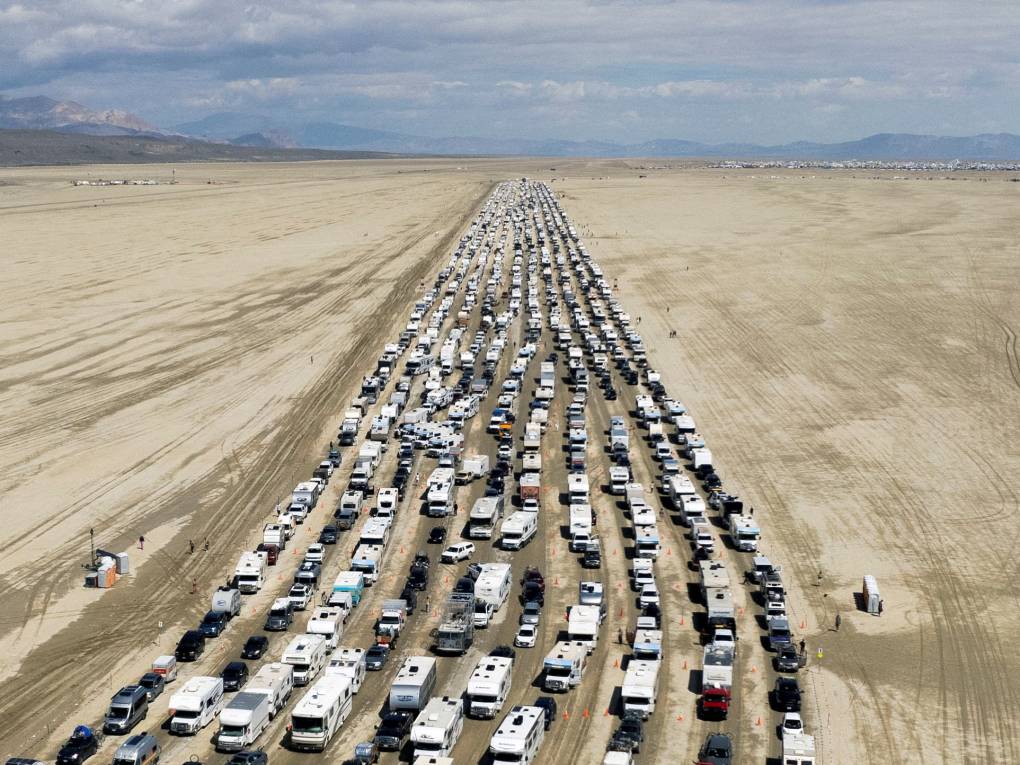
"caption": "Vehicles seen departing the Burning Man festival in Black Rock City on Monday.",
"description": null,
"title": "Vehicles seen departing the Burning Man festival in Black Rock City on Monday.",
"credit": "Matt Mills McKnight/ Reuters",
"status": "inherit",
"altTag": "Ten lanes of tightly packed traffic stretch across a dirt path, stretching off into the distance as far as the eye can see.",
"isLoading": false,
"fetchFailed": false
},
"arts_13934272": {
"type": "attachments",
"id": "arts_13934272",
"meta": {
"index": "attachments_1716263798",
"site": "arts",
"id": "13934272",
"found": true
},
"parent": 13934270,
"imgSizes": {
"twentyfourteen-full-width": {
"file": "https://ww2.kqed.org/app/uploads/sites/2/2023/09/GettyImages-578142500-1038x576.jpg",
"width": 1038,
"mimeType": "image/jpeg",
"height": 576
},
"thumbnail": {
"file": "https://ww2.kqed.org/app/uploads/sites/2/2023/09/GettyImages-578142500-160x90.jpg",
"width": 160,
"mimeType": "image/jpeg",
"height": 90
},
"post-thumbnail": {
"file": "https://ww2.kqed.org/app/uploads/sites/2/2023/09/GettyImages-578142500-672x372.jpg",
"width": 672,
"mimeType": "image/jpeg",
"height": 372
},
"kqedFullSize": {
"file": "https://ww2.kqed.org/app/uploads/sites/2/2023/09/GettyImages-578142500-scaled.jpg",
"width": 2560,
"height": 1440
},
"2048x2048": {
"file": "https://ww2.kqed.org/app/uploads/sites/2/2023/09/GettyImages-578142500-2048x1152.jpg",
"width": 2048,
"mimeType": "image/jpeg",
"height": 1152
},
"large": {
"file": "https://ww2.kqed.org/app/uploads/sites/2/2023/09/GettyImages-578142500-1020x574.jpg",
"width": 1020,
"mimeType": "image/jpeg",
"height": 574
},
"1536x1536": {
"file": "https://ww2.kqed.org/app/uploads/sites/2/2023/09/GettyImages-578142500-1536x864.jpg",
"width": 1536,
"mimeType": "image/jpeg",
"height": 864
},
"full-width": {
"file": "https://ww2.kqed.org/app/uploads/sites/2/2023/09/GettyImages-578142500-1920x1080.jpg",
"width": 1920,
"mimeType": "image/jpeg",
"height": 1080
},
"medium": {
"file": "https://ww2.kqed.org/app/uploads/sites/2/2023/09/GettyImages-578142500-800x450.jpg",
"width": 800,
"mimeType": "image/jpeg",
"height": 450
},
"medium_large": {
"file": "https://ww2.kqed.org/app/uploads/sites/2/2023/09/GettyImages-578142500-768x432.jpg",
"width": 768,
"mimeType": "image/jpeg",
"height": 432
}
},
"publishDate": 1693849872,
"modified": 1693849967,
"caption": "Singer Steve Harwell of Smash Mouth performs in 2016 in Los Angeles, California. Harwell, born and raised in the South Bay Area, died Monday from acute liver failure. ",
"description": null,
"title": "GettyImages-578142500",
"credit": "Michael Tullberg/Getty Images",
"status": "inherit",
"altTag": "a man in sunglasses, black t-shirt and tattoos sings into a microphone",
"isLoading": false,
"fetchFailed": false
},
"arts_13934165": {
"type": "attachments",
"id": "arts_13934165",
"meta": {
"index": "attachments_1716263798",
"site": "arts",
"id": "13934165",
"found": true
},
"parent": 13934148,
"imgSizes": {
"twentyfourteen-full-width": {
"file": "https://ww2.kqed.org/app/uploads/sites/2/2023/08/RS68394_230825-DAYS-LIKE-THIS-DANCE-OAKLAND-RT-21-qut-1038x576.jpg",
"width": 1038,
"mimeType": "image/jpeg",
"height": 576
},
"thumbnail": {
"file": "https://ww2.kqed.org/app/uploads/sites/2/2023/08/RS68394_230825-DAYS-LIKE-THIS-DANCE-OAKLAND-RT-21-qut-160x107.jpg",
"width": 160,
"mimeType": "image/jpeg",
"height": 107
},
"post-thumbnail": {
"file": "https://ww2.kqed.org/app/uploads/sites/2/2023/08/RS68394_230825-DAYS-LIKE-THIS-DANCE-OAKLAND-RT-21-qut-672x372.jpg",
"width": 672,
"mimeType": "image/jpeg",
"height": 372
},
"kqedFullSize": {
"file": "https://ww2.kqed.org/app/uploads/sites/2/2023/08/RS68394_230825-DAYS-LIKE-THIS-DANCE-OAKLAND-RT-21-qut.jpg",
"width": 1920,
"height": 1280
},
"large": {
"file": "https://ww2.kqed.org/app/uploads/sites/2/2023/08/RS68394_230825-DAYS-LIKE-THIS-DANCE-OAKLAND-RT-21-qut-1020x680.jpg",
"width": 1020,
"mimeType": "image/jpeg",
"height": 680
},
"1536x1536": {
"file": "https://ww2.kqed.org/app/uploads/sites/2/2023/08/RS68394_230825-DAYS-LIKE-THIS-DANCE-OAKLAND-RT-21-qut-1536x1024.jpg",
"width": 1536,
"mimeType": "image/jpeg",
"height": 1024
},
"medium": {
"file": "https://ww2.kqed.org/app/uploads/sites/2/2023/08/RS68394_230825-DAYS-LIKE-THIS-DANCE-OAKLAND-RT-21-qut-800x533.jpg",
"width": 800,
"mimeType": "image/jpeg",
"height": 533
},
"medium_large": {
"file": "https://ww2.kqed.org/app/uploads/sites/2/2023/08/RS68394_230825-DAYS-LIKE-THIS-DANCE-OAKLAND-RT-21-qut-768x512.jpg",
"width": 768,
"mimeType": "image/jpeg",
"height": 512
}
},
"publishDate": 1693511574,
"modified": 1693515179,
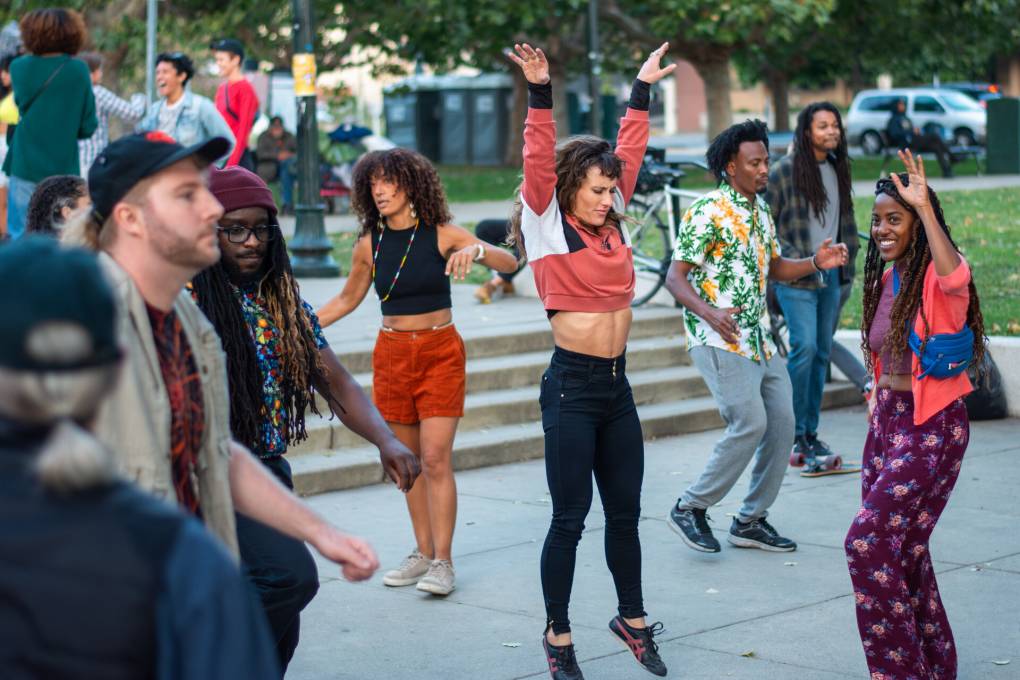
"caption": "Partygoers dancing in front of the Lake Merritt Pergola at Days Like This in Oakland on Friday, Aug. 25, 2023.",
"description": null,
"title": "RS68394_230825-DAYS LIKE THIS DANCE OAKLAND- RT-21-qut",
"credit": "Raphael Timmons",
"status": "inherit",
"altTag": "A group of male and female dancers of different races dance outdoors.",
"isLoading": false,
"fetchFailed": false
},
"arts_13934110": {
"type": "attachments",
"id": "arts_13934110",
"meta": {
"index": "attachments_1716263798",
"site": "arts",
"id": "13934110",
"found": true
},
"parent": 0,
"imgSizes": {
"twentyfourteen-full-width": {
"file": "https://ww2.kqed.org/app/uploads/sites/2/2023/08/20230830_RWT_SantaClara_Dakdouk_JD1_0780_V1_LG-1-1038x576.jpg",
"width": 1038,
"mimeType": "image/jpeg",
"height": 576
},
"thumbnail": {
"file": "https://ww2.kqed.org/app/uploads/sites/2/2023/08/20230830_RWT_SantaClara_Dakdouk_JD1_0780_V1_LG-1-160x107.jpg",
"width": 160,
"mimeType": "image/jpeg",
"height": 107
},
"post-thumbnail": {
"file": "https://ww2.kqed.org/app/uploads/sites/2/2023/08/20230830_RWT_SantaClara_Dakdouk_JD1_0780_V1_LG-1-672x372.jpg",
"width": 672,
"mimeType": "image/jpeg",
"height": 372
},
"kqedFullSize": {
"file": "https://ww2.kqed.org/app/uploads/sites/2/2023/08/20230830_RWT_SantaClara_Dakdouk_JD1_0780_V1_LG-1-scaled.jpg",
"width": 2560,
"height": 1707
},
"2048x2048": {
"file": "https://ww2.kqed.org/app/uploads/sites/2/2023/08/20230830_RWT_SantaClara_Dakdouk_JD1_0780_V1_LG-1-2048x1366.jpg",
"width": 2048,
"mimeType": "image/jpeg",
"height": 1366
},
"large": {
"file": "https://ww2.kqed.org/app/uploads/sites/2/2023/08/20230830_RWT_SantaClara_Dakdouk_JD1_0780_V1_LG-1-1020x680.jpg",
"width": 1020,
"mimeType": "image/jpeg",
"height": 680
},
"1536x1536": {
"file": "https://ww2.kqed.org/app/uploads/sites/2/2023/08/20230830_RWT_SantaClara_Dakdouk_JD1_0780_V1_LG-1-1536x1024.jpg",
"width": 1536,
"mimeType": "image/jpeg",
"height": 1024
},
"full-width": {
"file": "https://ww2.kqed.org/app/uploads/sites/2/2023/08/20230830_RWT_SantaClara_Dakdouk_JD1_0780_V1_LG-1-1920x1280.jpg",
"width": 1920,
"mimeType": "image/jpeg",
"height": 1280
},
"medium": {
"file": "https://ww2.kqed.org/app/uploads/sites/2/2023/08/20230830_RWT_SantaClara_Dakdouk_JD1_0780_V1_LG-1-800x534.jpg",
"width": 800,
"mimeType": "image/jpeg",
"height": 534
},
"medium_large": {
"file": "https://ww2.kqed.org/app/uploads/sites/2/2023/08/20230830_RWT_SantaClara_Dakdouk_JD1_0780_V1_LG-1-768x512.jpg",
"width": 768,
"mimeType": "image/jpeg",
"height": 512
}
},
"publishDate": 1693502082,
"modified": 1693507705,
"caption": "Beyoncé performs at Levi's Stadium on Aug. 30, 2023, as part of the Renaissance World Tour. ",
"description": null,
"title": "20230830_RWT_SantaClara_Dakdouk_JD1_0780_V1_LG",
"credit": "Julian Dakdouk/Parkwood Entertainment",
"status": "inherit",
"altTag": "A Black woman in red headpiece and black dress and tall black boots sings sitting on a grand piano",
"isLoading": false,
"fetchFailed": false
},
"arts_13934093": {
"type": "attachments",
"id": "arts_13934093",
"meta": {
"index": "attachments_1716263798",
"site": "arts",
"id": "13934093",
"found": true
},
"parent": 13934081,
"imgSizes": {
"twentyfourteen-full-width": {
"file": "https://ww2.kqed.org/app/uploads/sites/2/2023/08/230830-BeyonceFans-14-BL-1038x576.jpg",
"width": 1038,
"mimeType": "image/jpeg",
"height": 576
},
"thumbnail": {
"file": "https://ww2.kqed.org/app/uploads/sites/2/2023/08/230830-BeyonceFans-14-BL-160x107.jpg",
"width": 160,
"mimeType": "image/jpeg",
"height": 107
},
"post-thumbnail": {
"file": "https://ww2.kqed.org/app/uploads/sites/2/2023/08/230830-BeyonceFans-14-BL-672x372.jpg",
"width": 672,
"mimeType": "image/jpeg",
"height": 372
},
"kqedFullSize": {
"file": "https://ww2.kqed.org/app/uploads/sites/2/2023/08/230830-BeyonceFans-14-BL.jpg",
"width": 1920,
"height": 1280
},
"large": {
"file": "https://ww2.kqed.org/app/uploads/sites/2/2023/08/230830-BeyonceFans-14-BL-1020x680.jpg",
"width": 1020,
"mimeType": "image/jpeg",
"height": 680
},
"1536x1536": {
"file": "https://ww2.kqed.org/app/uploads/sites/2/2023/08/230830-BeyonceFans-14-BL-1536x1024.jpg",
"width": 1536,
"mimeType": "image/jpeg",
"height": 1024
},
"medium": {
"file": "https://ww2.kqed.org/app/uploads/sites/2/2023/08/230830-BeyonceFans-14-BL-800x533.jpg",
"width": 800,
"mimeType": "image/jpeg",
"height": 533
},
"medium_large": {
"file": "https://ww2.kqed.org/app/uploads/sites/2/2023/08/230830-BeyonceFans-14-BL-768x512.jpg",
"width": 768,
"mimeType": "image/jpeg",
"height": 512
}
},
"publishDate": 1693501077,
"modified": 1693511652,
"caption": "Tyler Brown (left) and her mother Stephanie Brown, from Sacramento, walk into the Beyoncé concert at Levi's Stadium in Santa Clara on Aug. 30, 2023. ‘I like how authentic it is,’ Tyler says of ‘Renaissance.’ ‘It’s like it’s an album for everybody.’ Stephanie drew her outfit inspiration from a very specific shade of pink described in Beyoncé’s song ‘Cozy.’",
"description": null,
"title": "230830-BeyonceFans-14-BL",
"credit": "Beth LaBerge/KQED",
"status": "inherit",
"altTag": "Two women walk across the street, smiling, with a group of people behind them.",
"isLoading": false,
"fetchFailed": false
},
"arts_13934056": {
"type": "attachments",
"id": "arts_13934056",
"meta": {
"index": "attachments_1716263798",
"site": "arts",
"id": "13934056",
"found": true
},
"parent": 13934043,
"imgSizes": {
"thumbnail": {
"file": "https://ww2.kqed.org/app/uploads/sites/2/2023/08/Tupac.Steinberg.SQUARE.crop_-160x160.jpg",
"width": 160,
"mimeType": "image/jpeg",
"height": 160
},
"post-thumbnail": {
"file": "https://ww2.kqed.org/app/uploads/sites/2/2023/08/Tupac.Steinberg.SQUARE.crop_-445x372.jpg",
"width": 445,
"mimeType": "image/jpeg",
"height": 372
},
"kqedFullSize": {
"file": "https://ww2.kqed.org/app/uploads/sites/2/2023/08/Tupac.Steinberg.SQUARE.crop_.jpg",
"width": 445,
"height": 445
}
},
"publishDate": 1693418397,
"modified": 1693418441,
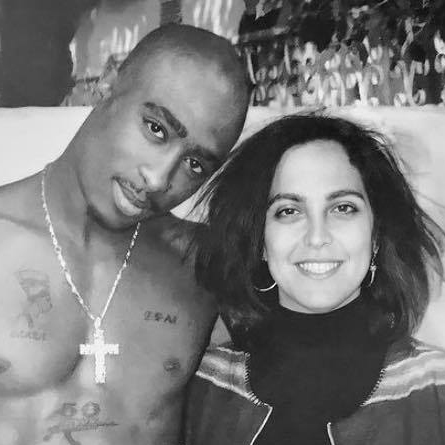
"caption": "Tupac Shakur and Leila Steinberg. Steinberg met Shakur when he was 17, and was his manager from 1989 to 1993. ",
"description": null,
"title": "Tupac.Steinberg.SQUARE.crop",
"credit": "Kathy Crawford",
"status": "inherit",
"altTag": "A shirtless black male with a cross necklace stands with a shorter white woman in jeans and striped top.",
"isLoading": false,
"fetchFailed": false
},
"arts_13932339": {
"type": "attachments",
"id": "arts_13932339",
"meta": {
"index": "attachments_1716263798",
"site": "arts",
"id": "13932339",
"found": true
},
"parent": 13934014,
"imgSizes": {
"twentyfourteen-full-width": {
"file": "https://ww2.kqed.org/app/uploads/sites/2/2023/07/Digable-Planets-backstage-at-Blue-Note-Jazz-Festival-on-Saturday-July-29-2023.-Estefany-Gonzalez003-1038x576.jpg",
"width": 1038,
"mimeType": "image/jpeg",
"height": 576
},
"thumbnail": {
"file": "https://ww2.kqed.org/app/uploads/sites/2/2023/07/Digable-Planets-backstage-at-Blue-Note-Jazz-Festival-on-Saturday-July-29-2023.-Estefany-Gonzalez003-160x107.jpg",
"width": 160,
"mimeType": "image/jpeg",
"height": 107
},
"post-thumbnail": {
"file": "https://ww2.kqed.org/app/uploads/sites/2/2023/07/Digable-Planets-backstage-at-Blue-Note-Jazz-Festival-on-Saturday-July-29-2023.-Estefany-Gonzalez003-672x372.jpg",
"width": 672,
"mimeType": "image/jpeg",
"height": 372
},
"kqedFullSize": {
"file": "https://ww2.kqed.org/app/uploads/sites/2/2023/07/Digable-Planets-backstage-at-Blue-Note-Jazz-Festival-on-Saturday-July-29-2023.-Estefany-Gonzalez003.jpg",
"width": 1920,
"height": 1280
},
"large": {
"file": "https://ww2.kqed.org/app/uploads/sites/2/2023/07/Digable-Planets-backstage-at-Blue-Note-Jazz-Festival-on-Saturday-July-29-2023.-Estefany-Gonzalez003-1020x680.jpg",
"width": 1020,
"mimeType": "image/jpeg",
"height": 680
},
"1536x1536": {
"file": "https://ww2.kqed.org/app/uploads/sites/2/2023/07/Digable-Planets-backstage-at-Blue-Note-Jazz-Festival-on-Saturday-July-29-2023.-Estefany-Gonzalez003-1536x1024.jpg",
"width": 1536,
"mimeType": "image/jpeg",
"height": 1024
},
"medium": {
"file": "https://ww2.kqed.org/app/uploads/sites/2/2023/07/Digable-Planets-backstage-at-Blue-Note-Jazz-Festival-on-Saturday-July-29-2023.-Estefany-Gonzalez003-800x533.jpg",
"width": 800,
"mimeType": "image/jpeg",
"height": 533
},
"medium_large": {
"file": "https://ww2.kqed.org/app/uploads/sites/2/2023/07/Digable-Planets-backstage-at-Blue-Note-Jazz-Festival-on-Saturday-July-29-2023.-Estefany-Gonzalez003-768x512.jpg",
"width": 768,
"mimeType": "image/jpeg",
"height": 512
}
},
"publishDate": 1690793193,
"modified": 1693342172,
"caption": "Digable Planets (left to right: Doodlebug, Ladybug Mecca and Butterfly) backstage at Blue Note Jazz Festival on Saturday, July 29, 2023.",
"description": "Digable Planets backstage at Blue Note Jazz Festival on Saturday, July 29, 2023.",
"title": "Digable Planets backstage at Blue Note Jazz Festival on Saturday, July 29, 2023.",
"credit": "Estefany Gonzalez for KQED",
"status": "inherit",
"altTag": "A man, a woman and another man all in their 50s pose in sunglasses.",
"isLoading": false,
"fetchFailed": false
},
"arts_13933975": {
"type": "attachments",
"id": "arts_13933975",
"meta": {
"index": "attachments_1716263798",
"site": "arts",
"id": "13933975",
"found": true
},
"parent": 13933974,
"imgSizes": {
"twentyfourteen-full-width": {
"file": "https://ww2.kqed.org/app/uploads/sites/2/2023/08/gardnermilkportrait_custom-cd2d6fbe6b3345ed978fad35029f73e3e5e39488-scaled-e1693232830373-1038x576.jpg",
"width": 1038,
"mimeType": "image/jpeg",
"height": 576
},
"thumbnail": {
"file": "https://ww2.kqed.org/app/uploads/sites/2/2023/08/gardnermilkportrait_custom-cd2d6fbe6b3345ed978fad35029f73e3e5e39488-scaled-e1693232830373-160x88.jpg",
"width": 160,
"mimeType": "image/jpeg",
"height": 88
},
"post-thumbnail": {
"file": "https://ww2.kqed.org/app/uploads/sites/2/2023/08/gardnermilkportrait_custom-cd2d6fbe6b3345ed978fad35029f73e3e5e39488-scaled-e1693232830373-672x372.jpg",
"width": 672,
"mimeType": "image/jpeg",
"height": 372
},
"kqedFullSize": {
"file": "https://ww2.kqed.org/app/uploads/sites/2/2023/08/gardnermilkportrait_custom-cd2d6fbe6b3345ed978fad35029f73e3e5e39488-scaled-e1693232830373.jpg",
"width": 1920,
"height": 1052
},
"2048x2048": {
"file": "https://ww2.kqed.org/app/uploads/sites/2/2023/08/gardnermilkportrait_custom-cd2d6fbe6b3345ed978fad35029f73e3e5e39488-2048x1121.jpg",
"width": 2048,
"mimeType": "image/jpeg",
"height": 1121
},
"large": {
"file": "https://ww2.kqed.org/app/uploads/sites/2/2023/08/gardnermilkportrait_custom-cd2d6fbe6b3345ed978fad35029f73e3e5e39488-scaled-e1693232830373-1020x559.jpg",
"width": 1020,
"mimeType": "image/jpeg",
"height": 559
},
"1536x1536": {
"file": "https://ww2.kqed.org/app/uploads/sites/2/2023/08/gardnermilkportrait_custom-cd2d6fbe6b3345ed978fad35029f73e3e5e39488-scaled-e1693232830373-1536x842.jpg",
"width": 1536,
"mimeType": "image/jpeg",
"height": 842
},
"full-width": {
"file": "https://ww2.kqed.org/app/uploads/sites/2/2023/08/gardnermilkportrait_custom-cd2d6fbe6b3345ed978fad35029f73e3e5e39488-1920x1051.jpg",
"width": 1920,
"mimeType": "image/jpeg",
"height": 1051
},
"medium": {
"file": "https://ww2.kqed.org/app/uploads/sites/2/2023/08/gardnermilkportrait_custom-cd2d6fbe6b3345ed978fad35029f73e3e5e39488-scaled-e1693232830373-800x438.jpg",
"width": 800,
"mimeType": "image/jpeg",
"height": 438
},
"medium_large": {
"file": "https://ww2.kqed.org/app/uploads/sites/2/2023/08/gardnermilkportrait_custom-cd2d6fbe6b3345ed978fad35029f73e3e5e39488-scaled-e1693232830373-768x421.jpg",
"width": 768,
"mimeType": "image/jpeg",
"height": 421
}
},
"publishDate": 1693232055,
"modified": 1693233016,
"caption": "A new children’s album on Smithsonian Folkways includes a song about Harvey Milk. The album was co-written by Cass McCombs and preschool teacher Greg Gardner.",
"description": null,
"title": "A new children’s album on Smithsonian Folkways includes a song about gay activist and politician Harvey Milk. The album was co-written by Cass McCombs and San Francisco preschool teacher Greg Gardner.",
"credit": "Greg Gardner",
"status": "inherit",
"altTag": "A pastel-shaded illustration of Harvey Milk standing in a park next to water and a bridge. Houses and trees are on the horizon. He is standing next to three people and a child, who are all standing in support of him.",
"isLoading": false,
"fetchFailed": false
},
"arts_13933893": {
"type": "attachments",
"id": "arts_13933893",
"meta": {
"index": "attachments_1716263798",
"site": "arts",
"id": "13933893",
"found": true
},
"parent": 13933887,
"imgSizes": {
"twentyfourteen-full-width": {
"file": "https://ww2.kqed.org/app/uploads/sites/2/2023/08/RS67821_20230810-Spellling-28-JY-qut-1038x576.jpg",
"width": 1038,
"mimeType": "image/jpeg",
"height": 576
},
"thumbnail": {
"file": "https://ww2.kqed.org/app/uploads/sites/2/2023/08/RS67821_20230810-Spellling-28-JY-qut-160x107.jpg",
"width": 160,
"mimeType": "image/jpeg",
"height": 107
},
"post-thumbnail": {
"file": "https://ww2.kqed.org/app/uploads/sites/2/2023/08/RS67821_20230810-Spellling-28-JY-qut-672x372.jpg",
"width": 672,
"mimeType": "image/jpeg",
"height": 372
},
"kqedFullSize": {
"file": "https://ww2.kqed.org/app/uploads/sites/2/2023/08/RS67821_20230810-Spellling-28-JY-qut.jpg",
"width": 1920,
"height": 1280
},
"large": {
"file": "https://ww2.kqed.org/app/uploads/sites/2/2023/08/RS67821_20230810-Spellling-28-JY-qut-1020x680.jpg",
"width": 1020,
"mimeType": "image/jpeg",
"height": 680
},
"1536x1536": {
"file": "https://ww2.kqed.org/app/uploads/sites/2/2023/08/RS67821_20230810-Spellling-28-JY-qut-1536x1024.jpg",
"width": 1536,
"mimeType": "image/jpeg",
"height": 1024
},
"medium": {
"file": "https://ww2.kqed.org/app/uploads/sites/2/2023/08/RS67821_20230810-Spellling-28-JY-qut-800x533.jpg",
"width": 800,
"mimeType": "image/jpeg",
"height": 533
},
"medium_large": {
"file": "https://ww2.kqed.org/app/uploads/sites/2/2023/08/RS67821_20230810-Spellling-28-JY-qut-768x512.jpg",
"width": 768,
"mimeType": "image/jpeg",
"height": 512
}
},
"publishDate": 1692919476,
"modified": 1692919866,
"caption": "Tia Cabral, known as SPELLLING, poses for a portrait at her home in Oakland, Calif., on Thursday, August 10, 2023. Cabral’s new album 'SPELLLING & The Mystery School' presents reimagined versions of songs from her rich discography.",
"description": null,
"title": "RS67821_20230810-Spellling-28-JY-qut",
"credit": "Juliana Yamada/KQED",
"status": "inherit",
"altTag": "A young woman sits in front of a bookshelf and gazes into the camera.",
"isLoading": false,
"fetchFailed": false
},
"arts_13933834": {
"type": "attachments",
"id": "arts_13933834",
"meta": {
"index": "attachments_1716263798",
"site": "arts",
"id": "13933834",
"found": true
},
"parent": 13933803,
"imgSizes": {
"thumbnail": {
"file": "https://ww2.kqed.org/app/uploads/sites/2/2023/08/Zorn.2013.getty_-160x90.jpg",
"width": 160,
"mimeType": "image/jpeg",
"height": 90
},
"post-thumbnail": {
"file": "https://ww2.kqed.org/app/uploads/sites/2/2023/08/Zorn.2013.getty_-672x372.jpg",
"width": 672,
"mimeType": "image/jpeg",
"height": 372
},
"kqedFullSize": {
"file": "https://ww2.kqed.org/app/uploads/sites/2/2023/08/Zorn.2013.getty_.jpg",
"width": 1024,
"height": 576
},
"large": {
"file": "https://ww2.kqed.org/app/uploads/sites/2/2023/08/Zorn.2013.getty_-1020x574.jpg",
"width": 1020,
"mimeType": "image/jpeg",
"height": 574
},
"medium": {
"file": "https://ww2.kqed.org/app/uploads/sites/2/2023/08/Zorn.2013.getty_-800x450.jpg",
"width": 800,
"mimeType": "image/jpeg",
"height": 450
},
"medium_large": {
"file": "https://ww2.kqed.org/app/uploads/sites/2/2023/08/Zorn.2013.getty_-768x432.jpg",
"width": 768,
"mimeType": "image/jpeg",
"height": 432
}
},
"publishDate": 1692904403,
"modified": 1692904456,
"caption": "John Zorn performs in Moers, Germany, in 2013.",
"description": null,
"title": "Zorn.2013.getty",
"credit": "Bernd Thissen/picture alliance via Getty Images",
"status": "inherit",
"altTag": "John Zorn performs in Moers, Germany, in 2013.",
"isLoading": false,
"fetchFailed": false
},
"arts_13933810": {
"type": "attachments",
"id": "arts_13933810",
"meta": {
"index": "attachments_1716263798",
"site": "arts",
"id": "13933810",
"found": true
},
"parent": 13933809,
"imgSizes": {
"twentyfourteen-full-width": {
"file": "https://ww2.kqed.org/app/uploads/sites/2/2023/08/Screen-Shot-2023-08-24-at-10.42.59-AM-1038x576.png",
"width": 1038,
"mimeType": "image/png",
"height": 576
},
"thumbnail": {
"file": "https://ww2.kqed.org/app/uploads/sites/2/2023/08/Screen-Shot-2023-08-24-at-10.42.59-AM-160x104.png",
"width": 160,
"mimeType": "image/png",
"height": 104
},
"post-thumbnail": {
"file": "https://ww2.kqed.org/app/uploads/sites/2/2023/08/Screen-Shot-2023-08-24-at-10.42.59-AM-672x372.png",
"width": 672,
"mimeType": "image/png",
"height": 372
},
"kqedFullSize": {
"file": "https://ww2.kqed.org/app/uploads/sites/2/2023/08/Screen-Shot-2023-08-24-at-10.42.59-AM.png",
"width": 1584,
"height": 1032
},
"large": {
"file": "https://ww2.kqed.org/app/uploads/sites/2/2023/08/Screen-Shot-2023-08-24-at-10.42.59-AM-1020x665.png",
"width": 1020,
"mimeType": "image/png",
"height": 665
},
"1536x1536": {
"file": "https://ww2.kqed.org/app/uploads/sites/2/2023/08/Screen-Shot-2023-08-24-at-10.42.59-AM-1536x1001.png",
"width": 1536,
"mimeType": "image/png",
"height": 1001
},
"medium": {
"file": "https://ww2.kqed.org/app/uploads/sites/2/2023/08/Screen-Shot-2023-08-24-at-10.42.59-AM-800x521.png",
"width": 800,
"mimeType": "image/png",
"height": 521
},
"medium_large": {
"file": "https://ww2.kqed.org/app/uploads/sites/2/2023/08/Screen-Shot-2023-08-24-at-10.42.59-AM-768x500.png",
"width": 768,
"mimeType": "image/png",
"height": 500
}
},
"publishDate": 1692899046,
"modified": 1692899186,
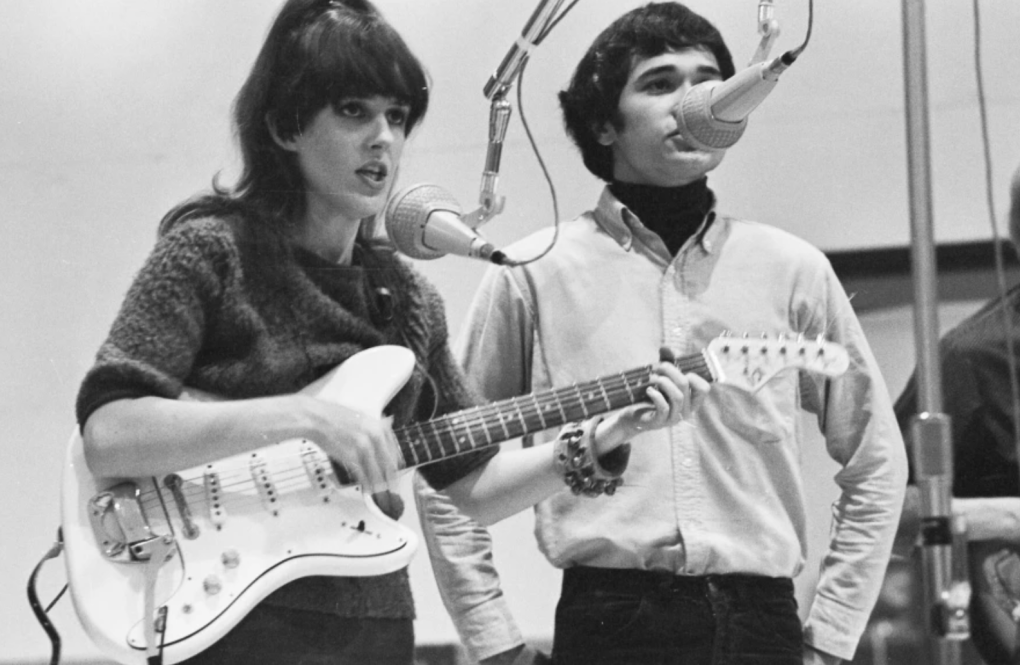
"caption": "Grace Slick recording with The Great Society at Autumn Records in San Francisco, from ‘San Francisco Sounds: A Place in Time.’",
"description": null,
"title": "Grace Slick recording with The Great Society at Autumn Records in San Francisco, from ‘San Francisco Sounds: A Place in Time.’",
"credit": "Sunny Andersen/ MGM+ via AP",
"status": "inherit",
"altTag": "A young woman with heavy brunette bangs and a high ponytail plays an electric guitar in a studio. She is singing into a mounted microphone next to a white man in a white shirt, who is also singing.",
"isLoading": false,
"fetchFailed": false
}
},
"audioPlayerReducer": {
"postId": "stream_live",
"isPaused": true,
"isPlaying": false,
"pfsActive": false,
"pledgeModalIsOpen": true,
"playerDrawerIsOpen": false,
"liveAudioPlayStartedAt": 0,
"liveAudioPlayContext": ""
},
"authorsReducer": {
"byline_arts_13934280": {
"type": "authors",
"id": "byline_arts_13934280",
"meta": {
"override": true
},
"slug": "byline_arts_13934280",
"name": "Chloe Veltman",
"isLoading": false
},
"byline_arts_13934270": {
"type": "authors",
"id": "byline_arts_13934270",
"meta": {
"override": true
},
"slug": "byline_arts_13934270",
"name": "Maria Sherman, Associated Press",
"isLoading": false
},
"byline_arts_13934043": {
"type": "authors",
"id": "byline_arts_13934043",
"meta": {
"override": true
},
"slug": "byline_arts_13934043",
"name": "Andrew Esensten",
"isLoading": false
},
"byline_arts_13933974": {
"type": "authors",
"id": "byline_arts_13933974",
"meta": {
"override": true
},
"slug": "byline_arts_13933974",
"name": "Elizabeth Blair",
"isLoading": false
},
"byline_arts_13933809": {
"type": "authors",
"id": "byline_arts_13933809",
"meta": {
"override": true
},
"slug": "byline_arts_13933809",
"name": "Mark Kennedy, Associated Press",
"isLoading": false
},
"gmeline": {
"type": "authors",
"id": "185",
"meta": {
"index": "authors_1716337520",
"id": "185",
"found": true
},
"name": "Gabe Meline",
"firstName": "Gabe",
"lastName": "Meline",
"slug": "gmeline",
"email": "gmeline@kqed.org",
"display_author_email": true,
"staff_mastheads": [
"arts"
],
"title": "Senior Editor, KQED Arts & Culture",
"bio": "Gabe Meline entered journalism at age 15 making photocopied zines, and has since earned awards from the Edward R. Murrow Awards, the Society for Professional Journalists, the Online Journalism Awards, the Association of Alternative Newsweeklies and the California Newspaper Publishers Association. Prior to KQED, he was the editor of the \u003cem>North Bay Bohemian\u003c/em> and a touring musician. He lives with his wife and daughter in his hometown of Santa Rosa, CA.",
"avatar": "https://secure.gravatar.com/avatar/5bebe57be0d8bc2dd318934feb47299e2d2d10cba28d09d8d7afb389a2ce2bdd?s=600&d=blank&r=g",
"twitter": null,
"bluesky": null,
"facebook": null,
"instagram": null,
"linkedin": null,
"sites": [
{
"site": "",
"roles": [
"editor"
]
},
{
"site": "arts",
"roles": [
"administrator"
]
},
{
"site": "artschool",
"roles": [
"editor"
]
},
{
"site": "news",
"roles": [
"author"
]
},
{
"site": "pop",
"roles": [
"editor"
]
},
{
"site": "bayareabites",
"roles": [
"editor"
]
},
{
"site": "food",
"roles": [
"editor"
]
},
{
"site": "forum",
"roles": [
"administrator"
]
},
{
"site": "liveblog",
"roles": [
"editor"
]
},
{
"site": "hiphop",
"roles": [
"editor"
]
}
],
"headData": {
"title": "Gabe Meline | KQED",
"description": "Senior Editor, KQED Arts & Culture",
"ogImgSrc": "https://secure.gravatar.com/avatar/5bebe57be0d8bc2dd318934feb47299e2d2d10cba28d09d8d7afb389a2ce2bdd?s=600&d=blank&r=g",
"twImgSrc": "https://secure.gravatar.com/avatar/5bebe57be0d8bc2dd318934feb47299e2d2d10cba28d09d8d7afb389a2ce2bdd?s=600&d=blank&r=g"
},
"isLoading": false,
"link": "/author/gmeline"
},
"aproehl": {
"type": "authors",
"id": "11296",
"meta": {
"index": "authors_1716337520",
"id": "11296",
"found": true
},
"name": "Ariana Proehl",
"firstName": "Ariana",
"lastName": "Proehl",
"slug": "aproehl",
"email": "aproehl@KQED.org",
"display_author_email": true,
"staff_mastheads": [
"news"
],
"title": "Culture Reporter, KQED",
"bio": "Ariana Proehl is a Culture Reporter and Host.",
"avatar": "https://secure.gravatar.com/avatar/c96b24567eb5bb3a4f8bb295ed53e232?s=600&d=blank&r=g",
"twitter": "ArianaProehl",
"facebook": null,
"instagram": null,
"linkedin": null,
"sites": [
{
"site": "arts",
"roles": []
},
{
"site": "news",
"roles": []
},
{
"site": "education",
"roles": []
},
{
"site": "forum",
"roles": []
}
],
"headData": {
"title": "Ariana Proehl | KQED",
"description": "Culture Reporter, KQED",
"ogImgSrc": "https://secure.gravatar.com/avatar/c96b24567eb5bb3a4f8bb295ed53e232?s=600&d=blank&r=g",
"twImgSrc": "https://secure.gravatar.com/avatar/c96b24567eb5bb3a4f8bb295ed53e232?s=600&d=blank&r=g"
},
"isLoading": false,
"link": "/author/aproehl"
},
"nvoynovskaya": {
"type": "authors",
"id": "11387",
"meta": {
"index": "authors_1716337520",
"id": "11387",
"found": true
},
"name": "Nastia Voynovskaya",
"firstName": "Nastia",
"lastName": "Voynovskaya",
"slug": "nvoynovskaya",
"email": "nvoynovskaya@kqed.org",
"display_author_email": false,
"staff_mastheads": [
"arts"
],
"title": "Editor and reporter",
"bio": "Nastia Voynovskaya is a reporter, editor and host at KQED Arts & Culture. She's been covering the arts in the Bay Area for over a decade, with a focus on music, queer culture, labor issues and grassroots organizing. She has edited KQED story series such as Trans Bay: A History of San Francisco's Gender-Diverse Community, and co-created KQED's Bay Area hip-hop history project, That's My Word. Nastia's work has been recognized by the Society of Professional Journalists and San Francisco Press Club. She regularly appears on podcasts and radio programs, including NPR's All Songs Considered, and hosts live events where music, culture and conversation meet.",
"avatar": "https://secure.gravatar.com/avatar/5025ee460e5a85d69ca20ea6c6f2f80d7e17795c828f61ea3aecfcd924e9042e?s=600&d=blank&r=g",
"twitter": null,
"bluesky": null,
"facebook": null,
"instagram": "https://www.instagram.com/nananastia/",
"linkedin": null,
"sites": [
{
"site": "",
"roles": [
"editor"
]
},
{
"site": "arts",
"roles": [
"administrator"
]
},
{
"site": "news",
"roles": [
"editor"
]
},
{
"site": "pop",
"roles": [
"administrator"
]
},
{
"site": "bayareabites",
"roles": [
"editor"
]
},
{
"site": "podcasts",
"roles": [
"editor"
]
},
{
"site": "hiphop",
"roles": [
"editor"
]
}
],
"headData": {
"title": "Nastia Voynovskaya | KQED",
"description": "Editor and reporter",
"ogImgSrc": "https://secure.gravatar.com/avatar/5025ee460e5a85d69ca20ea6c6f2f80d7e17795c828f61ea3aecfcd924e9042e?s=600&d=blank&r=g",
"twImgSrc": "https://secure.gravatar.com/avatar/5025ee460e5a85d69ca20ea6c6f2f80d7e17795c828f61ea3aecfcd924e9042e?s=600&d=blank&r=g"
},
"isLoading": false,
"link": "/author/nvoynovskaya"
},
"blaberge": {
"type": "authors",
"id": "11667",
"meta": {
"index": "authors_1716337520",
"id": "11667",
"found": true
},
"name": "Beth LaBerge",
"firstName": "Beth",
"lastName": "LaBerge",
"slug": "blaberge",
"email": "blaberge@KQED.org",
"display_author_email": true,
"staff_mastheads": [
"news"
],
"title": "Photographer, News",
"bio": "Beth LaBerge is a visual journalist for \u003ca href=\"https://www.kqed.org/news\">KQED News\u003c/a>.",
"avatar": "https://secure.gravatar.com/avatar/ce49ecd7a1306685637b45a1f6f5dedfc4ae9481966eb596fea5160466dd6319?s=600&d=blank&r=g",
"twitter": null,
"bluesky": null,
"facebook": null,
"instagram": "https://www.instagram.com/bethlaberge/",
"linkedin": null,
"sites": [
{
"site": "arts",
"roles": [
"editor",
"manage_categories"
]
},
{
"site": "news",
"roles": [
"editor",
"edit_plugins",
"manage_categories"
]
},
{
"site": "science",
"roles": [
"editor",
"contributor",
"author",
"manage_categories"
]
},
{
"site": "perspectives",
"roles": [
"editor"
]
},
{
"site": "liveblog",
"roles": [
"editor"
]
}
],
"headData": {
"title": "Beth LaBerge | KQED",
"description": "Photographer, News",
"ogImgSrc": "https://secure.gravatar.com/avatar/ce49ecd7a1306685637b45a1f6f5dedfc4ae9481966eb596fea5160466dd6319?s=600&d=blank&r=g",
"twImgSrc": "https://secure.gravatar.com/avatar/ce49ecd7a1306685637b45a1f6f5dedfc4ae9481966eb596fea5160466dd6319?s=600&d=blank&r=g"
},
"isLoading": false,
"link": "/author/blaberge"
},
"crose": {
"type": "authors",
"id": "11808",
"meta": {
"index": "authors_1716337520",
"id": "11808",
"found": true
},
"name": "Corey Antonio Rose",
"firstName": "Corey Antonio",
"lastName": "Rose",
"slug": "crose",
"email": "crose@kqed.org",
"display_author_email": false,
"staff_mastheads": [],
"title": "KQED Contributor",
"bio": "Corey Antonio Rose (he/him/his) is an audio producer, reporter, and storyteller from Jacksonville, Florida. His work explores the intersections of Public Health, Culture, Education, and Race/Gender Justice. He’s produced content for KQED, The Poynter Institute, University of California Berkeley, and the Commonwealth Club of California.\r\n@CoreyARose",
"avatar": "https://secure.gravatar.com/avatar/83cdeb0866f12c5eb609d6283e9cc8da?s=600&d=blank&r=g",
"twitter": "CoreyARose",
"facebook": null,
"instagram": null,
"linkedin": null,
"sites": [
{
"site": "arts",
"roles": []
}
],
"headData": {
"title": "Corey Antonio Rose | KQED",
"description": "KQED Contributor",
"ogImgSrc": "https://secure.gravatar.com/avatar/83cdeb0866f12c5eb609d6283e9cc8da?s=600&d=blank&r=g",
"twImgSrc": "https://secure.gravatar.com/avatar/83cdeb0866f12c5eb609d6283e9cc8da?s=600&d=blank&r=g"
},
"isLoading": false,
"link": "/author/crose"
},
"earnold": {
"type": "authors",
"id": "11839",
"meta": {
"index": "authors_1716337520",
"id": "11839",
"found": true
},
"name": "Eric Arnold",
"firstName": "Eric",
"lastName": "Arnold",
"slug": "earnold",
"email": "earnold@kqed.org",
"display_author_email": false,
"staff_mastheads": [],
"title": "Contributing Editor, 'That's My Word'",
"bio": "Eric Arnold has covered hip-hop locally and nationally for over 30 years. Formerly the managing editor of \u003cem>4080\u003c/em> and columnist for \u003cem>The Source\u003c/em>, he chronicled hyphy’s rise and fall, co-curated the Oakland Museum of California’s first hip-hop exhibit in 2018 and won a 2022 Northern California Emmy Award for a mini-documentary on Oakland’s Boogaloo dance culture. He is a contributing editor for \u003cem>That’s My Word\u003c/em>, KQED's series on the history of Bay Area hip-hop.",
"avatar": "https://secure.gravatar.com/avatar/ede45b04898456ad0893a2811e78b0a2?s=600&d=blank&r=g",
"twitter": null,
"facebook": null,
"instagram": null,
"linkedin": null,
"sites": [
{
"site": "arts",
"roles": [
"contributor"
]
},
{
"site": "news",
"roles": [
"contributor"
]
},
{
"site": "hiphop",
"roles": [
"contributor"
]
}
],
"headData": {
"title": "Eric Arnold | KQED",
"description": "Contributing Editor, 'That's My Word'",
"ogImgSrc": "https://secure.gravatar.com/avatar/ede45b04898456ad0893a2811e78b0a2?s=600&d=blank&r=g",
"twImgSrc": "https://secure.gravatar.com/avatar/ede45b04898456ad0893a2811e78b0a2?s=600&d=blank&r=g"
},
"isLoading": false,
"link": "/author/earnold"
},
"nkhan": {
"type": "authors",
"id": "11867",
"meta": {
"index": "authors_1716337520",
"id": "11867",
"found": true
},
"name": "Nisa Khan",
"firstName": "Nisa",
"lastName": "Khan",
"slug": "nkhan",
"email": "nkhan@kqed.org",
"display_author_email": false,
"staff_mastheads": [],
"title": "KQED Contributor",
"bio": "Nisa Khan is a reporter for KQED's Audience News Desk. She was formerly a data reporter at Michigan Radio. She earned a Bachelor of Science in Information from the University of Michigan and a Master of Arts in Communication from Stanford University.",
"avatar": "https://secure.gravatar.com/avatar/8720459eef081ff64582b3506b124d58523e80e120704a0cbd9892533c914991?s=600&d=blank&r=g",
"twitter": "mnisakhan",
"bluesky": null,
"facebook": null,
"instagram": null,
"linkedin": null,
"sites": [
{
"site": "arts",
"roles": [
"editor"
]
},
{
"site": "news",
"roles": [
"editor"
]
},
{
"site": "science",
"roles": [
"editor",
"author"
]
},
{
"site": "forum",
"roles": [
"editor"
]
},
{
"site": "liveblog",
"roles": [
"contributor"
]
}
],
"headData": {
"title": "Nisa Khan | KQED",
"description": "KQED Contributor",
"ogImgSrc": "https://secure.gravatar.com/avatar/8720459eef081ff64582b3506b124d58523e80e120704a0cbd9892533c914991?s=600&d=blank&r=g",
"twImgSrc": "https://secure.gravatar.com/avatar/8720459eef081ff64582b3506b124d58523e80e120704a0cbd9892533c914991?s=600&d=blank&r=g"
},
"isLoading": false,
"link": "/author/nkhan"
}
},
"pagesReducer": {
"arts_category_music": {
"type": "terms",
"id": "arts_69",
"meta": {
"index": "terms_1716263798",
"site": "arts",
"id": "69",
"score": 10.851565
},
"featImg": null,
"name": "Music",
"description": null,
"taxonomy": "category",
"headData": {
"twImgId": null,
"twTitle": null,
"ogTitle": null,
"ogImgId": null,
"twDescription": null,
"description": null,
"title": "Music Archives | KQED Arts",
"ogDescription": null
},
"ttid": 70,
"slug": "music",
"isLoading": false,
"title": "Music",
"pageMeta": {
"site": "arts",
"WpPageTemplate": "page-topic-editorial",
"currentPage": 71
},
"blocks": [
{
"blockName": "kqed/post-list",
"attrs": {
"layout": "cardArticle2",
"query": "posts/arts?category=music",
"seeMore": false,
"paginated": true,
"page": 71
}
},
{
"blockName": "kqed/ad"
}
]
}
},
"pfsSessionReducer": {},
"postsReducer": {
"stream_live": {
"type": "live",
"id": "stream_live",
"audioUrl": "https://streams.kqed.org/kqedradio",
"title": "Live Stream",
"excerpt": "Live Stream information currently unavailable.",
"link": "/radio",
"featImg": "",
"label": {
"name": "KQED Live",
"link": "/"
}
},
"stream_kqedNewscast": {
"type": "posts",
"id": "stream_kqedNewscast",
"audioUrl": "https://www.kqed.org/.stream/anon/radio/RDnews/newscast.mp3?_=1",
"title": "KQED Newscast",
"featImg": "",
"label": {
"name": "88.5 FM",
"link": "/"
}
},
"arts_13934324": {
"type": "posts",
"id": "arts_13934324",
"meta": {
"index": "posts_1716263798",
"site": "arts",
"id": "13934324",
"score": null,
"sort": [
1693960844000
]
},
"guestAuthors": [],
"slug": "hiero-day-2023-oakland-review-photos",
"title": "Hiero Day 2023 Affirmed Hip-Hop’s Local Essence — and National Gravity",
"publishDate": 1693960844,
"format": "aside",
"headTitle": "Hiero Day 2023 Affirmed Hip-Hop’s Local Essence — and National Gravity | KQED",
"labelTerm": {},
"content": "\u003cfigure id=\"attachment_13934333\" class=\"wp-caption aligncenter\" style=\"max-width: 1920px\">\u003cimg loading=\"lazy\" decoding=\"async\" src=\"https://ww2.kqed.org/app/uploads/sites/2/2023/09/DSC00413.jpg\" alt=\"\" width=\"1920\" height=\"1440\" class=\"size-full wp-image-13934333\" srcset=\"https://cdn.kqed.org/wp-content/uploads/sites/2/2023/09/DSC00413.jpg 1920w, https://cdn.kqed.org/wp-content/uploads/sites/2/2023/09/DSC00413-800x600.jpg 800w, https://cdn.kqed.org/wp-content/uploads/sites/2/2023/09/DSC00413-1020x765.jpg 1020w, https://cdn.kqed.org/wp-content/uploads/sites/2/2023/09/DSC00413-160x120.jpg 160w, https://cdn.kqed.org/wp-content/uploads/sites/2/2023/09/DSC00413-768x576.jpg 768w, https://cdn.kqed.org/wp-content/uploads/sites/2/2023/09/DSC00413-1536x1152.jpg 1536w\" sizes=\"(max-width: 1920px) 100vw, 1920px\">\u003cfigcaption class=\"wp-caption-text\">Common on stage at Hiero Day in Frank Ogawa Plaza, Oakland, Sept. 4, 2023. \u003ccite>(Eric Arnold/KQED)\u003c/cite>\u003c/figcaption>\u003c/figure>\n\u003cp>\u003cem>\u003cstrong>Editor’s note\u003c/strong>: This story is part of \u003c/em>\u003ca href=\"https://www.kqed.org/bayareahiphop\">That’s My Word\u003c/a>\u003cem>, KQED’s year-long exploration of \u003ca href=\"https://www.kqed.org/bayareahiphop\">Bay Area hip-hop\u003c/a> history.\u003c/em>\u003c/p>\n\u003cp>With stellar performances from headlining act Common and the eponymous Hieroglyphics crew, Hiero Day 2023 did not disappoint.\u003c/p>\n\u003cp>In its second year at Frank Ogawa Plaza, in front of Oakland City Hall – downsized from the previous location at Third Street and Linden, which saw crowds in excess of 20,000 – the daylong hip-hop festival felt just right. With little crowd congestion, one could easily stroll through the vendors and food options, or traverse between two stages. Yet it was dense enough to evoke a sense of collective excitement amongst attendees – a mix of hip-hop fans from seemingly all ages, walks of life, and ethnic backgrounds.\u003c/p>\n\u003cp>[aside postID='arts_13924126']It’s safe to say people will be talking about Common’s Oakland appearance long afterwards. The Chicago emcee, actor, activist and philanthropist delivered a top-notch set that interspersed his own hits with iconic hip-hop songs by other artists, in honor of “Hip Hop 50” – the 50th anniversary of hip-hop, a through-line for many acts throughout the day. Colorfully dressed in a short sleeve button-down shirt, Common’s charisma and commanding stage presence were in evidence for all to see. \u003c/p>\n\u003cfigure id=\"attachment_13934339\" class=\"wp-caption aligncenter\" style=\"max-width: 1920px\">\u003cimg loading=\"lazy\" decoding=\"async\" src=\"https://ww2.kqed.org/app/uploads/sites/2/2023/09/DSC00335.jpg\" alt=\"\" width=\"1920\" height=\"1440\" class=\"size-full wp-image-13934339\" srcset=\"https://cdn.kqed.org/wp-content/uploads/sites/2/2023/09/DSC00335.jpg 1920w, https://cdn.kqed.org/wp-content/uploads/sites/2/2023/09/DSC00335-800x600.jpg 800w, https://cdn.kqed.org/wp-content/uploads/sites/2/2023/09/DSC00335-1020x765.jpg 1020w, https://cdn.kqed.org/wp-content/uploads/sites/2/2023/09/DSC00335-160x120.jpg 160w, https://cdn.kqed.org/wp-content/uploads/sites/2/2023/09/DSC00335-768x576.jpg 768w, https://cdn.kqed.org/wp-content/uploads/sites/2/2023/09/DSC00335-1536x1152.jpg 1536w\" sizes=\"(max-width: 1920px) 100vw, 1920px\">\u003cfigcaption class=\"wp-caption-text\">Common talking with Davey D backstage at Hiero Day in Frank Ogawa Plaza, Oakland, Sept. 4, 2023. \u003ccite>(Eric Arnold/KQED)\u003c/cite>\u003c/figcaption>\u003c/figure>\n\u003cp>Common began his set with his ode to hip-hop culture, “I Used to Love H.E.R.,” which first catapulted him to national attention in the mid-’90s. Like De La Soul’s “Stakes Is High,” the song stands as a cautionary tale, warning against cultural co-option and commodification while underscoring what’s attractive and endearing about the culture in the first place. With poetic flair, Common spins his tale by metaphorically referring to hip-hop as a girl he fell in love with at the age of 10, who “was fresh, yo, when she was underground.” \u003c/p>\n\u003cp>[ad fullwidth]\u003c/p>\n\u003cp>At first “original, pure, untampered, a down sister,” she changed – moving to the West Coast and embracing a gangsta lifestyle instead of Afrocentricity, then becoming popular with suburban crowds. Though his love has been defiled and degraded, Common pledges at the end of the song: “I’ma take her back, hopin’ that the shit stop / ‘Cause who I’m talkin’ about, y’all, is hip-hop.”\u003c/p>\n\u003cp>It proved to be the perfect set opener, a classic tune made before many in the audience were born, that remains relevant in its message while aligning with the Hip Hop 50 theme. Another highlight was “The Corner,” from the album \u003cem>Be\u003c/em>, produced by Kanye West (back when he was hip-hop’s rising star on the boards), the album version of which features Umar Bin Hassan of the Last Poets, the socially-conscious spoken word artists known as the godfathers of rap. It was a solid selection that peeled back Common’s Hollywood sheen for some authentic grit. \u003c/p>\n\u003cfigure id=\"attachment_13934336\" class=\"wp-caption aligncenter\" style=\"max-width: 1920px\">\u003cimg loading=\"lazy\" decoding=\"async\" src=\"https://ww2.kqed.org/app/uploads/sites/2/2023/09/DSC00132.jpg\" alt=\"\" width=\"1920\" height=\"1440\" class=\"size-full wp-image-13934336\" srcset=\"https://cdn.kqed.org/wp-content/uploads/sites/2/2023/09/DSC00132.jpg 1920w, https://cdn.kqed.org/wp-content/uploads/sites/2/2023/09/DSC00132-800x600.jpg 800w, https://cdn.kqed.org/wp-content/uploads/sites/2/2023/09/DSC00132-1020x765.jpg 1020w, https://cdn.kqed.org/wp-content/uploads/sites/2/2023/09/DSC00132-160x120.jpg 160w, https://cdn.kqed.org/wp-content/uploads/sites/2/2023/09/DSC00132-768x576.jpg 768w, https://cdn.kqed.org/wp-content/uploads/sites/2/2023/09/DSC00132-1536x1152.jpg 1536w\" sizes=\"(max-width: 1920px) 100vw, 1920px\">\u003cfigcaption class=\"wp-caption-text\">Del the Funky Homosapien and Ras Ceylon backstage at Hiero Day in Frank Ogawa Plaza, Oakland, Sept. 4, 2023. \u003ccite>(Eric Arnold/KQED)\u003c/cite>\u003c/figcaption>\u003c/figure>\n\u003cp>Common closed his set, and the show, with “The Light,” a single from the heyday of the neo-soul era that remains one of hip-hop’s sweetest love songs. Though Common has a reputation as a ladies’ man – Oakland mayor Sheng Thao gushed over him earlier in the day – his approach to the opposite sex has always been respectful. So it wasn’t difficult for the ladies in the house to get completely into the song’s mellow, feel-good vibe, singing along to the chorus lifted from the late Bobby Caldwell: “There are times, when you need someone / I will be by your side / There is a light that shines / Special for me and you.”\u003c/p>\n\u003cp>Right before Common’s set, Hieroglyphics performed a short but impactful set that seemed to roll back the clock 30 years in terms of their on-stage energy – except their kineticism was tempered by veteran savvy. Up-and coming emcees in the crowd were likely taking notes; this was a masterclass in live performance dynamics. Kicking off with 1998’s “Oakland Blackouts,” the fan favorite’s laid-back album version donned a supercharged carapace live, as Del the Funky Homosapien and Opio traded verses well-qualified to be hip-hop quotables. This may be the only rap song in history to compare emcees to “platypuses,” and the two emcees’ internal rhyme schemes were impeccable throughout. \u003c/p>\n\u003cp>“Oakland Blackouts” set the tone for the rest of the set, as the other Hieros fed off Del and Opio with lots of crowd-amping gestures and hand raises. There were noticeable rushes from the audience for particularly nasty lyrical flurries by Tajai and Pep Love, although there really wasn’t a weak flow to be found amongst any of the Hieros. It would have been nice had the set afforded more exposition of deep cuts from the collective’s three-decade catalog – “The Powers That Be,” from 2003’s \u003cem>Full Circle\u003c/em>, sounded epic. \u003c/p>\n\u003cfigure id=\"attachment_13934882\" class=\"wp-caption aligncenter\" style=\"max-width: 2560px\">\u003cimg loading=\"lazy\" decoding=\"async\" src=\"https://ww2.kqed.org/app/uploads/sites/2/2023/09/Hiero.Group_.2023-scaled.jpg\" alt=\"\" width=\"2560\" height=\"1920\" class=\"size-full wp-image-13934882\" srcset=\"https://cdn.kqed.org/wp-content/uploads/sites/2/2023/09/Hiero.Group_.2023-scaled.jpg 2560w, https://cdn.kqed.org/wp-content/uploads/sites/2/2023/09/Hiero.Group_.2023-800x600.jpg 800w, https://cdn.kqed.org/wp-content/uploads/sites/2/2023/09/Hiero.Group_.2023-1020x765.jpg 1020w, https://cdn.kqed.org/wp-content/uploads/sites/2/2023/09/Hiero.Group_.2023-160x120.jpg 160w, https://cdn.kqed.org/wp-content/uploads/sites/2/2023/09/Hiero.Group_.2023-768x576.jpg 768w, https://cdn.kqed.org/wp-content/uploads/sites/2/2023/09/Hiero.Group_.2023-1536x1152.jpg 1536w, https://cdn.kqed.org/wp-content/uploads/sites/2/2023/09/Hiero.Group_.2023-2048x1536.jpg 2048w, https://cdn.kqed.org/wp-content/uploads/sites/2/2023/09/Hiero.Group_.2023-1920x1440.jpg 1920w\" sizes=\"(max-width: 2560px) 100vw, 2560px\">\u003cfigcaption class=\"wp-caption-text\">Hieroglyphics on stage at Hiero Day in Frank Ogawa Plaza, Oakland, Sept. 4, 2023. \u003ccite>(Eric Arnold/KQED)\u003c/cite>\u003c/figcaption>\u003c/figure>\n\u003cp>The song’s bouncy, boom-bap beat shows why Domino is highly underrated as a producer, while the verses from Opio, Tajai, Del and Pep Love were a wicked whirlwind of battle-rap braggadocio and pop culture references (including Chow Yun Fat and Voltron). When Del says “I’m kinda different yo / what I say is thought-provoking,” he could easily be referring to his entire crew. “This is rap Olympics / Hieroglyphics, the dream team,” Pep Love proclaimed. In that moment, no one witnessing the show would have reasonably disagreed.\u003c/p>\n\u003cp>[aside postID='arts_13927692']Hieroglyphics closed their set with Souls of Mischief’s iconic “93 Til Infinity,” which has to be one of the top hip-hop anthems of all time. There’s just something about the A-Plus-produced track that makes you feel warm and fuzzy inside. Maybe it’s the pitch-shifted Billy Cobham sample, or maybe it’s the breezy lyrics which evoke the epitome of laid-back Cali cool (“Now we feel the good vibrations / So many females, so much inspiration”). The song never gets old.\u003c/p>\n\u003cp>An unexpected highlight took place between Hieroglyphics and Common’s sets, when Oakland Mayor Sheng Thao and Mystik Journeymen/Living Legends emcee Corey “Sunspot Jonz” Johnson announced that the City has partnered with Hiero Day – a development that illustrates just how far hip-hop has come. Some may recall when Oakland’s annual Art & Soul festival avoided booking hip-hop acts altogether, or Oakland’s year-long moratorium on rap shows at City-owned facilities. Just as Hieroglyphics broke the mold by performing at Art & Soul, this year’s Hiero Day appeared to usher in a new era of municipal collaboration with the hip-hop community. \u003c/p>\n\u003cfigure id=\"attachment_13934330\" class=\"wp-caption aligncenter\" style=\"max-width: 1920px\">\u003cimg loading=\"lazy\" decoding=\"async\" src=\"https://ww2.kqed.org/app/uploads/sites/2/2023/09/DSC00356.jpg\" alt=\"\" width=\"1920\" height=\"1440\" class=\"size-full wp-image-13934330\" srcset=\"https://cdn.kqed.org/wp-content/uploads/sites/2/2023/09/DSC00356.jpg 1920w, https://cdn.kqed.org/wp-content/uploads/sites/2/2023/09/DSC00356-800x600.jpg 800w, https://cdn.kqed.org/wp-content/uploads/sites/2/2023/09/DSC00356-1020x765.jpg 1020w, https://cdn.kqed.org/wp-content/uploads/sites/2/2023/09/DSC00356-160x120.jpg 160w, https://cdn.kqed.org/wp-content/uploads/sites/2/2023/09/DSC00356-768x576.jpg 768w, https://cdn.kqed.org/wp-content/uploads/sites/2/2023/09/DSC00356-1536x1152.jpg 1536w\" sizes=\"(max-width: 1920px) 100vw, 1920px\">\u003cfigcaption class=\"wp-caption-text\">Oakland Mayor Shen Thao on stage at Hiero Day in Frank Ogawa Plaza, Oakland, Sept. 4, 2023. \u003ccite>(Eric Arnold/KQED)\u003c/cite>\u003c/figcaption>\u003c/figure>\n\u003cp>Thao, for her part, certainly seemed to embrace the culture. Dressed in a hella fresh varsity-style jacket with Oakland’s tree logo embroidered on the back, she looked amped to be able to talk about something other than rising crime rates, police scandals, and the deteriorating relationship with the Oakland A’s. She handed out a series of commemorative proclamations honoring the contributions of community mainstays and culture keepers, including Johnson; radio personality, DJ, and educator Davey D; Eastside Arts Alliance co-founders Elena Serrano and Traci Bartlow; visual artist and filmmaker Shomari Smith; and rapper, entrepreneur and activist Mistah F.A.B. \u003c/p>\n\u003cp>Each of the honorees gave a short speech. “I brought the underground here,” Johnson remarked, while Serrano noted that her association with hip-hop predates Eastside’s founding, going back to the late ’90s at Berkeley’s La Pena. F.A.B. made a point of speaking to underserved kids dealing with trauma: “It’s possible. Whether your father’s incarcerated or your mother’s on drugs, it’s possible to make it” – referring to his own uncertain upbringing and triumphant transformation into a certified cultural hero. \u003c/p>\n\u003cfigure id=\"attachment_13934335\" class=\"wp-caption aligncenter\" style=\"max-width: 2560px\">\u003cimg loading=\"lazy\" decoding=\"async\" src=\"https://ww2.kqed.org/app/uploads/sites/2/2023/09/DSC00062-scaled.jpg\" alt=\"\" width=\"2560\" height=\"1920\" class=\"size-full wp-image-13934335\" srcset=\"https://cdn.kqed.org/wp-content/uploads/sites/2/2023/09/DSC00062-scaled.jpg 2560w, https://cdn.kqed.org/wp-content/uploads/sites/2/2023/09/DSC00062-800x600.jpg 800w, https://cdn.kqed.org/wp-content/uploads/sites/2/2023/09/DSC00062-1020x765.jpg 1020w, https://cdn.kqed.org/wp-content/uploads/sites/2/2023/09/DSC00062-160x120.jpg 160w, https://cdn.kqed.org/wp-content/uploads/sites/2/2023/09/DSC00062-768x576.jpg 768w, https://cdn.kqed.org/wp-content/uploads/sites/2/2023/09/DSC00062-1536x1152.jpg 1536w, https://cdn.kqed.org/wp-content/uploads/sites/2/2023/09/DSC00062-2048x1536.jpg 2048w, https://cdn.kqed.org/wp-content/uploads/sites/2/2023/09/DSC00062-1920x1440.jpg 1920w\" sizes=\"(max-width: 2560px) 100vw, 2560px\">\u003cfigcaption class=\"wp-caption-text\">Chuck Johnson and Mistah F.A.B. pose with singer Alanis Morissette, husband and rapper Soul Eye and their family at Hiero Day in Oakland’s Frank Ogawa Plaza on Sept. 4, 2023. \u003ccite>(Eric Arnold/KQED)\u003c/cite>\u003c/figcaption>\u003c/figure>\n\u003cp>The presentations closed with Thao handing Common a heavyweight boxing-style belt, acknowledging his community work. Later, during his set, the rapper noted that he had been inspired by “the Town”’s examples, citing both Hieroglyphics and the Black Panthers, and name-checking Fred Hampton, the martyred leader of Chicago’s Panther chapter and subject of the recent film \u003cem>Judas and the Black Messiah\u003c/em>. \u003c/p>\n\u003cp>The pacing at the end — Hiero, Thao, and Common — capped a day that started at noon and gradually built up momentum, as up-and-coming artists rocked both stages and attendees filtered into the venue. Some of the undercard was hit-or-miss, and the production’s timing got skewed, forcing some set times to be shortened, but there were still plenty of highlights.\u003c/p>\n\u003cfigure id=\"attachment_13934360\" class=\"wp-caption aligncenter\" style=\"max-width: 1920px\">\u003cimg loading=\"lazy\" decoding=\"async\" src=\"https://ww2.kqed.org/app/uploads/sites/2/2023/09/DSC00040.jpg\" alt=\"\" width=\"1920\" height=\"1440\" class=\"size-full wp-image-13934360\" srcset=\"https://cdn.kqed.org/wp-content/uploads/sites/2/2023/09/DSC00040.jpg 1920w, https://cdn.kqed.org/wp-content/uploads/sites/2/2023/09/DSC00040-800x600.jpg 800w, https://cdn.kqed.org/wp-content/uploads/sites/2/2023/09/DSC00040-1020x765.jpg 1020w, https://cdn.kqed.org/wp-content/uploads/sites/2/2023/09/DSC00040-160x120.jpg 160w, https://cdn.kqed.org/wp-content/uploads/sites/2/2023/09/DSC00040-768x576.jpg 768w, https://cdn.kqed.org/wp-content/uploads/sites/2/2023/09/DSC00040-1536x1152.jpg 1536w\" sizes=\"(max-width: 1920px) 100vw, 1920px\">\u003cfigcaption class=\"wp-caption-text\">Richie Cunning on stage at Hiero Day in Frank Ogawa Plaza, Oakland, Sept. 4, 2023. \u003ccite>(Eric Arnold/KQED)\u003c/cite>\u003c/figcaption>\u003c/figure>\n\u003cp>A sparsely-attended early set by Richie Cunning on the second stage probably deserved a bigger audience. Cunning has been an emcee on the rise for many years now, and his flow, delivery, and punchline game seem increasingly ready for prime time. For fans of hardcore Bay Area mobb music, it was great to see Cellski with DJ T.C. the Enhancer. The Kev Choice Ensemble added jazzy musicality with a trip through hip-hop history, from Chic’s “Good Times” to a nod to Zumbi of Zion-I with “Don’t Lose Your Head.” \u003c/p>\n\u003cfigure id=\"attachment_13934334\" class=\"wp-caption aligncenter\" style=\"max-width: 1920px\">\u003cimg loading=\"lazy\" decoding=\"async\" src=\"https://ww2.kqed.org/app/uploads/sites/2/2023/09/DSC00230.jpg\" alt=\"\" width=\"1920\" height=\"1440\" class=\"size-full wp-image-13934334\" srcset=\"https://cdn.kqed.org/wp-content/uploads/sites/2/2023/09/DSC00230.jpg 1920w, https://cdn.kqed.org/wp-content/uploads/sites/2/2023/09/DSC00230-800x600.jpg 800w, https://cdn.kqed.org/wp-content/uploads/sites/2/2023/09/DSC00230-1020x765.jpg 1020w, https://cdn.kqed.org/wp-content/uploads/sites/2/2023/09/DSC00230-160x120.jpg 160w, https://cdn.kqed.org/wp-content/uploads/sites/2/2023/09/DSC00230-768x576.jpg 768w, https://cdn.kqed.org/wp-content/uploads/sites/2/2023/09/DSC00230-1536x1152.jpg 1536w\" sizes=\"(max-width: 1920px) 100vw, 1920px\">\u003cfigcaption class=\"wp-caption-text\">Kev Choice on stage at Hiero Day in Frank Ogawa Plaza, Oakland, Sept. 4, 2023. \u003ccite>(Eric Arnold/KQED)\u003c/cite>\u003c/figcaption>\u003c/figure>\n\u003cp>L.A. underground legend Medusa, who once bested Eminem in a rap battle back in the ’90s, delivered a fiery and fierce-as-fuck set. It was great to see the former member of duo Feline Science and Project Blowed alumnus still doing her thing. Her set was unfortunately truncated, but not before she ripped the recent single “Catch Yo Feelinz” (“You better catch your feelings / I’m about to jump off!”), which shows she can flow over anything, even a contemporary-sounding trap beat. \u003c/p>\n\u003cp>\u003cem>Ultimate Breaks and Beats\u003c/em> curator Breakbeat Lou performed a high-level DJ set with sublime segues, like the Funky Four + 1’s “That’s The Joint” into Naughty By Nature’s “Uptown Anthem,” The Whole Darn Family’s “Seven Minutes of Funk” into Dru Down’s “Pimp of the Year,” and Digable Planets’ “Rebirth of Slick” into E-40’s “Yay Area.” Blending original songs with later tracks that used them as sample sources further carried the theme of hip-hop history as a progression and evolution of a cultural movement that started from the bottom and ended up at City Hall – literally. Yadidahmean?\u003c/p>\n\u003cfigure id=\"attachment_13934340\" class=\"wp-caption aligncenter\" style=\"max-width: 1920px\">\u003cimg loading=\"lazy\" decoding=\"async\" src=\"https://ww2.kqed.org/app/uploads/sites/2/2023/09/DSC00110.jpg\" alt=\"\" width=\"1920\" height=\"1440\" class=\"size-full wp-image-13934340\" srcset=\"https://cdn.kqed.org/wp-content/uploads/sites/2/2023/09/DSC00110.jpg 1920w, https://cdn.kqed.org/wp-content/uploads/sites/2/2023/09/DSC00110-800x600.jpg 800w, https://cdn.kqed.org/wp-content/uploads/sites/2/2023/09/DSC00110-1020x765.jpg 1020w, https://cdn.kqed.org/wp-content/uploads/sites/2/2023/09/DSC00110-160x120.jpg 160w, https://cdn.kqed.org/wp-content/uploads/sites/2/2023/09/DSC00110-768x576.jpg 768w, https://cdn.kqed.org/wp-content/uploads/sites/2/2023/09/DSC00110-1536x1152.jpg 1536w\" sizes=\"(max-width: 1920px) 100vw, 1920px\">\u003cfigcaption class=\"wp-caption-text\">Cellski on stage at Hiero Day in Frank Ogawa Plaza, Oakland, Sept. 4, 2023. \u003ccite>(Eric Arnold/KQED)\u003c/cite>\u003c/figcaption>\u003c/figure>\n\u003cp>Throughout the day, several of the artists spoke backstage about hip-hop’s evolution and their personal journeys through the culture. Del, reflecting on 50 years of hip-hop, said, “I just want our values and everything we based it on to live on.” Those values include“self-improvement goals and knowing your environment, being able to deal with motherfuckers in a competitive way instead of fighting or killing each other.” \u003c/p>\n\u003cfigure id=\"attachment_13934348\" class=\"wp-caption aligncenter\" style=\"max-width: 1920px\">\u003cimg loading=\"lazy\" decoding=\"async\" src=\"https://ww2.kqed.org/app/uploads/sites/2/2023/09/DSC00271.jpg\" alt=\"\" width=\"1920\" height=\"1440\" class=\"size-full wp-image-13934348\" srcset=\"https://cdn.kqed.org/wp-content/uploads/sites/2/2023/09/DSC00271.jpg 1920w, https://cdn.kqed.org/wp-content/uploads/sites/2/2023/09/DSC00271-800x600.jpg 800w, https://cdn.kqed.org/wp-content/uploads/sites/2/2023/09/DSC00271-1020x765.jpg 1020w, https://cdn.kqed.org/wp-content/uploads/sites/2/2023/09/DSC00271-160x120.jpg 160w, https://cdn.kqed.org/wp-content/uploads/sites/2/2023/09/DSC00271-768x576.jpg 768w, https://cdn.kqed.org/wp-content/uploads/sites/2/2023/09/DSC00271-1536x1152.jpg 1536w\" sizes=\"(max-width: 1920px) 100vw, 1920px\">\u003cfigcaption class=\"wp-caption-text\">Opio on stage at Hiero Day in Frank Ogawa Plaza, Oakland, Sept. 4, 2023. \u003ccite>(Eric Arnold/KQED)\u003c/cite>\u003c/figcaption>\u003c/figure>\n\u003cp>A-Plus remarked on the longevity of “93 Til Infinity”: “I feel appreciative, honored. You know that I produce many different things, man. But that one is certainly special. It’s done everything for Souls of Mischief and for Hiero. The ways it’s aged, and the new generation with streaming, they’re looking back at it and then finding their own way with music.”\u003c/p>\n\u003cp>That’s enabled Hiero’s fanbase to expand beyond old heads, he says. “Young kids are part of our demo at this point. And it’s just really surreal. You don’t think that far ahead, like 30 years from now, young kids are going to think your song is the shit.”\u003c/p>\n\u003cfigure id=\"attachment_13934887\" class=\"wp-caption aligncenter\" style=\"max-width: 2560px\">\u003cimg loading=\"lazy\" decoding=\"async\" src=\"https://ww2.kqed.org/app/uploads/sites/2/2023/09/Medusa.HieroDay2023-scaled.jpg\" alt=\"\" width=\"2560\" height=\"1920\" class=\"size-full wp-image-13934887\" srcset=\"https://cdn.kqed.org/wp-content/uploads/sites/2/2023/09/Medusa.HieroDay2023-scaled.jpg 2560w, https://cdn.kqed.org/wp-content/uploads/sites/2/2023/09/Medusa.HieroDay2023-800x600.jpg 800w, https://cdn.kqed.org/wp-content/uploads/sites/2/2023/09/Medusa.HieroDay2023-1020x765.jpg 1020w, https://cdn.kqed.org/wp-content/uploads/sites/2/2023/09/Medusa.HieroDay2023-160x120.jpg 160w, https://cdn.kqed.org/wp-content/uploads/sites/2/2023/09/Medusa.HieroDay2023-768x576.jpg 768w, https://cdn.kqed.org/wp-content/uploads/sites/2/2023/09/Medusa.HieroDay2023-1536x1152.jpg 1536w, https://cdn.kqed.org/wp-content/uploads/sites/2/2023/09/Medusa.HieroDay2023-2048x1536.jpg 2048w, https://cdn.kqed.org/wp-content/uploads/sites/2/2023/09/Medusa.HieroDay2023-1920x1440.jpg 1920w\" sizes=\"(max-width: 2560px) 100vw, 2560px\">\u003cfigcaption class=\"wp-caption-text\">Medusa on stage at Hiero Day in Frank Ogawa Plaza, Oakland, Sept. 4, 2023. \u003ccite>(Eric Arnold/KQED)\u003c/cite>\u003c/figcaption>\u003c/figure>\n\u003cp>Mistah F.A.B. specifically saluted Souls of Mischief’s milestone and what it means for the Bay Area and for Oakland. “To me, Hip Hop 30 is more important to Hip Hop 50, which is kind of weird. Crazy. But Hip Hop 30 for Hiero is very important, man. And I just love the fact that we’ve been included (in the Hiero Day celebration) to be able to watch our hometown guys come through, and for years continue to maintain relevancy, and continue to keep pushing and representing Oakland.”\u003c/p>\n\u003cfigure id=\"attachment_13934346\" class=\"wp-caption aligncenter\" style=\"max-width: 1920px\">\u003cimg loading=\"lazy\" decoding=\"async\" src=\"https://ww2.kqed.org/app/uploads/sites/2/2023/09/DSC00055.jpg\" alt=\"\" width=\"1920\" height=\"1440\" class=\"size-full wp-image-13934346\" srcset=\"https://cdn.kqed.org/wp-content/uploads/sites/2/2023/09/DSC00055.jpg 1920w, https://cdn.kqed.org/wp-content/uploads/sites/2/2023/09/DSC00055-800x600.jpg 800w, https://cdn.kqed.org/wp-content/uploads/sites/2/2023/09/DSC00055-1020x765.jpg 1020w, https://cdn.kqed.org/wp-content/uploads/sites/2/2023/09/DSC00055-160x120.jpg 160w, https://cdn.kqed.org/wp-content/uploads/sites/2/2023/09/DSC00055-768x576.jpg 768w, https://cdn.kqed.org/wp-content/uploads/sites/2/2023/09/DSC00055-1536x1152.jpg 1536w\" sizes=\"(max-width: 1920px) 100vw, 1920px\">\u003cfigcaption class=\"wp-caption-text\">Mistah F.A.B. at Hiero Day in Frank Ogawa Plaza, Oakland, Sept. 4, 2023. \u003ccite>(Eric Arnold/KQED)\u003c/cite>\u003c/figcaption>\u003c/figure>\n\u003cp>That said, there would be no 30th anniversary for Souls had the culture never existed in the first place. F.A.B. continued: “Big shout out to the forefathers that opened up the doors. We’re happy to be here. Let’s continue to get another 50 up out of it, and not let the culture die, by preserving and respecting our elders and continuing to keep doing new work.”\u003c/p>\n\u003cfigure id=\"attachment_13934344\" class=\"wp-caption aligncenter\" style=\"max-width: 1920px\">\u003cimg loading=\"lazy\" decoding=\"async\" src=\"https://ww2.kqed.org/app/uploads/sites/2/2023/09/DSC00348.jpg\" alt=\"\" width=\"1920\" height=\"1440\" class=\"size-full wp-image-13934344\" srcset=\"https://cdn.kqed.org/wp-content/uploads/sites/2/2023/09/DSC00348.jpg 1920w, https://cdn.kqed.org/wp-content/uploads/sites/2/2023/09/DSC00348-800x600.jpg 800w, https://cdn.kqed.org/wp-content/uploads/sites/2/2023/09/DSC00348-1020x765.jpg 1020w, https://cdn.kqed.org/wp-content/uploads/sites/2/2023/09/DSC00348-160x120.jpg 160w, https://cdn.kqed.org/wp-content/uploads/sites/2/2023/09/DSC00348-768x576.jpg 768w, https://cdn.kqed.org/wp-content/uploads/sites/2/2023/09/DSC00348-1536x1152.jpg 1536w\" sizes=\"(max-width: 1920px) 100vw, 1920px\">\u003cfigcaption class=\"wp-caption-text\">The crowd at Hiero Day in Frank Ogawa Plaza, Oakland, Sept. 4, 2023. \u003ccite>(Eric Arnold/KQED)\u003c/cite>\u003c/figcaption>\u003c/figure>\n\u003cp>[ad floatright]\u003c/p>\n\u003cp>\u003cimg loading=\"lazy\" decoding=\"async\" src=\"https://ww2.kqed.org/app/uploads/sites/2/2016/09/Q.Logo_.Break_.jpg\" alt=\"\" width=\"800\" height=\"78\" class=\"aligncenter size-full wp-image-12127869\" srcset=\"https://cdn.kqed.org/wp-content/uploads/sites/2/2016/09/Q.Logo_.Break_.jpg 800w, https://cdn.kqed.org/wp-content/uploads/sites/2/2016/09/Q.Logo_.Break_-400x39.jpg 400w, https://cdn.kqed.org/wp-content/uploads/sites/2/2016/09/Q.Logo_.Break_-768x75.jpg 768w\" sizes=\"(max-width: 800px) 100vw, 800px\">\u003c/p>\n\n",
"blocks": [],
"excerpt": "With headliner Common, the Hieroglyphics crew celebrated 30 years of '93 Til Infinity' in front of Oakland City Hall. ",
"status": "publish",
"parent": 0,
"modified": 1726790663,
"stats": {
"hasAudio": false,
"hasVideo": false,
"hasChartOrMap": false,
"iframeSrcs": [],
"hasGoogleForm": false,
"hasGallery": false,
"hasHearkenModule": false,
"hasPolis": false,
"paragraphCount": 28,
"wordCount": 2469
},
"headData": {
"title": "Hiero Day 2023 Affirmed Hip-Hop’s Local Essence — and National Gravity | KQED",
"description": "With headliner Common, the Hieroglyphics crew celebrated 30 years of '93 Til Infinity' in front of Oakland City Hall. ",
"ogTitle": "",
"ogDescription": "",
"ogImgId": "arts_13934341",
"twTitle": "",
"twDescription": "",
"twImgId": "arts_13934341",
"schema": {
"@context": "https://schema.org",
"@type": "Article",
"headline": "Hiero Day 2023 Affirmed Hip-Hop’s Local Essence — and National Gravity",
"datePublished": "2023-09-05T17:40:44-07:00",
"dateModified": "2024-09-19T17:04:23-07:00",
"image": "https://cdn.kqed.org/wp-content/uploads/2020/02/KQED-OG-Image@1x.png"
}
},
"source": "That's My Word",
"sourceUrl": "https://www.kqed.org/bayareahiphop",
"sticky": false,
"WpOldSlug": "hiero-day-2023-affirmed-hip-hops-local-essence-and-national-gravity",
"templateType": "standard",
"featuredImageType": "standard",
"excludeFromSiteSearch": "Include",
"articleAge": "0",
"path": "/arts/13934324/hiero-day-2023-oakland-review-photos",
"audioTrackLength": null,
"parsedContent": [
{
"type": "contentString",
"content": "\u003cdiv class=\"post-body\">\u003cp>\u003cfigure id=\"attachment_13934333\" class=\"wp-caption aligncenter\" style=\"max-width: 1920px\">\u003cimg loading=\"lazy\" decoding=\"async\" src=\"https://ww2.kqed.org/app/uploads/sites/2/2023/09/DSC00413.jpg\" alt=\"\" width=\"1920\" height=\"1440\" class=\"size-full wp-image-13934333\" srcset=\"https://cdn.kqed.org/wp-content/uploads/sites/2/2023/09/DSC00413.jpg 1920w, https://cdn.kqed.org/wp-content/uploads/sites/2/2023/09/DSC00413-800x600.jpg 800w, https://cdn.kqed.org/wp-content/uploads/sites/2/2023/09/DSC00413-1020x765.jpg 1020w, https://cdn.kqed.org/wp-content/uploads/sites/2/2023/09/DSC00413-160x120.jpg 160w, https://cdn.kqed.org/wp-content/uploads/sites/2/2023/09/DSC00413-768x576.jpg 768w, https://cdn.kqed.org/wp-content/uploads/sites/2/2023/09/DSC00413-1536x1152.jpg 1536w\" sizes=\"(max-width: 1920px) 100vw, 1920px\">\u003cfigcaption class=\"wp-caption-text\">Common on stage at Hiero Day in Frank Ogawa Plaza, Oakland, Sept. 4, 2023. \u003ccite>(Eric Arnold/KQED)\u003c/cite>\u003c/figcaption>\u003c/figure>\n\u003cp>\u003cem>\u003cstrong>Editor’s note\u003c/strong>: This story is part of \u003c/em>\u003ca href=\"https://www.kqed.org/bayareahiphop\">That’s My Word\u003c/a>\u003cem>, KQED’s year-long exploration of \u003ca href=\"https://www.kqed.org/bayareahiphop\">Bay Area hip-hop\u003c/a> history.\u003c/em>\u003c/p>\n\u003cp>With stellar performances from headlining act Common and the eponymous Hieroglyphics crew, Hiero Day 2023 did not disappoint.\u003c/p>\n\u003cp>In its second year at Frank Ogawa Plaza, in front of Oakland City Hall – downsized from the previous location at Third Street and Linden, which saw crowds in excess of 20,000 – the daylong hip-hop festival felt just right. With little crowd congestion, one could easily stroll through the vendors and food options, or traverse between two stages. Yet it was dense enough to evoke a sense of collective excitement amongst attendees – a mix of hip-hop fans from seemingly all ages, walks of life, and ethnic backgrounds.\u003c/p>\n\u003cp>\u003c/p>\u003c/div>",
"attributes": {
"named": {},
"numeric": []
}
},
{
"type": "component",
"content": "",
"name": "aside",
"attributes": {
"named": {
"postid": "arts_13924126",
"label": ""
},
"numeric": []
}
},
{
"type": "contentString",
"content": "\u003cdiv class=\"post-body\">\u003cp>It’s safe to say people will be talking about Common’s Oakland appearance long afterwards. The Chicago emcee, actor, activist and philanthropist delivered a top-notch set that interspersed his own hits with iconic hip-hop songs by other artists, in honor of “Hip Hop 50” – the 50th anniversary of hip-hop, a through-line for many acts throughout the day. Colorfully dressed in a short sleeve button-down shirt, Common’s charisma and commanding stage presence were in evidence for all to see. \u003c/p>\n\u003cfigure id=\"attachment_13934339\" class=\"wp-caption aligncenter\" style=\"max-width: 1920px\">\u003cimg loading=\"lazy\" decoding=\"async\" src=\"https://ww2.kqed.org/app/uploads/sites/2/2023/09/DSC00335.jpg\" alt=\"\" width=\"1920\" height=\"1440\" class=\"size-full wp-image-13934339\" srcset=\"https://cdn.kqed.org/wp-content/uploads/sites/2/2023/09/DSC00335.jpg 1920w, https://cdn.kqed.org/wp-content/uploads/sites/2/2023/09/DSC00335-800x600.jpg 800w, https://cdn.kqed.org/wp-content/uploads/sites/2/2023/09/DSC00335-1020x765.jpg 1020w, https://cdn.kqed.org/wp-content/uploads/sites/2/2023/09/DSC00335-160x120.jpg 160w, https://cdn.kqed.org/wp-content/uploads/sites/2/2023/09/DSC00335-768x576.jpg 768w, https://cdn.kqed.org/wp-content/uploads/sites/2/2023/09/DSC00335-1536x1152.jpg 1536w\" sizes=\"(max-width: 1920px) 100vw, 1920px\">\u003cfigcaption class=\"wp-caption-text\">Common talking with Davey D backstage at Hiero Day in Frank Ogawa Plaza, Oakland, Sept. 4, 2023. \u003ccite>(Eric Arnold/KQED)\u003c/cite>\u003c/figcaption>\u003c/figure>\n\u003cp>Common began his set with his ode to hip-hop culture, “I Used to Love H.E.R.,” which first catapulted him to national attention in the mid-’90s. Like De La Soul’s “Stakes Is High,” the song stands as a cautionary tale, warning against cultural co-option and commodification while underscoring what’s attractive and endearing about the culture in the first place. With poetic flair, Common spins his tale by metaphorically referring to hip-hop as a girl he fell in love with at the age of 10, who “was fresh, yo, when she was underground.” \u003c/p>\n\u003cp>\u003c/p>\u003c/div>",
"attributes": {
"named": {},
"numeric": []
}
},
{
"type": "component",
"content": "",
"name": "ad",
"attributes": {
"named": {
"label": "fullwidth"
},
"numeric": [
"fullwidth"
]
}
},
{
"type": "contentString",
"content": "\u003cdiv class=\"post-body\">\u003cp>\u003c/p>\n\u003cp>At first “original, pure, untampered, a down sister,” she changed – moving to the West Coast and embracing a gangsta lifestyle instead of Afrocentricity, then becoming popular with suburban crowds. Though his love has been defiled and degraded, Common pledges at the end of the song: “I’ma take her back, hopin’ that the shit stop / ‘Cause who I’m talkin’ about, y’all, is hip-hop.”\u003c/p>\n\u003cp>It proved to be the perfect set opener, a classic tune made before many in the audience were born, that remains relevant in its message while aligning with the Hip Hop 50 theme. Another highlight was “The Corner,” from the album \u003cem>Be\u003c/em>, produced by Kanye West (back when he was hip-hop’s rising star on the boards), the album version of which features Umar Bin Hassan of the Last Poets, the socially-conscious spoken word artists known as the godfathers of rap. It was a solid selection that peeled back Common’s Hollywood sheen for some authentic grit. \u003c/p>\n\u003cfigure id=\"attachment_13934336\" class=\"wp-caption aligncenter\" style=\"max-width: 1920px\">\u003cimg loading=\"lazy\" decoding=\"async\" src=\"https://ww2.kqed.org/app/uploads/sites/2/2023/09/DSC00132.jpg\" alt=\"\" width=\"1920\" height=\"1440\" class=\"size-full wp-image-13934336\" srcset=\"https://cdn.kqed.org/wp-content/uploads/sites/2/2023/09/DSC00132.jpg 1920w, https://cdn.kqed.org/wp-content/uploads/sites/2/2023/09/DSC00132-800x600.jpg 800w, https://cdn.kqed.org/wp-content/uploads/sites/2/2023/09/DSC00132-1020x765.jpg 1020w, https://cdn.kqed.org/wp-content/uploads/sites/2/2023/09/DSC00132-160x120.jpg 160w, https://cdn.kqed.org/wp-content/uploads/sites/2/2023/09/DSC00132-768x576.jpg 768w, https://cdn.kqed.org/wp-content/uploads/sites/2/2023/09/DSC00132-1536x1152.jpg 1536w\" sizes=\"(max-width: 1920px) 100vw, 1920px\">\u003cfigcaption class=\"wp-caption-text\">Del the Funky Homosapien and Ras Ceylon backstage at Hiero Day in Frank Ogawa Plaza, Oakland, Sept. 4, 2023. \u003ccite>(Eric Arnold/KQED)\u003c/cite>\u003c/figcaption>\u003c/figure>\n\u003cp>Common closed his set, and the show, with “The Light,” a single from the heyday of the neo-soul era that remains one of hip-hop’s sweetest love songs. Though Common has a reputation as a ladies’ man – Oakland mayor Sheng Thao gushed over him earlier in the day – his approach to the opposite sex has always been respectful. So it wasn’t difficult for the ladies in the house to get completely into the song’s mellow, feel-good vibe, singing along to the chorus lifted from the late Bobby Caldwell: “There are times, when you need someone / I will be by your side / There is a light that shines / Special for me and you.”\u003c/p>\n\u003cp>Right before Common’s set, Hieroglyphics performed a short but impactful set that seemed to roll back the clock 30 years in terms of their on-stage energy – except their kineticism was tempered by veteran savvy. Up-and coming emcees in the crowd were likely taking notes; this was a masterclass in live performance dynamics. Kicking off with 1998’s “Oakland Blackouts,” the fan favorite’s laid-back album version donned a supercharged carapace live, as Del the Funky Homosapien and Opio traded verses well-qualified to be hip-hop quotables. This may be the only rap song in history to compare emcees to “platypuses,” and the two emcees’ internal rhyme schemes were impeccable throughout. \u003c/p>\n\u003cp>“Oakland Blackouts” set the tone for the rest of the set, as the other Hieros fed off Del and Opio with lots of crowd-amping gestures and hand raises. There were noticeable rushes from the audience for particularly nasty lyrical flurries by Tajai and Pep Love, although there really wasn’t a weak flow to be found amongst any of the Hieros. It would have been nice had the set afforded more exposition of deep cuts from the collective’s three-decade catalog – “The Powers That Be,” from 2003’s \u003cem>Full Circle\u003c/em>, sounded epic. \u003c/p>\n\u003cfigure id=\"attachment_13934882\" class=\"wp-caption aligncenter\" style=\"max-width: 2560px\">\u003cimg loading=\"lazy\" decoding=\"async\" src=\"https://ww2.kqed.org/app/uploads/sites/2/2023/09/Hiero.Group_.2023-scaled.jpg\" alt=\"\" width=\"2560\" height=\"1920\" class=\"size-full wp-image-13934882\" srcset=\"https://cdn.kqed.org/wp-content/uploads/sites/2/2023/09/Hiero.Group_.2023-scaled.jpg 2560w, https://cdn.kqed.org/wp-content/uploads/sites/2/2023/09/Hiero.Group_.2023-800x600.jpg 800w, https://cdn.kqed.org/wp-content/uploads/sites/2/2023/09/Hiero.Group_.2023-1020x765.jpg 1020w, https://cdn.kqed.org/wp-content/uploads/sites/2/2023/09/Hiero.Group_.2023-160x120.jpg 160w, https://cdn.kqed.org/wp-content/uploads/sites/2/2023/09/Hiero.Group_.2023-768x576.jpg 768w, https://cdn.kqed.org/wp-content/uploads/sites/2/2023/09/Hiero.Group_.2023-1536x1152.jpg 1536w, https://cdn.kqed.org/wp-content/uploads/sites/2/2023/09/Hiero.Group_.2023-2048x1536.jpg 2048w, https://cdn.kqed.org/wp-content/uploads/sites/2/2023/09/Hiero.Group_.2023-1920x1440.jpg 1920w\" sizes=\"(max-width: 2560px) 100vw, 2560px\">\u003cfigcaption class=\"wp-caption-text\">Hieroglyphics on stage at Hiero Day in Frank Ogawa Plaza, Oakland, Sept. 4, 2023. \u003ccite>(Eric Arnold/KQED)\u003c/cite>\u003c/figcaption>\u003c/figure>\n\u003cp>The song’s bouncy, boom-bap beat shows why Domino is highly underrated as a producer, while the verses from Opio, Tajai, Del and Pep Love were a wicked whirlwind of battle-rap braggadocio and pop culture references (including Chow Yun Fat and Voltron). When Del says “I’m kinda different yo / what I say is thought-provoking,” he could easily be referring to his entire crew. “This is rap Olympics / Hieroglyphics, the dream team,” Pep Love proclaimed. In that moment, no one witnessing the show would have reasonably disagreed.\u003c/p>\n\u003cp>\u003c/p>\u003c/div>",
"attributes": {
"named": {},
"numeric": []
}
},
{
"type": "component",
"content": "",
"name": "aside",
"attributes": {
"named": {
"postid": "arts_13927692",
"label": ""
},
"numeric": []
}
},
{
"type": "contentString",
"content": "\u003cdiv class=\"post-body\">\u003cp>Hieroglyphics closed their set with Souls of Mischief’s iconic “93 Til Infinity,” which has to be one of the top hip-hop anthems of all time. There’s just something about the A-Plus-produced track that makes you feel warm and fuzzy inside. Maybe it’s the pitch-shifted Billy Cobham sample, or maybe it’s the breezy lyrics which evoke the epitome of laid-back Cali cool (“Now we feel the good vibrations / So many females, so much inspiration”). The song never gets old.\u003c/p>\n\u003cp>An unexpected highlight took place between Hieroglyphics and Common’s sets, when Oakland Mayor Sheng Thao and Mystik Journeymen/Living Legends emcee Corey “Sunspot Jonz” Johnson announced that the City has partnered with Hiero Day – a development that illustrates just how far hip-hop has come. Some may recall when Oakland’s annual Art & Soul festival avoided booking hip-hop acts altogether, or Oakland’s year-long moratorium on rap shows at City-owned facilities. Just as Hieroglyphics broke the mold by performing at Art & Soul, this year’s Hiero Day appeared to usher in a new era of municipal collaboration with the hip-hop community. \u003c/p>\n\u003cfigure id=\"attachment_13934330\" class=\"wp-caption aligncenter\" style=\"max-width: 1920px\">\u003cimg loading=\"lazy\" decoding=\"async\" src=\"https://ww2.kqed.org/app/uploads/sites/2/2023/09/DSC00356.jpg\" alt=\"\" width=\"1920\" height=\"1440\" class=\"size-full wp-image-13934330\" srcset=\"https://cdn.kqed.org/wp-content/uploads/sites/2/2023/09/DSC00356.jpg 1920w, https://cdn.kqed.org/wp-content/uploads/sites/2/2023/09/DSC00356-800x600.jpg 800w, https://cdn.kqed.org/wp-content/uploads/sites/2/2023/09/DSC00356-1020x765.jpg 1020w, https://cdn.kqed.org/wp-content/uploads/sites/2/2023/09/DSC00356-160x120.jpg 160w, https://cdn.kqed.org/wp-content/uploads/sites/2/2023/09/DSC00356-768x576.jpg 768w, https://cdn.kqed.org/wp-content/uploads/sites/2/2023/09/DSC00356-1536x1152.jpg 1536w\" sizes=\"(max-width: 1920px) 100vw, 1920px\">\u003cfigcaption class=\"wp-caption-text\">Oakland Mayor Shen Thao on stage at Hiero Day in Frank Ogawa Plaza, Oakland, Sept. 4, 2023. \u003ccite>(Eric Arnold/KQED)\u003c/cite>\u003c/figcaption>\u003c/figure>\n\u003cp>Thao, for her part, certainly seemed to embrace the culture. Dressed in a hella fresh varsity-style jacket with Oakland’s tree logo embroidered on the back, she looked amped to be able to talk about something other than rising crime rates, police scandals, and the deteriorating relationship with the Oakland A’s. She handed out a series of commemorative proclamations honoring the contributions of community mainstays and culture keepers, including Johnson; radio personality, DJ, and educator Davey D; Eastside Arts Alliance co-founders Elena Serrano and Traci Bartlow; visual artist and filmmaker Shomari Smith; and rapper, entrepreneur and activist Mistah F.A.B. \u003c/p>\n\u003cp>Each of the honorees gave a short speech. “I brought the underground here,” Johnson remarked, while Serrano noted that her association with hip-hop predates Eastside’s founding, going back to the late ’90s at Berkeley’s La Pena. F.A.B. made a point of speaking to underserved kids dealing with trauma: “It’s possible. Whether your father’s incarcerated or your mother’s on drugs, it’s possible to make it” – referring to his own uncertain upbringing and triumphant transformation into a certified cultural hero. \u003c/p>\n\u003cfigure id=\"attachment_13934335\" class=\"wp-caption aligncenter\" style=\"max-width: 2560px\">\u003cimg loading=\"lazy\" decoding=\"async\" src=\"https://ww2.kqed.org/app/uploads/sites/2/2023/09/DSC00062-scaled.jpg\" alt=\"\" width=\"2560\" height=\"1920\" class=\"size-full wp-image-13934335\" srcset=\"https://cdn.kqed.org/wp-content/uploads/sites/2/2023/09/DSC00062-scaled.jpg 2560w, https://cdn.kqed.org/wp-content/uploads/sites/2/2023/09/DSC00062-800x600.jpg 800w, https://cdn.kqed.org/wp-content/uploads/sites/2/2023/09/DSC00062-1020x765.jpg 1020w, https://cdn.kqed.org/wp-content/uploads/sites/2/2023/09/DSC00062-160x120.jpg 160w, https://cdn.kqed.org/wp-content/uploads/sites/2/2023/09/DSC00062-768x576.jpg 768w, https://cdn.kqed.org/wp-content/uploads/sites/2/2023/09/DSC00062-1536x1152.jpg 1536w, https://cdn.kqed.org/wp-content/uploads/sites/2/2023/09/DSC00062-2048x1536.jpg 2048w, https://cdn.kqed.org/wp-content/uploads/sites/2/2023/09/DSC00062-1920x1440.jpg 1920w\" sizes=\"(max-width: 2560px) 100vw, 2560px\">\u003cfigcaption class=\"wp-caption-text\">Chuck Johnson and Mistah F.A.B. pose with singer Alanis Morissette, husband and rapper Soul Eye and their family at Hiero Day in Oakland’s Frank Ogawa Plaza on Sept. 4, 2023. \u003ccite>(Eric Arnold/KQED)\u003c/cite>\u003c/figcaption>\u003c/figure>\n\u003cp>The presentations closed with Thao handing Common a heavyweight boxing-style belt, acknowledging his community work. Later, during his set, the rapper noted that he had been inspired by “the Town”’s examples, citing both Hieroglyphics and the Black Panthers, and name-checking Fred Hampton, the martyred leader of Chicago’s Panther chapter and subject of the recent film \u003cem>Judas and the Black Messiah\u003c/em>. \u003c/p>\n\u003cp>The pacing at the end — Hiero, Thao, and Common — capped a day that started at noon and gradually built up momentum, as up-and-coming artists rocked both stages and attendees filtered into the venue. Some of the undercard was hit-or-miss, and the production’s timing got skewed, forcing some set times to be shortened, but there were still plenty of highlights.\u003c/p>\n\u003cfigure id=\"attachment_13934360\" class=\"wp-caption aligncenter\" style=\"max-width: 1920px\">\u003cimg loading=\"lazy\" decoding=\"async\" src=\"https://ww2.kqed.org/app/uploads/sites/2/2023/09/DSC00040.jpg\" alt=\"\" width=\"1920\" height=\"1440\" class=\"size-full wp-image-13934360\" srcset=\"https://cdn.kqed.org/wp-content/uploads/sites/2/2023/09/DSC00040.jpg 1920w, https://cdn.kqed.org/wp-content/uploads/sites/2/2023/09/DSC00040-800x600.jpg 800w, https://cdn.kqed.org/wp-content/uploads/sites/2/2023/09/DSC00040-1020x765.jpg 1020w, https://cdn.kqed.org/wp-content/uploads/sites/2/2023/09/DSC00040-160x120.jpg 160w, https://cdn.kqed.org/wp-content/uploads/sites/2/2023/09/DSC00040-768x576.jpg 768w, https://cdn.kqed.org/wp-content/uploads/sites/2/2023/09/DSC00040-1536x1152.jpg 1536w\" sizes=\"(max-width: 1920px) 100vw, 1920px\">\u003cfigcaption class=\"wp-caption-text\">Richie Cunning on stage at Hiero Day in Frank Ogawa Plaza, Oakland, Sept. 4, 2023. \u003ccite>(Eric Arnold/KQED)\u003c/cite>\u003c/figcaption>\u003c/figure>\n\u003cp>A sparsely-attended early set by Richie Cunning on the second stage probably deserved a bigger audience. Cunning has been an emcee on the rise for many years now, and his flow, delivery, and punchline game seem increasingly ready for prime time. For fans of hardcore Bay Area mobb music, it was great to see Cellski with DJ T.C. the Enhancer. The Kev Choice Ensemble added jazzy musicality with a trip through hip-hop history, from Chic’s “Good Times” to a nod to Zumbi of Zion-I with “Don’t Lose Your Head.” \u003c/p>\n\u003cfigure id=\"attachment_13934334\" class=\"wp-caption aligncenter\" style=\"max-width: 1920px\">\u003cimg loading=\"lazy\" decoding=\"async\" src=\"https://ww2.kqed.org/app/uploads/sites/2/2023/09/DSC00230.jpg\" alt=\"\" width=\"1920\" height=\"1440\" class=\"size-full wp-image-13934334\" srcset=\"https://cdn.kqed.org/wp-content/uploads/sites/2/2023/09/DSC00230.jpg 1920w, https://cdn.kqed.org/wp-content/uploads/sites/2/2023/09/DSC00230-800x600.jpg 800w, https://cdn.kqed.org/wp-content/uploads/sites/2/2023/09/DSC00230-1020x765.jpg 1020w, https://cdn.kqed.org/wp-content/uploads/sites/2/2023/09/DSC00230-160x120.jpg 160w, https://cdn.kqed.org/wp-content/uploads/sites/2/2023/09/DSC00230-768x576.jpg 768w, https://cdn.kqed.org/wp-content/uploads/sites/2/2023/09/DSC00230-1536x1152.jpg 1536w\" sizes=\"(max-width: 1920px) 100vw, 1920px\">\u003cfigcaption class=\"wp-caption-text\">Kev Choice on stage at Hiero Day in Frank Ogawa Plaza, Oakland, Sept. 4, 2023. \u003ccite>(Eric Arnold/KQED)\u003c/cite>\u003c/figcaption>\u003c/figure>\n\u003cp>L.A. underground legend Medusa, who once bested Eminem in a rap battle back in the ’90s, delivered a fiery and fierce-as-fuck set. It was great to see the former member of duo Feline Science and Project Blowed alumnus still doing her thing. Her set was unfortunately truncated, but not before she ripped the recent single “Catch Yo Feelinz” (“You better catch your feelings / I’m about to jump off!”), which shows she can flow over anything, even a contemporary-sounding trap beat. \u003c/p>\n\u003cp>\u003cem>Ultimate Breaks and Beats\u003c/em> curator Breakbeat Lou performed a high-level DJ set with sublime segues, like the Funky Four + 1’s “That’s The Joint” into Naughty By Nature’s “Uptown Anthem,” The Whole Darn Family’s “Seven Minutes of Funk” into Dru Down’s “Pimp of the Year,” and Digable Planets’ “Rebirth of Slick” into E-40’s “Yay Area.” Blending original songs with later tracks that used them as sample sources further carried the theme of hip-hop history as a progression and evolution of a cultural movement that started from the bottom and ended up at City Hall – literally. Yadidahmean?\u003c/p>\n\u003cfigure id=\"attachment_13934340\" class=\"wp-caption aligncenter\" style=\"max-width: 1920px\">\u003cimg loading=\"lazy\" decoding=\"async\" src=\"https://ww2.kqed.org/app/uploads/sites/2/2023/09/DSC00110.jpg\" alt=\"\" width=\"1920\" height=\"1440\" class=\"size-full wp-image-13934340\" srcset=\"https://cdn.kqed.org/wp-content/uploads/sites/2/2023/09/DSC00110.jpg 1920w, https://cdn.kqed.org/wp-content/uploads/sites/2/2023/09/DSC00110-800x600.jpg 800w, https://cdn.kqed.org/wp-content/uploads/sites/2/2023/09/DSC00110-1020x765.jpg 1020w, https://cdn.kqed.org/wp-content/uploads/sites/2/2023/09/DSC00110-160x120.jpg 160w, https://cdn.kqed.org/wp-content/uploads/sites/2/2023/09/DSC00110-768x576.jpg 768w, https://cdn.kqed.org/wp-content/uploads/sites/2/2023/09/DSC00110-1536x1152.jpg 1536w\" sizes=\"(max-width: 1920px) 100vw, 1920px\">\u003cfigcaption class=\"wp-caption-text\">Cellski on stage at Hiero Day in Frank Ogawa Plaza, Oakland, Sept. 4, 2023. \u003ccite>(Eric Arnold/KQED)\u003c/cite>\u003c/figcaption>\u003c/figure>\n\u003cp>Throughout the day, several of the artists spoke backstage about hip-hop’s evolution and their personal journeys through the culture. Del, reflecting on 50 years of hip-hop, said, “I just want our values and everything we based it on to live on.” Those values include“self-improvement goals and knowing your environment, being able to deal with motherfuckers in a competitive way instead of fighting or killing each other.” \u003c/p>\n\u003cfigure id=\"attachment_13934348\" class=\"wp-caption aligncenter\" style=\"max-width: 1920px\">\u003cimg loading=\"lazy\" decoding=\"async\" src=\"https://ww2.kqed.org/app/uploads/sites/2/2023/09/DSC00271.jpg\" alt=\"\" width=\"1920\" height=\"1440\" class=\"size-full wp-image-13934348\" srcset=\"https://cdn.kqed.org/wp-content/uploads/sites/2/2023/09/DSC00271.jpg 1920w, https://cdn.kqed.org/wp-content/uploads/sites/2/2023/09/DSC00271-800x600.jpg 800w, https://cdn.kqed.org/wp-content/uploads/sites/2/2023/09/DSC00271-1020x765.jpg 1020w, https://cdn.kqed.org/wp-content/uploads/sites/2/2023/09/DSC00271-160x120.jpg 160w, https://cdn.kqed.org/wp-content/uploads/sites/2/2023/09/DSC00271-768x576.jpg 768w, https://cdn.kqed.org/wp-content/uploads/sites/2/2023/09/DSC00271-1536x1152.jpg 1536w\" sizes=\"(max-width: 1920px) 100vw, 1920px\">\u003cfigcaption class=\"wp-caption-text\">Opio on stage at Hiero Day in Frank Ogawa Plaza, Oakland, Sept. 4, 2023. \u003ccite>(Eric Arnold/KQED)\u003c/cite>\u003c/figcaption>\u003c/figure>\n\u003cp>A-Plus remarked on the longevity of “93 Til Infinity”: “I feel appreciative, honored. You know that I produce many different things, man. But that one is certainly special. It’s done everything for Souls of Mischief and for Hiero. The ways it’s aged, and the new generation with streaming, they’re looking back at it and then finding their own way with music.”\u003c/p>\n\u003cp>That’s enabled Hiero’s fanbase to expand beyond old heads, he says. “Young kids are part of our demo at this point. And it’s just really surreal. You don’t think that far ahead, like 30 years from now, young kids are going to think your song is the shit.”\u003c/p>\n\u003cfigure id=\"attachment_13934887\" class=\"wp-caption aligncenter\" style=\"max-width: 2560px\">\u003cimg loading=\"lazy\" decoding=\"async\" src=\"https://ww2.kqed.org/app/uploads/sites/2/2023/09/Medusa.HieroDay2023-scaled.jpg\" alt=\"\" width=\"2560\" height=\"1920\" class=\"size-full wp-image-13934887\" srcset=\"https://cdn.kqed.org/wp-content/uploads/sites/2/2023/09/Medusa.HieroDay2023-scaled.jpg 2560w, https://cdn.kqed.org/wp-content/uploads/sites/2/2023/09/Medusa.HieroDay2023-800x600.jpg 800w, https://cdn.kqed.org/wp-content/uploads/sites/2/2023/09/Medusa.HieroDay2023-1020x765.jpg 1020w, https://cdn.kqed.org/wp-content/uploads/sites/2/2023/09/Medusa.HieroDay2023-160x120.jpg 160w, https://cdn.kqed.org/wp-content/uploads/sites/2/2023/09/Medusa.HieroDay2023-768x576.jpg 768w, https://cdn.kqed.org/wp-content/uploads/sites/2/2023/09/Medusa.HieroDay2023-1536x1152.jpg 1536w, https://cdn.kqed.org/wp-content/uploads/sites/2/2023/09/Medusa.HieroDay2023-2048x1536.jpg 2048w, https://cdn.kqed.org/wp-content/uploads/sites/2/2023/09/Medusa.HieroDay2023-1920x1440.jpg 1920w\" sizes=\"(max-width: 2560px) 100vw, 2560px\">\u003cfigcaption class=\"wp-caption-text\">Medusa on stage at Hiero Day in Frank Ogawa Plaza, Oakland, Sept. 4, 2023. \u003ccite>(Eric Arnold/KQED)\u003c/cite>\u003c/figcaption>\u003c/figure>\n\u003cp>Mistah F.A.B. specifically saluted Souls of Mischief’s milestone and what it means for the Bay Area and for Oakland. “To me, Hip Hop 30 is more important to Hip Hop 50, which is kind of weird. Crazy. But Hip Hop 30 for Hiero is very important, man. And I just love the fact that we’ve been included (in the Hiero Day celebration) to be able to watch our hometown guys come through, and for years continue to maintain relevancy, and continue to keep pushing and representing Oakland.”\u003c/p>\n\u003cfigure id=\"attachment_13934346\" class=\"wp-caption aligncenter\" style=\"max-width: 1920px\">\u003cimg loading=\"lazy\" decoding=\"async\" src=\"https://ww2.kqed.org/app/uploads/sites/2/2023/09/DSC00055.jpg\" alt=\"\" width=\"1920\" height=\"1440\" class=\"size-full wp-image-13934346\" srcset=\"https://cdn.kqed.org/wp-content/uploads/sites/2/2023/09/DSC00055.jpg 1920w, https://cdn.kqed.org/wp-content/uploads/sites/2/2023/09/DSC00055-800x600.jpg 800w, https://cdn.kqed.org/wp-content/uploads/sites/2/2023/09/DSC00055-1020x765.jpg 1020w, https://cdn.kqed.org/wp-content/uploads/sites/2/2023/09/DSC00055-160x120.jpg 160w, https://cdn.kqed.org/wp-content/uploads/sites/2/2023/09/DSC00055-768x576.jpg 768w, https://cdn.kqed.org/wp-content/uploads/sites/2/2023/09/DSC00055-1536x1152.jpg 1536w\" sizes=\"(max-width: 1920px) 100vw, 1920px\">\u003cfigcaption class=\"wp-caption-text\">Mistah F.A.B. at Hiero Day in Frank Ogawa Plaza, Oakland, Sept. 4, 2023. \u003ccite>(Eric Arnold/KQED)\u003c/cite>\u003c/figcaption>\u003c/figure>\n\u003cp>That said, there would be no 30th anniversary for Souls had the culture never existed in the first place. F.A.B. continued: “Big shout out to the forefathers that opened up the doors. We’re happy to be here. Let’s continue to get another 50 up out of it, and not let the culture die, by preserving and respecting our elders and continuing to keep doing new work.”\u003c/p>\n\u003cfigure id=\"attachment_13934344\" class=\"wp-caption aligncenter\" style=\"max-width: 1920px\">\u003cimg loading=\"lazy\" decoding=\"async\" src=\"https://ww2.kqed.org/app/uploads/sites/2/2023/09/DSC00348.jpg\" alt=\"\" width=\"1920\" height=\"1440\" class=\"size-full wp-image-13934344\" srcset=\"https://cdn.kqed.org/wp-content/uploads/sites/2/2023/09/DSC00348.jpg 1920w, https://cdn.kqed.org/wp-content/uploads/sites/2/2023/09/DSC00348-800x600.jpg 800w, https://cdn.kqed.org/wp-content/uploads/sites/2/2023/09/DSC00348-1020x765.jpg 1020w, https://cdn.kqed.org/wp-content/uploads/sites/2/2023/09/DSC00348-160x120.jpg 160w, https://cdn.kqed.org/wp-content/uploads/sites/2/2023/09/DSC00348-768x576.jpg 768w, https://cdn.kqed.org/wp-content/uploads/sites/2/2023/09/DSC00348-1536x1152.jpg 1536w\" sizes=\"(max-width: 1920px) 100vw, 1920px\">\u003cfigcaption class=\"wp-caption-text\">The crowd at Hiero Day in Frank Ogawa Plaza, Oakland, Sept. 4, 2023. \u003ccite>(Eric Arnold/KQED)\u003c/cite>\u003c/figcaption>\u003c/figure>\n\u003cp>\u003c/p>\u003c/div>",
"attributes": {
"named": {},
"numeric": []
}
},
{
"type": "component",
"content": "",
"name": "ad",
"attributes": {
"named": {
"label": "floatright"
},
"numeric": [
"floatright"
]
}
},
{
"type": "contentString",
"content": "\u003cdiv class=\"post-body\">\u003cp>\u003c/p>\n\u003cp>\u003cimg loading=\"lazy\" decoding=\"async\" src=\"https://ww2.kqed.org/app/uploads/sites/2/2016/09/Q.Logo_.Break_.jpg\" alt=\"\" width=\"800\" height=\"78\" class=\"aligncenter size-full wp-image-12127869\" srcset=\"https://cdn.kqed.org/wp-content/uploads/sites/2/2016/09/Q.Logo_.Break_.jpg 800w, https://cdn.kqed.org/wp-content/uploads/sites/2/2016/09/Q.Logo_.Break_-400x39.jpg 400w, https://cdn.kqed.org/wp-content/uploads/sites/2/2016/09/Q.Logo_.Break_-768x75.jpg 768w\" sizes=\"(max-width: 800px) 100vw, 800px\">\u003c/p>\n\n\u003c/div>\u003c/p>",
"attributes": {
"named": {},
"numeric": []
}
}
],
"link": "/arts/13934324/hiero-day-2023-oakland-review-photos",
"authors": [
"11839"
],
"series": [
"arts_22314"
],
"categories": [
"arts_1",
"arts_69"
],
"tags": [
"arts_8505",
"arts_10342",
"arts_10278",
"arts_1088",
"arts_2284",
"arts_831",
"arts_1694",
"arts_1143",
"arts_19347"
],
"featImg": "arts_13934348",
"label": "source_arts_13934324"
},
"arts_13934280": {
"type": "posts",
"id": "arts_13934280",
"meta": {
"index": "posts_1716263798",
"site": "arts",
"id": "13934280",
"score": null,
"sort": [
1693936400000
]
},
"guestAuthors": [],
"slug": "burning-man-attendees-stuck-in-mud-traffic-festival",
"title": "Burning Man Festival Attendees, Finally Free to Leave, Face Hours of Traffic",
"publishDate": 1693936400,
"format": "standard",
"headTitle": "Burning Man Festival Attendees, Finally Free to Leave, Face Hours of Traffic | KQED",
"labelTerm": {
"term": 137,
"site": "arts"
},
"content": "\u003cp>Organizers of the annual Burning Man music and arts festival lifted a driving ban on Monday afternoon as muddy roads that had stranded thousands of attendees in the Nevada desert had dried up enough to allow people to begin leaving.\u003c/p>\n\u003cp>[aside postid='arts_13933276']“Exodus operations have officially begun in Black Rock City,” \u003ca href=\"https://burningman.org/event/wetplaya2023/\">organizers posted\u003c/a> Monday at 2 p.m. local time, about seven hours before the festival’s fiery conclusion. The torching of a giant, faceless, man-shaped effigy was carried out Monday evening, after having been postponed twice due to the weather.\u003c/p>\n\u003cp>But as of Tuesday morning, the festival was asking participants to consider staying a little longer if they could. Traffic was so congested that at one point, it was taking drivers roughly seven hours to traverse a 5-mile route, pocked with puddles, to the nearest paved road. By midmorning, that time had dropped to 2-3 hours, \u003ca href=\"https://twitter.com/bmantraffic/status/1699080461656699198\">the organizers said on social media. \u003c/a>\u003c/p>\n\u003cp>And that was just the beginning of the journey home for the roughly 72,000 attendees who traveled to the festival’s remote site in northern Nevada, about 120 miles north of the nearest airport in Reno. \u003ca href=\"https://twitter.com/RenoAirport/status/1698911517566210426\">The airport warned on social media\u003c/a> that it did not have the facilities to house travelers for long periods of time while they sorted out plans.\u003c/p>\n\u003cp>https://twitter.com/RenoAirport/status/1698911517566210426\u003c/p>\n\u003cp>[ad fullwidth]\u003c/p>\n\u003cp>Even during normal years, exodus\u003ca href=\"https://survival.burningman.org/transportation-traffic/exodus/\"> traffic jams can last for six to nine hours\u003c/a>, according to the organizers. Cars, trucks and RVs stuffed with sleeping bags, stoves and tents all cram onto a single two-lane road leading to the nearest major highway.\u003c/p>\n\u003cp>But this year’s participants had been stranded since Sunday, after storms turned the desert playa into a mud bath. Close to an inch of precipitation flooded the area starting on Friday, prompting event organizers to close access to the festival until vehicles could safely pass and to warn campers to conserve food and water.\u003c/p>\n\u003ch3>Wet weather didn’t dampen the Burning Man spirit\u003c/h3>\n\u003cp>Despite reports of stuck vehicles, overflowing port-a-potties, postponed bus pickups and spotty Wi-Fi service, \u003ca href=\"https://www.npr.org/2023/09/02/1197441202/burning-man-festival-rains-floods-stranded-nevada\">several attendees who spoke to NPR\u003c/a> say the wet weather hadn’t dampened moods.\u003c/p>\n\u003cp>“We’re pooling all our food as far as resources. And I would say honestly, walking around the city, spirits are pretty high,” attendee Anya Kamenetz \u003ca href=\"https://www.npr.org/2023/09/03/1197461152/thousands-of-burning-man-attendees-are-stranded-in-the-nevada-desert\">said on Sunday\u003c/a>.\u003c/p>\n\u003cp>The challenging conditions are testing a community of so-called burners, which touts self-reliance and communal effort among its \u003ca href=\"https://burningman.org/about/10-principles/\">core principles\u003c/a>.\u003c/p>\n\u003cp>[aside postid='arts_13885765']Event volunteer Josh Lease said that in true Burning Man spirit, people were sharing warm clothes and phone chargers where they could — and they kept the music blaring.\u003c/p>\n\u003cp>“It’s like any other Burning Man, just muddy,” he told NPR on Saturday evening.\u003c/p>\n\u003cp>“The warnings do sound very dire, and of course, the organization has to tell people to take care,” said \u003ca href=\"https://www.npr.org/people/1196799368/claudia-peschiutta\">Claudia Peschiutta\u003c/a>, an editor with NPR’s \u003cem>Morning Edition\u003c/em> who attended the event, but “I haven’t seen one person who seems worried about it at all.”\u003c/p>\n\u003cp>Some frustration, however, started to seep in for some attendees by Sunday.\u003c/p>\n\u003cp>In rainy Burning Mans past, longtime burner Joe Bamberg said he’s seen couches, carpets and clothes eventually dry out. But this time, he said, “all is damp and will be ruined by mold,” he said.\u003c/p>\n\u003cp>“I am not thrilled,” said Bamberg, who added: “People make do, it is part of the adventure.”\u003c/p>\n\u003cp>Meanwhile, authorities in Nevada were investigating a death at the site. The Pershing County sheriff said on Saturday that a person was found dead on the playa but declined to offer any further details \u003ca href=\"https://www.cnn.com/videos/us/2023/09/03/burning-man-stranded-update-county-official-cnntm-vpx.cnn\">in an interview with CNN\u003c/a> on Monday.\u003c/p>\n\u003cfigure id=\"attachment_13934282\" class=\"wp-caption aligncenter\" style=\"max-width: 800px\">\u003cimg loading=\"lazy\" decoding=\"async\" class=\"size-medium wp-image-13934282\" src=\"https://ww2.kqed.org/app/uploads/sites/2/2023/09/gettyimages-1642957320-4e5f3959be8d1d234fa4ce76db21432cf9824015-800x600.jpg\" alt=\"\" width=\"800\" height=\"600\" srcset=\"https://cdn.kqed.org/wp-content/uploads/sites/2/2023/09/gettyimages-1642957320-4e5f3959be8d1d234fa4ce76db21432cf9824015-800x600.jpg 800w, https://cdn.kqed.org/wp-content/uploads/sites/2/2023/09/gettyimages-1642957320-4e5f3959be8d1d234fa4ce76db21432cf9824015-1020x765.jpg 1020w, https://cdn.kqed.org/wp-content/uploads/sites/2/2023/09/gettyimages-1642957320-4e5f3959be8d1d234fa4ce76db21432cf9824015-160x120.jpg 160w, https://cdn.kqed.org/wp-content/uploads/sites/2/2023/09/gettyimages-1642957320-4e5f3959be8d1d234fa4ce76db21432cf9824015-768x576.jpg 768w, https://cdn.kqed.org/wp-content/uploads/sites/2/2023/09/gettyimages-1642957320-4e5f3959be8d1d234fa4ce76db21432cf9824015.jpg 1023w\" sizes=\"(max-width: 800px) 100vw, 800px\">\u003cfigcaption class=\"wp-caption-text\">Burning Man attendees walk through a muddy desert plain on Saturday, after heavy rains pelted the annual Nevada festival. \u003ccite>(Julie Jammot/ AFP via Getty Images)\u003c/cite>\u003c/figcaption>\u003c/figure>\n\u003ch3>Some burners made the trek out on foot\u003c/h3>\n\u003cp>The \u003ca href=\"https://burningman.org/\">Burning Man Organization\u003c/a> had begun telling attendees to shelter in place on Saturday, when it announced that access into and out of the site was closed for the remainder of the event, which runs from Aug. 27 through Sep. 4. Only emergency vehicles were allowed to pass, the organization said in a \u003ca href=\"https://docs.google.com/spreadsheets/d/1AfpmyriBHIFQ_Jymw3wHn9dtAGTgLcAjbnogNPsLvEA/htmlview#gid=0\">statement\u003c/a>.\u003c/p>\n\u003cp>“Conserve food, water, and fuel, and shelter in a warm, safe space,” the statement urged those stuck in the desert.\u003c/p>\n\u003cp>Although they urged attendees against driving on Sunday, event officials said that some vehicles designed for off-road terrain had been able to navigate the mud and successfully leave the event.\u003c/p>\n\u003cp>Other attendees chose to walk several miles across the muck to exit the grounds.\u003c/p>\n\u003cp>Music producer Diplo said he and comedian Chris Rock escaped the event on Saturday after walking 6 miles before hitching a ride from a fan in a pickup truck.\u003c/p>\n\u003cp>“I legit walked the side of the road for hours with my thumb out cuz I have a show in dc tonight and didnt want to let yall down,” \u003ca href=\"https://www.instagram.com/reel/CwtMcuQuuDY/?utm_source=ig_web_copy_link\">he wrote in an Instagram post\u003c/a>.\u003c/p>\n\u003cp>https://www.instagram.com/reel/CwtMcuQuuDY/\u003c/p>\n\u003cp>Neal Katyal, former acting Obama-era solicitor general, also made the trek out. He \u003ca href=\"https://twitter.com/neal_katyal/status/1698302619083509871?s=20\">said he was safe\u003c/a> after his first trip to the festival ended with “an incredibly harrowing 6-mile hike at midnight through heavy and slippery mud.”\u003c/p>\n\u003cp>President Biden had been briefed on the situation, according to a White House official. Event attendees were told over the weekend to listen to state and local officials, and event organizers, the administration official said.\u003c/p>\n\u003cp>[aside postid='arts_13839695']“We have come here knowing this is a place where we bring everything we need to survive,” the organization said in a statement Saturday night. “It is because of this that we are all well-prepared for a weather event like this.”\u003c/p>\n\u003cp>“We have done table-top drills for events like this. We are engaged full-time on all aspects of safety and looking ahead to our Exodus as our next priority.”\u003c/p>\n\u003cp>More than 70,000 people visit the makeshift town of Black Rock City every year to dance, make art and join a self-sufficient, counter-cultural community.\u003c/p>\n\u003cp>The weeklong festival began in 1986 as a small gathering in San Francisco. Today, celebrities, tech moguls and social media influencers are common attendees. \u003ca href=\"https://tickets.burningman.org/?_gl=1%2Anja9og%2A_ga%2AMTk2NDMwOTYxMS4xNjkzOTEwMDA3%2A_ga_411YJ8ZFDE%2AMTY5MzkxNzEzNy4yLjEuMTY5MzkxOTEzNy4wLjAuMA..\">This year’s ticket prices\u003c/a> started at $575.\u003c/p>\n\u003cp>[ad floatright]\u003c/p>\n\u003cp>The weekend’s events weren’t the first time the entrance had been blocked at this year’s festival. A group of climate protesters caused \u003ca href=\"https://www.theguardian.com/culture/2023/aug/28/burning-man-protest-climate-change-environment\">miles of gridlock\u003c/a> at the start of the event by parking a 28-foot trailer in the way.\u003c/p>\n\u003cdiv class=\"fullattribution\">\u003cem>Copyright 2023 NPR. To see more, \u003ca href=\"https://www.npr.org\">visit NPR\u003c/a>.\u003cimg decoding=\"async\" src=\"https://www.google-analytics.com/__utm.gif?utmac=UA-5828686-4&utmdt=Burning+Man+festival+attendees%2C+finally+free+to+leave%2C+face+hours+of+traffic&utme=8(APIKey)9(MDAxOTAwOTE4MDEyMTkxMDAzNjczZDljZA004)\">\u003c/em>\u003c/div>\n\n",
"blocks": [],
"excerpt": "Organizers had asked attendees to shelter in place on Saturday, as torrential rains turned the desert site into a mud pit. ",
"status": "publish",
"parent": 0,
"modified": 1726757823,
"stats": {
"hasAudio": false,
"hasVideo": false,
"hasChartOrMap": false,
"iframeSrcs": [],
"hasGoogleForm": false,
"hasGallery": false,
"hasHearkenModule": false,
"hasPolis": false,
"paragraphCount": 31,
"wordCount": 1142
},
"headData": {
"title": "Burning Man Festival Attendees, Finally Free to Leave, Face Hours of Traffic | KQED",
"description": "Organizers had asked attendees to shelter in place on Saturday, as torrential rains turned the desert site into a mud pit. ",
"ogTitle": "",
"ogDescription": "",
"ogImgId": "",
"twTitle": "",
"twDescription": "",
"twImgId": "",
"schema": {
"@context": "https://schema.org",
"@type": "Article",
"headline": "Burning Man Festival Attendees, Finally Free to Leave, Face Hours of Traffic",
"datePublished": "2023-09-05T10:53:20-07:00",
"dateModified": "2024-09-19T07:57:03-07:00",
"image": "https://cdn.kqed.org/wp-content/uploads/2020/02/KQED-OG-Image@1x.png"
}
},
"sticky": false,
"nprImageCredit": "Matt Mills McKnight",
"nprByline": "Chloe Veltman",
"nprImageAgency": "Reuters",
"nprStoryId": "1197587557",
"nprApiLink": "http://api.npr.org/query?id=1197587557&apiKey=MDAxOTAwOTE4MDEyMTkxMDAzNjczZDljZA004",
"nprHtmlLink": "https://www.npr.org/2023/09/05/1197587557/burning-man-exodus-2023-mud?ft=nprml&f=1197587557",
"nprRetrievedStory": "1",
"nprPubDate": "Tue, 05 Sep 2023 11:52:00 -0400",
"nprStoryDate": "Tue, 05 Sep 2023 08:54:08 -0400",
"nprLastModifiedDate": "Tue, 05 Sep 2023 11:52:21 -0400",
"templateType": "standard",
"featuredImageType": "standard",
"excludeFromSiteSearch": "Include",
"showOnAuthorArchivePages": "No",
"articleAge": "0",
"path": "/arts/13934280/burning-man-attendees-stuck-in-mud-traffic-festival",
"audioTrackLength": null,
"parsedContent": [
{
"type": "contentString",
"content": "\u003cdiv class=\"post-body\">\u003cp>\u003cp>Organizers of the annual Burning Man music and arts festival lifted a driving ban on Monday afternoon as muddy roads that had stranded thousands of attendees in the Nevada desert had dried up enough to allow people to begin leaving.\u003c/p>\n\u003cp>\u003c/p>\u003c/div>",
"attributes": {
"named": {},
"numeric": []
}
},
{
"type": "component",
"content": "",
"name": "aside",
"attributes": {
"named": {
"postid": "arts_13933276",
"label": ""
},
"numeric": []
}
},
{
"type": "contentString",
"content": "\u003cdiv class=\"post-body\">\u003cp>“Exodus operations have officially begun in Black Rock City,” \u003ca href=\"https://burningman.org/event/wetplaya2023/\">organizers posted\u003c/a> Monday at 2 p.m. local time, about seven hours before the festival’s fiery conclusion. The torching of a giant, faceless, man-shaped effigy was carried out Monday evening, after having been postponed twice due to the weather.\u003c/p>\n\u003cp>But as of Tuesday morning, the festival was asking participants to consider staying a little longer if they could. Traffic was so congested that at one point, it was taking drivers roughly seven hours to traverse a 5-mile route, pocked with puddles, to the nearest paved road. By midmorning, that time had dropped to 2-3 hours, \u003ca href=\"https://twitter.com/bmantraffic/status/1699080461656699198\">the organizers said on social media. \u003c/a>\u003c/p>\n\u003cp>And that was just the beginning of the journey home for the roughly 72,000 attendees who traveled to the festival’s remote site in northern Nevada, about 120 miles north of the nearest airport in Reno. \u003ca href=\"https://twitter.com/RenoAirport/status/1698911517566210426\">The airport warned on social media\u003c/a> that it did not have the facilities to house travelers for long periods of time while they sorted out plans.\u003c/p>\u003c/p>\u003c/div>",
"attributes": {
"named": {},
"numeric": []
}
},
{
"type": "component",
"content": "",
"name": "singleTwitterStatus",
"attributes": {
"named": {
"id": "1698911517566210426"
},
"numeric": []
}
},
{
"type": "contentString",
"content": "\u003cdiv class=\"post-body\">\u003cp>\n\u003cp>\u003c/p>\u003c/div>",
"attributes": {
"named": {},
"numeric": []
}
},
{
"type": "component",
"content": "",
"name": "ad",
"attributes": {
"named": {
"label": "fullwidth"
},
"numeric": [
"fullwidth"
]
}
},
{
"type": "contentString",
"content": "\u003cdiv class=\"post-body\">\u003cp>\u003c/p>\n\u003cp>Even during normal years, exodus\u003ca href=\"https://survival.burningman.org/transportation-traffic/exodus/\"> traffic jams can last for six to nine hours\u003c/a>, according to the organizers. Cars, trucks and RVs stuffed with sleeping bags, stoves and tents all cram onto a single two-lane road leading to the nearest major highway.\u003c/p>\n\u003cp>But this year’s participants had been stranded since Sunday, after storms turned the desert playa into a mud bath. Close to an inch of precipitation flooded the area starting on Friday, prompting event organizers to close access to the festival until vehicles could safely pass and to warn campers to conserve food and water.\u003c/p>\n\u003ch3>Wet weather didn’t dampen the Burning Man spirit\u003c/h3>\n\u003cp>Despite reports of stuck vehicles, overflowing port-a-potties, postponed bus pickups and spotty Wi-Fi service, \u003ca href=\"https://www.npr.org/2023/09/02/1197441202/burning-man-festival-rains-floods-stranded-nevada\">several attendees who spoke to NPR\u003c/a> say the wet weather hadn’t dampened moods.\u003c/p>\n\u003cp>“We’re pooling all our food as far as resources. And I would say honestly, walking around the city, spirits are pretty high,” attendee Anya Kamenetz \u003ca href=\"https://www.npr.org/2023/09/03/1197461152/thousands-of-burning-man-attendees-are-stranded-in-the-nevada-desert\">said on Sunday\u003c/a>.\u003c/p>\n\u003cp>The challenging conditions are testing a community of so-called burners, which touts self-reliance and communal effort among its \u003ca href=\"https://burningman.org/about/10-principles/\">core principles\u003c/a>.\u003c/p>\n\u003cp>\u003c/p>\u003c/div>",
"attributes": {
"named": {},
"numeric": []
}
},
{
"type": "component",
"content": "",
"name": "aside",
"attributes": {
"named": {
"postid": "arts_13885765",
"label": ""
},
"numeric": []
}
},
{
"type": "contentString",
"content": "\u003cdiv class=\"post-body\">\u003cp>Event volunteer Josh Lease said that in true Burning Man spirit, people were sharing warm clothes and phone chargers where they could — and they kept the music blaring.\u003c/p>\n\u003cp>“It’s like any other Burning Man, just muddy,” he told NPR on Saturday evening.\u003c/p>\n\u003cp>“The warnings do sound very dire, and of course, the organization has to tell people to take care,” said \u003ca href=\"https://www.npr.org/people/1196799368/claudia-peschiutta\">Claudia Peschiutta\u003c/a>, an editor with NPR’s \u003cem>Morning Edition\u003c/em> who attended the event, but “I haven’t seen one person who seems worried about it at all.”\u003c/p>\n\u003cp>Some frustration, however, started to seep in for some attendees by Sunday.\u003c/p>\n\u003cp>In rainy Burning Mans past, longtime burner Joe Bamberg said he’s seen couches, carpets and clothes eventually dry out. But this time, he said, “all is damp and will be ruined by mold,” he said.\u003c/p>\n\u003cp>“I am not thrilled,” said Bamberg, who added: “People make do, it is part of the adventure.”\u003c/p>\n\u003cp>Meanwhile, authorities in Nevada were investigating a death at the site. The Pershing County sheriff said on Saturday that a person was found dead on the playa but declined to offer any further details \u003ca href=\"https://www.cnn.com/videos/us/2023/09/03/burning-man-stranded-update-county-official-cnntm-vpx.cnn\">in an interview with CNN\u003c/a> on Monday.\u003c/p>\n\u003cfigure id=\"attachment_13934282\" class=\"wp-caption aligncenter\" style=\"max-width: 800px\">\u003cimg loading=\"lazy\" decoding=\"async\" class=\"size-medium wp-image-13934282\" src=\"https://ww2.kqed.org/app/uploads/sites/2/2023/09/gettyimages-1642957320-4e5f3959be8d1d234fa4ce76db21432cf9824015-800x600.jpg\" alt=\"\" width=\"800\" height=\"600\" srcset=\"https://cdn.kqed.org/wp-content/uploads/sites/2/2023/09/gettyimages-1642957320-4e5f3959be8d1d234fa4ce76db21432cf9824015-800x600.jpg 800w, https://cdn.kqed.org/wp-content/uploads/sites/2/2023/09/gettyimages-1642957320-4e5f3959be8d1d234fa4ce76db21432cf9824015-1020x765.jpg 1020w, https://cdn.kqed.org/wp-content/uploads/sites/2/2023/09/gettyimages-1642957320-4e5f3959be8d1d234fa4ce76db21432cf9824015-160x120.jpg 160w, https://cdn.kqed.org/wp-content/uploads/sites/2/2023/09/gettyimages-1642957320-4e5f3959be8d1d234fa4ce76db21432cf9824015-768x576.jpg 768w, https://cdn.kqed.org/wp-content/uploads/sites/2/2023/09/gettyimages-1642957320-4e5f3959be8d1d234fa4ce76db21432cf9824015.jpg 1023w\" sizes=\"(max-width: 800px) 100vw, 800px\">\u003cfigcaption class=\"wp-caption-text\">Burning Man attendees walk through a muddy desert plain on Saturday, after heavy rains pelted the annual Nevada festival. \u003ccite>(Julie Jammot/ AFP via Getty Images)\u003c/cite>\u003c/figcaption>\u003c/figure>\n\u003ch3>Some burners made the trek out on foot\u003c/h3>\n\u003cp>The \u003ca href=\"https://burningman.org/\">Burning Man Organization\u003c/a> had begun telling attendees to shelter in place on Saturday, when it announced that access into and out of the site was closed for the remainder of the event, which runs from Aug. 27 through Sep. 4. Only emergency vehicles were allowed to pass, the organization said in a \u003ca href=\"https://docs.google.com/spreadsheets/d/1AfpmyriBHIFQ_Jymw3wHn9dtAGTgLcAjbnogNPsLvEA/htmlview#gid=0\">statement\u003c/a>.\u003c/p>\n\u003cp>“Conserve food, water, and fuel, and shelter in a warm, safe space,” the statement urged those stuck in the desert.\u003c/p>\n\u003cp>Although they urged attendees against driving on Sunday, event officials said that some vehicles designed for off-road terrain had been able to navigate the mud and successfully leave the event.\u003c/p>\n\u003cp>Other attendees chose to walk several miles across the muck to exit the grounds.\u003c/p>\n\u003cp>Music producer Diplo said he and comedian Chris Rock escaped the event on Saturday after walking 6 miles before hitching a ride from a fan in a pickup truck.\u003c/p>\n\u003cp>“I legit walked the side of the road for hours with my thumb out cuz I have a show in dc tonight and didnt want to let yall down,” \u003ca href=\"https://www.instagram.com/reel/CwtMcuQuuDY/?utm_source=ig_web_copy_link\">he wrote in an Instagram post\u003c/a>.\u003c/p>\u003c/p>\u003c/div>",
"attributes": {
"named": {},
"numeric": []
}
},
{
"type": "component",
"content": "",
"name": "instagramLink",
"attributes": {
"named": {
"instagramUrl": "https://www.instagram.com/reel/CwtMcuQuuDY/"
},
"numeric": []
}
},
{
"type": "contentString",
"content": "\u003cdiv class=\"post-body\">\u003cp>\u003cp>Neal Katyal, former acting Obama-era solicitor general, also made the trek out. He \u003ca href=\"https://twitter.com/neal_katyal/status/1698302619083509871?s=20\">said he was safe\u003c/a> after his first trip to the festival ended with “an incredibly harrowing 6-mile hike at midnight through heavy and slippery mud.”\u003c/p>\n\u003cp>President Biden had been briefed on the situation, according to a White House official. Event attendees were told over the weekend to listen to state and local officials, and event organizers, the administration official said.\u003c/p>\n\u003cp>\u003c/p>\u003c/div>",
"attributes": {
"named": {},
"numeric": []
}
},
{
"type": "component",
"content": "",
"name": "aside",
"attributes": {
"named": {
"postid": "arts_13839695",
"label": ""
},
"numeric": []
}
},
{
"type": "contentString",
"content": "\u003cdiv class=\"post-body\">\u003cp>“We have come here knowing this is a place where we bring everything we need to survive,” the organization said in a statement Saturday night. “It is because of this that we are all well-prepared for a weather event like this.”\u003c/p>\n\u003cp>“We have done table-top drills for events like this. We are engaged full-time on all aspects of safety and looking ahead to our Exodus as our next priority.”\u003c/p>\n\u003cp>More than 70,000 people visit the makeshift town of Black Rock City every year to dance, make art and join a self-sufficient, counter-cultural community.\u003c/p>\n\u003cp>The weeklong festival began in 1986 as a small gathering in San Francisco. Today, celebrities, tech moguls and social media influencers are common attendees. \u003ca href=\"https://tickets.burningman.org/?_gl=1%2Anja9og%2A_ga%2AMTk2NDMwOTYxMS4xNjkzOTEwMDA3%2A_ga_411YJ8ZFDE%2AMTY5MzkxNzEzNy4yLjEuMTY5MzkxOTEzNy4wLjAuMA..\">This year’s ticket prices\u003c/a> started at $575.\u003c/p>\n\u003cp>\u003c/p>\u003c/div>",
"attributes": {
"named": {},
"numeric": []
}
},
{
"type": "component",
"content": "",
"name": "ad",
"attributes": {
"named": {
"label": "floatright"
},
"numeric": [
"floatright"
]
}
},
{
"type": "contentString",
"content": "\u003cdiv class=\"post-body\">\u003cp>\u003c/p>\n\u003cp>The weekend’s events weren’t the first time the entrance had been blocked at this year’s festival. A group of climate protesters caused \u003ca href=\"https://www.theguardian.com/culture/2023/aug/28/burning-man-protest-climate-change-environment\">miles of gridlock\u003c/a> at the start of the event by parking a 28-foot trailer in the way.\u003c/p>\n\u003cdiv class=\"fullattribution\">\u003cem>Copyright 2023 NPR. To see more, \u003ca href=\"https://www.npr.org\">visit NPR\u003c/a>.\u003cimg decoding=\"async\" src=\"https://www.google-analytics.com/__utm.gif?utmac=UA-5828686-4&utmdt=Burning+Man+festival+attendees%2C+finally+free+to+leave%2C+face+hours+of+traffic&utme=8(APIKey)9(MDAxOTAwOTE4MDEyMTkxMDAzNjczZDljZA004)\">\u003c/em>\u003c/div>\n\n\u003c/div>\u003c/p>",
"attributes": {
"named": {},
"numeric": []
}
}
],
"link": "/arts/13934280/burning-man-attendees-stuck-in-mud-traffic-festival",
"authors": [
"byline_arts_13934280"
],
"categories": [
"arts_1",
"arts_69",
"arts_235"
],
"tags": [
"arts_1335",
"arts_1694"
],
"affiliates": [
"arts_137"
],
"featImg": "arts_13934281",
"label": "arts_137"
},
"arts_13934270": {
"type": "posts",
"id": "arts_13934270",
"meta": {
"index": "posts_1716263798",
"site": "arts",
"id": "13934270",
"score": null,
"sort": [
1693850150000
]
},
"parent": 0,
"labelTerm": {
"site": "arts"
},
"blocks": [],
"publishDate": 1693850150,
"format": "standard",
"title": "Smash Mouth Frontman Steve Harwell Dies at 56",
"headTitle": "Smash Mouth Frontman Steve Harwell Dies at 56 | KQED",
"content": "\u003cp>Steve Harwell, the longtime frontman of the San Jose-based, Grammy-nominated pop rock band Smash Mouth has died. He was 56.\u003c/p>\n\u003cp>The band’s manager, Robert Hayes, said Harwell “passed peacefully and comfortably” Monday morning surrounded by family and friends at his home in Boise, Idaho. The cause of death was acute liver failure, Hayes said in a statement.\u003c/p>\n\u003cp>Smash Mouth was known for hits including the \u003cem>Shrek\u003c/em>-featured “All Star” and “Walkin’ on the Sun.” \u003c/p>\n\u003cp>“Steve Harwell was a true American Original. A larger-than-life character who shot up into the sky like a Roman candle,” Hayes said. “Steve should be remembered for his unwavering focus and impassioned determination to reach the heights of pop stardom.”\u003c/p>\n\u003cp>https://www.youtube.com/watch?v=L_jWHffIx5E\u003c/p>\n\u003cp>[ad fullwidth]\u003c/p>\n\u003cp>Born in California in 1967, Harwell performed in a rap group called F.O.S. (Freedom of Speech) before forming Smash Mouth in 1994. Early support of the band came from Bay Area radio station KOME, who began playing the song “Nervous in the Alley,” helping Smash Mouth gain attention.\u003c/p>\n\u003cp>The band released two platinum albums on Interscope Records, the ska-fueled 1997’s \u003cem>Fush Yu Mang\u003c/em> and 1999’s \u003cem>Astro Lounge\u003c/em>. The second album featured some of the band’s biggest hits, including the Grammy-nominated, platinum single “All Star,” which appeared in the movie \u003cem>Shrek\u003c/em> alongside their cover of the Monkees’ “I’m a Believer.”\u003c/p>\n\u003cp>Humor was a driving force behind Smash Mouth’s success, and at the forefront was Harwell’s playful alt-rock voice and persona. He made a cameo in 2001 comedy film “Rat Race,” and had a well-documented friendship with the Food Network chef and host Guy Fieri, once \u003ca href=\"https://www.youtube.com/watch?v=clyEcrwuXfk\">collaborating together on an egg-eating challenge for charity\u003c/a> in Dublin, California.\u003c/p>\n\u003cp>“His only tools were his irrepressible charm and charisma, his fearlessly reckless ambition, and his king-size cajones,” Hayes said. “Steve lived a 100% full-throttle life. Burning brightly across the universe before burning out.”\u003c/p>\n\u003cp>https://youtu.be/0mYBSayCsH0?si=JSFVRhRcTSMlLNEi\u003c/p>\n\u003cp>Harwell’s stage antics were unpredictable and well documented. In a 2014 appearance in Napa at the BottleRock music festival, he spent much of the set delivering obscenity-laden insults to fellow 1990s band Third Eye Blind.\u003c/p>\n\u003cp>Nothing, however, could stop the momentum of Smash Mouth’s biggest hit. While the \u003cem>Shrek\u003c/em> generation transitioned into adulthood, “All Star” would go on to become a widespread meme, being \u003ca href=\"https://www.youtube.com/watch?v=eT3BFzSD6YY\">remixed\u003c/a> and \u003ca href=\"https://www.youtube.com/watch?v=rLz1gBKk-t8\">mangled\u003c/a> by clever internet users. \u003c/p>\n\u003cp>Harwell left Smash Mouth in 2021 and the band continued to tour with Zach Goode as the singer. The band released a statement at the time saying Harwell had been diagnosed with cardiomyopathy eight years earlier, and had suffered “nonstop serious medical setbacks including heart failure as well as acute Wernicke Encephalopathy.”\u003c/p>\n\u003cp>Hayes had released a statement on Sunday saying Harwell was in hospice care.\u003c/p>\n\u003cp>Harwell will be cremated in Boise and buried in San Jose, California, alongside his mother, Hayes said.\u003c/p>\n\u003cp>\u003c/p>\n\u003cp>\u003cem>KQED’s Gabe Meline contributed reporting.\u003c/em> \u003c/p>\n\n",
"stats": {
"hasVideo": true,
"hasChartOrMap": false,
"hasAudio": false,
"hasPolis": false,
"wordCount": 537,
"hasGoogleForm": false,
"hasGallery": false,
"hasHearkenModule": false,
"iframeSrcs": [],
"paragraphCount": 16
},
"modified": 1705005071,
"excerpt": "The singer of the San Jose-based band with hits \"All Star\" and \"I'm a Believer\" had acute liver failure. ",
"headData": {
"twImgId": "",
"twTitle": "",
"ogTitle": "",
"ogImgId": "",
"twDescription": "",
"description": "The singer of the San Jose-based band with hits "All Star" and "I'm a Believer" had acute liver failure. ",
"title": "Smash Mouth Frontman Steve Harwell Dies at 56 | KQED",
"ogDescription": "",
"schema": {
"@context": "https://schema.org",
"@type": "Article",
"headline": "Smash Mouth Frontman Steve Harwell Dies at 56",
"datePublished": "2023-09-04T10:55:50-07:00",
"dateModified": "2024-01-11T12:31:11-08:00",
"image": "https://cdn.kqed.org/wp-content/uploads/2020/02/KQED-OG-Image@1x.png"
}
},
"guestAuthors": [],
"slug": "smash-mouth-steve-harwell-dead",
"status": "publish",
"templateType": "standard",
"nprByline": "Maria Sherman, Associated Press",
"excludeFromSiteSearch": "Include",
"featuredImageType": "standard",
"sticky": false,
"showOnAuthorArchivePages": "No",
"WpOldSlug": "smash-mouth-frontman-steve-harwell-dies-at-56",
"articleAge": "0",
"path": "/arts/13934270/smash-mouth-steve-harwell-dead",
"audioTrackLength": null,
"parsedContent": [
{
"type": "contentString",
"content": "\u003cdiv class=\"post-body\">\u003cp>\u003cp>Steve Harwell, the longtime frontman of the San Jose-based, Grammy-nominated pop rock band Smash Mouth has died. He was 56.\u003c/p>\n\u003cp>The band’s manager, Robert Hayes, said Harwell “passed peacefully and comfortably” Monday morning surrounded by family and friends at his home in Boise, Idaho. The cause of death was acute liver failure, Hayes said in a statement.\u003c/p>\n\u003cp>Smash Mouth was known for hits including the \u003cem>Shrek\u003c/em>-featured “All Star” and “Walkin’ on the Sun.” \u003c/p>\n\u003cp>“Steve Harwell was a true American Original. A larger-than-life character who shot up into the sky like a Roman candle,” Hayes said. “Steve should be remembered for his unwavering focus and impassioned determination to reach the heights of pop stardom.”\u003c/p>\u003c/p>\u003cp>\u003cspan class='utils-parseShortcode-shortcodes-__youtubeShortcode__embedYoutube'>\n \u003cspan class='utils-parseShortcode-shortcodes-__youtubeShortcode__embedYoutubeInside'>\n \u003ciframe\n loading='lazy'\n class='utils-parseShortcode-shortcodes-__youtubeShortcode__youtubePlayer'\n type='text/html'\n src='//www.youtube.com/embed/L_jWHffIx5E'\n title='//www.youtube.com/embed/L_jWHffIx5E'\n allowfullscreen='true'\n style='border:0;'>\u003c/iframe>\n \u003c/span>\n \u003c/span>\u003c/p>\u003cp>\u003cp>\u003c/p>\u003c/div>",
"attributes": {
"named": {},
"numeric": []
}
},
{
"type": "component",
"content": "",
"name": "ad",
"attributes": {
"named": {
"label": "fullwidth"
},
"numeric": [
"fullwidth"
]
}
},
{
"type": "contentString",
"content": "\u003cdiv class=\"post-body\">\u003cp>\u003c/p>\n\u003cp>Born in California in 1967, Harwell performed in a rap group called F.O.S. (Freedom of Speech) before forming Smash Mouth in 1994. Early support of the band came from Bay Area radio station KOME, who began playing the song “Nervous in the Alley,” helping Smash Mouth gain attention.\u003c/p>\n\u003cp>The band released two platinum albums on Interscope Records, the ska-fueled 1997’s \u003cem>Fush Yu Mang\u003c/em> and 1999’s \u003cem>Astro Lounge\u003c/em>. The second album featured some of the band’s biggest hits, including the Grammy-nominated, platinum single “All Star,” which appeared in the movie \u003cem>Shrek\u003c/em> alongside their cover of the Monkees’ “I’m a Believer.”\u003c/p>\n\u003cp>Humor was a driving force behind Smash Mouth’s success, and at the forefront was Harwell’s playful alt-rock voice and persona. He made a cameo in 2001 comedy film “Rat Race,” and had a well-documented friendship with the Food Network chef and host Guy Fieri, once \u003ca href=\"https://www.youtube.com/watch?v=clyEcrwuXfk\">collaborating together on an egg-eating challenge for charity\u003c/a> in Dublin, California.\u003c/p>\n\u003cp>“His only tools were his irrepressible charm and charisma, his fearlessly reckless ambition, and his king-size cajones,” Hayes said. “Steve lived a 100% full-throttle life. Burning brightly across the universe before burning out.”\u003c/p>\u003c/p>\u003cp>\u003cspan class='utils-parseShortcode-shortcodes-__youtubeShortcode__embedYoutube'>\n \u003cspan class='utils-parseShortcode-shortcodes-__youtubeShortcode__embedYoutubeInside'>\n \u003ciframe\n loading='lazy'\n class='utils-parseShortcode-shortcodes-__youtubeShortcode__youtubePlayer'\n type='text/html'\n src='//www.youtube.com/embed/0mYBSayCsH0'\n title='//www.youtube.com/embed/0mYBSayCsH0'\n allowfullscreen='true'\n style='border:0;'>\u003c/iframe>\n \u003c/span>\n \u003c/span>\u003c/p>\u003cp>\u003cp>Harwell’s stage antics were unpredictable and well documented. In a 2014 appearance in Napa at the BottleRock music festival, he spent much of the set delivering obscenity-laden insults to fellow 1990s band Third Eye Blind.\u003c/p>\n\u003cp>Nothing, however, could stop the momentum of Smash Mouth’s biggest hit. While the \u003cem>Shrek\u003c/em> generation transitioned into adulthood, “All Star” would go on to become a widespread meme, being \u003ca href=\"https://www.youtube.com/watch?v=eT3BFzSD6YY\">remixed\u003c/a> and \u003ca href=\"https://www.youtube.com/watch?v=rLz1gBKk-t8\">mangled\u003c/a> by clever internet users. \u003c/p>\n\u003cp>Harwell left Smash Mouth in 2021 and the band continued to tour with Zach Goode as the singer. The band released a statement at the time saying Harwell had been diagnosed with cardiomyopathy eight years earlier, and had suffered “nonstop serious medical setbacks including heart failure as well as acute Wernicke Encephalopathy.”\u003c/p>\n\u003cp>Hayes had released a statement on Sunday saying Harwell was in hospice care.\u003c/p>\n\u003cp>Harwell will be cremated in Boise and buried in San Jose, California, alongside his mother, Hayes said.\u003c/p>\n\u003cp>\u003c/p>\n\u003cp>\u003cem>KQED’s Gabe Meline contributed reporting.\u003c/em> \u003c/p>\n\n\u003c/div>\u003c/p>",
"attributes": {
"named": {},
"numeric": []
}
}
],
"link": "/arts/13934270/smash-mouth-steve-harwell-dead",
"authors": [
"byline_arts_13934270"
],
"categories": [
"arts_1",
"arts_69",
"arts_235",
"arts_1564"
],
"tags": [
"arts_1091",
"arts_1084",
"arts_1552"
],
"featImg": "arts_13934272",
"label": "arts"
},
"arts_13934148": {
"type": "posts",
"id": "arts_13934148",
"meta": {
"index": "posts_1716263798",
"site": "arts",
"id": "13934148",
"score": null,
"sort": [
1693573238000
]
},
"guestAuthors": [],
"slug": "days-like-this-oakland-lake-merritt-house-music-dance-party",
"title": "‘Days Like This’ in Oakland Is a Party for the People, by the People",
"publishDate": 1693573238,
"format": "standard",
"headTitle": "‘Days Like This’ in Oakland Is a Party for the People, by the People | KQED",
"labelTerm": {
"site": "arts"
},
"content": "\u003cp>\u003cstrong>Update, Sept. 22, 2023: \u003c/strong>Days Like This organizers received a cease-and-desist letter from the City of Oakland on Sept. 15 for holding an event without a permit, co-organizer Morgan Simon told KQED. She said they plan to continue the party and are pursuing ways to do so.\u003c/p>\n\u003cp>\u003cstrong>Original story:\u003c/strong>\u003c/p>\n\u003cp>\u003cspan style=\"font-weight: 400\">If you’ve walked around Oakland’s Lake Merritt on a Friday evening in the last two and a half years or so, you’ve likely come across a diverse crowd of people dancing to soulful house music, Afrobeats, hip-hop or funk at the lake’s Pergola. This is the \u003c/span>\u003ca href=\"https://www.instagram.com/dayslikethis.oakland/?hl=en\">\u003cspan style=\"font-weight: 400\">Days Like This\u003c/span>\u003c/a>\u003cspan style=\"font-weight: 400\"> community dance party. And me and you — your mama and your cousin, too — are invited.\u003c/span>\u003c/p>\n\u003cp>\u003cspan style=\"font-weight: 400\">Days Like This is a free, donation-based event that hosts up to 300 people each Friday, but it started in 2020 as a party of two: \u003c/span>\u003ca href=\"https://www.instagram.com/morgansimon1/?hl=en\">\u003cspan style=\"font-weight: 400\">Morgan Simon\u003c/span>\u003c/a>\u003cspan style=\"font-weight: 400\"> and \u003c/span>\u003ca href=\"https://www.instagram.com/sulaimanhyatt/?hl=en\">\u003cspan style=\"font-weight: 400\">Sulaiman Hyatt\u003c/span>\u003c/a>\u003cspan style=\"font-weight: 400\">. The longtime friends who love to dance needed an outlet when the pandemic lockdowns hit and venues closed. So they would meet up outdoors by the lake, draw six-foot circles on the pavement to ensure social distancing, crank up the Bluetooth speaker and get down. \u003c/span>\u003c/p>\n\u003cp>\u003cspan style=\"font-weight: 400\">When the portable speaker sound just wasn’t cutting it, Hyatt, a longtime community organizer, pulled his P.A. system out of the closet. “As an organizer, you either have a P.A. system or you know another organizer that has a P.A. system,” Hyatt says. “Hooked up a battery to it, got it rockin’, and we were off.”\u003c/span>\u003c/p>\n\u003cp>[ad fullwidth]\u003c/p>\n\u003cp>\u003cspan style=\"font-weight: 400\">Soon, they attracted passersby who wanted to get in on the fun. “Sometimes they’d see us dancing and people would be like, ‘Can, can we join?’,” Hyatt recalls. “And we would draw another circle on the ground. Then people were asking like, ‘Are you going to be here next week?’ It got serious when people were like, ‘Yo, how can we contribute? How can we keep this going?’” \u003c/span>\u003c/p>\n\u003cfigure id=\"attachment_13934168\" class=\"wp-caption aligncenter\" style=\"max-width: 800px\">\u003cimg loading=\"lazy\" decoding=\"async\" class=\"size-medium wp-image-13934168\" src=\"https://ww2.kqed.org/app/uploads/sites/2/2023/08/RS68387_230825-DAYS-LIKE-THIS-DANCE-OAKLAND-RT-13-qut-800x533.jpg\" alt=\"\" width=\"800\" height=\"533\" srcset=\"https://cdn.kqed.org/wp-content/uploads/sites/2/2023/08/RS68387_230825-DAYS-LIKE-THIS-DANCE-OAKLAND-RT-13-qut-800x533.jpg 800w, https://cdn.kqed.org/wp-content/uploads/sites/2/2023/08/RS68387_230825-DAYS-LIKE-THIS-DANCE-OAKLAND-RT-13-qut-1020x680.jpg 1020w, https://cdn.kqed.org/wp-content/uploads/sites/2/2023/08/RS68387_230825-DAYS-LIKE-THIS-DANCE-OAKLAND-RT-13-qut-160x107.jpg 160w, https://cdn.kqed.org/wp-content/uploads/sites/2/2023/08/RS68387_230825-DAYS-LIKE-THIS-DANCE-OAKLAND-RT-13-qut-768x512.jpg 768w, https://cdn.kqed.org/wp-content/uploads/sites/2/2023/08/RS68387_230825-DAYS-LIKE-THIS-DANCE-OAKLAND-RT-13-qut-1536x1024.jpg 1536w, https://cdn.kqed.org/wp-content/uploads/sites/2/2023/08/RS68387_230825-DAYS-LIKE-THIS-DANCE-OAKLAND-RT-13-qut.jpg 1920w\" sizes=\"(max-width: 800px) 100vw, 800px\">\u003cfigcaption class=\"wp-caption-text\">Co-organizers Sulaiman Hyatt (left) and Morgan Simon (right) at the Days Like This community dance party at Lake Merritt in Oakland on Friday, Aug. 25, 2023. \u003ccite>(Raphael Timmons)\u003c/cite>\u003c/figcaption>\u003c/figure>\n\u003cp>\u003cspan style=\"font-weight: 400\">Simon and Hyatt put their heads together and started thinking about what it would mean to put on a weekly party more formally. They looked at events like \u003c/span>\u003ca href=\"https://www.stjamesjoy.com/\">\u003cspan style=\"font-weight: 400\">Saint James Joy\u003c/span>\u003c/a>\u003cspan style=\"font-weight: 400\"> block parties in Brooklyn and LA’s \u003c/span>\u003ca href=\"https://lastandardnewspaper.com/index.php/community/983-utopia-in-leimert-park-village.html\">\u003cspan style=\"font-weight: 400\">Utopia\u003c/span>\u003c/a>\u003cspan style=\"font-weight: 400\"> (when it was held in Leimert Park) as examples. \u003c/span>\u003c/p>\n\u003cp>\u003cspan style=\"font-weight: 400\">“Both of us come from backgrounds in political organizing and also in dancing,” says Simon, who runs a \u003c/span>\u003ca href=\"https://www.candidegroup.com/\">\u003cspan style=\"font-weight: 400\">social justice-focused investing company\u003c/span>\u003c/a>\u003cspan style=\"font-weight: 400\">, as well as the \u003c/span>\u003ca href=\"https://www.orishahouse.org/\">\u003cspan style=\"font-weight: 400\">Orisha House Dance Project\u003c/span>\u003c/a>\u003cspan style=\"font-weight: 400\">. “For us, it was the opportunity to really bring that together with an intentional effort to build this community, particularly coming out of COVID, when people couldn’t have access to nightclubs and other experiences,” Simon says.\u003c/span>\u003c/p>\n\u003ch2>A collective effort\u003c/h2>\n\u003cp>\u003cspan style=\"font-weight: 400\">One of the party’s early supporters, Mahasin Munir, appreciates how much Simon and Hyatt have molded the party since its early days. “I love that they have provided structure, rules, safety,” Munir says. “They provide all of these things and ask us just to bring our vibe and our support. Sulaiman has even cleaned up…and swept and mopped.” \u003c/span>\u003c/p>\n\u003cfigure id=\"attachment_13934172\" class=\"wp-caption aligncenter\" style=\"max-width: 800px\">\u003cimg loading=\"lazy\" decoding=\"async\" class=\"size-medium wp-image-13934172\" src=\"https://ww2.kqed.org/app/uploads/sites/2/2023/08/RS68386_230825-DAYS-LIKE-THIS-DANCE-OAKLAND-RT-15-qut-800x533.jpg\" alt=\"A black woman with short hair and glasses smiles at the camera.\" width=\"800\" height=\"533\" srcset=\"https://cdn.kqed.org/wp-content/uploads/sites/2/2023/08/RS68386_230825-DAYS-LIKE-THIS-DANCE-OAKLAND-RT-15-qut-800x533.jpg 800w, https://cdn.kqed.org/wp-content/uploads/sites/2/2023/08/RS68386_230825-DAYS-LIKE-THIS-DANCE-OAKLAND-RT-15-qut-1020x680.jpg 1020w, https://cdn.kqed.org/wp-content/uploads/sites/2/2023/08/RS68386_230825-DAYS-LIKE-THIS-DANCE-OAKLAND-RT-15-qut-160x107.jpg 160w, https://cdn.kqed.org/wp-content/uploads/sites/2/2023/08/RS68386_230825-DAYS-LIKE-THIS-DANCE-OAKLAND-RT-15-qut-768x512.jpg 768w, https://cdn.kqed.org/wp-content/uploads/sites/2/2023/08/RS68386_230825-DAYS-LIKE-THIS-DANCE-OAKLAND-RT-15-qut-1536x1024.jpg 1536w, https://cdn.kqed.org/wp-content/uploads/sites/2/2023/08/RS68386_230825-DAYS-LIKE-THIS-DANCE-OAKLAND-RT-15-qut.jpg 1920w\" sizes=\"(max-width: 800px) 100vw, 800px\">\u003cfigcaption class=\"wp-caption-text\">Mahasin Munir on the steps of the Lake Merritt Pergola at the Days Like This community dance party in Oakland on Friday, Aug. 25, 2023. \u003ccite>(Raphael Timmons)\u003c/cite>\u003c/figcaption>\u003c/figure>\n\u003cp>\u003cspan style=\"font-weight: 400\">Munir, a friend of Hyatt’s, made the donation box and emcees on occasion. She’s one of a number of volunteers who help make Days Like This possible. \u003c/span>\u003c/p>\n\u003cp>\u003cspan style=\"font-weight: 400\">At a recent party, Quanah Brightman, another regular, took on some of the pre-party clean-up duties as Hyatt set up the equipment — which Hyatt transports to Lake Merritt on a cargo bike.\u003c/span>\u003c/p>\n\u003cfigure id=\"attachment_13934173\" class=\"wp-caption aligncenter\" style=\"max-width: 800px\">\u003cimg loading=\"lazy\" decoding=\"async\" class=\"size-medium wp-image-13934173\" src=\"https://ww2.kqed.org/app/uploads/sites/2/2023/08/RS68407_230825-DAYS-LIKE-THIS-DANCE-OAKLAND-RT-35-qut-800x533.jpg\" alt=\"\" width=\"800\" height=\"533\" srcset=\"https://cdn.kqed.org/wp-content/uploads/sites/2/2023/08/RS68407_230825-DAYS-LIKE-THIS-DANCE-OAKLAND-RT-35-qut-800x533.jpg 800w, https://cdn.kqed.org/wp-content/uploads/sites/2/2023/08/RS68407_230825-DAYS-LIKE-THIS-DANCE-OAKLAND-RT-35-qut-1020x680.jpg 1020w, https://cdn.kqed.org/wp-content/uploads/sites/2/2023/08/RS68407_230825-DAYS-LIKE-THIS-DANCE-OAKLAND-RT-35-qut-160x107.jpg 160w, https://cdn.kqed.org/wp-content/uploads/sites/2/2023/08/RS68407_230825-DAYS-LIKE-THIS-DANCE-OAKLAND-RT-35-qut-768x512.jpg 768w, https://cdn.kqed.org/wp-content/uploads/sites/2/2023/08/RS68407_230825-DAYS-LIKE-THIS-DANCE-OAKLAND-RT-35-qut-1536x1024.jpg 1536w, https://cdn.kqed.org/wp-content/uploads/sites/2/2023/08/RS68407_230825-DAYS-LIKE-THIS-DANCE-OAKLAND-RT-35-qut.jpg 1920w\" sizes=\"(max-width: 800px) 100vw, 800px\">\u003cfigcaption class=\"wp-caption-text\">Quanah Brightman helps clean up at the Days Like This community dance party in Oakland on Friday, Aug. 25, 2023. “I find a lot of healing, a lot of peace, a lot of love here,” Brightman says. \u003ccite>(Raphael Timmons)\u003c/cite>\u003c/figcaption>\u003c/figure>\n\u003cp>\u003cspan style=\"font-weight: 400\">Days Like This signs, hand-painted by volunteers, hang on the Pergola’s columns. Each week, three to five partygoers — who have completed a training in de-escalation practices — help with security. There’s also a therapist and a medical doctor among the regular attendees who make themselves available should any needs arise. \u003c/span>\u003c/p>\n\u003cp>\u003cspan style=\"font-weight: 400\">Simon and Hyatt invite dancers to donate any level of funds to Days Like This via the donation box or a QR code for the party’s Venmo account. “We really wanted to have a community-centered party, and so we have four buckets where we split the donations up: DJ, equipment, organizers and Longevity Fund,” Hyatt explains. “The Longevity Fund [is] really to support needs that arise in communities.” Hyatt described a time when a dancer had their car stolen and needed help with transportation, so they collected donations for them. \u003c/span>\u003c/p>\n\u003cfigure id=\"attachment_13934175\" class=\"wp-caption aligncenter\" style=\"max-width: 800px\">\u003cimg loading=\"lazy\" decoding=\"async\" class=\"size-medium wp-image-13934175\" src=\"https://ww2.kqed.org/app/uploads/sites/2/2023/08/RS68402_230825-DAYS-LIKE-THIS-DANCE-OAKLAND-RT-29-qut-800x533.jpg\" alt=\"\" width=\"800\" height=\"533\" srcset=\"https://cdn.kqed.org/wp-content/uploads/sites/2/2023/08/RS68402_230825-DAYS-LIKE-THIS-DANCE-OAKLAND-RT-29-qut-800x533.jpg 800w, https://cdn.kqed.org/wp-content/uploads/sites/2/2023/08/RS68402_230825-DAYS-LIKE-THIS-DANCE-OAKLAND-RT-29-qut-1020x680.jpg 1020w, https://cdn.kqed.org/wp-content/uploads/sites/2/2023/08/RS68402_230825-DAYS-LIKE-THIS-DANCE-OAKLAND-RT-29-qut-160x107.jpg 160w, https://cdn.kqed.org/wp-content/uploads/sites/2/2023/08/RS68402_230825-DAYS-LIKE-THIS-DANCE-OAKLAND-RT-29-qut-768x512.jpg 768w, https://cdn.kqed.org/wp-content/uploads/sites/2/2023/08/RS68402_230825-DAYS-LIKE-THIS-DANCE-OAKLAND-RT-29-qut-1536x1024.jpg 1536w, https://cdn.kqed.org/wp-content/uploads/sites/2/2023/08/RS68402_230825-DAYS-LIKE-THIS-DANCE-OAKLAND-RT-29-qut.jpg 1920w\" sizes=\"(max-width: 800px) 100vw, 800px\">\u003cfigcaption class=\"wp-caption-text\">The Days Like This donation box in front of a mixer and speaker at Lake Merritt in Oakland on Friday, Aug. 25, 2023. The free dance party relies on community support to help cover the organizing costs. \u003ccite>(Raphael Timmons)\u003c/cite>\u003c/figcaption>\u003c/figure>\n\u003cp>\u003cspan style=\"font-weight: 400\">“It is deeply political. It is deeply intentional,” Hyatt says. And that intention is in the party’s name, as well — which Simon pulled from one of her favorite songs, \u003c/span>\u003ca href=\"https://www.youtube.com/watch?v=u7pGpyZbt9U\">\u003cspan style=\"font-weight: 400\">“Days Like This (Spinna & Ticklah Mix)”\u003c/span>\u003c/a>\u003cspan style=\"font-weight: 400\"> by British soul singer Shaun Escoffery. The song doesn’t just get people dancing, it also represents the evening’s spirit. \u003c/span>\u003c/p>\n\u003cp>\u003cspan style=\"font-weight: 400\">“Days Like This can signify beautiful, joyful days,” Simon says. “And sometimes Days Like This is however you might show up after some really major challenge in your life. Days Like This is wherever you happen to be on a Friday, and we want to hold space for that energy.”\u003c/span>\u003c/p>\n\u003ch2>One community under a groove\u003c/h2>\n\u003cp>\u003cspan style=\"font-weight: 400\">When Simon and Hyatt say they “want to hold space,” they mean it. Except for rain cancellations, the party happens every week from February to mid-December. “To be real, we’ve had some really fun dance parties out there in the middle of winter,” Hyatt says. “Not only is it dance, but it resembles ceremony. And ceremony, as we’ve been doing as humans for the past 300,000 years, doesn’t stop because it’s cold outside.”\u003c/span>\u003c/p>\n\u003cfigure id=\"attachment_13934178\" class=\"wp-caption aligncenter\" style=\"max-width: 800px\">\u003cimg loading=\"lazy\" decoding=\"async\" class=\"size-medium wp-image-13934178\" src=\"https://ww2.kqed.org/app/uploads/sites/2/2023/08/RS68398_230825-DAYS-LIKE-THIS-DANCE-OAKLAND-RT-24-qut-800x533.jpg\" alt=\"A Black woman wearing a red baseball cap embraces her child in the park while both smile at the camera.\" width=\"800\" height=\"533\" srcset=\"https://cdn.kqed.org/wp-content/uploads/sites/2/2023/08/RS68398_230825-DAYS-LIKE-THIS-DANCE-OAKLAND-RT-24-qut-800x533.jpg 800w, https://cdn.kqed.org/wp-content/uploads/sites/2/2023/08/RS68398_230825-DAYS-LIKE-THIS-DANCE-OAKLAND-RT-24-qut-1020x680.jpg 1020w, https://cdn.kqed.org/wp-content/uploads/sites/2/2023/08/RS68398_230825-DAYS-LIKE-THIS-DANCE-OAKLAND-RT-24-qut-160x107.jpg 160w, https://cdn.kqed.org/wp-content/uploads/sites/2/2023/08/RS68398_230825-DAYS-LIKE-THIS-DANCE-OAKLAND-RT-24-qut-768x512.jpg 768w, https://cdn.kqed.org/wp-content/uploads/sites/2/2023/08/RS68398_230825-DAYS-LIKE-THIS-DANCE-OAKLAND-RT-24-qut-1536x1024.jpg 1536w, https://cdn.kqed.org/wp-content/uploads/sites/2/2023/08/RS68398_230825-DAYS-LIKE-THIS-DANCE-OAKLAND-RT-24-qut.jpg 1920w\" sizes=\"(max-width: 800px) 100vw, 800px\">\u003cfigcaption class=\"wp-caption-text\">Mother and daughter, Adesina Cash (top) and Adesina Cash Jr. (bottom), embrace at the Days Like This community dance party at Lake Merritt in Oakland on Friday, Aug. 25, 2023. \u003ccite>(Raphael Timmons)\u003c/cite>\u003c/figcaption>\u003c/figure>\n\u003cp>\u003cspan style=\"font-weight: 400\">The party welcomes all ages, abilities and walks of life. “We have the grandmothers down to the grandbabies,” Simon says. “We realized that if you made a party during the day — if you eliminated the alcohol, if you made it family friendly, if you created spaces where people from all over the community could pass by, where unhoused community members could participate — that you would just be able to create a much more inclusive space for people to get that joy that comes from music and dance.” \u003c/span>\u003c/p>\n\u003cfigure id=\"attachment_13934184\" class=\"wp-caption aligncenter\" style=\"max-width: 800px\">\u003cimg loading=\"lazy\" decoding=\"async\" class=\"size-medium wp-image-13934184\" src=\"https://ww2.kqed.org/app/uploads/sites/2/2023/08/RS68397_230825-DAYS-LIKE-THIS-DANCE-OAKLAND-RT-25-qut-800x585.jpg\" alt=\"A man sits in a wheelchair while smiling widely.\" width=\"800\" height=\"585\" srcset=\"https://cdn.kqed.org/wp-content/uploads/sites/2/2023/08/RS68397_230825-DAYS-LIKE-THIS-DANCE-OAKLAND-RT-25-qut-800x585.jpg 800w, https://cdn.kqed.org/wp-content/uploads/sites/2/2023/08/RS68397_230825-DAYS-LIKE-THIS-DANCE-OAKLAND-RT-25-qut-1020x746.jpg 1020w, https://cdn.kqed.org/wp-content/uploads/sites/2/2023/08/RS68397_230825-DAYS-LIKE-THIS-DANCE-OAKLAND-RT-25-qut-160x117.jpg 160w, https://cdn.kqed.org/wp-content/uploads/sites/2/2023/08/RS68397_230825-DAYS-LIKE-THIS-DANCE-OAKLAND-RT-25-qut-768x562.jpg 768w, https://cdn.kqed.org/wp-content/uploads/sites/2/2023/08/RS68397_230825-DAYS-LIKE-THIS-DANCE-OAKLAND-RT-25-qut-1536x1124.jpg 1536w, https://cdn.kqed.org/wp-content/uploads/sites/2/2023/08/RS68397_230825-DAYS-LIKE-THIS-DANCE-OAKLAND-RT-25-qut.jpg 1920w\" sizes=\"(max-width: 800px) 100vw, 800px\">\u003cfigcaption class=\"wp-caption-text\">Fidel Valenzuela taking in the festivities of Days Like This at Lake Merritt in Oakland on Friday, Aug. 25, 2023. Part of the event’s mission is to create an inclusive space that provides all community members with the opportunity to enjoy a dance party. \u003ccite>(Raphael Timmons)\u003c/cite>\u003c/figcaption>\u003c/figure>\n\u003cp>\u003cspan style=\"font-weight: 400\">Fidel Valenzuela, who uses a wheelchair, is a longtime regular who comes back week after week.\u003c/span>\u003cb> “\u003c/b>\u003cspan style=\"font-weight: 400\">I enjoy dancing. I don’t let my, you know, circumstance define me,” he says. “So I still get out there. It’s just chill, safe. There’s never been no problems and we kind of do community policing ourselves.”\u003c/span>\u003c/p>\n\u003cfigure id=\"attachment_13934187\" class=\"wp-caption aligncenter\" style=\"max-width: 800px\">\u003cimg loading=\"lazy\" decoding=\"async\" class=\"size-medium wp-image-13934187\" src=\"https://ww2.kqed.org/app/uploads/sites/2/2023/08/RS68378_230825-DAYS-LIKE-THIS-DANCE-OAKLAND-RT-01-qut-800x533.jpg\" alt=\"A woman with long, straight hair smiles at the camera.\" width=\"800\" height=\"533\" srcset=\"https://cdn.kqed.org/wp-content/uploads/sites/2/2023/08/RS68378_230825-DAYS-LIKE-THIS-DANCE-OAKLAND-RT-01-qut-800x533.jpg 800w, https://cdn.kqed.org/wp-content/uploads/sites/2/2023/08/RS68378_230825-DAYS-LIKE-THIS-DANCE-OAKLAND-RT-01-qut-1020x680.jpg 1020w, https://cdn.kqed.org/wp-content/uploads/sites/2/2023/08/RS68378_230825-DAYS-LIKE-THIS-DANCE-OAKLAND-RT-01-qut-160x107.jpg 160w, https://cdn.kqed.org/wp-content/uploads/sites/2/2023/08/RS68378_230825-DAYS-LIKE-THIS-DANCE-OAKLAND-RT-01-qut-768x512.jpg 768w, https://cdn.kqed.org/wp-content/uploads/sites/2/2023/08/RS68378_230825-DAYS-LIKE-THIS-DANCE-OAKLAND-RT-01-qut-1536x1024.jpg 1536w, https://cdn.kqed.org/wp-content/uploads/sites/2/2023/08/RS68378_230825-DAYS-LIKE-THIS-DANCE-OAKLAND-RT-01-qut.jpg 1920w\" sizes=\"(max-width: 800px) 100vw, 800px\">\u003cfigcaption class=\"wp-caption-text\">Jhunehl Fortaleza under the Lake Merritt Pergola at the Days Like This community dance party on Friday, Aug. 25, 2023. She says she “fell in love immediately” with the party when she came across it. \u003ccite>(Raphael Timmons)\u003c/cite>\u003c/figcaption>\u003c/figure>\n\u003cp>\u003cspan style=\"font-weight: 400\">Jhunehl Fortaleza, who came across Days Like This earlier this summer, also appreciates the safety she feels to let loose. “I feel like I genuinely, 100% can be comfortable being myself,” she says. “Without having to be intoxicated, without having to worry about the male gaze, without having to worry about being hit on. And this place is just like really, genuinely people who love to dance.”\u003c/span>\u003c/p>\n\u003cp>\u003cspan style=\"font-weight: 400\">Simon and Hyatt specifically made the party to center dancing, and a dance cypher inevitably forms at some point in the night. People take turns in the center of the circle, showing off their skills, or getting hyped up by the crowd to try out some moves. Simon and a rotation of guest teachers even hold a weekly dance class at 4:30 p.m. for anyone who wants to develop more confidence in their dancing or get a crash course in house dance history before partying. \u003c/span>\u003c/p>\n\u003cfigure id=\"attachment_13934189\" class=\"wp-caption aligncenter\" style=\"max-width: 800px\">\u003cimg loading=\"lazy\" decoding=\"async\" class=\"size-medium wp-image-13934189\" src=\"https://ww2.kqed.org/app/uploads/sites/2/2023/08/Dance-Class-Cropped-1-800x533.jpg\" alt=\"\" width=\"800\" height=\"533\" srcset=\"https://cdn.kqed.org/wp-content/uploads/sites/2/2023/08/Dance-Class-Cropped-1-800x533.jpg 800w, https://cdn.kqed.org/wp-content/uploads/sites/2/2023/08/Dance-Class-Cropped-1-1020x680.jpg 1020w, https://cdn.kqed.org/wp-content/uploads/sites/2/2023/08/Dance-Class-Cropped-1-160x107.jpg 160w, https://cdn.kqed.org/wp-content/uploads/sites/2/2023/08/Dance-Class-Cropped-1-768x512.jpg 768w, https://cdn.kqed.org/wp-content/uploads/sites/2/2023/08/Dance-Class-Cropped-1-1536x1024.jpg 1536w, https://cdn.kqed.org/wp-content/uploads/sites/2/2023/08/Dance-Class-Cropped-1.jpg 1920w\" sizes=\"(max-width: 800px) 100vw, 800px\">\u003cfigcaption class=\"wp-caption-text\">Morgan Simon (left) leads dance class before the Days Like This party officially starts on Friday, Aug. 25, 2023 in Oakland. \u003ccite>(Ariana Proehl)\u003c/cite>\u003c/figcaption>\u003c/figure>\n\u003cp>\u003cspan style=\"font-weight: 400\">The feel-good vibes at Days Like This haven’t only attracted dancers, but a growing list of DJs from across the Bay — and recently from Chicago and Sweden, as well. Bay Area native Eduardo Taylor, a.k.a. \u003c/span>\u003ca href=\"https://www.instagram.com/et_iv/?hl=en\">\u003cspan style=\"font-weight: 400\">DJ ET IV\u003c/span>\u003c/a>\u003cspan style=\"font-weight: 400\">, DJed the Aug. 25 party and has been in the Days Like This rotation since 2021. He keeps coming back for the crowd.\u003c/span>\u003c/p>\n\u003cfigure id=\"attachment_13934190\" class=\"wp-caption aligncenter\" style=\"max-width: 800px\">\u003cimg loading=\"lazy\" decoding=\"async\" class=\"size-medium wp-image-13934190\" src=\"https://ww2.kqed.org/app/uploads/sites/2/2023/08/RS68406_230825-DAYS-LIKE-THIS-DANCE-OAKLAND-RT-33-qut-800x533.jpg\" alt=\"\" width=\"800\" height=\"533\" srcset=\"https://cdn.kqed.org/wp-content/uploads/sites/2/2023/08/RS68406_230825-DAYS-LIKE-THIS-DANCE-OAKLAND-RT-33-qut-800x533.jpg 800w, https://cdn.kqed.org/wp-content/uploads/sites/2/2023/08/RS68406_230825-DAYS-LIKE-THIS-DANCE-OAKLAND-RT-33-qut-1020x680.jpg 1020w, https://cdn.kqed.org/wp-content/uploads/sites/2/2023/08/RS68406_230825-DAYS-LIKE-THIS-DANCE-OAKLAND-RT-33-qut-160x107.jpg 160w, https://cdn.kqed.org/wp-content/uploads/sites/2/2023/08/RS68406_230825-DAYS-LIKE-THIS-DANCE-OAKLAND-RT-33-qut-768x512.jpg 768w, https://cdn.kqed.org/wp-content/uploads/sites/2/2023/08/RS68406_230825-DAYS-LIKE-THIS-DANCE-OAKLAND-RT-33-qut-1536x1024.jpg 1536w, https://cdn.kqed.org/wp-content/uploads/sites/2/2023/08/RS68406_230825-DAYS-LIKE-THIS-DANCE-OAKLAND-RT-33-qut.jpg 1920w\" sizes=\"(max-width: 800px) 100vw, 800px\">\u003cfigcaption class=\"wp-caption-text\">DJ ET IV spinning tracks for the Days Like This crowd at Lake Merritt in Oakland on Friday, Aug. 25, 2023. ET IV regularly plays the event alongside a cast of rotating DJs. \u003ccite>(Raphael Timmons)\u003c/cite>\u003c/figcaption>\u003c/figure>\n\u003cp>\u003cspan style=\"font-weight: 400\">“It’s just the energy of the people, really,” Taylor says. “As a DJ, I play all kinds of parties and events and all kinds of music. But I feel like playing for dancers is the most rewarding because they’ll let you know instantaneously if they’re enjoying the music. And I really feed off of them.”\u003c/span>\u003c/p>\n\u003cfigure id=\"attachment_13934192\" class=\"wp-caption aligncenter\" style=\"max-width: 800px\">\u003cimg loading=\"lazy\" decoding=\"async\" class=\"size-medium wp-image-13934192\" src=\"https://ww2.kqed.org/app/uploads/sites/2/2023/08/RS68381_230825-DAYS-LIKE-THIS-DANCE-OAKLAND-RT-08-qut-800x533.jpg\" alt=\"A male dancer does a dance move as a crowd of people watches in the background.\" width=\"800\" height=\"533\" srcset=\"https://cdn.kqed.org/wp-content/uploads/sites/2/2023/08/RS68381_230825-DAYS-LIKE-THIS-DANCE-OAKLAND-RT-08-qut-800x533.jpg 800w, https://cdn.kqed.org/wp-content/uploads/sites/2/2023/08/RS68381_230825-DAYS-LIKE-THIS-DANCE-OAKLAND-RT-08-qut-1020x680.jpg 1020w, https://cdn.kqed.org/wp-content/uploads/sites/2/2023/08/RS68381_230825-DAYS-LIKE-THIS-DANCE-OAKLAND-RT-08-qut-160x107.jpg 160w, https://cdn.kqed.org/wp-content/uploads/sites/2/2023/08/RS68381_230825-DAYS-LIKE-THIS-DANCE-OAKLAND-RT-08-qut-768x512.jpg 768w, https://cdn.kqed.org/wp-content/uploads/sites/2/2023/08/RS68381_230825-DAYS-LIKE-THIS-DANCE-OAKLAND-RT-08-qut-1536x1024.jpg 1536w, https://cdn.kqed.org/wp-content/uploads/sites/2/2023/08/RS68381_230825-DAYS-LIKE-THIS-DANCE-OAKLAND-RT-08-qut.jpg 1920w\" sizes=\"(max-width: 800px) 100vw, 800px\">\u003cfigcaption class=\"wp-caption-text\">B-boy Michael Nicer dances in the cypher as the crowd looks on at the Days Like This community dance party at Lake Merritt in Oakland on Friday, Aug. 25, 2023. \u003ccite>(Raphael Timmons)\u003c/cite>\u003c/figcaption>\u003c/figure>\n\u003cp>\u003cspan style=\"font-weight: 400\">But you won’t hear just any kind of music from the DJs’ song catalogs. “The heart of our party is Black music,” Simon explains. “Whether that’s house, hip-hop, soul and the heart of our dances — voguing, waacking. Many of these dances come from queer communities and queer communities of color….And that’s why, in general, we hold a huge gratitude to Black communities and the music and the dance that’s created.”\u003c/span>\u003c/p>\n\u003cp>\u003cspan style=\"font-weight: 400\">At one point in the evening, Simon and Hyatt get on the mic to do a brief demonstration on consent, modeling through skits how to ask someone to dance, how to respond respectfully if the answer’s “no, thanks,” and ways community members might intervene if someone feels unsafe in an interaction.\u003c/span>\u003c/p>\n\u003cp>\u003cspan style=\"font-weight: 400\">“I think there’s something special around how we go about making relationships that ultimately lead towards community building,” Hyatt says. “We live in a culture that is intentional around the dissolving or breaking down of relationships. … One of the things I think about when I think about this party is Audre Lorde’s [essay] ‘Uses of the Erotic: The Erotic as Power.’ It’s how we as humans can come together in our shared humanity to really tap into joy and an ease and rejuvenation with each other.” [aside postid='arts_13933887']\u003c/span>\u003c/p>\n\u003cp>\u003cspan style=\"font-weight: 400\">And in one instance, tap into a lasting love connection. Sofie Lynn and Alvaro Contreras met on the dancefloor of Days Like This and later fell in love. When they decided to marry, they chose to have the \u003ca href=\"https://www.instagram.com/reel/Cv-vC0lOpfy/?igshid=MzRlODBiNWFlZA%3D%3D\">ceremony at the Aug. 11 party\u003c/a>. Dancers created an aisle that resembled a soul train line. Simon officiated. \u003c/span>\u003c/p>\n\u003cp>\u003cspan style=\"font-weight: 400\">Simon and Hyatt value their role as a weekly party where people get to see each other on a consistent basis and build relationships of all kinds. “[The consistency is] part of what leads to that deeper connection, which then creates space for friendship, for romance, for whatever may manifest,” Simon says.\u003c/span>\u003c/p>\n\u003ch2>‘This is like church’\u003c/h2>\n\u003cp>\u003cspan style=\"font-weight: 400\">At the end of the party, Simon and Hyatt — who are strict about winding down on time out of respect for the neighborhood — begin what has become the party’s closing ceremony. They make final announcements and any dancers celebrating birthdays are treated to a birthday song — the \u003c/span>\u003ca href=\"https://www.youtube.com/watch?v=RcVZfJO01NI\">\u003cspan style=\"font-weight: 400\">Stevie Wonder version\u003c/span>\u003c/a>\u003cspan style=\"font-weight: 400\">. Then the DJ cues up \u003c/span>\u003ca href=\"https://www.youtube.com/watch?v=Rbj15Zlh-Ag\">\u003cspan style=\"font-weight: 400\">“Before I Let Go”\u003c/span>\u003c/a>\u003cspan style=\"font-weight: 400\"> by Maze featuring Frankie Beverly, as one of the dancers leads the crowd in the electric slide.\u003c/span>\u003c/p>\n\u003cp>\u003cspan style=\"font-weight: 400\">“It’s just this really great time for people to end moving in unison,” Simon says of the ritual, which is followed by mellow jazz to help calm everyone down. [aside postid='arts_13934154']\u003c/span>\u003c/p>\n\u003cp>\u003cspan style=\"font-weight: 400\">“There’s something profound around closing the circle afterwards in a dance space,” Hyatt adds. “That ‘we’ll see you next week’ type of thing. This is like church.”\u003c/span>\u003c/p>\n\u003cp>\u003cspan style=\"font-weight: 400\">When the week’s fellowship of sorts is officially over, dancers thank the DJ and organizers, a few more bills get stuffed into the donation box and volunteers help Hyatt break down the equipment. And as the crowd disperses, smiling and sweaty from all the dancing, you can’t help but look forward to more days like this.\u003c/span>\u003c/p>\n\u003cp>\u003cimg loading=\"lazy\" decoding=\"async\" class=\"aligncenter size-medium wp-image-11687704\" src=\"https://ww2.kqed.org/app/uploads/sites/2/2016/06/Turntable.Break_-800x60.jpg\" alt=\"\" width=\"800\" height=\"60\" srcset=\"https://cdn.kqed.org/wp-content/uploads/sites/2/2016/06/Turntable.Break_.jpg 800w, https://cdn.kqed.org/wp-content/uploads/sites/2/2016/06/Turntable.Break_-400x30.jpg 400w, https://cdn.kqed.org/wp-content/uploads/sites/2/2016/06/Turntable.Break_-768x58.jpg 768w\" sizes=\"(max-width: 800px) 100vw, 800px\">\u003c/p>\n\u003cp>[ad floatright]\u003c/p>\n\u003cp>\u003ci>\u003cspan style=\"font-weight: 400\">\u003ca href=\"https://www.instagram.com/dayslikethis.oakland/?hl=en\">Days Like This\u003c/a> takes place Fridays from 5:30 to 9:30 p.m. at the Lake Merritt Pergola. \u003c/span>\u003c/i>\u003c/p>\n\n",
"blocks": [],
"excerpt": "The D.I.Y., weekly Lake Merritt gathering has blossomed into a safe haven for dancers of all walks of life. ",
"status": "publish",
"parent": 0,
"modified": 1726757830,
"stats": {
"hasAudio": false,
"hasVideo": false,
"hasChartOrMap": false,
"iframeSrcs": [],
"hasGoogleForm": false,
"hasGallery": false,
"hasHearkenModule": false,
"hasPolis": false,
"paragraphCount": 35,
"wordCount": 2380
},
"headData": {
"title": "‘Days Like This’ in Oakland Is a Party for the People, by the People | KQED",
"description": "The D.I.Y., weekly Lake Merritt gathering has blossomed into a safe haven for dancers of all walks of life. ",
"ogTitle": "",
"ogDescription": "",
"ogImgId": "",
"twTitle": "",
"twDescription": "",
"twImgId": "",
"schema": {
"@context": "https://schema.org",
"@type": "Article",
"headline": "‘Days Like This’ in Oakland Is a Party for the People, by the People",
"datePublished": "2023-09-01T06:00:38-07:00",
"dateModified": "2024-09-19T07:57:10-07:00",
"image": "https://cdn.kqed.org/wp-content/uploads/2020/02/KQED-OG-Image@1x.png"
}
},
"audioUrl": "https://traffic.omny.fm/d/clips/0af137ef-751e-4b19-a055-aaef00d2d578/ffca7e9f-6831-41c5-bcaf-aaef00f5a073/828d0cf8-f04d-4cb6-a0a3-b0700169dea4/audio.mp3",
"sticky": false,
"templateType": "standard",
"featuredImageType": "standard",
"subhead": "The free community dance party at Lake Merritt has become a safe space for people of all ages and backgrounds to dance and enjoy themselves. ",
"excludeFromSiteSearch": "Include",
"articleAge": "0",
"path": "/arts/13934148/days-like-this-oakland-lake-merritt-house-music-dance-party",
"audioTrackLength": null,
"parsedContent": [
{
"type": "contentString",
"content": "\u003cdiv class=\"post-body\">\u003cp>\u003cp>\u003cstrong>Update, Sept. 22, 2023: \u003c/strong>Days Like This organizers received a cease-and-desist letter from the City of Oakland on Sept. 15 for holding an event without a permit, co-organizer Morgan Simon told KQED. She said they plan to continue the party and are pursuing ways to do so.\u003c/p>\n\u003cp>\u003cstrong>Original story:\u003c/strong>\u003c/p>\n\u003cp>\u003cspan style=\"font-weight: 400\">If you’ve walked around Oakland’s Lake Merritt on a Friday evening in the last two and a half years or so, you’ve likely come across a diverse crowd of people dancing to soulful house music, Afrobeats, hip-hop or funk at the lake’s Pergola. This is the \u003c/span>\u003ca href=\"https://www.instagram.com/dayslikethis.oakland/?hl=en\">\u003cspan style=\"font-weight: 400\">Days Like This\u003c/span>\u003c/a>\u003cspan style=\"font-weight: 400\"> community dance party. And me and you — your mama and your cousin, too — are invited.\u003c/span>\u003c/p>\n\u003cp>\u003cspan style=\"font-weight: 400\">Days Like This is a free, donation-based event that hosts up to 300 people each Friday, but it started in 2020 as a party of two: \u003c/span>\u003ca href=\"https://www.instagram.com/morgansimon1/?hl=en\">\u003cspan style=\"font-weight: 400\">Morgan Simon\u003c/span>\u003c/a>\u003cspan style=\"font-weight: 400\"> and \u003c/span>\u003ca href=\"https://www.instagram.com/sulaimanhyatt/?hl=en\">\u003cspan style=\"font-weight: 400\">Sulaiman Hyatt\u003c/span>\u003c/a>\u003cspan style=\"font-weight: 400\">. The longtime friends who love to dance needed an outlet when the pandemic lockdowns hit and venues closed. So they would meet up outdoors by the lake, draw six-foot circles on the pavement to ensure social distancing, crank up the Bluetooth speaker and get down. \u003c/span>\u003c/p>\n\u003cp>\u003cspan style=\"font-weight: 400\">When the portable speaker sound just wasn’t cutting it, Hyatt, a longtime community organizer, pulled his P.A. system out of the closet. “As an organizer, you either have a P.A. system or you know another organizer that has a P.A. system,” Hyatt says. “Hooked up a battery to it, got it rockin’, and we were off.”\u003c/span>\u003c/p>\n\u003cp>\u003c/p>\u003c/div>",
"attributes": {
"named": {},
"numeric": []
}
},
{
"type": "component",
"content": "",
"name": "ad",
"attributes": {
"named": {
"label": "fullwidth"
},
"numeric": [
"fullwidth"
]
}
},
{
"type": "contentString",
"content": "\u003cdiv class=\"post-body\">\u003cp>\u003c/p>\n\u003cp>\u003cspan style=\"font-weight: 400\">Soon, they attracted passersby who wanted to get in on the fun. “Sometimes they’d see us dancing and people would be like, ‘Can, can we join?’,” Hyatt recalls. “And we would draw another circle on the ground. Then people were asking like, ‘Are you going to be here next week?’ It got serious when people were like, ‘Yo, how can we contribute? How can we keep this going?’” \u003c/span>\u003c/p>\n\u003cfigure id=\"attachment_13934168\" class=\"wp-caption aligncenter\" style=\"max-width: 800px\">\u003cimg loading=\"lazy\" decoding=\"async\" class=\"size-medium wp-image-13934168\" src=\"https://ww2.kqed.org/app/uploads/sites/2/2023/08/RS68387_230825-DAYS-LIKE-THIS-DANCE-OAKLAND-RT-13-qut-800x533.jpg\" alt=\"\" width=\"800\" height=\"533\" srcset=\"https://cdn.kqed.org/wp-content/uploads/sites/2/2023/08/RS68387_230825-DAYS-LIKE-THIS-DANCE-OAKLAND-RT-13-qut-800x533.jpg 800w, https://cdn.kqed.org/wp-content/uploads/sites/2/2023/08/RS68387_230825-DAYS-LIKE-THIS-DANCE-OAKLAND-RT-13-qut-1020x680.jpg 1020w, https://cdn.kqed.org/wp-content/uploads/sites/2/2023/08/RS68387_230825-DAYS-LIKE-THIS-DANCE-OAKLAND-RT-13-qut-160x107.jpg 160w, https://cdn.kqed.org/wp-content/uploads/sites/2/2023/08/RS68387_230825-DAYS-LIKE-THIS-DANCE-OAKLAND-RT-13-qut-768x512.jpg 768w, https://cdn.kqed.org/wp-content/uploads/sites/2/2023/08/RS68387_230825-DAYS-LIKE-THIS-DANCE-OAKLAND-RT-13-qut-1536x1024.jpg 1536w, https://cdn.kqed.org/wp-content/uploads/sites/2/2023/08/RS68387_230825-DAYS-LIKE-THIS-DANCE-OAKLAND-RT-13-qut.jpg 1920w\" sizes=\"(max-width: 800px) 100vw, 800px\">\u003cfigcaption class=\"wp-caption-text\">Co-organizers Sulaiman Hyatt (left) and Morgan Simon (right) at the Days Like This community dance party at Lake Merritt in Oakland on Friday, Aug. 25, 2023. \u003ccite>(Raphael Timmons)\u003c/cite>\u003c/figcaption>\u003c/figure>\n\u003cp>\u003cspan style=\"font-weight: 400\">Simon and Hyatt put their heads together and started thinking about what it would mean to put on a weekly party more formally. They looked at events like \u003c/span>\u003ca href=\"https://www.stjamesjoy.com/\">\u003cspan style=\"font-weight: 400\">Saint James Joy\u003c/span>\u003c/a>\u003cspan style=\"font-weight: 400\"> block parties in Brooklyn and LA’s \u003c/span>\u003ca href=\"https://lastandardnewspaper.com/index.php/community/983-utopia-in-leimert-park-village.html\">\u003cspan style=\"font-weight: 400\">Utopia\u003c/span>\u003c/a>\u003cspan style=\"font-weight: 400\"> (when it was held in Leimert Park) as examples. \u003c/span>\u003c/p>\n\u003cp>\u003cspan style=\"font-weight: 400\">“Both of us come from backgrounds in political organizing and also in dancing,” says Simon, who runs a \u003c/span>\u003ca href=\"https://www.candidegroup.com/\">\u003cspan style=\"font-weight: 400\">social justice-focused investing company\u003c/span>\u003c/a>\u003cspan style=\"font-weight: 400\">, as well as the \u003c/span>\u003ca href=\"https://www.orishahouse.org/\">\u003cspan style=\"font-weight: 400\">Orisha House Dance Project\u003c/span>\u003c/a>\u003cspan style=\"font-weight: 400\">. “For us, it was the opportunity to really bring that together with an intentional effort to build this community, particularly coming out of COVID, when people couldn’t have access to nightclubs and other experiences,” Simon says.\u003c/span>\u003c/p>\n\u003ch2>A collective effort\u003c/h2>\n\u003cp>\u003cspan style=\"font-weight: 400\">One of the party’s early supporters, Mahasin Munir, appreciates how much Simon and Hyatt have molded the party since its early days. “I love that they have provided structure, rules, safety,” Munir says. “They provide all of these things and ask us just to bring our vibe and our support. Sulaiman has even cleaned up…and swept and mopped.” \u003c/span>\u003c/p>\n\u003cfigure id=\"attachment_13934172\" class=\"wp-caption aligncenter\" style=\"max-width: 800px\">\u003cimg loading=\"lazy\" decoding=\"async\" class=\"size-medium wp-image-13934172\" src=\"https://ww2.kqed.org/app/uploads/sites/2/2023/08/RS68386_230825-DAYS-LIKE-THIS-DANCE-OAKLAND-RT-15-qut-800x533.jpg\" alt=\"A black woman with short hair and glasses smiles at the camera.\" width=\"800\" height=\"533\" srcset=\"https://cdn.kqed.org/wp-content/uploads/sites/2/2023/08/RS68386_230825-DAYS-LIKE-THIS-DANCE-OAKLAND-RT-15-qut-800x533.jpg 800w, https://cdn.kqed.org/wp-content/uploads/sites/2/2023/08/RS68386_230825-DAYS-LIKE-THIS-DANCE-OAKLAND-RT-15-qut-1020x680.jpg 1020w, https://cdn.kqed.org/wp-content/uploads/sites/2/2023/08/RS68386_230825-DAYS-LIKE-THIS-DANCE-OAKLAND-RT-15-qut-160x107.jpg 160w, https://cdn.kqed.org/wp-content/uploads/sites/2/2023/08/RS68386_230825-DAYS-LIKE-THIS-DANCE-OAKLAND-RT-15-qut-768x512.jpg 768w, https://cdn.kqed.org/wp-content/uploads/sites/2/2023/08/RS68386_230825-DAYS-LIKE-THIS-DANCE-OAKLAND-RT-15-qut-1536x1024.jpg 1536w, https://cdn.kqed.org/wp-content/uploads/sites/2/2023/08/RS68386_230825-DAYS-LIKE-THIS-DANCE-OAKLAND-RT-15-qut.jpg 1920w\" sizes=\"(max-width: 800px) 100vw, 800px\">\u003cfigcaption class=\"wp-caption-text\">Mahasin Munir on the steps of the Lake Merritt Pergola at the Days Like This community dance party in Oakland on Friday, Aug. 25, 2023. \u003ccite>(Raphael Timmons)\u003c/cite>\u003c/figcaption>\u003c/figure>\n\u003cp>\u003cspan style=\"font-weight: 400\">Munir, a friend of Hyatt’s, made the donation box and emcees on occasion. She’s one of a number of volunteers who help make Days Like This possible. \u003c/span>\u003c/p>\n\u003cp>\u003cspan style=\"font-weight: 400\">At a recent party, Quanah Brightman, another regular, took on some of the pre-party clean-up duties as Hyatt set up the equipment — which Hyatt transports to Lake Merritt on a cargo bike.\u003c/span>\u003c/p>\n\u003cfigure id=\"attachment_13934173\" class=\"wp-caption aligncenter\" style=\"max-width: 800px\">\u003cimg loading=\"lazy\" decoding=\"async\" class=\"size-medium wp-image-13934173\" src=\"https://ww2.kqed.org/app/uploads/sites/2/2023/08/RS68407_230825-DAYS-LIKE-THIS-DANCE-OAKLAND-RT-35-qut-800x533.jpg\" alt=\"\" width=\"800\" height=\"533\" srcset=\"https://cdn.kqed.org/wp-content/uploads/sites/2/2023/08/RS68407_230825-DAYS-LIKE-THIS-DANCE-OAKLAND-RT-35-qut-800x533.jpg 800w, https://cdn.kqed.org/wp-content/uploads/sites/2/2023/08/RS68407_230825-DAYS-LIKE-THIS-DANCE-OAKLAND-RT-35-qut-1020x680.jpg 1020w, https://cdn.kqed.org/wp-content/uploads/sites/2/2023/08/RS68407_230825-DAYS-LIKE-THIS-DANCE-OAKLAND-RT-35-qut-160x107.jpg 160w, https://cdn.kqed.org/wp-content/uploads/sites/2/2023/08/RS68407_230825-DAYS-LIKE-THIS-DANCE-OAKLAND-RT-35-qut-768x512.jpg 768w, https://cdn.kqed.org/wp-content/uploads/sites/2/2023/08/RS68407_230825-DAYS-LIKE-THIS-DANCE-OAKLAND-RT-35-qut-1536x1024.jpg 1536w, https://cdn.kqed.org/wp-content/uploads/sites/2/2023/08/RS68407_230825-DAYS-LIKE-THIS-DANCE-OAKLAND-RT-35-qut.jpg 1920w\" sizes=\"(max-width: 800px) 100vw, 800px\">\u003cfigcaption class=\"wp-caption-text\">Quanah Brightman helps clean up at the Days Like This community dance party in Oakland on Friday, Aug. 25, 2023. “I find a lot of healing, a lot of peace, a lot of love here,” Brightman says. \u003ccite>(Raphael Timmons)\u003c/cite>\u003c/figcaption>\u003c/figure>\n\u003cp>\u003cspan style=\"font-weight: 400\">Days Like This signs, hand-painted by volunteers, hang on the Pergola’s columns. Each week, three to five partygoers — who have completed a training in de-escalation practices — help with security. There’s also a therapist and a medical doctor among the regular attendees who make themselves available should any needs arise. \u003c/span>\u003c/p>\n\u003cp>\u003cspan style=\"font-weight: 400\">Simon and Hyatt invite dancers to donate any level of funds to Days Like This via the donation box or a QR code for the party’s Venmo account. “We really wanted to have a community-centered party, and so we have four buckets where we split the donations up: DJ, equipment, organizers and Longevity Fund,” Hyatt explains. “The Longevity Fund [is] really to support needs that arise in communities.” Hyatt described a time when a dancer had their car stolen and needed help with transportation, so they collected donations for them. \u003c/span>\u003c/p>\n\u003cfigure id=\"attachment_13934175\" class=\"wp-caption aligncenter\" style=\"max-width: 800px\">\u003cimg loading=\"lazy\" decoding=\"async\" class=\"size-medium wp-image-13934175\" src=\"https://ww2.kqed.org/app/uploads/sites/2/2023/08/RS68402_230825-DAYS-LIKE-THIS-DANCE-OAKLAND-RT-29-qut-800x533.jpg\" alt=\"\" width=\"800\" height=\"533\" srcset=\"https://cdn.kqed.org/wp-content/uploads/sites/2/2023/08/RS68402_230825-DAYS-LIKE-THIS-DANCE-OAKLAND-RT-29-qut-800x533.jpg 800w, https://cdn.kqed.org/wp-content/uploads/sites/2/2023/08/RS68402_230825-DAYS-LIKE-THIS-DANCE-OAKLAND-RT-29-qut-1020x680.jpg 1020w, https://cdn.kqed.org/wp-content/uploads/sites/2/2023/08/RS68402_230825-DAYS-LIKE-THIS-DANCE-OAKLAND-RT-29-qut-160x107.jpg 160w, https://cdn.kqed.org/wp-content/uploads/sites/2/2023/08/RS68402_230825-DAYS-LIKE-THIS-DANCE-OAKLAND-RT-29-qut-768x512.jpg 768w, https://cdn.kqed.org/wp-content/uploads/sites/2/2023/08/RS68402_230825-DAYS-LIKE-THIS-DANCE-OAKLAND-RT-29-qut-1536x1024.jpg 1536w, https://cdn.kqed.org/wp-content/uploads/sites/2/2023/08/RS68402_230825-DAYS-LIKE-THIS-DANCE-OAKLAND-RT-29-qut.jpg 1920w\" sizes=\"(max-width: 800px) 100vw, 800px\">\u003cfigcaption class=\"wp-caption-text\">The Days Like This donation box in front of a mixer and speaker at Lake Merritt in Oakland on Friday, Aug. 25, 2023. The free dance party relies on community support to help cover the organizing costs. \u003ccite>(Raphael Timmons)\u003c/cite>\u003c/figcaption>\u003c/figure>\n\u003cp>\u003cspan style=\"font-weight: 400\">“It is deeply political. It is deeply intentional,” Hyatt says. And that intention is in the party’s name, as well — which Simon pulled from one of her favorite songs, \u003c/span>\u003ca href=\"https://www.youtube.com/watch?v=u7pGpyZbt9U\">\u003cspan style=\"font-weight: 400\">“Days Like This (Spinna & Ticklah Mix)”\u003c/span>\u003c/a>\u003cspan style=\"font-weight: 400\"> by British soul singer Shaun Escoffery. The song doesn’t just get people dancing, it also represents the evening’s spirit. \u003c/span>\u003c/p>\n\u003cp>\u003cspan style=\"font-weight: 400\">“Days Like This can signify beautiful, joyful days,” Simon says. “And sometimes Days Like This is however you might show up after some really major challenge in your life. Days Like This is wherever you happen to be on a Friday, and we want to hold space for that energy.”\u003c/span>\u003c/p>\n\u003ch2>One community under a groove\u003c/h2>\n\u003cp>\u003cspan style=\"font-weight: 400\">When Simon and Hyatt say they “want to hold space,” they mean it. Except for rain cancellations, the party happens every week from February to mid-December. “To be real, we’ve had some really fun dance parties out there in the middle of winter,” Hyatt says. “Not only is it dance, but it resembles ceremony. And ceremony, as we’ve been doing as humans for the past 300,000 years, doesn’t stop because it’s cold outside.”\u003c/span>\u003c/p>\n\u003cfigure id=\"attachment_13934178\" class=\"wp-caption aligncenter\" style=\"max-width: 800px\">\u003cimg loading=\"lazy\" decoding=\"async\" class=\"size-medium wp-image-13934178\" src=\"https://ww2.kqed.org/app/uploads/sites/2/2023/08/RS68398_230825-DAYS-LIKE-THIS-DANCE-OAKLAND-RT-24-qut-800x533.jpg\" alt=\"A Black woman wearing a red baseball cap embraces her child in the park while both smile at the camera.\" width=\"800\" height=\"533\" srcset=\"https://cdn.kqed.org/wp-content/uploads/sites/2/2023/08/RS68398_230825-DAYS-LIKE-THIS-DANCE-OAKLAND-RT-24-qut-800x533.jpg 800w, https://cdn.kqed.org/wp-content/uploads/sites/2/2023/08/RS68398_230825-DAYS-LIKE-THIS-DANCE-OAKLAND-RT-24-qut-1020x680.jpg 1020w, https://cdn.kqed.org/wp-content/uploads/sites/2/2023/08/RS68398_230825-DAYS-LIKE-THIS-DANCE-OAKLAND-RT-24-qut-160x107.jpg 160w, https://cdn.kqed.org/wp-content/uploads/sites/2/2023/08/RS68398_230825-DAYS-LIKE-THIS-DANCE-OAKLAND-RT-24-qut-768x512.jpg 768w, https://cdn.kqed.org/wp-content/uploads/sites/2/2023/08/RS68398_230825-DAYS-LIKE-THIS-DANCE-OAKLAND-RT-24-qut-1536x1024.jpg 1536w, https://cdn.kqed.org/wp-content/uploads/sites/2/2023/08/RS68398_230825-DAYS-LIKE-THIS-DANCE-OAKLAND-RT-24-qut.jpg 1920w\" sizes=\"(max-width: 800px) 100vw, 800px\">\u003cfigcaption class=\"wp-caption-text\">Mother and daughter, Adesina Cash (top) and Adesina Cash Jr. (bottom), embrace at the Days Like This community dance party at Lake Merritt in Oakland on Friday, Aug. 25, 2023. \u003ccite>(Raphael Timmons)\u003c/cite>\u003c/figcaption>\u003c/figure>\n\u003cp>\u003cspan style=\"font-weight: 400\">The party welcomes all ages, abilities and walks of life. “We have the grandmothers down to the grandbabies,” Simon says. “We realized that if you made a party during the day — if you eliminated the alcohol, if you made it family friendly, if you created spaces where people from all over the community could pass by, where unhoused community members could participate — that you would just be able to create a much more inclusive space for people to get that joy that comes from music and dance.” \u003c/span>\u003c/p>\n\u003cfigure id=\"attachment_13934184\" class=\"wp-caption aligncenter\" style=\"max-width: 800px\">\u003cimg loading=\"lazy\" decoding=\"async\" class=\"size-medium wp-image-13934184\" src=\"https://ww2.kqed.org/app/uploads/sites/2/2023/08/RS68397_230825-DAYS-LIKE-THIS-DANCE-OAKLAND-RT-25-qut-800x585.jpg\" alt=\"A man sits in a wheelchair while smiling widely.\" width=\"800\" height=\"585\" srcset=\"https://cdn.kqed.org/wp-content/uploads/sites/2/2023/08/RS68397_230825-DAYS-LIKE-THIS-DANCE-OAKLAND-RT-25-qut-800x585.jpg 800w, https://cdn.kqed.org/wp-content/uploads/sites/2/2023/08/RS68397_230825-DAYS-LIKE-THIS-DANCE-OAKLAND-RT-25-qut-1020x746.jpg 1020w, https://cdn.kqed.org/wp-content/uploads/sites/2/2023/08/RS68397_230825-DAYS-LIKE-THIS-DANCE-OAKLAND-RT-25-qut-160x117.jpg 160w, https://cdn.kqed.org/wp-content/uploads/sites/2/2023/08/RS68397_230825-DAYS-LIKE-THIS-DANCE-OAKLAND-RT-25-qut-768x562.jpg 768w, https://cdn.kqed.org/wp-content/uploads/sites/2/2023/08/RS68397_230825-DAYS-LIKE-THIS-DANCE-OAKLAND-RT-25-qut-1536x1124.jpg 1536w, https://cdn.kqed.org/wp-content/uploads/sites/2/2023/08/RS68397_230825-DAYS-LIKE-THIS-DANCE-OAKLAND-RT-25-qut.jpg 1920w\" sizes=\"(max-width: 800px) 100vw, 800px\">\u003cfigcaption class=\"wp-caption-text\">Fidel Valenzuela taking in the festivities of Days Like This at Lake Merritt in Oakland on Friday, Aug. 25, 2023. Part of the event’s mission is to create an inclusive space that provides all community members with the opportunity to enjoy a dance party. \u003ccite>(Raphael Timmons)\u003c/cite>\u003c/figcaption>\u003c/figure>\n\u003cp>\u003cspan style=\"font-weight: 400\">Fidel Valenzuela, who uses a wheelchair, is a longtime regular who comes back week after week.\u003c/span>\u003cb> “\u003c/b>\u003cspan style=\"font-weight: 400\">I enjoy dancing. I don’t let my, you know, circumstance define me,” he says. “So I still get out there. It’s just chill, safe. There’s never been no problems and we kind of do community policing ourselves.”\u003c/span>\u003c/p>\n\u003cfigure id=\"attachment_13934187\" class=\"wp-caption aligncenter\" style=\"max-width: 800px\">\u003cimg loading=\"lazy\" decoding=\"async\" class=\"size-medium wp-image-13934187\" src=\"https://ww2.kqed.org/app/uploads/sites/2/2023/08/RS68378_230825-DAYS-LIKE-THIS-DANCE-OAKLAND-RT-01-qut-800x533.jpg\" alt=\"A woman with long, straight hair smiles at the camera.\" width=\"800\" height=\"533\" srcset=\"https://cdn.kqed.org/wp-content/uploads/sites/2/2023/08/RS68378_230825-DAYS-LIKE-THIS-DANCE-OAKLAND-RT-01-qut-800x533.jpg 800w, https://cdn.kqed.org/wp-content/uploads/sites/2/2023/08/RS68378_230825-DAYS-LIKE-THIS-DANCE-OAKLAND-RT-01-qut-1020x680.jpg 1020w, https://cdn.kqed.org/wp-content/uploads/sites/2/2023/08/RS68378_230825-DAYS-LIKE-THIS-DANCE-OAKLAND-RT-01-qut-160x107.jpg 160w, https://cdn.kqed.org/wp-content/uploads/sites/2/2023/08/RS68378_230825-DAYS-LIKE-THIS-DANCE-OAKLAND-RT-01-qut-768x512.jpg 768w, https://cdn.kqed.org/wp-content/uploads/sites/2/2023/08/RS68378_230825-DAYS-LIKE-THIS-DANCE-OAKLAND-RT-01-qut-1536x1024.jpg 1536w, https://cdn.kqed.org/wp-content/uploads/sites/2/2023/08/RS68378_230825-DAYS-LIKE-THIS-DANCE-OAKLAND-RT-01-qut.jpg 1920w\" sizes=\"(max-width: 800px) 100vw, 800px\">\u003cfigcaption class=\"wp-caption-text\">Jhunehl Fortaleza under the Lake Merritt Pergola at the Days Like This community dance party on Friday, Aug. 25, 2023. She says she “fell in love immediately” with the party when she came across it. \u003ccite>(Raphael Timmons)\u003c/cite>\u003c/figcaption>\u003c/figure>\n\u003cp>\u003cspan style=\"font-weight: 400\">Jhunehl Fortaleza, who came across Days Like This earlier this summer, also appreciates the safety she feels to let loose. “I feel like I genuinely, 100% can be comfortable being myself,” she says. “Without having to be intoxicated, without having to worry about the male gaze, without having to worry about being hit on. And this place is just like really, genuinely people who love to dance.”\u003c/span>\u003c/p>\n\u003cp>\u003cspan style=\"font-weight: 400\">Simon and Hyatt specifically made the party to center dancing, and a dance cypher inevitably forms at some point in the night. People take turns in the center of the circle, showing off their skills, or getting hyped up by the crowd to try out some moves. Simon and a rotation of guest teachers even hold a weekly dance class at 4:30 p.m. for anyone who wants to develop more confidence in their dancing or get a crash course in house dance history before partying. \u003c/span>\u003c/p>\n\u003cfigure id=\"attachment_13934189\" class=\"wp-caption aligncenter\" style=\"max-width: 800px\">\u003cimg loading=\"lazy\" decoding=\"async\" class=\"size-medium wp-image-13934189\" src=\"https://ww2.kqed.org/app/uploads/sites/2/2023/08/Dance-Class-Cropped-1-800x533.jpg\" alt=\"\" width=\"800\" height=\"533\" srcset=\"https://cdn.kqed.org/wp-content/uploads/sites/2/2023/08/Dance-Class-Cropped-1-800x533.jpg 800w, https://cdn.kqed.org/wp-content/uploads/sites/2/2023/08/Dance-Class-Cropped-1-1020x680.jpg 1020w, https://cdn.kqed.org/wp-content/uploads/sites/2/2023/08/Dance-Class-Cropped-1-160x107.jpg 160w, https://cdn.kqed.org/wp-content/uploads/sites/2/2023/08/Dance-Class-Cropped-1-768x512.jpg 768w, https://cdn.kqed.org/wp-content/uploads/sites/2/2023/08/Dance-Class-Cropped-1-1536x1024.jpg 1536w, https://cdn.kqed.org/wp-content/uploads/sites/2/2023/08/Dance-Class-Cropped-1.jpg 1920w\" sizes=\"(max-width: 800px) 100vw, 800px\">\u003cfigcaption class=\"wp-caption-text\">Morgan Simon (left) leads dance class before the Days Like This party officially starts on Friday, Aug. 25, 2023 in Oakland. \u003ccite>(Ariana Proehl)\u003c/cite>\u003c/figcaption>\u003c/figure>\n\u003cp>\u003cspan style=\"font-weight: 400\">The feel-good vibes at Days Like This haven’t only attracted dancers, but a growing list of DJs from across the Bay — and recently from Chicago and Sweden, as well. Bay Area native Eduardo Taylor, a.k.a. \u003c/span>\u003ca href=\"https://www.instagram.com/et_iv/?hl=en\">\u003cspan style=\"font-weight: 400\">DJ ET IV\u003c/span>\u003c/a>\u003cspan style=\"font-weight: 400\">, DJed the Aug. 25 party and has been in the Days Like This rotation since 2021. He keeps coming back for the crowd.\u003c/span>\u003c/p>\n\u003cfigure id=\"attachment_13934190\" class=\"wp-caption aligncenter\" style=\"max-width: 800px\">\u003cimg loading=\"lazy\" decoding=\"async\" class=\"size-medium wp-image-13934190\" src=\"https://ww2.kqed.org/app/uploads/sites/2/2023/08/RS68406_230825-DAYS-LIKE-THIS-DANCE-OAKLAND-RT-33-qut-800x533.jpg\" alt=\"\" width=\"800\" height=\"533\" srcset=\"https://cdn.kqed.org/wp-content/uploads/sites/2/2023/08/RS68406_230825-DAYS-LIKE-THIS-DANCE-OAKLAND-RT-33-qut-800x533.jpg 800w, https://cdn.kqed.org/wp-content/uploads/sites/2/2023/08/RS68406_230825-DAYS-LIKE-THIS-DANCE-OAKLAND-RT-33-qut-1020x680.jpg 1020w, https://cdn.kqed.org/wp-content/uploads/sites/2/2023/08/RS68406_230825-DAYS-LIKE-THIS-DANCE-OAKLAND-RT-33-qut-160x107.jpg 160w, https://cdn.kqed.org/wp-content/uploads/sites/2/2023/08/RS68406_230825-DAYS-LIKE-THIS-DANCE-OAKLAND-RT-33-qut-768x512.jpg 768w, https://cdn.kqed.org/wp-content/uploads/sites/2/2023/08/RS68406_230825-DAYS-LIKE-THIS-DANCE-OAKLAND-RT-33-qut-1536x1024.jpg 1536w, https://cdn.kqed.org/wp-content/uploads/sites/2/2023/08/RS68406_230825-DAYS-LIKE-THIS-DANCE-OAKLAND-RT-33-qut.jpg 1920w\" sizes=\"(max-width: 800px) 100vw, 800px\">\u003cfigcaption class=\"wp-caption-text\">DJ ET IV spinning tracks for the Days Like This crowd at Lake Merritt in Oakland on Friday, Aug. 25, 2023. ET IV regularly plays the event alongside a cast of rotating DJs. \u003ccite>(Raphael Timmons)\u003c/cite>\u003c/figcaption>\u003c/figure>\n\u003cp>\u003cspan style=\"font-weight: 400\">“It’s just the energy of the people, really,” Taylor says. “As a DJ, I play all kinds of parties and events and all kinds of music. But I feel like playing for dancers is the most rewarding because they’ll let you know instantaneously if they’re enjoying the music. And I really feed off of them.”\u003c/span>\u003c/p>\n\u003cfigure id=\"attachment_13934192\" class=\"wp-caption aligncenter\" style=\"max-width: 800px\">\u003cimg loading=\"lazy\" decoding=\"async\" class=\"size-medium wp-image-13934192\" src=\"https://ww2.kqed.org/app/uploads/sites/2/2023/08/RS68381_230825-DAYS-LIKE-THIS-DANCE-OAKLAND-RT-08-qut-800x533.jpg\" alt=\"A male dancer does a dance move as a crowd of people watches in the background.\" width=\"800\" height=\"533\" srcset=\"https://cdn.kqed.org/wp-content/uploads/sites/2/2023/08/RS68381_230825-DAYS-LIKE-THIS-DANCE-OAKLAND-RT-08-qut-800x533.jpg 800w, https://cdn.kqed.org/wp-content/uploads/sites/2/2023/08/RS68381_230825-DAYS-LIKE-THIS-DANCE-OAKLAND-RT-08-qut-1020x680.jpg 1020w, https://cdn.kqed.org/wp-content/uploads/sites/2/2023/08/RS68381_230825-DAYS-LIKE-THIS-DANCE-OAKLAND-RT-08-qut-160x107.jpg 160w, https://cdn.kqed.org/wp-content/uploads/sites/2/2023/08/RS68381_230825-DAYS-LIKE-THIS-DANCE-OAKLAND-RT-08-qut-768x512.jpg 768w, https://cdn.kqed.org/wp-content/uploads/sites/2/2023/08/RS68381_230825-DAYS-LIKE-THIS-DANCE-OAKLAND-RT-08-qut-1536x1024.jpg 1536w, https://cdn.kqed.org/wp-content/uploads/sites/2/2023/08/RS68381_230825-DAYS-LIKE-THIS-DANCE-OAKLAND-RT-08-qut.jpg 1920w\" sizes=\"(max-width: 800px) 100vw, 800px\">\u003cfigcaption class=\"wp-caption-text\">B-boy Michael Nicer dances in the cypher as the crowd looks on at the Days Like This community dance party at Lake Merritt in Oakland on Friday, Aug. 25, 2023. \u003ccite>(Raphael Timmons)\u003c/cite>\u003c/figcaption>\u003c/figure>\n\u003cp>\u003cspan style=\"font-weight: 400\">But you won’t hear just any kind of music from the DJs’ song catalogs. “The heart of our party is Black music,” Simon explains. “Whether that’s house, hip-hop, soul and the heart of our dances — voguing, waacking. Many of these dances come from queer communities and queer communities of color….And that’s why, in general, we hold a huge gratitude to Black communities and the music and the dance that’s created.”\u003c/span>\u003c/p>\n\u003cp>\u003cspan style=\"font-weight: 400\">At one point in the evening, Simon and Hyatt get on the mic to do a brief demonstration on consent, modeling through skits how to ask someone to dance, how to respond respectfully if the answer’s “no, thanks,” and ways community members might intervene if someone feels unsafe in an interaction.\u003c/span>\u003c/p>\n\u003cp>\u003cspan style=\"font-weight: 400\">“I think there’s something special around how we go about making relationships that ultimately lead towards community building,” Hyatt says. “We live in a culture that is intentional around the dissolving or breaking down of relationships. … One of the things I think about when I think about this party is Audre Lorde’s [essay] ‘Uses of the Erotic: The Erotic as Power.’ It’s how we as humans can come together in our shared humanity to really tap into joy and an ease and rejuvenation with each other.” \u003c/p>\u003c/div>",
"attributes": {
"named": {},
"numeric": []
}
},
{
"type": "component",
"content": "",
"name": "aside",
"attributes": {
"named": {
"postid": "arts_13933887",
"label": ""
},
"numeric": []
}
},
{
"type": "contentString",
"content": "\u003cdiv class=\"post-body\">\u003cp>\u003c/span>\u003c/p>\n\u003cp>\u003cspan style=\"font-weight: 400\">And in one instance, tap into a lasting love connection. Sofie Lynn and Alvaro Contreras met on the dancefloor of Days Like This and later fell in love. When they decided to marry, they chose to have the \u003ca href=\"https://www.instagram.com/reel/Cv-vC0lOpfy/?igshid=MzRlODBiNWFlZA%3D%3D\">ceremony at the Aug. 11 party\u003c/a>. Dancers created an aisle that resembled a soul train line. Simon officiated. \u003c/span>\u003c/p>\n\u003cp>\u003cspan style=\"font-weight: 400\">Simon and Hyatt value their role as a weekly party where people get to see each other on a consistent basis and build relationships of all kinds. “[The consistency is] part of what leads to that deeper connection, which then creates space for friendship, for romance, for whatever may manifest,” Simon says.\u003c/span>\u003c/p>\n\u003ch2>‘This is like church’\u003c/h2>\n\u003cp>\u003cspan style=\"font-weight: 400\">At the end of the party, Simon and Hyatt — who are strict about winding down on time out of respect for the neighborhood — begin what has become the party’s closing ceremony. They make final announcements and any dancers celebrating birthdays are treated to a birthday song — the \u003c/span>\u003ca href=\"https://www.youtube.com/watch?v=RcVZfJO01NI\">\u003cspan style=\"font-weight: 400\">Stevie Wonder version\u003c/span>\u003c/a>\u003cspan style=\"font-weight: 400\">. Then the DJ cues up \u003c/span>\u003ca href=\"https://www.youtube.com/watch?v=Rbj15Zlh-Ag\">\u003cspan style=\"font-weight: 400\">“Before I Let Go”\u003c/span>\u003c/a>\u003cspan style=\"font-weight: 400\"> by Maze featuring Frankie Beverly, as one of the dancers leads the crowd in the electric slide.\u003c/span>\u003c/p>\n\u003cp>\u003cspan style=\"font-weight: 400\">“It’s just this really great time for people to end moving in unison,” Simon says of the ritual, which is followed by mellow jazz to help calm everyone down. \u003c/p>\u003c/div>",
"attributes": {
"named": {},
"numeric": []
}
},
{
"type": "component",
"content": "",
"name": "aside",
"attributes": {
"named": {
"postid": "arts_13934154",
"label": ""
},
"numeric": []
}
},
{
"type": "contentString",
"content": "\u003cdiv class=\"post-body\">\u003cp>\u003c/span>\u003c/p>\n\u003cp>\u003cspan style=\"font-weight: 400\">“There’s something profound around closing the circle afterwards in a dance space,” Hyatt adds. “That ‘we’ll see you next week’ type of thing. This is like church.”\u003c/span>\u003c/p>\n\u003cp>\u003cspan style=\"font-weight: 400\">When the week’s fellowship of sorts is officially over, dancers thank the DJ and organizers, a few more bills get stuffed into the donation box and volunteers help Hyatt break down the equipment. And as the crowd disperses, smiling and sweaty from all the dancing, you can’t help but look forward to more days like this.\u003c/span>\u003c/p>\n\u003cp>\u003cimg loading=\"lazy\" decoding=\"async\" class=\"aligncenter size-medium wp-image-11687704\" src=\"https://ww2.kqed.org/app/uploads/sites/2/2016/06/Turntable.Break_-800x60.jpg\" alt=\"\" width=\"800\" height=\"60\" srcset=\"https://cdn.kqed.org/wp-content/uploads/sites/2/2016/06/Turntable.Break_.jpg 800w, https://cdn.kqed.org/wp-content/uploads/sites/2/2016/06/Turntable.Break_-400x30.jpg 400w, https://cdn.kqed.org/wp-content/uploads/sites/2/2016/06/Turntable.Break_-768x58.jpg 768w\" sizes=\"(max-width: 800px) 100vw, 800px\">\u003c/p>\n\u003cp>\u003c/p>\u003c/div>",
"attributes": {
"named": {},
"numeric": []
}
},
{
"type": "component",
"content": "",
"name": "ad",
"attributes": {
"named": {
"label": "floatright"
},
"numeric": [
"floatright"
]
}
},
{
"type": "contentString",
"content": "\u003cdiv class=\"post-body\">\u003cp>\u003c/p>\n\u003cp>\u003ci>\u003cspan style=\"font-weight: 400\">\u003ca href=\"https://www.instagram.com/dayslikethis.oakland/?hl=en\">Days Like This\u003c/a> takes place Fridays from 5:30 to 9:30 p.m. at the Lake Merritt Pergola. \u003c/span>\u003c/i>\u003c/p>\n\n\u003c/div>\u003c/p>",
"attributes": {
"named": {},
"numeric": []
}
}
],
"link": "/arts/13934148/days-like-this-oakland-lake-merritt-house-music-dance-party",
"authors": [
"11296"
],
"categories": [
"arts_1",
"arts_69"
],
"tags": [
"arts_879",
"arts_10342",
"arts_10278",
"arts_1785",
"arts_1143"
],
"featImg": "arts_13934165",
"label": "arts"
},
"arts_13934154": {
"type": "posts",
"id": "arts_13934154",
"meta": {
"index": "posts_1716263798",
"site": "arts",
"id": "13934154",
"score": null,
"sort": [
1693513396000
]
},
"parent": 0,
"labelTerm": {
"site": "arts"
},
"blocks": [],
"publishDate": 1693513396,
"format": "standard",
"title": "Beyoncé Dazzles With a Sparkling Homage to Black Queer Culture at Levi's Stadium",
"headTitle": "Beyoncé Dazzles With a Sparkling Homage to Black Queer Culture at Levi’s Stadium | KQED",
"content": "\u003cp>At her first world tour in 2007, a 26 year-old Beyoncé Knowles asked the audience, “Are you ready to be entertained?” \u003c/p>\n\u003cp>A decade and a half later, at the first California stop of her blockbuster Renaissance World Tour last night, Mrs. Knowles-Carter came ready not just to entertain but to claim her throne. In a two-and-a-half-hour tsunami of songs, \u003ca href=\"https://www.kqed.org/arts/tag/beyonce\">Beyoncé\u003c/a> commanded the \u003ca href=\"https://www.kqed.org/arts/13934081/beyonce-renaissance-levis-stadium-photos-fashion\">sold-out audience\u003c/a> of 50,000 at Levi’s Stadium in Santa Clara, leaning heavily into the Black queer music and culture from the metallic world of her latest album, \u003cem>Renaissance\u003c/em>.\u003c/p>\n\u003cfigure id=\"attachment_13934115\" class=\"wp-caption aligncenter\" style=\"max-width: 2560px\">\u003cimg loading=\"lazy\" decoding=\"async\" src=\"https://ww2.kqed.org/app/uploads/sites/2/2023/08/20230830_RWT_SantaClara_Dakdouk_JD1_1408_V1_MG-1-scaled.jpg\" alt=\"A Black woman with long hair wisping in the air in black and white outfit is surrounded by dancers on a stage\" width=\"2560\" height=\"1708\" class=\"size-full wp-image-13934115\" srcset=\"https://cdn.kqed.org/wp-content/uploads/sites/2/2023/08/20230830_RWT_SantaClara_Dakdouk_JD1_1408_V1_MG-1-scaled.jpg 2560w, https://cdn.kqed.org/wp-content/uploads/sites/2/2023/08/20230830_RWT_SantaClara_Dakdouk_JD1_1408_V1_MG-1-800x534.jpg 800w, https://cdn.kqed.org/wp-content/uploads/sites/2/2023/08/20230830_RWT_SantaClara_Dakdouk_JD1_1408_V1_MG-1-1020x680.jpg 1020w, https://cdn.kqed.org/wp-content/uploads/sites/2/2023/08/20230830_RWT_SantaClara_Dakdouk_JD1_1408_V1_MG-1-160x107.jpg 160w, https://cdn.kqed.org/wp-content/uploads/sites/2/2023/08/20230830_RWT_SantaClara_Dakdouk_JD1_1408_V1_MG-1-768x512.jpg 768w, https://cdn.kqed.org/wp-content/uploads/sites/2/2023/08/20230830_RWT_SantaClara_Dakdouk_JD1_1408_V1_MG-1-1536x1025.jpg 1536w, https://cdn.kqed.org/wp-content/uploads/sites/2/2023/08/20230830_RWT_SantaClara_Dakdouk_JD1_1408_V1_MG-1-2048x1366.jpg 2048w, https://cdn.kqed.org/wp-content/uploads/sites/2/2023/08/20230830_RWT_SantaClara_Dakdouk_JD1_1408_V1_MG-1-1920x1281.jpg 1920w\" sizes=\"(max-width: 2560px) 100vw, 2560px\">\u003cfigcaption class=\"wp-caption-text\">Beyoncé performs at Levi’s Stadium on Aug. 30, 2023, as part of the Renaissance World Tour. \u003ccite>(Julian Dakdouk/Parkwood Entertainment)\u003c/cite>\u003c/figcaption>\u003c/figure>\n\u003cp>Rising up out of the floor in a black Marc Jacobs miniskirt and platform boots, Beyoncé greeted a screaming stadium of silver-clad fans with five simple words: “Bay Area… I love you.” \u003c/p>\n\u003cp>Across an opening six-song block of mostly ballads, Queen Bey delivered a reminder that her vocals are still the foundation of her artistry, perching on a silver grand piano to serve an intimate “1+1.” \u003c/p>\n\u003cp>[aside postID='arts_13934081']Beyoncé then plugged into the computerized world of \u003cem>Renaissance\u003c/em> proper. Stepping out in a chrome bodysuit, the pop icon launched into “I’m That Girl,” “Cozy,” and “Alien Superstar,” the hyper-confident first tracks of her seventh studio album. She led her troupe of dancers and live band with the precision of a champion at the top of her game. \u003c/p>\n\u003cp>[ad fullwidth]\u003c/p>\n\u003cp>Dazzling projections on screen played with the concept of Beyoncé as a cyborg during the first hour, a tongue-in-cheek response to the criticisms that have followed the singer throughout her entire career: that she’s not “human” enough in her pursuit of perfection. As she deadpanned and pop-locked to the “Alien Superstar” lyrics, “I’m one of one / I’m number one / I’m the only one,” she challenged us to reconsider our expectations. \u003c/p>\n\u003cfigure id=\"attachment_13934109\" class=\"wp-caption aligncenter\" style=\"max-width: 1708px\">\u003cimg loading=\"lazy\" decoding=\"async\" src=\"https://ww2.kqed.org/app/uploads/sites/2/2023/08/20230830_RWT_SantaClara_Dakdouk_JD1_0441_V2_LG-1-scaled.jpg\" alt=\"A Black woman in red headpiece and black dress and tall black boots sings at a microphone\" width=\"1708\" height=\"2560\" class=\"size-full wp-image-13934109\" srcset=\"https://cdn.kqed.org/wp-content/uploads/sites/2/2023/08/20230830_RWT_SantaClara_Dakdouk_JD1_0441_V2_LG-1-scaled.jpg 1708w, https://cdn.kqed.org/wp-content/uploads/sites/2/2023/08/20230830_RWT_SantaClara_Dakdouk_JD1_0441_V2_LG-1-800x1199.jpg 800w, https://cdn.kqed.org/wp-content/uploads/sites/2/2023/08/20230830_RWT_SantaClara_Dakdouk_JD1_0441_V2_LG-1-1020x1529.jpg 1020w, https://cdn.kqed.org/wp-content/uploads/sites/2/2023/08/20230830_RWT_SantaClara_Dakdouk_JD1_0441_V2_LG-1-160x240.jpg 160w, https://cdn.kqed.org/wp-content/uploads/sites/2/2023/08/20230830_RWT_SantaClara_Dakdouk_JD1_0441_V2_LG-1-768x1151.jpg 768w, https://cdn.kqed.org/wp-content/uploads/sites/2/2023/08/20230830_RWT_SantaClara_Dakdouk_JD1_0441_V2_LG-1-1025x1536.jpg 1025w, https://cdn.kqed.org/wp-content/uploads/sites/2/2023/08/20230830_RWT_SantaClara_Dakdouk_JD1_0441_V2_LG-1-1366x2048.jpg 1366w, https://cdn.kqed.org/wp-content/uploads/sites/2/2023/08/20230830_RWT_SantaClara_Dakdouk_JD1_0441_V2_LG-1-1920x2878.jpg 1920w\" sizes=\"(max-width: 1708px) 100vw, 1708px\">\u003cfigcaption class=\"wp-caption-text\">Beyoncé performs at Levi’s Stadium on Aug. 30, 2023, as part of the Renaissance World Tour. \u003ccite>(Julian Dakdouk/Parkwood Entertainment)\u003c/cite>\u003c/figcaption>\u003c/figure>\n\u003cp>Throughout the show, Beyoncé paid homage to Black queer music and culture that inspired her \u003cem>Renaissance\u003c/em> era: the voice of ballroom icon Kevin JZ Prodigy was ever-present, and dancers vogued during the mini ball that unfolded for “Pure/Honey.” The tour marked another acknowledgement of the Ballroom community in mainstream American culture, following the success of shows like FX’s \u003cem>Pose\u003c/em> and HBO’s \u003cem>Legendary\u003c/em>. \u003c/p>\n\u003cp>Beyoncé sprinkled musical nods to this community throughout the night like little love letters. To many, the flairs of First Choice’s “\u003ca href=\"https://www.youtube.com/watch?v=_VwtCutti94\">Let No Man Put Asunder\u003c/a>,” or the strains of Diana Ross’ “\u003ca href=\"https://www.youtube.com/watch?v=Y9-7rcKxIc8\">Love Hangover\u003c/a>” (expertly delivered in four-part harmony by background vocalists Tiffany Ryan, Karyn Porter, Natalie Imani and Tayler Green), might have just seemed like mere interludes. But to those in the ballroom scene, these tracks feel just as warm and familiar as “Crazy in Love” or “Get Me Bodied.” \u003c/p>\n\u003cfigure id=\"attachment_13934112\" class=\"wp-caption aligncenter\" style=\"max-width: 2560px\">\u003cimg loading=\"lazy\" decoding=\"async\" src=\"https://ww2.kqed.org/app/uploads/sites/2/2023/08/20230830_RWT_SantaClara_Dakdouk_JD1_1212_V1_TP-1-scaled.jpg\" alt=\"A Black woman in black and white outfit is surrounded by dancers on a glittery stage set\" width=\"2560\" height=\"1707\" class=\"size-full wp-image-13934112\" srcset=\"https://cdn.kqed.org/wp-content/uploads/sites/2/2023/08/20230830_RWT_SantaClara_Dakdouk_JD1_1212_V1_TP-1-scaled.jpg 2560w, https://cdn.kqed.org/wp-content/uploads/sites/2/2023/08/20230830_RWT_SantaClara_Dakdouk_JD1_1212_V1_TP-1-800x534.jpg 800w, https://cdn.kqed.org/wp-content/uploads/sites/2/2023/08/20230830_RWT_SantaClara_Dakdouk_JD1_1212_V1_TP-1-1020x680.jpg 1020w, https://cdn.kqed.org/wp-content/uploads/sites/2/2023/08/20230830_RWT_SantaClara_Dakdouk_JD1_1212_V1_TP-1-160x107.jpg 160w, https://cdn.kqed.org/wp-content/uploads/sites/2/2023/08/20230830_RWT_SantaClara_Dakdouk_JD1_1212_V1_TP-1-768x512.jpg 768w, https://cdn.kqed.org/wp-content/uploads/sites/2/2023/08/20230830_RWT_SantaClara_Dakdouk_JD1_1212_V1_TP-1-1536x1024.jpg 1536w, https://cdn.kqed.org/wp-content/uploads/sites/2/2023/08/20230830_RWT_SantaClara_Dakdouk_JD1_1212_V1_TP-1-2048x1366.jpg 2048w, https://cdn.kqed.org/wp-content/uploads/sites/2/2023/08/20230830_RWT_SantaClara_Dakdouk_JD1_1212_V1_TP-1-1920x1280.jpg 1920w\" sizes=\"(max-width: 2560px) 100vw, 2560px\">\u003cfigcaption class=\"wp-caption-text\">Beyoncé performs at Levi’s Stadium on Aug. 30, 2023, as part of the Renaissance World Tour. \u003ccite>(Julian Dakdouk/Parkwood Entertainment)\u003c/cite>\u003c/figcaption>\u003c/figure>\n\u003cp>Despite the stadium’s size, Beyoncé cultivated genuine moments of connection with the crowd: She invited attendees to sing the key changes in “Love On Top” a capella, and reveled in the sounds of paper and plastic shifting when the audience pulled out their fans for “Heated.” If she would have asked us to pick Levi’s Stadium up and move it six feet to the left, we would have found a way.\u003c/p>\n\u003cp>[aside postID='arts_13914457']Such is the reward for an artist who has spent the past 25 years cultivating a fanbase that transcends the hard lines that the United States draws across race, class, gender and age. There was satisfaction in looking at a stranger and silently agreeing to take “Love on Top” up another half step, or noticing someone else also doing the iconic shoulder shuffle to “Diva.”\u003c/p>\n\u003cp>One of the night’s most electric moments came when Beyoncé introduced her 11-year-old daughter Blue Ivy Carter. Donning an orange and blue jersey with the Roman numerals “IV,” the protégé performed “My Power” and “Black Parade” alongside her mother under a Super Blue Moon, a rare celestial occurrence that won’t cross the sky again for another 14 years. Considering the rare skill required to lead an entire ensemble of trained dancers on a world tour before turning 12, it seemed fitting that Beyoncé would tell us to “give it up for Blue Ivy, a.k.a. Blue Moon.”\u003c/p>\n\u003cfigure id=\"attachment_13934113\" class=\"wp-caption aligncenter\" style=\"max-width: 1707px\">\u003cimg loading=\"lazy\" decoding=\"async\" src=\"https://ww2.kqed.org/app/uploads/sites/2/2023/08/20230830_RWT_SantaClara_Caldwell_BC1_5670_V1_PB-1-scaled.jpg\" alt=\"A Black woman in red headpiece and black dress and tall black boots sings surrounded by a band in glittery outfits beneath stage lights\" width=\"1707\" height=\"2560\" class=\"size-full wp-image-13934113\" srcset=\"https://cdn.kqed.org/wp-content/uploads/sites/2/2023/08/20230830_RWT_SantaClara_Caldwell_BC1_5670_V1_PB-1-scaled.jpg 1707w, https://cdn.kqed.org/wp-content/uploads/sites/2/2023/08/20230830_RWT_SantaClara_Caldwell_BC1_5670_V1_PB-1-800x1200.jpg 800w, https://cdn.kqed.org/wp-content/uploads/sites/2/2023/08/20230830_RWT_SantaClara_Caldwell_BC1_5670_V1_PB-1-1020x1530.jpg 1020w, https://cdn.kqed.org/wp-content/uploads/sites/2/2023/08/20230830_RWT_SantaClara_Caldwell_BC1_5670_V1_PB-1-160x240.jpg 160w, https://cdn.kqed.org/wp-content/uploads/sites/2/2023/08/20230830_RWT_SantaClara_Caldwell_BC1_5670_V1_PB-1-768x1152.jpg 768w, https://cdn.kqed.org/wp-content/uploads/sites/2/2023/08/20230830_RWT_SantaClara_Caldwell_BC1_5670_V1_PB-1-1024x1536.jpg 1024w, https://cdn.kqed.org/wp-content/uploads/sites/2/2023/08/20230830_RWT_SantaClara_Caldwell_BC1_5670_V1_PB-1-1365x2048.jpg 1365w, https://cdn.kqed.org/wp-content/uploads/sites/2/2023/08/20230830_RWT_SantaClara_Caldwell_BC1_5670_V1_PB-1-1920x2880.jpg 1920w\" sizes=\"(max-width: 1707px) 100vw, 1707px\">\u003cfigcaption class=\"wp-caption-text\">Beyoncé performs at Levi’s Stadium on Aug. 30, 2023, as part of the Renaissance World Tour. \u003ccite>(Julian Dakdouk/Parkwood Entertainment)\u003c/cite>\u003c/figcaption>\u003c/figure>\n\u003cp>From 16-year-olds experiencing their Beyoncé baptism to sisters who traveled from across the country, the Beyhive made the concert into a full experience — celebrating the opulent and the divine diva that lives in us all, and supporting those whose identities put us at risk for violence. These are not far from the tenets of ballroom culture, and it’s what makes the Renaissance World Tour an occasion far beyond a concert. \u003c/p>\n\u003cp>It was a defiant, joyful release of personal and collective trauma, giving us all the chance to feel like a chromed-out Cinderella for the night. At the end of the show, soaring above the crowd on silver chrome disco horse that fans have jokingly named “Reneigh,” Mrs. Knowles-Carter said that she’ll “never forget tonight.”\u003c/p>\n\u003cp>\u003c/p>\n\u003cp>Rest assured her Bay Area audience won’t either. \u003c/p>\n\n",
"stats": {
"hasVideo": false,
"hasChartOrMap": false,
"hasAudio": false,
"hasPolis": false,
"wordCount": 1014,
"hasGoogleForm": false,
"hasGallery": false,
"hasHearkenModule": false,
"iframeSrcs": [],
"paragraphCount": 16
},
"modified": 1705005078,
"excerpt": "In Santa Clara, Beyoncé leaned heavily into the Black queer music and culture from the metallic world of her latest album, 'Renaissance.'",
"headData": {
"twImgId": "arts_13934110",
"twTitle": "Beyoncé Dazzles With a Sparkling Homage to Black Queer Culture at Levi's Stadium",
"socialTitle": "Review: Beyoncé Dazzles at Levi's Stadium With a Sparkling Homage to Black Queer Culture %%page%% %%sep%% KQED",
"ogTitle": "Beyoncé Dazzles With a Sparkling Homage to Black Queer Culture at Levi's Stadium",
"ogImgId": "arts_13934110",
"twDescription": "In Santa Clara, Beyoncé leaned heavily into the Black queer music and culture from the metallic world of her latest album, 'Renaissance.'",
"description": "In Santa Clara, Beyoncé leaned heavily into the Black queer music and culture from the metallic world of her latest album, 'Renaissance.'",
"title": "Review: Beyoncé Dazzles at Levi's Stadium With a Sparkling Homage to Black Queer Culture | KQED",
"ogDescription": "In Santa Clara, Beyoncé leaned heavily into the Black queer music and culture from the metallic world of her latest album, 'Renaissance.'",
"schema": {
"@context": "https://schema.org",
"@type": "Article",
"headline": "Beyoncé Dazzles With a Sparkling Homage to Black Queer Culture at Levi's Stadium",
"datePublished": "2023-08-31T13:23:16-07:00",
"dateModified": "2024-01-11T12:31:18-08:00",
"image": "https://cdn.kqed.org/wp-content/uploads/2020/02/KQED-OG-Image@1x.png"
}
},
"guestAuthors": [],
"slug": "beyonce-review-levis-stadium-2023-renaissance-world-tour",
"status": "publish",
"templateType": "standard",
"excludeFromSiteSearch": "Include",
"featuredImageType": "standard",
"sticky": false,
"articleAge": "0",
"path": "/arts/13934154/beyonce-review-levis-stadium-2023-renaissance-world-tour",
"audioTrackLength": null,
"parsedContent": [
{
"type": "contentString",
"content": "\u003cdiv class=\"post-body\">\u003cp>\u003cp>At her first world tour in 2007, a 26 year-old Beyoncé Knowles asked the audience, “Are you ready to be entertained?” \u003c/p>\n\u003cp>A decade and a half later, at the first California stop of her blockbuster Renaissance World Tour last night, Mrs. Knowles-Carter came ready not just to entertain but to claim her throne. In a two-and-a-half-hour tsunami of songs, \u003ca href=\"https://www.kqed.org/arts/tag/beyonce\">Beyoncé\u003c/a> commanded the \u003ca href=\"https://www.kqed.org/arts/13934081/beyonce-renaissance-levis-stadium-photos-fashion\">sold-out audience\u003c/a> of 50,000 at Levi’s Stadium in Santa Clara, leaning heavily into the Black queer music and culture from the metallic world of her latest album, \u003cem>Renaissance\u003c/em>.\u003c/p>\n\u003cfigure id=\"attachment_13934115\" class=\"wp-caption aligncenter\" style=\"max-width: 2560px\">\u003cimg loading=\"lazy\" decoding=\"async\" src=\"https://ww2.kqed.org/app/uploads/sites/2/2023/08/20230830_RWT_SantaClara_Dakdouk_JD1_1408_V1_MG-1-scaled.jpg\" alt=\"A Black woman with long hair wisping in the air in black and white outfit is surrounded by dancers on a stage\" width=\"2560\" height=\"1708\" class=\"size-full wp-image-13934115\" srcset=\"https://cdn.kqed.org/wp-content/uploads/sites/2/2023/08/20230830_RWT_SantaClara_Dakdouk_JD1_1408_V1_MG-1-scaled.jpg 2560w, https://cdn.kqed.org/wp-content/uploads/sites/2/2023/08/20230830_RWT_SantaClara_Dakdouk_JD1_1408_V1_MG-1-800x534.jpg 800w, https://cdn.kqed.org/wp-content/uploads/sites/2/2023/08/20230830_RWT_SantaClara_Dakdouk_JD1_1408_V1_MG-1-1020x680.jpg 1020w, https://cdn.kqed.org/wp-content/uploads/sites/2/2023/08/20230830_RWT_SantaClara_Dakdouk_JD1_1408_V1_MG-1-160x107.jpg 160w, https://cdn.kqed.org/wp-content/uploads/sites/2/2023/08/20230830_RWT_SantaClara_Dakdouk_JD1_1408_V1_MG-1-768x512.jpg 768w, https://cdn.kqed.org/wp-content/uploads/sites/2/2023/08/20230830_RWT_SantaClara_Dakdouk_JD1_1408_V1_MG-1-1536x1025.jpg 1536w, https://cdn.kqed.org/wp-content/uploads/sites/2/2023/08/20230830_RWT_SantaClara_Dakdouk_JD1_1408_V1_MG-1-2048x1366.jpg 2048w, https://cdn.kqed.org/wp-content/uploads/sites/2/2023/08/20230830_RWT_SantaClara_Dakdouk_JD1_1408_V1_MG-1-1920x1281.jpg 1920w\" sizes=\"(max-width: 2560px) 100vw, 2560px\">\u003cfigcaption class=\"wp-caption-text\">Beyoncé performs at Levi’s Stadium on Aug. 30, 2023, as part of the Renaissance World Tour. \u003ccite>(Julian Dakdouk/Parkwood Entertainment)\u003c/cite>\u003c/figcaption>\u003c/figure>\n\u003cp>Rising up out of the floor in a black Marc Jacobs miniskirt and platform boots, Beyoncé greeted a screaming stadium of silver-clad fans with five simple words: “Bay Area… I love you.” \u003c/p>\n\u003cp>Across an opening six-song block of mostly ballads, Queen Bey delivered a reminder that her vocals are still the foundation of her artistry, perching on a silver grand piano to serve an intimate “1+1.” \u003c/p>\n\u003cp>\u003c/p>\u003c/div>",
"attributes": {
"named": {},
"numeric": []
}
},
{
"type": "component",
"content": "",
"name": "aside",
"attributes": {
"named": {
"postid": "arts_13934081",
"label": ""
},
"numeric": []
}
},
{
"type": "contentString",
"content": "\u003cdiv class=\"post-body\">\u003cp>Beyoncé then plugged into the computerized world of \u003cem>Renaissance\u003c/em> proper. Stepping out in a chrome bodysuit, the pop icon launched into “I’m That Girl,” “Cozy,” and “Alien Superstar,” the hyper-confident first tracks of her seventh studio album. She led her troupe of dancers and live band with the precision of a champion at the top of her game. \u003c/p>\n\u003cp>\u003c/p>\u003c/div>",
"attributes": {
"named": {},
"numeric": []
}
},
{
"type": "component",
"content": "",
"name": "ad",
"attributes": {
"named": {
"label": "fullwidth"
},
"numeric": [
"fullwidth"
]
}
},
{
"type": "contentString",
"content": "\u003cdiv class=\"post-body\">\u003cp>\u003c/p>\n\u003cp>Dazzling projections on screen played with the concept of Beyoncé as a cyborg during the first hour, a tongue-in-cheek response to the criticisms that have followed the singer throughout her entire career: that she’s not “human” enough in her pursuit of perfection. As she deadpanned and pop-locked to the “Alien Superstar” lyrics, “I’m one of one / I’m number one / I’m the only one,” she challenged us to reconsider our expectations. \u003c/p>\n\u003cfigure id=\"attachment_13934109\" class=\"wp-caption aligncenter\" style=\"max-width: 1708px\">\u003cimg loading=\"lazy\" decoding=\"async\" src=\"https://ww2.kqed.org/app/uploads/sites/2/2023/08/20230830_RWT_SantaClara_Dakdouk_JD1_0441_V2_LG-1-scaled.jpg\" alt=\"A Black woman in red headpiece and black dress and tall black boots sings at a microphone\" width=\"1708\" height=\"2560\" class=\"size-full wp-image-13934109\" srcset=\"https://cdn.kqed.org/wp-content/uploads/sites/2/2023/08/20230830_RWT_SantaClara_Dakdouk_JD1_0441_V2_LG-1-scaled.jpg 1708w, https://cdn.kqed.org/wp-content/uploads/sites/2/2023/08/20230830_RWT_SantaClara_Dakdouk_JD1_0441_V2_LG-1-800x1199.jpg 800w, https://cdn.kqed.org/wp-content/uploads/sites/2/2023/08/20230830_RWT_SantaClara_Dakdouk_JD1_0441_V2_LG-1-1020x1529.jpg 1020w, https://cdn.kqed.org/wp-content/uploads/sites/2/2023/08/20230830_RWT_SantaClara_Dakdouk_JD1_0441_V2_LG-1-160x240.jpg 160w, https://cdn.kqed.org/wp-content/uploads/sites/2/2023/08/20230830_RWT_SantaClara_Dakdouk_JD1_0441_V2_LG-1-768x1151.jpg 768w, https://cdn.kqed.org/wp-content/uploads/sites/2/2023/08/20230830_RWT_SantaClara_Dakdouk_JD1_0441_V2_LG-1-1025x1536.jpg 1025w, https://cdn.kqed.org/wp-content/uploads/sites/2/2023/08/20230830_RWT_SantaClara_Dakdouk_JD1_0441_V2_LG-1-1366x2048.jpg 1366w, https://cdn.kqed.org/wp-content/uploads/sites/2/2023/08/20230830_RWT_SantaClara_Dakdouk_JD1_0441_V2_LG-1-1920x2878.jpg 1920w\" sizes=\"(max-width: 1708px) 100vw, 1708px\">\u003cfigcaption class=\"wp-caption-text\">Beyoncé performs at Levi’s Stadium on Aug. 30, 2023, as part of the Renaissance World Tour. \u003ccite>(Julian Dakdouk/Parkwood Entertainment)\u003c/cite>\u003c/figcaption>\u003c/figure>\n\u003cp>Throughout the show, Beyoncé paid homage to Black queer music and culture that inspired her \u003cem>Renaissance\u003c/em> era: the voice of ballroom icon Kevin JZ Prodigy was ever-present, and dancers vogued during the mini ball that unfolded for “Pure/Honey.” The tour marked another acknowledgement of the Ballroom community in mainstream American culture, following the success of shows like FX’s \u003cem>Pose\u003c/em> and HBO’s \u003cem>Legendary\u003c/em>. \u003c/p>\n\u003cp>Beyoncé sprinkled musical nods to this community throughout the night like little love letters. To many, the flairs of First Choice’s “\u003ca href=\"https://www.youtube.com/watch?v=_VwtCutti94\">Let No Man Put Asunder\u003c/a>,” or the strains of Diana Ross’ “\u003ca href=\"https://www.youtube.com/watch?v=Y9-7rcKxIc8\">Love Hangover\u003c/a>” (expertly delivered in four-part harmony by background vocalists Tiffany Ryan, Karyn Porter, Natalie Imani and Tayler Green), might have just seemed like mere interludes. But to those in the ballroom scene, these tracks feel just as warm and familiar as “Crazy in Love” or “Get Me Bodied.” \u003c/p>\n\u003cfigure id=\"attachment_13934112\" class=\"wp-caption aligncenter\" style=\"max-width: 2560px\">\u003cimg loading=\"lazy\" decoding=\"async\" src=\"https://ww2.kqed.org/app/uploads/sites/2/2023/08/20230830_RWT_SantaClara_Dakdouk_JD1_1212_V1_TP-1-scaled.jpg\" alt=\"A Black woman in black and white outfit is surrounded by dancers on a glittery stage set\" width=\"2560\" height=\"1707\" class=\"size-full wp-image-13934112\" srcset=\"https://cdn.kqed.org/wp-content/uploads/sites/2/2023/08/20230830_RWT_SantaClara_Dakdouk_JD1_1212_V1_TP-1-scaled.jpg 2560w, https://cdn.kqed.org/wp-content/uploads/sites/2/2023/08/20230830_RWT_SantaClara_Dakdouk_JD1_1212_V1_TP-1-800x534.jpg 800w, https://cdn.kqed.org/wp-content/uploads/sites/2/2023/08/20230830_RWT_SantaClara_Dakdouk_JD1_1212_V1_TP-1-1020x680.jpg 1020w, https://cdn.kqed.org/wp-content/uploads/sites/2/2023/08/20230830_RWT_SantaClara_Dakdouk_JD1_1212_V1_TP-1-160x107.jpg 160w, https://cdn.kqed.org/wp-content/uploads/sites/2/2023/08/20230830_RWT_SantaClara_Dakdouk_JD1_1212_V1_TP-1-768x512.jpg 768w, https://cdn.kqed.org/wp-content/uploads/sites/2/2023/08/20230830_RWT_SantaClara_Dakdouk_JD1_1212_V1_TP-1-1536x1024.jpg 1536w, https://cdn.kqed.org/wp-content/uploads/sites/2/2023/08/20230830_RWT_SantaClara_Dakdouk_JD1_1212_V1_TP-1-2048x1366.jpg 2048w, https://cdn.kqed.org/wp-content/uploads/sites/2/2023/08/20230830_RWT_SantaClara_Dakdouk_JD1_1212_V1_TP-1-1920x1280.jpg 1920w\" sizes=\"(max-width: 2560px) 100vw, 2560px\">\u003cfigcaption class=\"wp-caption-text\">Beyoncé performs at Levi’s Stadium on Aug. 30, 2023, as part of the Renaissance World Tour. \u003ccite>(Julian Dakdouk/Parkwood Entertainment)\u003c/cite>\u003c/figcaption>\u003c/figure>\n\u003cp>Despite the stadium’s size, Beyoncé cultivated genuine moments of connection with the crowd: She invited attendees to sing the key changes in “Love On Top” a capella, and reveled in the sounds of paper and plastic shifting when the audience pulled out their fans for “Heated.” If she would have asked us to pick Levi’s Stadium up and move it six feet to the left, we would have found a way.\u003c/p>\n\u003cp>\u003c/p>\u003c/div>",
"attributes": {
"named": {},
"numeric": []
}
},
{
"type": "component",
"content": "",
"name": "aside",
"attributes": {
"named": {
"postid": "arts_13914457",
"label": ""
},
"numeric": []
}
},
{
"type": "contentString",
"content": "\u003cdiv class=\"post-body\">\u003cp>Such is the reward for an artist who has spent the past 25 years cultivating a fanbase that transcends the hard lines that the United States draws across race, class, gender and age. There was satisfaction in looking at a stranger and silently agreeing to take “Love on Top” up another half step, or noticing someone else also doing the iconic shoulder shuffle to “Diva.”\u003c/p>\n\u003cp>One of the night’s most electric moments came when Beyoncé introduced her 11-year-old daughter Blue Ivy Carter. Donning an orange and blue jersey with the Roman numerals “IV,” the protégé performed “My Power” and “Black Parade” alongside her mother under a Super Blue Moon, a rare celestial occurrence that won’t cross the sky again for another 14 years. Considering the rare skill required to lead an entire ensemble of trained dancers on a world tour before turning 12, it seemed fitting that Beyoncé would tell us to “give it up for Blue Ivy, a.k.a. Blue Moon.”\u003c/p>\n\u003cfigure id=\"attachment_13934113\" class=\"wp-caption aligncenter\" style=\"max-width: 1707px\">\u003cimg loading=\"lazy\" decoding=\"async\" src=\"https://ww2.kqed.org/app/uploads/sites/2/2023/08/20230830_RWT_SantaClara_Caldwell_BC1_5670_V1_PB-1-scaled.jpg\" alt=\"A Black woman in red headpiece and black dress and tall black boots sings surrounded by a band in glittery outfits beneath stage lights\" width=\"1707\" height=\"2560\" class=\"size-full wp-image-13934113\" srcset=\"https://cdn.kqed.org/wp-content/uploads/sites/2/2023/08/20230830_RWT_SantaClara_Caldwell_BC1_5670_V1_PB-1-scaled.jpg 1707w, https://cdn.kqed.org/wp-content/uploads/sites/2/2023/08/20230830_RWT_SantaClara_Caldwell_BC1_5670_V1_PB-1-800x1200.jpg 800w, https://cdn.kqed.org/wp-content/uploads/sites/2/2023/08/20230830_RWT_SantaClara_Caldwell_BC1_5670_V1_PB-1-1020x1530.jpg 1020w, https://cdn.kqed.org/wp-content/uploads/sites/2/2023/08/20230830_RWT_SantaClara_Caldwell_BC1_5670_V1_PB-1-160x240.jpg 160w, https://cdn.kqed.org/wp-content/uploads/sites/2/2023/08/20230830_RWT_SantaClara_Caldwell_BC1_5670_V1_PB-1-768x1152.jpg 768w, https://cdn.kqed.org/wp-content/uploads/sites/2/2023/08/20230830_RWT_SantaClara_Caldwell_BC1_5670_V1_PB-1-1024x1536.jpg 1024w, https://cdn.kqed.org/wp-content/uploads/sites/2/2023/08/20230830_RWT_SantaClara_Caldwell_BC1_5670_V1_PB-1-1365x2048.jpg 1365w, https://cdn.kqed.org/wp-content/uploads/sites/2/2023/08/20230830_RWT_SantaClara_Caldwell_BC1_5670_V1_PB-1-1920x2880.jpg 1920w\" sizes=\"(max-width: 1707px) 100vw, 1707px\">\u003cfigcaption class=\"wp-caption-text\">Beyoncé performs at Levi’s Stadium on Aug. 30, 2023, as part of the Renaissance World Tour. \u003ccite>(Julian Dakdouk/Parkwood Entertainment)\u003c/cite>\u003c/figcaption>\u003c/figure>\n\u003cp>From 16-year-olds experiencing their Beyoncé baptism to sisters who traveled from across the country, the Beyhive made the concert into a full experience — celebrating the opulent and the divine diva that lives in us all, and supporting those whose identities put us at risk for violence. These are not far from the tenets of ballroom culture, and it’s what makes the Renaissance World Tour an occasion far beyond a concert. \u003c/p>\n\u003cp>It was a defiant, joyful release of personal and collective trauma, giving us all the chance to feel like a chromed-out Cinderella for the night. At the end of the show, soaring above the crowd on silver chrome disco horse that fans have jokingly named “Reneigh,” Mrs. Knowles-Carter said that she’ll “never forget tonight.”\u003c/p>\n\u003cp>\u003c/p>\n\u003cp>Rest assured her Bay Area audience won’t either. \u003c/p>\n\n\u003c/div>\u003c/p>",
"attributes": {
"named": {},
"numeric": []
}
}
],
"link": "/arts/13934154/beyonce-review-levis-stadium-2023-renaissance-world-tour",
"authors": [
"11808"
],
"categories": [
"arts_1",
"arts_69"
],
"tags": [
"arts_1686",
"arts_10342",
"arts_10278",
"arts_16908"
],
"featImg": "arts_13934110",
"label": "arts"
},
"arts_13934081": {
"type": "posts",
"id": "arts_13934081",
"meta": {
"index": "posts_1716263798",
"site": "arts",
"id": "13934081",
"score": null,
"sort": [
1693512152000
]
},
"guestAuthors": [],
"slug": "beyonce-renaissance-levis-stadium-photos-fashion",
"title": "Welcome to the House of Chrome: The Bay Area BeyHive Don Their Best Silver Fashion",
"publishDate": 1693512152,
"format": "standard",
"headTitle": "Welcome to the House of Chrome: The Bay Area BeyHive Don Their Best Silver Fashion | KQED",
"labelTerm": {
"site": "arts"
},
"content": "\u003cp>Under \u003ca href=\"https://www.kqed.org/science/1984120/heres-when-to-see-the-rare-super-blue-moon-2023\">the super rare blue moon\u003c/a>, thousands of members of the BeyHive gathered in Levi’s Stadium to watch the Queen perform the hits from her critically acclaimed, dance music tribute album \u003cem>Renaissance\u003c/em> for three dazzling hours.\u003c/p>\n\u003cp>[aside postID='arts_13934154']Beyoncé specifically requested her fans dress in their best silver fits for the last leg of the tour to celebrate Virgo season — her astrological sign.\u003c/p>\n\u003cp>“We’ll surround ourselves in a shimmering human disco ball each night,” she \u003ca href=\"https://twitter.com/BeyLegion/status/1694199294629191852\">wrote in a post\u003c/a>. “Everybody mirroring each other’s joy. Virgo season together in the House of Chrome.”\u003c/p>\n\u003cp>Despite some telling KQED they had to scramble last-minute to fulfill Beyoncé’s birthday wish, fans did not disappoint. They donned glimmering cowboy hats, HEATED fans and opulent headpieces, all vibrating with excitement to \u003ca href=\"https://www.kqed.org/arts/13934154/beyonce-review-levis-stadium-2023-renaissance-world-tour\">celebrate the album that honors queer dance and house music\u003c/a>.\u003c/p>\n\u003cfigure id=\"attachment_13934142\" class=\"wp-caption aligncenter\" style=\"max-width: 1920px\">\u003cimg loading=\"lazy\" decoding=\"async\" class=\"size-full wp-image-13934142\" src=\"https://ww2.kqed.org/app/uploads/sites/2/2023/08/230830-ISlayFanCrop.jpg\" alt=\"Left: A person holds a fan and wears a silver harness. Right: A person wears silver sequined cowboy boots and black leather pants.\" width=\"1920\" height=\"627\" srcset=\"https://cdn.kqed.org/wp-content/uploads/sites/2/2023/08/230830-ISlayFanCrop.jpg 1920w, https://cdn.kqed.org/wp-content/uploads/sites/2/2023/08/230830-ISlayFanCrop-800x261.jpg 800w, https://cdn.kqed.org/wp-content/uploads/sites/2/2023/08/230830-ISlayFanCrop-1020x333.jpg 1020w, https://cdn.kqed.org/wp-content/uploads/sites/2/2023/08/230830-ISlayFanCrop-160x52.jpg 160w, https://cdn.kqed.org/wp-content/uploads/sites/2/2023/08/230830-ISlayFanCrop-768x251.jpg 768w, https://cdn.kqed.org/wp-content/uploads/sites/2/2023/08/230830-ISlayFanCrop-1536x502.jpg 1536w\" sizes=\"(max-width: 1920px) 100vw, 1920px\">\u003cfigcaption class=\"wp-caption-text\">Left: Sebaztian Pardo from Hayward arrives with friends for Beyoncé at Levi’s Stadium in Santa Clara on Aug. 30, 2023. Right: Pardo wears sequined cowboy boots. \u003ccite>(Beth LaBerge/KQED)\u003c/cite>\u003c/figcaption>\u003c/figure>\n\u003cp>“She actually invests into that culture, understands it, and then does an album that honors the culture,” said Sebaztian Pardo on the walk to the stadium.\u003c/p>\n\u003cp>He said \u003cem>Renaissance\u003c/em> shows Beyoncé’s expertise and versatility, along with her ability “to blend into another genre without appropriating it.”\u003c/p>\n\u003cfigure id=\"attachment_13934141\" class=\"wp-caption aligncenter\" style=\"max-width: 1920px\">\u003cimg loading=\"lazy\" decoding=\"async\" class=\"size-full wp-image-13934141\" src=\"https://ww2.kqed.org/app/uploads/sites/2/2023/08/230830-GoldHeadPieceCrop.jpg\" alt=\"A woman wears a gold headpiece, a N95 face mask, and a white dress in a parking lot.\" width=\"1920\" height=\"627\" srcset=\"https://cdn.kqed.org/wp-content/uploads/sites/2/2023/08/230830-GoldHeadPieceCrop.jpg 1920w, https://cdn.kqed.org/wp-content/uploads/sites/2/2023/08/230830-GoldHeadPieceCrop-800x261.jpg 800w, https://cdn.kqed.org/wp-content/uploads/sites/2/2023/08/230830-GoldHeadPieceCrop-1020x333.jpg 1020w, https://cdn.kqed.org/wp-content/uploads/sites/2/2023/08/230830-GoldHeadPieceCrop-160x52.jpg 160w, https://cdn.kqed.org/wp-content/uploads/sites/2/2023/08/230830-GoldHeadPieceCrop-768x251.jpg 768w, https://cdn.kqed.org/wp-content/uploads/sites/2/2023/08/230830-GoldHeadPieceCrop-1536x502.jpg 1536w\" sizes=\"(max-width: 1920px) 100vw, 1920px\">\u003cfigcaption class=\"wp-caption-text\">Left: Keiki Leni, from East Palo Alto, wears a gold headpiece. Right: Leni shows the earrings she styled into her hair. \u003ccite>(Beth LaBerge/KQED)\u003c/cite>\u003c/figcaption>\u003c/figure>\n\u003cp>Keiki Leni poses outside of Levi’s Stadium, with gold in her hair.\u003c/p>\n\u003cp>“Growing up, I always see Black women putting earrings in their hair and stuff like that,” she said. “And I was like, ‘I love it.’ My fashion and my style and everything – it comes from Black women. And I love the \u003cem>Renaissance\u003c/em> tour because Beyoncé uses her platform for Black LBGTQIA+ and she’s very inclusive. And that’s why we here and we are showing out.”\u003c/p>\n\u003cp>Leni’s favorite song off the album is “Thique.”\u003c/p>\n\u003cp>\u003c!-- iframe plugin v.4.3 wordpress.org/plugins/iframe/ -->\u003cbr>\n\u003ciframe style=\"border-radius:12px\" src=\"https://open.spotify.com/embed/track/1LCm0lFnEsxR2oPqyHLGX9?utm_source=generator&theme=0\" width=\"100%\" height=\"152\" frameborder=\"0\" allowfullscreen allow=\"autoplay; clipboard-write; encrypted-media; fullscreen; picture-in-picture\" loading=\"lazy\" scrolling=\"yes\" class=\"iframe-class\">\u003c/iframe>\u003c/p>\n\u003cfigure id=\"attachment_13934092\" class=\"wp-caption aligncenter\" style=\"max-width: 1920px\">\u003cimg loading=\"lazy\" decoding=\"async\" class=\"size-full wp-image-13934092\" src=\"https://ww2.kqed.org/app/uploads/sites/2/2023/08/230830-BeyonceFans-07-BL.jpg\" alt=\"A woman stands in sunset light wearing a black cowboy hat with rhinestone strands hanging around the brim.\" width=\"1920\" height=\"1280\" srcset=\"https://cdn.kqed.org/wp-content/uploads/sites/2/2023/08/230830-BeyonceFans-07-BL.jpg 1920w, https://cdn.kqed.org/wp-content/uploads/sites/2/2023/08/230830-BeyonceFans-07-BL-800x533.jpg 800w, https://cdn.kqed.org/wp-content/uploads/sites/2/2023/08/230830-BeyonceFans-07-BL-1020x680.jpg 1020w, https://cdn.kqed.org/wp-content/uploads/sites/2/2023/08/230830-BeyonceFans-07-BL-160x107.jpg 160w, https://cdn.kqed.org/wp-content/uploads/sites/2/2023/08/230830-BeyonceFans-07-BL-768x512.jpg 768w, https://cdn.kqed.org/wp-content/uploads/sites/2/2023/08/230830-BeyonceFans-07-BL-1536x1024.jpg 1536w\" sizes=\"(max-width: 1920px) 100vw, 1920px\">\u003cfigcaption class=\"wp-caption-text\">Naomi Wright, from Redwood City, wears silver and black. \u003ccite>(Beth LaBerge/KQED)\u003c/cite>\u003c/figcaption>\u003c/figure>\n\u003cp>With a fringe cowboy hat, Naomi Wright said, “I feel like a \u003cem>Renaissance\u003c/em> cowgirl. I feel like a mistress of the manor, and ready to party.”\u003c/p>\n\u003cp>She said Beyoncé’s album represents liberation and individuality.\u003c/p>\n\u003cp>“It makes you feel \u003cem>free\u003c/em>,” she said.\u003c/p>\n\u003cfigure id=\"attachment_13934084\" class=\"wp-caption aligncenter\" style=\"max-width: 1920px\">\u003cimg loading=\"lazy\" decoding=\"async\" class=\"size-full wp-image-13934084\" src=\"https://ww2.kqed.org/app/uploads/sites/2/2023/08/230830-BeyonceFans-01-BL.jpg\" alt=\"A woman rides a bicycle pedicab wearing a sequined top and silver sequined cowboy hat.\" width=\"1920\" height=\"1280\" srcset=\"https://cdn.kqed.org/wp-content/uploads/sites/2/2023/08/230830-BeyonceFans-01-BL.jpg 1920w, https://cdn.kqed.org/wp-content/uploads/sites/2/2023/08/230830-BeyonceFans-01-BL-800x533.jpg 800w, https://cdn.kqed.org/wp-content/uploads/sites/2/2023/08/230830-BeyonceFans-01-BL-1020x680.jpg 1020w, https://cdn.kqed.org/wp-content/uploads/sites/2/2023/08/230830-BeyonceFans-01-BL-160x107.jpg 160w, https://cdn.kqed.org/wp-content/uploads/sites/2/2023/08/230830-BeyonceFans-01-BL-768x512.jpg 768w, https://cdn.kqed.org/wp-content/uploads/sites/2/2023/08/230830-BeyonceFans-01-BL-1536x1024.jpg 1536w\" sizes=\"(max-width: 1920px) 100vw, 1920px\">\u003cfigcaption class=\"wp-caption-text\">Jeannette Arnold, owner of Eco City Bikes in San José, drives a pedicab for Beyoncé fans. \u003ccite>(Beth LaBerge/KQED)\u003c/cite>\u003c/figcaption>\u003c/figure>\n\u003cp>Jeannette Arnold was outside the parameters of Levi’s Stadium too, looking for anyone who needed a ride to the venue, her cart blasting Beyoncé hits. She is with Eco City Cycle and has been pedicabbing since 2011. In fact, she has been cycling at Levi’s Stadium since its very first game.\u003c/p>\n\u003cp>“I get to be part of the party no matter what the event is. Whether it’s a concert, a football game,” Arnold said. “People are almost always really excited to be on a pedicab … It’s so fun that I get paid to be part of that experience.”\u003c/p>\n\u003cfigure id=\"attachment_13934140\" class=\"wp-caption aligncenter\" style=\"max-width: 1920px\">\u003cimg loading=\"lazy\" decoding=\"async\" class=\"size-full wp-image-13934140\" src=\"https://ww2.kqed.org/app/uploads/sites/2/2023/08/230830-DiscoBallCrop.jpg\" alt=\"Left: A person wears a disco ball on their head with a white sequined body suit. Right: A person wears sequined platform shoes while holding a disco ball.\" width=\"1920\" height=\"626\" srcset=\"https://cdn.kqed.org/wp-content/uploads/sites/2/2023/08/230830-DiscoBallCrop.jpg 1920w, https://cdn.kqed.org/wp-content/uploads/sites/2/2023/08/230830-DiscoBallCrop-800x261.jpg 800w, https://cdn.kqed.org/wp-content/uploads/sites/2/2023/08/230830-DiscoBallCrop-1020x333.jpg 1020w, https://cdn.kqed.org/wp-content/uploads/sites/2/2023/08/230830-DiscoBallCrop-160x52.jpg 160w, https://cdn.kqed.org/wp-content/uploads/sites/2/2023/08/230830-DiscoBallCrop-768x250.jpg 768w, https://cdn.kqed.org/wp-content/uploads/sites/2/2023/08/230830-DiscoBallCrop-1536x501.jpg 1536w\" sizes=\"(max-width: 1920px) 100vw, 1920px\">\u003cfigcaption class=\"wp-caption-text\">Left: West Walker, also known as the Disco Cowboy of San Francisco and ‘Wild West,’ kicks a sequined boot into the air before getting in line for Beyoncé. Right: Walker holds his disco ball headpiece. \u003ccite>(Beth LaBerge/KQED)\u003c/cite>\u003c/figcaption>\u003c/figure>\n\u003cp>West Walter’s disco ball head was actually a regular part of their attire — they said they’re known for being the Disco Cowboy of San Francisco, where they produce \u003ca href=\"https://www.instagram.com/wild.west.sf/\">a queer disco party called Wild West\u003c/a>.\u003c/p>\n\u003cp>“At that event, I’m able to really celebrate queer joy,” Walter said. “And that’s what I think tonight is all about, is the ability to be able to share queer joy and to be able to just come into a space like this where there’s this many people and to like literally be able to be your most authentic self. It’s so incredibly rare. And so that’s what I think tonight is truly going to be all about.”\u003c/p>\n\u003cp>Walter’s favorite song off the album is “Summer Renaissance.”\u003c/p>\n\u003cfigure id=\"attachment_13934099\" class=\"wp-caption aligncenter\" style=\"max-width: 1920px\">\u003cimg loading=\"lazy\" decoding=\"async\" class=\"size-full wp-image-13934099\" src=\"https://ww2.kqed.org/app/uploads/sites/2/2023/08/230830-BeyonceFans-23-BL.jpg\" alt=\"A man wears a black jacket and black cowboy hat with silver circular and triangular rhinestones.\" width=\"1920\" height=\"1280\" srcset=\"https://cdn.kqed.org/wp-content/uploads/sites/2/2023/08/230830-BeyonceFans-23-BL.jpg 1920w, https://cdn.kqed.org/wp-content/uploads/sites/2/2023/08/230830-BeyonceFans-23-BL-800x533.jpg 800w, https://cdn.kqed.org/wp-content/uploads/sites/2/2023/08/230830-BeyonceFans-23-BL-1020x680.jpg 1020w, https://cdn.kqed.org/wp-content/uploads/sites/2/2023/08/230830-BeyonceFans-23-BL-160x107.jpg 160w, https://cdn.kqed.org/wp-content/uploads/sites/2/2023/08/230830-BeyonceFans-23-BL-768x512.jpg 768w, https://cdn.kqed.org/wp-content/uploads/sites/2/2023/08/230830-BeyonceFans-23-BL-1536x1024.jpg 1536w\" sizes=\"(max-width: 1920px) 100vw, 1920px\">\u003cfigcaption class=\"wp-caption-text\">Sergio Skinner, from Stockton, wears a rhinestoned jacket. \u003ccite>(Beth LaBerge/KQED)\u003c/cite>\u003c/figcaption>\u003c/figure>\n\u003cp>Sergio Skinner’s favorite song is “America Has a Problem.” When asked why, he replied, laughing afterwards, “Because America has a problem.”\u003c/p>\n\u003cp>\u003c!-- iframe plugin v.4.3 wordpress.org/plugins/iframe/ -->\u003cbr>\n\u003ciframe style=\"border-radius:12px\" src=\"https://open.spotify.com/embed/track/2XMAWynSTIst5KmLSv0Npf?utm_source=generator&theme=0\" width=\"100%\" height=\"152\" frameborder=\"0\" allowfullscreen allow=\"autoplay; clipboard-write; encrypted-media; fullscreen; picture-in-picture\" loading=\"lazy\" scrolling=\"yes\" class=\"iframe-class\">\u003c/iframe>\u003c/p>\n\u003cfigure id=\"attachment_13934100\" class=\"wp-caption aligncenter\" style=\"max-width: 1920px\">\u003cimg loading=\"lazy\" decoding=\"async\" class=\"size-full wp-image-13934100\" src=\"https://ww2.kqed.org/app/uploads/sites/2/2023/08/230830-BeyonceFans-24-BL.jpg\" alt=\"Two people wearing black and silver clothing embrace in front of a stadium entrance.\" width=\"1920\" height=\"1280\" srcset=\"https://cdn.kqed.org/wp-content/uploads/sites/2/2023/08/230830-BeyonceFans-24-BL.jpg 1920w, https://cdn.kqed.org/wp-content/uploads/sites/2/2023/08/230830-BeyonceFans-24-BL-800x533.jpg 800w, https://cdn.kqed.org/wp-content/uploads/sites/2/2023/08/230830-BeyonceFans-24-BL-1020x680.jpg 1020w, https://cdn.kqed.org/wp-content/uploads/sites/2/2023/08/230830-BeyonceFans-24-BL-160x107.jpg 160w, https://cdn.kqed.org/wp-content/uploads/sites/2/2023/08/230830-BeyonceFans-24-BL-768x512.jpg 768w, https://cdn.kqed.org/wp-content/uploads/sites/2/2023/08/230830-BeyonceFans-24-BL-1536x1024.jpg 1536w\" sizes=\"(max-width: 1920px) 100vw, 1920px\">\u003cfigcaption class=\"wp-caption-text\">Sergio Skinner (left), from Stockton, and Nathaniel Gillus embrace. \u003ccite>(Beth LaBerge/KQED)\u003c/cite>\u003c/figcaption>\u003c/figure>\n\u003cfigure id=\"attachment_13934143\" class=\"wp-caption aligncenter\" style=\"max-width: 1920px\">\u003cimg loading=\"lazy\" decoding=\"async\" class=\"size-full wp-image-13934143\" src=\"https://ww2.kqed.org/app/uploads/sites/2/2023/08/230830-NailsCrop.jpg\" alt=\"On the left: A woman holds out her manicured nails. On the right: A woman wearing white with long rhinestone earrings looks at the camera.\" width=\"1920\" height=\"627\" srcset=\"https://cdn.kqed.org/wp-content/uploads/sites/2/2023/08/230830-NailsCrop.jpg 1920w, https://cdn.kqed.org/wp-content/uploads/sites/2/2023/08/230830-NailsCrop-800x261.jpg 800w, https://cdn.kqed.org/wp-content/uploads/sites/2/2023/08/230830-NailsCrop-1020x333.jpg 1020w, https://cdn.kqed.org/wp-content/uploads/sites/2/2023/08/230830-NailsCrop-160x52.jpg 160w, https://cdn.kqed.org/wp-content/uploads/sites/2/2023/08/230830-NailsCrop-768x251.jpg 768w, https://cdn.kqed.org/wp-content/uploads/sites/2/2023/08/230830-NailsCrop-1536x502.jpg 1536w\" sizes=\"(max-width: 1920px) 100vw, 1920px\">\u003cfigcaption class=\"wp-caption-text\">Left: Shikira Dupar wears all white with rhinestoned nails. Right: Dupar wears waterfall rhinestone earings. \u003ccite>(Beth LaBerge/KQED)\u003c/cite>\u003c/figcaption>\u003c/figure>\n\u003cp>Shikira Dupar said she wanted to look classy and sparkly for the \u003cem>Renaissance\u003c/em> concert, fitting into the silver and chrome theme.\u003c/p>\n\u003cp>“She’s just another artist that’s, like, on an M.J. level. And I just think she’s a phenomenal dancer. She’s a powerful singer,” Dupar said. “She seems like a wonderful person just outside of what we know her as being Beyoncé.”\u003c/p>\n\u003cfigure id=\"attachment_13934095\" class=\"wp-caption aligncenter\" style=\"max-width: 1920px\">\u003cimg loading=\"lazy\" decoding=\"async\" class=\"size-full wp-image-13934095\" src=\"https://ww2.kqed.org/app/uploads/sites/2/2023/08/230830-BeyonceFans-10-BL.jpg\" alt=\"Two women stand with their arms around one another smiling at the camera. The woman on the left wears a feathered top and silver pants, and the woman on the right wears a dress made of small circular mirros.\" width=\"1920\" height=\"1280\" srcset=\"https://cdn.kqed.org/wp-content/uploads/sites/2/2023/08/230830-BeyonceFans-10-BL.jpg 1920w, https://cdn.kqed.org/wp-content/uploads/sites/2/2023/08/230830-BeyonceFans-10-BL-800x533.jpg 800w, https://cdn.kqed.org/wp-content/uploads/sites/2/2023/08/230830-BeyonceFans-10-BL-1020x680.jpg 1020w, https://cdn.kqed.org/wp-content/uploads/sites/2/2023/08/230830-BeyonceFans-10-BL-160x107.jpg 160w, https://cdn.kqed.org/wp-content/uploads/sites/2/2023/08/230830-BeyonceFans-10-BL-768x512.jpg 768w, https://cdn.kqed.org/wp-content/uploads/sites/2/2023/08/230830-BeyonceFans-10-BL-1536x1024.jpg 1536w\" sizes=\"(max-width: 1920px) 100vw, 1920px\">\u003cfigcaption class=\"wp-caption-text\">Kylie (left) and Sara Eng wear silver and ‘Virgo’ necklaces. \u003ccite>(Beth LaBerge/KQED)\u003c/cite>\u003c/figcaption>\u003c/figure>\n\u003cp>Kylie and Sara Eng are both Virgos, with the necklaces to prove it. It felt like their birthday too, saying they “came to play.”\u003c/p>\n\u003cfigure id=\"attachment_13934098\" class=\"wp-caption aligncenter\" style=\"max-width: 1920px\">\u003cimg loading=\"lazy\" decoding=\"async\" class=\"size-full wp-image-13934098\" src=\"https://ww2.kqed.org/app/uploads/sites/2/2023/08/230830-BeyonceFans-19-BL.jpg\" alt=\"A woman wears a black cowboy hat, Beyonce t-shirt, silver skirt and silver boots with a fan fan while standing in a parking lot.\" width=\"1920\" height=\"1280\" srcset=\"https://cdn.kqed.org/wp-content/uploads/sites/2/2023/08/230830-BeyonceFans-19-BL.jpg 1920w, https://cdn.kqed.org/wp-content/uploads/sites/2/2023/08/230830-BeyonceFans-19-BL-800x533.jpg 800w, https://cdn.kqed.org/wp-content/uploads/sites/2/2023/08/230830-BeyonceFans-19-BL-1020x680.jpg 1020w, https://cdn.kqed.org/wp-content/uploads/sites/2/2023/08/230830-BeyonceFans-19-BL-160x107.jpg 160w, https://cdn.kqed.org/wp-content/uploads/sites/2/2023/08/230830-BeyonceFans-19-BL-768x512.jpg 768w, https://cdn.kqed.org/wp-content/uploads/sites/2/2023/08/230830-BeyonceFans-19-BL-1536x1024.jpg 1536w\" sizes=\"(max-width: 1920px) 100vw, 1920px\">\u003cfigcaption class=\"wp-caption-text\">Amelia Mina, from San Francisco, walks through the parking lot on the way to see Beyoncé. \u003ccite>(Beth LaBerge/KQED)\u003c/cite>\u003c/figcaption>\u003c/figure>\n\u003cp>Amelia Mina is a diehard Beyoncé fan, saying she was showing up for the queen.\u003c/p>\n\u003cp>Mina was at the front of the famous Beychella – Beyonce’s set at the 2018 Coachella, which is captured in \u003ca href=\"https://www.youtube.com/watch?v=GusEQ22vkGo&list=PLVc_YdN1KmT55SqcTpP5G7jjPV7XCSnsl\">the documentary \u003cem>Homecoming\u003c/em>\u003c/a>. (Mina said she tried to see if her head was captured in the shots of fans.)\u003c/p>\n\u003cp>“Oh, my God. It was insane,” she said, recalling the night. “I stayed there from 11:30 a.m. to 11:30 p.m. when she came on.”\u003c/p>\n\u003cp>Her favorite song from the album is “Cuff It.”\u003c/p>\n\u003cp>\u003c!-- iframe plugin v.4.3 wordpress.org/plugins/iframe/ -->\u003cbr>\n\u003ciframe style=\"border-radius:12px\" src=\"https://open.spotify.com/embed/track/1xzi1Jcr7mEi9K2RfzLOqS?utm_source=generator&theme=0\" width=\"100%\" height=\"152\" frameborder=\"0\" allowfullscreen allow=\"autoplay; clipboard-write; encrypted-media; fullscreen; picture-in-picture\" loading=\"lazy\" scrolling=\"yes\" class=\"iframe-class\">\u003c/iframe>\u003c/p>\n\u003cfigure id=\"attachment_13934108\" class=\"wp-caption aligncenter\" style=\"max-width: 1920px\">\u003cimg loading=\"lazy\" decoding=\"async\" class=\"size-full wp-image-13934108\" src=\"https://ww2.kqed.org/app/uploads/sites/2/2023/08/230830-BeyonceFans-25-BL.jpg\" alt=\"Two people smile facing the camera in white t-shirts and silver shorts.\" width=\"1920\" height=\"1280\" srcset=\"https://cdn.kqed.org/wp-content/uploads/sites/2/2023/08/230830-BeyonceFans-25-BL.jpg 1920w, https://cdn.kqed.org/wp-content/uploads/sites/2/2023/08/230830-BeyonceFans-25-BL-800x533.jpg 800w, https://cdn.kqed.org/wp-content/uploads/sites/2/2023/08/230830-BeyonceFans-25-BL-1020x680.jpg 1020w, https://cdn.kqed.org/wp-content/uploads/sites/2/2023/08/230830-BeyonceFans-25-BL-160x107.jpg 160w, https://cdn.kqed.org/wp-content/uploads/sites/2/2023/08/230830-BeyonceFans-25-BL-768x512.jpg 768w, https://cdn.kqed.org/wp-content/uploads/sites/2/2023/08/230830-BeyonceFans-25-BL-1536x1024.jpg 1536w\" sizes=\"(max-width: 1920px) 100vw, 1920px\">\u003cfigcaption class=\"wp-caption-text\">David (left) and Jimmy Eli-Chan wear shirts they bedazzled. \u003ccite>(Beth LaBerge/KQED)\u003c/cite>\u003c/figcaption>\u003c/figure>\n\u003cp>David Eli-Chan and Jimmy Eli-Chan got their shirts online – but they did add their own personal chrome touch, by bedazzling them.\u003c/p>\n\u003cfigure id=\"attachment_13934117\" class=\"wp-caption aligncenter\" style=\"max-width: 1920px\">\u003cimg loading=\"lazy\" decoding=\"async\" class=\"size-full wp-image-13934117\" src=\"https://ww2.kqed.org/app/uploads/sites/2/2023/08/230830-BeyonceFans-09-BL.jpg\" alt=\"Four people stand together wearing silver and black clothing.\" width=\"1920\" height=\"1280\" srcset=\"https://cdn.kqed.org/wp-content/uploads/sites/2/2023/08/230830-BeyonceFans-09-BL.jpg 1920w, https://cdn.kqed.org/wp-content/uploads/sites/2/2023/08/230830-BeyonceFans-09-BL-800x533.jpg 800w, https://cdn.kqed.org/wp-content/uploads/sites/2/2023/08/230830-BeyonceFans-09-BL-1020x680.jpg 1020w, https://cdn.kqed.org/wp-content/uploads/sites/2/2023/08/230830-BeyonceFans-09-BL-160x107.jpg 160w, https://cdn.kqed.org/wp-content/uploads/sites/2/2023/08/230830-BeyonceFans-09-BL-768x512.jpg 768w, https://cdn.kqed.org/wp-content/uploads/sites/2/2023/08/230830-BeyonceFans-09-BL-1536x1024.jpg 1536w\" sizes=\"(max-width: 1920px) 100vw, 1920px\">\u003cfigcaption class=\"wp-caption-text\">(From left) Levi Luna, Ian Nool, Justin Nool, and Greg Fiorina, from Oakland and San Jose, dress in silver and black. \u003ccite>(Beth LaBerge/KQED)\u003c/cite>\u003c/figcaption>\u003c/figure>\n\u003cp>Levi Luna, attending with Ian Nool, Justin Nool and Greg Fiorina, called \u003cem>Renaissance\u003c/em> Beyoncé’s love letter to queer people of color, queer joy “and giving recognition to the things that we hold near and dear.”\u003c/p>\n\u003cp>“It’s about us, through the lens of her lived experience,” Luna said.\u003c/p>\n\u003cp>\u003c!-- iframe plugin v.4.3 wordpress.org/plugins/iframe/ -->\u003cbr>\n\u003ciframe style=\"border-radius:12px\" src=\"https://open.spotify.com/embed/track/3HyR1j49TY5ACP2lseF1jx?utm_source=generator&theme=0\" width=\"100%\" height=\"152\" frameborder=\"0\" allowfullscreen allow=\"autoplay; clipboard-write; encrypted-media; fullscreen; picture-in-picture\" loading=\"lazy\" scrolling=\"yes\" class=\"iframe-class\">\u003c/iframe>\u003c/p>\n\u003cp>Ian Nool enjoys how Beyoncé honors her musical predecessors. “When I first heard [“Summer Renaissance”], it gave me chills … because I already know I feel loved by Donna Summer,” he said. “But when she took that sample from that track, I knew that this was the album that was to give me joy, give me something to get through this summer.”\u003c/p>\n\u003cp>“It really connected to our queer lived experience to that of yesteryear queers,” Luna added. “Like the disco queens of our predecessors, like the people who came before us, who paved the way.”\u003c/p>\n\u003cp>[ad fullwidth]\u003c/p>\n\u003cp>\u003cimg loading=\"lazy\" decoding=\"async\" class=\"aligncenter size-full wp-image-12127869\" src=\"https://ww2.kqed.org/app/uploads/sites/2/2016/09/Q.Logo_.Break_.jpg\" alt=\"\" width=\"800\" height=\"78\" srcset=\"https://cdn.kqed.org/wp-content/uploads/sites/2/2016/09/Q.Logo_.Break_.jpg 800w, https://cdn.kqed.org/wp-content/uploads/sites/2/2016/09/Q.Logo_.Break_-400x39.jpg 400w, https://cdn.kqed.org/wp-content/uploads/sites/2/2016/09/Q.Logo_.Break_-768x75.jpg 768w\" sizes=\"(max-width: 800px) 100vw, 800px\">\u003c/p>\n\u003cp>[ad floatright]\u003c/p>\n",
"blocks": [],
"excerpt": "The audience at Levi’s Stadium for Beyoncé’s Renaissance World Tour delivered on her wish for a ‘shimmering human disco ball.’",
"status": "publish",
"parent": 0,
"modified": 1718389955,
"stats": {
"hasAudio": false,
"hasVideo": false,
"hasChartOrMap": false,
"iframeSrcs": [],
"hasGoogleForm": false,
"hasGallery": false,
"hasHearkenModule": false,
"hasPolis": false,
"paragraphCount": 37,
"wordCount": 1274
},
"headData": {
"title": "Beyoncé’s Fans at Levi’s Stadium Wear Their Best Silver Fashion | KQED",
"description": "The audience at Levi’s Stadium for Beyoncé’s Renaissance World Tour delivered on her wish for a ‘shimmering human disco ball.’",
"ogTitle": "Welcome to the House of Chrome: The Bay Area BeyHive Don Their Best Silver Fashion",
"ogDescription": "",
"ogImgId": "",
"twTitle": "Welcome to the House of Chrome: The Bay Area BeyHive Don Their Best Silver Fashion",
"twDescription": "",
"twImgId": "",
"socialTitle": "Beyoncé’s Fans at Levi’s Stadium Wear Their Best Silver Fashion %%page%% %%sep%% KQED",
"schema": {
"@context": "https://schema.org",
"@type": "Article",
"headline": "Welcome to the House of Chrome: The Bay Area BeyHive Don Their Best Silver Fashion",
"datePublished": "2023-08-31T13:02:32-07:00",
"dateModified": "2024-06-14T11:32:35-07:00",
"image": "https://cdn.kqed.org/wp-content/uploads/2020/02/KQED-OG-Image@1x.png"
}
},
"sticky": false,
"templateType": "standard",
"featuredImageType": "standard",
"excludeFromSiteSearch": "Include",
"articleAge": "0",
"path": "/arts/13934081/beyonce-renaissance-levis-stadium-photos-fashion",
"audioTrackLength": null,
"parsedContent": [
{
"type": "contentString",
"content": "\u003cdiv class=\"post-body\">\u003cp>\u003cp>Under \u003ca href=\"https://www.kqed.org/science/1984120/heres-when-to-see-the-rare-super-blue-moon-2023\">the super rare blue moon\u003c/a>, thousands of members of the BeyHive gathered in Levi’s Stadium to watch the Queen perform the hits from her critically acclaimed, dance music tribute album \u003cem>Renaissance\u003c/em> for three dazzling hours.\u003c/p>\n\u003cp>\u003c/p>\u003c/div>",
"attributes": {
"named": {},
"numeric": []
}
},
{
"type": "component",
"content": "",
"name": "aside",
"attributes": {
"named": {
"postid": "arts_13934154",
"label": ""
},
"numeric": []
}
},
{
"type": "contentString",
"content": "\u003cdiv class=\"post-body\">\u003cp>Beyoncé specifically requested her fans dress in their best silver fits for the last leg of the tour to celebrate Virgo season — her astrological sign.\u003c/p>\n\u003cp>“We’ll surround ourselves in a shimmering human disco ball each night,” she \u003ca href=\"https://twitter.com/BeyLegion/status/1694199294629191852\">wrote in a post\u003c/a>. “Everybody mirroring each other’s joy. Virgo season together in the House of Chrome.”\u003c/p>\n\u003cp>Despite some telling KQED they had to scramble last-minute to fulfill Beyoncé’s birthday wish, fans did not disappoint. They donned glimmering cowboy hats, HEATED fans and opulent headpieces, all vibrating with excitement to \u003ca href=\"https://www.kqed.org/arts/13934154/beyonce-review-levis-stadium-2023-renaissance-world-tour\">celebrate the album that honors queer dance and house music\u003c/a>.\u003c/p>\n\u003cfigure id=\"attachment_13934142\" class=\"wp-caption aligncenter\" style=\"max-width: 1920px\">\u003cimg loading=\"lazy\" decoding=\"async\" class=\"size-full wp-image-13934142\" src=\"https://ww2.kqed.org/app/uploads/sites/2/2023/08/230830-ISlayFanCrop.jpg\" alt=\"Left: A person holds a fan and wears a silver harness. Right: A person wears silver sequined cowboy boots and black leather pants.\" width=\"1920\" height=\"627\" srcset=\"https://cdn.kqed.org/wp-content/uploads/sites/2/2023/08/230830-ISlayFanCrop.jpg 1920w, https://cdn.kqed.org/wp-content/uploads/sites/2/2023/08/230830-ISlayFanCrop-800x261.jpg 800w, https://cdn.kqed.org/wp-content/uploads/sites/2/2023/08/230830-ISlayFanCrop-1020x333.jpg 1020w, https://cdn.kqed.org/wp-content/uploads/sites/2/2023/08/230830-ISlayFanCrop-160x52.jpg 160w, https://cdn.kqed.org/wp-content/uploads/sites/2/2023/08/230830-ISlayFanCrop-768x251.jpg 768w, https://cdn.kqed.org/wp-content/uploads/sites/2/2023/08/230830-ISlayFanCrop-1536x502.jpg 1536w\" sizes=\"(max-width: 1920px) 100vw, 1920px\">\u003cfigcaption class=\"wp-caption-text\">Left: Sebaztian Pardo from Hayward arrives with friends for Beyoncé at Levi’s Stadium in Santa Clara on Aug. 30, 2023. Right: Pardo wears sequined cowboy boots. \u003ccite>(Beth LaBerge/KQED)\u003c/cite>\u003c/figcaption>\u003c/figure>\n\u003cp>“She actually invests into that culture, understands it, and then does an album that honors the culture,” said Sebaztian Pardo on the walk to the stadium.\u003c/p>\n\u003cp>He said \u003cem>Renaissance\u003c/em> shows Beyoncé’s expertise and versatility, along with her ability “to blend into another genre without appropriating it.”\u003c/p>\n\u003cfigure id=\"attachment_13934141\" class=\"wp-caption aligncenter\" style=\"max-width: 1920px\">\u003cimg loading=\"lazy\" decoding=\"async\" class=\"size-full wp-image-13934141\" src=\"https://ww2.kqed.org/app/uploads/sites/2/2023/08/230830-GoldHeadPieceCrop.jpg\" alt=\"A woman wears a gold headpiece, a N95 face mask, and a white dress in a parking lot.\" width=\"1920\" height=\"627\" srcset=\"https://cdn.kqed.org/wp-content/uploads/sites/2/2023/08/230830-GoldHeadPieceCrop.jpg 1920w, https://cdn.kqed.org/wp-content/uploads/sites/2/2023/08/230830-GoldHeadPieceCrop-800x261.jpg 800w, https://cdn.kqed.org/wp-content/uploads/sites/2/2023/08/230830-GoldHeadPieceCrop-1020x333.jpg 1020w, https://cdn.kqed.org/wp-content/uploads/sites/2/2023/08/230830-GoldHeadPieceCrop-160x52.jpg 160w, https://cdn.kqed.org/wp-content/uploads/sites/2/2023/08/230830-GoldHeadPieceCrop-768x251.jpg 768w, https://cdn.kqed.org/wp-content/uploads/sites/2/2023/08/230830-GoldHeadPieceCrop-1536x502.jpg 1536w\" sizes=\"(max-width: 1920px) 100vw, 1920px\">\u003cfigcaption class=\"wp-caption-text\">Left: Keiki Leni, from East Palo Alto, wears a gold headpiece. Right: Leni shows the earrings she styled into her hair. \u003ccite>(Beth LaBerge/KQED)\u003c/cite>\u003c/figcaption>\u003c/figure>\n\u003cp>Keiki Leni poses outside of Levi’s Stadium, with gold in her hair.\u003c/p>\n\u003cp>“Growing up, I always see Black women putting earrings in their hair and stuff like that,” she said. “And I was like, ‘I love it.’ My fashion and my style and everything – it comes from Black women. And I love the \u003cem>Renaissance\u003c/em> tour because Beyoncé uses her platform for Black LBGTQIA+ and she’s very inclusive. And that’s why we here and we are showing out.”\u003c/p>\n\u003cp>Leni’s favorite song off the album is “Thique.”\u003c/p>\n\u003cp>\u003c!-- iframe plugin v.4.3 wordpress.org/plugins/iframe/ -->\u003cbr>\n\u003ciframe style=\"border-radius:12px\" src=\"https://open.spotify.com/embed/track/1LCm0lFnEsxR2oPqyHLGX9?utm_source=generator&theme=0\" width=\"100%\" height=\"152\" frameborder=\"0\" allowfullscreen allow=\"autoplay; clipboard-write; encrypted-media; fullscreen; picture-in-picture\" loading=\"lazy\" scrolling=\"yes\" class=\"iframe-class\">\u003c/iframe>\u003c/p>\n\u003cfigure id=\"attachment_13934092\" class=\"wp-caption aligncenter\" style=\"max-width: 1920px\">\u003cimg loading=\"lazy\" decoding=\"async\" class=\"size-full wp-image-13934092\" src=\"https://ww2.kqed.org/app/uploads/sites/2/2023/08/230830-BeyonceFans-07-BL.jpg\" alt=\"A woman stands in sunset light wearing a black cowboy hat with rhinestone strands hanging around the brim.\" width=\"1920\" height=\"1280\" srcset=\"https://cdn.kqed.org/wp-content/uploads/sites/2/2023/08/230830-BeyonceFans-07-BL.jpg 1920w, https://cdn.kqed.org/wp-content/uploads/sites/2/2023/08/230830-BeyonceFans-07-BL-800x533.jpg 800w, https://cdn.kqed.org/wp-content/uploads/sites/2/2023/08/230830-BeyonceFans-07-BL-1020x680.jpg 1020w, https://cdn.kqed.org/wp-content/uploads/sites/2/2023/08/230830-BeyonceFans-07-BL-160x107.jpg 160w, https://cdn.kqed.org/wp-content/uploads/sites/2/2023/08/230830-BeyonceFans-07-BL-768x512.jpg 768w, https://cdn.kqed.org/wp-content/uploads/sites/2/2023/08/230830-BeyonceFans-07-BL-1536x1024.jpg 1536w\" sizes=\"(max-width: 1920px) 100vw, 1920px\">\u003cfigcaption class=\"wp-caption-text\">Naomi Wright, from Redwood City, wears silver and black. \u003ccite>(Beth LaBerge/KQED)\u003c/cite>\u003c/figcaption>\u003c/figure>\n\u003cp>With a fringe cowboy hat, Naomi Wright said, “I feel like a \u003cem>Renaissance\u003c/em> cowgirl. I feel like a mistress of the manor, and ready to party.”\u003c/p>\n\u003cp>She said Beyoncé’s album represents liberation and individuality.\u003c/p>\n\u003cp>“It makes you feel \u003cem>free\u003c/em>,” she said.\u003c/p>\n\u003cfigure id=\"attachment_13934084\" class=\"wp-caption aligncenter\" style=\"max-width: 1920px\">\u003cimg loading=\"lazy\" decoding=\"async\" class=\"size-full wp-image-13934084\" src=\"https://ww2.kqed.org/app/uploads/sites/2/2023/08/230830-BeyonceFans-01-BL.jpg\" alt=\"A woman rides a bicycle pedicab wearing a sequined top and silver sequined cowboy hat.\" width=\"1920\" height=\"1280\" srcset=\"https://cdn.kqed.org/wp-content/uploads/sites/2/2023/08/230830-BeyonceFans-01-BL.jpg 1920w, https://cdn.kqed.org/wp-content/uploads/sites/2/2023/08/230830-BeyonceFans-01-BL-800x533.jpg 800w, https://cdn.kqed.org/wp-content/uploads/sites/2/2023/08/230830-BeyonceFans-01-BL-1020x680.jpg 1020w, https://cdn.kqed.org/wp-content/uploads/sites/2/2023/08/230830-BeyonceFans-01-BL-160x107.jpg 160w, https://cdn.kqed.org/wp-content/uploads/sites/2/2023/08/230830-BeyonceFans-01-BL-768x512.jpg 768w, https://cdn.kqed.org/wp-content/uploads/sites/2/2023/08/230830-BeyonceFans-01-BL-1536x1024.jpg 1536w\" sizes=\"(max-width: 1920px) 100vw, 1920px\">\u003cfigcaption class=\"wp-caption-text\">Jeannette Arnold, owner of Eco City Bikes in San José, drives a pedicab for Beyoncé fans. \u003ccite>(Beth LaBerge/KQED)\u003c/cite>\u003c/figcaption>\u003c/figure>\n\u003cp>Jeannette Arnold was outside the parameters of Levi’s Stadium too, looking for anyone who needed a ride to the venue, her cart blasting Beyoncé hits. She is with Eco City Cycle and has been pedicabbing since 2011. In fact, she has been cycling at Levi’s Stadium since its very first game.\u003c/p>\n\u003cp>“I get to be part of the party no matter what the event is. Whether it’s a concert, a football game,” Arnold said. “People are almost always really excited to be on a pedicab … It’s so fun that I get paid to be part of that experience.”\u003c/p>\n\u003cfigure id=\"attachment_13934140\" class=\"wp-caption aligncenter\" style=\"max-width: 1920px\">\u003cimg loading=\"lazy\" decoding=\"async\" class=\"size-full wp-image-13934140\" src=\"https://ww2.kqed.org/app/uploads/sites/2/2023/08/230830-DiscoBallCrop.jpg\" alt=\"Left: A person wears a disco ball on their head with a white sequined body suit. Right: A person wears sequined platform shoes while holding a disco ball.\" width=\"1920\" height=\"626\" srcset=\"https://cdn.kqed.org/wp-content/uploads/sites/2/2023/08/230830-DiscoBallCrop.jpg 1920w, https://cdn.kqed.org/wp-content/uploads/sites/2/2023/08/230830-DiscoBallCrop-800x261.jpg 800w, https://cdn.kqed.org/wp-content/uploads/sites/2/2023/08/230830-DiscoBallCrop-1020x333.jpg 1020w, https://cdn.kqed.org/wp-content/uploads/sites/2/2023/08/230830-DiscoBallCrop-160x52.jpg 160w, https://cdn.kqed.org/wp-content/uploads/sites/2/2023/08/230830-DiscoBallCrop-768x250.jpg 768w, https://cdn.kqed.org/wp-content/uploads/sites/2/2023/08/230830-DiscoBallCrop-1536x501.jpg 1536w\" sizes=\"(max-width: 1920px) 100vw, 1920px\">\u003cfigcaption class=\"wp-caption-text\">Left: West Walker, also known as the Disco Cowboy of San Francisco and ‘Wild West,’ kicks a sequined boot into the air before getting in line for Beyoncé. Right: Walker holds his disco ball headpiece. \u003ccite>(Beth LaBerge/KQED)\u003c/cite>\u003c/figcaption>\u003c/figure>\n\u003cp>West Walter’s disco ball head was actually a regular part of their attire — they said they’re known for being the Disco Cowboy of San Francisco, where they produce \u003ca href=\"https://www.instagram.com/wild.west.sf/\">a queer disco party called Wild West\u003c/a>.\u003c/p>\n\u003cp>“At that event, I’m able to really celebrate queer joy,” Walter said. “And that’s what I think tonight is all about, is the ability to be able to share queer joy and to be able to just come into a space like this where there’s this many people and to like literally be able to be your most authentic self. It’s so incredibly rare. And so that’s what I think tonight is truly going to be all about.”\u003c/p>\n\u003cp>Walter’s favorite song off the album is “Summer Renaissance.”\u003c/p>\n\u003cfigure id=\"attachment_13934099\" class=\"wp-caption aligncenter\" style=\"max-width: 1920px\">\u003cimg loading=\"lazy\" decoding=\"async\" class=\"size-full wp-image-13934099\" src=\"https://ww2.kqed.org/app/uploads/sites/2/2023/08/230830-BeyonceFans-23-BL.jpg\" alt=\"A man wears a black jacket and black cowboy hat with silver circular and triangular rhinestones.\" width=\"1920\" height=\"1280\" srcset=\"https://cdn.kqed.org/wp-content/uploads/sites/2/2023/08/230830-BeyonceFans-23-BL.jpg 1920w, https://cdn.kqed.org/wp-content/uploads/sites/2/2023/08/230830-BeyonceFans-23-BL-800x533.jpg 800w, https://cdn.kqed.org/wp-content/uploads/sites/2/2023/08/230830-BeyonceFans-23-BL-1020x680.jpg 1020w, https://cdn.kqed.org/wp-content/uploads/sites/2/2023/08/230830-BeyonceFans-23-BL-160x107.jpg 160w, https://cdn.kqed.org/wp-content/uploads/sites/2/2023/08/230830-BeyonceFans-23-BL-768x512.jpg 768w, https://cdn.kqed.org/wp-content/uploads/sites/2/2023/08/230830-BeyonceFans-23-BL-1536x1024.jpg 1536w\" sizes=\"(max-width: 1920px) 100vw, 1920px\">\u003cfigcaption class=\"wp-caption-text\">Sergio Skinner, from Stockton, wears a rhinestoned jacket. \u003ccite>(Beth LaBerge/KQED)\u003c/cite>\u003c/figcaption>\u003c/figure>\n\u003cp>Sergio Skinner’s favorite song is “America Has a Problem.” When asked why, he replied, laughing afterwards, “Because America has a problem.”\u003c/p>\n\u003cp>\u003c!-- iframe plugin v.4.3 wordpress.org/plugins/iframe/ -->\u003cbr>\n\u003ciframe style=\"border-radius:12px\" src=\"https://open.spotify.com/embed/track/2XMAWynSTIst5KmLSv0Npf?utm_source=generator&theme=0\" width=\"100%\" height=\"152\" frameborder=\"0\" allowfullscreen allow=\"autoplay; clipboard-write; encrypted-media; fullscreen; picture-in-picture\" loading=\"lazy\" scrolling=\"yes\" class=\"iframe-class\">\u003c/iframe>\u003c/p>\n\u003cfigure id=\"attachment_13934100\" class=\"wp-caption aligncenter\" style=\"max-width: 1920px\">\u003cimg loading=\"lazy\" decoding=\"async\" class=\"size-full wp-image-13934100\" src=\"https://ww2.kqed.org/app/uploads/sites/2/2023/08/230830-BeyonceFans-24-BL.jpg\" alt=\"Two people wearing black and silver clothing embrace in front of a stadium entrance.\" width=\"1920\" height=\"1280\" srcset=\"https://cdn.kqed.org/wp-content/uploads/sites/2/2023/08/230830-BeyonceFans-24-BL.jpg 1920w, https://cdn.kqed.org/wp-content/uploads/sites/2/2023/08/230830-BeyonceFans-24-BL-800x533.jpg 800w, https://cdn.kqed.org/wp-content/uploads/sites/2/2023/08/230830-BeyonceFans-24-BL-1020x680.jpg 1020w, https://cdn.kqed.org/wp-content/uploads/sites/2/2023/08/230830-BeyonceFans-24-BL-160x107.jpg 160w, https://cdn.kqed.org/wp-content/uploads/sites/2/2023/08/230830-BeyonceFans-24-BL-768x512.jpg 768w, https://cdn.kqed.org/wp-content/uploads/sites/2/2023/08/230830-BeyonceFans-24-BL-1536x1024.jpg 1536w\" sizes=\"(max-width: 1920px) 100vw, 1920px\">\u003cfigcaption class=\"wp-caption-text\">Sergio Skinner (left), from Stockton, and Nathaniel Gillus embrace. \u003ccite>(Beth LaBerge/KQED)\u003c/cite>\u003c/figcaption>\u003c/figure>\n\u003cfigure id=\"attachment_13934143\" class=\"wp-caption aligncenter\" style=\"max-width: 1920px\">\u003cimg loading=\"lazy\" decoding=\"async\" class=\"size-full wp-image-13934143\" src=\"https://ww2.kqed.org/app/uploads/sites/2/2023/08/230830-NailsCrop.jpg\" alt=\"On the left: A woman holds out her manicured nails. On the right: A woman wearing white with long rhinestone earrings looks at the camera.\" width=\"1920\" height=\"627\" srcset=\"https://cdn.kqed.org/wp-content/uploads/sites/2/2023/08/230830-NailsCrop.jpg 1920w, https://cdn.kqed.org/wp-content/uploads/sites/2/2023/08/230830-NailsCrop-800x261.jpg 800w, https://cdn.kqed.org/wp-content/uploads/sites/2/2023/08/230830-NailsCrop-1020x333.jpg 1020w, https://cdn.kqed.org/wp-content/uploads/sites/2/2023/08/230830-NailsCrop-160x52.jpg 160w, https://cdn.kqed.org/wp-content/uploads/sites/2/2023/08/230830-NailsCrop-768x251.jpg 768w, https://cdn.kqed.org/wp-content/uploads/sites/2/2023/08/230830-NailsCrop-1536x502.jpg 1536w\" sizes=\"(max-width: 1920px) 100vw, 1920px\">\u003cfigcaption class=\"wp-caption-text\">Left: Shikira Dupar wears all white with rhinestoned nails. Right: Dupar wears waterfall rhinestone earings. \u003ccite>(Beth LaBerge/KQED)\u003c/cite>\u003c/figcaption>\u003c/figure>\n\u003cp>Shikira Dupar said she wanted to look classy and sparkly for the \u003cem>Renaissance\u003c/em> concert, fitting into the silver and chrome theme.\u003c/p>\n\u003cp>“She’s just another artist that’s, like, on an M.J. level. And I just think she’s a phenomenal dancer. She’s a powerful singer,” Dupar said. “She seems like a wonderful person just outside of what we know her as being Beyoncé.”\u003c/p>\n\u003cfigure id=\"attachment_13934095\" class=\"wp-caption aligncenter\" style=\"max-width: 1920px\">\u003cimg loading=\"lazy\" decoding=\"async\" class=\"size-full wp-image-13934095\" src=\"https://ww2.kqed.org/app/uploads/sites/2/2023/08/230830-BeyonceFans-10-BL.jpg\" alt=\"Two women stand with their arms around one another smiling at the camera. The woman on the left wears a feathered top and silver pants, and the woman on the right wears a dress made of small circular mirros.\" width=\"1920\" height=\"1280\" srcset=\"https://cdn.kqed.org/wp-content/uploads/sites/2/2023/08/230830-BeyonceFans-10-BL.jpg 1920w, https://cdn.kqed.org/wp-content/uploads/sites/2/2023/08/230830-BeyonceFans-10-BL-800x533.jpg 800w, https://cdn.kqed.org/wp-content/uploads/sites/2/2023/08/230830-BeyonceFans-10-BL-1020x680.jpg 1020w, https://cdn.kqed.org/wp-content/uploads/sites/2/2023/08/230830-BeyonceFans-10-BL-160x107.jpg 160w, https://cdn.kqed.org/wp-content/uploads/sites/2/2023/08/230830-BeyonceFans-10-BL-768x512.jpg 768w, https://cdn.kqed.org/wp-content/uploads/sites/2/2023/08/230830-BeyonceFans-10-BL-1536x1024.jpg 1536w\" sizes=\"(max-width: 1920px) 100vw, 1920px\">\u003cfigcaption class=\"wp-caption-text\">Kylie (left) and Sara Eng wear silver and ‘Virgo’ necklaces. \u003ccite>(Beth LaBerge/KQED)\u003c/cite>\u003c/figcaption>\u003c/figure>\n\u003cp>Kylie and Sara Eng are both Virgos, with the necklaces to prove it. It felt like their birthday too, saying they “came to play.”\u003c/p>\n\u003cfigure id=\"attachment_13934098\" class=\"wp-caption aligncenter\" style=\"max-width: 1920px\">\u003cimg loading=\"lazy\" decoding=\"async\" class=\"size-full wp-image-13934098\" src=\"https://ww2.kqed.org/app/uploads/sites/2/2023/08/230830-BeyonceFans-19-BL.jpg\" alt=\"A woman wears a black cowboy hat, Beyonce t-shirt, silver skirt and silver boots with a fan fan while standing in a parking lot.\" width=\"1920\" height=\"1280\" srcset=\"https://cdn.kqed.org/wp-content/uploads/sites/2/2023/08/230830-BeyonceFans-19-BL.jpg 1920w, https://cdn.kqed.org/wp-content/uploads/sites/2/2023/08/230830-BeyonceFans-19-BL-800x533.jpg 800w, https://cdn.kqed.org/wp-content/uploads/sites/2/2023/08/230830-BeyonceFans-19-BL-1020x680.jpg 1020w, https://cdn.kqed.org/wp-content/uploads/sites/2/2023/08/230830-BeyonceFans-19-BL-160x107.jpg 160w, https://cdn.kqed.org/wp-content/uploads/sites/2/2023/08/230830-BeyonceFans-19-BL-768x512.jpg 768w, https://cdn.kqed.org/wp-content/uploads/sites/2/2023/08/230830-BeyonceFans-19-BL-1536x1024.jpg 1536w\" sizes=\"(max-width: 1920px) 100vw, 1920px\">\u003cfigcaption class=\"wp-caption-text\">Amelia Mina, from San Francisco, walks through the parking lot on the way to see Beyoncé. \u003ccite>(Beth LaBerge/KQED)\u003c/cite>\u003c/figcaption>\u003c/figure>\n\u003cp>Amelia Mina is a diehard Beyoncé fan, saying she was showing up for the queen.\u003c/p>\n\u003cp>Mina was at the front of the famous Beychella – Beyonce’s set at the 2018 Coachella, which is captured in \u003ca href=\"https://www.youtube.com/watch?v=GusEQ22vkGo&list=PLVc_YdN1KmT55SqcTpP5G7jjPV7XCSnsl\">the documentary \u003cem>Homecoming\u003c/em>\u003c/a>. (Mina said she tried to see if her head was captured in the shots of fans.)\u003c/p>\n\u003cp>“Oh, my God. It was insane,” she said, recalling the night. “I stayed there from 11:30 a.m. to 11:30 p.m. when she came on.”\u003c/p>\n\u003cp>Her favorite song from the album is “Cuff It.”\u003c/p>\n\u003cp>\u003c!-- iframe plugin v.4.3 wordpress.org/plugins/iframe/ -->\u003cbr>\n\u003ciframe style=\"border-radius:12px\" src=\"https://open.spotify.com/embed/track/1xzi1Jcr7mEi9K2RfzLOqS?utm_source=generator&theme=0\" width=\"100%\" height=\"152\" frameborder=\"0\" allowfullscreen allow=\"autoplay; clipboard-write; encrypted-media; fullscreen; picture-in-picture\" loading=\"lazy\" scrolling=\"yes\" class=\"iframe-class\">\u003c/iframe>\u003c/p>\n\u003cfigure id=\"attachment_13934108\" class=\"wp-caption aligncenter\" style=\"max-width: 1920px\">\u003cimg loading=\"lazy\" decoding=\"async\" class=\"size-full wp-image-13934108\" src=\"https://ww2.kqed.org/app/uploads/sites/2/2023/08/230830-BeyonceFans-25-BL.jpg\" alt=\"Two people smile facing the camera in white t-shirts and silver shorts.\" width=\"1920\" height=\"1280\" srcset=\"https://cdn.kqed.org/wp-content/uploads/sites/2/2023/08/230830-BeyonceFans-25-BL.jpg 1920w, https://cdn.kqed.org/wp-content/uploads/sites/2/2023/08/230830-BeyonceFans-25-BL-800x533.jpg 800w, https://cdn.kqed.org/wp-content/uploads/sites/2/2023/08/230830-BeyonceFans-25-BL-1020x680.jpg 1020w, https://cdn.kqed.org/wp-content/uploads/sites/2/2023/08/230830-BeyonceFans-25-BL-160x107.jpg 160w, https://cdn.kqed.org/wp-content/uploads/sites/2/2023/08/230830-BeyonceFans-25-BL-768x512.jpg 768w, https://cdn.kqed.org/wp-content/uploads/sites/2/2023/08/230830-BeyonceFans-25-BL-1536x1024.jpg 1536w\" sizes=\"(max-width: 1920px) 100vw, 1920px\">\u003cfigcaption class=\"wp-caption-text\">David (left) and Jimmy Eli-Chan wear shirts they bedazzled. \u003ccite>(Beth LaBerge/KQED)\u003c/cite>\u003c/figcaption>\u003c/figure>\n\u003cp>David Eli-Chan and Jimmy Eli-Chan got their shirts online – but they did add their own personal chrome touch, by bedazzling them.\u003c/p>\n\u003cfigure id=\"attachment_13934117\" class=\"wp-caption aligncenter\" style=\"max-width: 1920px\">\u003cimg loading=\"lazy\" decoding=\"async\" class=\"size-full wp-image-13934117\" src=\"https://ww2.kqed.org/app/uploads/sites/2/2023/08/230830-BeyonceFans-09-BL.jpg\" alt=\"Four people stand together wearing silver and black clothing.\" width=\"1920\" height=\"1280\" srcset=\"https://cdn.kqed.org/wp-content/uploads/sites/2/2023/08/230830-BeyonceFans-09-BL.jpg 1920w, https://cdn.kqed.org/wp-content/uploads/sites/2/2023/08/230830-BeyonceFans-09-BL-800x533.jpg 800w, https://cdn.kqed.org/wp-content/uploads/sites/2/2023/08/230830-BeyonceFans-09-BL-1020x680.jpg 1020w, https://cdn.kqed.org/wp-content/uploads/sites/2/2023/08/230830-BeyonceFans-09-BL-160x107.jpg 160w, https://cdn.kqed.org/wp-content/uploads/sites/2/2023/08/230830-BeyonceFans-09-BL-768x512.jpg 768w, https://cdn.kqed.org/wp-content/uploads/sites/2/2023/08/230830-BeyonceFans-09-BL-1536x1024.jpg 1536w\" sizes=\"(max-width: 1920px) 100vw, 1920px\">\u003cfigcaption class=\"wp-caption-text\">(From left) Levi Luna, Ian Nool, Justin Nool, and Greg Fiorina, from Oakland and San Jose, dress in silver and black. \u003ccite>(Beth LaBerge/KQED)\u003c/cite>\u003c/figcaption>\u003c/figure>\n\u003cp>Levi Luna, attending with Ian Nool, Justin Nool and Greg Fiorina, called \u003cem>Renaissance\u003c/em> Beyoncé’s love letter to queer people of color, queer joy “and giving recognition to the things that we hold near and dear.”\u003c/p>\n\u003cp>“It’s about us, through the lens of her lived experience,” Luna said.\u003c/p>\n\u003cp>\u003c!-- iframe plugin v.4.3 wordpress.org/plugins/iframe/ -->\u003cbr>\n\u003ciframe style=\"border-radius:12px\" src=\"https://open.spotify.com/embed/track/3HyR1j49TY5ACP2lseF1jx?utm_source=generator&theme=0\" width=\"100%\" height=\"152\" frameborder=\"0\" allowfullscreen allow=\"autoplay; clipboard-write; encrypted-media; fullscreen; picture-in-picture\" loading=\"lazy\" scrolling=\"yes\" class=\"iframe-class\">\u003c/iframe>\u003c/p>\n\u003cp>Ian Nool enjoys how Beyoncé honors her musical predecessors. “When I first heard [“Summer Renaissance”], it gave me chills … because I already know I feel loved by Donna Summer,” he said. “But when she took that sample from that track, I knew that this was the album that was to give me joy, give me something to get through this summer.”\u003c/p>\n\u003cp>“It really connected to our queer lived experience to that of yesteryear queers,” Luna added. “Like the disco queens of our predecessors, like the people who came before us, who paved the way.”\u003c/p>\n\u003cp>\u003c/p>\u003c/div>",
"attributes": {
"named": {},
"numeric": []
}
},
{
"type": "component",
"content": "",
"name": "ad",
"attributes": {
"named": {
"label": "fullwidth"
},
"numeric": [
"fullwidth"
]
}
},
{
"type": "contentString",
"content": "\u003cdiv class=\"post-body\">\u003cp>\u003c/p>\n\u003cp>\u003cimg loading=\"lazy\" decoding=\"async\" class=\"aligncenter size-full wp-image-12127869\" src=\"https://ww2.kqed.org/app/uploads/sites/2/2016/09/Q.Logo_.Break_.jpg\" alt=\"\" width=\"800\" height=\"78\" srcset=\"https://cdn.kqed.org/wp-content/uploads/sites/2/2016/09/Q.Logo_.Break_.jpg 800w, https://cdn.kqed.org/wp-content/uploads/sites/2/2016/09/Q.Logo_.Break_-400x39.jpg 400w, https://cdn.kqed.org/wp-content/uploads/sites/2/2016/09/Q.Logo_.Break_-768x75.jpg 768w\" sizes=\"(max-width: 800px) 100vw, 800px\">\u003c/p>\n\u003cp>\u003c/p>\u003c/div>",
"attributes": {
"named": {},
"numeric": []
}
},
{
"type": "component",
"content": "",
"name": "ad",
"attributes": {
"named": {
"label": "floatright"
},
"numeric": [
"floatright"
]
}
},
{
"type": "contentString",
"content": "\u003cdiv class=\"post-body\">\u003cp>\u003c/p>\n\u003c/div>\u003c/p>",
"attributes": {
"named": {},
"numeric": []
}
}
],
"link": "/arts/13934081/beyonce-renaissance-levis-stadium-photos-fashion",
"authors": [
"11667",
"11867"
],
"categories": [
"arts_1",
"arts_76",
"arts_69",
"arts_235"
],
"tags": [
"arts_1686",
"arts_1696",
"arts_10278",
"arts_822"
],
"featImg": "arts_13934093",
"label": "arts"
},
"arts_13934043": {
"type": "posts",
"id": "arts_13934043",
"meta": {
"index": "posts_1716263798",
"site": "arts",
"id": "13934043",
"score": null,
"sort": [
1693424966000
]
},
"guestAuthors": [],
"slug": "leila-steinberg-tupac-shakur-manager",
"title": "Leila Steinberg, Tupac Shakur’s First Manager: I 'Still Feel Him' Here",
"publishDate": 1693424966,
"format": "aside",
"headTitle": "Leila Steinberg, Tupac Shakur’s First Manager: I ‘Still Feel Him’ Here | KQED",
"labelTerm": {},
"content": "\u003cfigure id=\"attachment_13934055\" class=\"wp-caption aligncenter\" style=\"max-width: 828px\">\u003cimg loading=\"lazy\" decoding=\"async\" class=\"size-full wp-image-13934055\" src=\"https://ww2.kqed.org/app/uploads/sites/2/2023/08/Tupac.Steinberg.jpg\" alt=\"A shirtless black male with a cross necklace stands with a shorter white woman in jeans and striped top.\" width=\"828\" height=\"1030\" srcset=\"https://cdn.kqed.org/wp-content/uploads/sites/2/2023/08/Tupac.Steinberg.jpg 828w, https://cdn.kqed.org/wp-content/uploads/sites/2/2023/08/Tupac.Steinberg-800x995.jpg 800w, https://cdn.kqed.org/wp-content/uploads/sites/2/2023/08/Tupac.Steinberg-160x199.jpg 160w, https://cdn.kqed.org/wp-content/uploads/sites/2/2023/08/Tupac.Steinberg-768x955.jpg 768w\" sizes=\"(max-width: 828px) 100vw, 828px\">\u003cfigcaption class=\"wp-caption-text\">Tupac Shakur and Leila Steinberg. Steinberg met Shakur when he was 17, and was his manager from 1989 to 1993. \u003ccite>(Kathy Crawford)\u003c/cite>\u003c/figcaption>\u003c/figure>\n\u003cp>\u003cem>Editor’s note: This story is part of \u003c/em>\u003ca href=\"https://www.kqed.org/bayareahiphop/\">That’s My Word\u003c/a>\u003cem>, KQED’s year-long exploration of \u003ca href=\"https://www.kqed.org/bayareahiphop/\">Bay Area hip-hop\u003c/a> history.\u003c/em>\u003c/p>\n\u003cp>[dropcap]I[/dropcap]n the late 1980s, Leila Steinberg was a concert promoter and arts educator living in Rohnert Park. Each week, she hosted writing circles for young poets, rappers and actors in her living room. She would give the participants a prompt, and then invite the best ones to perform their pieces during assemblies at schools across the Bay Area.\u003c/p>\n\u003cp>One evening in 1988, a senior at Tamalpais High School in Mill Valley showed up and challenged Steinberg’s approach, telling her the participants should have more input on the content of the assemblies. That \u003ca href=\"https://marinmagazine.com/people/tupac/\">brash 17-year-old\u003c/a> would have a profound impact on Steinberg’s life, and on the lives of so many others around the world.\u003c/p>\n\u003cp>“It was my group until Tupac came,” Steinberg recalled in a recent phone interview. “I was in my 20s, and it was just a passion project that I wanted to do. His joining really allowed me to rethink and reshape what it was to be in a leadership role.”\u003c/p>\n\u003cp>[aside postID='arts_13927810']Steinberg was part of a multicultural community of mentors and friends who helped mold Tupac Shakur, both as an artist and a man, during the years he lived in Northern California. After making his commercial recording debut with Oakland-based rap group \u003ca href=\"https://www.kqed.org/arts/13929900/shock-g-revolutionized-hip-hop-and-created-a-secret-trove-of-funky-art\">Digital Underground\u003c/a>, Shakur achieved enormous success as a solo rapper and actor before being murdered in 1996 at age 25.\u003c/p>\n\u003cp>[ad fullwidth]\u003c/p>\n\u003cp>In addition to promoting his first shows, Steinberg was Shakur’s first manager, as well as a substitute mother of sorts to him at a time when his own mother, Afeni, was struggling with drug addiction. He would eventually leave his Marin City home and crash on Steinberg’s couch, living with her and her family in Rohnert Park.\u003c/p>\n\u003cfigure id=\"attachment_13934059\" class=\"wp-caption aligncenter\" style=\"max-width: 640px\">\u003cimg loading=\"lazy\" decoding=\"async\" class=\"size-full wp-image-13934059\" src=\"https://ww2.kqed.org/app/uploads/sites/2/2023/08/StrictlyDope.jpg\" alt=\"A group of young black males pose in a late 1980s black and white photo\" width=\"640\" height=\"640\" srcset=\"https://cdn.kqed.org/wp-content/uploads/sites/2/2023/08/StrictlyDope.jpg 640w, https://cdn.kqed.org/wp-content/uploads/sites/2/2023/08/StrictlyDope-160x160.jpg 160w\" sizes=\"(max-width: 640px) 100vw, 640px\">\u003cfigcaption class=\"wp-caption-text\">Tupac Shakur, top center, with the Santa Rosa-based group Strictly Dope, circa 1989. Ray Luv is seen at lower right. \u003ccite>(Strictly Dope)\u003c/cite>\u003c/figcaption>\u003c/figure>\n\u003cp>For years, Steinberg wrestled with feelings of guilt over the “toxic” quality of some of the later music Shakur released, and the poor decisions he made that may have contributed to his untimely death.\u003c/p>\n\u003cp>“Tupac was a kid, and he needed a lot more guidance,” she said. “I was too young to understand what I know now. I wish that I could have had more influence, because I always stayed connected to him.”\u003c/p>\n\u003ch2>Finding her role in hip-hop\u003c/h2>\n\u003cp>Steinberg, 61, lived and worked in the Bay Area for about 15 years in the 1980s and ’90s. Today she lives in Los Angeles, where she grew up, though she returns periodically to visit her mother in Santa Rosa. “The Bay is one of the most revolutionary areas you can live in, in this entire country, whether it’s education, politics, religion,” she said.\u003c/p>\n\u003cp>In addition to managing Shakur from 1989 until 1993 (with guidance from Digital Underground’s manager, Atron Gregory), Steinberg managed \u003ca href=\"http://www.kqed.org/bayareahiphop/timeline#tupac-moves-to-santa-rosa-attends-the-poetry-circle-and-forms-strictly-dope\">Ray Luv\u003c/a> and \u003ca href=\"https://www.kqed.org/arts/13924167/mac-mall-illegal-business-my-opinion-excerpt\">Mac Mall\u003c/a>, and she remains close to both of them. She \u003ca href=\"https://www.npr.org/sections/microphonecheck/2015/03/09/391893500/leila-steinberg-with-earl-its-a-journey\">still manages artists\u003c/a>, including the rapper Earl Sweatshirt, through her company Steinberg Management International. It’s a career she fell into by accident. “I was horrible at math and business, so it’s weird that I ended up negotiating million-dollar contracts,” she said.\u003c/p>\n\u003cfigure id=\"attachment_13934054\" class=\"wp-caption aligncenter\" style=\"max-width: 2560px\">\u003cimg loading=\"lazy\" decoding=\"async\" class=\"size-full wp-image-13934054\" src=\"https://ww2.kqed.org/app/uploads/sites/2/2023/08/Steinberg.whiteboard-scaled.jpg\" alt=\"A woman in front of a whiteboard, with the backs of attendees in the foreground.\" width=\"2560\" height=\"1829\" srcset=\"https://cdn.kqed.org/wp-content/uploads/sites/2/2023/08/Steinberg.whiteboard-scaled.jpg 2560w, https://cdn.kqed.org/wp-content/uploads/sites/2/2023/08/Steinberg.whiteboard-800x571.jpg 800w, https://cdn.kqed.org/wp-content/uploads/sites/2/2023/08/Steinberg.whiteboard-1020x729.jpg 1020w, https://cdn.kqed.org/wp-content/uploads/sites/2/2023/08/Steinberg.whiteboard-160x114.jpg 160w, https://cdn.kqed.org/wp-content/uploads/sites/2/2023/08/Steinberg.whiteboard-768x549.jpg 768w, https://cdn.kqed.org/wp-content/uploads/sites/2/2023/08/Steinberg.whiteboard-1536x1097.jpg 1536w, https://cdn.kqed.org/wp-content/uploads/sites/2/2023/08/Steinberg.whiteboard-2048x1463.jpg 2048w, https://cdn.kqed.org/wp-content/uploads/sites/2/2023/08/Steinberg.whiteboard-1920x1372.jpg 1920w\" sizes=\"(max-width: 2560px) 100vw, 2560px\">\u003cfigcaption class=\"wp-caption-text\">Through her nonprofit, Aim4theHeart, Steinberg gives workshops for young people on emotional literacy. \u003ccite>(Louis King)\u003c/cite>\u003c/figcaption>\u003c/figure>\n\u003cp>The daughter of a white, Jewish father who worked as a criminal defense lawyer and a Mexican-born mother with \u003ca href=\"https://www.myjewishlearning.com/article/who-are-sephardic-jews/\">Sephardic Jewish heritage\u003c/a> who was involved in different social movements, Steinberg first became aware of the power of music while sitting in the pews of a synagogue. “When Cantor Behar sang, I felt like that was the deepest connection to God,” she said, referring to Cantor Isaac Behar of L.A.’s \u003ca href=\"https://sephardictemple.org/history/\">Sephardic Temple Tifereth Israel\u003c/a>.\u003c/p>\n\u003cp>She attended a predominantly Black and Latino elementary school in L.A. until sixth grade, when her family moved to a “pretty WASP-y” community in Santa Monica, she said. She gravitated to the arts, singing in youth choirs and taking African dance classes at a cultural center. “I began to learn about African culture and the gift that came from Africa that I didn’t have in my family, in my community,” she said during a \u003ca href=\"https://www.youtube.com/live/EldWC_6B6Fk?feature=share\">2021 forum at UC Berkeley\u003c/a>.\u003c/p>\n\u003cp>[pullquote size='large' align='right' citation='Tupac Shakur, on Leila Steinberg']She understood a lot of things that I was doing that other people couldn’t understand. [/pullquote]Although she studied sports therapy at Sonoma State University and worked at a physical therapy office in Sebastopol, she always thought of herself as an artist. She toured with the band O.J. Ekemode and the Nigerian Allstars for a few years, the only non-Black singer-dancer in the Afrobeat group. On the group’s first U.S. tour, she realized she could have a greater impact in music by helping artists of color get more exposure, so she started organizing shows around the Bay Area and, with her DJ husband, promoting local hip-hop acts.\u003c/p>\n\u003cp>“I never planned on being in hip-hop or rap music,” she said at UC Berkeley. “I really understood the eruption of pain, and that this art form was a very important conversation.” However, she added, “I also struggled with what my role would be.”\u003c/p>\n\u003cp>In \u003cem>Dear Mama\u003c/em>, a 2023 FX docuseries (now streaming on Hulu) that interweaves Shakur’s story with his activist mother’s, Shakur talks about Steinberg’s influence on him.\u003c/p>\n\u003cp>“She was older, she was white, and she’s the one that I used to let look at my poetry,” he says in a clip from a 1995 deposition. “She understood a lot of things that I was doing that other people couldn’t understand. And she’s the one that stayed on me about working hard to do my music.”\u003c/p>\n\u003cfigure id=\"attachment_13924484\" class=\"wp-caption aligncenter\" style=\"max-width: 1240px\">\u003cimg loading=\"lazy\" decoding=\"async\" class=\"size-full wp-image-13924484\" src=\"https://ww2.kqed.org/app/uploads/sites/2/2023/01/Tupac.MacMall..RayLuv.jpg\" alt=\"Three young men, two of them sitting on car hoods, on a city street\" width=\"1240\" height=\"1488\" srcset=\"https://cdn.kqed.org/wp-content/uploads/sites/2/2023/01/Tupac.MacMall..RayLuv.jpg 1240w, https://cdn.kqed.org/wp-content/uploads/sites/2/2023/01/Tupac.MacMall..RayLuv-800x960.jpg 800w, https://cdn.kqed.org/wp-content/uploads/sites/2/2023/01/Tupac.MacMall..RayLuv-1020x1224.jpg 1020w, https://cdn.kqed.org/wp-content/uploads/sites/2/2023/01/Tupac.MacMall..RayLuv-160x192.jpg 160w, https://cdn.kqed.org/wp-content/uploads/sites/2/2023/01/Tupac.MacMall..RayLuv-768x922.jpg 768w\" sizes=\"(max-width: 1240px) 100vw, 1240px\">\u003cfigcaption class=\"wp-caption-text\">(L–R) Tupac Shakur, Mac Mall and Ray Luv on the set of Mac Mall’s music video for ‘Ghetto Theme,’ directed by Tupac. \u003ccite>(Courtesy Mac Mall / 'My Opinion')\u003c/cite>\u003c/figcaption>\u003c/figure>\n\u003ch2>‘She required us to be honest’\u003c/h2>\n\u003cp>Ray Luv met Steinberg when he was 15, and in an interview, he described her as an educator at heart. “She wants people to be aware of what’s going on, and to not just be blowing in the wind, but to have a voice and to use it,” he said.\u003c/p>\n\u003cp>Luv grew up in Santa Rosa, participated in Steinberg’s poetry circles in the late 1980s, and performed with Shakur as a member of the rap group Strictly Dope from 1988 to 1990. He recalled how Steinberg drove them back and forth between the North Bay and recording studios in the East Bay, even when she was several months pregnant.\u003c/p>\n\u003cp>“It had to put an incredible strain on her family,” he said of her commitment to him and his peers. “She was also feeding some of us and putting us up at different times when we didn’t have a place to stay. I’ve seen her acts of kindness.”\u003c/p>\n\u003cp>In return, he added, “She required us to be honest. She required us to give back to the community.”\u003c/p>\n\u003cfigure id=\"attachment_13934062\" class=\"wp-caption aligncenter\" style=\"max-width: 2560px\">\u003cimg loading=\"lazy\" decoding=\"async\" class=\"size-full wp-image-13934062\" src=\"https://ww2.kqed.org/app/uploads/sites/2/2023/08/StarlightSound.Richmond.GabeMeline.web_-scaled.jpg\" alt=\"A vacant commercial corner building with a 1970s-style stone facade\" width=\"2560\" height=\"1920\" srcset=\"https://cdn.kqed.org/wp-content/uploads/sites/2/2023/08/StarlightSound.Richmond.GabeMeline.web_-scaled.jpg 2560w, https://cdn.kqed.org/wp-content/uploads/sites/2/2023/08/StarlightSound.Richmond.GabeMeline.web_-800x600.jpg 800w, https://cdn.kqed.org/wp-content/uploads/sites/2/2023/08/StarlightSound.Richmond.GabeMeline.web_-1020x765.jpg 1020w, https://cdn.kqed.org/wp-content/uploads/sites/2/2023/08/StarlightSound.Richmond.GabeMeline.web_-160x120.jpg 160w, https://cdn.kqed.org/wp-content/uploads/sites/2/2023/08/StarlightSound.Richmond.GabeMeline.web_-768x576.jpg 768w, https://cdn.kqed.org/wp-content/uploads/sites/2/2023/08/StarlightSound.Richmond.GabeMeline.web_-1536x1152.jpg 1536w, https://cdn.kqed.org/wp-content/uploads/sites/2/2023/08/StarlightSound.Richmond.GabeMeline.web_-2048x1536.jpg 2048w, https://cdn.kqed.org/wp-content/uploads/sites/2/2023/08/StarlightSound.Richmond.GabeMeline.web_-1920x1440.jpg 1920w\" sizes=\"(max-width: 2560px) 100vw, 2560px\">\u003cfigcaption class=\"wp-caption-text\">Starlight Sound in Richmond, the recording studio where Leila Steinberg first brought Tupac Shakur to meet Digital Underground, as seen today. \u003ccite>(Gabe Meline/KQED)\u003c/cite>\u003c/figcaption>\u003c/figure>\n\u003cp>Steinberg approached the job of managing Shakur as if she were running a political campaign, drawing upon lessons she learned from an uncle who worked in politics in L.A. “I instinctively began to look at throwing parties and events and shows like a political campaign, and I understood music moves masses,” she said.\u003c/p>\n\u003cp>Yet Shakur did not see himself as a politician. Instead, as Steinberg says in \u003cem>Dear Mama\u003c/em>, “Tupac wanted to seduce the children of white America.”\u003c/p>\n\u003cp>What did she mean by that? “He really wanted to be like the Pied Piper, and he wanted to lure a generation of white children who grew up not understanding struggle or justice, or what’s happened to Black people in this country,” she said in the interview. “He felt through his lyrics and songs he could be a roadmap to empathy and change and transformation.”\u003c/p>\n\u003ch2>Ain’t a woman alive that could take my mama’s place\u003c/h2>\n\u003cp>The documentary \u003cem>Dear Mama\u003c/em> takes its title from one of Shakur’s best-known songs, a loving tribute to his mother included on his 1995 album \u003cem>Me Against the World\u003c/em>.\u003c/p>\n\u003cp>\u003ca href=\"https://www.kqed.org/pop/23762/you-cant-kill-the-revolution-davey-d-on-tupacs-mother-afeni-shakur\">Afeni Shakur\u003c/a> was one of the Panther 21, a group of Black Panthers arrested in New York City in 1969 and charged with conspiring to bomb department stores and police stations. She was pregnant with Shakur while in jail, and defended herself at trial, despite having no legal training. She and the other defendants were \u003ca href=\"https://www.nytimes.com/1971/05/14/archives/black-panther-party-members-freed-after-being-cleared-of-charges-13.html\">acquitted\u003c/a> in 1971, and she raised Shakur and his half-sister in poverty in Harlem, Baltimore and Marin City.\u003c/p>\n\u003cp>[aside postID='pop_23762']Although they came from very different worlds, Steinberg and Shakur bonded over their shared commitment to racial justice.\u003c/p>\n\u003cp>As the Jewish daughter of a dark-skinned Mexican immigrant, Steinberg said she was aware of antisemitism and racism from a young age. “I understood that Jews were not liked, but they could disappear in their Jewishness,” she said. When she got married, she considered changing her last name, “but I felt that I needed to be OK and not hide, because Black people couldn’t hide their skin.”\u003c/p>\n\u003cp>Another thing she had in common with Shakur, she said, was “mother issues.”\u003c/p>\n\u003cp>“We shared a pain of having mothers who came out of ’60s activism and were taken away from their children because of their choices at times,” she said. “The ’60s activism included drugs, sexual behavior and a lifestyle that is really not healthy for a family.” Steinberg’s mother, Corina Abouaf, was involved in the farmworkers’ and women’s movements. Today, mother and daughter are close, Steinberg said.\u003c/p>\n\u003cp>As for her relationship with Afeni, Shakur’s mother, who lived in Sausalito in her later years and died in 2016, Steinberg says it was complicated.\u003c/p>\n\u003cp>“I don’t think that I would have been as involved in pushing Pac’s career forward, and just being there for him, if she wasn’t in the place she was in,” she said. “But I know she loved me and my kids, and I have immense respect and love for her.”\u003c/p>\n\u003cfigure id=\"attachment_13929237\" class=\"wp-caption aligncenter\" style=\"max-width: 1716px\">\u003cimg loading=\"lazy\" decoding=\"async\" class=\"size-full wp-image-13929237\" src=\"https://ww2.kqed.org/app/uploads/sites/2/2023/05/Tupac.Square.jpg\" alt=\"\" width=\"1716\" height=\"1716\" srcset=\"https://cdn.kqed.org/wp-content/uploads/sites/2/2023/05/Tupac.Square.jpg 1716w, https://cdn.kqed.org/wp-content/uploads/sites/2/2023/05/Tupac.Square-800x800.jpg 800w, https://cdn.kqed.org/wp-content/uploads/sites/2/2023/05/Tupac.Square-1020x1020.jpg 1020w, https://cdn.kqed.org/wp-content/uploads/sites/2/2023/05/Tupac.Square-160x160.jpg 160w, https://cdn.kqed.org/wp-content/uploads/sites/2/2023/05/Tupac.Square-768x768.jpg 768w, https://cdn.kqed.org/wp-content/uploads/sites/2/2023/05/Tupac.Square-1536x1536.jpg 1536w\" sizes=\"(max-width: 1716px) 100vw, 1716px\">\u003cfigcaption class=\"wp-caption-text\">Tupac Shakur pictured in Oakland in 1992. \u003ccite>(Gary Reyes / Oakland Tribune Staff Archives (MediaNews Group/Bay Area News via Getty Images))\u003c/cite>\u003c/figcaption>\u003c/figure>\n\u003ch2>‘I still feel his partnership’\u003c/h2>\n\u003cp>Tupac Shakur’s time in the Bay Area was often turbulent. In October 1991, he was \u003ca href=\"https://www.kqed.org/arts/11696060/its-tupac-day-in-oakland-where-he-once-sued-the-police-for-10-million\">beaten by Oakland police officers\u003c/a> after they stopped him for jaywalking; he subsequently sued the police department and received a settlement. The following year, he was involved in \u003ca href=\"https://www.sfgate.com/news/article/PAGE-ONE-Marin-City-Haunted-By-Boy-s-Shooting-3021515.php\">a fight at the Marin City Festival\u003c/a>, during which a 6-year-old boy was killed by a bullet fired from a gun that was registered to Shakur. (He was never charged with a crime.)\u003c/p>\n\u003cp>“I don’t want people to think I condone all his behavior,” Steinberg said. “I fought with him all the time.”\u003c/p>\n\u003cp>[aside postID='arts_11696060']Steinberg doesn’t believe he sexually assaulted a female fan in a New York City hotel room, a crime he was \u003ca href=\"https://www.nytimes.com/1995/02/08/nyregion/rapper-faces-prison-term-for-sex-abuse.html\">convicted\u003c/a> of in 1995, and for which he served nine months in jail. His road manager was also convicted of assaulting the woman, and Steinberg said Shakur should have had better control over the members of his entourage.\u003c/p>\n\u003cp>She has said she \u003ca href=\"https://www.xxlmag.com/changes-2pacs-manager-leila-steinberg-excerpt-from-sept-2011-issue/\">fell in love with Shakur in a spiritual sense\u003c/a>, and the two of them talked about everything. After Shakur was shot in a drive-by shooting in Las Vegas in 1996, Steinberg said she was convinced he would pull through.\u003c/p>\n\u003cp>After he died several days later in a hospital, “I was in shock for a very long time,” she recalled. “I’ve been operating for so long from so much trauma, and I’m finally in a really healthy place.” (His murder has never been solved, but in 2002 the \u003cem>Los Angeles Times\u003c/em> identified a since-deceased gang member from Compton as the probable shooter.)\u003c/p>\n\u003cp>[pullquote size='large' align='right' citation='Leila Steinberg']I don’t want people to think I condone all his behavior. I fought with him all the time.[/pullquote]Steinberg saved many of the poems Shakur wrote between the ages of 17 and 19 and published them, with his prior permission, in the 1999 book \u003cem>\u003ca href=\"https://www.amazon.com/Rose-That-Grew-Concrete/dp/0671028456\">The Rose That Grew From Concrete\u003c/a>\u003c/em>. Her portion of the sales has helped to fund her “Mic Sessions” workshops, which she offers at school, universities and other venues through her nonprofit \u003ca href=\"https://www.aim4theheart.org/\">Aim4theHeart\u003c/a>, and which are designed to promote emotional literacy.\u003c/p>\n\u003cp>For three decades, she \u003ca href=\"https://youtu.be/esm5A-_cIAA\">worked with prisoners at San Quentin State Prison\u003c/a>, until the pandemic forced her to press pause. She is a self-described nomad who often travels with Earl Sweatshirt, explaining that the 29-year-old rapper has allowed her to redeem herself “after all the mistakes with Tupac.” She is the mother of four adult children, including a musician son known as \u003ca href=\"https://soundcloud.com/nykkuu\">Nyku\u003c/a>, and a grandmother. She is writing a memoir.\u003c/p>\n\u003cp>Even today, she said, Shakur is still very much a part of her life.\u003c/p>\n\u003cp>“I thought he would be alive doing the work with me,” she said. “I still feel his partnership in the work. I still feel him tapping me on the shoulder and saying, ‘You have a responsibility. Keep going.’”\u003c/p>\n\u003cp>\u003cimg loading=\"lazy\" decoding=\"async\" class=\"aligncenter size-full wp-image-11687704\" src=\"https://ww2.kqed.org/app/uploads/sites/2/2016/06/Turntable.Break_.jpg\" alt=\"\" width=\"800\" height=\"60\" srcset=\"https://cdn.kqed.org/wp-content/uploads/sites/2/2016/06/Turntable.Break_.jpg 800w, https://cdn.kqed.org/wp-content/uploads/sites/2/2016/06/Turntable.Break_-400x30.jpg 400w, https://cdn.kqed.org/wp-content/uploads/sites/2/2016/06/Turntable.Break_-768x58.jpg 768w\" sizes=\"(max-width: 800px) 100vw, 800px\">\u003c/p>\n\u003cp>[ad floatright]\u003c/p>\n\u003cp>\u003cem>\u003ca href=\"https://jweekly.com/2023/05/09/dear-mama-leila-steinberg-tupacs-first-manager-sees-new-docuseries-series-as-a-chance-to-heal/\">A version of this story first appeared in J. The Jewish News of Northern California\u003c/a>.\u003c/em>\u003c/p>\n\n",
"blocks": [],
"excerpt": "Steinberg was a guiding force for Tupac during his teen years in Marin and Sonoma County, when his career was just getting started.",
"status": "publish",
"parent": 0,
"modified": 1726790665,
"stats": {
"hasAudio": false,
"hasVideo": false,
"hasChartOrMap": false,
"iframeSrcs": [],
"hasGoogleForm": false,
"hasGallery": false,
"hasHearkenModule": false,
"hasPolis": false,
"paragraphCount": 44,
"wordCount": 2433
},
"headData": {
"title": "Leila Steinberg, Tupac Shakur’s First Manager: I 'Still Feel Him' Here | KQED",
"description": "Steinberg was a guiding force for Tupac during his teen years in Marin and Sonoma County, when his career was just getting started.",
"ogTitle": "",
"ogDescription": "",
"ogImgId": "",
"twTitle": "",
"twDescription": "",
"twImgId": "",
"schema": {
"@context": "https://schema.org",
"@type": "Article",
"headline": "Leila Steinberg, Tupac Shakur’s First Manager: I 'Still Feel Him' Here",
"datePublished": "2023-08-30T12:49:26-07:00",
"dateModified": "2024-09-19T17:04:25-07:00",
"image": "https://cdn.kqed.org/wp-content/uploads/2020/02/KQED-OG-Image@1x.png"
}
},
"source": "That's My Word",
"sourceUrl": "/bayareahiphop",
"sticky": false,
"WpOldSlug": "leila-steinberg-tupac-shakurs-first-manager-i-still-feel-him-here",
"nprByline": "Andrew Esensten",
"templateType": "standard",
"featuredImageType": "standard",
"excludeFromSiteSearch": "Include",
"showOnAuthorArchivePages": "No",
"articleAge": "0",
"path": "/arts/13934043/leila-steinberg-tupac-shakur-manager",
"audioTrackLength": null,
"parsedContent": [
{
"type": "contentString",
"content": "\u003cdiv class=\"post-body\">\u003cp>\u003cfigure id=\"attachment_13934055\" class=\"wp-caption aligncenter\" style=\"max-width: 828px\">\u003cimg loading=\"lazy\" decoding=\"async\" class=\"size-full wp-image-13934055\" src=\"https://ww2.kqed.org/app/uploads/sites/2/2023/08/Tupac.Steinberg.jpg\" alt=\"A shirtless black male with a cross necklace stands with a shorter white woman in jeans and striped top.\" width=\"828\" height=\"1030\" srcset=\"https://cdn.kqed.org/wp-content/uploads/sites/2/2023/08/Tupac.Steinberg.jpg 828w, https://cdn.kqed.org/wp-content/uploads/sites/2/2023/08/Tupac.Steinberg-800x995.jpg 800w, https://cdn.kqed.org/wp-content/uploads/sites/2/2023/08/Tupac.Steinberg-160x199.jpg 160w, https://cdn.kqed.org/wp-content/uploads/sites/2/2023/08/Tupac.Steinberg-768x955.jpg 768w\" sizes=\"(max-width: 828px) 100vw, 828px\">\u003cfigcaption class=\"wp-caption-text\">Tupac Shakur and Leila Steinberg. Steinberg met Shakur when he was 17, and was his manager from 1989 to 1993. \u003ccite>(Kathy Crawford)\u003c/cite>\u003c/figcaption>\u003c/figure>\n\u003cp>\u003cem>Editor’s note: This story is part of \u003c/em>\u003ca href=\"https://www.kqed.org/bayareahiphop/\">That’s My Word\u003c/a>\u003cem>, KQED’s year-long exploration of \u003ca href=\"https://www.kqed.org/bayareahiphop/\">Bay Area hip-hop\u003c/a> history.\u003c/em>\u003c/p>\n\u003cp>\u003c/p>\u003cp>\u003cspan class=\"utils-parseShortcode-shortcodes-__dropcapShortcode__dropcap\">I\u003c/span>\u003c/p>\u003cp>n the late 1980s, Leila Steinberg was a concert promoter and arts educator living in Rohnert Park. Each week, she hosted writing circles for young poets, rappers and actors in her living room. She would give the participants a prompt, and then invite the best ones to perform their pieces during assemblies at schools across the Bay Area.\u003c/p>\n\u003cp>One evening in 1988, a senior at Tamalpais High School in Mill Valley showed up and challenged Steinberg’s approach, telling her the participants should have more input on the content of the assemblies. That \u003ca href=\"https://marinmagazine.com/people/tupac/\">brash 17-year-old\u003c/a> would have a profound impact on Steinberg’s life, and on the lives of so many others around the world.\u003c/p>\n\u003cp>“It was my group until Tupac came,” Steinberg recalled in a recent phone interview. “I was in my 20s, and it was just a passion project that I wanted to do. His joining really allowed me to rethink and reshape what it was to be in a leadership role.”\u003c/p>\n\u003cp>\u003c/p>\u003c/div>",
"attributes": {
"named": {},
"numeric": []
}
},
{
"type": "component",
"content": "",
"name": "aside",
"attributes": {
"named": {
"postid": "arts_13927810",
"label": ""
},
"numeric": []
}
},
{
"type": "contentString",
"content": "\u003cdiv class=\"post-body\">\u003cp>Steinberg was part of a multicultural community of mentors and friends who helped mold Tupac Shakur, both as an artist and a man, during the years he lived in Northern California. After making his commercial recording debut with Oakland-based rap group \u003ca href=\"https://www.kqed.org/arts/13929900/shock-g-revolutionized-hip-hop-and-created-a-secret-trove-of-funky-art\">Digital Underground\u003c/a>, Shakur achieved enormous success as a solo rapper and actor before being murdered in 1996 at age 25.\u003c/p>\n\u003cp>\u003c/p>\u003c/div>",
"attributes": {
"named": {},
"numeric": []
}
},
{
"type": "component",
"content": "",
"name": "ad",
"attributes": {
"named": {
"label": "fullwidth"
},
"numeric": [
"fullwidth"
]
}
},
{
"type": "contentString",
"content": "\u003cdiv class=\"post-body\">\u003cp>\u003c/p>\n\u003cp>In addition to promoting his first shows, Steinberg was Shakur’s first manager, as well as a substitute mother of sorts to him at a time when his own mother, Afeni, was struggling with drug addiction. He would eventually leave his Marin City home and crash on Steinberg’s couch, living with her and her family in Rohnert Park.\u003c/p>\n\u003cfigure id=\"attachment_13934059\" class=\"wp-caption aligncenter\" style=\"max-width: 640px\">\u003cimg loading=\"lazy\" decoding=\"async\" class=\"size-full wp-image-13934059\" src=\"https://ww2.kqed.org/app/uploads/sites/2/2023/08/StrictlyDope.jpg\" alt=\"A group of young black males pose in a late 1980s black and white photo\" width=\"640\" height=\"640\" srcset=\"https://cdn.kqed.org/wp-content/uploads/sites/2/2023/08/StrictlyDope.jpg 640w, https://cdn.kqed.org/wp-content/uploads/sites/2/2023/08/StrictlyDope-160x160.jpg 160w\" sizes=\"(max-width: 640px) 100vw, 640px\">\u003cfigcaption class=\"wp-caption-text\">Tupac Shakur, top center, with the Santa Rosa-based group Strictly Dope, circa 1989. Ray Luv is seen at lower right. \u003ccite>(Strictly Dope)\u003c/cite>\u003c/figcaption>\u003c/figure>\n\u003cp>For years, Steinberg wrestled with feelings of guilt over the “toxic” quality of some of the later music Shakur released, and the poor decisions he made that may have contributed to his untimely death.\u003c/p>\n\u003cp>“Tupac was a kid, and he needed a lot more guidance,” she said. “I was too young to understand what I know now. I wish that I could have had more influence, because I always stayed connected to him.”\u003c/p>\n\u003ch2>Finding her role in hip-hop\u003c/h2>\n\u003cp>Steinberg, 61, lived and worked in the Bay Area for about 15 years in the 1980s and ’90s. Today she lives in Los Angeles, where she grew up, though she returns periodically to visit her mother in Santa Rosa. “The Bay is one of the most revolutionary areas you can live in, in this entire country, whether it’s education, politics, religion,” she said.\u003c/p>\n\u003cp>In addition to managing Shakur from 1989 until 1993 (with guidance from Digital Underground’s manager, Atron Gregory), Steinberg managed \u003ca href=\"http://www.kqed.org/bayareahiphop/timeline#tupac-moves-to-santa-rosa-attends-the-poetry-circle-and-forms-strictly-dope\">Ray Luv\u003c/a> and \u003ca href=\"https://www.kqed.org/arts/13924167/mac-mall-illegal-business-my-opinion-excerpt\">Mac Mall\u003c/a>, and she remains close to both of them. She \u003ca href=\"https://www.npr.org/sections/microphonecheck/2015/03/09/391893500/leila-steinberg-with-earl-its-a-journey\">still manages artists\u003c/a>, including the rapper Earl Sweatshirt, through her company Steinberg Management International. It’s a career she fell into by accident. “I was horrible at math and business, so it’s weird that I ended up negotiating million-dollar contracts,” she said.\u003c/p>\n\u003cfigure id=\"attachment_13934054\" class=\"wp-caption aligncenter\" style=\"max-width: 2560px\">\u003cimg loading=\"lazy\" decoding=\"async\" class=\"size-full wp-image-13934054\" src=\"https://ww2.kqed.org/app/uploads/sites/2/2023/08/Steinberg.whiteboard-scaled.jpg\" alt=\"A woman in front of a whiteboard, with the backs of attendees in the foreground.\" width=\"2560\" height=\"1829\" srcset=\"https://cdn.kqed.org/wp-content/uploads/sites/2/2023/08/Steinberg.whiteboard-scaled.jpg 2560w, https://cdn.kqed.org/wp-content/uploads/sites/2/2023/08/Steinberg.whiteboard-800x571.jpg 800w, https://cdn.kqed.org/wp-content/uploads/sites/2/2023/08/Steinberg.whiteboard-1020x729.jpg 1020w, https://cdn.kqed.org/wp-content/uploads/sites/2/2023/08/Steinberg.whiteboard-160x114.jpg 160w, https://cdn.kqed.org/wp-content/uploads/sites/2/2023/08/Steinberg.whiteboard-768x549.jpg 768w, https://cdn.kqed.org/wp-content/uploads/sites/2/2023/08/Steinberg.whiteboard-1536x1097.jpg 1536w, https://cdn.kqed.org/wp-content/uploads/sites/2/2023/08/Steinberg.whiteboard-2048x1463.jpg 2048w, https://cdn.kqed.org/wp-content/uploads/sites/2/2023/08/Steinberg.whiteboard-1920x1372.jpg 1920w\" sizes=\"(max-width: 2560px) 100vw, 2560px\">\u003cfigcaption class=\"wp-caption-text\">Through her nonprofit, Aim4theHeart, Steinberg gives workshops for young people on emotional literacy. \u003ccite>(Louis King)\u003c/cite>\u003c/figcaption>\u003c/figure>\n\u003cp>The daughter of a white, Jewish father who worked as a criminal defense lawyer and a Mexican-born mother with \u003ca href=\"https://www.myjewishlearning.com/article/who-are-sephardic-jews/\">Sephardic Jewish heritage\u003c/a> who was involved in different social movements, Steinberg first became aware of the power of music while sitting in the pews of a synagogue. “When Cantor Behar sang, I felt like that was the deepest connection to God,” she said, referring to Cantor Isaac Behar of L.A.’s \u003ca href=\"https://sephardictemple.org/history/\">Sephardic Temple Tifereth Israel\u003c/a>.\u003c/p>\n\u003cp>She attended a predominantly Black and Latino elementary school in L.A. until sixth grade, when her family moved to a “pretty WASP-y” community in Santa Monica, she said. She gravitated to the arts, singing in youth choirs and taking African dance classes at a cultural center. “I began to learn about African culture and the gift that came from Africa that I didn’t have in my family, in my community,” she said during a \u003ca href=\"https://www.youtube.com/live/EldWC_6B6Fk?feature=share\">2021 forum at UC Berkeley\u003c/a>.\u003c/p>\n\u003cp>\u003c/p>\u003c/div>",
"attributes": {
"named": {},
"numeric": []
}
},
{
"type": "component",
"content": "She understood a lot of things that I was doing that other people couldn’t understand. ",
"name": "pullquote",
"attributes": {
"named": {
"size": "large",
"align": "right",
"citation": "Tupac Shakur, on Leila Steinberg",
"label": ""
},
"numeric": []
}
},
{
"type": "contentString",
"content": "\u003cdiv class=\"post-body\">\u003cp>Although she studied sports therapy at Sonoma State University and worked at a physical therapy office in Sebastopol, she always thought of herself as an artist. She toured with the band O.J. Ekemode and the Nigerian Allstars for a few years, the only non-Black singer-dancer in the Afrobeat group. On the group’s first U.S. tour, she realized she could have a greater impact in music by helping artists of color get more exposure, so she started organizing shows around the Bay Area and, with her DJ husband, promoting local hip-hop acts.\u003c/p>\n\u003cp>“I never planned on being in hip-hop or rap music,” she said at UC Berkeley. “I really understood the eruption of pain, and that this art form was a very important conversation.” However, she added, “I also struggled with what my role would be.”\u003c/p>\n\u003cp>In \u003cem>Dear Mama\u003c/em>, a 2023 FX docuseries (now streaming on Hulu) that interweaves Shakur’s story with his activist mother’s, Shakur talks about Steinberg’s influence on him.\u003c/p>\n\u003cp>“She was older, she was white, and she’s the one that I used to let look at my poetry,” he says in a clip from a 1995 deposition. “She understood a lot of things that I was doing that other people couldn’t understand. And she’s the one that stayed on me about working hard to do my music.”\u003c/p>\n\u003cfigure id=\"attachment_13924484\" class=\"wp-caption aligncenter\" style=\"max-width: 1240px\">\u003cimg loading=\"lazy\" decoding=\"async\" class=\"size-full wp-image-13924484\" src=\"https://ww2.kqed.org/app/uploads/sites/2/2023/01/Tupac.MacMall..RayLuv.jpg\" alt=\"Three young men, two of them sitting on car hoods, on a city street\" width=\"1240\" height=\"1488\" srcset=\"https://cdn.kqed.org/wp-content/uploads/sites/2/2023/01/Tupac.MacMall..RayLuv.jpg 1240w, https://cdn.kqed.org/wp-content/uploads/sites/2/2023/01/Tupac.MacMall..RayLuv-800x960.jpg 800w, https://cdn.kqed.org/wp-content/uploads/sites/2/2023/01/Tupac.MacMall..RayLuv-1020x1224.jpg 1020w, https://cdn.kqed.org/wp-content/uploads/sites/2/2023/01/Tupac.MacMall..RayLuv-160x192.jpg 160w, https://cdn.kqed.org/wp-content/uploads/sites/2/2023/01/Tupac.MacMall..RayLuv-768x922.jpg 768w\" sizes=\"(max-width: 1240px) 100vw, 1240px\">\u003cfigcaption class=\"wp-caption-text\">(L–R) Tupac Shakur, Mac Mall and Ray Luv on the set of Mac Mall’s music video for ‘Ghetto Theme,’ directed by Tupac. \u003ccite>(Courtesy Mac Mall / 'My Opinion')\u003c/cite>\u003c/figcaption>\u003c/figure>\n\u003ch2>‘She required us to be honest’\u003c/h2>\n\u003cp>Ray Luv met Steinberg when he was 15, and in an interview, he described her as an educator at heart. “She wants people to be aware of what’s going on, and to not just be blowing in the wind, but to have a voice and to use it,” he said.\u003c/p>\n\u003cp>Luv grew up in Santa Rosa, participated in Steinberg’s poetry circles in the late 1980s, and performed with Shakur as a member of the rap group Strictly Dope from 1988 to 1990. He recalled how Steinberg drove them back and forth between the North Bay and recording studios in the East Bay, even when she was several months pregnant.\u003c/p>\n\u003cp>“It had to put an incredible strain on her family,” he said of her commitment to him and his peers. “She was also feeding some of us and putting us up at different times when we didn’t have a place to stay. I’ve seen her acts of kindness.”\u003c/p>\n\u003cp>In return, he added, “She required us to be honest. She required us to give back to the community.”\u003c/p>\n\u003cfigure id=\"attachment_13934062\" class=\"wp-caption aligncenter\" style=\"max-width: 2560px\">\u003cimg loading=\"lazy\" decoding=\"async\" class=\"size-full wp-image-13934062\" src=\"https://ww2.kqed.org/app/uploads/sites/2/2023/08/StarlightSound.Richmond.GabeMeline.web_-scaled.jpg\" alt=\"A vacant commercial corner building with a 1970s-style stone facade\" width=\"2560\" height=\"1920\" srcset=\"https://cdn.kqed.org/wp-content/uploads/sites/2/2023/08/StarlightSound.Richmond.GabeMeline.web_-scaled.jpg 2560w, https://cdn.kqed.org/wp-content/uploads/sites/2/2023/08/StarlightSound.Richmond.GabeMeline.web_-800x600.jpg 800w, https://cdn.kqed.org/wp-content/uploads/sites/2/2023/08/StarlightSound.Richmond.GabeMeline.web_-1020x765.jpg 1020w, https://cdn.kqed.org/wp-content/uploads/sites/2/2023/08/StarlightSound.Richmond.GabeMeline.web_-160x120.jpg 160w, https://cdn.kqed.org/wp-content/uploads/sites/2/2023/08/StarlightSound.Richmond.GabeMeline.web_-768x576.jpg 768w, https://cdn.kqed.org/wp-content/uploads/sites/2/2023/08/StarlightSound.Richmond.GabeMeline.web_-1536x1152.jpg 1536w, https://cdn.kqed.org/wp-content/uploads/sites/2/2023/08/StarlightSound.Richmond.GabeMeline.web_-2048x1536.jpg 2048w, https://cdn.kqed.org/wp-content/uploads/sites/2/2023/08/StarlightSound.Richmond.GabeMeline.web_-1920x1440.jpg 1920w\" sizes=\"(max-width: 2560px) 100vw, 2560px\">\u003cfigcaption class=\"wp-caption-text\">Starlight Sound in Richmond, the recording studio where Leila Steinberg first brought Tupac Shakur to meet Digital Underground, as seen today. \u003ccite>(Gabe Meline/KQED)\u003c/cite>\u003c/figcaption>\u003c/figure>\n\u003cp>Steinberg approached the job of managing Shakur as if she were running a political campaign, drawing upon lessons she learned from an uncle who worked in politics in L.A. “I instinctively began to look at throwing parties and events and shows like a political campaign, and I understood music moves masses,” she said.\u003c/p>\n\u003cp>Yet Shakur did not see himself as a politician. Instead, as Steinberg says in \u003cem>Dear Mama\u003c/em>, “Tupac wanted to seduce the children of white America.”\u003c/p>\n\u003cp>What did she mean by that? “He really wanted to be like the Pied Piper, and he wanted to lure a generation of white children who grew up not understanding struggle or justice, or what’s happened to Black people in this country,” she said in the interview. “He felt through his lyrics and songs he could be a roadmap to empathy and change and transformation.”\u003c/p>\n\u003ch2>Ain’t a woman alive that could take my mama’s place\u003c/h2>\n\u003cp>The documentary \u003cem>Dear Mama\u003c/em> takes its title from one of Shakur’s best-known songs, a loving tribute to his mother included on his 1995 album \u003cem>Me Against the World\u003c/em>.\u003c/p>\n\u003cp>\u003ca href=\"https://www.kqed.org/pop/23762/you-cant-kill-the-revolution-davey-d-on-tupacs-mother-afeni-shakur\">Afeni Shakur\u003c/a> was one of the Panther 21, a group of Black Panthers arrested in New York City in 1969 and charged with conspiring to bomb department stores and police stations. She was pregnant with Shakur while in jail, and defended herself at trial, despite having no legal training. She and the other defendants were \u003ca href=\"https://www.nytimes.com/1971/05/14/archives/black-panther-party-members-freed-after-being-cleared-of-charges-13.html\">acquitted\u003c/a> in 1971, and she raised Shakur and his half-sister in poverty in Harlem, Baltimore and Marin City.\u003c/p>\n\u003cp>\u003c/p>\u003c/div>",
"attributes": {
"named": {},
"numeric": []
}
},
{
"type": "component",
"content": "",
"name": "aside",
"attributes": {
"named": {
"postid": "pop_23762",
"label": ""
},
"numeric": []
}
},
{
"type": "contentString",
"content": "\u003cdiv class=\"post-body\">\u003cp>Although they came from very different worlds, Steinberg and Shakur bonded over their shared commitment to racial justice.\u003c/p>\n\u003cp>As the Jewish daughter of a dark-skinned Mexican immigrant, Steinberg said she was aware of antisemitism and racism from a young age. “I understood that Jews were not liked, but they could disappear in their Jewishness,” she said. When she got married, she considered changing her last name, “but I felt that I needed to be OK and not hide, because Black people couldn’t hide their skin.”\u003c/p>\n\u003cp>Another thing she had in common with Shakur, she said, was “mother issues.”\u003c/p>\n\u003cp>“We shared a pain of having mothers who came out of ’60s activism and were taken away from their children because of their choices at times,” she said. “The ’60s activism included drugs, sexual behavior and a lifestyle that is really not healthy for a family.” Steinberg’s mother, Corina Abouaf, was involved in the farmworkers’ and women’s movements. Today, mother and daughter are close, Steinberg said.\u003c/p>\n\u003cp>As for her relationship with Afeni, Shakur’s mother, who lived in Sausalito in her later years and died in 2016, Steinberg says it was complicated.\u003c/p>\n\u003cp>“I don’t think that I would have been as involved in pushing Pac’s career forward, and just being there for him, if she wasn’t in the place she was in,” she said. “But I know she loved me and my kids, and I have immense respect and love for her.”\u003c/p>\n\u003cfigure id=\"attachment_13929237\" class=\"wp-caption aligncenter\" style=\"max-width: 1716px\">\u003cimg loading=\"lazy\" decoding=\"async\" class=\"size-full wp-image-13929237\" src=\"https://ww2.kqed.org/app/uploads/sites/2/2023/05/Tupac.Square.jpg\" alt=\"\" width=\"1716\" height=\"1716\" srcset=\"https://cdn.kqed.org/wp-content/uploads/sites/2/2023/05/Tupac.Square.jpg 1716w, https://cdn.kqed.org/wp-content/uploads/sites/2/2023/05/Tupac.Square-800x800.jpg 800w, https://cdn.kqed.org/wp-content/uploads/sites/2/2023/05/Tupac.Square-1020x1020.jpg 1020w, https://cdn.kqed.org/wp-content/uploads/sites/2/2023/05/Tupac.Square-160x160.jpg 160w, https://cdn.kqed.org/wp-content/uploads/sites/2/2023/05/Tupac.Square-768x768.jpg 768w, https://cdn.kqed.org/wp-content/uploads/sites/2/2023/05/Tupac.Square-1536x1536.jpg 1536w\" sizes=\"(max-width: 1716px) 100vw, 1716px\">\u003cfigcaption class=\"wp-caption-text\">Tupac Shakur pictured in Oakland in 1992. \u003ccite>(Gary Reyes / Oakland Tribune Staff Archives (MediaNews Group/Bay Area News via Getty Images))\u003c/cite>\u003c/figcaption>\u003c/figure>\n\u003ch2>‘I still feel his partnership’\u003c/h2>\n\u003cp>Tupac Shakur’s time in the Bay Area was often turbulent. In October 1991, he was \u003ca href=\"https://www.kqed.org/arts/11696060/its-tupac-day-in-oakland-where-he-once-sued-the-police-for-10-million\">beaten by Oakland police officers\u003c/a> after they stopped him for jaywalking; he subsequently sued the police department and received a settlement. The following year, he was involved in \u003ca href=\"https://www.sfgate.com/news/article/PAGE-ONE-Marin-City-Haunted-By-Boy-s-Shooting-3021515.php\">a fight at the Marin City Festival\u003c/a>, during which a 6-year-old boy was killed by a bullet fired from a gun that was registered to Shakur. (He was never charged with a crime.)\u003c/p>\n\u003cp>“I don’t want people to think I condone all his behavior,” Steinberg said. “I fought with him all the time.”\u003c/p>\n\u003cp>\u003c/p>\u003c/div>",
"attributes": {
"named": {},
"numeric": []
}
},
{
"type": "component",
"content": "",
"name": "aside",
"attributes": {
"named": {
"postid": "arts_11696060",
"label": ""
},
"numeric": []
}
},
{
"type": "contentString",
"content": "\u003cdiv class=\"post-body\">\u003cp>Steinberg doesn’t believe he sexually assaulted a female fan in a New York City hotel room, a crime he was \u003ca href=\"https://www.nytimes.com/1995/02/08/nyregion/rapper-faces-prison-term-for-sex-abuse.html\">convicted\u003c/a> of in 1995, and for which he served nine months in jail. His road manager was also convicted of assaulting the woman, and Steinberg said Shakur should have had better control over the members of his entourage.\u003c/p>\n\u003cp>She has said she \u003ca href=\"https://www.xxlmag.com/changes-2pacs-manager-leila-steinberg-excerpt-from-sept-2011-issue/\">fell in love with Shakur in a spiritual sense\u003c/a>, and the two of them talked about everything. After Shakur was shot in a drive-by shooting in Las Vegas in 1996, Steinberg said she was convinced he would pull through.\u003c/p>\n\u003cp>After he died several days later in a hospital, “I was in shock for a very long time,” she recalled. “I’ve been operating for so long from so much trauma, and I’m finally in a really healthy place.” (His murder has never been solved, but in 2002 the \u003cem>Los Angeles Times\u003c/em> identified a since-deceased gang member from Compton as the probable shooter.)\u003c/p>\n\u003cp>\u003c/p>\u003c/div>",
"attributes": {
"named": {},
"numeric": []
}
},
{
"type": "component",
"content": "I don’t want people to think I condone all his behavior. I fought with him all the time.",
"name": "pullquote",
"attributes": {
"named": {
"size": "large",
"align": "right",
"citation": "Leila Steinberg",
"label": ""
},
"numeric": []
}
},
{
"type": "contentString",
"content": "\u003cdiv class=\"post-body\">\u003cp>Steinberg saved many of the poems Shakur wrote between the ages of 17 and 19 and published them, with his prior permission, in the 1999 book \u003cem>\u003ca href=\"https://www.amazon.com/Rose-That-Grew-Concrete/dp/0671028456\">The Rose That Grew From Concrete\u003c/a>\u003c/em>. Her portion of the sales has helped to fund her “Mic Sessions” workshops, which she offers at school, universities and other venues through her nonprofit \u003ca href=\"https://www.aim4theheart.org/\">Aim4theHeart\u003c/a>, and which are designed to promote emotional literacy.\u003c/p>\n\u003cp>For three decades, she \u003ca href=\"https://youtu.be/esm5A-_cIAA\">worked with prisoners at San Quentin State Prison\u003c/a>, until the pandemic forced her to press pause. She is a self-described nomad who often travels with Earl Sweatshirt, explaining that the 29-year-old rapper has allowed her to redeem herself “after all the mistakes with Tupac.” She is the mother of four adult children, including a musician son known as \u003ca href=\"https://soundcloud.com/nykkuu\">Nyku\u003c/a>, and a grandmother. She is writing a memoir.\u003c/p>\n\u003cp>Even today, she said, Shakur is still very much a part of her life.\u003c/p>\n\u003cp>“I thought he would be alive doing the work with me,” she said. “I still feel his partnership in the work. I still feel him tapping me on the shoulder and saying, ‘You have a responsibility. Keep going.’”\u003c/p>\n\u003cp>\u003cimg loading=\"lazy\" decoding=\"async\" class=\"aligncenter size-full wp-image-11687704\" src=\"https://ww2.kqed.org/app/uploads/sites/2/2016/06/Turntable.Break_.jpg\" alt=\"\" width=\"800\" height=\"60\" srcset=\"https://cdn.kqed.org/wp-content/uploads/sites/2/2016/06/Turntable.Break_.jpg 800w, https://cdn.kqed.org/wp-content/uploads/sites/2/2016/06/Turntable.Break_-400x30.jpg 400w, https://cdn.kqed.org/wp-content/uploads/sites/2/2016/06/Turntable.Break_-768x58.jpg 768w\" sizes=\"(max-width: 800px) 100vw, 800px\">\u003c/p>\n\u003cp>\u003c/p>\u003c/div>",
"attributes": {
"named": {},
"numeric": []
}
},
{
"type": "component",
"content": "",
"name": "ad",
"attributes": {
"named": {
"label": "floatright"
},
"numeric": [
"floatright"
]
}
},
{
"type": "contentString",
"content": "\u003cdiv class=\"post-body\">\u003cp>\u003c/p>\n\u003cp>\u003cem>\u003ca href=\"https://jweekly.com/2023/05/09/dear-mama-leila-steinberg-tupacs-first-manager-sees-new-docuseries-series-as-a-chance-to-heal/\">A version of this story first appeared in J. The Jewish News of Northern California\u003c/a>.\u003c/em>\u003c/p>\n\n\u003c/div>\u003c/p>",
"attributes": {
"named": {},
"numeric": []
}
}
],
"link": "/arts/13934043/leila-steinberg-tupac-shakur-manager",
"authors": [
"byline_arts_13934043"
],
"series": [
"arts_22314"
],
"categories": [
"arts_1",
"arts_69"
],
"tags": [
"arts_14230",
"arts_10278",
"arts_831",
"arts_19565",
"arts_2721",
"arts_19347",
"arts_4269"
],
"featImg": "arts_13934056",
"label": "source_arts_13934043"
},
"arts_13934014": {
"type": "posts",
"id": "arts_13934014",
"meta": {
"index": "posts_1716263798",
"site": "arts",
"id": "13934014",
"score": null,
"sort": [
1693347246000
]
},
"parent": 0,
"labelTerm": {
"site": "arts"
},
"blocks": [],
"publishDate": 1693347246,
"format": "standard",
"title": "30 Years Ago, Digable Planets' Interstellar Funk Changed Hip-Hop",
"headTitle": "30 Years Ago, Digable Planets’ Interstellar Funk Changed Hip-Hop | KQED",
"content": "\u003cp>Thirty years ago, three outer-space insects crashed down on Earth to “resurrect the funk” — or so goes the story on Digable Planets’ \u003ci>Reachin’ (A New Refutation of Time and Space)\u003c/i>, one of the most imaginative albums in hip-hop history.\u003c/p>\n\u003cp>In 1993, Butterfly (Ishmael Butler), Doodlebug (Craig Irving) an Ladybug Mecca (Mariana Vieira) were 20-something new arrivals to New York, with the city as their muse. In their lyrics, brownstones and graffiti-covered walls come alive, pulsing with rhythms that connect hip-hop to a long lineage of Black artistic innovation and expression. As Butterfly raps on “\u003ca href=\"https://youtu.be/sl-pjb7y3y0?si=quzOM_UWeTOyakNN\">Where I’m From\u003c/a>,” “The kinks, the dance, the prints in all the shirts / My grandmother told my mother that it’s Africa at work.”\u003c/p>\n\u003cp>https://youtu.be/QpWVn7T6qGg?si=diAPAAV2dy8P0M_Z\u003c/p>\n\u003cp>With samples from the previous generation of like-minded Afrofuturists — including Herbie Hancock, Lonnie Liston Smith and Parliament — \u003ci>Reachin’\u003c/i> cruises at a laid-back tempo that invites listeners to marinate on the Planets’ fresh-eyed observations. Even as they tackle social issues like reproductive rights, the DPs’ sincerity and playfulness remind us to seek beauty and magic in our everyday surroundings, and not take life too seriously — because our existence is, after all, just a blip on a long continuum. As they put it on “\u003ca href=\"https://youtu.be/EAn7c1uK2Wk?si=jBR3wTrTkQ5Z3jlo\">Examination of What\u003c/a>,” “We’re just babies, man.”\u003c/p>\n\u003cp>It’s not surprising that Digable Planets’ far-out frequencies have resonated here in the Bay Area for decades. In 2006, Butterfly’s lyric — “We be to rap what key be to lock” from “\u003ca href=\"https://youtu.be/cM4kqL13jGM?si=tz20Esyg3nh5yArd\">Rebirth of Slick (Cool Like Dat)\u003c/a>” — got a second life through a sample on “\u003ca href=\"https://youtu.be/K71IXLQpGss?si=JSAdtQ0PR4UvOIdl\">Yay Area\u003c/a>,” the standout opening track on E-40’s \u003ci>My Ghetto Report Card\u003c/i>. And it’s Ladybug Mecca whose bars “You want ’em / I got ’em / Drippin’ like water” drive Snoop Dogg’s E-40-assisted hit “\u003ca href=\"https://youtu.be/mKli0y-Xr-Q?si=miDJ4gdQCGB2B06S\">Candy (Drippin’ Like Water)\u003c/a>” from 2009.\u003c/p>\n\u003cp>[ad fullwidth]\u003c/p>\n\u003cp>Last month, Digable Planets felt the love from their Bay Area fans at the \u003ca href=\"https://www.kqed.org/arts/13932390/blue-note-robert-glasper-rakim-chance-nas-mary-j-blige\">Blue Note Jazz Festival\u003c/a> in Napa, where they performed reimagined versions of tracks from \u003ci>Reachin’\u003c/i> and their 1994 sophomore album, \u003ci>Blowout Comb. \u003c/i>The trio’s chemistry was effervescent as an all-star band, led by guitarist Thaddeus Turner and with rising star Kassa Overall on drums, brought new dimensions to their classic material.\u003c/p>\n\u003cp>Shortly after the DPs left the stage in wine country, KQED caught up with them about the enduring impact of \u003ci>Reachin’\u003c/i>, which they’re celebrating with a national tour that stops at the Fillmore in \u003ca href=\"https://concerts.livenation.com/digable-planets-reachin-30th-anniversary-tour-san-francisco-california-02-03-2024/event/1C005F46B4253484?_gl=1*1mprl1h*_gcl_au*MTIxNzg2Njg5OC4xNjk3MTQ1MzM5*_ga*MTcyMDkwNjY1NS4xNjk3MTQ1MzQy*_ga_H1KKSGW33X*MTY5NzE0NTM0Mi4xLjAuMTY5NzE0NTM0Mi4wLjAuMA..*_ga_72VVKN21YG*MTY5NzE0NTM0My4xLjAuMTY5NzE0NTM0My4wLjAuMA..&_ga=2.230082844.12288337.1697145343-1720906655.1697145342\">San Francisco on Feb. 3, 2024\u003c/a>.\u003c/p>\n\u003cfigure id=\"attachment_13915631\" class=\"wp-caption aligncenter\" style=\"max-width: 800px\">\u003cimg loading=\"lazy\" decoding=\"async\" class=\"size-medium wp-image-13915631\" src=\"https://ww2.kqed.org/app/uploads/sites/2/2022/06/GettyImages-50856787-800x555.jpg\" alt=\"A hip-hop trio, one woman and two men, laugh while seated in the grass.\" width=\"800\" height=\"555\" srcset=\"https://cdn.kqed.org/wp-content/uploads/sites/2/2022/06/GettyImages-50856787-800x555.jpg 800w, https://cdn.kqed.org/wp-content/uploads/sites/2/2022/06/GettyImages-50856787-1020x707.jpg 1020w, https://cdn.kqed.org/wp-content/uploads/sites/2/2022/06/GettyImages-50856787-160x111.jpg 160w, https://cdn.kqed.org/wp-content/uploads/sites/2/2022/06/GettyImages-50856787-768x532.jpg 768w, https://cdn.kqed.org/wp-content/uploads/sites/2/2022/06/GettyImages-50856787-1536x1065.jpg 1536w, https://cdn.kqed.org/wp-content/uploads/sites/2/2022/06/GettyImages-50856787-2048x1420.jpg 2048w, https://cdn.kqed.org/wp-content/uploads/sites/2/2022/06/GettyImages-50856787-1920x1331.jpg 1920w\" sizes=\"(max-width: 800px) 100vw, 800px\">\u003cfigcaption class=\"wp-caption-text\">Digable Planets backstage at the Shoreline Amphitheater in Mountain View, in 1993. \u003ccite>(Tim Mosenfelder/Getty Images)\u003c/cite>\u003c/figcaption>\u003c/figure>\n\u003cp>\u003cb>Nastia Voynovskaya:\u003c/b> This year we’re celebrating \u003ca href=\"https://www.kqed.org/bayareahiphop\">hip-hop 50\u003c/a>, and you’re also celebrating the 30th anniversary of \u003ci>Reachin’\u003c/i>. What’s it like looking back on these songs that you wrote when you were in your 20s, discovering New York? What do you see now when you listen to them?\u003c/p>\n\u003cp>\u003cstrong>Doodlebug:\u003c/strong> I see a young man still trying to find himself. I’m not saying that I literally found myself, though I’ve gotten a little closer. I listen and I hear somebody that wasn’t fully into himself, but I can hear the passion in that voice. It kind of makes me smile sometimes, and laugh, thinking about all the memories that we had when we recorded, especially that first album.\u003c/p>\n\u003cp>\u003cstrong>Butterfly:\u003c/strong> Yeah, it’s like looking at a photograph, almost. ’Cause when you hear the music and hear yourself, the subtleties and the differences. And then you go back in time and you think about different situations and maybe what inspired it. So, like, you feel it in your heart when you listen to it and perform the songs. It’s cool, I like it.\u003c/p>\n\u003cp>\u003cstrong>Ladybug Mecca:\u003c/strong> [I’m] thinking back on being a very, very young woman, and entering into this business of music, and how much I didn’t know at the time. But the beauty of that is that I was living in the moment, being fully with how I felt about the world and the people that I was interacting with. There’s beauty in that.\u003c/p>\n\u003cfigure id=\"attachment_13932341\" class=\"wp-caption aligncenter\" style=\"max-width: 800px\">\u003cimg loading=\"lazy\" decoding=\"async\" class=\"size-medium wp-image-13932341\" src=\"https://ww2.kqed.org/app/uploads/sites/2/2023/07/Digable-Planets-perform-at-Blue-Note-Jazz-Festival-on-Saturday-July-29-2023.-Estefany-Gonzalez-002-800x533.jpg\" alt=\"\" width=\"800\" height=\"533\" srcset=\"https://cdn.kqed.org/wp-content/uploads/sites/2/2023/07/Digable-Planets-perform-at-Blue-Note-Jazz-Festival-on-Saturday-July-29-2023.-Estefany-Gonzalez-002-800x533.jpg 800w, https://cdn.kqed.org/wp-content/uploads/sites/2/2023/07/Digable-Planets-perform-at-Blue-Note-Jazz-Festival-on-Saturday-July-29-2023.-Estefany-Gonzalez-002-1020x680.jpg 1020w, https://cdn.kqed.org/wp-content/uploads/sites/2/2023/07/Digable-Planets-perform-at-Blue-Note-Jazz-Festival-on-Saturday-July-29-2023.-Estefany-Gonzalez-002-160x107.jpg 160w, https://cdn.kqed.org/wp-content/uploads/sites/2/2023/07/Digable-Planets-perform-at-Blue-Note-Jazz-Festival-on-Saturday-July-29-2023.-Estefany-Gonzalez-002-768x512.jpg 768w, https://cdn.kqed.org/wp-content/uploads/sites/2/2023/07/Digable-Planets-perform-at-Blue-Note-Jazz-Festival-on-Saturday-July-29-2023.-Estefany-Gonzalez-002-1536x1024.jpg 1536w, https://cdn.kqed.org/wp-content/uploads/sites/2/2023/07/Digable-Planets-perform-at-Blue-Note-Jazz-Festival-on-Saturday-July-29-2023.-Estefany-Gonzalez-002.jpg 1920w\" sizes=\"(max-width: 800px) 100vw, 800px\">\u003cfigcaption class=\"wp-caption-text\">Digable Planets perform at the Blue Note Jazz Festival on Saturday, July 29, 2023. \u003ccite>(Estefany Gonzalez for KQED)\u003c/cite>\u003c/figcaption>\u003c/figure>\n\u003cp>\u003cb>There’s this really palpable sense of awe and wonder in those songs, where you’re seeing the magic in the streets of New York. So in that spirit, when you interpolate these songs in a new way with live instrumentation, what’s that process like, and how do you find newness?\u003c/b>\u003c/p>\n\u003cp>\u003cstrong>Butterfly:\u003c/strong> That’s a good question. Every time you perform, you gotta try something new. We do go out on a stage with the chance that you might mess up or you might forget something, or the guys in the band might miss a line. You’re living on the edge a little bit, you know what I mean? And it’s fun to be there. We actually feel comfortable there, and kind of seek that excitement out of being on stage. It just keeps it fresh a little bit.\u003c/p>\n\u003cfigure id=\"attachment_13932347\" class=\"wp-caption aligncenter\" style=\"max-width: 800px\">\u003cimg loading=\"lazy\" decoding=\"async\" class=\"size-medium wp-image-13932347\" src=\"https://ww2.kqed.org/app/uploads/sites/2/2023/07/Mariana-22Ladybug-Mecca22-Vieira-of-Digable-Planets-performs-at-Blue-Note-Jazz-Festival-on-Saturday-July-29-2023.-Estefany-Gonzalez001-800x533.jpg\" alt=\"\" width=\"800\" height=\"533\" srcset=\"https://cdn.kqed.org/wp-content/uploads/sites/2/2023/07/Mariana-22Ladybug-Mecca22-Vieira-of-Digable-Planets-performs-at-Blue-Note-Jazz-Festival-on-Saturday-July-29-2023.-Estefany-Gonzalez001-800x533.jpg 800w, https://cdn.kqed.org/wp-content/uploads/sites/2/2023/07/Mariana-22Ladybug-Mecca22-Vieira-of-Digable-Planets-performs-at-Blue-Note-Jazz-Festival-on-Saturday-July-29-2023.-Estefany-Gonzalez001-1020x680.jpg 1020w, https://cdn.kqed.org/wp-content/uploads/sites/2/2023/07/Mariana-22Ladybug-Mecca22-Vieira-of-Digable-Planets-performs-at-Blue-Note-Jazz-Festival-on-Saturday-July-29-2023.-Estefany-Gonzalez001-160x107.jpg 160w, https://cdn.kqed.org/wp-content/uploads/sites/2/2023/07/Mariana-22Ladybug-Mecca22-Vieira-of-Digable-Planets-performs-at-Blue-Note-Jazz-Festival-on-Saturday-July-29-2023.-Estefany-Gonzalez001-768x512.jpg 768w, https://cdn.kqed.org/wp-content/uploads/sites/2/2023/07/Mariana-22Ladybug-Mecca22-Vieira-of-Digable-Planets-performs-at-Blue-Note-Jazz-Festival-on-Saturday-July-29-2023.-Estefany-Gonzalez001-1536x1024.jpg 1536w, https://cdn.kqed.org/wp-content/uploads/sites/2/2023/07/Mariana-22Ladybug-Mecca22-Vieira-of-Digable-Planets-performs-at-Blue-Note-Jazz-Festival-on-Saturday-July-29-2023.-Estefany-Gonzalez001.jpg 1920w\" sizes=\"(max-width: 800px) 100vw, 800px\">\u003cfigcaption class=\"wp-caption-text\">Mariana Ladybug Mecca Vieira of Digable Planets performs at the Blue Note Jazz Festival on Saturday, July 29, 2023. \u003ccite>(Estefany Gonzalez for KQED)\u003c/cite>\u003c/figcaption>\u003c/figure>\n\u003cp>\u003cb>There’s this spiritual consciousness on your two albums, and it’s something that’s very present in jazz, too. Can you tell me a bit more about that spiritual element and how you see it as part of that lineage of Black music?\u003c/b>\u003c/p>\n\u003cp>\u003cstrong>Butterfly:\u003c/strong> Making music is instinct. Instinct is really the core of spirituality. Your instinct is what you know to be true from your feelings, your reaction to things. Music is that reaction, and putting forth a sound vibration and a thought, ideas. And it’s vibrating, it’s moving all the time. … I like to find myself on the crest of that, you know, and that spirituality, really outside and not thinking about yourself and your problems or anything. You’re just in moments of bliss, really, and energy.\u003c/p>\n\u003cfigure id=\"attachment_13932344\" class=\"wp-caption aligncenter\" style=\"max-width: 800px\">\u003cimg loading=\"lazy\" decoding=\"async\" class=\"size-medium wp-image-13932344\" src=\"https://ww2.kqed.org/app/uploads/sites/2/2023/07/Ishmael-22Butter-Fly22-Butler-of-Digable-Planets-performs-at-Blue-Note-Jazz-Festival-on-Saturday-July-29-2023.-Estefany-Gonzalez-002-800x533.jpg\" alt=\"\" width=\"800\" height=\"533\" srcset=\"https://cdn.kqed.org/wp-content/uploads/sites/2/2023/07/Ishmael-22Butter-Fly22-Butler-of-Digable-Planets-performs-at-Blue-Note-Jazz-Festival-on-Saturday-July-29-2023.-Estefany-Gonzalez-002-800x533.jpg 800w, https://cdn.kqed.org/wp-content/uploads/sites/2/2023/07/Ishmael-22Butter-Fly22-Butler-of-Digable-Planets-performs-at-Blue-Note-Jazz-Festival-on-Saturday-July-29-2023.-Estefany-Gonzalez-002-1020x680.jpg 1020w, https://cdn.kqed.org/wp-content/uploads/sites/2/2023/07/Ishmael-22Butter-Fly22-Butler-of-Digable-Planets-performs-at-Blue-Note-Jazz-Festival-on-Saturday-July-29-2023.-Estefany-Gonzalez-002-160x107.jpg 160w, https://cdn.kqed.org/wp-content/uploads/sites/2/2023/07/Ishmael-22Butter-Fly22-Butler-of-Digable-Planets-performs-at-Blue-Note-Jazz-Festival-on-Saturday-July-29-2023.-Estefany-Gonzalez-002-768x512.jpg 768w, https://cdn.kqed.org/wp-content/uploads/sites/2/2023/07/Ishmael-22Butter-Fly22-Butler-of-Digable-Planets-performs-at-Blue-Note-Jazz-Festival-on-Saturday-July-29-2023.-Estefany-Gonzalez-002-1536x1024.jpg 1536w, https://cdn.kqed.org/wp-content/uploads/sites/2/2023/07/Ishmael-22Butter-Fly22-Butler-of-Digable-Planets-performs-at-Blue-Note-Jazz-Festival-on-Saturday-July-29-2023.-Estefany-Gonzalez-002.jpg 1920w\" sizes=\"(max-width: 800px) 100vw, 800px\">\u003cfigcaption class=\"wp-caption-text\">Ishmael Butterfly Butler of Digable Planets performs at the Blue Note Jazz Festival on Saturday, July 29, 2023. \u003ccite>(Estefany Gonzalez for KQED)\u003c/cite>\u003c/figcaption>\u003c/figure>\n\u003cp>\u003cb>Y’all are very beloved here in the Bay Area, especially because you were sampled by E-40. Is there a backstory to that sample, or any connection there?\u003c/b>\u003c/p>\n\u003cp>\u003cstrong>Butterfly:\u003c/strong> I know Rick Rock produced it, and he likes Digable stuff. He’ll get the acapella, chop it up. 40 and Rick Rock, they’re luminaries, really, and they’re hella fly too. And they made a dope song off of it, so it’s cool to be propagated back into the culture with some fly shit like that, you know?\u003c/p>\n\u003cp>\u003cb>There’s also a kinship between a lot of artists in the Bay Area and the three of you, with your political and spiritual consciousness. Did you ever interact with the scene here? I know you did some work with Om Records in San Francisco.\u003c/b>\u003c/p>\n\u003cp>\u003cstrong>Butterfly:\u003c/strong> I’ll tell you who we used to see. It was Boots and the Coup. They used to come in and fuck with us sometimes, you know? And even through the years, seeing them guys, we would always have a good rapport. Boots always liked us and we liked him. … So to see what he’s doing right now, like his last series, \u003ci>I’m a Virgo\u003c/i> — that shit is incredible. [aside postid='arts_13933709']\u003c/p>\n\u003cp>\u003cstrong>Doodlebug:\u003c/strong> Coming up here visiting my man Pismo Shou. He was a producer in Oakland and produced for Souls of Mischief. Through him, I met the Hieroglyphics crew. That was a great connection I had with San Francisco, I always had a great time when I came out here.\u003c/p>\n\u003cp>\u003cstrong>Ladybug Mecca:\u003c/strong> Cats in the Bay Area are just so fly, from language and fashion to their own sound and music. They’re innovators. They’re consistently inspiring me. So having Rick Rock or 40 flip anything from us is truly an honor.\u003c/p>\n\u003cfigure id=\"attachment_13932333\" class=\"wp-caption aligncenter\" style=\"max-width: 800px\">\u003cimg loading=\"lazy\" decoding=\"async\" class=\"size-medium wp-image-13932333\" src=\"https://ww2.kqed.org/app/uploads/sites/2/2023/07/Craig-22Doodlebug22-Irving-of-Digable-Planets-performs-at-Blue-Note-Jazz-Festival-on-Saturday-July-29-2023.-Estefany-Gonzalez-001-800x533.jpg\" alt=\"\" width=\"800\" height=\"533\" srcset=\"https://cdn.kqed.org/wp-content/uploads/sites/2/2023/07/Craig-22Doodlebug22-Irving-of-Digable-Planets-performs-at-Blue-Note-Jazz-Festival-on-Saturday-July-29-2023.-Estefany-Gonzalez-001-800x533.jpg 800w, https://cdn.kqed.org/wp-content/uploads/sites/2/2023/07/Craig-22Doodlebug22-Irving-of-Digable-Planets-performs-at-Blue-Note-Jazz-Festival-on-Saturday-July-29-2023.-Estefany-Gonzalez-001-1020x680.jpg 1020w, https://cdn.kqed.org/wp-content/uploads/sites/2/2023/07/Craig-22Doodlebug22-Irving-of-Digable-Planets-performs-at-Blue-Note-Jazz-Festival-on-Saturday-July-29-2023.-Estefany-Gonzalez-001-160x107.jpg 160w, https://cdn.kqed.org/wp-content/uploads/sites/2/2023/07/Craig-22Doodlebug22-Irving-of-Digable-Planets-performs-at-Blue-Note-Jazz-Festival-on-Saturday-July-29-2023.-Estefany-Gonzalez-001-768x512.jpg 768w, https://cdn.kqed.org/wp-content/uploads/sites/2/2023/07/Craig-22Doodlebug22-Irving-of-Digable-Planets-performs-at-Blue-Note-Jazz-Festival-on-Saturday-July-29-2023.-Estefany-Gonzalez-001-1536x1024.jpg 1536w, https://cdn.kqed.org/wp-content/uploads/sites/2/2023/07/Craig-22Doodlebug22-Irving-of-Digable-Planets-performs-at-Blue-Note-Jazz-Festival-on-Saturday-July-29-2023.-Estefany-Gonzalez-001.jpg 1920w\" sizes=\"(max-width: 800px) 100vw, 800px\">\u003cfigcaption class=\"wp-caption-text\">Craig Doodlebug Irving of Digable Planets performs at the Blue Note Jazz Festival on Saturday, July 29, 2023. \u003ccite>(Estefany Gonzalez for KQED)\u003c/cite>\u003c/figcaption>\u003c/figure>\n\u003cp>\u003cb>It was so cool to see that Kassa Overall is in your band. Who do you see in the up-and-coming generation that’s carrying your torch?\u003c/b>\u003c/p>\n\u003cp>\u003cstrong>Ladybug Mecca:\u003c/strong> I don’t really look at it like they’re carrying our torch. I just tend to appreciate the next generation for what they do. That’s not to say that they may not be inspired by us and others. Kassa is someone I stumbled upon a few years ago and fell in love with his music. It’s an honor. I just see him creating his own path and continuing to shine and grow.\u003c/p>\n\u003cp>\u003cstrong>Doodlebug:\u003c/strong> Ras Kass’ son is part of a group called Coast Contra. They’re super dope.\u003c/p>\n\u003cfigure id=\"attachment_13932336\" class=\"wp-caption aligncenter\" style=\"max-width: 800px\">\u003cimg loading=\"lazy\" decoding=\"async\" class=\"size-medium wp-image-13932336\" src=\"https://ww2.kqed.org/app/uploads/sites/2/2023/07/Digable-Planets-and-Madlib-backstage-at-Blue-Note-Jazz-Festival-on-Saturday-July-28-2023.-Estefany-Gonzalez-800x533.jpg\" alt=\"\" width=\"800\" height=\"533\" srcset=\"https://cdn.kqed.org/wp-content/uploads/sites/2/2023/07/Digable-Planets-and-Madlib-backstage-at-Blue-Note-Jazz-Festival-on-Saturday-July-28-2023.-Estefany-Gonzalez-800x533.jpg 800w, https://cdn.kqed.org/wp-content/uploads/sites/2/2023/07/Digable-Planets-and-Madlib-backstage-at-Blue-Note-Jazz-Festival-on-Saturday-July-28-2023.-Estefany-Gonzalez-1020x680.jpg 1020w, https://cdn.kqed.org/wp-content/uploads/sites/2/2023/07/Digable-Planets-and-Madlib-backstage-at-Blue-Note-Jazz-Festival-on-Saturday-July-28-2023.-Estefany-Gonzalez-160x107.jpg 160w, https://cdn.kqed.org/wp-content/uploads/sites/2/2023/07/Digable-Planets-and-Madlib-backstage-at-Blue-Note-Jazz-Festival-on-Saturday-July-28-2023.-Estefany-Gonzalez-768x512.jpg 768w, https://cdn.kqed.org/wp-content/uploads/sites/2/2023/07/Digable-Planets-and-Madlib-backstage-at-Blue-Note-Jazz-Festival-on-Saturday-July-28-2023.-Estefany-Gonzalez-1536x1024.jpg 1536w, https://cdn.kqed.org/wp-content/uploads/sites/2/2023/07/Digable-Planets-and-Madlib-backstage-at-Blue-Note-Jazz-Festival-on-Saturday-July-28-2023.-Estefany-Gonzalez.jpg 1920w\" sizes=\"(max-width: 800px) 100vw, 800px\">\u003cfigcaption class=\"wp-caption-text\">Digable Planets and Madlib backstage at the Blue Note Jazz Festival on Saturday, July 29, 2023. \u003ccite>(Estefany Gonzalez for KQED)\u003c/cite>\u003c/figcaption>\u003c/figure>\n\u003cp>\u003cb>As we celebrate hip-hop’s 50th anniversary and we look at the next 50 years to come, what are your hopes for the next generation?\u003c/b>\u003c/p>\n\u003cp>\u003cstrong>Ladybug Mecca:\u003c/strong> Ownership of their catalog and continuing to move towards that. Putting back into communities. And just having the financial resources to really be able to lift our communities up.\u003c/p>\n\u003cp>\u003cstrong>Doodlebug:\u003c/strong> I just hope that the next generation, in their pursuit of financial independence and empowerment, that they don’t lose their soul with the music. The industry gets too caught up in getting money. Everybody’s talking about getting money and killing mutha… — it’s a place for that. I just don’t want the next generation to lost in there and forget the soul and the foundation of music.\u003c/p>\n\u003cp>\u003cstrong>Butterfly:\u003c/strong> I hope that they really pick up the mantle of work on behalf of the struggle. A lot of it is very individual-based. You don’t see that many \u003cem>groups\u003c/em> anymore – five, six, three people, all representing one thing. Everybody is a solo person. And I think that got away from that community aspect that we sort of all came out of, you know, and because it’s tough times ahead politically, socially, environmentally. Rap could be a catalyst for more than just individuals projecting their desires onto the public. It’s like, get back to some changing things with the vibes. That would be cool. I think it could be possible, too.\u003c/p>\n\u003cp>\u003cimg loading=\"lazy\" decoding=\"async\" class=\"aligncenter size-medium wp-image-11687704\" src=\"https://ww2.kqed.org/app/uploads/sites/2/2016/06/Turntable.Break_-800x60.jpg\" alt=\"\" width=\"800\" height=\"60\" srcset=\"https://cdn.kqed.org/wp-content/uploads/sites/2/2016/06/Turntable.Break_.jpg 800w, https://cdn.kqed.org/wp-content/uploads/sites/2/2016/06/Turntable.Break_-400x30.jpg 400w, https://cdn.kqed.org/wp-content/uploads/sites/2/2016/06/Turntable.Break_-768x58.jpg 768w\" sizes=\"(max-width: 800px) 100vw, 800px\">\u003c/p>\n\u003cp>\u003cem>This story was updated to include Digable Planets’ Feb. 3, 2024 San Francisco concert date. \u003c/em>\u003c/p>\n\u003cp>[ad floatright]\u003c/p>\n\u003cp>\u003cem>For more hip-hop history coverage from KQED, check out our series \u003ca href=\"https://www.kqed.org/bayareahiphop\">That’s My Word\u003c/a>.\u003c/em>\u003c/p>\n\n",
"stats": {
"hasVideo": false,
"hasChartOrMap": false,
"hasAudio": false,
"hasPolis": false,
"wordCount": 1882,
"hasGoogleForm": false,
"hasGallery": false,
"hasHearkenModule": false,
"iframeSrcs": [],
"paragraphCount": 32
},
"modified": 1705005086,
"excerpt": "The legendary trio looks back on 'Reachin' (A New Refutation of Time and Space),' being sampled by E-40, and more.",
"headData": {
"twImgId": "",
"twTitle": "",
"ogTitle": "",
"ogImgId": "",
"twDescription": "",
"description": "The legendary trio looks back on 'Reachin' (A New Refutation of Time and Space),' being sampled by E-40, and more.",
"title": "30 Years Ago, Digable Planets' Interstellar Funk Changed Hip-Hop | KQED",
"ogDescription": "",
"schema": {
"@context": "https://schema.org",
"@type": "Article",
"headline": "30 Years Ago, Digable Planets' Interstellar Funk Changed Hip-Hop",
"datePublished": "2023-08-29T15:14:06-07:00",
"dateModified": "2024-01-11T12:31:26-08:00",
"image": "https://cdn.kqed.org/wp-content/uploads/2020/02/KQED-OG-Image@1x.png"
}
},
"guestAuthors": [],
"slug": "digable-planets-reachin-30th-anniversary-tour",
"status": "publish",
"templateType": "standard",
"excludeFromSiteSearch": "Include",
"featuredImageType": "standard",
"sticky": false,
"articleAge": "0",
"path": "/arts/13934014/digable-planets-reachin-30th-anniversary-tour",
"audioTrackLength": null,
"parsedContent": [
{
"type": "contentString",
"content": "\u003cdiv class=\"post-body\">\u003cp>\u003cp>Thirty years ago, three outer-space insects crashed down on Earth to “resurrect the funk” — or so goes the story on Digable Planets’ \u003ci>Reachin’ (A New Refutation of Time and Space)\u003c/i>, one of the most imaginative albums in hip-hop history.\u003c/p>\n\u003cp>In 1993, Butterfly (Ishmael Butler), Doodlebug (Craig Irving) an Ladybug Mecca (Mariana Vieira) were 20-something new arrivals to New York, with the city as their muse. In their lyrics, brownstones and graffiti-covered walls come alive, pulsing with rhythms that connect hip-hop to a long lineage of Black artistic innovation and expression. As Butterfly raps on “\u003ca href=\"https://youtu.be/sl-pjb7y3y0?si=quzOM_UWeTOyakNN\">Where I’m From\u003c/a>,” “The kinks, the dance, the prints in all the shirts / My grandmother told my mother that it’s Africa at work.”\u003c/p>\u003c/p>\u003cp>\u003cspan class='utils-parseShortcode-shortcodes-__youtubeShortcode__embedYoutube'>\n \u003cspan class='utils-parseShortcode-shortcodes-__youtubeShortcode__embedYoutubeInside'>\n \u003ciframe\n loading='lazy'\n class='utils-parseShortcode-shortcodes-__youtubeShortcode__youtubePlayer'\n type='text/html'\n src='//www.youtube.com/embed/QpWVn7T6qGg'\n title='//www.youtube.com/embed/QpWVn7T6qGg'\n allowfullscreen='true'\n style='border:0;'>\u003c/iframe>\n \u003c/span>\n \u003c/span>\u003c/p>\u003cp>\u003cp>With samples from the previous generation of like-minded Afrofuturists — including Herbie Hancock, Lonnie Liston Smith and Parliament — \u003ci>Reachin’\u003c/i> cruises at a laid-back tempo that invites listeners to marinate on the Planets’ fresh-eyed observations. Even as they tackle social issues like reproductive rights, the DPs’ sincerity and playfulness remind us to seek beauty and magic in our everyday surroundings, and not take life too seriously — because our existence is, after all, just a blip on a long continuum. As they put it on “\u003ca href=\"https://youtu.be/EAn7c1uK2Wk?si=jBR3wTrTkQ5Z3jlo\">Examination of What\u003c/a>,” “We’re just babies, man.”\u003c/p>\n\u003cp>It’s not surprising that Digable Planets’ far-out frequencies have resonated here in the Bay Area for decades. In 2006, Butterfly’s lyric — “We be to rap what key be to lock” from “\u003ca href=\"https://youtu.be/cM4kqL13jGM?si=tz20Esyg3nh5yArd\">Rebirth of Slick (Cool Like Dat)\u003c/a>” — got a second life through a sample on “\u003ca href=\"https://youtu.be/K71IXLQpGss?si=JSAdtQ0PR4UvOIdl\">Yay Area\u003c/a>,” the standout opening track on E-40’s \u003ci>My Ghetto Report Card\u003c/i>. And it’s Ladybug Mecca whose bars “You want ’em / I got ’em / Drippin’ like water” drive Snoop Dogg’s E-40-assisted hit “\u003ca href=\"https://youtu.be/mKli0y-Xr-Q?si=miDJ4gdQCGB2B06S\">Candy (Drippin’ Like Water)\u003c/a>” from 2009.\u003c/p>\n\u003cp>\u003c/p>\u003c/div>",
"attributes": {
"named": {},
"numeric": []
}
},
{
"type": "component",
"content": "",
"name": "ad",
"attributes": {
"named": {
"label": "fullwidth"
},
"numeric": [
"fullwidth"
]
}
},
{
"type": "contentString",
"content": "\u003cdiv class=\"post-body\">\u003cp>\u003c/p>\n\u003cp>Last month, Digable Planets felt the love from their Bay Area fans at the \u003ca href=\"https://www.kqed.org/arts/13932390/blue-note-robert-glasper-rakim-chance-nas-mary-j-blige\">Blue Note Jazz Festival\u003c/a> in Napa, where they performed reimagined versions of tracks from \u003ci>Reachin’\u003c/i> and their 1994 sophomore album, \u003ci>Blowout Comb. \u003c/i>The trio’s chemistry was effervescent as an all-star band, led by guitarist Thaddeus Turner and with rising star Kassa Overall on drums, brought new dimensions to their classic material.\u003c/p>\n\u003cp>Shortly after the DPs left the stage in wine country, KQED caught up with them about the enduring impact of \u003ci>Reachin’\u003c/i>, which they’re celebrating with a national tour that stops at the Fillmore in \u003ca href=\"https://concerts.livenation.com/digable-planets-reachin-30th-anniversary-tour-san-francisco-california-02-03-2024/event/1C005F46B4253484?_gl=1*1mprl1h*_gcl_au*MTIxNzg2Njg5OC4xNjk3MTQ1MzM5*_ga*MTcyMDkwNjY1NS4xNjk3MTQ1MzQy*_ga_H1KKSGW33X*MTY5NzE0NTM0Mi4xLjAuMTY5NzE0NTM0Mi4wLjAuMA..*_ga_72VVKN21YG*MTY5NzE0NTM0My4xLjAuMTY5NzE0NTM0My4wLjAuMA..&_ga=2.230082844.12288337.1697145343-1720906655.1697145342\">San Francisco on Feb. 3, 2024\u003c/a>.\u003c/p>\n\u003cfigure id=\"attachment_13915631\" class=\"wp-caption aligncenter\" style=\"max-width: 800px\">\u003cimg loading=\"lazy\" decoding=\"async\" class=\"size-medium wp-image-13915631\" src=\"https://ww2.kqed.org/app/uploads/sites/2/2022/06/GettyImages-50856787-800x555.jpg\" alt=\"A hip-hop trio, one woman and two men, laugh while seated in the grass.\" width=\"800\" height=\"555\" srcset=\"https://cdn.kqed.org/wp-content/uploads/sites/2/2022/06/GettyImages-50856787-800x555.jpg 800w, https://cdn.kqed.org/wp-content/uploads/sites/2/2022/06/GettyImages-50856787-1020x707.jpg 1020w, https://cdn.kqed.org/wp-content/uploads/sites/2/2022/06/GettyImages-50856787-160x111.jpg 160w, https://cdn.kqed.org/wp-content/uploads/sites/2/2022/06/GettyImages-50856787-768x532.jpg 768w, https://cdn.kqed.org/wp-content/uploads/sites/2/2022/06/GettyImages-50856787-1536x1065.jpg 1536w, https://cdn.kqed.org/wp-content/uploads/sites/2/2022/06/GettyImages-50856787-2048x1420.jpg 2048w, https://cdn.kqed.org/wp-content/uploads/sites/2/2022/06/GettyImages-50856787-1920x1331.jpg 1920w\" sizes=\"(max-width: 800px) 100vw, 800px\">\u003cfigcaption class=\"wp-caption-text\">Digable Planets backstage at the Shoreline Amphitheater in Mountain View, in 1993. \u003ccite>(Tim Mosenfelder/Getty Images)\u003c/cite>\u003c/figcaption>\u003c/figure>\n\u003cp>\u003cb>Nastia Voynovskaya:\u003c/b> This year we’re celebrating \u003ca href=\"https://www.kqed.org/bayareahiphop\">hip-hop 50\u003c/a>, and you’re also celebrating the 30th anniversary of \u003ci>Reachin’\u003c/i>. What’s it like looking back on these songs that you wrote when you were in your 20s, discovering New York? What do you see now when you listen to them?\u003c/p>\n\u003cp>\u003cstrong>Doodlebug:\u003c/strong> I see a young man still trying to find himself. I’m not saying that I literally found myself, though I’ve gotten a little closer. I listen and I hear somebody that wasn’t fully into himself, but I can hear the passion in that voice. It kind of makes me smile sometimes, and laugh, thinking about all the memories that we had when we recorded, especially that first album.\u003c/p>\n\u003cp>\u003cstrong>Butterfly:\u003c/strong> Yeah, it’s like looking at a photograph, almost. ’Cause when you hear the music and hear yourself, the subtleties and the differences. And then you go back in time and you think about different situations and maybe what inspired it. So, like, you feel it in your heart when you listen to it and perform the songs. It’s cool, I like it.\u003c/p>\n\u003cp>\u003cstrong>Ladybug Mecca:\u003c/strong> [I’m] thinking back on being a very, very young woman, and entering into this business of music, and how much I didn’t know at the time. But the beauty of that is that I was living in the moment, being fully with how I felt about the world and the people that I was interacting with. There’s beauty in that.\u003c/p>\n\u003cfigure id=\"attachment_13932341\" class=\"wp-caption aligncenter\" style=\"max-width: 800px\">\u003cimg loading=\"lazy\" decoding=\"async\" class=\"size-medium wp-image-13932341\" src=\"https://ww2.kqed.org/app/uploads/sites/2/2023/07/Digable-Planets-perform-at-Blue-Note-Jazz-Festival-on-Saturday-July-29-2023.-Estefany-Gonzalez-002-800x533.jpg\" alt=\"\" width=\"800\" height=\"533\" srcset=\"https://cdn.kqed.org/wp-content/uploads/sites/2/2023/07/Digable-Planets-perform-at-Blue-Note-Jazz-Festival-on-Saturday-July-29-2023.-Estefany-Gonzalez-002-800x533.jpg 800w, https://cdn.kqed.org/wp-content/uploads/sites/2/2023/07/Digable-Planets-perform-at-Blue-Note-Jazz-Festival-on-Saturday-July-29-2023.-Estefany-Gonzalez-002-1020x680.jpg 1020w, https://cdn.kqed.org/wp-content/uploads/sites/2/2023/07/Digable-Planets-perform-at-Blue-Note-Jazz-Festival-on-Saturday-July-29-2023.-Estefany-Gonzalez-002-160x107.jpg 160w, https://cdn.kqed.org/wp-content/uploads/sites/2/2023/07/Digable-Planets-perform-at-Blue-Note-Jazz-Festival-on-Saturday-July-29-2023.-Estefany-Gonzalez-002-768x512.jpg 768w, https://cdn.kqed.org/wp-content/uploads/sites/2/2023/07/Digable-Planets-perform-at-Blue-Note-Jazz-Festival-on-Saturday-July-29-2023.-Estefany-Gonzalez-002-1536x1024.jpg 1536w, https://cdn.kqed.org/wp-content/uploads/sites/2/2023/07/Digable-Planets-perform-at-Blue-Note-Jazz-Festival-on-Saturday-July-29-2023.-Estefany-Gonzalez-002.jpg 1920w\" sizes=\"(max-width: 800px) 100vw, 800px\">\u003cfigcaption class=\"wp-caption-text\">Digable Planets perform at the Blue Note Jazz Festival on Saturday, July 29, 2023. \u003ccite>(Estefany Gonzalez for KQED)\u003c/cite>\u003c/figcaption>\u003c/figure>\n\u003cp>\u003cb>There’s this really palpable sense of awe and wonder in those songs, where you’re seeing the magic in the streets of New York. So in that spirit, when you interpolate these songs in a new way with live instrumentation, what’s that process like, and how do you find newness?\u003c/b>\u003c/p>\n\u003cp>\u003cstrong>Butterfly:\u003c/strong> That’s a good question. Every time you perform, you gotta try something new. We do go out on a stage with the chance that you might mess up or you might forget something, or the guys in the band might miss a line. You’re living on the edge a little bit, you know what I mean? And it’s fun to be there. We actually feel comfortable there, and kind of seek that excitement out of being on stage. It just keeps it fresh a little bit.\u003c/p>\n\u003cfigure id=\"attachment_13932347\" class=\"wp-caption aligncenter\" style=\"max-width: 800px\">\u003cimg loading=\"lazy\" decoding=\"async\" class=\"size-medium wp-image-13932347\" src=\"https://ww2.kqed.org/app/uploads/sites/2/2023/07/Mariana-22Ladybug-Mecca22-Vieira-of-Digable-Planets-performs-at-Blue-Note-Jazz-Festival-on-Saturday-July-29-2023.-Estefany-Gonzalez001-800x533.jpg\" alt=\"\" width=\"800\" height=\"533\" srcset=\"https://cdn.kqed.org/wp-content/uploads/sites/2/2023/07/Mariana-22Ladybug-Mecca22-Vieira-of-Digable-Planets-performs-at-Blue-Note-Jazz-Festival-on-Saturday-July-29-2023.-Estefany-Gonzalez001-800x533.jpg 800w, https://cdn.kqed.org/wp-content/uploads/sites/2/2023/07/Mariana-22Ladybug-Mecca22-Vieira-of-Digable-Planets-performs-at-Blue-Note-Jazz-Festival-on-Saturday-July-29-2023.-Estefany-Gonzalez001-1020x680.jpg 1020w, https://cdn.kqed.org/wp-content/uploads/sites/2/2023/07/Mariana-22Ladybug-Mecca22-Vieira-of-Digable-Planets-performs-at-Blue-Note-Jazz-Festival-on-Saturday-July-29-2023.-Estefany-Gonzalez001-160x107.jpg 160w, https://cdn.kqed.org/wp-content/uploads/sites/2/2023/07/Mariana-22Ladybug-Mecca22-Vieira-of-Digable-Planets-performs-at-Blue-Note-Jazz-Festival-on-Saturday-July-29-2023.-Estefany-Gonzalez001-768x512.jpg 768w, https://cdn.kqed.org/wp-content/uploads/sites/2/2023/07/Mariana-22Ladybug-Mecca22-Vieira-of-Digable-Planets-performs-at-Blue-Note-Jazz-Festival-on-Saturday-July-29-2023.-Estefany-Gonzalez001-1536x1024.jpg 1536w, https://cdn.kqed.org/wp-content/uploads/sites/2/2023/07/Mariana-22Ladybug-Mecca22-Vieira-of-Digable-Planets-performs-at-Blue-Note-Jazz-Festival-on-Saturday-July-29-2023.-Estefany-Gonzalez001.jpg 1920w\" sizes=\"(max-width: 800px) 100vw, 800px\">\u003cfigcaption class=\"wp-caption-text\">Mariana Ladybug Mecca Vieira of Digable Planets performs at the Blue Note Jazz Festival on Saturday, July 29, 2023. \u003ccite>(Estefany Gonzalez for KQED)\u003c/cite>\u003c/figcaption>\u003c/figure>\n\u003cp>\u003cb>There’s this spiritual consciousness on your two albums, and it’s something that’s very present in jazz, too. Can you tell me a bit more about that spiritual element and how you see it as part of that lineage of Black music?\u003c/b>\u003c/p>\n\u003cp>\u003cstrong>Butterfly:\u003c/strong> Making music is instinct. Instinct is really the core of spirituality. Your instinct is what you know to be true from your feelings, your reaction to things. Music is that reaction, and putting forth a sound vibration and a thought, ideas. And it’s vibrating, it’s moving all the time. … I like to find myself on the crest of that, you know, and that spirituality, really outside and not thinking about yourself and your problems or anything. You’re just in moments of bliss, really, and energy.\u003c/p>\n\u003cfigure id=\"attachment_13932344\" class=\"wp-caption aligncenter\" style=\"max-width: 800px\">\u003cimg loading=\"lazy\" decoding=\"async\" class=\"size-medium wp-image-13932344\" src=\"https://ww2.kqed.org/app/uploads/sites/2/2023/07/Ishmael-22Butter-Fly22-Butler-of-Digable-Planets-performs-at-Blue-Note-Jazz-Festival-on-Saturday-July-29-2023.-Estefany-Gonzalez-002-800x533.jpg\" alt=\"\" width=\"800\" height=\"533\" srcset=\"https://cdn.kqed.org/wp-content/uploads/sites/2/2023/07/Ishmael-22Butter-Fly22-Butler-of-Digable-Planets-performs-at-Blue-Note-Jazz-Festival-on-Saturday-July-29-2023.-Estefany-Gonzalez-002-800x533.jpg 800w, https://cdn.kqed.org/wp-content/uploads/sites/2/2023/07/Ishmael-22Butter-Fly22-Butler-of-Digable-Planets-performs-at-Blue-Note-Jazz-Festival-on-Saturday-July-29-2023.-Estefany-Gonzalez-002-1020x680.jpg 1020w, https://cdn.kqed.org/wp-content/uploads/sites/2/2023/07/Ishmael-22Butter-Fly22-Butler-of-Digable-Planets-performs-at-Blue-Note-Jazz-Festival-on-Saturday-July-29-2023.-Estefany-Gonzalez-002-160x107.jpg 160w, https://cdn.kqed.org/wp-content/uploads/sites/2/2023/07/Ishmael-22Butter-Fly22-Butler-of-Digable-Planets-performs-at-Blue-Note-Jazz-Festival-on-Saturday-July-29-2023.-Estefany-Gonzalez-002-768x512.jpg 768w, https://cdn.kqed.org/wp-content/uploads/sites/2/2023/07/Ishmael-22Butter-Fly22-Butler-of-Digable-Planets-performs-at-Blue-Note-Jazz-Festival-on-Saturday-July-29-2023.-Estefany-Gonzalez-002-1536x1024.jpg 1536w, https://cdn.kqed.org/wp-content/uploads/sites/2/2023/07/Ishmael-22Butter-Fly22-Butler-of-Digable-Planets-performs-at-Blue-Note-Jazz-Festival-on-Saturday-July-29-2023.-Estefany-Gonzalez-002.jpg 1920w\" sizes=\"(max-width: 800px) 100vw, 800px\">\u003cfigcaption class=\"wp-caption-text\">Ishmael Butterfly Butler of Digable Planets performs at the Blue Note Jazz Festival on Saturday, July 29, 2023. \u003ccite>(Estefany Gonzalez for KQED)\u003c/cite>\u003c/figcaption>\u003c/figure>\n\u003cp>\u003cb>Y’all are very beloved here in the Bay Area, especially because you were sampled by E-40. Is there a backstory to that sample, or any connection there?\u003c/b>\u003c/p>\n\u003cp>\u003cstrong>Butterfly:\u003c/strong> I know Rick Rock produced it, and he likes Digable stuff. He’ll get the acapella, chop it up. 40 and Rick Rock, they’re luminaries, really, and they’re hella fly too. And they made a dope song off of it, so it’s cool to be propagated back into the culture with some fly shit like that, you know?\u003c/p>\n\u003cp>\u003cb>There’s also a kinship between a lot of artists in the Bay Area and the three of you, with your political and spiritual consciousness. Did you ever interact with the scene here? I know you did some work with Om Records in San Francisco.\u003c/b>\u003c/p>\n\u003cp>\u003cstrong>Butterfly:\u003c/strong> I’ll tell you who we used to see. It was Boots and the Coup. They used to come in and fuck with us sometimes, you know? And even through the years, seeing them guys, we would always have a good rapport. Boots always liked us and we liked him. … So to see what he’s doing right now, like his last series, \u003ci>I’m a Virgo\u003c/i> — that shit is incredible. \u003c/p>\u003c/div>",
"attributes": {
"named": {},
"numeric": []
}
},
{
"type": "component",
"content": "",
"name": "aside",
"attributes": {
"named": {
"postid": "arts_13933709",
"label": ""
},
"numeric": []
}
},
{
"type": "contentString",
"content": "\u003cdiv class=\"post-body\">\u003cp>\u003c/p>\n\u003cp>\u003cstrong>Doodlebug:\u003c/strong> Coming up here visiting my man Pismo Shou. He was a producer in Oakland and produced for Souls of Mischief. Through him, I met the Hieroglyphics crew. That was a great connection I had with San Francisco, I always had a great time when I came out here.\u003c/p>\n\u003cp>\u003cstrong>Ladybug Mecca:\u003c/strong> Cats in the Bay Area are just so fly, from language and fashion to their own sound and music. They’re innovators. They’re consistently inspiring me. So having Rick Rock or 40 flip anything from us is truly an honor.\u003c/p>\n\u003cfigure id=\"attachment_13932333\" class=\"wp-caption aligncenter\" style=\"max-width: 800px\">\u003cimg loading=\"lazy\" decoding=\"async\" class=\"size-medium wp-image-13932333\" src=\"https://ww2.kqed.org/app/uploads/sites/2/2023/07/Craig-22Doodlebug22-Irving-of-Digable-Planets-performs-at-Blue-Note-Jazz-Festival-on-Saturday-July-29-2023.-Estefany-Gonzalez-001-800x533.jpg\" alt=\"\" width=\"800\" height=\"533\" srcset=\"https://cdn.kqed.org/wp-content/uploads/sites/2/2023/07/Craig-22Doodlebug22-Irving-of-Digable-Planets-performs-at-Blue-Note-Jazz-Festival-on-Saturday-July-29-2023.-Estefany-Gonzalez-001-800x533.jpg 800w, https://cdn.kqed.org/wp-content/uploads/sites/2/2023/07/Craig-22Doodlebug22-Irving-of-Digable-Planets-performs-at-Blue-Note-Jazz-Festival-on-Saturday-July-29-2023.-Estefany-Gonzalez-001-1020x680.jpg 1020w, https://cdn.kqed.org/wp-content/uploads/sites/2/2023/07/Craig-22Doodlebug22-Irving-of-Digable-Planets-performs-at-Blue-Note-Jazz-Festival-on-Saturday-July-29-2023.-Estefany-Gonzalez-001-160x107.jpg 160w, https://cdn.kqed.org/wp-content/uploads/sites/2/2023/07/Craig-22Doodlebug22-Irving-of-Digable-Planets-performs-at-Blue-Note-Jazz-Festival-on-Saturday-July-29-2023.-Estefany-Gonzalez-001-768x512.jpg 768w, https://cdn.kqed.org/wp-content/uploads/sites/2/2023/07/Craig-22Doodlebug22-Irving-of-Digable-Planets-performs-at-Blue-Note-Jazz-Festival-on-Saturday-July-29-2023.-Estefany-Gonzalez-001-1536x1024.jpg 1536w, https://cdn.kqed.org/wp-content/uploads/sites/2/2023/07/Craig-22Doodlebug22-Irving-of-Digable-Planets-performs-at-Blue-Note-Jazz-Festival-on-Saturday-July-29-2023.-Estefany-Gonzalez-001.jpg 1920w\" sizes=\"(max-width: 800px) 100vw, 800px\">\u003cfigcaption class=\"wp-caption-text\">Craig Doodlebug Irving of Digable Planets performs at the Blue Note Jazz Festival on Saturday, July 29, 2023. \u003ccite>(Estefany Gonzalez for KQED)\u003c/cite>\u003c/figcaption>\u003c/figure>\n\u003cp>\u003cb>It was so cool to see that Kassa Overall is in your band. Who do you see in the up-and-coming generation that’s carrying your torch?\u003c/b>\u003c/p>\n\u003cp>\u003cstrong>Ladybug Mecca:\u003c/strong> I don’t really look at it like they’re carrying our torch. I just tend to appreciate the next generation for what they do. That’s not to say that they may not be inspired by us and others. Kassa is someone I stumbled upon a few years ago and fell in love with his music. It’s an honor. I just see him creating his own path and continuing to shine and grow.\u003c/p>\n\u003cp>\u003cstrong>Doodlebug:\u003c/strong> Ras Kass’ son is part of a group called Coast Contra. They’re super dope.\u003c/p>\n\u003cfigure id=\"attachment_13932336\" class=\"wp-caption aligncenter\" style=\"max-width: 800px\">\u003cimg loading=\"lazy\" decoding=\"async\" class=\"size-medium wp-image-13932336\" src=\"https://ww2.kqed.org/app/uploads/sites/2/2023/07/Digable-Planets-and-Madlib-backstage-at-Blue-Note-Jazz-Festival-on-Saturday-July-28-2023.-Estefany-Gonzalez-800x533.jpg\" alt=\"\" width=\"800\" height=\"533\" srcset=\"https://cdn.kqed.org/wp-content/uploads/sites/2/2023/07/Digable-Planets-and-Madlib-backstage-at-Blue-Note-Jazz-Festival-on-Saturday-July-28-2023.-Estefany-Gonzalez-800x533.jpg 800w, https://cdn.kqed.org/wp-content/uploads/sites/2/2023/07/Digable-Planets-and-Madlib-backstage-at-Blue-Note-Jazz-Festival-on-Saturday-July-28-2023.-Estefany-Gonzalez-1020x680.jpg 1020w, https://cdn.kqed.org/wp-content/uploads/sites/2/2023/07/Digable-Planets-and-Madlib-backstage-at-Blue-Note-Jazz-Festival-on-Saturday-July-28-2023.-Estefany-Gonzalez-160x107.jpg 160w, https://cdn.kqed.org/wp-content/uploads/sites/2/2023/07/Digable-Planets-and-Madlib-backstage-at-Blue-Note-Jazz-Festival-on-Saturday-July-28-2023.-Estefany-Gonzalez-768x512.jpg 768w, https://cdn.kqed.org/wp-content/uploads/sites/2/2023/07/Digable-Planets-and-Madlib-backstage-at-Blue-Note-Jazz-Festival-on-Saturday-July-28-2023.-Estefany-Gonzalez-1536x1024.jpg 1536w, https://cdn.kqed.org/wp-content/uploads/sites/2/2023/07/Digable-Planets-and-Madlib-backstage-at-Blue-Note-Jazz-Festival-on-Saturday-July-28-2023.-Estefany-Gonzalez.jpg 1920w\" sizes=\"(max-width: 800px) 100vw, 800px\">\u003cfigcaption class=\"wp-caption-text\">Digable Planets and Madlib backstage at the Blue Note Jazz Festival on Saturday, July 29, 2023. \u003ccite>(Estefany Gonzalez for KQED)\u003c/cite>\u003c/figcaption>\u003c/figure>\n\u003cp>\u003cb>As we celebrate hip-hop’s 50th anniversary and we look at the next 50 years to come, what are your hopes for the next generation?\u003c/b>\u003c/p>\n\u003cp>\u003cstrong>Ladybug Mecca:\u003c/strong> Ownership of their catalog and continuing to move towards that. Putting back into communities. And just having the financial resources to really be able to lift our communities up.\u003c/p>\n\u003cp>\u003cstrong>Doodlebug:\u003c/strong> I just hope that the next generation, in their pursuit of financial independence and empowerment, that they don’t lose their soul with the music. The industry gets too caught up in getting money. Everybody’s talking about getting money and killing mutha… — it’s a place for that. I just don’t want the next generation to lost in there and forget the soul and the foundation of music.\u003c/p>\n\u003cp>\u003cstrong>Butterfly:\u003c/strong> I hope that they really pick up the mantle of work on behalf of the struggle. A lot of it is very individual-based. You don’t see that many \u003cem>groups\u003c/em> anymore – five, six, three people, all representing one thing. Everybody is a solo person. And I think that got away from that community aspect that we sort of all came out of, you know, and because it’s tough times ahead politically, socially, environmentally. Rap could be a catalyst for more than just individuals projecting their desires onto the public. It’s like, get back to some changing things with the vibes. That would be cool. I think it could be possible, too.\u003c/p>\n\u003cp>\u003cimg loading=\"lazy\" decoding=\"async\" class=\"aligncenter size-medium wp-image-11687704\" src=\"https://ww2.kqed.org/app/uploads/sites/2/2016/06/Turntable.Break_-800x60.jpg\" alt=\"\" width=\"800\" height=\"60\" srcset=\"https://cdn.kqed.org/wp-content/uploads/sites/2/2016/06/Turntable.Break_.jpg 800w, https://cdn.kqed.org/wp-content/uploads/sites/2/2016/06/Turntable.Break_-400x30.jpg 400w, https://cdn.kqed.org/wp-content/uploads/sites/2/2016/06/Turntable.Break_-768x58.jpg 768w\" sizes=\"(max-width: 800px) 100vw, 800px\">\u003c/p>\n\u003cp>\u003cem>This story was updated to include Digable Planets’ Feb. 3, 2024 San Francisco concert date. \u003c/em>\u003c/p>\n\u003cp>\u003c/p>\u003c/div>",
"attributes": {
"named": {},
"numeric": []
}
},
{
"type": "component",
"content": "",
"name": "ad",
"attributes": {
"named": {
"label": "floatright"
},
"numeric": [
"floatright"
]
}
},
{
"type": "contentString",
"content": "\u003cdiv class=\"post-body\">\u003cp>\u003c/p>\n\u003cp>\u003cem>For more hip-hop history coverage from KQED, check out our series \u003ca href=\"https://www.kqed.org/bayareahiphop\">That’s My Word\u003c/a>.\u003c/em>\u003c/p>\n\n\u003c/div>\u003c/p>",
"attributes": {
"named": {},
"numeric": []
}
}
],
"link": "/arts/13934014/digable-planets-reachin-30th-anniversary-tour",
"authors": [
"11387"
],
"categories": [
"arts_1",
"arts_69"
],
"tags": [
"arts_10278",
"arts_831",
"arts_21365"
],
"featImg": "arts_13932339",
"label": "arts"
},
"arts_13933974": {
"type": "posts",
"id": "arts_13933974",
"meta": {
"index": "posts_1716263798",
"site": "arts",
"id": "13933974",
"score": null,
"sort": [
1693233700000
]
},
"guestAuthors": [],
"slug": "an-ode-to-harvey-milk-for-smithsonian-folkways-75th-birthday",
"title": "An Ode to Harvey Milk for Smithsonian Folkways’ 75th Birthday",
"publishDate": 1693233700,
"format": "standard",
"headTitle": "An Ode to Harvey Milk for Smithsonian Folkways’ 75th Birthday | KQED",
"labelTerm": {
"term": 140,
"site": "arts"
},
"content": "\u003cp>San Francisco-based preschool teacher Greg Gardner says he and his friend, singer-songwriter Cass McCombs, “have collected way too many Folkways records” over the years — by Woody Guthrie, Michael Hurley, Lead Belly, Mary Lou Williams, Ella Jenkins and others.\u003c/p>\n\u003cp>The pair are huge fans of the influential label founded in 1948 by Moses Asch. So they were thrilled when Folkways agreed to include their new \u003ca href=\"https://folkways.si.edu/news-and-press/mr-greg-cass-mccombs\">album\u003c/a> of children’s songs to the label’s 75th anniversary celebration.\u003c/p>\n\u003cp>\u003cstrong>A storied collection turns 75\u003c/strong>\u003c/p>\n\u003cp>[aside postid='arts_13926121']To say Moses Asch’s interests were eclectic would be an understatement. With \u003ca href=\"https://folkways.si.edu/\">Folkways\u003c/a>, he set out to, quite literally, capture the world’s sounds, from Cajun accordion to Langston Hughes’ voice, Irish ballads to the sound of steam locomotives.\u003c/p>\n\u003cp>His catalogue of more than 2,000 recordings was a fitting sonic addition to the so-called “nation’s attic.” It was also in line with the Smithsonian’s mission statement — “The increase and diffusion of knowledge” — says Folkways spokesperson Jonathan Williger\u003c/p>\n\u003cp>[ad fullwidth]\u003c/p>\n\u003cp>“Knowledge is not just words on a page. Sound is a major way that humans interact with the world,” says Williger, “The Folkways catalog is full of both the monumental and the minute, everything from the sound of a stapler being stapled to the March on Washington.”\u003c/p>\n\u003cfigure id=\"attachment_13933976\" class=\"wp-caption aligncenter\" style=\"max-width: 800px\">\u003cimg loading=\"lazy\" decoding=\"async\" class=\"size-medium wp-image-13933976\" src=\"https://ww2.kqed.org/app/uploads/sites/2/2023/08/gardnermilksfchoir-9822b9538afff78db411a79e6443f37c748df5e8-800x600.jpg\" alt=\"A pastel-shaded illustration of 11 diverse people singing together. Two of them are waving pride flags.\" width=\"800\" height=\"600\" srcset=\"https://cdn.kqed.org/wp-content/uploads/sites/2/2023/08/gardnermilksfchoir-9822b9538afff78db411a79e6443f37c748df5e8-800x600.jpg 800w, https://cdn.kqed.org/wp-content/uploads/sites/2/2023/08/gardnermilksfchoir-9822b9538afff78db411a79e6443f37c748df5e8-1020x765.jpg 1020w, https://cdn.kqed.org/wp-content/uploads/sites/2/2023/08/gardnermilksfchoir-9822b9538afff78db411a79e6443f37c748df5e8-160x120.jpg 160w, https://cdn.kqed.org/wp-content/uploads/sites/2/2023/08/gardnermilksfchoir-9822b9538afff78db411a79e6443f37c748df5e8-768x576.jpg 768w, https://cdn.kqed.org/wp-content/uploads/sites/2/2023/08/gardnermilksfchoir-9822b9538afff78db411a79e6443f37c748df5e8-1536x1152.jpg 1536w, https://cdn.kqed.org/wp-content/uploads/sites/2/2023/08/gardnermilksfchoir-9822b9538afff78db411a79e6443f37c748df5e8-2048x1536.jpg 2048w, https://cdn.kqed.org/wp-content/uploads/sites/2/2023/08/gardnermilksfchoir-9822b9538afff78db411a79e6443f37c748df5e8-1920x1440.jpg 1920w\" sizes=\"(max-width: 800px) 100vw, 800px\">\u003cfigcaption class=\"wp-caption-text\">The San Francisco Gay Men’s Chorus lent their voices to the song ‘Wave a Flag for Harvey Milk’ from the new Smithsonian Folkways’ album ‘Mr. Greg & Cass McCombs Sing and Play New Folk Songs for Children.’ \u003ccite>(Greg Gardner)\u003c/cite>\u003c/figcaption>\u003c/figure>\n\u003cp>“[Folkways] records talk of serious subjects, but they do so in a really fun way, that’s silly at times and heartfelt, and I really connect to that,” says Gardner, “They sound quite simple and they’re also pretty stripped down. I’ve always loved … the realness of that.”\u003c/p>\n\u003cp>\u003cstrong>Crafting a new addition, keeping the old vibe\u003c/strong>\u003c/p>\n\u003cp>Gardner and McCombs tried to approach their new album in a way that would fit the Folkways’ vibe. \u003ca href=\"https://folkways.si.edu/mr-greg-and-cass-mccombs/sing-and-play-new-folk-songs-for-children\">\u003cem>Mr. Greg & Cass McCombs Sing and Play New Folk Songs for Children\u003c/em>\u003c/a> ranges from silly to serious with songs about a worm named \u003ca href=\"https://www.youtube.com/watch?v=_fg-YJ6to40\">Wilma\u003c/a>\u003cem>, \u003c/em>flying a paper airplane, recycling and Ruth Bader Ginsburg.\u003c/p>\n\u003cp>The lead single is \u003cem>Wave a Flag for Harvey Milk\u003c/em>\u003cem>, \u003c/em>a simple ode to the renowned gay activist and politician. The song was released in June, during Pride Month, in advance of the full album’s August release.\u003c/p>\n\u003cp>https://www.youtube.com/watch?v=V4IZKm88PGE\u003c/p>\n\u003cp>McCombs and Gardner’s effort is a continuation of Folkways’ long history of releasing children’s albums such as Woody Guthrie’s \u003cem>Songs To Grow On\u003c/em> and numerous recordings by the ‘First Lady of Children’s Music,’ \u003ca href=\"https://www.npr.org/artists/16319751/ella-jenkins\">Ella Jenkins\u003c/a>.\u003c/p>\n\u003cp>Folk songs for children are, “easy to play and can be passed down from person to person,” says Williger. As a subject for a song, Harvey Milk fits Folkways’ “long history of social justice music.” Plus, it’s “about the social issues of your place,” notes Williger.\u003c/p>\n\u003cp>Gardner teaches at a school five blocks from San Francisco’s Castro District where Milk lived, worked and campaigned. He says the song began as “a sing along coloring book” he created for his preschool students. “I thought they might engage with the coloring book more than they would with me just talking about Harvey Milk,” he explains.\u003c/p>\n\u003cp>\u003cstrong>Harvey Milk “stood up for his people down by the Golden Gate”\u003c/strong>\u003c/p>\n\u003cp>In 1977, \u003ca href=\"https://milkfoundation.org/about/harvey-milk-biography\">Milk\u003c/a> became one of the first openly gay public officials in the U.S. when he was elected to the San Francisco Board of Supervisors. At the time, people could be fired from their jobs for being gay.\u003c/p>\n\u003cp>[aside postid='arts_13845645']Milk, along with other activists, campaigned to defeat a ballot proposition that would have banned gay people from working in California schools. On November 7th, 1978, the proposition was \u003ca href=\"https://www.aclunc.org/blog/celebrating-harvey-milk-and-defeat-briggs-initiative-aclutimemachine\">defeated\u003c/a> by more than a million votes.\u003c/p>\n\u003cp>Three weeks later, Milk and San Francisco Mayor George Moscone were \u003ca href=\"https://www.npr.org/2018/11/27/670657965/40-years-after-the-assassination-of-harvey-milk-lgbt-candidates-find-success\">assassinated\u003c/a> by a former city supervisor.\u003c/p>\n\u003cp>“Harvey Milk’s message of advocating for others and treating people fairly and being proud to be your true self is in line with the values that we hope to instill in the preschool classroom,” says Gardner.\u003c/p>\n\u003cp>\u003cstrong>Kids like rainbows\u003c/strong>\u003c/p>\n\u003cp>Students, parents and other community members sing\u003cem> “\u003c/em>Wave a Flag” at the annual Harvey Milk Celebration at Children’s Day School where Gardner’s been teaching for 12 years.\u003c/p>\n\u003cfigure id=\"attachment_13933977\" class=\"wp-caption aligncenter\" style=\"max-width: 800px\">\u003cimg loading=\"lazy\" decoding=\"async\" class=\"size-medium wp-image-13933977\" src=\"https://ww2.kqed.org/app/uploads/sites/2/2023/08/gardnermilkastronaut-f037f62835c620433a15aa0add8db9940320460d-800x600.jpg\" alt=\"A pastel-shaded illustration of an astronaut planing a pride flag on the moon.\" width=\"800\" height=\"600\" srcset=\"https://cdn.kqed.org/wp-content/uploads/sites/2/2023/08/gardnermilkastronaut-f037f62835c620433a15aa0add8db9940320460d-800x600.jpg 800w, https://cdn.kqed.org/wp-content/uploads/sites/2/2023/08/gardnermilkastronaut-f037f62835c620433a15aa0add8db9940320460d-1020x765.jpg 1020w, https://cdn.kqed.org/wp-content/uploads/sites/2/2023/08/gardnermilkastronaut-f037f62835c620433a15aa0add8db9940320460d-160x120.jpg 160w, https://cdn.kqed.org/wp-content/uploads/sites/2/2023/08/gardnermilkastronaut-f037f62835c620433a15aa0add8db9940320460d-768x576.jpg 768w, https://cdn.kqed.org/wp-content/uploads/sites/2/2023/08/gardnermilkastronaut-f037f62835c620433a15aa0add8db9940320460d.jpg 1462w\" sizes=\"(max-width: 800px) 100vw, 800px\">\u003cfigcaption class=\"wp-caption-text\">What does an astronaut have to do with Harvey Milk? Greg Gardner admits he was “running out of ideas.” But, since kids love outer space, “I thought it would be fun to include a page that has an astronaut that’s also an advocate of Harvey Milk.” \u003ccite>(Greg Gardner)\u003c/cite>\u003c/figcaption>\u003c/figure>\n\u003cp>To help preschoolers understand Milk’s legacy of human rights, Gardner tries to make parallels with their own lives.\u003c/p>\n\u003cp>“Kids will have different interests and then others will question their interests. And then the original kid will, you know, get down and say, ‘Well, this person said that I can’t be Elsa, too, because they’re already Elsa.’ And, ‘I’m a boy and I can’t be Elsa.'” Gardner says he tells them, “‘Everybody has their own interests and everybody can be who they want to be, and it’s just up to you.’ And then they kind of get that and it clicks.”\u003c/p>\n\u003cp>[aside postid='arts_13880161']There’s another reason Harvey Milk’s legacy “clicks” with kids: rainbows.\u003c/p>\n\u003cp>“All kids like rainbows, seems,” Gardner has learned. When he talks to his students about Milk, they also learn about \u003ca href=\"https://gilbertbaker.com/biography/\">Gilbert Baker\u003c/a>, the San Francisco flag-maker who came up with what has become the international symbol for the LGBTQ movement. As the song says, “A flag that stands for love made of rainbow colored silk.”\u003c/p>\n\u003cp>\u003c/p>\n\u003cp>\u003cem>This story was edited by Rose Friedman.\u003c/em>\u003c/p>\n\u003cdiv class=\"fullattribution\">\u003cem>Copyright 2023 NPR. To see more, \u003ca href=\"https://www.npr.org\">visit NPR\u003c/a>.\u003cimg decoding=\"async\" src=\"https://www.google-analytics.com/__utm.gif?utmac=UA-5828686-4&utmdt=An+ode+to+Harvey+Milk+for+Smithsonian+Folkways%27+75th+birthday&utme=8(APIKey)9(MDAxOTAwOTE4MDEyMTkxMDAzNjczZDljZA004)\">\u003c/em>\u003c/div>\n\n",
"blocks": [],
"excerpt": "Cass McCombs and San Francisco preschool teacher Greg Gardner have written a collection of new folk songs for children. ",
"status": "publish",
"parent": 0,
"modified": 1726771081,
"stats": {
"hasAudio": false,
"hasVideo": true,
"hasChartOrMap": false,
"iframeSrcs": [],
"hasGoogleForm": false,
"hasGallery": false,
"hasHearkenModule": false,
"hasPolis": false,
"paragraphCount": 27,
"wordCount": 1066
},
"headData": {
"title": "An Ode to Harvey Milk for Smithsonian Folkways’ 75th Birthday | KQED",
"description": "Cass McCombs and San Francisco preschool teacher Greg Gardner have written a collection of new folk songs for children. ",
"ogTitle": "",
"ogDescription": "",
"ogImgId": "",
"twTitle": "",
"twDescription": "",
"twImgId": "",
"schema": {
"@context": "https://schema.org",
"@type": "Article",
"headline": "An Ode to Harvey Milk for Smithsonian Folkways’ 75th Birthday",
"datePublished": "2023-08-28T07:41:40-07:00",
"dateModified": "2024-09-19T11:38:01-07:00",
"image": "https://cdn.kqed.org/wp-content/uploads/2020/02/KQED-OG-Image@1x.png"
}
},
"sticky": false,
"nprByline": "Elizabeth Blair",
"nprImageAgency": "Greg Gardner",
"nprStoryId": "1194172163",
"nprApiLink": "http://api.npr.org/query?id=1194172163&apiKey=MDAxOTAwOTE4MDEyMTkxMDAzNjczZDljZA004",
"nprHtmlLink": "https://www.npr.org/2023/08/27/1194172163/an-ode-to-harvey-milk-for-smithsonian-folkways-75th-birthday?ft=nprml&f=1194172163",
"nprRetrievedStory": "1",
"nprPubDate": "Mon, 28 Aug 2023 07:59:00 -0400",
"nprStoryDate": "Sun, 27 Aug 2023 07:51:32 -0400",
"nprLastModifiedDate": "Mon, 28 Aug 2023 07:59:12 -0400",
"templateType": "standard",
"featuredImageType": "standard",
"excludeFromSiteSearch": "Include",
"showOnAuthorArchivePages": "No",
"articleAge": "0",
"path": "/arts/13933974/an-ode-to-harvey-milk-for-smithsonian-folkways-75th-birthday",
"audioTrackLength": null,
"parsedContent": [
{
"type": "contentString",
"content": "\u003cdiv class=\"post-body\">\u003cp>\u003cp>San Francisco-based preschool teacher Greg Gardner says he and his friend, singer-songwriter Cass McCombs, “have collected way too many Folkways records” over the years — by Woody Guthrie, Michael Hurley, Lead Belly, Mary Lou Williams, Ella Jenkins and others.\u003c/p>\n\u003cp>The pair are huge fans of the influential label founded in 1948 by Moses Asch. So they were thrilled when Folkways agreed to include their new \u003ca href=\"https://folkways.si.edu/news-and-press/mr-greg-cass-mccombs\">album\u003c/a> of children’s songs to the label’s 75th anniversary celebration.\u003c/p>\n\u003cp>\u003cstrong>A storied collection turns 75\u003c/strong>\u003c/p>\n\u003cp>\u003c/p>\u003c/div>",
"attributes": {
"named": {},
"numeric": []
}
},
{
"type": "component",
"content": "",
"name": "aside",
"attributes": {
"named": {
"postid": "arts_13926121",
"label": ""
},
"numeric": []
}
},
{
"type": "contentString",
"content": "\u003cdiv class=\"post-body\">\u003cp>To say Moses Asch’s interests were eclectic would be an understatement. With \u003ca href=\"https://folkways.si.edu/\">Folkways\u003c/a>, he set out to, quite literally, capture the world’s sounds, from Cajun accordion to Langston Hughes’ voice, Irish ballads to the sound of steam locomotives.\u003c/p>\n\u003cp>His catalogue of more than 2,000 recordings was a fitting sonic addition to the so-called “nation’s attic.” It was also in line with the Smithsonian’s mission statement — “The increase and diffusion of knowledge” — says Folkways spokesperson Jonathan Williger\u003c/p>\n\u003cp>\u003c/p>\u003c/div>",
"attributes": {
"named": {},
"numeric": []
}
},
{
"type": "component",
"content": "",
"name": "ad",
"attributes": {
"named": {
"label": "fullwidth"
},
"numeric": [
"fullwidth"
]
}
},
{
"type": "contentString",
"content": "\u003cdiv class=\"post-body\">\u003cp>\u003c/p>\n\u003cp>“Knowledge is not just words on a page. Sound is a major way that humans interact with the world,” says Williger, “The Folkways catalog is full of both the monumental and the minute, everything from the sound of a stapler being stapled to the March on Washington.”\u003c/p>\n\u003cfigure id=\"attachment_13933976\" class=\"wp-caption aligncenter\" style=\"max-width: 800px\">\u003cimg loading=\"lazy\" decoding=\"async\" class=\"size-medium wp-image-13933976\" src=\"https://ww2.kqed.org/app/uploads/sites/2/2023/08/gardnermilksfchoir-9822b9538afff78db411a79e6443f37c748df5e8-800x600.jpg\" alt=\"A pastel-shaded illustration of 11 diverse people singing together. Two of them are waving pride flags.\" width=\"800\" height=\"600\" srcset=\"https://cdn.kqed.org/wp-content/uploads/sites/2/2023/08/gardnermilksfchoir-9822b9538afff78db411a79e6443f37c748df5e8-800x600.jpg 800w, https://cdn.kqed.org/wp-content/uploads/sites/2/2023/08/gardnermilksfchoir-9822b9538afff78db411a79e6443f37c748df5e8-1020x765.jpg 1020w, https://cdn.kqed.org/wp-content/uploads/sites/2/2023/08/gardnermilksfchoir-9822b9538afff78db411a79e6443f37c748df5e8-160x120.jpg 160w, https://cdn.kqed.org/wp-content/uploads/sites/2/2023/08/gardnermilksfchoir-9822b9538afff78db411a79e6443f37c748df5e8-768x576.jpg 768w, https://cdn.kqed.org/wp-content/uploads/sites/2/2023/08/gardnermilksfchoir-9822b9538afff78db411a79e6443f37c748df5e8-1536x1152.jpg 1536w, https://cdn.kqed.org/wp-content/uploads/sites/2/2023/08/gardnermilksfchoir-9822b9538afff78db411a79e6443f37c748df5e8-2048x1536.jpg 2048w, https://cdn.kqed.org/wp-content/uploads/sites/2/2023/08/gardnermilksfchoir-9822b9538afff78db411a79e6443f37c748df5e8-1920x1440.jpg 1920w\" sizes=\"(max-width: 800px) 100vw, 800px\">\u003cfigcaption class=\"wp-caption-text\">The San Francisco Gay Men’s Chorus lent their voices to the song ‘Wave a Flag for Harvey Milk’ from the new Smithsonian Folkways’ album ‘Mr. Greg & Cass McCombs Sing and Play New Folk Songs for Children.’ \u003ccite>(Greg Gardner)\u003c/cite>\u003c/figcaption>\u003c/figure>\n\u003cp>“[Folkways] records talk of serious subjects, but they do so in a really fun way, that’s silly at times and heartfelt, and I really connect to that,” says Gardner, “They sound quite simple and they’re also pretty stripped down. I’ve always loved … the realness of that.”\u003c/p>\n\u003cp>\u003cstrong>Crafting a new addition, keeping the old vibe\u003c/strong>\u003c/p>\n\u003cp>Gardner and McCombs tried to approach their new album in a way that would fit the Folkways’ vibe. \u003ca href=\"https://folkways.si.edu/mr-greg-and-cass-mccombs/sing-and-play-new-folk-songs-for-children\">\u003cem>Mr. Greg & Cass McCombs Sing and Play New Folk Songs for Children\u003c/em>\u003c/a> ranges from silly to serious with songs about a worm named \u003ca href=\"https://www.youtube.com/watch?v=_fg-YJ6to40\">Wilma\u003c/a>\u003cem>, \u003c/em>flying a paper airplane, recycling and Ruth Bader Ginsburg.\u003c/p>\n\u003cp>The lead single is \u003cem>Wave a Flag for Harvey Milk\u003c/em>\u003cem>, \u003c/em>a simple ode to the renowned gay activist and politician. The song was released in June, during Pride Month, in advance of the full album’s August release.\u003c/p>\u003c/p>\u003cp>\u003cspan class='utils-parseShortcode-shortcodes-__youtubeShortcode__embedYoutube'>\n \u003cspan class='utils-parseShortcode-shortcodes-__youtubeShortcode__embedYoutubeInside'>\n \u003ciframe\n loading='lazy'\n class='utils-parseShortcode-shortcodes-__youtubeShortcode__youtubePlayer'\n type='text/html'\n src='//www.youtube.com/embed/V4IZKm88PGE'\n title='//www.youtube.com/embed/V4IZKm88PGE'\n allowfullscreen='true'\n style='border:0;'>\u003c/iframe>\n \u003c/span>\n \u003c/span>\u003c/p>\u003cp>\u003cp>McCombs and Gardner’s effort is a continuation of Folkways’ long history of releasing children’s albums such as Woody Guthrie’s \u003cem>Songs To Grow On\u003c/em> and numerous recordings by the ‘First Lady of Children’s Music,’ \u003ca href=\"https://www.npr.org/artists/16319751/ella-jenkins\">Ella Jenkins\u003c/a>.\u003c/p>\n\u003cp>Folk songs for children are, “easy to play and can be passed down from person to person,” says Williger. As a subject for a song, Harvey Milk fits Folkways’ “long history of social justice music.” Plus, it’s “about the social issues of your place,” notes Williger.\u003c/p>\n\u003cp>Gardner teaches at a school five blocks from San Francisco’s Castro District where Milk lived, worked and campaigned. He says the song began as “a sing along coloring book” he created for his preschool students. “I thought they might engage with the coloring book more than they would with me just talking about Harvey Milk,” he explains.\u003c/p>\n\u003cp>\u003cstrong>Harvey Milk “stood up for his people down by the Golden Gate”\u003c/strong>\u003c/p>\n\u003cp>In 1977, \u003ca href=\"https://milkfoundation.org/about/harvey-milk-biography\">Milk\u003c/a> became one of the first openly gay public officials in the U.S. when he was elected to the San Francisco Board of Supervisors. At the time, people could be fired from their jobs for being gay.\u003c/p>\n\u003cp>\u003c/p>\u003c/div>",
"attributes": {
"named": {},
"numeric": []
}
},
{
"type": "component",
"content": "",
"name": "aside",
"attributes": {
"named": {
"postid": "arts_13845645",
"label": ""
},
"numeric": []
}
},
{
"type": "contentString",
"content": "\u003cdiv class=\"post-body\">\u003cp>Milk, along with other activists, campaigned to defeat a ballot proposition that would have banned gay people from working in California schools. On November 7th, 1978, the proposition was \u003ca href=\"https://www.aclunc.org/blog/celebrating-harvey-milk-and-defeat-briggs-initiative-aclutimemachine\">defeated\u003c/a> by more than a million votes.\u003c/p>\n\u003cp>Three weeks later, Milk and San Francisco Mayor George Moscone were \u003ca href=\"https://www.npr.org/2018/11/27/670657965/40-years-after-the-assassination-of-harvey-milk-lgbt-candidates-find-success\">assassinated\u003c/a> by a former city supervisor.\u003c/p>\n\u003cp>“Harvey Milk’s message of advocating for others and treating people fairly and being proud to be your true self is in line with the values that we hope to instill in the preschool classroom,” says Gardner.\u003c/p>\n\u003cp>\u003cstrong>Kids like rainbows\u003c/strong>\u003c/p>\n\u003cp>Students, parents and other community members sing\u003cem> “\u003c/em>Wave a Flag” at the annual Harvey Milk Celebration at Children’s Day School where Gardner’s been teaching for 12 years.\u003c/p>\n\u003cfigure id=\"attachment_13933977\" class=\"wp-caption aligncenter\" style=\"max-width: 800px\">\u003cimg loading=\"lazy\" decoding=\"async\" class=\"size-medium wp-image-13933977\" src=\"https://ww2.kqed.org/app/uploads/sites/2/2023/08/gardnermilkastronaut-f037f62835c620433a15aa0add8db9940320460d-800x600.jpg\" alt=\"A pastel-shaded illustration of an astronaut planing a pride flag on the moon.\" width=\"800\" height=\"600\" srcset=\"https://cdn.kqed.org/wp-content/uploads/sites/2/2023/08/gardnermilkastronaut-f037f62835c620433a15aa0add8db9940320460d-800x600.jpg 800w, https://cdn.kqed.org/wp-content/uploads/sites/2/2023/08/gardnermilkastronaut-f037f62835c620433a15aa0add8db9940320460d-1020x765.jpg 1020w, https://cdn.kqed.org/wp-content/uploads/sites/2/2023/08/gardnermilkastronaut-f037f62835c620433a15aa0add8db9940320460d-160x120.jpg 160w, https://cdn.kqed.org/wp-content/uploads/sites/2/2023/08/gardnermilkastronaut-f037f62835c620433a15aa0add8db9940320460d-768x576.jpg 768w, https://cdn.kqed.org/wp-content/uploads/sites/2/2023/08/gardnermilkastronaut-f037f62835c620433a15aa0add8db9940320460d.jpg 1462w\" sizes=\"(max-width: 800px) 100vw, 800px\">\u003cfigcaption class=\"wp-caption-text\">What does an astronaut have to do with Harvey Milk? Greg Gardner admits he was “running out of ideas.” But, since kids love outer space, “I thought it would be fun to include a page that has an astronaut that’s also an advocate of Harvey Milk.” \u003ccite>(Greg Gardner)\u003c/cite>\u003c/figcaption>\u003c/figure>\n\u003cp>To help preschoolers understand Milk’s legacy of human rights, Gardner tries to make parallels with their own lives.\u003c/p>\n\u003cp>“Kids will have different interests and then others will question their interests. And then the original kid will, you know, get down and say, ‘Well, this person said that I can’t be Elsa, too, because they’re already Elsa.’ And, ‘I’m a boy and I can’t be Elsa.'” Gardner says he tells them, “‘Everybody has their own interests and everybody can be who they want to be, and it’s just up to you.’ And then they kind of get that and it clicks.”\u003c/p>\n\u003cp>\u003c/p>\u003c/div>",
"attributes": {
"named": {},
"numeric": []
}
},
{
"type": "component",
"content": "",
"name": "aside",
"attributes": {
"named": {
"postid": "arts_13880161",
"label": ""
},
"numeric": []
}
},
{
"type": "contentString",
"content": "\u003cdiv class=\"post-body\">\u003cp>There’s another reason Harvey Milk’s legacy “clicks” with kids: rainbows.\u003c/p>\n\u003cp>“All kids like rainbows, seems,” Gardner has learned. When he talks to his students about Milk, they also learn about \u003ca href=\"https://gilbertbaker.com/biography/\">Gilbert Baker\u003c/a>, the San Francisco flag-maker who came up with what has become the international symbol for the LGBTQ movement. As the song says, “A flag that stands for love made of rainbow colored silk.”\u003c/p>\n\u003cp>\u003c/p>\n\u003cp>\u003cem>This story was edited by Rose Friedman.\u003c/em>\u003c/p>\n\u003cdiv class=\"fullattribution\">\u003cem>Copyright 2023 NPR. To see more, \u003ca href=\"https://www.npr.org\">visit NPR\u003c/a>.\u003cimg decoding=\"async\" src=\"https://www.google-analytics.com/__utm.gif?utmac=UA-5828686-4&utmdt=An+ode+to+Harvey+Milk+for+Smithsonian+Folkways%27+75th+birthday&utme=8(APIKey)9(MDAxOTAwOTE4MDEyMTkxMDAzNjczZDljZA004)\">\u003c/em>\u003c/div>\n\n\u003c/div>\u003c/p>",
"attributes": {
"named": {},
"numeric": []
}
}
],
"link": "/arts/13933974/an-ode-to-harvey-milk-for-smithsonian-folkways-75th-birthday",
"authors": [
"byline_arts_13933974"
],
"programs": [
"arts_140"
],
"categories": [
"arts_1",
"arts_69",
"arts_75"
],
"tags": [
"arts_2415",
"arts_4913",
"arts_3226",
"arts_585"
],
"affiliates": [
"arts_137"
],
"featImg": "arts_13933975",
"label": "arts_140"
},
"arts_13933887": {
"type": "posts",
"id": "arts_13933887",
"meta": {
"index": "posts_1716263798",
"site": "arts",
"id": "13933887",
"score": null,
"sort": [
1692975624000
]
},
"parent": 0,
"labelTerm": {
"site": "arts"
},
"blocks": [],
"publishDate": 1692975624,
"format": "standard",
"title": "SPELLLING Leans Into Fantasy to Find Her Sound — and Herself",
"headTitle": "SPELLLING Leans Into Fantasy to Find Her Sound — and Herself | KQED",
"content": "\u003cp>With algorithms constantly quantifying our tastes and habits, it’s freeing to remember that little is truly known about some dimensions of the human experience. \u003ca href=\"https://spellling.bandcamp.com/\">SPELLLING\u003c/a> turns to her most trusted divination tools to tap into the spiritual realm: her synthesizer, her tarot cards and her intuition.\u003c/p>\n\u003cp>Since her critically acclaimed 2017 debut \u003ca href=\"https://spellling.bandcamp.com/album/pantheon-of-me-2\">\u003ci>Pantheon of Me\u003c/i>\u003c/a>, SPELLLING, born Chrystia Cabral, has evolved from a singer-songwriter into a bandleader and producer with her own cosmography. With the help of her mega-talented live band, her new album \u003ci>SPELLLING & the Mystery School\u003c/i> (out today via \u003ca href=\"https://www.sacredbonesrecords.com/\">Sacred Bones\u003c/a>) reimagines beloved tracks from \u003ci>Pantheon\u003c/i>, 2018’s haunting \u003ca href=\"https://spellling.bandcamp.com/album/mazy-fly\">\u003ci>Mazy Fly\u003c/i>\u003c/a> and her most ambitious project yet, 2021’s dark, orchestral \u003ca href=\"https://spellling.bandcamp.com/album/the-turning-wheel\">\u003ci>The Turning Wheel\u003c/i>\u003c/a>.\u003c/p>\n\u003cp>\u003c!-- iframe plugin v.4.3 wordpress.org/plugins/iframe/ -->\u003cbr>\n\u003ciframe loading=\"lazy\" style=\"border: 0; width: 100%; height: 120px;\" src=\"https://bandcamp.com/EmbeddedPlayer/album=3464162172/size=large/bgcol=ffffff/linkcol=0687f5/tracklist=false/artwork=small/transparent=true/\" width=\"100%\" height=\"500\" scrolling=\"yes\" class=\"iframe-class\" frameborder=\"0\">\u003c/iframe>\u003c/p>\n\u003cp>To celebrate, on Sept. 16 Cabral is throwing a mini festival after hours at Oakland’s 73-year-old theme park, Children’s Fairyland. The enchanted evening is fittingly titled \u003ca href=\"https://www.eventbrite.com/e/through-the-looking-glass-an-evening-with-spellling-friends-tickets-663304911847\">Through the Looking Glass\u003c/a>, and features performances by Afrofuturist ensemble \u003ca href=\"https://www.sunraarkestra.com/\">Sun Ra Arkestra\u003c/a>, spiritual griot \u003ca href=\"https://www.youtube.com/watch?v=apUE3nAeszw\">Laraaji\u003c/a>, art rocker \u003ca href=\"https://www.instagram.com/a_r_o_m_a_/?hl=en\">AroMa\u003c/a> and more. Much like SPELLLING’s music, Cabral’s curation flows through styles and eras, paying homage to the lineage of Black artists who use fantasy to understand themselves and assert their place in the universe.\u003c/p>\n\u003cp>It’s certainly been a powerful tool for Cabral. “I struggled a lot through my youth with coping and being in an awkward position as a biracial, mixed, weird, freaky person and growing up in the suburbs in Sacramento,” she says. “I lived in an internal world.”\u003c/p>\n\u003cfigure id=\"attachment_13933894\" class=\"wp-caption aligncenter\" style=\"max-width: 800px\">\u003cimg loading=\"lazy\" decoding=\"async\" class=\"size-medium wp-image-13933894\" src=\"https://ww2.kqed.org/app/uploads/sites/2/2023/08/RS67830_20230810-Spellling-36-JY-qut-800x533.jpg\" alt=\"A person in a crop top stands on a staircase beside some windows smiling at the camera.\" width=\"800\" height=\"533\" srcset=\"https://cdn.kqed.org/wp-content/uploads/sites/2/2023/08/RS67830_20230810-Spellling-36-JY-qut-800x533.jpg 800w, https://cdn.kqed.org/wp-content/uploads/sites/2/2023/08/RS67830_20230810-Spellling-36-JY-qut-1020x680.jpg 1020w, https://cdn.kqed.org/wp-content/uploads/sites/2/2023/08/RS67830_20230810-Spellling-36-JY-qut-160x107.jpg 160w, https://cdn.kqed.org/wp-content/uploads/sites/2/2023/08/RS67830_20230810-Spellling-36-JY-qut-768x512.jpg 768w, https://cdn.kqed.org/wp-content/uploads/sites/2/2023/08/RS67830_20230810-Spellling-36-JY-qut-1536x1024.jpg 1536w, https://cdn.kqed.org/wp-content/uploads/sites/2/2023/08/RS67830_20230810-Spellling-36-JY-qut.jpg 1920w\" sizes=\"(max-width: 800px) 100vw, 800px\">\u003cfigcaption class=\"wp-caption-text\">Tia Cabral stands for a portrait in her home in Oakland, Calif., on Thursday, August 10, 2023. \u003ccite>(Juliana Yamada/KQED)\u003c/cite>\u003c/figcaption>\u003c/figure>\n\u003cp>Now, Cabral has evolved from a shy kid into a musician captivating international audiences without sacrificing her unorthodox vision. “Something that I can 100% stand by is that you can radically reshape who you are and what you want to do with fantasy,” she reflects.\u003c/p>\n\u003cp>[ad fullwidth]\u003c/p>\n\u003cp>During our interview on a recent afternoon, Cabral looks like a sorceress on her day off, with a \u003ci>Twilight Zone\u003c/i> vortex pattern on her T-shirt and glitter on her eyelids. She’s reclining on the couch, cuddling her two rescue dogs, Chani and Cooper, in her light-filled, artfully curated Oakland loft apartment. Small piles of books sit on nearly every flat surface — science fiction by Ursula K. Le Guin, a tarot guide by Alejandro Jodorowsky and Rick Rubin’s meditation on creativity.\u003c/p>\n\u003cfigure id=\"attachment_13933892\" class=\"wp-caption aligncenter\" style=\"max-width: 800px\">\u003cimg loading=\"lazy\" decoding=\"async\" class=\"size-medium wp-image-13933892\" src=\"https://ww2.kqed.org/app/uploads/sites/2/2023/08/RS67817_20230810-Spellling-22-JY-qut-800x533.jpg\" alt=\"A young woman cuddles on the couch with her dog in a light-filled, loft-style apartment. \" width=\"800\" height=\"533\" srcset=\"https://cdn.kqed.org/wp-content/uploads/sites/2/2023/08/RS67817_20230810-Spellling-22-JY-qut-800x533.jpg 800w, https://cdn.kqed.org/wp-content/uploads/sites/2/2023/08/RS67817_20230810-Spellling-22-JY-qut-1020x680.jpg 1020w, https://cdn.kqed.org/wp-content/uploads/sites/2/2023/08/RS67817_20230810-Spellling-22-JY-qut-160x107.jpg 160w, https://cdn.kqed.org/wp-content/uploads/sites/2/2023/08/RS67817_20230810-Spellling-22-JY-qut-768x512.jpg 768w, https://cdn.kqed.org/wp-content/uploads/sites/2/2023/08/RS67817_20230810-Spellling-22-JY-qut-1536x1024.jpg 1536w, https://cdn.kqed.org/wp-content/uploads/sites/2/2023/08/RS67817_20230810-Spellling-22-JY-qut.jpg 1920w\" sizes=\"(max-width: 800px) 100vw, 800px\">\u003cfigcaption class=\"wp-caption-text\">Tia Cabral, known as SPELLLING, sits for a portrait with her dog Chani at her home in Oakland, Calif., on Thursday, August 10, 2023. \u003ccite>(Juliana Yamada/KQED)\u003c/cite>\u003c/figcaption>\u003c/figure>\n\u003cp>Upstairs, analog synths, guitars and a violin line the walls of Cabral’s small attic studio. Her musical ideas start here before she brings them to her ensemble, composed of string players Del Sol Quartet and Divya Farias, pianist Jaren Feeley, percussionist Patrick Shelley, bassist Giulio Xavier Cetto, guitarist Wyatt Overson and vocalists Toya Willock and Dharma Moon-Hunter. Together, the musicians interlace jazz, soul and classic rock influences, with Cabral’s eerie, minor-key synth playing enveloping their instrumentation in a spiderweb of darkness. [aside postid='arts_13931047']\u003c/p>\n\u003cp>“She has it all in her ears, which is very cool to see. She’s very good at hearing it all already, and then telling you how she wants it to go,” says bassist Cetto, who has played with contemporary jazz stars like Theo Crocker and Kassa Overall. “I feel like there’s a whole SPELLLING sound now.”\u003c/p>\n\u003cp>On \u003ci>SPELLLING & the Mystery School\u003c/i>, the band’s collaborative process adds dimension to the striking “Haunted Water,” whose wailing vocals and crescendo of drums conjure the restless spirits of the enslaved people who perished in the Atlantic Ocean. A teetering electric guitar melody builds suspense on “Cherry,” which Cabral reveals is about connecting with her “animalistic side,” submitting to her “desires as a woman and as a free person in this world.”\u003c/p>\n\u003cp>“It’s a hot girl anthem,” Cabral laughs.\u003c/p>\n\u003cfigure id=\"attachment_13933891\" class=\"wp-caption aligncenter\" style=\"max-width: 800px\">\u003cimg loading=\"lazy\" decoding=\"async\" class=\"size-medium wp-image-13933891\" src=\"https://ww2.kqed.org/app/uploads/sites/2/2023/08/RS67807_20230810-Spellling-12-JY-qut-800x533.jpg\" alt=\"\" width=\"800\" height=\"533\" srcset=\"https://cdn.kqed.org/wp-content/uploads/sites/2/2023/08/RS67807_20230810-Spellling-12-JY-qut-800x533.jpg 800w, https://cdn.kqed.org/wp-content/uploads/sites/2/2023/08/RS67807_20230810-Spellling-12-JY-qut-1020x680.jpg 1020w, https://cdn.kqed.org/wp-content/uploads/sites/2/2023/08/RS67807_20230810-Spellling-12-JY-qut-160x107.jpg 160w, https://cdn.kqed.org/wp-content/uploads/sites/2/2023/08/RS67807_20230810-Spellling-12-JY-qut-768x512.jpg 768w, https://cdn.kqed.org/wp-content/uploads/sites/2/2023/08/RS67807_20230810-Spellling-12-JY-qut-1536x1024.jpg 1536w, https://cdn.kqed.org/wp-content/uploads/sites/2/2023/08/RS67807_20230810-Spellling-12-JY-qut.jpg 1920w\" sizes=\"(max-width: 800px) 100vw, 800px\">\u003cfigcaption class=\"wp-caption-text\">Tia Cabral plays her synth as her dogs Cooper and Chani sit nearby in her studio in Oakland, Calif., on Thursday, August 10, 2023. \u003ccite>(Juliana Yamada/KQED)\u003c/cite>\u003c/figcaption>\u003c/figure>\n\u003cp>Another track reimagined on \u003ci>Mystery School\u003c/i>, “Boys at School,” with its Pink Floyd-esque guitar solo, has become a rallying cry for her fans. Many of the people at SPELLLING shows are young, queer, trans, female, Black and brown, and they seem to identify deeply with the way Cabral conveys her frustration about a lifetime of feeling misunderstood. “I hate the boys at school,” sang a sold-out audience last Halloween at The Independent, letting out a howl of collective angst.\u003c/p>\n\u003cp>Depending on the listener, the “boys” could represent any force that keeps us down. “The whole institution — I feel like that’s what it represents,” Cabral says. “The things that feel like they have to be, for whatever reason, because of tradition or because of patriarchy as a whole — things that just go unchecked.”\u003c/p>\n\u003cp>And that’s the beauty of SPELLLING’s music — as if beckoning us through the looking glass, it offers us a new lens through which to examine our lives and our histories, and imagine new versions of ourselves.\u003c/p>\n\u003cp>\u003cimg loading=\"lazy\" decoding=\"async\" class=\"aligncenter size-medium wp-image-13849223\" src=\"https://ww2.kqed.org/app/uploads/sites/2/2019/01/Guitar.Break_-800x78.jpg\" alt=\"\" width=\"800\" height=\"78\" srcset=\"https://cdn.kqed.org/wp-content/uploads/sites/2/2019/01/Guitar.Break_.jpg 800w, https://cdn.kqed.org/wp-content/uploads/sites/2/2019/01/Guitar.Break_-160x16.jpg 160w, https://cdn.kqed.org/wp-content/uploads/sites/2/2019/01/Guitar.Break_-768x75.jpg 768w\" sizes=\"(max-width: 800px) 100vw, 800px\">\u003c/p>\n\u003cp>\u003c/p>\n\u003cp>\u003cem>\u003ca href=\"https://www.eventbrite.com/e/through-the-looking-glass-an-evening-with-spellling-friends-tickets-663304911847\">Through the Looking Glass\u003c/a>, curated by SPELLLING, Sacred Bones and Atlas Obscura, takes place Sept. 16 at Children’s Fairyland in Oakland. \u003c/em>\u003c/p>\n\n",
"stats": {
"hasVideo": false,
"hasChartOrMap": true,
"hasAudio": false,
"hasPolis": false,
"wordCount": 934,
"hasGoogleForm": false,
"hasGallery": false,
"hasHearkenModule": false,
"iframeSrcs": [
"https://bandcamp.com/EmbeddedPlayer/album=3464162172/size=large/bgcol=ffffff/linkcol=0687f5/tracklist=false/artwork=small/transparent=true/"
],
"paragraphCount": 18
},
"modified": 1705005097,
"excerpt": "Imagination is a key to liberation on her new album, ‘SPELLLING & the Mystery School.’",
"headData": {
"twImgId": "",
"twTitle": "",
"ogTitle": "",
"ogImgId": "",
"twDescription": "",
"description": "Imagination is a key to liberation on her new album, ‘SPELLLING & the Mystery School.’",
"title": "SPELLLING Leans Into Fantasy to Find Her Sound — and Herself | KQED",
"ogDescription": "",
"schema": {
"@context": "https://schema.org",
"@type": "Article",
"headline": "SPELLLING Leans Into Fantasy to Find Her Sound — and Herself",
"datePublished": "2023-08-25T08:00:24-07:00",
"dateModified": "2024-01-11T12:31:37-08:00",
"image": "https://cdn.kqed.org/wp-content/uploads/2020/02/KQED-OG-Image@1x.png"
}
},
"guestAuthors": [],
"slug": "spellling-mystery-school-sacred-bones-fairyland",
"status": "publish",
"templateType": "standard",
"excludeFromSiteSearch": "Include",
"featuredImageType": "standard",
"sticky": false,
"articleAge": "0",
"path": "/arts/13933887/spellling-mystery-school-sacred-bones-fairyland",
"audioTrackLength": null,
"parsedContent": [
{
"type": "contentString",
"content": "\u003cdiv class=\"post-body\">\u003cp>\u003cp>With algorithms constantly quantifying our tastes and habits, it’s freeing to remember that little is truly known about some dimensions of the human experience. \u003ca href=\"https://spellling.bandcamp.com/\">SPELLLING\u003c/a> turns to her most trusted divination tools to tap into the spiritual realm: her synthesizer, her tarot cards and her intuition.\u003c/p>\n\u003cp>Since her critically acclaimed 2017 debut \u003ca href=\"https://spellling.bandcamp.com/album/pantheon-of-me-2\">\u003ci>Pantheon of Me\u003c/i>\u003c/a>, SPELLLING, born Chrystia Cabral, has evolved from a singer-songwriter into a bandleader and producer with her own cosmography. With the help of her mega-talented live band, her new album \u003ci>SPELLLING & the Mystery School\u003c/i> (out today via \u003ca href=\"https://www.sacredbonesrecords.com/\">Sacred Bones\u003c/a>) reimagines beloved tracks from \u003ci>Pantheon\u003c/i>, 2018’s haunting \u003ca href=\"https://spellling.bandcamp.com/album/mazy-fly\">\u003ci>Mazy Fly\u003c/i>\u003c/a> and her most ambitious project yet, 2021’s dark, orchestral \u003ca href=\"https://spellling.bandcamp.com/album/the-turning-wheel\">\u003ci>The Turning Wheel\u003c/i>\u003c/a>.\u003c/p>\n\u003cp>\u003c!-- iframe plugin v.4.3 wordpress.org/plugins/iframe/ -->\u003cbr>\n\u003ciframe loading=\"lazy\" style=\"border: 0; width: 100%; height: 120px;\" src=\"https://bandcamp.com/EmbeddedPlayer/album=3464162172/size=large/bgcol=ffffff/linkcol=0687f5/tracklist=false/artwork=small/transparent=true/\" width=\"100%\" height=\"500\" scrolling=\"yes\" class=\"iframe-class\" frameborder=\"0\">\u003c/iframe>\u003c/p>\n\u003cp>To celebrate, on Sept. 16 Cabral is throwing a mini festival after hours at Oakland’s 73-year-old theme park, Children’s Fairyland. The enchanted evening is fittingly titled \u003ca href=\"https://www.eventbrite.com/e/through-the-looking-glass-an-evening-with-spellling-friends-tickets-663304911847\">Through the Looking Glass\u003c/a>, and features performances by Afrofuturist ensemble \u003ca href=\"https://www.sunraarkestra.com/\">Sun Ra Arkestra\u003c/a>, spiritual griot \u003ca href=\"https://www.youtube.com/watch?v=apUE3nAeszw\">Laraaji\u003c/a>, art rocker \u003ca href=\"https://www.instagram.com/a_r_o_m_a_/?hl=en\">AroMa\u003c/a> and more. Much like SPELLLING’s music, Cabral’s curation flows through styles and eras, paying homage to the lineage of Black artists who use fantasy to understand themselves and assert their place in the universe.\u003c/p>\n\u003cp>It’s certainly been a powerful tool for Cabral. “I struggled a lot through my youth with coping and being in an awkward position as a biracial, mixed, weird, freaky person and growing up in the suburbs in Sacramento,” she says. “I lived in an internal world.”\u003c/p>\n\u003cfigure id=\"attachment_13933894\" class=\"wp-caption aligncenter\" style=\"max-width: 800px\">\u003cimg loading=\"lazy\" decoding=\"async\" class=\"size-medium wp-image-13933894\" src=\"https://ww2.kqed.org/app/uploads/sites/2/2023/08/RS67830_20230810-Spellling-36-JY-qut-800x533.jpg\" alt=\"A person in a crop top stands on a staircase beside some windows smiling at the camera.\" width=\"800\" height=\"533\" srcset=\"https://cdn.kqed.org/wp-content/uploads/sites/2/2023/08/RS67830_20230810-Spellling-36-JY-qut-800x533.jpg 800w, https://cdn.kqed.org/wp-content/uploads/sites/2/2023/08/RS67830_20230810-Spellling-36-JY-qut-1020x680.jpg 1020w, https://cdn.kqed.org/wp-content/uploads/sites/2/2023/08/RS67830_20230810-Spellling-36-JY-qut-160x107.jpg 160w, https://cdn.kqed.org/wp-content/uploads/sites/2/2023/08/RS67830_20230810-Spellling-36-JY-qut-768x512.jpg 768w, https://cdn.kqed.org/wp-content/uploads/sites/2/2023/08/RS67830_20230810-Spellling-36-JY-qut-1536x1024.jpg 1536w, https://cdn.kqed.org/wp-content/uploads/sites/2/2023/08/RS67830_20230810-Spellling-36-JY-qut.jpg 1920w\" sizes=\"(max-width: 800px) 100vw, 800px\">\u003cfigcaption class=\"wp-caption-text\">Tia Cabral stands for a portrait in her home in Oakland, Calif., on Thursday, August 10, 2023. \u003ccite>(Juliana Yamada/KQED)\u003c/cite>\u003c/figcaption>\u003c/figure>\n\u003cp>Now, Cabral has evolved from a shy kid into a musician captivating international audiences without sacrificing her unorthodox vision. “Something that I can 100% stand by is that you can radically reshape who you are and what you want to do with fantasy,” she reflects.\u003c/p>\n\u003cp>\u003c/p>\u003c/div>",
"attributes": {
"named": {},
"numeric": []
}
},
{
"type": "component",
"content": "",
"name": "ad",
"attributes": {
"named": {
"label": "fullwidth"
},
"numeric": [
"fullwidth"
]
}
},
{
"type": "contentString",
"content": "\u003cdiv class=\"post-body\">\u003cp>\u003c/p>\n\u003cp>During our interview on a recent afternoon, Cabral looks like a sorceress on her day off, with a \u003ci>Twilight Zone\u003c/i> vortex pattern on her T-shirt and glitter on her eyelids. She’s reclining on the couch, cuddling her two rescue dogs, Chani and Cooper, in her light-filled, artfully curated Oakland loft apartment. Small piles of books sit on nearly every flat surface — science fiction by Ursula K. Le Guin, a tarot guide by Alejandro Jodorowsky and Rick Rubin’s meditation on creativity.\u003c/p>\n\u003cfigure id=\"attachment_13933892\" class=\"wp-caption aligncenter\" style=\"max-width: 800px\">\u003cimg loading=\"lazy\" decoding=\"async\" class=\"size-medium wp-image-13933892\" src=\"https://ww2.kqed.org/app/uploads/sites/2/2023/08/RS67817_20230810-Spellling-22-JY-qut-800x533.jpg\" alt=\"A young woman cuddles on the couch with her dog in a light-filled, loft-style apartment. \" width=\"800\" height=\"533\" srcset=\"https://cdn.kqed.org/wp-content/uploads/sites/2/2023/08/RS67817_20230810-Spellling-22-JY-qut-800x533.jpg 800w, https://cdn.kqed.org/wp-content/uploads/sites/2/2023/08/RS67817_20230810-Spellling-22-JY-qut-1020x680.jpg 1020w, https://cdn.kqed.org/wp-content/uploads/sites/2/2023/08/RS67817_20230810-Spellling-22-JY-qut-160x107.jpg 160w, https://cdn.kqed.org/wp-content/uploads/sites/2/2023/08/RS67817_20230810-Spellling-22-JY-qut-768x512.jpg 768w, https://cdn.kqed.org/wp-content/uploads/sites/2/2023/08/RS67817_20230810-Spellling-22-JY-qut-1536x1024.jpg 1536w, https://cdn.kqed.org/wp-content/uploads/sites/2/2023/08/RS67817_20230810-Spellling-22-JY-qut.jpg 1920w\" sizes=\"(max-width: 800px) 100vw, 800px\">\u003cfigcaption class=\"wp-caption-text\">Tia Cabral, known as SPELLLING, sits for a portrait with her dog Chani at her home in Oakland, Calif., on Thursday, August 10, 2023. \u003ccite>(Juliana Yamada/KQED)\u003c/cite>\u003c/figcaption>\u003c/figure>\n\u003cp>Upstairs, analog synths, guitars and a violin line the walls of Cabral’s small attic studio. Her musical ideas start here before she brings them to her ensemble, composed of string players Del Sol Quartet and Divya Farias, pianist Jaren Feeley, percussionist Patrick Shelley, bassist Giulio Xavier Cetto, guitarist Wyatt Overson and vocalists Toya Willock and Dharma Moon-Hunter. Together, the musicians interlace jazz, soul and classic rock influences, with Cabral’s eerie, minor-key synth playing enveloping their instrumentation in a spiderweb of darkness. \u003c/p>\u003c/div>",
"attributes": {
"named": {},
"numeric": []
}
},
{
"type": "component",
"content": "",
"name": "aside",
"attributes": {
"named": {
"postid": "arts_13931047",
"label": ""
},
"numeric": []
}
},
{
"type": "contentString",
"content": "\u003cdiv class=\"post-body\">\u003cp>\u003c/p>\n\u003cp>“She has it all in her ears, which is very cool to see. She’s very good at hearing it all already, and then telling you how she wants it to go,” says bassist Cetto, who has played with contemporary jazz stars like Theo Crocker and Kassa Overall. “I feel like there’s a whole SPELLLING sound now.”\u003c/p>\n\u003cp>On \u003ci>SPELLLING & the Mystery School\u003c/i>, the band’s collaborative process adds dimension to the striking “Haunted Water,” whose wailing vocals and crescendo of drums conjure the restless spirits of the enslaved people who perished in the Atlantic Ocean. A teetering electric guitar melody builds suspense on “Cherry,” which Cabral reveals is about connecting with her “animalistic side,” submitting to her “desires as a woman and as a free person in this world.”\u003c/p>\n\u003cp>“It’s a hot girl anthem,” Cabral laughs.\u003c/p>\n\u003cfigure id=\"attachment_13933891\" class=\"wp-caption aligncenter\" style=\"max-width: 800px\">\u003cimg loading=\"lazy\" decoding=\"async\" class=\"size-medium wp-image-13933891\" src=\"https://ww2.kqed.org/app/uploads/sites/2/2023/08/RS67807_20230810-Spellling-12-JY-qut-800x533.jpg\" alt=\"\" width=\"800\" height=\"533\" srcset=\"https://cdn.kqed.org/wp-content/uploads/sites/2/2023/08/RS67807_20230810-Spellling-12-JY-qut-800x533.jpg 800w, https://cdn.kqed.org/wp-content/uploads/sites/2/2023/08/RS67807_20230810-Spellling-12-JY-qut-1020x680.jpg 1020w, https://cdn.kqed.org/wp-content/uploads/sites/2/2023/08/RS67807_20230810-Spellling-12-JY-qut-160x107.jpg 160w, https://cdn.kqed.org/wp-content/uploads/sites/2/2023/08/RS67807_20230810-Spellling-12-JY-qut-768x512.jpg 768w, https://cdn.kqed.org/wp-content/uploads/sites/2/2023/08/RS67807_20230810-Spellling-12-JY-qut-1536x1024.jpg 1536w, https://cdn.kqed.org/wp-content/uploads/sites/2/2023/08/RS67807_20230810-Spellling-12-JY-qut.jpg 1920w\" sizes=\"(max-width: 800px) 100vw, 800px\">\u003cfigcaption class=\"wp-caption-text\">Tia Cabral plays her synth as her dogs Cooper and Chani sit nearby in her studio in Oakland, Calif., on Thursday, August 10, 2023. \u003ccite>(Juliana Yamada/KQED)\u003c/cite>\u003c/figcaption>\u003c/figure>\n\u003cp>Another track reimagined on \u003ci>Mystery School\u003c/i>, “Boys at School,” with its Pink Floyd-esque guitar solo, has become a rallying cry for her fans. Many of the people at SPELLLING shows are young, queer, trans, female, Black and brown, and they seem to identify deeply with the way Cabral conveys her frustration about a lifetime of feeling misunderstood. “I hate the boys at school,” sang a sold-out audience last Halloween at The Independent, letting out a howl of collective angst.\u003c/p>\n\u003cp>Depending on the listener, the “boys” could represent any force that keeps us down. “The whole institution — I feel like that’s what it represents,” Cabral says. “The things that feel like they have to be, for whatever reason, because of tradition or because of patriarchy as a whole — things that just go unchecked.”\u003c/p>\n\u003cp>And that’s the beauty of SPELLLING’s music — as if beckoning us through the looking glass, it offers us a new lens through which to examine our lives and our histories, and imagine new versions of ourselves.\u003c/p>\n\u003cp>\u003cimg loading=\"lazy\" decoding=\"async\" class=\"aligncenter size-medium wp-image-13849223\" src=\"https://ww2.kqed.org/app/uploads/sites/2/2019/01/Guitar.Break_-800x78.jpg\" alt=\"\" width=\"800\" height=\"78\" srcset=\"https://cdn.kqed.org/wp-content/uploads/sites/2/2019/01/Guitar.Break_.jpg 800w, https://cdn.kqed.org/wp-content/uploads/sites/2/2019/01/Guitar.Break_-160x16.jpg 160w, https://cdn.kqed.org/wp-content/uploads/sites/2/2019/01/Guitar.Break_-768x75.jpg 768w\" sizes=\"(max-width: 800px) 100vw, 800px\">\u003c/p>\n\u003cp>\u003c/p>\n\u003cp>\u003cem>\u003ca href=\"https://www.eventbrite.com/e/through-the-looking-glass-an-evening-with-spellling-friends-tickets-663304911847\">Through the Looking Glass\u003c/a>, curated by SPELLLING, Sacred Bones and Atlas Obscura, takes place Sept. 16 at Children’s Fairyland in Oakland. \u003c/em>\u003c/p>\n\n\u003c/div>\u003c/p>",
"attributes": {
"named": {},
"numeric": []
}
}
],
"link": "/arts/13933887/spellling-mystery-school-sacred-bones-fairyland",
"authors": [
"11387"
],
"categories": [
"arts_1",
"arts_69"
],
"tags": [
"arts_4003",
"arts_10278",
"arts_1143",
"arts_2021"
],
"featImg": "arts_13933893",
"label": "arts"
},
"arts_13933803": {
"type": "posts",
"id": "arts_13933803",
"meta": {
"index": "posts_1716263798",
"site": "arts",
"id": "13933803",
"score": null,
"sort": [
1692905493000
]
},
"parent": 0,
"labelTerm": {
"site": "arts",
"term": 140
},
"blocks": [],
"publishDate": 1692905493,
"format": "standard",
"title": "Jazz Madman John Zorn Is Playing a 15-Show Residency in San Francisco",
"headTitle": "Jazz Madman John Zorn Is Playing a 15-Show Residency in San Francisco | KQED",
"content": "\u003cp>The saxophonist and composer John Zorn is known for merging Jewish music traditions with avant-garde jazz. And death metal. And easy listening, and just about everything else under the sun. His music comprises a prolific canon that he characterizes as “Radical Jewish Culture.”\u003c/p>\n\u003cp>He’s also known for rarely straying from his home base of New York. But when does leave New York, he brings half of New York with him.\u003c/p>\n\u003cp>That’s what it might seem like, at least, when Zorn settles in this week for a massive, career-spanning residency at the Great American Music Hall in San Francisco. Across 15 shows over five days, Zorn collaborates with daring Manhattan musicians like Laurie Anderson and Ikue Mori, and jazz luminaries like Bill Frisell and John Medeski.\u003c/p>\n\u003cfigure id=\"attachment_13933832\" class=\"wp-caption aligncenter\" style=\"max-width: 2560px\">\u003cimg loading=\"lazy\" decoding=\"async\" class=\"size-full wp-image-13933832\" src=\"https://ww2.kqed.org/app/uploads/sites/2/2023/08/JohnZorn.conducting.2011-scaled.jpg\" alt=\"John Zorn conducts music from his 'Book of Angels' at New York's Lincoln Center in 2011. New York, March 30, 2011.\" width=\"2560\" height=\"1440\" srcset=\"https://cdn.kqed.org/wp-content/uploads/sites/2/2023/08/JohnZorn.conducting.2011-scaled.jpg 2560w, https://cdn.kqed.org/wp-content/uploads/sites/2/2023/08/JohnZorn.conducting.2011-800x450.jpg 800w, https://cdn.kqed.org/wp-content/uploads/sites/2/2023/08/JohnZorn.conducting.2011-1020x574.jpg 1020w, https://cdn.kqed.org/wp-content/uploads/sites/2/2023/08/JohnZorn.conducting.2011-160x90.jpg 160w, https://cdn.kqed.org/wp-content/uploads/sites/2/2023/08/JohnZorn.conducting.2011-768x432.jpg 768w, https://cdn.kqed.org/wp-content/uploads/sites/2/2023/08/JohnZorn.conducting.2011-1536x864.jpg 1536w, https://cdn.kqed.org/wp-content/uploads/sites/2/2023/08/JohnZorn.conducting.2011-2048x1152.jpg 2048w, https://cdn.kqed.org/wp-content/uploads/sites/2/2023/08/JohnZorn.conducting.2011-1920x1080.jpg 1920w\" sizes=\"(max-width: 2560px) 100vw, 2560px\">\u003cfigcaption class=\"wp-caption-text\">John Zorn conducts music from his ‘Book of Angels’ at New York’s Lincoln Center in 2011. New York, March 30, 2011. \u003ccite>(Jack Vartoogian/Getty Images)\u003c/cite>\u003c/figcaption>\u003c/figure>\n\u003cp>Some West Coast artists join him on these dates as well. In one Sunday matinee show, Zorn presents his “game” piece of genre and improvisation, \u003ca href=\"https://www.youtube.com/watch?v=yp-oZbmsQVw\">Cobra\u003c/a>, utilizing hand signals, signs and other cues. That ensemble alone utilizes 14 participants, including Slayer drummer Dave Lombardo, experimental guitarist Fred Frith, Faith No More vocalist Mike Patton and most of the other members of experimental thrash-funk ensemble \u003ca href=\"https://www.kqed.org/arts/13864072/ticket-alert-mr-bungle-at-the-warfield-in-san-francisco\">Mr. Bungle\u003c/a>.\u003c/p>\n\u003cp>Sitting in with several other groups, including the stunning \u003ca href=\"https://youtu.be/1Wxqg4AcRrc?si=6aLog0Ws9EWedvHK&t=733\">Electric Masada\u003c/a> band, is the Santa Rosa-raised guitarist \u003ca href=\"https://www.kqed.org/arts/10314475/ugly-sounds-beautiful-sounds-and-everything-in-between-a-talk-with-guitarist-julian-lage\">Julian Lage\u003c/a>.\u003c/p>\n\u003cp>[ad fullwidth]\u003c/p>\n\u003cp>Each time John Zorn does a rare residency in the Bay Area, it’s an \u003cem>event\u003c/em>. It’s also unlike anything you’ve ever seen. The \u003ca href=\"https://bohemian.com/live-review-john-zorns-masada-at-yoshis/\">last time I saw him here\u003c/a>, 13 years ago, I walked directly to the box office afterward and bought a ticket to \u003ca href=\"https://bohemian.com/live-review-john-zorn-electric-masada-at-yoshis/\">see him again\u003c/a> the following night. Don’t say you weren’t warned.\u003c/p>\n\u003chr>\n\u003cp>\u003c/p>\n\u003cp>\u003cem>‘John Zorn at 70′ runs Aug. 30–Sept. 3 at the Great American Music Hall in San Francisco. (A solo organ performance by Zorn on Sept. 2 takes place at Grace Cathedral.) \u003ca href=\"https://gamh.com/shows-zorn70/\">Tickets and information here\u003c/a>. \u003c/em>\u003c/p>\n\n",
"stats": {
"hasVideo": false,
"hasChartOrMap": false,
"hasAudio": false,
"hasPolis": false,
"wordCount": 358,
"hasGoogleForm": false,
"hasGallery": false,
"hasHearkenModule": false,
"iframeSrcs": [],
"paragraphCount": 9
},
"modified": 1705005102,
"excerpt": "The fiercely original New York saxophonist and composer brings a cast of thousands to the Great American Music Hall over five days. ",
"headData": {
"twImgId": "",
"twTitle": "",
"ogTitle": "",
"ogImgId": "",
"twDescription": "",
"description": "The fiercely original New York saxophonist and composer brings a cast of thousands to the Great American Music Hall over five days. ",
"title": "Jazz Madman John Zorn Is Playing a 15-Show Residency in San Francisco | KQED",
"ogDescription": "",
"schema": {
"@context": "https://schema.org",
"@type": "Article",
"headline": "Jazz Madman John Zorn Is Playing a 15-Show Residency in San Francisco",
"datePublished": "2023-08-24T12:31:33-07:00",
"dateModified": "2024-01-11T12:31:42-08:00",
"image": "https://cdn.kqed.org/wp-content/uploads/2020/02/KQED-OG-Image@1x.png"
}
},
"guestAuthors": [],
"slug": "john-zorn-at-70-san-francisco",
"status": "publish",
"templateType": "standard",
"excludeFromSiteSearch": "Include",
"featuredImageType": "standard",
"sticky": false,
"articleAge": "0",
"path": "/arts/13933803/john-zorn-at-70-san-francisco",
"audioTrackLength": null,
"parsedContent": [
{
"type": "contentString",
"content": "\u003cdiv class=\"post-body\">\u003cp>\u003cp>The saxophonist and composer John Zorn is known for merging Jewish music traditions with avant-garde jazz. And death metal. And easy listening, and just about everything else under the sun. His music comprises a prolific canon that he characterizes as “Radical Jewish Culture.”\u003c/p>\n\u003cp>He’s also known for rarely straying from his home base of New York. But when does leave New York, he brings half of New York with him.\u003c/p>\n\u003cp>That’s what it might seem like, at least, when Zorn settles in this week for a massive, career-spanning residency at the Great American Music Hall in San Francisco. Across 15 shows over five days, Zorn collaborates with daring Manhattan musicians like Laurie Anderson and Ikue Mori, and jazz luminaries like Bill Frisell and John Medeski.\u003c/p>\n\u003cfigure id=\"attachment_13933832\" class=\"wp-caption aligncenter\" style=\"max-width: 2560px\">\u003cimg loading=\"lazy\" decoding=\"async\" class=\"size-full wp-image-13933832\" src=\"https://ww2.kqed.org/app/uploads/sites/2/2023/08/JohnZorn.conducting.2011-scaled.jpg\" alt=\"John Zorn conducts music from his 'Book of Angels' at New York's Lincoln Center in 2011. New York, March 30, 2011.\" width=\"2560\" height=\"1440\" srcset=\"https://cdn.kqed.org/wp-content/uploads/sites/2/2023/08/JohnZorn.conducting.2011-scaled.jpg 2560w, https://cdn.kqed.org/wp-content/uploads/sites/2/2023/08/JohnZorn.conducting.2011-800x450.jpg 800w, https://cdn.kqed.org/wp-content/uploads/sites/2/2023/08/JohnZorn.conducting.2011-1020x574.jpg 1020w, https://cdn.kqed.org/wp-content/uploads/sites/2/2023/08/JohnZorn.conducting.2011-160x90.jpg 160w, https://cdn.kqed.org/wp-content/uploads/sites/2/2023/08/JohnZorn.conducting.2011-768x432.jpg 768w, https://cdn.kqed.org/wp-content/uploads/sites/2/2023/08/JohnZorn.conducting.2011-1536x864.jpg 1536w, https://cdn.kqed.org/wp-content/uploads/sites/2/2023/08/JohnZorn.conducting.2011-2048x1152.jpg 2048w, https://cdn.kqed.org/wp-content/uploads/sites/2/2023/08/JohnZorn.conducting.2011-1920x1080.jpg 1920w\" sizes=\"(max-width: 2560px) 100vw, 2560px\">\u003cfigcaption class=\"wp-caption-text\">John Zorn conducts music from his ‘Book of Angels’ at New York’s Lincoln Center in 2011. New York, March 30, 2011. \u003ccite>(Jack Vartoogian/Getty Images)\u003c/cite>\u003c/figcaption>\u003c/figure>\n\u003cp>Some West Coast artists join him on these dates as well. In one Sunday matinee show, Zorn presents his “game” piece of genre and improvisation, \u003ca href=\"https://www.youtube.com/watch?v=yp-oZbmsQVw\">Cobra\u003c/a>, utilizing hand signals, signs and other cues. That ensemble alone utilizes 14 participants, including Slayer drummer Dave Lombardo, experimental guitarist Fred Frith, Faith No More vocalist Mike Patton and most of the other members of experimental thrash-funk ensemble \u003ca href=\"https://www.kqed.org/arts/13864072/ticket-alert-mr-bungle-at-the-warfield-in-san-francisco\">Mr. Bungle\u003c/a>.\u003c/p>\n\u003cp>Sitting in with several other groups, including the stunning \u003ca href=\"https://youtu.be/1Wxqg4AcRrc?si=6aLog0Ws9EWedvHK&t=733\">Electric Masada\u003c/a> band, is the Santa Rosa-raised guitarist \u003ca href=\"https://www.kqed.org/arts/10314475/ugly-sounds-beautiful-sounds-and-everything-in-between-a-talk-with-guitarist-julian-lage\">Julian Lage\u003c/a>.\u003c/p>\n\u003cp>\u003c/p>\u003c/div>",
"attributes": {
"named": {},
"numeric": []
}
},
{
"type": "component",
"content": "",
"name": "ad",
"attributes": {
"named": {
"label": "fullwidth"
},
"numeric": [
"fullwidth"
]
}
},
{
"type": "contentString",
"content": "\u003cdiv class=\"post-body\">\u003cp>\u003c/p>\n\u003cp>Each time John Zorn does a rare residency in the Bay Area, it’s an \u003cem>event\u003c/em>. It’s also unlike anything you’ve ever seen. The \u003ca href=\"https://bohemian.com/live-review-john-zorns-masada-at-yoshis/\">last time I saw him here\u003c/a>, 13 years ago, I walked directly to the box office afterward and bought a ticket to \u003ca href=\"https://bohemian.com/live-review-john-zorn-electric-masada-at-yoshis/\">see him again\u003c/a> the following night. Don’t say you weren’t warned.\u003c/p>\n\u003chr>\n\u003cp>\u003c/p>\n\u003cp>\u003cem>‘John Zorn at 70′ runs Aug. 30–Sept. 3 at the Great American Music Hall in San Francisco. (A solo organ performance by Zorn on Sept. 2 takes place at Grace Cathedral.) \u003ca href=\"https://gamh.com/shows-zorn70/\">Tickets and information here\u003c/a>. \u003c/em>\u003c/p>\n\n\u003c/div>\u003c/p>",
"attributes": {
"named": {},
"numeric": []
}
}
],
"link": "/arts/13933803/john-zorn-at-70-san-francisco",
"authors": [
"185"
],
"programs": [
"arts_140"
],
"categories": [
"arts_1",
"arts_69"
],
"tags": [
"arts_2187",
"arts_1146",
"arts_585"
],
"featImg": "arts_13933834",
"label": "arts_140"
},
"arts_13933809": {
"type": "posts",
"id": "arts_13933809",
"meta": {
"index": "posts_1716263798",
"site": "arts",
"id": "13933809",
"score": null,
"sort": [
1692900434000
]
},
"parent": 0,
"labelTerm": {
"site": "arts",
"term": 140
},
"blocks": [],
"publishDate": 1692900434,
"format": "standard",
"title": "San Francisco’s 1960s and ’70s Music Scene Takes Center Stage in New Docuseries",
"headTitle": "San Francisco’s 1960s and ’70s Music Scene Takes Center Stage in New Docuseries | KQED",
"content": "\u003cp>Janis Joplin’s first rehearsal with the rock band Big Brother & The Holding Company was apparently a loud affair. So loud it was alarming.\u003c/p>\n\u003cp>Bassist Peter Albin recalls the band raising the roof off one day in the 1960s when their playing was interrupted by a knock at the door. Two San Francisco police officers were investigating reports of a woman screaming.\u003c/p>\n\u003cp>[aside postid='arts_13925408']“Oh, that’s just Janis. It’s OK,” came the reply.\u003c/p>\n\u003cp>That fun nugget — as well as rare footage of the actual rehearsal — enliven \u003cem>San Francisco Sounds: A Place in Time\u003c/em>, a two-part documentary on MGM+ that concludes Sunday. The first part dropped Aug. 20.\u003c/p>\n\u003cp>The late Joplin is joined by an astonishing number of great artists who came to define the city — the Grateful Dead, Jefferson Airplane, Sly and the Family Stone, The Great Society, Steve Miller, Carlos Santana, Moby Grape, and Country Joe & The Fish, all mixing rock, folk and the blues.\u003c/p>\n\u003cp>[ad fullwidth]\u003c/p>\n\u003cp>Viewers get a street-level view of the rise of the San Francisco dream — artistic freedom, community and authenticity — and its fall, thanks to hard drugs, commercialism and increasingly hard edges. The time period is 1965 to 1975, short but sweet.\u003c/p>\n\u003cp>https://www.youtube.com/watch?v=-LTD7C-oFhc\u003c/p>\n\u003cp>“It’s not just the music,” says co-director Anoosh Tertzakian. “Everybody was trying to break the rules of whatever their medium was, and I think it’s in that breaking the rules that they found something new. The music was what was keeping the pulse together.”\u003c/p>\n\u003cp>The docuseries explores how the Grateful Dead got some of their iconic logos, how city music venues Avalon Ballroom and The Fillmore began, how the seminal Jefferson Airplane song “White Rabbit” came about and how the deaths at the Altamont show soured the hippie mood.\u003c/p>\n\u003cp>[aside postid='arts_13039627']Tertzakian and filmmaker Alison Ellwood, who last teamed up to capture the music of the Los Angeles neighborhood Laurel Canyon, turned their attention north and found a place “on the edge of the Earth.”\u003c/p>\n\u003cp>“It was like every misfit from anywhere in this country who rattled loose, ended up in San Francisco,” the series quotes Bob Weir of the Grateful Dead as saying.\u003c/p>\n\u003cp>The main guides are disc jockey Dusty Street, poster artist Victor Moscoso, light show artist Bill Ham and \u003cem>Rolling Stone\u003c/em> magazine journalist Ben Fong-Torres. The musicians are captured in audio interviews that play over archival footage — a technique Ellwood and Tertzakian used in \u003cem>Laurel Canyon: A Place in Time\u003c/em>, in 2020.\u003c/p>\n\u003cp>“It’s obviously a place that so many people have focused on and they really focus on the star quality of the musicians,” says Tertzakian. “And I think that was something that we really wanted to minimize in order to bring it back to the source.”\u003c/p>\n\u003cp>That technique both captures the spark of creativity and bypasses the grave. “We can’t set Grace Slick down and then counter it with Janis Joplin sitting down and doing an interview. So that’s another reason, just to keep everyone young, of the time of the moment,” says Ellwood.\u003c/p>\n\u003cp>An astonishing amount of footage and interviews were used, borrowed from reporters, universities, archive houses and personal collections. Susan Joy Balin, wife of Jefferson Airplane’s Marty Balin, handed over her own footage of the time, as did Jerry Slick, Grace’s ex-husband.\u003c/p>\n\u003cp>“We were saying, ‘Just give us whatever you have and let’s play around with it,’” says Tertzakian. “That was both super fun and also a challenge because the amount of material we had, we had to really pick and choose how to use it and in a relatively short time frame.”\u003c/p>\n\u003cp>[aside postid='arts_13920973']The hippie decline — charted in the second half — is heartbreaking, as record companies start flooding the music scene with money, and heroin starts to displace psychedelics, with disastrous consequences.\u003c/p>\n\u003cp>“Hordes of people invaded without the artistic vision and plan to come there in the first place. They just showed up with no plan and the city couldn’t sustain it,” says Ellwood.\u003c/p>\n\u003cp>But Tertzakian believes the San Francisco dream lives on. “For every one of these people, they lost something, but they kept it with them and they continued as they did their own art or lived their lives,” she says. “I feel like to a certain degree it trickled out.”\u003c/p>\n\u003cp>After Laurel Canyon and San Francisco, the filmmakers have yet to decide on the subject of their third music-related docuseries. Perhaps Greenwich Village or Nashville or the grunge scene.\u003c/p>\n\u003cp>\u003c/p>\n\u003cp>“We’ve been talking about lots of different things, but we’ll see,” says Ellwood.\u003c/p>\n\n",
"stats": {
"hasVideo": true,
"hasChartOrMap": false,
"hasAudio": false,
"hasPolis": false,
"wordCount": 828,
"hasGoogleForm": false,
"hasGallery": false,
"hasHearkenModule": false,
"iframeSrcs": [],
"paragraphCount": 22
},
"modified": 1705005107,
"excerpt": "The two-part MGM+ project includes unseen home videos from those in the middle of the movement.",
"headData": {
"twImgId": "",
"twTitle": "San Francisco’s 1960s and ’70s Music Scene Takes Center Stage in New Docuseries",
"socialTitle": "Behind MGM+’s ‘San Francisco Sounds: A Place in Time’ %%page%% %%sep%% KQED",
"ogTitle": "San Francisco’s 1960s and ’70s Music Scene Takes Center Stage in New Docuseries",
"ogImgId": "",
"twDescription": "",
"description": "The two-part MGM+ project includes unseen home videos from those in the middle of the movement.",
"title": "Behind MGM+’s ‘San Francisco Sounds: A Place in Time’ | KQED",
"ogDescription": "",
"schema": {
"@context": "https://schema.org",
"@type": "Article",
"headline": "San Francisco’s 1960s and ’70s Music Scene Takes Center Stage in New Docuseries",
"datePublished": "2023-08-24T11:07:14-07:00",
"dateModified": "2024-01-11T12:31:47-08:00",
"image": "https://cdn.kqed.org/wp-content/uploads/2020/02/KQED-OG-Image@1x.png"
}
},
"guestAuthors": [],
"slug": "san-franciscos-1960s-and-70s-music-scene-takes-center-stage-in-new-docuseries",
"status": "publish",
"templateType": "standard",
"nprByline": "Mark Kennedy, Associated Press",
"excludeFromSiteSearch": "Include",
"featuredImageType": "standard",
"sticky": false,
"showOnAuthorArchivePages": "No",
"articleAge": "0",
"path": "/arts/13933809/san-franciscos-1960s-and-70s-music-scene-takes-center-stage-in-new-docuseries",
"audioTrackLength": null,
"parsedContent": [
{
"type": "contentString",
"content": "\u003cdiv class=\"post-body\">\u003cp>\u003cp>Janis Joplin’s first rehearsal with the rock band Big Brother & The Holding Company was apparently a loud affair. So loud it was alarming.\u003c/p>\n\u003cp>Bassist Peter Albin recalls the band raising the roof off one day in the 1960s when their playing was interrupted by a knock at the door. Two San Francisco police officers were investigating reports of a woman screaming.\u003c/p>\n\u003cp>\u003c/p>\u003c/div>",
"attributes": {
"named": {},
"numeric": []
}
},
{
"type": "component",
"content": "",
"name": "aside",
"attributes": {
"named": {
"postid": "arts_13925408",
"label": ""
},
"numeric": []
}
},
{
"type": "contentString",
"content": "\u003cdiv class=\"post-body\">\u003cp>“Oh, that’s just Janis. It’s OK,” came the reply.\u003c/p>\n\u003cp>That fun nugget — as well as rare footage of the actual rehearsal — enliven \u003cem>San Francisco Sounds: A Place in Time\u003c/em>, a two-part documentary on MGM+ that concludes Sunday. The first part dropped Aug. 20.\u003c/p>\n\u003cp>The late Joplin is joined by an astonishing number of great artists who came to define the city — the Grateful Dead, Jefferson Airplane, Sly and the Family Stone, The Great Society, Steve Miller, Carlos Santana, Moby Grape, and Country Joe & The Fish, all mixing rock, folk and the blues.\u003c/p>\n\u003cp>\u003c/p>\u003c/div>",
"attributes": {
"named": {},
"numeric": []
}
},
{
"type": "component",
"content": "",
"name": "ad",
"attributes": {
"named": {
"label": "fullwidth"
},
"numeric": [
"fullwidth"
]
}
},
{
"type": "contentString",
"content": "\u003cdiv class=\"post-body\">\u003cp>\u003c/p>\n\u003cp>Viewers get a street-level view of the rise of the San Francisco dream — artistic freedom, community and authenticity — and its fall, thanks to hard drugs, commercialism and increasingly hard edges. The time period is 1965 to 1975, short but sweet.\u003c/p>\u003c/p>\u003cp>\u003cspan class='utils-parseShortcode-shortcodes-__youtubeShortcode__embedYoutube'>\n \u003cspan class='utils-parseShortcode-shortcodes-__youtubeShortcode__embedYoutubeInside'>\n \u003ciframe\n loading='lazy'\n class='utils-parseShortcode-shortcodes-__youtubeShortcode__youtubePlayer'\n type='text/html'\n src='//www.youtube.com/embed/-LTD7C-oFhc'\n title='//www.youtube.com/embed/-LTD7C-oFhc'\n allowfullscreen='true'\n style='border:0;'>\u003c/iframe>\n \u003c/span>\n \u003c/span>\u003c/p>\u003cp>\u003cp>“It’s not just the music,” says co-director Anoosh Tertzakian. “Everybody was trying to break the rules of whatever their medium was, and I think it’s in that breaking the rules that they found something new. The music was what was keeping the pulse together.”\u003c/p>\n\u003cp>The docuseries explores how the Grateful Dead got some of their iconic logos, how city music venues Avalon Ballroom and The Fillmore began, how the seminal Jefferson Airplane song “White Rabbit” came about and how the deaths at the Altamont show soured the hippie mood.\u003c/p>\n\u003cp>\u003c/p>\u003c/div>",
"attributes": {
"named": {},
"numeric": []
}
},
{
"type": "component",
"content": "",
"name": "aside",
"attributes": {
"named": {
"postid": "arts_13039627",
"label": ""
},
"numeric": []
}
},
{
"type": "contentString",
"content": "\u003cdiv class=\"post-body\">\u003cp>Tertzakian and filmmaker Alison Ellwood, who last teamed up to capture the music of the Los Angeles neighborhood Laurel Canyon, turned their attention north and found a place “on the edge of the Earth.”\u003c/p>\n\u003cp>“It was like every misfit from anywhere in this country who rattled loose, ended up in San Francisco,” the series quotes Bob Weir of the Grateful Dead as saying.\u003c/p>\n\u003cp>The main guides are disc jockey Dusty Street, poster artist Victor Moscoso, light show artist Bill Ham and \u003cem>Rolling Stone\u003c/em> magazine journalist Ben Fong-Torres. The musicians are captured in audio interviews that play over archival footage — a technique Ellwood and Tertzakian used in \u003cem>Laurel Canyon: A Place in Time\u003c/em>, in 2020.\u003c/p>\n\u003cp>“It’s obviously a place that so many people have focused on and they really focus on the star quality of the musicians,” says Tertzakian. “And I think that was something that we really wanted to minimize in order to bring it back to the source.”\u003c/p>\n\u003cp>That technique both captures the spark of creativity and bypasses the grave. “We can’t set Grace Slick down and then counter it with Janis Joplin sitting down and doing an interview. So that’s another reason, just to keep everyone young, of the time of the moment,” says Ellwood.\u003c/p>\n\u003cp>An astonishing amount of footage and interviews were used, borrowed from reporters, universities, archive houses and personal collections. Susan Joy Balin, wife of Jefferson Airplane’s Marty Balin, handed over her own footage of the time, as did Jerry Slick, Grace’s ex-husband.\u003c/p>\n\u003cp>“We were saying, ‘Just give us whatever you have and let’s play around with it,’” says Tertzakian. “That was both super fun and also a challenge because the amount of material we had, we had to really pick and choose how to use it and in a relatively short time frame.”\u003c/p>\n\u003cp>\u003c/p>\u003c/div>",
"attributes": {
"named": {},
"numeric": []
}
},
{
"type": "component",
"content": "",
"name": "aside",
"attributes": {
"named": {
"postid": "arts_13920973",
"label": ""
},
"numeric": []
}
},
{
"type": "contentString",
"content": "\u003cdiv class=\"post-body\">\u003cp>The hippie decline — charted in the second half — is heartbreaking, as record companies start flooding the music scene with money, and heroin starts to displace psychedelics, with disastrous consequences.\u003c/p>\n\u003cp>“Hordes of people invaded without the artistic vision and plan to come there in the first place. They just showed up with no plan and the city couldn’t sustain it,” says Ellwood.\u003c/p>\n\u003cp>But Tertzakian believes the San Francisco dream lives on. “For every one of these people, they lost something, but they kept it with them and they continued as they did their own art or lived their lives,” she says. “I feel like to a certain degree it trickled out.”\u003c/p>\n\u003cp>After Laurel Canyon and San Francisco, the filmmakers have yet to decide on the subject of their third music-related docuseries. Perhaps Greenwich Village or Nashville or the grunge scene.\u003c/p>\n\u003cp>\u003c/p>\n\u003cp>“We’ve been talking about lots of different things, but we’ll see,” says Ellwood.\u003c/p>\n\n\u003c/div>\u003c/p>",
"attributes": {
"named": {},
"numeric": []
}
}
],
"link": "/arts/13933809/san-franciscos-1960s-and-70s-music-scene-takes-center-stage-in-new-docuseries",
"authors": [
"byline_arts_13933809"
],
"programs": [
"arts_140"
],
"categories": [
"arts_1",
"arts_7862",
"arts_69",
"arts_75",
"arts_990"
],
"tags": [
"arts_13672",
"arts_1761",
"arts_585"
],
"featImg": "arts_13933810",
"label": "arts_140"
}
},
"podcastsReducer": {
"isFetching": false,
"fetchFailed": false,
"hasFetched": false,
"podcasts": {}
},
"radioProgramsReducer": {
"isFetching": false,
"fetchFailed": false,
"hasFetched": false,
"radioPrograms": {}
},
"radioSearchSegmentsReducer": {},
"programsReducer": {
"all-things-considered": {
"id": "all-things-considered",
"title": "All Things Considered",
"info": "Every weekday, \u003cem>All Things Considered\u003c/em> hosts Robert Siegel, Audie Cornish, Ari Shapiro, and Kelly McEvers present the program's trademark mix of news, interviews, commentaries, reviews, and offbeat features. Michel Martin hosts on the weekends.",
"airtime": "MON-FRI 1pm-2pm, 4:30pm-6:30pm\u003cbr />SAT-SUN 5pm-6pm",
"imageSrc": "https://cdn.kqed.org/wp-content/uploads/2024/04/All-Things-Considered-Podcast-Tile-360x360-1.jpg",
"officialWebsiteLink": "https://www.npr.org/programs/all-things-considered/",
"meta": {
"site": "news",
"source": "npr"
},
"link": "/radio/program/all-things-considered"
},
"american-suburb-podcast": {
"id": "american-suburb-podcast",
"title": "American Suburb: The Podcast",
"tagline": "The flip side of gentrification, told through one town",
"info": "Gentrification is changing cities across America, forcing people from neighborhoods they have long called home. Call them the displaced. Now those priced out of the Bay Area are looking for a better life in an unlikely place. American Suburb follows this migration to one California town along the Delta, 45 miles from San Francisco. But is this once sleepy suburb ready for them?",
"imageSrc": "https://cdn.kqed.org/wp-content/uploads/2024/04/American-Suburb-Podcast-Tile-703x703-1.jpg",
"officialWebsiteLink": "/news/series/american-suburb-podcast",
"meta": {
"site": "news",
"source": "kqed",
"order": 19
},
"link": "/news/series/american-suburb-podcast/",
"subscribe": {
"npr": "https://rpb3r.app.goo.gl/RBrW",
"apple": "https://itunes.apple.com/WebObjects/MZStore.woa/wa/viewPodcast?mt=2&id=1287748328",
"tuneIn": "https://tunein.com/radio/American-Suburb-p1086805/",
"rss": "https://ww2.kqed.org/news/series/american-suburb-podcast/feed/podcast",
"google": "https://podcasts.google.com/feed/aHR0cHM6Ly9mZWVkcy5tZWdhcGhvbmUuZm0vS1FJTkMzMDExODgxNjA5"
}
},
"baycurious": {
"id": "baycurious",
"title": "Bay Curious",
"tagline": "Exploring the Bay Area, one question at a time",
"info": "KQED’s new podcast, Bay Curious, gets to the bottom of the mysteries — both profound and peculiar — that give the Bay Area its unique identity. And we’ll do it with your help! You ask the questions. You decide what Bay Curious investigates. And you join us on the journey to find the answers.",
"imageSrc": "https://cdn.kqed.org/wp-content/uploads/2024/04/Bay-Curious-Podcast-Tile-703x703-1.jpg",
"imageAlt": "KQED Bay Curious",
"officialWebsiteLink": "/news/series/baycurious",
"meta": {
"site": "news",
"source": "kqed",
"order": 3
},
"link": "/podcasts/baycurious",
"subscribe": {
"apple": "https://podcasts.apple.com/us/podcast/bay-curious/id1172473406",
"npr": "https://www.npr.org/podcasts/500557090/bay-curious",
"rss": "https://ww2.kqed.org/news/category/bay-curious-podcast/feed/podcast",
"amazon": "https://music.amazon.com/podcasts/9a90d476-aa04-455d-9a4c-0871ed6216d4/bay-curious",
"stitcher": "https://www.stitcher.com/podcast/kqed/bay-curious",
"spotify": "https://open.spotify.com/show/6O76IdmhixfijmhTZLIJ8k"
}
},
"bbc-world-service": {
"id": "bbc-world-service",
"title": "BBC World Service",
"info": "The day's top stories from BBC News compiled twice daily in the week, once at weekends.",
"airtime": "MON-FRI 9pm-10pm, TUE-FRI 1am-2am",
"imageSrc": "https://cdn.kqed.org/wp-content/uploads/2024/04/BBC-World-Service-Podcast-Tile-360x360-1.jpg",
"officialWebsiteLink": "https://www.bbc.co.uk/sounds/play/live:bbc_world_service",
"meta": {
"site": "news",
"source": "BBC World Service"
},
"link": "/radio/program/bbc-world-service",
"subscribe": {
"apple": "https://itunes.apple.com/us/podcast/global-news-podcast/id135067274?mt=2",
"tuneIn": "https://tunein.com/radio/BBC-World-Service-p455581/",
"rss": "https://podcasts.files.bbci.co.uk/p02nq0gn.rss"
}
},
"californiareport": {
"id": "californiareport",
"title": "The California Report",
"tagline": "California, day by day",
"info": "KQED’s statewide radio news program providing daily coverage of issues, trends and public policy decisions.",
"imageSrc": "https://cdn.kqed.org/wp-content/uploads/2024/04/The-California-Report-Podcast-Tile-703x703-1.jpg",
"imageAlt": "KQED The California Report",
"officialWebsiteLink": "/californiareport",
"meta": {
"site": "news",
"source": "kqed",
"order": 8
},
"link": "/californiareport",
"subscribe": {
"apple": "https://podcasts.apple.com/us/podcast/kqeds-the-california-report/id79681292",
"amazon": "https://music.amazon.com/podcasts/26099305-72af-4542-9dde-ac1807fe36d5/kqed-s-the-california-report",
"npr": "https://www.npr.org/podcasts/432285393/the-california-report",
"stitcher": "https://www.stitcher.com/podcast/kqedfm-kqeds-the-california-report-podcast-8838",
"rss": "https://ww2.kqed.org/news/tag/tcram/feed/podcast"
}
},
"californiareportmagazine": {
"id": "californiareportmagazine",
"title": "The California Report Magazine",
"tagline": "Your state, your stories",
"info": "Every week, The California Report Magazine takes you on a road trip for the ears: to visit the places and meet the people who make California unique. The in-depth storytelling podcast from the California Report.",
"airtime": "FRI 4:30pm-5pm, 6:30pm-7pm, 11pm-11:30pm",
"imageSrc": "https://cdn.kqed.org/wp-content/uploads/2024/04/The-California-Report-Magazine-Podcast-Tile-703x703-1.jpg",
"imageAlt": "KQED The California Report Magazine",
"officialWebsiteLink": "/californiareportmagazine",
"meta": {
"site": "news",
"source": "kqed",
"order": 10
},
"link": "/californiareportmagazine",
"subscribe": {
"apple": "https://podcasts.apple.com/us/podcast/the-california-report-magazine/id1314750545",
"google": "https://podcasts.google.com/feed/aHR0cHM6Ly9mZWVkcy5tZWdhcGhvbmUuZm0vS1FJTkM3NjkwNjk1OTAz",
"npr": "https://www.npr.org/podcasts/564733126/the-california-report-magazine",
"stitcher": "https://www.stitcher.com/podcast/kqed/the-california-report-magazine",
"rss": "https://ww2.kqed.org/news/tag/tcrmag/feed/podcast"
}
},
"city-arts": {
"id": "city-arts",
"title": "City Arts & Lectures",
"info": "A one-hour radio program to hear celebrated writers, artists and thinkers address contemporary ideas and values, often discussing the creative process. Please note: tapes or transcripts are not available",
"imageSrc": "https://ww2.kqed.org/radio/wp-content/uploads/sites/50/2018/05/cityartsandlecture-300x300.jpg",
"officialWebsiteLink": "https://www.cityarts.net/",
"airtime": "SUN 1pm-2pm, TUE 10pm, WED 1am",
"meta": {
"site": "news",
"source": "City Arts & Lectures"
},
"link": "https://www.cityarts.net",
"subscribe": {
"tuneIn": "https://tunein.com/radio/City-Arts-and-Lectures-p692/",
"rss": "https://www.cityarts.net/feed/"
}
},
"closealltabs": {
"id": "closealltabs",
"title": "Close All Tabs",
"tagline": "Your irreverent guide to the trends redefining our world",
"info": "Close All Tabs breaks down how digital culture shapes our world through thoughtful insights and irreverent humor.",
"imageSrc": "https://cdn.kqed.org/wp-content/uploads/2025/02/CAT_2_Tile-scaled.jpg",
"imageAlt": "KQED Close All Tabs",
"officialWebsiteLink": "/podcasts/closealltabs",
"meta": {
"site": "news",
"source": "kqed",
"order": 1
},
"link": "/podcasts/closealltabs",
"subscribe": {
"apple": "https://podcasts.apple.com/us/podcast/close-all-tabs/id214663465",
"rss": "https://feeds.megaphone.fm/KQINC6993880386",
"amazon": "https://music.amazon.com/podcasts/92d9d4ac-67a3-4eed-b10a-fb45d45b1ef2/close-all-tabs",
"spotify": "https://open.spotify.com/show/6LAJFHnGK1pYXYzv6SIol6?si=deb0cae19813417c"
}
},
"code-switch-life-kit": {
"id": "code-switch-life-kit",
"title": "Code Switch / Life Kit",
"info": "\u003cem>Code Switch\u003c/em>, which listeners will hear in the first part of the hour, has fearless and much-needed conversations about race. Hosted by journalists of color, the show tackles the subject of race head-on, exploring how it impacts every part of society — from politics and pop culture to history, sports and more.\u003cbr />\u003cbr />\u003cem>Life Kit\u003c/em>, which will be in the second part of the hour, guides you through spaces and feelings no one prepares you for — from finances to mental health, from workplace microaggressions to imposter syndrome, from relationships to parenting. The show features experts with real world experience and shares their knowledge. Because everyone needs a little help being human.\u003cbr />\u003cbr />\u003ca href=\"https://www.npr.org/podcasts/510312/codeswitch\">\u003cem>Code Switch\u003c/em> offical site and podcast\u003c/a>\u003cbr />\u003ca href=\"https://www.npr.org/lifekit\">\u003cem>Life Kit\u003c/em> offical site and podcast\u003c/a>\u003cbr />",
"airtime": "SUN 9pm-10pm",
"imageSrc": "https://cdn.kqed.org/wp-content/uploads/2024/04/Code-Switch-Life-Kit-Podcast-Tile-360x360-1.jpg",
"meta": {
"site": "radio",
"source": "npr"
},
"link": "/radio/program/code-switch-life-kit",
"subscribe": {
"apple": "https://podcasts.apple.com/podcast/1112190608?mt=2&at=11l79Y&ct=nprdirectory",
"google": "https://podcasts.google.com/feed/aHR0cHM6Ly93d3cubnByLm9yZy9yc3MvcG9kY2FzdC5waHA_aWQ9NTEwMzEy",
"spotify": "https://open.spotify.com/show/3bExJ9JQpkwNhoHvaIIuyV",
"rss": "https://feeds.npr.org/510312/podcast.xml"
}
},
"commonwealth-club": {
"id": "commonwealth-club",
"title": "Commonwealth Club of California Podcast",
"info": "The Commonwealth Club of California is the nation's oldest and largest public affairs forum. As a non-partisan forum, The Club brings to the public airwaves diverse viewpoints on important topics. The Club's weekly radio broadcast - the oldest in the U.S., dating back to 1924 - is carried across the nation on public radio stations and is now podcasting. Our website archive features audio of our recent programs, as well as selected speeches from our long and distinguished history. This podcast feed is usually updated twice a week and is always un-edited.",
"airtime": "THU 10pm, FRI 1am",
"imageSrc": "https://cdn.kqed.org/wp-content/uploads/2024/04/Commonwealth-Club-Podcast-Tile-360x360-1.jpg",
"officialWebsiteLink": "https://www.commonwealthclub.org/podcasts",
"meta": {
"site": "news",
"source": "Commonwealth Club of California"
},
"link": "/radio/program/commonwealth-club",
"subscribe": {
"apple": "https://itunes.apple.com/us/podcast/commonwealth-club-of-california-podcast/id976334034?mt=2",
"google": "https://podcasts.google.com/feed/aHR0cDovL3d3dy5jb21tb253ZWFsdGhjbHViLm9yZy9hdWRpby9wb2RjYXN0L3dlZWtseS54bWw",
"tuneIn": "https://tunein.com/radio/Commonwealth-Club-of-California-p1060/"
}
},
"forum": {
"id": "forum",
"title": "Forum",
"tagline": "The conversation starts here",
"info": "KQED’s live call-in program discussing local, state, national and international issues, as well as in-depth interviews.",
"airtime": "MON-FRI 9am-11am, 10pm-11pm",
"imageSrc": "https://cdn.kqed.org/wp-content/uploads/2024/04/Forum-Podcast-Tile-703x703-1.jpg",
"imageAlt": "KQED Forum with Mina Kim and Alexis Madrigal",
"officialWebsiteLink": "/forum",
"meta": {
"site": "news",
"source": "kqed",
"order": 9
},
"link": "/forum",
"subscribe": {
"apple": "https://podcasts.apple.com/us/podcast/kqeds-forum/id73329719",
"google": "https://podcasts.google.com/feed/aHR0cHM6Ly9mZWVkcy5tZWdhcGhvbmUuZm0vS1FJTkM5NTU3MzgxNjMz",
"npr": "https://www.npr.org/podcasts/432307980/forum",
"stitcher": "https://www.stitcher.com/podcast/kqedfm-kqeds-forum-podcast",
"rss": "https://feeds.megaphone.fm/KQINC9557381633"
}
},
"freakonomics-radio": {
"id": "freakonomics-radio",
"title": "Freakonomics Radio",
"info": "Freakonomics Radio is a one-hour award-winning podcast and public-radio project hosted by Stephen Dubner, with co-author Steve Levitt as a regular guest. It is produced in partnership with WNYC.",
"imageSrc": "https://ww2.kqed.org/news/wp-content/uploads/sites/10/2018/05/freakonomicsRadio.png",
"officialWebsiteLink": "http://freakonomics.com/",
"airtime": "SUN 1am-2am, SAT 3pm-4pm",
"meta": {
"site": "radio",
"source": "WNYC"
},
"link": "/radio/program/freakonomics-radio",
"subscribe": {
"npr": "https://rpb3r.app.goo.gl/4s8b",
"apple": "https://itunes.apple.com/us/podcast/freakonomics-radio/id354668519",
"tuneIn": "https://tunein.com/podcasts/WNYC-Podcasts/Freakonomics-Radio-p272293/",
"rss": "https://feeds.feedburner.com/freakonomicsradio"
}
},
"fresh-air": {
"id": "fresh-air",
"title": "Fresh Air",
"info": "Hosted by Terry Gross, \u003cem>Fresh Air from WHYY\u003c/em> is the Peabody Award-winning weekday magazine of contemporary arts and issues. One of public radio's most popular programs, Fresh Air features intimate conversations with today's biggest luminaries.",
"airtime": "MON-FRI 7pm-8pm",
"imageSrc": "https://cdn.kqed.org/wp-content/uploads/2024/04/Fresh-Air-Podcast-Tile-360x360-1.jpg",
"officialWebsiteLink": "https://www.npr.org/programs/fresh-air/",
"meta": {
"site": "radio",
"source": "npr"
},
"link": "/radio/program/fresh-air",
"subscribe": {
"npr": "https://rpb3r.app.goo.gl/4s8b",
"apple": "https://itunes.apple.com/WebObjects/MZStore.woa/wa/viewPodcast?s=143441&mt=2&id=214089682&at=11l79Y&ct=nprdirectory",
"tuneIn": "https://tunein.com/radio/Fresh-Air-p17/",
"rss": "https://feeds.npr.org/381444908/podcast.xml"
}
},
"here-and-now": {
"id": "here-and-now",
"title": "Here & Now",
"info": "A live production of NPR and WBUR Boston, in collaboration with stations across the country, Here & Now reflects the fluid world of news as it's happening in the middle of the day, with timely, in-depth news, interviews and conversation. Hosted by Robin Young, Jeremy Hobson and Tonya Mosley.",
"airtime": "MON-THU 11am-12pm",
"imageSrc": "https://cdn.kqed.org/wp-content/uploads/2024/04/Here-And-Now-Podcast-Tile-360x360-1.jpg",
"officialWebsiteLink": "http://www.wbur.org/hereandnow",
"meta": {
"site": "news",
"source": "npr"
},
"link": "/radio/program/here-and-now",
"subsdcribe": {
"apple": "https://itunes.apple.com/WebObjects/MZStore.woa/wa/viewPodcast?mt=2&id=426698661",
"tuneIn": "https://tunein.com/radio/Here--Now-p211/",
"rss": "https://feeds.npr.org/510051/podcast.xml"
}
},
"hidden-brain": {
"id": "hidden-brain",
"title": "Hidden Brain",
"info": "Shankar Vedantam uses science and storytelling to reveal the unconscious patterns that drive human behavior, shape our choices and direct our relationships.",
"imageSrc": "https://ww2.kqed.org/radio/wp-content/uploads/sites/50/2018/05/hiddenbrain.jpg",
"officialWebsiteLink": "https://www.npr.org/series/423302056/hidden-brain",
"airtime": "SUN 7pm-8pm",
"meta": {
"site": "news",
"source": "NPR"
},
"link": "/radio/program/hidden-brain",
"subscribe": {
"apple": "https://itunes.apple.com/us/podcast/hidden-brain/id1028908750?mt=2",
"tuneIn": "https://tunein.com/podcasts/Science-Podcasts/Hidden-Brain-p787503/",
"rss": "https://feeds.npr.org/510308/podcast.xml"
}
},
"how-i-built-this": {
"id": "how-i-built-this",
"title": "How I Built This with Guy Raz",
"info": "Guy Raz dives into the stories behind some of the world's best known companies. How I Built This weaves a narrative journey about innovators, entrepreneurs and idealists—and the movements they built.",
"imageSrc": "https://ww2.kqed.org/news/wp-content/uploads/sites/10/2018/05/howIBuiltThis.png",
"officialWebsiteLink": "https://www.npr.org/podcasts/510313/how-i-built-this",
"airtime": "SUN 7:30pm-8pm",
"meta": {
"site": "news",
"source": "npr"
},
"link": "/radio/program/how-i-built-this",
"subscribe": {
"npr": "https://rpb3r.app.goo.gl/3zxy",
"apple": "https://itunes.apple.com/us/podcast/how-i-built-this-with-guy-raz/id1150510297?mt=2",
"tuneIn": "https://tunein.com/podcasts/Arts--Culture-Podcasts/How-I-Built-This-p910896/",
"rss": "https://feeds.npr.org/510313/podcast.xml"
}
},
"hyphenacion": {
"id": "hyphenacion",
"title": "Hyphenación",
"tagline": "Where conversation and cultura meet",
"info": "What kind of no sabo word is Hyphenación? For us, it’s about living within a hyphenation. Like being a third-gen Mexican-American from the Texas border now living that Bay Area Chicano life. Like Xorje! Each week we bring together a couple of hyphenated Latinos to talk all about personal life choices: family, careers, relationships, belonging … everything is on the table. ",
"imageSrc": "https://cdn.kqed.org/wp-content/uploads/2025/03/Hyphenacion_FinalAssets_PodcastTile.png",
"imageAlt": "KQED Hyphenación",
"officialWebsiteLink": "/podcasts/hyphenacion",
"meta": {
"site": "news",
"source": "kqed",
"order": 15
},
"link": "/podcasts/hyphenacion",
"subscribe": {
"apple": "https://podcasts.apple.com/us/podcast/hyphenaci%C3%B3n/id1191591838",
"spotify": "https://open.spotify.com/show/2p3Fifq96nw9BPcmFdIq0o?si=39209f7b25774f38",
"youtube": "https://www.youtube.com/c/kqedarts",
"amazon": "https://music.amazon.com/podcasts/6c3dd23c-93fb-4aab-97ba-1725fa6315f1/hyphenaci%C3%B3n",
"rss": "https://feeds.megaphone.fm/KQINC2275451163"
}
},
"jerrybrown": {
"id": "jerrybrown",
"title": "The Political Mind of Jerry Brown",
"tagline": "Lessons from a lifetime in politics",
"info": "The Political Mind of Jerry Brown brings listeners the wisdom of the former Governor, Mayor, and presidential candidate. Scott Shafer interviewed Brown for more than 40 hours, covering the former governor's life and half-century in the political game – and Brown has some lessons he'd like to share. ",
"imageSrc": "https://cdn.kqed.org/wp-content/uploads/2024/04/The-Political-Mind-of-Jerry-Brown-Podcast-Tile-703x703-1.jpg",
"imageAlt": "KQED The Political Mind of Jerry Brown",
"officialWebsiteLink": "/podcasts/jerrybrown",
"meta": {
"site": "news",
"source": "kqed",
"order": 18
},
"link": "/podcasts/jerrybrown",
"subscribe": {
"npr": "https://www.npr.org/podcasts/790253322/the-political-mind-of-jerry-brown",
"apple": "https://itunes.apple.com/us/podcast/id1492194549",
"rss": "https://ww2.kqed.org/news/series/jerrybrown/feed/podcast/",
"tuneIn": "http://tun.in/pjGcK",
"stitcher": "https://www.stitcher.com/podcast/kqed/the-political-mind-of-jerry-brown",
"spotify": "https://open.spotify.com/show/54C1dmuyFyKMFttY6X2j6r?si=K8SgRCoISNK6ZbjpXrX5-w",
"amazon": "https://music.amazon.com/podcasts/44420f75-3b0e-4301-ab3b-16da6b09e543/the-political-mind-of-jerry-brown"
}
},
"latino-usa": {
"id": "latino-usa",
"title": "Latino USA",
"airtime": "MON 1am-2am, SUN 6pm-7pm",
"info": "Latino USA, the radio journal of news and culture, is the only national, English-language radio program produced from a Latino perspective.",
"imageSrc": "https://ww2.kqed.org/radio/wp-content/uploads/sites/50/2018/04/latinoUsa.jpg",
"officialWebsiteLink": "http://latinousa.org/",
"meta": {
"site": "news",
"source": "npr"
},
"link": "/radio/program/latino-usa",
"subscribe": {
"npr": "https://rpb3r.app.goo.gl/xtTd",
"apple": "https://itunes.apple.com/WebObjects/MZStore.woa/wa/viewPodcast?s=143441&mt=2&id=79681317&at=11l79Y&ct=nprdirectory",
"tuneIn": "https://tunein.com/radio/Latino-USA-p621/",
"rss": "https://feeds.npr.org/510016/podcast.xml"
}
},
"marketplace": {
"id": "marketplace",
"title": "Marketplace",
"info": "Our flagship program, helmed by Kai Ryssdal, examines what the day in money delivered, through stories, conversations, newsworthy numbers and more. Updated Monday through Friday at about 3:30 p.m. PT.",
"airtime": "MON-FRI 4pm-4:30pm, MON-WED 6:30pm-7pm",
"imageSrc": "https://cdn.kqed.org/wp-content/uploads/2024/04/Marketplace-Podcast-Tile-360x360-1.jpg",
"officialWebsiteLink": "https://www.marketplace.org/",
"meta": {
"site": "news",
"source": "American Public Media"
},
"link": "/radio/program/marketplace",
"subscribe": {
"apple": "https://itunes.apple.com/WebObjects/MZStore.woa/wa/viewPodcast?s=143441&mt=2&id=201853034&at=11l79Y&ct=nprdirectory",
"tuneIn": "https://tunein.com/radio/APM-Marketplace-p88/",
"rss": "https://feeds.publicradio.org/public_feeds/marketplace-pm/rss/rss"
}
},
"masters-of-scale": {
"id": "masters-of-scale",
"title": "Masters of Scale",
"info": "Masters of Scale is an original podcast in which LinkedIn co-founder and Greylock Partner Reid Hoffman sets out to describe and prove theories that explain how great entrepreneurs take their companies from zero to a gazillion in ingenious fashion.",
"airtime": "Every other Wednesday June 12 through October 16 at 8pm (repeats Thursdays at 2am)",
"imageSrc": "https://cdn.kqed.org/wp-content/uploads/2024/04/Masters-of-Scale-Podcast-Tile-360x360-1.jpg",
"officialWebsiteLink": "https://mastersofscale.com/",
"meta": {
"site": "radio",
"source": "WaitWhat"
},
"link": "/radio/program/masters-of-scale",
"subscribe": {
"apple": "http://mastersofscale.app.link/",
"rss": "https://rss.art19.com/masters-of-scale"
}
},
"mindshift": {
"id": "mindshift",
"title": "MindShift",
"tagline": "A podcast about the future of learning and how we raise our kids",
"info": "The MindShift podcast explores the innovations in education that are shaping how kids learn. Hosts Ki Sung and Katrina Schwartz introduce listeners to educators, researchers, parents and students who are developing effective ways to improve how kids learn. We cover topics like how fed-up administrators are developing surprising tactics to deal with classroom disruptions; how listening to podcasts are helping kids develop reading skills; the consequences of overparenting; and why interdisciplinary learning can engage students on all ends of the traditional achievement spectrum. This podcast is part of the MindShift education site, a division of KQED News. KQED is an NPR/PBS member station based in San Francisco. You can also visit the MindShift website for episodes and supplemental blog posts or tweet us \u003ca href=\"https://twitter.com/MindShiftKQED\">@MindShiftKQED\u003c/a> or visit us at \u003ca href=\"/mindshift\">MindShift.KQED.org\u003c/a>",
"imageSrc": "https://cdn.kqed.org/wp-content/uploads/2024/04/Mindshift-Podcast-Tile-703x703-1.jpg",
"imageAlt": "KQED MindShift: How We Will Learn",
"officialWebsiteLink": "/mindshift/",
"meta": {
"site": "news",
"source": "kqed",
"order": 12
},
"link": "/podcasts/mindshift",
"subscribe": {
"apple": "https://podcasts.apple.com/us/podcast/mindshift-podcast/id1078765985",
"google": "https://podcasts.google.com/feed/aHR0cHM6Ly9mZWVkcy5tZWdhcGhvbmUuZm0vS1FJTkM1NzY0NjAwNDI5",
"npr": "https://www.npr.org/podcasts/464615685/mind-shift-podcast",
"stitcher": "https://www.stitcher.com/podcast/kqed/stories-teachers-share",
"spotify": "https://open.spotify.com/show/0MxSpNYZKNprFLCl7eEtyx"
}
},
"morning-edition": {
"id": "morning-edition",
"title": "Morning Edition",
"info": "\u003cem>Morning Edition\u003c/em> takes listeners around the country and the world with multi-faceted stories and commentaries every weekday. Hosts Steve Inskeep, David Greene and Rachel Martin bring you the latest breaking news and features to prepare you for the day.",
"airtime": "MON-FRI 3am-9am",
"imageSrc": "https://cdn.kqed.org/wp-content/uploads/2024/04/Morning-Edition-Podcast-Tile-360x360-1.jpg",
"officialWebsiteLink": "https://www.npr.org/programs/morning-edition/",
"meta": {
"site": "news",
"source": "npr"
},
"link": "/radio/program/morning-edition"
},
"onourwatch": {
"id": "onourwatch",
"title": "On Our Watch",
"tagline": "Deeply-reported investigative journalism",
"info": "For decades, the process for how police police themselves has been inconsistent – if not opaque. In some states, like California, these proceedings were completely hidden. After a new police transparency law unsealed scores of internal affairs files, our reporters set out to examine these cases and the shadow world of police discipline. On Our Watch brings listeners into the rooms where officers are questioned and witnesses are interrogated to find out who this system is really protecting. Is it the officers, or the public they've sworn to serve?",
"imageSrc": "https://cdn.kqed.org/wp-content/uploads/2024/04/On-Our-Watch-Podcast-Tile-703x703-1.jpg",
"imageAlt": "On Our Watch from NPR and KQED",
"officialWebsiteLink": "/podcasts/onourwatch",
"meta": {
"site": "news",
"source": "kqed",
"order": 11
},
"link": "/podcasts/onourwatch",
"subscribe": {
"apple": "https://podcasts.apple.com/podcast/id1567098962",
"google": "https://podcasts.google.com/feed/aHR0cHM6Ly9mZWVkcy5ucHIub3JnLzUxMDM2MC9wb2RjYXN0LnhtbD9zYz1nb29nbGVwb2RjYXN0cw",
"npr": "https://rpb3r.app.goo.gl/onourwatch",
"spotify": "https://open.spotify.com/show/0OLWoyizopu6tY1XiuX70x",
"tuneIn": "https://tunein.com/radio/On-Our-Watch-p1436229/",
"stitcher": "https://www.stitcher.com/show/on-our-watch",
"rss": "https://feeds.npr.org/510360/podcast.xml"
}
},
"on-the-media": {
"id": "on-the-media",
"title": "On The Media",
"info": "Our weekly podcast explores how the media 'sausage' is made, casts an incisive eye on fluctuations in the marketplace of ideas, and examines threats to the freedom of information and expression in America and abroad. For one hour a week, the show tries to lift the veil from the process of \"making media,\" especially news media, because it's through that lens that we see the world and the world sees us",
"airtime": "SUN 2pm-3pm, MON 12am-1am",
"imageSrc": "https://ww2.kqed.org/radio/wp-content/uploads/sites/50/2018/04/onTheMedia.png",
"officialWebsiteLink": "https://www.wnycstudios.org/shows/otm",
"meta": {
"site": "news",
"source": "wnyc"
},
"link": "/radio/program/on-the-media",
"subscribe": {
"apple": "https://itunes.apple.com/us/podcast/on-the-media/id73330715?mt=2",
"tuneIn": "https://tunein.com/radio/On-the-Media-p69/",
"rss": "http://feeds.wnyc.org/onthemedia"
}
},
"pbs-newshour": {
"id": "pbs-newshour",
"title": "PBS NewsHour",
"info": "Analysis, background reports and updates from the PBS NewsHour putting today's news in context.",
"airtime": "MON-FRI 3pm-4pm",
"imageSrc": "https://cdn.kqed.org/wp-content/uploads/2024/04/PBS-News-Hour-Podcast-Tile-360x360-1.jpg",
"officialWebsiteLink": "https://www.pbs.org/newshour/",
"meta": {
"site": "news",
"source": "pbs"
},
"link": "/radio/program/pbs-newshour",
"subscribe": {
"apple": "https://itunes.apple.com/us/podcast/pbs-newshour-full-show/id394432287?mt=2",
"tuneIn": "https://tunein.com/radio/PBS-NewsHour---Full-Show-p425698/",
"rss": "https://www.pbs.org/newshour/feeds/rss/podcasts/show"
}
},
"perspectives": {
"id": "perspectives",
"title": "Perspectives",
"tagline": "KQED's series of daily listener commentaries since 1991",
"info": "KQED's series of daily listener commentaries since 1991.",
"imageSrc": "https://cdn.kqed.org/wp-content/uploads/2025/01/Perspectives_Tile_Final.jpg",
"imageAlt": "KQED Perspectives",
"officialWebsiteLink": "/perspectives/",
"meta": {
"site": "radio",
"source": "kqed",
"order": 14
},
"link": "/perspectives",
"subscribe": {
"apple": "https://podcasts.apple.com/us/podcast/id73801135",
"npr": "https://www.npr.org/podcasts/432309616/perspectives",
"rss": "https://ww2.kqed.org/perspectives/category/perspectives/feed/",
"google": "https://podcasts.google.com/feed/aHR0cHM6Ly93dzIua3FlZC5vcmcvcGVyc3BlY3RpdmVzL2NhdGVnb3J5L3BlcnNwZWN0aXZlcy9mZWVkLw"
}
},
"planet-money": {
"id": "planet-money",
"title": "Planet Money",
"info": "The economy explained. Imagine you could call up a friend and say, Meet me at the bar and tell me what's going on with the economy. Now imagine that's actually a fun evening.",
"airtime": "SUN 3pm-4pm",
"imageSrc": "https://ww2.kqed.org/radio/wp-content/uploads/sites/50/2018/04/planetmoney.jpg",
"officialWebsiteLink": "https://www.npr.org/sections/money/",
"meta": {
"site": "news",
"source": "npr"
},
"link": "/radio/program/planet-money",
"subscribe": {
"npr": "https://rpb3r.app.goo.gl/M4f5",
"apple": "https://itunes.apple.com/us/podcast/planet-money/id290783428?mt=2",
"tuneIn": "https://tunein.com/podcasts/Business--Economics-Podcasts/Planet-Money-p164680/",
"rss": "https://feeds.npr.org/510289/podcast.xml"
}
},
"politicalbreakdown": {
"id": "politicalbreakdown",
"title": "Political Breakdown",
"tagline": "Politics from a personal perspective",
"info": "Political Breakdown is a new series that explores the political intersection of California and the nation. Each week hosts Scott Shafer and Marisa Lagos are joined with a new special guest to unpack politics -- with personality — and offer an insider’s glimpse at how politics happens.",
"airtime": "THU 6:30pm-7pm",
"imageSrc": "https://cdn.kqed.org/wp-content/uploads/2024/04/Political-Breakdown-2024-Podcast-Tile-703x703-1.jpg",
"imageAlt": "KQED Political Breakdown",
"officialWebsiteLink": "/podcasts/politicalbreakdown",
"meta": {
"site": "radio",
"source": "kqed",
"order": 5
},
"link": "/podcasts/politicalbreakdown",
"subscribe": {
"apple": "https://podcasts.apple.com/us/podcast/political-breakdown/id1327641087",
"amazon": "https://music.amazon.com/podcasts/e0c2d153-ad36-4c8d-901d-f1da6a724824/political-breakdown",
"npr": "https://www.npr.org/podcasts/572155894/political-breakdown",
"stitcher": "https://www.stitcher.com/podcast/kqed/political-breakdown",
"spotify": "https://open.spotify.com/show/07RVyIjIdk2WDuVehvBMoN",
"rss": "https://ww2.kqed.org/news/tag/political-breakdown/feed/podcast"
}
},
"possible": {
"id": "possible",
"title": "Possible",
"info": "Possible is hosted by entrepreneur Reid Hoffman and writer Aria Finger. Together in Possible, Hoffman and Finger lead enlightening discussions about building a brighter collective future. The show features interviews with visionary guests like Trevor Noah, Sam Altman and Janette Sadik-Khan. Possible paints an optimistic portrait of the world we can create through science, policy, business, art and our shared humanity. It asks: What if everything goes right for once? How can we get there? Each episode also includes a short fiction story generated by advanced AI GPT-4, serving as a thought-provoking springboard to speculate how humanity could leverage technology for good.",
"airtime": "SUN 2pm",
"imageSrc": "https://cdn.kqed.org/wp-content/uploads/2024/04/Possible-Podcast-Tile-360x360-1.jpg",
"officialWebsiteLink": "https://www.possible.fm/",
"meta": {
"site": "news",
"source": "Possible"
},
"link": "/radio/program/possible",
"subscribe": {
"apple": "https://podcasts.apple.com/us/podcast/possible/id1677184070",
"spotify": "https://open.spotify.com/show/730YpdUSNlMyPQwNnyjp4k"
}
},
"pri-the-world": {
"id": "pri-the-world",
"title": "PRI's The World: Latest Edition",
"info": "Each weekday, host Marco Werman and his team of producers bring you the world's most interesting stories in an hour of radio that reminds us just how small our planet really is.",
"airtime": "MON-FRI 2pm-3pm",
"imageSrc": "https://cdn.kqed.org/wp-content/uploads/2024/04/The-World-Podcast-Tile-360x360-1.jpg",
"officialWebsiteLink": "https://www.pri.org/programs/the-world",
"meta": {
"site": "news",
"source": "PRI"
},
"link": "/radio/program/pri-the-world",
"subscribe": {
"apple": "https://itunes.apple.com/us/podcast/pris-the-world-latest-edition/id278196007?mt=2",
"tuneIn": "https://tunein.com/podcasts/News--Politics-Podcasts/PRIs-The-World-p24/",
"rss": "http://feeds.feedburner.com/pri/theworld"
}
},
"radiolab": {
"id": "radiolab",
"title": "Radiolab",
"info": "A two-time Peabody Award-winner, Radiolab is an investigation told through sounds and stories, and centered around one big idea. In the Radiolab world, information sounds like music and science and culture collide. Hosted by Jad Abumrad and Robert Krulwich, the show is designed for listeners who demand skepticism, but appreciate wonder. WNYC Studios is the producer of other leading podcasts including Freakonomics Radio, Death, Sex & Money, On the Media and many more.",
"airtime": "SUN 12am-1am, SAT 2pm-3pm",
"imageSrc": "https://ww2.kqed.org/radio/wp-content/uploads/sites/50/2018/04/radiolab1400.png",
"officialWebsiteLink": "https://www.wnycstudios.org/shows/radiolab/",
"meta": {
"site": "science",
"source": "WNYC"
},
"link": "/radio/program/radiolab",
"subscribe": {
"apple": "https://itunes.apple.com/us/podcast/radiolab/id152249110?mt=2",
"tuneIn": "https://tunein.com/radio/RadioLab-p68032/",
"rss": "https://feeds.wnyc.org/radiolab"
}
},
"reveal": {
"id": "reveal",
"title": "Reveal",
"info": "Created by The Center for Investigative Reporting and PRX, Reveal is public radios first one-hour weekly radio show and podcast dedicated to investigative reporting. Credible, fact based and without a partisan agenda, Reveal combines the power and artistry of driveway moment storytelling with data-rich reporting on critically important issues. The result is stories that inform and inspire, arming our listeners with information to right injustices, hold the powerful accountable and improve lives.Reveal is hosted by Al Letson and showcases the award-winning work of CIR and newsrooms large and small across the nation. In a radio and podcast market crowded with choices, Reveal focuses on important and often surprising stories that illuminate the world for our listeners.",
"airtime": "SAT 4pm-5pm",
"imageSrc": "https://ww2.kqed.org/radio/wp-content/uploads/sites/50/2018/04/reveal300px.png",
"officialWebsiteLink": "https://www.revealnews.org/episodes/",
"meta": {
"site": "news",
"source": "npr"
},
"link": "/radio/program/reveal",
"subscribe": {
"apple": "https://itunes.apple.com/us/podcast/reveal/id886009669",
"tuneIn": "https://tunein.com/radio/Reveal-p679597/",
"rss": "http://feeds.revealradio.org/revealpodcast"
}
},
"rightnowish": {
"id": "rightnowish",
"title": "Rightnowish",
"tagline": "Art is where you find it",
"info": "Rightnowish digs into life in the Bay Area right now… ish. Journalist Pendarvis Harshaw takes us to galleries painted on the sides of liquor stores in West Oakland. We'll dance in warehouses in the Bayview, make smoothies with kids in South Berkeley, and listen to classical music in a 1984 Cutlass Supreme in Richmond. Every week, Pen talks to movers and shakers about how the Bay Area shapes what they create, and how they shape the place we call home.",
"imageSrc": "https://cdn.kqed.org/wp-content/uploads/2024/04/Rightnowish-Podcast-Tile-500x500-1.jpg",
"imageAlt": "KQED Rightnowish with Pendarvis Harshaw",
"officialWebsiteLink": "/podcasts/rightnowish",
"meta": {
"site": "arts",
"source": "kqed",
"order": 16
},
"link": "/podcasts/rightnowish",
"subscribe": {
"npr": "https://www.npr.org/podcasts/721590300/rightnowish",
"rss": "https://ww2.kqed.org/arts/programs/rightnowish/feed/podcast",
"apple": "https://podcasts.apple.com/us/podcast/rightnowish/id1482187648",
"stitcher": "https://www.stitcher.com/podcast/kqed/rightnowish",
"google": "https://podcasts.google.com/feed/aHR0cHM6Ly9mZWVkcy5tZWdhcGhvbmUuZm0vS1FJTkMxMjU5MTY3NDc4",
"spotify": "https://open.spotify.com/show/7kEJuafTzTVan7B78ttz1I"
}
},
"science-friday": {
"id": "science-friday",
"title": "Science Friday",
"info": "Science Friday is a weekly science talk show, broadcast live over public radio stations nationwide. Each week, the show focuses on science topics that are in the news and tries to bring an educated, balanced discussion to bear on the scientific issues at hand. Panels of expert guests join host Ira Flatow, a veteran science journalist, to discuss science and to take questions from listeners during the call-in portion of the program.",
"airtime": "FRI 11am-1pm",
"imageSrc": "https://cdn.kqed.org/wp-content/uploads/2024/04/Science-Friday-Podcast-Tile-360x360-1.jpg",
"officialWebsiteLink": "https://www.wnycstudios.org/shows/science-friday",
"meta": {
"site": "news",
"source": "npr"
},
"link": "/radio/program/science-friday",
"subscribe": {
"apple": "https://itunes.apple.com/WebObjects/MZStore.woa/wa/viewPodcast?s=143441&mt=2&id=73329284&at=11l79Y&ct=nprdirectory",
"tuneIn": "https://tunein.com/radio/Science-Friday-p394/",
"rss": "http://feeds.wnyc.org/science-friday"
}
},
"snap-judgment": {
"id": "snap-judgment",
"title": "Snap Judgment",
"tagline": "Real stories with killer beats",
"info": "The Snap Judgment radio show and podcast mixes real stories with killer beats to produce cinematic, dramatic radio. Snap's musical brand of storytelling dares listeners to see the world through the eyes of another. This is storytelling... with a BEAT!! Snap first aired on public radio stations nationwide in July 2010. Today, Snap Judgment airs on over 450 public radio stations and is brought to the airwaves by KQED & PRX.",
"airtime": "SAT 1pm-2pm, 9pm-10pm",
"imageSrc": "https://cdn.kqed.org/wp-content/uploads/2024/05/Snap-Judgment-Podcast-Tile-703x703-1.jpg",
"imageAlt": "KQED Snap Judgment",
"officialWebsiteLink": "https://snapjudgment.org",
"meta": {
"site": "arts",
"source": "kqed",
"order": 4
},
"link": "https://snapjudgment.org",
"subscribe": {
"apple": "https://podcasts.apple.com/us/podcast/snap-judgment/id283657561",
"npr": "https://www.npr.org/podcasts/449018144/snap-judgment",
"stitcher": "https://www.pandora.com/podcast/snap-judgment/PC:241?source=stitcher-sunset",
"spotify": "https://open.spotify.com/show/3Cct7ZWmxHNAtLgBTqjC5v",
"rss": "https://snap.feed.snapjudgment.org/"
}
},
"soldout": {
"id": "soldout",
"title": "SOLD OUT: Rethinking Housing in America",
"tagline": "A new future for housing",
"info": "Sold Out: Rethinking Housing in America",
"imageSrc": "https://cdn.kqed.org/wp-content/uploads/2024/04/Sold-Out-Podcast-Tile-703x703-1.jpg",
"imageAlt": "KQED Sold Out: Rethinking Housing in America",
"officialWebsiteLink": "/podcasts/soldout",
"meta": {
"site": "news",
"source": "kqed",
"order": 13
},
"link": "/podcasts/soldout",
"subscribe": {
"npr": "https://www.npr.org/podcasts/911586047/s-o-l-d-o-u-t-a-new-future-for-housing",
"apple": "https://podcasts.apple.com/us/podcast/introducing-sold-out-rethinking-housing-in-america/id1531354937",
"rss": "https://feeds.megaphone.fm/soldout",
"spotify": "https://open.spotify.com/show/38dTBSk2ISFoPiyYNoKn1X",
"stitcher": "https://www.stitcher.com/podcast/kqed/sold-out-rethinking-housing-in-america",
"tunein": "https://tunein.com/radio/SOLD-OUT-Rethinking-Housing-in-America-p1365871/"
}
},
"spooked": {
"id": "spooked",
"title": "Spooked",
"tagline": "True-life supernatural stories",
"info": "",
"imageSrc": "https://cdn.kqed.org/wp-content/uploads/2024/10/Spooked-Podcast-Tile-703x703-1.jpg",
"imageAlt": "KQED Spooked",
"officialWebsiteLink": "https://spookedpodcast.org/",
"meta": {
"site": "news",
"source": "kqed",
"order": 7
},
"link": "https://spookedpodcast.org/",
"subscribe": {
"apple": "https://podcasts.apple.com/us/podcast/spooked/id1279361017",
"npr": "https://www.npr.org/podcasts/549547848/snap-judgment-presents-spooked",
"spotify": "https://open.spotify.com/show/76571Rfl3m7PLJQZKQIGCT",
"rss": "https://feeds.simplecast.com/TBotaapn"
}
},
"tech-nation": {
"id": "tech-nation",
"title": "Tech Nation Radio Podcast",
"info": "Tech Nation is a weekly public radio program, hosted by Dr. Moira Gunn. Founded in 1993, it has grown from a simple interview show to a multi-faceted production, featuring conversations with noted technology and science leaders, and a weekly science and technology-related commentary.",
"airtime": "FRI 10pm",
"imageSrc": "https://cdn.kqed.org/wp-content/uploads/2024/04/Tech-Nation-Radio-Podcast-Tile-360x360-1.jpg",
"officialWebsiteLink": "http://technation.podomatic.com/",
"meta": {
"site": "science",
"source": "Tech Nation Media"
},
"link": "/radio/program/tech-nation",
"subscribe": {
"rss": "https://technation.podomatic.com/rss2.xml"
}
},
"ted-radio-hour": {
"id": "ted-radio-hour",
"title": "TED Radio Hour",
"info": "The TED Radio Hour is a journey through fascinating ideas, astonishing inventions, fresh approaches to old problems, and new ways to think and create.",
"airtime": "SUN 3pm-4pm, SAT 10pm-11pm",
"imageSrc": "https://ww2.kqed.org/radio/wp-content/uploads/sites/50/2018/04/tedRadioHour.jpg",
"officialWebsiteLink": "https://www.npr.org/programs/ted-radio-hour/?showDate=2018-06-22",
"meta": {
"site": "news",
"source": "npr"
},
"link": "/radio/program/ted-radio-hour",
"subscribe": {
"npr": "https://rpb3r.app.goo.gl/8vsS",
"apple": "https://itunes.apple.com/WebObjects/MZStore.woa/wa/viewPodcast?s=143441&mt=2&id=523121474&at=11l79Y&ct=nprdirectory",
"tuneIn": "https://tunein.com/radio/TED-Radio-Hour-p418021/",
"rss": "https://feeds.npr.org/510298/podcast.xml"
}
},
"thebay": {
"id": "thebay",
"title": "The Bay",
"tagline": "Local news to keep you rooted",
"info": "Host Devin Katayama walks you through the biggest story of the day with reporters and newsmakers.",
"imageSrc": "https://cdn.kqed.org/wp-content/uploads/2024/04/The-Bay-Podcast-Tile-703x703-1.jpg",
"imageAlt": "KQED The Bay",
"officialWebsiteLink": "/podcasts/thebay",
"meta": {
"site": "radio",
"source": "kqed",
"order": 2
},
"link": "/podcasts/thebay",
"subscribe": {
"apple": "https://podcasts.apple.com/us/podcast/the-bay/id1350043452",
"amazon": "https://music.amazon.com/podcasts/d800ea4c-7a2c-42f2-b861-edaf78a5db0b/the-bay",
"npr": "https://www.npr.org/podcasts/586725995/the-bay",
"stitcher": "https://www.stitcher.com/podcast/kqed/the-bay",
"spotify": "https://open.spotify.com/show/4BIKBKIujizLHlIlBNaAqQ",
"rss": "https://feeds.megaphone.fm/KQINC8259786327"
}
},
"thelatest": {
"id": "thelatest",
"title": "The Latest",
"tagline": "Trusted local news in real time",
"info": "",
"imageSrc": "https://cdn.kqed.org/wp-content/uploads/2025/05/The-Latest-2025-Podcast-Tile-703x703-1.jpg",
"imageAlt": "KQED The Latest",
"officialWebsiteLink": "/thelatest",
"meta": {
"site": "news",
"source": "kqed",
"order": 6
},
"link": "/thelatest",
"subscribe": {
"apple": "https://podcasts.apple.com/us/podcast/the-latest-from-kqed/id1197721799",
"npr": "https://www.npr.org/podcasts/1257949365/the-latest-from-k-q-e-d",
"spotify": "https://open.spotify.com/show/5KIIXMgM9GTi5AepwOYvIZ?si=bd3053fec7244dba",
"rss": "https://feeds.megaphone.fm/KQINC9137121918"
}
},
"theleap": {
"id": "theleap",
"title": "The Leap",
"tagline": "What if you closed your eyes, and jumped?",
"info": "Stories about people making dramatic, risky changes, told by award-winning public radio reporter Judy Campbell.",
"imageSrc": "https://cdn.kqed.org/wp-content/uploads/2024/04/The-Leap-Podcast-Tile-703x703-1.jpg",
"imageAlt": "KQED The Leap",
"officialWebsiteLink": "/podcasts/theleap",
"meta": {
"site": "news",
"source": "kqed",
"order": 17
},
"link": "/podcasts/theleap",
"subscribe": {
"apple": "https://podcasts.apple.com/us/podcast/the-leap/id1046668171",
"npr": "https://www.npr.org/podcasts/447248267/the-leap",
"stitcher": "https://www.stitcher.com/podcast/kqed/the-leap",
"spotify": "https://open.spotify.com/show/3sSlVHHzU0ytLwuGs1SD1U",
"rss": "https://ww2.kqed.org/news/programs/the-leap/feed/podcast"
}
},
"the-moth-radio-hour": {
"id": "the-moth-radio-hour",
"title": "The Moth Radio Hour",
"info": "Since its launch in 1997, The Moth has presented thousands of true stories, told live and without notes, to standing-room-only crowds worldwide. Moth storytellers stand alone, under a spotlight, with only a microphone and a roomful of strangers. The storyteller and the audience embark on a high-wire act of shared experience which is both terrifying and exhilarating. Since 2008, The Moth podcast has featured many of our favorite stories told live on Moth stages around the country. For information on all of our programs and live events, visit themoth.org.",
"airtime": "SAT 8pm-9pm and SUN 11am-12pm",
"imageSrc": "https://ww2.kqed.org/radio/wp-content/uploads/sites/50/2018/04/theMoth.jpg",
"officialWebsiteLink": "https://themoth.org/",
"meta": {
"site": "arts",
"source": "prx"
},
"link": "/radio/program/the-moth-radio-hour",
"subscribe": {
"apple": "https://itunes.apple.com/us/podcast/the-moth-podcast/id275699983?mt=2",
"tuneIn": "https://tunein.com/radio/The-Moth-p273888/",
"rss": "http://feeds.themoth.org/themothpodcast"
}
},
"the-new-yorker-radio-hour": {
"id": "the-new-yorker-radio-hour",
"title": "The New Yorker Radio Hour",
"info": "The New Yorker Radio Hour is a weekly program presented by the magazine's editor, David Remnick, and produced by WNYC Studios and The New Yorker. Each episode features a diverse mix of interviews, profiles, storytelling, and an occasional burst of humor inspired by the magazine, and shaped by its writers, artists, and editors. This isn't a radio version of a magazine, but something all its own, reflecting the rich possibilities of audio storytelling and conversation. Theme music for the show was composed and performed by Merrill Garbus of tUnE-YArDs.",
"airtime": "SAT 10am-11am",
"imageSrc": "https://cdn.kqed.org/wp-content/uploads/2024/04/The-New-Yorker-Podcast-Tile-360x360-1.jpg",
"officialWebsiteLink": "https://www.wnycstudios.org/shows/tnyradiohour",
"meta": {
"site": "arts",
"source": "WNYC"
},
"link": "/radio/program/the-new-yorker-radio-hour",
"subscribe": {
"apple": "https://itunes.apple.com/us/podcast/id1050430296",
"tuneIn": "https://tunein.com/podcasts/WNYC-Podcasts/New-Yorker-Radio-Hour-p803804/",
"rss": "https://feeds.feedburner.com/newyorkerradiohour"
}
},
"the-sam-sanders-show": {
"id": "the-sam-sanders-show",
"title": "The Sam Sanders Show",
"info": "One of public radio's most dynamic voices, Sam Sanders helped launch The NPR Politics Podcast and hosted NPR's hit show It's Been A Minute. Now, the award-winning host returns with something brand new, The Sam Sanders Show. Every week, Sam Sanders and friends dig into the culture that shapes our lives: what's driving the biggest trends, how artists really think, and even the memes you can't stop scrolling past. Sam is beloved for his way of unpacking the world and bringing you up close to fresh currents and engaging conversations. The Sam Sanders Show is smart, funny and always a good time.",
"airtime": "FRI 12-1pm AND SAT 11am-12pm",
"imageSrc": "https://cdn.kqed.org/wp-content/uploads/2025/11/The-Sam-Sanders-Show-Podcast-Tile-400x400-1.jpg",
"officialWebsiteLink": "https://www.kcrw.com/shows/the-sam-sanders-show/latest",
"meta": {
"site": "arts",
"source": "KCRW"
},
"link": "https://www.kcrw.com/shows/the-sam-sanders-show/latest",
"subscribe": {
"rss": "https://feed.cdnstream1.com/zjb/feed/download/ac/28/59/ac28594c-e1d0-4231-8728-61865cdc80e8.xml"
}
},
"the-splendid-table": {
"id": "the-splendid-table",
"title": "The Splendid Table",
"info": "\u003cem>The Splendid Table\u003c/em> hosts our nation's conversations about cooking, sustainability and food culture.",
"imageSrc": "https://cdn.kqed.org/wp-content/uploads/2024/04/The-Splendid-Table-Podcast-Tile-360x360-1.jpg",
"officialWebsiteLink": "https://www.splendidtable.org/",
"airtime": "SUN 10-11 pm",
"meta": {
"site": "radio",
"source": "npr"
},
"link": "/radio/program/the-splendid-table"
},
"this-american-life": {
"id": "this-american-life",
"title": "This American Life",
"info": "This American Life is a weekly public radio show, heard by 2.2 million people on more than 500 stations. Another 2.5 million people download the weekly podcast. It is hosted by Ira Glass, produced in collaboration with Chicago Public Media, delivered to stations by PRX The Public Radio Exchange, and has won all of the major broadcasting awards.",
"airtime": "SAT 12pm-1pm, 7pm-8pm",
"imageSrc": "https://ww2.kqed.org/radio/wp-content/uploads/sites/50/2018/04/thisAmericanLife.png",
"officialWebsiteLink": "https://www.thisamericanlife.org/",
"meta": {
"site": "news",
"source": "wbez"
},
"link": "/radio/program/this-american-life",
"subscribe": {
"apple": "https://itunes.apple.com/WebObjects/MZStore.woa/wa/viewPodcast?s=143441&mt=2&id=201671138&at=11l79Y&ct=nprdirectory",
"rss": "https://www.thisamericanlife.org/podcast/rss.xml"
}
},
"tinydeskradio": {
"id": "tinydeskradio",
"title": "Tiny Desk Radio",
"info": "We're bringing the best of Tiny Desk to the airwaves, only on public radio.",
"airtime": "SUN 8pm and SAT 9pm",
"imageSrc": "https://cdn.kqed.org/wp-content/uploads/2025/04/300x300-For-Member-Station-Logo-Tiny-Desk-Radio-@2x.png",
"officialWebsiteLink": "https://www.npr.org/series/g-s1-52030/tiny-desk-radio",
"meta": {
"site": "news",
"source": "npr"
},
"link": "/radio/program/tinydeskradio",
"subscribe": {
"rss": "https://feeds.npr.org/g-s1-52030/rss.xml"
}
},
"wait-wait-dont-tell-me": {
"id": "wait-wait-dont-tell-me",
"title": "Wait Wait... Don't Tell Me!",
"info": "Peter Sagal and Bill Kurtis host the weekly NPR News quiz show alongside some of the best and brightest news and entertainment personalities.",
"airtime": "SUN 10am-11am, SAT 11am-12pm, SAT 6pm-7pm",
"imageSrc": "https://cdn.kqed.org/wp-content/uploads/2024/04/Wait-Wait-Podcast-Tile-300x300-1.jpg",
"officialWebsiteLink": "https://www.npr.org/programs/wait-wait-dont-tell-me/",
"meta": {
"site": "news",
"source": "npr"
},
"link": "/radio/program/wait-wait-dont-tell-me",
"subscribe": {
"npr": "https://rpb3r.app.goo.gl/Xogv",
"apple": "https://itunes.apple.com/WebObjects/MZStore.woa/wa/viewPodcast?s=143441&mt=2&id=121493804&at=11l79Y&ct=nprdirectory",
"tuneIn": "https://tunein.com/radio/Wait-Wait-Dont-Tell-Me-p46/",
"rss": "https://feeds.npr.org/344098539/podcast.xml"
}
},
"weekend-edition-saturday": {
"id": "weekend-edition-saturday",
"title": "Weekend Edition Saturday",
"info": "Weekend Edition Saturday wraps up the week's news and offers a mix of analysis and features on a wide range of topics, including arts, sports, entertainment, and human interest stories. The two-hour program is hosted by NPR's Peabody Award-winning Scott Simon.",
"airtime": "SAT 5am-10am",
"imageSrc": "https://cdn.kqed.org/wp-content/uploads/2024/04/Weekend-Edition-Podcast-Tile-360x360-1.jpg",
"officialWebsiteLink": "https://www.npr.org/programs/weekend-edition-saturday/",
"meta": {
"site": "news",
"source": "npr"
},
"link": "/radio/program/weekend-edition-saturday"
},
"weekend-edition-sunday": {
"id": "weekend-edition-sunday",
"title": "Weekend Edition Sunday",
"info": "Weekend Edition Sunday features interviews with newsmakers, artists, scientists, politicians, musicians, writers, theologians and historians. The program has covered news events from Nelson Mandela's 1990 release from a South African prison to the capture of Saddam Hussein.",
"airtime": "SUN 5am-10am",
"imageSrc": "https://cdn.kqed.org/wp-content/uploads/2024/04/Weekend-Edition-Podcast-Tile-360x360-1.jpg",
"officialWebsiteLink": "https://www.npr.org/programs/weekend-edition-sunday/",
"meta": {
"site": "news",
"source": "npr"
},
"link": "/radio/program/weekend-edition-sunday"
}
},
"racesReducer": {},
"racesGenElectionReducer": {},
"racesGenElection2026Reducer": {},
"racesGenElection2026PresidentialReducer": {},
"radioSchedulesReducer": {},
"listsReducer": {
"posts/arts?category=music": {
"isFetching": false,
"latestQuery": {
"from": 840,
"size": 12
},
"vitalsOnly": false,
"totalRequested": 12,
"isLoading": false,
"isLoadingMore": true,
"total": {
"value": 4930,
"relation": "eq"
},
"items": [
"arts_13934324",
"arts_13934280",
"arts_13934270",
"arts_13934148",
"arts_13934154",
"arts_13934081",
"arts_13934043",
"arts_13934014",
"arts_13933974",
"arts_13933887",
"arts_13933803",
"arts_13933809"
],
"complete": true
}
},
"recallGuideReducer": {
"intros": {},
"policy": {},
"candidates": {}
},
"savedArticleReducer": {
"articles": [],
"status": {}
},
"newslettersReducer": {
"isFetching": false,
"fetchFailed": false,
"hasFetched": false,
"newsletters": {},
"isSubscribing": false,
"isUnsubscribing": false,
"subscribedNewsletters": {}
},
"termsReducer": {
"about": {
"name": "About",
"type": "terms",
"id": "about",
"slug": "about",
"link": "/about",
"taxonomy": "site"
},
"arts": {
"name": "Arts & Culture",
"grouping": [
"arts",
"pop",
"trulyca"
],
"description": "KQED Arts provides daily in-depth coverage of the Bay Area's music, art, film, performing arts, literature and arts news, as well as cultural commentary and criticism.",
"type": "terms",
"id": "arts",
"slug": "arts",
"link": "/arts",
"taxonomy": "site"
},
"artschool": {
"name": "Art School",
"parent": "arts",
"type": "terms",
"id": "artschool",
"slug": "artschool",
"link": "/artschool",
"taxonomy": "site"
},
"bayareabites": {
"name": "KQED food",
"grouping": [
"food",
"bayareabites",
"checkplease"
],
"parent": "food",
"type": "terms",
"id": "bayareabites",
"slug": "bayareabites",
"link": "/food",
"taxonomy": "site"
},
"bayareahiphop": {
"name": "Bay Area Hiphop",
"type": "terms",
"id": "bayareahiphop",
"slug": "bayareahiphop",
"link": "/bayareahiphop",
"taxonomy": "site"
},
"campaign21": {
"name": "Campaign 21",
"type": "terms",
"id": "campaign21",
"slug": "campaign21",
"link": "/campaign21",
"taxonomy": "site"
},
"careers": {
"name": "Careers",
"type": "terms",
"id": "careers",
"slug": "careers",
"link": "/careers",
"taxonomy": "site"
},
"checkplease": {
"name": "KQED food",
"grouping": [
"food",
"bayareabites",
"checkplease"
],
"parent": "food",
"type": "terms",
"id": "checkplease",
"slug": "checkplease",
"link": "/food",
"taxonomy": "site"
},
"education": {
"name": "Education",
"grouping": [
"education"
],
"type": "terms",
"id": "education",
"slug": "education",
"link": "/education",
"taxonomy": "site"
},
"elections": {
"name": "Elections",
"type": "terms",
"id": "elections",
"slug": "elections",
"link": "/elections",
"taxonomy": "site"
},
"events": {
"name": "Events",
"type": "terms",
"id": "events",
"slug": "events",
"link": "/events",
"taxonomy": "site"
},
"event": {
"name": "Event",
"alias": "events",
"type": "terms",
"id": "event",
"slug": "event",
"link": "/event",
"taxonomy": "site"
},
"filmschoolshorts": {
"name": "Film School Shorts",
"type": "terms",
"id": "filmschoolshorts",
"slug": "filmschoolshorts",
"link": "/filmschoolshorts",
"taxonomy": "site"
},
"food": {
"name": "KQED food",
"grouping": [
"food",
"bayareabites",
"checkplease"
],
"type": "terms",
"id": "food",
"slug": "food",
"link": "/food",
"taxonomy": "site"
},
"forum": {
"name": "Forum",
"relatedContentQuery": "posts/forum?",
"parent": "news",
"type": "terms",
"id": "forum",
"slug": "forum",
"link": "/forum",
"taxonomy": "site"
},
"futureofyou": {
"name": "Future of You",
"grouping": [
"science",
"futureofyou"
],
"parent": "science",
"type": "terms",
"id": "futureofyou",
"slug": "futureofyou",
"link": "/futureofyou",
"taxonomy": "site"
},
"jpepinheart": {
"name": "KQED food",
"relatedContentQuery": "posts/food,bayareabites,checkplease",
"parent": "food",
"type": "terms",
"id": "jpepinheart",
"slug": "jpepinheart",
"link": "/food",
"taxonomy": "site"
},
"liveblog": {
"name": "Live Blog",
"type": "terms",
"id": "liveblog",
"slug": "liveblog",
"link": "/liveblog",
"taxonomy": "site"
},
"livetv": {
"name": "Live TV",
"parent": "tv",
"type": "terms",
"id": "livetv",
"slug": "livetv",
"link": "/livetv",
"taxonomy": "site"
},
"lowdown": {
"name": "The Lowdown",
"relatedContentQuery": "posts/lowdown?",
"parent": "news",
"type": "terms",
"id": "lowdown",
"slug": "lowdown",
"link": "/lowdown",
"taxonomy": "site"
},
"mindshift": {
"name": "Mindshift",
"parent": "news",
"description": "MindShift explores the future of education by highlighting the innovative – and sometimes counterintuitive – ways educators and parents are helping all children succeed.",
"type": "terms",
"id": "mindshift",
"slug": "mindshift",
"link": "/mindshift",
"taxonomy": "site"
},
"news": {
"name": "News",
"grouping": [
"news",
"forum"
],
"type": "terms",
"id": "news",
"slug": "news",
"link": "/news",
"taxonomy": "site"
},
"newsletters": {
"name": "newsletters",
"type": "terms",
"id": "newsletters",
"slug": "newsletters",
"link": "/newsletters",
"taxonomy": "site"
},
"perspectives": {
"name": "Perspectives",
"parent": "radio",
"type": "terms",
"id": "perspectives",
"slug": "perspectives",
"link": "/perspectives",
"taxonomy": "site"
},
"podcasts": {
"name": "Podcasts",
"type": "terms",
"id": "podcasts",
"slug": "podcasts",
"link": "/podcasts",
"taxonomy": "site"
},
"pop": {
"name": "Pop",
"parent": "arts",
"type": "terms",
"id": "pop",
"slug": "pop",
"link": "/pop",
"taxonomy": "site"
},
"pressroom": {
"name": "Pressroom",
"type": "terms",
"id": "pressroom",
"slug": "pressroom",
"link": "/pressroom",
"taxonomy": "site"
},
"quest": {
"name": "Quest",
"parent": "science",
"type": "terms",
"id": "quest",
"slug": "quest",
"link": "/quest",
"taxonomy": "site"
},
"radio": {
"name": "Radio",
"grouping": [
"forum",
"perspectives"
],
"description": "Listen to KQED Public Radio – home of Forum and The California Report – on 88.5 FM in San Francisco, 89.3 FM in Sacramento, 88.3 FM in Santa Rosa and 88.1 FM in Martinez.",
"type": "terms",
"id": "radio",
"slug": "radio",
"link": "/radio",
"taxonomy": "site"
},
"root": {
"name": "KQED",
"image": "https://ww2.kqed.org/app/uploads/2020/02/KQED-OG-Image@1x.png",
"imageWidth": 1200,
"imageHeight": 630,
"headData": {
"title": "KQED | News, Radio, Podcasts, TV | Public Media for Northern California",
"description": "KQED provides public radio, television, and independent reporting on issues that matter to the Bay Area. We’re the NPR and PBS member station for Northern California."
},
"type": "terms",
"id": "root",
"slug": "root",
"link": "/root",
"taxonomy": "site"
},
"science": {
"name": "Science",
"grouping": [
"science",
"futureofyou"
],
"description": "KQED Science brings you award-winning science and environment coverage from the Bay Area and beyond.",
"type": "terms",
"id": "science",
"slug": "science",
"link": "/science",
"taxonomy": "site"
},
"stateofhealth": {
"name": "State of Health",
"parent": "science",
"type": "terms",
"id": "stateofhealth",
"slug": "stateofhealth",
"link": "/stateofhealth",
"taxonomy": "site"
},
"support": {
"name": "Support",
"type": "terms",
"id": "support",
"slug": "support",
"link": "/support",
"taxonomy": "site"
},
"thedolist": {
"name": "The Do List",
"parent": "arts",
"type": "terms",
"id": "thedolist",
"slug": "thedolist",
"link": "/thedolist",
"taxonomy": "site"
},
"trulyca": {
"name": "Truly CA",
"grouping": [
"arts",
"pop",
"trulyca"
],
"parent": "arts",
"type": "terms",
"id": "trulyca",
"slug": "trulyca",
"link": "/trulyca",
"taxonomy": "site"
},
"tv": {
"name": "TV",
"type": "terms",
"id": "tv",
"slug": "tv",
"link": "/tv",
"taxonomy": "site"
},
"voterguide": {
"name": "Voter Guide",
"parent": "elections",
"alias": "elections",
"type": "terms",
"id": "voterguide",
"slug": "voterguide",
"link": "/voterguide",
"taxonomy": "site"
},
"guiaelectoral": {
"name": "Guia Electoral",
"parent": "elections",
"alias": "elections",
"type": "terms",
"id": "guiaelectoral",
"slug": "guiaelectoral",
"link": "/guiaelectoral",
"taxonomy": "site"
},
"arts_category_music": {
"isLoading": true
},
"arts_69": {
"type": "terms",
"id": "arts_69",
"meta": {
"index": "terms_1716263798",
"site": "arts",
"id": "69",
"found": true
},
"relationships": {},
"featImg": null,
"name": "Music",
"description": null,
"taxonomy": "category",
"headData": {
"twImgId": null,
"twTitle": null,
"ogTitle": null,
"ogImgId": null,
"twDescription": null,
"description": null,
"title": "Music Archives | KQED Arts",
"ogDescription": null
},
"ttid": 70,
"slug": "music",
"isLoading": false,
"link": "/arts/category/music"
},
"source_arts_13934324": {
"type": "terms",
"id": "source_arts_13934324",
"meta": {
"override": true
},
"name": "That's My Word",
"link": "https://www.kqed.org/bayareahiphop",
"isLoading": false
},
"source_arts_13934043": {
"type": "terms",
"id": "source_arts_13934043",
"meta": {
"override": true
},
"name": "That's My Word",
"link": "/bayareahiphop",
"isLoading": false
},
"arts_22314": {
"type": "terms",
"id": "arts_22314",
"meta": {
"index": "terms_1716263798",
"site": "arts",
"id": "22314",
"found": true
},
"relationships": {},
"name": "That’s My Word",
"slug": "thats-my-word",
"taxonomy": "series",
"description": null,
"featImg": null,
"headData": {
"title": "That’s My Word | KQED Arts",
"description": null,
"ogTitle": null,
"ogDescription": null,
"ogImgId": null,
"twTitle": null,
"twDescription": null,
"twImgId": null
},
"ttid": 22326,
"isLoading": false,
"link": "/arts/series/thats-my-word"
},
"arts_1": {
"type": "terms",
"id": "arts_1",
"meta": {
"index": "terms_1716263798",
"site": "arts",
"id": "1",
"found": true
},
"relationships": {},
"featImg": null,
"name": "Arts",
"description": null,
"taxonomy": "category",
"headData": {
"twImgId": null,
"twTitle": null,
"ogTitle": null,
"ogImgId": null,
"twDescription": null,
"description": null,
"title": "Arts Archives | KQED Arts",
"ogDescription": null
},
"ttid": 1,
"slug": "arts",
"isLoading": false,
"link": "/arts/category/arts"
},
"arts_8505": {
"type": "terms",
"id": "arts_8505",
"meta": {
"index": "terms_1716263798",
"site": "arts",
"id": "8505",
"found": true
},
"relationships": {},
"featImg": null,
"name": "bay area hip-hop",
"description": null,
"taxonomy": "tag",
"headData": {
"twImgId": null,
"twTitle": null,
"ogTitle": null,
"ogImgId": null,
"twDescription": null,
"description": null,
"title": "bay area hip-hop Archives | KQED Arts",
"ogDescription": null
},
"ttid": 8517,
"slug": "bay-area-hip-hop",
"isLoading": false,
"link": "/arts/tag/bay-area-hip-hop"
},
"arts_10342": {
"type": "terms",
"id": "arts_10342",
"meta": {
"index": "terms_1716263798",
"site": "arts",
"id": "10342",
"found": true
},
"relationships": {},
"featImg": null,
"name": "editorspick",
"description": null,
"taxonomy": "tag",
"headData": {
"twImgId": null,
"twTitle": null,
"ogTitle": null,
"ogImgId": null,
"twDescription": null,
"description": null,
"title": "editorspick Archives | KQED Arts",
"ogDescription": null
},
"ttid": 10354,
"slug": "editorspick",
"isLoading": false,
"link": "/arts/tag/editorspick"
},
"arts_10278": {
"type": "terms",
"id": "arts_10278",
"meta": {
"index": "terms_1716263798",
"site": "arts",
"id": "10278",
"found": true
},
"relationships": {},
"featImg": null,
"name": "featured-arts",
"description": null,
"taxonomy": "tag",
"headData": {
"twImgId": null,
"twTitle": null,
"ogTitle": null,
"ogImgId": null,
"twDescription": null,
"description": null,
"title": "featured-arts Archives | KQED Arts",
"ogDescription": null
},
"ttid": 10290,
"slug": "featured-arts",
"isLoading": false,
"link": "/arts/tag/featured-arts"
},
"arts_1088": {
"type": "terms",
"id": "arts_1088",
"meta": {
"index": "terms_1716263798",
"site": "arts",
"id": "1088",
"found": true
},
"relationships": {},
"featImg": null,
"name": "Hiero Day",
"description": null,
"taxonomy": "tag",
"headData": {
"twImgId": null,
"twTitle": null,
"ogTitle": null,
"ogImgId": null,
"twDescription": null,
"description": null,
"title": "Hiero Day Archives | KQED Arts",
"ogDescription": null
},
"ttid": 1105,
"slug": "hiero-day",
"isLoading": false,
"link": "/arts/tag/hiero-day"
},
"arts_2284": {
"type": "terms",
"id": "arts_2284",
"meta": {
"index": "terms_1716263798",
"site": "arts",
"id": "2284",
"found": true
},
"relationships": {},
"featImg": null,
"name": "Hieroglyphics",
"description": null,
"taxonomy": "tag",
"headData": {
"twImgId": null,
"twTitle": null,
"ogTitle": null,
"ogImgId": null,
"twDescription": null,
"description": null,
"title": "Hieroglyphics Archives | KQED Arts",
"ogDescription": null
},
"ttid": 2296,
"slug": "hieroglyphics",
"isLoading": false,
"link": "/arts/tag/hieroglyphics"
},
"arts_831": {
"type": "terms",
"id": "arts_831",
"meta": {
"index": "terms_1716263798",
"site": "arts",
"id": "831",
"found": true
},
"relationships": {},
"featImg": null,
"name": "Hip Hop",
"description": null,
"taxonomy": "tag",
"headData": {
"twImgId": null,
"twTitle": null,
"socialTitle": "Fresh Off the Streets: Get Amped by the Bay's Hottest Hip-Hop Stories",
"ogTitle": null,
"ogImgId": null,
"twDescription": null,
"description": "Discover rising stars, hidden gems, and live events that'll keep your head nodding. Find your next favorite local hip hop artist right here.",
"metaRobotsNoIndex": "index",
"title": "Fresh Off the Streets: Get Amped by the Bay's Hottest Hip-Hop Stories",
"ogDescription": null
},
"ttid": 849,
"slug": "hip-hop",
"isLoading": false,
"link": "/arts/tag/hip-hop"
},
"arts_1694": {
"type": "terms",
"id": "arts_1694",
"meta": {
"index": "terms_1716263798",
"site": "arts",
"id": "1694",
"found": true
},
"relationships": {},
"featImg": null,
"name": "music festivals",
"description": null,
"taxonomy": "tag",
"headData": {
"twImgId": null,
"twTitle": null,
"ogTitle": null,
"ogImgId": null,
"twDescription": null,
"description": null,
"title": "music festivals Archives | KQED Arts",
"ogDescription": null
},
"ttid": 1706,
"slug": "music-festivals",
"isLoading": false,
"link": "/arts/tag/music-festivals"
},
"arts_1143": {
"type": "terms",
"id": "arts_1143",
"meta": {
"index": "terms_1716263798",
"site": "arts",
"id": "1143",
"found": true
},
"relationships": {},
"featImg": null,
"name": "Oakland",
"description": null,
"taxonomy": "tag",
"headData": {
"twImgId": null,
"twTitle": null,
"ogTitle": null,
"ogImgId": null,
"twDescription": null,
"description": null,
"title": "Oakland Archives | KQED Arts",
"ogDescription": null
},
"ttid": 692,
"slug": "oakland",
"isLoading": false,
"link": "/arts/tag/oakland"
},
"arts_19347": {
"type": "terms",
"id": "arts_19347",
"meta": {
"index": "terms_1716263798",
"site": "arts",
"id": "19347",
"found": true
},
"relationships": {},
"featImg": null,
"name": "tmw-latest",
"description": null,
"taxonomy": "tag",
"headData": {
"twImgId": null,
"twTitle": null,
"ogTitle": null,
"ogImgId": null,
"twDescription": null,
"description": null,
"title": "tmw-latest Archives | KQED Arts",
"ogDescription": null
},
"ttid": 19359,
"slug": "tmw-latest",
"isLoading": false,
"link": "/arts/tag/tmw-latest"
},
"arts_235": {
"type": "terms",
"id": "arts_235",
"meta": {
"index": "terms_1716263798",
"site": "arts",
"id": "235",
"found": true
},
"relationships": {},
"featImg": null,
"name": "News",
"description": null,
"taxonomy": "category",
"headData": {
"twImgId": null,
"twTitle": null,
"ogTitle": null,
"ogImgId": null,
"twDescription": null,
"description": null,
"title": "News Archives | KQED Arts",
"ogDescription": null
},
"ttid": 236,
"slug": "news",
"isLoading": false,
"link": "/arts/category/news"
},
"arts_1335": {
"type": "terms",
"id": "arts_1335",
"meta": {
"index": "terms_1716263798",
"site": "arts",
"id": "1335",
"found": true
},
"relationships": {},
"featImg": null,
"name": "Burning Man",
"description": null,
"taxonomy": "tag",
"headData": {
"twImgId": null,
"twTitle": null,
"ogTitle": null,
"ogImgId": null,
"twDescription": null,
"description": null,
"title": "Burning Man Archives | KQED Arts",
"ogDescription": null
},
"ttid": 1347,
"slug": "burning-man",
"isLoading": false,
"link": "/arts/tag/burning-man"
},
"arts_137": {
"type": "terms",
"id": "arts_137",
"meta": {
"index": "terms_1716263798",
"site": "arts",
"id": "137",
"found": true
},
"relationships": {},
"featImg": "https://ww2.kqed.org/app/uploads/sites/2/2014/04/logo-npr-lg1.png",
"name": "NPR",
"description": null,
"taxonomy": "affiliate",
"headData": {
"twImgId": null,
"twTitle": null,
"ogTitle": null,
"ogImgId": null,
"twDescription": null,
"description": null,
"title": "NPR Archives | KQED Arts",
"ogDescription": null
},
"ttid": 138,
"slug": "npr",
"isLoading": false,
"link": "/arts/affiliate/npr"
},
"arts_1564": {
"type": "terms",
"id": "arts_1564",
"meta": {
"index": "terms_1716263798",
"site": "arts",
"id": "1564",
"found": true
},
"relationships": {},
"featImg": null,
"name": "Remembrance",
"description": null,
"taxonomy": "category",
"headData": {
"twImgId": null,
"twTitle": null,
"ogTitle": null,
"ogImgId": null,
"twDescription": null,
"description": null,
"title": "Remembrance Archives | KQED Arts",
"ogDescription": null
},
"ttid": 1576,
"slug": "remembrance",
"isLoading": false,
"link": "/arts/category/remembrance"
},
"arts_1091": {
"type": "terms",
"id": "arts_1091",
"meta": {
"index": "terms_1716263798",
"site": "arts",
"id": "1091",
"found": true
},
"relationships": {},
"featImg": null,
"name": "obit",
"description": null,
"taxonomy": "tag",
"headData": {
"twImgId": null,
"twTitle": null,
"ogTitle": null,
"ogImgId": null,
"twDescription": null,
"description": null,
"title": "obit Archives | KQED Arts",
"ogDescription": null
},
"ttid": 1108,
"slug": "obit",
"isLoading": false,
"link": "/arts/tag/obit"
},
"arts_1084": {
"type": "terms",
"id": "arts_1084",
"meta": {
"index": "terms_1716263798",
"site": "arts",
"id": "1084",
"found": true
},
"relationships": {},
"featImg": null,
"name": "San Jose",
"description": null,
"taxonomy": "tag",
"headData": {
"twImgId": null,
"twTitle": null,
"ogTitle": null,
"ogImgId": null,
"twDescription": null,
"description": null,
"title": "San Jose Archives | KQED Arts",
"ogDescription": null
},
"ttid": 1101,
"slug": "san-jose",
"isLoading": false,
"link": "/arts/tag/san-jose"
},
"arts_1552": {
"type": "terms",
"id": "arts_1552",
"meta": {
"index": "terms_1716263798",
"site": "arts",
"id": "1552",
"found": true
},
"relationships": {},
"featImg": null,
"name": "smash mouth",
"description": null,
"taxonomy": "tag",
"headData": {
"twImgId": null,
"twTitle": null,
"ogTitle": null,
"ogImgId": null,
"twDescription": null,
"description": null,
"title": "smash mouth Archives | KQED Arts",
"ogDescription": null
},
"ttid": 1564,
"slug": "smash-mouth",
"isLoading": false,
"link": "/arts/tag/smash-mouth"
},
"arts_879": {
"type": "terms",
"id": "arts_879",
"meta": {
"index": "terms_1716263798",
"site": "arts",
"id": "879",
"found": true
},
"relationships": {},
"featImg": null,
"name": "dance",
"description": "Covering dance events in the Bay Area and more.",
"taxonomy": "tag",
"headData": {
"twImgId": null,
"twTitle": null,
"ogTitle": null,
"ogImgId": null,
"twDescription": null,
"description": "Covering dance events in the Bay Area and more.",
"title": "dance Archives | KQED Arts",
"ogDescription": null
},
"ttid": 897,
"slug": "dance",
"isLoading": false,
"link": "/arts/tag/dance"
},
"arts_1785": {
"type": "terms",
"id": "arts_1785",
"meta": {
"index": "terms_1716263798",
"site": "arts",
"id": "1785",
"found": true
},
"relationships": {},
"featImg": null,
"name": "lake merritt",
"description": null,
"taxonomy": "tag",
"headData": {
"twImgId": null,
"twTitle": null,
"ogTitle": null,
"ogImgId": null,
"twDescription": null,
"description": null,
"title": "lake merritt Archives | KQED Arts",
"ogDescription": null
},
"ttid": 1797,
"slug": "lake-merritt",
"isLoading": false,
"link": "/arts/tag/lake-merritt"
},
"arts_1686": {
"type": "terms",
"id": "arts_1686",
"meta": {
"index": "terms_1716263798",
"site": "arts",
"id": "1686",
"found": true
},
"relationships": {},
"featImg": null,
"name": "beyonce",
"description": null,
"taxonomy": "tag",
"headData": {
"twImgId": null,
"twTitle": null,
"ogTitle": null,
"ogImgId": null,
"twDescription": null,
"description": null,
"title": "beyonce Archives | KQED Arts",
"ogDescription": null
},
"ttid": 1698,
"slug": "beyonce",
"isLoading": false,
"link": "/arts/tag/beyonce"
},
"arts_16908": {
"type": "terms",
"id": "arts_16908",
"meta": {
"index": "terms_1716263798",
"site": "arts",
"id": "16908",
"found": true
},
"relationships": {},
"featImg": null,
"name": "levi's stadium",
"description": null,
"taxonomy": "tag",
"headData": {
"twImgId": null,
"twTitle": null,
"ogTitle": null,
"ogImgId": null,
"twDescription": null,
"description": null,
"title": "levi's stadium Archives | KQED Arts",
"ogDescription": null
},
"ttid": 16920,
"slug": "levis-stadium",
"isLoading": false,
"link": "/arts/tag/levis-stadium"
},
"arts_76": {
"type": "terms",
"id": "arts_76",
"meta": {
"index": "terms_1716263798",
"site": "arts",
"id": "76",
"found": true
},
"relationships": {},
"featImg": null,
"name": "Fashion/Design",
"description": null,
"taxonomy": "category",
"headData": {
"twImgId": null,
"twTitle": null,
"ogTitle": null,
"ogImgId": null,
"twDescription": null,
"description": null,
"title": "Fashion/Design Archives | KQED Arts",
"ogDescription": null
},
"ttid": 77,
"slug": "design",
"isLoading": false,
"link": "/arts/category/design"
},
"arts_1696": {
"type": "terms",
"id": "arts_1696",
"meta": {
"index": "terms_1716263798",
"site": "arts",
"id": "1696",
"found": true
},
"relationships": {},
"featImg": null,
"name": "fashion",
"description": null,
"taxonomy": "tag",
"headData": {
"twImgId": null,
"twTitle": null,
"ogTitle": null,
"ogImgId": null,
"twDescription": null,
"description": null,
"title": "fashion Archives | KQED Arts",
"ogDescription": null
},
"ttid": 1708,
"slug": "fashion",
"isLoading": false,
"link": "/arts/tag/fashion"
},
"arts_822": {
"type": "terms",
"id": "arts_822",
"meta": {
"index": "terms_1716263798",
"site": "arts",
"id": "822",
"found": true
},
"relationships": {},
"featImg": null,
"name": "photography",
"description": null,
"taxonomy": "tag",
"headData": {
"twImgId": null,
"twTitle": null,
"ogTitle": null,
"ogImgId": null,
"twDescription": null,
"description": null,
"title": "photography Archives | KQED Arts",
"ogDescription": null
},
"ttid": 840,
"slug": "photography",
"isLoading": false,
"link": "/arts/tag/photography"
},
"arts_14230": {
"type": "terms",
"id": "arts_14230",
"meta": {
"index": "terms_1716263798",
"site": "arts",
"id": "14230",
"found": true
},
"relationships": {},
"featImg": null,
"name": "digital underground",
"description": null,
"taxonomy": "tag",
"headData": {
"twImgId": null,
"twTitle": null,
"ogTitle": null,
"ogImgId": null,
"twDescription": null,
"description": null,
"title": "digital underground Archives | KQED Arts",
"ogDescription": null
},
"ttid": 14242,
"slug": "digital-underground",
"isLoading": false,
"link": "/arts/tag/digital-underground"
},
"arts_19565": {
"type": "terms",
"id": "arts_19565",
"meta": {
"index": "terms_1716263798",
"site": "arts",
"id": "19565",
"found": true
},
"relationships": {},
"featImg": null,
"name": "leila steinberg",
"description": null,
"taxonomy": "tag",
"headData": {
"twImgId": null,
"twTitle": null,
"ogTitle": null,
"ogImgId": null,
"twDescription": null,
"description": null,
"title": "leila steinberg Archives | KQED Arts",
"ogDescription": null
},
"ttid": 19577,
"slug": "leila-steinberg",
"isLoading": false,
"link": "/arts/tag/leila-steinberg"
},
"arts_2721": {
"type": "terms",
"id": "arts_2721",
"meta": {
"index": "terms_1716263798",
"site": "arts",
"id": "2721",
"found": true
},
"relationships": {},
"featImg": null,
"name": "Santa Rosa",
"description": null,
"taxonomy": "tag",
"headData": {
"twImgId": null,
"twTitle": null,
"ogTitle": null,
"ogImgId": null,
"twDescription": null,
"description": null,
"title": "Santa Rosa Archives | KQED Arts",
"ogDescription": null
},
"ttid": 2733,
"slug": "santa-rosa",
"isLoading": false,
"link": "/arts/tag/santa-rosa"
},
"arts_4269": {
"type": "terms",
"id": "arts_4269",
"meta": {
"index": "terms_1716263798",
"site": "arts",
"id": "4269",
"found": true
},
"relationships": {},
"featImg": null,
"name": "tupac shakur",
"description": null,
"taxonomy": "tag",
"headData": {
"twImgId": null,
"twTitle": null,
"ogTitle": null,
"ogImgId": null,
"twDescription": null,
"description": null,
"title": "tupac shakur Archives | KQED Arts",
"ogDescription": null
},
"ttid": 4281,
"slug": "tupac-shakur",
"isLoading": false,
"link": "/arts/tag/tupac-shakur"
},
"arts_21365": {
"type": "terms",
"id": "arts_21365",
"meta": {
"index": "terms_1716263798",
"site": "arts",
"id": "21365",
"found": true
},
"relationships": {},
"featImg": null,
"name": "hip-hop 50",
"description": null,
"taxonomy": "tag",
"headData": {
"twImgId": null,
"twTitle": null,
"ogTitle": null,
"ogImgId": null,
"twDescription": null,
"description": null,
"title": "hip-hop 50 Archives | KQED Arts",
"ogDescription": null
},
"ttid": 21377,
"slug": "hip-hop-50",
"isLoading": false,
"link": "/arts/tag/hip-hop-50"
},
"arts_140": {
"type": "terms",
"id": "arts_140",
"meta": {
"index": "terms_1716263798",
"site": "arts",
"id": "140",
"found": true
},
"relationships": {},
"name": "The Do List",
"slug": "the-do-list",
"taxonomy": "program",
"description": null,
"featImg": "https://cdn.kqed.org/wp-content/uploads/sites/2/2015/11/The-Do-LIst-logo-2014-horizontal-015.png",
"headData": {
"title": "The Do List Archives | KQED Arts",
"description": null,
"ogTitle": null,
"ogDescription": null,
"ogImgId": null,
"twTitle": null,
"twDescription": null,
"twImgId": null
},
"ttid": 141,
"isLoading": false,
"link": "/arts/program/the-do-list"
},
"arts_75": {
"type": "terms",
"id": "arts_75",
"meta": {
"index": "terms_1716263798",
"site": "arts",
"id": "75",
"found": true
},
"relationships": {},
"featImg": null,
"name": "Pop Culture",
"description": null,
"taxonomy": "category",
"headData": {
"twImgId": null,
"twTitle": null,
"ogTitle": null,
"ogImgId": null,
"twDescription": null,
"description": null,
"title": "Pop Culture Archives | KQED Arts",
"ogDescription": null
},
"ttid": 76,
"slug": "popculture",
"isLoading": false,
"link": "/arts/category/popculture"
},
"arts_2415": {
"type": "terms",
"id": "arts_2415",
"meta": {
"index": "terms_1716263798",
"site": "arts",
"id": "2415",
"found": true
},
"relationships": {},
"featImg": null,
"name": "folk music",
"description": null,
"taxonomy": "tag",
"headData": {
"twImgId": null,
"twTitle": null,
"ogTitle": null,
"ogImgId": null,
"twDescription": null,
"description": null,
"title": "folk music Archives | KQED Arts",
"ogDescription": null
},
"ttid": 2427,
"slug": "folk-music",
"isLoading": false,
"link": "/arts/tag/folk-music"
},
"arts_4913": {
"type": "terms",
"id": "arts_4913",
"meta": {
"index": "terms_1716263798",
"site": "arts",
"id": "4913",
"found": true
},
"relationships": {},
"featImg": null,
"name": "harvey milk",
"description": null,
"taxonomy": "tag",
"headData": {
"twImgId": null,
"twTitle": null,
"ogTitle": null,
"ogImgId": null,
"twDescription": null,
"description": null,
"title": "harvey milk Archives | KQED Arts",
"ogDescription": null
},
"ttid": 4925,
"slug": "harvey-milk",
"isLoading": false,
"link": "/arts/tag/harvey-milk"
},
"arts_3226": {
"type": "terms",
"id": "arts_3226",
"meta": {
"index": "terms_1716263798",
"site": "arts",
"id": "3226",
"found": true
},
"relationships": {},
"name": "LGBTQ+",
"slug": "lgbtq",
"taxonomy": "tag",
"description": null,
"featImg": null,
"headData": {
"title": "LGBTQ+ | KQED Arts",
"description": null,
"ogTitle": null,
"ogDescription": null,
"ogImgId": null,
"twTitle": null,
"twDescription": null,
"twImgId": null
},
"ttid": 3238,
"isLoading": false,
"link": "/arts/tag/lgbtq"
},
"arts_585": {
"type": "terms",
"id": "arts_585",
"meta": {
"index": "terms_1716263798",
"site": "arts",
"id": "585",
"found": true
},
"relationships": {},
"featImg": null,
"name": "thedolist",
"description": null,
"taxonomy": "tag",
"headData": {
"twImgId": null,
"twTitle": null,
"ogTitle": null,
"ogImgId": null,
"twDescription": null,
"description": null,
"title": "thedolist Archives | KQED Arts",
"ogDescription": null
},
"ttid": 590,
"slug": "thedolist",
"isLoading": false,
"link": "/arts/tag/thedolist"
},
"arts_4003": {
"type": "terms",
"id": "arts_4003",
"meta": {
"index": "terms_1716263798",
"site": "arts",
"id": "4003",
"found": true
},
"relationships": {},
"featImg": null,
"name": "afrofuturism",
"description": null,
"taxonomy": "tag",
"headData": {
"twImgId": null,
"twTitle": null,
"ogTitle": null,
"ogImgId": null,
"twDescription": null,
"description": null,
"title": "afrofuturism Archives | KQED Arts",
"ogDescription": null
},
"ttid": 4015,
"slug": "afrofuturism",
"isLoading": false,
"link": "/arts/tag/afrofuturism"
},
"arts_2021": {
"type": "terms",
"id": "arts_2021",
"meta": {
"index": "terms_1716263798",
"site": "arts",
"id": "2021",
"found": true
},
"relationships": {},
"featImg": null,
"name": "spellling",
"description": null,
"taxonomy": "tag",
"headData": {
"twImgId": null,
"twTitle": null,
"ogTitle": null,
"ogImgId": null,
"twDescription": null,
"description": null,
"title": "spellling Archives | KQED Arts",
"ogDescription": null
},
"ttid": 2033,
"slug": "spellling",
"isLoading": false,
"link": "/arts/tag/spellling"
},
"arts_2187": {
"type": "terms",
"id": "arts_2187",
"meta": {
"index": "terms_1716263798",
"site": "arts",
"id": "2187",
"found": true
},
"relationships": {},
"featImg": null,
"name": "Great American Music Hall",
"description": null,
"taxonomy": "tag",
"headData": {
"twImgId": null,
"twTitle": null,
"ogTitle": null,
"ogImgId": null,
"twDescription": null,
"description": null,
"title": "Great American Music Hall Archives | KQED Arts",
"ogDescription": null
},
"ttid": 2199,
"slug": "great-american-music-hall",
"isLoading": false,
"link": "/arts/tag/great-american-music-hall"
},
"arts_1146": {
"type": "terms",
"id": "arts_1146",
"meta": {
"index": "terms_1716263798",
"site": "arts",
"id": "1146",
"found": true
},
"relationships": {},
"featImg": null,
"name": "San Francisco",
"description": null,
"taxonomy": "tag",
"headData": {
"twImgId": null,
"twTitle": null,
"ogTitle": null,
"ogImgId": null,
"twDescription": null,
"description": null,
"title": "San Francisco Archives | KQED Arts",
"ogDescription": null
},
"ttid": 701,
"slug": "san-francisco",
"isLoading": false,
"link": "/arts/tag/san-francisco"
},
"arts_7862": {
"type": "terms",
"id": "arts_7862",
"meta": {
"index": "terms_1716263798",
"site": "arts",
"id": "7862",
"found": true
},
"relationships": {},
"featImg": null,
"name": "History",
"description": null,
"taxonomy": "category",
"headData": {
"twImgId": null,
"twTitle": null,
"ogTitle": null,
"ogImgId": null,
"twDescription": null,
"description": null,
"title": "History Archives | KQED Arts",
"ogDescription": null
},
"ttid": 7874,
"slug": "history",
"isLoading": false,
"link": "/arts/category/history"
},
"arts_990": {
"type": "terms",
"id": "arts_990",
"meta": {
"index": "terms_1716263798",
"site": "arts",
"id": "990",
"found": true
},
"relationships": {},
"featImg": null,
"name": "TV",
"description": null,
"taxonomy": "category",
"headData": {
"twImgId": null,
"twTitle": null,
"ogTitle": null,
"ogImgId": null,
"twDescription": null,
"description": null,
"title": "TV Archives | KQED Arts",
"ogDescription": null
},
"ttid": 1008,
"slug": "tv",
"isLoading": false,
"link": "/arts/category/tv"
},
"arts_13672": {
"type": "terms",
"id": "arts_13672",
"meta": {
"index": "terms_1716263798",
"site": "arts",
"id": "13672",
"found": true
},
"relationships": {},
"name": "Documentaries",
"slug": "documentaries",
"taxonomy": "tag",
"description": null,
"featImg": null,
"headData": {
"title": "Documentaries | KQED Arts",
"description": null,
"ogTitle": null,
"ogDescription": null,
"ogImgId": null,
"twTitle": null,
"twDescription": null,
"twImgId": null
},
"ttid": 13684,
"isLoading": false,
"link": "/arts/tag/documentaries"
},
"arts_1761": {
"type": "terms",
"id": "arts_1761",
"meta": {
"index": "terms_1716263798",
"site": "arts",
"id": "1761",
"found": true
},
"relationships": {},
"featImg": null,
"name": "summer of love",
"description": null,
"taxonomy": "tag",
"headData": {
"twImgId": null,
"twTitle": null,
"ogTitle": null,
"ogImgId": null,
"twDescription": null,
"description": null,
"title": "summer of love Archives | KQED Arts",
"ogDescription": null
},
"ttid": 1773,
"slug": "summer-of-love",
"isLoading": false,
"link": "/arts/tag/summer-of-love"
}
},
"userPermissionsReducer": {
"wpLoggedIn": false
},
"eventsReducer": {},
"fssReducer": {},
"tvDailyScheduleReducer": {},
"tvWeeklyScheduleReducer": {},
"tvPrimetimeScheduleReducer": {},
"tvMonthlyScheduleReducer": {},
"userAccountReducer": {
"user": {
"email": null,
"emailStatus": "EMAIL_UNVALIDATED",
"loggedStatus": "LOGGED_OUT",
"loggingChecked": false,
"articles": [],
"firstName": null,
"lastName": null,
"phoneNumber": null,
"fetchingMembership": false,
"membershipError": false,
"memberships": [
{
"id": null,
"startDate": null,
"firstName": null,
"lastName": null,
"familyNumber": null,
"memberNumber": null,
"memberSince": null,
"expirationDate": null,
"pfsEligible": false,
"isSustaining": false,
"membershipLevel": "Prospect",
"membershipStatus": "Non Member",
"lastGiftDate": null,
"renewalDate": null,
"lastDonationAmount": null
}
]
},
"authModal": {
"isOpen": false,
"view": "LANDING_VIEW"
},
"error": null
},
"youthMediaReducer": {},
"checkPleaseReducer": {
"filterData": {
"region": {
"key": "Restaurant Region",
"filters": [
"Any Region"
]
},
"cuisine": {
"key": "Restaurant Cuisine",
"filters": [
"Any Cuisine"
]
}
},
"restaurantDataById": {},
"restaurantIdsSorted": [],
"error": null
},
"userAgentReducer": {
"userAgent": "Mozilla/5.0 AppleWebKit/537.36 (KHTML, like Gecko; compatible; ClaudeBot/1.0; +claudebot@anthropic.com)",
"isBot": true
},
"requestOutcomesReducer": {
"notFound": []
}
}