window.__IS_SSR__=true
window.__INITIAL_STATE__={
"attachmentsReducer": {
"audio_0": {
"type": "attachments",
"id": "audio_0",
"imgSizes": {
"kqedFullSize": {
"file": "https://ww2.kqed.org/news/wp-content/themes/KQED-unified/img/audio_bgs/background0.jpg"
}
}
},
"audio_1": {
"type": "attachments",
"id": "audio_1",
"imgSizes": {
"kqedFullSize": {
"file": "https://ww2.kqed.org/news/wp-content/themes/KQED-unified/img/audio_bgs/background1.jpg"
}
}
},
"audio_2": {
"type": "attachments",
"id": "audio_2",
"imgSizes": {
"kqedFullSize": {
"file": "https://ww2.kqed.org/news/wp-content/themes/KQED-unified/img/audio_bgs/background2.jpg"
}
}
},
"audio_3": {
"type": "attachments",
"id": "audio_3",
"imgSizes": {
"kqedFullSize": {
"file": "https://ww2.kqed.org/news/wp-content/themes/KQED-unified/img/audio_bgs/background3.jpg"
}
}
},
"audio_4": {
"type": "attachments",
"id": "audio_4",
"imgSizes": {
"kqedFullSize": {
"file": "https://ww2.kqed.org/news/wp-content/themes/KQED-unified/img/audio_bgs/background4.jpg"
}
}
},
"placeholder": {
"type": "attachments",
"id": "placeholder",
"imgSizes": {
"thumbnail": {
"file": "https://cdn.kqed.org/wp-content/uploads/2024/12/KQED-Default-Image-816638274-2000x1333-1-160x107.jpg",
"width": 160,
"height": 107,
"mimeType": "image/jpeg"
},
"medium": {
"file": "https://cdn.kqed.org/wp-content/uploads/2024/12/KQED-Default-Image-816638274-2000x1333-1-800x533.jpg",
"width": 800,
"height": 533,
"mimeType": "image/jpeg"
},
"medium_large": {
"file": "https://cdn.kqed.org/wp-content/uploads/2024/12/KQED-Default-Image-816638274-2000x1333-1-768x512.jpg",
"width": 768,
"height": 512,
"mimeType": "image/jpeg"
},
"large": {
"file": "https://cdn.kqed.org/wp-content/uploads/2024/12/KQED-Default-Image-816638274-2000x1333-1-1020x680.jpg",
"width": 1020,
"height": 680,
"mimeType": "image/jpeg"
},
"1536x1536": {
"file": "https://cdn.kqed.org/wp-content/uploads/2024/12/KQED-Default-Image-816638274-2000x1333-1-1536x1024.jpg",
"width": 1536,
"height": 1024,
"mimeType": "image/jpeg"
},
"fd-lrg": {
"file": "https://cdn.kqed.org/wp-content/uploads/2024/12/KQED-Default-Image-816638274-2000x1333-1-1536x1024.jpg",
"width": 1536,
"height": 1024,
"mimeType": "image/jpeg"
},
"fd-med": {
"file": "https://cdn.kqed.org/wp-content/uploads/2024/12/KQED-Default-Image-816638274-2000x1333-1-1020x680.jpg",
"width": 1020,
"height": 680,
"mimeType": "image/jpeg"
},
"fd-sm": {
"file": "https://cdn.kqed.org/wp-content/uploads/2024/12/KQED-Default-Image-816638274-2000x1333-1-800x533.jpg",
"width": 800,
"height": 533,
"mimeType": "image/jpeg"
},
"post-thumbnail": {
"file": "https://cdn.kqed.org/wp-content/uploads/2024/12/KQED-Default-Image-816638274-2000x1333-1-672x372.jpg",
"width": 672,
"height": 372,
"mimeType": "image/jpeg"
},
"twentyfourteen-full-width": {
"file": "https://cdn.kqed.org/wp-content/uploads/2024/12/KQED-Default-Image-816638274-2000x1333-1-1038x576.jpg",
"width": 1038,
"height": 576,
"mimeType": "image/jpeg"
},
"xxsmall": {
"file": "https://cdn.kqed.org/wp-content/uploads/2024/12/KQED-Default-Image-816638274-2000x1333-1-160x107.jpg",
"width": 160,
"height": 107,
"mimeType": "image/jpeg"
},
"xsmall": {
"file": "https://cdn.kqed.org/wp-content/uploads/2024/12/KQED-Default-Image-816638274-2000x1333-1-672x372.jpg",
"width": 672,
"height": 372,
"mimeType": "image/jpeg"
},
"small": {
"file": "https://cdn.kqed.org/wp-content/uploads/2024/12/KQED-Default-Image-816638274-2000x1333-1-672x372.jpg",
"width": 672,
"height": 372,
"mimeType": "image/jpeg"
},
"xlarge": {
"file": "https://cdn.kqed.org/wp-content/uploads/2024/12/KQED-Default-Image-816638274-2000x1333-1-1020x680.jpg",
"width": 1020,
"height": 680,
"mimeType": "image/jpeg"
},
"full-width": {
"file": "https://cdn.kqed.org/wp-content/uploads/2024/12/KQED-Default-Image-816638274-2000x1333-1-1920x1280.jpg",
"width": 1920,
"height": 1280,
"mimeType": "image/jpeg"
},
"guest-author-32": {
"file": "https://cdn.kqed.org/wp-content/uploads/2025/01/KQED-Default-Image-816638274-1333x1333-1-160x160.jpg",
"width": 32,
"height": 32,
"mimeType": "image/jpeg"
},
"guest-author-50": {
"file": "https://cdn.kqed.org/wp-content/uploads/2025/01/KQED-Default-Image-816638274-1333x1333-1-160x160.jpg",
"width": 50,
"height": 50,
"mimeType": "image/jpeg"
},
"guest-author-64": {
"file": "https://cdn.kqed.org/wp-content/uploads/2025/01/KQED-Default-Image-816638274-1333x1333-1-160x160.jpg",
"width": 64,
"height": 64,
"mimeType": "image/jpeg"
},
"guest-author-96": {
"file": "https://cdn.kqed.org/wp-content/uploads/2025/01/KQED-Default-Image-816638274-1333x1333-1-160x160.jpg",
"width": 96,
"height": 96,
"mimeType": "image/jpeg"
},
"guest-author-128": {
"file": "https://cdn.kqed.org/wp-content/uploads/2025/01/KQED-Default-Image-816638274-1333x1333-1-160x160.jpg",
"width": 128,
"height": 128,
"mimeType": "image/jpeg"
},
"detail": {
"file": "https://cdn.kqed.org/wp-content/uploads/2025/01/KQED-Default-Image-816638274-1333x1333-1-160x160.jpg",
"width": 160,
"height": 160,
"mimeType": "image/jpeg"
},
"kqedFullSize": {
"file": "https://cdn.kqed.org/wp-content/uploads/2024/12/KQED-Default-Image-816638274-2000x1333-1.jpg",
"width": 2000,
"height": 1333
}
}
},
"arts_13937060": {
"type": "attachments",
"id": "arts_13937060",
"meta": {
"index": "attachments_1716263798",
"site": "arts",
"id": "13937060",
"found": true
},
"parent": 13936387,
"imgSizes": {
"twentyfourteen-full-width": {
"file": "https://ww2.kqed.org/app/uploads/sites/2/2023/10/epa_tapes_cover-1038x576.jpg",
"width": 1038,
"mimeType": "image/jpeg",
"height": 576
},
"thumbnail": {
"file": "https://ww2.kqed.org/app/uploads/sites/2/2023/10/epa_tapes_cover-160x90.jpg",
"width": 160,
"mimeType": "image/jpeg",
"height": 90
},
"post-thumbnail": {
"file": "https://ww2.kqed.org/app/uploads/sites/2/2023/10/epa_tapes_cover-672x372.jpg",
"width": 672,
"mimeType": "image/jpeg",
"height": 372
},
"kqedFullSize": {
"file": "https://ww2.kqed.org/app/uploads/sites/2/2023/10/epa_tapes_cover.jpg",
"width": 1920,
"height": 1080
},
"large": {
"file": "https://ww2.kqed.org/app/uploads/sites/2/2023/10/epa_tapes_cover-1020x574.jpg",
"width": 1020,
"mimeType": "image/jpeg",
"height": 574
},
"1536x1536": {
"file": "https://ww2.kqed.org/app/uploads/sites/2/2023/10/epa_tapes_cover-1536x864.jpg",
"width": 1536,
"mimeType": "image/jpeg",
"height": 864
},
"medium": {
"file": "https://ww2.kqed.org/app/uploads/sites/2/2023/10/epa_tapes_cover-800x450.jpg",
"width": 800,
"mimeType": "image/jpeg",
"height": 450
},
"medium_large": {
"file": "https://ww2.kqed.org/app/uploads/sites/2/2023/10/epa_tapes_cover-768x432.jpg",
"width": 768,
"mimeType": "image/jpeg",
"height": 432
}
},
"publishDate": 1698356460,
"modified": 1698383020,
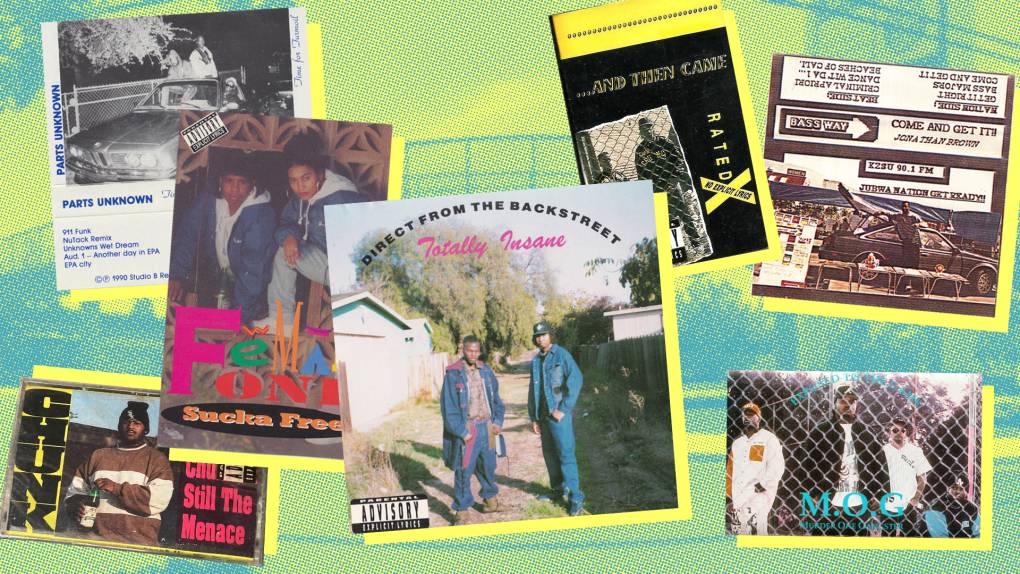
"caption": "In the 1980s and 1990s, dozens of cassettes were released by independent artists in the small, under-resourced triangle of East Palo Alto.",
"description": null,
"title": "epa_tapes_cover",
"credit": "Collage by Sarah Hotchkiss",
"status": "inherit",
"altTag": null,
"isLoading": false,
"fetchFailed": false
},
"arts_13936921": {
"type": "attachments",
"id": "arts_13936921",
"meta": {
"index": "attachments_1716263798",
"site": "arts",
"id": "13936921",
"found": true
},
"parent": 13936864,
"imgSizes": {
"twentyfourteen-full-width": {
"file": "https://ww2.kqed.org/app/uploads/sites/2/2023/10/Gloomy-June-1038x576.jpeg",
"width": 1038,
"mimeType": "image/jpeg",
"height": 576
},
"thumbnail": {
"file": "https://ww2.kqed.org/app/uploads/sites/2/2023/10/Gloomy-June-160x107.jpeg",
"width": 160,
"mimeType": "image/jpeg",
"height": 107
},
"post-thumbnail": {
"file": "https://ww2.kqed.org/app/uploads/sites/2/2023/10/Gloomy-June-672x372.jpeg",
"width": 672,
"mimeType": "image/jpeg",
"height": 372
},
"kqedFullSize": {
"file": "https://ww2.kqed.org/app/uploads/sites/2/2023/10/Gloomy-June.jpeg",
"width": 2305,
"height": 1537
},
"2048x2048": {
"file": "https://ww2.kqed.org/app/uploads/sites/2/2023/10/Gloomy-June-2048x1366.jpeg",
"width": 2048,
"mimeType": "image/jpeg",
"height": 1366
},
"large": {
"file": "https://ww2.kqed.org/app/uploads/sites/2/2023/10/Gloomy-June-1020x680.jpeg",
"width": 1020,
"mimeType": "image/jpeg",
"height": 680
},
"1536x1536": {
"file": "https://ww2.kqed.org/app/uploads/sites/2/2023/10/Gloomy-June-1536x1024.jpeg",
"width": 1536,
"mimeType": "image/jpeg",
"height": 1024
},
"full-width": {
"file": "https://ww2.kqed.org/app/uploads/sites/2/2023/10/Gloomy-June-1920x1280.jpeg",
"width": 1920,
"mimeType": "image/jpeg",
"height": 1280
},
"medium": {
"file": "https://ww2.kqed.org/app/uploads/sites/2/2023/10/Gloomy-June-800x533.jpeg",
"width": 800,
"mimeType": "image/jpeg",
"height": 533
},
"medium_large": {
"file": "https://ww2.kqed.org/app/uploads/sites/2/2023/10/Gloomy-June-768x512.jpeg",
"width": 768,
"mimeType": "image/jpeg",
"height": 512
}
},
"publishDate": 1698183563,
"modified": 1698183976,
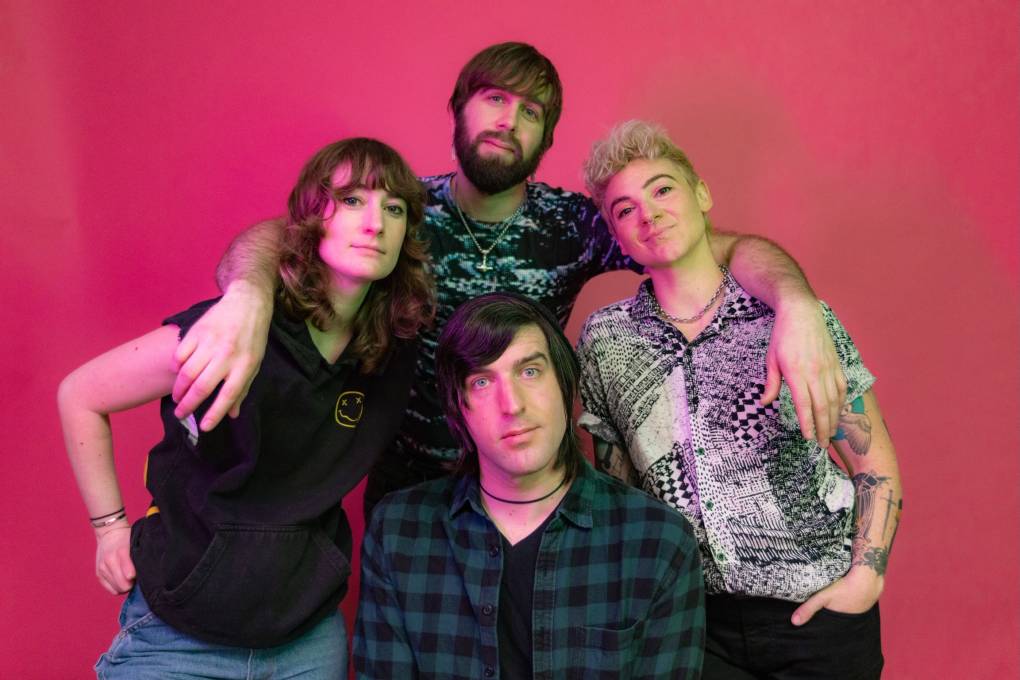
"caption": "gloomy june is among the 100 local artists featured on the San Francisco Public Library's new Bay Beats streaming platform. The band will play at the Bay Beats launch party this Saturday, Oct. 28 at Fulton Plaza, outside the Main Library in San Francisco. ",
"description": null,
"title": "Gloomy June",
"credit": "Courtesy San Francisco Public Library",
"status": "inherit",
"altTag": "a four-person band of youngish white people in colorful shirts pose for a band portrait against a pink background",
"isLoading": false,
"fetchFailed": false
},
"arts_13905561": {
"type": "attachments",
"id": "arts_13905561",
"meta": {
"index": "attachments_1716263798",
"site": "arts",
"id": "13905561",
"found": true
},
"parent": 13905544,
"imgSizes": {
"thumbnail": {
"file": "https://ww2.kqed.org/app/uploads/sites/2/2021/10/Rexx-Life-Raj-backstage-at-Outisde-Lands-on-Saturday-Oct.-30-2-160x107.jpg",
"width": 160,
"mimeType": "image/jpeg",
"height": 107
},
"post-thumbnail": {
"file": "https://ww2.kqed.org/app/uploads/sites/2/2021/10/Rexx-Life-Raj-backstage-at-Outisde-Lands-on-Saturday-Oct.-30-2-672x372.jpg",
"width": 672,
"mimeType": "image/jpeg",
"height": 372
},
"kqedFullSize": {
"file": "https://ww2.kqed.org/app/uploads/sites/2/2021/10/Rexx-Life-Raj-backstage-at-Outisde-Lands-on-Saturday-Oct.-30-2.jpg",
"width": 800,
"height": 533
},
"medium_large": {
"file": "https://ww2.kqed.org/app/uploads/sites/2/2021/10/Rexx-Life-Raj-backstage-at-Outisde-Lands-on-Saturday-Oct.-30-2-768x512.jpg",
"width": 768,
"mimeType": "image/jpeg",
"height": 512
}
},
"publishDate": 1635669356,
"modified": 1635698658,
"caption": "Rexx Life Raj backstage at Outisde Lands on Saturday, Oct. 30.",
"description": "Rexx Life Raj backstage at Outisde Lands on Saturday, Oct. 30.",
"title": "Rexx Life Raj backstage at Outisde Lands on Saturday, Oct. 30.",
"credit": "Estefany Gonzalez",
"status": "inherit",
"altTag": null,
"isLoading": false,
"fetchFailed": false
},
"arts_13936853": {
"type": "attachments",
"id": "arts_13936853",
"meta": {
"index": "attachments_1716263798",
"site": "arts",
"id": "13936853",
"found": true
},
"parent": 13936847,
"imgSizes": {
"twentyfourteen-full-width": {
"file": "https://ww2.kqed.org/app/uploads/sites/2/2023/10/ragana-1-cropped-900x576.jpg",
"width": 900,
"mimeType": "image/jpeg",
"height": 576
},
"thumbnail": {
"file": "https://ww2.kqed.org/app/uploads/sites/2/2023/10/ragana-1-cropped-160x107.jpg",
"width": 160,
"mimeType": "image/jpeg",
"height": 107
},
"post-thumbnail": {
"file": "https://ww2.kqed.org/app/uploads/sites/2/2023/10/ragana-1-cropped-672x372.jpg",
"width": 672,
"mimeType": "image/jpeg",
"height": 372
},
"kqedFullSize": {
"file": "https://ww2.kqed.org/app/uploads/sites/2/2023/10/ragana-1-cropped.jpg",
"width": 900,
"height": 600
},
"medium": {
"file": "https://ww2.kqed.org/app/uploads/sites/2/2023/10/ragana-1-cropped-800x533.jpg",
"width": 800,
"mimeType": "image/jpeg",
"height": 533
},
"medium_large": {
"file": "https://ww2.kqed.org/app/uploads/sites/2/2023/10/ragana-1-cropped-768x512.jpg",
"width": 768,
"mimeType": "image/jpeg",
"height": 512
}
},
"publishDate": 1698084001,
"modified": 1698084276,
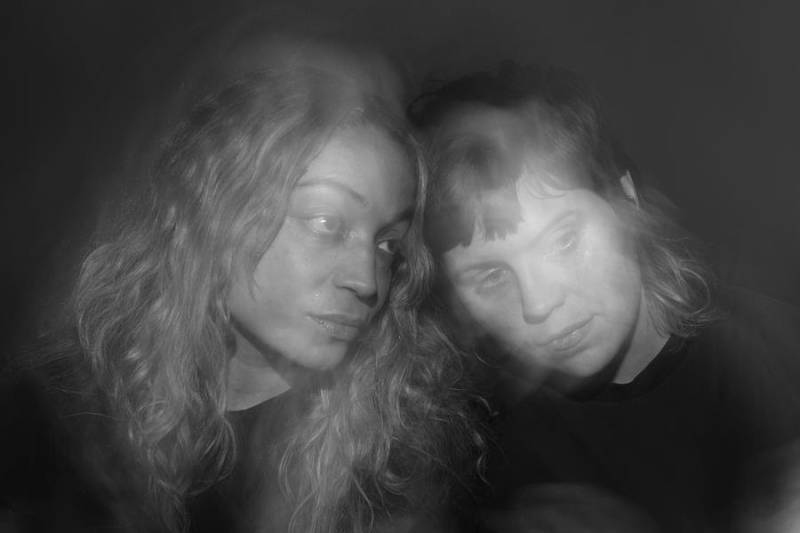
"caption": "Maria and Coley (left to right) of the \"antifascist black metal\" band Ragana.",
"description": null,
"title": "ragana 1-cropped",
"credit": "Bailey Kobelin",
"status": "inherit",
"altTag": "A blurry, black-and-white photo of two young musicians, one female and one nonbinary, leaning their heads together.",
"isLoading": false,
"fetchFailed": false
},
"arts_13936796": {
"type": "attachments",
"id": "arts_13936796",
"meta": {
"index": "attachments_1716263798",
"site": "arts",
"id": "13936796",
"found": true
},
"parent": 0,
"imgSizes": {
"twentyfourteen-full-width": {
"file": "https://ww2.kqed.org/app/uploads/sites/2/2023/10/E-40-81-MV-KQED-1038x576.jpg",
"width": 1038,
"mimeType": "image/jpeg",
"height": 576
},
"thumbnail": {
"file": "https://ww2.kqed.org/app/uploads/sites/2/2023/10/E-40-81-MV-KQED-160x107.jpg",
"width": 160,
"mimeType": "image/jpeg",
"height": 107
},
"post-thumbnail": {
"file": "https://ww2.kqed.org/app/uploads/sites/2/2023/10/E-40-81-MV-KQED-672x372.jpg",
"width": 672,
"mimeType": "image/jpeg",
"height": 372
},
"kqedFullSize": {
"file": "https://ww2.kqed.org/app/uploads/sites/2/2023/10/E-40-81-MV-KQED.jpg",
"width": 2000,
"height": 1334
},
"large": {
"file": "https://ww2.kqed.org/app/uploads/sites/2/2023/10/E-40-81-MV-KQED-1020x680.jpg",
"width": 1020,
"mimeType": "image/jpeg",
"height": 680
},
"1536x1536": {
"file": "https://ww2.kqed.org/app/uploads/sites/2/2023/10/E-40-81-MV-KQED-1536x1025.jpg",
"width": 1536,
"mimeType": "image/jpeg",
"height": 1025
},
"full-width": {
"file": "https://ww2.kqed.org/app/uploads/sites/2/2023/10/E-40-81-MV-KQED-1920x1281.jpg",
"width": 1920,
"mimeType": "image/jpeg",
"height": 1281
},
"medium": {
"file": "https://ww2.kqed.org/app/uploads/sites/2/2023/10/E-40-81-MV-KQED-800x534.jpg",
"width": 800,
"mimeType": "image/jpeg",
"height": 534
},
"medium_large": {
"file": "https://ww2.kqed.org/app/uploads/sites/2/2023/10/E-40-81-MV-KQED-768x512.jpg",
"width": 768,
"mimeType": "image/jpeg",
"height": 512
}
},
"publishDate": 1697932089,
"modified": 1697938112,
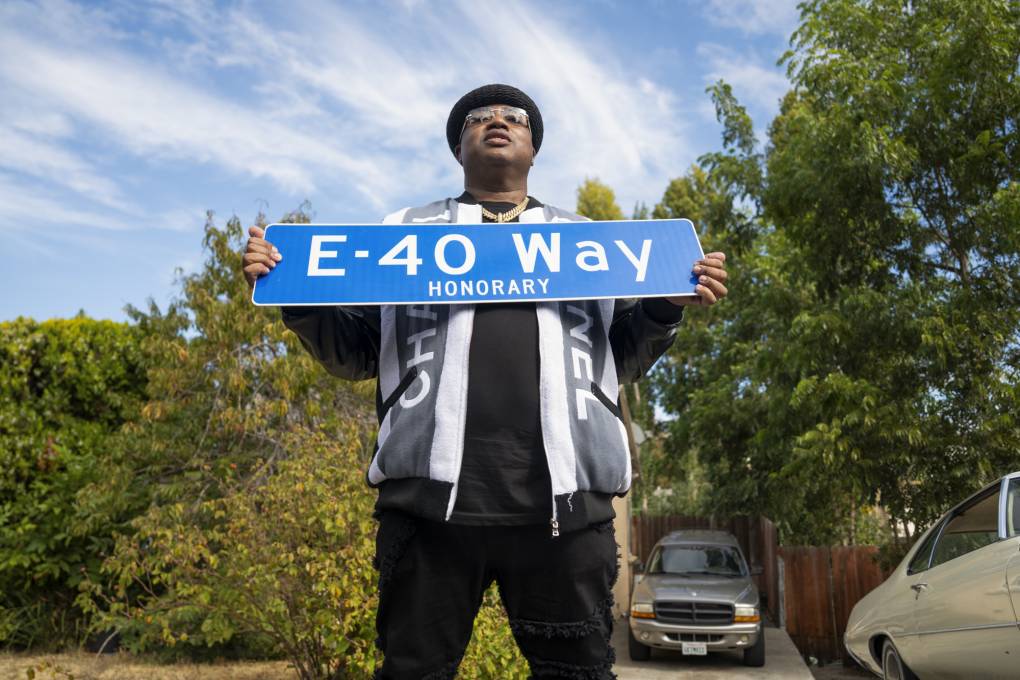
"caption": "Earl 'E-40' Stevens stands for a portrait outside his childhood home in Magazine Street, aka E-40 Way, after the honorary ceremony on Oct. 21, 2023 in Vallejo, Solano County.",
"description": null,
"title": "E-40-81-MV-KQED",
"credit": "Michaela Vatcheva for KQED",
"status": "inherit",
"altTag": "An African American man holds a sign up that says \"E-40 Way.\"",
"isLoading": false,
"fetchFailed": false
},
"arts_13840958": {
"type": "attachments",
"id": "arts_13840958",
"meta": {
"index": "attachments_1716263798",
"site": "arts",
"id": "13840958",
"found": true
},
"parent": 13840955,
"imgSizes": {
"small": {
"file": "https://ww2.kqed.org/app/uploads/sites/2/2018/09/e-40-main-rolling-loud--520x293.jpg",
"width": 520,
"mimeType": "image/jpeg",
"height": 293
},
"twentyfourteen-full-width": {
"file": "https://ww2.kqed.org/app/uploads/sites/2/2018/09/e-40-main-rolling-loud--1038x576.jpg",
"width": 1038,
"mimeType": "image/jpeg",
"height": 576
},
"thumbnail": {
"file": "https://ww2.kqed.org/app/uploads/sites/2/2018/09/e-40-main-rolling-loud--160x90.jpg",
"width": 160,
"mimeType": "image/jpeg",
"height": 90
},
"fd-sm": {
"file": "https://ww2.kqed.org/app/uploads/sites/2/2018/09/e-40-main-rolling-loud--960x540.jpg",
"width": 960,
"mimeType": "image/jpeg",
"height": 540
},
"post-thumbnail": {
"file": "https://ww2.kqed.org/app/uploads/sites/2/2018/09/e-40-main-rolling-loud--672x372.jpg",
"width": 672,
"mimeType": "image/jpeg",
"height": 372
},
"xsmall": {
"file": "https://ww2.kqed.org/app/uploads/sites/2/2018/09/e-40-main-rolling-loud--375x211.jpg",
"width": 375,
"mimeType": "image/jpeg",
"height": 211
},
"kqedFullSize": {
"file": "https://ww2.kqed.org/app/uploads/sites/2/2018/09/e-40-main-rolling-loud-.jpg",
"width": 1920,
"height": 1080
},
"large": {
"file": "https://ww2.kqed.org/app/uploads/sites/2/2018/09/e-40-main-rolling-loud--1020x574.jpg",
"width": 1020,
"mimeType": "image/jpeg",
"height": 574
},
"xlarge": {
"file": "https://ww2.kqed.org/app/uploads/sites/2/2018/09/e-40-main-rolling-loud--1180x664.jpg",
"width": 1180,
"mimeType": "image/jpeg",
"height": 664
},
"complete_open_graph": {
"file": "https://ww2.kqed.org/app/uploads/sites/2/2018/09/e-40-main-rolling-loud--1200x675.jpg",
"width": 1200,
"mimeType": "image/jpeg",
"height": 675
},
"guest-author-50": {
"file": "https://ww2.kqed.org/app/uploads/sites/2/2018/09/e-40-main-rolling-loud--50x50.jpg",
"width": 50,
"mimeType": "image/jpeg",
"height": 50
},
"guest-author-96": {
"file": "https://ww2.kqed.org/app/uploads/sites/2/2018/09/e-40-main-rolling-loud--96x96.jpg",
"width": 96,
"mimeType": "image/jpeg",
"height": 96
},
"medium": {
"file": "https://ww2.kqed.org/app/uploads/sites/2/2018/09/e-40-main-rolling-loud--800x450.jpg",
"width": 800,
"mimeType": "image/jpeg",
"height": 450
},
"guest-author-64": {
"file": "https://ww2.kqed.org/app/uploads/sites/2/2018/09/e-40-main-rolling-loud--64x64.jpg",
"width": 64,
"mimeType": "image/jpeg",
"height": 64
},
"guest-author-32": {
"file": "https://ww2.kqed.org/app/uploads/sites/2/2018/09/e-40-main-rolling-loud--32x32.jpg",
"width": 32,
"mimeType": "image/jpeg",
"height": 32
},
"fd-lrg": {
"file": "https://ww2.kqed.org/app/uploads/sites/2/2018/09/e-40-main-rolling-loud--1920x1080.jpg",
"width": 1920,
"mimeType": "image/jpeg",
"height": 1080
},
"fd-med": {
"file": "https://ww2.kqed.org/app/uploads/sites/2/2018/09/e-40-main-rolling-loud--1180x664.jpg",
"width": 1180,
"mimeType": "image/jpeg",
"height": 664
},
"full-width": {
"file": "https://ww2.kqed.org/app/uploads/sites/2/2018/09/e-40-main-rolling-loud--1920x1080.jpg",
"width": 1920,
"mimeType": "image/jpeg",
"height": 1080
},
"detail": {
"file": "https://ww2.kqed.org/app/uploads/sites/2/2018/09/e-40-main-rolling-loud--150x150.jpg",
"width": 150,
"mimeType": "image/jpeg",
"height": 150
},
"medium_large": {
"file": "https://ww2.kqed.org/app/uploads/sites/2/2018/09/e-40-main-rolling-loud--768x432.jpg",
"width": 768,
"mimeType": "image/jpeg",
"height": 432
},
"guest-author-128": {
"file": "https://ww2.kqed.org/app/uploads/sites/2/2018/09/e-40-main-rolling-loud--128x128.jpg",
"width": 128,
"mimeType": "image/jpeg",
"height": 128
},
"xxsmall": {
"file": "https://ww2.kqed.org/app/uploads/sites/2/2018/09/e-40-main-rolling-loud--240x135.jpg",
"width": 240,
"mimeType": "image/jpeg",
"height": 135
}
},
"publishDate": 1537199717,
"modified": 1537199772,
"caption": "E-40 performs at Rolling Loud Bay Area on Sept. 16, 2018.",
"description": "E-40 performs at Rolling Loud Bay Area on Sept. 16, 2018.",
"title": "e-40 main rolling loud",
"credit": "Estefany Gonzalez",
"status": "inherit",
"isLoading": false,
"fetchFailed": false
},
"arts_13932754": {
"type": "attachments",
"id": "arts_13932754",
"meta": {
"index": "attachments_1716263798",
"site": "arts",
"id": "13932754",
"found": true
},
"parent": 13932753,
"imgSizes": {
"twentyfourteen-full-width": {
"file": "https://ww2.kqed.org/app/uploads/sites/2/2023/08/GettyImages-1144886924-scaled-e1691443762805-1038x576.jpg",
"width": 1038,
"mimeType": "image/jpeg",
"height": 576
},
"thumbnail": {
"file": "https://ww2.kqed.org/app/uploads/sites/2/2023/08/GettyImages-1144886924-scaled-e1691443762805-160x107.jpg",
"width": 160,
"mimeType": "image/jpeg",
"height": 107
},
"post-thumbnail": {
"file": "https://ww2.kqed.org/app/uploads/sites/2/2023/08/GettyImages-1144886924-scaled-e1691443762805-672x372.jpg",
"width": 672,
"mimeType": "image/jpeg",
"height": 372
},
"kqedFullSize": {
"file": "https://ww2.kqed.org/app/uploads/sites/2/2023/08/GettyImages-1144886924-scaled-e1691443762805.jpg",
"width": 1920,
"height": 1280
},
"2048x2048": {
"file": "https://ww2.kqed.org/app/uploads/sites/2/2023/08/GettyImages-1144886924-2048x1365.jpg",
"width": 2048,
"mimeType": "image/jpeg",
"height": 1365
},
"large": {
"file": "https://ww2.kqed.org/app/uploads/sites/2/2023/08/GettyImages-1144886924-scaled-e1691443762805-1020x680.jpg",
"width": 1020,
"mimeType": "image/jpeg",
"height": 680
},
"1536x1536": {
"file": "https://ww2.kqed.org/app/uploads/sites/2/2023/08/GettyImages-1144886924-scaled-e1691443762805-1536x1024.jpg",
"width": 1536,
"mimeType": "image/jpeg",
"height": 1024
},
"full-width": {
"file": "https://ww2.kqed.org/app/uploads/sites/2/2023/08/GettyImages-1144886924-1920x1280.jpg",
"width": 1920,
"mimeType": "image/jpeg",
"height": 1280
},
"medium": {
"file": "https://ww2.kqed.org/app/uploads/sites/2/2023/08/GettyImages-1144886924-scaled-e1691443762805-800x533.jpg",
"width": 800,
"mimeType": "image/jpeg",
"height": 533
},
"medium_large": {
"file": "https://ww2.kqed.org/app/uploads/sites/2/2023/08/GettyImages-1144886924-scaled-e1691443762805-768x512.jpg",
"width": 768,
"mimeType": "image/jpeg",
"height": 512
}
},
"publishDate": 1691443743,
"modified": 1691443880,
"caption": "Public Enemy's Chuck D performs in Berlin in 2019.",
"description": null,
"title": "Public Enemy's Chuck D performs in Berlin in 2019.",
"credit": "Frank Hoensch/ Redferns",
"status": "inherit",
"altTag": "A middle aged Black man clutches a microphone and mic stand and smiles on stage. He is wearing a black t-shirt and black baseball cap.",
"isLoading": false,
"fetchFailed": false
},
"arts_13936743": {
"type": "attachments",
"id": "arts_13936743",
"meta": {
"index": "attachments_1716263798",
"site": "arts",
"id": "13936743",
"found": true
},
"parent": 13936739,
"imgSizes": {
"twentyfourteen-full-width": {
"file": "https://ww2.kqed.org/app/uploads/sites/2/2023/10/Mall.BlackC.MAIN_.fornow-1038x576.png",
"width": 1038,
"mimeType": "image/png",
"height": 576
},
"thumbnail": {
"file": "https://ww2.kqed.org/app/uploads/sites/2/2023/10/Mall.BlackC.MAIN_.fornow-160x89.png",
"width": 160,
"mimeType": "image/png",
"height": 89
},
"post-thumbnail": {
"file": "https://ww2.kqed.org/app/uploads/sites/2/2023/10/Mall.BlackC.MAIN_.fornow-672x372.png",
"width": 672,
"mimeType": "image/png",
"height": 372
},
"kqedFullSize": {
"file": "https://ww2.kqed.org/app/uploads/sites/2/2023/10/Mall.BlackC.MAIN_.fornow.png",
"width": 2028,
"height": 1130
},
"large": {
"file": "https://ww2.kqed.org/app/uploads/sites/2/2023/10/Mall.BlackC.MAIN_.fornow-1020x568.png",
"width": 1020,
"mimeType": "image/png",
"height": 568
},
"1536x1536": {
"file": "https://ww2.kqed.org/app/uploads/sites/2/2023/10/Mall.BlackC.MAIN_.fornow-1536x856.png",
"width": 1536,
"mimeType": "image/png",
"height": 856
},
"full-width": {
"file": "https://ww2.kqed.org/app/uploads/sites/2/2023/10/Mall.BlackC.MAIN_.fornow-1920x1070.png",
"width": 1920,
"mimeType": "image/png",
"height": 1070
},
"medium": {
"file": "https://ww2.kqed.org/app/uploads/sites/2/2023/10/Mall.BlackC.MAIN_.fornow-800x446.png",
"width": 800,
"mimeType": "image/png",
"height": 446
},
"medium_large": {
"file": "https://ww2.kqed.org/app/uploads/sites/2/2023/10/Mall.BlackC.MAIN_.fornow-768x428.png",
"width": 768,
"mimeType": "image/png",
"height": 428
}
},
"publishDate": 1697816004,
"modified": 1697816073,
"caption": "(L–R) Black C and Mac Mall onstage at the Commons at KQED, Oct. 19, 2023.",
"description": null,
"title": "Mall.BlackC.MAIN.fornow",
"credit": null,
"status": "inherit",
"altTag": null,
"isLoading": false,
"fetchFailed": false
},
"arts_13936734": {
"type": "attachments",
"id": "arts_13936734",
"meta": {
"index": "attachments_1716263798",
"site": "arts",
"id": "13936734",
"found": true
},
"parent": 13936729,
"imgSizes": {
"twentyfourteen-full-width": {
"file": "https://ww2.kqed.org/app/uploads/sites/2/2023/10/GettyImages-1149929575-scaled-e1697791724861-1038x576.jpg",
"width": 1038,
"mimeType": "image/jpeg",
"height": 576
},
"thumbnail": {
"file": "https://ww2.kqed.org/app/uploads/sites/2/2023/10/GettyImages-1149929575-scaled-e1697791724861-160x106.jpg",
"width": 160,
"mimeType": "image/jpeg",
"height": 106
},
"post-thumbnail": {
"file": "https://ww2.kqed.org/app/uploads/sites/2/2023/10/GettyImages-1149929575-scaled-e1697791724861-672x372.jpg",
"width": 672,
"mimeType": "image/jpeg",
"height": 372
},
"kqedFullSize": {
"file": "https://ww2.kqed.org/app/uploads/sites/2/2023/10/GettyImages-1149929575-scaled-e1697791724861.jpg",
"width": 1920,
"height": 1274
},
"2048x2048": {
"file": "https://ww2.kqed.org/app/uploads/sites/2/2023/10/GettyImages-1149929575-2048x1358.jpg",
"width": 2048,
"mimeType": "image/jpeg",
"height": 1358
},
"large": {
"file": "https://ww2.kqed.org/app/uploads/sites/2/2023/10/GettyImages-1149929575-scaled-e1697791724861-1020x677.jpg",
"width": 1020,
"mimeType": "image/jpeg",
"height": 677
},
"1536x1536": {
"file": "https://ww2.kqed.org/app/uploads/sites/2/2023/10/GettyImages-1149929575-scaled-e1697791724861-1536x1019.jpg",
"width": 1536,
"mimeType": "image/jpeg",
"height": 1019
},
"full-width": {
"file": "https://ww2.kqed.org/app/uploads/sites/2/2023/10/GettyImages-1149929575-1920x1273.jpg",
"width": 1920,
"mimeType": "image/jpeg",
"height": 1273
},
"medium": {
"file": "https://ww2.kqed.org/app/uploads/sites/2/2023/10/GettyImages-1149929575-scaled-e1697791724861-800x531.jpg",
"width": 800,
"mimeType": "image/jpeg",
"height": 531
},
"medium_large": {
"file": "https://ww2.kqed.org/app/uploads/sites/2/2023/10/GettyImages-1149929575-scaled-e1697791724861-768x510.jpg",
"width": 768,
"mimeType": "image/jpeg",
"height": 510
}
},
"publishDate": 1697791600,
"modified": 1697791738,
"caption": "Britney Spears, in the early days of her pop career.",
"description": null,
"title": "Britney Spears, in the early days of her pop career.",
"credit": "Fryderyk Gabowicz/ Picture Alliance via Getty Images",
"status": "inherit",
"altTag": "A sweet, all-American teen girl smiles for the camera, her hands clasped together next to her face.",
"isLoading": false,
"fetchFailed": false
},
"arts_13936555": {
"type": "attachments",
"id": "arts_13936555",
"meta": {
"index": "attachments_1716263798",
"site": "arts",
"id": "13936555",
"found": true
},
"parent": 13936538,
"imgSizes": {
"twentyfourteen-full-width": {
"file": "https://ww2.kqed.org/app/uploads/sites/2/2023/10/Screen-Shot-2023-10-17-at-12.20.41-PM-1038x576.png",
"width": 1038,
"mimeType": "image/png",
"height": 576
},
"thumbnail": {
"file": "https://ww2.kqed.org/app/uploads/sites/2/2023/10/Screen-Shot-2023-10-17-at-12.20.41-PM-160x114.png",
"width": 160,
"mimeType": "image/png",
"height": 114
},
"post-thumbnail": {
"file": "https://ww2.kqed.org/app/uploads/sites/2/2023/10/Screen-Shot-2023-10-17-at-12.20.41-PM-672x372.png",
"width": 672,
"mimeType": "image/png",
"height": 372
},
"kqedFullSize": {
"file": "https://ww2.kqed.org/app/uploads/sites/2/2023/10/Screen-Shot-2023-10-17-at-12.20.41-PM.png",
"width": 1432,
"height": 1024
},
"large": {
"file": "https://ww2.kqed.org/app/uploads/sites/2/2023/10/Screen-Shot-2023-10-17-at-12.20.41-PM-1020x729.png",
"width": 1020,
"mimeType": "image/png",
"height": 729
},
"medium": {
"file": "https://ww2.kqed.org/app/uploads/sites/2/2023/10/Screen-Shot-2023-10-17-at-12.20.41-PM-800x572.png",
"width": 800,
"mimeType": "image/png",
"height": 572
},
"medium_large": {
"file": "https://ww2.kqed.org/app/uploads/sites/2/2023/10/Screen-Shot-2023-10-17-at-12.20.41-PM-768x549.png",
"width": 768,
"mimeType": "image/png",
"height": 549
}
},
"publishDate": 1697570599,
"modified": 1697570894,
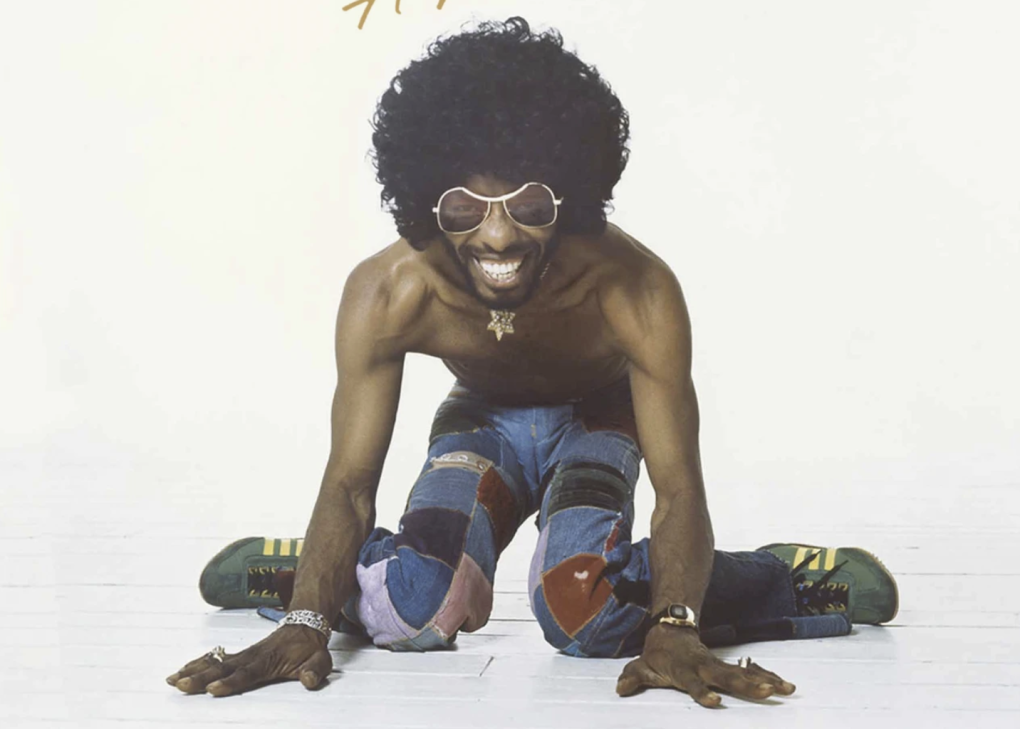
"caption": "The cover of ‘Thank You (Falettinme Be Mice Elf Agin)’ by Sly Stone with Ben Greenman.",
"description": null,
"title": "The cover of ‘Thank You (Falettinme Be Mice Elf Agin)’ by Sly Stone with Ben Greenman.",
"credit": "AUWA Books via AP",
"status": "inherit",
"altTag": null,
"isLoading": false,
"fetchFailed": false
},
"arts_13936541": {
"type": "attachments",
"id": "arts_13936541",
"meta": {
"index": "attachments_1716263798",
"site": "arts",
"id": "13936541",
"found": true
},
"parent": 13936531,
"imgSizes": {
"twentyfourteen-full-width": {
"file": "https://ww2.kqed.org/app/uploads/sites/2/2023/10/Juvenile.16.9-1038x576.jpg",
"width": 1038,
"mimeType": "image/jpeg",
"height": 576
},
"thumbnail": {
"file": "https://ww2.kqed.org/app/uploads/sites/2/2023/10/Juvenile.16.9-160x90.jpg",
"width": 160,
"mimeType": "image/jpeg",
"height": 90
},
"post-thumbnail": {
"file": "https://ww2.kqed.org/app/uploads/sites/2/2023/10/Juvenile.16.9-672x372.jpg",
"width": 672,
"mimeType": "image/jpeg",
"height": 372
},
"kqedFullSize": {
"file": "https://ww2.kqed.org/app/uploads/sites/2/2023/10/Juvenile.16.9.jpg",
"width": 1920,
"height": 1080
},
"large": {
"file": "https://ww2.kqed.org/app/uploads/sites/2/2023/10/Juvenile.16.9-1020x574.jpg",
"width": 1020,
"mimeType": "image/jpeg",
"height": 574
},
"1536x1536": {
"file": "https://ww2.kqed.org/app/uploads/sites/2/2023/10/Juvenile.16.9-1536x864.jpg",
"width": 1536,
"mimeType": "image/jpeg",
"height": 864
},
"medium": {
"file": "https://ww2.kqed.org/app/uploads/sites/2/2023/10/Juvenile.16.9-800x450.jpg",
"width": 800,
"mimeType": "image/jpeg",
"height": 450
},
"medium_large": {
"file": "https://ww2.kqed.org/app/uploads/sites/2/2023/10/Juvenile.16.9-768x432.jpg",
"width": 768,
"mimeType": "image/jpeg",
"height": 432
}
},
"publishDate": 1697569021,
"modified": 1697569091,
"caption": "Rapper Juvenile performs during the Collegrove Tour at the Oakland Arena on Nov. 10, 2016 in Oakland. ",
"description": null,
"title": "Collegrove Tour At ORACLE Arena",
"credit": "Tim Mosenfelder/Getty Images",
"status": "inherit",
"altTag": null,
"isLoading": false,
"fetchFailed": false
},
"arts_13848873": {
"type": "attachments",
"id": "arts_13848873",
"meta": {
"index": "attachments_1716263798",
"site": "arts",
"id": "13848873",
"found": true
},
"parent": 0,
"imgSizes": {
"small": {
"file": "https://ww2.kqed.org/app/uploads/sites/2/2019/01/Bandcamp-Oakland-Record-Store-and-Venue-1-Courtesy-Bandcamp-Credit-Richard-Morgenstein-520x293.jpg",
"width": 520,
"mimeType": "image/jpeg",
"height": 293
},
"twentyfourteen-full-width": {
"file": "https://ww2.kqed.org/app/uploads/sites/2/2019/01/Bandcamp-Oakland-Record-Store-and-Venue-1-Courtesy-Bandcamp-Credit-Richard-Morgenstein-1038x576.jpg",
"width": 1038,
"mimeType": "image/jpeg",
"height": 576
},
"thumbnail": {
"file": "https://ww2.kqed.org/app/uploads/sites/2/2019/01/Bandcamp-Oakland-Record-Store-and-Venue-1-Courtesy-Bandcamp-Credit-Richard-Morgenstein-160x90.jpg",
"width": 160,
"mimeType": "image/jpeg",
"height": 90
},
"fd-sm": {
"file": "https://ww2.kqed.org/app/uploads/sites/2/2019/01/Bandcamp-Oakland-Record-Store-and-Venue-1-Courtesy-Bandcamp-Credit-Richard-Morgenstein-960x540.jpg",
"width": 960,
"mimeType": "image/jpeg",
"height": 540
},
"post-thumbnail": {
"file": "https://ww2.kqed.org/app/uploads/sites/2/2019/01/Bandcamp-Oakland-Record-Store-and-Venue-1-Courtesy-Bandcamp-Credit-Richard-Morgenstein-672x372.jpg",
"width": 672,
"mimeType": "image/jpeg",
"height": 372
},
"xsmall": {
"file": "https://ww2.kqed.org/app/uploads/sites/2/2019/01/Bandcamp-Oakland-Record-Store-and-Venue-1-Courtesy-Bandcamp-Credit-Richard-Morgenstein-375x211.jpg",
"width": 375,
"mimeType": "image/jpeg",
"height": 211
},
"kqedFullSize": {
"file": "https://ww2.kqed.org/app/uploads/sites/2/2019/01/Bandcamp-Oakland-Record-Store-and-Venue-1-Courtesy-Bandcamp-Credit-Richard-Morgenstein.jpg",
"width": 2048,
"height": 1152
},
"large": {
"file": "https://ww2.kqed.org/app/uploads/sites/2/2019/01/Bandcamp-Oakland-Record-Store-and-Venue-1-Courtesy-Bandcamp-Credit-Richard-Morgenstein-1020x574.jpg",
"width": 1020,
"mimeType": "image/jpeg",
"height": 574
},
"xlarge": {
"file": "https://ww2.kqed.org/app/uploads/sites/2/2019/01/Bandcamp-Oakland-Record-Store-and-Venue-1-Courtesy-Bandcamp-Credit-Richard-Morgenstein-1180x664.jpg",
"width": 1180,
"mimeType": "image/jpeg",
"height": 664
},
"complete_open_graph": {
"file": "https://ww2.kqed.org/app/uploads/sites/2/2019/01/Bandcamp-Oakland-Record-Store-and-Venue-1-Courtesy-Bandcamp-Credit-Richard-Morgenstein-1200x675.jpg",
"width": 1200,
"mimeType": "image/jpeg",
"height": 675
},
"guest-author-50": {
"file": "https://ww2.kqed.org/app/uploads/sites/2/2019/01/Bandcamp-Oakland-Record-Store-and-Venue-1-Courtesy-Bandcamp-Credit-Richard-Morgenstein-50x50.jpg",
"width": 50,
"mimeType": "image/jpeg",
"height": 50
},
"guest-author-96": {
"file": "https://ww2.kqed.org/app/uploads/sites/2/2019/01/Bandcamp-Oakland-Record-Store-and-Venue-1-Courtesy-Bandcamp-Credit-Richard-Morgenstein-96x96.jpg",
"width": 96,
"mimeType": "image/jpeg",
"height": 96
},
"medium": {
"file": "https://ww2.kqed.org/app/uploads/sites/2/2019/01/Bandcamp-Oakland-Record-Store-and-Venue-1-Courtesy-Bandcamp-Credit-Richard-Morgenstein-800x450.jpg",
"width": 800,
"mimeType": "image/jpeg",
"height": 450
},
"guest-author-64": {
"file": "https://ww2.kqed.org/app/uploads/sites/2/2019/01/Bandcamp-Oakland-Record-Store-and-Venue-1-Courtesy-Bandcamp-Credit-Richard-Morgenstein-64x64.jpg",
"width": 64,
"mimeType": "image/jpeg",
"height": 64
},
"guest-author-32": {
"file": "https://ww2.kqed.org/app/uploads/sites/2/2019/01/Bandcamp-Oakland-Record-Store-and-Venue-1-Courtesy-Bandcamp-Credit-Richard-Morgenstein-32x32.jpg",
"width": 32,
"mimeType": "image/jpeg",
"height": 32
},
"fd-lrg": {
"file": "https://ww2.kqed.org/app/uploads/sites/2/2019/01/Bandcamp-Oakland-Record-Store-and-Venue-1-Courtesy-Bandcamp-Credit-Richard-Morgenstein-1920x1080.jpg",
"width": 1920,
"mimeType": "image/jpeg",
"height": 1080
},
"fd-med": {
"file": "https://ww2.kqed.org/app/uploads/sites/2/2019/01/Bandcamp-Oakland-Record-Store-and-Venue-1-Courtesy-Bandcamp-Credit-Richard-Morgenstein-1180x664.jpg",
"width": 1180,
"mimeType": "image/jpeg",
"height": 664
},
"full-width": {
"file": "https://ww2.kqed.org/app/uploads/sites/2/2019/01/Bandcamp-Oakland-Record-Store-and-Venue-1-Courtesy-Bandcamp-Credit-Richard-Morgenstein-1920x1080.jpg",
"width": 1920,
"mimeType": "image/jpeg",
"height": 1080
},
"detail": {
"file": "https://ww2.kqed.org/app/uploads/sites/2/2019/01/Bandcamp-Oakland-Record-Store-and-Venue-1-Courtesy-Bandcamp-Credit-Richard-Morgenstein-150x150.jpg",
"width": 150,
"mimeType": "image/jpeg",
"height": 150
},
"medium_large": {
"file": "https://ww2.kqed.org/app/uploads/sites/2/2019/01/Bandcamp-Oakland-Record-Store-and-Venue-1-Courtesy-Bandcamp-Credit-Richard-Morgenstein-768x432.jpg",
"width": 768,
"mimeType": "image/jpeg",
"height": 432
},
"guest-author-128": {
"file": "https://ww2.kqed.org/app/uploads/sites/2/2019/01/Bandcamp-Oakland-Record-Store-and-Venue-1-Courtesy-Bandcamp-Credit-Richard-Morgenstein-128x128.jpg",
"width": 128,
"mimeType": "image/jpeg",
"height": 128
},
"xxsmall": {
"file": "https://ww2.kqed.org/app/uploads/sites/2/2019/01/Bandcamp-Oakland-Record-Store-and-Venue-1-Courtesy-Bandcamp-Credit-Richard-Morgenstein-240x135.jpg",
"width": 240,
"mimeType": "image/jpeg",
"height": 135
}
},
"publishDate": 1547677555,
"modified": 1697502904,
"caption": "Bandcamp's office in downtown Oakland includes a record store and concert venue.",
"description": "Bandcamp's new office in downtown Oakland includes a record store and concert venue.",
"title": "Bandcamp Oakland Record Store and Venue 1 Courtesy Bandcamp Credit Richard Morgenstein",
"credit": "Richard Morgenstein",
"status": "inherit",
"altTag": "Bandcamp's new office in downtown Oakland includes a record store and concert venue.",
"isLoading": false,
"fetchFailed": false
}
},
"audioPlayerReducer": {
"postId": "stream_live",
"isPaused": true,
"isPlaying": false,
"pfsActive": false,
"pledgeModalIsOpen": true,
"playerDrawerIsOpen": false,
"liveAudioPlayStartedAt": 0,
"liveAudioPlayContext": ""
},
"authorsReducer": {
"byline_arts_13936387": {
"type": "authors",
"id": "byline_arts_13936387",
"meta": {
"override": true
},
"slug": "byline_arts_13936387",
"name": "J. Darrah ",
"isLoading": false
},
"byline_arts_13936847": {
"type": "authors",
"id": "byline_arts_13936847",
"meta": {
"override": true
},
"slug": "byline_arts_13936847",
"name": "Daniel Bromfield",
"isLoading": false
},
"byline_arts_13936776": {
"type": "authors",
"id": "byline_arts_13936776",
"meta": {
"override": true
},
"slug": "byline_arts_13936776",
"name": "\u003ca>Nastia Voynovskaya\u003c/a>, \u003ca>Billy Cruz\u003c/a>",
"isLoading": false
},
"byline_arts_13936729": {
"type": "authors",
"id": "byline_arts_13936729",
"meta": {
"override": true
},
"slug": "byline_arts_13936729",
"name": "Maria Sherman and Andrew Dalton, Associated Press",
"isLoading": false
},
"byline_arts_13936538": {
"type": "authors",
"id": "byline_arts_13936538",
"meta": {
"override": true
},
"slug": "byline_arts_13936538",
"name": "Christopher Weber, Associated Press",
"isLoading": false
},
"gmeline": {
"type": "authors",
"id": "185",
"meta": {
"index": "authors_1716337520",
"id": "185",
"found": true
},
"name": "Gabe Meline",
"firstName": "Gabe",
"lastName": "Meline",
"slug": "gmeline",
"email": "gmeline@kqed.org",
"display_author_email": true,
"staff_mastheads": [
"arts"
],
"title": "Senior Editor, KQED Arts & Culture",
"bio": "Gabe Meline entered journalism at age 15 making photocopied zines, and has since earned awards from the Edward R. Murrow Awards, the Society for Professional Journalists, the Online Journalism Awards, the Association of Alternative Newsweeklies and the California Newspaper Publishers Association. Prior to KQED, he was the editor of the \u003cem>North Bay Bohemian\u003c/em> and a touring musician. He lives with his wife and daughter in his hometown of Santa Rosa, CA.",
"avatar": "https://secure.gravatar.com/avatar/5bebe57be0d8bc2dd318934feb47299e2d2d10cba28d09d8d7afb389a2ce2bdd?s=600&d=blank&r=g",
"twitter": null,
"bluesky": null,
"facebook": null,
"instagram": null,
"linkedin": null,
"sites": [
{
"site": "",
"roles": [
"editor"
]
},
{
"site": "arts",
"roles": [
"administrator"
]
},
{
"site": "artschool",
"roles": [
"editor"
]
},
{
"site": "news",
"roles": [
"author"
]
},
{
"site": "pop",
"roles": [
"editor"
]
},
{
"site": "bayareabites",
"roles": [
"editor"
]
},
{
"site": "food",
"roles": [
"editor"
]
},
{
"site": "forum",
"roles": [
"administrator"
]
},
{
"site": "liveblog",
"roles": [
"editor"
]
},
{
"site": "hiphop",
"roles": [
"editor"
]
}
],
"headData": {
"title": "Gabe Meline | KQED",
"description": "Senior Editor, KQED Arts & Culture",
"ogImgSrc": "https://secure.gravatar.com/avatar/5bebe57be0d8bc2dd318934feb47299e2d2d10cba28d09d8d7afb389a2ce2bdd?s=600&d=blank&r=g",
"twImgSrc": "https://secure.gravatar.com/avatar/5bebe57be0d8bc2dd318934feb47299e2d2d10cba28d09d8d7afb389a2ce2bdd?s=600&d=blank&r=g"
},
"isLoading": false,
"link": "/author/gmeline"
},
"esilvers": {
"type": "authors",
"id": "7237",
"meta": {
"index": "authors_1716337520",
"id": "7237",
"found": true
},
"name": "Emma Silvers",
"firstName": "Emma",
"lastName": "Silvers",
"slug": "esilvers",
"email": "esilvers@kqed.org",
"display_author_email": false,
"staff_mastheads": [],
"title": "KQED Contributor",
"bio": "Emma Silvers is an editor at KQED Arts and a former digital producer at KQED News. Born and raised in the Bay Area, she has previously been an arts and entertainment editor at the \u003cem>San Francisco Chronicle\u003c/em>, \u003cem>SF Weekly\u003c/em> and the \u003cem>San Francisco Bay Guardian.\u003c/em> \u003ca href=\"https://www.emmasilvers.com\">Her work\u003c/a> has also appeared in \u003cem>Rolling Stone\u003c/em>, Pitchfork and \u003cem>Mother Jones\u003c/em>. In 2017 she was the recipient of the Society of Professional Journalists-Northern California's award for arts and culture reporting. In 1993 she \u003ca href=\"https://www.kqed.org/pop/16759/wait-what-my-coworker-was-a-voice-over-hyperventilator-for-jurassic-park\">hyperventilated in \u003cem>Jurassic Park\u003c/em>\u003c/a>.",
"avatar": "https://secure.gravatar.com/avatar/247beada39b88ea5759db1f51dba05cf?s=600&d=blank&r=g",
"twitter": "emmaruthless",
"facebook": null,
"instagram": null,
"linkedin": null,
"sites": [
{
"site": "arts",
"roles": [
"editor"
]
},
{
"site": "news",
"roles": [
"editor"
]
},
{
"site": "pop",
"roles": [
"contributor"
]
},
{
"site": "bayareabites",
"roles": [
"editor"
]
},
{
"site": "food",
"roles": [
"contributor"
]
},
{
"site": "liveblog",
"roles": [
"editor"
]
}
],
"headData": {
"title": "Emma Silvers | KQED",
"description": "KQED Contributor",
"ogImgSrc": "https://secure.gravatar.com/avatar/247beada39b88ea5759db1f51dba05cf?s=600&d=blank&r=g",
"twImgSrc": "https://secure.gravatar.com/avatar/247beada39b88ea5759db1f51dba05cf?s=600&d=blank&r=g"
},
"isLoading": false,
"link": "/author/esilvers"
},
"nvoynovskaya": {
"type": "authors",
"id": "11387",
"meta": {
"index": "authors_1716337520",
"id": "11387",
"found": true
},
"name": "Nastia Voynovskaya",
"firstName": "Nastia",
"lastName": "Voynovskaya",
"slug": "nvoynovskaya",
"email": "nvoynovskaya@kqed.org",
"display_author_email": false,
"staff_mastheads": [
"arts"
],
"title": "Editor and reporter",
"bio": "Nastia Voynovskaya is a reporter, editor and host at KQED Arts & Culture. She's been covering the arts in the Bay Area for over a decade, with a focus on music, queer culture, labor issues and grassroots organizing. She has edited KQED story series such as Trans Bay: A History of San Francisco's Gender-Diverse Community, and co-created KQED's Bay Area hip-hop history project, That's My Word. Nastia's work has been recognized by the Society of Professional Journalists and San Francisco Press Club. She regularly appears on podcasts and radio programs, including NPR's All Songs Considered, and hosts live events where music, culture and conversation meet.",
"avatar": "https://secure.gravatar.com/avatar/5025ee460e5a85d69ca20ea6c6f2f80d7e17795c828f61ea3aecfcd924e9042e?s=600&d=blank&r=g",
"twitter": null,
"bluesky": null,
"facebook": null,
"instagram": "https://www.instagram.com/nananastia/",
"linkedin": null,
"sites": [
{
"site": "",
"roles": [
"editor"
]
},
{
"site": "arts",
"roles": [
"administrator"
]
},
{
"site": "news",
"roles": [
"editor"
]
},
{
"site": "pop",
"roles": [
"administrator"
]
},
{
"site": "bayareabites",
"roles": [
"editor"
]
},
{
"site": "podcasts",
"roles": [
"editor"
]
},
{
"site": "hiphop",
"roles": [
"editor"
]
}
],
"headData": {
"title": "Nastia Voynovskaya | KQED",
"description": "Editor and reporter",
"ogImgSrc": "https://secure.gravatar.com/avatar/5025ee460e5a85d69ca20ea6c6f2f80d7e17795c828f61ea3aecfcd924e9042e?s=600&d=blank&r=g",
"twImgSrc": "https://secure.gravatar.com/avatar/5025ee460e5a85d69ca20ea6c6f2f80d7e17795c828f61ea3aecfcd924e9042e?s=600&d=blank&r=g"
},
"isLoading": false,
"link": "/author/nvoynovskaya"
},
"ogpenn": {
"type": "authors",
"id": "11491",
"meta": {
"index": "authors_1716337520",
"id": "11491",
"found": true
},
"name": "Pendarvis Harshaw",
"firstName": "Pendarvis",
"lastName": "Harshaw",
"slug": "ogpenn",
"email": "ogpenn@gmail.com",
"display_author_email": false,
"staff_mastheads": [
"arts"
],
"title": "Community Engagement Reporter",
"bio": "Pendarvis Harshaw is an educator, host and writer with KQED Arts.",
"avatar": "https://secure.gravatar.com/avatar/972b77ee8e3f346ae2b00622661187fbfabd059b5693bbdc1475ea7a722fd4cd?s=600&d=blank&r=g",
"twitter": null,
"bluesky": null,
"facebook": null,
"instagram": "ogpenn",
"linkedin": null,
"sites": [
{
"site": "arts",
"roles": [
"administrator"
]
},
{
"site": "news",
"roles": [
"editor"
]
},
{
"site": "bayareabites",
"roles": [
"author"
]
},
{
"site": "hiphop",
"roles": [
"editor"
]
}
],
"headData": {
"title": "Pendarvis Harshaw | KQED",
"description": "Community Engagement Reporter",
"ogImgSrc": "https://secure.gravatar.com/avatar/972b77ee8e3f346ae2b00622661187fbfabd059b5693bbdc1475ea7a722fd4cd?s=600&d=blank&r=g",
"twImgSrc": "https://secure.gravatar.com/avatar/972b77ee8e3f346ae2b00622661187fbfabd059b5693bbdc1475ea7a722fd4cd?s=600&d=blank&r=g"
},
"isLoading": false,
"link": "/author/ogpenn"
},
"achazaro": {
"type": "authors",
"id": "11748",
"meta": {
"index": "authors_1716337520",
"id": "11748",
"found": true
},
"name": "Alan Chazaro",
"firstName": "Alan",
"lastName": "Chazaro",
"slug": "achazaro",
"email": "agchazaro@gmail.com",
"display_author_email": true,
"staff_mastheads": [],
"title": "Food Writer and Reporter",
"bio": "Alan Chazaro is the author of \u003cem>This Is Not a Frank Ocean Cover Album\u003c/em> (Black Lawrence Press, 2019), \u003cem>Piñata Theory\u003c/em> (Black Lawrence Press, 2020), and \u003cem>Notes from the Eastern Span of the Bay Bridge\u003c/em> (Ghost City Press, 2021). He is a graduate of June Jordan’s Poetry for the People program at UC Berkeley and a former Lawrence Ferlinghetti Fellow at the University of San Francisco. He writes about sports, food, art, music, education, and culture while repping the Bay on \u003ca href=\"https://twitter.com/alan_chazaro\">Twitter\u003c/a> and \u003ca href=\"https://www.instagram.com/alan_chazaro/?hl=en\">Instagram\u003c/a> at @alan_chazaro.",
"avatar": "https://secure.gravatar.com/avatar/ea8b6dd970fc5c29e7a188e7d5861df7?s=600&d=blank&r=g",
"twitter": "alan_chazaro",
"facebook": null,
"instagram": null,
"linkedin": null,
"sites": [
{
"site": "arts",
"roles": [
"contributor"
]
},
{
"site": "news",
"roles": [
"editor"
]
}
],
"headData": {
"title": "Alan Chazaro | KQED",
"description": "Food Writer and Reporter",
"ogImgSrc": "https://secure.gravatar.com/avatar/ea8b6dd970fc5c29e7a188e7d5861df7?s=600&d=blank&r=g",
"twImgSrc": "https://secure.gravatar.com/avatar/ea8b6dd970fc5c29e7a188e7d5861df7?s=600&d=blank&r=g"
},
"isLoading": false,
"link": "/author/achazaro"
},
"earnold": {
"type": "authors",
"id": "11839",
"meta": {
"index": "authors_1716337520",
"id": "11839",
"found": true
},
"name": "Eric Arnold",
"firstName": "Eric",
"lastName": "Arnold",
"slug": "earnold",
"email": "earnold@kqed.org",
"display_author_email": false,
"staff_mastheads": [],
"title": "Contributing Editor, 'That's My Word'",
"bio": "Eric Arnold has covered hip-hop locally and nationally for over 30 years. Formerly the managing editor of \u003cem>4080\u003c/em> and columnist for \u003cem>The Source\u003c/em>, he chronicled hyphy’s rise and fall, co-curated the Oakland Museum of California’s first hip-hop exhibit in 2018 and won a 2022 Northern California Emmy Award for a mini-documentary on Oakland’s Boogaloo dance culture. He is a contributing editor for \u003cem>That’s My Word\u003c/em>, KQED's series on the history of Bay Area hip-hop.",
"avatar": "https://secure.gravatar.com/avatar/ede45b04898456ad0893a2811e78b0a2?s=600&d=blank&r=g",
"twitter": null,
"facebook": null,
"instagram": null,
"linkedin": null,
"sites": [
{
"site": "arts",
"roles": [
"contributor"
]
},
{
"site": "news",
"roles": [
"contributor"
]
},
{
"site": "hiphop",
"roles": [
"contributor"
]
}
],
"headData": {
"title": "Eric Arnold | KQED",
"description": "Contributing Editor, 'That's My Word'",
"ogImgSrc": "https://secure.gravatar.com/avatar/ede45b04898456ad0893a2811e78b0a2?s=600&d=blank&r=g",
"twImgSrc": "https://secure.gravatar.com/avatar/ede45b04898456ad0893a2811e78b0a2?s=600&d=blank&r=g"
},
"isLoading": false,
"link": "/author/earnold"
}
},
"pagesReducer": {
"arts_category_music": {
"type": "terms",
"id": "arts_69",
"meta": {
"index": "terms_1716263798",
"site": "arts",
"id": "69",
"score": 10.851397
},
"featImg": null,
"name": "Music",
"description": null,
"taxonomy": "category",
"headData": {
"twImgId": null,
"twTitle": null,
"ogTitle": null,
"ogImgId": null,
"twDescription": null,
"description": null,
"title": "Music Archives | KQED Arts",
"ogDescription": null
},
"ttid": 70,
"slug": "music",
"isLoading": false,
"title": "Music",
"pageMeta": {
"site": "arts",
"WpPageTemplate": "page-topic-editorial",
"currentPage": 67
},
"blocks": [
{
"blockName": "kqed/post-list",
"attrs": {
"layout": "cardArticle2",
"query": "posts/arts?category=music",
"seeMore": false,
"paginated": true,
"page": 67
}
},
{
"blockName": "kqed/ad"
}
]
}
},
"pfsSessionReducer": {},
"postsReducer": {
"stream_live": {
"type": "live",
"id": "stream_live",
"audioUrl": "https://streams.kqed.org/kqedradio",
"title": "Live Stream",
"excerpt": "Live Stream information currently unavailable.",
"link": "/radio",
"featImg": "",
"label": {
"name": "KQED Live",
"link": "/"
}
},
"stream_kqedNewscast": {
"type": "posts",
"id": "stream_kqedNewscast",
"audioUrl": "https://www.kqed.org/.stream/anon/radio/RDnews/newscast.mp3?_=1",
"title": "KQED Newscast",
"featImg": "",
"label": {
"name": "88.5 FM",
"link": "/"
}
},
"arts_13936387": {
"type": "posts",
"id": "arts_13936387",
"meta": {
"index": "posts_1716263798",
"site": "arts",
"id": "13936387",
"score": null,
"sort": [
1698424243000
]
},
"guestAuthors": [],
"slug": "east-palo-alto-rap-tapes",
"title": "10 East Palo Alto Rap Tapes You’ve (Probably) Never Heard Before",
"publishDate": 1698424243,
"format": "standard",
"headTitle": "10 East Palo Alto Rap Tapes You’ve (Probably) Never Heard Before | KQED",
"labelTerm": {},
"content": "\u003cp>\u003cem>\u003cstrong>Editor’s note\u003c/strong>: This story is part of \u003c/em>\u003ca href=\"https://www.kqed.org/bayareahiphop\">That’s My Word\u003c/a>\u003cem>, KQED’s year-long exploration of \u003ca href=\"https://www.kqed.org/bayareahiphop\">Bay Area hip-hop\u003c/a> history.\u003c/em>\u003c/p>\n\u003cp>\u003cem>An obsessive collector of underground Bay Area rap cassettes, J. Darrah has chronicled \u003ca href=\"https://12manrambotapes.blogspot.com/\">over 500 Northern California hip-hop tapes from 1985–2000\u003c/a> on his blog, \u003ca href=\"https://12manrambotapes.blogspot.com/\">12ManRambo\u003c/a>. Here, he shares 10 standout tracks from his archive by lesser-known East Palo Alto rap artists.\u003c/em>\u003c/p>\n\u003cp>[dropcap]F[/dropcap]or its small size, the city of East Palo Alto has contributed immensely to underground Bay Area rap, and its influence goes much deeper than most people know. In fact, when a group of young men from the Fillmore ran into the Beastie Boys on the street in 1992, \u003ca href=\"https://www.youtube.com/watch?v=nYeTat_PB78&ab_channel=Porkys1982\">they got out their boomboxes and played Totally Insane’s East Palo Alto classic \u003cem>Direct From the Backstreet\u003c/em>\u003c/a> to show the Beasties what the hottest Bay Area rap was sounding like at the time.\u003c/p>\n\u003cfigure id=\"attachment_13937089\" class=\"wp-caption aligncenter\" style=\"max-width: 1008px\">\u003cimg loading=\"lazy\" decoding=\"async\" src=\"https://ww2.kqed.org/app/uploads/sites/2/2023/10/totallyinsane.jpg\" alt=\"\" width=\"1008\" height=\"1407\" class=\"size-full wp-image-13937089\" srcset=\"https://cdn.kqed.org/wp-content/uploads/sites/2/2023/10/totallyinsane.jpg 1008w, https://cdn.kqed.org/wp-content/uploads/sites/2/2023/10/totallyinsane-800x1117.jpg 800w, https://cdn.kqed.org/wp-content/uploads/sites/2/2023/10/totallyinsane-160x223.jpg 160w, https://cdn.kqed.org/wp-content/uploads/sites/2/2023/10/totallyinsane-768x1072.jpg 768w\" sizes=\"(max-width: 1008px) 100vw, 1008px\">\u003cfigcaption class=\"wp-caption-text\">Totally Insane, from East Palo Alto, pictured in 1991. \u003ccite>(In-A-Minute Records)\u003c/cite>\u003c/figcaption>\u003c/figure>\n\u003cp>Much of that credit goes to master producer Tomie Witherspoon, a.k.a. \u003ca href=\"https://www.discogs.com/artist/329739-TC-8\">T.C.\u003c/a>, a major factor in East Palo Alto who linked Totally Insane’s Ad Kapone and Mac-10 up with the likes of I.M.P., RBL Posse, Dre Dog and other San Francisco artists starting to bubble. At the time, it marked a rare cross-pollination between cities; up to that point (the 1988 \u003ca href=\"https://www.discogs.com/master/172622-The-Dangerous-Crew-Dangerous-Crew\">Dangerous Crew compilation\u003c/a> notwithstanding), rap in the Bay Area was largely hyper-regional. \u003c/p>\n\u003cp>[aside postID='arts_13923938']But something was different with this new EPA/SF connection, something which led to \u003ca href=\"https://www.youtube.com/watch?v=yveN6O38pgg\">countless rap compilations from the mid-’90s\u003c/a> spanning artists from virtually every pocket of the Bay — whereas just a few years prior, it was every artist for themself, struggling to be heard outside of their neighborhood (back)street.\u003c/p>\n\u003cp>[ad fullwidth]\u003c/p>\n\u003cp>The story that these 10 tracks tell isn’t one about how a small town had to assimilate into a larger city in order to gain acceptance. It’s about that smaller town coming fully formed from the get-go, with their own style and lingo, and letting their light shine through the whole Bay Area — showing that true “\u003ca href=\"https://www.urbandictionary.com/define.php?term=rogue&page=2\">rogues\u003c/a>” always get their piece of the pie.\u003c/p>\n\u003cp>https://www.youtube.com/watch?v=4EG5lWCt1ng\u003c/p>\n\u003ch2>1. Members Only Crew, ‘Rock Your Body’ (1985)\u003c/h2>\n\u003cp>Responsible for what’s likely the very first rap record out of Silicon Valley, the \u003ca href=\"https://www.youtube.com/watch?v=RiU_ysKjoyc\">Members Only Crew\u003c/a> were a group of young Stanford students who essentially created hip-hop radio as a format on campus station \u003ca href=\"https://kzsu.stanford.edu/\">KZSU 90.1 FM\u003c/a>. The two prominent crew members were DJ Kevvy Kev and Jonathan Brown. In addition to establishing \u003cem>The Drum\u003c/em> on KZSU — the longest-running hip-hop radio show in the country — \u003ca href=\"http://trueskool.com/page/dj-kevvy-kev\">Kevvy Kev\u003c/a> was a founding member of Sway & Tech’s \u003ca href=\"https://www.youtube.com/watch?v=HraCuAkZlBU&ab_channel=SWAY%27SUNIVERSE\">Wake Up Show\u003c/a> and later served as tour DJ to the RZA. \u003ca href=\"https://www.discogs.com/artist/248247-Jonathan-Brown\">Jonathan Brown\u003c/a>, a Tulsa transplant turned late ’80s/’90s EPA resident, is an endlessly prolific DJ, producer and MC who created his own eccentric, auteur-like musical universe via his \u003ca href=\"https://www.youtube.com/watch?v=iQgdn5i35uI\">Bass Way International\u003c/a> and \u003ca href=\"https://www.discogs.com/label/32556-Jubwa-Nation-Records\">Jubwa Nation\u003c/a> monikers.\u003c/p>\n\u003cp>Before there was even anything clearly defined as “EPA rap,” the influence of the Members Only Crew on the general region’s street scene was undeniable. Witness the final track of their 1985 four-song EP on their very own Cold Fresh label: the talk box-laced B-boy jam “Rock Your Body,” which showcases Jonathan Brown’s Egyptian Lover-esque freaky flow on each verse and foreshadows his solo “\u003ca href=\"https://www.youtube.com/watch?v=wEuMgpw5j6M&ab_channel=TorstenWolf\">Bass Creator\u003c/a>” sound to come. \u003c/p>\n\u003cp>https://www.youtube.com/watch?v=N_Two3MYH3U\u003c/p>\n\u003ch2>2. Rated X, ‘Be Cool To Your Girl’ (1990)\u003c/h2>\n\u003cp>Rated X were a group outta Midtown consisting of Cool Breeze, DJ Ajax and Captain Crunch, aka \u003ca href=\"https://www.discogs.com/artist/174133-C-Funk\">C-Funk\u003c/a>, who was a major factor in EPA rap while racking up production credits for Conscious Daughters, Rappin’ 4-Tay, Daz and Kurupt from the Dogg Pound and more. \u003c/p>\n\u003cp>“Be Cool To Your Girl” was a local hit, released on the well funded and Cameron Paul-associated label \u003ca href=\"https://www.discogs.com/label/39569-Tandem-Records?sort=year&sort_order=asc\">Tandem Records\u003c/a> (based out of the very un-‘urban’ peninsula town of Burlingame), and was the first of its kind to be played on mainstream radio. Utilizing a jazzy, deceptively rugged sample of Mel & Tim’s “\u003ca href=\"https://www.youtube.com/watch?v=nToIwbn3GJQ\">Keep The Faith\u003c/a>” (much later sampled by the likes of DJ Premier and Madlib), the song was a voice of compassion towards female companions which, \u003ca href=\"https://www.youtube.com/watch?v=Ts4ePdVAQP4\">in an era of heavy bitch ’n hoe raps\u003c/a>, was a breath of fresh air. But it was also a perfect target — whether due to jealousy, or simply to point fingers at a sucker ‘Captain Save a Hoe’ type — for an immediate backlash.\u003c/p>\n\u003cp>Cue Parts Unknown.\u003c/p>\n\u003cp>https://www.youtube.com/watch?v=Ylq1ejZwpDI\u003c/p>\n\u003ch2>3. Parts Unknown, ‘Another Day In EPA’ (1990)\u003c/h2>\n\u003cp>Released solely on cassette, \u003cem>Time For Turmoil\u003c/em> was essentially a raw, low-budget compilation of rap acts from ‘The Ville,’ The Village, who had a rivalry with Midtown and who finally made their voices heard after a couple years of anonymity. The whole tape starts with the above-mentioned Rated X’s regional hit \u003ca href=\"https://www.youtube.com/watch?v=4EVVaGp6QfQ\">promptly being scraped off the turntable\u003c/a>, and main rapper Kilo G boldly stating “FUCK CRUNCH” after each of his verses, stating “…Crunch has got an attitude / Girls approach him and they find his manner’s plenty rude” — implying that, in reality, the Rated X frontman may not have been so cool to his girls.\u003c/p>\n\u003cp>The tape’s centerpiece is “Another Day In EPA,” a long-winded piece of murderous street storytelling that doubles as an early roll call of fellow Village street stars and rappers. Young Mack and K-9, who went on to form \u003ca href=\"https://www.discogs.com/artist/365346-SIC-4\">S.I.C. (Sic Insane Criminals)\u003c/a>, rhyme over a beat that magically turns Soul II Soul’s “\u003ca href=\"https://www.youtube.com/watch?v=ZVooz47WUOE\">Keep On Movin’\u003c/a>” into mobbed-out menace. Mixed with \u003cem>Ultimate Breaks & Beats\u003c/em> sample staples like James Brown’s “Big Payback” and Esther Williams’ phone-ringing hit “Last Night Changed It All,” the track finds Young Mack cuttin’ town getting “a room at the ‘Cozy'” and later jumpin’ on the “‘Way Way’ to go chill with the n-ggas down in P.A.”\u003c/p>\n\u003cp>https://www.youtube.com/watch?v=qUQJ648MMfQ\u003c/p>\n\u003ch2>4. EPA’s Own Parental Advisory, ‘A N-gga Named Dopestyle’ (1990)\u003c/h2>\n\u003cp>A cassette-only project spearheaded by \u003ca href=\"https://www.discogs.com/artist/219951-MC-Dopestyle\">MC Dopestyle\u003c/a> outta The Gardens, \u003cem>The Cum Song\u003c/em> EP was an all-out assault on rap music and perhaps just music in general. Think the Cold Crush Brothers’ “\u003ca href=\"https://www.youtube.com/watch?v=f3Ze773VqLM\">Punk Rock Rap\u003c/a>” flipped on its head — or “Ultramagnetic MCs on steroids,” as a friend once described it — driving much harder into the essence of punk as utter rebellion rather than just a flashy look or surface sound. Dopestyle seeked to destroy. You can hear his frustration and total defiance on “A N-gga Named Dopestyle,” “gunning meatheads down with vocab,” a “pro-Black n-gga” who “drink(s) Clorox” and whose “shit I write is really Black literature.” This man was a true rogue, full of glorious contradictions.\u003c/p>\n\u003cp>https://www.youtube.com/watch?v=BxxbFJLfhCg\u003c/p>\n\u003ch2>5. Totally Insane, ‘What Ya Know’ (1991)\u003c/h2>\n\u003cp>Chances are you \u003cem>have\u003c/em> heard this one. Considered by many to be \u003cem>the\u003c/em> crown rulers of EPA Rap, Totally Insane consisted of rappers Ad Kapone and Mac-10, featuring supremely solid production — and a connection to San Francisco giants I.M.P., Dre Dog and RBL Posse — via official member \u003ca href=\"https://www.discogs.com/artist/329739-TC-8\">T.C.\u003c/a>\u003c/p>\n\u003cp>On “What Ya Know,” Ad Kapone, in his signature laid-back flow, schools us on his fateful meeting with neighborhood kingpin \u003ca href=\"https://www.discogs.com/artist/8817445\">Mike D. Washington\u003c/a>, who funded much of the group’s early activity. As Ad Kapone explains in his second verse, Washington “Jumped out his drop Benz like a Black god / He stepped to me and pulled out a fat-ass wad / He said ‘With this you will kick the gangster shit, Ad’ / I called up Mac-10 and Mac wasn’t even mad.”\u003c/p>\n\u003cp>With the track’s luxurious gangster flip of Idris Muhammad’s “\u003ca href=\"https://www.youtube.com/watch?v=3GB2w1J8FyY\">Power Of Soul\u003c/a>” that conjures grandiose images of pyramids in the EPA backstreets, it’s no wonder Totally Insane attained such status in the region, and to this day are held in the highest regard.\u003c/p>\n\u003cp>https://www.youtube.com/watch?v=luOXxmygtOs\u003c/p>\n\u003ch2>6. Chunk, ‘What Waz I To Do?’ (1992)\u003c/h2>\n\u003cp>A prolific artist who made three full-length albums in the span of just two years on the Tandem label, Chunk was a Midtown rapper graced mainly with classic C-Funk production before hooking up with the mighty \u003ca href=\"https://www.discogs.com/artist/362683-Sean-T-2\">Sean T\u003c/a> in 1993 and signing with \u003ca href=\"https://www.discogs.com/label/59339-Murder-One-Records\">Murder One Records\u003c/a>. Before going solo, Chunk was in a group called Reality with \u003ca href=\"https://www.discogs.com/artist/5038924-Doc-Loui\">Doc Loui\u003c/a> and Ad Kapone of Totally Insane. As Ad recently explained in \u003ca href=\"https://youtu.be/YxGYB18foZ0?si=91YlZiVWdIOGCdIO&t=1279\">a recent interview with Dregs One\u003c/a>, he had to stop making music with them due to the intense rivalry between Midtown and The Ville (Doc Loui was from the latter part of town), with a shootout at the local talent show proving just how heated the funk had gotten.\u003c/p>\n\u003cp>If there was ever a hit single from Chunk, “What Waz I To Do?” was it. Busting hardcore lyrics over a smooth \u003ca href=\"https://www.youtube.com/watch?v=LKFqciMVpI8\">Lonnie Liston Smith sample\u003c/a>, the perfect blend of “street” and “cosmic” is achieved as Chunk runs through the trials and tribulations of growing up in the EPA streets backed by a hopeful soundtrack.\u003c/p>\n\u003cp>https://www.youtube.com/watch?v=IrJhFnVjVaY\u003c/p>\n\u003ch2>7. Funk Lab All Stars, ‘La Da Da’ (1991)\u003c/h2>\n\u003cp>A heavily P-Funk-inspired project reminiscent of Oakland’s Digital Underground, Funk Lab All Stars were led by C-Funk and included a young \u003ca href=\"https://www.kqed.org/arts/13818092/pam-the-funkstress-pioneering-bay-area-dj-passes-away\">Pam The Funkstress\u003c/a> on the turntables. Boots Riley of The Coup once \u003ca href=\"https://m.facebook.com/story.php/?id=520078663&story_fbid=10155969256363664\">told of seeing Pam DJ for Funk Lab in 1992\u003c/a> and being dead-set on hiring her for his own group; she became The Coup’s DJ shortly afterward.\u003c/p>\n\u003cp>“La Da Da” is a silly but playful track and video, and the Funk Lab All Stars’ sole album \u003cem>Music From A Motion Picture Funktrack\u003c/em> is worth checking out for a fun late-night weekend party.\u003c/p>\n\u003cp>https://www.youtube.com/watch?v=Ngnmhkb_jJA\u003c/p>\n\u003ch2>8. Money Marc, Ad Kapone, Doc Loui & … – Demo Track (1991)\u003c/h2>\n\u003cp>When first unearthed, this was thought to be a lost track from Totally Insane’s \u003cem>Crazy Shit\u003c/em> album, which was scrapped due to Mike D. Washington passing away. But after a few listens, it became evident that it’s simply another slammin’-ass track that just never saw a proper release, likely recorded not too long after the release of Totally Insane’s classic \u003cem>Direct From The Backstreets\u003c/em>. Found on an old Maxell cassette, it’s being uploaded for the first time here.\u003c/p>\n\u003cp>The first MC to bat on this buried gem is Money Marc of \u003ca href=\"https://www.discogs.com/artist/785633-Neva-Legal\">Neva Legal\u003c/a>, a group that didn’t have a proper full-length release until 1998. The track is definitely rough and unfinished, as evidenced by the gritty, slightly slap-backed delay on Ad Kapone’s vocals on the second verse, sonically inconsistent with the other rappers’ sound. Ad slays the track, rhyming “test a ‘G'” with “recipe,” and the third verse features an pre-pubescent sounding Doc Loui rapping about the “first day in my life as a gangster,” during which he robs a local bank with his posse and makes a quick getaway from the cops “cuz they just too slow.” \u003c/p>\n\u003cp>The intro’s impression of then-president George Bush Sr. is comedy gold, claiming that those awful East Palo Alto Guys “are pulling too many jacks, and uhhh selling too many sacks…and it’s just uhhh ruining the nation.”\u003c/p>\n\u003cp>https://www.youtube.com/watch?v=vpN-KWPBc98\u003c/p>\n\u003ch2>9. M.O.G. – P.A. Thang (1992)\u003c/h2>\n\u003cp>While helping lead the Bay Area into a new era of mobb music with less samples and more live instrumentation, Sean T of M.O.G. (\u003ca href=\"https://www.discogs.com/artist/2914416\">Murder One Gangster\u003c/a>) gained massive cred blessing \u003ca href=\"https://www.discogs.com/artist/362683-Sean-T-2?superFilter=Credits\">artists from all around the Bay\u003c/a> with his unforeseen levels of musical talent. (Ever witnessed the club go crazy to Mac Dre’s “Feelin’ Myself”? That’s Sean T’s beat, right there.)\u003c/p>\n\u003cp>Along with G-Man Stan — the guitarist, engineer, producer and head of the Oakland-based \u003ca href=\"https://www.discogs.com/label/414121-Find-A-Way-Studios\">Find A Way Studios\u003c/a> — Sean T went on to define the EPA sound of the mid-’90s. The two formed \u003ca href=\"https://www.discogs.com/label/56694-Young-Gotti-Records\">Young Gotti Records\u003c/a> in 1996 and released Sean’s classic LP \u003ca href=\"https://www.discogs.com/release/2958772-Sean-T-Pimp-Lyrics-Dollar-Signs\">Pimp Lyrics & Dollar Signs\u003c/a>, among many others. \u003c/p>\n\u003cp>“P.A. Thang” is a slow-rolling, pimped-out track, with Sean and his groupmates Top Dog and Kaos narrating what it’s like to live and die in the EPA streets.\u003c/p>\n\u003cp>https://www.youtube.com/watch?v=ieS77wvQOcQ\u003c/p>\n\u003ch2>10. Female Fonk – Sucka Free\u003c/h2>\n\u003cp>Responsible for perhaps the first rap to turn Juicy’s “\u003ca href=\"https://www.youtube.com/watch?v=lHLCxviD7oY\">Sugar Free\u003c/a>” into a play on words, \u003ca href=\"https://www.discogs.com/artist/981327-Female-Fonk\">Female Fonk\u003c/a> were the duo of Ju Boo and Pam The Funkstress, signed to \u003ca href=\"https://www.discogs.com/label/97700-Buck-Fifty-Records\">Buck Fifty Records\u003c/a>.\u003c/p>\n\u003cp>[ad floatright]\u003c/p>\n\u003cp>With labelmates like Rappin’ 4-Tay and San Quinn, it’s a wonder that these two didn’t do more damage than a cassette-only release. But Pam was quickly snatched up by Boots Riley of The Coup, and the rest is history. RIP Pam The Funkstress. \u003c/p>\n\n",
"blocks": [],
"excerpt": "These 10 tracks prove that, for its size, East Palo Alto has contributed immensely to Bay Area rap.",
"status": "publish",
"parent": 0,
"modified": 1726790365,
"stats": {
"hasAudio": false,
"hasVideo": true,
"hasChartOrMap": false,
"iframeSrcs": [],
"hasGoogleForm": false,
"hasGallery": false,
"hasHearkenModule": false,
"hasPolis": false,
"paragraphCount": 31,
"wordCount": 2368
},
"headData": {
"title": "10 East Palo Alto Rap Tapes You’ve (Probably) Never Heard Before | KQED",
"description": "These 10 tracks prove that, for its size, East Palo Alto has contributed immensely to Bay Area rap.",
"ogTitle": "",
"ogDescription": "",
"ogImgId": "",
"twTitle": "",
"twDescription": "",
"twImgId": "",
"schema": {
"@context": "https://schema.org",
"@type": "Article",
"headline": "10 East Palo Alto Rap Tapes You’ve (Probably) Never Heard Before",
"datePublished": "2023-10-27T09:30:43-07:00",
"dateModified": "2024-09-19T16:59:25-07:00",
"image": "https://cdn.kqed.org/wp-content/uploads/2020/02/KQED-OG-Image@1x.png"
}
},
"source": "That's My Word",
"sourceUrl": "https://www.kqed.org/bayareahiphop",
"sticky": false,
"nprByline": "J. Darrah ",
"templateType": "standard",
"featuredImageType": "standard",
"excludeFromSiteSearch": "Include",
"showOnAuthorArchivePages": "No",
"articleAge": "0",
"path": "/arts/13936387/east-palo-alto-rap-tapes",
"audioTrackLength": null,
"parsedContent": [
{
"type": "contentString",
"content": "\u003cdiv class=\"post-body\">\u003cp>\u003cp>\u003cem>\u003cstrong>Editor’s note\u003c/strong>: This story is part of \u003c/em>\u003ca href=\"https://www.kqed.org/bayareahiphop\">That’s My Word\u003c/a>\u003cem>, KQED’s year-long exploration of \u003ca href=\"https://www.kqed.org/bayareahiphop\">Bay Area hip-hop\u003c/a> history.\u003c/em>\u003c/p>\n\u003cp>\u003cem>An obsessive collector of underground Bay Area rap cassettes, J. Darrah has chronicled \u003ca href=\"https://12manrambotapes.blogspot.com/\">over 500 Northern California hip-hop tapes from 1985–2000\u003c/a> on his blog, \u003ca href=\"https://12manrambotapes.blogspot.com/\">12ManRambo\u003c/a>. Here, he shares 10 standout tracks from his archive by lesser-known East Palo Alto rap artists.\u003c/em>\u003c/p>\n\u003cp>\u003c/p>\u003cp>\u003cspan class=\"utils-parseShortcode-shortcodes-__dropcapShortcode__dropcap\">F\u003c/span>\u003c/p>\u003cp>or its small size, the city of East Palo Alto has contributed immensely to underground Bay Area rap, and its influence goes much deeper than most people know. In fact, when a group of young men from the Fillmore ran into the Beastie Boys on the street in 1992, \u003ca href=\"https://www.youtube.com/watch?v=nYeTat_PB78&ab_channel=Porkys1982\">they got out their boomboxes and played Totally Insane’s East Palo Alto classic \u003cem>Direct From the Backstreet\u003c/em>\u003c/a> to show the Beasties what the hottest Bay Area rap was sounding like at the time.\u003c/p>\n\u003cfigure id=\"attachment_13937089\" class=\"wp-caption aligncenter\" style=\"max-width: 1008px\">\u003cimg loading=\"lazy\" decoding=\"async\" src=\"https://ww2.kqed.org/app/uploads/sites/2/2023/10/totallyinsane.jpg\" alt=\"\" width=\"1008\" height=\"1407\" class=\"size-full wp-image-13937089\" srcset=\"https://cdn.kqed.org/wp-content/uploads/sites/2/2023/10/totallyinsane.jpg 1008w, https://cdn.kqed.org/wp-content/uploads/sites/2/2023/10/totallyinsane-800x1117.jpg 800w, https://cdn.kqed.org/wp-content/uploads/sites/2/2023/10/totallyinsane-160x223.jpg 160w, https://cdn.kqed.org/wp-content/uploads/sites/2/2023/10/totallyinsane-768x1072.jpg 768w\" sizes=\"(max-width: 1008px) 100vw, 1008px\">\u003cfigcaption class=\"wp-caption-text\">Totally Insane, from East Palo Alto, pictured in 1991. \u003ccite>(In-A-Minute Records)\u003c/cite>\u003c/figcaption>\u003c/figure>\n\u003cp>Much of that credit goes to master producer Tomie Witherspoon, a.k.a. \u003ca href=\"https://www.discogs.com/artist/329739-TC-8\">T.C.\u003c/a>, a major factor in East Palo Alto who linked Totally Insane’s Ad Kapone and Mac-10 up with the likes of I.M.P., RBL Posse, Dre Dog and other San Francisco artists starting to bubble. At the time, it marked a rare cross-pollination between cities; up to that point (the 1988 \u003ca href=\"https://www.discogs.com/master/172622-The-Dangerous-Crew-Dangerous-Crew\">Dangerous Crew compilation\u003c/a> notwithstanding), rap in the Bay Area was largely hyper-regional. \u003c/p>\n\u003cp>\u003c/p>\u003c/div>",
"attributes": {
"named": {},
"numeric": []
}
},
{
"type": "component",
"content": "",
"name": "aside",
"attributes": {
"named": {
"postid": "arts_13923938",
"label": ""
},
"numeric": []
}
},
{
"type": "contentString",
"content": "\u003cdiv class=\"post-body\">\u003cp>But something was different with this new EPA/SF connection, something which led to \u003ca href=\"https://www.youtube.com/watch?v=yveN6O38pgg\">countless rap compilations from the mid-’90s\u003c/a> spanning artists from virtually every pocket of the Bay — whereas just a few years prior, it was every artist for themself, struggling to be heard outside of their neighborhood (back)street.\u003c/p>\n\u003cp>\u003c/p>\u003c/div>",
"attributes": {
"named": {},
"numeric": []
}
},
{
"type": "component",
"content": "",
"name": "ad",
"attributes": {
"named": {
"label": "fullwidth"
},
"numeric": [
"fullwidth"
]
}
},
{
"type": "contentString",
"content": "\u003cdiv class=\"post-body\">\u003cp>\u003c/p>\n\u003cp>The story that these 10 tracks tell isn’t one about how a small town had to assimilate into a larger city in order to gain acceptance. It’s about that smaller town coming fully formed from the get-go, with their own style and lingo, and letting their light shine through the whole Bay Area — showing that true “\u003ca href=\"https://www.urbandictionary.com/define.php?term=rogue&page=2\">rogues\u003c/a>” always get their piece of the pie.\u003c/p>\u003c/p>\u003cp>\u003cspan class='utils-parseShortcode-shortcodes-__youtubeShortcode__embedYoutube'>\n \u003cspan class='utils-parseShortcode-shortcodes-__youtubeShortcode__embedYoutubeInside'>\n \u003ciframe\n loading='lazy'\n class='utils-parseShortcode-shortcodes-__youtubeShortcode__youtubePlayer'\n type='text/html'\n src='//www.youtube.com/embed/4EG5lWCt1ng'\n title='//www.youtube.com/embed/4EG5lWCt1ng'\n allowfullscreen='true'\n style='border:0;'>\u003c/iframe>\n \u003c/span>\n \u003c/span>\u003c/p>\u003cp>\u003ch2>1. Members Only Crew, ‘Rock Your Body’ (1985)\u003c/h2>\n\u003cp>Responsible for what’s likely the very first rap record out of Silicon Valley, the \u003ca href=\"https://www.youtube.com/watch?v=RiU_ysKjoyc\">Members Only Crew\u003c/a> were a group of young Stanford students who essentially created hip-hop radio as a format on campus station \u003ca href=\"https://kzsu.stanford.edu/\">KZSU 90.1 FM\u003c/a>. The two prominent crew members were DJ Kevvy Kev and Jonathan Brown. In addition to establishing \u003cem>The Drum\u003c/em> on KZSU — the longest-running hip-hop radio show in the country — \u003ca href=\"http://trueskool.com/page/dj-kevvy-kev\">Kevvy Kev\u003c/a> was a founding member of Sway & Tech’s \u003ca href=\"https://www.youtube.com/watch?v=HraCuAkZlBU&ab_channel=SWAY%27SUNIVERSE\">Wake Up Show\u003c/a> and later served as tour DJ to the RZA. \u003ca href=\"https://www.discogs.com/artist/248247-Jonathan-Brown\">Jonathan Brown\u003c/a>, a Tulsa transplant turned late ’80s/’90s EPA resident, is an endlessly prolific DJ, producer and MC who created his own eccentric, auteur-like musical universe via his \u003ca href=\"https://www.youtube.com/watch?v=iQgdn5i35uI\">Bass Way International\u003c/a> and \u003ca href=\"https://www.discogs.com/label/32556-Jubwa-Nation-Records\">Jubwa Nation\u003c/a> monikers.\u003c/p>\n\u003cp>Before there was even anything clearly defined as “EPA rap,” the influence of the Members Only Crew on the general region’s street scene was undeniable. Witness the final track of their 1985 four-song EP on their very own Cold Fresh label: the talk box-laced B-boy jam “Rock Your Body,” which showcases Jonathan Brown’s Egyptian Lover-esque freaky flow on each verse and foreshadows his solo “\u003ca href=\"https://www.youtube.com/watch?v=wEuMgpw5j6M&ab_channel=TorstenWolf\">Bass Creator\u003c/a>” sound to come. \u003c/p>\u003c/p>\u003cp>\u003cspan class='utils-parseShortcode-shortcodes-__youtubeShortcode__embedYoutube'>\n \u003cspan class='utils-parseShortcode-shortcodes-__youtubeShortcode__embedYoutubeInside'>\n \u003ciframe\n loading='lazy'\n class='utils-parseShortcode-shortcodes-__youtubeShortcode__youtubePlayer'\n type='text/html'\n src='//www.youtube.com/embed/N_Two3MYH3U'\n title='//www.youtube.com/embed/N_Two3MYH3U'\n allowfullscreen='true'\n style='border:0;'>\u003c/iframe>\n \u003c/span>\n \u003c/span>\u003c/p>\u003cp>\u003ch2>2. Rated X, ‘Be Cool To Your Girl’ (1990)\u003c/h2>\n\u003cp>Rated X were a group outta Midtown consisting of Cool Breeze, DJ Ajax and Captain Crunch, aka \u003ca href=\"https://www.discogs.com/artist/174133-C-Funk\">C-Funk\u003c/a>, who was a major factor in EPA rap while racking up production credits for Conscious Daughters, Rappin’ 4-Tay, Daz and Kurupt from the Dogg Pound and more. \u003c/p>\n\u003cp>“Be Cool To Your Girl” was a local hit, released on the well funded and Cameron Paul-associated label \u003ca href=\"https://www.discogs.com/label/39569-Tandem-Records?sort=year&sort_order=asc\">Tandem Records\u003c/a> (based out of the very un-‘urban’ peninsula town of Burlingame), and was the first of its kind to be played on mainstream radio. Utilizing a jazzy, deceptively rugged sample of Mel & Tim’s “\u003ca href=\"https://www.youtube.com/watch?v=nToIwbn3GJQ\">Keep The Faith\u003c/a>” (much later sampled by the likes of DJ Premier and Madlib), the song was a voice of compassion towards female companions which, \u003ca href=\"https://www.youtube.com/watch?v=Ts4ePdVAQP4\">in an era of heavy bitch ’n hoe raps\u003c/a>, was a breath of fresh air. But it was also a perfect target — whether due to jealousy, or simply to point fingers at a sucker ‘Captain Save a Hoe’ type — for an immediate backlash.\u003c/p>\n\u003cp>Cue Parts Unknown.\u003c/p>\u003c/p>\u003cp>\u003cspan class='utils-parseShortcode-shortcodes-__youtubeShortcode__embedYoutube'>\n \u003cspan class='utils-parseShortcode-shortcodes-__youtubeShortcode__embedYoutubeInside'>\n \u003ciframe\n loading='lazy'\n class='utils-parseShortcode-shortcodes-__youtubeShortcode__youtubePlayer'\n type='text/html'\n src='//www.youtube.com/embed/Ylq1ejZwpDI'\n title='//www.youtube.com/embed/Ylq1ejZwpDI'\n allowfullscreen='true'\n style='border:0;'>\u003c/iframe>\n \u003c/span>\n \u003c/span>\u003c/p>\u003cp>\u003ch2>3. Parts Unknown, ‘Another Day In EPA’ (1990)\u003c/h2>\n\u003cp>Released solely on cassette, \u003cem>Time For Turmoil\u003c/em> was essentially a raw, low-budget compilation of rap acts from ‘The Ville,’ The Village, who had a rivalry with Midtown and who finally made their voices heard after a couple years of anonymity. The whole tape starts with the above-mentioned Rated X’s regional hit \u003ca href=\"https://www.youtube.com/watch?v=4EVVaGp6QfQ\">promptly being scraped off the turntable\u003c/a>, and main rapper Kilo G boldly stating “FUCK CRUNCH” after each of his verses, stating “…Crunch has got an attitude / Girls approach him and they find his manner’s plenty rude” — implying that, in reality, the Rated X frontman may not have been so cool to his girls.\u003c/p>\n\u003cp>The tape’s centerpiece is “Another Day In EPA,” a long-winded piece of murderous street storytelling that doubles as an early roll call of fellow Village street stars and rappers. Young Mack and K-9, who went on to form \u003ca href=\"https://www.discogs.com/artist/365346-SIC-4\">S.I.C. (Sic Insane Criminals)\u003c/a>, rhyme over a beat that magically turns Soul II Soul’s “\u003ca href=\"https://www.youtube.com/watch?v=ZVooz47WUOE\">Keep On Movin’\u003c/a>” into mobbed-out menace. Mixed with \u003cem>Ultimate Breaks & Beats\u003c/em> sample staples like James Brown’s “Big Payback” and Esther Williams’ phone-ringing hit “Last Night Changed It All,” the track finds Young Mack cuttin’ town getting “a room at the ‘Cozy'” and later jumpin’ on the “‘Way Way’ to go chill with the n-ggas down in P.A.”\u003c/p>\u003c/p>\u003cp>\u003cspan class='utils-parseShortcode-shortcodes-__youtubeShortcode__embedYoutube'>\n \u003cspan class='utils-parseShortcode-shortcodes-__youtubeShortcode__embedYoutubeInside'>\n \u003ciframe\n loading='lazy'\n class='utils-parseShortcode-shortcodes-__youtubeShortcode__youtubePlayer'\n type='text/html'\n src='//www.youtube.com/embed/qUQJ648MMfQ'\n title='//www.youtube.com/embed/qUQJ648MMfQ'\n allowfullscreen='true'\n style='border:0;'>\u003c/iframe>\n \u003c/span>\n \u003c/span>\u003c/p>\u003cp>\u003ch2>4. EPA’s Own Parental Advisory, ‘A N-gga Named Dopestyle’ (1990)\u003c/h2>\n\u003cp>A cassette-only project spearheaded by \u003ca href=\"https://www.discogs.com/artist/219951-MC-Dopestyle\">MC Dopestyle\u003c/a> outta The Gardens, \u003cem>The Cum Song\u003c/em> EP was an all-out assault on rap music and perhaps just music in general. Think the Cold Crush Brothers’ “\u003ca href=\"https://www.youtube.com/watch?v=f3Ze773VqLM\">Punk Rock Rap\u003c/a>” flipped on its head — or “Ultramagnetic MCs on steroids,” as a friend once described it — driving much harder into the essence of punk as utter rebellion rather than just a flashy look or surface sound. Dopestyle seeked to destroy. You can hear his frustration and total defiance on “A N-gga Named Dopestyle,” “gunning meatheads down with vocab,” a “pro-Black n-gga” who “drink(s) Clorox” and whose “shit I write is really Black literature.” This man was a true rogue, full of glorious contradictions.\u003c/p>\u003c/p>\u003cp>\u003cspan class='utils-parseShortcode-shortcodes-__youtubeShortcode__embedYoutube'>\n \u003cspan class='utils-parseShortcode-shortcodes-__youtubeShortcode__embedYoutubeInside'>\n \u003ciframe\n loading='lazy'\n class='utils-parseShortcode-shortcodes-__youtubeShortcode__youtubePlayer'\n type='text/html'\n src='//www.youtube.com/embed/BxxbFJLfhCg'\n title='//www.youtube.com/embed/BxxbFJLfhCg'\n allowfullscreen='true'\n style='border:0;'>\u003c/iframe>\n \u003c/span>\n \u003c/span>\u003c/p>\u003cp>\u003ch2>5. Totally Insane, ‘What Ya Know’ (1991)\u003c/h2>\n\u003cp>Chances are you \u003cem>have\u003c/em> heard this one. Considered by many to be \u003cem>the\u003c/em> crown rulers of EPA Rap, Totally Insane consisted of rappers Ad Kapone and Mac-10, featuring supremely solid production — and a connection to San Francisco giants I.M.P., Dre Dog and RBL Posse — via official member \u003ca href=\"https://www.discogs.com/artist/329739-TC-8\">T.C.\u003c/a>\u003c/p>\n\u003cp>On “What Ya Know,” Ad Kapone, in his signature laid-back flow, schools us on his fateful meeting with neighborhood kingpin \u003ca href=\"https://www.discogs.com/artist/8817445\">Mike D. Washington\u003c/a>, who funded much of the group’s early activity. As Ad Kapone explains in his second verse, Washington “Jumped out his drop Benz like a Black god / He stepped to me and pulled out a fat-ass wad / He said ‘With this you will kick the gangster shit, Ad’ / I called up Mac-10 and Mac wasn’t even mad.”\u003c/p>\n\u003cp>With the track’s luxurious gangster flip of Idris Muhammad’s “\u003ca href=\"https://www.youtube.com/watch?v=3GB2w1J8FyY\">Power Of Soul\u003c/a>” that conjures grandiose images of pyramids in the EPA backstreets, it’s no wonder Totally Insane attained such status in the region, and to this day are held in the highest regard.\u003c/p>\u003c/p>\u003cp>\u003cspan class='utils-parseShortcode-shortcodes-__youtubeShortcode__embedYoutube'>\n \u003cspan class='utils-parseShortcode-shortcodes-__youtubeShortcode__embedYoutubeInside'>\n \u003ciframe\n loading='lazy'\n class='utils-parseShortcode-shortcodes-__youtubeShortcode__youtubePlayer'\n type='text/html'\n src='//www.youtube.com/embed/luOXxmygtOs'\n title='//www.youtube.com/embed/luOXxmygtOs'\n allowfullscreen='true'\n style='border:0;'>\u003c/iframe>\n \u003c/span>\n \u003c/span>\u003c/p>\u003cp>\u003ch2>6. Chunk, ‘What Waz I To Do?’ (1992)\u003c/h2>\n\u003cp>A prolific artist who made three full-length albums in the span of just two years on the Tandem label, Chunk was a Midtown rapper graced mainly with classic C-Funk production before hooking up with the mighty \u003ca href=\"https://www.discogs.com/artist/362683-Sean-T-2\">Sean T\u003c/a> in 1993 and signing with \u003ca href=\"https://www.discogs.com/label/59339-Murder-One-Records\">Murder One Records\u003c/a>. Before going solo, Chunk was in a group called Reality with \u003ca href=\"https://www.discogs.com/artist/5038924-Doc-Loui\">Doc Loui\u003c/a> and Ad Kapone of Totally Insane. As Ad recently explained in \u003ca href=\"https://youtu.be/YxGYB18foZ0?si=91YlZiVWdIOGCdIO&t=1279\">a recent interview with Dregs One\u003c/a>, he had to stop making music with them due to the intense rivalry between Midtown and The Ville (Doc Loui was from the latter part of town), with a shootout at the local talent show proving just how heated the funk had gotten.\u003c/p>\n\u003cp>If there was ever a hit single from Chunk, “What Waz I To Do?” was it. Busting hardcore lyrics over a smooth \u003ca href=\"https://www.youtube.com/watch?v=LKFqciMVpI8\">Lonnie Liston Smith sample\u003c/a>, the perfect blend of “street” and “cosmic” is achieved as Chunk runs through the trials and tribulations of growing up in the EPA streets backed by a hopeful soundtrack.\u003c/p>\u003c/p>\u003cp>\u003cspan class='utils-parseShortcode-shortcodes-__youtubeShortcode__embedYoutube'>\n \u003cspan class='utils-parseShortcode-shortcodes-__youtubeShortcode__embedYoutubeInside'>\n \u003ciframe\n loading='lazy'\n class='utils-parseShortcode-shortcodes-__youtubeShortcode__youtubePlayer'\n type='text/html'\n src='//www.youtube.com/embed/IrJhFnVjVaY'\n title='//www.youtube.com/embed/IrJhFnVjVaY'\n allowfullscreen='true'\n style='border:0;'>\u003c/iframe>\n \u003c/span>\n \u003c/span>\u003c/p>\u003cp>\u003ch2>7. Funk Lab All Stars, ‘La Da Da’ (1991)\u003c/h2>\n\u003cp>A heavily P-Funk-inspired project reminiscent of Oakland’s Digital Underground, Funk Lab All Stars were led by C-Funk and included a young \u003ca href=\"https://www.kqed.org/arts/13818092/pam-the-funkstress-pioneering-bay-area-dj-passes-away\">Pam The Funkstress\u003c/a> on the turntables. Boots Riley of The Coup once \u003ca href=\"https://m.facebook.com/story.php/?id=520078663&story_fbid=10155969256363664\">told of seeing Pam DJ for Funk Lab in 1992\u003c/a> and being dead-set on hiring her for his own group; she became The Coup’s DJ shortly afterward.\u003c/p>\n\u003cp>“La Da Da” is a silly but playful track and video, and the Funk Lab All Stars’ sole album \u003cem>Music From A Motion Picture Funktrack\u003c/em> is worth checking out for a fun late-night weekend party.\u003c/p>\u003c/p>\u003cp>\u003cspan class='utils-parseShortcode-shortcodes-__youtubeShortcode__embedYoutube'>\n \u003cspan class='utils-parseShortcode-shortcodes-__youtubeShortcode__embedYoutubeInside'>\n \u003ciframe\n loading='lazy'\n class='utils-parseShortcode-shortcodes-__youtubeShortcode__youtubePlayer'\n type='text/html'\n src='//www.youtube.com/embed/Ngnmhkb_jJA'\n title='//www.youtube.com/embed/Ngnmhkb_jJA'\n allowfullscreen='true'\n style='border:0;'>\u003c/iframe>\n \u003c/span>\n \u003c/span>\u003c/p>\u003cp>\u003ch2>8. Money Marc, Ad Kapone, Doc Loui & … – Demo Track (1991)\u003c/h2>\n\u003cp>When first unearthed, this was thought to be a lost track from Totally Insane’s \u003cem>Crazy Shit\u003c/em> album, which was scrapped due to Mike D. Washington passing away. But after a few listens, it became evident that it’s simply another slammin’-ass track that just never saw a proper release, likely recorded not too long after the release of Totally Insane’s classic \u003cem>Direct From The Backstreets\u003c/em>. Found on an old Maxell cassette, it’s being uploaded for the first time here.\u003c/p>\n\u003cp>The first MC to bat on this buried gem is Money Marc of \u003ca href=\"https://www.discogs.com/artist/785633-Neva-Legal\">Neva Legal\u003c/a>, a group that didn’t have a proper full-length release until 1998. The track is definitely rough and unfinished, as evidenced by the gritty, slightly slap-backed delay on Ad Kapone’s vocals on the second verse, sonically inconsistent with the other rappers’ sound. Ad slays the track, rhyming “test a ‘G'” with “recipe,” and the third verse features an pre-pubescent sounding Doc Loui rapping about the “first day in my life as a gangster,” during which he robs a local bank with his posse and makes a quick getaway from the cops “cuz they just too slow.” \u003c/p>\n\u003cp>The intro’s impression of then-president George Bush Sr. is comedy gold, claiming that those awful East Palo Alto Guys “are pulling too many jacks, and uhhh selling too many sacks…and it’s just uhhh ruining the nation.”\u003c/p>\u003c/p>\u003cp>\u003cspan class='utils-parseShortcode-shortcodes-__youtubeShortcode__embedYoutube'>\n \u003cspan class='utils-parseShortcode-shortcodes-__youtubeShortcode__embedYoutubeInside'>\n \u003ciframe\n loading='lazy'\n class='utils-parseShortcode-shortcodes-__youtubeShortcode__youtubePlayer'\n type='text/html'\n src='//www.youtube.com/embed/vpN-KWPBc98'\n title='//www.youtube.com/embed/vpN-KWPBc98'\n allowfullscreen='true'\n style='border:0;'>\u003c/iframe>\n \u003c/span>\n \u003c/span>\u003c/p>\u003cp>\u003ch2>9. M.O.G. – P.A. Thang (1992)\u003c/h2>\n\u003cp>While helping lead the Bay Area into a new era of mobb music with less samples and more live instrumentation, Sean T of M.O.G. (\u003ca href=\"https://www.discogs.com/artist/2914416\">Murder One Gangster\u003c/a>) gained massive cred blessing \u003ca href=\"https://www.discogs.com/artist/362683-Sean-T-2?superFilter=Credits\">artists from all around the Bay\u003c/a> with his unforeseen levels of musical talent. (Ever witnessed the club go crazy to Mac Dre’s “Feelin’ Myself”? That’s Sean T’s beat, right there.)\u003c/p>\n\u003cp>Along with G-Man Stan — the guitarist, engineer, producer and head of the Oakland-based \u003ca href=\"https://www.discogs.com/label/414121-Find-A-Way-Studios\">Find A Way Studios\u003c/a> — Sean T went on to define the EPA sound of the mid-’90s. The two formed \u003ca href=\"https://www.discogs.com/label/56694-Young-Gotti-Records\">Young Gotti Records\u003c/a> in 1996 and released Sean’s classic LP \u003ca href=\"https://www.discogs.com/release/2958772-Sean-T-Pimp-Lyrics-Dollar-Signs\">Pimp Lyrics & Dollar Signs\u003c/a>, among many others. \u003c/p>\n\u003cp>“P.A. Thang” is a slow-rolling, pimped-out track, with Sean and his groupmates Top Dog and Kaos narrating what it’s like to live and die in the EPA streets.\u003c/p>\u003c/p>\u003cp>\u003cspan class='utils-parseShortcode-shortcodes-__youtubeShortcode__embedYoutube'>\n \u003cspan class='utils-parseShortcode-shortcodes-__youtubeShortcode__embedYoutubeInside'>\n \u003ciframe\n loading='lazy'\n class='utils-parseShortcode-shortcodes-__youtubeShortcode__youtubePlayer'\n type='text/html'\n src='//www.youtube.com/embed/ieS77wvQOcQ'\n title='//www.youtube.com/embed/ieS77wvQOcQ'\n allowfullscreen='true'\n style='border:0;'>\u003c/iframe>\n \u003c/span>\n \u003c/span>\u003c/p>\u003cp>\u003ch2>10. Female Fonk – Sucka Free\u003c/h2>\n\u003cp>Responsible for perhaps the first rap to turn Juicy’s “\u003ca href=\"https://www.youtube.com/watch?v=lHLCxviD7oY\">Sugar Free\u003c/a>” into a play on words, \u003ca href=\"https://www.discogs.com/artist/981327-Female-Fonk\">Female Fonk\u003c/a> were the duo of Ju Boo and Pam The Funkstress, signed to \u003ca href=\"https://www.discogs.com/label/97700-Buck-Fifty-Records\">Buck Fifty Records\u003c/a>.\u003c/p>\n\u003cp>\u003c/p>\u003c/div>",
"attributes": {
"named": {},
"numeric": []
}
},
{
"type": "component",
"content": "",
"name": "ad",
"attributes": {
"named": {
"label": "floatright"
},
"numeric": [
"floatright"
]
}
},
{
"type": "contentString",
"content": "\u003cdiv class=\"post-body\">\u003cp>\u003c/p>\n\u003cp>With labelmates like Rappin’ 4-Tay and San Quinn, it’s a wonder that these two didn’t do more damage than a cassette-only release. But Pam was quickly snatched up by Boots Riley of The Coup, and the rest is history. RIP Pam The Funkstress. \u003c/p>\n\n\u003c/div>\u003c/p>",
"attributes": {
"named": {},
"numeric": []
}
}
],
"link": "/arts/13936387/east-palo-alto-rap-tapes",
"authors": [
"byline_arts_13936387"
],
"series": [
"arts_22314"
],
"categories": [
"arts_1",
"arts_69"
],
"tags": [
"arts_8505",
"arts_3315",
"arts_10278",
"arts_4355",
"arts_19347"
],
"featImg": "arts_13937060",
"label": "source_arts_13936387"
},
"arts_13936864": {
"type": "posts",
"id": "arts_13936864",
"meta": {
"index": "posts_1716263798",
"site": "arts",
"id": "13936864",
"score": null,
"sort": [
1698183863000
]
},
"guestAuthors": [],
"slug": "bay-beats-san-francisco-public-library-streaming-local-music",
"title": "Bay Beats Invites You to Rock Out at the Library",
"publishDate": 1698183863,
"format": "standard",
"headTitle": "Bay Beats Invites You to Rock Out at the Library | KQED",
"labelTerm": {
"term": 140,
"site": "arts"
},
"content": "\u003cp>It’s among the most tired, inaccurate lines arts-lovers are used to hearing in the Bay Area: \u003cem>all the musicians are gone.\u003c/em>\u003c/p>\n\u003cp>It is true that it takes a \u003ca href=\"https://www.kqed.org/arts/13829537/the-hustle-a-snapshot-of-artists-finances-in-the-bay-area\">staggering amount of hustle\u003c/a> to survive as a working artist here in one of the most expensive regions in the U.S. — which means the folks who are doing it need every ounce of support, appreciation and celebration the community can muster.[aside postid='arts_13930570']\u003c/p>\n\u003cp>That’s part of what staff at the San Francisco Public Library had in mind when they announced \u003ca href=\"https://baybeats.sfpl.org/\">Bay Beats\u003c/a>, a free, streamable collection of albums from more than 100 local artists, in genres including jazz, soul, hip-hop, classical, indie rock and more. The platform launches Oct. 28 with a daylong party at the main library, including performances by a half-dozen artists whose work was selected to appear in the collection.\u003c/p>\n\u003cp>It’s a party nearly six months in the making: The SFPL first issued an open call for submissions back in May, announcing that any artist working in the nine-county Bay Area region was eligible. Over the following three months, more than 600 submissions were considered by an all-star panel of jurors, including the library’s own staff archivist, Avengers frontwoman and punk icon Penelope Houston; rapper, graffiti artist and \u003ca href=\"https://www.kqed.org/arts/13916721/sucka-free-history-with-dregs-one\">hip-hop historian Dregs One\u003c/a>; and Latin-rhythms-by-way-of-San Francisco singer, community activist and \u003ca href=\"https://www.kqed.org/arts/13913890/la-dona-ybca-san-francisco-guaranteed-income-pilot-artists\">rising star La Doña\u003c/a>.\u003c/p>\n\u003cfigure id=\"attachment_13936903\" class=\"wp-caption aligncenter\" style=\"max-width: 800px\">\u003ca href=\"https://ww2.kqed.org/app/uploads/sites/2/2023/10/image.jpg\">\u003cimg loading=\"lazy\" decoding=\"async\" class=\"size-medium wp-image-13936903\" src=\"https://ww2.kqed.org/app/uploads/sites/2/2023/10/image-800x741.jpg\" alt=\"a band of five people, most of them in cowboy hats, performs on an outdoor stage at El Rio, a bar in the Mission District of San Francisco\" width=\"800\" height=\"741\" srcset=\"https://cdn.kqed.org/wp-content/uploads/sites/2/2023/10/image-800x741.jpg 800w, https://cdn.kqed.org/wp-content/uploads/sites/2/2023/10/image-1020x945.jpg 1020w, https://cdn.kqed.org/wp-content/uploads/sites/2/2023/10/image-160x148.jpg 160w, https://cdn.kqed.org/wp-content/uploads/sites/2/2023/10/image-768x711.jpg 768w, https://cdn.kqed.org/wp-content/uploads/sites/2/2023/10/image.jpg 1440w\" sizes=\"auto, (max-width: 800px) 100vw, 800px\">\u003c/a>\u003cfigcaption class=\"wp-caption-text\">Nashville Honeymoon is one of 100 Bay Area artists who were selected to have their music uploaded to the San Francisco Public Library’s new streaming platform for local music, Bay Beats. \u003ccite>(Courtesy of the artist)\u003c/cite>\u003c/figcaption>\u003c/figure>\n\u003cp>“For anyone wondering whether we’ve still got it, I can personally assure you that the music scene in San Francisco and beyond is alive and well,” librarian Brian Weaver, who helped launch the program, said in a statement. “The talent we saw from the submissions round was phenomenal and it was a real challenge to be able to select only 100 albums … We can’t wait for everyone to discover bands and artists they’ve never heard before.”\u003c/p>\n\u003cp>[ad fullwidth]\u003c/p>\n\u003cp>The word discovery is key here, as the platform doesn’t stand to serve as a meaningful source of income for musicians; each artist selected received a one-time $250 honorarium.\u003c/p>\n\u003cp>[aside postid='arts_13936509']But a free streaming platform hosted by a nonprofit educational space — amplifying local artists and ensuring access to even the community’s lowest-income residents — certainly flips the script laid out by the music industry’s current vulture-like giants. \u003ca href=\"https://www.kqed.org/arts/13893952/musicians-demand-better-pay-at-spotify-headquarters-around-the-world\">Spotify\u003c/a>, for example, pays an average of between $0.003 and $0.005 per stream, meaning an artist needs between 50,000 and 80,000 streams to even receive $250. Meanwhile Bandcamp, known for the last 15 years as the most artist-friendly site on which to stream and download music, faces a deeply uncertain future following a buyout and \u003ca href=\"https://www.kqed.org/arts/13936509/idiotic-and-cruel-musicians-slam-layoffs-at-bandcamp\">mass layoffs at the Oakland-based company\u003c/a>.\u003c/p>\n\u003cp>What the library has effectively done is absorb the cost of the necessary tech partnership; the Bay Beats platform is powered by the software company Rabble, which has also helped libraries in Austin, Seattle, Nashville, New Orleans and Portland set up streaming sites to celebrate their local music scenes. At the SFPL, the music on Bay Beats will be free to all users, but — as if you needed extra incentive to get a library card — it will also be downloadable for cardholders.\u003c/p>\n\u003cp>https://www.youtube.com/watch?v=LbBiqH_Bsjs\u003c/p>\n\u003cp>\u003cspan style=\"color: #ffffff\">p\u003c/span>\u003cbr>\nThe artists performing at Saturday’s launch are a testament to the breadth of the music being made in the Bay: The day will feature 30- to 40-minute sets from children’s artist Alison Faith Levy; honkytonk/“California Country” from Nashville Honeymoon; hip-hop by UnLearn the World; neo-soul from veterans Tori Roze & The Hot Mess; eclectic multilingual tunes by Razteria and moody pop from gloomy june.[aside postid='arts_13930122']\u003c/p>\n\u003cp>So go celebrate the launch, stream some music on Bay Beats, discover your new favorite local artists — and then go to their shows. Buy their records and T-shirts. Send them (respectful) love letters. And maybe, some day, we won’t have to spend time combatting the tired narrative that they don’t exist at all.\u003c/p>\n\u003cp>\u003cimg loading=\"lazy\" decoding=\"async\" class=\"aligncenter size-full wp-image-12127869\" src=\"https://ww2.kqed.org/app/uploads/sites/2/2016/09/Q.Logo_.Break_.jpg\" alt=\"\" width=\"800\" height=\"78\" srcset=\"https://cdn.kqed.org/wp-content/uploads/sites/2/2016/09/Q.Logo_.Break_.jpg 800w, https://cdn.kqed.org/wp-content/uploads/sites/2/2016/09/Q.Logo_.Break_-400x39.jpg 400w, https://cdn.kqed.org/wp-content/uploads/sites/2/2016/09/Q.Logo_.Break_-768x75.jpg 768w\" sizes=\"auto, (max-width: 800px) 100vw, 800px\">\u003c/p>\n\u003cp>\u003c/p>\n\u003cp>\u003cem>The Bay Beats Local Music Collection launch party takes place Saturday, Oct. 28 from 11 a.m. to 4:30 p.m. in Fulton Plaza at San Francisco’s Main Library, near Civic Center. Free. \u003ca href=\"https://baybeats.sfpl.org/\">More info here\u003c/a>. \u003c/em>\u003c/p>\n\n",
"blocks": [],
"excerpt": "The new streaming service full of local music launches Oct. 28 with a daylong party at San Francisco’s main library.",
"status": "publish",
"parent": 0,
"modified": 1741992942,
"stats": {
"hasAudio": false,
"hasVideo": true,
"hasChartOrMap": false,
"iframeSrcs": [],
"hasGoogleForm": false,
"hasGallery": false,
"hasHearkenModule": false,
"hasPolis": false,
"paragraphCount": 14,
"wordCount": 787
},
"headData": {
"title": "Bay Beats Invites You to Rock Out at the Library | KQED",
"description": "The new streaming service full of local music launches Oct. 28 with a daylong party at San Francisco’s main library.",
"ogTitle": "",
"ogDescription": "",
"ogImgId": "",
"twTitle": "",
"twDescription": "",
"twImgId": "",
"schema": {
"@context": "https://schema.org",
"@type": "Article",
"headline": "Bay Beats Invites You to Rock Out at the Library",
"datePublished": "2023-10-24T14:44:23-07:00",
"dateModified": "2025-03-14T15:55:42-07:00",
"image": "https://cdn.kqed.org/wp-content/uploads/2020/02/KQED-OG-Image@1x.png"
}
},
"sticky": false,
"templateType": "standard",
"featuredImageType": "standard",
"excludeFromSiteSearch": "Include",
"articleAge": "0",
"path": "/arts/13936864/bay-beats-san-francisco-public-library-streaming-local-music",
"audioTrackLength": null,
"parsedContent": [
{
"type": "contentString",
"content": "\u003cdiv class=\"post-body\">\u003cp>\u003cp>It’s among the most tired, inaccurate lines arts-lovers are used to hearing in the Bay Area: \u003cem>all the musicians are gone.\u003c/em>\u003c/p>\n\u003cp>It is true that it takes a \u003ca href=\"https://www.kqed.org/arts/13829537/the-hustle-a-snapshot-of-artists-finances-in-the-bay-area\">staggering amount of hustle\u003c/a> to survive as a working artist here in one of the most expensive regions in the U.S. — which means the folks who are doing it need every ounce of support, appreciation and celebration the community can muster.\u003c/p>\u003c/div>",
"attributes": {
"named": {},
"numeric": []
}
},
{
"type": "component",
"content": "",
"name": "aside",
"attributes": {
"named": {
"postid": "arts_13930570",
"label": ""
},
"numeric": []
}
},
{
"type": "contentString",
"content": "\u003cdiv class=\"post-body\">\u003cp>\u003c/p>\n\u003cp>That’s part of what staff at the San Francisco Public Library had in mind when they announced \u003ca href=\"https://baybeats.sfpl.org/\">Bay Beats\u003c/a>, a free, streamable collection of albums from more than 100 local artists, in genres including jazz, soul, hip-hop, classical, indie rock and more. The platform launches Oct. 28 with a daylong party at the main library, including performances by a half-dozen artists whose work was selected to appear in the collection.\u003c/p>\n\u003cp>It’s a party nearly six months in the making: The SFPL first issued an open call for submissions back in May, announcing that any artist working in the nine-county Bay Area region was eligible. Over the following three months, more than 600 submissions were considered by an all-star panel of jurors, including the library’s own staff archivist, Avengers frontwoman and punk icon Penelope Houston; rapper, graffiti artist and \u003ca href=\"https://www.kqed.org/arts/13916721/sucka-free-history-with-dregs-one\">hip-hop historian Dregs One\u003c/a>; and Latin-rhythms-by-way-of-San Francisco singer, community activist and \u003ca href=\"https://www.kqed.org/arts/13913890/la-dona-ybca-san-francisco-guaranteed-income-pilot-artists\">rising star La Doña\u003c/a>.\u003c/p>\n\u003cfigure id=\"attachment_13936903\" class=\"wp-caption aligncenter\" style=\"max-width: 800px\">\u003ca href=\"https://ww2.kqed.org/app/uploads/sites/2/2023/10/image.jpg\">\u003cimg loading=\"lazy\" decoding=\"async\" class=\"size-medium wp-image-13936903\" src=\"https://ww2.kqed.org/app/uploads/sites/2/2023/10/image-800x741.jpg\" alt=\"a band of five people, most of them in cowboy hats, performs on an outdoor stage at El Rio, a bar in the Mission District of San Francisco\" width=\"800\" height=\"741\" srcset=\"https://cdn.kqed.org/wp-content/uploads/sites/2/2023/10/image-800x741.jpg 800w, https://cdn.kqed.org/wp-content/uploads/sites/2/2023/10/image-1020x945.jpg 1020w, https://cdn.kqed.org/wp-content/uploads/sites/2/2023/10/image-160x148.jpg 160w, https://cdn.kqed.org/wp-content/uploads/sites/2/2023/10/image-768x711.jpg 768w, https://cdn.kqed.org/wp-content/uploads/sites/2/2023/10/image.jpg 1440w\" sizes=\"auto, (max-width: 800px) 100vw, 800px\">\u003c/a>\u003cfigcaption class=\"wp-caption-text\">Nashville Honeymoon is one of 100 Bay Area artists who were selected to have their music uploaded to the San Francisco Public Library’s new streaming platform for local music, Bay Beats. \u003ccite>(Courtesy of the artist)\u003c/cite>\u003c/figcaption>\u003c/figure>\n\u003cp>“For anyone wondering whether we’ve still got it, I can personally assure you that the music scene in San Francisco and beyond is alive and well,” librarian Brian Weaver, who helped launch the program, said in a statement. “The talent we saw from the submissions round was phenomenal and it was a real challenge to be able to select only 100 albums … We can’t wait for everyone to discover bands and artists they’ve never heard before.”\u003c/p>\n\u003cp>\u003c/p>\u003c/div>",
"attributes": {
"named": {},
"numeric": []
}
},
{
"type": "component",
"content": "",
"name": "ad",
"attributes": {
"named": {
"label": "fullwidth"
},
"numeric": [
"fullwidth"
]
}
},
{
"type": "contentString",
"content": "\u003cdiv class=\"post-body\">\u003cp>\u003c/p>\n\u003cp>The word discovery is key here, as the platform doesn’t stand to serve as a meaningful source of income for musicians; each artist selected received a one-time $250 honorarium.\u003c/p>\n\u003cp>\u003c/p>\u003c/div>",
"attributes": {
"named": {},
"numeric": []
}
},
{
"type": "component",
"content": "",
"name": "aside",
"attributes": {
"named": {
"postid": "arts_13936509",
"label": ""
},
"numeric": []
}
},
{
"type": "contentString",
"content": "\u003cdiv class=\"post-body\">\u003cp>But a free streaming platform hosted by a nonprofit educational space — amplifying local artists and ensuring access to even the community’s lowest-income residents — certainly flips the script laid out by the music industry’s current vulture-like giants. \u003ca href=\"https://www.kqed.org/arts/13893952/musicians-demand-better-pay-at-spotify-headquarters-around-the-world\">Spotify\u003c/a>, for example, pays an average of between $0.003 and $0.005 per stream, meaning an artist needs between 50,000 and 80,000 streams to even receive $250. Meanwhile Bandcamp, known for the last 15 years as the most artist-friendly site on which to stream and download music, faces a deeply uncertain future following a buyout and \u003ca href=\"https://www.kqed.org/arts/13936509/idiotic-and-cruel-musicians-slam-layoffs-at-bandcamp\">mass layoffs at the Oakland-based company\u003c/a>.\u003c/p>\n\u003cp>What the library has effectively done is absorb the cost of the necessary tech partnership; the Bay Beats platform is powered by the software company Rabble, which has also helped libraries in Austin, Seattle, Nashville, New Orleans and Portland set up streaming sites to celebrate their local music scenes. At the SFPL, the music on Bay Beats will be free to all users, but — as if you needed extra incentive to get a library card — it will also be downloadable for cardholders.\u003c/p>\u003c/p>\u003cp>\u003cspan class='utils-parseShortcode-shortcodes-__youtubeShortcode__embedYoutube'>\n \u003cspan class='utils-parseShortcode-shortcodes-__youtubeShortcode__embedYoutubeInside'>\n \u003ciframe\n loading='lazy'\n class='utils-parseShortcode-shortcodes-__youtubeShortcode__youtubePlayer'\n type='text/html'\n src='//www.youtube.com/embed/LbBiqH_Bsjs'\n title='//www.youtube.com/embed/LbBiqH_Bsjs'\n allowfullscreen='true'\n style='border:0;'>\u003c/iframe>\n \u003c/span>\n \u003c/span>\u003c/p>\u003cp>\u003cp>\u003cspan style=\"color: #ffffff\">p\u003c/span>\u003cbr>\nThe artists performing at Saturday’s launch are a testament to the breadth of the music being made in the Bay: The day will feature 30- to 40-minute sets from children’s artist Alison Faith Levy; honkytonk/“California Country” from Nashville Honeymoon; hip-hop by UnLearn the World; neo-soul from veterans Tori Roze & The Hot Mess; eclectic multilingual tunes by Razteria and moody pop from gloomy june.\u003c/p>\u003c/div>",
"attributes": {
"named": {},
"numeric": []
}
},
{
"type": "component",
"content": "",
"name": "aside",
"attributes": {
"named": {
"postid": "arts_13930122",
"label": ""
},
"numeric": []
}
},
{
"type": "contentString",
"content": "\u003cdiv class=\"post-body\">\u003cp>\u003c/p>\n\u003cp>So go celebrate the launch, stream some music on Bay Beats, discover your new favorite local artists — and then go to their shows. Buy their records and T-shirts. Send them (respectful) love letters. And maybe, some day, we won’t have to spend time combatting the tired narrative that they don’t exist at all.\u003c/p>\n\u003cp>\u003cimg loading=\"lazy\" decoding=\"async\" class=\"aligncenter size-full wp-image-12127869\" src=\"https://ww2.kqed.org/app/uploads/sites/2/2016/09/Q.Logo_.Break_.jpg\" alt=\"\" width=\"800\" height=\"78\" srcset=\"https://cdn.kqed.org/wp-content/uploads/sites/2/2016/09/Q.Logo_.Break_.jpg 800w, https://cdn.kqed.org/wp-content/uploads/sites/2/2016/09/Q.Logo_.Break_-400x39.jpg 400w, https://cdn.kqed.org/wp-content/uploads/sites/2/2016/09/Q.Logo_.Break_-768x75.jpg 768w\" sizes=\"auto, (max-width: 800px) 100vw, 800px\">\u003c/p>\n\u003cp>\u003c/p>\n\u003cp>\u003cem>The Bay Beats Local Music Collection launch party takes place Saturday, Oct. 28 from 11 a.m. to 4:30 p.m. in Fulton Plaza at San Francisco’s Main Library, near Civic Center. Free. \u003ca href=\"https://baybeats.sfpl.org/\">More info here\u003c/a>. \u003c/em>\u003c/p>\n\n\u003c/div>\u003c/p>",
"attributes": {
"named": {},
"numeric": []
}
}
],
"link": "/arts/13936864/bay-beats-san-francisco-public-library-streaming-local-music",
"authors": [
"7237"
],
"programs": [
"arts_140"
],
"categories": [
"arts_1",
"arts_69"
],
"tags": [
"arts_7221",
"arts_585"
],
"featImg": "arts_13936921",
"label": "arts_140"
},
"arts_13936865": {
"type": "posts",
"id": "arts_13936865",
"meta": {
"index": "posts_1716263798",
"site": "arts",
"id": "13936865",
"score": null,
"sort": [
1698181003000
]
},
"guestAuthors": [],
"slug": "berkeleys-rexx-life-raj-administers-medicine-for-the-soul-on-california-poppy-3",
"title": "Berkeley’s Rexx Life Raj Provides Medicine for the Soul on 'California Poppy 3'",
"publishDate": 1698181003,
"format": "standard",
"headTitle": "Berkeley’s Rexx Life Raj Provides Medicine for the Soul on ‘California Poppy 3’ | KQED",
"labelTerm": {
"term": 140,
"site": "arts"
},
"content": "\u003cp>It’s always a bright moment in the Bay Area whenever \u003ca href=\"https://www.instagram.com/rexxliferaj/?hl=en\">Rexx Life Raj\u003c/a> — Berkeley’s ascendant, bluesy rapper — drops a new album.\u003c/p>\n\u003cp>Over the past decade, Raj has been on a dynastic run of spiritual music-making. With each release, he’s built a trademark sound as an introspective, emotionally charged lyricist who can shift seamlessly from \u003ca href=\"https://www.youtube.com/watch?v=LGa1Gbt3ElA\">bragging about owning Teslas\u003c/a> to deeply \u003ca href=\"https://www.kqed.org/arts/13915940/rexx-life-raj-the-blue-hour-empire\">mourning the loss of his parents\u003c/a>.\u003c/p>\n\u003cp>Now, he returns with \u003ci>California Poppy 3\u003c/i>, the third installment in an ongoing series. The \u003ci>California Poppy\u003c/i> triumvirate spans more than six years of Raj’s life, and maintains a unifying sound and theme that feel like one endlessly expansive album, with each installment arriving a few years apart. With messages about self-love and coping through trauma, his music has become a sort of audio medicine for fans.\u003c/p>\n\u003cp>Featuring local rap stars with epic statures of their own like Kamaiyah, Damian Lillard and LaRussell, \u003cem>California Poppy 3\u003c/em> is as soulful and summery as Raj’s previous explorations on joyful West Coast living.\u003c/p>\n\u003cp>https://www.youtube.com/watch?v=IsU51o2zyys\u003c/p>\n\u003cp>[ad fullwidth]\u003c/p>\n\u003cp>Singles like “\u003ca href=\"https://www.youtube.com/watch?v=Opij5eEKNBM\">Dandelion Root\u003c/a>” exemplify the rapper’s sense of intentional living and aphoristic wisdom. Over an acoustic-washed instrumental, he scorns his generation’s addiction to lustful attention-seeking: “Slow motion better than no motion, gradual ascension… I can’t trust no [man] that free his morals to grab attention / After you done hoeing yourself out, what you gon’ tell your children?”\u003c/p>\n\u003cp>Across the album, Raj — a former football player — is like a sage village elder rhapsodizing about his mistakes, his accomplishments, and his aspirations for a brighter outcome. With a subdued style in contrast to the typical frequency of aggressively cocky rap, he’s carved out a clear and necessary lane in an overcrowded genre. Rather than overpowering the listener with empty production or unchecked egoism, his toned-down vocals are refreshing, uplifting and soul-repairing.\u003c/p>\n\u003cp>But the thing about Raj is that he knows how to flex, too. In the saucy video for “\u003ca href=\"https://www.youtube.com/watch?v=G_8fURKT_yE\">Backslide\u003c/a>,” he rides around Barcelona in foreign machinery while wearing a handwoven tie-dye hat and Makaveli T-shirt, displaying a hard-earned, lavish lifestyle. For a kid from Telegraph Avenue who just a few years ago rapped “Look, I ain’t never had shit / I always wanted more, though,” he’s certainly made it.\u003c/p>\n\u003cp>Just a few days ago, Rexx posted that “i’ve always had an idealized version of myself in my mind. life is the never ending journey to reach him.” In \u003cem>California Poppy 3\u003c/em>, he’s one step closer.\u003c/p>\n\u003cp>\u003cimg loading=\"lazy\" decoding=\"async\" class=\"alignnone size-medium wp-image-12127869\" src=\"https://ww2.kqed.org/app/uploads/sites/2/2016/09/Q.Logo_.Break_-800x78.jpg\" alt=\"\" width=\"800\" height=\"78\" srcset=\"https://cdn.kqed.org/wp-content/uploads/sites/2/2016/09/Q.Logo_.Break_.jpg 800w, https://cdn.kqed.org/wp-content/uploads/sites/2/2016/09/Q.Logo_.Break_-400x39.jpg 400w, https://cdn.kqed.org/wp-content/uploads/sites/2/2016/09/Q.Logo_.Break_-768x75.jpg 768w\" sizes=\"auto, (max-width: 800px) 100vw, 800px\">\u003c/p>\n\u003cp>\u003c/p>\n\u003cp>\u003cem>Rexx Life Raj’s release party for ‘California Poppy 3’ is on Sunday, Oct. 29, at Victory Hall (360 Ritch St., San Francisco) from 6 p.m. to 10 p.m. \u003ca href=\"https://partiful.com/e/gG7dUmvHnsRlDApLO7pw\">Details and RSVP here\u003c/a>.\u003c/em>\u003c/p>\n\n",
"blocks": [],
"excerpt": "With a 'state flower-turned-state of mind,' Rexx Life Raj delivers another soulfully therapeutic rap album.",
"status": "publish",
"parent": 0,
"modified": 1753916835,
"stats": {
"hasAudio": false,
"hasVideo": true,
"hasChartOrMap": false,
"iframeSrcs": [],
"hasGoogleForm": false,
"hasGallery": false,
"hasHearkenModule": false,
"hasPolis": false,
"paragraphCount": 12,
"wordCount": 498
},
"headData": {
"title": "Berkeley’s Rexx Life Raj Provides Medicine for the Soul on 'California Poppy 3' | KQED",
"description": "With a 'state flower-turned-state of mind,' Rexx Life Raj delivers another soulfully therapeutic rap album.",
"ogTitle": "",
"ogDescription": "",
"ogImgId": "",
"twTitle": "",
"twDescription": "",
"twImgId": "",
"schema": {
"@context": "https://schema.org",
"@type": "Article",
"headline": "Berkeley’s Rexx Life Raj Provides Medicine for the Soul on 'California Poppy 3'",
"datePublished": "2023-10-24T13:56:43-07:00",
"dateModified": "2025-07-30T16:07:15-07:00",
"image": "https://cdn.kqed.org/wp-content/uploads/2020/02/KQED-OG-Image@1x.png"
}
},
"primaryCategory": {
"termId": 1,
"slug": "arts",
"name": "Arts"
},
"sticky": false,
"WpOldSlug": "berkeleys-rexx-life-raj-provides-medicine-for-the-soul-on-california-poppy-3",
"templateType": "standard",
"featuredImageType": "standard",
"excludeFromSiteSearch": "Include",
"articleAge": "0",
"path": "/arts/13936865/berkeleys-rexx-life-raj-administers-medicine-for-the-soul-on-california-poppy-3",
"audioTrackLength": null,
"parsedContent": [
{
"type": "contentString",
"content": "\u003cdiv class=\"post-body\">\u003cp>\u003cp>It’s always a bright moment in the Bay Area whenever \u003ca href=\"https://www.instagram.com/rexxliferaj/?hl=en\">Rexx Life Raj\u003c/a> — Berkeley’s ascendant, bluesy rapper — drops a new album.\u003c/p>\n\u003cp>Over the past decade, Raj has been on a dynastic run of spiritual music-making. With each release, he’s built a trademark sound as an introspective, emotionally charged lyricist who can shift seamlessly from \u003ca href=\"https://www.youtube.com/watch?v=LGa1Gbt3ElA\">bragging about owning Teslas\u003c/a> to deeply \u003ca href=\"https://www.kqed.org/arts/13915940/rexx-life-raj-the-blue-hour-empire\">mourning the loss of his parents\u003c/a>.\u003c/p>\n\u003cp>Now, he returns with \u003ci>California Poppy 3\u003c/i>, the third installment in an ongoing series. The \u003ci>California Poppy\u003c/i> triumvirate spans more than six years of Raj’s life, and maintains a unifying sound and theme that feel like one endlessly expansive album, with each installment arriving a few years apart. With messages about self-love and coping through trauma, his music has become a sort of audio medicine for fans.\u003c/p>\n\u003cp>Featuring local rap stars with epic statures of their own like Kamaiyah, Damian Lillard and LaRussell, \u003cem>California Poppy 3\u003c/em> is as soulful and summery as Raj’s previous explorations on joyful West Coast living.\u003c/p>\u003c/p>\u003cp>\u003cspan class='utils-parseShortcode-shortcodes-__youtubeShortcode__embedYoutube'>\n \u003cspan class='utils-parseShortcode-shortcodes-__youtubeShortcode__embedYoutubeInside'>\n \u003ciframe\n loading='lazy'\n class='utils-parseShortcode-shortcodes-__youtubeShortcode__youtubePlayer'\n type='text/html'\n src='//www.youtube.com/embed/IsU51o2zyys'\n title='//www.youtube.com/embed/IsU51o2zyys'\n allowfullscreen='true'\n style='border:0;'>\u003c/iframe>\n \u003c/span>\n \u003c/span>\u003c/p>\u003cp>\u003cp>\u003c/p>\u003c/div>",
"attributes": {
"named": {},
"numeric": []
}
},
{
"type": "component",
"content": "",
"name": "ad",
"attributes": {
"named": {
"label": "fullwidth"
},
"numeric": [
"fullwidth"
]
}
},
{
"type": "contentString",
"content": "\u003cdiv class=\"post-body\">\u003cp>\u003c/p>\n\u003cp>Singles like “\u003ca href=\"https://www.youtube.com/watch?v=Opij5eEKNBM\">Dandelion Root\u003c/a>” exemplify the rapper’s sense of intentional living and aphoristic wisdom. Over an acoustic-washed instrumental, he scorns his generation’s addiction to lustful attention-seeking: “Slow motion better than no motion, gradual ascension… I can’t trust no [man] that free his morals to grab attention / After you done hoeing yourself out, what you gon’ tell your children?”\u003c/p>\n\u003cp>Across the album, Raj — a former football player — is like a sage village elder rhapsodizing about his mistakes, his accomplishments, and his aspirations for a brighter outcome. With a subdued style in contrast to the typical frequency of aggressively cocky rap, he’s carved out a clear and necessary lane in an overcrowded genre. Rather than overpowering the listener with empty production or unchecked egoism, his toned-down vocals are refreshing, uplifting and soul-repairing.\u003c/p>\n\u003cp>But the thing about Raj is that he knows how to flex, too. In the saucy video for “\u003ca href=\"https://www.youtube.com/watch?v=G_8fURKT_yE\">Backslide\u003c/a>,” he rides around Barcelona in foreign machinery while wearing a handwoven tie-dye hat and Makaveli T-shirt, displaying a hard-earned, lavish lifestyle. For a kid from Telegraph Avenue who just a few years ago rapped “Look, I ain’t never had shit / I always wanted more, though,” he’s certainly made it.\u003c/p>\n\u003cp>Just a few days ago, Rexx posted that “i’ve always had an idealized version of myself in my mind. life is the never ending journey to reach him.” In \u003cem>California Poppy 3\u003c/em>, he’s one step closer.\u003c/p>\n\u003cp>\u003cimg loading=\"lazy\" decoding=\"async\" class=\"alignnone size-medium wp-image-12127869\" src=\"https://ww2.kqed.org/app/uploads/sites/2/2016/09/Q.Logo_.Break_-800x78.jpg\" alt=\"\" width=\"800\" height=\"78\" srcset=\"https://cdn.kqed.org/wp-content/uploads/sites/2/2016/09/Q.Logo_.Break_.jpg 800w, https://cdn.kqed.org/wp-content/uploads/sites/2/2016/09/Q.Logo_.Break_-400x39.jpg 400w, https://cdn.kqed.org/wp-content/uploads/sites/2/2016/09/Q.Logo_.Break_-768x75.jpg 768w\" sizes=\"auto, (max-width: 800px) 100vw, 800px\">\u003c/p>\n\u003cp>\u003c/p>\n\u003cp>\u003cem>Rexx Life Raj’s release party for ‘California Poppy 3’ is on Sunday, Oct. 29, at Victory Hall (360 Ritch St., San Francisco) from 6 p.m. to 10 p.m. \u003ca href=\"https://partiful.com/e/gG7dUmvHnsRlDApLO7pw\">Details and RSVP here\u003c/a>.\u003c/em>\u003c/p>\n\n\u003c/div>\u003c/p>",
"attributes": {
"named": {},
"numeric": []
}
}
],
"link": "/arts/13936865/berkeleys-rexx-life-raj-administers-medicine-for-the-soul-on-california-poppy-3",
"authors": [
"11748"
],
"programs": [
"arts_140"
],
"categories": [
"arts_1",
"arts_69"
],
"tags": [
"arts_1270",
"arts_10278",
"arts_1983",
"arts_1146",
"arts_4506",
"arts_585"
],
"featImg": "arts_13905561",
"label": "arts_140"
},
"arts_13936847": {
"type": "posts",
"id": "arts_13936847",
"meta": {
"index": "posts_1716263798",
"site": "arts",
"id": "13936847",
"score": null,
"sort": [
1698086780000
]
},
"parent": 0,
"labelTerm": {
"site": "arts"
},
"blocks": [],
"publishDate": 1698086780,
"format": "standard",
"title": "Queer Metal Band Ragana Casts ‘Modern Spells’ for Liberation",
"headTitle": "Queer Metal Band Ragana Casts ‘Modern Spells’ for Liberation | KQED",
"content": "\u003cp>When \u003ca href=\"https://ragana.bandcamp.com/\">Ragana\u003c/a> first contacted San Francisco metal label \u003ca href=\"https://nowflensing.com/?gclid=CjwKCAjws9ipBhB1EiwAccEi1IToOlYKgyTaoGOFe3buDvkVfoK8TE3MfOKkXprBMXtBlTPQspLHnBoCRksQAvD_BwE\">The Flenser\u003c/a> about releasing their music, they sent them their first two tapes in a box filled with moss. Everything the metal duo does seems to be in the service of some kind of spell — something that Coley, one of the band’s two mononymous multi-instrumentalists, defines as “bringing an idea into reality.”\u003c/p>\n\u003cp>“I feel like we’re doing magic, but not in some esoteric way,” says Coley. “If you say ‘witchcraft,’ it brings up a lot of connotations of spooky things, but I feel more the ability to make people see things that are right in front of their eyes, the ability to change people’s emotions and feelings.”\u003c/p>\n\u003cp>Ragana (pronounced RAHG-a-na — Latvian and Lithuanian for “witch”) is split between Olympia, Wash., where Coley lives, and Oakland, where fellow drummer-guitarist-singer Maria lives. Both are cities with long histories of activism, and Ragana, which identifies as a “queer antifascist black metal/doom duo,” sees its “modern spells” as a conduit for social and political change.\u003c/p>\n\u003cp>\u003c!-- iframe plugin v.4.3 wordpress.org/plugins/iframe/ -->\u003cbr>\n\u003ciframe loading=\"lazy\" style=\"border: 0; width: 100%; height: 120px;\" src=\"https://bandcamp.com/EmbeddedPlayer/album=1593529578/size=large/bgcol=ffffff/linkcol=0687f5/tracklist=false/artwork=small/transparent=true/\" width=\"100%\" height=\"500\" scrolling=\"yes\" class=\"iframe-class\" frameborder=\"0\">\u003c/iframe>\u003c/p>\n\u003cp>\u003cem>Desolation’s Flower\u003c/em> (out October 27) is their first album for The Flenser, which has become a hub for eccentric, innovative and heavy music since San Francisco native Jonathan Tuite founded it in 2010. The seven songs on \u003cem>Desolation’s Flower\u003c/em> include the title track, a “hymn to queer and trans ancestors,” and “DTA” (“Death to America”), which literalizes the concept of protest music by integrating a field recording from the 2020 George Floyd protests in Oakland.\u003c/p>\n\u003cp>[ad fullwidth]\u003c/p>\n\u003cp>“I wanted to tie in the actual sound of a movement, a revolution of people living and breathing and experiencing in that moment,” says Maria. “It’s really powerful to hear that energy, and stressful to tear gas hitting the ground and cops and people chanting. It’s a feeling I wanted to invite into our music and have people think about. I just want people to think about revolution.”\u003c/p>\n\u003cp>Coley and Maria met in 2011 in Olympia, a focal point for the raw and atmospheric style of metal that’s come to be associated with the Pacific Northwest and its rainy, rugged landscape. They first bonded over Wolves in the Throne Room, one of Olympia’s most influential metal bands.\u003c/p>\n\u003cp>“The first time we ever met was at a grocery store,” says Coley. “We were each with a different friend, and I was wearing a Wolves in the Throne Room T-shirt, and Maria thought it was cool, which was very flattering. Our mutual friends encouraged us to meet and play music together.” [aside label='More Music Coverage' postid='arts_13928718,arts_13936776,arts_13936614']\u003c/p>\n\u003cp>The duo works in a style that has often been described as “blackened doom metal” — a fusion of the foreboding crawl of doom metal with the rugged, elemental sound of black metal. “The two of us wanted to play something that felt unique and heavy and dark and beautiful,” says Maria.\u003c/p>\n\u003cp>Both musicians describe themselves as “drummers first” and trade vocal, songwriting and guitar duties. Maria describes her songwriting style as simpler and more lyrics-driven, while Coley describes their own style as more complex. “Maria writes catchier hits,” Coley jokes.\u003c/p>\n\u003cp>Ragana’s catchiest hit to date is 2017’s “You Take Nothing.” No one leaves a Ragana show without its titular refrain in their head, which Maria shouts over and over again like a shamanic invocation against evil. At the band’s performance at the Swedish American Hall at 2022’s \u003ca href=\"https://www.kqed.org/arts/tag/noise-pop\">Noise Pop\u003c/a>, opening for the legendary Northwest indie-folk project The Microphones, the duo led the crowd in an ecstatic shout-along that seemed to energize the audience and lift the spirits in the room.\u003c/p>\n\u003cp>The two musicians’ frequent switching between instruments at live shows lends an element of unpredictability to their performances. “The band just wouldn’t be the same if we weren’t switching instruments on each song and writing different songs,” says Coley. “It renews or changes the energy when we switch instruments, which is cool to experience as a musician.”\u003c/p>\n\u003cp>\u003c!-- iframe plugin v.4.3 wordpress.org/plugins/iframe/ -->\u003cbr>\n\u003ciframe loading=\"lazy\" style=\"border: 0; width: 100%; height: 120px;\" src=\"https://bandcamp.com/EmbeddedPlayer/album=1871941623/size=large/bgcol=ffffff/linkcol=0687f5/tracklist=false/artwork=small/transparent=true/\" width=\"100%\" height=\"500\" scrolling=\"yes\" class=\"iframe-class\" frameborder=\"0\">\u003c/iframe>\u003c/p>\n\u003cp>For all its musical innovation, heavy metal can be a surprisingly conservative genre, with a strong reactionary streak. This is \u003ca href=\"https://www.cjr.org/first_person/heavy-metal-capitol-spotting-nazis.php\">especially true in black metal\u003c/a>, some of whose stars have openly expressed racist, homophobic and fascist views.\u003c/p>\n\u003cp>So how are metal fans reacting to a proudly queer duo going against the grain? Coley says that, aside from “people making up comments on random metal websites,” the band has largely avoided hostility from the wider scene.\u003c/p>\n\u003cp>“In real life we’ve chosen to surround ourselves with people who we respect and who respect us and share a similar commitment to expansiveness in music and less of an obsession with strictly defining labels and gatekeeping who can do what,” says Coley.\u003c/p>\n\u003cfigure id=\"attachment_13936854\" class=\"wp-caption aligncenter\" style=\"max-width: 2500px\">\u003cimg loading=\"lazy\" decoding=\"async\" class=\"size-full wp-image-13936854\" src=\"https://ww2.kqed.org/app/uploads/sites/2/2023/10/ragana-3.jpg\" alt=\"Maria strums her guitar and Coley plays drums at Ragana's live performance at Hollywood Forever in Los Angeles.\" width=\"2500\" height=\"1667\" srcset=\"https://cdn.kqed.org/wp-content/uploads/sites/2/2023/10/ragana-3.jpg 2500w, https://cdn.kqed.org/wp-content/uploads/sites/2/2023/10/ragana-3-800x533.jpg 800w, https://cdn.kqed.org/wp-content/uploads/sites/2/2023/10/ragana-3-1020x680.jpg 1020w, https://cdn.kqed.org/wp-content/uploads/sites/2/2023/10/ragana-3-160x107.jpg 160w, https://cdn.kqed.org/wp-content/uploads/sites/2/2023/10/ragana-3-768x512.jpg 768w, https://cdn.kqed.org/wp-content/uploads/sites/2/2023/10/ragana-3-1536x1024.jpg 1536w, https://cdn.kqed.org/wp-content/uploads/sites/2/2023/10/ragana-3-2048x1366.jpg 2048w, https://cdn.kqed.org/wp-content/uploads/sites/2/2023/10/ragana-3-1920x1280.jpg 1920w\" sizes=\"(max-width: 2500px) 100vw, 2500px\">\u003cfigcaption class=\"wp-caption-text\">Ragana’s Maria (left) and Coley (right) both sing and play guitar and drums. They often switch instruments during shows. \u003ccite>(Debi Del Grande )\u003c/cite>\u003c/figcaption>\u003c/figure>\n\u003cp>The Flenser has become something of a hub for heavy bands that embrace open-mindedness in both music and philosophy. Ragana’s labelmates include \u003ca href=\"https://agriculturemusic.bandcamp.com/album/agriculture\">Agriculture\u003c/a>, an “ecstatic black metal” band co-fronted by trans musician and writer \u003ca href=\"https://leahlevinson.info/\">Leah B. Levinson\u003c/a>, and \u003ca href=\"https://chatpile.bandcamp.com/\">Chat Pile\u003c/a>, an Oklahoma band whose music deals uncompromisingly with American industrial and infrastructural decay.\u003c/p>\n\u003cp>Ragana will celebrate the release of \u003cem>Desolation’s Flower\u003c/em> on Nov. 3 with a show at \u003ca href=\"https://www.eventbrite.com/e/ragana-record-release-show-with-kim-cheree-tickets-713870815827?aff=oddtdtcreator\">Eli’s Mile High Club in Oakland\u003c/a>, joined by two like-minded East Bay bands: punk-doom band \u003ca href=\"https://kimaband.bandcamp.com/\">KIM\u003c/a> and industrial noise-rock quartet \u003ca href=\"https://chereeusa.bandcamp.com/album/factory\">Cheree\u003c/a>.\u003c/p>\n\u003cp>“The Bay Area is an inspiring place,” says Maria. “In Oakland, there’s a lot of openness to ideas, openness to people living in different ways. And I think it has just brought out a lot of inspiration that life can be uplifted, revolutions can happen and people can be inspired and changed.”\u003c/p>\n\u003cp>\u003cimg loading=\"lazy\" decoding=\"async\" class=\"aligncenter size-full wp-image-12127869\" src=\"https://ww2.kqed.org/app/uploads/sites/2/2016/09/Q.Logo_.Break_.jpg\" alt=\"\" width=\"800\" height=\"78\" srcset=\"https://cdn.kqed.org/wp-content/uploads/sites/2/2016/09/Q.Logo_.Break_.jpg 800w, https://cdn.kqed.org/wp-content/uploads/sites/2/2016/09/Q.Logo_.Break_-400x39.jpg 400w, https://cdn.kqed.org/wp-content/uploads/sites/2/2016/09/Q.Logo_.Break_-768x75.jpg 768w\" sizes=\"(max-width: 800px) 100vw, 800px\">\u003c/p>\n\u003cp>\u003c/p>\n\u003cp>\u003cem>Ragana performs at Eli’s Mile High Club in Oakland with KIM and Cheree on Nov. 3. \u003ca href=\"https://www.eventbrite.com/e/ragana-record-release-show-with-kim-cheree-tickets-713870815827?aff=oddtdtcreator\">Tickets and details here\u003c/a>.\u003c/em>\u003c/p>\n\n",
"stats": {
"hasVideo": false,
"hasChartOrMap": true,
"hasAudio": false,
"hasPolis": false,
"wordCount": 1067,
"hasGoogleForm": false,
"hasGallery": false,
"hasHearkenModule": false,
"iframeSrcs": [
"https://bandcamp.com/EmbeddedPlayer/album=1593529578/size=large/bgcol=ffffff/linkcol=0687f5/tracklist=false/artwork=small/transparent=true/",
"https://bandcamp.com/EmbeddedPlayer/album=1871941623/size=large/bgcol=ffffff/linkcol=0687f5/tracklist=false/artwork=small/transparent=true/"
],
"paragraphCount": 23
},
"modified": 1705003194,
"excerpt": "'I just want people to think about revolution,' says band member Maria of their new album, 'Desolation's Flower.'",
"headData": {
"twImgId": "",
"twTitle": "",
"ogTitle": "",
"ogImgId": "",
"twDescription": "",
"description": "'I just want people to think about revolution,' says band member Maria of their new album, 'Desolation's Flower.'",
"title": "Queer Metal Band Ragana Casts ‘Modern Spells’ for Liberation | KQED",
"ogDescription": "",
"schema": {
"@context": "https://schema.org",
"@type": "Article",
"headline": "Queer Metal Band Ragana Casts ‘Modern Spells’ for Liberation",
"datePublished": "2023-10-23T11:46:20-07:00",
"dateModified": "2024-01-11T11:59:54-08:00",
"image": "https://cdn.kqed.org/wp-content/uploads/2020/02/KQED-OG-Image@1x.png"
}
},
"guestAuthors": [],
"slug": "queer-metal-band-ragana-casts-modern-spells-for-liberation",
"status": "publish",
"templateType": "standard",
"nprByline": "Daniel Bromfield",
"excludeFromSiteSearch": "Include",
"featuredImageType": "standard",
"sticky": false,
"showOnAuthorArchivePages": "No",
"articleAge": "0",
"path": "/arts/13936847/queer-metal-band-ragana-casts-modern-spells-for-liberation",
"audioTrackLength": null,
"parsedContent": [
{
"type": "contentString",
"content": "\u003cdiv class=\"post-body\">\u003cp>\u003cp>When \u003ca href=\"https://ragana.bandcamp.com/\">Ragana\u003c/a> first contacted San Francisco metal label \u003ca href=\"https://nowflensing.com/?gclid=CjwKCAjws9ipBhB1EiwAccEi1IToOlYKgyTaoGOFe3buDvkVfoK8TE3MfOKkXprBMXtBlTPQspLHnBoCRksQAvD_BwE\">The Flenser\u003c/a> about releasing their music, they sent them their first two tapes in a box filled with moss. Everything the metal duo does seems to be in the service of some kind of spell — something that Coley, one of the band’s two mononymous multi-instrumentalists, defines as “bringing an idea into reality.”\u003c/p>\n\u003cp>“I feel like we’re doing magic, but not in some esoteric way,” says Coley. “If you say ‘witchcraft,’ it brings up a lot of connotations of spooky things, but I feel more the ability to make people see things that are right in front of their eyes, the ability to change people’s emotions and feelings.”\u003c/p>\n\u003cp>Ragana (pronounced RAHG-a-na — Latvian and Lithuanian for “witch”) is split between Olympia, Wash., where Coley lives, and Oakland, where fellow drummer-guitarist-singer Maria lives. Both are cities with long histories of activism, and Ragana, which identifies as a “queer antifascist black metal/doom duo,” sees its “modern spells” as a conduit for social and political change.\u003c/p>\n\u003cp>\u003c!-- iframe plugin v.4.3 wordpress.org/plugins/iframe/ -->\u003cbr>\n\u003ciframe loading=\"lazy\" style=\"border: 0; width: 100%; height: 120px;\" src=\"https://bandcamp.com/EmbeddedPlayer/album=1593529578/size=large/bgcol=ffffff/linkcol=0687f5/tracklist=false/artwork=small/transparent=true/\" width=\"100%\" height=\"500\" scrolling=\"yes\" class=\"iframe-class\" frameborder=\"0\">\u003c/iframe>\u003c/p>\n\u003cp>\u003cem>Desolation’s Flower\u003c/em> (out October 27) is their first album for The Flenser, which has become a hub for eccentric, innovative and heavy music since San Francisco native Jonathan Tuite founded it in 2010. The seven songs on \u003cem>Desolation’s Flower\u003c/em> include the title track, a “hymn to queer and trans ancestors,” and “DTA” (“Death to America”), which literalizes the concept of protest music by integrating a field recording from the 2020 George Floyd protests in Oakland.\u003c/p>\n\u003cp>\u003c/p>\u003c/div>",
"attributes": {
"named": {},
"numeric": []
}
},
{
"type": "component",
"content": "",
"name": "ad",
"attributes": {
"named": {
"label": "fullwidth"
},
"numeric": [
"fullwidth"
]
}
},
{
"type": "contentString",
"content": "\u003cdiv class=\"post-body\">\u003cp>\u003c/p>\n\u003cp>“I wanted to tie in the actual sound of a movement, a revolution of people living and breathing and experiencing in that moment,” says Maria. “It’s really powerful to hear that energy, and stressful to tear gas hitting the ground and cops and people chanting. It’s a feeling I wanted to invite into our music and have people think about. I just want people to think about revolution.”\u003c/p>\n\u003cp>Coley and Maria met in 2011 in Olympia, a focal point for the raw and atmospheric style of metal that’s come to be associated with the Pacific Northwest and its rainy, rugged landscape. They first bonded over Wolves in the Throne Room, one of Olympia’s most influential metal bands.\u003c/p>\n\u003cp>“The first time we ever met was at a grocery store,” says Coley. “We were each with a different friend, and I was wearing a Wolves in the Throne Room T-shirt, and Maria thought it was cool, which was very flattering. Our mutual friends encouraged us to meet and play music together.” \u003c/p>\u003c/div>",
"attributes": {
"named": {},
"numeric": []
}
},
{
"type": "component",
"content": "",
"name": "aside",
"attributes": {
"named": {
"label": "More Music Coverage ",
"postid": "arts_13928718,arts_13936776,arts_13936614"
},
"numeric": []
}
},
{
"type": "contentString",
"content": "\u003cdiv class=\"post-body\">\u003cp>\u003c/p>\n\u003cp>The duo works in a style that has often been described as “blackened doom metal” — a fusion of the foreboding crawl of doom metal with the rugged, elemental sound of black metal. “The two of us wanted to play something that felt unique and heavy and dark and beautiful,” says Maria.\u003c/p>\n\u003cp>Both musicians describe themselves as “drummers first” and trade vocal, songwriting and guitar duties. Maria describes her songwriting style as simpler and more lyrics-driven, while Coley describes their own style as more complex. “Maria writes catchier hits,” Coley jokes.\u003c/p>\n\u003cp>Ragana’s catchiest hit to date is 2017’s “You Take Nothing.” No one leaves a Ragana show without its titular refrain in their head, which Maria shouts over and over again like a shamanic invocation against evil. At the band’s performance at the Swedish American Hall at 2022’s \u003ca href=\"https://www.kqed.org/arts/tag/noise-pop\">Noise Pop\u003c/a>, opening for the legendary Northwest indie-folk project The Microphones, the duo led the crowd in an ecstatic shout-along that seemed to energize the audience and lift the spirits in the room.\u003c/p>\n\u003cp>The two musicians’ frequent switching between instruments at live shows lends an element of unpredictability to their performances. “The band just wouldn’t be the same if we weren’t switching instruments on each song and writing different songs,” says Coley. “It renews or changes the energy when we switch instruments, which is cool to experience as a musician.”\u003c/p>\n\u003cp>\u003c!-- iframe plugin v.4.3 wordpress.org/plugins/iframe/ -->\u003cbr>\n\u003ciframe loading=\"lazy\" style=\"border: 0; width: 100%; height: 120px;\" src=\"https://bandcamp.com/EmbeddedPlayer/album=1871941623/size=large/bgcol=ffffff/linkcol=0687f5/tracklist=false/artwork=small/transparent=true/\" width=\"100%\" height=\"500\" scrolling=\"yes\" class=\"iframe-class\" frameborder=\"0\">\u003c/iframe>\u003c/p>\n\u003cp>For all its musical innovation, heavy metal can be a surprisingly conservative genre, with a strong reactionary streak. This is \u003ca href=\"https://www.cjr.org/first_person/heavy-metal-capitol-spotting-nazis.php\">especially true in black metal\u003c/a>, some of whose stars have openly expressed racist, homophobic and fascist views.\u003c/p>\n\u003cp>So how are metal fans reacting to a proudly queer duo going against the grain? Coley says that, aside from “people making up comments on random metal websites,” the band has largely avoided hostility from the wider scene.\u003c/p>\n\u003cp>“In real life we’ve chosen to surround ourselves with people who we respect and who respect us and share a similar commitment to expansiveness in music and less of an obsession with strictly defining labels and gatekeeping who can do what,” says Coley.\u003c/p>\n\u003cfigure id=\"attachment_13936854\" class=\"wp-caption aligncenter\" style=\"max-width: 2500px\">\u003cimg loading=\"lazy\" decoding=\"async\" class=\"size-full wp-image-13936854\" src=\"https://ww2.kqed.org/app/uploads/sites/2/2023/10/ragana-3.jpg\" alt=\"Maria strums her guitar and Coley plays drums at Ragana's live performance at Hollywood Forever in Los Angeles.\" width=\"2500\" height=\"1667\" srcset=\"https://cdn.kqed.org/wp-content/uploads/sites/2/2023/10/ragana-3.jpg 2500w, https://cdn.kqed.org/wp-content/uploads/sites/2/2023/10/ragana-3-800x533.jpg 800w, https://cdn.kqed.org/wp-content/uploads/sites/2/2023/10/ragana-3-1020x680.jpg 1020w, https://cdn.kqed.org/wp-content/uploads/sites/2/2023/10/ragana-3-160x107.jpg 160w, https://cdn.kqed.org/wp-content/uploads/sites/2/2023/10/ragana-3-768x512.jpg 768w, https://cdn.kqed.org/wp-content/uploads/sites/2/2023/10/ragana-3-1536x1024.jpg 1536w, https://cdn.kqed.org/wp-content/uploads/sites/2/2023/10/ragana-3-2048x1366.jpg 2048w, https://cdn.kqed.org/wp-content/uploads/sites/2/2023/10/ragana-3-1920x1280.jpg 1920w\" sizes=\"(max-width: 2500px) 100vw, 2500px\">\u003cfigcaption class=\"wp-caption-text\">Ragana’s Maria (left) and Coley (right) both sing and play guitar and drums. They often switch instruments during shows. \u003ccite>(Debi Del Grande )\u003c/cite>\u003c/figcaption>\u003c/figure>\n\u003cp>The Flenser has become something of a hub for heavy bands that embrace open-mindedness in both music and philosophy. Ragana’s labelmates include \u003ca href=\"https://agriculturemusic.bandcamp.com/album/agriculture\">Agriculture\u003c/a>, an “ecstatic black metal” band co-fronted by trans musician and writer \u003ca href=\"https://leahlevinson.info/\">Leah B. Levinson\u003c/a>, and \u003ca href=\"https://chatpile.bandcamp.com/\">Chat Pile\u003c/a>, an Oklahoma band whose music deals uncompromisingly with American industrial and infrastructural decay.\u003c/p>\n\u003cp>Ragana will celebrate the release of \u003cem>Desolation’s Flower\u003c/em> on Nov. 3 with a show at \u003ca href=\"https://www.eventbrite.com/e/ragana-record-release-show-with-kim-cheree-tickets-713870815827?aff=oddtdtcreator\">Eli’s Mile High Club in Oakland\u003c/a>, joined by two like-minded East Bay bands: punk-doom band \u003ca href=\"https://kimaband.bandcamp.com/\">KIM\u003c/a> and industrial noise-rock quartet \u003ca href=\"https://chereeusa.bandcamp.com/album/factory\">Cheree\u003c/a>.\u003c/p>\n\u003cp>“The Bay Area is an inspiring place,” says Maria. “In Oakland, there’s a lot of openness to ideas, openness to people living in different ways. And I think it has just brought out a lot of inspiration that life can be uplifted, revolutions can happen and people can be inspired and changed.”\u003c/p>\n\u003cp>\u003cimg loading=\"lazy\" decoding=\"async\" class=\"aligncenter size-full wp-image-12127869\" src=\"https://ww2.kqed.org/app/uploads/sites/2/2016/09/Q.Logo_.Break_.jpg\" alt=\"\" width=\"800\" height=\"78\" srcset=\"https://cdn.kqed.org/wp-content/uploads/sites/2/2016/09/Q.Logo_.Break_.jpg 800w, https://cdn.kqed.org/wp-content/uploads/sites/2/2016/09/Q.Logo_.Break_-400x39.jpg 400w, https://cdn.kqed.org/wp-content/uploads/sites/2/2016/09/Q.Logo_.Break_-768x75.jpg 768w\" sizes=\"(max-width: 800px) 100vw, 800px\">\u003c/p>\n\u003cp>\u003c/p>\n\u003cp>\u003cem>Ragana performs at Eli’s Mile High Club in Oakland with KIM and Cheree on Nov. 3. \u003ca href=\"https://www.eventbrite.com/e/ragana-record-release-show-with-kim-cheree-tickets-713870815827?aff=oddtdtcreator\">Tickets and details here\u003c/a>.\u003c/em>\u003c/p>\n\n\u003c/div>\u003c/p>",
"attributes": {
"named": {},
"numeric": []
}
}
],
"link": "/arts/13936847/queer-metal-band-ragana-casts-modern-spells-for-liberation",
"authors": [
"byline_arts_13936847"
],
"categories": [
"arts_1",
"arts_69"
],
"tags": [
"arts_2546",
"arts_10278",
"arts_994"
],
"featImg": "arts_13936853",
"label": "arts"
},
"arts_13936776": {
"type": "posts",
"id": "arts_13936776",
"meta": {
"index": "posts_1716263798",
"site": "arts",
"id": "13936776",
"score": null,
"sort": [
1697936103000
]
},
"parent": 0,
"labelTerm": {
"site": "arts"
},
"blocks": [],
"publishDate": 1697936103,
"format": "standard",
"title": "E-40 Gets the Key to the City of Vallejo and a Street Named in His Honor",
"headTitle": "E-40 Gets the Key to the City of Vallejo and a Street Named in His Honor | KQED",
"content": "\u003cp>On Saturday, Vallejo Mayor Robert McConnell handed the key to the city to one of its biggest musical icons: E-40.\u003c/p>\n\u003cp>“I didn’t even know anywhere else. I only knew 4 blocks. I was just a ghetto child. I never thought I’d be selling tapes out of the trunk of the car over at M&M liquor to having my \u003cem>own\u003c/em> liquor,” said Earl Stevens, aka E-40, at the ceremony on a stretch of Magazine Street that now bears the honorary street sign E-40 Way. It marks the neighborhood where he was raised and began his chart-topping career.\u003c/p>\n\u003cfigure id=\"attachment_13936795\" class=\"wp-caption alignnone\" style=\"max-width: 2000px\">\u003cimg loading=\"lazy\" decoding=\"async\" class=\"wp-image-13936795 size-full\" src=\"https://ww2.kqed.org/app/uploads/sites/2/2023/10/E-40-74-MV-KQED.jpg\" alt=\"Earl “E-40” Stevens greets community members after the honorary ceremony on Oct. 21, 2023 in Vallejo, Calif.\" width=\"2000\" height=\"1334\" srcset=\"https://cdn.kqed.org/wp-content/uploads/sites/2/2023/10/E-40-74-MV-KQED.jpg 2000w, https://cdn.kqed.org/wp-content/uploads/sites/2/2023/10/E-40-74-MV-KQED-800x534.jpg 800w, https://cdn.kqed.org/wp-content/uploads/sites/2/2023/10/E-40-74-MV-KQED-1020x680.jpg 1020w, https://cdn.kqed.org/wp-content/uploads/sites/2/2023/10/E-40-74-MV-KQED-160x107.jpg 160w, https://cdn.kqed.org/wp-content/uploads/sites/2/2023/10/E-40-74-MV-KQED-768x512.jpg 768w, https://cdn.kqed.org/wp-content/uploads/sites/2/2023/10/E-40-74-MV-KQED-1536x1025.jpg 1536w, https://cdn.kqed.org/wp-content/uploads/sites/2/2023/10/E-40-74-MV-KQED-1920x1281.jpg 1920w\" sizes=\"(max-width: 2000px) 100vw, 2000px\">\u003cfigcaption class=\"wp-caption-text\">Earl ‘E-40’ Stevens greets community members after the honorary ceremony on Oct. 21, 2023 in Vallejo. \u003ccite>(Michaela Vatcheva for KQED)\u003c/cite>\u003c/figcaption>\u003c/figure>\n\u003cp>“You can see the type of talent this city has produced over many many decades,” said Mayor McConnell, addressing the crowd of hundreds that gathered for the ceremony. “Continuously when you move throughout the Bay Area and when you live in other cities, you meet people who say ‘I grew up and I lived in Vallejo,’ and they’re very proud of it.”\u003c/p>\n\u003cp>“So we want to acknowledge his success, and more importantly, we want to acknowledge his contributions to the city,” added McConnell.\u003c/p>\n\u003cfigure id=\"attachment_13936788\" class=\"wp-caption alignnone\" style=\"max-width: 2000px\">\u003cimg loading=\"lazy\" decoding=\"async\" class=\"wp-image-13936788 size-full\" src=\"https://ww2.kqed.org/app/uploads/sites/2/2023/10/E-40-8-MV-KQED.jpg\" alt=\"Vallejo High School cheerleaders perform at Earl “E-40” Stevens’ honorary ceremony on Oct. 21, 2023 in Vallejo, Calif.\" width=\"2000\" height=\"1334\" srcset=\"https://cdn.kqed.org/wp-content/uploads/sites/2/2023/10/E-40-8-MV-KQED.jpg 2000w, https://cdn.kqed.org/wp-content/uploads/sites/2/2023/10/E-40-8-MV-KQED-800x534.jpg 800w, https://cdn.kqed.org/wp-content/uploads/sites/2/2023/10/E-40-8-MV-KQED-1020x680.jpg 1020w, https://cdn.kqed.org/wp-content/uploads/sites/2/2023/10/E-40-8-MV-KQED-160x107.jpg 160w, https://cdn.kqed.org/wp-content/uploads/sites/2/2023/10/E-40-8-MV-KQED-768x512.jpg 768w, https://cdn.kqed.org/wp-content/uploads/sites/2/2023/10/E-40-8-MV-KQED-1536x1025.jpg 1536w, https://cdn.kqed.org/wp-content/uploads/sites/2/2023/10/E-40-8-MV-KQED-1920x1281.jpg 1920w\" sizes=\"(max-width: 2000px) 100vw, 2000px\">\u003cfigcaption class=\"wp-caption-text\">Vallejo High School cheerleaders perform at Earl ‘E-40’ Stevens’ honorary ceremony, with E-40 (right) sitting beside Vallejo Mayor Robert McConnell on stage. \u003ccite>(Michaela Vatcheva for KQED)\u003c/cite>\u003c/figcaption>\u003c/figure>\n\u003cp>Oakland-born hip-hop and hyphy artist Mistah F.A.B., master of ceremonies at the event, said E-40 was somebody he grew up idolizing as an artist and as a person.\u003c/p>\n\u003cp>“Today is about being here for somebody that has opened up doors, somebody that has pioneered and championed what it is like to be not only an artist, but to be an entrepreneur, to be a father, to be a friend, to be a family member, to be a great business man,” said Mistah F.A.B., who is also a community organizer, entrepreneur and activist. “I think that you guys are just as proud as we are and we’re happy. … This is a beautiful moment, man.”\u003c/p>\n\u003cfigure id=\"attachment_13936789\" class=\"wp-caption alignnone\" style=\"max-width: 2000px\">\u003cimg loading=\"lazy\" decoding=\"async\" class=\"wp-image-13936789 size-full\" src=\"https://ww2.kqed.org/app/uploads/sites/2/2023/10/E-40-25-MV-KQED.jpg\" alt=\"Earl “E-40” Stevens’s family members sit in the audience during the honorary ceremony on Oct. 21, 2023 in Vallejo, Calif.\" width=\"2000\" height=\"1334\" srcset=\"https://cdn.kqed.org/wp-content/uploads/sites/2/2023/10/E-40-25-MV-KQED.jpg 2000w, https://cdn.kqed.org/wp-content/uploads/sites/2/2023/10/E-40-25-MV-KQED-800x534.jpg 800w, https://cdn.kqed.org/wp-content/uploads/sites/2/2023/10/E-40-25-MV-KQED-1020x680.jpg 1020w, https://cdn.kqed.org/wp-content/uploads/sites/2/2023/10/E-40-25-MV-KQED-160x107.jpg 160w, https://cdn.kqed.org/wp-content/uploads/sites/2/2023/10/E-40-25-MV-KQED-768x512.jpg 768w, https://cdn.kqed.org/wp-content/uploads/sites/2/2023/10/E-40-25-MV-KQED-1536x1025.jpg 1536w, https://cdn.kqed.org/wp-content/uploads/sites/2/2023/10/E-40-25-MV-KQED-1920x1281.jpg 1920w\" sizes=\"(max-width: 2000px) 100vw, 2000px\">\u003cfigcaption class=\"wp-caption-text\">Earl ‘E-40’ Stevens’s family members sit in the audience during the honorary ceremony. \u003ccite>(Michaela Vatcheva for KQED)\u003c/cite>\u003c/figcaption>\u003c/figure>\n\u003cp>E-40 is a name practically synonymous with \u003ca href=\"http://kqed.org/bayareahiphop\">Bay Area hip-hop\u003c/a>, and he’s enjoyed impressive career longevity rarely seen in rap. He got his start in the late ’80s as a member of The Click, a group that also featured his sister Suga-T, brother D-Shot and cousin B-Legit.\u003c/p>\n\u003cp>Along with peers like Too Short, E-40 set the standard for independent music distribution by selling tapes “out the trunk.” His label Sick Wid It Records later signed a distribution deal with Jive, and The Click’s second album, 1995’s \u003cem>Game Related\u003c/em>, peaked at No. 21.\u003c/p>\n\u003cfigure id=\"attachment_13936794\" class=\"wp-caption alignnone\" style=\"max-width: 2000px\">\u003cimg loading=\"lazy\" decoding=\"async\" class=\"wp-image-13936794 size-full\" src=\"https://ww2.kqed.org/app/uploads/sites/2/2023/10/E-40-70-MV-KQED.jpg\" alt=\"Earl “E-40” Stevens unveils the sign of the renamed Magazine St, aka E-40 Way, during the honorary ceremony on Oct. 21, 2023 in Vallejo, Calif.\" width=\"2000\" height=\"1334\" srcset=\"https://cdn.kqed.org/wp-content/uploads/sites/2/2023/10/E-40-70-MV-KQED.jpg 2000w, https://cdn.kqed.org/wp-content/uploads/sites/2/2023/10/E-40-70-MV-KQED-800x534.jpg 800w, https://cdn.kqed.org/wp-content/uploads/sites/2/2023/10/E-40-70-MV-KQED-1020x680.jpg 1020w, https://cdn.kqed.org/wp-content/uploads/sites/2/2023/10/E-40-70-MV-KQED-160x107.jpg 160w, https://cdn.kqed.org/wp-content/uploads/sites/2/2023/10/E-40-70-MV-KQED-768x512.jpg 768w, https://cdn.kqed.org/wp-content/uploads/sites/2/2023/10/E-40-70-MV-KQED-1536x1025.jpg 1536w, https://cdn.kqed.org/wp-content/uploads/sites/2/2023/10/E-40-70-MV-KQED-1920x1281.jpg 1920w\" sizes=\"(max-width: 2000px) 100vw, 2000px\">\u003cfigcaption class=\"wp-caption-text\">Earl ‘E-40’ Stevens unveils the sign of the renamed Magazine St, aka E-40 Way, during the honorary ceremony. \u003ccite>(Michaela Vatcheva for KQED)\u003c/cite>\u003c/figcaption>\u003c/figure>\n\u003cp>“It’s a good opportunity for the kids that are coming up here, to build something positive for the children coming up in Vallejo,” said Vallejo resident Rosalyn Robinson. “I think it’s a monumental event, giving Vallejo that credit that’s well needed. E-40 has been in the game for four decades, and this celebration is way past.”\u003c/p>\n\u003cp>[aside postID=arts_13935408 hero='https://ww2.kqed.org/app/uploads/sites/2/2023/09/HKGT-part-2-web-image-1020x574.png']In 1993, E-40 launched his solo career with the album \u003cem>Federal\u003c/em> and continued collaborating with members of The Click on hits like 1995’s “Sprinkle Me” featuring Suga-T as his national profile grew. He’s credited with inventing and popularizing many Bay Area slang terms — such as “broccoli” for cannabis, “fasheezy” and “flamboastin’.”\u003c/p>\n\u003cp>E-40’s hit-making streak continued with the 2006 smash “Tell Me When To Go,” which came to define hyphy — the local, hard-partying rap subculture — for the rest of the country. His 2014 song “Choices” became a Golden State Warriors anthem that amped up the team during its championship games.\u003c/p>\n\u003cfigure id=\"attachment_13936792\" class=\"wp-caption alignnone\" style=\"max-width: 2000px\">\u003cimg loading=\"lazy\" decoding=\"async\" class=\"wp-image-13936792 size-full\" src=\"https://ww2.kqed.org/app/uploads/sites/2/2023/10/E-40-53-MV-KQED.jpg\" alt=\"Earl “E-40” Stevens’s son, Earl Stevens Jr. talks about his father’s legacy during the honorary ceremony on Oct. 21, 2023 in Vallejo, Calif.\" width=\"2000\" height=\"1334\" srcset=\"https://cdn.kqed.org/wp-content/uploads/sites/2/2023/10/E-40-53-MV-KQED.jpg 2000w, https://cdn.kqed.org/wp-content/uploads/sites/2/2023/10/E-40-53-MV-KQED-800x534.jpg 800w, https://cdn.kqed.org/wp-content/uploads/sites/2/2023/10/E-40-53-MV-KQED-1020x680.jpg 1020w, https://cdn.kqed.org/wp-content/uploads/sites/2/2023/10/E-40-53-MV-KQED-160x107.jpg 160w, https://cdn.kqed.org/wp-content/uploads/sites/2/2023/10/E-40-53-MV-KQED-768x512.jpg 768w, https://cdn.kqed.org/wp-content/uploads/sites/2/2023/10/E-40-53-MV-KQED-1536x1025.jpg 1536w, https://cdn.kqed.org/wp-content/uploads/sites/2/2023/10/E-40-53-MV-KQED-1920x1281.jpg 1920w\" sizes=\"(max-width: 2000px) 100vw, 2000px\">\u003cfigcaption class=\"wp-caption-text\">Earl ‘E-40’ Stevens’s son, Earl Stevens Jr. talks about his father’s legacy during the honorary ceremony. \u003ccite>(Michaela Vatcheva for KQED)\u003c/cite>\u003c/figcaption>\u003c/figure>\n\u003cp>Dennis Lastra, who grew up next-door to Stevens in his grandmother’s house, said despite all the success and the accomplishments, E-40 was always humble and always made sure to visit them whenever he was in Vallejo.\u003c/p>\n\u003cp>“I’m just so proud of him, man. Because like, just from day one, I seen her struggle as a single mother, and she raised her kids,” said Lastra of Earl Stevens’ mother, who raised him and his siblings as a single parent. “\u003cb>\u003c/b>I give all props to that man. … You feel that gratitude that he has. It’s just humbling to hear that from someone that has achieved so much. … And the hard way, it wasn’t the easy way.”\u003c/p>\n\u003cfigure id=\"attachment_13936791\" class=\"wp-caption alignnone\" style=\"max-width: 2000px\">\u003cimg loading=\"lazy\" decoding=\"async\" class=\"wp-image-13936791 size-full\" src=\"https://ww2.kqed.org/app/uploads/sites/2/2023/10/E-40-34-MV-KQED.jpg\" alt=\"E-40 Way seen on Oct. 21, 2023 in Vallejo, Calif.\" width=\"2000\" height=\"1334\" srcset=\"https://cdn.kqed.org/wp-content/uploads/sites/2/2023/10/E-40-34-MV-KQED.jpg 2000w, https://cdn.kqed.org/wp-content/uploads/sites/2/2023/10/E-40-34-MV-KQED-800x534.jpg 800w, https://cdn.kqed.org/wp-content/uploads/sites/2/2023/10/E-40-34-MV-KQED-1020x680.jpg 1020w, https://cdn.kqed.org/wp-content/uploads/sites/2/2023/10/E-40-34-MV-KQED-160x107.jpg 160w, https://cdn.kqed.org/wp-content/uploads/sites/2/2023/10/E-40-34-MV-KQED-768x512.jpg 768w, https://cdn.kqed.org/wp-content/uploads/sites/2/2023/10/E-40-34-MV-KQED-1536x1025.jpg 1536w, https://cdn.kqed.org/wp-content/uploads/sites/2/2023/10/E-40-34-MV-KQED-1920x1281.jpg 1920w\" sizes=\"(max-width: 2000px) 100vw, 2000px\">\u003cfigcaption class=\"wp-caption-text\">E-40 Way in Vallejo. \u003ccite>(Michaela Vatcheva for KQED)\u003c/cite>\u003c/figcaption>\u003c/figure>\n\u003cp>In recent years, E-40 collaborated with younger Bay Area artists like P-Lo and national rap stars, including Snoop Dogg, T.I. and Ice Cube. While continuing to make music, he’s shifted his energy toward his philanthropy and liquor and food businesses. He has a forthcoming cookbook with Snoop Dogg, \u003cem>\u003ca href=\"https://www.chroniclebooks.com/products/untitled-snoop-cookbook-2\">Goon With the Spoon\u003c/a>\u003c/em>, out Nov. 14 via Chronicle Books.\u003c/p>\n\u003cfigure id=\"attachment_13936790\" class=\"wp-caption alignnone\" style=\"max-width: 2000px\">\u003cimg loading=\"lazy\" decoding=\"async\" class=\"wp-image-13936790 size-full\" src=\"https://ww2.kqed.org/app/uploads/sites/2/2023/10/E-40-33-MV-KQED.jpg\" alt=\"Earl “E-40” Stevens speaks during the honorary ceremony on Oct. 21, 2023 in Vallejo, Calif.\" width=\"2000\" height=\"1334\" srcset=\"https://cdn.kqed.org/wp-content/uploads/sites/2/2023/10/E-40-33-MV-KQED.jpg 2000w, https://cdn.kqed.org/wp-content/uploads/sites/2/2023/10/E-40-33-MV-KQED-800x534.jpg 800w, https://cdn.kqed.org/wp-content/uploads/sites/2/2023/10/E-40-33-MV-KQED-1020x680.jpg 1020w, https://cdn.kqed.org/wp-content/uploads/sites/2/2023/10/E-40-33-MV-KQED-160x107.jpg 160w, https://cdn.kqed.org/wp-content/uploads/sites/2/2023/10/E-40-33-MV-KQED-768x512.jpg 768w, https://cdn.kqed.org/wp-content/uploads/sites/2/2023/10/E-40-33-MV-KQED-1536x1025.jpg 1536w, https://cdn.kqed.org/wp-content/uploads/sites/2/2023/10/E-40-33-MV-KQED-1920x1281.jpg 1920w\" sizes=\"(max-width: 2000px) 100vw, 2000px\">\u003cfigcaption class=\"wp-caption-text\">Earl ‘E-40’ Stevens speaks during the honorary ceremony. \u003ccite>(Michaela Vatcheva for KQED)\u003c/cite>\u003c/figcaption>\u003c/figure>\n\u003cp>“E-40 is a trailblazer and he’s opened up many doors for young people to walk through,” said Rosalyn Robinson. “He’s very humble, always been humble. He’s always been loyal. And I think it’s important for the kids to see, and it’s important for events like this to keep happening.”\u003c/p>\n\u003cp>\u003cem>KQED’s Attila Pelit contributed to this story.\u003c/em>\u003c/p>\n\u003cp>[ad fullwidth]\u003c/p>\n\u003cp>\u003c/p>\n",
"stats": {
"hasVideo": false,
"hasChartOrMap": false,
"hasAudio": false,
"hasPolis": false,
"wordCount": 1071,
"hasGoogleForm": false,
"hasGallery": false,
"hasHearkenModule": false,
"iframeSrcs": [],
"paragraphCount": 18
},
"modified": 1705003199,
"excerpt": "Vallejo's mayor unveiled E-40 Way on Magazine Street, honoring the neighborhood where the Bay Area rap legend was raised and began his chart-topping career.",
"headData": {
"twImgId": "",
"twTitle": "",
"ogTitle": "",
"ogImgId": "",
"twDescription": "",
"description": "Vallejo's mayor unveiled E-40 Way on Magazine Street, honoring the neighborhood where the Bay Area rap legend was raised and began his chart-topping career.",
"title": "E-40 Gets the Key to the City of Vallejo and a Street Named in His Honor | KQED",
"ogDescription": "",
"schema": {
"@context": "https://schema.org",
"@type": "Article",
"headline": "E-40 Gets the Key to the City of Vallejo and a Street Named in His Honor",
"datePublished": "2023-10-21T17:55:03-07:00",
"dateModified": "2024-01-11T11:59:59-08:00",
"image": "https://cdn.kqed.org/wp-content/uploads/2020/02/KQED-OG-Image@1x.png"
}
},
"guestAuthors": [],
"slug": "e-40-gets-the-key-to-the-city-of-vallejo-and-a-street-named-in-his-honor",
"status": "publish",
"templateType": "standard",
"audioUrl": "https://traffic.omny.fm/d/clips/0af137ef-751e-4b19-a055-aaef00d2d578/ffca7e9f-6831-41c5-bcaf-aaef00f5a073/fc9fa481-8444-4a95-a438-b0a3010342c4/audio.mp3?download=true",
"nprByline": "\u003ca>Nastia Voynovskaya\u003c/a>, \u003ca>Billy Cruz\u003c/a>",
"excludeFromSiteSearch": "Include",
"featuredImageType": "standard",
"sticky": false,
"showOnAuthorArchivePages": "No",
"articleAge": "0",
"path": "/arts/13936776/e-40-gets-the-key-to-the-city-of-vallejo-and-a-street-named-in-his-honor",
"audioTrackLength": null,
"parsedContent": [
{
"type": "contentString",
"content": "\u003cdiv class=\"post-body\">\u003cp>\u003cp>On Saturday, Vallejo Mayor Robert McConnell handed the key to the city to one of its biggest musical icons: E-40.\u003c/p>\n\u003cp>“I didn’t even know anywhere else. I only knew 4 blocks. I was just a ghetto child. I never thought I’d be selling tapes out of the trunk of the car over at M&M liquor to having my \u003cem>own\u003c/em> liquor,” said Earl Stevens, aka E-40, at the ceremony on a stretch of Magazine Street that now bears the honorary street sign E-40 Way. It marks the neighborhood where he was raised and began his chart-topping career.\u003c/p>\n\u003cfigure id=\"attachment_13936795\" class=\"wp-caption alignnone\" style=\"max-width: 2000px\">\u003cimg loading=\"lazy\" decoding=\"async\" class=\"wp-image-13936795 size-full\" src=\"https://ww2.kqed.org/app/uploads/sites/2/2023/10/E-40-74-MV-KQED.jpg\" alt=\"Earl “E-40” Stevens greets community members after the honorary ceremony on Oct. 21, 2023 in Vallejo, Calif.\" width=\"2000\" height=\"1334\" srcset=\"https://cdn.kqed.org/wp-content/uploads/sites/2/2023/10/E-40-74-MV-KQED.jpg 2000w, https://cdn.kqed.org/wp-content/uploads/sites/2/2023/10/E-40-74-MV-KQED-800x534.jpg 800w, https://cdn.kqed.org/wp-content/uploads/sites/2/2023/10/E-40-74-MV-KQED-1020x680.jpg 1020w, https://cdn.kqed.org/wp-content/uploads/sites/2/2023/10/E-40-74-MV-KQED-160x107.jpg 160w, https://cdn.kqed.org/wp-content/uploads/sites/2/2023/10/E-40-74-MV-KQED-768x512.jpg 768w, https://cdn.kqed.org/wp-content/uploads/sites/2/2023/10/E-40-74-MV-KQED-1536x1025.jpg 1536w, https://cdn.kqed.org/wp-content/uploads/sites/2/2023/10/E-40-74-MV-KQED-1920x1281.jpg 1920w\" sizes=\"(max-width: 2000px) 100vw, 2000px\">\u003cfigcaption class=\"wp-caption-text\">Earl ‘E-40’ Stevens greets community members after the honorary ceremony on Oct. 21, 2023 in Vallejo. \u003ccite>(Michaela Vatcheva for KQED)\u003c/cite>\u003c/figcaption>\u003c/figure>\n\u003cp>“You can see the type of talent this city has produced over many many decades,” said Mayor McConnell, addressing the crowd of hundreds that gathered for the ceremony. “Continuously when you move throughout the Bay Area and when you live in other cities, you meet people who say ‘I grew up and I lived in Vallejo,’ and they’re very proud of it.”\u003c/p>\n\u003cp>“So we want to acknowledge his success, and more importantly, we want to acknowledge his contributions to the city,” added McConnell.\u003c/p>\n\u003cfigure id=\"attachment_13936788\" class=\"wp-caption alignnone\" style=\"max-width: 2000px\">\u003cimg loading=\"lazy\" decoding=\"async\" class=\"wp-image-13936788 size-full\" src=\"https://ww2.kqed.org/app/uploads/sites/2/2023/10/E-40-8-MV-KQED.jpg\" alt=\"Vallejo High School cheerleaders perform at Earl “E-40” Stevens’ honorary ceremony on Oct. 21, 2023 in Vallejo, Calif.\" width=\"2000\" height=\"1334\" srcset=\"https://cdn.kqed.org/wp-content/uploads/sites/2/2023/10/E-40-8-MV-KQED.jpg 2000w, https://cdn.kqed.org/wp-content/uploads/sites/2/2023/10/E-40-8-MV-KQED-800x534.jpg 800w, https://cdn.kqed.org/wp-content/uploads/sites/2/2023/10/E-40-8-MV-KQED-1020x680.jpg 1020w, https://cdn.kqed.org/wp-content/uploads/sites/2/2023/10/E-40-8-MV-KQED-160x107.jpg 160w, https://cdn.kqed.org/wp-content/uploads/sites/2/2023/10/E-40-8-MV-KQED-768x512.jpg 768w, https://cdn.kqed.org/wp-content/uploads/sites/2/2023/10/E-40-8-MV-KQED-1536x1025.jpg 1536w, https://cdn.kqed.org/wp-content/uploads/sites/2/2023/10/E-40-8-MV-KQED-1920x1281.jpg 1920w\" sizes=\"(max-width: 2000px) 100vw, 2000px\">\u003cfigcaption class=\"wp-caption-text\">Vallejo High School cheerleaders perform at Earl ‘E-40’ Stevens’ honorary ceremony, with E-40 (right) sitting beside Vallejo Mayor Robert McConnell on stage. \u003ccite>(Michaela Vatcheva for KQED)\u003c/cite>\u003c/figcaption>\u003c/figure>\n\u003cp>Oakland-born hip-hop and hyphy artist Mistah F.A.B., master of ceremonies at the event, said E-40 was somebody he grew up idolizing as an artist and as a person.\u003c/p>\n\u003cp>“Today is about being here for somebody that has opened up doors, somebody that has pioneered and championed what it is like to be not only an artist, but to be an entrepreneur, to be a father, to be a friend, to be a family member, to be a great business man,” said Mistah F.A.B., who is also a community organizer, entrepreneur and activist. “I think that you guys are just as proud as we are and we’re happy. … This is a beautiful moment, man.”\u003c/p>\n\u003cfigure id=\"attachment_13936789\" class=\"wp-caption alignnone\" style=\"max-width: 2000px\">\u003cimg loading=\"lazy\" decoding=\"async\" class=\"wp-image-13936789 size-full\" src=\"https://ww2.kqed.org/app/uploads/sites/2/2023/10/E-40-25-MV-KQED.jpg\" alt=\"Earl “E-40” Stevens’s family members sit in the audience during the honorary ceremony on Oct. 21, 2023 in Vallejo, Calif.\" width=\"2000\" height=\"1334\" srcset=\"https://cdn.kqed.org/wp-content/uploads/sites/2/2023/10/E-40-25-MV-KQED.jpg 2000w, https://cdn.kqed.org/wp-content/uploads/sites/2/2023/10/E-40-25-MV-KQED-800x534.jpg 800w, https://cdn.kqed.org/wp-content/uploads/sites/2/2023/10/E-40-25-MV-KQED-1020x680.jpg 1020w, https://cdn.kqed.org/wp-content/uploads/sites/2/2023/10/E-40-25-MV-KQED-160x107.jpg 160w, https://cdn.kqed.org/wp-content/uploads/sites/2/2023/10/E-40-25-MV-KQED-768x512.jpg 768w, https://cdn.kqed.org/wp-content/uploads/sites/2/2023/10/E-40-25-MV-KQED-1536x1025.jpg 1536w, https://cdn.kqed.org/wp-content/uploads/sites/2/2023/10/E-40-25-MV-KQED-1920x1281.jpg 1920w\" sizes=\"(max-width: 2000px) 100vw, 2000px\">\u003cfigcaption class=\"wp-caption-text\">Earl ‘E-40’ Stevens’s family members sit in the audience during the honorary ceremony. \u003ccite>(Michaela Vatcheva for KQED)\u003c/cite>\u003c/figcaption>\u003c/figure>\n\u003cp>E-40 is a name practically synonymous with \u003ca href=\"http://kqed.org/bayareahiphop\">Bay Area hip-hop\u003c/a>, and he’s enjoyed impressive career longevity rarely seen in rap. He got his start in the late ’80s as a member of The Click, a group that also featured his sister Suga-T, brother D-Shot and cousin B-Legit.\u003c/p>\n\u003cp>Along with peers like Too Short, E-40 set the standard for independent music distribution by selling tapes “out the trunk.” His label Sick Wid It Records later signed a distribution deal with Jive, and The Click’s second album, 1995’s \u003cem>Game Related\u003c/em>, peaked at No. 21.\u003c/p>\n\u003cfigure id=\"attachment_13936794\" class=\"wp-caption alignnone\" style=\"max-width: 2000px\">\u003cimg loading=\"lazy\" decoding=\"async\" class=\"wp-image-13936794 size-full\" src=\"https://ww2.kqed.org/app/uploads/sites/2/2023/10/E-40-70-MV-KQED.jpg\" alt=\"Earl “E-40” Stevens unveils the sign of the renamed Magazine St, aka E-40 Way, during the honorary ceremony on Oct. 21, 2023 in Vallejo, Calif.\" width=\"2000\" height=\"1334\" srcset=\"https://cdn.kqed.org/wp-content/uploads/sites/2/2023/10/E-40-70-MV-KQED.jpg 2000w, https://cdn.kqed.org/wp-content/uploads/sites/2/2023/10/E-40-70-MV-KQED-800x534.jpg 800w, https://cdn.kqed.org/wp-content/uploads/sites/2/2023/10/E-40-70-MV-KQED-1020x680.jpg 1020w, https://cdn.kqed.org/wp-content/uploads/sites/2/2023/10/E-40-70-MV-KQED-160x107.jpg 160w, https://cdn.kqed.org/wp-content/uploads/sites/2/2023/10/E-40-70-MV-KQED-768x512.jpg 768w, https://cdn.kqed.org/wp-content/uploads/sites/2/2023/10/E-40-70-MV-KQED-1536x1025.jpg 1536w, https://cdn.kqed.org/wp-content/uploads/sites/2/2023/10/E-40-70-MV-KQED-1920x1281.jpg 1920w\" sizes=\"(max-width: 2000px) 100vw, 2000px\">\u003cfigcaption class=\"wp-caption-text\">Earl ‘E-40’ Stevens unveils the sign of the renamed Magazine St, aka E-40 Way, during the honorary ceremony. \u003ccite>(Michaela Vatcheva for KQED)\u003c/cite>\u003c/figcaption>\u003c/figure>\n\u003cp>“It’s a good opportunity for the kids that are coming up here, to build something positive for the children coming up in Vallejo,” said Vallejo resident Rosalyn Robinson. “I think it’s a monumental event, giving Vallejo that credit that’s well needed. E-40 has been in the game for four decades, and this celebration is way past.”\u003c/p>\n\u003cp>\u003c/p>\u003c/div>",
"attributes": {
"named": {},
"numeric": []
}
},
{
"type": "component",
"content": "",
"name": "aside",
"attributes": {
"named": {
"postid": "arts_13935408",
"hero": "https://ww2.kqed.org/app/uploads/sites/2/2023/09/HKGT-part-2-web-image-1020x574.png",
"label": ""
},
"numeric": []
}
},
{
"type": "contentString",
"content": "\u003cdiv class=\"post-body\">\u003cp>In 1993, E-40 launched his solo career with the album \u003cem>Federal\u003c/em> and continued collaborating with members of The Click on hits like 1995’s “Sprinkle Me” featuring Suga-T as his national profile grew. He’s credited with inventing and popularizing many Bay Area slang terms — such as “broccoli” for cannabis, “fasheezy” and “flamboastin’.”\u003c/p>\n\u003cp>E-40’s hit-making streak continued with the 2006 smash “Tell Me When To Go,” which came to define hyphy — the local, hard-partying rap subculture — for the rest of the country. His 2014 song “Choices” became a Golden State Warriors anthem that amped up the team during its championship games.\u003c/p>\n\u003cfigure id=\"attachment_13936792\" class=\"wp-caption alignnone\" style=\"max-width: 2000px\">\u003cimg loading=\"lazy\" decoding=\"async\" class=\"wp-image-13936792 size-full\" src=\"https://ww2.kqed.org/app/uploads/sites/2/2023/10/E-40-53-MV-KQED.jpg\" alt=\"Earl “E-40” Stevens’s son, Earl Stevens Jr. talks about his father’s legacy during the honorary ceremony on Oct. 21, 2023 in Vallejo, Calif.\" width=\"2000\" height=\"1334\" srcset=\"https://cdn.kqed.org/wp-content/uploads/sites/2/2023/10/E-40-53-MV-KQED.jpg 2000w, https://cdn.kqed.org/wp-content/uploads/sites/2/2023/10/E-40-53-MV-KQED-800x534.jpg 800w, https://cdn.kqed.org/wp-content/uploads/sites/2/2023/10/E-40-53-MV-KQED-1020x680.jpg 1020w, https://cdn.kqed.org/wp-content/uploads/sites/2/2023/10/E-40-53-MV-KQED-160x107.jpg 160w, https://cdn.kqed.org/wp-content/uploads/sites/2/2023/10/E-40-53-MV-KQED-768x512.jpg 768w, https://cdn.kqed.org/wp-content/uploads/sites/2/2023/10/E-40-53-MV-KQED-1536x1025.jpg 1536w, https://cdn.kqed.org/wp-content/uploads/sites/2/2023/10/E-40-53-MV-KQED-1920x1281.jpg 1920w\" sizes=\"(max-width: 2000px) 100vw, 2000px\">\u003cfigcaption class=\"wp-caption-text\">Earl ‘E-40’ Stevens’s son, Earl Stevens Jr. talks about his father’s legacy during the honorary ceremony. \u003ccite>(Michaela Vatcheva for KQED)\u003c/cite>\u003c/figcaption>\u003c/figure>\n\u003cp>Dennis Lastra, who grew up next-door to Stevens in his grandmother’s house, said despite all the success and the accomplishments, E-40 was always humble and always made sure to visit them whenever he was in Vallejo.\u003c/p>\n\u003cp>“I’m just so proud of him, man. Because like, just from day one, I seen her struggle as a single mother, and she raised her kids,” said Lastra of Earl Stevens’ mother, who raised him and his siblings as a single parent. “\u003cb>\u003c/b>I give all props to that man. … You feel that gratitude that he has. It’s just humbling to hear that from someone that has achieved so much. … And the hard way, it wasn’t the easy way.”\u003c/p>\n\u003cfigure id=\"attachment_13936791\" class=\"wp-caption alignnone\" style=\"max-width: 2000px\">\u003cimg loading=\"lazy\" decoding=\"async\" class=\"wp-image-13936791 size-full\" src=\"https://ww2.kqed.org/app/uploads/sites/2/2023/10/E-40-34-MV-KQED.jpg\" alt=\"E-40 Way seen on Oct. 21, 2023 in Vallejo, Calif.\" width=\"2000\" height=\"1334\" srcset=\"https://cdn.kqed.org/wp-content/uploads/sites/2/2023/10/E-40-34-MV-KQED.jpg 2000w, https://cdn.kqed.org/wp-content/uploads/sites/2/2023/10/E-40-34-MV-KQED-800x534.jpg 800w, https://cdn.kqed.org/wp-content/uploads/sites/2/2023/10/E-40-34-MV-KQED-1020x680.jpg 1020w, https://cdn.kqed.org/wp-content/uploads/sites/2/2023/10/E-40-34-MV-KQED-160x107.jpg 160w, https://cdn.kqed.org/wp-content/uploads/sites/2/2023/10/E-40-34-MV-KQED-768x512.jpg 768w, https://cdn.kqed.org/wp-content/uploads/sites/2/2023/10/E-40-34-MV-KQED-1536x1025.jpg 1536w, https://cdn.kqed.org/wp-content/uploads/sites/2/2023/10/E-40-34-MV-KQED-1920x1281.jpg 1920w\" sizes=\"(max-width: 2000px) 100vw, 2000px\">\u003cfigcaption class=\"wp-caption-text\">E-40 Way in Vallejo. \u003ccite>(Michaela Vatcheva for KQED)\u003c/cite>\u003c/figcaption>\u003c/figure>\n\u003cp>In recent years, E-40 collaborated with younger Bay Area artists like P-Lo and national rap stars, including Snoop Dogg, T.I. and Ice Cube. While continuing to make music, he’s shifted his energy toward his philanthropy and liquor and food businesses. He has a forthcoming cookbook with Snoop Dogg, \u003cem>\u003ca href=\"https://www.chroniclebooks.com/products/untitled-snoop-cookbook-2\">Goon With the Spoon\u003c/a>\u003c/em>, out Nov. 14 via Chronicle Books.\u003c/p>\n\u003cfigure id=\"attachment_13936790\" class=\"wp-caption alignnone\" style=\"max-width: 2000px\">\u003cimg loading=\"lazy\" decoding=\"async\" class=\"wp-image-13936790 size-full\" src=\"https://ww2.kqed.org/app/uploads/sites/2/2023/10/E-40-33-MV-KQED.jpg\" alt=\"Earl “E-40” Stevens speaks during the honorary ceremony on Oct. 21, 2023 in Vallejo, Calif.\" width=\"2000\" height=\"1334\" srcset=\"https://cdn.kqed.org/wp-content/uploads/sites/2/2023/10/E-40-33-MV-KQED.jpg 2000w, https://cdn.kqed.org/wp-content/uploads/sites/2/2023/10/E-40-33-MV-KQED-800x534.jpg 800w, https://cdn.kqed.org/wp-content/uploads/sites/2/2023/10/E-40-33-MV-KQED-1020x680.jpg 1020w, https://cdn.kqed.org/wp-content/uploads/sites/2/2023/10/E-40-33-MV-KQED-160x107.jpg 160w, https://cdn.kqed.org/wp-content/uploads/sites/2/2023/10/E-40-33-MV-KQED-768x512.jpg 768w, https://cdn.kqed.org/wp-content/uploads/sites/2/2023/10/E-40-33-MV-KQED-1536x1025.jpg 1536w, https://cdn.kqed.org/wp-content/uploads/sites/2/2023/10/E-40-33-MV-KQED-1920x1281.jpg 1920w\" sizes=\"(max-width: 2000px) 100vw, 2000px\">\u003cfigcaption class=\"wp-caption-text\">Earl ‘E-40’ Stevens speaks during the honorary ceremony. \u003ccite>(Michaela Vatcheva for KQED)\u003c/cite>\u003c/figcaption>\u003c/figure>\n\u003cp>“E-40 is a trailblazer and he’s opened up many doors for young people to walk through,” said Rosalyn Robinson. “He’s very humble, always been humble. He’s always been loyal. And I think it’s important for the kids to see, and it’s important for events like this to keep happening.”\u003c/p>\n\u003cp>\u003cem>KQED’s Attila Pelit contributed to this story.\u003c/em>\u003c/p>\n\u003cp>\u003c/p>\u003c/div>",
"attributes": {
"named": {},
"numeric": []
}
},
{
"type": "component",
"content": "",
"name": "ad",
"attributes": {
"named": {
"label": "fullwidth"
},
"numeric": [
"fullwidth"
]
}
},
{
"type": "contentString",
"content": "\u003cdiv class=\"post-body\">\u003cp>\u003c/p>\n\u003cp>\u003c/p>\n\u003c/div>\u003c/p>",
"attributes": {
"named": {},
"numeric": []
}
}
],
"link": "/arts/13936776/e-40-gets-the-key-to-the-city-of-vallejo-and-a-street-named-in-his-honor",
"authors": [
"byline_arts_13936776"
],
"categories": [
"arts_1",
"arts_69",
"arts_235"
],
"tags": [
"arts_1331",
"arts_8505",
"arts_1601",
"arts_10278",
"arts_10422",
"arts_16372",
"arts_831",
"arts_11439",
"arts_6975",
"arts_14988",
"arts_3478",
"arts_3800"
],
"featImg": "arts_13936796",
"label": "arts"
},
"arts_13932488": {
"type": "posts",
"id": "arts_13932488",
"meta": {
"index": "posts_1716263798",
"site": "arts",
"id": "13932488",
"score": null,
"sort": [
1697831410000
]
},
"parent": 0,
"labelTerm": {
"site": "arts"
},
"blocks": [],
"publishDate": 1697831410,
"format": "standard",
"title": "'E-40 Way' To Be Unveiled in Vallejo as City Honors Famed Rapper",
"headTitle": "‘E-40 Way’ To Be Unveiled in Vallejo as City Honors Famed Rapper | KQED",
"content": "\u003cp>\u003cem>\u003cstrong>Update\u003c/strong>: The public unveiling of E-40 Way is scheduled for Saturday, Oct. 21, from 10 a.m. to noon, at the corner of Del Sur and Magazine Streets in Vallejo, just outside E-40’s childhood home. City leaders will read a proclamation and issue a key to the city for the sign unveiling ceremony. \u003c/em>\u003c/p>\n\u003cp>In 2015, Earl Stevens — better known around the soil as rapper E-40 — released “Magazine Street” on his album \u003cem>Poverty and Prosperity\u003c/em>. And as anyone who’s listened to the linguistic fabricator throughout his multi-decade career knows, it’s impossible to list the amount of times Magazine Street has been mentioned in his music.\u003c/p>\n\u003cp>So it’s only right that the city of Vallejo will dedicate nearly a mile of the major thoroughfare to the \u003ca href=\"https://www.kqed.org/arts/13907726/e-40-goon-with-the-spoon-bay-area-rappers-food-entrepreneurs-hustle\">entrepreneurial\u003c/a> rap mogul by renaming it “E-40 Way.” \u003c/p>\n\u003cp>[aside postID='arts_13927874']The decision was unanimous among Vallejo’s City Council members in July. Though the city will keep its Magazine Street signs, additional signage indicating “E-40 Way” will be added for a one-mile stretch in southern Vallejo, between Laurel St. and Old Glen Cove Road. It will run through Beverly Hills, the neighborhood where E-40 grew up with his mother and three siblings.\u003c/p>\n\u003cp>The decision comes 30 years after Stevens released \u003cem>Federal\u003c/em>, his first studio album, which documented life in “the V” and helped pioneer an entirety new subgenre of rapping about street life in Northern California. \u003c/p>\n\u003cp>[ad fullwidth]\u003c/p>\n\u003cp>Naming streets after influential rappers has of late become a rite of passage in the Bay Area, with \u003ca href=\"https://www.kqed.org/arts/13922616/too-short-way-street-sign-unveiled-oakland\">East Oakland recently honoring Todd “Too Short” Shaw with his own strip of pavement\u003c/a> along Foothill Boulevard and 2Pac posthumously receiving a “\u003ca href=\"https://www.kqed.org/arts/13929233/tupac-shakur-street-oakland-tupac-shakur-way\">Tupac Shakur Way\u003c/a>” commemoration on Oakland’s MacArthur Boulevard. The addition of “E-40 Way” only further cements the influential role rappers have played in our region’s cultural landscape.\u003c/p>\n\u003cp>[aside postID='arts_13907726']For a genre of music known for street credibility, Stevens has always garnered respected among his peers. He’s also an advocate known for his community work, philanthropy and mentorship of younger artists — factors presented before the vote took place at July city council meeting.\u003c/p>\n\u003cp>\u003c/p>\n\u003cp>\u003cem>This article originally published on Aug. 1, 2023. \u003c/em>\u003c/p>\n\n",
"stats": {
"hasVideo": false,
"hasChartOrMap": false,
"hasAudio": false,
"hasPolis": false,
"wordCount": 396,
"hasGoogleForm": false,
"hasGallery": false,
"hasHearkenModule": false,
"iframeSrcs": [],
"paragraphCount": 10
},
"modified": 1705003200,
"excerpt": "A mile-long stretch of Magazine Street in Vallejo will be renamed 'E-40 Way' on Saturday, Oct. 21.",
"headData": {
"twImgId": "",
"twTitle": "",
"ogTitle": "",
"ogImgId": "",
"twDescription": "",
"description": "A mile-long stretch of Magazine Street in Vallejo will be renamed 'E-40 Way' on Saturday, Oct. 21.",
"title": "'E-40 Way' To Be Unveiled in Vallejo as City Honors Famed Rapper | KQED",
"ogDescription": "",
"schema": {
"@context": "https://schema.org",
"@type": "Article",
"headline": "'E-40 Way' To Be Unveiled in Vallejo as City Honors Famed Rapper",
"datePublished": "2023-10-20T12:50:10-07:00",
"dateModified": "2024-01-11T12:00:00-08:00",
"image": "https://cdn.kqed.org/wp-content/uploads/2020/02/KQED-OG-Image@1x.png"
}
},
"guestAuthors": [],
"slug": "e-40-way-magazine-street-renamed-vallejo",
"status": "publish",
"templateType": "standard",
"excludeFromSiteSearch": "Include",
"featuredImageType": "standard",
"sticky": false,
"articleAge": "0",
"path": "/arts/13932488/e-40-way-magazine-street-renamed-vallejo",
"audioTrackLength": null,
"parsedContent": [
{
"type": "contentString",
"content": "\u003cdiv class=\"post-body\">\u003cp>\u003cp>\u003cem>\u003cstrong>Update\u003c/strong>: The public unveiling of E-40 Way is scheduled for Saturday, Oct. 21, from 10 a.m. to noon, at the corner of Del Sur and Magazine Streets in Vallejo, just outside E-40’s childhood home. City leaders will read a proclamation and issue a key to the city for the sign unveiling ceremony. \u003c/em>\u003c/p>\n\u003cp>In 2015, Earl Stevens — better known around the soil as rapper E-40 — released “Magazine Street” on his album \u003cem>Poverty and Prosperity\u003c/em>. And as anyone who’s listened to the linguistic fabricator throughout his multi-decade career knows, it’s impossible to list the amount of times Magazine Street has been mentioned in his music.\u003c/p>\n\u003cp>So it’s only right that the city of Vallejo will dedicate nearly a mile of the major thoroughfare to the \u003ca href=\"https://www.kqed.org/arts/13907726/e-40-goon-with-the-spoon-bay-area-rappers-food-entrepreneurs-hustle\">entrepreneurial\u003c/a> rap mogul by renaming it “E-40 Way.” \u003c/p>\n\u003cp>\u003c/p>\u003c/div>",
"attributes": {
"named": {},
"numeric": []
}
},
{
"type": "component",
"content": "",
"name": "aside",
"attributes": {
"named": {
"postid": "arts_13927874",
"label": ""
},
"numeric": []
}
},
{
"type": "contentString",
"content": "\u003cdiv class=\"post-body\">\u003cp>The decision was unanimous among Vallejo’s City Council members in July. Though the city will keep its Magazine Street signs, additional signage indicating “E-40 Way” will be added for a one-mile stretch in southern Vallejo, between Laurel St. and Old Glen Cove Road. It will run through Beverly Hills, the neighborhood where E-40 grew up with his mother and three siblings.\u003c/p>\n\u003cp>The decision comes 30 years after Stevens released \u003cem>Federal\u003c/em>, his first studio album, which documented life in “the V” and helped pioneer an entirety new subgenre of rapping about street life in Northern California. \u003c/p>\n\u003cp>\u003c/p>\u003c/div>",
"attributes": {
"named": {},
"numeric": []
}
},
{
"type": "component",
"content": "",
"name": "ad",
"attributes": {
"named": {
"label": "fullwidth"
},
"numeric": [
"fullwidth"
]
}
},
{
"type": "contentString",
"content": "\u003cdiv class=\"post-body\">\u003cp>\u003c/p>\n\u003cp>Naming streets after influential rappers has of late become a rite of passage in the Bay Area, with \u003ca href=\"https://www.kqed.org/arts/13922616/too-short-way-street-sign-unveiled-oakland\">East Oakland recently honoring Todd “Too Short” Shaw with his own strip of pavement\u003c/a> along Foothill Boulevard and 2Pac posthumously receiving a “\u003ca href=\"https://www.kqed.org/arts/13929233/tupac-shakur-street-oakland-tupac-shakur-way\">Tupac Shakur Way\u003c/a>” commemoration on Oakland’s MacArthur Boulevard. The addition of “E-40 Way” only further cements the influential role rappers have played in our region’s cultural landscape.\u003c/p>\n\u003cp>\u003c/p>\u003c/div>",
"attributes": {
"named": {},
"numeric": []
}
},
{
"type": "component",
"content": "",
"name": "aside",
"attributes": {
"named": {
"postid": "arts_13907726",
"label": ""
},
"numeric": []
}
},
{
"type": "contentString",
"content": "\u003cdiv class=\"post-body\">\u003cp>For a genre of music known for street credibility, Stevens has always garnered respected among his peers. He’s also an advocate known for his community work, philanthropy and mentorship of younger artists — factors presented before the vote took place at July city council meeting.\u003c/p>\n\u003cp>\u003c/p>\n\u003cp>\u003cem>This article originally published on Aug. 1, 2023. \u003c/em>\u003c/p>\n\n\u003c/div>\u003c/p>",
"attributes": {
"named": {},
"numeric": []
}
}
],
"link": "/arts/13932488/e-40-way-magazine-street-renamed-vallejo",
"authors": [
"11748"
],
"categories": [
"arts_1",
"arts_69"
],
"tags": [
"arts_1601",
"arts_3800"
],
"featImg": "arts_13840958",
"label": "arts"
},
"arts_13936704": {
"type": "posts",
"id": "arts_13936704",
"meta": {
"index": "posts_1716263798",
"site": "arts",
"id": "13936704",
"score": null,
"sort": [
1697829771000
]
},
"guestAuthors": [],
"slug": "can-you-dig-it-chuck-d-hip-hop-podcast",
"title": "In ‘Can You Dig It?’ Chuck D Narrates a Missing Chapter of Hip-Hop’s History",
"publishDate": 1697829771,
"format": "standard",
"headTitle": "In ‘Can You Dig It?’ Chuck D Narrates a Missing Chapter of Hip-Hop’s History | KQED",
"labelTerm": {
"site": "arts"
},
"content": "\u003cp>[dropcap]T[/dropcap]he story of Black Benjie and the Ghetto Brothers is “a prequel to hip-hop,” explains Chuck D \u003cspan style=\"font-weight: 400\">—\u003c/span> best known as the frontman of Public Enemy, the rebels without a pause who brought fiery social commentary to hip-hop’s golden era.\u003c/p>\n\u003cp>His latest project, as the narrator and executive producer of PB&J Productions’ podcast \u003ca href=\"https://www.audible.com/pd/Can-You-Dig-It-Podcast/B0CBCW31N8\">\u003cem>Can You Dig It?\u003c/em>\u003c/a>, fills in the details of an essential missing chapter in hip-hop culture’s evolution. Set in the South Bronx in the late ’60s and early ’70s, the audio docu-series traces the story of how a street gang became a cultural organization, reforming the community and paving the way for what followed in the process.\u003c/p>\n\u003cp>“Black Benjie and the whole scene right in the Bronx before the birth of hip-hop, really sparking the birth of hip-hop, seemed as important as any other story about hip-hop 50 that we heard this year,” Chuck says.\u003c/p>\n\u003cp>His voiceover reminds listeners that “while art and music offer temporary distraction from everyday life, the kids in these communities struggled well beyond the norm. Hope, prospects and positive influences were fleeting.”\u003c/p>\n\u003cp>During a recent interview over Zoom he adds, “these weren’t bad kids, it was what it was.” The story’s takeaway isn’t that underprivileged inner-city youth in the South Bronx formed street gangs. It’s that the impetus to transform their lives and communities directly resulted in the creation of the most-influential popular culture movement of the past half-century.\u003c/p>\n\u003cp>[ad fullwidth]\u003c/p>\n\u003cp>\u003ca href=\"https://www.thecity.nyc/2023/06/03/black-benjie-ghetto-brothers-gangs-hoe-avenue-peace-treaty-south-bronx-longwood/\">Cornell “Black Benjie” Benjamin\u003c/a>’s life has long been an urban legend. It parallels the fictional tale of Cyrus, the enigmatic figure whose death is the catalyst for the events of the 1965 novel and 1979 Hollywood adaptation of \u003cem>The Warriors\u003c/em>. In the fictional accounts, Cyrus summons together New York’s 40,000 gang members for a summit, at which he urges them to stop fighting and killing each other — and take on The Man instead. After uttering the iconic, oft-sampled sound bite, “\u003ca href=\"https://www.youtube.com/watch?v=bTUrWYv2vtU\">caaaaan you dig itttttt\u003c/a>,” however, Cyrus is shot and killed by Luther, leader of the Rogues, who then blames the killing on the Warriors.\u003c/p>\n\u003cp>In real life, Black Benjie was a gang leader and former addict who became a drug counselor and community activist. The Ghetto Brothers flew colors and maintained their territory, just like all the other Bronx gangs of that time — including the Savage Skulls, the Black Spades, the Seven Immortals and the Young Lords. But after being mentored by an art teacher, \u003ca href=\"https://ritafecher.com/news.html\">Rita Fecher\u003c/a>, and community organizer \u003ca href=\"https://www.latinxproject.nyu.edu/intervenxions/1wyt8fmrwrsdsyf3z745mjpjzl549p\">Evelina Antonetty\u003c/a>, the “Puerto Rican Rosa Parks” and founder of United Bronx Parents, the Ghetto Brothers became involved with the Youth Services Agency, a social services organization funded by then-mayor John Lindsay.\u003c/p>\n\u003cp>https://youtu.be/mguK4xMpd2Y?si=aL2OK0NiLj0u_sfZ\u003c/p>\n\u003cp>The Ghetto Brothers gained media visibility after renouncing violence and seeking to better their community. Their efforts centered around the concept of “community control,” a self-determinant creed not unlike that of Oakland’s Black Panthers.\u003c/p>\n\u003cp>A further complication was the Ford Foundation’s funding of community service organizations in the Bronx as part of an initiative to quell racial violence between minority populations. Ford’s agenda seemingly aligned with the YSA/Ghetto Brothers alliance, yet ran counter to New York’s entrenched political establishment, whose underdevelopment and outright neglect of the South Bronx created the hellish conditions that allowed the street gangs to proliferate.\u003c/p>\n\u003cfigure id=\"attachment_13936707\" class=\"wp-caption aligncenter\" style=\"max-width: 2560px\">\u003cimg loading=\"lazy\" decoding=\"async\" class=\"size-full wp-image-13936707\" src=\"https://ww2.kqed.org/app/uploads/sites/2/2023/10/GettyImages-1217374638-scaled.jpg\" alt=\"\" width=\"2560\" height=\"1775\" srcset=\"https://cdn.kqed.org/wp-content/uploads/sites/2/2023/10/GettyImages-1217374638-scaled.jpg 2560w, https://cdn.kqed.org/wp-content/uploads/sites/2/2023/10/GettyImages-1217374638-800x555.jpg 800w, https://cdn.kqed.org/wp-content/uploads/sites/2/2023/10/GettyImages-1217374638-1020x707.jpg 1020w, https://cdn.kqed.org/wp-content/uploads/sites/2/2023/10/GettyImages-1217374638-160x111.jpg 160w, https://cdn.kqed.org/wp-content/uploads/sites/2/2023/10/GettyImages-1217374638-768x533.jpg 768w, https://cdn.kqed.org/wp-content/uploads/sites/2/2023/10/GettyImages-1217374638-1536x1065.jpg 1536w, https://cdn.kqed.org/wp-content/uploads/sites/2/2023/10/GettyImages-1217374638-2048x1420.jpg 2048w, https://cdn.kqed.org/wp-content/uploads/sites/2/2023/10/GettyImages-1217374638-1920x1331.jpg 1920w\" sizes=\"(max-width: 2560px) 100vw, 2560px\">\u003cfigcaption class=\"wp-caption-text\">View, across a trash-strewn vacant lot, of a colorful mural on a wall, Bronx, New York, 1975.\u003c/figcaption>\u003c/figure>\n\u003cp>[dropcap]I[/dropcap]n 1971, Black Benjie was murdered while attempting to de-escalate a confrontation between the Ghetto Brothers and a rival gang. Following his death, a local television station produced a short film examining the Ghetto Brothers’ attempts at community rejuvenation and the social and environmental conditions they sought to transcend; throughout the film, Sly Stone’s “Just Like A Baby” serves as an elegiac soundtrack to the visual narrative.\u003c/p>\n\u003cp>Black Benjie’s death catalyzed the Ghetto Brothers to press forward with the proposed gang truce he had been brokering, as well as to further evolve down an alternate path, undertaking cultural activities that became crucial to hip-hop’s original foundation. Other former gang leaders, such as Afrika Bambaaataa, followed in the Ghetto Brothers’ wake. In 1975, Bambaataa formed a cultural organization (the Universal Zulu Nation), renouncing violence in favor of what would become known as hip-hop and a credo of “peace, love, unity and having fun.”\u003c/p>\n\u003cp>Bits and fragments of this story have been told before, most notably through the documentaries \u003ca href=\"https://www.youtube.com/watch?v=CKbqGNtkIsM\">\u003cem>Flyin’ Cut Sleeves\u003c/em>\u003c/a> and \u003cem>Rubble Kings\u003c/em>, which focused on pre-hip-hop street gang culture. Steven Hager’s reporting for \u003cem>The Village Voice\u003c/em> and his 1984 book \u003cem>Hip Hop\u003c/em> reference the fact hip-hop evolved from street gangs; Jeff Chang’s book \u003cem>Can’t Stop Won’t Stop\u003c/em> traced the social and political conditions that created the reality of the South Bronx in the late ’60s and early ’70s \u003cspan style=\"font-weight: 400\">—\u003c/span> including such urban renewal initiatives as the Cross Bronx Expressway, which isolated the neighborhood from the rest of New York (much like how the 980 freeway bifurcated West Oakland from downtown).\u003c/p>\n\u003cp>https://youtu.be/CKbqGNtkIsM?si=QDML0ClaykmIMxcM\u003c/p>\n\u003cp>\u003cem>Can You Dig It? \u003c/em>represents the deepest dive to date into the Ghetto Brothers and Black Benjie story. The docu-series demythologizes the story, Chuck maintains \u003cspan style=\"font-weight: 400\">—\u003c/span> allowing the listener to parse fact from folklore.\u003c/p>\n\u003cp>Its value, he says, lies in the pertinent details and the questions they raise: “It’s the story of a disenfranchised borough, a city that left it for dead. This had all the other things that went along with it. Was it serviced properly? Why were the buildings burning two or three years later? What happened to the Bronx when people came back from Vietnam?… I mean, you get into a historical backdrop. That makes the creation of hip-hop make all that much more sense.”\u003c/p>\n\u003cp>The setting of \u003cem>Can You Dig It?\u003c/em> appealed to Chuck because of his own lived experience. “I’m different from a lot of those rap cats out there. I come from that time,” he says.\u003c/p>\n\u003cp>Growing up in Long Island, he was initially disconnected from what was happening in the South Bronx. But as he witnessed hip-hop’s evolution unfold “in real time,” he gained an understanding of why it was important. He remembers terminology changing from “Negro” to “colored” to “Black,” experiencing the rawness of James Brown and the revolutionary “mixing pot” of Sly Stone, as well as being “fed by the Black Panthers’ breakfast programs,” and “being privy to” Oakland and Chicago Panther chapters “getting wiped out” by the time he was 13 years old.\u003c/p>\n\u003cp>As a Black American, he says, “It’s almost like we live our life de-mythizing things. You know what I’m saying? I don’t believe the hype on a lot of things.”\u003c/p>\n\u003cfigure id=\"attachment_13936712\" class=\"wp-caption aligncenter\" style=\"max-width: 1024px\">\u003cimg loading=\"lazy\" decoding=\"async\" class=\"size-full wp-image-13936712\" src=\"https://ww2.kqed.org/app/uploads/sites/2/2023/10/GettyImages-1575083888.jpg\" alt=\"A street sign in the Bronx, New York reads 'Cornell 'Black Benjie' Benjamin Way.'\" width=\"1024\" height=\"683\" srcset=\"https://cdn.kqed.org/wp-content/uploads/sites/2/2023/10/GettyImages-1575083888.jpg 1024w, https://cdn.kqed.org/wp-content/uploads/sites/2/2023/10/GettyImages-1575083888-800x534.jpg 800w, https://cdn.kqed.org/wp-content/uploads/sites/2/2023/10/GettyImages-1575083888-1020x680.jpg 1020w, https://cdn.kqed.org/wp-content/uploads/sites/2/2023/10/GettyImages-1575083888-160x107.jpg 160w, https://cdn.kqed.org/wp-content/uploads/sites/2/2023/10/GettyImages-1575083888-768x512.jpg 768w\" sizes=\"(max-width: 1024px) 100vw, 1024px\">\u003cfigcaption class=\"wp-caption-text\">A stretch of street in New York’s Bronx after being renamed “Cornell ‘Black Benjie’ Benjamin Way.” \u003ccite>(Christina Horsten/picture alliance via Getty Images)\u003c/cite>\u003c/figcaption>\u003c/figure>\n\u003cp>In digging deeper into the environmental landscape and cultural fabric of the South Bronx and focusing on the community reform efforts of the Ghetto Brothers, the docu-series goes beyond one such common myth, that of the so-called Holy Trinity of Bambaata, Kool Herc, and Grandmaster Flash — first presented by Hager, \u003cem>The Village Voice\u003c/em> reporter. By leaning into the Ghetto Brothers’ ambitious efforts to move away from violence toward a cultural, community-centric path, \u003cem>Can You Dig It?\u003c/em> does as good a job of explaining hip-hop’s \u003cem>raison d’être\u003c/em> as any contemporary source.\u003c/p>\n\u003cp>“Matter of fact,” Chuck elaborates, “it plugs into why hip-hop 51 is important. So the past, present and future all lined up great.”\u003c/p>\n\u003cp>Told with an array of immersive storytelling techniques, \u003cem>Can You Dig It?\u003c/em> places archival sound bites, interviews and dialogued scenes based on real-life accounts alongside Chuck’s narrative voiceovers. The effect is a mix of historical exhibit, social documentary and theatrical drama that not only recreates the world in which Black Benjie and the Ghetto Brothers lived, but presents key context and encourages critical thinking beyond mere entertainment. [aside label='More Hip-Hop 50 Coverage' postid='arts_13934715,arts_13933590,arts_13931795']\u003c/p>\n\u003cp>“Growing up in the Bronx was very musical, very colorful,” photographer Joe Conzo says in the docu-series. In the pre-boombox era, local parks were awash with congueros hanging out and playing live music, as well as others with AM transistor radios. Conzo’s first photographic subjects included neighborhood figures Bambaataa and the Cold Crush Brothers, as well as Tito Puente and Eddie Palmieri. These cultural inspirations are contrasted by continuous arson fires, high unemployment and the reassignment of city blocks into gang territory that limited residents’ ability to move from place to place.\u003c/p>\n\u003cp>The influence of the Black Panthers — identified as a key inspiration of the Ghetto Brothers — on the Bronx shows up fairly early, at around the 19-minute mark of the first episode, when former Panther Joseph Mpa speaks. “I grew up in a time when the Bronx was burning and people were dying,” he says. After hearing about the Panthers and their police patrols on radio station WBAI, he adds, “I felt this sense of, things can change.” But in order to make that change a reality, “I have to do something.”\u003c/p>\n\u003cp>History tends to be cyclical. The story of the development of blues parallels that of hip-hop, Chuck says, in that the creativity sprang up as a resilient reaction to adverse, even bleak, conditions. “When they tell you, oh yeah, people in the Delta made blues out of nothing, it really wasn’t nothing. But, you know, we get it,” he explains. “If you thought that nothing was there, you’re left with nothing. And we made something out of nothing. It was the same thing with the Bronx. … But the circumstances that led up to it really had to be examined. And that’s what \u003cem>Can You Dig It?\u003c/em> does.”\u003c/p>\n\u003cp>\u003cimg loading=\"lazy\" decoding=\"async\" class=\"aligncenter size-full wp-image-12127869\" src=\"https://ww2.kqed.org/app/uploads/sites/2/2016/09/Q.Logo_.Break_.jpg\" alt=\"\" width=\"800\" height=\"78\" srcset=\"https://cdn.kqed.org/wp-content/uploads/sites/2/2016/09/Q.Logo_.Break_.jpg 800w, https://cdn.kqed.org/wp-content/uploads/sites/2/2016/09/Q.Logo_.Break_-400x39.jpg 400w, https://cdn.kqed.org/wp-content/uploads/sites/2/2016/09/Q.Logo_.Break_-768x75.jpg 768w\" sizes=\"(max-width: 800px) 100vw, 800px\">\u003c/p>\n\u003cp>[ad floatright]\u003c/p>\n\u003cp>\u003cem>‘\u003ca href=\"https://www.audible.com/pd/Can-You-Dig-It-Podcast/B0CBCW31N8\">Can You Dig It?\u003c/a>’ is available on Audible and Amazon Music.\u003c/em>\u003c/p>\n\n",
"blocks": [],
"excerpt": "The podcast dives into how Bronx street gangs evolved into cultural organizations and started a movement.",
"status": "publish",
"parent": 0,
"modified": 1726757674,
"stats": {
"hasAudio": false,
"hasVideo": false,
"hasChartOrMap": false,
"iframeSrcs": [],
"hasGoogleForm": false,
"hasGallery": false,
"hasHearkenModule": false,
"hasPolis": false,
"paragraphCount": 27,
"wordCount": 1814
},
"headData": {
"title": "In ‘Can You Dig It?’ Chuck D Narrates a Missing Chapter of Hip-Hop’s History | KQED",
"description": "The podcast dives into how Bronx street gangs evolved into cultural organizations and started a movement.",
"ogTitle": "",
"ogDescription": "",
"ogImgId": "",
"twTitle": "",
"twDescription": "",
"twImgId": "",
"schema": {
"@context": "https://schema.org",
"@type": "Article",
"headline": "In ‘Can You Dig It?’ Chuck D Narrates a Missing Chapter of Hip-Hop’s History",
"datePublished": "2023-10-20T12:22:51-07:00",
"dateModified": "2024-09-19T07:54:34-07:00",
"image": "https://cdn.kqed.org/wp-content/uploads/2020/02/KQED-OG-Image@1x.png"
}
},
"sticky": false,
"WpOldSlug": "can-you-dig-it-chuck-d-hip-hop-podcast-grammys",
"templateType": "standard",
"featuredImageType": "standard",
"excludeFromSiteSearch": "Include",
"articleAge": "0",
"path": "/arts/13936704/can-you-dig-it-chuck-d-hip-hop-podcast",
"audioTrackLength": null,
"parsedContent": [
{
"type": "contentString",
"content": "\u003cdiv class=\"post-body\">\u003cp>\u003cp>\u003c/p>\u003cp>\u003cspan class=\"utils-parseShortcode-shortcodes-__dropcapShortcode__dropcap\">T\u003c/span>\u003c/p>\u003cp>he story of Black Benjie and the Ghetto Brothers is “a prequel to hip-hop,” explains Chuck D \u003cspan style=\"font-weight: 400\">—\u003c/span> best known as the frontman of Public Enemy, the rebels without a pause who brought fiery social commentary to hip-hop’s golden era.\u003c/p>\n\u003cp>His latest project, as the narrator and executive producer of PB&J Productions’ podcast \u003ca href=\"https://www.audible.com/pd/Can-You-Dig-It-Podcast/B0CBCW31N8\">\u003cem>Can You Dig It?\u003c/em>\u003c/a>, fills in the details of an essential missing chapter in hip-hop culture’s evolution. Set in the South Bronx in the late ’60s and early ’70s, the audio docu-series traces the story of how a street gang became a cultural organization, reforming the community and paving the way for what followed in the process.\u003c/p>\n\u003cp>“Black Benjie and the whole scene right in the Bronx before the birth of hip-hop, really sparking the birth of hip-hop, seemed as important as any other story about hip-hop 50 that we heard this year,” Chuck says.\u003c/p>\n\u003cp>His voiceover reminds listeners that “while art and music offer temporary distraction from everyday life, the kids in these communities struggled well beyond the norm. Hope, prospects and positive influences were fleeting.”\u003c/p>\n\u003cp>During a recent interview over Zoom he adds, “these weren’t bad kids, it was what it was.” The story’s takeaway isn’t that underprivileged inner-city youth in the South Bronx formed street gangs. It’s that the impetus to transform their lives and communities directly resulted in the creation of the most-influential popular culture movement of the past half-century.\u003c/p>\n\u003cp>\u003c/p>\u003c/div>",
"attributes": {
"named": {},
"numeric": []
}
},
{
"type": "component",
"content": "",
"name": "ad",
"attributes": {
"named": {
"label": "fullwidth"
},
"numeric": [
"fullwidth"
]
}
},
{
"type": "contentString",
"content": "\u003cdiv class=\"post-body\">\u003cp>\u003c/p>\n\u003cp>\u003ca href=\"https://www.thecity.nyc/2023/06/03/black-benjie-ghetto-brothers-gangs-hoe-avenue-peace-treaty-south-bronx-longwood/\">Cornell “Black Benjie” Benjamin\u003c/a>’s life has long been an urban legend. It parallels the fictional tale of Cyrus, the enigmatic figure whose death is the catalyst for the events of the 1965 novel and 1979 Hollywood adaptation of \u003cem>The Warriors\u003c/em>. In the fictional accounts, Cyrus summons together New York’s 40,000 gang members for a summit, at which he urges them to stop fighting and killing each other — and take on The Man instead. After uttering the iconic, oft-sampled sound bite, “\u003ca href=\"https://www.youtube.com/watch?v=bTUrWYv2vtU\">caaaaan you dig itttttt\u003c/a>,” however, Cyrus is shot and killed by Luther, leader of the Rogues, who then blames the killing on the Warriors.\u003c/p>\n\u003cp>In real life, Black Benjie was a gang leader and former addict who became a drug counselor and community activist. The Ghetto Brothers flew colors and maintained their territory, just like all the other Bronx gangs of that time — including the Savage Skulls, the Black Spades, the Seven Immortals and the Young Lords. But after being mentored by an art teacher, \u003ca href=\"https://ritafecher.com/news.html\">Rita Fecher\u003c/a>, and community organizer \u003ca href=\"https://www.latinxproject.nyu.edu/intervenxions/1wyt8fmrwrsdsyf3z745mjpjzl549p\">Evelina Antonetty\u003c/a>, the “Puerto Rican Rosa Parks” and founder of United Bronx Parents, the Ghetto Brothers became involved with the Youth Services Agency, a social services organization funded by then-mayor John Lindsay.\u003c/p>\u003c/p>\u003cp>\u003cspan class='utils-parseShortcode-shortcodes-__youtubeShortcode__embedYoutube'>\n \u003cspan class='utils-parseShortcode-shortcodes-__youtubeShortcode__embedYoutubeInside'>\n \u003ciframe\n loading='lazy'\n class='utils-parseShortcode-shortcodes-__youtubeShortcode__youtubePlayer'\n type='text/html'\n src='//www.youtube.com/embed/mguK4xMpd2Y'\n title='//www.youtube.com/embed/mguK4xMpd2Y'\n allowfullscreen='true'\n style='border:0;'>\u003c/iframe>\n \u003c/span>\n \u003c/span>\u003c/p>\u003cp>\u003cp>The Ghetto Brothers gained media visibility after renouncing violence and seeking to better their community. Their efforts centered around the concept of “community control,” a self-determinant creed not unlike that of Oakland’s Black Panthers.\u003c/p>\n\u003cp>A further complication was the Ford Foundation’s funding of community service organizations in the Bronx as part of an initiative to quell racial violence between minority populations. Ford’s agenda seemingly aligned with the YSA/Ghetto Brothers alliance, yet ran counter to New York’s entrenched political establishment, whose underdevelopment and outright neglect of the South Bronx created the hellish conditions that allowed the street gangs to proliferate.\u003c/p>\n\u003cfigure id=\"attachment_13936707\" class=\"wp-caption aligncenter\" style=\"max-width: 2560px\">\u003cimg loading=\"lazy\" decoding=\"async\" class=\"size-full wp-image-13936707\" src=\"https://ww2.kqed.org/app/uploads/sites/2/2023/10/GettyImages-1217374638-scaled.jpg\" alt=\"\" width=\"2560\" height=\"1775\" srcset=\"https://cdn.kqed.org/wp-content/uploads/sites/2/2023/10/GettyImages-1217374638-scaled.jpg 2560w, https://cdn.kqed.org/wp-content/uploads/sites/2/2023/10/GettyImages-1217374638-800x555.jpg 800w, https://cdn.kqed.org/wp-content/uploads/sites/2/2023/10/GettyImages-1217374638-1020x707.jpg 1020w, https://cdn.kqed.org/wp-content/uploads/sites/2/2023/10/GettyImages-1217374638-160x111.jpg 160w, https://cdn.kqed.org/wp-content/uploads/sites/2/2023/10/GettyImages-1217374638-768x533.jpg 768w, https://cdn.kqed.org/wp-content/uploads/sites/2/2023/10/GettyImages-1217374638-1536x1065.jpg 1536w, https://cdn.kqed.org/wp-content/uploads/sites/2/2023/10/GettyImages-1217374638-2048x1420.jpg 2048w, https://cdn.kqed.org/wp-content/uploads/sites/2/2023/10/GettyImages-1217374638-1920x1331.jpg 1920w\" sizes=\"(max-width: 2560px) 100vw, 2560px\">\u003cfigcaption class=\"wp-caption-text\">View, across a trash-strewn vacant lot, of a colorful mural on a wall, Bronx, New York, 1975.\u003c/figcaption>\u003c/figure>\n\u003cp>\u003c/p>\u003cp>\u003cspan class=\"utils-parseShortcode-shortcodes-__dropcapShortcode__dropcap\">I\u003c/span>\u003c/p>\u003cp>n 1971, Black Benjie was murdered while attempting to de-escalate a confrontation between the Ghetto Brothers and a rival gang. Following his death, a local television station produced a short film examining the Ghetto Brothers’ attempts at community rejuvenation and the social and environmental conditions they sought to transcend; throughout the film, Sly Stone’s “Just Like A Baby” serves as an elegiac soundtrack to the visual narrative.\u003c/p>\n\u003cp>Black Benjie’s death catalyzed the Ghetto Brothers to press forward with the proposed gang truce he had been brokering, as well as to further evolve down an alternate path, undertaking cultural activities that became crucial to hip-hop’s original foundation. Other former gang leaders, such as Afrika Bambaaataa, followed in the Ghetto Brothers’ wake. In 1975, Bambaataa formed a cultural organization (the Universal Zulu Nation), renouncing violence in favor of what would become known as hip-hop and a credo of “peace, love, unity and having fun.”\u003c/p>\n\u003cp>Bits and fragments of this story have been told before, most notably through the documentaries \u003ca href=\"https://www.youtube.com/watch?v=CKbqGNtkIsM\">\u003cem>Flyin’ Cut Sleeves\u003c/em>\u003c/a> and \u003cem>Rubble Kings\u003c/em>, which focused on pre-hip-hop street gang culture. Steven Hager’s reporting for \u003cem>The Village Voice\u003c/em> and his 1984 book \u003cem>Hip Hop\u003c/em> reference the fact hip-hop evolved from street gangs; Jeff Chang’s book \u003cem>Can’t Stop Won’t Stop\u003c/em> traced the social and political conditions that created the reality of the South Bronx in the late ’60s and early ’70s \u003cspan style=\"font-weight: 400\">—\u003c/span> including such urban renewal initiatives as the Cross Bronx Expressway, which isolated the neighborhood from the rest of New York (much like how the 980 freeway bifurcated West Oakland from downtown).\u003c/p>\u003c/p>\u003cp>\u003cspan class='utils-parseShortcode-shortcodes-__youtubeShortcode__embedYoutube'>\n \u003cspan class='utils-parseShortcode-shortcodes-__youtubeShortcode__embedYoutubeInside'>\n \u003ciframe\n loading='lazy'\n class='utils-parseShortcode-shortcodes-__youtubeShortcode__youtubePlayer'\n type='text/html'\n src='//www.youtube.com/embed/CKbqGNtkIsM'\n title='//www.youtube.com/embed/CKbqGNtkIsM'\n allowfullscreen='true'\n style='border:0;'>\u003c/iframe>\n \u003c/span>\n \u003c/span>\u003c/p>\u003cp>\u003cp>\u003cem>Can You Dig It? \u003c/em>represents the deepest dive to date into the Ghetto Brothers and Black Benjie story. The docu-series demythologizes the story, Chuck maintains \u003cspan style=\"font-weight: 400\">—\u003c/span> allowing the listener to parse fact from folklore.\u003c/p>\n\u003cp>Its value, he says, lies in the pertinent details and the questions they raise: “It’s the story of a disenfranchised borough, a city that left it for dead. This had all the other things that went along with it. Was it serviced properly? Why were the buildings burning two or three years later? What happened to the Bronx when people came back from Vietnam?… I mean, you get into a historical backdrop. That makes the creation of hip-hop make all that much more sense.”\u003c/p>\n\u003cp>The setting of \u003cem>Can You Dig It?\u003c/em> appealed to Chuck because of his own lived experience. “I’m different from a lot of those rap cats out there. I come from that time,” he says.\u003c/p>\n\u003cp>Growing up in Long Island, he was initially disconnected from what was happening in the South Bronx. But as he witnessed hip-hop’s evolution unfold “in real time,” he gained an understanding of why it was important. He remembers terminology changing from “Negro” to “colored” to “Black,” experiencing the rawness of James Brown and the revolutionary “mixing pot” of Sly Stone, as well as being “fed by the Black Panthers’ breakfast programs,” and “being privy to” Oakland and Chicago Panther chapters “getting wiped out” by the time he was 13 years old.\u003c/p>\n\u003cp>As a Black American, he says, “It’s almost like we live our life de-mythizing things. You know what I’m saying? I don’t believe the hype on a lot of things.”\u003c/p>\n\u003cfigure id=\"attachment_13936712\" class=\"wp-caption aligncenter\" style=\"max-width: 1024px\">\u003cimg loading=\"lazy\" decoding=\"async\" class=\"size-full wp-image-13936712\" src=\"https://ww2.kqed.org/app/uploads/sites/2/2023/10/GettyImages-1575083888.jpg\" alt=\"A street sign in the Bronx, New York reads 'Cornell 'Black Benjie' Benjamin Way.'\" width=\"1024\" height=\"683\" srcset=\"https://cdn.kqed.org/wp-content/uploads/sites/2/2023/10/GettyImages-1575083888.jpg 1024w, https://cdn.kqed.org/wp-content/uploads/sites/2/2023/10/GettyImages-1575083888-800x534.jpg 800w, https://cdn.kqed.org/wp-content/uploads/sites/2/2023/10/GettyImages-1575083888-1020x680.jpg 1020w, https://cdn.kqed.org/wp-content/uploads/sites/2/2023/10/GettyImages-1575083888-160x107.jpg 160w, https://cdn.kqed.org/wp-content/uploads/sites/2/2023/10/GettyImages-1575083888-768x512.jpg 768w\" sizes=\"(max-width: 1024px) 100vw, 1024px\">\u003cfigcaption class=\"wp-caption-text\">A stretch of street in New York’s Bronx after being renamed “Cornell ‘Black Benjie’ Benjamin Way.” \u003ccite>(Christina Horsten/picture alliance via Getty Images)\u003c/cite>\u003c/figcaption>\u003c/figure>\n\u003cp>In digging deeper into the environmental landscape and cultural fabric of the South Bronx and focusing on the community reform efforts of the Ghetto Brothers, the docu-series goes beyond one such common myth, that of the so-called Holy Trinity of Bambaata, Kool Herc, and Grandmaster Flash — first presented by Hager, \u003cem>The Village Voice\u003c/em> reporter. By leaning into the Ghetto Brothers’ ambitious efforts to move away from violence toward a cultural, community-centric path, \u003cem>Can You Dig It?\u003c/em> does as good a job of explaining hip-hop’s \u003cem>raison d’être\u003c/em> as any contemporary source.\u003c/p>\n\u003cp>“Matter of fact,” Chuck elaborates, “it plugs into why hip-hop 51 is important. So the past, present and future all lined up great.”\u003c/p>\n\u003cp>Told with an array of immersive storytelling techniques, \u003cem>Can You Dig It?\u003c/em> places archival sound bites, interviews and dialogued scenes based on real-life accounts alongside Chuck’s narrative voiceovers. The effect is a mix of historical exhibit, social documentary and theatrical drama that not only recreates the world in which Black Benjie and the Ghetto Brothers lived, but presents key context and encourages critical thinking beyond mere entertainment. \u003c/p>\u003c/div>",
"attributes": {
"named": {},
"numeric": []
}
},
{
"type": "component",
"content": "",
"name": "aside",
"attributes": {
"named": {
"label": "More Hip-Hop 50 Coverage ",
"postid": "arts_13934715,arts_13933590,arts_13931795"
},
"numeric": []
}
},
{
"type": "contentString",
"content": "\u003cdiv class=\"post-body\">\u003cp>\u003c/p>\n\u003cp>“Growing up in the Bronx was very musical, very colorful,” photographer Joe Conzo says in the docu-series. In the pre-boombox era, local parks were awash with congueros hanging out and playing live music, as well as others with AM transistor radios. Conzo’s first photographic subjects included neighborhood figures Bambaataa and the Cold Crush Brothers, as well as Tito Puente and Eddie Palmieri. These cultural inspirations are contrasted by continuous arson fires, high unemployment and the reassignment of city blocks into gang territory that limited residents’ ability to move from place to place.\u003c/p>\n\u003cp>The influence of the Black Panthers — identified as a key inspiration of the Ghetto Brothers — on the Bronx shows up fairly early, at around the 19-minute mark of the first episode, when former Panther Joseph Mpa speaks. “I grew up in a time when the Bronx was burning and people were dying,” he says. After hearing about the Panthers and their police patrols on radio station WBAI, he adds, “I felt this sense of, things can change.” But in order to make that change a reality, “I have to do something.”\u003c/p>\n\u003cp>History tends to be cyclical. The story of the development of blues parallels that of hip-hop, Chuck says, in that the creativity sprang up as a resilient reaction to adverse, even bleak, conditions. “When they tell you, oh yeah, people in the Delta made blues out of nothing, it really wasn’t nothing. But, you know, we get it,” he explains. “If you thought that nothing was there, you’re left with nothing. And we made something out of nothing. It was the same thing with the Bronx. … But the circumstances that led up to it really had to be examined. And that’s what \u003cem>Can You Dig It?\u003c/em> does.”\u003c/p>\n\u003cp>\u003cimg loading=\"lazy\" decoding=\"async\" class=\"aligncenter size-full wp-image-12127869\" src=\"https://ww2.kqed.org/app/uploads/sites/2/2016/09/Q.Logo_.Break_.jpg\" alt=\"\" width=\"800\" height=\"78\" srcset=\"https://cdn.kqed.org/wp-content/uploads/sites/2/2016/09/Q.Logo_.Break_.jpg 800w, https://cdn.kqed.org/wp-content/uploads/sites/2/2016/09/Q.Logo_.Break_-400x39.jpg 400w, https://cdn.kqed.org/wp-content/uploads/sites/2/2016/09/Q.Logo_.Break_-768x75.jpg 768w\" sizes=\"(max-width: 800px) 100vw, 800px\">\u003c/p>\n\u003cp>\u003c/p>\u003c/div>",
"attributes": {
"named": {},
"numeric": []
}
},
{
"type": "component",
"content": "",
"name": "ad",
"attributes": {
"named": {
"label": "floatright"
},
"numeric": [
"floatright"
]
}
},
{
"type": "contentString",
"content": "\u003cdiv class=\"post-body\">\u003cp>\u003c/p>\n\u003cp>\u003cem>‘\u003ca href=\"https://www.audible.com/pd/Can-You-Dig-It-Podcast/B0CBCW31N8\">Can You Dig It?\u003c/a>’ is available on Audible and Amazon Music.\u003c/em>\u003c/p>\n\n\u003c/div>\u003c/p>",
"attributes": {
"named": {},
"numeric": []
}
}
],
"link": "/arts/13936704/can-you-dig-it-chuck-d-hip-hop-podcast",
"authors": [
"11839"
],
"categories": [
"arts_1",
"arts_69"
],
"tags": [
"arts_21384",
"arts_10278",
"arts_831",
"arts_585"
],
"featImg": "arts_13932754",
"label": "arts"
},
"arts_13936739": {
"type": "posts",
"id": "arts_13936739",
"meta": {
"index": "posts_1716263798",
"site": "arts",
"id": "13936739",
"score": null,
"sort": [
1697818901000
]
},
"guestAuthors": [],
"slug": "in-conversation-black-c-and-mac-mall-books-bay-area-rap",
"title": "In Conversation: Black C and Mac Mall on Their Bay Area Rap Memoirs",
"publishDate": 1697818901,
"format": "video",
"headTitle": "In Conversation: Black C and Mac Mall on Their Bay Area Rap Memoirs | KQED",
"labelTerm": {},
"content": "\u003cp>\u003cem>\u003cstrong>Editor’s note\u003c/strong>: This story is part of \u003c/em>\u003ca href=\"https://www.kqed.org/bayareahiphop\">That’s My Word\u003c/a>\u003cem>, KQED’s year-long exploration of \u003ca href=\"https://www.kqed.org/bayareahiphop\">Bay Area hip-hop\u003c/a> history.\u003c/em>\u003c/p>\n\u003cp>On Thursday night, \u003ca href=\"https://www.kqed.org/arts/13924167/mac-mall-illegal-business-my-opinion-excerpt\">Mac Mall\u003c/a> and RBL Posse’s \u003ca href=\"https://www.kqed.org/arts/13923766/rbl-posse-a-lesson-to-be-learned-album-cover\">Black C\u003c/a> came to KQED’s stage to discuss their published autobiographies live and in person. Representing a golden era for Bay Area rap, the two shared stories from their books about growing up in Vallejo and Hunters Point; surviving gang wars and shootings; scraping together resources to record classic debut albums; and prospering against all odds to stand as legends.\u003c/p>\n\u003cp>Watch above to see the discussion (starts at 21:00), co-presented by \u003ca href=\"https://www.litquake.org/\">Litquake\u003c/a>, with bonus performances of RBL Posse’s “A Part of Survival” and “Don’t Give Me No Bammer Weed,” and Mac Mall’s “Get Right,” “Sic Wit Tis” and “Wide Open.”\u003c/p>\n\u003cp>[ad fullwidth]\u003c/p>\u003cp>\u003c/p>\n",
"blocks": [],
"excerpt": "The legends from Vallejo and Hunters Point talk growing up, gang wars and rap anthems from the golden era.",
"status": "publish",
"parent": 0,
"modified": 1726790367,
"stats": {
"hasAudio": false,
"hasVideo": false,
"hasChartOrMap": false,
"iframeSrcs": [],
"hasGoogleForm": false,
"hasGallery": false,
"hasHearkenModule": false,
"hasPolis": false,
"paragraphCount": 5,
"wordCount": 158
},
"headData": {
"title": "In Conversation: Black C and Mac Mall on Their Bay Area Rap Memoirs | KQED",
"description": "The legends from Vallejo and Hunters Point talk growing up, gang wars and rap anthems from the golden era.",
"ogTitle": "",
"ogDescription": "",
"ogImgId": "",
"twTitle": "",
"twDescription": "",
"twImgId": "",
"schema": {
"@context": "https://schema.org",
"@type": "Article",
"headline": "In Conversation: Black C and Mac Mall on Their Bay Area Rap Memoirs",
"datePublished": "2023-10-20T09:21:41-07:00",
"dateModified": "2024-09-19T16:59:27-07:00",
"image": "https://cdn.kqed.org/wp-content/uploads/2020/02/KQED-OG-Image@1x.png"
}
},
"videoEmbed": "https://www.youtube.com/embed/lNow1_zoEzs?si=yiuq3SD4yo35ZofN",
"source": "That's My Word",
"sourceUrl": "http://kqed.org/bayareahiphop",
"sticky": false,
"templateType": "standard",
"featuredImageType": "standard",
"excludeFromSiteSearch": "Include",
"articleAge": "0",
"path": "/arts/13936739/in-conversation-black-c-and-mac-mall-books-bay-area-rap",
"audioTrackLength": null,
"parsedContent": [
{
"type": "contentString",
"content": "\u003cdiv class=\"post-body\">\u003cp>\u003cp>\u003cem>\u003cstrong>Editor’s note\u003c/strong>: This story is part of \u003c/em>\u003ca href=\"https://www.kqed.org/bayareahiphop\">That’s My Word\u003c/a>\u003cem>, KQED’s year-long exploration of \u003ca href=\"https://www.kqed.org/bayareahiphop\">Bay Area hip-hop\u003c/a> history.\u003c/em>\u003c/p>\n\u003cp>On Thursday night, \u003ca href=\"https://www.kqed.org/arts/13924167/mac-mall-illegal-business-my-opinion-excerpt\">Mac Mall\u003c/a> and RBL Posse’s \u003ca href=\"https://www.kqed.org/arts/13923766/rbl-posse-a-lesson-to-be-learned-album-cover\">Black C\u003c/a> came to KQED’s stage to discuss their published autobiographies live and in person. Representing a golden era for Bay Area rap, the two shared stories from their books about growing up in Vallejo and Hunters Point; surviving gang wars and shootings; scraping together resources to record classic debut albums; and prospering against all odds to stand as legends.\u003c/p>\n\u003cp>Watch above to see the discussion (starts at 21:00), co-presented by \u003ca href=\"https://www.litquake.org/\">Litquake\u003c/a>, with bonus performances of RBL Posse’s “A Part of Survival” and “Don’t Give Me No Bammer Weed,” and Mac Mall’s “Get Right,” “Sic Wit Tis” and “Wide Open.”\u003c/p>\n\u003cp>\u003c/p>\u003c/div>",
"attributes": {
"named": {},
"numeric": []
}
},
{
"type": "component",
"content": "",
"name": "ad",
"attributes": {
"named": {
"label": "fullwidth"
},
"numeric": [
"fullwidth"
]
}
},
{
"type": "contentString",
"content": "\u003cdiv class=\"post-body\">\u003cp>\u003c/p>\u003cp>\u003c/p>\n\u003c/div>\u003c/p>",
"attributes": {
"named": {},
"numeric": []
}
}
],
"link": "/arts/13936739/in-conversation-black-c-and-mac-mall-books-bay-area-rap",
"authors": [
"185"
],
"series": [
"arts_22314"
],
"categories": [
"arts_1",
"arts_73",
"arts_69"
],
"tags": [
"arts_8505",
"arts_5397",
"arts_10278",
"arts_19496",
"arts_4355",
"arts_19347"
],
"featImg": "arts_13936743",
"label": "source_arts_13936739"
},
"arts_13936729": {
"type": "posts",
"id": "arts_13936729",
"meta": {
"index": "posts_1716263798",
"site": "arts",
"id": "13936729",
"score": null,
"sort": [
1697793344000
]
},
"parent": 0,
"labelTerm": {
"site": "arts",
"term": 140
},
"blocks": [],
"publishDate": 1697793344,
"format": "standard",
"title": "Britney Spears’ Autobiography Makes Private Details Public, and Public Events Personal",
"headTitle": "Britney Spears’ Autobiography Makes Private Details Public, and Public Events Personal | KQED",
"content": "\u003cp>Britney Spears’ highly anticipated memoir \u003cem>The Woman in Me\u003c/em> will be released Tuesday, revealing the pop superstar’s personal take on events that have played out publicly in her decades as one of the most scrutinized figures in American life, along with private moments that she previously kept under wraps.\u003c/p>\n\u003cp>The book details her childhood and rise to stardom, along with her marriages, her nearly-14-year court conservatorship and even a brief mention of a July incident where she was hit in the face by security for NBA player Victor Wembanyama.\u003c/p>\n\u003cp>[aside postid='pop_111253']Much of \u003cem>The Woman in Me\u003c/em> focuses on the father and sons, the husbands and boyfriends, who have dominated her life, for better and for worse. Several chapters are devoted to her relationship with Justin Timberlake, including deeply personal details about a pregnancy, abortion and painful breakup. In others she chronicles her custody fight with ex-husband Kevin Federline, and how it fueled what was viewed as a public meltdown.\u003c/p>\n\u003cp>Spears speaks much less of recent events, making no mention of her pending divorce from Sam Asghari, whom she describes as holding her hand while she addressed a judge during a key hearing that freed her from court control in 2021.\u003c/p>\n\u003cp>In the opening dedication, she writes simply, “For my boys, who are the loves of my life.”\u003c/p>\n\u003cp>[ad fullwidth]\u003c/p>\n\u003cp>Here are some of the details revealed in\u003cem> The Woman in Me\u003c/em>:\u003c/p>\n\u003ch2>The Timberlake years\u003c/h2>\n\u003cfigure id=\"attachment_13936732\" class=\"wp-caption aligncenter\" style=\"max-width: 1728px\">\u003cimg loading=\"lazy\" decoding=\"async\" class=\"size-full wp-image-13936732\" src=\"https://ww2.kqed.org/app/uploads/sites/2/2023/10/GettyImages-76235990.jpg\" alt=\"A young white man with short curly hair and a diamond stud in his ear sits with a young, tan blonde woman. She is smiling and resting her head on his shoulder. He is wearing a white sweater, she is wearing a low cut black top and choker.\" width=\"1728\" height=\"1152\" srcset=\"https://cdn.kqed.org/wp-content/uploads/sites/2/2023/10/GettyImages-76235990.jpg 1728w, https://cdn.kqed.org/wp-content/uploads/sites/2/2023/10/GettyImages-76235990-800x533.jpg 800w, https://cdn.kqed.org/wp-content/uploads/sites/2/2023/10/GettyImages-76235990-1020x680.jpg 1020w, https://cdn.kqed.org/wp-content/uploads/sites/2/2023/10/GettyImages-76235990-160x107.jpg 160w, https://cdn.kqed.org/wp-content/uploads/sites/2/2023/10/GettyImages-76235990-768x512.jpg 768w, https://cdn.kqed.org/wp-content/uploads/sites/2/2023/10/GettyImages-76235990-1536x1024.jpg 1536w\" sizes=\"(max-width: 1728px) 100vw, 1728px\">\u003cfigcaption class=\"wp-caption-text\">Britney Spears and Justin Timberlake at the MTV VMAs in 2000. \u003ccite>(Kevin Mazur/ WireImage)\u003c/cite>\u003c/figcaption>\u003c/figure>\n\u003cp>For a period at the turn of the millennium, Spears and Timberlake were America’s it couple. As Spears writes, they were in love — but purity was a facade. “There were a couple of times during our relationship when I knew Justin had cheated on me. Especially because I was so infatuated and so in love, I let it go, even though the tabloids seemed determined to rub my face in it,” she writes.\u003c/p>\n\u003cp>Although Spears was painted in the press as the unfaithful one, she says she only stepped out on the relationship once, to kiss choreographer Wade Robson, confirming a long-speculated rumor.\u003c/p>\n\u003cp>She also writes of her pregnancy and Timberlake’s dismay, first reported in excerpts published by \u003cem>People\u003c/em> earlier this week.\u003c/p>\n\u003cp>“I’m sure people will hate me for this, but I agreed not to have the baby. Abortion was something I never could have imagined choosing for myself, but given the circumstances, that is what we did,” she writes.\u003c/p>\n\u003cp>They decided she would not go to a doctor or hospital: “It was important that no one find out about the pregnancy or the abortion, which meant doing everything at home,” she writes, adding that they didn’t tell her family.\u003c/p>\n\u003cp>She describes the physical pain of the medication abortion as “excruciating.”\u003c/p>\n\u003cp>“I kept crying and sobbing until it was all over,” she writes. “It took hours, and I don’t remember how it ended, but I do, twenty years later, remember the pain of it, and the fear.”\u003c/p>\n\u003ch2>Magical musical moments\u003c/h2>\n\u003cp>The song that launched Spears’ solo career, “…Baby One More Time” was directly inspired by Soft Cell’s “Tainted Love.” Spears was listening to it the night before she was going in to record with famed Swedish producer Max Martin (who Spears describes simply as “magic.”) She wanted to mimic the English synthpop duo’s sound, so she stayed up late, giving her voice the fried, raspy tone that would become iconic.\u003c/p>\n\u003cp>The concept for the music video, too, was her idea. Jive Records wanted her to “play a futuristic astronaut,” she writes. “I told the executives at the label that I thought people would want to see my friends and me sitting at school, bored, and then as soon as the bell rang, boom — we’d start dancing.”\u003c/p>\n\u003ch2>Heartbreak\u003c/h2>\n\u003cp>Spears says Timberlake broke up with her via text message while making his 2002 solo debut album, \u003cem>Justified\u003c/em>.\u003c/p>\n\u003cp>[aside postid='pop_33345']“He started being very standoffish with me. I think that was because he’d decided to use me as ammunition for his record, and so it made it awkward for him to be around me staring at him with all that affection and devotion,” she writes.\u003c/p>\n\u003cp>In the period following the breakup, Spears became isolated, writing that she experienced ‘serious social anxiety.’\u003c/p>\n\u003cp>She found herself living in an apartment alone in New York for a few months, rarely leaving. (One of her few visitors? Madonna, who dreamt up their 2003 kiss at the MTV Video Music Awards as a reclamation of personal autonomy.)\u003c/p>\n\u003cp>Not long after, Spears felt pressured by her father to do what would become an infamous interview with Diane Sawyer, in which the host pushed her to explain what she did to Justin Timberlake to cause him “so much pain.”\u003c/p>\n\u003cp>“I felt like I had been exploited,” she writes, “set up in front of the whole world.”\u003c/p>\n\u003cp>Representatives for Timberlake did not respond to messages seeking comment.\u003c/p>\n\u003ch2>Motherhood and mental health struggles\u003c/h2>\n\u003cfigure id=\"attachment_13936733\" class=\"wp-caption aligncenter\" style=\"max-width: 1920px\">\u003cimg loading=\"lazy\" decoding=\"async\" class=\"size-full wp-image-13936733\" src=\"https://ww2.kqed.org/app/uploads/sites/2/2023/10/GettyImages-166911960-scaled-e1697791404848.jpg\" alt=\"A laughing young woman wearing a green sweater and an blue LA baseball cap embraces two young boys. The children are wearing LA Dodgers jerseys and baseball caps.\" width=\"1920\" height=\"1278\" srcset=\"https://cdn.kqed.org/wp-content/uploads/sites/2/2023/10/GettyImages-166911960-scaled-e1697791404848.jpg 1920w, https://cdn.kqed.org/wp-content/uploads/sites/2/2023/10/GettyImages-166911960-scaled-e1697791404848-800x533.jpg 800w, https://cdn.kqed.org/wp-content/uploads/sites/2/2023/10/GettyImages-166911960-scaled-e1697791404848-1020x679.jpg 1020w, https://cdn.kqed.org/wp-content/uploads/sites/2/2023/10/GettyImages-166911960-scaled-e1697791404848-160x107.jpg 160w, https://cdn.kqed.org/wp-content/uploads/sites/2/2023/10/GettyImages-166911960-scaled-e1697791404848-768x511.jpg 768w, https://cdn.kqed.org/wp-content/uploads/sites/2/2023/10/GettyImages-166911960-scaled-e1697791404848-1536x1022.jpg 1536w\" sizes=\"(max-width: 1920px) 100vw, 1920px\">\u003cfigcaption class=\"wp-caption-text\">Spears poses with sons Sean Preston Federline (L) and Jayden James Federline (R) at Dodger Stadium in 2013. \u003ccite>(Jon SooHoo/ LA Dodgers via Getty Images)\u003c/cite>\u003c/figcaption>\u003c/figure>\n\u003cp>In 2004, Spears married dancer Kevin Federline and they had two sons together. After the children were born, she says she suffered from perinatal depression, displaying symptoms of sadness, anxiety and fatigue.\u003c/p>\n\u003cp>“Being a new mom is challenge enough without trying to do everything under a microscope,” she writes. “With Kevin away so much, no one was around to see me spiral—except every paparazzo in America.”\u003c/p>\n\u003cp>The couple divorced in 2007.\u003c/p>\n\u003ch2>A custody standoff\u003c/h2>\n\u003cp>Spears describes what she calls a “SWAT team” bursting into a bathroom where she was holding 16-month-old son Jayden, instead of returning him to Federline as required. The moment in January 2008 led to her being hospitalized on a 72-hour psychiatric hold and was a major factor in the establishment of a court conservatorship that took over her life.\u003c/p>\n\u003cp>[aside postid='arts_13903795']She said that amid a custody battle, she felt that Federline and his lawyers were keeping her kids from her for longer and longer stretches. She had already put 2-year-old Sean Preston in the car of a security guard who had come to get him when she became “terrified that I wouldn’t get the kids again if I gave them back.”\u003c/p>\n\u003cp>That’s when she fled to the bathroom.\u003c/p>\n\u003cp>“I just couldn’t let him go. I didn’t want anyone taking my baby,” she writes. “Before I knew what was happening, a SWAT team in black suits burst through the bathroom door as if I’d hurt someone.”\u003c/p>\n\u003cp>An attorney for Federline did not immediately respond to an email seeking comment.\u003c/p>\n\u003ch2>The shaved head\u003c/h2>\n\u003cp>Other moments in her slide toward the conservatorship were anything but private, and Spears gives her take with a degree of emotion previously kept in check by those surrounding her.\u003c/p>\n\u003cp>She says she shaved her own head at a Los Angeles salon as an act of rebellion against the media, the paparazzi, and her family, who expected her to behave like a pretty and proper pop star even though she was “out of my mind with grief” over the custody battle.\u003c/p>\n\u003cp>“Shaving my head was a way of saying to the world: F—- you,” she writes.”\u003c/p>\n\u003cp>A few days later at a gas station, she attacked the car of a photographer with an umbrella.\u003c/p>\n\u003cp>She writes the man would not stop taunting her and asking her “terrible” questions, including how it felt not seeing her kids, as he smirked, at “one of the worst moments in my whole life.” She says he was clearly trying to provoke a reaction, and to her regret she gave him one.\u003c/p>\n\u003cp>“You can’t even do any damage with an umbrella,” she says. “It was a desperate move by a desperate person.”\u003c/p>\n\u003ch2>Her father takes control\u003c/h2>\n\u003cp>When the court established the conservatorship in February of 2008, Spears said her father, with the power of law behind him, established absolute control over her life decisions and finances, at one point even telling her, “I’m Britney Spears now.”\u003c/p>\n\u003cp>[aside postid='arts_13901695']Spears says he forced her to break up with the photographer she had been dating, and subjected anyone else she wanted to date to extensive background checks. She said he persistently told her she looked fat, and put the staff that surrounded her on strict instructions not to allow her any unapproved food.\u003c/p>\n\u003cp>But she said she felt that from the start, the arrangement existed so that he could pay himself handsomely, while her allowance left her hardly able to buy dinner for her dancers.\u003c/p>\n\u003cp>“He’s always been all about the money,” she writes.\u003c/p>\n\u003cp>An attorney for Spears’ father declined comment. But James Spears has said in multiple court filings that he only ever acted in her best interest.\u003c/p>\n\u003cp>\u003cimg loading=\"lazy\" decoding=\"async\" class=\"aligncenter size-medium wp-image-12127869\" src=\"https://ww2.kqed.org/arts/wp-content/uploads/sites/2/2016/09/Q.Logo_.Break_-800x78.jpg\" alt=\"\" width=\"800\" height=\"78\" srcset=\"https://cdn.kqed.org/wp-content/uploads/sites/2/2016/09/Q.Logo_.Break_.jpg 800w, https://cdn.kqed.org/wp-content/uploads/sites/2/2016/09/Q.Logo_.Break_-400x39.jpg 400w, https://cdn.kqed.org/wp-content/uploads/sites/2/2016/09/Q.Logo_.Break_-768x75.jpg 768w\" sizes=\"(max-width: 800px) 100vw, 800px\">\u003c/p>\n\u003cp>[ad floatright]\u003c/p>\n\u003cp>\u003cem>‘The Woman in Me’ is released on Oct. 24, via Gallery Books.\u003c/em>\u003c/p>\n\u003cfigure id=\"attachment_13936731\" class=\"wp-caption aligncenter\" style=\"max-width: 692px\">\u003cimg loading=\"lazy\" decoding=\"async\" class=\"size-full wp-image-13936731\" src=\"https://ww2.kqed.org/app/uploads/sites/2/2023/10/Screen-Shot-2023-10-20-at-1.24.55-AM.png\" alt=\"A book cover featuring a black and white photo of a young blonde woman standing in profile, topless, with her arms folded across her chest. Her face is pensive.\" width=\"692\" height=\"1086\" srcset=\"https://cdn.kqed.org/wp-content/uploads/sites/2/2023/10/Screen-Shot-2023-10-20-at-1.24.55-AM.png 692w, https://cdn.kqed.org/wp-content/uploads/sites/2/2023/10/Screen-Shot-2023-10-20-at-1.24.55-AM-160x251.png 160w\" sizes=\"(max-width: 692px) 100vw, 692px\">\u003cfigcaption class=\"wp-caption-text\">‘The Woman in Me’ by Britney Spears. \u003ccite>(Gallery Books)\u003c/cite>\u003c/figcaption>\u003c/figure>\n\n",
"stats": {
"hasVideo": false,
"hasChartOrMap": false,
"hasAudio": false,
"hasPolis": false,
"wordCount": 1601,
"hasGoogleForm": false,
"hasGallery": false,
"hasHearkenModule": false,
"iframeSrcs": [],
"paragraphCount": 45
},
"modified": 1705003208,
"excerpt": "‘The Woman In Me’ focuses on the men who have dominated Spears’ life, for better and for worse.",
"headData": {
"twImgId": "",
"twTitle": "",
"ogTitle": "",
"ogImgId": "",
"twDescription": "",
"description": "‘The Woman In Me’ focuses on the men who have dominated Spears’ life, for better and for worse.",
"title": "Britney Spears’ Autobiography Makes Private Details Public, and Public Events Personal | KQED",
"ogDescription": "",
"schema": {
"@context": "https://schema.org",
"@type": "Article",
"headline": "Britney Spears’ Autobiography Makes Private Details Public, and Public Events Personal",
"datePublished": "2023-10-20T02:15:44-07:00",
"dateModified": "2024-01-11T12:00:08-08:00",
"image": "https://cdn.kqed.org/wp-content/uploads/2020/02/KQED-OG-Image@1x.png"
}
},
"guestAuthors": [],
"slug": "britney-spears-book-autobiography-the-woman-in-me-gallery-books",
"status": "publish",
"templateType": "standard",
"nprByline": "Maria Sherman and Andrew Dalton, Associated Press",
"excludeFromSiteSearch": "Include",
"featuredImageType": "standard",
"sticky": false,
"showOnAuthorArchivePages": "No",
"articleAge": "0",
"path": "/arts/13936729/britney-spears-book-autobiography-the-woman-in-me-gallery-books",
"audioTrackLength": null,
"parsedContent": [
{
"type": "contentString",
"content": "\u003cdiv class=\"post-body\">\u003cp>\u003cp>Britney Spears’ highly anticipated memoir \u003cem>The Woman in Me\u003c/em> will be released Tuesday, revealing the pop superstar’s personal take on events that have played out publicly in her decades as one of the most scrutinized figures in American life, along with private moments that she previously kept under wraps.\u003c/p>\n\u003cp>The book details her childhood and rise to stardom, along with her marriages, her nearly-14-year court conservatorship and even a brief mention of a July incident where she was hit in the face by security for NBA player Victor Wembanyama.\u003c/p>\n\u003cp>\u003c/p>\u003c/div>",
"attributes": {
"named": {},
"numeric": []
}
},
{
"type": "component",
"content": "",
"name": "aside",
"attributes": {
"named": {
"postid": "pop_111253",
"label": ""
},
"numeric": []
}
},
{
"type": "contentString",
"content": "\u003cdiv class=\"post-body\">\u003cp>Much of \u003cem>The Woman in Me\u003c/em> focuses on the father and sons, the husbands and boyfriends, who have dominated her life, for better and for worse. Several chapters are devoted to her relationship with Justin Timberlake, including deeply personal details about a pregnancy, abortion and painful breakup. In others she chronicles her custody fight with ex-husband Kevin Federline, and how it fueled what was viewed as a public meltdown.\u003c/p>\n\u003cp>Spears speaks much less of recent events, making no mention of her pending divorce from Sam Asghari, whom she describes as holding her hand while she addressed a judge during a key hearing that freed her from court control in 2021.\u003c/p>\n\u003cp>In the opening dedication, she writes simply, “For my boys, who are the loves of my life.”\u003c/p>\n\u003cp>\u003c/p>\u003c/div>",
"attributes": {
"named": {},
"numeric": []
}
},
{
"type": "component",
"content": "",
"name": "ad",
"attributes": {
"named": {
"label": "fullwidth"
},
"numeric": [
"fullwidth"
]
}
},
{
"type": "contentString",
"content": "\u003cdiv class=\"post-body\">\u003cp>\u003c/p>\n\u003cp>Here are some of the details revealed in\u003cem> The Woman in Me\u003c/em>:\u003c/p>\n\u003ch2>The Timberlake years\u003c/h2>\n\u003cfigure id=\"attachment_13936732\" class=\"wp-caption aligncenter\" style=\"max-width: 1728px\">\u003cimg loading=\"lazy\" decoding=\"async\" class=\"size-full wp-image-13936732\" src=\"https://ww2.kqed.org/app/uploads/sites/2/2023/10/GettyImages-76235990.jpg\" alt=\"A young white man with short curly hair and a diamond stud in his ear sits with a young, tan blonde woman. She is smiling and resting her head on his shoulder. He is wearing a white sweater, she is wearing a low cut black top and choker.\" width=\"1728\" height=\"1152\" srcset=\"https://cdn.kqed.org/wp-content/uploads/sites/2/2023/10/GettyImages-76235990.jpg 1728w, https://cdn.kqed.org/wp-content/uploads/sites/2/2023/10/GettyImages-76235990-800x533.jpg 800w, https://cdn.kqed.org/wp-content/uploads/sites/2/2023/10/GettyImages-76235990-1020x680.jpg 1020w, https://cdn.kqed.org/wp-content/uploads/sites/2/2023/10/GettyImages-76235990-160x107.jpg 160w, https://cdn.kqed.org/wp-content/uploads/sites/2/2023/10/GettyImages-76235990-768x512.jpg 768w, https://cdn.kqed.org/wp-content/uploads/sites/2/2023/10/GettyImages-76235990-1536x1024.jpg 1536w\" sizes=\"(max-width: 1728px) 100vw, 1728px\">\u003cfigcaption class=\"wp-caption-text\">Britney Spears and Justin Timberlake at the MTV VMAs in 2000. \u003ccite>(Kevin Mazur/ WireImage)\u003c/cite>\u003c/figcaption>\u003c/figure>\n\u003cp>For a period at the turn of the millennium, Spears and Timberlake were America’s it couple. As Spears writes, they were in love — but purity was a facade. “There were a couple of times during our relationship when I knew Justin had cheated on me. Especially because I was so infatuated and so in love, I let it go, even though the tabloids seemed determined to rub my face in it,” she writes.\u003c/p>\n\u003cp>Although Spears was painted in the press as the unfaithful one, she says she only stepped out on the relationship once, to kiss choreographer Wade Robson, confirming a long-speculated rumor.\u003c/p>\n\u003cp>She also writes of her pregnancy and Timberlake’s dismay, first reported in excerpts published by \u003cem>People\u003c/em> earlier this week.\u003c/p>\n\u003cp>“I’m sure people will hate me for this, but I agreed not to have the baby. Abortion was something I never could have imagined choosing for myself, but given the circumstances, that is what we did,” she writes.\u003c/p>\n\u003cp>They decided she would not go to a doctor or hospital: “It was important that no one find out about the pregnancy or the abortion, which meant doing everything at home,” she writes, adding that they didn’t tell her family.\u003c/p>\n\u003cp>She describes the physical pain of the medication abortion as “excruciating.”\u003c/p>\n\u003cp>“I kept crying and sobbing until it was all over,” she writes. “It took hours, and I don’t remember how it ended, but I do, twenty years later, remember the pain of it, and the fear.”\u003c/p>\n\u003ch2>Magical musical moments\u003c/h2>\n\u003cp>The song that launched Spears’ solo career, “…Baby One More Time” was directly inspired by Soft Cell’s “Tainted Love.” Spears was listening to it the night before she was going in to record with famed Swedish producer Max Martin (who Spears describes simply as “magic.”) She wanted to mimic the English synthpop duo’s sound, so she stayed up late, giving her voice the fried, raspy tone that would become iconic.\u003c/p>\n\u003cp>The concept for the music video, too, was her idea. Jive Records wanted her to “play a futuristic astronaut,” she writes. “I told the executives at the label that I thought people would want to see my friends and me sitting at school, bored, and then as soon as the bell rang, boom — we’d start dancing.”\u003c/p>\n\u003ch2>Heartbreak\u003c/h2>\n\u003cp>Spears says Timberlake broke up with her via text message while making his 2002 solo debut album, \u003cem>Justified\u003c/em>.\u003c/p>\n\u003cp>\u003c/p>\u003c/div>",
"attributes": {
"named": {},
"numeric": []
}
},
{
"type": "component",
"content": "",
"name": "aside",
"attributes": {
"named": {
"postid": "pop_33345",
"label": ""
},
"numeric": []
}
},
{
"type": "contentString",
"content": "\u003cdiv class=\"post-body\">\u003cp>“He started being very standoffish with me. I think that was because he’d decided to use me as ammunition for his record, and so it made it awkward for him to be around me staring at him with all that affection and devotion,” she writes.\u003c/p>\n\u003cp>In the period following the breakup, Spears became isolated, writing that she experienced ‘serious social anxiety.’\u003c/p>\n\u003cp>She found herself living in an apartment alone in New York for a few months, rarely leaving. (One of her few visitors? Madonna, who dreamt up their 2003 kiss at the MTV Video Music Awards as a reclamation of personal autonomy.)\u003c/p>\n\u003cp>Not long after, Spears felt pressured by her father to do what would become an infamous interview with Diane Sawyer, in which the host pushed her to explain what she did to Justin Timberlake to cause him “so much pain.”\u003c/p>\n\u003cp>“I felt like I had been exploited,” she writes, “set up in front of the whole world.”\u003c/p>\n\u003cp>Representatives for Timberlake did not respond to messages seeking comment.\u003c/p>\n\u003ch2>Motherhood and mental health struggles\u003c/h2>\n\u003cfigure id=\"attachment_13936733\" class=\"wp-caption aligncenter\" style=\"max-width: 1920px\">\u003cimg loading=\"lazy\" decoding=\"async\" class=\"size-full wp-image-13936733\" src=\"https://ww2.kqed.org/app/uploads/sites/2/2023/10/GettyImages-166911960-scaled-e1697791404848.jpg\" alt=\"A laughing young woman wearing a green sweater and an blue LA baseball cap embraces two young boys. The children are wearing LA Dodgers jerseys and baseball caps.\" width=\"1920\" height=\"1278\" srcset=\"https://cdn.kqed.org/wp-content/uploads/sites/2/2023/10/GettyImages-166911960-scaled-e1697791404848.jpg 1920w, https://cdn.kqed.org/wp-content/uploads/sites/2/2023/10/GettyImages-166911960-scaled-e1697791404848-800x533.jpg 800w, https://cdn.kqed.org/wp-content/uploads/sites/2/2023/10/GettyImages-166911960-scaled-e1697791404848-1020x679.jpg 1020w, https://cdn.kqed.org/wp-content/uploads/sites/2/2023/10/GettyImages-166911960-scaled-e1697791404848-160x107.jpg 160w, https://cdn.kqed.org/wp-content/uploads/sites/2/2023/10/GettyImages-166911960-scaled-e1697791404848-768x511.jpg 768w, https://cdn.kqed.org/wp-content/uploads/sites/2/2023/10/GettyImages-166911960-scaled-e1697791404848-1536x1022.jpg 1536w\" sizes=\"(max-width: 1920px) 100vw, 1920px\">\u003cfigcaption class=\"wp-caption-text\">Spears poses with sons Sean Preston Federline (L) and Jayden James Federline (R) at Dodger Stadium in 2013. \u003ccite>(Jon SooHoo/ LA Dodgers via Getty Images)\u003c/cite>\u003c/figcaption>\u003c/figure>\n\u003cp>In 2004, Spears married dancer Kevin Federline and they had two sons together. After the children were born, she says she suffered from perinatal depression, displaying symptoms of sadness, anxiety and fatigue.\u003c/p>\n\u003cp>“Being a new mom is challenge enough without trying to do everything under a microscope,” she writes. “With Kevin away so much, no one was around to see me spiral—except every paparazzo in America.”\u003c/p>\n\u003cp>The couple divorced in 2007.\u003c/p>\n\u003ch2>A custody standoff\u003c/h2>\n\u003cp>Spears describes what she calls a “SWAT team” bursting into a bathroom where she was holding 16-month-old son Jayden, instead of returning him to Federline as required. The moment in January 2008 led to her being hospitalized on a 72-hour psychiatric hold and was a major factor in the establishment of a court conservatorship that took over her life.\u003c/p>\n\u003cp>\u003c/p>\u003c/div>",
"attributes": {
"named": {},
"numeric": []
}
},
{
"type": "component",
"content": "",
"name": "aside",
"attributes": {
"named": {
"postid": "arts_13903795",
"label": ""
},
"numeric": []
}
},
{
"type": "contentString",
"content": "\u003cdiv class=\"post-body\">\u003cp>She said that amid a custody battle, she felt that Federline and his lawyers were keeping her kids from her for longer and longer stretches. She had already put 2-year-old Sean Preston in the car of a security guard who had come to get him when she became “terrified that I wouldn’t get the kids again if I gave them back.”\u003c/p>\n\u003cp>That’s when she fled to the bathroom.\u003c/p>\n\u003cp>“I just couldn’t let him go. I didn’t want anyone taking my baby,” she writes. “Before I knew what was happening, a SWAT team in black suits burst through the bathroom door as if I’d hurt someone.”\u003c/p>\n\u003cp>An attorney for Federline did not immediately respond to an email seeking comment.\u003c/p>\n\u003ch2>The shaved head\u003c/h2>\n\u003cp>Other moments in her slide toward the conservatorship were anything but private, and Spears gives her take with a degree of emotion previously kept in check by those surrounding her.\u003c/p>\n\u003cp>She says she shaved her own head at a Los Angeles salon as an act of rebellion against the media, the paparazzi, and her family, who expected her to behave like a pretty and proper pop star even though she was “out of my mind with grief” over the custody battle.\u003c/p>\n\u003cp>“Shaving my head was a way of saying to the world: F—- you,” she writes.”\u003c/p>\n\u003cp>A few days later at a gas station, she attacked the car of a photographer with an umbrella.\u003c/p>\n\u003cp>She writes the man would not stop taunting her and asking her “terrible” questions, including how it felt not seeing her kids, as he smirked, at “one of the worst moments in my whole life.” She says he was clearly trying to provoke a reaction, and to her regret she gave him one.\u003c/p>\n\u003cp>“You can’t even do any damage with an umbrella,” she says. “It was a desperate move by a desperate person.”\u003c/p>\n\u003ch2>Her father takes control\u003c/h2>\n\u003cp>When the court established the conservatorship in February of 2008, Spears said her father, with the power of law behind him, established absolute control over her life decisions and finances, at one point even telling her, “I’m Britney Spears now.”\u003c/p>\n\u003cp>\u003c/p>\u003c/div>",
"attributes": {
"named": {},
"numeric": []
}
},
{
"type": "component",
"content": "",
"name": "aside",
"attributes": {
"named": {
"postid": "arts_13901695",
"label": ""
},
"numeric": []
}
},
{
"type": "contentString",
"content": "\u003cdiv class=\"post-body\">\u003cp>Spears says he forced her to break up with the photographer she had been dating, and subjected anyone else she wanted to date to extensive background checks. She said he persistently told her she looked fat, and put the staff that surrounded her on strict instructions not to allow her any unapproved food.\u003c/p>\n\u003cp>But she said she felt that from the start, the arrangement existed so that he could pay himself handsomely, while her allowance left her hardly able to buy dinner for her dancers.\u003c/p>\n\u003cp>“He’s always been all about the money,” she writes.\u003c/p>\n\u003cp>An attorney for Spears’ father declined comment. But James Spears has said in multiple court filings that he only ever acted in her best interest.\u003c/p>\n\u003cp>\u003cimg loading=\"lazy\" decoding=\"async\" class=\"aligncenter size-medium wp-image-12127869\" src=\"https://ww2.kqed.org/arts/wp-content/uploads/sites/2/2016/09/Q.Logo_.Break_-800x78.jpg\" alt=\"\" width=\"800\" height=\"78\" srcset=\"https://cdn.kqed.org/wp-content/uploads/sites/2/2016/09/Q.Logo_.Break_.jpg 800w, https://cdn.kqed.org/wp-content/uploads/sites/2/2016/09/Q.Logo_.Break_-400x39.jpg 400w, https://cdn.kqed.org/wp-content/uploads/sites/2/2016/09/Q.Logo_.Break_-768x75.jpg 768w\" sizes=\"(max-width: 800px) 100vw, 800px\">\u003c/p>\n\u003cp>\u003c/p>\u003c/div>",
"attributes": {
"named": {},
"numeric": []
}
},
{
"type": "component",
"content": "",
"name": "ad",
"attributes": {
"named": {
"label": "floatright"
},
"numeric": [
"floatright"
]
}
},
{
"type": "contentString",
"content": "\u003cdiv class=\"post-body\">\u003cp>\u003c/p>\n\u003cp>\u003cem>‘The Woman in Me’ is released on Oct. 24, via Gallery Books.\u003c/em>\u003c/p>\n\u003cfigure id=\"attachment_13936731\" class=\"wp-caption aligncenter\" style=\"max-width: 692px\">\u003cimg loading=\"lazy\" decoding=\"async\" class=\"size-full wp-image-13936731\" src=\"https://ww2.kqed.org/app/uploads/sites/2/2023/10/Screen-Shot-2023-10-20-at-1.24.55-AM.png\" alt=\"A book cover featuring a black and white photo of a young blonde woman standing in profile, topless, with her arms folded across her chest. Her face is pensive.\" width=\"692\" height=\"1086\" srcset=\"https://cdn.kqed.org/wp-content/uploads/sites/2/2023/10/Screen-Shot-2023-10-20-at-1.24.55-AM.png 692w, https://cdn.kqed.org/wp-content/uploads/sites/2/2023/10/Screen-Shot-2023-10-20-at-1.24.55-AM-160x251.png 160w\" sizes=\"(max-width: 692px) 100vw, 692px\">\u003cfigcaption class=\"wp-caption-text\">‘The Woman in Me’ by Britney Spears. \u003ccite>(Gallery Books)\u003c/cite>\u003c/figcaption>\u003c/figure>\n\n\u003c/div>\u003c/p>",
"attributes": {
"named": {},
"numeric": []
}
}
],
"link": "/arts/13936729/britney-spears-book-autobiography-the-woman-in-me-gallery-books",
"authors": [
"byline_arts_13936729"
],
"programs": [
"arts_140"
],
"categories": [
"arts_1",
"arts_73",
"arts_69",
"arts_75"
],
"tags": [
"arts_928",
"arts_10387",
"arts_585"
],
"featImg": "arts_13936734",
"label": "arts_140"
},
"arts_13936538": {
"type": "posts",
"id": "arts_13936538",
"meta": {
"index": "posts_1716263798",
"site": "arts",
"id": "13936538",
"score": null,
"sort": [
1697571659000
]
},
"guestAuthors": [],
"slug": "sly-stone-memoir-autobiography-thank-you-ben-greenman-questlove-funk",
"title": "Sly Stone’s Memoir Teems With Tales of Music, Drugs, Survival — and a Pet Baboon?",
"publishDate": 1697571659,
"format": "aside",
"headTitle": "Sly Stone’s Memoir Teems With Tales of Music, Drugs, Survival — and a Pet Baboon? | KQED",
"labelTerm": {
"term": 140,
"site": "arts"
},
"content": "\u003cfigure id=\"attachment_13936552\" class=\"wp-caption aligncenter\" style=\"max-width: 890px\">\u003cimg loading=\"lazy\" decoding=\"async\" class=\"size-full wp-image-13936552\" src=\"https://ww2.kqed.org/app/uploads/sites/2/2023/10/Screen-Shot-2023-10-17-at-12.14.51-PM.png\" alt=\"A book cover showing a shirtless Black man with an afro, wearing patchwork jeans and big ’70s-style sunglasses, kneeling on the ground and smiling.\" width=\"890\" height=\"1348\" srcset=\"https://cdn.kqed.org/wp-content/uploads/sites/2/2023/10/Screen-Shot-2023-10-17-at-12.14.51-PM.png 890w, https://cdn.kqed.org/wp-content/uploads/sites/2/2023/10/Screen-Shot-2023-10-17-at-12.14.51-PM-800x1212.png 800w, https://cdn.kqed.org/wp-content/uploads/sites/2/2023/10/Screen-Shot-2023-10-17-at-12.14.51-PM-160x242.png 160w, https://cdn.kqed.org/wp-content/uploads/sites/2/2023/10/Screen-Shot-2023-10-17-at-12.14.51-PM-768x1163.png 768w\" sizes=\"(max-width: 890px) 100vw, 890px\">\u003cfigcaption class=\"wp-caption-text\">‘Thank You (Falettinme Be Mice Elf Agin)’ by Sly Stone and Ben Greenman. \u003ccite>(AUWA Books via AP)\u003c/cite>\u003c/figcaption>\u003c/figure>\n\u003cp>While summoning stories from his remarkable yet erratic life in music, Sly Stone admits he occasionally had to depend on the recollections of others because his own memory wasn’t always reliable.\u003c/p>\n\u003cp>At one point in his new memoir, Stone, now 80, remembers that during the hazy excesses of his 1970s rock stardom he briefly shared a Los Angeles mansion with a baboon that had the run of the place. He’s just not sure where the primate came from.\u003c/p>\n\u003cp>[aside postid='arts_13925408']“I forgot where I got him?” Stone muses. “Baboon store?”\u003c/p>\n\u003cp>His book, co-written with Ben Greenman, overflows with wit and wordplay befitting a maestro whose funkiest song with his band the Family Stone was “Thank You (Falettinme Be Mice Elf Agin)” — also the title of the book.\u003c/p>\n\u003cp>Born Sylvester Stewart in Texas and raised in Vallejo, he studied music composition at a junior college while working as a radio DJ, becoming known for his whimsical patter and eclectic playlists.\u003c/p>\n\u003cp>[ad fullwidth]\u003c/p>\n\u003cp>Stone clearly recalls his early and evolving vision of a no-barriers style of music that would meld Motown pop-soul, James Brown’s funk, R&B, gospel and psychedelic rock. Shortly after forming in 1966, Sly and the Family Stone produced a string of sunny hits including “Everyday People,” “I Want To Take You Higher,” “Hot Fun in the Summertime” and “Stand!” that captured the hippy spirit of the times.\u003c/p>\n\u003cp>https://www.youtube.com/watch?v=GY_5CUmvpdw\u003c/p>\n\u003cp>Stone’s band included Black and white musicians while featuring women not just singing but playing instruments — a rarity at the time. \u003ca href=\"https://www.youtube.com/watch?v=me-UKbXOFts\">A triumphant set at Woodstock\u003c/a> and a star turn in the subsequent film of the concert made him a household name.\u003c/p>\n\u003cp>“Rhythm, melody and lyrics carried inspiration to the people,” he writes. That inspiration became a lasting influence for generations of artists including The Jackson 5, Prince and countless hip-hop acts.\u003c/p>\n\u003cp>[aside postid='arts_13936226']Stone’s music took a darker and more cynical turn as drugs took hold and the dream of the ’60s devolved into political assassinations, racial strife and lingering war in Vietnam. He takes readers through the agonizing recording process of his 1971 classic “There’s a Riot Goin’ On,” on which he says he “sacrificed technique for feeling.” The album has an anguished tone, exemplified by the volatile funk of the single “Luv N’ Haight.”\u003c/p>\n\u003cp>Meanwhile at concerts, fans never knew whether they’d get one of his famously ecstatic performances, or if Stone would bother showing up at all.\u003c/p>\n\u003cp>He espoused Black Power, but not loudly enough for Black Panthers, who accused Stone of acquiescing to white America. Meanwhile, some white people thought he was too militant. While unafraid to be political, he remained defiantly nonviolent and never shook the notion that, yes, people can all get along. “We exist to coexist,” he writes.\u003c/p>\n\u003cp>That uplifting spirit returns, if only sporadically, for 1973’s \u003cem>Fresh\u003c/em>, his last great album. The band splintered soon after and Stone entered a decades-long cycle of addiction, middling solo offerings, doomed tours and tax troubles.\u003c/p>\n\u003cp>Predictably, the memoir contains no shortage of occasionally humorous — but mostly bleak — backstage tales of debauchery and drug abuse. While on tour in his glory days Stone carried a violin case filled with cocaine. Later he said he went on PCP binges because “it threw your perspective off, which I liked.” Eventually he was overtaken by a dependence on crack cocaine that drained his talents, ruined relationships and led to regular stints in jail and rehab.\u003c/p>\n\u003cp>[aside postid='arts_13924126']“Arrest records were the new records, and I was hitting the charts,” he writes. “Court dates were my new concerts, and I was still just as good at arriving on time.”\u003c/p>\n\u003cp>Hip-hop empresario Questlove, whose publishing imprint produced the book, writes in the introduction that “Sly has lived a hundred lives, and they are all here.” Fans will certainly appreciate the vivid accounts from recording studios, concert stages and star-studded parties. But readers looking for personal insights will come away disappointed. Stone is self-aware but not particularly self-reflective.\u003c/p>\n\u003cp>However, even during his gloomiest days, Stone said he relied on his compositions to keep the darkness out, always remaining true to “the larger idea of music as a spiritual force.”\u003c/p>\n\u003cp>\u003cimg loading=\"lazy\" decoding=\"async\" class=\"aligncenter size-medium wp-image-12127869\" src=\"https://ww2.kqed.org/arts/wp-content/uploads/sites/2/2016/09/Q.Logo_.Break_-800x78.jpg\" alt=\"\" width=\"800\" height=\"78\" srcset=\"https://cdn.kqed.org/wp-content/uploads/sites/2/2016/09/Q.Logo_.Break_.jpg 800w, https://cdn.kqed.org/wp-content/uploads/sites/2/2016/09/Q.Logo_.Break_-400x39.jpg 400w, https://cdn.kqed.org/wp-content/uploads/sites/2/2016/09/Q.Logo_.Break_-768x75.jpg 768w\" sizes=\"(max-width: 800px) 100vw, 800px\">\u003c/p>\n\u003cp>\u003c/p>\n\u003cp>\u003cem>‘Thank You (Falettinme Be Mice Elf Agin)’ by Sly Stone with Ben Greenman is out Oct. 17, 2023.\u003c/em>\u003c/p>\n\n",
"blocks": [],
"excerpt": "Stone’s new book, co-written with Ben Greenman, overflows with wit and wordplay befitting of the funk maestro.",
"status": "publish",
"parent": 0,
"modified": 1726771059,
"stats": {
"hasAudio": false,
"hasVideo": true,
"hasChartOrMap": false,
"iframeSrcs": [],
"hasGoogleForm": false,
"hasGallery": false,
"hasHearkenModule": false,
"hasPolis": false,
"paragraphCount": 20,
"wordCount": 803
},
"headData": {
"title": "Sly Stone’s Memoir Teems With Tales of Music, Drugs, Survival — and a Pet Baboon? | KQED",
"description": "Stone’s new book, co-written with Ben Greenman, overflows with wit and wordplay befitting of the funk maestro.",
"ogTitle": "",
"ogDescription": "",
"ogImgId": "",
"twTitle": "",
"twDescription": "",
"twImgId": "",
"schema": {
"@context": "https://schema.org",
"@type": "Article",
"headline": "Sly Stone’s Memoir Teems With Tales of Music, Drugs, Survival — and a Pet Baboon?",
"datePublished": "2023-10-17T12:40:59-07:00",
"dateModified": "2024-09-19T11:37:39-07:00",
"image": "https://cdn.kqed.org/wp-content/uploads/2020/02/KQED-OG-Image@1x.png"
}
},
"sticky": false,
"nprByline": "Christopher Weber, Associated Press",
"templateType": "standard",
"featuredImageType": "standard",
"excludeFromSiteSearch": "Include",
"showOnAuthorArchivePages": "No",
"articleAge": "0",
"path": "/arts/13936538/sly-stone-memoir-autobiography-thank-you-ben-greenman-questlove-funk",
"audioTrackLength": null,
"parsedContent": [
{
"type": "contentString",
"content": "\u003cdiv class=\"post-body\">\u003cp>\u003cfigure id=\"attachment_13936552\" class=\"wp-caption aligncenter\" style=\"max-width: 890px\">\u003cimg loading=\"lazy\" decoding=\"async\" class=\"size-full wp-image-13936552\" src=\"https://ww2.kqed.org/app/uploads/sites/2/2023/10/Screen-Shot-2023-10-17-at-12.14.51-PM.png\" alt=\"A book cover showing a shirtless Black man with an afro, wearing patchwork jeans and big ’70s-style sunglasses, kneeling on the ground and smiling.\" width=\"890\" height=\"1348\" srcset=\"https://cdn.kqed.org/wp-content/uploads/sites/2/2023/10/Screen-Shot-2023-10-17-at-12.14.51-PM.png 890w, https://cdn.kqed.org/wp-content/uploads/sites/2/2023/10/Screen-Shot-2023-10-17-at-12.14.51-PM-800x1212.png 800w, https://cdn.kqed.org/wp-content/uploads/sites/2/2023/10/Screen-Shot-2023-10-17-at-12.14.51-PM-160x242.png 160w, https://cdn.kqed.org/wp-content/uploads/sites/2/2023/10/Screen-Shot-2023-10-17-at-12.14.51-PM-768x1163.png 768w\" sizes=\"(max-width: 890px) 100vw, 890px\">\u003cfigcaption class=\"wp-caption-text\">‘Thank You (Falettinme Be Mice Elf Agin)’ by Sly Stone and Ben Greenman. \u003ccite>(AUWA Books via AP)\u003c/cite>\u003c/figcaption>\u003c/figure>\n\u003cp>While summoning stories from his remarkable yet erratic life in music, Sly Stone admits he occasionally had to depend on the recollections of others because his own memory wasn’t always reliable.\u003c/p>\n\u003cp>At one point in his new memoir, Stone, now 80, remembers that during the hazy excesses of his 1970s rock stardom he briefly shared a Los Angeles mansion with a baboon that had the run of the place. He’s just not sure where the primate came from.\u003c/p>\n\u003cp>\u003c/p>\u003c/div>",
"attributes": {
"named": {},
"numeric": []
}
},
{
"type": "component",
"content": "",
"name": "aside",
"attributes": {
"named": {
"postid": "arts_13925408",
"label": ""
},
"numeric": []
}
},
{
"type": "contentString",
"content": "\u003cdiv class=\"post-body\">\u003cp>“I forgot where I got him?” Stone muses. “Baboon store?”\u003c/p>\n\u003cp>His book, co-written with Ben Greenman, overflows with wit and wordplay befitting a maestro whose funkiest song with his band the Family Stone was “Thank You (Falettinme Be Mice Elf Agin)” — also the title of the book.\u003c/p>\n\u003cp>Born Sylvester Stewart in Texas and raised in Vallejo, he studied music composition at a junior college while working as a radio DJ, becoming known for his whimsical patter and eclectic playlists.\u003c/p>\n\u003cp>\u003c/p>\u003c/div>",
"attributes": {
"named": {},
"numeric": []
}
},
{
"type": "component",
"content": "",
"name": "ad",
"attributes": {
"named": {
"label": "fullwidth"
},
"numeric": [
"fullwidth"
]
}
},
{
"type": "contentString",
"content": "\u003cdiv class=\"post-body\">\u003cp>\u003c/p>\n\u003cp>Stone clearly recalls his early and evolving vision of a no-barriers style of music that would meld Motown pop-soul, James Brown’s funk, R&B, gospel and psychedelic rock. Shortly after forming in 1966, Sly and the Family Stone produced a string of sunny hits including “Everyday People,” “I Want To Take You Higher,” “Hot Fun in the Summertime” and “Stand!” that captured the hippy spirit of the times.\u003c/p>\u003c/p>\u003cp>\u003cspan class='utils-parseShortcode-shortcodes-__youtubeShortcode__embedYoutube'>\n \u003cspan class='utils-parseShortcode-shortcodes-__youtubeShortcode__embedYoutubeInside'>\n \u003ciframe\n loading='lazy'\n class='utils-parseShortcode-shortcodes-__youtubeShortcode__youtubePlayer'\n type='text/html'\n src='//www.youtube.com/embed/GY_5CUmvpdw'\n title='//www.youtube.com/embed/GY_5CUmvpdw'\n allowfullscreen='true'\n style='border:0;'>\u003c/iframe>\n \u003c/span>\n \u003c/span>\u003c/p>\u003cp>\u003cp>Stone’s band included Black and white musicians while featuring women not just singing but playing instruments — a rarity at the time. \u003ca href=\"https://www.youtube.com/watch?v=me-UKbXOFts\">A triumphant set at Woodstock\u003c/a> and a star turn in the subsequent film of the concert made him a household name.\u003c/p>\n\u003cp>“Rhythm, melody and lyrics carried inspiration to the people,” he writes. That inspiration became a lasting influence for generations of artists including The Jackson 5, Prince and countless hip-hop acts.\u003c/p>\n\u003cp>\u003c/p>\u003c/div>",
"attributes": {
"named": {},
"numeric": []
}
},
{
"type": "component",
"content": "",
"name": "aside",
"attributes": {
"named": {
"postid": "arts_13936226",
"label": ""
},
"numeric": []
}
},
{
"type": "contentString",
"content": "\u003cdiv class=\"post-body\">\u003cp>Stone’s music took a darker and more cynical turn as drugs took hold and the dream of the ’60s devolved into political assassinations, racial strife and lingering war in Vietnam. He takes readers through the agonizing recording process of his 1971 classic “There’s a Riot Goin’ On,” on which he says he “sacrificed technique for feeling.” The album has an anguished tone, exemplified by the volatile funk of the single “Luv N’ Haight.”\u003c/p>\n\u003cp>Meanwhile at concerts, fans never knew whether they’d get one of his famously ecstatic performances, or if Stone would bother showing up at all.\u003c/p>\n\u003cp>He espoused Black Power, but not loudly enough for Black Panthers, who accused Stone of acquiescing to white America. Meanwhile, some white people thought he was too militant. While unafraid to be political, he remained defiantly nonviolent and never shook the notion that, yes, people can all get along. “We exist to coexist,” he writes.\u003c/p>\n\u003cp>That uplifting spirit returns, if only sporadically, for 1973’s \u003cem>Fresh\u003c/em>, his last great album. The band splintered soon after and Stone entered a decades-long cycle of addiction, middling solo offerings, doomed tours and tax troubles.\u003c/p>\n\u003cp>Predictably, the memoir contains no shortage of occasionally humorous — but mostly bleak — backstage tales of debauchery and drug abuse. While on tour in his glory days Stone carried a violin case filled with cocaine. Later he said he went on PCP binges because “it threw your perspective off, which I liked.” Eventually he was overtaken by a dependence on crack cocaine that drained his talents, ruined relationships and led to regular stints in jail and rehab.\u003c/p>\n\u003cp>\u003c/p>\u003c/div>",
"attributes": {
"named": {},
"numeric": []
}
},
{
"type": "component",
"content": "",
"name": "aside",
"attributes": {
"named": {
"postid": "arts_13924126",
"label": ""
},
"numeric": []
}
},
{
"type": "contentString",
"content": "\u003cdiv class=\"post-body\">\u003cp>“Arrest records were the new records, and I was hitting the charts,” he writes. “Court dates were my new concerts, and I was still just as good at arriving on time.”\u003c/p>\n\u003cp>Hip-hop empresario Questlove, whose publishing imprint produced the book, writes in the introduction that “Sly has lived a hundred lives, and they are all here.” Fans will certainly appreciate the vivid accounts from recording studios, concert stages and star-studded parties. But readers looking for personal insights will come away disappointed. Stone is self-aware but not particularly self-reflective.\u003c/p>\n\u003cp>However, even during his gloomiest days, Stone said he relied on his compositions to keep the darkness out, always remaining true to “the larger idea of music as a spiritual force.”\u003c/p>\n\u003cp>\u003cimg loading=\"lazy\" decoding=\"async\" class=\"aligncenter size-medium wp-image-12127869\" src=\"https://ww2.kqed.org/arts/wp-content/uploads/sites/2/2016/09/Q.Logo_.Break_-800x78.jpg\" alt=\"\" width=\"800\" height=\"78\" srcset=\"https://cdn.kqed.org/wp-content/uploads/sites/2/2016/09/Q.Logo_.Break_.jpg 800w, https://cdn.kqed.org/wp-content/uploads/sites/2/2016/09/Q.Logo_.Break_-400x39.jpg 400w, https://cdn.kqed.org/wp-content/uploads/sites/2/2016/09/Q.Logo_.Break_-768x75.jpg 768w\" sizes=\"(max-width: 800px) 100vw, 800px\">\u003c/p>\n\u003cp>\u003c/p>\n\u003cp>\u003cem>‘Thank You (Falettinme Be Mice Elf Agin)’ by Sly Stone with Ben Greenman is out Oct. 17, 2023.\u003c/em>\u003c/p>\n\n\u003c/div>\u003c/p>",
"attributes": {
"named": {},
"numeric": []
}
}
],
"link": "/arts/13936538/sly-stone-memoir-autobiography-thank-you-ben-greenman-questlove-funk",
"authors": [
"byline_arts_13936538"
],
"programs": [
"arts_140"
],
"categories": [
"arts_1",
"arts_73",
"arts_69",
"arts_75"
],
"tags": [
"arts_928",
"arts_585"
],
"featImg": "arts_13936555",
"label": "arts_140"
},
"arts_13936531": {
"type": "posts",
"id": "arts_13936531",
"meta": {
"index": "posts_1716263798",
"site": "arts",
"id": "13936531",
"score": null,
"sort": [
1697571607000
]
},
"parent": 0,
"labelTerm": {
"site": "arts",
"term": 140
},
"blocks": [],
"publishDate": 1697571607,
"format": "aside",
"title": "Back That Azz Up, Oakland: Juvenile to Perform at the Fox Theater",
"headTitle": "Back That Azz Up, Oakland: Juvenile to Perform at the Fox Theater | KQED",
"content": "\u003cfigure id=\"attachment_13936542\" class=\"wp-caption aligncenter\" style=\"max-width: 1920px\">\u003cimg loading=\"lazy\" decoding=\"async\" class=\"size-full wp-image-13936542\" src=\"https://ww2.kqed.org/app/uploads/sites/2/2023/10/Juvenile.full_.jpg\" alt=\"\" width=\"1920\" height=\"1297\" srcset=\"https://cdn.kqed.org/wp-content/uploads/sites/2/2023/10/Juvenile.full_.jpg 1920w, https://cdn.kqed.org/wp-content/uploads/sites/2/2023/10/Juvenile.full_-800x540.jpg 800w, https://cdn.kqed.org/wp-content/uploads/sites/2/2023/10/Juvenile.full_-1020x689.jpg 1020w, https://cdn.kqed.org/wp-content/uploads/sites/2/2023/10/Juvenile.full_-160x108.jpg 160w, https://cdn.kqed.org/wp-content/uploads/sites/2/2023/10/Juvenile.full_-768x519.jpg 768w, https://cdn.kqed.org/wp-content/uploads/sites/2/2023/10/Juvenile.full_-1536x1038.jpg 1536w\" sizes=\"(max-width: 1920px) 100vw, 1920px\">\u003cfigcaption class=\"wp-caption-text\">Rapper Juvenile performs during the Collegrove Tour at the Oakland Arena on Nov. 10, 2016 in Oakland. \u003ccite>(Tim Mosenfelder/Getty Images)\u003c/cite>\u003c/figcaption>\u003c/figure>\n\u003cp>It’s been nearly 25 years since New Orleans rapper Juvenile released his megahit “\u003ca href=\"https://www.youtube.com/watch?v=FYqmQPklI_0\">Back That Azz Up\u003c/a>.”\u003c/p>\n\u003cp>That means for a quarter-century now, people have been running to the dance floor at the sound of the strings that start one of the greatest hip-hop songs of all time. Produced by Mannie Fresh, the seductive beat and celebratory lyrics have provided a soundtrack for generations of folks looking to shake what their momma gave ’em. The song followed the smash single “\u003ca href=\"https://www.youtube.com/watch?v=Ww9VlmXKYgs\" target=\"_blank\" rel=\"noopener\">Ha\u003c/a>,” both off of Juvenile’s multiplatinum album \u003cem>400 Degrees\u003c/em>, which signified the rise of the Cash Money Records empire as they took over for the ’99 and the 2000.\u003c/p>\n\u003cp>https://www.youtube.com/watch?v=nieYw00ee-Y\u003c/p>\n\u003cp>To celebrate the 25th anniversary of this landmark album, Juvenile, Mannie Fresh and an accompanying live band are scheduled to perform at the \u003ca href=\"https://www.foxtheateroakland.net/events/juvenile-20-october-2023/\" target=\"_blank\" rel=\"noopener\">Fox Theater in Oakland\u003c/a> this Friday, Oct. 20.\u003c/p>\n\u003cp>Juvenile, whose summer 2023 performance at \u003ca href=\"https://www.youtube.com/watch?v=kes2P4IC2bQ\" target=\"_blank\" rel=\"noopener\">NPR’s Tiny Desk\u003c/a> has racked up nearly six million views, has performed a few shows in the Bay Area before. Those include a \u003ca href=\"https://www.kqed.org/arts/11956265/heiro-day-2016-lineup-too-short-juvenile-invisibl-skratch-piklz-just-blaze-many-more\" target=\"_blank\" rel=\"noopener\">2016 Hiero Day set that filled the block\u003c/a> and \u003ca href=\"https://www.youtube.com/watch?v=zN6C9COoTZc\">KMEL’s Legends of Summer Jam concert\u003c/a> in 2014.\u003c/p>\n\u003cp>[ad fullwidth]\u003c/p>\n\u003cp>But a show that \u003cem>didn’t\u003c/em> fully happen — at the Oakland Arena in January of 2000, while Juvenile was part of the Cash Money group the Hot Boys — remains legendary.\u003c/p>\n\u003cp>[aside postID='arts_13923938']Before the Hot Boys set, multiple physical altercations erupted in the audience after a group of young men rushed toward the stage. Folding chairs were thrown, one person was pushed from the balcony and gunshots were reported inside and outside the venue. The concert was canceled on the spot.\u003c/p>\n\u003cp>Though the conflicts had nothing to do with Juvenile, the Hot Boys or Cash Money, that event left an indelible mark on their Bay Area fans.\u003c/p>\n\u003cp>“That was my first concert,” says the Da Boy Dame, Def Jam artist and A&R of Yo Gotti’s Collective Music Group (CMG). About 12 years old at the time, Dame and his cousins had received tickets to the concert as a Christmas gift. Excited, the whole crew coordinated their clothes in preparation for the show. “We all had our jean outfits, and we thought we was Cash Money that day,” he tells me on a recent phone call.\u003c/p>\n\u003cfigure id=\"attachment_13936543\" class=\"wp-caption aligncenter\" style=\"max-width: 480px\">\u003cimg loading=\"lazy\" decoding=\"async\" class=\"size-full wp-image-13936543\" src=\"https://ww2.kqed.org/app/uploads/sites/2/2023/10/img_8318_720.png\" alt=\"\" width=\"480\" height=\"720\" srcset=\"https://cdn.kqed.org/wp-content/uploads/sites/2/2023/10/img_8318_720.png 480w, https://cdn.kqed.org/wp-content/uploads/sites/2/2023/10/img_8318_720-160x240.png 160w\" sizes=\"(max-width: 480px) 100vw, 480px\">\u003cfigcaption class=\"wp-caption-text\">Da Boy Dame, Def Jam artist and A&R of Yo Gotti’s Collective Music Group. \u003ccite>(Courtesy Da Boy Dame)\u003c/cite>\u003c/figcaption>\u003c/figure>\n\u003cp>Dame recalls seeing the opening acts, the Ruff Ryders and Ginuwine. “The next thing you know, \u003ca href=\"http://www.cnn.com/2000/SHOWBIZ/Music/01/15/concert.fight/index.html\">Oakland made national CNN headlines\u003c/a>.”\u003c/p>\n\u003cp>Multiple outlets, including MTV and \u003cem>The Washington Post,\u003c/em> covered the unfortunate event, which resulted in approximately 25 injuries — and left a young Dame disappointed that he didn’t to see his favorite artists.\u003c/p>\n\u003cp>Decades later, Dame has helped orchestrate Juvenile’s return to Oakland at the Fox Theater on Friday, and is slated to be an opening performer. “That’s really why I always try to do things with Juvie and Mannie, because I feel like we never really got the chance to see it while everything was on fire,” he says.\u003c/p>\n\u003cp>[aside postID='news_11954252']In addition to an intimate set by Juvenile and Mannie Fresh, Dame says the show will feature a few special guest appearances from veteran Bay Area artists. For concertgoers looking to tap back into a landmark era for hip-hop, the show is guaranteed to to be a time machine.\u003c/p>\n\u003cp>“Twenty-five years ago — that was probably the best time in a lot of people’s lives,” says Dame. “I think this is going to be a time when people can relax and enjoy themselves and embrace the nostalgia of the music, the parties, and everything that came along with the ’99 and 2000.”\u003c/p>\n\u003cp>\u003cimg loading=\"lazy\" decoding=\"async\" class=\"aligncenter size-full wp-image-12127869\" src=\"https://ww2.kqed.org/app/uploads/sites/2/2016/09/Q.Logo_.Break_.jpg\" alt=\"\" width=\"800\" height=\"78\" srcset=\"https://cdn.kqed.org/wp-content/uploads/sites/2/2016/09/Q.Logo_.Break_.jpg 800w, https://cdn.kqed.org/wp-content/uploads/sites/2/2016/09/Q.Logo_.Break_-400x39.jpg 400w, https://cdn.kqed.org/wp-content/uploads/sites/2/2016/09/Q.Logo_.Break_-768x75.jpg 768w\" sizes=\"(max-width: 800px) 100vw, 800px\">\u003c/p>\n\u003cp>\u003c/p>\n\u003cp>\u003cem>Juvenile and Mannie Fresh perform with a live band on Friday, Oct. 20, at the Fox Theater in Oakland. \u003ca href=\"https://thefoxoakland.com/events/juvenile-231020\">Details here\u003c/a>. \u003c/em>\u003c/p>\n\n",
"stats": {
"hasVideo": true,
"hasChartOrMap": false,
"hasAudio": false,
"hasPolis": false,
"wordCount": 708,
"hasGoogleForm": false,
"hasGallery": false,
"hasHearkenModule": false,
"iframeSrcs": [],
"paragraphCount": 17
},
"modified": 1705003226,
"excerpt": "Juvenile returns this weekend to Oakland, where crowd pandemonium once canceled his concert on the spot.",
"headData": {
"twImgId": "",
"twTitle": "",
"ogTitle": "",
"ogImgId": "",
"twDescription": "",
"description": "Juvenile returns this weekend to Oakland, where crowd pandemonium once canceled his concert on the spot.",
"title": "Back That Azz Up, Oakland: Juvenile to Perform at the Fox Theater | KQED",
"ogDescription": "",
"schema": {
"@context": "https://schema.org",
"@type": "Article",
"headline": "Back That Azz Up, Oakland: Juvenile to Perform at the Fox Theater",
"datePublished": "2023-10-17T12:40:07-07:00",
"dateModified": "2024-01-11T12:00:26-08:00",
"image": "https://cdn.kqed.org/wp-content/uploads/2020/02/KQED-OG-Image@1x.png"
}
},
"guestAuthors": [],
"slug": "back-that-azz-up-oakland-juvenile-to-perform-at-the-fox-theater",
"status": "publish",
"templateType": "standard",
"excludeFromSiteSearch": "Include",
"featuredImageType": "standard",
"sticky": false,
"articleAge": "0",
"path": "/arts/13936531/back-that-azz-up-oakland-juvenile-to-perform-at-the-fox-theater",
"audioTrackLength": null,
"parsedContent": [
{
"type": "contentString",
"content": "\u003cdiv class=\"post-body\">\u003cp>\u003cfigure id=\"attachment_13936542\" class=\"wp-caption aligncenter\" style=\"max-width: 1920px\">\u003cimg loading=\"lazy\" decoding=\"async\" class=\"size-full wp-image-13936542\" src=\"https://ww2.kqed.org/app/uploads/sites/2/2023/10/Juvenile.full_.jpg\" alt=\"\" width=\"1920\" height=\"1297\" srcset=\"https://cdn.kqed.org/wp-content/uploads/sites/2/2023/10/Juvenile.full_.jpg 1920w, https://cdn.kqed.org/wp-content/uploads/sites/2/2023/10/Juvenile.full_-800x540.jpg 800w, https://cdn.kqed.org/wp-content/uploads/sites/2/2023/10/Juvenile.full_-1020x689.jpg 1020w, https://cdn.kqed.org/wp-content/uploads/sites/2/2023/10/Juvenile.full_-160x108.jpg 160w, https://cdn.kqed.org/wp-content/uploads/sites/2/2023/10/Juvenile.full_-768x519.jpg 768w, https://cdn.kqed.org/wp-content/uploads/sites/2/2023/10/Juvenile.full_-1536x1038.jpg 1536w\" sizes=\"(max-width: 1920px) 100vw, 1920px\">\u003cfigcaption class=\"wp-caption-text\">Rapper Juvenile performs during the Collegrove Tour at the Oakland Arena on Nov. 10, 2016 in Oakland. \u003ccite>(Tim Mosenfelder/Getty Images)\u003c/cite>\u003c/figcaption>\u003c/figure>\n\u003cp>It’s been nearly 25 years since New Orleans rapper Juvenile released his megahit “\u003ca href=\"https://www.youtube.com/watch?v=FYqmQPklI_0\">Back That Azz Up\u003c/a>.”\u003c/p>\n\u003cp>That means for a quarter-century now, people have been running to the dance floor at the sound of the strings that start one of the greatest hip-hop songs of all time. Produced by Mannie Fresh, the seductive beat and celebratory lyrics have provided a soundtrack for generations of folks looking to shake what their momma gave ’em. The song followed the smash single “\u003ca href=\"https://www.youtube.com/watch?v=Ww9VlmXKYgs\" target=\"_blank\" rel=\"noopener\">Ha\u003c/a>,” both off of Juvenile’s multiplatinum album \u003cem>400 Degrees\u003c/em>, which signified the rise of the Cash Money Records empire as they took over for the ’99 and the 2000.\u003c/p>\u003c/p>\u003cp>\u003cspan class='utils-parseShortcode-shortcodes-__youtubeShortcode__embedYoutube'>\n \u003cspan class='utils-parseShortcode-shortcodes-__youtubeShortcode__embedYoutubeInside'>\n \u003ciframe\n loading='lazy'\n class='utils-parseShortcode-shortcodes-__youtubeShortcode__youtubePlayer'\n type='text/html'\n src='//www.youtube.com/embed/nieYw00ee-Y'\n title='//www.youtube.com/embed/nieYw00ee-Y'\n allowfullscreen='true'\n style='border:0;'>\u003c/iframe>\n \u003c/span>\n \u003c/span>\u003c/p>\u003cp>\u003cp>To celebrate the 25th anniversary of this landmark album, Juvenile, Mannie Fresh and an accompanying live band are scheduled to perform at the \u003ca href=\"https://www.foxtheateroakland.net/events/juvenile-20-october-2023/\" target=\"_blank\" rel=\"noopener\">Fox Theater in Oakland\u003c/a> this Friday, Oct. 20.\u003c/p>\n\u003cp>Juvenile, whose summer 2023 performance at \u003ca href=\"https://www.youtube.com/watch?v=kes2P4IC2bQ\" target=\"_blank\" rel=\"noopener\">NPR’s Tiny Desk\u003c/a> has racked up nearly six million views, has performed a few shows in the Bay Area before. Those include a \u003ca href=\"https://www.kqed.org/arts/11956265/heiro-day-2016-lineup-too-short-juvenile-invisibl-skratch-piklz-just-blaze-many-more\" target=\"_blank\" rel=\"noopener\">2016 Hiero Day set that filled the block\u003c/a> and \u003ca href=\"https://www.youtube.com/watch?v=zN6C9COoTZc\">KMEL’s Legends of Summer Jam concert\u003c/a> in 2014.\u003c/p>\n\u003cp>\u003c/p>\u003c/div>",
"attributes": {
"named": {},
"numeric": []
}
},
{
"type": "component",
"content": "",
"name": "ad",
"attributes": {
"named": {
"label": "fullwidth"
},
"numeric": [
"fullwidth"
]
}
},
{
"type": "contentString",
"content": "\u003cdiv class=\"post-body\">\u003cp>\u003c/p>\n\u003cp>But a show that \u003cem>didn’t\u003c/em> fully happen — at the Oakland Arena in January of 2000, while Juvenile was part of the Cash Money group the Hot Boys — remains legendary.\u003c/p>\n\u003cp>\u003c/p>\u003c/div>",
"attributes": {
"named": {},
"numeric": []
}
},
{
"type": "component",
"content": "",
"name": "aside",
"attributes": {
"named": {
"postid": "arts_13923938",
"label": ""
},
"numeric": []
}
},
{
"type": "contentString",
"content": "\u003cdiv class=\"post-body\">\u003cp>Before the Hot Boys set, multiple physical altercations erupted in the audience after a group of young men rushed toward the stage. Folding chairs were thrown, one person was pushed from the balcony and gunshots were reported inside and outside the venue. The concert was canceled on the spot.\u003c/p>\n\u003cp>Though the conflicts had nothing to do with Juvenile, the Hot Boys or Cash Money, that event left an indelible mark on their Bay Area fans.\u003c/p>\n\u003cp>“That was my first concert,” says the Da Boy Dame, Def Jam artist and A&R of Yo Gotti’s Collective Music Group (CMG). About 12 years old at the time, Dame and his cousins had received tickets to the concert as a Christmas gift. Excited, the whole crew coordinated their clothes in preparation for the show. “We all had our jean outfits, and we thought we was Cash Money that day,” he tells me on a recent phone call.\u003c/p>\n\u003cfigure id=\"attachment_13936543\" class=\"wp-caption aligncenter\" style=\"max-width: 480px\">\u003cimg loading=\"lazy\" decoding=\"async\" class=\"size-full wp-image-13936543\" src=\"https://ww2.kqed.org/app/uploads/sites/2/2023/10/img_8318_720.png\" alt=\"\" width=\"480\" height=\"720\" srcset=\"https://cdn.kqed.org/wp-content/uploads/sites/2/2023/10/img_8318_720.png 480w, https://cdn.kqed.org/wp-content/uploads/sites/2/2023/10/img_8318_720-160x240.png 160w\" sizes=\"(max-width: 480px) 100vw, 480px\">\u003cfigcaption class=\"wp-caption-text\">Da Boy Dame, Def Jam artist and A&R of Yo Gotti’s Collective Music Group. \u003ccite>(Courtesy Da Boy Dame)\u003c/cite>\u003c/figcaption>\u003c/figure>\n\u003cp>Dame recalls seeing the opening acts, the Ruff Ryders and Ginuwine. “The next thing you know, \u003ca href=\"http://www.cnn.com/2000/SHOWBIZ/Music/01/15/concert.fight/index.html\">Oakland made national CNN headlines\u003c/a>.”\u003c/p>\n\u003cp>Multiple outlets, including MTV and \u003cem>The Washington Post,\u003c/em> covered the unfortunate event, which resulted in approximately 25 injuries — and left a young Dame disappointed that he didn’t to see his favorite artists.\u003c/p>\n\u003cp>Decades later, Dame has helped orchestrate Juvenile’s return to Oakland at the Fox Theater on Friday, and is slated to be an opening performer. “That’s really why I always try to do things with Juvie and Mannie, because I feel like we never really got the chance to see it while everything was on fire,” he says.\u003c/p>\n\u003cp>\u003c/p>\u003c/div>",
"attributes": {
"named": {},
"numeric": []
}
},
{
"type": "component",
"content": "",
"name": "aside",
"attributes": {
"named": {
"postid": "news_11954252",
"label": ""
},
"numeric": []
}
},
{
"type": "contentString",
"content": "\u003cdiv class=\"post-body\">\u003cp>In addition to an intimate set by Juvenile and Mannie Fresh, Dame says the show will feature a few special guest appearances from veteran Bay Area artists. For concertgoers looking to tap back into a landmark era for hip-hop, the show is guaranteed to to be a time machine.\u003c/p>\n\u003cp>“Twenty-five years ago — that was probably the best time in a lot of people’s lives,” says Dame. “I think this is going to be a time when people can relax and enjoy themselves and embrace the nostalgia of the music, the parties, and everything that came along with the ’99 and 2000.”\u003c/p>\n\u003cp>\u003cimg loading=\"lazy\" decoding=\"async\" class=\"aligncenter size-full wp-image-12127869\" src=\"https://ww2.kqed.org/app/uploads/sites/2/2016/09/Q.Logo_.Break_.jpg\" alt=\"\" width=\"800\" height=\"78\" srcset=\"https://cdn.kqed.org/wp-content/uploads/sites/2/2016/09/Q.Logo_.Break_.jpg 800w, https://cdn.kqed.org/wp-content/uploads/sites/2/2016/09/Q.Logo_.Break_-400x39.jpg 400w, https://cdn.kqed.org/wp-content/uploads/sites/2/2016/09/Q.Logo_.Break_-768x75.jpg 768w\" sizes=\"(max-width: 800px) 100vw, 800px\">\u003c/p>\n\u003cp>\u003c/p>\n\u003cp>\u003cem>Juvenile and Mannie Fresh perform with a live band on Friday, Oct. 20, at the Fox Theater in Oakland. \u003ca href=\"https://thefoxoakland.com/events/juvenile-231020\">Details here\u003c/a>. \u003c/em>\u003c/p>\n\n\u003c/div>\u003c/p>",
"attributes": {
"named": {},
"numeric": []
}
}
],
"link": "/arts/13936531/back-that-azz-up-oakland-juvenile-to-perform-at-the-fox-theater",
"authors": [
"11491"
],
"programs": [
"arts_140"
],
"categories": [
"arts_1",
"arts_69"
],
"tags": [
"arts_10278",
"arts_3944",
"arts_1088",
"arts_831",
"arts_1143",
"arts_12987",
"arts_4506",
"arts_585"
],
"featImg": "arts_13936541",
"label": "arts_140"
},
"arts_13936509": {
"type": "posts",
"id": "arts_13936509",
"meta": {
"index": "posts_1716263798",
"site": "arts",
"id": "13936509",
"score": null,
"sort": [
1697495869000
]
},
"parent": 0,
"labelTerm": {
"site": "arts"
},
"blocks": [],
"publishDate": 1697495869,
"format": "audio",
"title": "'Idiotic and Cruel': Musicians Slam Layoffs at Bandcamp, Union Files Complaint",
"headTitle": "‘Idiotic and Cruel’: Musicians Slam Layoffs at Bandcamp, Union Files Complaint | KQED",
"content": "\u003cp>\u003cstrong>Update, Oct. 31, 2023: \u003c/strong>Employee union Bandcamp United – OPEIU Tech Local 1010 has filed a complaint against Songtradr and Epic Games with the National Labor Relations Board for laying off all eight bargaining committee members earlier this month. The union alleges discrimination on the basis of labor activity. In a statement, Bandcamp United said that it is calling for employment offers for all workers; equitable voluntary severance offers; and recognition of the union at Songtradr and a return to bargaining.\u003c/p>\n\u003cp>\u003cstrong>Update, Oct. 17, 2023: \u003c/strong>Ed Blair, a bargaining committee member of employee union Bandcamp United, told KQED that 40 members of the 67-person union lost their jobs in Bandcamp’s layoffs on Oct. 16. That number includes the entire bargaining committee of the union, which sought recognition from parent company Songtradr before the job cuts.\u003c/p>\n\u003cp>“So many people put their blood, sweat and tears and their whole heart into making this the best possible place to work that it could have been,” Blair said. “And I am concerned about the future because it seems very uncertain, and it feels to me that core parts, like an incalculable amount of core parts of the company, are gone now.”\u003c/p>\n\u003cp>Blair said Bandcamp United is still organizing and will post updates on its \u003ca href=\"https://twitter.com/bandcampunited\">X\u003c/a> and \u003ca href=\"https://www.instagram.com/bandcampunited\">Instagram accounts\u003c/a>.\u003c/p>\n\u003cp>\u003cstrong>Original story, Oct. 16, 2023:\u003c/strong>\u003c/p>\n\u003cp>[ad fullwidth]\u003c/p>\n\u003cp>Musicians and music journalists across the country are reeling from the announcement that Bandcamp, an online music marketplace headquartered in Oakland, cut 50% of its staff on Monday.\u003c/p>\n\u003cp>Among those who lost their jobs were a majority of the writers and editors at the publication Bandcamp Daily. On the social media platform X, \u003ca href=\"https://twitter.com/modernistwitch/status/1713956664636793288\">former senior editor JJ Skolnik\u003c/a> said only three members of the editorial staff remain.\u003c/p>\n\u003cp>https://twitter.com/modernistwitch/status/1713962311579234428\u003c/p>\n\u003cp>“Unsurprisingly there has been no humanity extended in this process. Our union will prosper though,” wrote former Bandcamp employee \u003ca href=\"https://x.com/atoosamoinzadeh/status/1713959602423812445?s=20\">Atoosa Moinzadeh on X\u003c/a>. Bandcamp Daily’s job cuts echo a trend of media layoffs, as publications such as Vice, \u003ci>The Washington Post\u003c/i>, Vox and Okayplayer slashed hundreds of positions this year. (Full disclosure: This reporter wrote an article for Bandcamp Daily as a freelancer in 2017.)\u003c/p>\n\u003cp>News of the layoffs arrived just two weeks after the music licensing company Songtradr bought Bandcamp from Epic Games, which had purchased the company from its original founder in March 2022. A Songtradr spokesperson confirmed the job cuts in a statement to the \u003ca href=\"https://sfstandard.com/2023/10/16/bandcamp-layoffs-oakland-music-company/\">SF Standard\u003c/a>.\u003c/p>\n\u003cp>“After a comprehensive evaluation, including the importance of roles for smooth business operations and pre-existing functions at Songtradr, 50% of Bandcamp employees have accepted offers to join Songtradr,” said Lindsay Nahmiache, a Songtradr spokesperson.\u003c/p>\n\u003cp>It’s unclear how many Bandcamp employees were laid off. A Bandcamp spokesperson and Bandcamp United, the employee union, did not respond to KQED’s requests for comment as of publication time. The future of Bandcamp’s downtown Oakland venue, which regularly hosts concerts and events, is also unclear.\u003c/p>\n\u003cp>The layoffs at Bandcamp prompted outcry on social media from listeners and independent musicians, who favor the platform because of its artist-friendly business model. Bandcamp allows musicians to keep 82% of proceeds from their music, while streaming companies like Spotify pay artists a fraction of a penny per stream. Since its founding in 2008, Bandcamp has attracted a following of conscious consumers who take pride in supporting their favorite artists.\u003c/p>\n\u003cp>In contrast, Songtradr is a B2B (business-to-business) company that allows musicians to license their music to brands and content creators.\u003c/p>\n\u003cp>https://twitter.com/mountain_goats/status/1714015442363109841\u003c/p>\n\u003cp> \u003c/p>\n\u003cp>“God this is frustrating. Bandcamp was an unalloyed good in the music business,” the Mountain Goats wrote on X.\u003c/p>\n\u003cp>“Claiming that firing half your staff, many of whom have been longstanding, beloved members of our community, is just ‘business as usual’ is unbelievably idiotic and cruel,” posted the band \u003ca href=\"https://x.com/deerhoof/status/1714014995808501930?s=20\">Deerhoof\u003c/a>.\u003c/p>\n\u003cp>\u003c/p>\n\u003cp> \u003c/p>\n\n",
"stats": {
"hasVideo": false,
"hasChartOrMap": false,
"hasAudio": false,
"hasPolis": false,
"wordCount": 664,
"hasGoogleForm": false,
"hasGallery": false,
"hasHearkenModule": false,
"iframeSrcs": [],
"paragraphCount": 17
},
"modified": 1705003228,
"excerpt": "The Oakland-based company, a favorite of musicians, cut the majority of writers and editors at Bandcamp Daily, among others.",
"headData": {
"twImgId": "",
"twTitle": "",
"ogTitle": "",
"ogImgId": "",
"twDescription": "",
"description": "The Oakland-based company, a favorite of musicians, cut the majority of writers and editors at Bandcamp Daily, among others.",
"title": "'Idiotic and Cruel': Musicians Slam Layoffs at Bandcamp, Union Files Complaint | KQED",
"ogDescription": "",
"schema": {
"@context": "https://schema.org",
"@type": "Article",
"headline": "'Idiotic and Cruel': Musicians Slam Layoffs at Bandcamp, Union Files Complaint",
"datePublished": "2023-10-16T15:37:49-07:00",
"dateModified": "2024-01-11T12:00:28-08:00",
"image": "https://cdn.kqed.org/wp-content/uploads/2020/02/KQED-OG-Image@1x.png"
}
},
"guestAuthors": [],
"slug": "idiotic-and-cruel-musicians-slam-layoffs-at-bandcamp",
"status": "publish",
"templateType": "standard",
"audioUrl": "https://traffic.omny.fm/d/clips/0af137ef-751e-4b19-a055-aaef00d2d578/ffca7e9f-6831-41c5-bcaf-aaef00f5a073/0f604d40-429e-45e6-83b4-b09e0125fd71/audio.mp3",
"excludeFromSiteSearch": "Include",
"featuredImageType": "standard",
"sticky": false,
"articleAge": "0",
"path": "/arts/13936509/idiotic-and-cruel-musicians-slam-layoffs-at-bandcamp",
"audioTrackLength": null,
"parsedContent": [
{
"type": "contentString",
"content": "\u003cdiv class=\"post-body\">\u003cp>\u003cp>\u003cstrong>Update, Oct. 31, 2023: \u003c/strong>Employee union Bandcamp United – OPEIU Tech Local 1010 has filed a complaint against Songtradr and Epic Games with the National Labor Relations Board for laying off all eight bargaining committee members earlier this month. The union alleges discrimination on the basis of labor activity. In a statement, Bandcamp United said that it is calling for employment offers for all workers; equitable voluntary severance offers; and recognition of the union at Songtradr and a return to bargaining.\u003c/p>\n\u003cp>\u003cstrong>Update, Oct. 17, 2023: \u003c/strong>Ed Blair, a bargaining committee member of employee union Bandcamp United, told KQED that 40 members of the 67-person union lost their jobs in Bandcamp’s layoffs on Oct. 16. That number includes the entire bargaining committee of the union, which sought recognition from parent company Songtradr before the job cuts.\u003c/p>\n\u003cp>“So many people put their blood, sweat and tears and their whole heart into making this the best possible place to work that it could have been,” Blair said. “And I am concerned about the future because it seems very uncertain, and it feels to me that core parts, like an incalculable amount of core parts of the company, are gone now.”\u003c/p>\n\u003cp>Blair said Bandcamp United is still organizing and will post updates on its \u003ca href=\"https://twitter.com/bandcampunited\">X\u003c/a> and \u003ca href=\"https://www.instagram.com/bandcampunited\">Instagram accounts\u003c/a>.\u003c/p>\n\u003cp>\u003cstrong>Original story, Oct. 16, 2023:\u003c/strong>\u003c/p>\n\u003cp>\u003c/p>\u003c/div>",
"attributes": {
"named": {},
"numeric": []
}
},
{
"type": "component",
"content": "",
"name": "ad",
"attributes": {
"named": {
"label": "fullwidth"
},
"numeric": [
"fullwidth"
]
}
},
{
"type": "contentString",
"content": "\u003cdiv class=\"post-body\">\u003cp>\u003c/p>\n\u003cp>Musicians and music journalists across the country are reeling from the announcement that Bandcamp, an online music marketplace headquartered in Oakland, cut 50% of its staff on Monday.\u003c/p>\n\u003cp>Among those who lost their jobs were a majority of the writers and editors at the publication Bandcamp Daily. On the social media platform X, \u003ca href=\"https://twitter.com/modernistwitch/status/1713956664636793288\">former senior editor JJ Skolnik\u003c/a> said only three members of the editorial staff remain.\u003c/p>\u003c/p>\u003c/div>",
"attributes": {
"named": {},
"numeric": []
}
},
{
"type": "component",
"content": "",
"name": "singleTwitterStatus",
"attributes": {
"named": {
"id": "1713962311579234428"
},
"numeric": []
}
},
{
"type": "contentString",
"content": "\u003cdiv class=\"post-body\">\u003cp>\n\u003cp>“Unsurprisingly there has been no humanity extended in this process. Our union will prosper though,” wrote former Bandcamp employee \u003ca href=\"https://x.com/atoosamoinzadeh/status/1713959602423812445?s=20\">Atoosa Moinzadeh on X\u003c/a>. Bandcamp Daily’s job cuts echo a trend of media layoffs, as publications such as Vice, \u003ci>The Washington Post\u003c/i>, Vox and Okayplayer slashed hundreds of positions this year. (Full disclosure: This reporter wrote an article for Bandcamp Daily as a freelancer in 2017.)\u003c/p>\n\u003cp>News of the layoffs arrived just two weeks after the music licensing company Songtradr bought Bandcamp from Epic Games, which had purchased the company from its original founder in March 2022. A Songtradr spokesperson confirmed the job cuts in a statement to the \u003ca href=\"https://sfstandard.com/2023/10/16/bandcamp-layoffs-oakland-music-company/\">SF Standard\u003c/a>.\u003c/p>\n\u003cp>“After a comprehensive evaluation, including the importance of roles for smooth business operations and pre-existing functions at Songtradr, 50% of Bandcamp employees have accepted offers to join Songtradr,” said Lindsay Nahmiache, a Songtradr spokesperson.\u003c/p>\n\u003cp>It’s unclear how many Bandcamp employees were laid off. A Bandcamp spokesperson and Bandcamp United, the employee union, did not respond to KQED’s requests for comment as of publication time. The future of Bandcamp’s downtown Oakland venue, which regularly hosts concerts and events, is also unclear.\u003c/p>\n\u003cp>The layoffs at Bandcamp prompted outcry on social media from listeners and independent musicians, who favor the platform because of its artist-friendly business model. Bandcamp allows musicians to keep 82% of proceeds from their music, while streaming companies like Spotify pay artists a fraction of a penny per stream. Since its founding in 2008, Bandcamp has attracted a following of conscious consumers who take pride in supporting their favorite artists.\u003c/p>\n\u003cp>In contrast, Songtradr is a B2B (business-to-business) company that allows musicians to license their music to brands and content creators.\u003c/p>\u003c/p>\u003c/div>",
"attributes": {
"named": {},
"numeric": []
}
},
{
"type": "component",
"content": "",
"name": "singleTwitterStatus",
"attributes": {
"named": {
"id": "1714015442363109841"
},
"numeric": []
}
},
{
"type": "contentString",
"content": "\u003cdiv class=\"post-body\">\u003cp>\n\u003cp> \u003c/p>\n\u003cp>“God this is frustrating. Bandcamp was an unalloyed good in the music business,” the Mountain Goats wrote on X.\u003c/p>\n\u003cp>“Claiming that firing half your staff, many of whom have been longstanding, beloved members of our community, is just ‘business as usual’ is unbelievably idiotic and cruel,” posted the band \u003ca href=\"https://x.com/deerhoof/status/1714014995808501930?s=20\">Deerhoof\u003c/a>.\u003c/p>\n\u003cp>\u003c/p>\n\u003cp> \u003c/p>\n\n\u003c/div>\u003c/p>",
"attributes": {
"named": {},
"numeric": []
}
}
],
"link": "/arts/13936509/idiotic-and-cruel-musicians-slam-layoffs-at-bandcamp",
"authors": [
"11387"
],
"categories": [
"arts_1",
"arts_69",
"arts_235"
],
"tags": [
"arts_6425",
"arts_10342",
"arts_10278"
],
"featImg": "arts_13848873",
"label": "arts"
}
},
"podcastsReducer": {
"isFetching": false,
"fetchFailed": false,
"hasFetched": false,
"podcasts": {}
},
"radioProgramsReducer": {
"isFetching": false,
"fetchFailed": false,
"hasFetched": false,
"radioPrograms": {}
},
"radioSearchSegmentsReducer": {},
"programsReducer": {
"all-things-considered": {
"id": "all-things-considered",
"title": "All Things Considered",
"info": "Every weekday, \u003cem>All Things Considered\u003c/em> hosts Robert Siegel, Audie Cornish, Ari Shapiro, and Kelly McEvers present the program's trademark mix of news, interviews, commentaries, reviews, and offbeat features. Michel Martin hosts on the weekends.",
"airtime": "MON-FRI 1pm-2pm, 4:30pm-6:30pm\u003cbr />SAT-SUN 5pm-6pm",
"imageSrc": "https://cdn.kqed.org/wp-content/uploads/2024/04/All-Things-Considered-Podcast-Tile-360x360-1.jpg",
"officialWebsiteLink": "https://www.npr.org/programs/all-things-considered/",
"meta": {
"site": "news",
"source": "npr"
},
"link": "/radio/program/all-things-considered"
},
"american-suburb-podcast": {
"id": "american-suburb-podcast",
"title": "American Suburb: The Podcast",
"tagline": "The flip side of gentrification, told through one town",
"info": "Gentrification is changing cities across America, forcing people from neighborhoods they have long called home. Call them the displaced. Now those priced out of the Bay Area are looking for a better life in an unlikely place. American Suburb follows this migration to one California town along the Delta, 45 miles from San Francisco. But is this once sleepy suburb ready for them?",
"imageSrc": "https://cdn.kqed.org/wp-content/uploads/2024/04/American-Suburb-Podcast-Tile-703x703-1.jpg",
"officialWebsiteLink": "/news/series/american-suburb-podcast",
"meta": {
"site": "news",
"source": "kqed",
"order": 19
},
"link": "/news/series/american-suburb-podcast/",
"subscribe": {
"npr": "https://rpb3r.app.goo.gl/RBrW",
"apple": "https://itunes.apple.com/WebObjects/MZStore.woa/wa/viewPodcast?mt=2&id=1287748328",
"tuneIn": "https://tunein.com/radio/American-Suburb-p1086805/",
"rss": "https://ww2.kqed.org/news/series/american-suburb-podcast/feed/podcast",
"google": "https://podcasts.google.com/feed/aHR0cHM6Ly9mZWVkcy5tZWdhcGhvbmUuZm0vS1FJTkMzMDExODgxNjA5"
}
},
"baycurious": {
"id": "baycurious",
"title": "Bay Curious",
"tagline": "Exploring the Bay Area, one question at a time",
"info": "KQED’s new podcast, Bay Curious, gets to the bottom of the mysteries — both profound and peculiar — that give the Bay Area its unique identity. And we’ll do it with your help! You ask the questions. You decide what Bay Curious investigates. And you join us on the journey to find the answers.",
"imageSrc": "https://cdn.kqed.org/wp-content/uploads/2024/04/Bay-Curious-Podcast-Tile-703x703-1.jpg",
"imageAlt": "KQED Bay Curious",
"officialWebsiteLink": "/news/series/baycurious",
"meta": {
"site": "news",
"source": "kqed",
"order": 3
},
"link": "/podcasts/baycurious",
"subscribe": {
"apple": "https://podcasts.apple.com/us/podcast/bay-curious/id1172473406",
"npr": "https://www.npr.org/podcasts/500557090/bay-curious",
"rss": "https://ww2.kqed.org/news/category/bay-curious-podcast/feed/podcast",
"amazon": "https://music.amazon.com/podcasts/9a90d476-aa04-455d-9a4c-0871ed6216d4/bay-curious",
"stitcher": "https://www.stitcher.com/podcast/kqed/bay-curious",
"spotify": "https://open.spotify.com/show/6O76IdmhixfijmhTZLIJ8k"
}
},
"bbc-world-service": {
"id": "bbc-world-service",
"title": "BBC World Service",
"info": "The day's top stories from BBC News compiled twice daily in the week, once at weekends.",
"airtime": "MON-FRI 9pm-10pm, TUE-FRI 1am-2am",
"imageSrc": "https://cdn.kqed.org/wp-content/uploads/2024/04/BBC-World-Service-Podcast-Tile-360x360-1.jpg",
"officialWebsiteLink": "https://www.bbc.co.uk/sounds/play/live:bbc_world_service",
"meta": {
"site": "news",
"source": "BBC World Service"
},
"link": "/radio/program/bbc-world-service",
"subscribe": {
"apple": "https://itunes.apple.com/us/podcast/global-news-podcast/id135067274?mt=2",
"tuneIn": "https://tunein.com/radio/BBC-World-Service-p455581/",
"rss": "https://podcasts.files.bbci.co.uk/p02nq0gn.rss"
}
},
"californiareport": {
"id": "californiareport",
"title": "The California Report",
"tagline": "California, day by day",
"info": "KQED’s statewide radio news program providing daily coverage of issues, trends and public policy decisions.",
"imageSrc": "https://cdn.kqed.org/wp-content/uploads/2024/04/The-California-Report-Podcast-Tile-703x703-1.jpg",
"imageAlt": "KQED The California Report",
"officialWebsiteLink": "/californiareport",
"meta": {
"site": "news",
"source": "kqed",
"order": 8
},
"link": "/californiareport",
"subscribe": {
"apple": "https://podcasts.apple.com/us/podcast/kqeds-the-california-report/id79681292",
"amazon": "https://music.amazon.com/podcasts/26099305-72af-4542-9dde-ac1807fe36d5/kqed-s-the-california-report",
"npr": "https://www.npr.org/podcasts/432285393/the-california-report",
"stitcher": "https://www.stitcher.com/podcast/kqedfm-kqeds-the-california-report-podcast-8838",
"rss": "https://ww2.kqed.org/news/tag/tcram/feed/podcast"
}
},
"californiareportmagazine": {
"id": "californiareportmagazine",
"title": "The California Report Magazine",
"tagline": "Your state, your stories",
"info": "Every week, The California Report Magazine takes you on a road trip for the ears: to visit the places and meet the people who make California unique. The in-depth storytelling podcast from the California Report.",
"airtime": "FRI 4:30pm-5pm, 6:30pm-7pm, 11pm-11:30pm",
"imageSrc": "https://cdn.kqed.org/wp-content/uploads/2024/04/The-California-Report-Magazine-Podcast-Tile-703x703-1.jpg",
"imageAlt": "KQED The California Report Magazine",
"officialWebsiteLink": "/californiareportmagazine",
"meta": {
"site": "news",
"source": "kqed",
"order": 10
},
"link": "/californiareportmagazine",
"subscribe": {
"apple": "https://podcasts.apple.com/us/podcast/the-california-report-magazine/id1314750545",
"google": "https://podcasts.google.com/feed/aHR0cHM6Ly9mZWVkcy5tZWdhcGhvbmUuZm0vS1FJTkM3NjkwNjk1OTAz",
"npr": "https://www.npr.org/podcasts/564733126/the-california-report-magazine",
"stitcher": "https://www.stitcher.com/podcast/kqed/the-california-report-magazine",
"rss": "https://ww2.kqed.org/news/tag/tcrmag/feed/podcast"
}
},
"city-arts": {
"id": "city-arts",
"title": "City Arts & Lectures",
"info": "A one-hour radio program to hear celebrated writers, artists and thinkers address contemporary ideas and values, often discussing the creative process. Please note: tapes or transcripts are not available",
"imageSrc": "https://ww2.kqed.org/radio/wp-content/uploads/sites/50/2018/05/cityartsandlecture-300x300.jpg",
"officialWebsiteLink": "https://www.cityarts.net/",
"airtime": "SUN 1pm-2pm, TUE 10pm, WED 1am",
"meta": {
"site": "news",
"source": "City Arts & Lectures"
},
"link": "https://www.cityarts.net",
"subscribe": {
"tuneIn": "https://tunein.com/radio/City-Arts-and-Lectures-p692/",
"rss": "https://www.cityarts.net/feed/"
}
},
"closealltabs": {
"id": "closealltabs",
"title": "Close All Tabs",
"tagline": "Your irreverent guide to the trends redefining our world",
"info": "Close All Tabs breaks down how digital culture shapes our world through thoughtful insights and irreverent humor.",
"imageSrc": "https://cdn.kqed.org/wp-content/uploads/2025/02/CAT_2_Tile-scaled.jpg",
"imageAlt": "KQED Close All Tabs",
"officialWebsiteLink": "/podcasts/closealltabs",
"meta": {
"site": "news",
"source": "kqed",
"order": 1
},
"link": "/podcasts/closealltabs",
"subscribe": {
"apple": "https://podcasts.apple.com/us/podcast/close-all-tabs/id214663465",
"rss": "https://feeds.megaphone.fm/KQINC6993880386",
"amazon": "https://music.amazon.com/podcasts/92d9d4ac-67a3-4eed-b10a-fb45d45b1ef2/close-all-tabs",
"spotify": "https://open.spotify.com/show/6LAJFHnGK1pYXYzv6SIol6?si=deb0cae19813417c"
}
},
"code-switch-life-kit": {
"id": "code-switch-life-kit",
"title": "Code Switch / Life Kit",
"info": "\u003cem>Code Switch\u003c/em>, which listeners will hear in the first part of the hour, has fearless and much-needed conversations about race. Hosted by journalists of color, the show tackles the subject of race head-on, exploring how it impacts every part of society — from politics and pop culture to history, sports and more.\u003cbr />\u003cbr />\u003cem>Life Kit\u003c/em>, which will be in the second part of the hour, guides you through spaces and feelings no one prepares you for — from finances to mental health, from workplace microaggressions to imposter syndrome, from relationships to parenting. The show features experts with real world experience and shares their knowledge. Because everyone needs a little help being human.\u003cbr />\u003cbr />\u003ca href=\"https://www.npr.org/podcasts/510312/codeswitch\">\u003cem>Code Switch\u003c/em> offical site and podcast\u003c/a>\u003cbr />\u003ca href=\"https://www.npr.org/lifekit\">\u003cem>Life Kit\u003c/em> offical site and podcast\u003c/a>\u003cbr />",
"airtime": "SUN 9pm-10pm",
"imageSrc": "https://cdn.kqed.org/wp-content/uploads/2024/04/Code-Switch-Life-Kit-Podcast-Tile-360x360-1.jpg",
"meta": {
"site": "radio",
"source": "npr"
},
"link": "/radio/program/code-switch-life-kit",
"subscribe": {
"apple": "https://podcasts.apple.com/podcast/1112190608?mt=2&at=11l79Y&ct=nprdirectory",
"google": "https://podcasts.google.com/feed/aHR0cHM6Ly93d3cubnByLm9yZy9yc3MvcG9kY2FzdC5waHA_aWQ9NTEwMzEy",
"spotify": "https://open.spotify.com/show/3bExJ9JQpkwNhoHvaIIuyV",
"rss": "https://feeds.npr.org/510312/podcast.xml"
}
},
"commonwealth-club": {
"id": "commonwealth-club",
"title": "Commonwealth Club of California Podcast",
"info": "The Commonwealth Club of California is the nation's oldest and largest public affairs forum. As a non-partisan forum, The Club brings to the public airwaves diverse viewpoints on important topics. The Club's weekly radio broadcast - the oldest in the U.S., dating back to 1924 - is carried across the nation on public radio stations and is now podcasting. Our website archive features audio of our recent programs, as well as selected speeches from our long and distinguished history. This podcast feed is usually updated twice a week and is always un-edited.",
"airtime": "THU 10pm, FRI 1am",
"imageSrc": "https://cdn.kqed.org/wp-content/uploads/2024/04/Commonwealth-Club-Podcast-Tile-360x360-1.jpg",
"officialWebsiteLink": "https://www.commonwealthclub.org/podcasts",
"meta": {
"site": "news",
"source": "Commonwealth Club of California"
},
"link": "/radio/program/commonwealth-club",
"subscribe": {
"apple": "https://itunes.apple.com/us/podcast/commonwealth-club-of-california-podcast/id976334034?mt=2",
"google": "https://podcasts.google.com/feed/aHR0cDovL3d3dy5jb21tb253ZWFsdGhjbHViLm9yZy9hdWRpby9wb2RjYXN0L3dlZWtseS54bWw",
"tuneIn": "https://tunein.com/radio/Commonwealth-Club-of-California-p1060/"
}
},
"forum": {
"id": "forum",
"title": "Forum",
"tagline": "The conversation starts here",
"info": "KQED’s live call-in program discussing local, state, national and international issues, as well as in-depth interviews.",
"airtime": "MON-FRI 9am-11am, 10pm-11pm",
"imageSrc": "https://cdn.kqed.org/wp-content/uploads/2024/04/Forum-Podcast-Tile-703x703-1.jpg",
"imageAlt": "KQED Forum with Mina Kim and Alexis Madrigal",
"officialWebsiteLink": "/forum",
"meta": {
"site": "news",
"source": "kqed",
"order": 9
},
"link": "/forum",
"subscribe": {
"apple": "https://podcasts.apple.com/us/podcast/kqeds-forum/id73329719",
"google": "https://podcasts.google.com/feed/aHR0cHM6Ly9mZWVkcy5tZWdhcGhvbmUuZm0vS1FJTkM5NTU3MzgxNjMz",
"npr": "https://www.npr.org/podcasts/432307980/forum",
"stitcher": "https://www.stitcher.com/podcast/kqedfm-kqeds-forum-podcast",
"rss": "https://feeds.megaphone.fm/KQINC9557381633"
}
},
"freakonomics-radio": {
"id": "freakonomics-radio",
"title": "Freakonomics Radio",
"info": "Freakonomics Radio is a one-hour award-winning podcast and public-radio project hosted by Stephen Dubner, with co-author Steve Levitt as a regular guest. It is produced in partnership with WNYC.",
"imageSrc": "https://ww2.kqed.org/news/wp-content/uploads/sites/10/2018/05/freakonomicsRadio.png",
"officialWebsiteLink": "http://freakonomics.com/",
"airtime": "SUN 1am-2am, SAT 3pm-4pm",
"meta": {
"site": "radio",
"source": "WNYC"
},
"link": "/radio/program/freakonomics-radio",
"subscribe": {
"npr": "https://rpb3r.app.goo.gl/4s8b",
"apple": "https://itunes.apple.com/us/podcast/freakonomics-radio/id354668519",
"tuneIn": "https://tunein.com/podcasts/WNYC-Podcasts/Freakonomics-Radio-p272293/",
"rss": "https://feeds.feedburner.com/freakonomicsradio"
}
},
"fresh-air": {
"id": "fresh-air",
"title": "Fresh Air",
"info": "Hosted by Terry Gross, \u003cem>Fresh Air from WHYY\u003c/em> is the Peabody Award-winning weekday magazine of contemporary arts and issues. One of public radio's most popular programs, Fresh Air features intimate conversations with today's biggest luminaries.",
"airtime": "MON-FRI 7pm-8pm",
"imageSrc": "https://cdn.kqed.org/wp-content/uploads/2024/04/Fresh-Air-Podcast-Tile-360x360-1.jpg",
"officialWebsiteLink": "https://www.npr.org/programs/fresh-air/",
"meta": {
"site": "radio",
"source": "npr"
},
"link": "/radio/program/fresh-air",
"subscribe": {
"npr": "https://rpb3r.app.goo.gl/4s8b",
"apple": "https://itunes.apple.com/WebObjects/MZStore.woa/wa/viewPodcast?s=143441&mt=2&id=214089682&at=11l79Y&ct=nprdirectory",
"tuneIn": "https://tunein.com/radio/Fresh-Air-p17/",
"rss": "https://feeds.npr.org/381444908/podcast.xml"
}
},
"here-and-now": {
"id": "here-and-now",
"title": "Here & Now",
"info": "A live production of NPR and WBUR Boston, in collaboration with stations across the country, Here & Now reflects the fluid world of news as it's happening in the middle of the day, with timely, in-depth news, interviews and conversation. Hosted by Robin Young, Jeremy Hobson and Tonya Mosley.",
"airtime": "MON-THU 11am-12pm",
"imageSrc": "https://cdn.kqed.org/wp-content/uploads/2024/04/Here-And-Now-Podcast-Tile-360x360-1.jpg",
"officialWebsiteLink": "http://www.wbur.org/hereandnow",
"meta": {
"site": "news",
"source": "npr"
},
"link": "/radio/program/here-and-now",
"subsdcribe": {
"apple": "https://itunes.apple.com/WebObjects/MZStore.woa/wa/viewPodcast?mt=2&id=426698661",
"tuneIn": "https://tunein.com/radio/Here--Now-p211/",
"rss": "https://feeds.npr.org/510051/podcast.xml"
}
},
"hidden-brain": {
"id": "hidden-brain",
"title": "Hidden Brain",
"info": "Shankar Vedantam uses science and storytelling to reveal the unconscious patterns that drive human behavior, shape our choices and direct our relationships.",
"imageSrc": "https://ww2.kqed.org/radio/wp-content/uploads/sites/50/2018/05/hiddenbrain.jpg",
"officialWebsiteLink": "https://www.npr.org/series/423302056/hidden-brain",
"airtime": "SUN 7pm-8pm",
"meta": {
"site": "news",
"source": "NPR"
},
"link": "/radio/program/hidden-brain",
"subscribe": {
"apple": "https://itunes.apple.com/us/podcast/hidden-brain/id1028908750?mt=2",
"tuneIn": "https://tunein.com/podcasts/Science-Podcasts/Hidden-Brain-p787503/",
"rss": "https://feeds.npr.org/510308/podcast.xml"
}
},
"how-i-built-this": {
"id": "how-i-built-this",
"title": "How I Built This with Guy Raz",
"info": "Guy Raz dives into the stories behind some of the world's best known companies. How I Built This weaves a narrative journey about innovators, entrepreneurs and idealists—and the movements they built.",
"imageSrc": "https://ww2.kqed.org/news/wp-content/uploads/sites/10/2018/05/howIBuiltThis.png",
"officialWebsiteLink": "https://www.npr.org/podcasts/510313/how-i-built-this",
"airtime": "SUN 7:30pm-8pm",
"meta": {
"site": "news",
"source": "npr"
},
"link": "/radio/program/how-i-built-this",
"subscribe": {
"npr": "https://rpb3r.app.goo.gl/3zxy",
"apple": "https://itunes.apple.com/us/podcast/how-i-built-this-with-guy-raz/id1150510297?mt=2",
"tuneIn": "https://tunein.com/podcasts/Arts--Culture-Podcasts/How-I-Built-This-p910896/",
"rss": "https://feeds.npr.org/510313/podcast.xml"
}
},
"hyphenacion": {
"id": "hyphenacion",
"title": "Hyphenación",
"tagline": "Where conversation and cultura meet",
"info": "What kind of no sabo word is Hyphenación? For us, it’s about living within a hyphenation. Like being a third-gen Mexican-American from the Texas border now living that Bay Area Chicano life. Like Xorje! Each week we bring together a couple of hyphenated Latinos to talk all about personal life choices: family, careers, relationships, belonging … everything is on the table. ",
"imageSrc": "https://cdn.kqed.org/wp-content/uploads/2025/03/Hyphenacion_FinalAssets_PodcastTile.png",
"imageAlt": "KQED Hyphenación",
"officialWebsiteLink": "/podcasts/hyphenacion",
"meta": {
"site": "news",
"source": "kqed",
"order": 15
},
"link": "/podcasts/hyphenacion",
"subscribe": {
"apple": "https://podcasts.apple.com/us/podcast/hyphenaci%C3%B3n/id1191591838",
"spotify": "https://open.spotify.com/show/2p3Fifq96nw9BPcmFdIq0o?si=39209f7b25774f38",
"youtube": "https://www.youtube.com/c/kqedarts",
"amazon": "https://music.amazon.com/podcasts/6c3dd23c-93fb-4aab-97ba-1725fa6315f1/hyphenaci%C3%B3n",
"rss": "https://feeds.megaphone.fm/KQINC2275451163"
}
},
"jerrybrown": {
"id": "jerrybrown",
"title": "The Political Mind of Jerry Brown",
"tagline": "Lessons from a lifetime in politics",
"info": "The Political Mind of Jerry Brown brings listeners the wisdom of the former Governor, Mayor, and presidential candidate. Scott Shafer interviewed Brown for more than 40 hours, covering the former governor's life and half-century in the political game – and Brown has some lessons he'd like to share. ",
"imageSrc": "https://cdn.kqed.org/wp-content/uploads/2024/04/The-Political-Mind-of-Jerry-Brown-Podcast-Tile-703x703-1.jpg",
"imageAlt": "KQED The Political Mind of Jerry Brown",
"officialWebsiteLink": "/podcasts/jerrybrown",
"meta": {
"site": "news",
"source": "kqed",
"order": 18
},
"link": "/podcasts/jerrybrown",
"subscribe": {
"npr": "https://www.npr.org/podcasts/790253322/the-political-mind-of-jerry-brown",
"apple": "https://itunes.apple.com/us/podcast/id1492194549",
"rss": "https://ww2.kqed.org/news/series/jerrybrown/feed/podcast/",
"tuneIn": "http://tun.in/pjGcK",
"stitcher": "https://www.stitcher.com/podcast/kqed/the-political-mind-of-jerry-brown",
"spotify": "https://open.spotify.com/show/54C1dmuyFyKMFttY6X2j6r?si=K8SgRCoISNK6ZbjpXrX5-w",
"amazon": "https://music.amazon.com/podcasts/44420f75-3b0e-4301-ab3b-16da6b09e543/the-political-mind-of-jerry-brown"
}
},
"latino-usa": {
"id": "latino-usa",
"title": "Latino USA",
"airtime": "MON 1am-2am, SUN 6pm-7pm",
"info": "Latino USA, the radio journal of news and culture, is the only national, English-language radio program produced from a Latino perspective.",
"imageSrc": "https://ww2.kqed.org/radio/wp-content/uploads/sites/50/2018/04/latinoUsa.jpg",
"officialWebsiteLink": "http://latinousa.org/",
"meta": {
"site": "news",
"source": "npr"
},
"link": "/radio/program/latino-usa",
"subscribe": {
"npr": "https://rpb3r.app.goo.gl/xtTd",
"apple": "https://itunes.apple.com/WebObjects/MZStore.woa/wa/viewPodcast?s=143441&mt=2&id=79681317&at=11l79Y&ct=nprdirectory",
"tuneIn": "https://tunein.com/radio/Latino-USA-p621/",
"rss": "https://feeds.npr.org/510016/podcast.xml"
}
},
"marketplace": {
"id": "marketplace",
"title": "Marketplace",
"info": "Our flagship program, helmed by Kai Ryssdal, examines what the day in money delivered, through stories, conversations, newsworthy numbers and more. Updated Monday through Friday at about 3:30 p.m. PT.",
"airtime": "MON-FRI 4pm-4:30pm, MON-WED 6:30pm-7pm",
"imageSrc": "https://cdn.kqed.org/wp-content/uploads/2024/04/Marketplace-Podcast-Tile-360x360-1.jpg",
"officialWebsiteLink": "https://www.marketplace.org/",
"meta": {
"site": "news",
"source": "American Public Media"
},
"link": "/radio/program/marketplace",
"subscribe": {
"apple": "https://itunes.apple.com/WebObjects/MZStore.woa/wa/viewPodcast?s=143441&mt=2&id=201853034&at=11l79Y&ct=nprdirectory",
"tuneIn": "https://tunein.com/radio/APM-Marketplace-p88/",
"rss": "https://feeds.publicradio.org/public_feeds/marketplace-pm/rss/rss"
}
},
"masters-of-scale": {
"id": "masters-of-scale",
"title": "Masters of Scale",
"info": "Masters of Scale is an original podcast in which LinkedIn co-founder and Greylock Partner Reid Hoffman sets out to describe and prove theories that explain how great entrepreneurs take their companies from zero to a gazillion in ingenious fashion.",
"airtime": "Every other Wednesday June 12 through October 16 at 8pm (repeats Thursdays at 2am)",
"imageSrc": "https://cdn.kqed.org/wp-content/uploads/2024/04/Masters-of-Scale-Podcast-Tile-360x360-1.jpg",
"officialWebsiteLink": "https://mastersofscale.com/",
"meta": {
"site": "radio",
"source": "WaitWhat"
},
"link": "/radio/program/masters-of-scale",
"subscribe": {
"apple": "http://mastersofscale.app.link/",
"rss": "https://rss.art19.com/masters-of-scale"
}
},
"mindshift": {
"id": "mindshift",
"title": "MindShift",
"tagline": "A podcast about the future of learning and how we raise our kids",
"info": "The MindShift podcast explores the innovations in education that are shaping how kids learn. Hosts Ki Sung and Katrina Schwartz introduce listeners to educators, researchers, parents and students who are developing effective ways to improve how kids learn. We cover topics like how fed-up administrators are developing surprising tactics to deal with classroom disruptions; how listening to podcasts are helping kids develop reading skills; the consequences of overparenting; and why interdisciplinary learning can engage students on all ends of the traditional achievement spectrum. This podcast is part of the MindShift education site, a division of KQED News. KQED is an NPR/PBS member station based in San Francisco. You can also visit the MindShift website for episodes and supplemental blog posts or tweet us \u003ca href=\"https://twitter.com/MindShiftKQED\">@MindShiftKQED\u003c/a> or visit us at \u003ca href=\"/mindshift\">MindShift.KQED.org\u003c/a>",
"imageSrc": "https://cdn.kqed.org/wp-content/uploads/2024/04/Mindshift-Podcast-Tile-703x703-1.jpg",
"imageAlt": "KQED MindShift: How We Will Learn",
"officialWebsiteLink": "/mindshift/",
"meta": {
"site": "news",
"source": "kqed",
"order": 12
},
"link": "/podcasts/mindshift",
"subscribe": {
"apple": "https://podcasts.apple.com/us/podcast/mindshift-podcast/id1078765985",
"google": "https://podcasts.google.com/feed/aHR0cHM6Ly9mZWVkcy5tZWdhcGhvbmUuZm0vS1FJTkM1NzY0NjAwNDI5",
"npr": "https://www.npr.org/podcasts/464615685/mind-shift-podcast",
"stitcher": "https://www.stitcher.com/podcast/kqed/stories-teachers-share",
"spotify": "https://open.spotify.com/show/0MxSpNYZKNprFLCl7eEtyx"
}
},
"morning-edition": {
"id": "morning-edition",
"title": "Morning Edition",
"info": "\u003cem>Morning Edition\u003c/em> takes listeners around the country and the world with multi-faceted stories and commentaries every weekday. Hosts Steve Inskeep, David Greene and Rachel Martin bring you the latest breaking news and features to prepare you for the day.",
"airtime": "MON-FRI 3am-9am",
"imageSrc": "https://cdn.kqed.org/wp-content/uploads/2024/04/Morning-Edition-Podcast-Tile-360x360-1.jpg",
"officialWebsiteLink": "https://www.npr.org/programs/morning-edition/",
"meta": {
"site": "news",
"source": "npr"
},
"link": "/radio/program/morning-edition"
},
"onourwatch": {
"id": "onourwatch",
"title": "On Our Watch",
"tagline": "Deeply-reported investigative journalism",
"info": "For decades, the process for how police police themselves has been inconsistent – if not opaque. In some states, like California, these proceedings were completely hidden. After a new police transparency law unsealed scores of internal affairs files, our reporters set out to examine these cases and the shadow world of police discipline. On Our Watch brings listeners into the rooms where officers are questioned and witnesses are interrogated to find out who this system is really protecting. Is it the officers, or the public they've sworn to serve?",
"imageSrc": "https://cdn.kqed.org/wp-content/uploads/2024/04/On-Our-Watch-Podcast-Tile-703x703-1.jpg",
"imageAlt": "On Our Watch from NPR and KQED",
"officialWebsiteLink": "/podcasts/onourwatch",
"meta": {
"site": "news",
"source": "kqed",
"order": 11
},
"link": "/podcasts/onourwatch",
"subscribe": {
"apple": "https://podcasts.apple.com/podcast/id1567098962",
"google": "https://podcasts.google.com/feed/aHR0cHM6Ly9mZWVkcy5ucHIub3JnLzUxMDM2MC9wb2RjYXN0LnhtbD9zYz1nb29nbGVwb2RjYXN0cw",
"npr": "https://rpb3r.app.goo.gl/onourwatch",
"spotify": "https://open.spotify.com/show/0OLWoyizopu6tY1XiuX70x",
"tuneIn": "https://tunein.com/radio/On-Our-Watch-p1436229/",
"stitcher": "https://www.stitcher.com/show/on-our-watch",
"rss": "https://feeds.npr.org/510360/podcast.xml"
}
},
"on-the-media": {
"id": "on-the-media",
"title": "On The Media",
"info": "Our weekly podcast explores how the media 'sausage' is made, casts an incisive eye on fluctuations in the marketplace of ideas, and examines threats to the freedom of information and expression in America and abroad. For one hour a week, the show tries to lift the veil from the process of \"making media,\" especially news media, because it's through that lens that we see the world and the world sees us",
"airtime": "SUN 2pm-3pm, MON 12am-1am",
"imageSrc": "https://ww2.kqed.org/radio/wp-content/uploads/sites/50/2018/04/onTheMedia.png",
"officialWebsiteLink": "https://www.wnycstudios.org/shows/otm",
"meta": {
"site": "news",
"source": "wnyc"
},
"link": "/radio/program/on-the-media",
"subscribe": {
"apple": "https://itunes.apple.com/us/podcast/on-the-media/id73330715?mt=2",
"tuneIn": "https://tunein.com/radio/On-the-Media-p69/",
"rss": "http://feeds.wnyc.org/onthemedia"
}
},
"pbs-newshour": {
"id": "pbs-newshour",
"title": "PBS NewsHour",
"info": "Analysis, background reports and updates from the PBS NewsHour putting today's news in context.",
"airtime": "MON-FRI 3pm-4pm",
"imageSrc": "https://cdn.kqed.org/wp-content/uploads/2024/04/PBS-News-Hour-Podcast-Tile-360x360-1.jpg",
"officialWebsiteLink": "https://www.pbs.org/newshour/",
"meta": {
"site": "news",
"source": "pbs"
},
"link": "/radio/program/pbs-newshour",
"subscribe": {
"apple": "https://itunes.apple.com/us/podcast/pbs-newshour-full-show/id394432287?mt=2",
"tuneIn": "https://tunein.com/radio/PBS-NewsHour---Full-Show-p425698/",
"rss": "https://www.pbs.org/newshour/feeds/rss/podcasts/show"
}
},
"perspectives": {
"id": "perspectives",
"title": "Perspectives",
"tagline": "KQED's series of daily listener commentaries since 1991",
"info": "KQED's series of daily listener commentaries since 1991.",
"imageSrc": "https://cdn.kqed.org/wp-content/uploads/2025/01/Perspectives_Tile_Final.jpg",
"imageAlt": "KQED Perspectives",
"officialWebsiteLink": "/perspectives/",
"meta": {
"site": "radio",
"source": "kqed",
"order": 14
},
"link": "/perspectives",
"subscribe": {
"apple": "https://podcasts.apple.com/us/podcast/id73801135",
"npr": "https://www.npr.org/podcasts/432309616/perspectives",
"rss": "https://ww2.kqed.org/perspectives/category/perspectives/feed/",
"google": "https://podcasts.google.com/feed/aHR0cHM6Ly93dzIua3FlZC5vcmcvcGVyc3BlY3RpdmVzL2NhdGVnb3J5L3BlcnNwZWN0aXZlcy9mZWVkLw"
}
},
"planet-money": {
"id": "planet-money",
"title": "Planet Money",
"info": "The economy explained. Imagine you could call up a friend and say, Meet me at the bar and tell me what's going on with the economy. Now imagine that's actually a fun evening.",
"airtime": "SUN 3pm-4pm",
"imageSrc": "https://ww2.kqed.org/radio/wp-content/uploads/sites/50/2018/04/planetmoney.jpg",
"officialWebsiteLink": "https://www.npr.org/sections/money/",
"meta": {
"site": "news",
"source": "npr"
},
"link": "/radio/program/planet-money",
"subscribe": {
"npr": "https://rpb3r.app.goo.gl/M4f5",
"apple": "https://itunes.apple.com/us/podcast/planet-money/id290783428?mt=2",
"tuneIn": "https://tunein.com/podcasts/Business--Economics-Podcasts/Planet-Money-p164680/",
"rss": "https://feeds.npr.org/510289/podcast.xml"
}
},
"politicalbreakdown": {
"id": "politicalbreakdown",
"title": "Political Breakdown",
"tagline": "Politics from a personal perspective",
"info": "Political Breakdown is a new series that explores the political intersection of California and the nation. Each week hosts Scott Shafer and Marisa Lagos are joined with a new special guest to unpack politics -- with personality — and offer an insider’s glimpse at how politics happens.",
"airtime": "THU 6:30pm-7pm",
"imageSrc": "https://cdn.kqed.org/wp-content/uploads/2024/04/Political-Breakdown-2024-Podcast-Tile-703x703-1.jpg",
"imageAlt": "KQED Political Breakdown",
"officialWebsiteLink": "/podcasts/politicalbreakdown",
"meta": {
"site": "radio",
"source": "kqed",
"order": 5
},
"link": "/podcasts/politicalbreakdown",
"subscribe": {
"apple": "https://podcasts.apple.com/us/podcast/political-breakdown/id1327641087",
"amazon": "https://music.amazon.com/podcasts/e0c2d153-ad36-4c8d-901d-f1da6a724824/political-breakdown",
"npr": "https://www.npr.org/podcasts/572155894/political-breakdown",
"stitcher": "https://www.stitcher.com/podcast/kqed/political-breakdown",
"spotify": "https://open.spotify.com/show/07RVyIjIdk2WDuVehvBMoN",
"rss": "https://ww2.kqed.org/news/tag/political-breakdown/feed/podcast"
}
},
"possible": {
"id": "possible",
"title": "Possible",
"info": "Possible is hosted by entrepreneur Reid Hoffman and writer Aria Finger. Together in Possible, Hoffman and Finger lead enlightening discussions about building a brighter collective future. The show features interviews with visionary guests like Trevor Noah, Sam Altman and Janette Sadik-Khan. Possible paints an optimistic portrait of the world we can create through science, policy, business, art and our shared humanity. It asks: What if everything goes right for once? How can we get there? Each episode also includes a short fiction story generated by advanced AI GPT-4, serving as a thought-provoking springboard to speculate how humanity could leverage technology for good.",
"airtime": "SUN 2pm",
"imageSrc": "https://cdn.kqed.org/wp-content/uploads/2024/04/Possible-Podcast-Tile-360x360-1.jpg",
"officialWebsiteLink": "https://www.possible.fm/",
"meta": {
"site": "news",
"source": "Possible"
},
"link": "/radio/program/possible",
"subscribe": {
"apple": "https://podcasts.apple.com/us/podcast/possible/id1677184070",
"spotify": "https://open.spotify.com/show/730YpdUSNlMyPQwNnyjp4k"
}
},
"pri-the-world": {
"id": "pri-the-world",
"title": "PRI's The World: Latest Edition",
"info": "Each weekday, host Marco Werman and his team of producers bring you the world's most interesting stories in an hour of radio that reminds us just how small our planet really is.",
"airtime": "MON-FRI 2pm-3pm",
"imageSrc": "https://cdn.kqed.org/wp-content/uploads/2024/04/The-World-Podcast-Tile-360x360-1.jpg",
"officialWebsiteLink": "https://www.pri.org/programs/the-world",
"meta": {
"site": "news",
"source": "PRI"
},
"link": "/radio/program/pri-the-world",
"subscribe": {
"apple": "https://itunes.apple.com/us/podcast/pris-the-world-latest-edition/id278196007?mt=2",
"tuneIn": "https://tunein.com/podcasts/News--Politics-Podcasts/PRIs-The-World-p24/",
"rss": "http://feeds.feedburner.com/pri/theworld"
}
},
"radiolab": {
"id": "radiolab",
"title": "Radiolab",
"info": "A two-time Peabody Award-winner, Radiolab is an investigation told through sounds and stories, and centered around one big idea. In the Radiolab world, information sounds like music and science and culture collide. Hosted by Jad Abumrad and Robert Krulwich, the show is designed for listeners who demand skepticism, but appreciate wonder. WNYC Studios is the producer of other leading podcasts including Freakonomics Radio, Death, Sex & Money, On the Media and many more.",
"airtime": "SUN 12am-1am, SAT 2pm-3pm",
"imageSrc": "https://ww2.kqed.org/radio/wp-content/uploads/sites/50/2018/04/radiolab1400.png",
"officialWebsiteLink": "https://www.wnycstudios.org/shows/radiolab/",
"meta": {
"site": "science",
"source": "WNYC"
},
"link": "/radio/program/radiolab",
"subscribe": {
"apple": "https://itunes.apple.com/us/podcast/radiolab/id152249110?mt=2",
"tuneIn": "https://tunein.com/radio/RadioLab-p68032/",
"rss": "https://feeds.wnyc.org/radiolab"
}
},
"reveal": {
"id": "reveal",
"title": "Reveal",
"info": "Created by The Center for Investigative Reporting and PRX, Reveal is public radios first one-hour weekly radio show and podcast dedicated to investigative reporting. Credible, fact based and without a partisan agenda, Reveal combines the power and artistry of driveway moment storytelling with data-rich reporting on critically important issues. The result is stories that inform and inspire, arming our listeners with information to right injustices, hold the powerful accountable and improve lives.Reveal is hosted by Al Letson and showcases the award-winning work of CIR and newsrooms large and small across the nation. In a radio and podcast market crowded with choices, Reveal focuses on important and often surprising stories that illuminate the world for our listeners.",
"airtime": "SAT 4pm-5pm",
"imageSrc": "https://ww2.kqed.org/radio/wp-content/uploads/sites/50/2018/04/reveal300px.png",
"officialWebsiteLink": "https://www.revealnews.org/episodes/",
"meta": {
"site": "news",
"source": "npr"
},
"link": "/radio/program/reveal",
"subscribe": {
"apple": "https://itunes.apple.com/us/podcast/reveal/id886009669",
"tuneIn": "https://tunein.com/radio/Reveal-p679597/",
"rss": "http://feeds.revealradio.org/revealpodcast"
}
},
"rightnowish": {
"id": "rightnowish",
"title": "Rightnowish",
"tagline": "Art is where you find it",
"info": "Rightnowish digs into life in the Bay Area right now… ish. Journalist Pendarvis Harshaw takes us to galleries painted on the sides of liquor stores in West Oakland. We'll dance in warehouses in the Bayview, make smoothies with kids in South Berkeley, and listen to classical music in a 1984 Cutlass Supreme in Richmond. Every week, Pen talks to movers and shakers about how the Bay Area shapes what they create, and how they shape the place we call home.",
"imageSrc": "https://cdn.kqed.org/wp-content/uploads/2024/04/Rightnowish-Podcast-Tile-500x500-1.jpg",
"imageAlt": "KQED Rightnowish with Pendarvis Harshaw",
"officialWebsiteLink": "/podcasts/rightnowish",
"meta": {
"site": "arts",
"source": "kqed",
"order": 16
},
"link": "/podcasts/rightnowish",
"subscribe": {
"npr": "https://www.npr.org/podcasts/721590300/rightnowish",
"rss": "https://ww2.kqed.org/arts/programs/rightnowish/feed/podcast",
"apple": "https://podcasts.apple.com/us/podcast/rightnowish/id1482187648",
"stitcher": "https://www.stitcher.com/podcast/kqed/rightnowish",
"google": "https://podcasts.google.com/feed/aHR0cHM6Ly9mZWVkcy5tZWdhcGhvbmUuZm0vS1FJTkMxMjU5MTY3NDc4",
"spotify": "https://open.spotify.com/show/7kEJuafTzTVan7B78ttz1I"
}
},
"science-friday": {
"id": "science-friday",
"title": "Science Friday",
"info": "Science Friday is a weekly science talk show, broadcast live over public radio stations nationwide. Each week, the show focuses on science topics that are in the news and tries to bring an educated, balanced discussion to bear on the scientific issues at hand. Panels of expert guests join host Ira Flatow, a veteran science journalist, to discuss science and to take questions from listeners during the call-in portion of the program.",
"airtime": "FRI 11am-1pm",
"imageSrc": "https://cdn.kqed.org/wp-content/uploads/2024/04/Science-Friday-Podcast-Tile-360x360-1.jpg",
"officialWebsiteLink": "https://www.wnycstudios.org/shows/science-friday",
"meta": {
"site": "news",
"source": "npr"
},
"link": "/radio/program/science-friday",
"subscribe": {
"apple": "https://itunes.apple.com/WebObjects/MZStore.woa/wa/viewPodcast?s=143441&mt=2&id=73329284&at=11l79Y&ct=nprdirectory",
"tuneIn": "https://tunein.com/radio/Science-Friday-p394/",
"rss": "http://feeds.wnyc.org/science-friday"
}
},
"snap-judgment": {
"id": "snap-judgment",
"title": "Snap Judgment",
"tagline": "Real stories with killer beats",
"info": "The Snap Judgment radio show and podcast mixes real stories with killer beats to produce cinematic, dramatic radio. Snap's musical brand of storytelling dares listeners to see the world through the eyes of another. This is storytelling... with a BEAT!! Snap first aired on public radio stations nationwide in July 2010. Today, Snap Judgment airs on over 450 public radio stations and is brought to the airwaves by KQED & PRX.",
"airtime": "SAT 1pm-2pm, 9pm-10pm",
"imageSrc": "https://cdn.kqed.org/wp-content/uploads/2024/05/Snap-Judgment-Podcast-Tile-703x703-1.jpg",
"imageAlt": "KQED Snap Judgment",
"officialWebsiteLink": "https://snapjudgment.org",
"meta": {
"site": "arts",
"source": "kqed",
"order": 4
},
"link": "https://snapjudgment.org",
"subscribe": {
"apple": "https://podcasts.apple.com/us/podcast/snap-judgment/id283657561",
"npr": "https://www.npr.org/podcasts/449018144/snap-judgment",
"stitcher": "https://www.pandora.com/podcast/snap-judgment/PC:241?source=stitcher-sunset",
"spotify": "https://open.spotify.com/show/3Cct7ZWmxHNAtLgBTqjC5v",
"rss": "https://snap.feed.snapjudgment.org/"
}
},
"soldout": {
"id": "soldout",
"title": "SOLD OUT: Rethinking Housing in America",
"tagline": "A new future for housing",
"info": "Sold Out: Rethinking Housing in America",
"imageSrc": "https://cdn.kqed.org/wp-content/uploads/2024/04/Sold-Out-Podcast-Tile-703x703-1.jpg",
"imageAlt": "KQED Sold Out: Rethinking Housing in America",
"officialWebsiteLink": "/podcasts/soldout",
"meta": {
"site": "news",
"source": "kqed",
"order": 13
},
"link": "/podcasts/soldout",
"subscribe": {
"npr": "https://www.npr.org/podcasts/911586047/s-o-l-d-o-u-t-a-new-future-for-housing",
"apple": "https://podcasts.apple.com/us/podcast/introducing-sold-out-rethinking-housing-in-america/id1531354937",
"rss": "https://feeds.megaphone.fm/soldout",
"spotify": "https://open.spotify.com/show/38dTBSk2ISFoPiyYNoKn1X",
"stitcher": "https://www.stitcher.com/podcast/kqed/sold-out-rethinking-housing-in-america",
"tunein": "https://tunein.com/radio/SOLD-OUT-Rethinking-Housing-in-America-p1365871/"
}
},
"spooked": {
"id": "spooked",
"title": "Spooked",
"tagline": "True-life supernatural stories",
"info": "",
"imageSrc": "https://cdn.kqed.org/wp-content/uploads/2024/10/Spooked-Podcast-Tile-703x703-1.jpg",
"imageAlt": "KQED Spooked",
"officialWebsiteLink": "https://spookedpodcast.org/",
"meta": {
"site": "news",
"source": "kqed",
"order": 7
},
"link": "https://spookedpodcast.org/",
"subscribe": {
"apple": "https://podcasts.apple.com/us/podcast/spooked/id1279361017",
"npr": "https://www.npr.org/podcasts/549547848/snap-judgment-presents-spooked",
"spotify": "https://open.spotify.com/show/76571Rfl3m7PLJQZKQIGCT",
"rss": "https://feeds.simplecast.com/TBotaapn"
}
},
"tech-nation": {
"id": "tech-nation",
"title": "Tech Nation Radio Podcast",
"info": "Tech Nation is a weekly public radio program, hosted by Dr. Moira Gunn. Founded in 1993, it has grown from a simple interview show to a multi-faceted production, featuring conversations with noted technology and science leaders, and a weekly science and technology-related commentary.",
"airtime": "FRI 10pm",
"imageSrc": "https://cdn.kqed.org/wp-content/uploads/2024/04/Tech-Nation-Radio-Podcast-Tile-360x360-1.jpg",
"officialWebsiteLink": "http://technation.podomatic.com/",
"meta": {
"site": "science",
"source": "Tech Nation Media"
},
"link": "/radio/program/tech-nation",
"subscribe": {
"rss": "https://technation.podomatic.com/rss2.xml"
}
},
"ted-radio-hour": {
"id": "ted-radio-hour",
"title": "TED Radio Hour",
"info": "The TED Radio Hour is a journey through fascinating ideas, astonishing inventions, fresh approaches to old problems, and new ways to think and create.",
"airtime": "SUN 3pm-4pm, SAT 10pm-11pm",
"imageSrc": "https://ww2.kqed.org/radio/wp-content/uploads/sites/50/2018/04/tedRadioHour.jpg",
"officialWebsiteLink": "https://www.npr.org/programs/ted-radio-hour/?showDate=2018-06-22",
"meta": {
"site": "news",
"source": "npr"
},
"link": "/radio/program/ted-radio-hour",
"subscribe": {
"npr": "https://rpb3r.app.goo.gl/8vsS",
"apple": "https://itunes.apple.com/WebObjects/MZStore.woa/wa/viewPodcast?s=143441&mt=2&id=523121474&at=11l79Y&ct=nprdirectory",
"tuneIn": "https://tunein.com/radio/TED-Radio-Hour-p418021/",
"rss": "https://feeds.npr.org/510298/podcast.xml"
}
},
"thebay": {
"id": "thebay",
"title": "The Bay",
"tagline": "Local news to keep you rooted",
"info": "Host Devin Katayama walks you through the biggest story of the day with reporters and newsmakers.",
"imageSrc": "https://cdn.kqed.org/wp-content/uploads/2024/04/The-Bay-Podcast-Tile-703x703-1.jpg",
"imageAlt": "KQED The Bay",
"officialWebsiteLink": "/podcasts/thebay",
"meta": {
"site": "radio",
"source": "kqed",
"order": 2
},
"link": "/podcasts/thebay",
"subscribe": {
"apple": "https://podcasts.apple.com/us/podcast/the-bay/id1350043452",
"amazon": "https://music.amazon.com/podcasts/d800ea4c-7a2c-42f2-b861-edaf78a5db0b/the-bay",
"npr": "https://www.npr.org/podcasts/586725995/the-bay",
"stitcher": "https://www.stitcher.com/podcast/kqed/the-bay",
"spotify": "https://open.spotify.com/show/4BIKBKIujizLHlIlBNaAqQ",
"rss": "https://feeds.megaphone.fm/KQINC8259786327"
}
},
"thelatest": {
"id": "thelatest",
"title": "The Latest",
"tagline": "Trusted local news in real time",
"info": "",
"imageSrc": "https://cdn.kqed.org/wp-content/uploads/2025/05/The-Latest-2025-Podcast-Tile-703x703-1.jpg",
"imageAlt": "KQED The Latest",
"officialWebsiteLink": "/thelatest",
"meta": {
"site": "news",
"source": "kqed",
"order": 6
},
"link": "/thelatest",
"subscribe": {
"apple": "https://podcasts.apple.com/us/podcast/the-latest-from-kqed/id1197721799",
"npr": "https://www.npr.org/podcasts/1257949365/the-latest-from-k-q-e-d",
"spotify": "https://open.spotify.com/show/5KIIXMgM9GTi5AepwOYvIZ?si=bd3053fec7244dba",
"rss": "https://feeds.megaphone.fm/KQINC9137121918"
}
},
"theleap": {
"id": "theleap",
"title": "The Leap",
"tagline": "What if you closed your eyes, and jumped?",
"info": "Stories about people making dramatic, risky changes, told by award-winning public radio reporter Judy Campbell.",
"imageSrc": "https://cdn.kqed.org/wp-content/uploads/2024/04/The-Leap-Podcast-Tile-703x703-1.jpg",
"imageAlt": "KQED The Leap",
"officialWebsiteLink": "/podcasts/theleap",
"meta": {
"site": "news",
"source": "kqed",
"order": 17
},
"link": "/podcasts/theleap",
"subscribe": {
"apple": "https://podcasts.apple.com/us/podcast/the-leap/id1046668171",
"npr": "https://www.npr.org/podcasts/447248267/the-leap",
"stitcher": "https://www.stitcher.com/podcast/kqed/the-leap",
"spotify": "https://open.spotify.com/show/3sSlVHHzU0ytLwuGs1SD1U",
"rss": "https://ww2.kqed.org/news/programs/the-leap/feed/podcast"
}
},
"the-moth-radio-hour": {
"id": "the-moth-radio-hour",
"title": "The Moth Radio Hour",
"info": "Since its launch in 1997, The Moth has presented thousands of true stories, told live and without notes, to standing-room-only crowds worldwide. Moth storytellers stand alone, under a spotlight, with only a microphone and a roomful of strangers. The storyteller and the audience embark on a high-wire act of shared experience which is both terrifying and exhilarating. Since 2008, The Moth podcast has featured many of our favorite stories told live on Moth stages around the country. For information on all of our programs and live events, visit themoth.org.",
"airtime": "SAT 8pm-9pm and SUN 11am-12pm",
"imageSrc": "https://ww2.kqed.org/radio/wp-content/uploads/sites/50/2018/04/theMoth.jpg",
"officialWebsiteLink": "https://themoth.org/",
"meta": {
"site": "arts",
"source": "prx"
},
"link": "/radio/program/the-moth-radio-hour",
"subscribe": {
"apple": "https://itunes.apple.com/us/podcast/the-moth-podcast/id275699983?mt=2",
"tuneIn": "https://tunein.com/radio/The-Moth-p273888/",
"rss": "http://feeds.themoth.org/themothpodcast"
}
},
"the-new-yorker-radio-hour": {
"id": "the-new-yorker-radio-hour",
"title": "The New Yorker Radio Hour",
"info": "The New Yorker Radio Hour is a weekly program presented by the magazine's editor, David Remnick, and produced by WNYC Studios and The New Yorker. Each episode features a diverse mix of interviews, profiles, storytelling, and an occasional burst of humor inspired by the magazine, and shaped by its writers, artists, and editors. This isn't a radio version of a magazine, but something all its own, reflecting the rich possibilities of audio storytelling and conversation. Theme music for the show was composed and performed by Merrill Garbus of tUnE-YArDs.",
"airtime": "SAT 10am-11am",
"imageSrc": "https://cdn.kqed.org/wp-content/uploads/2024/04/The-New-Yorker-Podcast-Tile-360x360-1.jpg",
"officialWebsiteLink": "https://www.wnycstudios.org/shows/tnyradiohour",
"meta": {
"site": "arts",
"source": "WNYC"
},
"link": "/radio/program/the-new-yorker-radio-hour",
"subscribe": {
"apple": "https://itunes.apple.com/us/podcast/id1050430296",
"tuneIn": "https://tunein.com/podcasts/WNYC-Podcasts/New-Yorker-Radio-Hour-p803804/",
"rss": "https://feeds.feedburner.com/newyorkerradiohour"
}
},
"the-sam-sanders-show": {
"id": "the-sam-sanders-show",
"title": "The Sam Sanders Show",
"info": "One of public radio's most dynamic voices, Sam Sanders helped launch The NPR Politics Podcast and hosted NPR's hit show It's Been A Minute. Now, the award-winning host returns with something brand new, The Sam Sanders Show. Every week, Sam Sanders and friends dig into the culture that shapes our lives: what's driving the biggest trends, how artists really think, and even the memes you can't stop scrolling past. Sam is beloved for his way of unpacking the world and bringing you up close to fresh currents and engaging conversations. The Sam Sanders Show is smart, funny and always a good time.",
"airtime": "FRI 12-1pm AND SAT 11am-12pm",
"imageSrc": "https://cdn.kqed.org/wp-content/uploads/2025/11/The-Sam-Sanders-Show-Podcast-Tile-400x400-1.jpg",
"officialWebsiteLink": "https://www.kcrw.com/shows/the-sam-sanders-show/latest",
"meta": {
"site": "arts",
"source": "KCRW"
},
"link": "https://www.kcrw.com/shows/the-sam-sanders-show/latest",
"subscribe": {
"rss": "https://feed.cdnstream1.com/zjb/feed/download/ac/28/59/ac28594c-e1d0-4231-8728-61865cdc80e8.xml"
}
},
"the-splendid-table": {
"id": "the-splendid-table",
"title": "The Splendid Table",
"info": "\u003cem>The Splendid Table\u003c/em> hosts our nation's conversations about cooking, sustainability and food culture.",
"imageSrc": "https://cdn.kqed.org/wp-content/uploads/2024/04/The-Splendid-Table-Podcast-Tile-360x360-1.jpg",
"officialWebsiteLink": "https://www.splendidtable.org/",
"airtime": "SUN 10-11 pm",
"meta": {
"site": "radio",
"source": "npr"
},
"link": "/radio/program/the-splendid-table"
},
"this-american-life": {
"id": "this-american-life",
"title": "This American Life",
"info": "This American Life is a weekly public radio show, heard by 2.2 million people on more than 500 stations. Another 2.5 million people download the weekly podcast. It is hosted by Ira Glass, produced in collaboration with Chicago Public Media, delivered to stations by PRX The Public Radio Exchange, and has won all of the major broadcasting awards.",
"airtime": "SAT 12pm-1pm, 7pm-8pm",
"imageSrc": "https://ww2.kqed.org/radio/wp-content/uploads/sites/50/2018/04/thisAmericanLife.png",
"officialWebsiteLink": "https://www.thisamericanlife.org/",
"meta": {
"site": "news",
"source": "wbez"
},
"link": "/radio/program/this-american-life",
"subscribe": {
"apple": "https://itunes.apple.com/WebObjects/MZStore.woa/wa/viewPodcast?s=143441&mt=2&id=201671138&at=11l79Y&ct=nprdirectory",
"rss": "https://www.thisamericanlife.org/podcast/rss.xml"
}
},
"tinydeskradio": {
"id": "tinydeskradio",
"title": "Tiny Desk Radio",
"info": "We're bringing the best of Tiny Desk to the airwaves, only on public radio.",
"airtime": "SUN 8pm and SAT 9pm",
"imageSrc": "https://cdn.kqed.org/wp-content/uploads/2025/04/300x300-For-Member-Station-Logo-Tiny-Desk-Radio-@2x.png",
"officialWebsiteLink": "https://www.npr.org/series/g-s1-52030/tiny-desk-radio",
"meta": {
"site": "news",
"source": "npr"
},
"link": "/radio/program/tinydeskradio",
"subscribe": {
"rss": "https://feeds.npr.org/g-s1-52030/rss.xml"
}
},
"wait-wait-dont-tell-me": {
"id": "wait-wait-dont-tell-me",
"title": "Wait Wait... Don't Tell Me!",
"info": "Peter Sagal and Bill Kurtis host the weekly NPR News quiz show alongside some of the best and brightest news and entertainment personalities.",
"airtime": "SUN 10am-11am, SAT 11am-12pm, SAT 6pm-7pm",
"imageSrc": "https://cdn.kqed.org/wp-content/uploads/2024/04/Wait-Wait-Podcast-Tile-300x300-1.jpg",
"officialWebsiteLink": "https://www.npr.org/programs/wait-wait-dont-tell-me/",
"meta": {
"site": "news",
"source": "npr"
},
"link": "/radio/program/wait-wait-dont-tell-me",
"subscribe": {
"npr": "https://rpb3r.app.goo.gl/Xogv",
"apple": "https://itunes.apple.com/WebObjects/MZStore.woa/wa/viewPodcast?s=143441&mt=2&id=121493804&at=11l79Y&ct=nprdirectory",
"tuneIn": "https://tunein.com/radio/Wait-Wait-Dont-Tell-Me-p46/",
"rss": "https://feeds.npr.org/344098539/podcast.xml"
}
},
"weekend-edition-saturday": {
"id": "weekend-edition-saturday",
"title": "Weekend Edition Saturday",
"info": "Weekend Edition Saturday wraps up the week's news and offers a mix of analysis and features on a wide range of topics, including arts, sports, entertainment, and human interest stories. The two-hour program is hosted by NPR's Peabody Award-winning Scott Simon.",
"airtime": "SAT 5am-10am",
"imageSrc": "https://cdn.kqed.org/wp-content/uploads/2024/04/Weekend-Edition-Podcast-Tile-360x360-1.jpg",
"officialWebsiteLink": "https://www.npr.org/programs/weekend-edition-saturday/",
"meta": {
"site": "news",
"source": "npr"
},
"link": "/radio/program/weekend-edition-saturday"
},
"weekend-edition-sunday": {
"id": "weekend-edition-sunday",
"title": "Weekend Edition Sunday",
"info": "Weekend Edition Sunday features interviews with newsmakers, artists, scientists, politicians, musicians, writers, theologians and historians. The program has covered news events from Nelson Mandela's 1990 release from a South African prison to the capture of Saddam Hussein.",
"airtime": "SUN 5am-10am",
"imageSrc": "https://cdn.kqed.org/wp-content/uploads/2024/04/Weekend-Edition-Podcast-Tile-360x360-1.jpg",
"officialWebsiteLink": "https://www.npr.org/programs/weekend-edition-sunday/",
"meta": {
"site": "news",
"source": "npr"
},
"link": "/radio/program/weekend-edition-sunday"
}
},
"racesReducer": {},
"racesGenElectionReducer": {},
"racesGenElection2026Reducer": {},
"racesGenElection2026PresidentialReducer": {},
"radioSchedulesReducer": {},
"listsReducer": {
"posts/arts?category=music": {
"isFetching": false,
"latestQuery": {
"from": 792,
"size": 12
},
"vitalsOnly": false,
"totalRequested": 12,
"isLoading": false,
"isLoadingMore": true,
"total": {
"value": 4930,
"relation": "eq"
},
"items": [
"arts_13936387",
"arts_13936864",
"arts_13936865",
"arts_13936847",
"arts_13936776",
"arts_13932488",
"arts_13936704",
"arts_13936739",
"arts_13936729",
"arts_13936538",
"arts_13936531",
"arts_13936509"
],
"complete": true
}
},
"recallGuideReducer": {
"intros": {},
"policy": {},
"candidates": {}
},
"savedArticleReducer": {
"articles": [],
"status": {}
},
"newslettersReducer": {
"isFetching": false,
"fetchFailed": false,
"hasFetched": false,
"newsletters": {},
"isSubscribing": false,
"isUnsubscribing": false,
"subscribedNewsletters": {}
},
"termsReducer": {
"about": {
"name": "About",
"type": "terms",
"id": "about",
"slug": "about",
"link": "/about",
"taxonomy": "site"
},
"arts": {
"name": "Arts & Culture",
"grouping": [
"arts",
"pop",
"trulyca"
],
"description": "KQED Arts provides daily in-depth coverage of the Bay Area's music, art, film, performing arts, literature and arts news, as well as cultural commentary and criticism.",
"type": "terms",
"id": "arts",
"slug": "arts",
"link": "/arts",
"taxonomy": "site"
},
"artschool": {
"name": "Art School",
"parent": "arts",
"type": "terms",
"id": "artschool",
"slug": "artschool",
"link": "/artschool",
"taxonomy": "site"
},
"bayareabites": {
"name": "KQED food",
"grouping": [
"food",
"bayareabites",
"checkplease"
],
"parent": "food",
"type": "terms",
"id": "bayareabites",
"slug": "bayareabites",
"link": "/food",
"taxonomy": "site"
},
"bayareahiphop": {
"name": "Bay Area Hiphop",
"type": "terms",
"id": "bayareahiphop",
"slug": "bayareahiphop",
"link": "/bayareahiphop",
"taxonomy": "site"
},
"campaign21": {
"name": "Campaign 21",
"type": "terms",
"id": "campaign21",
"slug": "campaign21",
"link": "/campaign21",
"taxonomy": "site"
},
"careers": {
"name": "Careers",
"type": "terms",
"id": "careers",
"slug": "careers",
"link": "/careers",
"taxonomy": "site"
},
"checkplease": {
"name": "KQED food",
"grouping": [
"food",
"bayareabites",
"checkplease"
],
"parent": "food",
"type": "terms",
"id": "checkplease",
"slug": "checkplease",
"link": "/food",
"taxonomy": "site"
},
"education": {
"name": "Education",
"grouping": [
"education"
],
"type": "terms",
"id": "education",
"slug": "education",
"link": "/education",
"taxonomy": "site"
},
"elections": {
"name": "Elections",
"type": "terms",
"id": "elections",
"slug": "elections",
"link": "/elections",
"taxonomy": "site"
},
"events": {
"name": "Events",
"type": "terms",
"id": "events",
"slug": "events",
"link": "/events",
"taxonomy": "site"
},
"event": {
"name": "Event",
"alias": "events",
"type": "terms",
"id": "event",
"slug": "event",
"link": "/event",
"taxonomy": "site"
},
"filmschoolshorts": {
"name": "Film School Shorts",
"type": "terms",
"id": "filmschoolshorts",
"slug": "filmschoolshorts",
"link": "/filmschoolshorts",
"taxonomy": "site"
},
"food": {
"name": "KQED food",
"grouping": [
"food",
"bayareabites",
"checkplease"
],
"type": "terms",
"id": "food",
"slug": "food",
"link": "/food",
"taxonomy": "site"
},
"forum": {
"name": "Forum",
"relatedContentQuery": "posts/forum?",
"parent": "news",
"type": "terms",
"id": "forum",
"slug": "forum",
"link": "/forum",
"taxonomy": "site"
},
"futureofyou": {
"name": "Future of You",
"grouping": [
"science",
"futureofyou"
],
"parent": "science",
"type": "terms",
"id": "futureofyou",
"slug": "futureofyou",
"link": "/futureofyou",
"taxonomy": "site"
},
"jpepinheart": {
"name": "KQED food",
"relatedContentQuery": "posts/food,bayareabites,checkplease",
"parent": "food",
"type": "terms",
"id": "jpepinheart",
"slug": "jpepinheart",
"link": "/food",
"taxonomy": "site"
},
"liveblog": {
"name": "Live Blog",
"type": "terms",
"id": "liveblog",
"slug": "liveblog",
"link": "/liveblog",
"taxonomy": "site"
},
"livetv": {
"name": "Live TV",
"parent": "tv",
"type": "terms",
"id": "livetv",
"slug": "livetv",
"link": "/livetv",
"taxonomy": "site"
},
"lowdown": {
"name": "The Lowdown",
"relatedContentQuery": "posts/lowdown?",
"parent": "news",
"type": "terms",
"id": "lowdown",
"slug": "lowdown",
"link": "/lowdown",
"taxonomy": "site"
},
"mindshift": {
"name": "Mindshift",
"parent": "news",
"description": "MindShift explores the future of education by highlighting the innovative – and sometimes counterintuitive – ways educators and parents are helping all children succeed.",
"type": "terms",
"id": "mindshift",
"slug": "mindshift",
"link": "/mindshift",
"taxonomy": "site"
},
"news": {
"name": "News",
"grouping": [
"news",
"forum"
],
"type": "terms",
"id": "news",
"slug": "news",
"link": "/news",
"taxonomy": "site"
},
"newsletters": {
"name": "newsletters",
"type": "terms",
"id": "newsletters",
"slug": "newsletters",
"link": "/newsletters",
"taxonomy": "site"
},
"perspectives": {
"name": "Perspectives",
"parent": "radio",
"type": "terms",
"id": "perspectives",
"slug": "perspectives",
"link": "/perspectives",
"taxonomy": "site"
},
"podcasts": {
"name": "Podcasts",
"type": "terms",
"id": "podcasts",
"slug": "podcasts",
"link": "/podcasts",
"taxonomy": "site"
},
"pop": {
"name": "Pop",
"parent": "arts",
"type": "terms",
"id": "pop",
"slug": "pop",
"link": "/pop",
"taxonomy": "site"
},
"pressroom": {
"name": "Pressroom",
"type": "terms",
"id": "pressroom",
"slug": "pressroom",
"link": "/pressroom",
"taxonomy": "site"
},
"quest": {
"name": "Quest",
"parent": "science",
"type": "terms",
"id": "quest",
"slug": "quest",
"link": "/quest",
"taxonomy": "site"
},
"radio": {
"name": "Radio",
"grouping": [
"forum",
"perspectives"
],
"description": "Listen to KQED Public Radio – home of Forum and The California Report – on 88.5 FM in San Francisco, 89.3 FM in Sacramento, 88.3 FM in Santa Rosa and 88.1 FM in Martinez.",
"type": "terms",
"id": "radio",
"slug": "radio",
"link": "/radio",
"taxonomy": "site"
},
"root": {
"name": "KQED",
"image": "https://ww2.kqed.org/app/uploads/2020/02/KQED-OG-Image@1x.png",
"imageWidth": 1200,
"imageHeight": 630,
"headData": {
"title": "KQED | News, Radio, Podcasts, TV | Public Media for Northern California",
"description": "KQED provides public radio, television, and independent reporting on issues that matter to the Bay Area. We’re the NPR and PBS member station for Northern California."
},
"type": "terms",
"id": "root",
"slug": "root",
"link": "/root",
"taxonomy": "site"
},
"science": {
"name": "Science",
"grouping": [
"science",
"futureofyou"
],
"description": "KQED Science brings you award-winning science and environment coverage from the Bay Area and beyond.",
"type": "terms",
"id": "science",
"slug": "science",
"link": "/science",
"taxonomy": "site"
},
"stateofhealth": {
"name": "State of Health",
"parent": "science",
"type": "terms",
"id": "stateofhealth",
"slug": "stateofhealth",
"link": "/stateofhealth",
"taxonomy": "site"
},
"support": {
"name": "Support",
"type": "terms",
"id": "support",
"slug": "support",
"link": "/support",
"taxonomy": "site"
},
"thedolist": {
"name": "The Do List",
"parent": "arts",
"type": "terms",
"id": "thedolist",
"slug": "thedolist",
"link": "/thedolist",
"taxonomy": "site"
},
"trulyca": {
"name": "Truly CA",
"grouping": [
"arts",
"pop",
"trulyca"
],
"parent": "arts",
"type": "terms",
"id": "trulyca",
"slug": "trulyca",
"link": "/trulyca",
"taxonomy": "site"
},
"tv": {
"name": "TV",
"type": "terms",
"id": "tv",
"slug": "tv",
"link": "/tv",
"taxonomy": "site"
},
"voterguide": {
"name": "Voter Guide",
"parent": "elections",
"alias": "elections",
"type": "terms",
"id": "voterguide",
"slug": "voterguide",
"link": "/voterguide",
"taxonomy": "site"
},
"guiaelectoral": {
"name": "Guia Electoral",
"parent": "elections",
"alias": "elections",
"type": "terms",
"id": "guiaelectoral",
"slug": "guiaelectoral",
"link": "/guiaelectoral",
"taxonomy": "site"
},
"arts_category_music": {
"isLoading": true
},
"arts_69": {
"type": "terms",
"id": "arts_69",
"meta": {
"index": "terms_1716263798",
"site": "arts",
"id": "69",
"found": true
},
"relationships": {},
"featImg": null,
"name": "Music",
"description": null,
"taxonomy": "category",
"headData": {
"twImgId": null,
"twTitle": null,
"ogTitle": null,
"ogImgId": null,
"twDescription": null,
"description": null,
"title": "Music Archives | KQED Arts",
"ogDescription": null
},
"ttid": 70,
"slug": "music",
"isLoading": false,
"link": "/arts/category/music"
},
"source_arts_13936387": {
"type": "terms",
"id": "source_arts_13936387",
"meta": {
"override": true
},
"name": "That's My Word",
"link": "https://www.kqed.org/bayareahiphop",
"isLoading": false
},
"source_arts_13936739": {
"type": "terms",
"id": "source_arts_13936739",
"meta": {
"override": true
},
"name": "That's My Word",
"link": "http://kqed.org/bayareahiphop",
"isLoading": false
},
"arts_22314": {
"type": "terms",
"id": "arts_22314",
"meta": {
"index": "terms_1716263798",
"site": "arts",
"id": "22314",
"found": true
},
"relationships": {},
"name": "That’s My Word",
"slug": "thats-my-word",
"taxonomy": "series",
"description": null,
"featImg": null,
"headData": {
"title": "That’s My Word | KQED Arts",
"description": null,
"ogTitle": null,
"ogDescription": null,
"ogImgId": null,
"twTitle": null,
"twDescription": null,
"twImgId": null
},
"ttid": 22326,
"isLoading": false,
"link": "/arts/series/thats-my-word"
},
"arts_1": {
"type": "terms",
"id": "arts_1",
"meta": {
"index": "terms_1716263798",
"site": "arts",
"id": "1",
"found": true
},
"relationships": {},
"featImg": null,
"name": "Arts",
"description": null,
"taxonomy": "category",
"headData": {
"twImgId": null,
"twTitle": null,
"ogTitle": null,
"ogImgId": null,
"twDescription": null,
"description": null,
"title": "Arts Archives | KQED Arts",
"ogDescription": null
},
"ttid": 1,
"slug": "arts",
"isLoading": false,
"link": "/arts/category/arts"
},
"arts_8505": {
"type": "terms",
"id": "arts_8505",
"meta": {
"index": "terms_1716263798",
"site": "arts",
"id": "8505",
"found": true
},
"relationships": {},
"featImg": null,
"name": "bay area hip-hop",
"description": null,
"taxonomy": "tag",
"headData": {
"twImgId": null,
"twTitle": null,
"ogTitle": null,
"ogImgId": null,
"twDescription": null,
"description": null,
"title": "bay area hip-hop Archives | KQED Arts",
"ogDescription": null
},
"ttid": 8517,
"slug": "bay-area-hip-hop",
"isLoading": false,
"link": "/arts/tag/bay-area-hip-hop"
},
"arts_3315": {
"type": "terms",
"id": "arts_3315",
"meta": {
"index": "terms_1716263798",
"site": "arts",
"id": "3315",
"found": true
},
"relationships": {},
"featImg": null,
"name": "East Palo Alto",
"description": null,
"taxonomy": "tag",
"headData": {
"twImgId": null,
"twTitle": null,
"ogTitle": null,
"ogImgId": null,
"twDescription": null,
"description": null,
"title": "East Palo Alto Archives | KQED Arts",
"ogDescription": null
},
"ttid": 3327,
"slug": "east-palo-alto",
"isLoading": false,
"link": "/arts/tag/east-palo-alto"
},
"arts_10278": {
"type": "terms",
"id": "arts_10278",
"meta": {
"index": "terms_1716263798",
"site": "arts",
"id": "10278",
"found": true
},
"relationships": {},
"featImg": null,
"name": "featured-arts",
"description": null,
"taxonomy": "tag",
"headData": {
"twImgId": null,
"twTitle": null,
"ogTitle": null,
"ogImgId": null,
"twDescription": null,
"description": null,
"title": "featured-arts Archives | KQED Arts",
"ogDescription": null
},
"ttid": 10290,
"slug": "featured-arts",
"isLoading": false,
"link": "/arts/tag/featured-arts"
},
"arts_4355": {
"type": "terms",
"id": "arts_4355",
"meta": {
"index": "terms_1716263798",
"site": "arts",
"id": "4355",
"found": true
},
"relationships": {},
"featImg": null,
"name": "rbl posse",
"description": null,
"taxonomy": "tag",
"headData": {
"twImgId": null,
"twTitle": null,
"ogTitle": null,
"ogImgId": null,
"twDescription": null,
"description": null,
"title": "rbl posse Archives | KQED Arts",
"ogDescription": null
},
"ttid": 4367,
"slug": "rbl-posse",
"isLoading": false,
"link": "/arts/tag/rbl-posse"
},
"arts_19347": {
"type": "terms",
"id": "arts_19347",
"meta": {
"index": "terms_1716263798",
"site": "arts",
"id": "19347",
"found": true
},
"relationships": {},
"featImg": null,
"name": "tmw-latest",
"description": null,
"taxonomy": "tag",
"headData": {
"twImgId": null,
"twTitle": null,
"ogTitle": null,
"ogImgId": null,
"twDescription": null,
"description": null,
"title": "tmw-latest Archives | KQED Arts",
"ogDescription": null
},
"ttid": 19359,
"slug": "tmw-latest",
"isLoading": false,
"link": "/arts/tag/tmw-latest"
},
"arts_140": {
"type": "terms",
"id": "arts_140",
"meta": {
"index": "terms_1716263798",
"site": "arts",
"id": "140",
"found": true
},
"relationships": {},
"name": "The Do List",
"slug": "the-do-list",
"taxonomy": "program",
"description": null,
"featImg": "https://cdn.kqed.org/wp-content/uploads/sites/2/2015/11/The-Do-LIst-logo-2014-horizontal-015.png",
"headData": {
"title": "The Do List Archives | KQED Arts",
"description": null,
"ogTitle": null,
"ogDescription": null,
"ogImgId": null,
"twTitle": null,
"twDescription": null,
"twImgId": null
},
"ttid": 141,
"isLoading": false,
"link": "/arts/program/the-do-list"
},
"arts_7221": {
"type": "terms",
"id": "arts_7221",
"meta": {
"index": "terms_1716263798",
"site": "arts",
"id": "7221",
"found": true
},
"relationships": {},
"featImg": null,
"name": "sfpl",
"description": null,
"taxonomy": "tag",
"headData": {
"twImgId": null,
"twTitle": null,
"ogTitle": null,
"ogImgId": null,
"twDescription": null,
"description": null,
"title": "sfpl Archives | KQED Arts",
"ogDescription": null
},
"ttid": 7233,
"slug": "sfpl",
"isLoading": false,
"link": "/arts/tag/sfpl"
},
"arts_585": {
"type": "terms",
"id": "arts_585",
"meta": {
"index": "terms_1716263798",
"site": "arts",
"id": "585",
"found": true
},
"relationships": {},
"featImg": null,
"name": "thedolist",
"description": null,
"taxonomy": "tag",
"headData": {
"twImgId": null,
"twTitle": null,
"ogTitle": null,
"ogImgId": null,
"twDescription": null,
"description": null,
"title": "thedolist Archives | KQED Arts",
"ogDescription": null
},
"ttid": 590,
"slug": "thedolist",
"isLoading": false,
"link": "/arts/tag/thedolist"
},
"arts_1270": {
"type": "terms",
"id": "arts_1270",
"meta": {
"index": "terms_1716263798",
"site": "arts",
"id": "1270",
"found": true
},
"relationships": {},
"featImg": null,
"name": "Berkeley",
"description": null,
"taxonomy": "tag",
"headData": {
"twImgId": null,
"twTitle": null,
"ogTitle": null,
"ogImgId": null,
"twDescription": null,
"description": null,
"title": "Berkeley Archives | KQED Arts",
"ogDescription": null
},
"ttid": 1282,
"slug": "berkeley",
"isLoading": false,
"link": "/arts/tag/berkeley"
},
"arts_1983": {
"type": "terms",
"id": "arts_1983",
"meta": {
"index": "terms_1716263798",
"site": "arts",
"id": "1983",
"found": true
},
"relationships": {},
"featImg": null,
"name": "rexx life raj",
"description": null,
"taxonomy": "tag",
"headData": {
"twImgId": null,
"twTitle": null,
"ogTitle": null,
"ogImgId": null,
"twDescription": null,
"description": null,
"title": "rexx life raj Archives | KQED Arts",
"ogDescription": null
},
"ttid": 1995,
"slug": "rexx-life-raj",
"isLoading": false,
"link": "/arts/tag/rexx-life-raj"
},
"arts_1146": {
"type": "terms",
"id": "arts_1146",
"meta": {
"index": "terms_1716263798",
"site": "arts",
"id": "1146",
"found": true
},
"relationships": {},
"featImg": null,
"name": "San Francisco",
"description": null,
"taxonomy": "tag",
"headData": {
"twImgId": null,
"twTitle": null,
"ogTitle": null,
"ogImgId": null,
"twDescription": null,
"description": null,
"title": "San Francisco Archives | KQED Arts",
"ogDescription": null
},
"ttid": 701,
"slug": "san-francisco",
"isLoading": false,
"link": "/arts/tag/san-francisco"
},
"arts_4506": {
"type": "terms",
"id": "arts_4506",
"meta": {
"index": "terms_1716263798",
"site": "arts",
"id": "4506",
"found": true
},
"relationships": {},
"featImg": null,
"name": "Sports",
"description": null,
"taxonomy": "tag",
"headData": {
"twImgId": null,
"twTitle": null,
"ogTitle": null,
"ogImgId": null,
"twDescription": null,
"description": null,
"title": "Sports Archives | KQED Arts",
"ogDescription": null
},
"ttid": 4518,
"slug": "sports",
"isLoading": false,
"link": "/arts/tag/sports"
},
"arts_2546": {
"type": "terms",
"id": "arts_2546",
"meta": {
"index": "terms_1716263798",
"site": "arts",
"id": "2546",
"found": true
},
"relationships": {},
"featImg": null,
"name": "eli's mile high club",
"description": null,
"taxonomy": "tag",
"headData": {
"twImgId": null,
"twTitle": null,
"ogTitle": null,
"ogImgId": null,
"twDescription": null,
"description": null,
"title": "eli's mile high club Archives | KQED Arts",
"ogDescription": null
},
"ttid": 2558,
"slug": "elis-mile-high-club",
"isLoading": false,
"link": "/arts/tag/elis-mile-high-club"
},
"arts_994": {
"type": "terms",
"id": "arts_994",
"meta": {
"index": "terms_1716263798",
"site": "arts",
"id": "994",
"found": true
},
"relationships": {},
"featImg": null,
"name": "metal",
"description": null,
"taxonomy": "tag",
"headData": {
"twImgId": null,
"twTitle": null,
"ogTitle": null,
"ogImgId": null,
"twDescription": null,
"description": null,
"title": "metal Archives | KQED Arts",
"ogDescription": null
},
"ttid": 1012,
"slug": "metal",
"isLoading": false,
"link": "/arts/tag/metal"
},
"arts_235": {
"type": "terms",
"id": "arts_235",
"meta": {
"index": "terms_1716263798",
"site": "arts",
"id": "235",
"found": true
},
"relationships": {},
"featImg": null,
"name": "News",
"description": null,
"taxonomy": "category",
"headData": {
"twImgId": null,
"twTitle": null,
"ogTitle": null,
"ogImgId": null,
"twDescription": null,
"description": null,
"title": "News Archives | KQED Arts",
"ogDescription": null
},
"ttid": 236,
"slug": "news",
"isLoading": false,
"link": "/arts/category/news"
},
"arts_1331": {
"type": "terms",
"id": "arts_1331",
"meta": {
"index": "terms_1716263798",
"site": "arts",
"id": "1331",
"found": true
},
"relationships": {},
"featImg": null,
"name": "bay area",
"description": null,
"taxonomy": "tag",
"headData": {
"twImgId": null,
"twTitle": null,
"ogTitle": null,
"ogImgId": null,
"twDescription": null,
"description": null,
"title": "bay area Archives | KQED Arts",
"ogDescription": null
},
"ttid": 1343,
"slug": "bay-area",
"isLoading": false,
"link": "/arts/tag/bay-area"
},
"arts_1601": {
"type": "terms",
"id": "arts_1601",
"meta": {
"index": "terms_1716263798",
"site": "arts",
"id": "1601",
"found": true
},
"relationships": {},
"featImg": null,
"name": "E-40",
"description": null,
"taxonomy": "tag",
"headData": {
"twImgId": null,
"twTitle": null,
"ogTitle": null,
"ogImgId": null,
"twDescription": null,
"description": null,
"title": "E-40 Archives | KQED Arts",
"ogDescription": null
},
"ttid": 1613,
"slug": "e-40",
"isLoading": false,
"link": "/arts/tag/e-40"
},
"arts_10422": {
"type": "terms",
"id": "arts_10422",
"meta": {
"index": "terms_1716263798",
"site": "arts",
"id": "10422",
"found": true
},
"relationships": {},
"featImg": null,
"name": "featured-news",
"description": null,
"taxonomy": "tag",
"headData": {
"twImgId": null,
"twTitle": null,
"ogTitle": null,
"ogImgId": null,
"twDescription": null,
"description": null,
"title": "featured-news Archives | KQED Arts",
"ogDescription": null
},
"ttid": 10434,
"slug": "featured-news",
"isLoading": false,
"link": "/arts/tag/featured-news"
},
"arts_16372": {
"type": "terms",
"id": "arts_16372",
"meta": {
"index": "terms_1716263798",
"site": "arts",
"id": "16372",
"found": true
},
"relationships": {},
"featImg": null,
"name": "goon with the spoon",
"description": null,
"taxonomy": "tag",
"headData": {
"twImgId": null,
"twTitle": null,
"ogTitle": null,
"ogImgId": null,
"twDescription": null,
"description": null,
"title": "goon with the spoon Archives | KQED Arts",
"ogDescription": null
},
"ttid": 16384,
"slug": "goon-with-the-spoon",
"isLoading": false,
"link": "/arts/tag/goon-with-the-spoon"
},
"arts_831": {
"type": "terms",
"id": "arts_831",
"meta": {
"index": "terms_1716263798",
"site": "arts",
"id": "831",
"found": true
},
"relationships": {},
"featImg": null,
"name": "Hip Hop",
"description": null,
"taxonomy": "tag",
"headData": {
"twImgId": null,
"twTitle": null,
"socialTitle": "Fresh Off the Streets: Get Amped by the Bay's Hottest Hip-Hop Stories",
"ogTitle": null,
"ogImgId": null,
"twDescription": null,
"description": "Discover rising stars, hidden gems, and live events that'll keep your head nodding. Find your next favorite local hip hop artist right here.",
"metaRobotsNoIndex": "index",
"title": "Fresh Off the Streets: Get Amped by the Bay's Hottest Hip-Hop Stories",
"ogDescription": null
},
"ttid": 849,
"slug": "hip-hop",
"isLoading": false,
"link": "/arts/tag/hip-hop"
},
"arts_11439": {
"type": "terms",
"id": "arts_11439",
"meta": {
"index": "terms_1716263798",
"site": "arts",
"id": "11439",
"found": true
},
"relationships": {},
"featImg": null,
"name": "hip-hop culture",
"description": null,
"taxonomy": "tag",
"headData": {
"twImgId": null,
"twTitle": null,
"ogTitle": null,
"ogImgId": null,
"twDescription": null,
"description": null,
"title": "hip-hop culture Archives | KQED Arts",
"ogDescription": null
},
"ttid": 11451,
"slug": "hip-hop-culture",
"isLoading": false,
"link": "/arts/tag/hip-hop-culture"
},
"arts_6975": {
"type": "terms",
"id": "arts_6975",
"meta": {
"index": "terms_1716263798",
"site": "arts",
"id": "6975",
"found": true
},
"relationships": {},
"featImg": null,
"name": "Hyphy",
"description": null,
"taxonomy": "tag",
"headData": {
"twImgId": null,
"twTitle": null,
"ogTitle": null,
"ogImgId": null,
"twDescription": null,
"description": null,
"title": "Hyphy Archives | KQED Arts",
"ogDescription": null
},
"ttid": 6987,
"slug": "hyphy",
"isLoading": false,
"link": "/arts/tag/hyphy"
},
"arts_14988": {
"type": "terms",
"id": "arts_14988",
"meta": {
"index": "terms_1716263798",
"site": "arts",
"id": "14988",
"found": true
},
"relationships": {},
"featImg": null,
"name": "The Hyphy Movement",
"description": null,
"taxonomy": "tag",
"headData": {
"twImgId": null,
"twTitle": null,
"ogTitle": null,
"ogImgId": null,
"twDescription": null,
"description": null,
"title": "The Hyphy Movement Archives | KQED Arts",
"ogDescription": null
},
"ttid": 15000,
"slug": "the-hyphy-movement",
"isLoading": false,
"link": "/arts/tag/the-hyphy-movement"
},
"arts_3478": {
"type": "terms",
"id": "arts_3478",
"meta": {
"index": "terms_1716263798",
"site": "arts",
"id": "3478",
"found": true
},
"relationships": {},
"featImg": null,
"name": "Too Short",
"description": null,
"taxonomy": "tag",
"headData": {
"twImgId": null,
"twTitle": null,
"ogTitle": null,
"ogImgId": null,
"twDescription": null,
"description": null,
"title": "Too Short Archives | KQED Arts",
"ogDescription": null
},
"ttid": 3490,
"slug": "too-short",
"isLoading": false,
"link": "/arts/tag/too-short"
},
"arts_3800": {
"type": "terms",
"id": "arts_3800",
"meta": {
"index": "terms_1716263798",
"site": "arts",
"id": "3800",
"found": true
},
"relationships": {},
"featImg": null,
"name": "vallejo",
"description": null,
"taxonomy": "tag",
"headData": {
"twImgId": null,
"twTitle": null,
"ogTitle": null,
"ogImgId": null,
"twDescription": null,
"description": null,
"title": "vallejo Archives | KQED Arts",
"ogDescription": null
},
"ttid": 3812,
"slug": "vallejo",
"isLoading": false,
"link": "/arts/tag/vallejo"
},
"arts_21384": {
"type": "terms",
"id": "arts_21384",
"meta": {
"index": "terms_1716263798",
"site": "arts",
"id": "21384",
"found": true
},
"relationships": {},
"featImg": null,
"name": "Chuck D",
"description": null,
"taxonomy": "tag",
"headData": {
"twImgId": null,
"twTitle": null,
"ogTitle": null,
"ogImgId": null,
"twDescription": null,
"description": null,
"title": "Chuck D Archives | KQED Arts",
"ogDescription": null
},
"ttid": 21396,
"slug": "chuck-d",
"isLoading": false,
"link": "/arts/tag/chuck-d"
},
"arts_73": {
"type": "terms",
"id": "arts_73",
"meta": {
"index": "terms_1716263798",
"site": "arts",
"id": "73",
"found": true
},
"relationships": {},
"featImg": null,
"name": "Books",
"description": null,
"taxonomy": "category",
"headData": {
"twImgId": null,
"twTitle": null,
"ogTitle": null,
"ogImgId": null,
"twDescription": null,
"description": null,
"title": "Books Archives | KQED Arts",
"ogDescription": null
},
"ttid": 74,
"slug": "literature",
"isLoading": false,
"link": "/arts/category/literature"
},
"arts_5397": {
"type": "terms",
"id": "arts_5397",
"meta": {
"index": "terms_1716263798",
"site": "arts",
"id": "5397",
"found": true
},
"relationships": {},
"featImg": null,
"name": "bay area rap",
"description": null,
"taxonomy": "tag",
"headData": {
"twImgId": null,
"twTitle": null,
"ogTitle": null,
"ogImgId": null,
"twDescription": null,
"description": null,
"title": "bay area rap Archives | KQED Arts",
"ogDescription": null
},
"ttid": 5409,
"slug": "bay-area-rap",
"isLoading": false,
"link": "/arts/tag/bay-area-rap"
},
"arts_19496": {
"type": "terms",
"id": "arts_19496",
"meta": {
"index": "terms_1716263798",
"site": "arts",
"id": "19496",
"found": true
},
"relationships": {},
"featImg": null,
"name": "mac mall",
"description": null,
"taxonomy": "tag",
"headData": {
"twImgId": null,
"twTitle": null,
"ogTitle": null,
"ogImgId": null,
"twDescription": null,
"description": null,
"title": "mac mall Archives | KQED Arts",
"ogDescription": null
},
"ttid": 19508,
"slug": "mac-mall",
"isLoading": false,
"link": "/arts/tag/mac-mall"
},
"arts_75": {
"type": "terms",
"id": "arts_75",
"meta": {
"index": "terms_1716263798",
"site": "arts",
"id": "75",
"found": true
},
"relationships": {},
"featImg": null,
"name": "Pop Culture",
"description": null,
"taxonomy": "category",
"headData": {
"twImgId": null,
"twTitle": null,
"ogTitle": null,
"ogImgId": null,
"twDescription": null,
"description": null,
"title": "Pop Culture Archives | KQED Arts",
"ogDescription": null
},
"ttid": 76,
"slug": "popculture",
"isLoading": false,
"link": "/arts/category/popculture"
},
"arts_928": {
"type": "terms",
"id": "arts_928",
"meta": {
"index": "terms_1716263798",
"site": "arts",
"id": "928",
"found": true
},
"relationships": {},
"featImg": null,
"name": "books",
"description": null,
"taxonomy": "tag",
"headData": {
"twImgId": null,
"twTitle": null,
"ogTitle": null,
"ogImgId": null,
"twDescription": null,
"description": null,
"title": "books Archives | KQED Arts",
"ogDescription": null
},
"ttid": 946,
"slug": "books",
"isLoading": false,
"link": "/arts/tag/books"
},
"arts_10387": {
"type": "terms",
"id": "arts_10387",
"meta": {
"index": "terms_1716263798",
"site": "arts",
"id": "10387",
"found": true
},
"relationships": {},
"featImg": null,
"name": "Britney Spears",
"description": null,
"taxonomy": "tag",
"headData": {
"twImgId": null,
"twTitle": null,
"ogTitle": null,
"ogImgId": null,
"twDescription": null,
"description": null,
"title": "Britney Spears Archives | KQED Arts",
"ogDescription": null
},
"ttid": 10399,
"slug": "britney-spears",
"isLoading": false,
"link": "/arts/tag/britney-spears"
},
"arts_3944": {
"type": "terms",
"id": "arts_3944",
"meta": {
"index": "terms_1716263798",
"site": "arts",
"id": "3944",
"found": true
},
"relationships": {},
"featImg": null,
"name": "fox theater",
"description": null,
"taxonomy": "tag",
"headData": {
"twImgId": null,
"twTitle": null,
"ogTitle": null,
"ogImgId": null,
"twDescription": null,
"description": null,
"title": "fox theater Archives | KQED Arts",
"ogDescription": null
},
"ttid": 3956,
"slug": "fox-theater",
"isLoading": false,
"link": "/arts/tag/fox-theater"
},
"arts_1088": {
"type": "terms",
"id": "arts_1088",
"meta": {
"index": "terms_1716263798",
"site": "arts",
"id": "1088",
"found": true
},
"relationships": {},
"featImg": null,
"name": "Hiero Day",
"description": null,
"taxonomy": "tag",
"headData": {
"twImgId": null,
"twTitle": null,
"ogTitle": null,
"ogImgId": null,
"twDescription": null,
"description": null,
"title": "Hiero Day Archives | KQED Arts",
"ogDescription": null
},
"ttid": 1105,
"slug": "hiero-day",
"isLoading": false,
"link": "/arts/tag/hiero-day"
},
"arts_1143": {
"type": "terms",
"id": "arts_1143",
"meta": {
"index": "terms_1716263798",
"site": "arts",
"id": "1143",
"found": true
},
"relationships": {},
"featImg": null,
"name": "Oakland",
"description": null,
"taxonomy": "tag",
"headData": {
"twImgId": null,
"twTitle": null,
"ogTitle": null,
"ogImgId": null,
"twDescription": null,
"description": null,
"title": "Oakland Archives | KQED Arts",
"ogDescription": null
},
"ttid": 692,
"slug": "oakland",
"isLoading": false,
"link": "/arts/tag/oakland"
},
"arts_12987": {
"type": "terms",
"id": "arts_12987",
"meta": {
"index": "terms_1716263798",
"site": "arts",
"id": "12987",
"found": true
},
"relationships": {},
"featImg": null,
"name": "radio",
"description": null,
"taxonomy": "tag",
"headData": {
"twImgId": null,
"twTitle": null,
"ogTitle": null,
"ogImgId": null,
"twDescription": null,
"description": null,
"title": "radio Archives | KQED Arts",
"ogDescription": null
},
"ttid": 12999,
"slug": "radio",
"isLoading": false,
"link": "/arts/tag/radio"
},
"arts_6425": {
"type": "terms",
"id": "arts_6425",
"meta": {
"index": "terms_1716263798",
"site": "arts",
"id": "6425",
"found": true
},
"relationships": {},
"featImg": null,
"name": "bandcamp",
"description": null,
"taxonomy": "tag",
"headData": {
"twImgId": null,
"twTitle": null,
"ogTitle": null,
"ogImgId": null,
"twDescription": null,
"description": null,
"title": "bandcamp Archives | KQED Arts",
"ogDescription": null
},
"ttid": 6437,
"slug": "bandcamp",
"isLoading": false,
"link": "/arts/tag/bandcamp"
},
"arts_10342": {
"type": "terms",
"id": "arts_10342",
"meta": {
"index": "terms_1716263798",
"site": "arts",
"id": "10342",
"found": true
},
"relationships": {},
"featImg": null,
"name": "editorspick",
"description": null,
"taxonomy": "tag",
"headData": {
"twImgId": null,
"twTitle": null,
"ogTitle": null,
"ogImgId": null,
"twDescription": null,
"description": null,
"title": "editorspick Archives | KQED Arts",
"ogDescription": null
},
"ttid": 10354,
"slug": "editorspick",
"isLoading": false,
"link": "/arts/tag/editorspick"
}
},
"userPermissionsReducer": {
"wpLoggedIn": false
},
"eventsReducer": {},
"fssReducer": {},
"tvDailyScheduleReducer": {},
"tvWeeklyScheduleReducer": {},
"tvPrimetimeScheduleReducer": {},
"tvMonthlyScheduleReducer": {},
"userAccountReducer": {
"user": {
"email": null,
"emailStatus": "EMAIL_UNVALIDATED",
"loggedStatus": "LOGGED_OUT",
"loggingChecked": false,
"articles": [],
"firstName": null,
"lastName": null,
"phoneNumber": null,
"fetchingMembership": false,
"membershipError": false,
"memberships": [
{
"id": null,
"startDate": null,
"firstName": null,
"lastName": null,
"familyNumber": null,
"memberNumber": null,
"memberSince": null,
"expirationDate": null,
"pfsEligible": false,
"isSustaining": false,
"membershipLevel": "Prospect",
"membershipStatus": "Non Member",
"lastGiftDate": null,
"renewalDate": null,
"lastDonationAmount": null
}
]
},
"authModal": {
"isOpen": false,
"view": "LANDING_VIEW"
},
"error": null
},
"youthMediaReducer": {},
"checkPleaseReducer": {
"filterData": {
"region": {
"key": "Restaurant Region",
"filters": [
"Any Region"
]
},
"cuisine": {
"key": "Restaurant Cuisine",
"filters": [
"Any Cuisine"
]
}
},
"restaurantDataById": {},
"restaurantIdsSorted": [],
"error": null
},
"userAgentReducer": {
"userAgent": "Mozilla/5.0 AppleWebKit/537.36 (KHTML, like Gecko; compatible; ClaudeBot/1.0; +claudebot@anthropic.com)",
"isBot": true
},
"requestOutcomesReducer": {
"notFound": []
}
}