window.__IS_SSR__=true
window.__INITIAL_STATE__={
"attachmentsReducer": {
"audio_0": {
"type": "attachments",
"id": "audio_0",
"imgSizes": {
"kqedFullSize": {
"file": "https://ww2.kqed.org/news/wp-content/themes/KQED-unified/img/audio_bgs/background0.jpg"
}
}
},
"audio_1": {
"type": "attachments",
"id": "audio_1",
"imgSizes": {
"kqedFullSize": {
"file": "https://ww2.kqed.org/news/wp-content/themes/KQED-unified/img/audio_bgs/background1.jpg"
}
}
},
"audio_2": {
"type": "attachments",
"id": "audio_2",
"imgSizes": {
"kqedFullSize": {
"file": "https://ww2.kqed.org/news/wp-content/themes/KQED-unified/img/audio_bgs/background2.jpg"
}
}
},
"audio_3": {
"type": "attachments",
"id": "audio_3",
"imgSizes": {
"kqedFullSize": {
"file": "https://ww2.kqed.org/news/wp-content/themes/KQED-unified/img/audio_bgs/background3.jpg"
}
}
},
"audio_4": {
"type": "attachments",
"id": "audio_4",
"imgSizes": {
"kqedFullSize": {
"file": "https://ww2.kqed.org/news/wp-content/themes/KQED-unified/img/audio_bgs/background4.jpg"
}
}
},
"placeholder": {
"type": "attachments",
"id": "placeholder",
"imgSizes": {
"thumbnail": {
"file": "https://cdn.kqed.org/wp-content/uploads/2024/12/KQED-Default-Image-816638274-2000x1333-1-160x107.jpg",
"width": 160,
"height": 107,
"mimeType": "image/jpeg"
},
"medium": {
"file": "https://cdn.kqed.org/wp-content/uploads/2024/12/KQED-Default-Image-816638274-2000x1333-1-800x533.jpg",
"width": 800,
"height": 533,
"mimeType": "image/jpeg"
},
"medium_large": {
"file": "https://cdn.kqed.org/wp-content/uploads/2024/12/KQED-Default-Image-816638274-2000x1333-1-768x512.jpg",
"width": 768,
"height": 512,
"mimeType": "image/jpeg"
},
"large": {
"file": "https://cdn.kqed.org/wp-content/uploads/2024/12/KQED-Default-Image-816638274-2000x1333-1-1020x680.jpg",
"width": 1020,
"height": 680,
"mimeType": "image/jpeg"
},
"1536x1536": {
"file": "https://cdn.kqed.org/wp-content/uploads/2024/12/KQED-Default-Image-816638274-2000x1333-1-1536x1024.jpg",
"width": 1536,
"height": 1024,
"mimeType": "image/jpeg"
},
"fd-lrg": {
"file": "https://cdn.kqed.org/wp-content/uploads/2024/12/KQED-Default-Image-816638274-2000x1333-1-1536x1024.jpg",
"width": 1536,
"height": 1024,
"mimeType": "image/jpeg"
},
"fd-med": {
"file": "https://cdn.kqed.org/wp-content/uploads/2024/12/KQED-Default-Image-816638274-2000x1333-1-1020x680.jpg",
"width": 1020,
"height": 680,
"mimeType": "image/jpeg"
},
"fd-sm": {
"file": "https://cdn.kqed.org/wp-content/uploads/2024/12/KQED-Default-Image-816638274-2000x1333-1-800x533.jpg",
"width": 800,
"height": 533,
"mimeType": "image/jpeg"
},
"post-thumbnail": {
"file": "https://cdn.kqed.org/wp-content/uploads/2024/12/KQED-Default-Image-816638274-2000x1333-1-672x372.jpg",
"width": 672,
"height": 372,
"mimeType": "image/jpeg"
},
"twentyfourteen-full-width": {
"file": "https://cdn.kqed.org/wp-content/uploads/2024/12/KQED-Default-Image-816638274-2000x1333-1-1038x576.jpg",
"width": 1038,
"height": 576,
"mimeType": "image/jpeg"
},
"xxsmall": {
"file": "https://cdn.kqed.org/wp-content/uploads/2024/12/KQED-Default-Image-816638274-2000x1333-1-160x107.jpg",
"width": 160,
"height": 107,
"mimeType": "image/jpeg"
},
"xsmall": {
"file": "https://cdn.kqed.org/wp-content/uploads/2024/12/KQED-Default-Image-816638274-2000x1333-1-672x372.jpg",
"width": 672,
"height": 372,
"mimeType": "image/jpeg"
},
"small": {
"file": "https://cdn.kqed.org/wp-content/uploads/2024/12/KQED-Default-Image-816638274-2000x1333-1-672x372.jpg",
"width": 672,
"height": 372,
"mimeType": "image/jpeg"
},
"xlarge": {
"file": "https://cdn.kqed.org/wp-content/uploads/2024/12/KQED-Default-Image-816638274-2000x1333-1-1020x680.jpg",
"width": 1020,
"height": 680,
"mimeType": "image/jpeg"
},
"full-width": {
"file": "https://cdn.kqed.org/wp-content/uploads/2024/12/KQED-Default-Image-816638274-2000x1333-1-1920x1280.jpg",
"width": 1920,
"height": 1280,
"mimeType": "image/jpeg"
},
"guest-author-32": {
"file": "https://cdn.kqed.org/wp-content/uploads/2025/01/KQED-Default-Image-816638274-1333x1333-1-160x160.jpg",
"width": 32,
"height": 32,
"mimeType": "image/jpeg"
},
"guest-author-50": {
"file": "https://cdn.kqed.org/wp-content/uploads/2025/01/KQED-Default-Image-816638274-1333x1333-1-160x160.jpg",
"width": 50,
"height": 50,
"mimeType": "image/jpeg"
},
"guest-author-64": {
"file": "https://cdn.kqed.org/wp-content/uploads/2025/01/KQED-Default-Image-816638274-1333x1333-1-160x160.jpg",
"width": 64,
"height": 64,
"mimeType": "image/jpeg"
},
"guest-author-96": {
"file": "https://cdn.kqed.org/wp-content/uploads/2025/01/KQED-Default-Image-816638274-1333x1333-1-160x160.jpg",
"width": 96,
"height": 96,
"mimeType": "image/jpeg"
},
"guest-author-128": {
"file": "https://cdn.kqed.org/wp-content/uploads/2025/01/KQED-Default-Image-816638274-1333x1333-1-160x160.jpg",
"width": 128,
"height": 128,
"mimeType": "image/jpeg"
},
"detail": {
"file": "https://cdn.kqed.org/wp-content/uploads/2025/01/KQED-Default-Image-816638274-1333x1333-1-160x160.jpg",
"width": 160,
"height": 160,
"mimeType": "image/jpeg"
},
"kqedFullSize": {
"file": "https://cdn.kqed.org/wp-content/uploads/2024/12/KQED-Default-Image-816638274-2000x1333-1.jpg",
"width": 2000,
"height": 1333
}
}
},
"arts_10849991": {
"type": "attachments",
"id": "arts_10849991",
"meta": {
"index": "attachments_1716263798",
"site": "arts",
"id": "10849991",
"found": true
},
"parent": 10849813,
"imgSizes": {
"thumbnail": {
"file": "https://ww2.kqed.org/app/uploads/sites/2/2015/07/KevinSpaceyMAIN-400x225.jpg",
"width": 400,
"mimeType": "image/jpeg",
"height": 225
},
"post-thumbnail": {
"file": "https://ww2.kqed.org/app/uploads/sites/2/2015/07/KevinSpaceyMAIN-672x372.jpg",
"width": 672,
"mimeType": "image/jpeg",
"height": 372
},
"kqedFullSize": {
"file": "https://ww2.kqed.org/app/uploads/sites/2/2015/07/KevinSpaceyMAIN.jpg",
"width": 800,
"height": 450
},
"guest-author-96": {
"file": "https://ww2.kqed.org/app/uploads/sites/2/2015/07/KevinSpaceyMAIN-96x96.jpg",
"width": 96,
"mimeType": "image/jpeg",
"height": 96
},
"medium": {
"file": "https://ww2.kqed.org/app/uploads/sites/2/2015/07/KevinSpaceyMAIN-800x450.jpg",
"width": 800,
"mimeType": "image/jpeg",
"height": 450
},
"guest-author-64": {
"file": "https://ww2.kqed.org/app/uploads/sites/2/2015/07/KevinSpaceyMAIN-64x64.jpg",
"width": 64,
"mimeType": "image/jpeg",
"height": 64
},
"detail": {
"file": "https://ww2.kqed.org/app/uploads/sites/2/2015/07/KevinSpaceyMAIN-75x75.jpg",
"width": 75,
"mimeType": "image/jpeg",
"height": 75
},
"guest-author-32": {
"file": "https://ww2.kqed.org/app/uploads/sites/2/2015/07/KevinSpaceyMAIN-32x32.jpg",
"width": 32,
"mimeType": "image/jpeg",
"height": 32
},
"guest-author-128": {
"file": "https://ww2.kqed.org/app/uploads/sites/2/2015/07/KevinSpaceyMAIN-128x128.jpg",
"width": 128,
"mimeType": "image/jpeg",
"height": 128
}
},
"publishDate": 1437417068,
"modified": 1437417110,
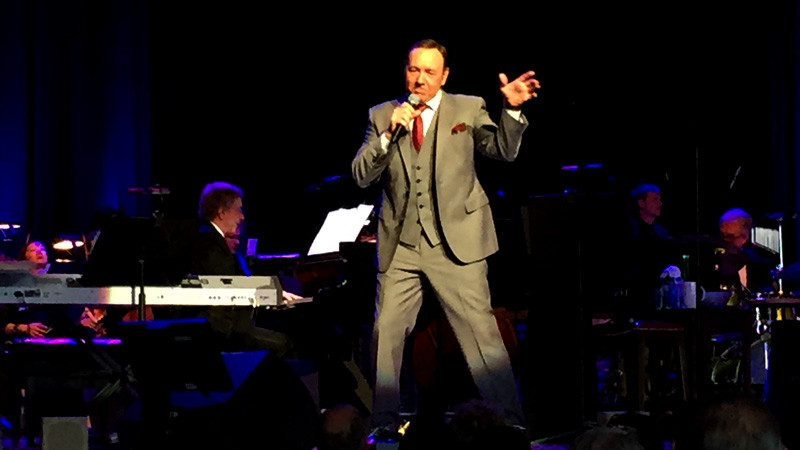
"caption": "Kevin Spacey sings at the Green Music Center, July 18, 2015. (Photo: Gabe Meline/KQED)",
"description": "Kevin Spacey sings at the Green Music Center, July 18, 2015. (Photo: Gabe Meline/KQED)",
"title": "KevinSpaceyMAIN",
"credit": null,
"status": "inherit",
"isLoading": false,
"fetchFailed": false
},
"arts_10841938": {
"type": "attachments",
"id": "arts_10841938",
"meta": {
"index": "attachments_1716263798",
"site": "arts",
"id": "10841938",
"found": true
},
"parent": 10840294,
"imgSizes": {
"twentyfourteen-full-width": {
"file": "https://ww2.kqed.org/app/uploads/sites/2/2015/07/VetCover-1038x576.jpg",
"width": 1038,
"mimeType": "image/jpeg",
"height": 576
},
"thumbnail": {
"file": "https://ww2.kqed.org/app/uploads/sites/2/2015/07/VetCover-400x225.jpg",
"width": 400,
"mimeType": "image/jpeg",
"height": 225
},
"fd-sm": {
"file": "https://ww2.kqed.org/app/uploads/sites/2/2015/07/VetCover-960x540.jpg",
"width": 960,
"mimeType": "image/jpeg",
"height": 540
},
"post-thumbnail": {
"file": "https://ww2.kqed.org/app/uploads/sites/2/2015/07/VetCover-672x372.jpg",
"width": 672,
"mimeType": "image/jpeg",
"height": 372
},
"kqedFullSize": {
"file": "https://ww2.kqed.org/app/uploads/sites/2/2015/07/VetCover.jpg",
"width": 1920,
"height": 1080
},
"large": {
"file": "https://ww2.kqed.org/app/uploads/sites/2/2015/07/VetCover-1180x664.jpg",
"width": 1180,
"mimeType": "image/jpeg",
"height": 664
},
"guest-author-96": {
"file": "https://ww2.kqed.org/app/uploads/sites/2/2015/07/VetCover-96x96.jpg",
"width": 96,
"mimeType": "image/jpeg",
"height": 96
},
"medium": {
"file": "https://ww2.kqed.org/app/uploads/sites/2/2015/07/VetCover-800x450.jpg",
"width": 800,
"mimeType": "image/jpeg",
"height": 450
},
"guest-author-64": {
"file": "https://ww2.kqed.org/app/uploads/sites/2/2015/07/VetCover-64x64.jpg",
"width": 64,
"mimeType": "image/jpeg",
"height": 64
},
"guest-author-32": {
"file": "https://ww2.kqed.org/app/uploads/sites/2/2015/07/VetCover-32x32.jpg",
"width": 32,
"mimeType": "image/jpeg",
"height": 32
},
"fd-lrg": {
"file": "https://ww2.kqed.org/app/uploads/sites/2/2015/07/VetCover-1400x788.jpg",
"width": 1400,
"mimeType": "image/jpeg",
"height": 788
},
"fd-med": {
"file": "https://ww2.kqed.org/app/uploads/sites/2/2015/07/VetCover-1180x664.jpg",
"width": 1180,
"mimeType": "image/jpeg",
"height": 664
},
"detail": {
"file": "https://ww2.kqed.org/app/uploads/sites/2/2015/07/VetCover-75x75.jpg",
"width": 75,
"mimeType": "image/jpeg",
"height": 75
},
"guest-author-128": {
"file": "https://ww2.kqed.org/app/uploads/sites/2/2015/07/VetCover-128x128.jpg",
"width": 128,
"mimeType": "image/jpeg",
"height": 128
}
},
"publishDate": 1437068448,
"modified": 1437068463,
"caption": "Inside the War Memorial Veterans Building as it undergoes renovations. (Photo: Chloe Veltman/KQED)",
"description": null,
"title": "VetCover",
"credit": null,
"status": "inherit",
"isLoading": false,
"fetchFailed": false
},
"arts_10838480": {
"type": "attachments",
"id": "arts_10838480",
"meta": {
"index": "attachments_1716263798",
"site": "arts",
"id": "10838480",
"found": true
},
"parent": 10838399,
"imgSizes": {
"twentyfourteen-full-width": {
"file": "https://ww2.kqed.org/app/uploads/sites/2/2015/07/Chrome-new-promo2-e1436987359345-1038x576.jpg",
"width": 1038,
"mimeType": "image/jpeg",
"height": 576
},
"thumbnail": {
"file": "https://ww2.kqed.org/app/uploads/sites/2/2015/07/Chrome-new-promo2-e1436987359345-400x228.jpg",
"width": 400,
"mimeType": "image/jpeg",
"height": 228
},
"fd-sm": {
"file": "https://ww2.kqed.org/app/uploads/sites/2/2015/07/Chrome-new-promo2-e1436987359345-960x547.jpg",
"width": 960,
"mimeType": "image/jpeg",
"height": 547
},
"post-thumbnail": {
"file": "https://ww2.kqed.org/app/uploads/sites/2/2015/07/Chrome-new-promo2-e1436987359345-672x372.jpg",
"width": 672,
"mimeType": "image/jpeg",
"height": 372
},
"kqedFullSize": {
"file": "https://ww2.kqed.org/app/uploads/sites/2/2015/07/Chrome-new-promo2-e1436987359345.jpg",
"width": 3861,
"height": 2198
},
"large": {
"file": "https://ww2.kqed.org/app/uploads/sites/2/2015/07/Chrome-new-promo2-e1436987359345-1180x672.jpg",
"width": 1180,
"mimeType": "image/jpeg",
"height": 672
},
"guest-author-96": {
"file": "https://ww2.kqed.org/app/uploads/sites/2/2015/07/Chrome-new-promo2-e1436987359345-96x96.jpg",
"width": 96,
"mimeType": "image/jpeg",
"height": 96
},
"medium": {
"file": "https://ww2.kqed.org/app/uploads/sites/2/2015/07/Chrome-new-promo2-e1436987359345-800x455.jpg",
"width": 800,
"mimeType": "image/jpeg",
"height": 455
},
"guest-author-64": {
"file": "https://ww2.kqed.org/app/uploads/sites/2/2015/07/Chrome-new-promo2-e1436987359345-64x64.jpg",
"width": 64,
"mimeType": "image/jpeg",
"height": 64
},
"guest-author-32": {
"file": "https://ww2.kqed.org/app/uploads/sites/2/2015/07/Chrome-new-promo2-e1436987359345-32x32.jpg",
"width": 32,
"mimeType": "image/jpeg",
"height": 32
},
"fd-med": {
"file": "https://ww2.kqed.org/app/uploads/sites/2/2015/07/Chrome-new-promo2-e1436987359345-1180x672.jpg",
"width": 1180,
"mimeType": "image/jpeg",
"height": 672
},
"detail": {
"file": "https://ww2.kqed.org/app/uploads/sites/2/2015/07/Chrome-new-promo2-e1436987359345-75x75.jpg",
"width": 75,
"mimeType": "image/jpeg",
"height": 75
},
"guest-author-128": {
"file": "https://ww2.kqed.org/app/uploads/sites/2/2015/07/Chrome-new-promo2-e1436987359345-128x128.jpg",
"width": 128,
"mimeType": "image/jpeg",
"height": 128
}
},
"publishDate": 1436920569,
"modified": 1436987317,
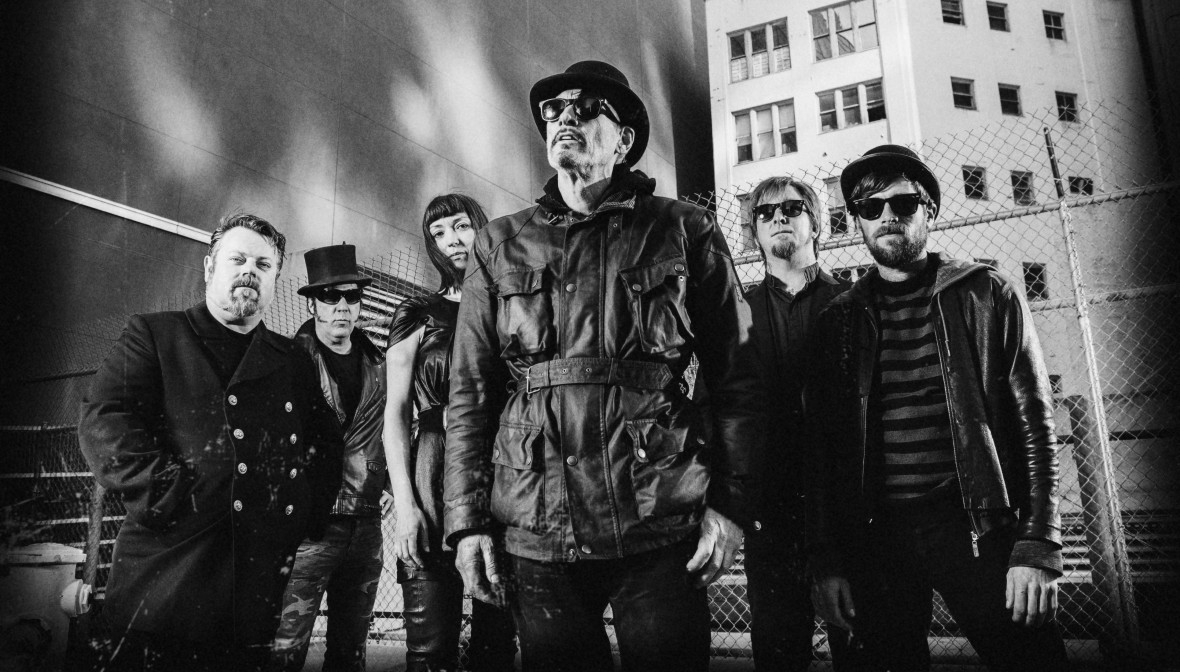
"caption": "Chrome in 2013, Helios Creed center. (Photo by Jeremy Harris/\u003ca href=\"http://www.jeremyharris.com/\" target=\"_blank\">Jeremyharris.com\u003c/a>)",
"description": "Chrome today, Helios Creed center. (Photo by Jeremy Harris/\u003ca href=\"http://www.jeremyharris.com/\" target=\"_blank\">Jeremyharris.com\u003c/a>)",
"title": "Chrome new promo2",
"credit": null,
"status": "inherit",
"isLoading": false,
"fetchFailed": false
},
"arts_10838486": {
"type": "attachments",
"id": "arts_10838486",
"meta": {
"index": "attachments_1716263798",
"site": "arts",
"id": "10838486",
"found": true
},
"parent": 10838400,
"imgSizes": {
"twentyfourteen-full-width": {
"file": "https://cdn.kqed.org/wp-content/uploads/sites/2/2015/07/PBCassetteWall-1038x576.jpg",
"width": 1038,
"mimeType": "image/jpeg",
"height": 576
},
"thumbnail": {
"file": "https://cdn.kqed.org/wp-content/uploads/sites/2/2015/07/PBCassetteWall-400x225.jpg",
"width": 400,
"mimeType": "image/jpeg",
"height": 225
},
"fd-sm": {
"file": "https://cdn.kqed.org/wp-content/uploads/sites/2/2015/07/PBCassetteWall-960x540.jpg",
"width": 960,
"mimeType": "image/jpeg",
"height": 540
},
"post-thumbnail": {
"file": "https://cdn.kqed.org/wp-content/uploads/sites/2/2015/07/PBCassetteWall-672x372.jpg",
"width": 672,
"mimeType": "image/jpeg",
"height": 372
},
"kqedFullSize": {
"file": "https://cdn.kqed.org/wp-content/uploads/sites/2/2015/07/PBCassetteWall.jpg",
"width": 1100,
"height": 619
},
"guest-author-96": {
"file": "https://cdn.kqed.org/wp-content/uploads/sites/2/2015/07/PBCassetteWall-96x96.jpg",
"width": 96,
"mimeType": "image/jpeg",
"height": 96
},
"medium": {
"file": "https://cdn.kqed.org/wp-content/uploads/sites/2/2015/07/PBCassetteWall-800x450.jpg",
"width": 800,
"mimeType": "image/jpeg",
"height": 450
},
"guest-author-64": {
"file": "https://cdn.kqed.org/wp-content/uploads/sites/2/2015/07/PBCassetteWall-64x64.jpg",
"width": 64,
"mimeType": "image/jpeg",
"height": 64
},
"detail": {
"file": "https://cdn.kqed.org/wp-content/uploads/sites/2/2015/07/PBCassetteWall-75x75.jpg",
"width": 75,
"mimeType": "image/jpeg",
"height": 75
},
"guest-author-32": {
"file": "https://cdn.kqed.org/wp-content/uploads/sites/2/2015/07/PBCassetteWall-32x32.jpg",
"width": 32,
"mimeType": "image/jpeg",
"height": 32
},
"guest-author-128": {
"file": "https://cdn.kqed.org/wp-content/uploads/sites/2/2015/07/PBCassetteWall-128x128.jpg",
"width": 128,
"mimeType": "image/jpeg",
"height": 128
}
},
"publishDate": 1436921111,
"modified": 1715713457,
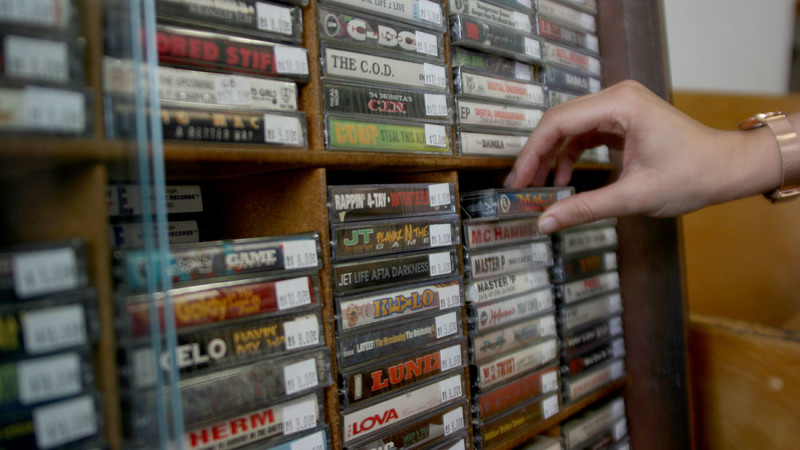
"caption": "CDs and vinyl round out Park Blvd. Records & Tapes in Oakland, but its cassette wall is its heart and soul. ",
"description": "CDs and vinyl round out Park Blvd. Records & Tapes in Oakland, but its cassette wall is its heart and soul. ",
"title": "PBCassetteWall",
"credit": "Gabe Meline/KQED",
"status": "inherit",
"altTag": "CDs and vinyl round out Park Blvd. Records & Tapes in Oakland, but its cassette wall is its heart and soul.",
"isLoading": false,
"fetchFailed": false
},
"arts_10836389": {
"type": "attachments",
"id": "arts_10836389",
"meta": {
"index": "attachments_1716263798",
"site": "arts",
"id": "10836389",
"found": true
},
"parent": 10836367,
"imgSizes": {
"twentyfourteen-full-width": {
"file": "https://ww2.kqed.org/app/uploads/sites/2/2015/07/IMG_458075422-1038x576.jpg",
"width": 1038,
"mimeType": "image/jpeg",
"height": 576
},
"thumbnail": {
"file": "https://ww2.kqed.org/app/uploads/sites/2/2015/07/IMG_458075422-400x247.jpg",
"width": 400,
"mimeType": "image/jpeg",
"height": 247
},
"fd-sm": {
"file": "https://ww2.kqed.org/app/uploads/sites/2/2015/07/IMG_458075422-960x594.jpg",
"width": 960,
"mimeType": "image/jpeg",
"height": 594
},
"post-thumbnail": {
"file": "https://ww2.kqed.org/app/uploads/sites/2/2015/07/IMG_458075422-672x372.jpg",
"width": 672,
"mimeType": "image/jpeg",
"height": 372
},
"kqedFullSize": {
"file": "https://ww2.kqed.org/app/uploads/sites/2/2015/07/IMG_458075422-e1437002189790.jpg",
"width": 2335,
"height": 1444
},
"large": {
"file": "https://ww2.kqed.org/app/uploads/sites/2/2015/07/IMG_458075422-1180x730.jpg",
"width": 1180,
"mimeType": "image/jpeg",
"height": 730
},
"guest-author-96": {
"file": "https://ww2.kqed.org/app/uploads/sites/2/2015/07/IMG_458075422-96x96.jpg",
"width": 96,
"mimeType": "image/jpeg",
"height": 96
},
"medium": {
"file": "https://ww2.kqed.org/app/uploads/sites/2/2015/07/IMG_458075422-800x495.jpg",
"width": 800,
"mimeType": "image/jpeg",
"height": 495
},
"guest-author-64": {
"file": "https://ww2.kqed.org/app/uploads/sites/2/2015/07/IMG_458075422-64x64.jpg",
"width": 64,
"mimeType": "image/jpeg",
"height": 64
},
"guest-author-32": {
"file": "https://ww2.kqed.org/app/uploads/sites/2/2015/07/IMG_458075422-32x32.jpg",
"width": 32,
"mimeType": "image/jpeg",
"height": 32
},
"fd-med": {
"file": "https://ww2.kqed.org/app/uploads/sites/2/2015/07/IMG_458075422-1180x730.jpg",
"width": 1180,
"mimeType": "image/jpeg",
"height": 730
},
"detail": {
"file": "https://ww2.kqed.org/app/uploads/sites/2/2015/07/IMG_458075422-75x75.jpg",
"width": 75,
"mimeType": "image/jpeg",
"height": 75
},
"guest-author-128": {
"file": "https://ww2.kqed.org/app/uploads/sites/2/2015/07/IMG_458075422-128x128.jpg",
"width": 128,
"mimeType": "image/jpeg",
"height": 128
}
},
"publishDate": 1436828003,
"modified": 1436828139,
"caption": "One of the pianos in \"Flower Piano,\" an \ninstallation at the San Francisco Botanical Gardens ",
"description": null,
"title": "IMG_458075422",
"credit": "Cy Musiker",
"status": "inherit",
"isLoading": false,
"fetchFailed": false
},
"arts_10836307": {
"type": "attachments",
"id": "arts_10836307",
"meta": {
"index": "attachments_1716263798",
"site": "arts",
"id": "10836307",
"found": true
},
"parent": 10836060,
"imgSizes": {
"twentyfourteen-full-width": {
"file": "https://ww2.kqed.org/app/uploads/sites/2/2015/07/Harry1-1038x576.jpg",
"width": 1038,
"mimeType": "image/jpeg",
"height": 576
},
"thumbnail": {
"file": "https://ww2.kqed.org/app/uploads/sites/2/2015/07/Harry1-400x225.jpg",
"width": 400,
"mimeType": "image/jpeg",
"height": 225
},
"fd-sm": {
"file": "https://ww2.kqed.org/app/uploads/sites/2/2015/07/Harry1-960x540.jpg",
"width": 960,
"mimeType": "image/jpeg",
"height": 540
},
"post-thumbnail": {
"file": "https://ww2.kqed.org/app/uploads/sites/2/2015/07/Harry1-672x372.jpg",
"width": 672,
"mimeType": "image/jpeg",
"height": 372
},
"kqedFullSize": {
"file": "https://ww2.kqed.org/app/uploads/sites/2/2015/07/Harry1.jpg",
"width": 1400,
"height": 788
},
"large": {
"file": "https://ww2.kqed.org/app/uploads/sites/2/2015/07/Harry1-1180x664.jpg",
"width": 1180,
"mimeType": "image/jpeg",
"height": 664
},
"guest-author-96": {
"file": "https://ww2.kqed.org/app/uploads/sites/2/2015/07/Harry1-96x96.jpg",
"width": 96,
"mimeType": "image/jpeg",
"height": 96
},
"medium": {
"file": "https://ww2.kqed.org/app/uploads/sites/2/2015/07/Harry1-800x450.jpg",
"width": 800,
"mimeType": "image/jpeg",
"height": 450
},
"guest-author-64": {
"file": "https://ww2.kqed.org/app/uploads/sites/2/2015/07/Harry1-64x64.jpg",
"width": 64,
"mimeType": "image/jpeg",
"height": 64
},
"guest-author-32": {
"file": "https://ww2.kqed.org/app/uploads/sites/2/2015/07/Harry1-32x32.jpg",
"width": 32,
"mimeType": "image/jpeg",
"height": 32
},
"fd-med": {
"file": "https://ww2.kqed.org/app/uploads/sites/2/2015/07/Harry1-1180x664.jpg",
"width": 1180,
"mimeType": "image/jpeg",
"height": 664
},
"detail": {
"file": "https://ww2.kqed.org/app/uploads/sites/2/2015/07/Harry1-75x75.jpg",
"width": 75,
"mimeType": "image/jpeg",
"height": 75
},
"guest-author-128": {
"file": "https://ww2.kqed.org/app/uploads/sites/2/2015/07/Harry1-128x128.jpg",
"width": 128,
"mimeType": "image/jpeg",
"height": 128
}
},
"publishDate": 1436822134,
"modified": 1436822178,
"caption": "Harry Connick, Jr. performs at the Wells Fargo Center in Santa Rosa, July 13, 2015. (Photo: Gabe Meline/KQED)",
"description": "Harry Connick, Jr. performs at the Wells Fargo Center in Santa Rosa, July 13, 2015. ",
"title": "Harry1",
"credit": null,
"status": "inherit",
"isLoading": false,
"fetchFailed": false
},
"arts_10835864": {
"type": "attachments",
"id": "arts_10835864",
"meta": {
"index": "attachments_1716263798",
"site": "arts",
"id": "10835864",
"found": true
},
"parent": 10834160,
"imgSizes": {
"twentyfourteen-full-width": {
"file": "https://ww2.kqed.org/app/uploads/sites/2/2015/07/MetalMAIN-1038x576.jpg",
"width": 1038,
"mimeType": "image/jpeg",
"height": 576
},
"thumbnail": {
"file": "https://ww2.kqed.org/app/uploads/sites/2/2015/07/MetalMAIN-400x225.jpg",
"width": 400,
"mimeType": "image/jpeg",
"height": 225
},
"fd-sm": {
"file": "https://ww2.kqed.org/app/uploads/sites/2/2015/07/MetalMAIN-960x540.jpg",
"width": 960,
"mimeType": "image/jpeg",
"height": 540
},
"post-thumbnail": {
"file": "https://ww2.kqed.org/app/uploads/sites/2/2015/07/MetalMAIN-672x372.jpg",
"width": 672,
"mimeType": "image/jpeg",
"height": 372
},
"kqedFullSize": {
"file": "https://ww2.kqed.org/app/uploads/sites/2/2015/07/MetalMAIN.jpg",
"width": 1119,
"height": 629
},
"guest-author-96": {
"file": "https://ww2.kqed.org/app/uploads/sites/2/2015/07/MetalMAIN-96x96.jpg",
"width": 96,
"mimeType": "image/jpeg",
"height": 96
},
"medium": {
"file": "https://ww2.kqed.org/app/uploads/sites/2/2015/07/MetalMAIN-800x450.jpg",
"width": 800,
"mimeType": "image/jpeg",
"height": 450
},
"guest-author-64": {
"file": "https://ww2.kqed.org/app/uploads/sites/2/2015/07/MetalMAIN-64x64.jpg",
"width": 64,
"mimeType": "image/jpeg",
"height": 64
},
"detail": {
"file": "https://ww2.kqed.org/app/uploads/sites/2/2015/07/MetalMAIN-75x75.jpg",
"width": 75,
"mimeType": "image/jpeg",
"height": 75
},
"guest-author-32": {
"file": "https://ww2.kqed.org/app/uploads/sites/2/2015/07/MetalMAIN-32x32.jpg",
"width": 32,
"mimeType": "image/jpeg",
"height": 32
},
"guest-author-128": {
"file": "https://ww2.kqed.org/app/uploads/sites/2/2015/07/MetalMAIN-128x128.jpg",
"width": 128,
"mimeType": "image/jpeg",
"height": 128
}
},
"publishDate": 1436800849,
"modified": 1458859637,
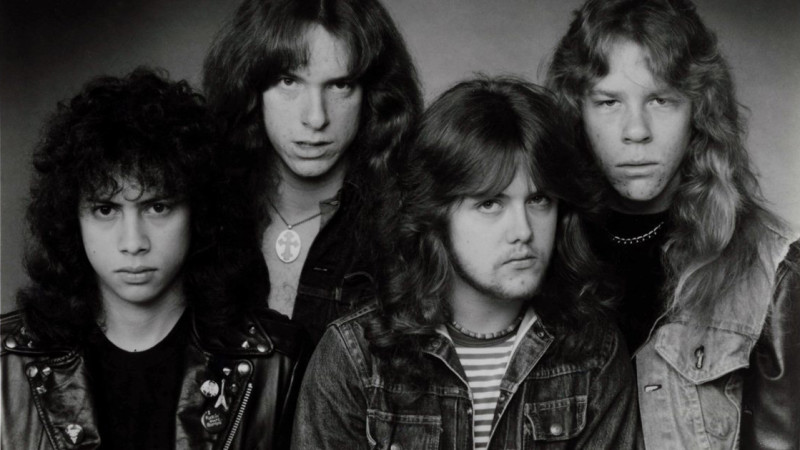
"caption": "Metallica in 1983, in a press photo for 'Kill 'em All.' ",
"description": "Metallica in 1983, in a press photo for 'Kill 'em All.'",
"title": "MetalMAIN",
"credit": "Photo: Courtesy of Megaforce Records",
"status": "inherit",
"isLoading": false,
"fetchFailed": false
},
"pop_17092": {
"type": "attachments",
"id": "pop_17092",
"meta": {
"index": "attachments_1716263798",
"site": "pop",
"id": "17092",
"found": true
},
"parent": 17023,
"imgSizes": {
"thumbnail": {
"file": "https://ww2.kqed.org/app/uploads/sites/12/2015/07/jidenna-400x225.jpg",
"width": 400,
"mimeType": "image/jpeg",
"height": 225
},
"post-thumbnail": {
"file": "https://ww2.kqed.org/app/uploads/sites/12/2015/07/jidenna-672x372.jpg",
"width": 672,
"mimeType": "image/jpeg",
"height": 372
},
"kqedFullSize": {
"file": "https://ww2.kqed.org/app/uploads/sites/12/2015/07/jidenna.jpg",
"width": 800,
"height": 450
},
"guest-author-96": {
"file": "https://ww2.kqed.org/app/uploads/sites/12/2015/07/jidenna-96x96.jpg",
"width": 96,
"mimeType": "image/jpeg",
"height": 96
},
"medium": {
"file": "https://ww2.kqed.org/app/uploads/sites/12/2015/07/jidenna-800x450.jpg",
"width": 800,
"mimeType": "image/jpeg",
"height": 450
},
"guest-author-64": {
"file": "https://ww2.kqed.org/app/uploads/sites/12/2015/07/jidenna-64x64.jpg",
"width": 64,
"mimeType": "image/jpeg",
"height": 64
},
"detail": {
"file": "https://ww2.kqed.org/app/uploads/sites/12/2015/07/jidenna-75x75.jpg",
"width": 75,
"mimeType": "image/jpeg",
"height": 75
},
"guest-author-32": {
"file": "https://ww2.kqed.org/app/uploads/sites/12/2015/07/jidenna-32x32.jpg",
"width": 32,
"mimeType": "image/jpeg",
"height": 32
},
"guest-author-128": {
"file": "https://ww2.kqed.org/app/uploads/sites/12/2015/07/jidenna-128x128.jpg",
"width": 128,
"mimeType": "image/jpeg",
"height": 128
}
},
"publishDate": 1436569990,
"modified": 1436571379,
"caption": "Classic Jidenna. (Photo: Sony)",
"description": null,
"title": "jidenna",
"credit": null,
"status": "inherit",
"isLoading": false,
"fetchFailed": false
},
"arts_10833146": {
"type": "attachments",
"id": "arts_10833146",
"meta": {
"index": "attachments_1716263798",
"site": "arts",
"id": "10833146",
"found": true
},
"parent": 10833145,
"imgSizes": {
"twentyfourteen-full-width": {
"file": "https://ww2.kqed.org/app/uploads/sites/2/2015/07/money_wide-e3b3efa9c39a01b9363b3d9259319ff613917298-1038x576.jpg",
"width": 1038,
"mimeType": "image/jpeg",
"height": 576
},
"thumbnail": {
"file": "https://ww2.kqed.org/app/uploads/sites/2/2015/07/money_wide-e3b3efa9c39a01b9363b3d9259319ff613917298-400x225.jpg",
"width": 400,
"mimeType": "image/jpeg",
"height": 225
},
"fd-sm": {
"file": "https://ww2.kqed.org/app/uploads/sites/2/2015/07/money_wide-e3b3efa9c39a01b9363b3d9259319ff613917298-960x540.jpg",
"width": 960,
"mimeType": "image/jpeg",
"height": 540
},
"post-thumbnail": {
"file": "https://ww2.kqed.org/app/uploads/sites/2/2015/07/money_wide-e3b3efa9c39a01b9363b3d9259319ff613917298-672x372.jpg",
"width": 672,
"mimeType": "image/jpeg",
"height": 372
},
"kqedFullSize": {
"file": "https://ww2.kqed.org/app/uploads/sites/2/2015/07/money_wide-e3b3efa9c39a01b9363b3d9259319ff613917298.jpg",
"width": 1272,
"height": 715
},
"large": {
"file": "https://ww2.kqed.org/app/uploads/sites/2/2015/07/money_wide-e3b3efa9c39a01b9363b3d9259319ff613917298-1180x663.jpg",
"width": 1180,
"mimeType": "image/jpeg",
"height": 663
},
"guest-author-96": {
"file": "https://ww2.kqed.org/app/uploads/sites/2/2015/07/money_wide-e3b3efa9c39a01b9363b3d9259319ff613917298-96x96.jpg",
"width": 96,
"mimeType": "image/jpeg",
"height": 96
},
"medium": {
"file": "https://ww2.kqed.org/app/uploads/sites/2/2015/07/money_wide-e3b3efa9c39a01b9363b3d9259319ff613917298-800x450.jpg",
"width": 800,
"mimeType": "image/jpeg",
"height": 450
},
"guest-author-64": {
"file": "https://ww2.kqed.org/app/uploads/sites/2/2015/07/money_wide-e3b3efa9c39a01b9363b3d9259319ff613917298-64x64.jpg",
"width": 64,
"mimeType": "image/jpeg",
"height": 64
},
"guest-author-32": {
"file": "https://ww2.kqed.org/app/uploads/sites/2/2015/07/money_wide-e3b3efa9c39a01b9363b3d9259319ff613917298-32x32.jpg",
"width": 32,
"mimeType": "image/jpeg",
"height": 32
},
"fd-med": {
"file": "https://ww2.kqed.org/app/uploads/sites/2/2015/07/money_wide-e3b3efa9c39a01b9363b3d9259319ff613917298-1180x663.jpg",
"width": 1180,
"mimeType": "image/jpeg",
"height": 663
},
"detail": {
"file": "https://ww2.kqed.org/app/uploads/sites/2/2015/07/money_wide-e3b3efa9c39a01b9363b3d9259319ff613917298-75x75.jpg",
"width": 75,
"mimeType": "image/jpeg",
"height": 75
},
"guest-author-128": {
"file": "https://ww2.kqed.org/app/uploads/sites/2/2015/07/money_wide-e3b3efa9c39a01b9363b3d9259319ff613917298-128x128.jpg",
"width": 128,
"mimeType": "image/jpeg",
"height": 128
}
},
"publishDate": 1436680445,
"modified": 1436680445,
"caption": null,
"description": "M'Lady's Records, a label based in Portland, Ore., has begun discounting sales to women to protest the gender-based wage gap.",
"title": "M'Lady's Records, a label based in Portland, Ore., has begun discounting sales to women to protest the gender-based wage gap.",
"credit": null,
"status": "inherit",
"isLoading": false,
"fetchFailed": false
},
"arts_10826956": {
"type": "attachments",
"id": "arts_10826956",
"meta": {
"index": "attachments_1716263798",
"site": "arts",
"id": "10826956",
"found": true
},
"parent": 10826871,
"imgSizes": {
"twentyfourteen-full-width": {
"file": "https://ww2.kqed.org/app/uploads/sites/2/2015/07/IMG_444002535-1-e1436635050261-1038x576.jpg",
"width": 1038,
"mimeType": "image/jpeg",
"height": 576
},
"thumbnail": {
"file": "https://ww2.kqed.org/app/uploads/sites/2/2015/07/IMG_444002535-1-e1436635050261-400x225.jpg",
"width": 400,
"mimeType": "image/jpeg",
"height": 225
},
"fd-sm": {
"file": "https://ww2.kqed.org/app/uploads/sites/2/2015/07/IMG_444002535-1-e1436635050261-960x541.jpg",
"width": 960,
"mimeType": "image/jpeg",
"height": 541
},
"post-thumbnail": {
"file": "https://ww2.kqed.org/app/uploads/sites/2/2015/07/IMG_444002535-1-e1436635050261-672x372.jpg",
"width": 672,
"mimeType": "image/jpeg",
"height": 372
},
"kqedFullSize": {
"file": "https://ww2.kqed.org/app/uploads/sites/2/2015/07/IMG_444002535-1-e1436635066581.jpg",
"width": 800,
"height": 451
},
"large": {
"file": "https://ww2.kqed.org/app/uploads/sites/2/2015/07/IMG_444002535-1-e1436635050261-1180x665.jpg",
"width": 1180,
"mimeType": "image/jpeg",
"height": 665
},
"guest-author-96": {
"file": "https://ww2.kqed.org/app/uploads/sites/2/2015/07/IMG_444002535-1-e1436635050261-96x96.jpg",
"width": 96,
"mimeType": "image/jpeg",
"height": 96
},
"medium": {
"file": "https://ww2.kqed.org/app/uploads/sites/2/2015/07/IMG_444002535-1-e1436635050261-800x451.jpg",
"width": 800,
"mimeType": "image/jpeg",
"height": 451
},
"guest-author-64": {
"file": "https://ww2.kqed.org/app/uploads/sites/2/2015/07/IMG_444002535-1-e1436635050261-64x64.jpg",
"width": 64,
"mimeType": "image/jpeg",
"height": 64
},
"guest-author-32": {
"file": "https://ww2.kqed.org/app/uploads/sites/2/2015/07/IMG_444002535-1-e1436635050261-32x32.jpg",
"width": 32,
"mimeType": "image/jpeg",
"height": 32
},
"fd-med": {
"file": "https://ww2.kqed.org/app/uploads/sites/2/2015/07/IMG_444002535-1-e1436635050261-1180x665.jpg",
"width": 1180,
"mimeType": "image/jpeg",
"height": 665
},
"detail": {
"file": "https://ww2.kqed.org/app/uploads/sites/2/2015/07/IMG_444002535-1-e1436635050261-75x75.jpg",
"width": 75,
"mimeType": "image/jpeg",
"height": 75
},
"guest-author-128": {
"file": "https://ww2.kqed.org/app/uploads/sites/2/2015/07/IMG_444002535-1-e1436635050261-128x128.jpg",
"width": 128,
"mimeType": "image/jpeg",
"height": 128
}
},
"publishDate": 1436398728,
"modified": 1436635077,
"caption": "Tim Minchin trying to look as tough as Matilda",
"description": "Tim Minchin trying to look as tough as Matilda",
"title": "IMG_444002535-1",
"credit": "Cy Musiker",
"status": "inherit",
"isLoading": false,
"fetchFailed": false
},
"arts_10828546": {
"type": "attachments",
"id": "arts_10828546",
"meta": {
"index": "attachments_1716263798",
"site": "arts",
"id": "10828546",
"found": true
},
"parent": 10828545,
"imgSizes": {
"twentyfourteen-full-width": {
"file": "https://ww2.kqed.org/app/uploads/sites/2/2015/07/08050009_wide-57ef4f02e81211d3807ab2aab02a59d1446faa3e-1038x576.jpg",
"width": 1038,
"mimeType": "image/jpeg",
"height": 576
},
"thumbnail": {
"file": "https://ww2.kqed.org/app/uploads/sites/2/2015/07/08050009_wide-57ef4f02e81211d3807ab2aab02a59d1446faa3e-400x225.jpg",
"width": 400,
"mimeType": "image/jpeg",
"height": 225
},
"fd-sm": {
"file": "https://ww2.kqed.org/app/uploads/sites/2/2015/07/08050009_wide-57ef4f02e81211d3807ab2aab02a59d1446faa3e-960x540.jpg",
"width": 960,
"mimeType": "image/jpeg",
"height": 540
},
"post-thumbnail": {
"file": "https://ww2.kqed.org/app/uploads/sites/2/2015/07/08050009_wide-57ef4f02e81211d3807ab2aab02a59d1446faa3e-672x372.jpg",
"width": 672,
"mimeType": "image/jpeg",
"height": 372
},
"kqedFullSize": {
"file": "https://ww2.kqed.org/app/uploads/sites/2/2015/07/08050009_wide-57ef4f02e81211d3807ab2aab02a59d1446faa3e.jpg",
"width": 2079,
"height": 1170
},
"large": {
"file": "https://ww2.kqed.org/app/uploads/sites/2/2015/07/08050009_wide-57ef4f02e81211d3807ab2aab02a59d1446faa3e-1180x664.jpg",
"width": 1180,
"mimeType": "image/jpeg",
"height": 664
},
"guest-author-96": {
"file": "https://ww2.kqed.org/app/uploads/sites/2/2015/07/08050009_wide-57ef4f02e81211d3807ab2aab02a59d1446faa3e-96x96.jpg",
"width": 96,
"mimeType": "image/jpeg",
"height": 96
},
"medium": {
"file": "https://ww2.kqed.org/app/uploads/sites/2/2015/07/08050009_wide-57ef4f02e81211d3807ab2aab02a59d1446faa3e-800x450.jpg",
"width": 800,
"mimeType": "image/jpeg",
"height": 450
},
"guest-author-64": {
"file": "https://ww2.kqed.org/app/uploads/sites/2/2015/07/08050009_wide-57ef4f02e81211d3807ab2aab02a59d1446faa3e-64x64.jpg",
"width": 64,
"mimeType": "image/jpeg",
"height": 64
},
"guest-author-32": {
"file": "https://ww2.kqed.org/app/uploads/sites/2/2015/07/08050009_wide-57ef4f02e81211d3807ab2aab02a59d1446faa3e-32x32.jpg",
"width": 32,
"mimeType": "image/jpeg",
"height": 32
},
"fd-med": {
"file": "https://ww2.kqed.org/app/uploads/sites/2/2015/07/08050009_wide-57ef4f02e81211d3807ab2aab02a59d1446faa3e-1180x664.jpg",
"width": 1180,
"mimeType": "image/jpeg",
"height": 664
},
"detail": {
"file": "https://ww2.kqed.org/app/uploads/sites/2/2015/07/08050009_wide-57ef4f02e81211d3807ab2aab02a59d1446faa3e-75x75.jpg",
"width": 75,
"mimeType": "image/jpeg",
"height": 75
},
"guest-author-128": {
"file": "https://ww2.kqed.org/app/uploads/sites/2/2015/07/08050009_wide-57ef4f02e81211d3807ab2aab02a59d1446faa3e-128x128.jpg",
"width": 128,
"mimeType": "image/jpeg",
"height": 128
}
},
"publishDate": 1436471688,
"modified": 1436471688,
"caption": null,
"description": "Makeunder's Hamilton Ulmer",
"title": "Makeunder's Hamilton Ulmer",
"credit": null,
"status": "inherit",
"isLoading": false,
"fetchFailed": false
},
"arts_10828544": {
"type": "attachments",
"id": "arts_10828544",
"meta": {
"index": "attachments_1716263798",
"site": "arts",
"id": "10828544",
"found": true
},
"parent": 10820528,
"imgSizes": {
"twentyfourteen-full-width": {
"file": "https://ww2.kqed.org/app/uploads/sites/2/2015/07/Makeunder.ClayLancaster-1038x576.jpg",
"width": 1038,
"mimeType": "image/jpeg",
"height": 576
},
"thumbnail": {
"file": "https://ww2.kqed.org/app/uploads/sites/2/2015/07/Makeunder.ClayLancaster-400x240.jpg",
"width": 400,
"mimeType": "image/jpeg",
"height": 240
},
"fd-sm": {
"file": "https://ww2.kqed.org/app/uploads/sites/2/2015/07/Makeunder.ClayLancaster-960x576.jpg",
"width": 960,
"mimeType": "image/jpeg",
"height": 576
},
"post-thumbnail": {
"file": "https://ww2.kqed.org/app/uploads/sites/2/2015/07/Makeunder.ClayLancaster-672x372.jpg",
"width": 672,
"mimeType": "image/jpeg",
"height": 372
},
"kqedFullSize": {
"file": "https://ww2.kqed.org/app/uploads/sites/2/2015/07/Makeunder.ClayLancaster.jpg",
"width": 1100,
"height": 660
},
"guest-author-96": {
"file": "https://ww2.kqed.org/app/uploads/sites/2/2015/07/Makeunder.ClayLancaster-96x96.jpg",
"width": 96,
"mimeType": "image/jpeg",
"height": 96
},
"medium": {
"file": "https://ww2.kqed.org/app/uploads/sites/2/2015/07/Makeunder.ClayLancaster-800x480.jpg",
"width": 800,
"mimeType": "image/jpeg",
"height": 480
},
"guest-author-64": {
"file": "https://ww2.kqed.org/app/uploads/sites/2/2015/07/Makeunder.ClayLancaster-64x64.jpg",
"width": 64,
"mimeType": "image/jpeg",
"height": 64
},
"detail": {
"file": "https://ww2.kqed.org/app/uploads/sites/2/2015/07/Makeunder.ClayLancaster-75x75.jpg",
"width": 75,
"mimeType": "image/jpeg",
"height": 75
},
"guest-author-32": {
"file": "https://ww2.kqed.org/app/uploads/sites/2/2015/07/Makeunder.ClayLancaster-32x32.jpg",
"width": 32,
"mimeType": "image/jpeg",
"height": 32
},
"guest-author-128": {
"file": "https://ww2.kqed.org/app/uploads/sites/2/2015/07/Makeunder.ClayLancaster-128x128.jpg",
"width": 128,
"mimeType": "image/jpeg",
"height": 128
}
},
"publishDate": 1436471224,
"modified": 1436471535,
"caption": "Makeunder, with Hamilton Ulmer (center, seated), release their new EP on July 17. (Photo: Clay Lancaster)",
"description": "Makeunder, with Hamilton Ulmer (center, seated), release their new EP on July 17. (Photo: Clay Lancaster)",
"title": "Makeunder.ClayLancaster",
"credit": null,
"status": "inherit",
"isLoading": false,
"fetchFailed": false
}
},
"audioPlayerReducer": {
"postId": "stream_live",
"isPaused": true,
"isPlaying": false,
"pfsActive": false,
"pledgeModalIsOpen": true,
"playerDrawerIsOpen": false,
"liveAudioPlayStartedAt": 0,
"liveAudioPlayContext": ""
},
"authorsReducer": {
"byline_arts_10833145": {
"type": "authors",
"id": "byline_arts_10833145",
"meta": {
"override": true
},
"slug": "byline_arts_10833145",
"name": "Katie Presley",
"isLoading": false
},
"byline_arts_10828545": {
"type": "authors",
"id": "byline_arts_10828545",
"meta": {
"override": true
},
"slug": "byline_arts_10828545",
"name": "Bob Boilen",
"isLoading": false
},
"cmusiker": {
"type": "authors",
"id": "32",
"meta": {
"index": "authors_1716337520",
"id": "32",
"found": true
},
"name": "Cy Musiker",
"firstName": "Cy",
"lastName": "Musiker",
"slug": "cmusiker",
"email": "cmusiker@kqed.org",
"display_author_email": false,
"staff_mastheads": [],
"title": "KQED Contributor",
"bio": "Cy Musiker is a former co-host of The Do List and a former reporter covering the arts for KQED News and The California Report. He loves live performance, especially great theater, jazz, roots music, anything by Mahler. Cy has an MJ from UC Berkeley's School of Journalism, and got his BA from Hampshire College. His work has been recognized by the Society for Professional Journalists with their Sigma Delta Chi Award for Public Service in Journalism. When he can, Cy likes to swim in Tomales Bay, run with his dog in the East Bay Hills, and hike the Sierra.",
"avatar": "https://secure.gravatar.com/avatar/05eaba5c5696ce8f062e4ea2df428a43?s=600&d=blank&r=g",
"twitter": null,
"facebook": null,
"instagram": null,
"linkedin": null,
"sites": [
{
"site": "arts",
"roles": [
"Contributor",
"subscriber"
]
},
{
"site": "news",
"roles": [
"author"
]
},
{
"site": "bayareabites",
"roles": [
"contributor"
]
}
],
"headData": {
"title": "Cy Musiker | KQED",
"description": "KQED Contributor",
"ogImgSrc": "https://secure.gravatar.com/avatar/05eaba5c5696ce8f062e4ea2df428a43?s=600&d=blank&r=g",
"twImgSrc": "https://secure.gravatar.com/avatar/05eaba5c5696ce8f062e4ea2df428a43?s=600&d=blank&r=g"
},
"isLoading": false,
"link": "/author/cmusiker"
},
"kjones": {
"type": "authors",
"id": "93",
"meta": {
"index": "authors_1716337520",
"id": "93",
"found": true
},
"name": "Kevin L. Jones",
"firstName": "Kevin",
"lastName": "Jones",
"slug": "kjones",
"email": "kjones@kqed.org",
"display_author_email": false,
"staff_mastheads": [],
"title": null,
"bio": null,
"avatar": "https://secure.gravatar.com/avatar/12c65b5633ed39d0a59bb7f497eff645?s=600&d=blank&r=g",
"twitter": null,
"facebook": null,
"instagram": null,
"linkedin": null,
"sites": [
{
"site": "arts",
"roles": [
"subscriber"
]
},
{
"site": "styleguide",
"roles": [
"contributor"
]
},
{
"site": "artschool",
"roles": [
"subscriber"
]
},
{
"site": "news",
"roles": [
"subscriber"
]
},
{
"site": "pop",
"roles": [
"subscriber"
]
}
],
"headData": {
"title": "Kevin L. Jones | KQED",
"description": null,
"ogImgSrc": "https://secure.gravatar.com/avatar/12c65b5633ed39d0a59bb7f497eff645?s=600&d=blank&r=g",
"twImgSrc": "https://secure.gravatar.com/avatar/12c65b5633ed39d0a59bb7f497eff645?s=600&d=blank&r=g"
},
"isLoading": false,
"link": "/author/kjones"
},
"gmeline": {
"type": "authors",
"id": "185",
"meta": {
"index": "authors_1716337520",
"id": "185",
"found": true
},
"name": "Gabe Meline",
"firstName": "Gabe",
"lastName": "Meline",
"slug": "gmeline",
"email": "gmeline@kqed.org",
"display_author_email": true,
"staff_mastheads": [
"arts"
],
"title": "Senior Editor, KQED Arts & Culture",
"bio": "Gabe Meline entered journalism at age 15 making photocopied zines, and has since earned awards from the Edward R. Murrow Awards, the Society for Professional Journalists, the Online Journalism Awards, the Association of Alternative Newsweeklies and the California Newspaper Publishers Association. Prior to KQED, he was the editor of the \u003cem>North Bay Bohemian\u003c/em> and a touring musician. He lives with his wife and daughter in his hometown of Santa Rosa, CA.",
"avatar": "https://secure.gravatar.com/avatar/5bebe57be0d8bc2dd318934feb47299e2d2d10cba28d09d8d7afb389a2ce2bdd?s=600&d=blank&r=g",
"twitter": null,
"bluesky": null,
"facebook": null,
"instagram": null,
"linkedin": null,
"sites": [
{
"site": "",
"roles": [
"editor"
]
},
{
"site": "arts",
"roles": [
"administrator"
]
},
{
"site": "artschool",
"roles": [
"editor"
]
},
{
"site": "news",
"roles": [
"author"
]
},
{
"site": "pop",
"roles": [
"editor"
]
},
{
"site": "bayareabites",
"roles": [
"editor"
]
},
{
"site": "food",
"roles": [
"editor"
]
},
{
"site": "forum",
"roles": [
"administrator"
]
},
{
"site": "liveblog",
"roles": [
"editor"
]
},
{
"site": "hiphop",
"roles": [
"editor"
]
}
],
"headData": {
"title": "Gabe Meline | KQED",
"description": "Senior Editor, KQED Arts & Culture",
"ogImgSrc": "https://secure.gravatar.com/avatar/5bebe57be0d8bc2dd318934feb47299e2d2d10cba28d09d8d7afb389a2ce2bdd?s=600&d=blank&r=g",
"twImgSrc": "https://secure.gravatar.com/avatar/5bebe57be0d8bc2dd318934feb47299e2d2d10cba28d09d8d7afb389a2ce2bdd?s=600&d=blank&r=g"
},
"isLoading": false,
"link": "/author/gmeline"
},
"mlevenson": {
"type": "authors",
"id": "6624",
"meta": {
"index": "authors_1716337520",
"id": "6624",
"found": true
},
"name": "Max Savage Levenson",
"firstName": "Max",
"lastName": "Savage Levenson",
"slug": "mlevenson",
"email": "m.savagelevenson@gmail.com",
"display_author_email": false,
"staff_mastheads": [],
"title": null,
"bio": null,
"avatar": "https://secure.gravatar.com/avatar/e7f998073c1ba6fec822d9f7dcd8c272?s=600&d=blank&r=g",
"twitter": null,
"facebook": null,
"instagram": null,
"linkedin": null,
"sites": [
{
"site": "arts",
"roles": [
"contributor"
]
},
{
"site": "news",
"roles": [
"author"
]
}
],
"headData": {
"title": "Max Savage Levenson | KQED",
"description": null,
"ogImgSrc": "https://secure.gravatar.com/avatar/e7f998073c1ba6fec822d9f7dcd8c272?s=600&d=blank&r=g",
"twImgSrc": "https://secure.gravatar.com/avatar/e7f998073c1ba6fec822d9f7dcd8c272?s=600&d=blank&r=g"
},
"isLoading": false,
"link": "/author/mlevenson"
},
"cveltman": {
"type": "authors",
"id": "8608",
"meta": {
"index": "authors_1716337520",
"id": "8608",
"found": true
},
"name": "Chloe Veltman",
"firstName": "Chloe",
"lastName": "Veltman",
"slug": "cveltman",
"email": "cveltman@kqed.org",
"display_author_email": true,
"staff_mastheads": [],
"title": "Arts and Culture Reporter",
"bio": "Chloe Veltman is a former arts and culture reporter for KQED. Prior to joining the organization, she launched and led the arts bureau at Colorado Public Radio, served as the Bay Area's culture columnist for the New York Times, and was the founder, host and executive producer of VoiceBox, a national award-winning weekly podcast/radio show and live events series all about the human voice. Chloe is the recipient of numerous prizes, grants and fellowships including a Webby Award for her work on interactive storytelling, both the John S Knight Journalism Fellowship and Humanities Center Fellowship at Stanford University, the Sundance Arts Writing Fellowship and a Library of Congress Research Fellowship. She is the author of the book \"On Acting\" and has appeared as a guest lecturer at Yale University and the San Francisco Conservatory of Music among other institutions. She holds a BA in english literature from King's College, Cambridge, and a Masters in Dramaturgy from the Central School of Speech and Drama/Harvard Institute for Advanced Theater Training.\r\n\u003ca href=\"https://www.chloeveltman.com\">www.chloeveltman.com\u003c/a>",
"avatar": "https://secure.gravatar.com/avatar/55403394b00a1ddab683952c2eb2cf85?s=600&d=blank&r=g",
"twitter": "chloeveltman",
"facebook": null,
"instagram": null,
"linkedin": null,
"sites": [
{
"site": "arts",
"roles": []
},
{
"site": "news",
"roles": [
"author"
]
},
{
"site": "pop",
"roles": [
"editor"
]
},
{
"site": "science",
"roles": []
}
],
"headData": {
"title": "Chloe Veltman | KQED",
"description": "Arts and Culture Reporter",
"ogImgSrc": "https://secure.gravatar.com/avatar/55403394b00a1ddab683952c2eb2cf85?s=600&d=blank&r=g",
"twImgSrc": "https://secure.gravatar.com/avatar/55403394b00a1ddab683952c2eb2cf85?s=600&d=blank&r=g"
},
"isLoading": false,
"link": "/author/cveltman"
},
"lrose": {
"type": "authors",
"id": "8651",
"meta": {
"index": "authors_1716337520",
"id": "8651",
"found": true
},
"name": "Leah Rose",
"firstName": "Leah",
"lastName": "Rose",
"slug": "lrose",
"email": "lrose@kqed.org",
"display_author_email": false,
"staff_mastheads": [],
"title": "KQED Contributor",
"bio": null,
"avatar": "https://secure.gravatar.com/avatar/e1bd0a8e865fa457c846908b9202aed81878dbd8dcd3ac01945aae4cc48e4e5a?s=600&d=blank&r=g",
"twitter": "leahrosita",
"bluesky": null,
"facebook": null,
"instagram": null,
"linkedin": null,
"sites": [
{
"site": "arts",
"roles": [
"subscriber"
]
}
],
"headData": {
"title": "Leah Rose | KQED",
"description": "KQED Contributor",
"ogImgSrc": "https://secure.gravatar.com/avatar/e1bd0a8e865fa457c846908b9202aed81878dbd8dcd3ac01945aae4cc48e4e5a?s=600&d=blank&r=g",
"twImgSrc": "https://secure.gravatar.com/avatar/e1bd0a8e865fa457c846908b9202aed81878dbd8dcd3ac01945aae4cc48e4e5a?s=600&d=blank&r=g"
},
"isLoading": false,
"link": "/author/lrose"
},
"jamedra": {
"type": "authors",
"id": "8661",
"meta": {
"index": "authors_1716337520",
"id": "8661",
"found": true
},
"name": "Jamedra Brown Fleischman",
"firstName": "Jamedra",
"lastName": "Brown Fleischman",
"slug": "jamedra",
"email": "jbrown@kqed.org",
"display_author_email": false,
"staff_mastheads": [],
"title": "KQED Contributor",
"bio": "Jamedra Brown Fleischman is the Social Media & Distribution Specialist for KQED Arts. In her spare time she enjoys most things mommyhood, fashion and pop culture.",
"avatar": "https://secure.gravatar.com/avatar/374f4a7f5b0565e3c4ef33664ec089eefcff922fee4f4d8c6d784e84f35d2558?s=600&d=blank&r=g",
"twitter": null,
"bluesky": null,
"facebook": null,
"instagram": null,
"linkedin": null,
"sites": [
{
"site": "arts",
"roles": [
"subscriber"
]
},
{
"site": "pop",
"roles": [
"subscriber"
]
},
{
"site": "about",
"roles": [
"subscriber"
]
},
{
"site": "education",
"roles": []
}
],
"headData": {
"title": "Jamedra Brown Fleischman | KQED",
"description": "KQED Contributor",
"ogImgSrc": "https://secure.gravatar.com/avatar/374f4a7f5b0565e3c4ef33664ec089eefcff922fee4f4d8c6d784e84f35d2558?s=600&d=blank&r=g",
"twImgSrc": "https://secure.gravatar.com/avatar/374f4a7f5b0565e3c4ef33664ec089eefcff922fee4f4d8c6d784e84f35d2558?s=600&d=blank&r=g"
},
"isLoading": false,
"link": "/author/jamedra"
}
},
"pagesReducer": {
"arts_category_music": {
"type": "terms",
"id": "arts_69",
"meta": {
"index": "terms_1716263798",
"site": "arts",
"id": "69",
"score": 10.851143
},
"featImg": null,
"name": "Music",
"description": null,
"taxonomy": "category",
"headData": {
"twImgId": null,
"twTitle": null,
"ogTitle": null,
"ogImgId": null,
"twDescription": null,
"description": null,
"title": "Music Archives | KQED Arts",
"ogDescription": null
},
"ttid": 70,
"slug": "music",
"isLoading": false,
"title": "Music",
"pageMeta": {
"site": "arts",
"WpPageTemplate": "page-topic-editorial",
"currentPage": 334
},
"blocks": [
{
"blockName": "kqed/post-list",
"attrs": {
"layout": "cardArticle2",
"query": "posts/arts?category=music",
"seeMore": false,
"paginated": true,
"page": 334
}
},
{
"blockName": "kqed/ad"
}
]
}
},
"pfsSessionReducer": {},
"postsReducer": {
"stream_live": {
"type": "live",
"id": "stream_live",
"audioUrl": "https://streams.kqed.org/kqedradio",
"title": "Live Stream",
"excerpt": "Live Stream information currently unavailable.",
"link": "/radio",
"featImg": "",
"label": {
"name": "KQED Live",
"link": "/"
}
},
"stream_kqedNewscast": {
"type": "posts",
"id": "stream_kqedNewscast",
"audioUrl": "https://www.kqed.org/.stream/anon/radio/RDnews/newscast.mp3?_=1",
"title": "KQED Newscast",
"featImg": "",
"label": {
"name": "88.5 FM",
"link": "/"
}
},
"arts_10849813": {
"type": "posts",
"id": "arts_10849813",
"meta": {
"index": "posts_1716263798",
"site": "arts",
"id": "10849813",
"score": null,
"sort": [
1437418831000
]
},
"parent": 0,
"labelTerm": {
"site": "arts"
},
"blocks": [],
"publishDate": 1437418831,
"format": "standard",
"title": "Live Review: Kevin Spacey Shows Off His Pipes at the Green Music Center",
"headTitle": "Live Review: Kevin Spacey Shows Off His Pipes at the Green Music Center | KQED",
"content": "\u003cp>“For those of you who only know me as an actor,” Kevin Spacey said, a few songs into his set, “you might be asking yourself, ‘What the hell is going on?'”\u003c/p>\n\u003cp>Essentially, what the hell was going on was a fantasy realized for the 55-year-old award-winning actor: the opportunity to sing from the Great American Songbook, backed by a big band and strings, in a world-class concert hall. For many in the crowd, too, it was a fantasy come true to be so close to Spacey, especially at times when the \u003cem>House of Cards\u003c/em> star sauntered down the aisles to sing to and high-five his adoring fans.\u003c/p>\n\u003cp>Was it any more than fantasy, though? Well, yes and no.\u003c/p>\n\u003cp>Spacey can sing — there’s no doubt about that. In a nearly two-hour set spanning songs made popular by Frank Sinatra, Dean Martin, and others, only one flat note stuck out. Moreover, like a true thespian, Spacey sells these songs impeccably: either cradling the microphone stand with outstretched arms on ballads, or falling to his knees and punching the air on uptempo numbers. At the end of Dean Martin’s hit “You’re Nobody ’til Somebody Loves You,” he arched impossibly backward, held the microphone high for a long, sustained final note, lashed at the orchestra for a final downbeat and dropped the mic dramatically.\u003c/p>\n\u003cfigure id=\"attachment_10849994\" class=\"wp-caption alignright\" style=\"max-width: 640px\">\u003cimg loading=\"lazy\" decoding=\"async\" src=\"http://ww2.kqed.org/arts/wp-content/uploads/sites/2/2015/07/SpaceyInline.jpg\" alt=\"Kevin Spacey sings at the Green Music Center, July 18, 2015. (Photo: Gabe Meline/KQED)\" width=\"640\" height=\"457\" class=\"size-full wp-image-10849994\" srcset=\"https://cdn.kqed.org/wp-content/uploads/sites/2/2015/07/SpaceyInline.jpg 640w, https://cdn.kqed.org/wp-content/uploads/sites/2/2015/07/SpaceyInline-400x286.jpg 400w\" sizes=\"(max-width: 640px) 100vw, 640px\">\u003cfigcaption class=\"wp-caption-text\">Kevin Spacey sings at the Green Music Center, July 18, 2015. (Photo: Gabe Meline/KQED)\u003c/figcaption>\u003c/figure>\n\u003cp>But while Spacey’s fame allows him the luxury of hiring a full orchestra — a dream for plenty of more-talented vocalists, to be sure — the emotional resonance that these standards provide a space for simply wasn’t there. Spacey loves this material and his enthusiasm for it is contagious. But he’s still an actor portraying a singer, and he seems to know it: “The fact that some of you paid hundreds of dollars for a less-professional version of what you can get for less than three dollars on iTunes warms my heart,” he confessed.\u003c/p>\n\u003cp>[ad fullwidth]\u003c/p>\n\u003cp>One of Spacey’s hallmarks as an actor is a sinister core beneath his warm, boyish veneer, but even that nuance was absent from his performance. (Those looking for undertones might be directed to Spacey’s numerous lapses into over-the-top “snippy diva” lisp in his between-song patter.) No, this was Spacey off-camera, having a barrel of fun, with celebrity impersonations (Christopher Walken, Morgan Freeman, Al Pacino, Bill Clinton), stories about pranking Billy Joel, quips about people having sex on the lawn, and a well-timed reference to Donald Trump as the devil.\u003c/p>\n\u003cp>And yet the show remained more about the music than the man. With a big-band backing led by Sinatra’s longtime drummer Gregg Field, the songs shone with their original treatments: “Fly Me to the Moon” followed precisely the Quincy Jones arrangement from the Sinatra/Basie album \u003cem>It Might as Well Be Swing\u003c/em>, and “I’ve Got the World on a String” was a to-the-letter rendition of Nelson Riddle’s famous arrangement. \u003c/p>\n\u003cp>In the looser, more spontaneous-feeling second set, Spacey brought out jazz vocalist Patti Austin, who sang a solo turn on “How High the Moon” that showed up Spacey’s skills in nearly every way. Austin also introduced a trio of teenage backup singers from Oakland, who gave rise to the concert’s grand finale: a gospel-infused rendition of Simon & Garfunkel’s “Bridge Over Troubled Water.”\u003c/p>\n\u003cfigure id=\"attachment_10849996\" class=\"wp-caption aligncenter\" style=\"max-width: 800px\">\u003cimg loading=\"lazy\" decoding=\"async\" src=\"http://ww2.kqed.org/arts/wp-content/uploads/sites/2/2015/07/KevinSpaceyEND.jpg\" alt=\"Kevin Spacey sings with Patti Austin and backup vocalists at the Green Music Center, July 18, 2015. (Photo: Gabe Meline/KQED)\" width=\"800\" height=\"450\" class=\"size-full wp-image-10849996\" srcset=\"https://cdn.kqed.org/wp-content/uploads/sites/2/2015/07/KevinSpaceyEND.jpg 800w, https://cdn.kqed.org/wp-content/uploads/sites/2/2015/07/KevinSpaceyEND-400x225.jpg 400w\" sizes=\"(max-width: 800px) 100vw, 800px\">\u003cfigcaption class=\"wp-caption-text\">Kevin Spacey sings with Patti Austin and backup vocalists at the Green Music Center, July 18, 2015. (Photo: Gabe Meline/KQED)\u003c/figcaption>\u003c/figure>\n\u003cp>And though these are not entirely new waters for Spacey — in 2004, he \u003ca href=\"http://www.sfgate.com/music/article/Kevin-Spacey-takes-love-of-Bobby-Darin-to-a-whole-2666893.php\" target=\"_blank\" rel=\"noopener\">sold out Bimbo’s in San Francisco\u003c/a> on a short promotional tour for his Bobby Darin biopic \u003cem>Beyond the Sea\u003c/em> — it did feel like the start of a new era in his career, especially as he steps down as artistic director from the \u003ca href=\"http://www.oldvictheatre.com/\" target=\"_blank\" rel=\"noopener\">Old Vic\u003c/a> theater company in London this year.\u003c/p>\n\u003cp>“It’s my intention over the next 10 years to do more stuff like this,” Spacey declared, to adoring applause. “I don’t do this for a living… but I’d like to.”\u003c/p>\n\u003cp>–\u003c/p>\n\u003cp>\u003cstrong>Set List:\u003c/strong>\u003c/p>\n\u003cp>\u003c/p>\n\u003cp>Can I Steal a Little Love\u003cbr>\nYou’re Nobody ‘Til Somebody Loves You\u003cbr>\nAll the Way\u003cbr>\nThat’s Life\u003cbr>\nMr. Bojangles\u003cbr>\nFly Me to the Moon\u003cbr>\nHello, Young Lovers\u003cbr>\nThat’s All\u003cbr>\nHi-De-Ho\u003cbr>\n–\u003cbr>\nI’ve Got the World on a String\u003cbr>\nPiano Man\u003cbr>\nHow High the Moon (Patti Austin)\u003cbr>\nDon’t Worry ‘Bout Me\u003cbr>\nMy Funny Valentine\u003cbr>\nNew York State of Mind\u003cbr>\nWithout a Song\u003cbr>\nThe Curtain Falls\u003cbr>\n–\u003cbr>\nBridge Over Troubled Water (with Patti Austin)\u003c/p>\n\n",
"stats": {
"hasVideo": false,
"hasChartOrMap": false,
"hasAudio": false,
"hasPolis": false,
"wordCount": 837,
"hasGoogleForm": false,
"hasGallery": false,
"hasHearkenModule": false,
"iframeSrcs": [],
"paragraphCount": 15
},
"modified": 1705046739,
"excerpt": "Spacey can sing -- there's no doubt about that. But in a nearly two-hour set, he showed that he's still an actor portraying a singer.",
"headData": {
"twImgId": "",
"twTitle": "",
"ogTitle": "",
"ogImgId": "",
"twDescription": "",
"description": "Spacey can sing -- there's no doubt about that. But in a nearly two-hour set, he showed that he's still an actor portraying a singer.",
"title": "Live Review: Kevin Spacey Shows Off His Pipes at the Green Music Center | KQED",
"ogDescription": "",
"schema": {
"@context": "https://schema.org",
"@type": "Article",
"headline": "Live Review: Kevin Spacey Shows Off His Pipes at the Green Music Center",
"datePublished": "2015-07-20T12:00:31-07:00",
"dateModified": "2024-01-12T00:05:39-08:00",
"image": "https://cdn.kqed.org/wp-content/uploads/2020/02/KQED-OG-Image@1x.png"
}
},
"guestAuthors": [],
"slug": "live-review-kevin-spacey-shows-off-his-pipes-at-the-green-music-center",
"status": "publish",
"sticky": false,
"path": "/arts/10849813/live-review-kevin-spacey-shows-off-his-pipes-at-the-green-music-center",
"audioTrackLength": null,
"parsedContent": [
{
"type": "contentString",
"content": "\u003cdiv class=\"post-body\">\u003cp>\u003cp>“For those of you who only know me as an actor,” Kevin Spacey said, a few songs into his set, “you might be asking yourself, ‘What the hell is going on?'”\u003c/p>\n\u003cp>Essentially, what the hell was going on was a fantasy realized for the 55-year-old award-winning actor: the opportunity to sing from the Great American Songbook, backed by a big band and strings, in a world-class concert hall. For many in the crowd, too, it was a fantasy come true to be so close to Spacey, especially at times when the \u003cem>House of Cards\u003c/em> star sauntered down the aisles to sing to and high-five his adoring fans.\u003c/p>\n\u003cp>Was it any more than fantasy, though? Well, yes and no.\u003c/p>\n\u003cp>Spacey can sing — there’s no doubt about that. In a nearly two-hour set spanning songs made popular by Frank Sinatra, Dean Martin, and others, only one flat note stuck out. Moreover, like a true thespian, Spacey sells these songs impeccably: either cradling the microphone stand with outstretched arms on ballads, or falling to his knees and punching the air on uptempo numbers. At the end of Dean Martin’s hit “You’re Nobody ’til Somebody Loves You,” he arched impossibly backward, held the microphone high for a long, sustained final note, lashed at the orchestra for a final downbeat and dropped the mic dramatically.\u003c/p>\n\u003cfigure id=\"attachment_10849994\" class=\"wp-caption alignright\" style=\"max-width: 640px\">\u003cimg loading=\"lazy\" decoding=\"async\" src=\"http://ww2.kqed.org/arts/wp-content/uploads/sites/2/2015/07/SpaceyInline.jpg\" alt=\"Kevin Spacey sings at the Green Music Center, July 18, 2015. (Photo: Gabe Meline/KQED)\" width=\"640\" height=\"457\" class=\"size-full wp-image-10849994\" srcset=\"https://cdn.kqed.org/wp-content/uploads/sites/2/2015/07/SpaceyInline.jpg 640w, https://cdn.kqed.org/wp-content/uploads/sites/2/2015/07/SpaceyInline-400x286.jpg 400w\" sizes=\"(max-width: 640px) 100vw, 640px\">\u003cfigcaption class=\"wp-caption-text\">Kevin Spacey sings at the Green Music Center, July 18, 2015. (Photo: Gabe Meline/KQED)\u003c/figcaption>\u003c/figure>\n\u003cp>But while Spacey’s fame allows him the luxury of hiring a full orchestra — a dream for plenty of more-talented vocalists, to be sure — the emotional resonance that these standards provide a space for simply wasn’t there. Spacey loves this material and his enthusiasm for it is contagious. But he’s still an actor portraying a singer, and he seems to know it: “The fact that some of you paid hundreds of dollars for a less-professional version of what you can get for less than three dollars on iTunes warms my heart,” he confessed.\u003c/p>\n\u003cp>\u003c/p>\u003c/div>",
"attributes": {
"named": {},
"numeric": []
}
},
{
"type": "component",
"content": "",
"name": "ad",
"attributes": {
"named": {
"label": "fullwidth"
},
"numeric": [
"fullwidth"
]
}
},
{
"type": "contentString",
"content": "\u003cdiv class=\"post-body\">\u003cp>\u003c/p>\n\u003cp>One of Spacey’s hallmarks as an actor is a sinister core beneath his warm, boyish veneer, but even that nuance was absent from his performance. (Those looking for undertones might be directed to Spacey’s numerous lapses into over-the-top “snippy diva” lisp in his between-song patter.) No, this was Spacey off-camera, having a barrel of fun, with celebrity impersonations (Christopher Walken, Morgan Freeman, Al Pacino, Bill Clinton), stories about pranking Billy Joel, quips about people having sex on the lawn, and a well-timed reference to Donald Trump as the devil.\u003c/p>\n\u003cp>And yet the show remained more about the music than the man. With a big-band backing led by Sinatra’s longtime drummer Gregg Field, the songs shone with their original treatments: “Fly Me to the Moon” followed precisely the Quincy Jones arrangement from the Sinatra/Basie album \u003cem>It Might as Well Be Swing\u003c/em>, and “I’ve Got the World on a String” was a to-the-letter rendition of Nelson Riddle’s famous arrangement. \u003c/p>\n\u003cp>In the looser, more spontaneous-feeling second set, Spacey brought out jazz vocalist Patti Austin, who sang a solo turn on “How High the Moon” that showed up Spacey’s skills in nearly every way. Austin also introduced a trio of teenage backup singers from Oakland, who gave rise to the concert’s grand finale: a gospel-infused rendition of Simon & Garfunkel’s “Bridge Over Troubled Water.”\u003c/p>\n\u003cfigure id=\"attachment_10849996\" class=\"wp-caption aligncenter\" style=\"max-width: 800px\">\u003cimg loading=\"lazy\" decoding=\"async\" src=\"http://ww2.kqed.org/arts/wp-content/uploads/sites/2/2015/07/KevinSpaceyEND.jpg\" alt=\"Kevin Spacey sings with Patti Austin and backup vocalists at the Green Music Center, July 18, 2015. (Photo: Gabe Meline/KQED)\" width=\"800\" height=\"450\" class=\"size-full wp-image-10849996\" srcset=\"https://cdn.kqed.org/wp-content/uploads/sites/2/2015/07/KevinSpaceyEND.jpg 800w, https://cdn.kqed.org/wp-content/uploads/sites/2/2015/07/KevinSpaceyEND-400x225.jpg 400w\" sizes=\"(max-width: 800px) 100vw, 800px\">\u003cfigcaption class=\"wp-caption-text\">Kevin Spacey sings with Patti Austin and backup vocalists at the Green Music Center, July 18, 2015. (Photo: Gabe Meline/KQED)\u003c/figcaption>\u003c/figure>\n\u003cp>And though these are not entirely new waters for Spacey — in 2004, he \u003ca href=\"http://www.sfgate.com/music/article/Kevin-Spacey-takes-love-of-Bobby-Darin-to-a-whole-2666893.php\" target=\"_blank\" rel=\"noopener\">sold out Bimbo’s in San Francisco\u003c/a> on a short promotional tour for his Bobby Darin biopic \u003cem>Beyond the Sea\u003c/em> — it did feel like the start of a new era in his career, especially as he steps down as artistic director from the \u003ca href=\"http://www.oldvictheatre.com/\" target=\"_blank\" rel=\"noopener\">Old Vic\u003c/a> theater company in London this year.\u003c/p>\n\u003cp>“It’s my intention over the next 10 years to do more stuff like this,” Spacey declared, to adoring applause. “I don’t do this for a living… but I’d like to.”\u003c/p>\n\u003cp>–\u003c/p>\n\u003cp>\u003cstrong>Set List:\u003c/strong>\u003c/p>\n\u003cp>\u003c/p>\n\u003cp>Can I Steal a Little Love\u003cbr>\nYou’re Nobody ‘Til Somebody Loves You\u003cbr>\nAll the Way\u003cbr>\nThat’s Life\u003cbr>\nMr. Bojangles\u003cbr>\nFly Me to the Moon\u003cbr>\nHello, Young Lovers\u003cbr>\nThat’s All\u003cbr>\nHi-De-Ho\u003cbr>\n–\u003cbr>\nI’ve Got the World on a String\u003cbr>\nPiano Man\u003cbr>\nHow High the Moon (Patti Austin)\u003cbr>\nDon’t Worry ‘Bout Me\u003cbr>\nMy Funny Valentine\u003cbr>\nNew York State of Mind\u003cbr>\nWithout a Song\u003cbr>\nThe Curtain Falls\u003cbr>\n–\u003cbr>\nBridge Over Troubled Water (with Patti Austin)\u003c/p>\n\n\u003c/div>\u003c/p>",
"attributes": {
"named": {},
"numeric": []
}
}
],
"link": "/arts/10849813/live-review-kevin-spacey-shows-off-his-pipes-at-the-green-music-center",
"authors": [
"185"
],
"categories": [
"arts_69"
],
"tags": [
"arts_596"
],
"featImg": "arts_10849991",
"label": "arts"
},
"arts_10840294": {
"type": "posts",
"id": "arts_10840294",
"meta": {
"index": "posts_1716263798",
"site": "arts",
"id": "10840294",
"score": null,
"sort": [
1437068471000
]
},
"parent": 0,
"labelTerm": {
"site": "arts"
},
"blocks": [],
"publishDate": 1437068471,
"format": "standard",
"title": "War Memorial Veterans Building Sheds Institutional Look with Major Facelift",
"headTitle": "War Memorial Veterans Building Sheds Institutional Look with Major Facelift | KQED",
"content": "\u003cp>Over the past few years, San Francisco’s \u003ca href=\"http://www.sfwmpac.org/\" target=\"_blank\" rel=\"noopener\">War Memorial Veterans Building\u003c/a> gradually shed its institutional office look. The august old space, site of the signing of the United Nations charter in 1945 and countless performance and literary events, temporarily closed for massive renovations in 2013 and reopens at the end of September.\u003c/p>\n\u003cp>The renovations to the Veterans Building, part of the larger War Memorial and Performing Arts Center complex (which also includes the opera house and Davies Symphony Hall) cost more than $150 million in total. The city of San Francisco, as well as grant makers like the Herbst Foundation provided funding for the project.\u003c/p>\n\u003cp>The Veterans Building originally opened in 1932. It hasn’t had a major facelift since the late 1970s.\u003c/p>\n\u003cfigure id=\"attachment_10841928\" class=\"wp-caption alignnone\" style=\"max-width: 800px\">\u003ca href=\"http://ww2.kqed.org/arts/wp-content/uploads/sites/2/2015/07/Veterans-Building-2.jpg\">\u003cimg loading=\"lazy\" decoding=\"async\" class=\"size-medium wp-image-10841928\" src=\"http://ww2.kqed.org/arts/wp-content/uploads/sites/2/2015/07/Veterans-Building-2-800x600.jpg\" alt=\"Renovations underway at the Veterans Building\" width=\"800\" height=\"600\" srcset=\"https://cdn.kqed.org/wp-content/uploads/sites/2/2015/07/Veterans-Building-2-800x600.jpg 800w, https://cdn.kqed.org/wp-content/uploads/sites/2/2015/07/Veterans-Building-2-400x300.jpg 400w, https://cdn.kqed.org/wp-content/uploads/sites/2/2015/07/Veterans-Building-2-1180x885.jpg 1180w, https://cdn.kqed.org/wp-content/uploads/sites/2/2015/07/Veterans-Building-2-1400x1050.jpg 1400w, https://cdn.kqed.org/wp-content/uploads/sites/2/2015/07/Veterans-Building-2-960x720.jpg 960w\" sizes=\"(max-width: 800px) 100vw, 800px\">\u003c/a>\u003cfigcaption class=\"wp-caption-text\">Renovations underway at the Veterans Building \u003ccite>(Photo: Chloe Veltman/KQED)\u003c/cite>\u003c/figcaption>\u003c/figure>\n\u003cp>Among the most significant upgrades to the public areas of the site are the installation of a cafe with outdoor seating (scheduled to open in January 2016), new boxes in the Herbst Theatre auditorium with improved acoustics and sight lines, better acoustics, fresh paint and stage curtains, restored chandeliers, enlarged gallery space and the addition of restrooms on every floor. (The last item is a particular coup as patrons used to have to scurry to the basement to use the facilities.)\u003c/p>\n\u003cp>Rescuing the theater’s walls from ill-advised 1970s pink and orange to the original ochre color, the new paint job also helps highlight a series of large-scale murals that adorn the sides of the auditorium. Depicting the four elements — air, earth, fire and water — the murals were originally created by artist Frank Brangwyn for the Pan Pacific International Exposition in 1915.\u003c/p>\n\u003cfigure id=\"attachment_10841931\" class=\"wp-caption alignnone\" style=\"max-width: 800px\">\u003ca href=\"http://ww2.kqed.org/arts/wp-content/uploads/sites/2/2015/07/Veterans-Building-3.jpg\">\u003cimg loading=\"lazy\" decoding=\"async\" class=\"size-medium wp-image-10841931\" src=\"http://ww2.kqed.org/arts/wp-content/uploads/sites/2/2015/07/Veterans-Building-3-800x600.jpg\" alt=\"A view from the balcony in the Herbst Theatre\" width=\"800\" height=\"600\" srcset=\"https://cdn.kqed.org/wp-content/uploads/sites/2/2015/07/Veterans-Building-3-800x600.jpg 800w, https://cdn.kqed.org/wp-content/uploads/sites/2/2015/07/Veterans-Building-3-400x300.jpg 400w, https://cdn.kqed.org/wp-content/uploads/sites/2/2015/07/Veterans-Building-3-1180x885.jpg 1180w, https://cdn.kqed.org/wp-content/uploads/sites/2/2015/07/Veterans-Building-3-1400x1050.jpg 1400w, https://cdn.kqed.org/wp-content/uploads/sites/2/2015/07/Veterans-Building-3-960x720.jpg 960w\" sizes=\"(max-width: 800px) 100vw, 800px\">\u003c/a>\u003cfigcaption class=\"wp-caption-text\">A view from the balcony in the Herbst Theatre \u003ccite>(Photo: Chloe Veltman/KQED)\u003c/cite>\u003c/figcaption>\u003c/figure>\n\u003cp>In addition to the aesthetic improvements, the building underwent significant seismic retrofitting. The concrete and steel reinforcement system is mostly embedded in the walls, hidden from view.\u003c/p>\n\u003cp>[ad fullwidth]\u003c/p>\n\u003cp>The changes aren’t just for audience members. Artists who perform at the Herbst Theatre, hosted by organizations like the New Century Chamber Orchestra, the Philharmonia Baroque Orchestra and San Francisco Performances, also stand to benefit greatly. Most notably, there’s the swanky new 5,000 square-foot “Backstage Suite.” It includes five airy dressing rooms, a performers’ lounge and a rehearsal room.\u003c/p>\n\u003cp>And for the first time in its history, the Herbst has easily accessible dressing rooms. In the past, the cramped artist facilities were located on mezzanine levels flanking the stage and in the basement.\u003c/p>\n\u003cp>“Before, you had to take a circular spiral staircase to get to your dressing room,” Elizabeth Murray, managing director of the San Francisco War Memorial and Performing Arts Center said.\u003c/p>\n\u003cp>The dressing rooms themselves are bigger and brighter. Many of the furnishings, such as the dressing room tables, were salvaged from the old dressing rooms — an effort to be environmentally conscious and cost-efficient.\u003c/p>\n\u003cfigure id=\"attachment_10841932\" class=\"wp-caption alignnone\" style=\"max-width: 800px\">\u003ca href=\"http://ww2.kqed.org/arts/wp-content/uploads/sites/2/2015/07/Veterans-Building-4.jpg\">\u003cimg loading=\"lazy\" decoding=\"async\" class=\"size-medium wp-image-10841932\" src=\"http://ww2.kqed.org/arts/wp-content/uploads/sites/2/2015/07/Veterans-Building-4-800x600.jpg\" alt=\"A view from the new boxes in the Herbst Theatre\" width=\"800\" height=\"600\" srcset=\"https://cdn.kqed.org/wp-content/uploads/sites/2/2015/07/Veterans-Building-4-800x600.jpg 800w, https://cdn.kqed.org/wp-content/uploads/sites/2/2015/07/Veterans-Building-4-400x300.jpg 400w, https://cdn.kqed.org/wp-content/uploads/sites/2/2015/07/Veterans-Building-4-1180x885.jpg 1180w, https://cdn.kqed.org/wp-content/uploads/sites/2/2015/07/Veterans-Building-4-1400x1050.jpg 1400w, https://cdn.kqed.org/wp-content/uploads/sites/2/2015/07/Veterans-Building-4-960x720.jpg 960w\" sizes=\"(max-width: 800px) 100vw, 800px\">\u003c/a>\u003cfigcaption class=\"wp-caption-text\">A view from the new boxes in the Herbst Theatre \u003ccite>(Photo: Chloe Veltman/KQED)\u003c/cite>\u003c/figcaption>\u003c/figure>\n\u003cp>“The artists used to have to warm up in the public hallways and bathrooms,” Murray said. “Now they don’t have to.”\u003c/p>\n\u003cp>Another major addition to the building is the Diane Wilsey Center for Opera on the fourth floor. The center includes a 330-seat performance space dedicated to opera. Construction on this piece of the project is expected to continue through October.\u003c/p>\n\u003cp>\u003c/p>\n\u003cp>“We’ve always loved this theater,” San Francisco Performances president Ruth Felt said. “Now we’ll love it even more.”\u003c/p>\n\n",
"stats": {
"hasVideo": false,
"hasChartOrMap": false,
"hasAudio": false,
"hasPolis": false,
"wordCount": 616,
"hasGoogleForm": false,
"hasGallery": false,
"hasHearkenModule": false,
"iframeSrcs": [],
"paragraphCount": 15
},
"modified": 1705046759,
"excerpt": "The building reopens in Sept. with seismic upgrades and new benefits for audiences and performers alike.",
"headData": {
"twImgId": "",
"twTitle": "",
"ogTitle": "",
"ogImgId": "",
"twDescription": "",
"description": "The building reopens in Sept. with seismic upgrades and new benefits for audiences and performers alike.",
"title": "War Memorial Veterans Building Sheds Institutional Look with Major Facelift | KQED",
"ogDescription": "",
"schema": {
"@context": "https://schema.org",
"@type": "Article",
"headline": "War Memorial Veterans Building Sheds Institutional Look with Major Facelift",
"datePublished": "2015-07-16T10:41:11-07:00",
"dateModified": "2024-01-12T00:05:59-08:00",
"image": "https://cdn.kqed.org/wp-content/uploads/2020/02/KQED-OG-Image@1x.png"
}
},
"guestAuthors": [],
"slug": "war-memorial-veterans-building-sheds-institutional-look-with-major-facelift",
"status": "publish",
"sticky": false,
"path": "/arts/10840294/war-memorial-veterans-building-sheds-institutional-look-with-major-facelift",
"audioTrackLength": null,
"parsedContent": [
{
"type": "contentString",
"content": "\u003cdiv class=\"post-body\">\u003cp>\u003cp>Over the past few years, San Francisco’s \u003ca href=\"http://www.sfwmpac.org/\" target=\"_blank\" rel=\"noopener\">War Memorial Veterans Building\u003c/a> gradually shed its institutional office look. The august old space, site of the signing of the United Nations charter in 1945 and countless performance and literary events, temporarily closed for massive renovations in 2013 and reopens at the end of September.\u003c/p>\n\u003cp>The renovations to the Veterans Building, part of the larger War Memorial and Performing Arts Center complex (which also includes the opera house and Davies Symphony Hall) cost more than $150 million in total. The city of San Francisco, as well as grant makers like the Herbst Foundation provided funding for the project.\u003c/p>\n\u003cp>The Veterans Building originally opened in 1932. It hasn’t had a major facelift since the late 1970s.\u003c/p>\n\u003cfigure id=\"attachment_10841928\" class=\"wp-caption alignnone\" style=\"max-width: 800px\">\u003ca href=\"http://ww2.kqed.org/arts/wp-content/uploads/sites/2/2015/07/Veterans-Building-2.jpg\">\u003cimg loading=\"lazy\" decoding=\"async\" class=\"size-medium wp-image-10841928\" src=\"http://ww2.kqed.org/arts/wp-content/uploads/sites/2/2015/07/Veterans-Building-2-800x600.jpg\" alt=\"Renovations underway at the Veterans Building\" width=\"800\" height=\"600\" srcset=\"https://cdn.kqed.org/wp-content/uploads/sites/2/2015/07/Veterans-Building-2-800x600.jpg 800w, https://cdn.kqed.org/wp-content/uploads/sites/2/2015/07/Veterans-Building-2-400x300.jpg 400w, https://cdn.kqed.org/wp-content/uploads/sites/2/2015/07/Veterans-Building-2-1180x885.jpg 1180w, https://cdn.kqed.org/wp-content/uploads/sites/2/2015/07/Veterans-Building-2-1400x1050.jpg 1400w, https://cdn.kqed.org/wp-content/uploads/sites/2/2015/07/Veterans-Building-2-960x720.jpg 960w\" sizes=\"(max-width: 800px) 100vw, 800px\">\u003c/a>\u003cfigcaption class=\"wp-caption-text\">Renovations underway at the Veterans Building \u003ccite>(Photo: Chloe Veltman/KQED)\u003c/cite>\u003c/figcaption>\u003c/figure>\n\u003cp>Among the most significant upgrades to the public areas of the site are the installation of a cafe with outdoor seating (scheduled to open in January 2016), new boxes in the Herbst Theatre auditorium with improved acoustics and sight lines, better acoustics, fresh paint and stage curtains, restored chandeliers, enlarged gallery space and the addition of restrooms on every floor. (The last item is a particular coup as patrons used to have to scurry to the basement to use the facilities.)\u003c/p>\n\u003cp>Rescuing the theater’s walls from ill-advised 1970s pink and orange to the original ochre color, the new paint job also helps highlight a series of large-scale murals that adorn the sides of the auditorium. Depicting the four elements — air, earth, fire and water — the murals were originally created by artist Frank Brangwyn for the Pan Pacific International Exposition in 1915.\u003c/p>\n\u003cfigure id=\"attachment_10841931\" class=\"wp-caption alignnone\" style=\"max-width: 800px\">\u003ca href=\"http://ww2.kqed.org/arts/wp-content/uploads/sites/2/2015/07/Veterans-Building-3.jpg\">\u003cimg loading=\"lazy\" decoding=\"async\" class=\"size-medium wp-image-10841931\" src=\"http://ww2.kqed.org/arts/wp-content/uploads/sites/2/2015/07/Veterans-Building-3-800x600.jpg\" alt=\"A view from the balcony in the Herbst Theatre\" width=\"800\" height=\"600\" srcset=\"https://cdn.kqed.org/wp-content/uploads/sites/2/2015/07/Veterans-Building-3-800x600.jpg 800w, https://cdn.kqed.org/wp-content/uploads/sites/2/2015/07/Veterans-Building-3-400x300.jpg 400w, https://cdn.kqed.org/wp-content/uploads/sites/2/2015/07/Veterans-Building-3-1180x885.jpg 1180w, https://cdn.kqed.org/wp-content/uploads/sites/2/2015/07/Veterans-Building-3-1400x1050.jpg 1400w, https://cdn.kqed.org/wp-content/uploads/sites/2/2015/07/Veterans-Building-3-960x720.jpg 960w\" sizes=\"(max-width: 800px) 100vw, 800px\">\u003c/a>\u003cfigcaption class=\"wp-caption-text\">A view from the balcony in the Herbst Theatre \u003ccite>(Photo: Chloe Veltman/KQED)\u003c/cite>\u003c/figcaption>\u003c/figure>\n\u003cp>In addition to the aesthetic improvements, the building underwent significant seismic retrofitting. The concrete and steel reinforcement system is mostly embedded in the walls, hidden from view.\u003c/p>\n\u003cp>\u003c/p>\u003c/div>",
"attributes": {
"named": {},
"numeric": []
}
},
{
"type": "component",
"content": "",
"name": "ad",
"attributes": {
"named": {
"label": "fullwidth"
},
"numeric": [
"fullwidth"
]
}
},
{
"type": "contentString",
"content": "\u003cdiv class=\"post-body\">\u003cp>\u003c/p>\n\u003cp>The changes aren’t just for audience members. Artists who perform at the Herbst Theatre, hosted by organizations like the New Century Chamber Orchestra, the Philharmonia Baroque Orchestra and San Francisco Performances, also stand to benefit greatly. Most notably, there’s the swanky new 5,000 square-foot “Backstage Suite.” It includes five airy dressing rooms, a performers’ lounge and a rehearsal room.\u003c/p>\n\u003cp>And for the first time in its history, the Herbst has easily accessible dressing rooms. In the past, the cramped artist facilities were located on mezzanine levels flanking the stage and in the basement.\u003c/p>\n\u003cp>“Before, you had to take a circular spiral staircase to get to your dressing room,” Elizabeth Murray, managing director of the San Francisco War Memorial and Performing Arts Center said.\u003c/p>\n\u003cp>The dressing rooms themselves are bigger and brighter. Many of the furnishings, such as the dressing room tables, were salvaged from the old dressing rooms — an effort to be environmentally conscious and cost-efficient.\u003c/p>\n\u003cfigure id=\"attachment_10841932\" class=\"wp-caption alignnone\" style=\"max-width: 800px\">\u003ca href=\"http://ww2.kqed.org/arts/wp-content/uploads/sites/2/2015/07/Veterans-Building-4.jpg\">\u003cimg loading=\"lazy\" decoding=\"async\" class=\"size-medium wp-image-10841932\" src=\"http://ww2.kqed.org/arts/wp-content/uploads/sites/2/2015/07/Veterans-Building-4-800x600.jpg\" alt=\"A view from the new boxes in the Herbst Theatre\" width=\"800\" height=\"600\" srcset=\"https://cdn.kqed.org/wp-content/uploads/sites/2/2015/07/Veterans-Building-4-800x600.jpg 800w, https://cdn.kqed.org/wp-content/uploads/sites/2/2015/07/Veterans-Building-4-400x300.jpg 400w, https://cdn.kqed.org/wp-content/uploads/sites/2/2015/07/Veterans-Building-4-1180x885.jpg 1180w, https://cdn.kqed.org/wp-content/uploads/sites/2/2015/07/Veterans-Building-4-1400x1050.jpg 1400w, https://cdn.kqed.org/wp-content/uploads/sites/2/2015/07/Veterans-Building-4-960x720.jpg 960w\" sizes=\"(max-width: 800px) 100vw, 800px\">\u003c/a>\u003cfigcaption class=\"wp-caption-text\">A view from the new boxes in the Herbst Theatre \u003ccite>(Photo: Chloe Veltman/KQED)\u003c/cite>\u003c/figcaption>\u003c/figure>\n\u003cp>“The artists used to have to warm up in the public hallways and bathrooms,” Murray said. “Now they don’t have to.”\u003c/p>\n\u003cp>Another major addition to the building is the Diane Wilsey Center for Opera on the fourth floor. The center includes a 330-seat performance space dedicated to opera. Construction on this piece of the project is expected to continue through October.\u003c/p>\n\u003cp>\u003c/p>\n\u003cp>“We’ve always loved this theater,” San Francisco Performances president Ruth Felt said. “Now we’ll love it even more.”\u003c/p>\n\n\u003c/div>\u003c/p>",
"attributes": {
"named": {},
"numeric": []
}
}
],
"link": "/arts/10840294/war-memorial-veterans-building-sheds-institutional-look-with-major-facelift",
"authors": [
"8608"
],
"categories": [
"arts_69",
"arts_235",
"arts_967"
],
"tags": [
"arts_596"
],
"featImg": "arts_10841938",
"label": "arts"
},
"arts_10838399": {
"type": "posts",
"id": "arts_10838399",
"meta": {
"index": "posts_1716263798",
"site": "arts",
"id": "10838399",
"score": null,
"sort": [
1437001215000
]
},
"parent": 0,
"labelTerm": {
"site": "arts"
},
"blocks": [],
"publishDate": 1437001215,
"format": "image",
"title": "Chrome at 40: The Most Influential Band You've Never Heard",
"headTitle": "Chrome at 40: The Most Influential Band You’ve Never Heard | KQED",
"content": "\u003cp>When it comes to influential underground rock bands, San Francisco is (was) lousy with them. Throw a rock randomly into a crowd on Market St. and you could end up hitting a member of the Flamin’ Groovies, Crime, or maybe even one of the Residents (though in the case of the Residents, you couldn’t confirm it).\u003c/p>\n\u003cp>Out of all the Bay Area bands to have been declared seminal, Chrome is probably the most influential while having the least to show for it. Founded in 1975, their Stooges-meets-synths-and-experimental-noise sound is credited with being the beginning of industrial rock music — the stuff that that made careers for Nine Inch Nails and Marilyn Manson, among countless others.\u003c/p>\n\u003cp>Yet when I call longtime Chrome guitarist Helios Creed days before he left for a week-long west coast tour, he tells me he doesn’t know where he’s going to live afterward because he’s being evicted from his Santa Cruz home.\u003c/p>\n\u003caside class=\"event-info alignright\">\n\u003cfigure>\u003ca href=\"http://ww2.kqed.org/arts/programs/the-do-list/\">\u003cimg decoding=\"async\" src=\"http://ww2.kqed.org/wp-content/themes/KQED-unified/img/thedolist_icon.png\" alt=\"\" width=\"100\">\u003c/a>\u003c/figure>\n\u003ch3>\u003ca href=\"http://ww2.kqed.org/arts/the-do-list/chrome/\" target=\"_blank\" rel=\"noopener\">Event Information\u003c/a>\u003c/h3>\n\u003ch2>Chrome\u003c/h2>\n\u003cdiv class=\"event-desc\">Groundbreaking industrial rock band reunited.\u003c/div>\n\u003cdiv class=\"event-dates\">\n\u003ch4>July 18, 2015\u003c/h4>\n\u003c/div>\n\u003cdiv class=\"event-venue\">Bottom of the Hill\u003c/div>\n\u003cul>\n\u003cli>\u003ca href=\"http://ww2.kqed.org/arts/the-do-list/chrome/\" target=\"_blank\" rel=\"noopener\">Details and tickets\u003c/a>\u003c/li>\n\u003c/ul>\n\u003c/aside>\n\u003cp>“The toilet pipe gave out when I was sleeping. I awoke to water everywhere,” Creed says. “They blamed me for what happened. The toilet pipe wasn’t even mentioned, and they served eviction papers the next day.” \u003c/p>\n\u003cp>Born and raised in Long Beach, Calif., Creed began playing guitar at age 12 after his father, in the Navy at the time, brought him a \u003ca href=\"https://en.wikipedia.org/wiki/Guyatone\" target=\"_blank\" rel=\"noopener\">Guyatone\u003c/a> electric guitar from Japan for his birthday. He started mimicking his guitar heroes like Jimi Hendrix and Jeff Beck, but in his later teens Creed would expand his horizons with psychedelic drugs and heavier groups of the ’70s like Hawkwind (he would later quip that he invented his guitar sound by trying to recreate what he heard “listening to Black Sabbath on LSD on headphones when I was a teenager”).\u003c/p>\n\u003cfigure id=\"attachment_10838482\" class=\"wp-caption alignright\" style=\"max-width: 800px\">\u003cimg loading=\"lazy\" decoding=\"async\" src=\"http://ww2.kqed.org/arts/wp-content/uploads/sites/2/2015/07/Creed-pointing-e1436939521219-800x554.jpg\" alt=\"Helios Creed playing Chicago, 2014. (Photo by Robert Loerzel/ Undergroundbee.com )\" width=\"800\" height=\"554\" class=\"size-medium wp-image-10838482\">\u003cfigcaption class=\"wp-caption-text\">Helios Creed performing in Chicago, 2014. (Photo by Robert Loerzel/ \u003ca href=\"http://www.undergroundbee.com\" target=\"_blank\" rel=\"noopener\">Undergroundbee.com\u003c/a> )\u003c/figcaption>\u003c/figure>\n\u003cp>Creed moved to San Francisco in the mid ’70s, and soon met Chrome’s original bassist, Gary Spain, who introduced Creed to the group’s first album \u003ci>The Visitation\u003c/i>. Creed not only enjoyed the music, but he knew he had to be in the band.\u003c/p>\n\u003cp>[ad fullwidth]\u003c/p>\n\u003cp>By then Chrome was falling apart: guitarist John Lambdin, suffering from amphetamine psychosis, was hospitalized. But Chrome’s mastermind Damon Edge (born Thomas Wisse) had already switched his attention to turning the band into a recording project, using his trust fund money to rent a house and buy equipment.\u003c/p>\n\u003cp>“When I met (Damon), he had long, straight, kinda greasy hair and he was wearing an ‘Aloha’ shirt with a sports coat,” Creed says. “He was a little chubby [laughs].” \u003c/p>\n\u003cp>According to Creed, though Chrome was a psychedelic band, they never “jammed.” “That was a hippie thing,” Creed says. “And we never played the blues [laughs].”\u003c/p>\n\u003cp>The two began working on \u003ci>Ultra Soundtrack\u003c/i>, intended to accompany a live psychedelic strip show. But when its mind-bending sound-collage style was deemed too weird for the dancers, the duo expanded the recording with straight-ahead rock tracks and processed tape loops, releasing it as \u003ci>Alien Soundtracks\u003c/i>.\u003c/p>\n\u003cp>https://www.youtube.com/watch?v=QdBQFlDOv0s\u003c/p>\n\u003cp>\u003ci>Alien Soundtracks\u003c/i> was released on Edge’s Siren Records the same year the Sex Pistols’ \u003ci>Never Mind The Bollocks\u003c/i> blew up the music world, and Chrome became an underground sensation in both the U.K. and the U.S. practically overnight.\u003c/p>\n\u003cp>“The covers of our albums filled the windows of record stores,” Creed recalls. “I was surprised; I didn’t think people were going to like it that much.”\u003c/p>\n\u003cp>Edge and Creed doubled down on the space riffs and abrasive drumming for the next album, 1978’s \u003ci>Half Machine Lip Moves\u003c/i>, their most popular album to date. It has all the trademark touches of a classic industrial rock record: samples of people talking; scrap metal used as percussion; and crunchy, super-distorted guitar. The magazine \u003ci>Wire\u003c/i> would include it in its list of “100 Records That Set the World on Fire (While No One Was Listening).”\u003c/p>\n\u003cp>Creed and Edge recorded three more albums — \u003ci>Red Exposure,\u003c/i> \u003ci>Blood On The Moon\u003c/i> and \u003ci>3rd From The Sun\u003c/i> — each one just as groundbreaking as the last. Yet the band would never fully overcome its cult status, and sapped Edge’s trust fund dry, according to Creed. Though they were famous in certain circles, Chrome would never achieve mainstream success, partially because Edge refused to perform in public until 1981.\u003c/p>\n\u003cp>“He had hangups about playing live under different circumstances,” Creed says. \u003c/p>\n\u003cp>Edge moved to Europe in 1983, continuing to record and play under the moniker Chrome. He would die of heart failure in 1995.\u003c/p>\n\u003cp>Creed would play for years under his name, and released underground-successful records on labels like Sub Pop and Amphetamine Reptile. At the same time, Chrome’s profile rose again during the ’90s thanks to industrial rock’s entrance in the pop charts, the re-release of their albums, and bands such as the Jesus Lizard and Prong covering their songs.\u003c/p>\n\u003cfigure id=\"attachment_10840009\" class=\"wp-caption alignright\" style=\"max-width: 561px\">\u003cimg loading=\"lazy\" decoding=\"async\" src=\"http://ww2.kqed.org/arts/wp-content/uploads/sites/2/2015/07/Creed-You-Aleph-Kali-561x600.jpg\" alt=\"Helios Creed, David Yow (singer for Jesus Lizard) and Chrome drummer Aleph Kali (Courtesy of Helios Creed)\" width=\"561\" height=\"600\" class=\"size-medium wp-image-10840009\" srcset=\"https://cdn.kqed.org/wp-content/uploads/sites/2/2015/07/Creed-You-Aleph-Kali-561x600.jpg 561w, https://cdn.kqed.org/wp-content/uploads/sites/2/2015/07/Creed-You-Aleph-Kali-400x428.jpg 400w, https://cdn.kqed.org/wp-content/uploads/sites/2/2015/07/Creed-You-Aleph-Kali.jpg 898w\" sizes=\"(max-width: 561px) 100vw, 561px\">\u003cfigcaption class=\"wp-caption-text\">Helios Creed, David Yow (singer for Jesus Lizard) and Chrome drummer Aleph Kali (Courtesy of Helios Creed)\u003c/figcaption>\u003c/figure>\n\u003cp>For a few years around the turn of the century, Creed reclaimed the Chrome name and played with two other former members, John and Hilary Stench, releasing a few recordings with the lineup. In more recent years, Creed has recruited a new band and finally taken advantage of the years of acclaim by performing around the globe, including festivals such as Spain’s Primavera Sound.\u003c/p>\n\u003cp>In the same time frame, Chrome also released two new albums: \u003ci>Half Machine from the Sun\u003c/i>, a collection of lost tracks recorded between 1979 to 1980; and \u003ci>Feel It Like A Scientist\u003c/i>, with all-new material. To the surprise of many, both albums sound like they were recorded by the Chrome of old, full of the psychedelic sci-fi punk the band’s dedicated followers worship. \u003c/p>\n\u003cp>“It amazes people how \u003ci>Feel It Like A Scientist\u003c/i> just fit in with everything else,” Creed says. “Maybe I had something to do with it.”\u003c/p>\n\u003cp>[ad floatright]\u003c/p>\n\u003cp>https://www.youtube.com/watch?v=QKKZS4h1OQQ\u003c/p>\n\n",
"stats": {
"hasVideo": true,
"hasChartOrMap": false,
"hasAudio": false,
"hasPolis": false,
"wordCount": 1082,
"hasGoogleForm": false,
"hasGallery": false,
"hasHearkenModule": false,
"iframeSrcs": [],
"paragraphCount": 22
},
"modified": 1705046764,
"excerpt": "San Francisco's Chrome created a sound that would provide careers for artists like Nine Inch Nails and Marilyn Manson -- yet they rarely receive the accolades they deserve.",
"headData": {
"twImgId": "",
"twTitle": "",
"ogTitle": "",
"ogImgId": "",
"twDescription": "",
"description": "San Francisco's Chrome created a sound that would provide careers for artists like Nine Inch Nails and Marilyn Manson -- yet they rarely receive the accolades they deserve.",
"title": "Chrome at 40: The Most Influential Band You've Never Heard | KQED",
"ogDescription": "",
"schema": {
"@context": "https://schema.org",
"@type": "Article",
"headline": "Chrome at 40: The Most Influential Band You've Never Heard",
"datePublished": "2015-07-15T16:00:15-07:00",
"dateModified": "2024-01-12T00:06:04-08:00",
"image": "https://cdn.kqed.org/wp-content/uploads/2020/02/KQED-OG-Image@1x.png"
}
},
"guestAuthors": [],
"slug": "chrome-at-40-the-most-influential-band-youve-never-heard",
"status": "publish",
"sticky": false,
"path": "/arts/10838399/chrome-at-40-the-most-influential-band-youve-never-heard",
"audioTrackLength": null,
"parsedContent": [
{
"type": "contentString",
"content": "\u003cdiv class=\"post-body\">\u003cp>\u003cp>When it comes to influential underground rock bands, San Francisco is (was) lousy with them. Throw a rock randomly into a crowd on Market St. and you could end up hitting a member of the Flamin’ Groovies, Crime, or maybe even one of the Residents (though in the case of the Residents, you couldn’t confirm it).\u003c/p>\n\u003cp>Out of all the Bay Area bands to have been declared seminal, Chrome is probably the most influential while having the least to show for it. Founded in 1975, their Stooges-meets-synths-and-experimental-noise sound is credited with being the beginning of industrial rock music — the stuff that that made careers for Nine Inch Nails and Marilyn Manson, among countless others.\u003c/p>\n\u003cp>Yet when I call longtime Chrome guitarist Helios Creed days before he left for a week-long west coast tour, he tells me he doesn’t know where he’s going to live afterward because he’s being evicted from his Santa Cruz home.\u003c/p>\n\u003caside class=\"event-info alignright\">\n\u003cfigure>\u003ca href=\"http://ww2.kqed.org/arts/programs/the-do-list/\">\u003cimg decoding=\"async\" src=\"http://ww2.kqed.org/wp-content/themes/KQED-unified/img/thedolist_icon.png\" alt=\"\" width=\"100\">\u003c/a>\u003c/figure>\n\u003ch3>\u003ca href=\"http://ww2.kqed.org/arts/the-do-list/chrome/\" target=\"_blank\" rel=\"noopener\">Event Information\u003c/a>\u003c/h3>\n\u003ch2>Chrome\u003c/h2>\n\u003cdiv class=\"event-desc\">Groundbreaking industrial rock band reunited.\u003c/div>\n\u003cdiv class=\"event-dates\">\n\u003ch4>July 18, 2015\u003c/h4>\n\u003c/div>\n\u003cdiv class=\"event-venue\">Bottom of the Hill\u003c/div>\n\u003cul>\n\u003cli>\u003ca href=\"http://ww2.kqed.org/arts/the-do-list/chrome/\" target=\"_blank\" rel=\"noopener\">Details and tickets\u003c/a>\u003c/li>\n\u003c/ul>\n\u003c/aside>\n\u003cp>“The toilet pipe gave out when I was sleeping. I awoke to water everywhere,” Creed says. “They blamed me for what happened. The toilet pipe wasn’t even mentioned, and they served eviction papers the next day.” \u003c/p>\n\u003cp>Born and raised in Long Beach, Calif., Creed began playing guitar at age 12 after his father, in the Navy at the time, brought him a \u003ca href=\"https://en.wikipedia.org/wiki/Guyatone\" target=\"_blank\" rel=\"noopener\">Guyatone\u003c/a> electric guitar from Japan for his birthday. He started mimicking his guitar heroes like Jimi Hendrix and Jeff Beck, but in his later teens Creed would expand his horizons with psychedelic drugs and heavier groups of the ’70s like Hawkwind (he would later quip that he invented his guitar sound by trying to recreate what he heard “listening to Black Sabbath on LSD on headphones when I was a teenager”).\u003c/p>\n\u003cfigure id=\"attachment_10838482\" class=\"wp-caption alignright\" style=\"max-width: 800px\">\u003cimg loading=\"lazy\" decoding=\"async\" src=\"http://ww2.kqed.org/arts/wp-content/uploads/sites/2/2015/07/Creed-pointing-e1436939521219-800x554.jpg\" alt=\"Helios Creed playing Chicago, 2014. (Photo by Robert Loerzel/ Undergroundbee.com )\" width=\"800\" height=\"554\" class=\"size-medium wp-image-10838482\">\u003cfigcaption class=\"wp-caption-text\">Helios Creed performing in Chicago, 2014. (Photo by Robert Loerzel/ \u003ca href=\"http://www.undergroundbee.com\" target=\"_blank\" rel=\"noopener\">Undergroundbee.com\u003c/a> )\u003c/figcaption>\u003c/figure>\n\u003cp>Creed moved to San Francisco in the mid ’70s, and soon met Chrome’s original bassist, Gary Spain, who introduced Creed to the group’s first album \u003ci>The Visitation\u003c/i>. Creed not only enjoyed the music, but he knew he had to be in the band.\u003c/p>\n\u003cp>\u003c/p>\u003c/div>",
"attributes": {
"named": {},
"numeric": []
}
},
{
"type": "component",
"content": "",
"name": "ad",
"attributes": {
"named": {
"label": "fullwidth"
},
"numeric": [
"fullwidth"
]
}
},
{
"type": "contentString",
"content": "\u003cdiv class=\"post-body\">\u003cp>\u003c/p>\n\u003cp>By then Chrome was falling apart: guitarist John Lambdin, suffering from amphetamine psychosis, was hospitalized. But Chrome’s mastermind Damon Edge (born Thomas Wisse) had already switched his attention to turning the band into a recording project, using his trust fund money to rent a house and buy equipment.\u003c/p>\n\u003cp>“When I met (Damon), he had long, straight, kinda greasy hair and he was wearing an ‘Aloha’ shirt with a sports coat,” Creed says. “He was a little chubby [laughs].” \u003c/p>\n\u003cp>According to Creed, though Chrome was a psychedelic band, they never “jammed.” “That was a hippie thing,” Creed says. “And we never played the blues [laughs].”\u003c/p>\n\u003cp>The two began working on \u003ci>Ultra Soundtrack\u003c/i>, intended to accompany a live psychedelic strip show. But when its mind-bending sound-collage style was deemed too weird for the dancers, the duo expanded the recording with straight-ahead rock tracks and processed tape loops, releasing it as \u003ci>Alien Soundtracks\u003c/i>.\u003c/p>\u003c/p>\u003cp>\u003cspan class='utils-parseShortcode-shortcodes-__youtubeShortcode__embedYoutube'>\n \u003cspan class='utils-parseShortcode-shortcodes-__youtubeShortcode__embedYoutubeInside'>\n \u003ciframe\n loading='lazy'\n class='utils-parseShortcode-shortcodes-__youtubeShortcode__youtubePlayer'\n type='text/html'\n src='//www.youtube.com/embed/QdBQFlDOv0s'\n title='//www.youtube.com/embed/QdBQFlDOv0s'\n allowfullscreen='true'\n style='border:0;'>\u003c/iframe>\n \u003c/span>\n \u003c/span>\u003c/p>\u003cp>\u003cp>\u003ci>Alien Soundtracks\u003c/i> was released on Edge’s Siren Records the same year the Sex Pistols’ \u003ci>Never Mind The Bollocks\u003c/i> blew up the music world, and Chrome became an underground sensation in both the U.K. and the U.S. practically overnight.\u003c/p>\n\u003cp>“The covers of our albums filled the windows of record stores,” Creed recalls. “I was surprised; I didn’t think people were going to like it that much.”\u003c/p>\n\u003cp>Edge and Creed doubled down on the space riffs and abrasive drumming for the next album, 1978’s \u003ci>Half Machine Lip Moves\u003c/i>, their most popular album to date. It has all the trademark touches of a classic industrial rock record: samples of people talking; scrap metal used as percussion; and crunchy, super-distorted guitar. The magazine \u003ci>Wire\u003c/i> would include it in its list of “100 Records That Set the World on Fire (While No One Was Listening).”\u003c/p>\n\u003cp>Creed and Edge recorded three more albums — \u003ci>Red Exposure,\u003c/i> \u003ci>Blood On The Moon\u003c/i> and \u003ci>3rd From The Sun\u003c/i> — each one just as groundbreaking as the last. Yet the band would never fully overcome its cult status, and sapped Edge’s trust fund dry, according to Creed. Though they were famous in certain circles, Chrome would never achieve mainstream success, partially because Edge refused to perform in public until 1981.\u003c/p>\n\u003cp>“He had hangups about playing live under different circumstances,” Creed says. \u003c/p>\n\u003cp>Edge moved to Europe in 1983, continuing to record and play under the moniker Chrome. He would die of heart failure in 1995.\u003c/p>\n\u003cp>Creed would play for years under his name, and released underground-successful records on labels like Sub Pop and Amphetamine Reptile. At the same time, Chrome’s profile rose again during the ’90s thanks to industrial rock’s entrance in the pop charts, the re-release of their albums, and bands such as the Jesus Lizard and Prong covering their songs.\u003c/p>\n\u003cfigure id=\"attachment_10840009\" class=\"wp-caption alignright\" style=\"max-width: 561px\">\u003cimg loading=\"lazy\" decoding=\"async\" src=\"http://ww2.kqed.org/arts/wp-content/uploads/sites/2/2015/07/Creed-You-Aleph-Kali-561x600.jpg\" alt=\"Helios Creed, David Yow (singer for Jesus Lizard) and Chrome drummer Aleph Kali (Courtesy of Helios Creed)\" width=\"561\" height=\"600\" class=\"size-medium wp-image-10840009\" srcset=\"https://cdn.kqed.org/wp-content/uploads/sites/2/2015/07/Creed-You-Aleph-Kali-561x600.jpg 561w, https://cdn.kqed.org/wp-content/uploads/sites/2/2015/07/Creed-You-Aleph-Kali-400x428.jpg 400w, https://cdn.kqed.org/wp-content/uploads/sites/2/2015/07/Creed-You-Aleph-Kali.jpg 898w\" sizes=\"(max-width: 561px) 100vw, 561px\">\u003cfigcaption class=\"wp-caption-text\">Helios Creed, David Yow (singer for Jesus Lizard) and Chrome drummer Aleph Kali (Courtesy of Helios Creed)\u003c/figcaption>\u003c/figure>\n\u003cp>For a few years around the turn of the century, Creed reclaimed the Chrome name and played with two other former members, John and Hilary Stench, releasing a few recordings with the lineup. In more recent years, Creed has recruited a new band and finally taken advantage of the years of acclaim by performing around the globe, including festivals such as Spain’s Primavera Sound.\u003c/p>\n\u003cp>In the same time frame, Chrome also released two new albums: \u003ci>Half Machine from the Sun\u003c/i>, a collection of lost tracks recorded between 1979 to 1980; and \u003ci>Feel It Like A Scientist\u003c/i>, with all-new material. To the surprise of many, both albums sound like they were recorded by the Chrome of old, full of the psychedelic sci-fi punk the band’s dedicated followers worship. \u003c/p>\n\u003cp>“It amazes people how \u003ci>Feel It Like A Scientist\u003c/i> just fit in with everything else,” Creed says. “Maybe I had something to do with it.”\u003c/p>\n\u003cp>\u003c/p>\u003c/div>",
"attributes": {
"named": {},
"numeric": []
}
},
{
"type": "component",
"content": "",
"name": "ad",
"attributes": {
"named": {
"label": "floatright"
},
"numeric": [
"floatright"
]
}
},
{
"type": "contentString",
"content": "\u003cdiv class=\"post-body\">\u003cp>\u003c/p>\u003c/p>\u003cp>\u003cspan class='utils-parseShortcode-shortcodes-__youtubeShortcode__embedYoutube'>\n \u003cspan class='utils-parseShortcode-shortcodes-__youtubeShortcode__embedYoutubeInside'>\n \u003ciframe\n loading='lazy'\n class='utils-parseShortcode-shortcodes-__youtubeShortcode__youtubePlayer'\n type='text/html'\n src='//www.youtube.com/embed/QKKZS4h1OQQ'\n title='//www.youtube.com/embed/QKKZS4h1OQQ'\n allowfullscreen='true'\n style='border:0;'>\u003c/iframe>\n \u003c/span>\n \u003c/span>\u003c/p>\u003cp>\n\u003c/div>\u003c/p>",
"attributes": {
"named": {},
"numeric": []
}
}
],
"link": "/arts/10838399/chrome-at-40-the-most-influential-band-youve-never-heard",
"authors": [
"93"
],
"categories": [
"arts_69"
],
"tags": [
"arts_596",
"arts_626"
],
"featImg": "arts_10838480",
"label": "arts"
},
"arts_10838400": {
"type": "posts",
"id": "arts_10838400",
"meta": {
"index": "posts_1716263798",
"site": "arts",
"id": "10838400",
"score": null,
"sort": [
1436925642000
]
},
"parent": 0,
"labelTerm": {
"site": "arts"
},
"blocks": [],
"publishDate": 1436925642,
"format": "standard",
"title": "Rewind: Five Seminal Bay Area Rap Tapes With Noz",
"headTitle": "Rewind: Five Seminal Bay Area Rap Tapes With Noz | KQED",
"content": "\u003cp>“I’ve been trying to escape the internet for a decade,” Andrew Nosnitsky says. \u003c/p>\n\u003cp>And it hasn’t been easy. For the past 12 years, Nosnitsky has been better known online as “Noz,” the hip-hop critic and creator of the influential blog \u003ca href=\"http://www.cocaineblunts.com/blunts/\" target=\"_blank\" rel=\"noopener\">Cocaine Blunts\u003c/a> that often features songs seldom found through conventional means.\u003c/p>\n\u003cp>But last month, Nosnitsky finally came offline and into an Oakland storefront near Lake Merritt. Opened with friend and fellow rap blogger Jason Darrah, \u003ca href=\"http://www.parkblvdrecords.com/\" target=\"_blank\" rel=\"noopener\">Park Blvd. Records & Tapes\u003c/a> brings their shared love of hard-to-find hip-hop to fans who want to engage with music \u003ca href=\"http://www.urbandictionary.com/define.php?term=IRL\" target=\"_blank\" rel=\"noopener\">IRL\u003c/a>.\u003c/p>\n\u003cp>\u003cstrong>\u003cem>Listen to Andrew Nosnitsky discuss five influential Bay Area cassettes from Park Blvd.’s shelves: \u003c/em>\u003c/strong>\u003c/p>\n\u003cp>[soundcloud url=”https://api.soundcloud.com/tracks/214763643″ params=”auto_play=false&hide_related=false&show_comments=true&show_user=true&show_reposts=false&visual=true” width=”100%” height=”200″ iframe=”true” /]\u003c/p>\n\u003cp>“Part of the goal of opening the shop was to create a space to transfer some of those [online] conversations into the real world,” says Nosnitsky, whose chin-length blonde hair and tanned skin make him look more like one who spends his days chasing waves than someone trapped behind a computer screen. “All the bickering, fighting, name calling, and the general warfare of the internet — none of that happens in record stores.”\u003c/p>\n\u003cp>[ad fullwidth]\u003c/p>\n\u003cp>On a recent Wednesday afternoon, the scene inside Park Blvd. Records & Tapes is anything but hostile. Most of the half-dozen or so shoppers gather in a circle, excitedly discussing everything from their favorite all-time beats to the biggest missteps of the industry’s top rappers. In this way, the shop serves as a clubhouse for rap nerds, a safe place where one can obsess over the genre’s minutiae in good company. \u003c/p>\n\u003cfigure id=\"attachment_10838497\" class=\"wp-caption alignright\" style=\"max-width: 640px\">\u003cimg loading=\"lazy\" decoding=\"async\" src=\"http://ww2.kqed.org/arts/wp-content/uploads/sites/2/2015/07/PBGroup.jpg\" alt=\"Andrew Nosnitsky, James Laurence and Squadda talk shop at Park Blvd. Records & Tapes in Oakland. \" width=\"640\" height=\"457\" class=\"size-full wp-image-10838497\" srcset=\"https://cdn.kqed.org/wp-content/uploads/sites/2/2015/07/PBGroup.jpg 640w, https://cdn.kqed.org/wp-content/uploads/sites/2/2015/07/PBGroup-400x286.jpg 400w\" sizes=\"(max-width: 640px) 100vw, 640px\">\u003cfigcaption class=\"wp-caption-text\">Andrew Nosnitsky, James Laurence and Squadda talk shop at Park Blvd. Records & Tapes in Oakland. (Photo: Gabe Meline/KQED)\u003c/figcaption>\u003c/figure>\n\u003cp>Bay Area music stores that specialize in rare and used collectibles have been a popular destination for obsessed music fans since \u003ca href=\"http://www.rasputinmusic.com/\" target=\"_blank\" rel=\"noopener\">Rasputin Music\u003c/a> first opened in Berkeley nearly 50 years ago. In fact, in the early aughts, New Jersey-born Nosnitsky would come west to buy duffel bags full of used rap tapes and CDs from \u003ca href=\"http://www.amoeba.com/\" target=\"_blank\" rel=\"noopener\">Amoeba Music\u003c/a> in Berkeley and San Francisco. Little did he know then that he was building his own future inventory. \u003c/p>\n\u003cp>“I got really into the idea of \u003cem>not\u003c/em> having dozens of boxes in my mom’s basement,” he says, “and actually having people enjoy this stuff.” \u003c/p>\n\u003cp>But while recently opened Oakland shops like \u003ca href=\"http://1234gorecords.com/\" target=\"_blank\" rel=\"noopener\">1-2-3-4 Go!\u003c/a> and \u003ca href=\"http://stranded-shop.com/\" target=\"_blank\" rel=\"noopener\">Stranded\u003c/a> specialize in punk and experimental music, Park Blvd. is the only specialty hip-hop store in Oakland — a city where Noz \u003ca href=\"https://twitter.com/noz/status/513012550716239873\" target=\"_blank\" rel=\"noopener\">once tweeted\u003c/a> to his 15,000 followers that it was impossible to reliably buy a record by Bay Area legend Too $hort.\u003c/p>\n\u003cp>That oversight was remedied when Nosnitsky opened the store in late June with Jason Darrah, a fellow compulsive collector whose site \u003ca href=\"http://12manrambotapes.blogspot.com/\" target=\"_blank\" rel=\"noopener\">12ManRambo\u003c/a> chronicles obscure Northern California rap cassettes. The store has become a resource for other local artists, too: in the store’s first week, San Francisco rapper \u003ca href=\"http://www.roachgigz.com/\" target=\"_blank\" rel=\"noopener\">Roach Gigz\u003c/a> stopped by the store to drop off physical copies of his albums, previously only available online; a couple days later the store received a package of music and iron-on decals from Bay Area artist \u003ca href=\"https://www.youtube.com/watch?v=5P6-V7J5S-0\" target=\"_blank\" rel=\"noopener\">Lil’ B\u003c/a>. \u003c/p>\n\u003cfigure id=\"attachment_10838500\" class=\"wp-caption alignright\" style=\"max-width: 640px\">\u003cimg loading=\"lazy\" decoding=\"async\" src=\"http://ww2.kqed.org/arts/wp-content/uploads/sites/2/2015/07/PBBayAreaRap.jpg\" alt=\"Local artists like Roach Gigz and Lil' B have already stocked their albums at Park Blvd. Records & Tapes in Oakland.\" width=\"640\" height=\"427\" class=\"size-full wp-image-10838500\" srcset=\"https://cdn.kqed.org/wp-content/uploads/sites/2/2015/07/PBBayAreaRap.jpg 640w, https://cdn.kqed.org/wp-content/uploads/sites/2/2015/07/PBBayAreaRap-400x267.jpg 400w\" sizes=\"(max-width: 640px) 100vw, 640px\">\u003cfigcaption class=\"wp-caption-text\">Local artists like Roach Gigz and Lil’ B have already stocked their albums at Park Blvd. Records & Tapes in Oakland. (Photo: Gabe Meline/KQED)\u003c/figcaption>\u003c/figure>\n\u003cp>“We definitely need a store that will fulfill our drought of Bay Area music,” says 26-year-old James Laurence, one-half of the production duo \u003ca href=\"https://en.wikipedia.org/wiki/Friendzone\" target=\"_blank\" rel=\"noopener\">Friendzone\u003c/a>. Laurence heard about the shop from his friend Squadda, a rapper in the group \u003ca href=\"https://en.wikipedia.org/wiki/Main_Attrakionz\" target=\"_blank\" rel=\"noopener\">Main Attrakionz\u003c/a>. “The chain stores don’t even sell local music, it sucks,” says Laurence, who, after browsing through the store’s bins, grabs a copy of a new Vince Staples CD that was released the day before.\u003c/p>\n\u003cp>“Is this any good?” he asks Nosnitsky. “Should I download it?”\u003c/p>\n\u003cp>Indeed, it will be a challenge for the Park Blvd. guys to compete with the ease of acquiring music in the digital age. But if every week is like their first two, they should be around for a while. \u003c/p>\n\u003cp>“We’ve done way better than we expected,” says Darrah, seated at his laptop, which reveals a long list of all the inventory sold that day. “There’s not a store that’s quite like this, that has a rap section that’s broken down into early New York rap, early L.A. electro, Midwest rap, etc. And we have quite a few cassettes that have been sealed for almost 25 years.”\u003c/p>\n\u003cp>\u003c/p>\n\u003cp>Not only does Park Blvd. stock nearly every sub-genre of hip-hop, but unlike the algorithms designed by online music curation sites like Pandora (whose headquarters are located in Oakland just a few miles away from the store), Darrah and Nosnitsky’s knowledge is real, and it runs deep.\u003c/p>\n\n",
"stats": {
"hasVideo": false,
"hasChartOrMap": false,
"hasAudio": false,
"hasPolis": false,
"wordCount": 893,
"hasGoogleForm": false,
"hasGallery": false,
"hasHearkenModule": false,
"iframeSrcs": [],
"paragraphCount": 18
},
"modified": 1705046771,
"excerpt": "At Park Blvd. Records & Tapes in Oakland, a new hub for hip-hop emerges; co-owner Andrew Nosnitsky runs down his favorite Bay Area cassettes from the shop's shelves.",
"headData": {
"twImgId": "",
"twTitle": "",
"ogTitle": "",
"ogImgId": "",
"twDescription": "",
"description": "At Park Blvd. Records & Tapes in Oakland, a new hub for hip-hop emerges; co-owner Andrew Nosnitsky runs down his favorite Bay Area cassettes from the shop's shelves.",
"title": "Rewind: Five Seminal Bay Area Rap Tapes With Noz | KQED",
"ogDescription": "",
"schema": {
"@context": "https://schema.org",
"@type": "Article",
"headline": "Rewind: Five Seminal Bay Area Rap Tapes With Noz",
"datePublished": "2015-07-14T19:00:42-07:00",
"dateModified": "2024-01-12T00:06:11-08:00",
"image": "https://cdn.kqed.org/wp-content/uploads/2020/02/KQED-OG-Image@1x.png"
}
},
"guestAuthors": [],
"slug": "rewind-five-seminal-bay-area-rap-tapes-with-noz",
"status": "publish",
"sticky": false,
"path": "/arts/10838400/rewind-five-seminal-bay-area-rap-tapes-with-noz",
"audioTrackLength": null,
"parsedContent": [
{
"type": "contentString",
"content": "\u003cdiv class=\"post-body\">\u003cp>\u003cp>“I’ve been trying to escape the internet for a decade,” Andrew Nosnitsky says. \u003c/p>\n\u003cp>And it hasn’t been easy. For the past 12 years, Nosnitsky has been better known online as “Noz,” the hip-hop critic and creator of the influential blog \u003ca href=\"http://www.cocaineblunts.com/blunts/\" target=\"_blank\" rel=\"noopener\">Cocaine Blunts\u003c/a> that often features songs seldom found through conventional means.\u003c/p>\n\u003cp>But last month, Nosnitsky finally came offline and into an Oakland storefront near Lake Merritt. Opened with friend and fellow rap blogger Jason Darrah, \u003ca href=\"http://www.parkblvdrecords.com/\" target=\"_blank\" rel=\"noopener\">Park Blvd. Records & Tapes\u003c/a> brings their shared love of hard-to-find hip-hop to fans who want to engage with music \u003ca href=\"http://www.urbandictionary.com/define.php?term=IRL\" target=\"_blank\" rel=\"noopener\">IRL\u003c/a>.\u003c/p>\n\u003cp>\u003cstrong>\u003cem>Listen to Andrew Nosnitsky discuss five influential Bay Area cassettes from Park Blvd.’s shelves: \u003c/em>\u003c/strong>\u003c/p>\n\u003cp>\u003c/p>\u003cp>\u003cdiv class='utils-parseShortcode-shortcodes-__shortcodes__shortcodeWrapper'>\n \u003ciframe width='”100%”' height='”200″'\n scrolling='no' frameborder='no'\n src='https://w.soundcloud.com/player/?url=”https://api.soundcloud.com/tracks/214763643″&visual=true&”auto_play=false&hide_related=false&show_comments=true&show_user=true&show_reposts=false&visual=true”'\n title='”https://api.soundcloud.com/tracks/214763643″'>\n \u003c/iframe>\n \u003c/div>\u003c/p>\u003cp>\u003c/p>\n\u003cp>“Part of the goal of opening the shop was to create a space to transfer some of those [online] conversations into the real world,” says Nosnitsky, whose chin-length blonde hair and tanned skin make him look more like one who spends his days chasing waves than someone trapped behind a computer screen. “All the bickering, fighting, name calling, and the general warfare of the internet — none of that happens in record stores.”\u003c/p>\n\u003cp>\u003c/p>\u003c/div>",
"attributes": {
"named": {},
"numeric": []
}
},
{
"type": "component",
"content": "",
"name": "ad",
"attributes": {
"named": {
"label": "fullwidth"
},
"numeric": [
"fullwidth"
]
}
},
{
"type": "contentString",
"content": "\u003cdiv class=\"post-body\">\u003cp>\u003c/p>\n\u003cp>On a recent Wednesday afternoon, the scene inside Park Blvd. Records & Tapes is anything but hostile. Most of the half-dozen or so shoppers gather in a circle, excitedly discussing everything from their favorite all-time beats to the biggest missteps of the industry’s top rappers. In this way, the shop serves as a clubhouse for rap nerds, a safe place where one can obsess over the genre’s minutiae in good company. \u003c/p>\n\u003cfigure id=\"attachment_10838497\" class=\"wp-caption alignright\" style=\"max-width: 640px\">\u003cimg loading=\"lazy\" decoding=\"async\" src=\"http://ww2.kqed.org/arts/wp-content/uploads/sites/2/2015/07/PBGroup.jpg\" alt=\"Andrew Nosnitsky, James Laurence and Squadda talk shop at Park Blvd. Records & Tapes in Oakland. \" width=\"640\" height=\"457\" class=\"size-full wp-image-10838497\" srcset=\"https://cdn.kqed.org/wp-content/uploads/sites/2/2015/07/PBGroup.jpg 640w, https://cdn.kqed.org/wp-content/uploads/sites/2/2015/07/PBGroup-400x286.jpg 400w\" sizes=\"(max-width: 640px) 100vw, 640px\">\u003cfigcaption class=\"wp-caption-text\">Andrew Nosnitsky, James Laurence and Squadda talk shop at Park Blvd. Records & Tapes in Oakland. (Photo: Gabe Meline/KQED)\u003c/figcaption>\u003c/figure>\n\u003cp>Bay Area music stores that specialize in rare and used collectibles have been a popular destination for obsessed music fans since \u003ca href=\"http://www.rasputinmusic.com/\" target=\"_blank\" rel=\"noopener\">Rasputin Music\u003c/a> first opened in Berkeley nearly 50 years ago. In fact, in the early aughts, New Jersey-born Nosnitsky would come west to buy duffel bags full of used rap tapes and CDs from \u003ca href=\"http://www.amoeba.com/\" target=\"_blank\" rel=\"noopener\">Amoeba Music\u003c/a> in Berkeley and San Francisco. Little did he know then that he was building his own future inventory. \u003c/p>\n\u003cp>“I got really into the idea of \u003cem>not\u003c/em> having dozens of boxes in my mom’s basement,” he says, “and actually having people enjoy this stuff.” \u003c/p>\n\u003cp>But while recently opened Oakland shops like \u003ca href=\"http://1234gorecords.com/\" target=\"_blank\" rel=\"noopener\">1-2-3-4 Go!\u003c/a> and \u003ca href=\"http://stranded-shop.com/\" target=\"_blank\" rel=\"noopener\">Stranded\u003c/a> specialize in punk and experimental music, Park Blvd. is the only specialty hip-hop store in Oakland — a city where Noz \u003ca href=\"https://twitter.com/noz/status/513012550716239873\" target=\"_blank\" rel=\"noopener\">once tweeted\u003c/a> to his 15,000 followers that it was impossible to reliably buy a record by Bay Area legend Too $hort.\u003c/p>\n\u003cp>That oversight was remedied when Nosnitsky opened the store in late June with Jason Darrah, a fellow compulsive collector whose site \u003ca href=\"http://12manrambotapes.blogspot.com/\" target=\"_blank\" rel=\"noopener\">12ManRambo\u003c/a> chronicles obscure Northern California rap cassettes. The store has become a resource for other local artists, too: in the store’s first week, San Francisco rapper \u003ca href=\"http://www.roachgigz.com/\" target=\"_blank\" rel=\"noopener\">Roach Gigz\u003c/a> stopped by the store to drop off physical copies of his albums, previously only available online; a couple days later the store received a package of music and iron-on decals from Bay Area artist \u003ca href=\"https://www.youtube.com/watch?v=5P6-V7J5S-0\" target=\"_blank\" rel=\"noopener\">Lil’ B\u003c/a>. \u003c/p>\n\u003cfigure id=\"attachment_10838500\" class=\"wp-caption alignright\" style=\"max-width: 640px\">\u003cimg loading=\"lazy\" decoding=\"async\" src=\"http://ww2.kqed.org/arts/wp-content/uploads/sites/2/2015/07/PBBayAreaRap.jpg\" alt=\"Local artists like Roach Gigz and Lil' B have already stocked their albums at Park Blvd. Records & Tapes in Oakland.\" width=\"640\" height=\"427\" class=\"size-full wp-image-10838500\" srcset=\"https://cdn.kqed.org/wp-content/uploads/sites/2/2015/07/PBBayAreaRap.jpg 640w, https://cdn.kqed.org/wp-content/uploads/sites/2/2015/07/PBBayAreaRap-400x267.jpg 400w\" sizes=\"(max-width: 640px) 100vw, 640px\">\u003cfigcaption class=\"wp-caption-text\">Local artists like Roach Gigz and Lil’ B have already stocked their albums at Park Blvd. Records & Tapes in Oakland. (Photo: Gabe Meline/KQED)\u003c/figcaption>\u003c/figure>\n\u003cp>“We definitely need a store that will fulfill our drought of Bay Area music,” says 26-year-old James Laurence, one-half of the production duo \u003ca href=\"https://en.wikipedia.org/wiki/Friendzone\" target=\"_blank\" rel=\"noopener\">Friendzone\u003c/a>. Laurence heard about the shop from his friend Squadda, a rapper in the group \u003ca href=\"https://en.wikipedia.org/wiki/Main_Attrakionz\" target=\"_blank\" rel=\"noopener\">Main Attrakionz\u003c/a>. “The chain stores don’t even sell local music, it sucks,” says Laurence, who, after browsing through the store’s bins, grabs a copy of a new Vince Staples CD that was released the day before.\u003c/p>\n\u003cp>“Is this any good?” he asks Nosnitsky. “Should I download it?”\u003c/p>\n\u003cp>Indeed, it will be a challenge for the Park Blvd. guys to compete with the ease of acquiring music in the digital age. But if every week is like their first two, they should be around for a while. \u003c/p>\n\u003cp>“We’ve done way better than we expected,” says Darrah, seated at his laptop, which reveals a long list of all the inventory sold that day. “There’s not a store that’s quite like this, that has a rap section that’s broken down into early New York rap, early L.A. electro, Midwest rap, etc. And we have quite a few cassettes that have been sealed for almost 25 years.”\u003c/p>\n\u003cp>\u003c/p>\n\u003cp>Not only does Park Blvd. stock nearly every sub-genre of hip-hop, but unlike the algorithms designed by online music curation sites like Pandora (whose headquarters are located in Oakland just a few miles away from the store), Darrah and Nosnitsky’s knowledge is real, and it runs deep.\u003c/p>\n\n\u003c/div>\u003c/p>",
"attributes": {
"named": {},
"numeric": []
}
}
],
"link": "/arts/10838400/rewind-five-seminal-bay-area-rap-tapes-with-noz",
"authors": [
"8651"
],
"categories": [
"arts_69"
],
"tags": [
"arts_596"
],
"featImg": "arts_10838486",
"label": "arts"
},
"arts_10836367": {
"type": "posts",
"id": "arts_10836367",
"meta": {
"index": "posts_1716263798",
"site": "arts",
"id": "10836367",
"score": null,
"sort": [
1436900453000
]
},
"parent": 0,
"labelTerm": {
"site": "arts"
},
"blocks": [],
"publishDate": 1436900453,
"format": "standard",
"title": "Come Play a Piano in the San Francisco Botanical Gardens",
"headTitle": "Come Play a Piano in the San Francisco Botanical Gardens | KQED",
"content": "\u003cp>[soundcloud url=”https://api.soundcloud.com/tracks/273391106″ params=”color=ff5500&auto_play=false&hide_related=false&show_comments=true&show_user=true&show_reposts=false” width=”100%” height=”166″ iframe=”true” /]\u003c/p>\n\u003cp>The tinkling of a piano floats through the trees in the \u003ca href=\"http://www.sfbotanicalgarden.org/\" target=\"_blank\" rel=\"noopener\">San Francisco Botanical Gardens\u003c/a> mixed with bird song and the sound of the wind.\u003c/p>\n\u003cp>The music appears courtesy of \u003ca href=\"http://www.sfbotanicalgarden.org/75/flower_piano.html\" target=\"_blank\" rel=\"noopener\">Flower Piano\u003c/a>, a project created by artists Dean Mermell and \u003ca href=\"http://sunsetpiano.com/story/\" target=\"_blank\" rel=\"noopener\">Mauro ffortissimo\u003c/a>.\u003c/p>\n\u003cfigure id=\"attachment_10836391\" class=\"wp-caption alignright\" style=\"max-width: 640px\">\u003ca href=\"http://ww2.kqed.org/arts/wp-content/uploads/sites/2/2015/07/IMG_458073471.jpg\">\u003cimg loading=\"lazy\" decoding=\"async\" class=\"size-large wp-image-10836391\" src=\"http://ww2.kqed.org/arts/wp-content/uploads/sites/2/2015/07/IMG_458073471-1180x730.jpg\" alt='Mauro ffortissimo at the keyboards and Dean Mermell at \"Flower Piano\" in the San Francisco Botanical Gardens' width=\"640\" height=\"396\" srcset=\"https://cdn.kqed.org/wp-content/uploads/sites/2/2015/07/IMG_458073471-1180x730.jpg 1180w, https://cdn.kqed.org/wp-content/uploads/sites/2/2015/07/IMG_458073471-400x247.jpg 400w, https://cdn.kqed.org/wp-content/uploads/sites/2/2015/07/IMG_458073471-800x495.jpg 800w, https://cdn.kqed.org/wp-content/uploads/sites/2/2015/07/IMG_458073471-960x594.jpg 960w\" sizes=\"(max-width: 640px) 100vw, 640px\">\u003c/a>\u003cfigcaption class=\"wp-caption-text\">Mauro ffortissimo at the keyboards and Dean Mermell at “Flower Piano” in the San Francisco Botanical Gardens \u003ccite>(Cy Musiker/KQED)\u003c/cite>\u003c/figcaption>\u003c/figure>\n\u003cp>The artists recently installed 12 pianos around the Botanical Gardens. There’s one nestled in a redwood grove, another one by the waterfowl garden, and a Vose and Sons grand piano on a terrace overlooking the Great Meadow.\u003c/p>\n\u003cp>“We were just talking about how great it is to look over the piano and see this great undulating landscape,” Mermell said. “It’s all manicured and beautiful, and the fog and the mist. It’s just an amazing place to play music.”\u003c/p>\n\u003cp>[ad fullwidth]\u003c/p>\n\u003cp>The pianos generally still play fine even in damp conditions.\u003c/p>\n\u003cp>“They’re not concert-level Steinways, but for being out in this beautiful setting, they’re great,” ffortisimo said. “The pianos never die with us.”\u003c/p>\n\u003cp>Sometimes the instruments do become unplayable after exposure to the outdoors. But ffortissimo and Mermell aim to make the pianos’ last days beautiful.\u003c/p>\n\u003cp>Over the past two years, the two guerilla piano installers have been conducting a performance art experiment. Under the name \u003ca href=\"http://sunsetpiano.com/story/\" target=\"_blank\" rel=\"noopener\">Sunset Piano\u003c/a>, they’ve been placing instruments on the streets of San Francisco as well as on bluffs along the San Mateo Coast. Mermell is making a \u003ca href=\"http://sunsetpiano.com/film/\" target=\"_blank\" rel=\"noopener\">documentary film \u003c/a>about the project.\u003c/p>\n\u003cp>https://www.youtube.com/watch?v=16EfwKbDQQ0\u003c/p>\n\u003cp>The two adopt pianos the way some people take in homeless pets. And in the age of streaming music and earbuds, there are plenty of people willing to part with a piano that no one in the house plays anymore.\u003c/p>\n\u003cp>ffortisimo says installing pianos in public spaces is an experiment in community building. According to the artist, different settings change the listening experience.\u003c/p>\n\u003cp>“I was playing on the San Mateo coast one day, close to the sun setting, ” ffortissimo said. “A guy goes by on a bicycle and he said, ‘who are you playing for?’ I said ‘I’m playing for whales.'”\u003c/p>\n\u003cp>Flower Piano is part of the Botanical Gardens’ 75th anniversary celebration, and there are concerts scheduled this weekend by pros like Lara Downes, Rupa and Freddi Price.\u003c/p>\n\u003cp>But the keyboards are also a magnet for passersby, like five-year-old San Franciscan Kirill Reifstock, who improvised on the theme of “Twinkle Twinkle.”\u003c/p>\n\u003cp>“It was my first time playing it,” Kirill said.\u003c/p>\n\u003cfigure id=\"attachment_10836390\" class=\"wp-caption alignright\" style=\"max-width: 640px\">\u003ca href=\"http://ww2.kqed.org/arts/wp-content/uploads/sites/2/2015/07/IMG_458074257.jpg\">\u003cimg loading=\"lazy\" decoding=\"async\" class=\"size-large wp-image-10836390\" src=\"http://ww2.kqed.org/arts/wp-content/uploads/sites/2/2015/07/IMG_458074257-1180x730.jpg\" alt='Kirill Reifstock playing \"Twinkle Twinkle,\" at the San Francisco Botanical Gardens' width=\"640\" height=\"396\" srcset=\"https://cdn.kqed.org/wp-content/uploads/sites/2/2015/07/IMG_458074257-1180x730.jpg 1180w, https://cdn.kqed.org/wp-content/uploads/sites/2/2015/07/IMG_458074257-400x247.jpg 400w, https://cdn.kqed.org/wp-content/uploads/sites/2/2015/07/IMG_458074257-800x495.jpg 800w, https://cdn.kqed.org/wp-content/uploads/sites/2/2015/07/IMG_458074257-960x594.jpg 960w\" sizes=\"(max-width: 640px) 100vw, 640px\">\u003c/a>\u003cfigcaption class=\"wp-caption-text\">Kirill Reifstock playing “Twinkle Twinkle” at the San Francisco Botanical Gardens \u003ccite>(Cy Musiker)\u003c/cite>\u003c/figcaption>\u003c/figure>\n\u003cp>Botanical Gardens visitor Marge Paradis said finding the pianos in this unlikely place was like falling down\u003cem> Alice in Wonderland\u003c/em>’s rabbit hole.\u003c/p>\n\u003cp>“It’s like wow!” Paradis said. “It’s weird and strange and wonderful.”\u003c/p>\n\u003cp>The pianos will be at the Botanical Gardens for anyone to play through July 20th.\u003c/p>\n\u003cp>\u003c/p>\n\u003cp> \u003c/p>\n\n",
"stats": {
"hasVideo": true,
"hasChartOrMap": false,
"hasAudio": false,
"hasPolis": false,
"wordCount": 591,
"hasGoogleForm": false,
"hasGallery": false,
"hasHearkenModule": false,
"iframeSrcs": [],
"paragraphCount": 20
},
"modified": 1705046776,
"excerpt": "The new 'Flower Piano' installation features 12 keyboards scattered among the foliage for anyone to make music on.",
"headData": {
"twImgId": "",
"twTitle": "",
"ogTitle": "",
"ogImgId": "",
"twDescription": "",
"description": "The new 'Flower Piano' installation features 12 keyboards scattered among the foliage for anyone to make music on.",
"title": "Come Play a Piano in the San Francisco Botanical Gardens | KQED",
"ogDescription": "",
"schema": {
"@context": "https://schema.org",
"@type": "Article",
"headline": "Come Play a Piano in the San Francisco Botanical Gardens",
"datePublished": "2015-07-14T12:00:53-07:00",
"dateModified": "2024-01-12T00:06:16-08:00",
"image": "https://cdn.kqed.org/wp-content/uploads/2020/02/KQED-OG-Image@1x.png"
}
},
"guestAuthors": [],
"slug": "come-play-a-piano-in-the-san-francisco-botanical-gardens",
"status": "publish",
"sticky": false,
"path": "/arts/10836367/come-play-a-piano-in-the-san-francisco-botanical-gardens",
"audioTrackLength": null,
"parsedContent": [
{
"type": "contentString",
"content": "\u003cdiv class=\"post-body\">\u003cp>\u003cp>\u003c/p>\u003cp>\u003cdiv class='utils-parseShortcode-shortcodes-__shortcodes__shortcodeWrapper'>\n \u003ciframe width='”100%”' height='”166″'\n scrolling='no' frameborder='no'\n src='https://w.soundcloud.com/player/?url=”https://api.soundcloud.com/tracks/273391106″&visual=true&”color=ff5500&auto_play=false&hide_related=false&show_comments=true&show_user=true&show_reposts=false”'\n title='”https://api.soundcloud.com/tracks/273391106″'>\n \u003c/iframe>\n \u003c/div>\u003c/p>\u003cp>\u003c/p>\n\u003cp>The tinkling of a piano floats through the trees in the \u003ca href=\"http://www.sfbotanicalgarden.org/\" target=\"_blank\" rel=\"noopener\">San Francisco Botanical Gardens\u003c/a> mixed with bird song and the sound of the wind.\u003c/p>\n\u003cp>The music appears courtesy of \u003ca href=\"http://www.sfbotanicalgarden.org/75/flower_piano.html\" target=\"_blank\" rel=\"noopener\">Flower Piano\u003c/a>, a project created by artists Dean Mermell and \u003ca href=\"http://sunsetpiano.com/story/\" target=\"_blank\" rel=\"noopener\">Mauro ffortissimo\u003c/a>.\u003c/p>\n\u003cfigure id=\"attachment_10836391\" class=\"wp-caption alignright\" style=\"max-width: 640px\">\u003ca href=\"http://ww2.kqed.org/arts/wp-content/uploads/sites/2/2015/07/IMG_458073471.jpg\">\u003cimg loading=\"lazy\" decoding=\"async\" class=\"size-large wp-image-10836391\" src=\"http://ww2.kqed.org/arts/wp-content/uploads/sites/2/2015/07/IMG_458073471-1180x730.jpg\" alt='Mauro ffortissimo at the keyboards and Dean Mermell at \"Flower Piano\" in the San Francisco Botanical Gardens' width=\"640\" height=\"396\" srcset=\"https://cdn.kqed.org/wp-content/uploads/sites/2/2015/07/IMG_458073471-1180x730.jpg 1180w, https://cdn.kqed.org/wp-content/uploads/sites/2/2015/07/IMG_458073471-400x247.jpg 400w, https://cdn.kqed.org/wp-content/uploads/sites/2/2015/07/IMG_458073471-800x495.jpg 800w, https://cdn.kqed.org/wp-content/uploads/sites/2/2015/07/IMG_458073471-960x594.jpg 960w\" sizes=\"(max-width: 640px) 100vw, 640px\">\u003c/a>\u003cfigcaption class=\"wp-caption-text\">Mauro ffortissimo at the keyboards and Dean Mermell at “Flower Piano” in the San Francisco Botanical Gardens \u003ccite>(Cy Musiker/KQED)\u003c/cite>\u003c/figcaption>\u003c/figure>\n\u003cp>The artists recently installed 12 pianos around the Botanical Gardens. There’s one nestled in a redwood grove, another one by the waterfowl garden, and a Vose and Sons grand piano on a terrace overlooking the Great Meadow.\u003c/p>\n\u003cp>“We were just talking about how great it is to look over the piano and see this great undulating landscape,” Mermell said. “It’s all manicured and beautiful, and the fog and the mist. It’s just an amazing place to play music.”\u003c/p>\n\u003cp>\u003c/p>\u003c/div>",
"attributes": {
"named": {},
"numeric": []
}
},
{
"type": "component",
"content": "",
"name": "ad",
"attributes": {
"named": {
"label": "fullwidth"
},
"numeric": [
"fullwidth"
]
}
},
{
"type": "contentString",
"content": "\u003cdiv class=\"post-body\">\u003cp>\u003c/p>\n\u003cp>The pianos generally still play fine even in damp conditions.\u003c/p>\n\u003cp>“They’re not concert-level Steinways, but for being out in this beautiful setting, they’re great,” ffortisimo said. “The pianos never die with us.”\u003c/p>\n\u003cp>Sometimes the instruments do become unplayable after exposure to the outdoors. But ffortissimo and Mermell aim to make the pianos’ last days beautiful.\u003c/p>\n\u003cp>Over the past two years, the two guerilla piano installers have been conducting a performance art experiment. Under the name \u003ca href=\"http://sunsetpiano.com/story/\" target=\"_blank\" rel=\"noopener\">Sunset Piano\u003c/a>, they’ve been placing instruments on the streets of San Francisco as well as on bluffs along the San Mateo Coast. Mermell is making a \u003ca href=\"http://sunsetpiano.com/film/\" target=\"_blank\" rel=\"noopener\">documentary film \u003c/a>about the project.\u003c/p>\u003c/p>\u003cp>\u003cspan class='utils-parseShortcode-shortcodes-__youtubeShortcode__embedYoutube'>\n \u003cspan class='utils-parseShortcode-shortcodes-__youtubeShortcode__embedYoutubeInside'>\n \u003ciframe\n loading='lazy'\n class='utils-parseShortcode-shortcodes-__youtubeShortcode__youtubePlayer'\n type='text/html'\n src='//www.youtube.com/embed/16EfwKbDQQ0'\n title='//www.youtube.com/embed/16EfwKbDQQ0'\n allowfullscreen='true'\n style='border:0;'>\u003c/iframe>\n \u003c/span>\n \u003c/span>\u003c/p>\u003cp>\u003cp>The two adopt pianos the way some people take in homeless pets. And in the age of streaming music and earbuds, there are plenty of people willing to part with a piano that no one in the house plays anymore.\u003c/p>\n\u003cp>ffortisimo says installing pianos in public spaces is an experiment in community building. According to the artist, different settings change the listening experience.\u003c/p>\n\u003cp>“I was playing on the San Mateo coast one day, close to the sun setting, ” ffortissimo said. “A guy goes by on a bicycle and he said, ‘who are you playing for?’ I said ‘I’m playing for whales.'”\u003c/p>\n\u003cp>Flower Piano is part of the Botanical Gardens’ 75th anniversary celebration, and there are concerts scheduled this weekend by pros like Lara Downes, Rupa and Freddi Price.\u003c/p>\n\u003cp>But the keyboards are also a magnet for passersby, like five-year-old San Franciscan Kirill Reifstock, who improvised on the theme of “Twinkle Twinkle.”\u003c/p>\n\u003cp>“It was my first time playing it,” Kirill said.\u003c/p>\n\u003cfigure id=\"attachment_10836390\" class=\"wp-caption alignright\" style=\"max-width: 640px\">\u003ca href=\"http://ww2.kqed.org/arts/wp-content/uploads/sites/2/2015/07/IMG_458074257.jpg\">\u003cimg loading=\"lazy\" decoding=\"async\" class=\"size-large wp-image-10836390\" src=\"http://ww2.kqed.org/arts/wp-content/uploads/sites/2/2015/07/IMG_458074257-1180x730.jpg\" alt='Kirill Reifstock playing \"Twinkle Twinkle,\" at the San Francisco Botanical Gardens' width=\"640\" height=\"396\" srcset=\"https://cdn.kqed.org/wp-content/uploads/sites/2/2015/07/IMG_458074257-1180x730.jpg 1180w, https://cdn.kqed.org/wp-content/uploads/sites/2/2015/07/IMG_458074257-400x247.jpg 400w, https://cdn.kqed.org/wp-content/uploads/sites/2/2015/07/IMG_458074257-800x495.jpg 800w, https://cdn.kqed.org/wp-content/uploads/sites/2/2015/07/IMG_458074257-960x594.jpg 960w\" sizes=\"(max-width: 640px) 100vw, 640px\">\u003c/a>\u003cfigcaption class=\"wp-caption-text\">Kirill Reifstock playing “Twinkle Twinkle” at the San Francisco Botanical Gardens \u003ccite>(Cy Musiker)\u003c/cite>\u003c/figcaption>\u003c/figure>\n\u003cp>Botanical Gardens visitor Marge Paradis said finding the pianos in this unlikely place was like falling down\u003cem> Alice in Wonderland\u003c/em>’s rabbit hole.\u003c/p>\n\u003cp>“It’s like wow!” Paradis said. “It’s weird and strange and wonderful.”\u003c/p>\n\u003cp>The pianos will be at the Botanical Gardens for anyone to play through July 20th.\u003c/p>\n\u003cp>\u003c/p>\n\u003cp> \u003c/p>\n\n\u003c/div>\u003c/p>",
"attributes": {
"named": {},
"numeric": []
}
}
],
"link": "/arts/10836367/come-play-a-piano-in-the-san-francisco-botanical-gardens",
"authors": [
"32"
],
"categories": [
"arts_69",
"arts_235"
],
"tags": [
"arts_1310",
"arts_596"
],
"featImg": "arts_10836389",
"label": "arts"
},
"arts_10836060": {
"type": "posts",
"id": "arts_10836060",
"meta": {
"index": "posts_1716263798",
"site": "arts",
"id": "10836060",
"score": null,
"sort": [
1436814054000
]
},
"parent": 0,
"labelTerm": {
"site": "arts"
},
"blocks": [],
"publishDate": 1436814054,
"format": "standard",
"title": "Live Review: Harry Connick, Jr. Runs the Gamut at the Wells Fargo Center",
"headTitle": "Live Review: Harry Connick, Jr. Runs the Gamut at the Wells Fargo Center | KQED",
"content": "\u003cp>What’s Harry Connick Jr. up to these days? To those whose reference point begins and ends with the \u003cem>When Harry Met Sally\u003c/em> soundtrack, the answer is: a whole lot.\u003c/p>\n\u003cp>Country music? Check. Standup comedy? Check. Rap? Well, yeah, a little of that too, believe it or not.\u003c/p>\n\u003cp>Throughout last night’s two-hour show in Santa Rosa, the pianist and singer proved how versatile he’s been in the decades since “It Had to Be You” and “The Way You Look Tonight.” After opening with standards “Just in Time” and “More,” Connick’s New Orleans roots quickly showed in a free-for-all horn battle that found Connick, on trumpet, trading fours with lead trumpet Leroy Jones and — after losing — splayed upon the stage on his back in defeat.\u003c/p>\n\u003cp>These dashes of theatrics come easy for the Hollywood-seasoned Connick, who’s racked up over 20 screen credits in the past 25 years. At one point in the variety show, he clowned along with trombonist Lucien Barbarin to “How Come You Do Me Like You Do?,” with Barbarin copping the sashaying moves of a sassy drag queen before settling into a solo so flawless that Connick was behooved to retreat to a seat on the bandstand, out of the spotlight.\u003c/p>\n\u003cp>This is Connick the actor, yes, but it’s also Connick the Big Easy ambassador; he gave full songs over to members of his band, including guitarist Jonathan DuBose, Jr., who belted out a faithful rendition of “Jesus on the Mainline” (the two sometimes \u003ca href=\"https://www.youtube.com/watch?v=DqMle57qq-8\" target=\"_blank\" rel=\"noopener\">perform the song together at church\u003c/a>) and buoyed a sing-along of “How Great Thou Art.”\u003c/p>\n\u003cp>[ad fullwidth]\u003c/p>\n\u003cp>Those hymns of old abutted with new original material, including “No One Does ‘I Do’ Like We Do,” a full-on country song with acoustic guitar, a three-chord arrangement and Roger Miller-style skiffle drum beat. This was followed by “I Like the Way You Smile,” another new song, which featured Connick cautiously rapping on the bridge.\u003c/p>\n\u003cp>In fact, the show often felt like a merry-go-round of Connick’s skills, switching from one style to the next in such rapid succession that one wondered where the baby-faced crooner of the Clinton era had gone. (After the show, I overheard a guy tell his wife: “I thought he was gonna do that good ol’ Sinatra stuff.”) Even those weaned on Connick’s early solo piano albums, the product of his study with the late keyboard giant James Booker III, might have struggled to find their adroit fingerwork represented; a jazz trio version of “I Concentrate on You” found Connick awkwardly stilted and off-rhythm in his improvisations. \u003c/p>\n\u003cp>Of course, with a high-profile job on \u003cem>American Idol\u003c/em>, Harry Connick, Jr. is playing to a whole new group of fans who come for his personality as much as his music. That would explain the multiple set breaks of Connick telling stories and making jokes last night — about the shoddy workmanship of his Moroccan shoes, about his failing eyesight — to the delight of the mostly white, mostly older crowd. Even a decades-old joke about MC Hammer’s pants went over well.\u003c/p>\n\u003cp>\u003c/p>\n\u003cp>The crowd had already jumped to its feet several times throughout the night, but Connick’s swampy set closer of Allen Toussaint’s “Yes We Can Can” brought them to their feet anew. As an encore, Connick took a fan request for “Come By Me,” and suddenly, there it was: the barrelhouse piano Connick, the coy romantic Connick, the dynamic singer Connick, all in one quick burst. Is there anything the guy can’t do?\u003c/p>\n\n",
"stats": {
"hasVideo": false,
"hasChartOrMap": false,
"hasAudio": false,
"hasPolis": false,
"wordCount": 646,
"hasGoogleForm": false,
"hasGallery": false,
"hasHearkenModule": false,
"iframeSrcs": [],
"paragraphCount": 11
},
"modified": 1705046782,
"excerpt": "Country music? Check. Standup comedy? Check. Rap? Well, yeah, a little of that too, believe it or not.",
"headData": {
"twImgId": "",
"twTitle": "",
"ogTitle": "",
"ogImgId": "",
"twDescription": "",
"description": "Country music? Check. Standup comedy? Check. Rap? Well, yeah, a little of that too, believe it or not.",
"title": "Live Review: Harry Connick, Jr. Runs the Gamut at the Wells Fargo Center | KQED",
"ogDescription": "",
"schema": {
"@context": "https://schema.org",
"@type": "Article",
"headline": "Live Review: Harry Connick, Jr. Runs the Gamut at the Wells Fargo Center",
"datePublished": "2015-07-13T12:00:54-07:00",
"dateModified": "2024-01-12T00:06:22-08:00",
"image": "https://cdn.kqed.org/wp-content/uploads/2020/02/KQED-OG-Image@1x.png"
}
},
"guestAuthors": [],
"slug": "live-review-harry-connick-jr-runs-the-gamut-at-the-wells-fargo-center",
"status": "publish",
"sticky": false,
"path": "/arts/10836060/live-review-harry-connick-jr-runs-the-gamut-at-the-wells-fargo-center",
"audioTrackLength": null,
"parsedContent": [
{
"type": "contentString",
"content": "\u003cdiv class=\"post-body\">\u003cp>\u003cp>What’s Harry Connick Jr. up to these days? To those whose reference point begins and ends with the \u003cem>When Harry Met Sally\u003c/em> soundtrack, the answer is: a whole lot.\u003c/p>\n\u003cp>Country music? Check. Standup comedy? Check. Rap? Well, yeah, a little of that too, believe it or not.\u003c/p>\n\u003cp>Throughout last night’s two-hour show in Santa Rosa, the pianist and singer proved how versatile he’s been in the decades since “It Had to Be You” and “The Way You Look Tonight.” After opening with standards “Just in Time” and “More,” Connick’s New Orleans roots quickly showed in a free-for-all horn battle that found Connick, on trumpet, trading fours with lead trumpet Leroy Jones and — after losing — splayed upon the stage on his back in defeat.\u003c/p>\n\u003cp>These dashes of theatrics come easy for the Hollywood-seasoned Connick, who’s racked up over 20 screen credits in the past 25 years. At one point in the variety show, he clowned along with trombonist Lucien Barbarin to “How Come You Do Me Like You Do?,” with Barbarin copping the sashaying moves of a sassy drag queen before settling into a solo so flawless that Connick was behooved to retreat to a seat on the bandstand, out of the spotlight.\u003c/p>\n\u003cp>This is Connick the actor, yes, but it’s also Connick the Big Easy ambassador; he gave full songs over to members of his band, including guitarist Jonathan DuBose, Jr., who belted out a faithful rendition of “Jesus on the Mainline” (the two sometimes \u003ca href=\"https://www.youtube.com/watch?v=DqMle57qq-8\" target=\"_blank\" rel=\"noopener\">perform the song together at church\u003c/a>) and buoyed a sing-along of “How Great Thou Art.”\u003c/p>\n\u003cp>\u003c/p>\u003c/div>",
"attributes": {
"named": {},
"numeric": []
}
},
{
"type": "component",
"content": "",
"name": "ad",
"attributes": {
"named": {
"label": "fullwidth"
},
"numeric": [
"fullwidth"
]
}
},
{
"type": "contentString",
"content": "\u003cdiv class=\"post-body\">\u003cp>\u003c/p>\n\u003cp>Those hymns of old abutted with new original material, including “No One Does ‘I Do’ Like We Do,” a full-on country song with acoustic guitar, a three-chord arrangement and Roger Miller-style skiffle drum beat. This was followed by “I Like the Way You Smile,” another new song, which featured Connick cautiously rapping on the bridge.\u003c/p>\n\u003cp>In fact, the show often felt like a merry-go-round of Connick’s skills, switching from one style to the next in such rapid succession that one wondered where the baby-faced crooner of the Clinton era had gone. (After the show, I overheard a guy tell his wife: “I thought he was gonna do that good ol’ Sinatra stuff.”) Even those weaned on Connick’s early solo piano albums, the product of his study with the late keyboard giant James Booker III, might have struggled to find their adroit fingerwork represented; a jazz trio version of “I Concentrate on You” found Connick awkwardly stilted and off-rhythm in his improvisations. \u003c/p>\n\u003cp>Of course, with a high-profile job on \u003cem>American Idol\u003c/em>, Harry Connick, Jr. is playing to a whole new group of fans who come for his personality as much as his music. That would explain the multiple set breaks of Connick telling stories and making jokes last night — about the shoddy workmanship of his Moroccan shoes, about his failing eyesight — to the delight of the mostly white, mostly older crowd. Even a decades-old joke about MC Hammer’s pants went over well.\u003c/p>\n\u003cp>\u003c/p>\n\u003cp>The crowd had already jumped to its feet several times throughout the night, but Connick’s swampy set closer of Allen Toussaint’s “Yes We Can Can” brought them to their feet anew. As an encore, Connick took a fan request for “Come By Me,” and suddenly, there it was: the barrelhouse piano Connick, the coy romantic Connick, the dynamic singer Connick, all in one quick burst. Is there anything the guy can’t do?\u003c/p>\n\n\u003c/div>\u003c/p>",
"attributes": {
"named": {},
"numeric": []
}
}
],
"link": "/arts/10836060/live-review-harry-connick-jr-runs-the-gamut-at-the-wells-fargo-center",
"authors": [
"185"
],
"categories": [
"arts_69"
],
"tags": [
"arts_596"
],
"featImg": "arts_10836307",
"label": "arts"
},
"arts_10834160": {
"type": "posts",
"id": "arts_10834160",
"meta": {
"index": "posts_1716263798",
"site": "arts",
"id": "10834160",
"score": null,
"sort": [
1436805000000
]
},
"parent": 0,
"labelTerm": {
"site": "arts"
},
"blocks": [],
"publishDate": 1436805000,
"format": "standard",
"title": "Bonded by Blood: Five Bay Area Metal Bands that Changed the '80s",
"headTitle": "Bonded by Blood: Five Bay Area Metal Bands that Changed the ’80s | KQED",
"content": "\u003cp>A recent study showed that fans of heavy metal in the ’80s have grown up to be \u003ca href=\"http://ww2.kqed.org/pop/2015/07/08/study-aging-80s-metal-fans-doing-better-than-everyone/\" target=\"_blank\" rel=\"noopener noreferrer\">happier than others in their generation\u003c/a>, and if this is true, the Bay Area must be full of well-adjusted \u003ca href=\"http://www.urbandictionary.com/define.php?term=hesher\" target=\"_blank\" rel=\"noopener noreferrer\">heshers\u003c/a>.\u003c/p>\n\u003cp>The Bay Area was such a great place for metal, in fact, that it beckoned Metallica to move here from L.A., and it produced not one, but two subgenres of metal: thrash and death metal.\u003c/p>\n\u003cp>The Bay Area thrash scene might not have had the media attention L.A.’s glam scene received—probably because its participants weren’t as photogenic—but it produced the kind of true metal that real headbangers seek out. Bay Area metal was fast, technical and aggressive, and its impact can be heard more prominently in today’s metal bands than any of the poofy-haired Aerosmith ripoffs from SoCal.\u003c/p>\n\u003cp>[aside postID='arts_13903050']\u003c/p>\n\u003cp>Five of the Bay Area’s metal bands stick out as particularly influential. For those unfamiliar with the Bay Area’s metal history, this list isn’t meant to inspire the purchase of a denim vest and crude drawings of the group’s logos on the back with a Sharpie. This list is to give these thrashers the props they deserve.\u003c/p>\n\u003ch2>1. \u003ca href=\"http://www.metallica.com/\" target=\"_blank\" rel=\"noopener noreferrer\">\u003cimg loading=\"lazy\" decoding=\"async\" class=\"alignnone size-full wp-image-10834471\" src=\"http://ww2.kqed.org/arts/wp-content/uploads/sites/2/2015/07/Metallica_logoSMALL.jpg\" alt=\"Metallica_logoSMALL\" width=\"209\" height=\"88\">\u003c/a>\u003c/h2>\n\u003cfigure id=\"attachment_10834476\" class=\"wp-caption aligncenter\" style=\"max-width: 759px\">\u003cimg loading=\"lazy\" decoding=\"async\" class=\"size-medium wp-image-10834476\" src=\"http://ww2.kqed.org/arts/wp-content/uploads/sites/2/2015/07/METALLICA-PALO-ALTO-1983-BRIAN-LEW-759x600.jpg\" alt=\"Cliff Burton and James Hetfield of Metallica, live in Palo Alto in 1983. (Photo by Brian Lew)\" width=\"759\" height=\"600\" srcset=\"https://cdn.kqed.org/wp-content/uploads/sites/2/2015/07/METALLICA-PALO-ALTO-1983-BRIAN-LEW-759x600.jpg 759w, https://cdn.kqed.org/wp-content/uploads/sites/2/2015/07/METALLICA-PALO-ALTO-1983-BRIAN-LEW-400x316.jpg 400w, https://cdn.kqed.org/wp-content/uploads/sites/2/2015/07/METALLICA-PALO-ALTO-1983-BRIAN-LEW.jpg 896w\" sizes=\"(max-width: 759px) 100vw, 759px\">\u003cfigcaption class=\"wp-caption-text\">Cliff Burton and James Hetfield of Metallica, live in Palo Alto in 1983. (Photo by Brian Lew) \u003ccite>(Photo: Brian Lew)\u003c/cite>\u003c/figcaption>\u003c/figure>\n\u003cp>Of \u003cem>course\u003c/em> Metallica is first on this list. Whatever you think of their later entrance into pop music, Metallica’s first four albums are high water marks for heavy metal. Their first LP \u003ci>Kill ‘Em All\u003c/i> was released while the band was living in El Cerrito, and for many headbangers around the world it would be their introduction to Bay Area thrash.\u003c/p>\n\u003cp>[ad fullwidth]\u003c/p>\n\u003cp>There are dozens of songs from Metallica’s early days that demonstrate their power at such an early age, so let’s start with the first track from \u003ci>Kill ‘Em All\u003c/i>, “Hit The Lights.” The song has melody, dynamics, and the use of echo and churning half-time rhythm in the chorus. It’s also contains Kirk Hammett’s exemplary solo work, groundbreaking in its own right; while Kerry King and Jeff Hanneman of Slayer re-wrote the book on guitar solos, turning them into exercises in technical ability (“Let’s see how many notes I can hit before I throw in a dive bomb!”), Hammett managed to stay referential to the work of guitar heroes like Uli Jon Roth and even Jimi Hendrix—but he played with breakneck speed to keep up with the tempo demands of thrash.\u003c/p>\n\u003cp>https://www.youtube.com/watch?v=FTqaCHl5Ra4\u003c/p>\n\u003ch2>2. \u003ca href=\"http://exodusattack.com/\" target=\"_blank\" rel=\"noopener noreferrer\">\u003cimg loading=\"lazy\" decoding=\"async\" class=\"alignnone size-full wp-image-10834481\" src=\"http://ww2.kqed.org/arts/wp-content/uploads/sites/2/2015/07/exodus-logoSMALL.jpg\" alt=\"exodus-logoSMALL\" width=\"205\" height=\"88\">\u003c/a>\u003c/h2>\n\u003cfigure id=\"attachment_10834560\" class=\"wp-caption alignright\" style=\"max-width: 686px\">\u003cimg loading=\"lazy\" decoding=\"async\" class=\"size-full wp-image-10834560\" src=\"http://ww2.kqed.org/arts/wp-content/uploads/sites/2/2015/07/EXODUS-RUTHIES-INN-1984_BRIAN-LEW-e1436768223683.jpg\" alt=\"Exodus playing live at Ruthie's Inn, Berkeley, in1984. (Photo by Brian Lew)\" width=\"686\" height=\"428\" srcset=\"https://cdn.kqed.org/wp-content/uploads/sites/2/2015/07/EXODUS-RUTHIES-INN-1984_BRIAN-LEW-e1436768223683.jpg 686w, https://cdn.kqed.org/wp-content/uploads/sites/2/2015/07/EXODUS-RUTHIES-INN-1984_BRIAN-LEW-e1436768223683-400x250.jpg 400w\" sizes=\"(max-width: 686px) 100vw, 686px\">\u003cfigcaption class=\"wp-caption-text\">Exodus playing live at Ruthie’s Inn, Berkeley, in 1984. (Photo by Brian Lew)\u003c/figcaption>\u003c/figure>\n\u003cp>When music nerds talk about thrash, they usually reference “\u003ca href=\"http://www.nytimes.com/2011/09/16/arts/music/music-review-big-four-with-anthrax-megadeth-slayer-and-metallica.html\" target=\"_blank\" rel=\"noopener noreferrer\">The Big Four\u003c/a>”: Metallica, Slayer, Anthrax and Megadeth. But if a fifth band could be added, it would certainly be Exodus. Founded in 1980 by Hammett (before he joined Metallica) and drummer Tom Hunting, Exodus eventually found its stride with the additions of singer Paul Baloff and guitar shredder Gary Holt, who would become the group’s mastermind over its next three decades of existence. (Holt would later join Slayer, replacing Oakland-born guitarist Hanneman after his \u003ca href=\"http://www.rollingstone.com/music/news/slayer-guitarist-jeff-hanneman-died-of-alcohol-related-cirrhosis-20130510\" target=\"_blank\" rel=\"noopener noreferrer\">untimely death in 2013\u003c/a>.)\u003c/p>\n\u003cp>When it came to sound, Exodus shared more with Slayer than their Bay Area brethren Metallica, and that continues to be true to this day (they would later add touches of Pantera to the mix as well). But their debut album \u003ci>Bonded By Blood\u003c/i> is a stone-cold thrash classic, and if it had been released the same year as \u003ci>Kill ‘Em All\u003c/i>, as intended, it’s almost certain that Exodus would’ve seen similar success.\u003c/p>\n\u003cp>Sadly, the album was held up by the record label, and was marred by the reverb-laden production so common on early ’80s metal records—which is probably why the band re-recorded it in 2008 as \u003ci>Let There Be Blood\u003c/i> with third singer Rob Dukes at the helm. (Exodus recently reunited with their second and longest-running frontman, Steve “Zetro” Souza.) But tracks like “A Lesson In Violence” have a undeniable power, owing in no small part to the vocal work of Baloff. Sadly, Baloff was struck down by a stroke in 2002, which led to his death at the age of 41.\u003c/p>\n\u003cp>https://www.youtube.com/watch?v=c0Kvzrxtwq8\u003c/p>\n\u003ch2>3. \u003ca href=\"https://www.facebook.com/666possessed\" target=\"_blank\" rel=\"noopener noreferrer\">\u003cimg loading=\"lazy\" decoding=\"async\" class=\"alignnone size-full wp-image-10834645\" src=\"http://ww2.kqed.org/arts/wp-content/uploads/sites/2/2015/07/possessedSMALL.gif\" alt=\"possessedSMALL\" width=\"185\" height=\"88\">\u003c/a>\u003c/h2>\n\u003cfigure id=\"attachment_10835073\" class=\"wp-caption alignright\" style=\"max-width: 600px\">\u003cimg loading=\"lazy\" decoding=\"async\" class=\"size-full wp-image-10835073\" src=\"http://ww2.kqed.org/arts/wp-content/uploads/sites/2/2015/07/Possessed-FB.jpg\" alt=\"Possessed (Courtesy of Possessed's Facebook Page)\" width=\"600\" height=\"396\" srcset=\"https://cdn.kqed.org/wp-content/uploads/sites/2/2015/07/Possessed-FB.jpg 600w, https://cdn.kqed.org/wp-content/uploads/sites/2/2015/07/Possessed-FB-400x264.jpg 400w\" sizes=\"(max-width: 600px) 100vw, 600px\">\u003cfigcaption class=\"wp-caption-text\">Possessed (Courtesy of Possessed’s Facebook Page)\u003c/figcaption>\u003c/figure>\n\u003cp>There’s long been a common misconception that the subgenre of death metal was started by the Florida band Death. Yet it was El Sobrante’s Possessed whose 1984 demo \u003ci>Death Metal\u003c/i> would not only enter the phrase into the metal lexicon—it would come to literally define the music, described as an “extreme subgenre of heavy metal” by \u003ca href=\"https://en.wikipedia.org/wiki/Death_metal\" target=\"_blank\" rel=\"noopener noreferrer\">Wikipedia\u003c/a>. Possessed’s songs were extreme indeed—punishingly fast, full of rapid-fire riffs, blasting drum beats and guttural vocals, and lyrics about the evilest of evil themes: violence and Satan.\u003c/p>\n\u003cp>Despite having the distinct honor of inspiring a new subgenre with \u003ci>Death Metal\u003c/i> and the LP \u003ci>Seven Churches\u003c/i>, by the band’s second album they had dropped their signature sound, thereby alienating fans. It wouldn’t be long after the second LP that the band would break up. Guitarist Larry LaLonde would go on to play with Primus, while singer/bassist Jeff Becerra became paralyzed from the waist down in a shooting incident. But Possessed’s status as death metal progenitors continued to garner the band a following, inspiring the wheelchair-bound Becerra to start playing shows as Possessed with new members. The obvious pick for a highlight track would be one of their hits—”The Exorcist” or “Death Metal”—but we’re going with another jam off \u003ci>Seven Churches\u003c/i>, “Satan’s Curse,” which is more representative of the death metal that was to come.\u003c/p>\n\u003cp>\u003cb>Update:\u003c/b> Becerra reached out to KQED after this article was published to explain the issue with the second Possessed album, \u003ci>Beyond The Gates\u003c/i>:\u003c/p>\n\u003cp>“How the story goes is that Carl (producer/ex-Rods) f–ed up the final mix so that the sound suffered and differed greatly from how we originally mixed it, which was MUCH heavier, with the guitars a LOT more distorted. But in the end BTG is still probably the best written and one of the most liked of our albums. This is the album where we gave Larry his first opportunity to write some of the songs and also gave us a chance to put something more into our music.\u003c/p>\n\u003cp>“In fact we sold more copies of the second album than the first and to this day it is a favorite of many Possessed fans. And to be honest today I am playing to larger audiences than ever and getting a lot of requests for Beyond The Gates material.”\u003c/p>\n\u003cp>https://www.youtube.com/watch?v=duGLuv3N1P8\u003c/p>\n\u003ch2>4. \u003ca href=\"http://www.deathangel.us/\" target=\"_blank\" rel=\"noopener noreferrer\">\u003cimg loading=\"lazy\" decoding=\"async\" class=\"alignnone size-full wp-image-10835070\" src=\"http://ww2.kqed.org/arts/wp-content/uploads/sites/2/2015/07/deathangellogoSMALL.gif\" alt=\"deathangellogoSMALL\" width=\"180\" height=\"88\">\u003c/a>\u003c/h2>\n\u003cfigure id=\"attachment_10835072\" class=\"wp-caption alignright\" style=\"max-width: 800px\">\u003cimg loading=\"lazy\" decoding=\"async\" class=\"size-medium wp-image-10835072\" src=\"http://ww2.kqed.org/arts/wp-content/uploads/sites/2/2015/07/Death-Angel-FB-800x533.jpg\" alt=\"http://www.ckshotz.com/\" width=\"800\" height=\"533\" srcset=\"https://cdn.kqed.org/wp-content/uploads/sites/2/2015/07/Death-Angel-FB.jpg 800w, https://cdn.kqed.org/wp-content/uploads/sites/2/2015/07/Death-Angel-FB-400x267.jpg 400w\" sizes=\"(max-width: 800px) 100vw, 800px\">\u003cfigcaption class=\"wp-caption-text\">Rob Cavestany (left), founding member of Death Angel, playing in 2013 (Photo by Chris Kentzell/\u003ca href=\"http://www.ckshotz.com\" target=\"_blank\" rel=\"noopener noreferrer\">CKShotz.com\u003c/a>)\u003c/figcaption>\u003c/figure>\n\u003cp>In 1982, four Filipino kids from Concord who were barely in their teens started a band in the vein of the New Wave of British Heavy Metal (NWOBHM) that had made its way overseas. The following year, Death Angel went into the studio to record their first demo, \u003ca href=\"https://www.youtube.com/watch?v=oohl7ICF2Kg\" target=\"_blank\" rel=\"noopener noreferrer\">\u003ci>Heavy Metal Insanity\u003c/i>\u003c/a>—a rough-around-the-edges debut from a group of kids who weren’t even old enough to drive to a gig.\u003c/p>\n\u003cp>Death Angel then added a singer, former roadie Mark Osegueda, and a chance meeting with Metallica’s Hammett led to the legendary shredder recording their demo \u003ca href=\"https://www.youtube.com/watch?v=252MSq5F6-k\" target=\"_blank\" rel=\"noopener noreferrer\">\u003ci>Kill As One.\u003c/i> \u003c/a>That resulted in a record deal with Engima Records, the release of landmark thrash albums \u003ci>The Ultra-Violence\u003c/i> and \u003ci>Frolic Through The Park\u003c/i>, and the band touring the globe before they were old enough to legally drink. Almost 30 years later, the band is still playing with Osegueda at the mic and founding member Rob Cavestany still on lead guitar.\u003c/p>\n\u003cp>Though the band’s track “Thrashers,” an ode to metal music and its fans, would be apt, we instead present the video for “Voracious Souls,” which was reportedly banned from MTV for its lyrical content and was shot right here in the Bay Area.\u003c/p>\n\u003cp>https://www.youtube.com/watch?v=YjQjLLxWKCk\u003c/p>\n\u003ch2>5. \u003ca href=\"http://www.testamentlegions.com/\" target=\"_blank\" rel=\"noopener noreferrer\">\u003cimg loading=\"lazy\" decoding=\"async\" class=\"alignnone size-full wp-image-10835153\" src=\"http://ww2.kqed.org/arts/wp-content/uploads/sites/2/2015/07/Testament-logoSMALL.jpg\" alt=\"Testament-logoSMALL\" width=\"176\" height=\"88\">\u003c/a>\u003c/h2>\n\u003cfigure id=\"attachment_10835154\" class=\"wp-caption alignright\" style=\"max-width: 800px\">\u003cimg loading=\"lazy\" decoding=\"async\" class=\"size-medium wp-image-10835154\" src=\"http://ww2.kqed.org/arts/wp-content/uploads/sites/2/2015/07/Testament-throwback-800x450.jpg\" alt=\"Testament back in the day. (Courtesy of Testament's Facebook Page)\" width=\"800\" height=\"450\" srcset=\"https://cdn.kqed.org/wp-content/uploads/sites/2/2015/07/Testament-throwback-800x450.jpg 800w, https://cdn.kqed.org/wp-content/uploads/sites/2/2015/07/Testament-throwback-400x225.jpg 400w, https://cdn.kqed.org/wp-content/uploads/sites/2/2015/07/Testament-throwback.jpg 850w\" sizes=\"(max-width: 800px) 100vw, 800px\">\u003cfigcaption class=\"wp-caption-text\">Testament back in the day. (Courtesy of Testament’s Facebook Page)\u003c/figcaption>\u003c/figure>\n\u003cp>Last but not least is Testament, who started performing in Berkeley under the moniker The Legacy back in 1983. When singer Chuck Billy joined the group in 1986, the band changed their name, upped their game and became one of the scene’s best groups.\u003c/p>\n\u003cp>Testament is another band that still plays today, and has managed to keep a large, dedicated following thanks to their consistent output. Lead guitarist and songwriter Alex Skolnick, a student of Joe Satriani, filled each Testament album with furious, head-banging songs, but he managed to sneak in actual melodies as well. As for a representative track, “Practice What You Preach” off the 1989 album of the same name is packed so full of killer riffs it should be declared lethal. But we’re going with “Over the Wall,” from their first album, 1987’s \u003ci>The Legacy\u003c/i>. Not only was it filmed on Alcatraz Island, it also shows Testament as a bunch of young, pimply-faced thrashers.\u003c/p>\n\u003cp>https://www.youtube.com/watch?v=ITWXnzcQFV4\u003c/p>\n\u003cp>There are plenty other bands worth noting from the Bay Area metal scene—sadly, we couldn’t include other amazing thrash bands such as Vio-Lence or crossover groups like Attitude Adjustment—and feel free to add your favorites below in the comments.\u003c/p>\n\u003cp>[ad floatright]\u003c/p>\n\u003cp>\u003ci>Thank you to Brian Lew for use of his photos, more of which can be seen in his book \u003ca href=\"http://www.bazillionpoints.com/shop/murder-in-the-front-row-by-brian-umlaut-lew-harald-o-oimoen/\" target=\"_blank\" rel=\"noopener noreferrer\">\u003cb>Murder In The Front Row.\u003c/b>\u003c/a> Also, thanks to Jon “Quitty” Quittner for giving the “\u003ca href=\"http://hesherobsesher.tumblr.com/\" target=\"_blank\" rel=\"noopener noreferrer\">Hessian Obsession\u003c/a>” umlaut of approval on this list.\u003c/i>\u003c/p>\n\n",
"stats": {
"hasVideo": true,
"hasChartOrMap": false,
"hasAudio": false,
"hasPolis": false,
"wordCount": 1726,
"hasGoogleForm": false,
"hasGallery": false,
"hasHearkenModule": false,
"iframeSrcs": [],
"paragraphCount": 24
},
"modified": 1705046784,
"excerpt": "To lovers of heavy metal, the Bay Area's thrash scene is considered one of the most influential; here's a primer on five of its most notable groups.",
"headData": {
"twImgId": "",
"twTitle": "",
"ogTitle": "",
"ogImgId": "",
"twDescription": "",
"description": "To lovers of heavy metal, the Bay Area's thrash scene is considered one of the most influential; here's a primer on five of its most notable groups.",
"title": "Bonded by Blood: Five Bay Area Metal Bands that Changed the '80s | KQED",
"ogDescription": "",
"schema": {
"@context": "https://schema.org",
"@type": "Article",
"headline": "Bonded by Blood: Five Bay Area Metal Bands that Changed the '80s",
"datePublished": "2015-07-13T09:30:00-07:00",
"dateModified": "2024-01-12T00:06:24-08:00",
"image": "https://cdn.kqed.org/wp-content/uploads/2020/02/KQED-OG-Image@1x.png"
}
},
"guestAuthors": [],
"slug": "five-of-the-bay-areas-raddest-metal-bands-from-the-80s",
"status": "publish",
"templateType": "standard",
"featuredImageType": "standard",
"sticky": false,
"path": "/arts/10834160/five-of-the-bay-areas-raddest-metal-bands-from-the-80s",
"audioTrackLength": null,
"parsedContent": [
{
"type": "contentString",
"content": "\u003cdiv class=\"post-body\">\u003cp>\u003cp>A recent study showed that fans of heavy metal in the ’80s have grown up to be \u003ca href=\"http://ww2.kqed.org/pop/2015/07/08/study-aging-80s-metal-fans-doing-better-than-everyone/\" target=\"_blank\" rel=\"noopener noreferrer\">happier than others in their generation\u003c/a>, and if this is true, the Bay Area must be full of well-adjusted \u003ca href=\"http://www.urbandictionary.com/define.php?term=hesher\" target=\"_blank\" rel=\"noopener noreferrer\">heshers\u003c/a>.\u003c/p>\n\u003cp>The Bay Area was such a great place for metal, in fact, that it beckoned Metallica to move here from L.A., and it produced not one, but two subgenres of metal: thrash and death metal.\u003c/p>\n\u003cp>The Bay Area thrash scene might not have had the media attention L.A.’s glam scene received—probably because its participants weren’t as photogenic—but it produced the kind of true metal that real headbangers seek out. Bay Area metal was fast, technical and aggressive, and its impact can be heard more prominently in today’s metal bands than any of the poofy-haired Aerosmith ripoffs from SoCal.\u003c/p>\n\u003cp>\u003c/p>\u003c/div>",
"attributes": {
"named": {},
"numeric": []
}
},
{
"type": "component",
"content": "",
"name": "aside",
"attributes": {
"named": {
"postid": "arts_13903050",
"label": ""
},
"numeric": []
}
},
{
"type": "contentString",
"content": "\u003cdiv class=\"post-body\">\u003cp>\u003c/p>\n\u003cp>Five of the Bay Area’s metal bands stick out as particularly influential. For those unfamiliar with the Bay Area’s metal history, this list isn’t meant to inspire the purchase of a denim vest and crude drawings of the group’s logos on the back with a Sharpie. This list is to give these thrashers the props they deserve.\u003c/p>\n\u003ch2>1. \u003ca href=\"http://www.metallica.com/\" target=\"_blank\" rel=\"noopener noreferrer\">\u003cimg loading=\"lazy\" decoding=\"async\" class=\"alignnone size-full wp-image-10834471\" src=\"http://ww2.kqed.org/arts/wp-content/uploads/sites/2/2015/07/Metallica_logoSMALL.jpg\" alt=\"Metallica_logoSMALL\" width=\"209\" height=\"88\">\u003c/a>\u003c/h2>\n\u003cfigure id=\"attachment_10834476\" class=\"wp-caption aligncenter\" style=\"max-width: 759px\">\u003cimg loading=\"lazy\" decoding=\"async\" class=\"size-medium wp-image-10834476\" src=\"http://ww2.kqed.org/arts/wp-content/uploads/sites/2/2015/07/METALLICA-PALO-ALTO-1983-BRIAN-LEW-759x600.jpg\" alt=\"Cliff Burton and James Hetfield of Metallica, live in Palo Alto in 1983. (Photo by Brian Lew)\" width=\"759\" height=\"600\" srcset=\"https://cdn.kqed.org/wp-content/uploads/sites/2/2015/07/METALLICA-PALO-ALTO-1983-BRIAN-LEW-759x600.jpg 759w, https://cdn.kqed.org/wp-content/uploads/sites/2/2015/07/METALLICA-PALO-ALTO-1983-BRIAN-LEW-400x316.jpg 400w, https://cdn.kqed.org/wp-content/uploads/sites/2/2015/07/METALLICA-PALO-ALTO-1983-BRIAN-LEW.jpg 896w\" sizes=\"(max-width: 759px) 100vw, 759px\">\u003cfigcaption class=\"wp-caption-text\">Cliff Burton and James Hetfield of Metallica, live in Palo Alto in 1983. (Photo by Brian Lew) \u003ccite>(Photo: Brian Lew)\u003c/cite>\u003c/figcaption>\u003c/figure>\n\u003cp>Of \u003cem>course\u003c/em> Metallica is first on this list. Whatever you think of their later entrance into pop music, Metallica’s first four albums are high water marks for heavy metal. Their first LP \u003ci>Kill ‘Em All\u003c/i> was released while the band was living in El Cerrito, and for many headbangers around the world it would be their introduction to Bay Area thrash.\u003c/p>\n\u003cp>\u003c/p>\u003c/div>",
"attributes": {
"named": {},
"numeric": []
}
},
{
"type": "component",
"content": "",
"name": "ad",
"attributes": {
"named": {
"label": "fullwidth"
},
"numeric": [
"fullwidth"
]
}
},
{
"type": "contentString",
"content": "\u003cdiv class=\"post-body\">\u003cp>\u003c/p>\n\u003cp>There are dozens of songs from Metallica’s early days that demonstrate their power at such an early age, so let’s start with the first track from \u003ci>Kill ‘Em All\u003c/i>, “Hit The Lights.” The song has melody, dynamics, and the use of echo and churning half-time rhythm in the chorus. It’s also contains Kirk Hammett’s exemplary solo work, groundbreaking in its own right; while Kerry King and Jeff Hanneman of Slayer re-wrote the book on guitar solos, turning them into exercises in technical ability (“Let’s see how many notes I can hit before I throw in a dive bomb!”), Hammett managed to stay referential to the work of guitar heroes like Uli Jon Roth and even Jimi Hendrix—but he played with breakneck speed to keep up with the tempo demands of thrash.\u003c/p>\u003c/p>\u003cp>\u003cspan class='utils-parseShortcode-shortcodes-__youtubeShortcode__embedYoutube'>\n \u003cspan class='utils-parseShortcode-shortcodes-__youtubeShortcode__embedYoutubeInside'>\n \u003ciframe\n loading='lazy'\n class='utils-parseShortcode-shortcodes-__youtubeShortcode__youtubePlayer'\n type='text/html'\n src='//www.youtube.com/embed/FTqaCHl5Ra4'\n title='//www.youtube.com/embed/FTqaCHl5Ra4'\n allowfullscreen='true'\n style='border:0;'>\u003c/iframe>\n \u003c/span>\n \u003c/span>\u003c/p>\u003cp>\u003ch2>2. \u003ca href=\"http://exodusattack.com/\" target=\"_blank\" rel=\"noopener noreferrer\">\u003cimg loading=\"lazy\" decoding=\"async\" class=\"alignnone size-full wp-image-10834481\" src=\"http://ww2.kqed.org/arts/wp-content/uploads/sites/2/2015/07/exodus-logoSMALL.jpg\" alt=\"exodus-logoSMALL\" width=\"205\" height=\"88\">\u003c/a>\u003c/h2>\n\u003cfigure id=\"attachment_10834560\" class=\"wp-caption alignright\" style=\"max-width: 686px\">\u003cimg loading=\"lazy\" decoding=\"async\" class=\"size-full wp-image-10834560\" src=\"http://ww2.kqed.org/arts/wp-content/uploads/sites/2/2015/07/EXODUS-RUTHIES-INN-1984_BRIAN-LEW-e1436768223683.jpg\" alt=\"Exodus playing live at Ruthie's Inn, Berkeley, in1984. (Photo by Brian Lew)\" width=\"686\" height=\"428\" srcset=\"https://cdn.kqed.org/wp-content/uploads/sites/2/2015/07/EXODUS-RUTHIES-INN-1984_BRIAN-LEW-e1436768223683.jpg 686w, https://cdn.kqed.org/wp-content/uploads/sites/2/2015/07/EXODUS-RUTHIES-INN-1984_BRIAN-LEW-e1436768223683-400x250.jpg 400w\" sizes=\"(max-width: 686px) 100vw, 686px\">\u003cfigcaption class=\"wp-caption-text\">Exodus playing live at Ruthie’s Inn, Berkeley, in 1984. (Photo by Brian Lew)\u003c/figcaption>\u003c/figure>\n\u003cp>When music nerds talk about thrash, they usually reference “\u003ca href=\"http://www.nytimes.com/2011/09/16/arts/music/music-review-big-four-with-anthrax-megadeth-slayer-and-metallica.html\" target=\"_blank\" rel=\"noopener noreferrer\">The Big Four\u003c/a>”: Metallica, Slayer, Anthrax and Megadeth. But if a fifth band could be added, it would certainly be Exodus. Founded in 1980 by Hammett (before he joined Metallica) and drummer Tom Hunting, Exodus eventually found its stride with the additions of singer Paul Baloff and guitar shredder Gary Holt, who would become the group’s mastermind over its next three decades of existence. (Holt would later join Slayer, replacing Oakland-born guitarist Hanneman after his \u003ca href=\"http://www.rollingstone.com/music/news/slayer-guitarist-jeff-hanneman-died-of-alcohol-related-cirrhosis-20130510\" target=\"_blank\" rel=\"noopener noreferrer\">untimely death in 2013\u003c/a>.)\u003c/p>\n\u003cp>When it came to sound, Exodus shared more with Slayer than their Bay Area brethren Metallica, and that continues to be true to this day (they would later add touches of Pantera to the mix as well). But their debut album \u003ci>Bonded By Blood\u003c/i> is a stone-cold thrash classic, and if it had been released the same year as \u003ci>Kill ‘Em All\u003c/i>, as intended, it’s almost certain that Exodus would’ve seen similar success.\u003c/p>\n\u003cp>Sadly, the album was held up by the record label, and was marred by the reverb-laden production so common on early ’80s metal records—which is probably why the band re-recorded it in 2008 as \u003ci>Let There Be Blood\u003c/i> with third singer Rob Dukes at the helm. (Exodus recently reunited with their second and longest-running frontman, Steve “Zetro” Souza.) But tracks like “A Lesson In Violence” have a undeniable power, owing in no small part to the vocal work of Baloff. Sadly, Baloff was struck down by a stroke in 2002, which led to his death at the age of 41.\u003c/p>\u003c/p>\u003cp>\u003cspan class='utils-parseShortcode-shortcodes-__youtubeShortcode__embedYoutube'>\n \u003cspan class='utils-parseShortcode-shortcodes-__youtubeShortcode__embedYoutubeInside'>\n \u003ciframe\n loading='lazy'\n class='utils-parseShortcode-shortcodes-__youtubeShortcode__youtubePlayer'\n type='text/html'\n src='//www.youtube.com/embed/c0Kvzrxtwq8'\n title='//www.youtube.com/embed/c0Kvzrxtwq8'\n allowfullscreen='true'\n style='border:0;'>\u003c/iframe>\n \u003c/span>\n \u003c/span>\u003c/p>\u003cp>\u003ch2>3. \u003ca href=\"https://www.facebook.com/666possessed\" target=\"_blank\" rel=\"noopener noreferrer\">\u003cimg loading=\"lazy\" decoding=\"async\" class=\"alignnone size-full wp-image-10834645\" src=\"http://ww2.kqed.org/arts/wp-content/uploads/sites/2/2015/07/possessedSMALL.gif\" alt=\"possessedSMALL\" width=\"185\" height=\"88\">\u003c/a>\u003c/h2>\n\u003cfigure id=\"attachment_10835073\" class=\"wp-caption alignright\" style=\"max-width: 600px\">\u003cimg loading=\"lazy\" decoding=\"async\" class=\"size-full wp-image-10835073\" src=\"http://ww2.kqed.org/arts/wp-content/uploads/sites/2/2015/07/Possessed-FB.jpg\" alt=\"Possessed (Courtesy of Possessed's Facebook Page)\" width=\"600\" height=\"396\" srcset=\"https://cdn.kqed.org/wp-content/uploads/sites/2/2015/07/Possessed-FB.jpg 600w, https://cdn.kqed.org/wp-content/uploads/sites/2/2015/07/Possessed-FB-400x264.jpg 400w\" sizes=\"(max-width: 600px) 100vw, 600px\">\u003cfigcaption class=\"wp-caption-text\">Possessed (Courtesy of Possessed’s Facebook Page)\u003c/figcaption>\u003c/figure>\n\u003cp>There’s long been a common misconception that the subgenre of death metal was started by the Florida band Death. Yet it was El Sobrante’s Possessed whose 1984 demo \u003ci>Death Metal\u003c/i> would not only enter the phrase into the metal lexicon—it would come to literally define the music, described as an “extreme subgenre of heavy metal” by \u003ca href=\"https://en.wikipedia.org/wiki/Death_metal\" target=\"_blank\" rel=\"noopener noreferrer\">Wikipedia\u003c/a>. Possessed’s songs were extreme indeed—punishingly fast, full of rapid-fire riffs, blasting drum beats and guttural vocals, and lyrics about the evilest of evil themes: violence and Satan.\u003c/p>\n\u003cp>Despite having the distinct honor of inspiring a new subgenre with \u003ci>Death Metal\u003c/i> and the LP \u003ci>Seven Churches\u003c/i>, by the band’s second album they had dropped their signature sound, thereby alienating fans. It wouldn’t be long after the second LP that the band would break up. Guitarist Larry LaLonde would go on to play with Primus, while singer/bassist Jeff Becerra became paralyzed from the waist down in a shooting incident. But Possessed’s status as death metal progenitors continued to garner the band a following, inspiring the wheelchair-bound Becerra to start playing shows as Possessed with new members. The obvious pick for a highlight track would be one of their hits—”The Exorcist” or “Death Metal”—but we’re going with another jam off \u003ci>Seven Churches\u003c/i>, “Satan’s Curse,” which is more representative of the death metal that was to come.\u003c/p>\n\u003cp>\u003cb>Update:\u003c/b> Becerra reached out to KQED after this article was published to explain the issue with the second Possessed album, \u003ci>Beyond The Gates\u003c/i>:\u003c/p>\n\u003cp>“How the story goes is that Carl (producer/ex-Rods) f–ed up the final mix so that the sound suffered and differed greatly from how we originally mixed it, which was MUCH heavier, with the guitars a LOT more distorted. But in the end BTG is still probably the best written and one of the most liked of our albums. This is the album where we gave Larry his first opportunity to write some of the songs and also gave us a chance to put something more into our music.\u003c/p>\n\u003cp>“In fact we sold more copies of the second album than the first and to this day it is a favorite of many Possessed fans. And to be honest today I am playing to larger audiences than ever and getting a lot of requests for Beyond The Gates material.”\u003c/p>\u003c/p>\u003cp>\u003cspan class='utils-parseShortcode-shortcodes-__youtubeShortcode__embedYoutube'>\n \u003cspan class='utils-parseShortcode-shortcodes-__youtubeShortcode__embedYoutubeInside'>\n \u003ciframe\n loading='lazy'\n class='utils-parseShortcode-shortcodes-__youtubeShortcode__youtubePlayer'\n type='text/html'\n src='//www.youtube.com/embed/duGLuv3N1P8'\n title='//www.youtube.com/embed/duGLuv3N1P8'\n allowfullscreen='true'\n style='border:0;'>\u003c/iframe>\n \u003c/span>\n \u003c/span>\u003c/p>\u003cp>\u003ch2>4. \u003ca href=\"http://www.deathangel.us/\" target=\"_blank\" rel=\"noopener noreferrer\">\u003cimg loading=\"lazy\" decoding=\"async\" class=\"alignnone size-full wp-image-10835070\" src=\"http://ww2.kqed.org/arts/wp-content/uploads/sites/2/2015/07/deathangellogoSMALL.gif\" alt=\"deathangellogoSMALL\" width=\"180\" height=\"88\">\u003c/a>\u003c/h2>\n\u003cfigure id=\"attachment_10835072\" class=\"wp-caption alignright\" style=\"max-width: 800px\">\u003cimg loading=\"lazy\" decoding=\"async\" class=\"size-medium wp-image-10835072\" src=\"http://ww2.kqed.org/arts/wp-content/uploads/sites/2/2015/07/Death-Angel-FB-800x533.jpg\" alt=\"http://www.ckshotz.com/\" width=\"800\" height=\"533\" srcset=\"https://cdn.kqed.org/wp-content/uploads/sites/2/2015/07/Death-Angel-FB.jpg 800w, https://cdn.kqed.org/wp-content/uploads/sites/2/2015/07/Death-Angel-FB-400x267.jpg 400w\" sizes=\"(max-width: 800px) 100vw, 800px\">\u003cfigcaption class=\"wp-caption-text\">Rob Cavestany (left), founding member of Death Angel, playing in 2013 (Photo by Chris Kentzell/\u003ca href=\"http://www.ckshotz.com\" target=\"_blank\" rel=\"noopener noreferrer\">CKShotz.com\u003c/a>)\u003c/figcaption>\u003c/figure>\n\u003cp>In 1982, four Filipino kids from Concord who were barely in their teens started a band in the vein of the New Wave of British Heavy Metal (NWOBHM) that had made its way overseas. The following year, Death Angel went into the studio to record their first demo, \u003ca href=\"https://www.youtube.com/watch?v=oohl7ICF2Kg\" target=\"_blank\" rel=\"noopener noreferrer\">\u003ci>Heavy Metal Insanity\u003c/i>\u003c/a>—a rough-around-the-edges debut from a group of kids who weren’t even old enough to drive to a gig.\u003c/p>\n\u003cp>Death Angel then added a singer, former roadie Mark Osegueda, and a chance meeting with Metallica’s Hammett led to the legendary shredder recording their demo \u003ca href=\"https://www.youtube.com/watch?v=252MSq5F6-k\" target=\"_blank\" rel=\"noopener noreferrer\">\u003ci>Kill As One.\u003c/i> \u003c/a>That resulted in a record deal with Engima Records, the release of landmark thrash albums \u003ci>The Ultra-Violence\u003c/i> and \u003ci>Frolic Through The Park\u003c/i>, and the band touring the globe before they were old enough to legally drink. Almost 30 years later, the band is still playing with Osegueda at the mic and founding member Rob Cavestany still on lead guitar.\u003c/p>\n\u003cp>Though the band’s track “Thrashers,” an ode to metal music and its fans, would be apt, we instead present the video for “Voracious Souls,” which was reportedly banned from MTV for its lyrical content and was shot right here in the Bay Area.\u003c/p>\u003c/p>\u003cp>\u003cspan class='utils-parseShortcode-shortcodes-__youtubeShortcode__embedYoutube'>\n \u003cspan class='utils-parseShortcode-shortcodes-__youtubeShortcode__embedYoutubeInside'>\n \u003ciframe\n loading='lazy'\n class='utils-parseShortcode-shortcodes-__youtubeShortcode__youtubePlayer'\n type='text/html'\n src='//www.youtube.com/embed/YjQjLLxWKCk'\n title='//www.youtube.com/embed/YjQjLLxWKCk'\n allowfullscreen='true'\n style='border:0;'>\u003c/iframe>\n \u003c/span>\n \u003c/span>\u003c/p>\u003cp>\u003ch2>5. \u003ca href=\"http://www.testamentlegions.com/\" target=\"_blank\" rel=\"noopener noreferrer\">\u003cimg loading=\"lazy\" decoding=\"async\" class=\"alignnone size-full wp-image-10835153\" src=\"http://ww2.kqed.org/arts/wp-content/uploads/sites/2/2015/07/Testament-logoSMALL.jpg\" alt=\"Testament-logoSMALL\" width=\"176\" height=\"88\">\u003c/a>\u003c/h2>\n\u003cfigure id=\"attachment_10835154\" class=\"wp-caption alignright\" style=\"max-width: 800px\">\u003cimg loading=\"lazy\" decoding=\"async\" class=\"size-medium wp-image-10835154\" src=\"http://ww2.kqed.org/arts/wp-content/uploads/sites/2/2015/07/Testament-throwback-800x450.jpg\" alt=\"Testament back in the day. (Courtesy of Testament's Facebook Page)\" width=\"800\" height=\"450\" srcset=\"https://cdn.kqed.org/wp-content/uploads/sites/2/2015/07/Testament-throwback-800x450.jpg 800w, https://cdn.kqed.org/wp-content/uploads/sites/2/2015/07/Testament-throwback-400x225.jpg 400w, https://cdn.kqed.org/wp-content/uploads/sites/2/2015/07/Testament-throwback.jpg 850w\" sizes=\"(max-width: 800px) 100vw, 800px\">\u003cfigcaption class=\"wp-caption-text\">Testament back in the day. (Courtesy of Testament’s Facebook Page)\u003c/figcaption>\u003c/figure>\n\u003cp>Last but not least is Testament, who started performing in Berkeley under the moniker The Legacy back in 1983. When singer Chuck Billy joined the group in 1986, the band changed their name, upped their game and became one of the scene’s best groups.\u003c/p>\n\u003cp>Testament is another band that still plays today, and has managed to keep a large, dedicated following thanks to their consistent output. Lead guitarist and songwriter Alex Skolnick, a student of Joe Satriani, filled each Testament album with furious, head-banging songs, but he managed to sneak in actual melodies as well. As for a representative track, “Practice What You Preach” off the 1989 album of the same name is packed so full of killer riffs it should be declared lethal. But we’re going with “Over the Wall,” from their first album, 1987’s \u003ci>The Legacy\u003c/i>. Not only was it filmed on Alcatraz Island, it also shows Testament as a bunch of young, pimply-faced thrashers.\u003c/p>\u003c/p>\u003cp>\u003cspan class='utils-parseShortcode-shortcodes-__youtubeShortcode__embedYoutube'>\n \u003cspan class='utils-parseShortcode-shortcodes-__youtubeShortcode__embedYoutubeInside'>\n \u003ciframe\n loading='lazy'\n class='utils-parseShortcode-shortcodes-__youtubeShortcode__youtubePlayer'\n type='text/html'\n src='//www.youtube.com/embed/ITWXnzcQFV4'\n title='//www.youtube.com/embed/ITWXnzcQFV4'\n allowfullscreen='true'\n style='border:0;'>\u003c/iframe>\n \u003c/span>\n \u003c/span>\u003c/p>\u003cp>\u003cp>There are plenty other bands worth noting from the Bay Area metal scene—sadly, we couldn’t include other amazing thrash bands such as Vio-Lence or crossover groups like Attitude Adjustment—and feel free to add your favorites below in the comments.\u003c/p>\n\u003cp>\u003c/p>\u003c/div>",
"attributes": {
"named": {},
"numeric": []
}
},
{
"type": "component",
"content": "",
"name": "ad",
"attributes": {
"named": {
"label": "floatright"
},
"numeric": [
"floatright"
]
}
},
{
"type": "contentString",
"content": "\u003cdiv class=\"post-body\">\u003cp>\u003c/p>\n\u003cp>\u003ci>Thank you to Brian Lew for use of his photos, more of which can be seen in his book \u003ca href=\"http://www.bazillionpoints.com/shop/murder-in-the-front-row-by-brian-umlaut-lew-harald-o-oimoen/\" target=\"_blank\" rel=\"noopener noreferrer\">\u003cb>Murder In The Front Row.\u003c/b>\u003c/a> Also, thanks to Jon “Quitty” Quittner for giving the “\u003ca href=\"http://hesherobsesher.tumblr.com/\" target=\"_blank\" rel=\"noopener noreferrer\">Hessian Obsession\u003c/a>” umlaut of approval on this list.\u003c/i>\u003c/p>\n\n\u003c/div>\u003c/p>",
"attributes": {
"named": {},
"numeric": []
}
}
],
"link": "/arts/10834160/five-of-the-bay-areas-raddest-metal-bands-from-the-80s",
"authors": [
"93"
],
"categories": [
"arts_69"
],
"tags": [
"arts_1010",
"arts_596"
],
"featImg": "arts_10835864",
"label": "arts"
},
"pop_17023": {
"type": "posts",
"id": "pop_17023",
"meta": {
"index": "posts_1716263798",
"site": "pop",
"id": "17023",
"score": null,
"sort": [
1436792500000
]
},
"parent": 0,
"labelTerm": {
"site": "pop"
},
"blocks": [],
"publishDate": 1436792500,
"format": "standard",
"disqusTitle": "Meet Jidenna, Your Favorite New Rapper with Bay Area Ties",
"title": "Meet Jidenna, Your Favorite New Rapper with Bay Area Ties",
"headTitle": "KQED Pop | KQED Arts",
"content": "\u003cp>By now I’m certain you’ve heard the infectious earworm \"Classic Man.\" If not, I invite you to promptly roll the rock from atop your body, brush yourself off and listen below. I’ll wait.\u003c/p>\n\u003cp>https://www.youtube.com/watch?v=nsiN0W15w0U\u003c/p>\n\u003cp>Now that you’re up to speed, let’s continue, shall we?\u003c/p>\n\u003cp>Fashion-forward frontman Jidenna has seemingly burst from obscurity with a sound and style that promises to shake things up. His swanky anthem strikes the perfect balance between fun and braggart, and its anchoring theme of “you can be mean when you look this clean” brings the song as close to pre-party perfection as you can get.\u003c/p>\n\u003cp>So who is this Jidenna fellow, and why should you care? I’m glad you asked.\u003c/p>\n\u003cp>[ad fullwidth]\u003c/p>\n\u003cp style=\"text-align: center\">\u003cstrong>He’s Got Bay Area Ties\u003c/strong>\u003c/p>\n\u003cfigure id=\"attachment_17094\" class=\"wp-caption aligncenter\" style=\"max-width: 800px\">\u003ca href=\"http://ww2.kqed.org/pop/wp-content/uploads/sites/12/2015/07/jidenna-2.jpg\">\u003cimg class=\"size-medium wp-image-17094\" src=\"http://ww2.kqed.org/pop/wp-content/uploads/sites/12/2015/07/jidenna-2-800x450.jpg\" alt=\"(Photo: Sony)\" width=\"800\" height=\"450\" srcset=\"https://ww2.kqed.org/app/uploads/sites/12/2015/07/jidenna-2.jpg 800w, https://ww2.kqed.org/app/uploads/sites/12/2015/07/jidenna-2-400x225.jpg 400w\" sizes=\"(max-width: 800px) 100vw, 800px\">\u003c/a>\u003cfigcaption class=\"wp-caption-text\">(Photo: Sony)\u003c/figcaption>\u003c/figure>\n\u003cp>With connections to Nigeria, Wisconsin and Boston, Jidenna began developing his artistry in the Bay Area, performing in East Palo Alto and Oakland and frequenting popular East Bay music venue the New Parish. While performing at a masquerade ball in Oakland, he met Janelle Monáe and was later signed to her Wondaland Records label. In a recent\u003ca href=\"https://www.youtube.com/watch?v=ze8uWjOs2Eo\">\u003cem> Complex\u003c/em> interview\u003c/a>, he spoke of his time as a self-described demonstrator bringing attention to high incarceration rates of black and Latino youth in San Quentin prison. And he's a Stanford graduate; he studied engineering and “Ritual Arts,” a major he created.\u003c/p>\n\u003cp style=\"text-align: center\">\u003cstrong>His Unique Fashion Has a Backstory\u003c/strong>\u003c/p>\n\u003cp>\u003c!-- iframe plugin v.4.3 wordpress.org/plugins/iframe/ -->\u003cbr>\n\u003ciframe width=\"560\" height=\"315\" src=\"https://www.youtube.com/embed/B8cvZzTR0Rc\" frameborder=\"0\" scrolling=\"yes\" class=\"iframe-class\">\u003c/iframe>\u003c/p>\n\u003cp>Citing Malcolm X and English fashion designer Ozwald Boateng as inspiration, Jidenna has explained how he refined his thrift store style, born out of financial necessity, to embody “what was going on in the old Jim Crow.” In multiple interviews, the newcomer has echoed the cry of civil rights activists like Michelle Alexander (\u003ca href=\"http://newjimcrow.com/\">\u003cem>The New Jim Crow: Mass Incarceration in the Age of Colorblindnes\u003c/em>\u003c/a>), citing the spike in rates of incarceration and vigilantism. “This is the new Jim Crow era and I want to dress according to the fashion of the times.”\u003c/p>\n\u003cp>\u003cstrong>He’s Three Degrees of Separation from Beyoncé\u003c/strong>\u003c/p>\n\u003cp>https://instagram.com/p/vfFjnTPwxH/?taken-by=beyonce\u003c/p>\n\u003cp>Remember those oh-so-amazing Solange Knowles nuptial photos? Here’s a few degrees of separation to decode: The \"Classic Man\" music video was directed by Alan Ferguson, who is now married to Solange Knowles, which makes him Beyonce’s brother-in-law, which means Jidenna is kinda sorta family? One \u003cem>could \u003c/em>say they’re practically play cousins. Well, at the very least if he DM’ed Beyoncé or Jay-Z, they would likely respond.\u003c/p>\n\u003cp>\u003cem>Full disclosure:\u003c/em> I just needed an excuse to pour over these wedding shots once more. Magnifique!\u003c/p>\n\u003cp style=\"text-align: center\">\u003cstrong>He’s Endorsed by the Electric Lady\u003c/strong>\u003c/p>\n\u003cfigure id=\"attachment_17093\" class=\"wp-caption aligncenter\" style=\"max-width: 800px\">\u003ca href=\"http://ww2.kqed.org/pop/wp-content/uploads/sites/12/2015/07/rsz_wondaland_records.jpg\">\u003cimg class=\"size-medium wp-image-17093\" src=\"http://ww2.kqed.org/pop/wp-content/uploads/sites/12/2015/07/rsz_wondaland_records-800x600.jpg\" alt=\"The Wonderland crew. (Photo: Marc Baptiste)\" width=\"800\" height=\"600\" srcset=\"https://ww2.kqed.org/app/uploads/sites/12/2015/07/rsz_wondaland_records-800x600.jpg 800w, https://ww2.kqed.org/app/uploads/sites/12/2015/07/rsz_wondaland_records-400x300.jpg 400w, https://ww2.kqed.org/app/uploads/sites/12/2015/07/rsz_wondaland_records-1440x1080.jpg 1440w, https://ww2.kqed.org/app/uploads/sites/12/2015/07/rsz_wondaland_records-1180x885.jpg 1180w, https://ww2.kqed.org/app/uploads/sites/12/2015/07/rsz_wondaland_records-960x720.jpg 960w, https://ww2.kqed.org/app/uploads/sites/12/2015/07/rsz_wondaland_records.jpg 1800w\" sizes=\"(max-width: 800px) 100vw, 800px\">\u003c/a>\u003cfigcaption class=\"wp-caption-text\">The Wondaland crew. (Photo: Marc Baptiste)\u003c/figcaption>\u003c/figure>\n\u003cp>Signed to Wondaland Records, Jidenna is part of an artist collective handpicked by the Electric Lady herself, Janelle Monáe. Alongside a roster of young, gifted and black talent, including Monáe and fresh talent St. Beauty, Deep Cotton and Roman GianArthur, the group is slated to deliver a five track compilation, \u003cem>EEHPUS\u003c/em> (a baseball term meaning slow motion pitch), that Monáe assures will be a music industry game changer.\u003c/p>\n\u003cp>If the second single off the EP —\u003ca href=\"https://www.youtube.com/watch?v=0OkB6p_FZAw\"> \"Yoga\u003c/a>\" by Monáe and featuring Jidenna — is any indication, it would seem she’s making good on that promise.\u003c/p>\n\u003cp style=\"text-align: center\">\u003cstrong>He’s Bringing Sexy Back (Again)\u003c/strong>\u003c/p>\n\u003cp style=\"text-align: left\">\n\u003c!-- iframe plugin v.4.3 wordpress.org/plugins/iframe/ -->\u003cbr>\n\u003ciframe width=\"560\" height=\"315\" src=\"https://www.youtube.com/embed/7BufatLFvcA\" frameborder=\"0\" scrolling=\"yes\" class=\"iframe-class\">\u003c/iframe>\n\u003c/p>\n\u003cp>With over 40 candles planted on hip hop’s birthday cake, Jidenna has made no secret of his plans to usher the art form into a new era he refers to as Swank. Inspired by Biggie, Nas and Tupac, the 30-year-old rapper exudes an air of Harlem Renaissance meets \u003ca href=\"https://en.wikipedia.org/wiki/Trap_music\">trap music\u003c/a> and harkens back to the peaceful and free flowing days of KRS-One and Afrika Bambaataa. Challenging hip hop norms and stereotypes, Jidenna breathes fresh energy into a saturated space, effortlessly weaving between gritty lyrics and his affinity for yoga and tailored suits, while unabashedly discussing social issues impacting communities of color.\u003c/p>\n\u003cp>Will his unique mixture of social consciousness, unflinching creativity and catchy hooks amount to a game-changing ripple in hip hop’s next evolution? Pose that question to the newly formed Jenerals (think Beyoncé’s Beyhive, Nicki Minaj’s Barbz and Taylor’s Swifties) and I’m certain you’ll be met with a resounding \u003cem>yes\u003c/em>!\u003c/p>\n\u003cp>\u003c/p>\n\u003cp>While we’re on the topic of earworms like \"Classic Man\", what’s your song of the summer? Tweet @KQEDPop and share the tune you can’t enough of.\u003c/p>\n\n",
"disqusIdentifier": "17023 http://ww2.kqed.org/pop/?p=17023",
"disqusUrl": "https://ww2.kqed.org/pop/2015/07/13/who-is-jidenna-and-why-should-you-care/",
"stats": {
"hasVideo": true,
"hasChartOrMap": false,
"hasAudio": false,
"hasPolis": false,
"wordCount": 810,
"hasGoogleForm": false,
"hasGallery": false,
"hasHearkenModule": false,
"iframeSrcs": [],
"paragraphCount": 17
},
"modified": 1488232877,
"excerpt": "You're going to want to know who he is.",
"headData": {
"twImgId": "",
"twTitle": "",
"ogTitle": "",
"ogImgId": "",
"twDescription": "",
"description": "You're going to want to know who he is.",
"title": "Meet Jidenna, Your Favorite New Rapper with Bay Area Ties | KQED",
"ogDescription": "",
"schema": {
"@context": "https://schema.org",
"@type": "Article",
"headline": "Meet Jidenna, Your Favorite New Rapper with Bay Area Ties",
"datePublished": "2015-07-13T06:01:40-07:00",
"dateModified": "2017-02-27T14:01:17-08:00",
"image": "https://cdn.kqed.org/wp-content/uploads/2020/02/KQED-OG-Image@1x.png"
}
},
"guestAuthors": [],
"slug": "who-is-jidenna-and-why-should-you-care",
"status": "publish",
"path": "/pop/17023/who-is-jidenna-and-why-should-you-care",
"audioTrackLength": null,
"parsedContent": [
{
"type": "contentString",
"content": "\u003cdiv class=\"post-body\">\u003cp>\u003cp>By now I’m certain you’ve heard the infectious earworm \"Classic Man.\" If not, I invite you to promptly roll the rock from atop your body, brush yourself off and listen below. I’ll wait.\u003c/p>\u003c/p>\u003cp>\u003cspan class='utils-parseShortcode-shortcodes-__youtubeShortcode__embedYoutube'>\n \u003cspan class='utils-parseShortcode-shortcodes-__youtubeShortcode__embedYoutubeInside'>\n \u003ciframe\n loading='lazy'\n class='utils-parseShortcode-shortcodes-__youtubeShortcode__youtubePlayer'\n type='text/html'\n src='//www.youtube.com/embed/nsiN0W15w0U'\n title='//www.youtube.com/embed/nsiN0W15w0U'\n allowfullscreen='true'\n style='border:0;'>\u003c/iframe>\n \u003c/span>\n \u003c/span>\u003c/p>\u003cp>\u003cp>Now that you’re up to speed, let’s continue, shall we?\u003c/p>\n\u003cp>Fashion-forward frontman Jidenna has seemingly burst from obscurity with a sound and style that promises to shake things up. His swanky anthem strikes the perfect balance between fun and braggart, and its anchoring theme of “you can be mean when you look this clean” brings the song as close to pre-party perfection as you can get.\u003c/p>\n\u003cp>So who is this Jidenna fellow, and why should you care? I’m glad you asked.\u003c/p>\n\u003cp>\u003c/p>\u003c/div>",
"attributes": {
"named": {},
"numeric": []
}
},
{
"type": "component",
"content": "",
"name": "ad",
"attributes": {
"named": {
"label": "fullwidth"
},
"numeric": [
"fullwidth"
]
}
},
{
"type": "contentString",
"content": "\u003cdiv class=\"post-body\">\u003cp>\u003c/p>\n\u003cp style=\"text-align: center\">\u003cstrong>He’s Got Bay Area Ties\u003c/strong>\u003c/p>\n\u003cfigure id=\"attachment_17094\" class=\"wp-caption aligncenter\" style=\"max-width: 800px\">\u003ca href=\"http://ww2.kqed.org/pop/wp-content/uploads/sites/12/2015/07/jidenna-2.jpg\">\u003cimg class=\"size-medium wp-image-17094\" src=\"http://ww2.kqed.org/pop/wp-content/uploads/sites/12/2015/07/jidenna-2-800x450.jpg\" alt=\"(Photo: Sony)\" width=\"800\" height=\"450\" srcset=\"https://ww2.kqed.org/app/uploads/sites/12/2015/07/jidenna-2.jpg 800w, https://ww2.kqed.org/app/uploads/sites/12/2015/07/jidenna-2-400x225.jpg 400w\" sizes=\"(max-width: 800px) 100vw, 800px\">\u003c/a>\u003cfigcaption class=\"wp-caption-text\">(Photo: Sony)\u003c/figcaption>\u003c/figure>\n\u003cp>With connections to Nigeria, Wisconsin and Boston, Jidenna began developing his artistry in the Bay Area, performing in East Palo Alto and Oakland and frequenting popular East Bay music venue the New Parish. While performing at a masquerade ball in Oakland, he met Janelle Monáe and was later signed to her Wondaland Records label. In a recent\u003ca href=\"https://www.youtube.com/watch?v=ze8uWjOs2Eo\">\u003cem> Complex\u003c/em> interview\u003c/a>, he spoke of his time as a self-described demonstrator bringing attention to high incarceration rates of black and Latino youth in San Quentin prison. And he's a Stanford graduate; he studied engineering and “Ritual Arts,” a major he created.\u003c/p>\n\u003cp style=\"text-align: center\">\u003cstrong>His Unique Fashion Has a Backstory\u003c/strong>\u003c/p>\n\u003cp>\u003c!-- iframe plugin v.4.3 wordpress.org/plugins/iframe/ -->\u003cbr>\n\u003ciframe width=\"560\" height=\"315\" src=\"https://www.youtube.com/embed/B8cvZzTR0Rc\" frameborder=\"0\" scrolling=\"yes\" class=\"iframe-class\">\u003c/iframe>\u003c/p>\n\u003cp>Citing Malcolm X and English fashion designer Ozwald Boateng as inspiration, Jidenna has explained how he refined his thrift store style, born out of financial necessity, to embody “what was going on in the old Jim Crow.” In multiple interviews, the newcomer has echoed the cry of civil rights activists like Michelle Alexander (\u003ca href=\"http://newjimcrow.com/\">\u003cem>The New Jim Crow: Mass Incarceration in the Age of Colorblindnes\u003c/em>\u003c/a>), citing the spike in rates of incarceration and vigilantism. “This is the new Jim Crow era and I want to dress according to the fashion of the times.”\u003c/p>\n\u003cp>\u003cstrong>He’s Three Degrees of Separation from Beyoncé\u003c/strong>\u003c/p>\n\u003cp>https://instagram.com/p/vfFjnTPwxH/?taken-by=beyonce\u003c/p>\n\u003cp>Remember those oh-so-amazing Solange Knowles nuptial photos? Here’s a few degrees of separation to decode: The \"Classic Man\" music video was directed by Alan Ferguson, who is now married to Solange Knowles, which makes him Beyonce’s brother-in-law, which means Jidenna is kinda sorta family? One \u003cem>could \u003c/em>say they’re practically play cousins. Well, at the very least if he DM’ed Beyoncé or Jay-Z, they would likely respond.\u003c/p>\n\u003cp>\u003cem>Full disclosure:\u003c/em> I just needed an excuse to pour over these wedding shots once more. Magnifique!\u003c/p>\n\u003cp style=\"text-align: center\">\u003cstrong>He’s Endorsed by the Electric Lady\u003c/strong>\u003c/p>\n\u003cfigure id=\"attachment_17093\" class=\"wp-caption aligncenter\" style=\"max-width: 800px\">\u003ca href=\"http://ww2.kqed.org/pop/wp-content/uploads/sites/12/2015/07/rsz_wondaland_records.jpg\">\u003cimg class=\"size-medium wp-image-17093\" src=\"http://ww2.kqed.org/pop/wp-content/uploads/sites/12/2015/07/rsz_wondaland_records-800x600.jpg\" alt=\"The Wonderland crew. (Photo: Marc Baptiste)\" width=\"800\" height=\"600\" srcset=\"https://ww2.kqed.org/app/uploads/sites/12/2015/07/rsz_wondaland_records-800x600.jpg 800w, https://ww2.kqed.org/app/uploads/sites/12/2015/07/rsz_wondaland_records-400x300.jpg 400w, https://ww2.kqed.org/app/uploads/sites/12/2015/07/rsz_wondaland_records-1440x1080.jpg 1440w, https://ww2.kqed.org/app/uploads/sites/12/2015/07/rsz_wondaland_records-1180x885.jpg 1180w, https://ww2.kqed.org/app/uploads/sites/12/2015/07/rsz_wondaland_records-960x720.jpg 960w, https://ww2.kqed.org/app/uploads/sites/12/2015/07/rsz_wondaland_records.jpg 1800w\" sizes=\"(max-width: 800px) 100vw, 800px\">\u003c/a>\u003cfigcaption class=\"wp-caption-text\">The Wondaland crew. (Photo: Marc Baptiste)\u003c/figcaption>\u003c/figure>\n\u003cp>Signed to Wondaland Records, Jidenna is part of an artist collective handpicked by the Electric Lady herself, Janelle Monáe. Alongside a roster of young, gifted and black talent, including Monáe and fresh talent St. Beauty, Deep Cotton and Roman GianArthur, the group is slated to deliver a five track compilation, \u003cem>EEHPUS\u003c/em> (a baseball term meaning slow motion pitch), that Monáe assures will be a music industry game changer.\u003c/p>\n\u003cp>If the second single off the EP —\u003ca href=\"https://www.youtube.com/watch?v=0OkB6p_FZAw\"> \"Yoga\u003c/a>\" by Monáe and featuring Jidenna — is any indication, it would seem she’s making good on that promise.\u003c/p>\n\u003cp style=\"text-align: center\">\u003cstrong>He’s Bringing Sexy Back (Again)\u003c/strong>\u003c/p>\n\u003cp style=\"text-align: left\">\n\u003c!-- iframe plugin v.4.3 wordpress.org/plugins/iframe/ -->\u003cbr>\n\u003ciframe width=\"560\" height=\"315\" src=\"https://www.youtube.com/embed/7BufatLFvcA\" frameborder=\"0\" scrolling=\"yes\" class=\"iframe-class\">\u003c/iframe>\n\u003c/p>\n\u003cp>With over 40 candles planted on hip hop’s birthday cake, Jidenna has made no secret of his plans to usher the art form into a new era he refers to as Swank. Inspired by Biggie, Nas and Tupac, the 30-year-old rapper exudes an air of Harlem Renaissance meets \u003ca href=\"https://en.wikipedia.org/wiki/Trap_music\">trap music\u003c/a> and harkens back to the peaceful and free flowing days of KRS-One and Afrika Bambaataa. Challenging hip hop norms and stereotypes, Jidenna breathes fresh energy into a saturated space, effortlessly weaving between gritty lyrics and his affinity for yoga and tailored suits, while unabashedly discussing social issues impacting communities of color.\u003c/p>\n\u003cp>Will his unique mixture of social consciousness, unflinching creativity and catchy hooks amount to a game-changing ripple in hip hop’s next evolution? Pose that question to the newly formed Jenerals (think Beyoncé’s Beyhive, Nicki Minaj’s Barbz and Taylor’s Swifties) and I’m certain you’ll be met with a resounding \u003cem>yes\u003c/em>!\u003c/p>\n\u003cp>\u003c/p>\n\u003cp>While we’re on the topic of earworms like \"Classic Man\", what’s your song of the summer? Tweet @KQEDPop and share the tune you can’t enough of.\u003c/p>\n\n\u003c/div>\u003c/p>",
"attributes": {
"named": {},
"numeric": []
}
}
],
"link": "/pop/17023/who-is-jidenna-and-why-should-you-care",
"authors": [
"8661"
],
"categories": [
"pop_4"
],
"tags": [
"pop_2770"
],
"featImg": "pop_17092",
"label": "pop"
},
"arts_10833145": {
"type": "posts",
"id": "arts_10833145",
"meta": {
"index": "posts_1716263798",
"site": "arts",
"id": "10833145",
"score": null,
"sort": [
1436713241000
]
},
"parent": 0,
"labelTerm": {
"site": "arts",
"term": 137
},
"blocks": [],
"publishDate": 1436713241,
"format": "standard",
"title": "Portland Record Label Offers Women a Pay-Gap Discount",
"headTitle": "Portland Record Label Offers Women a Pay-Gap Discount | KQED",
"content": "\u003cp>Earlier this week, Portland, Ore. record company M’lady’s Records announced a new policy. Starting today, women will pay 77 percent of list price for all of their mail orders.\u003c/p>\n\u003cp>That number might sound familiar: The U.S. Bureau of Labor Statistics \u003ca href=\"http://www.bls.gov/opub/reports/cps/highlights-of-womens-earnings-in-2013.pdf\" target=\"_blank\" rel=\"noopener\">reports\u003c/a> that among full-time employees, women still make less than men. The oft quoted ratio is $0.77 for ever ydollar made by a man. (Though there are \u003ca href=\"http://www.slate.com/articles/double_x/doublex/2013/08/gender_pay_gap_the_familiar_line_that_women_make_77_cents_to_every_man_s.html\" target=\"_blank\" rel=\"noopener\">different ways to interpret\u003c/a> the precise disparity.)\u003c/p>\n\u003cp>M’lady’s is not the first company to instate such a policy: A Brooklyn bar and a \u003ca href=\"http://lessthan100.org/\" target=\"_blank\" rel=\"noopener\">Pittsburgh pop-up boutique\u003c/a> have both recently drawn attention for charging based on the same price structure. “This number gets hotly debated all the time,” says M’lady’s Records’ Brett Lyman. “But it’s a good place to start, I reckon.”\u003c/p>\n\u003cp>But M’lady’s did not make the change for a day, as the bar did, and is not a traveling project aimed at education, as the boutiqu’se is. It’s a small record company, self-described as “radical[ly] feminist and willfully obstinate,” and is reliant on sales to survive. M’lady’s Records says it will keep the change in place “until that number gets tuned up and/or we go down in flames.”\u003c/p>\n\u003cp>After the announcement of the new policy, we sent a few questions to Lyman. His answers were prompt, passionate and colorful.\u003c/p>\n\u003cp>[ad fullwidth]\u003c/p>\n\u003cp>\u003cstrong>Had this plan been cooking for a while, or was it a sudden decision?\u003c/strong>\u003c/p>\n\u003cp>A bit of both; we’re just tired of record labels being these petit bourgeois institutions that don’t really have much impact on their communities. Most just seem inert to me; vague curatorial exercises largely rooted in making money or pacifying some parochial sub-culture (the latter is particularly popular here in the Pacific Northwest). One could (almost) be forgiven for buying into all that Silicon Valley garbage that we don’t need curators or organizers anymore … which is complete silliness, and really more of a reflection of the Randian solipsism that has infected most of so-called underground culture. Record labels have historically been hugely influential in creating context, the most neglected of artistic values currently … as the great British stand-up Stewart Lee is fond of saying, “context is not a myth” … It’s rare enough these days to see labels operate with an ethos, and rarer still to see that ethos extended to how they conduct their non-creative affairs. So … time to start lobbing some (admittedly tiny) grenades into the lobby. Hopefully it’ll ruin someone’s brunch plans.\u003c/p>\n\u003cp>\u003cstrong>How much will this discount affect M’LR’s bottom line?\u003c/strong>\u003c/p>\n\u003cp>At the risk of sounding flippant … don’t care much. The bottom line for this label is about engaging with this amorphous and elusive community some people call “the underground.” That bottom line has kept us going through the growing pains of trying to manage a self-financed DIY record outfit. If we were in this to stay fiscally sound, it would have been abandoned before it even started. We’d just go make espresso in a food truck … and grow a beard.\u003c/p>\n\u003cp>\u003cstrong>Were you inspired by other shops or companies? \u003c/strong>\u003c/p>\n\u003cp>Sort of, but only in opposition. The cost and valuation of music has been under siege for almost 20 years now, and I think it’s led to a very safe counterculture, wherein people are less likely to be insane or unpopular, lest the show offers/sync licenses dry up. Can’t get 20 seconds of your song into a Cheetos ad unless you play the game, rigged as it is. All of this ties into a larger concern of ours to do with the ancillary music professions (publicists, licensing departments) really becoming the new curators. Unlike labels, these companies are really just “cool” proxies/conduits for advertising. And f*** advertising, especially in its current state.\u003c/p>\n\u003cp>\u003cstrong>How’s the announcement gone over with your audience? \u003c/strong>\u003c/p>\n\u003cp>Very well received, no complaints, though this may have something to do with announcing that any fellas that did grouse would have to pay double. Since we don’t advertise in any real way or hire publicists to spiel for us, we’ve been afforded the greatest luxury of choosing who we wanna communicate with, and slowly refining that audience over the past few years. Thusly … not a lot of antagonists in the mix, at least not via the communication channels we employ (mailing list, “social” media, etc).\u003c/p>\n\u003cp>\u003cstrong>How do you verify who’s placing these mail orders?\u003c/strong>\u003c/p>\n\u003cp>\u003c/p>\n\u003cp>Well, most of our orders are paid for via online payment services where one would need an account and verify their identity that way … if anyone’s gonna go to the trouble of conjuring a fake identity and getting fake credit cards in their name just so they can order some punk records from li’l old us, fair play — that 23 percent has been EARNED. \u003c/p>\n\u003cdiv class=\"fullattribution\">Copyright 2015 NPR. To see more, visit http://www.npr.org/.\u003cimg decoding=\"async\" src=\"http://www.google-analytics.com/__utm.gif?utmac=UA-5828686-4&utmdt=Portland+Record+Label+Offers+Women+A+Pay-Gap+Discount&utme=8(APIKey)9(MDAxOTAwOTE4MDEyMTkxMDAzNjczZDljZA004)\">\u003c/div>\n\n",
"stats": {
"hasVideo": false,
"hasChartOrMap": false,
"hasAudio": false,
"hasPolis": false,
"wordCount": 895,
"hasGoogleForm": false,
"hasGallery": false,
"hasHearkenModule": false,
"iframeSrcs": [],
"paragraphCount": 17
},
"modified": 1705046787,
"excerpt": "M'lady's Records will charge women 77 percent of the list price for every purchase made from its website, \"to reflect the current gap in wage equality.\"",
"headData": {
"twImgId": "",
"twTitle": "",
"ogTitle": "",
"ogImgId": "",
"twDescription": "",
"description": "M'lady's Records will charge women 77 percent of the list price for every purchase made from its website, "to reflect the current gap in wage equality."",
"title": "Portland Record Label Offers Women a Pay-Gap Discount | KQED",
"ogDescription": "",
"schema": {
"@context": "https://schema.org",
"@type": "Article",
"headline": "Portland Record Label Offers Women a Pay-Gap Discount",
"datePublished": "2015-07-12T08:00:41-07:00",
"dateModified": "2024-01-12T00:06:27-08:00",
"image": "https://cdn.kqed.org/wp-content/uploads/2020/02/KQED-OG-Image@1x.png"
}
},
"guestAuthors": [],
"slug": "portland-record-label-offers-women-a-pay-gap-discount",
"status": "publish",
"nprApiLink": "http://api.npr.org/query?id=421812684&apiKey=MDAxOTAwOTE4MDEyMTkxMDAzNjczZDljZA004",
"nprByline": "Katie Presley",
"nprStoryDate": "Sat, 11 Jul 2015 06:33:00 -0400",
"nprLastModifiedDate": "Sat, 11 Jul 2015 06:38:27 -0400",
"sticky": false,
"nprHtmlLink": "http://www.npr.org/sections/therecord/2015/07/11/421812684/portland-record-label-offers-women-a-pay-gap-discount?ft=nprml&f=421812684",
"nprStoryId": "421812684",
"nprRetrievedStory": "1",
"nprPubDate": "Sat, 11 Jul 2015 06:38:00 -0400",
"path": "/arts/10833145/portland-record-label-offers-women-a-pay-gap-discount",
"audioTrackLength": null,
"parsedContent": [
{
"type": "contentString",
"content": "\u003cdiv class=\"post-body\">\u003cp>\u003cp>Earlier this week, Portland, Ore. record company M’lady’s Records announced a new policy. Starting today, women will pay 77 percent of list price for all of their mail orders.\u003c/p>\n\u003cp>That number might sound familiar: The U.S. Bureau of Labor Statistics \u003ca href=\"http://www.bls.gov/opub/reports/cps/highlights-of-womens-earnings-in-2013.pdf\" target=\"_blank\" rel=\"noopener\">reports\u003c/a> that among full-time employees, women still make less than men. The oft quoted ratio is $0.77 for ever ydollar made by a man. (Though there are \u003ca href=\"http://www.slate.com/articles/double_x/doublex/2013/08/gender_pay_gap_the_familiar_line_that_women_make_77_cents_to_every_man_s.html\" target=\"_blank\" rel=\"noopener\">different ways to interpret\u003c/a> the precise disparity.)\u003c/p>\n\u003cp>M’lady’s is not the first company to instate such a policy: A Brooklyn bar and a \u003ca href=\"http://lessthan100.org/\" target=\"_blank\" rel=\"noopener\">Pittsburgh pop-up boutique\u003c/a> have both recently drawn attention for charging based on the same price structure. “This number gets hotly debated all the time,” says M’lady’s Records’ Brett Lyman. “But it’s a good place to start, I reckon.”\u003c/p>\n\u003cp>But M’lady’s did not make the change for a day, as the bar did, and is not a traveling project aimed at education, as the boutiqu’se is. It’s a small record company, self-described as “radical[ly] feminist and willfully obstinate,” and is reliant on sales to survive. M’lady’s Records says it will keep the change in place “until that number gets tuned up and/or we go down in flames.”\u003c/p>\n\u003cp>After the announcement of the new policy, we sent a few questions to Lyman. His answers were prompt, passionate and colorful.\u003c/p>\n\u003cp>\u003c/p>\u003c/div>",
"attributes": {
"named": {},
"numeric": []
}
},
{
"type": "component",
"content": "",
"name": "ad",
"attributes": {
"named": {
"label": "fullwidth"
},
"numeric": [
"fullwidth"
]
}
},
{
"type": "contentString",
"content": "\u003cdiv class=\"post-body\">\u003cp>\u003c/p>\n\u003cp>\u003cstrong>Had this plan been cooking for a while, or was it a sudden decision?\u003c/strong>\u003c/p>\n\u003cp>A bit of both; we’re just tired of record labels being these petit bourgeois institutions that don’t really have much impact on their communities. Most just seem inert to me; vague curatorial exercises largely rooted in making money or pacifying some parochial sub-culture (the latter is particularly popular here in the Pacific Northwest). One could (almost) be forgiven for buying into all that Silicon Valley garbage that we don’t need curators or organizers anymore … which is complete silliness, and really more of a reflection of the Randian solipsism that has infected most of so-called underground culture. Record labels have historically been hugely influential in creating context, the most neglected of artistic values currently … as the great British stand-up Stewart Lee is fond of saying, “context is not a myth” … It’s rare enough these days to see labels operate with an ethos, and rarer still to see that ethos extended to how they conduct their non-creative affairs. So … time to start lobbing some (admittedly tiny) grenades into the lobby. Hopefully it’ll ruin someone’s brunch plans.\u003c/p>\n\u003cp>\u003cstrong>How much will this discount affect M’LR’s bottom line?\u003c/strong>\u003c/p>\n\u003cp>At the risk of sounding flippant … don’t care much. The bottom line for this label is about engaging with this amorphous and elusive community some people call “the underground.” That bottom line has kept us going through the growing pains of trying to manage a self-financed DIY record outfit. If we were in this to stay fiscally sound, it would have been abandoned before it even started. We’d just go make espresso in a food truck … and grow a beard.\u003c/p>\n\u003cp>\u003cstrong>Were you inspired by other shops or companies? \u003c/strong>\u003c/p>\n\u003cp>Sort of, but only in opposition. The cost and valuation of music has been under siege for almost 20 years now, and I think it’s led to a very safe counterculture, wherein people are less likely to be insane or unpopular, lest the show offers/sync licenses dry up. Can’t get 20 seconds of your song into a Cheetos ad unless you play the game, rigged as it is. All of this ties into a larger concern of ours to do with the ancillary music professions (publicists, licensing departments) really becoming the new curators. Unlike labels, these companies are really just “cool” proxies/conduits for advertising. And f*** advertising, especially in its current state.\u003c/p>\n\u003cp>\u003cstrong>How’s the announcement gone over with your audience? \u003c/strong>\u003c/p>\n\u003cp>Very well received, no complaints, though this may have something to do with announcing that any fellas that did grouse would have to pay double. Since we don’t advertise in any real way or hire publicists to spiel for us, we’ve been afforded the greatest luxury of choosing who we wanna communicate with, and slowly refining that audience over the past few years. Thusly … not a lot of antagonists in the mix, at least not via the communication channels we employ (mailing list, “social” media, etc).\u003c/p>\n\u003cp>\u003cstrong>How do you verify who’s placing these mail orders?\u003c/strong>\u003c/p>\n\u003cp>\u003c/p>\n\u003cp>Well, most of our orders are paid for via online payment services where one would need an account and verify their identity that way … if anyone’s gonna go to the trouble of conjuring a fake identity and getting fake credit cards in their name just so they can order some punk records from li’l old us, fair play — that 23 percent has been EARNED. \u003c/p>\n\u003cdiv class=\"fullattribution\">Copyright 2015 NPR. To see more, visit http://www.npr.org/.\u003cimg decoding=\"async\" src=\"http://www.google-analytics.com/__utm.gif?utmac=UA-5828686-4&utmdt=Portland+Record+Label+Offers+Women+A+Pay-Gap+Discount&utme=8(APIKey)9(MDAxOTAwOTE4MDEyMTkxMDAzNjczZDljZA004)\">\u003c/div>\n\n\u003c/div>\u003c/p>",
"attributes": {
"named": {},
"numeric": []
}
}
],
"link": "/arts/10833145/portland-record-label-offers-women-a-pay-gap-discount",
"authors": [
"byline_arts_10833145"
],
"categories": [
"arts_69",
"arts_235"
],
"tags": [
"arts_596"
],
"affiliates": [
"arts_137"
],
"featImg": "arts_10833146",
"label": "arts_137"
},
"arts_10826871": {
"type": "posts",
"id": "arts_10826871",
"meta": {
"index": "posts_1716263798",
"site": "arts",
"id": "10826871",
"score": null,
"sort": [
1436626803000
]
},
"parent": 0,
"labelTerm": {
"site": "arts"
},
"blocks": [],
"publishDate": 1436626803,
"format": "standard",
"title": "\"Matilda\" Songwriter On How Reading Makes a Superhero",
"headTitle": "“Matilda” Songwriter On How Reading Makes a Superhero | KQED",
"content": "\u003cp>Composer and performer Tim Minchin used to write for children’s theater. So maybe it’s natural that he got the gig to write music and lyrics for the Tony and Olivier Award-winning “Matilda the Musical,” based on the novel by Roald Dahl. The show opens Wednesday, July 15 at The Orpheum Theater in San Francisco.\u003c/p>\n\u003cp>Minchin is also a versatile performer. He was a deranged rocker on Showtime’s “Californication.” And he’s huge star in his native Australia and in England doing a cabaret act, wearing enough eye shadow to be mistaken for a raccoon, and mixing stand-up comedy and songs about kids, sex, science and religion. (He’s a confirmed atheist, even though one of his biggest hits is a song about Christmas.)\u003c/p>\n\u003cp>For his next project, he’s reuniting with Matilda director Matthew Warchus composing music and lyrics for a musical adaptation of Harold Ramis’ “Groundhog Day,” scheduled to debut next spring on the stage of the Old Vic in London, and move to Broadway in 2017.\u003c/p>\n\u003cp>KQED recently sat down with Minchin to talk about his life and take on \u003cem>Matilda\u003c/em>.\u003c/p>\n\u003cp>\u003cstrong> Tell me about your musical education. What did you listen to growing up?\u003cbr>\n\u003c/strong>\u003cbr>\nI’m not that common in terms of Broadway composers in that I’m mostly self-taught as a musician. My cultural references are not particularly relatable to Americans or even the English, because I grew up in Western Australia. And all my music background came from my brother who was listening to all these Australian rock and pop bands.\u003c/p>\n\u003cp>[ad fullwidth]\u003c/p>\n\u003cp>But at the same time, my grandmother and my mum took us to see all the Gilbert and Sullivan shows that were on at the local theater. So I’m a great fan of lyrical trickery and density. And that might have been an influence. But then the big bands in my life, aside from the Beatles, were Queen and the Kinks. Ray Davies of the Kinks went from writing “Waterloo Sunset,” which for me was one of the most beautiful songs ever written, to “A Dedicated Follower of Fashion,” which is absolute social satire. So I was always, in hindsight, a fan of people who wrote songs that weren’t lyrically vapid.\u003c/p>\n\u003cp>https://www.youtube.com/watch?v=QA5gJ0hZpCc\u003c/p>\n\u003cp>Then I got the call from the Royal Shakespeare Company saying, “Have you heard of \u003cem>Matilda\u003c/em> and Roald Dahl? We’ve got the rights to do it as a musical.” \u003cspan style=\"line-height: 1.5\">And I went, “Yeah. And not only have I heard of it, but I thought about writing it as a musical 10 years ago.”\u003c/span>\u003c/p>\n\u003cp>\u003cstrong>So you were a fan of Roald Dahl?\u003c/strong>\u003c/p>\n\u003cp>Dahl is without any exaggeration the author of my childhood. I read everything. I can picture his books on my bookshelf when I was a kid. My daughter’s first novel I ever read to her was \u003cem>Charlie and the Chocolate Factory\u003c/em>.\u003c/p>\n\u003cp>I had actually written to the Dahl estate and asked about the rights to \u003cem>Matilda\u003c/em> when I was writing children’s theater in Perth. It’s the only time I’ve ever written to anyone about rights. And then nine years later, in a total coincidence, they came and asked me to do it.\u003c/p>\n\u003cp>\u003cstrong>So the producers of \u003cem>Matilda\u003c/em> heard about you. What were they responding to in your work? It’s pretty profane stuff for the composer of a family-friendly Broadway musical.\u003c/strong>\u003c/p>\n\u003cp>In fact I was suggested to the director Matthew Warchus by the RSC dramaturg Jeanie O’Hare, She said, “You should go have a look at Tim Minchin. He writes these clever wordy comedy songs, and they’re very dark, and that’s surely the sort of thing we want for Dahl.”\u003c/p>\n\u003cp>So Matthew came along to my show, with my songs about science and religion — slightly contentious topics. At the very end of the show, he had pretty much decided I was very heady, but he didn’t think I had the heart or the emotional access to write the music for \u003cem>Matilda\u003c/em>.\u003c/p>\n\u003cp>He was about to grab his jacket and go, and I came on to do my encore. I always like to do sentimental encores. I sang a song called “White Wine in the Sun,” which is a song about Christmas and taking my baby daughter home to see her family, that is a real weeper and really kicks people in the guts.\u003c/p>\n\u003cp>https://www.youtube.com/watch?v=fCNvZqpa-7Q\u003c/p>\n\u003cp>Matthew just changed his mind, spun on a dime. As far as I know — he’d have to verify this story — he went back and said, “It’s that guy or I’m not doing it.”\u003c/p>\n\u003cp>\u003cstrong>So how do you balance songs that are smart, funny and tell a story with ones that touch the hearts of those in the audience?\u003c/strong>\u003c/p>\n\u003cp>I was part of making a musical that’s become successful. But one wants to be very careful in assuming that I know something about musicals.\u003c/p>\n\u003cp>When it comes to theater, the most important thing for me is you never forget that you’re telling a story and that you must connect to what that character is going through and what we want to know about them at that point.\u003c/p>\n\u003cp>If you’re true to the story and caring about your characters, then there’s no decision to be made.\u003c/p>\n\u003cp>\u003cstrong>Even though this show is a musical comedy, the subject is very serious. How do you write songs about a girl who is really the victim of child abuse?\u003c/strong>\u003c/p>\n\u003cp>That’s right. But you don’t write a song in which Matilda sings, “It’s hard being a little girl locked in an attic.” You sing a song about her defiance. Matilda’s first song is about being naughty.\u003c/p>\n\u003cp>https://www.youtube.com/watch?v=oewVISY1Yhs\u003c/p>\n\u003cp>When Matilda is oppressed by her parents, she finds little ways to take her power back by playing little tricks. And then as she goes on, she’s oppressed by a much greater force: by a school with a despot at the top, like a dictatorship. She has to draw on deeper knowledge, read more books.\u003c/p>\n\u003cp>https://www.youtube.com/watch?v=bI5PdesXyxM\u003c/p>\n\u003cp>She has to move stuff with her eyes. In the end she’s a superhero. Her powers come from being cheeky and reading books.\u003c/p>\n\u003cp>I’m passionate about this musical because its role model is not only a genuine feminist icon, but is also an icon for an American narrative — that you can take power back for yourself. We need to create art that says to people, “Knowledge is power, not taking power with guns and beheadings. Read more. Read more. Read more.” Basically the musical says “read more.”\u003c/p>\n\u003cp>It’s a privileged middle class thing to say, “What everyone needs is more books.” But it’s true as well.\u003c/p>\n\u003cp>[ad floatright]\u003c/p>\n\u003cp>\u003cem>This interview has been edited for length and clarity.\u003c/em>\u003c/p>\n\n",
"stats": {
"hasVideo": true,
"hasChartOrMap": false,
"hasAudio": false,
"hasPolis": false,
"wordCount": 1236,
"hasGoogleForm": false,
"hasGallery": false,
"hasHearkenModule": false,
"iframeSrcs": [],
"paragraphCount": 28
},
"modified": 1705046791,
"excerpt": "Composer, comedian and 'Californication' star Tim Minchin chats about writing lyrics for the Tony and Olivier Award-winning 'Matilda the Musical,' based on the novel by Roald Dahl. The show opens Wednesday, July 15 at The Orpheum Theater in San Francisco.",
"headData": {
"twImgId": "",
"twTitle": "",
"ogTitle": "",
"ogImgId": "",
"twDescription": "",
"description": "Composer, comedian and 'Californication' star Tim Minchin chats about writing lyrics for the Tony and Olivier Award-winning 'Matilda the Musical,' based on the novel by Roald Dahl. The show opens Wednesday, July 15 at The Orpheum Theater in San Francisco.",
"title": "\"Matilda\" Songwriter On How Reading Makes a Superhero | KQED",
"ogDescription": "",
"schema": {
"@context": "https://schema.org",
"@type": "Article",
"headline": "\"Matilda\" Songwriter On How Reading Makes a Superhero",
"datePublished": "2015-07-11T08:00:03-07:00",
"dateModified": "2024-01-12T00:06:31-08:00",
"image": "https://cdn.kqed.org/wp-content/uploads/2020/02/KQED-OG-Image@1x.png"
}
},
"guestAuthors": [],
"slug": "versatile-groundhog-day-lyricist-takes-on-matilda-musical",
"status": "publish",
"sticky": false,
"path": "/arts/10826871/versatile-groundhog-day-lyricist-takes-on-matilda-musical",
"audioTrackLength": null,
"parsedContent": [
{
"type": "contentString",
"content": "\u003cdiv class=\"post-body\">\u003cp>\u003cp>Composer and performer Tim Minchin used to write for children’s theater. So maybe it’s natural that he got the gig to write music and lyrics for the Tony and Olivier Award-winning “Matilda the Musical,” based on the novel by Roald Dahl. The show opens Wednesday, July 15 at The Orpheum Theater in San Francisco.\u003c/p>\n\u003cp>Minchin is also a versatile performer. He was a deranged rocker on Showtime’s “Californication.” And he’s huge star in his native Australia and in England doing a cabaret act, wearing enough eye shadow to be mistaken for a raccoon, and mixing stand-up comedy and songs about kids, sex, science and religion. (He’s a confirmed atheist, even though one of his biggest hits is a song about Christmas.)\u003c/p>\n\u003cp>For his next project, he’s reuniting with Matilda director Matthew Warchus composing music and lyrics for a musical adaptation of Harold Ramis’ “Groundhog Day,” scheduled to debut next spring on the stage of the Old Vic in London, and move to Broadway in 2017.\u003c/p>\n\u003cp>KQED recently sat down with Minchin to talk about his life and take on \u003cem>Matilda\u003c/em>.\u003c/p>\n\u003cp>\u003cstrong> Tell me about your musical education. What did you listen to growing up?\u003cbr>\n\u003c/strong>\u003cbr>\nI’m not that common in terms of Broadway composers in that I’m mostly self-taught as a musician. My cultural references are not particularly relatable to Americans or even the English, because I grew up in Western Australia. And all my music background came from my brother who was listening to all these Australian rock and pop bands.\u003c/p>\n\u003cp>\u003c/p>\u003c/div>",
"attributes": {
"named": {},
"numeric": []
}
},
{
"type": "component",
"content": "",
"name": "ad",
"attributes": {
"named": {
"label": "fullwidth"
},
"numeric": [
"fullwidth"
]
}
},
{
"type": "contentString",
"content": "\u003cdiv class=\"post-body\">\u003cp>\u003c/p>\n\u003cp>But at the same time, my grandmother and my mum took us to see all the Gilbert and Sullivan shows that were on at the local theater. So I’m a great fan of lyrical trickery and density. And that might have been an influence. But then the big bands in my life, aside from the Beatles, were Queen and the Kinks. Ray Davies of the Kinks went from writing “Waterloo Sunset,” which for me was one of the most beautiful songs ever written, to “A Dedicated Follower of Fashion,” which is absolute social satire. So I was always, in hindsight, a fan of people who wrote songs that weren’t lyrically vapid.\u003c/p>\u003c/p>\u003cp>\u003cspan class='utils-parseShortcode-shortcodes-__youtubeShortcode__embedYoutube'>\n \u003cspan class='utils-parseShortcode-shortcodes-__youtubeShortcode__embedYoutubeInside'>\n \u003ciframe\n loading='lazy'\n class='utils-parseShortcode-shortcodes-__youtubeShortcode__youtubePlayer'\n type='text/html'\n src='//www.youtube.com/embed/QA5gJ0hZpCc'\n title='//www.youtube.com/embed/QA5gJ0hZpCc'\n allowfullscreen='true'\n style='border:0;'>\u003c/iframe>\n \u003c/span>\n \u003c/span>\u003c/p>\u003cp>\u003cp>Then I got the call from the Royal Shakespeare Company saying, “Have you heard of \u003cem>Matilda\u003c/em> and Roald Dahl? We’ve got the rights to do it as a musical.” \u003cspan style=\"line-height: 1.5\">And I went, “Yeah. And not only have I heard of it, but I thought about writing it as a musical 10 years ago.”\u003c/span>\u003c/p>\n\u003cp>\u003cstrong>So you were a fan of Roald Dahl?\u003c/strong>\u003c/p>\n\u003cp>Dahl is without any exaggeration the author of my childhood. I read everything. I can picture his books on my bookshelf when I was a kid. My daughter’s first novel I ever read to her was \u003cem>Charlie and the Chocolate Factory\u003c/em>.\u003c/p>\n\u003cp>I had actually written to the Dahl estate and asked about the rights to \u003cem>Matilda\u003c/em> when I was writing children’s theater in Perth. It’s the only time I’ve ever written to anyone about rights. And then nine years later, in a total coincidence, they came and asked me to do it.\u003c/p>\n\u003cp>\u003cstrong>So the producers of \u003cem>Matilda\u003c/em> heard about you. What were they responding to in your work? It’s pretty profane stuff for the composer of a family-friendly Broadway musical.\u003c/strong>\u003c/p>\n\u003cp>In fact I was suggested to the director Matthew Warchus by the RSC dramaturg Jeanie O’Hare, She said, “You should go have a look at Tim Minchin. He writes these clever wordy comedy songs, and they’re very dark, and that’s surely the sort of thing we want for Dahl.”\u003c/p>\n\u003cp>So Matthew came along to my show, with my songs about science and religion — slightly contentious topics. At the very end of the show, he had pretty much decided I was very heady, but he didn’t think I had the heart or the emotional access to write the music for \u003cem>Matilda\u003c/em>.\u003c/p>\n\u003cp>He was about to grab his jacket and go, and I came on to do my encore. I always like to do sentimental encores. I sang a song called “White Wine in the Sun,” which is a song about Christmas and taking my baby daughter home to see her family, that is a real weeper and really kicks people in the guts.\u003c/p>\u003c/p>\u003cp>\u003cspan class='utils-parseShortcode-shortcodes-__youtubeShortcode__embedYoutube'>\n \u003cspan class='utils-parseShortcode-shortcodes-__youtubeShortcode__embedYoutubeInside'>\n \u003ciframe\n loading='lazy'\n class='utils-parseShortcode-shortcodes-__youtubeShortcode__youtubePlayer'\n type='text/html'\n src='//www.youtube.com/embed/fCNvZqpa-7Q'\n title='//www.youtube.com/embed/fCNvZqpa-7Q'\n allowfullscreen='true'\n style='border:0;'>\u003c/iframe>\n \u003c/span>\n \u003c/span>\u003c/p>\u003cp>\u003cp>Matthew just changed his mind, spun on a dime. As far as I know — he’d have to verify this story — he went back and said, “It’s that guy or I’m not doing it.”\u003c/p>\n\u003cp>\u003cstrong>So how do you balance songs that are smart, funny and tell a story with ones that touch the hearts of those in the audience?\u003c/strong>\u003c/p>\n\u003cp>I was part of making a musical that’s become successful. But one wants to be very careful in assuming that I know something about musicals.\u003c/p>\n\u003cp>When it comes to theater, the most important thing for me is you never forget that you’re telling a story and that you must connect to what that character is going through and what we want to know about them at that point.\u003c/p>\n\u003cp>If you’re true to the story and caring about your characters, then there’s no decision to be made.\u003c/p>\n\u003cp>\u003cstrong>Even though this show is a musical comedy, the subject is very serious. How do you write songs about a girl who is really the victim of child abuse?\u003c/strong>\u003c/p>\n\u003cp>That’s right. But you don’t write a song in which Matilda sings, “It’s hard being a little girl locked in an attic.” You sing a song about her defiance. Matilda’s first song is about being naughty.\u003c/p>\u003c/p>\u003cp>\u003cspan class='utils-parseShortcode-shortcodes-__youtubeShortcode__embedYoutube'>\n \u003cspan class='utils-parseShortcode-shortcodes-__youtubeShortcode__embedYoutubeInside'>\n \u003ciframe\n loading='lazy'\n class='utils-parseShortcode-shortcodes-__youtubeShortcode__youtubePlayer'\n type='text/html'\n src='//www.youtube.com/embed/oewVISY1Yhs'\n title='//www.youtube.com/embed/oewVISY1Yhs'\n allowfullscreen='true'\n style='border:0;'>\u003c/iframe>\n \u003c/span>\n \u003c/span>\u003c/p>\u003cp>\u003cp>When Matilda is oppressed by her parents, she finds little ways to take her power back by playing little tricks. And then as she goes on, she’s oppressed by a much greater force: by a school with a despot at the top, like a dictatorship. She has to draw on deeper knowledge, read more books.\u003c/p>\u003c/p>\u003cp>\u003cspan class='utils-parseShortcode-shortcodes-__youtubeShortcode__embedYoutube'>\n \u003cspan class='utils-parseShortcode-shortcodes-__youtubeShortcode__embedYoutubeInside'>\n \u003ciframe\n loading='lazy'\n class='utils-parseShortcode-shortcodes-__youtubeShortcode__youtubePlayer'\n type='text/html'\n src='//www.youtube.com/embed/bI5PdesXyxM'\n title='//www.youtube.com/embed/bI5PdesXyxM'\n allowfullscreen='true'\n style='border:0;'>\u003c/iframe>\n \u003c/span>\n \u003c/span>\u003c/p>\u003cp>\u003cp>She has to move stuff with her eyes. In the end she’s a superhero. Her powers come from being cheeky and reading books.\u003c/p>\n\u003cp>I’m passionate about this musical because its role model is not only a genuine feminist icon, but is also an icon for an American narrative — that you can take power back for yourself. We need to create art that says to people, “Knowledge is power, not taking power with guns and beheadings. Read more. Read more. Read more.” Basically the musical says “read more.”\u003c/p>\n\u003cp>It’s a privileged middle class thing to say, “What everyone needs is more books.” But it’s true as well.\u003c/p>\n\u003cp>\u003c/p>\u003c/div>",
"attributes": {
"named": {},
"numeric": []
}
},
{
"type": "component",
"content": "",
"name": "ad",
"attributes": {
"named": {
"label": "floatright"
},
"numeric": [
"floatright"
]
}
},
{
"type": "contentString",
"content": "\u003cdiv class=\"post-body\">\u003cp>\u003c/p>\n\u003cp>\u003cem>This interview has been edited for length and clarity.\u003c/em>\u003c/p>\n\n\u003c/div>\u003c/p>",
"attributes": {
"named": {},
"numeric": []
}
}
],
"link": "/arts/10826871/versatile-groundhog-day-lyricist-takes-on-matilda-musical",
"authors": [
"32"
],
"categories": [
"arts_69",
"arts_967"
],
"tags": [
"arts_596"
],
"featImg": "arts_10826956",
"label": "arts"
},
"arts_10828545": {
"type": "posts",
"id": "arts_10828545",
"meta": {
"index": "posts_1716263798",
"site": "arts",
"id": "10828545",
"score": null,
"sort": [
1436481050000
]
},
"parent": 0,
"labelTerm": {
"site": "arts",
"term": 137
},
"blocks": [],
"publishDate": 1436481050,
"format": "standard",
"title": "Read the Overwhelming, Tragic Story of Makeunder's 'Great Headless Blank' EP",
"headTitle": "Read the Overwhelming, Tragic Story of Makeunder’s ‘Great Headless Blank’ EP | KQED",
"content": "\u003cp>One of the most outstanding and challenging new bits of music I’ve heard this year comes from Makeunder, the project of Hamilton Ulmer, an Oakland-based musician with a penchant for exploration. “Great Headless Blank” was the inspired track \u003ca href=\"http://www.npr.org/sections/allsongs/2015/04/14/399457829/new-mix-built-to-spill-milk-carton-kids-brown-bird-protomartyr\" target=\"_blank\" rel=\"noopener\">we played\u003c/a> on \u003cem>All Songs Considered\u003c/em> back in April, now it’s the title track to Makeunder’s latest EP, which we are proudly premiering here, along with track-by-track thoughts from Hamilton Ulmer.\u003c/p>\n\u003cp>I’m a firm believer in falling for music on its own terms. I often listen to music not knowing who I’m listening to, since knowing often comes with personal bias. What I heard felt like it could have come from Dirty Projectors, only this got even weirder than that. “Great Headless Blank” is punctuated by sax and claps that glue the off-kilter soaring vocals like fingers holding onto a cliff. I sensed the song was about desperation and hope but honestly I was simply fascinated by a sound filled with choral harmonies and influences that could include \u003ca href=\"http://www.npr.org/artists/15228868/bela-bartok\" target=\"_blank\" rel=\"noopener\">Béla Bartók\u003c/a> or \u003ca href=\"http://www.npr.org/artists/15393592/ornette-coleman\" target=\"_blank\" rel=\"noopener\">Ornette Coleman\u003c/a> or \u003ca href=\"http://www.npr.org/artists/15321830/talking-heads\" target=\"_blank\" rel=\"noopener\">Talking Heads\u003c/a>.\u003c/p>\n\u003cp>Well, Hamilton wrote to us to tell us the tale of this remarkable debut EP, and oh god, it’s simply full of tragedy and reflection. Thankfully, it’s not depressing; musically it’s quite inspiring. So dig in. If you’re like me, listen first and read Ulmer’s words after. Whatever works. This is thoughtfully crafted music with a good soul at its heart. \u003c/p>\n\u003ch2>Makeunder, ‘Great Headless Blank’\u003c/h2>\n\u003chr>\n\u003ch3>Great Headless Bank\u003c/h3>\n\u003cp>“When I was 26, my oldest brother fell into a coma after a motorcycle accident, both of my grandfathers died within months of each other and my father passed away from lung cancer, forcing my mother to sell her belongings and home so she could pay her debts – all in the span of a year. These songs represent a few scenes from that period.\u003c/p>\n\u003cp>“Six months after it all ended, I was jetlagged and wide awake in a hotel room in San Francisco at 3:00 a.m., locked out of my apartment after flying in from London. Sometimes absurd, frustrating situations pull you away from what’s in front of you. I had the beginning of an Emily Dickinson poem floating in my head: ‘Pain has an element of blank; / It cannot recollect / When it began, or if there was / A time when it was not.’ There was no chance I’d get any sleep, so I pulled out my laptop, opened a Logic session and wrote a sketch of this song, singing all the parts into my laptop microphone. It took me another year before I felt ready to record it more seriously. At the time, an engineer friend and I took unbooked days at his studio and I’d freestyle the arrangement myself using whatever instruments were lying around, pulling in a few folks for parts I couldn’t do. At first I had no idea what to do with the finished song, and figured I had said all I cared to about this terrible period of my life. But then several more songs began to flow out of me, and I realized I wasn’t finished addressing the trauma on my own terms.”\u003c/p>\n\u003cp>[ad fullwidth]\u003c/p>\n\u003cp>\u003ciframe loading=\"lazy\" src=\"http://www.npr.org/player/embed/417727920/417775368\" width=\"100%\" height=\"290\" frameborder=\"0\" scrolling=\"no\">\u003c/iframe>\u003c/p>\n\u003chr>\n\u003ch3>Far From The Sober West\u003c/h3>\n\u003cp>“If you get on I-10 in Los Angeles, drive thirteen hundred miles straight across the stark, arid, moon-like margins of America, and exit the highway just past the Hill Country, you’ll end up a few minutes away from my childhood home in San Antonio. And if you drive straight through, it only takes about twenty-two hours. My family knew the route well, having first made it when we moved from California to Texas in my parents’ rickety white Ford Econoline in the late ’80s, a trailer in tow.\u003c/p>\n\u003cp>“This song is about my siblings driving my cancer ridden father one more time along the desert stretch so he could die in his own home, at peace and in hospice. My parents had attended my maternal grandfather’s funeral in Palm Springs, taking a detour in Bakersfield to visit my father’s parents, when my dad’s labored breathing grew too heavy. A trip to a clinic revealed large growths in his lungs. He rushed into a round of chemotherapy right then, just before his own father passed away in his sleep in the room adjacent to his. We could hardly afford the time to acknowledge how everything was crumbling around us. My sister rented an SUV, loaded it with a battery-powered respirator and a few oxygen tanks, and drove in shifts with my brother while my parents sat in the back.\u003c/p>\n\u003cp>“The production of this song was troubled from the start. With the exception of the percussion, I recorded almost everything in my bedroom studio using two different microphones, which was also how I produced most of the other songs on this EP, with the exception of the title track. I pulled several favors to record strings, woodwinds, dozens of voices, modular synth patches and swarms of guitars. It demanded a dozen rewrites. I maxed out Logic Pro completely while recording it, and Pro Tools while mixing it. I’m not sure anyone understood or believed in this song while we were making it. But I love it more than anything else on this EP by a mile.”\u003c/p>\n\u003cp>\u003ciframe loading=\"lazy\" src=\"http://www.npr.org/player/embed/417727920/417775408\" width=\"100%\" height=\"290\" frameborder=\"0\" scrolling=\"no\">\u003c/iframe>\u003c/p>\n\u003chr>\n\u003ch3>Window-Mounted Frigidaire\u003c/h3>\n\u003cp>“While my siblings brought my father back across the southwest, I flew home to pare down my parents’ possessions and disinfect every surface. Sorting through boxes of financial documents, filling garbage bags with useless stuff held on to for no good reason, it was the first time I was alone since the diagnosis the week before. I resented my dad for his lifelong chain-smoking habit, resented my parents for choosing a lifestyle that led to financial instability and helplessly falling into debt and felt sorry for myself for ever being born into any of it. And I was embarrassed to be carrying such anger when they were counting on me to begin dismantling their house.\u003c/p>\n\u003cp>“After cleaning all day I’d fire up Logic Pro and record songs about my recently deceased grandfather’s journey to America with the saxophone and violin I had just inherited from him, using my laptop’s internal microphone. Those recordings became Makeunder’s first EP. My only company at night was the window unit that kept my bedroom livable during the Texas summer.”\u003c/p>\n\u003cp>\u003ciframe loading=\"lazy\" src=\"http://www.npr.org/player/embed/417727920/417775828\" width=\"100%\" height=\"290\" frameborder=\"0\" scrolling=\"no\">\u003c/iframe>\u003c/p>\n\u003chr>\n\u003ch3>Inevitable Conclusion\u003c/h3>\n\u003cp>“I fell into an intense, passionate relationship with a British woman when I returned to San Francisco after cleaning my parent’s home. Not long after meeting we fantasized about marriage, who would live where and when, starting a band, traveling together. Tragedy sometimes has a way of planting your feet solidly in the moment, and you take what is in front of you and throw yourself into it. But after my father died and her visa waiver expired, we found ourselves in different countries and I finally felt the weight of grief. There was no way I could leave the country. She held that against me, and we rode through a painful long-distance relationship for two years. I always figured that if I could find peace with my dad’s death, I’d move to London in a heartbeat and we’d pick up where we left off. The irony, of course, was that the bliss that defined that first month was long gone after all the back and forth. And at any rate, when I finally told her I was ready to give up my life and move to London for her, she’d met someone else.”\u003c/p>\n\u003cp>\u003ciframe loading=\"lazy\" src=\"http://www.npr.org/player/embed/417727920/417775883\" width=\"100%\" height=\"290\" frameborder=\"0\" scrolling=\"no\">\u003c/iframe>\u003c/p>\n\u003chr>\n\u003ch3>Plain Tendency\u003c/h3>\n\u003cp>“I was nearly done recording the EP when I had decided that I needed to add this one. It wasn’t planned, and I’m sure it frustrated everyone who wanted the record done sooner, but the story would have felt incomplete if I hadn’t. I holed up all alone in my studio for three weeks, working through it with my voice, rewrite after rewrite, through considerable tears. It felt right that the most mournful song would be the barest.\u003c/p>\n\u003cp>“The inspiration for the song came from watching my father take his last breath at 5:00 a.m., the hospice nurse solemnly informing us that he’d finally reached the end of his suffering. The earth didn’t shake. Time didn’t stand still. We could hear birds faintly chirping outside as they had before. Death doesn’t visit. It’s always present. It just happens. It’s indifferent.\u003c/p>\n\u003cp>“After I finished recording the song, I only listened to it two or three more times to check the mix and master. I’d be content to never hear it again.”\u003c/p>\n\u003cp>\u003ciframe loading=\"lazy\" src=\"http://www.npr.org/player/embed/417727920/417775979\" width=\"100%\" height=\"290\" frameborder=\"0\" scrolling=\"no\">\u003c/iframe>\u003c/p>\n\u003chr>\n\u003ch3>What A Lovely Bandsaw!\u003c/h3>\n\u003cp>“‘What A Lovely Bandsaw!’ describes the weekend where my family held an estate sale to part with my father’s tools & belongings, so my mother could pay off her liens and put the home on the market. We watched hundreds of acquaintances and strangers rummage through every box, corner and cabinet, while we struggled to put a price on things my mother never thought she’d have to sell: finished works of art, handmade furniture, gouges, chisels, saws, a menagerie of power tools. Some we hardly understood how to value, others were important set pieces in my childhood memories.\u003c/p>\n\u003cp>“My parents never felt like they belonged in Texas and my father likened their mortgage to a prison sentence. They would have been happy to abandon the house and get the hell out of San Antonio for good. In the end, however, it was impossible not to feel overwhelmed as the home quickly disappeared, piece by piece, before we even had a chance to come to terms with everything we’d lost.”\u003c/p>\n\u003cp>[ad floatright]\u003c/p>\n\u003cp>\u003ciframe loading=\"lazy\" src=\"http://www.npr.org/player/embed/417727920/417776111\" width=\"100%\" height=\"290\" frameborder=\"0\" scrolling=\"no\">\u003c/iframe>\u003c/p>\n\u003cdiv class=\"fullattribution\">Copyright 2015 NPR. To see more, visit http://www.npr.org/.\u003cimg decoding=\"async\" src=\"http://www.google-analytics.com/__utm.gif?utmac=UA-5828686-4&utmdt=Read+The+Overwhelming%2C+Tragic+Story+Of+Makeunder%27s+%27Great+Headless+Blank%27+EP&utme=8(APIKey)9(MDAxOTAwOTE4MDEyMTkxMDAzNjczZDljZA004)\">\u003c/div>\n\n",
"stats": {
"hasVideo": false,
"hasChartOrMap": false,
"hasAudio": false,
"hasPolis": false,
"wordCount": 1749,
"hasGoogleForm": false,
"hasGallery": false,
"hasHearkenModule": false,
"iframeSrcs": [],
"paragraphCount": 24
},
"modified": 1705046800,
"excerpt": "Hamilton Ulmer, the leader of the Oakland band, shares a track-by-track analysis of Makeunder's latest EP, which was inspired by a terrible year in the songwriter's life.",
"headData": {
"twImgId": "",
"twTitle": "",
"ogTitle": "",
"ogImgId": "",
"twDescription": "",
"description": "Hamilton Ulmer, the leader of the Oakland band, shares a track-by-track analysis of Makeunder's latest EP, which was inspired by a terrible year in the songwriter's life.",
"title": "Read the Overwhelming, Tragic Story of Makeunder's 'Great Headless Blank' EP | KQED",
"ogDescription": "",
"schema": {
"@context": "https://schema.org",
"@type": "Article",
"headline": "Read the Overwhelming, Tragic Story of Makeunder's 'Great Headless Blank' EP",
"datePublished": "2015-07-09T15:30:50-07:00",
"dateModified": "2024-01-12T00:06:40-08:00",
"image": "https://cdn.kqed.org/wp-content/uploads/2020/02/KQED-OG-Image@1x.png"
}
},
"guestAuthors": [],
"slug": "read-the-overwhelming-tragic-story-of-makeunders-great-headless-blank-ep",
"status": "publish",
"nprApiLink": "http://api.npr.org/query?id=417727920&apiKey=MDAxOTAwOTE4MDEyMTkxMDAzNjczZDljZA004",
"nprByline": "Bob Boilen",
"nprStoryDate": "Thu, 09 Jul 2015 13:16:06 -0400",
"nprLastModifiedDate": "Thu, 09 Jul 2015 13:16:06 -0400",
"sticky": false,
"nprHtmlLink": "http://www.npr.org/sections/allsongs/2015/07/09/417727920/read-the-overwhelming-tragic-story-of-makeunders-great-headless-blank-ep?ft=nprml&f=417727920",
"nprStoryId": "417727920",
"nprRetrievedStory": "1",
"nprPubDate": "Thu, 09 Jul 2015 13:16:00 -0400",
"path": "/arts/10828545/read-the-overwhelming-tragic-story-of-makeunders-great-headless-blank-ep",
"audioTrackLength": null,
"parsedContent": [
{
"type": "contentString",
"content": "\u003cdiv class=\"post-body\">\u003cp>\u003cp>One of the most outstanding and challenging new bits of music I’ve heard this year comes from Makeunder, the project of Hamilton Ulmer, an Oakland-based musician with a penchant for exploration. “Great Headless Blank” was the inspired track \u003ca href=\"http://www.npr.org/sections/allsongs/2015/04/14/399457829/new-mix-built-to-spill-milk-carton-kids-brown-bird-protomartyr\" target=\"_blank\" rel=\"noopener\">we played\u003c/a> on \u003cem>All Songs Considered\u003c/em> back in April, now it’s the title track to Makeunder’s latest EP, which we are proudly premiering here, along with track-by-track thoughts from Hamilton Ulmer.\u003c/p>\n\u003cp>I’m a firm believer in falling for music on its own terms. I often listen to music not knowing who I’m listening to, since knowing often comes with personal bias. What I heard felt like it could have come from Dirty Projectors, only this got even weirder than that. “Great Headless Blank” is punctuated by sax and claps that glue the off-kilter soaring vocals like fingers holding onto a cliff. I sensed the song was about desperation and hope but honestly I was simply fascinated by a sound filled with choral harmonies and influences that could include \u003ca href=\"http://www.npr.org/artists/15228868/bela-bartok\" target=\"_blank\" rel=\"noopener\">Béla Bartók\u003c/a> or \u003ca href=\"http://www.npr.org/artists/15393592/ornette-coleman\" target=\"_blank\" rel=\"noopener\">Ornette Coleman\u003c/a> or \u003ca href=\"http://www.npr.org/artists/15321830/talking-heads\" target=\"_blank\" rel=\"noopener\">Talking Heads\u003c/a>.\u003c/p>\n\u003cp>Well, Hamilton wrote to us to tell us the tale of this remarkable debut EP, and oh god, it’s simply full of tragedy and reflection. Thankfully, it’s not depressing; musically it’s quite inspiring. So dig in. If you’re like me, listen first and read Ulmer’s words after. Whatever works. This is thoughtfully crafted music with a good soul at its heart. \u003c/p>\n\u003ch2>Makeunder, ‘Great Headless Blank’\u003c/h2>\n\u003chr>\n\u003ch3>Great Headless Bank\u003c/h3>\n\u003cp>“When I was 26, my oldest brother fell into a coma after a motorcycle accident, both of my grandfathers died within months of each other and my father passed away from lung cancer, forcing my mother to sell her belongings and home so she could pay her debts – all in the span of a year. These songs represent a few scenes from that period.\u003c/p>\n\u003cp>“Six months after it all ended, I was jetlagged and wide awake in a hotel room in San Francisco at 3:00 a.m., locked out of my apartment after flying in from London. Sometimes absurd, frustrating situations pull you away from what’s in front of you. I had the beginning of an Emily Dickinson poem floating in my head: ‘Pain has an element of blank; / It cannot recollect / When it began, or if there was / A time when it was not.’ There was no chance I’d get any sleep, so I pulled out my laptop, opened a Logic session and wrote a sketch of this song, singing all the parts into my laptop microphone. It took me another year before I felt ready to record it more seriously. At the time, an engineer friend and I took unbooked days at his studio and I’d freestyle the arrangement myself using whatever instruments were lying around, pulling in a few folks for parts I couldn’t do. At first I had no idea what to do with the finished song, and figured I had said all I cared to about this terrible period of my life. But then several more songs began to flow out of me, and I realized I wasn’t finished addressing the trauma on my own terms.”\u003c/p>\n\u003cp>\u003c/p>\u003c/div>",
"attributes": {
"named": {},
"numeric": []
}
},
{
"type": "component",
"content": "",
"name": "ad",
"attributes": {
"named": {
"label": "fullwidth"
},
"numeric": [
"fullwidth"
]
}
},
{
"type": "contentString",
"content": "\u003cdiv class=\"post-body\">\u003cp>\u003c/p>\n\u003cp>\u003ciframe loading=\"lazy\" src=\"http://www.npr.org/player/embed/417727920/417775368\" width=\"100%\" height=\"290\" frameborder=\"0\" scrolling=\"no\">\u003c/iframe>\u003c/p>\n\u003chr>\n\u003ch3>Far From The Sober West\u003c/h3>\n\u003cp>“If you get on I-10 in Los Angeles, drive thirteen hundred miles straight across the stark, arid, moon-like margins of America, and exit the highway just past the Hill Country, you’ll end up a few minutes away from my childhood home in San Antonio. And if you drive straight through, it only takes about twenty-two hours. My family knew the route well, having first made it when we moved from California to Texas in my parents’ rickety white Ford Econoline in the late ’80s, a trailer in tow.\u003c/p>\n\u003cp>“This song is about my siblings driving my cancer ridden father one more time along the desert stretch so he could die in his own home, at peace and in hospice. My parents had attended my maternal grandfather’s funeral in Palm Springs, taking a detour in Bakersfield to visit my father’s parents, when my dad’s labored breathing grew too heavy. A trip to a clinic revealed large growths in his lungs. He rushed into a round of chemotherapy right then, just before his own father passed away in his sleep in the room adjacent to his. We could hardly afford the time to acknowledge how everything was crumbling around us. My sister rented an SUV, loaded it with a battery-powered respirator and a few oxygen tanks, and drove in shifts with my brother while my parents sat in the back.\u003c/p>\n\u003cp>“The production of this song was troubled from the start. With the exception of the percussion, I recorded almost everything in my bedroom studio using two different microphones, which was also how I produced most of the other songs on this EP, with the exception of the title track. I pulled several favors to record strings, woodwinds, dozens of voices, modular synth patches and swarms of guitars. It demanded a dozen rewrites. I maxed out Logic Pro completely while recording it, and Pro Tools while mixing it. I’m not sure anyone understood or believed in this song while we were making it. But I love it more than anything else on this EP by a mile.”\u003c/p>\n\u003cp>\u003ciframe loading=\"lazy\" src=\"http://www.npr.org/player/embed/417727920/417775408\" width=\"100%\" height=\"290\" frameborder=\"0\" scrolling=\"no\">\u003c/iframe>\u003c/p>\n\u003chr>\n\u003ch3>Window-Mounted Frigidaire\u003c/h3>\n\u003cp>“While my siblings brought my father back across the southwest, I flew home to pare down my parents’ possessions and disinfect every surface. Sorting through boxes of financial documents, filling garbage bags with useless stuff held on to for no good reason, it was the first time I was alone since the diagnosis the week before. I resented my dad for his lifelong chain-smoking habit, resented my parents for choosing a lifestyle that led to financial instability and helplessly falling into debt and felt sorry for myself for ever being born into any of it. And I was embarrassed to be carrying such anger when they were counting on me to begin dismantling their house.\u003c/p>\n\u003cp>“After cleaning all day I’d fire up Logic Pro and record songs about my recently deceased grandfather’s journey to America with the saxophone and violin I had just inherited from him, using my laptop’s internal microphone. Those recordings became Makeunder’s first EP. My only company at night was the window unit that kept my bedroom livable during the Texas summer.”\u003c/p>\n\u003cp>\u003ciframe loading=\"lazy\" src=\"http://www.npr.org/player/embed/417727920/417775828\" width=\"100%\" height=\"290\" frameborder=\"0\" scrolling=\"no\">\u003c/iframe>\u003c/p>\n\u003chr>\n\u003ch3>Inevitable Conclusion\u003c/h3>\n\u003cp>“I fell into an intense, passionate relationship with a British woman when I returned to San Francisco after cleaning my parent’s home. Not long after meeting we fantasized about marriage, who would live where and when, starting a band, traveling together. Tragedy sometimes has a way of planting your feet solidly in the moment, and you take what is in front of you and throw yourself into it. But after my father died and her visa waiver expired, we found ourselves in different countries and I finally felt the weight of grief. There was no way I could leave the country. She held that against me, and we rode through a painful long-distance relationship for two years. I always figured that if I could find peace with my dad’s death, I’d move to London in a heartbeat and we’d pick up where we left off. The irony, of course, was that the bliss that defined that first month was long gone after all the back and forth. And at any rate, when I finally told her I was ready to give up my life and move to London for her, she’d met someone else.”\u003c/p>\n\u003cp>\u003ciframe loading=\"lazy\" src=\"http://www.npr.org/player/embed/417727920/417775883\" width=\"100%\" height=\"290\" frameborder=\"0\" scrolling=\"no\">\u003c/iframe>\u003c/p>\n\u003chr>\n\u003ch3>Plain Tendency\u003c/h3>\n\u003cp>“I was nearly done recording the EP when I had decided that I needed to add this one. It wasn’t planned, and I’m sure it frustrated everyone who wanted the record done sooner, but the story would have felt incomplete if I hadn’t. I holed up all alone in my studio for three weeks, working through it with my voice, rewrite after rewrite, through considerable tears. It felt right that the most mournful song would be the barest.\u003c/p>\n\u003cp>“The inspiration for the song came from watching my father take his last breath at 5:00 a.m., the hospice nurse solemnly informing us that he’d finally reached the end of his suffering. The earth didn’t shake. Time didn’t stand still. We could hear birds faintly chirping outside as they had before. Death doesn’t visit. It’s always present. It just happens. It’s indifferent.\u003c/p>\n\u003cp>“After I finished recording the song, I only listened to it two or three more times to check the mix and master. I’d be content to never hear it again.”\u003c/p>\n\u003cp>\u003ciframe loading=\"lazy\" src=\"http://www.npr.org/player/embed/417727920/417775979\" width=\"100%\" height=\"290\" frameborder=\"0\" scrolling=\"no\">\u003c/iframe>\u003c/p>\n\u003chr>\n\u003ch3>What A Lovely Bandsaw!\u003c/h3>\n\u003cp>“‘What A Lovely Bandsaw!’ describes the weekend where my family held an estate sale to part with my father’s tools & belongings, so my mother could pay off her liens and put the home on the market. We watched hundreds of acquaintances and strangers rummage through every box, corner and cabinet, while we struggled to put a price on things my mother never thought she’d have to sell: finished works of art, handmade furniture, gouges, chisels, saws, a menagerie of power tools. Some we hardly understood how to value, others were important set pieces in my childhood memories.\u003c/p>\n\u003cp>“My parents never felt like they belonged in Texas and my father likened their mortgage to a prison sentence. They would have been happy to abandon the house and get the hell out of San Antonio for good. In the end, however, it was impossible not to feel overwhelmed as the home quickly disappeared, piece by piece, before we even had a chance to come to terms with everything we’d lost.”\u003c/p>\n\u003cp>\u003c/p>\u003c/div>",
"attributes": {
"named": {},
"numeric": []
}
},
{
"type": "component",
"content": "",
"name": "ad",
"attributes": {
"named": {
"label": "floatright"
},
"numeric": [
"floatright"
]
}
},
{
"type": "contentString",
"content": "\u003cdiv class=\"post-body\">\u003cp>\u003c/p>\n\u003cp>\u003ciframe loading=\"lazy\" src=\"http://www.npr.org/player/embed/417727920/417776111\" width=\"100%\" height=\"290\" frameborder=\"0\" scrolling=\"no\">\u003c/iframe>\u003c/p>\n\u003cdiv class=\"fullattribution\">Copyright 2015 NPR. To see more, visit http://www.npr.org/.\u003cimg decoding=\"async\" src=\"http://www.google-analytics.com/__utm.gif?utmac=UA-5828686-4&utmdt=Read+The+Overwhelming%2C+Tragic+Story+Of+Makeunder%27s+%27Great+Headless+Blank%27+EP&utme=8(APIKey)9(MDAxOTAwOTE4MDEyMTkxMDAzNjczZDljZA004)\">\u003c/div>\n\n\u003c/div>\u003c/p>",
"attributes": {
"named": {},
"numeric": []
}
}
],
"link": "/arts/10828545/read-the-overwhelming-tragic-story-of-makeunders-great-headless-blank-ep",
"authors": [
"byline_arts_10828545"
],
"categories": [
"arts_69"
],
"affiliates": [
"arts_137"
],
"featImg": "arts_10828546",
"label": "arts_137"
},
"arts_10820528": {
"type": "posts",
"id": "arts_10820528",
"meta": {
"index": "posts_1716263798",
"site": "arts",
"id": "10820528",
"score": null,
"sort": [
1436479231000
]
},
"guestAuthors": [],
"slug": "listen-in-oaklands-makeunder-on-kandinsky-motown-and-death",
"title": "Listen In: Oakland's Makeunder on Kandinsky, Motown, and Death",
"publishDate": 1436479231,
"format": "audio",
"headTitle": "Listen In: Oakland’s Makeunder on Kandinsky, Motown, and Death | KQED",
"labelTerm": {
"site": "arts"
},
"content": "\u003cp>[soundcloud url=”https://api.soundcloud.com/tracks/214009039″ params=”auto_play=false&hide_related=false&show_comments=true&show_user=true&show_reposts=false&visual=true” width=”100%” height=”150″ iframe=”true” /]\u003c/p>\n\u003cp>Fans and critics alike may be quick to compare Oakland’s \u003ca href=\"http://mkndr.com/\">Makeunder\u003c/a> to the celebrated indie rock band \u003ca href=\"https://www.youtube.com/watch?v=WXjtDwJGeDI\">Dirty Projectors\u003c/a> — both groups make use of intricate female harmonies and guitar figures heavily indebted to West African legends like Ali Farka Touré. But while Dirty Projectors’ tunes often teeter on the edge of becoming challenging, Makeunder fully embraces a puzzling, disorienting sound. The six songs on their new EP \u003cem>Great Headless Blank\u003c/em> (out July 17, and streaming now via NPR Music) move in gymnastic leaps and unexpected turns; pinning them down is like riding a bull intent on throwing its rider in the dirt.\u003c/p>\n\u003cp>Although \u003cem>Great Headless Blank\u003c/em> embraces a kaleidoscope of styles and genres, drawing on R&B and Renaissance-era motets, not all of its influences are musical. In this podcast, Makeunder frontman Hamilton Ulmer zeroes in on the connection between his songs and the work of expressionist painter Wassily Kandinsky.\u003c/p>\n\u003cp>“I discovered Kandinsky before I discovered orchestral music, but I think it had a lot more meaning to me after I begun studying music,” Ulmer explains. “There are a million things going on [in Kandinsky’s paintings], and there are a million places to focus.” Likewise, Ulmer’s songs are overwhelming and often elusive; they reward multiple listens, and rarely adhere to a simple verse-chorus-verse structure.\u003c/p>\n\u003cp>“I don’t think there’s ever been a period where I’ve written music where I haven’t visualized [it] in abstract form and color,” Ulmer points out. \u003cem>Great Headless Blank\u003c/em>, in particular, “capture[s] a sense of grandiose feeling” akin to pieces like Kandinsky’s \u003cem>\u003ca href=\"http://www.wassily-kandinsky.org/images/gallery/Composition-VI.jpg\" target=\"_blank\" rel=\"noopener\">Composition VI\u003c/a>\u003c/em>. To realize his maximalist vision, Ulmer brought in horn players and string players, adding countless layers of twisting, shimmering sound to his arrangements.\u003c/p>\n\u003cp>[ad fullwidth]\u003c/p>\n\u003cp>With such complex music lies the risk that people, naturally, will tune out. But when I ask Ulmer if he’s afraid this new EP will alienate listeners, he’s confident as ever. “I’m fine with that,” he tells me. “I’ve accomplished my goal.”\u003c/p>\n\u003cp> \u003c/p>\n\u003cp>\u003cem>‘The Great Headless Blank’ is \u003ca href=\"http://music.wearemakeunder.com/album/great-headless-blank\" target=\"_blank\" rel=\"noopener\">due out July 17\u003c/a>. Makeunder play a record-release show with Bells Atlas at \u003ca href=\"http://clubleos.com/event.cfm?id=213375&cart\" target=\"_blank\" rel=\"noopener\">Leo’s in Oakland on Saturday, Aug. 22\u003c/a>.\u003c/em>\u003c/p>\n\u003cp>\u003c/p>\n\u003cp>Also on KQED Arts: Preview the new EP and \u003ca href=\"http://ww2.kqed.org/arts/2015/07/09/read-the-overwhelming-tragic-story-of-makeunders-great-headless-blank-ep/\" target=\"_blank\" rel=\"noopener\">read Ulmer’s stories behind each of the songs\u003c/a>. \u003c/p>\n\n",
"blocks": [],
"excerpt": "Makeunder frontman Hamilton Ulmer discusses his band's new EP 'Great Headless Blank,' and the surrounding influences -- some inspiring, some tragic -- that went into its recording.",
"status": "publish",
"parent": 0,
"modified": 1726771411,
"stats": {
"hasAudio": false,
"hasVideo": false,
"hasChartOrMap": false,
"iframeSrcs": [],
"hasGoogleForm": false,
"hasGallery": false,
"hasHearkenModule": false,
"hasPolis": false,
"paragraphCount": 10,
"wordCount": 467
},
"headData": {
"title": "Listen In: Oakland's Makeunder on Kandinsky, Motown, and Death | KQED",
"description": "Makeunder frontman Hamilton Ulmer discusses his band's new EP 'Great Headless Blank,' and the surrounding influences -- some inspiring, some tragic -- that went into its recording.",
"ogTitle": "",
"ogDescription": "",
"ogImgId": "",
"twTitle": "",
"twDescription": "",
"twImgId": "",
"schema": {
"@context": "https://schema.org",
"@type": "Article",
"headline": "Listen In: Oakland's Makeunder on Kandinsky, Motown, and Death",
"datePublished": "2015-07-09T15:00:31-07:00",
"dateModified": "2024-09-19T11:43:31-07:00",
"image": "https://cdn.kqed.org/wp-content/uploads/2020/02/KQED-OG-Image@1x.png"
}
},
"sticky": false,
"nprStoryId": "465836570",
"path": "/arts/10820528/listen-in-oaklands-makeunder-on-kandinsky-motown-and-death",
"audioTrackLength": null,
"parsedContent": [
{
"type": "contentString",
"content": "\u003cdiv class=\"post-body\">\u003cp>\u003cp>\u003c/p>\u003cp>\u003cdiv class='utils-parseShortcode-shortcodes-__shortcodes__shortcodeWrapper'>\n \u003ciframe width='”100%”' height='”150″'\n scrolling='no' frameborder='no'\n src='https://w.soundcloud.com/player/?url=”https://api.soundcloud.com/tracks/214009039″&visual=true&”auto_play=false&hide_related=false&show_comments=true&show_user=true&show_reposts=false&visual=true”'\n title='”https://api.soundcloud.com/tracks/214009039″'>\n \u003c/iframe>\n \u003c/div>\u003c/p>\u003cp>\u003c/p>\n\u003cp>Fans and critics alike may be quick to compare Oakland’s \u003ca href=\"http://mkndr.com/\">Makeunder\u003c/a> to the celebrated indie rock band \u003ca href=\"https://www.youtube.com/watch?v=WXjtDwJGeDI\">Dirty Projectors\u003c/a> — both groups make use of intricate female harmonies and guitar figures heavily indebted to West African legends like Ali Farka Touré. But while Dirty Projectors’ tunes often teeter on the edge of becoming challenging, Makeunder fully embraces a puzzling, disorienting sound. The six songs on their new EP \u003cem>Great Headless Blank\u003c/em> (out July 17, and streaming now via NPR Music) move in gymnastic leaps and unexpected turns; pinning them down is like riding a bull intent on throwing its rider in the dirt.\u003c/p>\n\u003cp>Although \u003cem>Great Headless Blank\u003c/em> embraces a kaleidoscope of styles and genres, drawing on R&B and Renaissance-era motets, not all of its influences are musical. In this podcast, Makeunder frontman Hamilton Ulmer zeroes in on the connection between his songs and the work of expressionist painter Wassily Kandinsky.\u003c/p>\n\u003cp>“I discovered Kandinsky before I discovered orchestral music, but I think it had a lot more meaning to me after I begun studying music,” Ulmer explains. “There are a million things going on [in Kandinsky’s paintings], and there are a million places to focus.” Likewise, Ulmer’s songs are overwhelming and often elusive; they reward multiple listens, and rarely adhere to a simple verse-chorus-verse structure.\u003c/p>\n\u003cp>“I don’t think there’s ever been a period where I’ve written music where I haven’t visualized [it] in abstract form and color,” Ulmer points out. \u003cem>Great Headless Blank\u003c/em>, in particular, “capture[s] a sense of grandiose feeling” akin to pieces like Kandinsky’s \u003cem>\u003ca href=\"http://www.wassily-kandinsky.org/images/gallery/Composition-VI.jpg\" target=\"_blank\" rel=\"noopener\">Composition VI\u003c/a>\u003c/em>. To realize his maximalist vision, Ulmer brought in horn players and string players, adding countless layers of twisting, shimmering sound to his arrangements.\u003c/p>\n\u003cp>\u003c/p>\u003c/div>",
"attributes": {
"named": {},
"numeric": []
}
},
{
"type": "component",
"content": "",
"name": "ad",
"attributes": {
"named": {
"label": "fullwidth"
},
"numeric": [
"fullwidth"
]
}
},
{
"type": "contentString",
"content": "\u003cdiv class=\"post-body\">\u003cp>\u003c/p>\n\u003cp>With such complex music lies the risk that people, naturally, will tune out. But when I ask Ulmer if he’s afraid this new EP will alienate listeners, he’s confident as ever. “I’m fine with that,” he tells me. “I’ve accomplished my goal.”\u003c/p>\n\u003cp> \u003c/p>\n\u003cp>\u003cem>‘The Great Headless Blank’ is \u003ca href=\"http://music.wearemakeunder.com/album/great-headless-blank\" target=\"_blank\" rel=\"noopener\">due out July 17\u003c/a>. Makeunder play a record-release show with Bells Atlas at \u003ca href=\"http://clubleos.com/event.cfm?id=213375&cart\" target=\"_blank\" rel=\"noopener\">Leo’s in Oakland on Saturday, Aug. 22\u003c/a>.\u003c/em>\u003c/p>\n\u003cp>\u003c/p>\n\u003cp>Also on KQED Arts: Preview the new EP and \u003ca href=\"http://ww2.kqed.org/arts/2015/07/09/read-the-overwhelming-tragic-story-of-makeunders-great-headless-blank-ep/\" target=\"_blank\" rel=\"noopener\">read Ulmer’s stories behind each of the songs\u003c/a>. \u003c/p>\n\n\u003c/div>\u003c/p>",
"attributes": {
"named": {},
"numeric": []
}
}
],
"link": "/arts/10820528/listen-in-oaklands-makeunder-on-kandinsky-motown-and-death",
"authors": [
"6624"
],
"categories": [
"arts_69"
],
"tags": [
"arts_1207",
"arts_596"
],
"featImg": "arts_10828544",
"label": "arts"
}
},
"podcastsReducer": {
"isFetching": false,
"fetchFailed": false,
"hasFetched": false,
"podcasts": {}
},
"radioProgramsReducer": {
"isFetching": false,
"fetchFailed": false,
"hasFetched": false,
"radioPrograms": {}
},
"radioSearchSegmentsReducer": {},
"programsReducer": {
"all-things-considered": {
"id": "all-things-considered",
"title": "All Things Considered",
"info": "Every weekday, \u003cem>All Things Considered\u003c/em> hosts Robert Siegel, Audie Cornish, Ari Shapiro, and Kelly McEvers present the program's trademark mix of news, interviews, commentaries, reviews, and offbeat features. Michel Martin hosts on the weekends.",
"airtime": "MON-FRI 1pm-2pm, 4:30pm-6:30pm\u003cbr />SAT-SUN 5pm-6pm",
"imageSrc": "https://cdn.kqed.org/wp-content/uploads/2024/04/All-Things-Considered-Podcast-Tile-360x360-1.jpg",
"officialWebsiteLink": "https://www.npr.org/programs/all-things-considered/",
"meta": {
"site": "news",
"source": "npr"
},
"link": "/radio/program/all-things-considered"
},
"american-suburb-podcast": {
"id": "american-suburb-podcast",
"title": "American Suburb: The Podcast",
"tagline": "The flip side of gentrification, told through one town",
"info": "Gentrification is changing cities across America, forcing people from neighborhoods they have long called home. Call them the displaced. Now those priced out of the Bay Area are looking for a better life in an unlikely place. American Suburb follows this migration to one California town along the Delta, 45 miles from San Francisco. But is this once sleepy suburb ready for them?",
"imageSrc": "https://cdn.kqed.org/wp-content/uploads/2024/04/American-Suburb-Podcast-Tile-703x703-1.jpg",
"officialWebsiteLink": "/news/series/american-suburb-podcast",
"meta": {
"site": "news",
"source": "kqed",
"order": 19
},
"link": "/news/series/american-suburb-podcast/",
"subscribe": {
"npr": "https://rpb3r.app.goo.gl/RBrW",
"apple": "https://itunes.apple.com/WebObjects/MZStore.woa/wa/viewPodcast?mt=2&id=1287748328",
"tuneIn": "https://tunein.com/radio/American-Suburb-p1086805/",
"rss": "https://ww2.kqed.org/news/series/american-suburb-podcast/feed/podcast",
"google": "https://podcasts.google.com/feed/aHR0cHM6Ly9mZWVkcy5tZWdhcGhvbmUuZm0vS1FJTkMzMDExODgxNjA5"
}
},
"baycurious": {
"id": "baycurious",
"title": "Bay Curious",
"tagline": "Exploring the Bay Area, one question at a time",
"info": "KQED’s new podcast, Bay Curious, gets to the bottom of the mysteries — both profound and peculiar — that give the Bay Area its unique identity. And we’ll do it with your help! You ask the questions. You decide what Bay Curious investigates. And you join us on the journey to find the answers.",
"imageSrc": "https://cdn.kqed.org/wp-content/uploads/2024/04/Bay-Curious-Podcast-Tile-703x703-1.jpg",
"imageAlt": "KQED Bay Curious",
"officialWebsiteLink": "/news/series/baycurious",
"meta": {
"site": "news",
"source": "kqed",
"order": 3
},
"link": "/podcasts/baycurious",
"subscribe": {
"apple": "https://podcasts.apple.com/us/podcast/bay-curious/id1172473406",
"npr": "https://www.npr.org/podcasts/500557090/bay-curious",
"rss": "https://ww2.kqed.org/news/category/bay-curious-podcast/feed/podcast",
"amazon": "https://music.amazon.com/podcasts/9a90d476-aa04-455d-9a4c-0871ed6216d4/bay-curious",
"stitcher": "https://www.stitcher.com/podcast/kqed/bay-curious",
"spotify": "https://open.spotify.com/show/6O76IdmhixfijmhTZLIJ8k"
}
},
"bbc-world-service": {
"id": "bbc-world-service",
"title": "BBC World Service",
"info": "The day's top stories from BBC News compiled twice daily in the week, once at weekends.",
"airtime": "MON-FRI 9pm-10pm, TUE-FRI 1am-2am",
"imageSrc": "https://cdn.kqed.org/wp-content/uploads/2024/04/BBC-World-Service-Podcast-Tile-360x360-1.jpg",
"officialWebsiteLink": "https://www.bbc.co.uk/sounds/play/live:bbc_world_service",
"meta": {
"site": "news",
"source": "BBC World Service"
},
"link": "/radio/program/bbc-world-service",
"subscribe": {
"apple": "https://itunes.apple.com/us/podcast/global-news-podcast/id135067274?mt=2",
"tuneIn": "https://tunein.com/radio/BBC-World-Service-p455581/",
"rss": "https://podcasts.files.bbci.co.uk/p02nq0gn.rss"
}
},
"californiareport": {
"id": "californiareport",
"title": "The California Report",
"tagline": "California, day by day",
"info": "KQED’s statewide radio news program providing daily coverage of issues, trends and public policy decisions.",
"imageSrc": "https://cdn.kqed.org/wp-content/uploads/2024/04/The-California-Report-Podcast-Tile-703x703-1.jpg",
"imageAlt": "KQED The California Report",
"officialWebsiteLink": "/californiareport",
"meta": {
"site": "news",
"source": "kqed",
"order": 8
},
"link": "/californiareport",
"subscribe": {
"apple": "https://podcasts.apple.com/us/podcast/kqeds-the-california-report/id79681292",
"amazon": "https://music.amazon.com/podcasts/26099305-72af-4542-9dde-ac1807fe36d5/kqed-s-the-california-report",
"npr": "https://www.npr.org/podcasts/432285393/the-california-report",
"stitcher": "https://www.stitcher.com/podcast/kqedfm-kqeds-the-california-report-podcast-8838",
"rss": "https://ww2.kqed.org/news/tag/tcram/feed/podcast"
}
},
"californiareportmagazine": {
"id": "californiareportmagazine",
"title": "The California Report Magazine",
"tagline": "Your state, your stories",
"info": "Every week, The California Report Magazine takes you on a road trip for the ears: to visit the places and meet the people who make California unique. The in-depth storytelling podcast from the California Report.",
"airtime": "FRI 4:30pm-5pm, 6:30pm-7pm, 11pm-11:30pm",
"imageSrc": "https://cdn.kqed.org/wp-content/uploads/2024/04/The-California-Report-Magazine-Podcast-Tile-703x703-1.jpg",
"imageAlt": "KQED The California Report Magazine",
"officialWebsiteLink": "/californiareportmagazine",
"meta": {
"site": "news",
"source": "kqed",
"order": 10
},
"link": "/californiareportmagazine",
"subscribe": {
"apple": "https://podcasts.apple.com/us/podcast/the-california-report-magazine/id1314750545",
"google": "https://podcasts.google.com/feed/aHR0cHM6Ly9mZWVkcy5tZWdhcGhvbmUuZm0vS1FJTkM3NjkwNjk1OTAz",
"npr": "https://www.npr.org/podcasts/564733126/the-california-report-magazine",
"stitcher": "https://www.stitcher.com/podcast/kqed/the-california-report-magazine",
"rss": "https://ww2.kqed.org/news/tag/tcrmag/feed/podcast"
}
},
"city-arts": {
"id": "city-arts",
"title": "City Arts & Lectures",
"info": "A one-hour radio program to hear celebrated writers, artists and thinkers address contemporary ideas and values, often discussing the creative process. Please note: tapes or transcripts are not available",
"imageSrc": "https://ww2.kqed.org/radio/wp-content/uploads/sites/50/2018/05/cityartsandlecture-300x300.jpg",
"officialWebsiteLink": "https://www.cityarts.net/",
"airtime": "SUN 1pm-2pm, TUE 10pm, WED 1am",
"meta": {
"site": "news",
"source": "City Arts & Lectures"
},
"link": "https://www.cityarts.net",
"subscribe": {
"tuneIn": "https://tunein.com/radio/City-Arts-and-Lectures-p692/",
"rss": "https://www.cityarts.net/feed/"
}
},
"closealltabs": {
"id": "closealltabs",
"title": "Close All Tabs",
"tagline": "Your irreverent guide to the trends redefining our world",
"info": "Close All Tabs breaks down how digital culture shapes our world through thoughtful insights and irreverent humor.",
"imageSrc": "https://cdn.kqed.org/wp-content/uploads/2025/02/CAT_2_Tile-scaled.jpg",
"imageAlt": "KQED Close All Tabs",
"officialWebsiteLink": "/podcasts/closealltabs",
"meta": {
"site": "news",
"source": "kqed",
"order": 1
},
"link": "/podcasts/closealltabs",
"subscribe": {
"apple": "https://podcasts.apple.com/us/podcast/close-all-tabs/id214663465",
"rss": "https://feeds.megaphone.fm/KQINC6993880386",
"amazon": "https://music.amazon.com/podcasts/92d9d4ac-67a3-4eed-b10a-fb45d45b1ef2/close-all-tabs",
"spotify": "https://open.spotify.com/show/6LAJFHnGK1pYXYzv6SIol6?si=deb0cae19813417c"
}
},
"code-switch-life-kit": {
"id": "code-switch-life-kit",
"title": "Code Switch / Life Kit",
"info": "\u003cem>Code Switch\u003c/em>, which listeners will hear in the first part of the hour, has fearless and much-needed conversations about race. Hosted by journalists of color, the show tackles the subject of race head-on, exploring how it impacts every part of society — from politics and pop culture to history, sports and more.\u003cbr />\u003cbr />\u003cem>Life Kit\u003c/em>, which will be in the second part of the hour, guides you through spaces and feelings no one prepares you for — from finances to mental health, from workplace microaggressions to imposter syndrome, from relationships to parenting. The show features experts with real world experience and shares their knowledge. Because everyone needs a little help being human.\u003cbr />\u003cbr />\u003ca href=\"https://www.npr.org/podcasts/510312/codeswitch\">\u003cem>Code Switch\u003c/em> offical site and podcast\u003c/a>\u003cbr />\u003ca href=\"https://www.npr.org/lifekit\">\u003cem>Life Kit\u003c/em> offical site and podcast\u003c/a>\u003cbr />",
"airtime": "SUN 9pm-10pm",
"imageSrc": "https://cdn.kqed.org/wp-content/uploads/2024/04/Code-Switch-Life-Kit-Podcast-Tile-360x360-1.jpg",
"meta": {
"site": "radio",
"source": "npr"
},
"link": "/radio/program/code-switch-life-kit",
"subscribe": {
"apple": "https://podcasts.apple.com/podcast/1112190608?mt=2&at=11l79Y&ct=nprdirectory",
"google": "https://podcasts.google.com/feed/aHR0cHM6Ly93d3cubnByLm9yZy9yc3MvcG9kY2FzdC5waHA_aWQ9NTEwMzEy",
"spotify": "https://open.spotify.com/show/3bExJ9JQpkwNhoHvaIIuyV",
"rss": "https://feeds.npr.org/510312/podcast.xml"
}
},
"commonwealth-club": {
"id": "commonwealth-club",
"title": "Commonwealth Club of California Podcast",
"info": "The Commonwealth Club of California is the nation's oldest and largest public affairs forum. As a non-partisan forum, The Club brings to the public airwaves diverse viewpoints on important topics. The Club's weekly radio broadcast - the oldest in the U.S., dating back to 1924 - is carried across the nation on public radio stations and is now podcasting. Our website archive features audio of our recent programs, as well as selected speeches from our long and distinguished history. This podcast feed is usually updated twice a week and is always un-edited.",
"airtime": "THU 10pm, FRI 1am",
"imageSrc": "https://cdn.kqed.org/wp-content/uploads/2024/04/Commonwealth-Club-Podcast-Tile-360x360-1.jpg",
"officialWebsiteLink": "https://www.commonwealthclub.org/podcasts",
"meta": {
"site": "news",
"source": "Commonwealth Club of California"
},
"link": "/radio/program/commonwealth-club",
"subscribe": {
"apple": "https://itunes.apple.com/us/podcast/commonwealth-club-of-california-podcast/id976334034?mt=2",
"google": "https://podcasts.google.com/feed/aHR0cDovL3d3dy5jb21tb253ZWFsdGhjbHViLm9yZy9hdWRpby9wb2RjYXN0L3dlZWtseS54bWw",
"tuneIn": "https://tunein.com/radio/Commonwealth-Club-of-California-p1060/"
}
},
"forum": {
"id": "forum",
"title": "Forum",
"tagline": "The conversation starts here",
"info": "KQED’s live call-in program discussing local, state, national and international issues, as well as in-depth interviews.",
"airtime": "MON-FRI 9am-11am, 10pm-11pm",
"imageSrc": "https://cdn.kqed.org/wp-content/uploads/2024/04/Forum-Podcast-Tile-703x703-1.jpg",
"imageAlt": "KQED Forum with Mina Kim and Alexis Madrigal",
"officialWebsiteLink": "/forum",
"meta": {
"site": "news",
"source": "kqed",
"order": 9
},
"link": "/forum",
"subscribe": {
"apple": "https://podcasts.apple.com/us/podcast/kqeds-forum/id73329719",
"google": "https://podcasts.google.com/feed/aHR0cHM6Ly9mZWVkcy5tZWdhcGhvbmUuZm0vS1FJTkM5NTU3MzgxNjMz",
"npr": "https://www.npr.org/podcasts/432307980/forum",
"stitcher": "https://www.stitcher.com/podcast/kqedfm-kqeds-forum-podcast",
"rss": "https://feeds.megaphone.fm/KQINC9557381633"
}
},
"freakonomics-radio": {
"id": "freakonomics-radio",
"title": "Freakonomics Radio",
"info": "Freakonomics Radio is a one-hour award-winning podcast and public-radio project hosted by Stephen Dubner, with co-author Steve Levitt as a regular guest. It is produced in partnership with WNYC.",
"imageSrc": "https://ww2.kqed.org/news/wp-content/uploads/sites/10/2018/05/freakonomicsRadio.png",
"officialWebsiteLink": "http://freakonomics.com/",
"airtime": "SUN 1am-2am, SAT 3pm-4pm",
"meta": {
"site": "radio",
"source": "WNYC"
},
"link": "/radio/program/freakonomics-radio",
"subscribe": {
"npr": "https://rpb3r.app.goo.gl/4s8b",
"apple": "https://itunes.apple.com/us/podcast/freakonomics-radio/id354668519",
"tuneIn": "https://tunein.com/podcasts/WNYC-Podcasts/Freakonomics-Radio-p272293/",
"rss": "https://feeds.feedburner.com/freakonomicsradio"
}
},
"fresh-air": {
"id": "fresh-air",
"title": "Fresh Air",
"info": "Hosted by Terry Gross, \u003cem>Fresh Air from WHYY\u003c/em> is the Peabody Award-winning weekday magazine of contemporary arts and issues. One of public radio's most popular programs, Fresh Air features intimate conversations with today's biggest luminaries.",
"airtime": "MON-FRI 7pm-8pm",
"imageSrc": "https://cdn.kqed.org/wp-content/uploads/2024/04/Fresh-Air-Podcast-Tile-360x360-1.jpg",
"officialWebsiteLink": "https://www.npr.org/programs/fresh-air/",
"meta": {
"site": "radio",
"source": "npr"
},
"link": "/radio/program/fresh-air",
"subscribe": {
"npr": "https://rpb3r.app.goo.gl/4s8b",
"apple": "https://itunes.apple.com/WebObjects/MZStore.woa/wa/viewPodcast?s=143441&mt=2&id=214089682&at=11l79Y&ct=nprdirectory",
"tuneIn": "https://tunein.com/radio/Fresh-Air-p17/",
"rss": "https://feeds.npr.org/381444908/podcast.xml"
}
},
"here-and-now": {
"id": "here-and-now",
"title": "Here & Now",
"info": "A live production of NPR and WBUR Boston, in collaboration with stations across the country, Here & Now reflects the fluid world of news as it's happening in the middle of the day, with timely, in-depth news, interviews and conversation. Hosted by Robin Young, Jeremy Hobson and Tonya Mosley.",
"airtime": "MON-THU 11am-12pm",
"imageSrc": "https://cdn.kqed.org/wp-content/uploads/2024/04/Here-And-Now-Podcast-Tile-360x360-1.jpg",
"officialWebsiteLink": "http://www.wbur.org/hereandnow",
"meta": {
"site": "news",
"source": "npr"
},
"link": "/radio/program/here-and-now",
"subsdcribe": {
"apple": "https://itunes.apple.com/WebObjects/MZStore.woa/wa/viewPodcast?mt=2&id=426698661",
"tuneIn": "https://tunein.com/radio/Here--Now-p211/",
"rss": "https://feeds.npr.org/510051/podcast.xml"
}
},
"hidden-brain": {
"id": "hidden-brain",
"title": "Hidden Brain",
"info": "Shankar Vedantam uses science and storytelling to reveal the unconscious patterns that drive human behavior, shape our choices and direct our relationships.",
"imageSrc": "https://ww2.kqed.org/radio/wp-content/uploads/sites/50/2018/05/hiddenbrain.jpg",
"officialWebsiteLink": "https://www.npr.org/series/423302056/hidden-brain",
"airtime": "SUN 7pm-8pm",
"meta": {
"site": "news",
"source": "NPR"
},
"link": "/radio/program/hidden-brain",
"subscribe": {
"apple": "https://itunes.apple.com/us/podcast/hidden-brain/id1028908750?mt=2",
"tuneIn": "https://tunein.com/podcasts/Science-Podcasts/Hidden-Brain-p787503/",
"rss": "https://feeds.npr.org/510308/podcast.xml"
}
},
"how-i-built-this": {
"id": "how-i-built-this",
"title": "How I Built This with Guy Raz",
"info": "Guy Raz dives into the stories behind some of the world's best known companies. How I Built This weaves a narrative journey about innovators, entrepreneurs and idealists—and the movements they built.",
"imageSrc": "https://ww2.kqed.org/news/wp-content/uploads/sites/10/2018/05/howIBuiltThis.png",
"officialWebsiteLink": "https://www.npr.org/podcasts/510313/how-i-built-this",
"airtime": "SUN 7:30pm-8pm",
"meta": {
"site": "news",
"source": "npr"
},
"link": "/radio/program/how-i-built-this",
"subscribe": {
"npr": "https://rpb3r.app.goo.gl/3zxy",
"apple": "https://itunes.apple.com/us/podcast/how-i-built-this-with-guy-raz/id1150510297?mt=2",
"tuneIn": "https://tunein.com/podcasts/Arts--Culture-Podcasts/How-I-Built-This-p910896/",
"rss": "https://feeds.npr.org/510313/podcast.xml"
}
},
"hyphenacion": {
"id": "hyphenacion",
"title": "Hyphenación",
"tagline": "Where conversation and cultura meet",
"info": "What kind of no sabo word is Hyphenación? For us, it’s about living within a hyphenation. Like being a third-gen Mexican-American from the Texas border now living that Bay Area Chicano life. Like Xorje! Each week we bring together a couple of hyphenated Latinos to talk all about personal life choices: family, careers, relationships, belonging … everything is on the table. ",
"imageSrc": "https://cdn.kqed.org/wp-content/uploads/2025/03/Hyphenacion_FinalAssets_PodcastTile.png",
"imageAlt": "KQED Hyphenación",
"officialWebsiteLink": "/podcasts/hyphenacion",
"meta": {
"site": "news",
"source": "kqed",
"order": 15
},
"link": "/podcasts/hyphenacion",
"subscribe": {
"apple": "https://podcasts.apple.com/us/podcast/hyphenaci%C3%B3n/id1191591838",
"spotify": "https://open.spotify.com/show/2p3Fifq96nw9BPcmFdIq0o?si=39209f7b25774f38",
"youtube": "https://www.youtube.com/c/kqedarts",
"amazon": "https://music.amazon.com/podcasts/6c3dd23c-93fb-4aab-97ba-1725fa6315f1/hyphenaci%C3%B3n",
"rss": "https://feeds.megaphone.fm/KQINC2275451163"
}
},
"jerrybrown": {
"id": "jerrybrown",
"title": "The Political Mind of Jerry Brown",
"tagline": "Lessons from a lifetime in politics",
"info": "The Political Mind of Jerry Brown brings listeners the wisdom of the former Governor, Mayor, and presidential candidate. Scott Shafer interviewed Brown for more than 40 hours, covering the former governor's life and half-century in the political game – and Brown has some lessons he'd like to share. ",
"imageSrc": "https://cdn.kqed.org/wp-content/uploads/2024/04/The-Political-Mind-of-Jerry-Brown-Podcast-Tile-703x703-1.jpg",
"imageAlt": "KQED The Political Mind of Jerry Brown",
"officialWebsiteLink": "/podcasts/jerrybrown",
"meta": {
"site": "news",
"source": "kqed",
"order": 18
},
"link": "/podcasts/jerrybrown",
"subscribe": {
"npr": "https://www.npr.org/podcasts/790253322/the-political-mind-of-jerry-brown",
"apple": "https://itunes.apple.com/us/podcast/id1492194549",
"rss": "https://ww2.kqed.org/news/series/jerrybrown/feed/podcast/",
"tuneIn": "http://tun.in/pjGcK",
"stitcher": "https://www.stitcher.com/podcast/kqed/the-political-mind-of-jerry-brown",
"spotify": "https://open.spotify.com/show/54C1dmuyFyKMFttY6X2j6r?si=K8SgRCoISNK6ZbjpXrX5-w",
"amazon": "https://music.amazon.com/podcasts/44420f75-3b0e-4301-ab3b-16da6b09e543/the-political-mind-of-jerry-brown"
}
},
"latino-usa": {
"id": "latino-usa",
"title": "Latino USA",
"airtime": "MON 1am-2am, SUN 6pm-7pm",
"info": "Latino USA, the radio journal of news and culture, is the only national, English-language radio program produced from a Latino perspective.",
"imageSrc": "https://ww2.kqed.org/radio/wp-content/uploads/sites/50/2018/04/latinoUsa.jpg",
"officialWebsiteLink": "http://latinousa.org/",
"meta": {
"site": "news",
"source": "npr"
},
"link": "/radio/program/latino-usa",
"subscribe": {
"npr": "https://rpb3r.app.goo.gl/xtTd",
"apple": "https://itunes.apple.com/WebObjects/MZStore.woa/wa/viewPodcast?s=143441&mt=2&id=79681317&at=11l79Y&ct=nprdirectory",
"tuneIn": "https://tunein.com/radio/Latino-USA-p621/",
"rss": "https://feeds.npr.org/510016/podcast.xml"
}
},
"marketplace": {
"id": "marketplace",
"title": "Marketplace",
"info": "Our flagship program, helmed by Kai Ryssdal, examines what the day in money delivered, through stories, conversations, newsworthy numbers and more. Updated Monday through Friday at about 3:30 p.m. PT.",
"airtime": "MON-FRI 4pm-4:30pm, MON-WED 6:30pm-7pm",
"imageSrc": "https://cdn.kqed.org/wp-content/uploads/2024/04/Marketplace-Podcast-Tile-360x360-1.jpg",
"officialWebsiteLink": "https://www.marketplace.org/",
"meta": {
"site": "news",
"source": "American Public Media"
},
"link": "/radio/program/marketplace",
"subscribe": {
"apple": "https://itunes.apple.com/WebObjects/MZStore.woa/wa/viewPodcast?s=143441&mt=2&id=201853034&at=11l79Y&ct=nprdirectory",
"tuneIn": "https://tunein.com/radio/APM-Marketplace-p88/",
"rss": "https://feeds.publicradio.org/public_feeds/marketplace-pm/rss/rss"
}
},
"masters-of-scale": {
"id": "masters-of-scale",
"title": "Masters of Scale",
"info": "Masters of Scale is an original podcast in which LinkedIn co-founder and Greylock Partner Reid Hoffman sets out to describe and prove theories that explain how great entrepreneurs take their companies from zero to a gazillion in ingenious fashion.",
"airtime": "Every other Wednesday June 12 through October 16 at 8pm (repeats Thursdays at 2am)",
"imageSrc": "https://cdn.kqed.org/wp-content/uploads/2024/04/Masters-of-Scale-Podcast-Tile-360x360-1.jpg",
"officialWebsiteLink": "https://mastersofscale.com/",
"meta": {
"site": "radio",
"source": "WaitWhat"
},
"link": "/radio/program/masters-of-scale",
"subscribe": {
"apple": "http://mastersofscale.app.link/",
"rss": "https://rss.art19.com/masters-of-scale"
}
},
"mindshift": {
"id": "mindshift",
"title": "MindShift",
"tagline": "A podcast about the future of learning and how we raise our kids",
"info": "The MindShift podcast explores the innovations in education that are shaping how kids learn. Hosts Ki Sung and Katrina Schwartz introduce listeners to educators, researchers, parents and students who are developing effective ways to improve how kids learn. We cover topics like how fed-up administrators are developing surprising tactics to deal with classroom disruptions; how listening to podcasts are helping kids develop reading skills; the consequences of overparenting; and why interdisciplinary learning can engage students on all ends of the traditional achievement spectrum. This podcast is part of the MindShift education site, a division of KQED News. KQED is an NPR/PBS member station based in San Francisco. You can also visit the MindShift website for episodes and supplemental blog posts or tweet us \u003ca href=\"https://twitter.com/MindShiftKQED\">@MindShiftKQED\u003c/a> or visit us at \u003ca href=\"/mindshift\">MindShift.KQED.org\u003c/a>",
"imageSrc": "https://cdn.kqed.org/wp-content/uploads/2024/04/Mindshift-Podcast-Tile-703x703-1.jpg",
"imageAlt": "KQED MindShift: How We Will Learn",
"officialWebsiteLink": "/mindshift/",
"meta": {
"site": "news",
"source": "kqed",
"order": 12
},
"link": "/podcasts/mindshift",
"subscribe": {
"apple": "https://podcasts.apple.com/us/podcast/mindshift-podcast/id1078765985",
"google": "https://podcasts.google.com/feed/aHR0cHM6Ly9mZWVkcy5tZWdhcGhvbmUuZm0vS1FJTkM1NzY0NjAwNDI5",
"npr": "https://www.npr.org/podcasts/464615685/mind-shift-podcast",
"stitcher": "https://www.stitcher.com/podcast/kqed/stories-teachers-share",
"spotify": "https://open.spotify.com/show/0MxSpNYZKNprFLCl7eEtyx"
}
},
"morning-edition": {
"id": "morning-edition",
"title": "Morning Edition",
"info": "\u003cem>Morning Edition\u003c/em> takes listeners around the country and the world with multi-faceted stories and commentaries every weekday. Hosts Steve Inskeep, David Greene and Rachel Martin bring you the latest breaking news and features to prepare you for the day.",
"airtime": "MON-FRI 3am-9am",
"imageSrc": "https://cdn.kqed.org/wp-content/uploads/2024/04/Morning-Edition-Podcast-Tile-360x360-1.jpg",
"officialWebsiteLink": "https://www.npr.org/programs/morning-edition/",
"meta": {
"site": "news",
"source": "npr"
},
"link": "/radio/program/morning-edition"
},
"onourwatch": {
"id": "onourwatch",
"title": "On Our Watch",
"tagline": "Deeply-reported investigative journalism",
"info": "For decades, the process for how police police themselves has been inconsistent – if not opaque. In some states, like California, these proceedings were completely hidden. After a new police transparency law unsealed scores of internal affairs files, our reporters set out to examine these cases and the shadow world of police discipline. On Our Watch brings listeners into the rooms where officers are questioned and witnesses are interrogated to find out who this system is really protecting. Is it the officers, or the public they've sworn to serve?",
"imageSrc": "https://cdn.kqed.org/wp-content/uploads/2024/04/On-Our-Watch-Podcast-Tile-703x703-1.jpg",
"imageAlt": "On Our Watch from NPR and KQED",
"officialWebsiteLink": "/podcasts/onourwatch",
"meta": {
"site": "news",
"source": "kqed",
"order": 11
},
"link": "/podcasts/onourwatch",
"subscribe": {
"apple": "https://podcasts.apple.com/podcast/id1567098962",
"google": "https://podcasts.google.com/feed/aHR0cHM6Ly9mZWVkcy5ucHIub3JnLzUxMDM2MC9wb2RjYXN0LnhtbD9zYz1nb29nbGVwb2RjYXN0cw",
"npr": "https://rpb3r.app.goo.gl/onourwatch",
"spotify": "https://open.spotify.com/show/0OLWoyizopu6tY1XiuX70x",
"tuneIn": "https://tunein.com/radio/On-Our-Watch-p1436229/",
"stitcher": "https://www.stitcher.com/show/on-our-watch",
"rss": "https://feeds.npr.org/510360/podcast.xml"
}
},
"on-the-media": {
"id": "on-the-media",
"title": "On The Media",
"info": "Our weekly podcast explores how the media 'sausage' is made, casts an incisive eye on fluctuations in the marketplace of ideas, and examines threats to the freedom of information and expression in America and abroad. For one hour a week, the show tries to lift the veil from the process of \"making media,\" especially news media, because it's through that lens that we see the world and the world sees us",
"airtime": "SUN 2pm-3pm, MON 12am-1am",
"imageSrc": "https://ww2.kqed.org/radio/wp-content/uploads/sites/50/2018/04/onTheMedia.png",
"officialWebsiteLink": "https://www.wnycstudios.org/shows/otm",
"meta": {
"site": "news",
"source": "wnyc"
},
"link": "/radio/program/on-the-media",
"subscribe": {
"apple": "https://itunes.apple.com/us/podcast/on-the-media/id73330715?mt=2",
"tuneIn": "https://tunein.com/radio/On-the-Media-p69/",
"rss": "http://feeds.wnyc.org/onthemedia"
}
},
"pbs-newshour": {
"id": "pbs-newshour",
"title": "PBS NewsHour",
"info": "Analysis, background reports and updates from the PBS NewsHour putting today's news in context.",
"airtime": "MON-FRI 3pm-4pm",
"imageSrc": "https://cdn.kqed.org/wp-content/uploads/2024/04/PBS-News-Hour-Podcast-Tile-360x360-1.jpg",
"officialWebsiteLink": "https://www.pbs.org/newshour/",
"meta": {
"site": "news",
"source": "pbs"
},
"link": "/radio/program/pbs-newshour",
"subscribe": {
"apple": "https://itunes.apple.com/us/podcast/pbs-newshour-full-show/id394432287?mt=2",
"tuneIn": "https://tunein.com/radio/PBS-NewsHour---Full-Show-p425698/",
"rss": "https://www.pbs.org/newshour/feeds/rss/podcasts/show"
}
},
"perspectives": {
"id": "perspectives",
"title": "Perspectives",
"tagline": "KQED's series of daily listener commentaries since 1991",
"info": "KQED's series of daily listener commentaries since 1991.",
"imageSrc": "https://cdn.kqed.org/wp-content/uploads/2025/01/Perspectives_Tile_Final.jpg",
"imageAlt": "KQED Perspectives",
"officialWebsiteLink": "/perspectives/",
"meta": {
"site": "radio",
"source": "kqed",
"order": 14
},
"link": "/perspectives",
"subscribe": {
"apple": "https://podcasts.apple.com/us/podcast/id73801135",
"npr": "https://www.npr.org/podcasts/432309616/perspectives",
"rss": "https://ww2.kqed.org/perspectives/category/perspectives/feed/",
"google": "https://podcasts.google.com/feed/aHR0cHM6Ly93dzIua3FlZC5vcmcvcGVyc3BlY3RpdmVzL2NhdGVnb3J5L3BlcnNwZWN0aXZlcy9mZWVkLw"
}
},
"planet-money": {
"id": "planet-money",
"title": "Planet Money",
"info": "The economy explained. Imagine you could call up a friend and say, Meet me at the bar and tell me what's going on with the economy. Now imagine that's actually a fun evening.",
"airtime": "SUN 3pm-4pm",
"imageSrc": "https://ww2.kqed.org/radio/wp-content/uploads/sites/50/2018/04/planetmoney.jpg",
"officialWebsiteLink": "https://www.npr.org/sections/money/",
"meta": {
"site": "news",
"source": "npr"
},
"link": "/radio/program/planet-money",
"subscribe": {
"npr": "https://rpb3r.app.goo.gl/M4f5",
"apple": "https://itunes.apple.com/us/podcast/planet-money/id290783428?mt=2",
"tuneIn": "https://tunein.com/podcasts/Business--Economics-Podcasts/Planet-Money-p164680/",
"rss": "https://feeds.npr.org/510289/podcast.xml"
}
},
"politicalbreakdown": {
"id": "politicalbreakdown",
"title": "Political Breakdown",
"tagline": "Politics from a personal perspective",
"info": "Political Breakdown is a new series that explores the political intersection of California and the nation. Each week hosts Scott Shafer and Marisa Lagos are joined with a new special guest to unpack politics -- with personality — and offer an insider’s glimpse at how politics happens.",
"airtime": "THU 6:30pm-7pm",
"imageSrc": "https://cdn.kqed.org/wp-content/uploads/2024/04/Political-Breakdown-2024-Podcast-Tile-703x703-1.jpg",
"imageAlt": "KQED Political Breakdown",
"officialWebsiteLink": "/podcasts/politicalbreakdown",
"meta": {
"site": "radio",
"source": "kqed",
"order": 5
},
"link": "/podcasts/politicalbreakdown",
"subscribe": {
"apple": "https://podcasts.apple.com/us/podcast/political-breakdown/id1327641087",
"amazon": "https://music.amazon.com/podcasts/e0c2d153-ad36-4c8d-901d-f1da6a724824/political-breakdown",
"npr": "https://www.npr.org/podcasts/572155894/political-breakdown",
"stitcher": "https://www.stitcher.com/podcast/kqed/political-breakdown",
"spotify": "https://open.spotify.com/show/07RVyIjIdk2WDuVehvBMoN",
"rss": "https://ww2.kqed.org/news/tag/political-breakdown/feed/podcast"
}
},
"possible": {
"id": "possible",
"title": "Possible",
"info": "Possible is hosted by entrepreneur Reid Hoffman and writer Aria Finger. Together in Possible, Hoffman and Finger lead enlightening discussions about building a brighter collective future. The show features interviews with visionary guests like Trevor Noah, Sam Altman and Janette Sadik-Khan. Possible paints an optimistic portrait of the world we can create through science, policy, business, art and our shared humanity. It asks: What if everything goes right for once? How can we get there? Each episode also includes a short fiction story generated by advanced AI GPT-4, serving as a thought-provoking springboard to speculate how humanity could leverage technology for good.",
"airtime": "SUN 2pm",
"imageSrc": "https://cdn.kqed.org/wp-content/uploads/2024/04/Possible-Podcast-Tile-360x360-1.jpg",
"officialWebsiteLink": "https://www.possible.fm/",
"meta": {
"site": "news",
"source": "Possible"
},
"link": "/radio/program/possible",
"subscribe": {
"apple": "https://podcasts.apple.com/us/podcast/possible/id1677184070",
"spotify": "https://open.spotify.com/show/730YpdUSNlMyPQwNnyjp4k"
}
},
"pri-the-world": {
"id": "pri-the-world",
"title": "PRI's The World: Latest Edition",
"info": "Each weekday, host Marco Werman and his team of producers bring you the world's most interesting stories in an hour of radio that reminds us just how small our planet really is.",
"airtime": "MON-FRI 2pm-3pm",
"imageSrc": "https://cdn.kqed.org/wp-content/uploads/2024/04/The-World-Podcast-Tile-360x360-1.jpg",
"officialWebsiteLink": "https://www.pri.org/programs/the-world",
"meta": {
"site": "news",
"source": "PRI"
},
"link": "/radio/program/pri-the-world",
"subscribe": {
"apple": "https://itunes.apple.com/us/podcast/pris-the-world-latest-edition/id278196007?mt=2",
"tuneIn": "https://tunein.com/podcasts/News--Politics-Podcasts/PRIs-The-World-p24/",
"rss": "http://feeds.feedburner.com/pri/theworld"
}
},
"radiolab": {
"id": "radiolab",
"title": "Radiolab",
"info": "A two-time Peabody Award-winner, Radiolab is an investigation told through sounds and stories, and centered around one big idea. In the Radiolab world, information sounds like music and science and culture collide. Hosted by Jad Abumrad and Robert Krulwich, the show is designed for listeners who demand skepticism, but appreciate wonder. WNYC Studios is the producer of other leading podcasts including Freakonomics Radio, Death, Sex & Money, On the Media and many more.",
"airtime": "SUN 12am-1am, SAT 2pm-3pm",
"imageSrc": "https://ww2.kqed.org/radio/wp-content/uploads/sites/50/2018/04/radiolab1400.png",
"officialWebsiteLink": "https://www.wnycstudios.org/shows/radiolab/",
"meta": {
"site": "science",
"source": "WNYC"
},
"link": "/radio/program/radiolab",
"subscribe": {
"apple": "https://itunes.apple.com/us/podcast/radiolab/id152249110?mt=2",
"tuneIn": "https://tunein.com/radio/RadioLab-p68032/",
"rss": "https://feeds.wnyc.org/radiolab"
}
},
"reveal": {
"id": "reveal",
"title": "Reveal",
"info": "Created by The Center for Investigative Reporting and PRX, Reveal is public radios first one-hour weekly radio show and podcast dedicated to investigative reporting. Credible, fact based and without a partisan agenda, Reveal combines the power and artistry of driveway moment storytelling with data-rich reporting on critically important issues. The result is stories that inform and inspire, arming our listeners with information to right injustices, hold the powerful accountable and improve lives.Reveal is hosted by Al Letson and showcases the award-winning work of CIR and newsrooms large and small across the nation. In a radio and podcast market crowded with choices, Reveal focuses on important and often surprising stories that illuminate the world for our listeners.",
"airtime": "SAT 4pm-5pm",
"imageSrc": "https://ww2.kqed.org/radio/wp-content/uploads/sites/50/2018/04/reveal300px.png",
"officialWebsiteLink": "https://www.revealnews.org/episodes/",
"meta": {
"site": "news",
"source": "npr"
},
"link": "/radio/program/reveal",
"subscribe": {
"apple": "https://itunes.apple.com/us/podcast/reveal/id886009669",
"tuneIn": "https://tunein.com/radio/Reveal-p679597/",
"rss": "http://feeds.revealradio.org/revealpodcast"
}
},
"rightnowish": {
"id": "rightnowish",
"title": "Rightnowish",
"tagline": "Art is where you find it",
"info": "Rightnowish digs into life in the Bay Area right now… ish. Journalist Pendarvis Harshaw takes us to galleries painted on the sides of liquor stores in West Oakland. We'll dance in warehouses in the Bayview, make smoothies with kids in South Berkeley, and listen to classical music in a 1984 Cutlass Supreme in Richmond. Every week, Pen talks to movers and shakers about how the Bay Area shapes what they create, and how they shape the place we call home.",
"imageSrc": "https://cdn.kqed.org/wp-content/uploads/2024/04/Rightnowish-Podcast-Tile-500x500-1.jpg",
"imageAlt": "KQED Rightnowish with Pendarvis Harshaw",
"officialWebsiteLink": "/podcasts/rightnowish",
"meta": {
"site": "arts",
"source": "kqed",
"order": 16
},
"link": "/podcasts/rightnowish",
"subscribe": {
"npr": "https://www.npr.org/podcasts/721590300/rightnowish",
"rss": "https://ww2.kqed.org/arts/programs/rightnowish/feed/podcast",
"apple": "https://podcasts.apple.com/us/podcast/rightnowish/id1482187648",
"stitcher": "https://www.stitcher.com/podcast/kqed/rightnowish",
"google": "https://podcasts.google.com/feed/aHR0cHM6Ly9mZWVkcy5tZWdhcGhvbmUuZm0vS1FJTkMxMjU5MTY3NDc4",
"spotify": "https://open.spotify.com/show/7kEJuafTzTVan7B78ttz1I"
}
},
"science-friday": {
"id": "science-friday",
"title": "Science Friday",
"info": "Science Friday is a weekly science talk show, broadcast live over public radio stations nationwide. Each week, the show focuses on science topics that are in the news and tries to bring an educated, balanced discussion to bear on the scientific issues at hand. Panels of expert guests join host Ira Flatow, a veteran science journalist, to discuss science and to take questions from listeners during the call-in portion of the program.",
"airtime": "FRI 11am-1pm",
"imageSrc": "https://cdn.kqed.org/wp-content/uploads/2024/04/Science-Friday-Podcast-Tile-360x360-1.jpg",
"officialWebsiteLink": "https://www.wnycstudios.org/shows/science-friday",
"meta": {
"site": "news",
"source": "npr"
},
"link": "/radio/program/science-friday",
"subscribe": {
"apple": "https://itunes.apple.com/WebObjects/MZStore.woa/wa/viewPodcast?s=143441&mt=2&id=73329284&at=11l79Y&ct=nprdirectory",
"tuneIn": "https://tunein.com/radio/Science-Friday-p394/",
"rss": "http://feeds.wnyc.org/science-friday"
}
},
"snap-judgment": {
"id": "snap-judgment",
"title": "Snap Judgment",
"tagline": "Real stories with killer beats",
"info": "The Snap Judgment radio show and podcast mixes real stories with killer beats to produce cinematic, dramatic radio. Snap's musical brand of storytelling dares listeners to see the world through the eyes of another. This is storytelling... with a BEAT!! Snap first aired on public radio stations nationwide in July 2010. Today, Snap Judgment airs on over 450 public radio stations and is brought to the airwaves by KQED & PRX.",
"airtime": "SAT 1pm-2pm, 9pm-10pm",
"imageSrc": "https://cdn.kqed.org/wp-content/uploads/2024/05/Snap-Judgment-Podcast-Tile-703x703-1.jpg",
"imageAlt": "KQED Snap Judgment",
"officialWebsiteLink": "https://snapjudgment.org",
"meta": {
"site": "arts",
"source": "kqed",
"order": 4
},
"link": "https://snapjudgment.org",
"subscribe": {
"apple": "https://podcasts.apple.com/us/podcast/snap-judgment/id283657561",
"npr": "https://www.npr.org/podcasts/449018144/snap-judgment",
"stitcher": "https://www.pandora.com/podcast/snap-judgment/PC:241?source=stitcher-sunset",
"spotify": "https://open.spotify.com/show/3Cct7ZWmxHNAtLgBTqjC5v",
"rss": "https://snap.feed.snapjudgment.org/"
}
},
"soldout": {
"id": "soldout",
"title": "SOLD OUT: Rethinking Housing in America",
"tagline": "A new future for housing",
"info": "Sold Out: Rethinking Housing in America",
"imageSrc": "https://cdn.kqed.org/wp-content/uploads/2024/04/Sold-Out-Podcast-Tile-703x703-1.jpg",
"imageAlt": "KQED Sold Out: Rethinking Housing in America",
"officialWebsiteLink": "/podcasts/soldout",
"meta": {
"site": "news",
"source": "kqed",
"order": 13
},
"link": "/podcasts/soldout",
"subscribe": {
"npr": "https://www.npr.org/podcasts/911586047/s-o-l-d-o-u-t-a-new-future-for-housing",
"apple": "https://podcasts.apple.com/us/podcast/introducing-sold-out-rethinking-housing-in-america/id1531354937",
"rss": "https://feeds.megaphone.fm/soldout",
"spotify": "https://open.spotify.com/show/38dTBSk2ISFoPiyYNoKn1X",
"stitcher": "https://www.stitcher.com/podcast/kqed/sold-out-rethinking-housing-in-america",
"tunein": "https://tunein.com/radio/SOLD-OUT-Rethinking-Housing-in-America-p1365871/"
}
},
"spooked": {
"id": "spooked",
"title": "Spooked",
"tagline": "True-life supernatural stories",
"info": "",
"imageSrc": "https://cdn.kqed.org/wp-content/uploads/2024/10/Spooked-Podcast-Tile-703x703-1.jpg",
"imageAlt": "KQED Spooked",
"officialWebsiteLink": "https://spookedpodcast.org/",
"meta": {
"site": "news",
"source": "kqed",
"order": 7
},
"link": "https://spookedpodcast.org/",
"subscribe": {
"apple": "https://podcasts.apple.com/us/podcast/spooked/id1279361017",
"npr": "https://www.npr.org/podcasts/549547848/snap-judgment-presents-spooked",
"spotify": "https://open.spotify.com/show/76571Rfl3m7PLJQZKQIGCT",
"rss": "https://feeds.simplecast.com/TBotaapn"
}
},
"tech-nation": {
"id": "tech-nation",
"title": "Tech Nation Radio Podcast",
"info": "Tech Nation is a weekly public radio program, hosted by Dr. Moira Gunn. Founded in 1993, it has grown from a simple interview show to a multi-faceted production, featuring conversations with noted technology and science leaders, and a weekly science and technology-related commentary.",
"airtime": "FRI 10pm",
"imageSrc": "https://cdn.kqed.org/wp-content/uploads/2024/04/Tech-Nation-Radio-Podcast-Tile-360x360-1.jpg",
"officialWebsiteLink": "http://technation.podomatic.com/",
"meta": {
"site": "science",
"source": "Tech Nation Media"
},
"link": "/radio/program/tech-nation",
"subscribe": {
"rss": "https://technation.podomatic.com/rss2.xml"
}
},
"ted-radio-hour": {
"id": "ted-radio-hour",
"title": "TED Radio Hour",
"info": "The TED Radio Hour is a journey through fascinating ideas, astonishing inventions, fresh approaches to old problems, and new ways to think and create.",
"airtime": "SUN 3pm-4pm, SAT 10pm-11pm",
"imageSrc": "https://ww2.kqed.org/radio/wp-content/uploads/sites/50/2018/04/tedRadioHour.jpg",
"officialWebsiteLink": "https://www.npr.org/programs/ted-radio-hour/?showDate=2018-06-22",
"meta": {
"site": "news",
"source": "npr"
},
"link": "/radio/program/ted-radio-hour",
"subscribe": {
"npr": "https://rpb3r.app.goo.gl/8vsS",
"apple": "https://itunes.apple.com/WebObjects/MZStore.woa/wa/viewPodcast?s=143441&mt=2&id=523121474&at=11l79Y&ct=nprdirectory",
"tuneIn": "https://tunein.com/radio/TED-Radio-Hour-p418021/",
"rss": "https://feeds.npr.org/510298/podcast.xml"
}
},
"thebay": {
"id": "thebay",
"title": "The Bay",
"tagline": "Local news to keep you rooted",
"info": "Host Devin Katayama walks you through the biggest story of the day with reporters and newsmakers.",
"imageSrc": "https://cdn.kqed.org/wp-content/uploads/2024/04/The-Bay-Podcast-Tile-703x703-1.jpg",
"imageAlt": "KQED The Bay",
"officialWebsiteLink": "/podcasts/thebay",
"meta": {
"site": "radio",
"source": "kqed",
"order": 2
},
"link": "/podcasts/thebay",
"subscribe": {
"apple": "https://podcasts.apple.com/us/podcast/the-bay/id1350043452",
"amazon": "https://music.amazon.com/podcasts/d800ea4c-7a2c-42f2-b861-edaf78a5db0b/the-bay",
"npr": "https://www.npr.org/podcasts/586725995/the-bay",
"stitcher": "https://www.stitcher.com/podcast/kqed/the-bay",
"spotify": "https://open.spotify.com/show/4BIKBKIujizLHlIlBNaAqQ",
"rss": "https://feeds.megaphone.fm/KQINC8259786327"
}
},
"thelatest": {
"id": "thelatest",
"title": "The Latest",
"tagline": "Trusted local news in real time",
"info": "",
"imageSrc": "https://cdn.kqed.org/wp-content/uploads/2025/05/The-Latest-2025-Podcast-Tile-703x703-1.jpg",
"imageAlt": "KQED The Latest",
"officialWebsiteLink": "/thelatest",
"meta": {
"site": "news",
"source": "kqed",
"order": 6
},
"link": "/thelatest",
"subscribe": {
"apple": "https://podcasts.apple.com/us/podcast/the-latest-from-kqed/id1197721799",
"npr": "https://www.npr.org/podcasts/1257949365/the-latest-from-k-q-e-d",
"spotify": "https://open.spotify.com/show/5KIIXMgM9GTi5AepwOYvIZ?si=bd3053fec7244dba",
"rss": "https://feeds.megaphone.fm/KQINC9137121918"
}
},
"theleap": {
"id": "theleap",
"title": "The Leap",
"tagline": "What if you closed your eyes, and jumped?",
"info": "Stories about people making dramatic, risky changes, told by award-winning public radio reporter Judy Campbell.",
"imageSrc": "https://cdn.kqed.org/wp-content/uploads/2024/04/The-Leap-Podcast-Tile-703x703-1.jpg",
"imageAlt": "KQED The Leap",
"officialWebsiteLink": "/podcasts/theleap",
"meta": {
"site": "news",
"source": "kqed",
"order": 17
},
"link": "/podcasts/theleap",
"subscribe": {
"apple": "https://podcasts.apple.com/us/podcast/the-leap/id1046668171",
"npr": "https://www.npr.org/podcasts/447248267/the-leap",
"stitcher": "https://www.stitcher.com/podcast/kqed/the-leap",
"spotify": "https://open.spotify.com/show/3sSlVHHzU0ytLwuGs1SD1U",
"rss": "https://ww2.kqed.org/news/programs/the-leap/feed/podcast"
}
},
"the-moth-radio-hour": {
"id": "the-moth-radio-hour",
"title": "The Moth Radio Hour",
"info": "Since its launch in 1997, The Moth has presented thousands of true stories, told live and without notes, to standing-room-only crowds worldwide. Moth storytellers stand alone, under a spotlight, with only a microphone and a roomful of strangers. The storyteller and the audience embark on a high-wire act of shared experience which is both terrifying and exhilarating. Since 2008, The Moth podcast has featured many of our favorite stories told live on Moth stages around the country. For information on all of our programs and live events, visit themoth.org.",
"airtime": "SAT 8pm-9pm and SUN 11am-12pm",
"imageSrc": "https://ww2.kqed.org/radio/wp-content/uploads/sites/50/2018/04/theMoth.jpg",
"officialWebsiteLink": "https://themoth.org/",
"meta": {
"site": "arts",
"source": "prx"
},
"link": "/radio/program/the-moth-radio-hour",
"subscribe": {
"apple": "https://itunes.apple.com/us/podcast/the-moth-podcast/id275699983?mt=2",
"tuneIn": "https://tunein.com/radio/The-Moth-p273888/",
"rss": "http://feeds.themoth.org/themothpodcast"
}
},
"the-new-yorker-radio-hour": {
"id": "the-new-yorker-radio-hour",
"title": "The New Yorker Radio Hour",
"info": "The New Yorker Radio Hour is a weekly program presented by the magazine's editor, David Remnick, and produced by WNYC Studios and The New Yorker. Each episode features a diverse mix of interviews, profiles, storytelling, and an occasional burst of humor inspired by the magazine, and shaped by its writers, artists, and editors. This isn't a radio version of a magazine, but something all its own, reflecting the rich possibilities of audio storytelling and conversation. Theme music for the show was composed and performed by Merrill Garbus of tUnE-YArDs.",
"airtime": "SAT 10am-11am",
"imageSrc": "https://cdn.kqed.org/wp-content/uploads/2024/04/The-New-Yorker-Podcast-Tile-360x360-1.jpg",
"officialWebsiteLink": "https://www.wnycstudios.org/shows/tnyradiohour",
"meta": {
"site": "arts",
"source": "WNYC"
},
"link": "/radio/program/the-new-yorker-radio-hour",
"subscribe": {
"apple": "https://itunes.apple.com/us/podcast/id1050430296",
"tuneIn": "https://tunein.com/podcasts/WNYC-Podcasts/New-Yorker-Radio-Hour-p803804/",
"rss": "https://feeds.feedburner.com/newyorkerradiohour"
}
},
"the-sam-sanders-show": {
"id": "the-sam-sanders-show",
"title": "The Sam Sanders Show",
"info": "One of public radio's most dynamic voices, Sam Sanders helped launch The NPR Politics Podcast and hosted NPR's hit show It's Been A Minute. Now, the award-winning host returns with something brand new, The Sam Sanders Show. Every week, Sam Sanders and friends dig into the culture that shapes our lives: what's driving the biggest trends, how artists really think, and even the memes you can't stop scrolling past. Sam is beloved for his way of unpacking the world and bringing you up close to fresh currents and engaging conversations. The Sam Sanders Show is smart, funny and always a good time.",
"airtime": "FRI 12-1pm AND SAT 11am-12pm",
"imageSrc": "https://cdn.kqed.org/wp-content/uploads/2025/11/The-Sam-Sanders-Show-Podcast-Tile-400x400-1.jpg",
"officialWebsiteLink": "https://www.kcrw.com/shows/the-sam-sanders-show/latest",
"meta": {
"site": "arts",
"source": "KCRW"
},
"link": "https://www.kcrw.com/shows/the-sam-sanders-show/latest",
"subscribe": {
"rss": "https://feed.cdnstream1.com/zjb/feed/download/ac/28/59/ac28594c-e1d0-4231-8728-61865cdc80e8.xml"
}
},
"the-splendid-table": {
"id": "the-splendid-table",
"title": "The Splendid Table",
"info": "\u003cem>The Splendid Table\u003c/em> hosts our nation's conversations about cooking, sustainability and food culture.",
"imageSrc": "https://cdn.kqed.org/wp-content/uploads/2024/04/The-Splendid-Table-Podcast-Tile-360x360-1.jpg",
"officialWebsiteLink": "https://www.splendidtable.org/",
"airtime": "SUN 10-11 pm",
"meta": {
"site": "radio",
"source": "npr"
},
"link": "/radio/program/the-splendid-table"
},
"this-american-life": {
"id": "this-american-life",
"title": "This American Life",
"info": "This American Life is a weekly public radio show, heard by 2.2 million people on more than 500 stations. Another 2.5 million people download the weekly podcast. It is hosted by Ira Glass, produced in collaboration with Chicago Public Media, delivered to stations by PRX The Public Radio Exchange, and has won all of the major broadcasting awards.",
"airtime": "SAT 12pm-1pm, 7pm-8pm",
"imageSrc": "https://ww2.kqed.org/radio/wp-content/uploads/sites/50/2018/04/thisAmericanLife.png",
"officialWebsiteLink": "https://www.thisamericanlife.org/",
"meta": {
"site": "news",
"source": "wbez"
},
"link": "/radio/program/this-american-life",
"subscribe": {
"apple": "https://itunes.apple.com/WebObjects/MZStore.woa/wa/viewPodcast?s=143441&mt=2&id=201671138&at=11l79Y&ct=nprdirectory",
"rss": "https://www.thisamericanlife.org/podcast/rss.xml"
}
},
"tinydeskradio": {
"id": "tinydeskradio",
"title": "Tiny Desk Radio",
"info": "We're bringing the best of Tiny Desk to the airwaves, only on public radio.",
"airtime": "SUN 8pm and SAT 9pm",
"imageSrc": "https://cdn.kqed.org/wp-content/uploads/2025/04/300x300-For-Member-Station-Logo-Tiny-Desk-Radio-@2x.png",
"officialWebsiteLink": "https://www.npr.org/series/g-s1-52030/tiny-desk-radio",
"meta": {
"site": "news",
"source": "npr"
},
"link": "/radio/program/tinydeskradio",
"subscribe": {
"rss": "https://feeds.npr.org/g-s1-52030/rss.xml"
}
},
"wait-wait-dont-tell-me": {
"id": "wait-wait-dont-tell-me",
"title": "Wait Wait... Don't Tell Me!",
"info": "Peter Sagal and Bill Kurtis host the weekly NPR News quiz show alongside some of the best and brightest news and entertainment personalities.",
"airtime": "SUN 10am-11am, SAT 11am-12pm, SAT 6pm-7pm",
"imageSrc": "https://cdn.kqed.org/wp-content/uploads/2024/04/Wait-Wait-Podcast-Tile-300x300-1.jpg",
"officialWebsiteLink": "https://www.npr.org/programs/wait-wait-dont-tell-me/",
"meta": {
"site": "news",
"source": "npr"
},
"link": "/radio/program/wait-wait-dont-tell-me",
"subscribe": {
"npr": "https://rpb3r.app.goo.gl/Xogv",
"apple": "https://itunes.apple.com/WebObjects/MZStore.woa/wa/viewPodcast?s=143441&mt=2&id=121493804&at=11l79Y&ct=nprdirectory",
"tuneIn": "https://tunein.com/radio/Wait-Wait-Dont-Tell-Me-p46/",
"rss": "https://feeds.npr.org/344098539/podcast.xml"
}
},
"weekend-edition-saturday": {
"id": "weekend-edition-saturday",
"title": "Weekend Edition Saturday",
"info": "Weekend Edition Saturday wraps up the week's news and offers a mix of analysis and features on a wide range of topics, including arts, sports, entertainment, and human interest stories. The two-hour program is hosted by NPR's Peabody Award-winning Scott Simon.",
"airtime": "SAT 5am-10am",
"imageSrc": "https://cdn.kqed.org/wp-content/uploads/2024/04/Weekend-Edition-Podcast-Tile-360x360-1.jpg",
"officialWebsiteLink": "https://www.npr.org/programs/weekend-edition-saturday/",
"meta": {
"site": "news",
"source": "npr"
},
"link": "/radio/program/weekend-edition-saturday"
},
"weekend-edition-sunday": {
"id": "weekend-edition-sunday",
"title": "Weekend Edition Sunday",
"info": "Weekend Edition Sunday features interviews with newsmakers, artists, scientists, politicians, musicians, writers, theologians and historians. The program has covered news events from Nelson Mandela's 1990 release from a South African prison to the capture of Saddam Hussein.",
"airtime": "SUN 5am-10am",
"imageSrc": "https://cdn.kqed.org/wp-content/uploads/2024/04/Weekend-Edition-Podcast-Tile-360x360-1.jpg",
"officialWebsiteLink": "https://www.npr.org/programs/weekend-edition-sunday/",
"meta": {
"site": "news",
"source": "npr"
},
"link": "/radio/program/weekend-edition-sunday"
}
},
"racesReducer": {},
"racesGenElectionReducer": {},
"racesGenElection2026Reducer": {},
"racesGenElection2026PresidentialReducer": {},
"radioSchedulesReducer": {},
"listsReducer": {
"posts/arts?category=music": {
"isFetching": false,
"latestQuery": {
"from": 3996,
"size": 12
},
"vitalsOnly": false,
"totalRequested": 12,
"isLoading": false,
"isLoadingMore": true,
"total": {
"value": 4930,
"relation": "eq"
},
"items": [
"arts_10849813",
"arts_10840294",
"arts_10838399",
"arts_10838400",
"arts_10836367",
"arts_10836060",
"arts_10834160",
"pop_17023",
"arts_10833145",
"arts_10826871",
"arts_10828545",
"arts_10820528"
],
"complete": true
}
},
"recallGuideReducer": {
"intros": {},
"policy": {},
"candidates": {}
},
"savedArticleReducer": {
"articles": [],
"status": {}
},
"newslettersReducer": {
"isFetching": false,
"fetchFailed": false,
"hasFetched": false,
"newsletters": {},
"isSubscribing": false,
"isUnsubscribing": false,
"subscribedNewsletters": {}
},
"termsReducer": {
"about": {
"name": "About",
"type": "terms",
"id": "about",
"slug": "about",
"link": "/about",
"taxonomy": "site"
},
"arts": {
"name": "Arts & Culture",
"grouping": [
"arts",
"pop",
"trulyca"
],
"description": "KQED Arts provides daily in-depth coverage of the Bay Area's music, art, film, performing arts, literature and arts news, as well as cultural commentary and criticism.",
"type": "terms",
"id": "arts",
"slug": "arts",
"link": "/arts",
"taxonomy": "site"
},
"artschool": {
"name": "Art School",
"parent": "arts",
"type": "terms",
"id": "artschool",
"slug": "artschool",
"link": "/artschool",
"taxonomy": "site"
},
"bayareabites": {
"name": "KQED food",
"grouping": [
"food",
"bayareabites",
"checkplease"
],
"parent": "food",
"type": "terms",
"id": "bayareabites",
"slug": "bayareabites",
"link": "/food",
"taxonomy": "site"
},
"bayareahiphop": {
"name": "Bay Area Hiphop",
"type": "terms",
"id": "bayareahiphop",
"slug": "bayareahiphop",
"link": "/bayareahiphop",
"taxonomy": "site"
},
"campaign21": {
"name": "Campaign 21",
"type": "terms",
"id": "campaign21",
"slug": "campaign21",
"link": "/campaign21",
"taxonomy": "site"
},
"careers": {
"name": "Careers",
"type": "terms",
"id": "careers",
"slug": "careers",
"link": "/careers",
"taxonomy": "site"
},
"checkplease": {
"name": "KQED food",
"grouping": [
"food",
"bayareabites",
"checkplease"
],
"parent": "food",
"type": "terms",
"id": "checkplease",
"slug": "checkplease",
"link": "/food",
"taxonomy": "site"
},
"education": {
"name": "Education",
"grouping": [
"education"
],
"type": "terms",
"id": "education",
"slug": "education",
"link": "/education",
"taxonomy": "site"
},
"elections": {
"name": "Elections",
"type": "terms",
"id": "elections",
"slug": "elections",
"link": "/elections",
"taxonomy": "site"
},
"events": {
"name": "Events",
"type": "terms",
"id": "events",
"slug": "events",
"link": "/events",
"taxonomy": "site"
},
"event": {
"name": "Event",
"alias": "events",
"type": "terms",
"id": "event",
"slug": "event",
"link": "/event",
"taxonomy": "site"
},
"filmschoolshorts": {
"name": "Film School Shorts",
"type": "terms",
"id": "filmschoolshorts",
"slug": "filmschoolshorts",
"link": "/filmschoolshorts",
"taxonomy": "site"
},
"food": {
"name": "KQED food",
"grouping": [
"food",
"bayareabites",
"checkplease"
],
"type": "terms",
"id": "food",
"slug": "food",
"link": "/food",
"taxonomy": "site"
},
"forum": {
"name": "Forum",
"relatedContentQuery": "posts/forum?",
"parent": "news",
"type": "terms",
"id": "forum",
"slug": "forum",
"link": "/forum",
"taxonomy": "site"
},
"futureofyou": {
"name": "Future of You",
"grouping": [
"science",
"futureofyou"
],
"parent": "science",
"type": "terms",
"id": "futureofyou",
"slug": "futureofyou",
"link": "/futureofyou",
"taxonomy": "site"
},
"jpepinheart": {
"name": "KQED food",
"relatedContentQuery": "posts/food,bayareabites,checkplease",
"parent": "food",
"type": "terms",
"id": "jpepinheart",
"slug": "jpepinheart",
"link": "/food",
"taxonomy": "site"
},
"liveblog": {
"name": "Live Blog",
"type": "terms",
"id": "liveblog",
"slug": "liveblog",
"link": "/liveblog",
"taxonomy": "site"
},
"livetv": {
"name": "Live TV",
"parent": "tv",
"type": "terms",
"id": "livetv",
"slug": "livetv",
"link": "/livetv",
"taxonomy": "site"
},
"lowdown": {
"name": "The Lowdown",
"relatedContentQuery": "posts/lowdown?",
"parent": "news",
"type": "terms",
"id": "lowdown",
"slug": "lowdown",
"link": "/lowdown",
"taxonomy": "site"
},
"mindshift": {
"name": "Mindshift",
"parent": "news",
"description": "MindShift explores the future of education by highlighting the innovative – and sometimes counterintuitive – ways educators and parents are helping all children succeed.",
"type": "terms",
"id": "mindshift",
"slug": "mindshift",
"link": "/mindshift",
"taxonomy": "site"
},
"news": {
"name": "News",
"grouping": [
"news",
"forum"
],
"type": "terms",
"id": "news",
"slug": "news",
"link": "/news",
"taxonomy": "site"
},
"newsletters": {
"name": "newsletters",
"type": "terms",
"id": "newsletters",
"slug": "newsletters",
"link": "/newsletters",
"taxonomy": "site"
},
"perspectives": {
"name": "Perspectives",
"parent": "radio",
"type": "terms",
"id": "perspectives",
"slug": "perspectives",
"link": "/perspectives",
"taxonomy": "site"
},
"podcasts": {
"name": "Podcasts",
"type": "terms",
"id": "podcasts",
"slug": "podcasts",
"link": "/podcasts",
"taxonomy": "site"
},
"pop": {
"name": "Pop",
"parent": "arts",
"type": "terms",
"id": "pop",
"slug": "pop",
"link": "/pop",
"taxonomy": "site"
},
"pressroom": {
"name": "Pressroom",
"type": "terms",
"id": "pressroom",
"slug": "pressroom",
"link": "/pressroom",
"taxonomy": "site"
},
"quest": {
"name": "Quest",
"parent": "science",
"type": "terms",
"id": "quest",
"slug": "quest",
"link": "/quest",
"taxonomy": "site"
},
"radio": {
"name": "Radio",
"grouping": [
"forum",
"perspectives"
],
"description": "Listen to KQED Public Radio – home of Forum and The California Report – on 88.5 FM in San Francisco, 89.3 FM in Sacramento, 88.3 FM in Santa Rosa and 88.1 FM in Martinez.",
"type": "terms",
"id": "radio",
"slug": "radio",
"link": "/radio",
"taxonomy": "site"
},
"root": {
"name": "KQED",
"image": "https://ww2.kqed.org/app/uploads/2020/02/KQED-OG-Image@1x.png",
"imageWidth": 1200,
"imageHeight": 630,
"headData": {
"title": "KQED | News, Radio, Podcasts, TV | Public Media for Northern California",
"description": "KQED provides public radio, television, and independent reporting on issues that matter to the Bay Area. We’re the NPR and PBS member station for Northern California."
},
"type": "terms",
"id": "root",
"slug": "root",
"link": "/root",
"taxonomy": "site"
},
"science": {
"name": "Science",
"grouping": [
"science",
"futureofyou"
],
"description": "KQED Science brings you award-winning science and environment coverage from the Bay Area and beyond.",
"type": "terms",
"id": "science",
"slug": "science",
"link": "/science",
"taxonomy": "site"
},
"stateofhealth": {
"name": "State of Health",
"parent": "science",
"type": "terms",
"id": "stateofhealth",
"slug": "stateofhealth",
"link": "/stateofhealth",
"taxonomy": "site"
},
"support": {
"name": "Support",
"type": "terms",
"id": "support",
"slug": "support",
"link": "/support",
"taxonomy": "site"
},
"thedolist": {
"name": "The Do List",
"parent": "arts",
"type": "terms",
"id": "thedolist",
"slug": "thedolist",
"link": "/thedolist",
"taxonomy": "site"
},
"trulyca": {
"name": "Truly CA",
"grouping": [
"arts",
"pop",
"trulyca"
],
"parent": "arts",
"type": "terms",
"id": "trulyca",
"slug": "trulyca",
"link": "/trulyca",
"taxonomy": "site"
},
"tv": {
"name": "TV",
"type": "terms",
"id": "tv",
"slug": "tv",
"link": "/tv",
"taxonomy": "site"
},
"voterguide": {
"name": "Voter Guide",
"parent": "elections",
"alias": "elections",
"type": "terms",
"id": "voterguide",
"slug": "voterguide",
"link": "/voterguide",
"taxonomy": "site"
},
"guiaelectoral": {
"name": "Guia Electoral",
"parent": "elections",
"alias": "elections",
"type": "terms",
"id": "guiaelectoral",
"slug": "guiaelectoral",
"link": "/guiaelectoral",
"taxonomy": "site"
},
"arts_category_music": {
"isLoading": true
},
"arts_69": {
"type": "terms",
"id": "arts_69",
"meta": {
"index": "terms_1716263798",
"site": "arts",
"id": "69",
"found": true
},
"relationships": {},
"featImg": null,
"name": "Music",
"description": null,
"taxonomy": "category",
"headData": {
"twImgId": null,
"twTitle": null,
"ogTitle": null,
"ogImgId": null,
"twDescription": null,
"description": null,
"title": "Music Archives | KQED Arts",
"ogDescription": null
},
"ttid": 70,
"slug": "music",
"isLoading": false,
"link": "/arts/category/music"
},
"arts_596": {
"type": "terms",
"id": "arts_596",
"meta": {
"index": "terms_1716263798",
"site": "arts",
"id": "596",
"found": true
},
"relationships": {},
"featImg": null,
"name": "ntv",
"description": null,
"taxonomy": "tag",
"headData": {
"twImgId": null,
"twTitle": null,
"ogTitle": null,
"ogImgId": null,
"twDescription": null,
"description": null,
"title": "ntv Archives | KQED Arts",
"ogDescription": null
},
"ttid": 602,
"slug": "ntv",
"isLoading": false,
"link": "/arts/tag/ntv"
},
"arts_235": {
"type": "terms",
"id": "arts_235",
"meta": {
"index": "terms_1716263798",
"site": "arts",
"id": "235",
"found": true
},
"relationships": {},
"featImg": null,
"name": "News",
"description": null,
"taxonomy": "category",
"headData": {
"twImgId": null,
"twTitle": null,
"ogTitle": null,
"ogImgId": null,
"twDescription": null,
"description": null,
"title": "News Archives | KQED Arts",
"ogDescription": null
},
"ttid": 236,
"slug": "news",
"isLoading": false,
"link": "/arts/category/news"
},
"arts_967": {
"type": "terms",
"id": "arts_967",
"meta": {
"index": "terms_1716263798",
"site": "arts",
"id": "967",
"found": true
},
"relationships": {},
"featImg": null,
"name": "Theater",
"description": null,
"taxonomy": "category",
"headData": {
"twImgId": null,
"twTitle": null,
"ogTitle": null,
"ogImgId": null,
"twDescription": null,
"description": null,
"title": "Theater Archives | KQED Arts",
"ogDescription": null
},
"ttid": 985,
"slug": "theater",
"isLoading": false,
"link": "/arts/category/theater"
},
"arts_626": {
"type": "terms",
"id": "arts_626",
"meta": {
"index": "terms_1716263798",
"site": "arts",
"id": "626",
"found": true
},
"relationships": {},
"featImg": null,
"name": "the-do-list-featured",
"description": null,
"taxonomy": "tag",
"headData": {
"twImgId": null,
"twTitle": null,
"ogTitle": null,
"ogImgId": null,
"twDescription": null,
"description": null,
"title": "the-do-list-featured Archives | KQED Arts",
"ogDescription": null
},
"ttid": 634,
"slug": "the-do-list-featured",
"isLoading": false,
"link": "/arts/tag/the-do-list-featured"
},
"arts_1310": {
"type": "terms",
"id": "arts_1310",
"meta": {
"index": "terms_1716263798",
"site": "arts",
"id": "1310",
"found": true
},
"relationships": {},
"featImg": null,
"name": "Art in the Open",
"description": null,
"taxonomy": "tag",
"headData": {
"twImgId": null,
"twTitle": null,
"ogTitle": null,
"ogImgId": null,
"twDescription": null,
"description": null,
"title": "Art in the Open Archives | KQED Arts",
"ogDescription": null
},
"ttid": 1322,
"slug": "art-in-the-open",
"isLoading": false,
"link": "/arts/tag/art-in-the-open"
},
"arts_1010": {
"type": "terms",
"id": "arts_1010",
"meta": {
"index": "terms_1716263798",
"site": "arts",
"id": "1010",
"found": true
},
"relationships": {},
"featImg": null,
"name": "Metallica",
"description": null,
"taxonomy": "tag",
"headData": {
"twImgId": null,
"twTitle": null,
"ogTitle": null,
"ogImgId": null,
"twDescription": null,
"description": null,
"title": "Metallica Archives | KQED Arts",
"ogDescription": null
},
"ttid": 1027,
"slug": "metallica",
"isLoading": false,
"link": "/arts/tag/metallica"
},
"pop_4": {
"type": "terms",
"id": "pop_4",
"meta": {
"index": "terms_1716263798",
"site": "pop",
"id": "4",
"found": true
},
"relationships": {},
"featImg": null,
"name": "Music",
"description": null,
"taxonomy": "category",
"headData": {
"twImgId": null,
"twTitle": null,
"ogTitle": null,
"ogImgId": null,
"twDescription": null,
"description": null,
"title": "Music Archives | KQED Arts",
"ogDescription": null
},
"ttid": 4,
"slug": "music",
"isLoading": false,
"link": "/pop/category/music"
},
"pop_2770": {
"type": "terms",
"id": "pop_2770",
"meta": {
"index": "terms_1716263798",
"site": "pop",
"id": "2770",
"found": true
},
"relationships": {},
"featImg": null,
"name": "Jidenna",
"description": null,
"taxonomy": "tag",
"headData": {
"twImgId": null,
"twTitle": null,
"ogTitle": null,
"ogImgId": null,
"twDescription": null,
"description": null,
"title": "Jidenna Archives | KQED Arts",
"ogDescription": null
},
"ttid": 2776,
"slug": "jidenna",
"isLoading": false,
"link": "/pop/tag/jidenna"
},
"arts_137": {
"type": "terms",
"id": "arts_137",
"meta": {
"index": "terms_1716263798",
"site": "arts",
"id": "137",
"found": true
},
"relationships": {},
"featImg": "https://ww2.kqed.org/app/uploads/sites/2/2014/04/logo-npr-lg1.png",
"name": "NPR",
"description": null,
"taxonomy": "affiliate",
"headData": {
"twImgId": null,
"twTitle": null,
"ogTitle": null,
"ogImgId": null,
"twDescription": null,
"description": null,
"title": "NPR Archives | KQED Arts",
"ogDescription": null
},
"ttid": 138,
"slug": "npr",
"isLoading": false,
"link": "/arts/affiliate/npr"
},
"arts_1207": {
"type": "terms",
"id": "arts_1207",
"meta": {
"index": "terms_1716263798",
"site": "arts",
"id": "1207",
"found": true
},
"relationships": {},
"featImg": null,
"name": "listen in",
"description": null,
"taxonomy": "tag",
"headData": {
"twImgId": null,
"twTitle": null,
"ogTitle": null,
"ogImgId": null,
"twDescription": null,
"description": null,
"title": "listen in Archives | KQED Arts",
"ogDescription": null
},
"ttid": 1219,
"slug": "listen-in",
"isLoading": false,
"link": "/arts/tag/listen-in"
}
},
"userPermissionsReducer": {
"wpLoggedIn": false
},
"eventsReducer": {},
"fssReducer": {},
"tvDailyScheduleReducer": {},
"tvWeeklyScheduleReducer": {},
"tvPrimetimeScheduleReducer": {},
"tvMonthlyScheduleReducer": {},
"userAccountReducer": {
"user": {
"email": null,
"emailStatus": "EMAIL_UNVALIDATED",
"loggedStatus": "LOGGED_OUT",
"loggingChecked": false,
"articles": [],
"firstName": null,
"lastName": null,
"phoneNumber": null,
"fetchingMembership": false,
"membershipError": false,
"memberships": [
{
"id": null,
"startDate": null,
"firstName": null,
"lastName": null,
"familyNumber": null,
"memberNumber": null,
"memberSince": null,
"expirationDate": null,
"pfsEligible": false,
"isSustaining": false,
"membershipLevel": "Prospect",
"membershipStatus": "Non Member",
"lastGiftDate": null,
"renewalDate": null,
"lastDonationAmount": null
}
]
},
"authModal": {
"isOpen": false,
"view": "LANDING_VIEW"
},
"error": null
},
"youthMediaReducer": {},
"checkPleaseReducer": {
"filterData": {
"region": {
"key": "Restaurant Region",
"filters": [
"Any Region"
]
},
"cuisine": {
"key": "Restaurant Cuisine",
"filters": [
"Any Cuisine"
]
}
},
"restaurantDataById": {},
"restaurantIdsSorted": [],
"error": null
},
"userAgentReducer": {
"userAgent": "Mozilla/5.0 AppleWebKit/537.36 (KHTML, like Gecko; compatible; ClaudeBot/1.0; +claudebot@anthropic.com)",
"isBot": true
},
"requestOutcomesReducer": {
"notFound": []
}
}