window.__IS_SSR__=true
window.__INITIAL_STATE__={
"attachmentsReducer": {
"audio_0": {
"type": "attachments",
"id": "audio_0",
"imgSizes": {
"kqedFullSize": {
"file": "https://ww2.kqed.org/news/wp-content/themes/KQED-unified/img/audio_bgs/background0.jpg"
}
}
},
"audio_1": {
"type": "attachments",
"id": "audio_1",
"imgSizes": {
"kqedFullSize": {
"file": "https://ww2.kqed.org/news/wp-content/themes/KQED-unified/img/audio_bgs/background1.jpg"
}
}
},
"audio_2": {
"type": "attachments",
"id": "audio_2",
"imgSizes": {
"kqedFullSize": {
"file": "https://ww2.kqed.org/news/wp-content/themes/KQED-unified/img/audio_bgs/background2.jpg"
}
}
},
"audio_3": {
"type": "attachments",
"id": "audio_3",
"imgSizes": {
"kqedFullSize": {
"file": "https://ww2.kqed.org/news/wp-content/themes/KQED-unified/img/audio_bgs/background3.jpg"
}
}
},
"audio_4": {
"type": "attachments",
"id": "audio_4",
"imgSizes": {
"kqedFullSize": {
"file": "https://ww2.kqed.org/news/wp-content/themes/KQED-unified/img/audio_bgs/background4.jpg"
}
}
},
"placeholder": {
"type": "attachments",
"id": "placeholder",
"imgSizes": {
"thumbnail": {
"file": "https://cdn.kqed.org/wp-content/uploads/2024/12/KQED-Default-Image-816638274-2000x1333-1-160x107.jpg",
"width": 160,
"height": 107,
"mimeType": "image/jpeg"
},
"medium": {
"file": "https://cdn.kqed.org/wp-content/uploads/2024/12/KQED-Default-Image-816638274-2000x1333-1-800x533.jpg",
"width": 800,
"height": 533,
"mimeType": "image/jpeg"
},
"medium_large": {
"file": "https://cdn.kqed.org/wp-content/uploads/2024/12/KQED-Default-Image-816638274-2000x1333-1-768x512.jpg",
"width": 768,
"height": 512,
"mimeType": "image/jpeg"
},
"large": {
"file": "https://cdn.kqed.org/wp-content/uploads/2024/12/KQED-Default-Image-816638274-2000x1333-1-1020x680.jpg",
"width": 1020,
"height": 680,
"mimeType": "image/jpeg"
},
"1536x1536": {
"file": "https://cdn.kqed.org/wp-content/uploads/2024/12/KQED-Default-Image-816638274-2000x1333-1-1536x1024.jpg",
"width": 1536,
"height": 1024,
"mimeType": "image/jpeg"
},
"fd-lrg": {
"file": "https://cdn.kqed.org/wp-content/uploads/2024/12/KQED-Default-Image-816638274-2000x1333-1-1536x1024.jpg",
"width": 1536,
"height": 1024,
"mimeType": "image/jpeg"
},
"fd-med": {
"file": "https://cdn.kqed.org/wp-content/uploads/2024/12/KQED-Default-Image-816638274-2000x1333-1-1020x680.jpg",
"width": 1020,
"height": 680,
"mimeType": "image/jpeg"
},
"fd-sm": {
"file": "https://cdn.kqed.org/wp-content/uploads/2024/12/KQED-Default-Image-816638274-2000x1333-1-800x533.jpg",
"width": 800,
"height": 533,
"mimeType": "image/jpeg"
},
"post-thumbnail": {
"file": "https://cdn.kqed.org/wp-content/uploads/2024/12/KQED-Default-Image-816638274-2000x1333-1-672x372.jpg",
"width": 672,
"height": 372,
"mimeType": "image/jpeg"
},
"twentyfourteen-full-width": {
"file": "https://cdn.kqed.org/wp-content/uploads/2024/12/KQED-Default-Image-816638274-2000x1333-1-1038x576.jpg",
"width": 1038,
"height": 576,
"mimeType": "image/jpeg"
},
"xxsmall": {
"file": "https://cdn.kqed.org/wp-content/uploads/2024/12/KQED-Default-Image-816638274-2000x1333-1-160x107.jpg",
"width": 160,
"height": 107,
"mimeType": "image/jpeg"
},
"xsmall": {
"file": "https://cdn.kqed.org/wp-content/uploads/2024/12/KQED-Default-Image-816638274-2000x1333-1-672x372.jpg",
"width": 672,
"height": 372,
"mimeType": "image/jpeg"
},
"small": {
"file": "https://cdn.kqed.org/wp-content/uploads/2024/12/KQED-Default-Image-816638274-2000x1333-1-672x372.jpg",
"width": 672,
"height": 372,
"mimeType": "image/jpeg"
},
"xlarge": {
"file": "https://cdn.kqed.org/wp-content/uploads/2024/12/KQED-Default-Image-816638274-2000x1333-1-1020x680.jpg",
"width": 1020,
"height": 680,
"mimeType": "image/jpeg"
},
"full-width": {
"file": "https://cdn.kqed.org/wp-content/uploads/2024/12/KQED-Default-Image-816638274-2000x1333-1-1920x1280.jpg",
"width": 1920,
"height": 1280,
"mimeType": "image/jpeg"
},
"guest-author-32": {
"file": "https://cdn.kqed.org/wp-content/uploads/2025/01/KQED-Default-Image-816638274-1333x1333-1-160x160.jpg",
"width": 32,
"height": 32,
"mimeType": "image/jpeg"
},
"guest-author-50": {
"file": "https://cdn.kqed.org/wp-content/uploads/2025/01/KQED-Default-Image-816638274-1333x1333-1-160x160.jpg",
"width": 50,
"height": 50,
"mimeType": "image/jpeg"
},
"guest-author-64": {
"file": "https://cdn.kqed.org/wp-content/uploads/2025/01/KQED-Default-Image-816638274-1333x1333-1-160x160.jpg",
"width": 64,
"height": 64,
"mimeType": "image/jpeg"
},
"guest-author-96": {
"file": "https://cdn.kqed.org/wp-content/uploads/2025/01/KQED-Default-Image-816638274-1333x1333-1-160x160.jpg",
"width": 96,
"height": 96,
"mimeType": "image/jpeg"
},
"guest-author-128": {
"file": "https://cdn.kqed.org/wp-content/uploads/2025/01/KQED-Default-Image-816638274-1333x1333-1-160x160.jpg",
"width": 128,
"height": 128,
"mimeType": "image/jpeg"
},
"detail": {
"file": "https://cdn.kqed.org/wp-content/uploads/2025/01/KQED-Default-Image-816638274-1333x1333-1-160x160.jpg",
"width": 160,
"height": 160,
"mimeType": "image/jpeg"
},
"kqedFullSize": {
"file": "https://cdn.kqed.org/wp-content/uploads/2024/12/KQED-Default-Image-816638274-2000x1333-1.jpg",
"width": 2000,
"height": 1333
}
}
},
"arts_11085511": {
"type": "attachments",
"id": "arts_11085511",
"meta": {
"index": "attachments_1716263798",
"site": "arts",
"id": "11085511",
"found": true
},
"parent": 11085411,
"imgSizes": {
"twentyfourteen-full-width": {
"file": "https://ww2.kqed.org/app/uploads/sites/2/2015/11/Rosenthal.ROOFTOP-922x576.jpg",
"width": 922,
"mimeType": "image/jpeg",
"height": 576
},
"thumbnail": {
"file": "https://ww2.kqed.org/app/uploads/sites/2/2015/11/Rosenthal.ROOFTOP-400x250.jpg",
"width": 400,
"mimeType": "image/jpeg",
"height": 250
},
"post-thumbnail": {
"file": "https://ww2.kqed.org/app/uploads/sites/2/2015/11/Rosenthal.ROOFTOP-672x372.jpg",
"width": 672,
"mimeType": "image/jpeg",
"height": 372
},
"kqedFullSize": {
"file": "https://ww2.kqed.org/app/uploads/sites/2/2015/11/Rosenthal.ROOFTOP.jpg",
"width": 922,
"height": 576
},
"guest-author-96": {
"file": "https://ww2.kqed.org/app/uploads/sites/2/2015/11/Rosenthal.ROOFTOP-96x96.jpg",
"width": 96,
"mimeType": "image/jpeg",
"height": 96
},
"medium": {
"file": "https://ww2.kqed.org/app/uploads/sites/2/2015/11/Rosenthal.ROOFTOP-800x500.jpg",
"width": 800,
"mimeType": "image/jpeg",
"height": 500
},
"guest-author-64": {
"file": "https://ww2.kqed.org/app/uploads/sites/2/2015/11/Rosenthal.ROOFTOP-64x64.jpg",
"width": 64,
"mimeType": "image/jpeg",
"height": 64
},
"detail": {
"file": "https://ww2.kqed.org/app/uploads/sites/2/2015/11/Rosenthal.ROOFTOP-75x75.jpg",
"width": 75,
"mimeType": "image/jpeg",
"height": 75
},
"guest-author-32": {
"file": "https://ww2.kqed.org/app/uploads/sites/2/2015/11/Rosenthal.ROOFTOP-32x32.jpg",
"width": 32,
"mimeType": "image/jpeg",
"height": 32
},
"guest-author-128": {
"file": "https://ww2.kqed.org/app/uploads/sites/2/2015/11/Rosenthal.ROOFTOP-128x128.jpg",
"width": 128,
"mimeType": "image/jpeg",
"height": 128
}
},
"publishDate": 1447657957,
"modified": 1447658073,
"caption": "Josh Rosenthal finds, and reissues, the unheard music of America. ",
"description": "Josh Rosenthal finds, and reissues, the unheard music of America. ",
"title": "Rosenthal.ROOFTOP",
"credit": null,
"status": "inherit",
"isLoading": false,
"fetchFailed": false
},
"news_10757922": {
"type": "attachments",
"id": "news_10757922",
"meta": {
"index": "attachments_1716263798",
"site": "news",
"id": "10757922",
"found": true
},
"parent": 10757399,
"imgSizes": {
"twentyfourteen-full-width": {
"file": "https://ww2.kqed.org/app/uploads/sites/10/2015/11/KELLEYSTOLTZ-1038x576.jpg",
"width": 1038,
"mimeType": "image/jpeg",
"height": 576
},
"jmtc-small-thumb": {
"file": "https://ww2.kqed.org/app/uploads/sites/10/2015/11/KELLEYSTOLTZ-280x150.jpg",
"width": 280,
"mimeType": "image/jpeg",
"height": 150
},
"thumbnail": {
"file": "https://ww2.kqed.org/app/uploads/sites/10/2015/11/KELLEYSTOLTZ-400x443.jpg",
"width": 400,
"mimeType": "image/jpeg",
"height": 443
},
"fd-sm": {
"file": "https://ww2.kqed.org/app/uploads/sites/10/2015/11/KELLEYSTOLTZ-960x1062.jpg",
"width": 960,
"mimeType": "image/jpeg",
"height": 1062
},
"post-thumbnail": {
"file": "https://ww2.kqed.org/app/uploads/sites/10/2015/11/KELLEYSTOLTZ-672x372.jpg",
"width": 672,
"mimeType": "image/jpeg",
"height": 372
},
"kqedFullSize": {
"file": "https://ww2.kqed.org/app/uploads/sites/10/2015/11/KELLEYSTOLTZ-e1447469639371.jpg",
"width": 400,
"height": 443
},
"guest-author-96": {
"file": "https://ww2.kqed.org/app/uploads/sites/10/2015/11/KELLEYSTOLTZ-96x96.jpg",
"width": 96,
"mimeType": "image/jpeg",
"height": 96
},
"medium": {
"file": "https://ww2.kqed.org/app/uploads/sites/10/2015/11/KELLEYSTOLTZ-800x885.jpg",
"width": 800,
"mimeType": "image/jpeg",
"height": 885
},
"guest-author-64": {
"file": "https://ww2.kqed.org/app/uploads/sites/10/2015/11/KELLEYSTOLTZ-64x64.jpg",
"width": 64,
"mimeType": "image/jpeg",
"height": 64
},
"detail": {
"file": "https://ww2.kqed.org/app/uploads/sites/10/2015/11/KELLEYSTOLTZ-75x75.jpg",
"width": 75,
"mimeType": "image/jpeg",
"height": 75
},
"guest-author-32": {
"file": "https://ww2.kqed.org/app/uploads/sites/10/2015/11/KELLEYSTOLTZ-32x32.jpg",
"width": 32,
"mimeType": "image/jpeg",
"height": 32
},
"guest-author-128": {
"file": "https://ww2.kqed.org/app/uploads/sites/10/2015/11/KELLEYSTOLTZ-128x128.jpg",
"width": 128,
"mimeType": "image/jpeg",
"height": 128
}
},
"publishDate": 1447463664,
"modified": 1447463701,
"caption": "Kelley Stoltz",
"description": null,
"title": "KELLEYSTOLTZ",
"credit": "Kelley Stoltz website",
"status": "inherit",
"isLoading": false,
"fetchFailed": false
},
"arts_11080722": {
"type": "attachments",
"id": "arts_11080722",
"meta": {
"index": "attachments_1716263798",
"site": "arts",
"id": "11080722",
"found": true
},
"parent": 11080721,
"imgSizes": {
"twentyfourteen-full-width": {
"file": "https://ww2.kqed.org/app/uploads/sites/2/2015/11/ChocWatchMAIN-1038x576.jpg",
"width": 1038,
"mimeType": "image/jpeg",
"height": 576
},
"thumbnail": {
"file": "https://ww2.kqed.org/app/uploads/sites/2/2015/11/ChocWatchMAIN-400x225.jpg",
"width": 400,
"mimeType": "image/jpeg",
"height": 225
},
"fd-sm": {
"file": "https://ww2.kqed.org/app/uploads/sites/2/2015/11/ChocWatchMAIN-960x540.jpg",
"width": 960,
"mimeType": "image/jpeg",
"height": 540
},
"post-thumbnail": {
"file": "https://ww2.kqed.org/app/uploads/sites/2/2015/11/ChocWatchMAIN-672x372.jpg",
"width": 672,
"mimeType": "image/jpeg",
"height": 372
},
"kqedFullSize": {
"file": "https://ww2.kqed.org/app/uploads/sites/2/2015/11/ChocWatchMAIN.jpg",
"width": 1110,
"height": 624
},
"guest-author-96": {
"file": "https://ww2.kqed.org/app/uploads/sites/2/2015/11/ChocWatchMAIN-96x96.jpg",
"width": 96,
"mimeType": "image/jpeg",
"height": 96
},
"medium": {
"file": "https://ww2.kqed.org/app/uploads/sites/2/2015/11/ChocWatchMAIN-800x450.jpg",
"width": 800,
"mimeType": "image/jpeg",
"height": 450
},
"guest-author-64": {
"file": "https://ww2.kqed.org/app/uploads/sites/2/2015/11/ChocWatchMAIN-64x64.jpg",
"width": 64,
"mimeType": "image/jpeg",
"height": 64
},
"detail": {
"file": "https://ww2.kqed.org/app/uploads/sites/2/2015/11/ChocWatchMAIN-75x75.jpg",
"width": 75,
"mimeType": "image/jpeg",
"height": 75
},
"guest-author-32": {
"file": "https://ww2.kqed.org/app/uploads/sites/2/2015/11/ChocWatchMAIN-32x32.jpg",
"width": 32,
"mimeType": "image/jpeg",
"height": 32
},
"guest-author-128": {
"file": "https://ww2.kqed.org/app/uploads/sites/2/2015/11/ChocWatchMAIN-128x128.jpg",
"width": 128,
"mimeType": "image/jpeg",
"height": 128
}
},
"publishDate": 1447488920,
"modified": 1447489065,
"caption": "The Chocolate Watchband's David Aguilar in the 1967 film 'Riot on Sunset Strip.'",
"description": "The Chocolate Watchband's David Aguilar in the 1967 film 'Riot on Sunset Strip.'",
"title": "ChocWatchMAIN",
"credit": null,
"status": "inherit",
"isLoading": false,
"fetchFailed": false
},
"arts_11079872": {
"type": "attachments",
"id": "arts_11079872",
"meta": {
"index": "attachments_1716263798",
"site": "arts",
"id": "11079872",
"found": true
},
"parent": 11079769,
"imgSizes": {
"twentyfourteen-full-width": {
"file": "https://ww2.kqed.org/app/uploads/sites/2/2015/11/Eagles-of-Death-Metal-e1447457938591-1038x576.jpg",
"width": 1038,
"mimeType": "image/jpeg",
"height": 576
},
"thumbnail": {
"file": "https://ww2.kqed.org/app/uploads/sites/2/2015/11/Eagles-of-Death-Metal-e1447457938591-400x225.jpg",
"width": 400,
"mimeType": "image/jpeg",
"height": 225
},
"fd-sm": {
"file": "https://ww2.kqed.org/app/uploads/sites/2/2015/11/Eagles-of-Death-Metal-e1447457938591-960x540.jpg",
"width": 960,
"mimeType": "image/jpeg",
"height": 540
},
"post-thumbnail": {
"file": "https://ww2.kqed.org/app/uploads/sites/2/2015/11/Eagles-of-Death-Metal-e1447457938591-672x372.jpg",
"width": 672,
"mimeType": "image/jpeg",
"height": 372
},
"kqedFullSize": {
"file": "https://ww2.kqed.org/app/uploads/sites/2/2015/11/Eagles-of-Death-Metal-e1447457938591.jpg",
"width": 1080,
"height": 607
},
"guest-author-96": {
"file": "https://ww2.kqed.org/app/uploads/sites/2/2015/11/Eagles-of-Death-Metal-e1447457938591-96x96.jpg",
"width": 96,
"mimeType": "image/jpeg",
"height": 96
},
"medium": {
"file": "https://ww2.kqed.org/app/uploads/sites/2/2015/11/Eagles-of-Death-Metal-e1447457938591-800x450.jpg",
"width": 800,
"mimeType": "image/jpeg",
"height": 450
},
"guest-author-64": {
"file": "https://ww2.kqed.org/app/uploads/sites/2/2015/11/Eagles-of-Death-Metal-e1447457938591-64x64.jpg",
"width": 64,
"mimeType": "image/jpeg",
"height": 64
},
"detail": {
"file": "https://ww2.kqed.org/app/uploads/sites/2/2015/11/Eagles-of-Death-Metal-e1447457938591-75x75.jpg",
"width": 75,
"mimeType": "image/jpeg",
"height": 75
},
"guest-author-32": {
"file": "https://ww2.kqed.org/app/uploads/sites/2/2015/11/Eagles-of-Death-Metal-e1447457938591-32x32.jpg",
"width": 32,
"mimeType": "image/jpeg",
"height": 32
},
"guest-author-128": {
"file": "https://ww2.kqed.org/app/uploads/sites/2/2015/11/Eagles-of-Death-Metal-e1447457938591-128x128.jpg",
"width": 128,
"mimeType": "image/jpeg",
"height": 128
}
},
"publishDate": 1447457910,
"modified": 1447458083,
"caption": "Eagles of Death Metal playing Le Bataclan before attack and hostage situation",
"description": "Eagles of Death Metal playing Le Bataclan before attack and hostage situation",
"title": "Eagles of Death Metal",
"credit": "Photo: Le Bataclan/Instagram",
"status": "inherit",
"isLoading": false,
"fetchFailed": false
},
"arts_11077356": {
"type": "attachments",
"id": "arts_11077356",
"meta": {
"index": "attachments_1716263798",
"site": "arts",
"id": "11077356",
"found": true
},
"parent": 11077354,
"imgSizes": {
"twentyfourteen-full-width": {
"file": "https://ww2.kqed.org/app/uploads/sites/2/2015/11/CardiffCover-1038x576.jpg",
"width": 1038,
"mimeType": "image/jpeg",
"height": 576
},
"thumbnail": {
"file": "https://ww2.kqed.org/app/uploads/sites/2/2015/11/CardiffCover-400x225.jpg",
"width": 400,
"mimeType": "image/jpeg",
"height": 225
},
"fd-sm": {
"file": "https://ww2.kqed.org/app/uploads/sites/2/2015/11/CardiffCover-960x540.jpg",
"width": 960,
"mimeType": "image/jpeg",
"height": 540
},
"post-thumbnail": {
"file": "https://ww2.kqed.org/app/uploads/sites/2/2015/11/CardiffCover-672x372.jpg",
"width": 672,
"mimeType": "image/jpeg",
"height": 372
},
"kqedFullSize": {
"file": "https://ww2.kqed.org/app/uploads/sites/2/2015/11/CardiffCover.jpg",
"width": 1920,
"height": 1080
},
"large": {
"file": "https://ww2.kqed.org/app/uploads/sites/2/2015/11/CardiffCover-1180x664.jpg",
"width": 1180,
"mimeType": "image/jpeg",
"height": 664
},
"guest-author-96": {
"file": "https://ww2.kqed.org/app/uploads/sites/2/2015/11/CardiffCover-96x96.jpg",
"width": 96,
"mimeType": "image/jpeg",
"height": 96
},
"medium": {
"file": "https://ww2.kqed.org/app/uploads/sites/2/2015/11/CardiffCover-800x450.jpg",
"width": 800,
"mimeType": "image/jpeg",
"height": 450
},
"guest-author-64": {
"file": "https://ww2.kqed.org/app/uploads/sites/2/2015/11/CardiffCover-64x64.jpg",
"width": 64,
"mimeType": "image/jpeg",
"height": 64
},
"guest-author-32": {
"file": "https://ww2.kqed.org/app/uploads/sites/2/2015/11/CardiffCover-32x32.jpg",
"width": 32,
"mimeType": "image/jpeg",
"height": 32
},
"fd-lrg": {
"file": "https://ww2.kqed.org/app/uploads/sites/2/2015/11/CardiffCover-1920x1080.jpg",
"width": 1920,
"mimeType": "image/jpeg",
"height": 1080
},
"fd-med": {
"file": "https://ww2.kqed.org/app/uploads/sites/2/2015/11/CardiffCover-1180x664.jpg",
"width": 1180,
"mimeType": "image/jpeg",
"height": 664
},
"detail": {
"file": "https://ww2.kqed.org/app/uploads/sites/2/2015/11/CardiffCover-75x75.jpg",
"width": 75,
"mimeType": "image/jpeg",
"height": 75
},
"guest-author-128": {
"file": "https://ww2.kqed.org/app/uploads/sites/2/2015/11/CardiffCover-128x128.jpg",
"width": 128,
"mimeType": "image/jpeg",
"height": 128
}
},
"publishDate": 1447376626,
"modified": 1447376697,
"caption": "Janet Cardiff, 'The Forty Part Motet' (installation view, Gallery 308, Fort Mason Center for Arts & Culture),\n2015.",
"description": null,
"title": "CardiffCover",
"credit": "Photo: JKA Photography",
"status": "inherit",
"isLoading": false,
"fetchFailed": false
},
"arts_11077005": {
"type": "attachments",
"id": "arts_11077005",
"meta": {
"index": "attachments_1716263798",
"site": "arts",
"id": "11077005",
"found": true
},
"parent": 11076891,
"imgSizes": {
"thumbnail": {
"file": "https://ww2.kqed.org/app/uploads/sites/2/2015/11/Phil-Taylor-400x225.jpg",
"width": 400,
"mimeType": "image/jpeg",
"height": 225
},
"post-thumbnail": {
"file": "https://ww2.kqed.org/app/uploads/sites/2/2015/11/Phil-Taylor-672x372.jpg",
"width": 672,
"mimeType": "image/jpeg",
"height": 372
},
"kqedFullSize": {
"file": "https://ww2.kqed.org/app/uploads/sites/2/2015/11/Phil-Taylor.jpg",
"width": 800,
"height": 450
},
"guest-author-96": {
"file": "https://ww2.kqed.org/app/uploads/sites/2/2015/11/Phil-Taylor-96x96.jpg",
"width": 96,
"mimeType": "image/jpeg",
"height": 96
},
"medium": {
"file": "https://ww2.kqed.org/app/uploads/sites/2/2015/11/Phil-Taylor-800x450.jpg",
"width": 800,
"mimeType": "image/jpeg",
"height": 450
},
"guest-author-64": {
"file": "https://ww2.kqed.org/app/uploads/sites/2/2015/11/Phil-Taylor-64x64.jpg",
"width": 64,
"mimeType": "image/jpeg",
"height": 64
},
"detail": {
"file": "https://ww2.kqed.org/app/uploads/sites/2/2015/11/Phil-Taylor-75x75.jpg",
"width": 75,
"mimeType": "image/jpeg",
"height": 75
},
"guest-author-32": {
"file": "https://ww2.kqed.org/app/uploads/sites/2/2015/11/Phil-Taylor-32x32.jpg",
"width": 32,
"mimeType": "image/jpeg",
"height": 32
},
"guest-author-128": {
"file": "https://ww2.kqed.org/app/uploads/sites/2/2015/11/Phil-Taylor-128x128.jpg",
"width": 128,
"mimeType": "image/jpeg",
"height": 128
}
},
"publishDate": 1447365803,
"modified": 1447365818,
"caption": "Phil Taylor",
"description": "Phil Taylor",
"title": "Phil Taylor",
"credit": "Photo: Getty Images",
"status": "inherit",
"isLoading": false,
"fetchFailed": false
},
"arts_11076779": {
"type": "attachments",
"id": "arts_11076779",
"meta": {
"index": "attachments_1716263798",
"site": "arts",
"id": "11076779",
"found": true
},
"parent": 11076778,
"imgSizes": {
"thumbnail": {
"file": "https://ww2.kqed.org/app/uploads/sites/2/2015/11/11076778-thumb-400x225.png",
"width": 400,
"mimeType": "image/png",
"height": 225
},
"kqedFullSize": {
"file": "https://ww2.kqed.org/app/uploads/sites/2/2015/11/11076778-thumb.png",
"width": 400,
"height": 225
},
"guest-author-96": {
"file": "https://ww2.kqed.org/app/uploads/sites/2/2015/11/11076778-thumb-96x96.png",
"width": 96,
"mimeType": "image/png",
"height": 96
},
"guest-author-64": {
"file": "https://ww2.kqed.org/app/uploads/sites/2/2015/11/11076778-thumb-64x64.png",
"width": 64,
"mimeType": "image/png",
"height": 64
},
"detail": {
"file": "https://ww2.kqed.org/app/uploads/sites/2/2015/11/11076778-thumb-75x75.png",
"width": 75,
"mimeType": "image/png",
"height": 75
},
"guest-author-32": {
"file": "https://ww2.kqed.org/app/uploads/sites/2/2015/11/11076778-thumb-32x32.png",
"width": 32,
"mimeType": "image/png",
"height": 32
},
"guest-author-128": {
"file": "https://ww2.kqed.org/app/uploads/sites/2/2015/11/11076778-thumb-128x128.png",
"width": 128,
"mimeType": "image/png",
"height": 128
}
},
"publishDate": 1447356084,
"modified": 1447356084,
"caption": null,
"description": null,
"title": "Thumbnail for 11076778",
"credit": null,
"status": "inherit",
"isLoading": false,
"fetchFailed": false
},
"arts_11075576": {
"type": "attachments",
"id": "arts_11075576",
"meta": {
"index": "attachments_1716263798",
"site": "arts",
"id": "11075576",
"found": true
},
"parent": 11075571,
"imgSizes": {
"thumbnail": {
"file": "https://ww2.kqed.org/app/uploads/sites/2/2015/11/Neal-Schon-Michaele-Schon-400x225.jpg",
"width": 400,
"mimeType": "image/jpeg",
"height": 225
},
"post-thumbnail": {
"file": "https://ww2.kqed.org/app/uploads/sites/2/2015/11/Neal-Schon-Michaele-Schon-672x372.jpg",
"width": 672,
"mimeType": "image/jpeg",
"height": 372
},
"kqedFullSize": {
"file": "https://ww2.kqed.org/app/uploads/sites/2/2015/11/Neal-Schon-Michaele-Schon.jpg",
"width": 800,
"height": 450
},
"guest-author-96": {
"file": "https://ww2.kqed.org/app/uploads/sites/2/2015/11/Neal-Schon-Michaele-Schon-96x96.jpg",
"width": 96,
"mimeType": "image/jpeg",
"height": 96
},
"medium": {
"file": "https://ww2.kqed.org/app/uploads/sites/2/2015/11/Neal-Schon-Michaele-Schon-800x450.jpg",
"width": 800,
"mimeType": "image/jpeg",
"height": 450
},
"guest-author-64": {
"file": "https://ww2.kqed.org/app/uploads/sites/2/2015/11/Neal-Schon-Michaele-Schon-64x64.jpg",
"width": 64,
"mimeType": "image/jpeg",
"height": 64
},
"detail": {
"file": "https://ww2.kqed.org/app/uploads/sites/2/2015/11/Neal-Schon-Michaele-Schon-75x75.jpg",
"width": 75,
"mimeType": "image/jpeg",
"height": 75
},
"guest-author-32": {
"file": "https://ww2.kqed.org/app/uploads/sites/2/2015/11/Neal-Schon-Michaele-Schon-32x32.jpg",
"width": 32,
"mimeType": "image/jpeg",
"height": 32
},
"guest-author-128": {
"file": "https://ww2.kqed.org/app/uploads/sites/2/2015/11/Neal-Schon-Michaele-Schon-128x128.jpg",
"width": 128,
"mimeType": "image/jpeg",
"height": 128
}
},
"publishDate": 1447318726,
"modified": 1447318769,
"caption": "Neal Schon and Michaele Schon attend New York Proclaimed Les Paul Day on June 9, 2015 in New York City. ",
"description": "Photo by Theo Wargo/Getty Images for Les Paul Foundation",
"title": "New York Proclaimed Les Paul Day",
"credit": "Photo: Theo Wargo/Getty Images for Les Paul Foundation",
"status": "inherit",
"isLoading": false,
"fetchFailed": false
},
"arts_11075018": {
"type": "attachments",
"id": "arts_11075018",
"meta": {
"index": "attachments_1716263798",
"site": "arts",
"id": "11075018",
"found": true
},
"parent": 11074907,
"imgSizes": {
"twentyfourteen-full-width": {
"file": "https://ww2.kqed.org/app/uploads/sites/2/2015/11/sturgill_simpson3-1038x576.jpg",
"width": 1038,
"mimeType": "image/jpeg",
"height": 576
},
"thumbnail": {
"file": "https://ww2.kqed.org/app/uploads/sites/2/2015/11/sturgill_simpson3-400x225.jpg",
"width": 400,
"mimeType": "image/jpeg",
"height": 225
},
"fd-sm": {
"file": "https://ww2.kqed.org/app/uploads/sites/2/2015/11/sturgill_simpson3-960x540.jpg",
"width": 960,
"mimeType": "image/jpeg",
"height": 540
},
"post-thumbnail": {
"file": "https://ww2.kqed.org/app/uploads/sites/2/2015/11/sturgill_simpson3-672x372.jpg",
"width": 672,
"mimeType": "image/jpeg",
"height": 372
},
"kqedFullSize": {
"file": "https://ww2.kqed.org/app/uploads/sites/2/2015/11/sturgill_simpson3.jpg",
"width": 1920,
"height": 1080
},
"large": {
"file": "https://ww2.kqed.org/app/uploads/sites/2/2015/11/sturgill_simpson3-1180x664.jpg",
"width": 1180,
"mimeType": "image/jpeg",
"height": 664
},
"guest-author-96": {
"file": "https://ww2.kqed.org/app/uploads/sites/2/2015/11/sturgill_simpson3-96x96.jpg",
"width": 96,
"mimeType": "image/jpeg",
"height": 96
},
"medium": {
"file": "https://ww2.kqed.org/app/uploads/sites/2/2015/11/sturgill_simpson3-800x450.jpg",
"width": 800,
"mimeType": "image/jpeg",
"height": 450
},
"guest-author-64": {
"file": "https://ww2.kqed.org/app/uploads/sites/2/2015/11/sturgill_simpson3-64x64.jpg",
"width": 64,
"mimeType": "image/jpeg",
"height": 64
},
"guest-author-32": {
"file": "https://ww2.kqed.org/app/uploads/sites/2/2015/11/sturgill_simpson3-32x32.jpg",
"width": 32,
"mimeType": "image/jpeg",
"height": 32
},
"fd-lrg": {
"file": "https://ww2.kqed.org/app/uploads/sites/2/2015/11/sturgill_simpson3-1920x1080.jpg",
"width": 1920,
"mimeType": "image/jpeg",
"height": 1080
},
"fd-med": {
"file": "https://ww2.kqed.org/app/uploads/sites/2/2015/11/sturgill_simpson3-1180x664.jpg",
"width": 1180,
"mimeType": "image/jpeg",
"height": 664
},
"detail": {
"file": "https://ww2.kqed.org/app/uploads/sites/2/2015/11/sturgill_simpson3-75x75.jpg",
"width": 75,
"mimeType": "image/jpeg",
"height": 75
},
"guest-author-128": {
"file": "https://ww2.kqed.org/app/uploads/sites/2/2015/11/sturgill_simpson3-128x128.jpg",
"width": 128,
"mimeType": "image/jpeg",
"height": 128
}
},
"publishDate": 1447299836,
"modified": 1447299854,
"caption": "Sturgill Simpson.",
"description": "Sturgill Simpson.",
"title": "sturgill_simpson3",
"credit": null,
"status": "inherit",
"isLoading": false,
"fetchFailed": false
},
"arts_11071041": {
"type": "attachments",
"id": "arts_11071041",
"meta": {
"index": "attachments_1716263798",
"site": "arts",
"id": "11071041",
"found": true
},
"parent": 11071040,
"imgSizes": {
"twentyfourteen-full-width": {
"file": "https://ww2.kqed.org/app/uploads/sites/2/2015/11/ToussaintMAIN-1038x576.jpg",
"width": 1038,
"mimeType": "image/jpeg",
"height": 576
},
"thumbnail": {
"file": "https://ww2.kqed.org/app/uploads/sites/2/2015/11/ToussaintMAIN-400x266.jpg",
"width": 400,
"mimeType": "image/jpeg",
"height": 266
},
"fd-sm": {
"file": "https://ww2.kqed.org/app/uploads/sites/2/2015/11/ToussaintMAIN-960x638.jpg",
"width": 960,
"mimeType": "image/jpeg",
"height": 638
},
"post-thumbnail": {
"file": "https://ww2.kqed.org/app/uploads/sites/2/2015/11/ToussaintMAIN-672x372.jpg",
"width": 672,
"mimeType": "image/jpeg",
"height": 372
},
"kqedFullSize": {
"file": "https://ww2.kqed.org/app/uploads/sites/2/2015/11/ToussaintMAIN.jpg",
"width": 1920,
"height": 1276
},
"large": {
"file": "https://ww2.kqed.org/app/uploads/sites/2/2015/11/ToussaintMAIN-1180x784.jpg",
"width": 1180,
"mimeType": "image/jpeg",
"height": 784
},
"guest-author-96": {
"file": "https://ww2.kqed.org/app/uploads/sites/2/2015/11/ToussaintMAIN-96x96.jpg",
"width": 96,
"mimeType": "image/jpeg",
"height": 96
},
"medium": {
"file": "https://ww2.kqed.org/app/uploads/sites/2/2015/11/ToussaintMAIN-800x532.jpg",
"width": 800,
"mimeType": "image/jpeg",
"height": 532
},
"guest-author-64": {
"file": "https://ww2.kqed.org/app/uploads/sites/2/2015/11/ToussaintMAIN-64x64.jpg",
"width": 64,
"mimeType": "image/jpeg",
"height": 64
},
"guest-author-32": {
"file": "https://ww2.kqed.org/app/uploads/sites/2/2015/11/ToussaintMAIN-32x32.jpg",
"width": 32,
"mimeType": "image/jpeg",
"height": 32
},
"fd-lrg": {
"file": "https://ww2.kqed.org/app/uploads/sites/2/2015/11/ToussaintMAIN-1920x1276.jpg",
"width": 1920,
"mimeType": "image/jpeg",
"height": 1276
},
"fd-med": {
"file": "https://ww2.kqed.org/app/uploads/sites/2/2015/11/ToussaintMAIN-1180x784.jpg",
"width": 1180,
"mimeType": "image/jpeg",
"height": 784
},
"detail": {
"file": "https://ww2.kqed.org/app/uploads/sites/2/2015/11/ToussaintMAIN-75x75.jpg",
"width": 75,
"mimeType": "image/jpeg",
"height": 75
},
"guest-author-128": {
"file": "https://ww2.kqed.org/app/uploads/sites/2/2015/11/ToussaintMAIN-128x128.jpg",
"width": 128,
"mimeType": "image/jpeg",
"height": 128
}
},
"publishDate": 1447173909,
"modified": 1447173932,
"caption": "Allen Toussaint, who died Monday night at age 77.",
"description": "Allen Toussaint, who died Monday night at age 77.",
"title": "ToussaintMAIN",
"credit": null,
"status": "inherit",
"isLoading": false,
"fetchFailed": false
},
"arts_11036747": {
"type": "attachments",
"id": "arts_11036747",
"meta": {
"index": "attachments_1716263798",
"site": "arts",
"id": "11036747",
"found": true
},
"parent": 11036745,
"imgSizes": {
"twentyfourteen-full-width": {
"file": "https://ww2.kqed.org/app/uploads/sites/2/2015/10/spider_opera4928-e1447175933736-1038x576.jpg",
"width": 1038,
"mimeType": "image/jpeg",
"height": 576
},
"thumbnail": {
"file": "https://ww2.kqed.org/app/uploads/sites/2/2015/10/spider_opera4928-e1447175933736-400x225.jpg",
"width": 400,
"mimeType": "image/jpeg",
"height": 225
},
"fd-sm": {
"file": "https://ww2.kqed.org/app/uploads/sites/2/2015/10/spider_opera4928-e1447175933736-960x540.jpg",
"width": 960,
"mimeType": "image/jpeg",
"height": 540
},
"post-thumbnail": {
"file": "https://ww2.kqed.org/app/uploads/sites/2/2015/10/spider_opera4928-e1447175933736-672x372.jpg",
"width": 672,
"mimeType": "image/jpeg",
"height": 372
},
"kqedFullSize": {
"file": "https://ww2.kqed.org/app/uploads/sites/2/2015/10/spider_opera4928-e1447175933736.jpg",
"width": 1280,
"height": 720
},
"large": {
"file": "https://ww2.kqed.org/app/uploads/sites/2/2015/10/spider_opera4928-e1447175933736-1180x664.jpg",
"width": 1180,
"mimeType": "image/jpeg",
"height": 664
},
"guest-author-96": {
"file": "https://ww2.kqed.org/app/uploads/sites/2/2015/10/spider_opera4928-e1447175933736-96x96.jpg",
"width": 96,
"mimeType": "image/jpeg",
"height": 96
},
"medium": {
"file": "https://ww2.kqed.org/app/uploads/sites/2/2015/10/spider_opera4928-e1447175933736-800x450.jpg",
"width": 800,
"mimeType": "image/jpeg",
"height": 450
},
"guest-author-64": {
"file": "https://ww2.kqed.org/app/uploads/sites/2/2015/10/spider_opera4928-e1447175933736-64x64.jpg",
"width": 64,
"mimeType": "image/jpeg",
"height": 64
},
"guest-author-32": {
"file": "https://ww2.kqed.org/app/uploads/sites/2/2015/10/spider_opera4928-e1447175933736-32x32.jpg",
"width": 32,
"mimeType": "image/jpeg",
"height": 32
},
"fd-med": {
"file": "https://ww2.kqed.org/app/uploads/sites/2/2015/10/spider_opera4928-e1447175933736-1180x664.jpg",
"width": 1180,
"mimeType": "image/jpeg",
"height": 664
},
"detail": {
"file": "https://ww2.kqed.org/app/uploads/sites/2/2015/10/spider_opera4928-e1447175933736-75x75.jpg",
"width": 75,
"mimeType": "image/jpeg",
"height": 75
},
"guest-author-128": {
"file": "https://ww2.kqed.org/app/uploads/sites/2/2015/10/spider_opera4928-e1447175933736-128x128.jpg",
"width": 128,
"mimeType": "image/jpeg",
"height": 128
}
},
"publishDate": 1445895435,
"modified": 1445993257,
"caption": "Opera Parallèle's first Hands-on-Opera was Peter Maxwell Davies' The Spiders' Revenge with students from Daniel Webster Elementary.",
"description": "The Spiders' Revenge",
"title": "The Spiders' Revenge",
"credit": "Photo: Steve Di Bartolomeo",
"status": "inherit",
"isLoading": false,
"fetchFailed": false
},
"pop_18977": {
"type": "attachments",
"id": "pop_18977",
"meta": {
"index": "attachments_1716263798",
"site": "pop",
"id": "18977",
"found": true
},
"parent": 18972,
"imgSizes": {
"thumbnail": {
"file": "https://ww2.kqed.org/app/uploads/sites/12/2015/11/still-400x225.jpg",
"width": 400,
"mimeType": "image/jpeg",
"height": 225
},
"post-thumbnail": {
"file": "https://ww2.kqed.org/app/uploads/sites/12/2015/11/still-672x372.jpg",
"width": 672,
"mimeType": "image/jpeg",
"height": 372
},
"kqedFullSize": {
"file": "https://ww2.kqed.org/app/uploads/sites/12/2015/11/still.jpg",
"width": 750,
"height": 422
},
"guest-author-96": {
"file": "https://ww2.kqed.org/app/uploads/sites/12/2015/11/still-96x96.jpg",
"width": 96,
"mimeType": "image/jpeg",
"height": 96
},
"guest-author-64": {
"file": "https://ww2.kqed.org/app/uploads/sites/12/2015/11/still-64x64.jpg",
"width": 64,
"mimeType": "image/jpeg",
"height": 64
},
"detail": {
"file": "https://ww2.kqed.org/app/uploads/sites/12/2015/11/still-75x75.jpg",
"width": 75,
"mimeType": "image/jpeg",
"height": 75
},
"guest-author-32": {
"file": "https://ww2.kqed.org/app/uploads/sites/12/2015/11/still-32x32.jpg",
"width": 32,
"mimeType": "image/jpeg",
"height": 32
},
"guest-author-128": {
"file": "https://ww2.kqed.org/app/uploads/sites/12/2015/11/still-128x128.jpg",
"width": 128,
"mimeType": "image/jpeg",
"height": 128
}
},
"publishDate": 1447119277,
"modified": 1447119277,
"caption": null,
"description": null,
"title": "still",
"credit": null,
"status": "inherit",
"isLoading": false,
"fetchFailed": false
}
},
"audioPlayerReducer": {
"postId": "stream_live",
"isPaused": true,
"isPlaying": false,
"pfsActive": false,
"pledgeModalIsOpen": true,
"playerDrawerIsOpen": false,
"liveAudioPlayStartedAt": 0,
"liveAudioPlayContext": ""
},
"authorsReducer": {
"byline_arts_11075571": {
"type": "authors",
"id": "byline_arts_11075571",
"meta": {
"override": true
},
"slug": "byline_arts_11075571",
"name": "Associated Press",
"isLoading": false
},
"shotchkiss": {
"type": "authors",
"id": "61",
"meta": {
"index": "authors_1716337520",
"id": "61",
"found": true
},
"name": "Sarah Hotchkiss",
"firstName": "Sarah",
"lastName": "Hotchkiss",
"slug": "shotchkiss",
"email": "shotchkiss@kqed.org",
"display_author_email": true,
"staff_mastheads": [
"arts"
],
"title": "Senior Editor",
"bio": "Sarah Hotchkiss is a San Francisco \u003ca href=\"http://www.sarahhotchkiss.com\">artist\u003c/a> and arts writer. In 2019, she received the Dorothea & Leo Rabkin Foundation grant for visual art journalism and in 2020 she received a Society of Professional Journalists, Northern California award for excellence in arts and culture reporting.",
"avatar": "https://secure.gravatar.com/avatar/bc662df144b3d27fd8b1b6f1c2a420d34e91e53154d411bb7ad353cc8b6cea8d?s=600&d=blank&r=g",
"twitter": null,
"bluesky": null,
"facebook": null,
"instagram": null,
"linkedin": null,
"sites": [
{
"site": "",
"roles": [
"editor"
]
},
{
"site": "arts",
"roles": [
"Contributor",
"administrator"
]
},
{
"site": "artschool",
"roles": [
"administrator"
]
},
{
"site": "news",
"roles": [
"editor"
]
},
{
"site": "pop",
"roles": [
"administrator"
]
},
{
"site": "bayareabites",
"roles": [
"editor"
]
},
{
"site": "spark",
"roles": [
"editor"
]
},
{
"site": "checkplease",
"roles": [
"editor"
]
}
],
"headData": {
"title": "Sarah Hotchkiss | KQED",
"description": "Senior Editor",
"ogImgSrc": "https://secure.gravatar.com/avatar/bc662df144b3d27fd8b1b6f1c2a420d34e91e53154d411bb7ad353cc8b6cea8d?s=600&d=blank&r=g",
"twImgSrc": "https://secure.gravatar.com/avatar/bc662df144b3d27fd8b1b6f1c2a420d34e91e53154d411bb7ad353cc8b6cea8d?s=600&d=blank&r=g"
},
"isLoading": false,
"link": "/author/shotchkiss"
},
"shochman": {
"type": "authors",
"id": "87",
"meta": {
"index": "authors_1716337520",
"id": "87",
"found": true
},
"name": "Steve Hochman",
"firstName": "Steve",
"lastName": "Hochman",
"slug": "shochman",
"email": "sehochman@me.com",
"display_author_email": false,
"staff_mastheads": [],
"title": "KQED Contributor",
"bio": "Steve Hochman has covered popular, and unpopular, music for more than 30 years, most of that time as a key member of the \u003ci>Los Angeles Times\u003c/i>' music team. In that capacity he wrote about the full range of music and musicians, from Hungarian folk to industrial noise, and from 1991 through 2005 wrote the \u003ci>Times\u003c/i>' widely read weekly \"Pop Eye\" column. In addition to his role with \u003ci>The California Report\u003c/i>, he's a music critic for Pasadena station KPCC's morning magazine \u003ci>Take Two\u003c/i> and a regular contributor to Grammy.com, Fender.com and other outlets. His byline has appeared through the years in an array of major publications, including \u003ci>Rolling Stone\u003c/i>, \u003ci>Billboard\u003c/i> and \u003ci>Entertainment Weekly\u003c/i> and New Orleans' \u003ci>Offbeat\u003c/i>.",
"avatar": "https://secure.gravatar.com/avatar/37fbddee9db232a05a1be3b065171301e8baa142626c45b0caa6fc61c25a8c8d?s=600&d=blank&r=g",
"twitter": null,
"bluesky": null,
"facebook": null,
"instagram": null,
"linkedin": null,
"sites": [
{
"site": "arts",
"roles": [
"Contributor",
"subscriber"
]
},
{
"site": "news",
"roles": [
"subscriber"
]
}
],
"headData": {
"title": "Steve Hochman | KQED",
"description": "KQED Contributor",
"ogImgSrc": "https://secure.gravatar.com/avatar/37fbddee9db232a05a1be3b065171301e8baa142626c45b0caa6fc61c25a8c8d?s=600&d=blank&r=g",
"twImgSrc": "https://secure.gravatar.com/avatar/37fbddee9db232a05a1be3b065171301e8baa142626c45b0caa6fc61c25a8c8d?s=600&d=blank&r=g"
},
"isLoading": false,
"link": "/author/shochman"
},
"kjones": {
"type": "authors",
"id": "93",
"meta": {
"index": "authors_1716337520",
"id": "93",
"found": true
},
"name": "Kevin L. Jones",
"firstName": "Kevin",
"lastName": "Jones",
"slug": "kjones",
"email": "kjones@kqed.org",
"display_author_email": false,
"staff_mastheads": [],
"title": null,
"bio": null,
"avatar": "https://secure.gravatar.com/avatar/12c65b5633ed39d0a59bb7f497eff645?s=600&d=blank&r=g",
"twitter": null,
"facebook": null,
"instagram": null,
"linkedin": null,
"sites": [
{
"site": "arts",
"roles": [
"subscriber"
]
},
{
"site": "styleguide",
"roles": [
"contributor"
]
},
{
"site": "artschool",
"roles": [
"subscriber"
]
},
{
"site": "news",
"roles": [
"subscriber"
]
},
{
"site": "pop",
"roles": [
"subscriber"
]
}
],
"headData": {
"title": "Kevin L. Jones | KQED",
"description": null,
"ogImgSrc": "https://secure.gravatar.com/avatar/12c65b5633ed39d0a59bb7f497eff645?s=600&d=blank&r=g",
"twImgSrc": "https://secure.gravatar.com/avatar/12c65b5633ed39d0a59bb7f497eff645?s=600&d=blank&r=g"
},
"isLoading": false,
"link": "/author/kjones"
},
"gmeline": {
"type": "authors",
"id": "185",
"meta": {
"index": "authors_1716337520",
"id": "185",
"found": true
},
"name": "Gabe Meline",
"firstName": "Gabe",
"lastName": "Meline",
"slug": "gmeline",
"email": "gmeline@kqed.org",
"display_author_email": true,
"staff_mastheads": [
"arts"
],
"title": "Senior Editor, KQED Arts & Culture",
"bio": "Gabe Meline entered journalism at age 15 making photocopied zines, and has since earned awards from the Edward R. Murrow Awards, the Society for Professional Journalists, the Online Journalism Awards, the Association of Alternative Newsweeklies and the California Newspaper Publishers Association. Prior to KQED, he was the editor of the \u003cem>North Bay Bohemian\u003c/em> and a touring musician. He lives with his wife and daughter in his hometown of Santa Rosa, CA.",
"avatar": "https://secure.gravatar.com/avatar/5bebe57be0d8bc2dd318934feb47299e2d2d10cba28d09d8d7afb389a2ce2bdd?s=600&d=blank&r=g",
"twitter": null,
"bluesky": null,
"facebook": null,
"instagram": null,
"linkedin": null,
"sites": [
{
"site": "",
"roles": [
"editor"
]
},
{
"site": "arts",
"roles": [
"administrator"
]
},
{
"site": "artschool",
"roles": [
"editor"
]
},
{
"site": "news",
"roles": [
"author"
]
},
{
"site": "pop",
"roles": [
"editor"
]
},
{
"site": "bayareabites",
"roles": [
"editor"
]
},
{
"site": "food",
"roles": [
"editor"
]
},
{
"site": "forum",
"roles": [
"administrator"
]
},
{
"site": "liveblog",
"roles": [
"editor"
]
},
{
"site": "hiphop",
"roles": [
"editor"
]
}
],
"headData": {
"title": "Gabe Meline | KQED",
"description": "Senior Editor, KQED Arts & Culture",
"ogImgSrc": "https://secure.gravatar.com/avatar/5bebe57be0d8bc2dd318934feb47299e2d2d10cba28d09d8d7afb389a2ce2bdd?s=600&d=blank&r=g",
"twImgSrc": "https://secure.gravatar.com/avatar/5bebe57be0d8bc2dd318934feb47299e2d2d10cba28d09d8d7afb389a2ce2bdd?s=600&d=blank&r=g"
},
"isLoading": false,
"link": "/author/gmeline"
},
"kqedpop": {
"type": "authors",
"id": "2421",
"meta": {
"index": "authors_1716337520",
"id": "2421",
"found": true
},
"name": "KQED Pop",
"firstName": "KQED",
"lastName": "Pop",
"slug": "kqedpop",
"email": "pop@kqed.org",
"display_author_email": false,
"staff_mastheads": [],
"title": "KQED Contributor",
"bio": "KQED Pop is a daily blog edited by Emmanuel Hapsis that critically examines the social and cultural impact of music, movies, television, advertisements, fashion, the internet and all the other collective experiences that make us laugh, cringe and cry. We focus on local, national and international experiences with a Bay Area lens. We don’t do reviews.",
"avatar": "https://secure.gravatar.com/avatar/28b423a68ba9acb207fe107dd55b9e6882c1ba6805a4c8af8b7cae7079f362b9?s=600&d=blank&r=g",
"twitter": "KQEDpop",
"bluesky": null,
"facebook": null,
"instagram": null,
"linkedin": null,
"sites": [
{
"site": "arts",
"roles": [
"contributor"
]
},
{
"site": "pop",
"roles": [
"contributor"
]
}
],
"headData": {
"title": "KQED Pop | KQED",
"description": "KQED Contributor",
"ogImgSrc": "https://secure.gravatar.com/avatar/28b423a68ba9acb207fe107dd55b9e6882c1ba6805a4c8af8b7cae7079f362b9?s=600&d=blank&r=g",
"twImgSrc": "https://secure.gravatar.com/avatar/28b423a68ba9acb207fe107dd55b9e6882c1ba6805a4c8af8b7cae7079f362b9?s=600&d=blank&r=g"
},
"isLoading": false,
"link": "/author/kqedpop"
},
"esilvers": {
"type": "authors",
"id": "7237",
"meta": {
"index": "authors_1716337520",
"id": "7237",
"found": true
},
"name": "Emma Silvers",
"firstName": "Emma",
"lastName": "Silvers",
"slug": "esilvers",
"email": "esilvers@kqed.org",
"display_author_email": false,
"staff_mastheads": [],
"title": "KQED Contributor",
"bio": "Emma Silvers is an editor at KQED Arts and a former digital producer at KQED News. Born and raised in the Bay Area, she has previously been an arts and entertainment editor at the \u003cem>San Francisco Chronicle\u003c/em>, \u003cem>SF Weekly\u003c/em> and the \u003cem>San Francisco Bay Guardian.\u003c/em> \u003ca href=\"https://www.emmasilvers.com\">Her work\u003c/a> has also appeared in \u003cem>Rolling Stone\u003c/em>, Pitchfork and \u003cem>Mother Jones\u003c/em>. In 2017 she was the recipient of the Society of Professional Journalists-Northern California's award for arts and culture reporting. In 1993 she \u003ca href=\"https://www.kqed.org/pop/16759/wait-what-my-coworker-was-a-voice-over-hyperventilator-for-jurassic-park\">hyperventilated in \u003cem>Jurassic Park\u003c/em>\u003c/a>.",
"avatar": "https://secure.gravatar.com/avatar/247beada39b88ea5759db1f51dba05cf?s=600&d=blank&r=g",
"twitter": "emmaruthless",
"facebook": null,
"instagram": null,
"linkedin": null,
"sites": [
{
"site": "arts",
"roles": [
"editor"
]
},
{
"site": "news",
"roles": [
"editor"
]
},
{
"site": "pop",
"roles": [
"contributor"
]
},
{
"site": "bayareabites",
"roles": [
"editor"
]
},
{
"site": "food",
"roles": [
"contributor"
]
},
{
"site": "liveblog",
"roles": [
"editor"
]
}
],
"headData": {
"title": "Emma Silvers | KQED",
"description": "KQED Contributor",
"ogImgSrc": "https://secure.gravatar.com/avatar/247beada39b88ea5759db1f51dba05cf?s=600&d=blank&r=g",
"twImgSrc": "https://secure.gravatar.com/avatar/247beada39b88ea5759db1f51dba05cf?s=600&d=blank&r=g"
},
"isLoading": false,
"link": "/author/esilvers"
},
"kchun": {
"type": "authors",
"id": "8607",
"meta": {
"index": "authors_1716337520",
"id": "8607",
"found": true
},
"name": "Kimberly Chun",
"firstName": "Kimberly",
"lastName": "Chun",
"slug": "kchun",
"email": "kimberlychun@sbcglobal.net",
"display_author_email": false,
"staff_mastheads": [],
"title": null,
"bio": null,
"avatar": "https://secure.gravatar.com/avatar/b39b27570fb335eb475103a73c05045d?s=600&d=blank&r=g",
"twitter": null,
"facebook": null,
"instagram": null,
"linkedin": null,
"sites": [
{
"site": "arts",
"roles": [
"contributor"
]
}
],
"headData": {
"title": "Kimberly Chun | KQED",
"description": null,
"ogImgSrc": "https://secure.gravatar.com/avatar/b39b27570fb335eb475103a73c05045d?s=600&d=blank&r=g",
"twImgSrc": "https://secure.gravatar.com/avatar/b39b27570fb335eb475103a73c05045d?s=600&d=blank&r=g"
},
"isLoading": false,
"link": "/author/kchun"
},
"ctiee": {
"type": "authors",
"id": "8660",
"meta": {
"index": "authors_1716337520",
"id": "8660",
"found": true
},
"name": "Charlise Tiee",
"firstName": "Charlise",
"lastName": "Tiee",
"slug": "ctiee",
"email": "snailwing@gmail.com",
"display_author_email": false,
"staff_mastheads": [],
"title": null,
"bio": "Bay Area-based writer and painter. Reviews performances of classical music and audience behavior at \u003ca href=\"http://operatattler.com\" target=\"_blank\">The Opera Tattler\u003c/a>.",
"avatar": "https://secure.gravatar.com/avatar/f1a0befa08b57c5871e7b99521309901?s=600&d=blank&r=g",
"twitter": null,
"facebook": null,
"instagram": null,
"linkedin": null,
"sites": [
{
"site": "arts",
"roles": [
"contributor"
]
}
],
"headData": {
"title": "Charlise Tiee | KQED",
"description": null,
"ogImgSrc": "https://secure.gravatar.com/avatar/f1a0befa08b57c5871e7b99521309901?s=600&d=blank&r=g",
"twImgSrc": "https://secure.gravatar.com/avatar/f1a0befa08b57c5871e7b99521309901?s=600&d=blank&r=g"
},
"isLoading": false,
"link": "/author/ctiee"
},
"slefebvre": {
"type": "authors",
"id": "11091",
"meta": {
"index": "authors_1716337520",
"id": "11091",
"found": true
},
"name": "Sam Lefebvre",
"firstName": "Sam",
"lastName": "Lefebvre",
"slug": "slefebvre",
"email": "sdlefebvre@gmail.com",
"display_author_email": false,
"staff_mastheads": [],
"title": "KQED Contributor",
"bio": "Sam Lefebvre is an award-winning reporter at KQED Arts. He has worked as an editor and columnist at the \u003cem>East Bay Express\u003c/em>, \u003cem>SF Weekly \u003c/em>and Impose Magazine, and his journalism and criticism has appeared in \u003cem>The New York Times\u003c/em>, the Guardian and Pitchfork.",
"avatar": "https://secure.gravatar.com/avatar/49d39b42930b77fb13784ddd9fa63fe780666b71bf289368509dba576b64e69b?s=600&d=blank&r=g",
"twitter": "Lefebvre_Sam",
"bluesky": null,
"facebook": null,
"instagram": null,
"linkedin": null,
"sites": [
{
"site": "arts",
"roles": [
"subscriber"
]
},
{
"site": "news",
"roles": [
"author"
]
}
],
"headData": {
"title": "Sam Lefebvre | KQED",
"description": "KQED Contributor",
"ogImgSrc": "https://secure.gravatar.com/avatar/49d39b42930b77fb13784ddd9fa63fe780666b71bf289368509dba576b64e69b?s=600&d=blank&r=g",
"twImgSrc": "https://secure.gravatar.com/avatar/49d39b42930b77fb13784ddd9fa63fe780666b71bf289368509dba576b64e69b?s=600&d=blank&r=g"
},
"isLoading": false,
"link": "/author/slefebvre"
}
},
"pagesReducer": {
"arts_category_music": {
"type": "terms",
"id": "arts_69",
"meta": {
"index": "terms_1716263798",
"site": "arts",
"id": "69",
"score": 10.851397
},
"featImg": null,
"name": "Music",
"description": null,
"taxonomy": "category",
"headData": {
"twImgId": null,
"twTitle": null,
"ogTitle": null,
"ogImgId": null,
"twDescription": null,
"description": null,
"title": "Music Archives | KQED Arts",
"ogDescription": null
},
"ttid": 70,
"slug": "music",
"isLoading": false,
"title": "Music",
"pageMeta": {
"site": "arts",
"WpPageTemplate": "page-topic-editorial",
"currentPage": 320
},
"blocks": [
{
"blockName": "kqed/post-list",
"attrs": {
"layout": "cardArticle2",
"query": "posts/arts?category=music",
"seeMore": false,
"paginated": true,
"page": 320
}
},
{
"blockName": "kqed/ad"
}
]
}
},
"pfsSessionReducer": {},
"postsReducer": {
"stream_live": {
"type": "live",
"id": "stream_live",
"audioUrl": "https://streams.kqed.org/kqedradio",
"title": "Live Stream",
"excerpt": "Live Stream information currently unavailable.",
"link": "/radio",
"featImg": "",
"label": {
"name": "KQED Live",
"link": "/"
}
},
"stream_kqedNewscast": {
"type": "posts",
"id": "stream_kqedNewscast",
"audioUrl": "https://www.kqed.org/.stream/anon/radio/RDnews/newscast.mp3?_=1",
"title": "KQED Newscast",
"featImg": "",
"label": {
"name": "88.5 FM",
"link": "/"
}
},
"arts_11085411": {
"type": "posts",
"id": "arts_11085411",
"meta": {
"index": "posts_1716263798",
"site": "arts",
"id": "11085411",
"score": null,
"sort": [
1447704024000
]
},
"parent": 0,
"labelTerm": {
"site": "arts"
},
"blocks": [],
"publishDate": 1447704024,
"format": "standard",
"title": "Josh Rosenthal Elevates Music From the Margins in Deeply Personal New Book",
"headTitle": "Josh Rosenthal Elevates Music From the Margins in Deeply Personal New Book | KQED",
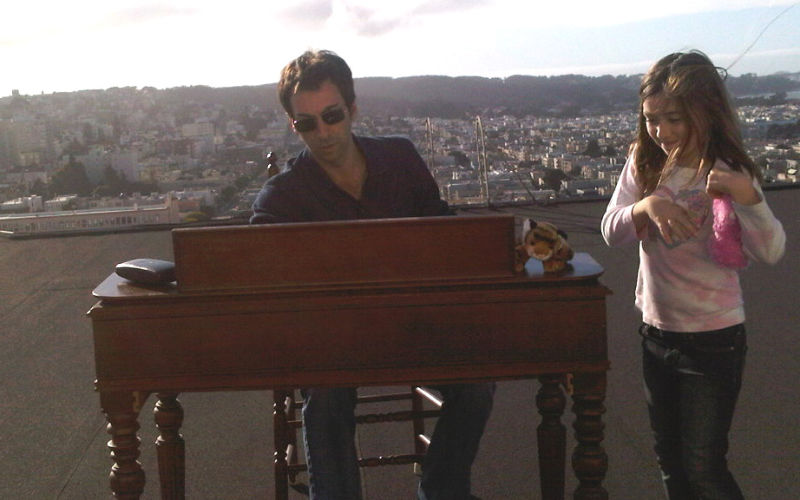
"content": "\u003cp>In 1989, Josh Rosenthal was the music director of a college radio station in Albany, NY, determined to lure Elvis Costello onto his show. But Rosenthal’s contact at Costello’s label, Warner Bros., stonewalled him. Unfazed, Rosenthal went direct, entreating the songwriter with a note and a cache of cassettes delivered to his hotel. Costello personally accepted. Rosenthal sent a limo. The Warner rep, impressed by Rosenthal’s audacity, planted him in a publicity position at Columbia Records straight out of college, effectively poaching the young record man from A&M Records — where he had another job offer.\u003c/p>\n\u003cp>It’s a pivotal scene from Rosenthal’s first book, \u003cem>The Record Store of the Mind\u003c/em>, a collection of memoir and reportage that meditates on both major-label machinery and marginal, unsung artists alike. Rosenthal ate latkes with Lou Reed and garnered gold records for his part in reviving bluesmen and breaking rappers in the same fiscal quarter. And yet, those gold plaques live in the closet; \u003cem>The Record Store of the Mind\u003c/em> privileges the quiet euphoria of listening. It tells the stories of artists such as Dino Valente and Smoke Dawson, figures largely forgotten until Rosenthal lent his ear and a belated platform with Tompkins Square, the Grammy-award winning label he founded in 2005 after a decade at Sony. \u003c/p>\n\u003cp>Self-published, Rosenthal’s book physically evokes the homespun records he writes about. The title — spilt across the cover in crayola-psych lettering — is clunky in a way that signals deeply personal exhibition and charming ambivalence towards commercial conventions. And for a book that considers the trend of quasi-communard folkies appearing on album covers with their babies, the cover imagery’s origin is rather apt. \u003c/p>\n\u003cp>“My younger daughter said she drew me a book cover for my birthday present,” Rosenthal says, seated beside the Presidio Officers Club fireplace on a recent afternoon. “I had an idea already, so I said, ‘Oh, that’s nice,’ but then she showed it me and I went ‘You win, that’s the cover.’”\u003c/p>\n\u003cp>And in the introduction — a Bay Area record store flyover and a paean to physical media — it’s his daughter who poses the book’s central question. Impatient with her dad, surely, she wonders aloud, “How do you know what you’re looking for?”\u003c/p>\n\u003cfigure id=\"attachment_11085616\" class=\"wp-caption alignright\" style=\"max-width: 640px\">\u003cimg loading=\"lazy\" decoding=\"async\" src=\"http://ww2.kqed.org/arts/wp-content/uploads/sites/2/2015/11/RosenthalCOVER-776x1180.jpg\" alt=\"'The Record Store of the Mind' cover art.\" width=\"640\" height=\"973\" class=\"size-large wp-image-11085616\" srcset=\"https://cdn.kqed.org/wp-content/uploads/sites/2/2015/11/RosenthalCOVER-776x1180.jpg 776w, https://cdn.kqed.org/wp-content/uploads/sites/2/2015/11/RosenthalCOVER-400x609.jpg 400w, https://cdn.kqed.org/wp-content/uploads/sites/2/2015/11/RosenthalCOVER-394x600.jpg 394w, https://cdn.kqed.org/wp-content/uploads/sites/2/2015/11/RosenthalCOVER-1180x1795.jpg 1180w, https://cdn.kqed.org/wp-content/uploads/sites/2/2015/11/RosenthalCOVER-960x1461.jpg 960w, https://cdn.kqed.org/wp-content/uploads/sites/2/2015/11/RosenthalCOVER.jpg 1400w\" sizes=\"(max-width: 640px) 100vw, 640px\">\u003cfigcaption class=\"wp-caption-text\">‘The Record Store of the Mind’ cover art.\u003c/figcaption>\u003c/figure>\n\u003cp>Rosenthal, 48, grew up in Syosset, Long Island — the origin of Lou Reed and Billy Joel, to the pride of the author and his peers, and where he first discovered the profound power of stray pop hits on the radio. “1970s soft-rock songs — mushy, overwrought — helped me locate my heart,” he writes, countering notions of pop as shallow or plastic with an argument that young people glimpse real, “romantic love” through the pathos of a snappy chorus and the majesty of melody. Rosenthal says that his close childhood friend, the filmmaker Judd Apatow, drew upon their shared upbringing for his cult TV series \u003cem>Freaks & Geeks\u003c/em>, celebrated for its unusually keen sensitivity to the pangs of adolescence. \u003c/p>\n\u003cp>[ad fullwidth]\u003c/p>\n\u003cp>College radio and internships led to an entrenched major-label career, concluding with Sony. He witnessed the industry’s lavish decadence, grappled with the cultural realignment brought by hip-hop and indie rock, and then rode out the great millennial unraveling. By 2005, he says, “The whole atmosphere was getting very corporate… so I started tinkering in my spare time with what would become [Tompkins Square’s] first title, \u003cem>Imaginational Anthem\u003c/em>.”\u003c/p>\n\u003cp>A compilation of solo guitar stylists now expanded to several installments, \u003cem>Imaginational Anthem Vol. 1\u003c/em> features artists such as Max Ochs, John Fahey and Sandy Bull. “I had no real intent to start a label,” he says, but fortune and friends intervened. NPR kissed the title, for one, and he snared very favorable distribution through an old industry contact. Christened Tompkins Square after the historic park by his home in New York, Rosenthal’s unheard-of label moved several thousand units of a niche instrumental compilation. It was a coup. As he recalls, “I batted a thousand right there.”\u003c/p>\n\u003cp>Moreover, Rosenthal remembers that he was simply so “totally intoxicated” by producing the compilation — by unspooling dormant tapes and unearthing old stories — that Tompkins Square began hurtling towards the celebrated, decade-old label that it is today. “I got addicted,” he says. “It was bigger than me.”\u003c/p>\n\u003cp>\u003cem>Record Store of the Mind\u003c/em>’s “Raccoon Records” chapter typifies Rosenthal’s diligence as a listener and an archivist. It’s about 1960s hitmakers the Youngbloods (“Get Together”), and the rural North Bay idyll of Inverness, where a cast of country-rock bandleaders, free-jazz players and psych-folk enigmas congregated in the early 1970s. Rosenthal reconstructs the milieu in doting detail, and coolly parses its recorded output, most of which failed to find the audience that Tompkins Square would later provide, decades later, with reissues.\u003c/p>\n\u003cp>In sum, however, the chapter is also about Rosenthal’s move to San Francisco in 2011 and, as he writes, “connecting with my adoptive city [and] tapping into a lost era that I try to conjure — yes, romanticize — and seek to commune with.” \u003c/p>\n\u003cp> \u003c/p>\n\u003cp>\u003c/p>\n\u003cp>\u003cem>Josh Rosenthal reads and discusses ‘The Record Store of the Mind’ with a musical performance by Richard Osborn on Wednesday, Nov. 18, at Green Apple Books on Clement St. in San Francisco. 7pm; free. \u003ca href=\"http://www.greenapplebooks.com/event/clement-josh-rosenthal-guitarist-richard-osborn\" target=\"_blank\" rel=\"noopener\">Details here\u003c/a>.\u003cbr>\n\u003c/em>\u003c/p>\n\n",
"stats": {
"hasVideo": false,
"hasChartOrMap": false,
"hasAudio": false,
"hasPolis": false,
"wordCount": 964,
"hasGoogleForm": false,
"hasGallery": false,
"hasHearkenModule": false,
"iframeSrcs": [],
"paragraphCount": 14
},
"modified": 1705045935,
"excerpt": "'The Record Store of the Mind' chronicles a life well-spent in college radio, major labels, and ultimately unearthing and reissuing the work of important musicians. ",
"headData": {
"twImgId": "",
"twTitle": "",
"ogTitle": "",
"ogImgId": "",
"twDescription": "",
"description": "'The Record Store of the Mind' chronicles a life well-spent in college radio, major labels, and ultimately unearthing and reissuing the work of important musicians. ",
"title": "Josh Rosenthal Elevates Music From the Margins in Deeply Personal New Book | KQED",
"ogDescription": "",
"schema": {
"@context": "https://schema.org",
"@type": "Article",
"headline": "Josh Rosenthal Elevates Music From the Margins in Deeply Personal New Book",
"datePublished": "2015-11-16T12:00:24-08:00",
"dateModified": "2024-01-11T23:52:15-08:00",
"image": "https://cdn.kqed.org/wp-content/uploads/2020/02/KQED-OG-Image@1x.png"
}
},
"guestAuthors": [],
"slug": "josh-rosenthal-elevates-music-from-the-margins-in-deeply-personal-new-book",
"status": "publish",
"sticky": false,
"path": "/arts/11085411/josh-rosenthal-elevates-music-from-the-margins-in-deeply-personal-new-book",
"audioTrackLength": null,
"parsedContent": [
{
"type": "contentString",
"content": "\u003cdiv class=\"post-body\">\u003cp>\u003cp>In 1989, Josh Rosenthal was the music director of a college radio station in Albany, NY, determined to lure Elvis Costello onto his show. But Rosenthal’s contact at Costello’s label, Warner Bros., stonewalled him. Unfazed, Rosenthal went direct, entreating the songwriter with a note and a cache of cassettes delivered to his hotel. Costello personally accepted. Rosenthal sent a limo. The Warner rep, impressed by Rosenthal’s audacity, planted him in a publicity position at Columbia Records straight out of college, effectively poaching the young record man from A&M Records — where he had another job offer.\u003c/p>\n\u003cp>It’s a pivotal scene from Rosenthal’s first book, \u003cem>The Record Store of the Mind\u003c/em>, a collection of memoir and reportage that meditates on both major-label machinery and marginal, unsung artists alike. Rosenthal ate latkes with Lou Reed and garnered gold records for his part in reviving bluesmen and breaking rappers in the same fiscal quarter. And yet, those gold plaques live in the closet; \u003cem>The Record Store of the Mind\u003c/em> privileges the quiet euphoria of listening. It tells the stories of artists such as Dino Valente and Smoke Dawson, figures largely forgotten until Rosenthal lent his ear and a belated platform with Tompkins Square, the Grammy-award winning label he founded in 2005 after a decade at Sony. \u003c/p>\n\u003cp>Self-published, Rosenthal’s book physically evokes the homespun records he writes about. The title — spilt across the cover in crayola-psych lettering — is clunky in a way that signals deeply personal exhibition and charming ambivalence towards commercial conventions. And for a book that considers the trend of quasi-communard folkies appearing on album covers with their babies, the cover imagery’s origin is rather apt. \u003c/p>\n\u003cp>“My younger daughter said she drew me a book cover for my birthday present,” Rosenthal says, seated beside the Presidio Officers Club fireplace on a recent afternoon. “I had an idea already, so I said, ‘Oh, that’s nice,’ but then she showed it me and I went ‘You win, that’s the cover.’”\u003c/p>\n\u003cp>And in the introduction — a Bay Area record store flyover and a paean to physical media — it’s his daughter who poses the book’s central question. Impatient with her dad, surely, she wonders aloud, “How do you know what you’re looking for?”\u003c/p>\n\u003cfigure id=\"attachment_11085616\" class=\"wp-caption alignright\" style=\"max-width: 640px\">\u003cimg loading=\"lazy\" decoding=\"async\" src=\"http://ww2.kqed.org/arts/wp-content/uploads/sites/2/2015/11/RosenthalCOVER-776x1180.jpg\" alt=\"'The Record Store of the Mind' cover art.\" width=\"640\" height=\"973\" class=\"size-large wp-image-11085616\" srcset=\"https://cdn.kqed.org/wp-content/uploads/sites/2/2015/11/RosenthalCOVER-776x1180.jpg 776w, https://cdn.kqed.org/wp-content/uploads/sites/2/2015/11/RosenthalCOVER-400x609.jpg 400w, https://cdn.kqed.org/wp-content/uploads/sites/2/2015/11/RosenthalCOVER-394x600.jpg 394w, https://cdn.kqed.org/wp-content/uploads/sites/2/2015/11/RosenthalCOVER-1180x1795.jpg 1180w, https://cdn.kqed.org/wp-content/uploads/sites/2/2015/11/RosenthalCOVER-960x1461.jpg 960w, https://cdn.kqed.org/wp-content/uploads/sites/2/2015/11/RosenthalCOVER.jpg 1400w\" sizes=\"(max-width: 640px) 100vw, 640px\">\u003cfigcaption class=\"wp-caption-text\">‘The Record Store of the Mind’ cover art.\u003c/figcaption>\u003c/figure>\n\u003cp>Rosenthal, 48, grew up in Syosset, Long Island — the origin of Lou Reed and Billy Joel, to the pride of the author and his peers, and where he first discovered the profound power of stray pop hits on the radio. “1970s soft-rock songs — mushy, overwrought — helped me locate my heart,” he writes, countering notions of pop as shallow or plastic with an argument that young people glimpse real, “romantic love” through the pathos of a snappy chorus and the majesty of melody. Rosenthal says that his close childhood friend, the filmmaker Judd Apatow, drew upon their shared upbringing for his cult TV series \u003cem>Freaks & Geeks\u003c/em>, celebrated for its unusually keen sensitivity to the pangs of adolescence. \u003c/p>\n\u003cp>\u003c/p>\u003c/div>",
"attributes": {
"named": {},
"numeric": []
}
},
{
"type": "component",
"content": "",
"name": "ad",
"attributes": {
"named": {
"label": "fullwidth"
},
"numeric": [
"fullwidth"
]
}
},
{
"type": "contentString",
"content": "\u003cdiv class=\"post-body\">\u003cp>\u003c/p>\n\u003cp>College radio and internships led to an entrenched major-label career, concluding with Sony. He witnessed the industry’s lavish decadence, grappled with the cultural realignment brought by hip-hop and indie rock, and then rode out the great millennial unraveling. By 2005, he says, “The whole atmosphere was getting very corporate… so I started tinkering in my spare time with what would become [Tompkins Square’s] first title, \u003cem>Imaginational Anthem\u003c/em>.”\u003c/p>\n\u003cp>A compilation of solo guitar stylists now expanded to several installments, \u003cem>Imaginational Anthem Vol. 1\u003c/em> features artists such as Max Ochs, John Fahey and Sandy Bull. “I had no real intent to start a label,” he says, but fortune and friends intervened. NPR kissed the title, for one, and he snared very favorable distribution through an old industry contact. Christened Tompkins Square after the historic park by his home in New York, Rosenthal’s unheard-of label moved several thousand units of a niche instrumental compilation. It was a coup. As he recalls, “I batted a thousand right there.”\u003c/p>\n\u003cp>Moreover, Rosenthal remembers that he was simply so “totally intoxicated” by producing the compilation — by unspooling dormant tapes and unearthing old stories — that Tompkins Square began hurtling towards the celebrated, decade-old label that it is today. “I got addicted,” he says. “It was bigger than me.”\u003c/p>\n\u003cp>\u003cem>Record Store of the Mind\u003c/em>’s “Raccoon Records” chapter typifies Rosenthal’s diligence as a listener and an archivist. It’s about 1960s hitmakers the Youngbloods (“Get Together”), and the rural North Bay idyll of Inverness, where a cast of country-rock bandleaders, free-jazz players and psych-folk enigmas congregated in the early 1970s. Rosenthal reconstructs the milieu in doting detail, and coolly parses its recorded output, most of which failed to find the audience that Tompkins Square would later provide, decades later, with reissues.\u003c/p>\n\u003cp>In sum, however, the chapter is also about Rosenthal’s move to San Francisco in 2011 and, as he writes, “connecting with my adoptive city [and] tapping into a lost era that I try to conjure — yes, romanticize — and seek to commune with.” \u003c/p>\n\u003cp> \u003c/p>\n\u003cp>\u003c/p>\n\u003cp>\u003cem>Josh Rosenthal reads and discusses ‘The Record Store of the Mind’ with a musical performance by Richard Osborn on Wednesday, Nov. 18, at Green Apple Books on Clement St. in San Francisco. 7pm; free. \u003ca href=\"http://www.greenapplebooks.com/event/clement-josh-rosenthal-guitarist-richard-osborn\" target=\"_blank\" rel=\"noopener\">Details here\u003c/a>.\u003cbr>\n\u003c/em>\u003c/p>\n\n\u003c/div>\u003c/p>",
"attributes": {
"named": {},
"numeric": []
}
}
],
"link": "/arts/11085411/josh-rosenthal-elevates-music-from-the-margins-in-deeply-personal-new-book",
"authors": [
"11091"
],
"categories": [
"arts_73",
"arts_69"
],
"tags": [
"arts_1118",
"arts_596"
],
"featImg": "arts_11085511",
"label": "arts"
},
"news_10757399": {
"type": "posts",
"id": "news_10757399",
"meta": {
"index": "posts_1716263798",
"site": "news",
"id": "10757399",
"score": null,
"sort": [
1447603224000
]
},
"parent": 0,
"labelTerm": {
"site": "news",
"term": 72
},
"blocks": [],
"publishDate": 1447603224,
"format": "standard",
"disqusTitle": "The Many Musical Sides of Kelley Stoltz",
"title": "The Many Musical Sides of Kelley Stoltz",
"headTitle": "The California Report | KQED News",
"content": "\u003cp>Kelley Stoltz has been a mainstay in the Bay Area indie music scene for years, not only as a highly valued producer and cheerleader, but as an artist in his own right. He started releasing his own music before Y2K, and since then he’s worked with seemingly hundreds of artists, from garage-rockers Thee Oh Sees to singer-songwriter Sarah Bethe Nelson. And he has just released three separate records: Two full albums, “In Triangle Time” and “The Scuzzy Inputs of Willie Weird,” and one four-cut EP. I’d say that they show three different sides to Stoltz. But the fact is that between them, they show about a dozen.\u003c/p>\n\u003cp>[soundcloud url=\"https://api.soundcloud.com/tracks/232988041\" params=\"color=ff5500&auto_play=false&hide_related=false&show_comments=true&show_user=true&show_reposts=false\" width=\"100%\" height=\"166\" iframe=\"true\" /]\u003c/p>\n\u003cp>Can we piece them together into one nice whole? Well, one person’s multifaceted is another’s ill-defined.\u003c/p>\n\u003cp>Of the three releases, “In Triangle Time” is the “real” album, and the best bet for getting to know his many talents and many directions. “Cut Me Baby,” the opening track, puts an oddball mystique into a nicely honed pop context -- a little Brian Eno, a little Lee Hazelwood, a little, oh, Nick Lowe. Throughout the album, as those who have followed Stoltz would expect, he’s not shy about showing his affection for Brian Wilson’s layering and Syd Barrett’s psychedelia, the latter prominently on the centerpiece, “Pyramid of Time” (as well as on the EP’s “Perception”). And yet, the quasi electropulse of “The Hill” may well be the “Triangle” album’s unexpected, magnetic peak.\u003c/p>\n\u003cp>Now, as for his other full-length release, “The Scuzzy Inputs of Willie Weird,” well, the title says it all. Among the whimsical songs: “Hot Igloo,” “Goodbye Porcupine Hat” and “Seagulls Sing Hari Hara.” Two “Weird” songs, though, seem like statements of philosophy: one is the closing “I Don’t Care What the World Does,” which sounds like he doesn’t. The other is “He Who Laughs Last,” a cheery, goofy calling card.\u003c/p>\n\u003cp>[ad fullwidth]\u003c/p>\n\u003cp>Throughout he puts on different, often comedic voices, including a gruff, curmudgeonly growl on the highlight, “Garbage,” in which he (or whatever character he may be playing) dismisses just about everything in the universe as, uh, garbage.\u003c/p>\n\u003cp>Maybe Stoltz doesn’t want us to know him, to pin him down. Maybe he’s almost daring us to keep up with him. But maybe here and there he’s left some clues as to who the “real” Kelley Stoltz is.\u003c/p>\n\u003cp>At the very end of “In Triangle Time,” after all his stylistic mashups and experiments, he lets his guard down. “Destroyer & Drones” is a bare-bones, late-night meditation on, well, various things, but they all fall away to the unabashed, uncomplicated declaration, “Hallelujah, I love you so.”\u003c/p>\n\u003cp>\u003c/p>\n\u003cp>Just another facet to add to Stoltz’s already complex catalog? No, this sounds like an artist coming into clear focus.\u003c/p>\n\n",
"disqusIdentifier": "10757399 http://ww2.kqed.org/news/?p=10757399",
"disqusUrl": "https://ww2.kqed.org/news/2015/11/15/the-many-musical-sides-of-kelley-stoltz/",
"stats": {
"hasVideo": false,
"hasChartOrMap": false,
"hasAudio": false,
"hasPolis": false,
"wordCount": 562,
"hasGoogleForm": false,
"hasGallery": false,
"hasHearkenModule": false,
"iframeSrcs": [],
"paragraphCount": 11
},
"modified": 1447471882,
"excerpt": "Stoltz has just released three separate records: two full albums and one four-cut EP. ",
"headData": {
"twImgId": "",
"twTitle": "",
"ogTitle": "",
"ogImgId": "",
"twDescription": "",
"description": "Stoltz has just released three separate records: two full albums and one four-cut EP. ",
"title": "The Many Musical Sides of Kelley Stoltz | KQED",
"ogDescription": "",
"schema": {
"@context": "https://schema.org",
"@type": "NewsArticle",
"headline": "The Many Musical Sides of Kelley Stoltz",
"datePublished": "2015-11-15T08:00:24-08:00",
"dateModified": "2015-11-13T19:31:22-08:00",
"image": "https://cdn.kqed.org/wp-content/uploads/2020/02/KQED-OG-Image@1x.png",
"isAccessibleForFree": "True",
"publisher": {
"@type": "NewsMediaOrganization",
"@id": "https://www.kqed.org/#organization",
"name": "KQED",
"logo": "https://cdn.kqed.org/wp-content/uploads/2020/02/KQED-OG-Image@1x.png",
"url": "https://www.kqed.org",
"sameAs": [
"https://www.facebook.com/KQED",
"https://twitter.com/KQED",
"https://www.instagram.com/kqed/",
"https://www.tiktok.com/@kqedofficial",
"https://www.linkedin.com/company/kqed",
"https://www.youtube.com/channel/UCeC0IOo7i1P_61zVUWbJ4nw"
]
}
}
},
"guestAuthors": [],
"slug": "the-many-musical-sides-of-kelley-stoltz",
"status": "publish",
"path": "/news/10757399/the-many-musical-sides-of-kelley-stoltz",
"audioTrackLength": null,
"parsedContent": [
{
"type": "contentString",
"content": "\u003cdiv class=\"post-body\">\u003cp>\u003cp>Kelley Stoltz has been a mainstay in the Bay Area indie music scene for years, not only as a highly valued producer and cheerleader, but as an artist in his own right. He started releasing his own music before Y2K, and since then he’s worked with seemingly hundreds of artists, from garage-rockers Thee Oh Sees to singer-songwriter Sarah Bethe Nelson. And he has just released three separate records: Two full albums, “In Triangle Time” and “The Scuzzy Inputs of Willie Weird,” and one four-cut EP. I’d say that they show three different sides to Stoltz. But the fact is that between them, they show about a dozen.\u003c/p>\n\u003cp>\u003c/p>\u003cp>\u003cdiv class='utils-parseShortcode-shortcodes-__shortcodes__shortcodeWrapper'>\n \u003ciframe width='100%' height='166'\n scrolling='no' frameborder='no'\n src='https://w.soundcloud.com/player/?url=https://api.soundcloud.com/tracks/232988041&visual=true&color=ff5500&auto_play=false&hide_related=false&show_comments=true&show_user=true&show_reposts=false'\n title='https://api.soundcloud.com/tracks/232988041'>\n \u003c/iframe>\n \u003c/div>\u003c/p>\u003cp>\u003c/p>\n\u003cp>Can we piece them together into one nice whole? Well, one person’s multifaceted is another’s ill-defined.\u003c/p>\n\u003cp>Of the three releases, “In Triangle Time” is the “real” album, and the best bet for getting to know his many talents and many directions. “Cut Me Baby,” the opening track, puts an oddball mystique into a nicely honed pop context -- a little Brian Eno, a little Lee Hazelwood, a little, oh, Nick Lowe. Throughout the album, as those who have followed Stoltz would expect, he’s not shy about showing his affection for Brian Wilson’s layering and Syd Barrett’s psychedelia, the latter prominently on the centerpiece, “Pyramid of Time” (as well as on the EP’s “Perception”). And yet, the quasi electropulse of “The Hill” may well be the “Triangle” album’s unexpected, magnetic peak.\u003c/p>\n\u003cp>Now, as for his other full-length release, “The Scuzzy Inputs of Willie Weird,” well, the title says it all. Among the whimsical songs: “Hot Igloo,” “Goodbye Porcupine Hat” and “Seagulls Sing Hari Hara.” Two “Weird” songs, though, seem like statements of philosophy: one is the closing “I Don’t Care What the World Does,” which sounds like he doesn’t. The other is “He Who Laughs Last,” a cheery, goofy calling card.\u003c/p>\n\u003cp>\u003c/p>\u003c/div>",
"attributes": {
"named": {},
"numeric": []
}
},
{
"type": "component",
"content": "",
"name": "ad",
"attributes": {
"named": {
"label": "fullwidth"
},
"numeric": [
"fullwidth"
]
}
},
{
"type": "contentString",
"content": "\u003cdiv class=\"post-body\">\u003cp>\u003c/p>\n\u003cp>Throughout he puts on different, often comedic voices, including a gruff, curmudgeonly growl on the highlight, “Garbage,” in which he (or whatever character he may be playing) dismisses just about everything in the universe as, uh, garbage.\u003c/p>\n\u003cp>Maybe Stoltz doesn’t want us to know him, to pin him down. Maybe he’s almost daring us to keep up with him. But maybe here and there he’s left some clues as to who the “real” Kelley Stoltz is.\u003c/p>\n\u003cp>At the very end of “In Triangle Time,” after all his stylistic mashups and experiments, he lets his guard down. “Destroyer & Drones” is a bare-bones, late-night meditation on, well, various things, but they all fall away to the unabashed, uncomplicated declaration, “Hallelujah, I love you so.”\u003c/p>\n\u003cp>\u003c/p>\n\u003cp>Just another facet to add to Stoltz’s already complex catalog? No, this sounds like an artist coming into clear focus.\u003c/p>\n\n\u003c/div>\u003c/p>",
"attributes": {
"named": {},
"numeric": []
}
}
],
"link": "/news/10757399/the-many-musical-sides-of-kelley-stoltz",
"authors": [
"87"
],
"programs": [
"news_72"
],
"categories": [
"news_223",
"news_8"
],
"tags": [
"news_17286"
],
"featImg": "news_10757922",
"label": "news_72"
},
"arts_11080721": {
"type": "posts",
"id": "arts_11080721",
"meta": {
"index": "posts_1716263798",
"site": "arts",
"id": "11080721",
"score": null,
"sort": [
1447516835000
]
},
"parent": 0,
"labelTerm": {
"site": "arts"
},
"blocks": [],
"publishDate": 1447516835,
"format": "standard",
"title": "From the Garage to Outer Space: Talking with the Chocolate Watchband's David Aguilar",
"headTitle": "From the Garage to Outer Space: Talking with the Chocolate Watchband’s David Aguilar | KQED",
"content": "\u003cp>Listening to the Chocolate Watchband’s snarly, unforgettable versions of Ray Davies’s “I’m Not Everybody Else” and Annette Tucker and Nancie Mantz’s “I Ain’t No Miracle Worker” — renditions that vanquished all others in their wake — it’s not tough to imagine the South Bay’s finest ’60s garage rock band claiming a chart-topping place beside Big Brother & the Holding Company and Jefferson Airplane. Bill Graham certainly pictured that in the Watchband’s future when he tried to woo them to sign with him as their manager and let him send them out on tour with the Dead and the Airplane. \u003c/p>\n\u003cp>Instead, a host of unfortunate choices led the Watchband down the garden path toward surrendering control over their recordings, splintering and eventually self-destructing five short years after their inception. “Some of those problems, nowadays, are quite funny!” exclaims David Aguilar, now 69, vocalist and one of the few members of the Watchband who wrote songs that made it onto their LPs. \u003c/p>\n\u003cfigure id=\"attachment_11080723\" class=\"wp-caption alignright\" style=\"max-width: 640px\">\u003cimg loading=\"lazy\" decoding=\"async\" src=\"http://ww2.kqed.org/arts/wp-content/uploads/sites/2/2015/11/ChocWatchEarlyPromo-925x1180.jpg\" alt=\"An early promotional shot of the Chocolate Watchband.\" width=\"640\" height=\"816\" class=\"size-large wp-image-11080723\" srcset=\"https://cdn.kqed.org/wp-content/uploads/sites/2/2015/11/ChocWatchEarlyPromo-925x1180.jpg 925w, https://cdn.kqed.org/wp-content/uploads/sites/2/2015/11/ChocWatchEarlyPromo-400x510.jpg 400w, https://cdn.kqed.org/wp-content/uploads/sites/2/2015/11/ChocWatchEarlyPromo-470x600.jpg 470w, https://cdn.kqed.org/wp-content/uploads/sites/2/2015/11/ChocWatchEarlyPromo-960x1225.jpg 960w, https://cdn.kqed.org/wp-content/uploads/sites/2/2015/11/ChocWatchEarlyPromo.jpg 1000w\" sizes=\"(max-width: 640px) 100vw, 640px\">\u003cfigcaption class=\"wp-caption-text\">An early promotional shot of the Chocolate Watchband.\u003c/figcaption>\u003c/figure>\n\u003cp>“The biggest problem was our name,” he continues jovially, from a cafe in downtown Aspen, Colorado near his current home. “When our record contract went to Tower Records, we were being marketed with Pink Floyd. But somebody, somewhere, in some office, thought we were a black rock ‘n’ roll group, so they sold us to a black rhythm and blues label, Uptown. Lo and behold, the first Uptown Records concert they booked us into was at [the Oakland] Arena, and we walked in — it was with the Coasters and Chuck Berry — and they walked in, and I don’t know whose jaw dropped down more!” \u003c/p>\n\u003cp>Today it makes for good story, but back in the day, it was simply one in a series of missteps and outrages besetting the band — which some critics now regard as not only the best, most aggressive and rangy British Invasion-inspired garage rock unit to emerge from the ’60s Bay Area, but perhaps the entire country. Kindred San Jose spirits Count Five may have created the charting power stomp of “Psychotic Reaction,” but couldn’t keep it together for much longer than that. The Watchband, meanwhile, made a name for themselves throughout the Bay Area with their live shows, holding their own alongside everyone from the Mothers of Invention and the Grateful Dead to Jimi Hendrix and the Doors. \u003c/p>\n\u003cp>Aguilar was not the first vocalist for the Watchband, which guitarists Mark Loomis and Ned Torney began tentatively amid the eucalyptuses of Foothill College in Los Altos Hills in 1965. But when the time came to put together a solid new Watchband to replace departed singer Danny Phay, Loomis knew that Aguilar, a science student at San Jose State, had the right bad attitude and a righteous way around a blues-rock hook. \u003c/p>\n\u003cp>[ad fullwidth]\u003c/p>\n\u003cp>https://www.youtube.com/watch?v=4yYijbsnH64\u003c/p>\n\u003cp>You can see it all go down in snippets of the 1967 rock-scene B-movie \u003cem>Riot on Sunset Strip\u003c/em>, as a dandified Aguilar struts, shakes his maracas, blows a mean harmonica, and swings his pageboy like he’s in a cockfight for frontman supremacy with Mick Jagger. You can hear it in the band’s hard-edged attack, which later inspired the Undertones to later undertake their own bristling cover of the Watchband’s “Let’s Talk About Girls” and Jet to do their own saucy version of “Sweet Young Thing.”\u003c/p>\n\u003cp>Oddly, you wouldn’t necessarily know the band even existed by taking in the sounds of the Bay Area’s latest garage rock explosion. Few overt tributes to the pioneering garage band exist from their sonic descendants like Ty Segall, John Dwyer of Thee Oh Sees, Shannon and the Clams, the Mummies, Hunx and His Punx, Nobunny or any of the many other spunky, punky distortion wranglers who have upped and moved to Oakland or LA. \u003c/p>\n\u003cfigure id=\"attachment_11080724\" class=\"wp-caption alignright\" style=\"max-width: 600px\">\u003cimg loading=\"lazy\" decoding=\"async\" src=\"http://ww2.kqed.org/arts/wp-content/uploads/sites/2/2015/11/ChocwatchLPCOVER-600x600.jpg\" alt=\"The Chocolate Watchband's first album 'No Way Out.'\" width=\"600\" height=\"600\" class=\"size-medium wp-image-11080724\" srcset=\"https://cdn.kqed.org/wp-content/uploads/sites/2/2015/11/ChocwatchLPCOVER-600x600.jpg 600w, https://cdn.kqed.org/wp-content/uploads/sites/2/2015/11/ChocwatchLPCOVER-400x400.jpg 400w, https://cdn.kqed.org/wp-content/uploads/sites/2/2015/11/ChocwatchLPCOVER-32x32.jpg 32w, https://cdn.kqed.org/wp-content/uploads/sites/2/2015/11/ChocwatchLPCOVER-64x64.jpg 64w, https://cdn.kqed.org/wp-content/uploads/sites/2/2015/11/ChocwatchLPCOVER-96x96.jpg 96w, https://cdn.kqed.org/wp-content/uploads/sites/2/2015/11/ChocwatchLPCOVER-128x128.jpg 128w, https://cdn.kqed.org/wp-content/uploads/sites/2/2015/11/ChocwatchLPCOVER-75x75.jpg 75w, https://cdn.kqed.org/wp-content/uploads/sites/2/2015/11/ChocwatchLPCOVER.jpg 800w\" sizes=\"(max-width: 600px) 100vw, 600px\">\u003cfigcaption class=\"wp-caption-text\">The Chocolate Watchband’s first album, ‘No Way Out.’\u003c/figcaption>\u003c/figure>\n\u003cp>But Aguilar isn’t fretting about his nonrelationship with the current generation. “There’s a difference between our music and the music you hear today,” he mulls, going on to describe the Oh Sees, for instance, as far more experimental than the Watchband. “The funny thing about the music we were creating is that it lasts and stays. We were writing it and doing it ourselves — we weren’t being manipulated and handled.” \u003c/p>\n\u003cp>Still, the Watchband had its share of music biz machinations. Their music may not have been the slickest of pop — like the current chart-toppers that Aguilar derides as “so mechanically produced as a product, candy to be given out and don’t worry we can make some more” — but the vocalist must have felt at least a little slighted when Svengali producer-songwriter Ed Cobb, who was also behind the garage rock outfit the Standells and the writer of songs like “Tainted Love,” swapped out many of his vocals with those of session musician and songwriter Don Bennett on the Watchband’s first two albums. \u003c/p>\n\u003cp>Aguilar, however, sounds anything but bitter. “We were young — 17 and 18 years old — and we could not believe we were being flown first class to Hollywood recording studios!” he enthuses. “I brought my songs in, and Ed brought his songs in, and I remember telling him several times to his face that ‘That song stinks — we will not record it.'”\u003c/p>\n\u003cp>Bad blood on either writer’s part aside, Aguilar allows, “to be truthful, with my songwriting and how much it eventually advanced, I would have loved to have recorded another album with Ed. He was a great songwriter.”\u003c/p>\n\u003cfigure id=\"attachment_11080725\" class=\"wp-caption alignright\" style=\"max-width: 500px\">\u003cimg loading=\"lazy\" decoding=\"async\" src=\"http://ww2.kqed.org/arts/wp-content/uploads/sites/2/2015/11/chocwatchbw.jpg\" alt=\"An early shot of the band.\" width=\"500\" height=\"334\" class=\"size-full wp-image-11080725\" srcset=\"https://cdn.kqed.org/wp-content/uploads/sites/2/2015/11/chocwatchbw.jpg 500w, https://cdn.kqed.org/wp-content/uploads/sites/2/2015/11/chocwatchbw-400x267.jpg 400w\" sizes=\"(max-width: 500px) 100vw, 500px\">\u003cfigcaption class=\"wp-caption-text\">An early shot of the band.\u003c/figcaption>\u003c/figure>\n\u003cp>Some may chalk up the Watchband’s obscurity and lack of chart hits to bad breaks, poor management, a failure of marketing and distribution, and an absence of national tours. To that lethal combo, Aguilar adds: “Drugs really hit our group, too. Mark Loomis was really strung out on some nasty stuff. At that time, you took your chances — you may end up back home or on a trip that never ended.” Loomis, who died last year, was the first to quit the group, “and that’s when I said ‘I’m going back to school,'” Aguilar says. \u003c/p>\n\u003cp>In the ensuing years, Aguilar found another far-out way to channel his creativity. His astrophysics degrees at San Jose State led him to a longtime position as the director of public affairs and science information at the Harvard-Smithsonian Center for Astrophysics, and this summer, he led a special media team for the NASA New Horizons mission to Pluto — during which he also happened to meet fellow rocker-turned-astrophysicist Brian May of Queen. \u003c/p>\n\u003cp>Now an award-winning author and illustrator of seven National Geographic science books, Aguilar is working on a “Cosmic Catastrophes” series for kids, due out on Smithsonian Books. Music has always been simmering in the background, though never with another band like the Chocolate Watchband. “I do write and compose and record music,” he says, “and so when I do space artwork, I hear music and record it and listen to it over and over again. To me, music and art are all connected together.” \u003c/p>\n\u003cfigure id=\"attachment_11080726\" class=\"wp-caption alignright\" style=\"max-width: 640px\">\u003cimg loading=\"lazy\" decoding=\"async\" src=\"http://ww2.kqed.org/arts/wp-content/uploads/sites/2/2015/11/ChocWatchwDarylHooper-943x1180.jpg\" alt=\"The Chocolate Watchband today, with Darryl Hooper from the Seeds.\" width=\"640\" height=\"801\" class=\"size-large wp-image-11080726\" srcset=\"https://cdn.kqed.org/wp-content/uploads/sites/2/2015/11/ChocWatchwDarylHooper-943x1180.jpg 943w, https://cdn.kqed.org/wp-content/uploads/sites/2/2015/11/ChocWatchwDarylHooper-400x501.jpg 400w, https://cdn.kqed.org/wp-content/uploads/sites/2/2015/11/ChocWatchwDarylHooper-479x600.jpg 479w, https://cdn.kqed.org/wp-content/uploads/sites/2/2015/11/ChocWatchwDarylHooper-1180x1477.jpg 1180w, https://cdn.kqed.org/wp-content/uploads/sites/2/2015/11/ChocWatchwDarylHooper-960x1202.jpg 960w, https://cdn.kqed.org/wp-content/uploads/sites/2/2015/11/ChocWatchwDarylHooper.jpg 1581w\" sizes=\"(max-width: 640px) 100vw, 640px\">\u003cfigcaption class=\"wp-caption-text\">The Chocolate Watchband today, with Darryl Hooper from the Seeds. \u003ccite>(Courtesy the band)\u003c/cite>\u003c/figcaption>\u003c/figure>\n\u003cp>A few of those new songs might even surface when the Watchband plays once again in the Bay Area, this time with early member Gary Andrijasevich on drums, Tim Abbott on guitar, Alex Palao on bass, as well as keyboardist, and new member, Daryl Hooper of the Seeds. \u003c/p>\n\u003cp>It’s been several lifetimes since Aguilar quit the band in 1967 — after which the Watchband carried on for three more years, with a new sound, to fulfill contractual obligations — but he believes the Watchband’s sound “was always there, and it came back in the ’90s, all of a sudden, with our records selling and so many demands to play.” \u003c/p>\n\u003cp>Aguilar sounds like he still can’t quite believe it, while mercifully sparing us a “hash tag blessed” postscript. “I never dreamed I would have the opportunity to step back on stage and play these songs again,” he marvels. “They may not speak English in France and Spain, but the audiences can sing all the words of these songs back to me when I’m on stage.” \u003c/p>\n\u003cp>[ad floatright]\u003c/p>\n\u003cp>\u003cem>The Chocolate Watchband perform Thursday, Nov. 19, at the Chapel in San Francisco. Powder, Cellar Doors and DJ Sid Presley open. \u003ca href=\"http://www.thechapelsf.com/event/952133-chocolate-watchband-san-francisco/\" target=\"_blank\" rel=\"noopener\">Details here\u003c/a>. The band also plays Saturday, Nov. 21, at the Ritz in San Jose. Powder and the Gentle Cycle open. \u003ca href=\"http://www.ticketfly.com/event/951515-chocolate-watchband-san-jose/\" target=\"_blank\" rel=\"noopener\">Details here\u003c/a>.\u003cbr>\n\u003c/em>\u003c/p>\n\n",
"stats": {
"hasVideo": true,
"hasChartOrMap": false,
"hasAudio": false,
"hasPolis": false,
"wordCount": 1539,
"hasGoogleForm": false,
"hasGallery": false,
"hasHearkenModule": false,
"iframeSrcs": [],
"paragraphCount": 20
},
"modified": 1705045949,
"excerpt": "San Jose's progenitors of 1960s garage rock are back on stage, amidst a resurgence of their sound that continues to ripple throughout the Bay Area.",
"headData": {
"twImgId": "",
"twTitle": "",
"ogTitle": "",
"ogImgId": "",
"twDescription": "",
"description": "San Jose's progenitors of 1960s garage rock are back on stage, amidst a resurgence of their sound that continues to ripple throughout the Bay Area.",
"title": "From the Garage to Outer Space: Talking with the Chocolate Watchband's David Aguilar | KQED",
"ogDescription": "",
"schema": {
"@context": "https://schema.org",
"@type": "Article",
"headline": "From the Garage to Outer Space: Talking with the Chocolate Watchband's David Aguilar",
"datePublished": "2015-11-14T08:00:35-08:00",
"dateModified": "2024-01-11T23:52:29-08:00",
"image": "https://cdn.kqed.org/wp-content/uploads/2020/02/KQED-OG-Image@1x.png"
}
},
"guestAuthors": [],
"slug": "from-the-garage-to-outer-space-talking-with-the-chocolate-watchbands-david-aguilar",
"status": "publish",
"sticky": false,
"path": "/arts/11080721/from-the-garage-to-outer-space-talking-with-the-chocolate-watchbands-david-aguilar",
"audioTrackLength": null,
"parsedContent": [
{
"type": "contentString",
"content": "\u003cdiv class=\"post-body\">\u003cp>\u003cp>Listening to the Chocolate Watchband’s snarly, unforgettable versions of Ray Davies’s “I’m Not Everybody Else” and Annette Tucker and Nancie Mantz’s “I Ain’t No Miracle Worker” — renditions that vanquished all others in their wake — it’s not tough to imagine the South Bay’s finest ’60s garage rock band claiming a chart-topping place beside Big Brother & the Holding Company and Jefferson Airplane. Bill Graham certainly pictured that in the Watchband’s future when he tried to woo them to sign with him as their manager and let him send them out on tour with the Dead and the Airplane. \u003c/p>\n\u003cp>Instead, a host of unfortunate choices led the Watchband down the garden path toward surrendering control over their recordings, splintering and eventually self-destructing five short years after their inception. “Some of those problems, nowadays, are quite funny!” exclaims David Aguilar, now 69, vocalist and one of the few members of the Watchband who wrote songs that made it onto their LPs. \u003c/p>\n\u003cfigure id=\"attachment_11080723\" class=\"wp-caption alignright\" style=\"max-width: 640px\">\u003cimg loading=\"lazy\" decoding=\"async\" src=\"http://ww2.kqed.org/arts/wp-content/uploads/sites/2/2015/11/ChocWatchEarlyPromo-925x1180.jpg\" alt=\"An early promotional shot of the Chocolate Watchband.\" width=\"640\" height=\"816\" class=\"size-large wp-image-11080723\" srcset=\"https://cdn.kqed.org/wp-content/uploads/sites/2/2015/11/ChocWatchEarlyPromo-925x1180.jpg 925w, https://cdn.kqed.org/wp-content/uploads/sites/2/2015/11/ChocWatchEarlyPromo-400x510.jpg 400w, https://cdn.kqed.org/wp-content/uploads/sites/2/2015/11/ChocWatchEarlyPromo-470x600.jpg 470w, https://cdn.kqed.org/wp-content/uploads/sites/2/2015/11/ChocWatchEarlyPromo-960x1225.jpg 960w, https://cdn.kqed.org/wp-content/uploads/sites/2/2015/11/ChocWatchEarlyPromo.jpg 1000w\" sizes=\"(max-width: 640px) 100vw, 640px\">\u003cfigcaption class=\"wp-caption-text\">An early promotional shot of the Chocolate Watchband.\u003c/figcaption>\u003c/figure>\n\u003cp>“The biggest problem was our name,” he continues jovially, from a cafe in downtown Aspen, Colorado near his current home. “When our record contract went to Tower Records, we were being marketed with Pink Floyd. But somebody, somewhere, in some office, thought we were a black rock ‘n’ roll group, so they sold us to a black rhythm and blues label, Uptown. Lo and behold, the first Uptown Records concert they booked us into was at [the Oakland] Arena, and we walked in — it was with the Coasters and Chuck Berry — and they walked in, and I don’t know whose jaw dropped down more!” \u003c/p>\n\u003cp>Today it makes for good story, but back in the day, it was simply one in a series of missteps and outrages besetting the band — which some critics now regard as not only the best, most aggressive and rangy British Invasion-inspired garage rock unit to emerge from the ’60s Bay Area, but perhaps the entire country. Kindred San Jose spirits Count Five may have created the charting power stomp of “Psychotic Reaction,” but couldn’t keep it together for much longer than that. The Watchband, meanwhile, made a name for themselves throughout the Bay Area with their live shows, holding their own alongside everyone from the Mothers of Invention and the Grateful Dead to Jimi Hendrix and the Doors. \u003c/p>\n\u003cp>Aguilar was not the first vocalist for the Watchband, which guitarists Mark Loomis and Ned Torney began tentatively amid the eucalyptuses of Foothill College in Los Altos Hills in 1965. But when the time came to put together a solid new Watchband to replace departed singer Danny Phay, Loomis knew that Aguilar, a science student at San Jose State, had the right bad attitude and a righteous way around a blues-rock hook. \u003c/p>\n\u003cp>\u003c/p>\u003c/div>",
"attributes": {
"named": {},
"numeric": []
}
},
{
"type": "component",
"content": "",
"name": "ad",
"attributes": {
"named": {
"label": "fullwidth"
},
"numeric": [
"fullwidth"
]
}
},
{
"type": "contentString",
"content": "\u003cdiv class=\"post-body\">\u003cp>\u003c/p>\u003c/p>\u003cp>\u003cspan class='utils-parseShortcode-shortcodes-__youtubeShortcode__embedYoutube'>\n \u003cspan class='utils-parseShortcode-shortcodes-__youtubeShortcode__embedYoutubeInside'>\n \u003ciframe\n loading='lazy'\n class='utils-parseShortcode-shortcodes-__youtubeShortcode__youtubePlayer'\n type='text/html'\n src='//www.youtube.com/embed/4yYijbsnH64'\n title='//www.youtube.com/embed/4yYijbsnH64'\n allowfullscreen='true'\n style='border:0;'>\u003c/iframe>\n \u003c/span>\n \u003c/span>\u003c/p>\u003cp>\u003cp>You can see it all go down in snippets of the 1967 rock-scene B-movie \u003cem>Riot on Sunset Strip\u003c/em>, as a dandified Aguilar struts, shakes his maracas, blows a mean harmonica, and swings his pageboy like he’s in a cockfight for frontman supremacy with Mick Jagger. You can hear it in the band’s hard-edged attack, which later inspired the Undertones to later undertake their own bristling cover of the Watchband’s “Let’s Talk About Girls” and Jet to do their own saucy version of “Sweet Young Thing.”\u003c/p>\n\u003cp>Oddly, you wouldn’t necessarily know the band even existed by taking in the sounds of the Bay Area’s latest garage rock explosion. Few overt tributes to the pioneering garage band exist from their sonic descendants like Ty Segall, John Dwyer of Thee Oh Sees, Shannon and the Clams, the Mummies, Hunx and His Punx, Nobunny or any of the many other spunky, punky distortion wranglers who have upped and moved to Oakland or LA. \u003c/p>\n\u003cfigure id=\"attachment_11080724\" class=\"wp-caption alignright\" style=\"max-width: 600px\">\u003cimg loading=\"lazy\" decoding=\"async\" src=\"http://ww2.kqed.org/arts/wp-content/uploads/sites/2/2015/11/ChocwatchLPCOVER-600x600.jpg\" alt=\"The Chocolate Watchband's first album 'No Way Out.'\" width=\"600\" height=\"600\" class=\"size-medium wp-image-11080724\" srcset=\"https://cdn.kqed.org/wp-content/uploads/sites/2/2015/11/ChocwatchLPCOVER-600x600.jpg 600w, https://cdn.kqed.org/wp-content/uploads/sites/2/2015/11/ChocwatchLPCOVER-400x400.jpg 400w, https://cdn.kqed.org/wp-content/uploads/sites/2/2015/11/ChocwatchLPCOVER-32x32.jpg 32w, https://cdn.kqed.org/wp-content/uploads/sites/2/2015/11/ChocwatchLPCOVER-64x64.jpg 64w, https://cdn.kqed.org/wp-content/uploads/sites/2/2015/11/ChocwatchLPCOVER-96x96.jpg 96w, https://cdn.kqed.org/wp-content/uploads/sites/2/2015/11/ChocwatchLPCOVER-128x128.jpg 128w, https://cdn.kqed.org/wp-content/uploads/sites/2/2015/11/ChocwatchLPCOVER-75x75.jpg 75w, https://cdn.kqed.org/wp-content/uploads/sites/2/2015/11/ChocwatchLPCOVER.jpg 800w\" sizes=\"(max-width: 600px) 100vw, 600px\">\u003cfigcaption class=\"wp-caption-text\">The Chocolate Watchband’s first album, ‘No Way Out.’\u003c/figcaption>\u003c/figure>\n\u003cp>But Aguilar isn’t fretting about his nonrelationship with the current generation. “There’s a difference between our music and the music you hear today,” he mulls, going on to describe the Oh Sees, for instance, as far more experimental than the Watchband. “The funny thing about the music we were creating is that it lasts and stays. We were writing it and doing it ourselves — we weren’t being manipulated and handled.” \u003c/p>\n\u003cp>Still, the Watchband had its share of music biz machinations. Their music may not have been the slickest of pop — like the current chart-toppers that Aguilar derides as “so mechanically produced as a product, candy to be given out and don’t worry we can make some more” — but the vocalist must have felt at least a little slighted when Svengali producer-songwriter Ed Cobb, who was also behind the garage rock outfit the Standells and the writer of songs like “Tainted Love,” swapped out many of his vocals with those of session musician and songwriter Don Bennett on the Watchband’s first two albums. \u003c/p>\n\u003cp>Aguilar, however, sounds anything but bitter. “We were young — 17 and 18 years old — and we could not believe we were being flown first class to Hollywood recording studios!” he enthuses. “I brought my songs in, and Ed brought his songs in, and I remember telling him several times to his face that ‘That song stinks — we will not record it.'”\u003c/p>\n\u003cp>Bad blood on either writer’s part aside, Aguilar allows, “to be truthful, with my songwriting and how much it eventually advanced, I would have loved to have recorded another album with Ed. He was a great songwriter.”\u003c/p>\n\u003cfigure id=\"attachment_11080725\" class=\"wp-caption alignright\" style=\"max-width: 500px\">\u003cimg loading=\"lazy\" decoding=\"async\" src=\"http://ww2.kqed.org/arts/wp-content/uploads/sites/2/2015/11/chocwatchbw.jpg\" alt=\"An early shot of the band.\" width=\"500\" height=\"334\" class=\"size-full wp-image-11080725\" srcset=\"https://cdn.kqed.org/wp-content/uploads/sites/2/2015/11/chocwatchbw.jpg 500w, https://cdn.kqed.org/wp-content/uploads/sites/2/2015/11/chocwatchbw-400x267.jpg 400w\" sizes=\"(max-width: 500px) 100vw, 500px\">\u003cfigcaption class=\"wp-caption-text\">An early shot of the band.\u003c/figcaption>\u003c/figure>\n\u003cp>Some may chalk up the Watchband’s obscurity and lack of chart hits to bad breaks, poor management, a failure of marketing and distribution, and an absence of national tours. To that lethal combo, Aguilar adds: “Drugs really hit our group, too. Mark Loomis was really strung out on some nasty stuff. At that time, you took your chances — you may end up back home or on a trip that never ended.” Loomis, who died last year, was the first to quit the group, “and that’s when I said ‘I’m going back to school,'” Aguilar says. \u003c/p>\n\u003cp>In the ensuing years, Aguilar found another far-out way to channel his creativity. His astrophysics degrees at San Jose State led him to a longtime position as the director of public affairs and science information at the Harvard-Smithsonian Center for Astrophysics, and this summer, he led a special media team for the NASA New Horizons mission to Pluto — during which he also happened to meet fellow rocker-turned-astrophysicist Brian May of Queen. \u003c/p>\n\u003cp>Now an award-winning author and illustrator of seven National Geographic science books, Aguilar is working on a “Cosmic Catastrophes” series for kids, due out on Smithsonian Books. Music has always been simmering in the background, though never with another band like the Chocolate Watchband. “I do write and compose and record music,” he says, “and so when I do space artwork, I hear music and record it and listen to it over and over again. To me, music and art are all connected together.” \u003c/p>\n\u003cfigure id=\"attachment_11080726\" class=\"wp-caption alignright\" style=\"max-width: 640px\">\u003cimg loading=\"lazy\" decoding=\"async\" src=\"http://ww2.kqed.org/arts/wp-content/uploads/sites/2/2015/11/ChocWatchwDarylHooper-943x1180.jpg\" alt=\"The Chocolate Watchband today, with Darryl Hooper from the Seeds.\" width=\"640\" height=\"801\" class=\"size-large wp-image-11080726\" srcset=\"https://cdn.kqed.org/wp-content/uploads/sites/2/2015/11/ChocWatchwDarylHooper-943x1180.jpg 943w, https://cdn.kqed.org/wp-content/uploads/sites/2/2015/11/ChocWatchwDarylHooper-400x501.jpg 400w, https://cdn.kqed.org/wp-content/uploads/sites/2/2015/11/ChocWatchwDarylHooper-479x600.jpg 479w, https://cdn.kqed.org/wp-content/uploads/sites/2/2015/11/ChocWatchwDarylHooper-1180x1477.jpg 1180w, https://cdn.kqed.org/wp-content/uploads/sites/2/2015/11/ChocWatchwDarylHooper-960x1202.jpg 960w, https://cdn.kqed.org/wp-content/uploads/sites/2/2015/11/ChocWatchwDarylHooper.jpg 1581w\" sizes=\"(max-width: 640px) 100vw, 640px\">\u003cfigcaption class=\"wp-caption-text\">The Chocolate Watchband today, with Darryl Hooper from the Seeds. \u003ccite>(Courtesy the band)\u003c/cite>\u003c/figcaption>\u003c/figure>\n\u003cp>A few of those new songs might even surface when the Watchband plays once again in the Bay Area, this time with early member Gary Andrijasevich on drums, Tim Abbott on guitar, Alex Palao on bass, as well as keyboardist, and new member, Daryl Hooper of the Seeds. \u003c/p>\n\u003cp>It’s been several lifetimes since Aguilar quit the band in 1967 — after which the Watchband carried on for three more years, with a new sound, to fulfill contractual obligations — but he believes the Watchband’s sound “was always there, and it came back in the ’90s, all of a sudden, with our records selling and so many demands to play.” \u003c/p>\n\u003cp>Aguilar sounds like he still can’t quite believe it, while mercifully sparing us a “hash tag blessed” postscript. “I never dreamed I would have the opportunity to step back on stage and play these songs again,” he marvels. “They may not speak English in France and Spain, but the audiences can sing all the words of these songs back to me when I’m on stage.” \u003c/p>\n\u003cp>\u003c/p>\u003c/div>",
"attributes": {
"named": {},
"numeric": []
}
},
{
"type": "component",
"content": "",
"name": "ad",
"attributes": {
"named": {
"label": "floatright"
},
"numeric": [
"floatright"
]
}
},
{
"type": "contentString",
"content": "\u003cdiv class=\"post-body\">\u003cp>\u003c/p>\n\u003cp>\u003cem>The Chocolate Watchband perform Thursday, Nov. 19, at the Chapel in San Francisco. Powder, Cellar Doors and DJ Sid Presley open. \u003ca href=\"http://www.thechapelsf.com/event/952133-chocolate-watchband-san-francisco/\" target=\"_blank\" rel=\"noopener\">Details here\u003c/a>. The band also plays Saturday, Nov. 21, at the Ritz in San Jose. Powder and the Gentle Cycle open. \u003ca href=\"http://www.ticketfly.com/event/951515-chocolate-watchband-san-jose/\" target=\"_blank\" rel=\"noopener\">Details here\u003c/a>.\u003cbr>\n\u003c/em>\u003c/p>\n\n\u003c/div>\u003c/p>",
"attributes": {
"named": {},
"numeric": []
}
}
],
"link": "/arts/11080721/from-the-garage-to-outer-space-talking-with-the-chocolate-watchbands-david-aguilar",
"authors": [
"8607"
],
"categories": [
"arts_69"
],
"tags": [
"arts_1118",
"arts_1425",
"arts_596"
],
"featImg": "arts_11080722",
"label": "arts"
},
"arts_11079769": {
"type": "posts",
"id": "arts_11079769",
"meta": {
"index": "posts_1716263798",
"site": "arts",
"id": "11079769",
"score": null,
"sort": [
1447461973000
]
},
"parent": 0,
"labelTerm": {
"site": "arts"
},
"blocks": [],
"publishDate": 1447461973,
"format": "standard",
"title": "Paris Terror: Eagles of Death Metal Concert Scene of Horrific Attack [UPDATE]",
"headTitle": "Paris Terror: Eagles of Death Metal Concert Scene of Horrific Attack [UPDATE] | KQED",
"content": "\u003cp>\u003cb>Update:\u003c/b> 11/14/15, 1:40 p.m.\u003c/p>\n\u003cp>A series of bloody attacks across Paris Friday resulted in as many as 120 people killed and a hostage situation at a music venue where the SoCal band Eagles of Death Metal were playing a sold out show that night.\u003c/p>\n\u003cp>\u003ca href=\"http://ww2.kqed.org/news/2015/11/13/dozens-killed-in-series-of-paris-attacks\" target=\"_blank\" rel=\"noopener\">The six coordinated attacks\u003c/a> occurred early in the evening. One of the shootings, which resulted in a takeover situation with scores of hostages, occurred at the Le Bataclan theater, where the Eagles of Death Metal were playing a show (pictured in the featured image above). \u003c/p>\n\u003cp>Terrrorists reportedly stormed into the show while the band was playing and opened fire on the sold-out crowd, which was \u003ca href=\"http://www.theguardian.com/world/live/2015/nov/13/shootings-reported-in-eastern-paris-live\" target=\"_blank\" rel=\"noopener\">estimated to be around 1,500\u003c/a>. \u003c/p>\n\u003cp>One reported attendee named Benjamin Cazenoves said that after the attack there were dead bodies everywhere.\u003c/p>\n\u003cp>[ad fullwidth]\u003c/p>\n\u003cp>https://www.facebook.com/benjamin.cazenoves/posts/10153035449936652?pnref=story\u003c/p>\n\u003cp>Hours later, French police stormed the venue and killed three armed attackers. In the aftermath, about 90 people were found dead in the venue, \u003ca href=\"http://www.npr.org/sections/thetwo-way/2015/11/14/455988722/paris-attacks-what-we-know-right-now\" target=\"_blank\" rel=\"noopener\">according to updated reports from NPR\u003c/a>. \u003c/p>\n\u003cp>Publications such as \u003ca href=\"http://pitchfork.com/news/62102-hostages-taken-at-paris-nightclub-where-eagles-of-death-metal-performed/\" target=\"_blank\" rel=\"noopener\">Pitchfork\u003c/a> and \u003ca href=\"https://www.washingtonpost.com/blogs/worldviews-live/liveblog/live-updates-attacks-in-paris/#17a418ff-33f0-4574-9bb4-d636469d68e1\" target=\"_blank\" rel=\"noopener\">the Washington Post\u003c/a> — who spoke to the wife of the band’s drummer — reported that the band made it out safely after the attacks began. But a recent post on the band’s official Facebook page noted that members of its crew are still missing: \u003c/p>\n\u003cp>https://www.facebook.com/eaglesofdeathmetal/posts/10153616153681014\u003c/p>\n\u003cp>On Saturday, it was discovered that one of the victims of the Le Bataclan massacre was Nick Alexander, who was working the Eagles of Death Metal’s merchandise table during the show, \u003ca href=\"http://www.rollingstone.com/music/news/eagles-of-death-metal-merch-manager-nick-alexander-killed-in-paris-attack-20151114\" target=\"_blank\" rel=\"noopener\">according to Rolling Stone\u003c/a>. Alexander also worked for bands such as the Black Keys \u003c/p>\n\u003cp>Despite their name, \u003ca href=\"https://en.wikipedia.org/wiki/Eagles_of_Death_Metal\" target=\"_blank\" rel=\"noopener\">The Eagles of Death Metal\u003c/a> are not a death metal band, as many news outlets have reported. They are more of a traditional rock and roll band that have been playing since 1998. They recently released their fourth album, \u003ci>Zipper Down.\u003c/i>\u003c/p>\n\u003cp>\u003ca href=\"http://www.deftones.com/\" target=\"_blank\" rel=\"noopener\">Sacramento’s Deftones\u003c/a> were scheduled to play Le Bataclan the following three nights. \u003c/p>\n\u003cp>https://www.facebook.com/deftones/posts/10153802957512491 \u003c/p>\n\u003cp>It is unclear whether Deftones will still be playing though all three nights had sold out.\u003c/p>\n\u003cp>Also in France is Oakland’s Shannon and the Clams, who were in Lille, France during the attacks and were planning on heading to Paris the next day. \u003c/p>\n\u003cp>https://www.facebook.com/shannon.shaw.372/posts/10206497998467178\u003c/p>\n\u003cp>\u003cb>UPDATE:\u003c/b>\u003c/p>\n\u003cp>Shannon Shaw from Shannon and the Clams has announced that the band’s Paris show, scheduled for Saturday night, has been canceled:\u003c/p>\n\u003cp>https://www.facebook.com/shannon.shaw.372/posts/10206500045798360?\u003c/p>\n\u003cp>And there has been no update on the Deftones, but it’s best to assume that they’ve been canceled, as bodies were still being removed from Le Bataclan Saturday afternoon. \u003c/p>\n\u003cp>Deftones updated on their Facebook page that they are all safe:\u003c/p>\n\u003cp>https://www.facebook.com/deftones/posts/10153802957512491\u003c/p>\n\u003cp>\u003c/p>\n\u003cp>\u003ci>We will update this story when new details are learned. Also follow \u003ca href=\"http://ww2.kqed.org/news/2015/11/13/dozens-killed-in-series-of-paris-attacks\" target=\"_blank\" rel=\"noopener\">coverage of the attacks on KQED News.\u003c/a>\u003c/i>\u003c/p>\n\n",
"stats": {
"hasVideo": false,
"hasChartOrMap": false,
"hasAudio": false,
"hasPolis": false,
"wordCount": 508,
"hasGoogleForm": false,
"hasGallery": false,
"hasHearkenModule": false,
"iframeSrcs": [],
"paragraphCount": 19
},
"modified": 1705045952,
"excerpt": "A series of bloody attacks across Paris Friday resulted in as many as 140 people killed and a hostage situation at a music venue where the SoCal band Eagles of Death Metal were playing a sold out show.",
"headData": {
"twImgId": "",
"twTitle": "",
"ogTitle": "",
"ogImgId": "",
"twDescription": "",
"description": "A series of bloody attacks across Paris Friday resulted in as many as 140 people killed and a hostage situation at a music venue where the SoCal band Eagles of Death Metal were playing a sold out show.",
"title": "Paris Terror: Eagles of Death Metal Concert Scene of Horrific Attack [UPDATE] | KQED",
"ogDescription": "",
"schema": {
"@context": "https://schema.org",
"@type": "Article",
"headline": "Paris Terror: Eagles of Death Metal Concert Scene of Horrific Attack [UPDATE]",
"datePublished": "2015-11-13T16:46:13-08:00",
"dateModified": "2024-01-11T23:52:32-08:00",
"image": "https://cdn.kqed.org/wp-content/uploads/2020/02/KQED-OG-Image@1x.png"
}
},
"guestAuthors": [],
"slug": "paris-terror-eagles-of-death-metal-concert-scene-of-bloody-attack",
"status": "publish",
"sticky": false,
"path": "/arts/11079769/paris-terror-eagles-of-death-metal-concert-scene-of-bloody-attack",
"audioTrackLength": null,
"parsedContent": [
{
"type": "contentString",
"content": "\u003cdiv class=\"post-body\">\u003cp>\u003cp>\u003cb>Update:\u003c/b> 11/14/15, 1:40 p.m.\u003c/p>\n\u003cp>A series of bloody attacks across Paris Friday resulted in as many as 120 people killed and a hostage situation at a music venue where the SoCal band Eagles of Death Metal were playing a sold out show that night.\u003c/p>\n\u003cp>\u003ca href=\"http://ww2.kqed.org/news/2015/11/13/dozens-killed-in-series-of-paris-attacks\" target=\"_blank\" rel=\"noopener\">The six coordinated attacks\u003c/a> occurred early in the evening. One of the shootings, which resulted in a takeover situation with scores of hostages, occurred at the Le Bataclan theater, where the Eagles of Death Metal were playing a show (pictured in the featured image above). \u003c/p>\n\u003cp>Terrrorists reportedly stormed into the show while the band was playing and opened fire on the sold-out crowd, which was \u003ca href=\"http://www.theguardian.com/world/live/2015/nov/13/shootings-reported-in-eastern-paris-live\" target=\"_blank\" rel=\"noopener\">estimated to be around 1,500\u003c/a>. \u003c/p>\n\u003cp>One reported attendee named Benjamin Cazenoves said that after the attack there were dead bodies everywhere.\u003c/p>\n\u003cp>\u003c/p>\u003c/div>",
"attributes": {
"named": {},
"numeric": []
}
},
{
"type": "component",
"content": "",
"name": "ad",
"attributes": {
"named": {
"label": "fullwidth"
},
"numeric": [
"fullwidth"
]
}
},
{
"type": "contentString",
"content": "\u003cdiv class=\"post-body\">\u003cp>\u003c/p>\n\u003cp>https://www.facebook.com/benjamin.cazenoves/posts/10153035449936652?pnref=story\u003c/p>\n\u003cp>Hours later, French police stormed the venue and killed three armed attackers. In the aftermath, about 90 people were found dead in the venue, \u003ca href=\"http://www.npr.org/sections/thetwo-way/2015/11/14/455988722/paris-attacks-what-we-know-right-now\" target=\"_blank\" rel=\"noopener\">according to updated reports from NPR\u003c/a>. \u003c/p>\n\u003cp>Publications such as \u003ca href=\"http://pitchfork.com/news/62102-hostages-taken-at-paris-nightclub-where-eagles-of-death-metal-performed/\" target=\"_blank\" rel=\"noopener\">Pitchfork\u003c/a> and \u003ca href=\"https://www.washingtonpost.com/blogs/worldviews-live/liveblog/live-updates-attacks-in-paris/#17a418ff-33f0-4574-9bb4-d636469d68e1\" target=\"_blank\" rel=\"noopener\">the Washington Post\u003c/a> — who spoke to the wife of the band’s drummer — reported that the band made it out safely after the attacks began. But a recent post on the band’s official Facebook page noted that members of its crew are still missing: \u003c/p>\n\u003cp>https://www.facebook.com/eaglesofdeathmetal/posts/10153616153681014\u003c/p>\n\u003cp>On Saturday, it was discovered that one of the victims of the Le Bataclan massacre was Nick Alexander, who was working the Eagles of Death Metal’s merchandise table during the show, \u003ca href=\"http://www.rollingstone.com/music/news/eagles-of-death-metal-merch-manager-nick-alexander-killed-in-paris-attack-20151114\" target=\"_blank\" rel=\"noopener\">according to Rolling Stone\u003c/a>. Alexander also worked for bands such as the Black Keys \u003c/p>\n\u003cp>Despite their name, \u003ca href=\"https://en.wikipedia.org/wiki/Eagles_of_Death_Metal\" target=\"_blank\" rel=\"noopener\">The Eagles of Death Metal\u003c/a> are not a death metal band, as many news outlets have reported. They are more of a traditional rock and roll band that have been playing since 1998. They recently released their fourth album, \u003ci>Zipper Down.\u003c/i>\u003c/p>\n\u003cp>\u003ca href=\"http://www.deftones.com/\" target=\"_blank\" rel=\"noopener\">Sacramento’s Deftones\u003c/a> were scheduled to play Le Bataclan the following three nights. \u003c/p>\n\u003cp>https://www.facebook.com/deftones/posts/10153802957512491 \u003c/p>\n\u003cp>It is unclear whether Deftones will still be playing though all three nights had sold out.\u003c/p>\n\u003cp>Also in France is Oakland’s Shannon and the Clams, who were in Lille, France during the attacks and were planning on heading to Paris the next day. \u003c/p>\n\u003cp>https://www.facebook.com/shannon.shaw.372/posts/10206497998467178\u003c/p>\n\u003cp>\u003cb>UPDATE:\u003c/b>\u003c/p>\n\u003cp>Shannon Shaw from Shannon and the Clams has announced that the band’s Paris show, scheduled for Saturday night, has been canceled:\u003c/p>\n\u003cp>https://www.facebook.com/shannon.shaw.372/posts/10206500045798360?\u003c/p>\n\u003cp>And there has been no update on the Deftones, but it’s best to assume that they’ve been canceled, as bodies were still being removed from Le Bataclan Saturday afternoon. \u003c/p>\n\u003cp>Deftones updated on their Facebook page that they are all safe:\u003c/p>\n\u003cp>https://www.facebook.com/deftones/posts/10153802957512491\u003c/p>\n\u003cp>\u003c/p>\n\u003cp>\u003ci>We will update this story when new details are learned. Also follow \u003ca href=\"http://ww2.kqed.org/news/2015/11/13/dozens-killed-in-series-of-paris-attacks\" target=\"_blank\" rel=\"noopener\">coverage of the attacks on KQED News.\u003c/a>\u003c/i>\u003c/p>\n\n\u003c/div>\u003c/p>",
"attributes": {
"named": {},
"numeric": []
}
}
],
"link": "/arts/11079769/paris-terror-eagles-of-death-metal-concert-scene-of-bloody-attack",
"authors": [
"93"
],
"categories": [
"arts_69",
"arts_235"
],
"tags": [
"arts_1119",
"arts_1118",
"arts_596"
],
"featImg": "arts_11079872",
"label": "arts"
},
"arts_11077354": {
"type": "posts",
"id": "arts_11077354",
"meta": {
"index": "posts_1716263798",
"site": "arts",
"id": "11077354",
"score": null,
"sort": [
1447430448000
]
},
"parent": 0,
"labelTerm": {
"site": "arts"
},
"blocks": [],
"publishDate": 1447430448,
"format": "standard",
"title": "Janet Cardiff's 'Forty Part Motet' Almost Made Me Cry",
"headTitle": "Janet Cardiff’s ‘Forty Part Motet’ Almost Made Me Cry | KQED",
"content": "\u003cp>It’s hard to write about Janet Cardiff’s sound installation \u003ci>The Forty Part Motet\u003c/i> without devolving into superlatives. Previous installations in New York at PS1 and the Cloisters garnered reviews that included the words “achingly beautiful” and “transcendent.” These aren’t, in my opinion, overstatements. But pulling together a list of adjectives about \u003ci>The Forty Part Motet\u003c/i> is far easier than trying to explain how and why the work is so compelling. Here goes.\u003c/p>\n\u003cfigure id=\"attachment_11077357\" class=\"wp-caption alignright\" style=\"max-width: 640px\">\u003cimg loading=\"lazy\" decoding=\"async\" class=\"size-full wp-image-11077357\" src=\"http://ww2.kqed.org/arts/wp-content/uploads/sites/2/2015/11/Cardiff640.jpg\" alt=\"Janet Cardiff, 'The Forty Part Motet' (installation view, Gallery 308, Fort Mason Center for Arts & Culture), 2015.\" width=\"640\" height=\"427\" srcset=\"https://cdn.kqed.org/wp-content/uploads/sites/2/2015/11/Cardiff640.jpg 640w, https://cdn.kqed.org/wp-content/uploads/sites/2/2015/11/Cardiff640-400x267.jpg 400w\" sizes=\"(max-width: 640px) 100vw, 640px\">\u003cfigcaption class=\"wp-caption-text\">Janet Cardiff, ‘The Forty Part Motet’ (installation view, Gallery 308, Fort Mason Center for Arts & Culture),\u003cbr>2015. \u003ccite>(Photo: JKA Photography)\u003c/cite>\u003c/figcaption>\u003c/figure>\n\u003cp>Cardiff’s piece is an intimate affair: an oval of 40 black speakers on stands, arranged at ear height and grouped in eight clusters of five speakers, all facing the center of the room. The newly renovated gallery 308 at Fort Mason Center is spare and stripped down, with one wall of windows overlooking Gashouse Cove and the gently swaying masts of boats in the marina. Upon entering the airy room, visitors hear the soaring sounds of English Renaissance composer Thomas Tallis’ 1573 choral work \u003ci>Spem in alium nunquam habui\u003c/i> (I have never put my hope in any other).\u003c/p>\n\u003cp>Inside the oval of speakers, the quality of sound changes dramatically. As voices rise and fall, sound moves throughout the ring, giving the musical arrangement shape and mass. Cardiff recorded each voice in the polyphonic 40-part composition individually; each speaker represents one member of the Salisbury Cathedral Choir. Stand close to a speaker to focus on one singer’s voice, step back to the middle for the intermingled audio of the choir as a whole. “I wanted to be able to ‘climb inside’ the music, connecting with the separate voices,” Cardiff says via the installation’s wall text.\u003c/p>\n\u003cp>The Latin lyrics, sung in crystalline soprano, alto, tenor, baritone and impossibly deep bass, sing to a God “who can show both anger and graciousness.” While only classics scholars might have any hope of comprehending the words of \u003ci>Spem in alium\u003c/i> today, the arrangement is undeniably spiritual.\u003c/p>\n\u003cp>“I knew it was a piece that was written in a religious context, like a lot of music then, but I really did not know that it would have the kind of effect that it has on a lot of people,” Cardiff said at yesterday’s press preview. At moments when all 40 members of the choir sang together, like the instruments of a heavenly orchestra rather than mere mortals with vocal chords, shivers ran down my spine.\u003c/p>\n\u003cfigure id=\"attachment_11077358\" class=\"wp-caption alignright\" style=\"max-width: 640px\">\u003cimg loading=\"lazy\" decoding=\"async\" class=\"size-full wp-image-11077358\" src=\"http://ww2.kqed.org/arts/wp-content/uploads/sites/2/2015/11/Cardiff640b.jpg\" alt=\"Janet Cardiff, 'The Forty Part Motet' (installation view, Gallery 308, Fort Mason Center for Arts & Culture), 2015.\" width=\"640\" height=\"427\" srcset=\"https://cdn.kqed.org/wp-content/uploads/sites/2/2015/11/Cardiff640b.jpg 640w, https://cdn.kqed.org/wp-content/uploads/sites/2/2015/11/Cardiff640b-400x267.jpg 400w\" sizes=\"(max-width: 640px) 100vw, 640px\">\u003cfigcaption class=\"wp-caption-text\">Janet Cardiff, ‘The Forty Part Motet’ (installation view, Gallery 308, Fort Mason Center for Arts & Culture),\u003cbr>2015. \u003ccite>(Photo: JKA Photography)\u003c/cite>\u003c/figcaption>\u003c/figure>\n\u003cp>The others in Gallery 308 responded to the music in different ways. \u003ci>The Forty Part Motet\u003c/i> triggers emotional responses rarely seen in the sterile world of contemporary art. Some of my fellow listeners turned inward, their eyes open but unseeing; some walked slowly around the oval of speakers, stopping to experience each voice. Some closed their eyes and abandoned themselves to wash of sound. As an external soundtrack, the piece turns a pleasant but unremarkable view of the marina into something like an ecstatic experience.\u003c/p>\n\u003cp>[ad fullwidth]\u003c/p>\n\u003cp>Among the trilling Latin consonants, certain images came to my mind: Renée Jeanne Falconetti’s saintly face in Carl Theodor Dreyer’s 1928 silent film \u003ci>\u003ca href=\"https://www.youtube.com/watch?v=d3Q6FVhqLY0\" target=\"_blank\" rel=\"noopener\">The Passion of Joan of Arc\u003c/a>\u003c/i>, Bas Jan Ader in his performance art film \u003ci>\u003ca href=\"http://www.basjanader.com/\" target=\"_blank\" rel=\"noopener\">I’m too sad to tell you\u003c/a>\u003c/i>. Their tears, in those films, are the kind of tears I wanted to shed in the middle of a room full of strangers in Fort Mason Center.\u003c/p>\n\u003cp>I am not accustomed to crying in public, so I didn’t. When the choral work ended, \u003ci>The Forty Part Motet\u003c/i> played three minutes of what Cardiff calls “intermission,” a break period during which each black speaker becomes a person again — someone who laughs, coughs, murmurs, yawns or rallies with a cry of “Let’s rock” before looping into the song again. In the moment just after the final crescendo of all 40 voices, I felt bereft. The silence was akin to being unwillingly stuffed into a sensory deprivation tank.\u003c/p>\n\u003cp>I’m veering into hyperbole, so I will conclude. Cardiff’s piece is the final iteration of the San Francisco Museum of Modern Art’s \u003ci>On the Go\u003c/i> series before their \u003ca href=\"http://ww2.kqed.org/arts/2015/10/22/sfmoma-makes-it-official-date-for-reopening-set-for-next-year/\">May 14, 2016 reopening\u003c/a>. (Mark di Suvero’s sculptures on Crissy Field marked the beginning of the museum’s off-site partnerships and programming two and a half years ago.) \u003ci>The Forty Part Motet\u003c/i>, on loan from local collectors Pamela and Richard Kramlich, is co-presented by Fort Mason Center for Arts & Culture free of charge with \u003ca href=\"http://motettickets.org/\" target=\"_blank\" rel=\"noopener\">timed tickets\u003c/a> (highly recommended to avoid wait time) for the next two months.\u003c/p>\n\u003cp>This is one of those rare instances when I simply cannot oversell the art. Do not miss this piece.\u003c/p>\n\u003cp>\u003c/p>\n\u003cp>\u003ci>\u003cb>The Forty Part Motet\u003c/b>\u003c/i> is on view through Jan. 18, 2016. For tickets and more information visit \u003ca href=\"https://www.sfmoma.org/exhibition/janet-cardiff-forty-part-motet/\" target=\"_blank\" rel=\"noopener\">sfmoma.org\u003c/a>.\u003c/p>\n\n",
"stats": {
"hasVideo": false,
"hasChartOrMap": false,
"hasAudio": false,
"hasPolis": false,
"wordCount": 873,
"hasGoogleForm": false,
"hasGallery": false,
"hasHearkenModule": false,
"iframeSrcs": [],
"paragraphCount": 13
},
"modified": 1705045957,
"excerpt": "The final SFMOMA 'On the Go' partnership brings an immersive, emotional sound installation to Fort Mason Center. ",
"headData": {
"twImgId": "",
"twTitle": "",
"ogTitle": "",
"ogImgId": "",
"twDescription": "",
"description": "The final SFMOMA 'On the Go' partnership brings an immersive, emotional sound installation to Fort Mason Center. ",
"title": "Janet Cardiff's 'Forty Part Motet' Almost Made Me Cry | KQED",
"ogDescription": "",
"schema": {
"@context": "https://schema.org",
"@type": "Article",
"headline": "Janet Cardiff's 'Forty Part Motet' Almost Made Me Cry",
"datePublished": "2015-11-13T08:00:48-08:00",
"dateModified": "2024-01-11T23:52:37-08:00",
"image": "https://cdn.kqed.org/wp-content/uploads/2020/02/KQED-OG-Image@1x.png"
}
},
"guestAuthors": [],
"slug": "janet-cardiffs-forty-part-motet-almost-made-me-cry",
"status": "publish",
"sticky": false,
"path": "/arts/11077354/janet-cardiffs-forty-part-motet-almost-made-me-cry",
"audioTrackLength": null,
"parsedContent": [
{
"type": "contentString",
"content": "\u003cdiv class=\"post-body\">\u003cp>\u003cp>It’s hard to write about Janet Cardiff’s sound installation \u003ci>The Forty Part Motet\u003c/i> without devolving into superlatives. Previous installations in New York at PS1 and the Cloisters garnered reviews that included the words “achingly beautiful” and “transcendent.” These aren’t, in my opinion, overstatements. But pulling together a list of adjectives about \u003ci>The Forty Part Motet\u003c/i> is far easier than trying to explain how and why the work is so compelling. Here goes.\u003c/p>\n\u003cfigure id=\"attachment_11077357\" class=\"wp-caption alignright\" style=\"max-width: 640px\">\u003cimg loading=\"lazy\" decoding=\"async\" class=\"size-full wp-image-11077357\" src=\"http://ww2.kqed.org/arts/wp-content/uploads/sites/2/2015/11/Cardiff640.jpg\" alt=\"Janet Cardiff, 'The Forty Part Motet' (installation view, Gallery 308, Fort Mason Center for Arts & Culture), 2015.\" width=\"640\" height=\"427\" srcset=\"https://cdn.kqed.org/wp-content/uploads/sites/2/2015/11/Cardiff640.jpg 640w, https://cdn.kqed.org/wp-content/uploads/sites/2/2015/11/Cardiff640-400x267.jpg 400w\" sizes=\"(max-width: 640px) 100vw, 640px\">\u003cfigcaption class=\"wp-caption-text\">Janet Cardiff, ‘The Forty Part Motet’ (installation view, Gallery 308, Fort Mason Center for Arts & Culture),\u003cbr>2015. \u003ccite>(Photo: JKA Photography)\u003c/cite>\u003c/figcaption>\u003c/figure>\n\u003cp>Cardiff’s piece is an intimate affair: an oval of 40 black speakers on stands, arranged at ear height and grouped in eight clusters of five speakers, all facing the center of the room. The newly renovated gallery 308 at Fort Mason Center is spare and stripped down, with one wall of windows overlooking Gashouse Cove and the gently swaying masts of boats in the marina. Upon entering the airy room, visitors hear the soaring sounds of English Renaissance composer Thomas Tallis’ 1573 choral work \u003ci>Spem in alium nunquam habui\u003c/i> (I have never put my hope in any other).\u003c/p>\n\u003cp>Inside the oval of speakers, the quality of sound changes dramatically. As voices rise and fall, sound moves throughout the ring, giving the musical arrangement shape and mass. Cardiff recorded each voice in the polyphonic 40-part composition individually; each speaker represents one member of the Salisbury Cathedral Choir. Stand close to a speaker to focus on one singer’s voice, step back to the middle for the intermingled audio of the choir as a whole. “I wanted to be able to ‘climb inside’ the music, connecting with the separate voices,” Cardiff says via the installation’s wall text.\u003c/p>\n\u003cp>The Latin lyrics, sung in crystalline soprano, alto, tenor, baritone and impossibly deep bass, sing to a God “who can show both anger and graciousness.” While only classics scholars might have any hope of comprehending the words of \u003ci>Spem in alium\u003c/i> today, the arrangement is undeniably spiritual.\u003c/p>\n\u003cp>“I knew it was a piece that was written in a religious context, like a lot of music then, but I really did not know that it would have the kind of effect that it has on a lot of people,” Cardiff said at yesterday’s press preview. At moments when all 40 members of the choir sang together, like the instruments of a heavenly orchestra rather than mere mortals with vocal chords, shivers ran down my spine.\u003c/p>\n\u003cfigure id=\"attachment_11077358\" class=\"wp-caption alignright\" style=\"max-width: 640px\">\u003cimg loading=\"lazy\" decoding=\"async\" class=\"size-full wp-image-11077358\" src=\"http://ww2.kqed.org/arts/wp-content/uploads/sites/2/2015/11/Cardiff640b.jpg\" alt=\"Janet Cardiff, 'The Forty Part Motet' (installation view, Gallery 308, Fort Mason Center for Arts & Culture), 2015.\" width=\"640\" height=\"427\" srcset=\"https://cdn.kqed.org/wp-content/uploads/sites/2/2015/11/Cardiff640b.jpg 640w, https://cdn.kqed.org/wp-content/uploads/sites/2/2015/11/Cardiff640b-400x267.jpg 400w\" sizes=\"(max-width: 640px) 100vw, 640px\">\u003cfigcaption class=\"wp-caption-text\">Janet Cardiff, ‘The Forty Part Motet’ (installation view, Gallery 308, Fort Mason Center for Arts & Culture),\u003cbr>2015. \u003ccite>(Photo: JKA Photography)\u003c/cite>\u003c/figcaption>\u003c/figure>\n\u003cp>The others in Gallery 308 responded to the music in different ways. \u003ci>The Forty Part Motet\u003c/i> triggers emotional responses rarely seen in the sterile world of contemporary art. Some of my fellow listeners turned inward, their eyes open but unseeing; some walked slowly around the oval of speakers, stopping to experience each voice. Some closed their eyes and abandoned themselves to wash of sound. As an external soundtrack, the piece turns a pleasant but unremarkable view of the marina into something like an ecstatic experience.\u003c/p>\n\u003cp>\u003c/p>\u003c/div>",
"attributes": {
"named": {},
"numeric": []
}
},
{
"type": "component",
"content": "",
"name": "ad",
"attributes": {
"named": {
"label": "fullwidth"
},
"numeric": [
"fullwidth"
]
}
},
{
"type": "contentString",
"content": "\u003cdiv class=\"post-body\">\u003cp>\u003c/p>\n\u003cp>Among the trilling Latin consonants, certain images came to my mind: Renée Jeanne Falconetti’s saintly face in Carl Theodor Dreyer’s 1928 silent film \u003ci>\u003ca href=\"https://www.youtube.com/watch?v=d3Q6FVhqLY0\" target=\"_blank\" rel=\"noopener\">The Passion of Joan of Arc\u003c/a>\u003c/i>, Bas Jan Ader in his performance art film \u003ci>\u003ca href=\"http://www.basjanader.com/\" target=\"_blank\" rel=\"noopener\">I’m too sad to tell you\u003c/a>\u003c/i>. Their tears, in those films, are the kind of tears I wanted to shed in the middle of a room full of strangers in Fort Mason Center.\u003c/p>\n\u003cp>I am not accustomed to crying in public, so I didn’t. When the choral work ended, \u003ci>The Forty Part Motet\u003c/i> played three minutes of what Cardiff calls “intermission,” a break period during which each black speaker becomes a person again — someone who laughs, coughs, murmurs, yawns or rallies with a cry of “Let’s rock” before looping into the song again. In the moment just after the final crescendo of all 40 voices, I felt bereft. The silence was akin to being unwillingly stuffed into a sensory deprivation tank.\u003c/p>\n\u003cp>I’m veering into hyperbole, so I will conclude. Cardiff’s piece is the final iteration of the San Francisco Museum of Modern Art’s \u003ci>On the Go\u003c/i> series before their \u003ca href=\"http://ww2.kqed.org/arts/2015/10/22/sfmoma-makes-it-official-date-for-reopening-set-for-next-year/\">May 14, 2016 reopening\u003c/a>. (Mark di Suvero’s sculptures on Crissy Field marked the beginning of the museum’s off-site partnerships and programming two and a half years ago.) \u003ci>The Forty Part Motet\u003c/i>, on loan from local collectors Pamela and Richard Kramlich, is co-presented by Fort Mason Center for Arts & Culture free of charge with \u003ca href=\"http://motettickets.org/\" target=\"_blank\" rel=\"noopener\">timed tickets\u003c/a> (highly recommended to avoid wait time) for the next two months.\u003c/p>\n\u003cp>This is one of those rare instances when I simply cannot oversell the art. Do not miss this piece.\u003c/p>\n\u003cp>\u003c/p>\n\u003cp>\u003ci>\u003cb>The Forty Part Motet\u003c/b>\u003c/i> is on view through Jan. 18, 2016. For tickets and more information visit \u003ca href=\"https://www.sfmoma.org/exhibition/janet-cardiff-forty-part-motet/\" target=\"_blank\" rel=\"noopener\">sfmoma.org\u003c/a>.\u003c/p>\n\n\u003c/div>\u003c/p>",
"attributes": {
"named": {},
"numeric": []
}
}
],
"link": "/arts/11077354/janet-cardiffs-forty-part-motet-almost-made-me-cry",
"authors": [
"61"
],
"categories": [
"arts_69",
"arts_70"
],
"tags": [
"arts_1118",
"arts_596",
"arts_769"
],
"featImg": "arts_11077356",
"label": "arts"
},
"arts_11076891": {
"type": "posts",
"id": "arts_11076891",
"meta": {
"index": "posts_1716263798",
"site": "arts",
"id": "11076891",
"score": null,
"sort": [
1447366452000
]
},
"guestAuthors": [],
"slug": "former-motorhead-drummer-phil-philthy-animal-taylor-dies",
"title": "Former Motorhead Drummer Phil 'Philthy Animal' Taylor Dies [UPDATED]",
"publishDate": 1447366452,
"format": "standard",
"headTitle": "Former Motorhead Drummer Phil ‘Philthy Animal’ Taylor Dies [UPDATED] | KQED",
"labelTerm": {
"site": "arts"
},
"content": "\u003cp>\u003cstrong>UPDATE:\u003c/strong> \u003cem>Read quote from Motorhead Leader Lemmy Kilmister below.\u003c/em> \u003c/p>\n\u003cp>Phil Taylor, former drummer for heavy metal progenitors Motorhead, reportedly died Wednesday night, according to the band and another former member. He was 61.\u003c/p>\n\u003cp>Also known as “Philty Animal,” Taylor was part of the band’s classic lineup (1975-1982), which consisted of Taylor on drums, “Fast” Eddie Clarke on guitar, and Ian “Lemmy” Kilmister on bass and vocals. Together they recorded what would become the group’s biggest albums — \u003ci>Ace of Spades,\u003c/i> \u003ci>Overkill,\u003c/i> \u003ci>Bomber\u003c/i> and the live album \u003ci>No Sleep ’til Hammersmith.\u003c/i>\u003c/p>\n\u003cp>https://www.youtube.com/watch?v=ueeEEXE7Po8\u003c/p>\n\u003cp>His no frills, pounding-drumming style was essential to the band’s sound and would be a major influence on metal bands that followed, such as Bay Area thrash bands Possessed and Metallica.\u003c/p>\n\u003cp>[ad fullwidth]\u003c/p>\n\u003cp>Below is Clarke’s announcement of Taylor’s death. \u003c/p>\n\u003cp>https://www.facebook.com/fasteddieclarke83/photos/a.765487846794583.1073741829.765466173463417/1081804138496284/\u003c/p>\n\u003cp>\u003cb>Update:\u003c/b> Kilmister weighed in on his \u003ca href=\"https://www.facebook.com/OfficialLemmy/\" target=\"_blank\" rel=\"noopener\">official Facebook page\u003c/a>:\u003c/p>\n\u003cp>https://www.facebook.com/OfficialLemmy/posts/10156305879495094\u003c/p>\n\u003cp>\u003c/p>\n\u003cp>To learn more about Taylor’s career and life, read his \u003ca href=\"http://www.bbc.com/news/entertainment-arts-34803204\" target=\"_blank\" rel=\"noopener\">obituary by the BBC\u003c/a>. \u003c/p>\n\n",
"blocks": [],
"excerpt": "The infamous, influential drummer played on the band's biggest albums. ",
"status": "publish",
"parent": 0,
"modified": 1726764001,
"stats": {
"hasAudio": false,
"hasVideo": true,
"hasChartOrMap": false,
"iframeSrcs": [],
"hasGoogleForm": false,
"hasGallery": false,
"hasHearkenModule": false,
"hasPolis": false,
"paragraphCount": 9,
"wordCount": 199
},
"headData": {
"title": "Former Motorhead Drummer Phil 'Philthy Animal' Taylor Dies [UPDATED] | KQED",
"description": "The infamous, influential drummer played on the band's biggest albums. ",
"ogTitle": "",
"ogDescription": "",
"ogImgId": "",
"twTitle": "",
"twDescription": "",
"twImgId": "",
"schema": {
"@context": "https://schema.org",
"@type": "Article",
"headline": "Former Motorhead Drummer Phil 'Philthy Animal' Taylor Dies [UPDATED]",
"datePublished": "2015-11-12T14:14:12-08:00",
"dateModified": "2024-09-19T09:40:01-07:00",
"image": "https://cdn.kqed.org/wp-content/uploads/2020/02/KQED-OG-Image@1x.png"
}
},
"sticky": false,
"path": "/arts/11076891/former-motorhead-drummer-phil-philthy-animal-taylor-dies",
"audioTrackLength": null,
"parsedContent": [
{
"type": "contentString",
"content": "\u003cdiv class=\"post-body\">\u003cp>\u003cp>\u003cstrong>UPDATE:\u003c/strong> \u003cem>Read quote from Motorhead Leader Lemmy Kilmister below.\u003c/em> \u003c/p>\n\u003cp>Phil Taylor, former drummer for heavy metal progenitors Motorhead, reportedly died Wednesday night, according to the band and another former member. He was 61.\u003c/p>\n\u003cp>Also known as “Philty Animal,” Taylor was part of the band’s classic lineup (1975-1982), which consisted of Taylor on drums, “Fast” Eddie Clarke on guitar, and Ian “Lemmy” Kilmister on bass and vocals. Together they recorded what would become the group’s biggest albums — \u003ci>Ace of Spades,\u003c/i> \u003ci>Overkill,\u003c/i> \u003ci>Bomber\u003c/i> and the live album \u003ci>No Sleep ’til Hammersmith.\u003c/i>\u003c/p>\u003c/p>\u003cp>\u003cspan class='utils-parseShortcode-shortcodes-__youtubeShortcode__embedYoutube'>\n \u003cspan class='utils-parseShortcode-shortcodes-__youtubeShortcode__embedYoutubeInside'>\n \u003ciframe\n loading='lazy'\n class='utils-parseShortcode-shortcodes-__youtubeShortcode__youtubePlayer'\n type='text/html'\n src='//www.youtube.com/embed/ueeEEXE7Po8'\n title='//www.youtube.com/embed/ueeEEXE7Po8'\n allowfullscreen='true'\n style='border:0;'>\u003c/iframe>\n \u003c/span>\n \u003c/span>\u003c/p>\u003cp>\u003cp>His no frills, pounding-drumming style was essential to the band’s sound and would be a major influence on metal bands that followed, such as Bay Area thrash bands Possessed and Metallica.\u003c/p>\n\u003cp>\u003c/p>\u003c/div>",
"attributes": {
"named": {},
"numeric": []
}
},
{
"type": "component",
"content": "",
"name": "ad",
"attributes": {
"named": {
"label": "fullwidth"
},
"numeric": [
"fullwidth"
]
}
},
{
"type": "contentString",
"content": "\u003cdiv class=\"post-body\">\u003cp>\u003c/p>\n\u003cp>Below is Clarke’s announcement of Taylor’s death. \u003c/p>\n\u003cp>https://www.facebook.com/fasteddieclarke83/photos/a.765487846794583.1073741829.765466173463417/1081804138496284/\u003c/p>\n\u003cp>\u003cb>Update:\u003c/b> Kilmister weighed in on his \u003ca href=\"https://www.facebook.com/OfficialLemmy/\" target=\"_blank\" rel=\"noopener\">official Facebook page\u003c/a>:\u003c/p>\n\u003cp>https://www.facebook.com/OfficialLemmy/posts/10156305879495094\u003c/p>\n\u003cp>\u003c/p>\n\u003cp>To learn more about Taylor’s career and life, read his \u003ca href=\"http://www.bbc.com/news/entertainment-arts-34803204\" target=\"_blank\" rel=\"noopener\">obituary by the BBC\u003c/a>. \u003c/p>\n\n\u003c/div>\u003c/p>",
"attributes": {
"named": {},
"numeric": []
}
}
],
"link": "/arts/11076891/former-motorhead-drummer-phil-philthy-animal-taylor-dies",
"authors": [
"93"
],
"categories": [
"arts_69",
"arts_235"
],
"tags": [
"arts_596",
"arts_1079"
],
"featImg": "arts_11077005",
"label": "arts"
},
"arts_11076778": {
"type": "posts",
"id": "arts_11076778",
"meta": {
"index": "posts_1716263798",
"site": "arts",
"id": "11076778",
"score": null,
"sort": [
1447326862000
]
},
"parent": 0,
"labelTerm": {
"site": "pop"
},
"blocks": [],
"publishDate": 1447326862,
"format": "standard",
"title": "This Missy Elliott Video Is The Comeback We’ve Been Waiting For",
"headTitle": "This Missy Elliott Video Is The Comeback We’ve Been Waiting For | KQED",
"content": "\u003cdiv>\u003c/div>\n\u003cp>Remember that uplifting feeling that overcame your whole body when \u003ca target=\"_blank\" href=\"http://ww2.kqed.org/pop/2015/02/02/watch-missy-elliotts-i-mean-katy-perrys-super-bowl-halftime-show/\" rel=\"noopener\">Missy Elliott cameo’d\u003c/a> during Katy Perry’s Super Bowl halftime gig and stole the whole damn show? Well, multiply that by 10 and you’re in the ballpark of what you can expect to feel while watching the music video \u003ca href=\"http://ww2.kqed.org/pop/this-missy-elliott-wtf-where-they-from-video-is-the-comeback\" target=\"_blank\" id=\"rssmi_more\" rel=\"noopener\"> …read more\u003c/a> \u003c/p>\n\u003cp>Source:: \u003ca href=\"http://ww2.kqed.org/pop/this-missy-elliott-wtf-where-they-from-video-is-the-comeback\" target=\"_blank\" title=\"This Missy Elliott Video Is The Comeback We’ve Been Waiting For\" rel=\"noopener\">KQED Pop\u003c/a>\u003c/p>\n\u003cp>[ad fullwidth]\u003c/p>\u003cp>\u003c/p>\n",
"stats": {
"hasVideo": false,
"hasChartOrMap": false,
"hasAudio": false,
"hasPolis": false,
"wordCount": 62,
"hasGoogleForm": false,
"hasGallery": false,
"hasHearkenModule": false,
"iframeSrcs": [],
"paragraphCount": 4
},
"modified": 1705045970,
"excerpt": "\u003cdiv>\u003c/div>\n\u003cp>Remember that uplifting feeling that overcame your whole body when \u003ca target=\"_blank\" href=\"http://ww2.kqed.org/pop/2015/02/02/watch-missy-elliotts-i-mean-katy-perrys-super-bowl-halftime-show/\" rel=\"noopener\">Missy Elliott cameo'd\u003c/a> during Katy Perry's Super Bowl halftime gig and stole the whole damn show? Well, multiply that by 10 and you're in the ballpark of what you can expect to feel while watching the music video \u003ca href=\"http://ww2.kqed.org/pop/this-missy-elliott-wtf-where-they-from-video-is-the-comeback\" target=\"_blank\" id=\"rssmi_more\" rel=\"noopener\"> ...read more\u003c/a>",
"headData": {
"twImgId": "",
"twTitle": "",
"ogTitle": "",
"ogImgId": "",
"twDescription": "",
"description": "\nRemember that uplifting feeling that overcame your whole body when Missy Elliott cameo'd during Katy Perry's Super Bowl halftime gig and stole the whole damn show? Well, multiply that by 10 and you're in the ballpark of what you can expect to feel while watching the music video ...read more",
"title": "This Missy Elliott Video Is The Comeback We’ve Been Waiting For | KQED",
"ogDescription": "",
"schema": {
"@context": "https://schema.org",
"@type": "Article",
"headline": "This Missy Elliott Video Is The Comeback We’ve Been Waiting For",
"datePublished": "2015-11-12T03:14:22-08:00",
"dateModified": "2024-01-11T23:52:50-08:00",
"image": "https://cdn.kqed.org/wp-content/uploads/2020/02/KQED-OG-Image@1x.png"
}
},
"guestAuthors": [],
"slug": "this-missy-elliott-video-is-the-comeback-weve-been-waiting-for",
"status": "publish",
"redirect": {
"type": "external",
"url": "http://ww2.kqed.org/pop/this-missy-elliott-wtf-where-they-from-video-is-the-comeback"
},
"rssmiSourceLink": "http://ww2.kqed.org/pop/this-missy-elliott-wtf-where-they-from-video-is-the-comeback",
"sticky": false,
"path": "/arts/11076778/this-missy-elliott-video-is-the-comeback-weve-been-waiting-for",
"audioTrackLength": null,
"parsedContent": [
{
"type": "contentString",
"content": "\u003cdiv class=\"post-body\">\u003cp>\u003cdiv>\u003c/div>\n\u003cp>Remember that uplifting feeling that overcame your whole body when \u003ca target=\"_blank\" href=\"http://ww2.kqed.org/pop/2015/02/02/watch-missy-elliotts-i-mean-katy-perrys-super-bowl-halftime-show/\" rel=\"noopener\">Missy Elliott cameo’d\u003c/a> during Katy Perry’s Super Bowl halftime gig and stole the whole damn show? Well, multiply that by 10 and you’re in the ballpark of what you can expect to feel while watching the music video \u003ca href=\"http://ww2.kqed.org/pop/this-missy-elliott-wtf-where-they-from-video-is-the-comeback\" target=\"_blank\" id=\"rssmi_more\" rel=\"noopener\"> …read more\u003c/a> \u003c/p>\n\u003cp>Source:: \u003ca href=\"http://ww2.kqed.org/pop/this-missy-elliott-wtf-where-they-from-video-is-the-comeback\" target=\"_blank\" title=\"This Missy Elliott Video Is The Comeback We’ve Been Waiting For\" rel=\"noopener\">KQED Pop\u003c/a>\u003c/p>\n\u003cp>\u003c/p>\u003c/div>",
"attributes": {
"named": {},
"numeric": []
}
},
{
"type": "component",
"content": "",
"name": "ad",
"attributes": {
"named": {
"label": "fullwidth"
},
"numeric": [
"fullwidth"
]
}
},
{
"type": "contentString",
"content": "\u003cdiv class=\"post-body\">\u003cp>\u003c/p>\u003cp>\u003c/p>\n\u003c/div>\u003c/p>",
"attributes": {
"named": {},
"numeric": []
}
}
],
"link": "http://ww2.kqed.org/pop/this-missy-elliott-wtf-where-they-from-video-is-the-comeback",
"authors": [
"2421"
],
"categories": [
"arts_69",
"arts_75"
],
"featImg": "arts_11076779",
"label": "arts"
},
"arts_11075571": {
"type": "posts",
"id": "arts_11075571",
"meta": {
"index": "posts_1716263798",
"site": "arts",
"id": "11075571",
"score": null,
"sort": [
1447318775000
]
},
"guestAuthors": [],
"slug": "san-francisco-could-be-paying-journey-guitarist-290000",
"title": "San Francisco Could be Paying Journey Guitarist $290,000",
"publishDate": 1447318775,
"format": "standard",
"headTitle": "San Francisco Could be Paying Journey Guitarist $290,000 | KQED",
"labelTerm": {
"site": "arts"
},
"content": "\u003cp>San Francisco supervisors are considering a $290,000 payout to settle a lawsuit by the guitarist of rock band Journey over his lavish 2013 wedding to a former reality television star.\u003c/p>\n\u003cp>A committee of the Board of Supervisors is scheduled to take up the proposed settlement Thursday.\u003c/p>\n\u003cp>Neal Schon married \u003cem>Real Housewives of D.C.\u003c/em> star Michaele Salahi in Dec. 2013 at the Palace of Fine Arts with a reception at an adjacent building that once housed the Exploratorium science museum.\u003c/p>\n\u003cp>Schon said he agreed to pay the city $58,000 for the use, but was surprised to learn days before the wedding that he would have to pay $240,000 for the opulent event to go on. He reluctantly paid, likening the price hike to “extortion.”\u003c/p>\n\u003cp>The couple sued in federal court in February, claiming that the city unfairly jacked up the fee after learning the couple planned to broadcast the event on pay-per-view.\u003c/p>\n\u003cp>[ad fullwidth]\u003c/p>\n\u003cp>City Attorney Dennis Herrera initially defended the higher charge as appropriate for a commercial event. He could not be reached immediately for comment Wednesday, which is a government holiday.\u003c/p>\n\u003cp>In a statement this week, Michaele Schon called the city’s conduct “reprehensible” and said “hopefully, this will make the city think twice before doing this to anyone else in the future.”\u003c/p>\n\u003cp>Journey is a band nearly synonymous with San Francisco in some circles. Its song “Don’t Stop Believing” is the unofficial theme song of the San Francisco Giants.\u003c/p>\n\u003cp>Before starring in the 2010 season of “Housewives,” Salahi made headlines when she and her then-husband crashed a state dinner at the White House in 2009.\u003c/p>\n\u003cp>\u003c/p>\n\u003cp>Copyright 2015 The Associated Press. All rights reserved.\u003c/p>\n\n",
"blocks": [],
"excerpt": null,
"status": "publish",
"parent": 0,
"modified": 1726764006,
"stats": {
"hasAudio": false,
"hasVideo": false,
"hasChartOrMap": false,
"iframeSrcs": [],
"hasGoogleForm": false,
"hasGallery": false,
"hasHearkenModule": false,
"hasPolis": false,
"paragraphCount": 12,
"wordCount": 295
},
"headData": {
"title": "San Francisco Could be Paying Journey Guitarist $290,000 | KQED",
"description": "San Francisco supervisors are considering a $290,000 payout to settle a lawsuit by the guitarist of rock band Journey over his lavish 2013 wedding to a former reality television star. A committee of the Board of Supervisors is scheduled to take up the proposed settlement Thursday. Neal Schon married Real Housewives of D.C. star Michaele Salahi in Dec. 2013 at the Palace of Fine Arts with a reception at an adjacent building that once housed the Exploratorium science museum. Schon said he agreed to pay the city $58,000 for the use, but was surprised to learn days before the wedding",
"ogTitle": "",
"ogDescription": "",
"ogImgId": "",
"twTitle": "",
"twDescription": "",
"twImgId": "",
"schema": {
"@context": "https://schema.org",
"@type": "Article",
"headline": "San Francisco Could be Paying Journey Guitarist $290,000",
"datePublished": "2015-11-12T00:59:35-08:00",
"dateModified": "2024-09-19T09:40:06-07:00",
"image": "https://cdn.kqed.org/wp-content/uploads/2020/02/KQED-OG-Image@1x.png"
}
},
"sticky": false,
"nprByline": "Associated Press",
"path": "/arts/11075571/san-francisco-could-be-paying-journey-guitarist-290000",
"audioTrackLength": null,
"parsedContent": [
{
"type": "contentString",
"content": "\u003cdiv class=\"post-body\">\u003cp>\u003cp>San Francisco supervisors are considering a $290,000 payout to settle a lawsuit by the guitarist of rock band Journey over his lavish 2013 wedding to a former reality television star.\u003c/p>\n\u003cp>A committee of the Board of Supervisors is scheduled to take up the proposed settlement Thursday.\u003c/p>\n\u003cp>Neal Schon married \u003cem>Real Housewives of D.C.\u003c/em> star Michaele Salahi in Dec. 2013 at the Palace of Fine Arts with a reception at an adjacent building that once housed the Exploratorium science museum.\u003c/p>\n\u003cp>Schon said he agreed to pay the city $58,000 for the use, but was surprised to learn days before the wedding that he would have to pay $240,000 for the opulent event to go on. He reluctantly paid, likening the price hike to “extortion.”\u003c/p>\n\u003cp>The couple sued in federal court in February, claiming that the city unfairly jacked up the fee after learning the couple planned to broadcast the event on pay-per-view.\u003c/p>\n\u003cp>\u003c/p>\u003c/div>",
"attributes": {
"named": {},
"numeric": []
}
},
{
"type": "component",
"content": "",
"name": "ad",
"attributes": {
"named": {
"label": "fullwidth"
},
"numeric": [
"fullwidth"
]
}
},
{
"type": "contentString",
"content": "\u003cdiv class=\"post-body\">\u003cp>\u003c/p>\n\u003cp>City Attorney Dennis Herrera initially defended the higher charge as appropriate for a commercial event. He could not be reached immediately for comment Wednesday, which is a government holiday.\u003c/p>\n\u003cp>In a statement this week, Michaele Schon called the city’s conduct “reprehensible” and said “hopefully, this will make the city think twice before doing this to anyone else in the future.”\u003c/p>\n\u003cp>Journey is a band nearly synonymous with San Francisco in some circles. Its song “Don’t Stop Believing” is the unofficial theme song of the San Francisco Giants.\u003c/p>\n\u003cp>Before starring in the 2010 season of “Housewives,” Salahi made headlines when she and her then-husband crashed a state dinner at the White House in 2009.\u003c/p>\n\u003cp>\u003c/p>\n\u003cp>Copyright 2015 The Associated Press. All rights reserved.\u003c/p>\n\n\u003c/div>\u003c/p>",
"attributes": {
"named": {},
"numeric": []
}
}
],
"link": "/arts/11075571/san-francisco-could-be-paying-journey-guitarist-290000",
"authors": [
"byline_arts_11075571"
],
"categories": [
"arts_69",
"arts_235"
],
"featImg": "arts_11075576",
"label": "arts"
},
"arts_11074907": {
"type": "posts",
"id": "arts_11074907",
"meta": {
"index": "posts_1716263798",
"site": "arts",
"id": "11074907",
"score": null,
"sort": [
1447300821000
]
},
"guestAuthors": [],
"slug": "from-nashville-mysticism-to-hip-hop-pioneers-this-weeks-live-music-picks",
"title": "From Nashville Mysticism to Hip-Hop Pioneers: This Week's Live-Music Picks",
"publishDate": 1447300821,
"format": "standard",
"headTitle": "From Nashville Mysticism to Hip-Hop Pioneers: This Week’s Live-Music Picks | KQED",
"labelTerm": {
"term": 140,
"site": "arts"
},
"content": "\u003cp>We tend to get obsessed with originators in music. Who invented rock ‘n’ roll? Who invented jazz? Who invented hip-hop? No one really knows the answers to these tiresome questions, but there \u003cem>are\u003c/em> clear pioneers who affected certain art forms in their early stages. This week’s live music picks include two such acts — Yo La Tengo and the Last Poets — as well as artists from Mexico, Long Beach and Nashville known for innovating their respective fields.\u003c/p>\n\u003cfigure id=\"attachment_11075019\" class=\"wp-caption alignright\" style=\"max-width: 640px\">\u003cimg loading=\"lazy\" decoding=\"async\" src=\"http://ww2.kqed.org/arts/wp-content/uploads/sites/2/2015/11/AmandaMiguel-1180x885.jpg\" alt=\"Amanda Miguel.\" width=\"640\" height=\"480\" class=\"size-large wp-image-11075019\" srcset=\"https://cdn.kqed.org/wp-content/uploads/sites/2/2015/11/AmandaMiguel-1180x885.jpg 1180w, https://cdn.kqed.org/wp-content/uploads/sites/2/2015/11/AmandaMiguel-400x300.jpg 400w, https://cdn.kqed.org/wp-content/uploads/sites/2/2015/11/AmandaMiguel-800x600.jpg 800w, https://cdn.kqed.org/wp-content/uploads/sites/2/2015/11/AmandaMiguel-960x720.jpg 960w, https://cdn.kqed.org/wp-content/uploads/sites/2/2015/11/AmandaMiguel.jpg 1267w\" sizes=\"(max-width: 640px) 100vw, 640px\">\u003cfigcaption class=\"wp-caption-text\">Amanda Miguel.\u003c/figcaption>\u003c/figure>\n\u003cp>\u003cstrong>Friday, Nov. 13: Amanda Miguel at the Wells Fargo Center\u003c/strong>. Born in Argentina and elevated to star status in Mexico, Amanda Miguel has enjoyed a nearly 30-year career thanks to the strength of hits like “\u003ca href=\"https://www.youtube.com/watch?v=zbZhHfksN_o\" target=\"_blank\" rel=\"noopener\">Él Me Mintió\u003c/a>” and “\u003ca href=\"https://www.youtube.com/watch?v=eu18P9ydLcI\" target=\"_blank\" rel=\"noopener\">Mi Buen Corazón\u003c/a>.” In the North Bay, where a large Latino population provides back-breaking muscle for the wine industry this time each year for harvest, her strong voice and uplifting songs should provide a timely comfort. She appears with her husband Diego Verdaguer. \u003ca href=\"http://tickets.wellsfargocenterarts.org/single/eventDetail.aspx?p=2041\" target=\"_blank\" rel=\"noopener\">Details here\u003c/a>.\u003c/p>\n\u003cp>\u003cstrong>Friday–Sunday, Nov. 13-15: Mill Valley Philharmonic, ‘Rain Dance: The Orchestra and the Drought.’\u003c/strong> Planning a classical concert to specifically address California’s drought might seem audacious, but Mill Valley Philharmonic director Laurie Cohen has assembled a program that’s musically cohesive as well. The program includes a recitation of Coast Miwok prayer songs; Virgil Thomson’s \u003cem>Soil Erosion\u003c/em>, \u003cem>Drought\u003c/em> and \u003cem>Devastation\u003c/em>; Debussy’s \u003cem>Nuages\u003c/em> (“Clouds”); and Brahms’ Symphony No. 3, written during a retreat along the Rhine river. In its 16-year existence, the Mill Valley Philharmonic has managed to keep all concerts free, nobly presenting quality performances with no barrier to entry. \u003ca href=\"http://millvalleyphilharmonic.org/concerts/\" target=\"_blank\" rel=\"noopener\">Details here\u003c/a>.\u003c/p>\n\u003cp>\u003cstrong>Saturday, Nov. 14: Yo La Tengo at the Masonic\u003c/strong>. There’s a one-two succession of songs closing out Yo La Tengo’s 1997 album \u003cem>I Can Hear the Heart Beating as One\u003c/em> that represents the Hoboken trio’s dual nature perfectly. “We’re an American Band” starts as a cyclical, eerie number before exploding into an intense, four-minute guitar freakout; afterward, a sweet, non-ironic cover of the Carpenters’ “My Little Corner of the World” serves as an aural dinner mint. Live an onstage, the early developers of what we know as indie rock explore these extremes with adroit skill and between-song wit — to say nothing of their huge catalog of wonderful songs and covers — proving why they’re such a beloved institution. \u003ca href=\"http://sfmasonic.com/event/yo-la-tengo/\" target=\"_blank\" rel=\"noopener\">Details here\u003c/a>.\u003c/p>\n\u003cp>\u003cstrong>Saturday, Nov. 14: The Last Poets at the Phoenix Theater\u003c/strong>. The Sugarhill Gang may have had the genre’s first hit record with “Rapper’s Delight,” but the true origins of hip-hop are murky at best (even Blowfly, the stag-party purveyor of funky filth sometimes credited with inventing the form, continually directs platitudes to country singer Tex Williams and his 1947 hit “Smoke! Smoke! Smoke! (That Cigarette),” a rapid talking blues). Yet nobody can deny the path pioneered by the Last Poets. In 1970, the group released its debut album of percussion, politics and spoken-word, laying a formidable foundation for hip-hop. Members have come and gone over the years, but key members Umar Bin Hassan and Abiodun Oyewole join Babatunde under the Last Poets name this week, capping a day of spoken-word workshops and documentary film in a benefit for radio station KWTF. \u003ca href=\"http://www.kwtf.net/the-last-poets/\" target=\"_blank\" rel=\"noopener\">Details here\u003c/a>.\u003c/p>\n\u003cfigure id=\"attachment_11075020\" class=\"wp-caption alignright\" style=\"max-width: 617px\">\u003cimg loading=\"lazy\" decoding=\"async\" src=\"http://ww2.kqed.org/arts/wp-content/uploads/sites/2/2015/11/VinceStaples.jpg\" alt=\"Vince Staples.\" width=\"617\" height=\"463\" class=\"size-full wp-image-11075020\" srcset=\"https://cdn.kqed.org/wp-content/uploads/sites/2/2015/11/VinceStaples.jpg 617w, https://cdn.kqed.org/wp-content/uploads/sites/2/2015/11/VinceStaples-400x300.jpg 400w\" sizes=\"(max-width: 617px) 100vw, 617px\">\u003cfigcaption class=\"wp-caption-text\">Vince Staples.\u003c/figcaption>\u003c/figure>\n\u003cp>\u003cstrong>Sunday, Nov. 15: Vince Staples at the Bill Graham Civic Auditorium\u003c/strong>. Have you ever gone to a show solely for the opening act? I surely have, and I know at least three people planning to leave this show early. A$AP Rocky, Tyler the Creator and Danny Brown may be higher on the bill, but all eyes are on Vince Staples, a Long Beach rapper whose recent full-length \u003cem>Summertime ’06\u003c/em> continues to inspire. Staples found himself in hot water last month by questioning the world’s ubiquitous reverence for 1990s hip-hop, and through his subsequent explanations of his comments, managed to come out of the mini-scandal as smarter and funnier than he’d been known for. \u003ca href=\"http://www.apeconcerts.com/event/932993-asap-rocky-tyler-creator-san-francisco/\" target=\"_blank\" rel=\"noopener\">Details here\u003c/a>.\u003c/p>\n\u003cp>[ad fullwidth]\u003c/p>\n\u003cp>\u003c/p>\n\u003cp>\u003cstrong>Wednesday, Nov. 18: Sturgill Simpson at the Fox Theater\u003c/strong>. “Three chords and the truth” means many things to many performers, but for Sturgill Simpson, it means mixing no-nonsense Nashville twang with a type of ethereal mysticism usually associated with New Age and/or the jam-band scene. Case in point: Simpson’s minor hit “\u003ca href=\"https://sturgillsimpson.bandcamp.com/track/turtles-all-the-way-down\" target=\"_blank\" rel=\"noopener\">Turtles All the Way Down\u003c/a>,” a title which anyone with an interest in cosmology should recognize. “Marijuana, LSD, psilocybin, and DMT,” Simpson sings, “they all changed the way I see, but love’s the only thing that ever saved my life.” Live, Simpson is a dynamic force, beating the life out of an acoustic guitar with a crackerjack backing band. Those who complain about “new country” will find what they’re looking for. \u003ca href=\"http://www.thefoxoakland.com/popartist.php?cID=5140&KeepThis=true&\" target=\"_blank\" rel=\"noopener\">Details here\u003c/a>.\u003c/p>\n\n",
"blocks": [],
"excerpt": "Our live-music picks this week for the Bay Area include Amanda Miguel, Yo La Tengo, the Last Poets, Vince Staples and Sturgill Simpson.",
"status": "publish",
"parent": 0,
"modified": 1726704403,
"stats": {
"hasAudio": false,
"hasVideo": false,
"hasChartOrMap": false,
"iframeSrcs": [],
"hasGoogleForm": false,
"hasGallery": false,
"hasHearkenModule": false,
"hasPolis": false,
"paragraphCount": 9,
"wordCount": 863
},
"headData": {
"title": "From Nashville Mysticism to Hip-Hop Pioneers: This Week's Live-Music Picks | KQED",
"description": "Our live-music picks this week for the Bay Area include Amanda Miguel, Yo La Tengo, the Last Poets, Vince Staples and Sturgill Simpson.",
"ogTitle": "",
"ogDescription": "",
"ogImgId": "",
"twTitle": "",
"twDescription": "",
"twImgId": "",
"schema": {
"@context": "https://schema.org",
"@type": "Article",
"headline": "From Nashville Mysticism to Hip-Hop Pioneers: This Week's Live-Music Picks",
"datePublished": "2015-11-11T20:00:21-08:00",
"dateModified": "2024-09-18T17:06:43-07:00",
"image": "https://cdn.kqed.org/wp-content/uploads/2020/02/KQED-OG-Image@1x.png"
}
},
"sticky": false,
"path": "/arts/11074907/from-nashville-mysticism-to-hip-hop-pioneers-this-weeks-live-music-picks",
"audioTrackLength": null,
"parsedContent": [
{
"type": "contentString",
"content": "\u003cdiv class=\"post-body\">\u003cp>\u003cp>We tend to get obsessed with originators in music. Who invented rock ‘n’ roll? Who invented jazz? Who invented hip-hop? No one really knows the answers to these tiresome questions, but there \u003cem>are\u003c/em> clear pioneers who affected certain art forms in their early stages. This week’s live music picks include two such acts — Yo La Tengo and the Last Poets — as well as artists from Mexico, Long Beach and Nashville known for innovating their respective fields.\u003c/p>\n\u003cfigure id=\"attachment_11075019\" class=\"wp-caption alignright\" style=\"max-width: 640px\">\u003cimg loading=\"lazy\" decoding=\"async\" src=\"http://ww2.kqed.org/arts/wp-content/uploads/sites/2/2015/11/AmandaMiguel-1180x885.jpg\" alt=\"Amanda Miguel.\" width=\"640\" height=\"480\" class=\"size-large wp-image-11075019\" srcset=\"https://cdn.kqed.org/wp-content/uploads/sites/2/2015/11/AmandaMiguel-1180x885.jpg 1180w, https://cdn.kqed.org/wp-content/uploads/sites/2/2015/11/AmandaMiguel-400x300.jpg 400w, https://cdn.kqed.org/wp-content/uploads/sites/2/2015/11/AmandaMiguel-800x600.jpg 800w, https://cdn.kqed.org/wp-content/uploads/sites/2/2015/11/AmandaMiguel-960x720.jpg 960w, https://cdn.kqed.org/wp-content/uploads/sites/2/2015/11/AmandaMiguel.jpg 1267w\" sizes=\"(max-width: 640px) 100vw, 640px\">\u003cfigcaption class=\"wp-caption-text\">Amanda Miguel.\u003c/figcaption>\u003c/figure>\n\u003cp>\u003cstrong>Friday, Nov. 13: Amanda Miguel at the Wells Fargo Center\u003c/strong>. Born in Argentina and elevated to star status in Mexico, Amanda Miguel has enjoyed a nearly 30-year career thanks to the strength of hits like “\u003ca href=\"https://www.youtube.com/watch?v=zbZhHfksN_o\" target=\"_blank\" rel=\"noopener\">Él Me Mintió\u003c/a>” and “\u003ca href=\"https://www.youtube.com/watch?v=eu18P9ydLcI\" target=\"_blank\" rel=\"noopener\">Mi Buen Corazón\u003c/a>.” In the North Bay, where a large Latino population provides back-breaking muscle for the wine industry this time each year for harvest, her strong voice and uplifting songs should provide a timely comfort. She appears with her husband Diego Verdaguer. \u003ca href=\"http://tickets.wellsfargocenterarts.org/single/eventDetail.aspx?p=2041\" target=\"_blank\" rel=\"noopener\">Details here\u003c/a>.\u003c/p>\n\u003cp>\u003cstrong>Friday–Sunday, Nov. 13-15: Mill Valley Philharmonic, ‘Rain Dance: The Orchestra and the Drought.’\u003c/strong> Planning a classical concert to specifically address California’s drought might seem audacious, but Mill Valley Philharmonic director Laurie Cohen has assembled a program that’s musically cohesive as well. The program includes a recitation of Coast Miwok prayer songs; Virgil Thomson’s \u003cem>Soil Erosion\u003c/em>, \u003cem>Drought\u003c/em> and \u003cem>Devastation\u003c/em>; Debussy’s \u003cem>Nuages\u003c/em> (“Clouds”); and Brahms’ Symphony No. 3, written during a retreat along the Rhine river. In its 16-year existence, the Mill Valley Philharmonic has managed to keep all concerts free, nobly presenting quality performances with no barrier to entry. \u003ca href=\"http://millvalleyphilharmonic.org/concerts/\" target=\"_blank\" rel=\"noopener\">Details here\u003c/a>.\u003c/p>\n\u003cp>\u003cstrong>Saturday, Nov. 14: Yo La Tengo at the Masonic\u003c/strong>. There’s a one-two succession of songs closing out Yo La Tengo’s 1997 album \u003cem>I Can Hear the Heart Beating as One\u003c/em> that represents the Hoboken trio’s dual nature perfectly. “We’re an American Band” starts as a cyclical, eerie number before exploding into an intense, four-minute guitar freakout; afterward, a sweet, non-ironic cover of the Carpenters’ “My Little Corner of the World” serves as an aural dinner mint. Live an onstage, the early developers of what we know as indie rock explore these extremes with adroit skill and between-song wit — to say nothing of their huge catalog of wonderful songs and covers — proving why they’re such a beloved institution. \u003ca href=\"http://sfmasonic.com/event/yo-la-tengo/\" target=\"_blank\" rel=\"noopener\">Details here\u003c/a>.\u003c/p>\n\u003cp>\u003cstrong>Saturday, Nov. 14: The Last Poets at the Phoenix Theater\u003c/strong>. The Sugarhill Gang may have had the genre’s first hit record with “Rapper’s Delight,” but the true origins of hip-hop are murky at best (even Blowfly, the stag-party purveyor of funky filth sometimes credited with inventing the form, continually directs platitudes to country singer Tex Williams and his 1947 hit “Smoke! Smoke! Smoke! (That Cigarette),” a rapid talking blues). Yet nobody can deny the path pioneered by the Last Poets. In 1970, the group released its debut album of percussion, politics and spoken-word, laying a formidable foundation for hip-hop. Members have come and gone over the years, but key members Umar Bin Hassan and Abiodun Oyewole join Babatunde under the Last Poets name this week, capping a day of spoken-word workshops and documentary film in a benefit for radio station KWTF. \u003ca href=\"http://www.kwtf.net/the-last-poets/\" target=\"_blank\" rel=\"noopener\">Details here\u003c/a>.\u003c/p>\n\u003cfigure id=\"attachment_11075020\" class=\"wp-caption alignright\" style=\"max-width: 617px\">\u003cimg loading=\"lazy\" decoding=\"async\" src=\"http://ww2.kqed.org/arts/wp-content/uploads/sites/2/2015/11/VinceStaples.jpg\" alt=\"Vince Staples.\" width=\"617\" height=\"463\" class=\"size-full wp-image-11075020\" srcset=\"https://cdn.kqed.org/wp-content/uploads/sites/2/2015/11/VinceStaples.jpg 617w, https://cdn.kqed.org/wp-content/uploads/sites/2/2015/11/VinceStaples-400x300.jpg 400w\" sizes=\"(max-width: 617px) 100vw, 617px\">\u003cfigcaption class=\"wp-caption-text\">Vince Staples.\u003c/figcaption>\u003c/figure>\n\u003cp>\u003cstrong>Sunday, Nov. 15: Vince Staples at the Bill Graham Civic Auditorium\u003c/strong>. Have you ever gone to a show solely for the opening act? I surely have, and I know at least three people planning to leave this show early. A$AP Rocky, Tyler the Creator and Danny Brown may be higher on the bill, but all eyes are on Vince Staples, a Long Beach rapper whose recent full-length \u003cem>Summertime ’06\u003c/em> continues to inspire. Staples found himself in hot water last month by questioning the world’s ubiquitous reverence for 1990s hip-hop, and through his subsequent explanations of his comments, managed to come out of the mini-scandal as smarter and funnier than he’d been known for. \u003ca href=\"http://www.apeconcerts.com/event/932993-asap-rocky-tyler-creator-san-francisco/\" target=\"_blank\" rel=\"noopener\">Details here\u003c/a>.\u003c/p>\n\u003cp>\u003c/p>\u003c/div>",
"attributes": {
"named": {},
"numeric": []
}
},
{
"type": "component",
"content": "",
"name": "ad",
"attributes": {
"named": {
"label": "fullwidth"
},
"numeric": [
"fullwidth"
]
}
},
{
"type": "contentString",
"content": "\u003cdiv class=\"post-body\">\u003cp>\u003c/p>\n\u003cp>\u003c/p>\n\u003cp>\u003cstrong>Wednesday, Nov. 18: Sturgill Simpson at the Fox Theater\u003c/strong>. “Three chords and the truth” means many things to many performers, but for Sturgill Simpson, it means mixing no-nonsense Nashville twang with a type of ethereal mysticism usually associated with New Age and/or the jam-band scene. Case in point: Simpson’s minor hit “\u003ca href=\"https://sturgillsimpson.bandcamp.com/track/turtles-all-the-way-down\" target=\"_blank\" rel=\"noopener\">Turtles All the Way Down\u003c/a>,” a title which anyone with an interest in cosmology should recognize. “Marijuana, LSD, psilocybin, and DMT,” Simpson sings, “they all changed the way I see, but love’s the only thing that ever saved my life.” Live, Simpson is a dynamic force, beating the life out of an acoustic guitar with a crackerjack backing band. Those who complain about “new country” will find what they’re looking for. \u003ca href=\"http://www.thefoxoakland.com/popartist.php?cID=5140&KeepThis=true&\" target=\"_blank\" rel=\"noopener\">Details here\u003c/a>.\u003c/p>\n\n\u003c/div>\u003c/p>",
"attributes": {
"named": {},
"numeric": []
}
}
],
"link": "/arts/11074907/from-nashville-mysticism-to-hip-hop-pioneers-this-weeks-live-music-picks",
"authors": [
"185"
],
"programs": [
"arts_140"
],
"categories": [
"arts_69"
],
"tags": [
"arts_1118",
"arts_596"
],
"featImg": "arts_11075018",
"label": "arts_140"
},
"arts_11071040": {
"type": "posts",
"id": "arts_11071040",
"meta": {
"index": "posts_1716263798",
"site": "arts",
"id": "11071040",
"score": null,
"sort": [
1447174554000
]
},
"parent": 0,
"labelTerm": {
"site": "arts"
},
"blocks": [],
"publishDate": 1447174554,
"format": "standard",
"title": "Allen Toussaint, Founding Father of New Orleans R&B, Dies at 77",
"headTitle": "Allen Toussaint, Founding Father of New Orleans R&B, Dies at 77 | KQED",
"content": "\u003cp>Allen Toussaint, the founding father of New Orleans R&B, \u003ca href=\"http://www.nytimes.com/2015/11/11/arts/music/allen-toussaint-dies.html\" target=\"_blank\" rel=\"noopener\">died Monday night\u003c/a> of a heart attack after a concert in Madrid. He was 77 years old.\u003c/p>\n\u003cp>Toussaint’s vast contributions to American music as a songwriter, pianist, singer and producer are far too extensive to enumerate here. But among his hundreds of songs, one sticks out, having served a particularly important purpose in the aftermath of Hurricane Katrina: “Yes We Can Can.” As the people of New Orleans struggled to process the storm’s damage and slowly rebuild, Toussaint’s hopeful exhortation served as a unifying anthem:\u003c/p>\n\u003cfigure id=\"attachment_11071044\" class=\"wp-caption alignright\" style=\"max-width: 500px\">\u003cimg loading=\"lazy\" decoding=\"async\" src=\"http://ww2.kqed.org/arts/wp-content/uploads/sites/2/2015/11/Our_New_Orleans_Benefit_Album_album_cover.jpg\" alt=\"'Our New Orleans,' released in 2005.\" width=\"500\" height=\"500\" class=\"size-full wp-image-11071044\" srcset=\"https://cdn.kqed.org/wp-content/uploads/sites/2/2015/11/Our_New_Orleans_Benefit_Album_album_cover.jpg 500w, https://cdn.kqed.org/wp-content/uploads/sites/2/2015/11/Our_New_Orleans_Benefit_Album_album_cover-400x400.jpg 400w, https://cdn.kqed.org/wp-content/uploads/sites/2/2015/11/Our_New_Orleans_Benefit_Album_album_cover-32x32.jpg 32w, https://cdn.kqed.org/wp-content/uploads/sites/2/2015/11/Our_New_Orleans_Benefit_Album_album_cover-64x64.jpg 64w, https://cdn.kqed.org/wp-content/uploads/sites/2/2015/11/Our_New_Orleans_Benefit_Album_album_cover-96x96.jpg 96w, https://cdn.kqed.org/wp-content/uploads/sites/2/2015/11/Our_New_Orleans_Benefit_Album_album_cover-128x128.jpg 128w, https://cdn.kqed.org/wp-content/uploads/sites/2/2015/11/Our_New_Orleans_Benefit_Album_album_cover-75x75.jpg 75w\" sizes=\"(max-width: 500px) 100vw, 500px\">\u003cfigcaption class=\"wp-caption-text\">‘Our New Orleans,’ released in 2005.\u003c/figcaption>\u003c/figure>\n\u003cblockquote>\u003cp>We got to make this land a better land\u003cbr>\nThan the world in which we live\u003cbr>\nAnd help each man be a better man\u003cbr>\nWith the kindness that we give\u003cbr>\nI know we can make it\u003cbr>\nI know darn well, we can work it out\u003cbr>\nOh, yes, we can, I know we can, can\u003cbr>\nYes, we can, can, why can’t we?\u003cbr>\nIf we wanna, yes, we can, can\u003c/p>\u003c/blockquote>\n\u003cp>I talked to Harry Connick, Jr. one year after Katrina, and he told me that if he could choose the official song for the city of New Orleans, it would be “Yes We Can Can.” “Especially right now,” \u003ca href=\"http://citysound.bohemian.com/2008/08/29/interview-harry-connick-jr-on-hurricane-katrina/\" target=\"_blank\" rel=\"noopener\">he said\u003c/a>. “It’s so simple in its sentiment. It basically says, ‘I know we can do this.’ As cliché as it sounds, that’s kind of what we need to be saying… I mean, it couldn’t be more prophetic.”\u003c/p>\n\u003cp>“Yes We Can Can” was originally recorded by Toussaint protegée Lee Dorsey in 1970, at the tail end of the civil unrest of the 1960s. It became a hit in 1973 for the Pointer Sisters, who recorded the song at Wally Heider’s famous studio on Hyde St. in San Francisco.\u003c/p>\n\u003cp>Toussaint himself performed the song many times over the years, but the one that comes immediately to mind this morning is his version that opens the stellar benefit album \u003cem>\u003ca href=\"http://www.npr.org/templates/story/story.php?storyId=5077132\" target=\"_blank\" rel=\"noopener\">Our New Orleans: A Benefit Album for the Gulf Coast\u003c/a>\u003c/em>, released in 2005. \u003c/p>\n\u003cp>[ad fullwidth]\u003c/p>\n\u003cp>Click “play” below, and hear the sound of hope and determination.\u003c/p>\n\u003cp>\u003c/p>\n\u003cp>https://youtu.be/mP3YhOzb74k\u003c/p>\n\n",
"stats": {
"hasVideo": false,
"hasChartOrMap": false,
"hasAudio": false,
"hasPolis": false,
"wordCount": 391,
"hasGoogleForm": false,
"hasGallery": false,
"hasHearkenModule": false,
"iframeSrcs": [],
"paragraphCount": 9
},
"modified": 1705045989,
"excerpt": "Remembering the musical giant through one of his hundreds of influential songs: 'Yes We Can Can,' a healing salve for a post-Katrina New Orleans.",
"headData": {
"twImgId": "",
"twTitle": "",
"ogTitle": "",
"ogImgId": "",
"twDescription": "",
"description": "Remembering the musical giant through one of his hundreds of influential songs: 'Yes We Can Can,' a healing salve for a post-Katrina New Orleans.",
"title": "Allen Toussaint, Founding Father of New Orleans R&B, Dies at 77 | KQED",
"ogDescription": "",
"schema": {
"@context": "https://schema.org",
"@type": "Article",
"headline": "Allen Toussaint, Founding Father of New Orleans R&B, Dies at 77",
"datePublished": "2015-11-10T08:55:54-08:00",
"dateModified": "2024-01-11T23:53:09-08:00",
"image": "https://cdn.kqed.org/wp-content/uploads/2020/02/KQED-OG-Image@1x.png"
}
},
"guestAuthors": [],
"slug": "allen-toussaints-yes-we-can-can-a-salve-for-a-healing-new-orleans",
"status": "publish",
"sticky": false,
"path": "/arts/11071040/allen-toussaints-yes-we-can-can-a-salve-for-a-healing-new-orleans",
"audioTrackLength": null,
"parsedContent": [
{
"type": "contentString",
"content": "\u003cdiv class=\"post-body\">\u003cp>\u003cp>Allen Toussaint, the founding father of New Orleans R&B, \u003ca href=\"http://www.nytimes.com/2015/11/11/arts/music/allen-toussaint-dies.html\" target=\"_blank\" rel=\"noopener\">died Monday night\u003c/a> of a heart attack after a concert in Madrid. He was 77 years old.\u003c/p>\n\u003cp>Toussaint’s vast contributions to American music as a songwriter, pianist, singer and producer are far too extensive to enumerate here. But among his hundreds of songs, one sticks out, having served a particularly important purpose in the aftermath of Hurricane Katrina: “Yes We Can Can.” As the people of New Orleans struggled to process the storm’s damage and slowly rebuild, Toussaint’s hopeful exhortation served as a unifying anthem:\u003c/p>\n\u003cfigure id=\"attachment_11071044\" class=\"wp-caption alignright\" style=\"max-width: 500px\">\u003cimg loading=\"lazy\" decoding=\"async\" src=\"http://ww2.kqed.org/arts/wp-content/uploads/sites/2/2015/11/Our_New_Orleans_Benefit_Album_album_cover.jpg\" alt=\"'Our New Orleans,' released in 2005.\" width=\"500\" height=\"500\" class=\"size-full wp-image-11071044\" srcset=\"https://cdn.kqed.org/wp-content/uploads/sites/2/2015/11/Our_New_Orleans_Benefit_Album_album_cover.jpg 500w, https://cdn.kqed.org/wp-content/uploads/sites/2/2015/11/Our_New_Orleans_Benefit_Album_album_cover-400x400.jpg 400w, https://cdn.kqed.org/wp-content/uploads/sites/2/2015/11/Our_New_Orleans_Benefit_Album_album_cover-32x32.jpg 32w, https://cdn.kqed.org/wp-content/uploads/sites/2/2015/11/Our_New_Orleans_Benefit_Album_album_cover-64x64.jpg 64w, https://cdn.kqed.org/wp-content/uploads/sites/2/2015/11/Our_New_Orleans_Benefit_Album_album_cover-96x96.jpg 96w, https://cdn.kqed.org/wp-content/uploads/sites/2/2015/11/Our_New_Orleans_Benefit_Album_album_cover-128x128.jpg 128w, https://cdn.kqed.org/wp-content/uploads/sites/2/2015/11/Our_New_Orleans_Benefit_Album_album_cover-75x75.jpg 75w\" sizes=\"(max-width: 500px) 100vw, 500px\">\u003cfigcaption class=\"wp-caption-text\">‘Our New Orleans,’ released in 2005.\u003c/figcaption>\u003c/figure>\n\u003cblockquote>\u003cp>We got to make this land a better land\u003cbr>\nThan the world in which we live\u003cbr>\nAnd help each man be a better man\u003cbr>\nWith the kindness that we give\u003cbr>\nI know we can make it\u003cbr>\nI know darn well, we can work it out\u003cbr>\nOh, yes, we can, I know we can, can\u003cbr>\nYes, we can, can, why can’t we?\u003cbr>\nIf we wanna, yes, we can, can\u003c/p>\u003c/blockquote>\n\u003cp>I talked to Harry Connick, Jr. one year after Katrina, and he told me that if he could choose the official song for the city of New Orleans, it would be “Yes We Can Can.” “Especially right now,” \u003ca href=\"http://citysound.bohemian.com/2008/08/29/interview-harry-connick-jr-on-hurricane-katrina/\" target=\"_blank\" rel=\"noopener\">he said\u003c/a>. “It’s so simple in its sentiment. It basically says, ‘I know we can do this.’ As cliché as it sounds, that’s kind of what we need to be saying… I mean, it couldn’t be more prophetic.”\u003c/p>\n\u003cp>“Yes We Can Can” was originally recorded by Toussaint protegée Lee Dorsey in 1970, at the tail end of the civil unrest of the 1960s. It became a hit in 1973 for the Pointer Sisters, who recorded the song at Wally Heider’s famous studio on Hyde St. in San Francisco.\u003c/p>\n\u003cp>Toussaint himself performed the song many times over the years, but the one that comes immediately to mind this morning is his version that opens the stellar benefit album \u003cem>\u003ca href=\"http://www.npr.org/templates/story/story.php?storyId=5077132\" target=\"_blank\" rel=\"noopener\">Our New Orleans: A Benefit Album for the Gulf Coast\u003c/a>\u003c/em>, released in 2005. \u003c/p>\n\u003cp>\u003c/p>\u003c/div>",
"attributes": {
"named": {},
"numeric": []
}
},
{
"type": "component",
"content": "",
"name": "ad",
"attributes": {
"named": {
"label": "fullwidth"
},
"numeric": [
"fullwidth"
]
}
},
{
"type": "contentString",
"content": "\u003cdiv class=\"post-body\">\u003cp>\u003c/p>\n\u003cp>Click “play” below, and hear the sound of hope and determination.\u003c/p>\n\u003cp>\u003c/p>\u003c/p>\u003cp>\u003cspan class='utils-parseShortcode-shortcodes-__youtubeShortcode__embedYoutube'>\n \u003cspan class='utils-parseShortcode-shortcodes-__youtubeShortcode__embedYoutubeInside'>\n \u003ciframe\n loading='lazy'\n class='utils-parseShortcode-shortcodes-__youtubeShortcode__youtubePlayer'\n type='text/html'\n src='//www.youtube.com/embed/mP3YhOzb74k'\n title='//www.youtube.com/embed/mP3YhOzb74k'\n allowfullscreen='true'\n style='border:0;'>\u003c/iframe>\n \u003c/span>\n \u003c/span>\u003c/p>\u003cp>\n\u003c/div>\u003c/p>",
"attributes": {
"named": {},
"numeric": []
}
}
],
"link": "/arts/11071040/allen-toussaints-yes-we-can-can-a-salve-for-a-healing-new-orleans",
"authors": [
"185"
],
"categories": [
"arts_69"
],
"tags": [
"arts_1118",
"arts_596",
"arts_1091"
],
"featImg": "arts_11071041",
"label": "arts"
},
"arts_11036745": {
"type": "posts",
"id": "arts_11036745",
"meta": {
"index": "posts_1716263798",
"site": "arts",
"id": "11036745",
"score": null,
"sort": [
1447171223000
]
},
"parent": 0,
"labelTerm": {
"site": "arts"
},
"blocks": [],
"publishDate": 1447171223,
"format": "standard",
"title": "Oakland Kids Make Opera Based on 'Amazing Grace' Children's Book Series",
"headTitle": "Oakland Kids Make Opera Based on ‘Amazing Grace’ Children’s Book Series | KQED",
"content": "\u003cp>With arts education budgets being slashed from elementary schools across the nation, it looks like the audience of the tomorrow is in jeopardy. One local gem of the Bay Area opera scene is trying to change this situation one elementary school at a time.\u003c/p>\n\u003cp>San Francisco based \u003ca href=\"https://operaparallele.org/\" target=\"_blank\" rel=\"noopener\">Opera Parallèle\u003c/a> specializes in new chamber works and is in the third year of an arts education program called “Hands-on-Opera.” The initiative involves an eight-week residency at a Bay Area elementary school in which students learn to put on a short opera complete with a conductor and a stage director, and then perform it before an audience.\u003c/p>\n\u003cp>This year, the company is working with fourth and fifth graders from Saint Martin de Porres Catholic School in Oakland on the world premiere of composer Christopher Pratorius’ \u003cem>Amazing Grace\u003c/em>, based on British author Mary Hoffman’s book of the same name. The 30-minute-long work tells the story of an optimistic girl named Grace who tries out for the role of Peter Pan even though her classmates think she is unsuitable for the part.\u003c/p>\n\u003cp>Pratorius teaches at the University of California, Santa Cruz (UCSC) and at Cal State Monterey Bay. He’s also Opera Parallèle’s composer in residence.\u003c/p>\n\u003cp>Pratorius answered some questions about this work — it’s his second children’s opera — and the program that is bringing it to life.\u003c/p>\n\u003cfigure id=\"attachment_11036749\" class=\"wp-caption aligncenter\" style=\"max-width: 400px\">\u003ca href=\"http://ww2.kqed.org/arts/wp-content/uploads/sites/2/2015/10/chris-pratorius.png\">\u003cimg loading=\"lazy\" decoding=\"async\" class=\"size-thumbnail wp-image-11036749\" src=\"http://ww2.kqed.org/arts/wp-content/uploads/sites/2/2015/10/chris-pratorius-400x500.png\" alt=\"Christopher Pratorius\" width=\"400\" height=\"500\" srcset=\"https://cdn.kqed.org/wp-content/uploads/sites/2/2015/10/chris-pratorius-400x500.png 400w, https://cdn.kqed.org/wp-content/uploads/sites/2/2015/10/chris-pratorius-480x600.png 480w, https://cdn.kqed.org/wp-content/uploads/sites/2/2015/10/chris-pratorius.png 576w\" sizes=\"(max-width: 400px) 100vw, 400px\">\u003c/a>\u003cfigcaption class=\"wp-caption-text\">Composer Christopher Pratorius. \u003ccite>(Photo: Lucrecia Gomez)\u003c/cite>\u003c/figcaption>\u003c/figure>\n\u003cp>\u003cstrong>How did you become involved with Opera Parallèle as composer in residence?\u003c/strong>\u003c/p>\n\u003cp>[ad fullwidth]\u003c/p>\n\u003cp>I’ve known artistic director Nicole Paiement and creative director Brian Staufenbiel since I was an undergraduate student at UCSC — they both were faculty members at the school. Nicole and Brian always champion young composers and new music in general, and as such we formed relationships in which I was able to grow as a composer. In a way, from my perspective, this is a logical culmination of musical dialogues that have been carried out over the last 15 years.\u003c/p>\n\u003cp>\u003cstrong>Amazing Grace is the second of three operas you’ve been commissioned to compose for Opera Parallèle. How did you decide on topics for your children’s operas? \u003c/strong>\u003c/p>\n\u003cp>These first two operas librettos were developed by Opera Parallèle and then brought to me to set, which I have found to be a really wonderful way to work. I’ve asked the musicians who’ve commissioned works in the past to choose the text, because in this way I’m working outside of my comfort zone, and that ends up prompting new musical ideas.\u003c/p>\n\u003cp>\u003cstrong>Have you considered writing one of these operas in Spanish, since you are a native speaker of this language?\u003c/strong>\u003c/p>\n\u003cp>In regards to a Spanish language opera, I would prefer a bilingual opera, something that reflects my experiences growing up. I’m certain that will happen at some point.\u003c/p>\n\u003cp>\u003cstrong>What is the rationale behind Hands-On-Opera? Is it a method of building a new audience for contemporary opera?\u003c/strong>\u003c/p>\n\u003cp>From my perspective, the primary goal is to not only bring music and opera to the specific kids we work with in these productions, but also to develop repertoire that can be used in the future to work with children in this manner.\u003c/p>\n\u003cp>The repertoire we are developing is unique in that it presents attractive and singable music for the children and more sophisticated and difficult music for the adult singers without the sense that it’s stereotypical kid’s music. The goal for me was to use the musical language I always use to tell stories that resonate with children. I think some of the arias are as musically interesting and sophisticated as settings I’ve done of Neruda or Garcia Lorca.\u003c/p>\n\u003cp>It’s also very important to me that all people envision that doors are open to them, including those of the opera house. Opera is for everyone.\u003c/p>\n\u003cp>\u003cstrong>How many children are participating? Do the children play in the orchestra?\u003c/strong>\u003c/p>\n\u003cp>I believe we have about 20 kids in the production, and they form the choir; they do not play instruments.\u003c/p>\n\u003cp>\u003cstrong>What are the particular challenges of working with children? \u003c/strong>\u003c/p>\n\u003cp>In my mind, the challenges are the same ones our teachers face every day. Maintaining focus and motivation, teaching kids to work towards long term goals, and of course dealing with the burden kids face of trying to excel in school while enduring difficult circumstances at home and in their communities. They are the same challenges all educators face, I think. The pay offs, for kids and adults alike, are huge: the joy of sharing music, the great lessons of working as a team, and of course the magic of performing art in front of an audience.\u003c/p>\n\u003cp>\u003c/p>\n\u003cp>\u003cstrong>\u003cem>Amazing Grace\u003c/em> will performed at the African American Art and Culture Complex, 762 Fulton Street (at Webster), San Francisco on Nov. 12, 6:00 pm and Nov. 14, 11:00 am and 1:00 pm.\u003c/strong>\u003c/p>\n\n",
"stats": {
"hasVideo": false,
"hasChartOrMap": false,
"hasAudio": false,
"hasPolis": false,
"wordCount": 862,
"hasGoogleForm": false,
"hasGallery": false,
"hasHearkenModule": false,
"iframeSrcs": [],
"paragraphCount": 22
},
"modified": 1705045991,
"excerpt": "Saint Martin de Porres Catholic School students work with SF's Opera Parallèle on staging an adaptation of Mary Hammond's popular story.",
"headData": {
"twImgId": "",
"twTitle": "",
"ogTitle": "",
"ogImgId": "",
"twDescription": "",
"description": "Saint Martin de Porres Catholic School students work with SF's Opera Parallèle on staging an adaptation of Mary Hammond's popular story.",
"title": "Oakland Kids Make Opera Based on 'Amazing Grace' Children's Book Series | KQED",
"ogDescription": "",
"schema": {
"@context": "https://schema.org",
"@type": "Article",
"headline": "Oakland Kids Make Opera Based on 'Amazing Grace' Children's Book Series",
"datePublished": "2015-11-10T08:00:23-08:00",
"dateModified": "2024-01-11T23:53:11-08:00",
"image": "https://cdn.kqed.org/wp-content/uploads/2020/02/KQED-OG-Image@1x.png"
}
},
"guestAuthors": [],
"slug": "oakland-kids-make-opera-based-on-amazing-grace-childrens-book-series",
"status": "publish",
"sticky": false,
"path": "/arts/11036745/oakland-kids-make-opera-based-on-amazing-grace-childrens-book-series",
"audioTrackLength": null,
"parsedContent": [
{
"type": "contentString",
"content": "\u003cdiv class=\"post-body\">\u003cp>\u003cp>With arts education budgets being slashed from elementary schools across the nation, it looks like the audience of the tomorrow is in jeopardy. One local gem of the Bay Area opera scene is trying to change this situation one elementary school at a time.\u003c/p>\n\u003cp>San Francisco based \u003ca href=\"https://operaparallele.org/\" target=\"_blank\" rel=\"noopener\">Opera Parallèle\u003c/a> specializes in new chamber works and is in the third year of an arts education program called “Hands-on-Opera.” The initiative involves an eight-week residency at a Bay Area elementary school in which students learn to put on a short opera complete with a conductor and a stage director, and then perform it before an audience.\u003c/p>\n\u003cp>This year, the company is working with fourth and fifth graders from Saint Martin de Porres Catholic School in Oakland on the world premiere of composer Christopher Pratorius’ \u003cem>Amazing Grace\u003c/em>, based on British author Mary Hoffman’s book of the same name. The 30-minute-long work tells the story of an optimistic girl named Grace who tries out for the role of Peter Pan even though her classmates think she is unsuitable for the part.\u003c/p>\n\u003cp>Pratorius teaches at the University of California, Santa Cruz (UCSC) and at Cal State Monterey Bay. He’s also Opera Parallèle’s composer in residence.\u003c/p>\n\u003cp>Pratorius answered some questions about this work — it’s his second children’s opera — and the program that is bringing it to life.\u003c/p>\n\u003cfigure id=\"attachment_11036749\" class=\"wp-caption aligncenter\" style=\"max-width: 400px\">\u003ca href=\"http://ww2.kqed.org/arts/wp-content/uploads/sites/2/2015/10/chris-pratorius.png\">\u003cimg loading=\"lazy\" decoding=\"async\" class=\"size-thumbnail wp-image-11036749\" src=\"http://ww2.kqed.org/arts/wp-content/uploads/sites/2/2015/10/chris-pratorius-400x500.png\" alt=\"Christopher Pratorius\" width=\"400\" height=\"500\" srcset=\"https://cdn.kqed.org/wp-content/uploads/sites/2/2015/10/chris-pratorius-400x500.png 400w, https://cdn.kqed.org/wp-content/uploads/sites/2/2015/10/chris-pratorius-480x600.png 480w, https://cdn.kqed.org/wp-content/uploads/sites/2/2015/10/chris-pratorius.png 576w\" sizes=\"(max-width: 400px) 100vw, 400px\">\u003c/a>\u003cfigcaption class=\"wp-caption-text\">Composer Christopher Pratorius. \u003ccite>(Photo: Lucrecia Gomez)\u003c/cite>\u003c/figcaption>\u003c/figure>\n\u003cp>\u003cstrong>How did you become involved with Opera Parallèle as composer in residence?\u003c/strong>\u003c/p>\n\u003cp>\u003c/p>\u003c/div>",
"attributes": {
"named": {},
"numeric": []
}
},
{
"type": "component",
"content": "",
"name": "ad",
"attributes": {
"named": {
"label": "fullwidth"
},
"numeric": [
"fullwidth"
]
}
},
{
"type": "contentString",
"content": "\u003cdiv class=\"post-body\">\u003cp>\u003c/p>\n\u003cp>I’ve known artistic director Nicole Paiement and creative director Brian Staufenbiel since I was an undergraduate student at UCSC — they both were faculty members at the school. Nicole and Brian always champion young composers and new music in general, and as such we formed relationships in which I was able to grow as a composer. In a way, from my perspective, this is a logical culmination of musical dialogues that have been carried out over the last 15 years.\u003c/p>\n\u003cp>\u003cstrong>Amazing Grace is the second of three operas you’ve been commissioned to compose for Opera Parallèle. How did you decide on topics for your children’s operas? \u003c/strong>\u003c/p>\n\u003cp>These first two operas librettos were developed by Opera Parallèle and then brought to me to set, which I have found to be a really wonderful way to work. I’ve asked the musicians who’ve commissioned works in the past to choose the text, because in this way I’m working outside of my comfort zone, and that ends up prompting new musical ideas.\u003c/p>\n\u003cp>\u003cstrong>Have you considered writing one of these operas in Spanish, since you are a native speaker of this language?\u003c/strong>\u003c/p>\n\u003cp>In regards to a Spanish language opera, I would prefer a bilingual opera, something that reflects my experiences growing up. I’m certain that will happen at some point.\u003c/p>\n\u003cp>\u003cstrong>What is the rationale behind Hands-On-Opera? Is it a method of building a new audience for contemporary opera?\u003c/strong>\u003c/p>\n\u003cp>From my perspective, the primary goal is to not only bring music and opera to the specific kids we work with in these productions, but also to develop repertoire that can be used in the future to work with children in this manner.\u003c/p>\n\u003cp>The repertoire we are developing is unique in that it presents attractive and singable music for the children and more sophisticated and difficult music for the adult singers without the sense that it’s stereotypical kid’s music. The goal for me was to use the musical language I always use to tell stories that resonate with children. I think some of the arias are as musically interesting and sophisticated as settings I’ve done of Neruda or Garcia Lorca.\u003c/p>\n\u003cp>It’s also very important to me that all people envision that doors are open to them, including those of the opera house. Opera is for everyone.\u003c/p>\n\u003cp>\u003cstrong>How many children are participating? Do the children play in the orchestra?\u003c/strong>\u003c/p>\n\u003cp>I believe we have about 20 kids in the production, and they form the choir; they do not play instruments.\u003c/p>\n\u003cp>\u003cstrong>What are the particular challenges of working with children? \u003c/strong>\u003c/p>\n\u003cp>In my mind, the challenges are the same ones our teachers face every day. Maintaining focus and motivation, teaching kids to work towards long term goals, and of course dealing with the burden kids face of trying to excel in school while enduring difficult circumstances at home and in their communities. They are the same challenges all educators face, I think. The pay offs, for kids and adults alike, are huge: the joy of sharing music, the great lessons of working as a team, and of course the magic of performing art in front of an audience.\u003c/p>\n\u003cp>\u003c/p>\n\u003cp>\u003cstrong>\u003cem>Amazing Grace\u003c/em> will performed at the African American Art and Culture Complex, 762 Fulton Street (at Webster), San Francisco on Nov. 12, 6:00 pm and Nov. 14, 11:00 am and 1:00 pm.\u003c/strong>\u003c/p>\n\n\u003c/div>\u003c/p>",
"attributes": {
"named": {},
"numeric": []
}
}
],
"link": "/arts/11036745/oakland-kids-make-opera-based-on-amazing-grace-childrens-book-series",
"authors": [
"8660"
],
"categories": [
"arts_69",
"arts_967"
],
"tags": [
"arts_1118",
"arts_596",
"arts_989"
],
"featImg": "arts_11036747",
"label": "arts"
},
"pop_18972": {
"type": "posts",
"id": "pop_18972",
"meta": {
"index": "posts_1716263798",
"site": "pop",
"id": "18972",
"score": null,
"sort": [
1447119898000
]
},
"parent": 0,
"labelTerm": {
"site": "pop"
},
"blocks": [],
"publishDate": 1447119898,
"format": "standard",
"disqusTitle": "Careful Out There: Justin Bieber Could Be In Your Next Lyft",
"title": "Careful Out There: Justin Bieber Could Be In Your Next Lyft",
"headTitle": "KQED Pop | KQED Arts",
"content": "\u003cp>Picture this: You're heading home after a long day of work and, since it's dark and rainy outside, you decide to treat yourself with a cab ride as opposed to the bus. Or maybe you've successfully made it through an entire bachelorette party bar crawl -- worn the t-shirt, done the shots, successfully avoided drama with the hammered and bossy maid of honor -- and now you finally get to go home and go to sleep. You hail a Lyft. And f*cking Justin Bieber is in it.\u003c/p>\n\u003cp>\"Hey girl,\" says Justin Bieber, from the passenger seat of the car, ostentatious jewelry glinting from beneath his hoodie. Maybe he fist-bumps you. \"Wanna hear my new album?\"\u003c/p>\n\u003cp>Yes, this is the kind of nightmare I might make up whilst in the thick of a severe fever, but it's now also \u003cem>entirely possible\u003c/em>, thanks to the San Francisco-based ridesharing giant, which announced today that \u003ca href=\"http://www.wired.com/2015/11/you-can-get-justin-biebers-new-album-by-hailing-a-lyft-wait-what/\" target=\"_blank\">it's decided to go after the much-coveted Belieber market\u003c/a>. From Nov. 12 to Nov. 19, fans will be able to purchase \u003cem>Purpose\u003c/em> for $5 through the Lyft app by signing in and sliding into \"Bieber mode\" (which is not, sadly, a feature that turns your phone into an overdramatic, entitled 21-year-old problem child who says \"swag\" all the time for no reason).\u003c/p>\n\u003cp>\u003cem>But there's more!\u003c/em> In order to promote the new record, the Biebs is taking some time off from \u003ca href=\"http://www.nydailynews.com/entertainment/gossip/justin-bieber-flips-chair-cannes-restaurant-article-1.2426961\" target=\"_blank\">throwing tantrums in French restaurants \u003c/a>to surprise Lyft customers across the nation by being in their cars, uninvited. Here are some instances in which that apparently went well.\u003c/p>\n\u003cp>https://www.youtube.com/watch?v=VFNe9ZKAiCQ\u003c/p>\n\u003cp>[ad fullwidth]\u003c/p>\n\u003cp>While ostensibly the in-person Bieber Surprise will only affect Lyft users who voluntarily enter Bieber Mode, this teaser video was released prior to the promotion officially starting. Fingers crossed that footage from the cutting room floor surfaces eventually, because there's no doubt that at least one person -- upon being surprised by Justin Bieber trying to talk about his new album while they were \u003cem>just trying to get home for crying out loud -- \u003c/em>got in, closed the door\u003cem>, \u003c/em>took one look at the Biebs, the camera, and the whole setup, and promptly issued an \"Oh, \u003cem>hell\u003c/em> no\" for the ages. We'll be on the lookout.\u003c/p>\n\u003cp> \u003c/p>\n\u003cp> \u003c/p>\n\u003cp>\u003c/p>\n\u003cp> \u003c/p>\n\n",
"disqusIdentifier": "18972 http://ww2.kqed.org/pop/?p=18972",
"disqusUrl": "https://ww2.kqed.org/pop/2015/11/09/careful-out-there-justin-bieber-could-be-in-your-next-lyft/",
"stats": {
"hasVideo": true,
"hasChartOrMap": false,
"hasAudio": false,
"hasPolis": false,
"wordCount": 399,
"hasGoogleForm": false,
"hasGallery": false,
"hasHearkenModule": false,
"iframeSrcs": [],
"paragraphCount": 7
},
"modified": 1447119898,
"excerpt": "The ridesharing giant announces a new partnership with The Biebs -- and no Lyft user is safe. ",
"headData": {
"twImgId": "",
"twTitle": "",
"ogTitle": "",
"ogImgId": "",
"twDescription": "",
"description": "The ridesharing giant announces a new partnership with The Biebs -- and no Lyft user is safe. ",
"title": "Careful Out There: Justin Bieber Could Be In Your Next Lyft | KQED",
"ogDescription": "",
"schema": {
"@context": "https://schema.org",
"@type": "Article",
"headline": "Careful Out There: Justin Bieber Could Be In Your Next Lyft",
"datePublished": "2015-11-09T17:44:58-08:00",
"dateModified": "2015-11-09T17:44:58-08:00",
"image": "https://cdn.kqed.org/wp-content/uploads/2020/02/KQED-OG-Image@1x.png"
}
},
"guestAuthors": [],
"slug": "careful-out-there-justin-bieber-could-be-in-your-next-lyft",
"status": "publish",
"path": "/pop/18972/careful-out-there-justin-bieber-could-be-in-your-next-lyft",
"audioTrackLength": null,
"parsedContent": [
{
"type": "contentString",
"content": "\u003cdiv class=\"post-body\">\u003cp>\u003cp>Picture this: You're heading home after a long day of work and, since it's dark and rainy outside, you decide to treat yourself with a cab ride as opposed to the bus. Or maybe you've successfully made it through an entire bachelorette party bar crawl -- worn the t-shirt, done the shots, successfully avoided drama with the hammered and bossy maid of honor -- and now you finally get to go home and go to sleep. You hail a Lyft. And f*cking Justin Bieber is in it.\u003c/p>\n\u003cp>\"Hey girl,\" says Justin Bieber, from the passenger seat of the car, ostentatious jewelry glinting from beneath his hoodie. Maybe he fist-bumps you. \"Wanna hear my new album?\"\u003c/p>\n\u003cp>Yes, this is the kind of nightmare I might make up whilst in the thick of a severe fever, but it's now also \u003cem>entirely possible\u003c/em>, thanks to the San Francisco-based ridesharing giant, which announced today that \u003ca href=\"http://www.wired.com/2015/11/you-can-get-justin-biebers-new-album-by-hailing-a-lyft-wait-what/\" target=\"_blank\">it's decided to go after the much-coveted Belieber market\u003c/a>. From Nov. 12 to Nov. 19, fans will be able to purchase \u003cem>Purpose\u003c/em> for $5 through the Lyft app by signing in and sliding into \"Bieber mode\" (which is not, sadly, a feature that turns your phone into an overdramatic, entitled 21-year-old problem child who says \"swag\" all the time for no reason).\u003c/p>\n\u003cp>\u003cem>But there's more!\u003c/em> In order to promote the new record, the Biebs is taking some time off from \u003ca href=\"http://www.nydailynews.com/entertainment/gossip/justin-bieber-flips-chair-cannes-restaurant-article-1.2426961\" target=\"_blank\">throwing tantrums in French restaurants \u003c/a>to surprise Lyft customers across the nation by being in their cars, uninvited. Here are some instances in which that apparently went well.\u003c/p>\u003c/p>\u003cp>\u003cspan class='utils-parseShortcode-shortcodes-__youtubeShortcode__embedYoutube'>\n \u003cspan class='utils-parseShortcode-shortcodes-__youtubeShortcode__embedYoutubeInside'>\n \u003ciframe\n loading='lazy'\n class='utils-parseShortcode-shortcodes-__youtubeShortcode__youtubePlayer'\n type='text/html'\n src='//www.youtube.com/embed/VFNe9ZKAiCQ'\n title='//www.youtube.com/embed/VFNe9ZKAiCQ'\n allowfullscreen='true'\n style='border:0;'>\u003c/iframe>\n \u003c/span>\n \u003c/span>\u003c/p>\u003cp>\u003cp>\u003c/p>\u003c/div>",
"attributes": {
"named": {},
"numeric": []
}
},
{
"type": "component",
"content": "",
"name": "ad",
"attributes": {
"named": {
"label": "fullwidth"
},
"numeric": [
"fullwidth"
]
}
},
{
"type": "contentString",
"content": "\u003cdiv class=\"post-body\">\u003cp>\u003c/p>\n\u003cp>While ostensibly the in-person Bieber Surprise will only affect Lyft users who voluntarily enter Bieber Mode, this teaser video was released prior to the promotion officially starting. Fingers crossed that footage from the cutting room floor surfaces eventually, because there's no doubt that at least one person -- upon being surprised by Justin Bieber trying to talk about his new album while they were \u003cem>just trying to get home for crying out loud -- \u003c/em>got in, closed the door\u003cem>, \u003c/em>took one look at the Biebs, the camera, and the whole setup, and promptly issued an \"Oh, \u003cem>hell\u003c/em> no\" for the ages. We'll be on the lookout.\u003c/p>\n\u003cp> \u003c/p>\n\u003cp> \u003c/p>\n\u003cp>\u003c/p>\n\u003cp> \u003c/p>\n\n\u003c/div>\u003c/p>",
"attributes": {
"named": {},
"numeric": []
}
}
],
"link": "/pop/18972/careful-out-there-justin-bieber-could-be-in-your-next-lyft",
"authors": [
"7237"
],
"categories": [
"pop_4",
"pop_1155"
],
"featImg": "pop_18977",
"label": "pop"
}
},
"podcastsReducer": {
"isFetching": false,
"fetchFailed": false,
"hasFetched": false,
"podcasts": {}
},
"radioProgramsReducer": {
"isFetching": false,
"fetchFailed": false,
"hasFetched": false,
"radioPrograms": {}
},
"radioSearchSegmentsReducer": {},
"programsReducer": {
"all-things-considered": {
"id": "all-things-considered",
"title": "All Things Considered",
"info": "Every weekday, \u003cem>All Things Considered\u003c/em> hosts Robert Siegel, Audie Cornish, Ari Shapiro, and Kelly McEvers present the program's trademark mix of news, interviews, commentaries, reviews, and offbeat features. Michel Martin hosts on the weekends.",
"airtime": "MON-FRI 1pm-2pm, 4:30pm-6:30pm\u003cbr />SAT-SUN 5pm-6pm",
"imageSrc": "https://cdn.kqed.org/wp-content/uploads/2024/04/All-Things-Considered-Podcast-Tile-360x360-1.jpg",
"officialWebsiteLink": "https://www.npr.org/programs/all-things-considered/",
"meta": {
"site": "news",
"source": "npr"
},
"link": "/radio/program/all-things-considered"
},
"american-suburb-podcast": {
"id": "american-suburb-podcast",
"title": "American Suburb: The Podcast",
"tagline": "The flip side of gentrification, told through one town",
"info": "Gentrification is changing cities across America, forcing people from neighborhoods they have long called home. Call them the displaced. Now those priced out of the Bay Area are looking for a better life in an unlikely place. American Suburb follows this migration to one California town along the Delta, 45 miles from San Francisco. But is this once sleepy suburb ready for them?",
"imageSrc": "https://cdn.kqed.org/wp-content/uploads/2024/04/American-Suburb-Podcast-Tile-703x703-1.jpg",
"officialWebsiteLink": "/news/series/american-suburb-podcast",
"meta": {
"site": "news",
"source": "kqed",
"order": 19
},
"link": "/news/series/american-suburb-podcast/",
"subscribe": {
"npr": "https://rpb3r.app.goo.gl/RBrW",
"apple": "https://itunes.apple.com/WebObjects/MZStore.woa/wa/viewPodcast?mt=2&id=1287748328",
"tuneIn": "https://tunein.com/radio/American-Suburb-p1086805/",
"rss": "https://ww2.kqed.org/news/series/american-suburb-podcast/feed/podcast",
"google": "https://podcasts.google.com/feed/aHR0cHM6Ly9mZWVkcy5tZWdhcGhvbmUuZm0vS1FJTkMzMDExODgxNjA5"
}
},
"baycurious": {
"id": "baycurious",
"title": "Bay Curious",
"tagline": "Exploring the Bay Area, one question at a time",
"info": "KQED’s new podcast, Bay Curious, gets to the bottom of the mysteries — both profound and peculiar — that give the Bay Area its unique identity. And we’ll do it with your help! You ask the questions. You decide what Bay Curious investigates. And you join us on the journey to find the answers.",
"imageSrc": "https://cdn.kqed.org/wp-content/uploads/2024/04/Bay-Curious-Podcast-Tile-703x703-1.jpg",
"imageAlt": "KQED Bay Curious",
"officialWebsiteLink": "/news/series/baycurious",
"meta": {
"site": "news",
"source": "kqed",
"order": 3
},
"link": "/podcasts/baycurious",
"subscribe": {
"apple": "https://podcasts.apple.com/us/podcast/bay-curious/id1172473406",
"npr": "https://www.npr.org/podcasts/500557090/bay-curious",
"rss": "https://ww2.kqed.org/news/category/bay-curious-podcast/feed/podcast",
"amazon": "https://music.amazon.com/podcasts/9a90d476-aa04-455d-9a4c-0871ed6216d4/bay-curious",
"stitcher": "https://www.stitcher.com/podcast/kqed/bay-curious",
"spotify": "https://open.spotify.com/show/6O76IdmhixfijmhTZLIJ8k"
}
},
"bbc-world-service": {
"id": "bbc-world-service",
"title": "BBC World Service",
"info": "The day's top stories from BBC News compiled twice daily in the week, once at weekends.",
"airtime": "MON-FRI 9pm-10pm, TUE-FRI 1am-2am",
"imageSrc": "https://cdn.kqed.org/wp-content/uploads/2024/04/BBC-World-Service-Podcast-Tile-360x360-1.jpg",
"officialWebsiteLink": "https://www.bbc.co.uk/sounds/play/live:bbc_world_service",
"meta": {
"site": "news",
"source": "BBC World Service"
},
"link": "/radio/program/bbc-world-service",
"subscribe": {
"apple": "https://itunes.apple.com/us/podcast/global-news-podcast/id135067274?mt=2",
"tuneIn": "https://tunein.com/radio/BBC-World-Service-p455581/",
"rss": "https://podcasts.files.bbci.co.uk/p02nq0gn.rss"
}
},
"californiareport": {
"id": "californiareport",
"title": "The California Report",
"tagline": "California, day by day",
"info": "KQED’s statewide radio news program providing daily coverage of issues, trends and public policy decisions.",
"imageSrc": "https://cdn.kqed.org/wp-content/uploads/2024/04/The-California-Report-Podcast-Tile-703x703-1.jpg",
"imageAlt": "KQED The California Report",
"officialWebsiteLink": "/californiareport",
"meta": {
"site": "news",
"source": "kqed",
"order": 8
},
"link": "/californiareport",
"subscribe": {
"apple": "https://podcasts.apple.com/us/podcast/kqeds-the-california-report/id79681292",
"amazon": "https://music.amazon.com/podcasts/26099305-72af-4542-9dde-ac1807fe36d5/kqed-s-the-california-report",
"npr": "https://www.npr.org/podcasts/432285393/the-california-report",
"stitcher": "https://www.stitcher.com/podcast/kqedfm-kqeds-the-california-report-podcast-8838",
"rss": "https://ww2.kqed.org/news/tag/tcram/feed/podcast"
}
},
"californiareportmagazine": {
"id": "californiareportmagazine",
"title": "The California Report Magazine",
"tagline": "Your state, your stories",
"info": "Every week, The California Report Magazine takes you on a road trip for the ears: to visit the places and meet the people who make California unique. The in-depth storytelling podcast from the California Report.",
"airtime": "FRI 4:30pm-5pm, 6:30pm-7pm, 11pm-11:30pm",
"imageSrc": "https://cdn.kqed.org/wp-content/uploads/2024/04/The-California-Report-Magazine-Podcast-Tile-703x703-1.jpg",
"imageAlt": "KQED The California Report Magazine",
"officialWebsiteLink": "/californiareportmagazine",
"meta": {
"site": "news",
"source": "kqed",
"order": 10
},
"link": "/californiareportmagazine",
"subscribe": {
"apple": "https://podcasts.apple.com/us/podcast/the-california-report-magazine/id1314750545",
"google": "https://podcasts.google.com/feed/aHR0cHM6Ly9mZWVkcy5tZWdhcGhvbmUuZm0vS1FJTkM3NjkwNjk1OTAz",
"npr": "https://www.npr.org/podcasts/564733126/the-california-report-magazine",
"stitcher": "https://www.stitcher.com/podcast/kqed/the-california-report-magazine",
"rss": "https://ww2.kqed.org/news/tag/tcrmag/feed/podcast"
}
},
"city-arts": {
"id": "city-arts",
"title": "City Arts & Lectures",
"info": "A one-hour radio program to hear celebrated writers, artists and thinkers address contemporary ideas and values, often discussing the creative process. Please note: tapes or transcripts are not available",
"imageSrc": "https://ww2.kqed.org/radio/wp-content/uploads/sites/50/2018/05/cityartsandlecture-300x300.jpg",
"officialWebsiteLink": "https://www.cityarts.net/",
"airtime": "SUN 1pm-2pm, TUE 10pm, WED 1am",
"meta": {
"site": "news",
"source": "City Arts & Lectures"
},
"link": "https://www.cityarts.net",
"subscribe": {
"tuneIn": "https://tunein.com/radio/City-Arts-and-Lectures-p692/",
"rss": "https://www.cityarts.net/feed/"
}
},
"closealltabs": {
"id": "closealltabs",
"title": "Close All Tabs",
"tagline": "Your irreverent guide to the trends redefining our world",
"info": "Close All Tabs breaks down how digital culture shapes our world through thoughtful insights and irreverent humor.",
"imageSrc": "https://cdn.kqed.org/wp-content/uploads/2025/02/CAT_2_Tile-scaled.jpg",
"imageAlt": "KQED Close All Tabs",
"officialWebsiteLink": "/podcasts/closealltabs",
"meta": {
"site": "news",
"source": "kqed",
"order": 1
},
"link": "/podcasts/closealltabs",
"subscribe": {
"apple": "https://podcasts.apple.com/us/podcast/close-all-tabs/id214663465",
"rss": "https://feeds.megaphone.fm/KQINC6993880386",
"amazon": "https://music.amazon.com/podcasts/92d9d4ac-67a3-4eed-b10a-fb45d45b1ef2/close-all-tabs",
"spotify": "https://open.spotify.com/show/6LAJFHnGK1pYXYzv6SIol6?si=deb0cae19813417c"
}
},
"code-switch-life-kit": {
"id": "code-switch-life-kit",
"title": "Code Switch / Life Kit",
"info": "\u003cem>Code Switch\u003c/em>, which listeners will hear in the first part of the hour, has fearless and much-needed conversations about race. Hosted by journalists of color, the show tackles the subject of race head-on, exploring how it impacts every part of society — from politics and pop culture to history, sports and more.\u003cbr />\u003cbr />\u003cem>Life Kit\u003c/em>, which will be in the second part of the hour, guides you through spaces and feelings no one prepares you for — from finances to mental health, from workplace microaggressions to imposter syndrome, from relationships to parenting. The show features experts with real world experience and shares their knowledge. Because everyone needs a little help being human.\u003cbr />\u003cbr />\u003ca href=\"https://www.npr.org/podcasts/510312/codeswitch\">\u003cem>Code Switch\u003c/em> offical site and podcast\u003c/a>\u003cbr />\u003ca href=\"https://www.npr.org/lifekit\">\u003cem>Life Kit\u003c/em> offical site and podcast\u003c/a>\u003cbr />",
"airtime": "SUN 9pm-10pm",
"imageSrc": "https://cdn.kqed.org/wp-content/uploads/2024/04/Code-Switch-Life-Kit-Podcast-Tile-360x360-1.jpg",
"meta": {
"site": "radio",
"source": "npr"
},
"link": "/radio/program/code-switch-life-kit",
"subscribe": {
"apple": "https://podcasts.apple.com/podcast/1112190608?mt=2&at=11l79Y&ct=nprdirectory",
"google": "https://podcasts.google.com/feed/aHR0cHM6Ly93d3cubnByLm9yZy9yc3MvcG9kY2FzdC5waHA_aWQ9NTEwMzEy",
"spotify": "https://open.spotify.com/show/3bExJ9JQpkwNhoHvaIIuyV",
"rss": "https://feeds.npr.org/510312/podcast.xml"
}
},
"commonwealth-club": {
"id": "commonwealth-club",
"title": "Commonwealth Club of California Podcast",
"info": "The Commonwealth Club of California is the nation's oldest and largest public affairs forum. As a non-partisan forum, The Club brings to the public airwaves diverse viewpoints on important topics. The Club's weekly radio broadcast - the oldest in the U.S., dating back to 1924 - is carried across the nation on public radio stations and is now podcasting. Our website archive features audio of our recent programs, as well as selected speeches from our long and distinguished history. This podcast feed is usually updated twice a week and is always un-edited.",
"airtime": "THU 10pm, FRI 1am",
"imageSrc": "https://cdn.kqed.org/wp-content/uploads/2024/04/Commonwealth-Club-Podcast-Tile-360x360-1.jpg",
"officialWebsiteLink": "https://www.commonwealthclub.org/podcasts",
"meta": {
"site": "news",
"source": "Commonwealth Club of California"
},
"link": "/radio/program/commonwealth-club",
"subscribe": {
"apple": "https://itunes.apple.com/us/podcast/commonwealth-club-of-california-podcast/id976334034?mt=2",
"google": "https://podcasts.google.com/feed/aHR0cDovL3d3dy5jb21tb253ZWFsdGhjbHViLm9yZy9hdWRpby9wb2RjYXN0L3dlZWtseS54bWw",
"tuneIn": "https://tunein.com/radio/Commonwealth-Club-of-California-p1060/"
}
},
"forum": {
"id": "forum",
"title": "Forum",
"tagline": "The conversation starts here",
"info": "KQED’s live call-in program discussing local, state, national and international issues, as well as in-depth interviews.",
"airtime": "MON-FRI 9am-11am, 10pm-11pm",
"imageSrc": "https://cdn.kqed.org/wp-content/uploads/2024/04/Forum-Podcast-Tile-703x703-1.jpg",
"imageAlt": "KQED Forum with Mina Kim and Alexis Madrigal",
"officialWebsiteLink": "/forum",
"meta": {
"site": "news",
"source": "kqed",
"order": 9
},
"link": "/forum",
"subscribe": {
"apple": "https://podcasts.apple.com/us/podcast/kqeds-forum/id73329719",
"google": "https://podcasts.google.com/feed/aHR0cHM6Ly9mZWVkcy5tZWdhcGhvbmUuZm0vS1FJTkM5NTU3MzgxNjMz",
"npr": "https://www.npr.org/podcasts/432307980/forum",
"stitcher": "https://www.stitcher.com/podcast/kqedfm-kqeds-forum-podcast",
"rss": "https://feeds.megaphone.fm/KQINC9557381633"
}
},
"freakonomics-radio": {
"id": "freakonomics-radio",
"title": "Freakonomics Radio",
"info": "Freakonomics Radio is a one-hour award-winning podcast and public-radio project hosted by Stephen Dubner, with co-author Steve Levitt as a regular guest. It is produced in partnership with WNYC.",
"imageSrc": "https://ww2.kqed.org/news/wp-content/uploads/sites/10/2018/05/freakonomicsRadio.png",
"officialWebsiteLink": "http://freakonomics.com/",
"airtime": "SUN 1am-2am, SAT 3pm-4pm",
"meta": {
"site": "radio",
"source": "WNYC"
},
"link": "/radio/program/freakonomics-radio",
"subscribe": {
"npr": "https://rpb3r.app.goo.gl/4s8b",
"apple": "https://itunes.apple.com/us/podcast/freakonomics-radio/id354668519",
"tuneIn": "https://tunein.com/podcasts/WNYC-Podcasts/Freakonomics-Radio-p272293/",
"rss": "https://feeds.feedburner.com/freakonomicsradio"
}
},
"fresh-air": {
"id": "fresh-air",
"title": "Fresh Air",
"info": "Hosted by Terry Gross, \u003cem>Fresh Air from WHYY\u003c/em> is the Peabody Award-winning weekday magazine of contemporary arts and issues. One of public radio's most popular programs, Fresh Air features intimate conversations with today's biggest luminaries.",
"airtime": "MON-FRI 7pm-8pm",
"imageSrc": "https://cdn.kqed.org/wp-content/uploads/2024/04/Fresh-Air-Podcast-Tile-360x360-1.jpg",
"officialWebsiteLink": "https://www.npr.org/programs/fresh-air/",
"meta": {
"site": "radio",
"source": "npr"
},
"link": "/radio/program/fresh-air",
"subscribe": {
"npr": "https://rpb3r.app.goo.gl/4s8b",
"apple": "https://itunes.apple.com/WebObjects/MZStore.woa/wa/viewPodcast?s=143441&mt=2&id=214089682&at=11l79Y&ct=nprdirectory",
"tuneIn": "https://tunein.com/radio/Fresh-Air-p17/",
"rss": "https://feeds.npr.org/381444908/podcast.xml"
}
},
"here-and-now": {
"id": "here-and-now",
"title": "Here & Now",
"info": "A live production of NPR and WBUR Boston, in collaboration with stations across the country, Here & Now reflects the fluid world of news as it's happening in the middle of the day, with timely, in-depth news, interviews and conversation. Hosted by Robin Young, Jeremy Hobson and Tonya Mosley.",
"airtime": "MON-THU 11am-12pm",
"imageSrc": "https://cdn.kqed.org/wp-content/uploads/2024/04/Here-And-Now-Podcast-Tile-360x360-1.jpg",
"officialWebsiteLink": "http://www.wbur.org/hereandnow",
"meta": {
"site": "news",
"source": "npr"
},
"link": "/radio/program/here-and-now",
"subsdcribe": {
"apple": "https://itunes.apple.com/WebObjects/MZStore.woa/wa/viewPodcast?mt=2&id=426698661",
"tuneIn": "https://tunein.com/radio/Here--Now-p211/",
"rss": "https://feeds.npr.org/510051/podcast.xml"
}
},
"hidden-brain": {
"id": "hidden-brain",
"title": "Hidden Brain",
"info": "Shankar Vedantam uses science and storytelling to reveal the unconscious patterns that drive human behavior, shape our choices and direct our relationships.",
"imageSrc": "https://ww2.kqed.org/radio/wp-content/uploads/sites/50/2018/05/hiddenbrain.jpg",
"officialWebsiteLink": "https://www.npr.org/series/423302056/hidden-brain",
"airtime": "SUN 7pm-8pm",
"meta": {
"site": "news",
"source": "NPR"
},
"link": "/radio/program/hidden-brain",
"subscribe": {
"apple": "https://itunes.apple.com/us/podcast/hidden-brain/id1028908750?mt=2",
"tuneIn": "https://tunein.com/podcasts/Science-Podcasts/Hidden-Brain-p787503/",
"rss": "https://feeds.npr.org/510308/podcast.xml"
}
},
"how-i-built-this": {
"id": "how-i-built-this",
"title": "How I Built This with Guy Raz",
"info": "Guy Raz dives into the stories behind some of the world's best known companies. How I Built This weaves a narrative journey about innovators, entrepreneurs and idealists—and the movements they built.",
"imageSrc": "https://ww2.kqed.org/news/wp-content/uploads/sites/10/2018/05/howIBuiltThis.png",
"officialWebsiteLink": "https://www.npr.org/podcasts/510313/how-i-built-this",
"airtime": "SUN 7:30pm-8pm",
"meta": {
"site": "news",
"source": "npr"
},
"link": "/radio/program/how-i-built-this",
"subscribe": {
"npr": "https://rpb3r.app.goo.gl/3zxy",
"apple": "https://itunes.apple.com/us/podcast/how-i-built-this-with-guy-raz/id1150510297?mt=2",
"tuneIn": "https://tunein.com/podcasts/Arts--Culture-Podcasts/How-I-Built-This-p910896/",
"rss": "https://feeds.npr.org/510313/podcast.xml"
}
},
"hyphenacion": {
"id": "hyphenacion",
"title": "Hyphenación",
"tagline": "Where conversation and cultura meet",
"info": "What kind of no sabo word is Hyphenación? For us, it’s about living within a hyphenation. Like being a third-gen Mexican-American from the Texas border now living that Bay Area Chicano life. Like Xorje! Each week we bring together a couple of hyphenated Latinos to talk all about personal life choices: family, careers, relationships, belonging … everything is on the table. ",
"imageSrc": "https://cdn.kqed.org/wp-content/uploads/2025/03/Hyphenacion_FinalAssets_PodcastTile.png",
"imageAlt": "KQED Hyphenación",
"officialWebsiteLink": "/podcasts/hyphenacion",
"meta": {
"site": "news",
"source": "kqed",
"order": 15
},
"link": "/podcasts/hyphenacion",
"subscribe": {
"apple": "https://podcasts.apple.com/us/podcast/hyphenaci%C3%B3n/id1191591838",
"spotify": "https://open.spotify.com/show/2p3Fifq96nw9BPcmFdIq0o?si=39209f7b25774f38",
"youtube": "https://www.youtube.com/c/kqedarts",
"amazon": "https://music.amazon.com/podcasts/6c3dd23c-93fb-4aab-97ba-1725fa6315f1/hyphenaci%C3%B3n",
"rss": "https://feeds.megaphone.fm/KQINC2275451163"
}
},
"jerrybrown": {
"id": "jerrybrown",
"title": "The Political Mind of Jerry Brown",
"tagline": "Lessons from a lifetime in politics",
"info": "The Political Mind of Jerry Brown brings listeners the wisdom of the former Governor, Mayor, and presidential candidate. Scott Shafer interviewed Brown for more than 40 hours, covering the former governor's life and half-century in the political game – and Brown has some lessons he'd like to share. ",
"imageSrc": "https://cdn.kqed.org/wp-content/uploads/2024/04/The-Political-Mind-of-Jerry-Brown-Podcast-Tile-703x703-1.jpg",
"imageAlt": "KQED The Political Mind of Jerry Brown",
"officialWebsiteLink": "/podcasts/jerrybrown",
"meta": {
"site": "news",
"source": "kqed",
"order": 18
},
"link": "/podcasts/jerrybrown",
"subscribe": {
"npr": "https://www.npr.org/podcasts/790253322/the-political-mind-of-jerry-brown",
"apple": "https://itunes.apple.com/us/podcast/id1492194549",
"rss": "https://ww2.kqed.org/news/series/jerrybrown/feed/podcast/",
"tuneIn": "http://tun.in/pjGcK",
"stitcher": "https://www.stitcher.com/podcast/kqed/the-political-mind-of-jerry-brown",
"spotify": "https://open.spotify.com/show/54C1dmuyFyKMFttY6X2j6r?si=K8SgRCoISNK6ZbjpXrX5-w",
"amazon": "https://music.amazon.com/podcasts/44420f75-3b0e-4301-ab3b-16da6b09e543/the-political-mind-of-jerry-brown"
}
},
"latino-usa": {
"id": "latino-usa",
"title": "Latino USA",
"airtime": "MON 1am-2am, SUN 6pm-7pm",
"info": "Latino USA, the radio journal of news and culture, is the only national, English-language radio program produced from a Latino perspective.",
"imageSrc": "https://ww2.kqed.org/radio/wp-content/uploads/sites/50/2018/04/latinoUsa.jpg",
"officialWebsiteLink": "http://latinousa.org/",
"meta": {
"site": "news",
"source": "npr"
},
"link": "/radio/program/latino-usa",
"subscribe": {
"npr": "https://rpb3r.app.goo.gl/xtTd",
"apple": "https://itunes.apple.com/WebObjects/MZStore.woa/wa/viewPodcast?s=143441&mt=2&id=79681317&at=11l79Y&ct=nprdirectory",
"tuneIn": "https://tunein.com/radio/Latino-USA-p621/",
"rss": "https://feeds.npr.org/510016/podcast.xml"
}
},
"marketplace": {
"id": "marketplace",
"title": "Marketplace",
"info": "Our flagship program, helmed by Kai Ryssdal, examines what the day in money delivered, through stories, conversations, newsworthy numbers and more. Updated Monday through Friday at about 3:30 p.m. PT.",
"airtime": "MON-FRI 4pm-4:30pm, MON-WED 6:30pm-7pm",
"imageSrc": "https://cdn.kqed.org/wp-content/uploads/2024/04/Marketplace-Podcast-Tile-360x360-1.jpg",
"officialWebsiteLink": "https://www.marketplace.org/",
"meta": {
"site": "news",
"source": "American Public Media"
},
"link": "/radio/program/marketplace",
"subscribe": {
"apple": "https://itunes.apple.com/WebObjects/MZStore.woa/wa/viewPodcast?s=143441&mt=2&id=201853034&at=11l79Y&ct=nprdirectory",
"tuneIn": "https://tunein.com/radio/APM-Marketplace-p88/",
"rss": "https://feeds.publicradio.org/public_feeds/marketplace-pm/rss/rss"
}
},
"masters-of-scale": {
"id": "masters-of-scale",
"title": "Masters of Scale",
"info": "Masters of Scale is an original podcast in which LinkedIn co-founder and Greylock Partner Reid Hoffman sets out to describe and prove theories that explain how great entrepreneurs take their companies from zero to a gazillion in ingenious fashion.",
"airtime": "Every other Wednesday June 12 through October 16 at 8pm (repeats Thursdays at 2am)",
"imageSrc": "https://cdn.kqed.org/wp-content/uploads/2024/04/Masters-of-Scale-Podcast-Tile-360x360-1.jpg",
"officialWebsiteLink": "https://mastersofscale.com/",
"meta": {
"site": "radio",
"source": "WaitWhat"
},
"link": "/radio/program/masters-of-scale",
"subscribe": {
"apple": "http://mastersofscale.app.link/",
"rss": "https://rss.art19.com/masters-of-scale"
}
},
"mindshift": {
"id": "mindshift",
"title": "MindShift",
"tagline": "A podcast about the future of learning and how we raise our kids",
"info": "The MindShift podcast explores the innovations in education that are shaping how kids learn. Hosts Ki Sung and Katrina Schwartz introduce listeners to educators, researchers, parents and students who are developing effective ways to improve how kids learn. We cover topics like how fed-up administrators are developing surprising tactics to deal with classroom disruptions; how listening to podcasts are helping kids develop reading skills; the consequences of overparenting; and why interdisciplinary learning can engage students on all ends of the traditional achievement spectrum. This podcast is part of the MindShift education site, a division of KQED News. KQED is an NPR/PBS member station based in San Francisco. You can also visit the MindShift website for episodes and supplemental blog posts or tweet us \u003ca href=\"https://twitter.com/MindShiftKQED\">@MindShiftKQED\u003c/a> or visit us at \u003ca href=\"/mindshift\">MindShift.KQED.org\u003c/a>",
"imageSrc": "https://cdn.kqed.org/wp-content/uploads/2024/04/Mindshift-Podcast-Tile-703x703-1.jpg",
"imageAlt": "KQED MindShift: How We Will Learn",
"officialWebsiteLink": "/mindshift/",
"meta": {
"site": "news",
"source": "kqed",
"order": 12
},
"link": "/podcasts/mindshift",
"subscribe": {
"apple": "https://podcasts.apple.com/us/podcast/mindshift-podcast/id1078765985",
"google": "https://podcasts.google.com/feed/aHR0cHM6Ly9mZWVkcy5tZWdhcGhvbmUuZm0vS1FJTkM1NzY0NjAwNDI5",
"npr": "https://www.npr.org/podcasts/464615685/mind-shift-podcast",
"stitcher": "https://www.stitcher.com/podcast/kqed/stories-teachers-share",
"spotify": "https://open.spotify.com/show/0MxSpNYZKNprFLCl7eEtyx"
}
},
"morning-edition": {
"id": "morning-edition",
"title": "Morning Edition",
"info": "\u003cem>Morning Edition\u003c/em> takes listeners around the country and the world with multi-faceted stories and commentaries every weekday. Hosts Steve Inskeep, David Greene and Rachel Martin bring you the latest breaking news and features to prepare you for the day.",
"airtime": "MON-FRI 3am-9am",
"imageSrc": "https://cdn.kqed.org/wp-content/uploads/2024/04/Morning-Edition-Podcast-Tile-360x360-1.jpg",
"officialWebsiteLink": "https://www.npr.org/programs/morning-edition/",
"meta": {
"site": "news",
"source": "npr"
},
"link": "/radio/program/morning-edition"
},
"onourwatch": {
"id": "onourwatch",
"title": "On Our Watch",
"tagline": "Deeply-reported investigative journalism",
"info": "For decades, the process for how police police themselves has been inconsistent – if not opaque. In some states, like California, these proceedings were completely hidden. After a new police transparency law unsealed scores of internal affairs files, our reporters set out to examine these cases and the shadow world of police discipline. On Our Watch brings listeners into the rooms where officers are questioned and witnesses are interrogated to find out who this system is really protecting. Is it the officers, or the public they've sworn to serve?",
"imageSrc": "https://cdn.kqed.org/wp-content/uploads/2024/04/On-Our-Watch-Podcast-Tile-703x703-1.jpg",
"imageAlt": "On Our Watch from NPR and KQED",
"officialWebsiteLink": "/podcasts/onourwatch",
"meta": {
"site": "news",
"source": "kqed",
"order": 11
},
"link": "/podcasts/onourwatch",
"subscribe": {
"apple": "https://podcasts.apple.com/podcast/id1567098962",
"google": "https://podcasts.google.com/feed/aHR0cHM6Ly9mZWVkcy5ucHIub3JnLzUxMDM2MC9wb2RjYXN0LnhtbD9zYz1nb29nbGVwb2RjYXN0cw",
"npr": "https://rpb3r.app.goo.gl/onourwatch",
"spotify": "https://open.spotify.com/show/0OLWoyizopu6tY1XiuX70x",
"tuneIn": "https://tunein.com/radio/On-Our-Watch-p1436229/",
"stitcher": "https://www.stitcher.com/show/on-our-watch",
"rss": "https://feeds.npr.org/510360/podcast.xml"
}
},
"on-the-media": {
"id": "on-the-media",
"title": "On The Media",
"info": "Our weekly podcast explores how the media 'sausage' is made, casts an incisive eye on fluctuations in the marketplace of ideas, and examines threats to the freedom of information and expression in America and abroad. For one hour a week, the show tries to lift the veil from the process of \"making media,\" especially news media, because it's through that lens that we see the world and the world sees us",
"airtime": "SUN 2pm-3pm, MON 12am-1am",
"imageSrc": "https://ww2.kqed.org/radio/wp-content/uploads/sites/50/2018/04/onTheMedia.png",
"officialWebsiteLink": "https://www.wnycstudios.org/shows/otm",
"meta": {
"site": "news",
"source": "wnyc"
},
"link": "/radio/program/on-the-media",
"subscribe": {
"apple": "https://itunes.apple.com/us/podcast/on-the-media/id73330715?mt=2",
"tuneIn": "https://tunein.com/radio/On-the-Media-p69/",
"rss": "http://feeds.wnyc.org/onthemedia"
}
},
"pbs-newshour": {
"id": "pbs-newshour",
"title": "PBS NewsHour",
"info": "Analysis, background reports and updates from the PBS NewsHour putting today's news in context.",
"airtime": "MON-FRI 3pm-4pm",
"imageSrc": "https://cdn.kqed.org/wp-content/uploads/2024/04/PBS-News-Hour-Podcast-Tile-360x360-1.jpg",
"officialWebsiteLink": "https://www.pbs.org/newshour/",
"meta": {
"site": "news",
"source": "pbs"
},
"link": "/radio/program/pbs-newshour",
"subscribe": {
"apple": "https://itunes.apple.com/us/podcast/pbs-newshour-full-show/id394432287?mt=2",
"tuneIn": "https://tunein.com/radio/PBS-NewsHour---Full-Show-p425698/",
"rss": "https://www.pbs.org/newshour/feeds/rss/podcasts/show"
}
},
"perspectives": {
"id": "perspectives",
"title": "Perspectives",
"tagline": "KQED's series of daily listener commentaries since 1991",
"info": "KQED's series of daily listener commentaries since 1991.",
"imageSrc": "https://cdn.kqed.org/wp-content/uploads/2025/01/Perspectives_Tile_Final.jpg",
"imageAlt": "KQED Perspectives",
"officialWebsiteLink": "/perspectives/",
"meta": {
"site": "radio",
"source": "kqed",
"order": 14
},
"link": "/perspectives",
"subscribe": {
"apple": "https://podcasts.apple.com/us/podcast/id73801135",
"npr": "https://www.npr.org/podcasts/432309616/perspectives",
"rss": "https://ww2.kqed.org/perspectives/category/perspectives/feed/",
"google": "https://podcasts.google.com/feed/aHR0cHM6Ly93dzIua3FlZC5vcmcvcGVyc3BlY3RpdmVzL2NhdGVnb3J5L3BlcnNwZWN0aXZlcy9mZWVkLw"
}
},
"planet-money": {
"id": "planet-money",
"title": "Planet Money",
"info": "The economy explained. Imagine you could call up a friend and say, Meet me at the bar and tell me what's going on with the economy. Now imagine that's actually a fun evening.",
"airtime": "SUN 3pm-4pm",
"imageSrc": "https://ww2.kqed.org/radio/wp-content/uploads/sites/50/2018/04/planetmoney.jpg",
"officialWebsiteLink": "https://www.npr.org/sections/money/",
"meta": {
"site": "news",
"source": "npr"
},
"link": "/radio/program/planet-money",
"subscribe": {
"npr": "https://rpb3r.app.goo.gl/M4f5",
"apple": "https://itunes.apple.com/us/podcast/planet-money/id290783428?mt=2",
"tuneIn": "https://tunein.com/podcasts/Business--Economics-Podcasts/Planet-Money-p164680/",
"rss": "https://feeds.npr.org/510289/podcast.xml"
}
},
"politicalbreakdown": {
"id": "politicalbreakdown",
"title": "Political Breakdown",
"tagline": "Politics from a personal perspective",
"info": "Political Breakdown is a new series that explores the political intersection of California and the nation. Each week hosts Scott Shafer and Marisa Lagos are joined with a new special guest to unpack politics -- with personality — and offer an insider’s glimpse at how politics happens.",
"airtime": "THU 6:30pm-7pm",
"imageSrc": "https://cdn.kqed.org/wp-content/uploads/2024/04/Political-Breakdown-2024-Podcast-Tile-703x703-1.jpg",
"imageAlt": "KQED Political Breakdown",
"officialWebsiteLink": "/podcasts/politicalbreakdown",
"meta": {
"site": "radio",
"source": "kqed",
"order": 5
},
"link": "/podcasts/politicalbreakdown",
"subscribe": {
"apple": "https://podcasts.apple.com/us/podcast/political-breakdown/id1327641087",
"amazon": "https://music.amazon.com/podcasts/e0c2d153-ad36-4c8d-901d-f1da6a724824/political-breakdown",
"npr": "https://www.npr.org/podcasts/572155894/political-breakdown",
"stitcher": "https://www.stitcher.com/podcast/kqed/political-breakdown",
"spotify": "https://open.spotify.com/show/07RVyIjIdk2WDuVehvBMoN",
"rss": "https://ww2.kqed.org/news/tag/political-breakdown/feed/podcast"
}
},
"possible": {
"id": "possible",
"title": "Possible",
"info": "Possible is hosted by entrepreneur Reid Hoffman and writer Aria Finger. Together in Possible, Hoffman and Finger lead enlightening discussions about building a brighter collective future. The show features interviews with visionary guests like Trevor Noah, Sam Altman and Janette Sadik-Khan. Possible paints an optimistic portrait of the world we can create through science, policy, business, art and our shared humanity. It asks: What if everything goes right for once? How can we get there? Each episode also includes a short fiction story generated by advanced AI GPT-4, serving as a thought-provoking springboard to speculate how humanity could leverage technology for good.",
"airtime": "SUN 2pm",
"imageSrc": "https://cdn.kqed.org/wp-content/uploads/2024/04/Possible-Podcast-Tile-360x360-1.jpg",
"officialWebsiteLink": "https://www.possible.fm/",
"meta": {
"site": "news",
"source": "Possible"
},
"link": "/radio/program/possible",
"subscribe": {
"apple": "https://podcasts.apple.com/us/podcast/possible/id1677184070",
"spotify": "https://open.spotify.com/show/730YpdUSNlMyPQwNnyjp4k"
}
},
"pri-the-world": {
"id": "pri-the-world",
"title": "PRI's The World: Latest Edition",
"info": "Each weekday, host Marco Werman and his team of producers bring you the world's most interesting stories in an hour of radio that reminds us just how small our planet really is.",
"airtime": "MON-FRI 2pm-3pm",
"imageSrc": "https://cdn.kqed.org/wp-content/uploads/2024/04/The-World-Podcast-Tile-360x360-1.jpg",
"officialWebsiteLink": "https://www.pri.org/programs/the-world",
"meta": {
"site": "news",
"source": "PRI"
},
"link": "/radio/program/pri-the-world",
"subscribe": {
"apple": "https://itunes.apple.com/us/podcast/pris-the-world-latest-edition/id278196007?mt=2",
"tuneIn": "https://tunein.com/podcasts/News--Politics-Podcasts/PRIs-The-World-p24/",
"rss": "http://feeds.feedburner.com/pri/theworld"
}
},
"radiolab": {
"id": "radiolab",
"title": "Radiolab",
"info": "A two-time Peabody Award-winner, Radiolab is an investigation told through sounds and stories, and centered around one big idea. In the Radiolab world, information sounds like music and science and culture collide. Hosted by Jad Abumrad and Robert Krulwich, the show is designed for listeners who demand skepticism, but appreciate wonder. WNYC Studios is the producer of other leading podcasts including Freakonomics Radio, Death, Sex & Money, On the Media and many more.",
"airtime": "SUN 12am-1am, SAT 2pm-3pm",
"imageSrc": "https://ww2.kqed.org/radio/wp-content/uploads/sites/50/2018/04/radiolab1400.png",
"officialWebsiteLink": "https://www.wnycstudios.org/shows/radiolab/",
"meta": {
"site": "science",
"source": "WNYC"
},
"link": "/radio/program/radiolab",
"subscribe": {
"apple": "https://itunes.apple.com/us/podcast/radiolab/id152249110?mt=2",
"tuneIn": "https://tunein.com/radio/RadioLab-p68032/",
"rss": "https://feeds.wnyc.org/radiolab"
}
},
"reveal": {
"id": "reveal",
"title": "Reveal",
"info": "Created by The Center for Investigative Reporting and PRX, Reveal is public radios first one-hour weekly radio show and podcast dedicated to investigative reporting. Credible, fact based and without a partisan agenda, Reveal combines the power and artistry of driveway moment storytelling with data-rich reporting on critically important issues. The result is stories that inform and inspire, arming our listeners with information to right injustices, hold the powerful accountable and improve lives.Reveal is hosted by Al Letson and showcases the award-winning work of CIR and newsrooms large and small across the nation. In a radio and podcast market crowded with choices, Reveal focuses on important and often surprising stories that illuminate the world for our listeners.",
"airtime": "SAT 4pm-5pm",
"imageSrc": "https://ww2.kqed.org/radio/wp-content/uploads/sites/50/2018/04/reveal300px.png",
"officialWebsiteLink": "https://www.revealnews.org/episodes/",
"meta": {
"site": "news",
"source": "npr"
},
"link": "/radio/program/reveal",
"subscribe": {
"apple": "https://itunes.apple.com/us/podcast/reveal/id886009669",
"tuneIn": "https://tunein.com/radio/Reveal-p679597/",
"rss": "http://feeds.revealradio.org/revealpodcast"
}
},
"rightnowish": {
"id": "rightnowish",
"title": "Rightnowish",
"tagline": "Art is where you find it",
"info": "Rightnowish digs into life in the Bay Area right now… ish. Journalist Pendarvis Harshaw takes us to galleries painted on the sides of liquor stores in West Oakland. We'll dance in warehouses in the Bayview, make smoothies with kids in South Berkeley, and listen to classical music in a 1984 Cutlass Supreme in Richmond. Every week, Pen talks to movers and shakers about how the Bay Area shapes what they create, and how they shape the place we call home.",
"imageSrc": "https://cdn.kqed.org/wp-content/uploads/2024/04/Rightnowish-Podcast-Tile-500x500-1.jpg",
"imageAlt": "KQED Rightnowish with Pendarvis Harshaw",
"officialWebsiteLink": "/podcasts/rightnowish",
"meta": {
"site": "arts",
"source": "kqed",
"order": 16
},
"link": "/podcasts/rightnowish",
"subscribe": {
"npr": "https://www.npr.org/podcasts/721590300/rightnowish",
"rss": "https://ww2.kqed.org/arts/programs/rightnowish/feed/podcast",
"apple": "https://podcasts.apple.com/us/podcast/rightnowish/id1482187648",
"stitcher": "https://www.stitcher.com/podcast/kqed/rightnowish",
"google": "https://podcasts.google.com/feed/aHR0cHM6Ly9mZWVkcy5tZWdhcGhvbmUuZm0vS1FJTkMxMjU5MTY3NDc4",
"spotify": "https://open.spotify.com/show/7kEJuafTzTVan7B78ttz1I"
}
},
"science-friday": {
"id": "science-friday",
"title": "Science Friday",
"info": "Science Friday is a weekly science talk show, broadcast live over public radio stations nationwide. Each week, the show focuses on science topics that are in the news and tries to bring an educated, balanced discussion to bear on the scientific issues at hand. Panels of expert guests join host Ira Flatow, a veteran science journalist, to discuss science and to take questions from listeners during the call-in portion of the program.",
"airtime": "FRI 11am-1pm",
"imageSrc": "https://cdn.kqed.org/wp-content/uploads/2024/04/Science-Friday-Podcast-Tile-360x360-1.jpg",
"officialWebsiteLink": "https://www.wnycstudios.org/shows/science-friday",
"meta": {
"site": "news",
"source": "npr"
},
"link": "/radio/program/science-friday",
"subscribe": {
"apple": "https://itunes.apple.com/WebObjects/MZStore.woa/wa/viewPodcast?s=143441&mt=2&id=73329284&at=11l79Y&ct=nprdirectory",
"tuneIn": "https://tunein.com/radio/Science-Friday-p394/",
"rss": "http://feeds.wnyc.org/science-friday"
}
},
"snap-judgment": {
"id": "snap-judgment",
"title": "Snap Judgment",
"tagline": "Real stories with killer beats",
"info": "The Snap Judgment radio show and podcast mixes real stories with killer beats to produce cinematic, dramatic radio. Snap's musical brand of storytelling dares listeners to see the world through the eyes of another. This is storytelling... with a BEAT!! Snap first aired on public radio stations nationwide in July 2010. Today, Snap Judgment airs on over 450 public radio stations and is brought to the airwaves by KQED & PRX.",
"airtime": "SAT 1pm-2pm, 9pm-10pm",
"imageSrc": "https://cdn.kqed.org/wp-content/uploads/2024/05/Snap-Judgment-Podcast-Tile-703x703-1.jpg",
"imageAlt": "KQED Snap Judgment",
"officialWebsiteLink": "https://snapjudgment.org",
"meta": {
"site": "arts",
"source": "kqed",
"order": 4
},
"link": "https://snapjudgment.org",
"subscribe": {
"apple": "https://podcasts.apple.com/us/podcast/snap-judgment/id283657561",
"npr": "https://www.npr.org/podcasts/449018144/snap-judgment",
"stitcher": "https://www.pandora.com/podcast/snap-judgment/PC:241?source=stitcher-sunset",
"spotify": "https://open.spotify.com/show/3Cct7ZWmxHNAtLgBTqjC5v",
"rss": "https://snap.feed.snapjudgment.org/"
}
},
"soldout": {
"id": "soldout",
"title": "SOLD OUT: Rethinking Housing in America",
"tagline": "A new future for housing",
"info": "Sold Out: Rethinking Housing in America",
"imageSrc": "https://cdn.kqed.org/wp-content/uploads/2024/04/Sold-Out-Podcast-Tile-703x703-1.jpg",
"imageAlt": "KQED Sold Out: Rethinking Housing in America",
"officialWebsiteLink": "/podcasts/soldout",
"meta": {
"site": "news",
"source": "kqed",
"order": 13
},
"link": "/podcasts/soldout",
"subscribe": {
"npr": "https://www.npr.org/podcasts/911586047/s-o-l-d-o-u-t-a-new-future-for-housing",
"apple": "https://podcasts.apple.com/us/podcast/introducing-sold-out-rethinking-housing-in-america/id1531354937",
"rss": "https://feeds.megaphone.fm/soldout",
"spotify": "https://open.spotify.com/show/38dTBSk2ISFoPiyYNoKn1X",
"stitcher": "https://www.stitcher.com/podcast/kqed/sold-out-rethinking-housing-in-america",
"tunein": "https://tunein.com/radio/SOLD-OUT-Rethinking-Housing-in-America-p1365871/"
}
},
"spooked": {
"id": "spooked",
"title": "Spooked",
"tagline": "True-life supernatural stories",
"info": "",
"imageSrc": "https://cdn.kqed.org/wp-content/uploads/2024/10/Spooked-Podcast-Tile-703x703-1.jpg",
"imageAlt": "KQED Spooked",
"officialWebsiteLink": "https://spookedpodcast.org/",
"meta": {
"site": "news",
"source": "kqed",
"order": 7
},
"link": "https://spookedpodcast.org/",
"subscribe": {
"apple": "https://podcasts.apple.com/us/podcast/spooked/id1279361017",
"npr": "https://www.npr.org/podcasts/549547848/snap-judgment-presents-spooked",
"spotify": "https://open.spotify.com/show/76571Rfl3m7PLJQZKQIGCT",
"rss": "https://feeds.simplecast.com/TBotaapn"
}
},
"tech-nation": {
"id": "tech-nation",
"title": "Tech Nation Radio Podcast",
"info": "Tech Nation is a weekly public radio program, hosted by Dr. Moira Gunn. Founded in 1993, it has grown from a simple interview show to a multi-faceted production, featuring conversations with noted technology and science leaders, and a weekly science and technology-related commentary.",
"airtime": "FRI 10pm",
"imageSrc": "https://cdn.kqed.org/wp-content/uploads/2024/04/Tech-Nation-Radio-Podcast-Tile-360x360-1.jpg",
"officialWebsiteLink": "http://technation.podomatic.com/",
"meta": {
"site": "science",
"source": "Tech Nation Media"
},
"link": "/radio/program/tech-nation",
"subscribe": {
"rss": "https://technation.podomatic.com/rss2.xml"
}
},
"ted-radio-hour": {
"id": "ted-radio-hour",
"title": "TED Radio Hour",
"info": "The TED Radio Hour is a journey through fascinating ideas, astonishing inventions, fresh approaches to old problems, and new ways to think and create.",
"airtime": "SUN 3pm-4pm, SAT 10pm-11pm",
"imageSrc": "https://ww2.kqed.org/radio/wp-content/uploads/sites/50/2018/04/tedRadioHour.jpg",
"officialWebsiteLink": "https://www.npr.org/programs/ted-radio-hour/?showDate=2018-06-22",
"meta": {
"site": "news",
"source": "npr"
},
"link": "/radio/program/ted-radio-hour",
"subscribe": {
"npr": "https://rpb3r.app.goo.gl/8vsS",
"apple": "https://itunes.apple.com/WebObjects/MZStore.woa/wa/viewPodcast?s=143441&mt=2&id=523121474&at=11l79Y&ct=nprdirectory",
"tuneIn": "https://tunein.com/radio/TED-Radio-Hour-p418021/",
"rss": "https://feeds.npr.org/510298/podcast.xml"
}
},
"thebay": {
"id": "thebay",
"title": "The Bay",
"tagline": "Local news to keep you rooted",
"info": "Host Devin Katayama walks you through the biggest story of the day with reporters and newsmakers.",
"imageSrc": "https://cdn.kqed.org/wp-content/uploads/2024/04/The-Bay-Podcast-Tile-703x703-1.jpg",
"imageAlt": "KQED The Bay",
"officialWebsiteLink": "/podcasts/thebay",
"meta": {
"site": "radio",
"source": "kqed",
"order": 2
},
"link": "/podcasts/thebay",
"subscribe": {
"apple": "https://podcasts.apple.com/us/podcast/the-bay/id1350043452",
"amazon": "https://music.amazon.com/podcasts/d800ea4c-7a2c-42f2-b861-edaf78a5db0b/the-bay",
"npr": "https://www.npr.org/podcasts/586725995/the-bay",
"stitcher": "https://www.stitcher.com/podcast/kqed/the-bay",
"spotify": "https://open.spotify.com/show/4BIKBKIujizLHlIlBNaAqQ",
"rss": "https://feeds.megaphone.fm/KQINC8259786327"
}
},
"thelatest": {
"id": "thelatest",
"title": "The Latest",
"tagline": "Trusted local news in real time",
"info": "",
"imageSrc": "https://cdn.kqed.org/wp-content/uploads/2025/05/The-Latest-2025-Podcast-Tile-703x703-1.jpg",
"imageAlt": "KQED The Latest",
"officialWebsiteLink": "/thelatest",
"meta": {
"site": "news",
"source": "kqed",
"order": 6
},
"link": "/thelatest",
"subscribe": {
"apple": "https://podcasts.apple.com/us/podcast/the-latest-from-kqed/id1197721799",
"npr": "https://www.npr.org/podcasts/1257949365/the-latest-from-k-q-e-d",
"spotify": "https://open.spotify.com/show/5KIIXMgM9GTi5AepwOYvIZ?si=bd3053fec7244dba",
"rss": "https://feeds.megaphone.fm/KQINC9137121918"
}
},
"theleap": {
"id": "theleap",
"title": "The Leap",
"tagline": "What if you closed your eyes, and jumped?",
"info": "Stories about people making dramatic, risky changes, told by award-winning public radio reporter Judy Campbell.",
"imageSrc": "https://cdn.kqed.org/wp-content/uploads/2024/04/The-Leap-Podcast-Tile-703x703-1.jpg",
"imageAlt": "KQED The Leap",
"officialWebsiteLink": "/podcasts/theleap",
"meta": {
"site": "news",
"source": "kqed",
"order": 17
},
"link": "/podcasts/theleap",
"subscribe": {
"apple": "https://podcasts.apple.com/us/podcast/the-leap/id1046668171",
"npr": "https://www.npr.org/podcasts/447248267/the-leap",
"stitcher": "https://www.stitcher.com/podcast/kqed/the-leap",
"spotify": "https://open.spotify.com/show/3sSlVHHzU0ytLwuGs1SD1U",
"rss": "https://ww2.kqed.org/news/programs/the-leap/feed/podcast"
}
},
"the-moth-radio-hour": {
"id": "the-moth-radio-hour",
"title": "The Moth Radio Hour",
"info": "Since its launch in 1997, The Moth has presented thousands of true stories, told live and without notes, to standing-room-only crowds worldwide. Moth storytellers stand alone, under a spotlight, with only a microphone and a roomful of strangers. The storyteller and the audience embark on a high-wire act of shared experience which is both terrifying and exhilarating. Since 2008, The Moth podcast has featured many of our favorite stories told live on Moth stages around the country. For information on all of our programs and live events, visit themoth.org.",
"airtime": "SAT 8pm-9pm and SUN 11am-12pm",
"imageSrc": "https://ww2.kqed.org/radio/wp-content/uploads/sites/50/2018/04/theMoth.jpg",
"officialWebsiteLink": "https://themoth.org/",
"meta": {
"site": "arts",
"source": "prx"
},
"link": "/radio/program/the-moth-radio-hour",
"subscribe": {
"apple": "https://itunes.apple.com/us/podcast/the-moth-podcast/id275699983?mt=2",
"tuneIn": "https://tunein.com/radio/The-Moth-p273888/",
"rss": "http://feeds.themoth.org/themothpodcast"
}
},
"the-new-yorker-radio-hour": {
"id": "the-new-yorker-radio-hour",
"title": "The New Yorker Radio Hour",
"info": "The New Yorker Radio Hour is a weekly program presented by the magazine's editor, David Remnick, and produced by WNYC Studios and The New Yorker. Each episode features a diverse mix of interviews, profiles, storytelling, and an occasional burst of humor inspired by the magazine, and shaped by its writers, artists, and editors. This isn't a radio version of a magazine, but something all its own, reflecting the rich possibilities of audio storytelling and conversation. Theme music for the show was composed and performed by Merrill Garbus of tUnE-YArDs.",
"airtime": "SAT 10am-11am",
"imageSrc": "https://cdn.kqed.org/wp-content/uploads/2024/04/The-New-Yorker-Podcast-Tile-360x360-1.jpg",
"officialWebsiteLink": "https://www.wnycstudios.org/shows/tnyradiohour",
"meta": {
"site": "arts",
"source": "WNYC"
},
"link": "/radio/program/the-new-yorker-radio-hour",
"subscribe": {
"apple": "https://itunes.apple.com/us/podcast/id1050430296",
"tuneIn": "https://tunein.com/podcasts/WNYC-Podcasts/New-Yorker-Radio-Hour-p803804/",
"rss": "https://feeds.feedburner.com/newyorkerradiohour"
}
},
"the-sam-sanders-show": {
"id": "the-sam-sanders-show",
"title": "The Sam Sanders Show",
"info": "One of public radio's most dynamic voices, Sam Sanders helped launch The NPR Politics Podcast and hosted NPR's hit show It's Been A Minute. Now, the award-winning host returns with something brand new, The Sam Sanders Show. Every week, Sam Sanders and friends dig into the culture that shapes our lives: what's driving the biggest trends, how artists really think, and even the memes you can't stop scrolling past. Sam is beloved for his way of unpacking the world and bringing you up close to fresh currents and engaging conversations. The Sam Sanders Show is smart, funny and always a good time.",
"airtime": "FRI 12-1pm AND SAT 11am-12pm",
"imageSrc": "https://cdn.kqed.org/wp-content/uploads/2025/11/The-Sam-Sanders-Show-Podcast-Tile-400x400-1.jpg",
"officialWebsiteLink": "https://www.kcrw.com/shows/the-sam-sanders-show/latest",
"meta": {
"site": "arts",
"source": "KCRW"
},
"link": "https://www.kcrw.com/shows/the-sam-sanders-show/latest",
"subscribe": {
"rss": "https://feed.cdnstream1.com/zjb/feed/download/ac/28/59/ac28594c-e1d0-4231-8728-61865cdc80e8.xml"
}
},
"the-splendid-table": {
"id": "the-splendid-table",
"title": "The Splendid Table",
"info": "\u003cem>The Splendid Table\u003c/em> hosts our nation's conversations about cooking, sustainability and food culture.",
"imageSrc": "https://cdn.kqed.org/wp-content/uploads/2024/04/The-Splendid-Table-Podcast-Tile-360x360-1.jpg",
"officialWebsiteLink": "https://www.splendidtable.org/",
"airtime": "SUN 10-11 pm",
"meta": {
"site": "radio",
"source": "npr"
},
"link": "/radio/program/the-splendid-table"
},
"this-american-life": {
"id": "this-american-life",
"title": "This American Life",
"info": "This American Life is a weekly public radio show, heard by 2.2 million people on more than 500 stations. Another 2.5 million people download the weekly podcast. It is hosted by Ira Glass, produced in collaboration with Chicago Public Media, delivered to stations by PRX The Public Radio Exchange, and has won all of the major broadcasting awards.",
"airtime": "SAT 12pm-1pm, 7pm-8pm",
"imageSrc": "https://ww2.kqed.org/radio/wp-content/uploads/sites/50/2018/04/thisAmericanLife.png",
"officialWebsiteLink": "https://www.thisamericanlife.org/",
"meta": {
"site": "news",
"source": "wbez"
},
"link": "/radio/program/this-american-life",
"subscribe": {
"apple": "https://itunes.apple.com/WebObjects/MZStore.woa/wa/viewPodcast?s=143441&mt=2&id=201671138&at=11l79Y&ct=nprdirectory",
"rss": "https://www.thisamericanlife.org/podcast/rss.xml"
}
},
"tinydeskradio": {
"id": "tinydeskradio",
"title": "Tiny Desk Radio",
"info": "We're bringing the best of Tiny Desk to the airwaves, only on public radio.",
"airtime": "SUN 8pm and SAT 9pm",
"imageSrc": "https://cdn.kqed.org/wp-content/uploads/2025/04/300x300-For-Member-Station-Logo-Tiny-Desk-Radio-@2x.png",
"officialWebsiteLink": "https://www.npr.org/series/g-s1-52030/tiny-desk-radio",
"meta": {
"site": "news",
"source": "npr"
},
"link": "/radio/program/tinydeskradio",
"subscribe": {
"rss": "https://feeds.npr.org/g-s1-52030/rss.xml"
}
},
"wait-wait-dont-tell-me": {
"id": "wait-wait-dont-tell-me",
"title": "Wait Wait... Don't Tell Me!",
"info": "Peter Sagal and Bill Kurtis host the weekly NPR News quiz show alongside some of the best and brightest news and entertainment personalities.",
"airtime": "SUN 10am-11am, SAT 11am-12pm, SAT 6pm-7pm",
"imageSrc": "https://cdn.kqed.org/wp-content/uploads/2024/04/Wait-Wait-Podcast-Tile-300x300-1.jpg",
"officialWebsiteLink": "https://www.npr.org/programs/wait-wait-dont-tell-me/",
"meta": {
"site": "news",
"source": "npr"
},
"link": "/radio/program/wait-wait-dont-tell-me",
"subscribe": {
"npr": "https://rpb3r.app.goo.gl/Xogv",
"apple": "https://itunes.apple.com/WebObjects/MZStore.woa/wa/viewPodcast?s=143441&mt=2&id=121493804&at=11l79Y&ct=nprdirectory",
"tuneIn": "https://tunein.com/radio/Wait-Wait-Dont-Tell-Me-p46/",
"rss": "https://feeds.npr.org/344098539/podcast.xml"
}
},
"weekend-edition-saturday": {
"id": "weekend-edition-saturday",
"title": "Weekend Edition Saturday",
"info": "Weekend Edition Saturday wraps up the week's news and offers a mix of analysis and features on a wide range of topics, including arts, sports, entertainment, and human interest stories. The two-hour program is hosted by NPR's Peabody Award-winning Scott Simon.",
"airtime": "SAT 5am-10am",
"imageSrc": "https://cdn.kqed.org/wp-content/uploads/2024/04/Weekend-Edition-Podcast-Tile-360x360-1.jpg",
"officialWebsiteLink": "https://www.npr.org/programs/weekend-edition-saturday/",
"meta": {
"site": "news",
"source": "npr"
},
"link": "/radio/program/weekend-edition-saturday"
},
"weekend-edition-sunday": {
"id": "weekend-edition-sunday",
"title": "Weekend Edition Sunday",
"info": "Weekend Edition Sunday features interviews with newsmakers, artists, scientists, politicians, musicians, writers, theologians and historians. The program has covered news events from Nelson Mandela's 1990 release from a South African prison to the capture of Saddam Hussein.",
"airtime": "SUN 5am-10am",
"imageSrc": "https://cdn.kqed.org/wp-content/uploads/2024/04/Weekend-Edition-Podcast-Tile-360x360-1.jpg",
"officialWebsiteLink": "https://www.npr.org/programs/weekend-edition-sunday/",
"meta": {
"site": "news",
"source": "npr"
},
"link": "/radio/program/weekend-edition-sunday"
}
},
"racesReducer": {},
"racesGenElectionReducer": {},
"racesGenElection2026Reducer": {},
"racesGenElection2026PresidentialReducer": {},
"radioSchedulesReducer": {},
"listsReducer": {
"posts/arts?category=music": {
"isFetching": false,
"latestQuery": {
"from": 3828,
"size": 12
},
"vitalsOnly": false,
"totalRequested": 12,
"isLoading": false,
"isLoadingMore": true,
"total": {
"value": 4930,
"relation": "eq"
},
"items": [
"arts_11085411",
"news_10757399",
"arts_11080721",
"arts_11079769",
"arts_11077354",
"arts_11076891",
"arts_11076778",
"arts_11075571",
"arts_11074907",
"arts_11071040",
"arts_11036745",
"pop_18972"
],
"complete": true
}
},
"recallGuideReducer": {
"intros": {},
"policy": {},
"candidates": {}
},
"savedArticleReducer": {
"articles": [],
"status": {}
},
"newslettersReducer": {
"isFetching": false,
"fetchFailed": false,
"hasFetched": false,
"newsletters": {},
"isSubscribing": false,
"isUnsubscribing": false,
"subscribedNewsletters": {}
},
"termsReducer": {
"about": {
"name": "About",
"type": "terms",
"id": "about",
"slug": "about",
"link": "/about",
"taxonomy": "site"
},
"arts": {
"name": "Arts & Culture",
"grouping": [
"arts",
"pop",
"trulyca"
],
"description": "KQED Arts provides daily in-depth coverage of the Bay Area's music, art, film, performing arts, literature and arts news, as well as cultural commentary and criticism.",
"type": "terms",
"id": "arts",
"slug": "arts",
"link": "/arts",
"taxonomy": "site"
},
"artschool": {
"name": "Art School",
"parent": "arts",
"type": "terms",
"id": "artschool",
"slug": "artschool",
"link": "/artschool",
"taxonomy": "site"
},
"bayareabites": {
"name": "KQED food",
"grouping": [
"food",
"bayareabites",
"checkplease"
],
"parent": "food",
"type": "terms",
"id": "bayareabites",
"slug": "bayareabites",
"link": "/food",
"taxonomy": "site"
},
"bayareahiphop": {
"name": "Bay Area Hiphop",
"type": "terms",
"id": "bayareahiphop",
"slug": "bayareahiphop",
"link": "/bayareahiphop",
"taxonomy": "site"
},
"campaign21": {
"name": "Campaign 21",
"type": "terms",
"id": "campaign21",
"slug": "campaign21",
"link": "/campaign21",
"taxonomy": "site"
},
"careers": {
"name": "Careers",
"type": "terms",
"id": "careers",
"slug": "careers",
"link": "/careers",
"taxonomy": "site"
},
"checkplease": {
"name": "KQED food",
"grouping": [
"food",
"bayareabites",
"checkplease"
],
"parent": "food",
"type": "terms",
"id": "checkplease",
"slug": "checkplease",
"link": "/food",
"taxonomy": "site"
},
"education": {
"name": "Education",
"grouping": [
"education"
],
"type": "terms",
"id": "education",
"slug": "education",
"link": "/education",
"taxonomy": "site"
},
"elections": {
"name": "Elections",
"type": "terms",
"id": "elections",
"slug": "elections",
"link": "/elections",
"taxonomy": "site"
},
"events": {
"name": "Events",
"type": "terms",
"id": "events",
"slug": "events",
"link": "/events",
"taxonomy": "site"
},
"event": {
"name": "Event",
"alias": "events",
"type": "terms",
"id": "event",
"slug": "event",
"link": "/event",
"taxonomy": "site"
},
"filmschoolshorts": {
"name": "Film School Shorts",
"type": "terms",
"id": "filmschoolshorts",
"slug": "filmschoolshorts",
"link": "/filmschoolshorts",
"taxonomy": "site"
},
"food": {
"name": "KQED food",
"grouping": [
"food",
"bayareabites",
"checkplease"
],
"type": "terms",
"id": "food",
"slug": "food",
"link": "/food",
"taxonomy": "site"
},
"forum": {
"name": "Forum",
"relatedContentQuery": "posts/forum?",
"parent": "news",
"type": "terms",
"id": "forum",
"slug": "forum",
"link": "/forum",
"taxonomy": "site"
},
"futureofyou": {
"name": "Future of You",
"grouping": [
"science",
"futureofyou"
],
"parent": "science",
"type": "terms",
"id": "futureofyou",
"slug": "futureofyou",
"link": "/futureofyou",
"taxonomy": "site"
},
"jpepinheart": {
"name": "KQED food",
"relatedContentQuery": "posts/food,bayareabites,checkplease",
"parent": "food",
"type": "terms",
"id": "jpepinheart",
"slug": "jpepinheart",
"link": "/food",
"taxonomy": "site"
},
"liveblog": {
"name": "Live Blog",
"type": "terms",
"id": "liveblog",
"slug": "liveblog",
"link": "/liveblog",
"taxonomy": "site"
},
"livetv": {
"name": "Live TV",
"parent": "tv",
"type": "terms",
"id": "livetv",
"slug": "livetv",
"link": "/livetv",
"taxonomy": "site"
},
"lowdown": {
"name": "The Lowdown",
"relatedContentQuery": "posts/lowdown?",
"parent": "news",
"type": "terms",
"id": "lowdown",
"slug": "lowdown",
"link": "/lowdown",
"taxonomy": "site"
},
"mindshift": {
"name": "Mindshift",
"parent": "news",
"description": "MindShift explores the future of education by highlighting the innovative – and sometimes counterintuitive – ways educators and parents are helping all children succeed.",
"type": "terms",
"id": "mindshift",
"slug": "mindshift",
"link": "/mindshift",
"taxonomy": "site"
},
"news": {
"name": "News",
"grouping": [
"news",
"forum"
],
"type": "terms",
"id": "news",
"slug": "news",
"link": "/news",
"taxonomy": "site"
},
"newsletters": {
"name": "newsletters",
"type": "terms",
"id": "newsletters",
"slug": "newsletters",
"link": "/newsletters",
"taxonomy": "site"
},
"perspectives": {
"name": "Perspectives",
"parent": "radio",
"type": "terms",
"id": "perspectives",
"slug": "perspectives",
"link": "/perspectives",
"taxonomy": "site"
},
"podcasts": {
"name": "Podcasts",
"type": "terms",
"id": "podcasts",
"slug": "podcasts",
"link": "/podcasts",
"taxonomy": "site"
},
"pop": {
"name": "Pop",
"parent": "arts",
"type": "terms",
"id": "pop",
"slug": "pop",
"link": "/pop",
"taxonomy": "site"
},
"pressroom": {
"name": "Pressroom",
"type": "terms",
"id": "pressroom",
"slug": "pressroom",
"link": "/pressroom",
"taxonomy": "site"
},
"quest": {
"name": "Quest",
"parent": "science",
"type": "terms",
"id": "quest",
"slug": "quest",
"link": "/quest",
"taxonomy": "site"
},
"radio": {
"name": "Radio",
"grouping": [
"forum",
"perspectives"
],
"description": "Listen to KQED Public Radio – home of Forum and The California Report – on 88.5 FM in San Francisco, 89.3 FM in Sacramento, 88.3 FM in Santa Rosa and 88.1 FM in Martinez.",
"type": "terms",
"id": "radio",
"slug": "radio",
"link": "/radio",
"taxonomy": "site"
},
"root": {
"name": "KQED",
"image": "https://ww2.kqed.org/app/uploads/2020/02/KQED-OG-Image@1x.png",
"imageWidth": 1200,
"imageHeight": 630,
"headData": {
"title": "KQED | News, Radio, Podcasts, TV | Public Media for Northern California",
"description": "KQED provides public radio, television, and independent reporting on issues that matter to the Bay Area. We’re the NPR and PBS member station for Northern California."
},
"type": "terms",
"id": "root",
"slug": "root",
"link": "/root",
"taxonomy": "site"
},
"science": {
"name": "Science",
"grouping": [
"science",
"futureofyou"
],
"description": "KQED Science brings you award-winning science and environment coverage from the Bay Area and beyond.",
"type": "terms",
"id": "science",
"slug": "science",
"link": "/science",
"taxonomy": "site"
},
"stateofhealth": {
"name": "State of Health",
"parent": "science",
"type": "terms",
"id": "stateofhealth",
"slug": "stateofhealth",
"link": "/stateofhealth",
"taxonomy": "site"
},
"support": {
"name": "Support",
"type": "terms",
"id": "support",
"slug": "support",
"link": "/support",
"taxonomy": "site"
},
"thedolist": {
"name": "The Do List",
"parent": "arts",
"type": "terms",
"id": "thedolist",
"slug": "thedolist",
"link": "/thedolist",
"taxonomy": "site"
},
"trulyca": {
"name": "Truly CA",
"grouping": [
"arts",
"pop",
"trulyca"
],
"parent": "arts",
"type": "terms",
"id": "trulyca",
"slug": "trulyca",
"link": "/trulyca",
"taxonomy": "site"
},
"tv": {
"name": "TV",
"type": "terms",
"id": "tv",
"slug": "tv",
"link": "/tv",
"taxonomy": "site"
},
"voterguide": {
"name": "Voter Guide",
"parent": "elections",
"alias": "elections",
"type": "terms",
"id": "voterguide",
"slug": "voterguide",
"link": "/voterguide",
"taxonomy": "site"
},
"guiaelectoral": {
"name": "Guia Electoral",
"parent": "elections",
"alias": "elections",
"type": "terms",
"id": "guiaelectoral",
"slug": "guiaelectoral",
"link": "/guiaelectoral",
"taxonomy": "site"
},
"arts_category_music": {
"isLoading": true
},
"arts_69": {
"type": "terms",
"id": "arts_69",
"meta": {
"index": "terms_1716263798",
"site": "arts",
"id": "69",
"found": true
},
"relationships": {},
"featImg": null,
"name": "Music",
"description": null,
"taxonomy": "category",
"headData": {
"twImgId": null,
"twTitle": null,
"ogTitle": null,
"ogImgId": null,
"twDescription": null,
"description": null,
"title": "Music Archives | KQED Arts",
"ogDescription": null
},
"ttid": 70,
"slug": "music",
"isLoading": false,
"link": "/arts/category/music"
},
"arts_73": {
"type": "terms",
"id": "arts_73",
"meta": {
"index": "terms_1716263798",
"site": "arts",
"id": "73",
"found": true
},
"relationships": {},
"featImg": null,
"name": "Books",
"description": null,
"taxonomy": "category",
"headData": {
"twImgId": null,
"twTitle": null,
"ogTitle": null,
"ogImgId": null,
"twDescription": null,
"description": null,
"title": "Books Archives | KQED Arts",
"ogDescription": null
},
"ttid": 74,
"slug": "literature",
"isLoading": false,
"link": "/arts/category/literature"
},
"arts_1118": {
"type": "terms",
"id": "arts_1118",
"meta": {
"index": "terms_1716263798",
"site": "arts",
"id": "1118",
"found": true
},
"relationships": {},
"featImg": null,
"name": "featured",
"description": null,
"taxonomy": "tag",
"headData": {
"twImgId": null,
"twTitle": null,
"ogTitle": null,
"ogImgId": null,
"twDescription": null,
"description": null,
"title": "featured Archives | KQED Arts",
"ogDescription": null
},
"ttid": 1135,
"slug": "featured",
"isLoading": false,
"link": "/arts/tag/featured"
},
"arts_596": {
"type": "terms",
"id": "arts_596",
"meta": {
"index": "terms_1716263798",
"site": "arts",
"id": "596",
"found": true
},
"relationships": {},
"featImg": null,
"name": "ntv",
"description": null,
"taxonomy": "tag",
"headData": {
"twImgId": null,
"twTitle": null,
"ogTitle": null,
"ogImgId": null,
"twDescription": null,
"description": null,
"title": "ntv Archives | KQED Arts",
"ogDescription": null
},
"ttid": 602,
"slug": "ntv",
"isLoading": false,
"link": "/arts/tag/ntv"
},
"news_72": {
"type": "terms",
"id": "news_72",
"meta": {
"index": "terms_1716263798",
"site": "news",
"id": "72",
"found": true
},
"relationships": {},
"featImg": "https://ww2.kqed.org/app/uploads/sites/10/2014/10/TCR-2-Logo-Web-Banners-03.png",
"name": "The California Report",
"description": null,
"taxonomy": "program",
"headData": {
"twImgId": null,
"twTitle": null,
"ogTitle": null,
"ogImgId": null,
"twDescription": null,
"description": null,
"title": "The California Report Archives | KQED News",
"ogDescription": null
},
"ttid": 6969,
"slug": "the-california-report",
"isLoading": false,
"link": "/news/program/the-california-report"
},
"news_223": {
"type": "terms",
"id": "news_223",
"meta": {
"index": "terms_1716263798",
"site": "news",
"id": "223",
"found": true
},
"relationships": {},
"featImg": null,
"name": "Arts and Culture",
"description": null,
"taxonomy": "category",
"headData": {
"twImgId": null,
"twTitle": null,
"ogTitle": null,
"ogImgId": null,
"twDescription": null,
"description": null,
"title": "Arts and Culture Archives | KQED News",
"ogDescription": null
},
"ttid": 231,
"slug": "arts-and-culture",
"isLoading": false,
"link": "/news/category/arts-and-culture"
},
"news_8": {
"type": "terms",
"id": "news_8",
"meta": {
"index": "terms_1716263798",
"site": "news",
"id": "8",
"found": true
},
"relationships": {},
"featImg": null,
"name": "News",
"description": null,
"taxonomy": "category",
"headData": {
"twImgId": null,
"twTitle": null,
"ogTitle": null,
"ogImgId": null,
"twDescription": null,
"description": null,
"title": "News Archives | KQED News",
"ogDescription": null
},
"ttid": 8,
"slug": "news",
"isLoading": false,
"link": "/news/category/news"
},
"news_17286": {
"type": "terms",
"id": "news_17286",
"meta": {
"index": "terms_1716263798",
"site": "news",
"id": "17286",
"found": true
},
"relationships": {},
"featImg": null,
"name": "tcr",
"description": null,
"taxonomy": "tag",
"headData": {
"twImgId": null,
"twTitle": null,
"ogTitle": null,
"ogImgId": null,
"twDescription": null,
"description": null,
"title": "tcr Archives | KQED News",
"ogDescription": null
},
"ttid": 17318,
"slug": "tcr",
"isLoading": false,
"link": "/news/tag/tcr"
},
"arts_1425": {
"type": "terms",
"id": "arts_1425",
"meta": {
"index": "terms_1716263798",
"site": "arts",
"id": "1425",
"found": true
},
"relationships": {},
"featImg": null,
"name": "Janis",
"description": null,
"taxonomy": "tag",
"headData": {
"twImgId": null,
"twTitle": null,
"ogTitle": null,
"ogImgId": null,
"twDescription": null,
"description": null,
"title": "Janis Archives | KQED Arts",
"ogDescription": null
},
"ttid": 1437,
"slug": "janis",
"isLoading": false,
"link": "/arts/tag/janis"
},
"arts_235": {
"type": "terms",
"id": "arts_235",
"meta": {
"index": "terms_1716263798",
"site": "arts",
"id": "235",
"found": true
},
"relationships": {},
"featImg": null,
"name": "News",
"description": null,
"taxonomy": "category",
"headData": {
"twImgId": null,
"twTitle": null,
"ogTitle": null,
"ogImgId": null,
"twDescription": null,
"description": null,
"title": "News Archives | KQED Arts",
"ogDescription": null
},
"ttid": 236,
"slug": "news",
"isLoading": false,
"link": "/arts/category/news"
},
"arts_1119": {
"type": "terms",
"id": "arts_1119",
"meta": {
"index": "terms_1716263798",
"site": "arts",
"id": "1119",
"found": true
},
"relationships": {},
"featImg": null,
"name": "feature",
"description": null,
"taxonomy": "tag",
"headData": {
"twImgId": null,
"twTitle": null,
"ogTitle": null,
"ogImgId": null,
"twDescription": null,
"description": null,
"title": "feature Archives | KQED Arts",
"ogDescription": null
},
"ttid": 1136,
"slug": "feature",
"isLoading": false,
"link": "/arts/tag/feature"
},
"arts_70": {
"type": "terms",
"id": "arts_70",
"meta": {
"index": "terms_1716263798",
"site": "arts",
"id": "70",
"found": true
},
"relationships": {},
"featImg": null,
"name": "Visual Arts",
"description": null,
"taxonomy": "category",
"headData": {
"twImgId": null,
"twTitle": null,
"ogTitle": null,
"ogImgId": null,
"twDescription": null,
"description": null,
"title": "Visual Arts Archives | KQED Arts",
"ogDescription": null
},
"ttid": 71,
"slug": "visualarts",
"isLoading": false,
"link": "/arts/category/visualarts"
},
"arts_769": {
"type": "terms",
"id": "arts_769",
"meta": {
"index": "terms_1716263798",
"site": "arts",
"id": "769",
"found": true
},
"relationships": {},
"featImg": null,
"name": "review",
"description": null,
"taxonomy": "tag",
"headData": {
"twImgId": null,
"twTitle": null,
"ogTitle": null,
"ogImgId": null,
"twDescription": null,
"description": null,
"title": "review Archives | KQED Arts",
"ogDescription": null
},
"ttid": 787,
"slug": "review",
"isLoading": false,
"link": "/arts/tag/review"
},
"arts_1079": {
"type": "terms",
"id": "arts_1079",
"meta": {
"index": "terms_1716263798",
"site": "arts",
"id": "1079",
"found": true
},
"relationships": {},
"featImg": null,
"name": "rememberance",
"description": null,
"taxonomy": "tag",
"headData": {
"twImgId": null,
"twTitle": null,
"ogTitle": null,
"ogImgId": null,
"twDescription": null,
"description": null,
"title": "rememberance Archives | KQED Arts",
"ogDescription": null
},
"ttid": 1096,
"slug": "rememberance",
"isLoading": false,
"link": "/arts/tag/rememberance"
},
"arts_75": {
"type": "terms",
"id": "arts_75",
"meta": {
"index": "terms_1716263798",
"site": "arts",
"id": "75",
"found": true
},
"relationships": {},
"featImg": null,
"name": "Pop Culture",
"description": null,
"taxonomy": "category",
"headData": {
"twImgId": null,
"twTitle": null,
"ogTitle": null,
"ogImgId": null,
"twDescription": null,
"description": null,
"title": "Pop Culture Archives | KQED Arts",
"ogDescription": null
},
"ttid": 76,
"slug": "popculture",
"isLoading": false,
"link": "/arts/category/popculture"
},
"arts_140": {
"type": "terms",
"id": "arts_140",
"meta": {
"index": "terms_1716263798",
"site": "arts",
"id": "140",
"found": true
},
"relationships": {},
"name": "The Do List",
"slug": "the-do-list",
"taxonomy": "program",
"description": null,
"featImg": "https://cdn.kqed.org/wp-content/uploads/sites/2/2015/11/The-Do-LIst-logo-2014-horizontal-015.png",
"headData": {
"title": "The Do List Archives | KQED Arts",
"description": null,
"ogTitle": null,
"ogDescription": null,
"ogImgId": null,
"twTitle": null,
"twDescription": null,
"twImgId": null
},
"ttid": 141,
"isLoading": false,
"link": "/arts/program/the-do-list"
},
"arts_1091": {
"type": "terms",
"id": "arts_1091",
"meta": {
"index": "terms_1716263798",
"site": "arts",
"id": "1091",
"found": true
},
"relationships": {},
"featImg": null,
"name": "obit",
"description": null,
"taxonomy": "tag",
"headData": {
"twImgId": null,
"twTitle": null,
"ogTitle": null,
"ogImgId": null,
"twDescription": null,
"description": null,
"title": "obit Archives | KQED Arts",
"ogDescription": null
},
"ttid": 1108,
"slug": "obit",
"isLoading": false,
"link": "/arts/tag/obit"
},
"arts_967": {
"type": "terms",
"id": "arts_967",
"meta": {
"index": "terms_1716263798",
"site": "arts",
"id": "967",
"found": true
},
"relationships": {},
"featImg": null,
"name": "Theater",
"description": null,
"taxonomy": "category",
"headData": {
"twImgId": null,
"twTitle": null,
"ogTitle": null,
"ogImgId": null,
"twDescription": null,
"description": null,
"title": "Theater Archives | KQED Arts",
"ogDescription": null
},
"ttid": 985,
"slug": "theater",
"isLoading": false,
"link": "/arts/category/theater"
},
"arts_989": {
"type": "terms",
"id": "arts_989",
"meta": {
"index": "terms_1716263798",
"site": "arts",
"id": "989",
"found": true
},
"relationships": {},
"featImg": null,
"name": "Q&A",
"description": null,
"taxonomy": "tag",
"headData": {
"twImgId": null,
"twTitle": null,
"ogTitle": null,
"ogImgId": null,
"twDescription": null,
"description": null,
"title": "Q&A Archives | KQED Arts",
"ogDescription": null
},
"ttid": 1007,
"slug": "qa",
"isLoading": false,
"link": "/arts/tag/qa"
},
"pop_4": {
"type": "terms",
"id": "pop_4",
"meta": {
"index": "terms_1716263798",
"site": "pop",
"id": "4",
"found": true
},
"relationships": {},
"featImg": null,
"name": "Music",
"description": null,
"taxonomy": "category",
"headData": {
"twImgId": null,
"twTitle": null,
"ogTitle": null,
"ogImgId": null,
"twDescription": null,
"description": null,
"title": "Music Archives | KQED Arts",
"ogDescription": null
},
"ttid": 4,
"slug": "music",
"isLoading": false,
"link": "/pop/category/music"
},
"pop_1155": {
"type": "terms",
"id": "pop_1155",
"meta": {
"index": "terms_1716263798",
"site": "pop",
"id": "1155",
"found": true
},
"relationships": {},
"featImg": null,
"name": "Tech Life",
"description": null,
"taxonomy": "category",
"headData": {
"twImgId": null,
"twTitle": null,
"ogTitle": null,
"ogImgId": null,
"twDescription": null,
"description": null,
"title": "Tech Life Archives | KQED Arts",
"ogDescription": null
},
"ttid": 1156,
"slug": "tech-life",
"isLoading": false,
"link": "/pop/category/tech-life"
}
},
"userPermissionsReducer": {
"wpLoggedIn": false
},
"eventsReducer": {},
"fssReducer": {},
"tvDailyScheduleReducer": {},
"tvWeeklyScheduleReducer": {},
"tvPrimetimeScheduleReducer": {},
"tvMonthlyScheduleReducer": {},
"userAccountReducer": {
"user": {
"email": null,
"emailStatus": "EMAIL_UNVALIDATED",
"loggedStatus": "LOGGED_OUT",
"loggingChecked": false,
"articles": [],
"firstName": null,
"lastName": null,
"phoneNumber": null,
"fetchingMembership": false,
"membershipError": false,
"memberships": [
{
"id": null,
"startDate": null,
"firstName": null,
"lastName": null,
"familyNumber": null,
"memberNumber": null,
"memberSince": null,
"expirationDate": null,
"pfsEligible": false,
"isSustaining": false,
"membershipLevel": "Prospect",
"membershipStatus": "Non Member",
"lastGiftDate": null,
"renewalDate": null,
"lastDonationAmount": null
}
]
},
"authModal": {
"isOpen": false,
"view": "LANDING_VIEW"
},
"error": null
},
"youthMediaReducer": {},
"checkPleaseReducer": {
"filterData": {
"region": {
"key": "Restaurant Region",
"filters": [
"Any Region"
]
},
"cuisine": {
"key": "Restaurant Cuisine",
"filters": [
"Any Cuisine"
]
}
},
"restaurantDataById": {},
"restaurantIdsSorted": [],
"error": null
},
"userAgentReducer": {
"userAgent": "Mozilla/5.0 AppleWebKit/537.36 (KHTML, like Gecko; compatible; ClaudeBot/1.0; +claudebot@anthropic.com)",
"isBot": true
},
"requestOutcomesReducer": {
"notFound": []
}
}