window.__IS_SSR__=true
window.__INITIAL_STATE__={
"attachmentsReducer": {
"audio_0": {
"type": "attachments",
"id": "audio_0",
"imgSizes": {
"kqedFullSize": {
"file": "https://ww2.kqed.org/news/wp-content/themes/KQED-unified/img/audio_bgs/background0.jpg"
}
}
},
"audio_1": {
"type": "attachments",
"id": "audio_1",
"imgSizes": {
"kqedFullSize": {
"file": "https://ww2.kqed.org/news/wp-content/themes/KQED-unified/img/audio_bgs/background1.jpg"
}
}
},
"audio_2": {
"type": "attachments",
"id": "audio_2",
"imgSizes": {
"kqedFullSize": {
"file": "https://ww2.kqed.org/news/wp-content/themes/KQED-unified/img/audio_bgs/background2.jpg"
}
}
},
"audio_3": {
"type": "attachments",
"id": "audio_3",
"imgSizes": {
"kqedFullSize": {
"file": "https://ww2.kqed.org/news/wp-content/themes/KQED-unified/img/audio_bgs/background3.jpg"
}
}
},
"audio_4": {
"type": "attachments",
"id": "audio_4",
"imgSizes": {
"kqedFullSize": {
"file": "https://ww2.kqed.org/news/wp-content/themes/KQED-unified/img/audio_bgs/background4.jpg"
}
}
},
"placeholder": {
"type": "attachments",
"id": "placeholder",
"imgSizes": {
"thumbnail": {
"file": "https://cdn.kqed.org/wp-content/uploads/2024/12/KQED-Default-Image-816638274-2000x1333-1-160x107.jpg",
"width": 160,
"height": 107,
"mimeType": "image/jpeg"
},
"medium": {
"file": "https://cdn.kqed.org/wp-content/uploads/2024/12/KQED-Default-Image-816638274-2000x1333-1-800x533.jpg",
"width": 800,
"height": 533,
"mimeType": "image/jpeg"
},
"medium_large": {
"file": "https://cdn.kqed.org/wp-content/uploads/2024/12/KQED-Default-Image-816638274-2000x1333-1-768x512.jpg",
"width": 768,
"height": 512,
"mimeType": "image/jpeg"
},
"large": {
"file": "https://cdn.kqed.org/wp-content/uploads/2024/12/KQED-Default-Image-816638274-2000x1333-1-1020x680.jpg",
"width": 1020,
"height": 680,
"mimeType": "image/jpeg"
},
"1536x1536": {
"file": "https://cdn.kqed.org/wp-content/uploads/2024/12/KQED-Default-Image-816638274-2000x1333-1-1536x1024.jpg",
"width": 1536,
"height": 1024,
"mimeType": "image/jpeg"
},
"fd-lrg": {
"file": "https://cdn.kqed.org/wp-content/uploads/2024/12/KQED-Default-Image-816638274-2000x1333-1-1536x1024.jpg",
"width": 1536,
"height": 1024,
"mimeType": "image/jpeg"
},
"fd-med": {
"file": "https://cdn.kqed.org/wp-content/uploads/2024/12/KQED-Default-Image-816638274-2000x1333-1-1020x680.jpg",
"width": 1020,
"height": 680,
"mimeType": "image/jpeg"
},
"fd-sm": {
"file": "https://cdn.kqed.org/wp-content/uploads/2024/12/KQED-Default-Image-816638274-2000x1333-1-800x533.jpg",
"width": 800,
"height": 533,
"mimeType": "image/jpeg"
},
"post-thumbnail": {
"file": "https://cdn.kqed.org/wp-content/uploads/2024/12/KQED-Default-Image-816638274-2000x1333-1-672x372.jpg",
"width": 672,
"height": 372,
"mimeType": "image/jpeg"
},
"twentyfourteen-full-width": {
"file": "https://cdn.kqed.org/wp-content/uploads/2024/12/KQED-Default-Image-816638274-2000x1333-1-1038x576.jpg",
"width": 1038,
"height": 576,
"mimeType": "image/jpeg"
},
"xxsmall": {
"file": "https://cdn.kqed.org/wp-content/uploads/2024/12/KQED-Default-Image-816638274-2000x1333-1-160x107.jpg",
"width": 160,
"height": 107,
"mimeType": "image/jpeg"
},
"xsmall": {
"file": "https://cdn.kqed.org/wp-content/uploads/2024/12/KQED-Default-Image-816638274-2000x1333-1-672x372.jpg",
"width": 672,
"height": 372,
"mimeType": "image/jpeg"
},
"small": {
"file": "https://cdn.kqed.org/wp-content/uploads/2024/12/KQED-Default-Image-816638274-2000x1333-1-672x372.jpg",
"width": 672,
"height": 372,
"mimeType": "image/jpeg"
},
"xlarge": {
"file": "https://cdn.kqed.org/wp-content/uploads/2024/12/KQED-Default-Image-816638274-2000x1333-1-1020x680.jpg",
"width": 1020,
"height": 680,
"mimeType": "image/jpeg"
},
"full-width": {
"file": "https://cdn.kqed.org/wp-content/uploads/2024/12/KQED-Default-Image-816638274-2000x1333-1-1920x1280.jpg",
"width": 1920,
"height": 1280,
"mimeType": "image/jpeg"
},
"guest-author-32": {
"file": "https://cdn.kqed.org/wp-content/uploads/2025/01/KQED-Default-Image-816638274-1333x1333-1-160x160.jpg",
"width": 32,
"height": 32,
"mimeType": "image/jpeg"
},
"guest-author-50": {
"file": "https://cdn.kqed.org/wp-content/uploads/2025/01/KQED-Default-Image-816638274-1333x1333-1-160x160.jpg",
"width": 50,
"height": 50,
"mimeType": "image/jpeg"
},
"guest-author-64": {
"file": "https://cdn.kqed.org/wp-content/uploads/2025/01/KQED-Default-Image-816638274-1333x1333-1-160x160.jpg",
"width": 64,
"height": 64,
"mimeType": "image/jpeg"
},
"guest-author-96": {
"file": "https://cdn.kqed.org/wp-content/uploads/2025/01/KQED-Default-Image-816638274-1333x1333-1-160x160.jpg",
"width": 96,
"height": 96,
"mimeType": "image/jpeg"
},
"guest-author-128": {
"file": "https://cdn.kqed.org/wp-content/uploads/2025/01/KQED-Default-Image-816638274-1333x1333-1-160x160.jpg",
"width": 128,
"height": 128,
"mimeType": "image/jpeg"
},
"detail": {
"file": "https://cdn.kqed.org/wp-content/uploads/2025/01/KQED-Default-Image-816638274-1333x1333-1-160x160.jpg",
"width": 160,
"height": 160,
"mimeType": "image/jpeg"
},
"kqedFullSize": {
"file": "https://cdn.kqed.org/wp-content/uploads/2024/12/KQED-Default-Image-816638274-2000x1333-1.jpg",
"width": 2000,
"height": 1333
}
}
},
"arts_12876628": {
"type": "attachments",
"id": "arts_12876628",
"meta": {
"index": "attachments_1716263798",
"site": "arts",
"id": "12876628",
"found": true
},
"parent": 12875311,
"imgSizes": {
"small": {
"file": "https://ww2.kqed.org/app/uploads/sites/2/2017/03/01044e1adf8a722ae7f88f04e53130e82017162222319340-520x293.jpg",
"width": 520,
"mimeType": "image/jpeg",
"height": 293
},
"twentyfourteen-full-width": {
"file": "https://ww2.kqed.org/app/uploads/sites/2/2017/03/01044e1adf8a722ae7f88f04e53130e82017162222319340-1038x576.jpg",
"width": 1038,
"mimeType": "image/jpeg",
"height": 576
},
"thumbnail": {
"file": "https://ww2.kqed.org/app/uploads/sites/2/2017/03/01044e1adf8a722ae7f88f04e53130e82017162222319340-160x90.jpg",
"width": 160,
"mimeType": "image/jpeg",
"height": 90
},
"fd-sm": {
"file": "https://ww2.kqed.org/app/uploads/sites/2/2017/03/01044e1adf8a722ae7f88f04e53130e82017162222319340-960x540.jpg",
"width": 960,
"mimeType": "image/jpeg",
"height": 540
},
"post-thumbnail": {
"file": "https://ww2.kqed.org/app/uploads/sites/2/2017/03/01044e1adf8a722ae7f88f04e53130e82017162222319340-672x372.jpg",
"width": 672,
"mimeType": "image/jpeg",
"height": 372
},
"xsmall": {
"file": "https://ww2.kqed.org/app/uploads/sites/2/2017/03/01044e1adf8a722ae7f88f04e53130e82017162222319340-375x211.jpg",
"width": 375,
"mimeType": "image/jpeg",
"height": 211
},
"kqedFullSize": {
"file": "https://ww2.kqed.org/app/uploads/sites/2/2017/03/01044e1adf8a722ae7f88f04e53130e82017162222319340.jpg",
"width": 1280,
"height": 720
},
"large": {
"file": "https://ww2.kqed.org/app/uploads/sites/2/2017/03/01044e1adf8a722ae7f88f04e53130e82017162222319340-1020x574.jpg",
"width": 1020,
"mimeType": "image/jpeg",
"height": 574
},
"xlarge": {
"file": "https://ww2.kqed.org/app/uploads/sites/2/2017/03/01044e1adf8a722ae7f88f04e53130e82017162222319340-1180x664.jpg",
"width": 1180,
"mimeType": "image/jpeg",
"height": 664
},
"guest-author-50": {
"file": "https://ww2.kqed.org/app/uploads/sites/2/2017/03/01044e1adf8a722ae7f88f04e53130e82017162222319340-50x50.jpg",
"width": 50,
"mimeType": "image/jpeg",
"height": 50
},
"guest-author-96": {
"file": "https://ww2.kqed.org/app/uploads/sites/2/2017/03/01044e1adf8a722ae7f88f04e53130e82017162222319340-96x96.jpg",
"width": 96,
"mimeType": "image/jpeg",
"height": 96
},
"medium": {
"file": "https://ww2.kqed.org/app/uploads/sites/2/2017/03/01044e1adf8a722ae7f88f04e53130e82017162222319340-800x450.jpg",
"width": 800,
"mimeType": "image/jpeg",
"height": 450
},
"guest-author-64": {
"file": "https://ww2.kqed.org/app/uploads/sites/2/2017/03/01044e1adf8a722ae7f88f04e53130e82017162222319340-64x64.jpg",
"width": 64,
"mimeType": "image/jpeg",
"height": 64
},
"guest-author-32": {
"file": "https://ww2.kqed.org/app/uploads/sites/2/2017/03/01044e1adf8a722ae7f88f04e53130e82017162222319340-32x32.jpg",
"width": 32,
"mimeType": "image/jpeg",
"height": 32
},
"fd-med": {
"file": "https://ww2.kqed.org/app/uploads/sites/2/2017/03/01044e1adf8a722ae7f88f04e53130e82017162222319340-1180x664.jpg",
"width": 1180,
"mimeType": "image/jpeg",
"height": 664
},
"detail": {
"file": "https://ww2.kqed.org/app/uploads/sites/2/2017/03/01044e1adf8a722ae7f88f04e53130e82017162222319340-150x150.jpg",
"width": 150,
"mimeType": "image/jpeg",
"height": 150
},
"medium_large": {
"file": "https://ww2.kqed.org/app/uploads/sites/2/2017/03/01044e1adf8a722ae7f88f04e53130e82017162222319340-768x432.jpg",
"width": 768,
"mimeType": "image/jpeg",
"height": 432
},
"guest-author-128": {
"file": "https://ww2.kqed.org/app/uploads/sites/2/2017/03/01044e1adf8a722ae7f88f04e53130e82017162222319340-128x128.jpg",
"width": 128,
"mimeType": "image/jpeg",
"height": 128
},
"xxsmall": {
"file": "https://ww2.kqed.org/app/uploads/sites/2/2017/03/01044e1adf8a722ae7f88f04e53130e82017162222319340-240x135.jpg",
"width": 240,
"mimeType": "image/jpeg",
"height": 135
}
},
"publishDate": 1489105871,
"modified": 1489105898,
"caption": "Dame Drummer and his children in the video for 'Black and Beautiful.'",
"description": null,
"title": "01044e1adf8a722ae7f88f04e53130e82017162222319340",
"credit": null,
"status": "inherit",
"isLoading": false,
"fetchFailed": false
},
"arts_12876000": {
"type": "attachments",
"id": "arts_12876000",
"meta": {
"index": "attachments_1716263798",
"site": "arts",
"id": "12876000",
"found": true
},
"parent": 12875551,
"imgSizes": {
"small": {
"file": "https://ww2.kqed.org/app/uploads/sites/2/2017/03/MatisseDiebenkorn-520x293.jpg",
"width": 520,
"mimeType": "image/jpeg",
"height": 293
},
"twentyfourteen-full-width": {
"file": "https://ww2.kqed.org/app/uploads/sites/2/2017/03/MatisseDiebenkorn-1038x576.jpg",
"width": 1038,
"mimeType": "image/jpeg",
"height": 576
},
"thumbnail": {
"file": "https://ww2.kqed.org/app/uploads/sites/2/2017/03/MatisseDiebenkorn-160x90.jpg",
"width": 160,
"mimeType": "image/jpeg",
"height": 90
},
"fd-sm": {
"file": "https://ww2.kqed.org/app/uploads/sites/2/2017/03/MatisseDiebenkorn-960x540.jpg",
"width": 960,
"mimeType": "image/jpeg",
"height": 540
},
"post-thumbnail": {
"file": "https://ww2.kqed.org/app/uploads/sites/2/2017/03/MatisseDiebenkorn-672x372.jpg",
"width": 672,
"mimeType": "image/jpeg",
"height": 372
},
"xsmall": {
"file": "https://ww2.kqed.org/app/uploads/sites/2/2017/03/MatisseDiebenkorn-375x211.jpg",
"width": 375,
"mimeType": "image/jpeg",
"height": 211
},
"kqedFullSize": {
"file": "https://ww2.kqed.org/app/uploads/sites/2/2017/03/MatisseDiebenkorn.jpg",
"width": 2000,
"height": 1125
},
"large": {
"file": "https://ww2.kqed.org/app/uploads/sites/2/2017/03/MatisseDiebenkorn-1020x574.jpg",
"width": 1020,
"mimeType": "image/jpeg",
"height": 574
},
"xlarge": {
"file": "https://ww2.kqed.org/app/uploads/sites/2/2017/03/MatisseDiebenkorn-1180x664.jpg",
"width": 1180,
"mimeType": "image/jpeg",
"height": 664
},
"guest-author-50": {
"file": "https://ww2.kqed.org/app/uploads/sites/2/2017/03/MatisseDiebenkorn-50x50.jpg",
"width": 50,
"mimeType": "image/jpeg",
"height": 50
},
"guest-author-96": {
"file": "https://ww2.kqed.org/app/uploads/sites/2/2017/03/MatisseDiebenkorn-96x96.jpg",
"width": 96,
"mimeType": "image/jpeg",
"height": 96
},
"medium": {
"file": "https://ww2.kqed.org/app/uploads/sites/2/2017/03/MatisseDiebenkorn-800x450.jpg",
"width": 800,
"mimeType": "image/jpeg",
"height": 450
},
"guest-author-64": {
"file": "https://ww2.kqed.org/app/uploads/sites/2/2017/03/MatisseDiebenkorn-64x64.jpg",
"width": 64,
"mimeType": "image/jpeg",
"height": 64
},
"guest-author-32": {
"file": "https://ww2.kqed.org/app/uploads/sites/2/2017/03/MatisseDiebenkorn-32x32.jpg",
"width": 32,
"mimeType": "image/jpeg",
"height": 32
},
"fd-lrg": {
"file": "https://ww2.kqed.org/app/uploads/sites/2/2017/03/MatisseDiebenkorn-1920x1080.jpg",
"width": 1920,
"mimeType": "image/jpeg",
"height": 1080
},
"fd-med": {
"file": "https://ww2.kqed.org/app/uploads/sites/2/2017/03/MatisseDiebenkorn-1180x664.jpg",
"width": 1180,
"mimeType": "image/jpeg",
"height": 664
},
"full-width": {
"file": "https://ww2.kqed.org/app/uploads/sites/2/2017/03/MatisseDiebenkorn-1920x1080.jpg",
"width": 1920,
"mimeType": "image/jpeg",
"height": 1080
},
"detail": {
"file": "https://ww2.kqed.org/app/uploads/sites/2/2017/03/MatisseDiebenkorn-150x150.jpg",
"width": 150,
"mimeType": "image/jpeg",
"height": 150
},
"medium_large": {
"file": "https://ww2.kqed.org/app/uploads/sites/2/2017/03/MatisseDiebenkorn-768x432.jpg",
"width": 768,
"mimeType": "image/jpeg",
"height": 432
},
"guest-author-128": {
"file": "https://ww2.kqed.org/app/uploads/sites/2/2017/03/MatisseDiebenkorn-128x128.jpg",
"width": 128,
"mimeType": "image/jpeg",
"height": 128
},
"xxsmall": {
"file": "https://ww2.kqed.org/app/uploads/sites/2/2017/03/MatisseDiebenkorn-240x135.jpg",
"width": 240,
"mimeType": "image/jpeg",
"height": 135
}
},
"publishDate": 1489095915,
"modified": 1489110108,
"caption": "Matisse's 'Goldfish and Palette' next to Diebenkorn's 'Urbana #5' - showing the affinities between the two artists in a show at SFMOMA.",
"description": "Matisse's Goldfish and Palette next to Diebenkorn's Urbana #5- showing the affinities between the two artists in a show at SFMOMA",
"title": "Matisse's Goldfish and Palette next to Diebenkorn's Urbana #5- showing the affinities between the two artists in a show at SFMOMA",
"credit": "Photo: Courtesy of SFMOMA",
"status": "inherit",
"isLoading": false,
"fetchFailed": false
},
"arts_12875330": {
"type": "attachments",
"id": "arts_12875330",
"meta": {
"index": "attachments_1716263798",
"site": "arts",
"id": "12875330",
"found": true
},
"parent": 12875326,
"imgSizes": {
"small": {
"file": "https://ww2.kqed.org/app/uploads/sites/2/2017/03/Dave-Valentin-520x293.jpg",
"width": 520,
"mimeType": "image/jpeg",
"height": 293
},
"thumbnail": {
"file": "https://ww2.kqed.org/app/uploads/sites/2/2017/03/Dave-Valentin-160x90.jpg",
"width": 160,
"mimeType": "image/jpeg",
"height": 90
},
"post-thumbnail": {
"file": "https://ww2.kqed.org/app/uploads/sites/2/2017/03/Dave-Valentin-672x372.jpg",
"width": 672,
"mimeType": "image/jpeg",
"height": 372
},
"xsmall": {
"file": "https://ww2.kqed.org/app/uploads/sites/2/2017/03/Dave-Valentin-375x211.jpg",
"width": 375,
"mimeType": "image/jpeg",
"height": 211
},
"kqedFullSize": {
"file": "https://ww2.kqed.org/app/uploads/sites/2/2017/03/Dave-Valentin.jpg",
"width": 800,
"height": 450
},
"guest-author-50": {
"file": "https://ww2.kqed.org/app/uploads/sites/2/2017/03/Dave-Valentin-50x50.jpg",
"width": 50,
"mimeType": "image/jpeg",
"height": 50
},
"guest-author-96": {
"file": "https://ww2.kqed.org/app/uploads/sites/2/2017/03/Dave-Valentin-96x96.jpg",
"width": 96,
"mimeType": "image/jpeg",
"height": 96
},
"medium": {
"file": "https://ww2.kqed.org/app/uploads/sites/2/2017/03/Dave-Valentin-800x450.jpg",
"width": 800,
"mimeType": "image/jpeg",
"height": 450
},
"guest-author-64": {
"file": "https://ww2.kqed.org/app/uploads/sites/2/2017/03/Dave-Valentin-64x64.jpg",
"width": 64,
"mimeType": "image/jpeg",
"height": 64
},
"guest-author-32": {
"file": "https://ww2.kqed.org/app/uploads/sites/2/2017/03/Dave-Valentin-32x32.jpg",
"width": 32,
"mimeType": "image/jpeg",
"height": 32
},
"detail": {
"file": "https://ww2.kqed.org/app/uploads/sites/2/2017/03/Dave-Valentin-150x150.jpg",
"width": 150,
"mimeType": "image/jpeg",
"height": 150
},
"medium_large": {
"file": "https://ww2.kqed.org/app/uploads/sites/2/2017/03/Dave-Valentin-768x432.jpg",
"width": 768,
"mimeType": "image/jpeg",
"height": 432
},
"guest-author-128": {
"file": "https://ww2.kqed.org/app/uploads/sites/2/2017/03/Dave-Valentin-128x128.jpg",
"width": 128,
"mimeType": "image/jpeg",
"height": 128
},
"xxsmall": {
"file": "https://ww2.kqed.org/app/uploads/sites/2/2017/03/Dave-Valentin-240x135.jpg",
"width": 240,
"mimeType": "image/jpeg",
"height": 135
}
},
"publishDate": 1489085997,
"modified": 1489086126,
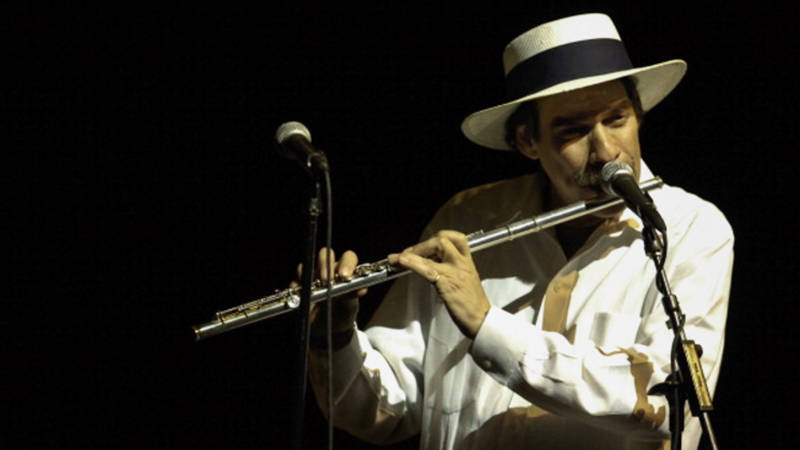
"caption": "Dave Valentin performs on flute at the 'All-Star Latin Jazz Tribute to Tito Puente' in 2005.",
"description": "Dave Valentin performs on flute at the 'All-Star Latin Jazz Tribute to Tito Puente' in 2005.",
"title": "Dave Valentin",
"credit": "Photo: Jack Vartoogian/Getty Images",
"status": "inherit",
"isLoading": false,
"fetchFailed": false
},
"arts_12872047": {
"type": "attachments",
"id": "arts_12872047",
"meta": {
"index": "attachments_1716263798",
"site": "arts",
"id": "12872047",
"found": true
},
"parent": 12836586,
"imgSizes": {
"small": {
"file": "https://ww2.kqed.org/app/uploads/sites/2/2017/03/SignalFromNoise-520x293.jpg",
"width": 520,
"mimeType": "image/jpeg",
"height": 293
},
"twentyfourteen-full-width": {
"file": "https://ww2.kqed.org/app/uploads/sites/2/2017/03/SignalFromNoise-1038x576.jpg",
"width": 1038,
"mimeType": "image/jpeg",
"height": 576
},
"thumbnail": {
"file": "https://ww2.kqed.org/app/uploads/sites/2/2017/03/SignalFromNoise-160x90.jpg",
"width": 160,
"mimeType": "image/jpeg",
"height": 90
},
"fd-sm": {
"file": "https://ww2.kqed.org/app/uploads/sites/2/2017/03/SignalFromNoise-960x540.jpg",
"width": 960,
"mimeType": "image/jpeg",
"height": 540
},
"post-thumbnail": {
"file": "https://ww2.kqed.org/app/uploads/sites/2/2017/03/SignalFromNoise-672x372.jpg",
"width": 672,
"mimeType": "image/jpeg",
"height": 372
},
"xsmall": {
"file": "https://ww2.kqed.org/app/uploads/sites/2/2017/03/SignalFromNoise-375x211.jpg",
"width": 375,
"mimeType": "image/jpeg",
"height": 211
},
"kqedFullSize": {
"file": "https://ww2.kqed.org/app/uploads/sites/2/2017/03/SignalFromNoise.jpg",
"width": 1920,
"height": 1080
},
"large": {
"file": "https://ww2.kqed.org/app/uploads/sites/2/2017/03/SignalFromNoise-1020x574.jpg",
"width": 1020,
"mimeType": "image/jpeg",
"height": 574
},
"xlarge": {
"file": "https://ww2.kqed.org/app/uploads/sites/2/2017/03/SignalFromNoise-1180x664.jpg",
"width": 1180,
"mimeType": "image/jpeg",
"height": 664
},
"guest-author-50": {
"file": "https://ww2.kqed.org/app/uploads/sites/2/2017/03/SignalFromNoise-50x50.jpg",
"width": 50,
"mimeType": "image/jpeg",
"height": 50
},
"guest-author-96": {
"file": "https://ww2.kqed.org/app/uploads/sites/2/2017/03/SignalFromNoise-96x96.jpg",
"width": 96,
"mimeType": "image/jpeg",
"height": 96
},
"medium": {
"file": "https://ww2.kqed.org/app/uploads/sites/2/2017/03/SignalFromNoise-800x450.jpg",
"width": 800,
"mimeType": "image/jpeg",
"height": 450
},
"guest-author-64": {
"file": "https://ww2.kqed.org/app/uploads/sites/2/2017/03/SignalFromNoise-64x64.jpg",
"width": 64,
"mimeType": "image/jpeg",
"height": 64
},
"guest-author-32": {
"file": "https://ww2.kqed.org/app/uploads/sites/2/2017/03/SignalFromNoise-32x32.jpg",
"width": 32,
"mimeType": "image/jpeg",
"height": 32
},
"fd-lrg": {
"file": "https://ww2.kqed.org/app/uploads/sites/2/2017/03/SignalFromNoise-1920x1080.jpg",
"width": 1920,
"mimeType": "image/jpeg",
"height": 1080
},
"fd-med": {
"file": "https://ww2.kqed.org/app/uploads/sites/2/2017/03/SignalFromNoise-1180x664.jpg",
"width": 1180,
"mimeType": "image/jpeg",
"height": 664
},
"full-width": {
"file": "https://ww2.kqed.org/app/uploads/sites/2/2017/03/SignalFromNoise-1920x1080.jpg",
"width": 1920,
"mimeType": "image/jpeg",
"height": 1080
},
"detail": {
"file": "https://ww2.kqed.org/app/uploads/sites/2/2017/03/SignalFromNoise-150x150.jpg",
"width": 150,
"mimeType": "image/jpeg",
"height": 150
},
"medium_large": {
"file": "https://ww2.kqed.org/app/uploads/sites/2/2017/03/SignalFromNoise-768x432.jpg",
"width": 768,
"mimeType": "image/jpeg",
"height": 432
},
"guest-author-128": {
"file": "https://ww2.kqed.org/app/uploads/sites/2/2017/03/SignalFromNoise-128x128.jpg",
"width": 128,
"mimeType": "image/jpeg",
"height": 128
},
"xxsmall": {
"file": "https://ww2.kqed.org/app/uploads/sites/2/2017/03/SignalFromNoise-240x135.jpg",
"width": 240,
"mimeType": "image/jpeg",
"height": 135
}
},
"publishDate": 1489029388,
"modified": 1489029516,
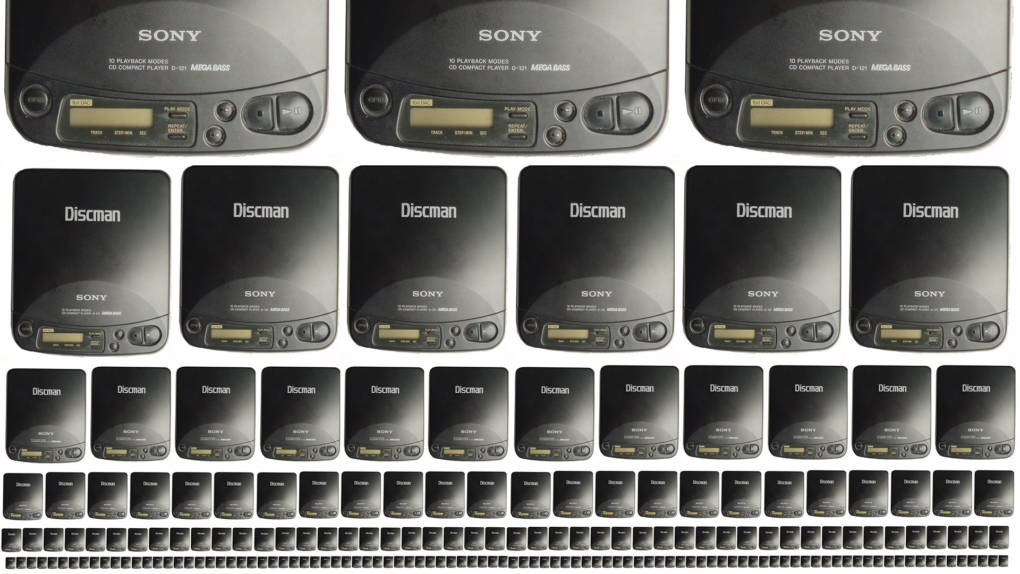
"caption": "What was once a handful of important new releases each week, dutifully covered by a few niche outlets, is now an unmanageable, full-blast spigot of constant music.",
"description": null,
"title": "SignalFromNoise",
"credit": null,
"status": "inherit",
"isLoading": false,
"fetchFailed": false
},
"arts_12866848": {
"type": "attachments",
"id": "arts_12866848",
"meta": {
"index": "attachments_1716263798",
"site": "arts",
"id": "12866848",
"found": true
},
"parent": 12866398,
"imgSizes": {
"small": {
"file": "https://ww2.kqed.org/app/uploads/sites/2/2017/03/kilmister_wide-b99119ce3eba950f4dbe44b609e85cf2d58052f5-s1200-c85-520x292.jpg",
"width": 520,
"mimeType": "image/jpeg",
"height": 292
},
"twentyfourteen-full-width": {
"file": "https://ww2.kqed.org/app/uploads/sites/2/2017/03/kilmister_wide-b99119ce3eba950f4dbe44b609e85cf2d58052f5-s1200-c85-1038x576.jpg",
"width": 1038,
"mimeType": "image/jpeg",
"height": 576
},
"thumbnail": {
"file": "https://ww2.kqed.org/app/uploads/sites/2/2017/03/kilmister_wide-b99119ce3eba950f4dbe44b609e85cf2d58052f5-s1200-c85-160x90.jpg",
"width": 160,
"mimeType": "image/jpeg",
"height": 90
},
"fd-sm": {
"file": "https://ww2.kqed.org/app/uploads/sites/2/2017/03/kilmister_wide-b99119ce3eba950f4dbe44b609e85cf2d58052f5-s1200-c85-960x539.jpg",
"width": 960,
"mimeType": "image/jpeg",
"height": 539
},
"post-thumbnail": {
"file": "https://ww2.kqed.org/app/uploads/sites/2/2017/03/kilmister_wide-b99119ce3eba950f4dbe44b609e85cf2d58052f5-s1200-c85-672x372.jpg",
"width": 672,
"mimeType": "image/jpeg",
"height": 372
},
"xsmall": {
"file": "https://ww2.kqed.org/app/uploads/sites/2/2017/03/kilmister_wide-b99119ce3eba950f4dbe44b609e85cf2d58052f5-s1200-c85-375x211.jpg",
"width": 375,
"mimeType": "image/jpeg",
"height": 211
},
"kqedFullSize": {
"file": "https://ww2.kqed.org/app/uploads/sites/2/2017/03/kilmister_wide-b99119ce3eba950f4dbe44b609e85cf2d58052f5-s1200-c85.jpg",
"width": 1200,
"height": 674
},
"large": {
"file": "https://ww2.kqed.org/app/uploads/sites/2/2017/03/kilmister_wide-b99119ce3eba950f4dbe44b609e85cf2d58052f5-s1200-c85-1020x573.jpg",
"width": 1020,
"mimeType": "image/jpeg",
"height": 573
},
"xlarge": {
"file": "https://ww2.kqed.org/app/uploads/sites/2/2017/03/kilmister_wide-b99119ce3eba950f4dbe44b609e85cf2d58052f5-s1200-c85-1180x663.jpg",
"width": 1180,
"mimeType": "image/jpeg",
"height": 663
},
"guest-author-50": {
"file": "https://ww2.kqed.org/app/uploads/sites/2/2017/03/kilmister_wide-b99119ce3eba950f4dbe44b609e85cf2d58052f5-s1200-c85-50x50.jpg",
"width": 50,
"mimeType": "image/jpeg",
"height": 50
},
"guest-author-96": {
"file": "https://ww2.kqed.org/app/uploads/sites/2/2017/03/kilmister_wide-b99119ce3eba950f4dbe44b609e85cf2d58052f5-s1200-c85-96x96.jpg",
"width": 96,
"mimeType": "image/jpeg",
"height": 96
},
"medium": {
"file": "https://ww2.kqed.org/app/uploads/sites/2/2017/03/kilmister_wide-b99119ce3eba950f4dbe44b609e85cf2d58052f5-s1200-c85-800x449.jpg",
"width": 800,
"mimeType": "image/jpeg",
"height": 449
},
"guest-author-64": {
"file": "https://ww2.kqed.org/app/uploads/sites/2/2017/03/kilmister_wide-b99119ce3eba950f4dbe44b609e85cf2d58052f5-s1200-c85-64x64.jpg",
"width": 64,
"mimeType": "image/jpeg",
"height": 64
},
"guest-author-32": {
"file": "https://ww2.kqed.org/app/uploads/sites/2/2017/03/kilmister_wide-b99119ce3eba950f4dbe44b609e85cf2d58052f5-s1200-c85-32x32.jpg",
"width": 32,
"mimeType": "image/jpeg",
"height": 32
},
"fd-med": {
"file": "https://ww2.kqed.org/app/uploads/sites/2/2017/03/kilmister_wide-b99119ce3eba950f4dbe44b609e85cf2d58052f5-s1200-c85-1180x663.jpg",
"width": 1180,
"mimeType": "image/jpeg",
"height": 663
},
"detail": {
"file": "https://ww2.kqed.org/app/uploads/sites/2/2017/03/kilmister_wide-b99119ce3eba950f4dbe44b609e85cf2d58052f5-s1200-c85-150x150.jpg",
"width": 150,
"mimeType": "image/jpeg",
"height": 150
},
"medium_large": {
"file": "https://ww2.kqed.org/app/uploads/sites/2/2017/03/kilmister_wide-b99119ce3eba950f4dbe44b609e85cf2d58052f5-s1200-c85-768x431.jpg",
"width": 768,
"mimeType": "image/jpeg",
"height": 431
},
"guest-author-128": {
"file": "https://ww2.kqed.org/app/uploads/sites/2/2017/03/kilmister_wide-b99119ce3eba950f4dbe44b609e85cf2d58052f5-s1200-c85-128x128.jpg",
"width": 128,
"mimeType": "image/jpeg",
"height": 128
},
"xxsmall": {
"file": "https://ww2.kqed.org/app/uploads/sites/2/2017/03/kilmister_wide-b99119ce3eba950f4dbe44b609e85cf2d58052f5-s1200-c85-240x135.jpg",
"width": 240,
"mimeType": "image/jpeg",
"height": 135
}
},
"publishDate": 1488938769,
"modified": 1488938799,
"caption": "Lemmy Kilmister",
"description": null,
"title": "kilmister_wide-b99119ce3eba950f4dbe44b609e85cf2d58052f5-s1200-c85",
"credit": "Anders Birch/AFP/Getty Images",
"status": "inherit",
"isLoading": false,
"fetchFailed": false
},
"arts_12870538": {
"type": "attachments",
"id": "arts_12870538",
"meta": {
"index": "attachments_1716263798",
"site": "arts",
"id": "12870538",
"found": true
},
"parent": 12870537,
"imgSizes": {
"small": {
"file": "https://ww2.kqed.org/app/uploads/sites/2/2017/03/gettyimages-177225601_wide-ac50dc785bec69f856f26e3d6a554a426d49702f-520x293.jpg",
"width": 520,
"mimeType": "image/jpeg",
"height": 293
},
"twentyfourteen-full-width": {
"file": "https://ww2.kqed.org/app/uploads/sites/2/2017/03/gettyimages-177225601_wide-ac50dc785bec69f856f26e3d6a554a426d49702f-1038x576.jpg",
"width": 1038,
"mimeType": "image/jpeg",
"height": 576
},
"thumbnail": {
"file": "https://ww2.kqed.org/app/uploads/sites/2/2017/03/gettyimages-177225601_wide-ac50dc785bec69f856f26e3d6a554a426d49702f-160x90.jpg",
"width": 160,
"mimeType": "image/jpeg",
"height": 90
},
"fd-sm": {
"file": "https://ww2.kqed.org/app/uploads/sites/2/2017/03/gettyimages-177225601_wide-ac50dc785bec69f856f26e3d6a554a426d49702f-960x540.jpg",
"width": 960,
"mimeType": "image/jpeg",
"height": 540
},
"post-thumbnail": {
"file": "https://ww2.kqed.org/app/uploads/sites/2/2017/03/gettyimages-177225601_wide-ac50dc785bec69f856f26e3d6a554a426d49702f-672x372.jpg",
"width": 672,
"mimeType": "image/jpeg",
"height": 372
},
"xsmall": {
"file": "https://ww2.kqed.org/app/uploads/sites/2/2017/03/gettyimages-177225601_wide-ac50dc785bec69f856f26e3d6a554a426d49702f-375x211.jpg",
"width": 375,
"mimeType": "image/jpeg",
"height": 211
},
"kqedFullSize": {
"file": "https://ww2.kqed.org/app/uploads/sites/2/2017/03/gettyimages-177225601_wide-ac50dc785bec69f856f26e3d6a554a426d49702f.jpg",
"width": 2048,
"height": 1152
},
"large": {
"file": "https://ww2.kqed.org/app/uploads/sites/2/2017/03/gettyimages-177225601_wide-ac50dc785bec69f856f26e3d6a554a426d49702f-1020x574.jpg",
"width": 1020,
"mimeType": "image/jpeg",
"height": 574
},
"xlarge": {
"file": "https://ww2.kqed.org/app/uploads/sites/2/2017/03/gettyimages-177225601_wide-ac50dc785bec69f856f26e3d6a554a426d49702f-1180x664.jpg",
"width": 1180,
"mimeType": "image/jpeg",
"height": 664
},
"guest-author-50": {
"file": "https://ww2.kqed.org/app/uploads/sites/2/2017/03/gettyimages-177225601_wide-ac50dc785bec69f856f26e3d6a554a426d49702f-50x50.jpg",
"width": 50,
"mimeType": "image/jpeg",
"height": 50
},
"guest-author-96": {
"file": "https://ww2.kqed.org/app/uploads/sites/2/2017/03/gettyimages-177225601_wide-ac50dc785bec69f856f26e3d6a554a426d49702f-96x96.jpg",
"width": 96,
"mimeType": "image/jpeg",
"height": 96
},
"medium": {
"file": "https://ww2.kqed.org/app/uploads/sites/2/2017/03/gettyimages-177225601_wide-ac50dc785bec69f856f26e3d6a554a426d49702f-800x450.jpg",
"width": 800,
"mimeType": "image/jpeg",
"height": 450
},
"guest-author-64": {
"file": "https://ww2.kqed.org/app/uploads/sites/2/2017/03/gettyimages-177225601_wide-ac50dc785bec69f856f26e3d6a554a426d49702f-64x64.jpg",
"width": 64,
"mimeType": "image/jpeg",
"height": 64
},
"guest-author-32": {
"file": "https://ww2.kqed.org/app/uploads/sites/2/2017/03/gettyimages-177225601_wide-ac50dc785bec69f856f26e3d6a554a426d49702f-32x32.jpg",
"width": 32,
"mimeType": "image/jpeg",
"height": 32
},
"fd-lrg": {
"file": "https://ww2.kqed.org/app/uploads/sites/2/2017/03/gettyimages-177225601_wide-ac50dc785bec69f856f26e3d6a554a426d49702f-1920x1080.jpg",
"width": 1920,
"mimeType": "image/jpeg",
"height": 1080
},
"fd-med": {
"file": "https://ww2.kqed.org/app/uploads/sites/2/2017/03/gettyimages-177225601_wide-ac50dc785bec69f856f26e3d6a554a426d49702f-1180x664.jpg",
"width": 1180,
"mimeType": "image/jpeg",
"height": 664
},
"full-width": {
"file": "https://ww2.kqed.org/app/uploads/sites/2/2017/03/gettyimages-177225601_wide-ac50dc785bec69f856f26e3d6a554a426d49702f-1920x1080.jpg",
"width": 1920,
"mimeType": "image/jpeg",
"height": 1080
},
"detail": {
"file": "https://ww2.kqed.org/app/uploads/sites/2/2017/03/gettyimages-177225601_wide-ac50dc785bec69f856f26e3d6a554a426d49702f-150x150.jpg",
"width": 150,
"mimeType": "image/jpeg",
"height": 150
},
"medium_large": {
"file": "https://ww2.kqed.org/app/uploads/sites/2/2017/03/gettyimages-177225601_wide-ac50dc785bec69f856f26e3d6a554a426d49702f-768x432.jpg",
"width": 768,
"mimeType": "image/jpeg",
"height": 432
},
"guest-author-128": {
"file": "https://ww2.kqed.org/app/uploads/sites/2/2017/03/gettyimages-177225601_wide-ac50dc785bec69f856f26e3d6a554a426d49702f-128x128.jpg",
"width": 128,
"mimeType": "image/jpeg",
"height": 128
},
"xxsmall": {
"file": "https://ww2.kqed.org/app/uploads/sites/2/2017/03/gettyimages-177225601_wide-ac50dc785bec69f856f26e3d6a554a426d49702f-240x135.jpg",
"width": 240,
"mimeType": "image/jpeg",
"height": 135
}
},
"publishDate": 1489003792,
"modified": 1489004215,
"caption": "Actor Bruce Lee with producer Fred Weintraub, on the set 'Enter the Dragon' in 1973.",
"description": "Actor Bruce Lee with producer Fred Weintraub, on the set 'Enter the Dragon' in 1973.",
"title": "Actor Bruce Lee with producer Fred Weintraub, on the set Enter the Dragon in 1973.",
"credit": "Photo: Stanley Bielecki Movie Collection/Getty Images",
"status": "inherit",
"isLoading": false,
"fetchFailed": false
},
"arts_12866627": {
"type": "attachments",
"id": "arts_12866627",
"meta": {
"index": "attachments_1716263798",
"site": "arts",
"id": "12866627",
"found": true
},
"parent": 12866617,
"imgSizes": {
"small": {
"file": "https://ww2.kqed.org/app/uploads/sites/2/2017/03/keyboard-3-2-520x293.jpg",
"width": 520,
"mimeType": "image/jpeg",
"height": 293
},
"twentyfourteen-full-width": {
"file": "https://ww2.kqed.org/app/uploads/sites/2/2017/03/keyboard-3-2-1038x576.jpg",
"width": 1038,
"mimeType": "image/jpeg",
"height": 576
},
"thumbnail": {
"file": "https://ww2.kqed.org/app/uploads/sites/2/2017/03/keyboard-3-2-160x90.jpg",
"width": 160,
"mimeType": "image/jpeg",
"height": 90
},
"fd-sm": {
"file": "https://ww2.kqed.org/app/uploads/sites/2/2017/03/keyboard-3-2-960x540.jpg",
"width": 960,
"mimeType": "image/jpeg",
"height": 540
},
"post-thumbnail": {
"file": "https://ww2.kqed.org/app/uploads/sites/2/2017/03/keyboard-3-2-672x372.jpg",
"width": 672,
"mimeType": "image/jpeg",
"height": 372
},
"xsmall": {
"file": "https://ww2.kqed.org/app/uploads/sites/2/2017/03/keyboard-3-2-375x211.jpg",
"width": 375,
"mimeType": "image/jpeg",
"height": 211
},
"kqedFullSize": {
"file": "https://ww2.kqed.org/app/uploads/sites/2/2017/03/keyboard-3-2.jpg",
"width": 1920,
"height": 1080
},
"large": {
"file": "https://ww2.kqed.org/app/uploads/sites/2/2017/03/keyboard-3-2-1020x574.jpg",
"width": 1020,
"mimeType": "image/jpeg",
"height": 574
},
"xlarge": {
"file": "https://ww2.kqed.org/app/uploads/sites/2/2017/03/keyboard-3-2-1180x664.jpg",
"width": 1180,
"mimeType": "image/jpeg",
"height": 664
},
"guest-author-50": {
"file": "https://ww2.kqed.org/app/uploads/sites/2/2017/03/keyboard-3-2-50x50.jpg",
"width": 50,
"mimeType": "image/jpeg",
"height": 50
},
"guest-author-96": {
"file": "https://ww2.kqed.org/app/uploads/sites/2/2017/03/keyboard-3-2-96x96.jpg",
"width": 96,
"mimeType": "image/jpeg",
"height": 96
},
"medium": {
"file": "https://ww2.kqed.org/app/uploads/sites/2/2017/03/keyboard-3-2-800x450.jpg",
"width": 800,
"mimeType": "image/jpeg",
"height": 450
},
"guest-author-64": {
"file": "https://ww2.kqed.org/app/uploads/sites/2/2017/03/keyboard-3-2-64x64.jpg",
"width": 64,
"mimeType": "image/jpeg",
"height": 64
},
"guest-author-32": {
"file": "https://ww2.kqed.org/app/uploads/sites/2/2017/03/keyboard-3-2-32x32.jpg",
"width": 32,
"mimeType": "image/jpeg",
"height": 32
},
"fd-lrg": {
"file": "https://ww2.kqed.org/app/uploads/sites/2/2017/03/keyboard-3-2-1920x1080.jpg",
"width": 1920,
"mimeType": "image/jpeg",
"height": 1080
},
"fd-med": {
"file": "https://ww2.kqed.org/app/uploads/sites/2/2017/03/keyboard-3-2-1180x664.jpg",
"width": 1180,
"mimeType": "image/jpeg",
"height": 664
},
"full-width": {
"file": "https://ww2.kqed.org/app/uploads/sites/2/2017/03/keyboard-3-2-1920x1080.jpg",
"width": 1920,
"mimeType": "image/jpeg",
"height": 1080
},
"detail": {
"file": "https://ww2.kqed.org/app/uploads/sites/2/2017/03/keyboard-3-2-150x150.jpg",
"width": 150,
"mimeType": "image/jpeg",
"height": 150
},
"medium_large": {
"file": "https://ww2.kqed.org/app/uploads/sites/2/2017/03/keyboard-3-2-768x432.jpg",
"width": 768,
"mimeType": "image/jpeg",
"height": 432
},
"guest-author-128": {
"file": "https://ww2.kqed.org/app/uploads/sites/2/2017/03/keyboard-3-2-128x128.jpg",
"width": 128,
"mimeType": "image/jpeg",
"height": 128
},
"xxsmall": {
"file": "https://ww2.kqed.org/app/uploads/sites/2/2017/03/keyboard-3-2-240x135.jpg",
"width": 240,
"mimeType": "image/jpeg",
"height": 135
}
},
"publishDate": 1488935372,
"modified": 1488936463,
"caption": null,
"description": null,
"title": "Sahba Aminikia",
"credit": null,
"status": "inherit",
"isLoading": false,
"fetchFailed": false
},
"arts_12866187": {
"type": "attachments",
"id": "arts_12866187",
"meta": {
"index": "attachments_1716263798",
"site": "arts",
"id": "12866187",
"found": true
},
"parent": 12866186,
"imgSizes": {
"small": {
"file": "https://ww2.kqed.org/app/uploads/sites/2/2017/03/Leonard_Bernstein_NYWTS_1955MAIN-520x293.jpg",
"width": 520,
"mimeType": "image/jpeg",
"height": 293
},
"twentyfourteen-full-width": {
"file": "https://ww2.kqed.org/app/uploads/sites/2/2017/03/Leonard_Bernstein_NYWTS_1955MAIN-1038x576.jpg",
"width": 1038,
"mimeType": "image/jpeg",
"height": 576
},
"thumbnail": {
"file": "https://ww2.kqed.org/app/uploads/sites/2/2017/03/Leonard_Bernstein_NYWTS_1955MAIN-160x90.jpg",
"width": 160,
"mimeType": "image/jpeg",
"height": 90
},
"fd-sm": {
"file": "https://ww2.kqed.org/app/uploads/sites/2/2017/03/Leonard_Bernstein_NYWTS_1955MAIN-960x540.jpg",
"width": 960,
"mimeType": "image/jpeg",
"height": 540
},
"post-thumbnail": {
"file": "https://ww2.kqed.org/app/uploads/sites/2/2017/03/Leonard_Bernstein_NYWTS_1955MAIN-672x372.jpg",
"width": 672,
"mimeType": "image/jpeg",
"height": 372
},
"xsmall": {
"file": "https://ww2.kqed.org/app/uploads/sites/2/2017/03/Leonard_Bernstein_NYWTS_1955MAIN-375x211.jpg",
"width": 375,
"mimeType": "image/jpeg",
"height": 211
},
"kqedFullSize": {
"file": "https://ww2.kqed.org/app/uploads/sites/2/2017/03/Leonard_Bernstein_NYWTS_1955MAIN.jpg",
"width": 1920,
"height": 1080
},
"large": {
"file": "https://ww2.kqed.org/app/uploads/sites/2/2017/03/Leonard_Bernstein_NYWTS_1955MAIN-1020x574.jpg",
"width": 1020,
"mimeType": "image/jpeg",
"height": 574
},
"xlarge": {
"file": "https://ww2.kqed.org/app/uploads/sites/2/2017/03/Leonard_Bernstein_NYWTS_1955MAIN-1180x664.jpg",
"width": 1180,
"mimeType": "image/jpeg",
"height": 664
},
"guest-author-50": {
"file": "https://ww2.kqed.org/app/uploads/sites/2/2017/03/Leonard_Bernstein_NYWTS_1955MAIN-50x50.jpg",
"width": 50,
"mimeType": "image/jpeg",
"height": 50
},
"guest-author-96": {
"file": "https://ww2.kqed.org/app/uploads/sites/2/2017/03/Leonard_Bernstein_NYWTS_1955MAIN-96x96.jpg",
"width": 96,
"mimeType": "image/jpeg",
"height": 96
},
"medium": {
"file": "https://ww2.kqed.org/app/uploads/sites/2/2017/03/Leonard_Bernstein_NYWTS_1955MAIN-800x450.jpg",
"width": 800,
"mimeType": "image/jpeg",
"height": 450
},
"guest-author-64": {
"file": "https://ww2.kqed.org/app/uploads/sites/2/2017/03/Leonard_Bernstein_NYWTS_1955MAIN-64x64.jpg",
"width": 64,
"mimeType": "image/jpeg",
"height": 64
},
"guest-author-32": {
"file": "https://ww2.kqed.org/app/uploads/sites/2/2017/03/Leonard_Bernstein_NYWTS_1955MAIN-32x32.jpg",
"width": 32,
"mimeType": "image/jpeg",
"height": 32
},
"fd-lrg": {
"file": "https://ww2.kqed.org/app/uploads/sites/2/2017/03/Leonard_Bernstein_NYWTS_1955MAIN-1920x1080.jpg",
"width": 1920,
"mimeType": "image/jpeg",
"height": 1080
},
"fd-med": {
"file": "https://ww2.kqed.org/app/uploads/sites/2/2017/03/Leonard_Bernstein_NYWTS_1955MAIN-1180x664.jpg",
"width": 1180,
"mimeType": "image/jpeg",
"height": 664
},
"full-width": {
"file": "https://ww2.kqed.org/app/uploads/sites/2/2017/03/Leonard_Bernstein_NYWTS_1955MAIN-1920x1080.jpg",
"width": 1920,
"mimeType": "image/jpeg",
"height": 1080
},
"detail": {
"file": "https://ww2.kqed.org/app/uploads/sites/2/2017/03/Leonard_Bernstein_NYWTS_1955MAIN-150x150.jpg",
"width": 150,
"mimeType": "image/jpeg",
"height": 150
},
"medium_large": {
"file": "https://ww2.kqed.org/app/uploads/sites/2/2017/03/Leonard_Bernstein_NYWTS_1955MAIN-768x432.jpg",
"width": 768,
"mimeType": "image/jpeg",
"height": 432
},
"guest-author-128": {
"file": "https://ww2.kqed.org/app/uploads/sites/2/2017/03/Leonard_Bernstein_NYWTS_1955MAIN-128x128.jpg",
"width": 128,
"mimeType": "image/jpeg",
"height": 128
},
"xxsmall": {
"file": "https://ww2.kqed.org/app/uploads/sites/2/2017/03/Leonard_Bernstein_NYWTS_1955MAIN-240x135.jpg",
"width": 240,
"mimeType": "image/jpeg",
"height": 135
}
},
"publishDate": 1488925804,
"modified": 1488925897,
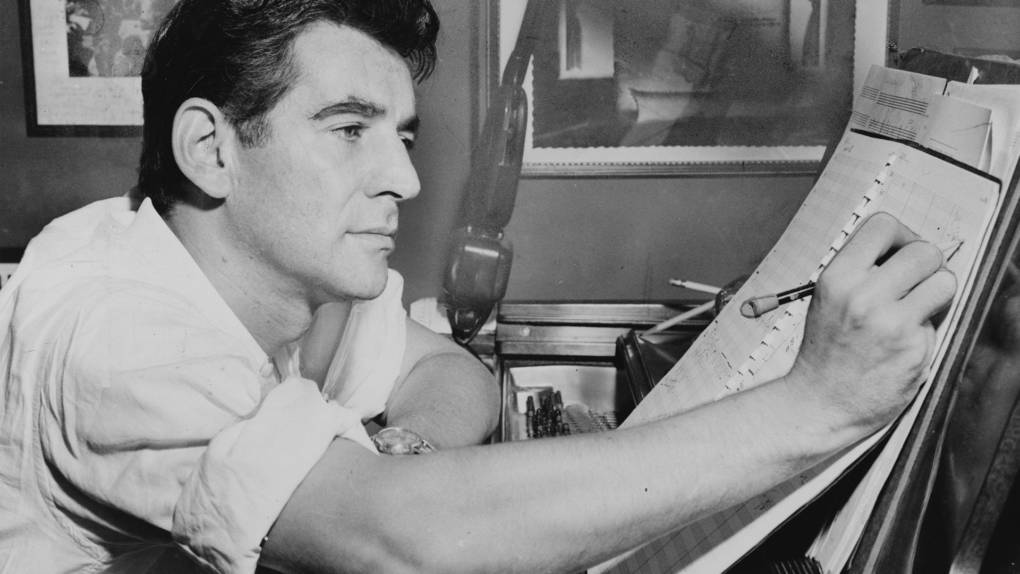
"caption": "Leonard Bernstein in 1955. The famed conductor and composer is the subject of tributes during the San Francisco Symphony's new season.",
"description": "Leonard Bernstein in 1955. The famed conductor and composer is the subject of tributes during the San Francisco Symphony's new season.",
"title": "Leonard_Bernstein_NYWTS_1955MAIN",
"credit": "Courtesy San Francisco Symphony",
"status": "inherit",
"isLoading": false,
"fetchFailed": false
},
"arts_12866189": {
"type": "attachments",
"id": "arts_12866189",
"meta": {
"index": "attachments_1716263798",
"site": "arts",
"id": "12866189",
"found": true
},
"parent": 12865981,
"imgSizes": {
"small": {
"file": "https://ww2.kqed.org/app/uploads/sites/2/2017/03/Charles-Bradley-520x293.jpg",
"width": 520,
"mimeType": "image/jpeg",
"height": 293
},
"twentyfourteen-full-width": {
"file": "https://ww2.kqed.org/app/uploads/sites/2/2017/03/Charles-Bradley-1038x576.jpg",
"width": 1038,
"mimeType": "image/jpeg",
"height": 576
},
"thumbnail": {
"file": "https://ww2.kqed.org/app/uploads/sites/2/2017/03/Charles-Bradley-160x90.jpg",
"width": 160,
"mimeType": "image/jpeg",
"height": 90
},
"fd-sm": {
"file": "https://ww2.kqed.org/app/uploads/sites/2/2017/03/Charles-Bradley-960x540.jpg",
"width": 960,
"mimeType": "image/jpeg",
"height": 540
},
"post-thumbnail": {
"file": "https://ww2.kqed.org/app/uploads/sites/2/2017/03/Charles-Bradley-672x372.jpg",
"width": 672,
"mimeType": "image/jpeg",
"height": 372
},
"xsmall": {
"file": "https://ww2.kqed.org/app/uploads/sites/2/2017/03/Charles-Bradley-375x211.jpg",
"width": 375,
"mimeType": "image/jpeg",
"height": 211
},
"kqedFullSize": {
"file": "https://ww2.kqed.org/app/uploads/sites/2/2017/03/Charles-Bradley.jpg",
"width": 1920,
"height": 1080
},
"large": {
"file": "https://ww2.kqed.org/app/uploads/sites/2/2017/03/Charles-Bradley-1020x574.jpg",
"width": 1020,
"mimeType": "image/jpeg",
"height": 574
},
"xlarge": {
"file": "https://ww2.kqed.org/app/uploads/sites/2/2017/03/Charles-Bradley-1180x664.jpg",
"width": 1180,
"mimeType": "image/jpeg",
"height": 664
},
"guest-author-50": {
"file": "https://ww2.kqed.org/app/uploads/sites/2/2017/03/Charles-Bradley-50x50.jpg",
"width": 50,
"mimeType": "image/jpeg",
"height": 50
},
"guest-author-96": {
"file": "https://ww2.kqed.org/app/uploads/sites/2/2017/03/Charles-Bradley-96x96.jpg",
"width": 96,
"mimeType": "image/jpeg",
"height": 96
},
"medium": {
"file": "https://ww2.kqed.org/app/uploads/sites/2/2017/03/Charles-Bradley-800x450.jpg",
"width": 800,
"mimeType": "image/jpeg",
"height": 450
},
"guest-author-64": {
"file": "https://ww2.kqed.org/app/uploads/sites/2/2017/03/Charles-Bradley-64x64.jpg",
"width": 64,
"mimeType": "image/jpeg",
"height": 64
},
"guest-author-32": {
"file": "https://ww2.kqed.org/app/uploads/sites/2/2017/03/Charles-Bradley-32x32.jpg",
"width": 32,
"mimeType": "image/jpeg",
"height": 32
},
"fd-lrg": {
"file": "https://ww2.kqed.org/app/uploads/sites/2/2017/03/Charles-Bradley-1920x1080.jpg",
"width": 1920,
"mimeType": "image/jpeg",
"height": 1080
},
"fd-med": {
"file": "https://ww2.kqed.org/app/uploads/sites/2/2017/03/Charles-Bradley-1180x664.jpg",
"width": 1180,
"mimeType": "image/jpeg",
"height": 664
},
"full-width": {
"file": "https://ww2.kqed.org/app/uploads/sites/2/2017/03/Charles-Bradley-1920x1080.jpg",
"width": 1920,
"mimeType": "image/jpeg",
"height": 1080
},
"detail": {
"file": "https://ww2.kqed.org/app/uploads/sites/2/2017/03/Charles-Bradley-150x150.jpg",
"width": 150,
"mimeType": "image/jpeg",
"height": 150
},
"medium_large": {
"file": "https://ww2.kqed.org/app/uploads/sites/2/2017/03/Charles-Bradley-768x432.jpg",
"width": 768,
"mimeType": "image/jpeg",
"height": 432
},
"guest-author-128": {
"file": "https://ww2.kqed.org/app/uploads/sites/2/2017/03/Charles-Bradley-128x128.jpg",
"width": 128,
"mimeType": "image/jpeg",
"height": 128
},
"xxsmall": {
"file": "https://ww2.kqed.org/app/uploads/sites/2/2017/03/Charles-Bradley-240x135.jpg",
"width": 240,
"mimeType": "image/jpeg",
"height": 135
}
},
"publishDate": 1488926902,
"modified": 1488926971,
"caption": "Charles Bradley and The Extraordinaires perform onstage at Pandora Discovery Den during the 2016 SXSW Music, Film + Interactive Festival ",
"description": "Charles Bradley and The Extraordinaires perform onstage at Pandora Discovery Den during the 2016 SXSW Music, Film + Interactive Festival ",
"title": "PANDORA Discovery Den SXSW",
"credit": "Photo: Dave Mangels/Getty Images for Pandora",
"status": "inherit",
"isLoading": false,
"fetchFailed": false
},
"arts_12864701": {
"type": "attachments",
"id": "arts_12864701",
"meta": {
"index": "attachments_1716263798",
"site": "arts",
"id": "12864701",
"found": true
},
"parent": 12864700,
"imgSizes": {
"small": {
"file": "https://ww2.kqed.org/app/uploads/sites/2/2017/03/nate-smith-2_photo-credit-laura-hanifin_wide-ffdfbb47803b1f00543966bd0d4155c6f2dc4baf-520x292.jpg",
"width": 520,
"mimeType": "image/jpeg",
"height": 292
},
"thumbnail": {
"file": "https://ww2.kqed.org/app/uploads/sites/2/2017/03/nate-smith-2_photo-credit-laura-hanifin_wide-ffdfbb47803b1f00543966bd0d4155c6f2dc4baf-160x90.jpg",
"width": 160,
"mimeType": "image/jpeg",
"height": 90
},
"post-thumbnail": {
"file": "https://ww2.kqed.org/app/uploads/sites/2/2017/03/nate-smith-2_photo-credit-laura-hanifin_wide-ffdfbb47803b1f00543966bd0d4155c6f2dc4baf-672x372.jpg",
"width": 672,
"mimeType": "image/jpeg",
"height": 372
},
"xsmall": {
"file": "https://ww2.kqed.org/app/uploads/sites/2/2017/03/nate-smith-2_photo-credit-laura-hanifin_wide-ffdfbb47803b1f00543966bd0d4155c6f2dc4baf-375x211.jpg",
"width": 375,
"mimeType": "image/jpeg",
"height": 211
},
"kqedFullSize": {
"file": "https://ww2.kqed.org/app/uploads/sites/2/2017/03/nate-smith-2_photo-credit-laura-hanifin_wide-ffdfbb47803b1f00543966bd0d4155c6f2dc4baf.jpg",
"width": 900,
"height": 506
},
"guest-author-50": {
"file": "https://ww2.kqed.org/app/uploads/sites/2/2017/03/nate-smith-2_photo-credit-laura-hanifin_wide-ffdfbb47803b1f00543966bd0d4155c6f2dc4baf-50x50.jpg",
"width": 50,
"mimeType": "image/jpeg",
"height": 50
},
"guest-author-96": {
"file": "https://ww2.kqed.org/app/uploads/sites/2/2017/03/nate-smith-2_photo-credit-laura-hanifin_wide-ffdfbb47803b1f00543966bd0d4155c6f2dc4baf-96x96.jpg",
"width": 96,
"mimeType": "image/jpeg",
"height": 96
},
"medium": {
"file": "https://ww2.kqed.org/app/uploads/sites/2/2017/03/nate-smith-2_photo-credit-laura-hanifin_wide-ffdfbb47803b1f00543966bd0d4155c6f2dc4baf-800x450.jpg",
"width": 800,
"mimeType": "image/jpeg",
"height": 450
},
"guest-author-64": {
"file": "https://ww2.kqed.org/app/uploads/sites/2/2017/03/nate-smith-2_photo-credit-laura-hanifin_wide-ffdfbb47803b1f00543966bd0d4155c6f2dc4baf-64x64.jpg",
"width": 64,
"mimeType": "image/jpeg",
"height": 64
},
"guest-author-32": {
"file": "https://ww2.kqed.org/app/uploads/sites/2/2017/03/nate-smith-2_photo-credit-laura-hanifin_wide-ffdfbb47803b1f00543966bd0d4155c6f2dc4baf-32x32.jpg",
"width": 32,
"mimeType": "image/jpeg",
"height": 32
},
"detail": {
"file": "https://ww2.kqed.org/app/uploads/sites/2/2017/03/nate-smith-2_photo-credit-laura-hanifin_wide-ffdfbb47803b1f00543966bd0d4155c6f2dc4baf-150x150.jpg",
"width": 150,
"mimeType": "image/jpeg",
"height": 150
},
"medium_large": {
"file": "https://ww2.kqed.org/app/uploads/sites/2/2017/03/nate-smith-2_photo-credit-laura-hanifin_wide-ffdfbb47803b1f00543966bd0d4155c6f2dc4baf-768x432.jpg",
"width": 768,
"mimeType": "image/jpeg",
"height": 432
},
"guest-author-128": {
"file": "https://ww2.kqed.org/app/uploads/sites/2/2017/03/nate-smith-2_photo-credit-laura-hanifin_wide-ffdfbb47803b1f00543966bd0d4155c6f2dc4baf-128x128.jpg",
"width": 128,
"mimeType": "image/jpeg",
"height": 128
},
"xxsmall": {
"file": "https://ww2.kqed.org/app/uploads/sites/2/2017/03/nate-smith-2_photo-credit-laura-hanifin_wide-ffdfbb47803b1f00543966bd0d4155c6f2dc4baf-240x135.jpg",
"width": 240,
"mimeType": "image/jpeg",
"height": 135
}
},
"publishDate": 1488903603,
"modified": 1488903775,
"caption": "Nate Smith's debut solo album is 'Kinfolk: Postcards From Everywhere'.",
"description": " 'Nate Smith's debut solo album is 'Kinfolk: Postcards From Everywhere'.",
"title": "Nate Smith's debut solo album is Kinfolk: Postcards From Everywhere.",
"credit": "Photo: Laura Hanifin/Courtesy of the artist",
"status": "inherit",
"isLoading": false,
"fetchFailed": false
},
"arts_12861214": {
"type": "attachments",
"id": "arts_12861214",
"meta": {
"index": "attachments_1716263798",
"site": "arts",
"id": "12861214",
"found": true
},
"parent": 12861208,
"imgSizes": {
"small": {
"file": "https://ww2.kqed.org/app/uploads/sites/2/2017/03/Chance-the-Rapper-520x293.jpg",
"width": 520,
"mimeType": "image/jpeg",
"height": 293
},
"twentyfourteen-full-width": {
"file": "https://ww2.kqed.org/app/uploads/sites/2/2017/03/Chance-the-Rapper-1038x576.jpg",
"width": 1038,
"mimeType": "image/jpeg",
"height": 576
},
"thumbnail": {
"file": "https://ww2.kqed.org/app/uploads/sites/2/2017/03/Chance-the-Rapper-160x90.jpg",
"width": 160,
"mimeType": "image/jpeg",
"height": 90
},
"fd-sm": {
"file": "https://ww2.kqed.org/app/uploads/sites/2/2017/03/Chance-the-Rapper-960x540.jpg",
"width": 960,
"mimeType": "image/jpeg",
"height": 540
},
"post-thumbnail": {
"file": "https://ww2.kqed.org/app/uploads/sites/2/2017/03/Chance-the-Rapper-672x372.jpg",
"width": 672,
"mimeType": "image/jpeg",
"height": 372
},
"xsmall": {
"file": "https://ww2.kqed.org/app/uploads/sites/2/2017/03/Chance-the-Rapper-375x211.jpg",
"width": 375,
"mimeType": "image/jpeg",
"height": 211
},
"kqedFullSize": {
"file": "https://ww2.kqed.org/app/uploads/sites/2/2017/03/Chance-the-Rapper.jpg",
"width": 1920,
"height": 1080
},
"large": {
"file": "https://ww2.kqed.org/app/uploads/sites/2/2017/03/Chance-the-Rapper-1020x574.jpg",
"width": 1020,
"mimeType": "image/jpeg",
"height": 574
},
"xlarge": {
"file": "https://ww2.kqed.org/app/uploads/sites/2/2017/03/Chance-the-Rapper-1180x664.jpg",
"width": 1180,
"mimeType": "image/jpeg",
"height": 664
},
"guest-author-50": {
"file": "https://ww2.kqed.org/app/uploads/sites/2/2017/03/Chance-the-Rapper-50x50.jpg",
"width": 50,
"mimeType": "image/jpeg",
"height": 50
},
"guest-author-96": {
"file": "https://ww2.kqed.org/app/uploads/sites/2/2017/03/Chance-the-Rapper-96x96.jpg",
"width": 96,
"mimeType": "image/jpeg",
"height": 96
},
"medium": {
"file": "https://ww2.kqed.org/app/uploads/sites/2/2017/03/Chance-the-Rapper-800x450.jpg",
"width": 800,
"mimeType": "image/jpeg",
"height": 450
},
"guest-author-64": {
"file": "https://ww2.kqed.org/app/uploads/sites/2/2017/03/Chance-the-Rapper-64x64.jpg",
"width": 64,
"mimeType": "image/jpeg",
"height": 64
},
"guest-author-32": {
"file": "https://ww2.kqed.org/app/uploads/sites/2/2017/03/Chance-the-Rapper-32x32.jpg",
"width": 32,
"mimeType": "image/jpeg",
"height": 32
},
"fd-lrg": {
"file": "https://ww2.kqed.org/app/uploads/sites/2/2017/03/Chance-the-Rapper-1920x1080.jpg",
"width": 1920,
"mimeType": "image/jpeg",
"height": 1080
},
"fd-med": {
"file": "https://ww2.kqed.org/app/uploads/sites/2/2017/03/Chance-the-Rapper-1180x664.jpg",
"width": 1180,
"mimeType": "image/jpeg",
"height": 664
},
"full-width": {
"file": "https://ww2.kqed.org/app/uploads/sites/2/2017/03/Chance-the-Rapper-1920x1080.jpg",
"width": 1920,
"mimeType": "image/jpeg",
"height": 1080
},
"detail": {
"file": "https://ww2.kqed.org/app/uploads/sites/2/2017/03/Chance-the-Rapper-150x150.jpg",
"width": 150,
"mimeType": "image/jpeg",
"height": 150
},
"medium_large": {
"file": "https://ww2.kqed.org/app/uploads/sites/2/2017/03/Chance-the-Rapper-768x432.jpg",
"width": 768,
"mimeType": "image/jpeg",
"height": 432
},
"guest-author-128": {
"file": "https://ww2.kqed.org/app/uploads/sites/2/2017/03/Chance-the-Rapper-128x128.jpg",
"width": 128,
"mimeType": "image/jpeg",
"height": 128
},
"xxsmall": {
"file": "https://ww2.kqed.org/app/uploads/sites/2/2017/03/Chance-the-Rapper-240x135.jpg",
"width": 240,
"mimeType": "image/jpeg",
"height": 135
}
},
"publishDate": 1488842391,
"modified": 1488842431,
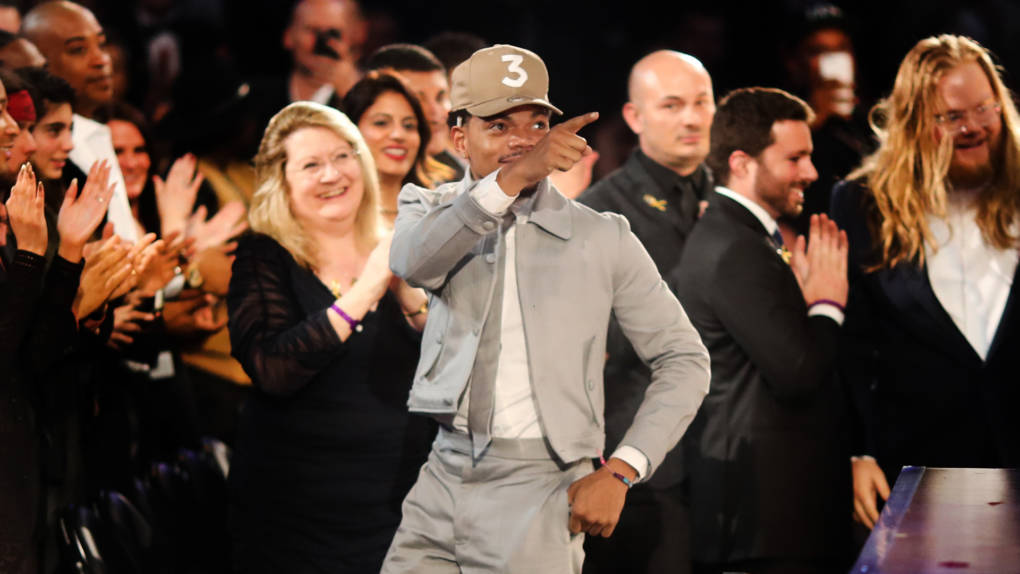
"caption": "Chance The Rapper at The 59th GRAMMY Awards \n\n",
"description": "Chance The Rapper at The 59th GRAMMY Awards ",
"title": "The 59th GRAMMY Awards - Roaming Show",
"credit": "Photo: Christopher Polk/Getty Images for NARAS",
"status": "inherit",
"isLoading": false,
"fetchFailed": false
},
"arts_12832311": {
"type": "attachments",
"id": "arts_12832311",
"meta": {
"index": "attachments_1716263798",
"site": "arts",
"id": "12832311",
"found": true
},
"parent": 12831328,
"imgSizes": {
"small": {
"file": "https://ww2.kqed.org/app/uploads/sites/2/2017/02/Chicano-Batman_Josue-Rivas-Promo-Photo-01-e1488330296472-520x292.jpg",
"width": 520,
"mimeType": "image/jpeg",
"height": 292
},
"twentyfourteen-full-width": {
"file": "https://ww2.kqed.org/app/uploads/sites/2/2017/02/Chicano-Batman_Josue-Rivas-Promo-Photo-01-e1488330296472-1038x576.jpg",
"width": 1038,
"mimeType": "image/jpeg",
"height": 576
},
"thumbnail": {
"file": "https://ww2.kqed.org/app/uploads/sites/2/2017/02/Chicano-Batman_Josue-Rivas-Promo-Photo-01-e1488330296472-160x90.jpg",
"width": 160,
"mimeType": "image/jpeg",
"height": 90
},
"fd-sm": {
"file": "https://ww2.kqed.org/app/uploads/sites/2/2017/02/Chicano-Batman_Josue-Rivas-Promo-Photo-01-e1488330296472-960x539.jpg",
"width": 960,
"mimeType": "image/jpeg",
"height": 539
},
"post-thumbnail": {
"file": "https://ww2.kqed.org/app/uploads/sites/2/2017/02/Chicano-Batman_Josue-Rivas-Promo-Photo-01-e1488330296472-672x372.jpg",
"width": 672,
"mimeType": "image/jpeg",
"height": 372
},
"xsmall": {
"file": "https://ww2.kqed.org/app/uploads/sites/2/2017/02/Chicano-Batman_Josue-Rivas-Promo-Photo-01-e1488330296472-375x211.jpg",
"width": 375,
"mimeType": "image/jpeg",
"height": 211
},
"kqedFullSize": {
"file": "https://ww2.kqed.org/app/uploads/sites/2/2017/02/Chicano-Batman_Josue-Rivas-Promo-Photo-01-e1488330296472.jpg",
"width": 2048,
"height": 1150
},
"large": {
"file": "https://ww2.kqed.org/app/uploads/sites/2/2017/02/Chicano-Batman_Josue-Rivas-Promo-Photo-01-e1488330296472-1020x573.jpg",
"width": 1020,
"mimeType": "image/jpeg",
"height": 573
},
"xlarge": {
"file": "https://ww2.kqed.org/app/uploads/sites/2/2017/02/Chicano-Batman_Josue-Rivas-Promo-Photo-01-e1488330296472-1180x663.jpg",
"width": 1180,
"mimeType": "image/jpeg",
"height": 663
},
"guest-author-50": {
"file": "https://ww2.kqed.org/app/uploads/sites/2/2017/02/Chicano-Batman_Josue-Rivas-Promo-Photo-01-e1488330296472-50x50.jpg",
"width": 50,
"mimeType": "image/jpeg",
"height": 50
},
"guest-author-96": {
"file": "https://ww2.kqed.org/app/uploads/sites/2/2017/02/Chicano-Batman_Josue-Rivas-Promo-Photo-01-e1488330296472-96x96.jpg",
"width": 96,
"mimeType": "image/jpeg",
"height": 96
},
"medium": {
"file": "https://ww2.kqed.org/app/uploads/sites/2/2017/02/Chicano-Batman_Josue-Rivas-Promo-Photo-01-e1488330296472-800x449.jpg",
"width": 800,
"mimeType": "image/jpeg",
"height": 449
},
"guest-author-64": {
"file": "https://ww2.kqed.org/app/uploads/sites/2/2017/02/Chicano-Batman_Josue-Rivas-Promo-Photo-01-e1488330296472-64x64.jpg",
"width": 64,
"mimeType": "image/jpeg",
"height": 64
},
"guest-author-32": {
"file": "https://ww2.kqed.org/app/uploads/sites/2/2017/02/Chicano-Batman_Josue-Rivas-Promo-Photo-01-e1488330296472-32x32.jpg",
"width": 32,
"mimeType": "image/jpeg",
"height": 32
},
"fd-lrg": {
"file": "https://ww2.kqed.org/app/uploads/sites/2/2017/02/Chicano-Batman_Josue-Rivas-Promo-Photo-01-e1488330296472-1920x1078.jpg",
"width": 1920,
"mimeType": "image/jpeg",
"height": 1078
},
"fd-med": {
"file": "https://ww2.kqed.org/app/uploads/sites/2/2017/02/Chicano-Batman_Josue-Rivas-Promo-Photo-01-e1488330296472-1180x663.jpg",
"width": 1180,
"mimeType": "image/jpeg",
"height": 663
},
"full-width": {
"file": "https://ww2.kqed.org/app/uploads/sites/2/2017/02/Chicano-Batman_Josue-Rivas-Promo-Photo-01-e1488330296472-1920x1078.jpg",
"width": 1920,
"mimeType": "image/jpeg",
"height": 1078
},
"detail": {
"file": "https://ww2.kqed.org/app/uploads/sites/2/2017/02/Chicano-Batman_Josue-Rivas-Promo-Photo-01-e1488330296472-150x150.jpg",
"width": 150,
"mimeType": "image/jpeg",
"height": 150
},
"medium_large": {
"file": "https://ww2.kqed.org/app/uploads/sites/2/2017/02/Chicano-Batman_Josue-Rivas-Promo-Photo-01-e1488330296472-768x431.jpg",
"width": 768,
"mimeType": "image/jpeg",
"height": 431
},
"guest-author-128": {
"file": "https://ww2.kqed.org/app/uploads/sites/2/2017/02/Chicano-Batman_Josue-Rivas-Promo-Photo-01-e1488330296472-128x128.jpg",
"width": 128,
"mimeType": "image/jpeg",
"height": 128
},
"xxsmall": {
"file": "https://ww2.kqed.org/app/uploads/sites/2/2017/02/Chicano-Batman_Josue-Rivas-Promo-Photo-01-e1488330296472-240x135.jpg",
"width": 240,
"mimeType": "image/jpeg",
"height": 135
}
},
"publishDate": 1488330261,
"modified": 1488330324,
"caption": "Chicano Batman",
"description": null,
"title": "_Josue Rivas Promo Photo 01",
"credit": "Josue Rivas",
"status": "inherit",
"isLoading": false,
"fetchFailed": false
}
},
"audioPlayerReducer": {
"postId": "stream_live",
"isPaused": true,
"isPlaying": false,
"pfsActive": false,
"pledgeModalIsOpen": true,
"playerDrawerIsOpen": false,
"liveAudioPlayStartedAt": 0,
"liveAudioPlayContext": ""
},
"authorsReducer": {
"byline_arts_12875326": {
"type": "authors",
"id": "byline_arts_12875326",
"meta": {
"override": true
},
"slug": "byline_arts_12875326",
"name": "Doreen McCallister",
"isLoading": false
},
"byline_arts_12836586": {
"type": "authors",
"id": "byline_arts_12836586",
"meta": {
"override": true
},
"slug": "byline_arts_12836586",
"name": "Chris Zaldua",
"isLoading": false
},
"byline_arts_12870537": {
"type": "authors",
"id": "byline_arts_12870537",
"meta": {
"override": true
},
"slug": "byline_arts_12870537",
"name": "Anastasia Tsioulcas",
"isLoading": false
},
"byline_arts_12866617": {
"type": "authors",
"id": "byline_arts_12866617",
"meta": {
"override": true
},
"slug": "byline_arts_12866617",
"name": "Omid Zoufonoun",
"isLoading": false
},
"byline_arts_12864700": {
"type": "authors",
"id": "byline_arts_12864700",
"meta": {
"override": true
},
"slug": "byline_arts_12864700",
"name": "Tom Moon",
"isLoading": false
},
"byline_arts_12861208": {
"type": "authors",
"id": "byline_arts_12861208",
"meta": {
"override": true
},
"slug": "byline_arts_12861208",
"name": "Associated Press",
"isLoading": false
},
"cmusiker": {
"type": "authors",
"id": "32",
"meta": {
"index": "authors_1716337520",
"id": "32",
"found": true
},
"name": "Cy Musiker",
"firstName": "Cy",
"lastName": "Musiker",
"slug": "cmusiker",
"email": "cmusiker@kqed.org",
"display_author_email": false,
"staff_mastheads": [],
"title": "KQED Contributor",
"bio": "Cy Musiker is a former co-host of The Do List and a former reporter covering the arts for KQED News and The California Report. He loves live performance, especially great theater, jazz, roots music, anything by Mahler. Cy has an MJ from UC Berkeley's School of Journalism, and got his BA from Hampshire College. His work has been recognized by the Society for Professional Journalists with their Sigma Delta Chi Award for Public Service in Journalism. When he can, Cy likes to swim in Tomales Bay, run with his dog in the East Bay Hills, and hike the Sierra.",
"avatar": "https://secure.gravatar.com/avatar/05eaba5c5696ce8f062e4ea2df428a43?s=600&d=blank&r=g",
"twitter": null,
"facebook": null,
"instagram": null,
"linkedin": null,
"sites": [
{
"site": "arts",
"roles": [
"Contributor",
"subscriber"
]
},
{
"site": "news",
"roles": [
"author"
]
},
{
"site": "bayareabites",
"roles": [
"contributor"
]
}
],
"headData": {
"title": "Cy Musiker | KQED",
"description": "KQED Contributor",
"ogImgSrc": "https://secure.gravatar.com/avatar/05eaba5c5696ce8f062e4ea2df428a43?s=600&d=blank&r=g",
"twImgSrc": "https://secure.gravatar.com/avatar/05eaba5c5696ce8f062e4ea2df428a43?s=600&d=blank&r=g"
},
"isLoading": false,
"link": "/author/cmusiker"
},
"kqedarts": {
"type": "authors",
"id": "92",
"meta": {
"index": "authors_1716337520",
"id": "92",
"found": true
},
"name": "KQED Arts",
"firstName": "KQED",
"lastName": "Arts",
"slug": "kqedarts",
"email": "arts@kqed.org",
"display_author_email": false,
"staff_mastheads": [],
"title": "KQED Staff",
"bio": null,
"avatar": "https://secure.gravatar.com/avatar/321c9ebfeb7736f9e55366a6d3399ab0?s=600&d=blank&r=g",
"twitter": null,
"facebook": null,
"instagram": "https://www.instagram.com/kqed_arts/",
"linkedin": null,
"sites": [
{
"site": "arts",
"roles": [
"contributor"
]
},
{
"site": "pop",
"roles": [
"contributor"
]
},
{
"site": "science",
"roles": [
"author"
]
},
{
"site": "food",
"roles": [
"contributor"
]
}
],
"headData": {
"title": "KQED Arts | KQED",
"description": "KQED Staff",
"ogImgSrc": "https://secure.gravatar.com/avatar/321c9ebfeb7736f9e55366a6d3399ab0?s=600&d=blank&r=g",
"twImgSrc": "https://secure.gravatar.com/avatar/321c9ebfeb7736f9e55366a6d3399ab0?s=600&d=blank&r=g"
},
"isLoading": false,
"link": "/author/kqedarts"
},
"gmeline": {
"type": "authors",
"id": "185",
"meta": {
"index": "authors_1716337520",
"id": "185",
"found": true
},
"name": "Gabe Meline",
"firstName": "Gabe",
"lastName": "Meline",
"slug": "gmeline",
"email": "gmeline@kqed.org",
"display_author_email": true,
"staff_mastheads": [
"arts"
],
"title": "Senior Editor, KQED Arts & Culture",
"bio": "Gabe Meline entered journalism at age 15 making photocopied zines, and has since earned awards from the Edward R. Murrow Awards, the Society for Professional Journalists, the Online Journalism Awards, the Association of Alternative Newsweeklies and the California Newspaper Publishers Association. Prior to KQED, he was the editor of the \u003cem>North Bay Bohemian\u003c/em> and a touring musician. He lives with his wife and daughter in his hometown of Santa Rosa, CA.",
"avatar": "https://secure.gravatar.com/avatar/5bebe57be0d8bc2dd318934feb47299e2d2d10cba28d09d8d7afb389a2ce2bdd?s=600&d=blank&r=g",
"twitter": null,
"bluesky": null,
"facebook": null,
"instagram": null,
"linkedin": null,
"sites": [
{
"site": "",
"roles": [
"editor"
]
},
{
"site": "arts",
"roles": [
"administrator"
]
},
{
"site": "artschool",
"roles": [
"editor"
]
},
{
"site": "news",
"roles": [
"author"
]
},
{
"site": "pop",
"roles": [
"editor"
]
},
{
"site": "bayareabites",
"roles": [
"editor"
]
},
{
"site": "food",
"roles": [
"editor"
]
},
{
"site": "forum",
"roles": [
"administrator"
]
},
{
"site": "liveblog",
"roles": [
"editor"
]
},
{
"site": "hiphop",
"roles": [
"editor"
]
}
],
"headData": {
"title": "Gabe Meline | KQED",
"description": "Senior Editor, KQED Arts & Culture",
"ogImgSrc": "https://secure.gravatar.com/avatar/5bebe57be0d8bc2dd318934feb47299e2d2d10cba28d09d8d7afb389a2ce2bdd?s=600&d=blank&r=g",
"twImgSrc": "https://secure.gravatar.com/avatar/5bebe57be0d8bc2dd318934feb47299e2d2d10cba28d09d8d7afb389a2ce2bdd?s=600&d=blank&r=g"
},
"isLoading": false,
"link": "/author/gmeline"
},
"esilvers": {
"type": "authors",
"id": "7237",
"meta": {
"index": "authors_1716337520",
"id": "7237",
"found": true
},
"name": "Emma Silvers",
"firstName": "Emma",
"lastName": "Silvers",
"slug": "esilvers",
"email": "esilvers@kqed.org",
"display_author_email": false,
"staff_mastheads": [],
"title": "KQED Contributor",
"bio": "Emma Silvers is an editor at KQED Arts and a former digital producer at KQED News. Born and raised in the Bay Area, she has previously been an arts and entertainment editor at the \u003cem>San Francisco Chronicle\u003c/em>, \u003cem>SF Weekly\u003c/em> and the \u003cem>San Francisco Bay Guardian.\u003c/em> \u003ca href=\"https://www.emmasilvers.com\">Her work\u003c/a> has also appeared in \u003cem>Rolling Stone\u003c/em>, Pitchfork and \u003cem>Mother Jones\u003c/em>. In 2017 she was the recipient of the Society of Professional Journalists-Northern California's award for arts and culture reporting. In 1993 she \u003ca href=\"https://www.kqed.org/pop/16759/wait-what-my-coworker-was-a-voice-over-hyperventilator-for-jurassic-park\">hyperventilated in \u003cem>Jurassic Park\u003c/em>\u003c/a>.",
"avatar": "https://secure.gravatar.com/avatar/247beada39b88ea5759db1f51dba05cf?s=600&d=blank&r=g",
"twitter": "emmaruthless",
"facebook": null,
"instagram": null,
"linkedin": null,
"sites": [
{
"site": "arts",
"roles": [
"editor"
]
},
{
"site": "news",
"roles": [
"editor"
]
},
{
"site": "pop",
"roles": [
"contributor"
]
},
{
"site": "bayareabites",
"roles": [
"editor"
]
},
{
"site": "food",
"roles": [
"contributor"
]
},
{
"site": "liveblog",
"roles": [
"editor"
]
}
],
"headData": {
"title": "Emma Silvers | KQED",
"description": "KQED Contributor",
"ogImgSrc": "https://secure.gravatar.com/avatar/247beada39b88ea5759db1f51dba05cf?s=600&d=blank&r=g",
"twImgSrc": "https://secure.gravatar.com/avatar/247beada39b88ea5759db1f51dba05cf?s=600&d=blank&r=g"
},
"isLoading": false,
"link": "/author/esilvers"
}
},
"pagesReducer": {
"arts_category_music": {
"type": "terms",
"id": "arts_69",
"meta": {
"index": "terms_1716263798",
"site": "arts",
"id": "69",
"score": 10.85186
},
"featImg": null,
"name": "Music",
"description": null,
"taxonomy": "category",
"headData": {
"twImgId": null,
"twTitle": null,
"ogTitle": null,
"ogImgId": null,
"twDescription": null,
"description": null,
"title": "Music Archives | KQED Arts",
"ogDescription": null
},
"ttid": 70,
"slug": "music",
"isLoading": false,
"title": "Music",
"pageMeta": {
"site": "arts",
"WpPageTemplate": "page-topic-editorial",
"currentPage": 244
},
"blocks": [
{
"blockName": "kqed/post-list",
"attrs": {
"layout": "cardArticle2",
"query": "posts/arts?category=music",
"seeMore": false,
"paginated": true,
"page": 244
}
},
{
"blockName": "kqed/ad"
}
]
}
},
"pfsSessionReducer": {},
"postsReducer": {
"stream_live": {
"type": "live",
"id": "stream_live",
"audioUrl": "https://streams.kqed.org/kqedradio",
"title": "Live Stream",
"excerpt": "Live Stream information currently unavailable.",
"link": "/radio",
"featImg": "",
"label": {
"name": "KQED Live",
"link": "/"
}
},
"stream_kqedNewscast": {
"type": "posts",
"id": "stream_kqedNewscast",
"audioUrl": "https://www.kqed.org/.stream/anon/radio/RDnews/newscast.mp3?_=1",
"title": "KQED Newscast",
"featImg": "",
"label": {
"name": "88.5 FM",
"link": "/"
}
},
"arts_12875311": {
"type": "posts",
"id": "arts_12875311",
"meta": {
"index": "posts_1716263798",
"site": "arts",
"id": "12875311",
"score": null,
"sort": [
1489176022000
]
},
"parent": 0,
"labelTerm": {
"site": "arts"
},
"blocks": [],
"publishDate": 1489176022,
"format": "standard",
"title": "Dame Drummer's 'Black and Beautiful' Rises Above the Negativity",
"headTitle": "Dame Drummer’s ‘Black and Beautiful’ Rises Above the Negativity | KQED",
"content": "\u003cp>\u003cem>Ed. note: As long as humans have been making music, it’s been used as a form of protest. As part of KQED Arts’ 100 Days project, \u003ca href=\"https://ww2.kqed.org/arts/2017/01/18/first-100-days-art-in-the-age-of-trump/\" target=\"_blank\" rel=\"noopener\">documenting artists’ responses to our new administration\u003c/a> in its earliest days, I’ve asked Bay Area musicians to get in touch with songs they’ve written or recorded that serve as reactions to our current political climate. A new one is posted each week.\u003c/em>\u003c/p>\n\u003cp>\u003ca href=\"http://ww2.kqed.org/arts/2017/01/18/first-100-days-art-in-the-age-of-trump/\">\u003cimg loading=\"lazy\" decoding=\"async\" class=\"alignright size-full wp-image-12667846\" src=\"https://ww2.kqed.org/arts/wp-content/uploads/sites/2/2017/01/100Days_300x300z-1.jpg\" alt=\"100Days_300x300z\" width=\"300\" height=\"300\" srcset=\"https://cdn.kqed.org/wp-content/uploads/sites/2/2017/01/100Days_300x300z-1.jpg 300w, https://cdn.kqed.org/wp-content/uploads/sites/2/2017/01/100Days_300x300z-1-160x160.jpg 160w, https://cdn.kqed.org/wp-content/uploads/sites/2/2017/01/100Days_300x300z-1-240x240.jpg 240w, https://cdn.kqed.org/wp-content/uploads/sites/2/2017/01/100Days_300x300z-1-32x32.jpg 32w, https://cdn.kqed.org/wp-content/uploads/sites/2/2017/01/100Days_300x300z-1-50x50.jpg 50w, https://cdn.kqed.org/wp-content/uploads/sites/2/2017/01/100Days_300x300z-1-64x64.jpg 64w, https://cdn.kqed.org/wp-content/uploads/sites/2/2017/01/100Days_300x300z-1-96x96.jpg 96w, https://cdn.kqed.org/wp-content/uploads/sites/2/2017/01/100Days_300x300z-1-128x128.jpg 128w, https://cdn.kqed.org/wp-content/uploads/sites/2/2017/01/100Days_300x300z-1-150x150.jpg 150w\" sizes=\"(max-width: 300px) 100vw, 300px\">\u003c/a>\u003c/p>\n\u003cp>When 12-year-old Tamir Rice was killed by Cleveland police officers in 2014 — after a caller reported a young black male brandishing a gun, which turned out to be a toy — Americans reacted in the now-familiar ways we respond to police shootings. There were protests in the streets, hashtags on Twitter, and press conferences on the evening news.\u003c/p>\n\u003cp>But for \u003ca href=\"https://www.facebook.com/damedrummer/?ref=br_rs\" target=\"_blank\" rel=\"noopener\">Dame Drummer\u003c/a>, a Cleveland native and a father of two, the shooting was personal.\u003c/p>\n\u003cp>“I felt helpless,” says Dame, a drummer, singer-songwriter, and producer who’s lived in Oakland since 2012, working with a broad swath of artists in hip-hop, R&B and jazz. “As a father of a young black boy, it was, ‘My son likes to play with Nerf guns. It could have been him.'”\u003c/p>\n\u003cp>[ad fullwidth]\u003c/p>\n\u003cp>https://www.youtube.com/watch?v=qZWPizUlMjM\u003c/p>\n\u003cp>That “place of heartbreak,” says the musician, is what inspired “Black and Beautiful,” a track from Dame’s forthcoming album \u003cem>LOVEolution. \u003c/em>With lyrics that speak directly to black youth about the importance of reclaiming their roots, taking pride in their history and rejecting negative messages about their worth from both inside and outside their communities, it’s based on a poem by the spoken word artist OneTruth, a close friend of Dame’s from the open mic scene back home in Cleveland. Dame composed the melody and hook around it, then reached out to two musician friends with whom he’d worked before — pianist/emcee Kev Choice and rapper Zumbi from Zion I, who promptly responded with guest verses.\u003c/p>\n\u003cp>The video, directed by Kevin Taylor, includes poignant scenes of children — two of them Dame’s own son, 9, and daughter, 4 — in and around Oakland, dropping in on neighborhood stores and running into the track’s featured artists. Spliced into their journey are flashes of racist cartoons and other jarring imagery from slavery’s dark past. Throughout the video, people are also seen wearing crude face masks — which, Dame says, stand in for the stereotypes that young black kids must resist internalizing.\u003c/p>\n\u003cfigure id=\"attachment_12877878\" class=\"wp-caption aligncenter\" style=\"max-width: 960px\">\u003cimg loading=\"lazy\" decoding=\"async\" class=\"size-full wp-image-12877878\" src=\"https://ww2.kqed.org/arts/wp-content/uploads/sites/2/2017/03/Dame.ZIon_.jpg\" alt=\"Dame Drummer and Zumbi from Zion I in the studio.\" width=\"960\" height=\"960\" srcset=\"https://cdn.kqed.org/wp-content/uploads/sites/2/2017/03/Dame.ZIon_.jpg 960w, https://cdn.kqed.org/wp-content/uploads/sites/2/2017/03/Dame.ZIon_-160x160.jpg 160w, https://cdn.kqed.org/wp-content/uploads/sites/2/2017/03/Dame.ZIon_-800x800.jpg 800w, https://cdn.kqed.org/wp-content/uploads/sites/2/2017/03/Dame.ZIon_-768x768.jpg 768w, https://cdn.kqed.org/wp-content/uploads/sites/2/2017/03/Dame.ZIon_-240x240.jpg 240w, https://cdn.kqed.org/wp-content/uploads/sites/2/2017/03/Dame.ZIon_-375x375.jpg 375w, https://cdn.kqed.org/wp-content/uploads/sites/2/2017/03/Dame.ZIon_-520x520.jpg 520w, https://cdn.kqed.org/wp-content/uploads/sites/2/2017/03/Dame.ZIon_-32x32.jpg 32w, https://cdn.kqed.org/wp-content/uploads/sites/2/2017/03/Dame.ZIon_-50x50.jpg 50w, https://cdn.kqed.org/wp-content/uploads/sites/2/2017/03/Dame.ZIon_-64x64.jpg 64w, https://cdn.kqed.org/wp-content/uploads/sites/2/2017/03/Dame.ZIon_-96x96.jpg 96w, https://cdn.kqed.org/wp-content/uploads/sites/2/2017/03/Dame.ZIon_-128x128.jpg 128w, https://cdn.kqed.org/wp-content/uploads/sites/2/2017/03/Dame.ZIon_-150x150.jpg 150w\" sizes=\"(max-width: 960px) 100vw, 960px\">\u003cfigcaption class=\"wp-caption-text\">Dame Drummer and Zumbi from Zion I in the studio.\u003c/figcaption>\u003c/figure>\n\u003cp>\u003cem>LOVEolution, \u003c/em>which is\u003cem> \u003c/em>Dame’s sophomore solo effort, doesn’t have a release date yet, but the songs that are completed include features by Mistah FAB, Viveca Hawkins, and more. There are love songs, says Dame, and more upbeat party songs as well. “I just want to use my gift to make art that’s positive, that speaks to my community,” he says. “It’s my obligation as an artist, and it’s also my responsibility to my kids, to be their teacher.”\u003c/p>\n\u003cp>In the video for “Black and Beautiful,” it’s no accident that the kids’ journey culminates at the Roses in Concrete school in East Oakland, a two-year-old community school attended predominantly by students of color, with a curriculum geared toward social justice. (The school is named after a poem by \u003ca href=\"https://ww2.kqed.org/pop/2016/05/04/you-cant-kill-the-revolution-davey-d-on-tupacs-mother-afeni-shakur/\" target=\"_blank\" rel=\"noopener\">Bay Area native Tupac Shakur\u003c/a>.) The kids there were quick to understand the messages of the song when Dame came in to explain it, he says. They also helped make the masks in their classrooms.\u003c/p>\n\u003cp>“That’s a school that empowers the black and brown community, and [those students] are already sharp,” he says. “I came and told them, ‘Those masks represent all the lies, everything that’s negative that’s said about you.'” Which, of course, is what makes their smiles so very sweet when they finally pull the masks off.\u003c/p>\n\u003cp>\u003c/p>\n\u003cp>\u003cimg loading=\"lazy\" decoding=\"async\" class=\"aligncenter size-full wp-image-12127869\" src=\"https://ww2.kqed.org/arts/wp-content/uploads/sites/2/2016/09/Q.Logo_.Break_.jpg\" alt=\"Q.Logo.Break\" width=\"800\" height=\"78\" srcset=\"https://cdn.kqed.org/wp-content/uploads/sites/2/2016/09/Q.Logo_.Break_.jpg 800w, https://cdn.kqed.org/wp-content/uploads/sites/2/2016/09/Q.Logo_.Break_-400x39.jpg 400w, https://cdn.kqed.org/wp-content/uploads/sites/2/2016/09/Q.Logo_.Break_-768x75.jpg 768w\" sizes=\"(max-width: 800px) 100vw, 800px\">\u003c/p>\n\n",
"stats": {
"hasVideo": true,
"hasChartOrMap": false,
"hasAudio": false,
"hasPolis": false,
"wordCount": 731,
"hasGoogleForm": false,
"hasGallery": false,
"hasHearkenModule": false,
"iframeSrcs": [],
"paragraphCount": 13
},
"modified": 1705031282,
"excerpt": "'The skin that I'm in is not a sin, as a matter of fact it's beautiful / Paint a grim picture of all my folks, but all of that's gonna blow up in smoke'",
"headData": {
"twImgId": "",
"twTitle": "",
"ogTitle": "",
"ogImgId": "",
"twDescription": "",
"description": "'The skin that I'm in is not a sin, as a matter of fact it's beautiful / Paint a grim picture of all my folks, but all of that's gonna blow up in smoke'",
"title": "Dame Drummer's 'Black and Beautiful' Rises Above the Negativity | KQED",
"ogDescription": "",
"schema": {
"@context": "https://schema.org",
"@type": "Article",
"headline": "Dame Drummer's 'Black and Beautiful' Rises Above the Negativity",
"datePublished": "2017-03-10T12:00:22-08:00",
"dateModified": "2024-01-11T19:48:02-08:00",
"image": "https://cdn.kqed.org/wp-content/uploads/2020/02/KQED-OG-Image@1x.png"
}
},
"guestAuthors": [],
"slug": "dame-drummers-black-and-beautiful-rises-above-the-negativity",
"status": "publish",
"sticky": false,
"path": "/arts/12875311/dame-drummers-black-and-beautiful-rises-above-the-negativity",
"audioTrackLength": null,
"parsedContent": [
{
"type": "contentString",
"content": "\u003cdiv class=\"post-body\">\u003cp>\u003cp>\u003cem>Ed. note: As long as humans have been making music, it’s been used as a form of protest. As part of KQED Arts’ 100 Days project, \u003ca href=\"https://ww2.kqed.org/arts/2017/01/18/first-100-days-art-in-the-age-of-trump/\" target=\"_blank\" rel=\"noopener\">documenting artists’ responses to our new administration\u003c/a> in its earliest days, I’ve asked Bay Area musicians to get in touch with songs they’ve written or recorded that serve as reactions to our current political climate. A new one is posted each week.\u003c/em>\u003c/p>\n\u003cp>\u003ca href=\"http://ww2.kqed.org/arts/2017/01/18/first-100-days-art-in-the-age-of-trump/\">\u003cimg loading=\"lazy\" decoding=\"async\" class=\"alignright size-full wp-image-12667846\" src=\"https://ww2.kqed.org/arts/wp-content/uploads/sites/2/2017/01/100Days_300x300z-1.jpg\" alt=\"100Days_300x300z\" width=\"300\" height=\"300\" srcset=\"https://cdn.kqed.org/wp-content/uploads/sites/2/2017/01/100Days_300x300z-1.jpg 300w, https://cdn.kqed.org/wp-content/uploads/sites/2/2017/01/100Days_300x300z-1-160x160.jpg 160w, https://cdn.kqed.org/wp-content/uploads/sites/2/2017/01/100Days_300x300z-1-240x240.jpg 240w, https://cdn.kqed.org/wp-content/uploads/sites/2/2017/01/100Days_300x300z-1-32x32.jpg 32w, https://cdn.kqed.org/wp-content/uploads/sites/2/2017/01/100Days_300x300z-1-50x50.jpg 50w, https://cdn.kqed.org/wp-content/uploads/sites/2/2017/01/100Days_300x300z-1-64x64.jpg 64w, https://cdn.kqed.org/wp-content/uploads/sites/2/2017/01/100Days_300x300z-1-96x96.jpg 96w, https://cdn.kqed.org/wp-content/uploads/sites/2/2017/01/100Days_300x300z-1-128x128.jpg 128w, https://cdn.kqed.org/wp-content/uploads/sites/2/2017/01/100Days_300x300z-1-150x150.jpg 150w\" sizes=\"(max-width: 300px) 100vw, 300px\">\u003c/a>\u003c/p>\n\u003cp>When 12-year-old Tamir Rice was killed by Cleveland police officers in 2014 — after a caller reported a young black male brandishing a gun, which turned out to be a toy — Americans reacted in the now-familiar ways we respond to police shootings. There were protests in the streets, hashtags on Twitter, and press conferences on the evening news.\u003c/p>\n\u003cp>But for \u003ca href=\"https://www.facebook.com/damedrummer/?ref=br_rs\" target=\"_blank\" rel=\"noopener\">Dame Drummer\u003c/a>, a Cleveland native and a father of two, the shooting was personal.\u003c/p>\n\u003cp>“I felt helpless,” says Dame, a drummer, singer-songwriter, and producer who’s lived in Oakland since 2012, working with a broad swath of artists in hip-hop, R&B and jazz. “As a father of a young black boy, it was, ‘My son likes to play with Nerf guns. It could have been him.'”\u003c/p>\n\u003cp>\u003c/p>\u003c/div>",
"attributes": {
"named": {},
"numeric": []
}
},
{
"type": "component",
"content": "",
"name": "ad",
"attributes": {
"named": {
"label": "fullwidth"
},
"numeric": [
"fullwidth"
]
}
},
{
"type": "contentString",
"content": "\u003cdiv class=\"post-body\">\u003cp>\u003c/p>\u003c/p>\u003cp>\u003cspan class='utils-parseShortcode-shortcodes-__youtubeShortcode__embedYoutube'>\n \u003cspan class='utils-parseShortcode-shortcodes-__youtubeShortcode__embedYoutubeInside'>\n \u003ciframe\n loading='lazy'\n class='utils-parseShortcode-shortcodes-__youtubeShortcode__youtubePlayer'\n type='text/html'\n src='//www.youtube.com/embed/qZWPizUlMjM'\n title='//www.youtube.com/embed/qZWPizUlMjM'\n allowfullscreen='true'\n style='border:0;'>\u003c/iframe>\n \u003c/span>\n \u003c/span>\u003c/p>\u003cp>\u003cp>That “place of heartbreak,” says the musician, is what inspired “Black and Beautiful,” a track from Dame’s forthcoming album \u003cem>LOVEolution. \u003c/em>With lyrics that speak directly to black youth about the importance of reclaiming their roots, taking pride in their history and rejecting negative messages about their worth from both inside and outside their communities, it’s based on a poem by the spoken word artist OneTruth, a close friend of Dame’s from the open mic scene back home in Cleveland. Dame composed the melody and hook around it, then reached out to two musician friends with whom he’d worked before — pianist/emcee Kev Choice and rapper Zumbi from Zion I, who promptly responded with guest verses.\u003c/p>\n\u003cp>The video, directed by Kevin Taylor, includes poignant scenes of children — two of them Dame’s own son, 9, and daughter, 4 — in and around Oakland, dropping in on neighborhood stores and running into the track’s featured artists. Spliced into their journey are flashes of racist cartoons and other jarring imagery from slavery’s dark past. Throughout the video, people are also seen wearing crude face masks — which, Dame says, stand in for the stereotypes that young black kids must resist internalizing.\u003c/p>\n\u003cfigure id=\"attachment_12877878\" class=\"wp-caption aligncenter\" style=\"max-width: 960px\">\u003cimg loading=\"lazy\" decoding=\"async\" class=\"size-full wp-image-12877878\" src=\"https://ww2.kqed.org/arts/wp-content/uploads/sites/2/2017/03/Dame.ZIon_.jpg\" alt=\"Dame Drummer and Zumbi from Zion I in the studio.\" width=\"960\" height=\"960\" srcset=\"https://cdn.kqed.org/wp-content/uploads/sites/2/2017/03/Dame.ZIon_.jpg 960w, https://cdn.kqed.org/wp-content/uploads/sites/2/2017/03/Dame.ZIon_-160x160.jpg 160w, https://cdn.kqed.org/wp-content/uploads/sites/2/2017/03/Dame.ZIon_-800x800.jpg 800w, https://cdn.kqed.org/wp-content/uploads/sites/2/2017/03/Dame.ZIon_-768x768.jpg 768w, https://cdn.kqed.org/wp-content/uploads/sites/2/2017/03/Dame.ZIon_-240x240.jpg 240w, https://cdn.kqed.org/wp-content/uploads/sites/2/2017/03/Dame.ZIon_-375x375.jpg 375w, https://cdn.kqed.org/wp-content/uploads/sites/2/2017/03/Dame.ZIon_-520x520.jpg 520w, https://cdn.kqed.org/wp-content/uploads/sites/2/2017/03/Dame.ZIon_-32x32.jpg 32w, https://cdn.kqed.org/wp-content/uploads/sites/2/2017/03/Dame.ZIon_-50x50.jpg 50w, https://cdn.kqed.org/wp-content/uploads/sites/2/2017/03/Dame.ZIon_-64x64.jpg 64w, https://cdn.kqed.org/wp-content/uploads/sites/2/2017/03/Dame.ZIon_-96x96.jpg 96w, https://cdn.kqed.org/wp-content/uploads/sites/2/2017/03/Dame.ZIon_-128x128.jpg 128w, https://cdn.kqed.org/wp-content/uploads/sites/2/2017/03/Dame.ZIon_-150x150.jpg 150w\" sizes=\"(max-width: 960px) 100vw, 960px\">\u003cfigcaption class=\"wp-caption-text\">Dame Drummer and Zumbi from Zion I in the studio.\u003c/figcaption>\u003c/figure>\n\u003cp>\u003cem>LOVEolution, \u003c/em>which is\u003cem> \u003c/em>Dame’s sophomore solo effort, doesn’t have a release date yet, but the songs that are completed include features by Mistah FAB, Viveca Hawkins, and more. There are love songs, says Dame, and more upbeat party songs as well. “I just want to use my gift to make art that’s positive, that speaks to my community,” he says. “It’s my obligation as an artist, and it’s also my responsibility to my kids, to be their teacher.”\u003c/p>\n\u003cp>In the video for “Black and Beautiful,” it’s no accident that the kids’ journey culminates at the Roses in Concrete school in East Oakland, a two-year-old community school attended predominantly by students of color, with a curriculum geared toward social justice. (The school is named after a poem by \u003ca href=\"https://ww2.kqed.org/pop/2016/05/04/you-cant-kill-the-revolution-davey-d-on-tupacs-mother-afeni-shakur/\" target=\"_blank\" rel=\"noopener\">Bay Area native Tupac Shakur\u003c/a>.) The kids there were quick to understand the messages of the song when Dame came in to explain it, he says. They also helped make the masks in their classrooms.\u003c/p>\n\u003cp>“That’s a school that empowers the black and brown community, and [those students] are already sharp,” he says. “I came and told them, ‘Those masks represent all the lies, everything that’s negative that’s said about you.'” Which, of course, is what makes their smiles so very sweet when they finally pull the masks off.\u003c/p>\n\u003cp>\u003c/p>\n\u003cp>\u003cimg loading=\"lazy\" decoding=\"async\" class=\"aligncenter size-full wp-image-12127869\" src=\"https://ww2.kqed.org/arts/wp-content/uploads/sites/2/2016/09/Q.Logo_.Break_.jpg\" alt=\"Q.Logo.Break\" width=\"800\" height=\"78\" srcset=\"https://cdn.kqed.org/wp-content/uploads/sites/2/2016/09/Q.Logo_.Break_.jpg 800w, https://cdn.kqed.org/wp-content/uploads/sites/2/2016/09/Q.Logo_.Break_-400x39.jpg 400w, https://cdn.kqed.org/wp-content/uploads/sites/2/2016/09/Q.Logo_.Break_-768x75.jpg 768w\" sizes=\"(max-width: 800px) 100vw, 800px\">\u003c/p>\n\n\u003c/div>\u003c/p>",
"attributes": {
"named": {},
"numeric": []
}
}
],
"link": "/arts/12875311/dame-drummers-black-and-beautiful-rises-above-the-negativity",
"authors": [
"7237"
],
"categories": [
"arts_69"
],
"tags": [
"arts_1642",
"arts_1118",
"arts_831",
"arts_1720",
"arts_596"
],
"featImg": "arts_12876628",
"label": "arts"
},
"arts_12875551": {
"type": "posts",
"id": "arts_12875551",
"meta": {
"index": "posts_1716263798",
"site": "arts",
"id": "12875551",
"score": null,
"sort": [
1489111730000
]
},
"guestAuthors": [],
"slug": "cy-and-davids-picks-a-world-music-diva-a-play-about-war-in-africa-and-a-show-about-artistic-influence",
"title": "Cy and David's Picks: A World Music Diva, A Play about War in Africa, and a Show about Artistic Influence",
"publishDate": 1489111730,
"format": "audio",
"headTitle": "Cy and David’s Picks: A World Music Diva, A Play about War in Africa, and a Show about Artistic Influence | KQED",
"labelTerm": {
"site": "arts"
},
"content": "\u003cp>\u003cstrong>KQED’s Cy Musiker and David Wiegand share their picks for great shows around the Bay Area this week.\u003c/strong>\u003c/p>\n\u003cp>Both David and I are a bit groggy after a late evening at the opening of \u003ca href=\"http://www.fiascotheater.com/\" target=\"_blank\" rel=\"noopener\">Fiasco Theater\u003c/a>’s \u003ca href=\"http://www.sfchronicle.com/performance/article/Romp-Into-the-Woods-where-wishes-come-10989566.php\" target=\"_blank\" rel=\"noopener\">excellent stripped down production \u003c/a>of James Lapine and Stephen Sondheim’s musical \u003cem>Into the Woods\u003c/em>. Details for the run at SHN’s \u003ca href=\"https://www.shnsf.com/Online/default.asp?BOparam::WScontent::loadArticle::permalink=intothewoods&BOparam::WScontent::loadArticle::context_id=\" target=\"_blank\" rel=\"noopener\">Golden Gate Theater through April 2 are here\u003c/a>. I’m also stoked to see Aaron Diehl and Cecile McLorin Salvant celebrate the music of Jelly Roll Morton and George Gershwin. They’re at \u003ca href=\"https://live.stanford.edu/calendar/march-2017/aaron-diehl-presents-jelly-and-george\" target=\"_blank\" rel=\"noopener\">Bing Concert Hall at Stanford\u003c/a>, \u003ca href=\"https://www.kuumbwajazz.org/calendar/2017-02/\" target=\"_blank\" rel=\"noopener\">Kuumbwa in Santa Cruz\u003c/a>, \u003ca href=\"https://mondavi.ucdavis.edu/event/2016-17/jelly-and-george-featuring-aaron-diehl-and-cecile-mclorin-salvant\">the Mondavi Center in Davis\u003c/a> and \u003ca href=\"https://sfjazz.org/events/2016-17/0316/cecile-mclorin-salvant-aaron-diehl\" target=\"_blank\" rel=\"noopener\">SFJAZZ\u003c/a> — with\u003ca href=\"http://www.aarondiehl.com/booked-c1q5u\" target=\"_blank\" rel=\"noopener\"> details here.\u003c/a>\u003c/p>\n\u003cp>https://www.youtube.com/watch?v=qC8feW4gomo\u003c/p>\n\u003cp>\u003cstrong>March 11\u003c/strong>: \u003ca href=\"http://www.meklitmusic.com/new-page-1/\" target=\"_blank\" rel=\"noopener\">Meklit Hadero\u003c/a> is one of the Bay Area’s most adventurous singers and songwriters. She’s Ethiopian-born, and a TED Fellow who brews her music out of jazz, soul, R&B and world music. Hadero has been busy lately curating \u003ca href=\"http://nileproject.org/\" target=\"_blank\" rel=\"noopener\">The Nile Project \u003c/a>(a touring group of Nile Delta musicians) and \u003ca href=\"http://www.undercoverpresents.com/\" target=\"_blank\" rel=\"noopener\">Undercover\u003c/a>’s tribute to Lauryn Hill, so it’s nice to see her focusing again on her own music — especially in the intimate setting of Bing Concert Hall’s new Rehearsal Studio, with its cocktail lounge feel. Details for Hadero’s show Saturday\u003ca href=\"https://live.stanford.edu/calendar/march-2017/meklit\" target=\"_blank\" rel=\"noopener\"> are here\u003c/a>.\u003c/p>\n\u003cfigure id=\"attachment_12876203\" class=\"wp-caption aligncenter\" style=\"max-width: 800px\">\u003cimg loading=\"lazy\" decoding=\"async\" class=\"wp-image-12876203 size-medium\" src=\"https://ww2.kqed.org/arts/wp-content/uploads/sites/2/2017/03/411.Stacey-Sargeant-in-ECLIPSED-at-the-Curran-theater-photo-by-Little-Fang-e1489098718659-800x450.jpg\" alt=\"Stacey Sargeant in ‘Eclipsed’ at the Curran Theatre in San Francisco\" width=\"800\" height=\"450\" srcset=\"https://cdn.kqed.org/wp-content/uploads/sites/2/2017/03/411.Stacey-Sargeant-in-ECLIPSED-at-the-Curran-theater-photo-by-Little-Fang-e1489098718659-800x450.jpg 800w, https://cdn.kqed.org/wp-content/uploads/sites/2/2017/03/411.Stacey-Sargeant-in-ECLIPSED-at-the-Curran-theater-photo-by-Little-Fang-e1489098718659-160x90.jpg 160w, https://cdn.kqed.org/wp-content/uploads/sites/2/2017/03/411.Stacey-Sargeant-in-ECLIPSED-at-the-Curran-theater-photo-by-Little-Fang-e1489098718659-768x432.jpg 768w, https://cdn.kqed.org/wp-content/uploads/sites/2/2017/03/411.Stacey-Sargeant-in-ECLIPSED-at-the-Curran-theater-photo-by-Little-Fang-e1489098718659-1020x574.jpg 1020w, https://cdn.kqed.org/wp-content/uploads/sites/2/2017/03/411.Stacey-Sargeant-in-ECLIPSED-at-the-Curran-theater-photo-by-Little-Fang-e1489098718659-1920x1080.jpg 1920w, https://cdn.kqed.org/wp-content/uploads/sites/2/2017/03/411.Stacey-Sargeant-in-ECLIPSED-at-the-Curran-theater-photo-by-Little-Fang-e1489098718659-1180x664.jpg 1180w, https://cdn.kqed.org/wp-content/uploads/sites/2/2017/03/411.Stacey-Sargeant-in-ECLIPSED-at-the-Curran-theater-photo-by-Little-Fang-e1489098718659-960x540.jpg 960w, https://cdn.kqed.org/wp-content/uploads/sites/2/2017/03/411.Stacey-Sargeant-in-ECLIPSED-at-the-Curran-theater-photo-by-Little-Fang-e1489098718659-240x135.jpg 240w, https://cdn.kqed.org/wp-content/uploads/sites/2/2017/03/411.Stacey-Sargeant-in-ECLIPSED-at-the-Curran-theater-photo-by-Little-Fang-e1489098718659-375x211.jpg 375w, https://cdn.kqed.org/wp-content/uploads/sites/2/2017/03/411.Stacey-Sargeant-in-ECLIPSED-at-the-Curran-theater-photo-by-Little-Fang-e1489098718659-520x293.jpg 520w, https://cdn.kqed.org/wp-content/uploads/sites/2/2017/03/411.Stacey-Sargeant-in-ECLIPSED-at-the-Curran-theater-photo-by-Little-Fang-e1489098718659.jpg 2048w\" sizes=\"(max-width: 800px) 100vw, 800px\">\u003cfigcaption class=\"wp-caption-text\">Stacey Sargeant in ‘Eclipsed’ at the Curran Theatre in San Francisco. \u003ccite>(Photo: Little Fang/Curran)\u003c/cite>\u003c/figcaption>\u003c/figure>\n\u003cp>\u003cstrong>March 7–19\u003c/strong>: \u003ca href=\"https://sfcurran.com/shows/eclipsed/\" target=\"_blank\" rel=\"noopener\">\u003cem>Eclipsed\u003c/em> \u003c/a>is a play about the brutal violence of the Liberian Civil War and the bitter lives of women held as sex slaves by a rebel officer. The show is remarkable as the first on Broadway produced by an \u003ca href=\"http://www.okayafrica.com/culture-2/eclipsed-on-broadway-makes-history/\" target=\"_blank\" rel=\"noopener\">all-black, all-women creative team\u003c/a>, including former director (and former Berkeley Rep Associate Director) \u003ca href=\"https://www.forbes.com/sites/jerylbrunner/2016/06/29/director-liesl-tommy-the-first-woman-of-color-nominated-for-a-tony-for-best-direction-of-a-play/#70e6ca0a69a7\" target=\"_blank\" rel=\"noopener\">Lisel Tommy\u003c/a> and playwright and Zimbabwean-American Danai Gurira (who’s also one of the stars of the TV series \u003cem>\u003ca href=\"http://www.amc.com/shows/the-walking-dead\" target=\"_blank\" rel=\"noopener\">The Walking Dead\u003c/a>, \u003c/em>and slated to appear in the upcoming Marvel \u003cem>Black Panther\u003c/em> movie). Gurira started writing because she didn’t think there were enough plays about Africa on American stages (you think?), and has won nothing but praise for her work. \u003cem>Eclipsed\u003c/em> is the second show at the renovated Curran Theatre (after \u003cem>Fun Home), \u003c/em>and more proof that owner Carole Shorenstein Hays is making good on her promise to bring important, serious shows to San Francisco. Each performance of \u003cem>Eclipsed\u003c/em> will be dedicated by name—in a post-show presentation—to abducted girls around the world. Details \u003ca href=\"https://sfcurran.com/shows/eclipsed/\" target=\"_blank\" rel=\"noopener\">here\u003c/a>.\u003c/p>\n\u003cp>[ad fullwidth]\u003c/p>\n\u003cp>https://www.youtube.com/watch?v=ycIVwe4MsS4\u003c/p>\n\u003cp>\u003cstrong>March 16–19\u003c/strong>: \u003ca href=\"http://ncco.org/\" target=\"_blank\" rel=\"noopener\">The New Century Chamber Orchestra\u003c/a> is continuing its 25th anniversary with a season of farewell to music director and violinist \u003ca href=\"http://www.nadjasalernosonnenberg.com/\" target=\"_blank\" rel=\"noopener\">Nadja Salerno-Sonnenberg\u003c/a>, who will leave to teach full-time at \u003ca href=\"http://www.loyno.edu/\" target=\"_blank\" rel=\"noopener\">Loyola University \u003c/a>next fall. For this concert, Salerno-Sonnenberg has put together a program of pure pleasure, featuring an excerpt from Stravinsky’s ballet \u003ca href=\"https://en.wikipedia.org/wiki/Apollo_(ballet)\" target=\"_blank\" rel=\"noopener\">\u003cem>Apollon musagète\u003c/em>\u003c/a> and a suite of songs from \u003cem>An American in Paris\u003c/em>. That brings in the other stars of these shows, the choral group Chanticleer. You can’t go wrong. It runs March 16 in Berkeley at the First Presbyterian Church, March 17 in Palo Alto at the Oshman JCC, March 18 at Herbst Theater in San Francisco, and March 19 in San Rafael at the Osher Marin JCC. Details \u003ca href=\"http://ncco.org/concert-tickets/program-3-americans-paris/\" target=\"_blank\" rel=\"noopener\">are here.\u003c/a>\u003c/p>\n\u003cfigure id=\"attachment_12876209\" class=\"wp-caption aligncenter\" style=\"max-width: 800px\">\u003cimg loading=\"lazy\" decoding=\"async\" class=\"wp-image-12876209 size-medium\" src=\"https://ww2.kqed.org/arts/wp-content/uploads/sites/2/2017/03/16.-Diebenkorn_Woman-on-a-Porch-e1489099986854-800x614.jpg\" alt=\"Richard Diebenkorn’s Woman on a Porch\" width=\"800\" height=\"614\" srcset=\"https://cdn.kqed.org/wp-content/uploads/sites/2/2017/03/16.-Diebenkorn_Woman-on-a-Porch-e1489099986854-800x614.jpg 800w, https://cdn.kqed.org/wp-content/uploads/sites/2/2017/03/16.-Diebenkorn_Woman-on-a-Porch-e1489099986854-160x123.jpg 160w, https://cdn.kqed.org/wp-content/uploads/sites/2/2017/03/16.-Diebenkorn_Woman-on-a-Porch-e1489099986854-768x589.jpg 768w, https://cdn.kqed.org/wp-content/uploads/sites/2/2017/03/16.-Diebenkorn_Woman-on-a-Porch-e1489099986854-1020x783.jpg 1020w, https://cdn.kqed.org/wp-content/uploads/sites/2/2017/03/16.-Diebenkorn_Woman-on-a-Porch-e1489099986854-1180x905.jpg 1180w, https://cdn.kqed.org/wp-content/uploads/sites/2/2017/03/16.-Diebenkorn_Woman-on-a-Porch-e1489099986854-960x737.jpg 960w, https://cdn.kqed.org/wp-content/uploads/sites/2/2017/03/16.-Diebenkorn_Woman-on-a-Porch-e1489099986854-240x184.jpg 240w, https://cdn.kqed.org/wp-content/uploads/sites/2/2017/03/16.-Diebenkorn_Woman-on-a-Porch-e1489099986854-375x288.jpg 375w, https://cdn.kqed.org/wp-content/uploads/sites/2/2017/03/16.-Diebenkorn_Woman-on-a-Porch-e1489099986854-520x399.jpg 520w, https://cdn.kqed.org/wp-content/uploads/sites/2/2017/03/16.-Diebenkorn_Woman-on-a-Porch-e1489099986854.jpg 1680w\" sizes=\"(max-width: 800px) 100vw, 800px\">\u003cfigcaption class=\"wp-caption-text\">Richard Diebenkorn’s ‘Woman on a Porch.’ \u003ccite>(Photo: Courtesy of SFMOMA)\u003c/cite>\u003c/figcaption>\u003c/figure>\n\u003cp>\u003cstrong>March 11–May 29\u003c/strong>: Two of the greatest names in modern art are together for the first time at the San Francisco Museum of Modern Art — French Fauvist and impressionist \u003ca href=\"http://www.henri-matisse.net/\" target=\"_blank\" rel=\"noopener\">Henri Matisse\u003c/a> (1869-1954) and Californian \u003ca href=\"http://diebenkorn.org/\" target=\"_blank\" rel=\"noopener\">Richard Diebenkorn \u003c/a>(1922–1993). That Diebenkorn was deeply influenced by Matisse was no secret, But in this collaboration between the \u003ca href=\"https://artbma.org/\" target=\"_blank\" rel=\"noopener\">Baltimore Museum of Art\u003c/a> (with its deep collection of Matisse) and \u003ca href=\"https://www.sfmoma.org/\" target=\"_blank\" rel=\"noopener\">SFMOMA \u003c/a>(with its deep collection of Diebenkorn), visitors can see firsthand the way Diebenkorn often employed the same colors and design elements that Matisse used in his paintings. “Diebenkorn had an incredible visual memory,” SFMOMA \u003ca href=\"https://newamericanpaintings.com/jurors/janet-bishop\" target=\"_blank\" rel=\"noopener\">curator Janet Bishop\u003c/a> told me while we talked in front of Matisse’s \u003cem>Yellow Pottery from Provence\u003c/em>, “and he carried that image with him, so several years later, when he made one of his Berkeley paintings, you see that same palette emerge, that same banding of color. To see these paintings together for the first time is an incredible thrill.” And they’re gorgeous. Details for the Matisse/Diebenkorn show at SFMOMA \u003ca href=\"https://www.sfmoma.org/exhibition/matisse-diebenkorn/\" target=\"_blank\" rel=\"noopener\">are here.\u003c/a>\u003c/p>\n\u003cp>https://www.youtube.com/watch?v=KLoKWvUwyjM\u003c/p>\n\u003cp>\u003cstrong>March 10–12\u003c/strong>: \u003ca href=\"http://thecoathangers.com/\" target=\"_blank\" rel=\"noopener\">The Coathangers\u003c/a> are three women from Atlanta who only occasionally do ballads — mostly they play garage and surf-punk with no compromises. The band’s name (a reference to dangerous abortion methods so common before \u003cem>Roe v. Wade\u003c/em>) makes David uncomfortable, but maybe that’s the idea for a trio whose song titles include “Don’t Touch my Sh-t.” They touch down three times in the Bay Area this weekend — on March 10 at Brick and Mortar in San Francisco (\u003ca href=\"http://www.ticketweb.com/t3/sale/SaleEventDetail?dispatch=loadSelectionData&eventId=7065685&pl=brickmortar&REFID=clientsitewp\" target=\"_blank\" rel=\"noopener\">details here\u003c/a>), March 11 at the Starline Social Club in Oakland (\u003ca href=\"http://www.starlinesocialclub.com/new-events/2017/3/11/the-coathangers-girltears\" target=\"_blank\" rel=\"noopener\">details here\u003c/a>), and March 12 at the \u003ca href=\"https://arlenefranciscenter.org/\" target=\"_blank\" rel=\"noopener\">Arlene Francis Center\u003c/a> in Santa Rosa (\u003ca href=\"https://arlenefranciscenter.org/\" target=\"_blank\" rel=\"noopener\">details here\u003c/a>).\u003c/p>\n\u003cp>\u003c/p>\n\u003cp>\u003cimg loading=\"lazy\" decoding=\"async\" class=\"aligncenter size-medium wp-image-12127869\" src=\"https://ww2.kqed.org/arts/wp-content/uploads/sites/2/2016/09/Q.Logo_.Break_-800x78.jpg\" alt=\"Q.Logo.Break\" width=\"800\" height=\"78\" srcset=\"https://cdn.kqed.org/wp-content/uploads/sites/2/2016/09/Q.Logo_.Break_.jpg 800w, https://cdn.kqed.org/wp-content/uploads/sites/2/2016/09/Q.Logo_.Break_-400x39.jpg 400w, https://cdn.kqed.org/wp-content/uploads/sites/2/2016/09/Q.Logo_.Break_-768x75.jpg 768w\" sizes=\"(max-width: 800px) 100vw, 800px\">\u003c/p>\n\n",
"blocks": [],
"excerpt": "Cy and David feature garage-punk from the Coathangers, a stellar meeting of Diebenkorn and Matisse, a play about women in war and more.",
"status": "publish",
"parent": 0,
"modified": 1726785705,
"stats": {
"hasAudio": false,
"hasVideo": true,
"hasChartOrMap": false,
"iframeSrcs": [],
"hasGoogleForm": false,
"hasGallery": false,
"hasHearkenModule": false,
"hasPolis": false,
"paragraphCount": 10,
"wordCount": 918
},
"headData": {
"title": "Cy and David's Picks: A World Music Diva, A Play about War in Africa, and a Show about Artistic Influence | KQED",
"description": "Cy and David feature garage-punk from the Coathangers, a stellar meeting of Diebenkorn and Matisse, a play about women in war and more.",
"ogTitle": "",
"ogDescription": "",
"ogImgId": "",
"twTitle": "",
"twDescription": "",
"twImgId": "",
"schema": {
"@context": "https://schema.org",
"@type": "Article",
"headline": "Cy and David's Picks: A World Music Diva, A Play about War in Africa, and a Show about Artistic Influence",
"datePublished": "2017-03-09T18:08:50-08:00",
"dateModified": "2024-09-19T15:41:45-07:00",
"image": "https://cdn.kqed.org/wp-content/uploads/2020/02/KQED-OG-Image@1x.png"
}
},
"audioUrl": "https://www.kqed.org/.stream/mp3splice/radio/thedolist/2017/03/TDL20170309.mp3",
"guestFields": "0",
"sticky": false,
"path": "/arts/12875551/cy-and-davids-picks-a-world-music-diva-a-play-about-war-in-africa-and-a-show-about-artistic-influence",
"audioDuration": null,
"audioTrackLength": null,
"parsedContent": [
{
"type": "contentString",
"content": "\u003cdiv class=\"post-body\">\u003cp>\u003cp>\u003cstrong>KQED’s Cy Musiker and David Wiegand share their picks for great shows around the Bay Area this week.\u003c/strong>\u003c/p>\n\u003cp>Both David and I are a bit groggy after a late evening at the opening of \u003ca href=\"http://www.fiascotheater.com/\" target=\"_blank\" rel=\"noopener\">Fiasco Theater\u003c/a>’s \u003ca href=\"http://www.sfchronicle.com/performance/article/Romp-Into-the-Woods-where-wishes-come-10989566.php\" target=\"_blank\" rel=\"noopener\">excellent stripped down production \u003c/a>of James Lapine and Stephen Sondheim’s musical \u003cem>Into the Woods\u003c/em>. Details for the run at SHN’s \u003ca href=\"https://www.shnsf.com/Online/default.asp?BOparam::WScontent::loadArticle::permalink=intothewoods&BOparam::WScontent::loadArticle::context_id=\" target=\"_blank\" rel=\"noopener\">Golden Gate Theater through April 2 are here\u003c/a>. I’m also stoked to see Aaron Diehl and Cecile McLorin Salvant celebrate the music of Jelly Roll Morton and George Gershwin. They’re at \u003ca href=\"https://live.stanford.edu/calendar/march-2017/aaron-diehl-presents-jelly-and-george\" target=\"_blank\" rel=\"noopener\">Bing Concert Hall at Stanford\u003c/a>, \u003ca href=\"https://www.kuumbwajazz.org/calendar/2017-02/\" target=\"_blank\" rel=\"noopener\">Kuumbwa in Santa Cruz\u003c/a>, \u003ca href=\"https://mondavi.ucdavis.edu/event/2016-17/jelly-and-george-featuring-aaron-diehl-and-cecile-mclorin-salvant\">the Mondavi Center in Davis\u003c/a> and \u003ca href=\"https://sfjazz.org/events/2016-17/0316/cecile-mclorin-salvant-aaron-diehl\" target=\"_blank\" rel=\"noopener\">SFJAZZ\u003c/a> — with\u003ca href=\"http://www.aarondiehl.com/booked-c1q5u\" target=\"_blank\" rel=\"noopener\"> details here.\u003c/a>\u003c/p>\u003c/p>\u003cp>\u003cspan class='utils-parseShortcode-shortcodes-__youtubeShortcode__embedYoutube'>\n \u003cspan class='utils-parseShortcode-shortcodes-__youtubeShortcode__embedYoutubeInside'>\n \u003ciframe\n loading='lazy'\n class='utils-parseShortcode-shortcodes-__youtubeShortcode__youtubePlayer'\n type='text/html'\n src='//www.youtube.com/embed/qC8feW4gomo'\n title='//www.youtube.com/embed/qC8feW4gomo'\n allowfullscreen='true'\n style='border:0;'>\u003c/iframe>\n \u003c/span>\n \u003c/span>\u003c/p>\u003cp>\u003cp>\u003cstrong>March 11\u003c/strong>: \u003ca href=\"http://www.meklitmusic.com/new-page-1/\" target=\"_blank\" rel=\"noopener\">Meklit Hadero\u003c/a> is one of the Bay Area’s most adventurous singers and songwriters. She’s Ethiopian-born, and a TED Fellow who brews her music out of jazz, soul, R&B and world music. Hadero has been busy lately curating \u003ca href=\"http://nileproject.org/\" target=\"_blank\" rel=\"noopener\">The Nile Project \u003c/a>(a touring group of Nile Delta musicians) and \u003ca href=\"http://www.undercoverpresents.com/\" target=\"_blank\" rel=\"noopener\">Undercover\u003c/a>’s tribute to Lauryn Hill, so it’s nice to see her focusing again on her own music — especially in the intimate setting of Bing Concert Hall’s new Rehearsal Studio, with its cocktail lounge feel. Details for Hadero’s show Saturday\u003ca href=\"https://live.stanford.edu/calendar/march-2017/meklit\" target=\"_blank\" rel=\"noopener\"> are here\u003c/a>.\u003c/p>\n\u003cfigure id=\"attachment_12876203\" class=\"wp-caption aligncenter\" style=\"max-width: 800px\">\u003cimg loading=\"lazy\" decoding=\"async\" class=\"wp-image-12876203 size-medium\" src=\"https://ww2.kqed.org/arts/wp-content/uploads/sites/2/2017/03/411.Stacey-Sargeant-in-ECLIPSED-at-the-Curran-theater-photo-by-Little-Fang-e1489098718659-800x450.jpg\" alt=\"Stacey Sargeant in ‘Eclipsed’ at the Curran Theatre in San Francisco\" width=\"800\" height=\"450\" srcset=\"https://cdn.kqed.org/wp-content/uploads/sites/2/2017/03/411.Stacey-Sargeant-in-ECLIPSED-at-the-Curran-theater-photo-by-Little-Fang-e1489098718659-800x450.jpg 800w, https://cdn.kqed.org/wp-content/uploads/sites/2/2017/03/411.Stacey-Sargeant-in-ECLIPSED-at-the-Curran-theater-photo-by-Little-Fang-e1489098718659-160x90.jpg 160w, https://cdn.kqed.org/wp-content/uploads/sites/2/2017/03/411.Stacey-Sargeant-in-ECLIPSED-at-the-Curran-theater-photo-by-Little-Fang-e1489098718659-768x432.jpg 768w, https://cdn.kqed.org/wp-content/uploads/sites/2/2017/03/411.Stacey-Sargeant-in-ECLIPSED-at-the-Curran-theater-photo-by-Little-Fang-e1489098718659-1020x574.jpg 1020w, https://cdn.kqed.org/wp-content/uploads/sites/2/2017/03/411.Stacey-Sargeant-in-ECLIPSED-at-the-Curran-theater-photo-by-Little-Fang-e1489098718659-1920x1080.jpg 1920w, https://cdn.kqed.org/wp-content/uploads/sites/2/2017/03/411.Stacey-Sargeant-in-ECLIPSED-at-the-Curran-theater-photo-by-Little-Fang-e1489098718659-1180x664.jpg 1180w, https://cdn.kqed.org/wp-content/uploads/sites/2/2017/03/411.Stacey-Sargeant-in-ECLIPSED-at-the-Curran-theater-photo-by-Little-Fang-e1489098718659-960x540.jpg 960w, https://cdn.kqed.org/wp-content/uploads/sites/2/2017/03/411.Stacey-Sargeant-in-ECLIPSED-at-the-Curran-theater-photo-by-Little-Fang-e1489098718659-240x135.jpg 240w, https://cdn.kqed.org/wp-content/uploads/sites/2/2017/03/411.Stacey-Sargeant-in-ECLIPSED-at-the-Curran-theater-photo-by-Little-Fang-e1489098718659-375x211.jpg 375w, https://cdn.kqed.org/wp-content/uploads/sites/2/2017/03/411.Stacey-Sargeant-in-ECLIPSED-at-the-Curran-theater-photo-by-Little-Fang-e1489098718659-520x293.jpg 520w, https://cdn.kqed.org/wp-content/uploads/sites/2/2017/03/411.Stacey-Sargeant-in-ECLIPSED-at-the-Curran-theater-photo-by-Little-Fang-e1489098718659.jpg 2048w\" sizes=\"(max-width: 800px) 100vw, 800px\">\u003cfigcaption class=\"wp-caption-text\">Stacey Sargeant in ‘Eclipsed’ at the Curran Theatre in San Francisco. \u003ccite>(Photo: Little Fang/Curran)\u003c/cite>\u003c/figcaption>\u003c/figure>\n\u003cp>\u003cstrong>March 7–19\u003c/strong>: \u003ca href=\"https://sfcurran.com/shows/eclipsed/\" target=\"_blank\" rel=\"noopener\">\u003cem>Eclipsed\u003c/em> \u003c/a>is a play about the brutal violence of the Liberian Civil War and the bitter lives of women held as sex slaves by a rebel officer. The show is remarkable as the first on Broadway produced by an \u003ca href=\"http://www.okayafrica.com/culture-2/eclipsed-on-broadway-makes-history/\" target=\"_blank\" rel=\"noopener\">all-black, all-women creative team\u003c/a>, including former director (and former Berkeley Rep Associate Director) \u003ca href=\"https://www.forbes.com/sites/jerylbrunner/2016/06/29/director-liesl-tommy-the-first-woman-of-color-nominated-for-a-tony-for-best-direction-of-a-play/#70e6ca0a69a7\" target=\"_blank\" rel=\"noopener\">Lisel Tommy\u003c/a> and playwright and Zimbabwean-American Danai Gurira (who’s also one of the stars of the TV series \u003cem>\u003ca href=\"http://www.amc.com/shows/the-walking-dead\" target=\"_blank\" rel=\"noopener\">The Walking Dead\u003c/a>, \u003c/em>and slated to appear in the upcoming Marvel \u003cem>Black Panther\u003c/em> movie). Gurira started writing because she didn’t think there were enough plays about Africa on American stages (you think?), and has won nothing but praise for her work. \u003cem>Eclipsed\u003c/em> is the second show at the renovated Curran Theatre (after \u003cem>Fun Home), \u003c/em>and more proof that owner Carole Shorenstein Hays is making good on her promise to bring important, serious shows to San Francisco. Each performance of \u003cem>Eclipsed\u003c/em> will be dedicated by name—in a post-show presentation—to abducted girls around the world. Details \u003ca href=\"https://sfcurran.com/shows/eclipsed/\" target=\"_blank\" rel=\"noopener\">here\u003c/a>.\u003c/p>\n\u003cp>\u003c/p>\u003c/div>",
"attributes": {
"named": {},
"numeric": []
}
},
{
"type": "component",
"content": "",
"name": "ad",
"attributes": {
"named": {
"label": "fullwidth"
},
"numeric": [
"fullwidth"
]
}
},
{
"type": "contentString",
"content": "\u003cdiv class=\"post-body\">\u003cp>\u003c/p>\u003c/p>\u003cp>\u003cspan class='utils-parseShortcode-shortcodes-__youtubeShortcode__embedYoutube'>\n \u003cspan class='utils-parseShortcode-shortcodes-__youtubeShortcode__embedYoutubeInside'>\n \u003ciframe\n loading='lazy'\n class='utils-parseShortcode-shortcodes-__youtubeShortcode__youtubePlayer'\n type='text/html'\n src='//www.youtube.com/embed/ycIVwe4MsS4'\n title='//www.youtube.com/embed/ycIVwe4MsS4'\n allowfullscreen='true'\n style='border:0;'>\u003c/iframe>\n \u003c/span>\n \u003c/span>\u003c/p>\u003cp>\u003cp>\u003cstrong>March 16–19\u003c/strong>: \u003ca href=\"http://ncco.org/\" target=\"_blank\" rel=\"noopener\">The New Century Chamber Orchestra\u003c/a> is continuing its 25th anniversary with a season of farewell to music director and violinist \u003ca href=\"http://www.nadjasalernosonnenberg.com/\" target=\"_blank\" rel=\"noopener\">Nadja Salerno-Sonnenberg\u003c/a>, who will leave to teach full-time at \u003ca href=\"http://www.loyno.edu/\" target=\"_blank\" rel=\"noopener\">Loyola University \u003c/a>next fall. For this concert, Salerno-Sonnenberg has put together a program of pure pleasure, featuring an excerpt from Stravinsky’s ballet \u003ca href=\"https://en.wikipedia.org/wiki/Apollo_(ballet)\" target=\"_blank\" rel=\"noopener\">\u003cem>Apollon musagète\u003c/em>\u003c/a> and a suite of songs from \u003cem>An American in Paris\u003c/em>. That brings in the other stars of these shows, the choral group Chanticleer. You can’t go wrong. It runs March 16 in Berkeley at the First Presbyterian Church, March 17 in Palo Alto at the Oshman JCC, March 18 at Herbst Theater in San Francisco, and March 19 in San Rafael at the Osher Marin JCC. Details \u003ca href=\"http://ncco.org/concert-tickets/program-3-americans-paris/\" target=\"_blank\" rel=\"noopener\">are here.\u003c/a>\u003c/p>\n\u003cfigure id=\"attachment_12876209\" class=\"wp-caption aligncenter\" style=\"max-width: 800px\">\u003cimg loading=\"lazy\" decoding=\"async\" class=\"wp-image-12876209 size-medium\" src=\"https://ww2.kqed.org/arts/wp-content/uploads/sites/2/2017/03/16.-Diebenkorn_Woman-on-a-Porch-e1489099986854-800x614.jpg\" alt=\"Richard Diebenkorn’s Woman on a Porch\" width=\"800\" height=\"614\" srcset=\"https://cdn.kqed.org/wp-content/uploads/sites/2/2017/03/16.-Diebenkorn_Woman-on-a-Porch-e1489099986854-800x614.jpg 800w, https://cdn.kqed.org/wp-content/uploads/sites/2/2017/03/16.-Diebenkorn_Woman-on-a-Porch-e1489099986854-160x123.jpg 160w, https://cdn.kqed.org/wp-content/uploads/sites/2/2017/03/16.-Diebenkorn_Woman-on-a-Porch-e1489099986854-768x589.jpg 768w, https://cdn.kqed.org/wp-content/uploads/sites/2/2017/03/16.-Diebenkorn_Woman-on-a-Porch-e1489099986854-1020x783.jpg 1020w, https://cdn.kqed.org/wp-content/uploads/sites/2/2017/03/16.-Diebenkorn_Woman-on-a-Porch-e1489099986854-1180x905.jpg 1180w, https://cdn.kqed.org/wp-content/uploads/sites/2/2017/03/16.-Diebenkorn_Woman-on-a-Porch-e1489099986854-960x737.jpg 960w, https://cdn.kqed.org/wp-content/uploads/sites/2/2017/03/16.-Diebenkorn_Woman-on-a-Porch-e1489099986854-240x184.jpg 240w, https://cdn.kqed.org/wp-content/uploads/sites/2/2017/03/16.-Diebenkorn_Woman-on-a-Porch-e1489099986854-375x288.jpg 375w, https://cdn.kqed.org/wp-content/uploads/sites/2/2017/03/16.-Diebenkorn_Woman-on-a-Porch-e1489099986854-520x399.jpg 520w, https://cdn.kqed.org/wp-content/uploads/sites/2/2017/03/16.-Diebenkorn_Woman-on-a-Porch-e1489099986854.jpg 1680w\" sizes=\"(max-width: 800px) 100vw, 800px\">\u003cfigcaption class=\"wp-caption-text\">Richard Diebenkorn’s ‘Woman on a Porch.’ \u003ccite>(Photo: Courtesy of SFMOMA)\u003c/cite>\u003c/figcaption>\u003c/figure>\n\u003cp>\u003cstrong>March 11–May 29\u003c/strong>: Two of the greatest names in modern art are together for the first time at the San Francisco Museum of Modern Art — French Fauvist and impressionist \u003ca href=\"http://www.henri-matisse.net/\" target=\"_blank\" rel=\"noopener\">Henri Matisse\u003c/a> (1869-1954) and Californian \u003ca href=\"http://diebenkorn.org/\" target=\"_blank\" rel=\"noopener\">Richard Diebenkorn \u003c/a>(1922–1993). That Diebenkorn was deeply influenced by Matisse was no secret, But in this collaboration between the \u003ca href=\"https://artbma.org/\" target=\"_blank\" rel=\"noopener\">Baltimore Museum of Art\u003c/a> (with its deep collection of Matisse) and \u003ca href=\"https://www.sfmoma.org/\" target=\"_blank\" rel=\"noopener\">SFMOMA \u003c/a>(with its deep collection of Diebenkorn), visitors can see firsthand the way Diebenkorn often employed the same colors and design elements that Matisse used in his paintings. “Diebenkorn had an incredible visual memory,” SFMOMA \u003ca href=\"https://newamericanpaintings.com/jurors/janet-bishop\" target=\"_blank\" rel=\"noopener\">curator Janet Bishop\u003c/a> told me while we talked in front of Matisse’s \u003cem>Yellow Pottery from Provence\u003c/em>, “and he carried that image with him, so several years later, when he made one of his Berkeley paintings, you see that same palette emerge, that same banding of color. To see these paintings together for the first time is an incredible thrill.” And they’re gorgeous. Details for the Matisse/Diebenkorn show at SFMOMA \u003ca href=\"https://www.sfmoma.org/exhibition/matisse-diebenkorn/\" target=\"_blank\" rel=\"noopener\">are here.\u003c/a>\u003c/p>\u003c/p>\u003cp>\u003cspan class='utils-parseShortcode-shortcodes-__youtubeShortcode__embedYoutube'>\n \u003cspan class='utils-parseShortcode-shortcodes-__youtubeShortcode__embedYoutubeInside'>\n \u003ciframe\n loading='lazy'\n class='utils-parseShortcode-shortcodes-__youtubeShortcode__youtubePlayer'\n type='text/html'\n src='//www.youtube.com/embed/KLoKWvUwyjM'\n title='//www.youtube.com/embed/KLoKWvUwyjM'\n allowfullscreen='true'\n style='border:0;'>\u003c/iframe>\n \u003c/span>\n \u003c/span>\u003c/p>\u003cp>\u003cp>\u003cstrong>March 10–12\u003c/strong>: \u003ca href=\"http://thecoathangers.com/\" target=\"_blank\" rel=\"noopener\">The Coathangers\u003c/a> are three women from Atlanta who only occasionally do ballads — mostly they play garage and surf-punk with no compromises. The band’s name (a reference to dangerous abortion methods so common before \u003cem>Roe v. Wade\u003c/em>) makes David uncomfortable, but maybe that’s the idea for a trio whose song titles include “Don’t Touch my Sh-t.” They touch down three times in the Bay Area this weekend — on March 10 at Brick and Mortar in San Francisco (\u003ca href=\"http://www.ticketweb.com/t3/sale/SaleEventDetail?dispatch=loadSelectionData&eventId=7065685&pl=brickmortar&REFID=clientsitewp\" target=\"_blank\" rel=\"noopener\">details here\u003c/a>), March 11 at the Starline Social Club in Oakland (\u003ca href=\"http://www.starlinesocialclub.com/new-events/2017/3/11/the-coathangers-girltears\" target=\"_blank\" rel=\"noopener\">details here\u003c/a>), and March 12 at the \u003ca href=\"https://arlenefranciscenter.org/\" target=\"_blank\" rel=\"noopener\">Arlene Francis Center\u003c/a> in Santa Rosa (\u003ca href=\"https://arlenefranciscenter.org/\" target=\"_blank\" rel=\"noopener\">details here\u003c/a>).\u003c/p>\n\u003cp>\u003c/p>\n\u003cp>\u003cimg loading=\"lazy\" decoding=\"async\" class=\"aligncenter size-medium wp-image-12127869\" src=\"https://ww2.kqed.org/arts/wp-content/uploads/sites/2/2016/09/Q.Logo_.Break_-800x78.jpg\" alt=\"Q.Logo.Break\" width=\"800\" height=\"78\" srcset=\"https://cdn.kqed.org/wp-content/uploads/sites/2/2016/09/Q.Logo_.Break_.jpg 800w, https://cdn.kqed.org/wp-content/uploads/sites/2/2016/09/Q.Logo_.Break_-400x39.jpg 400w, https://cdn.kqed.org/wp-content/uploads/sites/2/2016/09/Q.Logo_.Break_-768x75.jpg 768w\" sizes=\"(max-width: 800px) 100vw, 800px\">\u003c/p>\n\n\u003c/div>\u003c/p>",
"attributes": {
"named": {},
"numeric": []
}
}
],
"link": "/arts/12875551/cy-and-davids-picks-a-world-music-diva-a-play-about-war-in-africa-and-a-show-about-artistic-influence",
"authors": [
"32"
],
"categories": [
"arts_1",
"arts_69",
"arts_235",
"arts_75",
"arts_967",
"arts_70"
],
"tags": [
"arts_1118",
"arts_1006",
"arts_596",
"arts_626"
],
"featImg": "arts_12876000",
"label": "arts"
},
"arts_12875326": {
"type": "posts",
"id": "arts_12875326",
"meta": {
"index": "posts_1716263798",
"site": "arts",
"id": "12875326",
"score": null,
"sort": [
1489086261000
]
},
"parent": 0,
"labelTerm": {
"site": "arts",
"term": 137
},
"blocks": [],
"publishDate": 1489086261,
"format": "standard",
"title": "Grammy Award-Winning Latin Jazz Flutist Dave Valentin Dies at 64",
"headTitle": "Grammy Award-Winning Latin Jazz Flutist Dave Valentin Dies at 64 | KQED",
"content": "\u003cp>Dave Valentin became one of the pre-eminent flutists in Latin jazz. He was known for his creative combination of fusion, pop and R&B.\u003c/p>\n\u003cp>He won a Grammy in 2003 for best Latin jazz album for “The Gathering,” by the Caribbean Jazz Project. Vibraphonist Dave Samuels was also featured on that record.\u003c/p>\n\u003cp>Manager Richie Bonilla told news agencies that Valentin, 64, who had suffered multiple strokes over the last several years, died Wednesday from stroke complications and Parkinson’s disease.\u003c/p>\n\u003cp>When he was five years old, Valentin started playing bongos and congas. His father, who was in the Merchant Marine, had brought them home from Brazil.\u003c/p>\n\u003cp>Valentin took piano lessons at 9 and was playing percussion for paying gigs when he was 10.\u003c/p>\n\u003cp>[ad fullwidth]\u003c/p>\n\u003cp>He recorded more than a dozen albums — either as a solo artist, band leader or playing on other artists’ recordings.\u003c/p>\n\u003cp>Valentin toured with his childhood idol, percussionist Tito Puente, and was music director of Puente’s Golden Latin Jazz All-Stars.\u003c/p>\n\u003cp>\u003c/p>\n\u003cp>\u003ca href=\"https://www.nytimes.com/2017/03/08/arts/music/dave-valentin-dead-latin-jazz-flutist.html\">The New York Times\u003c/a> reports Valentin delighted in recounting how he became a flutist:\u003c/p>\n\u003cblockquote>\n\u003cp>” ‘I started out as a percussionist in school. But I wanted to meet this girl, Irene, who was a flutist,’ he recalled in 2011.\u003c/p>\n\u003cp>” ‘She showed me a scale, and I played it immediately. Do-re-me-fa-so-la-ti-do. Without knowing nothing! So, I borrowed a flute, bought a Herbie Mann record and learned “Comin’ Home Baby.”\u003c/p>\n\u003cp>” ‘Three weeks later, I went to her and played it,’ he continued. ‘I knew I had her! She said, “I’ve been taking lessons for three years and you come in here in three weeks and play like that? Don’t ever talk to me again!”\u003c/p>\n\u003cp>” ‘I lost the girl, but kept the flute.’ ”\u003c/p>\n\u003c/blockquote>\n\u003cdiv class=\"fullattribution\">Copyright 2017 NPR. To see more, visit http://www.npr.org/.\u003cimg decoding=\"async\" src=\"http://www.google-analytics.com/__utm.gif?utmac=UA-5828686-4&utmdt=Grammy+Award-Winning+Latin+Jazz+Flutist+Dave+Valentin+Dies+At+64&utme=8(APIKey)9(MDAxOTAwOTE4MDEyMTkxMDAzNjczZDljZA004)\">\u003c/div>\n\n",
"stats": {
"hasVideo": false,
"hasChartOrMap": false,
"hasAudio": false,
"hasPolis": false,
"wordCount": 333,
"hasGoogleForm": false,
"hasGallery": false,
"hasHearkenModule": false,
"iframeSrcs": [],
"paragraphCount": 14
},
"modified": 1705031294,
"excerpt": "Valentin became one of the pre-eminent flutists in Latin jazz, known for his creative combination of fusion, pop and R&B. Valentin died on Wednesday of complications from a stroke, his manager said.",
"headData": {
"twImgId": "",
"twTitle": "",
"ogTitle": "",
"ogImgId": "",
"twDescription": "",
"description": "Valentin became one of the pre-eminent flutists in Latin jazz, known for his creative combination of fusion, pop and R&B. Valentin died on Wednesday of complications from a stroke, his manager said.",
"title": "Grammy Award-Winning Latin Jazz Flutist Dave Valentin Dies at 64 | KQED",
"ogDescription": "",
"schema": {
"@context": "https://schema.org",
"@type": "Article",
"headline": "Grammy Award-Winning Latin Jazz Flutist Dave Valentin Dies at 64",
"datePublished": "2017-03-09T11:04:21-08:00",
"dateModified": "2024-01-11T19:48:14-08:00",
"image": "https://cdn.kqed.org/wp-content/uploads/2020/02/KQED-OG-Image@1x.png"
}
},
"guestAuthors": [],
"slug": "grammy-award-winning-latin-jazz-flutist-dave-valentin-dies-at-64",
"status": "publish",
"nprApiLink": "http://api.npr.org/query?id=519374941&apiKey=MDAxOTAwOTE4MDEyMTkxMDAzNjczZDljZA004",
"nprByline": "Doreen McCallister",
"nprStoryDate": "Thu, 09 Mar 2017 04:43:00 -0500",
"nprLastModifiedDate": "Thu, 09 Mar 2017 04:43:02 -0500",
"sticky": false,
"nprHtmlLink": "http://www.npr.org/sections/thetwo-way/2017/03/09/519374941/grammy-award-winning-latin-jazz-flutist-dave-valentin-dies-at-64?ft=nprml&f=519374941",
"nprStoryId": "519374941",
"nprRetrievedStory": "1",
"nprPubDate": "Thu, 09 Mar 2017 04:42:00 -0500",
"path": "/arts/12875326/grammy-award-winning-latin-jazz-flutist-dave-valentin-dies-at-64",
"audioTrackLength": null,
"parsedContent": [
{
"type": "contentString",
"content": "\u003cdiv class=\"post-body\">\u003cp>\u003cp>Dave Valentin became one of the pre-eminent flutists in Latin jazz. He was known for his creative combination of fusion, pop and R&B.\u003c/p>\n\u003cp>He won a Grammy in 2003 for best Latin jazz album for “The Gathering,” by the Caribbean Jazz Project. Vibraphonist Dave Samuels was also featured on that record.\u003c/p>\n\u003cp>Manager Richie Bonilla told news agencies that Valentin, 64, who had suffered multiple strokes over the last several years, died Wednesday from stroke complications and Parkinson’s disease.\u003c/p>\n\u003cp>When he was five years old, Valentin started playing bongos and congas. His father, who was in the Merchant Marine, had brought them home from Brazil.\u003c/p>\n\u003cp>Valentin took piano lessons at 9 and was playing percussion for paying gigs when he was 10.\u003c/p>\n\u003cp>\u003c/p>\u003c/div>",
"attributes": {
"named": {},
"numeric": []
}
},
{
"type": "component",
"content": "",
"name": "ad",
"attributes": {
"named": {
"label": "fullwidth"
},
"numeric": [
"fullwidth"
]
}
},
{
"type": "contentString",
"content": "\u003cdiv class=\"post-body\">\u003cp>\u003c/p>\n\u003cp>He recorded more than a dozen albums — either as a solo artist, band leader or playing on other artists’ recordings.\u003c/p>\n\u003cp>Valentin toured with his childhood idol, percussionist Tito Puente, and was music director of Puente’s Golden Latin Jazz All-Stars.\u003c/p>\n\u003cp>\u003c/p>\n\u003cp>\u003ca href=\"https://www.nytimes.com/2017/03/08/arts/music/dave-valentin-dead-latin-jazz-flutist.html\">The New York Times\u003c/a> reports Valentin delighted in recounting how he became a flutist:\u003c/p>\n\u003cblockquote>\n\u003cp>” ‘I started out as a percussionist in school. But I wanted to meet this girl, Irene, who was a flutist,’ he recalled in 2011.\u003c/p>\n\u003cp>” ‘She showed me a scale, and I played it immediately. Do-re-me-fa-so-la-ti-do. Without knowing nothing! So, I borrowed a flute, bought a Herbie Mann record and learned “Comin’ Home Baby.”\u003c/p>\n\u003cp>” ‘Three weeks later, I went to her and played it,’ he continued. ‘I knew I had her! She said, “I’ve been taking lessons for three years and you come in here in three weeks and play like that? Don’t ever talk to me again!”\u003c/p>\n\u003cp>” ‘I lost the girl, but kept the flute.’ ”\u003c/p>\n\u003c/blockquote>\n\u003cdiv class=\"fullattribution\">Copyright 2017 NPR. To see more, visit http://www.npr.org/.\u003cimg decoding=\"async\" src=\"http://www.google-analytics.com/__utm.gif?utmac=UA-5828686-4&utmdt=Grammy+Award-Winning+Latin+Jazz+Flutist+Dave+Valentin+Dies+At+64&utme=8(APIKey)9(MDAxOTAwOTE4MDEyMTkxMDAzNjczZDljZA004)\">\u003c/div>\n\n\u003c/div>\u003c/p>",
"attributes": {
"named": {},
"numeric": []
}
}
],
"link": "/arts/12875326/grammy-award-winning-latin-jazz-flutist-dave-valentin-dies-at-64",
"authors": [
"byline_arts_12875326"
],
"categories": [
"arts_69",
"arts_235"
],
"tags": [
"arts_596",
"arts_1091",
"arts_1427"
],
"affiliates": [
"arts_137"
],
"featImg": "arts_12875330",
"label": "arts_137"
},
"arts_12836586": {
"type": "posts",
"id": "arts_12836586",
"meta": {
"index": "posts_1716263798",
"site": "arts",
"id": "12836586",
"score": null,
"sort": [
1489075218000
]
},
"guestAuthors": [],
"slug": "on-music-discovery-in-an-age-of-overwhelming-choice",
"title": "On Music Discovery in an Age of Overwhelming Choice",
"publishDate": 1489075218,
"format": "image",
"headTitle": "On Music Discovery in an Age of Overwhelming Choice | KQED",
"labelTerm": {
"site": "arts"
},
"content": "\u003cp>What is “music journalism,” anyway? Who does it serve? And what is its purpose in an age when consumers no longer need critics — nor record stores, for that matter — to discover new music?\u003c/p>\n\u003cp>I have been writing about music, in both amateur and professional capacities, for at least 16 years — which, as of this counting, is one-half my lifespan. I have been reading about music for even longer: one of my earliest, fondest musical memories is purchasing the Wax Trax! Black Box (a three-disc compilation cataloguing the hits on seminal Chicago electronic-industrial label Wax Trax!) as a barely pubescent tweenager and, seated in the back seat of my parents’ car, listening to all three discs in succession on my Sony Discman during a long road trip — reading voraciously the enclosed booklet all the while.\u003c/p>\n\u003cp>https://www.youtube.com/watch?v=GmxFwHwnHzc\u003c/p>\n\u003cp>It was a meaty, detailed booklet, providing history and context for the artists included on the compilation. That was my earliest exposure to “music journalism,” writing which increased my appreciation and understanding of music beyond the mere “this sounds good” versus “this does not sound good.” (Not that those aren’t crucial criteria, of course.) But that booklet taught me about the artists and the culture behind the music: it taught me that when artists support each other, collaborate, and are propelled by like-minded record labels, genuine scenes are born.\u003c/p>\n\u003cp>So it went in the ’90s and early ’00s — magazines like The Wire, XLR8R, URB, and others covered electronic and experimental music in print, while small, user-driven websites (like \u003ca href=\"http://www.brainwashed.com/\" target=\"_blank\" rel=\"noopener\">Brainwashed\u003c/a>, one of the first outlets I published in) covered fringier material. As a music-discovery ecosystem, it functioned decently enough — listeners read about new music in print or online (increasingly online), then subsequently sourced said tunes by mail or at record shops, for those lucky enough to live in the proximity thereof. And then, by the mid-late ’00s, everything changed.\u003c/p>\n\u003cp>[ad fullwidth]\u003c/p>\n\u003cp>If the mid-late aughts could be reduced to a single phenomenon in particular, that phenomenon would be the rise of self-publishing — and social media, the obverse side of the self-publishing coin. (In fact, one could not exist without the other.) YouTube launched in 2005; SoundCloud in 2007; and by 2008,\u003ca href=\"http://pigeonsandplanes.com/in-depth/2015/10/music-blogs-2015\" target=\"_blank\" rel=\"noopener\"> mp3 blogs had become mainstream power players\u003c/a>. By that point, many nodes in that aforementioned music-discovery ecosystem had already been rendered irrelevant — and if they weren’t already so, the writing was on the wall.\u003c/p>\n\u003cfigure id=\"attachment_12871626\" class=\"wp-caption aligncenter\" style=\"max-width: 838px\">\u003cimg loading=\"lazy\" decoding=\"async\" src=\"https://ww2.kqed.org/arts/wp-content/uploads/sites/2/2017/03/xlr8r.jpg\" alt=\"An early issue of XLR8R, from 1993. Music journalism sure has changed since.\" width=\"838\" height=\"608\" class=\"size-full wp-image-12871626\" srcset=\"https://cdn.kqed.org/wp-content/uploads/sites/2/2017/03/xlr8r.jpg 838w, https://cdn.kqed.org/wp-content/uploads/sites/2/2017/03/xlr8r-160x116.jpg 160w, https://cdn.kqed.org/wp-content/uploads/sites/2/2017/03/xlr8r-800x580.jpg 800w, https://cdn.kqed.org/wp-content/uploads/sites/2/2017/03/xlr8r-768x557.jpg 768w, https://cdn.kqed.org/wp-content/uploads/sites/2/2017/03/xlr8r-240x174.jpg 240w, https://cdn.kqed.org/wp-content/uploads/sites/2/2017/03/xlr8r-375x272.jpg 375w, https://cdn.kqed.org/wp-content/uploads/sites/2/2017/03/xlr8r-520x377.jpg 520w\" sizes=\"(max-width: 838px) 100vw, 838px\">\u003cfigcaption class=\"wp-caption-text\">An early issue of XLR8R, from 1993. Music journalism sure has changed since.\u003c/figcaption>\u003c/figure>\n\u003cp>At the time, many (myself included) believed that self-publishing would usher in a new world of possibility, in which artists and creators of all kinds would be free to share their work with the world, in which the crème de la crème would rise to the top, and those innumerable über-talented bedroom producers would finally get their shine.\u003c/p>\n\u003cp>Fast-forward to 2017 and suffice it to say that the experiment did not quite turn out as planned.\u003c/p>\n\u003cp>We live now in a world of infinite, never-ending profusion, where “keeping up” (with music; with art; with reading; with almost anything) has become a quaint notion at best — and a laughable, even absurd one at worst. Far from ushering in a world of limitless possibility where Bedroom Bob’s remarkable homegrown talent stands on equal footing with Corporate Charlie’s massive marketing budget, this onslaught of profusion has done the opposite, reifying existing power structures and gatekeepers and making it more difficult than ever to separate signal from noise, wheat from chaff.\u003c/p>\n\u003cp>Why? Simply put: pluralities of choice overwhelm us. This is a reality of the human brain that now, spoken aloud, seems patently obvious, but which the \u003ca href=\"http://www.pbs.org/newshour/making-sense/is-the-famous-paradox-of-choic/\" target=\"_blank\" rel=\"noopener\">science of psychology is only just beginning to countenance\u003c/a>. (An excerpt from this fine article whose headline, lest it dissuade you, perfectly demonstrates \u003ca href=\"https://en.wikipedia.org/wiki/Betteridge%27s_law_of_headlines\" target=\"_blank\" rel=\"noopener\">Betteridge’s Law\u003c/a>: “Iyengar’s initial study [demonstrating the paradox of choice] and her many follow-ups made a real contribution to our understanding, such that a principle that was once invisible — indeed impossible — a decade ago has become ‘widely shared’ by now.”)\u003c/p>\n\u003cp>When faced with a deluge of choices, consumers (listeners) turn to what they already know. And perhaps more than ever before, “what they already know” turns out to be the players (record labels; publications; artists; etc.) with the most money. Here’s a tweet shared last year by U.K. record label \u003ca href=\"https://www.discogs.com/label/10999-Modern-Love\" target=\"_blank\" rel=\"noopener\">Modern Love\u003c/a>, a mid-size label dedicated to experimental electronic music (whose banner artists include Andy Stott, Demdike Stare, and Claro Intelecto):\u003c/p>\n\u003cp>https://twitter.com/ourmodernlove/status/783647476968517634\u003c/p>\n\u003cp>Deciphered, this tweet means that up-and-coming artists are discovered by small, boutique record labels (i.e., “first-order curators”), who then receive a bit of press, usually from independent (i.e., unpaid) online-only publications, and who then are snatched up by their much larger, much wealthier counterparts — the “mass-market curators” (like XL, Ninja Tune, and Warp, the closest thing to “major labels” in electronic music, or publications like Pitchfork and RBMA Daily, both of which are corporately funded). Without fail, the real groundwork and due diligence comes from labor that goes grossly undercompensated — or comes entirely free.\u003c/p>\n\u003cp>https://www.youtube.com/watch?v=uoH4X9GyG4w\u003c/p>\n\u003cp>Which brings me right back to my original questions about the modern meaning of music journalism and its purpose: who benefits, who pays for it, and how these considerations affect every player therein. It’s questions like these — ultimately, all questions about how we might make our musical ecosystem better and more just — that keep me up at night. And it’s questions like these that I’ll be exploring regularly in this space, a new column for KQED Arts.\u003c/p>\n\u003cp>I’ll still be writing about underground, under-the-radar artists, shows, and releases with a Bay Area focus. (“Old-school music journalism,” if you will.) But I’ll also be tackling these loftier topics, discussing conceptual conundrums that might not have answers, and — perhaps most importantly — I wish to involve both artists and fans in these discussions.\u003c/p>\n\u003cp>What do you want from music journalism? Yes, you: the bedroom artist, the small label-owner, and the avid music consumer. You are what makes music go round; you provide the energy that makes this artform so vibrant. Music, writ large, may not be quite as simple as it seemed when we were kids in cars with our Sony Discmans, but I’d venture it’s just as exciting, bewildering and absorbing as ever. Let’s talk about it — and try to make it better.\u003c/p>\n\u003cp>\u003cimg loading=\"lazy\" decoding=\"async\" src=\"https://ww2.kqed.org/arts/wp-content/uploads/sites/2/2016/09/Q.Logo_.Break_.jpg\" alt=\"Q.Logo.Break\" width=\"800\" height=\"78\" class=\"aligncenter size-full wp-image-12127869\" srcset=\"https://cdn.kqed.org/wp-content/uploads/sites/2/2016/09/Q.Logo_.Break_.jpg 800w, https://cdn.kqed.org/wp-content/uploads/sites/2/2016/09/Q.Logo_.Break_-400x39.jpg 400w, https://cdn.kqed.org/wp-content/uploads/sites/2/2016/09/Q.Logo_.Break_-768x75.jpg 768w\" sizes=\"(max-width: 800px) 100vw, 800px\">\u003c/p>\n\u003cp>[ad floatright]\u003c/p>\n\u003cp>\u003cem>Chris Zaldua is a writer and DJ living in San Francisco. \u003ca href=\"mailto:czaldua@gmail.com\" target=\"_blank\" rel=\"noopener\">Email him here\u003c/a>. \u003c/em>\u003c/p>\n\n",
"blocks": [],
"excerpt": "What was once a handful of important new releases each week, dutifully covered by a few niche outlets, is now an unmanageable, full-blast spigot of constant music. We're here to help.",
"status": "publish",
"parent": 0,
"modified": 1726702796,
"stats": {
"hasAudio": false,
"hasVideo": true,
"hasChartOrMap": false,
"iframeSrcs": [],
"hasGoogleForm": false,
"hasGallery": false,
"hasHearkenModule": false,
"hasPolis": false,
"paragraphCount": 18,
"wordCount": 1190
},
"headData": {
"title": "On Music Discovery in an Age of Overwhelming Choice | KQED",
"description": "What was once a handful of important new releases each week, dutifully covered by a few niche outlets, is now an unmanageable, full-blast spigot of constant music. We're here to help.",
"ogTitle": "",
"ogDescription": "",
"ogImgId": "",
"twTitle": "",
"twDescription": "",
"twImgId": "",
"schema": {
"@context": "https://schema.org",
"@type": "Article",
"headline": "On Music Discovery in an Age of Overwhelming Choice",
"datePublished": "2017-03-09T08:00:18-08:00",
"dateModified": "2024-09-18T16:39:56-07:00",
"image": "https://cdn.kqed.org/wp-content/uploads/2020/02/KQED-OG-Image@1x.png"
}
},
"sticky": false,
"nprByline": "Chris Zaldua",
"path": "/arts/12836586/on-music-discovery-in-an-age-of-overwhelming-choice",
"audioTrackLength": null,
"parsedContent": [
{
"type": "contentString",
"content": "\u003cdiv class=\"post-body\">\u003cp>\u003cp>What is “music journalism,” anyway? Who does it serve? And what is its purpose in an age when consumers no longer need critics — nor record stores, for that matter — to discover new music?\u003c/p>\n\u003cp>I have been writing about music, in both amateur and professional capacities, for at least 16 years — which, as of this counting, is one-half my lifespan. I have been reading about music for even longer: one of my earliest, fondest musical memories is purchasing the Wax Trax! Black Box (a three-disc compilation cataloguing the hits on seminal Chicago electronic-industrial label Wax Trax!) as a barely pubescent tweenager and, seated in the back seat of my parents’ car, listening to all three discs in succession on my Sony Discman during a long road trip — reading voraciously the enclosed booklet all the while.\u003c/p>\u003c/p>\u003cp>\u003cspan class='utils-parseShortcode-shortcodes-__youtubeShortcode__embedYoutube'>\n \u003cspan class='utils-parseShortcode-shortcodes-__youtubeShortcode__embedYoutubeInside'>\n \u003ciframe\n loading='lazy'\n class='utils-parseShortcode-shortcodes-__youtubeShortcode__youtubePlayer'\n type='text/html'\n src='//www.youtube.com/embed/GmxFwHwnHzc'\n title='//www.youtube.com/embed/GmxFwHwnHzc'\n allowfullscreen='true'\n style='border:0;'>\u003c/iframe>\n \u003c/span>\n \u003c/span>\u003c/p>\u003cp>\u003cp>It was a meaty, detailed booklet, providing history and context for the artists included on the compilation. That was my earliest exposure to “music journalism,” writing which increased my appreciation and understanding of music beyond the mere “this sounds good” versus “this does not sound good.” (Not that those aren’t crucial criteria, of course.) But that booklet taught me about the artists and the culture behind the music: it taught me that when artists support each other, collaborate, and are propelled by like-minded record labels, genuine scenes are born.\u003c/p>\n\u003cp>So it went in the ’90s and early ’00s — magazines like The Wire, XLR8R, URB, and others covered electronic and experimental music in print, while small, user-driven websites (like \u003ca href=\"http://www.brainwashed.com/\" target=\"_blank\" rel=\"noopener\">Brainwashed\u003c/a>, one of the first outlets I published in) covered fringier material. As a music-discovery ecosystem, it functioned decently enough — listeners read about new music in print or online (increasingly online), then subsequently sourced said tunes by mail or at record shops, for those lucky enough to live in the proximity thereof. And then, by the mid-late ’00s, everything changed.\u003c/p>\n\u003cp>\u003c/p>\u003c/div>",
"attributes": {
"named": {},
"numeric": []
}
},
{
"type": "component",
"content": "",
"name": "ad",
"attributes": {
"named": {
"label": "fullwidth"
},
"numeric": [
"fullwidth"
]
}
},
{
"type": "contentString",
"content": "\u003cdiv class=\"post-body\">\u003cp>\u003c/p>\n\u003cp>If the mid-late aughts could be reduced to a single phenomenon in particular, that phenomenon would be the rise of self-publishing — and social media, the obverse side of the self-publishing coin. (In fact, one could not exist without the other.) YouTube launched in 2005; SoundCloud in 2007; and by 2008,\u003ca href=\"http://pigeonsandplanes.com/in-depth/2015/10/music-blogs-2015\" target=\"_blank\" rel=\"noopener\"> mp3 blogs had become mainstream power players\u003c/a>. By that point, many nodes in that aforementioned music-discovery ecosystem had already been rendered irrelevant — and if they weren’t already so, the writing was on the wall.\u003c/p>\n\u003cfigure id=\"attachment_12871626\" class=\"wp-caption aligncenter\" style=\"max-width: 838px\">\u003cimg loading=\"lazy\" decoding=\"async\" src=\"https://ww2.kqed.org/arts/wp-content/uploads/sites/2/2017/03/xlr8r.jpg\" alt=\"An early issue of XLR8R, from 1993. Music journalism sure has changed since.\" width=\"838\" height=\"608\" class=\"size-full wp-image-12871626\" srcset=\"https://cdn.kqed.org/wp-content/uploads/sites/2/2017/03/xlr8r.jpg 838w, https://cdn.kqed.org/wp-content/uploads/sites/2/2017/03/xlr8r-160x116.jpg 160w, https://cdn.kqed.org/wp-content/uploads/sites/2/2017/03/xlr8r-800x580.jpg 800w, https://cdn.kqed.org/wp-content/uploads/sites/2/2017/03/xlr8r-768x557.jpg 768w, https://cdn.kqed.org/wp-content/uploads/sites/2/2017/03/xlr8r-240x174.jpg 240w, https://cdn.kqed.org/wp-content/uploads/sites/2/2017/03/xlr8r-375x272.jpg 375w, https://cdn.kqed.org/wp-content/uploads/sites/2/2017/03/xlr8r-520x377.jpg 520w\" sizes=\"(max-width: 838px) 100vw, 838px\">\u003cfigcaption class=\"wp-caption-text\">An early issue of XLR8R, from 1993. Music journalism sure has changed since.\u003c/figcaption>\u003c/figure>\n\u003cp>At the time, many (myself included) believed that self-publishing would usher in a new world of possibility, in which artists and creators of all kinds would be free to share their work with the world, in which the crème de la crème would rise to the top, and those innumerable über-talented bedroom producers would finally get their shine.\u003c/p>\n\u003cp>Fast-forward to 2017 and suffice it to say that the experiment did not quite turn out as planned.\u003c/p>\n\u003cp>We live now in a world of infinite, never-ending profusion, where “keeping up” (with music; with art; with reading; with almost anything) has become a quaint notion at best — and a laughable, even absurd one at worst. Far from ushering in a world of limitless possibility where Bedroom Bob’s remarkable homegrown talent stands on equal footing with Corporate Charlie’s massive marketing budget, this onslaught of profusion has done the opposite, reifying existing power structures and gatekeepers and making it more difficult than ever to separate signal from noise, wheat from chaff.\u003c/p>\n\u003cp>Why? Simply put: pluralities of choice overwhelm us. This is a reality of the human brain that now, spoken aloud, seems patently obvious, but which the \u003ca href=\"http://www.pbs.org/newshour/making-sense/is-the-famous-paradox-of-choic/\" target=\"_blank\" rel=\"noopener\">science of psychology is only just beginning to countenance\u003c/a>. (An excerpt from this fine article whose headline, lest it dissuade you, perfectly demonstrates \u003ca href=\"https://en.wikipedia.org/wiki/Betteridge%27s_law_of_headlines\" target=\"_blank\" rel=\"noopener\">Betteridge’s Law\u003c/a>: “Iyengar’s initial study [demonstrating the paradox of choice] and her many follow-ups made a real contribution to our understanding, such that a principle that was once invisible — indeed impossible — a decade ago has become ‘widely shared’ by now.”)\u003c/p>\n\u003cp>When faced with a deluge of choices, consumers (listeners) turn to what they already know. And perhaps more than ever before, “what they already know” turns out to be the players (record labels; publications; artists; etc.) with the most money. Here’s a tweet shared last year by U.K. record label \u003ca href=\"https://www.discogs.com/label/10999-Modern-Love\" target=\"_blank\" rel=\"noopener\">Modern Love\u003c/a>, a mid-size label dedicated to experimental electronic music (whose banner artists include Andy Stott, Demdike Stare, and Claro Intelecto):\u003c/p>\u003c/p>\u003c/div>",
"attributes": {
"named": {},
"numeric": []
}
},
{
"type": "component",
"content": "",
"name": "singleTwitterStatus",
"attributes": {
"named": {
"id": "783647476968517634"
},
"numeric": []
}
},
{
"type": "contentString",
"content": "\u003cdiv class=\"post-body\">\u003cp>\n\u003cp>Deciphered, this tweet means that up-and-coming artists are discovered by small, boutique record labels (i.e., “first-order curators”), who then receive a bit of press, usually from independent (i.e., unpaid) online-only publications, and who then are snatched up by their much larger, much wealthier counterparts — the “mass-market curators” (like XL, Ninja Tune, and Warp, the closest thing to “major labels” in electronic music, or publications like Pitchfork and RBMA Daily, both of which are corporately funded). Without fail, the real groundwork and due diligence comes from labor that goes grossly undercompensated — or comes entirely free.\u003c/p>\u003c/p>\u003cp>\u003cspan class='utils-parseShortcode-shortcodes-__youtubeShortcode__embedYoutube'>\n \u003cspan class='utils-parseShortcode-shortcodes-__youtubeShortcode__embedYoutubeInside'>\n \u003ciframe\n loading='lazy'\n class='utils-parseShortcode-shortcodes-__youtubeShortcode__youtubePlayer'\n type='text/html'\n src='//www.youtube.com/embed/uoH4X9GyG4w'\n title='//www.youtube.com/embed/uoH4X9GyG4w'\n allowfullscreen='true'\n style='border:0;'>\u003c/iframe>\n \u003c/span>\n \u003c/span>\u003c/p>\u003cp>\u003cp>Which brings me right back to my original questions about the modern meaning of music journalism and its purpose: who benefits, who pays for it, and how these considerations affect every player therein. It’s questions like these — ultimately, all questions about how we might make our musical ecosystem better and more just — that keep me up at night. And it’s questions like these that I’ll be exploring regularly in this space, a new column for KQED Arts.\u003c/p>\n\u003cp>I’ll still be writing about underground, under-the-radar artists, shows, and releases with a Bay Area focus. (“Old-school music journalism,” if you will.) But I’ll also be tackling these loftier topics, discussing conceptual conundrums that might not have answers, and — perhaps most importantly — I wish to involve both artists and fans in these discussions.\u003c/p>\n\u003cp>What do you want from music journalism? Yes, you: the bedroom artist, the small label-owner, and the avid music consumer. You are what makes music go round; you provide the energy that makes this artform so vibrant. Music, writ large, may not be quite as simple as it seemed when we were kids in cars with our Sony Discmans, but I’d venture it’s just as exciting, bewildering and absorbing as ever. Let’s talk about it — and try to make it better.\u003c/p>\n\u003cp>\u003cimg loading=\"lazy\" decoding=\"async\" src=\"https://ww2.kqed.org/arts/wp-content/uploads/sites/2/2016/09/Q.Logo_.Break_.jpg\" alt=\"Q.Logo.Break\" width=\"800\" height=\"78\" class=\"aligncenter size-full wp-image-12127869\" srcset=\"https://cdn.kqed.org/wp-content/uploads/sites/2/2016/09/Q.Logo_.Break_.jpg 800w, https://cdn.kqed.org/wp-content/uploads/sites/2/2016/09/Q.Logo_.Break_-400x39.jpg 400w, https://cdn.kqed.org/wp-content/uploads/sites/2/2016/09/Q.Logo_.Break_-768x75.jpg 768w\" sizes=\"(max-width: 800px) 100vw, 800px\">\u003c/p>\n\u003cp>\u003c/p>\u003c/div>",
"attributes": {
"named": {},
"numeric": []
}
},
{
"type": "component",
"content": "",
"name": "ad",
"attributes": {
"named": {
"label": "floatright"
},
"numeric": [
"floatright"
]
}
},
{
"type": "contentString",
"content": "\u003cdiv class=\"post-body\">\u003cp>\u003c/p>\n\u003cp>\u003cem>Chris Zaldua is a writer and DJ living in San Francisco. \u003ca href=\"mailto:czaldua@gmail.com\" target=\"_blank\" rel=\"noopener\">Email him here\u003c/a>. \u003c/em>\u003c/p>\n\n\u003c/div>\u003c/p>",
"attributes": {
"named": {},
"numeric": []
}
}
],
"link": "/arts/12836586/on-music-discovery-in-an-age-of-overwhelming-choice",
"authors": [
"byline_arts_12836586"
],
"categories": [
"arts_69"
],
"tags": [
"arts_991",
"arts_1118",
"arts_596"
],
"featImg": "arts_12872047",
"label": "arts"
},
"arts_12866398": {
"type": "posts",
"id": "arts_12866398",
"meta": {
"index": "posts_1716263798",
"site": "arts",
"id": "12866398",
"score": null,
"sort": [
1489007359000
]
},
"guestAuthors": [],
"slug": "have-your-faith-in-humanity-restored-by-an-all-kid-motorhead-tribute",
"title": "Have Your Faith In Humanity Restored By an All-Kid Motörhead Tribute",
"publishDate": 1489007359,
"format": "standard",
"headTitle": "Have Your Faith In Humanity Restored By an All-Kid Motörhead Tribute | KQED",
"labelTerm": {
"site": "arts"
},
"content": "\u003cp>\u003cem>“I believe the children are our future / teach them well and let them lead the way.”\u003c/em> When the great Whitney Houston sung those timeless words in 1985, the world was a very different place. Ronald Reagan was president. Scientists had just discovered the hole in the ozone layer. And Motörhead, the seminal British metal band helmed by singer, bassist, and famously hard partier Lemmy Kilmister, were celebrating their 10th anniversary with an ear-pummeling London show later released as the live video \u003cem>The Birthday Party\u003c/em>.\u003c/p>\n\u003cp>https://www.youtube.com/watch?v=6BkzTDBb09k\u003c/p>\n\u003cp>While it’s unlikely that “The Greatest Love of All” was meant to suggest our best bet for the future of humanity involved teaching small children about heavy metal, a lot can change in three decades. With the Trump Administration promising to \u003ca href=\"https://www.nytimes.com/2017/01/30/arts/design/donald-trump-arts-humanities-public-television.html?_r=0\" target=\"_blank\" rel=\"noopener\">slash federal funding for the arts\u003c/a> and a new education secretary whose appointment was \u003ca href=\"https://www.nytimes.com/2017/02/03/us/politics/betsy-devos-nominee-education-secretary.html\" target=\"_blank\" rel=\"noopener\">hotly contested\u003c/a> by public school advocates, it’s safe to say extracurricular programs that expose kids to music, theater, visual art and the like are going to be more important than ever these next four years.\u003c/p>\n\u003cp>That’s Reason No. 1 that you should go see \u003ca href=\"https://www.facebook.com/events/1836604983247810/\" target=\"_blank\" rel=\"noopener\">the young musicians of the San Francisco Rock Project shred on a bunch of Motörhead songs\u003c/a> this Sunday, March 12, at Thee Parkside in San Francisco. The nonprofit music school offers year-round, performance-based mentorship programs for students aged 7 to 17; sliding-scale tuition assistance helps make their classes available to families for whom music lessons would otherwise be unaffordable. In their time, they’ve inspired these budding musicians to cover everything from \u003ca href=\"https://www.youtube.com/watch?v=QdggEn6ANhQ\" target=\"_blank\" rel=\"noopener\">Judas Priest\u003c/a> and \u003ca href=\"https://www.youtube.com/watch?v=-EgaobIoHM0\" target=\"_blank\" rel=\"noopener\">the Ramones\u003c/a> to \u003ca href=\"https://www.youtube.com/watch?v=veFa7iMqb3g\" target=\"_blank\" rel=\"noopener\">Bikini Kill\u003c/a>.\u003c/p>\n\u003cp>https://www.youtube.com/watch?v=QdggEn6ANhQ\u003c/p>\n\u003cp>[ad fullwidth]\u003c/p>\n\u003cp>If for some reason you need another reason to go: It’s been about 14 months since Kilmister died at the age of 70, and while venue calendars still seem to be overflowing with David Bowie and Prince tribute shows (not complaining), a Lemmy tribute show — never mind one featuring kids — is a rare and beautiful thing indeed. Rounding out the day’s programming will be original songs written and performed by the students of SFRP.\u003c/p>\n\u003cp>Seeing as the event’s stars are children, one can only hope neither Lemmy-level profanity nor substance abuse will be part of the afternoon’s programming. But we have to think he’d be just as pleased by the thought of passionate youngsters ripping through “Iron Fist” in his honor onstage at perhaps the coziest, most punk rock dive in the city. Let them lead the way, indeed.\u003c/p>\n\u003cp>\u003cimg loading=\"lazy\" decoding=\"async\" class=\"aligncenter size-full wp-image-12127869\" src=\"https://ww2.kqed.org/arts/wp-content/uploads/sites/2/2016/09/Q.Logo_.Break_.jpg\" alt=\"Q.Logo.Break\" width=\"800\" height=\"78\" srcset=\"https://cdn.kqed.org/wp-content/uploads/sites/2/2016/09/Q.Logo_.Break_.jpg 800w, https://cdn.kqed.org/wp-content/uploads/sites/2/2016/09/Q.Logo_.Break_-400x39.jpg 400w, https://cdn.kqed.org/wp-content/uploads/sites/2/2016/09/Q.Logo_.Break_-768x75.jpg 768w\" sizes=\"(max-width: 800px) 100vw, 800px\">\u003c/p>\n\u003cp>\u003c/p>\n\u003cp>\u003cem>The San Francisco Rock Project Tribute to Motörhead kicks off at noon this Sunday, March 12, at Thee Parkside in San Francisco. Details and tickets ($5 suggested donation) \u003ca href=\"https://www.facebook.com/events/1836604983247810/\" target=\"_blank\" rel=\"noopener\">are here\u003c/a>. \u003c/em>\u003c/p>\n\n",
"blocks": [],
"excerpt": "The San Francisco Rock Project is the kind of arts ed program that — now more than ever — needs our support. It's what Lemmy would want. ",
"status": "publish",
"parent": 0,
"modified": 1726701350,
"stats": {
"hasAudio": false,
"hasVideo": true,
"hasChartOrMap": false,
"iframeSrcs": [],
"hasGoogleForm": false,
"hasGallery": false,
"hasHearkenModule": false,
"hasPolis": false,
"paragraphCount": 9,
"wordCount": 509
},
"headData": {
"title": "Have Your Faith In Humanity Restored By an All-Kid Motörhead Tribute | KQED",
"description": "The San Francisco Rock Project is the kind of arts ed program that — now more than ever — needs our support. It's what Lemmy would want. ",
"ogTitle": "",
"ogDescription": "",
"ogImgId": "",
"twTitle": "",
"twDescription": "",
"twImgId": "",
"schema": {
"@context": "https://schema.org",
"@type": "Article",
"headline": "Have Your Faith In Humanity Restored By an All-Kid Motörhead Tribute",
"datePublished": "2017-03-08T13:09:19-08:00",
"dateModified": "2024-09-18T16:15:50-07:00",
"image": "https://cdn.kqed.org/wp-content/uploads/2020/02/KQED-OG-Image@1x.png"
}
},
"sticky": false,
"path": "/arts/12866398/have-your-faith-in-humanity-restored-by-an-all-kid-motorhead-tribute",
"audioTrackLength": null,
"parsedContent": [
{
"type": "contentString",
"content": "\u003cdiv class=\"post-body\">\u003cp>\u003cp>\u003cem>“I believe the children are our future / teach them well and let them lead the way.”\u003c/em> When the great Whitney Houston sung those timeless words in 1985, the world was a very different place. Ronald Reagan was president. Scientists had just discovered the hole in the ozone layer. And Motörhead, the seminal British metal band helmed by singer, bassist, and famously hard partier Lemmy Kilmister, were celebrating their 10th anniversary with an ear-pummeling London show later released as the live video \u003cem>The Birthday Party\u003c/em>.\u003c/p>\u003c/p>\u003cp>\u003cspan class='utils-parseShortcode-shortcodes-__youtubeShortcode__embedYoutube'>\n \u003cspan class='utils-parseShortcode-shortcodes-__youtubeShortcode__embedYoutubeInside'>\n \u003ciframe\n loading='lazy'\n class='utils-parseShortcode-shortcodes-__youtubeShortcode__youtubePlayer'\n type='text/html'\n src='//www.youtube.com/embed/6BkzTDBb09k'\n title='//www.youtube.com/embed/6BkzTDBb09k'\n allowfullscreen='true'\n style='border:0;'>\u003c/iframe>\n \u003c/span>\n \u003c/span>\u003c/p>\u003cp>\u003cp>While it’s unlikely that “The Greatest Love of All” was meant to suggest our best bet for the future of humanity involved teaching small children about heavy metal, a lot can change in three decades. With the Trump Administration promising to \u003ca href=\"https://www.nytimes.com/2017/01/30/arts/design/donald-trump-arts-humanities-public-television.html?_r=0\" target=\"_blank\" rel=\"noopener\">slash federal funding for the arts\u003c/a> and a new education secretary whose appointment was \u003ca href=\"https://www.nytimes.com/2017/02/03/us/politics/betsy-devos-nominee-education-secretary.html\" target=\"_blank\" rel=\"noopener\">hotly contested\u003c/a> by public school advocates, it’s safe to say extracurricular programs that expose kids to music, theater, visual art and the like are going to be more important than ever these next four years.\u003c/p>\n\u003cp>That’s Reason No. 1 that you should go see \u003ca href=\"https://www.facebook.com/events/1836604983247810/\" target=\"_blank\" rel=\"noopener\">the young musicians of the San Francisco Rock Project shred on a bunch of Motörhead songs\u003c/a> this Sunday, March 12, at Thee Parkside in San Francisco. The nonprofit music school offers year-round, performance-based mentorship programs for students aged 7 to 17; sliding-scale tuition assistance helps make their classes available to families for whom music lessons would otherwise be unaffordable. In their time, they’ve inspired these budding musicians to cover everything from \u003ca href=\"https://www.youtube.com/watch?v=QdggEn6ANhQ\" target=\"_blank\" rel=\"noopener\">Judas Priest\u003c/a> and \u003ca href=\"https://www.youtube.com/watch?v=-EgaobIoHM0\" target=\"_blank\" rel=\"noopener\">the Ramones\u003c/a> to \u003ca href=\"https://www.youtube.com/watch?v=veFa7iMqb3g\" target=\"_blank\" rel=\"noopener\">Bikini Kill\u003c/a>.\u003c/p>\u003c/p>\u003cp>\u003cspan class='utils-parseShortcode-shortcodes-__youtubeShortcode__embedYoutube'>\n \u003cspan class='utils-parseShortcode-shortcodes-__youtubeShortcode__embedYoutubeInside'>\n \u003ciframe\n loading='lazy'\n class='utils-parseShortcode-shortcodes-__youtubeShortcode__youtubePlayer'\n type='text/html'\n src='//www.youtube.com/embed/QdggEn6ANhQ'\n title='//www.youtube.com/embed/QdggEn6ANhQ'\n allowfullscreen='true'\n style='border:0;'>\u003c/iframe>\n \u003c/span>\n \u003c/span>\u003c/p>\u003cp>\u003cp>\u003c/p>\u003c/div>",
"attributes": {
"named": {},
"numeric": []
}
},
{
"type": "component",
"content": "",
"name": "ad",
"attributes": {
"named": {
"label": "fullwidth"
},
"numeric": [
"fullwidth"
]
}
},
{
"type": "contentString",
"content": "\u003cdiv class=\"post-body\">\u003cp>\u003c/p>\n\u003cp>If for some reason you need another reason to go: It’s been about 14 months since Kilmister died at the age of 70, and while venue calendars still seem to be overflowing with David Bowie and Prince tribute shows (not complaining), a Lemmy tribute show — never mind one featuring kids — is a rare and beautiful thing indeed. Rounding out the day’s programming will be original songs written and performed by the students of SFRP.\u003c/p>\n\u003cp>Seeing as the event’s stars are children, one can only hope neither Lemmy-level profanity nor substance abuse will be part of the afternoon’s programming. But we have to think he’d be just as pleased by the thought of passionate youngsters ripping through “Iron Fist” in his honor onstage at perhaps the coziest, most punk rock dive in the city. Let them lead the way, indeed.\u003c/p>\n\u003cp>\u003cimg loading=\"lazy\" decoding=\"async\" class=\"aligncenter size-full wp-image-12127869\" src=\"https://ww2.kqed.org/arts/wp-content/uploads/sites/2/2016/09/Q.Logo_.Break_.jpg\" alt=\"Q.Logo.Break\" width=\"800\" height=\"78\" srcset=\"https://cdn.kqed.org/wp-content/uploads/sites/2/2016/09/Q.Logo_.Break_.jpg 800w, https://cdn.kqed.org/wp-content/uploads/sites/2/2016/09/Q.Logo_.Break_-400x39.jpg 400w, https://cdn.kqed.org/wp-content/uploads/sites/2/2016/09/Q.Logo_.Break_-768x75.jpg 768w\" sizes=\"(max-width: 800px) 100vw, 800px\">\u003c/p>\n\u003cp>\u003c/p>\n\u003cp>\u003cem>The San Francisco Rock Project Tribute to Motörhead kicks off at noon this Sunday, March 12, at Thee Parkside in San Francisco. Details and tickets ($5 suggested donation) \u003ca href=\"https://www.facebook.com/events/1836604983247810/\" target=\"_blank\" rel=\"noopener\">are here\u003c/a>. \u003c/em>\u003c/p>\n\n\u003c/div>\u003c/p>",
"attributes": {
"named": {},
"numeric": []
}
}
],
"link": "/arts/12866398/have-your-faith-in-humanity-restored-by-an-all-kid-motorhead-tribute",
"authors": [
"7237"
],
"categories": [
"arts_69"
],
"tags": [
"arts_596",
"arts_1009",
"arts_905",
"arts_1316"
],
"featImg": "arts_12866848",
"label": "arts"
},
"arts_12870537": {
"type": "posts",
"id": "arts_12870537",
"meta": {
"index": "posts_1716263798",
"site": "arts",
"id": "12870537",
"score": null,
"sort": [
1489004240000
]
},
"parent": 0,
"labelTerm": {
"site": "arts",
"term": 137
},
"blocks": [],
"publishDate": 1489004240,
"format": "standard",
"title": "Fred Weintraub, Founder of the Bitter End and 'Enter The Dragon' Producer, Dies at 88",
"headTitle": "Fred Weintraub, Founder of the Bitter End and ‘Enter The Dragon’ Producer, Dies at 88 | KQED",
"content": "\u003cp>An impresario and producer who helped launch the careers of many marquee-name musicians, comedians and actors — including Bob Dylan, Woody Allen and Bruce Lee — has died. Fred Weintraub was 88 years old.\u003c/p>\n\u003cp>His wife, Jackie, confirmed his death to NPR. He died at their home in Pacific Palisades, Calif. on March 5, due to complications related to Parkinson’s disease.\u003c/p>\n\u003cp>Born in the Bronx on April 27, 1928, Weintraub studied for his bar mitzvah with famed cantor and Metropolitan Opera soloist \u003ca href=\"http://thevillager.com/2012/04/05/bitter-ends-weintraub-returns-to-where-it-began-on-bleecker/\" target=\"_blank\" rel=\"noopener\">Richard Tucker\u003c/a>. After graduating from the University of Pennsylvania’s Wharton School, he started his career as heir to his father’s baby-carriage and toy business.\u003c/p>\n\u003cp>But, despairing of that life at age 26, he \u003ca href=\"http://www.fredweintraub.com/index.php?page=the-bitter-end\" target=\"_blank\" rel=\"noopener\">abandoned\u003c/a> his two children and then-wife to travel the world and pick up odd jobs, including running a fishing boat in Cuba. (He married four times in total, but was married to his last wife, Jackie, for 30 years.)\u003c/p>\n\u003cp>Eventually, Weintraub returned to New York. In 1961, he opened a club called The Bitter End, serving ice cream and coffee drinks instead of alcohol, at 147 Bleecker St., in the heart of Greenwich Village.\u003c/p>\n\u003cp>[ad fullwidth]\u003c/p>\n\u003cp>It’s nearly impossible to overstate The Bitter End’s position as a fulcrum of New York’s music and comedy scenes. Among the many talents \u003ca href=\"http://www.bitterend.com/legends/\" target=\"_blank\" rel=\"noopener\">fostered\u003c/a> on that stage, against its famous bare-brick wall, were Bob Dylan, Joan Baez, Nina Simone, Carly Simon, Harry Chapin, Randy Newman, George Carlin, Woody Allen, Lily Tomlin, Joan Rivers and Bill Cosby.\u003c/p>\n\u003cp>A decade after the Bitter End opened, its manager, Paul Colby, opened another club next door called The Other End — and Weintraub fired him. By 1974, however, Weintraub had sold the Bitter End to Colby, who \u003ca href=\"https://www.nytimes.com/2014/02/20/nyregion/paul-colby-owner-of-club-that-helped-the-rise-of-greenwich-village-dies-at-96.html\" target=\"_blank\" rel=\"noopener\">died\u003c/a> in 2014 at 96.\u003c/p>\n\u003cp>In the late 1960s, Weintraub headed west to the Warner Bros. film studios as a production executive. One of his first tasks there was to finance a music documentary for the “hesitant … establishment” at the studio, as Jackie Weintraub wrote in a statement provided to NPR. It was the landmark, Oscar-winning \u003cem>Woodstock\u003c/em>, released in 1970. \u003cem>Woodstock\u003c/em> earned \u003ca href=\"http://www.latimes.com/entertainment/music/la-me-fred-weintraub-20170307-story.html\" target=\"_blank\" rel=\"noopener\">$32 million\u003c/a> in its theatrical release, an \u003ca href=\"http://www.boxofficemojo.com/genres/chart/?id=documentary.htm&sort=gross&order=DESC&p=.htm\">impressive return\u003c/a> for a documentary film both then and now.\u003c/p>\n\u003cp>Soon after that smash hit, Weintraub decided he wanted to replicate the success of Hong Kong’s martial arts movies in America. He went looking to make a star, and found one in an aspiring actor and martial arts teacher working in Oakland: Bruce Lee. Their resulting film, 1973’s \u003cem>Enter the Dragon\u003c/em>, made more than $100 million worldwide — and made Lee, who died a few days after the movie’s release, an instant legend.\u003c/p>\n\u003cp>Weintraub went on to have additional commercial successes in both film and TV, including producing the folk music program \u003ci>Hootenanny\u003c/i> and \u003ci>The Dukes of Hazzard.\u003c/i> After the collapse of the Soviet Union, Weintraub also helped develop the film industry in then-Yugoslavia and in Lithuania.\u003c/p>\n\u003cp>\u003c/p>\n\u003cp>At a 2012 event in Burbank promoting his autobiography \u003cem>\u003ca>Bruce Lee\u003c/a>, Woodstock and Me: From the Man Behind a Half-Century of Music, Movies and Martial Arts\u003c/em> (written with David Fields), Weintraub \u003ca href=\"http://www.latimes.com/tn-blr-0613-on-the-town-meeting-an-entertainment-legend-fred-weintraub-story.html\" target=\"_blank\" rel=\"noopener\">told\u003c/a> the audience: “I’ve had a serendipitous life with more failures than you can imagine. I believe success and failure go hand-in-hand, and you can never go wrong in failing. You’ll always come out of a failure as a better person. I agree with Winston Churchill, who said, ‘Success consists of going from failure to failure without loss of enthusiasm.’ You have to be willing to stick your neck out. Always do new things. Try anything. You never know when something life-changing will come your way.” \u003c/p>\n\u003cdiv class=\"fullattribution\">Copyright 2017 NPR. To see more, visit http://www.npr.org/.\u003cimg decoding=\"async\" src=\"http://www.google-analytics.com/__utm.gif?utmac=UA-5828686-4&utmdt=Fred+Weintraub%2C+Founder+Of+The+Bitter+End+And+%27Enter+The+Dragon%27+Producer%2C+Dies+At+88&utme=8(APIKey)9(MDAxOTAwOTE4MDEyMTkxMDAzNjczZDljZA004)\">\u003c/div>\n\n",
"stats": {
"hasVideo": false,
"hasChartOrMap": false,
"hasAudio": false,
"hasPolis": false,
"wordCount": 647,
"hasGoogleForm": false,
"hasGallery": false,
"hasHearkenModule": false,
"iframeSrcs": [],
"paragraphCount": 13
},
"modified": 1705031314,
"excerpt": "As an impresario and producer, Weintraub fueled the careers of scores of important performers across music, comedy and film — from Bob Dylan to Woody Allen to Bruce Lee. He died Sunday at age 88.",
"headData": {
"twImgId": "",
"twTitle": "",
"ogTitle": "",
"ogImgId": "",
"twDescription": "",
"description": "As an impresario and producer, Weintraub fueled the careers of scores of important performers across music, comedy and film — from Bob Dylan to Woody Allen to Bruce Lee. He died Sunday at age 88.",
"title": "Fred Weintraub, Founder of the Bitter End and 'Enter The Dragon' Producer, Dies at 88 | KQED",
"ogDescription": "",
"schema": {
"@context": "https://schema.org",
"@type": "Article",
"headline": "Fred Weintraub, Founder of the Bitter End and 'Enter The Dragon' Producer, Dies at 88",
"datePublished": "2017-03-08T12:17:20-08:00",
"dateModified": "2024-01-11T19:48:34-08:00",
"image": "https://cdn.kqed.org/wp-content/uploads/2020/02/KQED-OG-Image@1x.png"
}
},
"guestAuthors": [],
"slug": "fred-weintraub-founder-of-the-bitter-end-and-enter-the-dragon-producer-dies-at-88",
"status": "publish",
"nprApiLink": "http://api.npr.org/query?id=519227958&apiKey=MDAxOTAwOTE4MDEyMTkxMDAzNjczZDljZA004",
"nprByline": "Anastasia Tsioulcas",
"nprStoryDate": "Wed, 08 Mar 2017 13:04:00 -0500",
"nprLastModifiedDate": "Wed, 08 Mar 2017 14:19:16 -0500",
"sticky": false,
"nprHtmlLink": "http://www.npr.org/sections/therecord/2017/03/08/519227958/fred-weintraub-founder-of-the-bitter-end-and-enter-the-dragon-producer-dies-at-8?ft=nprml&f=519227958",
"nprImageAgency": "Getty Images",
"nprImageCredit": "Stanley Bielecki Movie Collection",
"nprStoryId": "519227958",
"nprRetrievedStory": "1",
"nprPubDate": "Wed, 08 Mar 2017 14:19:00 -0500",
"path": "/arts/12870537/fred-weintraub-founder-of-the-bitter-end-and-enter-the-dragon-producer-dies-at-88",
"audioTrackLength": null,
"parsedContent": [
{
"type": "contentString",
"content": "\u003cdiv class=\"post-body\">\u003cp>\u003cp>An impresario and producer who helped launch the careers of many marquee-name musicians, comedians and actors — including Bob Dylan, Woody Allen and Bruce Lee — has died. Fred Weintraub was 88 years old.\u003c/p>\n\u003cp>His wife, Jackie, confirmed his death to NPR. He died at their home in Pacific Palisades, Calif. on March 5, due to complications related to Parkinson’s disease.\u003c/p>\n\u003cp>Born in the Bronx on April 27, 1928, Weintraub studied for his bar mitzvah with famed cantor and Metropolitan Opera soloist \u003ca href=\"http://thevillager.com/2012/04/05/bitter-ends-weintraub-returns-to-where-it-began-on-bleecker/\" target=\"_blank\" rel=\"noopener\">Richard Tucker\u003c/a>. After graduating from the University of Pennsylvania’s Wharton School, he started his career as heir to his father’s baby-carriage and toy business.\u003c/p>\n\u003cp>But, despairing of that life at age 26, he \u003ca href=\"http://www.fredweintraub.com/index.php?page=the-bitter-end\" target=\"_blank\" rel=\"noopener\">abandoned\u003c/a> his two children and then-wife to travel the world and pick up odd jobs, including running a fishing boat in Cuba. (He married four times in total, but was married to his last wife, Jackie, for 30 years.)\u003c/p>\n\u003cp>Eventually, Weintraub returned to New York. In 1961, he opened a club called The Bitter End, serving ice cream and coffee drinks instead of alcohol, at 147 Bleecker St., in the heart of Greenwich Village.\u003c/p>\n\u003cp>\u003c/p>\u003c/div>",
"attributes": {
"named": {},
"numeric": []
}
},
{
"type": "component",
"content": "",
"name": "ad",
"attributes": {
"named": {
"label": "fullwidth"
},
"numeric": [
"fullwidth"
]
}
},
{
"type": "contentString",
"content": "\u003cdiv class=\"post-body\">\u003cp>\u003c/p>\n\u003cp>It’s nearly impossible to overstate The Bitter End’s position as a fulcrum of New York’s music and comedy scenes. Among the many talents \u003ca href=\"http://www.bitterend.com/legends/\" target=\"_blank\" rel=\"noopener\">fostered\u003c/a> on that stage, against its famous bare-brick wall, were Bob Dylan, Joan Baez, Nina Simone, Carly Simon, Harry Chapin, Randy Newman, George Carlin, Woody Allen, Lily Tomlin, Joan Rivers and Bill Cosby.\u003c/p>\n\u003cp>A decade after the Bitter End opened, its manager, Paul Colby, opened another club next door called The Other End — and Weintraub fired him. By 1974, however, Weintraub had sold the Bitter End to Colby, who \u003ca href=\"https://www.nytimes.com/2014/02/20/nyregion/paul-colby-owner-of-club-that-helped-the-rise-of-greenwich-village-dies-at-96.html\" target=\"_blank\" rel=\"noopener\">died\u003c/a> in 2014 at 96.\u003c/p>\n\u003cp>In the late 1960s, Weintraub headed west to the Warner Bros. film studios as a production executive. One of his first tasks there was to finance a music documentary for the “hesitant … establishment” at the studio, as Jackie Weintraub wrote in a statement provided to NPR. It was the landmark, Oscar-winning \u003cem>Woodstock\u003c/em>, released in 1970. \u003cem>Woodstock\u003c/em> earned \u003ca href=\"http://www.latimes.com/entertainment/music/la-me-fred-weintraub-20170307-story.html\" target=\"_blank\" rel=\"noopener\">$32 million\u003c/a> in its theatrical release, an \u003ca href=\"http://www.boxofficemojo.com/genres/chart/?id=documentary.htm&sort=gross&order=DESC&p=.htm\">impressive return\u003c/a> for a documentary film both then and now.\u003c/p>\n\u003cp>Soon after that smash hit, Weintraub decided he wanted to replicate the success of Hong Kong’s martial arts movies in America. He went looking to make a star, and found one in an aspiring actor and martial arts teacher working in Oakland: Bruce Lee. Their resulting film, 1973’s \u003cem>Enter the Dragon\u003c/em>, made more than $100 million worldwide — and made Lee, who died a few days after the movie’s release, an instant legend.\u003c/p>\n\u003cp>Weintraub went on to have additional commercial successes in both film and TV, including producing the folk music program \u003ci>Hootenanny\u003c/i> and \u003ci>The Dukes of Hazzard.\u003c/i> After the collapse of the Soviet Union, Weintraub also helped develop the film industry in then-Yugoslavia and in Lithuania.\u003c/p>\n\u003cp>\u003c/p>\n\u003cp>At a 2012 event in Burbank promoting his autobiography \u003cem>\u003ca>Bruce Lee\u003c/a>, Woodstock and Me: From the Man Behind a Half-Century of Music, Movies and Martial Arts\u003c/em> (written with David Fields), Weintraub \u003ca href=\"http://www.latimes.com/tn-blr-0613-on-the-town-meeting-an-entertainment-legend-fred-weintraub-story.html\" target=\"_blank\" rel=\"noopener\">told\u003c/a> the audience: “I’ve had a serendipitous life with more failures than you can imagine. I believe success and failure go hand-in-hand, and you can never go wrong in failing. You’ll always come out of a failure as a better person. I agree with Winston Churchill, who said, ‘Success consists of going from failure to failure without loss of enthusiasm.’ You have to be willing to stick your neck out. Always do new things. Try anything. You never know when something life-changing will come your way.” \u003c/p>\n\u003cdiv class=\"fullattribution\">Copyright 2017 NPR. To see more, visit http://www.npr.org/.\u003cimg decoding=\"async\" src=\"http://www.google-analytics.com/__utm.gif?utmac=UA-5828686-4&utmdt=Fred+Weintraub%2C+Founder+Of+The+Bitter+End+And+%27Enter+The+Dragon%27+Producer%2C+Dies+At+88&utme=8(APIKey)9(MDAxOTAwOTE4MDEyMTkxMDAzNjczZDljZA004)\">\u003c/div>\n\n\u003c/div>\u003c/p>",
"attributes": {
"named": {},
"numeric": []
}
}
],
"link": "/arts/12870537/fred-weintraub-founder-of-the-bitter-end-and-enter-the-dragon-producer-dies-at-88",
"authors": [
"byline_arts_12870537"
],
"categories": [
"arts_74",
"arts_69",
"arts_235"
],
"tags": [
"arts_596",
"arts_1091"
],
"affiliates": [
"arts_137"
],
"featImg": "arts_12870538",
"label": "arts_137"
},
"arts_12866617": {
"type": "posts",
"id": "arts_12866617",
"meta": {
"index": "posts_1716263798",
"site": "arts",
"id": "12866617",
"score": null,
"sort": [
1488936721000
]
},
"guestAuthors": [],
"slug": "iranian-born-composer-sahba-aminikia-bridges-worlds-in-extreme-times",
"title": "Iranian-Born Composer Sahba Aminikia Bridges Worlds in Extreme Times",
"publishDate": 1488936721,
"format": "video",
"headTitle": "Iranian-Born Composer Sahba Aminikia Bridges Worlds in Extreme Times | KQED",
"labelTerm": {
"site": "arts"
},
"content": "\u003cp>As a western-trained classical musician who grew up in a musical household filled with traditional Persian music, I have a special place in my heart for any artist who draws upon their own heritage while creating a relevant voice in our increasingly complex and plural world. Iranian-born composer Sahba Aminikia is just that kind of artist.\u003c/p>\n\u003cp>\u003ca href=\"http://ww2.kqed.org/arts/2017/01/18/first-100-days-art-in-the-age-of-trump/\">\u003cimg loading=\"lazy\" decoding=\"async\" class=\"alignright size-full wp-image-12667846\" src=\"https://ww2.kqed.org/arts/wp-content/uploads/sites/2/2017/01/100Days_300x300z-1.jpg\" alt=\"100Days_300x300z\" width=\"300\" height=\"300\" srcset=\"https://cdn.kqed.org/wp-content/uploads/sites/2/2017/01/100Days_300x300z-1.jpg 300w, https://cdn.kqed.org/wp-content/uploads/sites/2/2017/01/100Days_300x300z-1-160x160.jpg 160w, https://cdn.kqed.org/wp-content/uploads/sites/2/2017/01/100Days_300x300z-1-240x240.jpg 240w, https://cdn.kqed.org/wp-content/uploads/sites/2/2017/01/100Days_300x300z-1-32x32.jpg 32w, https://cdn.kqed.org/wp-content/uploads/sites/2/2017/01/100Days_300x300z-1-50x50.jpg 50w, https://cdn.kqed.org/wp-content/uploads/sites/2/2017/01/100Days_300x300z-1-64x64.jpg 64w, https://cdn.kqed.org/wp-content/uploads/sites/2/2017/01/100Days_300x300z-1-96x96.jpg 96w, https://cdn.kqed.org/wp-content/uploads/sites/2/2017/01/100Days_300x300z-1-128x128.jpg 128w, https://cdn.kqed.org/wp-content/uploads/sites/2/2017/01/100Days_300x300z-1-150x150.jpg 150w\" sizes=\"(max-width: 300px) 100vw, 300px\">\u003c/a>\u003c/p>\n\u003cp>In the middle of rehearsals for the 10 works that Aminikia composed, arranged and presented at \u003ca href=\"http://kronosquartet.org/kronos-festival-2017\" target=\"_blank\" rel=\"noopener noreferrer\">last month’s annual Kronos Festival\u003c/a>, airports across the country were rocked by chaos and protests in response to President Trump’s travel ban against refugees and visa- and green card-holders from seven Muslim-majority countries — including Aminikia’s own home country of Iran. Aminikia, a refugee himself, came to the United States in 2006 to study music, a pursuit inconceivable in Iran given his Baha’i faith. (One of Iran’s religious minority groups, the Baha’i face serious discrimination and are deprived of basic human rights, including the \u003ca href=\"https://www.theguardian.com/world/2013/feb/27/bahai-student-expelled-iranian-university\">\u003cspan class=\"s1\">right to education\u003c/span>\u003c/a>.)\u003c/p>\n\u003cp>For Aminikia, the ban felt not only personal, but against all he holds dear in America. “It’s inhumane and has nothing to do with the human values that this country holds,” Aminikia told me. “We are going through an extreme time and if I can create that [cultural] bridge, that serves my purpose as a human being.”\u003c/p>\n\u003cfigure id=\"attachment_12867059\" class=\"wp-caption aligncenter\" style=\"max-width: 1438px\">\u003cimg loading=\"lazy\" decoding=\"async\" class=\"size-full wp-image-12867059\" src=\"https://ww2.kqed.org/arts/wp-content/uploads/sites/2/2017/03/Sahba.David_.jpg\" alt=\"Sahba Aminikia in rehearsal with Kronos Quartet's David Harrington.\" width=\"1438\" height=\"809\" srcset=\"https://cdn.kqed.org/wp-content/uploads/sites/2/2017/03/Sahba.David_.jpg 1438w, https://cdn.kqed.org/wp-content/uploads/sites/2/2017/03/Sahba.David_-160x90.jpg 160w, https://cdn.kqed.org/wp-content/uploads/sites/2/2017/03/Sahba.David_-800x450.jpg 800w, https://cdn.kqed.org/wp-content/uploads/sites/2/2017/03/Sahba.David_-768x432.jpg 768w, https://cdn.kqed.org/wp-content/uploads/sites/2/2017/03/Sahba.David_-1020x574.jpg 1020w, https://cdn.kqed.org/wp-content/uploads/sites/2/2017/03/Sahba.David_-1180x664.jpg 1180w, https://cdn.kqed.org/wp-content/uploads/sites/2/2017/03/Sahba.David_-960x540.jpg 960w, https://cdn.kqed.org/wp-content/uploads/sites/2/2017/03/Sahba.David_-240x135.jpg 240w, https://cdn.kqed.org/wp-content/uploads/sites/2/2017/03/Sahba.David_-375x211.jpg 375w, https://cdn.kqed.org/wp-content/uploads/sites/2/2017/03/Sahba.David_-520x293.jpg 520w\" sizes=\"(max-width: 1438px) 100vw, 1438px\">\u003cfigcaption class=\"wp-caption-text\">Sahba Aminikia in rehearsal with Kronos Quartet’s David Harrington. \u003ccite>(Omid Zoufonoun)\u003c/cite>\u003c/figcaption>\u003c/figure>\n\u003cp>When Kronos Performing Arts Association commissioned Aminikia to compose a 30-minute sacred work to stand as a centerpiece of the Kronos Festival, Aminikia reached out to the founding director of the Afghanistan National Music Institute to suggest a collaboration combining the recorded voices of more than two dozen Afghan students with live singing by the San Francisco Girls Chorus. The result was ‘Music of Spheres,’ interwoven with the four string voices of the Kronos Quartet. To bridge worlds on opposite sides of the globe, Aminikia immediately went about selecting Persian lullabies for the project because, he says, “Everyone, no matter what nationality you are coming from or what color you are, or what culture you come from, you are always bound to lullabies.”\u003c/p>\n\u003cp>[ad fullwidth]\u003c/p>\n\u003cp>As the conductor of the Oakland Symphony Youth Orchestra, I had recently spoken to Aminikia about commissioning an orchestral work specifically because he embodies exactly that kind of Janus-like figure, straddling multiple cultural realities, paying them respect while maintaining his own voice as kind of musical bridge. Before our own collaboration would come to fruition, I was able to capture Aminikia in the video above, bridging these voices with the Kronos Quartet in a symbiosis that is rare to find, and impossible to force into creation.\u003c/p>\n\u003cp>\u003c/p>\n\u003cp>\u003cimg loading=\"lazy\" decoding=\"async\" class=\"aligncenter size-full wp-image-12127869\" src=\"https://ww2.kqed.org/arts/wp-content/uploads/sites/2/2016/09/Q.Logo_.Break_.jpg\" alt=\"Q.Logo.Break\" width=\"800\" height=\"78\" srcset=\"https://cdn.kqed.org/wp-content/uploads/sites/2/2016/09/Q.Logo_.Break_.jpg 800w, https://cdn.kqed.org/wp-content/uploads/sites/2/2016/09/Q.Logo_.Break_-400x39.jpg 400w, https://cdn.kqed.org/wp-content/uploads/sites/2/2016/09/Q.Logo_.Break_-768x75.jpg 768w\" sizes=\"(max-width: 800px) 100vw, 800px\">\u003c/p>\n\n",
"blocks": [],
"excerpt": "A refugee from Iran, Aminikia brings together the voices of Afghan students and the San Francisco Girls Chorus, interwoven with the four string voices of the Kronos Quartet. ",
"status": "publish",
"parent": 0,
"modified": 1729112042,
"stats": {
"hasAudio": false,
"hasVideo": false,
"hasChartOrMap": false,
"iframeSrcs": [],
"hasGoogleForm": false,
"hasGallery": false,
"hasHearkenModule": false,
"hasPolis": false,
"paragraphCount": 9,
"wordCount": 469
},
"headData": {
"title": "Iranian-Born Composer Sahba Aminikia Bridges Worlds in Extreme Times | KQED",
"description": "A refugee from Iran, Aminikia brings together the voices of Afghan students and the San Francisco Girls Chorus, interwoven with the four string voices of the Kronos Quartet. ",
"ogTitle": "",
"ogDescription": "",
"ogImgId": "",
"twTitle": "",
"twDescription": "",
"twImgId": "",
"schema": {
"@context": "https://schema.org",
"@type": "Article",
"headline": "Iranian-Born Composer Sahba Aminikia Bridges Worlds in Extreme Times",
"datePublished": "2017-03-07T17:32:01-08:00",
"dateModified": "2024-10-16T13:54:02-07:00",
"image": "https://cdn.kqed.org/wp-content/uploads/2020/02/KQED-OG-Image@1x.png"
}
},
"videoEmbed": "https://www.youtube.com/watch?v=dGOCeL8uBnw",
"sticky": false,
"nprByline": "Omid Zoufonoun",
"path": "/arts/12866617/iranian-born-composer-sahba-aminikia-bridges-worlds-in-extreme-times",
"audioTrackLength": null,
"parsedContent": [
{
"type": "contentString",
"content": "\u003cdiv class=\"post-body\">\u003cp>\u003cp>As a western-trained classical musician who grew up in a musical household filled with traditional Persian music, I have a special place in my heart for any artist who draws upon their own heritage while creating a relevant voice in our increasingly complex and plural world. Iranian-born composer Sahba Aminikia is just that kind of artist.\u003c/p>\n\u003cp>\u003ca href=\"http://ww2.kqed.org/arts/2017/01/18/first-100-days-art-in-the-age-of-trump/\">\u003cimg loading=\"lazy\" decoding=\"async\" class=\"alignright size-full wp-image-12667846\" src=\"https://ww2.kqed.org/arts/wp-content/uploads/sites/2/2017/01/100Days_300x300z-1.jpg\" alt=\"100Days_300x300z\" width=\"300\" height=\"300\" srcset=\"https://cdn.kqed.org/wp-content/uploads/sites/2/2017/01/100Days_300x300z-1.jpg 300w, https://cdn.kqed.org/wp-content/uploads/sites/2/2017/01/100Days_300x300z-1-160x160.jpg 160w, https://cdn.kqed.org/wp-content/uploads/sites/2/2017/01/100Days_300x300z-1-240x240.jpg 240w, https://cdn.kqed.org/wp-content/uploads/sites/2/2017/01/100Days_300x300z-1-32x32.jpg 32w, https://cdn.kqed.org/wp-content/uploads/sites/2/2017/01/100Days_300x300z-1-50x50.jpg 50w, https://cdn.kqed.org/wp-content/uploads/sites/2/2017/01/100Days_300x300z-1-64x64.jpg 64w, https://cdn.kqed.org/wp-content/uploads/sites/2/2017/01/100Days_300x300z-1-96x96.jpg 96w, https://cdn.kqed.org/wp-content/uploads/sites/2/2017/01/100Days_300x300z-1-128x128.jpg 128w, https://cdn.kqed.org/wp-content/uploads/sites/2/2017/01/100Days_300x300z-1-150x150.jpg 150w\" sizes=\"(max-width: 300px) 100vw, 300px\">\u003c/a>\u003c/p>\n\u003cp>In the middle of rehearsals for the 10 works that Aminikia composed, arranged and presented at \u003ca href=\"http://kronosquartet.org/kronos-festival-2017\" target=\"_blank\" rel=\"noopener noreferrer\">last month’s annual Kronos Festival\u003c/a>, airports across the country were rocked by chaos and protests in response to President Trump’s travel ban against refugees and visa- and green card-holders from seven Muslim-majority countries — including Aminikia’s own home country of Iran. Aminikia, a refugee himself, came to the United States in 2006 to study music, a pursuit inconceivable in Iran given his Baha’i faith. (One of Iran’s religious minority groups, the Baha’i face serious discrimination and are deprived of basic human rights, including the \u003ca href=\"https://www.theguardian.com/world/2013/feb/27/bahai-student-expelled-iranian-university\">\u003cspan class=\"s1\">right to education\u003c/span>\u003c/a>.)\u003c/p>\n\u003cp>For Aminikia, the ban felt not only personal, but against all he holds dear in America. “It’s inhumane and has nothing to do with the human values that this country holds,” Aminikia told me. “We are going through an extreme time and if I can create that [cultural] bridge, that serves my purpose as a human being.”\u003c/p>\n\u003cfigure id=\"attachment_12867059\" class=\"wp-caption aligncenter\" style=\"max-width: 1438px\">\u003cimg loading=\"lazy\" decoding=\"async\" class=\"size-full wp-image-12867059\" src=\"https://ww2.kqed.org/arts/wp-content/uploads/sites/2/2017/03/Sahba.David_.jpg\" alt=\"Sahba Aminikia in rehearsal with Kronos Quartet's David Harrington.\" width=\"1438\" height=\"809\" srcset=\"https://cdn.kqed.org/wp-content/uploads/sites/2/2017/03/Sahba.David_.jpg 1438w, https://cdn.kqed.org/wp-content/uploads/sites/2/2017/03/Sahba.David_-160x90.jpg 160w, https://cdn.kqed.org/wp-content/uploads/sites/2/2017/03/Sahba.David_-800x450.jpg 800w, https://cdn.kqed.org/wp-content/uploads/sites/2/2017/03/Sahba.David_-768x432.jpg 768w, https://cdn.kqed.org/wp-content/uploads/sites/2/2017/03/Sahba.David_-1020x574.jpg 1020w, https://cdn.kqed.org/wp-content/uploads/sites/2/2017/03/Sahba.David_-1180x664.jpg 1180w, https://cdn.kqed.org/wp-content/uploads/sites/2/2017/03/Sahba.David_-960x540.jpg 960w, https://cdn.kqed.org/wp-content/uploads/sites/2/2017/03/Sahba.David_-240x135.jpg 240w, https://cdn.kqed.org/wp-content/uploads/sites/2/2017/03/Sahba.David_-375x211.jpg 375w, https://cdn.kqed.org/wp-content/uploads/sites/2/2017/03/Sahba.David_-520x293.jpg 520w\" sizes=\"(max-width: 1438px) 100vw, 1438px\">\u003cfigcaption class=\"wp-caption-text\">Sahba Aminikia in rehearsal with Kronos Quartet’s David Harrington. \u003ccite>(Omid Zoufonoun)\u003c/cite>\u003c/figcaption>\u003c/figure>\n\u003cp>When Kronos Performing Arts Association commissioned Aminikia to compose a 30-minute sacred work to stand as a centerpiece of the Kronos Festival, Aminikia reached out to the founding director of the Afghanistan National Music Institute to suggest a collaboration combining the recorded voices of more than two dozen Afghan students with live singing by the San Francisco Girls Chorus. The result was ‘Music of Spheres,’ interwoven with the four string voices of the Kronos Quartet. To bridge worlds on opposite sides of the globe, Aminikia immediately went about selecting Persian lullabies for the project because, he says, “Everyone, no matter what nationality you are coming from or what color you are, or what culture you come from, you are always bound to lullabies.”\u003c/p>\n\u003cp>\u003c/p>\u003c/div>",
"attributes": {
"named": {},
"numeric": []
}
},
{
"type": "component",
"content": "",
"name": "ad",
"attributes": {
"named": {
"label": "fullwidth"
},
"numeric": [
"fullwidth"
]
}
},
{
"type": "contentString",
"content": "\u003cdiv class=\"post-body\">\u003cp>\u003c/p>\n\u003cp>As the conductor of the Oakland Symphony Youth Orchestra, I had recently spoken to Aminikia about commissioning an orchestral work specifically because he embodies exactly that kind of Janus-like figure, straddling multiple cultural realities, paying them respect while maintaining his own voice as kind of musical bridge. Before our own collaboration would come to fruition, I was able to capture Aminikia in the video above, bridging these voices with the Kronos Quartet in a symbiosis that is rare to find, and impossible to force into creation.\u003c/p>\n\u003cp>\u003c/p>\n\u003cp>\u003cimg loading=\"lazy\" decoding=\"async\" class=\"aligncenter size-full wp-image-12127869\" src=\"https://ww2.kqed.org/arts/wp-content/uploads/sites/2/2016/09/Q.Logo_.Break_.jpg\" alt=\"Q.Logo.Break\" width=\"800\" height=\"78\" srcset=\"https://cdn.kqed.org/wp-content/uploads/sites/2/2016/09/Q.Logo_.Break_.jpg 800w, https://cdn.kqed.org/wp-content/uploads/sites/2/2016/09/Q.Logo_.Break_-400x39.jpg 400w, https://cdn.kqed.org/wp-content/uploads/sites/2/2016/09/Q.Logo_.Break_-768x75.jpg 768w\" sizes=\"(max-width: 800px) 100vw, 800px\">\u003c/p>\n\n\u003c/div>\u003c/p>",
"attributes": {
"named": {},
"numeric": []
}
}
],
"link": "/arts/12866617/iranian-born-composer-sahba-aminikia-bridges-worlds-in-extreme-times",
"authors": [
"byline_arts_12866617"
],
"categories": [
"arts_22352",
"arts_69"
],
"tags": [
"arts_1642",
"arts_15393",
"arts_1118",
"arts_1773",
"arts_1494",
"arts_596",
"arts_5826",
"arts_3126",
"arts_1007"
],
"featImg": "arts_12866627",
"label": "arts"
},
"arts_12866186": {
"type": "posts",
"id": "arts_12866186",
"meta": {
"index": "posts_1716263798",
"site": "arts",
"id": "12866186",
"score": null,
"sort": [
1488933255000
]
},
"guestAuthors": [],
"slug": "mtt-salutes-an-old-friend-in-sf-symphonys-new-season",
"title": "Michael Tilson Thomas Salutes an Old Friend in SF Symphony's New Season",
"publishDate": 1488933255,
"format": "standard",
"headTitle": "Michael Tilson Thomas Salutes an Old Friend in SF Symphony’s New Season | KQED",
"labelTerm": {
"site": "arts"
},
"content": "\u003cp>When he was 24, an illness subtly steered the course of Michael Tilson Thomas’ fate. In the middle of a concert by the Boston Symphony, conductor William Steinberg suddenly wasn’t feeling well. Tilson Thomas was called in to replace him, and reviews were overwhelmingly positive.\u003c/p>\n\u003cp>Moreover, Tilson Thomas’ last-minute fill-in echoed another famous substitute act: Leonard Bernstein’s taking over for Bruno Walter at the New York Philharmonic, at age 25. The two seemed destined to meet, and when they did, a historic bond was forged.\u003c/p>\n\u003cp>https://www.youtube.com/watch?v=JgQYY4dK0kM\u003c/p>\n\u003cp>For the San Francisco Symphony’s just-announced upcoming season, Tilson Thomas pays tribute to his old friend and mentor. Throughout the season will be performances of Bernstein works both famous and obscure: \u003cem>Candide\u003c/em> and \u003cem>West Side Story\u003c/em> alongside \u003cem>The Age of Anxiety\u003c/em> and \u003cem>Divertimento\u003c/em>, among others.\u003c/p>\n\u003cp>Peppered throughout the season are guest artists, like Yo-Yo Ma, Hillary Hahn, Jean-Yves Thibaudet, Behzod Abduraimov, Gautier Capuçon and more. In the opera realm, there’s a semi-staged production of Mussorgsky’s \u003cem>Boris Godunov\u003c/em>, in the original Russian. And in San Francisco Symphony tradition, the season also includes five works by living composers, including a commission by Charles Wuorinen.\u003c/p>\n\u003cfigure id=\"attachment_12866405\" class=\"wp-caption aligncenter\" style=\"max-width: 1920px\">\u003cimg loading=\"lazy\" decoding=\"async\" class=\"size-full wp-image-12866405\" src=\"https://ww2.kqed.org/arts/wp-content/uploads/sites/2/2017/03/Trifonov_2015-c-Dario-Acosta_Deutsche-Grammophon.jpg\" alt=\"Daniil Trifonov, the Russian pianist who returns for a season-long residency, including a performance of Rachmaninoff's Concerto No. 3.\" width=\"1920\" height=\"1080\" srcset=\"https://cdn.kqed.org/wp-content/uploads/sites/2/2017/03/Trifonov_2015-c-Dario-Acosta_Deutsche-Grammophon.jpg 1920w, https://cdn.kqed.org/wp-content/uploads/sites/2/2017/03/Trifonov_2015-c-Dario-Acosta_Deutsche-Grammophon-160x90.jpg 160w, https://cdn.kqed.org/wp-content/uploads/sites/2/2017/03/Trifonov_2015-c-Dario-Acosta_Deutsche-Grammophon-800x450.jpg 800w, https://cdn.kqed.org/wp-content/uploads/sites/2/2017/03/Trifonov_2015-c-Dario-Acosta_Deutsche-Grammophon-768x432.jpg 768w, https://cdn.kqed.org/wp-content/uploads/sites/2/2017/03/Trifonov_2015-c-Dario-Acosta_Deutsche-Grammophon-1020x574.jpg 1020w, https://cdn.kqed.org/wp-content/uploads/sites/2/2017/03/Trifonov_2015-c-Dario-Acosta_Deutsche-Grammophon-1180x664.jpg 1180w, https://cdn.kqed.org/wp-content/uploads/sites/2/2017/03/Trifonov_2015-c-Dario-Acosta_Deutsche-Grammophon-960x540.jpg 960w, https://cdn.kqed.org/wp-content/uploads/sites/2/2017/03/Trifonov_2015-c-Dario-Acosta_Deutsche-Grammophon-240x135.jpg 240w, https://cdn.kqed.org/wp-content/uploads/sites/2/2017/03/Trifonov_2015-c-Dario-Acosta_Deutsche-Grammophon-375x211.jpg 375w, https://cdn.kqed.org/wp-content/uploads/sites/2/2017/03/Trifonov_2015-c-Dario-Acosta_Deutsche-Grammophon-520x293.jpg 520w\" sizes=\"(max-width: 1920px) 100vw, 1920px\">\u003cfigcaption class=\"wp-caption-text\">Daniil Trifonov, the Russian pianist who returns for a season-long residency, including a performance of Rachmaninoff’s Concerto No. 3. \u003ccite>(Dario Acosta / Deutsche Grammophon)\u003c/cite>\u003c/figcaption>\u003c/figure>\n\u003cp>With Tilson Thomas now the longest-tenured conductor of any major U.S. orchestra, at 70 years old, many are viewing the Symphony’s guest conductors as applicants undergoing an informal audition. Conducting music from their home countries are Krysztof Urbański, Susanna Mälkki, Semyon Bychkov, Osmo Vänskä, and Herbert Blomstedt; conducting contemporary works are Juraj Valčuha, Pablo Heras-Casado, Stéphane Denève, and David Robertson; and looking back on the work of Ravel is Charles Dutoit.\u003c/p>\n\u003cp>[ad fullwidth]\u003c/p>\n\u003cp>Charles Ives’ Symphonies No. 3 and 4 make an appearance, as does Gershwin’s \u003cem>An American in Paris\u003c/em>. In the film series, on the heels of the Symphony’s \u003cem>Vertigo\u003c/em> film performance comes another Bernard Herrmann collaboration with Alfred Hitchcock, \u003cem>North By Northwest\u003c/em>, as well as \u003cem>Home Alone, Batman, West Side Story and Amadeus\u003c/em>. And the nightclub experience SoundBox makes its return.\u003c/p>\n\u003cp>\u003c/p>\n\u003cp>For full details on the upcoming season, \u003ca href=\"https://www.sfsymphony.org/1718season\" target=\"_blank\" rel=\"noopener\">see here\u003c/a>.\u003c/p>\n\n",
"blocks": [],
"excerpt": "A season-long tribute to Leonard Bernstein is just one of many details of the San Francisco Symphony's upcoming season.",
"status": "publish",
"parent": 0,
"modified": 1726701356,
"stats": {
"hasAudio": false,
"hasVideo": true,
"hasChartOrMap": false,
"iframeSrcs": [],
"hasGoogleForm": false,
"hasGallery": false,
"hasHearkenModule": false,
"hasPolis": false,
"paragraphCount": 9,
"wordCount": 405
},
"headData": {
"title": "Michael Tilson Thomas Salutes an Old Friend in SF Symphony's New Season | KQED",
"description": "A season-long tribute to Leonard Bernstein is just one of many details of the San Francisco Symphony's upcoming season.",
"ogTitle": "",
"ogDescription": "",
"ogImgId": "",
"twTitle": "",
"twDescription": "",
"twImgId": "",
"schema": {
"@context": "https://schema.org",
"@type": "Article",
"headline": "Michael Tilson Thomas Salutes an Old Friend in SF Symphony's New Season",
"datePublished": "2017-03-07T16:34:15-08:00",
"dateModified": "2024-09-18T16:15:56-07:00",
"image": "https://cdn.kqed.org/wp-content/uploads/2020/02/KQED-OG-Image@1x.png"
}
},
"sticky": false,
"path": "/arts/12866186/mtt-salutes-an-old-friend-in-sf-symphonys-new-season",
"audioTrackLength": null,
"parsedContent": [
{
"type": "contentString",
"content": "\u003cdiv class=\"post-body\">\u003cp>\u003cp>When he was 24, an illness subtly steered the course of Michael Tilson Thomas’ fate. In the middle of a concert by the Boston Symphony, conductor William Steinberg suddenly wasn’t feeling well. Tilson Thomas was called in to replace him, and reviews were overwhelmingly positive.\u003c/p>\n\u003cp>Moreover, Tilson Thomas’ last-minute fill-in echoed another famous substitute act: Leonard Bernstein’s taking over for Bruno Walter at the New York Philharmonic, at age 25. The two seemed destined to meet, and when they did, a historic bond was forged.\u003c/p>\u003c/p>\u003cp>\u003cspan class='utils-parseShortcode-shortcodes-__youtubeShortcode__embedYoutube'>\n \u003cspan class='utils-parseShortcode-shortcodes-__youtubeShortcode__embedYoutubeInside'>\n \u003ciframe\n loading='lazy'\n class='utils-parseShortcode-shortcodes-__youtubeShortcode__youtubePlayer'\n type='text/html'\n src='//www.youtube.com/embed/JgQYY4dK0kM'\n title='//www.youtube.com/embed/JgQYY4dK0kM'\n allowfullscreen='true'\n style='border:0;'>\u003c/iframe>\n \u003c/span>\n \u003c/span>\u003c/p>\u003cp>\u003cp>For the San Francisco Symphony’s just-announced upcoming season, Tilson Thomas pays tribute to his old friend and mentor. Throughout the season will be performances of Bernstein works both famous and obscure: \u003cem>Candide\u003c/em> and \u003cem>West Side Story\u003c/em> alongside \u003cem>The Age of Anxiety\u003c/em> and \u003cem>Divertimento\u003c/em>, among others.\u003c/p>\n\u003cp>Peppered throughout the season are guest artists, like Yo-Yo Ma, Hillary Hahn, Jean-Yves Thibaudet, Behzod Abduraimov, Gautier Capuçon and more. In the opera realm, there’s a semi-staged production of Mussorgsky’s \u003cem>Boris Godunov\u003c/em>, in the original Russian. And in San Francisco Symphony tradition, the season also includes five works by living composers, including a commission by Charles Wuorinen.\u003c/p>\n\u003cfigure id=\"attachment_12866405\" class=\"wp-caption aligncenter\" style=\"max-width: 1920px\">\u003cimg loading=\"lazy\" decoding=\"async\" class=\"size-full wp-image-12866405\" src=\"https://ww2.kqed.org/arts/wp-content/uploads/sites/2/2017/03/Trifonov_2015-c-Dario-Acosta_Deutsche-Grammophon.jpg\" alt=\"Daniil Trifonov, the Russian pianist who returns for a season-long residency, including a performance of Rachmaninoff's Concerto No. 3.\" width=\"1920\" height=\"1080\" srcset=\"https://cdn.kqed.org/wp-content/uploads/sites/2/2017/03/Trifonov_2015-c-Dario-Acosta_Deutsche-Grammophon.jpg 1920w, https://cdn.kqed.org/wp-content/uploads/sites/2/2017/03/Trifonov_2015-c-Dario-Acosta_Deutsche-Grammophon-160x90.jpg 160w, https://cdn.kqed.org/wp-content/uploads/sites/2/2017/03/Trifonov_2015-c-Dario-Acosta_Deutsche-Grammophon-800x450.jpg 800w, https://cdn.kqed.org/wp-content/uploads/sites/2/2017/03/Trifonov_2015-c-Dario-Acosta_Deutsche-Grammophon-768x432.jpg 768w, https://cdn.kqed.org/wp-content/uploads/sites/2/2017/03/Trifonov_2015-c-Dario-Acosta_Deutsche-Grammophon-1020x574.jpg 1020w, https://cdn.kqed.org/wp-content/uploads/sites/2/2017/03/Trifonov_2015-c-Dario-Acosta_Deutsche-Grammophon-1180x664.jpg 1180w, https://cdn.kqed.org/wp-content/uploads/sites/2/2017/03/Trifonov_2015-c-Dario-Acosta_Deutsche-Grammophon-960x540.jpg 960w, https://cdn.kqed.org/wp-content/uploads/sites/2/2017/03/Trifonov_2015-c-Dario-Acosta_Deutsche-Grammophon-240x135.jpg 240w, https://cdn.kqed.org/wp-content/uploads/sites/2/2017/03/Trifonov_2015-c-Dario-Acosta_Deutsche-Grammophon-375x211.jpg 375w, https://cdn.kqed.org/wp-content/uploads/sites/2/2017/03/Trifonov_2015-c-Dario-Acosta_Deutsche-Grammophon-520x293.jpg 520w\" sizes=\"(max-width: 1920px) 100vw, 1920px\">\u003cfigcaption class=\"wp-caption-text\">Daniil Trifonov, the Russian pianist who returns for a season-long residency, including a performance of Rachmaninoff’s Concerto No. 3. \u003ccite>(Dario Acosta / Deutsche Grammophon)\u003c/cite>\u003c/figcaption>\u003c/figure>\n\u003cp>With Tilson Thomas now the longest-tenured conductor of any major U.S. orchestra, at 70 years old, many are viewing the Symphony’s guest conductors as applicants undergoing an informal audition. Conducting music from their home countries are Krysztof Urbański, Susanna Mälkki, Semyon Bychkov, Osmo Vänskä, and Herbert Blomstedt; conducting contemporary works are Juraj Valčuha, Pablo Heras-Casado, Stéphane Denève, and David Robertson; and looking back on the work of Ravel is Charles Dutoit.\u003c/p>\n\u003cp>\u003c/p>\u003c/div>",
"attributes": {
"named": {},
"numeric": []
}
},
{
"type": "component",
"content": "",
"name": "ad",
"attributes": {
"named": {
"label": "fullwidth"
},
"numeric": [
"fullwidth"
]
}
},
{
"type": "contentString",
"content": "\u003cdiv class=\"post-body\">\u003cp>\u003c/p>\n\u003cp>Charles Ives’ Symphonies No. 3 and 4 make an appearance, as does Gershwin’s \u003cem>An American in Paris\u003c/em>. In the film series, on the heels of the Symphony’s \u003cem>Vertigo\u003c/em> film performance comes another Bernard Herrmann collaboration with Alfred Hitchcock, \u003cem>North By Northwest\u003c/em>, as well as \u003cem>Home Alone, Batman, West Side Story and Amadeus\u003c/em>. And the nightclub experience SoundBox makes its return.\u003c/p>\n\u003cp>\u003c/p>\n\u003cp>For full details on the upcoming season, \u003ca href=\"https://www.sfsymphony.org/1718season\" target=\"_blank\" rel=\"noopener\">see here\u003c/a>.\u003c/p>\n\n\u003c/div>\u003c/p>",
"attributes": {
"named": {},
"numeric": []
}
}
],
"link": "/arts/12866186/mtt-salutes-an-old-friend-in-sf-symphonys-new-season",
"authors": [
"185"
],
"categories": [
"arts_69"
],
"tags": [
"arts_1448",
"arts_596",
"arts_1009",
"arts_1316"
],
"featImg": "arts_12866187",
"label": "arts"
},
"arts_12865981": {
"type": "posts",
"id": "arts_12865981",
"meta": {
"index": "posts_1716263798",
"site": "arts",
"id": "12865981",
"score": null,
"sort": [
1488927002000
]
},
"guestAuthors": [],
"slug": "sxsw-to-remove-immigration-warnings-from-festival-contract",
"title": "SXSW to Remove Immigration Warnings from Festival Contract",
"publishDate": 1488927002,
"format": "standard",
"headTitle": "SXSW to Remove Immigration Warnings from Festival Contract | KQED",
"labelTerm": {
"site": "arts"
},
"content": "\u003cp>The South by Southwest festival will remove language from contracts that had warned bands and performers that U.S. immigration agents could be notified over serious contract violations.\u003c/p>\n\u003cp>SXSW announced the changes Tuesday ahead of the massive music, film and technology showcase starting later this week. It comes after a New York-based musician announced he was pulling out of the festival over immigration language in his contract.\u003c/p>\n\u003cp>Word of the contract language caused swift reaction on social media and comes amid heightened fears of immigration crackdowns under President Donald Trump.\u003c/p>\n\u003cp>SXSW organizers have said the clause about notifying “appropriate U.S. immigration authorities” had been a safeguard in case artists did something truly egregious, like starting a brawl or causing safety issues.\u003c/p>\n\u003cp>SXSW says the language will be removed starting in 2018.\u003c/p>\n\u003cp>[ad fullwidth]\u003c/p>\n\u003cp>\u003c/p>\n\u003cp>\u003ci>Read the SXSW’s statement below:\u003c/i>\u003c/p>\n\u003cblockquote>\u003cp>\nMarch 7, 2017\u003c/p>\n\u003cp>With the announcement of President Trump’s latest Travel Ban, SXSW would like to reaffirm its public opposition to these executive orders and provide ongoing support to the artists traveling from foreign countries to our event.\u003c/p>\n\u003cp>To reinforce that stance, we would like to address the concerns regarding the language in our artist invitation letter and performance agreement for the SXSW Music Festival.\u003c/p>\n\u003cp>SXSW will do the following:\u003c/p>\n\u003cp>We will change the language in our artist invitation letter and performance agreement for 2018 and beyond.\u003cbr>\nWe will remove the option of notifying immigration authorities in situations where a foreign artist might “adversely affect the viability of Artist’s official showcase.”\u003cbr>\n*Safety is a primary concern for SXSW, and we report any safety issues to local authorities. It is not SXSW’s duty or authority to escalate a matter beyond local authorities.\u003cbr>\nIn this political climate, especially as it relates to immigration, we recognize the heightened importance of standing together against injustice.\u003c/p>\n\u003cp>While SXSW works to be in compliance with U.S. immigration law, it is important to know that:\u003c/p>\n\u003cp>SXSW has not, does not, and will not, disclose an artist’s immigration status, except when required by law.\u003cbr>\nSXSW does not have the power to deport anyone.\u003cbr>\nThere are no “deportation clauses” in our current performance agreements. There will be no “deportation clauses” in our future participant agreements.\u003cbr>\nSXSW does not “collude with” any immigration agencies including ICE, CBP or USCIS to deport anyone.\u003cbr>\nEach year SXSW coordinates with hundreds of international acts coming to SXSW to try and mitigate issues at U.S. ports of entry. This year we are working to build a coalition of attorneys to assist any who face problems upon arrival in the States.\u003cbr>\nIn the 31 years of SXSW’s existence, we have never reported any artist or participant to any immigration agency.\u003cbr>\nWe would like to again apologize for the language in our agreements. We care deeply about the community we serve, and our event is a welcome and safe space for all people.\n\u003c/p>\u003c/blockquote>\n\n",
"blocks": [],
"excerpt": "SXSW announced the changes ahead of the massive music, film and technology showcase starting later this week",
"status": "publish",
"parent": 0,
"modified": 1726707769,
"stats": {
"hasAudio": false,
"hasVideo": false,
"hasChartOrMap": false,
"iframeSrcs": [],
"hasGoogleForm": false,
"hasGallery": false,
"hasHearkenModule": false,
"hasPolis": false,
"paragraphCount": 15,
"wordCount": 501
},
"headData": {
"title": "SXSW to Remove Immigration Warnings from Festival Contract | KQED",
"description": "SXSW announced the changes ahead of the massive music, film and technology showcase starting later this week",
"ogTitle": "",
"ogDescription": "",
"ogImgId": "",
"twTitle": "",
"twDescription": "",
"twImgId": "",
"schema": {
"@context": "https://schema.org",
"@type": "Article",
"headline": "SXSW to Remove Immigration Warnings from Festival Contract",
"datePublished": "2017-03-07T14:50:02-08:00",
"dateModified": "2024-09-18T18:02:49-07:00",
"image": "https://cdn.kqed.org/wp-content/uploads/2020/02/KQED-OG-Image@1x.png"
}
},
"sticky": false,
"path": "/arts/12865981/sxsw-to-remove-immigration-warnings-from-festival-contract",
"audioTrackLength": null,
"parsedContent": [
{
"type": "contentString",
"content": "\u003cdiv class=\"post-body\">\u003cp>\u003cp>The South by Southwest festival will remove language from contracts that had warned bands and performers that U.S. immigration agents could be notified over serious contract violations.\u003c/p>\n\u003cp>SXSW announced the changes Tuesday ahead of the massive music, film and technology showcase starting later this week. It comes after a New York-based musician announced he was pulling out of the festival over immigration language in his contract.\u003c/p>\n\u003cp>Word of the contract language caused swift reaction on social media and comes amid heightened fears of immigration crackdowns under President Donald Trump.\u003c/p>\n\u003cp>SXSW organizers have said the clause about notifying “appropriate U.S. immigration authorities” had been a safeguard in case artists did something truly egregious, like starting a brawl or causing safety issues.\u003c/p>\n\u003cp>SXSW says the language will be removed starting in 2018.\u003c/p>\n\u003cp>\u003c/p>\u003c/div>",
"attributes": {
"named": {},
"numeric": []
}
},
{
"type": "component",
"content": "",
"name": "ad",
"attributes": {
"named": {
"label": "fullwidth"
},
"numeric": [
"fullwidth"
]
}
},
{
"type": "contentString",
"content": "\u003cdiv class=\"post-body\">\u003cp>\u003c/p>\n\u003cp>\u003c/p>\n\u003cp>\u003ci>Read the SXSW’s statement below:\u003c/i>\u003c/p>\n\u003cblockquote>\u003cp>\nMarch 7, 2017\u003c/p>\n\u003cp>With the announcement of President Trump’s latest Travel Ban, SXSW would like to reaffirm its public opposition to these executive orders and provide ongoing support to the artists traveling from foreign countries to our event.\u003c/p>\n\u003cp>To reinforce that stance, we would like to address the concerns regarding the language in our artist invitation letter and performance agreement for the SXSW Music Festival.\u003c/p>\n\u003cp>SXSW will do the following:\u003c/p>\n\u003cp>We will change the language in our artist invitation letter and performance agreement for 2018 and beyond.\u003cbr>\nWe will remove the option of notifying immigration authorities in situations where a foreign artist might “adversely affect the viability of Artist’s official showcase.”\u003cbr>\n*Safety is a primary concern for SXSW, and we report any safety issues to local authorities. It is not SXSW’s duty or authority to escalate a matter beyond local authorities.\u003cbr>\nIn this political climate, especially as it relates to immigration, we recognize the heightened importance of standing together against injustice.\u003c/p>\n\u003cp>While SXSW works to be in compliance with U.S. immigration law, it is important to know that:\u003c/p>\n\u003cp>SXSW has not, does not, and will not, disclose an artist’s immigration status, except when required by law.\u003cbr>\nSXSW does not have the power to deport anyone.\u003cbr>\nThere are no “deportation clauses” in our current performance agreements. There will be no “deportation clauses” in our future participant agreements.\u003cbr>\nSXSW does not “collude with” any immigration agencies including ICE, CBP or USCIS to deport anyone.\u003cbr>\nEach year SXSW coordinates with hundreds of international acts coming to SXSW to try and mitigate issues at U.S. ports of entry. This year we are working to build a coalition of attorneys to assist any who face problems upon arrival in the States.\u003cbr>\nIn the 31 years of SXSW’s existence, we have never reported any artist or participant to any immigration agency.\u003cbr>\nWe would like to again apologize for the language in our agreements. We care deeply about the community we serve, and our event is a welcome and safe space for all people.\n\u003c/p>\u003c/blockquote>\n\n\u003c/div>\u003c/p>",
"attributes": {
"named": {},
"numeric": []
}
}
],
"link": "/arts/12865981/sxsw-to-remove-immigration-warnings-from-festival-contract",
"authors": [
"92"
],
"categories": [
"arts_69",
"arts_235"
],
"tags": [
"arts_596",
"arts_1427"
],
"featImg": "arts_12866189",
"label": "arts"
},
"arts_12864700": {
"type": "posts",
"id": "arts_12864700",
"meta": {
"index": "posts_1716263798",
"site": "arts",
"id": "12864700",
"score": null,
"sort": [
1488903788000
]
},
"parent": 0,
"labelTerm": {
"site": "arts",
"term": 137
},
"blocks": [],
"publishDate": 1488903788,
"format": "standard",
"title": "Nate Smith's 'Kinfolk': A Study in Nomadic Jazz",
"headTitle": "Nate Smith’s ‘Kinfolk’: A Study in Nomadic Jazz | KQED",
"content": "\u003cp>Over the last 15 years, drummer and composer Nate Smith has built the quintessential jazz resume: He’s been in bands led by jazz legends, such as bassist \u003ca href=\"http://www.npr.org/artists/15404006/dave-holland\" target=\"_blank\" rel=\"noopener\">Dave Holland\u003c/a>, and toured with some of the music’s rising stars, like saxophonist \u003ca href=\"http://www.npr.org/artists/17177145/chris-potter\" target=\"_blank\" rel=\"noopener\">Chris Potter\u003c/a>.\u003c/p>\n\u003cp>Jazz musicians often lead nomadic lives; they go where the gigs are. A growing contingent of younger players are musical nomads, too: They’re reworking the beats they grew up with — hip-hop, rock, R&B — into settings for jazz creativity. Smith, 42, is among them. He comes from jazz — he’s happy when he can get sparks flying — but, like many of his peers, he’s searching beyond jazz history.\u003c/p>\n\u003cp>His first solo album, \u003cem>Kinfolk: Postcards From Everywhere,\u003c/em> emphasizes catchy, singable melodies and spring-loaded backbeats. Smith often starts with a conventional pattern, then disrupts it by adding an extra hiccup of a beat. Just that slight modification gives the groove a serious jolt.\u003c/p>\n\u003cp>Throughout the record, Smith tells multiple travel stories. Some reflect his experiences touring; he’s soaked up breezy, wonderfully open grooves from all over the place. Some are more personal: His parents are heard in short interludes, recalling his family’s moves from the South to the North and back. Many songs express a deep wistfulness and the traveler’s longing for home.\u003c/p>\n\u003cp>When Smith and vocalist \u003ca href=\"http://www.npr.org/artists/15171915/gretchen-parlato\" target=\"_blank\" rel=\"noopener\">Gretchen Parlato\u003c/a> listened back to the tune “Pages” in the studio, the drummer says he was seized with an unusual worry — that the track was too pretty, not cerebral enough. He got over that pretty quickly, when he realized that the journey of the project mirrored his own journey: He started out in jazz and wound up with the kind of sweeping travel diary only a nomad could make. \u003c/p>\n\u003cp>[ad fullwidth]\u003c/p>\n\u003cp>\u003c/p>\n\u003cp>https://www.youtube.com/watch?v=4DAZtVO3Xho\u003c/p>\n\u003cdiv class=\"fullattribution\">Copyright 2017 NPR. To see more, visit http://www.npr.org/.\u003cimg decoding=\"async\" src=\"http://www.google-analytics.com/__utm.gif?utmac=UA-5828686-4&utmdt=Nate+Smith%27s+%27Kinfolk%27%3A+A+Study+In+Nomadic+Jazz&utme=8(APIKey)9(MDAxOTAwOTE4MDEyMTkxMDAzNjczZDljZA004)\">\u003c/div>\n\n",
"stats": {
"hasVideo": true,
"hasChartOrMap": false,
"hasAudio": false,
"hasPolis": false,
"wordCount": 331,
"hasGoogleForm": false,
"hasGallery": false,
"hasHearkenModule": false,
"iframeSrcs": [],
"paragraphCount": 7
},
"modified": 1705031329,
"excerpt": "The drummer and Virginia native's first solo project, \u003cem>Kinfolk: Postcards From Everywhere\u003c/em>, introduces a restless musical spirit.",
"headData": {
"twImgId": "",
"twTitle": "",
"ogTitle": "",
"ogImgId": "",
"twDescription": "",
"description": "The drummer and Virginia native's first solo project, Kinfolk: Postcards From Everywhere, introduces a restless musical spirit.",
"title": "Nate Smith's 'Kinfolk': A Study in Nomadic Jazz | KQED",
"ogDescription": "",
"schema": {
"@context": "https://schema.org",
"@type": "Article",
"headline": "Nate Smith's 'Kinfolk': A Study in Nomadic Jazz",
"datePublished": "2017-03-07T08:23:08-08:00",
"dateModified": "2024-01-11T19:48:49-08:00",
"image": "https://cdn.kqed.org/wp-content/uploads/2020/02/KQED-OG-Image@1x.png"
}
},
"guestAuthors": [],
"slug": "nate-smiths-kinfolk-a-study-in-nomadic-jazz",
"status": "publish",
"nprApiLink": "http://api.npr.org/query?id=518834878&apiKey=MDAxOTAwOTE4MDEyMTkxMDAzNjczZDljZA004",
"nprStoryDate": "Mon, 06 Mar 2017 16:32:32 -0500",
"nprLastModifiedDate": "Mon, 06 Mar 2017 16:32:32 -0500",
"nprHtmlLink": "http://www.npr.org/2017/03/06/518834878/nate-smiths-kinfolk-a-study-in-nomadic-jazz?ft=nprml&f=518834878",
"nprAudio": "https://ondemand.npr.org/anon.npr-mp3/npr/atc/2017/03/20170306_atc_nate_smiths_kinfolk_a_study_in_nomadic_jazz.mp3?orgId=1&topicId=1104&d=232&p=2&story=518834878&t=progseg&e=518750642&seg=8&ft=nprml&f=518834878",
"nprImageAgency": "Courtesy of the artist",
"nprAudioM3u": "http://api.npr.org/m3u/1518858390-f72909.m3u?orgId=1&topicId=1104&d=232&p=2&story=518834878&t=progseg&e=518750642&seg=8&ft=nprml&f=518834878",
"nprStoryId": "518834878",
"nprByline": "Tom Moon",
"sticky": false,
"nprImageCredit": "Laura Hanifin",
"nprRetrievedStory": "1",
"nprPubDate": "Mon, 06 Mar 2017 17:01:00 -0500",
"path": "/arts/12864700/nate-smiths-kinfolk-a-study-in-nomadic-jazz",
"audioUrl": "https://ondemand.npr.org/anon.npr-mp3/npr/atc/2017/03/20170306_atc_nate_smiths_kinfolk_a_study_in_nomadic_jazz.mp3?orgId=1&topicId=1104&d=232&p=2&story=518834878&t=progseg&e=518750642&seg=8&ft=nprml&f=518834878",
"audioTrackLength": null,
"parsedContent": [
{
"type": "contentString",
"content": "\u003cdiv class=\"post-body\">\u003cp>\u003cp>Over the last 15 years, drummer and composer Nate Smith has built the quintessential jazz resume: He’s been in bands led by jazz legends, such as bassist \u003ca href=\"http://www.npr.org/artists/15404006/dave-holland\" target=\"_blank\" rel=\"noopener\">Dave Holland\u003c/a>, and toured with some of the music’s rising stars, like saxophonist \u003ca href=\"http://www.npr.org/artists/17177145/chris-potter\" target=\"_blank\" rel=\"noopener\">Chris Potter\u003c/a>.\u003c/p>\n\u003cp>Jazz musicians often lead nomadic lives; they go where the gigs are. A growing contingent of younger players are musical nomads, too: They’re reworking the beats they grew up with — hip-hop, rock, R&B — into settings for jazz creativity. Smith, 42, is among them. He comes from jazz — he’s happy when he can get sparks flying — but, like many of his peers, he’s searching beyond jazz history.\u003c/p>\n\u003cp>His first solo album, \u003cem>Kinfolk: Postcards From Everywhere,\u003c/em> emphasizes catchy, singable melodies and spring-loaded backbeats. Smith often starts with a conventional pattern, then disrupts it by adding an extra hiccup of a beat. Just that slight modification gives the groove a serious jolt.\u003c/p>\n\u003cp>Throughout the record, Smith tells multiple travel stories. Some reflect his experiences touring; he’s soaked up breezy, wonderfully open grooves from all over the place. Some are more personal: His parents are heard in short interludes, recalling his family’s moves from the South to the North and back. Many songs express a deep wistfulness and the traveler’s longing for home.\u003c/p>\n\u003cp>When Smith and vocalist \u003ca href=\"http://www.npr.org/artists/15171915/gretchen-parlato\" target=\"_blank\" rel=\"noopener\">Gretchen Parlato\u003c/a> listened back to the tune “Pages” in the studio, the drummer says he was seized with an unusual worry — that the track was too pretty, not cerebral enough. He got over that pretty quickly, when he realized that the journey of the project mirrored his own journey: He started out in jazz and wound up with the kind of sweeping travel diary only a nomad could make. \u003c/p>\n\u003cp>\u003c/p>\u003c/div>",
"attributes": {
"named": {},
"numeric": []
}
},
{
"type": "component",
"content": "",
"name": "ad",
"attributes": {
"named": {
"label": "fullwidth"
},
"numeric": [
"fullwidth"
]
}
},
{
"type": "contentString",
"content": "\u003cdiv class=\"post-body\">\u003cp>\u003c/p>\n\u003cp>\u003c/p>\u003c/p>\u003cp>\u003cspan class='utils-parseShortcode-shortcodes-__youtubeShortcode__embedYoutube'>\n \u003cspan class='utils-parseShortcode-shortcodes-__youtubeShortcode__embedYoutubeInside'>\n \u003ciframe\n loading='lazy'\n class='utils-parseShortcode-shortcodes-__youtubeShortcode__youtubePlayer'\n type='text/html'\n src='//www.youtube.com/embed/4DAZtVO3Xho'\n title='//www.youtube.com/embed/4DAZtVO3Xho'\n allowfullscreen='true'\n style='border:0;'>\u003c/iframe>\n \u003c/span>\n \u003c/span>\u003c/p>\u003cp>\u003cdiv class=\"fullattribution\">Copyright 2017 NPR. To see more, visit http://www.npr.org/.\u003cimg decoding=\"async\" src=\"http://www.google-analytics.com/__utm.gif?utmac=UA-5828686-4&utmdt=Nate+Smith%27s+%27Kinfolk%27%3A+A+Study+In+Nomadic+Jazz&utme=8(APIKey)9(MDAxOTAwOTE4MDEyMTkxMDAzNjczZDljZA004)\">\u003c/div>\n\n\u003c/div>\u003c/p>",
"attributes": {
"named": {},
"numeric": []
}
}
],
"link": "/arts/12864700/nate-smiths-kinfolk-a-study-in-nomadic-jazz",
"authors": [
"byline_arts_12864700"
],
"categories": [
"arts_69"
],
"tags": [
"arts_1118",
"arts_596",
"arts_769"
],
"affiliates": [
"arts_137"
],
"featImg": "arts_12864701",
"label": "arts_137"
},
"arts_12861208": {
"type": "posts",
"id": "arts_12861208",
"meta": {
"index": "posts_1716263798",
"site": "arts",
"id": "12861208",
"score": null,
"sort": [
1488842439000
]
},
"guestAuthors": [],
"slug": "chance-the-rapper-gives-1m-to-chicago-schools-blasts-governor",
"title": "Chance the Rapper gives $1M to Chicago Schools, Blasts Governor",
"publishDate": 1488842439,
"format": "standard",
"headTitle": "Chance the Rapper gives $1M to Chicago Schools, Blasts Governor | KQED",
"labelTerm": {
"site": "arts"
},
"content": "\u003cp>Chance the Rapper’s unusual intervention into Chicago Public Schools’ funding crisis took an even more curious turn Monday when the Grammy-winner presented a $1 million check to city schools and urged Gov. Bruce Rauner to use his executive powers to help the nation’s third-largest district.\u003c/p>\n\u003cp>The Republican governor, a former venture capitalist, responded by noting his own philanthropy and floating Chicago school funding ideas that would face tough odds in the Democratic-controlled Legislature. Illinois has gone two years without a budget, the longest such stalemate of any state in nearly a century.\u003c/p>\n\u003cp>The back-and-forth came after a meeting Friday between Rauner and the artist — whose real name is Chancelor Bennett — that left the rapper visibly agitated. Chance asked for the meeting after he won three Grammys last month, including best new artist, and Rauner tweeted congratulations.\u003c/p>\n\u003cp>The Chicago native stopped at an elementary school near where he grew up to announce the donation to a schools’ foundation, calling himself a “public school kid.” He also accused Rauner of failing to present solutions without “caveats or ultimatums.”\u003c/p>\n\u003cp>“This isn’t about politics. This isn’t about posturing. This is about taking care of the kids,” he said. “Everybody and their mama knows what’s going on in Chicago. We’re about to enhance the conversation on supporting and funding the education of the kids in Chicago.”\u003c/p>\n\u003cp>[ad fullwidth]\u003c/p>\n\u003cp>At the heart of rapper’s beef with Rauner is $215 million in teacher pension relief for Chicago schools that he vetoed last year. Rauner said a broader pension overhaul was needed, part of his push for pro-business and long-term reforms. However, the school district of roughly 400,000 students had factored the money into its roughly $5.4 billion budget and had to make mid-year cuts. The district has also proposed ending the school year early to save money.\u003c/p>\n\u003cp>Rauner, who called the meeting a “good exchange of views,” circulated plans before Chance’s public appearance for ways to recover the $215 million; both require state legislation. One option calls for using up most of Chicago’s special taxing district funds, set aside for capital projects, for a one-time infusion. The other would attach the funding to broader pension reform.\u003c/p>\n\u003cp>Chicago officials rejected both, saying Illinois’ school funding formula is fundamentally unfair to the largely minority and poor school district. CPS has sued the state over the calculation and argues the district is further penalized since it’s the only one in Illinois where local taxpayers, not the state, help pay teacher pension costs.\u003c/p>\n\u003cp>Chance also dismissed the plans, saying he wasn’t a politician.\u003c/p>\n\u003cp>“It’s not my job to propose any policy or be behind anything but the kids,” he said.\u003c/p>\n\u003cp>Rauner’s office issued a statement detailing his history of giving: roughly $7 million over 20 years to organizations benefiting Chicago students.\u003c/p>\n\u003cp>“While the Rauners are passionate donors to our schools, individual contributions will never be enough to address the financial challenges facing CPS,” the statement said. “It would be helpful if CPS officials came to Springfield and joined in serious good faith discussions about the long-term stability of all of our schools.”\u003c/p>\n\u003cp>Rauner has blamed Chicago’s fiscal woes on years of financial mismanagement and argues that Chicago receives hundreds of millions in block grants other schools don’t.\u003c/p>\n\u003cp>Meanwhile, Chance deemed his donation — from the concert ticket proceeds — a “call to action” and asked other artists and corporations to follow suit.\u003c/p>\n\u003cp>\u003c/p>\n\u003cp>The rapper has family ties to prominent Democrats. His father worked in former President Barack Obama’s Cabinet and for Chicago Mayor Rahm Emanuel. Chance has been civically engaged before, leading a march to the polls in November and serving on the board of Chicago’s DuSable Museum of African American History.\u003c/p>\n\n",
"blocks": [],
"excerpt": "The Grammy-winning artist called on the governor to use executive powers to better fund Chicago Public Schools",
"status": "publish",
"parent": 0,
"modified": 1726707775,
"stats": {
"hasAudio": false,
"hasVideo": false,
"hasChartOrMap": false,
"iframeSrcs": [],
"hasGoogleForm": false,
"hasGallery": false,
"hasHearkenModule": false,
"hasPolis": false,
"paragraphCount": 17,
"wordCount": 680
},
"headData": {
"title": "Chance the Rapper gives $1M to Chicago Schools, Blasts Governor | KQED",
"description": "The Grammy-winning artist called on the governor to use executive powers to better fund Chicago Public Schools",
"ogTitle": "",
"ogDescription": "",
"ogImgId": "",
"twTitle": "",
"twDescription": "",
"twImgId": "",
"schema": {
"@context": "https://schema.org",
"@type": "Article",
"headline": "Chance the Rapper gives $1M to Chicago Schools, Blasts Governor",
"datePublished": "2017-03-06T15:20:39-08:00",
"dateModified": "2024-09-18T18:02:55-07:00",
"image": "https://cdn.kqed.org/wp-content/uploads/2020/02/KQED-OG-Image@1x.png"
}
},
"sticky": false,
"nprByline": "Associated Press",
"path": "/arts/12861208/chance-the-rapper-gives-1m-to-chicago-schools-blasts-governor",
"audioTrackLength": null,
"parsedContent": [
{
"type": "contentString",
"content": "\u003cdiv class=\"post-body\">\u003cp>\u003cp>Chance the Rapper’s unusual intervention into Chicago Public Schools’ funding crisis took an even more curious turn Monday when the Grammy-winner presented a $1 million check to city schools and urged Gov. Bruce Rauner to use his executive powers to help the nation’s third-largest district.\u003c/p>\n\u003cp>The Republican governor, a former venture capitalist, responded by noting his own philanthropy and floating Chicago school funding ideas that would face tough odds in the Democratic-controlled Legislature. Illinois has gone two years without a budget, the longest such stalemate of any state in nearly a century.\u003c/p>\n\u003cp>The back-and-forth came after a meeting Friday between Rauner and the artist — whose real name is Chancelor Bennett — that left the rapper visibly agitated. Chance asked for the meeting after he won three Grammys last month, including best new artist, and Rauner tweeted congratulations.\u003c/p>\n\u003cp>The Chicago native stopped at an elementary school near where he grew up to announce the donation to a schools’ foundation, calling himself a “public school kid.” He also accused Rauner of failing to present solutions without “caveats or ultimatums.”\u003c/p>\n\u003cp>“This isn’t about politics. This isn’t about posturing. This is about taking care of the kids,” he said. “Everybody and their mama knows what’s going on in Chicago. We’re about to enhance the conversation on supporting and funding the education of the kids in Chicago.”\u003c/p>\n\u003cp>\u003c/p>\u003c/div>",
"attributes": {
"named": {},
"numeric": []
}
},
{
"type": "component",
"content": "",
"name": "ad",
"attributes": {
"named": {
"label": "fullwidth"
},
"numeric": [
"fullwidth"
]
}
},
{
"type": "contentString",
"content": "\u003cdiv class=\"post-body\">\u003cp>\u003c/p>\n\u003cp>At the heart of rapper’s beef with Rauner is $215 million in teacher pension relief for Chicago schools that he vetoed last year. Rauner said a broader pension overhaul was needed, part of his push for pro-business and long-term reforms. However, the school district of roughly 400,000 students had factored the money into its roughly $5.4 billion budget and had to make mid-year cuts. The district has also proposed ending the school year early to save money.\u003c/p>\n\u003cp>Rauner, who called the meeting a “good exchange of views,” circulated plans before Chance’s public appearance for ways to recover the $215 million; both require state legislation. One option calls for using up most of Chicago’s special taxing district funds, set aside for capital projects, for a one-time infusion. The other would attach the funding to broader pension reform.\u003c/p>\n\u003cp>Chicago officials rejected both, saying Illinois’ school funding formula is fundamentally unfair to the largely minority and poor school district. CPS has sued the state over the calculation and argues the district is further penalized since it’s the only one in Illinois where local taxpayers, not the state, help pay teacher pension costs.\u003c/p>\n\u003cp>Chance also dismissed the plans, saying he wasn’t a politician.\u003c/p>\n\u003cp>“It’s not my job to propose any policy or be behind anything but the kids,” he said.\u003c/p>\n\u003cp>Rauner’s office issued a statement detailing his history of giving: roughly $7 million over 20 years to organizations benefiting Chicago students.\u003c/p>\n\u003cp>“While the Rauners are passionate donors to our schools, individual contributions will never be enough to address the financial challenges facing CPS,” the statement said. “It would be helpful if CPS officials came to Springfield and joined in serious good faith discussions about the long-term stability of all of our schools.”\u003c/p>\n\u003cp>Rauner has blamed Chicago’s fiscal woes on years of financial mismanagement and argues that Chicago receives hundreds of millions in block grants other schools don’t.\u003c/p>\n\u003cp>Meanwhile, Chance deemed his donation — from the concert ticket proceeds — a “call to action” and asked other artists and corporations to follow suit.\u003c/p>\n\u003cp>\u003c/p>\n\u003cp>The rapper has family ties to prominent Democrats. His father worked in former President Barack Obama’s Cabinet and for Chicago Mayor Rahm Emanuel. Chance has been civically engaged before, leading a march to the polls in November and serving on the board of Chicago’s DuSable Museum of African American History.\u003c/p>\n\n\u003c/div>\u003c/p>",
"attributes": {
"named": {},
"numeric": []
}
}
],
"link": "/arts/12861208/chance-the-rapper-gives-1m-to-chicago-schools-blasts-governor",
"authors": [
"byline_arts_12861208"
],
"categories": [
"arts_69",
"arts_235"
],
"tags": [
"arts_596",
"arts_1427"
],
"featImg": "arts_12861214",
"label": "arts"
},
"arts_12831328": {
"type": "posts",
"id": "arts_12831328",
"meta": {
"index": "posts_1716263798",
"site": "arts",
"id": "12831328",
"score": null,
"sort": [
1488571221000
]
},
"parent": 0,
"labelTerm": {
"site": "arts"
},
"blocks": [],
"publishDate": 1488571221,
"format": "standard",
"title": "Chicano Batman Masters the Art of Perspective on 'Freedom Is Free'",
"headTitle": "Chicano Batman Masters the Art of Perspective on ‘Freedom Is Free’ | KQED",
"content": "\u003cp>\u003cem>Ed. note: As long as humans have been making music, it’s been used as a form of protest. As part of KQED Arts’ 100 Days project, \u003ca href=\"https://ww2.kqed.org/arts/2017/01/18/first-100-days-art-in-the-age-of-trump/\" target=\"_blank\" rel=\"noopener\">documenting artists’ responses to our new administration\u003c/a> in its earliest days, I’ve asked Bay Area musicians to get in touch with songs they’ve written or recorded that serve as reactions to our current political climate. Over the next couple months, I’ll be highlighting the most compelling entries I receive, along with a few words from the artist about their inspirations and intentions.\u003c/em>\u003c/p>\n\u003cp>\u003ca href=\"http://ww2.kqed.org/arts/2017/01/18/first-100-days-art-in-the-age-of-trump/\">\u003cimg loading=\"lazy\" decoding=\"async\" class=\"alignright size-full wp-image-12667846\" src=\"https://ww2.kqed.org/arts/wp-content/uploads/sites/2/2017/01/100Days_300x300z-1.jpg\" alt=\"100Days_300x300z\" width=\"300\" height=\"300\" srcset=\"https://cdn.kqed.org/wp-content/uploads/sites/2/2017/01/100Days_300x300z-1.jpg 300w, https://cdn.kqed.org/wp-content/uploads/sites/2/2017/01/100Days_300x300z-1-160x160.jpg 160w, https://cdn.kqed.org/wp-content/uploads/sites/2/2017/01/100Days_300x300z-1-240x240.jpg 240w, https://cdn.kqed.org/wp-content/uploads/sites/2/2017/01/100Days_300x300z-1-32x32.jpg 32w, https://cdn.kqed.org/wp-content/uploads/sites/2/2017/01/100Days_300x300z-1-50x50.jpg 50w, https://cdn.kqed.org/wp-content/uploads/sites/2/2017/01/100Days_300x300z-1-64x64.jpg 64w, https://cdn.kqed.org/wp-content/uploads/sites/2/2017/01/100Days_300x300z-1-96x96.jpg 96w, https://cdn.kqed.org/wp-content/uploads/sites/2/2017/01/100Days_300x300z-1-128x128.jpg 128w, https://cdn.kqed.org/wp-content/uploads/sites/2/2017/01/100Days_300x300z-1-150x150.jpg 150w\" sizes=\"(max-width: 300px) 100vw, 300px\">\u003c/a>\u003c/p>\n\u003cp>In the tense, color-coded-alert-level months following 9/11, the refrain “freedom isn’t free” carried with it a jumbled grab-bag of pride and propaganda: The belief that Americans should naturally surrender some privacy and civil liberties in order to be better protected by our government. The idea that going to war in far-off countries is a necessary measure to preserve stability at home.\u003c/p>\n\u003cp>A decade and a half later, the word “freedom” is no less loaded, as the United States grapples with a shifting geopolitical position and the promise of increased defense spending under an\u003ca href=\"http://www.npr.org/sections/parallels/2017/02/06/513240634/america-first-from-charles-lindbergh-to-president-trump\" target=\"_blank\" rel=\"noopener\"> isolationist president\u003c/a> who wants only to “make America great again.”\u003c/p>\n\u003cp>For L.A. four-piece Chicano Batman, it seems, it was time to take the word back. “Because of the ascendance of capitalism as a dominant form of cultural exchange, freedom — however you choose to define it — has been commodified like any other product,” wrote singer Bardo Martinez in a statement that accompanied the release of “Freedom Is Free,” the lead single on a new LP by the same name.\u003c/p>\n\u003cp>[ad fullwidth]\u003c/p>\n\u003cp>The record, which blends funk, psychedelia and traditional Latin music, conjures 1970s L.A. band War in some places and Gil Scott-Heron in others. It includes lyrics both in Spanish and English — a usual amalgam for the band.\u003c/p>\n\u003cp>https://www.youtube.com/watch?v=68ufG3G59H4\u003c/p>\n\u003cp>The record was written and recorded before the 2016 presidential election, band members have said in interviews. But it’s hard to ignore the timeliness of its more political themes — including, as on the titular track, the idea that joy derives from the natural world, or that one’s own personal experience, imagination and spirituality is untouchable by the world of politics.\u003c/p>\n\u003cp>\u003cem>You got your guns up on display\u003c/em>\u003cbr>\n\u003cem> But you can’t control how I feel, no way\u003c/em>\u003cbr>\n\u003cem> Cause freedom is free\u003c/em>\u003cbr>\n\u003cem> Freedom is free\u003c/em>\u003cbr>\n\u003cem> And you can’t take that away from nobody\u003c/em>\u003c/p>\n\u003cp>“Throughout our history the state has presented the rationale (through propagandistic means and ends) that freedom is not free; that your personal freedom is contingent and dependent on the well being of the state. This logic has explicitly justified war and its atrocities in the name of freedom,” said Martinez.\u003c/p>\n\u003cp>“This song is an antithesis to that ideological fallacy. Freedom is as free as the spirit, as nature, as the universe itself. No matter how hard man tries to control every nuance of nature’s movement, he will not succeed. Freedom is a concept of the feeling of nature itself propelling everything in the universe in motion.”\u003c/p>\n\u003cp>\u003cimg loading=\"lazy\" decoding=\"async\" class=\"aligncenter size-full wp-image-12127869\" src=\"http://ww2.kqed.org/arts/wp-content/uploads/sites/2/2016/09/Q.Logo_.Break_.jpg\" alt=\"Q.Logo.Break\" width=\"800\" height=\"78\" srcset=\"https://cdn.kqed.org/wp-content/uploads/sites/2/2016/09/Q.Logo_.Break_.jpg 800w, https://cdn.kqed.org/wp-content/uploads/sites/2/2016/09/Q.Logo_.Break_-400x39.jpg 400w, https://cdn.kqed.org/wp-content/uploads/sites/2/2016/09/Q.Logo_.Break_-768x75.jpg 768w\" sizes=\"(max-width: 800px) 100vw, 800px\">\u003c/p>\n\u003cp>\u003c/p>\n\u003cp>\u003cem>Chicano Batman performs Friday, March 3, at The Fillmore in San Francisco. \u003ca href=\"http://thefillmore.com/event/chicano-batman-with-79-5-and-sadgirl/\" target=\"_blank\" rel=\"noopener\">Tickets ($25) and more info here\u003c/a>.\u003c/em>\u003c/p>\n\n",
"stats": {
"hasVideo": true,
"hasChartOrMap": false,
"hasAudio": false,
"hasPolis": false,
"wordCount": 586,
"hasGoogleForm": false,
"hasGallery": false,
"hasHearkenModule": false,
"iframeSrcs": [],
"paragraphCount": 14
},
"modified": 1705031355,
"excerpt": "On a new, politically charged album, the L.A. four-piece dismantles propaganda with bilingual psychedelic funk.",
"headData": {
"twImgId": "",
"twTitle": "",
"ogTitle": "",
"ogImgId": "",
"twDescription": "",
"description": "On a new, politically charged album, the L.A. four-piece dismantles propaganda with bilingual psychedelic funk.",
"title": "Chicano Batman Masters the Art of Perspective on 'Freedom Is Free' | KQED",
"ogDescription": "",
"schema": {
"@context": "https://schema.org",
"@type": "Article",
"headline": "Chicano Batman Masters the Art of Perspective on 'Freedom Is Free'",
"datePublished": "2017-03-03T12:00:21-08:00",
"dateModified": "2024-01-11T19:49:15-08:00",
"image": "https://cdn.kqed.org/wp-content/uploads/2020/02/KQED-OG-Image@1x.png"
}
},
"guestAuthors": [],
"slug": "chicano-batman-master-the-art-of-perspective-on-freedom-is-free",
"status": "publish",
"sticky": false,
"path": "/arts/12831328/chicano-batman-master-the-art-of-perspective-on-freedom-is-free",
"audioTrackLength": null,
"parsedContent": [
{
"type": "contentString",
"content": "\u003cdiv class=\"post-body\">\u003cp>\u003cp>\u003cem>Ed. note: As long as humans have been making music, it’s been used as a form of protest. As part of KQED Arts’ 100 Days project, \u003ca href=\"https://ww2.kqed.org/arts/2017/01/18/first-100-days-art-in-the-age-of-trump/\" target=\"_blank\" rel=\"noopener\">documenting artists’ responses to our new administration\u003c/a> in its earliest days, I’ve asked Bay Area musicians to get in touch with songs they’ve written or recorded that serve as reactions to our current political climate. Over the next couple months, I’ll be highlighting the most compelling entries I receive, along with a few words from the artist about their inspirations and intentions.\u003c/em>\u003c/p>\n\u003cp>\u003ca href=\"http://ww2.kqed.org/arts/2017/01/18/first-100-days-art-in-the-age-of-trump/\">\u003cimg loading=\"lazy\" decoding=\"async\" class=\"alignright size-full wp-image-12667846\" src=\"https://ww2.kqed.org/arts/wp-content/uploads/sites/2/2017/01/100Days_300x300z-1.jpg\" alt=\"100Days_300x300z\" width=\"300\" height=\"300\" srcset=\"https://cdn.kqed.org/wp-content/uploads/sites/2/2017/01/100Days_300x300z-1.jpg 300w, https://cdn.kqed.org/wp-content/uploads/sites/2/2017/01/100Days_300x300z-1-160x160.jpg 160w, https://cdn.kqed.org/wp-content/uploads/sites/2/2017/01/100Days_300x300z-1-240x240.jpg 240w, https://cdn.kqed.org/wp-content/uploads/sites/2/2017/01/100Days_300x300z-1-32x32.jpg 32w, https://cdn.kqed.org/wp-content/uploads/sites/2/2017/01/100Days_300x300z-1-50x50.jpg 50w, https://cdn.kqed.org/wp-content/uploads/sites/2/2017/01/100Days_300x300z-1-64x64.jpg 64w, https://cdn.kqed.org/wp-content/uploads/sites/2/2017/01/100Days_300x300z-1-96x96.jpg 96w, https://cdn.kqed.org/wp-content/uploads/sites/2/2017/01/100Days_300x300z-1-128x128.jpg 128w, https://cdn.kqed.org/wp-content/uploads/sites/2/2017/01/100Days_300x300z-1-150x150.jpg 150w\" sizes=\"(max-width: 300px) 100vw, 300px\">\u003c/a>\u003c/p>\n\u003cp>In the tense, color-coded-alert-level months following 9/11, the refrain “freedom isn’t free” carried with it a jumbled grab-bag of pride and propaganda: The belief that Americans should naturally surrender some privacy and civil liberties in order to be better protected by our government. The idea that going to war in far-off countries is a necessary measure to preserve stability at home.\u003c/p>\n\u003cp>A decade and a half later, the word “freedom” is no less loaded, as the United States grapples with a shifting geopolitical position and the promise of increased defense spending under an\u003ca href=\"http://www.npr.org/sections/parallels/2017/02/06/513240634/america-first-from-charles-lindbergh-to-president-trump\" target=\"_blank\" rel=\"noopener\"> isolationist president\u003c/a> who wants only to “make America great again.”\u003c/p>\n\u003cp>For L.A. four-piece Chicano Batman, it seems, it was time to take the word back. “Because of the ascendance of capitalism as a dominant form of cultural exchange, freedom — however you choose to define it — has been commodified like any other product,” wrote singer Bardo Martinez in a statement that accompanied the release of “Freedom Is Free,” the lead single on a new LP by the same name.\u003c/p>\n\u003cp>\u003c/p>\u003c/div>",
"attributes": {
"named": {},
"numeric": []
}
},
{
"type": "component",
"content": "",
"name": "ad",
"attributes": {
"named": {
"label": "fullwidth"
},
"numeric": [
"fullwidth"
]
}
},
{
"type": "contentString",
"content": "\u003cdiv class=\"post-body\">\u003cp>\u003c/p>\n\u003cp>The record, which blends funk, psychedelia and traditional Latin music, conjures 1970s L.A. band War in some places and Gil Scott-Heron in others. It includes lyrics both in Spanish and English — a usual amalgam for the band.\u003c/p>\u003c/p>\u003cp>\u003cspan class='utils-parseShortcode-shortcodes-__youtubeShortcode__embedYoutube'>\n \u003cspan class='utils-parseShortcode-shortcodes-__youtubeShortcode__embedYoutubeInside'>\n \u003ciframe\n loading='lazy'\n class='utils-parseShortcode-shortcodes-__youtubeShortcode__youtubePlayer'\n type='text/html'\n src='//www.youtube.com/embed/68ufG3G59H4'\n title='//www.youtube.com/embed/68ufG3G59H4'\n allowfullscreen='true'\n style='border:0;'>\u003c/iframe>\n \u003c/span>\n \u003c/span>\u003c/p>\u003cp>\u003cp>The record was written and recorded before the 2016 presidential election, band members have said in interviews. But it’s hard to ignore the timeliness of its more political themes — including, as on the titular track, the idea that joy derives from the natural world, or that one’s own personal experience, imagination and spirituality is untouchable by the world of politics.\u003c/p>\n\u003cp>\u003cem>You got your guns up on display\u003c/em>\u003cbr>\n\u003cem> But you can’t control how I feel, no way\u003c/em>\u003cbr>\n\u003cem> Cause freedom is free\u003c/em>\u003cbr>\n\u003cem> Freedom is free\u003c/em>\u003cbr>\n\u003cem> And you can’t take that away from nobody\u003c/em>\u003c/p>\n\u003cp>“Throughout our history the state has presented the rationale (through propagandistic means and ends) that freedom is not free; that your personal freedom is contingent and dependent on the well being of the state. This logic has explicitly justified war and its atrocities in the name of freedom,” said Martinez.\u003c/p>\n\u003cp>“This song is an antithesis to that ideological fallacy. Freedom is as free as the spirit, as nature, as the universe itself. No matter how hard man tries to control every nuance of nature’s movement, he will not succeed. Freedom is a concept of the feeling of nature itself propelling everything in the universe in motion.”\u003c/p>\n\u003cp>\u003cimg loading=\"lazy\" decoding=\"async\" class=\"aligncenter size-full wp-image-12127869\" src=\"http://ww2.kqed.org/arts/wp-content/uploads/sites/2/2016/09/Q.Logo_.Break_.jpg\" alt=\"Q.Logo.Break\" width=\"800\" height=\"78\" srcset=\"https://cdn.kqed.org/wp-content/uploads/sites/2/2016/09/Q.Logo_.Break_.jpg 800w, https://cdn.kqed.org/wp-content/uploads/sites/2/2016/09/Q.Logo_.Break_-400x39.jpg 400w, https://cdn.kqed.org/wp-content/uploads/sites/2/2016/09/Q.Logo_.Break_-768x75.jpg 768w\" sizes=\"(max-width: 800px) 100vw, 800px\">\u003c/p>\n\u003cp>\u003c/p>\n\u003cp>\u003cem>Chicano Batman performs Friday, March 3, at The Fillmore in San Francisco. \u003ca href=\"http://thefillmore.com/event/chicano-batman-with-79-5-and-sadgirl/\" target=\"_blank\" rel=\"noopener\">Tickets ($25) and more info here\u003c/a>.\u003c/em>\u003c/p>\n\n\u003c/div>\u003c/p>",
"attributes": {
"named": {},
"numeric": []
}
}
],
"link": "/arts/12831328/chicano-batman-master-the-art-of-perspective-on-freedom-is-free",
"authors": [
"7237"
],
"categories": [
"arts_69"
],
"tags": [
"arts_1642",
"arts_1118",
"arts_596"
],
"featImg": "arts_12832311",
"label": "arts"
}
},
"podcastsReducer": {
"isFetching": false,
"fetchFailed": false,
"hasFetched": false,
"podcasts": {}
},
"radioProgramsReducer": {
"isFetching": false,
"fetchFailed": false,
"hasFetched": false,
"radioPrograms": {}
},
"radioSearchSegmentsReducer": {},
"programsReducer": {
"all-things-considered": {
"id": "all-things-considered",
"title": "All Things Considered",
"info": "Every weekday, \u003cem>All Things Considered\u003c/em> hosts Robert Siegel, Audie Cornish, Ari Shapiro, and Kelly McEvers present the program's trademark mix of news, interviews, commentaries, reviews, and offbeat features. Michel Martin hosts on the weekends.",
"airtime": "MON-FRI 1pm-2pm, 4:30pm-6:30pm\u003cbr />SAT-SUN 5pm-6pm",
"imageSrc": "https://cdn.kqed.org/wp-content/uploads/2024/04/All-Things-Considered-Podcast-Tile-360x360-1.jpg",
"officialWebsiteLink": "https://www.npr.org/programs/all-things-considered/",
"meta": {
"site": "news",
"source": "npr"
},
"link": "/radio/program/all-things-considered"
},
"american-suburb-podcast": {
"id": "american-suburb-podcast",
"title": "American Suburb: The Podcast",
"tagline": "The flip side of gentrification, told through one town",
"info": "Gentrification is changing cities across America, forcing people from neighborhoods they have long called home. Call them the displaced. Now those priced out of the Bay Area are looking for a better life in an unlikely place. American Suburb follows this migration to one California town along the Delta, 45 miles from San Francisco. But is this once sleepy suburb ready for them?",
"imageSrc": "https://cdn.kqed.org/wp-content/uploads/2024/04/American-Suburb-Podcast-Tile-703x703-1.jpg",
"officialWebsiteLink": "/news/series/american-suburb-podcast",
"meta": {
"site": "news",
"source": "kqed",
"order": 19
},
"link": "/news/series/american-suburb-podcast/",
"subscribe": {
"npr": "https://rpb3r.app.goo.gl/RBrW",
"apple": "https://itunes.apple.com/WebObjects/MZStore.woa/wa/viewPodcast?mt=2&id=1287748328",
"tuneIn": "https://tunein.com/radio/American-Suburb-p1086805/",
"rss": "https://ww2.kqed.org/news/series/american-suburb-podcast/feed/podcast",
"google": "https://podcasts.google.com/feed/aHR0cHM6Ly9mZWVkcy5tZWdhcGhvbmUuZm0vS1FJTkMzMDExODgxNjA5"
}
},
"baycurious": {
"id": "baycurious",
"title": "Bay Curious",
"tagline": "Exploring the Bay Area, one question at a time",
"info": "KQED’s new podcast, Bay Curious, gets to the bottom of the mysteries — both profound and peculiar — that give the Bay Area its unique identity. And we’ll do it with your help! You ask the questions. You decide what Bay Curious investigates. And you join us on the journey to find the answers.",
"imageSrc": "https://cdn.kqed.org/wp-content/uploads/2024/04/Bay-Curious-Podcast-Tile-703x703-1.jpg",
"imageAlt": "KQED Bay Curious",
"officialWebsiteLink": "/news/series/baycurious",
"meta": {
"site": "news",
"source": "kqed",
"order": 3
},
"link": "/podcasts/baycurious",
"subscribe": {
"apple": "https://podcasts.apple.com/us/podcast/bay-curious/id1172473406",
"npr": "https://www.npr.org/podcasts/500557090/bay-curious",
"rss": "https://ww2.kqed.org/news/category/bay-curious-podcast/feed/podcast",
"amazon": "https://music.amazon.com/podcasts/9a90d476-aa04-455d-9a4c-0871ed6216d4/bay-curious",
"stitcher": "https://www.stitcher.com/podcast/kqed/bay-curious",
"spotify": "https://open.spotify.com/show/6O76IdmhixfijmhTZLIJ8k"
}
},
"bbc-world-service": {
"id": "bbc-world-service",
"title": "BBC World Service",
"info": "The day's top stories from BBC News compiled twice daily in the week, once at weekends.",
"airtime": "MON-FRI 9pm-10pm, TUE-FRI 1am-2am",
"imageSrc": "https://cdn.kqed.org/wp-content/uploads/2024/04/BBC-World-Service-Podcast-Tile-360x360-1.jpg",
"officialWebsiteLink": "https://www.bbc.co.uk/sounds/play/live:bbc_world_service",
"meta": {
"site": "news",
"source": "BBC World Service"
},
"link": "/radio/program/bbc-world-service",
"subscribe": {
"apple": "https://itunes.apple.com/us/podcast/global-news-podcast/id135067274?mt=2",
"tuneIn": "https://tunein.com/radio/BBC-World-Service-p455581/",
"rss": "https://podcasts.files.bbci.co.uk/p02nq0gn.rss"
}
},
"californiareport": {
"id": "californiareport",
"title": "The California Report",
"tagline": "California, day by day",
"info": "KQED’s statewide radio news program providing daily coverage of issues, trends and public policy decisions.",
"imageSrc": "https://cdn.kqed.org/wp-content/uploads/2024/04/The-California-Report-Podcast-Tile-703x703-1.jpg",
"imageAlt": "KQED The California Report",
"officialWebsiteLink": "/californiareport",
"meta": {
"site": "news",
"source": "kqed",
"order": 8
},
"link": "/californiareport",
"subscribe": {
"apple": "https://podcasts.apple.com/us/podcast/kqeds-the-california-report/id79681292",
"amazon": "https://music.amazon.com/podcasts/26099305-72af-4542-9dde-ac1807fe36d5/kqed-s-the-california-report",
"npr": "https://www.npr.org/podcasts/432285393/the-california-report",
"stitcher": "https://www.stitcher.com/podcast/kqedfm-kqeds-the-california-report-podcast-8838",
"rss": "https://ww2.kqed.org/news/tag/tcram/feed/podcast"
}
},
"californiareportmagazine": {
"id": "californiareportmagazine",
"title": "The California Report Magazine",
"tagline": "Your state, your stories",
"info": "Every week, The California Report Magazine takes you on a road trip for the ears: to visit the places and meet the people who make California unique. The in-depth storytelling podcast from the California Report.",
"airtime": "FRI 4:30pm-5pm, 6:30pm-7pm, 11pm-11:30pm",
"imageSrc": "https://cdn.kqed.org/wp-content/uploads/2024/04/The-California-Report-Magazine-Podcast-Tile-703x703-1.jpg",
"imageAlt": "KQED The California Report Magazine",
"officialWebsiteLink": "/californiareportmagazine",
"meta": {
"site": "news",
"source": "kqed",
"order": 10
},
"link": "/californiareportmagazine",
"subscribe": {
"apple": "https://podcasts.apple.com/us/podcast/the-california-report-magazine/id1314750545",
"google": "https://podcasts.google.com/feed/aHR0cHM6Ly9mZWVkcy5tZWdhcGhvbmUuZm0vS1FJTkM3NjkwNjk1OTAz",
"npr": "https://www.npr.org/podcasts/564733126/the-california-report-magazine",
"stitcher": "https://www.stitcher.com/podcast/kqed/the-california-report-magazine",
"rss": "https://ww2.kqed.org/news/tag/tcrmag/feed/podcast"
}
},
"city-arts": {
"id": "city-arts",
"title": "City Arts & Lectures",
"info": "A one-hour radio program to hear celebrated writers, artists and thinkers address contemporary ideas and values, often discussing the creative process. Please note: tapes or transcripts are not available",
"imageSrc": "https://ww2.kqed.org/radio/wp-content/uploads/sites/50/2018/05/cityartsandlecture-300x300.jpg",
"officialWebsiteLink": "https://www.cityarts.net/",
"airtime": "SUN 1pm-2pm, TUE 10pm, WED 1am",
"meta": {
"site": "news",
"source": "City Arts & Lectures"
},
"link": "https://www.cityarts.net",
"subscribe": {
"tuneIn": "https://tunein.com/radio/City-Arts-and-Lectures-p692/",
"rss": "https://www.cityarts.net/feed/"
}
},
"closealltabs": {
"id": "closealltabs",
"title": "Close All Tabs",
"tagline": "Your irreverent guide to the trends redefining our world",
"info": "Close All Tabs breaks down how digital culture shapes our world through thoughtful insights and irreverent humor.",
"imageSrc": "https://cdn.kqed.org/wp-content/uploads/2025/02/CAT_2_Tile-scaled.jpg",
"imageAlt": "KQED Close All Tabs",
"officialWebsiteLink": "/podcasts/closealltabs",
"meta": {
"site": "news",
"source": "kqed",
"order": 1
},
"link": "/podcasts/closealltabs",
"subscribe": {
"apple": "https://podcasts.apple.com/us/podcast/close-all-tabs/id214663465",
"rss": "https://feeds.megaphone.fm/KQINC6993880386",
"amazon": "https://music.amazon.com/podcasts/92d9d4ac-67a3-4eed-b10a-fb45d45b1ef2/close-all-tabs",
"spotify": "https://open.spotify.com/show/6LAJFHnGK1pYXYzv6SIol6?si=deb0cae19813417c"
}
},
"code-switch-life-kit": {
"id": "code-switch-life-kit",
"title": "Code Switch / Life Kit",
"info": "\u003cem>Code Switch\u003c/em>, which listeners will hear in the first part of the hour, has fearless and much-needed conversations about race. Hosted by journalists of color, the show tackles the subject of race head-on, exploring how it impacts every part of society — from politics and pop culture to history, sports and more.\u003cbr />\u003cbr />\u003cem>Life Kit\u003c/em>, which will be in the second part of the hour, guides you through spaces and feelings no one prepares you for — from finances to mental health, from workplace microaggressions to imposter syndrome, from relationships to parenting. The show features experts with real world experience and shares their knowledge. Because everyone needs a little help being human.\u003cbr />\u003cbr />\u003ca href=\"https://www.npr.org/podcasts/510312/codeswitch\">\u003cem>Code Switch\u003c/em> offical site and podcast\u003c/a>\u003cbr />\u003ca href=\"https://www.npr.org/lifekit\">\u003cem>Life Kit\u003c/em> offical site and podcast\u003c/a>\u003cbr />",
"airtime": "SUN 9pm-10pm",
"imageSrc": "https://cdn.kqed.org/wp-content/uploads/2024/04/Code-Switch-Life-Kit-Podcast-Tile-360x360-1.jpg",
"meta": {
"site": "radio",
"source": "npr"
},
"link": "/radio/program/code-switch-life-kit",
"subscribe": {
"apple": "https://podcasts.apple.com/podcast/1112190608?mt=2&at=11l79Y&ct=nprdirectory",
"google": "https://podcasts.google.com/feed/aHR0cHM6Ly93d3cubnByLm9yZy9yc3MvcG9kY2FzdC5waHA_aWQ9NTEwMzEy",
"spotify": "https://open.spotify.com/show/3bExJ9JQpkwNhoHvaIIuyV",
"rss": "https://feeds.npr.org/510312/podcast.xml"
}
},
"commonwealth-club": {
"id": "commonwealth-club",
"title": "Commonwealth Club of California Podcast",
"info": "The Commonwealth Club of California is the nation's oldest and largest public affairs forum. As a non-partisan forum, The Club brings to the public airwaves diverse viewpoints on important topics. The Club's weekly radio broadcast - the oldest in the U.S., dating back to 1924 - is carried across the nation on public radio stations and is now podcasting. Our website archive features audio of our recent programs, as well as selected speeches from our long and distinguished history. This podcast feed is usually updated twice a week and is always un-edited.",
"airtime": "THU 10pm, FRI 1am",
"imageSrc": "https://cdn.kqed.org/wp-content/uploads/2024/04/Commonwealth-Club-Podcast-Tile-360x360-1.jpg",
"officialWebsiteLink": "https://www.commonwealthclub.org/podcasts",
"meta": {
"site": "news",
"source": "Commonwealth Club of California"
},
"link": "/radio/program/commonwealth-club",
"subscribe": {
"apple": "https://itunes.apple.com/us/podcast/commonwealth-club-of-california-podcast/id976334034?mt=2",
"google": "https://podcasts.google.com/feed/aHR0cDovL3d3dy5jb21tb253ZWFsdGhjbHViLm9yZy9hdWRpby9wb2RjYXN0L3dlZWtseS54bWw",
"tuneIn": "https://tunein.com/radio/Commonwealth-Club-of-California-p1060/"
}
},
"forum": {
"id": "forum",
"title": "Forum",
"tagline": "The conversation starts here",
"info": "KQED’s live call-in program discussing local, state, national and international issues, as well as in-depth interviews.",
"airtime": "MON-FRI 9am-11am, 10pm-11pm",
"imageSrc": "https://cdn.kqed.org/wp-content/uploads/2024/04/Forum-Podcast-Tile-703x703-1.jpg",
"imageAlt": "KQED Forum with Mina Kim and Alexis Madrigal",
"officialWebsiteLink": "/forum",
"meta": {
"site": "news",
"source": "kqed",
"order": 9
},
"link": "/forum",
"subscribe": {
"apple": "https://podcasts.apple.com/us/podcast/kqeds-forum/id73329719",
"google": "https://podcasts.google.com/feed/aHR0cHM6Ly9mZWVkcy5tZWdhcGhvbmUuZm0vS1FJTkM5NTU3MzgxNjMz",
"npr": "https://www.npr.org/podcasts/432307980/forum",
"stitcher": "https://www.stitcher.com/podcast/kqedfm-kqeds-forum-podcast",
"rss": "https://feeds.megaphone.fm/KQINC9557381633"
}
},
"freakonomics-radio": {
"id": "freakonomics-radio",
"title": "Freakonomics Radio",
"info": "Freakonomics Radio is a one-hour award-winning podcast and public-radio project hosted by Stephen Dubner, with co-author Steve Levitt as a regular guest. It is produced in partnership with WNYC.",
"imageSrc": "https://ww2.kqed.org/news/wp-content/uploads/sites/10/2018/05/freakonomicsRadio.png",
"officialWebsiteLink": "http://freakonomics.com/",
"airtime": "SUN 1am-2am, SAT 3pm-4pm",
"meta": {
"site": "radio",
"source": "WNYC"
},
"link": "/radio/program/freakonomics-radio",
"subscribe": {
"npr": "https://rpb3r.app.goo.gl/4s8b",
"apple": "https://itunes.apple.com/us/podcast/freakonomics-radio/id354668519",
"tuneIn": "https://tunein.com/podcasts/WNYC-Podcasts/Freakonomics-Radio-p272293/",
"rss": "https://feeds.feedburner.com/freakonomicsradio"
}
},
"fresh-air": {
"id": "fresh-air",
"title": "Fresh Air",
"info": "Hosted by Terry Gross, \u003cem>Fresh Air from WHYY\u003c/em> is the Peabody Award-winning weekday magazine of contemporary arts and issues. One of public radio's most popular programs, Fresh Air features intimate conversations with today's biggest luminaries.",
"airtime": "MON-FRI 7pm-8pm",
"imageSrc": "https://cdn.kqed.org/wp-content/uploads/2024/04/Fresh-Air-Podcast-Tile-360x360-1.jpg",
"officialWebsiteLink": "https://www.npr.org/programs/fresh-air/",
"meta": {
"site": "radio",
"source": "npr"
},
"link": "/radio/program/fresh-air",
"subscribe": {
"npr": "https://rpb3r.app.goo.gl/4s8b",
"apple": "https://itunes.apple.com/WebObjects/MZStore.woa/wa/viewPodcast?s=143441&mt=2&id=214089682&at=11l79Y&ct=nprdirectory",
"tuneIn": "https://tunein.com/radio/Fresh-Air-p17/",
"rss": "https://feeds.npr.org/381444908/podcast.xml"
}
},
"here-and-now": {
"id": "here-and-now",
"title": "Here & Now",
"info": "A live production of NPR and WBUR Boston, in collaboration with stations across the country, Here & Now reflects the fluid world of news as it's happening in the middle of the day, with timely, in-depth news, interviews and conversation. Hosted by Robin Young, Jeremy Hobson and Tonya Mosley.",
"airtime": "MON-THU 11am-12pm",
"imageSrc": "https://cdn.kqed.org/wp-content/uploads/2024/04/Here-And-Now-Podcast-Tile-360x360-1.jpg",
"officialWebsiteLink": "http://www.wbur.org/hereandnow",
"meta": {
"site": "news",
"source": "npr"
},
"link": "/radio/program/here-and-now",
"subsdcribe": {
"apple": "https://itunes.apple.com/WebObjects/MZStore.woa/wa/viewPodcast?mt=2&id=426698661",
"tuneIn": "https://tunein.com/radio/Here--Now-p211/",
"rss": "https://feeds.npr.org/510051/podcast.xml"
}
},
"hidden-brain": {
"id": "hidden-brain",
"title": "Hidden Brain",
"info": "Shankar Vedantam uses science and storytelling to reveal the unconscious patterns that drive human behavior, shape our choices and direct our relationships.",
"imageSrc": "https://ww2.kqed.org/radio/wp-content/uploads/sites/50/2018/05/hiddenbrain.jpg",
"officialWebsiteLink": "https://www.npr.org/series/423302056/hidden-brain",
"airtime": "SUN 7pm-8pm",
"meta": {
"site": "news",
"source": "NPR"
},
"link": "/radio/program/hidden-brain",
"subscribe": {
"apple": "https://itunes.apple.com/us/podcast/hidden-brain/id1028908750?mt=2",
"tuneIn": "https://tunein.com/podcasts/Science-Podcasts/Hidden-Brain-p787503/",
"rss": "https://feeds.npr.org/510308/podcast.xml"
}
},
"how-i-built-this": {
"id": "how-i-built-this",
"title": "How I Built This with Guy Raz",
"info": "Guy Raz dives into the stories behind some of the world's best known companies. How I Built This weaves a narrative journey about innovators, entrepreneurs and idealists—and the movements they built.",
"imageSrc": "https://ww2.kqed.org/news/wp-content/uploads/sites/10/2018/05/howIBuiltThis.png",
"officialWebsiteLink": "https://www.npr.org/podcasts/510313/how-i-built-this",
"airtime": "SUN 7:30pm-8pm",
"meta": {
"site": "news",
"source": "npr"
},
"link": "/radio/program/how-i-built-this",
"subscribe": {
"npr": "https://rpb3r.app.goo.gl/3zxy",
"apple": "https://itunes.apple.com/us/podcast/how-i-built-this-with-guy-raz/id1150510297?mt=2",
"tuneIn": "https://tunein.com/podcasts/Arts--Culture-Podcasts/How-I-Built-This-p910896/",
"rss": "https://feeds.npr.org/510313/podcast.xml"
}
},
"hyphenacion": {
"id": "hyphenacion",
"title": "Hyphenación",
"tagline": "Where conversation and cultura meet",
"info": "What kind of no sabo word is Hyphenación? For us, it’s about living within a hyphenation. Like being a third-gen Mexican-American from the Texas border now living that Bay Area Chicano life. Like Xorje! Each week we bring together a couple of hyphenated Latinos to talk all about personal life choices: family, careers, relationships, belonging … everything is on the table. ",
"imageSrc": "https://cdn.kqed.org/wp-content/uploads/2025/03/Hyphenacion_FinalAssets_PodcastTile.png",
"imageAlt": "KQED Hyphenación",
"officialWebsiteLink": "/podcasts/hyphenacion",
"meta": {
"site": "news",
"source": "kqed",
"order": 15
},
"link": "/podcasts/hyphenacion",
"subscribe": {
"apple": "https://podcasts.apple.com/us/podcast/hyphenaci%C3%B3n/id1191591838",
"spotify": "https://open.spotify.com/show/2p3Fifq96nw9BPcmFdIq0o?si=39209f7b25774f38",
"youtube": "https://www.youtube.com/c/kqedarts",
"amazon": "https://music.amazon.com/podcasts/6c3dd23c-93fb-4aab-97ba-1725fa6315f1/hyphenaci%C3%B3n",
"rss": "https://feeds.megaphone.fm/KQINC2275451163"
}
},
"jerrybrown": {
"id": "jerrybrown",
"title": "The Political Mind of Jerry Brown",
"tagline": "Lessons from a lifetime in politics",
"info": "The Political Mind of Jerry Brown brings listeners the wisdom of the former Governor, Mayor, and presidential candidate. Scott Shafer interviewed Brown for more than 40 hours, covering the former governor's life and half-century in the political game – and Brown has some lessons he'd like to share. ",
"imageSrc": "https://cdn.kqed.org/wp-content/uploads/2024/04/The-Political-Mind-of-Jerry-Brown-Podcast-Tile-703x703-1.jpg",
"imageAlt": "KQED The Political Mind of Jerry Brown",
"officialWebsiteLink": "/podcasts/jerrybrown",
"meta": {
"site": "news",
"source": "kqed",
"order": 18
},
"link": "/podcasts/jerrybrown",
"subscribe": {
"npr": "https://www.npr.org/podcasts/790253322/the-political-mind-of-jerry-brown",
"apple": "https://itunes.apple.com/us/podcast/id1492194549",
"rss": "https://ww2.kqed.org/news/series/jerrybrown/feed/podcast/",
"tuneIn": "http://tun.in/pjGcK",
"stitcher": "https://www.stitcher.com/podcast/kqed/the-political-mind-of-jerry-brown",
"spotify": "https://open.spotify.com/show/54C1dmuyFyKMFttY6X2j6r?si=K8SgRCoISNK6ZbjpXrX5-w",
"amazon": "https://music.amazon.com/podcasts/44420f75-3b0e-4301-ab3b-16da6b09e543/the-political-mind-of-jerry-brown"
}
},
"latino-usa": {
"id": "latino-usa",
"title": "Latino USA",
"airtime": "MON 1am-2am, SUN 6pm-7pm",
"info": "Latino USA, the radio journal of news and culture, is the only national, English-language radio program produced from a Latino perspective.",
"imageSrc": "https://ww2.kqed.org/radio/wp-content/uploads/sites/50/2018/04/latinoUsa.jpg",
"officialWebsiteLink": "http://latinousa.org/",
"meta": {
"site": "news",
"source": "npr"
},
"link": "/radio/program/latino-usa",
"subscribe": {
"npr": "https://rpb3r.app.goo.gl/xtTd",
"apple": "https://itunes.apple.com/WebObjects/MZStore.woa/wa/viewPodcast?s=143441&mt=2&id=79681317&at=11l79Y&ct=nprdirectory",
"tuneIn": "https://tunein.com/radio/Latino-USA-p621/",
"rss": "https://feeds.npr.org/510016/podcast.xml"
}
},
"marketplace": {
"id": "marketplace",
"title": "Marketplace",
"info": "Our flagship program, helmed by Kai Ryssdal, examines what the day in money delivered, through stories, conversations, newsworthy numbers and more. Updated Monday through Friday at about 3:30 p.m. PT.",
"airtime": "MON-FRI 4pm-4:30pm, MON-WED 6:30pm-7pm",
"imageSrc": "https://cdn.kqed.org/wp-content/uploads/2024/04/Marketplace-Podcast-Tile-360x360-1.jpg",
"officialWebsiteLink": "https://www.marketplace.org/",
"meta": {
"site": "news",
"source": "American Public Media"
},
"link": "/radio/program/marketplace",
"subscribe": {
"apple": "https://itunes.apple.com/WebObjects/MZStore.woa/wa/viewPodcast?s=143441&mt=2&id=201853034&at=11l79Y&ct=nprdirectory",
"tuneIn": "https://tunein.com/radio/APM-Marketplace-p88/",
"rss": "https://feeds.publicradio.org/public_feeds/marketplace-pm/rss/rss"
}
},
"masters-of-scale": {
"id": "masters-of-scale",
"title": "Masters of Scale",
"info": "Masters of Scale is an original podcast in which LinkedIn co-founder and Greylock Partner Reid Hoffman sets out to describe and prove theories that explain how great entrepreneurs take their companies from zero to a gazillion in ingenious fashion.",
"airtime": "Every other Wednesday June 12 through October 16 at 8pm (repeats Thursdays at 2am)",
"imageSrc": "https://cdn.kqed.org/wp-content/uploads/2024/04/Masters-of-Scale-Podcast-Tile-360x360-1.jpg",
"officialWebsiteLink": "https://mastersofscale.com/",
"meta": {
"site": "radio",
"source": "WaitWhat"
},
"link": "/radio/program/masters-of-scale",
"subscribe": {
"apple": "http://mastersofscale.app.link/",
"rss": "https://rss.art19.com/masters-of-scale"
}
},
"mindshift": {
"id": "mindshift",
"title": "MindShift",
"tagline": "A podcast about the future of learning and how we raise our kids",
"info": "The MindShift podcast explores the innovations in education that are shaping how kids learn. Hosts Ki Sung and Katrina Schwartz introduce listeners to educators, researchers, parents and students who are developing effective ways to improve how kids learn. We cover topics like how fed-up administrators are developing surprising tactics to deal with classroom disruptions; how listening to podcasts are helping kids develop reading skills; the consequences of overparenting; and why interdisciplinary learning can engage students on all ends of the traditional achievement spectrum. This podcast is part of the MindShift education site, a division of KQED News. KQED is an NPR/PBS member station based in San Francisco. You can also visit the MindShift website for episodes and supplemental blog posts or tweet us \u003ca href=\"https://twitter.com/MindShiftKQED\">@MindShiftKQED\u003c/a> or visit us at \u003ca href=\"/mindshift\">MindShift.KQED.org\u003c/a>",
"imageSrc": "https://cdn.kqed.org/wp-content/uploads/2024/04/Mindshift-Podcast-Tile-703x703-1.jpg",
"imageAlt": "KQED MindShift: How We Will Learn",
"officialWebsiteLink": "/mindshift/",
"meta": {
"site": "news",
"source": "kqed",
"order": 12
},
"link": "/podcasts/mindshift",
"subscribe": {
"apple": "https://podcasts.apple.com/us/podcast/mindshift-podcast/id1078765985",
"google": "https://podcasts.google.com/feed/aHR0cHM6Ly9mZWVkcy5tZWdhcGhvbmUuZm0vS1FJTkM1NzY0NjAwNDI5",
"npr": "https://www.npr.org/podcasts/464615685/mind-shift-podcast",
"stitcher": "https://www.stitcher.com/podcast/kqed/stories-teachers-share",
"spotify": "https://open.spotify.com/show/0MxSpNYZKNprFLCl7eEtyx"
}
},
"morning-edition": {
"id": "morning-edition",
"title": "Morning Edition",
"info": "\u003cem>Morning Edition\u003c/em> takes listeners around the country and the world with multi-faceted stories and commentaries every weekday. Hosts Steve Inskeep, David Greene and Rachel Martin bring you the latest breaking news and features to prepare you for the day.",
"airtime": "MON-FRI 3am-9am",
"imageSrc": "https://cdn.kqed.org/wp-content/uploads/2024/04/Morning-Edition-Podcast-Tile-360x360-1.jpg",
"officialWebsiteLink": "https://www.npr.org/programs/morning-edition/",
"meta": {
"site": "news",
"source": "npr"
},
"link": "/radio/program/morning-edition"
},
"onourwatch": {
"id": "onourwatch",
"title": "On Our Watch",
"tagline": "Deeply-reported investigative journalism",
"info": "For decades, the process for how police police themselves has been inconsistent – if not opaque. In some states, like California, these proceedings were completely hidden. After a new police transparency law unsealed scores of internal affairs files, our reporters set out to examine these cases and the shadow world of police discipline. On Our Watch brings listeners into the rooms where officers are questioned and witnesses are interrogated to find out who this system is really protecting. Is it the officers, or the public they've sworn to serve?",
"imageSrc": "https://cdn.kqed.org/wp-content/uploads/2024/04/On-Our-Watch-Podcast-Tile-703x703-1.jpg",
"imageAlt": "On Our Watch from NPR and KQED",
"officialWebsiteLink": "/podcasts/onourwatch",
"meta": {
"site": "news",
"source": "kqed",
"order": 11
},
"link": "/podcasts/onourwatch",
"subscribe": {
"apple": "https://podcasts.apple.com/podcast/id1567098962",
"google": "https://podcasts.google.com/feed/aHR0cHM6Ly9mZWVkcy5ucHIub3JnLzUxMDM2MC9wb2RjYXN0LnhtbD9zYz1nb29nbGVwb2RjYXN0cw",
"npr": "https://rpb3r.app.goo.gl/onourwatch",
"spotify": "https://open.spotify.com/show/0OLWoyizopu6tY1XiuX70x",
"tuneIn": "https://tunein.com/radio/On-Our-Watch-p1436229/",
"stitcher": "https://www.stitcher.com/show/on-our-watch",
"rss": "https://feeds.npr.org/510360/podcast.xml"
}
},
"on-the-media": {
"id": "on-the-media",
"title": "On The Media",
"info": "Our weekly podcast explores how the media 'sausage' is made, casts an incisive eye on fluctuations in the marketplace of ideas, and examines threats to the freedom of information and expression in America and abroad. For one hour a week, the show tries to lift the veil from the process of \"making media,\" especially news media, because it's through that lens that we see the world and the world sees us",
"airtime": "SUN 2pm-3pm, MON 12am-1am",
"imageSrc": "https://ww2.kqed.org/radio/wp-content/uploads/sites/50/2018/04/onTheMedia.png",
"officialWebsiteLink": "https://www.wnycstudios.org/shows/otm",
"meta": {
"site": "news",
"source": "wnyc"
},
"link": "/radio/program/on-the-media",
"subscribe": {
"apple": "https://itunes.apple.com/us/podcast/on-the-media/id73330715?mt=2",
"tuneIn": "https://tunein.com/radio/On-the-Media-p69/",
"rss": "http://feeds.wnyc.org/onthemedia"
}
},
"pbs-newshour": {
"id": "pbs-newshour",
"title": "PBS NewsHour",
"info": "Analysis, background reports and updates from the PBS NewsHour putting today's news in context.",
"airtime": "MON-FRI 3pm-4pm",
"imageSrc": "https://cdn.kqed.org/wp-content/uploads/2024/04/PBS-News-Hour-Podcast-Tile-360x360-1.jpg",
"officialWebsiteLink": "https://www.pbs.org/newshour/",
"meta": {
"site": "news",
"source": "pbs"
},
"link": "/radio/program/pbs-newshour",
"subscribe": {
"apple": "https://itunes.apple.com/us/podcast/pbs-newshour-full-show/id394432287?mt=2",
"tuneIn": "https://tunein.com/radio/PBS-NewsHour---Full-Show-p425698/",
"rss": "https://www.pbs.org/newshour/feeds/rss/podcasts/show"
}
},
"perspectives": {
"id": "perspectives",
"title": "Perspectives",
"tagline": "KQED's series of daily listener commentaries since 1991",
"info": "KQED's series of daily listener commentaries since 1991.",
"imageSrc": "https://cdn.kqed.org/wp-content/uploads/2025/01/Perspectives_Tile_Final.jpg",
"imageAlt": "KQED Perspectives",
"officialWebsiteLink": "/perspectives/",
"meta": {
"site": "radio",
"source": "kqed",
"order": 14
},
"link": "/perspectives",
"subscribe": {
"apple": "https://podcasts.apple.com/us/podcast/id73801135",
"npr": "https://www.npr.org/podcasts/432309616/perspectives",
"rss": "https://ww2.kqed.org/perspectives/category/perspectives/feed/",
"google": "https://podcasts.google.com/feed/aHR0cHM6Ly93dzIua3FlZC5vcmcvcGVyc3BlY3RpdmVzL2NhdGVnb3J5L3BlcnNwZWN0aXZlcy9mZWVkLw"
}
},
"planet-money": {
"id": "planet-money",
"title": "Planet Money",
"info": "The economy explained. Imagine you could call up a friend and say, Meet me at the bar and tell me what's going on with the economy. Now imagine that's actually a fun evening.",
"airtime": "SUN 3pm-4pm",
"imageSrc": "https://ww2.kqed.org/radio/wp-content/uploads/sites/50/2018/04/planetmoney.jpg",
"officialWebsiteLink": "https://www.npr.org/sections/money/",
"meta": {
"site": "news",
"source": "npr"
},
"link": "/radio/program/planet-money",
"subscribe": {
"npr": "https://rpb3r.app.goo.gl/M4f5",
"apple": "https://itunes.apple.com/us/podcast/planet-money/id290783428?mt=2",
"tuneIn": "https://tunein.com/podcasts/Business--Economics-Podcasts/Planet-Money-p164680/",
"rss": "https://feeds.npr.org/510289/podcast.xml"
}
},
"politicalbreakdown": {
"id": "politicalbreakdown",
"title": "Political Breakdown",
"tagline": "Politics from a personal perspective",
"info": "Political Breakdown is a new series that explores the political intersection of California and the nation. Each week hosts Scott Shafer and Marisa Lagos are joined with a new special guest to unpack politics -- with personality — and offer an insider’s glimpse at how politics happens.",
"airtime": "THU 6:30pm-7pm",
"imageSrc": "https://cdn.kqed.org/wp-content/uploads/2024/04/Political-Breakdown-2024-Podcast-Tile-703x703-1.jpg",
"imageAlt": "KQED Political Breakdown",
"officialWebsiteLink": "/podcasts/politicalbreakdown",
"meta": {
"site": "radio",
"source": "kqed",
"order": 5
},
"link": "/podcasts/politicalbreakdown",
"subscribe": {
"apple": "https://podcasts.apple.com/us/podcast/political-breakdown/id1327641087",
"amazon": "https://music.amazon.com/podcasts/e0c2d153-ad36-4c8d-901d-f1da6a724824/political-breakdown",
"npr": "https://www.npr.org/podcasts/572155894/political-breakdown",
"stitcher": "https://www.stitcher.com/podcast/kqed/political-breakdown",
"spotify": "https://open.spotify.com/show/07RVyIjIdk2WDuVehvBMoN",
"rss": "https://ww2.kqed.org/news/tag/political-breakdown/feed/podcast"
}
},
"possible": {
"id": "possible",
"title": "Possible",
"info": "Possible is hosted by entrepreneur Reid Hoffman and writer Aria Finger. Together in Possible, Hoffman and Finger lead enlightening discussions about building a brighter collective future. The show features interviews with visionary guests like Trevor Noah, Sam Altman and Janette Sadik-Khan. Possible paints an optimistic portrait of the world we can create through science, policy, business, art and our shared humanity. It asks: What if everything goes right for once? How can we get there? Each episode also includes a short fiction story generated by advanced AI GPT-4, serving as a thought-provoking springboard to speculate how humanity could leverage technology for good.",
"airtime": "SUN 2pm",
"imageSrc": "https://cdn.kqed.org/wp-content/uploads/2024/04/Possible-Podcast-Tile-360x360-1.jpg",
"officialWebsiteLink": "https://www.possible.fm/",
"meta": {
"site": "news",
"source": "Possible"
},
"link": "/radio/program/possible",
"subscribe": {
"apple": "https://podcasts.apple.com/us/podcast/possible/id1677184070",
"spotify": "https://open.spotify.com/show/730YpdUSNlMyPQwNnyjp4k"
}
},
"pri-the-world": {
"id": "pri-the-world",
"title": "PRI's The World: Latest Edition",
"info": "Each weekday, host Marco Werman and his team of producers bring you the world's most interesting stories in an hour of radio that reminds us just how small our planet really is.",
"airtime": "MON-FRI 2pm-3pm",
"imageSrc": "https://cdn.kqed.org/wp-content/uploads/2024/04/The-World-Podcast-Tile-360x360-1.jpg",
"officialWebsiteLink": "https://www.pri.org/programs/the-world",
"meta": {
"site": "news",
"source": "PRI"
},
"link": "/radio/program/pri-the-world",
"subscribe": {
"apple": "https://itunes.apple.com/us/podcast/pris-the-world-latest-edition/id278196007?mt=2",
"tuneIn": "https://tunein.com/podcasts/News--Politics-Podcasts/PRIs-The-World-p24/",
"rss": "http://feeds.feedburner.com/pri/theworld"
}
},
"radiolab": {
"id": "radiolab",
"title": "Radiolab",
"info": "A two-time Peabody Award-winner, Radiolab is an investigation told through sounds and stories, and centered around one big idea. In the Radiolab world, information sounds like music and science and culture collide. Hosted by Jad Abumrad and Robert Krulwich, the show is designed for listeners who demand skepticism, but appreciate wonder. WNYC Studios is the producer of other leading podcasts including Freakonomics Radio, Death, Sex & Money, On the Media and many more.",
"airtime": "SUN 12am-1am, SAT 2pm-3pm",
"imageSrc": "https://ww2.kqed.org/radio/wp-content/uploads/sites/50/2018/04/radiolab1400.png",
"officialWebsiteLink": "https://www.wnycstudios.org/shows/radiolab/",
"meta": {
"site": "science",
"source": "WNYC"
},
"link": "/radio/program/radiolab",
"subscribe": {
"apple": "https://itunes.apple.com/us/podcast/radiolab/id152249110?mt=2",
"tuneIn": "https://tunein.com/radio/RadioLab-p68032/",
"rss": "https://feeds.wnyc.org/radiolab"
}
},
"reveal": {
"id": "reveal",
"title": "Reveal",
"info": "Created by The Center for Investigative Reporting and PRX, Reveal is public radios first one-hour weekly radio show and podcast dedicated to investigative reporting. Credible, fact based and without a partisan agenda, Reveal combines the power and artistry of driveway moment storytelling with data-rich reporting on critically important issues. The result is stories that inform and inspire, arming our listeners with information to right injustices, hold the powerful accountable and improve lives.Reveal is hosted by Al Letson and showcases the award-winning work of CIR and newsrooms large and small across the nation. In a radio and podcast market crowded with choices, Reveal focuses on important and often surprising stories that illuminate the world for our listeners.",
"airtime": "SAT 4pm-5pm",
"imageSrc": "https://ww2.kqed.org/radio/wp-content/uploads/sites/50/2018/04/reveal300px.png",
"officialWebsiteLink": "https://www.revealnews.org/episodes/",
"meta": {
"site": "news",
"source": "npr"
},
"link": "/radio/program/reveal",
"subscribe": {
"apple": "https://itunes.apple.com/us/podcast/reveal/id886009669",
"tuneIn": "https://tunein.com/radio/Reveal-p679597/",
"rss": "http://feeds.revealradio.org/revealpodcast"
}
},
"rightnowish": {
"id": "rightnowish",
"title": "Rightnowish",
"tagline": "Art is where you find it",
"info": "Rightnowish digs into life in the Bay Area right now… ish. Journalist Pendarvis Harshaw takes us to galleries painted on the sides of liquor stores in West Oakland. We'll dance in warehouses in the Bayview, make smoothies with kids in South Berkeley, and listen to classical music in a 1984 Cutlass Supreme in Richmond. Every week, Pen talks to movers and shakers about how the Bay Area shapes what they create, and how they shape the place we call home.",
"imageSrc": "https://cdn.kqed.org/wp-content/uploads/2024/04/Rightnowish-Podcast-Tile-500x500-1.jpg",
"imageAlt": "KQED Rightnowish with Pendarvis Harshaw",
"officialWebsiteLink": "/podcasts/rightnowish",
"meta": {
"site": "arts",
"source": "kqed",
"order": 16
},
"link": "/podcasts/rightnowish",
"subscribe": {
"npr": "https://www.npr.org/podcasts/721590300/rightnowish",
"rss": "https://ww2.kqed.org/arts/programs/rightnowish/feed/podcast",
"apple": "https://podcasts.apple.com/us/podcast/rightnowish/id1482187648",
"stitcher": "https://www.stitcher.com/podcast/kqed/rightnowish",
"google": "https://podcasts.google.com/feed/aHR0cHM6Ly9mZWVkcy5tZWdhcGhvbmUuZm0vS1FJTkMxMjU5MTY3NDc4",
"spotify": "https://open.spotify.com/show/7kEJuafTzTVan7B78ttz1I"
}
},
"science-friday": {
"id": "science-friday",
"title": "Science Friday",
"info": "Science Friday is a weekly science talk show, broadcast live over public radio stations nationwide. Each week, the show focuses on science topics that are in the news and tries to bring an educated, balanced discussion to bear on the scientific issues at hand. Panels of expert guests join host Ira Flatow, a veteran science journalist, to discuss science and to take questions from listeners during the call-in portion of the program.",
"airtime": "FRI 11am-1pm",
"imageSrc": "https://cdn.kqed.org/wp-content/uploads/2024/04/Science-Friday-Podcast-Tile-360x360-1.jpg",
"officialWebsiteLink": "https://www.wnycstudios.org/shows/science-friday",
"meta": {
"site": "news",
"source": "npr"
},
"link": "/radio/program/science-friday",
"subscribe": {
"apple": "https://itunes.apple.com/WebObjects/MZStore.woa/wa/viewPodcast?s=143441&mt=2&id=73329284&at=11l79Y&ct=nprdirectory",
"tuneIn": "https://tunein.com/radio/Science-Friday-p394/",
"rss": "http://feeds.wnyc.org/science-friday"
}
},
"snap-judgment": {
"id": "snap-judgment",
"title": "Snap Judgment",
"tagline": "Real stories with killer beats",
"info": "The Snap Judgment radio show and podcast mixes real stories with killer beats to produce cinematic, dramatic radio. Snap's musical brand of storytelling dares listeners to see the world through the eyes of another. This is storytelling... with a BEAT!! Snap first aired on public radio stations nationwide in July 2010. Today, Snap Judgment airs on over 450 public radio stations and is brought to the airwaves by KQED & PRX.",
"airtime": "SAT 1pm-2pm, 9pm-10pm",
"imageSrc": "https://cdn.kqed.org/wp-content/uploads/2024/05/Snap-Judgment-Podcast-Tile-703x703-1.jpg",
"imageAlt": "KQED Snap Judgment",
"officialWebsiteLink": "https://snapjudgment.org",
"meta": {
"site": "arts",
"source": "kqed",
"order": 4
},
"link": "https://snapjudgment.org",
"subscribe": {
"apple": "https://podcasts.apple.com/us/podcast/snap-judgment/id283657561",
"npr": "https://www.npr.org/podcasts/449018144/snap-judgment",
"stitcher": "https://www.pandora.com/podcast/snap-judgment/PC:241?source=stitcher-sunset",
"spotify": "https://open.spotify.com/show/3Cct7ZWmxHNAtLgBTqjC5v",
"rss": "https://snap.feed.snapjudgment.org/"
}
},
"soldout": {
"id": "soldout",
"title": "SOLD OUT: Rethinking Housing in America",
"tagline": "A new future for housing",
"info": "Sold Out: Rethinking Housing in America",
"imageSrc": "https://cdn.kqed.org/wp-content/uploads/2024/04/Sold-Out-Podcast-Tile-703x703-1.jpg",
"imageAlt": "KQED Sold Out: Rethinking Housing in America",
"officialWebsiteLink": "/podcasts/soldout",
"meta": {
"site": "news",
"source": "kqed",
"order": 13
},
"link": "/podcasts/soldout",
"subscribe": {
"npr": "https://www.npr.org/podcasts/911586047/s-o-l-d-o-u-t-a-new-future-for-housing",
"apple": "https://podcasts.apple.com/us/podcast/introducing-sold-out-rethinking-housing-in-america/id1531354937",
"rss": "https://feeds.megaphone.fm/soldout",
"spotify": "https://open.spotify.com/show/38dTBSk2ISFoPiyYNoKn1X",
"stitcher": "https://www.stitcher.com/podcast/kqed/sold-out-rethinking-housing-in-america",
"tunein": "https://tunein.com/radio/SOLD-OUT-Rethinking-Housing-in-America-p1365871/"
}
},
"spooked": {
"id": "spooked",
"title": "Spooked",
"tagline": "True-life supernatural stories",
"info": "",
"imageSrc": "https://cdn.kqed.org/wp-content/uploads/2024/10/Spooked-Podcast-Tile-703x703-1.jpg",
"imageAlt": "KQED Spooked",
"officialWebsiteLink": "https://spookedpodcast.org/",
"meta": {
"site": "news",
"source": "kqed",
"order": 7
},
"link": "https://spookedpodcast.org/",
"subscribe": {
"apple": "https://podcasts.apple.com/us/podcast/spooked/id1279361017",
"npr": "https://www.npr.org/podcasts/549547848/snap-judgment-presents-spooked",
"spotify": "https://open.spotify.com/show/76571Rfl3m7PLJQZKQIGCT",
"rss": "https://feeds.simplecast.com/TBotaapn"
}
},
"tech-nation": {
"id": "tech-nation",
"title": "Tech Nation Radio Podcast",
"info": "Tech Nation is a weekly public radio program, hosted by Dr. Moira Gunn. Founded in 1993, it has grown from a simple interview show to a multi-faceted production, featuring conversations with noted technology and science leaders, and a weekly science and technology-related commentary.",
"airtime": "FRI 10pm",
"imageSrc": "https://cdn.kqed.org/wp-content/uploads/2024/04/Tech-Nation-Radio-Podcast-Tile-360x360-1.jpg",
"officialWebsiteLink": "http://technation.podomatic.com/",
"meta": {
"site": "science",
"source": "Tech Nation Media"
},
"link": "/radio/program/tech-nation",
"subscribe": {
"rss": "https://technation.podomatic.com/rss2.xml"
}
},
"ted-radio-hour": {
"id": "ted-radio-hour",
"title": "TED Radio Hour",
"info": "The TED Radio Hour is a journey through fascinating ideas, astonishing inventions, fresh approaches to old problems, and new ways to think and create.",
"airtime": "SUN 3pm-4pm, SAT 10pm-11pm",
"imageSrc": "https://ww2.kqed.org/radio/wp-content/uploads/sites/50/2018/04/tedRadioHour.jpg",
"officialWebsiteLink": "https://www.npr.org/programs/ted-radio-hour/?showDate=2018-06-22",
"meta": {
"site": "news",
"source": "npr"
},
"link": "/radio/program/ted-radio-hour",
"subscribe": {
"npr": "https://rpb3r.app.goo.gl/8vsS",
"apple": "https://itunes.apple.com/WebObjects/MZStore.woa/wa/viewPodcast?s=143441&mt=2&id=523121474&at=11l79Y&ct=nprdirectory",
"tuneIn": "https://tunein.com/radio/TED-Radio-Hour-p418021/",
"rss": "https://feeds.npr.org/510298/podcast.xml"
}
},
"thebay": {
"id": "thebay",
"title": "The Bay",
"tagline": "Local news to keep you rooted",
"info": "Host Devin Katayama walks you through the biggest story of the day with reporters and newsmakers.",
"imageSrc": "https://cdn.kqed.org/wp-content/uploads/2024/04/The-Bay-Podcast-Tile-703x703-1.jpg",
"imageAlt": "KQED The Bay",
"officialWebsiteLink": "/podcasts/thebay",
"meta": {
"site": "radio",
"source": "kqed",
"order": 2
},
"link": "/podcasts/thebay",
"subscribe": {
"apple": "https://podcasts.apple.com/us/podcast/the-bay/id1350043452",
"amazon": "https://music.amazon.com/podcasts/d800ea4c-7a2c-42f2-b861-edaf78a5db0b/the-bay",
"npr": "https://www.npr.org/podcasts/586725995/the-bay",
"stitcher": "https://www.stitcher.com/podcast/kqed/the-bay",
"spotify": "https://open.spotify.com/show/4BIKBKIujizLHlIlBNaAqQ",
"rss": "https://feeds.megaphone.fm/KQINC8259786327"
}
},
"thelatest": {
"id": "thelatest",
"title": "The Latest",
"tagline": "Trusted local news in real time",
"info": "",
"imageSrc": "https://cdn.kqed.org/wp-content/uploads/2025/05/The-Latest-2025-Podcast-Tile-703x703-1.jpg",
"imageAlt": "KQED The Latest",
"officialWebsiteLink": "/thelatest",
"meta": {
"site": "news",
"source": "kqed",
"order": 6
},
"link": "/thelatest",
"subscribe": {
"apple": "https://podcasts.apple.com/us/podcast/the-latest-from-kqed/id1197721799",
"npr": "https://www.npr.org/podcasts/1257949365/the-latest-from-k-q-e-d",
"spotify": "https://open.spotify.com/show/5KIIXMgM9GTi5AepwOYvIZ?si=bd3053fec7244dba",
"rss": "https://feeds.megaphone.fm/KQINC9137121918"
}
},
"theleap": {
"id": "theleap",
"title": "The Leap",
"tagline": "What if you closed your eyes, and jumped?",
"info": "Stories about people making dramatic, risky changes, told by award-winning public radio reporter Judy Campbell.",
"imageSrc": "https://cdn.kqed.org/wp-content/uploads/2024/04/The-Leap-Podcast-Tile-703x703-1.jpg",
"imageAlt": "KQED The Leap",
"officialWebsiteLink": "/podcasts/theleap",
"meta": {
"site": "news",
"source": "kqed",
"order": 17
},
"link": "/podcasts/theleap",
"subscribe": {
"apple": "https://podcasts.apple.com/us/podcast/the-leap/id1046668171",
"npr": "https://www.npr.org/podcasts/447248267/the-leap",
"stitcher": "https://www.stitcher.com/podcast/kqed/the-leap",
"spotify": "https://open.spotify.com/show/3sSlVHHzU0ytLwuGs1SD1U",
"rss": "https://ww2.kqed.org/news/programs/the-leap/feed/podcast"
}
},
"the-moth-radio-hour": {
"id": "the-moth-radio-hour",
"title": "The Moth Radio Hour",
"info": "Since its launch in 1997, The Moth has presented thousands of true stories, told live and without notes, to standing-room-only crowds worldwide. Moth storytellers stand alone, under a spotlight, with only a microphone and a roomful of strangers. The storyteller and the audience embark on a high-wire act of shared experience which is both terrifying and exhilarating. Since 2008, The Moth podcast has featured many of our favorite stories told live on Moth stages around the country. For information on all of our programs and live events, visit themoth.org.",
"airtime": "SAT 8pm-9pm and SUN 11am-12pm",
"imageSrc": "https://ww2.kqed.org/radio/wp-content/uploads/sites/50/2018/04/theMoth.jpg",
"officialWebsiteLink": "https://themoth.org/",
"meta": {
"site": "arts",
"source": "prx"
},
"link": "/radio/program/the-moth-radio-hour",
"subscribe": {
"apple": "https://itunes.apple.com/us/podcast/the-moth-podcast/id275699983?mt=2",
"tuneIn": "https://tunein.com/radio/The-Moth-p273888/",
"rss": "http://feeds.themoth.org/themothpodcast"
}
},
"the-new-yorker-radio-hour": {
"id": "the-new-yorker-radio-hour",
"title": "The New Yorker Radio Hour",
"info": "The New Yorker Radio Hour is a weekly program presented by the magazine's editor, David Remnick, and produced by WNYC Studios and The New Yorker. Each episode features a diverse mix of interviews, profiles, storytelling, and an occasional burst of humor inspired by the magazine, and shaped by its writers, artists, and editors. This isn't a radio version of a magazine, but something all its own, reflecting the rich possibilities of audio storytelling and conversation. Theme music for the show was composed and performed by Merrill Garbus of tUnE-YArDs.",
"airtime": "SAT 10am-11am",
"imageSrc": "https://cdn.kqed.org/wp-content/uploads/2024/04/The-New-Yorker-Podcast-Tile-360x360-1.jpg",
"officialWebsiteLink": "https://www.wnycstudios.org/shows/tnyradiohour",
"meta": {
"site": "arts",
"source": "WNYC"
},
"link": "/radio/program/the-new-yorker-radio-hour",
"subscribe": {
"apple": "https://itunes.apple.com/us/podcast/id1050430296",
"tuneIn": "https://tunein.com/podcasts/WNYC-Podcasts/New-Yorker-Radio-Hour-p803804/",
"rss": "https://feeds.feedburner.com/newyorkerradiohour"
}
},
"the-sam-sanders-show": {
"id": "the-sam-sanders-show",
"title": "The Sam Sanders Show",
"info": "One of public radio's most dynamic voices, Sam Sanders helped launch The NPR Politics Podcast and hosted NPR's hit show It's Been A Minute. Now, the award-winning host returns with something brand new, The Sam Sanders Show. Every week, Sam Sanders and friends dig into the culture that shapes our lives: what's driving the biggest trends, how artists really think, and even the memes you can't stop scrolling past. Sam is beloved for his way of unpacking the world and bringing you up close to fresh currents and engaging conversations. The Sam Sanders Show is smart, funny and always a good time.",
"airtime": "FRI 12-1pm AND SAT 11am-12pm",
"imageSrc": "https://cdn.kqed.org/wp-content/uploads/2025/11/The-Sam-Sanders-Show-Podcast-Tile-400x400-1.jpg",
"officialWebsiteLink": "https://www.kcrw.com/shows/the-sam-sanders-show/latest",
"meta": {
"site": "arts",
"source": "KCRW"
},
"link": "https://www.kcrw.com/shows/the-sam-sanders-show/latest",
"subscribe": {
"rss": "https://feed.cdnstream1.com/zjb/feed/download/ac/28/59/ac28594c-e1d0-4231-8728-61865cdc80e8.xml"
}
},
"the-splendid-table": {
"id": "the-splendid-table",
"title": "The Splendid Table",
"info": "\u003cem>The Splendid Table\u003c/em> hosts our nation's conversations about cooking, sustainability and food culture.",
"imageSrc": "https://cdn.kqed.org/wp-content/uploads/2024/04/The-Splendid-Table-Podcast-Tile-360x360-1.jpg",
"officialWebsiteLink": "https://www.splendidtable.org/",
"airtime": "SUN 10-11 pm",
"meta": {
"site": "radio",
"source": "npr"
},
"link": "/radio/program/the-splendid-table"
},
"this-american-life": {
"id": "this-american-life",
"title": "This American Life",
"info": "This American Life is a weekly public radio show, heard by 2.2 million people on more than 500 stations. Another 2.5 million people download the weekly podcast. It is hosted by Ira Glass, produced in collaboration with Chicago Public Media, delivered to stations by PRX The Public Radio Exchange, and has won all of the major broadcasting awards.",
"airtime": "SAT 12pm-1pm, 7pm-8pm",
"imageSrc": "https://ww2.kqed.org/radio/wp-content/uploads/sites/50/2018/04/thisAmericanLife.png",
"officialWebsiteLink": "https://www.thisamericanlife.org/",
"meta": {
"site": "news",
"source": "wbez"
},
"link": "/radio/program/this-american-life",
"subscribe": {
"apple": "https://itunes.apple.com/WebObjects/MZStore.woa/wa/viewPodcast?s=143441&mt=2&id=201671138&at=11l79Y&ct=nprdirectory",
"rss": "https://www.thisamericanlife.org/podcast/rss.xml"
}
},
"tinydeskradio": {
"id": "tinydeskradio",
"title": "Tiny Desk Radio",
"info": "We're bringing the best of Tiny Desk to the airwaves, only on public radio.",
"airtime": "SUN 8pm and SAT 9pm",
"imageSrc": "https://cdn.kqed.org/wp-content/uploads/2025/04/300x300-For-Member-Station-Logo-Tiny-Desk-Radio-@2x.png",
"officialWebsiteLink": "https://www.npr.org/series/g-s1-52030/tiny-desk-radio",
"meta": {
"site": "news",
"source": "npr"
},
"link": "/radio/program/tinydeskradio",
"subscribe": {
"rss": "https://feeds.npr.org/g-s1-52030/rss.xml"
}
},
"wait-wait-dont-tell-me": {
"id": "wait-wait-dont-tell-me",
"title": "Wait Wait... Don't Tell Me!",
"info": "Peter Sagal and Bill Kurtis host the weekly NPR News quiz show alongside some of the best and brightest news and entertainment personalities.",
"airtime": "SUN 10am-11am, SAT 11am-12pm, SAT 6pm-7pm",
"imageSrc": "https://cdn.kqed.org/wp-content/uploads/2024/04/Wait-Wait-Podcast-Tile-300x300-1.jpg",
"officialWebsiteLink": "https://www.npr.org/programs/wait-wait-dont-tell-me/",
"meta": {
"site": "news",
"source": "npr"
},
"link": "/radio/program/wait-wait-dont-tell-me",
"subscribe": {
"npr": "https://rpb3r.app.goo.gl/Xogv",
"apple": "https://itunes.apple.com/WebObjects/MZStore.woa/wa/viewPodcast?s=143441&mt=2&id=121493804&at=11l79Y&ct=nprdirectory",
"tuneIn": "https://tunein.com/radio/Wait-Wait-Dont-Tell-Me-p46/",
"rss": "https://feeds.npr.org/344098539/podcast.xml"
}
},
"weekend-edition-saturday": {
"id": "weekend-edition-saturday",
"title": "Weekend Edition Saturday",
"info": "Weekend Edition Saturday wraps up the week's news and offers a mix of analysis and features on a wide range of topics, including arts, sports, entertainment, and human interest stories. The two-hour program is hosted by NPR's Peabody Award-winning Scott Simon.",
"airtime": "SAT 5am-10am",
"imageSrc": "https://cdn.kqed.org/wp-content/uploads/2024/04/Weekend-Edition-Podcast-Tile-360x360-1.jpg",
"officialWebsiteLink": "https://www.npr.org/programs/weekend-edition-saturday/",
"meta": {
"site": "news",
"source": "npr"
},
"link": "/radio/program/weekend-edition-saturday"
},
"weekend-edition-sunday": {
"id": "weekend-edition-sunday",
"title": "Weekend Edition Sunday",
"info": "Weekend Edition Sunday features interviews with newsmakers, artists, scientists, politicians, musicians, writers, theologians and historians. The program has covered news events from Nelson Mandela's 1990 release from a South African prison to the capture of Saddam Hussein.",
"airtime": "SUN 5am-10am",
"imageSrc": "https://cdn.kqed.org/wp-content/uploads/2024/04/Weekend-Edition-Podcast-Tile-360x360-1.jpg",
"officialWebsiteLink": "https://www.npr.org/programs/weekend-edition-sunday/",
"meta": {
"site": "news",
"source": "npr"
},
"link": "/radio/program/weekend-edition-sunday"
}
},
"racesReducer": {},
"racesGenElectionReducer": {},
"racesGenElection2026Reducer": {},
"racesGenElection2026PresidentialReducer": {},
"radioSchedulesReducer": {},
"listsReducer": {
"posts/arts?category=music": {
"isFetching": false,
"latestQuery": {
"from": 2916,
"size": 12
},
"vitalsOnly": false,
"totalRequested": 12,
"isLoading": false,
"isLoadingMore": true,
"total": {
"value": 4933,
"relation": "eq"
},
"items": [
"arts_12875311",
"arts_12875551",
"arts_12875326",
"arts_12836586",
"arts_12866398",
"arts_12870537",
"arts_12866617",
"arts_12866186",
"arts_12865981",
"arts_12864700",
"arts_12861208",
"arts_12831328"
],
"complete": true
}
},
"recallGuideReducer": {
"intros": {},
"policy": {},
"candidates": {}
},
"savedArticleReducer": {
"articles": [],
"status": {}
},
"newslettersReducer": {
"isFetching": false,
"fetchFailed": false,
"hasFetched": false,
"newsletters": {},
"isSubscribing": false,
"isUnsubscribing": false,
"subscribedNewsletters": {}
},
"termsReducer": {
"about": {
"name": "About",
"type": "terms",
"id": "about",
"slug": "about",
"link": "/about",
"taxonomy": "site"
},
"arts": {
"name": "Arts & Culture",
"grouping": [
"arts",
"pop",
"trulyca"
],
"description": "KQED Arts provides daily in-depth coverage of the Bay Area's music, art, film, performing arts, literature and arts news, as well as cultural commentary and criticism.",
"type": "terms",
"id": "arts",
"slug": "arts",
"link": "/arts",
"taxonomy": "site"
},
"artschool": {
"name": "Art School",
"parent": "arts",
"type": "terms",
"id": "artschool",
"slug": "artschool",
"link": "/artschool",
"taxonomy": "site"
},
"bayareabites": {
"name": "KQED food",
"grouping": [
"food",
"bayareabites",
"checkplease"
],
"parent": "food",
"type": "terms",
"id": "bayareabites",
"slug": "bayareabites",
"link": "/food",
"taxonomy": "site"
},
"bayareahiphop": {
"name": "Bay Area Hiphop",
"type": "terms",
"id": "bayareahiphop",
"slug": "bayareahiphop",
"link": "/bayareahiphop",
"taxonomy": "site"
},
"campaign21": {
"name": "Campaign 21",
"type": "terms",
"id": "campaign21",
"slug": "campaign21",
"link": "/campaign21",
"taxonomy": "site"
},
"careers": {
"name": "Careers",
"type": "terms",
"id": "careers",
"slug": "careers",
"link": "/careers",
"taxonomy": "site"
},
"checkplease": {
"name": "KQED food",
"grouping": [
"food",
"bayareabites",
"checkplease"
],
"parent": "food",
"type": "terms",
"id": "checkplease",
"slug": "checkplease",
"link": "/food",
"taxonomy": "site"
},
"education": {
"name": "Education",
"grouping": [
"education"
],
"type": "terms",
"id": "education",
"slug": "education",
"link": "/education",
"taxonomy": "site"
},
"elections": {
"name": "Elections",
"type": "terms",
"id": "elections",
"slug": "elections",
"link": "/elections",
"taxonomy": "site"
},
"events": {
"name": "Events",
"type": "terms",
"id": "events",
"slug": "events",
"link": "/events",
"taxonomy": "site"
},
"event": {
"name": "Event",
"alias": "events",
"type": "terms",
"id": "event",
"slug": "event",
"link": "/event",
"taxonomy": "site"
},
"filmschoolshorts": {
"name": "Film School Shorts",
"type": "terms",
"id": "filmschoolshorts",
"slug": "filmschoolshorts",
"link": "/filmschoolshorts",
"taxonomy": "site"
},
"food": {
"name": "KQED food",
"grouping": [
"food",
"bayareabites",
"checkplease"
],
"type": "terms",
"id": "food",
"slug": "food",
"link": "/food",
"taxonomy": "site"
},
"forum": {
"name": "Forum",
"relatedContentQuery": "posts/forum?",
"parent": "news",
"type": "terms",
"id": "forum",
"slug": "forum",
"link": "/forum",
"taxonomy": "site"
},
"futureofyou": {
"name": "Future of You",
"grouping": [
"science",
"futureofyou"
],
"parent": "science",
"type": "terms",
"id": "futureofyou",
"slug": "futureofyou",
"link": "/futureofyou",
"taxonomy": "site"
},
"jpepinheart": {
"name": "KQED food",
"relatedContentQuery": "posts/food,bayareabites,checkplease",
"parent": "food",
"type": "terms",
"id": "jpepinheart",
"slug": "jpepinheart",
"link": "/food",
"taxonomy": "site"
},
"liveblog": {
"name": "Live Blog",
"type": "terms",
"id": "liveblog",
"slug": "liveblog",
"link": "/liveblog",
"taxonomy": "site"
},
"livetv": {
"name": "Live TV",
"parent": "tv",
"type": "terms",
"id": "livetv",
"slug": "livetv",
"link": "/livetv",
"taxonomy": "site"
},
"lowdown": {
"name": "The Lowdown",
"relatedContentQuery": "posts/lowdown?",
"parent": "news",
"type": "terms",
"id": "lowdown",
"slug": "lowdown",
"link": "/lowdown",
"taxonomy": "site"
},
"mindshift": {
"name": "Mindshift",
"parent": "news",
"description": "MindShift explores the future of education by highlighting the innovative – and sometimes counterintuitive – ways educators and parents are helping all children succeed.",
"type": "terms",
"id": "mindshift",
"slug": "mindshift",
"link": "/mindshift",
"taxonomy": "site"
},
"news": {
"name": "News",
"grouping": [
"news",
"forum"
],
"type": "terms",
"id": "news",
"slug": "news",
"link": "/news",
"taxonomy": "site"
},
"newsletters": {
"name": "newsletters",
"type": "terms",
"id": "newsletters",
"slug": "newsletters",
"link": "/newsletters",
"taxonomy": "site"
},
"perspectives": {
"name": "Perspectives",
"parent": "radio",
"type": "terms",
"id": "perspectives",
"slug": "perspectives",
"link": "/perspectives",
"taxonomy": "site"
},
"podcasts": {
"name": "Podcasts",
"type": "terms",
"id": "podcasts",
"slug": "podcasts",
"link": "/podcasts",
"taxonomy": "site"
},
"pop": {
"name": "Pop",
"parent": "arts",
"type": "terms",
"id": "pop",
"slug": "pop",
"link": "/pop",
"taxonomy": "site"
},
"pressroom": {
"name": "Pressroom",
"type": "terms",
"id": "pressroom",
"slug": "pressroom",
"link": "/pressroom",
"taxonomy": "site"
},
"quest": {
"name": "Quest",
"parent": "science",
"type": "terms",
"id": "quest",
"slug": "quest",
"link": "/quest",
"taxonomy": "site"
},
"radio": {
"name": "Radio",
"grouping": [
"forum",
"perspectives"
],
"description": "Listen to KQED Public Radio – home of Forum and The California Report – on 88.5 FM in San Francisco, 89.3 FM in Sacramento, 88.3 FM in Santa Rosa and 88.1 FM in Martinez.",
"type": "terms",
"id": "radio",
"slug": "radio",
"link": "/radio",
"taxonomy": "site"
},
"root": {
"name": "KQED",
"image": "https://ww2.kqed.org/app/uploads/2020/02/KQED-OG-Image@1x.png",
"imageWidth": 1200,
"imageHeight": 630,
"headData": {
"title": "KQED | News, Radio, Podcasts, TV | Public Media for Northern California",
"description": "KQED provides public radio, television, and independent reporting on issues that matter to the Bay Area. We’re the NPR and PBS member station for Northern California."
},
"type": "terms",
"id": "root",
"slug": "root",
"link": "/root",
"taxonomy": "site"
},
"science": {
"name": "Science",
"grouping": [
"science",
"futureofyou"
],
"description": "KQED Science brings you award-winning science and environment coverage from the Bay Area and beyond.",
"type": "terms",
"id": "science",
"slug": "science",
"link": "/science",
"taxonomy": "site"
},
"stateofhealth": {
"name": "State of Health",
"parent": "science",
"type": "terms",
"id": "stateofhealth",
"slug": "stateofhealth",
"link": "/stateofhealth",
"taxonomy": "site"
},
"support": {
"name": "Support",
"type": "terms",
"id": "support",
"slug": "support",
"link": "/support",
"taxonomy": "site"
},
"thedolist": {
"name": "The Do List",
"parent": "arts",
"type": "terms",
"id": "thedolist",
"slug": "thedolist",
"link": "/thedolist",
"taxonomy": "site"
},
"trulyca": {
"name": "Truly CA",
"grouping": [
"arts",
"pop",
"trulyca"
],
"parent": "arts",
"type": "terms",
"id": "trulyca",
"slug": "trulyca",
"link": "/trulyca",
"taxonomy": "site"
},
"tv": {
"name": "TV",
"type": "terms",
"id": "tv",
"slug": "tv",
"link": "/tv",
"taxonomy": "site"
},
"voterguide": {
"name": "Voter Guide",
"parent": "elections",
"alias": "elections",
"type": "terms",
"id": "voterguide",
"slug": "voterguide",
"link": "/voterguide",
"taxonomy": "site"
},
"guiaelectoral": {
"name": "Guia Electoral",
"parent": "elections",
"alias": "elections",
"type": "terms",
"id": "guiaelectoral",
"slug": "guiaelectoral",
"link": "/guiaelectoral",
"taxonomy": "site"
},
"arts_category_music": {
"isLoading": true
},
"arts_69": {
"type": "terms",
"id": "arts_69",
"meta": {
"index": "terms_1716263798",
"site": "arts",
"id": "69",
"found": true
},
"relationships": {},
"featImg": null,
"name": "Music",
"description": null,
"taxonomy": "category",
"headData": {
"twImgId": null,
"twTitle": null,
"ogTitle": null,
"ogImgId": null,
"twDescription": null,
"description": null,
"title": "Music Archives | KQED Arts",
"ogDescription": null
},
"ttid": 70,
"slug": "music",
"isLoading": false,
"link": "/arts/category/music"
},
"arts_1642": {
"type": "terms",
"id": "arts_1642",
"meta": {
"index": "terms_1716263798",
"site": "arts",
"id": "1642",
"found": true
},
"relationships": {},
"featImg": null,
"name": "#100daysart",
"description": null,
"taxonomy": "tag",
"headData": {
"twImgId": null,
"twTitle": null,
"ogTitle": null,
"ogImgId": null,
"twDescription": null,
"description": null,
"title": "#100daysart Archives | KQED Arts",
"ogDescription": null
},
"ttid": 1654,
"slug": "100daysart",
"isLoading": false,
"link": "/arts/tag/100daysart"
},
"arts_1118": {
"type": "terms",
"id": "arts_1118",
"meta": {
"index": "terms_1716263798",
"site": "arts",
"id": "1118",
"found": true
},
"relationships": {},
"featImg": null,
"name": "featured",
"description": null,
"taxonomy": "tag",
"headData": {
"twImgId": null,
"twTitle": null,
"ogTitle": null,
"ogImgId": null,
"twDescription": null,
"description": null,
"title": "featured Archives | KQED Arts",
"ogDescription": null
},
"ttid": 1135,
"slug": "featured",
"isLoading": false,
"link": "/arts/tag/featured"
},
"arts_831": {
"type": "terms",
"id": "arts_831",
"meta": {
"index": "terms_1716263798",
"site": "arts",
"id": "831",
"found": true
},
"relationships": {},
"featImg": null,
"name": "Hip Hop",
"description": null,
"taxonomy": "tag",
"headData": {
"twImgId": null,
"twTitle": null,
"socialTitle": "Fresh Off the Streets: Get Amped by the Bay's Hottest Hip-Hop Stories",
"ogTitle": null,
"ogImgId": null,
"twDescription": null,
"description": "Discover rising stars, hidden gems, and live events that'll keep your head nodding. Find your next favorite local hip hop artist right here.",
"metaRobotsNoIndex": "index",
"title": "Fresh Off the Streets: Get Amped by the Bay's Hottest Hip-Hop Stories",
"ogDescription": null
},
"ttid": 849,
"slug": "hip-hop",
"isLoading": false,
"link": "/arts/tag/hip-hop"
},
"arts_1720": {
"type": "terms",
"id": "arts_1720",
"meta": {
"index": "terms_1716263798",
"site": "arts",
"id": "1720",
"found": true
},
"relationships": {},
"featImg": null,
"name": "local music",
"description": null,
"taxonomy": "tag",
"headData": {
"twImgId": null,
"twTitle": null,
"ogTitle": null,
"ogImgId": null,
"twDescription": null,
"description": null,
"title": "local music Archives | KQED Arts",
"ogDescription": null
},
"ttid": 1732,
"slug": "local-music",
"isLoading": false,
"link": "/arts/tag/local-music"
},
"arts_596": {
"type": "terms",
"id": "arts_596",
"meta": {
"index": "terms_1716263798",
"site": "arts",
"id": "596",
"found": true
},
"relationships": {},
"featImg": null,
"name": "ntv",
"description": null,
"taxonomy": "tag",
"headData": {
"twImgId": null,
"twTitle": null,
"ogTitle": null,
"ogImgId": null,
"twDescription": null,
"description": null,
"title": "ntv Archives | KQED Arts",
"ogDescription": null
},
"ttid": 602,
"slug": "ntv",
"isLoading": false,
"link": "/arts/tag/ntv"
},
"arts_1": {
"type": "terms",
"id": "arts_1",
"meta": {
"index": "terms_1716263798",
"site": "arts",
"id": "1",
"found": true
},
"relationships": {},
"featImg": null,
"name": "Arts",
"description": null,
"taxonomy": "category",
"headData": {
"twImgId": null,
"twTitle": null,
"ogTitle": null,
"ogImgId": null,
"twDescription": null,
"description": null,
"title": "Arts Archives | KQED Arts",
"ogDescription": null
},
"ttid": 1,
"slug": "arts",
"isLoading": false,
"link": "/arts/category/arts"
},
"arts_235": {
"type": "terms",
"id": "arts_235",
"meta": {
"index": "terms_1716263798",
"site": "arts",
"id": "235",
"found": true
},
"relationships": {},
"featImg": null,
"name": "News",
"description": null,
"taxonomy": "category",
"headData": {
"twImgId": null,
"twTitle": null,
"ogTitle": null,
"ogImgId": null,
"twDescription": null,
"description": null,
"title": "News Archives | KQED Arts",
"ogDescription": null
},
"ttid": 236,
"slug": "news",
"isLoading": false,
"link": "/arts/category/news"
},
"arts_75": {
"type": "terms",
"id": "arts_75",
"meta": {
"index": "terms_1716263798",
"site": "arts",
"id": "75",
"found": true
},
"relationships": {},
"featImg": null,
"name": "Pop Culture",
"description": null,
"taxonomy": "category",
"headData": {
"twImgId": null,
"twTitle": null,
"ogTitle": null,
"ogImgId": null,
"twDescription": null,
"description": null,
"title": "Pop Culture Archives | KQED Arts",
"ogDescription": null
},
"ttid": 76,
"slug": "popculture",
"isLoading": false,
"link": "/arts/category/popculture"
},
"arts_967": {
"type": "terms",
"id": "arts_967",
"meta": {
"index": "terms_1716263798",
"site": "arts",
"id": "967",
"found": true
},
"relationships": {},
"featImg": null,
"name": "Theater",
"description": null,
"taxonomy": "category",
"headData": {
"twImgId": null,
"twTitle": null,
"ogTitle": null,
"ogImgId": null,
"twDescription": null,
"description": null,
"title": "Theater Archives | KQED Arts",
"ogDescription": null
},
"ttid": 985,
"slug": "theater",
"isLoading": false,
"link": "/arts/category/theater"
},
"arts_70": {
"type": "terms",
"id": "arts_70",
"meta": {
"index": "terms_1716263798",
"site": "arts",
"id": "70",
"found": true
},
"relationships": {},
"featImg": null,
"name": "Visual Arts",
"description": null,
"taxonomy": "category",
"headData": {
"twImgId": null,
"twTitle": null,
"ogTitle": null,
"ogImgId": null,
"twDescription": null,
"description": null,
"title": "Visual Arts Archives | KQED Arts",
"ogDescription": null
},
"ttid": 71,
"slug": "visualarts",
"isLoading": false,
"link": "/arts/category/visualarts"
},
"arts_1006": {
"type": "terms",
"id": "arts_1006",
"meta": {
"index": "terms_1716263798",
"site": "arts",
"id": "1006",
"found": true
},
"relationships": {},
"featImg": null,
"name": "guide",
"description": null,
"taxonomy": "tag",
"headData": {
"twImgId": null,
"twTitle": null,
"ogTitle": null,
"ogImgId": null,
"twDescription": null,
"description": null,
"title": "guide Archives | KQED Arts",
"ogDescription": null
},
"ttid": 1023,
"slug": "guide",
"isLoading": false,
"link": "/arts/tag/guide"
},
"arts_626": {
"type": "terms",
"id": "arts_626",
"meta": {
"index": "terms_1716263798",
"site": "arts",
"id": "626",
"found": true
},
"relationships": {},
"featImg": null,
"name": "the-do-list-featured",
"description": null,
"taxonomy": "tag",
"headData": {
"twImgId": null,
"twTitle": null,
"ogTitle": null,
"ogImgId": null,
"twDescription": null,
"description": null,
"title": "the-do-list-featured Archives | KQED Arts",
"ogDescription": null
},
"ttid": 634,
"slug": "the-do-list-featured",
"isLoading": false,
"link": "/arts/tag/the-do-list-featured"
},
"arts_1091": {
"type": "terms",
"id": "arts_1091",
"meta": {
"index": "terms_1716263798",
"site": "arts",
"id": "1091",
"found": true
},
"relationships": {},
"featImg": null,
"name": "obit",
"description": null,
"taxonomy": "tag",
"headData": {
"twImgId": null,
"twTitle": null,
"ogTitle": null,
"ogImgId": null,
"twDescription": null,
"description": null,
"title": "obit Archives | KQED Arts",
"ogDescription": null
},
"ttid": 1108,
"slug": "obit",
"isLoading": false,
"link": "/arts/tag/obit"
},
"arts_1427": {
"type": "terms",
"id": "arts_1427",
"meta": {
"index": "terms_1716263798",
"site": "arts",
"id": "1427",
"found": true
},
"relationships": {},
"featImg": null,
"name": "wire",
"description": null,
"taxonomy": "tag",
"headData": {
"twImgId": null,
"twTitle": null,
"ogTitle": null,
"ogImgId": null,
"twDescription": null,
"description": null,
"title": "wire Archives | KQED Arts",
"ogDescription": null
},
"ttid": 1439,
"slug": "wire",
"isLoading": false,
"link": "/arts/tag/wire"
},
"arts_137": {
"type": "terms",
"id": "arts_137",
"meta": {
"index": "terms_1716263798",
"site": "arts",
"id": "137",
"found": true
},
"relationships": {},
"featImg": "https://ww2.kqed.org/app/uploads/sites/2/2014/04/logo-npr-lg1.png",
"name": "NPR",
"description": null,
"taxonomy": "affiliate",
"headData": {
"twImgId": null,
"twTitle": null,
"ogTitle": null,
"ogImgId": null,
"twDescription": null,
"description": null,
"title": "NPR Archives | KQED Arts",
"ogDescription": null
},
"ttid": 138,
"slug": "npr",
"isLoading": false,
"link": "/arts/affiliate/npr"
},
"arts_991": {
"type": "terms",
"id": "arts_991",
"meta": {
"index": "terms_1716263798",
"site": "arts",
"id": "991",
"found": true
},
"relationships": {},
"featImg": null,
"name": "Essay",
"description": null,
"taxonomy": "tag",
"headData": {
"twImgId": null,
"twTitle": null,
"ogTitle": null,
"ogImgId": null,
"twDescription": null,
"description": null,
"title": "Essay Archives | KQED Arts",
"ogDescription": null
},
"ttid": 1009,
"slug": "essay",
"isLoading": false,
"link": "/arts/tag/essay"
},
"arts_1009": {
"type": "terms",
"id": "arts_1009",
"meta": {
"index": "terms_1716263798",
"site": "arts",
"id": "1009",
"found": true
},
"relationships": {},
"featImg": null,
"name": "preview",
"description": null,
"taxonomy": "tag",
"headData": {
"twImgId": null,
"twTitle": null,
"ogTitle": null,
"ogImgId": null,
"twDescription": null,
"description": null,
"title": "preview Archives | KQED Arts",
"ogDescription": null
},
"ttid": 1026,
"slug": "preview",
"isLoading": false,
"link": "/arts/tag/preview"
},
"arts_905": {
"type": "terms",
"id": "arts_905",
"meta": {
"index": "terms_1716263798",
"site": "arts",
"id": "905",
"found": true
},
"relationships": {},
"featImg": null,
"name": "rock",
"description": null,
"taxonomy": "tag",
"headData": {
"twImgId": null,
"twTitle": null,
"ogTitle": null,
"ogImgId": null,
"twDescription": null,
"description": null,
"title": "rock Archives | KQED Arts",
"ogDescription": null
},
"ttid": 923,
"slug": "rock",
"isLoading": false,
"link": "/arts/tag/rock"
},
"arts_1316": {
"type": "terms",
"id": "arts_1316",
"meta": {
"index": "terms_1716263798",
"site": "arts",
"id": "1316",
"found": true
},
"relationships": {},
"featImg": null,
"name": "sound advice",
"description": null,
"taxonomy": "tag",
"headData": {
"twImgId": null,
"twTitle": null,
"ogTitle": null,
"ogImgId": null,
"twDescription": null,
"description": null,
"title": "sound advice Archives | KQED Arts",
"ogDescription": null
},
"ttid": 1328,
"slug": "sound-advice",
"isLoading": false,
"link": "/arts/tag/sound-advice"
},
"arts_74": {
"type": "terms",
"id": "arts_74",
"meta": {
"index": "terms_1716263798",
"site": "arts",
"id": "74",
"found": true
},
"relationships": {},
"featImg": null,
"name": "Movies",
"description": null,
"taxonomy": "category",
"headData": {
"twImgId": null,
"twTitle": null,
"ogTitle": null,
"ogImgId": null,
"twDescription": null,
"description": null,
"title": "Movies Archives | KQED Arts",
"ogDescription": null
},
"ttid": 75,
"slug": "movies",
"isLoading": false,
"link": "/arts/category/movies"
},
"arts_22352": {
"type": "terms",
"id": "arts_22352",
"meta": {
"index": "terms_1716263798",
"site": "arts",
"id": "22352",
"found": true
},
"relationships": {},
"name": "Immigration",
"slug": "immigration",
"taxonomy": "category",
"description": null,
"featImg": null,
"headData": {
"title": "Immigration | KQED Arts",
"description": null,
"ogTitle": null,
"ogDescription": null,
"ogImgId": null,
"twTitle": null,
"twDescription": null,
"twImgId": null
},
"ttid": 22364,
"isLoading": false,
"link": "/arts/category/immigration"
},
"arts_15393": {
"type": "terms",
"id": "arts_15393",
"meta": {
"index": "terms_1716263798",
"site": "arts",
"id": "15393",
"found": true
},
"relationships": {},
"featImg": null,
"name": "classical",
"description": null,
"taxonomy": "tag",
"headData": {
"twImgId": null,
"twTitle": null,
"ogTitle": null,
"ogImgId": null,
"twDescription": null,
"description": null,
"title": "classical Archives | KQED Arts",
"ogDescription": null
},
"ttid": 15405,
"slug": "classical",
"isLoading": false,
"link": "/arts/tag/classical"
},
"arts_1773": {
"type": "terms",
"id": "arts_1773",
"meta": {
"index": "terms_1716263798",
"site": "arts",
"id": "1773",
"found": true
},
"relationships": {},
"featImg": null,
"name": "immigration",
"description": null,
"taxonomy": "tag",
"headData": {
"twImgId": null,
"twTitle": null,
"ogTitle": null,
"ogImgId": null,
"twDescription": null,
"description": null,
"title": "immigration Archives | KQED Arts",
"ogDescription": null
},
"ttid": 1785,
"slug": "immigration",
"isLoading": false,
"link": "/arts/tag/immigration"
},
"arts_1494": {
"type": "terms",
"id": "arts_1494",
"meta": {
"index": "terms_1716263798",
"site": "arts",
"id": "1494",
"found": true
},
"relationships": {},
"featImg": null,
"name": "Iran",
"description": null,
"taxonomy": "tag",
"headData": {
"twImgId": null,
"twTitle": null,
"ogTitle": null,
"ogImgId": null,
"twDescription": null,
"description": null,
"title": "Iran Archives | KQED Arts",
"ogDescription": null
},
"ttid": 1506,
"slug": "iran",
"isLoading": false,
"link": "/arts/tag/iran"
},
"arts_5826": {
"type": "terms",
"id": "arts_5826",
"meta": {
"index": "terms_1716263798",
"site": "arts",
"id": "5826",
"found": true
},
"relationships": {},
"featImg": null,
"name": "politics",
"description": null,
"taxonomy": "tag",
"headData": {
"twImgId": null,
"twTitle": null,
"ogTitle": null,
"ogImgId": null,
"twDescription": null,
"description": null,
"title": "politics Archives | KQED Arts",
"ogDescription": null
},
"ttid": 5838,
"slug": "politics",
"isLoading": false,
"link": "/arts/tag/politics"
},
"arts_3126": {
"type": "terms",
"id": "arts_3126",
"meta": {
"index": "terms_1716263798",
"site": "arts",
"id": "3126",
"found": true
},
"relationships": {},
"featImg": null,
"name": "represent",
"description": null,
"taxonomy": "tag",
"headData": {
"twImgId": null,
"twTitle": null,
"ogTitle": null,
"ogImgId": null,
"twDescription": null,
"description": null,
"title": "represent Archives | KQED Arts",
"ogDescription": null
},
"ttid": 3138,
"slug": "represent",
"isLoading": false,
"link": "/arts/tag/represent"
},
"arts_1007": {
"type": "terms",
"id": "arts_1007",
"meta": {
"index": "terms_1716263798",
"site": "arts",
"id": "1007",
"found": true
},
"relationships": {},
"featImg": null,
"name": "video",
"description": null,
"taxonomy": "tag",
"headData": {
"twImgId": null,
"twTitle": null,
"ogTitle": null,
"ogImgId": null,
"twDescription": null,
"description": null,
"title": "video Archives | KQED Arts",
"ogDescription": null
},
"ttid": 1024,
"slug": "video",
"isLoading": false,
"link": "/arts/tag/video"
},
"arts_1448": {
"type": "terms",
"id": "arts_1448",
"meta": {
"index": "terms_1716263798",
"site": "arts",
"id": "1448",
"found": true
},
"relationships": {},
"featImg": null,
"name": "art wire",
"description": null,
"taxonomy": "tag",
"headData": {
"twImgId": null,
"twTitle": null,
"ogTitle": null,
"ogImgId": null,
"twDescription": null,
"description": null,
"title": "art wire Archives | KQED Arts",
"ogDescription": null
},
"ttid": 1460,
"slug": "art-wire",
"isLoading": false,
"link": "/arts/tag/art-wire"
},
"arts_769": {
"type": "terms",
"id": "arts_769",
"meta": {
"index": "terms_1716263798",
"site": "arts",
"id": "769",
"found": true
},
"relationships": {},
"featImg": null,
"name": "review",
"description": null,
"taxonomy": "tag",
"headData": {
"twImgId": null,
"twTitle": null,
"ogTitle": null,
"ogImgId": null,
"twDescription": null,
"description": null,
"title": "review Archives | KQED Arts",
"ogDescription": null
},
"ttid": 787,
"slug": "review",
"isLoading": false,
"link": "/arts/tag/review"
}
},
"userPermissionsReducer": {
"wpLoggedIn": false
},
"eventsReducer": {},
"fssReducer": {},
"tvDailyScheduleReducer": {},
"tvWeeklyScheduleReducer": {},
"tvPrimetimeScheduleReducer": {},
"tvMonthlyScheduleReducer": {},
"userAccountReducer": {
"user": {
"email": null,
"emailStatus": "EMAIL_UNVALIDATED",
"loggedStatus": "LOGGED_OUT",
"loggingChecked": false,
"articles": [],
"firstName": null,
"lastName": null,
"phoneNumber": null,
"fetchingMembership": false,
"membershipError": false,
"memberships": [
{
"id": null,
"startDate": null,
"firstName": null,
"lastName": null,
"familyNumber": null,
"memberNumber": null,
"memberSince": null,
"expirationDate": null,
"pfsEligible": false,
"isSustaining": false,
"membershipLevel": "Prospect",
"membershipStatus": "Non Member",
"lastGiftDate": null,
"renewalDate": null,
"lastDonationAmount": null
}
]
},
"authModal": {
"isOpen": false,
"view": "LANDING_VIEW"
},
"error": null
},
"youthMediaReducer": {},
"checkPleaseReducer": {
"filterData": {
"region": {
"key": "Restaurant Region",
"filters": [
"Any Region"
]
},
"cuisine": {
"key": "Restaurant Cuisine",
"filters": [
"Any Cuisine"
]
}
},
"restaurantDataById": {},
"restaurantIdsSorted": [],
"error": null
},
"userAgentReducer": {
"userAgent": "Mozilla/5.0 AppleWebKit/537.36 (KHTML, like Gecko; compatible; ClaudeBot/1.0; +claudebot@anthropic.com)",
"isBot": true
},
"requestOutcomesReducer": {
"notFound": []
}
}