window.__IS_SSR__=true
window.__INITIAL_STATE__={
"attachmentsReducer": {
"audio_0": {
"type": "attachments",
"id": "audio_0",
"imgSizes": {
"kqedFullSize": {
"file": "https://ww2.kqed.org/news/wp-content/themes/KQED-unified/img/audio_bgs/background0.jpg"
}
}
},
"audio_1": {
"type": "attachments",
"id": "audio_1",
"imgSizes": {
"kqedFullSize": {
"file": "https://ww2.kqed.org/news/wp-content/themes/KQED-unified/img/audio_bgs/background1.jpg"
}
}
},
"audio_2": {
"type": "attachments",
"id": "audio_2",
"imgSizes": {
"kqedFullSize": {
"file": "https://ww2.kqed.org/news/wp-content/themes/KQED-unified/img/audio_bgs/background2.jpg"
}
}
},
"audio_3": {
"type": "attachments",
"id": "audio_3",
"imgSizes": {
"kqedFullSize": {
"file": "https://ww2.kqed.org/news/wp-content/themes/KQED-unified/img/audio_bgs/background3.jpg"
}
}
},
"audio_4": {
"type": "attachments",
"id": "audio_4",
"imgSizes": {
"kqedFullSize": {
"file": "https://ww2.kqed.org/news/wp-content/themes/KQED-unified/img/audio_bgs/background4.jpg"
}
}
},
"placeholder": {
"type": "attachments",
"id": "placeholder",
"imgSizes": {
"thumbnail": {
"file": "https://cdn.kqed.org/wp-content/uploads/2024/12/KQED-Default-Image-816638274-2000x1333-1-160x107.jpg",
"width": 160,
"height": 107,
"mimeType": "image/jpeg"
},
"medium": {
"file": "https://cdn.kqed.org/wp-content/uploads/2024/12/KQED-Default-Image-816638274-2000x1333-1-800x533.jpg",
"width": 800,
"height": 533,
"mimeType": "image/jpeg"
},
"medium_large": {
"file": "https://cdn.kqed.org/wp-content/uploads/2024/12/KQED-Default-Image-816638274-2000x1333-1-768x512.jpg",
"width": 768,
"height": 512,
"mimeType": "image/jpeg"
},
"large": {
"file": "https://cdn.kqed.org/wp-content/uploads/2024/12/KQED-Default-Image-816638274-2000x1333-1-1020x680.jpg",
"width": 1020,
"height": 680,
"mimeType": "image/jpeg"
},
"1536x1536": {
"file": "https://cdn.kqed.org/wp-content/uploads/2024/12/KQED-Default-Image-816638274-2000x1333-1-1536x1024.jpg",
"width": 1536,
"height": 1024,
"mimeType": "image/jpeg"
},
"fd-lrg": {
"file": "https://cdn.kqed.org/wp-content/uploads/2024/12/KQED-Default-Image-816638274-2000x1333-1-1536x1024.jpg",
"width": 1536,
"height": 1024,
"mimeType": "image/jpeg"
},
"fd-med": {
"file": "https://cdn.kqed.org/wp-content/uploads/2024/12/KQED-Default-Image-816638274-2000x1333-1-1020x680.jpg",
"width": 1020,
"height": 680,
"mimeType": "image/jpeg"
},
"fd-sm": {
"file": "https://cdn.kqed.org/wp-content/uploads/2024/12/KQED-Default-Image-816638274-2000x1333-1-800x533.jpg",
"width": 800,
"height": 533,
"mimeType": "image/jpeg"
},
"post-thumbnail": {
"file": "https://cdn.kqed.org/wp-content/uploads/2024/12/KQED-Default-Image-816638274-2000x1333-1-672x372.jpg",
"width": 672,
"height": 372,
"mimeType": "image/jpeg"
},
"twentyfourteen-full-width": {
"file": "https://cdn.kqed.org/wp-content/uploads/2024/12/KQED-Default-Image-816638274-2000x1333-1-1038x576.jpg",
"width": 1038,
"height": 576,
"mimeType": "image/jpeg"
},
"xxsmall": {
"file": "https://cdn.kqed.org/wp-content/uploads/2024/12/KQED-Default-Image-816638274-2000x1333-1-160x107.jpg",
"width": 160,
"height": 107,
"mimeType": "image/jpeg"
},
"xsmall": {
"file": "https://cdn.kqed.org/wp-content/uploads/2024/12/KQED-Default-Image-816638274-2000x1333-1-672x372.jpg",
"width": 672,
"height": 372,
"mimeType": "image/jpeg"
},
"small": {
"file": "https://cdn.kqed.org/wp-content/uploads/2024/12/KQED-Default-Image-816638274-2000x1333-1-672x372.jpg",
"width": 672,
"height": 372,
"mimeType": "image/jpeg"
},
"xlarge": {
"file": "https://cdn.kqed.org/wp-content/uploads/2024/12/KQED-Default-Image-816638274-2000x1333-1-1020x680.jpg",
"width": 1020,
"height": 680,
"mimeType": "image/jpeg"
},
"full-width": {
"file": "https://cdn.kqed.org/wp-content/uploads/2024/12/KQED-Default-Image-816638274-2000x1333-1-1920x1280.jpg",
"width": 1920,
"height": 1280,
"mimeType": "image/jpeg"
},
"guest-author-32": {
"file": "https://cdn.kqed.org/wp-content/uploads/2025/01/KQED-Default-Image-816638274-1333x1333-1-160x160.jpg",
"width": 32,
"height": 32,
"mimeType": "image/jpeg"
},
"guest-author-50": {
"file": "https://cdn.kqed.org/wp-content/uploads/2025/01/KQED-Default-Image-816638274-1333x1333-1-160x160.jpg",
"width": 50,
"height": 50,
"mimeType": "image/jpeg"
},
"guest-author-64": {
"file": "https://cdn.kqed.org/wp-content/uploads/2025/01/KQED-Default-Image-816638274-1333x1333-1-160x160.jpg",
"width": 64,
"height": 64,
"mimeType": "image/jpeg"
},
"guest-author-96": {
"file": "https://cdn.kqed.org/wp-content/uploads/2025/01/KQED-Default-Image-816638274-1333x1333-1-160x160.jpg",
"width": 96,
"height": 96,
"mimeType": "image/jpeg"
},
"guest-author-128": {
"file": "https://cdn.kqed.org/wp-content/uploads/2025/01/KQED-Default-Image-816638274-1333x1333-1-160x160.jpg",
"width": 128,
"height": 128,
"mimeType": "image/jpeg"
},
"detail": {
"file": "https://cdn.kqed.org/wp-content/uploads/2025/01/KQED-Default-Image-816638274-1333x1333-1-160x160.jpg",
"width": 160,
"height": 160,
"mimeType": "image/jpeg"
},
"kqedFullSize": {
"file": "https://cdn.kqed.org/wp-content/uploads/2024/12/KQED-Default-Image-816638274-2000x1333-1.jpg",
"width": 2000,
"height": 1333
}
}
},
"arts_13838091": {
"type": "attachments",
"id": "arts_13838091",
"meta": {
"index": "attachments_1716263798",
"site": "arts",
"id": "13838091",
"found": true
},
"parent": 13838086,
"imgSizes": {
"small": {
"file": "https://ww2.kqed.org/app/uploads/sites/2/2018/07/Shenyang-Mall-2-520x293.jpg",
"width": 520,
"mimeType": "image/jpeg",
"height": 293
},
"twentyfourteen-full-width": {
"file": "https://ww2.kqed.org/app/uploads/sites/2/2018/07/Shenyang-Mall-2-1038x576.jpg",
"width": 1038,
"mimeType": "image/jpeg",
"height": 576
},
"thumbnail": {
"file": "https://ww2.kqed.org/app/uploads/sites/2/2018/07/Shenyang-Mall-2-160x90.jpg",
"width": 160,
"mimeType": "image/jpeg",
"height": 90
},
"fd-sm": {
"file": "https://ww2.kqed.org/app/uploads/sites/2/2018/07/Shenyang-Mall-2-960x540.jpg",
"width": 960,
"mimeType": "image/jpeg",
"height": 540
},
"post-thumbnail": {
"file": "https://ww2.kqed.org/app/uploads/sites/2/2018/07/Shenyang-Mall-2-672x372.jpg",
"width": 672,
"mimeType": "image/jpeg",
"height": 372
},
"xsmall": {
"file": "https://ww2.kqed.org/app/uploads/sites/2/2018/07/Shenyang-Mall-2-375x211.jpg",
"width": 375,
"mimeType": "image/jpeg",
"height": 211
},
"kqedFullSize": {
"file": "https://ww2.kqed.org/app/uploads/sites/2/2018/07/Shenyang-Mall-2.jpg",
"width": 1920,
"height": 1080
},
"large": {
"file": "https://ww2.kqed.org/app/uploads/sites/2/2018/07/Shenyang-Mall-2-1020x574.jpg",
"width": 1020,
"mimeType": "image/jpeg",
"height": 574
},
"xlarge": {
"file": "https://ww2.kqed.org/app/uploads/sites/2/2018/07/Shenyang-Mall-2-1180x664.jpg",
"width": 1180,
"mimeType": "image/jpeg",
"height": 664
},
"complete_open_graph": {
"file": "https://ww2.kqed.org/app/uploads/sites/2/2018/07/Shenyang-Mall-2-1200x675.jpg",
"width": 1200,
"mimeType": "image/jpeg",
"height": 675
},
"guest-author-50": {
"file": "https://ww2.kqed.org/app/uploads/sites/2/2018/07/Shenyang-Mall-2-50x50.jpg",
"width": 50,
"mimeType": "image/jpeg",
"height": 50
},
"guest-author-96": {
"file": "https://ww2.kqed.org/app/uploads/sites/2/2018/07/Shenyang-Mall-2-96x96.jpg",
"width": 96,
"mimeType": "image/jpeg",
"height": 96
},
"medium": {
"file": "https://ww2.kqed.org/app/uploads/sites/2/2018/07/Shenyang-Mall-2-800x450.jpg",
"width": 800,
"mimeType": "image/jpeg",
"height": 450
},
"guest-author-64": {
"file": "https://ww2.kqed.org/app/uploads/sites/2/2018/07/Shenyang-Mall-2-64x64.jpg",
"width": 64,
"mimeType": "image/jpeg",
"height": 64
},
"guest-author-32": {
"file": "https://ww2.kqed.org/app/uploads/sites/2/2018/07/Shenyang-Mall-2-32x32.jpg",
"width": 32,
"mimeType": "image/jpeg",
"height": 32
},
"fd-lrg": {
"file": "https://ww2.kqed.org/app/uploads/sites/2/2018/07/Shenyang-Mall-2-1920x1080.jpg",
"width": 1920,
"mimeType": "image/jpeg",
"height": 1080
},
"fd-med": {
"file": "https://ww2.kqed.org/app/uploads/sites/2/2018/07/Shenyang-Mall-2-1180x664.jpg",
"width": 1180,
"mimeType": "image/jpeg",
"height": 664
},
"full-width": {
"file": "https://ww2.kqed.org/app/uploads/sites/2/2018/07/Shenyang-Mall-2-1920x1080.jpg",
"width": 1920,
"mimeType": "image/jpeg",
"height": 1080
},
"detail": {
"file": "https://ww2.kqed.org/app/uploads/sites/2/2018/07/Shenyang-Mall-2-150x150.jpg",
"width": 150,
"mimeType": "image/jpeg",
"height": 150
},
"medium_large": {
"file": "https://ww2.kqed.org/app/uploads/sites/2/2018/07/Shenyang-Mall-2-768x432.jpg",
"width": 768,
"mimeType": "image/jpeg",
"height": 432
},
"guest-author-128": {
"file": "https://ww2.kqed.org/app/uploads/sites/2/2018/07/Shenyang-Mall-2-128x128.jpg",
"width": 128,
"mimeType": "image/jpeg",
"height": 128
},
"xxsmall": {
"file": "https://ww2.kqed.org/app/uploads/sites/2/2018/07/Shenyang-Mall-2-240x135.jpg",
"width": 240,
"mimeType": "image/jpeg",
"height": 135
}
},
"publishDate": 1533000970,
"modified": 1533074719,
"caption": "The Brothers Comatose perform at the Shenyang Mall.",
"description": "The Brothers Comatose perform at the Shenyang Mall.",
"title": "Shenyang Mall 2",
"credit": "Mickey Davis/American Music Abroad Program",
"status": "inherit",
"isLoading": false,
"fetchFailed": false
},
"arts_13838108": {
"type": "attachments",
"id": "arts_13838108",
"meta": {
"index": "attachments_1716263798",
"site": "arts",
"id": "13838108",
"found": true
},
"parent": 13838106,
"imgSizes": {
"small": {
"file": "https://ww2.kqed.org/app/uploads/sites/2/2018/07/GettyImages-948841286-520x293.jpg",
"width": 520,
"mimeType": "image/jpeg",
"height": 293
},
"twentyfourteen-full-width": {
"file": "https://ww2.kqed.org/app/uploads/sites/2/2018/07/GettyImages-948841286-1038x576.jpg",
"width": 1038,
"mimeType": "image/jpeg",
"height": 576
},
"thumbnail": {
"file": "https://ww2.kqed.org/app/uploads/sites/2/2018/07/GettyImages-948841286-160x90.jpg",
"width": 160,
"mimeType": "image/jpeg",
"height": 90
},
"fd-sm": {
"file": "https://ww2.kqed.org/app/uploads/sites/2/2018/07/GettyImages-948841286-960x540.jpg",
"width": 960,
"mimeType": "image/jpeg",
"height": 540
},
"post-thumbnail": {
"file": "https://ww2.kqed.org/app/uploads/sites/2/2018/07/GettyImages-948841286-672x372.jpg",
"width": 672,
"mimeType": "image/jpeg",
"height": 372
},
"xsmall": {
"file": "https://ww2.kqed.org/app/uploads/sites/2/2018/07/GettyImages-948841286-375x211.jpg",
"width": 375,
"mimeType": "image/jpeg",
"height": 211
},
"kqedFullSize": {
"file": "https://ww2.kqed.org/app/uploads/sites/2/2018/07/GettyImages-948841286.jpg",
"width": 1920,
"height": 1080
},
"large": {
"file": "https://ww2.kqed.org/app/uploads/sites/2/2018/07/GettyImages-948841286-1020x574.jpg",
"width": 1020,
"mimeType": "image/jpeg",
"height": 574
},
"xlarge": {
"file": "https://ww2.kqed.org/app/uploads/sites/2/2018/07/GettyImages-948841286-1180x664.jpg",
"width": 1180,
"mimeType": "image/jpeg",
"height": 664
},
"complete_open_graph": {
"file": "https://ww2.kqed.org/app/uploads/sites/2/2018/07/GettyImages-948841286-1200x675.jpg",
"width": 1200,
"mimeType": "image/jpeg",
"height": 675
},
"guest-author-50": {
"file": "https://ww2.kqed.org/app/uploads/sites/2/2018/07/GettyImages-948841286-50x50.jpg",
"width": 50,
"mimeType": "image/jpeg",
"height": 50
},
"guest-author-96": {
"file": "https://ww2.kqed.org/app/uploads/sites/2/2018/07/GettyImages-948841286-96x96.jpg",
"width": 96,
"mimeType": "image/jpeg",
"height": 96
},
"medium": {
"file": "https://ww2.kqed.org/app/uploads/sites/2/2018/07/GettyImages-948841286-800x450.jpg",
"width": 800,
"mimeType": "image/jpeg",
"height": 450
},
"guest-author-64": {
"file": "https://ww2.kqed.org/app/uploads/sites/2/2018/07/GettyImages-948841286-64x64.jpg",
"width": 64,
"mimeType": "image/jpeg",
"height": 64
},
"guest-author-32": {
"file": "https://ww2.kqed.org/app/uploads/sites/2/2018/07/GettyImages-948841286-32x32.jpg",
"width": 32,
"mimeType": "image/jpeg",
"height": 32
},
"fd-lrg": {
"file": "https://ww2.kqed.org/app/uploads/sites/2/2018/07/GettyImages-948841286-1920x1080.jpg",
"width": 1920,
"mimeType": "image/jpeg",
"height": 1080
},
"fd-med": {
"file": "https://ww2.kqed.org/app/uploads/sites/2/2018/07/GettyImages-948841286-1180x664.jpg",
"width": 1180,
"mimeType": "image/jpeg",
"height": 664
},
"full-width": {
"file": "https://ww2.kqed.org/app/uploads/sites/2/2018/07/GettyImages-948841286-1920x1080.jpg",
"width": 1920,
"mimeType": "image/jpeg",
"height": 1080
},
"detail": {
"file": "https://ww2.kqed.org/app/uploads/sites/2/2018/07/GettyImages-948841286-150x150.jpg",
"width": 150,
"mimeType": "image/jpeg",
"height": 150
},
"medium_large": {
"file": "https://ww2.kqed.org/app/uploads/sites/2/2018/07/GettyImages-948841286-768x432.jpg",
"width": 768,
"mimeType": "image/jpeg",
"height": 432
},
"guest-author-128": {
"file": "https://ww2.kqed.org/app/uploads/sites/2/2018/07/GettyImages-948841286-128x128.jpg",
"width": 128,
"mimeType": "image/jpeg",
"height": 128
},
"xxsmall": {
"file": "https://ww2.kqed.org/app/uploads/sites/2/2018/07/GettyImages-948841286-240x135.jpg",
"width": 240,
"mimeType": "image/jpeg",
"height": 135
}
},
"publishDate": 1533067066,
"modified": 1533067141,
"caption": "Roy Orbison in Concert during The Hologram UK Tour at Eventim Apollo on April 19, 2018 in London, England. ",
"description": "Roy Orbison in Concert during The Hologram UK Tour at Eventim Apollo on April 19, 2018 in London, England. ",
"title": "'In Dreams'- Roy Orbison in Concert",
"credit": "Tabatha Fireman/Getty Images for BASE Holograms",
"status": "inherit",
"isLoading": false,
"fetchFailed": false
},
"arts_13836060": {
"type": "attachments",
"id": "arts_13836060",
"meta": {
"index": "attachments_1716263798",
"site": "arts",
"id": "13836060",
"found": true
},
"parent": 13836059,
"imgSizes": {
"small": {
"file": "https://ww2.kqed.org/app/uploads/sites/2/2018/06/Cruel-Diagonals-520x293.jpg",
"width": 520,
"mimeType": "image/jpeg",
"height": 293
},
"thumbnail": {
"file": "https://ww2.kqed.org/app/uploads/sites/2/2018/06/Cruel-Diagonals-160x90.jpg",
"width": 160,
"mimeType": "image/jpeg",
"height": 90
},
"post-thumbnail": {
"file": "https://ww2.kqed.org/app/uploads/sites/2/2018/06/Cruel-Diagonals-672x372.jpg",
"width": 672,
"mimeType": "image/jpeg",
"height": 372
},
"xsmall": {
"file": "https://ww2.kqed.org/app/uploads/sites/2/2018/06/Cruel-Diagonals-375x211.jpg",
"width": 375,
"mimeType": "image/jpeg",
"height": 211
},
"kqedFullSize": {
"file": "https://ww2.kqed.org/app/uploads/sites/2/2018/06/Cruel-Diagonals.jpg",
"width": 800,
"height": 450
},
"guest-author-50": {
"file": "https://ww2.kqed.org/app/uploads/sites/2/2018/06/Cruel-Diagonals-50x50.jpg",
"width": 50,
"mimeType": "image/jpeg",
"height": 50
},
"guest-author-96": {
"file": "https://ww2.kqed.org/app/uploads/sites/2/2018/06/Cruel-Diagonals-96x96.jpg",
"width": 96,
"mimeType": "image/jpeg",
"height": 96
},
"medium": {
"file": "https://ww2.kqed.org/app/uploads/sites/2/2018/06/Cruel-Diagonals-800x450.jpg",
"width": 800,
"mimeType": "image/jpeg",
"height": 450
},
"guest-author-64": {
"file": "https://ww2.kqed.org/app/uploads/sites/2/2018/06/Cruel-Diagonals-64x64.jpg",
"width": 64,
"mimeType": "image/jpeg",
"height": 64
},
"guest-author-32": {
"file": "https://ww2.kqed.org/app/uploads/sites/2/2018/06/Cruel-Diagonals-32x32.jpg",
"width": 32,
"mimeType": "image/jpeg",
"height": 32
},
"detail": {
"file": "https://ww2.kqed.org/app/uploads/sites/2/2018/06/Cruel-Diagonals-150x150.jpg",
"width": 150,
"mimeType": "image/jpeg",
"height": 150
},
"medium_large": {
"file": "https://ww2.kqed.org/app/uploads/sites/2/2018/06/Cruel-Diagonals-768x432.jpg",
"width": 768,
"mimeType": "image/jpeg",
"height": 432
},
"guest-author-128": {
"file": "https://ww2.kqed.org/app/uploads/sites/2/2018/06/Cruel-Diagonals-128x128.jpg",
"width": 128,
"mimeType": "image/jpeg",
"height": 128
},
"xxsmall": {
"file": "https://ww2.kqed.org/app/uploads/sites/2/2018/06/Cruel-Diagonals-240x135.jpg",
"width": 240,
"mimeType": "image/jpeg",
"height": 135
}
},
"publishDate": 1530114090,
"modified": 1530114090,
"caption": null,
"description": null,
"title": "Cruel Diagonals",
"credit": null,
"status": "inherit",
"isLoading": false,
"fetchFailed": false
},
"arts_13838033": {
"type": "attachments",
"id": "arts_13838033",
"meta": {
"index": "attachments_1716263798",
"site": "arts",
"id": "13838033",
"found": true
},
"parent": 13838001,
"imgSizes": {
"small": {
"file": "https://ww2.kqed.org/app/uploads/sites/2/2018/07/fantasy-studios-520x293.jpg",
"width": 520,
"mimeType": "image/jpeg",
"height": 293
},
"thumbnail": {
"file": "https://ww2.kqed.org/app/uploads/sites/2/2018/07/fantasy-studios-160x90.jpg",
"width": 160,
"mimeType": "image/jpeg",
"height": 90
},
"post-thumbnail": {
"file": "https://ww2.kqed.org/app/uploads/sites/2/2018/07/fantasy-studios-672x372.jpg",
"width": 672,
"mimeType": "image/jpeg",
"height": 372
},
"xsmall": {
"file": "https://ww2.kqed.org/app/uploads/sites/2/2018/07/fantasy-studios-375x211.jpg",
"width": 375,
"mimeType": "image/jpeg",
"height": 211
},
"kqedFullSize": {
"file": "https://ww2.kqed.org/app/uploads/sites/2/2018/07/fantasy-studios.jpg",
"width": 798,
"height": 449
},
"guest-author-50": {
"file": "https://ww2.kqed.org/app/uploads/sites/2/2018/07/fantasy-studios-50x50.jpg",
"width": 50,
"mimeType": "image/jpeg",
"height": 50
},
"guest-author-96": {
"file": "https://ww2.kqed.org/app/uploads/sites/2/2018/07/fantasy-studios-96x96.jpg",
"width": 96,
"mimeType": "image/jpeg",
"height": 96
},
"guest-author-64": {
"file": "https://ww2.kqed.org/app/uploads/sites/2/2018/07/fantasy-studios-64x64.jpg",
"width": 64,
"mimeType": "image/jpeg",
"height": 64
},
"guest-author-32": {
"file": "https://ww2.kqed.org/app/uploads/sites/2/2018/07/fantasy-studios-32x32.jpg",
"width": 32,
"mimeType": "image/jpeg",
"height": 32
},
"detail": {
"file": "https://ww2.kqed.org/app/uploads/sites/2/2018/07/fantasy-studios-150x150.jpg",
"width": 150,
"mimeType": "image/jpeg",
"height": 150
},
"medium_large": {
"file": "https://ww2.kqed.org/app/uploads/sites/2/2018/07/fantasy-studios-768x432.jpg",
"width": 768,
"mimeType": "image/jpeg",
"height": 432
},
"guest-author-128": {
"file": "https://ww2.kqed.org/app/uploads/sites/2/2018/07/fantasy-studios-128x128.jpg",
"width": 128,
"mimeType": "image/jpeg",
"height": 128
},
"xxsmall": {
"file": "https://ww2.kqed.org/app/uploads/sites/2/2018/07/fantasy-studios-240x135.jpg",
"width": 240,
"mimeType": "image/jpeg",
"height": 135
}
},
"publishDate": 1532975250,
"modified": 1532975292,
"caption": "The world-renowned recording facility Fantasy Studios will close its doors on Sept. 15, 2018.",
"description": null,
"title": "fantasy studios",
"credit": "Wikimedia Commons",
"status": "inherit",
"isLoading": false,
"fetchFailed": false
},
"arts_13837886": {
"type": "attachments",
"id": "arts_13837886",
"meta": {
"index": "attachments_1716263798",
"site": "arts",
"id": "13837886",
"found": true
},
"parent": 13837882,
"imgSizes": {
"small": {
"file": "https://ww2.kqed.org/app/uploads/sites/2/2018/07/KevChoice_featured_nobug-520x293.jpg",
"width": 520,
"mimeType": "image/jpeg",
"height": 293
},
"twentyfourteen-full-width": {
"file": "https://ww2.kqed.org/app/uploads/sites/2/2018/07/KevChoice_featured_nobug-1038x576.jpg",
"width": 1038,
"mimeType": "image/jpeg",
"height": 576
},
"thumbnail": {
"file": "https://ww2.kqed.org/app/uploads/sites/2/2018/07/KevChoice_featured_nobug-160x90.jpg",
"width": 160,
"mimeType": "image/jpeg",
"height": 90
},
"fd-sm": {
"file": "https://ww2.kqed.org/app/uploads/sites/2/2018/07/KevChoice_featured_nobug-960x540.jpg",
"width": 960,
"mimeType": "image/jpeg",
"height": 540
},
"post-thumbnail": {
"file": "https://ww2.kqed.org/app/uploads/sites/2/2018/07/KevChoice_featured_nobug-672x372.jpg",
"width": 672,
"mimeType": "image/jpeg",
"height": 372
},
"xsmall": {
"file": "https://ww2.kqed.org/app/uploads/sites/2/2018/07/KevChoice_featured_nobug-375x211.jpg",
"width": 375,
"mimeType": "image/jpeg",
"height": 211
},
"kqedFullSize": {
"file": "https://ww2.kqed.org/app/uploads/sites/2/2018/07/KevChoice_featured_nobug.jpg",
"width": 1920,
"height": 1080
},
"large": {
"file": "https://ww2.kqed.org/app/uploads/sites/2/2018/07/KevChoice_featured_nobug-1020x574.jpg",
"width": 1020,
"mimeType": "image/jpeg",
"height": 574
},
"xlarge": {
"file": "https://ww2.kqed.org/app/uploads/sites/2/2018/07/KevChoice_featured_nobug-1180x664.jpg",
"width": 1180,
"mimeType": "image/jpeg",
"height": 664
},
"complete_open_graph": {
"file": "https://ww2.kqed.org/app/uploads/sites/2/2018/07/KevChoice_featured_nobug-1200x675.jpg",
"width": 1200,
"mimeType": "image/jpeg",
"height": 675
},
"guest-author-50": {
"file": "https://ww2.kqed.org/app/uploads/sites/2/2018/07/KevChoice_featured_nobug-50x50.jpg",
"width": 50,
"mimeType": "image/jpeg",
"height": 50
},
"guest-author-96": {
"file": "https://ww2.kqed.org/app/uploads/sites/2/2018/07/KevChoice_featured_nobug-96x96.jpg",
"width": 96,
"mimeType": "image/jpeg",
"height": 96
},
"medium": {
"file": "https://ww2.kqed.org/app/uploads/sites/2/2018/07/KevChoice_featured_nobug-800x450.jpg",
"width": 800,
"mimeType": "image/jpeg",
"height": 450
},
"guest-author-64": {
"file": "https://ww2.kqed.org/app/uploads/sites/2/2018/07/KevChoice_featured_nobug-64x64.jpg",
"width": 64,
"mimeType": "image/jpeg",
"height": 64
},
"guest-author-32": {
"file": "https://ww2.kqed.org/app/uploads/sites/2/2018/07/KevChoice_featured_nobug-32x32.jpg",
"width": 32,
"mimeType": "image/jpeg",
"height": 32
},
"fd-lrg": {
"file": "https://ww2.kqed.org/app/uploads/sites/2/2018/07/KevChoice_featured_nobug-1920x1080.jpg",
"width": 1920,
"mimeType": "image/jpeg",
"height": 1080
},
"fd-med": {
"file": "https://ww2.kqed.org/app/uploads/sites/2/2018/07/KevChoice_featured_nobug-1180x664.jpg",
"width": 1180,
"mimeType": "image/jpeg",
"height": 664
},
"full-width": {
"file": "https://ww2.kqed.org/app/uploads/sites/2/2018/07/KevChoice_featured_nobug-1920x1080.jpg",
"width": 1920,
"mimeType": "image/jpeg",
"height": 1080
},
"detail": {
"file": "https://ww2.kqed.org/app/uploads/sites/2/2018/07/KevChoice_featured_nobug-150x150.jpg",
"width": 150,
"mimeType": "image/jpeg",
"height": 150
},
"medium_large": {
"file": "https://ww2.kqed.org/app/uploads/sites/2/2018/07/KevChoice_featured_nobug-768x432.jpg",
"width": 768,
"mimeType": "image/jpeg",
"height": 432
},
"guest-author-128": {
"file": "https://ww2.kqed.org/app/uploads/sites/2/2018/07/KevChoice_featured_nobug-128x128.jpg",
"width": 128,
"mimeType": "image/jpeg",
"height": 128
},
"xxsmall": {
"file": "https://ww2.kqed.org/app/uploads/sites/2/2018/07/KevChoice_featured_nobug-240x135.jpg",
"width": 240,
"mimeType": "image/jpeg",
"height": 135
}
},
"publishDate": 1532641523,
"modified": 1532641523,
"caption": null,
"description": null,
"title": "KevChoice_featured_nobug",
"credit": null,
"status": "inherit",
"isLoading": false,
"fetchFailed": false
},
"arts_13837856": {
"type": "attachments",
"id": "arts_13837856",
"meta": {
"index": "attachments_1716263798",
"site": "arts",
"id": "13837856",
"found": true
},
"parent": 13837846,
"imgSizes": {
"small": {
"file": "https://ww2.kqed.org/app/uploads/sites/2/2018/07/SmartBomb-520x292.jpg",
"width": 520,
"mimeType": "image/jpeg",
"height": 292
},
"twentyfourteen-full-width": {
"file": "https://ww2.kqed.org/app/uploads/sites/2/2018/07/SmartBomb-1038x576.jpg",
"width": 1038,
"mimeType": "image/jpeg",
"height": 576
},
"thumbnail": {
"file": "https://ww2.kqed.org/app/uploads/sites/2/2018/07/SmartBomb-160x90.jpg",
"width": 160,
"mimeType": "image/jpeg",
"height": 90
},
"fd-sm": {
"file": "https://ww2.kqed.org/app/uploads/sites/2/2018/07/SmartBomb-960x540.jpg",
"width": 960,
"mimeType": "image/jpeg",
"height": 540
},
"post-thumbnail": {
"file": "https://ww2.kqed.org/app/uploads/sites/2/2018/07/SmartBomb-672x372.jpg",
"width": 672,
"mimeType": "image/jpeg",
"height": 372
},
"xsmall": {
"file": "https://ww2.kqed.org/app/uploads/sites/2/2018/07/SmartBomb-375x211.jpg",
"width": 375,
"mimeType": "image/jpeg",
"height": 211
},
"kqedFullSize": {
"file": "https://ww2.kqed.org/app/uploads/sites/2/2018/07/SmartBomb.jpg",
"width": 1734,
"height": 975
},
"large": {
"file": "https://ww2.kqed.org/app/uploads/sites/2/2018/07/SmartBomb-1020x574.jpg",
"width": 1020,
"mimeType": "image/jpeg",
"height": 574
},
"xlarge": {
"file": "https://ww2.kqed.org/app/uploads/sites/2/2018/07/SmartBomb-1180x663.jpg",
"width": 1180,
"mimeType": "image/jpeg",
"height": 663
},
"complete_open_graph": {
"file": "https://ww2.kqed.org/app/uploads/sites/2/2018/07/SmartBomb-1200x675.jpg",
"width": 1200,
"mimeType": "image/jpeg",
"height": 675
},
"guest-author-50": {
"file": "https://ww2.kqed.org/app/uploads/sites/2/2018/07/SmartBomb-50x50.jpg",
"width": 50,
"mimeType": "image/jpeg",
"height": 50
},
"guest-author-96": {
"file": "https://ww2.kqed.org/app/uploads/sites/2/2018/07/SmartBomb-96x96.jpg",
"width": 96,
"mimeType": "image/jpeg",
"height": 96
},
"medium": {
"file": "https://ww2.kqed.org/app/uploads/sites/2/2018/07/SmartBomb-800x450.jpg",
"width": 800,
"mimeType": "image/jpeg",
"height": 450
},
"guest-author-64": {
"file": "https://ww2.kqed.org/app/uploads/sites/2/2018/07/SmartBomb-64x64.jpg",
"width": 64,
"mimeType": "image/jpeg",
"height": 64
},
"guest-author-32": {
"file": "https://ww2.kqed.org/app/uploads/sites/2/2018/07/SmartBomb-32x32.jpg",
"width": 32,
"mimeType": "image/jpeg",
"height": 32
},
"fd-med": {
"file": "https://ww2.kqed.org/app/uploads/sites/2/2018/07/SmartBomb-1180x663.jpg",
"width": 1180,
"mimeType": "image/jpeg",
"height": 663
},
"detail": {
"file": "https://ww2.kqed.org/app/uploads/sites/2/2018/07/SmartBomb-150x150.jpg",
"width": 150,
"mimeType": "image/jpeg",
"height": 150
},
"medium_large": {
"file": "https://ww2.kqed.org/app/uploads/sites/2/2018/07/SmartBomb-768x432.jpg",
"width": 768,
"mimeType": "image/jpeg",
"height": 432
},
"guest-author-128": {
"file": "https://ww2.kqed.org/app/uploads/sites/2/2018/07/SmartBomb-128x128.jpg",
"width": 128,
"mimeType": "image/jpeg",
"height": 128
},
"xxsmall": {
"file": "https://ww2.kqed.org/app/uploads/sites/2/2018/07/SmartBomb-240x135.jpg",
"width": 240,
"mimeType": "image/jpeg",
"height": 135
}
},
"publishDate": 1532629474,
"modified": 1532648785,
"caption": "The Oakland party Smart Bomb has become the go-to destination for hip-hop beatmakers with an experimental flair. ",
"description": "The Oakland party Smart Bomb has become the go-to destination for hip-hop beatmakers with an experimental flair. ",
"title": "SmartBomb",
"credit": "Patti Miller ",
"status": "inherit",
"isLoading": false,
"fetchFailed": false
},
"arts_13837776": {
"type": "attachments",
"id": "arts_13837776",
"meta": {
"index": "attachments_1716263798",
"site": "arts",
"id": "13837776",
"found": true
},
"parent": 13837743,
"imgSizes": {
"small": {
"file": "https://ww2.kqed.org/app/uploads/sites/2/2018/07/sweaterfunk-2-520x293.jpg",
"width": 520,
"mimeType": "image/jpeg",
"height": 293
},
"thumbnail": {
"file": "https://ww2.kqed.org/app/uploads/sites/2/2018/07/sweaterfunk-2-160x90.jpg",
"width": 160,
"mimeType": "image/jpeg",
"height": 90
},
"fd-sm": {
"file": "https://ww2.kqed.org/app/uploads/sites/2/2018/07/sweaterfunk-2-960x540.jpg",
"width": 960,
"mimeType": "image/jpeg",
"height": 540
},
"post-thumbnail": {
"file": "https://ww2.kqed.org/app/uploads/sites/2/2018/07/sweaterfunk-2-672x372.jpg",
"width": 672,
"mimeType": "image/jpeg",
"height": 372
},
"xsmall": {
"file": "https://ww2.kqed.org/app/uploads/sites/2/2018/07/sweaterfunk-2-375x211.jpg",
"width": 375,
"mimeType": "image/jpeg",
"height": 211
},
"kqedFullSize": {
"file": "https://ww2.kqed.org/app/uploads/sites/2/2018/07/sweaterfunk-2.jpg",
"width": 960,
"height": 540
},
"guest-author-50": {
"file": "https://ww2.kqed.org/app/uploads/sites/2/2018/07/sweaterfunk-2-50x50.jpg",
"width": 50,
"mimeType": "image/jpeg",
"height": 50
},
"guest-author-96": {
"file": "https://ww2.kqed.org/app/uploads/sites/2/2018/07/sweaterfunk-2-96x96.jpg",
"width": 96,
"mimeType": "image/jpeg",
"height": 96
},
"medium": {
"file": "https://ww2.kqed.org/app/uploads/sites/2/2018/07/sweaterfunk-2-800x450.jpg",
"width": 800,
"mimeType": "image/jpeg",
"height": 450
},
"guest-author-64": {
"file": "https://ww2.kqed.org/app/uploads/sites/2/2018/07/sweaterfunk-2-64x64.jpg",
"width": 64,
"mimeType": "image/jpeg",
"height": 64
},
"guest-author-32": {
"file": "https://ww2.kqed.org/app/uploads/sites/2/2018/07/sweaterfunk-2-32x32.jpg",
"width": 32,
"mimeType": "image/jpeg",
"height": 32
},
"detail": {
"file": "https://ww2.kqed.org/app/uploads/sites/2/2018/07/sweaterfunk-2-150x150.jpg",
"width": 150,
"mimeType": "image/jpeg",
"height": 150
},
"medium_large": {
"file": "https://ww2.kqed.org/app/uploads/sites/2/2018/07/sweaterfunk-2-768x432.jpg",
"width": 768,
"mimeType": "image/jpeg",
"height": 432
},
"guest-author-128": {
"file": "https://ww2.kqed.org/app/uploads/sites/2/2018/07/sweaterfunk-2-128x128.jpg",
"width": 128,
"mimeType": "image/jpeg",
"height": 128
},
"xxsmall": {
"file": "https://ww2.kqed.org/app/uploads/sites/2/2018/07/sweaterfunk-2-240x135.jpg",
"width": 240,
"mimeType": "image/jpeg",
"height": 135
}
},
"publishDate": 1532563631,
"modified": 1532563950,
"caption": "The tight but amorphous crew behind the popular San Francisco party Sweater Funk digs deep into the sounds of the late ‘70s and ‘80s.",
"description": "The tight, but amorphous, crew behind the popular San Francisco party Sweater Funk digs deep into the sounds of the late ‘70s and ‘80s.",
"title": "sweaterfunk 2",
"credit": "Courtesy of Sweater Funk",
"status": "inherit",
"isLoading": false,
"fetchFailed": false
},
"arts_11331581": {
"type": "attachments",
"id": "arts_11331581",
"meta": {
"index": "attachments_1716263798",
"site": "arts",
"id": "11331581",
"found": true
},
"parent": 11330280,
"imgSizes": {
"twentyfourteen-full-width": {
"file": "https://ww2.kqed.org/app/uploads/sites/2/2016/02/BigMan.MAIN_-1038x576.jpg",
"width": 1038,
"mimeType": "image/jpeg",
"height": 576
},
"thumbnail": {
"file": "https://ww2.kqed.org/app/uploads/sites/2/2016/02/BigMan.MAIN_-400x225.jpg",
"width": 400,
"mimeType": "image/jpeg",
"height": 225
},
"fd-sm": {
"file": "https://ww2.kqed.org/app/uploads/sites/2/2016/02/BigMan.MAIN_-960x540.jpg",
"width": 960,
"mimeType": "image/jpeg",
"height": 540
},
"post-thumbnail": {
"file": "https://ww2.kqed.org/app/uploads/sites/2/2016/02/BigMan.MAIN_-672x372.jpg",
"width": 672,
"mimeType": "image/jpeg",
"height": 372
},
"kqedFullSize": {
"file": "https://ww2.kqed.org/app/uploads/sites/2/2016/02/BigMan.MAIN_.jpg",
"width": 1920,
"height": 1080
},
"large": {
"file": "https://ww2.kqed.org/app/uploads/sites/2/2016/02/BigMan.MAIN_-1180x664.jpg",
"width": 1180,
"mimeType": "image/jpeg",
"height": 664
},
"guest-author-96": {
"file": "https://ww2.kqed.org/app/uploads/sites/2/2016/02/BigMan.MAIN_-96x96.jpg",
"width": 96,
"mimeType": "image/jpeg",
"height": 96
},
"medium": {
"file": "https://ww2.kqed.org/app/uploads/sites/2/2016/02/BigMan.MAIN_-800x450.jpg",
"width": 800,
"mimeType": "image/jpeg",
"height": 450
},
"guest-author-64": {
"file": "https://ww2.kqed.org/app/uploads/sites/2/2016/02/BigMan.MAIN_-64x64.jpg",
"width": 64,
"mimeType": "image/jpeg",
"height": 64
},
"guest-author-32": {
"file": "https://ww2.kqed.org/app/uploads/sites/2/2016/02/BigMan.MAIN_-32x32.jpg",
"width": 32,
"mimeType": "image/jpeg",
"height": 32
},
"fd-lrg": {
"file": "https://ww2.kqed.org/app/uploads/sites/2/2016/02/BigMan.MAIN_-1920x1080.jpg",
"width": 1920,
"mimeType": "image/jpeg",
"height": 1080
},
"fd-med": {
"file": "https://ww2.kqed.org/app/uploads/sites/2/2016/02/BigMan.MAIN_-1180x664.jpg",
"width": 1180,
"mimeType": "image/jpeg",
"height": 664
},
"detail": {
"file": "https://ww2.kqed.org/app/uploads/sites/2/2016/02/BigMan.MAIN_-75x75.jpg",
"width": 75,
"mimeType": "image/jpeg",
"height": 75
},
"medium_large": {
"file": "https://ww2.kqed.org/app/uploads/sites/2/2016/02/BigMan.MAIN_-768x432.jpg",
"width": 768,
"mimeType": "image/jpeg",
"height": 432
},
"guest-author-128": {
"file": "https://ww2.kqed.org/app/uploads/sites/2/2016/02/BigMan.MAIN_-128x128.jpg",
"width": 128,
"mimeType": "image/jpeg",
"height": 128
}
},
"publishDate": 1455611515,
"modified": 1532476337,
"caption": "Former Black Panther Elbert 'Big Man' Howard hosting 'Jazz Connections' on KRCB-FM in Rohnert Park in 2016.",
"description": "Former Black Panther Elbert 'Big Man' Howard hosting 'Jazz Connections' on KRCB-FM in Rohnert Park in 2016.",
"title": "BigMan.MAIN",
"credit": "Gabe Meline/KQED",
"status": "inherit",
"isLoading": false,
"fetchFailed": false
},
"arts_13837615": {
"type": "attachments",
"id": "arts_13837615",
"meta": {
"index": "attachments_1716263798",
"site": "arts",
"id": "13837615",
"found": true
},
"parent": 13837420,
"imgSizes": {
"small": {
"file": "https://ww2.kqed.org/app/uploads/sites/2/2018/07/akira-tana-520x293.jpg",
"width": 520,
"mimeType": "image/jpeg",
"height": 293
},
"twentyfourteen-full-width": {
"file": "https://ww2.kqed.org/app/uploads/sites/2/2018/07/akira-tana-1038x576.jpg",
"width": 1038,
"mimeType": "image/jpeg",
"height": 576
},
"thumbnail": {
"file": "https://ww2.kqed.org/app/uploads/sites/2/2018/07/akira-tana-160x90.jpg",
"width": 160,
"mimeType": "image/jpeg",
"height": 90
},
"fd-sm": {
"file": "https://ww2.kqed.org/app/uploads/sites/2/2018/07/akira-tana-960x540.jpg",
"width": 960,
"mimeType": "image/jpeg",
"height": 540
},
"post-thumbnail": {
"file": "https://ww2.kqed.org/app/uploads/sites/2/2018/07/akira-tana-672x372.jpg",
"width": 672,
"mimeType": "image/jpeg",
"height": 372
},
"xsmall": {
"file": "https://ww2.kqed.org/app/uploads/sites/2/2018/07/akira-tana-375x211.jpg",
"width": 375,
"mimeType": "image/jpeg",
"height": 211
},
"kqedFullSize": {
"file": "https://ww2.kqed.org/app/uploads/sites/2/2018/07/akira-tana.jpg",
"width": 1920,
"height": 1080
},
"large": {
"file": "https://ww2.kqed.org/app/uploads/sites/2/2018/07/akira-tana-1020x574.jpg",
"width": 1020,
"mimeType": "image/jpeg",
"height": 574
},
"xlarge": {
"file": "https://ww2.kqed.org/app/uploads/sites/2/2018/07/akira-tana-1180x664.jpg",
"width": 1180,
"mimeType": "image/jpeg",
"height": 664
},
"complete_open_graph": {
"file": "https://ww2.kqed.org/app/uploads/sites/2/2018/07/akira-tana-1200x675.jpg",
"width": 1200,
"mimeType": "image/jpeg",
"height": 675
},
"guest-author-50": {
"file": "https://ww2.kqed.org/app/uploads/sites/2/2018/07/akira-tana-50x50.jpg",
"width": 50,
"mimeType": "image/jpeg",
"height": 50
},
"guest-author-96": {
"file": "https://ww2.kqed.org/app/uploads/sites/2/2018/07/akira-tana-96x96.jpg",
"width": 96,
"mimeType": "image/jpeg",
"height": 96
},
"medium": {
"file": "https://ww2.kqed.org/app/uploads/sites/2/2018/07/akira-tana-800x450.jpg",
"width": 800,
"mimeType": "image/jpeg",
"height": 450
},
"guest-author-64": {
"file": "https://ww2.kqed.org/app/uploads/sites/2/2018/07/akira-tana-64x64.jpg",
"width": 64,
"mimeType": "image/jpeg",
"height": 64
},
"guest-author-32": {
"file": "https://ww2.kqed.org/app/uploads/sites/2/2018/07/akira-tana-32x32.jpg",
"width": 32,
"mimeType": "image/jpeg",
"height": 32
},
"fd-lrg": {
"file": "https://ww2.kqed.org/app/uploads/sites/2/2018/07/akira-tana-1920x1080.jpg",
"width": 1920,
"mimeType": "image/jpeg",
"height": 1080
},
"fd-med": {
"file": "https://ww2.kqed.org/app/uploads/sites/2/2018/07/akira-tana-1180x664.jpg",
"width": 1180,
"mimeType": "image/jpeg",
"height": 664
},
"full-width": {
"file": "https://ww2.kqed.org/app/uploads/sites/2/2018/07/akira-tana-1920x1080.jpg",
"width": 1920,
"mimeType": "image/jpeg",
"height": 1080
},
"detail": {
"file": "https://ww2.kqed.org/app/uploads/sites/2/2018/07/akira-tana-150x150.jpg",
"width": 150,
"mimeType": "image/jpeg",
"height": 150
},
"medium_large": {
"file": "https://ww2.kqed.org/app/uploads/sites/2/2018/07/akira-tana-768x432.jpg",
"width": 768,
"mimeType": "image/jpeg",
"height": 432
},
"guest-author-128": {
"file": "https://ww2.kqed.org/app/uploads/sites/2/2018/07/akira-tana-128x128.jpg",
"width": 128,
"mimeType": "image/jpeg",
"height": 128
},
"xxsmall": {
"file": "https://ww2.kqed.org/app/uploads/sites/2/2018/07/akira-tana-240x135.jpg",
"width": 240,
"mimeType": "image/jpeg",
"height": 135
}
},
"publishDate": 1532391045,
"modified": 1532391692,
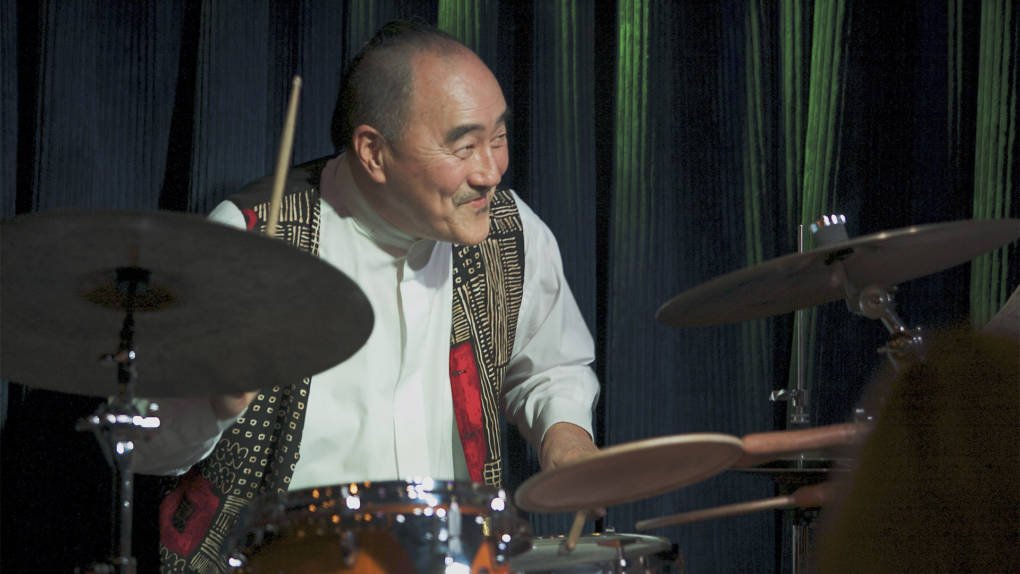
"caption": "As a bandleader, producer and internationally acclaimed jazz artist, Tana has waged a one-man campaign to make Bay Area audiences aware of the exceptional jazz talent coming out of Japan.",
"description": "As a bandleader, producer and internationally esteemed jazz artist, Tana has waged a one-man campaign to make Bay Area audiences aware of the exceptional jazz talent coming out of Japan.",
"title": "akira tana",
"credit": "Chuck Gee",
"status": "inherit",
"isLoading": false,
"fetchFailed": false
},
"arts_13837557": {
"type": "attachments",
"id": "arts_13837557",
"meta": {
"index": "attachments_1716263798",
"site": "arts",
"id": "13837557",
"found": true
},
"parent": 13837529,
"imgSizes": {
"small": {
"file": "https://ww2.kqed.org/app/uploads/sites/2/2018/07/fleisher-with-student-520x293.jpg",
"width": 520,
"mimeType": "image/jpeg",
"height": 293
},
"twentyfourteen-full-width": {
"file": "https://ww2.kqed.org/app/uploads/sites/2/2018/07/fleisher-with-student-1038x576.jpg",
"width": 1038,
"mimeType": "image/jpeg",
"height": 576
},
"thumbnail": {
"file": "https://ww2.kqed.org/app/uploads/sites/2/2018/07/fleisher-with-student-160x90.jpg",
"width": 160,
"mimeType": "image/jpeg",
"height": 90
},
"fd-sm": {
"file": "https://ww2.kqed.org/app/uploads/sites/2/2018/07/fleisher-with-student-960x540.jpg",
"width": 960,
"mimeType": "image/jpeg",
"height": 540
},
"post-thumbnail": {
"file": "https://ww2.kqed.org/app/uploads/sites/2/2018/07/fleisher-with-student-672x372.jpg",
"width": 672,
"mimeType": "image/jpeg",
"height": 372
},
"xsmall": {
"file": "https://ww2.kqed.org/app/uploads/sites/2/2018/07/fleisher-with-student-375x211.jpg",
"width": 375,
"mimeType": "image/jpeg",
"height": 211
},
"kqedFullSize": {
"file": "https://ww2.kqed.org/app/uploads/sites/2/2018/07/fleisher-with-student.jpg",
"width": 1920,
"height": 1080
},
"large": {
"file": "https://ww2.kqed.org/app/uploads/sites/2/2018/07/fleisher-with-student-1020x574.jpg",
"width": 1020,
"mimeType": "image/jpeg",
"height": 574
},
"xlarge": {
"file": "https://ww2.kqed.org/app/uploads/sites/2/2018/07/fleisher-with-student-1180x664.jpg",
"width": 1180,
"mimeType": "image/jpeg",
"height": 664
},
"complete_open_graph": {
"file": "https://ww2.kqed.org/app/uploads/sites/2/2018/07/fleisher-with-student-1200x675.jpg",
"width": 1200,
"mimeType": "image/jpeg",
"height": 675
},
"guest-author-50": {
"file": "https://ww2.kqed.org/app/uploads/sites/2/2018/07/fleisher-with-student-50x50.jpg",
"width": 50,
"mimeType": "image/jpeg",
"height": 50
},
"guest-author-96": {
"file": "https://ww2.kqed.org/app/uploads/sites/2/2018/07/fleisher-with-student-96x96.jpg",
"width": 96,
"mimeType": "image/jpeg",
"height": 96
},
"medium": {
"file": "https://ww2.kqed.org/app/uploads/sites/2/2018/07/fleisher-with-student-800x450.jpg",
"width": 800,
"mimeType": "image/jpeg",
"height": 450
},
"guest-author-64": {
"file": "https://ww2.kqed.org/app/uploads/sites/2/2018/07/fleisher-with-student-64x64.jpg",
"width": 64,
"mimeType": "image/jpeg",
"height": 64
},
"guest-author-32": {
"file": "https://ww2.kqed.org/app/uploads/sites/2/2018/07/fleisher-with-student-32x32.jpg",
"width": 32,
"mimeType": "image/jpeg",
"height": 32
},
"fd-lrg": {
"file": "https://ww2.kqed.org/app/uploads/sites/2/2018/07/fleisher-with-student-1920x1080.jpg",
"width": 1920,
"mimeType": "image/jpeg",
"height": 1080
},
"fd-med": {
"file": "https://ww2.kqed.org/app/uploads/sites/2/2018/07/fleisher-with-student-1180x664.jpg",
"width": 1180,
"mimeType": "image/jpeg",
"height": 664
},
"full-width": {
"file": "https://ww2.kqed.org/app/uploads/sites/2/2018/07/fleisher-with-student-1920x1080.jpg",
"width": 1920,
"mimeType": "image/jpeg",
"height": 1080
},
"detail": {
"file": "https://ww2.kqed.org/app/uploads/sites/2/2018/07/fleisher-with-student-150x150.jpg",
"width": 150,
"mimeType": "image/jpeg",
"height": 150
},
"medium_large": {
"file": "https://ww2.kqed.org/app/uploads/sites/2/2018/07/fleisher-with-student-768x432.jpg",
"width": 768,
"mimeType": "image/jpeg",
"height": 432
},
"guest-author-128": {
"file": "https://ww2.kqed.org/app/uploads/sites/2/2018/07/fleisher-with-student-128x128.jpg",
"width": 128,
"mimeType": "image/jpeg",
"height": 128
},
"xxsmall": {
"file": "https://ww2.kqed.org/app/uploads/sites/2/2018/07/fleisher-with-student-240x135.jpg",
"width": 240,
"mimeType": "image/jpeg",
"height": 135
}
},
"publishDate": 1532377182,
"modified": 1532377857,
"caption": "Leon Fleisher has been a faculty member of the Peabody Institute at Johns Hopkins University since 1959.",
"description": "Leon Fleisher has been a faculty member of the Peabody Institute at Johns Hopkins University since 1959.",
"title": "fleisher (with student)",
"credit": "Courtesy of Johns Hopkins University",
"status": "inherit",
"isLoading": false,
"fetchFailed": false
},
"arts_13837534": {
"type": "attachments",
"id": "arts_13837534",
"meta": {
"index": "attachments_1716263798",
"site": "arts",
"id": "13837534",
"found": true
},
"parent": 13837533,
"imgSizes": {
"small": {
"file": "https://ww2.kqed.org/app/uploads/sites/2/2018/07/gettyimages-3063609_wide-2f1369de541107083fa0d1cd73b7e62621fc3588-520x293.jpg",
"width": 520,
"mimeType": "image/jpeg",
"height": 293
},
"twentyfourteen-full-width": {
"file": "https://ww2.kqed.org/app/uploads/sites/2/2018/07/gettyimages-3063609_wide-2f1369de541107083fa0d1cd73b7e62621fc3588-1038x576.jpg",
"width": 1038,
"mimeType": "image/jpeg",
"height": 576
},
"thumbnail": {
"file": "https://ww2.kqed.org/app/uploads/sites/2/2018/07/gettyimages-3063609_wide-2f1369de541107083fa0d1cd73b7e62621fc3588-160x90.jpg",
"width": 160,
"mimeType": "image/jpeg",
"height": 90
},
"fd-sm": {
"file": "https://ww2.kqed.org/app/uploads/sites/2/2018/07/gettyimages-3063609_wide-2f1369de541107083fa0d1cd73b7e62621fc3588-960x540.jpg",
"width": 960,
"mimeType": "image/jpeg",
"height": 540
},
"post-thumbnail": {
"file": "https://ww2.kqed.org/app/uploads/sites/2/2018/07/gettyimages-3063609_wide-2f1369de541107083fa0d1cd73b7e62621fc3588-672x372.jpg",
"width": 672,
"mimeType": "image/jpeg",
"height": 372
},
"xsmall": {
"file": "https://ww2.kqed.org/app/uploads/sites/2/2018/07/gettyimages-3063609_wide-2f1369de541107083fa0d1cd73b7e62621fc3588-375x211.jpg",
"width": 375,
"mimeType": "image/jpeg",
"height": 211
},
"kqedFullSize": {
"file": "https://ww2.kqed.org/app/uploads/sites/2/2018/07/gettyimages-3063609_wide-2f1369de541107083fa0d1cd73b7e62621fc3588-e1532368365575.jpg",
"width": 1920,
"height": 1081
},
"large": {
"file": "https://ww2.kqed.org/app/uploads/sites/2/2018/07/gettyimages-3063609_wide-2f1369de541107083fa0d1cd73b7e62621fc3588-1020x574.jpg",
"width": 1020,
"mimeType": "image/jpeg",
"height": 574
},
"xlarge": {
"file": "https://ww2.kqed.org/app/uploads/sites/2/2018/07/gettyimages-3063609_wide-2f1369de541107083fa0d1cd73b7e62621fc3588-1180x664.jpg",
"width": 1180,
"mimeType": "image/jpeg",
"height": 664
},
"complete_open_graph": {
"file": "https://ww2.kqed.org/app/uploads/sites/2/2018/07/gettyimages-3063609_wide-2f1369de541107083fa0d1cd73b7e62621fc3588-1200x675.jpg",
"width": 1200,
"mimeType": "image/jpeg",
"height": 675
},
"guest-author-50": {
"file": "https://ww2.kqed.org/app/uploads/sites/2/2018/07/gettyimages-3063609_wide-2f1369de541107083fa0d1cd73b7e62621fc3588-50x50.jpg",
"width": 50,
"mimeType": "image/jpeg",
"height": 50
},
"guest-author-96": {
"file": "https://ww2.kqed.org/app/uploads/sites/2/2018/07/gettyimages-3063609_wide-2f1369de541107083fa0d1cd73b7e62621fc3588-96x96.jpg",
"width": 96,
"mimeType": "image/jpeg",
"height": 96
},
"medium": {
"file": "https://ww2.kqed.org/app/uploads/sites/2/2018/07/gettyimages-3063609_wide-2f1369de541107083fa0d1cd73b7e62621fc3588-800x450.jpg",
"width": 800,
"mimeType": "image/jpeg",
"height": 450
},
"guest-author-64": {
"file": "https://ww2.kqed.org/app/uploads/sites/2/2018/07/gettyimages-3063609_wide-2f1369de541107083fa0d1cd73b7e62621fc3588-64x64.jpg",
"width": 64,
"mimeType": "image/jpeg",
"height": 64
},
"guest-author-32": {
"file": "https://ww2.kqed.org/app/uploads/sites/2/2018/07/gettyimages-3063609_wide-2f1369de541107083fa0d1cd73b7e62621fc3588-32x32.jpg",
"width": 32,
"mimeType": "image/jpeg",
"height": 32
},
"fd-lrg": {
"file": "https://ww2.kqed.org/app/uploads/sites/2/2018/07/gettyimages-3063609_wide-2f1369de541107083fa0d1cd73b7e62621fc3588-1920x1080.jpg",
"width": 1920,
"mimeType": "image/jpeg",
"height": 1080
},
"fd-med": {
"file": "https://ww2.kqed.org/app/uploads/sites/2/2018/07/gettyimages-3063609_wide-2f1369de541107083fa0d1cd73b7e62621fc3588-1180x664.jpg",
"width": 1180,
"mimeType": "image/jpeg",
"height": 664
},
"full-width": {
"file": "https://ww2.kqed.org/app/uploads/sites/2/2018/07/gettyimages-3063609_wide-2f1369de541107083fa0d1cd73b7e62621fc3588-1920x1080.jpg",
"width": 1920,
"mimeType": "image/jpeg",
"height": 1080
},
"detail": {
"file": "https://ww2.kqed.org/app/uploads/sites/2/2018/07/gettyimages-3063609_wide-2f1369de541107083fa0d1cd73b7e62621fc3588-150x150.jpg",
"width": 150,
"mimeType": "image/jpeg",
"height": 150
},
"medium_large": {
"file": "https://ww2.kqed.org/app/uploads/sites/2/2018/07/gettyimages-3063609_wide-2f1369de541107083fa0d1cd73b7e62621fc3588-768x432.jpg",
"width": 768,
"mimeType": "image/jpeg",
"height": 432
},
"guest-author-128": {
"file": "https://ww2.kqed.org/app/uploads/sites/2/2018/07/gettyimages-3063609_wide-2f1369de541107083fa0d1cd73b7e62621fc3588-128x128.jpg",
"width": 128,
"mimeType": "image/jpeg",
"height": 128
},
"xxsmall": {
"file": "https://ww2.kqed.org/app/uploads/sites/2/2018/07/gettyimages-3063609_wide-2f1369de541107083fa0d1cd73b7e62621fc3588-240x135.jpg",
"width": 240,
"mimeType": "image/jpeg",
"height": 135
}
},
"publishDate": 1532368293,
"modified": 1532368354,
"caption": "David Bowie, photographed on March 3, 1965—two years after the future legend recorded a demo for Decca Records with The Konrad",
"description": null,
"title": "David Bowie, photographed on March 3, 1965 — two years after the future legend recorded a demo for Decca Records with The Konrads.",
"credit": " Potter/Getty Images",
"status": "inherit",
"isLoading": false,
"fetchFailed": false
},
"arts_13837390": {
"type": "attachments",
"id": "arts_13837390",
"meta": {
"index": "attachments_1716263798",
"site": "arts",
"id": "13837390",
"found": true
},
"parent": 13837326,
"imgSizes": {
"small": {
"file": "https://ww2.kqed.org/app/uploads/sites/2/2018/07/Big-red-2-520x293.jpg",
"width": 520,
"mimeType": "image/jpeg",
"height": 293
},
"twentyfourteen-full-width": {
"file": "https://ww2.kqed.org/app/uploads/sites/2/2018/07/Big-red-2-1038x576.jpg",
"width": 1038,
"mimeType": "image/jpeg",
"height": 576
},
"thumbnail": {
"file": "https://ww2.kqed.org/app/uploads/sites/2/2018/07/Big-red-2-160x90.jpg",
"width": 160,
"mimeType": "image/jpeg",
"height": 90
},
"fd-sm": {
"file": "https://ww2.kqed.org/app/uploads/sites/2/2018/07/Big-red-2-960x540.jpg",
"width": 960,
"mimeType": "image/jpeg",
"height": 540
},
"post-thumbnail": {
"file": "https://ww2.kqed.org/app/uploads/sites/2/2018/07/Big-red-2-672x372.jpg",
"width": 672,
"mimeType": "image/jpeg",
"height": 372
},
"xsmall": {
"file": "https://ww2.kqed.org/app/uploads/sites/2/2018/07/Big-red-2-375x211.jpg",
"width": 375,
"mimeType": "image/jpeg",
"height": 211
},
"kqedFullSize": {
"file": "https://ww2.kqed.org/app/uploads/sites/2/2018/07/Big-red-2.jpg",
"width": 1920,
"height": 1080
},
"large": {
"file": "https://ww2.kqed.org/app/uploads/sites/2/2018/07/Big-red-2-1020x574.jpg",
"width": 1020,
"mimeType": "image/jpeg",
"height": 574
},
"xlarge": {
"file": "https://ww2.kqed.org/app/uploads/sites/2/2018/07/Big-red-2-1180x664.jpg",
"width": 1180,
"mimeType": "image/jpeg",
"height": 664
},
"complete_open_graph": {
"file": "https://ww2.kqed.org/app/uploads/sites/2/2018/07/Big-red-2-1200x675.jpg",
"width": 1200,
"mimeType": "image/jpeg",
"height": 675
},
"guest-author-50": {
"file": "https://ww2.kqed.org/app/uploads/sites/2/2018/07/Big-red-2-50x50.jpg",
"width": 50,
"mimeType": "image/jpeg",
"height": 50
},
"guest-author-96": {
"file": "https://ww2.kqed.org/app/uploads/sites/2/2018/07/Big-red-2-96x96.jpg",
"width": 96,
"mimeType": "image/jpeg",
"height": 96
},
"medium": {
"file": "https://ww2.kqed.org/app/uploads/sites/2/2018/07/Big-red-2-800x450.jpg",
"width": 800,
"mimeType": "image/jpeg",
"height": 450
},
"guest-author-64": {
"file": "https://ww2.kqed.org/app/uploads/sites/2/2018/07/Big-red-2-64x64.jpg",
"width": 64,
"mimeType": "image/jpeg",
"height": 64
},
"guest-author-32": {
"file": "https://ww2.kqed.org/app/uploads/sites/2/2018/07/Big-red-2-32x32.jpg",
"width": 32,
"mimeType": "image/jpeg",
"height": 32
},
"fd-lrg": {
"file": "https://ww2.kqed.org/app/uploads/sites/2/2018/07/Big-red-2-1920x1080.jpg",
"width": 1920,
"mimeType": "image/jpeg",
"height": 1080
},
"fd-med": {
"file": "https://ww2.kqed.org/app/uploads/sites/2/2018/07/Big-red-2-1180x664.jpg",
"width": 1180,
"mimeType": "image/jpeg",
"height": 664
},
"full-width": {
"file": "https://ww2.kqed.org/app/uploads/sites/2/2018/07/Big-red-2-1920x1080.jpg",
"width": 1920,
"mimeType": "image/jpeg",
"height": 1080
},
"detail": {
"file": "https://ww2.kqed.org/app/uploads/sites/2/2018/07/Big-red-2-150x150.jpg",
"width": 150,
"mimeType": "image/jpeg",
"height": 150
},
"medium_large": {
"file": "https://ww2.kqed.org/app/uploads/sites/2/2018/07/Big-red-2-768x432.jpg",
"width": 768,
"mimeType": "image/jpeg",
"height": 432
},
"guest-author-128": {
"file": "https://ww2.kqed.org/app/uploads/sites/2/2018/07/Big-red-2-128x128.jpg",
"width": 128,
"mimeType": "image/jpeg",
"height": 128
},
"xxsmall": {
"file": "https://ww2.kqed.org/app/uploads/sites/2/2018/07/Big-red-2-240x135.jpg",
"width": 240,
"mimeType": "image/jpeg",
"height": 135
}
},
"publishDate": 1532042561,
"modified": 1532042712,
"caption": "On her spiritually rooted sophomore EP, 'Flavor of Green,' Queens D.Light grapples with uncertainty.",
"description": "On her spiritually rooted sophomore EP, 'Flavor of Green,' Queens D.Light grapples with uncertainty.",
"title": "Big red 2",
"credit": "Adrian Octavius Walker",
"status": "inherit",
"isLoading": false,
"fetchFailed": false
}
},
"audioPlayerReducer": {
"postId": "stream_live",
"isPaused": true,
"isPlaying": false,
"pfsActive": false,
"pledgeModalIsOpen": true,
"playerDrawerIsOpen": false,
"liveAudioPlayStartedAt": 0,
"liveAudioPlayContext": ""
},
"authorsReducer": {
"byline_arts_13838086": {
"type": "authors",
"id": "byline_arts_13838086",
"meta": {
"override": true
},
"slug": "byline_arts_13838086",
"name": "Annie Bacon",
"isLoading": false
},
"byline_arts_13837882": {
"type": "authors",
"id": "byline_arts_13837882",
"meta": {
"override": true
},
"slug": "byline_arts_13837882",
"name": "Omid Zoufonoun",
"isLoading": false
},
"byline_arts_13837846": {
"type": "authors",
"id": "byline_arts_13837846",
"meta": {
"override": true
},
"slug": "byline_arts_13837846",
"name": "Montse Reyes",
"isLoading": false
},
"byline_arts_13837691": {
"type": "authors",
"id": "byline_arts_13837691",
"meta": {
"override": true
},
"slug": "byline_arts_13837691",
"name": "Janie Har, Associated Press and Gabe Meline, KQED",
"isLoading": false
},
"byline_arts_13837529": {
"type": "authors",
"id": "byline_arts_13837529",
"meta": {
"override": true
},
"slug": "byline_arts_13837529",
"name": "Elijah Ho",
"isLoading": false
},
"byline_arts_13837533": {
"type": "authors",
"id": "byline_arts_13837533",
"meta": {
"override": true
},
"slug": "byline_arts_13837533",
"name": "Andrew Flanagan",
"isLoading": false
},
"agilbert": {
"type": "authors",
"id": "86",
"meta": {
"index": "authors_1716337520",
"id": "86",
"found": true
},
"name": "Andrew Gilbert",
"firstName": "Andrew",
"lastName": "Gilbert",
"slug": "agilbert",
"email": "jazzscribe@aol.com",
"display_author_email": false,
"staff_mastheads": [],
"title": "KQED Contributor",
"bio": "A Los Angeles native based in the Berkeley area since 1996, Andrew Gilbert covers jazz, international music and dance for KQED's \u003ci>California Report, \u003c/i>the\u003ci> Mercury News\u003c/i>, \u003ci>San Francisco Chronicle\u003c/i>, \u003ci>Berkeleyside.com\u003c/i>, and other publications. He is available for weddings and bar and bat mitzvahs. #jazzscribe",
"avatar": "https://secure.gravatar.com/avatar/d7bcafdbefdd39e9a68f88724ca616eb4e7a5a6bff9cdfb62de652a1e1751471?s=600&d=blank&r=g",
"twitter": null,
"bluesky": null,
"facebook": null,
"instagram": null,
"linkedin": null,
"sites": [
{
"site": "arts",
"roles": [
"Contributor",
"author"
]
},
{
"site": "news",
"roles": [
"author"
]
}
],
"headData": {
"title": "Andrew Gilbert | KQED",
"description": "KQED Contributor",
"ogImgSrc": "https://secure.gravatar.com/avatar/d7bcafdbefdd39e9a68f88724ca616eb4e7a5a6bff9cdfb62de652a1e1751471?s=600&d=blank&r=g",
"twImgSrc": "https://secure.gravatar.com/avatar/d7bcafdbefdd39e9a68f88724ca616eb4e7a5a6bff9cdfb62de652a1e1751471?s=600&d=blank&r=g"
},
"isLoading": false,
"link": "/author/agilbert"
},
"baybridged": {
"type": "authors",
"id": "178",
"meta": {
"index": "authors_1716337520",
"id": "178",
"found": true
},
"name": "The Bay Bridged",
"firstName": "The Bay",
"lastName": "Bridged",
"slug": "baybridged",
"email": "thebaybridged@gmail.com",
"display_author_email": false,
"staff_mastheads": [],
"title": "KQED Contributor",
"bio": null,
"avatar": "https://secure.gravatar.com/avatar/211daad5386ad504c39c31f3e16cfae45ec7b0ad32ecca7ee64cfd9b7eb76609?s=600&d=blank&r=g",
"twitter": null,
"bluesky": null,
"facebook": null,
"instagram": null,
"linkedin": null,
"sites": [
{
"site": "arts",
"roles": [
"subscriber"
]
}
],
"headData": {
"title": "The Bay Bridged | KQED",
"description": "KQED Contributor",
"ogImgSrc": "https://secure.gravatar.com/avatar/211daad5386ad504c39c31f3e16cfae45ec7b0ad32ecca7ee64cfd9b7eb76609?s=600&d=blank&r=g",
"twImgSrc": "https://secure.gravatar.com/avatar/211daad5386ad504c39c31f3e16cfae45ec7b0ad32ecca7ee64cfd9b7eb76609?s=600&d=blank&r=g"
},
"isLoading": false,
"link": "/author/baybridged"
},
"nvoynovskaya": {
"type": "authors",
"id": "11387",
"meta": {
"index": "authors_1716337520",
"id": "11387",
"found": true
},
"name": "Nastia Voynovskaya",
"firstName": "Nastia",
"lastName": "Voynovskaya",
"slug": "nvoynovskaya",
"email": "nvoynovskaya@kqed.org",
"display_author_email": false,
"staff_mastheads": [
"arts"
],
"title": "Editor and reporter",
"bio": "Nastia Voynovskaya is a reporter, editor and host at KQED Arts & Culture. She's been covering the arts in the Bay Area for over a decade, with a focus on music, queer culture, labor issues and grassroots organizing. She has edited KQED story series such as Trans Bay: A History of San Francisco's Gender-Diverse Community, and co-created KQED's Bay Area hip-hop history project, That's My Word. Nastia's work has been recognized by the Society of Professional Journalists and San Francisco Press Club. She regularly appears on podcasts and radio programs, including NPR's All Songs Considered, and hosts live events where music, culture and conversation meet.",
"avatar": "https://secure.gravatar.com/avatar/5025ee460e5a85d69ca20ea6c6f2f80d7e17795c828f61ea3aecfcd924e9042e?s=600&d=blank&r=g",
"twitter": null,
"bluesky": null,
"facebook": null,
"instagram": "https://www.instagram.com/nananastia/",
"linkedin": null,
"sites": [
{
"site": "",
"roles": [
"editor"
]
},
{
"site": "arts",
"roles": [
"administrator"
]
},
{
"site": "news",
"roles": [
"editor"
]
},
{
"site": "pop",
"roles": [
"administrator"
]
},
{
"site": "bayareabites",
"roles": [
"editor"
]
},
{
"site": "podcasts",
"roles": [
"editor"
]
},
{
"site": "hiphop",
"roles": [
"editor"
]
}
],
"headData": {
"title": "Nastia Voynovskaya | KQED",
"description": "Editor and reporter",
"ogImgSrc": "https://secure.gravatar.com/avatar/5025ee460e5a85d69ca20ea6c6f2f80d7e17795c828f61ea3aecfcd924e9042e?s=600&d=blank&r=g",
"twImgSrc": "https://secure.gravatar.com/avatar/5025ee460e5a85d69ca20ea6c6f2f80d7e17795c828f61ea3aecfcd924e9042e?s=600&d=blank&r=g"
},
"isLoading": false,
"link": "/author/nvoynovskaya"
},
"edayu": {
"type": "authors",
"id": "11391",
"meta": {
"index": "authors_1716337520",
"id": "11391",
"found": true
},
"name": "Eda Yu",
"firstName": "Eda",
"lastName": "Yu",
"slug": "edayu",
"email": "eda.cyu@gmail.com",
"display_author_email": false,
"staff_mastheads": [],
"title": "KQED Contributor",
"bio": "Eda Yu is a freelance writer and arts and culture journalist born and raised in Los Angeles, California. Her work centers the intersection of culture and identity, and her writing has appeared on platforms like VICE, Paper Magazine, and Complex. Follow her latest on Instagram and Twitter @edacyu.",
"avatar": "https://secure.gravatar.com/avatar/6dac2abe6c01e7b538d29f9c902136eb?s=600&d=blank&r=g",
"twitter": null,
"facebook": null,
"instagram": "https://www.instagram.com/edacyu/",
"linkedin": null,
"sites": [
{
"site": "arts",
"roles": [
"contributor"
]
}
],
"headData": {
"title": "Eda Yu | KQED",
"description": "KQED Contributor",
"ogImgSrc": "https://secure.gravatar.com/avatar/6dac2abe6c01e7b538d29f9c902136eb?s=600&d=blank&r=g",
"twImgSrc": "https://secure.gravatar.com/avatar/6dac2abe6c01e7b538d29f9c902136eb?s=600&d=blank&r=g"
},
"isLoading": false,
"link": "/author/edayu"
},
"jlipsky": {
"type": "authors",
"id": "11992",
"meta": {
"index": "authors_1716337520",
"id": "11992",
"found": true
},
"name": "Jessica Lipsky",
"firstName": "Jessica",
"lastName": "Lipsky",
"slug": "jlipsky",
"email": "jessica.lipsky@gmail.com",
"display_author_email": false,
"staff_mastheads": [],
"title": "KQED Contributor",
"bio": "Jessica Lipsky is a freelance writer who has contributed to the New York Times, the Washington Post, Columbia Journalism Review, NPR and more. She is the author of \u003cem>It Ain’t Retro: Daptone Records & The 21st-Century Soul Revolution\u003c/em>. Find her work \u003ca href=\"https://www.jlipsky.com/\">here\u003c/a>.",
"avatar": "https://secure.gravatar.com/avatar/07bb90ce7e446aa0abb4fe23b3437ebd?s=600&d=blank&r=g",
"twitter": null,
"facebook": null,
"instagram": null,
"linkedin": null,
"sites": [
{
"site": "arts",
"roles": [
"contributor"
]
},
{
"site": "futureofyou",
"roles": [
"contributor"
]
}
],
"headData": {
"title": "Jessica Lipsky | KQED",
"description": "KQED Contributor",
"ogImgSrc": "https://secure.gravatar.com/avatar/07bb90ce7e446aa0abb4fe23b3437ebd?s=600&d=blank&r=g",
"twImgSrc": "https://secure.gravatar.com/avatar/07bb90ce7e446aa0abb4fe23b3437ebd?s=600&d=blank&r=g"
},
"isLoading": false,
"link": "/author/jlipsky"
}
},
"pagesReducer": {
"arts_category_music": {
"type": "terms",
"id": "arts_69",
"meta": {
"index": "terms_1716263798",
"site": "arts",
"id": "69",
"score": 10.851903
},
"featImg": null,
"name": "Music",
"description": null,
"taxonomy": "category",
"headData": {
"twImgId": null,
"twTitle": null,
"ogTitle": null,
"ogImgId": null,
"twDescription": null,
"description": null,
"title": "Music Archives | KQED Arts",
"ogDescription": null
},
"ttid": 70,
"slug": "music",
"isLoading": false,
"title": "Music",
"pageMeta": {
"site": "arts",
"WpPageTemplate": "page-topic-editorial",
"currentPage": 176
},
"blocks": [
{
"blockName": "kqed/post-list",
"attrs": {
"layout": "cardArticle2",
"query": "posts/arts?category=music",
"seeMore": false,
"paginated": true,
"page": 176
}
},
{
"blockName": "kqed/ad"
}
]
}
},
"pfsSessionReducer": {},
"postsReducer": {
"stream_live": {
"type": "live",
"id": "stream_live",
"audioUrl": "https://streams.kqed.org/kqedradio",
"title": "Live Stream",
"excerpt": "Live Stream information currently unavailable.",
"link": "/radio",
"featImg": "",
"label": {
"name": "KQED Live",
"link": "/"
}
},
"stream_kqedNewscast": {
"type": "posts",
"id": "stream_kqedNewscast",
"audioUrl": "https://www.kqed.org/.stream/anon/radio/RDnews/newscast.mp3?_=1",
"title": "KQED Newscast",
"featImg": "",
"label": {
"name": "88.5 FM",
"link": "/"
}
},
"arts_13838086": {
"type": "posts",
"id": "arts_13838086",
"meta": {
"index": "posts_1716263798",
"site": "arts",
"id": "13838086",
"score": null,
"sort": [
1533076202000
]
},
"parent": 0,
"labelTerm": {
"site": "arts"
},
"blocks": [],
"publishDate": 1533076202,
"format": "image",
"title": "The Brothers Comatose's Trade Deal with China: Bluegrass",
"headTitle": "The Brothers Comatose’s Trade Deal with China: Bluegrass | KQED",
"content": "\u003cp class=\"p1\">\u003cspan class=\"s1\">At his inauguration, Donald Trump stated that the American government\u003c/span> \u003cspan class=\"s1\">“will seek friendship and goodwill with the nations of the world—but we do so with the understanding that it is the right of all nations to put their own interests first.”\u003c/span>\u003c/p>\n\u003cp class=\"p1\">\u003cspan class=\"s1\">Exactly one year later, the federal government was on the brink of a shutdown—a fact Bay Area band \u003ca href=\"http://www.thebrotherscomatose.com/\" target=\"_blank\" rel=\"noopener\">The Brothers Comatose\u003c/a> only learned \u003c/span>\u003cspan class=\"s1\">the night before they left on a three week tour of China sponsored by the \u003ca href=\"https://eca.state.gov/about-bureau\" target=\"_blank\" rel=\"noopener\">U.S. State Department Bureau of Educational and Cultural Affairs\u003c/a>\u003c/span> \u003cspan class=\"s1\">(ECA). They were told that if the shutdown went into effect—and it did—U.S. State Department officials in China would be legally unable to meet them. \u003c/span>\u003c/p>\n\u003cp class=\"p1\">\u003cspan class=\"s1\">“We [were] freaking out,” says Ben Morrison, who started the 5-piece band in 2008 with his brother Alex. “I mean, we show up dead of night on an airplane, don’t know where we’re going, don’t know any of the language whatsoever, how to get around, or where we’re supposed to be.”\u003c/span>\u003c/p>\n\u003cp class=\"p1\">\u003cspan class=\"s1\">The program, called \u003ca href=\"http://amvoices.org/ama/\" target=\"_blank\" rel=\"noopener\">American Music Abroad \u003c/a>\u003c/span>\u003cspan class=\"s1\">(AMA) in its current iteration, is rooted in an effort from the 1950s to show a more appealing version of America than what may have reached the program’s targeted countries. In the early days it was all jazz: Dizzy Gillespie in Pakistan, Louis Armstrong in Egypt, Dave Brubeck in Iraq. You may have seen the \u003ca href=\"https://www.nytimes.com/2008/06/29/arts/music/29kapl.html?pagewanted=all\" target=\"_blank\" rel=\"noopener\">pictures\u003c/a>.\u003c/span>\u003c/p>\n\u003cfigure id=\"attachment_13838094\" class=\"wp-caption aligncenter\" style=\"max-width: 800px\">\u003cimg loading=\"lazy\" decoding=\"async\" class=\"size-medium wp-image-13838094\" src=\"https://ww2.kqed.org/arts/wp-content/uploads/sites/2/2018/07/Shenyang-Mall-800x533.jpg\" alt=\"The Brothers Comatose perform at the Shenyang Mall.\" width=\"800\" height=\"533\" srcset=\"https://cdn.kqed.org/wp-content/uploads/sites/2/2018/07/Shenyang-Mall-800x533.jpg 800w, https://cdn.kqed.org/wp-content/uploads/sites/2/2018/07/Shenyang-Mall-160x107.jpg 160w, https://cdn.kqed.org/wp-content/uploads/sites/2/2018/07/Shenyang-Mall-768x512.jpg 768w, https://cdn.kqed.org/wp-content/uploads/sites/2/2018/07/Shenyang-Mall-1020x680.jpg 1020w, https://cdn.kqed.org/wp-content/uploads/sites/2/2018/07/Shenyang-Mall-1200x800.jpg 1200w, https://cdn.kqed.org/wp-content/uploads/sites/2/2018/07/Shenyang-Mall.jpg 1920w, https://cdn.kqed.org/wp-content/uploads/sites/2/2018/07/Shenyang-Mall-1180x787.jpg 1180w, https://cdn.kqed.org/wp-content/uploads/sites/2/2018/07/Shenyang-Mall-960x640.jpg 960w, https://cdn.kqed.org/wp-content/uploads/sites/2/2018/07/Shenyang-Mall-240x160.jpg 240w, https://cdn.kqed.org/wp-content/uploads/sites/2/2018/07/Shenyang-Mall-375x250.jpg 375w, https://cdn.kqed.org/wp-content/uploads/sites/2/2018/07/Shenyang-Mall-520x347.jpg 520w\" sizes=\"(max-width: 800px) 100vw, 800px\">\u003cfigcaption class=\"wp-caption-text\">The Brothers Comatose perform at the Shenyang Mall. \u003ccite>(Mickey Davis/American Music Abroad Program)\u003c/cite>\u003c/figcaption>\u003c/figure>\n\u003cp class=\"p1\">\u003cspan class=\"s1\">Today it is administered via grant funding by the nonprofit \u003ca href=\"http://americanvoices.org/\" target=\"_blank\" rel=\"noopener\">American Voices \u003c/a>\u003c/span>\u003cspan class=\"s1\">(AV). Each of AV’s many similar projects uses music “as a tool for greater cultural dialogue,” program manager Mickey Davis told me by phone. With AMA, the goal is to deepen cross-cultural communication and collaboration through music, especially in those places least likely to have access to American popular music.\u003c/span>\u003c/p>\n\u003cp>[ad fullwidth]\u003c/p>\n\u003cp class=\"p1\">\u003cspan class=\"s1\">At first, this was discordant to me. President Trump’s “America First” foreign policy has been the impetus for withdrawing from \u003ca href=\"http://fortune.com/2018/04/18/trump-tpp-withdrawal-rejoin/\" target=\"_blank\" rel=\"noopener\">trade\u003c/a>\u003c/span>\u003cspan class=\"s3\"> \u003c/span>\u003cspan class=\"s1\">and \u003ca href=\"https://www.reuters.com/article/us-un-climate-usa-paris/u-s-submits-formal-notice-of-withdrawal-from-paris-climate-pact-idUSKBN1AK2FM\" target=\"_blank\" rel=\"noopener\">climate\u003c/a> agreements;\u003c/span>\u003cspan class=\"s1\"> instituting a \u003ca href=\"https://www.nytimes.com/2018/06/26/us/politics/supreme-court-trump-travel-ban.html\" target=\"_blank\" rel=\"noopener\">travel ban\u003c/a> on majority-Muslim nations;\u003c/span>\u003cspan class=\"s2\"> \u003c/span>\u003cspan class=\"s1\">and implementing a \u003ca href=\"https://www.npr.org/2018/06/19/621065383/what-we-know-family-separation-and-zero-tolerance-at-the-border\" target=\"_blank\" rel=\"noopener\">zero-tolerance border policy\u003c/a> that has left more than 2,000 children separated\u003c/span> \u003cspan class=\"s1\">from their parents\u003c/span>\u003cspan class=\"s1\">.\u003cspan class=\"Apple-converted-space\"> \u003c/span>It’s been used to \u003ca href=\"https://www.kqed.org/news/11660547/analysis-in-trumps-twitter-feed-a-tale-of-sound-and-fury\" target=\"_blank\" rel=\"noopener\">alienate close allies\u003c/a>\u003c/span> \u003cspan class=\"s1\">and make bullish \u003ca href=\"https://twitter.com/realdonaldtrump/status/948355557022420992?lang=en\" target=\"_blank\" rel=\"noopener\">threats\u003c/a> of nuclear annihilation\u003c/span>\u003cspan class=\"s1\">. Most recently, it has fueled the opening shots of a \u003ca href=\"https://www.cfr.org/timeline/us-relations-china\" target=\"_blank\" rel=\"noopener\">trade war with China\u003c/a>, as tariffs have been placed on $84 billion worth of Chinese imports, ironically, at least partially in retaliation for China’s own version of America First, the \u003ca href=\"https://www.washingtonpost.com/news/monkey-cage/wp/2018/05/03/what-is-made-in-china-2025-and-why-is-it-a-threat-to-trumps-trade-goals/?utm_term=.412bb8fe4868\" target=\"_blank\" rel=\"noopener\">Made in China 2025\u003c/a> initiative.\u003c/span>\u003c/p>\n\u003cp class=\"p1\">\u003cspan class=\"s1\">If our foreign policy has become about isolating ourselves and breaking connections, how did a rowdy, shaggy-haired, mustachioed, skinny jean- and trucker–hat-wearing, Trump-disapproving, crowd-pleasing bluegrass band—so adept at winning over audiences and making friends—come to represent America? How did they feel about it? And can individual connections overwrite the divisive actions of governments?\u003c/span>\u003c/p>\n\u003cp>https://youtu.be/QlnYhZuC7js\u003c/p>\n\u003cp class=\"p1\">\u003cspan class=\"s1\">Hundreds of bands apply to AMA each year. Fifty are invited to audition in person. Ten to fifteen are selected. The finalists then fly to Washington D.C. for two to three days of training in representing America abroad before heading off on their tour. American Voices works as liaison between the embassies, local partners and the bands. “The public-facing diplomacy is really this people-to-people connection,” says Davis.\u003c/span>\u003c/p>\n\u003cp class=\"p1\">\u003cspan class=\"s1\">Liaoning province, the Brothers’ first stop, is northeast of Beijing, bordering North Korea. The January weather in \u003c/span>\u003cspan class=\"s4\">Changchun and\u003c/span> \u003cspan class=\"s1\">Shenyang was bitterly cold, regularly reaching lows of negative 20 degrees Fahrenheit. This was an utter shock to the system for Morrison. “I grew up in the Bay Area. I’ve never felt anything like that in my entire life,” he says. “I couldn’t function at all.” \u003c/span>\u003c/p>\n\u003cp class=\"p1\">\u003cspan class=\"s1\">Once they’d been advised of restrictions on freedom of expression and possible infiltration of electronic devices, Chinese officials required the Brothers to submit the lyrics and recordings of each song they’d play on this leg of the tour, as well as transcripts of everything they planned to say in between songs at their official shows. (The officials denied two songs without providing an explanation: “\u003ca href=\"https://www.youtube.com/watch?v=2PLSYNP_vzQ\" target=\"_blank\" rel=\"noopener\">Angeline\u003c/a>” \u003c/span>\u003cspan class=\"s1\">and “\u003ca href=\"https://www.youtube.com/watch?v=4XD9p1_3XKM\" target=\"_blank\" rel=\"noopener\">The Way The West Was Won\u003c/a>.”)\u003c/span>\u003c/p>\n\u003cp class=\"p1\">\u003cspan class=\"s1\">Luckily, those officials also stepped up when the American government shutdown stranded the Brothers. Chinese officials greeted them at the airport, and guided the band through their itinerary for the first few days until the U.S. government shifted back into action.\u003c/span>\u003c/p>\n\u003cp class=\"p1\">\u003cspan class=\"s1\">The affable band, referred to as cowboys by onlookers, say they were greeted warmly and with curiosity wherever they went. The Brothers, for their part, were ready for anything. “We were eating bugs, and scorpions, and worms, and pig brain, rooster beak and all sorts of odd and sometimes delicious stuff,” Morrison tells me. “Going in with a sense of adventure was important to us.”\u003c/span>\u003c/p>\n\u003cp class=\"p1\">\u003cspan class=\"s1\">Collaborative performances were a key part of the trip; they were where the Brothers were able to foster a deeper sense of cultural exchange. Here, Morrison experienced a second form of culture shock, this one musical. Where improvisation, adherence to specific time signatures and three-part harmonies surprised and confused their Chinese counterparts, the lack of these elements surprised the Brothers. \u003c/span>\u003c/p>\n\u003cp class=\"p1\">\u003cspan class=\"s1\">“There’s a song called ‘Lotus Flower,'” \u003c/span>\u003cspan class=\"s1\">Morrison says. “It’s a traditional Chinese song. It’s beautiful, absolutely gorgeous. We played it with three different people, and it was three different animals, just the timing and the flow of how it went. We just couldn’t figure it out or follow along.” \u003c/span>\u003c/p>\n\u003cp class=\"p1\">\u003cspan class=\"s1\">To explain this, the bandmates were told that\u003cspan class=\"Apple-converted-space\"> \u003c/span>“music flows like nature flows,” Morrison recalls. “There’s all different sizes of lotus flowers out in nature. So the song, it changes. It can change like nature can change. I’ve never thought of anything like that before.”\u003c/span>\u003c/p>\n\u003cp>https://youtu.be/UAR6vSDLinE\u003c/p>\n\u003cp class=\"p1\">\u003cspan class=\"s1\">The Brothers Comatose’s second stop was much further south, in Yunan Province. The band visited Kunming and smaller surrounding towns, playing, collaborating and experiencing vast cultural differences while seeking common threads. A \u003ca href=\"https://www.ergengtv.com/video/8183.html\" target=\"_blank\" rel=\"noopener\">mini-documentary \u003c/a>\u003c/span>\u003cspan class=\"s1\">made in Kunming shows smiling faces jumping, bobbing and dancing around campfires. In it, bassist Gio Benedetti says, “I couldn’t talk to anybody, but we could play music and dance and have a good time. I feel like that was the best example of our musical cultures coming together.”\u003c/span>\u003c/p>\n\u003cp class=\"p1\">\u003cspan class=\"s1\">Both the Bureau of Educational and Cultural Affairs and American Voices diplomatically declined to answer foreign policy questions outright. Jay Raman, director of cultural programs at ECA says the program will “continue building enduring partnerships that improve foreign relations and strengthen the national security of the United States.” \u003c/span>\u003c/p>\n\u003cfigure id=\"attachment_13838092\" class=\"wp-caption aligncenter\" style=\"max-width: 800px\">\u003cimg loading=\"lazy\" decoding=\"async\" class=\"size-medium wp-image-13838092\" src=\"https://ww2.kqed.org/arts/wp-content/uploads/sites/2/2018/07/Kunming-Street-1-800x533.jpg\" alt=\"The Brothers Comatose perform on the street in Kunming, China. \" width=\"800\" height=\"533\" srcset=\"https://cdn.kqed.org/wp-content/uploads/sites/2/2018/07/Kunming-Street-1-800x533.jpg 800w, https://cdn.kqed.org/wp-content/uploads/sites/2/2018/07/Kunming-Street-1-160x107.jpg 160w, https://cdn.kqed.org/wp-content/uploads/sites/2/2018/07/Kunming-Street-1-768x512.jpg 768w, https://cdn.kqed.org/wp-content/uploads/sites/2/2018/07/Kunming-Street-1-1020x680.jpg 1020w, https://cdn.kqed.org/wp-content/uploads/sites/2/2018/07/Kunming-Street-1-1200x800.jpg 1200w, https://cdn.kqed.org/wp-content/uploads/sites/2/2018/07/Kunming-Street-1.jpg 1920w, https://cdn.kqed.org/wp-content/uploads/sites/2/2018/07/Kunming-Street-1-1180x787.jpg 1180w, https://cdn.kqed.org/wp-content/uploads/sites/2/2018/07/Kunming-Street-1-960x640.jpg 960w, https://cdn.kqed.org/wp-content/uploads/sites/2/2018/07/Kunming-Street-1-240x160.jpg 240w, https://cdn.kqed.org/wp-content/uploads/sites/2/2018/07/Kunming-Street-1-375x250.jpg 375w, https://cdn.kqed.org/wp-content/uploads/sites/2/2018/07/Kunming-Street-1-520x347.jpg 520w\" sizes=\"(max-width: 800px) 100vw, 800px\">\u003cfigcaption class=\"wp-caption-text\">The Brothers Comatose perform on the street in Kunming, China. \u003ccite>(Mickey Davis/American Music Abroad Program)\u003c/cite>\u003c/figcaption>\u003c/figure>\n\u003cp class=\"p1\">\u003cspan class=\"s1\">AV program manager Davis, who also worked as the Brothers’ tour manager in China, sees it on a more personal level. “There’s a lot to be said for the power of music\u003cspan class=\"Apple-converted-space\"> \u003c/span>and the power of leading with music. There’s a sort of bond that’s created through playing music together or sharing music that can then lead to more larger cultural conversations. That doesn’t necessarily always happen, but when it does it’s done in a way that’s organic and open.”\u003c/span>\u003c/p>\n\u003cp class=\"p1\">\u003cspan class=\"s1\">Morrison related another moment that made a lasting impression on the Brothers, this one around a song called “\u003ca href=\"https://www.youtube.com/watch?v=OfoN8gjMBy8\" target=\"_blank\" rel=\"noopener\">Horse Race\u003c/a>.” \u003c/span>\u003cspan class=\"s1\">An ancient Chinese melody, the song bears incredible resemblance to Celtic, Scottish and early folk tunes that form part of the musical foundation for bluegrass.\u003cspan class=\"Apple-converted-space\"> \u003c/span>“We were able to jump in with [the player], and it was this really pumping awesome fiddle song all of a sudden,” he says. “This song is a couple thousand years old and played on this \u003ca href=\"https://en.wikipedia.org/wiki/Erhu\" target=\"_blank\" rel=\"noopener\">erhu\u003c/a>, [a traditional Chinese string instrument,] \u003c/span>\u003cspan class=\"s1\">and yet we’re able to come together and create this piece of music that is familiar to us and familiar to them.”\u003c/span>\u003c/p>\n\u003cp class=\"p1\">\u003cspan class=\"s1\">Last month, celebrating 10 years as a band at The Fillmore, The Brothers Comatose invited master erhu player \u003ca href=\"https://www.jiebingchen.com/\" target=\"_blank\" rel=\"noopener\">Jiebing Chen\u003c/a>\u003c/span>\u003cspan class=\"s1\"> on stage to perform bluegrass versions of both “Horse Race” and “Lotus Flower.”\u003c/span>\u003c/p>\n\u003cp>https://youtu.be/u6wVtrJBBFo\u003c/p>\n\u003cp class=\"p1\">\u003cspan class=\"s1\">At the end of the day, how did it feel to represent America in this tense political moment? Morrison has only good things to say. On the trip to China, music was a way to connect outside of politics. What’s more, he says, “It was a really freeing sort of feeling. It’s hard to not feel helpless here at home unless you’re on the ground [engaged in] grassroots efforts to change things, but you know, we’re touring musicians. We have a different path. For us, we get to go communicate with people in a different sort of way, play music with people and show people that Americans aren’t total assholes.”\u003c/span>\u003c/p>\n\u003cp class=\"p1\">\u003cspan class=\"s1\">As Benedetti says in the documentary, “If the two styles want to come together and have it feel cohesive, I think each side needs to, to change their expectations a little bit to be able to meet in the middle.” The two governments would do well to keep this in mind as tensions continue to rise on the geopolitical landscape.\u003c/span>\u003c/p>\n\u003cp>\u003cimg loading=\"lazy\" decoding=\"async\" class=\"size-medium wp-image-12127869 aligncenter\" src=\"https://ww2.kqed.org/arts/wp-content/uploads/sites/2/2016/09/Q.Logo_.Break_-800x78.jpg\" alt=\"\" width=\"800\" height=\"78\" srcset=\"https://cdn.kqed.org/wp-content/uploads/sites/2/2016/09/Q.Logo_.Break_.jpg 800w, https://cdn.kqed.org/wp-content/uploads/sites/2/2016/09/Q.Logo_.Break_-400x39.jpg 400w, https://cdn.kqed.org/wp-content/uploads/sites/2/2016/09/Q.Logo_.Break_-768x75.jpg 768w\" sizes=\"(max-width: 800px) 100vw, 800px\">\u003c/p>\n\u003cp>[ad floatright]\u003c/p>\n\u003cp class=\"p1\">\u003cem>\u003cspan class=\"s1\">The Brothers Comatose headline the \u003ca href=\"https://petalumamusicfestival.org/\" target=\"_blank\" rel=\"noopener\">Petaluma Music Festival\u003c/a>\u003c/span> on \u003cspan class=\"s1\">Saturday, Aug. 4. They’re set to travel with\u003c/span>\u003cspan class=\"s1\"> AMA again in the 2018-19 program, along with Bay Area band The T-Sisters.\u003c/span>\u003c/em>\u003c/p>\n\n",
"stats": {
"hasVideo": false,
"hasChartOrMap": false,
"hasAudio": false,
"hasPolis": false,
"wordCount": 1684,
"hasGoogleForm": false,
"hasGallery": false,
"hasHearkenModule": false,
"iframeSrcs": [],
"paragraphCount": 3
},
"modified": 1705027425,
"excerpt": "The San Francisco band went on a U.S. government-sponsored tour of China at a time of tense international relations—and emerged with a deeper understanding of cultural exchange. ",
"headData": {
"twImgId": "",
"twTitle": "",
"ogTitle": "",
"ogImgId": "",
"twDescription": "",
"description": "The San Francisco band went on a U.S. government-sponsored tour of China at a time of tense international relations—and emerged with a deeper understanding of cultural exchange. ",
"title": "The Brothers Comatose's Trade Deal with China: Bluegrass | KQED",
"ogDescription": "",
"schema": {
"@context": "https://schema.org",
"@type": "Article",
"headline": "The Brothers Comatose's Trade Deal with China: Bluegrass",
"datePublished": "2018-07-31T15:30:02-07:00",
"dateModified": "2024-01-11T18:43:45-08:00",
"image": "https://cdn.kqed.org/wp-content/uploads/2020/02/KQED-OG-Image@1x.png"
}
},
"guestAuthors": [],
"slug": "the-brothers-comatoses-trade-deal-with-china-bluegrass",
"status": "publish",
"nprByline": "Annie Bacon",
"sticky": false,
"path": "/arts/13838086/the-brothers-comatoses-trade-deal-with-china-bluegrass",
"audioTrackLength": null,
"parsedContent": [
{
"type": "contentString",
"content": "\u003cdiv class=\"post-body\">\u003cp>\u003cp class=\"p1\">\u003cspan class=\"s1\">At his inauguration, Donald Trump stated that the American government\u003c/span> \u003cspan class=\"s1\">“will seek friendship and goodwill with the nations of the world—but we do so with the understanding that it is the right of all nations to put their own interests first.”\u003c/span>\u003c/p>\n\u003cp class=\"p1\">\u003cspan class=\"s1\">Exactly one year later, the federal government was on the brink of a shutdown—a fact Bay Area band \u003ca href=\"http://www.thebrotherscomatose.com/\" target=\"_blank\" rel=\"noopener\">The Brothers Comatose\u003c/a> only learned \u003c/span>\u003cspan class=\"s1\">the night before they left on a three week tour of China sponsored by the \u003ca href=\"https://eca.state.gov/about-bureau\" target=\"_blank\" rel=\"noopener\">U.S. State Department Bureau of Educational and Cultural Affairs\u003c/a>\u003c/span> \u003cspan class=\"s1\">(ECA). They were told that if the shutdown went into effect—and it did—U.S. State Department officials in China would be legally unable to meet them. \u003c/span>\u003c/p>\n\u003cp class=\"p1\">\u003cspan class=\"s1\">“We [were] freaking out,” says Ben Morrison, who started the 5-piece band in 2008 with his brother Alex. “I mean, we show up dead of night on an airplane, don’t know where we’re going, don’t know any of the language whatsoever, how to get around, or where we’re supposed to be.”\u003c/span>\u003c/p>\n\u003cp class=\"p1\">\u003cspan class=\"s1\">The program, called \u003ca href=\"http://amvoices.org/ama/\" target=\"_blank\" rel=\"noopener\">American Music Abroad \u003c/a>\u003c/span>\u003cspan class=\"s1\">(AMA) in its current iteration, is rooted in an effort from the 1950s to show a more appealing version of America than what may have reached the program’s targeted countries. In the early days it was all jazz: Dizzy Gillespie in Pakistan, Louis Armstrong in Egypt, Dave Brubeck in Iraq. You may have seen the \u003ca href=\"https://www.nytimes.com/2008/06/29/arts/music/29kapl.html?pagewanted=all\" target=\"_blank\" rel=\"noopener\">pictures\u003c/a>.\u003c/span>\u003c/p>\n\u003cfigure id=\"attachment_13838094\" class=\"wp-caption aligncenter\" style=\"max-width: 800px\">\u003cimg loading=\"lazy\" decoding=\"async\" class=\"size-medium wp-image-13838094\" src=\"https://ww2.kqed.org/arts/wp-content/uploads/sites/2/2018/07/Shenyang-Mall-800x533.jpg\" alt=\"The Brothers Comatose perform at the Shenyang Mall.\" width=\"800\" height=\"533\" srcset=\"https://cdn.kqed.org/wp-content/uploads/sites/2/2018/07/Shenyang-Mall-800x533.jpg 800w, https://cdn.kqed.org/wp-content/uploads/sites/2/2018/07/Shenyang-Mall-160x107.jpg 160w, https://cdn.kqed.org/wp-content/uploads/sites/2/2018/07/Shenyang-Mall-768x512.jpg 768w, https://cdn.kqed.org/wp-content/uploads/sites/2/2018/07/Shenyang-Mall-1020x680.jpg 1020w, https://cdn.kqed.org/wp-content/uploads/sites/2/2018/07/Shenyang-Mall-1200x800.jpg 1200w, https://cdn.kqed.org/wp-content/uploads/sites/2/2018/07/Shenyang-Mall.jpg 1920w, https://cdn.kqed.org/wp-content/uploads/sites/2/2018/07/Shenyang-Mall-1180x787.jpg 1180w, https://cdn.kqed.org/wp-content/uploads/sites/2/2018/07/Shenyang-Mall-960x640.jpg 960w, https://cdn.kqed.org/wp-content/uploads/sites/2/2018/07/Shenyang-Mall-240x160.jpg 240w, https://cdn.kqed.org/wp-content/uploads/sites/2/2018/07/Shenyang-Mall-375x250.jpg 375w, https://cdn.kqed.org/wp-content/uploads/sites/2/2018/07/Shenyang-Mall-520x347.jpg 520w\" sizes=\"(max-width: 800px) 100vw, 800px\">\u003cfigcaption class=\"wp-caption-text\">The Brothers Comatose perform at the Shenyang Mall. \u003ccite>(Mickey Davis/American Music Abroad Program)\u003c/cite>\u003c/figcaption>\u003c/figure>\n\u003cp class=\"p1\">\u003cspan class=\"s1\">Today it is administered via grant funding by the nonprofit \u003ca href=\"http://americanvoices.org/\" target=\"_blank\" rel=\"noopener\">American Voices \u003c/a>\u003c/span>\u003cspan class=\"s1\">(AV). Each of AV’s many similar projects uses music “as a tool for greater cultural dialogue,” program manager Mickey Davis told me by phone. With AMA, the goal is to deepen cross-cultural communication and collaboration through music, especially in those places least likely to have access to American popular music.\u003c/span>\u003c/p>\n\u003cp>\u003c/p>\u003c/div>",
"attributes": {
"named": {},
"numeric": []
}
},
{
"type": "component",
"content": "",
"name": "ad",
"attributes": {
"named": {
"label": "fullwidth"
},
"numeric": [
"fullwidth"
]
}
},
{
"type": "contentString",
"content": "\u003cdiv class=\"post-body\">\u003cp>\u003c/p>\n\u003cp class=\"p1\">\u003cspan class=\"s1\">At first, this was discordant to me. President Trump’s “America First” foreign policy has been the impetus for withdrawing from \u003ca href=\"http://fortune.com/2018/04/18/trump-tpp-withdrawal-rejoin/\" target=\"_blank\" rel=\"noopener\">trade\u003c/a>\u003c/span>\u003cspan class=\"s3\"> \u003c/span>\u003cspan class=\"s1\">and \u003ca href=\"https://www.reuters.com/article/us-un-climate-usa-paris/u-s-submits-formal-notice-of-withdrawal-from-paris-climate-pact-idUSKBN1AK2FM\" target=\"_blank\" rel=\"noopener\">climate\u003c/a> agreements;\u003c/span>\u003cspan class=\"s1\"> instituting a \u003ca href=\"https://www.nytimes.com/2018/06/26/us/politics/supreme-court-trump-travel-ban.html\" target=\"_blank\" rel=\"noopener\">travel ban\u003c/a> on majority-Muslim nations;\u003c/span>\u003cspan class=\"s2\"> \u003c/span>\u003cspan class=\"s1\">and implementing a \u003ca href=\"https://www.npr.org/2018/06/19/621065383/what-we-know-family-separation-and-zero-tolerance-at-the-border\" target=\"_blank\" rel=\"noopener\">zero-tolerance border policy\u003c/a> that has left more than 2,000 children separated\u003c/span> \u003cspan class=\"s1\">from their parents\u003c/span>\u003cspan class=\"s1\">.\u003cspan class=\"Apple-converted-space\"> \u003c/span>It’s been used to \u003ca href=\"https://www.kqed.org/news/11660547/analysis-in-trumps-twitter-feed-a-tale-of-sound-and-fury\" target=\"_blank\" rel=\"noopener\">alienate close allies\u003c/a>\u003c/span> \u003cspan class=\"s1\">and make bullish \u003ca href=\"https://twitter.com/realdonaldtrump/status/948355557022420992?lang=en\" target=\"_blank\" rel=\"noopener\">threats\u003c/a> of nuclear annihilation\u003c/span>\u003cspan class=\"s1\">. Most recently, it has fueled the opening shots of a \u003ca href=\"https://www.cfr.org/timeline/us-relations-china\" target=\"_blank\" rel=\"noopener\">trade war with China\u003c/a>, as tariffs have been placed on $84 billion worth of Chinese imports, ironically, at least partially in retaliation for China’s own version of America First, the \u003ca href=\"https://www.washingtonpost.com/news/monkey-cage/wp/2018/05/03/what-is-made-in-china-2025-and-why-is-it-a-threat-to-trumps-trade-goals/?utm_term=.412bb8fe4868\" target=\"_blank\" rel=\"noopener\">Made in China 2025\u003c/a> initiative.\u003c/span>\u003c/p>\n\u003cp class=\"p1\">\u003cspan class=\"s1\">If our foreign policy has become about isolating ourselves and breaking connections, how did a rowdy, shaggy-haired, mustachioed, skinny jean- and trucker–hat-wearing, Trump-disapproving, crowd-pleasing bluegrass band—so adept at winning over audiences and making friends—come to represent America? How did they feel about it? And can individual connections overwrite the divisive actions of governments?\u003c/span>\u003c/p>\u003c/p>\u003cp>\u003cspan class='utils-parseShortcode-shortcodes-__youtubeShortcode__embedYoutube'>\n \u003cspan class='utils-parseShortcode-shortcodes-__youtubeShortcode__embedYoutubeInside'>\n \u003ciframe\n loading='lazy'\n class='utils-parseShortcode-shortcodes-__youtubeShortcode__youtubePlayer'\n type='text/html'\n src='//www.youtube.com/embed/QlnYhZuC7js'\n title='//www.youtube.com/embed/QlnYhZuC7js'\n allowfullscreen='true'\n style='border:0;'>\u003c/iframe>\n \u003c/span>\n \u003c/span>\u003c/p>\u003cp>\u003cp class=\"p1\">\u003cspan class=\"s1\">Hundreds of bands apply to AMA each year. Fifty are invited to audition in person. Ten to fifteen are selected. The finalists then fly to Washington D.C. for two to three days of training in representing America abroad before heading off on their tour. American Voices works as liaison between the embassies, local partners and the bands. “The public-facing diplomacy is really this people-to-people connection,” says Davis.\u003c/span>\u003c/p>\n\u003cp class=\"p1\">\u003cspan class=\"s1\">Liaoning province, the Brothers’ first stop, is northeast of Beijing, bordering North Korea. The January weather in \u003c/span>\u003cspan class=\"s4\">Changchun and\u003c/span> \u003cspan class=\"s1\">Shenyang was bitterly cold, regularly reaching lows of negative 20 degrees Fahrenheit. This was an utter shock to the system for Morrison. “I grew up in the Bay Area. I’ve never felt anything like that in my entire life,” he says. “I couldn’t function at all.” \u003c/span>\u003c/p>\n\u003cp class=\"p1\">\u003cspan class=\"s1\">Once they’d been advised of restrictions on freedom of expression and possible infiltration of electronic devices, Chinese officials required the Brothers to submit the lyrics and recordings of each song they’d play on this leg of the tour, as well as transcripts of everything they planned to say in between songs at their official shows. (The officials denied two songs without providing an explanation: “\u003ca href=\"https://www.youtube.com/watch?v=2PLSYNP_vzQ\" target=\"_blank\" rel=\"noopener\">Angeline\u003c/a>” \u003c/span>\u003cspan class=\"s1\">and “\u003ca href=\"https://www.youtube.com/watch?v=4XD9p1_3XKM\" target=\"_blank\" rel=\"noopener\">The Way The West Was Won\u003c/a>.”)\u003c/span>\u003c/p>\n\u003cp class=\"p1\">\u003cspan class=\"s1\">Luckily, those officials also stepped up when the American government shutdown stranded the Brothers. Chinese officials greeted them at the airport, and guided the band through their itinerary for the first few days until the U.S. government shifted back into action.\u003c/span>\u003c/p>\n\u003cp class=\"p1\">\u003cspan class=\"s1\">The affable band, referred to as cowboys by onlookers, say they were greeted warmly and with curiosity wherever they went. The Brothers, for their part, were ready for anything. “We were eating bugs, and scorpions, and worms, and pig brain, rooster beak and all sorts of odd and sometimes delicious stuff,” Morrison tells me. “Going in with a sense of adventure was important to us.”\u003c/span>\u003c/p>\n\u003cp class=\"p1\">\u003cspan class=\"s1\">Collaborative performances were a key part of the trip; they were where the Brothers were able to foster a deeper sense of cultural exchange. Here, Morrison experienced a second form of culture shock, this one musical. Where improvisation, adherence to specific time signatures and three-part harmonies surprised and confused their Chinese counterparts, the lack of these elements surprised the Brothers. \u003c/span>\u003c/p>\n\u003cp class=\"p1\">\u003cspan class=\"s1\">“There’s a song called ‘Lotus Flower,'” \u003c/span>\u003cspan class=\"s1\">Morrison says. “It’s a traditional Chinese song. It’s beautiful, absolutely gorgeous. We played it with three different people, and it was three different animals, just the timing and the flow of how it went. We just couldn’t figure it out or follow along.” \u003c/span>\u003c/p>\n\u003cp class=\"p1\">\u003cspan class=\"s1\">To explain this, the bandmates were told that\u003cspan class=\"Apple-converted-space\"> \u003c/span>“music flows like nature flows,” Morrison recalls. “There’s all different sizes of lotus flowers out in nature. So the song, it changes. It can change like nature can change. I’ve never thought of anything like that before.”\u003c/span>\u003c/p>\u003c/p>\u003cp>\u003cspan class='utils-parseShortcode-shortcodes-__youtubeShortcode__embedYoutube'>\n \u003cspan class='utils-parseShortcode-shortcodes-__youtubeShortcode__embedYoutubeInside'>\n \u003ciframe\n loading='lazy'\n class='utils-parseShortcode-shortcodes-__youtubeShortcode__youtubePlayer'\n type='text/html'\n src='//www.youtube.com/embed/UAR6vSDLinE'\n title='//www.youtube.com/embed/UAR6vSDLinE'\n allowfullscreen='true'\n style='border:0;'>\u003c/iframe>\n \u003c/span>\n \u003c/span>\u003c/p>\u003cp>\u003cp class=\"p1\">\u003cspan class=\"s1\">The Brothers Comatose’s second stop was much further south, in Yunan Province. The band visited Kunming and smaller surrounding towns, playing, collaborating and experiencing vast cultural differences while seeking common threads. A \u003ca href=\"https://www.ergengtv.com/video/8183.html\" target=\"_blank\" rel=\"noopener\">mini-documentary \u003c/a>\u003c/span>\u003cspan class=\"s1\">made in Kunming shows smiling faces jumping, bobbing and dancing around campfires. In it, bassist Gio Benedetti says, “I couldn’t talk to anybody, but we could play music and dance and have a good time. I feel like that was the best example of our musical cultures coming together.”\u003c/span>\u003c/p>\n\u003cp class=\"p1\">\u003cspan class=\"s1\">Both the Bureau of Educational and Cultural Affairs and American Voices diplomatically declined to answer foreign policy questions outright. Jay Raman, director of cultural programs at ECA says the program will “continue building enduring partnerships that improve foreign relations and strengthen the national security of the United States.” \u003c/span>\u003c/p>\n\u003cfigure id=\"attachment_13838092\" class=\"wp-caption aligncenter\" style=\"max-width: 800px\">\u003cimg loading=\"lazy\" decoding=\"async\" class=\"size-medium wp-image-13838092\" src=\"https://ww2.kqed.org/arts/wp-content/uploads/sites/2/2018/07/Kunming-Street-1-800x533.jpg\" alt=\"The Brothers Comatose perform on the street in Kunming, China. \" width=\"800\" height=\"533\" srcset=\"https://cdn.kqed.org/wp-content/uploads/sites/2/2018/07/Kunming-Street-1-800x533.jpg 800w, https://cdn.kqed.org/wp-content/uploads/sites/2/2018/07/Kunming-Street-1-160x107.jpg 160w, https://cdn.kqed.org/wp-content/uploads/sites/2/2018/07/Kunming-Street-1-768x512.jpg 768w, https://cdn.kqed.org/wp-content/uploads/sites/2/2018/07/Kunming-Street-1-1020x680.jpg 1020w, https://cdn.kqed.org/wp-content/uploads/sites/2/2018/07/Kunming-Street-1-1200x800.jpg 1200w, https://cdn.kqed.org/wp-content/uploads/sites/2/2018/07/Kunming-Street-1.jpg 1920w, https://cdn.kqed.org/wp-content/uploads/sites/2/2018/07/Kunming-Street-1-1180x787.jpg 1180w, https://cdn.kqed.org/wp-content/uploads/sites/2/2018/07/Kunming-Street-1-960x640.jpg 960w, https://cdn.kqed.org/wp-content/uploads/sites/2/2018/07/Kunming-Street-1-240x160.jpg 240w, https://cdn.kqed.org/wp-content/uploads/sites/2/2018/07/Kunming-Street-1-375x250.jpg 375w, https://cdn.kqed.org/wp-content/uploads/sites/2/2018/07/Kunming-Street-1-520x347.jpg 520w\" sizes=\"(max-width: 800px) 100vw, 800px\">\u003cfigcaption class=\"wp-caption-text\">The Brothers Comatose perform on the street in Kunming, China. \u003ccite>(Mickey Davis/American Music Abroad Program)\u003c/cite>\u003c/figcaption>\u003c/figure>\n\u003cp class=\"p1\">\u003cspan class=\"s1\">AV program manager Davis, who also worked as the Brothers’ tour manager in China, sees it on a more personal level. “There’s a lot to be said for the power of music\u003cspan class=\"Apple-converted-space\"> \u003c/span>and the power of leading with music. There’s a sort of bond that’s created through playing music together or sharing music that can then lead to more larger cultural conversations. That doesn’t necessarily always happen, but when it does it’s done in a way that’s organic and open.”\u003c/span>\u003c/p>\n\u003cp class=\"p1\">\u003cspan class=\"s1\">Morrison related another moment that made a lasting impression on the Brothers, this one around a song called “\u003ca href=\"https://www.youtube.com/watch?v=OfoN8gjMBy8\" target=\"_blank\" rel=\"noopener\">Horse Race\u003c/a>.” \u003c/span>\u003cspan class=\"s1\">An ancient Chinese melody, the song bears incredible resemblance to Celtic, Scottish and early folk tunes that form part of the musical foundation for bluegrass.\u003cspan class=\"Apple-converted-space\"> \u003c/span>“We were able to jump in with [the player], and it was this really pumping awesome fiddle song all of a sudden,” he says. “This song is a couple thousand years old and played on this \u003ca href=\"https://en.wikipedia.org/wiki/Erhu\" target=\"_blank\" rel=\"noopener\">erhu\u003c/a>, [a traditional Chinese string instrument,] \u003c/span>\u003cspan class=\"s1\">and yet we’re able to come together and create this piece of music that is familiar to us and familiar to them.”\u003c/span>\u003c/p>\n\u003cp class=\"p1\">\u003cspan class=\"s1\">Last month, celebrating 10 years as a band at The Fillmore, The Brothers Comatose invited master erhu player \u003ca href=\"https://www.jiebingchen.com/\" target=\"_blank\" rel=\"noopener\">Jiebing Chen\u003c/a>\u003c/span>\u003cspan class=\"s1\"> on stage to perform bluegrass versions of both “Horse Race” and “Lotus Flower.”\u003c/span>\u003c/p>\u003c/p>\u003cp>\u003cspan class='utils-parseShortcode-shortcodes-__youtubeShortcode__embedYoutube'>\n \u003cspan class='utils-parseShortcode-shortcodes-__youtubeShortcode__embedYoutubeInside'>\n \u003ciframe\n loading='lazy'\n class='utils-parseShortcode-shortcodes-__youtubeShortcode__youtubePlayer'\n type='text/html'\n src='//www.youtube.com/embed/u6wVtrJBBFo'\n title='//www.youtube.com/embed/u6wVtrJBBFo'\n allowfullscreen='true'\n style='border:0;'>\u003c/iframe>\n \u003c/span>\n \u003c/span>\u003c/p>\u003cp>\u003cp class=\"p1\">\u003cspan class=\"s1\">At the end of the day, how did it feel to represent America in this tense political moment? Morrison has only good things to say. On the trip to China, music was a way to connect outside of politics. What’s more, he says, “It was a really freeing sort of feeling. It’s hard to not feel helpless here at home unless you’re on the ground [engaged in] grassroots efforts to change things, but you know, we’re touring musicians. We have a different path. For us, we get to go communicate with people in a different sort of way, play music with people and show people that Americans aren’t total assholes.”\u003c/span>\u003c/p>\n\u003cp class=\"p1\">\u003cspan class=\"s1\">As Benedetti says in the documentary, “If the two styles want to come together and have it feel cohesive, I think each side needs to, to change their expectations a little bit to be able to meet in the middle.” The two governments would do well to keep this in mind as tensions continue to rise on the geopolitical landscape.\u003c/span>\u003c/p>\n\u003cp>\u003cimg loading=\"lazy\" decoding=\"async\" class=\"size-medium wp-image-12127869 aligncenter\" src=\"https://ww2.kqed.org/arts/wp-content/uploads/sites/2/2016/09/Q.Logo_.Break_-800x78.jpg\" alt=\"\" width=\"800\" height=\"78\" srcset=\"https://cdn.kqed.org/wp-content/uploads/sites/2/2016/09/Q.Logo_.Break_.jpg 800w, https://cdn.kqed.org/wp-content/uploads/sites/2/2016/09/Q.Logo_.Break_-400x39.jpg 400w, https://cdn.kqed.org/wp-content/uploads/sites/2/2016/09/Q.Logo_.Break_-768x75.jpg 768w\" sizes=\"(max-width: 800px) 100vw, 800px\">\u003c/p>\n\u003cp>\u003c/p>\u003c/div>",
"attributes": {
"named": {},
"numeric": []
}
},
{
"type": "component",
"content": "",
"name": "ad",
"attributes": {
"named": {
"label": "floatright"
},
"numeric": [
"floatright"
]
}
},
{
"type": "contentString",
"content": "\u003cdiv class=\"post-body\">\u003cp>\u003c/p>\n\u003cp class=\"p1\">\u003cem>\u003cspan class=\"s1\">The Brothers Comatose headline the \u003ca href=\"https://petalumamusicfestival.org/\" target=\"_blank\" rel=\"noopener\">Petaluma Music Festival\u003c/a>\u003c/span> on \u003cspan class=\"s1\">Saturday, Aug. 4. They’re set to travel with\u003c/span>\u003cspan class=\"s1\"> AMA again in the 2018-19 program, along with Bay Area band The T-Sisters.\u003c/span>\u003c/em>\u003c/p>\n\n\u003c/div>\u003c/p>",
"attributes": {
"named": {},
"numeric": []
}
}
],
"link": "/arts/13838086/the-brothers-comatoses-trade-deal-with-china-bluegrass",
"authors": [
"byline_arts_13838086"
],
"categories": [
"arts_69",
"arts_235"
],
"tags": [
"arts_5391",
"arts_1118",
"arts_2415",
"arts_596"
],
"featImg": "arts_13838091",
"label": "arts"
},
"arts_13838106": {
"type": "posts",
"id": "arts_13838106",
"meta": {
"index": "posts_1716263798",
"site": "arts",
"id": "13838106",
"score": null,
"sort": [
1533068112000
]
},
"parent": 0,
"labelTerm": {
"site": "arts"
},
"blocks": [],
"publishDate": 1533068112,
"format": "image",
"title": "In Dreams? A Roy Orbison Hologram Comes to the Fox Theater",
"headTitle": "In Dreams? A Roy Orbison Hologram Comes to the Fox Theater | KQED",
"content": "\u003cp>Since the Tupac hologram performed at Coachella in 2012, heated debates have raged on about whether we should resurrect our favorite stars for the sake of nostalgia or leave them to rest in the afterlife.\u003c/p>\n\u003cp>When Justin Timberlake broached the idea of bringing out a Prince hologram during his 2018 Super Bowl performance, The Purple One’s longtime collaborator, Sheila E, quickly \u003ca href=\"https://consequenceofsound.net/2018/02/justin-timberlake-scraps-prince-hologram-after-speaking-to-sheila-e/\" target=\"_blank\" rel=\"noopener\">dissuaded him\u003c/a>, as Prince called the practice “demonic” in a 1998 interview. Chicago drill rapper Chief Keef (who is still alive, but banned from playing in London—where the tour kicks off—due to legal troubles) is currently gearing up for a \u003ca href=\"https://www.digitalmusicnews.com/2018/07/18/chief-keef-hologram-tour/\" target=\"_blank\" rel=\"noopener\">hologram tour\u003c/a> featuring a digital version of himself alongside Tupac, Biggie and Michael Jackson.\u003c/p>\n\u003cp>The latest hologram tour stars Roy Orbison, who died 30 years ago in 1988. The “In Dreams” singer’s hologram is slated to perform at Oakland’s \u003ca href=\"https://thefoxoakland.com/events/dreams-roy-orbison-concert\" target=\"_blank\" rel=\"noopener\">Fox Theater on Oct. 1\u003c/a>. For some fans, it’ll be a dream come true. For others, seeing Orbison in the not-quite-flesh might trigger an uncanny valley feeling.\u003c/p>\n\u003cp>The Orbison hologram is set to perform his greatest hits with a full human orchestra, and his tracks have been remastered to suit the Fox’s modern-day acoustics. The mystical-sounding marketing copy for the event from Base Hologram—eerily written as if Orbison is still alive—promises that the hologram will interact with the musicians and the audience.\u003c/p>\n\u003cp>The digitization of live music is a trend that doesn’t seem to be slowing down anytime soon: scientists are currently \u003ca href=\"https://www.kqed.org/arts/13819186/are-computers-becoming-better-at-composing-music-than-humans\" target=\"_blank\" rel=\"noopener\">developing AI\u003c/a> that may soon be able to compose pop songs on par with what we hear on the radio, and the computer-generated Instagram influencer \u003ca href=\"https://nylon.com/articles/lil-miquela-interview\" target=\"_blank\" rel=\"noopener\">Lil Miquela\u003c/a>—who was built by a tech startup and boasts 1.3 million human followers—has been releasing singles throughout the year.\u003c/p>\n\u003cp>[ad fullwidth]\u003c/p>\n\u003cp>\u003c/p>\n\u003cp>If you’re curious about ghost Orbison and don’t mind the possibility of angering the dead, presales for his hologram tour start on Aug. 2 at 10am with the password “creed.” General admission sales begin Aug. 3.\u003c/p>\n\n",
"stats": {
"hasVideo": false,
"hasChartOrMap": false,
"hasAudio": false,
"hasPolis": false,
"wordCount": 365,
"hasGoogleForm": false,
"hasGallery": false,
"hasHearkenModule": false,
"iframeSrcs": [],
"paragraphCount": 8
},
"modified": 1705027428,
"excerpt": "The Oct. 1 concert features a hologram of the rock 'n' roll great performing with a live orchestra. ",
"headData": {
"twImgId": "",
"twTitle": "",
"ogTitle": "",
"ogImgId": "",
"twDescription": "",
"description": "The Oct. 1 concert features a hologram of the rock 'n' roll great performing with a live orchestra. ",
"title": "In Dreams? A Roy Orbison Hologram Comes to the Fox Theater | KQED",
"ogDescription": "",
"schema": {
"@context": "https://schema.org",
"@type": "Article",
"headline": "In Dreams? A Roy Orbison Hologram Comes to the Fox Theater",
"datePublished": "2018-07-31T13:15:12-07:00",
"dateModified": "2024-01-11T18:43:48-08:00",
"image": "https://cdn.kqed.org/wp-content/uploads/2020/02/KQED-OG-Image@1x.png"
}
},
"guestAuthors": [],
"slug": "in-dreams-a-roy-orbison-hologram-comes-to-the-fox-theater",
"status": "publish",
"sticky": false,
"path": "/arts/13838106/in-dreams-a-roy-orbison-hologram-comes-to-the-fox-theater",
"audioTrackLength": null,
"parsedContent": [
{
"type": "contentString",
"content": "\u003cdiv class=\"post-body\">\u003cp>\u003cp>Since the Tupac hologram performed at Coachella in 2012, heated debates have raged on about whether we should resurrect our favorite stars for the sake of nostalgia or leave them to rest in the afterlife.\u003c/p>\n\u003cp>When Justin Timberlake broached the idea of bringing out a Prince hologram during his 2018 Super Bowl performance, The Purple One’s longtime collaborator, Sheila E, quickly \u003ca href=\"https://consequenceofsound.net/2018/02/justin-timberlake-scraps-prince-hologram-after-speaking-to-sheila-e/\" target=\"_blank\" rel=\"noopener\">dissuaded him\u003c/a>, as Prince called the practice “demonic” in a 1998 interview. Chicago drill rapper Chief Keef (who is still alive, but banned from playing in London—where the tour kicks off—due to legal troubles) is currently gearing up for a \u003ca href=\"https://www.digitalmusicnews.com/2018/07/18/chief-keef-hologram-tour/\" target=\"_blank\" rel=\"noopener\">hologram tour\u003c/a> featuring a digital version of himself alongside Tupac, Biggie and Michael Jackson.\u003c/p>\n\u003cp>The latest hologram tour stars Roy Orbison, who died 30 years ago in 1988. The “In Dreams” singer’s hologram is slated to perform at Oakland’s \u003ca href=\"https://thefoxoakland.com/events/dreams-roy-orbison-concert\" target=\"_blank\" rel=\"noopener\">Fox Theater on Oct. 1\u003c/a>. For some fans, it’ll be a dream come true. For others, seeing Orbison in the not-quite-flesh might trigger an uncanny valley feeling.\u003c/p>\n\u003cp>The Orbison hologram is set to perform his greatest hits with a full human orchestra, and his tracks have been remastered to suit the Fox’s modern-day acoustics. The mystical-sounding marketing copy for the event from Base Hologram—eerily written as if Orbison is still alive—promises that the hologram will interact with the musicians and the audience.\u003c/p>\n\u003cp>The digitization of live music is a trend that doesn’t seem to be slowing down anytime soon: scientists are currently \u003ca href=\"https://www.kqed.org/arts/13819186/are-computers-becoming-better-at-composing-music-than-humans\" target=\"_blank\" rel=\"noopener\">developing AI\u003c/a> that may soon be able to compose pop songs on par with what we hear on the radio, and the computer-generated Instagram influencer \u003ca href=\"https://nylon.com/articles/lil-miquela-interview\" target=\"_blank\" rel=\"noopener\">Lil Miquela\u003c/a>—who was built by a tech startup and boasts 1.3 million human followers—has been releasing singles throughout the year.\u003c/p>\n\u003cp>\u003c/p>\u003c/div>",
"attributes": {
"named": {},
"numeric": []
}
},
{
"type": "component",
"content": "",
"name": "ad",
"attributes": {
"named": {
"label": "fullwidth"
},
"numeric": [
"fullwidth"
]
}
},
{
"type": "contentString",
"content": "\u003cdiv class=\"post-body\">\u003cp>\u003c/p>\n\u003cp>\u003c/p>\n\u003cp>If you’re curious about ghost Orbison and don’t mind the possibility of angering the dead, presales for his hologram tour start on Aug. 2 at 10am with the password “creed.” General admission sales begin Aug. 3.\u003c/p>\n\n\u003c/div>\u003c/p>",
"attributes": {
"named": {},
"numeric": []
}
}
],
"link": "/arts/13838106/in-dreams-a-roy-orbison-hologram-comes-to-the-fox-theater",
"authors": [
"11387"
],
"categories": [
"arts_69",
"arts_235"
],
"tags": [
"arts_1118",
"arts_3944",
"arts_596"
],
"featImg": "arts_13838108",
"label": "arts"
},
"arts_13836059": {
"type": "posts",
"id": "arts_13836059",
"meta": {
"index": "posts_1716263798",
"site": "arts",
"id": "13836059",
"score": null,
"sort": [
1532995218000
]
},
"parent": 0,
"labelTerm": {
"site": "arts"
},
"blocks": [],
"publishDate": 1532995218,
"format": "audio",
"title": "Mixtape: The Bay Area’s Inventive Experimental Musicians",
"headTitle": "Mixtape: The Bay Area’s Inventive Experimental Musicians | KQED",
"content": "\u003cp>A wide range of experimental musicians are pushing Bay Area music in inventive directions, crafting exciting compositions that draw from electronic music, rock, punk, hip-hop and more.\u003c/p>\n\u003cp>This mixtape features 10 local experimental artists, including the loud, abrasive guitar contortions of \u003ca href=\"https://mycube.bandcamp.com/\" target=\"_blank\" rel=\"noopener\">Cube\u003c/a> and the warmer ambient sounds of \u003ca href=\"https://crueldiagonals.bandcamp.com/\" target=\"_blank\" rel=\"noopener\">Cruel Diagonals\u003c/a> and \u003ca href=\"https://stimulusprogression.bandcamp.com/album/gonzalez-reinhardt/\" target=\"_blank\" rel=\"noopener\">Gonzalez & Reinhardt\u003c/a>. The last of those acts is a new collaboration between two longtime musicians who utilize synthesizers and the tambura, an Uzbek string instrument.\u003c/p>\n\u003cp>Unsurprisingly, there are a number of great electronic musicians showcased here, like Club Chai co-founder \u003ca href=\"https://soundcloud.com/8ulentina/\" target=\"_blank\" rel=\"noopener\">8ULENTINA\u003c/a>, whose \u003cem>Eucalyptus\u003c/em> EP features stellar original productions, as well as the politically outspoken \u003ca href=\"https://beastnest.bandcamp.com/\" target=\"_blank\" rel=\"noopener\">Beast Nest\u003c/a>. We’ve also included \u003ca href=\"https://grex.bandcamp.com/\" target=\"_blank\" rel=\"noopener\">Grex\u003c/a>‘s artful psych rock and a recent song from the unpredictable punk- and hardcore-inspired trio \u003ca href=\"https://sbsmoakland.bandcamp.com/\" target=\"_blank\" rel=\"noopener\">SBSM\u003c/a>.\u003c/p>\n\u003cp>Listen to the mixtape to learn more about all 10 bands and artists featured in this mix.\u003c/p>\n\u003cp>\u003cstrong>Track Listing\u003c/strong>\u003c/p>\n\u003cp>[ad fullwidth]\u003c/p>\n\u003cp>\u003ca href=\"https://crueldiagonals.bandcamp.com/\" target=\"_blank\" rel=\"noopener\">Cruel Diagonals\u003c/a>, “Render Arcane”\u003c/p>\n\u003cp>\u003ca href=\"https://beastnest.bandcamp.com/\" target=\"_blank\" rel=\"noopener\">Beast Nest\u003c/a>, “Jsun”\u003c/p>\n\u003cp>\u003ca href=\"http://www.url-gurl.com/wizardapprentice/\" target=\"_blank\" rel=\"noopener\">Wizard Apprentice\u003c/a>, “My Body Like Obsidian”\u003c/p>\n\u003cp>\u003ca href=\"https://soundcloud.com/8ulentina/\" target=\"_blank\" rel=\"noopener\">8ULENTINA\u003c/a>, “Metal Clip”\u003c/p>\n\u003cp>\u003ca href=\"https://cheflee.bandcamp.com/\" target=\"_blank\" rel=\"noopener\">Cheflee\u003c/a>, “Laraza (ft. Salami Rose Joe Louis)”\u003c/p>\n\u003cp>\u003ca href=\"https://mycube.bandcamp.com/\" target=\"_blank\" rel=\"noopener\">Cube\u003c/a>, “Crisis Actor”\u003c/p>\n\u003cp>\u003ca href=\"https://grex.bandcamp.com/\" target=\"_blank\" rel=\"noopener\">Grex\u003c/a>, “Quicksilver”\u003c/p>\n\u003cp>\u003ca href=\"https://soundcloud.com/fanciullagentile/\" target=\"_blank\" rel=\"noopener\">The Creatrix\u003c/a>, “Homage”\u003c/p>\n\u003cp>\u003ca href=\"https://stimulusprogression.bandcamp.com/album/gonzalez-reinhardt/\" target=\"_blank\" rel=\"noopener\">Gonzalez & Reinhardt\u003c/a>, “Pater Breugel”\u003c/p>\n\u003cp>\u003ca href=\"https://sbsmoakland.bandcamp.com/\" target=\"_blank\" rel=\"noopener\">SBSM\u003c/a>, “Invisible/Cyclical”\u003c/p>\n\u003cp>\u003ca href=\"https://earthbound510.bandcamp.com/\" target=\"_blank\" rel=\"noopener\">Earthbound\u003c/a>, “Infinite Spiral”\u003c/p>\n\u003cp>\u003c/p>\n\u003cp>\u003cem>Subscribe to The Bay Bridged Podcast \u003ca href=\"http://phobos.apple.com/WebObjects/MZStore.woa/wa/viewPodcast?id=128915127&s=143441\">here.\u003c/a>\u003c/em>\u003c/p>\n\n",
"stats": {
"hasVideo": false,
"hasChartOrMap": false,
"hasAudio": false,
"hasPolis": false,
"wordCount": 229,
"hasGoogleForm": false,
"hasGallery": false,
"hasHearkenModule": false,
"iframeSrcs": [],
"paragraphCount": 19
},
"modified": 1705027431,
"excerpt": "A survey of new Bay Area experimental music, featuring 8ULENTINA, Cube and more. ",
"headData": {
"twImgId": "",
"twTitle": "",
"ogTitle": "",
"ogImgId": "",
"twDescription": "",
"description": "A survey of new Bay Area experimental music, featuring 8ULENTINA, Cube and more. ",
"title": "Mixtape: The Bay Area’s Inventive Experimental Musicians | KQED",
"ogDescription": "",
"schema": {
"@context": "https://schema.org",
"@type": "Article",
"headline": "Mixtape: The Bay Area’s Inventive Experimental Musicians",
"datePublished": "2018-07-30T17:00:18-07:00",
"dateModified": "2024-01-11T18:43:51-08:00",
"image": "https://cdn.kqed.org/wp-content/uploads/2020/02/KQED-OG-Image@1x.png"
}
},
"guestAuthors": [],
"slug": "mixtape-the-bay-areas-inventive-experimental-musicians",
"status": "publish",
"audioUrl": "http://media.libsyn.com/media/thebaybridged/Experimental_Mixtape_2018.mp3",
"sticky": false,
"audioTrackLength": 2864,
"path": "/arts/13836059/mixtape-the-bay-areas-inventive-experimental-musicians",
"parsedContent": [
{
"type": "contentString",
"content": "\u003cdiv class=\"post-body\">\u003cp>\u003cp>A wide range of experimental musicians are pushing Bay Area music in inventive directions, crafting exciting compositions that draw from electronic music, rock, punk, hip-hop and more.\u003c/p>\n\u003cp>This mixtape features 10 local experimental artists, including the loud, abrasive guitar contortions of \u003ca href=\"https://mycube.bandcamp.com/\" target=\"_blank\" rel=\"noopener\">Cube\u003c/a> and the warmer ambient sounds of \u003ca href=\"https://crueldiagonals.bandcamp.com/\" target=\"_blank\" rel=\"noopener\">Cruel Diagonals\u003c/a> and \u003ca href=\"https://stimulusprogression.bandcamp.com/album/gonzalez-reinhardt/\" target=\"_blank\" rel=\"noopener\">Gonzalez & Reinhardt\u003c/a>. The last of those acts is a new collaboration between two longtime musicians who utilize synthesizers and the tambura, an Uzbek string instrument.\u003c/p>\n\u003cp>Unsurprisingly, there are a number of great electronic musicians showcased here, like Club Chai co-founder \u003ca href=\"https://soundcloud.com/8ulentina/\" target=\"_blank\" rel=\"noopener\">8ULENTINA\u003c/a>, whose \u003cem>Eucalyptus\u003c/em> EP features stellar original productions, as well as the politically outspoken \u003ca href=\"https://beastnest.bandcamp.com/\" target=\"_blank\" rel=\"noopener\">Beast Nest\u003c/a>. We’ve also included \u003ca href=\"https://grex.bandcamp.com/\" target=\"_blank\" rel=\"noopener\">Grex\u003c/a>‘s artful psych rock and a recent song from the unpredictable punk- and hardcore-inspired trio \u003ca href=\"https://sbsmoakland.bandcamp.com/\" target=\"_blank\" rel=\"noopener\">SBSM\u003c/a>.\u003c/p>\n\u003cp>Listen to the mixtape to learn more about all 10 bands and artists featured in this mix.\u003c/p>\n\u003cp>\u003cstrong>Track Listing\u003c/strong>\u003c/p>\n\u003cp>\u003c/p>\u003c/div>",
"attributes": {
"named": {},
"numeric": []
}
},
{
"type": "component",
"content": "",
"name": "ad",
"attributes": {
"named": {
"label": "fullwidth"
},
"numeric": [
"fullwidth"
]
}
},
{
"type": "contentString",
"content": "\u003cdiv class=\"post-body\">\u003cp>\u003c/p>\n\u003cp>\u003ca href=\"https://crueldiagonals.bandcamp.com/\" target=\"_blank\" rel=\"noopener\">Cruel Diagonals\u003c/a>, “Render Arcane”\u003c/p>\n\u003cp>\u003ca href=\"https://beastnest.bandcamp.com/\" target=\"_blank\" rel=\"noopener\">Beast Nest\u003c/a>, “Jsun”\u003c/p>\n\u003cp>\u003ca href=\"http://www.url-gurl.com/wizardapprentice/\" target=\"_blank\" rel=\"noopener\">Wizard Apprentice\u003c/a>, “My Body Like Obsidian”\u003c/p>\n\u003cp>\u003ca href=\"https://soundcloud.com/8ulentina/\" target=\"_blank\" rel=\"noopener\">8ULENTINA\u003c/a>, “Metal Clip”\u003c/p>\n\u003cp>\u003ca href=\"https://cheflee.bandcamp.com/\" target=\"_blank\" rel=\"noopener\">Cheflee\u003c/a>, “Laraza (ft. Salami Rose Joe Louis)”\u003c/p>\n\u003cp>\u003ca href=\"https://mycube.bandcamp.com/\" target=\"_blank\" rel=\"noopener\">Cube\u003c/a>, “Crisis Actor”\u003c/p>\n\u003cp>\u003ca href=\"https://grex.bandcamp.com/\" target=\"_blank\" rel=\"noopener\">Grex\u003c/a>, “Quicksilver”\u003c/p>\n\u003cp>\u003ca href=\"https://soundcloud.com/fanciullagentile/\" target=\"_blank\" rel=\"noopener\">The Creatrix\u003c/a>, “Homage”\u003c/p>\n\u003cp>\u003ca href=\"https://stimulusprogression.bandcamp.com/album/gonzalez-reinhardt/\" target=\"_blank\" rel=\"noopener\">Gonzalez & Reinhardt\u003c/a>, “Pater Breugel”\u003c/p>\n\u003cp>\u003ca href=\"https://sbsmoakland.bandcamp.com/\" target=\"_blank\" rel=\"noopener\">SBSM\u003c/a>, “Invisible/Cyclical”\u003c/p>\n\u003cp>\u003ca href=\"https://earthbound510.bandcamp.com/\" target=\"_blank\" rel=\"noopener\">Earthbound\u003c/a>, “Infinite Spiral”\u003c/p>\n\u003cp>\u003c/p>\n\u003cp>\u003cem>Subscribe to The Bay Bridged Podcast \u003ca href=\"http://phobos.apple.com/WebObjects/MZStore.woa/wa/viewPodcast?id=128915127&s=143441\">here.\u003c/a>\u003c/em>\u003c/p>\n\n\u003c/div>\u003c/p>",
"attributes": {
"named": {},
"numeric": []
}
}
],
"link": "/arts/13836059/mixtape-the-bay-areas-inventive-experimental-musicians",
"authors": [
"178"
],
"categories": [
"arts_69"
],
"tags": [
"arts_1222",
"arts_1118",
"arts_1447",
"arts_596"
],
"featImg": "arts_13836060",
"label": "arts"
},
"arts_13838001": {
"type": "posts",
"id": "arts_13838001",
"meta": {
"index": "posts_1716263798",
"site": "arts",
"id": "13838001",
"score": null,
"sort": [
1532975368000
]
},
"parent": 0,
"labelTerm": {
"site": "arts"
},
"blocks": [],
"publishDate": 1532975368,
"format": "standard",
"title": "Berkeley's Fantasy Studios to Close, Building to Be Sold",
"headTitle": "Berkeley’s Fantasy Studios to Close, Building to Be Sold | KQED",
"content": "\u003cp>Fantasy Studios, the West Berkeley recording and film studio where world-famous acts like Creedence Clearwater Revival, Green Day and Santana once laid down tracks, announced on July 27 that it will close for good on Sept. 15. The Fantasy Studios building, at 2600 10th Street, is going on the market.\u003c/p>\n\u003cp>“We wish to thank you for your patronage and for the privilege of working with you on the incredible projects you have completed at Fantasy,” an email announcement from the studio reads. “We are grateful and proud that your works of art will represent us forever. Our wonderful staff engineers and producers have freelance relationships with other studios and production spaces, and would love to continue serving you going forward.”\u003c/p>\n\u003cfigure id=\"attachment_13838032\" class=\"wp-caption alignright\" style=\"max-width: 800px\">\u003cimg loading=\"lazy\" decoding=\"async\" class=\"size-medium wp-image-13838032\" src=\"https://ww2.kqed.org/arts/wp-content/uploads/sites/2/2018/07/fantasy-studios-2-800x990.jpg\" alt=\"Berkeley's Fantasy Studios once hosted clients like Creedence Clearwater Revival, Santa and Green Day. \" width=\"800\" height=\"990\" srcset=\"https://cdn.kqed.org/wp-content/uploads/sites/2/2018/07/fantasy-studios-2-800x990.jpg 800w, https://cdn.kqed.org/wp-content/uploads/sites/2/2018/07/fantasy-studios-2-160x198.jpg 160w, https://cdn.kqed.org/wp-content/uploads/sites/2/2018/07/fantasy-studios-2-768x950.jpg 768w, https://cdn.kqed.org/wp-content/uploads/sites/2/2018/07/fantasy-studios-2-960x1188.jpg 960w, https://cdn.kqed.org/wp-content/uploads/sites/2/2018/07/fantasy-studios-2-240x297.jpg 240w, https://cdn.kqed.org/wp-content/uploads/sites/2/2018/07/fantasy-studios-2-375x464.jpg 375w, https://cdn.kqed.org/wp-content/uploads/sites/2/2018/07/fantasy-studios-2-520x644.jpg 520w, https://cdn.kqed.org/wp-content/uploads/sites/2/2018/07/fantasy-studios-2.jpg 968w\" sizes=\"(max-width: 800px) 100vw, 800px\">\u003cfigcaption class=\"wp-caption-text\">Berkeley’s Fantasy Studios once hosted clients like Creedence Clearwater Revival, Santa and Green Day. \u003ccite>(Wikimedia Commons)\u003c/cite>\u003c/figcaption>\u003c/figure>\n\u003cp>Fantasy Studios was once synonymous with Fantasy Records, which began as a jazz label in San Francisco in the late 1940s with a roster that grew to include Dave Brubeck, Cal Tjader and Vince Guaraldi. Saul Zaentz and partners acquired it after the Summer of Love, in 1968. At the time the label was headquartered in Oakland, where Creedence Clearwater Revival recorded their first breakthrough single on Fantasy Records, “Suzie Q.” The band’s success put the independent label on the map, and it moved into the current 10th Street building in the early ’70s.\u003c/p>\n\u003cp>Zaentz forayed into film production in 1972 with Saul Zaentz Company, also headquartered in the 10th Street building, which became known as the Zaentz Media Center. The studio produced films such as \u003cem>One Flew Over the Cuckoo’s Next\u003c/em>, \u003cem>Amadeus\u003c/em> and \u003cem>The Unbearable Lightness of Being\u003c/em>.\u003c/p>\n\u003cp>Fantasy Records sold multiple times over the years, with Concord Music Group acquiring the label and its catalog in 2004. The label continued to lease space in the 10th Street building, which is owned by Wareham Development. Over the years, artists such as David Bowie, U2, Wilco, Lil Wayne, Mos Def, Tony Bennett, Aerosmith, Counting Crows, Country Joe McDonald and many, many others recorded at the studio. Green Day recently announced plans for an upcoming 25th anniversary tour for their 1994 breakthrough \u003cem>Dookie\u003c/em>, which was recorded in the building’s Studio A and sold over 20 million copies.\u003c/p>\n\u003cp>[ad fullwidth]\u003c/p>\n\u003cp>Wareham Development acquired the 10th Street property in 2007 for $20 million, and continued the Zaentz Media Center’s focus on the arts; the developer founded the Berkeley Film Foundation in collaboration with the Saul Zaentz Company and the City of Berkeley in 2009, and independent filmmakers, musicians and game developers have continued to use the Fantasy Studios space. In 2007, when Concord Music Group consolidated its business, Wareham Development bought the rights to the Fantasy Studios name and its equipment to preserve the studio’s legacy.\u003c/p>\n\u003cp>\u003c/p>\n\u003cp>That era will soon come to a close after 11 years. We’ll update this post when we learn more.\u003c/p>\n\n",
"stats": {
"hasVideo": false,
"hasChartOrMap": false,
"hasAudio": false,
"hasPolis": false,
"wordCount": 500,
"hasGoogleForm": false,
"hasGallery": false,
"hasHearkenModule": false,
"iframeSrcs": [],
"paragraphCount": 9
},
"modified": 1705027436,
"excerpt": "Artists like Creedence Clearwater Revival, Green Day and Santana recorded at the longtime film and recording studio.",
"headData": {
"twImgId": "",
"twTitle": "",
"ogTitle": "",
"ogImgId": "",
"twDescription": "",
"description": "Artists like Creedence Clearwater Revival, Green Day and Santana recorded at the longtime film and recording studio.",
"title": "Berkeley's Fantasy Studios to Close, Building to Be Sold | KQED",
"ogDescription": "",
"schema": {
"@context": "https://schema.org",
"@type": "Article",
"headline": "Berkeley's Fantasy Studios to Close, Building to Be Sold",
"datePublished": "2018-07-30T11:29:28-07:00",
"dateModified": "2024-01-11T18:43:56-08:00",
"image": "https://cdn.kqed.org/wp-content/uploads/2020/02/KQED-OG-Image@1x.png"
}
},
"guestAuthors": [],
"slug": "berkeleys-fantasy-studios-to-close-building-to-be-sold",
"status": "publish",
"sticky": false,
"path": "/arts/13838001/berkeleys-fantasy-studios-to-close-building-to-be-sold",
"audioTrackLength": null,
"parsedContent": [
{
"type": "contentString",
"content": "\u003cdiv class=\"post-body\">\u003cp>\u003cp>Fantasy Studios, the West Berkeley recording and film studio where world-famous acts like Creedence Clearwater Revival, Green Day and Santana once laid down tracks, announced on July 27 that it will close for good on Sept. 15. The Fantasy Studios building, at 2600 10th Street, is going on the market.\u003c/p>\n\u003cp>“We wish to thank you for your patronage and for the privilege of working with you on the incredible projects you have completed at Fantasy,” an email announcement from the studio reads. “We are grateful and proud that your works of art will represent us forever. Our wonderful staff engineers and producers have freelance relationships with other studios and production spaces, and would love to continue serving you going forward.”\u003c/p>\n\u003cfigure id=\"attachment_13838032\" class=\"wp-caption alignright\" style=\"max-width: 800px\">\u003cimg loading=\"lazy\" decoding=\"async\" class=\"size-medium wp-image-13838032\" src=\"https://ww2.kqed.org/arts/wp-content/uploads/sites/2/2018/07/fantasy-studios-2-800x990.jpg\" alt=\"Berkeley's Fantasy Studios once hosted clients like Creedence Clearwater Revival, Santa and Green Day. \" width=\"800\" height=\"990\" srcset=\"https://cdn.kqed.org/wp-content/uploads/sites/2/2018/07/fantasy-studios-2-800x990.jpg 800w, https://cdn.kqed.org/wp-content/uploads/sites/2/2018/07/fantasy-studios-2-160x198.jpg 160w, https://cdn.kqed.org/wp-content/uploads/sites/2/2018/07/fantasy-studios-2-768x950.jpg 768w, https://cdn.kqed.org/wp-content/uploads/sites/2/2018/07/fantasy-studios-2-960x1188.jpg 960w, https://cdn.kqed.org/wp-content/uploads/sites/2/2018/07/fantasy-studios-2-240x297.jpg 240w, https://cdn.kqed.org/wp-content/uploads/sites/2/2018/07/fantasy-studios-2-375x464.jpg 375w, https://cdn.kqed.org/wp-content/uploads/sites/2/2018/07/fantasy-studios-2-520x644.jpg 520w, https://cdn.kqed.org/wp-content/uploads/sites/2/2018/07/fantasy-studios-2.jpg 968w\" sizes=\"(max-width: 800px) 100vw, 800px\">\u003cfigcaption class=\"wp-caption-text\">Berkeley’s Fantasy Studios once hosted clients like Creedence Clearwater Revival, Santa and Green Day. \u003ccite>(Wikimedia Commons)\u003c/cite>\u003c/figcaption>\u003c/figure>\n\u003cp>Fantasy Studios was once synonymous with Fantasy Records, which began as a jazz label in San Francisco in the late 1940s with a roster that grew to include Dave Brubeck, Cal Tjader and Vince Guaraldi. Saul Zaentz and partners acquired it after the Summer of Love, in 1968. At the time the label was headquartered in Oakland, where Creedence Clearwater Revival recorded their first breakthrough single on Fantasy Records, “Suzie Q.” The band’s success put the independent label on the map, and it moved into the current 10th Street building in the early ’70s.\u003c/p>\n\u003cp>Zaentz forayed into film production in 1972 with Saul Zaentz Company, also headquartered in the 10th Street building, which became known as the Zaentz Media Center. The studio produced films such as \u003cem>One Flew Over the Cuckoo’s Next\u003c/em>, \u003cem>Amadeus\u003c/em> and \u003cem>The Unbearable Lightness of Being\u003c/em>.\u003c/p>\n\u003cp>Fantasy Records sold multiple times over the years, with Concord Music Group acquiring the label and its catalog in 2004. The label continued to lease space in the 10th Street building, which is owned by Wareham Development. Over the years, artists such as David Bowie, U2, Wilco, Lil Wayne, Mos Def, Tony Bennett, Aerosmith, Counting Crows, Country Joe McDonald and many, many others recorded at the studio. Green Day recently announced plans for an upcoming 25th anniversary tour for their 1994 breakthrough \u003cem>Dookie\u003c/em>, which was recorded in the building’s Studio A and sold over 20 million copies.\u003c/p>\n\u003cp>\u003c/p>\u003c/div>",
"attributes": {
"named": {},
"numeric": []
}
},
{
"type": "component",
"content": "",
"name": "ad",
"attributes": {
"named": {
"label": "fullwidth"
},
"numeric": [
"fullwidth"
]
}
},
{
"type": "contentString",
"content": "\u003cdiv class=\"post-body\">\u003cp>\u003c/p>\n\u003cp>Wareham Development acquired the 10th Street property in 2007 for $20 million, and continued the Zaentz Media Center’s focus on the arts; the developer founded the Berkeley Film Foundation in collaboration with the Saul Zaentz Company and the City of Berkeley in 2009, and independent filmmakers, musicians and game developers have continued to use the Fantasy Studios space. In 2007, when Concord Music Group consolidated its business, Wareham Development bought the rights to the Fantasy Studios name and its equipment to preserve the studio’s legacy.\u003c/p>\n\u003cp>\u003c/p>\n\u003cp>That era will soon come to a close after 11 years. We’ll update this post when we learn more.\u003c/p>\n\n\u003c/div>\u003c/p>",
"attributes": {
"named": {},
"numeric": []
}
}
],
"link": "/arts/13838001/berkeleys-fantasy-studios-to-close-building-to-be-sold",
"authors": [
"11387"
],
"categories": [
"arts_69",
"arts_235"
],
"tags": [
"arts_1270",
"arts_1118",
"arts_977",
"arts_596"
],
"featImg": "arts_13838033",
"label": "arts"
},
"arts_13837882": {
"type": "posts",
"id": "arts_13837882",
"meta": {
"index": "posts_1716263798",
"site": "arts",
"id": "13837882",
"score": null,
"sort": [
1532642411000
]
},
"parent": 0,
"labelTerm": {
"site": "arts"
},
"blocks": [],
"publishDate": 1532642411,
"format": "video",
"title": "Rapper and Pianist Kev Choice Makes Music to Heal Oakland—and Himself",
"headTitle": "Rapper and Pianist Kev Choice Makes Music to Heal Oakland—and Himself | KQED",
"content": "\u003cp>Kev Choice is a rapper, educator and classically trained pianist who seems to be everywhere in the local music scene. Bay Area concertgoers might recognize him from Yoshi’s or SFJazz, where he’s performed with his Kev Choice Ensemble, or remember him from behind the keys accompanying local artists like Too Short and Rayana Jay.\u003c/p>\n\u003cp>Choice, who was born and raised in Oakland, says that his main goal with his music is to inspire people of different walks of life and create safe spaces for self-expression. \u003ca href=\"https://kevchoice.wordpress.com/\">His music\u003c/a> is also a way for him to celebrate Oakland’s culture and give back to his community. For Choice, Oakland has always been a mecca for diversity and a center of black excellence. He grew up with black teachers and role models who inspired him to pursue his musical aspirations; now as an adult, he pays it forward by regularly mentoring and performing with student musicians from local high schools.\u003c/p>\n\u003cp>“When I started my band Kev Choice Ensemble, really my first main goal was being able to have a band of young, African-American musicians who would play music at a high level and high caliber,” he says.\u003c/p>\n\u003cp>One of Choice’s most important works to date is his \u003ca href=\"https://www.oaklandsymphony.org/event/rooted-in-oakland/\">\u003cem>Soul Restoration Suite\u003c/em>\u003c/a>, a piece commissioned by the Oakland Symphony. He says he wrote it when he was going through a period of personal life changes while watching his hometown transform as a result of ongoing gentrification. “It was me trying to restore my soul and also trying to restore the soul of Oakland at the same time,” he says. The piece mixes hip-hop and classical influences (think Ravel meets A Tribe Called Quest), and Choice debuted it at the Oakland Symphony in March 2018 with the Kev Choice Ensemble, Oakland School for the Arts High School Vocal Chorus and vocalists Jennifer Johns and Viveca Hawkins.\u003c/p>\n\u003cp>“That word restoration came to me,” Choice says. “I was trying to get back to who I really am as a person—what got me into music, that desire to be better, that desire to grow—at the same time thinking about what Oakland is right now. How do we get back to that community of support, of pride?” — \u003cem>Text by Nastia Voynovskaya\u003c/em>\u003c/p>\n\u003cp>[ad fullwidth]\u003c/p>\u003cp>\u003c/p>\n",
"stats": {
"hasVideo": false,
"hasChartOrMap": false,
"hasAudio": false,
"hasPolis": false,
"wordCount": 397,
"hasGoogleForm": false,
"hasGallery": false,
"hasHearkenModule": false,
"iframeSrcs": [],
"paragraphCount": 7
},
"modified": 1705027442,
"excerpt": "Choice's 'Soul Restoration Suite' is a new kind of spiritual for a city grappling with gentrification and displacement.",
"headData": {
"twImgId": "",
"twTitle": "",
"ogTitle": "",
"ogImgId": "",
"twDescription": "",
"description": "Choice's 'Soul Restoration Suite' is a new kind of spiritual for a city grappling with gentrification and displacement.",
"title": "Rapper and Pianist Kev Choice Makes Music to Heal Oakland—and Himself | KQED",
"ogDescription": "",
"schema": {
"@context": "https://schema.org",
"@type": "Article",
"headline": "Rapper and Pianist Kev Choice Makes Music to Heal Oakland—and Himself",
"datePublished": "2018-07-26T15:00:11-07:00",
"dateModified": "2024-01-11T18:44:02-08:00",
"image": "https://cdn.kqed.org/wp-content/uploads/2020/02/KQED-OG-Image@1x.png"
}
},
"guestAuthors": [],
"slug": "rapper-and-pianist-kev-choice-makes-music-to-heal-oakland-and-himself",
"status": "publish",
"videoEmbed": "https://www.youtube.com/watch?v=tJGqo6eODgA",
"nprByline": "Omid Zoufonoun",
"excludeFromSiteSearch": "Include",
"pbsMediaId": "3071157717",
"sticky": false,
"showOnAuthorArchivePages": "No",
"path": "/arts/13837882/rapper-and-pianist-kev-choice-makes-music-to-heal-oakland-and-himself",
"audioTrackLength": null,
"parsedContent": [
{
"type": "contentString",
"content": "\u003cdiv class=\"post-body\">\u003cp>\u003cp>Kev Choice is a rapper, educator and classically trained pianist who seems to be everywhere in the local music scene. Bay Area concertgoers might recognize him from Yoshi’s or SFJazz, where he’s performed with his Kev Choice Ensemble, or remember him from behind the keys accompanying local artists like Too Short and Rayana Jay.\u003c/p>\n\u003cp>Choice, who was born and raised in Oakland, says that his main goal with his music is to inspire people of different walks of life and create safe spaces for self-expression. \u003ca href=\"https://kevchoice.wordpress.com/\">His music\u003c/a> is also a way for him to celebrate Oakland’s culture and give back to his community. For Choice, Oakland has always been a mecca for diversity and a center of black excellence. He grew up with black teachers and role models who inspired him to pursue his musical aspirations; now as an adult, he pays it forward by regularly mentoring and performing with student musicians from local high schools.\u003c/p>\n\u003cp>“When I started my band Kev Choice Ensemble, really my first main goal was being able to have a band of young, African-American musicians who would play music at a high level and high caliber,” he says.\u003c/p>\n\u003cp>One of Choice’s most important works to date is his \u003ca href=\"https://www.oaklandsymphony.org/event/rooted-in-oakland/\">\u003cem>Soul Restoration Suite\u003c/em>\u003c/a>, a piece commissioned by the Oakland Symphony. He says he wrote it when he was going through a period of personal life changes while watching his hometown transform as a result of ongoing gentrification. “It was me trying to restore my soul and also trying to restore the soul of Oakland at the same time,” he says. The piece mixes hip-hop and classical influences (think Ravel meets A Tribe Called Quest), and Choice debuted it at the Oakland Symphony in March 2018 with the Kev Choice Ensemble, Oakland School for the Arts High School Vocal Chorus and vocalists Jennifer Johns and Viveca Hawkins.\u003c/p>\n\u003cp>“That word restoration came to me,” Choice says. “I was trying to get back to who I really am as a person—what got me into music, that desire to be better, that desire to grow—at the same time thinking about what Oakland is right now. How do we get back to that community of support, of pride?” — \u003cem>Text by Nastia Voynovskaya\u003c/em>\u003c/p>\n\u003cp>\u003c/p>\u003c/div>",
"attributes": {
"named": {},
"numeric": []
}
},
{
"type": "component",
"content": "",
"name": "ad",
"attributes": {
"named": {
"label": "fullwidth"
},
"numeric": [
"fullwidth"
]
}
},
{
"type": "contentString",
"content": "\u003cdiv class=\"post-body\">\u003cp>\u003c/p>\u003cp>\u003c/p>\n\u003c/div>\u003c/p>",
"attributes": {
"named": {},
"numeric": []
}
}
],
"link": "/arts/13837882/rapper-and-pianist-kev-choice-makes-music-to-heal-oakland-and-himself",
"authors": [
"byline_arts_13837882"
],
"categories": [
"arts_69"
],
"tags": [
"arts_1118",
"arts_1332",
"arts_5371",
"arts_596",
"arts_1143",
"arts_3281",
"arts_3126",
"arts_5265",
"arts_5267",
"arts_1007"
],
"featImg": "arts_13837886",
"label": "arts"
},
"arts_13837846": {
"type": "posts",
"id": "arts_13837846",
"meta": {
"index": "posts_1716263798",
"site": "arts",
"id": "13837846",
"score": null,
"sort": [
1532633371000
]
},
"parent": 0,
"labelTerm": {
"site": "arts"
},
"blocks": [],
"publishDate": 1532633371,
"format": "standard",
"title": "Oakland's Experimental Hip-Hop Party Smart Bomb is Blowing Up",
"headTitle": "Oakland’s Experimental Hip-Hop Party Smart Bomb is Blowing Up | KQED",
"content": "\u003cp>It’s just after 11pm on a Saturday night in July, and bodies are spilling out of the second-floor venue of the Legionnaire Saloon in Oakland. It’s crowded. So crowded that finding a spot inside requires patience, fluidity and a string of “excuse me’s.”\u003c/p>\n\u003cp>The DJ, Threesixsashia, drops Deneice Williams’s airy, glittering ’70s R&B single “Free” into her set. There’s not much room to dance, but fervent nods and widely splayed smiles abound at volume 49 of the monthly beat showcase, \u003ca href=\"https://smartbomboakland.bandcamp.com/\" target=\"_blank\" rel=\"noopener\">Smart Bomb\u003c/a>.\u003c/p>\n\u003cp>Saturday nights like these have been a regular occurrence since 2013 for the East Bay music and art collective behind the popular party, which spotlights mostly local producers and DJs with an ear for experimental jazz, hip-hop and electronic sounds.\u003c/p>\n\u003cp>“It’s kind of like church,” says co-founder Jason Garcia, who also performs as \u003ca href=\"https://soundcloud.com/asonic-garcia\" target=\"_blank\" rel=\"noopener\">Asonic\u003c/a>.\u003c/p>\n\u003cp>https://youtu.be/00CRvTo6F-Q\u003c/p>\n\u003cp>[ad fullwidth]\u003c/p>\n\u003cp>Born of the imaginations of avid record collectors and crate diggers, “beat music” is a cross-pollination of R&B, hip-hop, jazz and more obscure, cerebral genres like IDM, or intelligent dance music. This type of experimental beatmaking saw a more mainstream crossover when, picking up the baton from the cult producers like Dabrye and J Dilla, producer and head of \u003ca href=\"https://www.alphapuprecords.com/\" target=\"_blank\" rel=\"noopener\">Alpha Pup Records\u003c/a>, Daddy Kev, launched the party \u003ca href=\"http://www.lowendtheoryclub.com/\" target=\"_blank\" rel=\"noopener\">Low End Theory\u003c/a> in 2006. With Low End, Daddy Kev created a platform for influential artists like Flying Lotus, DJ Nobody, Nosaj Thing, Daedelus and Glitch Mob, and laid the groundwork for creating and fostering a community of artists who spun hip-hop into a patchwork of sputtering drums, psychedelic synthesizers and near-suffocating bass.\u003c/p>\n\u003cp>“Those cats inspired everyone,” says Smart Bomb member Andrew Johnson, who makes music as Drewmin. “Everyone tried to run around and do what they were doing.”\u003c/p>\n\u003cp>While Johnson saw the beauty in Low End, he didn’t want to just reproduce the L.A. party. Instead, he sought to give it a distinctly Bay Area spin. “It’s like when people talk about sampling Dilla: don’t bite that guy, do something crazy and new if you want to honor dude,” says Johnson.\u003c/p>\n\u003cp>\u003c!-- iframe plugin v.4.3 wordpress.org/plugins/iframe/ -->\u003cbr>\n\u003ciframe loading=\"lazy\" style=\"border: 0; width: 100%; height: 120px;\" src=\"https://bandcamp.com/EmbeddedPlayer/album=2573862317/size=large/bgcol=ffffff/linkcol=0687f5/tracklist=false/artwork=small/transparent=true/\" width=\"100%\" height=\"500\" scrolling=\"yes\" class=\"iframe-class\" frameborder=\"0\">\u003c/iframe>\u003c/p>\n\u003cp>“The Bay Area has its own style,” says Garcia. “The headiest people could also be the hyphiest people. There’s a soulfulness that’s in everything, no matter what you do. You come up to the Bay for new ideas, so that’s what we’re trying to be, on the forefront of this type of music.”\u003c/p>\n\u003cp>In the beginning, it was hard to get promoters on board with the nebulous nature of Smart Bomb. “We started it out of sheer lack of any kind of consistent gathering for all the artists we hang around with,” Garcia says.\u003c/p>\n\u003cp>Smart Bomb found a home when Legionnaire owner Zack Turner was on the verge of opening his venue and looking to book local talent. The Irish pub and Smart Bomb volume one both debuted in March 2013.\u003c/p>\n\u003cp>“We were kind of on the fringe of everything,” Garcia says. For the first show, which starred his band Secret Sidewalk, whose music plays like a futurist dispatch of samples, synths and saxophones, he called up friends from different geographic and sonic pockets to assemble his “dream team” line-up: funk-oriented Oakland producer SpaceGhost, San Francisco’s Ruff Draft, Puzzle and Secret Sidewalk member Mike Boo.\u003c/p>\n\u003cp>“There was a wealth of talent in our community that never really had a place to shine before,” Garcia says. In the last five years, Smart Bomb has also booked talent from outside the Bay Area (previous names on the bill include introspective rapper/producer Quelle Chris, Watts-born beatmaker Dibia$e and Ras G, an Afrofuturist, free jazz-inspired producer and DJ out of Los Angeles) but their focus remains on Oakland talent, and people have taken notice.\u003c/p>\n\u003cp>https://youtu.be/PNi_ovN_3CQ\u003c/p>\n\u003cp>The collective is one of six DJ crews picked to play \u003ca href=\"https://www.redbull.com/us-en/music/events/red-bull-music-presents-oakland\" target=\"_blank\" rel=\"noopener\">Red Bull Music’s Oakland showcase\u003c/a> this on July 28. Alongside Club Chai, the B-Side Brujas, Another Party Fam, 45 Sessions and NVR OVR, Smart Bomb will round out a party intended to highlight the underground music scenes that make The Town was it is.\u003c/p>\n\u003cp>“As we [continue to] grow, it’s important to have a balance of shining light on new talent and exposing young people to the legends,” Garcia says. This balance of established local talent and up-and-comers, the crew envisions, is a chance to show greener artists the ropes.\u003c/p>\n\u003cp>“A lot of these young cats, they’re in their bedrooms being creative, they have amazing imaginations but they don’t know nothing about what kind of cables they need or what kind of plugs; they don’t know about how to hold the mic or what kind of mic to use; they don’t show up with anything,” Andrew explains. “It’s our responsibility to game them up.”\u003c/p>\n\u003cp>In that vein, Smart Bomb isn’t another party. It’s a space of discovery, for those on and off stage.\u003c/p>\n\u003cp>“I feel like this place has changed a lot of people’s lives, because it’s such a family oriented place,” says Cinque Mubarak, a photographer in Smart Bomb (the collective has expanded to include other types of artists who share their ethos of standing on the fringes). Before Smart Bomb, Mubarak says he was very reserved, but the monthly event opened up to him a community of artists.\u003c/p>\n\u003cp>“People grow here. They come every month and see familiar faces, especially people who have social anxiety,” Mubarak says. “I’ve seen them grow so much. If you want to be a wallflower, you can be a wallflower.”\u003c/p>\n\u003cp>\u003cimg loading=\"lazy\" decoding=\"async\" class=\"aligncenter size-medium wp-image-12127869\" src=\"https://ww2.kqed.org/arts/wp-content/uploads/sites/2/2016/09/Q.Logo_.Break_-800x78.jpg\" alt=\"\" width=\"800\" height=\"78\" srcset=\"https://cdn.kqed.org/wp-content/uploads/sites/2/2016/09/Q.Logo_.Break_.jpg 800w, https://cdn.kqed.org/wp-content/uploads/sites/2/2016/09/Q.Logo_.Break_-400x39.jpg 400w, https://cdn.kqed.org/wp-content/uploads/sites/2/2016/09/Q.Logo_.Break_-768x75.jpg 768w\" sizes=\"(max-width: 800px) 100vw, 800px\">\u003c/p>\n\u003cp>\u003c/p>\n\u003cp>\u003cem>The Smart Bomb crew performs at Red Bull Music’s Oakland showcase on July 28 at Geoffrey’s Inner Circle. Details \u003ca href=\"https://www.redbull.com/us-en/music/events/red-bull-music-presents-oakland\" target=\"_blank\" rel=\"noopener\">here\u003c/a>. \u003c/em>\u003c/p>\n\n",
"stats": {
"hasVideo": false,
"hasChartOrMap": true,
"hasAudio": false,
"hasPolis": false,
"wordCount": 1042,
"hasGoogleForm": false,
"hasGallery": false,
"hasHearkenModule": false,
"iframeSrcs": [
"https://bandcamp.com/EmbeddedPlayer/album=2573862317/size=large/bgcol=ffffff/linkcol=0687f5/tracklist=false/artwork=small/transparent=true/"
],
"paragraphCount": 23
},
"modified": 1705027447,
"excerpt": "The monthly music showcase has become the go-to destination for beatmakers, jazz heads and underground hip-hop lovers. ",
"headData": {
"twImgId": "",
"twTitle": "",
"ogTitle": "",
"ogImgId": "",
"twDescription": "",
"description": "The monthly music showcase has become the go-to destination for beatmakers, jazz heads and underground hip-hop lovers. ",
"title": "Oakland's Experimental Hip-Hop Party Smart Bomb is Blowing Up | KQED",
"ogDescription": "",
"schema": {
"@context": "https://schema.org",
"@type": "Article",
"headline": "Oakland's Experimental Hip-Hop Party Smart Bomb is Blowing Up",
"datePublished": "2018-07-26T12:29:31-07:00",
"dateModified": "2024-01-11T18:44:07-08:00",
"image": "https://cdn.kqed.org/wp-content/uploads/2020/02/KQED-OG-Image@1x.png"
}
},
"guestAuthors": [],
"slug": "oaklands-experimental-hip-hop-party-smart-bomb-is-blowing-up",
"status": "publish",
"nprByline": "Montse Reyes",
"sticky": false,
"path": "/arts/13837846/oaklands-experimental-hip-hop-party-smart-bomb-is-blowing-up",
"audioTrackLength": null,
"parsedContent": [
{
"type": "contentString",
"content": "\u003cdiv class=\"post-body\">\u003cp>\u003cp>It’s just after 11pm on a Saturday night in July, and bodies are spilling out of the second-floor venue of the Legionnaire Saloon in Oakland. It’s crowded. So crowded that finding a spot inside requires patience, fluidity and a string of “excuse me’s.”\u003c/p>\n\u003cp>The DJ, Threesixsashia, drops Deneice Williams’s airy, glittering ’70s R&B single “Free” into her set. There’s not much room to dance, but fervent nods and widely splayed smiles abound at volume 49 of the monthly beat showcase, \u003ca href=\"https://smartbomboakland.bandcamp.com/\" target=\"_blank\" rel=\"noopener\">Smart Bomb\u003c/a>.\u003c/p>\n\u003cp>Saturday nights like these have been a regular occurrence since 2013 for the East Bay music and art collective behind the popular party, which spotlights mostly local producers and DJs with an ear for experimental jazz, hip-hop and electronic sounds.\u003c/p>\n\u003cp>“It’s kind of like church,” says co-founder Jason Garcia, who also performs as \u003ca href=\"https://soundcloud.com/asonic-garcia\" target=\"_blank\" rel=\"noopener\">Asonic\u003c/a>.\u003c/p>\u003c/p>\u003cp>\u003cspan class='utils-parseShortcode-shortcodes-__youtubeShortcode__embedYoutube'>\n \u003cspan class='utils-parseShortcode-shortcodes-__youtubeShortcode__embedYoutubeInside'>\n \u003ciframe\n loading='lazy'\n class='utils-parseShortcode-shortcodes-__youtubeShortcode__youtubePlayer'\n type='text/html'\n src='//www.youtube.com/embed/00CRvTo6F-Q'\n title='//www.youtube.com/embed/00CRvTo6F-Q'\n allowfullscreen='true'\n style='border:0;'>\u003c/iframe>\n \u003c/span>\n \u003c/span>\u003c/p>\u003cp>\u003cp>\u003c/p>\u003c/div>",
"attributes": {
"named": {},
"numeric": []
}
},
{
"type": "component",
"content": "",
"name": "ad",
"attributes": {
"named": {
"label": "fullwidth"
},
"numeric": [
"fullwidth"
]
}
},
{
"type": "contentString",
"content": "\u003cdiv class=\"post-body\">\u003cp>\u003c/p>\n\u003cp>Born of the imaginations of avid record collectors and crate diggers, “beat music” is a cross-pollination of R&B, hip-hop, jazz and more obscure, cerebral genres like IDM, or intelligent dance music. This type of experimental beatmaking saw a more mainstream crossover when, picking up the baton from the cult producers like Dabrye and J Dilla, producer and head of \u003ca href=\"https://www.alphapuprecords.com/\" target=\"_blank\" rel=\"noopener\">Alpha Pup Records\u003c/a>, Daddy Kev, launched the party \u003ca href=\"http://www.lowendtheoryclub.com/\" target=\"_blank\" rel=\"noopener\">Low End Theory\u003c/a> in 2006. With Low End, Daddy Kev created a platform for influential artists like Flying Lotus, DJ Nobody, Nosaj Thing, Daedelus and Glitch Mob, and laid the groundwork for creating and fostering a community of artists who spun hip-hop into a patchwork of sputtering drums, psychedelic synthesizers and near-suffocating bass.\u003c/p>\n\u003cp>“Those cats inspired everyone,” says Smart Bomb member Andrew Johnson, who makes music as Drewmin. “Everyone tried to run around and do what they were doing.”\u003c/p>\n\u003cp>While Johnson saw the beauty in Low End, he didn’t want to just reproduce the L.A. party. Instead, he sought to give it a distinctly Bay Area spin. “It’s like when people talk about sampling Dilla: don’t bite that guy, do something crazy and new if you want to honor dude,” says Johnson.\u003c/p>\n\u003cp>\u003c!-- iframe plugin v.4.3 wordpress.org/plugins/iframe/ -->\u003cbr>\n\u003ciframe loading=\"lazy\" style=\"border: 0; width: 100%; height: 120px;\" src=\"https://bandcamp.com/EmbeddedPlayer/album=2573862317/size=large/bgcol=ffffff/linkcol=0687f5/tracklist=false/artwork=small/transparent=true/\" width=\"100%\" height=\"500\" scrolling=\"yes\" class=\"iframe-class\" frameborder=\"0\">\u003c/iframe>\u003c/p>\n\u003cp>“The Bay Area has its own style,” says Garcia. “The headiest people could also be the hyphiest people. There’s a soulfulness that’s in everything, no matter what you do. You come up to the Bay for new ideas, so that’s what we’re trying to be, on the forefront of this type of music.”\u003c/p>\n\u003cp>In the beginning, it was hard to get promoters on board with the nebulous nature of Smart Bomb. “We started it out of sheer lack of any kind of consistent gathering for all the artists we hang around with,” Garcia says.\u003c/p>\n\u003cp>Smart Bomb found a home when Legionnaire owner Zack Turner was on the verge of opening his venue and looking to book local talent. The Irish pub and Smart Bomb volume one both debuted in March 2013.\u003c/p>\n\u003cp>“We were kind of on the fringe of everything,” Garcia says. For the first show, which starred his band Secret Sidewalk, whose music plays like a futurist dispatch of samples, synths and saxophones, he called up friends from different geographic and sonic pockets to assemble his “dream team” line-up: funk-oriented Oakland producer SpaceGhost, San Francisco’s Ruff Draft, Puzzle and Secret Sidewalk member Mike Boo.\u003c/p>\n\u003cp>“There was a wealth of talent in our community that never really had a place to shine before,” Garcia says. In the last five years, Smart Bomb has also booked talent from outside the Bay Area (previous names on the bill include introspective rapper/producer Quelle Chris, Watts-born beatmaker Dibia$e and Ras G, an Afrofuturist, free jazz-inspired producer and DJ out of Los Angeles) but their focus remains on Oakland talent, and people have taken notice.\u003c/p>\u003c/p>\u003cp>\u003cspan class='utils-parseShortcode-shortcodes-__youtubeShortcode__embedYoutube'>\n \u003cspan class='utils-parseShortcode-shortcodes-__youtubeShortcode__embedYoutubeInside'>\n \u003ciframe\n loading='lazy'\n class='utils-parseShortcode-shortcodes-__youtubeShortcode__youtubePlayer'\n type='text/html'\n src='//www.youtube.com/embed/PNi_ovN_3CQ'\n title='//www.youtube.com/embed/PNi_ovN_3CQ'\n allowfullscreen='true'\n style='border:0;'>\u003c/iframe>\n \u003c/span>\n \u003c/span>\u003c/p>\u003cp>\u003cp>The collective is one of six DJ crews picked to play \u003ca href=\"https://www.redbull.com/us-en/music/events/red-bull-music-presents-oakland\" target=\"_blank\" rel=\"noopener\">Red Bull Music’s Oakland showcase\u003c/a> this on July 28. Alongside Club Chai, the B-Side Brujas, Another Party Fam, 45 Sessions and NVR OVR, Smart Bomb will round out a party intended to highlight the underground music scenes that make The Town was it is.\u003c/p>\n\u003cp>“As we [continue to] grow, it’s important to have a balance of shining light on new talent and exposing young people to the legends,” Garcia says. This balance of established local talent and up-and-comers, the crew envisions, is a chance to show greener artists the ropes.\u003c/p>\n\u003cp>“A lot of these young cats, they’re in their bedrooms being creative, they have amazing imaginations but they don’t know nothing about what kind of cables they need or what kind of plugs; they don’t know about how to hold the mic or what kind of mic to use; they don’t show up with anything,” Andrew explains. “It’s our responsibility to game them up.”\u003c/p>\n\u003cp>In that vein, Smart Bomb isn’t another party. It’s a space of discovery, for those on and off stage.\u003c/p>\n\u003cp>“I feel like this place has changed a lot of people’s lives, because it’s such a family oriented place,” says Cinque Mubarak, a photographer in Smart Bomb (the collective has expanded to include other types of artists who share their ethos of standing on the fringes). Before Smart Bomb, Mubarak says he was very reserved, but the monthly event opened up to him a community of artists.\u003c/p>\n\u003cp>“People grow here. They come every month and see familiar faces, especially people who have social anxiety,” Mubarak says. “I’ve seen them grow so much. If you want to be a wallflower, you can be a wallflower.”\u003c/p>\n\u003cp>\u003cimg loading=\"lazy\" decoding=\"async\" class=\"aligncenter size-medium wp-image-12127869\" src=\"https://ww2.kqed.org/arts/wp-content/uploads/sites/2/2016/09/Q.Logo_.Break_-800x78.jpg\" alt=\"\" width=\"800\" height=\"78\" srcset=\"https://cdn.kqed.org/wp-content/uploads/sites/2/2016/09/Q.Logo_.Break_.jpg 800w, https://cdn.kqed.org/wp-content/uploads/sites/2/2016/09/Q.Logo_.Break_-400x39.jpg 400w, https://cdn.kqed.org/wp-content/uploads/sites/2/2016/09/Q.Logo_.Break_-768x75.jpg 768w\" sizes=\"(max-width: 800px) 100vw, 800px\">\u003c/p>\n\u003cp>\u003c/p>\n\u003cp>\u003cem>The Smart Bomb crew performs at Red Bull Music’s Oakland showcase on July 28 at Geoffrey’s Inner Circle. Details \u003ca href=\"https://www.redbull.com/us-en/music/events/red-bull-music-presents-oakland\" target=\"_blank\" rel=\"noopener\">here\u003c/a>. \u003c/em>\u003c/p>\n\n\u003c/div>\u003c/p>",
"attributes": {
"named": {},
"numeric": []
}
}
],
"link": "/arts/13837846/oaklands-experimental-hip-hop-party-smart-bomb-is-blowing-up",
"authors": [
"byline_arts_13837846"
],
"categories": [
"arts_69"
],
"tags": [
"arts_1501",
"arts_3607",
"arts_1118",
"arts_831",
"arts_596",
"arts_1143",
"arts_5365"
],
"featImg": "arts_13837856",
"label": "arts"
},
"arts_13837743": {
"type": "posts",
"id": "arts_13837743",
"meta": {
"index": "posts_1716263798",
"site": "arts",
"id": "13837743",
"score": null,
"sort": [
1532564511000
]
},
"guestAuthors": [],
"slug": "how-sweater-funk-djs-revived-boogie-a-once-uncool-sound",
"title": "How Sweater Funk DJs Revived Boogie, a Once-Uncool Sound",
"publishDate": 1532564511,
"format": "standard",
"headTitle": "How Sweater Funk DJs Revived Boogie, a Once-Uncool Sound | KQED",
"labelTerm": {
"site": "arts"
},
"content": "\u003cp>While some people are content to spend Sunday nights at home, a group of San Francisco DJs have made Sunday \u003cem>the\u003c/em> night to hit the dance floor. The tight but amorphous crew behind \u003ca href=\"https://www.facebook.com/sweaterfunk/\" target=\"_blank\" rel=\"noopener\">Sweater Funk\u003c/a> digs deep into the sounds of the late ’70s and ’80s at one of the city’s most beloved parties, which will soon celebrate 10 years as the Bay Area’s premiere night for funk, disco and a rare proto–hip-hop subgenre genre called boogie.\u003c/p>\n\u003cp>The next party, on July 29, is Sweater Funk’s last weekly event at The Knockout before it goes on a brief hiatus. An official 10th anniversary celebration takes place at the Elbo Room on September 29, and the crew will bring back Sweater Funk as a monthly on Nov. 10, holding down second Saturdays at The Knockout.\u003c/p>\n\u003cp>[soundcloud url=”https://api.soundcloud.com/tracks/196041576″ params=”color=#ff5500&auto_play=false&hide_related=false&show_comments=true&show_user=true&show_reposts=false&show_teaser=true” width=”100%” height=”166″ iframe=”true” /]\u003c/p>\n\u003cp>Boogie is a subgenre of funk that might sound familiar to anyone who was listening to the radio when bands like \u003ca href=\"https://youtu.be/CAORTc5dj3Y\" rel=\"noopener\" target=\"_blank\">Tavares\u003c/a> and \u003ca href=\"https://www.youtube.com/watch?v=r9rKs6E47nQ\" rel=\"noopener\" target=\"_blank\">Slave\u003c/a> were popular—or it might sound like disco. Yet the slower, bass-heavy boogie, which Sweater Funk popularized locally, is a direct result of the so-called “\u003ca href=\"https://www.npr.org/2016/07/16/485873750/july-12-1979-the-night-disco-died-or-didnt\" target=\"_blank\" rel=\"noopener\">disco sucks\u003c/a>” movement of the late ’70s, during which mostly white, male rock fans publicly rallied against the genre. Critics have since interpreted the movement as a backlash against disco fans and artists—many of whom were black and Latino, queer and female.\u003c/p>\n\u003cp>“Disco and uptempo R&B had to go underground again and it got cooler. It got black again, it got gay again and it got good again. It got sexier, it got funkier,” says Jacob Pena, aka DJ Guillermo, adding that Michael Jackson and Prince dabbled in boogie. “I think this is a really accessible genre; it’s positive and the lyrical content is almost always about love.”\u003c/p>\n\u003cfigure id=\"attachment_13837778\" class=\"wp-caption alignright\" style=\"max-width: 700px\">\u003cimg loading=\"lazy\" decoding=\"async\" class=\"size-full wp-image-13837778\" src=\"https://ww2.kqed.org/arts/wp-content/uploads/sites/2/2018/07/sweaterfunk.jpg\" alt=\"Sweater Funk's sweaty fifth anniversary party in 2013. \" width=\"700\" height=\"394\" srcset=\"https://cdn.kqed.org/wp-content/uploads/sites/2/2018/07/sweaterfunk.jpg 700w, https://cdn.kqed.org/wp-content/uploads/sites/2/2018/07/sweaterfunk-160x90.jpg 160w, https://cdn.kqed.org/wp-content/uploads/sites/2/2018/07/sweaterfunk-240x135.jpg 240w, https://cdn.kqed.org/wp-content/uploads/sites/2/2018/07/sweaterfunk-375x211.jpg 375w, https://cdn.kqed.org/wp-content/uploads/sites/2/2018/07/sweaterfunk-520x293.jpg 520w\" sizes=\"auto, (max-width: 700px) 100vw, 700px\">\u003cfigcaption class=\"wp-caption-text\">Sweater Funk’s sweaty fifth anniversary party in 2013. \u003ccite>(Courtesy of Sweater Funk)\u003c/cite>\u003c/figcaption>\u003c/figure>\n\u003cp>Co-founders Jon Blunk and Pena, both former Southern California residents and longtime DJs, met at a Long Beach soul night called Good Foot and bonded over their love of obscure funk records. Both moved to the Bay Area circa 2005–2006 and, inspired by legendary Los Angles boogie party Funkmosphere, started a boogie night in the basement of Chinatown’s Li-Po Lounge in 2008.\u003c/p>\n\u003cp>[ad fullwidth]\u003c/p>\n\u003cp>“At that time, everyone subscribed to the belief that funk ended in 1974 and ’80s stuff was considered cheesy. You’d only ever hear it if a lowrider happened to be rolling by,” Blunk says.\u003c/p>\n\u003cp>But the two DJs were drawn to the heaviness of records such as Keni Burke’s “\u003ca href=\"https://youtu.be/i_VtdpQdrh4\" target=\"_blank\" rel=\"noopener\">Hang Tight\u003c/a>” and La Voyage’s “\u003ca href=\"https://youtu.be/ZrdFv0V1ogg\" target=\"_blank\" rel=\"noopener\">Never Looking Back\u003c/a>” (both from 1982), and so were partygoers. Sweater Funk quickly created a tight community.\u003c/p>\n\u003cp>“We all felt like we had this one thing in common, which everyone else told us sucked,” says Pena. “But we knew better; doing this night kind of proved it.”\u003c/p>\n\u003cp>https://www.youtube.com/watch?v=AUFgen5eohU\u003c/p>\n\u003cp>Less than a year in, the small basement became packed with dancers, record collectors and other local DJs—including The Selecter DJ Kirk Harper, who quickly became central to Sweater Funk—that were into the underground, gritty and incredibly danceable vibe.\u003c/p>\n\u003cp>DJ, producer and singer Eric Boss fell in love immediately. “It felt like a party someone would throw in high school when their parents were out of town in a dark basement with the music blasting, drinking beers, smoking a ‘lil something.”\u003c/p>\n\u003cp>After Li-Po’s basement shut down, Sweater Funk landed at The Knockout, which has been the party’s home since 2012. The Sweater Funk DJs also host special events at Elbo Room and open for likeminded artists coming through town.\u003c/p>\n\u003cp>The Sweater Funk crew of DJs grew to a dozen people of different ethnicities and genders, including K-Maxx, Christina Chungtech, Sean Sullivan and Sheila Hernando. The women of Sweater Funk paved the way for all-female DJ groups like the B-Side Brujas, the Chulita Vinyl Club and the Cookie Crew, Harper added.\u003c/p>\n\u003cp>The sound of Sweater Funk also evolved, adding peripheral genres such as lovers rock, “modern soul” and slower-tempo steppers. Out of respect and curiosity, DJs often play entire songs rather than mixing samples. The party’s accessibility, style and dedication to boogie and its adjacent genres garnered widespread attention, attracting like minds from across the country.\u003c/p>\n\u003cp>https://www.youtube.com/watch?v=ELNb2tAo4dM\u003c/p>\n\u003cp>“Sweater Funk has been one of the main crews known around the globe for keeping the boogie style in fashion,” said Chicago-based boogie DJ and Star Creature label co-owner Tim Zawada. “Because of its persistent popularity and welcoming vibe from DJs, there has been a nice increase in the amount of artists, labels and vinyl releases focusing on a modern interpretation of the boogie spirit.”\u003c/p>\n\u003cp>Mainstream artists have embraced the boogie influences in recent years. Bruno Mars’ \u003cem>24K Magic\u003c/em> and Mayer Hawthorne’s side project \u003ca href=\"https://youtu.be/H45DtfQS0zU\" target=\"_blank\" rel=\"noopener\">Tuxedo\u003c/a> both heavily employ boogie sounds. Locally, groups like Con Brio and Los Angeles’ Orgone have been influenced by early ’80s sounds.\u003c/p>\n\u003cp>Although Los Angeles DJ Miles Tackett came up with the name Sweater Funk, after the fuzzy sweaters featured on many boogie album covers, the party’s success may be due to its unique San Francisco spirit.\u003c/p>\n\u003cp>“San Francisco is down to party. There’s still a heart to it that hasn’t been snuffed out yet. Hopefully we’re helping to keep that heart beating,” Pena said. “Ferchrissakes, we started in a basement in Chinatown! You can’t more San Francisco than that.”\u003c/p>\n\u003cp>\u003cimg loading=\"lazy\" decoding=\"async\" class=\"aligncenter size-medium wp-image-12127869\" src=\"https://ww2.kqed.org/arts/wp-content/uploads/sites/2/2016/09/Q.Logo_.Break_-800x78.jpg\" alt=\"\" width=\"800\" height=\"78\" srcset=\"https://cdn.kqed.org/wp-content/uploads/sites/2/2016/09/Q.Logo_.Break_.jpg 800w, https://cdn.kqed.org/wp-content/uploads/sites/2/2016/09/Q.Logo_.Break_-400x39.jpg 400w, https://cdn.kqed.org/wp-content/uploads/sites/2/2016/09/Q.Logo_.Break_-768x75.jpg 768w\" sizes=\"auto, (max-width: 800px) 100vw, 800px\">\u003c/p>\n\u003cp>\u003c/p>\n\u003cp>\u003cem>The next Sweater Funk takes place July 29 at The Knockout. Details \u003ca href=\"https://www.theknockoutsf.com/\" target=\"_blank\" rel=\"noopener\">here\u003c/a>. \u003c/em>\u003c/p>\n\n",
"blocks": [],
"excerpt": "“We all felt like we had this one thing in common, which everyone else told us sucked. But we knew better.\"",
"status": "publish",
"parent": 0,
"modified": 1769541626,
"stats": {
"hasAudio": false,
"hasVideo": true,
"hasChartOrMap": false,
"iframeSrcs": [],
"hasGoogleForm": false,
"hasGallery": false,
"hasHearkenModule": false,
"hasPolis": false,
"paragraphCount": 22,
"wordCount": 1047
},
"headData": {
"title": "How Sweater Funk DJs Revived Boogie, a Once-Uncool Sound | KQED",
"description": "“We all felt like we had this one thing in common, which everyone else told us sucked. But we knew better."",
"ogTitle": "",
"ogDescription": "",
"ogImgId": "",
"twTitle": "",
"twDescription": "",
"twImgId": "",
"schema": {
"@context": "https://schema.org",
"@type": "Article",
"headline": "How Sweater Funk DJs Revived Boogie, a Once-Uncool Sound",
"datePublished": "2018-07-25T17:21:51-07:00",
"dateModified": "2026-01-27T11:20:26-08:00",
"image": "https://cdn.kqed.org/wp-content/uploads/2020/02/KQED-OG-Image@1x.png"
}
},
"primaryCategory": {
"termId": 69,
"slug": "music",
"name": "Music"
},
"sticky": false,
"nprStoryId": "kqed-13837743",
"templateType": "standard",
"featuredImageType": "standard",
"excludeFromSiteSearch": "Include",
"articleAge": "0",
"path": "/arts/13837743/how-sweater-funk-djs-revived-boogie-a-once-uncool-sound",
"audioTrackLength": null,
"parsedContent": [
{
"type": "contentString",
"content": "\u003cdiv class=\"post-body\">\u003cp>\u003cp>While some people are content to spend Sunday nights at home, a group of San Francisco DJs have made Sunday \u003cem>the\u003c/em> night to hit the dance floor. The tight but amorphous crew behind \u003ca href=\"https://www.facebook.com/sweaterfunk/\" target=\"_blank\" rel=\"noopener\">Sweater Funk\u003c/a> digs deep into the sounds of the late ’70s and ’80s at one of the city’s most beloved parties, which will soon celebrate 10 years as the Bay Area’s premiere night for funk, disco and a rare proto–hip-hop subgenre genre called boogie.\u003c/p>\n\u003cp>The next party, on July 29, is Sweater Funk’s last weekly event at The Knockout before it goes on a brief hiatus. An official 10th anniversary celebration takes place at the Elbo Room on September 29, and the crew will bring back Sweater Funk as a monthly on Nov. 10, holding down second Saturdays at The Knockout.\u003c/p>\n\u003cp>\u003c/p>\u003cp>\u003cdiv class='utils-parseShortcode-shortcodes-__shortcodes__shortcodeWrapper'>\n \u003ciframe width='”100%”' height='”166″'\n scrolling='no' frameborder='no'\n src='https://w.soundcloud.com/player/?url=”https://api.soundcloud.com/tracks/196041576″&visual=true&”color=#ff5500&auto_play=false&hide_related=false&show_comments=true&show_user=true&show_reposts=false&show_teaser=true”'\n title='”https://api.soundcloud.com/tracks/196041576″'>\n \u003c/iframe>\n \u003c/div>\u003c/p>\u003cp>\u003c/p>\n\u003cp>Boogie is a subgenre of funk that might sound familiar to anyone who was listening to the radio when bands like \u003ca href=\"https://youtu.be/CAORTc5dj3Y\" rel=\"noopener\" target=\"_blank\">Tavares\u003c/a> and \u003ca href=\"https://www.youtube.com/watch?v=r9rKs6E47nQ\" rel=\"noopener\" target=\"_blank\">Slave\u003c/a> were popular—or it might sound like disco. Yet the slower, bass-heavy boogie, which Sweater Funk popularized locally, is a direct result of the so-called “\u003ca href=\"https://www.npr.org/2016/07/16/485873750/july-12-1979-the-night-disco-died-or-didnt\" target=\"_blank\" rel=\"noopener\">disco sucks\u003c/a>” movement of the late ’70s, during which mostly white, male rock fans publicly rallied against the genre. Critics have since interpreted the movement as a backlash against disco fans and artists—many of whom were black and Latino, queer and female.\u003c/p>\n\u003cp>“Disco and uptempo R&B had to go underground again and it got cooler. It got black again, it got gay again and it got good again. It got sexier, it got funkier,” says Jacob Pena, aka DJ Guillermo, adding that Michael Jackson and Prince dabbled in boogie. “I think this is a really accessible genre; it’s positive and the lyrical content is almost always about love.”\u003c/p>\n\u003cfigure id=\"attachment_13837778\" class=\"wp-caption alignright\" style=\"max-width: 700px\">\u003cimg loading=\"lazy\" decoding=\"async\" class=\"size-full wp-image-13837778\" src=\"https://ww2.kqed.org/arts/wp-content/uploads/sites/2/2018/07/sweaterfunk.jpg\" alt=\"Sweater Funk's sweaty fifth anniversary party in 2013. \" width=\"700\" height=\"394\" srcset=\"https://cdn.kqed.org/wp-content/uploads/sites/2/2018/07/sweaterfunk.jpg 700w, https://cdn.kqed.org/wp-content/uploads/sites/2/2018/07/sweaterfunk-160x90.jpg 160w, https://cdn.kqed.org/wp-content/uploads/sites/2/2018/07/sweaterfunk-240x135.jpg 240w, https://cdn.kqed.org/wp-content/uploads/sites/2/2018/07/sweaterfunk-375x211.jpg 375w, https://cdn.kqed.org/wp-content/uploads/sites/2/2018/07/sweaterfunk-520x293.jpg 520w\" sizes=\"auto, (max-width: 700px) 100vw, 700px\">\u003cfigcaption class=\"wp-caption-text\">Sweater Funk’s sweaty fifth anniversary party in 2013. \u003ccite>(Courtesy of Sweater Funk)\u003c/cite>\u003c/figcaption>\u003c/figure>\n\u003cp>Co-founders Jon Blunk and Pena, both former Southern California residents and longtime DJs, met at a Long Beach soul night called Good Foot and bonded over their love of obscure funk records. Both moved to the Bay Area circa 2005–2006 and, inspired by legendary Los Angles boogie party Funkmosphere, started a boogie night in the basement of Chinatown’s Li-Po Lounge in 2008.\u003c/p>\n\u003cp>\u003c/p>\u003c/div>",
"attributes": {
"named": {},
"numeric": []
}
},
{
"type": "component",
"content": "",
"name": "ad",
"attributes": {
"named": {
"label": "fullwidth"
},
"numeric": [
"fullwidth"
]
}
},
{
"type": "contentString",
"content": "\u003cdiv class=\"post-body\">\u003cp>\u003c/p>\n\u003cp>“At that time, everyone subscribed to the belief that funk ended in 1974 and ’80s stuff was considered cheesy. You’d only ever hear it if a lowrider happened to be rolling by,” Blunk says.\u003c/p>\n\u003cp>But the two DJs were drawn to the heaviness of records such as Keni Burke’s “\u003ca href=\"https://youtu.be/i_VtdpQdrh4\" target=\"_blank\" rel=\"noopener\">Hang Tight\u003c/a>” and La Voyage’s “\u003ca href=\"https://youtu.be/ZrdFv0V1ogg\" target=\"_blank\" rel=\"noopener\">Never Looking Back\u003c/a>” (both from 1982), and so were partygoers. Sweater Funk quickly created a tight community.\u003c/p>\n\u003cp>“We all felt like we had this one thing in common, which everyone else told us sucked,” says Pena. “But we knew better; doing this night kind of proved it.”\u003c/p>\u003c/p>\u003cp>\u003cspan class='utils-parseShortcode-shortcodes-__youtubeShortcode__embedYoutube'>\n \u003cspan class='utils-parseShortcode-shortcodes-__youtubeShortcode__embedYoutubeInside'>\n \u003ciframe\n loading='lazy'\n class='utils-parseShortcode-shortcodes-__youtubeShortcode__youtubePlayer'\n type='text/html'\n src='//www.youtube.com/embed/AUFgen5eohU'\n title='//www.youtube.com/embed/AUFgen5eohU'\n allowfullscreen='true'\n style='border:0;'>\u003c/iframe>\n \u003c/span>\n \u003c/span>\u003c/p>\u003cp>\u003cp>Less than a year in, the small basement became packed with dancers, record collectors and other local DJs—including The Selecter DJ Kirk Harper, who quickly became central to Sweater Funk—that were into the underground, gritty and incredibly danceable vibe.\u003c/p>\n\u003cp>DJ, producer and singer Eric Boss fell in love immediately. “It felt like a party someone would throw in high school when their parents were out of town in a dark basement with the music blasting, drinking beers, smoking a ‘lil something.”\u003c/p>\n\u003cp>After Li-Po’s basement shut down, Sweater Funk landed at The Knockout, which has been the party’s home since 2012. The Sweater Funk DJs also host special events at Elbo Room and open for likeminded artists coming through town.\u003c/p>\n\u003cp>The Sweater Funk crew of DJs grew to a dozen people of different ethnicities and genders, including K-Maxx, Christina Chungtech, Sean Sullivan and Sheila Hernando. The women of Sweater Funk paved the way for all-female DJ groups like the B-Side Brujas, the Chulita Vinyl Club and the Cookie Crew, Harper added.\u003c/p>\n\u003cp>The sound of Sweater Funk also evolved, adding peripheral genres such as lovers rock, “modern soul” and slower-tempo steppers. Out of respect and curiosity, DJs often play entire songs rather than mixing samples. The party’s accessibility, style and dedication to boogie and its adjacent genres garnered widespread attention, attracting like minds from across the country.\u003c/p>\u003c/p>\u003cp>\u003cspan class='utils-parseShortcode-shortcodes-__youtubeShortcode__embedYoutube'>\n \u003cspan class='utils-parseShortcode-shortcodes-__youtubeShortcode__embedYoutubeInside'>\n \u003ciframe\n loading='lazy'\n class='utils-parseShortcode-shortcodes-__youtubeShortcode__youtubePlayer'\n type='text/html'\n src='//www.youtube.com/embed/ELNb2tAo4dM'\n title='//www.youtube.com/embed/ELNb2tAo4dM'\n allowfullscreen='true'\n style='border:0;'>\u003c/iframe>\n \u003c/span>\n \u003c/span>\u003c/p>\u003cp>\u003cp>“Sweater Funk has been one of the main crews known around the globe for keeping the boogie style in fashion,” said Chicago-based boogie DJ and Star Creature label co-owner Tim Zawada. “Because of its persistent popularity and welcoming vibe from DJs, there has been a nice increase in the amount of artists, labels and vinyl releases focusing on a modern interpretation of the boogie spirit.”\u003c/p>\n\u003cp>Mainstream artists have embraced the boogie influences in recent years. Bruno Mars’ \u003cem>24K Magic\u003c/em> and Mayer Hawthorne’s side project \u003ca href=\"https://youtu.be/H45DtfQS0zU\" target=\"_blank\" rel=\"noopener\">Tuxedo\u003c/a> both heavily employ boogie sounds. Locally, groups like Con Brio and Los Angeles’ Orgone have been influenced by early ’80s sounds.\u003c/p>\n\u003cp>Although Los Angeles DJ Miles Tackett came up with the name Sweater Funk, after the fuzzy sweaters featured on many boogie album covers, the party’s success may be due to its unique San Francisco spirit.\u003c/p>\n\u003cp>“San Francisco is down to party. There’s still a heart to it that hasn’t been snuffed out yet. Hopefully we’re helping to keep that heart beating,” Pena said. “Ferchrissakes, we started in a basement in Chinatown! You can’t more San Francisco than that.”\u003c/p>\n\u003cp>\u003cimg loading=\"lazy\" decoding=\"async\" class=\"aligncenter size-medium wp-image-12127869\" src=\"https://ww2.kqed.org/arts/wp-content/uploads/sites/2/2016/09/Q.Logo_.Break_-800x78.jpg\" alt=\"\" width=\"800\" height=\"78\" srcset=\"https://cdn.kqed.org/wp-content/uploads/sites/2/2016/09/Q.Logo_.Break_.jpg 800w, https://cdn.kqed.org/wp-content/uploads/sites/2/2016/09/Q.Logo_.Break_-400x39.jpg 400w, https://cdn.kqed.org/wp-content/uploads/sites/2/2016/09/Q.Logo_.Break_-768x75.jpg 768w\" sizes=\"auto, (max-width: 800px) 100vw, 800px\">\u003c/p>\n\u003cp>\u003c/p>\n\u003cp>\u003cem>The next Sweater Funk takes place July 29 at The Knockout. Details \u003ca href=\"https://www.theknockoutsf.com/\" target=\"_blank\" rel=\"noopener\">here\u003c/a>. \u003c/em>\u003c/p>\n\n\u003c/div>\u003c/p>",
"attributes": {
"named": {},
"numeric": []
}
}
],
"link": "/arts/13837743/how-sweater-funk-djs-revived-boogie-a-once-uncool-sound",
"authors": [
"11992"
],
"categories": [
"arts_69"
],
"tags": [
"arts_2852",
"arts_1118",
"arts_1923",
"arts_5351",
"arts_596",
"arts_3741"
],
"featImg": "arts_13837776",
"label": "arts"
},
"arts_13837691": {
"type": "posts",
"id": "arts_13837691",
"meta": {
"index": "posts_1716263798",
"site": "arts",
"id": "13837691",
"score": null,
"sort": [
1532476911000
]
},
"guestAuthors": [],
"slug": "elbert-big-man-howard-founding-black-panther-party-member-dies-at-80",
"title": "Elbert 'Big Man' Howard, Founding Black Panther Party Member, Dies at 80",
"publishDate": 1532476911,
"format": "image",
"headTitle": "Elbert ‘Big Man’ Howard, Founding Black Panther Party Member, Dies at 80 | KQED",
"labelTerm": {
"site": "arts"
},
"content": "\u003cp>Elbert “Big Man” Howard, a co-founder of the Black Panther Party who served as newspaper editor, information officer and logistics genius behind the group’s popular social programs, has died at age 80.\u003c/p>\n\u003cp>His wife of over 20 years, Carole Hyams, confirmed that Howard died Monday in Santa Rosa, California, after a long illness.\u003c/p>\n\u003cp>Friends and family described Howard as a “gentle giant” who could paint in words what a jazz song was saying. Howard was an author, volunteer jazz disc jockey, author, lecturer and activist in Sonoma County, where he later made his home.\u003c/p>\n\u003cp>Howard was one of six people who founded the Black Panther Party for Self-Defense in Oakland in October 1966, along with Bobby Seale and Huey Newton. \u003c/p>\n\u003cp>Howard told KQED in 2016 that while enrolled at Merritt College, “I met Bobby Seale and he introduced me to Huey Newton. He’d tell me, ‘Oh, we have some rap sessions after class. You want to come and listen in or whatever? You’re welcome to come. We’re think about putting together an organization.’ And that’s pretty much how it started.”\u003c/p>\n\u003cp>[ad fullwidth]\u003c/p>\n\u003cp>The Black Panther Party for Self-Defense, as it was known, began by patrolling police for possible abuse against black citizens. Because he was ex-military, Howard was crucial to the party’s safety patrol program.\u003c/p>\n\u003cp>“Elbert and I, we were ex-military. Being ex-military, we were able to show other party members the use of guns and weapons, and the safety of weapons,” Seale told the \u003cem>North Bay Bohemian\u003c/em> in 2012. “To me, as chairman of the Black Panther Party, Elbert Howard’s experience was invaluable.”\u003c/p>\n\u003cfigure id=\"attachment_11331587\" class=\"wp-caption aligncenter\" style=\"max-width: 742px\">\u003cimg loading=\"lazy\" decoding=\"async\" src=\"https://ww2.kqed.org/arts/wp-content/uploads/sites/2/2016/02/BigMan.PirkleJones.jpg\" alt=\"The Black Panthers, with Elbert 'Big Man' Howard at right, engaged in a practice drill.\" width=\"742\" height=\"499\" class=\"size-full wp-image-11331587\" srcset=\"https://cdn.kqed.org/wp-content/uploads/sites/2/2016/02/BigMan.PirkleJones.jpg 742w, https://cdn.kqed.org/wp-content/uploads/sites/2/2016/02/BigMan.PirkleJones-400x269.jpg 400w\" sizes=\"(max-width: 742px) 100vw, 742px\">\u003cfigcaption class=\"wp-caption-text\">The Black Panthers, with Elbert ‘Big Man’ Howard at right, engaged in a practice drill. \u003ccite>(Pirkle Jones)\u003c/cite>\u003c/figcaption>\u003c/figure>\n\u003cp>As the party’s Minister of Information, Howard served as the first editor of the Black Panther newspaper. He traveled to Europe and Japan to set up chapters and helped launch the social programs that made the party famous, including a free medical clinic for sickle-cell anemia.\u003c/p>\n\u003cp>Key members quit in 1974 after years of fatal fights with police and each other. Later it became clear that the FBI had engaged in surveillance and harassment to undermine the party and incriminate its leaders.\u003c/p>\n\u003cp>Howard quit the party in 1974, going back to live under the radar in Tennessee and rarely talking about his time with the Panthers. Howard’s own daughter, even, was unaware of his involvement in the party until 2001, when he published his autobiography, \u003cem>Panther on the Prowl\u003c/em>.\u003c/p>\n\u003cp>Billy X. Jennings, a longtime friend and party archivist, said Howard was the person who negotiated lower prices and organized refrigerated trucks for food giveaways. Later, as an administrator at a local college, he organized a program for jail inmates and parolees to take courses.\u003c/p>\n\u003cp>“He was a beloved member,” Jennings said. “People might have had different grudges against Bobby or Eldridge (Cleaver), but nobody got a grudge against Big Man.”\u003c/p>\n\u003cp>The sentiment was echoed by Hyams. “He was loved almost universally by everybody in the party, and respected,” she said. “He gave his heart and soul to the party. He loved his people. But he also loved all oppressed people.”\u003c/p>\n\u003cfigure id=\"attachment_11331586\" class=\"wp-caption aligncenter\" style=\"max-width: 800px\">\u003cimg loading=\"lazy\" decoding=\"async\" src=\"https://ww2.kqed.org/arts/wp-content/uploads/sites/2/2016/02/BigMan.Home_-800x530.jpg\" alt=\"Elbert 'Big Man' Howard in his home in Santa Rosa in 2016; framed photos of jazz musicians line the walls.\" width=\"800\" height=\"530\" class=\"size-medium wp-image-11331586\" srcset=\"https://cdn.kqed.org/wp-content/uploads/sites/2/2016/02/BigMan.Home_-800x530.jpg 800w, https://cdn.kqed.org/wp-content/uploads/sites/2/2016/02/BigMan.Home_-400x265.jpg 400w, https://cdn.kqed.org/wp-content/uploads/sites/2/2016/02/BigMan.Home_-768x508.jpg 768w, https://cdn.kqed.org/wp-content/uploads/sites/2/2016/02/BigMan.Home_-1180x781.jpg 1180w, https://cdn.kqed.org/wp-content/uploads/sites/2/2016/02/BigMan.Home_.jpg 1920w, https://cdn.kqed.org/wp-content/uploads/sites/2/2016/02/BigMan.Home_-960x636.jpg 960w\" sizes=\"(max-width: 800px) 100vw, 800px\">\u003cfigcaption class=\"wp-caption-text\">Elbert ‘Big Man’ Howard in his home in Santa Rosa in 2016; framed photos of jazz musicians line the walls. \u003ccite>(Gabe Meline)\u003c/cite>\u003c/figcaption>\u003c/figure>\n\u003cp>Howard was born Jan. 5, 1938, in Chattanooga, Tennessee, as the only child of Emma and Anderson Howard. He joined the Air Force and was posted to Travis Air Force Base in Fairfield, California.\u003c/p>\n\u003cp>After he was discharged, Howard enrolled in Merritt College, where he met Seale and Newton. Seale remains active in politics. Newton was killed in 1989.\u003c/p>\n\u003cp>Hyams was a nurse when she met Howard in 1969; they broke up when he started traveling on party business.\u003c/p>\n\u003cp>“He was huge, he was impressive, he was quiet,” she said. “He seemed shy almost, but carried himself with great distinguishment.”\u003c/p>\n\u003cp>After Howard left the party, he returned to Tennessee and worked as a sales manager, Jennings said. The friends got back in touch in the 1990s, and Howard became active in party reunions and events.\u003c/p>\n\u003cp>In 2005, Hyams reached out to Howard by phone after a friend’s son found his information online. They got back together and were married in her Sonoma County home in 2007.\u003c/p>\n\u003cfigure id=\"attachment_11331585\" class=\"wp-caption aligncenter\" style=\"max-width: 800px\">\u003cimg loading=\"lazy\" decoding=\"async\" src=\"https://ww2.kqed.org/arts/wp-content/uploads/sites/2/2016/02/BigMan.KRCB_-800x600.jpg\" alt=\"Former Black Panther Elbert 'Big Man' Howard hosts 'Jazz Connections' on KRCB-FM in Rohnert Park in 2016.\" width=\"800\" height=\"600\" class=\"size-medium wp-image-11331585\" srcset=\"https://cdn.kqed.org/wp-content/uploads/sites/2/2016/02/BigMan.KRCB_-800x600.jpg 800w, https://cdn.kqed.org/wp-content/uploads/sites/2/2016/02/BigMan.KRCB_-400x300.jpg 400w, https://cdn.kqed.org/wp-content/uploads/sites/2/2016/02/BigMan.KRCB_-768x576.jpg 768w, https://cdn.kqed.org/wp-content/uploads/sites/2/2016/02/BigMan.KRCB_-1180x885.jpg 1180w, https://cdn.kqed.org/wp-content/uploads/sites/2/2016/02/BigMan.KRCB_-1920x1440.jpg 1920w, https://cdn.kqed.org/wp-content/uploads/sites/2/2016/02/BigMan.KRCB_-960x720.jpg 960w\" sizes=\"(max-width: 800px) 100vw, 800px\">\u003cfigcaption class=\"wp-caption-text\">Former Black Panther Elbert ‘Big Man’ Howard hosts ‘Jazz Connections’ on KRCB-FM in Rohnert Park in 2016. \u003ccite>(Gabe Meline)\u003c/cite>\u003c/figcaption>\u003c/figure>\n\u003cp>In recent years, Howard brought the jazz music he loved to the airwaves with a succession of radio hosting gigs in Sonoma County. “I like to somehow keep [jazz] from being lost,” he told KQED in 2016. “I don’t really want to adhere to the popular attitude about ‘that’s old’ and ‘that needs to be dispensed with.’ It’s a part of American life, and I don’t want to see it just disappear.”\u003c/p>\n\u003cp>Howard remained politically active in recent years, establishing the Police Accountability Clinic and Helpline in Sonoma County. He also helped co-found the community station KWTF in Santa Rosa. \u003c/p>\n\u003cp>“I think he would want to be remembered as one who was true to the struggle for human rights,” said Hyams. “That was the most important thing in his life, along with his fierce, fierce love for his comrades and people. That was what motivated him. That was what drew me to him in 1969. And that never changed, no matter what his trials and tribulations were.”\u003c/p>\n\u003cp>In addition to his wife, survivors include his daughter Tynisa Howard Wilson of Landover, Maryland, and grandsons Jaylen and Amin; stepson Robert Grimes of San Pablo, California, and three step-grandchildren.\u003c/p>\n\u003cp> \u003c/p>\n\u003cp>\u003c/p>\n\u003cp>\u003cem>A memorial to honor Elbert “Big Man” Howard takes place Saturday, Aug. 25 at Bobby Hutton Grove inside of DeFremery Park in Oakland. Starts at 1pm. Speakers include Emory Douglas & Kathleen Cleaver.\u003c/em>\u003c/p>\n\n",
"blocks": [],
"excerpt": "The original Black Panther Party member had remained politically and culturally active in Sonoma County.",
"status": "publish",
"parent": 0,
"modified": 1726771024,
"stats": {
"hasAudio": false,
"hasVideo": false,
"hasChartOrMap": false,
"iframeSrcs": [],
"hasGoogleForm": false,
"hasGallery": false,
"hasHearkenModule": false,
"hasPolis": false,
"paragraphCount": 26,
"wordCount": 1043
},
"headData": {
"title": "Elbert 'Big Man' Howard, Founding Black Panther Party Member, Dies at 80 | KQED",
"description": "The original Black Panther Party member had remained politically and culturally active in Sonoma County.",
"ogTitle": "",
"ogDescription": "",
"ogImgId": "",
"twTitle": "",
"twDescription": "",
"twImgId": "",
"schema": {
"@context": "https://schema.org",
"@type": "Article",
"headline": "Elbert 'Big Man' Howard, Founding Black Panther Party Member, Dies at 80",
"datePublished": "2018-07-24T17:01:51-07:00",
"dateModified": "2024-09-19T11:37:04-07:00",
"image": "https://cdn.kqed.org/wp-content/uploads/2020/02/KQED-OG-Image@1x.png"
}
},
"sticky": false,
"nprByline": "Janie Har, Associated Press and Gabe Meline, KQED",
"path": "/arts/13837691/elbert-big-man-howard-founding-black-panther-party-member-dies-at-80",
"audioTrackLength": null,
"parsedContent": [
{
"type": "contentString",
"content": "\u003cdiv class=\"post-body\">\u003cp>\u003cp>Elbert “Big Man” Howard, a co-founder of the Black Panther Party who served as newspaper editor, information officer and logistics genius behind the group’s popular social programs, has died at age 80.\u003c/p>\n\u003cp>His wife of over 20 years, Carole Hyams, confirmed that Howard died Monday in Santa Rosa, California, after a long illness.\u003c/p>\n\u003cp>Friends and family described Howard as a “gentle giant” who could paint in words what a jazz song was saying. Howard was an author, volunteer jazz disc jockey, author, lecturer and activist in Sonoma County, where he later made his home.\u003c/p>\n\u003cp>Howard was one of six people who founded the Black Panther Party for Self-Defense in Oakland in October 1966, along with Bobby Seale and Huey Newton. \u003c/p>\n\u003cp>Howard told KQED in 2016 that while enrolled at Merritt College, “I met Bobby Seale and he introduced me to Huey Newton. He’d tell me, ‘Oh, we have some rap sessions after class. You want to come and listen in or whatever? You’re welcome to come. We’re think about putting together an organization.’ And that’s pretty much how it started.”\u003c/p>\n\u003cp>\u003c/p>\u003c/div>",
"attributes": {
"named": {},
"numeric": []
}
},
{
"type": "component",
"content": "",
"name": "ad",
"attributes": {
"named": {
"label": "fullwidth"
},
"numeric": [
"fullwidth"
]
}
},
{
"type": "contentString",
"content": "\u003cdiv class=\"post-body\">\u003cp>\u003c/p>\n\u003cp>The Black Panther Party for Self-Defense, as it was known, began by patrolling police for possible abuse against black citizens. Because he was ex-military, Howard was crucial to the party’s safety patrol program.\u003c/p>\n\u003cp>“Elbert and I, we were ex-military. Being ex-military, we were able to show other party members the use of guns and weapons, and the safety of weapons,” Seale told the \u003cem>North Bay Bohemian\u003c/em> in 2012. “To me, as chairman of the Black Panther Party, Elbert Howard’s experience was invaluable.”\u003c/p>\n\u003cfigure id=\"attachment_11331587\" class=\"wp-caption aligncenter\" style=\"max-width: 742px\">\u003cimg loading=\"lazy\" decoding=\"async\" src=\"https://ww2.kqed.org/arts/wp-content/uploads/sites/2/2016/02/BigMan.PirkleJones.jpg\" alt=\"The Black Panthers, with Elbert 'Big Man' Howard at right, engaged in a practice drill.\" width=\"742\" height=\"499\" class=\"size-full wp-image-11331587\" srcset=\"https://cdn.kqed.org/wp-content/uploads/sites/2/2016/02/BigMan.PirkleJones.jpg 742w, https://cdn.kqed.org/wp-content/uploads/sites/2/2016/02/BigMan.PirkleJones-400x269.jpg 400w\" sizes=\"(max-width: 742px) 100vw, 742px\">\u003cfigcaption class=\"wp-caption-text\">The Black Panthers, with Elbert ‘Big Man’ Howard at right, engaged in a practice drill. \u003ccite>(Pirkle Jones)\u003c/cite>\u003c/figcaption>\u003c/figure>\n\u003cp>As the party’s Minister of Information, Howard served as the first editor of the Black Panther newspaper. He traveled to Europe and Japan to set up chapters and helped launch the social programs that made the party famous, including a free medical clinic for sickle-cell anemia.\u003c/p>\n\u003cp>Key members quit in 1974 after years of fatal fights with police and each other. Later it became clear that the FBI had engaged in surveillance and harassment to undermine the party and incriminate its leaders.\u003c/p>\n\u003cp>Howard quit the party in 1974, going back to live under the radar in Tennessee and rarely talking about his time with the Panthers. Howard’s own daughter, even, was unaware of his involvement in the party until 2001, when he published his autobiography, \u003cem>Panther on the Prowl\u003c/em>.\u003c/p>\n\u003cp>Billy X. Jennings, a longtime friend and party archivist, said Howard was the person who negotiated lower prices and organized refrigerated trucks for food giveaways. Later, as an administrator at a local college, he organized a program for jail inmates and parolees to take courses.\u003c/p>\n\u003cp>“He was a beloved member,” Jennings said. “People might have had different grudges against Bobby or Eldridge (Cleaver), but nobody got a grudge against Big Man.”\u003c/p>\n\u003cp>The sentiment was echoed by Hyams. “He was loved almost universally by everybody in the party, and respected,” she said. “He gave his heart and soul to the party. He loved his people. But he also loved all oppressed people.”\u003c/p>\n\u003cfigure id=\"attachment_11331586\" class=\"wp-caption aligncenter\" style=\"max-width: 800px\">\u003cimg loading=\"lazy\" decoding=\"async\" src=\"https://ww2.kqed.org/arts/wp-content/uploads/sites/2/2016/02/BigMan.Home_-800x530.jpg\" alt=\"Elbert 'Big Man' Howard in his home in Santa Rosa in 2016; framed photos of jazz musicians line the walls.\" width=\"800\" height=\"530\" class=\"size-medium wp-image-11331586\" srcset=\"https://cdn.kqed.org/wp-content/uploads/sites/2/2016/02/BigMan.Home_-800x530.jpg 800w, https://cdn.kqed.org/wp-content/uploads/sites/2/2016/02/BigMan.Home_-400x265.jpg 400w, https://cdn.kqed.org/wp-content/uploads/sites/2/2016/02/BigMan.Home_-768x508.jpg 768w, https://cdn.kqed.org/wp-content/uploads/sites/2/2016/02/BigMan.Home_-1180x781.jpg 1180w, https://cdn.kqed.org/wp-content/uploads/sites/2/2016/02/BigMan.Home_.jpg 1920w, https://cdn.kqed.org/wp-content/uploads/sites/2/2016/02/BigMan.Home_-960x636.jpg 960w\" sizes=\"(max-width: 800px) 100vw, 800px\">\u003cfigcaption class=\"wp-caption-text\">Elbert ‘Big Man’ Howard in his home in Santa Rosa in 2016; framed photos of jazz musicians line the walls. \u003ccite>(Gabe Meline)\u003c/cite>\u003c/figcaption>\u003c/figure>\n\u003cp>Howard was born Jan. 5, 1938, in Chattanooga, Tennessee, as the only child of Emma and Anderson Howard. He joined the Air Force and was posted to Travis Air Force Base in Fairfield, California.\u003c/p>\n\u003cp>After he was discharged, Howard enrolled in Merritt College, where he met Seale and Newton. Seale remains active in politics. Newton was killed in 1989.\u003c/p>\n\u003cp>Hyams was a nurse when she met Howard in 1969; they broke up when he started traveling on party business.\u003c/p>\n\u003cp>“He was huge, he was impressive, he was quiet,” she said. “He seemed shy almost, but carried himself with great distinguishment.”\u003c/p>\n\u003cp>After Howard left the party, he returned to Tennessee and worked as a sales manager, Jennings said. The friends got back in touch in the 1990s, and Howard became active in party reunions and events.\u003c/p>\n\u003cp>In 2005, Hyams reached out to Howard by phone after a friend’s son found his information online. They got back together and were married in her Sonoma County home in 2007.\u003c/p>\n\u003cfigure id=\"attachment_11331585\" class=\"wp-caption aligncenter\" style=\"max-width: 800px\">\u003cimg loading=\"lazy\" decoding=\"async\" src=\"https://ww2.kqed.org/arts/wp-content/uploads/sites/2/2016/02/BigMan.KRCB_-800x600.jpg\" alt=\"Former Black Panther Elbert 'Big Man' Howard hosts 'Jazz Connections' on KRCB-FM in Rohnert Park in 2016.\" width=\"800\" height=\"600\" class=\"size-medium wp-image-11331585\" srcset=\"https://cdn.kqed.org/wp-content/uploads/sites/2/2016/02/BigMan.KRCB_-800x600.jpg 800w, https://cdn.kqed.org/wp-content/uploads/sites/2/2016/02/BigMan.KRCB_-400x300.jpg 400w, https://cdn.kqed.org/wp-content/uploads/sites/2/2016/02/BigMan.KRCB_-768x576.jpg 768w, https://cdn.kqed.org/wp-content/uploads/sites/2/2016/02/BigMan.KRCB_-1180x885.jpg 1180w, https://cdn.kqed.org/wp-content/uploads/sites/2/2016/02/BigMan.KRCB_-1920x1440.jpg 1920w, https://cdn.kqed.org/wp-content/uploads/sites/2/2016/02/BigMan.KRCB_-960x720.jpg 960w\" sizes=\"(max-width: 800px) 100vw, 800px\">\u003cfigcaption class=\"wp-caption-text\">Former Black Panther Elbert ‘Big Man’ Howard hosts ‘Jazz Connections’ on KRCB-FM in Rohnert Park in 2016. \u003ccite>(Gabe Meline)\u003c/cite>\u003c/figcaption>\u003c/figure>\n\u003cp>In recent years, Howard brought the jazz music he loved to the airwaves with a succession of radio hosting gigs in Sonoma County. “I like to somehow keep [jazz] from being lost,” he told KQED in 2016. “I don’t really want to adhere to the popular attitude about ‘that’s old’ and ‘that needs to be dispensed with.’ It’s a part of American life, and I don’t want to see it just disappear.”\u003c/p>\n\u003cp>Howard remained politically active in recent years, establishing the Police Accountability Clinic and Helpline in Sonoma County. He also helped co-found the community station KWTF in Santa Rosa. \u003c/p>\n\u003cp>“I think he would want to be remembered as one who was true to the struggle for human rights,” said Hyams. “That was the most important thing in his life, along with his fierce, fierce love for his comrades and people. That was what motivated him. That was what drew me to him in 1969. And that never changed, no matter what his trials and tribulations were.”\u003c/p>\n\u003cp>In addition to his wife, survivors include his daughter Tynisa Howard Wilson of Landover, Maryland, and grandsons Jaylen and Amin; stepson Robert Grimes of San Pablo, California, and three step-grandchildren.\u003c/p>\n\u003cp> \u003c/p>\n\u003cp>\u003c/p>\n\u003cp>\u003cem>A memorial to honor Elbert “Big Man” Howard takes place Saturday, Aug. 25 at Bobby Hutton Grove inside of DeFremery Park in Oakland. Starts at 1pm. Speakers include Emory Douglas & Kathleen Cleaver.\u003c/em>\u003c/p>\n\n\u003c/div>\u003c/p>",
"attributes": {
"named": {},
"numeric": []
}
}
],
"link": "/arts/13837691/elbert-big-man-howard-founding-black-panther-party-member-dies-at-80",
"authors": [
"byline_arts_13837691"
],
"categories": [
"arts_69",
"arts_235"
],
"tags": [
"arts_1346",
"arts_1118",
"arts_746",
"arts_596",
"arts_1091"
],
"featImg": "arts_11331581",
"label": "arts"
},
"arts_13837420": {
"type": "posts",
"id": "arts_13837420",
"meta": {
"index": "posts_1716263798",
"site": "arts",
"id": "13837420",
"score": null,
"sort": [
1532444448000
]
},
"parent": 0,
"labelTerm": {
"site": "arts"
},
"blocks": [],
"publishDate": 1532444448,
"format": "standard",
"title": "How Jazz Drummer Akira Tana Built a Musical Bridge Across the Pacific",
"headTitle": "How Jazz Drummer Akira Tana Built a Musical Bridge Across the Pacific | KQED",
"content": "\u003cp>\u003ca href=\"https://www.akiratana.com\">Akira Tana\u003c/a> doesn’t like to wait around for other people to make things happen. As a bandleader, producer and internationally acclaimed jazz artist, the Palo Alto-reared drummer has quietly waged a one-man campaign to make Bay Area audiences aware of the exceptional jazz talent coming out of Japan, particularly the thriving but little-known scene in Osaka.\u003c/p>\n\u003cp>Focusing on musicians from Japan’s second largest city might seem strangely specific, but, for reasons no one can quite explain, Osaka has produced a conspicuously gifted string of Hammond B-3 organists, including \u003ca href=\"https://www.akikojazz.com\">Akiko Tsuruga\u003c/a>, \u003ca href=\"http://www.savannajazz.com/musicians/midori-ono/\">Midori Ono\u003c/a> and \u003ca href=\"https://en.wikipedia.org/wiki/Atsuko_Hashimoto\">Atsuko Hashimoto\u003c/a>. Tana has performed with all three women around the Bay Area over the last decade (concerts abetted by B-3 champion \u003ca href=\"https://www.doodlinlounge.com\">Pete Fallico\u003c/a>). Hashimoto returns to the region this month for a series of gigs with Tana and special guest vocalist Kenny Washington at Saratoga’s \u003ca href=\"https://cafepinkhouse.com/events-calendar/\">Café Pink House\u003c/a> (July 26), \u003ca href=\"http://www.piedmontpiano.com/concerts/180727akiraandfriends.html\">Oakland’s Piedmont Piano \u003c/a>(July 27), San Jose’s \u003ca href=\"http://www.cafestritch.com\">Cafe Stritch\u003c/a> (July 28) and the historic \u003ca href=\"http://7milehouse.com/calendar/2018/7/30/akira-tana-with-friends-from-osaka-japan-featuring-atsuko-hashimoto-hideki-kawamura-and-yutaka-hashimoto\">7 Mile House\u003c/a> in Brisbane (July 30).\u003c/p>\n\u003cp>The Osaka project performances also feature Hashimoto’s husband, the gifted guitarist Yutaka Hashimoto, and tenor saxophonist Hideki Kawamura, who hails from Kobe, which is part of the sprawling Keihanshin metropolitan region with Osaka and Kyoto. Tana can’t account for the city’s profusion of prodigious organists, but he’s been duly impressed by the depth of jazz knowledge held by its top players.\u003c/p>\n\u003cp>https://www.youtube.com/watch?v=Pgn6iIp7uhU\u003c/p>\n\u003cp>“They’re seasoned veterans, and really know the tradition,” says Tana, 66. “Atsuko is the first one to really break out. She’s the matriarch. When you listen to her play, her lines are so much in the bop tradition. She’s not really showy, but she really knows the instrument. And when you listen to Hideki, you hear Coleman Hawkins and Sonny Rollins. Yutaka comes out of Wes Montgomery and Kenny Burrell.”\u003c/p>\n\u003cp>[ad fullwidth]\u003c/p>\n\u003cp>Seasoned veteran is the best way to describe Tana, who spent two decades on the New York scene accompanying many of jazz’ greatest improvisers, including saxophonists Sonny Rollins, Stan Getz, James Moody, Zoot Sims, Jimmy Heath, Warne Marsh and Sonny Stitt. He established himself as a bandleader with TanaReid, a group he founded with Sacramento-raised bassist Rufus Reid. During the 1990s, the group toured internationally, released six CDs and boosted the profile of brilliant young players like saxophonists Ralph Moore and Mark Turner (a member of the SFJazz Collective from 2010-2012).\u003c/p>\n\u003cp>That same decade, Japan’s economy was in a massive bubble. Tana started producing albums for Tokyo-based King Records, which expanded his connections to a scene he’d gotten acquainted with as a touring player. “I’d put these sessions together pairing Japanese and American musicians,” he says. “I’ve never consciously pursued any kind of agenda forging relationships with Japanese musicians. It just kind of happened.”\u003c/p>\n\u003cp>The bridge that Tana has built has also taken him back over the Pacific with the singular \u003ca href=\"http://www.otonowa-usa.com\">ensemble Otonowa\u003c/a>, a group focusing on a strikingly beautiful body of music interpreting traditional Japanese melodies through a modern jazz lens. Created in the aftermath of the 2011 earthquake and tsunami that devasted northeastern Japan, the concept first came together for a tsunami relief fundraiser at Fairfax’s Elsewhere Gallery in the summer of 2011. Featuring Bay Area bassist \u003ca href=\"http://www.otonowa-usa.com/about/ken\">Noriyuki “Ken” Okada\u003c/a> (who was born in New York and raised in São Paulo, Brazil and Yokohama, Japan) and Japanese-born San Francisco \u003ca href=\"http://www.otonowa-usa.com/about/masaru\">flutist-saxophonist Masaru Koga\u003c/a> (who grew up moving between Europe and the United States), the trio played jazz arrangements of traditional Japanese songs, some dating back centuries.\u003c/p>\n\u003cp>https://www.youtube.com/watch?v=8JM7L3CqoDM\u003c/p>\n\u003cp>Convinced they were onto something special, Otonawa ended up bringing the music to stricken communities in Japan the following year, performing “at temporary shopping centers and housing units,” Tana recalls. In 2013, San Jose-raised pianist Art Hirahara expanded the ensemble to a quartet and Tana documented the group on an eponymous album for his label, Cannatuna.\u003c/p>\n\u003cp>Otonowa isn’t the first group to turn Japanese songs into vehicles for jazz improvisation. Trumpeter Lee Morgan arranged the folk song “Desert Moonlight” on his hit 1965 Blue Note album \u003cem>The Rumproller\u003c/em>, and saxophonist Benny Golson interpreted “Tombo” (or “Red Dragonfly”) by the great composer Kosaku Yamada with his New Jazztet in the early 1980s. Pianist, composer, orchestra leader and NEA Jazz Master Toshiko Akiyoshi spent much of her brilliant career finding inspiration in Japanese folk idioms. Otonowa takes a different approach, hewing closely to the sublime folk-derived melodies.\u003c/p>\n\u003cp>“Otonowa is kind of the reverse of the Osaka concerts,” Tana says. “We’re going over there, mostly Americans, and the material is all Japanese stuff that bridges the communication gap. They know all this music, which I didn’t until we did this.”\u003c/p>\n\u003cp>The music has continued to evolve, and while subsequent tragedies and disasters have pulled the world’s attention to other regions, Tana and Otonowa continue to raise funds for Japan’s northeastern Tohoku region. The group reunites for a series of concerts, performing at Palo Alto’s Mitchell Park Community Center (Oct. 6), Half Moon Bay’s \u003ca href=\"http://www.bachddsoc.org/calendar.html\">Bach Dancing & Dynamite Society\u003c/a> (Oct. 7) and Berkeley’s California Jazz Conservatory (Oct. 10), presented by Jazz in the Neighborhood.\u003c/p>\n\u003cp>In addition to Koga, Hirahara and Okada, the fall performances feature Bay Area koto master Shoko Hikage, San Francisco vocalist Saki Kono, and the young Japanese trumpeter Takehiro Dai, “who was separated from his family for two days after the tsunami,” Tana says.\u003c/p>\n\u003cp>\u003c/p>\n\u003cp>“You realize what a healing force music can be,” he reflects, “and it reminded me of why we got into doing this stuff.”\u003c/p>\n\n",
"stats": {
"hasVideo": true,
"hasChartOrMap": false,
"hasAudio": false,
"hasPolis": false,
"wordCount": 1018,
"hasGoogleForm": false,
"hasGallery": false,
"hasHearkenModule": false,
"iframeSrcs": [],
"paragraphCount": 15
},
"modified": 1705027457,
"excerpt": "As a bandleader, producer and internationally acclaimed jazz artist, Tana has waged a one-man campaign to make Bay Area audiences aware of the exceptional jazz talent coming out of Japan.",
"headData": {
"twImgId": "",
"twTitle": "",
"ogTitle": "",
"ogImgId": "",
"twDescription": "",
"description": "As a bandleader, producer and internationally acclaimed jazz artist, Tana has waged a one-man campaign to make Bay Area audiences aware of the exceptional jazz talent coming out of Japan.",
"title": "How Jazz Drummer Akira Tana Built a Musical Bridge Across the Pacific | KQED",
"ogDescription": "",
"schema": {
"@context": "https://schema.org",
"@type": "Article",
"headline": "How Jazz Drummer Akira Tana Built a Musical Bridge Across the Pacific",
"datePublished": "2018-07-24T08:00:48-07:00",
"dateModified": "2024-01-11T18:44:17-08:00",
"image": "https://cdn.kqed.org/wp-content/uploads/2020/02/KQED-OG-Image@1x.png"
}
},
"guestAuthors": [],
"slug": "how-jazz-drummer-akira-tana-built-a-musical-bridge-across-the-pacific",
"status": "publish",
"sticky": false,
"path": "/arts/13837420/how-jazz-drummer-akira-tana-built-a-musical-bridge-across-the-pacific",
"audioTrackLength": null,
"parsedContent": [
{
"type": "contentString",
"content": "\u003cdiv class=\"post-body\">\u003cp>\u003cp>\u003ca href=\"https://www.akiratana.com\">Akira Tana\u003c/a> doesn’t like to wait around for other people to make things happen. As a bandleader, producer and internationally acclaimed jazz artist, the Palo Alto-reared drummer has quietly waged a one-man campaign to make Bay Area audiences aware of the exceptional jazz talent coming out of Japan, particularly the thriving but little-known scene in Osaka.\u003c/p>\n\u003cp>Focusing on musicians from Japan’s second largest city might seem strangely specific, but, for reasons no one can quite explain, Osaka has produced a conspicuously gifted string of Hammond B-3 organists, including \u003ca href=\"https://www.akikojazz.com\">Akiko Tsuruga\u003c/a>, \u003ca href=\"http://www.savannajazz.com/musicians/midori-ono/\">Midori Ono\u003c/a> and \u003ca href=\"https://en.wikipedia.org/wiki/Atsuko_Hashimoto\">Atsuko Hashimoto\u003c/a>. Tana has performed with all three women around the Bay Area over the last decade (concerts abetted by B-3 champion \u003ca href=\"https://www.doodlinlounge.com\">Pete Fallico\u003c/a>). Hashimoto returns to the region this month for a series of gigs with Tana and special guest vocalist Kenny Washington at Saratoga’s \u003ca href=\"https://cafepinkhouse.com/events-calendar/\">Café Pink House\u003c/a> (July 26), \u003ca href=\"http://www.piedmontpiano.com/concerts/180727akiraandfriends.html\">Oakland’s Piedmont Piano \u003c/a>(July 27), San Jose’s \u003ca href=\"http://www.cafestritch.com\">Cafe Stritch\u003c/a> (July 28) and the historic \u003ca href=\"http://7milehouse.com/calendar/2018/7/30/akira-tana-with-friends-from-osaka-japan-featuring-atsuko-hashimoto-hideki-kawamura-and-yutaka-hashimoto\">7 Mile House\u003c/a> in Brisbane (July 30).\u003c/p>\n\u003cp>The Osaka project performances also feature Hashimoto’s husband, the gifted guitarist Yutaka Hashimoto, and tenor saxophonist Hideki Kawamura, who hails from Kobe, which is part of the sprawling Keihanshin metropolitan region with Osaka and Kyoto. Tana can’t account for the city’s profusion of prodigious organists, but he’s been duly impressed by the depth of jazz knowledge held by its top players.\u003c/p>\u003c/p>\u003cp>\u003cspan class='utils-parseShortcode-shortcodes-__youtubeShortcode__embedYoutube'>\n \u003cspan class='utils-parseShortcode-shortcodes-__youtubeShortcode__embedYoutubeInside'>\n \u003ciframe\n loading='lazy'\n class='utils-parseShortcode-shortcodes-__youtubeShortcode__youtubePlayer'\n type='text/html'\n src='//www.youtube.com/embed/Pgn6iIp7uhU'\n title='//www.youtube.com/embed/Pgn6iIp7uhU'\n allowfullscreen='true'\n style='border:0;'>\u003c/iframe>\n \u003c/span>\n \u003c/span>\u003c/p>\u003cp>\u003cp>“They’re seasoned veterans, and really know the tradition,” says Tana, 66. “Atsuko is the first one to really break out. She’s the matriarch. When you listen to her play, her lines are so much in the bop tradition. She’s not really showy, but she really knows the instrument. And when you listen to Hideki, you hear Coleman Hawkins and Sonny Rollins. Yutaka comes out of Wes Montgomery and Kenny Burrell.”\u003c/p>\n\u003cp>\u003c/p>\u003c/div>",
"attributes": {
"named": {},
"numeric": []
}
},
{
"type": "component",
"content": "",
"name": "ad",
"attributes": {
"named": {
"label": "fullwidth"
},
"numeric": [
"fullwidth"
]
}
},
{
"type": "contentString",
"content": "\u003cdiv class=\"post-body\">\u003cp>\u003c/p>\n\u003cp>Seasoned veteran is the best way to describe Tana, who spent two decades on the New York scene accompanying many of jazz’ greatest improvisers, including saxophonists Sonny Rollins, Stan Getz, James Moody, Zoot Sims, Jimmy Heath, Warne Marsh and Sonny Stitt. He established himself as a bandleader with TanaReid, a group he founded with Sacramento-raised bassist Rufus Reid. During the 1990s, the group toured internationally, released six CDs and boosted the profile of brilliant young players like saxophonists Ralph Moore and Mark Turner (a member of the SFJazz Collective from 2010-2012).\u003c/p>\n\u003cp>That same decade, Japan’s economy was in a massive bubble. Tana started producing albums for Tokyo-based King Records, which expanded his connections to a scene he’d gotten acquainted with as a touring player. “I’d put these sessions together pairing Japanese and American musicians,” he says. “I’ve never consciously pursued any kind of agenda forging relationships with Japanese musicians. It just kind of happened.”\u003c/p>\n\u003cp>The bridge that Tana has built has also taken him back over the Pacific with the singular \u003ca href=\"http://www.otonowa-usa.com\">ensemble Otonowa\u003c/a>, a group focusing on a strikingly beautiful body of music interpreting traditional Japanese melodies through a modern jazz lens. Created in the aftermath of the 2011 earthquake and tsunami that devasted northeastern Japan, the concept first came together for a tsunami relief fundraiser at Fairfax’s Elsewhere Gallery in the summer of 2011. Featuring Bay Area bassist \u003ca href=\"http://www.otonowa-usa.com/about/ken\">Noriyuki “Ken” Okada\u003c/a> (who was born in New York and raised in São Paulo, Brazil and Yokohama, Japan) and Japanese-born San Francisco \u003ca href=\"http://www.otonowa-usa.com/about/masaru\">flutist-saxophonist Masaru Koga\u003c/a> (who grew up moving between Europe and the United States), the trio played jazz arrangements of traditional Japanese songs, some dating back centuries.\u003c/p>\u003c/p>\u003cp>\u003cspan class='utils-parseShortcode-shortcodes-__youtubeShortcode__embedYoutube'>\n \u003cspan class='utils-parseShortcode-shortcodes-__youtubeShortcode__embedYoutubeInside'>\n \u003ciframe\n loading='lazy'\n class='utils-parseShortcode-shortcodes-__youtubeShortcode__youtubePlayer'\n type='text/html'\n src='//www.youtube.com/embed/8JM7L3CqoDM'\n title='//www.youtube.com/embed/8JM7L3CqoDM'\n allowfullscreen='true'\n style='border:0;'>\u003c/iframe>\n \u003c/span>\n \u003c/span>\u003c/p>\u003cp>\u003cp>Convinced they were onto something special, Otonawa ended up bringing the music to stricken communities in Japan the following year, performing “at temporary shopping centers and housing units,” Tana recalls. In 2013, San Jose-raised pianist Art Hirahara expanded the ensemble to a quartet and Tana documented the group on an eponymous album for his label, Cannatuna.\u003c/p>\n\u003cp>Otonowa isn’t the first group to turn Japanese songs into vehicles for jazz improvisation. Trumpeter Lee Morgan arranged the folk song “Desert Moonlight” on his hit 1965 Blue Note album \u003cem>The Rumproller\u003c/em>, and saxophonist Benny Golson interpreted “Tombo” (or “Red Dragonfly”) by the great composer Kosaku Yamada with his New Jazztet in the early 1980s. Pianist, composer, orchestra leader and NEA Jazz Master Toshiko Akiyoshi spent much of her brilliant career finding inspiration in Japanese folk idioms. Otonowa takes a different approach, hewing closely to the sublime folk-derived melodies.\u003c/p>\n\u003cp>“Otonowa is kind of the reverse of the Osaka concerts,” Tana says. “We’re going over there, mostly Americans, and the material is all Japanese stuff that bridges the communication gap. They know all this music, which I didn’t until we did this.”\u003c/p>\n\u003cp>The music has continued to evolve, and while subsequent tragedies and disasters have pulled the world’s attention to other regions, Tana and Otonowa continue to raise funds for Japan’s northeastern Tohoku region. The group reunites for a series of concerts, performing at Palo Alto’s Mitchell Park Community Center (Oct. 6), Half Moon Bay’s \u003ca href=\"http://www.bachddsoc.org/calendar.html\">Bach Dancing & Dynamite Society\u003c/a> (Oct. 7) and Berkeley’s California Jazz Conservatory (Oct. 10), presented by Jazz in the Neighborhood.\u003c/p>\n\u003cp>In addition to Koga, Hirahara and Okada, the fall performances feature Bay Area koto master Shoko Hikage, San Francisco vocalist Saki Kono, and the young Japanese trumpeter Takehiro Dai, “who was separated from his family for two days after the tsunami,” Tana says.\u003c/p>\n\u003cp>\u003c/p>\n\u003cp>“You realize what a healing force music can be,” he reflects, “and it reminded me of why we got into doing this stuff.”\u003c/p>\n\n\u003c/div>\u003c/p>",
"attributes": {
"named": {},
"numeric": []
}
}
],
"link": "/arts/13837420/how-jazz-drummer-akira-tana-built-a-musical-bridge-across-the-pacific",
"authors": [
"86"
],
"categories": [
"arts_69"
],
"tags": [
"arts_1118",
"arts_2627",
"arts_1420",
"arts_596"
],
"featImg": "arts_13837615",
"label": "arts"
},
"arts_13837529": {
"type": "posts",
"id": "arts_13837529",
"meta": {
"index": "posts_1716263798",
"site": "arts",
"id": "13837529",
"score": null,
"sort": [
1532383272000
]
},
"parent": 0,
"labelTerm": {
"site": "arts"
},
"blocks": [],
"publishDate": 1532383272,
"format": "image",
"title": "At 90, SF Piano Great Leon Fleisher Continues to Inspire",
"headTitle": "At 90, SF Piano Great Leon Fleisher Continues to Inspire | KQED",
"content": "\u003cp>In a recent conversation with the Russian pianist Nikolai Demidenko, the subject turned to Brahms’s \u003cem>Piano Concerto No. 1 in D Minor\u003c/em>, a work recorded by virtually every pianist of renown, dead or alive. I raved about the electrifying recordings of William Kapell and Dimitri Mitropoulos, Vladimir Horowitz and Arturo Toscanini. Demidenko dismissed them all.\u003c/p>\n\u003cp>“The benchmark for me is [Leon] Fleisher’s recording with [George] Szell,” he said with a calm, serious tone in his voice, referring to the preeminent San Francisco-born pianist’s collaboration with the late conductor of the Cleveland Orchestra. “Fleisher’s recording is unsurpassed. What an agile, brilliant mind. And what a very interesting man. I have great respect for him.”\u003c/p>\n\u003cp>Leon Fleisher is ninety years old today. One of the most refined and transcendent musicians the United States has ever produced, he continues to inspire generations of musicians as a teacher, mentor and performer.\u003c/p>\n\u003cp>https://youtu.be/0tHdavyycsE\u003c/p>\n\u003cp>“Except for my sight, which is fast diminishing, I’m hale, hearty and ambulatory,” the pianist tells me in a recent phone interview from his home in Baltimore.\u003c/p>\n\u003cp>[ad fullwidth]\u003c/p>\n\u003cp>I ask for Fleisher’s account of that 1958 Brahms recording, which he made as a 29-year-old with Szell. “If I remember correctly, there was a snowstorm, and my piano didn’t arrive until the second and third movements,” he says. “Oh yes, I would do it differently today. It’s about growth. It’s a continuing process.”\u003c/p>\n\u003cp>Fleisher was born in San Francisco on July 23, 1928; the country, then led by President Coolidge, was mere months from facing the Great Depression. San Francisco was still recovering from the 1906 earthquake, which left half the city covered in ash, and destroyed many of its music venues. (Fleisher has lived through 16 presidencies. “We’re going to hell in a handbasket,” he says of the current administration.)\u003c/p>\n\u003cp>But there was hope buried in the rubble. Musicians like opera singer Luisa Tetrazzini vouched for San Francisco, declaring it her favorite city in the world in 1910. The city hosted the World’s Fair in 1915. Composer Sergei Prokofiev visited from Russia in 1926; Maurice Ravel, the French author of the \u003cem>Concerto for the Left Hand\u003c/em> that Fleisher would play “a thousand times” in his career, followed in February 1928 and conducted the nascent San Francisco Symphony.\u003c/p>\n\u003cp>Today, world-class arts institutions abound near San Francisco City Hall, and Fleisher is one of the most iconic pillars of the city’s musical legacy. In February 2019, San Francisco Performances presents Fleisher and his star pupil, pianist Jonathan Biss, in a celebratory \u003ca href=\"https://sfperformances.org/performances/1819/LeonFleisher.html\" target=\"_blank\" rel=\"noopener\">90th birthday recital\u003c/a> at the Herbst Theatre.\u003c/p>\n\u003cp>“I keep coming back to the view of the War Memorial Opera House,” Fleisher says of the building where he heard and later met composer Sergei Rachmaninoff in 1934.\u003c/p>\n\u003cfigure id=\"attachment_13837558\" class=\"wp-caption alignright\" style=\"max-width: 800px\">\u003cimg loading=\"lazy\" decoding=\"async\" class=\"size-medium wp-image-13837558\" src=\"https://ww2.kqed.org/arts/wp-content/uploads/sites/2/2018/07/fleisher-with-schnabel-800x1000.jpg\" alt=\"At nine years old, Leon Fleisher began studying with Viennese master Artur Schnabel.\" width=\"800\" height=\"1000\" srcset=\"https://cdn.kqed.org/wp-content/uploads/sites/2/2018/07/fleisher-with-schnabel-800x1000.jpg 800w, https://cdn.kqed.org/wp-content/uploads/sites/2/2018/07/fleisher-with-schnabel-160x200.jpg 160w, https://cdn.kqed.org/wp-content/uploads/sites/2/2018/07/fleisher-with-schnabel-768x960.jpg 768w, https://cdn.kqed.org/wp-content/uploads/sites/2/2018/07/fleisher-with-schnabel.jpg 960w, https://cdn.kqed.org/wp-content/uploads/sites/2/2018/07/fleisher-with-schnabel-240x300.jpg 240w, https://cdn.kqed.org/wp-content/uploads/sites/2/2018/07/fleisher-with-schnabel-375x469.jpg 375w, https://cdn.kqed.org/wp-content/uploads/sites/2/2018/07/fleisher-with-schnabel-520x650.jpg 520w\" sizes=\"(max-width: 800px) 100vw, 800px\">\u003cfigcaption class=\"wp-caption-text\">At nine years old, Leon Fleisher began studying with Viennese master Artur Schnabel. \u003ccite>(Courtesy of Johns Hopkins University)\u003c/cite>\u003c/figcaption>\u003c/figure>\n\u003cp>“I remember living on Fulton Street opposite the park; how, much to my mother’s dismay, I walked on the concrete walls of the park,” recalls Fleisher of his San Francisco youth. “I also lived on Pierce Street. It’s too bloody expensive a place to live today! Oh, but the Golden Gate, the view from Berkeley, from Oakland, it’s quite invigorating. The air is really quite special.”\u003c/p>\n\u003cp>Fleisher’s mother and father, immigrants from Poland and Ukraine, respectively, were hat makers who owned stores on Geary and Fillmore. For his mother, the piano represented “a gateway to a new and better world,” and so Fleisher began studying with distinguished Austrian pianist Artur Schnabel at age 9.\u003c/p>\n\u003cp>“Schnabel certainly had to convince me of the value of things. There are dimensions of meaningfulness in music. German music is metaphysical,” Fleisher told me in a previous interview in 2014. “Schnabel said Mozart is the most inaccessible of the great masters because with the fewest number of notes, he accesses the deepest levels of human awareness and experience.”\u003c/p>\n\u003cp>That early advice from Schnabel informed Fleisher’s approach for decades to come, and foreshadowed the effect he’d have on younger musicians: “You hear a great performance of that music and it can be soul-shattering. It can transform a person,” he says.\u003c/p>\n\u003ch2>Fleisher reinvents himself\u003c/h2>\n\u003cp>In 1944, at age 16, Fleisher was hailed by conductor Pierre Monteux as “the pianistic find of the century.” A gold medal at the 1952 Queen Elisabeth competition in Belgium further solidified his reputation as an outstanding, young American pianist. Alongside firebrands Eugene Istomin, Claude Frank, Graffman and Jacob Lateiner, Fleisher was among the precocious musicians who helped secure America’s status as a classical music powerhouse.\u003c/p>\n\u003cp>“It seemed like a new period when Americans were dominating,” says Jerome Lowenthal, 86, a longtime professor of piano at Juilliard who first met Fleisher at pianist William Kapell’s home in 1952. “They were a very brilliant group of pianists, close friends, and they shared their struggles as well as their aspirations.”\u003c/p>\n\u003cp>At the height of Fleisher’s fame and powers, disaster struck. In 1964, at age 36, Fleisher lost control of his right arm. A mysterious, incurable ailment—later diagnosed as focal dystonia—caused his fourth and fifth fingers to curl up. It was a devastating loss for the piano world, which had lost Dinu Lipatti, 33, to cancer in 1950 and Kapell, 31, to a Bay Area plane crash in 1953.\u003c/p>\n\u003cfigure id=\"attachment_13837559\" class=\"wp-caption aligncenter\" style=\"max-width: 800px\">\u003cimg loading=\"lazy\" decoding=\"async\" class=\"size-medium wp-image-13837559\" src=\"https://ww2.kqed.org/arts/wp-content/uploads/sites/2/2018/07/fleisher-with-graffman-and-istomin-800x542.jpg\" alt=\"Leon Fleisher with fellow pianists Gary Graffman and Eugene Istomin. \" width=\"800\" height=\"542\" srcset=\"https://cdn.kqed.org/wp-content/uploads/sites/2/2018/07/fleisher-with-graffman-and-istomin-800x542.jpg 800w, https://cdn.kqed.org/wp-content/uploads/sites/2/2018/07/fleisher-with-graffman-and-istomin-160x108.jpg 160w, https://cdn.kqed.org/wp-content/uploads/sites/2/2018/07/fleisher-with-graffman-and-istomin-768x521.jpg 768w, https://cdn.kqed.org/wp-content/uploads/sites/2/2018/07/fleisher-with-graffman-and-istomin-1020x691.jpg 1020w, https://cdn.kqed.org/wp-content/uploads/sites/2/2018/07/fleisher-with-graffman-and-istomin-1200x813.jpg 1200w, https://cdn.kqed.org/wp-content/uploads/sites/2/2018/07/fleisher-with-graffman-and-istomin-1180x800.jpg 1180w, https://cdn.kqed.org/wp-content/uploads/sites/2/2018/07/fleisher-with-graffman-and-istomin-960x651.jpg 960w, https://cdn.kqed.org/wp-content/uploads/sites/2/2018/07/fleisher-with-graffman-and-istomin-240x163.jpg 240w, https://cdn.kqed.org/wp-content/uploads/sites/2/2018/07/fleisher-with-graffman-and-istomin-375x254.jpg 375w, https://cdn.kqed.org/wp-content/uploads/sites/2/2018/07/fleisher-with-graffman-and-istomin-520x352.jpg 520w, https://cdn.kqed.org/wp-content/uploads/sites/2/2018/07/fleisher-with-graffman-and-istomin.jpg 1279w\" sizes=\"(max-width: 800px) 100vw, 800px\">\u003cfigcaption class=\"wp-caption-text\">Leon Fleisher with fellow pianists Gary Graffman and Eugene Istomin. \u003ccite>(Courtesy of Johns Hopkins University)\u003c/cite>\u003c/figcaption>\u003c/figure>\n\u003cp>“He is without doubt one of the major musical figures of the second half of the 20th century,” says pianist Gary Graffman, 89, former head of the Curtis Institute and Fleisher’s close friend of over 70 years. “I’ve always admired his playing very much. His whole approach to music is honest and convincing, very unique and personal. That he managed to accomplish everything he has, despite a playing career that was halted at age 36, is simply amazing.”\u003c/p>\n\u003cp>In 1967, after a nearly two-year absence from touring due to his ailment, Fleisher began his transformation, concentrating on the piano’s left-handed repertoire, starting with Ravel’s \u003cem>Piano Concerto for the Left Hand\u003c/em>. In the decades since, the list of contemporary composers who’ve written left-handed works for Fleisher includes Gunther Schuller, Lukas Foss, Leon Kirschner and William Bolcom.\u003c/p>\n\u003cp>https://youtu.be/ij0r9tsCHEs\u003c/p>\n\u003cp>In classical music, character is revealed in the form of tone, and many of Fleisher’s colleagues and former pupils, themselves now concert piano greats, praise Fleisher’s tone as altogether inimitable.\u003c/p>\n\u003cp>“I don’t think any of us who studied with him ever managed to reproduce his tone,” says award-winning pianist Jonathan Biss, 37, who teaches at the Curtis Institute in Philadelphia. “It’s a searing sound—he genuinely hates excess—and it gets to the center of the note and the musical idea in such a direct way.”\u003c/p>\n\u003cp>“His sound is definitely unique, and startling in its clarity and intention,” says Robert McDonald, who worked with Fleisher as a 21-year-old and is currently on the piano faculties at Juilliard and Curtis. “It has so much to do with how he thinks about and hears rhythmic direction in a phrase and the complex energy behind it.”\u003c/p>\n\u003cp>“His sound can be quite indistinguishable from the musical integrity of his playing, his seriousness of purpose,” says pianist Garrick Ohlsson, 70, the only American to ever win the prestigious International Chopin Piano Competition in Warsaw. “It’s an incredibly etched, crystalline and beautifully balanced sound.”\u003c/p>\n\u003ch2>Continuing a legacy\u003c/h2>\n\u003cp>In 1968, at the suggestion of a student, Fleisher stepped behind the podium, taking on the role of conductor. In 1973, he became the associate conductor of the Baltimore Symphony.\u003c/p>\n\u003cp>“I had a wonderful experience playing Rachmaninoff’s \u003cem>Third Piano Concerto\u003c/em> with him as conductor one summer in the 1970s,” says Ohlsson. “Even though he wasn’t playing anymore, I held him in a certain kind of awe and respect. He embodies a living tradition stretching back to Schnabel and Rachmaninoff, and as his junior colleague, I didn’t find him to be a formidable authority figure—I found him to be a generous, helpful, easy colleague. I’m a complete admirer of Leon Fleisher from start to finish.”\u003c/p>\n\u003cp>https://youtu.be/R78qse_Oc5o\u003c/p>\n\u003cp>In 2004, after receiving botox injections in his right hand, Fleisher regained some function and released his first two-handed recordings since the 1960s. “I must say that at age 90, I can’t really count on my hand for too much,” he says of his current state. “It might be a little bit better because I have not ceased to experiment, I’m still trying this and that. I can do certain things. And those things I try to do as well as I can.”\u003c/p>\n\u003cp>In the end, perhaps the role in which Fleisher continues to make the largest impact, touching generation after generation, is that of teacher. In 1959, Fleisher accepted a position at the Peabody Institute at Johns Hopkins University in Baltimore. Today, nearly sixty years later, his influence is found virtually everywhere—his pupils are esteemed faculty members of Juilliard and Curtis; some are renowned artists like Biss, André Watts and Hélène Grimaud.\u003c/p>\n\u003cp>As a testament to Fleisher’s influence, in 2014, arts patrons Robert Meyerhoff and Rheda Becker donated $1 million to the Peabody Institute to create a scholarship fund for students of the great pianist.\u003c/p>\n\u003cfigure id=\"attachment_13837560\" class=\"wp-caption alignright\" style=\"max-width: 800px\">\u003cimg loading=\"lazy\" decoding=\"async\" class=\"size-medium wp-image-13837560\" src=\"https://ww2.kqed.org/arts/wp-content/uploads/sites/2/2018/07/fleisher-as-pianist-and-conductor-800x1000.jpg\" alt=\"Leon Fleisher, conductor and pianist. \" width=\"800\" height=\"1000\" srcset=\"https://cdn.kqed.org/wp-content/uploads/sites/2/2018/07/fleisher-as-pianist-and-conductor-800x1000.jpg 800w, https://cdn.kqed.org/wp-content/uploads/sites/2/2018/07/fleisher-as-pianist-and-conductor-160x200.jpg 160w, https://cdn.kqed.org/wp-content/uploads/sites/2/2018/07/fleisher-as-pianist-and-conductor-768x960.jpg 768w, https://cdn.kqed.org/wp-content/uploads/sites/2/2018/07/fleisher-as-pianist-and-conductor-1020x1276.jpg 1020w, https://cdn.kqed.org/wp-content/uploads/sites/2/2018/07/fleisher-as-pianist-and-conductor-960x1201.jpg 960w, https://cdn.kqed.org/wp-content/uploads/sites/2/2018/07/fleisher-as-pianist-and-conductor-1920x2401.jpg 1920w, https://cdn.kqed.org/wp-content/uploads/sites/2/2018/07/fleisher-as-pianist-and-conductor-1180x1476.jpg 1180w, https://cdn.kqed.org/wp-content/uploads/sites/2/2018/07/fleisher-as-pianist-and-conductor-240x300.jpg 240w, https://cdn.kqed.org/wp-content/uploads/sites/2/2018/07/fleisher-as-pianist-and-conductor-375x469.jpg 375w, https://cdn.kqed.org/wp-content/uploads/sites/2/2018/07/fleisher-as-pianist-and-conductor-520x650.jpg 520w, https://cdn.kqed.org/wp-content/uploads/sites/2/2018/07/fleisher-as-pianist-and-conductor.jpg 1638w\" sizes=\"(max-width: 800px) 100vw, 800px\">\u003cfigcaption class=\"wp-caption-text\">Leon Fleisher, conductor and pianist. \u003ccite>(Courtesy of Johns Hopkins University)\u003c/cite>\u003c/figcaption>\u003c/figure>\n\u003cp>“Leon holds an important, even iconic place in the history of the piano and pianists,” says Julliard’s Robert McDonald. “A career of this distinction evolves always because of the value of its artistic force. Fleisher has occupied this role in our culture for decades.”\u003c/p>\n\u003cp>It’s been over seven decades since Fleisher and his peers put the United States on the classical music map—a golden age of artistic growth. Generations have come and gone, and the culture of America marches on—albeit, now to a vastly different beat. Biss speaks passionately about the need to preserve Fleisher’s musical legacy.\u003c/p>\n\u003cp>“There are very few people who do work that is important to the degree that it sort of outlives them. Leon Fleisher is one of those people,” says Biss. “He certainly was a fantastic guardian of the culture he inherited himself, and it’s up to us now to be equally good guardians of what we inherited from him. And if we can’t, then shame on us.”\u003c/p>\n\u003cp>Ten years ago, Fleisher wrote the following words in a piece that was published in \u003cem>The Washington Post\u003c/em>: “I am nearly 80 years old and have been making music for almost all of that time, sustained by the belief that, in the words that Beethoven inscribed in his copy of the \u003cem>Missa Solemnis\u003c/em>, the purpose of music is to communicate from the heart to the heart. Beethoven’s vision of music as a force capable of reconciling us to each other and to the world may seem remote, but that renders it an ever more crucial ideal for which to strive.”\u003c/p>\n\u003cp>[ad floatright]\u003c/p>\n\u003cp>Today, at 90, the inimitable artist is still plodding away, illuminating the darkness with his indomitable spirit.\u003c/p>\n\n",
"stats": {
"hasVideo": false,
"hasChartOrMap": false,
"hasAudio": false,
"hasPolis": false,
"wordCount": 2006,
"hasGoogleForm": false,
"hasGallery": false,
"hasHearkenModule": false,
"iframeSrcs": [],
"paragraphCount": 34
},
"modified": 1705027458,
"excerpt": "Leon Fleisher helped put the United States on the map in the Eurocentric classical music world and continues to influence several generations of pianists. ",
"headData": {
"twImgId": "",
"twTitle": "",
"ogTitle": "",
"ogImgId": "",
"twDescription": "",
"description": "Leon Fleisher helped put the United States on the map in the Eurocentric classical music world and continues to influence several generations of pianists. ",
"title": "At 90, SF Piano Great Leon Fleisher Continues to Inspire | KQED",
"ogDescription": "",
"schema": {
"@context": "https://schema.org",
"@type": "Article",
"headline": "At 90, SF Piano Great Leon Fleisher Continues to Inspire",
"datePublished": "2018-07-23T15:01:12-07:00",
"dateModified": "2024-01-11T18:44:18-08:00",
"image": "https://cdn.kqed.org/wp-content/uploads/2020/02/KQED-OG-Image@1x.png"
}
},
"guestAuthors": [],
"slug": "at-90-sf-piano-great-leon-fleisher-continues-to-inspire",
"status": "publish",
"nprByline": "Elijah Ho",
"sticky": false,
"path": "/arts/13837529/at-90-sf-piano-great-leon-fleisher-continues-to-inspire",
"audioTrackLength": null,
"parsedContent": [
{
"type": "contentString",
"content": "\u003cdiv class=\"post-body\">\u003cp>\u003cp>In a recent conversation with the Russian pianist Nikolai Demidenko, the subject turned to Brahms’s \u003cem>Piano Concerto No. 1 in D Minor\u003c/em>, a work recorded by virtually every pianist of renown, dead or alive. I raved about the electrifying recordings of William Kapell and Dimitri Mitropoulos, Vladimir Horowitz and Arturo Toscanini. Demidenko dismissed them all.\u003c/p>\n\u003cp>“The benchmark for me is [Leon] Fleisher’s recording with [George] Szell,” he said with a calm, serious tone in his voice, referring to the preeminent San Francisco-born pianist’s collaboration with the late conductor of the Cleveland Orchestra. “Fleisher’s recording is unsurpassed. What an agile, brilliant mind. And what a very interesting man. I have great respect for him.”\u003c/p>\n\u003cp>Leon Fleisher is ninety years old today. One of the most refined and transcendent musicians the United States has ever produced, he continues to inspire generations of musicians as a teacher, mentor and performer.\u003c/p>\u003c/p>\u003cp>\u003cspan class='utils-parseShortcode-shortcodes-__youtubeShortcode__embedYoutube'>\n \u003cspan class='utils-parseShortcode-shortcodes-__youtubeShortcode__embedYoutubeInside'>\n \u003ciframe\n loading='lazy'\n class='utils-parseShortcode-shortcodes-__youtubeShortcode__youtubePlayer'\n type='text/html'\n src='//www.youtube.com/embed/0tHdavyycsE'\n title='//www.youtube.com/embed/0tHdavyycsE'\n allowfullscreen='true'\n style='border:0;'>\u003c/iframe>\n \u003c/span>\n \u003c/span>\u003c/p>\u003cp>\u003cp>“Except for my sight, which is fast diminishing, I’m hale, hearty and ambulatory,” the pianist tells me in a recent phone interview from his home in Baltimore.\u003c/p>\n\u003cp>\u003c/p>\u003c/div>",
"attributes": {
"named": {},
"numeric": []
}
},
{
"type": "component",
"content": "",
"name": "ad",
"attributes": {
"named": {
"label": "fullwidth"
},
"numeric": [
"fullwidth"
]
}
},
{
"type": "contentString",
"content": "\u003cdiv class=\"post-body\">\u003cp>\u003c/p>\n\u003cp>I ask for Fleisher’s account of that 1958 Brahms recording, which he made as a 29-year-old with Szell. “If I remember correctly, there was a snowstorm, and my piano didn’t arrive until the second and third movements,” he says. “Oh yes, I would do it differently today. It’s about growth. It’s a continuing process.”\u003c/p>\n\u003cp>Fleisher was born in San Francisco on July 23, 1928; the country, then led by President Coolidge, was mere months from facing the Great Depression. San Francisco was still recovering from the 1906 earthquake, which left half the city covered in ash, and destroyed many of its music venues. (Fleisher has lived through 16 presidencies. “We’re going to hell in a handbasket,” he says of the current administration.)\u003c/p>\n\u003cp>But there was hope buried in the rubble. Musicians like opera singer Luisa Tetrazzini vouched for San Francisco, declaring it her favorite city in the world in 1910. The city hosted the World’s Fair in 1915. Composer Sergei Prokofiev visited from Russia in 1926; Maurice Ravel, the French author of the \u003cem>Concerto for the Left Hand\u003c/em> that Fleisher would play “a thousand times” in his career, followed in February 1928 and conducted the nascent San Francisco Symphony.\u003c/p>\n\u003cp>Today, world-class arts institutions abound near San Francisco City Hall, and Fleisher is one of the most iconic pillars of the city’s musical legacy. In February 2019, San Francisco Performances presents Fleisher and his star pupil, pianist Jonathan Biss, in a celebratory \u003ca href=\"https://sfperformances.org/performances/1819/LeonFleisher.html\" target=\"_blank\" rel=\"noopener\">90th birthday recital\u003c/a> at the Herbst Theatre.\u003c/p>\n\u003cp>“I keep coming back to the view of the War Memorial Opera House,” Fleisher says of the building where he heard and later met composer Sergei Rachmaninoff in 1934.\u003c/p>\n\u003cfigure id=\"attachment_13837558\" class=\"wp-caption alignright\" style=\"max-width: 800px\">\u003cimg loading=\"lazy\" decoding=\"async\" class=\"size-medium wp-image-13837558\" src=\"https://ww2.kqed.org/arts/wp-content/uploads/sites/2/2018/07/fleisher-with-schnabel-800x1000.jpg\" alt=\"At nine years old, Leon Fleisher began studying with Viennese master Artur Schnabel.\" width=\"800\" height=\"1000\" srcset=\"https://cdn.kqed.org/wp-content/uploads/sites/2/2018/07/fleisher-with-schnabel-800x1000.jpg 800w, https://cdn.kqed.org/wp-content/uploads/sites/2/2018/07/fleisher-with-schnabel-160x200.jpg 160w, https://cdn.kqed.org/wp-content/uploads/sites/2/2018/07/fleisher-with-schnabel-768x960.jpg 768w, https://cdn.kqed.org/wp-content/uploads/sites/2/2018/07/fleisher-with-schnabel.jpg 960w, https://cdn.kqed.org/wp-content/uploads/sites/2/2018/07/fleisher-with-schnabel-240x300.jpg 240w, https://cdn.kqed.org/wp-content/uploads/sites/2/2018/07/fleisher-with-schnabel-375x469.jpg 375w, https://cdn.kqed.org/wp-content/uploads/sites/2/2018/07/fleisher-with-schnabel-520x650.jpg 520w\" sizes=\"(max-width: 800px) 100vw, 800px\">\u003cfigcaption class=\"wp-caption-text\">At nine years old, Leon Fleisher began studying with Viennese master Artur Schnabel. \u003ccite>(Courtesy of Johns Hopkins University)\u003c/cite>\u003c/figcaption>\u003c/figure>\n\u003cp>“I remember living on Fulton Street opposite the park; how, much to my mother’s dismay, I walked on the concrete walls of the park,” recalls Fleisher of his San Francisco youth. “I also lived on Pierce Street. It’s too bloody expensive a place to live today! Oh, but the Golden Gate, the view from Berkeley, from Oakland, it’s quite invigorating. The air is really quite special.”\u003c/p>\n\u003cp>Fleisher’s mother and father, immigrants from Poland and Ukraine, respectively, were hat makers who owned stores on Geary and Fillmore. For his mother, the piano represented “a gateway to a new and better world,” and so Fleisher began studying with distinguished Austrian pianist Artur Schnabel at age 9.\u003c/p>\n\u003cp>“Schnabel certainly had to convince me of the value of things. There are dimensions of meaningfulness in music. German music is metaphysical,” Fleisher told me in a previous interview in 2014. “Schnabel said Mozart is the most inaccessible of the great masters because with the fewest number of notes, he accesses the deepest levels of human awareness and experience.”\u003c/p>\n\u003cp>That early advice from Schnabel informed Fleisher’s approach for decades to come, and foreshadowed the effect he’d have on younger musicians: “You hear a great performance of that music and it can be soul-shattering. It can transform a person,” he says.\u003c/p>\n\u003ch2>Fleisher reinvents himself\u003c/h2>\n\u003cp>In 1944, at age 16, Fleisher was hailed by conductor Pierre Monteux as “the pianistic find of the century.” A gold medal at the 1952 Queen Elisabeth competition in Belgium further solidified his reputation as an outstanding, young American pianist. Alongside firebrands Eugene Istomin, Claude Frank, Graffman and Jacob Lateiner, Fleisher was among the precocious musicians who helped secure America’s status as a classical music powerhouse.\u003c/p>\n\u003cp>“It seemed like a new period when Americans were dominating,” says Jerome Lowenthal, 86, a longtime professor of piano at Juilliard who first met Fleisher at pianist William Kapell’s home in 1952. “They were a very brilliant group of pianists, close friends, and they shared their struggles as well as their aspirations.”\u003c/p>\n\u003cp>At the height of Fleisher’s fame and powers, disaster struck. In 1964, at age 36, Fleisher lost control of his right arm. A mysterious, incurable ailment—later diagnosed as focal dystonia—caused his fourth and fifth fingers to curl up. It was a devastating loss for the piano world, which had lost Dinu Lipatti, 33, to cancer in 1950 and Kapell, 31, to a Bay Area plane crash in 1953.\u003c/p>\n\u003cfigure id=\"attachment_13837559\" class=\"wp-caption aligncenter\" style=\"max-width: 800px\">\u003cimg loading=\"lazy\" decoding=\"async\" class=\"size-medium wp-image-13837559\" src=\"https://ww2.kqed.org/arts/wp-content/uploads/sites/2/2018/07/fleisher-with-graffman-and-istomin-800x542.jpg\" alt=\"Leon Fleisher with fellow pianists Gary Graffman and Eugene Istomin. \" width=\"800\" height=\"542\" srcset=\"https://cdn.kqed.org/wp-content/uploads/sites/2/2018/07/fleisher-with-graffman-and-istomin-800x542.jpg 800w, https://cdn.kqed.org/wp-content/uploads/sites/2/2018/07/fleisher-with-graffman-and-istomin-160x108.jpg 160w, https://cdn.kqed.org/wp-content/uploads/sites/2/2018/07/fleisher-with-graffman-and-istomin-768x521.jpg 768w, https://cdn.kqed.org/wp-content/uploads/sites/2/2018/07/fleisher-with-graffman-and-istomin-1020x691.jpg 1020w, https://cdn.kqed.org/wp-content/uploads/sites/2/2018/07/fleisher-with-graffman-and-istomin-1200x813.jpg 1200w, https://cdn.kqed.org/wp-content/uploads/sites/2/2018/07/fleisher-with-graffman-and-istomin-1180x800.jpg 1180w, https://cdn.kqed.org/wp-content/uploads/sites/2/2018/07/fleisher-with-graffman-and-istomin-960x651.jpg 960w, https://cdn.kqed.org/wp-content/uploads/sites/2/2018/07/fleisher-with-graffman-and-istomin-240x163.jpg 240w, https://cdn.kqed.org/wp-content/uploads/sites/2/2018/07/fleisher-with-graffman-and-istomin-375x254.jpg 375w, https://cdn.kqed.org/wp-content/uploads/sites/2/2018/07/fleisher-with-graffman-and-istomin-520x352.jpg 520w, https://cdn.kqed.org/wp-content/uploads/sites/2/2018/07/fleisher-with-graffman-and-istomin.jpg 1279w\" sizes=\"(max-width: 800px) 100vw, 800px\">\u003cfigcaption class=\"wp-caption-text\">Leon Fleisher with fellow pianists Gary Graffman and Eugene Istomin. \u003ccite>(Courtesy of Johns Hopkins University)\u003c/cite>\u003c/figcaption>\u003c/figure>\n\u003cp>“He is without doubt one of the major musical figures of the second half of the 20th century,” says pianist Gary Graffman, 89, former head of the Curtis Institute and Fleisher’s close friend of over 70 years. “I’ve always admired his playing very much. His whole approach to music is honest and convincing, very unique and personal. That he managed to accomplish everything he has, despite a playing career that was halted at age 36, is simply amazing.”\u003c/p>\n\u003cp>In 1967, after a nearly two-year absence from touring due to his ailment, Fleisher began his transformation, concentrating on the piano’s left-handed repertoire, starting with Ravel’s \u003cem>Piano Concerto for the Left Hand\u003c/em>. In the decades since, the list of contemporary composers who’ve written left-handed works for Fleisher includes Gunther Schuller, Lukas Foss, Leon Kirschner and William Bolcom.\u003c/p>\u003c/p>\u003cp>\u003cspan class='utils-parseShortcode-shortcodes-__youtubeShortcode__embedYoutube'>\n \u003cspan class='utils-parseShortcode-shortcodes-__youtubeShortcode__embedYoutubeInside'>\n \u003ciframe\n loading='lazy'\n class='utils-parseShortcode-shortcodes-__youtubeShortcode__youtubePlayer'\n type='text/html'\n src='//www.youtube.com/embed/ij0r9tsCHEs'\n title='//www.youtube.com/embed/ij0r9tsCHEs'\n allowfullscreen='true'\n style='border:0;'>\u003c/iframe>\n \u003c/span>\n \u003c/span>\u003c/p>\u003cp>\u003cp>In classical music, character is revealed in the form of tone, and many of Fleisher’s colleagues and former pupils, themselves now concert piano greats, praise Fleisher’s tone as altogether inimitable.\u003c/p>\n\u003cp>“I don’t think any of us who studied with him ever managed to reproduce his tone,” says award-winning pianist Jonathan Biss, 37, who teaches at the Curtis Institute in Philadelphia. “It’s a searing sound—he genuinely hates excess—and it gets to the center of the note and the musical idea in such a direct way.”\u003c/p>\n\u003cp>“His sound is definitely unique, and startling in its clarity and intention,” says Robert McDonald, who worked with Fleisher as a 21-year-old and is currently on the piano faculties at Juilliard and Curtis. “It has so much to do with how he thinks about and hears rhythmic direction in a phrase and the complex energy behind it.”\u003c/p>\n\u003cp>“His sound can be quite indistinguishable from the musical integrity of his playing, his seriousness of purpose,” says pianist Garrick Ohlsson, 70, the only American to ever win the prestigious International Chopin Piano Competition in Warsaw. “It’s an incredibly etched, crystalline and beautifully balanced sound.”\u003c/p>\n\u003ch2>Continuing a legacy\u003c/h2>\n\u003cp>In 1968, at the suggestion of a student, Fleisher stepped behind the podium, taking on the role of conductor. In 1973, he became the associate conductor of the Baltimore Symphony.\u003c/p>\n\u003cp>“I had a wonderful experience playing Rachmaninoff’s \u003cem>Third Piano Concerto\u003c/em> with him as conductor one summer in the 1970s,” says Ohlsson. “Even though he wasn’t playing anymore, I held him in a certain kind of awe and respect. He embodies a living tradition stretching back to Schnabel and Rachmaninoff, and as his junior colleague, I didn’t find him to be a formidable authority figure—I found him to be a generous, helpful, easy colleague. I’m a complete admirer of Leon Fleisher from start to finish.”\u003c/p>\u003c/p>\u003cp>\u003cspan class='utils-parseShortcode-shortcodes-__youtubeShortcode__embedYoutube'>\n \u003cspan class='utils-parseShortcode-shortcodes-__youtubeShortcode__embedYoutubeInside'>\n \u003ciframe\n loading='lazy'\n class='utils-parseShortcode-shortcodes-__youtubeShortcode__youtubePlayer'\n type='text/html'\n src='//www.youtube.com/embed/R78qse_Oc5o'\n title='//www.youtube.com/embed/R78qse_Oc5o'\n allowfullscreen='true'\n style='border:0;'>\u003c/iframe>\n \u003c/span>\n \u003c/span>\u003c/p>\u003cp>\u003cp>In 2004, after receiving botox injections in his right hand, Fleisher regained some function and released his first two-handed recordings since the 1960s. “I must say that at age 90, I can’t really count on my hand for too much,” he says of his current state. “It might be a little bit better because I have not ceased to experiment, I’m still trying this and that. I can do certain things. And those things I try to do as well as I can.”\u003c/p>\n\u003cp>In the end, perhaps the role in which Fleisher continues to make the largest impact, touching generation after generation, is that of teacher. In 1959, Fleisher accepted a position at the Peabody Institute at Johns Hopkins University in Baltimore. Today, nearly sixty years later, his influence is found virtually everywhere—his pupils are esteemed faculty members of Juilliard and Curtis; some are renowned artists like Biss, André Watts and Hélène Grimaud.\u003c/p>\n\u003cp>As a testament to Fleisher’s influence, in 2014, arts patrons Robert Meyerhoff and Rheda Becker donated $1 million to the Peabody Institute to create a scholarship fund for students of the great pianist.\u003c/p>\n\u003cfigure id=\"attachment_13837560\" class=\"wp-caption alignright\" style=\"max-width: 800px\">\u003cimg loading=\"lazy\" decoding=\"async\" class=\"size-medium wp-image-13837560\" src=\"https://ww2.kqed.org/arts/wp-content/uploads/sites/2/2018/07/fleisher-as-pianist-and-conductor-800x1000.jpg\" alt=\"Leon Fleisher, conductor and pianist. \" width=\"800\" height=\"1000\" srcset=\"https://cdn.kqed.org/wp-content/uploads/sites/2/2018/07/fleisher-as-pianist-and-conductor-800x1000.jpg 800w, https://cdn.kqed.org/wp-content/uploads/sites/2/2018/07/fleisher-as-pianist-and-conductor-160x200.jpg 160w, https://cdn.kqed.org/wp-content/uploads/sites/2/2018/07/fleisher-as-pianist-and-conductor-768x960.jpg 768w, https://cdn.kqed.org/wp-content/uploads/sites/2/2018/07/fleisher-as-pianist-and-conductor-1020x1276.jpg 1020w, https://cdn.kqed.org/wp-content/uploads/sites/2/2018/07/fleisher-as-pianist-and-conductor-960x1201.jpg 960w, https://cdn.kqed.org/wp-content/uploads/sites/2/2018/07/fleisher-as-pianist-and-conductor-1920x2401.jpg 1920w, https://cdn.kqed.org/wp-content/uploads/sites/2/2018/07/fleisher-as-pianist-and-conductor-1180x1476.jpg 1180w, https://cdn.kqed.org/wp-content/uploads/sites/2/2018/07/fleisher-as-pianist-and-conductor-240x300.jpg 240w, https://cdn.kqed.org/wp-content/uploads/sites/2/2018/07/fleisher-as-pianist-and-conductor-375x469.jpg 375w, https://cdn.kqed.org/wp-content/uploads/sites/2/2018/07/fleisher-as-pianist-and-conductor-520x650.jpg 520w, https://cdn.kqed.org/wp-content/uploads/sites/2/2018/07/fleisher-as-pianist-and-conductor.jpg 1638w\" sizes=\"(max-width: 800px) 100vw, 800px\">\u003cfigcaption class=\"wp-caption-text\">Leon Fleisher, conductor and pianist. \u003ccite>(Courtesy of Johns Hopkins University)\u003c/cite>\u003c/figcaption>\u003c/figure>\n\u003cp>“Leon holds an important, even iconic place in the history of the piano and pianists,” says Julliard’s Robert McDonald. “A career of this distinction evolves always because of the value of its artistic force. Fleisher has occupied this role in our culture for decades.”\u003c/p>\n\u003cp>It’s been over seven decades since Fleisher and his peers put the United States on the classical music map—a golden age of artistic growth. Generations have come and gone, and the culture of America marches on—albeit, now to a vastly different beat. Biss speaks passionately about the need to preserve Fleisher’s musical legacy.\u003c/p>\n\u003cp>“There are very few people who do work that is important to the degree that it sort of outlives them. Leon Fleisher is one of those people,” says Biss. “He certainly was a fantastic guardian of the culture he inherited himself, and it’s up to us now to be equally good guardians of what we inherited from him. And if we can’t, then shame on us.”\u003c/p>\n\u003cp>Ten years ago, Fleisher wrote the following words in a piece that was published in \u003cem>The Washington Post\u003c/em>: “I am nearly 80 years old and have been making music for almost all of that time, sustained by the belief that, in the words that Beethoven inscribed in his copy of the \u003cem>Missa Solemnis\u003c/em>, the purpose of music is to communicate from the heart to the heart. Beethoven’s vision of music as a force capable of reconciling us to each other and to the world may seem remote, but that renders it an ever more crucial ideal for which to strive.”\u003c/p>\n\u003cp>\u003c/p>\u003c/div>",
"attributes": {
"named": {},
"numeric": []
}
},
{
"type": "component",
"content": "",
"name": "ad",
"attributes": {
"named": {
"label": "floatright"
},
"numeric": [
"floatright"
]
}
},
{
"type": "contentString",
"content": "\u003cdiv class=\"post-body\">\u003cp>\u003c/p>\n\u003cp>Today, at 90, the inimitable artist is still plodding away, illuminating the darkness with his indomitable spirit.\u003c/p>\n\n\u003c/div>\u003c/p>",
"attributes": {
"named": {},
"numeric": []
}
}
],
"link": "/arts/13837529/at-90-sf-piano-great-leon-fleisher-continues-to-inspire",
"authors": [
"byline_arts_13837529"
],
"categories": [
"arts_69",
"arts_235"
],
"tags": [
"arts_1312",
"arts_1118",
"arts_596",
"arts_5337"
],
"featImg": "arts_13837557",
"label": "arts"
},
"arts_13837533": {
"type": "posts",
"id": "arts_13837533",
"meta": {
"index": "posts_1716263798",
"site": "arts",
"id": "13837533",
"score": null,
"sort": [
1532368446000
]
},
"guestAuthors": [],
"slug": "david-bowies-first-demo-from-1963-found-in-bread-basket",
"title": "David Bowie's First Demo, From 1963, Found In Bread Basket",
"publishDate": 1532368446,
"format": "standard",
"headTitle": "David Bowie’s First Demo, From 1963, Found In Bread Basket | KQED",
"labelTerm": {
"term": 137,
"site": "arts"
},
"content": "\u003cp>The earliest recording of \u003ca href=\"https://www.npr.org/artists/15289962/david-bowie\">David Bowie\u003c/a> singing has been unearthed after 55 years in… the bread basket of a former bandmate from one of his earliest projects, The Konrads, according to \u003ca href=\"https://www.theguardian.com/music/2018/jul/23/david-bowies-first-demo-track-discovered-in-old-bread-basket\">\u003cem>The Guardian.\u003c/em>\u003c/a>\u003c/p>\n\u003cp>In a \u003ca href=\"http://www.omegaauctions.co.uk/news-media/news/bowies-first-ever-recording-up-for-auction/\">press release\u003c/a> from Omega Auctions, Konrads drummer David Hadfield writes: “So this became the very first recording of David Jones (Bowie) singing 55 years ago! There is no other recording featuring David as lead in existence. Decca initially turned us down, but when they eventually gave us an auction later that year, vocalist Roger Ferris was the lead voice and David sang backing harmonies.” The recording is part of a group of memorabilia from Bowie’s early career that will include letters, photographs and “promotional sketches.”\u003c/p>\n\u003cp>\u003ciframe loading=\"lazy\" title=\"BOWIE’S FIRST EVER STUDIO RECORDING UP FOR AUCTION\" width=\"640\" height=\"360\" src=\"https://www.youtube.com/embed/hg7YwHa5Zas?feature=oembed\" frameborder=\"0\" allow=\"accelerometer; autoplay; clipboard-write; encrypted-media; gyroscope; picture-in-picture; web-share\" referrerpolicy=\"strict-origin-when-cross-origin\" allowfullscreen>\u003c/iframe>\u003c/p>\n\u003cp>In \u003cem>David Bowie: I Was There\u003c/em>, a book of eyewitness accounts of Bowie encounters, the pop legend’s former bandmate Alan Dodds says of the band’s standing in June, 1963 — roughly a few months after the newly discovered demo was recorded — that Bowie, still David Jones at the time, was “the obvious choice” for a frontman. “He could command an audience instantly.” Dodds says he wrote the rejected single, “I Never Dreamed,” and that “Decca declined to offer us a contract and all we were left with was an acetate recording. We disbanded after about a year.” A \u003cem>Telegraph\u003c/em> article from 2016 refers to that recording, \u003ca href=\"https://www.telegraph.co.uk/news/celebritynews/12102471/David-Bowie-how-a-broken-pint-glass-in-a-Blackheath-pub-changed-the-course-of-music-history.html\">reporting that\u003c/a> “no copy appears to have survived.”\u003c/p>\n\u003cp>Listening to the short 12-second clip (while setting aside its extremely rough production), and taking into account the surfeit of pop-rock talent in the U.K. at the time, it’s not hard, frankly, to imagine why Decca passed on signing The Konrads. If only they could have seen through the pat pop-rock single, to what Bowie would eventually become.\u003c/p>\n\u003cdiv class=\"fullattribution\">Copyright 2018 NPR. To see more, visit http://www.npr.org/.\u003cimg decoding=\"async\" src=\"https://www.google-analytics.com/__utm.gif?utmac=UA-5828686-4&utmdt=David+Bowie%27s+First+Demo%2C+From+1963%2C+Found+In+Bread+Basket&utme=8(APIKey)9(MDAxOTAwOTE4MDEyMTkxMDAzNjczZDljZA004)\">\u003c/div>\n\u003cp>[ad fullwidth]\u003c/p>\u003cp>\u003c/p>\n",
"blocks": [],
"excerpt": "The recording, a single recorded by one of Bowie's earliest projects The Konrads, was discovered after 55 years by a former bandmate and will go to auction in September.",
"status": "publish",
"parent": 0,
"modified": 1726704938,
"stats": {
"hasAudio": false,
"hasVideo": true,
"hasChartOrMap": false,
"iframeSrcs": [],
"hasGoogleForm": false,
"hasGallery": false,
"hasHearkenModule": false,
"hasPolis": false,
"paragraphCount": 7,
"wordCount": 333
},
"headData": {
"title": "David Bowie's First Demo, From 1963, Found In Bread Basket | KQED",
"description": "The recording, a single recorded by one of Bowie's earliest projects The Konrads, was discovered after 55 years by a former bandmate and will go to auction in September.",
"ogTitle": "",
"ogDescription": "",
"ogImgId": "",
"twTitle": "",
"twDescription": "",
"twImgId": "",
"schema": {
"@context": "https://schema.org",
"@type": "Article",
"headline": "David Bowie's First Demo, From 1963, Found In Bread Basket",
"datePublished": "2018-07-23T10:54:06-07:00",
"dateModified": "2024-09-18T17:15:38-07:00",
"image": "https://cdn.kqed.org/wp-content/uploads/2020/02/KQED-OG-Image@1x.png"
}
},
"sticky": false,
"nprImageCredit": "Potter",
"nprByline": "Andrew Flanagan",
"nprImageAgency": "Getty Images",
"nprStoryId": "631491229",
"nprApiLink": "http://api.npr.org/query?id=631491229&apiKey=MDAxOTAwOTE4MDEyMTkxMDAzNjczZDljZA004",
"nprHtmlLink": "https://www.npr.org/2018/07/23/631491229/david-bowies-first-demo-from-1963-found-in-bread-basket?ft=nprml&f=631491229",
"nprRetrievedStory": "1",
"nprPubDate": "Mon, 23 Jul 2018 11:38:00 -0400",
"nprStoryDate": "Mon, 23 Jul 2018 11:38:51 -0400",
"nprLastModifiedDate": "Mon, 23 Jul 2018 11:39:07 -0400",
"path": "/arts/13837533/david-bowies-first-demo-from-1963-found-in-bread-basket",
"audioTrackLength": null,
"parsedContent": [
{
"type": "contentString",
"content": "\u003cdiv class=\"post-body\">\u003cp>\u003cp>The earliest recording of \u003ca href=\"https://www.npr.org/artists/15289962/david-bowie\">David Bowie\u003c/a> singing has been unearthed after 55 years in… the bread basket of a former bandmate from one of his earliest projects, The Konrads, according to \u003ca href=\"https://www.theguardian.com/music/2018/jul/23/david-bowies-first-demo-track-discovered-in-old-bread-basket\">\u003cem>The Guardian.\u003c/em>\u003c/a>\u003c/p>\n\u003cp>In a \u003ca href=\"http://www.omegaauctions.co.uk/news-media/news/bowies-first-ever-recording-up-for-auction/\">press release\u003c/a> from Omega Auctions, Konrads drummer David Hadfield writes: “So this became the very first recording of David Jones (Bowie) singing 55 years ago! There is no other recording featuring David as lead in existence. Decca initially turned us down, but when they eventually gave us an auction later that year, vocalist Roger Ferris was the lead voice and David sang backing harmonies.” The recording is part of a group of memorabilia from Bowie’s early career that will include letters, photographs and “promotional sketches.”\u003c/p>\n\u003cp>\u003ciframe loading=\"lazy\" title=\"BOWIE’S FIRST EVER STUDIO RECORDING UP FOR AUCTION\" width=\"640\" height=\"360\" src=\"https://www.youtube.com/embed/hg7YwHa5Zas?feature=oembed\" frameborder=\"0\" allow=\"accelerometer; autoplay; clipboard-write; encrypted-media; gyroscope; picture-in-picture; web-share\" referrerpolicy=\"strict-origin-when-cross-origin\" allowfullscreen>\u003c/iframe>\u003c/p>\n\u003cp>In \u003cem>David Bowie: I Was There\u003c/em>, a book of eyewitness accounts of Bowie encounters, the pop legend’s former bandmate Alan Dodds says of the band’s standing in June, 1963 — roughly a few months after the newly discovered demo was recorded — that Bowie, still David Jones at the time, was “the obvious choice” for a frontman. “He could command an audience instantly.” Dodds says he wrote the rejected single, “I Never Dreamed,” and that “Decca declined to offer us a contract and all we were left with was an acetate recording. We disbanded after about a year.” A \u003cem>Telegraph\u003c/em> article from 2016 refers to that recording, \u003ca href=\"https://www.telegraph.co.uk/news/celebritynews/12102471/David-Bowie-how-a-broken-pint-glass-in-a-Blackheath-pub-changed-the-course-of-music-history.html\">reporting that\u003c/a> “no copy appears to have survived.”\u003c/p>\n\u003cp>Listening to the short 12-second clip (while setting aside its extremely rough production), and taking into account the surfeit of pop-rock talent in the U.K. at the time, it’s not hard, frankly, to imagine why Decca passed on signing The Konrads. If only they could have seen through the pat pop-rock single, to what Bowie would eventually become.\u003c/p>\n\u003cdiv class=\"fullattribution\">Copyright 2018 NPR. To see more, visit http://www.npr.org/.\u003cimg decoding=\"async\" src=\"https://www.google-analytics.com/__utm.gif?utmac=UA-5828686-4&utmdt=David+Bowie%27s+First+Demo%2C+From+1963%2C+Found+In+Bread+Basket&utme=8(APIKey)9(MDAxOTAwOTE4MDEyMTkxMDAzNjczZDljZA004)\">\u003c/div>\n\u003cp>\u003c/p>\u003c/div>",
"attributes": {
"named": {},
"numeric": []
}
},
{
"type": "component",
"content": "",
"name": "ad",
"attributes": {
"named": {
"label": "fullwidth"
},
"numeric": [
"fullwidth"
]
}
},
{
"type": "contentString",
"content": "\u003cdiv class=\"post-body\">\u003cp>\u003c/p>\u003cp>\u003c/p>\n\u003c/div>\u003c/p>",
"attributes": {
"named": {},
"numeric": []
}
}
],
"link": "/arts/13837533/david-bowies-first-demo-from-1963-found-in-bread-basket",
"authors": [
"byline_arts_13837533"
],
"categories": [
"arts_69",
"arts_235"
],
"tags": [
"arts_1119",
"arts_1118",
"arts_596"
],
"affiliates": [
"arts_137"
],
"featImg": "arts_13837534",
"label": "arts_137"
},
"arts_13837326": {
"type": "posts",
"id": "arts_13837326",
"meta": {
"index": "posts_1716263798",
"site": "arts",
"id": "13837326",
"score": null,
"sort": [
1532037614000
]
},
"parent": 0,
"labelTerm": {
"site": "arts"
},
"blocks": [],
"publishDate": 1532037614,
"format": "image",
"title": "On 'Flavor of Green,' Queens D.Light Moves Gracefully Through Change",
"headTitle": "On ‘Flavor of Green,’ Queens D.Light Moves Gracefully Through Change | KQED",
"content": "\u003cp>The video for “Flavor of Green,” the title track on Queens D.Light’s latest EP, opens with the soothing cadence of ocean waves; their lapping is the soundtrack to the camera’s motion as it dives from the rocky shoreline to the deep sea and fades to black. Like a rebirth, the scene reopens in tropical greenery—a backdrop for an intimate, nature-based ritual. Yet despite the beautiful setting, it feels like something’s missing, like there’s an untold story being hidden from view. The soulful beat kicks in. And Queens D.Light, with a piercing, questioning look, fills the frame.\u003c/p>\n\u003cp>Those first few seconds of the video are a visual metaphor for a theme Queens grapples with throughout her project: working through darkness and past trauma to reemerge in a more confident place, both in art and in life. Recorded over the last four years, \u003cem>Flavor of Green\u003c/em> is an exploratory, poetic hip-hop project that probes topics like heteronormativity and spirituality over hazy, atmospheric production.\u003c/p>\n\u003cp>\u003cem>Flavor of Green\u003c/em> is Queens D.Light’s first release since her strong debut, \u003cem>California Wildflower\u003c/em>, in 2014. Since that time, the Oakland rap artist has \u003ca href=\"https://www.kqed.org/arts/13835474/photos-and-recap-wine-bowties-feels-vi-at-the-craneway-pavilion\" target=\"_blank\" rel=\"noopener\">shared the stage with Kelis\u003c/a>, screened her short film at Berkeley Art Museum and Pacific Film Archive and continued her work as a co-founder of the women of color-focused creative agency, \u003ca href=\"http://www.thehouseofmalico.com/\" target=\"_blank\" rel=\"noopener\">The House of Malico\u003c/a>—all while becoming a mom. (On July 21, Queens plays her first show since \u003cem>Flavor of Green\u003c/em>‘s release at the Oakland Museum of California alongside \u003ca href=\"https://www.kqed.org/arts/13837271/what-the-complicated-friendship-in-blindspotting-reveals-about-race\" target=\"_blank\" rel=\"noopener\">Daveed Diggs\u003c/a>‘s rap group, clipping.)\u003c/p>\n\u003cp>https://youtu.be/13neWYDuGII\u003c/p>\n\u003cp>While working on \u003cem>Flavor of Green\u003c/em>, Queens’s life was constantly in flux. She moved to New York and back to Oakland, embarking on a long housing search, and then had her son. Admittedly, Queens struggled to find her own artistic identity amid all these changes, and the project took years to come to fruition.\u003c/p>\n\u003cp>[ad fullwidth]\u003c/p>\n\u003cp>“It was difficult. \u003cem>Flavor of Green\u003c/em> was one of those projects where I had a lot of resistance,” Queens shares, referencing her internal battles. “With \u003cem>California Wildflower\u003c/em>, I was around a lot of male presence. I was encouraged to rap harder, be harder, come harder. And I feel like that’s a part of me, but that doesn’t feel the most natural to me. This project, I had to spend time with what felt natural to me. I had to find my voice.”\u003c/p>\n\u003cp>With her many forms of creative expression, looking within and sharing her revelations with the world is something that comes naturally to Queens. As a rapper, art director and filmmaker, she’s learned to balance everything she does by meditating, giving gratitude and committing to being present in every practice.\u003c/p>\n\u003cfigure id=\"attachment_13837389\" class=\"wp-caption alignright\" style=\"max-width: 800px\">\u003cimg loading=\"lazy\" decoding=\"async\" class=\"size-medium wp-image-13837389\" src=\"https://ww2.kqed.org/arts/wp-content/uploads/sites/2/2018/07/Flavor-of-Green-Back-800x788.jpg\" alt=\"Queens D.Light. \" width=\"800\" height=\"788\" srcset=\"https://cdn.kqed.org/wp-content/uploads/sites/2/2018/07/Flavor-of-Green-Back-800x788.jpg 800w, https://cdn.kqed.org/wp-content/uploads/sites/2/2018/07/Flavor-of-Green-Back-160x158.jpg 160w, https://cdn.kqed.org/wp-content/uploads/sites/2/2018/07/Flavor-of-Green-Back-768x756.jpg 768w, https://cdn.kqed.org/wp-content/uploads/sites/2/2018/07/Flavor-of-Green-Back-1020x1005.jpg 1020w, https://cdn.kqed.org/wp-content/uploads/sites/2/2018/07/Flavor-of-Green-Back-1200x1182.jpg 1200w, https://cdn.kqed.org/wp-content/uploads/sites/2/2018/07/Flavor-of-Green-Back.jpg 1920w, https://cdn.kqed.org/wp-content/uploads/sites/2/2018/07/Flavor-of-Green-Back-1180x1162.jpg 1180w, https://cdn.kqed.org/wp-content/uploads/sites/2/2018/07/Flavor-of-Green-Back-960x946.jpg 960w, https://cdn.kqed.org/wp-content/uploads/sites/2/2018/07/Flavor-of-Green-Back-240x236.jpg 240w, https://cdn.kqed.org/wp-content/uploads/sites/2/2018/07/Flavor-of-Green-Back-375x369.jpg 375w, https://cdn.kqed.org/wp-content/uploads/sites/2/2018/07/Flavor-of-Green-Back-520x512.jpg 520w, https://cdn.kqed.org/wp-content/uploads/sites/2/2018/07/Flavor-of-Green-Back-32x32.jpg 32w, https://cdn.kqed.org/wp-content/uploads/sites/2/2018/07/Flavor-of-Green-Back-50x50.jpg 50w, https://cdn.kqed.org/wp-content/uploads/sites/2/2018/07/Flavor-of-Green-Back-64x64.jpg 64w, https://cdn.kqed.org/wp-content/uploads/sites/2/2018/07/Flavor-of-Green-Back-96x96.jpg 96w\" sizes=\"(max-width: 800px) 100vw, 800px\">\u003cfigcaption class=\"wp-caption-text\">Queens D.Light. \u003ccite>(Adrian Octavius Walker)\u003c/cite>\u003c/figcaption>\u003c/figure>\n\u003cp>“Basically just immersing myself into different processes. The moment that I give resistance to the opportunities that come my way, I begin to hesitate and have negative self-talk,” explains Queens. “I mean, just to be real, sometimes I’m not present. And [in those] moments, things take longer. That’s part of what I’ve been learning through my different crafts. The process is the process. It’s not gonna change just ’cause you’re not paying attention.”\u003c/p>\n\u003cp>Some of the challenges she faces in her work are also not self-imposed. Rather, they’re a consequence of societal perceptions that dictate how women should look—especially in the music industry. “It kind of moves away from your technical skills. Your skills matter, but what matters more is how attractive you are,” says Queens. In rap’s competitive scheme, it can be difficult to build the support systems to keep oneself confident or rooted through change.\u003c/p>\n\u003cp>“When you’re a working mom, especially in art, people don’t want you to be present. And they definitely don’t want your child to be present,” Queens emphasizes. “Your body just went through so many transformations: stretch marks, weight in areas that you didn’t have before, and I think that the industry can be hyper-critical when it comes to that.”\u003c/p>\n\u003cp>[soundcloud url=”https://api.soundcloud.com/playlists/551139549″ params=”color=#ff5500&auto_play=false&hide_related=false&show_comments=true&show_user=true&show_reposts=false&show_teaser=true” width=”100%” height=”450″ iframe=”true” /]\u003c/p>\n\u003cp>But Queens’ own strong support system in her creative community—in Oakland and across the state—shines through clearly in every part of \u003cem>Flavor of Green\u003c/em>. She called upon producers Monster Rally and Creepyjoni, as well as Lauren Dupree for string arrangements and backing vocals. \u003ca href=\"https://www.kqed.org/arts/13789425/women-to-watch-melinda-james\" target=\"_blank\" rel=\"noopener\">Melinda James\u003c/a>‘s About Her Films shot the “Flavor of Green” dual track music video, which was edited by recent California State University, East Bay graduate Mecca Media. Through the track listing alone, it’s clear that Queens’s work on \u003cem>Flavor of Green\u003c/em> was a highly collaborative effort that manifested in something experimental, thoughtful and unique.\u003c/p>\n\u003cp>Ultimately, the EP stands as a full and interrogative work. Through its rich production and raw lyricism, \u003cem>Flavor of Green\u003c/em> is a testament to how it can take a village to realize a dream—and how, sometimes the dream is that much more beautiful because of it.\u003c/p>\n\u003cp>\u003cimg loading=\"lazy\" decoding=\"async\" class=\"aligncenter size-medium wp-image-12127869\" src=\"https://ww2.kqed.org/arts/wp-content/uploads/sites/2/2016/09/Q.Logo_.Break_-800x78.jpg\" alt=\"\" width=\"800\" height=\"78\" srcset=\"https://cdn.kqed.org/wp-content/uploads/sites/2/2016/09/Q.Logo_.Break_.jpg 800w, https://cdn.kqed.org/wp-content/uploads/sites/2/2016/09/Q.Logo_.Break_-400x39.jpg 400w, https://cdn.kqed.org/wp-content/uploads/sites/2/2016/09/Q.Logo_.Break_-768x75.jpg 768w\" sizes=\"(max-width: 800px) 100vw, 800px\">\u003c/p>\n\u003cp>\u003c/p>\n\u003cp>\u003cem>Queens D.Light performs at the Oakland Museum of California on July 21. Details \u003ca href=\"https://www.eventbrite.com/e/park-jam-tickets-47243407303\" target=\"_blank\" rel=\"noopener\">here\u003c/a>. \u003c/em>\u003c/p>\n\n",
"stats": {
"hasVideo": false,
"hasChartOrMap": false,
"hasAudio": false,
"hasPolis": false,
"wordCount": 952,
"hasGoogleForm": false,
"hasGallery": false,
"hasHearkenModule": false,
"iframeSrcs": [],
"paragraphCount": 16
},
"modified": 1705027470,
"excerpt": "The Oakland rapper's spiritually rooted sophomore EP grapples with the uncertainty of life as an artist and mother.",
"headData": {
"twImgId": "",
"twTitle": "",
"ogTitle": "",
"ogImgId": "",
"twDescription": "",
"description": "The Oakland rapper's spiritually rooted sophomore EP grapples with the uncertainty of life as an artist and mother.",
"title": "On 'Flavor of Green,' Queens D.Light Moves Gracefully Through Change | KQED",
"ogDescription": "",
"schema": {
"@context": "https://schema.org",
"@type": "Article",
"headline": "On 'Flavor of Green,' Queens D.Light Moves Gracefully Through Change",
"datePublished": "2018-07-19T15:00:14-07:00",
"dateModified": "2024-01-11T18:44:30-08:00",
"image": "https://cdn.kqed.org/wp-content/uploads/2020/02/KQED-OG-Image@1x.png"
}
},
"guestAuthors": [],
"slug": "on-flavor-of-green-queens-d-light-moves-gracefully-through-change",
"status": "publish",
"sticky": false,
"path": "/arts/13837326/on-flavor-of-green-queens-d-light-moves-gracefully-through-change",
"audioTrackLength": null,
"parsedContent": [
{
"type": "contentString",
"content": "\u003cdiv class=\"post-body\">\u003cp>\u003cp>The video for “Flavor of Green,” the title track on Queens D.Light’s latest EP, opens with the soothing cadence of ocean waves; their lapping is the soundtrack to the camera’s motion as it dives from the rocky shoreline to the deep sea and fades to black. Like a rebirth, the scene reopens in tropical greenery—a backdrop for an intimate, nature-based ritual. Yet despite the beautiful setting, it feels like something’s missing, like there’s an untold story being hidden from view. The soulful beat kicks in. And Queens D.Light, with a piercing, questioning look, fills the frame.\u003c/p>\n\u003cp>Those first few seconds of the video are a visual metaphor for a theme Queens grapples with throughout her project: working through darkness and past trauma to reemerge in a more confident place, both in art and in life. Recorded over the last four years, \u003cem>Flavor of Green\u003c/em> is an exploratory, poetic hip-hop project that probes topics like heteronormativity and spirituality over hazy, atmospheric production.\u003c/p>\n\u003cp>\u003cem>Flavor of Green\u003c/em> is Queens D.Light’s first release since her strong debut, \u003cem>California Wildflower\u003c/em>, in 2014. Since that time, the Oakland rap artist has \u003ca href=\"https://www.kqed.org/arts/13835474/photos-and-recap-wine-bowties-feels-vi-at-the-craneway-pavilion\" target=\"_blank\" rel=\"noopener\">shared the stage with Kelis\u003c/a>, screened her short film at Berkeley Art Museum and Pacific Film Archive and continued her work as a co-founder of the women of color-focused creative agency, \u003ca href=\"http://www.thehouseofmalico.com/\" target=\"_blank\" rel=\"noopener\">The House of Malico\u003c/a>—all while becoming a mom. (On July 21, Queens plays her first show since \u003cem>Flavor of Green\u003c/em>‘s release at the Oakland Museum of California alongside \u003ca href=\"https://www.kqed.org/arts/13837271/what-the-complicated-friendship-in-blindspotting-reveals-about-race\" target=\"_blank\" rel=\"noopener\">Daveed Diggs\u003c/a>‘s rap group, clipping.)\u003c/p>\u003c/p>\u003cp>\u003cspan class='utils-parseShortcode-shortcodes-__youtubeShortcode__embedYoutube'>\n \u003cspan class='utils-parseShortcode-shortcodes-__youtubeShortcode__embedYoutubeInside'>\n \u003ciframe\n loading='lazy'\n class='utils-parseShortcode-shortcodes-__youtubeShortcode__youtubePlayer'\n type='text/html'\n src='//www.youtube.com/embed/13neWYDuGII'\n title='//www.youtube.com/embed/13neWYDuGII'\n allowfullscreen='true'\n style='border:0;'>\u003c/iframe>\n \u003c/span>\n \u003c/span>\u003c/p>\u003cp>\u003cp>While working on \u003cem>Flavor of Green\u003c/em>, Queens’s life was constantly in flux. She moved to New York and back to Oakland, embarking on a long housing search, and then had her son. Admittedly, Queens struggled to find her own artistic identity amid all these changes, and the project took years to come to fruition.\u003c/p>\n\u003cp>\u003c/p>\u003c/div>",
"attributes": {
"named": {},
"numeric": []
}
},
{
"type": "component",
"content": "",
"name": "ad",
"attributes": {
"named": {
"label": "fullwidth"
},
"numeric": [
"fullwidth"
]
}
},
{
"type": "contentString",
"content": "\u003cdiv class=\"post-body\">\u003cp>\u003c/p>\n\u003cp>“It was difficult. \u003cem>Flavor of Green\u003c/em> was one of those projects where I had a lot of resistance,” Queens shares, referencing her internal battles. “With \u003cem>California Wildflower\u003c/em>, I was around a lot of male presence. I was encouraged to rap harder, be harder, come harder. And I feel like that’s a part of me, but that doesn’t feel the most natural to me. This project, I had to spend time with what felt natural to me. I had to find my voice.”\u003c/p>\n\u003cp>With her many forms of creative expression, looking within and sharing her revelations with the world is something that comes naturally to Queens. As a rapper, art director and filmmaker, she’s learned to balance everything she does by meditating, giving gratitude and committing to being present in every practice.\u003c/p>\n\u003cfigure id=\"attachment_13837389\" class=\"wp-caption alignright\" style=\"max-width: 800px\">\u003cimg loading=\"lazy\" decoding=\"async\" class=\"size-medium wp-image-13837389\" src=\"https://ww2.kqed.org/arts/wp-content/uploads/sites/2/2018/07/Flavor-of-Green-Back-800x788.jpg\" alt=\"Queens D.Light. \" width=\"800\" height=\"788\" srcset=\"https://cdn.kqed.org/wp-content/uploads/sites/2/2018/07/Flavor-of-Green-Back-800x788.jpg 800w, https://cdn.kqed.org/wp-content/uploads/sites/2/2018/07/Flavor-of-Green-Back-160x158.jpg 160w, https://cdn.kqed.org/wp-content/uploads/sites/2/2018/07/Flavor-of-Green-Back-768x756.jpg 768w, https://cdn.kqed.org/wp-content/uploads/sites/2/2018/07/Flavor-of-Green-Back-1020x1005.jpg 1020w, https://cdn.kqed.org/wp-content/uploads/sites/2/2018/07/Flavor-of-Green-Back-1200x1182.jpg 1200w, https://cdn.kqed.org/wp-content/uploads/sites/2/2018/07/Flavor-of-Green-Back.jpg 1920w, https://cdn.kqed.org/wp-content/uploads/sites/2/2018/07/Flavor-of-Green-Back-1180x1162.jpg 1180w, https://cdn.kqed.org/wp-content/uploads/sites/2/2018/07/Flavor-of-Green-Back-960x946.jpg 960w, https://cdn.kqed.org/wp-content/uploads/sites/2/2018/07/Flavor-of-Green-Back-240x236.jpg 240w, https://cdn.kqed.org/wp-content/uploads/sites/2/2018/07/Flavor-of-Green-Back-375x369.jpg 375w, https://cdn.kqed.org/wp-content/uploads/sites/2/2018/07/Flavor-of-Green-Back-520x512.jpg 520w, https://cdn.kqed.org/wp-content/uploads/sites/2/2018/07/Flavor-of-Green-Back-32x32.jpg 32w, https://cdn.kqed.org/wp-content/uploads/sites/2/2018/07/Flavor-of-Green-Back-50x50.jpg 50w, https://cdn.kqed.org/wp-content/uploads/sites/2/2018/07/Flavor-of-Green-Back-64x64.jpg 64w, https://cdn.kqed.org/wp-content/uploads/sites/2/2018/07/Flavor-of-Green-Back-96x96.jpg 96w\" sizes=\"(max-width: 800px) 100vw, 800px\">\u003cfigcaption class=\"wp-caption-text\">Queens D.Light. \u003ccite>(Adrian Octavius Walker)\u003c/cite>\u003c/figcaption>\u003c/figure>\n\u003cp>“Basically just immersing myself into different processes. The moment that I give resistance to the opportunities that come my way, I begin to hesitate and have negative self-talk,” explains Queens. “I mean, just to be real, sometimes I’m not present. And [in those] moments, things take longer. That’s part of what I’ve been learning through my different crafts. The process is the process. It’s not gonna change just ’cause you’re not paying attention.”\u003c/p>\n\u003cp>Some of the challenges she faces in her work are also not self-imposed. Rather, they’re a consequence of societal perceptions that dictate how women should look—especially in the music industry. “It kind of moves away from your technical skills. Your skills matter, but what matters more is how attractive you are,” says Queens. In rap’s competitive scheme, it can be difficult to build the support systems to keep oneself confident or rooted through change.\u003c/p>\n\u003cp>“When you’re a working mom, especially in art, people don’t want you to be present. And they definitely don’t want your child to be present,” Queens emphasizes. “Your body just went through so many transformations: stretch marks, weight in areas that you didn’t have before, and I think that the industry can be hyper-critical when it comes to that.”\u003c/p>\n\u003cp>\u003c/p>\u003cp>\u003cdiv class='utils-parseShortcode-shortcodes-__shortcodes__shortcodeWrapper'>\n \u003ciframe width='”100%”' height='”450″'\n scrolling='no' frameborder='no'\n src='https://w.soundcloud.com/player/?url=”https://api.soundcloud.com/playlists/551139549″&visual=true&”color=#ff5500&auto_play=false&hide_related=false&show_comments=true&show_user=true&show_reposts=false&show_teaser=true”'\n title='”https://api.soundcloud.com/playlists/551139549″'>\n \u003c/iframe>\n \u003c/div>\u003c/p>\u003cp>\u003c/p>\n\u003cp>But Queens’ own strong support system in her creative community—in Oakland and across the state—shines through clearly in every part of \u003cem>Flavor of Green\u003c/em>. She called upon producers Monster Rally and Creepyjoni, as well as Lauren Dupree for string arrangements and backing vocals. \u003ca href=\"https://www.kqed.org/arts/13789425/women-to-watch-melinda-james\" target=\"_blank\" rel=\"noopener\">Melinda James\u003c/a>‘s About Her Films shot the “Flavor of Green” dual track music video, which was edited by recent California State University, East Bay graduate Mecca Media. Through the track listing alone, it’s clear that Queens’s work on \u003cem>Flavor of Green\u003c/em> was a highly collaborative effort that manifested in something experimental, thoughtful and unique.\u003c/p>\n\u003cp>Ultimately, the EP stands as a full and interrogative work. Through its rich production and raw lyricism, \u003cem>Flavor of Green\u003c/em> is a testament to how it can take a village to realize a dream—and how, sometimes the dream is that much more beautiful because of it.\u003c/p>\n\u003cp>\u003cimg loading=\"lazy\" decoding=\"async\" class=\"aligncenter size-medium wp-image-12127869\" src=\"https://ww2.kqed.org/arts/wp-content/uploads/sites/2/2016/09/Q.Logo_.Break_-800x78.jpg\" alt=\"\" width=\"800\" height=\"78\" srcset=\"https://cdn.kqed.org/wp-content/uploads/sites/2/2016/09/Q.Logo_.Break_.jpg 800w, https://cdn.kqed.org/wp-content/uploads/sites/2/2016/09/Q.Logo_.Break_-400x39.jpg 400w, https://cdn.kqed.org/wp-content/uploads/sites/2/2016/09/Q.Logo_.Break_-768x75.jpg 768w\" sizes=\"(max-width: 800px) 100vw, 800px\">\u003c/p>\n\u003cp>\u003c/p>\n\u003cp>\u003cem>Queens D.Light performs at the Oakland Museum of California on July 21. Details \u003ca href=\"https://www.eventbrite.com/e/park-jam-tickets-47243407303\" target=\"_blank\" rel=\"noopener\">here\u003c/a>. \u003c/em>\u003c/p>\n\n\u003c/div>\u003c/p>",
"attributes": {
"named": {},
"numeric": []
}
}
],
"link": "/arts/13837326/on-flavor-of-green-queens-d-light-moves-gracefully-through-change",
"authors": [
"11391"
],
"categories": [
"arts_69"
],
"tags": [
"arts_1119",
"arts_596"
],
"featImg": "arts_13837390",
"label": "arts"
}
},
"podcastsReducer": {
"isFetching": false,
"fetchFailed": false,
"hasFetched": false,
"podcasts": {}
},
"radioProgramsReducer": {
"isFetching": false,
"fetchFailed": false,
"hasFetched": false,
"radioPrograms": {}
},
"radioSearchSegmentsReducer": {},
"programsReducer": {
"all-things-considered": {
"id": "all-things-considered",
"title": "All Things Considered",
"info": "Every weekday, \u003cem>All Things Considered\u003c/em> hosts Robert Siegel, Audie Cornish, Ari Shapiro, and Kelly McEvers present the program's trademark mix of news, interviews, commentaries, reviews, and offbeat features. Michel Martin hosts on the weekends.",
"airtime": "MON-FRI 1pm-2pm, 4:30pm-6:30pm\u003cbr />SAT-SUN 5pm-6pm",
"imageSrc": "https://cdn.kqed.org/wp-content/uploads/2024/04/All-Things-Considered-Podcast-Tile-360x360-1.jpg",
"officialWebsiteLink": "https://www.npr.org/programs/all-things-considered/",
"meta": {
"site": "news",
"source": "npr"
},
"link": "/radio/program/all-things-considered"
},
"american-suburb-podcast": {
"id": "american-suburb-podcast",
"title": "American Suburb: The Podcast",
"tagline": "The flip side of gentrification, told through one town",
"info": "Gentrification is changing cities across America, forcing people from neighborhoods they have long called home. Call them the displaced. Now those priced out of the Bay Area are looking for a better life in an unlikely place. American Suburb follows this migration to one California town along the Delta, 45 miles from San Francisco. But is this once sleepy suburb ready for them?",
"imageSrc": "https://cdn.kqed.org/wp-content/uploads/2024/04/American-Suburb-Podcast-Tile-703x703-1.jpg",
"officialWebsiteLink": "/news/series/american-suburb-podcast",
"meta": {
"site": "news",
"source": "kqed",
"order": 19
},
"link": "/news/series/american-suburb-podcast/",
"subscribe": {
"npr": "https://rpb3r.app.goo.gl/RBrW",
"apple": "https://itunes.apple.com/WebObjects/MZStore.woa/wa/viewPodcast?mt=2&id=1287748328",
"tuneIn": "https://tunein.com/radio/American-Suburb-p1086805/",
"rss": "https://ww2.kqed.org/news/series/american-suburb-podcast/feed/podcast",
"google": "https://podcasts.google.com/feed/aHR0cHM6Ly9mZWVkcy5tZWdhcGhvbmUuZm0vS1FJTkMzMDExODgxNjA5"
}
},
"baycurious": {
"id": "baycurious",
"title": "Bay Curious",
"tagline": "Exploring the Bay Area, one question at a time",
"info": "KQED’s new podcast, Bay Curious, gets to the bottom of the mysteries — both profound and peculiar — that give the Bay Area its unique identity. And we’ll do it with your help! You ask the questions. You decide what Bay Curious investigates. And you join us on the journey to find the answers.",
"imageSrc": "https://cdn.kqed.org/wp-content/uploads/2024/04/Bay-Curious-Podcast-Tile-703x703-1.jpg",
"imageAlt": "KQED Bay Curious",
"officialWebsiteLink": "/news/series/baycurious",
"meta": {
"site": "news",
"source": "kqed",
"order": 3
},
"link": "/podcasts/baycurious",
"subscribe": {
"apple": "https://podcasts.apple.com/us/podcast/bay-curious/id1172473406",
"npr": "https://www.npr.org/podcasts/500557090/bay-curious",
"rss": "https://ww2.kqed.org/news/category/bay-curious-podcast/feed/podcast",
"amazon": "https://music.amazon.com/podcasts/9a90d476-aa04-455d-9a4c-0871ed6216d4/bay-curious",
"stitcher": "https://www.stitcher.com/podcast/kqed/bay-curious",
"spotify": "https://open.spotify.com/show/6O76IdmhixfijmhTZLIJ8k"
}
},
"bbc-world-service": {
"id": "bbc-world-service",
"title": "BBC World Service",
"info": "The day's top stories from BBC News compiled twice daily in the week, once at weekends.",
"airtime": "MON-FRI 9pm-10pm, TUE-FRI 1am-2am",
"imageSrc": "https://cdn.kqed.org/wp-content/uploads/2024/04/BBC-World-Service-Podcast-Tile-360x360-1.jpg",
"officialWebsiteLink": "https://www.bbc.co.uk/sounds/play/live:bbc_world_service",
"meta": {
"site": "news",
"source": "BBC World Service"
},
"link": "/radio/program/bbc-world-service",
"subscribe": {
"apple": "https://itunes.apple.com/us/podcast/global-news-podcast/id135067274?mt=2",
"tuneIn": "https://tunein.com/radio/BBC-World-Service-p455581/",
"rss": "https://podcasts.files.bbci.co.uk/p02nq0gn.rss"
}
},
"californiareport": {
"id": "californiareport",
"title": "The California Report",
"tagline": "California, day by day",
"info": "KQED’s statewide radio news program providing daily coverage of issues, trends and public policy decisions.",
"imageSrc": "https://cdn.kqed.org/wp-content/uploads/2024/04/The-California-Report-Podcast-Tile-703x703-1.jpg",
"imageAlt": "KQED The California Report",
"officialWebsiteLink": "/californiareport",
"meta": {
"site": "news",
"source": "kqed",
"order": 8
},
"link": "/californiareport",
"subscribe": {
"apple": "https://podcasts.apple.com/us/podcast/kqeds-the-california-report/id79681292",
"amazon": "https://music.amazon.com/podcasts/26099305-72af-4542-9dde-ac1807fe36d5/kqed-s-the-california-report",
"npr": "https://www.npr.org/podcasts/432285393/the-california-report",
"stitcher": "https://www.stitcher.com/podcast/kqedfm-kqeds-the-california-report-podcast-8838",
"rss": "https://ww2.kqed.org/news/tag/tcram/feed/podcast"
}
},
"californiareportmagazine": {
"id": "californiareportmagazine",
"title": "The California Report Magazine",
"tagline": "Your state, your stories",
"info": "Every week, The California Report Magazine takes you on a road trip for the ears: to visit the places and meet the people who make California unique. The in-depth storytelling podcast from the California Report.",
"airtime": "FRI 4:30pm-5pm, 6:30pm-7pm, 11pm-11:30pm",
"imageSrc": "https://cdn.kqed.org/wp-content/uploads/2024/04/The-California-Report-Magazine-Podcast-Tile-703x703-1.jpg",
"imageAlt": "KQED The California Report Magazine",
"officialWebsiteLink": "/californiareportmagazine",
"meta": {
"site": "news",
"source": "kqed",
"order": 10
},
"link": "/californiareportmagazine",
"subscribe": {
"apple": "https://podcasts.apple.com/us/podcast/the-california-report-magazine/id1314750545",
"google": "https://podcasts.google.com/feed/aHR0cHM6Ly9mZWVkcy5tZWdhcGhvbmUuZm0vS1FJTkM3NjkwNjk1OTAz",
"npr": "https://www.npr.org/podcasts/564733126/the-california-report-magazine",
"stitcher": "https://www.stitcher.com/podcast/kqed/the-california-report-magazine",
"rss": "https://ww2.kqed.org/news/tag/tcrmag/feed/podcast"
}
},
"city-arts": {
"id": "city-arts",
"title": "City Arts & Lectures",
"info": "A one-hour radio program to hear celebrated writers, artists and thinkers address contemporary ideas and values, often discussing the creative process. Please note: tapes or transcripts are not available",
"imageSrc": "https://ww2.kqed.org/radio/wp-content/uploads/sites/50/2018/05/cityartsandlecture-300x300.jpg",
"officialWebsiteLink": "https://www.cityarts.net/",
"airtime": "SUN 1pm-2pm, TUE 10pm, WED 1am",
"meta": {
"site": "news",
"source": "City Arts & Lectures"
},
"link": "https://www.cityarts.net",
"subscribe": {
"tuneIn": "https://tunein.com/radio/City-Arts-and-Lectures-p692/",
"rss": "https://www.cityarts.net/feed/"
}
},
"closealltabs": {
"id": "closealltabs",
"title": "Close All Tabs",
"tagline": "Your irreverent guide to the trends redefining our world",
"info": "Close All Tabs breaks down how digital culture shapes our world through thoughtful insights and irreverent humor.",
"imageSrc": "https://cdn.kqed.org/wp-content/uploads/2025/02/CAT_2_Tile-scaled.jpg",
"imageAlt": "KQED Close All Tabs",
"officialWebsiteLink": "/podcasts/closealltabs",
"meta": {
"site": "news",
"source": "kqed",
"order": 1
},
"link": "/podcasts/closealltabs",
"subscribe": {
"apple": "https://podcasts.apple.com/us/podcast/close-all-tabs/id214663465",
"rss": "https://feeds.megaphone.fm/KQINC6993880386",
"amazon": "https://music.amazon.com/podcasts/92d9d4ac-67a3-4eed-b10a-fb45d45b1ef2/close-all-tabs",
"spotify": "https://open.spotify.com/show/6LAJFHnGK1pYXYzv6SIol6?si=deb0cae19813417c"
}
},
"code-switch-life-kit": {
"id": "code-switch-life-kit",
"title": "Code Switch / Life Kit",
"info": "\u003cem>Code Switch\u003c/em>, which listeners will hear in the first part of the hour, has fearless and much-needed conversations about race. Hosted by journalists of color, the show tackles the subject of race head-on, exploring how it impacts every part of society — from politics and pop culture to history, sports and more.\u003cbr />\u003cbr />\u003cem>Life Kit\u003c/em>, which will be in the second part of the hour, guides you through spaces and feelings no one prepares you for — from finances to mental health, from workplace microaggressions to imposter syndrome, from relationships to parenting. The show features experts with real world experience and shares their knowledge. Because everyone needs a little help being human.\u003cbr />\u003cbr />\u003ca href=\"https://www.npr.org/podcasts/510312/codeswitch\">\u003cem>Code Switch\u003c/em> offical site and podcast\u003c/a>\u003cbr />\u003ca href=\"https://www.npr.org/lifekit\">\u003cem>Life Kit\u003c/em> offical site and podcast\u003c/a>\u003cbr />",
"airtime": "SUN 9pm-10pm",
"imageSrc": "https://cdn.kqed.org/wp-content/uploads/2024/04/Code-Switch-Life-Kit-Podcast-Tile-360x360-1.jpg",
"meta": {
"site": "radio",
"source": "npr"
},
"link": "/radio/program/code-switch-life-kit",
"subscribe": {
"apple": "https://podcasts.apple.com/podcast/1112190608?mt=2&at=11l79Y&ct=nprdirectory",
"google": "https://podcasts.google.com/feed/aHR0cHM6Ly93d3cubnByLm9yZy9yc3MvcG9kY2FzdC5waHA_aWQ9NTEwMzEy",
"spotify": "https://open.spotify.com/show/3bExJ9JQpkwNhoHvaIIuyV",
"rss": "https://feeds.npr.org/510312/podcast.xml"
}
},
"commonwealth-club": {
"id": "commonwealth-club",
"title": "Commonwealth Club of California Podcast",
"info": "The Commonwealth Club of California is the nation's oldest and largest public affairs forum. As a non-partisan forum, The Club brings to the public airwaves diverse viewpoints on important topics. The Club's weekly radio broadcast - the oldest in the U.S., dating back to 1924 - is carried across the nation on public radio stations and is now podcasting. Our website archive features audio of our recent programs, as well as selected speeches from our long and distinguished history. This podcast feed is usually updated twice a week and is always un-edited.",
"airtime": "THU 10pm, FRI 1am",
"imageSrc": "https://cdn.kqed.org/wp-content/uploads/2024/04/Commonwealth-Club-Podcast-Tile-360x360-1.jpg",
"officialWebsiteLink": "https://www.commonwealthclub.org/podcasts",
"meta": {
"site": "news",
"source": "Commonwealth Club of California"
},
"link": "/radio/program/commonwealth-club",
"subscribe": {
"apple": "https://itunes.apple.com/us/podcast/commonwealth-club-of-california-podcast/id976334034?mt=2",
"google": "https://podcasts.google.com/feed/aHR0cDovL3d3dy5jb21tb253ZWFsdGhjbHViLm9yZy9hdWRpby9wb2RjYXN0L3dlZWtseS54bWw",
"tuneIn": "https://tunein.com/radio/Commonwealth-Club-of-California-p1060/"
}
},
"forum": {
"id": "forum",
"title": "Forum",
"tagline": "The conversation starts here",
"info": "KQED’s live call-in program discussing local, state, national and international issues, as well as in-depth interviews.",
"airtime": "MON-FRI 9am-11am, 10pm-11pm",
"imageSrc": "https://cdn.kqed.org/wp-content/uploads/2024/04/Forum-Podcast-Tile-703x703-1.jpg",
"imageAlt": "KQED Forum with Mina Kim and Alexis Madrigal",
"officialWebsiteLink": "/forum",
"meta": {
"site": "news",
"source": "kqed",
"order": 9
},
"link": "/forum",
"subscribe": {
"apple": "https://podcasts.apple.com/us/podcast/kqeds-forum/id73329719",
"google": "https://podcasts.google.com/feed/aHR0cHM6Ly9mZWVkcy5tZWdhcGhvbmUuZm0vS1FJTkM5NTU3MzgxNjMz",
"npr": "https://www.npr.org/podcasts/432307980/forum",
"stitcher": "https://www.stitcher.com/podcast/kqedfm-kqeds-forum-podcast",
"rss": "https://feeds.megaphone.fm/KQINC9557381633"
}
},
"freakonomics-radio": {
"id": "freakonomics-radio",
"title": "Freakonomics Radio",
"info": "Freakonomics Radio is a one-hour award-winning podcast and public-radio project hosted by Stephen Dubner, with co-author Steve Levitt as a regular guest. It is produced in partnership with WNYC.",
"imageSrc": "https://ww2.kqed.org/news/wp-content/uploads/sites/10/2018/05/freakonomicsRadio.png",
"officialWebsiteLink": "http://freakonomics.com/",
"airtime": "SUN 1am-2am, SAT 3pm-4pm",
"meta": {
"site": "radio",
"source": "WNYC"
},
"link": "/radio/program/freakonomics-radio",
"subscribe": {
"npr": "https://rpb3r.app.goo.gl/4s8b",
"apple": "https://itunes.apple.com/us/podcast/freakonomics-radio/id354668519",
"tuneIn": "https://tunein.com/podcasts/WNYC-Podcasts/Freakonomics-Radio-p272293/",
"rss": "https://feeds.feedburner.com/freakonomicsradio"
}
},
"fresh-air": {
"id": "fresh-air",
"title": "Fresh Air",
"info": "Hosted by Terry Gross, \u003cem>Fresh Air from WHYY\u003c/em> is the Peabody Award-winning weekday magazine of contemporary arts and issues. One of public radio's most popular programs, Fresh Air features intimate conversations with today's biggest luminaries.",
"airtime": "MON-FRI 7pm-8pm",
"imageSrc": "https://cdn.kqed.org/wp-content/uploads/2024/04/Fresh-Air-Podcast-Tile-360x360-1.jpg",
"officialWebsiteLink": "https://www.npr.org/programs/fresh-air/",
"meta": {
"site": "radio",
"source": "npr"
},
"link": "/radio/program/fresh-air",
"subscribe": {
"npr": "https://rpb3r.app.goo.gl/4s8b",
"apple": "https://itunes.apple.com/WebObjects/MZStore.woa/wa/viewPodcast?s=143441&mt=2&id=214089682&at=11l79Y&ct=nprdirectory",
"tuneIn": "https://tunein.com/radio/Fresh-Air-p17/",
"rss": "https://feeds.npr.org/381444908/podcast.xml"
}
},
"here-and-now": {
"id": "here-and-now",
"title": "Here & Now",
"info": "A live production of NPR and WBUR Boston, in collaboration with stations across the country, Here & Now reflects the fluid world of news as it's happening in the middle of the day, with timely, in-depth news, interviews and conversation. Hosted by Robin Young, Jeremy Hobson and Tonya Mosley.",
"airtime": "MON-THU 11am-12pm",
"imageSrc": "https://cdn.kqed.org/wp-content/uploads/2024/04/Here-And-Now-Podcast-Tile-360x360-1.jpg",
"officialWebsiteLink": "http://www.wbur.org/hereandnow",
"meta": {
"site": "news",
"source": "npr"
},
"link": "/radio/program/here-and-now",
"subsdcribe": {
"apple": "https://itunes.apple.com/WebObjects/MZStore.woa/wa/viewPodcast?mt=2&id=426698661",
"tuneIn": "https://tunein.com/radio/Here--Now-p211/",
"rss": "https://feeds.npr.org/510051/podcast.xml"
}
},
"hidden-brain": {
"id": "hidden-brain",
"title": "Hidden Brain",
"info": "Shankar Vedantam uses science and storytelling to reveal the unconscious patterns that drive human behavior, shape our choices and direct our relationships.",
"imageSrc": "https://ww2.kqed.org/radio/wp-content/uploads/sites/50/2018/05/hiddenbrain.jpg",
"officialWebsiteLink": "https://www.npr.org/series/423302056/hidden-brain",
"airtime": "SUN 7pm-8pm",
"meta": {
"site": "news",
"source": "NPR"
},
"link": "/radio/program/hidden-brain",
"subscribe": {
"apple": "https://itunes.apple.com/us/podcast/hidden-brain/id1028908750?mt=2",
"tuneIn": "https://tunein.com/podcasts/Science-Podcasts/Hidden-Brain-p787503/",
"rss": "https://feeds.npr.org/510308/podcast.xml"
}
},
"how-i-built-this": {
"id": "how-i-built-this",
"title": "How I Built This with Guy Raz",
"info": "Guy Raz dives into the stories behind some of the world's best known companies. How I Built This weaves a narrative journey about innovators, entrepreneurs and idealists—and the movements they built.",
"imageSrc": "https://ww2.kqed.org/news/wp-content/uploads/sites/10/2018/05/howIBuiltThis.png",
"officialWebsiteLink": "https://www.npr.org/podcasts/510313/how-i-built-this",
"airtime": "SUN 7:30pm-8pm",
"meta": {
"site": "news",
"source": "npr"
},
"link": "/radio/program/how-i-built-this",
"subscribe": {
"npr": "https://rpb3r.app.goo.gl/3zxy",
"apple": "https://itunes.apple.com/us/podcast/how-i-built-this-with-guy-raz/id1150510297?mt=2",
"tuneIn": "https://tunein.com/podcasts/Arts--Culture-Podcasts/How-I-Built-This-p910896/",
"rss": "https://feeds.npr.org/510313/podcast.xml"
}
},
"hyphenacion": {
"id": "hyphenacion",
"title": "Hyphenación",
"tagline": "Where conversation and cultura meet",
"info": "What kind of no sabo word is Hyphenación? For us, it’s about living within a hyphenation. Like being a third-gen Mexican-American from the Texas border now living that Bay Area Chicano life. Like Xorje! Each week we bring together a couple of hyphenated Latinos to talk all about personal life choices: family, careers, relationships, belonging … everything is on the table. ",
"imageSrc": "https://cdn.kqed.org/wp-content/uploads/2025/03/Hyphenacion_FinalAssets_PodcastTile.png",
"imageAlt": "KQED Hyphenación",
"officialWebsiteLink": "/podcasts/hyphenacion",
"meta": {
"site": "news",
"source": "kqed",
"order": 15
},
"link": "/podcasts/hyphenacion",
"subscribe": {
"apple": "https://podcasts.apple.com/us/podcast/hyphenaci%C3%B3n/id1191591838",
"spotify": "https://open.spotify.com/show/2p3Fifq96nw9BPcmFdIq0o?si=39209f7b25774f38",
"youtube": "https://www.youtube.com/c/kqedarts",
"amazon": "https://music.amazon.com/podcasts/6c3dd23c-93fb-4aab-97ba-1725fa6315f1/hyphenaci%C3%B3n",
"rss": "https://feeds.megaphone.fm/KQINC2275451163"
}
},
"jerrybrown": {
"id": "jerrybrown",
"title": "The Political Mind of Jerry Brown",
"tagline": "Lessons from a lifetime in politics",
"info": "The Political Mind of Jerry Brown brings listeners the wisdom of the former Governor, Mayor, and presidential candidate. Scott Shafer interviewed Brown for more than 40 hours, covering the former governor's life and half-century in the political game – and Brown has some lessons he'd like to share. ",
"imageSrc": "https://cdn.kqed.org/wp-content/uploads/2024/04/The-Political-Mind-of-Jerry-Brown-Podcast-Tile-703x703-1.jpg",
"imageAlt": "KQED The Political Mind of Jerry Brown",
"officialWebsiteLink": "/podcasts/jerrybrown",
"meta": {
"site": "news",
"source": "kqed",
"order": 18
},
"link": "/podcasts/jerrybrown",
"subscribe": {
"npr": "https://www.npr.org/podcasts/790253322/the-political-mind-of-jerry-brown",
"apple": "https://itunes.apple.com/us/podcast/id1492194549",
"rss": "https://ww2.kqed.org/news/series/jerrybrown/feed/podcast/",
"tuneIn": "http://tun.in/pjGcK",
"stitcher": "https://www.stitcher.com/podcast/kqed/the-political-mind-of-jerry-brown",
"spotify": "https://open.spotify.com/show/54C1dmuyFyKMFttY6X2j6r?si=K8SgRCoISNK6ZbjpXrX5-w",
"amazon": "https://music.amazon.com/podcasts/44420f75-3b0e-4301-ab3b-16da6b09e543/the-political-mind-of-jerry-brown"
}
},
"latino-usa": {
"id": "latino-usa",
"title": "Latino USA",
"airtime": "MON 1am-2am, SUN 6pm-7pm",
"info": "Latino USA, the radio journal of news and culture, is the only national, English-language radio program produced from a Latino perspective.",
"imageSrc": "https://ww2.kqed.org/radio/wp-content/uploads/sites/50/2018/04/latinoUsa.jpg",
"officialWebsiteLink": "http://latinousa.org/",
"meta": {
"site": "news",
"source": "npr"
},
"link": "/radio/program/latino-usa",
"subscribe": {
"npr": "https://rpb3r.app.goo.gl/xtTd",
"apple": "https://itunes.apple.com/WebObjects/MZStore.woa/wa/viewPodcast?s=143441&mt=2&id=79681317&at=11l79Y&ct=nprdirectory",
"tuneIn": "https://tunein.com/radio/Latino-USA-p621/",
"rss": "https://feeds.npr.org/510016/podcast.xml"
}
},
"marketplace": {
"id": "marketplace",
"title": "Marketplace",
"info": "Our flagship program, helmed by Kai Ryssdal, examines what the day in money delivered, through stories, conversations, newsworthy numbers and more. Updated Monday through Friday at about 3:30 p.m. PT.",
"airtime": "MON-FRI 4pm-4:30pm, MON-WED 6:30pm-7pm",
"imageSrc": "https://cdn.kqed.org/wp-content/uploads/2024/04/Marketplace-Podcast-Tile-360x360-1.jpg",
"officialWebsiteLink": "https://www.marketplace.org/",
"meta": {
"site": "news",
"source": "American Public Media"
},
"link": "/radio/program/marketplace",
"subscribe": {
"apple": "https://itunes.apple.com/WebObjects/MZStore.woa/wa/viewPodcast?s=143441&mt=2&id=201853034&at=11l79Y&ct=nprdirectory",
"tuneIn": "https://tunein.com/radio/APM-Marketplace-p88/",
"rss": "https://feeds.publicradio.org/public_feeds/marketplace-pm/rss/rss"
}
},
"masters-of-scale": {
"id": "masters-of-scale",
"title": "Masters of Scale",
"info": "Masters of Scale is an original podcast in which LinkedIn co-founder and Greylock Partner Reid Hoffman sets out to describe and prove theories that explain how great entrepreneurs take their companies from zero to a gazillion in ingenious fashion.",
"airtime": "Every other Wednesday June 12 through October 16 at 8pm (repeats Thursdays at 2am)",
"imageSrc": "https://cdn.kqed.org/wp-content/uploads/2024/04/Masters-of-Scale-Podcast-Tile-360x360-1.jpg",
"officialWebsiteLink": "https://mastersofscale.com/",
"meta": {
"site": "radio",
"source": "WaitWhat"
},
"link": "/radio/program/masters-of-scale",
"subscribe": {
"apple": "http://mastersofscale.app.link/",
"rss": "https://rss.art19.com/masters-of-scale"
}
},
"mindshift": {
"id": "mindshift",
"title": "MindShift",
"tagline": "A podcast about the future of learning and how we raise our kids",
"info": "The MindShift podcast explores the innovations in education that are shaping how kids learn. Hosts Ki Sung and Katrina Schwartz introduce listeners to educators, researchers, parents and students who are developing effective ways to improve how kids learn. We cover topics like how fed-up administrators are developing surprising tactics to deal with classroom disruptions; how listening to podcasts are helping kids develop reading skills; the consequences of overparenting; and why interdisciplinary learning can engage students on all ends of the traditional achievement spectrum. This podcast is part of the MindShift education site, a division of KQED News. KQED is an NPR/PBS member station based in San Francisco. You can also visit the MindShift website for episodes and supplemental blog posts or tweet us \u003ca href=\"https://twitter.com/MindShiftKQED\">@MindShiftKQED\u003c/a> or visit us at \u003ca href=\"/mindshift\">MindShift.KQED.org\u003c/a>",
"imageSrc": "https://cdn.kqed.org/wp-content/uploads/2024/04/Mindshift-Podcast-Tile-703x703-1.jpg",
"imageAlt": "KQED MindShift: How We Will Learn",
"officialWebsiteLink": "/mindshift/",
"meta": {
"site": "news",
"source": "kqed",
"order": 12
},
"link": "/podcasts/mindshift",
"subscribe": {
"apple": "https://podcasts.apple.com/us/podcast/mindshift-podcast/id1078765985",
"google": "https://podcasts.google.com/feed/aHR0cHM6Ly9mZWVkcy5tZWdhcGhvbmUuZm0vS1FJTkM1NzY0NjAwNDI5",
"npr": "https://www.npr.org/podcasts/464615685/mind-shift-podcast",
"stitcher": "https://www.stitcher.com/podcast/kqed/stories-teachers-share",
"spotify": "https://open.spotify.com/show/0MxSpNYZKNprFLCl7eEtyx"
}
},
"morning-edition": {
"id": "morning-edition",
"title": "Morning Edition",
"info": "\u003cem>Morning Edition\u003c/em> takes listeners around the country and the world with multi-faceted stories and commentaries every weekday. Hosts Steve Inskeep, David Greene and Rachel Martin bring you the latest breaking news and features to prepare you for the day.",
"airtime": "MON-FRI 3am-9am",
"imageSrc": "https://cdn.kqed.org/wp-content/uploads/2024/04/Morning-Edition-Podcast-Tile-360x360-1.jpg",
"officialWebsiteLink": "https://www.npr.org/programs/morning-edition/",
"meta": {
"site": "news",
"source": "npr"
},
"link": "/radio/program/morning-edition"
},
"onourwatch": {
"id": "onourwatch",
"title": "On Our Watch",
"tagline": "Deeply-reported investigative journalism",
"info": "For decades, the process for how police police themselves has been inconsistent – if not opaque. In some states, like California, these proceedings were completely hidden. After a new police transparency law unsealed scores of internal affairs files, our reporters set out to examine these cases and the shadow world of police discipline. On Our Watch brings listeners into the rooms where officers are questioned and witnesses are interrogated to find out who this system is really protecting. Is it the officers, or the public they've sworn to serve?",
"imageSrc": "https://cdn.kqed.org/wp-content/uploads/2024/04/On-Our-Watch-Podcast-Tile-703x703-1.jpg",
"imageAlt": "On Our Watch from NPR and KQED",
"officialWebsiteLink": "/podcasts/onourwatch",
"meta": {
"site": "news",
"source": "kqed",
"order": 11
},
"link": "/podcasts/onourwatch",
"subscribe": {
"apple": "https://podcasts.apple.com/podcast/id1567098962",
"google": "https://podcasts.google.com/feed/aHR0cHM6Ly9mZWVkcy5ucHIub3JnLzUxMDM2MC9wb2RjYXN0LnhtbD9zYz1nb29nbGVwb2RjYXN0cw",
"npr": "https://rpb3r.app.goo.gl/onourwatch",
"spotify": "https://open.spotify.com/show/0OLWoyizopu6tY1XiuX70x",
"tuneIn": "https://tunein.com/radio/On-Our-Watch-p1436229/",
"stitcher": "https://www.stitcher.com/show/on-our-watch",
"rss": "https://feeds.npr.org/510360/podcast.xml"
}
},
"on-the-media": {
"id": "on-the-media",
"title": "On The Media",
"info": "Our weekly podcast explores how the media 'sausage' is made, casts an incisive eye on fluctuations in the marketplace of ideas, and examines threats to the freedom of information and expression in America and abroad. For one hour a week, the show tries to lift the veil from the process of \"making media,\" especially news media, because it's through that lens that we see the world and the world sees us",
"airtime": "SUN 2pm-3pm, MON 12am-1am",
"imageSrc": "https://ww2.kqed.org/radio/wp-content/uploads/sites/50/2018/04/onTheMedia.png",
"officialWebsiteLink": "https://www.wnycstudios.org/shows/otm",
"meta": {
"site": "news",
"source": "wnyc"
},
"link": "/radio/program/on-the-media",
"subscribe": {
"apple": "https://itunes.apple.com/us/podcast/on-the-media/id73330715?mt=2",
"tuneIn": "https://tunein.com/radio/On-the-Media-p69/",
"rss": "http://feeds.wnyc.org/onthemedia"
}
},
"pbs-newshour": {
"id": "pbs-newshour",
"title": "PBS NewsHour",
"info": "Analysis, background reports and updates from the PBS NewsHour putting today's news in context.",
"airtime": "MON-FRI 3pm-4pm",
"imageSrc": "https://cdn.kqed.org/wp-content/uploads/2024/04/PBS-News-Hour-Podcast-Tile-360x360-1.jpg",
"officialWebsiteLink": "https://www.pbs.org/newshour/",
"meta": {
"site": "news",
"source": "pbs"
},
"link": "/radio/program/pbs-newshour",
"subscribe": {
"apple": "https://itunes.apple.com/us/podcast/pbs-newshour-full-show/id394432287?mt=2",
"tuneIn": "https://tunein.com/radio/PBS-NewsHour---Full-Show-p425698/",
"rss": "https://www.pbs.org/newshour/feeds/rss/podcasts/show"
}
},
"perspectives": {
"id": "perspectives",
"title": "Perspectives",
"tagline": "KQED's series of daily listener commentaries since 1991",
"info": "KQED's series of daily listener commentaries since 1991.",
"imageSrc": "https://cdn.kqed.org/wp-content/uploads/2025/01/Perspectives_Tile_Final.jpg",
"imageAlt": "KQED Perspectives",
"officialWebsiteLink": "/perspectives/",
"meta": {
"site": "radio",
"source": "kqed",
"order": 14
},
"link": "/perspectives",
"subscribe": {
"apple": "https://podcasts.apple.com/us/podcast/id73801135",
"npr": "https://www.npr.org/podcasts/432309616/perspectives",
"rss": "https://ww2.kqed.org/perspectives/category/perspectives/feed/",
"google": "https://podcasts.google.com/feed/aHR0cHM6Ly93dzIua3FlZC5vcmcvcGVyc3BlY3RpdmVzL2NhdGVnb3J5L3BlcnNwZWN0aXZlcy9mZWVkLw"
}
},
"planet-money": {
"id": "planet-money",
"title": "Planet Money",
"info": "The economy explained. Imagine you could call up a friend and say, Meet me at the bar and tell me what's going on with the economy. Now imagine that's actually a fun evening.",
"airtime": "SUN 3pm-4pm",
"imageSrc": "https://ww2.kqed.org/radio/wp-content/uploads/sites/50/2018/04/planetmoney.jpg",
"officialWebsiteLink": "https://www.npr.org/sections/money/",
"meta": {
"site": "news",
"source": "npr"
},
"link": "/radio/program/planet-money",
"subscribe": {
"npr": "https://rpb3r.app.goo.gl/M4f5",
"apple": "https://itunes.apple.com/us/podcast/planet-money/id290783428?mt=2",
"tuneIn": "https://tunein.com/podcasts/Business--Economics-Podcasts/Planet-Money-p164680/",
"rss": "https://feeds.npr.org/510289/podcast.xml"
}
},
"politicalbreakdown": {
"id": "politicalbreakdown",
"title": "Political Breakdown",
"tagline": "Politics from a personal perspective",
"info": "Political Breakdown is a new series that explores the political intersection of California and the nation. Each week hosts Scott Shafer and Marisa Lagos are joined with a new special guest to unpack politics -- with personality — and offer an insider’s glimpse at how politics happens.",
"airtime": "THU 6:30pm-7pm",
"imageSrc": "https://cdn.kqed.org/wp-content/uploads/2024/04/Political-Breakdown-2024-Podcast-Tile-703x703-1.jpg",
"imageAlt": "KQED Political Breakdown",
"officialWebsiteLink": "/podcasts/politicalbreakdown",
"meta": {
"site": "radio",
"source": "kqed",
"order": 5
},
"link": "/podcasts/politicalbreakdown",
"subscribe": {
"apple": "https://podcasts.apple.com/us/podcast/political-breakdown/id1327641087",
"amazon": "https://music.amazon.com/podcasts/e0c2d153-ad36-4c8d-901d-f1da6a724824/political-breakdown",
"npr": "https://www.npr.org/podcasts/572155894/political-breakdown",
"stitcher": "https://www.stitcher.com/podcast/kqed/political-breakdown",
"spotify": "https://open.spotify.com/show/07RVyIjIdk2WDuVehvBMoN",
"rss": "https://ww2.kqed.org/news/tag/political-breakdown/feed/podcast"
}
},
"possible": {
"id": "possible",
"title": "Possible",
"info": "Possible is hosted by entrepreneur Reid Hoffman and writer Aria Finger. Together in Possible, Hoffman and Finger lead enlightening discussions about building a brighter collective future. The show features interviews with visionary guests like Trevor Noah, Sam Altman and Janette Sadik-Khan. Possible paints an optimistic portrait of the world we can create through science, policy, business, art and our shared humanity. It asks: What if everything goes right for once? How can we get there? Each episode also includes a short fiction story generated by advanced AI GPT-4, serving as a thought-provoking springboard to speculate how humanity could leverage technology for good.",
"airtime": "SUN 2pm",
"imageSrc": "https://cdn.kqed.org/wp-content/uploads/2024/04/Possible-Podcast-Tile-360x360-1.jpg",
"officialWebsiteLink": "https://www.possible.fm/",
"meta": {
"site": "news",
"source": "Possible"
},
"link": "/radio/program/possible",
"subscribe": {
"apple": "https://podcasts.apple.com/us/podcast/possible/id1677184070",
"spotify": "https://open.spotify.com/show/730YpdUSNlMyPQwNnyjp4k"
}
},
"pri-the-world": {
"id": "pri-the-world",
"title": "PRI's The World: Latest Edition",
"info": "Each weekday, host Marco Werman and his team of producers bring you the world's most interesting stories in an hour of radio that reminds us just how small our planet really is.",
"airtime": "MON-FRI 2pm-3pm",
"imageSrc": "https://cdn.kqed.org/wp-content/uploads/2024/04/The-World-Podcast-Tile-360x360-1.jpg",
"officialWebsiteLink": "https://www.pri.org/programs/the-world",
"meta": {
"site": "news",
"source": "PRI"
},
"link": "/radio/program/pri-the-world",
"subscribe": {
"apple": "https://itunes.apple.com/us/podcast/pris-the-world-latest-edition/id278196007?mt=2",
"tuneIn": "https://tunein.com/podcasts/News--Politics-Podcasts/PRIs-The-World-p24/",
"rss": "http://feeds.feedburner.com/pri/theworld"
}
},
"radiolab": {
"id": "radiolab",
"title": "Radiolab",
"info": "A two-time Peabody Award-winner, Radiolab is an investigation told through sounds and stories, and centered around one big idea. In the Radiolab world, information sounds like music and science and culture collide. Hosted by Jad Abumrad and Robert Krulwich, the show is designed for listeners who demand skepticism, but appreciate wonder. WNYC Studios is the producer of other leading podcasts including Freakonomics Radio, Death, Sex & Money, On the Media and many more.",
"airtime": "SUN 12am-1am, SAT 2pm-3pm",
"imageSrc": "https://ww2.kqed.org/radio/wp-content/uploads/sites/50/2018/04/radiolab1400.png",
"officialWebsiteLink": "https://www.wnycstudios.org/shows/radiolab/",
"meta": {
"site": "science",
"source": "WNYC"
},
"link": "/radio/program/radiolab",
"subscribe": {
"apple": "https://itunes.apple.com/us/podcast/radiolab/id152249110?mt=2",
"tuneIn": "https://tunein.com/radio/RadioLab-p68032/",
"rss": "https://feeds.wnyc.org/radiolab"
}
},
"reveal": {
"id": "reveal",
"title": "Reveal",
"info": "Created by The Center for Investigative Reporting and PRX, Reveal is public radios first one-hour weekly radio show and podcast dedicated to investigative reporting. Credible, fact based and without a partisan agenda, Reveal combines the power and artistry of driveway moment storytelling with data-rich reporting on critically important issues. The result is stories that inform and inspire, arming our listeners with information to right injustices, hold the powerful accountable and improve lives.Reveal is hosted by Al Letson and showcases the award-winning work of CIR and newsrooms large and small across the nation. In a radio and podcast market crowded with choices, Reveal focuses on important and often surprising stories that illuminate the world for our listeners.",
"airtime": "SAT 4pm-5pm",
"imageSrc": "https://ww2.kqed.org/radio/wp-content/uploads/sites/50/2018/04/reveal300px.png",
"officialWebsiteLink": "https://www.revealnews.org/episodes/",
"meta": {
"site": "news",
"source": "npr"
},
"link": "/radio/program/reveal",
"subscribe": {
"apple": "https://itunes.apple.com/us/podcast/reveal/id886009669",
"tuneIn": "https://tunein.com/radio/Reveal-p679597/",
"rss": "http://feeds.revealradio.org/revealpodcast"
}
},
"rightnowish": {
"id": "rightnowish",
"title": "Rightnowish",
"tagline": "Art is where you find it",
"info": "Rightnowish digs into life in the Bay Area right now… ish. Journalist Pendarvis Harshaw takes us to galleries painted on the sides of liquor stores in West Oakland. We'll dance in warehouses in the Bayview, make smoothies with kids in South Berkeley, and listen to classical music in a 1984 Cutlass Supreme in Richmond. Every week, Pen talks to movers and shakers about how the Bay Area shapes what they create, and how they shape the place we call home.",
"imageSrc": "https://cdn.kqed.org/wp-content/uploads/2024/04/Rightnowish-Podcast-Tile-500x500-1.jpg",
"imageAlt": "KQED Rightnowish with Pendarvis Harshaw",
"officialWebsiteLink": "/podcasts/rightnowish",
"meta": {
"site": "arts",
"source": "kqed",
"order": 16
},
"link": "/podcasts/rightnowish",
"subscribe": {
"npr": "https://www.npr.org/podcasts/721590300/rightnowish",
"rss": "https://ww2.kqed.org/arts/programs/rightnowish/feed/podcast",
"apple": "https://podcasts.apple.com/us/podcast/rightnowish/id1482187648",
"stitcher": "https://www.stitcher.com/podcast/kqed/rightnowish",
"google": "https://podcasts.google.com/feed/aHR0cHM6Ly9mZWVkcy5tZWdhcGhvbmUuZm0vS1FJTkMxMjU5MTY3NDc4",
"spotify": "https://open.spotify.com/show/7kEJuafTzTVan7B78ttz1I"
}
},
"science-friday": {
"id": "science-friday",
"title": "Science Friday",
"info": "Science Friday is a weekly science talk show, broadcast live over public radio stations nationwide. Each week, the show focuses on science topics that are in the news and tries to bring an educated, balanced discussion to bear on the scientific issues at hand. Panels of expert guests join host Ira Flatow, a veteran science journalist, to discuss science and to take questions from listeners during the call-in portion of the program.",
"airtime": "FRI 11am-1pm",
"imageSrc": "https://cdn.kqed.org/wp-content/uploads/2024/04/Science-Friday-Podcast-Tile-360x360-1.jpg",
"officialWebsiteLink": "https://www.wnycstudios.org/shows/science-friday",
"meta": {
"site": "news",
"source": "npr"
},
"link": "/radio/program/science-friday",
"subscribe": {
"apple": "https://itunes.apple.com/WebObjects/MZStore.woa/wa/viewPodcast?s=143441&mt=2&id=73329284&at=11l79Y&ct=nprdirectory",
"tuneIn": "https://tunein.com/radio/Science-Friday-p394/",
"rss": "http://feeds.wnyc.org/science-friday"
}
},
"snap-judgment": {
"id": "snap-judgment",
"title": "Snap Judgment",
"tagline": "Real stories with killer beats",
"info": "The Snap Judgment radio show and podcast mixes real stories with killer beats to produce cinematic, dramatic radio. Snap's musical brand of storytelling dares listeners to see the world through the eyes of another. This is storytelling... with a BEAT!! Snap first aired on public radio stations nationwide in July 2010. Today, Snap Judgment airs on over 450 public radio stations and is brought to the airwaves by KQED & PRX.",
"airtime": "SAT 1pm-2pm, 9pm-10pm",
"imageSrc": "https://cdn.kqed.org/wp-content/uploads/2024/05/Snap-Judgment-Podcast-Tile-703x703-1.jpg",
"imageAlt": "KQED Snap Judgment",
"officialWebsiteLink": "https://snapjudgment.org",
"meta": {
"site": "arts",
"source": "kqed",
"order": 4
},
"link": "https://snapjudgment.org",
"subscribe": {
"apple": "https://podcasts.apple.com/us/podcast/snap-judgment/id283657561",
"npr": "https://www.npr.org/podcasts/449018144/snap-judgment",
"stitcher": "https://www.pandora.com/podcast/snap-judgment/PC:241?source=stitcher-sunset",
"spotify": "https://open.spotify.com/show/3Cct7ZWmxHNAtLgBTqjC5v",
"rss": "https://snap.feed.snapjudgment.org/"
}
},
"soldout": {
"id": "soldout",
"title": "SOLD OUT: Rethinking Housing in America",
"tagline": "A new future for housing",
"info": "Sold Out: Rethinking Housing in America",
"imageSrc": "https://cdn.kqed.org/wp-content/uploads/2024/04/Sold-Out-Podcast-Tile-703x703-1.jpg",
"imageAlt": "KQED Sold Out: Rethinking Housing in America",
"officialWebsiteLink": "/podcasts/soldout",
"meta": {
"site": "news",
"source": "kqed",
"order": 13
},
"link": "/podcasts/soldout",
"subscribe": {
"npr": "https://www.npr.org/podcasts/911586047/s-o-l-d-o-u-t-a-new-future-for-housing",
"apple": "https://podcasts.apple.com/us/podcast/introducing-sold-out-rethinking-housing-in-america/id1531354937",
"rss": "https://feeds.megaphone.fm/soldout",
"spotify": "https://open.spotify.com/show/38dTBSk2ISFoPiyYNoKn1X",
"stitcher": "https://www.stitcher.com/podcast/kqed/sold-out-rethinking-housing-in-america",
"tunein": "https://tunein.com/radio/SOLD-OUT-Rethinking-Housing-in-America-p1365871/"
}
},
"spooked": {
"id": "spooked",
"title": "Spooked",
"tagline": "True-life supernatural stories",
"info": "",
"imageSrc": "https://cdn.kqed.org/wp-content/uploads/2024/10/Spooked-Podcast-Tile-703x703-1.jpg",
"imageAlt": "KQED Spooked",
"officialWebsiteLink": "https://spookedpodcast.org/",
"meta": {
"site": "news",
"source": "kqed",
"order": 7
},
"link": "https://spookedpodcast.org/",
"subscribe": {
"apple": "https://podcasts.apple.com/us/podcast/spooked/id1279361017",
"npr": "https://www.npr.org/podcasts/549547848/snap-judgment-presents-spooked",
"spotify": "https://open.spotify.com/show/76571Rfl3m7PLJQZKQIGCT",
"rss": "https://feeds.simplecast.com/TBotaapn"
}
},
"tech-nation": {
"id": "tech-nation",
"title": "Tech Nation Radio Podcast",
"info": "Tech Nation is a weekly public radio program, hosted by Dr. Moira Gunn. Founded in 1993, it has grown from a simple interview show to a multi-faceted production, featuring conversations with noted technology and science leaders, and a weekly science and technology-related commentary.",
"airtime": "FRI 10pm",
"imageSrc": "https://cdn.kqed.org/wp-content/uploads/2024/04/Tech-Nation-Radio-Podcast-Tile-360x360-1.jpg",
"officialWebsiteLink": "http://technation.podomatic.com/",
"meta": {
"site": "science",
"source": "Tech Nation Media"
},
"link": "/radio/program/tech-nation",
"subscribe": {
"rss": "https://technation.podomatic.com/rss2.xml"
}
},
"ted-radio-hour": {
"id": "ted-radio-hour",
"title": "TED Radio Hour",
"info": "The TED Radio Hour is a journey through fascinating ideas, astonishing inventions, fresh approaches to old problems, and new ways to think and create.",
"airtime": "SUN 3pm-4pm, SAT 10pm-11pm",
"imageSrc": "https://ww2.kqed.org/radio/wp-content/uploads/sites/50/2018/04/tedRadioHour.jpg",
"officialWebsiteLink": "https://www.npr.org/programs/ted-radio-hour/?showDate=2018-06-22",
"meta": {
"site": "news",
"source": "npr"
},
"link": "/radio/program/ted-radio-hour",
"subscribe": {
"npr": "https://rpb3r.app.goo.gl/8vsS",
"apple": "https://itunes.apple.com/WebObjects/MZStore.woa/wa/viewPodcast?s=143441&mt=2&id=523121474&at=11l79Y&ct=nprdirectory",
"tuneIn": "https://tunein.com/radio/TED-Radio-Hour-p418021/",
"rss": "https://feeds.npr.org/510298/podcast.xml"
}
},
"thebay": {
"id": "thebay",
"title": "The Bay",
"tagline": "Local news to keep you rooted",
"info": "Host Devin Katayama walks you through the biggest story of the day with reporters and newsmakers.",
"imageSrc": "https://cdn.kqed.org/wp-content/uploads/2024/04/The-Bay-Podcast-Tile-703x703-1.jpg",
"imageAlt": "KQED The Bay",
"officialWebsiteLink": "/podcasts/thebay",
"meta": {
"site": "radio",
"source": "kqed",
"order": 2
},
"link": "/podcasts/thebay",
"subscribe": {
"apple": "https://podcasts.apple.com/us/podcast/the-bay/id1350043452",
"amazon": "https://music.amazon.com/podcasts/d800ea4c-7a2c-42f2-b861-edaf78a5db0b/the-bay",
"npr": "https://www.npr.org/podcasts/586725995/the-bay",
"stitcher": "https://www.stitcher.com/podcast/kqed/the-bay",
"spotify": "https://open.spotify.com/show/4BIKBKIujizLHlIlBNaAqQ",
"rss": "https://feeds.megaphone.fm/KQINC8259786327"
}
},
"thelatest": {
"id": "thelatest",
"title": "The Latest",
"tagline": "Trusted local news in real time",
"info": "",
"imageSrc": "https://cdn.kqed.org/wp-content/uploads/2025/05/The-Latest-2025-Podcast-Tile-703x703-1.jpg",
"imageAlt": "KQED The Latest",
"officialWebsiteLink": "/thelatest",
"meta": {
"site": "news",
"source": "kqed",
"order": 6
},
"link": "/thelatest",
"subscribe": {
"apple": "https://podcasts.apple.com/us/podcast/the-latest-from-kqed/id1197721799",
"npr": "https://www.npr.org/podcasts/1257949365/the-latest-from-k-q-e-d",
"spotify": "https://open.spotify.com/show/5KIIXMgM9GTi5AepwOYvIZ?si=bd3053fec7244dba",
"rss": "https://feeds.megaphone.fm/KQINC9137121918"
}
},
"theleap": {
"id": "theleap",
"title": "The Leap",
"tagline": "What if you closed your eyes, and jumped?",
"info": "Stories about people making dramatic, risky changes, told by award-winning public radio reporter Judy Campbell.",
"imageSrc": "https://cdn.kqed.org/wp-content/uploads/2024/04/The-Leap-Podcast-Tile-703x703-1.jpg",
"imageAlt": "KQED The Leap",
"officialWebsiteLink": "/podcasts/theleap",
"meta": {
"site": "news",
"source": "kqed",
"order": 17
},
"link": "/podcasts/theleap",
"subscribe": {
"apple": "https://podcasts.apple.com/us/podcast/the-leap/id1046668171",
"npr": "https://www.npr.org/podcasts/447248267/the-leap",
"stitcher": "https://www.stitcher.com/podcast/kqed/the-leap",
"spotify": "https://open.spotify.com/show/3sSlVHHzU0ytLwuGs1SD1U",
"rss": "https://ww2.kqed.org/news/programs/the-leap/feed/podcast"
}
},
"the-moth-radio-hour": {
"id": "the-moth-radio-hour",
"title": "The Moth Radio Hour",
"info": "Since its launch in 1997, The Moth has presented thousands of true stories, told live and without notes, to standing-room-only crowds worldwide. Moth storytellers stand alone, under a spotlight, with only a microphone and a roomful of strangers. The storyteller and the audience embark on a high-wire act of shared experience which is both terrifying and exhilarating. Since 2008, The Moth podcast has featured many of our favorite stories told live on Moth stages around the country. For information on all of our programs and live events, visit themoth.org.",
"airtime": "SAT 8pm-9pm and SUN 11am-12pm",
"imageSrc": "https://ww2.kqed.org/radio/wp-content/uploads/sites/50/2018/04/theMoth.jpg",
"officialWebsiteLink": "https://themoth.org/",
"meta": {
"site": "arts",
"source": "prx"
},
"link": "/radio/program/the-moth-radio-hour",
"subscribe": {
"apple": "https://itunes.apple.com/us/podcast/the-moth-podcast/id275699983?mt=2",
"tuneIn": "https://tunein.com/radio/The-Moth-p273888/",
"rss": "http://feeds.themoth.org/themothpodcast"
}
},
"the-new-yorker-radio-hour": {
"id": "the-new-yorker-radio-hour",
"title": "The New Yorker Radio Hour",
"info": "The New Yorker Radio Hour is a weekly program presented by the magazine's editor, David Remnick, and produced by WNYC Studios and The New Yorker. Each episode features a diverse mix of interviews, profiles, storytelling, and an occasional burst of humor inspired by the magazine, and shaped by its writers, artists, and editors. This isn't a radio version of a magazine, but something all its own, reflecting the rich possibilities of audio storytelling and conversation. Theme music for the show was composed and performed by Merrill Garbus of tUnE-YArDs.",
"airtime": "SAT 10am-11am",
"imageSrc": "https://cdn.kqed.org/wp-content/uploads/2024/04/The-New-Yorker-Podcast-Tile-360x360-1.jpg",
"officialWebsiteLink": "https://www.wnycstudios.org/shows/tnyradiohour",
"meta": {
"site": "arts",
"source": "WNYC"
},
"link": "/radio/program/the-new-yorker-radio-hour",
"subscribe": {
"apple": "https://itunes.apple.com/us/podcast/id1050430296",
"tuneIn": "https://tunein.com/podcasts/WNYC-Podcasts/New-Yorker-Radio-Hour-p803804/",
"rss": "https://feeds.feedburner.com/newyorkerradiohour"
}
},
"the-sam-sanders-show": {
"id": "the-sam-sanders-show",
"title": "The Sam Sanders Show",
"info": "One of public radio's most dynamic voices, Sam Sanders helped launch The NPR Politics Podcast and hosted NPR's hit show It's Been A Minute. Now, the award-winning host returns with something brand new, The Sam Sanders Show. Every week, Sam Sanders and friends dig into the culture that shapes our lives: what's driving the biggest trends, how artists really think, and even the memes you can't stop scrolling past. Sam is beloved for his way of unpacking the world and bringing you up close to fresh currents and engaging conversations. The Sam Sanders Show is smart, funny and always a good time.",
"airtime": "FRI 12-1pm AND SAT 11am-12pm",
"imageSrc": "https://cdn.kqed.org/wp-content/uploads/2025/11/The-Sam-Sanders-Show-Podcast-Tile-400x400-1.jpg",
"officialWebsiteLink": "https://www.kcrw.com/shows/the-sam-sanders-show/latest",
"meta": {
"site": "arts",
"source": "KCRW"
},
"link": "https://www.kcrw.com/shows/the-sam-sanders-show/latest",
"subscribe": {
"rss": "https://feed.cdnstream1.com/zjb/feed/download/ac/28/59/ac28594c-e1d0-4231-8728-61865cdc80e8.xml"
}
},
"the-splendid-table": {
"id": "the-splendid-table",
"title": "The Splendid Table",
"info": "\u003cem>The Splendid Table\u003c/em> hosts our nation's conversations about cooking, sustainability and food culture.",
"imageSrc": "https://cdn.kqed.org/wp-content/uploads/2024/04/The-Splendid-Table-Podcast-Tile-360x360-1.jpg",
"officialWebsiteLink": "https://www.splendidtable.org/",
"airtime": "SUN 10-11 pm",
"meta": {
"site": "radio",
"source": "npr"
},
"link": "/radio/program/the-splendid-table"
},
"this-american-life": {
"id": "this-american-life",
"title": "This American Life",
"info": "This American Life is a weekly public radio show, heard by 2.2 million people on more than 500 stations. Another 2.5 million people download the weekly podcast. It is hosted by Ira Glass, produced in collaboration with Chicago Public Media, delivered to stations by PRX The Public Radio Exchange, and has won all of the major broadcasting awards.",
"airtime": "SAT 12pm-1pm, 7pm-8pm",
"imageSrc": "https://ww2.kqed.org/radio/wp-content/uploads/sites/50/2018/04/thisAmericanLife.png",
"officialWebsiteLink": "https://www.thisamericanlife.org/",
"meta": {
"site": "news",
"source": "wbez"
},
"link": "/radio/program/this-american-life",
"subscribe": {
"apple": "https://itunes.apple.com/WebObjects/MZStore.woa/wa/viewPodcast?s=143441&mt=2&id=201671138&at=11l79Y&ct=nprdirectory",
"rss": "https://www.thisamericanlife.org/podcast/rss.xml"
}
},
"tinydeskradio": {
"id": "tinydeskradio",
"title": "Tiny Desk Radio",
"info": "We're bringing the best of Tiny Desk to the airwaves, only on public radio.",
"airtime": "SUN 8pm and SAT 9pm",
"imageSrc": "https://cdn.kqed.org/wp-content/uploads/2025/04/300x300-For-Member-Station-Logo-Tiny-Desk-Radio-@2x.png",
"officialWebsiteLink": "https://www.npr.org/series/g-s1-52030/tiny-desk-radio",
"meta": {
"site": "news",
"source": "npr"
},
"link": "/radio/program/tinydeskradio",
"subscribe": {
"rss": "https://feeds.npr.org/g-s1-52030/rss.xml"
}
},
"wait-wait-dont-tell-me": {
"id": "wait-wait-dont-tell-me",
"title": "Wait Wait... Don't Tell Me!",
"info": "Peter Sagal and Bill Kurtis host the weekly NPR News quiz show alongside some of the best and brightest news and entertainment personalities.",
"airtime": "SUN 10am-11am, SAT 11am-12pm, SAT 6pm-7pm",
"imageSrc": "https://cdn.kqed.org/wp-content/uploads/2024/04/Wait-Wait-Podcast-Tile-300x300-1.jpg",
"officialWebsiteLink": "https://www.npr.org/programs/wait-wait-dont-tell-me/",
"meta": {
"site": "news",
"source": "npr"
},
"link": "/radio/program/wait-wait-dont-tell-me",
"subscribe": {
"npr": "https://rpb3r.app.goo.gl/Xogv",
"apple": "https://itunes.apple.com/WebObjects/MZStore.woa/wa/viewPodcast?s=143441&mt=2&id=121493804&at=11l79Y&ct=nprdirectory",
"tuneIn": "https://tunein.com/radio/Wait-Wait-Dont-Tell-Me-p46/",
"rss": "https://feeds.npr.org/344098539/podcast.xml"
}
},
"weekend-edition-saturday": {
"id": "weekend-edition-saturday",
"title": "Weekend Edition Saturday",
"info": "Weekend Edition Saturday wraps up the week's news and offers a mix of analysis and features on a wide range of topics, including arts, sports, entertainment, and human interest stories. The two-hour program is hosted by NPR's Peabody Award-winning Scott Simon.",
"airtime": "SAT 5am-10am",
"imageSrc": "https://cdn.kqed.org/wp-content/uploads/2024/04/Weekend-Edition-Podcast-Tile-360x360-1.jpg",
"officialWebsiteLink": "https://www.npr.org/programs/weekend-edition-saturday/",
"meta": {
"site": "news",
"source": "npr"
},
"link": "/radio/program/weekend-edition-saturday"
},
"weekend-edition-sunday": {
"id": "weekend-edition-sunday",
"title": "Weekend Edition Sunday",
"info": "Weekend Edition Sunday features interviews with newsmakers, artists, scientists, politicians, musicians, writers, theologians and historians. The program has covered news events from Nelson Mandela's 1990 release from a South African prison to the capture of Saddam Hussein.",
"airtime": "SUN 5am-10am",
"imageSrc": "https://cdn.kqed.org/wp-content/uploads/2024/04/Weekend-Edition-Podcast-Tile-360x360-1.jpg",
"officialWebsiteLink": "https://www.npr.org/programs/weekend-edition-sunday/",
"meta": {
"site": "news",
"source": "npr"
},
"link": "/radio/program/weekend-edition-sunday"
}
},
"racesReducer": {},
"racesGenElectionReducer": {},
"racesGenElection2026Reducer": {},
"racesGenElection2026PresidentialReducer": {},
"radioSchedulesReducer": {},
"listsReducer": {
"posts/arts?category=music": {
"isFetching": false,
"latestQuery": {
"from": 2100,
"size": 12
},
"vitalsOnly": false,
"totalRequested": 12,
"isLoading": false,
"isLoadingMore": true,
"total": {
"value": 4934,
"relation": "eq"
},
"items": [
"arts_13838086",
"arts_13838106",
"arts_13836059",
"arts_13838001",
"arts_13837882",
"arts_13837846",
"arts_13837743",
"arts_13837691",
"arts_13837420",
"arts_13837529",
"arts_13837533",
"arts_13837326"
],
"complete": true
}
},
"recallGuideReducer": {
"intros": {},
"policy": {},
"candidates": {}
},
"savedArticleReducer": {
"articles": [],
"status": {}
},
"newslettersReducer": {
"isFetching": false,
"fetchFailed": false,
"hasFetched": false,
"newsletters": {},
"isSubscribing": false,
"isUnsubscribing": false,
"subscribedNewsletters": {}
},
"termsReducer": {
"about": {
"name": "About",
"type": "terms",
"id": "about",
"slug": "about",
"link": "/about",
"taxonomy": "site"
},
"arts": {
"name": "Arts & Culture",
"grouping": [
"arts",
"pop",
"trulyca"
],
"description": "KQED Arts provides daily in-depth coverage of the Bay Area's music, art, film, performing arts, literature and arts news, as well as cultural commentary and criticism.",
"type": "terms",
"id": "arts",
"slug": "arts",
"link": "/arts",
"taxonomy": "site"
},
"artschool": {
"name": "Art School",
"parent": "arts",
"type": "terms",
"id": "artschool",
"slug": "artschool",
"link": "/artschool",
"taxonomy": "site"
},
"bayareabites": {
"name": "KQED food",
"grouping": [
"food",
"bayareabites",
"checkplease"
],
"parent": "food",
"type": "terms",
"id": "bayareabites",
"slug": "bayareabites",
"link": "/food",
"taxonomy": "site"
},
"bayareahiphop": {
"name": "Bay Area Hiphop",
"type": "terms",
"id": "bayareahiphop",
"slug": "bayareahiphop",
"link": "/bayareahiphop",
"taxonomy": "site"
},
"campaign21": {
"name": "Campaign 21",
"type": "terms",
"id": "campaign21",
"slug": "campaign21",
"link": "/campaign21",
"taxonomy": "site"
},
"careers": {
"name": "Careers",
"type": "terms",
"id": "careers",
"slug": "careers",
"link": "/careers",
"taxonomy": "site"
},
"checkplease": {
"name": "KQED food",
"grouping": [
"food",
"bayareabites",
"checkplease"
],
"parent": "food",
"type": "terms",
"id": "checkplease",
"slug": "checkplease",
"link": "/food",
"taxonomy": "site"
},
"education": {
"name": "Education",
"grouping": [
"education"
],
"type": "terms",
"id": "education",
"slug": "education",
"link": "/education",
"taxonomy": "site"
},
"elections": {
"name": "Elections",
"type": "terms",
"id": "elections",
"slug": "elections",
"link": "/elections",
"taxonomy": "site"
},
"events": {
"name": "Events",
"type": "terms",
"id": "events",
"slug": "events",
"link": "/events",
"taxonomy": "site"
},
"event": {
"name": "Event",
"alias": "events",
"type": "terms",
"id": "event",
"slug": "event",
"link": "/event",
"taxonomy": "site"
},
"filmschoolshorts": {
"name": "Film School Shorts",
"type": "terms",
"id": "filmschoolshorts",
"slug": "filmschoolshorts",
"link": "/filmschoolshorts",
"taxonomy": "site"
},
"food": {
"name": "KQED food",
"grouping": [
"food",
"bayareabites",
"checkplease"
],
"type": "terms",
"id": "food",
"slug": "food",
"link": "/food",
"taxonomy": "site"
},
"forum": {
"name": "Forum",
"relatedContentQuery": "posts/forum?",
"parent": "news",
"type": "terms",
"id": "forum",
"slug": "forum",
"link": "/forum",
"taxonomy": "site"
},
"futureofyou": {
"name": "Future of You",
"grouping": [
"science",
"futureofyou"
],
"parent": "science",
"type": "terms",
"id": "futureofyou",
"slug": "futureofyou",
"link": "/futureofyou",
"taxonomy": "site"
},
"jpepinheart": {
"name": "KQED food",
"relatedContentQuery": "posts/food,bayareabites,checkplease",
"parent": "food",
"type": "terms",
"id": "jpepinheart",
"slug": "jpepinheart",
"link": "/food",
"taxonomy": "site"
},
"liveblog": {
"name": "Live Blog",
"type": "terms",
"id": "liveblog",
"slug": "liveblog",
"link": "/liveblog",
"taxonomy": "site"
},
"livetv": {
"name": "Live TV",
"parent": "tv",
"type": "terms",
"id": "livetv",
"slug": "livetv",
"link": "/livetv",
"taxonomy": "site"
},
"lowdown": {
"name": "The Lowdown",
"relatedContentQuery": "posts/lowdown?",
"parent": "news",
"type": "terms",
"id": "lowdown",
"slug": "lowdown",
"link": "/lowdown",
"taxonomy": "site"
},
"mindshift": {
"name": "Mindshift",
"parent": "news",
"description": "MindShift explores the future of education by highlighting the innovative – and sometimes counterintuitive – ways educators and parents are helping all children succeed.",
"type": "terms",
"id": "mindshift",
"slug": "mindshift",
"link": "/mindshift",
"taxonomy": "site"
},
"news": {
"name": "News",
"grouping": [
"news",
"forum"
],
"type": "terms",
"id": "news",
"slug": "news",
"link": "/news",
"taxonomy": "site"
},
"newsletters": {
"name": "newsletters",
"type": "terms",
"id": "newsletters",
"slug": "newsletters",
"link": "/newsletters",
"taxonomy": "site"
},
"perspectives": {
"name": "Perspectives",
"parent": "radio",
"type": "terms",
"id": "perspectives",
"slug": "perspectives",
"link": "/perspectives",
"taxonomy": "site"
},
"podcasts": {
"name": "Podcasts",
"type": "terms",
"id": "podcasts",
"slug": "podcasts",
"link": "/podcasts",
"taxonomy": "site"
},
"pop": {
"name": "Pop",
"parent": "arts",
"type": "terms",
"id": "pop",
"slug": "pop",
"link": "/pop",
"taxonomy": "site"
},
"pressroom": {
"name": "Pressroom",
"type": "terms",
"id": "pressroom",
"slug": "pressroom",
"link": "/pressroom",
"taxonomy": "site"
},
"quest": {
"name": "Quest",
"parent": "science",
"type": "terms",
"id": "quest",
"slug": "quest",
"link": "/quest",
"taxonomy": "site"
},
"radio": {
"name": "Radio",
"grouping": [
"forum",
"perspectives"
],
"description": "Listen to KQED Public Radio – home of Forum and The California Report – on 88.5 FM in San Francisco, 89.3 FM in Sacramento, 88.3 FM in Santa Rosa and 88.1 FM in Martinez.",
"type": "terms",
"id": "radio",
"slug": "radio",
"link": "/radio",
"taxonomy": "site"
},
"root": {
"name": "KQED",
"image": "https://ww2.kqed.org/app/uploads/2020/02/KQED-OG-Image@1x.png",
"imageWidth": 1200,
"imageHeight": 630,
"headData": {
"title": "KQED | News, Radio, Podcasts, TV | Public Media for Northern California",
"description": "KQED provides public radio, television, and independent reporting on issues that matter to the Bay Area. We’re the NPR and PBS member station for Northern California."
},
"type": "terms",
"id": "root",
"slug": "root",
"link": "/root",
"taxonomy": "site"
},
"science": {
"name": "Science",
"grouping": [
"science",
"futureofyou"
],
"description": "KQED Science brings you award-winning science and environment coverage from the Bay Area and beyond.",
"type": "terms",
"id": "science",
"slug": "science",
"link": "/science",
"taxonomy": "site"
},
"stateofhealth": {
"name": "State of Health",
"parent": "science",
"type": "terms",
"id": "stateofhealth",
"slug": "stateofhealth",
"link": "/stateofhealth",
"taxonomy": "site"
},
"support": {
"name": "Support",
"type": "terms",
"id": "support",
"slug": "support",
"link": "/support",
"taxonomy": "site"
},
"thedolist": {
"name": "The Do List",
"parent": "arts",
"type": "terms",
"id": "thedolist",
"slug": "thedolist",
"link": "/thedolist",
"taxonomy": "site"
},
"trulyca": {
"name": "Truly CA",
"grouping": [
"arts",
"pop",
"trulyca"
],
"parent": "arts",
"type": "terms",
"id": "trulyca",
"slug": "trulyca",
"link": "/trulyca",
"taxonomy": "site"
},
"tv": {
"name": "TV",
"type": "terms",
"id": "tv",
"slug": "tv",
"link": "/tv",
"taxonomy": "site"
},
"voterguide": {
"name": "Voter Guide",
"parent": "elections",
"alias": "elections",
"type": "terms",
"id": "voterguide",
"slug": "voterguide",
"link": "/voterguide",
"taxonomy": "site"
},
"guiaelectoral": {
"name": "Guia Electoral",
"parent": "elections",
"alias": "elections",
"type": "terms",
"id": "guiaelectoral",
"slug": "guiaelectoral",
"link": "/guiaelectoral",
"taxonomy": "site"
},
"arts_category_music": {
"isLoading": true
},
"arts_69": {
"type": "terms",
"id": "arts_69",
"meta": {
"index": "terms_1716263798",
"site": "arts",
"id": "69",
"found": true
},
"relationships": {},
"featImg": null,
"name": "Music",
"description": null,
"taxonomy": "category",
"headData": {
"twImgId": null,
"twTitle": null,
"ogTitle": null,
"ogImgId": null,
"twDescription": null,
"description": null,
"title": "Music Archives | KQED Arts",
"ogDescription": null
},
"ttid": 70,
"slug": "music",
"isLoading": false,
"link": "/arts/category/music"
},
"arts_235": {
"type": "terms",
"id": "arts_235",
"meta": {
"index": "terms_1716263798",
"site": "arts",
"id": "235",
"found": true
},
"relationships": {},
"featImg": null,
"name": "News",
"description": null,
"taxonomy": "category",
"headData": {
"twImgId": null,
"twTitle": null,
"ogTitle": null,
"ogImgId": null,
"twDescription": null,
"description": null,
"title": "News Archives | KQED Arts",
"ogDescription": null
},
"ttid": 236,
"slug": "news",
"isLoading": false,
"link": "/arts/category/news"
},
"arts_5391": {
"type": "terms",
"id": "arts_5391",
"meta": {
"index": "terms_1716263798",
"site": "arts",
"id": "5391",
"found": true
},
"relationships": {},
"featImg": null,
"name": "china",
"description": null,
"taxonomy": "tag",
"headData": {
"twImgId": null,
"twTitle": null,
"ogTitle": null,
"ogImgId": null,
"twDescription": null,
"description": null,
"title": "china Archives | KQED Arts",
"ogDescription": null
},
"ttid": 5403,
"slug": "china",
"isLoading": false,
"link": "/arts/tag/china"
},
"arts_1118": {
"type": "terms",
"id": "arts_1118",
"meta": {
"index": "terms_1716263798",
"site": "arts",
"id": "1118",
"found": true
},
"relationships": {},
"featImg": null,
"name": "featured",
"description": null,
"taxonomy": "tag",
"headData": {
"twImgId": null,
"twTitle": null,
"ogTitle": null,
"ogImgId": null,
"twDescription": null,
"description": null,
"title": "featured Archives | KQED Arts",
"ogDescription": null
},
"ttid": 1135,
"slug": "featured",
"isLoading": false,
"link": "/arts/tag/featured"
},
"arts_2415": {
"type": "terms",
"id": "arts_2415",
"meta": {
"index": "terms_1716263798",
"site": "arts",
"id": "2415",
"found": true
},
"relationships": {},
"featImg": null,
"name": "folk music",
"description": null,
"taxonomy": "tag",
"headData": {
"twImgId": null,
"twTitle": null,
"ogTitle": null,
"ogImgId": null,
"twDescription": null,
"description": null,
"title": "folk music Archives | KQED Arts",
"ogDescription": null
},
"ttid": 2427,
"slug": "folk-music",
"isLoading": false,
"link": "/arts/tag/folk-music"
},
"arts_596": {
"type": "terms",
"id": "arts_596",
"meta": {
"index": "terms_1716263798",
"site": "arts",
"id": "596",
"found": true
},
"relationships": {},
"featImg": null,
"name": "ntv",
"description": null,
"taxonomy": "tag",
"headData": {
"twImgId": null,
"twTitle": null,
"ogTitle": null,
"ogImgId": null,
"twDescription": null,
"description": null,
"title": "ntv Archives | KQED Arts",
"ogDescription": null
},
"ttid": 602,
"slug": "ntv",
"isLoading": false,
"link": "/arts/tag/ntv"
},
"arts_3944": {
"type": "terms",
"id": "arts_3944",
"meta": {
"index": "terms_1716263798",
"site": "arts",
"id": "3944",
"found": true
},
"relationships": {},
"featImg": null,
"name": "fox theater",
"description": null,
"taxonomy": "tag",
"headData": {
"twImgId": null,
"twTitle": null,
"ogTitle": null,
"ogImgId": null,
"twDescription": null,
"description": null,
"title": "fox theater Archives | KQED Arts",
"ogDescription": null
},
"ttid": 3956,
"slug": "fox-theater",
"isLoading": false,
"link": "/arts/tag/fox-theater"
},
"arts_1222": {
"type": "terms",
"id": "arts_1222",
"meta": {
"index": "terms_1716263798",
"site": "arts",
"id": "1222",
"found": true
},
"relationships": {},
"featImg": null,
"name": "bay bridged",
"description": null,
"taxonomy": "tag",
"headData": {
"twImgId": null,
"twTitle": null,
"ogTitle": null,
"ogImgId": null,
"twDescription": null,
"description": null,
"title": "bay bridged Archives | KQED Arts",
"ogDescription": null
},
"ttid": 1234,
"slug": "bay-bridged",
"isLoading": false,
"link": "/arts/tag/bay-bridged"
},
"arts_1447": {
"type": "terms",
"id": "arts_1447",
"meta": {
"index": "terms_1716263798",
"site": "arts",
"id": "1447",
"found": true
},
"relationships": {},
"featImg": null,
"name": "mixtape",
"description": null,
"taxonomy": "tag",
"headData": {
"twImgId": null,
"twTitle": null,
"ogTitle": null,
"ogImgId": null,
"twDescription": null,
"description": null,
"title": "mixtape Archives | KQED Arts",
"ogDescription": null
},
"ttid": 1459,
"slug": "mixtape",
"isLoading": false,
"link": "/arts/tag/mixtape"
},
"arts_1270": {
"type": "terms",
"id": "arts_1270",
"meta": {
"index": "terms_1716263798",
"site": "arts",
"id": "1270",
"found": true
},
"relationships": {},
"featImg": null,
"name": "Berkeley",
"description": null,
"taxonomy": "tag",
"headData": {
"twImgId": null,
"twTitle": null,
"ogTitle": null,
"ogImgId": null,
"twDescription": null,
"description": null,
"title": "Berkeley Archives | KQED Arts",
"ogDescription": null
},
"ttid": 1282,
"slug": "berkeley",
"isLoading": false,
"link": "/arts/tag/berkeley"
},
"arts_977": {
"type": "terms",
"id": "arts_977",
"meta": {
"index": "terms_1716263798",
"site": "arts",
"id": "977",
"found": true
},
"relationships": {},
"name": "Film",
"slug": "film",
"taxonomy": "tag",
"description": null,
"featImg": null,
"headData": {
"title": "Film Archives | KQED Arts",
"description": null,
"ogTitle": null,
"ogDescription": null,
"ogImgId": null,
"twTitle": null,
"twDescription": null,
"twImgId": null
},
"ttid": 995,
"isLoading": false,
"link": "/arts/tag/film"
},
"arts_1332": {
"type": "terms",
"id": "arts_1332",
"meta": {
"index": "terms_1716263798",
"site": "arts",
"id": "1332",
"found": true
},
"relationships": {},
"featImg": null,
"name": "gentrification",
"description": null,
"taxonomy": "tag",
"headData": {
"twImgId": null,
"twTitle": null,
"ogTitle": null,
"ogImgId": null,
"twDescription": null,
"description": null,
"title": "gentrification Archives | KQED Arts",
"ogDescription": null
},
"ttid": 1344,
"slug": "gentrification",
"isLoading": false,
"link": "/arts/tag/gentrification"
},
"arts_5371": {
"type": "terms",
"id": "arts_5371",
"meta": {
"index": "terms_1716263798",
"site": "arts",
"id": "5371",
"found": true
},
"relationships": {},
"featImg": null,
"name": "Kev Choice",
"description": null,
"taxonomy": "tag",
"headData": {
"twImgId": null,
"twTitle": null,
"ogTitle": null,
"ogImgId": null,
"twDescription": null,
"description": null,
"title": "Kev Choice Archives | KQED Arts",
"ogDescription": null
},
"ttid": 5383,
"slug": "kev-choice",
"isLoading": false,
"link": "/arts/tag/kev-choice"
},
"arts_1143": {
"type": "terms",
"id": "arts_1143",
"meta": {
"index": "terms_1716263798",
"site": "arts",
"id": "1143",
"found": true
},
"relationships": {},
"featImg": null,
"name": "Oakland",
"description": null,
"taxonomy": "tag",
"headData": {
"twImgId": null,
"twTitle": null,
"ogTitle": null,
"ogImgId": null,
"twDescription": null,
"description": null,
"title": "Oakland Archives | KQED Arts",
"ogDescription": null
},
"ttid": 692,
"slug": "oakland",
"isLoading": false,
"link": "/arts/tag/oakland"
},
"arts_3281": {
"type": "terms",
"id": "arts_3281",
"meta": {
"index": "terms_1716263798",
"site": "arts",
"id": "3281",
"found": true
},
"relationships": {},
"featImg": null,
"name": "Oakland Symphony",
"description": null,
"taxonomy": "tag",
"headData": {
"twImgId": null,
"twTitle": null,
"ogTitle": null,
"ogImgId": null,
"twDescription": null,
"description": null,
"title": "Oakland Symphony Archives | KQED Arts",
"ogDescription": null
},
"ttid": 3293,
"slug": "oakland-symphony",
"isLoading": false,
"link": "/arts/tag/oakland-symphony"
},
"arts_3126": {
"type": "terms",
"id": "arts_3126",
"meta": {
"index": "terms_1716263798",
"site": "arts",
"id": "3126",
"found": true
},
"relationships": {},
"featImg": null,
"name": "represent",
"description": null,
"taxonomy": "tag",
"headData": {
"twImgId": null,
"twTitle": null,
"ogTitle": null,
"ogImgId": null,
"twDescription": null,
"description": null,
"title": "represent Archives | KQED Arts",
"ogDescription": null
},
"ttid": 3138,
"slug": "represent",
"isLoading": false,
"link": "/arts/tag/represent"
},
"arts_5265": {
"type": "terms",
"id": "arts_5265",
"meta": {
"index": "terms_1716263798",
"site": "arts",
"id": "5265",
"found": true
},
"relationships": {},
"featImg": null,
"name": "social justice",
"description": null,
"taxonomy": "tag",
"headData": {
"twImgId": null,
"twTitle": null,
"ogTitle": null,
"ogImgId": null,
"twDescription": null,
"description": null,
"title": "social justice Archives | KQED Arts",
"ogDescription": null
},
"ttid": 5277,
"slug": "social-justice",
"isLoading": false,
"link": "/arts/tag/social-justice"
},
"arts_5267": {
"type": "terms",
"id": "arts_5267",
"meta": {
"index": "terms_1716263798",
"site": "arts",
"id": "5267",
"found": true
},
"relationships": {},
"featImg": null,
"name": "topvideo",
"description": null,
"taxonomy": "tag",
"headData": {
"twImgId": null,
"twTitle": null,
"ogTitle": null,
"ogImgId": null,
"twDescription": null,
"description": null,
"title": "topvideo Archives | KQED Arts",
"ogDescription": null
},
"ttid": 5279,
"slug": "topvideo",
"isLoading": false,
"link": "/arts/tag/topvideo"
},
"arts_1007": {
"type": "terms",
"id": "arts_1007",
"meta": {
"index": "terms_1716263798",
"site": "arts",
"id": "1007",
"found": true
},
"relationships": {},
"featImg": null,
"name": "video",
"description": null,
"taxonomy": "tag",
"headData": {
"twImgId": null,
"twTitle": null,
"ogTitle": null,
"ogImgId": null,
"twDescription": null,
"description": null,
"title": "video Archives | KQED Arts",
"ogDescription": null
},
"ttid": 1024,
"slug": "video",
"isLoading": false,
"link": "/arts/tag/video"
},
"arts_1501": {
"type": "terms",
"id": "arts_1501",
"meta": {
"index": "terms_1716263798",
"site": "arts",
"id": "1501",
"found": true
},
"relationships": {},
"featImg": null,
"name": "electronic music",
"description": null,
"taxonomy": "tag",
"headData": {
"twImgId": null,
"twTitle": null,
"ogTitle": null,
"ogImgId": null,
"twDescription": null,
"description": null,
"title": "electronic music Archives | KQED Arts",
"ogDescription": null
},
"ttid": 1513,
"slug": "electronic-music",
"isLoading": false,
"link": "/arts/tag/electronic-music"
},
"arts_3607": {
"type": "terms",
"id": "arts_3607",
"meta": {
"index": "terms_1716263798",
"site": "arts",
"id": "3607",
"found": true
},
"relationships": {},
"featImg": null,
"name": "experimental music",
"description": null,
"taxonomy": "tag",
"headData": {
"twImgId": null,
"twTitle": null,
"ogTitle": null,
"ogImgId": null,
"twDescription": null,
"description": null,
"title": "experimental music Archives | KQED Arts",
"ogDescription": null
},
"ttid": 3619,
"slug": "experimental-music",
"isLoading": false,
"link": "/arts/tag/experimental-music"
},
"arts_831": {
"type": "terms",
"id": "arts_831",
"meta": {
"index": "terms_1716263798",
"site": "arts",
"id": "831",
"found": true
},
"relationships": {},
"featImg": null,
"name": "Hip Hop",
"description": null,
"taxonomy": "tag",
"headData": {
"twImgId": null,
"twTitle": null,
"socialTitle": "Fresh Off the Streets: Get Amped by the Bay's Hottest Hip-Hop Stories",
"ogTitle": null,
"ogImgId": null,
"twDescription": null,
"description": "Discover rising stars, hidden gems, and live events that'll keep your head nodding. Find your next favorite local hip hop artist right here.",
"metaRobotsNoIndex": "index",
"title": "Fresh Off the Streets: Get Amped by the Bay's Hottest Hip-Hop Stories",
"ogDescription": null
},
"ttid": 849,
"slug": "hip-hop",
"isLoading": false,
"link": "/arts/tag/hip-hop"
},
"arts_5365": {
"type": "terms",
"id": "arts_5365",
"meta": {
"index": "terms_1716263798",
"site": "arts",
"id": "5365",
"found": true
},
"relationships": {},
"featImg": null,
"name": "red bull music",
"description": null,
"taxonomy": "tag",
"headData": {
"twImgId": null,
"twTitle": null,
"ogTitle": null,
"ogImgId": null,
"twDescription": null,
"description": null,
"title": "red bull music Archives | KQED Arts",
"ogDescription": null
},
"ttid": 5377,
"slug": "red-bull-music",
"isLoading": false,
"link": "/arts/tag/red-bull-music"
},
"arts_2852": {
"type": "terms",
"id": "arts_2852",
"meta": {
"index": "terms_1716263798",
"site": "arts",
"id": "2852",
"found": true
},
"relationships": {},
"featImg": null,
"name": "DJs",
"description": null,
"taxonomy": "tag",
"headData": {
"twImgId": null,
"twTitle": null,
"ogTitle": null,
"ogImgId": null,
"twDescription": null,
"description": null,
"title": "DJs Archives | KQED Arts",
"ogDescription": null
},
"ttid": 2864,
"slug": "djs",
"isLoading": false,
"link": "/arts/tag/djs"
},
"arts_1923": {
"type": "terms",
"id": "arts_1923",
"meta": {
"index": "terms_1716263798",
"site": "arts",
"id": "1923",
"found": true
},
"relationships": {},
"featImg": null,
"name": "Funk",
"description": null,
"taxonomy": "tag",
"headData": {
"twImgId": null,
"twTitle": null,
"ogTitle": null,
"ogImgId": null,
"twDescription": null,
"description": null,
"title": "Funk Archives | KQED Arts",
"ogDescription": null
},
"ttid": 1935,
"slug": "funk",
"isLoading": false,
"link": "/arts/tag/funk"
},
"arts_5351": {
"type": "terms",
"id": "arts_5351",
"meta": {
"index": "terms_1716263798",
"site": "arts",
"id": "5351",
"found": true
},
"relationships": {},
"featImg": null,
"name": "nightlife",
"description": null,
"taxonomy": "tag",
"headData": {
"twImgId": null,
"twTitle": null,
"ogTitle": null,
"ogImgId": null,
"twDescription": null,
"description": null,
"title": "nightlife Archives | KQED Arts",
"ogDescription": null
},
"ttid": 5363,
"slug": "nightlife",
"isLoading": false,
"link": "/arts/tag/nightlife"
},
"arts_3741": {
"type": "terms",
"id": "arts_3741",
"meta": {
"index": "terms_1716263798",
"site": "arts",
"id": "3741",
"found": true
},
"relationships": {},
"featImg": null,
"name": "Vinyl",
"description": null,
"taxonomy": "tag",
"headData": {
"twImgId": null,
"twTitle": null,
"ogTitle": null,
"ogImgId": null,
"twDescription": null,
"description": null,
"title": "Vinyl Archives | KQED Arts",
"ogDescription": null
},
"ttid": 3753,
"slug": "vinyl",
"isLoading": false,
"link": "/arts/tag/vinyl"
},
"arts_1346": {
"type": "terms",
"id": "arts_1346",
"meta": {
"index": "terms_1716263798",
"site": "arts",
"id": "1346",
"found": true
},
"relationships": {},
"featImg": null,
"name": "Black Panthers",
"description": null,
"taxonomy": "tag",
"headData": {
"twImgId": null,
"twTitle": null,
"ogTitle": null,
"ogImgId": null,
"twDescription": null,
"description": null,
"title": "Black Panthers Archives | KQED Arts",
"ogDescription": null
},
"ttid": 1358,
"slug": "black-panthers",
"isLoading": false,
"link": "/arts/tag/black-panthers"
},
"arts_746": {
"type": "terms",
"id": "arts_746",
"meta": {
"index": "terms_1716263798",
"site": "arts",
"id": "746",
"found": true
},
"relationships": {},
"featImg": null,
"name": "news",
"description": null,
"taxonomy": "tag",
"headData": {
"twImgId": null,
"twTitle": null,
"ogTitle": null,
"ogImgId": null,
"twDescription": null,
"description": null,
"title": "news Archives | KQED Arts",
"ogDescription": null
},
"ttid": 764,
"slug": "news-2",
"isLoading": false,
"link": "/arts/tag/news-2"
},
"arts_1091": {
"type": "terms",
"id": "arts_1091",
"meta": {
"index": "terms_1716263798",
"site": "arts",
"id": "1091",
"found": true
},
"relationships": {},
"featImg": null,
"name": "obit",
"description": null,
"taxonomy": "tag",
"headData": {
"twImgId": null,
"twTitle": null,
"ogTitle": null,
"ogImgId": null,
"twDescription": null,
"description": null,
"title": "obit Archives | KQED Arts",
"ogDescription": null
},
"ttid": 1108,
"slug": "obit",
"isLoading": false,
"link": "/arts/tag/obit"
},
"arts_2627": {
"type": "terms",
"id": "arts_2627",
"meta": {
"index": "terms_1716263798",
"site": "arts",
"id": "2627",
"found": true
},
"relationships": {},
"featImg": null,
"name": "japan",
"description": null,
"taxonomy": "tag",
"headData": {
"twImgId": null,
"twTitle": null,
"ogTitle": null,
"ogImgId": null,
"twDescription": null,
"description": null,
"title": "japan Archives | KQED Arts",
"ogDescription": null
},
"ttid": 2639,
"slug": "japan",
"isLoading": false,
"link": "/arts/tag/japan"
},
"arts_1420": {
"type": "terms",
"id": "arts_1420",
"meta": {
"index": "terms_1716263798",
"site": "arts",
"id": "1420",
"found": true
},
"relationships": {},
"featImg": null,
"name": "jazz",
"description": null,
"taxonomy": "tag",
"headData": {
"twImgId": null,
"twTitle": null,
"ogTitle": null,
"ogImgId": null,
"twDescription": null,
"description": null,
"title": "jazz Archives | KQED Arts",
"ogDescription": null
},
"ttid": 1432,
"slug": "jazz",
"isLoading": false,
"link": "/arts/tag/jazz"
},
"arts_1312": {
"type": "terms",
"id": "arts_1312",
"meta": {
"index": "terms_1716263798",
"site": "arts",
"id": "1312",
"found": true
},
"relationships": {},
"featImg": null,
"name": "classical music",
"description": null,
"taxonomy": "tag",
"headData": {
"twImgId": null,
"twTitle": null,
"socialTitle": "From Symphony Hall to Hidden Gems: Bay Area's Classical Music Stories",
"ogTitle": null,
"ogImgId": null,
"twDescription": null,
"description": "Immerse yourself in the Bay Area's rich classical music world! KQED brings you news, educational resources, and event listings.",
"metaRobotsNoIndex": "index",
"title": "From Symphony Hall to Hidden Gems: Bay Area's Classical Music Stories",
"ogDescription": null
},
"ttid": 1324,
"slug": "classical-music",
"isLoading": false,
"link": "/arts/tag/classical-music"
},
"arts_5337": {
"type": "terms",
"id": "arts_5337",
"meta": {
"index": "terms_1716263798",
"site": "arts",
"id": "5337",
"found": true
},
"relationships": {},
"featImg": null,
"name": "piano",
"description": null,
"taxonomy": "tag",
"headData": {
"twImgId": null,
"twTitle": null,
"ogTitle": null,
"ogImgId": null,
"twDescription": null,
"description": null,
"title": "piano Archives | KQED Arts",
"ogDescription": null
},
"ttid": 5349,
"slug": "piano",
"isLoading": false,
"link": "/arts/tag/piano"
},
"arts_1119": {
"type": "terms",
"id": "arts_1119",
"meta": {
"index": "terms_1716263798",
"site": "arts",
"id": "1119",
"found": true
},
"relationships": {},
"featImg": null,
"name": "feature",
"description": null,
"taxonomy": "tag",
"headData": {
"twImgId": null,
"twTitle": null,
"ogTitle": null,
"ogImgId": null,
"twDescription": null,
"description": null,
"title": "feature Archives | KQED Arts",
"ogDescription": null
},
"ttid": 1136,
"slug": "feature",
"isLoading": false,
"link": "/arts/tag/feature"
},
"arts_137": {
"type": "terms",
"id": "arts_137",
"meta": {
"index": "terms_1716263798",
"site": "arts",
"id": "137",
"found": true
},
"relationships": {},
"featImg": "https://ww2.kqed.org/app/uploads/sites/2/2014/04/logo-npr-lg1.png",
"name": "NPR",
"description": null,
"taxonomy": "affiliate",
"headData": {
"twImgId": null,
"twTitle": null,
"ogTitle": null,
"ogImgId": null,
"twDescription": null,
"description": null,
"title": "NPR Archives | KQED Arts",
"ogDescription": null
},
"ttid": 138,
"slug": "npr",
"isLoading": false,
"link": "/arts/affiliate/npr"
}
},
"userPermissionsReducer": {
"wpLoggedIn": false
},
"eventsReducer": {},
"fssReducer": {},
"tvDailyScheduleReducer": {},
"tvWeeklyScheduleReducer": {},
"tvPrimetimeScheduleReducer": {},
"tvMonthlyScheduleReducer": {},
"userAccountReducer": {
"user": {
"email": null,
"emailStatus": "EMAIL_UNVALIDATED",
"loggedStatus": "LOGGED_OUT",
"loggingChecked": false,
"articles": [],
"firstName": null,
"lastName": null,
"phoneNumber": null,
"fetchingMembership": false,
"membershipError": false,
"memberships": [
{
"id": null,
"startDate": null,
"firstName": null,
"lastName": null,
"familyNumber": null,
"memberNumber": null,
"memberSince": null,
"expirationDate": null,
"pfsEligible": false,
"isSustaining": false,
"membershipLevel": "Prospect",
"membershipStatus": "Non Member",
"lastGiftDate": null,
"renewalDate": null,
"lastDonationAmount": null
}
]
},
"authModal": {
"isOpen": false,
"view": "LANDING_VIEW"
},
"error": null
},
"youthMediaReducer": {},
"checkPleaseReducer": {
"filterData": {
"region": {
"key": "Restaurant Region",
"filters": [
"Any Region"
]
},
"cuisine": {
"key": "Restaurant Cuisine",
"filters": [
"Any Cuisine"
]
}
},
"restaurantDataById": {},
"restaurantIdsSorted": [],
"error": null
},
"userAgentReducer": {
"userAgent": "Mozilla/5.0 AppleWebKit/537.36 (KHTML, like Gecko; compatible; ClaudeBot/1.0; +claudebot@anthropic.com)",
"isBot": true
},
"requestOutcomesReducer": {
"notFound": []
}
}