window.__IS_SSR__=true
window.__INITIAL_STATE__={
"attachmentsReducer": {
"audio_0": {
"type": "attachments",
"id": "audio_0",
"imgSizes": {
"kqedFullSize": {
"file": "https://ww2.kqed.org/news/wp-content/themes/KQED-unified/img/audio_bgs/background0.jpg"
}
}
},
"audio_1": {
"type": "attachments",
"id": "audio_1",
"imgSizes": {
"kqedFullSize": {
"file": "https://ww2.kqed.org/news/wp-content/themes/KQED-unified/img/audio_bgs/background1.jpg"
}
}
},
"audio_2": {
"type": "attachments",
"id": "audio_2",
"imgSizes": {
"kqedFullSize": {
"file": "https://ww2.kqed.org/news/wp-content/themes/KQED-unified/img/audio_bgs/background2.jpg"
}
}
},
"audio_3": {
"type": "attachments",
"id": "audio_3",
"imgSizes": {
"kqedFullSize": {
"file": "https://ww2.kqed.org/news/wp-content/themes/KQED-unified/img/audio_bgs/background3.jpg"
}
}
},
"audio_4": {
"type": "attachments",
"id": "audio_4",
"imgSizes": {
"kqedFullSize": {
"file": "https://ww2.kqed.org/news/wp-content/themes/KQED-unified/img/audio_bgs/background4.jpg"
}
}
},
"placeholder": {
"type": "attachments",
"id": "placeholder",
"imgSizes": {
"thumbnail": {
"file": "https://cdn.kqed.org/wp-content/uploads/2024/12/KQED-Default-Image-816638274-2000x1333-1-160x107.jpg",
"width": 160,
"height": 107,
"mimeType": "image/jpeg"
},
"medium": {
"file": "https://cdn.kqed.org/wp-content/uploads/2024/12/KQED-Default-Image-816638274-2000x1333-1-800x533.jpg",
"width": 800,
"height": 533,
"mimeType": "image/jpeg"
},
"medium_large": {
"file": "https://cdn.kqed.org/wp-content/uploads/2024/12/KQED-Default-Image-816638274-2000x1333-1-768x512.jpg",
"width": 768,
"height": 512,
"mimeType": "image/jpeg"
},
"large": {
"file": "https://cdn.kqed.org/wp-content/uploads/2024/12/KQED-Default-Image-816638274-2000x1333-1-1020x680.jpg",
"width": 1020,
"height": 680,
"mimeType": "image/jpeg"
},
"1536x1536": {
"file": "https://cdn.kqed.org/wp-content/uploads/2024/12/KQED-Default-Image-816638274-2000x1333-1-1536x1024.jpg",
"width": 1536,
"height": 1024,
"mimeType": "image/jpeg"
},
"fd-lrg": {
"file": "https://cdn.kqed.org/wp-content/uploads/2024/12/KQED-Default-Image-816638274-2000x1333-1-1536x1024.jpg",
"width": 1536,
"height": 1024,
"mimeType": "image/jpeg"
},
"fd-med": {
"file": "https://cdn.kqed.org/wp-content/uploads/2024/12/KQED-Default-Image-816638274-2000x1333-1-1020x680.jpg",
"width": 1020,
"height": 680,
"mimeType": "image/jpeg"
},
"fd-sm": {
"file": "https://cdn.kqed.org/wp-content/uploads/2024/12/KQED-Default-Image-816638274-2000x1333-1-800x533.jpg",
"width": 800,
"height": 533,
"mimeType": "image/jpeg"
},
"post-thumbnail": {
"file": "https://cdn.kqed.org/wp-content/uploads/2024/12/KQED-Default-Image-816638274-2000x1333-1-672x372.jpg",
"width": 672,
"height": 372,
"mimeType": "image/jpeg"
},
"twentyfourteen-full-width": {
"file": "https://cdn.kqed.org/wp-content/uploads/2024/12/KQED-Default-Image-816638274-2000x1333-1-1038x576.jpg",
"width": 1038,
"height": 576,
"mimeType": "image/jpeg"
},
"xxsmall": {
"file": "https://cdn.kqed.org/wp-content/uploads/2024/12/KQED-Default-Image-816638274-2000x1333-1-160x107.jpg",
"width": 160,
"height": 107,
"mimeType": "image/jpeg"
},
"xsmall": {
"file": "https://cdn.kqed.org/wp-content/uploads/2024/12/KQED-Default-Image-816638274-2000x1333-1-672x372.jpg",
"width": 672,
"height": 372,
"mimeType": "image/jpeg"
},
"small": {
"file": "https://cdn.kqed.org/wp-content/uploads/2024/12/KQED-Default-Image-816638274-2000x1333-1-672x372.jpg",
"width": 672,
"height": 372,
"mimeType": "image/jpeg"
},
"xlarge": {
"file": "https://cdn.kqed.org/wp-content/uploads/2024/12/KQED-Default-Image-816638274-2000x1333-1-1020x680.jpg",
"width": 1020,
"height": 680,
"mimeType": "image/jpeg"
},
"full-width": {
"file": "https://cdn.kqed.org/wp-content/uploads/2024/12/KQED-Default-Image-816638274-2000x1333-1-1920x1280.jpg",
"width": 1920,
"height": 1280,
"mimeType": "image/jpeg"
},
"guest-author-32": {
"file": "https://cdn.kqed.org/wp-content/uploads/2025/01/KQED-Default-Image-816638274-1333x1333-1-160x160.jpg",
"width": 32,
"height": 32,
"mimeType": "image/jpeg"
},
"guest-author-50": {
"file": "https://cdn.kqed.org/wp-content/uploads/2025/01/KQED-Default-Image-816638274-1333x1333-1-160x160.jpg",
"width": 50,
"height": 50,
"mimeType": "image/jpeg"
},
"guest-author-64": {
"file": "https://cdn.kqed.org/wp-content/uploads/2025/01/KQED-Default-Image-816638274-1333x1333-1-160x160.jpg",
"width": 64,
"height": 64,
"mimeType": "image/jpeg"
},
"guest-author-96": {
"file": "https://cdn.kqed.org/wp-content/uploads/2025/01/KQED-Default-Image-816638274-1333x1333-1-160x160.jpg",
"width": 96,
"height": 96,
"mimeType": "image/jpeg"
},
"guest-author-128": {
"file": "https://cdn.kqed.org/wp-content/uploads/2025/01/KQED-Default-Image-816638274-1333x1333-1-160x160.jpg",
"width": 128,
"height": 128,
"mimeType": "image/jpeg"
},
"detail": {
"file": "https://cdn.kqed.org/wp-content/uploads/2025/01/KQED-Default-Image-816638274-1333x1333-1-160x160.jpg",
"width": 160,
"height": 160,
"mimeType": "image/jpeg"
},
"kqedFullSize": {
"file": "https://cdn.kqed.org/wp-content/uploads/2024/12/KQED-Default-Image-816638274-2000x1333-1.jpg",
"width": 2000,
"height": 1333
}
}
},
"arts_13841904": {
"type": "attachments",
"id": "arts_13841904",
"meta": {
"index": "attachments_1716263798",
"site": "arts",
"id": "13841904",
"found": true
},
"parent": 13841902,
"imgSizes": {
"small": {
"file": "https://ww2.kqed.org/app/uploads/sites/2/2018/09/Beyonce.JayZ_.Levis_.MAIN_-520x293.jpg",
"width": 520,
"mimeType": "image/jpeg",
"height": 293
},
"twentyfourteen-full-width": {
"file": "https://ww2.kqed.org/app/uploads/sites/2/2018/09/Beyonce.JayZ_.Levis_.MAIN_-1038x576.jpg",
"width": 1038,
"mimeType": "image/jpeg",
"height": 576
},
"thumbnail": {
"file": "https://ww2.kqed.org/app/uploads/sites/2/2018/09/Beyonce.JayZ_.Levis_.MAIN_-160x90.jpg",
"width": 160,
"mimeType": "image/jpeg",
"height": 90
},
"fd-sm": {
"file": "https://ww2.kqed.org/app/uploads/sites/2/2018/09/Beyonce.JayZ_.Levis_.MAIN_-960x540.jpg",
"width": 960,
"mimeType": "image/jpeg",
"height": 540
},
"post-thumbnail": {
"file": "https://ww2.kqed.org/app/uploads/sites/2/2018/09/Beyonce.JayZ_.Levis_.MAIN_-672x372.jpg",
"width": 672,
"mimeType": "image/jpeg",
"height": 372
},
"xsmall": {
"file": "https://ww2.kqed.org/app/uploads/sites/2/2018/09/Beyonce.JayZ_.Levis_.MAIN_-375x211.jpg",
"width": 375,
"mimeType": "image/jpeg",
"height": 211
},
"kqedFullSize": {
"file": "https://ww2.kqed.org/app/uploads/sites/2/2018/09/Beyonce.JayZ_.Levis_.MAIN_.jpg",
"width": 1920,
"height": 1080
},
"large": {
"file": "https://ww2.kqed.org/app/uploads/sites/2/2018/09/Beyonce.JayZ_.Levis_.MAIN_-1020x574.jpg",
"width": 1020,
"mimeType": "image/jpeg",
"height": 574
},
"xlarge": {
"file": "https://ww2.kqed.org/app/uploads/sites/2/2018/09/Beyonce.JayZ_.Levis_.MAIN_-1180x664.jpg",
"width": 1180,
"mimeType": "image/jpeg",
"height": 664
},
"complete_open_graph": {
"file": "https://ww2.kqed.org/app/uploads/sites/2/2018/09/Beyonce.JayZ_.Levis_.MAIN_-1200x675.jpg",
"width": 1200,
"mimeType": "image/jpeg",
"height": 675
},
"guest-author-50": {
"file": "https://ww2.kqed.org/app/uploads/sites/2/2018/09/Beyonce.JayZ_.Levis_.MAIN_-50x50.jpg",
"width": 50,
"mimeType": "image/jpeg",
"height": 50
},
"guest-author-96": {
"file": "https://ww2.kqed.org/app/uploads/sites/2/2018/09/Beyonce.JayZ_.Levis_.MAIN_-96x96.jpg",
"width": 96,
"mimeType": "image/jpeg",
"height": 96
},
"medium": {
"file": "https://ww2.kqed.org/app/uploads/sites/2/2018/09/Beyonce.JayZ_.Levis_.MAIN_-800x450.jpg",
"width": 800,
"mimeType": "image/jpeg",
"height": 450
},
"guest-author-64": {
"file": "https://ww2.kqed.org/app/uploads/sites/2/2018/09/Beyonce.JayZ_.Levis_.MAIN_-64x64.jpg",
"width": 64,
"mimeType": "image/jpeg",
"height": 64
},
"guest-author-32": {
"file": "https://ww2.kqed.org/app/uploads/sites/2/2018/09/Beyonce.JayZ_.Levis_.MAIN_-32x32.jpg",
"width": 32,
"mimeType": "image/jpeg",
"height": 32
},
"fd-lrg": {
"file": "https://ww2.kqed.org/app/uploads/sites/2/2018/09/Beyonce.JayZ_.Levis_.MAIN_-1920x1080.jpg",
"width": 1920,
"mimeType": "image/jpeg",
"height": 1080
},
"fd-med": {
"file": "https://ww2.kqed.org/app/uploads/sites/2/2018/09/Beyonce.JayZ_.Levis_.MAIN_-1180x664.jpg",
"width": 1180,
"mimeType": "image/jpeg",
"height": 664
},
"full-width": {
"file": "https://ww2.kqed.org/app/uploads/sites/2/2018/09/Beyonce.JayZ_.Levis_.MAIN_-1920x1080.jpg",
"width": 1920,
"mimeType": "image/jpeg",
"height": 1080
},
"detail": {
"file": "https://ww2.kqed.org/app/uploads/sites/2/2018/09/Beyonce.JayZ_.Levis_.MAIN_-150x150.jpg",
"width": 150,
"mimeType": "image/jpeg",
"height": 150
},
"medium_large": {
"file": "https://ww2.kqed.org/app/uploads/sites/2/2018/09/Beyonce.JayZ_.Levis_.MAIN_-768x432.jpg",
"width": 768,
"mimeType": "image/jpeg",
"height": 432
},
"guest-author-128": {
"file": "https://ww2.kqed.org/app/uploads/sites/2/2018/09/Beyonce.JayZ_.Levis_.MAIN_-128x128.jpg",
"width": 128,
"mimeType": "image/jpeg",
"height": 128
},
"xxsmall": {
"file": "https://ww2.kqed.org/app/uploads/sites/2/2018/09/Beyonce.JayZ_.Levis_.MAIN_-240x135.jpg",
"width": 240,
"mimeType": "image/jpeg",
"height": 135
}
},
"publishDate": 1538329784,
"modified": 1538337958,
"caption": "Beyonce and Jay-Z perform on the 'On The Run II' tour at Levi's Stadium on Sept. 29, 2018 in Santa Clara, California. ",
"description": "Beyonce and Jay-Z perform on the 'On The Run II' tour at Levi's Stadium on Sept. 29, 2018 in Santa Clara, California. ",
"title": "Beyonce.JayZ.Levis.MAIN",
"credit": "Raven Varona / Parkwood / PictureGroup",
"status": "inherit",
"isLoading": false,
"fetchFailed": false
},
"news_11693827": {
"type": "attachments",
"id": "news_11693827",
"meta": {
"index": "attachments_1716263798",
"site": "news",
"id": "11693827",
"found": true
},
"parent": 11693821,
"imgSizes": {
"small": {
"file": "https://ww2.kqed.org/app/uploads/sites/10/2018/09/3-AC-Parushas-AC-photo-520x390.jpeg",
"width": 520,
"mimeType": "image/jpeg",
"height": 390
},
"twentyfourteen-full-width": {
"file": "https://ww2.kqed.org/app/uploads/sites/10/2018/09/3-AC-Parushas-AC-photo-1038x576.jpeg",
"width": 1038,
"mimeType": "image/jpeg",
"height": 576
},
"thumbnail": {
"file": "https://ww2.kqed.org/app/uploads/sites/10/2018/09/3-AC-Parushas-AC-photo-160x120.jpeg",
"width": 160,
"mimeType": "image/jpeg",
"height": 120
},
"fd-sm": {
"file": "https://ww2.kqed.org/app/uploads/sites/10/2018/09/3-AC-Parushas-AC-photo-960x719.jpeg",
"width": 960,
"mimeType": "image/jpeg",
"height": 719
},
"post-thumbnail": {
"file": "https://ww2.kqed.org/app/uploads/sites/10/2018/09/3-AC-Parushas-AC-photo-672x372.jpeg",
"width": 672,
"mimeType": "image/jpeg",
"height": 372
},
"xsmall": {
"file": "https://ww2.kqed.org/app/uploads/sites/10/2018/09/3-AC-Parushas-AC-photo-375x281.jpeg",
"width": 375,
"mimeType": "image/jpeg",
"height": 281
},
"kqedFullSize": {
"file": "https://ww2.kqed.org/app/uploads/sites/10/2018/09/3-AC-Parushas-AC-photo.jpeg",
"width": 1520,
"height": 1139
},
"large": {
"file": "https://ww2.kqed.org/app/uploads/sites/10/2018/09/3-AC-Parushas-AC-photo-1020x764.jpeg",
"width": 1020,
"mimeType": "image/jpeg",
"height": 764
},
"xlarge": {
"file": "https://ww2.kqed.org/app/uploads/sites/10/2018/09/3-AC-Parushas-AC-photo-1180x884.jpeg",
"width": 1180,
"mimeType": "image/jpeg",
"height": 884
},
"complete_open_graph": {
"file": "https://ww2.kqed.org/app/uploads/sites/10/2018/09/3-AC-Parushas-AC-photo-1200x899.jpeg",
"width": 1200,
"mimeType": "image/jpeg",
"height": 899
},
"guest-author-50": {
"file": "https://ww2.kqed.org/app/uploads/sites/10/2018/09/3-AC-Parushas-AC-photo-50x50.jpeg",
"width": 50,
"mimeType": "image/jpeg",
"height": 50
},
"guest-author-96": {
"file": "https://ww2.kqed.org/app/uploads/sites/10/2018/09/3-AC-Parushas-AC-photo-96x96.jpeg",
"width": 96,
"mimeType": "image/jpeg",
"height": 96
},
"medium": {
"file": "https://ww2.kqed.org/app/uploads/sites/10/2018/09/3-AC-Parushas-AC-photo-800x599.jpeg",
"width": 800,
"mimeType": "image/jpeg",
"height": 599
},
"guest-author-64": {
"file": "https://ww2.kqed.org/app/uploads/sites/10/2018/09/3-AC-Parushas-AC-photo-64x64.jpeg",
"width": 64,
"mimeType": "image/jpeg",
"height": 64
},
"guest-author-32": {
"file": "https://ww2.kqed.org/app/uploads/sites/10/2018/09/3-AC-Parushas-AC-photo-32x32.jpeg",
"width": 32,
"mimeType": "image/jpeg",
"height": 32
},
"fd-med": {
"file": "https://ww2.kqed.org/app/uploads/sites/10/2018/09/3-AC-Parushas-AC-photo-1180x884.jpeg",
"width": 1180,
"mimeType": "image/jpeg",
"height": 884
},
"detail": {
"file": "https://ww2.kqed.org/app/uploads/sites/10/2018/09/3-AC-Parushas-AC-photo-150x150.jpeg",
"width": 150,
"mimeType": "image/jpeg",
"height": 150
},
"guest-author-128": {
"file": "https://ww2.kqed.org/app/uploads/sites/10/2018/09/3-AC-Parushas-AC-photo-128x128.jpeg",
"width": 128,
"mimeType": "image/jpeg",
"height": 128
},
"xxsmall": {
"file": "https://ww2.kqed.org/app/uploads/sites/10/2018/09/3-AC-Parushas-AC-photo-240x180.jpeg",
"width": 240,
"mimeType": "image/jpeg",
"height": 180
}
},
"publishDate": 1537494863,
"modified": 1538175255,
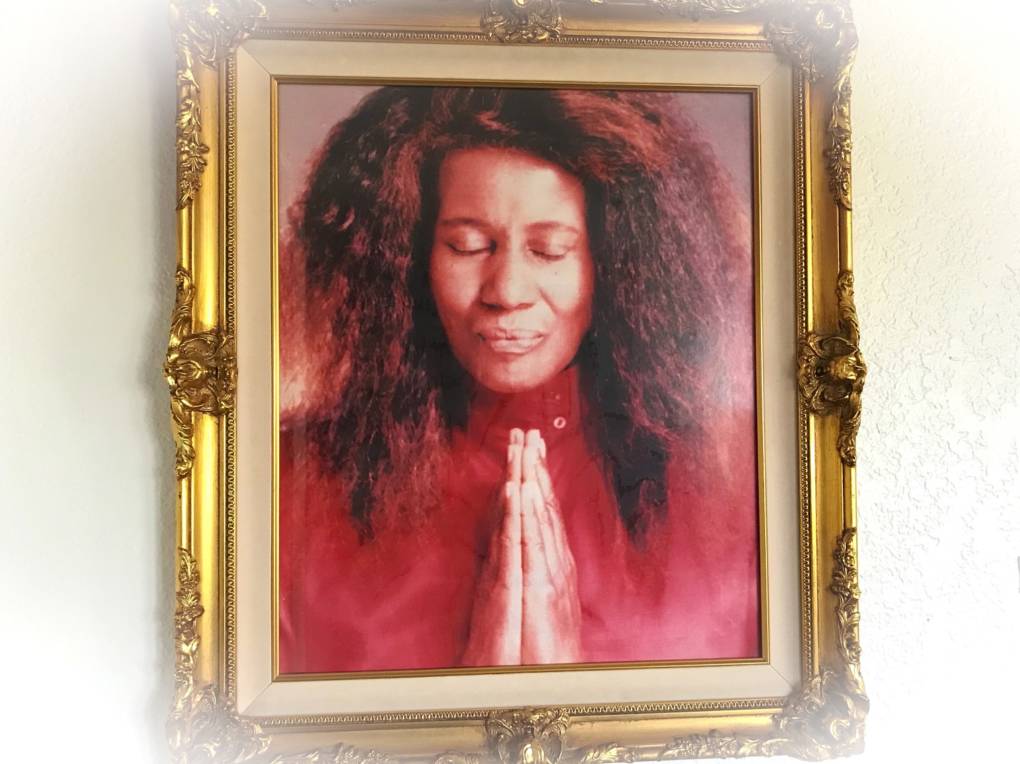
"caption": "A portrait of Alice Coltrane hangs in the home of musician Purusha Hickson. Coltrane gave Hickson, a longtime member of her ashram, the photo before her death in 2007.",
"description": null,
"title": "3 AC Parushas AC photo",
"credit": "Steven Cuevas/KQED",
"status": "inherit",
"isLoading": false,
"fetchFailed": false
},
"arts_13841882": {
"type": "attachments",
"id": "arts_13841882",
"meta": {
"index": "attachments_1716263798",
"site": "arts",
"id": "13841882",
"found": true
},
"parent": 13841880,
"imgSizes": {
"small": {
"file": "https://ww2.kqed.org/app/uploads/sites/2/2018/09/Balin-520x293.jpg",
"width": 520,
"mimeType": "image/jpeg",
"height": 293
},
"thumbnail": {
"file": "https://ww2.kqed.org/app/uploads/sites/2/2018/09/Balin-160x90.jpg",
"width": 160,
"mimeType": "image/jpeg",
"height": 90
},
"post-thumbnail": {
"file": "https://ww2.kqed.org/app/uploads/sites/2/2018/09/Balin-672x372.jpg",
"width": 672,
"mimeType": "image/jpeg",
"height": 372
},
"xsmall": {
"file": "https://ww2.kqed.org/app/uploads/sites/2/2018/09/Balin-375x211.jpg",
"width": 375,
"mimeType": "image/jpeg",
"height": 211
},
"kqedFullSize": {
"file": "https://ww2.kqed.org/app/uploads/sites/2/2018/09/Balin.jpg",
"width": 800,
"height": 450
},
"guest-author-50": {
"file": "https://ww2.kqed.org/app/uploads/sites/2/2018/09/Balin-50x50.jpg",
"width": 50,
"mimeType": "image/jpeg",
"height": 50
},
"guest-author-96": {
"file": "https://ww2.kqed.org/app/uploads/sites/2/2018/09/Balin-96x96.jpg",
"width": 96,
"mimeType": "image/jpeg",
"height": 96
},
"medium": {
"file": "https://ww2.kqed.org/app/uploads/sites/2/2018/09/Balin-800x450.jpg",
"width": 800,
"mimeType": "image/jpeg",
"height": 450
},
"guest-author-64": {
"file": "https://ww2.kqed.org/app/uploads/sites/2/2018/09/Balin-64x64.jpg",
"width": 64,
"mimeType": "image/jpeg",
"height": 64
},
"guest-author-32": {
"file": "https://ww2.kqed.org/app/uploads/sites/2/2018/09/Balin-32x32.jpg",
"width": 32,
"mimeType": "image/jpeg",
"height": 32
},
"detail": {
"file": "https://ww2.kqed.org/app/uploads/sites/2/2018/09/Balin-150x150.jpg",
"width": 150,
"mimeType": "image/jpeg",
"height": 150
},
"medium_large": {
"file": "https://ww2.kqed.org/app/uploads/sites/2/2018/09/Balin-768x432.jpg",
"width": 768,
"mimeType": "image/jpeg",
"height": 432
},
"guest-author-128": {
"file": "https://ww2.kqed.org/app/uploads/sites/2/2018/09/Balin-128x128.jpg",
"width": 128,
"mimeType": "image/jpeg",
"height": 128
},
"xxsmall": {
"file": "https://ww2.kqed.org/app/uploads/sites/2/2018/09/Balin-240x135.jpg",
"width": 240,
"mimeType": "image/jpeg",
"height": 135
}
},
"publishDate": 1538179770,
"modified": 1538179817,
"caption": "Musician Marty Balin of Jefferson Airplane attends The 58th Grammy Awards on February 15, 2016 in Los Angeles, California. ",
"description": "Musician Marty Balin of Jefferson Airplane attends The 58th Grammy Awards on February 15, 2016 in Los Angeles, California. ",
"title": "Balin",
"credit": "Jason Merritt/Getty Images",
"status": "inherit",
"isLoading": false,
"fetchFailed": false
},
"arts_13841400": {
"type": "attachments",
"id": "arts_13841400",
"meta": {
"index": "attachments_1716263798",
"site": "arts",
"id": "13841400",
"found": true
},
"parent": 13841398,
"imgSizes": {
"small": {
"file": "https://ww2.kqed.org/app/uploads/sites/2/2018/09/In-the-Penal-Colony-e1537557602767-520x293.jpg",
"width": 520,
"mimeType": "image/jpeg",
"height": 293
},
"twentyfourteen-full-width": {
"file": "https://ww2.kqed.org/app/uploads/sites/2/2018/09/In-the-Penal-Colony-e1537557602767-1038x576.jpg",
"width": 1038,
"mimeType": "image/jpeg",
"height": 576
},
"thumbnail": {
"file": "https://ww2.kqed.org/app/uploads/sites/2/2018/09/In-the-Penal-Colony-e1537557602767-160x90.jpg",
"width": 160,
"mimeType": "image/jpeg",
"height": 90
},
"fd-sm": {
"file": "https://ww2.kqed.org/app/uploads/sites/2/2018/09/In-the-Penal-Colony-e1537557602767-960x541.jpg",
"width": 960,
"mimeType": "image/jpeg",
"height": 541
},
"post-thumbnail": {
"file": "https://ww2.kqed.org/app/uploads/sites/2/2018/09/In-the-Penal-Colony-e1537557602767-672x372.jpg",
"width": 672,
"mimeType": "image/jpeg",
"height": 372
},
"xsmall": {
"file": "https://ww2.kqed.org/app/uploads/sites/2/2018/09/In-the-Penal-Colony-e1537557602767-375x211.jpg",
"width": 375,
"mimeType": "image/jpeg",
"height": 211
},
"kqedFullSize": {
"file": "https://ww2.kqed.org/app/uploads/sites/2/2018/09/In-the-Penal-Colony-e1537557602767.jpg",
"width": 1699,
"height": 957
},
"large": {
"file": "https://ww2.kqed.org/app/uploads/sites/2/2018/09/In-the-Penal-Colony-e1537557602767-1020x575.jpg",
"width": 1020,
"mimeType": "image/jpeg",
"height": 575
},
"xlarge": {
"file": "https://ww2.kqed.org/app/uploads/sites/2/2018/09/In-the-Penal-Colony-e1537557602767-1180x665.jpg",
"width": 1180,
"mimeType": "image/jpeg",
"height": 665
},
"complete_open_graph": {
"file": "https://ww2.kqed.org/app/uploads/sites/2/2018/09/In-the-Penal-Colony-e1537557602767-1200x676.jpg",
"width": 1200,
"mimeType": "image/jpeg",
"height": 676
},
"guest-author-50": {
"file": "https://ww2.kqed.org/app/uploads/sites/2/2018/09/In-the-Penal-Colony-e1537557602767-50x50.jpg",
"width": 50,
"mimeType": "image/jpeg",
"height": 50
},
"guest-author-96": {
"file": "https://ww2.kqed.org/app/uploads/sites/2/2018/09/In-the-Penal-Colony-e1537557602767-96x96.jpg",
"width": 96,
"mimeType": "image/jpeg",
"height": 96
},
"medium": {
"file": "https://ww2.kqed.org/app/uploads/sites/2/2018/09/In-the-Penal-Colony-e1537557602767-800x451.jpg",
"width": 800,
"mimeType": "image/jpeg",
"height": 451
},
"guest-author-64": {
"file": "https://ww2.kqed.org/app/uploads/sites/2/2018/09/In-the-Penal-Colony-e1537557602767-64x64.jpg",
"width": 64,
"mimeType": "image/jpeg",
"height": 64
},
"guest-author-32": {
"file": "https://ww2.kqed.org/app/uploads/sites/2/2018/09/In-the-Penal-Colony-e1537557602767-32x32.jpg",
"width": 32,
"mimeType": "image/jpeg",
"height": 32
},
"fd-lrg": {
"file": "https://ww2.kqed.org/app/uploads/sites/2/2018/09/In-the-Penal-Colony-1920x1074.jpg",
"width": 1920,
"mimeType": "image/jpeg",
"height": 1074
},
"fd-med": {
"file": "https://ww2.kqed.org/app/uploads/sites/2/2018/09/In-the-Penal-Colony-e1537557602767-1180x665.jpg",
"width": 1180,
"mimeType": "image/jpeg",
"height": 665
},
"full-width": {
"file": "https://ww2.kqed.org/app/uploads/sites/2/2018/09/In-the-Penal-Colony-1920x1074.jpg",
"width": 1920,
"mimeType": "image/jpeg",
"height": 1074
},
"detail": {
"file": "https://ww2.kqed.org/app/uploads/sites/2/2018/09/In-the-Penal-Colony-e1537557602767-150x150.jpg",
"width": 150,
"mimeType": "image/jpeg",
"height": 150
},
"medium_large": {
"file": "https://ww2.kqed.org/app/uploads/sites/2/2018/09/In-the-Penal-Colony-e1537557602767-768x433.jpg",
"width": 768,
"mimeType": "image/jpeg",
"height": 433
},
"guest-author-128": {
"file": "https://ww2.kqed.org/app/uploads/sites/2/2018/09/In-the-Penal-Colony-e1537557602767-128x128.jpg",
"width": 128,
"mimeType": "image/jpeg",
"height": 128
},
"xxsmall": {
"file": "https://ww2.kqed.org/app/uploads/sites/2/2018/09/In-the-Penal-Colony-e1537557602767-240x135.jpg",
"width": 240,
"mimeType": "image/jpeg",
"height": 135
}
},
"publishDate": 1537557488,
"modified": 1537557582,
"caption": "Bass-baritone Robert Orth as The Officer and tenor Javier Abreu as The Visitor in the premiere Opera Parallèle’s new production Philip Glass’ “In the Penal Colony” at the Days and Nights Festival, October 5 and 7, 2018 at The Golden Bough Playhouse in Carmel. ",
"description": "Bass-baritone Robert Orth as The Officer and tenor Javier Abreu as The Visitor in the premiere Opera Parallèle’s new production Philip Glass’ “In the Penal Colony” at the Days and Nights Festival, October 5 and 7, 2018 at The Golden Bough Playhouse in Carmel. ",
"title": "In the Penal Colony",
"credit": "Courtesy Opera Parallèle",
"status": "inherit",
"isLoading": false,
"fetchFailed": false
},
"arts_13841584": {
"type": "attachments",
"id": "arts_13841584",
"meta": {
"index": "attachments_1716263798",
"site": "arts",
"id": "13841584",
"found": true
},
"parent": 13841445,
"imgSizes": {
"small": {
"file": "https://ww2.kqed.org/app/uploads/sites/2/2018/09/YG2D.MAIN_-1-520x293.jpg",
"width": 520,
"mimeType": "image/jpeg",
"height": 293
},
"twentyfourteen-full-width": {
"file": "https://ww2.kqed.org/app/uploads/sites/2/2018/09/YG2D.MAIN_-1-1038x576.jpg",
"width": 1038,
"mimeType": "image/jpeg",
"height": 576
},
"thumbnail": {
"file": "https://ww2.kqed.org/app/uploads/sites/2/2018/09/YG2D.MAIN_-1-160x90.jpg",
"width": 160,
"mimeType": "image/jpeg",
"height": 90
},
"fd-sm": {
"file": "https://ww2.kqed.org/app/uploads/sites/2/2018/09/YG2D.MAIN_-1-960x540.jpg",
"width": 960,
"mimeType": "image/jpeg",
"height": 540
},
"post-thumbnail": {
"file": "https://ww2.kqed.org/app/uploads/sites/2/2018/09/YG2D.MAIN_-1-672x372.jpg",
"width": 672,
"mimeType": "image/jpeg",
"height": 372
},
"xsmall": {
"file": "https://ww2.kqed.org/app/uploads/sites/2/2018/09/YG2D.MAIN_-1-375x211.jpg",
"width": 375,
"mimeType": "image/jpeg",
"height": 211
},
"kqedFullSize": {
"file": "https://ww2.kqed.org/app/uploads/sites/2/2018/09/YG2D.MAIN_-1.jpg",
"width": 1500,
"height": 844
},
"large": {
"file": "https://ww2.kqed.org/app/uploads/sites/2/2018/09/YG2D.MAIN_-1-1020x574.jpg",
"width": 1020,
"mimeType": "image/jpeg",
"height": 574
},
"xlarge": {
"file": "https://ww2.kqed.org/app/uploads/sites/2/2018/09/YG2D.MAIN_-1-1180x664.jpg",
"width": 1180,
"mimeType": "image/jpeg",
"height": 664
},
"complete_open_graph": {
"file": "https://ww2.kqed.org/app/uploads/sites/2/2018/09/YG2D.MAIN_-1-1200x675.jpg",
"width": 1200,
"mimeType": "image/jpeg",
"height": 675
},
"guest-author-50": {
"file": "https://ww2.kqed.org/app/uploads/sites/2/2018/09/YG2D.MAIN_-1-50x50.jpg",
"width": 50,
"mimeType": "image/jpeg",
"height": 50
},
"guest-author-96": {
"file": "https://ww2.kqed.org/app/uploads/sites/2/2018/09/YG2D.MAIN_-1-96x96.jpg",
"width": 96,
"mimeType": "image/jpeg",
"height": 96
},
"medium": {
"file": "https://ww2.kqed.org/app/uploads/sites/2/2018/09/YG2D.MAIN_-1-800x450.jpg",
"width": 800,
"mimeType": "image/jpeg",
"height": 450
},
"guest-author-64": {
"file": "https://ww2.kqed.org/app/uploads/sites/2/2018/09/YG2D.MAIN_-1-64x64.jpg",
"width": 64,
"mimeType": "image/jpeg",
"height": 64
},
"guest-author-32": {
"file": "https://ww2.kqed.org/app/uploads/sites/2/2018/09/YG2D.MAIN_-1-32x32.jpg",
"width": 32,
"mimeType": "image/jpeg",
"height": 32
},
"fd-med": {
"file": "https://ww2.kqed.org/app/uploads/sites/2/2018/09/YG2D.MAIN_-1-1180x664.jpg",
"width": 1180,
"mimeType": "image/jpeg",
"height": 664
},
"detail": {
"file": "https://ww2.kqed.org/app/uploads/sites/2/2018/09/YG2D.MAIN_-1-150x150.jpg",
"width": 150,
"mimeType": "image/jpeg",
"height": 150
},
"medium_large": {
"file": "https://ww2.kqed.org/app/uploads/sites/2/2018/09/YG2D.MAIN_-1-768x432.jpg",
"width": 768,
"mimeType": "image/jpeg",
"height": 432
},
"guest-author-128": {
"file": "https://ww2.kqed.org/app/uploads/sites/2/2018/09/YG2D.MAIN_-1-128x128.jpg",
"width": 128,
"mimeType": "image/jpeg",
"height": 128
},
"xxsmall": {
"file": "https://ww2.kqed.org/app/uploads/sites/2/2018/09/YG2D.MAIN_-1-240x135.jpg",
"width": 240,
"mimeType": "image/jpeg",
"height": 135
}
},
"publishDate": 1537829099,
"modified": 1537829208,
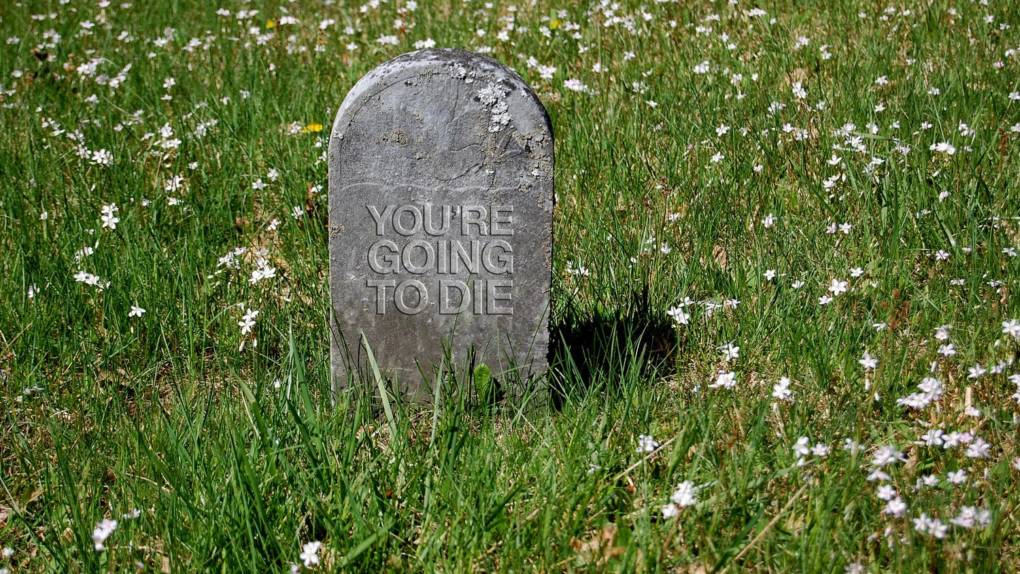
"caption": "You're Going To Die is part open mic, part storytelling, centered around a more positive embrace of death.",
"description": "You're Going To Die is part open mic, part storytelling, centered around a more positive embrace of death.",
"title": "YG2D.MAIN",
"credit": "Courtesy YG2D",
"status": "inherit",
"isLoading": false,
"fetchFailed": false
},
"arts_13841511": {
"type": "attachments",
"id": "arts_13841511",
"meta": {
"index": "attachments_1716263798",
"site": "arts",
"id": "13841511",
"found": true
},
"parent": 13841490,
"imgSizes": {
"small": {
"file": "https://ww2.kqed.org/app/uploads/sites/2/2018/09/JessicaHopper-520x292.jpg",
"width": 520,
"mimeType": "image/jpeg",
"height": 292
},
"thumbnail": {
"file": "https://ww2.kqed.org/app/uploads/sites/2/2018/09/JessicaHopper-160x90.jpg",
"width": 160,
"mimeType": "image/jpeg",
"height": 90
},
"post-thumbnail": {
"file": "https://ww2.kqed.org/app/uploads/sites/2/2018/09/JessicaHopper-672x372.jpg",
"width": 672,
"mimeType": "image/jpeg",
"height": 372
},
"xsmall": {
"file": "https://ww2.kqed.org/app/uploads/sites/2/2018/09/JessicaHopper-375x211.jpg",
"width": 375,
"mimeType": "image/jpeg",
"height": 211
},
"kqedFullSize": {
"file": "https://ww2.kqed.org/app/uploads/sites/2/2018/09/JessicaHopper.jpg",
"width": 900,
"height": 506
},
"guest-author-50": {
"file": "https://ww2.kqed.org/app/uploads/sites/2/2018/09/JessicaHopper-50x50.jpg",
"width": 50,
"mimeType": "image/jpeg",
"height": 50
},
"guest-author-96": {
"file": "https://ww2.kqed.org/app/uploads/sites/2/2018/09/JessicaHopper-96x96.jpg",
"width": 96,
"mimeType": "image/jpeg",
"height": 96
},
"medium": {
"file": "https://ww2.kqed.org/app/uploads/sites/2/2018/09/JessicaHopper-800x450.jpg",
"width": 800,
"mimeType": "image/jpeg",
"height": 450
},
"guest-author-64": {
"file": "https://ww2.kqed.org/app/uploads/sites/2/2018/09/JessicaHopper-64x64.jpg",
"width": 64,
"mimeType": "image/jpeg",
"height": 64
},
"guest-author-32": {
"file": "https://ww2.kqed.org/app/uploads/sites/2/2018/09/JessicaHopper-32x32.jpg",
"width": 32,
"mimeType": "image/jpeg",
"height": 32
},
"detail": {
"file": "https://ww2.kqed.org/app/uploads/sites/2/2018/09/JessicaHopper-150x150.jpg",
"width": 150,
"mimeType": "image/jpeg",
"height": 150
},
"medium_large": {
"file": "https://ww2.kqed.org/app/uploads/sites/2/2018/09/JessicaHopper-768x432.jpg",
"width": 768,
"mimeType": "image/jpeg",
"height": 432
},
"guest-author-128": {
"file": "https://ww2.kqed.org/app/uploads/sites/2/2018/09/JessicaHopper-128x128.jpg",
"width": 128,
"mimeType": "image/jpeg",
"height": 128
},
"xxsmall": {
"file": "https://ww2.kqed.org/app/uploads/sites/2/2018/09/JessicaHopper-240x135.jpg",
"width": 240,
"mimeType": "image/jpeg",
"height": 135
}
},
"publishDate": 1537811223,
"modified": 1537811361,
"caption": "Jessica Hopper, former editor for Pitchfork and SPIN, writes eloquently about the cusp of adulthood in 'Night Moves.'",
"description": "Jessica Hopper, former editor for Pitchfork and SPIN, writes eloquently about the cusp of adulthood in 'Night Moves.'",
"title": "JessicaHopper",
"credit": "University of Texas Press",
"status": "inherit",
"isLoading": false,
"fetchFailed": false
},
"arts_13841540": {
"type": "attachments",
"id": "arts_13841540",
"meta": {
"index": "attachments_1716263798",
"site": "arts",
"id": "13841540",
"found": true
},
"parent": 13841529,
"imgSizes": {
"small": {
"file": "https://ww2.kqed.org/app/uploads/sites/2/2018/09/Beasties.PunkSinger-520x293.jpg",
"width": 520,
"mimeType": "image/jpeg",
"height": 293
},
"thumbnail": {
"file": "https://ww2.kqed.org/app/uploads/sites/2/2018/09/Beasties.PunkSinger-160x90.jpg",
"width": 160,
"mimeType": "image/jpeg",
"height": 90
},
"post-thumbnail": {
"file": "https://ww2.kqed.org/app/uploads/sites/2/2018/09/Beasties.PunkSinger-672x372.jpg",
"width": 672,
"mimeType": "image/jpeg",
"height": 372
},
"xsmall": {
"file": "https://ww2.kqed.org/app/uploads/sites/2/2018/09/Beasties.PunkSinger-375x211.jpg",
"width": 375,
"mimeType": "image/jpeg",
"height": 211
},
"kqedFullSize": {
"file": "https://ww2.kqed.org/app/uploads/sites/2/2018/09/Beasties.PunkSinger.jpg",
"width": 800,
"height": 450
},
"guest-author-50": {
"file": "https://ww2.kqed.org/app/uploads/sites/2/2018/09/Beasties.PunkSinger-50x50.jpg",
"width": 50,
"mimeType": "image/jpeg",
"height": 50
},
"guest-author-96": {
"file": "https://ww2.kqed.org/app/uploads/sites/2/2018/09/Beasties.PunkSinger-96x96.jpg",
"width": 96,
"mimeType": "image/jpeg",
"height": 96
},
"medium": {
"file": "https://ww2.kqed.org/app/uploads/sites/2/2018/09/Beasties.PunkSinger-800x450.jpg",
"width": 800,
"mimeType": "image/jpeg",
"height": 450
},
"guest-author-64": {
"file": "https://ww2.kqed.org/app/uploads/sites/2/2018/09/Beasties.PunkSinger-64x64.jpg",
"width": 64,
"mimeType": "image/jpeg",
"height": 64
},
"guest-author-32": {
"file": "https://ww2.kqed.org/app/uploads/sites/2/2018/09/Beasties.PunkSinger-32x32.jpg",
"width": 32,
"mimeType": "image/jpeg",
"height": 32
},
"detail": {
"file": "https://ww2.kqed.org/app/uploads/sites/2/2018/09/Beasties.PunkSinger-150x150.jpg",
"width": 150,
"mimeType": "image/jpeg",
"height": 150
},
"medium_large": {
"file": "https://ww2.kqed.org/app/uploads/sites/2/2018/09/Beasties.PunkSinger-768x432.jpg",
"width": 768,
"mimeType": "image/jpeg",
"height": 432
},
"guest-author-128": {
"file": "https://ww2.kqed.org/app/uploads/sites/2/2018/09/Beasties.PunkSinger-128x128.jpg",
"width": 128,
"mimeType": "image/jpeg",
"height": 128
},
"xxsmall": {
"file": "https://ww2.kqed.org/app/uploads/sites/2/2018/09/Beasties.PunkSinger-240x135.jpg",
"width": 240,
"mimeType": "image/jpeg",
"height": 135
}
},
"publishDate": 1537814819,
"modified": 1537814900,
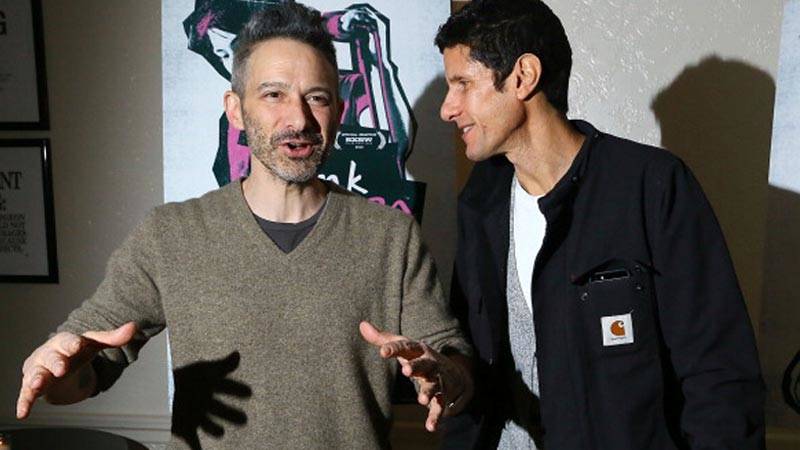
"caption": "Beastie Boys rappers Adam \"Adrock\" Horovitz and Michael \"Mike D\" Diamond (L-R) attend a screening of 'The Punk Singer' in 2013. ",
"description": "Beastie Boys rappers Adam \"Adrock\" Horovitz and Michael \"Mike D\" Diamond (L-R) attend a screening of 'The Punk Singer' in 2013. ",
"title": "Beasties.PunkSinger",
"credit": "Astrid Stawiarz/Getty Images",
"status": "inherit",
"isLoading": false,
"fetchFailed": false
},
"arts_13841521": {
"type": "attachments",
"id": "arts_13841521",
"meta": {
"index": "attachments_1716263798",
"site": "arts",
"id": "13841521",
"found": true
},
"parent": 13841509,
"imgSizes": {
"small": {
"file": "https://ww2.kqed.org/app/uploads/sites/2/2018/09/pandora-ap--520x293.jpeg",
"width": 520,
"mimeType": "image/jpeg",
"height": 293
},
"thumbnail": {
"file": "https://ww2.kqed.org/app/uploads/sites/2/2018/09/pandora-ap--160x90.jpeg",
"width": 160,
"mimeType": "image/jpeg",
"height": 90
},
"post-thumbnail": {
"file": "https://ww2.kqed.org/app/uploads/sites/2/2018/09/pandora-ap--672x372.jpeg",
"width": 672,
"mimeType": "image/jpeg",
"height": 372
},
"xsmall": {
"file": "https://ww2.kqed.org/app/uploads/sites/2/2018/09/pandora-ap--375x211.jpeg",
"width": 375,
"mimeType": "image/jpeg",
"height": 211
},
"kqedFullSize": {
"file": "https://ww2.kqed.org/app/uploads/sites/2/2018/09/pandora-ap-.jpeg",
"width": 800,
"height": 450
},
"guest-author-50": {
"file": "https://ww2.kqed.org/app/uploads/sites/2/2018/09/pandora-ap--50x50.jpeg",
"width": 50,
"mimeType": "image/jpeg",
"height": 50
},
"guest-author-96": {
"file": "https://ww2.kqed.org/app/uploads/sites/2/2018/09/pandora-ap--96x96.jpeg",
"width": 96,
"mimeType": "image/jpeg",
"height": 96
},
"medium": {
"file": "https://ww2.kqed.org/app/uploads/sites/2/2018/09/pandora-ap--800x450.jpeg",
"width": 800,
"mimeType": "image/jpeg",
"height": 450
},
"guest-author-64": {
"file": "https://ww2.kqed.org/app/uploads/sites/2/2018/09/pandora-ap--64x64.jpeg",
"width": 64,
"mimeType": "image/jpeg",
"height": 64
},
"guest-author-32": {
"file": "https://ww2.kqed.org/app/uploads/sites/2/2018/09/pandora-ap--32x32.jpeg",
"width": 32,
"mimeType": "image/jpeg",
"height": 32
},
"detail": {
"file": "https://ww2.kqed.org/app/uploads/sites/2/2018/09/pandora-ap--150x150.jpeg",
"width": 150,
"mimeType": "image/jpeg",
"height": 150
},
"medium_large": {
"file": "https://ww2.kqed.org/app/uploads/sites/2/2018/09/pandora-ap--768x432.jpeg",
"width": 768,
"mimeType": "image/jpeg",
"height": 432
},
"guest-author-128": {
"file": "https://ww2.kqed.org/app/uploads/sites/2/2018/09/pandora-ap--128x128.jpeg",
"width": 128,
"mimeType": "image/jpeg",
"height": 128
},
"xxsmall": {
"file": "https://ww2.kqed.org/app/uploads/sites/2/2018/09/pandora-ap--240x135.jpeg",
"width": 240,
"mimeType": "image/jpeg",
"height": 135
}
},
"publishDate": 1537811382,
"modified": 1537811427,
"caption": "In this Feb. 22, 2018, file photo, the Pandora logo appears above a trading post on the floor of the New York Stock Exchange. Subscription radio company SiriusXM says it’s buying music streaming service Pandora Media Inc. in a stock deal valued at about $3.5 billion that’ll allow it to expand its service beyond cars and into homes and other mobile areas. ",
"description": "In this Feb. 22, 2018, file photo, the Pandora logo appears above a trading post on the floor of the New York Stock Exchange. Subscription radio company SiriusXM says it’s buying music streaming service Pandora Media Inc. in a stock deal valued at about $3.5 billion that’ll allow it to expand its service beyond cars and into homes and other mobile areas. ",
"title": "pandora ap",
"credit": "AP Photo/Richard Drew, File",
"status": "inherit",
"isLoading": false,
"fetchFailed": false
},
"arts_13841281": {
"type": "attachments",
"id": "arts_13841281",
"meta": {
"index": "attachments_1716263798",
"site": "arts",
"id": "13841281",
"found": true
},
"parent": 13841217,
"imgSizes": {
"small": {
"file": "https://ww2.kqed.org/app/uploads/sites/2/2018/09/EMN2-credit-Matthew-Evearitt-520x293.jpg",
"width": 520,
"mimeType": "image/jpeg",
"height": 293
},
"twentyfourteen-full-width": {
"file": "https://ww2.kqed.org/app/uploads/sites/2/2018/09/EMN2-credit-Matthew-Evearitt-1038x576.jpg",
"width": 1038,
"mimeType": "image/jpeg",
"height": 576
},
"thumbnail": {
"file": "https://ww2.kqed.org/app/uploads/sites/2/2018/09/EMN2-credit-Matthew-Evearitt-160x90.jpg",
"width": 160,
"mimeType": "image/jpeg",
"height": 90
},
"fd-sm": {
"file": "https://ww2.kqed.org/app/uploads/sites/2/2018/09/EMN2-credit-Matthew-Evearitt-960x540.jpg",
"width": 960,
"mimeType": "image/jpeg",
"height": 540
},
"post-thumbnail": {
"file": "https://ww2.kqed.org/app/uploads/sites/2/2018/09/EMN2-credit-Matthew-Evearitt-672x372.jpg",
"width": 672,
"mimeType": "image/jpeg",
"height": 372
},
"xsmall": {
"file": "https://ww2.kqed.org/app/uploads/sites/2/2018/09/EMN2-credit-Matthew-Evearitt-375x211.jpg",
"width": 375,
"mimeType": "image/jpeg",
"height": 211
},
"kqedFullSize": {
"file": "https://ww2.kqed.org/app/uploads/sites/2/2018/09/EMN2-credit-Matthew-Evearitt.jpg",
"width": 1920,
"height": 1080
},
"large": {
"file": "https://ww2.kqed.org/app/uploads/sites/2/2018/09/EMN2-credit-Matthew-Evearitt-1020x574.jpg",
"width": 1020,
"mimeType": "image/jpeg",
"height": 574
},
"xlarge": {
"file": "https://ww2.kqed.org/app/uploads/sites/2/2018/09/EMN2-credit-Matthew-Evearitt-1180x664.jpg",
"width": 1180,
"mimeType": "image/jpeg",
"height": 664
},
"complete_open_graph": {
"file": "https://ww2.kqed.org/app/uploads/sites/2/2018/09/EMN2-credit-Matthew-Evearitt-1200x675.jpg",
"width": 1200,
"mimeType": "image/jpeg",
"height": 675
},
"guest-author-50": {
"file": "https://ww2.kqed.org/app/uploads/sites/2/2018/09/EMN2-credit-Matthew-Evearitt-50x50.jpg",
"width": 50,
"mimeType": "image/jpeg",
"height": 50
},
"guest-author-96": {
"file": "https://ww2.kqed.org/app/uploads/sites/2/2018/09/EMN2-credit-Matthew-Evearitt-96x96.jpg",
"width": 96,
"mimeType": "image/jpeg",
"height": 96
},
"medium": {
"file": "https://ww2.kqed.org/app/uploads/sites/2/2018/09/EMN2-credit-Matthew-Evearitt-800x450.jpg",
"width": 800,
"mimeType": "image/jpeg",
"height": 450
},
"guest-author-64": {
"file": "https://ww2.kqed.org/app/uploads/sites/2/2018/09/EMN2-credit-Matthew-Evearitt-64x64.jpg",
"width": 64,
"mimeType": "image/jpeg",
"height": 64
},
"guest-author-32": {
"file": "https://ww2.kqed.org/app/uploads/sites/2/2018/09/EMN2-credit-Matthew-Evearitt-32x32.jpg",
"width": 32,
"mimeType": "image/jpeg",
"height": 32
},
"fd-lrg": {
"file": "https://ww2.kqed.org/app/uploads/sites/2/2018/09/EMN2-credit-Matthew-Evearitt-1920x1080.jpg",
"width": 1920,
"mimeType": "image/jpeg",
"height": 1080
},
"fd-med": {
"file": "https://ww2.kqed.org/app/uploads/sites/2/2018/09/EMN2-credit-Matthew-Evearitt-1180x664.jpg",
"width": 1180,
"mimeType": "image/jpeg",
"height": 664
},
"full-width": {
"file": "https://ww2.kqed.org/app/uploads/sites/2/2018/09/EMN2-credit-Matthew-Evearitt-1920x1080.jpg",
"width": 1920,
"mimeType": "image/jpeg",
"height": 1080
},
"detail": {
"file": "https://ww2.kqed.org/app/uploads/sites/2/2018/09/EMN2-credit-Matthew-Evearitt-150x150.jpg",
"width": 150,
"mimeType": "image/jpeg",
"height": 150
},
"medium_large": {
"file": "https://ww2.kqed.org/app/uploads/sites/2/2018/09/EMN2-credit-Matthew-Evearitt-768x432.jpg",
"width": 768,
"mimeType": "image/jpeg",
"height": 432
},
"guest-author-128": {
"file": "https://ww2.kqed.org/app/uploads/sites/2/2018/09/EMN2-credit-Matthew-Evearitt-128x128.jpg",
"width": 128,
"mimeType": "image/jpeg",
"height": 128
},
"xxsmall": {
"file": "https://ww2.kqed.org/app/uploads/sites/2/2018/09/EMN2-credit-Matthew-Evearitt-240x135.jpg",
"width": 240,
"mimeType": "image/jpeg",
"height": 135
}
},
"publishDate": 1537461431,
"modified": 1537466600,
"caption": "Led by composer JooWan Kim (center), Oakland hip-hop orchestra Ensemble Mik Nawooj composed the theme song for this year's United Nations Global People's Summit. ",
"description": "Led by composer Joowan Kim (center), Oakland hip-hop orchestra Ensemble Mik Nawooj composed the theme song for this year's United Nations Global People's Summit. ",
"title": "EMN2 - credit Matthew Evearitt",
"credit": "Matthew Evearitt",
"status": "inherit",
"isLoading": false,
"fetchFailed": false
},
"arts_13841269": {
"type": "attachments",
"id": "arts_13841269",
"meta": {
"index": "attachments_1716263798",
"site": "arts",
"id": "13841269",
"found": true
},
"parent": 13841077,
"imgSizes": {
"small": {
"file": "https://ww2.kqed.org/app/uploads/sites/2/2018/09/Hedwig.MAIN_-520x293.jpg",
"width": 520,
"mimeType": "image/jpeg",
"height": 293
},
"twentyfourteen-full-width": {
"file": "https://ww2.kqed.org/app/uploads/sites/2/2018/09/Hedwig.MAIN_-1038x576.jpg",
"width": 1038,
"mimeType": "image/jpeg",
"height": 576
},
"thumbnail": {
"file": "https://ww2.kqed.org/app/uploads/sites/2/2018/09/Hedwig.MAIN_-160x90.jpg",
"width": 160,
"mimeType": "image/jpeg",
"height": 90
},
"fd-sm": {
"file": "https://ww2.kqed.org/app/uploads/sites/2/2018/09/Hedwig.MAIN_-960x540.jpg",
"width": 960,
"mimeType": "image/jpeg",
"height": 540
},
"post-thumbnail": {
"file": "https://ww2.kqed.org/app/uploads/sites/2/2018/09/Hedwig.MAIN_-672x372.jpg",
"width": 672,
"mimeType": "image/jpeg",
"height": 372
},
"xsmall": {
"file": "https://ww2.kqed.org/app/uploads/sites/2/2018/09/Hedwig.MAIN_-375x211.jpg",
"width": 375,
"mimeType": "image/jpeg",
"height": 211
},
"kqedFullSize": {
"file": "https://ww2.kqed.org/app/uploads/sites/2/2018/09/Hedwig.MAIN_.jpg",
"width": 1920,
"height": 1080
},
"large": {
"file": "https://ww2.kqed.org/app/uploads/sites/2/2018/09/Hedwig.MAIN_-1020x574.jpg",
"width": 1020,
"mimeType": "image/jpeg",
"height": 574
},
"xlarge": {
"file": "https://ww2.kqed.org/app/uploads/sites/2/2018/09/Hedwig.MAIN_-1180x664.jpg",
"width": 1180,
"mimeType": "image/jpeg",
"height": 664
},
"complete_open_graph": {
"file": "https://ww2.kqed.org/app/uploads/sites/2/2018/09/Hedwig.MAIN_-1200x675.jpg",
"width": 1200,
"mimeType": "image/jpeg",
"height": 675
},
"guest-author-50": {
"file": "https://ww2.kqed.org/app/uploads/sites/2/2018/09/Hedwig.MAIN_-50x50.jpg",
"width": 50,
"mimeType": "image/jpeg",
"height": 50
},
"guest-author-96": {
"file": "https://ww2.kqed.org/app/uploads/sites/2/2018/09/Hedwig.MAIN_-96x96.jpg",
"width": 96,
"mimeType": "image/jpeg",
"height": 96
},
"medium": {
"file": "https://ww2.kqed.org/app/uploads/sites/2/2018/09/Hedwig.MAIN_-800x450.jpg",
"width": 800,
"mimeType": "image/jpeg",
"height": 450
},
"guest-author-64": {
"file": "https://ww2.kqed.org/app/uploads/sites/2/2018/09/Hedwig.MAIN_-64x64.jpg",
"width": 64,
"mimeType": "image/jpeg",
"height": 64
},
"guest-author-32": {
"file": "https://ww2.kqed.org/app/uploads/sites/2/2018/09/Hedwig.MAIN_-32x32.jpg",
"width": 32,
"mimeType": "image/jpeg",
"height": 32
},
"fd-lrg": {
"file": "https://ww2.kqed.org/app/uploads/sites/2/2018/09/Hedwig.MAIN_-1920x1080.jpg",
"width": 1920,
"mimeType": "image/jpeg",
"height": 1080
},
"fd-med": {
"file": "https://ww2.kqed.org/app/uploads/sites/2/2018/09/Hedwig.MAIN_-1180x664.jpg",
"width": 1180,
"mimeType": "image/jpeg",
"height": 664
},
"full-width": {
"file": "https://ww2.kqed.org/app/uploads/sites/2/2018/09/Hedwig.MAIN_-1920x1080.jpg",
"width": 1920,
"mimeType": "image/jpeg",
"height": 1080
},
"detail": {
"file": "https://ww2.kqed.org/app/uploads/sites/2/2018/09/Hedwig.MAIN_-150x150.jpg",
"width": 150,
"mimeType": "image/jpeg",
"height": 150
},
"medium_large": {
"file": "https://ww2.kqed.org/app/uploads/sites/2/2018/09/Hedwig.MAIN_-768x432.jpg",
"width": 768,
"mimeType": "image/jpeg",
"height": 432
},
"guest-author-128": {
"file": "https://ww2.kqed.org/app/uploads/sites/2/2018/09/Hedwig.MAIN_-128x128.jpg",
"width": 128,
"mimeType": "image/jpeg",
"height": 128
},
"xxsmall": {
"file": "https://ww2.kqed.org/app/uploads/sites/2/2018/09/Hedwig.MAIN_-240x135.jpg",
"width": 240,
"mimeType": "image/jpeg",
"height": 135
}
},
"publishDate": 1537459253,
"modified": 1537459284,
"caption": "Steven Bolinger, Diogo Zavadski, Coleton Schmitto, Lysol Tony-Romeo rock out as Hedwig and the Angry Inch.",
"description": "Steven Bolinger, Diogo Zavadski, Coleton Schmitto, Lysol Tony-Romeo rock out as Hedwig and the Angry Inch.",
"title": "Hedwig.MAIN",
"credit": "Alexander Belmont",
"status": "inherit",
"isLoading": false,
"fetchFailed": false
},
"arts_13841272": {
"type": "attachments",
"id": "arts_13841272",
"meta": {
"index": "attachments_1716263798",
"site": "arts",
"id": "13841272",
"found": true
},
"parent": 13841271,
"imgSizes": {
"small": {
"file": "https://ww2.kqed.org/app/uploads/sites/2/2018/09/photo-credit-barry-feinstein_1974_3-cbad1c1631f37f7caf95267d486cafc2b52c4f8e-520x390.jpg",
"width": 520,
"mimeType": "image/jpeg",
"height": 390
},
"twentyfourteen-full-width": {
"file": "https://ww2.kqed.org/app/uploads/sites/2/2018/09/photo-credit-barry-feinstein_1974_3-cbad1c1631f37f7caf95267d486cafc2b52c4f8e-1038x576.jpg",
"width": 1038,
"mimeType": "image/jpeg",
"height": 576
},
"thumbnail": {
"file": "https://ww2.kqed.org/app/uploads/sites/2/2018/09/photo-credit-barry-feinstein_1974_3-cbad1c1631f37f7caf95267d486cafc2b52c4f8e-160x120.jpg",
"width": 160,
"mimeType": "image/jpeg",
"height": 120
},
"fd-sm": {
"file": "https://ww2.kqed.org/app/uploads/sites/2/2018/09/photo-credit-barry-feinstein_1974_3-cbad1c1631f37f7caf95267d486cafc2b52c4f8e-960x720.jpg",
"width": 960,
"mimeType": "image/jpeg",
"height": 720
},
"post-thumbnail": {
"file": "https://ww2.kqed.org/app/uploads/sites/2/2018/09/photo-credit-barry-feinstein_1974_3-cbad1c1631f37f7caf95267d486cafc2b52c4f8e-672x372.jpg",
"width": 672,
"mimeType": "image/jpeg",
"height": 372
},
"xsmall": {
"file": "https://ww2.kqed.org/app/uploads/sites/2/2018/09/photo-credit-barry-feinstein_1974_3-cbad1c1631f37f7caf95267d486cafc2b52c4f8e-375x281.jpg",
"width": 375,
"mimeType": "image/jpeg",
"height": 281
},
"kqedFullSize": {
"file": "https://ww2.kqed.org/app/uploads/sites/2/2018/09/photo-credit-barry-feinstein_1974_3-cbad1c1631f37f7caf95267d486cafc2b52c4f8e-e1537459451602.jpg",
"width": 1920,
"height": 1440
},
"large": {
"file": "https://ww2.kqed.org/app/uploads/sites/2/2018/09/photo-credit-barry-feinstein_1974_3-cbad1c1631f37f7caf95267d486cafc2b52c4f8e-1020x765.jpg",
"width": 1020,
"mimeType": "image/jpeg",
"height": 765
},
"xlarge": {
"file": "https://ww2.kqed.org/app/uploads/sites/2/2018/09/photo-credit-barry-feinstein_1974_3-cbad1c1631f37f7caf95267d486cafc2b52c4f8e-1180x885.jpg",
"width": 1180,
"mimeType": "image/jpeg",
"height": 885
},
"complete_open_graph": {
"file": "https://ww2.kqed.org/app/uploads/sites/2/2018/09/photo-credit-barry-feinstein_1974_3-cbad1c1631f37f7caf95267d486cafc2b52c4f8e-1200x900.jpg",
"width": 1200,
"mimeType": "image/jpeg",
"height": 900
},
"guest-author-50": {
"file": "https://ww2.kqed.org/app/uploads/sites/2/2018/09/photo-credit-barry-feinstein_1974_3-cbad1c1631f37f7caf95267d486cafc2b52c4f8e-50x50.jpg",
"width": 50,
"mimeType": "image/jpeg",
"height": 50
},
"guest-author-96": {
"file": "https://ww2.kqed.org/app/uploads/sites/2/2018/09/photo-credit-barry-feinstein_1974_3-cbad1c1631f37f7caf95267d486cafc2b52c4f8e-96x96.jpg",
"width": 96,
"mimeType": "image/jpeg",
"height": 96
},
"medium": {
"file": "https://ww2.kqed.org/app/uploads/sites/2/2018/09/photo-credit-barry-feinstein_1974_3-cbad1c1631f37f7caf95267d486cafc2b52c4f8e-800x600.jpg",
"width": 800,
"mimeType": "image/jpeg",
"height": 600
},
"guest-author-64": {
"file": "https://ww2.kqed.org/app/uploads/sites/2/2018/09/photo-credit-barry-feinstein_1974_3-cbad1c1631f37f7caf95267d486cafc2b52c4f8e-64x64.jpg",
"width": 64,
"mimeType": "image/jpeg",
"height": 64
},
"guest-author-32": {
"file": "https://ww2.kqed.org/app/uploads/sites/2/2018/09/photo-credit-barry-feinstein_1974_3-cbad1c1631f37f7caf95267d486cafc2b52c4f8e-32x32.jpg",
"width": 32,
"mimeType": "image/jpeg",
"height": 32
},
"fd-lrg": {
"file": "https://ww2.kqed.org/app/uploads/sites/2/2018/09/photo-credit-barry-feinstein_1974_3-cbad1c1631f37f7caf95267d486cafc2b52c4f8e-1920x1440.jpg",
"width": 1920,
"mimeType": "image/jpeg",
"height": 1440
},
"fd-med": {
"file": "https://ww2.kqed.org/app/uploads/sites/2/2018/09/photo-credit-barry-feinstein_1974_3-cbad1c1631f37f7caf95267d486cafc2b52c4f8e-1180x885.jpg",
"width": 1180,
"mimeType": "image/jpeg",
"height": 885
},
"full-width": {
"file": "https://ww2.kqed.org/app/uploads/sites/2/2018/09/photo-credit-barry-feinstein_1974_3-cbad1c1631f37f7caf95267d486cafc2b52c4f8e-1920x1440.jpg",
"width": 1920,
"mimeType": "image/jpeg",
"height": 1440
},
"detail": {
"file": "https://ww2.kqed.org/app/uploads/sites/2/2018/09/photo-credit-barry-feinstein_1974_3-cbad1c1631f37f7caf95267d486cafc2b52c4f8e-150x150.jpg",
"width": 150,
"mimeType": "image/jpeg",
"height": 150
},
"medium_large": {
"file": "https://ww2.kqed.org/app/uploads/sites/2/2018/09/photo-credit-barry-feinstein_1974_3-cbad1c1631f37f7caf95267d486cafc2b52c4f8e-768x576.jpg",
"width": 768,
"mimeType": "image/jpeg",
"height": 576
},
"guest-author-128": {
"file": "https://ww2.kqed.org/app/uploads/sites/2/2018/09/photo-credit-barry-feinstein_1974_3-cbad1c1631f37f7caf95267d486cafc2b52c4f8e-128x128.jpg",
"width": 128,
"mimeType": "image/jpeg",
"height": 128
},
"xxsmall": {
"file": "https://ww2.kqed.org/app/uploads/sites/2/2018/09/photo-credit-barry-feinstein_1974_3-cbad1c1631f37f7caf95267d486cafc2b52c4f8e-240x180.jpg",
"width": 240,
"mimeType": "image/jpeg",
"height": 180
}
},
"publishDate": 1537459339,
"modified": 1537459443,
"caption": "Bob Dylan, pictured in 1974, while working on what would become Blood on the Tracks.",
"description": "Bob Dylan, pictured in 1974, while working on what would become \u003cem>Blood on the Tracks.</em",
"title": "Bob Dylan, pictured in 1974, while working on what would become Blood on the Tracks.",
"credit": null,
"status": "inherit",
"isLoading": false,
"fetchFailed": false
}
},
"audioPlayerReducer": {
"postId": "stream_live",
"isPaused": true,
"isPlaying": false,
"pfsActive": false,
"pledgeModalIsOpen": true,
"playerDrawerIsOpen": false,
"liveAudioPlayStartedAt": 0,
"liveAudioPlayContext": ""
},
"authorsReducer": {
"byline_arts_13841902": {
"type": "authors",
"id": "byline_arts_13841902",
"meta": {
"override": true
},
"slug": "byline_arts_13841902",
"name": "Montse Reyes",
"isLoading": false
},
"byline_arts_13841880": {
"type": "authors",
"id": "byline_arts_13841880",
"meta": {
"override": true
},
"slug": "byline_arts_13841880",
"name": "Hillel Italie, Associated Press",
"isLoading": false
},
"byline_arts_13841490": {
"type": "authors",
"id": "byline_arts_13841490",
"meta": {
"override": true
},
"slug": "byline_arts_13841490",
"name": "Mariya Karimjee",
"isLoading": false
},
"byline_arts_13841509": {
"type": "authors",
"id": "byline_arts_13841509",
"meta": {
"override": true
},
"slug": "byline_arts_13841509",
"name": "Associated Press",
"isLoading": false
},
"byline_arts_13841217": {
"type": "authors",
"id": "byline_arts_13841217",
"meta": {
"override": true
},
"slug": "byline_arts_13841217",
"name": "Annie Bacon",
"isLoading": false
},
"byline_arts_13841271": {
"type": "authors",
"id": "byline_arts_13841271",
"meta": {
"override": true
},
"slug": "byline_arts_13841271",
"name": "Robin Hilton",
"isLoading": false
},
"kqedarts": {
"type": "authors",
"id": "92",
"meta": {
"index": "authors_1716337520",
"id": "92",
"found": true
},
"name": "KQED Arts",
"firstName": "KQED",
"lastName": "Arts",
"slug": "kqedarts",
"email": "arts@kqed.org",
"display_author_email": false,
"staff_mastheads": [],
"title": "KQED Staff",
"bio": null,
"avatar": "https://secure.gravatar.com/avatar/321c9ebfeb7736f9e55366a6d3399ab0?s=600&d=blank&r=g",
"twitter": null,
"facebook": null,
"instagram": "https://www.instagram.com/kqed_arts/",
"linkedin": null,
"sites": [
{
"site": "arts",
"roles": [
"contributor"
]
},
{
"site": "pop",
"roles": [
"contributor"
]
},
{
"site": "science",
"roles": [
"author"
]
},
{
"site": "food",
"roles": [
"contributor"
]
}
],
"headData": {
"title": "KQED Arts | KQED",
"description": "KQED Staff",
"ogImgSrc": "https://secure.gravatar.com/avatar/321c9ebfeb7736f9e55366a6d3399ab0?s=600&d=blank&r=g",
"twImgSrc": "https://secure.gravatar.com/avatar/321c9ebfeb7736f9e55366a6d3399ab0?s=600&d=blank&r=g"
},
"isLoading": false,
"link": "/author/kqedarts"
},
"gmeline": {
"type": "authors",
"id": "185",
"meta": {
"index": "authors_1716337520",
"id": "185",
"found": true
},
"name": "Gabe Meline",
"firstName": "Gabe",
"lastName": "Meline",
"slug": "gmeline",
"email": "gmeline@kqed.org",
"display_author_email": true,
"staff_mastheads": [
"arts"
],
"title": "Senior Editor, KQED Arts & Culture",
"bio": "Gabe Meline entered journalism at age 15 making photocopied zines, and has since earned awards from the Edward R. Murrow Awards, the Society for Professional Journalists, the Online Journalism Awards, the Association of Alternative Newsweeklies and the California Newspaper Publishers Association. Prior to KQED, he was the editor of the \u003cem>North Bay Bohemian\u003c/em> and a touring musician. He lives with his wife and daughter in his hometown of Santa Rosa, CA.",
"avatar": "https://secure.gravatar.com/avatar/5bebe57be0d8bc2dd318934feb47299e2d2d10cba28d09d8d7afb389a2ce2bdd?s=600&d=blank&r=g",
"twitter": null,
"bluesky": null,
"facebook": null,
"instagram": null,
"linkedin": null,
"sites": [
{
"site": "",
"roles": [
"editor"
]
},
{
"site": "arts",
"roles": [
"administrator"
]
},
{
"site": "artschool",
"roles": [
"editor"
]
},
{
"site": "news",
"roles": [
"author"
]
},
{
"site": "pop",
"roles": [
"editor"
]
},
{
"site": "bayareabites",
"roles": [
"editor"
]
},
{
"site": "food",
"roles": [
"editor"
]
},
{
"site": "forum",
"roles": [
"administrator"
]
},
{
"site": "liveblog",
"roles": [
"editor"
]
},
{
"site": "hiphop",
"roles": [
"editor"
]
}
],
"headData": {
"title": "Gabe Meline | KQED",
"description": "Senior Editor, KQED Arts & Culture",
"ogImgSrc": "https://secure.gravatar.com/avatar/5bebe57be0d8bc2dd318934feb47299e2d2d10cba28d09d8d7afb389a2ce2bdd?s=600&d=blank&r=g",
"twImgSrc": "https://secure.gravatar.com/avatar/5bebe57be0d8bc2dd318934feb47299e2d2d10cba28d09d8d7afb389a2ce2bdd?s=600&d=blank&r=g"
},
"isLoading": false,
"link": "/author/gmeline"
},
"scuevas": {
"type": "authors",
"id": "2600",
"meta": {
"index": "authors_1716337520",
"id": "2600",
"found": true
},
"name": "Steven Cuevas",
"firstName": "Steven",
"lastName": "Cuevas",
"slug": "scuevas",
"email": "scuevas@kqed.org",
"display_author_email": false,
"staff_mastheads": [],
"title": "KQED Contributor",
"bio": "Steven is a former Los Angeles bureau chief for The California Report.\r\n\r\nHe reports on an array of issues across the Southland, from immigration and regional politics to religion, the performing arts and pop culture.\r\n\r\nPrior to joining KQED in 2012, Steven covered Inland southern California for KPCC in Pasadena. He also helped establish the first newsroom at \u003ca href=\"http://kut.org/\">KUT\u003c/a> in Austin, Texas where he was a general assignment reporter.\r\n\r\nSteven has received numerous awards for his reporting including an RTNDA Edward R. Murrow Award for investigative reporting in addition to awards from the LA Press Club, the Associated Press and the Society for Professional Journalists.\r\n\r\nSteven grew up in and around San Francisco and now lives in Pasadena just a short jog from the foot of the San Gabriel Mountains.",
"avatar": "https://secure.gravatar.com/avatar/2d253580794f8e026100fae05cfabbbd4889b4fe15146146cacb82a01974c538?s=600&d=blank&r=g",
"twitter": null,
"bluesky": null,
"facebook": null,
"instagram": null,
"linkedin": null,
"sites": [
{
"site": "news",
"roles": [
"subscriber"
]
}
],
"headData": {
"title": "Steven Cuevas | KQED",
"description": "KQED Contributor",
"ogImgSrc": "https://secure.gravatar.com/avatar/2d253580794f8e026100fae05cfabbbd4889b4fe15146146cacb82a01974c538?s=600&d=blank&r=g",
"twImgSrc": "https://secure.gravatar.com/avatar/2d253580794f8e026100fae05cfabbbd4889b4fe15146146cacb82a01974c538?s=600&d=blank&r=g"
},
"isLoading": false,
"link": "/author/scuevas"
},
"esilvers": {
"type": "authors",
"id": "7237",
"meta": {
"index": "authors_1716337520",
"id": "7237",
"found": true
},
"name": "Emma Silvers",
"firstName": "Emma",
"lastName": "Silvers",
"slug": "esilvers",
"email": "esilvers@kqed.org",
"display_author_email": false,
"staff_mastheads": [],
"title": "KQED Contributor",
"bio": "Emma Silvers is an editor at KQED Arts and a former digital producer at KQED News. Born and raised in the Bay Area, she has previously been an arts and entertainment editor at the \u003cem>San Francisco Chronicle\u003c/em>, \u003cem>SF Weekly\u003c/em> and the \u003cem>San Francisco Bay Guardian.\u003c/em> \u003ca href=\"https://www.emmasilvers.com\">Her work\u003c/a> has also appeared in \u003cem>Rolling Stone\u003c/em>, Pitchfork and \u003cem>Mother Jones\u003c/em>. In 2017 she was the recipient of the Society of Professional Journalists-Northern California's award for arts and culture reporting. In 1993 she \u003ca href=\"https://www.kqed.org/pop/16759/wait-what-my-coworker-was-a-voice-over-hyperventilator-for-jurassic-park\">hyperventilated in \u003cem>Jurassic Park\u003c/em>\u003c/a>.",
"avatar": "https://secure.gravatar.com/avatar/247beada39b88ea5759db1f51dba05cf?s=600&d=blank&r=g",
"twitter": "emmaruthless",
"facebook": null,
"instagram": null,
"linkedin": null,
"sites": [
{
"site": "arts",
"roles": [
"editor"
]
},
{
"site": "news",
"roles": [
"editor"
]
},
{
"site": "pop",
"roles": [
"contributor"
]
},
{
"site": "bayareabites",
"roles": [
"editor"
]
},
{
"site": "food",
"roles": [
"contributor"
]
},
{
"site": "liveblog",
"roles": [
"editor"
]
}
],
"headData": {
"title": "Emma Silvers | KQED",
"description": "KQED Contributor",
"ogImgSrc": "https://secure.gravatar.com/avatar/247beada39b88ea5759db1f51dba05cf?s=600&d=blank&r=g",
"twImgSrc": "https://secure.gravatar.com/avatar/247beada39b88ea5759db1f51dba05cf?s=600&d=blank&r=g"
},
"isLoading": false,
"link": "/author/esilvers"
},
"cveltman": {
"type": "authors",
"id": "8608",
"meta": {
"index": "authors_1716337520",
"id": "8608",
"found": true
},
"name": "Chloe Veltman",
"firstName": "Chloe",
"lastName": "Veltman",
"slug": "cveltman",
"email": "cveltman@kqed.org",
"display_author_email": true,
"staff_mastheads": [],
"title": "Arts and Culture Reporter",
"bio": "Chloe Veltman is a former arts and culture reporter for KQED. Prior to joining the organization, she launched and led the arts bureau at Colorado Public Radio, served as the Bay Area's culture columnist for the New York Times, and was the founder, host and executive producer of VoiceBox, a national award-winning weekly podcast/radio show and live events series all about the human voice. Chloe is the recipient of numerous prizes, grants and fellowships including a Webby Award for her work on interactive storytelling, both the John S Knight Journalism Fellowship and Humanities Center Fellowship at Stanford University, the Sundance Arts Writing Fellowship and a Library of Congress Research Fellowship. She is the author of the book \"On Acting\" and has appeared as a guest lecturer at Yale University and the San Francisco Conservatory of Music among other institutions. She holds a BA in english literature from King's College, Cambridge, and a Masters in Dramaturgy from the Central School of Speech and Drama/Harvard Institute for Advanced Theater Training.\r\n\u003ca href=\"https://www.chloeveltman.com\">www.chloeveltman.com\u003c/a>",
"avatar": "https://secure.gravatar.com/avatar/55403394b00a1ddab683952c2eb2cf85?s=600&d=blank&r=g",
"twitter": "chloeveltman",
"facebook": null,
"instagram": null,
"linkedin": null,
"sites": [
{
"site": "arts",
"roles": []
},
{
"site": "news",
"roles": [
"author"
]
},
{
"site": "pop",
"roles": [
"editor"
]
},
{
"site": "science",
"roles": []
}
],
"headData": {
"title": "Chloe Veltman | KQED",
"description": "Arts and Culture Reporter",
"ogImgSrc": "https://secure.gravatar.com/avatar/55403394b00a1ddab683952c2eb2cf85?s=600&d=blank&r=g",
"twImgSrc": "https://secure.gravatar.com/avatar/55403394b00a1ddab683952c2eb2cf85?s=600&d=blank&r=g"
},
"isLoading": false,
"link": "/author/cveltman"
},
"ngluckstern": {
"type": "authors",
"id": "11497",
"meta": {
"index": "authors_1716337520",
"id": "11497",
"found": true
},
"name": "Nicole Gluckstern",
"firstName": "Nicole",
"lastName": "Gluckstern",
"slug": "ngluckstern",
"email": "gluckstern.nicole@gmail.com",
"display_author_email": false,
"staff_mastheads": [],
"title": "KQED Contributor",
"bio": null,
"avatar": "https://secure.gravatar.com/avatar/2c3d593194017bfe811a998ad03140909de330b22abebf4889e1a564ce5b3495?s=600&d=blank&r=g",
"twitter": null,
"bluesky": null,
"facebook": null,
"instagram": null,
"linkedin": null,
"sites": [
{
"site": "arts",
"roles": [
"contributor"
]
}
],
"headData": {
"title": "Nicole Gluckstern | KQED",
"description": "KQED Contributor",
"ogImgSrc": "https://secure.gravatar.com/avatar/2c3d593194017bfe811a998ad03140909de330b22abebf4889e1a564ce5b3495?s=600&d=blank&r=g",
"twImgSrc": "https://secure.gravatar.com/avatar/2c3d593194017bfe811a998ad03140909de330b22abebf4889e1a564ce5b3495?s=600&d=blank&r=g"
},
"isLoading": false,
"link": "/author/ngluckstern"
}
},
"pagesReducer": {
"arts_category_music": {
"type": "terms",
"id": "arts_69",
"meta": {
"index": "terms_1716263798",
"site": "arts",
"id": "69",
"score": 10.851903
},
"featImg": null,
"name": "Music",
"description": null,
"taxonomy": "category",
"headData": {
"twImgId": null,
"twTitle": null,
"ogTitle": null,
"ogImgId": null,
"twDescription": null,
"description": null,
"title": "Music Archives | KQED Arts",
"ogDescription": null
},
"ttid": 70,
"slug": "music",
"isLoading": false,
"title": "Music",
"pageMeta": {
"site": "arts",
"WpPageTemplate": "page-topic-editorial",
"currentPage": 171
},
"blocks": [
{
"blockName": "kqed/post-list",
"attrs": {
"layout": "cardArticle2",
"query": "posts/arts?category=music",
"seeMore": false,
"paginated": true,
"page": 171
}
},
{
"blockName": "kqed/ad"
}
]
}
},
"pfsSessionReducer": {},
"postsReducer": {
"stream_live": {
"type": "live",
"id": "stream_live",
"audioUrl": "https://streams.kqed.org/kqedradio",
"title": "Live Stream",
"excerpt": "Live Stream information currently unavailable.",
"link": "/radio",
"featImg": "",
"label": {
"name": "KQED Live",
"link": "/"
}
},
"stream_kqedNewscast": {
"type": "posts",
"id": "stream_kqedNewscast",
"audioUrl": "https://www.kqed.org/.stream/anon/radio/RDnews/newscast.mp3?_=1",
"title": "KQED Newscast",
"featImg": "",
"label": {
"name": "88.5 FM",
"link": "/"
}
},
"arts_13841902": {
"type": "posts",
"id": "arts_13841902",
"meta": {
"index": "posts_1716263798",
"site": "arts",
"id": "13841902",
"score": null,
"sort": [
1538330887000
]
},
"parent": 0,
"labelTerm": {
"site": "arts"
},
"blocks": [],
"publishDate": 1538330887,
"format": "image",
"title": "Live Review: Beyoncé and Jay-Z's 'On the Run II' Tour at Levi's Stadium",
"headTitle": "Live Review: Beyoncé and Jay-Z’s ‘On the Run II’ Tour at Levi’s Stadium | KQED",
"content": "\u003cp>Helen of Troy was the face that launched a thousand ships. In Greek mythology, her power was so singular and her beauty so striking, men went to war in their quest to claim her. \u003c/p>\n\u003cp>In 2018, the only person with the ability to whip thousands into that kind of fervor is Beyoncé, the most compelling artist of our time.\u003c/p>\n\u003cp>Unlike Helen, Mrs. Carter-Knowles is fully the master of her own fate. Her power is a product of her trademark Virgo fastidiousness, unimpeachable craftsmanship, insistence on operating on her own terms, and ability to strike listeners straight in the heart in the span of three minutes.\u003c/p>\n\u003cp>And on Saturday night, 49,000 people at the sold-out Levi’s Stadium in Santa Clara for the ‘On The Run II’ tour were putty in Beyoncé’s hands. \u003c/p>\n\u003cfigure id=\"attachment_13841905\" class=\"wp-caption aligncenter\" style=\"max-width: 800px\">\u003cimg loading=\"lazy\" decoding=\"async\" src=\"https://ww2.kqed.org/arts/wp-content/uploads/sites/2/2018/09/Beyonce.Levis_.Inline-800x1116.jpg\" alt=\"Beyoncé performs on the 'On The Run II' tour at Levi's Stadium on Sept. 29, 2018 in Santa Clara, California.\" width=\"800\" height=\"1116\" class=\"size-medium wp-image-13841905\" srcset=\"https://cdn.kqed.org/wp-content/uploads/sites/2/2018/09/Beyonce.Levis_.Inline-800x1116.jpg 800w, https://cdn.kqed.org/wp-content/uploads/sites/2/2018/09/Beyonce.Levis_.Inline-160x223.jpg 160w, https://cdn.kqed.org/wp-content/uploads/sites/2/2018/09/Beyonce.Levis_.Inline-768x1071.jpg 768w, https://cdn.kqed.org/wp-content/uploads/sites/2/2018/09/Beyonce.Levis_.Inline-1020x1422.jpg 1020w, https://cdn.kqed.org/wp-content/uploads/sites/2/2018/09/Beyonce.Levis_.Inline-861x1200.jpg 861w, https://cdn.kqed.org/wp-content/uploads/sites/2/2018/09/Beyonce.Levis_.Inline-1180x1645.jpg 1180w, https://cdn.kqed.org/wp-content/uploads/sites/2/2018/09/Beyonce.Levis_.Inline-960x1339.jpg 960w, https://cdn.kqed.org/wp-content/uploads/sites/2/2018/09/Beyonce.Levis_.Inline-240x335.jpg 240w, https://cdn.kqed.org/wp-content/uploads/sites/2/2018/09/Beyonce.Levis_.Inline-375x523.jpg 375w, https://cdn.kqed.org/wp-content/uploads/sites/2/2018/09/Beyonce.Levis_.Inline-520x725.jpg 520w, https://cdn.kqed.org/wp-content/uploads/sites/2/2018/09/Beyonce.Levis_.Inline.jpg 1469w\" sizes=\"(max-width: 800px) 100vw, 800px\">\u003cfigcaption class=\"wp-caption-text\">Beyoncé performs on the ‘On The Run II’ tour at Levi’s Stadium on Sept. 29, 2018 in Santa Clara, California. \u003ccite>(Raven Varona / Parkwood / PictureGroup)\u003c/cite>\u003c/figcaption>\u003c/figure>\n\u003cp>Nearing the end of its summer-long run, the tour is, technically, a co-headlining show with her husband Jay-Z. But let’s be honest, the Beyhive—her intensely loyal international fan base—swarmed because the queen, not Jay, called. This was abundantly clear near the middle of the show, after her rendition of “Countdown” and before “Sorry,” when the music came to a full stop to accommodate the stadium’s spontaneous, exuberant roar for a full minute.\u003c/p>\n\u003cp>[ad fullwidth]\u003c/p>\n\u003cp>Even hours earlier, the buzz of excitement was palpable. Throngs of people spilled into the stadium from surrounding parking lots and sidewalks in their Sunday’s best. Many opted for yellow collegiate wear, a call to Beyoncé’s Coachella performance in April, during which the singer paid homage to the country’s Historically Black Colleges and Universities.\u003c/p>\n\u003cp>[contextly_sidebar id=”YeH0QJMkNW10WRSiVQhPmjPcfnvKunX6″]\u003c/p>\n\u003cp>Such outfits weren’t as plentiful or extravagant as the attire in the audience the \u003ca href=\"https://www.kqed.org/pop/24562/live-review-beyonce-unexplainable-celestial-being-slays-at-levis-stadium\" rel=\"noopener\" target=\"_blank\">last time Mrs. Carter came to Levi’s Stadium, in 2016\u003c/a>. Then, fans arrived at the ‘Formation’ tour with their best approximation of the singer’s looks: the ebullient, yellow Roberto Cavalli dress from “Hold Up,” the all-black Southern Gothic gown with a wide-brimmed hat from “Formation,” and the Ms. Third Ward pageantry from “Pretty Hurts.”\u003c/p>\n\u003cp>And still, the unofficial dress code was heeded Saturday night. There were yellow berets, blinding highlights, bodysuits, thigh-high boots, “Yonce”-inspired plaid and glittering fishnets galore. Navigating the stadium was chaotic. Long, winding lines snaked down both sides of the concourse as people tried to ready their supplies—food, tour merchandise and plenty of alcohol—before the night’s main event.\u003c/p>\n\u003cfigure id=\"attachment_13841906\" class=\"wp-caption aligncenter\" style=\"max-width: 800px\">\u003cimg loading=\"lazy\" decoding=\"async\" src=\"https://ww2.kqed.org/arts/wp-content/uploads/sites/2/2018/09/ChloeHalle.Levis_-800x610.jpg\" alt=\"Chloe X Halle perform on the 'On The Run II' tour at Levi's Stadium on Sept. 29, 2018 in Santa Clara, California. \" width=\"800\" height=\"610\" class=\"size-medium wp-image-13841906\" srcset=\"https://cdn.kqed.org/wp-content/uploads/sites/2/2018/09/ChloeHalle.Levis_-800x610.jpg 800w, https://cdn.kqed.org/wp-content/uploads/sites/2/2018/09/ChloeHalle.Levis_-160x122.jpg 160w, https://cdn.kqed.org/wp-content/uploads/sites/2/2018/09/ChloeHalle.Levis_-768x586.jpg 768w, https://cdn.kqed.org/wp-content/uploads/sites/2/2018/09/ChloeHalle.Levis_-1020x778.jpg 1020w, https://cdn.kqed.org/wp-content/uploads/sites/2/2018/09/ChloeHalle.Levis_-960x732.jpg 960w, https://cdn.kqed.org/wp-content/uploads/sites/2/2018/09/ChloeHalle.Levis_-240x183.jpg 240w, https://cdn.kqed.org/wp-content/uploads/sites/2/2018/09/ChloeHalle.Levis_-375x286.jpg 375w, https://cdn.kqed.org/wp-content/uploads/sites/2/2018/09/ChloeHalle.Levis_-520x397.jpg 520w, https://cdn.kqed.org/wp-content/uploads/sites/2/2018/09/ChloeHalle.Levis_.jpg 1100w\" sizes=\"(max-width: 800px) 100vw, 800px\">\u003cfigcaption class=\"wp-caption-text\">Chloe X Halle perform on the ‘On The Run II’ tour at Levi’s Stadium on Sept. 29, 2018 in Santa Clara, California. \u003ccite>(Raven Varona/Parkwood/PictureGroup)\u003c/cite>\u003c/figcaption>\u003c/figure>\n\u003cp>By 8 p.m., the sun had gone away, R&B duo Chloe x Halle had performed and DJ Khaled was onstage doing his best approximation of a DJ. You’d be hard pressed to get more than 20 seconds of a song out of him, but his meme-able enthusiasm and array of special guests—Kash Doll, Sage the Gemini, Oakland’s Jonn Hart and Naughty by Nature—do the job. Below me, two men began yiking to Sage the Gemini’s “Gas Pedal,” and all around me people writhed in their seats.\u003c/p>\n\u003cp>But just after 8:45 p.m., as Petey Pablo’s voice was interrupted mid-“Freek-a-Leek,” it was time. “THIS IS REAL LIFE” flashed on the giant screen, followed by clips of Bey and Jay as lovers on the lam, resuming their roles as Bonnie and Clyde-esque figures riding through the streets of Kingston, Jamaica. Judging by all the noise, it’d be safe to say fans were wondering if what they were about to witness was real life, too.\u003c/p>\n\u003cp>The screen cut to black, the couple appeared in all-white, and I can only assume it was a product of Beyoncé’s benevolence to open the show with “Holy Grail,” her vocals breathing new life into the misstep in Jay Z’s discography. \u003c/p>\n\u003cfigure id=\"attachment_13841911\" class=\"wp-caption aligncenter\" style=\"max-width: 800px\">\u003cimg loading=\"lazy\" decoding=\"async\" src=\"https://ww2.kqed.org/arts/wp-content/uploads/sites/2/2018/09/image2-800x494.jpg\" alt=\"Beyoncé and Jay-Z perform Sept. 29, 2018 at Levi's Stadium on the 'On the Run II' tour.\" width=\"800\" height=\"494\" class=\"size-medium wp-image-13841911\" srcset=\"https://cdn.kqed.org/wp-content/uploads/sites/2/2018/09/image2-800x494.jpg 800w, https://cdn.kqed.org/wp-content/uploads/sites/2/2018/09/image2-160x99.jpg 160w, https://cdn.kqed.org/wp-content/uploads/sites/2/2018/09/image2-768x474.jpg 768w, https://cdn.kqed.org/wp-content/uploads/sites/2/2018/09/image2-1020x630.jpg 1020w, https://cdn.kqed.org/wp-content/uploads/sites/2/2018/09/image2-1200x741.jpg 1200w, https://cdn.kqed.org/wp-content/uploads/sites/2/2018/09/image2.jpg 1920w, https://cdn.kqed.org/wp-content/uploads/sites/2/2018/09/image2-1180x728.jpg 1180w, https://cdn.kqed.org/wp-content/uploads/sites/2/2018/09/image2-960x593.jpg 960w, https://cdn.kqed.org/wp-content/uploads/sites/2/2018/09/image2-240x148.jpg 240w, https://cdn.kqed.org/wp-content/uploads/sites/2/2018/09/image2-375x231.jpg 375w, https://cdn.kqed.org/wp-content/uploads/sites/2/2018/09/image2-520x321.jpg 520w\" sizes=\"(max-width: 800px) 100vw, 800px\">\u003cfigcaption class=\"wp-caption-text\">Beyoncé and Jay-Z perform Sept. 29, 2018 at Levi’s Stadium on the ‘On the Run II’ tour. \u003ccite>(Gabe Meline)\u003c/cite>\u003c/figcaption>\u003c/figure>\n\u003cp>The next two and a half hours constituted an elaborate, well-crafted couple’s journey through trials, tribulations, and eventually, reconciliation. Past the show’s pyrotechnics, lush cinematic montages and painstakingly precise choreography, it served as a campaign for the enduring force of love (theirs, in particular), capable of softening the hearts of even the coldest of cynics among the hive. \u003c/p>\n\u003cp>Maybe now, after a summer of performing his penance, Jay-Z will be forgiven for his transgressions against Beyoncé. But while Jay’s charisma, ease and nimble lyricism were a necessary presence, on Saturday night he was the second most compelling rapper in the room. After all, Beyoncé is the glue at the heart of this.\u003c/p>\n\u003cp>In fact, the centerpiece of the show came about an hour and a half in, as the Houston singer strolled down the catwalk in an angelic gold number with a sweeping train behind her. She was alone to sing “Resentment,” the vulnerable ballad about the aftermath of a lover’s betrayal.\u003c/p>\n\u003cfigure id=\"attachment_13841908\" class=\"wp-caption aligncenter\" style=\"max-width: 800px\">\u003cimg loading=\"lazy\" decoding=\"async\" src=\"https://ww2.kqed.org/arts/wp-content/uploads/sites/2/2018/09/image3-800x600.jpg\" alt=\"Fireworks blast as Beyoncé performs Sept. 29, 2018 at Levi's Stadium on the 'On the Run II' tour.\" width=\"800\" height=\"600\" class=\"size-medium wp-image-13841908\" srcset=\"https://cdn.kqed.org/wp-content/uploads/sites/2/2018/09/image3-800x600.jpg 800w, https://cdn.kqed.org/wp-content/uploads/sites/2/2018/09/image3-160x120.jpg 160w, https://cdn.kqed.org/wp-content/uploads/sites/2/2018/09/image3-768x576.jpg 768w, https://cdn.kqed.org/wp-content/uploads/sites/2/2018/09/image3-1020x765.jpg 1020w, https://cdn.kqed.org/wp-content/uploads/sites/2/2018/09/image3-1200x900.jpg 1200w, https://cdn.kqed.org/wp-content/uploads/sites/2/2018/09/image3.jpg 1920w, https://cdn.kqed.org/wp-content/uploads/sites/2/2018/09/image3-1180x885.jpg 1180w, https://cdn.kqed.org/wp-content/uploads/sites/2/2018/09/image3-960x720.jpg 960w, https://cdn.kqed.org/wp-content/uploads/sites/2/2018/09/image3-240x180.jpg 240w, https://cdn.kqed.org/wp-content/uploads/sites/2/2018/09/image3-375x281.jpg 375w, https://cdn.kqed.org/wp-content/uploads/sites/2/2018/09/image3-520x390.jpg 520w\" sizes=\"(max-width: 800px) 100vw, 800px\">\u003cfigcaption class=\"wp-caption-text\">Fireworks blast as Beyoncé performs Sept. 29, 2018 at Levi’s Stadium on the ‘On the Run II’ tour. \u003ccite>(Gabe Meline)\u003c/cite>\u003c/figcaption>\u003c/figure>\n\u003cp>The track off 2006’s \u003cem>B-Day\u003c/em> offers no pretense, and gets to the core of why she’s more than just a stellar pop star. Resentment is supposed to be a bad thing. There is an expectation that women ought to be above the sickly feeling of indignation that eats us up inside after being wronged. As a black woman, that expectation of strength and grace is triple-fold for Beyoncé. But on “Resentment,” and throughout her career—not least of all with her magnum opus “Lemonade”—she rejects that expectation.\u003c/p>\n\u003cp>She’s unflinchingly vulnerable about the pain, anger and sorrow of experiencing heartbreak. Graciousness isn’t appropriate here—rather, she leans into rightfully earned anger, insecurity, and even bitterness, because it’s honest.\u003c/p>\n\u003cp>[ad floatright]\u003c/p>\n\u003cp>For Beyoncé, the personal is the political; she knows that for her, and for many of her fans, it’s impossible to separate the two.\u003c/p>\n\n",
"stats": {
"hasVideo": false,
"hasChartOrMap": false,
"hasAudio": false,
"hasPolis": false,
"wordCount": 1140,
"hasGoogleForm": false,
"hasGallery": false,
"hasHearkenModule": false,
"iframeSrcs": [],
"paragraphCount": 20
},
"modified": 1705027185,
"excerpt": "This Beyoncé tour is, technically, a co-headlining show with husband Jay-Z. But let's be honest.",
"headData": {
"twImgId": "",
"twTitle": "",
"ogTitle": "",
"ogImgId": "",
"twDescription": "",
"description": "This Beyoncé tour is, technically, a co-headlining show with husband Jay-Z. But let's be honest.",
"title": "Live Review: Beyoncé and Jay-Z's 'On the Run II' Tour at Levi's Stadium | KQED",
"ogDescription": "",
"schema": {
"@context": "https://schema.org",
"@type": "Article",
"headline": "Live Review: Beyoncé and Jay-Z's 'On the Run II' Tour at Levi's Stadium",
"datePublished": "2018-09-30T11:08:07-07:00",
"dateModified": "2024-01-11T18:39:45-08:00",
"image": "https://cdn.kqed.org/wp-content/uploads/2020/02/KQED-OG-Image@1x.png"
}
},
"guestAuthors": [],
"slug": "live-review-beyonce-and-jay-zs-on-the-run-ii-tour-at-levis-stadium",
"status": "publish",
"nprByline": "Montse Reyes",
"sticky": false,
"path": "/arts/13841902/live-review-beyonce-and-jay-zs-on-the-run-ii-tour-at-levis-stadium",
"audioTrackLength": null,
"parsedContent": [
{
"type": "contentString",
"content": "\u003cdiv class=\"post-body\">\u003cp>\u003cp>Helen of Troy was the face that launched a thousand ships. In Greek mythology, her power was so singular and her beauty so striking, men went to war in their quest to claim her. \u003c/p>\n\u003cp>In 2018, the only person with the ability to whip thousands into that kind of fervor is Beyoncé, the most compelling artist of our time.\u003c/p>\n\u003cp>Unlike Helen, Mrs. Carter-Knowles is fully the master of her own fate. Her power is a product of her trademark Virgo fastidiousness, unimpeachable craftsmanship, insistence on operating on her own terms, and ability to strike listeners straight in the heart in the span of three minutes.\u003c/p>\n\u003cp>And on Saturday night, 49,000 people at the sold-out Levi’s Stadium in Santa Clara for the ‘On The Run II’ tour were putty in Beyoncé’s hands. \u003c/p>\n\u003cfigure id=\"attachment_13841905\" class=\"wp-caption aligncenter\" style=\"max-width: 800px\">\u003cimg loading=\"lazy\" decoding=\"async\" src=\"https://ww2.kqed.org/arts/wp-content/uploads/sites/2/2018/09/Beyonce.Levis_.Inline-800x1116.jpg\" alt=\"Beyoncé performs on the 'On The Run II' tour at Levi's Stadium on Sept. 29, 2018 in Santa Clara, California.\" width=\"800\" height=\"1116\" class=\"size-medium wp-image-13841905\" srcset=\"https://cdn.kqed.org/wp-content/uploads/sites/2/2018/09/Beyonce.Levis_.Inline-800x1116.jpg 800w, https://cdn.kqed.org/wp-content/uploads/sites/2/2018/09/Beyonce.Levis_.Inline-160x223.jpg 160w, https://cdn.kqed.org/wp-content/uploads/sites/2/2018/09/Beyonce.Levis_.Inline-768x1071.jpg 768w, https://cdn.kqed.org/wp-content/uploads/sites/2/2018/09/Beyonce.Levis_.Inline-1020x1422.jpg 1020w, https://cdn.kqed.org/wp-content/uploads/sites/2/2018/09/Beyonce.Levis_.Inline-861x1200.jpg 861w, https://cdn.kqed.org/wp-content/uploads/sites/2/2018/09/Beyonce.Levis_.Inline-1180x1645.jpg 1180w, https://cdn.kqed.org/wp-content/uploads/sites/2/2018/09/Beyonce.Levis_.Inline-960x1339.jpg 960w, https://cdn.kqed.org/wp-content/uploads/sites/2/2018/09/Beyonce.Levis_.Inline-240x335.jpg 240w, https://cdn.kqed.org/wp-content/uploads/sites/2/2018/09/Beyonce.Levis_.Inline-375x523.jpg 375w, https://cdn.kqed.org/wp-content/uploads/sites/2/2018/09/Beyonce.Levis_.Inline-520x725.jpg 520w, https://cdn.kqed.org/wp-content/uploads/sites/2/2018/09/Beyonce.Levis_.Inline.jpg 1469w\" sizes=\"(max-width: 800px) 100vw, 800px\">\u003cfigcaption class=\"wp-caption-text\">Beyoncé performs on the ‘On The Run II’ tour at Levi’s Stadium on Sept. 29, 2018 in Santa Clara, California. \u003ccite>(Raven Varona / Parkwood / PictureGroup)\u003c/cite>\u003c/figcaption>\u003c/figure>\n\u003cp>Nearing the end of its summer-long run, the tour is, technically, a co-headlining show with her husband Jay-Z. But let’s be honest, the Beyhive—her intensely loyal international fan base—swarmed because the queen, not Jay, called. This was abundantly clear near the middle of the show, after her rendition of “Countdown” and before “Sorry,” when the music came to a full stop to accommodate the stadium’s spontaneous, exuberant roar for a full minute.\u003c/p>\n\u003cp>\u003c/p>\u003c/div>",
"attributes": {
"named": {},
"numeric": []
}
},
{
"type": "component",
"content": "",
"name": "ad",
"attributes": {
"named": {
"label": "fullwidth"
},
"numeric": [
"fullwidth"
]
}
},
{
"type": "contentString",
"content": "\u003cdiv class=\"post-body\">\u003cp>\u003c/p>\n\u003cp>Even hours earlier, the buzz of excitement was palpable. Throngs of people spilled into the stadium from surrounding parking lots and sidewalks in their Sunday’s best. Many opted for yellow collegiate wear, a call to Beyoncé’s Coachella performance in April, during which the singer paid homage to the country’s Historically Black Colleges and Universities.\u003c/p>\n\u003cp>\u003c/p>\u003cp>\u003c/p>\u003cp>\u003c/p>\n\u003cp>Such outfits weren’t as plentiful or extravagant as the attire in the audience the \u003ca href=\"https://www.kqed.org/pop/24562/live-review-beyonce-unexplainable-celestial-being-slays-at-levis-stadium\" rel=\"noopener\" target=\"_blank\">last time Mrs. Carter came to Levi’s Stadium, in 2016\u003c/a>. Then, fans arrived at the ‘Formation’ tour with their best approximation of the singer’s looks: the ebullient, yellow Roberto Cavalli dress from “Hold Up,” the all-black Southern Gothic gown with a wide-brimmed hat from “Formation,” and the Ms. Third Ward pageantry from “Pretty Hurts.”\u003c/p>\n\u003cp>And still, the unofficial dress code was heeded Saturday night. There were yellow berets, blinding highlights, bodysuits, thigh-high boots, “Yonce”-inspired plaid and glittering fishnets galore. Navigating the stadium was chaotic. Long, winding lines snaked down both sides of the concourse as people tried to ready their supplies—food, tour merchandise and plenty of alcohol—before the night’s main event.\u003c/p>\n\u003cfigure id=\"attachment_13841906\" class=\"wp-caption aligncenter\" style=\"max-width: 800px\">\u003cimg loading=\"lazy\" decoding=\"async\" src=\"https://ww2.kqed.org/arts/wp-content/uploads/sites/2/2018/09/ChloeHalle.Levis_-800x610.jpg\" alt=\"Chloe X Halle perform on the 'On The Run II' tour at Levi's Stadium on Sept. 29, 2018 in Santa Clara, California. \" width=\"800\" height=\"610\" class=\"size-medium wp-image-13841906\" srcset=\"https://cdn.kqed.org/wp-content/uploads/sites/2/2018/09/ChloeHalle.Levis_-800x610.jpg 800w, https://cdn.kqed.org/wp-content/uploads/sites/2/2018/09/ChloeHalle.Levis_-160x122.jpg 160w, https://cdn.kqed.org/wp-content/uploads/sites/2/2018/09/ChloeHalle.Levis_-768x586.jpg 768w, https://cdn.kqed.org/wp-content/uploads/sites/2/2018/09/ChloeHalle.Levis_-1020x778.jpg 1020w, https://cdn.kqed.org/wp-content/uploads/sites/2/2018/09/ChloeHalle.Levis_-960x732.jpg 960w, https://cdn.kqed.org/wp-content/uploads/sites/2/2018/09/ChloeHalle.Levis_-240x183.jpg 240w, https://cdn.kqed.org/wp-content/uploads/sites/2/2018/09/ChloeHalle.Levis_-375x286.jpg 375w, https://cdn.kqed.org/wp-content/uploads/sites/2/2018/09/ChloeHalle.Levis_-520x397.jpg 520w, https://cdn.kqed.org/wp-content/uploads/sites/2/2018/09/ChloeHalle.Levis_.jpg 1100w\" sizes=\"(max-width: 800px) 100vw, 800px\">\u003cfigcaption class=\"wp-caption-text\">Chloe X Halle perform on the ‘On The Run II’ tour at Levi’s Stadium on Sept. 29, 2018 in Santa Clara, California. \u003ccite>(Raven Varona/Parkwood/PictureGroup)\u003c/cite>\u003c/figcaption>\u003c/figure>\n\u003cp>By 8 p.m., the sun had gone away, R&B duo Chloe x Halle had performed and DJ Khaled was onstage doing his best approximation of a DJ. You’d be hard pressed to get more than 20 seconds of a song out of him, but his meme-able enthusiasm and array of special guests—Kash Doll, Sage the Gemini, Oakland’s Jonn Hart and Naughty by Nature—do the job. Below me, two men began yiking to Sage the Gemini’s “Gas Pedal,” and all around me people writhed in their seats.\u003c/p>\n\u003cp>But just after 8:45 p.m., as Petey Pablo’s voice was interrupted mid-“Freek-a-Leek,” it was time. “THIS IS REAL LIFE” flashed on the giant screen, followed by clips of Bey and Jay as lovers on the lam, resuming their roles as Bonnie and Clyde-esque figures riding through the streets of Kingston, Jamaica. Judging by all the noise, it’d be safe to say fans were wondering if what they were about to witness was real life, too.\u003c/p>\n\u003cp>The screen cut to black, the couple appeared in all-white, and I can only assume it was a product of Beyoncé’s benevolence to open the show with “Holy Grail,” her vocals breathing new life into the misstep in Jay Z’s discography. \u003c/p>\n\u003cfigure id=\"attachment_13841911\" class=\"wp-caption aligncenter\" style=\"max-width: 800px\">\u003cimg loading=\"lazy\" decoding=\"async\" src=\"https://ww2.kqed.org/arts/wp-content/uploads/sites/2/2018/09/image2-800x494.jpg\" alt=\"Beyoncé and Jay-Z perform Sept. 29, 2018 at Levi's Stadium on the 'On the Run II' tour.\" width=\"800\" height=\"494\" class=\"size-medium wp-image-13841911\" srcset=\"https://cdn.kqed.org/wp-content/uploads/sites/2/2018/09/image2-800x494.jpg 800w, https://cdn.kqed.org/wp-content/uploads/sites/2/2018/09/image2-160x99.jpg 160w, https://cdn.kqed.org/wp-content/uploads/sites/2/2018/09/image2-768x474.jpg 768w, https://cdn.kqed.org/wp-content/uploads/sites/2/2018/09/image2-1020x630.jpg 1020w, https://cdn.kqed.org/wp-content/uploads/sites/2/2018/09/image2-1200x741.jpg 1200w, https://cdn.kqed.org/wp-content/uploads/sites/2/2018/09/image2.jpg 1920w, https://cdn.kqed.org/wp-content/uploads/sites/2/2018/09/image2-1180x728.jpg 1180w, https://cdn.kqed.org/wp-content/uploads/sites/2/2018/09/image2-960x593.jpg 960w, https://cdn.kqed.org/wp-content/uploads/sites/2/2018/09/image2-240x148.jpg 240w, https://cdn.kqed.org/wp-content/uploads/sites/2/2018/09/image2-375x231.jpg 375w, https://cdn.kqed.org/wp-content/uploads/sites/2/2018/09/image2-520x321.jpg 520w\" sizes=\"(max-width: 800px) 100vw, 800px\">\u003cfigcaption class=\"wp-caption-text\">Beyoncé and Jay-Z perform Sept. 29, 2018 at Levi’s Stadium on the ‘On the Run II’ tour. \u003ccite>(Gabe Meline)\u003c/cite>\u003c/figcaption>\u003c/figure>\n\u003cp>The next two and a half hours constituted an elaborate, well-crafted couple’s journey through trials, tribulations, and eventually, reconciliation. Past the show’s pyrotechnics, lush cinematic montages and painstakingly precise choreography, it served as a campaign for the enduring force of love (theirs, in particular), capable of softening the hearts of even the coldest of cynics among the hive. \u003c/p>\n\u003cp>Maybe now, after a summer of performing his penance, Jay-Z will be forgiven for his transgressions against Beyoncé. But while Jay’s charisma, ease and nimble lyricism were a necessary presence, on Saturday night he was the second most compelling rapper in the room. After all, Beyoncé is the glue at the heart of this.\u003c/p>\n\u003cp>In fact, the centerpiece of the show came about an hour and a half in, as the Houston singer strolled down the catwalk in an angelic gold number with a sweeping train behind her. She was alone to sing “Resentment,” the vulnerable ballad about the aftermath of a lover’s betrayal.\u003c/p>\n\u003cfigure id=\"attachment_13841908\" class=\"wp-caption aligncenter\" style=\"max-width: 800px\">\u003cimg loading=\"lazy\" decoding=\"async\" src=\"https://ww2.kqed.org/arts/wp-content/uploads/sites/2/2018/09/image3-800x600.jpg\" alt=\"Fireworks blast as Beyoncé performs Sept. 29, 2018 at Levi's Stadium on the 'On the Run II' tour.\" width=\"800\" height=\"600\" class=\"size-medium wp-image-13841908\" srcset=\"https://cdn.kqed.org/wp-content/uploads/sites/2/2018/09/image3-800x600.jpg 800w, https://cdn.kqed.org/wp-content/uploads/sites/2/2018/09/image3-160x120.jpg 160w, https://cdn.kqed.org/wp-content/uploads/sites/2/2018/09/image3-768x576.jpg 768w, https://cdn.kqed.org/wp-content/uploads/sites/2/2018/09/image3-1020x765.jpg 1020w, https://cdn.kqed.org/wp-content/uploads/sites/2/2018/09/image3-1200x900.jpg 1200w, https://cdn.kqed.org/wp-content/uploads/sites/2/2018/09/image3.jpg 1920w, https://cdn.kqed.org/wp-content/uploads/sites/2/2018/09/image3-1180x885.jpg 1180w, https://cdn.kqed.org/wp-content/uploads/sites/2/2018/09/image3-960x720.jpg 960w, https://cdn.kqed.org/wp-content/uploads/sites/2/2018/09/image3-240x180.jpg 240w, https://cdn.kqed.org/wp-content/uploads/sites/2/2018/09/image3-375x281.jpg 375w, https://cdn.kqed.org/wp-content/uploads/sites/2/2018/09/image3-520x390.jpg 520w\" sizes=\"(max-width: 800px) 100vw, 800px\">\u003cfigcaption class=\"wp-caption-text\">Fireworks blast as Beyoncé performs Sept. 29, 2018 at Levi’s Stadium on the ‘On the Run II’ tour. \u003ccite>(Gabe Meline)\u003c/cite>\u003c/figcaption>\u003c/figure>\n\u003cp>The track off 2006’s \u003cem>B-Day\u003c/em> offers no pretense, and gets to the core of why she’s more than just a stellar pop star. Resentment is supposed to be a bad thing. There is an expectation that women ought to be above the sickly feeling of indignation that eats us up inside after being wronged. As a black woman, that expectation of strength and grace is triple-fold for Beyoncé. But on “Resentment,” and throughout her career—not least of all with her magnum opus “Lemonade”—she rejects that expectation.\u003c/p>\n\u003cp>She’s unflinchingly vulnerable about the pain, anger and sorrow of experiencing heartbreak. Graciousness isn’t appropriate here—rather, she leans into rightfully earned anger, insecurity, and even bitterness, because it’s honest.\u003c/p>\n\u003cp>\u003c/p>\u003c/div>",
"attributes": {
"named": {},
"numeric": []
}
},
{
"type": "component",
"content": "",
"name": "ad",
"attributes": {
"named": {
"label": "floatright"
},
"numeric": [
"floatright"
]
}
},
{
"type": "contentString",
"content": "\u003cdiv class=\"post-body\">\u003cp>\u003c/p>\n\u003cp>For Beyoncé, the personal is the political; she knows that for her, and for many of her fans, it’s impossible to separate the two.\u003c/p>\n\n\u003c/div>\u003c/p>",
"attributes": {
"named": {},
"numeric": []
}
}
],
"link": "/arts/13841902/live-review-beyonce-and-jay-zs-on-the-run-ii-tour-at-levis-stadium",
"authors": [
"byline_arts_13841902"
],
"categories": [
"arts_69",
"arts_235"
],
"tags": [
"arts_1686",
"arts_1118",
"arts_596",
"arts_769"
],
"featImg": "arts_13841904",
"label": "arts"
},
"news_11693821": {
"type": "posts",
"id": "news_11693821",
"meta": {
"index": "posts_1716263798",
"site": "news",
"id": "11693821",
"score": null,
"sort": [
1538240418000
]
},
"parent": 0,
"labelTerm": {
"site": "news",
"term": 72
},
"blocks": [],
"publishDate": 1538240418,
"format": "audio",
"disqusTitle": "A California Supreme: Alice Coltrane's 'Lost' L.A. Albums Resurrected",
"title": "A California Supreme: Alice Coltrane's 'Lost' L.A. Albums Resurrected",
"headTitle": "The California Report | KQED News",
"content": "\u003cp>By the time Alice McLeod met her future husband \u003ca href=\"https://www.johncoltrane.com/\" target=\"_blank\" rel=\"noopener\">John Coltrane\u003c/a> in 1963, the classically trained musician with a background in gospel had already mastered bebop piano. Like John, she was looking to push jazz further.\u003c/p>\n\u003cp>She’d join his group on piano in 1966, replacing \u003ca href=\"http://www.mccoytyner.com/\" target=\"_blank\" rel=\"noopener\">McCoy Tyner\u003c/a>, spurring John’s exploration of explosive free jazz and world music on albums like \u003cem>\u003ca href=\"https://www.allmusic.com/album/expression-mw0000197323\" target=\"_blank\" rel=\"noopener\">Expression\u003c/a>, \u003ca href=\"https://www.allmusic.com/album/cosmic-music-mw0002215455\" target=\"_blank\" rel=\"noopener\">Cosmic Music \u003c/a>\u003c/em>and \u003ca href=\"https://www.allmusic.com/album/stellar-regions-mw0000176627\" target=\"_blank\" rel=\"noopener\">\u003cem>Stellar Regions.\u003c/em>\u003c/a>\u003c/p>\n\u003cfigure id=\"attachment_11693833\" class=\"wp-caption alignleft\" style=\"max-width: 800px\">\u003cimg class=\"size-medium wp-image-11693833\" src=\"https://ww2.kqed.org/news/wp-content/uploads/sites/10/2018/09/2-AC-1966-Chuck-Stewart-photo-800x602.jpg\" alt=\"\" width=\"800\" height=\"602\" srcset=\"https://ww2.kqed.org/app/uploads/sites/10/2018/09/2-AC-1966-Chuck-Stewart-photo-800x602.jpg 800w, https://ww2.kqed.org/app/uploads/sites/10/2018/09/2-AC-1966-Chuck-Stewart-photo-160x120.jpg 160w, https://ww2.kqed.org/app/uploads/sites/10/2018/09/2-AC-1966-Chuck-Stewart-photo-1020x768.jpg 1020w, https://ww2.kqed.org/app/uploads/sites/10/2018/09/2-AC-1966-Chuck-Stewart-photo-1200x903.jpg 1200w, https://ww2.kqed.org/app/uploads/sites/10/2018/09/2-AC-1966-Chuck-Stewart-photo-1180x888.jpg 1180w, https://ww2.kqed.org/app/uploads/sites/10/2018/09/2-AC-1966-Chuck-Stewart-photo-960x723.jpg 960w, https://ww2.kqed.org/app/uploads/sites/10/2018/09/2-AC-1966-Chuck-Stewart-photo-240x181.jpg 240w, https://ww2.kqed.org/app/uploads/sites/10/2018/09/2-AC-1966-Chuck-Stewart-photo-375x282.jpg 375w, https://ww2.kqed.org/app/uploads/sites/10/2018/09/2-AC-1966-Chuck-Stewart-photo-520x391.jpg 520w, https://ww2.kqed.org/app/uploads/sites/10/2018/09/2-AC-1966-Chuck-Stewart-photo.jpg 1520w\" sizes=\"(max-width: 800px) 100vw, 800px\">\u003cfigcaption class=\"wp-caption-text\">Alice Coltrane in the recording studio in 1966. \u003ccite>(Courtesy of Chuck Stewart / Alice Coltrane Facebook page)\u003c/cite>\u003c/figcaption>\u003c/figure>\n\u003cp>The couple married in 1965, started a family and collaborated musically and spiritually until John’s untimely death, just four years after meeting, in 1967. He was just 40 years old.\u003c/p>\n\u003cp>Alice Coltrane talked about their partnership during a rare 1981 interview on \u003ca href=\"https://www.npr.org/2011/09/23/140743198/alice-coltrane-on-piano-jazz\" target=\"_blank\" rel=\"noopener\">NPR’s \u003cem>Piano Jazz\u003c/em> program\u003c/a>.\u003c/p>\n\u003cp>“He really didn’t have to talk or instruct with the music,\" says Coltrane during the show. \"He really didn’t have to do that. Just being around him, listening to him express his ideas musically, it really was very inspirational.”\u003c/p>\n\u003cp>[ad fullwidth]\u003c/p>\n\u003cp>John encouraged Alice to take up the harp — an instrument that long fascinated both of them. During a visit to a music store, he ordered one for her. It was delivered to the family’s home just weeks after John’s death. She mastered it well enough to play it on her debut 1968 album, a tribute to her late husband, called \u003ca href=\"https://www.allmusic.com/album/a-monastic-trio-mw0000601109\" target=\"_blank\" rel=\"noopener\">\u003cem>A Monastic Trio\u003c/em>\u003c/a>\u003cem>.\u003c/em>\u003c/p>\n\u003cfigure id=\"attachment_11694344\" class=\"wp-caption alignleft\" style=\"max-width: 800px\">\u003cimg class=\"wp-image-11694344 size-medium\" src=\"https://ww2.kqed.org/news/wp-content/uploads/sites/10/2018/09/10-AC-Monastic-cover-800x721.jpg\" alt=\"\" width=\"800\" height=\"721\" srcset=\"https://ww2.kqed.org/app/uploads/sites/10/2018/09/10-AC-Monastic-cover-800x721.jpg 800w, https://ww2.kqed.org/app/uploads/sites/10/2018/09/10-AC-Monastic-cover-160x144.jpg 160w, https://ww2.kqed.org/app/uploads/sites/10/2018/09/10-AC-Monastic-cover-1020x919.jpg 1020w, https://ww2.kqed.org/app/uploads/sites/10/2018/09/10-AC-Monastic-cover-960x865.jpg 960w, https://ww2.kqed.org/app/uploads/sites/10/2018/09/10-AC-Monastic-cover-240x216.jpg 240w, https://ww2.kqed.org/app/uploads/sites/10/2018/09/10-AC-Monastic-cover-375x338.jpg 375w, https://ww2.kqed.org/app/uploads/sites/10/2018/09/10-AC-Monastic-cover-520x468.jpg 520w, https://ww2.kqed.org/app/uploads/sites/10/2018/09/10-AC-Monastic-cover.jpg 1080w\" sizes=\"(max-width: 800px) 100vw, 800px\">\u003cfigcaption class=\"wp-caption-text\">Alice Coltrane and harp on the cover of the artist’s debut album as bandleader, 'A Monastic Trio.' \u003ccite>(Courtesy of AliceColtrane.com )\u003c/cite>\u003c/figcaption>\u003c/figure>\n\u003cp>“One can only wonder what dedication that takes to get up to that level that she did so fast while still in mourning,” says jazz critic \u003ca href=\"https://jazztimes.com/features/the-gifts-god-gave-him/\" target=\"_blank\" rel=\"noopener\">Ashley Kahn\u003c/a>, who wrote the liner notes for a new Alice Coltrane retrospective, \u003ca href=\"https://shop.realgonemusic.com/products/alice-coltrane-spiritual-eternal-2cd-set\" target=\"_blank\" rel=\"noopener\">\u003cem>Spiritual Eternal — The Complete Warner Bros. Studio Recordings\u003c/em>\u003c/a>, which collects her three studio albums recorded for Warner Bros. shortly after her move to Southern California from New Jersey.\u003c/p>\n\u003cp>“The only way to explain it is cosmic intervention or really, really deep dedication,” says Kahn, speaking from his home in New York.\u003c/p>\n\u003cp>The harp would become a fixture of Alice Coltrane’s subsequent albums, including the three studio sets recorded for Warner between 1975 and 1978.\u003c/p>\n\u003cp>The harp, the same one purchased for her by John Coltrane, and her piano sit where they have for decades: in the front room of the Coltrane family home on a spacious semi-rural property in Woodland Hills, where the family resettled.\u003c/p>\n\u003cp>“That’s \u003cem>the\u003c/em> harp, and I took the cover off for you. Because we need to see it sometimes,” says daughter \u003ca href=\"http://michellecoltrane.com/\" target=\"_blank\" rel=\"noopener\">Sita Michelle Coltrane\u003c/a>, a jazz vocalist and eldest of four Coltrane children. Sita Michelle lives there now with her family.\u003c/p>\n\u003cfigure id=\"attachment_11694346\" class=\"wp-caption alignright\" style=\"max-width: 800px\">\u003cimg class=\"size-medium wp-image-11694346\" src=\"https://ww2.kqed.org/news/wp-content/uploads/sites/10/2018/09/4-AC-Michelle-n-Harp-COLOR-800x600.jpeg\" alt=\"\" width=\"800\" height=\"600\" srcset=\"https://ww2.kqed.org/app/uploads/sites/10/2018/09/4-AC-Michelle-n-Harp-COLOR-800x600.jpeg 800w, https://ww2.kqed.org/app/uploads/sites/10/2018/09/4-AC-Michelle-n-Harp-COLOR-160x120.jpeg 160w, https://ww2.kqed.org/app/uploads/sites/10/2018/09/4-AC-Michelle-n-Harp-COLOR-1020x765.jpeg 1020w, https://ww2.kqed.org/app/uploads/sites/10/2018/09/4-AC-Michelle-n-Harp-COLOR-1200x900.jpeg 1200w, https://ww2.kqed.org/app/uploads/sites/10/2018/09/4-AC-Michelle-n-Harp-COLOR-1180x885.jpeg 1180w, https://ww2.kqed.org/app/uploads/sites/10/2018/09/4-AC-Michelle-n-Harp-COLOR-960x720.jpeg 960w, https://ww2.kqed.org/app/uploads/sites/10/2018/09/4-AC-Michelle-n-Harp-COLOR-240x180.jpeg 240w, https://ww2.kqed.org/app/uploads/sites/10/2018/09/4-AC-Michelle-n-Harp-COLOR-375x281.jpeg 375w, https://ww2.kqed.org/app/uploads/sites/10/2018/09/4-AC-Michelle-n-Harp-COLOR-520x390.jpeg 520w, https://ww2.kqed.org/app/uploads/sites/10/2018/09/4-AC-Michelle-n-Harp-COLOR.jpeg 1520w\" sizes=\"(max-width: 800px) 100vw, 800px\">\u003cfigcaption class=\"wp-caption-text\">Sita Michelle Coltrane poses with her mother’s harp, purchased for her by her father, John Coltrane in 1967, in the Coltrane family home in Woodland Hills, California. \u003ccite>(Steven Cuevas/KQED)\u003c/cite>\u003c/figcaption>\u003c/figure>\n\u003cp>Sita Michelle remembers making the move from New Jersey to the new and wondrous world of Southern California in the early 1970s. She’d sometimes join her mom in the Warner Bros. studio in Burbank, playing hand percussion and chanting on several songs inspired by traditional Indian devotional songs, called \u003ca href=\"https://www.loc.gov/audio/?all=true&fa=language:hindi%7Csubject:bhajans,+hindi\" target=\"_blank\" rel=\"noopener\">bhajans\u003c/a>.\u003c/p>\n\u003cp>\"My brothers and me, we know a lot of bhajans because they’re like church hymns to us,\" says Coltrane. \"Even though it was [in] Sanskrit we could sing them. It was part of our life.\"\u003c/p>\n\u003cfigure id=\"attachment_11694348\" class=\"wp-caption alignleft\" style=\"max-width: 800px\">\u003cimg class=\"wp-image-11694348 size-medium\" src=\"https://ww2.kqed.org/news/wp-content/uploads/sites/10/2018/09/7-AC-Transc-cover-on-piano-800x600.jpg\" alt=\"\" width=\"800\" height=\"600\" srcset=\"https://ww2.kqed.org/app/uploads/sites/10/2018/09/7-AC-Transc-cover-on-piano-800x600.jpg 800w, https://ww2.kqed.org/app/uploads/sites/10/2018/09/7-AC-Transc-cover-on-piano-160x120.jpg 160w, https://ww2.kqed.org/app/uploads/sites/10/2018/09/7-AC-Transc-cover-on-piano-1020x765.jpg 1020w, https://ww2.kqed.org/app/uploads/sites/10/2018/09/7-AC-Transc-cover-on-piano-1200x900.jpg 1200w, https://ww2.kqed.org/app/uploads/sites/10/2018/09/7-AC-Transc-cover-on-piano-1180x885.jpg 1180w, https://ww2.kqed.org/app/uploads/sites/10/2018/09/7-AC-Transc-cover-on-piano-960x720.jpg 960w, https://ww2.kqed.org/app/uploads/sites/10/2018/09/7-AC-Transc-cover-on-piano-240x180.jpg 240w, https://ww2.kqed.org/app/uploads/sites/10/2018/09/7-AC-Transc-cover-on-piano-375x281.jpg 375w, https://ww2.kqed.org/app/uploads/sites/10/2018/09/7-AC-Transc-cover-on-piano-520x390.jpg 520w, https://ww2.kqed.org/app/uploads/sites/10/2018/09/7-AC-Transc-cover-on-piano.jpg 1520w\" sizes=\"(max-width: 800px) 100vw, 800px\">\u003cfigcaption class=\"wp-caption-text\">A copy of Alice Coltrane’s 1977 Warner Bros. album ‘Transcendence,’ sits atop Coltrane’s piano, along with other keepsakes, in the Coltrane home in Woodland Hills. \u003ccite>(Steven Cuevas/KQED)\u003c/cite>\u003c/figcaption>\u003c/figure>\n\u003cp>Much of the music Alice Coltrane recorded for Warner during this period began taking shape at this home in Woodland Hills, inspired by a deepening exploration of Indian music, meditation and Hinduism.\u003c/p>\n\u003cp>“It goes all the way back to Africa. They were chanting mantras back in Africa,” says \u003ca href=\"https://kripalu.org/presenters-programs/presenters/purusha-hickson\" target=\"_blank\" rel=\"noopener\">Purusha Hickson\u003c/a>, a Camarillo-based yoga instructor and musician who performed on Coltrane’s three Warner Bros. albums. He also became one of the first people to join Alice Coltrane’s ashram.\u003c/p>\n\u003cp>“(Coltrane’s) coming up in the church, and then her association with the great John Coltrane. She brought all of that, along with her own deep connection with God,” says Hickson, speaking on the patio of his secluded poolside studio apartment overlooking some Ventura County vineyards.\u003c/p>\n\u003cfigure id=\"attachment_11694349\" class=\"wp-caption aligncenter\" style=\"max-width: 800px\">\u003cimg class=\"wp-image-11694349 size-medium\" src=\"https://ww2.kqed.org/news/wp-content/uploads/sites/10/2018/09/5-AC-Parusha-and-ensemble-800x531.jpg\" alt=\"\" width=\"800\" height=\"531\" srcset=\"https://ww2.kqed.org/app/uploads/sites/10/2018/09/5-AC-Parusha-and-ensemble-800x531.jpg 800w, https://ww2.kqed.org/app/uploads/sites/10/2018/09/5-AC-Parusha-and-ensemble-160x106.jpg 160w, https://ww2.kqed.org/app/uploads/sites/10/2018/09/5-AC-Parusha-and-ensemble-1020x677.jpg 1020w, https://ww2.kqed.org/app/uploads/sites/10/2018/09/5-AC-Parusha-and-ensemble-1200x797.jpg 1200w, https://ww2.kqed.org/app/uploads/sites/10/2018/09/5-AC-Parusha-and-ensemble-1180x783.jpg 1180w, https://ww2.kqed.org/app/uploads/sites/10/2018/09/5-AC-Parusha-and-ensemble-960x637.jpg 960w, https://ww2.kqed.org/app/uploads/sites/10/2018/09/5-AC-Parusha-and-ensemble-240x159.jpg 240w, https://ww2.kqed.org/app/uploads/sites/10/2018/09/5-AC-Parusha-and-ensemble-375x249.jpg 375w, https://ww2.kqed.org/app/uploads/sites/10/2018/09/5-AC-Parusha-and-ensemble-520x345.jpg 520w, https://ww2.kqed.org/app/uploads/sites/10/2018/09/5-AC-Parusha-and-ensemble.jpg 1705w\" sizes=\"(max-width: 800px) 100vw, 800px\">\u003cfigcaption class=\"wp-caption-text\">Purusha Hickson (l) performing the devotional music of Alice Coltrane with members of the Sai Anantam Ashram in 2017. \u003ccite>(Courtesy of Alice Coltrane Facebook page)\u003c/cite>\u003c/figcaption>\u003c/figure>\n\u003cp>“And even though she had some questionable musicians, speaking of myself,” he laughs, \"it didn’t matter, it was not about that. She said, 'Bring your heart, bring that.' \"\u003c/p>\n\u003cp>Hickson would also join Coltrane on a series of meditative devotional recordings she recorded professionally in the studio, but distributed privately in very small quantities on cassette tape in the '80s and '90s. Selections from this series of four impossible-to-find tapes finally saw wider release last year on the Luaka Bop collection \u003ca href=\"https://luakabop.com/catalog/world-spirituality-classics-1-the-ecstatic-music-of-alice-coltrane-turiyasangitananda/\" target=\"_blank\" rel=\"noopener\">\u003cem>World Spirituality Classics 1: The Ecstatic Music of Alice Coltrane Turiyasangitananda. \u003c/em>\u003c/a>\u003c/p>\n\u003cp>Glimpses of what was to come on these later recordings were already starting to appear in the 1970s at the Warner Bros. studio.\u003c/p>\n\u003cfigure id=\"attachment_11694351\" class=\"wp-caption alignleft\" style=\"max-width: 800px\">\u003cimg class=\"wp-image-11694351 size-medium\" src=\"https://ww2.kqed.org/news/wp-content/uploads/sites/10/2018/09/1A-AC-PIC-BY-Sri-Hari-Moss-%E2%80%94-AC-and-group-at-Sai-Anantam-Ashram-California.-1-800x532.jpg\" alt=\"\" width=\"800\" height=\"532\" srcset=\"https://ww2.kqed.org/app/uploads/sites/10/2018/09/1A-AC-PIC-BY-Sri-Hari-Moss-—-AC-and-group-at-Sai-Anantam-Ashram-California.-1-800x532.jpg 800w, https://ww2.kqed.org/app/uploads/sites/10/2018/09/1A-AC-PIC-BY-Sri-Hari-Moss-—-AC-and-group-at-Sai-Anantam-Ashram-California.-1-160x106.jpg 160w, https://ww2.kqed.org/app/uploads/sites/10/2018/09/1A-AC-PIC-BY-Sri-Hari-Moss-—-AC-and-group-at-Sai-Anantam-Ashram-California.-1-1020x678.jpg 1020w, https://ww2.kqed.org/app/uploads/sites/10/2018/09/1A-AC-PIC-BY-Sri-Hari-Moss-—-AC-and-group-at-Sai-Anantam-Ashram-California.-1-1200x798.jpg 1200w, https://ww2.kqed.org/app/uploads/sites/10/2018/09/1A-AC-PIC-BY-Sri-Hari-Moss-—-AC-and-group-at-Sai-Anantam-Ashram-California.-1-1180x785.jpg 1180w, https://ww2.kqed.org/app/uploads/sites/10/2018/09/1A-AC-PIC-BY-Sri-Hari-Moss-—-AC-and-group-at-Sai-Anantam-Ashram-California.-1-960x639.jpg 960w, https://ww2.kqed.org/app/uploads/sites/10/2018/09/1A-AC-PIC-BY-Sri-Hari-Moss-—-AC-and-group-at-Sai-Anantam-Ashram-California.-1-240x160.jpg 240w, https://ww2.kqed.org/app/uploads/sites/10/2018/09/1A-AC-PIC-BY-Sri-Hari-Moss-—-AC-and-group-at-Sai-Anantam-Ashram-California.-1-375x249.jpg 375w, https://ww2.kqed.org/app/uploads/sites/10/2018/09/1A-AC-PIC-BY-Sri-Hari-Moss-—-AC-and-group-at-Sai-Anantam-Ashram-California.-1-520x346.jpg 520w, https://ww2.kqed.org/app/uploads/sites/10/2018/09/1A-AC-PIC-BY-Sri-Hari-Moss-—-AC-and-group-at-Sai-Anantam-Ashram-California.-1.jpg 1520w\" sizes=\"(max-width: 800px) 100vw, 800px\">\u003cfigcaption class=\"wp-caption-text\">Alice Coltrane (center, in orange) in an undated photo with members of her Sai Anantam Ashram in Agoura Hills. \u003ccite>(SRI HARI MOSS / Alice Coltrane Facebook page)\u003c/cite>\u003c/figcaption>\u003c/figure>\n\u003cp>The family's new life in Southern California and Coltrane’s blossoming spirituality are reflected on the song ‘\u003cem>Om Supreme’\u003c/em> from the album \u003ca href=\"https://www.allmusic.com/album/eternity-mw0000217533\" target=\"_blank\" rel=\"noopener\">\u003cem>Eternit\u003c/em>\u003c/a> — her first \"L.A.\" record for Warner. On it, Coltrane evokes what she perceived as the spiritual forces that drew her out West to begin life anew.\u003c/p>\n\u003cp>The song includes the mantra-like chanting of a small chorus: \u003cem>“When I told you to come to California / you knew I would meet you in California / When I told you to come to California / you knew I would meet you in California / CALIFORNIA, IN CALIFORNIA!”\u003c/em>\u003c/p>\n\u003cp>\u003cem>Eternity\u003c/em> is largely driven by Coltrane’s surging Wurlitzer organ outfitted with an analog synthesizer that Ashley Kahn says enabled her to bend and stretch the notes much like an in-your-face tenor saxophonist.\u003c/p>\n\u003cp>“[It sounds] very Eastern, the way that a sitar player loves to bend the strings, that modulating tone that she’d hit,” explains Kahn.\u003c/p>\n\u003cfigure id=\"attachment_11694356\" class=\"wp-caption alignleft\" style=\"max-width: 800px\">\u003cimg class=\"wp-image-11694356 size-medium\" src=\"https://ww2.kqed.org/news/wp-content/uploads/sites/10/2018/09/1-A-COLTRANE-MISC-PHOTOS-800x528.jpeg\" alt=\"\" width=\"800\" height=\"528\" srcset=\"https://ww2.kqed.org/app/uploads/sites/10/2018/09/1-A-COLTRANE-MISC-PHOTOS-800x528.jpeg 800w, https://ww2.kqed.org/app/uploads/sites/10/2018/09/1-A-COLTRANE-MISC-PHOTOS-160x106.jpeg 160w, https://ww2.kqed.org/app/uploads/sites/10/2018/09/1-A-COLTRANE-MISC-PHOTOS-1020x674.jpeg 1020w, https://ww2.kqed.org/app/uploads/sites/10/2018/09/1-A-COLTRANE-MISC-PHOTOS-1200x793.jpeg 1200w, https://ww2.kqed.org/app/uploads/sites/10/2018/09/1-A-COLTRANE-MISC-PHOTOS-1180x779.jpeg 1180w, https://ww2.kqed.org/app/uploads/sites/10/2018/09/1-A-COLTRANE-MISC-PHOTOS-960x634.jpeg 960w, https://ww2.kqed.org/app/uploads/sites/10/2018/09/1-A-COLTRANE-MISC-PHOTOS-240x159.jpeg 240w, https://ww2.kqed.org/app/uploads/sites/10/2018/09/1-A-COLTRANE-MISC-PHOTOS-375x248.jpeg 375w, https://ww2.kqed.org/app/uploads/sites/10/2018/09/1-A-COLTRANE-MISC-PHOTOS-520x343.jpeg 520w, https://ww2.kqed.org/app/uploads/sites/10/2018/09/1-A-COLTRANE-MISC-PHOTOS.jpeg 1520w\" sizes=\"(max-width: 800px) 100vw, 800px\">\u003cfigcaption class=\"wp-caption-text\">The Coltrane home in Woodland Hills, occupied by daughter Sita Michelle and family, is adorned with images and keepsakes of Alice and John Coltrane. \u003ccite>(Steven Cuevas/KQED )\u003c/cite>\u003c/figcaption>\u003c/figure>\n\u003cp>“It would bend a little bit further. That really becomes part of her sonic vocabulary with the Warner (Bros.) period.”\u003c/p>\n\u003cp>Two more studio albums for Warner would follow in quick succession: \u003ca href=\"http://www.bbc.co.uk/music/reviews/f6mq/\" target=\"_blank\" rel=\"noopener\">\u003cem>Radha-Krsna Nama Sankirtana\u003c/em>\u003c/a> in 1976 and \u003ca href=\"https://en.wikipedia.org/wiki/Transcendence_(Alice_Coltrane_album)\">\u003cem>Transcendence\u003c/em>\u003c/a> the following year. They’d be the furthest yet that Coltrane would get from conventional jazz. Instead, the albums are looser and deeply rooted in gospel and Indian music. There are fewer \"professional\" jazz musicians in the mix, and the albums are awash with exotic ensemble percussion and chanting choruses.\u003c/p>\n\u003cp>Purusha Hickson says the recording sessions were joyful. Even Carlos Santana dropped in for one session, happy to play some simple hand percussion after his guitar broke. Hickson says Coltrane was an exacting bandleader, but one who encouraged musicians to take risks and find their own groove.\u003c/p>\n\u003cp>“More like a village musician when there is a celebration, just picking up a drum or clave because you want to participate in the celebration,” says Hickson, clearly still deeply affected by his experiences and decades-long friendship with Coltrane.\u003c/p>\n\u003cp>“Our participation was chanting Sanskrit, traditional mantras that have sound vibration qualities. They are uplifting for the mind and spirit.”\u003c/p>\n\u003cfigure id=\"attachment_11694354\" class=\"wp-caption alignright\" style=\"max-width: 800px\">\u003cimg class=\"wp-image-11694354 size-medium\" src=\"https://ww2.kqed.org/news/wp-content/uploads/sites/10/2018/09/6-AC-in-house-photo-session-for-Translinear-Light-800x499.jpg\" alt=\"\" width=\"800\" height=\"499\" srcset=\"https://ww2.kqed.org/app/uploads/sites/10/2018/09/6-AC-in-house-photo-session-for-Translinear-Light-800x499.jpg 800w, https://ww2.kqed.org/app/uploads/sites/10/2018/09/6-AC-in-house-photo-session-for-Translinear-Light-160x100.jpg 160w, https://ww2.kqed.org/app/uploads/sites/10/2018/09/6-AC-in-house-photo-session-for-Translinear-Light-1020x637.jpg 1020w, https://ww2.kqed.org/app/uploads/sites/10/2018/09/6-AC-in-house-photo-session-for-Translinear-Light-1200x749.jpg 1200w, https://ww2.kqed.org/app/uploads/sites/10/2018/09/6-AC-in-house-photo-session-for-Translinear-Light-1180x737.jpg 1180w, https://ww2.kqed.org/app/uploads/sites/10/2018/09/6-AC-in-house-photo-session-for-Translinear-Light-960x599.jpg 960w, https://ww2.kqed.org/app/uploads/sites/10/2018/09/6-AC-in-house-photo-session-for-Translinear-Light-240x150.jpg 240w, https://ww2.kqed.org/app/uploads/sites/10/2018/09/6-AC-in-house-photo-session-for-Translinear-Light-375x234.jpg 375w, https://ww2.kqed.org/app/uploads/sites/10/2018/09/6-AC-in-house-photo-session-for-Translinear-Light-520x325.jpg 520w, https://ww2.kqed.org/app/uploads/sites/10/2018/09/6-AC-in-house-photo-session-for-Translinear-Light.jpg 1520w\" sizes=\"(max-width: 800px) 100vw, 800px\">\u003cfigcaption class=\"wp-caption-text\">Alice Coltrane during the photo shoot for the 2004 album ‘Translinear Light,’ her last “commercial” album in her lifetime. \u003ccite>(Alice Coltrane Facebook page)\u003c/cite>\u003c/figcaption>\u003c/figure>\n\u003cp>By the end of Coltrane’s Warner Bros. contract, there were new priorities; the founding of a \u003ca href=\"http://thevedanticcenter.org/\" target=\"_blank\" rel=\"noopener\">spiritual retreat and ashram\u003c/a>, pursuit of purely devotional music and the everyday demands of raising four kids on her own. Daughter Sita Michelle says Alice still did the occasional concert, but at select venues only. The long nights in smoky jazz clubs were over.\u003c/p>\n\u003cp>“They were smoking then, the alcohol. This is now a person that’s taken spiritual vows, devoted herself to God,” says Coltrane of her mother. “It really wasn’t a (music) where you shake your hips. It all fit with the lifestyle she’d chosen.”\u003c/p>\n\u003cp>As Alice Coltrane suggested to NPR host and jazz pianist \u003ca href=\"https://www.allmusic.com/artist/marian-mcpartland-mn0000824866\" target=\"_blank\" rel=\"noopener\">Marian McPartland\u003c/a> on \u003cem>Piano Jazz \u003c/em>in 1981, a new musical phase was taking shape, one that would take her even further from jazz and Western music altogether.\u003c/p>\n\u003cp>“I am not currently contracted, and since the Warner Bros. contract finalized, that was in 1978 when I made the last (live) double record album (\u003cem>Transfiguration\u003c/em>) for them.”\u003c/p>\n\u003cp>The music Alice Coltrane would create over the ensuing 25 years was devoted almost entirely to her spiritual life. She’d release just one more commercial jazz album, \u003cem>\u003ca href=\"https://www.allmusic.com/album/translinear-light-mw0000401754\" target=\"_blank\" rel=\"noopener\">Translinear Light\u003c/a>,\u003c/em> in 2004 accompanied by her son, the acclaimed jazz saxophonist and composer Ravi Coltrane. She died three years later at the age of 69.\u003c/p>\n\u003cp>Coltrane's explorations may have alienated some jazz purists over the years. But they’ve won generations of new fans and inspired musicians (including saxophonist Kamasi Washington, Thom Yorke of Radiohead and indie rock veterans Yo La Tengo) far beyond the world of jazz.\u003c/p>\n\u003cp>[ad floatright]\u003c/p>\n\u003cp>\u003cem>'Alice Coltrane: Spiritual Eternal — The Complete Warner Bros. Studio Recordings' was released Sept. 7 by the Real Gone Music label.\u003c/em>\u003c/p>\n\n",
"disqusIdentifier": "11693821 https://ww2.kqed.org/news/?p=11693821",
"disqusUrl": "https://ww2.kqed.org/news/2018/09/29/a-california-supreme-alice-coltranes-lost-l-a-albums-resurrected/",
"stats": {
"hasVideo": false,
"hasChartOrMap": false,
"hasAudio": false,
"hasPolis": false,
"wordCount": 1670,
"hasGoogleForm": false,
"hasGallery": false,
"hasHearkenModule": false,
"iframeSrcs": [],
"paragraphCount": 37
},
"modified": 1538273501,
"excerpt": "The re-release of the Warner Brothers recordings spotlights a musician transitioning from the secular to the sacred. ",
"headData": {
"twImgId": "",
"twTitle": "",
"ogTitle": "",
"ogImgId": "",
"twDescription": "",
"description": "The re-release of the Warner Brothers recordings spotlights a musician transitioning from the secular to the sacred. ",
"title": "A California Supreme: Alice Coltrane's 'Lost' L.A. Albums Resurrected | KQED",
"ogDescription": "",
"schema": {
"@context": "https://schema.org",
"@type": "NewsArticle",
"headline": "A California Supreme: Alice Coltrane's 'Lost' L.A. Albums Resurrected",
"datePublished": "2018-09-29T10:00:18-07:00",
"dateModified": "2018-09-29T19:11:41-07:00",
"image": "https://cdn.kqed.org/wp-content/uploads/2020/02/KQED-OG-Image@1x.png",
"isAccessibleForFree": "True",
"publisher": {
"@type": "NewsMediaOrganization",
"@id": "https://www.kqed.org/#organization",
"name": "KQED",
"logo": "https://cdn.kqed.org/wp-content/uploads/2020/02/KQED-OG-Image@1x.png",
"url": "https://www.kqed.org",
"sameAs": [
"https://www.facebook.com/KQED",
"https://twitter.com/KQED",
"https://www.instagram.com/kqed/",
"https://www.tiktok.com/@kqedofficial",
"https://www.linkedin.com/company/kqed",
"https://www.youtube.com/channel/UCeC0IOo7i1P_61zVUWbJ4nw"
]
}
}
},
"guestAuthors": [],
"slug": "a-california-supreme-alice-coltranes-lost-l-a-albums-resurrected",
"status": "publish",
"audioUrl": "https://www.kqed.org/.stream/anon/radio/tcrmag/2018/09/AliceColtraneCuevas.mp3",
"audioTrackLength": 483,
"path": "/news/11693821/a-california-supreme-alice-coltranes-lost-l-a-albums-resurrected",
"audioDuration": 496000,
"parsedContent": [
{
"type": "contentString",
"content": "\u003cdiv class=\"post-body\">\u003cp>\u003cp>By the time Alice McLeod met her future husband \u003ca href=\"https://www.johncoltrane.com/\" target=\"_blank\" rel=\"noopener\">John Coltrane\u003c/a> in 1963, the classically trained musician with a background in gospel had already mastered bebop piano. Like John, she was looking to push jazz further.\u003c/p>\n\u003cp>She’d join his group on piano in 1966, replacing \u003ca href=\"http://www.mccoytyner.com/\" target=\"_blank\" rel=\"noopener\">McCoy Tyner\u003c/a>, spurring John’s exploration of explosive free jazz and world music on albums like \u003cem>\u003ca href=\"https://www.allmusic.com/album/expression-mw0000197323\" target=\"_blank\" rel=\"noopener\">Expression\u003c/a>, \u003ca href=\"https://www.allmusic.com/album/cosmic-music-mw0002215455\" target=\"_blank\" rel=\"noopener\">Cosmic Music \u003c/a>\u003c/em>and \u003ca href=\"https://www.allmusic.com/album/stellar-regions-mw0000176627\" target=\"_blank\" rel=\"noopener\">\u003cem>Stellar Regions.\u003c/em>\u003c/a>\u003c/p>\n\u003cfigure id=\"attachment_11693833\" class=\"wp-caption alignleft\" style=\"max-width: 800px\">\u003cimg class=\"size-medium wp-image-11693833\" src=\"https://ww2.kqed.org/news/wp-content/uploads/sites/10/2018/09/2-AC-1966-Chuck-Stewart-photo-800x602.jpg\" alt=\"\" width=\"800\" height=\"602\" srcset=\"https://ww2.kqed.org/app/uploads/sites/10/2018/09/2-AC-1966-Chuck-Stewart-photo-800x602.jpg 800w, https://ww2.kqed.org/app/uploads/sites/10/2018/09/2-AC-1966-Chuck-Stewart-photo-160x120.jpg 160w, https://ww2.kqed.org/app/uploads/sites/10/2018/09/2-AC-1966-Chuck-Stewart-photo-1020x768.jpg 1020w, https://ww2.kqed.org/app/uploads/sites/10/2018/09/2-AC-1966-Chuck-Stewart-photo-1200x903.jpg 1200w, https://ww2.kqed.org/app/uploads/sites/10/2018/09/2-AC-1966-Chuck-Stewart-photo-1180x888.jpg 1180w, https://ww2.kqed.org/app/uploads/sites/10/2018/09/2-AC-1966-Chuck-Stewart-photo-960x723.jpg 960w, https://ww2.kqed.org/app/uploads/sites/10/2018/09/2-AC-1966-Chuck-Stewart-photo-240x181.jpg 240w, https://ww2.kqed.org/app/uploads/sites/10/2018/09/2-AC-1966-Chuck-Stewart-photo-375x282.jpg 375w, https://ww2.kqed.org/app/uploads/sites/10/2018/09/2-AC-1966-Chuck-Stewart-photo-520x391.jpg 520w, https://ww2.kqed.org/app/uploads/sites/10/2018/09/2-AC-1966-Chuck-Stewart-photo.jpg 1520w\" sizes=\"(max-width: 800px) 100vw, 800px\">\u003cfigcaption class=\"wp-caption-text\">Alice Coltrane in the recording studio in 1966. \u003ccite>(Courtesy of Chuck Stewart / Alice Coltrane Facebook page)\u003c/cite>\u003c/figcaption>\u003c/figure>\n\u003cp>The couple married in 1965, started a family and collaborated musically and spiritually until John’s untimely death, just four years after meeting, in 1967. He was just 40 years old.\u003c/p>\n\u003cp>Alice Coltrane talked about their partnership during a rare 1981 interview on \u003ca href=\"https://www.npr.org/2011/09/23/140743198/alice-coltrane-on-piano-jazz\" target=\"_blank\" rel=\"noopener\">NPR’s \u003cem>Piano Jazz\u003c/em> program\u003c/a>.\u003c/p>\n\u003cp>“He really didn’t have to talk or instruct with the music,\" says Coltrane during the show. \"He really didn’t have to do that. Just being around him, listening to him express his ideas musically, it really was very inspirational.”\u003c/p>\n\u003cp>\u003c/p>\u003c/div>",
"attributes": {
"named": {},
"numeric": []
}
},
{
"type": "component",
"content": "",
"name": "ad",
"attributes": {
"named": {
"label": "fullwidth"
},
"numeric": [
"fullwidth"
]
}
},
{
"type": "contentString",
"content": "\u003cdiv class=\"post-body\">\u003cp>\u003c/p>\n\u003cp>John encouraged Alice to take up the harp — an instrument that long fascinated both of them. During a visit to a music store, he ordered one for her. It was delivered to the family’s home just weeks after John’s death. She mastered it well enough to play it on her debut 1968 album, a tribute to her late husband, called \u003ca href=\"https://www.allmusic.com/album/a-monastic-trio-mw0000601109\" target=\"_blank\" rel=\"noopener\">\u003cem>A Monastic Trio\u003c/em>\u003c/a>\u003cem>.\u003c/em>\u003c/p>\n\u003cfigure id=\"attachment_11694344\" class=\"wp-caption alignleft\" style=\"max-width: 800px\">\u003cimg class=\"wp-image-11694344 size-medium\" src=\"https://ww2.kqed.org/news/wp-content/uploads/sites/10/2018/09/10-AC-Monastic-cover-800x721.jpg\" alt=\"\" width=\"800\" height=\"721\" srcset=\"https://ww2.kqed.org/app/uploads/sites/10/2018/09/10-AC-Monastic-cover-800x721.jpg 800w, https://ww2.kqed.org/app/uploads/sites/10/2018/09/10-AC-Monastic-cover-160x144.jpg 160w, https://ww2.kqed.org/app/uploads/sites/10/2018/09/10-AC-Monastic-cover-1020x919.jpg 1020w, https://ww2.kqed.org/app/uploads/sites/10/2018/09/10-AC-Monastic-cover-960x865.jpg 960w, https://ww2.kqed.org/app/uploads/sites/10/2018/09/10-AC-Monastic-cover-240x216.jpg 240w, https://ww2.kqed.org/app/uploads/sites/10/2018/09/10-AC-Monastic-cover-375x338.jpg 375w, https://ww2.kqed.org/app/uploads/sites/10/2018/09/10-AC-Monastic-cover-520x468.jpg 520w, https://ww2.kqed.org/app/uploads/sites/10/2018/09/10-AC-Monastic-cover.jpg 1080w\" sizes=\"(max-width: 800px) 100vw, 800px\">\u003cfigcaption class=\"wp-caption-text\">Alice Coltrane and harp on the cover of the artist’s debut album as bandleader, 'A Monastic Trio.' \u003ccite>(Courtesy of AliceColtrane.com )\u003c/cite>\u003c/figcaption>\u003c/figure>\n\u003cp>“One can only wonder what dedication that takes to get up to that level that she did so fast while still in mourning,” says jazz critic \u003ca href=\"https://jazztimes.com/features/the-gifts-god-gave-him/\" target=\"_blank\" rel=\"noopener\">Ashley Kahn\u003c/a>, who wrote the liner notes for a new Alice Coltrane retrospective, \u003ca href=\"https://shop.realgonemusic.com/products/alice-coltrane-spiritual-eternal-2cd-set\" target=\"_blank\" rel=\"noopener\">\u003cem>Spiritual Eternal — The Complete Warner Bros. Studio Recordings\u003c/em>\u003c/a>, which collects her three studio albums recorded for Warner Bros. shortly after her move to Southern California from New Jersey.\u003c/p>\n\u003cp>“The only way to explain it is cosmic intervention or really, really deep dedication,” says Kahn, speaking from his home in New York.\u003c/p>\n\u003cp>The harp would become a fixture of Alice Coltrane’s subsequent albums, including the three studio sets recorded for Warner between 1975 and 1978.\u003c/p>\n\u003cp>The harp, the same one purchased for her by John Coltrane, and her piano sit where they have for decades: in the front room of the Coltrane family home on a spacious semi-rural property in Woodland Hills, where the family resettled.\u003c/p>\n\u003cp>“That’s \u003cem>the\u003c/em> harp, and I took the cover off for you. Because we need to see it sometimes,” says daughter \u003ca href=\"http://michellecoltrane.com/\" target=\"_blank\" rel=\"noopener\">Sita Michelle Coltrane\u003c/a>, a jazz vocalist and eldest of four Coltrane children. Sita Michelle lives there now with her family.\u003c/p>\n\u003cfigure id=\"attachment_11694346\" class=\"wp-caption alignright\" style=\"max-width: 800px\">\u003cimg class=\"size-medium wp-image-11694346\" src=\"https://ww2.kqed.org/news/wp-content/uploads/sites/10/2018/09/4-AC-Michelle-n-Harp-COLOR-800x600.jpeg\" alt=\"\" width=\"800\" height=\"600\" srcset=\"https://ww2.kqed.org/app/uploads/sites/10/2018/09/4-AC-Michelle-n-Harp-COLOR-800x600.jpeg 800w, https://ww2.kqed.org/app/uploads/sites/10/2018/09/4-AC-Michelle-n-Harp-COLOR-160x120.jpeg 160w, https://ww2.kqed.org/app/uploads/sites/10/2018/09/4-AC-Michelle-n-Harp-COLOR-1020x765.jpeg 1020w, https://ww2.kqed.org/app/uploads/sites/10/2018/09/4-AC-Michelle-n-Harp-COLOR-1200x900.jpeg 1200w, https://ww2.kqed.org/app/uploads/sites/10/2018/09/4-AC-Michelle-n-Harp-COLOR-1180x885.jpeg 1180w, https://ww2.kqed.org/app/uploads/sites/10/2018/09/4-AC-Michelle-n-Harp-COLOR-960x720.jpeg 960w, https://ww2.kqed.org/app/uploads/sites/10/2018/09/4-AC-Michelle-n-Harp-COLOR-240x180.jpeg 240w, https://ww2.kqed.org/app/uploads/sites/10/2018/09/4-AC-Michelle-n-Harp-COLOR-375x281.jpeg 375w, https://ww2.kqed.org/app/uploads/sites/10/2018/09/4-AC-Michelle-n-Harp-COLOR-520x390.jpeg 520w, https://ww2.kqed.org/app/uploads/sites/10/2018/09/4-AC-Michelle-n-Harp-COLOR.jpeg 1520w\" sizes=\"(max-width: 800px) 100vw, 800px\">\u003cfigcaption class=\"wp-caption-text\">Sita Michelle Coltrane poses with her mother’s harp, purchased for her by her father, John Coltrane in 1967, in the Coltrane family home in Woodland Hills, California. \u003ccite>(Steven Cuevas/KQED)\u003c/cite>\u003c/figcaption>\u003c/figure>\n\u003cp>Sita Michelle remembers making the move from New Jersey to the new and wondrous world of Southern California in the early 1970s. She’d sometimes join her mom in the Warner Bros. studio in Burbank, playing hand percussion and chanting on several songs inspired by traditional Indian devotional songs, called \u003ca href=\"https://www.loc.gov/audio/?all=true&fa=language:hindi%7Csubject:bhajans,+hindi\" target=\"_blank\" rel=\"noopener\">bhajans\u003c/a>.\u003c/p>\n\u003cp>\"My brothers and me, we know a lot of bhajans because they’re like church hymns to us,\" says Coltrane. \"Even though it was [in] Sanskrit we could sing them. It was part of our life.\"\u003c/p>\n\u003cfigure id=\"attachment_11694348\" class=\"wp-caption alignleft\" style=\"max-width: 800px\">\u003cimg class=\"wp-image-11694348 size-medium\" src=\"https://ww2.kqed.org/news/wp-content/uploads/sites/10/2018/09/7-AC-Transc-cover-on-piano-800x600.jpg\" alt=\"\" width=\"800\" height=\"600\" srcset=\"https://ww2.kqed.org/app/uploads/sites/10/2018/09/7-AC-Transc-cover-on-piano-800x600.jpg 800w, https://ww2.kqed.org/app/uploads/sites/10/2018/09/7-AC-Transc-cover-on-piano-160x120.jpg 160w, https://ww2.kqed.org/app/uploads/sites/10/2018/09/7-AC-Transc-cover-on-piano-1020x765.jpg 1020w, https://ww2.kqed.org/app/uploads/sites/10/2018/09/7-AC-Transc-cover-on-piano-1200x900.jpg 1200w, https://ww2.kqed.org/app/uploads/sites/10/2018/09/7-AC-Transc-cover-on-piano-1180x885.jpg 1180w, https://ww2.kqed.org/app/uploads/sites/10/2018/09/7-AC-Transc-cover-on-piano-960x720.jpg 960w, https://ww2.kqed.org/app/uploads/sites/10/2018/09/7-AC-Transc-cover-on-piano-240x180.jpg 240w, https://ww2.kqed.org/app/uploads/sites/10/2018/09/7-AC-Transc-cover-on-piano-375x281.jpg 375w, https://ww2.kqed.org/app/uploads/sites/10/2018/09/7-AC-Transc-cover-on-piano-520x390.jpg 520w, https://ww2.kqed.org/app/uploads/sites/10/2018/09/7-AC-Transc-cover-on-piano.jpg 1520w\" sizes=\"(max-width: 800px) 100vw, 800px\">\u003cfigcaption class=\"wp-caption-text\">A copy of Alice Coltrane’s 1977 Warner Bros. album ‘Transcendence,’ sits atop Coltrane’s piano, along with other keepsakes, in the Coltrane home in Woodland Hills. \u003ccite>(Steven Cuevas/KQED)\u003c/cite>\u003c/figcaption>\u003c/figure>\n\u003cp>Much of the music Alice Coltrane recorded for Warner during this period began taking shape at this home in Woodland Hills, inspired by a deepening exploration of Indian music, meditation and Hinduism.\u003c/p>\n\u003cp>“It goes all the way back to Africa. They were chanting mantras back in Africa,” says \u003ca href=\"https://kripalu.org/presenters-programs/presenters/purusha-hickson\" target=\"_blank\" rel=\"noopener\">Purusha Hickson\u003c/a>, a Camarillo-based yoga instructor and musician who performed on Coltrane’s three Warner Bros. albums. He also became one of the first people to join Alice Coltrane’s ashram.\u003c/p>\n\u003cp>“(Coltrane’s) coming up in the church, and then her association with the great John Coltrane. She brought all of that, along with her own deep connection with God,” says Hickson, speaking on the patio of his secluded poolside studio apartment overlooking some Ventura County vineyards.\u003c/p>\n\u003cfigure id=\"attachment_11694349\" class=\"wp-caption aligncenter\" style=\"max-width: 800px\">\u003cimg class=\"wp-image-11694349 size-medium\" src=\"https://ww2.kqed.org/news/wp-content/uploads/sites/10/2018/09/5-AC-Parusha-and-ensemble-800x531.jpg\" alt=\"\" width=\"800\" height=\"531\" srcset=\"https://ww2.kqed.org/app/uploads/sites/10/2018/09/5-AC-Parusha-and-ensemble-800x531.jpg 800w, https://ww2.kqed.org/app/uploads/sites/10/2018/09/5-AC-Parusha-and-ensemble-160x106.jpg 160w, https://ww2.kqed.org/app/uploads/sites/10/2018/09/5-AC-Parusha-and-ensemble-1020x677.jpg 1020w, https://ww2.kqed.org/app/uploads/sites/10/2018/09/5-AC-Parusha-and-ensemble-1200x797.jpg 1200w, https://ww2.kqed.org/app/uploads/sites/10/2018/09/5-AC-Parusha-and-ensemble-1180x783.jpg 1180w, https://ww2.kqed.org/app/uploads/sites/10/2018/09/5-AC-Parusha-and-ensemble-960x637.jpg 960w, https://ww2.kqed.org/app/uploads/sites/10/2018/09/5-AC-Parusha-and-ensemble-240x159.jpg 240w, https://ww2.kqed.org/app/uploads/sites/10/2018/09/5-AC-Parusha-and-ensemble-375x249.jpg 375w, https://ww2.kqed.org/app/uploads/sites/10/2018/09/5-AC-Parusha-and-ensemble-520x345.jpg 520w, https://ww2.kqed.org/app/uploads/sites/10/2018/09/5-AC-Parusha-and-ensemble.jpg 1705w\" sizes=\"(max-width: 800px) 100vw, 800px\">\u003cfigcaption class=\"wp-caption-text\">Purusha Hickson (l) performing the devotional music of Alice Coltrane with members of the Sai Anantam Ashram in 2017. \u003ccite>(Courtesy of Alice Coltrane Facebook page)\u003c/cite>\u003c/figcaption>\u003c/figure>\n\u003cp>“And even though she had some questionable musicians, speaking of myself,” he laughs, \"it didn’t matter, it was not about that. She said, 'Bring your heart, bring that.' \"\u003c/p>\n\u003cp>Hickson would also join Coltrane on a series of meditative devotional recordings she recorded professionally in the studio, but distributed privately in very small quantities on cassette tape in the '80s and '90s. Selections from this series of four impossible-to-find tapes finally saw wider release last year on the Luaka Bop collection \u003ca href=\"https://luakabop.com/catalog/world-spirituality-classics-1-the-ecstatic-music-of-alice-coltrane-turiyasangitananda/\" target=\"_blank\" rel=\"noopener\">\u003cem>World Spirituality Classics 1: The Ecstatic Music of Alice Coltrane Turiyasangitananda. \u003c/em>\u003c/a>\u003c/p>\n\u003cp>Glimpses of what was to come on these later recordings were already starting to appear in the 1970s at the Warner Bros. studio.\u003c/p>\n\u003cfigure id=\"attachment_11694351\" class=\"wp-caption alignleft\" style=\"max-width: 800px\">\u003cimg class=\"wp-image-11694351 size-medium\" src=\"https://ww2.kqed.org/news/wp-content/uploads/sites/10/2018/09/1A-AC-PIC-BY-Sri-Hari-Moss-%E2%80%94-AC-and-group-at-Sai-Anantam-Ashram-California.-1-800x532.jpg\" alt=\"\" width=\"800\" height=\"532\" srcset=\"https://ww2.kqed.org/app/uploads/sites/10/2018/09/1A-AC-PIC-BY-Sri-Hari-Moss-—-AC-and-group-at-Sai-Anantam-Ashram-California.-1-800x532.jpg 800w, https://ww2.kqed.org/app/uploads/sites/10/2018/09/1A-AC-PIC-BY-Sri-Hari-Moss-—-AC-and-group-at-Sai-Anantam-Ashram-California.-1-160x106.jpg 160w, https://ww2.kqed.org/app/uploads/sites/10/2018/09/1A-AC-PIC-BY-Sri-Hari-Moss-—-AC-and-group-at-Sai-Anantam-Ashram-California.-1-1020x678.jpg 1020w, https://ww2.kqed.org/app/uploads/sites/10/2018/09/1A-AC-PIC-BY-Sri-Hari-Moss-—-AC-and-group-at-Sai-Anantam-Ashram-California.-1-1200x798.jpg 1200w, https://ww2.kqed.org/app/uploads/sites/10/2018/09/1A-AC-PIC-BY-Sri-Hari-Moss-—-AC-and-group-at-Sai-Anantam-Ashram-California.-1-1180x785.jpg 1180w, https://ww2.kqed.org/app/uploads/sites/10/2018/09/1A-AC-PIC-BY-Sri-Hari-Moss-—-AC-and-group-at-Sai-Anantam-Ashram-California.-1-960x639.jpg 960w, https://ww2.kqed.org/app/uploads/sites/10/2018/09/1A-AC-PIC-BY-Sri-Hari-Moss-—-AC-and-group-at-Sai-Anantam-Ashram-California.-1-240x160.jpg 240w, https://ww2.kqed.org/app/uploads/sites/10/2018/09/1A-AC-PIC-BY-Sri-Hari-Moss-—-AC-and-group-at-Sai-Anantam-Ashram-California.-1-375x249.jpg 375w, https://ww2.kqed.org/app/uploads/sites/10/2018/09/1A-AC-PIC-BY-Sri-Hari-Moss-—-AC-and-group-at-Sai-Anantam-Ashram-California.-1-520x346.jpg 520w, https://ww2.kqed.org/app/uploads/sites/10/2018/09/1A-AC-PIC-BY-Sri-Hari-Moss-—-AC-and-group-at-Sai-Anantam-Ashram-California.-1.jpg 1520w\" sizes=\"(max-width: 800px) 100vw, 800px\">\u003cfigcaption class=\"wp-caption-text\">Alice Coltrane (center, in orange) in an undated photo with members of her Sai Anantam Ashram in Agoura Hills. \u003ccite>(SRI HARI MOSS / Alice Coltrane Facebook page)\u003c/cite>\u003c/figcaption>\u003c/figure>\n\u003cp>The family's new life in Southern California and Coltrane’s blossoming spirituality are reflected on the song ‘\u003cem>Om Supreme’\u003c/em> from the album \u003ca href=\"https://www.allmusic.com/album/eternity-mw0000217533\" target=\"_blank\" rel=\"noopener\">\u003cem>Eternit\u003c/em>\u003c/a> — her first \"L.A.\" record for Warner. On it, Coltrane evokes what she perceived as the spiritual forces that drew her out West to begin life anew.\u003c/p>\n\u003cp>The song includes the mantra-like chanting of a small chorus: \u003cem>“When I told you to come to California / you knew I would meet you in California / When I told you to come to California / you knew I would meet you in California / CALIFORNIA, IN CALIFORNIA!”\u003c/em>\u003c/p>\n\u003cp>\u003cem>Eternity\u003c/em> is largely driven by Coltrane’s surging Wurlitzer organ outfitted with an analog synthesizer that Ashley Kahn says enabled her to bend and stretch the notes much like an in-your-face tenor saxophonist.\u003c/p>\n\u003cp>“[It sounds] very Eastern, the way that a sitar player loves to bend the strings, that modulating tone that she’d hit,” explains Kahn.\u003c/p>\n\u003cfigure id=\"attachment_11694356\" class=\"wp-caption alignleft\" style=\"max-width: 800px\">\u003cimg class=\"wp-image-11694356 size-medium\" src=\"https://ww2.kqed.org/news/wp-content/uploads/sites/10/2018/09/1-A-COLTRANE-MISC-PHOTOS-800x528.jpeg\" alt=\"\" width=\"800\" height=\"528\" srcset=\"https://ww2.kqed.org/app/uploads/sites/10/2018/09/1-A-COLTRANE-MISC-PHOTOS-800x528.jpeg 800w, https://ww2.kqed.org/app/uploads/sites/10/2018/09/1-A-COLTRANE-MISC-PHOTOS-160x106.jpeg 160w, https://ww2.kqed.org/app/uploads/sites/10/2018/09/1-A-COLTRANE-MISC-PHOTOS-1020x674.jpeg 1020w, https://ww2.kqed.org/app/uploads/sites/10/2018/09/1-A-COLTRANE-MISC-PHOTOS-1200x793.jpeg 1200w, https://ww2.kqed.org/app/uploads/sites/10/2018/09/1-A-COLTRANE-MISC-PHOTOS-1180x779.jpeg 1180w, https://ww2.kqed.org/app/uploads/sites/10/2018/09/1-A-COLTRANE-MISC-PHOTOS-960x634.jpeg 960w, https://ww2.kqed.org/app/uploads/sites/10/2018/09/1-A-COLTRANE-MISC-PHOTOS-240x159.jpeg 240w, https://ww2.kqed.org/app/uploads/sites/10/2018/09/1-A-COLTRANE-MISC-PHOTOS-375x248.jpeg 375w, https://ww2.kqed.org/app/uploads/sites/10/2018/09/1-A-COLTRANE-MISC-PHOTOS-520x343.jpeg 520w, https://ww2.kqed.org/app/uploads/sites/10/2018/09/1-A-COLTRANE-MISC-PHOTOS.jpeg 1520w\" sizes=\"(max-width: 800px) 100vw, 800px\">\u003cfigcaption class=\"wp-caption-text\">The Coltrane home in Woodland Hills, occupied by daughter Sita Michelle and family, is adorned with images and keepsakes of Alice and John Coltrane. \u003ccite>(Steven Cuevas/KQED )\u003c/cite>\u003c/figcaption>\u003c/figure>\n\u003cp>“It would bend a little bit further. That really becomes part of her sonic vocabulary with the Warner (Bros.) period.”\u003c/p>\n\u003cp>Two more studio albums for Warner would follow in quick succession: \u003ca href=\"http://www.bbc.co.uk/music/reviews/f6mq/\" target=\"_blank\" rel=\"noopener\">\u003cem>Radha-Krsna Nama Sankirtana\u003c/em>\u003c/a> in 1976 and \u003ca href=\"https://en.wikipedia.org/wiki/Transcendence_(Alice_Coltrane_album)\">\u003cem>Transcendence\u003c/em>\u003c/a> the following year. They’d be the furthest yet that Coltrane would get from conventional jazz. Instead, the albums are looser and deeply rooted in gospel and Indian music. There are fewer \"professional\" jazz musicians in the mix, and the albums are awash with exotic ensemble percussion and chanting choruses.\u003c/p>\n\u003cp>Purusha Hickson says the recording sessions were joyful. Even Carlos Santana dropped in for one session, happy to play some simple hand percussion after his guitar broke. Hickson says Coltrane was an exacting bandleader, but one who encouraged musicians to take risks and find their own groove.\u003c/p>\n\u003cp>“More like a village musician when there is a celebration, just picking up a drum or clave because you want to participate in the celebration,” says Hickson, clearly still deeply affected by his experiences and decades-long friendship with Coltrane.\u003c/p>\n\u003cp>“Our participation was chanting Sanskrit, traditional mantras that have sound vibration qualities. They are uplifting for the mind and spirit.”\u003c/p>\n\u003cfigure id=\"attachment_11694354\" class=\"wp-caption alignright\" style=\"max-width: 800px\">\u003cimg class=\"wp-image-11694354 size-medium\" src=\"https://ww2.kqed.org/news/wp-content/uploads/sites/10/2018/09/6-AC-in-house-photo-session-for-Translinear-Light-800x499.jpg\" alt=\"\" width=\"800\" height=\"499\" srcset=\"https://ww2.kqed.org/app/uploads/sites/10/2018/09/6-AC-in-house-photo-session-for-Translinear-Light-800x499.jpg 800w, https://ww2.kqed.org/app/uploads/sites/10/2018/09/6-AC-in-house-photo-session-for-Translinear-Light-160x100.jpg 160w, https://ww2.kqed.org/app/uploads/sites/10/2018/09/6-AC-in-house-photo-session-for-Translinear-Light-1020x637.jpg 1020w, https://ww2.kqed.org/app/uploads/sites/10/2018/09/6-AC-in-house-photo-session-for-Translinear-Light-1200x749.jpg 1200w, https://ww2.kqed.org/app/uploads/sites/10/2018/09/6-AC-in-house-photo-session-for-Translinear-Light-1180x737.jpg 1180w, https://ww2.kqed.org/app/uploads/sites/10/2018/09/6-AC-in-house-photo-session-for-Translinear-Light-960x599.jpg 960w, https://ww2.kqed.org/app/uploads/sites/10/2018/09/6-AC-in-house-photo-session-for-Translinear-Light-240x150.jpg 240w, https://ww2.kqed.org/app/uploads/sites/10/2018/09/6-AC-in-house-photo-session-for-Translinear-Light-375x234.jpg 375w, https://ww2.kqed.org/app/uploads/sites/10/2018/09/6-AC-in-house-photo-session-for-Translinear-Light-520x325.jpg 520w, https://ww2.kqed.org/app/uploads/sites/10/2018/09/6-AC-in-house-photo-session-for-Translinear-Light.jpg 1520w\" sizes=\"(max-width: 800px) 100vw, 800px\">\u003cfigcaption class=\"wp-caption-text\">Alice Coltrane during the photo shoot for the 2004 album ‘Translinear Light,’ her last “commercial” album in her lifetime. \u003ccite>(Alice Coltrane Facebook page)\u003c/cite>\u003c/figcaption>\u003c/figure>\n\u003cp>By the end of Coltrane’s Warner Bros. contract, there were new priorities; the founding of a \u003ca href=\"http://thevedanticcenter.org/\" target=\"_blank\" rel=\"noopener\">spiritual retreat and ashram\u003c/a>, pursuit of purely devotional music and the everyday demands of raising four kids on her own. Daughter Sita Michelle says Alice still did the occasional concert, but at select venues only. The long nights in smoky jazz clubs were over.\u003c/p>\n\u003cp>“They were smoking then, the alcohol. This is now a person that’s taken spiritual vows, devoted herself to God,” says Coltrane of her mother. “It really wasn’t a (music) where you shake your hips. It all fit with the lifestyle she’d chosen.”\u003c/p>\n\u003cp>As Alice Coltrane suggested to NPR host and jazz pianist \u003ca href=\"https://www.allmusic.com/artist/marian-mcpartland-mn0000824866\" target=\"_blank\" rel=\"noopener\">Marian McPartland\u003c/a> on \u003cem>Piano Jazz \u003c/em>in 1981, a new musical phase was taking shape, one that would take her even further from jazz and Western music altogether.\u003c/p>\n\u003cp>“I am not currently contracted, and since the Warner Bros. contract finalized, that was in 1978 when I made the last (live) double record album (\u003cem>Transfiguration\u003c/em>) for them.”\u003c/p>\n\u003cp>The music Alice Coltrane would create over the ensuing 25 years was devoted almost entirely to her spiritual life. She’d release just one more commercial jazz album, \u003cem>\u003ca href=\"https://www.allmusic.com/album/translinear-light-mw0000401754\" target=\"_blank\" rel=\"noopener\">Translinear Light\u003c/a>,\u003c/em> in 2004 accompanied by her son, the acclaimed jazz saxophonist and composer Ravi Coltrane. She died three years later at the age of 69.\u003c/p>\n\u003cp>Coltrane's explorations may have alienated some jazz purists over the years. But they’ve won generations of new fans and inspired musicians (including saxophonist Kamasi Washington, Thom Yorke of Radiohead and indie rock veterans Yo La Tengo) far beyond the world of jazz.\u003c/p>\n\u003cp>\u003c/p>\u003c/div>",
"attributes": {
"named": {},
"numeric": []
}
},
{
"type": "component",
"content": "",
"name": "ad",
"attributes": {
"named": {
"label": "floatright"
},
"numeric": [
"floatright"
]
}
},
{
"type": "contentString",
"content": "\u003cdiv class=\"post-body\">\u003cp>\u003c/p>\n\u003cp>\u003cem>'Alice Coltrane: Spiritual Eternal — The Complete Warner Bros. Studio Recordings' was released Sept. 7 by the Real Gone Music label.\u003c/em>\u003c/p>\n\n\u003c/div>\u003c/p>",
"attributes": {
"named": {},
"numeric": []
}
}
],
"link": "/news/11693821/a-california-supreme-alice-coltranes-lost-l-a-albums-resurrected",
"authors": [
"2600"
],
"programs": [
"news_72"
],
"categories": [
"news_223",
"news_8"
],
"tags": [
"news_3771",
"news_1425"
],
"featImg": "news_11693827",
"label": "news_72"
},
"arts_13841880": {
"type": "posts",
"id": "arts_13841880",
"meta": {
"index": "posts_1716263798",
"site": "arts",
"id": "13841880",
"score": null,
"sort": [
1538180149000
]
},
"parent": 0,
"labelTerm": {
"site": "arts"
},
"blocks": [],
"publishDate": 1538180149,
"format": "standard",
"title": "Marty Balin, Founder of Jefferson Airplane, Dies at 76",
"headTitle": "Marty Balin, Founder of Jefferson Airplane, Dies at 76 | KQED",
"content": "\u003cp>Singer Marty Balin of the Jefferson Airplane has died. He was 76.\u003c/p>\n\u003cp>Spokesman Ryan Romenesko said Balin died Thursday in Tampa, Florida, where he was on the way to the hospital. The cause of death was not immediately available.\u003c/p>\n\u003cp>Balin was a patron of the 1960s “San Francisco Sound” both as founder and lead singer of the Airplane and co-owner of the Matrix, the nightclub where the Airplane and other Bay Area bands performed. He was known for ballads such as “Today” and “Miracles” and such solo hits as “Hearts” and “Atlanta Lady.”\u003c/p>\n\u003cp>The Airplane was inducted into the Rock and Roll Hall of Fame in 1996. Balin is the third member of the original group to die since 2016, when Paul Kantner and Signe Anderson passed away.\u003c/p>\n\u003cp>[ad fullwidth]\u003c/p>\u003cp>\u003c/p>\n",
"stats": {
"hasVideo": false,
"hasChartOrMap": false,
"hasAudio": false,
"hasPolis": false,
"wordCount": 141,
"hasGoogleForm": false,
"hasGallery": false,
"hasHearkenModule": false,
"iframeSrcs": [],
"paragraphCount": 6
},
"modified": 1705027190,
"excerpt": "The songwriter and vocalist was a central figure in the 'San Francisco Sound.'",
"headData": {
"twImgId": "",
"twTitle": "",
"ogTitle": "",
"ogImgId": "",
"twDescription": "",
"description": "The songwriter and vocalist was a central figure in the 'San Francisco Sound.'",
"title": "Marty Balin, Founder of Jefferson Airplane, Dies at 76 | KQED",
"ogDescription": "",
"schema": {
"@context": "https://schema.org",
"@type": "Article",
"headline": "Marty Balin, Founder of Jefferson Airplane, Dies at 76",
"datePublished": "2018-09-28T17:15:49-07:00",
"dateModified": "2024-01-11T18:39:50-08:00",
"image": "https://cdn.kqed.org/wp-content/uploads/2020/02/KQED-OG-Image@1x.png"
}
},
"guestAuthors": [],
"slug": "marty-balin-founder-of-jefferson-airplane-dies-at-76",
"status": "publish",
"nprByline": "Hillel Italie, Associated Press",
"sticky": false,
"path": "/arts/13841880/marty-balin-founder-of-jefferson-airplane-dies-at-76",
"audioTrackLength": null,
"parsedContent": [
{
"type": "contentString",
"content": "\u003cdiv class=\"post-body\">\u003cp>\u003cp>Singer Marty Balin of the Jefferson Airplane has died. He was 76.\u003c/p>\n\u003cp>Spokesman Ryan Romenesko said Balin died Thursday in Tampa, Florida, where he was on the way to the hospital. The cause of death was not immediately available.\u003c/p>\n\u003cp>Balin was a patron of the 1960s “San Francisco Sound” both as founder and lead singer of the Airplane and co-owner of the Matrix, the nightclub where the Airplane and other Bay Area bands performed. He was known for ballads such as “Today” and “Miracles” and such solo hits as “Hearts” and “Atlanta Lady.”\u003c/p>\n\u003cp>The Airplane was inducted into the Rock and Roll Hall of Fame in 1996. Balin is the third member of the original group to die since 2016, when Paul Kantner and Signe Anderson passed away.\u003c/p>\n\u003cp>\u003c/p>\u003c/div>",
"attributes": {
"named": {},
"numeric": []
}
},
{
"type": "component",
"content": "",
"name": "ad",
"attributes": {
"named": {
"label": "fullwidth"
},
"numeric": [
"fullwidth"
]
}
},
{
"type": "contentString",
"content": "\u003cdiv class=\"post-body\">\u003cp>\u003c/p>\u003cp>\u003c/p>\n\u003c/div>\u003c/p>",
"attributes": {
"named": {},
"numeric": []
}
}
],
"link": "/arts/13841880/marty-balin-founder-of-jefferson-airplane-dies-at-76",
"authors": [
"byline_arts_13841880"
],
"categories": [
"arts_69",
"arts_235"
],
"tags": [
"arts_5426",
"arts_596",
"arts_1091"
],
"featImg": "arts_13841882",
"label": "arts"
},
"arts_13841577": {
"type": "posts",
"id": "arts_13841577",
"meta": {
"index": "posts_1716263798",
"site": "arts",
"id": "13841577",
"score": null,
"sort": [
1537974028000
]
},
"parent": 0,
"labelTerm": {
"site": "arts"
},
"blocks": [],
"publishDate": 1537974028,
"format": "standard",
"title": "A Note From KQED Arts",
"headTitle": "A Note From KQED Arts | KQED",
"content": "\u003cp>Following the publication of this post, KQED Arts discovered significant inaccuracies in reporting by a freelance writer. Considering the weight of the inaccuracies and the safety of subjects named in the story, we have made the rare editorial decision to take the story down.\u003c/p>\n\u003cp>[ad fullwidth]\u003c/p>\u003cp>\u003c/p>\n",
"stats": {
"hasVideo": false,
"hasChartOrMap": false,
"hasAudio": false,
"hasPolis": false,
"wordCount": 46,
"hasGoogleForm": false,
"hasGallery": false,
"hasHearkenModule": false,
"iframeSrcs": [],
"paragraphCount": 3
},
"modified": 1705027203,
"excerpt": null,
"headData": {
"twImgId": "",
"twTitle": "",
"ogTitle": "",
"ogImgId": "",
"twDescription": "",
"description": "Following the publication of this post, KQED Arts discovered significant inaccuracies in reporting by a freelance writer. Considering the weight of the inaccuracies and the safety of subjects named in the story, we have made the rare editorial decision to take the story down.",
"title": "A Note From KQED Arts | KQED",
"ogDescription": "",
"schema": {
"@context": "https://schema.org",
"@type": "Article",
"headline": "A Note From KQED Arts",
"datePublished": "2018-09-26T08:00:28-07:00",
"dateModified": "2024-01-11T18:40:03-08:00",
"image": "https://cdn.kqed.org/wp-content/uploads/2020/02/KQED-OG-Image@1x.png"
}
},
"guestAuthors": [],
"slug": "this-is-not-your-fest-calls-out-sexual-violence-in-the-punk-scene",
"status": "publish",
"sticky": false,
"path": "/arts/13841577/this-is-not-your-fest-calls-out-sexual-violence-in-the-punk-scene",
"audioTrackLength": null,
"parsedContent": [
{
"type": "contentString",
"content": "\u003cdiv class=\"post-body\">\u003cp>\u003cp>Following the publication of this post, KQED Arts discovered significant inaccuracies in reporting by a freelance writer. Considering the weight of the inaccuracies and the safety of subjects named in the story, we have made the rare editorial decision to take the story down.\u003c/p>\n\u003cp>\u003c/p>\u003c/div>",
"attributes": {
"named": {},
"numeric": []
}
},
{
"type": "component",
"content": "",
"name": "ad",
"attributes": {
"named": {
"label": "fullwidth"
},
"numeric": [
"fullwidth"
]
}
},
{
"type": "contentString",
"content": "\u003cdiv class=\"post-body\">\u003cp>\u003c/p>\u003cp>\u003c/p>\n\u003c/div>\u003c/p>",
"attributes": {
"named": {},
"numeric": []
}
}
],
"link": "/arts/13841577/this-is-not-your-fest-calls-out-sexual-violence-in-the-punk-scene",
"authors": [
"92"
],
"categories": [
"arts_69"
],
"label": "arts"
},
"arts_13841398": {
"type": "posts",
"id": "arts_13841398",
"meta": {
"index": "posts_1716263798",
"site": "arts",
"id": "13841398",
"score": null,
"sort": [
1537887638000
]
},
"guestAuthors": [],
"slug": "at-philip-glass-festival-in-the-penal-colony-opera-contemplates-justice",
"title": "At Philip Glass' Festival, 'In The Penal Colony' Opera Contemplates Justice",
"publishDate": 1537887638,
"format": "standard",
"headTitle": "At Philip Glass’ Festival, ‘In The Penal Colony’ Opera Contemplates Justice | KQED",
"labelTerm": {
"term": 140,
"site": "arts"
},
"content": "\u003cp>\u003cem>In the Penal Colony\u003c/em>, Franz Kafka’s 1919 short story about a torture machine in a prison camp that goes haywire, is the stuff of nightmares. \u003c/p>\n\u003cp>The plot centers on a camp official obsessed with a vicious contraption he’s invented. It executes prisoners by slowly carving the alleged crime they’ve committed into their flesh. The torture ends when the machine kills them. When a visitor invited to witness the execution of an inmate using the machine refuses to see its merits, the official turns the device on himself. But the crazed torturer doesn’t ultimately get the justice he’s seeking. \u003c/p>\n\u003cp>Grim, eh?\u003c/p>\n\u003cp>And, come to think of it, so very, very timely.\u003c/p>\n\u003cp>“Kafka’s prescient story foreshadows much of what we are feeling today as our democracy faces so many challenges and seems at risk,” says Brian Staufenbiel, the director of a new production of a chamber opera adapted from the Kafka story that plays Oct. 5 and 7 at Philip Glass’ annual \u003ca href=\"http://www.daysandnightsfestival.com\">Days and Nights Festival\u003c/a> in Carmel. \u003c/p>\n\u003cp>[ad fullwidth]\u003c/p>\n\u003cp>Glass, together with librettist Rudolph Wurlitzer—a descendant of the founder of the jukebox company of the same name—composed the opera in 2000.\u003c/p>\n\u003cp>Staufenbiel adds: “As we are facing so many challenges to our democracy, this prescient opera by Glass and Wurlitzer modernizes Kafka’s \u003cem>In the Penal Colony\u003c/em>, asserting the question of ‘what is justice?'”\u003c/p>\n\u003cp>The festival is mounting the production alongside the San Francisco contemporary opera company \u003ca href=\"https://operaparallele.org/\" target=\"_blank\" rel=\"noopener\">Opera Parallèle\u003c/a>. Staufenbiel heads up the company, together with conductor Nicole Paiement.\u003c/p>\n\u003cp>The small, talented cast includes bass-baritone Robert Orth as The Officer, tenor Javier Abreu as The Visitor, and actor Michael Mohammed as The Prisoner.\u003c/p>\n\u003cp>Definitely worth the cheery ride down the California Coast, though the subject matter may be sobering.\u003c/p>\n\u003cp>\u003cimg loading=\"lazy\" decoding=\"async\" src=\"https://ww2.kqed.org/arts/wp-content/uploads/sites/2/2016/09/Q.Logo_.Break_.jpg\" alt=\"\" width=\"800\" height=\"78\" class=\"aligncenter size-full wp-image-12127869\" srcset=\"https://cdn.kqed.org/wp-content/uploads/sites/2/2016/09/Q.Logo_.Break_.jpg 800w, https://cdn.kqed.org/wp-content/uploads/sites/2/2016/09/Q.Logo_.Break_-400x39.jpg 400w, https://cdn.kqed.org/wp-content/uploads/sites/2/2016/09/Q.Logo_.Break_-768x75.jpg 768w\" sizes=\"(max-width: 800px) 100vw, 800px\">\u003c/p>\n\u003cp>\u003c/p>\n\u003cp>\u003cem>‘In the Penal Colony’ plays Friday Oct. 5 and Sunday Oct. 7 at The Golden Bough Theatre in Carmel. \u003ca href=\"http://www.daysandnightsfestival.com/OYimZ/\">Details here\u003c/a>.\u003c/em>\u003c/p>\n\n",
"blocks": [],
"excerpt": "'Kafka’s prescient story foreshadows much of what we are feeling today as our democracy faces so many challenges,' says the director.",
"status": "publish",
"parent": 0,
"modified": 1726700914,
"stats": {
"hasAudio": false,
"hasVideo": false,
"hasChartOrMap": false,
"iframeSrcs": [],
"hasGoogleForm": false,
"hasGallery": false,
"hasHearkenModule": false,
"hasPolis": false,
"paragraphCount": 14,
"wordCount": 349
},
"headData": {
"title": "At Philip Glass' Festival, 'In The Penal Colony' Opera Contemplates Justice | KQED",
"description": "'Kafka’s prescient story foreshadows much of what we are feeling today as our democracy faces so many challenges,' says the director.",
"ogTitle": "",
"ogDescription": "",
"ogImgId": "",
"twTitle": "",
"twDescription": "",
"twImgId": "",
"schema": {
"@context": "https://schema.org",
"@type": "Article",
"headline": "At Philip Glass' Festival, 'In The Penal Colony' Opera Contemplates Justice",
"datePublished": "2018-09-25T08:00:38-07:00",
"dateModified": "2024-09-18T16:08:34-07:00",
"image": "https://cdn.kqed.org/wp-content/uploads/2020/02/KQED-OG-Image@1x.png"
}
},
"sticky": false,
"path": "/arts/13841398/at-philip-glass-festival-in-the-penal-colony-opera-contemplates-justice",
"audioTrackLength": null,
"parsedContent": [
{
"type": "contentString",
"content": "\u003cdiv class=\"post-body\">\u003cp>\u003cp>\u003cem>In the Penal Colony\u003c/em>, Franz Kafka’s 1919 short story about a torture machine in a prison camp that goes haywire, is the stuff of nightmares. \u003c/p>\n\u003cp>The plot centers on a camp official obsessed with a vicious contraption he’s invented. It executes prisoners by slowly carving the alleged crime they’ve committed into their flesh. The torture ends when the machine kills them. When a visitor invited to witness the execution of an inmate using the machine refuses to see its merits, the official turns the device on himself. But the crazed torturer doesn’t ultimately get the justice he’s seeking. \u003c/p>\n\u003cp>Grim, eh?\u003c/p>\n\u003cp>And, come to think of it, so very, very timely.\u003c/p>\n\u003cp>“Kafka’s prescient story foreshadows much of what we are feeling today as our democracy faces so many challenges and seems at risk,” says Brian Staufenbiel, the director of a new production of a chamber opera adapted from the Kafka story that plays Oct. 5 and 7 at Philip Glass’ annual \u003ca href=\"http://www.daysandnightsfestival.com\">Days and Nights Festival\u003c/a> in Carmel. \u003c/p>\n\u003cp>\u003c/p>\u003c/div>",
"attributes": {
"named": {},
"numeric": []
}
},
{
"type": "component",
"content": "",
"name": "ad",
"attributes": {
"named": {
"label": "fullwidth"
},
"numeric": [
"fullwidth"
]
}
},
{
"type": "contentString",
"content": "\u003cdiv class=\"post-body\">\u003cp>\u003c/p>\n\u003cp>Glass, together with librettist Rudolph Wurlitzer—a descendant of the founder of the jukebox company of the same name—composed the opera in 2000.\u003c/p>\n\u003cp>Staufenbiel adds: “As we are facing so many challenges to our democracy, this prescient opera by Glass and Wurlitzer modernizes Kafka’s \u003cem>In the Penal Colony\u003c/em>, asserting the question of ‘what is justice?'”\u003c/p>\n\u003cp>The festival is mounting the production alongside the San Francisco contemporary opera company \u003ca href=\"https://operaparallele.org/\" target=\"_blank\" rel=\"noopener\">Opera Parallèle\u003c/a>. Staufenbiel heads up the company, together with conductor Nicole Paiement.\u003c/p>\n\u003cp>The small, talented cast includes bass-baritone Robert Orth as The Officer, tenor Javier Abreu as The Visitor, and actor Michael Mohammed as The Prisoner.\u003c/p>\n\u003cp>Definitely worth the cheery ride down the California Coast, though the subject matter may be sobering.\u003c/p>\n\u003cp>\u003cimg loading=\"lazy\" decoding=\"async\" src=\"https://ww2.kqed.org/arts/wp-content/uploads/sites/2/2016/09/Q.Logo_.Break_.jpg\" alt=\"\" width=\"800\" height=\"78\" class=\"aligncenter size-full wp-image-12127869\" srcset=\"https://cdn.kqed.org/wp-content/uploads/sites/2/2016/09/Q.Logo_.Break_.jpg 800w, https://cdn.kqed.org/wp-content/uploads/sites/2/2016/09/Q.Logo_.Break_-400x39.jpg 400w, https://cdn.kqed.org/wp-content/uploads/sites/2/2016/09/Q.Logo_.Break_-768x75.jpg 768w\" sizes=\"(max-width: 800px) 100vw, 800px\">\u003c/p>\n\u003cp>\u003c/p>\n\u003cp>\u003cem>‘In the Penal Colony’ plays Friday Oct. 5 and Sunday Oct. 7 at The Golden Bough Theatre in Carmel. \u003ca href=\"http://www.daysandnightsfestival.com/OYimZ/\">Details here\u003c/a>.\u003c/em>\u003c/p>\n\n\u003c/div>\u003c/p>",
"attributes": {
"named": {},
"numeric": []
}
}
],
"link": "/arts/13841398/at-philip-glass-festival-in-the-penal-colony-opera-contemplates-justice",
"authors": [
"8608"
],
"programs": [
"arts_140"
],
"categories": [
"arts_69",
"arts_967"
],
"tags": [
"arts_15393",
"arts_596",
"arts_763"
],
"featImg": "arts_13841400",
"label": "arts_140"
},
"arts_13841445": {
"type": "posts",
"id": "arts_13841445",
"meta": {
"index": "posts_1716263798",
"site": "arts",
"id": "13841445",
"score": null,
"sort": [
1537833632000
]
},
"guestAuthors": [],
"slug": "the-four-words-nobody-likes-to-hear-youre-going-to-die",
"title": "The Four Words Nobody Likes to Hear: You're Going to Die",
"publishDate": 1537833632,
"format": "standard",
"headTitle": "The Four Words Nobody Likes to Hear: You’re Going to Die | KQED",
"labelTerm": {
"site": "arts"
},
"content": "\u003cp>\u003cspan style=\"font-size: 4.6875em;float: left;line-height: 0.733em;padding: 0.05em 0.1em 0 0;font-family: times, serif, georgia\">A\u003c/span>bout two months ago, seated on a small airplane that was descending through a lightning storm on its way to land in Florence, Italy, I was 90 percent certain I was going to die.\u003c/p>\n\u003cp>\u003cimg loading=\"lazy\" decoding=\"async\" class=\"alignright size-thumbnail wp-image-13839927\" src=\"https://ww2.kqed.org/arts/wp-content/uploads/sites/2/2018/08/EmmaSilvers.HeadshotwCap-160x193.jpg\" alt=\"\" width=\"160\" height=\"193\" srcset=\"https://cdn.kqed.org/wp-content/uploads/sites/2/2018/08/EmmaSilvers.HeadshotwCap-160x193.jpg 160w, https://cdn.kqed.org/wp-content/uploads/sites/2/2018/08/EmmaSilvers.HeadshotwCap.jpg 180w\" sizes=\"(max-width: 160px) 100vw, 160px\">\u003c/p>\n\u003cp>My terror only lasted about 10 minutes—from the moment I saw the first flash in the dark outside the tiny window, through a half-dozen weightless-feeling, heart-stopping lurches, until the wheels touched down on the runway.\u003c/p>\n\u003cp>Which is to say, it was nothing compared to what the residents of Hawaii felt earlier this year when one click of the wrong button at a local government office sent warning of an imminent ballistic missile in an all-caps text message to everyone within state limits.\u003c/p>\n\u003cp>The mistake went uncorrected for 38 minutes—minutes in which, as a close friend who happened to be there for a wedding later told me, people did what anyone would do: panic and try to take shelter, yes, but also attempt to make peace with the inconceivable notion that there, on a previously unremarkable Saturday in January, they were about to die. Unable to assess the legitimacy of the threat, my friend called her parents and told them she loved them, then she and a few other wedding attendees headed for the beach. At the very least, they decided, they would die somewhere beautiful.\u003c/p>\n\u003cfigure id=\"attachment_13841582\" class=\"wp-caption aligncenter\" style=\"max-width: 640px\">\u003cimg loading=\"lazy\" decoding=\"async\" class=\"size-full wp-image-13841582\" src=\"https://ww2.kqed.org/arts/wp-content/uploads/sites/2/2018/09/11282589_694239474020972_775710681_n.jpg\" alt=\"Chelsea Coleman performs at a You're Going To Die event at now-defunct San Francisco space Viracocha.\" width=\"640\" height=\"640\" srcset=\"https://cdn.kqed.org/wp-content/uploads/sites/2/2018/09/11282589_694239474020972_775710681_n.jpg 640w, https://cdn.kqed.org/wp-content/uploads/sites/2/2018/09/11282589_694239474020972_775710681_n-160x160.jpg 160w, https://cdn.kqed.org/wp-content/uploads/sites/2/2018/09/11282589_694239474020972_775710681_n-240x240.jpg 240w, https://cdn.kqed.org/wp-content/uploads/sites/2/2018/09/11282589_694239474020972_775710681_n-375x375.jpg 375w, https://cdn.kqed.org/wp-content/uploads/sites/2/2018/09/11282589_694239474020972_775710681_n-520x520.jpg 520w, https://cdn.kqed.org/wp-content/uploads/sites/2/2018/09/11282589_694239474020972_775710681_n-32x32.jpg 32w, https://cdn.kqed.org/wp-content/uploads/sites/2/2018/09/11282589_694239474020972_775710681_n-50x50.jpg 50w, https://cdn.kqed.org/wp-content/uploads/sites/2/2018/09/11282589_694239474020972_775710681_n-64x64.jpg 64w, https://cdn.kqed.org/wp-content/uploads/sites/2/2018/09/11282589_694239474020972_775710681_n-96x96.jpg 96w, https://cdn.kqed.org/wp-content/uploads/sites/2/2018/09/11282589_694239474020972_775710681_n-128x128.jpg 128w, https://cdn.kqed.org/wp-content/uploads/sites/2/2018/09/11282589_694239474020972_775710681_n-150x150.jpg 150w\" sizes=\"(max-width: 640px) 100vw, 640px\">\u003cfigcaption class=\"wp-caption-text\">Chelsea Coleman performs at a You’re Going To Die event at now-defunct San Francisco space Viracocha. \u003ccite>(Courtesy YG2D)\u003c/cite>\u003c/figcaption>\u003c/figure>\n\u003cp>\u003cspan style=\"font-size: 4.6875em;float: left;line-height: 0.733em;padding: 0.05em 0.1em 0 0;font-family: times, serif, georgia\">I\u003c/span> can’t be alone in hitting a wall of cognitive dissonance when I try to think about death: it’s universal, an equalizer, one of the few absolute inevitabilities about the experience of being human (along with taxes, har har). And yet it’s also so personal, and unknowable: especially for those of us who don’t practice a religion with a sure-footed concept of the afterlife, what actually happens when we leave this mortal coil is the ultimate in unavoidable question marks. All of which makes it fantastically appealing to try to avoid the topic entirely—particularly if you live somewhere, like, say, America, that worships youth and the young.\u003c/p>\n\u003cp>[ad fullwidth]\u003c/p>\n\u003cp>But if the uptick in death-themed workshops and events geared toward young people is any indication, avoiding the topic of death is no longer working for a vast number of people.\u003c/p>\n\u003cp>“It’s a really a whole movement we’re seeing, in which people are asking different questions, having new conversations, saying they’re not satisfied with how death has been treated in our culture—which is, of course, to push it aside until you can’t anymore,” says Chelsea Coleman, a singer-songwriter and co-host of \u003ca href=\"http://www.yg2d.com/\" target=\"_blank\" rel=\"noopener noreferrer\">You’re Going to Die\u003c/a>, an ongoing performance series in which participants are invited to share stories and songs about grief and loss. Coleman hosts the series’ first Oakland event this Wednesday, Sept. 26, at the \u003ca href=\"http://www.starlinesocialclub.com/StarlineSite/\" target=\"_blank\" rel=\"noopener noreferrer\">Starline Social Club\u003c/a>.\u003c/p>\n\u003cp>Founded in San Francisco in March 2009 by the writer Ned Buskirk, “YG2D” began as a monthly community open mic at the intimate, now-defunct venue Viracocha; it didn’t take long for the event to start regularly selling out. Buskirk soon restructured the night to highlight featured musicians at each event, eventually asking Coleman to join him as co-host.\u003c/p>\n\u003cfigure id=\"attachment_13841583\" class=\"wp-caption aligncenter\" style=\"max-width: 640px\">\u003cimg loading=\"lazy\" decoding=\"async\" class=\"size-full wp-image-13841583\" src=\"https://ww2.kqed.org/arts/wp-content/uploads/sites/2/2018/09/11111260_1637856669779571_279497007_n.jpg\" alt=\"Ned Buskirk founded You're Going To Die in 2009.\" width=\"640\" height=\"640\" srcset=\"https://cdn.kqed.org/wp-content/uploads/sites/2/2018/09/11111260_1637856669779571_279497007_n.jpg 640w, https://cdn.kqed.org/wp-content/uploads/sites/2/2018/09/11111260_1637856669779571_279497007_n-160x160.jpg 160w, https://cdn.kqed.org/wp-content/uploads/sites/2/2018/09/11111260_1637856669779571_279497007_n-240x240.jpg 240w, https://cdn.kqed.org/wp-content/uploads/sites/2/2018/09/11111260_1637856669779571_279497007_n-375x375.jpg 375w, https://cdn.kqed.org/wp-content/uploads/sites/2/2018/09/11111260_1637856669779571_279497007_n-520x520.jpg 520w, https://cdn.kqed.org/wp-content/uploads/sites/2/2018/09/11111260_1637856669779571_279497007_n-32x32.jpg 32w, https://cdn.kqed.org/wp-content/uploads/sites/2/2018/09/11111260_1637856669779571_279497007_n-50x50.jpg 50w, https://cdn.kqed.org/wp-content/uploads/sites/2/2018/09/11111260_1637856669779571_279497007_n-64x64.jpg 64w, https://cdn.kqed.org/wp-content/uploads/sites/2/2018/09/11111260_1637856669779571_279497007_n-96x96.jpg 96w, https://cdn.kqed.org/wp-content/uploads/sites/2/2018/09/11111260_1637856669779571_279497007_n-128x128.jpg 128w, https://cdn.kqed.org/wp-content/uploads/sites/2/2018/09/11111260_1637856669779571_279497007_n-150x150.jpg 150w\" sizes=\"(max-width: 640px) 100vw, 640px\">\u003cfigcaption class=\"wp-caption-text\">Ned Buskirk founded You’re Going To Die in 2009. \u003ccite>(Courtesy YG2D)\u003c/cite>\u003c/figcaption>\u003c/figure>\n\u003cp>Coleman attended her first event in 2012, shortly after the death of her grandfather, with whom she was very close. “I was with him when he died, and I wrote songs about it, so I was looking for an outlet to perform some heavy stuff,” says Coleman. “Often when you play at a bar, it’s like—sure, you can play songs about heartbreak, but ‘Here’s a song about my grandpa dying’ is really not the vibe most places.”\u003c/p>\n\u003cp>She was hooked after one show. “It was such a powerful space,” says Coleman. “Hearing other people speak and perform is always moving, but I also felt like what I was offering had more power there. In the past I had sometimes felt like what I was doing was a burden.”\u003c/p>\n\u003cp>“But people show up [at YG2D] because they \u003cem>want\u003c/em> to have an emotional experience,” she says. “That changes everything.”\u003c/p>\n\u003cfigure id=\"attachment_13841580\" class=\"wp-caption aligncenter\" style=\"max-width: 640px\">\u003cimg loading=\"lazy\" decoding=\"async\" class=\"size-full wp-image-13841580\" src=\"https://ww2.kqed.org/arts/wp-content/uploads/sites/2/2018/09/11032944_533940236747897_714842460_n.jpg\" alt=\"A selection from the You're Going To Die Instagram feed, which offers regular reminders of the inevitable.\" width=\"640\" height=\"640\" srcset=\"https://cdn.kqed.org/wp-content/uploads/sites/2/2018/09/11032944_533940236747897_714842460_n.jpg 640w, https://cdn.kqed.org/wp-content/uploads/sites/2/2018/09/11032944_533940236747897_714842460_n-160x160.jpg 160w, https://cdn.kqed.org/wp-content/uploads/sites/2/2018/09/11032944_533940236747897_714842460_n-240x240.jpg 240w, https://cdn.kqed.org/wp-content/uploads/sites/2/2018/09/11032944_533940236747897_714842460_n-375x375.jpg 375w, https://cdn.kqed.org/wp-content/uploads/sites/2/2018/09/11032944_533940236747897_714842460_n-520x520.jpg 520w, https://cdn.kqed.org/wp-content/uploads/sites/2/2018/09/11032944_533940236747897_714842460_n-32x32.jpg 32w, https://cdn.kqed.org/wp-content/uploads/sites/2/2018/09/11032944_533940236747897_714842460_n-50x50.jpg 50w, https://cdn.kqed.org/wp-content/uploads/sites/2/2018/09/11032944_533940236747897_714842460_n-64x64.jpg 64w, https://cdn.kqed.org/wp-content/uploads/sites/2/2018/09/11032944_533940236747897_714842460_n-96x96.jpg 96w, https://cdn.kqed.org/wp-content/uploads/sites/2/2018/09/11032944_533940236747897_714842460_n-128x128.jpg 128w, https://cdn.kqed.org/wp-content/uploads/sites/2/2018/09/11032944_533940236747897_714842460_n-150x150.jpg 150w\" sizes=\"(max-width: 640px) 100vw, 640px\">\u003cfigcaption class=\"wp-caption-text\">A selection from the You’re Going To Die Instagram feed, which offers regular reminders of the inevitable. \u003ccite>(Courtesy YG2D)\u003c/cite>\u003c/figcaption>\u003c/figure>\n\u003cp>You’re Going To Die became a registered nonprofit in 2017. The organization has expanded swiftly in the last two years, forging new partnerships with prisons—including workshops and shows at San Quentin—and \u003ca href=\"https://www.songsforlife.info/\" target=\"_blank\" rel=\"noopener noreferrer\">with hospice programs\u003c/a>, in which volunteers visit with people who are dying to hear stories, and to write or play music with them. The events are spreading geographically as well, with workshops or shows planned for San Diego, Ohio and New York in the coming months.\u003c/p>\n\u003cp>In doing so, the nonprofit joins organizations like \u003ca href=\"http://thedinnerparty.org/\" target=\"_blank\" rel=\"noopener noreferrer\">The Dinner Party\u003c/a>, a grief support network for 20- and 30-somethings that began as a series of informal potlucks in LA; the network now includes meetups in the Bay Area, Washington, D.C. and New York. \u003ca href=\"https://deathsalon.org/\" target=\"_blank\" rel=\"noopener noreferrer\">Death Salon, \u003c/a>meanwhile, hosts pop-up events of academic discussion and performance organized by a group of medical historians, artists and funeral industry professionals who’ve positioned themselves at the forefront of the \u003ca href=\"http://www.orderofthegooddeath.com/resources/death-positive-movement\" target=\"_blank\" rel=\"noopener noreferrer\">Death Positive Movement\u003c/a>.\u003c/p>\n\u003cp>It’s tough, as an American, not to wonder if there’s some correlation between the growing call for such conversations and the events of the past two years—when macabre jokes about our president’s access to nuclear buttons have become part of daily life: one part gallows humor, two parts very real fear.\u003c/p>\n\u003cp>\u003cimg loading=\"lazy\" decoding=\"async\" class=\"aligncenter size-full wp-image-13841581\" src=\"https://ww2.kqed.org/arts/wp-content/uploads/sites/2/2018/09/22580462_131322020857498_155442438469582848_n.jpg\" alt=\"\" width=\"720\" height=\"525\" srcset=\"https://cdn.kqed.org/wp-content/uploads/sites/2/2018/09/22580462_131322020857498_155442438469582848_n.jpg 720w, https://cdn.kqed.org/wp-content/uploads/sites/2/2018/09/22580462_131322020857498_155442438469582848_n-160x117.jpg 160w, https://cdn.kqed.org/wp-content/uploads/sites/2/2018/09/22580462_131322020857498_155442438469582848_n-240x175.jpg 240w, https://cdn.kqed.org/wp-content/uploads/sites/2/2018/09/22580462_131322020857498_155442438469582848_n-375x273.jpg 375w, https://cdn.kqed.org/wp-content/uploads/sites/2/2018/09/22580462_131322020857498_155442438469582848_n-520x379.jpg 520w\" sizes=\"(max-width: 720px) 100vw, 720px\">\u003c/p>\n\u003cp>\u003cspan style=\"font-size: 4.6875em;float: left;line-height: 0.733em;padding: 0.05em 0.1em 0 0;font-family: times, serif, georgia\">B\u003c/span>ut for a vast number of Americans, of course, the reality of death is perhaps no closer than it ever felt before: black men and women contend with the reality that they might be killed every time they step out the door, for actions as simple as walking, driving or \u003ca href=\"https://www.kqed.org/arts/13837639/nia-wilson-and-the-war-on-black-women\" target=\"_blank\" rel=\"noopener noreferrer\">taking BART\u003c/a>. When \u003ca href=\"https://www.translifeline.org/emmadeboncoeurchallenge\" target=\"_blank\" rel=\"noopener noreferrer\">a former coworker of mine, an activist and health care worker who was also a trans woman\u003c/a>, died earlier this year, I felt (along with sadness for her family and close friends) a small sting of resignation: \u003cem>the numbers don’t lie. \u003c/em>\u003c/p>\n\u003cp>Coleman has a sense, however, that those not previously accustomed to considering death may have been moved in that direction by the “heightened” state of U.S. politics since 2016.\u003c/p>\n\u003cp>“I think a lot of people who have had the privilege of being in denial for a long time are starting to ask questions,” she says, as I flash on my brief lightning storm-induced terror. “A lot of communities haven’t had that privilege.”\u003c/p>\n\u003cp>Regardless of the timing, “I think things feel heavy right now for pretty much everyone, and it’s very clear to me that people are hungry for these kinds of conversations,” says Coleman, recalling the first YG2D event she hosted solo, without Buskirk. “I was nervous people weren’t going to want to talk, but from the moment we started, \u003cem>everyone\u003c/em> wanted to tell stories.”\u003c/p>\n\u003cp>Oh, and keep that in mind if you’re heading to your first YG2D, as well. Coleman says some of the most powerful performances come from people who weren’t planning on performing. While the event has morphed over the years, the open-mic portion still makes up its bones. Audience members who’ve never sung or told stories publicly before quite frequently take the stage.\u003c/p>\n\u003cp>In other words, there’s perhaps something universal happening there as well. What would I do if I had 38 minutes to live? For a topic so commonplace, so obvious and so inevitable, people surprise themselves all the damn time.\u003c/p>\n\u003cp>\u003cimg loading=\"lazy\" decoding=\"async\" class=\"aligncenter size-full wp-image-12127869\" src=\"https://ww2.kqed.org/arts/wp-content/uploads/sites/2/2016/09/Q.Logo_.Break_.jpg\" alt=\"\" width=\"800\" height=\"78\" srcset=\"https://cdn.kqed.org/wp-content/uploads/sites/2/2016/09/Q.Logo_.Break_.jpg 800w, https://cdn.kqed.org/wp-content/uploads/sites/2/2016/09/Q.Logo_.Break_-400x39.jpg 400w, https://cdn.kqed.org/wp-content/uploads/sites/2/2016/09/Q.Logo_.Break_-768x75.jpg 768w\" sizes=\"(max-width: 800px) 100vw, 800px\">\u003c/p>\n\u003cp>\u003cem>You’re Going to Die’s first Oakland event starts at 7:30pm this Wednesday, Sept. 26, at the Starline Social Club. \u003ca href=\"https://www.facebook.com/events/300821790506816/\" target=\"_blank\" rel=\"noopener noreferrer\">Details here\u003c/a>. \u003c/em>\u003c/p>\n\u003cp>[ad floatright]\u003c/p>\n\u003cp>\u003cem>Emma Silvers is a writer living in San Francisco. Find her on Twitter \u003ca href=\"https://twitter.com/emmaruthless\" target=\"_blank\" rel=\"noopener noreferrer\">here\u003c/a>.\u003c/em>\u003c/p>\n\n",
"blocks": [],
"excerpt": "The uptick in death-themed events geared toward young people heralds a shift in how we embrace the subject of dying.",
"status": "publish",
"parent": 0,
"modified": 1726770963,
"stats": {
"hasAudio": false,
"hasVideo": false,
"hasChartOrMap": false,
"iframeSrcs": [],
"hasGoogleForm": false,
"hasGallery": false,
"hasHearkenModule": false,
"hasPolis": false,
"paragraphCount": 27,
"wordCount": 1402
},
"headData": {
"title": "The Four Words Nobody Likes to Hear: You're Going to Die | KQED",
"description": "The uptick in death-themed events geared toward young people heralds a shift in how we embrace the subject of dying.",
"ogTitle": "",
"ogDescription": "",
"ogImgId": "",
"twTitle": "",
"twDescription": "",
"twImgId": "",
"schema": {
"@context": "https://schema.org",
"@type": "Article",
"headline": "The Four Words Nobody Likes to Hear: You're Going to Die",
"datePublished": "2018-09-24T17:00:32-07:00",
"dateModified": "2024-09-19T11:36:03-07:00",
"image": "https://cdn.kqed.org/wp-content/uploads/2020/02/KQED-OG-Image@1x.png"
}
},
"sticky": false,
"excludeFromSiteSearch": "Include",
"articleAge": "0",
"path": "/arts/13841445/the-four-words-nobody-likes-to-hear-youre-going-to-die",
"audioTrackLength": null,
"parsedContent": [
{
"type": "contentString",
"content": "\u003cdiv class=\"post-body\">\u003cp>\u003cp>\u003cspan style=\"font-size: 4.6875em;float: left;line-height: 0.733em;padding: 0.05em 0.1em 0 0;font-family: times, serif, georgia\">A\u003c/span>bout two months ago, seated on a small airplane that was descending through a lightning storm on its way to land in Florence, Italy, I was 90 percent certain I was going to die.\u003c/p>\n\u003cp>\u003cimg loading=\"lazy\" decoding=\"async\" class=\"alignright size-thumbnail wp-image-13839927\" src=\"https://ww2.kqed.org/arts/wp-content/uploads/sites/2/2018/08/EmmaSilvers.HeadshotwCap-160x193.jpg\" alt=\"\" width=\"160\" height=\"193\" srcset=\"https://cdn.kqed.org/wp-content/uploads/sites/2/2018/08/EmmaSilvers.HeadshotwCap-160x193.jpg 160w, https://cdn.kqed.org/wp-content/uploads/sites/2/2018/08/EmmaSilvers.HeadshotwCap.jpg 180w\" sizes=\"(max-width: 160px) 100vw, 160px\">\u003c/p>\n\u003cp>My terror only lasted about 10 minutes—from the moment I saw the first flash in the dark outside the tiny window, through a half-dozen weightless-feeling, heart-stopping lurches, until the wheels touched down on the runway.\u003c/p>\n\u003cp>Which is to say, it was nothing compared to what the residents of Hawaii felt earlier this year when one click of the wrong button at a local government office sent warning of an imminent ballistic missile in an all-caps text message to everyone within state limits.\u003c/p>\n\u003cp>The mistake went uncorrected for 38 minutes—minutes in which, as a close friend who happened to be there for a wedding later told me, people did what anyone would do: panic and try to take shelter, yes, but also attempt to make peace with the inconceivable notion that there, on a previously unremarkable Saturday in January, they were about to die. Unable to assess the legitimacy of the threat, my friend called her parents and told them she loved them, then she and a few other wedding attendees headed for the beach. At the very least, they decided, they would die somewhere beautiful.\u003c/p>\n\u003cfigure id=\"attachment_13841582\" class=\"wp-caption aligncenter\" style=\"max-width: 640px\">\u003cimg loading=\"lazy\" decoding=\"async\" class=\"size-full wp-image-13841582\" src=\"https://ww2.kqed.org/arts/wp-content/uploads/sites/2/2018/09/11282589_694239474020972_775710681_n.jpg\" alt=\"Chelsea Coleman performs at a You're Going To Die event at now-defunct San Francisco space Viracocha.\" width=\"640\" height=\"640\" srcset=\"https://cdn.kqed.org/wp-content/uploads/sites/2/2018/09/11282589_694239474020972_775710681_n.jpg 640w, https://cdn.kqed.org/wp-content/uploads/sites/2/2018/09/11282589_694239474020972_775710681_n-160x160.jpg 160w, https://cdn.kqed.org/wp-content/uploads/sites/2/2018/09/11282589_694239474020972_775710681_n-240x240.jpg 240w, https://cdn.kqed.org/wp-content/uploads/sites/2/2018/09/11282589_694239474020972_775710681_n-375x375.jpg 375w, https://cdn.kqed.org/wp-content/uploads/sites/2/2018/09/11282589_694239474020972_775710681_n-520x520.jpg 520w, https://cdn.kqed.org/wp-content/uploads/sites/2/2018/09/11282589_694239474020972_775710681_n-32x32.jpg 32w, https://cdn.kqed.org/wp-content/uploads/sites/2/2018/09/11282589_694239474020972_775710681_n-50x50.jpg 50w, https://cdn.kqed.org/wp-content/uploads/sites/2/2018/09/11282589_694239474020972_775710681_n-64x64.jpg 64w, https://cdn.kqed.org/wp-content/uploads/sites/2/2018/09/11282589_694239474020972_775710681_n-96x96.jpg 96w, https://cdn.kqed.org/wp-content/uploads/sites/2/2018/09/11282589_694239474020972_775710681_n-128x128.jpg 128w, https://cdn.kqed.org/wp-content/uploads/sites/2/2018/09/11282589_694239474020972_775710681_n-150x150.jpg 150w\" sizes=\"(max-width: 640px) 100vw, 640px\">\u003cfigcaption class=\"wp-caption-text\">Chelsea Coleman performs at a You’re Going To Die event at now-defunct San Francisco space Viracocha. \u003ccite>(Courtesy YG2D)\u003c/cite>\u003c/figcaption>\u003c/figure>\n\u003cp>\u003cspan style=\"font-size: 4.6875em;float: left;line-height: 0.733em;padding: 0.05em 0.1em 0 0;font-family: times, serif, georgia\">I\u003c/span> can’t be alone in hitting a wall of cognitive dissonance when I try to think about death: it’s universal, an equalizer, one of the few absolute inevitabilities about the experience of being human (along with taxes, har har). And yet it’s also so personal, and unknowable: especially for those of us who don’t practice a religion with a sure-footed concept of the afterlife, what actually happens when we leave this mortal coil is the ultimate in unavoidable question marks. All of which makes it fantastically appealing to try to avoid the topic entirely—particularly if you live somewhere, like, say, America, that worships youth and the young.\u003c/p>\n\u003cp>\u003c/p>\u003c/div>",
"attributes": {
"named": {},
"numeric": []
}
},
{
"type": "component",
"content": "",
"name": "ad",
"attributes": {
"named": {
"label": "fullwidth"
},
"numeric": [
"fullwidth"
]
}
},
{
"type": "contentString",
"content": "\u003cdiv class=\"post-body\">\u003cp>\u003c/p>\n\u003cp>But if the uptick in death-themed workshops and events geared toward young people is any indication, avoiding the topic of death is no longer working for a vast number of people.\u003c/p>\n\u003cp>“It’s a really a whole movement we’re seeing, in which people are asking different questions, having new conversations, saying they’re not satisfied with how death has been treated in our culture—which is, of course, to push it aside until you can’t anymore,” says Chelsea Coleman, a singer-songwriter and co-host of \u003ca href=\"http://www.yg2d.com/\" target=\"_blank\" rel=\"noopener noreferrer\">You’re Going to Die\u003c/a>, an ongoing performance series in which participants are invited to share stories and songs about grief and loss. Coleman hosts the series’ first Oakland event this Wednesday, Sept. 26, at the \u003ca href=\"http://www.starlinesocialclub.com/StarlineSite/\" target=\"_blank\" rel=\"noopener noreferrer\">Starline Social Club\u003c/a>.\u003c/p>\n\u003cp>Founded in San Francisco in March 2009 by the writer Ned Buskirk, “YG2D” began as a monthly community open mic at the intimate, now-defunct venue Viracocha; it didn’t take long for the event to start regularly selling out. Buskirk soon restructured the night to highlight featured musicians at each event, eventually asking Coleman to join him as co-host.\u003c/p>\n\u003cfigure id=\"attachment_13841583\" class=\"wp-caption aligncenter\" style=\"max-width: 640px\">\u003cimg loading=\"lazy\" decoding=\"async\" class=\"size-full wp-image-13841583\" src=\"https://ww2.kqed.org/arts/wp-content/uploads/sites/2/2018/09/11111260_1637856669779571_279497007_n.jpg\" alt=\"Ned Buskirk founded You're Going To Die in 2009.\" width=\"640\" height=\"640\" srcset=\"https://cdn.kqed.org/wp-content/uploads/sites/2/2018/09/11111260_1637856669779571_279497007_n.jpg 640w, https://cdn.kqed.org/wp-content/uploads/sites/2/2018/09/11111260_1637856669779571_279497007_n-160x160.jpg 160w, https://cdn.kqed.org/wp-content/uploads/sites/2/2018/09/11111260_1637856669779571_279497007_n-240x240.jpg 240w, https://cdn.kqed.org/wp-content/uploads/sites/2/2018/09/11111260_1637856669779571_279497007_n-375x375.jpg 375w, https://cdn.kqed.org/wp-content/uploads/sites/2/2018/09/11111260_1637856669779571_279497007_n-520x520.jpg 520w, https://cdn.kqed.org/wp-content/uploads/sites/2/2018/09/11111260_1637856669779571_279497007_n-32x32.jpg 32w, https://cdn.kqed.org/wp-content/uploads/sites/2/2018/09/11111260_1637856669779571_279497007_n-50x50.jpg 50w, https://cdn.kqed.org/wp-content/uploads/sites/2/2018/09/11111260_1637856669779571_279497007_n-64x64.jpg 64w, https://cdn.kqed.org/wp-content/uploads/sites/2/2018/09/11111260_1637856669779571_279497007_n-96x96.jpg 96w, https://cdn.kqed.org/wp-content/uploads/sites/2/2018/09/11111260_1637856669779571_279497007_n-128x128.jpg 128w, https://cdn.kqed.org/wp-content/uploads/sites/2/2018/09/11111260_1637856669779571_279497007_n-150x150.jpg 150w\" sizes=\"(max-width: 640px) 100vw, 640px\">\u003cfigcaption class=\"wp-caption-text\">Ned Buskirk founded You’re Going To Die in 2009. \u003ccite>(Courtesy YG2D)\u003c/cite>\u003c/figcaption>\u003c/figure>\n\u003cp>Coleman attended her first event in 2012, shortly after the death of her grandfather, with whom she was very close. “I was with him when he died, and I wrote songs about it, so I was looking for an outlet to perform some heavy stuff,” says Coleman. “Often when you play at a bar, it’s like—sure, you can play songs about heartbreak, but ‘Here’s a song about my grandpa dying’ is really not the vibe most places.”\u003c/p>\n\u003cp>She was hooked after one show. “It was such a powerful space,” says Coleman. “Hearing other people speak and perform is always moving, but I also felt like what I was offering had more power there. In the past I had sometimes felt like what I was doing was a burden.”\u003c/p>\n\u003cp>“But people show up [at YG2D] because they \u003cem>want\u003c/em> to have an emotional experience,” she says. “That changes everything.”\u003c/p>\n\u003cfigure id=\"attachment_13841580\" class=\"wp-caption aligncenter\" style=\"max-width: 640px\">\u003cimg loading=\"lazy\" decoding=\"async\" class=\"size-full wp-image-13841580\" src=\"https://ww2.kqed.org/arts/wp-content/uploads/sites/2/2018/09/11032944_533940236747897_714842460_n.jpg\" alt=\"A selection from the You're Going To Die Instagram feed, which offers regular reminders of the inevitable.\" width=\"640\" height=\"640\" srcset=\"https://cdn.kqed.org/wp-content/uploads/sites/2/2018/09/11032944_533940236747897_714842460_n.jpg 640w, https://cdn.kqed.org/wp-content/uploads/sites/2/2018/09/11032944_533940236747897_714842460_n-160x160.jpg 160w, https://cdn.kqed.org/wp-content/uploads/sites/2/2018/09/11032944_533940236747897_714842460_n-240x240.jpg 240w, https://cdn.kqed.org/wp-content/uploads/sites/2/2018/09/11032944_533940236747897_714842460_n-375x375.jpg 375w, https://cdn.kqed.org/wp-content/uploads/sites/2/2018/09/11032944_533940236747897_714842460_n-520x520.jpg 520w, https://cdn.kqed.org/wp-content/uploads/sites/2/2018/09/11032944_533940236747897_714842460_n-32x32.jpg 32w, https://cdn.kqed.org/wp-content/uploads/sites/2/2018/09/11032944_533940236747897_714842460_n-50x50.jpg 50w, https://cdn.kqed.org/wp-content/uploads/sites/2/2018/09/11032944_533940236747897_714842460_n-64x64.jpg 64w, https://cdn.kqed.org/wp-content/uploads/sites/2/2018/09/11032944_533940236747897_714842460_n-96x96.jpg 96w, https://cdn.kqed.org/wp-content/uploads/sites/2/2018/09/11032944_533940236747897_714842460_n-128x128.jpg 128w, https://cdn.kqed.org/wp-content/uploads/sites/2/2018/09/11032944_533940236747897_714842460_n-150x150.jpg 150w\" sizes=\"(max-width: 640px) 100vw, 640px\">\u003cfigcaption class=\"wp-caption-text\">A selection from the You’re Going To Die Instagram feed, which offers regular reminders of the inevitable. \u003ccite>(Courtesy YG2D)\u003c/cite>\u003c/figcaption>\u003c/figure>\n\u003cp>You’re Going To Die became a registered nonprofit in 2017. The organization has expanded swiftly in the last two years, forging new partnerships with prisons—including workshops and shows at San Quentin—and \u003ca href=\"https://www.songsforlife.info/\" target=\"_blank\" rel=\"noopener noreferrer\">with hospice programs\u003c/a>, in which volunteers visit with people who are dying to hear stories, and to write or play music with them. The events are spreading geographically as well, with workshops or shows planned for San Diego, Ohio and New York in the coming months.\u003c/p>\n\u003cp>In doing so, the nonprofit joins organizations like \u003ca href=\"http://thedinnerparty.org/\" target=\"_blank\" rel=\"noopener noreferrer\">The Dinner Party\u003c/a>, a grief support network for 20- and 30-somethings that began as a series of informal potlucks in LA; the network now includes meetups in the Bay Area, Washington, D.C. and New York. \u003ca href=\"https://deathsalon.org/\" target=\"_blank\" rel=\"noopener noreferrer\">Death Salon, \u003c/a>meanwhile, hosts pop-up events of academic discussion and performance organized by a group of medical historians, artists and funeral industry professionals who’ve positioned themselves at the forefront of the \u003ca href=\"http://www.orderofthegooddeath.com/resources/death-positive-movement\" target=\"_blank\" rel=\"noopener noreferrer\">Death Positive Movement\u003c/a>.\u003c/p>\n\u003cp>It’s tough, as an American, not to wonder if there’s some correlation between the growing call for such conversations and the events of the past two years—when macabre jokes about our president’s access to nuclear buttons have become part of daily life: one part gallows humor, two parts very real fear.\u003c/p>\n\u003cp>\u003cimg loading=\"lazy\" decoding=\"async\" class=\"aligncenter size-full wp-image-13841581\" src=\"https://ww2.kqed.org/arts/wp-content/uploads/sites/2/2018/09/22580462_131322020857498_155442438469582848_n.jpg\" alt=\"\" width=\"720\" height=\"525\" srcset=\"https://cdn.kqed.org/wp-content/uploads/sites/2/2018/09/22580462_131322020857498_155442438469582848_n.jpg 720w, https://cdn.kqed.org/wp-content/uploads/sites/2/2018/09/22580462_131322020857498_155442438469582848_n-160x117.jpg 160w, https://cdn.kqed.org/wp-content/uploads/sites/2/2018/09/22580462_131322020857498_155442438469582848_n-240x175.jpg 240w, https://cdn.kqed.org/wp-content/uploads/sites/2/2018/09/22580462_131322020857498_155442438469582848_n-375x273.jpg 375w, https://cdn.kqed.org/wp-content/uploads/sites/2/2018/09/22580462_131322020857498_155442438469582848_n-520x379.jpg 520w\" sizes=\"(max-width: 720px) 100vw, 720px\">\u003c/p>\n\u003cp>\u003cspan style=\"font-size: 4.6875em;float: left;line-height: 0.733em;padding: 0.05em 0.1em 0 0;font-family: times, serif, georgia\">B\u003c/span>ut for a vast number of Americans, of course, the reality of death is perhaps no closer than it ever felt before: black men and women contend with the reality that they might be killed every time they step out the door, for actions as simple as walking, driving or \u003ca href=\"https://www.kqed.org/arts/13837639/nia-wilson-and-the-war-on-black-women\" target=\"_blank\" rel=\"noopener noreferrer\">taking BART\u003c/a>. When \u003ca href=\"https://www.translifeline.org/emmadeboncoeurchallenge\" target=\"_blank\" rel=\"noopener noreferrer\">a former coworker of mine, an activist and health care worker who was also a trans woman\u003c/a>, died earlier this year, I felt (along with sadness for her family and close friends) a small sting of resignation: \u003cem>the numbers don’t lie. \u003c/em>\u003c/p>\n\u003cp>Coleman has a sense, however, that those not previously accustomed to considering death may have been moved in that direction by the “heightened” state of U.S. politics since 2016.\u003c/p>\n\u003cp>“I think a lot of people who have had the privilege of being in denial for a long time are starting to ask questions,” she says, as I flash on my brief lightning storm-induced terror. “A lot of communities haven’t had that privilege.”\u003c/p>\n\u003cp>Regardless of the timing, “I think things feel heavy right now for pretty much everyone, and it’s very clear to me that people are hungry for these kinds of conversations,” says Coleman, recalling the first YG2D event she hosted solo, without Buskirk. “I was nervous people weren’t going to want to talk, but from the moment we started, \u003cem>everyone\u003c/em> wanted to tell stories.”\u003c/p>\n\u003cp>Oh, and keep that in mind if you’re heading to your first YG2D, as well. Coleman says some of the most powerful performances come from people who weren’t planning on performing. While the event has morphed over the years, the open-mic portion still makes up its bones. Audience members who’ve never sung or told stories publicly before quite frequently take the stage.\u003c/p>\n\u003cp>In other words, there’s perhaps something universal happening there as well. What would I do if I had 38 minutes to live? For a topic so commonplace, so obvious and so inevitable, people surprise themselves all the damn time.\u003c/p>\n\u003cp>\u003cimg loading=\"lazy\" decoding=\"async\" class=\"aligncenter size-full wp-image-12127869\" src=\"https://ww2.kqed.org/arts/wp-content/uploads/sites/2/2016/09/Q.Logo_.Break_.jpg\" alt=\"\" width=\"800\" height=\"78\" srcset=\"https://cdn.kqed.org/wp-content/uploads/sites/2/2016/09/Q.Logo_.Break_.jpg 800w, https://cdn.kqed.org/wp-content/uploads/sites/2/2016/09/Q.Logo_.Break_-400x39.jpg 400w, https://cdn.kqed.org/wp-content/uploads/sites/2/2016/09/Q.Logo_.Break_-768x75.jpg 768w\" sizes=\"(max-width: 800px) 100vw, 800px\">\u003c/p>\n\u003cp>\u003cem>You’re Going to Die’s first Oakland event starts at 7:30pm this Wednesday, Sept. 26, at the Starline Social Club. \u003ca href=\"https://www.facebook.com/events/300821790506816/\" target=\"_blank\" rel=\"noopener noreferrer\">Details here\u003c/a>. \u003c/em>\u003c/p>\n\u003cp>\u003c/p>\u003c/div>",
"attributes": {
"named": {},
"numeric": []
}
},
{
"type": "component",
"content": "",
"name": "ad",
"attributes": {
"named": {
"label": "floatright"
},
"numeric": [
"floatright"
]
}
},
{
"type": "contentString",
"content": "\u003cdiv class=\"post-body\">\u003cp>\u003c/p>\n\u003cp>\u003cem>Emma Silvers is a writer living in San Francisco. Find her on Twitter \u003ca href=\"https://twitter.com/emmaruthless\" target=\"_blank\" rel=\"noopener noreferrer\">here\u003c/a>.\u003c/em>\u003c/p>\n\n\u003c/div>\u003c/p>",
"attributes": {
"named": {},
"numeric": []
}
}
],
"link": "/arts/13841445/the-four-words-nobody-likes-to-hear-youre-going-to-die",
"authors": [
"7237"
],
"categories": [
"arts_2303",
"arts_69"
],
"tags": [
"arts_2767",
"arts_2836",
"arts_1118",
"arts_596"
],
"featImg": "arts_13841584",
"label": "arts"
},
"arts_13841490": {
"type": "posts",
"id": "arts_13841490",
"meta": {
"index": "posts_1716263798",
"site": "arts",
"id": "13841490",
"score": null,
"sort": [
1537826454000
]
},
"parent": 0,
"labelTerm": {
"site": "arts"
},
"blocks": [],
"publishDate": 1537826454,
"format": "standard",
"title": "Jessica Hopper's 'Night Moves' Captures City Life in One's Late 20s",
"headTitle": "Jessica Hopper’s ‘Night Moves’ Captures City Life in One’s Late 20s | KQED",
"content": "\u003cp>For some, there’s a niggling feeling of being inside your own life that attacks you in your late 20s.\u003c/p>\n\u003cp>You’re past your early adolescence, grounded in one place and in friendships, looking at the world around you and thinking: I am on the cusp of becoming exactly the person I am.\u003c/p>\n\u003cp>Meditations on this specific stage of adulthood are laced throughout music critic Jessica Hopper’s tightly written memoir \u003cem>Night Moves.\u003c/em> Though the book isn’t structured with any type of chronology, the precise stage of feeling both young and old at the same time carries through the changes and growth Hopper recalls while living in an ever-changing Chicago from 2004 through 2008.\u003c/p>\n\u003cp>The memoir reads like a journal, each entry accompanied by a date at the very end. Despite the lack of a narrative thread connecting the entries, Hopper’s accounts of the jobs she took to get by, the kinds of people she met, and the shows she went to in an era before ubiquitous cell phones resonate because of their familiarity and her humor.\u003c/p>\n\u003cp>\u003cimg loading=\"lazy\" decoding=\"async\" src=\"https://ww2.kqed.org/arts/wp-content/uploads/sites/2/2018/09/9781477317884_custom-64d7190a2fb0d2b2c61f6cfbbb2bb8b076254a5b-s400-c85-160x249.jpg\" alt=\"\" width=\"160\" height=\"249\" class=\"aligncenter size-thumbnail wp-image-13841506\" srcset=\"https://cdn.kqed.org/wp-content/uploads/sites/2/2018/09/9781477317884_custom-64d7190a2fb0d2b2c61f6cfbbb2bb8b076254a5b-s400-c85-160x249.jpg 160w, https://cdn.kqed.org/wp-content/uploads/sites/2/2018/09/9781477317884_custom-64d7190a2fb0d2b2c61f6cfbbb2bb8b076254a5b-s400-c85-240x373.jpg 240w, https://cdn.kqed.org/wp-content/uploads/sites/2/2018/09/9781477317884_custom-64d7190a2fb0d2b2c61f6cfbbb2bb8b076254a5b-s400-c85-375x583.jpg 375w, https://cdn.kqed.org/wp-content/uploads/sites/2/2018/09/9781477317884_custom-64d7190a2fb0d2b2c61f6cfbbb2bb8b076254a5b-s400-c85.jpg 386w\" sizes=\"(max-width: 160px) 100vw, 160px\">\u003c/p>\n\u003cp>[ad fullwidth]\u003c/p>\n\u003cp>\u003cem>Night Moves\u003c/em> oscillates between charting a story of gentrification, Hopper’s love affair with Chicago, and the types of friendships that represent the texture of a city.\u003c/p>\n\u003cp>The joy of these friendships, especially, is felt acutely: She writes about specific, mundane encounters with such keen observations that each moment is universal. She describes locking herself out while in her pajamas and without shoes—and shuffling over to a friend’s for her spare key, hoping he will hear her despite the blaring air-conditioner. She writes about making a music video with friends—how upon entering a grocery store on roller skates they “took off at full speed down the frozen food aisle with Ashland running behind us, made a lap through the store, and exited without being busted by the totally confounded staff.” She details meeting up with Chicago friends to catch up after a trip—with a succinct summation of long-held friendships: “Same tacos for different people from the same place, many hours apart.”\u003c/p>\n\u003cp>Alternately, the thin volume could be read as an ode to traversing a city on a bicycle, which she describes as seeing the same place repeatedly, as though it were the first time. “All the apartments illuminated with the blue glow of a TV, the living room walls gridlocked by mounted collector plates, scrubbed-clean dudes in light rinse jeans drinking beer from a can on a leather couch.”\u003c/p>\n\u003cp>Though each of these moments—rendered with Hopper’s dry humor and wit—bring a complicated city’s many facets to life, it’s her riffs on the life that she’s participating in that give \u003cem>Night Moves\u003c/em> heft.\u003c/p>\n\u003cp>In this vein, she recounts a drive with old friends and a comment she made that shocked them. “You are older and you think you are settled into who you are but a new city and sitch in extremis can mute you,” Hopper writes. When she decides to buy a bike and travel the city mostly this way, or on foot, she says: “If I am not living my most hopeful politics at the advanced age of 29 then what am I doing?” And Hopper turns her laser gaze towards her friends, noticing that they complained about “doing stuff they didn’t want to be doing, because the tide of their life and habits was taking them there.”\u003c/p>\n\u003cp>Hopper is a keen, sharp observer who knows that it’s in these tiny interactions with friends, on bikes, in bars and during late nights, that one can truly draw a portrait of a city.\u003c/p>\n\u003cp>But \u003cem>Night Moves\u003c/em> acts as more than that. It’s about a special blend of being present and feeling simultaneously nostalgic, looking at a block in any city that you love so much, and thinking of everything that’s already changed and will change. It’s a loss of innocence; a revelation that the stakes are not as high or as low as you previously thought they were.\u003c/p>\n\u003cp>And ultimately, it’s a portrait of being a young woman trying to make a living from something creative, feeling hopeful and infinite about the possibilities that surround her. It’s a balm, for anyone like herself. After all, it’s what Hopper says to herself after reading Julie Doucet: “It’s reassuring and inspiring that you don’t have to be Mark Rothko—pacing and cursing and suicidal—in order to be an artist.\u003c/p>\n\u003cp>\u003cimg loading=\"lazy\" decoding=\"async\" src=\"https://ww2.kqed.org/arts/wp-content/uploads/sites/2/2016/09/Q.Logo_.Break_-800x78.jpg\" alt=\"\" width=\"800\" height=\"78\" class=\"aligncenter size-medium wp-image-12127869\" srcset=\"https://cdn.kqed.org/wp-content/uploads/sites/2/2016/09/Q.Logo_.Break_.jpg 800w, https://cdn.kqed.org/wp-content/uploads/sites/2/2016/09/Q.Logo_.Break_-400x39.jpg 400w, https://cdn.kqed.org/wp-content/uploads/sites/2/2016/09/Q.Logo_.Break_-768x75.jpg 768w\" sizes=\"(max-width: 800px) 100vw, 800px\">\u003c/p>\n\u003cp>\u003cem>Jessica Hopper appears Friday, Sept. 28, in conversation with Carvell Wallace at Green Apple Books on the Park in San Francisco. \u003ca href=\"https://www.greenapplebooks.com/event/9th-ave-jessica-hopper\" rel=\"noopener\" target=\"_blank\">Details here\u003c/a>.\u003c/em>\u003c/p>\n\u003cp>\u003c/p>\n\u003cp>\u003cem>Mariya Karimjee is a freelance writer whose work has appeared in This American Life, LitHub and Buzzfeed. Her forthcoming memoir will be published by Spiegel & Grau.\u003c/em> \u003c/p>\n\u003cdiv class=\"fullattribution\">Copyright 2018 NPR. To see more, visit http://www.npr.org/.\u003cimg decoding=\"async\" src=\"https://www.google-analytics.com/__utm.gif?utmac=UA-5828686-4&utmdt=%27Night+Moves%27+Captures+Fleeting+Moments+In+Chicago+%E2%80%94+And+Life&utme=8(APIKey)9(MDAxOTAwOTE4MDEyMTkxMDAzNjczZDljZA004)\">\u003c/div>\n\n",
"stats": {
"hasVideo": false,
"hasChartOrMap": false,
"hasAudio": false,
"hasPolis": false,
"wordCount": 855,
"hasGoogleForm": false,
"hasGallery": false,
"hasHearkenModule": false,
"iframeSrcs": [],
"paragraphCount": 18
},
"modified": 1705027213,
"excerpt": "Hopper's memoir captures a love affair with Chicago, and the types of friendships that represent the texture of a city.",
"headData": {
"twImgId": "",
"twTitle": "",
"ogTitle": "",
"ogImgId": "",
"twDescription": "",
"description": "Hopper's memoir captures a love affair with Chicago, and the types of friendships that represent the texture of a city.",
"title": "Jessica Hopper's 'Night Moves' Captures City Life in One's Late 20s | KQED",
"ogDescription": "",
"schema": {
"@context": "https://schema.org",
"@type": "Article",
"headline": "Jessica Hopper's 'Night Moves' Captures City Life in One's Late 20s",
"datePublished": "2018-09-24T15:00:54-07:00",
"dateModified": "2024-01-11T18:40:13-08:00",
"image": "https://cdn.kqed.org/wp-content/uploads/2020/02/KQED-OG-Image@1x.png"
}
},
"guestAuthors": [],
"slug": "jessica-hoppers-night-moves-captures-city-life-in-ones-late-20s",
"status": "publish",
"nprApiLink": "http://api.npr.org/query?id=649842165&apiKey=MDAxOTAwOTE4MDEyMTkxMDAzNjczZDljZA004",
"nprByline": "Mariya Karimjee",
"nprStoryDate": "Sun, 23 Sep 2018 07:01:28 -0400",
"nprLastModifiedDate": "Sun, 23 Sep 2018 07:01:28 -0400",
"sticky": false,
"nprHtmlLink": "https://www.npr.org/2018/09/23/649842165/night-moves-captures-fleeting-moments-in-chicago-and-life?ft=nprml&f=649842165",
"nprImageAgency": "Getty Images",
"nprImageCredit": "Christopher F Photography",
"nprStoryId": "649842165",
"nprRetrievedStory": "1",
"nprPubDate": "Sun, 23 Sep 2018 07:01:00 -0400",
"path": "/arts/13841490/jessica-hoppers-night-moves-captures-city-life-in-ones-late-20s",
"audioTrackLength": null,
"parsedContent": [
{
"type": "contentString",
"content": "\u003cdiv class=\"post-body\">\u003cp>\u003cp>For some, there’s a niggling feeling of being inside your own life that attacks you in your late 20s.\u003c/p>\n\u003cp>You’re past your early adolescence, grounded in one place and in friendships, looking at the world around you and thinking: I am on the cusp of becoming exactly the person I am.\u003c/p>\n\u003cp>Meditations on this specific stage of adulthood are laced throughout music critic Jessica Hopper’s tightly written memoir \u003cem>Night Moves.\u003c/em> Though the book isn’t structured with any type of chronology, the precise stage of feeling both young and old at the same time carries through the changes and growth Hopper recalls while living in an ever-changing Chicago from 2004 through 2008.\u003c/p>\n\u003cp>The memoir reads like a journal, each entry accompanied by a date at the very end. Despite the lack of a narrative thread connecting the entries, Hopper’s accounts of the jobs she took to get by, the kinds of people she met, and the shows she went to in an era before ubiquitous cell phones resonate because of their familiarity and her humor.\u003c/p>\n\u003cp>\u003cimg loading=\"lazy\" decoding=\"async\" src=\"https://ww2.kqed.org/arts/wp-content/uploads/sites/2/2018/09/9781477317884_custom-64d7190a2fb0d2b2c61f6cfbbb2bb8b076254a5b-s400-c85-160x249.jpg\" alt=\"\" width=\"160\" height=\"249\" class=\"aligncenter size-thumbnail wp-image-13841506\" srcset=\"https://cdn.kqed.org/wp-content/uploads/sites/2/2018/09/9781477317884_custom-64d7190a2fb0d2b2c61f6cfbbb2bb8b076254a5b-s400-c85-160x249.jpg 160w, https://cdn.kqed.org/wp-content/uploads/sites/2/2018/09/9781477317884_custom-64d7190a2fb0d2b2c61f6cfbbb2bb8b076254a5b-s400-c85-240x373.jpg 240w, https://cdn.kqed.org/wp-content/uploads/sites/2/2018/09/9781477317884_custom-64d7190a2fb0d2b2c61f6cfbbb2bb8b076254a5b-s400-c85-375x583.jpg 375w, https://cdn.kqed.org/wp-content/uploads/sites/2/2018/09/9781477317884_custom-64d7190a2fb0d2b2c61f6cfbbb2bb8b076254a5b-s400-c85.jpg 386w\" sizes=\"(max-width: 160px) 100vw, 160px\">\u003c/p>\n\u003cp>\u003c/p>\u003c/div>",
"attributes": {
"named": {},
"numeric": []
}
},
{
"type": "component",
"content": "",
"name": "ad",
"attributes": {
"named": {
"label": "fullwidth"
},
"numeric": [
"fullwidth"
]
}
},
{
"type": "contentString",
"content": "\u003cdiv class=\"post-body\">\u003cp>\u003c/p>\n\u003cp>\u003cem>Night Moves\u003c/em> oscillates between charting a story of gentrification, Hopper’s love affair with Chicago, and the types of friendships that represent the texture of a city.\u003c/p>\n\u003cp>The joy of these friendships, especially, is felt acutely: She writes about specific, mundane encounters with such keen observations that each moment is universal. She describes locking herself out while in her pajamas and without shoes—and shuffling over to a friend’s for her spare key, hoping he will hear her despite the blaring air-conditioner. She writes about making a music video with friends—how upon entering a grocery store on roller skates they “took off at full speed down the frozen food aisle with Ashland running behind us, made a lap through the store, and exited without being busted by the totally confounded staff.” She details meeting up with Chicago friends to catch up after a trip—with a succinct summation of long-held friendships: “Same tacos for different people from the same place, many hours apart.”\u003c/p>\n\u003cp>Alternately, the thin volume could be read as an ode to traversing a city on a bicycle, which she describes as seeing the same place repeatedly, as though it were the first time. “All the apartments illuminated with the blue glow of a TV, the living room walls gridlocked by mounted collector plates, scrubbed-clean dudes in light rinse jeans drinking beer from a can on a leather couch.”\u003c/p>\n\u003cp>Though each of these moments—rendered with Hopper’s dry humor and wit—bring a complicated city’s many facets to life, it’s her riffs on the life that she’s participating in that give \u003cem>Night Moves\u003c/em> heft.\u003c/p>\n\u003cp>In this vein, she recounts a drive with old friends and a comment she made that shocked them. “You are older and you think you are settled into who you are but a new city and sitch in extremis can mute you,” Hopper writes. When she decides to buy a bike and travel the city mostly this way, or on foot, she says: “If I am not living my most hopeful politics at the advanced age of 29 then what am I doing?” And Hopper turns her laser gaze towards her friends, noticing that they complained about “doing stuff they didn’t want to be doing, because the tide of their life and habits was taking them there.”\u003c/p>\n\u003cp>Hopper is a keen, sharp observer who knows that it’s in these tiny interactions with friends, on bikes, in bars and during late nights, that one can truly draw a portrait of a city.\u003c/p>\n\u003cp>But \u003cem>Night Moves\u003c/em> acts as more than that. It’s about a special blend of being present and feeling simultaneously nostalgic, looking at a block in any city that you love so much, and thinking of everything that’s already changed and will change. It’s a loss of innocence; a revelation that the stakes are not as high or as low as you previously thought they were.\u003c/p>\n\u003cp>And ultimately, it’s a portrait of being a young woman trying to make a living from something creative, feeling hopeful and infinite about the possibilities that surround her. It’s a balm, for anyone like herself. After all, it’s what Hopper says to herself after reading Julie Doucet: “It’s reassuring and inspiring that you don’t have to be Mark Rothko—pacing and cursing and suicidal—in order to be an artist.\u003c/p>\n\u003cp>\u003cimg loading=\"lazy\" decoding=\"async\" src=\"https://ww2.kqed.org/arts/wp-content/uploads/sites/2/2016/09/Q.Logo_.Break_-800x78.jpg\" alt=\"\" width=\"800\" height=\"78\" class=\"aligncenter size-medium wp-image-12127869\" srcset=\"https://cdn.kqed.org/wp-content/uploads/sites/2/2016/09/Q.Logo_.Break_.jpg 800w, https://cdn.kqed.org/wp-content/uploads/sites/2/2016/09/Q.Logo_.Break_-400x39.jpg 400w, https://cdn.kqed.org/wp-content/uploads/sites/2/2016/09/Q.Logo_.Break_-768x75.jpg 768w\" sizes=\"(max-width: 800px) 100vw, 800px\">\u003c/p>\n\u003cp>\u003cem>Jessica Hopper appears Friday, Sept. 28, in conversation with Carvell Wallace at Green Apple Books on the Park in San Francisco. \u003ca href=\"https://www.greenapplebooks.com/event/9th-ave-jessica-hopper\" rel=\"noopener\" target=\"_blank\">Details here\u003c/a>.\u003c/em>\u003c/p>\n\u003cp>\u003c/p>\n\u003cp>\u003cem>Mariya Karimjee is a freelance writer whose work has appeared in This American Life, LitHub and Buzzfeed. Her forthcoming memoir will be published by Spiegel & Grau.\u003c/em> \u003c/p>\n\u003cdiv class=\"fullattribution\">Copyright 2018 NPR. To see more, visit http://www.npr.org/.\u003cimg decoding=\"async\" src=\"https://www.google-analytics.com/__utm.gif?utmac=UA-5828686-4&utmdt=%27Night+Moves%27+Captures+Fleeting+Moments+In+Chicago+%E2%80%94+And+Life&utme=8(APIKey)9(MDAxOTAwOTE4MDEyMTkxMDAzNjczZDljZA004)\">\u003c/div>\n\n\u003c/div>\u003c/p>",
"attributes": {
"named": {},
"numeric": []
}
}
],
"link": "/arts/13841490/jessica-hoppers-night-moves-captures-city-life-in-ones-late-20s",
"authors": [
"byline_arts_13841490"
],
"categories": [
"arts_73",
"arts_69"
],
"tags": [
"arts_1118",
"arts_596",
"arts_769"
],
"featImg": "arts_13841511",
"label": "arts"
},
"arts_13841529": {
"type": "posts",
"id": "arts_13841529",
"meta": {
"index": "posts_1716263798",
"site": "arts",
"id": "13841529",
"score": null,
"sort": [
1537815178000
]
},
"parent": 0,
"labelTerm": {
"site": "arts"
},
"blocks": [],
"publishDate": 1537815178,
"format": "standard",
"title": "Ticket Alert: Beastie Boys at City Arts & Lectures",
"headTitle": "Ticket Alert: Beastie Boys at City Arts & Lectures | KQED",
"content": "\u003cp>The year was 2009, the Beastie Boys were scheduled to headline Outside Lands in San Francisco, and then came the announcement: MCA was sick. Throat cancer.\u003c/p>\n\u003cp>The Beastie Boys had to cancel the show. When Adam “MCA” Yauch died in 2012, at the age of 47, it officially meant no more performances from the New York-based rap group.\u003c/p>\n\u003cp>Fast-forward to 2018, and to the release of the group autobiography \u003cem>Beastie Boys Book: Live & Direct\u003c/em>, and today’s announcement: the Beastie Boys’ Mike D, Adrock and Mix Master Mike \u003ca href=\"https://www.cityarts.net/event/beastie-boys-book-live-direct-with-adam-horovitz-michael-diamond/\" rel=\"noopener\" target=\"_blank\">will appear at City Arts & Lectures\u003c/a> on Monday, Nov. 5, at the Nourse Theater. \u003c/p>\n\u003cp>There’s no official word on if the group will perform any music, but the announcement includes “readings, conversations between Mike D, Adrock and a special guest moderator, Q&A sessions—all with a live score provided by Mix Master Mike.” An art exhibit with a mixtape soundtrack is part of the event, too, and every entrant gets a free copy of the book.\u003c/p>\n\u003cp>Tickets, at $75 a pop, \u003ca href=\"https://www.cityboxoffice.com/AccessDenied.asp?p=10357&bundleId=0&a=0&backurl=\" rel=\"noopener\" target=\"_blank\">go on sale Friday, Sept, 28\u003c/a>, at 10am. (\u003ca href=\"https://www.cityboxoffice.com/AccessDenied.asp?p=10357&bundleId=0&a=0&backurl=\" rel=\"noopener\" target=\"_blank\">Members\u003c/a> of City Arts & Lectures can buy them Tuesday at 10am.) Considering that San Francisco is one of only four cities to host the tour, tickets will disappear fast. \u003ca href=\"https://www.cityarts.net/event/beastie-boys-book-live-direct-with-adam-horovitz-michael-diamond/\" rel=\"noopener\" target=\"_blank\">More details here\u003c/a>.\u003c/p>\n\u003cp>[ad fullwidth]\u003c/p>\u003cp>\u003c/p>\n",
"stats": {
"hasVideo": false,
"hasChartOrMap": false,
"hasAudio": false,
"hasPolis": false,
"wordCount": 227,
"hasGoogleForm": false,
"hasGallery": false,
"hasHearkenModule": false,
"iframeSrcs": [],
"paragraphCount": 7
},
"modified": 1705027217,
"excerpt": "The Beastie Boys' Adrock, Mike D and Mix Master Mike come to the Nourse Theater in San Francisco on Nov. 5. ",
"headData": {
"twImgId": "",
"twTitle": "",
"ogTitle": "",
"ogImgId": "",
"twDescription": "",
"description": "The Beastie Boys' Adrock, Mike D and Mix Master Mike come to the Nourse Theater in San Francisco on Nov. 5. ",
"title": "Ticket Alert: Beastie Boys at City Arts & Lectures | KQED",
"ogDescription": "",
"schema": {
"@context": "https://schema.org",
"@type": "Article",
"headline": "Ticket Alert: Beastie Boys at City Arts & Lectures",
"datePublished": "2018-09-24T11:52:58-07:00",
"dateModified": "2024-01-11T18:40:17-08:00",
"image": "https://cdn.kqed.org/wp-content/uploads/2020/02/KQED-OG-Image@1x.png"
}
},
"guestAuthors": [],
"slug": "ticket-alert-beastie-boys-at-city-arts-lectures",
"status": "publish",
"sticky": false,
"path": "/arts/13841529/ticket-alert-beastie-boys-at-city-arts-lectures",
"audioTrackLength": null,
"parsedContent": [
{
"type": "contentString",
"content": "\u003cdiv class=\"post-body\">\u003cp>\u003cp>The year was 2009, the Beastie Boys were scheduled to headline Outside Lands in San Francisco, and then came the announcement: MCA was sick. Throat cancer.\u003c/p>\n\u003cp>The Beastie Boys had to cancel the show. When Adam “MCA” Yauch died in 2012, at the age of 47, it officially meant no more performances from the New York-based rap group.\u003c/p>\n\u003cp>Fast-forward to 2018, and to the release of the group autobiography \u003cem>Beastie Boys Book: Live & Direct\u003c/em>, and today’s announcement: the Beastie Boys’ Mike D, Adrock and Mix Master Mike \u003ca href=\"https://www.cityarts.net/event/beastie-boys-book-live-direct-with-adam-horovitz-michael-diamond/\" rel=\"noopener\" target=\"_blank\">will appear at City Arts & Lectures\u003c/a> on Monday, Nov. 5, at the Nourse Theater. \u003c/p>\n\u003cp>There’s no official word on if the group will perform any music, but the announcement includes “readings, conversations between Mike D, Adrock and a special guest moderator, Q&A sessions—all with a live score provided by Mix Master Mike.” An art exhibit with a mixtape soundtrack is part of the event, too, and every entrant gets a free copy of the book.\u003c/p>\n\u003cp>Tickets, at $75 a pop, \u003ca href=\"https://www.cityboxoffice.com/AccessDenied.asp?p=10357&bundleId=0&a=0&backurl=\" rel=\"noopener\" target=\"_blank\">go on sale Friday, Sept, 28\u003c/a>, at 10am. (\u003ca href=\"https://www.cityboxoffice.com/AccessDenied.asp?p=10357&bundleId=0&a=0&backurl=\" rel=\"noopener\" target=\"_blank\">Members\u003c/a> of City Arts & Lectures can buy them Tuesday at 10am.) Considering that San Francisco is one of only four cities to host the tour, tickets will disappear fast. \u003ca href=\"https://www.cityarts.net/event/beastie-boys-book-live-direct-with-adam-horovitz-michael-diamond/\" rel=\"noopener\" target=\"_blank\">More details here\u003c/a>.\u003c/p>\n\u003cp>\u003c/p>\u003c/div>",
"attributes": {
"named": {},
"numeric": []
}
},
{
"type": "component",
"content": "",
"name": "ad",
"attributes": {
"named": {
"label": "fullwidth"
},
"numeric": [
"fullwidth"
]
}
},
{
"type": "contentString",
"content": "\u003cdiv class=\"post-body\">\u003cp>\u003c/p>\u003cp>\u003c/p>\n\u003c/div>\u003c/p>",
"attributes": {
"named": {},
"numeric": []
}
}
],
"link": "/arts/13841529/ticket-alert-beastie-boys-at-city-arts-lectures",
"authors": [
"185"
],
"categories": [
"arts_73",
"arts_69"
],
"tags": [
"arts_5665",
"arts_2883",
"arts_1118",
"arts_596",
"arts_700"
],
"featImg": "arts_13841540",
"label": "arts"
},
"arts_13841509": {
"type": "posts",
"id": "arts_13841509",
"meta": {
"index": "posts_1716263798",
"site": "arts",
"id": "13841509",
"score": null,
"sort": [
1537811533000
]
},
"parent": 0,
"labelTerm": {
"site": "arts"
},
"blocks": [],
"publishDate": 1537811533,
"format": "standard",
"title": "SiriusXM Presses Play on Deal with Pandora Media",
"headTitle": "SiriusXM Presses Play on Deal with Pandora Media | KQED",
"content": "\u003carticle id=\"contentArea\" class=\" \">\n\u003cdiv class=\"articleBody\">\n\u003cp>Subscription radio company SiriusXM says it’s buying music streaming service Pandora Media Inc. in a deal valued at about $3.5 billion that will allow it to expand its service beyond cars and into mobile devices and homes.\u003c/p>\n\u003cp>Pandora has faced intense pressure from competitors like Spotify and Apple. Its last quarterly profit was in December 2014.\u003c/p>\n\u003cp>But a buyout by SiriusXM, which made a $480 million investment in Pandora in June 2017, may be the boost the business needs.\u003c/p>\n\u003cp>The ability to provide a subscription service that gives Pandora customers access to streaming music and satellite radio could help set it apart from its rivals and would likely draw in new customers. And SiriusXM’s relationships with automobile companies will open the door for Pandora to have better distribution in that market.\u003c/p>\n\u003cp>Meanwhile, the deal will help SiriusXM tap into Pandora’s mobile strength while giving it the chance to improve in areas such as making personalized listening recommendations.\u003c/p>\n\u003cp>New York-based SiriusXM Holdings Inc. has more than 36 million subscribers in North America, while Pandora has more than 70 million monthly active users.\u003c/p>\n\u003cp>Maria Ripps of Canaccord Genuity noted that data from the Recording Industry Association of America indicates consumers are increasingly moving away from physical music purchases like CDs, as well as from digital downloads, in favor of streaming. Streaming subscriptions are now the fastest-growing segment of the music market, with paid subscription revenue up 37 percent in the year’s first half, Ripps said in a research note.\u003c/p>\n\u003cp>Pandora stockholders will receive 1.44 newly issued SiriusXM shares for each Pandora share they own. Pandora also has a “go-shop” period in which it can solicit other offers from third parties.\u003c/p>\n\u003cp>SiriusXM said both brands will continue to exist, along with their respective products and services.\u003c/p>\n\u003cp>Both companies’ boards have approved the deal, which is expected to close in 2019′s first quarter. It still needs approval from Pandora shareholders.\u003c/p>\n\u003cp>Shares of Pandora, which is based in Oakland, California, rose nearly 3 percent Monday. SiriusXM’s stock tumbled 7.5 percent.\u003c/p>\n\u003c/div>\n\u003c/article>\n\u003cp>[ad fullwidth]\u003c/p>\u003cp>\u003c/p>\n",
"stats": {
"hasVideo": false,
"hasChartOrMap": false,
"hasAudio": false,
"hasPolis": false,
"wordCount": 358,
"hasGoogleForm": false,
"hasGallery": false,
"hasHearkenModule": false,
"iframeSrcs": [],
"paragraphCount": 13
},
"modified": 1705027218,
"excerpt": "Subscription radio company SiriusXM says it’s buying music streaming service Pandora Media Inc. in a deal valued at about $3.5 billion.",
"headData": {
"twImgId": "",
"twTitle": "",
"ogTitle": "",
"ogImgId": "",
"twDescription": "",
"description": "Subscription radio company SiriusXM says it’s buying music streaming service Pandora Media Inc. in a deal valued at about $3.5 billion.",
"title": "SiriusXM Presses Play on Deal with Pandora Media | KQED",
"ogDescription": "",
"schema": {
"@context": "https://schema.org",
"@type": "Article",
"headline": "SiriusXM Presses Play on Deal with Pandora Media",
"datePublished": "2018-09-24T10:52:13-07:00",
"dateModified": "2024-01-11T18:40:18-08:00",
"image": "https://cdn.kqed.org/wp-content/uploads/2020/02/KQED-OG-Image@1x.png"
}
},
"guestAuthors": [],
"slug": "siriusxm-presses-play-on-deal-with-pandora-media",
"status": "publish",
"nprByline": "Associated Press",
"sticky": false,
"path": "/arts/13841509/siriusxm-presses-play-on-deal-with-pandora-media",
"audioTrackLength": null,
"parsedContent": [
{
"type": "contentString",
"content": "\u003cdiv class=\"post-body\">\u003cp>\u003carticle id=\"contentArea\" class=\" \">\n\u003cdiv class=\"articleBody\">\n\u003cp>Subscription radio company SiriusXM says it’s buying music streaming service Pandora Media Inc. in a deal valued at about $3.5 billion that will allow it to expand its service beyond cars and into mobile devices and homes.\u003c/p>\n\u003cp>Pandora has faced intense pressure from competitors like Spotify and Apple. Its last quarterly profit was in December 2014.\u003c/p>\n\u003cp>But a buyout by SiriusXM, which made a $480 million investment in Pandora in June 2017, may be the boost the business needs.\u003c/p>\n\u003cp>The ability to provide a subscription service that gives Pandora customers access to streaming music and satellite radio could help set it apart from its rivals and would likely draw in new customers. And SiriusXM’s relationships with automobile companies will open the door for Pandora to have better distribution in that market.\u003c/p>\n\u003cp>Meanwhile, the deal will help SiriusXM tap into Pandora’s mobile strength while giving it the chance to improve in areas such as making personalized listening recommendations.\u003c/p>\n\u003cp>New York-based SiriusXM Holdings Inc. has more than 36 million subscribers in North America, while Pandora has more than 70 million monthly active users.\u003c/p>\n\u003cp>Maria Ripps of Canaccord Genuity noted that data from the Recording Industry Association of America indicates consumers are increasingly moving away from physical music purchases like CDs, as well as from digital downloads, in favor of streaming. Streaming subscriptions are now the fastest-growing segment of the music market, with paid subscription revenue up 37 percent in the year’s first half, Ripps said in a research note.\u003c/p>\n\u003cp>Pandora stockholders will receive 1.44 newly issued SiriusXM shares for each Pandora share they own. Pandora also has a “go-shop” period in which it can solicit other offers from third parties.\u003c/p>\n\u003cp>SiriusXM said both brands will continue to exist, along with their respective products and services.\u003c/p>\n\u003cp>Both companies’ boards have approved the deal, which is expected to close in 2019′s first quarter. It still needs approval from Pandora shareholders.\u003c/p>\n\u003cp>Shares of Pandora, which is based in Oakland, California, rose nearly 3 percent Monday. SiriusXM’s stock tumbled 7.5 percent.\u003c/p>\n\u003c/div>\n\u003c/article>\n\u003cp>\u003c/p>\u003c/div>",
"attributes": {
"named": {},
"numeric": []
}
},
{
"type": "component",
"content": "",
"name": "ad",
"attributes": {
"named": {
"label": "fullwidth"
},
"numeric": [
"fullwidth"
]
}
},
{
"type": "contentString",
"content": "\u003cdiv class=\"post-body\">\u003cp>\u003c/p>\u003cp>\u003c/p>\n\u003c/div>\u003c/p>",
"attributes": {
"named": {},
"numeric": []
}
}
],
"link": "/arts/13841509/siriusxm-presses-play-on-deal-with-pandora-media",
"authors": [
"byline_arts_13841509"
],
"categories": [
"arts_69",
"arts_235"
],
"tags": [
"arts_1118",
"arts_596",
"arts_1935"
],
"featImg": "arts_13841521",
"label": "arts"
},
"arts_13841217": {
"type": "posts",
"id": "arts_13841217",
"meta": {
"index": "posts_1716263798",
"site": "arts",
"id": "13841217",
"score": null,
"sort": [
1537480806000
]
},
"parent": 0,
"labelTerm": {
"site": "arts"
},
"blocks": [],
"publishDate": 1537480806,
"format": "image",
"title": "Ensemble Mik Nawooj's Latest Collaborator: Global People's Summit",
"headTitle": "Ensemble Mik Nawooj’s Latest Collaborator: Global People’s Summit | KQED",
"content": "\u003cp>The Oakland hip-hop orchestra \u003ca href=\"http://www.ensemblemiknawooj.com/\" target=\"_blank\" rel=\"noopener\">Ensemble Mik Nawooj\u003c/a> (EMN) has made a name for itself through a rigorous yet inventive attention to process. There are the processes of Western classical music, which inform the structure and function of melody; of disruption, fundamental to hip-hop from its inception; and what founder and composer JooWan Kim refers to as “\u003ca href=\"https://youtu.be/B73lg1bcGE4\" target=\"_blank\" rel=\"noopener\">method sampling\u003c/a>,” or borrowing ideas and rationales from different disciplines to create something new.\u003c/p>\n\u003cp>All this makes EMN an incredibly dynamic ensemble to experience live and draws like-minded people into their orbit. One especially unique and synchronous opportunity came about for the group earlier this year: writing a theme song for \u003ca href=\"https://www.globalpeoplesummit.org/\" target=\"_blank\" rel=\"noopener\">Global People’s Summit\u003c/a>, which takes place on Sept. 22 in parallel with the United Nations General Assembly meeting in New York City. Its bold topic this year is “Reimagine Humanity.”\u003c/p>\n\u003cp>The song, with its staccato rhymes and sweeping instrumental sections, anchors around the the theme of the death of an “old persona,” decisively calling for a new future free of oppression. At its pinnacle, the music abruptly blasts open, and the lion marches in through the melody underscoring the call to action: “Rise up! Keep your passion, be in action.” As the song wanes, a flute floats above the orchestra, hopefully, like a bird after the flood. “Fear screams build walls / Love says build a bridge.”\u003c/p>\n\u003cp>“The world is changing in a way that old ideas and old systems do not work anymore,” says Kim. “We have to create new culture, new systems, new ways of thinking, new ways of living.”\u003c/p>\n\u003cp>https://youtu.be/KqYg9yViiC4\u003c/p>\n\u003cp>[ad fullwidth]\u003c/p>\n\u003cp>The Global People’s Summit brings together heads of state and global change-makers to tackle some of humanity’s most pressing issues. The 2018 summit seeks to reframe the U.N.’s \u003ca href=\"https://sustainabledevelopment.un.org/?menu=1300\" target=\"_blank\" rel=\"noopener\">Sustainable Development Goals\u003c/a>, reimagine the role of music and culture in civic engagement, redefine the narrative on refugees and much more. Remarkably, the free event takes place entirely online and integrates participation from civilians around the globe. In 2017, the summit reached 84 million people from over 160 countries.\u003c/p>\n\u003cp>The bridge between the Global People’s Summit and Ensemble Mik Nawooj came late last year when Global People’s Summit advisor Jenni Choi met Kim after EMN’s \u003ca href=\"https://tedxoakland.org/\" target=\"_blank\" rel=\"noopener\">TEDxOakland\u003c/a> performance. (Choi has since become an advisor for EMN, which is a nonprofit entity, as well.) Seeing the parallels in vision, she introduced Kim to Global People’s Summit founder and CEO \u003ca href=\"https://www.globalpeoplesummit.org/team/shany-smith\" target=\"_blank\" rel=\"noopener\">Hazami Barmada\u003c/a>.\u003c/p>\n\u003cfigure id=\"attachment_13841268\" class=\"wp-caption alignright\" style=\"max-width: 800px\">\u003cimg loading=\"lazy\" decoding=\"async\" class=\"size-medium wp-image-13841268\" src=\"https://ww2.kqed.org/arts/wp-content/uploads/sites/2/2018/09/EMN-credit-Matthew-Evearitt-800x1000.jpg\" alt=\"Ensemble Mik Nawooj\" width=\"800\" height=\"1000\" srcset=\"https://cdn.kqed.org/wp-content/uploads/sites/2/2018/09/EMN-credit-Matthew-Evearitt-800x1000.jpg 800w, https://cdn.kqed.org/wp-content/uploads/sites/2/2018/09/EMN-credit-Matthew-Evearitt-160x200.jpg 160w, https://cdn.kqed.org/wp-content/uploads/sites/2/2018/09/EMN-credit-Matthew-Evearitt-768x960.jpg 768w, https://cdn.kqed.org/wp-content/uploads/sites/2/2018/09/EMN-credit-Matthew-Evearitt-1020x1275.jpg 1020w, https://cdn.kqed.org/wp-content/uploads/sites/2/2018/09/EMN-credit-Matthew-Evearitt-960x1200.jpg 960w, https://cdn.kqed.org/wp-content/uploads/sites/2/2018/09/EMN-credit-Matthew-Evearitt-1920x2400.jpg 1920w, https://cdn.kqed.org/wp-content/uploads/sites/2/2018/09/EMN-credit-Matthew-Evearitt-1180x1475.jpg 1180w, https://cdn.kqed.org/wp-content/uploads/sites/2/2018/09/EMN-credit-Matthew-Evearitt-240x300.jpg 240w, https://cdn.kqed.org/wp-content/uploads/sites/2/2018/09/EMN-credit-Matthew-Evearitt-375x469.jpg 375w, https://cdn.kqed.org/wp-content/uploads/sites/2/2018/09/EMN-credit-Matthew-Evearitt-520x650.jpg 520w, https://cdn.kqed.org/wp-content/uploads/sites/2/2018/09/EMN-credit-Matthew-Evearitt.jpg 1638w\" sizes=\"(max-width: 800px) 100vw, 800px\">\u003cfigcaption class=\"wp-caption-text\">Ensemble Mik Nawooj \u003ccite>(Matthew Evearitt)\u003c/cite>\u003c/figcaption>\u003c/figure>\n\u003cp>“The language of music transcends cultures, languages and geographic divides,” says Barmada. “Our collaboration with EMN to produce an uplifting and inspirational song for the Global People’s Summit aims to harness the power of our humanity and unite us around a message for a better tomorrow.”\u003c/p>\n\u003cp>Though she didn’t speak to the genre explicitly, one only has to look at the astronomical rise of hip-hop’s global popularity to see the relevance of Barmada’s musical choice. As Kim and the ensemble’s two resident MCs, Sandman and Do D.A.T., explain, the thing about hip-hop is that the process of reimagining is at the core of its DNA. Through reimagining the sounds of past decades through sampling, it eventually emerged as a language, culture and style of its own. As with hip-hop, so the world?[contextly_sidebar id=”OWI7oYfgUCm1hSgG6xQYjFWzTucrphYd”]\u003c/p>\n\u003cp>Kim, classically trained in composition at Berklee College of Music and the San Francisco Conservatory of Music, considers himself a “serious composer.” But he experienced a hip-hop conversion in 2010, which fundamentally challenged his dedication to the Western classical aesthetic.\u003c/p>\n\u003cp>“I found NWA, in particular the track ‘F-ck the Police,’” he says. “At that time, I was dipped into the River Hip-Hop and \u003ca href=\"http://activate.metroactive.com/2016/06/ensemble-mik-nawooj-merge-classical-and-hip-hop/\" target=\"_blank\" rel=\"noopener\">reborn a hip-hop composer\u003c/a>.”\u003c/p>\n\u003cp>At its foundation, “Reimagine Humanity” is a deconstruction of “\u003ca href=\"https://www.youtube.com/watch?v=r52dbwr5ZSc\" target=\"_blank\" rel=\"noopener\">Introduction et marche royale du lion\u003c/a>” from French composer Camille Saint-Saëns’ \u003cem>Carnaval des animaux\u003c/em>. The orchestration was recorded earlier this year with a 68-piece symphony orchestra and a 20-piece choir, in collaboration with \u003ca href=\"https://jmpent.com/\" target=\"_blank\" rel=\"noopener\">Jason Michael Paul Entertainment\u003c/a> and \u003ca href=\"http://www.nichibay.com/\" target=\"_blank\" rel=\"noopener\">Nichi Bay Productions\u003c/a> as a commission for \u003cem>National Geographic\u003c/em>’s concert series, \u003ca href=\"https://natgeo-symphony.com/\" target=\"_blank\" rel=\"noopener\">Symphony for Our World\u003c/a>.\u003c/p>\n\u003cp>https://youtu.be/RYLwEvZGJVA\u003c/p>\n\u003cp>Kim, with \u003cem>Nat Geo\u003c/em>’s blessing, brought the composition to Sandman and Do D.A.T when the Global People’s Summit opportunity came about. “I come up with the theme and general pathos of the piece, but it is almost entirely up to [the MCs] to interpret what that means,” says Kim. “Naturally, they talk about what matters to them and I generally accept it because they’re great artists with great ability to execute their ideas into rhymes.”\u003c/p>\n\u003cp>Where to begin in writing lyrics for a song that will be heard by a hundred million people around the world or more? “I’m an idealist so…these are things that I think and write about all the time,” Do D.A.T. shares with a smile.\u003c/p>\n\u003cp>The piece starts off dark, swelling with emotion as the MCs deliver rapidfire syllables. “I wanted to express to whomever,” Sandman says, “that I understand what it is to live in a desperate, addicted, violent, narcissistic, nihilistic and predator-ridden environment, wanting to flee with nowhere to go. Though I don’t know what it’s like to have drones drop bombs on my block or to have chemical weapons deployed in my neighborhood, I understand what it feels like to be under constant threat while personally having no enemies.”[contextly_sidebar id=”7i2Hyu8tLMla5q4hSpUSHUV6Z6piw3J5″]\u003c/p>\n\u003cp>With its work over the last year, EMN joins an elite crew of Oakland artists—Boots Riley (\u003cem>Sorry to Bother You\u003c/em>), Daveed Diggs (\u003cem>Blindspotting\u003c/em>), Ryan Coogler (\u003cem>Black Panther\u003c/em>), Fantastic Negrito and others—who are changing national and global cultural conversations with their work. Yet whether their song will become a new anthem for the international movement towards a more sustainable future is not on Kim or Sandman’s minds.\u003c/p>\n\u003cp>“It is unrealistic to think I can address the needs and pains of all who will hear a song I’ve written,” Sandman says. “I recognize my connection to humans as a citizen of the world. I seek to resolve, accentuate and sometimes indulge, and as I express this, I find partners in action.”\u003c/p>\n\u003cp>For his part, Do D.A.T. expresses gratitude and a vision for the work ahead. “It is a honor to have written music for the Global People’s Summit,” he says. “I hope that more hip-hoppers will be invited to spaces such as these, because of the nature of what we do I think we are the best innovators on the planet, and we need innovators to be involved with solving old problems.”\u003c/p>\n\u003cp>\u003cimg loading=\"lazy\" decoding=\"async\" class=\"aligncenter size-medium wp-image-12127869\" src=\"https://ww2.kqed.org/arts/wp-content/uploads/sites/2/2016/09/Q.Logo_.Break_-800x78.jpg\" alt=\"\" width=\"800\" height=\"78\" srcset=\"https://cdn.kqed.org/wp-content/uploads/sites/2/2016/09/Q.Logo_.Break_.jpg 800w, https://cdn.kqed.org/wp-content/uploads/sites/2/2016/09/Q.Logo_.Break_-400x39.jpg 400w, https://cdn.kqed.org/wp-content/uploads/sites/2/2016/09/Q.Logo_.Break_-768x75.jpg 768w\" sizes=\"(max-width: 800px) 100vw, 800px\">\u003c/p>\n\u003cp>[ad floatright]\u003c/p>\n\u003cp>\u003cem>Correction: This article incorrectly stated that the Global People’s Summit is part of the United Nations’ General Assembly when it in fact is organized by the The Humanity Lab Foundation in collaboration with the United Nations Office of Partnerships.\u003c/em>\u003c/p>\n\n",
"stats": {
"hasVideo": false,
"hasChartOrMap": false,
"hasAudio": false,
"hasPolis": false,
"wordCount": 1254,
"hasGoogleForm": false,
"hasGallery": false,
"hasHearkenModule": false,
"iframeSrcs": [],
"paragraphCount": 21
},
"modified": 1705027227,
"excerpt": "The Oakland hip-hop orchestra composed the theme song of this year's Global People's Summit. ",
"headData": {
"twImgId": "",
"twTitle": "",
"ogTitle": "",
"ogImgId": "",
"twDescription": "",
"description": "The Oakland hip-hop orchestra composed the theme song of this year's Global People's Summit. ",
"title": "Ensemble Mik Nawooj's Latest Collaborator: Global People's Summit | KQED",
"ogDescription": "",
"schema": {
"@context": "https://schema.org",
"@type": "Article",
"headline": "Ensemble Mik Nawooj's Latest Collaborator: Global People's Summit",
"datePublished": "2018-09-20T15:00:06-07:00",
"dateModified": "2024-01-11T18:40:27-08:00",
"image": "https://cdn.kqed.org/wp-content/uploads/2020/02/KQED-OG-Image@1x.png"
}
},
"guestAuthors": [],
"slug": "ensemble-mik-nawoojs-latest-collaborator-the-united-nations",
"status": "publish",
"nprByline": "Annie Bacon",
"sticky": false,
"path": "/arts/13841217/ensemble-mik-nawoojs-latest-collaborator-the-united-nations",
"audioTrackLength": null,
"parsedContent": [
{
"type": "contentString",
"content": "\u003cdiv class=\"post-body\">\u003cp>\u003cp>The Oakland hip-hop orchestra \u003ca href=\"http://www.ensemblemiknawooj.com/\" target=\"_blank\" rel=\"noopener\">Ensemble Mik Nawooj\u003c/a> (EMN) has made a name for itself through a rigorous yet inventive attention to process. There are the processes of Western classical music, which inform the structure and function of melody; of disruption, fundamental to hip-hop from its inception; and what founder and composer JooWan Kim refers to as “\u003ca href=\"https://youtu.be/B73lg1bcGE4\" target=\"_blank\" rel=\"noopener\">method sampling\u003c/a>,” or borrowing ideas and rationales from different disciplines to create something new.\u003c/p>\n\u003cp>All this makes EMN an incredibly dynamic ensemble to experience live and draws like-minded people into their orbit. One especially unique and synchronous opportunity came about for the group earlier this year: writing a theme song for \u003ca href=\"https://www.globalpeoplesummit.org/\" target=\"_blank\" rel=\"noopener\">Global People’s Summit\u003c/a>, which takes place on Sept. 22 in parallel with the United Nations General Assembly meeting in New York City. Its bold topic this year is “Reimagine Humanity.”\u003c/p>\n\u003cp>The song, with its staccato rhymes and sweeping instrumental sections, anchors around the the theme of the death of an “old persona,” decisively calling for a new future free of oppression. At its pinnacle, the music abruptly blasts open, and the lion marches in through the melody underscoring the call to action: “Rise up! Keep your passion, be in action.” As the song wanes, a flute floats above the orchestra, hopefully, like a bird after the flood. “Fear screams build walls / Love says build a bridge.”\u003c/p>\n\u003cp>“The world is changing in a way that old ideas and old systems do not work anymore,” says Kim. “We have to create new culture, new systems, new ways of thinking, new ways of living.”\u003c/p>\u003c/p>\u003cp>\u003cspan class='utils-parseShortcode-shortcodes-__youtubeShortcode__embedYoutube'>\n \u003cspan class='utils-parseShortcode-shortcodes-__youtubeShortcode__embedYoutubeInside'>\n \u003ciframe\n loading='lazy'\n class='utils-parseShortcode-shortcodes-__youtubeShortcode__youtubePlayer'\n type='text/html'\n src='//www.youtube.com/embed/KqYg9yViiC4'\n title='//www.youtube.com/embed/KqYg9yViiC4'\n allowfullscreen='true'\n style='border:0;'>\u003c/iframe>\n \u003c/span>\n \u003c/span>\u003c/p>\u003cp>\u003cp>\u003c/p>\u003c/div>",
"attributes": {
"named": {},
"numeric": []
}
},
{
"type": "component",
"content": "",
"name": "ad",
"attributes": {
"named": {
"label": "fullwidth"
},
"numeric": [
"fullwidth"
]
}
},
{
"type": "contentString",
"content": "\u003cdiv class=\"post-body\">\u003cp>\u003c/p>\n\u003cp>The Global People’s Summit brings together heads of state and global change-makers to tackle some of humanity’s most pressing issues. The 2018 summit seeks to reframe the U.N.’s \u003ca href=\"https://sustainabledevelopment.un.org/?menu=1300\" target=\"_blank\" rel=\"noopener\">Sustainable Development Goals\u003c/a>, reimagine the role of music and culture in civic engagement, redefine the narrative on refugees and much more. Remarkably, the free event takes place entirely online and integrates participation from civilians around the globe. In 2017, the summit reached 84 million people from over 160 countries.\u003c/p>\n\u003cp>The bridge between the Global People’s Summit and Ensemble Mik Nawooj came late last year when Global People’s Summit advisor Jenni Choi met Kim after EMN’s \u003ca href=\"https://tedxoakland.org/\" target=\"_blank\" rel=\"noopener\">TEDxOakland\u003c/a> performance. (Choi has since become an advisor for EMN, which is a nonprofit entity, as well.) Seeing the parallels in vision, she introduced Kim to Global People’s Summit founder and CEO \u003ca href=\"https://www.globalpeoplesummit.org/team/shany-smith\" target=\"_blank\" rel=\"noopener\">Hazami Barmada\u003c/a>.\u003c/p>\n\u003cfigure id=\"attachment_13841268\" class=\"wp-caption alignright\" style=\"max-width: 800px\">\u003cimg loading=\"lazy\" decoding=\"async\" class=\"size-medium wp-image-13841268\" src=\"https://ww2.kqed.org/arts/wp-content/uploads/sites/2/2018/09/EMN-credit-Matthew-Evearitt-800x1000.jpg\" alt=\"Ensemble Mik Nawooj\" width=\"800\" height=\"1000\" srcset=\"https://cdn.kqed.org/wp-content/uploads/sites/2/2018/09/EMN-credit-Matthew-Evearitt-800x1000.jpg 800w, https://cdn.kqed.org/wp-content/uploads/sites/2/2018/09/EMN-credit-Matthew-Evearitt-160x200.jpg 160w, https://cdn.kqed.org/wp-content/uploads/sites/2/2018/09/EMN-credit-Matthew-Evearitt-768x960.jpg 768w, https://cdn.kqed.org/wp-content/uploads/sites/2/2018/09/EMN-credit-Matthew-Evearitt-1020x1275.jpg 1020w, https://cdn.kqed.org/wp-content/uploads/sites/2/2018/09/EMN-credit-Matthew-Evearitt-960x1200.jpg 960w, https://cdn.kqed.org/wp-content/uploads/sites/2/2018/09/EMN-credit-Matthew-Evearitt-1920x2400.jpg 1920w, https://cdn.kqed.org/wp-content/uploads/sites/2/2018/09/EMN-credit-Matthew-Evearitt-1180x1475.jpg 1180w, https://cdn.kqed.org/wp-content/uploads/sites/2/2018/09/EMN-credit-Matthew-Evearitt-240x300.jpg 240w, https://cdn.kqed.org/wp-content/uploads/sites/2/2018/09/EMN-credit-Matthew-Evearitt-375x469.jpg 375w, https://cdn.kqed.org/wp-content/uploads/sites/2/2018/09/EMN-credit-Matthew-Evearitt-520x650.jpg 520w, https://cdn.kqed.org/wp-content/uploads/sites/2/2018/09/EMN-credit-Matthew-Evearitt.jpg 1638w\" sizes=\"(max-width: 800px) 100vw, 800px\">\u003cfigcaption class=\"wp-caption-text\">Ensemble Mik Nawooj \u003ccite>(Matthew Evearitt)\u003c/cite>\u003c/figcaption>\u003c/figure>\n\u003cp>“The language of music transcends cultures, languages and geographic divides,” says Barmada. “Our collaboration with EMN to produce an uplifting and inspirational song for the Global People’s Summit aims to harness the power of our humanity and unite us around a message for a better tomorrow.”\u003c/p>\n\u003cp>Though she didn’t speak to the genre explicitly, one only has to look at the astronomical rise of hip-hop’s global popularity to see the relevance of Barmada’s musical choice. As Kim and the ensemble’s two resident MCs, Sandman and Do D.A.T., explain, the thing about hip-hop is that the process of reimagining is at the core of its DNA. Through reimagining the sounds of past decades through sampling, it eventually emerged as a language, culture and style of its own. As with hip-hop, so the world?\u003c/p>\u003cp>\u003c/p>\u003cp>\u003c/p>\n\u003cp>Kim, classically trained in composition at Berklee College of Music and the San Francisco Conservatory of Music, considers himself a “serious composer.” But he experienced a hip-hop conversion in 2010, which fundamentally challenged his dedication to the Western classical aesthetic.\u003c/p>\n\u003cp>“I found NWA, in particular the track ‘F-ck the Police,’” he says. “At that time, I was dipped into the River Hip-Hop and \u003ca href=\"http://activate.metroactive.com/2016/06/ensemble-mik-nawooj-merge-classical-and-hip-hop/\" target=\"_blank\" rel=\"noopener\">reborn a hip-hop composer\u003c/a>.”\u003c/p>\n\u003cp>At its foundation, “Reimagine Humanity” is a deconstruction of “\u003ca href=\"https://www.youtube.com/watch?v=r52dbwr5ZSc\" target=\"_blank\" rel=\"noopener\">Introduction et marche royale du lion\u003c/a>” from French composer Camille Saint-Saëns’ \u003cem>Carnaval des animaux\u003c/em>. The orchestration was recorded earlier this year with a 68-piece symphony orchestra and a 20-piece choir, in collaboration with \u003ca href=\"https://jmpent.com/\" target=\"_blank\" rel=\"noopener\">Jason Michael Paul Entertainment\u003c/a> and \u003ca href=\"http://www.nichibay.com/\" target=\"_blank\" rel=\"noopener\">Nichi Bay Productions\u003c/a> as a commission for \u003cem>National Geographic\u003c/em>’s concert series, \u003ca href=\"https://natgeo-symphony.com/\" target=\"_blank\" rel=\"noopener\">Symphony for Our World\u003c/a>.\u003c/p>\u003c/p>\u003cp>\u003cspan class='utils-parseShortcode-shortcodes-__youtubeShortcode__embedYoutube'>\n \u003cspan class='utils-parseShortcode-shortcodes-__youtubeShortcode__embedYoutubeInside'>\n \u003ciframe\n loading='lazy'\n class='utils-parseShortcode-shortcodes-__youtubeShortcode__youtubePlayer'\n type='text/html'\n src='//www.youtube.com/embed/RYLwEvZGJVA'\n title='//www.youtube.com/embed/RYLwEvZGJVA'\n allowfullscreen='true'\n style='border:0;'>\u003c/iframe>\n \u003c/span>\n \u003c/span>\u003c/p>\u003cp>\u003cp>Kim, with \u003cem>Nat Geo\u003c/em>’s blessing, brought the composition to Sandman and Do D.A.T when the Global People’s Summit opportunity came about. “I come up with the theme and general pathos of the piece, but it is almost entirely up to [the MCs] to interpret what that means,” says Kim. “Naturally, they talk about what matters to them and I generally accept it because they’re great artists with great ability to execute their ideas into rhymes.”\u003c/p>\n\u003cp>Where to begin in writing lyrics for a song that will be heard by a hundred million people around the world or more? “I’m an idealist so…these are things that I think and write about all the time,” Do D.A.T. shares with a smile.\u003c/p>\n\u003cp>The piece starts off dark, swelling with emotion as the MCs deliver rapidfire syllables. “I wanted to express to whomever,” Sandman says, “that I understand what it is to live in a desperate, addicted, violent, narcissistic, nihilistic and predator-ridden environment, wanting to flee with nowhere to go. Though I don’t know what it’s like to have drones drop bombs on my block or to have chemical weapons deployed in my neighborhood, I understand what it feels like to be under constant threat while personally having no enemies.”\u003c/p>\u003cp>\u003c/p>\u003cp>\u003c/p>\n\u003cp>With its work over the last year, EMN joins an elite crew of Oakland artists—Boots Riley (\u003cem>Sorry to Bother You\u003c/em>), Daveed Diggs (\u003cem>Blindspotting\u003c/em>), Ryan Coogler (\u003cem>Black Panther\u003c/em>), Fantastic Negrito and others—who are changing national and global cultural conversations with their work. Yet whether their song will become a new anthem for the international movement towards a more sustainable future is not on Kim or Sandman’s minds.\u003c/p>\n\u003cp>“It is unrealistic to think I can address the needs and pains of all who will hear a song I’ve written,” Sandman says. “I recognize my connection to humans as a citizen of the world. I seek to resolve, accentuate and sometimes indulge, and as I express this, I find partners in action.”\u003c/p>\n\u003cp>For his part, Do D.A.T. expresses gratitude and a vision for the work ahead. “It is a honor to have written music for the Global People’s Summit,” he says. “I hope that more hip-hoppers will be invited to spaces such as these, because of the nature of what we do I think we are the best innovators on the planet, and we need innovators to be involved with solving old problems.”\u003c/p>\n\u003cp>\u003cimg loading=\"lazy\" decoding=\"async\" class=\"aligncenter size-medium wp-image-12127869\" src=\"https://ww2.kqed.org/arts/wp-content/uploads/sites/2/2016/09/Q.Logo_.Break_-800x78.jpg\" alt=\"\" width=\"800\" height=\"78\" srcset=\"https://cdn.kqed.org/wp-content/uploads/sites/2/2016/09/Q.Logo_.Break_.jpg 800w, https://cdn.kqed.org/wp-content/uploads/sites/2/2016/09/Q.Logo_.Break_-400x39.jpg 400w, https://cdn.kqed.org/wp-content/uploads/sites/2/2016/09/Q.Logo_.Break_-768x75.jpg 768w\" sizes=\"(max-width: 800px) 100vw, 800px\">\u003c/p>\n\u003cp>\u003c/p>\u003c/div>",
"attributes": {
"named": {},
"numeric": []
}
},
{
"type": "component",
"content": "",
"name": "ad",
"attributes": {
"named": {
"label": "floatright"
},
"numeric": [
"floatright"
]
}
},
{
"type": "contentString",
"content": "\u003cdiv class=\"post-body\">\u003cp>\u003c/p>\n\u003cp>\u003cem>Correction: This article incorrectly stated that the Global People’s Summit is part of the United Nations’ General Assembly when it in fact is organized by the The Humanity Lab Foundation in collaboration with the United Nations Office of Partnerships.\u003c/em>\u003c/p>\n\n\u003c/div>\u003c/p>",
"attributes": {
"named": {},
"numeric": []
}
}
],
"link": "/arts/13841217/ensemble-mik-nawoojs-latest-collaborator-the-united-nations",
"authors": [
"byline_arts_13841217"
],
"categories": [
"arts_69"
],
"tags": [
"arts_1118",
"arts_1420",
"arts_596"
],
"featImg": "arts_13841281",
"label": "arts"
},
"arts_13841077": {
"type": "posts",
"id": "arts_13841077",
"meta": {
"index": "posts_1716263798",
"site": "arts",
"id": "13841077",
"score": null,
"sort": [
1537460617000
]
},
"parent": 0,
"labelTerm": {
"site": "arts"
},
"blocks": [],
"publishDate": 1537460617,
"format": "image",
"title": "Try and Tear Me Down: 'Hedwig and the Angry Inch' Unstoppable After 20 Years",
"headTitle": "Try and Tear Me Down: ‘Hedwig and the Angry Inch’ Unstoppable After 20 Years | KQED",
"content": "\u003cp>It’s been 20 years since the outsider rock icon that is Hedwig Schmidt (played by creator John Cameron Mitchell) first took the stage at the Jane Street Theatre in New York City, and \u003cem>Hedwig and the Angry Inch\u003c/em> first began its slow, stiletto-heeled climb into the American consciousness. Eventually hitting Broadway in 2014 in a star-studded run, which variously featured the talents of Neil Patrick Harris, Michael C. Hall, and Darren Criss as the titular genderqueer character, Hedwig has never quite gone out of style.\u003c/p>\n\u003cp>Currently, \u003cem>Hedwig\u003c/em> is at the Victoria Theatre in the Mission, directed by Sailor Galaviz and Jason Hoover for Ray of Light Theatre. And it’s a reminder of why, after two decades, the show resonates with fans both new and old, who often return to the story again and again.\u003c/p>\n\u003cp>My plus one for the evening and confirmed “Hed-head,” Curtis, first saw the musical in Seattle circa 2003, an experience he remembers fondly. The actor in the role of Hedwig was “disgusting,” he recalls admiringly: spitting at the audience, reeling around the space, shouting and generally behaving like the washed-up, down-and-out character on the C-list circuit first envisioned by John Cameron Mitchell and collaborator Stephen Trask. Curtis attended several performances of the Boxcar Theatre runs between 2012 and 2013—which I saw as well—wherein the role of Hedwig was split each night between multiple actors of various genders, ages, and ethnicities. Curtis has also seen the musical performed on Broadway three times, as well as at Golden Gate Theatre in San Francisco, where he saw his favorite Hedwig actor to date: Lena Hall (“she’s so amazing,” he gushes).\u003c/p>\n\u003cfigure id=\"attachment_13841081\" class=\"wp-caption aligncenter\" style=\"max-width: 800px\">\u003cimg loading=\"lazy\" decoding=\"async\" class=\"size-medium wp-image-13841081\" src=\"https://ww2.kqed.org/arts/wp-content/uploads/sites/2/2018/09/ColetonSchmitto_credit_AlexanderBelmont-800x534.jpeg\" alt=\"\" width=\"800\" height=\"534\" srcset=\"https://cdn.kqed.org/wp-content/uploads/sites/2/2018/09/ColetonSchmitto_credit_AlexanderBelmont-800x534.jpeg 800w, https://cdn.kqed.org/wp-content/uploads/sites/2/2018/09/ColetonSchmitto_credit_AlexanderBelmont-160x107.jpeg 160w, https://cdn.kqed.org/wp-content/uploads/sites/2/2018/09/ColetonSchmitto_credit_AlexanderBelmont-768x512.jpeg 768w, https://cdn.kqed.org/wp-content/uploads/sites/2/2018/09/ColetonSchmitto_credit_AlexanderBelmont-960x640.jpeg 960w, https://cdn.kqed.org/wp-content/uploads/sites/2/2018/09/ColetonSchmitto_credit_AlexanderBelmont-240x160.jpeg 240w, https://cdn.kqed.org/wp-content/uploads/sites/2/2018/09/ColetonSchmitto_credit_AlexanderBelmont-375x250.jpeg 375w, https://cdn.kqed.org/wp-content/uploads/sites/2/2018/09/ColetonSchmitto_credit_AlexanderBelmont-520x347.jpeg 520w, https://cdn.kqed.org/wp-content/uploads/sites/2/2018/09/ColetonSchmitto_credit_AlexanderBelmont.jpeg 1000w\" sizes=\"(max-width: 800px) 100vw, 800px\">\u003cfigcaption class=\"wp-caption-text\">Coleton Schmitto as Hedwig at the Victoria Theatre. \u003ccite>(Alexander Belmont)\u003c/cite>\u003c/figcaption>\u003c/figure>\n\u003cp>It’s no dive bar, but the slightly-worse-for-wear Victoria Theatre at 16th and Mission is the next best place to host a rock musical masquerading as a desperate, penniless tour. After the show opens with a heady bang, complete with on-point club lighting (designed by Joe D’Emilio and Leo Hidalgo) and the hard-punching cry of liberation, “Tear Me Down,” Hedwig (played by Coleton Schmitto), reads “one-star Yelp reviews” of the Victoria, making fun of its patchy paint job and tiny bathrooms. Taking the piss out of your locale is a Hedwig tradition, and the Yelp reviews are a great touch (“it’s a good thing San Franciscans are not judgmental or opinionated,” Schmitto deadpans).\u003c/p>\n\u003cp>As Hedwig, the bulk of the exposition rests on Schmitto’s incredibly broad, undeniably masculine shoulders (the feminine aspects of the character more evident in the shredded riot grrrl clothing and giant blond power-ballad-worthy wig, designed respectively by Maggie Whitaker, Chantrelle Grover, Amy Bobeda, and Becky Motorlodge). While he delivers a solid performance, it doesn’t always feel as if he’s inhabiting the character so much as the center stage. Unlike his foil, stagehand and husband Yitzhak (Maya Michal Sherer), whose powerful vocals and crisp enunciation soar even when not using a microphone, Schmitto has either a delivery or a sound mix that frequently garbles his lyrics and obscures their poetry. This isn’t always a problem—I’ve been to plenty of rock shows where the lyrics play second fiddle to the instrumentation. But for those moments in the show where the soul-searching is done in song, it’s a distraction.\u003c/p>\n\u003cfigure id=\"attachment_13841080\" class=\"wp-caption aligncenter\" style=\"max-width: 800px\">\u003cimg loading=\"lazy\" decoding=\"async\" class=\"size-medium wp-image-13841080\" src=\"https://ww2.kqed.org/arts/wp-content/uploads/sites/2/2018/09/HedwigtheAngryInch_credit_AlexanderBelmont-800x534.jpeg\" alt=\"\" width=\"800\" height=\"534\" srcset=\"https://cdn.kqed.org/wp-content/uploads/sites/2/2018/09/HedwigtheAngryInch_credit_AlexanderBelmont-800x534.jpeg 800w, https://cdn.kqed.org/wp-content/uploads/sites/2/2018/09/HedwigtheAngryInch_credit_AlexanderBelmont-160x107.jpeg 160w, https://cdn.kqed.org/wp-content/uploads/sites/2/2018/09/HedwigtheAngryInch_credit_AlexanderBelmont-768x512.jpeg 768w, https://cdn.kqed.org/wp-content/uploads/sites/2/2018/09/HedwigtheAngryInch_credit_AlexanderBelmont-960x640.jpeg 960w, https://cdn.kqed.org/wp-content/uploads/sites/2/2018/09/HedwigtheAngryInch_credit_AlexanderBelmont-240x160.jpeg 240w, https://cdn.kqed.org/wp-content/uploads/sites/2/2018/09/HedwigtheAngryInch_credit_AlexanderBelmont-375x250.jpeg 375w, https://cdn.kqed.org/wp-content/uploads/sites/2/2018/09/HedwigtheAngryInch_credit_AlexanderBelmont-520x347.jpeg 520w, https://cdn.kqed.org/wp-content/uploads/sites/2/2018/09/HedwigtheAngryInch_credit_AlexanderBelmont.jpeg 1000w\" sizes=\"(max-width: 800px) 100vw, 800px\">\u003cfigcaption class=\"wp-caption-text\">Hedwig and the Angry Inch play the Victoria Theatre. \u003ccite>(Alexander Belmont)\u003c/cite>\u003c/figcaption>\u003c/figure>\n\u003cp>What’s not a distraction is the rock-solid, four-piece band, made up of members of the First Church of the Sacred Silversexual, a David Bowie tribute ensemble; Palace of Trash, a Cockettes-inspired performance troupe; and former Thrillpeddlers, a theater company dedicated to reviving works of Grand Guigonal and Theater of the Ridiculous. It’s hard to conceive of a band more steeped in San Francisco’s queer performance scene than David Walker (drums), Diogo Zavaski (Guitar), Lysol Tony-Romeo (bass), and Steven Bolinger (keys, guitar, and musical direction), and as Hedwig’s long-suffering tourmates, their polished delivery often threatens to outshine their supposed dire straits, and the modest container for their talents that is the Victoria Theatre stage.\u003c/p>\n\u003cp>[ad fullwidth]\u003c/p>\n\u003cp>The use of space is also a highpoint of the production, as Hedwig strolls along the wings, engages the audience, and at a climactic moment, ascends a tall ladder, tearing off her clothing, and emerging from her Hot Topic-attired cocoon. No mere bit character hiding in the shadows, Yitzhak runs after her, handing her drinks, holding her mic, picking up her discarded props, at times shining small practical lights on her and on selected audience members, actively participating throughout the show.\u003c/p>\n\u003cfigure id=\"attachment_13841079\" class=\"wp-caption aligncenter\" style=\"max-width: 800px\">\u003cimg loading=\"lazy\" decoding=\"async\" class=\"size-medium wp-image-13841079\" src=\"https://ww2.kqed.org/arts/wp-content/uploads/sites/2/2018/09/ColetonSchmitto_transformation_credit_AlexanderBelmont-800x534.jpeg\" alt=\"\" width=\"800\" height=\"534\" srcset=\"https://cdn.kqed.org/wp-content/uploads/sites/2/2018/09/ColetonSchmitto_transformation_credit_AlexanderBelmont-800x534.jpeg 800w, https://cdn.kqed.org/wp-content/uploads/sites/2/2018/09/ColetonSchmitto_transformation_credit_AlexanderBelmont-160x107.jpeg 160w, https://cdn.kqed.org/wp-content/uploads/sites/2/2018/09/ColetonSchmitto_transformation_credit_AlexanderBelmont-768x512.jpeg 768w, https://cdn.kqed.org/wp-content/uploads/sites/2/2018/09/ColetonSchmitto_transformation_credit_AlexanderBelmont-960x640.jpeg 960w, https://cdn.kqed.org/wp-content/uploads/sites/2/2018/09/ColetonSchmitto_transformation_credit_AlexanderBelmont-240x160.jpeg 240w, https://cdn.kqed.org/wp-content/uploads/sites/2/2018/09/ColetonSchmitto_transformation_credit_AlexanderBelmont-375x250.jpeg 375w, https://cdn.kqed.org/wp-content/uploads/sites/2/2018/09/ColetonSchmitto_transformation_credit_AlexanderBelmont-520x347.jpeg 520w, https://cdn.kqed.org/wp-content/uploads/sites/2/2018/09/ColetonSchmitto_transformation_credit_AlexanderBelmont.jpeg 1000w\" sizes=\"(max-width: 800px) 100vw, 800px\">\u003cfigcaption class=\"wp-caption-text\">Coleton Schmitto as Hedwig transforming. \u003ccite>(Alexander Belmont)\u003c/cite>\u003c/figcaption>\u003c/figure>\n\u003cp>But the true triumph of Hedwig is that no matter who plays the role, where it is performed, or whatever technical issues may arise, the central message of \u003cem>Hedwig\u003c/em> is never lost. The clarion call to “the misfits and the losers” to “lift up your hands” and become whole may sound simplistic on paper. But in a room full of friends and strangers, hands lifted in communal celebration, a pulsing wave of music and light washing over the crowd as Hedwig relinquishes the stage to the long-suffering Yitzhak—dressed to kill in scarlet ruffles and a brunette bouffant—it is the only truth that makes sense in the moment.\u003c/p>\n\u003cp>Or, as Curtis puts it, ultimately \u003cem>Hedwig\u003c/em> is about “being comfortable in your own skin,” whatever skin that happens to be.\u003c/p>\n\u003cp>“It took years for me,” he admits. “But it finally happened.” It can happen for you too, Hedwig reassures us. You just have to let the rock ‘n’ roll in.\u003c/p>\n\u003cfigure id=\"attachment_13841083\" class=\"wp-caption aligncenter\" style=\"max-width: 800px\">\u003cimg loading=\"lazy\" decoding=\"async\" class=\"size-medium wp-image-13841083\" src=\"https://ww2.kqed.org/arts/wp-content/uploads/sites/2/2018/09/MayaMichalSherer_credit_AlexanderBelmont-800x534.jpeg\" alt=\"\" width=\"800\" height=\"534\" srcset=\"https://cdn.kqed.org/wp-content/uploads/sites/2/2018/09/MayaMichalSherer_credit_AlexanderBelmont-800x534.jpeg 800w, https://cdn.kqed.org/wp-content/uploads/sites/2/2018/09/MayaMichalSherer_credit_AlexanderBelmont-160x107.jpeg 160w, https://cdn.kqed.org/wp-content/uploads/sites/2/2018/09/MayaMichalSherer_credit_AlexanderBelmont-768x512.jpeg 768w, https://cdn.kqed.org/wp-content/uploads/sites/2/2018/09/MayaMichalSherer_credit_AlexanderBelmont-960x640.jpeg 960w, https://cdn.kqed.org/wp-content/uploads/sites/2/2018/09/MayaMichalSherer_credit_AlexanderBelmont-240x160.jpeg 240w, https://cdn.kqed.org/wp-content/uploads/sites/2/2018/09/MayaMichalSherer_credit_AlexanderBelmont-375x250.jpeg 375w, https://cdn.kqed.org/wp-content/uploads/sites/2/2018/09/MayaMichalSherer_credit_AlexanderBelmont-520x347.jpeg 520w, https://cdn.kqed.org/wp-content/uploads/sites/2/2018/09/MayaMichalSherer_credit_AlexanderBelmont.jpeg 1000w\" sizes=\"(max-width: 800px) 100vw, 800px\">\u003cfigcaption class=\"wp-caption-text\">Maya Michal Sherer as Yitzhak in ‘Hedwig and the Angry Inch’ at Victoria Theatre. \u003ccite>(Alexander Belmont)\u003c/cite>\u003c/figcaption>\u003c/figure>\n\u003cp>\u003cimg loading=\"lazy\" decoding=\"async\" class=\"aligncenter size-medium wp-image-12127869\" src=\"https://ww2.kqed.org/arts/wp-content/uploads/sites/2/2016/09/Q.Logo_.Break_-800x78.jpg\" alt=\"\" width=\"800\" height=\"78\" srcset=\"https://cdn.kqed.org/wp-content/uploads/sites/2/2016/09/Q.Logo_.Break_.jpg 800w, https://cdn.kqed.org/wp-content/uploads/sites/2/2016/09/Q.Logo_.Break_-400x39.jpg 400w, https://cdn.kqed.org/wp-content/uploads/sites/2/2016/09/Q.Logo_.Break_-768x75.jpg 768w\" sizes=\"(max-width: 800px) 100vw, 800px\">\u003c/p>\n\u003cp>\u003c/p>\n\u003cp>\u003cem>‘Hedwig and the Angry Inch’ plays through Oct. 6 at the Victoria Theatre in San Francisco. Details \u003ca href=\"http://www.rayoflighttheatre.com\">here\u003c/a>.\u003c/em>\u003c/p>\n\n",
"stats": {
"hasVideo": false,
"hasChartOrMap": false,
"hasAudio": false,
"hasPolis": false,
"wordCount": 1038,
"hasGoogleForm": false,
"hasGallery": false,
"hasHearkenModule": false,
"iframeSrcs": [],
"paragraphCount": 14
},
"modified": 1705027231,
"excerpt": "Ray of Light revives John Cameron Mitchell's beloved genderqueer classic at the Victoria Theatre.",
"headData": {
"twImgId": "",
"twTitle": "",
"ogTitle": "",
"ogImgId": "",
"twDescription": "",
"description": "Ray of Light revives John Cameron Mitchell's beloved genderqueer classic at the Victoria Theatre.",
"title": "Try and Tear Me Down: 'Hedwig and the Angry Inch' Unstoppable After 20 Years | KQED",
"ogDescription": "",
"schema": {
"@context": "https://schema.org",
"@type": "Article",
"headline": "Try and Tear Me Down: 'Hedwig and the Angry Inch' Unstoppable After 20 Years",
"datePublished": "2018-09-20T09:23:37-07:00",
"dateModified": "2024-01-11T18:40:31-08:00",
"image": "https://cdn.kqed.org/wp-content/uploads/2020/02/KQED-OG-Image@1x.png"
}
},
"guestAuthors": [],
"slug": "try-and-tear-me-down-hedwig-and-the-angry-inch-unstoppable-after-20-years",
"status": "publish",
"sticky": false,
"path": "/arts/13841077/try-and-tear-me-down-hedwig-and-the-angry-inch-unstoppable-after-20-years",
"audioTrackLength": null,
"parsedContent": [
{
"type": "contentString",
"content": "\u003cdiv class=\"post-body\">\u003cp>\u003cp>It’s been 20 years since the outsider rock icon that is Hedwig Schmidt (played by creator John Cameron Mitchell) first took the stage at the Jane Street Theatre in New York City, and \u003cem>Hedwig and the Angry Inch\u003c/em> first began its slow, stiletto-heeled climb into the American consciousness. Eventually hitting Broadway in 2014 in a star-studded run, which variously featured the talents of Neil Patrick Harris, Michael C. Hall, and Darren Criss as the titular genderqueer character, Hedwig has never quite gone out of style.\u003c/p>\n\u003cp>Currently, \u003cem>Hedwig\u003c/em> is at the Victoria Theatre in the Mission, directed by Sailor Galaviz and Jason Hoover for Ray of Light Theatre. And it’s a reminder of why, after two decades, the show resonates with fans both new and old, who often return to the story again and again.\u003c/p>\n\u003cp>My plus one for the evening and confirmed “Hed-head,” Curtis, first saw the musical in Seattle circa 2003, an experience he remembers fondly. The actor in the role of Hedwig was “disgusting,” he recalls admiringly: spitting at the audience, reeling around the space, shouting and generally behaving like the washed-up, down-and-out character on the C-list circuit first envisioned by John Cameron Mitchell and collaborator Stephen Trask. Curtis attended several performances of the Boxcar Theatre runs between 2012 and 2013—which I saw as well—wherein the role of Hedwig was split each night between multiple actors of various genders, ages, and ethnicities. Curtis has also seen the musical performed on Broadway three times, as well as at Golden Gate Theatre in San Francisco, where he saw his favorite Hedwig actor to date: Lena Hall (“she’s so amazing,” he gushes).\u003c/p>\n\u003cfigure id=\"attachment_13841081\" class=\"wp-caption aligncenter\" style=\"max-width: 800px\">\u003cimg loading=\"lazy\" decoding=\"async\" class=\"size-medium wp-image-13841081\" src=\"https://ww2.kqed.org/arts/wp-content/uploads/sites/2/2018/09/ColetonSchmitto_credit_AlexanderBelmont-800x534.jpeg\" alt=\"\" width=\"800\" height=\"534\" srcset=\"https://cdn.kqed.org/wp-content/uploads/sites/2/2018/09/ColetonSchmitto_credit_AlexanderBelmont-800x534.jpeg 800w, https://cdn.kqed.org/wp-content/uploads/sites/2/2018/09/ColetonSchmitto_credit_AlexanderBelmont-160x107.jpeg 160w, https://cdn.kqed.org/wp-content/uploads/sites/2/2018/09/ColetonSchmitto_credit_AlexanderBelmont-768x512.jpeg 768w, https://cdn.kqed.org/wp-content/uploads/sites/2/2018/09/ColetonSchmitto_credit_AlexanderBelmont-960x640.jpeg 960w, https://cdn.kqed.org/wp-content/uploads/sites/2/2018/09/ColetonSchmitto_credit_AlexanderBelmont-240x160.jpeg 240w, https://cdn.kqed.org/wp-content/uploads/sites/2/2018/09/ColetonSchmitto_credit_AlexanderBelmont-375x250.jpeg 375w, https://cdn.kqed.org/wp-content/uploads/sites/2/2018/09/ColetonSchmitto_credit_AlexanderBelmont-520x347.jpeg 520w, https://cdn.kqed.org/wp-content/uploads/sites/2/2018/09/ColetonSchmitto_credit_AlexanderBelmont.jpeg 1000w\" sizes=\"(max-width: 800px) 100vw, 800px\">\u003cfigcaption class=\"wp-caption-text\">Coleton Schmitto as Hedwig at the Victoria Theatre. \u003ccite>(Alexander Belmont)\u003c/cite>\u003c/figcaption>\u003c/figure>\n\u003cp>It’s no dive bar, but the slightly-worse-for-wear Victoria Theatre at 16th and Mission is the next best place to host a rock musical masquerading as a desperate, penniless tour. After the show opens with a heady bang, complete with on-point club lighting (designed by Joe D’Emilio and Leo Hidalgo) and the hard-punching cry of liberation, “Tear Me Down,” Hedwig (played by Coleton Schmitto), reads “one-star Yelp reviews” of the Victoria, making fun of its patchy paint job and tiny bathrooms. Taking the piss out of your locale is a Hedwig tradition, and the Yelp reviews are a great touch (“it’s a good thing San Franciscans are not judgmental or opinionated,” Schmitto deadpans).\u003c/p>\n\u003cp>As Hedwig, the bulk of the exposition rests on Schmitto’s incredibly broad, undeniably masculine shoulders (the feminine aspects of the character more evident in the shredded riot grrrl clothing and giant blond power-ballad-worthy wig, designed respectively by Maggie Whitaker, Chantrelle Grover, Amy Bobeda, and Becky Motorlodge). While he delivers a solid performance, it doesn’t always feel as if he’s inhabiting the character so much as the center stage. Unlike his foil, stagehand and husband Yitzhak (Maya Michal Sherer), whose powerful vocals and crisp enunciation soar even when not using a microphone, Schmitto has either a delivery or a sound mix that frequently garbles his lyrics and obscures their poetry. This isn’t always a problem—I’ve been to plenty of rock shows where the lyrics play second fiddle to the instrumentation. But for those moments in the show where the soul-searching is done in song, it’s a distraction.\u003c/p>\n\u003cfigure id=\"attachment_13841080\" class=\"wp-caption aligncenter\" style=\"max-width: 800px\">\u003cimg loading=\"lazy\" decoding=\"async\" class=\"size-medium wp-image-13841080\" src=\"https://ww2.kqed.org/arts/wp-content/uploads/sites/2/2018/09/HedwigtheAngryInch_credit_AlexanderBelmont-800x534.jpeg\" alt=\"\" width=\"800\" height=\"534\" srcset=\"https://cdn.kqed.org/wp-content/uploads/sites/2/2018/09/HedwigtheAngryInch_credit_AlexanderBelmont-800x534.jpeg 800w, https://cdn.kqed.org/wp-content/uploads/sites/2/2018/09/HedwigtheAngryInch_credit_AlexanderBelmont-160x107.jpeg 160w, https://cdn.kqed.org/wp-content/uploads/sites/2/2018/09/HedwigtheAngryInch_credit_AlexanderBelmont-768x512.jpeg 768w, https://cdn.kqed.org/wp-content/uploads/sites/2/2018/09/HedwigtheAngryInch_credit_AlexanderBelmont-960x640.jpeg 960w, https://cdn.kqed.org/wp-content/uploads/sites/2/2018/09/HedwigtheAngryInch_credit_AlexanderBelmont-240x160.jpeg 240w, https://cdn.kqed.org/wp-content/uploads/sites/2/2018/09/HedwigtheAngryInch_credit_AlexanderBelmont-375x250.jpeg 375w, https://cdn.kqed.org/wp-content/uploads/sites/2/2018/09/HedwigtheAngryInch_credit_AlexanderBelmont-520x347.jpeg 520w, https://cdn.kqed.org/wp-content/uploads/sites/2/2018/09/HedwigtheAngryInch_credit_AlexanderBelmont.jpeg 1000w\" sizes=\"(max-width: 800px) 100vw, 800px\">\u003cfigcaption class=\"wp-caption-text\">Hedwig and the Angry Inch play the Victoria Theatre. \u003ccite>(Alexander Belmont)\u003c/cite>\u003c/figcaption>\u003c/figure>\n\u003cp>What’s not a distraction is the rock-solid, four-piece band, made up of members of the First Church of the Sacred Silversexual, a David Bowie tribute ensemble; Palace of Trash, a Cockettes-inspired performance troupe; and former Thrillpeddlers, a theater company dedicated to reviving works of Grand Guigonal and Theater of the Ridiculous. It’s hard to conceive of a band more steeped in San Francisco’s queer performance scene than David Walker (drums), Diogo Zavaski (Guitar), Lysol Tony-Romeo (bass), and Steven Bolinger (keys, guitar, and musical direction), and as Hedwig’s long-suffering tourmates, their polished delivery often threatens to outshine their supposed dire straits, and the modest container for their talents that is the Victoria Theatre stage.\u003c/p>\n\u003cp>\u003c/p>\u003c/div>",
"attributes": {
"named": {},
"numeric": []
}
},
{
"type": "component",
"content": "",
"name": "ad",
"attributes": {
"named": {
"label": "fullwidth"
},
"numeric": [
"fullwidth"
]
}
},
{
"type": "contentString",
"content": "\u003cdiv class=\"post-body\">\u003cp>\u003c/p>\n\u003cp>The use of space is also a highpoint of the production, as Hedwig strolls along the wings, engages the audience, and at a climactic moment, ascends a tall ladder, tearing off her clothing, and emerging from her Hot Topic-attired cocoon. No mere bit character hiding in the shadows, Yitzhak runs after her, handing her drinks, holding her mic, picking up her discarded props, at times shining small practical lights on her and on selected audience members, actively participating throughout the show.\u003c/p>\n\u003cfigure id=\"attachment_13841079\" class=\"wp-caption aligncenter\" style=\"max-width: 800px\">\u003cimg loading=\"lazy\" decoding=\"async\" class=\"size-medium wp-image-13841079\" src=\"https://ww2.kqed.org/arts/wp-content/uploads/sites/2/2018/09/ColetonSchmitto_transformation_credit_AlexanderBelmont-800x534.jpeg\" alt=\"\" width=\"800\" height=\"534\" srcset=\"https://cdn.kqed.org/wp-content/uploads/sites/2/2018/09/ColetonSchmitto_transformation_credit_AlexanderBelmont-800x534.jpeg 800w, https://cdn.kqed.org/wp-content/uploads/sites/2/2018/09/ColetonSchmitto_transformation_credit_AlexanderBelmont-160x107.jpeg 160w, https://cdn.kqed.org/wp-content/uploads/sites/2/2018/09/ColetonSchmitto_transformation_credit_AlexanderBelmont-768x512.jpeg 768w, https://cdn.kqed.org/wp-content/uploads/sites/2/2018/09/ColetonSchmitto_transformation_credit_AlexanderBelmont-960x640.jpeg 960w, https://cdn.kqed.org/wp-content/uploads/sites/2/2018/09/ColetonSchmitto_transformation_credit_AlexanderBelmont-240x160.jpeg 240w, https://cdn.kqed.org/wp-content/uploads/sites/2/2018/09/ColetonSchmitto_transformation_credit_AlexanderBelmont-375x250.jpeg 375w, https://cdn.kqed.org/wp-content/uploads/sites/2/2018/09/ColetonSchmitto_transformation_credit_AlexanderBelmont-520x347.jpeg 520w, https://cdn.kqed.org/wp-content/uploads/sites/2/2018/09/ColetonSchmitto_transformation_credit_AlexanderBelmont.jpeg 1000w\" sizes=\"(max-width: 800px) 100vw, 800px\">\u003cfigcaption class=\"wp-caption-text\">Coleton Schmitto as Hedwig transforming. \u003ccite>(Alexander Belmont)\u003c/cite>\u003c/figcaption>\u003c/figure>\n\u003cp>But the true triumph of Hedwig is that no matter who plays the role, where it is performed, or whatever technical issues may arise, the central message of \u003cem>Hedwig\u003c/em> is never lost. The clarion call to “the misfits and the losers” to “lift up your hands” and become whole may sound simplistic on paper. But in a room full of friends and strangers, hands lifted in communal celebration, a pulsing wave of music and light washing over the crowd as Hedwig relinquishes the stage to the long-suffering Yitzhak—dressed to kill in scarlet ruffles and a brunette bouffant—it is the only truth that makes sense in the moment.\u003c/p>\n\u003cp>Or, as Curtis puts it, ultimately \u003cem>Hedwig\u003c/em> is about “being comfortable in your own skin,” whatever skin that happens to be.\u003c/p>\n\u003cp>“It took years for me,” he admits. “But it finally happened.” It can happen for you too, Hedwig reassures us. You just have to let the rock ‘n’ roll in.\u003c/p>\n\u003cfigure id=\"attachment_13841083\" class=\"wp-caption aligncenter\" style=\"max-width: 800px\">\u003cimg loading=\"lazy\" decoding=\"async\" class=\"size-medium wp-image-13841083\" src=\"https://ww2.kqed.org/arts/wp-content/uploads/sites/2/2018/09/MayaMichalSherer_credit_AlexanderBelmont-800x534.jpeg\" alt=\"\" width=\"800\" height=\"534\" srcset=\"https://cdn.kqed.org/wp-content/uploads/sites/2/2018/09/MayaMichalSherer_credit_AlexanderBelmont-800x534.jpeg 800w, https://cdn.kqed.org/wp-content/uploads/sites/2/2018/09/MayaMichalSherer_credit_AlexanderBelmont-160x107.jpeg 160w, https://cdn.kqed.org/wp-content/uploads/sites/2/2018/09/MayaMichalSherer_credit_AlexanderBelmont-768x512.jpeg 768w, https://cdn.kqed.org/wp-content/uploads/sites/2/2018/09/MayaMichalSherer_credit_AlexanderBelmont-960x640.jpeg 960w, https://cdn.kqed.org/wp-content/uploads/sites/2/2018/09/MayaMichalSherer_credit_AlexanderBelmont-240x160.jpeg 240w, https://cdn.kqed.org/wp-content/uploads/sites/2/2018/09/MayaMichalSherer_credit_AlexanderBelmont-375x250.jpeg 375w, https://cdn.kqed.org/wp-content/uploads/sites/2/2018/09/MayaMichalSherer_credit_AlexanderBelmont-520x347.jpeg 520w, https://cdn.kqed.org/wp-content/uploads/sites/2/2018/09/MayaMichalSherer_credit_AlexanderBelmont.jpeg 1000w\" sizes=\"(max-width: 800px) 100vw, 800px\">\u003cfigcaption class=\"wp-caption-text\">Maya Michal Sherer as Yitzhak in ‘Hedwig and the Angry Inch’ at Victoria Theatre. \u003ccite>(Alexander Belmont)\u003c/cite>\u003c/figcaption>\u003c/figure>\n\u003cp>\u003cimg loading=\"lazy\" decoding=\"async\" class=\"aligncenter size-medium wp-image-12127869\" src=\"https://ww2.kqed.org/arts/wp-content/uploads/sites/2/2016/09/Q.Logo_.Break_-800x78.jpg\" alt=\"\" width=\"800\" height=\"78\" srcset=\"https://cdn.kqed.org/wp-content/uploads/sites/2/2016/09/Q.Logo_.Break_.jpg 800w, https://cdn.kqed.org/wp-content/uploads/sites/2/2016/09/Q.Logo_.Break_-400x39.jpg 400w, https://cdn.kqed.org/wp-content/uploads/sites/2/2016/09/Q.Logo_.Break_-768x75.jpg 768w\" sizes=\"(max-width: 800px) 100vw, 800px\">\u003c/p>\n\u003cp>\u003c/p>\n\u003cp>\u003cem>‘Hedwig and the Angry Inch’ plays through Oct. 6 at the Victoria Theatre in San Francisco. Details \u003ca href=\"http://www.rayoflighttheatre.com\">here\u003c/a>.\u003c/em>\u003c/p>\n\n\u003c/div>\u003c/p>",
"attributes": {
"named": {},
"numeric": []
}
}
],
"link": "/arts/13841077/try-and-tear-me-down-hedwig-and-the-angry-inch-unstoppable-after-20-years",
"authors": [
"11497"
],
"categories": [
"arts_69",
"arts_967"
],
"tags": [
"arts_1556",
"arts_1118",
"arts_5654",
"arts_596",
"arts_4640",
"arts_769"
],
"featImg": "arts_13841269",
"label": "arts"
},
"arts_13841271": {
"type": "posts",
"id": "arts_13841271",
"meta": {
"index": "posts_1716263798",
"site": "arts",
"id": "13841271",
"score": null,
"sort": [
1537459523000
]
},
"parent": 0,
"labelTerm": {
"site": "arts"
},
"blocks": [],
"publishDate": 1537459523,
"format": "standard",
"title": "Hear An Early Outtake Of Bob Dylan's 'If You See Her, Say Hello'",
"headTitle": "Hear An Early Outtake Of Bob Dylan’s ‘If You See Her, Say Hello’ | KQED",
"content": "\u003cp>\u003ca href=\"https://www.npr.org/artists/15193203/bob-dylan\">Bob Dylan\u003c/a>‘s \u003ca href=\"https://www.npr.org/2017/10/26/560044267/first-listen-bob-dylan-trouble-no-more-the-bootleg-series-vol-13-1979-1981\">\u003cem>Bootleg\u003c/em>\u003c/a> series continues this fall with Vol. 14, \u003cem>More Blood, More Tracks.\u003c/em> The 6-CD box set (or two LPs) focuses on material Dylan recorded in 1974, which ultimately led to one of his most acclaimed and best-selling albums, \u003cem>Blood on the Tracks. \u003c/em>\u003c/p>\n\u003cp>In making the announcement today, Columbia Records has shared a lyric video of the first take Dylan ever recorded of the song “If You See Her, Say Hello.” It includes an animated version of Dylan’s own handwriting from his original lyric notebooks.\u003c/p>\n\u003cp>\u003ciframe loading=\"lazy\" title=\"Bob Dylan - If You See Her Say Hello (Take 1) (Official Lyric Video)\" width=\"500\" height=\"281\" src=\"https://www.youtube.com/embed/yl6GOxZsZsg?feature=oembed\" frameborder=\"0\" allow=\"accelerometer; autoplay; clipboard-write; encrypted-media; gyroscope; picture-in-picture; web-share\" allowfullscreen>\u003c/iframe>\u003c/p>\n\u003cp>Dylan originally recorded \u003cem>Blood on the Tracks \u003c/em>during several sessions in New York City, but months later decided to revisit the material and record additional songs at Minneapolis’ Sound 80 Studios. While bootlegged versions of some of the recordings have been circulating in the decades since, most of the tracks on Vol 14 of the \u003cem>Bootleg \u003c/em>series have never been available before and include banter, false starts and various outtakes.\u003c/p>\n\u003cp>The \u003cem>Bootleg \u003c/em>series launched in 1991 with \u003cem>Volumes 1-3, \u003c/em>focusing on rare and unreleased recordings Dylan made between 1961 and 1991.\u003c/p>\n\u003chr>\n\u003cp>More Blood, More Tracks – The Bootleg Series Vol. 14 \u003cem>comes out Nov. 2 via Columbia Records/Legacy Recordings (\u003c/em>\u003ca href=\"https://bobdylan.lnk.to/mbmt-cdlp!pr\">\u003cem>standard\u003c/em>\u003c/a>\u003cem>, \u003c/em>\u003ca href=\"https://bobdylan.lnk.to/mbmt-dlx!pr\">\u003cem>deluxe\u003c/em>\u003c/a>\u003cem>, \u003c/em>\u003ca href=\"https://bobdylan.lnk.to/mbmt-strm!pr\">\u003cem>digital\u003c/em>\u003c/a>\u003cem>). \u003c/em>\u003c/p>\n\u003cdiv class=\"fullattribution\">Copyright 2018 NPR. To see more, visit http://www.npr.org/.\u003cimg decoding=\"async\" src=\"https://www.google-analytics.com/__utm.gif?utmac=UA-5828686-4&utmdt=Hear+An+Early+Outtake+Of+Bob+Dylan%27s+%27If+You+See+Her%2C+Say+Hello%27&utme=8(APIKey)9(MDAxOTAwOTE4MDEyMTkxMDAzNjczZDljZA004)\">\u003c/div>\n\u003cp>[ad fullwidth]\u003c/p>\u003cp>\u003c/p>\n",
"stats": {
"hasVideo": true,
"hasChartOrMap": false,
"hasAudio": false,
"hasPolis": false,
"wordCount": 222,
"hasGoogleForm": false,
"hasGallery": false,
"hasHearkenModule": false,
"iframeSrcs": [],
"paragraphCount": 8
},
"modified": 1705027233,
"excerpt": "Bob Dylan's \u003cem>Bootleg \u003c/em>series continues this fall with Vol. 14, \u003cem>More Blood on the Tracks, \u003c/em>which includes the first take he ever recorded of \"If You See Her, Say Hello.\"",
"headData": {
"twImgId": "",
"twTitle": "",
"ogTitle": "",
"ogImgId": "",
"twDescription": "",
"description": "Bob Dylan's Bootleg series continues this fall with Vol. 14, More Blood on the Tracks, which includes the first take he ever recorded of "If You See Her, Say Hello."",
"title": "Hear An Early Outtake Of Bob Dylan's 'If You See Her, Say Hello' | KQED",
"ogDescription": "",
"schema": {
"@context": "https://schema.org",
"@type": "Article",
"headline": "Hear An Early Outtake Of Bob Dylan's 'If You See Her, Say Hello'",
"datePublished": "2018-09-20T09:05:23-07:00",
"dateModified": "2024-01-11T18:40:33-08:00",
"image": "https://cdn.kqed.org/wp-content/uploads/2020/02/KQED-OG-Image@1x.png"
}
},
"guestAuthors": [],
"slug": "hear-an-early-outtake-of-bob-dylans-if-you-see-her-say-hello",
"status": "publish",
"nprApiLink": "http://api.npr.org/query?id=649854093&apiKey=MDAxOTAwOTE4MDEyMTkxMDAzNjczZDljZA004",
"nprByline": "Robin Hilton",
"nprStoryDate": "Thu, 20 Sep 2018 10:38:00 -0400",
"nprLastModifiedDate": "Thu, 20 Sep 2018 10:58:26 -0400",
"sticky": false,
"nprHtmlLink": "https://www.npr.org/sections/allsongs/2018/09/20/649854093/hear-an-early-outtake-of-bob-dylans-if-you-see-her-say-hello?ft=nprml&f=649854093",
"nprImageAgency": "Barry Feinstein",
"nprStoryId": "649854093",
"nprRetrievedStory": "1",
"nprPubDate": "Thu, 20 Sep 2018 10:58:00 -0400",
"path": "/arts/13841271/hear-an-early-outtake-of-bob-dylans-if-you-see-her-say-hello",
"audioTrackLength": null,
"parsedContent": [
{
"type": "contentString",
"content": "\u003cdiv class=\"post-body\">\u003cp>\u003cp>\u003ca href=\"https://www.npr.org/artists/15193203/bob-dylan\">Bob Dylan\u003c/a>‘s \u003ca href=\"https://www.npr.org/2017/10/26/560044267/first-listen-bob-dylan-trouble-no-more-the-bootleg-series-vol-13-1979-1981\">\u003cem>Bootleg\u003c/em>\u003c/a> series continues this fall with Vol. 14, \u003cem>More Blood, More Tracks.\u003c/em> The 6-CD box set (or two LPs) focuses on material Dylan recorded in 1974, which ultimately led to one of his most acclaimed and best-selling albums, \u003cem>Blood on the Tracks. \u003c/em>\u003c/p>\n\u003cp>In making the announcement today, Columbia Records has shared a lyric video of the first take Dylan ever recorded of the song “If You See Her, Say Hello.” It includes an animated version of Dylan’s own handwriting from his original lyric notebooks.\u003c/p>\n\u003cp>\u003ciframe loading=\"lazy\" title=\"Bob Dylan - If You See Her Say Hello (Take 1) (Official Lyric Video)\" width=\"500\" height=\"281\" src=\"https://www.youtube.com/embed/yl6GOxZsZsg?feature=oembed\" frameborder=\"0\" allow=\"accelerometer; autoplay; clipboard-write; encrypted-media; gyroscope; picture-in-picture; web-share\" allowfullscreen>\u003c/iframe>\u003c/p>\n\u003cp>Dylan originally recorded \u003cem>Blood on the Tracks \u003c/em>during several sessions in New York City, but months later decided to revisit the material and record additional songs at Minneapolis’ Sound 80 Studios. While bootlegged versions of some of the recordings have been circulating in the decades since, most of the tracks on Vol 14 of the \u003cem>Bootleg \u003c/em>series have never been available before and include banter, false starts and various outtakes.\u003c/p>\n\u003cp>The \u003cem>Bootleg \u003c/em>series launched in 1991 with \u003cem>Volumes 1-3, \u003c/em>focusing on rare and unreleased recordings Dylan made between 1961 and 1991.\u003c/p>\n\u003chr>\n\u003cp>More Blood, More Tracks – The Bootleg Series Vol. 14 \u003cem>comes out Nov. 2 via Columbia Records/Legacy Recordings (\u003c/em>\u003ca href=\"https://bobdylan.lnk.to/mbmt-cdlp!pr\">\u003cem>standard\u003c/em>\u003c/a>\u003cem>, \u003c/em>\u003ca href=\"https://bobdylan.lnk.to/mbmt-dlx!pr\">\u003cem>deluxe\u003c/em>\u003c/a>\u003cem>, \u003c/em>\u003ca href=\"https://bobdylan.lnk.to/mbmt-strm!pr\">\u003cem>digital\u003c/em>\u003c/a>\u003cem>). \u003c/em>\u003c/p>\n\u003cdiv class=\"fullattribution\">Copyright 2018 NPR. To see more, visit http://www.npr.org/.\u003cimg decoding=\"async\" src=\"https://www.google-analytics.com/__utm.gif?utmac=UA-5828686-4&utmdt=Hear+An+Early+Outtake+Of+Bob+Dylan%27s+%27If+You+See+Her%2C+Say+Hello%27&utme=8(APIKey)9(MDAxOTAwOTE4MDEyMTkxMDAzNjczZDljZA004)\">\u003c/div>\n\u003cp>\u003c/p>\u003c/div>",
"attributes": {
"named": {},
"numeric": []
}
},
{
"type": "component",
"content": "",
"name": "ad",
"attributes": {
"named": {
"label": "fullwidth"
},
"numeric": [
"fullwidth"
]
}
},
{
"type": "contentString",
"content": "\u003cdiv class=\"post-body\">\u003cp>\u003c/p>\u003cp>\u003c/p>\n\u003c/div>\u003c/p>",
"attributes": {
"named": {},
"numeric": []
}
}
],
"link": "/arts/13841271/hear-an-early-outtake-of-bob-dylans-if-you-see-her-say-hello",
"authors": [
"byline_arts_13841271"
],
"categories": [
"arts_69",
"arts_235"
],
"tags": [
"arts_1537"
],
"featImg": "arts_13841272",
"label": "arts"
}
},
"podcastsReducer": {
"isFetching": false,
"fetchFailed": false,
"hasFetched": false,
"podcasts": {}
},
"radioProgramsReducer": {
"isFetching": false,
"fetchFailed": false,
"hasFetched": false,
"radioPrograms": {}
},
"radioSearchSegmentsReducer": {},
"programsReducer": {
"all-things-considered": {
"id": "all-things-considered",
"title": "All Things Considered",
"info": "Every weekday, \u003cem>All Things Considered\u003c/em> hosts Robert Siegel, Audie Cornish, Ari Shapiro, and Kelly McEvers present the program's trademark mix of news, interviews, commentaries, reviews, and offbeat features. Michel Martin hosts on the weekends.",
"airtime": "MON-FRI 1pm-2pm, 4:30pm-6:30pm\u003cbr />SAT-SUN 5pm-6pm",
"imageSrc": "https://cdn.kqed.org/wp-content/uploads/2024/04/All-Things-Considered-Podcast-Tile-360x360-1.jpg",
"officialWebsiteLink": "https://www.npr.org/programs/all-things-considered/",
"meta": {
"site": "news",
"source": "npr"
},
"link": "/radio/program/all-things-considered"
},
"american-suburb-podcast": {
"id": "american-suburb-podcast",
"title": "American Suburb: The Podcast",
"tagline": "The flip side of gentrification, told through one town",
"info": "Gentrification is changing cities across America, forcing people from neighborhoods they have long called home. Call them the displaced. Now those priced out of the Bay Area are looking for a better life in an unlikely place. American Suburb follows this migration to one California town along the Delta, 45 miles from San Francisco. But is this once sleepy suburb ready for them?",
"imageSrc": "https://cdn.kqed.org/wp-content/uploads/2024/04/American-Suburb-Podcast-Tile-703x703-1.jpg",
"officialWebsiteLink": "/news/series/american-suburb-podcast",
"meta": {
"site": "news",
"source": "kqed",
"order": 19
},
"link": "/news/series/american-suburb-podcast/",
"subscribe": {
"npr": "https://rpb3r.app.goo.gl/RBrW",
"apple": "https://itunes.apple.com/WebObjects/MZStore.woa/wa/viewPodcast?mt=2&id=1287748328",
"tuneIn": "https://tunein.com/radio/American-Suburb-p1086805/",
"rss": "https://ww2.kqed.org/news/series/american-suburb-podcast/feed/podcast",
"google": "https://podcasts.google.com/feed/aHR0cHM6Ly9mZWVkcy5tZWdhcGhvbmUuZm0vS1FJTkMzMDExODgxNjA5"
}
},
"baycurious": {
"id": "baycurious",
"title": "Bay Curious",
"tagline": "Exploring the Bay Area, one question at a time",
"info": "KQED’s new podcast, Bay Curious, gets to the bottom of the mysteries — both profound and peculiar — that give the Bay Area its unique identity. And we’ll do it with your help! You ask the questions. You decide what Bay Curious investigates. And you join us on the journey to find the answers.",
"imageSrc": "https://cdn.kqed.org/wp-content/uploads/2024/04/Bay-Curious-Podcast-Tile-703x703-1.jpg",
"imageAlt": "KQED Bay Curious",
"officialWebsiteLink": "/news/series/baycurious",
"meta": {
"site": "news",
"source": "kqed",
"order": 3
},
"link": "/podcasts/baycurious",
"subscribe": {
"apple": "https://podcasts.apple.com/us/podcast/bay-curious/id1172473406",
"npr": "https://www.npr.org/podcasts/500557090/bay-curious",
"rss": "https://ww2.kqed.org/news/category/bay-curious-podcast/feed/podcast",
"amazon": "https://music.amazon.com/podcasts/9a90d476-aa04-455d-9a4c-0871ed6216d4/bay-curious",
"stitcher": "https://www.stitcher.com/podcast/kqed/bay-curious",
"spotify": "https://open.spotify.com/show/6O76IdmhixfijmhTZLIJ8k"
}
},
"bbc-world-service": {
"id": "bbc-world-service",
"title": "BBC World Service",
"info": "The day's top stories from BBC News compiled twice daily in the week, once at weekends.",
"airtime": "MON-FRI 9pm-10pm, TUE-FRI 1am-2am",
"imageSrc": "https://cdn.kqed.org/wp-content/uploads/2024/04/BBC-World-Service-Podcast-Tile-360x360-1.jpg",
"officialWebsiteLink": "https://www.bbc.co.uk/sounds/play/live:bbc_world_service",
"meta": {
"site": "news",
"source": "BBC World Service"
},
"link": "/radio/program/bbc-world-service",
"subscribe": {
"apple": "https://itunes.apple.com/us/podcast/global-news-podcast/id135067274?mt=2",
"tuneIn": "https://tunein.com/radio/BBC-World-Service-p455581/",
"rss": "https://podcasts.files.bbci.co.uk/p02nq0gn.rss"
}
},
"californiareport": {
"id": "californiareport",
"title": "The California Report",
"tagline": "California, day by day",
"info": "KQED’s statewide radio news program providing daily coverage of issues, trends and public policy decisions.",
"imageSrc": "https://cdn.kqed.org/wp-content/uploads/2024/04/The-California-Report-Podcast-Tile-703x703-1.jpg",
"imageAlt": "KQED The California Report",
"officialWebsiteLink": "/californiareport",
"meta": {
"site": "news",
"source": "kqed",
"order": 8
},
"link": "/californiareport",
"subscribe": {
"apple": "https://podcasts.apple.com/us/podcast/kqeds-the-california-report/id79681292",
"amazon": "https://music.amazon.com/podcasts/26099305-72af-4542-9dde-ac1807fe36d5/kqed-s-the-california-report",
"npr": "https://www.npr.org/podcasts/432285393/the-california-report",
"stitcher": "https://www.stitcher.com/podcast/kqedfm-kqeds-the-california-report-podcast-8838",
"rss": "https://ww2.kqed.org/news/tag/tcram/feed/podcast"
}
},
"californiareportmagazine": {
"id": "californiareportmagazine",
"title": "The California Report Magazine",
"tagline": "Your state, your stories",
"info": "Every week, The California Report Magazine takes you on a road trip for the ears: to visit the places and meet the people who make California unique. The in-depth storytelling podcast from the California Report.",
"airtime": "FRI 4:30pm-5pm, 6:30pm-7pm, 11pm-11:30pm",
"imageSrc": "https://cdn.kqed.org/wp-content/uploads/2024/04/The-California-Report-Magazine-Podcast-Tile-703x703-1.jpg",
"imageAlt": "KQED The California Report Magazine",
"officialWebsiteLink": "/californiareportmagazine",
"meta": {
"site": "news",
"source": "kqed",
"order": 10
},
"link": "/californiareportmagazine",
"subscribe": {
"apple": "https://podcasts.apple.com/us/podcast/the-california-report-magazine/id1314750545",
"google": "https://podcasts.google.com/feed/aHR0cHM6Ly9mZWVkcy5tZWdhcGhvbmUuZm0vS1FJTkM3NjkwNjk1OTAz",
"npr": "https://www.npr.org/podcasts/564733126/the-california-report-magazine",
"stitcher": "https://www.stitcher.com/podcast/kqed/the-california-report-magazine",
"rss": "https://ww2.kqed.org/news/tag/tcrmag/feed/podcast"
}
},
"city-arts": {
"id": "city-arts",
"title": "City Arts & Lectures",
"info": "A one-hour radio program to hear celebrated writers, artists and thinkers address contemporary ideas and values, often discussing the creative process. Please note: tapes or transcripts are not available",
"imageSrc": "https://ww2.kqed.org/radio/wp-content/uploads/sites/50/2018/05/cityartsandlecture-300x300.jpg",
"officialWebsiteLink": "https://www.cityarts.net/",
"airtime": "SUN 1pm-2pm, TUE 10pm, WED 1am",
"meta": {
"site": "news",
"source": "City Arts & Lectures"
},
"link": "https://www.cityarts.net",
"subscribe": {
"tuneIn": "https://tunein.com/radio/City-Arts-and-Lectures-p692/",
"rss": "https://www.cityarts.net/feed/"
}
},
"closealltabs": {
"id": "closealltabs",
"title": "Close All Tabs",
"tagline": "Your irreverent guide to the trends redefining our world",
"info": "Close All Tabs breaks down how digital culture shapes our world through thoughtful insights and irreverent humor.",
"imageSrc": "https://cdn.kqed.org/wp-content/uploads/2025/02/CAT_2_Tile-scaled.jpg",
"imageAlt": "KQED Close All Tabs",
"officialWebsiteLink": "/podcasts/closealltabs",
"meta": {
"site": "news",
"source": "kqed",
"order": 1
},
"link": "/podcasts/closealltabs",
"subscribe": {
"apple": "https://podcasts.apple.com/us/podcast/close-all-tabs/id214663465",
"rss": "https://feeds.megaphone.fm/KQINC6993880386",
"amazon": "https://music.amazon.com/podcasts/92d9d4ac-67a3-4eed-b10a-fb45d45b1ef2/close-all-tabs",
"spotify": "https://open.spotify.com/show/6LAJFHnGK1pYXYzv6SIol6?si=deb0cae19813417c"
}
},
"code-switch-life-kit": {
"id": "code-switch-life-kit",
"title": "Code Switch / Life Kit",
"info": "\u003cem>Code Switch\u003c/em>, which listeners will hear in the first part of the hour, has fearless and much-needed conversations about race. Hosted by journalists of color, the show tackles the subject of race head-on, exploring how it impacts every part of society — from politics and pop culture to history, sports and more.\u003cbr />\u003cbr />\u003cem>Life Kit\u003c/em>, which will be in the second part of the hour, guides you through spaces and feelings no one prepares you for — from finances to mental health, from workplace microaggressions to imposter syndrome, from relationships to parenting. The show features experts with real world experience and shares their knowledge. Because everyone needs a little help being human.\u003cbr />\u003cbr />\u003ca href=\"https://www.npr.org/podcasts/510312/codeswitch\">\u003cem>Code Switch\u003c/em> offical site and podcast\u003c/a>\u003cbr />\u003ca href=\"https://www.npr.org/lifekit\">\u003cem>Life Kit\u003c/em> offical site and podcast\u003c/a>\u003cbr />",
"airtime": "SUN 9pm-10pm",
"imageSrc": "https://cdn.kqed.org/wp-content/uploads/2024/04/Code-Switch-Life-Kit-Podcast-Tile-360x360-1.jpg",
"meta": {
"site": "radio",
"source": "npr"
},
"link": "/radio/program/code-switch-life-kit",
"subscribe": {
"apple": "https://podcasts.apple.com/podcast/1112190608?mt=2&at=11l79Y&ct=nprdirectory",
"google": "https://podcasts.google.com/feed/aHR0cHM6Ly93d3cubnByLm9yZy9yc3MvcG9kY2FzdC5waHA_aWQ9NTEwMzEy",
"spotify": "https://open.spotify.com/show/3bExJ9JQpkwNhoHvaIIuyV",
"rss": "https://feeds.npr.org/510312/podcast.xml"
}
},
"commonwealth-club": {
"id": "commonwealth-club",
"title": "Commonwealth Club of California Podcast",
"info": "The Commonwealth Club of California is the nation's oldest and largest public affairs forum. As a non-partisan forum, The Club brings to the public airwaves diverse viewpoints on important topics. The Club's weekly radio broadcast - the oldest in the U.S., dating back to 1924 - is carried across the nation on public radio stations and is now podcasting. Our website archive features audio of our recent programs, as well as selected speeches from our long and distinguished history. This podcast feed is usually updated twice a week and is always un-edited.",
"airtime": "THU 10pm, FRI 1am",
"imageSrc": "https://cdn.kqed.org/wp-content/uploads/2024/04/Commonwealth-Club-Podcast-Tile-360x360-1.jpg",
"officialWebsiteLink": "https://www.commonwealthclub.org/podcasts",
"meta": {
"site": "news",
"source": "Commonwealth Club of California"
},
"link": "/radio/program/commonwealth-club",
"subscribe": {
"apple": "https://itunes.apple.com/us/podcast/commonwealth-club-of-california-podcast/id976334034?mt=2",
"google": "https://podcasts.google.com/feed/aHR0cDovL3d3dy5jb21tb253ZWFsdGhjbHViLm9yZy9hdWRpby9wb2RjYXN0L3dlZWtseS54bWw",
"tuneIn": "https://tunein.com/radio/Commonwealth-Club-of-California-p1060/"
}
},
"forum": {
"id": "forum",
"title": "Forum",
"tagline": "The conversation starts here",
"info": "KQED’s live call-in program discussing local, state, national and international issues, as well as in-depth interviews.",
"airtime": "MON-FRI 9am-11am, 10pm-11pm",
"imageSrc": "https://cdn.kqed.org/wp-content/uploads/2024/04/Forum-Podcast-Tile-703x703-1.jpg",
"imageAlt": "KQED Forum with Mina Kim and Alexis Madrigal",
"officialWebsiteLink": "/forum",
"meta": {
"site": "news",
"source": "kqed",
"order": 9
},
"link": "/forum",
"subscribe": {
"apple": "https://podcasts.apple.com/us/podcast/kqeds-forum/id73329719",
"google": "https://podcasts.google.com/feed/aHR0cHM6Ly9mZWVkcy5tZWdhcGhvbmUuZm0vS1FJTkM5NTU3MzgxNjMz",
"npr": "https://www.npr.org/podcasts/432307980/forum",
"stitcher": "https://www.stitcher.com/podcast/kqedfm-kqeds-forum-podcast",
"rss": "https://feeds.megaphone.fm/KQINC9557381633"
}
},
"freakonomics-radio": {
"id": "freakonomics-radio",
"title": "Freakonomics Radio",
"info": "Freakonomics Radio is a one-hour award-winning podcast and public-radio project hosted by Stephen Dubner, with co-author Steve Levitt as a regular guest. It is produced in partnership with WNYC.",
"imageSrc": "https://ww2.kqed.org/news/wp-content/uploads/sites/10/2018/05/freakonomicsRadio.png",
"officialWebsiteLink": "http://freakonomics.com/",
"airtime": "SUN 1am-2am, SAT 3pm-4pm",
"meta": {
"site": "radio",
"source": "WNYC"
},
"link": "/radio/program/freakonomics-radio",
"subscribe": {
"npr": "https://rpb3r.app.goo.gl/4s8b",
"apple": "https://itunes.apple.com/us/podcast/freakonomics-radio/id354668519",
"tuneIn": "https://tunein.com/podcasts/WNYC-Podcasts/Freakonomics-Radio-p272293/",
"rss": "https://feeds.feedburner.com/freakonomicsradio"
}
},
"fresh-air": {
"id": "fresh-air",
"title": "Fresh Air",
"info": "Hosted by Terry Gross, \u003cem>Fresh Air from WHYY\u003c/em> is the Peabody Award-winning weekday magazine of contemporary arts and issues. One of public radio's most popular programs, Fresh Air features intimate conversations with today's biggest luminaries.",
"airtime": "MON-FRI 7pm-8pm",
"imageSrc": "https://cdn.kqed.org/wp-content/uploads/2024/04/Fresh-Air-Podcast-Tile-360x360-1.jpg",
"officialWebsiteLink": "https://www.npr.org/programs/fresh-air/",
"meta": {
"site": "radio",
"source": "npr"
},
"link": "/radio/program/fresh-air",
"subscribe": {
"npr": "https://rpb3r.app.goo.gl/4s8b",
"apple": "https://itunes.apple.com/WebObjects/MZStore.woa/wa/viewPodcast?s=143441&mt=2&id=214089682&at=11l79Y&ct=nprdirectory",
"tuneIn": "https://tunein.com/radio/Fresh-Air-p17/",
"rss": "https://feeds.npr.org/381444908/podcast.xml"
}
},
"here-and-now": {
"id": "here-and-now",
"title": "Here & Now",
"info": "A live production of NPR and WBUR Boston, in collaboration with stations across the country, Here & Now reflects the fluid world of news as it's happening in the middle of the day, with timely, in-depth news, interviews and conversation. Hosted by Robin Young, Jeremy Hobson and Tonya Mosley.",
"airtime": "MON-THU 11am-12pm",
"imageSrc": "https://cdn.kqed.org/wp-content/uploads/2024/04/Here-And-Now-Podcast-Tile-360x360-1.jpg",
"officialWebsiteLink": "http://www.wbur.org/hereandnow",
"meta": {
"site": "news",
"source": "npr"
},
"link": "/radio/program/here-and-now",
"subsdcribe": {
"apple": "https://itunes.apple.com/WebObjects/MZStore.woa/wa/viewPodcast?mt=2&id=426698661",
"tuneIn": "https://tunein.com/radio/Here--Now-p211/",
"rss": "https://feeds.npr.org/510051/podcast.xml"
}
},
"hidden-brain": {
"id": "hidden-brain",
"title": "Hidden Brain",
"info": "Shankar Vedantam uses science and storytelling to reveal the unconscious patterns that drive human behavior, shape our choices and direct our relationships.",
"imageSrc": "https://ww2.kqed.org/radio/wp-content/uploads/sites/50/2018/05/hiddenbrain.jpg",
"officialWebsiteLink": "https://www.npr.org/series/423302056/hidden-brain",
"airtime": "SUN 7pm-8pm",
"meta": {
"site": "news",
"source": "NPR"
},
"link": "/radio/program/hidden-brain",
"subscribe": {
"apple": "https://itunes.apple.com/us/podcast/hidden-brain/id1028908750?mt=2",
"tuneIn": "https://tunein.com/podcasts/Science-Podcasts/Hidden-Brain-p787503/",
"rss": "https://feeds.npr.org/510308/podcast.xml"
}
},
"how-i-built-this": {
"id": "how-i-built-this",
"title": "How I Built This with Guy Raz",
"info": "Guy Raz dives into the stories behind some of the world's best known companies. How I Built This weaves a narrative journey about innovators, entrepreneurs and idealists—and the movements they built.",
"imageSrc": "https://ww2.kqed.org/news/wp-content/uploads/sites/10/2018/05/howIBuiltThis.png",
"officialWebsiteLink": "https://www.npr.org/podcasts/510313/how-i-built-this",
"airtime": "SUN 7:30pm-8pm",
"meta": {
"site": "news",
"source": "npr"
},
"link": "/radio/program/how-i-built-this",
"subscribe": {
"npr": "https://rpb3r.app.goo.gl/3zxy",
"apple": "https://itunes.apple.com/us/podcast/how-i-built-this-with-guy-raz/id1150510297?mt=2",
"tuneIn": "https://tunein.com/podcasts/Arts--Culture-Podcasts/How-I-Built-This-p910896/",
"rss": "https://feeds.npr.org/510313/podcast.xml"
}
},
"hyphenacion": {
"id": "hyphenacion",
"title": "Hyphenación",
"tagline": "Where conversation and cultura meet",
"info": "What kind of no sabo word is Hyphenación? For us, it’s about living within a hyphenation. Like being a third-gen Mexican-American from the Texas border now living that Bay Area Chicano life. Like Xorje! Each week we bring together a couple of hyphenated Latinos to talk all about personal life choices: family, careers, relationships, belonging … everything is on the table. ",
"imageSrc": "https://cdn.kqed.org/wp-content/uploads/2025/03/Hyphenacion_FinalAssets_PodcastTile.png",
"imageAlt": "KQED Hyphenación",
"officialWebsiteLink": "/podcasts/hyphenacion",
"meta": {
"site": "news",
"source": "kqed",
"order": 15
},
"link": "/podcasts/hyphenacion",
"subscribe": {
"apple": "https://podcasts.apple.com/us/podcast/hyphenaci%C3%B3n/id1191591838",
"spotify": "https://open.spotify.com/show/2p3Fifq96nw9BPcmFdIq0o?si=39209f7b25774f38",
"youtube": "https://www.youtube.com/c/kqedarts",
"amazon": "https://music.amazon.com/podcasts/6c3dd23c-93fb-4aab-97ba-1725fa6315f1/hyphenaci%C3%B3n",
"rss": "https://feeds.megaphone.fm/KQINC2275451163"
}
},
"jerrybrown": {
"id": "jerrybrown",
"title": "The Political Mind of Jerry Brown",
"tagline": "Lessons from a lifetime in politics",
"info": "The Political Mind of Jerry Brown brings listeners the wisdom of the former Governor, Mayor, and presidential candidate. Scott Shafer interviewed Brown for more than 40 hours, covering the former governor's life and half-century in the political game – and Brown has some lessons he'd like to share. ",
"imageSrc": "https://cdn.kqed.org/wp-content/uploads/2024/04/The-Political-Mind-of-Jerry-Brown-Podcast-Tile-703x703-1.jpg",
"imageAlt": "KQED The Political Mind of Jerry Brown",
"officialWebsiteLink": "/podcasts/jerrybrown",
"meta": {
"site": "news",
"source": "kqed",
"order": 18
},
"link": "/podcasts/jerrybrown",
"subscribe": {
"npr": "https://www.npr.org/podcasts/790253322/the-political-mind-of-jerry-brown",
"apple": "https://itunes.apple.com/us/podcast/id1492194549",
"rss": "https://ww2.kqed.org/news/series/jerrybrown/feed/podcast/",
"tuneIn": "http://tun.in/pjGcK",
"stitcher": "https://www.stitcher.com/podcast/kqed/the-political-mind-of-jerry-brown",
"spotify": "https://open.spotify.com/show/54C1dmuyFyKMFttY6X2j6r?si=K8SgRCoISNK6ZbjpXrX5-w",
"amazon": "https://music.amazon.com/podcasts/44420f75-3b0e-4301-ab3b-16da6b09e543/the-political-mind-of-jerry-brown"
}
},
"latino-usa": {
"id": "latino-usa",
"title": "Latino USA",
"airtime": "MON 1am-2am, SUN 6pm-7pm",
"info": "Latino USA, the radio journal of news and culture, is the only national, English-language radio program produced from a Latino perspective.",
"imageSrc": "https://ww2.kqed.org/radio/wp-content/uploads/sites/50/2018/04/latinoUsa.jpg",
"officialWebsiteLink": "http://latinousa.org/",
"meta": {
"site": "news",
"source": "npr"
},
"link": "/radio/program/latino-usa",
"subscribe": {
"npr": "https://rpb3r.app.goo.gl/xtTd",
"apple": "https://itunes.apple.com/WebObjects/MZStore.woa/wa/viewPodcast?s=143441&mt=2&id=79681317&at=11l79Y&ct=nprdirectory",
"tuneIn": "https://tunein.com/radio/Latino-USA-p621/",
"rss": "https://feeds.npr.org/510016/podcast.xml"
}
},
"marketplace": {
"id": "marketplace",
"title": "Marketplace",
"info": "Our flagship program, helmed by Kai Ryssdal, examines what the day in money delivered, through stories, conversations, newsworthy numbers and more. Updated Monday through Friday at about 3:30 p.m. PT.",
"airtime": "MON-FRI 4pm-4:30pm, MON-WED 6:30pm-7pm",
"imageSrc": "https://cdn.kqed.org/wp-content/uploads/2024/04/Marketplace-Podcast-Tile-360x360-1.jpg",
"officialWebsiteLink": "https://www.marketplace.org/",
"meta": {
"site": "news",
"source": "American Public Media"
},
"link": "/radio/program/marketplace",
"subscribe": {
"apple": "https://itunes.apple.com/WebObjects/MZStore.woa/wa/viewPodcast?s=143441&mt=2&id=201853034&at=11l79Y&ct=nprdirectory",
"tuneIn": "https://tunein.com/radio/APM-Marketplace-p88/",
"rss": "https://feeds.publicradio.org/public_feeds/marketplace-pm/rss/rss"
}
},
"masters-of-scale": {
"id": "masters-of-scale",
"title": "Masters of Scale",
"info": "Masters of Scale is an original podcast in which LinkedIn co-founder and Greylock Partner Reid Hoffman sets out to describe and prove theories that explain how great entrepreneurs take their companies from zero to a gazillion in ingenious fashion.",
"airtime": "Every other Wednesday June 12 through October 16 at 8pm (repeats Thursdays at 2am)",
"imageSrc": "https://cdn.kqed.org/wp-content/uploads/2024/04/Masters-of-Scale-Podcast-Tile-360x360-1.jpg",
"officialWebsiteLink": "https://mastersofscale.com/",
"meta": {
"site": "radio",
"source": "WaitWhat"
},
"link": "/radio/program/masters-of-scale",
"subscribe": {
"apple": "http://mastersofscale.app.link/",
"rss": "https://rss.art19.com/masters-of-scale"
}
},
"mindshift": {
"id": "mindshift",
"title": "MindShift",
"tagline": "A podcast about the future of learning and how we raise our kids",
"info": "The MindShift podcast explores the innovations in education that are shaping how kids learn. Hosts Ki Sung and Katrina Schwartz introduce listeners to educators, researchers, parents and students who are developing effective ways to improve how kids learn. We cover topics like how fed-up administrators are developing surprising tactics to deal with classroom disruptions; how listening to podcasts are helping kids develop reading skills; the consequences of overparenting; and why interdisciplinary learning can engage students on all ends of the traditional achievement spectrum. This podcast is part of the MindShift education site, a division of KQED News. KQED is an NPR/PBS member station based in San Francisco. You can also visit the MindShift website for episodes and supplemental blog posts or tweet us \u003ca href=\"https://twitter.com/MindShiftKQED\">@MindShiftKQED\u003c/a> or visit us at \u003ca href=\"/mindshift\">MindShift.KQED.org\u003c/a>",
"imageSrc": "https://cdn.kqed.org/wp-content/uploads/2024/04/Mindshift-Podcast-Tile-703x703-1.jpg",
"imageAlt": "KQED MindShift: How We Will Learn",
"officialWebsiteLink": "/mindshift/",
"meta": {
"site": "news",
"source": "kqed",
"order": 12
},
"link": "/podcasts/mindshift",
"subscribe": {
"apple": "https://podcasts.apple.com/us/podcast/mindshift-podcast/id1078765985",
"google": "https://podcasts.google.com/feed/aHR0cHM6Ly9mZWVkcy5tZWdhcGhvbmUuZm0vS1FJTkM1NzY0NjAwNDI5",
"npr": "https://www.npr.org/podcasts/464615685/mind-shift-podcast",
"stitcher": "https://www.stitcher.com/podcast/kqed/stories-teachers-share",
"spotify": "https://open.spotify.com/show/0MxSpNYZKNprFLCl7eEtyx"
}
},
"morning-edition": {
"id": "morning-edition",
"title": "Morning Edition",
"info": "\u003cem>Morning Edition\u003c/em> takes listeners around the country and the world with multi-faceted stories and commentaries every weekday. Hosts Steve Inskeep, David Greene and Rachel Martin bring you the latest breaking news and features to prepare you for the day.",
"airtime": "MON-FRI 3am-9am",
"imageSrc": "https://cdn.kqed.org/wp-content/uploads/2024/04/Morning-Edition-Podcast-Tile-360x360-1.jpg",
"officialWebsiteLink": "https://www.npr.org/programs/morning-edition/",
"meta": {
"site": "news",
"source": "npr"
},
"link": "/radio/program/morning-edition"
},
"onourwatch": {
"id": "onourwatch",
"title": "On Our Watch",
"tagline": "Deeply-reported investigative journalism",
"info": "For decades, the process for how police police themselves has been inconsistent – if not opaque. In some states, like California, these proceedings were completely hidden. After a new police transparency law unsealed scores of internal affairs files, our reporters set out to examine these cases and the shadow world of police discipline. On Our Watch brings listeners into the rooms where officers are questioned and witnesses are interrogated to find out who this system is really protecting. Is it the officers, or the public they've sworn to serve?",
"imageSrc": "https://cdn.kqed.org/wp-content/uploads/2024/04/On-Our-Watch-Podcast-Tile-703x703-1.jpg",
"imageAlt": "On Our Watch from NPR and KQED",
"officialWebsiteLink": "/podcasts/onourwatch",
"meta": {
"site": "news",
"source": "kqed",
"order": 11
},
"link": "/podcasts/onourwatch",
"subscribe": {
"apple": "https://podcasts.apple.com/podcast/id1567098962",
"google": "https://podcasts.google.com/feed/aHR0cHM6Ly9mZWVkcy5ucHIub3JnLzUxMDM2MC9wb2RjYXN0LnhtbD9zYz1nb29nbGVwb2RjYXN0cw",
"npr": "https://rpb3r.app.goo.gl/onourwatch",
"spotify": "https://open.spotify.com/show/0OLWoyizopu6tY1XiuX70x",
"tuneIn": "https://tunein.com/radio/On-Our-Watch-p1436229/",
"stitcher": "https://www.stitcher.com/show/on-our-watch",
"rss": "https://feeds.npr.org/510360/podcast.xml"
}
},
"on-the-media": {
"id": "on-the-media",
"title": "On The Media",
"info": "Our weekly podcast explores how the media 'sausage' is made, casts an incisive eye on fluctuations in the marketplace of ideas, and examines threats to the freedom of information and expression in America and abroad. For one hour a week, the show tries to lift the veil from the process of \"making media,\" especially news media, because it's through that lens that we see the world and the world sees us",
"airtime": "SUN 2pm-3pm, MON 12am-1am",
"imageSrc": "https://ww2.kqed.org/radio/wp-content/uploads/sites/50/2018/04/onTheMedia.png",
"officialWebsiteLink": "https://www.wnycstudios.org/shows/otm",
"meta": {
"site": "news",
"source": "wnyc"
},
"link": "/radio/program/on-the-media",
"subscribe": {
"apple": "https://itunes.apple.com/us/podcast/on-the-media/id73330715?mt=2",
"tuneIn": "https://tunein.com/radio/On-the-Media-p69/",
"rss": "http://feeds.wnyc.org/onthemedia"
}
},
"pbs-newshour": {
"id": "pbs-newshour",
"title": "PBS NewsHour",
"info": "Analysis, background reports and updates from the PBS NewsHour putting today's news in context.",
"airtime": "MON-FRI 3pm-4pm",
"imageSrc": "https://cdn.kqed.org/wp-content/uploads/2024/04/PBS-News-Hour-Podcast-Tile-360x360-1.jpg",
"officialWebsiteLink": "https://www.pbs.org/newshour/",
"meta": {
"site": "news",
"source": "pbs"
},
"link": "/radio/program/pbs-newshour",
"subscribe": {
"apple": "https://itunes.apple.com/us/podcast/pbs-newshour-full-show/id394432287?mt=2",
"tuneIn": "https://tunein.com/radio/PBS-NewsHour---Full-Show-p425698/",
"rss": "https://www.pbs.org/newshour/feeds/rss/podcasts/show"
}
},
"perspectives": {
"id": "perspectives",
"title": "Perspectives",
"tagline": "KQED's series of daily listener commentaries since 1991",
"info": "KQED's series of daily listener commentaries since 1991.",
"imageSrc": "https://cdn.kqed.org/wp-content/uploads/2025/01/Perspectives_Tile_Final.jpg",
"imageAlt": "KQED Perspectives",
"officialWebsiteLink": "/perspectives/",
"meta": {
"site": "radio",
"source": "kqed",
"order": 14
},
"link": "/perspectives",
"subscribe": {
"apple": "https://podcasts.apple.com/us/podcast/id73801135",
"npr": "https://www.npr.org/podcasts/432309616/perspectives",
"rss": "https://ww2.kqed.org/perspectives/category/perspectives/feed/",
"google": "https://podcasts.google.com/feed/aHR0cHM6Ly93dzIua3FlZC5vcmcvcGVyc3BlY3RpdmVzL2NhdGVnb3J5L3BlcnNwZWN0aXZlcy9mZWVkLw"
}
},
"planet-money": {
"id": "planet-money",
"title": "Planet Money",
"info": "The economy explained. Imagine you could call up a friend and say, Meet me at the bar and tell me what's going on with the economy. Now imagine that's actually a fun evening.",
"airtime": "SUN 3pm-4pm",
"imageSrc": "https://ww2.kqed.org/radio/wp-content/uploads/sites/50/2018/04/planetmoney.jpg",
"officialWebsiteLink": "https://www.npr.org/sections/money/",
"meta": {
"site": "news",
"source": "npr"
},
"link": "/radio/program/planet-money",
"subscribe": {
"npr": "https://rpb3r.app.goo.gl/M4f5",
"apple": "https://itunes.apple.com/us/podcast/planet-money/id290783428?mt=2",
"tuneIn": "https://tunein.com/podcasts/Business--Economics-Podcasts/Planet-Money-p164680/",
"rss": "https://feeds.npr.org/510289/podcast.xml"
}
},
"politicalbreakdown": {
"id": "politicalbreakdown",
"title": "Political Breakdown",
"tagline": "Politics from a personal perspective",
"info": "Political Breakdown is a new series that explores the political intersection of California and the nation. Each week hosts Scott Shafer and Marisa Lagos are joined with a new special guest to unpack politics -- with personality — and offer an insider’s glimpse at how politics happens.",
"airtime": "THU 6:30pm-7pm",
"imageSrc": "https://cdn.kqed.org/wp-content/uploads/2024/04/Political-Breakdown-2024-Podcast-Tile-703x703-1.jpg",
"imageAlt": "KQED Political Breakdown",
"officialWebsiteLink": "/podcasts/politicalbreakdown",
"meta": {
"site": "radio",
"source": "kqed",
"order": 5
},
"link": "/podcasts/politicalbreakdown",
"subscribe": {
"apple": "https://podcasts.apple.com/us/podcast/political-breakdown/id1327641087",
"amazon": "https://music.amazon.com/podcasts/e0c2d153-ad36-4c8d-901d-f1da6a724824/political-breakdown",
"npr": "https://www.npr.org/podcasts/572155894/political-breakdown",
"stitcher": "https://www.stitcher.com/podcast/kqed/political-breakdown",
"spotify": "https://open.spotify.com/show/07RVyIjIdk2WDuVehvBMoN",
"rss": "https://ww2.kqed.org/news/tag/political-breakdown/feed/podcast"
}
},
"possible": {
"id": "possible",
"title": "Possible",
"info": "Possible is hosted by entrepreneur Reid Hoffman and writer Aria Finger. Together in Possible, Hoffman and Finger lead enlightening discussions about building a brighter collective future. The show features interviews with visionary guests like Trevor Noah, Sam Altman and Janette Sadik-Khan. Possible paints an optimistic portrait of the world we can create through science, policy, business, art and our shared humanity. It asks: What if everything goes right for once? How can we get there? Each episode also includes a short fiction story generated by advanced AI GPT-4, serving as a thought-provoking springboard to speculate how humanity could leverage technology for good.",
"airtime": "SUN 2pm",
"imageSrc": "https://cdn.kqed.org/wp-content/uploads/2024/04/Possible-Podcast-Tile-360x360-1.jpg",
"officialWebsiteLink": "https://www.possible.fm/",
"meta": {
"site": "news",
"source": "Possible"
},
"link": "/radio/program/possible",
"subscribe": {
"apple": "https://podcasts.apple.com/us/podcast/possible/id1677184070",
"spotify": "https://open.spotify.com/show/730YpdUSNlMyPQwNnyjp4k"
}
},
"pri-the-world": {
"id": "pri-the-world",
"title": "PRI's The World: Latest Edition",
"info": "Each weekday, host Marco Werman and his team of producers bring you the world's most interesting stories in an hour of radio that reminds us just how small our planet really is.",
"airtime": "MON-FRI 2pm-3pm",
"imageSrc": "https://cdn.kqed.org/wp-content/uploads/2024/04/The-World-Podcast-Tile-360x360-1.jpg",
"officialWebsiteLink": "https://www.pri.org/programs/the-world",
"meta": {
"site": "news",
"source": "PRI"
},
"link": "/radio/program/pri-the-world",
"subscribe": {
"apple": "https://itunes.apple.com/us/podcast/pris-the-world-latest-edition/id278196007?mt=2",
"tuneIn": "https://tunein.com/podcasts/News--Politics-Podcasts/PRIs-The-World-p24/",
"rss": "http://feeds.feedburner.com/pri/theworld"
}
},
"radiolab": {
"id": "radiolab",
"title": "Radiolab",
"info": "A two-time Peabody Award-winner, Radiolab is an investigation told through sounds and stories, and centered around one big idea. In the Radiolab world, information sounds like music and science and culture collide. Hosted by Jad Abumrad and Robert Krulwich, the show is designed for listeners who demand skepticism, but appreciate wonder. WNYC Studios is the producer of other leading podcasts including Freakonomics Radio, Death, Sex & Money, On the Media and many more.",
"airtime": "SUN 12am-1am, SAT 2pm-3pm",
"imageSrc": "https://ww2.kqed.org/radio/wp-content/uploads/sites/50/2018/04/radiolab1400.png",
"officialWebsiteLink": "https://www.wnycstudios.org/shows/radiolab/",
"meta": {
"site": "science",
"source": "WNYC"
},
"link": "/radio/program/radiolab",
"subscribe": {
"apple": "https://itunes.apple.com/us/podcast/radiolab/id152249110?mt=2",
"tuneIn": "https://tunein.com/radio/RadioLab-p68032/",
"rss": "https://feeds.wnyc.org/radiolab"
}
},
"reveal": {
"id": "reveal",
"title": "Reveal",
"info": "Created by The Center for Investigative Reporting and PRX, Reveal is public radios first one-hour weekly radio show and podcast dedicated to investigative reporting. Credible, fact based and without a partisan agenda, Reveal combines the power and artistry of driveway moment storytelling with data-rich reporting on critically important issues. The result is stories that inform and inspire, arming our listeners with information to right injustices, hold the powerful accountable and improve lives.Reveal is hosted by Al Letson and showcases the award-winning work of CIR and newsrooms large and small across the nation. In a radio and podcast market crowded with choices, Reveal focuses on important and often surprising stories that illuminate the world for our listeners.",
"airtime": "SAT 4pm-5pm",
"imageSrc": "https://ww2.kqed.org/radio/wp-content/uploads/sites/50/2018/04/reveal300px.png",
"officialWebsiteLink": "https://www.revealnews.org/episodes/",
"meta": {
"site": "news",
"source": "npr"
},
"link": "/radio/program/reveal",
"subscribe": {
"apple": "https://itunes.apple.com/us/podcast/reveal/id886009669",
"tuneIn": "https://tunein.com/radio/Reveal-p679597/",
"rss": "http://feeds.revealradio.org/revealpodcast"
}
},
"rightnowish": {
"id": "rightnowish",
"title": "Rightnowish",
"tagline": "Art is where you find it",
"info": "Rightnowish digs into life in the Bay Area right now… ish. Journalist Pendarvis Harshaw takes us to galleries painted on the sides of liquor stores in West Oakland. We'll dance in warehouses in the Bayview, make smoothies with kids in South Berkeley, and listen to classical music in a 1984 Cutlass Supreme in Richmond. Every week, Pen talks to movers and shakers about how the Bay Area shapes what they create, and how they shape the place we call home.",
"imageSrc": "https://cdn.kqed.org/wp-content/uploads/2024/04/Rightnowish-Podcast-Tile-500x500-1.jpg",
"imageAlt": "KQED Rightnowish with Pendarvis Harshaw",
"officialWebsiteLink": "/podcasts/rightnowish",
"meta": {
"site": "arts",
"source": "kqed",
"order": 16
},
"link": "/podcasts/rightnowish",
"subscribe": {
"npr": "https://www.npr.org/podcasts/721590300/rightnowish",
"rss": "https://ww2.kqed.org/arts/programs/rightnowish/feed/podcast",
"apple": "https://podcasts.apple.com/us/podcast/rightnowish/id1482187648",
"stitcher": "https://www.stitcher.com/podcast/kqed/rightnowish",
"google": "https://podcasts.google.com/feed/aHR0cHM6Ly9mZWVkcy5tZWdhcGhvbmUuZm0vS1FJTkMxMjU5MTY3NDc4",
"spotify": "https://open.spotify.com/show/7kEJuafTzTVan7B78ttz1I"
}
},
"science-friday": {
"id": "science-friday",
"title": "Science Friday",
"info": "Science Friday is a weekly science talk show, broadcast live over public radio stations nationwide. Each week, the show focuses on science topics that are in the news and tries to bring an educated, balanced discussion to bear on the scientific issues at hand. Panels of expert guests join host Ira Flatow, a veteran science journalist, to discuss science and to take questions from listeners during the call-in portion of the program.",
"airtime": "FRI 11am-1pm",
"imageSrc": "https://cdn.kqed.org/wp-content/uploads/2024/04/Science-Friday-Podcast-Tile-360x360-1.jpg",
"officialWebsiteLink": "https://www.wnycstudios.org/shows/science-friday",
"meta": {
"site": "news",
"source": "npr"
},
"link": "/radio/program/science-friday",
"subscribe": {
"apple": "https://itunes.apple.com/WebObjects/MZStore.woa/wa/viewPodcast?s=143441&mt=2&id=73329284&at=11l79Y&ct=nprdirectory",
"tuneIn": "https://tunein.com/radio/Science-Friday-p394/",
"rss": "http://feeds.wnyc.org/science-friday"
}
},
"snap-judgment": {
"id": "snap-judgment",
"title": "Snap Judgment",
"tagline": "Real stories with killer beats",
"info": "The Snap Judgment radio show and podcast mixes real stories with killer beats to produce cinematic, dramatic radio. Snap's musical brand of storytelling dares listeners to see the world through the eyes of another. This is storytelling... with a BEAT!! Snap first aired on public radio stations nationwide in July 2010. Today, Snap Judgment airs on over 450 public radio stations and is brought to the airwaves by KQED & PRX.",
"airtime": "SAT 1pm-2pm, 9pm-10pm",
"imageSrc": "https://cdn.kqed.org/wp-content/uploads/2024/05/Snap-Judgment-Podcast-Tile-703x703-1.jpg",
"imageAlt": "KQED Snap Judgment",
"officialWebsiteLink": "https://snapjudgment.org",
"meta": {
"site": "arts",
"source": "kqed",
"order": 4
},
"link": "https://snapjudgment.org",
"subscribe": {
"apple": "https://podcasts.apple.com/us/podcast/snap-judgment/id283657561",
"npr": "https://www.npr.org/podcasts/449018144/snap-judgment",
"stitcher": "https://www.pandora.com/podcast/snap-judgment/PC:241?source=stitcher-sunset",
"spotify": "https://open.spotify.com/show/3Cct7ZWmxHNAtLgBTqjC5v",
"rss": "https://snap.feed.snapjudgment.org/"
}
},
"soldout": {
"id": "soldout",
"title": "SOLD OUT: Rethinking Housing in America",
"tagline": "A new future for housing",
"info": "Sold Out: Rethinking Housing in America",
"imageSrc": "https://cdn.kqed.org/wp-content/uploads/2024/04/Sold-Out-Podcast-Tile-703x703-1.jpg",
"imageAlt": "KQED Sold Out: Rethinking Housing in America",
"officialWebsiteLink": "/podcasts/soldout",
"meta": {
"site": "news",
"source": "kqed",
"order": 13
},
"link": "/podcasts/soldout",
"subscribe": {
"npr": "https://www.npr.org/podcasts/911586047/s-o-l-d-o-u-t-a-new-future-for-housing",
"apple": "https://podcasts.apple.com/us/podcast/introducing-sold-out-rethinking-housing-in-america/id1531354937",
"rss": "https://feeds.megaphone.fm/soldout",
"spotify": "https://open.spotify.com/show/38dTBSk2ISFoPiyYNoKn1X",
"stitcher": "https://www.stitcher.com/podcast/kqed/sold-out-rethinking-housing-in-america",
"tunein": "https://tunein.com/radio/SOLD-OUT-Rethinking-Housing-in-America-p1365871/"
}
},
"spooked": {
"id": "spooked",
"title": "Spooked",
"tagline": "True-life supernatural stories",
"info": "",
"imageSrc": "https://cdn.kqed.org/wp-content/uploads/2024/10/Spooked-Podcast-Tile-703x703-1.jpg",
"imageAlt": "KQED Spooked",
"officialWebsiteLink": "https://spookedpodcast.org/",
"meta": {
"site": "news",
"source": "kqed",
"order": 7
},
"link": "https://spookedpodcast.org/",
"subscribe": {
"apple": "https://podcasts.apple.com/us/podcast/spooked/id1279361017",
"npr": "https://www.npr.org/podcasts/549547848/snap-judgment-presents-spooked",
"spotify": "https://open.spotify.com/show/76571Rfl3m7PLJQZKQIGCT",
"rss": "https://feeds.simplecast.com/TBotaapn"
}
},
"tech-nation": {
"id": "tech-nation",
"title": "Tech Nation Radio Podcast",
"info": "Tech Nation is a weekly public radio program, hosted by Dr. Moira Gunn. Founded in 1993, it has grown from a simple interview show to a multi-faceted production, featuring conversations with noted technology and science leaders, and a weekly science and technology-related commentary.",
"airtime": "FRI 10pm",
"imageSrc": "https://cdn.kqed.org/wp-content/uploads/2024/04/Tech-Nation-Radio-Podcast-Tile-360x360-1.jpg",
"officialWebsiteLink": "http://technation.podomatic.com/",
"meta": {
"site": "science",
"source": "Tech Nation Media"
},
"link": "/radio/program/tech-nation",
"subscribe": {
"rss": "https://technation.podomatic.com/rss2.xml"
}
},
"ted-radio-hour": {
"id": "ted-radio-hour",
"title": "TED Radio Hour",
"info": "The TED Radio Hour is a journey through fascinating ideas, astonishing inventions, fresh approaches to old problems, and new ways to think and create.",
"airtime": "SUN 3pm-4pm, SAT 10pm-11pm",
"imageSrc": "https://ww2.kqed.org/radio/wp-content/uploads/sites/50/2018/04/tedRadioHour.jpg",
"officialWebsiteLink": "https://www.npr.org/programs/ted-radio-hour/?showDate=2018-06-22",
"meta": {
"site": "news",
"source": "npr"
},
"link": "/radio/program/ted-radio-hour",
"subscribe": {
"npr": "https://rpb3r.app.goo.gl/8vsS",
"apple": "https://itunes.apple.com/WebObjects/MZStore.woa/wa/viewPodcast?s=143441&mt=2&id=523121474&at=11l79Y&ct=nprdirectory",
"tuneIn": "https://tunein.com/radio/TED-Radio-Hour-p418021/",
"rss": "https://feeds.npr.org/510298/podcast.xml"
}
},
"thebay": {
"id": "thebay",
"title": "The Bay",
"tagline": "Local news to keep you rooted",
"info": "Host Devin Katayama walks you through the biggest story of the day with reporters and newsmakers.",
"imageSrc": "https://cdn.kqed.org/wp-content/uploads/2024/04/The-Bay-Podcast-Tile-703x703-1.jpg",
"imageAlt": "KQED The Bay",
"officialWebsiteLink": "/podcasts/thebay",
"meta": {
"site": "radio",
"source": "kqed",
"order": 2
},
"link": "/podcasts/thebay",
"subscribe": {
"apple": "https://podcasts.apple.com/us/podcast/the-bay/id1350043452",
"amazon": "https://music.amazon.com/podcasts/d800ea4c-7a2c-42f2-b861-edaf78a5db0b/the-bay",
"npr": "https://www.npr.org/podcasts/586725995/the-bay",
"stitcher": "https://www.stitcher.com/podcast/kqed/the-bay",
"spotify": "https://open.spotify.com/show/4BIKBKIujizLHlIlBNaAqQ",
"rss": "https://feeds.megaphone.fm/KQINC8259786327"
}
},
"thelatest": {
"id": "thelatest",
"title": "The Latest",
"tagline": "Trusted local news in real time",
"info": "",
"imageSrc": "https://cdn.kqed.org/wp-content/uploads/2025/05/The-Latest-2025-Podcast-Tile-703x703-1.jpg",
"imageAlt": "KQED The Latest",
"officialWebsiteLink": "/thelatest",
"meta": {
"site": "news",
"source": "kqed",
"order": 6
},
"link": "/thelatest",
"subscribe": {
"apple": "https://podcasts.apple.com/us/podcast/the-latest-from-kqed/id1197721799",
"npr": "https://www.npr.org/podcasts/1257949365/the-latest-from-k-q-e-d",
"spotify": "https://open.spotify.com/show/5KIIXMgM9GTi5AepwOYvIZ?si=bd3053fec7244dba",
"rss": "https://feeds.megaphone.fm/KQINC9137121918"
}
},
"theleap": {
"id": "theleap",
"title": "The Leap",
"tagline": "What if you closed your eyes, and jumped?",
"info": "Stories about people making dramatic, risky changes, told by award-winning public radio reporter Judy Campbell.",
"imageSrc": "https://cdn.kqed.org/wp-content/uploads/2024/04/The-Leap-Podcast-Tile-703x703-1.jpg",
"imageAlt": "KQED The Leap",
"officialWebsiteLink": "/podcasts/theleap",
"meta": {
"site": "news",
"source": "kqed",
"order": 17
},
"link": "/podcasts/theleap",
"subscribe": {
"apple": "https://podcasts.apple.com/us/podcast/the-leap/id1046668171",
"npr": "https://www.npr.org/podcasts/447248267/the-leap",
"stitcher": "https://www.stitcher.com/podcast/kqed/the-leap",
"spotify": "https://open.spotify.com/show/3sSlVHHzU0ytLwuGs1SD1U",
"rss": "https://ww2.kqed.org/news/programs/the-leap/feed/podcast"
}
},
"the-moth-radio-hour": {
"id": "the-moth-radio-hour",
"title": "The Moth Radio Hour",
"info": "Since its launch in 1997, The Moth has presented thousands of true stories, told live and without notes, to standing-room-only crowds worldwide. Moth storytellers stand alone, under a spotlight, with only a microphone and a roomful of strangers. The storyteller and the audience embark on a high-wire act of shared experience which is both terrifying and exhilarating. Since 2008, The Moth podcast has featured many of our favorite stories told live on Moth stages around the country. For information on all of our programs and live events, visit themoth.org.",
"airtime": "SAT 8pm-9pm and SUN 11am-12pm",
"imageSrc": "https://ww2.kqed.org/radio/wp-content/uploads/sites/50/2018/04/theMoth.jpg",
"officialWebsiteLink": "https://themoth.org/",
"meta": {
"site": "arts",
"source": "prx"
},
"link": "/radio/program/the-moth-radio-hour",
"subscribe": {
"apple": "https://itunes.apple.com/us/podcast/the-moth-podcast/id275699983?mt=2",
"tuneIn": "https://tunein.com/radio/The-Moth-p273888/",
"rss": "http://feeds.themoth.org/themothpodcast"
}
},
"the-new-yorker-radio-hour": {
"id": "the-new-yorker-radio-hour",
"title": "The New Yorker Radio Hour",
"info": "The New Yorker Radio Hour is a weekly program presented by the magazine's editor, David Remnick, and produced by WNYC Studios and The New Yorker. Each episode features a diverse mix of interviews, profiles, storytelling, and an occasional burst of humor inspired by the magazine, and shaped by its writers, artists, and editors. This isn't a radio version of a magazine, but something all its own, reflecting the rich possibilities of audio storytelling and conversation. Theme music for the show was composed and performed by Merrill Garbus of tUnE-YArDs.",
"airtime": "SAT 10am-11am",
"imageSrc": "https://cdn.kqed.org/wp-content/uploads/2024/04/The-New-Yorker-Podcast-Tile-360x360-1.jpg",
"officialWebsiteLink": "https://www.wnycstudios.org/shows/tnyradiohour",
"meta": {
"site": "arts",
"source": "WNYC"
},
"link": "/radio/program/the-new-yorker-radio-hour",
"subscribe": {
"apple": "https://itunes.apple.com/us/podcast/id1050430296",
"tuneIn": "https://tunein.com/podcasts/WNYC-Podcasts/New-Yorker-Radio-Hour-p803804/",
"rss": "https://feeds.feedburner.com/newyorkerradiohour"
}
},
"the-sam-sanders-show": {
"id": "the-sam-sanders-show",
"title": "The Sam Sanders Show",
"info": "One of public radio's most dynamic voices, Sam Sanders helped launch The NPR Politics Podcast and hosted NPR's hit show It's Been A Minute. Now, the award-winning host returns with something brand new, The Sam Sanders Show. Every week, Sam Sanders and friends dig into the culture that shapes our lives: what's driving the biggest trends, how artists really think, and even the memes you can't stop scrolling past. Sam is beloved for his way of unpacking the world and bringing you up close to fresh currents and engaging conversations. The Sam Sanders Show is smart, funny and always a good time.",
"airtime": "FRI 12-1pm AND SAT 11am-12pm",
"imageSrc": "https://cdn.kqed.org/wp-content/uploads/2025/11/The-Sam-Sanders-Show-Podcast-Tile-400x400-1.jpg",
"officialWebsiteLink": "https://www.kcrw.com/shows/the-sam-sanders-show/latest",
"meta": {
"site": "arts",
"source": "KCRW"
},
"link": "https://www.kcrw.com/shows/the-sam-sanders-show/latest",
"subscribe": {
"rss": "https://feed.cdnstream1.com/zjb/feed/download/ac/28/59/ac28594c-e1d0-4231-8728-61865cdc80e8.xml"
}
},
"the-splendid-table": {
"id": "the-splendid-table",
"title": "The Splendid Table",
"info": "\u003cem>The Splendid Table\u003c/em> hosts our nation's conversations about cooking, sustainability and food culture.",
"imageSrc": "https://cdn.kqed.org/wp-content/uploads/2024/04/The-Splendid-Table-Podcast-Tile-360x360-1.jpg",
"officialWebsiteLink": "https://www.splendidtable.org/",
"airtime": "SUN 10-11 pm",
"meta": {
"site": "radio",
"source": "npr"
},
"link": "/radio/program/the-splendid-table"
},
"this-american-life": {
"id": "this-american-life",
"title": "This American Life",
"info": "This American Life is a weekly public radio show, heard by 2.2 million people on more than 500 stations. Another 2.5 million people download the weekly podcast. It is hosted by Ira Glass, produced in collaboration with Chicago Public Media, delivered to stations by PRX The Public Radio Exchange, and has won all of the major broadcasting awards.",
"airtime": "SAT 12pm-1pm, 7pm-8pm",
"imageSrc": "https://ww2.kqed.org/radio/wp-content/uploads/sites/50/2018/04/thisAmericanLife.png",
"officialWebsiteLink": "https://www.thisamericanlife.org/",
"meta": {
"site": "news",
"source": "wbez"
},
"link": "/radio/program/this-american-life",
"subscribe": {
"apple": "https://itunes.apple.com/WebObjects/MZStore.woa/wa/viewPodcast?s=143441&mt=2&id=201671138&at=11l79Y&ct=nprdirectory",
"rss": "https://www.thisamericanlife.org/podcast/rss.xml"
}
},
"tinydeskradio": {
"id": "tinydeskradio",
"title": "Tiny Desk Radio",
"info": "We're bringing the best of Tiny Desk to the airwaves, only on public radio.",
"airtime": "SUN 8pm and SAT 9pm",
"imageSrc": "https://cdn.kqed.org/wp-content/uploads/2025/04/300x300-For-Member-Station-Logo-Tiny-Desk-Radio-@2x.png",
"officialWebsiteLink": "https://www.npr.org/series/g-s1-52030/tiny-desk-radio",
"meta": {
"site": "news",
"source": "npr"
},
"link": "/radio/program/tinydeskradio",
"subscribe": {
"rss": "https://feeds.npr.org/g-s1-52030/rss.xml"
}
},
"wait-wait-dont-tell-me": {
"id": "wait-wait-dont-tell-me",
"title": "Wait Wait... Don't Tell Me!",
"info": "Peter Sagal and Bill Kurtis host the weekly NPR News quiz show alongside some of the best and brightest news and entertainment personalities.",
"airtime": "SUN 10am-11am, SAT 11am-12pm, SAT 6pm-7pm",
"imageSrc": "https://cdn.kqed.org/wp-content/uploads/2024/04/Wait-Wait-Podcast-Tile-300x300-1.jpg",
"officialWebsiteLink": "https://www.npr.org/programs/wait-wait-dont-tell-me/",
"meta": {
"site": "news",
"source": "npr"
},
"link": "/radio/program/wait-wait-dont-tell-me",
"subscribe": {
"npr": "https://rpb3r.app.goo.gl/Xogv",
"apple": "https://itunes.apple.com/WebObjects/MZStore.woa/wa/viewPodcast?s=143441&mt=2&id=121493804&at=11l79Y&ct=nprdirectory",
"tuneIn": "https://tunein.com/radio/Wait-Wait-Dont-Tell-Me-p46/",
"rss": "https://feeds.npr.org/344098539/podcast.xml"
}
},
"weekend-edition-saturday": {
"id": "weekend-edition-saturday",
"title": "Weekend Edition Saturday",
"info": "Weekend Edition Saturday wraps up the week's news and offers a mix of analysis and features on a wide range of topics, including arts, sports, entertainment, and human interest stories. The two-hour program is hosted by NPR's Peabody Award-winning Scott Simon.",
"airtime": "SAT 5am-10am",
"imageSrc": "https://cdn.kqed.org/wp-content/uploads/2024/04/Weekend-Edition-Podcast-Tile-360x360-1.jpg",
"officialWebsiteLink": "https://www.npr.org/programs/weekend-edition-saturday/",
"meta": {
"site": "news",
"source": "npr"
},
"link": "/radio/program/weekend-edition-saturday"
},
"weekend-edition-sunday": {
"id": "weekend-edition-sunday",
"title": "Weekend Edition Sunday",
"info": "Weekend Edition Sunday features interviews with newsmakers, artists, scientists, politicians, musicians, writers, theologians and historians. The program has covered news events from Nelson Mandela's 1990 release from a South African prison to the capture of Saddam Hussein.",
"airtime": "SUN 5am-10am",
"imageSrc": "https://cdn.kqed.org/wp-content/uploads/2024/04/Weekend-Edition-Podcast-Tile-360x360-1.jpg",
"officialWebsiteLink": "https://www.npr.org/programs/weekend-edition-sunday/",
"meta": {
"site": "news",
"source": "npr"
},
"link": "/radio/program/weekend-edition-sunday"
}
},
"racesReducer": {},
"racesGenElectionReducer": {},
"racesGenElection2026Reducer": {},
"racesGenElection2026PresidentialReducer": {},
"radioSchedulesReducer": {},
"listsReducer": {
"posts/arts?category=music": {
"isFetching": false,
"latestQuery": {
"from": 2040,
"size": 12
},
"vitalsOnly": false,
"totalRequested": 12,
"isLoading": false,
"isLoadingMore": true,
"total": {
"value": 4934,
"relation": "eq"
},
"items": [
"arts_13841902",
"news_11693821",
"arts_13841880",
"arts_13841577",
"arts_13841398",
"arts_13841445",
"arts_13841490",
"arts_13841529",
"arts_13841509",
"arts_13841217",
"arts_13841077",
"arts_13841271"
],
"complete": true
}
},
"recallGuideReducer": {
"intros": {},
"policy": {},
"candidates": {}
},
"savedArticleReducer": {
"articles": [],
"status": {}
},
"newslettersReducer": {
"isFetching": false,
"fetchFailed": false,
"hasFetched": false,
"newsletters": {},
"isSubscribing": false,
"isUnsubscribing": false,
"subscribedNewsletters": {}
},
"termsReducer": {
"about": {
"name": "About",
"type": "terms",
"id": "about",
"slug": "about",
"link": "/about",
"taxonomy": "site"
},
"arts": {
"name": "Arts & Culture",
"grouping": [
"arts",
"pop",
"trulyca"
],
"description": "KQED Arts provides daily in-depth coverage of the Bay Area's music, art, film, performing arts, literature and arts news, as well as cultural commentary and criticism.",
"type": "terms",
"id": "arts",
"slug": "arts",
"link": "/arts",
"taxonomy": "site"
},
"artschool": {
"name": "Art School",
"parent": "arts",
"type": "terms",
"id": "artschool",
"slug": "artschool",
"link": "/artschool",
"taxonomy": "site"
},
"bayareabites": {
"name": "KQED food",
"grouping": [
"food",
"bayareabites",
"checkplease"
],
"parent": "food",
"type": "terms",
"id": "bayareabites",
"slug": "bayareabites",
"link": "/food",
"taxonomy": "site"
},
"bayareahiphop": {
"name": "Bay Area Hiphop",
"type": "terms",
"id": "bayareahiphop",
"slug": "bayareahiphop",
"link": "/bayareahiphop",
"taxonomy": "site"
},
"campaign21": {
"name": "Campaign 21",
"type": "terms",
"id": "campaign21",
"slug": "campaign21",
"link": "/campaign21",
"taxonomy": "site"
},
"careers": {
"name": "Careers",
"type": "terms",
"id": "careers",
"slug": "careers",
"link": "/careers",
"taxonomy": "site"
},
"checkplease": {
"name": "KQED food",
"grouping": [
"food",
"bayareabites",
"checkplease"
],
"parent": "food",
"type": "terms",
"id": "checkplease",
"slug": "checkplease",
"link": "/food",
"taxonomy": "site"
},
"education": {
"name": "Education",
"grouping": [
"education"
],
"type": "terms",
"id": "education",
"slug": "education",
"link": "/education",
"taxonomy": "site"
},
"elections": {
"name": "Elections",
"type": "terms",
"id": "elections",
"slug": "elections",
"link": "/elections",
"taxonomy": "site"
},
"events": {
"name": "Events",
"type": "terms",
"id": "events",
"slug": "events",
"link": "/events",
"taxonomy": "site"
},
"event": {
"name": "Event",
"alias": "events",
"type": "terms",
"id": "event",
"slug": "event",
"link": "/event",
"taxonomy": "site"
},
"filmschoolshorts": {
"name": "Film School Shorts",
"type": "terms",
"id": "filmschoolshorts",
"slug": "filmschoolshorts",
"link": "/filmschoolshorts",
"taxonomy": "site"
},
"food": {
"name": "KQED food",
"grouping": [
"food",
"bayareabites",
"checkplease"
],
"type": "terms",
"id": "food",
"slug": "food",
"link": "/food",
"taxonomy": "site"
},
"forum": {
"name": "Forum",
"relatedContentQuery": "posts/forum?",
"parent": "news",
"type": "terms",
"id": "forum",
"slug": "forum",
"link": "/forum",
"taxonomy": "site"
},
"futureofyou": {
"name": "Future of You",
"grouping": [
"science",
"futureofyou"
],
"parent": "science",
"type": "terms",
"id": "futureofyou",
"slug": "futureofyou",
"link": "/futureofyou",
"taxonomy": "site"
},
"jpepinheart": {
"name": "KQED food",
"relatedContentQuery": "posts/food,bayareabites,checkplease",
"parent": "food",
"type": "terms",
"id": "jpepinheart",
"slug": "jpepinheart",
"link": "/food",
"taxonomy": "site"
},
"liveblog": {
"name": "Live Blog",
"type": "terms",
"id": "liveblog",
"slug": "liveblog",
"link": "/liveblog",
"taxonomy": "site"
},
"livetv": {
"name": "Live TV",
"parent": "tv",
"type": "terms",
"id": "livetv",
"slug": "livetv",
"link": "/livetv",
"taxonomy": "site"
},
"lowdown": {
"name": "The Lowdown",
"relatedContentQuery": "posts/lowdown?",
"parent": "news",
"type": "terms",
"id": "lowdown",
"slug": "lowdown",
"link": "/lowdown",
"taxonomy": "site"
},
"mindshift": {
"name": "Mindshift",
"parent": "news",
"description": "MindShift explores the future of education by highlighting the innovative – and sometimes counterintuitive – ways educators and parents are helping all children succeed.",
"type": "terms",
"id": "mindshift",
"slug": "mindshift",
"link": "/mindshift",
"taxonomy": "site"
},
"news": {
"name": "News",
"grouping": [
"news",
"forum"
],
"type": "terms",
"id": "news",
"slug": "news",
"link": "/news",
"taxonomy": "site"
},
"newsletters": {
"name": "newsletters",
"type": "terms",
"id": "newsletters",
"slug": "newsletters",
"link": "/newsletters",
"taxonomy": "site"
},
"perspectives": {
"name": "Perspectives",
"parent": "radio",
"type": "terms",
"id": "perspectives",
"slug": "perspectives",
"link": "/perspectives",
"taxonomy": "site"
},
"podcasts": {
"name": "Podcasts",
"type": "terms",
"id": "podcasts",
"slug": "podcasts",
"link": "/podcasts",
"taxonomy": "site"
},
"pop": {
"name": "Pop",
"parent": "arts",
"type": "terms",
"id": "pop",
"slug": "pop",
"link": "/pop",
"taxonomy": "site"
},
"pressroom": {
"name": "Pressroom",
"type": "terms",
"id": "pressroom",
"slug": "pressroom",
"link": "/pressroom",
"taxonomy": "site"
},
"quest": {
"name": "Quest",
"parent": "science",
"type": "terms",
"id": "quest",
"slug": "quest",
"link": "/quest",
"taxonomy": "site"
},
"radio": {
"name": "Radio",
"grouping": [
"forum",
"perspectives"
],
"description": "Listen to KQED Public Radio – home of Forum and The California Report – on 88.5 FM in San Francisco, 89.3 FM in Sacramento, 88.3 FM in Santa Rosa and 88.1 FM in Martinez.",
"type": "terms",
"id": "radio",
"slug": "radio",
"link": "/radio",
"taxonomy": "site"
},
"root": {
"name": "KQED",
"image": "https://ww2.kqed.org/app/uploads/2020/02/KQED-OG-Image@1x.png",
"imageWidth": 1200,
"imageHeight": 630,
"headData": {
"title": "KQED | News, Radio, Podcasts, TV | Public Media for Northern California",
"description": "KQED provides public radio, television, and independent reporting on issues that matter to the Bay Area. We’re the NPR and PBS member station for Northern California."
},
"type": "terms",
"id": "root",
"slug": "root",
"link": "/root",
"taxonomy": "site"
},
"science": {
"name": "Science",
"grouping": [
"science",
"futureofyou"
],
"description": "KQED Science brings you award-winning science and environment coverage from the Bay Area and beyond.",
"type": "terms",
"id": "science",
"slug": "science",
"link": "/science",
"taxonomy": "site"
},
"stateofhealth": {
"name": "State of Health",
"parent": "science",
"type": "terms",
"id": "stateofhealth",
"slug": "stateofhealth",
"link": "/stateofhealth",
"taxonomy": "site"
},
"support": {
"name": "Support",
"type": "terms",
"id": "support",
"slug": "support",
"link": "/support",
"taxonomy": "site"
},
"thedolist": {
"name": "The Do List",
"parent": "arts",
"type": "terms",
"id": "thedolist",
"slug": "thedolist",
"link": "/thedolist",
"taxonomy": "site"
},
"trulyca": {
"name": "Truly CA",
"grouping": [
"arts",
"pop",
"trulyca"
],
"parent": "arts",
"type": "terms",
"id": "trulyca",
"slug": "trulyca",
"link": "/trulyca",
"taxonomy": "site"
},
"tv": {
"name": "TV",
"type": "terms",
"id": "tv",
"slug": "tv",
"link": "/tv",
"taxonomy": "site"
},
"voterguide": {
"name": "Voter Guide",
"parent": "elections",
"alias": "elections",
"type": "terms",
"id": "voterguide",
"slug": "voterguide",
"link": "/voterguide",
"taxonomy": "site"
},
"guiaelectoral": {
"name": "Guia Electoral",
"parent": "elections",
"alias": "elections",
"type": "terms",
"id": "guiaelectoral",
"slug": "guiaelectoral",
"link": "/guiaelectoral",
"taxonomy": "site"
},
"arts_category_music": {
"isLoading": true
},
"arts_69": {
"type": "terms",
"id": "arts_69",
"meta": {
"index": "terms_1716263798",
"site": "arts",
"id": "69",
"found": true
},
"relationships": {},
"featImg": null,
"name": "Music",
"description": null,
"taxonomy": "category",
"headData": {
"twImgId": null,
"twTitle": null,
"ogTitle": null,
"ogImgId": null,
"twDescription": null,
"description": null,
"title": "Music Archives | KQED Arts",
"ogDescription": null
},
"ttid": 70,
"slug": "music",
"isLoading": false,
"link": "/arts/category/music"
},
"arts_235": {
"type": "terms",
"id": "arts_235",
"meta": {
"index": "terms_1716263798",
"site": "arts",
"id": "235",
"found": true
},
"relationships": {},
"featImg": null,
"name": "News",
"description": null,
"taxonomy": "category",
"headData": {
"twImgId": null,
"twTitle": null,
"ogTitle": null,
"ogImgId": null,
"twDescription": null,
"description": null,
"title": "News Archives | KQED Arts",
"ogDescription": null
},
"ttid": 236,
"slug": "news",
"isLoading": false,
"link": "/arts/category/news"
},
"arts_1686": {
"type": "terms",
"id": "arts_1686",
"meta": {
"index": "terms_1716263798",
"site": "arts",
"id": "1686",
"found": true
},
"relationships": {},
"featImg": null,
"name": "beyonce",
"description": null,
"taxonomy": "tag",
"headData": {
"twImgId": null,
"twTitle": null,
"ogTitle": null,
"ogImgId": null,
"twDescription": null,
"description": null,
"title": "beyonce Archives | KQED Arts",
"ogDescription": null
},
"ttid": 1698,
"slug": "beyonce",
"isLoading": false,
"link": "/arts/tag/beyonce"
},
"arts_1118": {
"type": "terms",
"id": "arts_1118",
"meta": {
"index": "terms_1716263798",
"site": "arts",
"id": "1118",
"found": true
},
"relationships": {},
"featImg": null,
"name": "featured",
"description": null,
"taxonomy": "tag",
"headData": {
"twImgId": null,
"twTitle": null,
"ogTitle": null,
"ogImgId": null,
"twDescription": null,
"description": null,
"title": "featured Archives | KQED Arts",
"ogDescription": null
},
"ttid": 1135,
"slug": "featured",
"isLoading": false,
"link": "/arts/tag/featured"
},
"arts_596": {
"type": "terms",
"id": "arts_596",
"meta": {
"index": "terms_1716263798",
"site": "arts",
"id": "596",
"found": true
},
"relationships": {},
"featImg": null,
"name": "ntv",
"description": null,
"taxonomy": "tag",
"headData": {
"twImgId": null,
"twTitle": null,
"ogTitle": null,
"ogImgId": null,
"twDescription": null,
"description": null,
"title": "ntv Archives | KQED Arts",
"ogDescription": null
},
"ttid": 602,
"slug": "ntv",
"isLoading": false,
"link": "/arts/tag/ntv"
},
"arts_769": {
"type": "terms",
"id": "arts_769",
"meta": {
"index": "terms_1716263798",
"site": "arts",
"id": "769",
"found": true
},
"relationships": {},
"featImg": null,
"name": "review",
"description": null,
"taxonomy": "tag",
"headData": {
"twImgId": null,
"twTitle": null,
"ogTitle": null,
"ogImgId": null,
"twDescription": null,
"description": null,
"title": "review Archives | KQED Arts",
"ogDescription": null
},
"ttid": 787,
"slug": "review",
"isLoading": false,
"link": "/arts/tag/review"
},
"news_72": {
"type": "terms",
"id": "news_72",
"meta": {
"index": "terms_1716263798",
"site": "news",
"id": "72",
"found": true
},
"relationships": {},
"featImg": "https://ww2.kqed.org/app/uploads/sites/10/2014/10/TCR-2-Logo-Web-Banners-03.png",
"name": "The California Report",
"description": null,
"taxonomy": "program",
"headData": {
"twImgId": null,
"twTitle": null,
"ogTitle": null,
"ogImgId": null,
"twDescription": null,
"description": null,
"title": "The California Report Archives | KQED News",
"ogDescription": null
},
"ttid": 6969,
"slug": "the-california-report",
"isLoading": false,
"link": "/news/program/the-california-report"
},
"news_223": {
"type": "terms",
"id": "news_223",
"meta": {
"index": "terms_1716263798",
"site": "news",
"id": "223",
"found": true
},
"relationships": {},
"featImg": null,
"name": "Arts and Culture",
"description": null,
"taxonomy": "category",
"headData": {
"twImgId": null,
"twTitle": null,
"ogTitle": null,
"ogImgId": null,
"twDescription": null,
"description": null,
"title": "Arts and Culture Archives | KQED News",
"ogDescription": null
},
"ttid": 231,
"slug": "arts-and-culture",
"isLoading": false,
"link": "/news/category/arts-and-culture"
},
"news_8": {
"type": "terms",
"id": "news_8",
"meta": {
"index": "terms_1716263798",
"site": "news",
"id": "8",
"found": true
},
"relationships": {},
"featImg": null,
"name": "News",
"description": null,
"taxonomy": "category",
"headData": {
"twImgId": null,
"twTitle": null,
"ogTitle": null,
"ogImgId": null,
"twDescription": null,
"description": null,
"title": "News Archives | KQED News",
"ogDescription": null
},
"ttid": 8,
"slug": "news",
"isLoading": false,
"link": "/news/category/news"
},
"news_3771": {
"type": "terms",
"id": "news_3771",
"meta": {
"index": "terms_1716263798",
"site": "news",
"id": "3771",
"found": true
},
"relationships": {},
"featImg": null,
"name": "jazz",
"description": null,
"taxonomy": "tag",
"headData": {
"twImgId": null,
"twTitle": null,
"ogTitle": null,
"ogImgId": null,
"twDescription": null,
"description": null,
"title": "jazz Archives | KQED News",
"ogDescription": null
},
"ttid": 3789,
"slug": "jazz",
"isLoading": false,
"link": "/news/tag/jazz"
},
"news_1425": {
"type": "terms",
"id": "news_1425",
"meta": {
"index": "terms_1716263798",
"site": "news",
"id": "1425",
"found": true
},
"relationships": {},
"featImg": null,
"name": "music",
"description": null,
"taxonomy": "tag",
"headData": {
"twImgId": null,
"twTitle": null,
"ogTitle": null,
"ogImgId": null,
"twDescription": null,
"description": null,
"title": "music Archives | KQED News",
"ogDescription": null
},
"ttid": 1437,
"slug": "music",
"isLoading": false,
"link": "/news/tag/music"
},
"arts_5426": {
"type": "terms",
"id": "arts_5426",
"meta": {
"index": "terms_1716263798",
"site": "arts",
"id": "5426",
"found": true
},
"relationships": {},
"name": "1960s",
"slug": "1960s",
"taxonomy": "tag",
"description": null,
"featImg": null,
"headData": {
"title": "1960s | KQED Arts",
"description": null,
"ogTitle": null,
"ogDescription": null,
"ogImgId": null,
"twTitle": null,
"twDescription": null,
"twImgId": null
},
"ttid": 5438,
"isLoading": false,
"link": "/arts/tag/1960s"
},
"arts_1091": {
"type": "terms",
"id": "arts_1091",
"meta": {
"index": "terms_1716263798",
"site": "arts",
"id": "1091",
"found": true
},
"relationships": {},
"featImg": null,
"name": "obit",
"description": null,
"taxonomy": "tag",
"headData": {
"twImgId": null,
"twTitle": null,
"ogTitle": null,
"ogImgId": null,
"twDescription": null,
"description": null,
"title": "obit Archives | KQED Arts",
"ogDescription": null
},
"ttid": 1108,
"slug": "obit",
"isLoading": false,
"link": "/arts/tag/obit"
},
"arts_140": {
"type": "terms",
"id": "arts_140",
"meta": {
"index": "terms_1716263798",
"site": "arts",
"id": "140",
"found": true
},
"relationships": {},
"name": "The Do List",
"slug": "the-do-list",
"taxonomy": "program",
"description": null,
"featImg": "https://cdn.kqed.org/wp-content/uploads/sites/2/2015/11/The-Do-LIst-logo-2014-horizontal-015.png",
"headData": {
"title": "The Do List Archives | KQED Arts",
"description": null,
"ogTitle": null,
"ogDescription": null,
"ogImgId": null,
"twTitle": null,
"twDescription": null,
"twImgId": null
},
"ttid": 141,
"isLoading": false,
"link": "/arts/program/the-do-list"
},
"arts_967": {
"type": "terms",
"id": "arts_967",
"meta": {
"index": "terms_1716263798",
"site": "arts",
"id": "967",
"found": true
},
"relationships": {},
"featImg": null,
"name": "Theater",
"description": null,
"taxonomy": "category",
"headData": {
"twImgId": null,
"twTitle": null,
"ogTitle": null,
"ogImgId": null,
"twDescription": null,
"description": null,
"title": "Theater Archives | KQED Arts",
"ogDescription": null
},
"ttid": 985,
"slug": "theater",
"isLoading": false,
"link": "/arts/category/theater"
},
"arts_15393": {
"type": "terms",
"id": "arts_15393",
"meta": {
"index": "terms_1716263798",
"site": "arts",
"id": "15393",
"found": true
},
"relationships": {},
"featImg": null,
"name": "classical",
"description": null,
"taxonomy": "tag",
"headData": {
"twImgId": null,
"twTitle": null,
"ogTitle": null,
"ogImgId": null,
"twDescription": null,
"description": null,
"title": "classical Archives | KQED Arts",
"ogDescription": null
},
"ttid": 15405,
"slug": "classical",
"isLoading": false,
"link": "/arts/tag/classical"
},
"arts_763": {
"type": "terms",
"id": "arts_763",
"meta": {
"index": "terms_1716263798",
"site": "arts",
"id": "763",
"found": true
},
"relationships": {},
"featImg": null,
"name": "Opera",
"description": null,
"taxonomy": "tag",
"headData": {
"twImgId": null,
"twTitle": null,
"ogTitle": null,
"ogImgId": null,
"twDescription": null,
"description": null,
"title": "Opera Archives | KQED Arts",
"ogDescription": null
},
"ttid": 781,
"slug": "opera",
"isLoading": false,
"link": "/arts/tag/opera"
},
"arts_2303": {
"type": "terms",
"id": "arts_2303",
"meta": {
"index": "terms_1716263798",
"site": "arts",
"id": "2303",
"found": true
},
"relationships": {},
"featImg": null,
"name": "Commentary",
"description": null,
"taxonomy": "category",
"headData": {
"twImgId": null,
"twTitle": null,
"ogTitle": null,
"ogImgId": null,
"twDescription": null,
"description": null,
"title": "Commentary Archives | KQED Arts",
"ogDescription": null
},
"ttid": 2315,
"slug": "commentary",
"isLoading": false,
"link": "/arts/category/commentary"
},
"arts_2767": {
"type": "terms",
"id": "arts_2767",
"meta": {
"index": "terms_1716263798",
"site": "arts",
"id": "2767",
"found": true
},
"relationships": {},
"featImg": null,
"name": "commentary",
"description": null,
"taxonomy": "tag",
"headData": {
"twImgId": null,
"twTitle": null,
"ogTitle": null,
"ogImgId": null,
"twDescription": null,
"description": null,
"title": "commentary Archives | KQED Arts",
"ogDescription": null
},
"ttid": 2779,
"slug": "commentary",
"isLoading": false,
"link": "/arts/tag/commentary"
},
"arts_2836": {
"type": "terms",
"id": "arts_2836",
"meta": {
"index": "terms_1716263798",
"site": "arts",
"id": "2836",
"found": true
},
"relationships": {},
"featImg": null,
"name": "death",
"description": null,
"taxonomy": "tag",
"headData": {
"twImgId": null,
"twTitle": null,
"ogTitle": null,
"ogImgId": null,
"twDescription": null,
"description": null,
"title": "death Archives | KQED Arts",
"ogDescription": null
},
"ttid": 2848,
"slug": "death",
"isLoading": false,
"link": "/arts/tag/death"
},
"arts_73": {
"type": "terms",
"id": "arts_73",
"meta": {
"index": "terms_1716263798",
"site": "arts",
"id": "73",
"found": true
},
"relationships": {},
"featImg": null,
"name": "Books",
"description": null,
"taxonomy": "category",
"headData": {
"twImgId": null,
"twTitle": null,
"ogTitle": null,
"ogImgId": null,
"twDescription": null,
"description": null,
"title": "Books Archives | KQED Arts",
"ogDescription": null
},
"ttid": 74,
"slug": "literature",
"isLoading": false,
"link": "/arts/category/literature"
},
"arts_5665": {
"type": "terms",
"id": "arts_5665",
"meta": {
"index": "terms_1716263798",
"site": "arts",
"id": "5665",
"found": true
},
"relationships": {},
"featImg": null,
"name": "beastie boys",
"description": null,
"taxonomy": "tag",
"headData": {
"twImgId": null,
"twTitle": null,
"ogTitle": null,
"ogImgId": null,
"twDescription": null,
"description": null,
"title": "beastie boys Archives | KQED Arts",
"ogDescription": null
},
"ttid": 5677,
"slug": "beastie-boys",
"isLoading": false,
"link": "/arts/tag/beastie-boys"
},
"arts_2883": {
"type": "terms",
"id": "arts_2883",
"meta": {
"index": "terms_1716263798",
"site": "arts",
"id": "2883",
"found": true
},
"relationships": {},
"featImg": null,
"name": "city arts and lectures",
"description": null,
"taxonomy": "tag",
"headData": {
"twImgId": null,
"twTitle": null,
"ogTitle": null,
"ogImgId": null,
"twDescription": null,
"description": "City Arts & Lectures is the Bay Area's premier forum for the arts, presenting live talks with today's leading artists, writers, thinkers, and performers.",
"title": "City Arts and Lectures Archives | KQED Arts",
"ogDescription": null
},
"ttid": 2895,
"slug": "city-arts-and-lectures",
"isLoading": false,
"link": "/arts/tag/city-arts-and-lectures"
},
"arts_700": {
"type": "terms",
"id": "arts_700",
"meta": {
"index": "terms_1716263798",
"site": "arts",
"id": "700",
"found": true
},
"relationships": {},
"featImg": null,
"name": "ticket alert",
"description": null,
"taxonomy": "tag",
"headData": {
"twImgId": null,
"twTitle": null,
"ogTitle": null,
"ogImgId": null,
"twDescription": null,
"description": null,
"title": "ticket alert Archives | KQED Arts",
"ogDescription": null
},
"ttid": 711,
"slug": "ticket-alert",
"isLoading": false,
"link": "/arts/tag/ticket-alert"
},
"arts_1935": {
"type": "terms",
"id": "arts_1935",
"meta": {
"index": "terms_1716263798",
"site": "arts",
"id": "1935",
"found": true
},
"relationships": {},
"featImg": null,
"name": "tech",
"description": null,
"taxonomy": "tag",
"headData": {
"twImgId": null,
"twTitle": null,
"ogTitle": null,
"ogImgId": null,
"twDescription": null,
"description": null,
"title": "tech Archives | KQED Arts",
"ogDescription": null
},
"ttid": 1947,
"slug": "tech",
"isLoading": false,
"link": "/arts/tag/tech"
},
"arts_1420": {
"type": "terms",
"id": "arts_1420",
"meta": {
"index": "terms_1716263798",
"site": "arts",
"id": "1420",
"found": true
},
"relationships": {},
"featImg": null,
"name": "jazz",
"description": null,
"taxonomy": "tag",
"headData": {
"twImgId": null,
"twTitle": null,
"ogTitle": null,
"ogImgId": null,
"twDescription": null,
"description": null,
"title": "jazz Archives | KQED Arts",
"ogDescription": null
},
"ttid": 1432,
"slug": "jazz",
"isLoading": false,
"link": "/arts/tag/jazz"
},
"arts_1556": {
"type": "terms",
"id": "arts_1556",
"meta": {
"index": "terms_1716263798",
"site": "arts",
"id": "1556",
"found": true
},
"relationships": {},
"featImg": null,
"name": "drag",
"description": null,
"taxonomy": "tag",
"headData": {
"twImgId": null,
"twTitle": null,
"ogTitle": null,
"ogImgId": null,
"twDescription": null,
"description": null,
"title": "drag Archives | KQED Arts",
"ogDescription": null
},
"ttid": 1568,
"slug": "drag",
"isLoading": false,
"link": "/arts/tag/drag"
},
"arts_5654": {
"type": "terms",
"id": "arts_5654",
"meta": {
"index": "terms_1716263798",
"site": "arts",
"id": "5654",
"found": true
},
"relationships": {},
"featImg": null,
"name": "hedwig and the angry inch",
"description": null,
"taxonomy": "tag",
"headData": {
"twImgId": null,
"twTitle": null,
"ogTitle": null,
"ogImgId": null,
"twDescription": null,
"description": null,
"title": "hedwig and the angry inch Archives | KQED Arts",
"ogDescription": null
},
"ttid": 5666,
"slug": "hedwig-and-the-angry-inch",
"isLoading": false,
"link": "/arts/tag/hedwig-and-the-angry-inch"
},
"arts_4640": {
"type": "terms",
"id": "arts_4640",
"meta": {
"index": "terms_1716263798",
"site": "arts",
"id": "4640",
"found": true
},
"relationships": {},
"featImg": null,
"name": "queer",
"description": null,
"taxonomy": "tag",
"headData": {
"twImgId": null,
"twTitle": null,
"ogTitle": null,
"ogImgId": null,
"twDescription": null,
"description": null,
"title": "queer Archives | KQED Arts",
"ogDescription": null
},
"ttid": 4652,
"slug": "queer",
"isLoading": false,
"link": "/arts/tag/queer"
},
"arts_1537": {
"type": "terms",
"id": "arts_1537",
"meta": {
"index": "terms_1716263798",
"site": "arts",
"id": "1537",
"found": true
},
"relationships": {},
"featImg": null,
"name": "Bob Dylan",
"description": null,
"taxonomy": "tag",
"headData": {
"twImgId": null,
"twTitle": null,
"ogTitle": null,
"ogImgId": null,
"twDescription": null,
"description": null,
"title": "Bob Dylan Archives | KQED Arts",
"ogDescription": null
},
"ttid": 1549,
"slug": "bob-dylan",
"isLoading": false,
"link": "/arts/tag/bob-dylan"
}
},
"userPermissionsReducer": {
"wpLoggedIn": false
},
"eventsReducer": {},
"fssReducer": {},
"tvDailyScheduleReducer": {},
"tvWeeklyScheduleReducer": {},
"tvPrimetimeScheduleReducer": {},
"tvMonthlyScheduleReducer": {},
"userAccountReducer": {
"user": {
"email": null,
"emailStatus": "EMAIL_UNVALIDATED",
"loggedStatus": "LOGGED_OUT",
"loggingChecked": false,
"articles": [],
"firstName": null,
"lastName": null,
"phoneNumber": null,
"fetchingMembership": false,
"membershipError": false,
"memberships": [
{
"id": null,
"startDate": null,
"firstName": null,
"lastName": null,
"familyNumber": null,
"memberNumber": null,
"memberSince": null,
"expirationDate": null,
"pfsEligible": false,
"isSustaining": false,
"membershipLevel": "Prospect",
"membershipStatus": "Non Member",
"lastGiftDate": null,
"renewalDate": null,
"lastDonationAmount": null
}
]
},
"authModal": {
"isOpen": false,
"view": "LANDING_VIEW"
},
"error": null
},
"youthMediaReducer": {},
"checkPleaseReducer": {
"filterData": {
"region": {
"key": "Restaurant Region",
"filters": [
"Any Region"
]
},
"cuisine": {
"key": "Restaurant Cuisine",
"filters": [
"Any Cuisine"
]
}
},
"restaurantDataById": {},
"restaurantIdsSorted": [],
"error": null
},
"userAgentReducer": {
"userAgent": "Mozilla/5.0 AppleWebKit/537.36 (KHTML, like Gecko; compatible; ClaudeBot/1.0; +claudebot@anthropic.com)",
"isBot": true
},
"requestOutcomesReducer": {
"notFound": []
}
}