window.__IS_SSR__=true
window.__INITIAL_STATE__={
"attachmentsReducer": {
"audio_0": {
"type": "attachments",
"id": "audio_0",
"imgSizes": {
"kqedFullSize": {
"file": "https://ww2.kqed.org/news/wp-content/themes/KQED-unified/img/audio_bgs/background0.jpg"
}
}
},
"audio_1": {
"type": "attachments",
"id": "audio_1",
"imgSizes": {
"kqedFullSize": {
"file": "https://ww2.kqed.org/news/wp-content/themes/KQED-unified/img/audio_bgs/background1.jpg"
}
}
},
"audio_2": {
"type": "attachments",
"id": "audio_2",
"imgSizes": {
"kqedFullSize": {
"file": "https://ww2.kqed.org/news/wp-content/themes/KQED-unified/img/audio_bgs/background2.jpg"
}
}
},
"audio_3": {
"type": "attachments",
"id": "audio_3",
"imgSizes": {
"kqedFullSize": {
"file": "https://ww2.kqed.org/news/wp-content/themes/KQED-unified/img/audio_bgs/background3.jpg"
}
}
},
"audio_4": {
"type": "attachments",
"id": "audio_4",
"imgSizes": {
"kqedFullSize": {
"file": "https://ww2.kqed.org/news/wp-content/themes/KQED-unified/img/audio_bgs/background4.jpg"
}
}
},
"placeholder": {
"type": "attachments",
"id": "placeholder",
"imgSizes": {
"thumbnail": {
"file": "https://cdn.kqed.org/wp-content/uploads/2024/12/KQED-Default-Image-816638274-2000x1333-1-160x107.jpg",
"width": 160,
"height": 107,
"mimeType": "image/jpeg"
},
"medium": {
"file": "https://cdn.kqed.org/wp-content/uploads/2024/12/KQED-Default-Image-816638274-2000x1333-1-800x533.jpg",
"width": 800,
"height": 533,
"mimeType": "image/jpeg"
},
"medium_large": {
"file": "https://cdn.kqed.org/wp-content/uploads/2024/12/KQED-Default-Image-816638274-2000x1333-1-768x512.jpg",
"width": 768,
"height": 512,
"mimeType": "image/jpeg"
},
"large": {
"file": "https://cdn.kqed.org/wp-content/uploads/2024/12/KQED-Default-Image-816638274-2000x1333-1-1020x680.jpg",
"width": 1020,
"height": 680,
"mimeType": "image/jpeg"
},
"1536x1536": {
"file": "https://cdn.kqed.org/wp-content/uploads/2024/12/KQED-Default-Image-816638274-2000x1333-1-1536x1024.jpg",
"width": 1536,
"height": 1024,
"mimeType": "image/jpeg"
},
"fd-lrg": {
"file": "https://cdn.kqed.org/wp-content/uploads/2024/12/KQED-Default-Image-816638274-2000x1333-1-1536x1024.jpg",
"width": 1536,
"height": 1024,
"mimeType": "image/jpeg"
},
"fd-med": {
"file": "https://cdn.kqed.org/wp-content/uploads/2024/12/KQED-Default-Image-816638274-2000x1333-1-1020x680.jpg",
"width": 1020,
"height": 680,
"mimeType": "image/jpeg"
},
"fd-sm": {
"file": "https://cdn.kqed.org/wp-content/uploads/2024/12/KQED-Default-Image-816638274-2000x1333-1-800x533.jpg",
"width": 800,
"height": 533,
"mimeType": "image/jpeg"
},
"post-thumbnail": {
"file": "https://cdn.kqed.org/wp-content/uploads/2024/12/KQED-Default-Image-816638274-2000x1333-1-672x372.jpg",
"width": 672,
"height": 372,
"mimeType": "image/jpeg"
},
"twentyfourteen-full-width": {
"file": "https://cdn.kqed.org/wp-content/uploads/2024/12/KQED-Default-Image-816638274-2000x1333-1-1038x576.jpg",
"width": 1038,
"height": 576,
"mimeType": "image/jpeg"
},
"xxsmall": {
"file": "https://cdn.kqed.org/wp-content/uploads/2024/12/KQED-Default-Image-816638274-2000x1333-1-160x107.jpg",
"width": 160,
"height": 107,
"mimeType": "image/jpeg"
},
"xsmall": {
"file": "https://cdn.kqed.org/wp-content/uploads/2024/12/KQED-Default-Image-816638274-2000x1333-1-672x372.jpg",
"width": 672,
"height": 372,
"mimeType": "image/jpeg"
},
"small": {
"file": "https://cdn.kqed.org/wp-content/uploads/2024/12/KQED-Default-Image-816638274-2000x1333-1-672x372.jpg",
"width": 672,
"height": 372,
"mimeType": "image/jpeg"
},
"xlarge": {
"file": "https://cdn.kqed.org/wp-content/uploads/2024/12/KQED-Default-Image-816638274-2000x1333-1-1020x680.jpg",
"width": 1020,
"height": 680,
"mimeType": "image/jpeg"
},
"full-width": {
"file": "https://cdn.kqed.org/wp-content/uploads/2024/12/KQED-Default-Image-816638274-2000x1333-1-1920x1280.jpg",
"width": 1920,
"height": 1280,
"mimeType": "image/jpeg"
},
"guest-author-32": {
"file": "https://cdn.kqed.org/wp-content/uploads/2025/01/KQED-Default-Image-816638274-1333x1333-1-160x160.jpg",
"width": 32,
"height": 32,
"mimeType": "image/jpeg"
},
"guest-author-50": {
"file": "https://cdn.kqed.org/wp-content/uploads/2025/01/KQED-Default-Image-816638274-1333x1333-1-160x160.jpg",
"width": 50,
"height": 50,
"mimeType": "image/jpeg"
},
"guest-author-64": {
"file": "https://cdn.kqed.org/wp-content/uploads/2025/01/KQED-Default-Image-816638274-1333x1333-1-160x160.jpg",
"width": 64,
"height": 64,
"mimeType": "image/jpeg"
},
"guest-author-96": {
"file": "https://cdn.kqed.org/wp-content/uploads/2025/01/KQED-Default-Image-816638274-1333x1333-1-160x160.jpg",
"width": 96,
"height": 96,
"mimeType": "image/jpeg"
},
"guest-author-128": {
"file": "https://cdn.kqed.org/wp-content/uploads/2025/01/KQED-Default-Image-816638274-1333x1333-1-160x160.jpg",
"width": 128,
"height": 128,
"mimeType": "image/jpeg"
},
"detail": {
"file": "https://cdn.kqed.org/wp-content/uploads/2025/01/KQED-Default-Image-816638274-1333x1333-1-160x160.jpg",
"width": 160,
"height": 160,
"mimeType": "image/jpeg"
},
"kqedFullSize": {
"file": "https://cdn.kqed.org/wp-content/uploads/2024/12/KQED-Default-Image-816638274-2000x1333-1.jpg",
"width": 2000,
"height": 1333
}
}
},
"arts_13850070": {
"type": "attachments",
"id": "arts_13850070",
"meta": {
"index": "attachments_1716263798",
"site": "arts",
"id": "13850070",
"found": true
},
"parent": 13850067,
"imgSizes": {
"twentyfourteen-full-width": {
"file": "https://ww2.kqed.org/app/uploads/sites/2/2019/02/s21GettyImages-847514106-1038x576.jpg",
"width": 1038,
"mimeType": "image/jpeg",
"height": 576
},
"thumbnail": {
"file": "https://ww2.kqed.org/app/uploads/sites/2/2019/02/s21GettyImages-847514106-160x107.jpg",
"width": 160,
"mimeType": "image/jpeg",
"height": 107
},
"post-thumbnail": {
"file": "https://ww2.kqed.org/app/uploads/sites/2/2019/02/s21GettyImages-847514106-672x372.jpg",
"width": 672,
"mimeType": "image/jpeg",
"height": 372
},
"kqedFullSize": {
"file": "https://ww2.kqed.org/app/uploads/sites/2/2019/02/s21GettyImages-847514106.jpg",
"width": 1920,
"height": 1278
},
"large": {
"file": "https://ww2.kqed.org/app/uploads/sites/2/2019/02/s21GettyImages-847514106-1020x679.jpg",
"width": 1020,
"mimeType": "image/jpeg",
"height": 679
},
"complete_open_graph": {
"file": "https://ww2.kqed.org/app/uploads/sites/2/2019/02/s21GettyImages-847514106-1200x799.jpg",
"width": 1200,
"mimeType": "image/jpeg",
"height": 799
},
"guest-author-50": {
"file": "https://ww2.kqed.org/app/uploads/sites/2/2019/02/s21GettyImages-847514106-50x50.jpg",
"width": 50,
"mimeType": "image/jpeg",
"height": 50
},
"guest-author-96": {
"file": "https://ww2.kqed.org/app/uploads/sites/2/2019/02/s21GettyImages-847514106-96x96.jpg",
"width": 96,
"mimeType": "image/jpeg",
"height": 96
},
"medium": {
"file": "https://ww2.kqed.org/app/uploads/sites/2/2019/02/s21GettyImages-847514106-800x533.jpg",
"width": 800,
"mimeType": "image/jpeg",
"height": 533
},
"guest-author-64": {
"file": "https://ww2.kqed.org/app/uploads/sites/2/2019/02/s21GettyImages-847514106-64x64.jpg",
"width": 64,
"mimeType": "image/jpeg",
"height": 64
},
"guest-author-32": {
"file": "https://ww2.kqed.org/app/uploads/sites/2/2019/02/s21GettyImages-847514106-32x32.jpg",
"width": 32,
"mimeType": "image/jpeg",
"height": 32
},
"full-width": {
"file": "https://ww2.kqed.org/app/uploads/sites/2/2019/02/s21GettyImages-847514106-1920x1278.jpg",
"width": 1920,
"mimeType": "image/jpeg",
"height": 1278
},
"detail": {
"file": "https://ww2.kqed.org/app/uploads/sites/2/2019/02/s21GettyImages-847514106-150x150.jpg",
"width": 150,
"mimeType": "image/jpeg",
"height": 150
},
"medium_large": {
"file": "https://ww2.kqed.org/app/uploads/sites/2/2019/02/s21GettyImages-847514106-768x511.jpg",
"width": 768,
"mimeType": "image/jpeg",
"height": 511
},
"guest-author-128": {
"file": "https://ww2.kqed.org/app/uploads/sites/2/2019/02/s21GettyImages-847514106-128x128.jpg",
"width": 128,
"mimeType": "image/jpeg",
"height": 128
}
},
"publishDate": 1549308688,
"modified": 1549309141,
"caption": "The rapper, whose real name is Sha Yaa Bin Abraham-Joseph, was arrested Sunday by U.S. Immigration and Customs Enforcement during a \"targeted operation.\"",
"description": "The rapper, whose real name is Sha Yaa Bin Abraham-Joseph, was arrested Sunday by U.S. Immigration and Customs Enforcement during a \"targeted operation.\"",
"title": "s21GettyImages-847514106",
"credit": "Noam Galai/Getty Images",
"status": "inherit",
"isLoading": false,
"fetchFailed": false
},
"arts_13849935": {
"type": "attachments",
"id": "arts_13849935",
"meta": {
"index": "attachments_1716263798",
"site": "arts",
"id": "13849935",
"found": true
},
"parent": 13849928,
"imgSizes": {
"twentyfourteen-full-width": {
"file": "https://ww2.kqed.org/app/uploads/sites/2/2019/02/2_Gagaku5favorite-1038x576.jpg",
"width": 1038,
"mimeType": "image/jpeg",
"height": 576
},
"thumbnail": {
"file": "https://ww2.kqed.org/app/uploads/sites/2/2019/02/2_Gagaku5favorite-160x90.jpg",
"width": 160,
"mimeType": "image/jpeg",
"height": 90
},
"post-thumbnail": {
"file": "https://ww2.kqed.org/app/uploads/sites/2/2019/02/2_Gagaku5favorite-672x372.jpg",
"width": 672,
"mimeType": "image/jpeg",
"height": 372
},
"kqedFullSize": {
"file": "https://ww2.kqed.org/app/uploads/sites/2/2019/02/2_Gagaku5favorite.jpg",
"width": 1920,
"height": 1080
},
"large": {
"file": "https://ww2.kqed.org/app/uploads/sites/2/2019/02/2_Gagaku5favorite-1020x574.jpg",
"width": 1020,
"mimeType": "image/jpeg",
"height": 574
},
"complete_open_graph": {
"file": "https://ww2.kqed.org/app/uploads/sites/2/2019/02/2_Gagaku5favorite-1200x675.jpg",
"width": 1200,
"mimeType": "image/jpeg",
"height": 675
},
"guest-author-50": {
"file": "https://ww2.kqed.org/app/uploads/sites/2/2019/02/2_Gagaku5favorite-50x50.jpg",
"width": 50,
"mimeType": "image/jpeg",
"height": 50
},
"guest-author-96": {
"file": "https://ww2.kqed.org/app/uploads/sites/2/2019/02/2_Gagaku5favorite-96x96.jpg",
"width": 96,
"mimeType": "image/jpeg",
"height": 96
},
"medium": {
"file": "https://ww2.kqed.org/app/uploads/sites/2/2019/02/2_Gagaku5favorite-800x450.jpg",
"width": 800,
"mimeType": "image/jpeg",
"height": 450
},
"guest-author-64": {
"file": "https://ww2.kqed.org/app/uploads/sites/2/2019/02/2_Gagaku5favorite-64x64.jpg",
"width": 64,
"mimeType": "image/jpeg",
"height": 64
},
"guest-author-32": {
"file": "https://ww2.kqed.org/app/uploads/sites/2/2019/02/2_Gagaku5favorite-32x32.jpg",
"width": 32,
"mimeType": "image/jpeg",
"height": 32
},
"full-width": {
"file": "https://ww2.kqed.org/app/uploads/sites/2/2019/02/2_Gagaku5favorite-1920x1080.jpg",
"width": 1920,
"mimeType": "image/jpeg",
"height": 1080
},
"detail": {
"file": "https://ww2.kqed.org/app/uploads/sites/2/2019/02/2_Gagaku5favorite-150x150.jpg",
"width": 150,
"mimeType": "image/jpeg",
"height": 150
},
"medium_large": {
"file": "https://ww2.kqed.org/app/uploads/sites/2/2019/02/2_Gagaku5favorite-768x432.jpg",
"width": 768,
"mimeType": "image/jpeg",
"height": 432
},
"guest-author-128": {
"file": "https://ww2.kqed.org/app/uploads/sites/2/2019/02/2_Gagaku5favorite-128x128.jpg",
"width": 128,
"mimeType": "image/jpeg",
"height": 128
}
},
"publishDate": 1549060955,
"modified": 1549061094,
"caption": "Bill Laswell, who's produced for some of music's all-time greats, comes to The Chapel for a residency Feb. 4-8.",
"description": "Bill Laswell, who's produced for some of music's all-time greats, comes to The Chapel for a residency Feb. 4-8.",
"title": "2_Gagaku5favorite",
"credit": "Courtesy of the artist",
"status": "inherit",
"isLoading": false,
"fetchFailed": false
},
"news_11720877": {
"type": "attachments",
"id": "news_11720877",
"meta": {
"index": "attachments_1716263798",
"site": "news",
"id": "11720877",
"found": true
},
"parent": 11720875,
"imgSizes": {
"twentyfourteen-full-width": {
"file": "https://ww2.kqed.org/app/uploads/sites/10/2019/01/CaliforniaBreakup-1000x576.png",
"width": 1000,
"mimeType": "image/png",
"height": 576
},
"thumbnail": {
"file": "https://ww2.kqed.org/app/uploads/sites/10/2019/01/CaliforniaBreakup-160x145.png",
"width": 160,
"mimeType": "image/png",
"height": 145
},
"post-thumbnail": {
"file": "https://ww2.kqed.org/app/uploads/sites/10/2019/01/CaliforniaBreakup-672x372.png",
"width": 672,
"mimeType": "image/png",
"height": 372
},
"kqedFullSize": {
"file": "https://ww2.kqed.org/app/uploads/sites/10/2019/01/CaliforniaBreakup.png",
"width": 1000,
"height": 905
},
"guest-author-50": {
"file": "https://ww2.kqed.org/app/uploads/sites/10/2019/01/CaliforniaBreakup-50x50.png",
"width": 50,
"mimeType": "image/png",
"height": 50
},
"guest-author-96": {
"file": "https://ww2.kqed.org/app/uploads/sites/10/2019/01/CaliforniaBreakup-96x96.png",
"width": 96,
"mimeType": "image/png",
"height": 96
},
"medium": {
"file": "https://ww2.kqed.org/app/uploads/sites/10/2019/01/CaliforniaBreakup-800x724.png",
"width": 800,
"mimeType": "image/png",
"height": 724
},
"guest-author-64": {
"file": "https://ww2.kqed.org/app/uploads/sites/10/2019/01/CaliforniaBreakup-64x64.png",
"width": 64,
"mimeType": "image/png",
"height": 64
},
"detail": {
"file": "https://ww2.kqed.org/app/uploads/sites/10/2019/01/CaliforniaBreakup-150x150.png",
"width": 150,
"mimeType": "image/png",
"height": 150
},
"guest-author-32": {
"file": "https://ww2.kqed.org/app/uploads/sites/10/2019/01/CaliforniaBreakup-32x32.png",
"width": 32,
"mimeType": "image/png",
"height": 32
},
"guest-author-128": {
"file": "https://ww2.kqed.org/app/uploads/sites/10/2019/01/CaliforniaBreakup-128x128.png",
"width": 128,
"mimeType": "image/png",
"height": 128
}
},
"publishDate": 1548376701,
"modified": 1548376701,
"caption": null,
"description": null,
"title": "CaliforniaBreakup",
"credit": null,
"status": "inherit",
"isLoading": false,
"fetchFailed": false
},
"arts_13849919": {
"type": "attachments",
"id": "arts_13849919",
"meta": {
"index": "attachments_1716263798",
"site": "arts",
"id": "13849919",
"found": true
},
"parent": 13849918,
"imgSizes": {
"twentyfourteen-full-width": {
"file": "https://ww2.kqed.org/app/uploads/sites/2/2019/01/jessie-mae-robinson_wide-e239dccea4de3b920a8339e5a1d3076928a8dbbd-1038x576.jpg",
"width": 1038,
"mimeType": "image/jpeg",
"height": 576
},
"thumbnail": {
"file": "https://ww2.kqed.org/app/uploads/sites/2/2019/01/jessie-mae-robinson_wide-e239dccea4de3b920a8339e5a1d3076928a8dbbd-160x90.jpg",
"width": 160,
"mimeType": "image/jpeg",
"height": 90
},
"post-thumbnail": {
"file": "https://ww2.kqed.org/app/uploads/sites/2/2019/01/jessie-mae-robinson_wide-e239dccea4de3b920a8339e5a1d3076928a8dbbd-672x372.jpg",
"width": 672,
"mimeType": "image/jpeg",
"height": 372
},
"kqedFullSize": {
"file": "https://ww2.kqed.org/app/uploads/sites/2/2019/01/jessie-mae-robinson_wide-e239dccea4de3b920a8339e5a1d3076928a8dbbd-e1549058646941.jpg",
"width": 1920,
"height": 1081
},
"large": {
"file": "https://ww2.kqed.org/app/uploads/sites/2/2019/01/jessie-mae-robinson_wide-e239dccea4de3b920a8339e5a1d3076928a8dbbd-1020x574.jpg",
"width": 1020,
"mimeType": "image/jpeg",
"height": 574
},
"complete_open_graph": {
"file": "https://ww2.kqed.org/app/uploads/sites/2/2019/01/jessie-mae-robinson_wide-e239dccea4de3b920a8339e5a1d3076928a8dbbd-1200x676.jpg",
"width": 1200,
"mimeType": "image/jpeg",
"height": 676
},
"guest-author-50": {
"file": "https://ww2.kqed.org/app/uploads/sites/2/2019/01/jessie-mae-robinson_wide-e239dccea4de3b920a8339e5a1d3076928a8dbbd-50x50.jpg",
"width": 50,
"mimeType": "image/jpeg",
"height": 50
},
"guest-author-96": {
"file": "https://ww2.kqed.org/app/uploads/sites/2/2019/01/jessie-mae-robinson_wide-e239dccea4de3b920a8339e5a1d3076928a8dbbd-96x96.jpg",
"width": 96,
"mimeType": "image/jpeg",
"height": 96
},
"medium": {
"file": "https://ww2.kqed.org/app/uploads/sites/2/2019/01/jessie-mae-robinson_wide-e239dccea4de3b920a8339e5a1d3076928a8dbbd-800x450.jpg",
"width": 800,
"mimeType": "image/jpeg",
"height": 450
},
"guest-author-64": {
"file": "https://ww2.kqed.org/app/uploads/sites/2/2019/01/jessie-mae-robinson_wide-e239dccea4de3b920a8339e5a1d3076928a8dbbd-64x64.jpg",
"width": 64,
"mimeType": "image/jpeg",
"height": 64
},
"guest-author-32": {
"file": "https://ww2.kqed.org/app/uploads/sites/2/2019/01/jessie-mae-robinson_wide-e239dccea4de3b920a8339e5a1d3076928a8dbbd-32x32.jpg",
"width": 32,
"mimeType": "image/jpeg",
"height": 32
},
"full-width": {
"file": "https://ww2.kqed.org/app/uploads/sites/2/2019/01/jessie-mae-robinson_wide-e239dccea4de3b920a8339e5a1d3076928a8dbbd-1920x1081.jpg",
"width": 1920,
"mimeType": "image/jpeg",
"height": 1081
},
"detail": {
"file": "https://ww2.kqed.org/app/uploads/sites/2/2019/01/jessie-mae-robinson_wide-e239dccea4de3b920a8339e5a1d3076928a8dbbd-150x150.jpg",
"width": 150,
"mimeType": "image/jpeg",
"height": 150
},
"medium_large": {
"file": "https://ww2.kqed.org/app/uploads/sites/2/2019/01/jessie-mae-robinson_wide-e239dccea4de3b920a8339e5a1d3076928a8dbbd-768x432.jpg",
"width": 768,
"mimeType": "image/jpeg",
"height": 432
},
"guest-author-128": {
"file": "https://ww2.kqed.org/app/uploads/sites/2/2019/01/jessie-mae-robinson_wide-e239dccea4de3b920a8339e5a1d3076928a8dbbd-128x128.jpg",
"width": 128,
"mimeType": "image/jpeg",
"height": 128
}
},
"publishDate": 1549051399,
"modified": 1549058636,
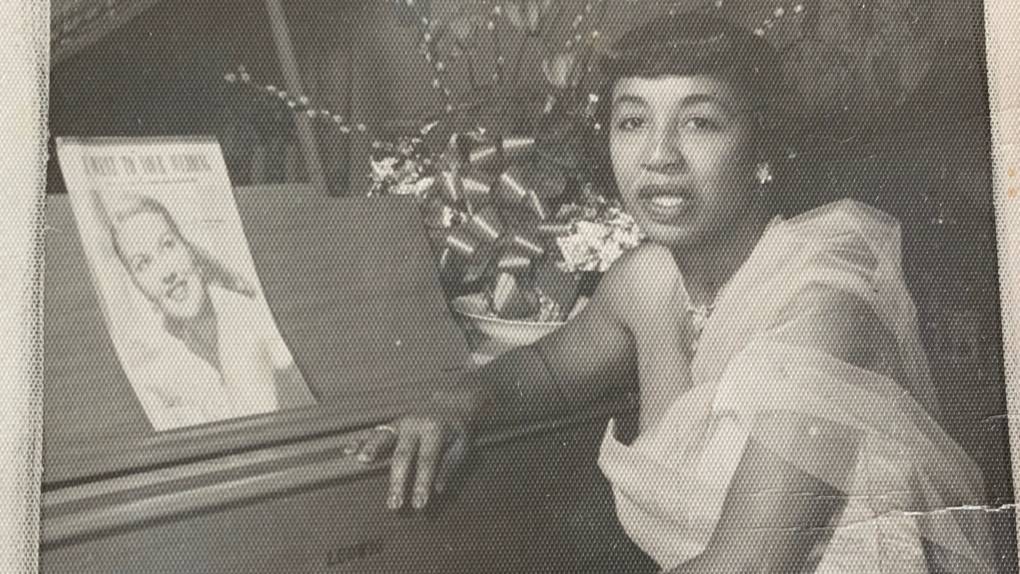
"caption": "Jessie Mae Robinson's songs have been recorded by hundreds of artists, from Louis Jordan to Lana Del Rey.",
"description": "Jessie Mae Robinson's songs have been recorded by hundreds of artists, from \u003ca href=\"https://www.npr.org/artists/15404400/louis-jordan\">Louis Jordan\u003c/a> to \u003ca href=\"https://www.npr.org/artists/145913023/lana-del-rey\">Lana Del Rey\u003c/a>.",
"title": "Jessie Mae Robinson's songs have been recorded by hundreds of artists, from Louis Jordan to Lana Del Rey.",
"credit": "Courtesy of the Robinson family",
"status": "inherit",
"isLoading": false,
"fetchFailed": false
},
"arts_13849901": {
"type": "attachments",
"id": "arts_13849901",
"meta": {
"index": "attachments_1716263798",
"site": "arts",
"id": "13849901",
"found": true
},
"parent": 13849897,
"imgSizes": {
"twentyfourteen-full-width": {
"file": "https://ww2.kqed.org/app/uploads/sites/2/2019/02/GettyImages-51991767_resized-1038x576.png",
"width": 1038,
"mimeType": "image/png",
"height": 576
},
"thumbnail": {
"file": "https://ww2.kqed.org/app/uploads/sites/2/2019/02/GettyImages-51991767_resized-160x106.png",
"width": 160,
"mimeType": "image/png",
"height": 106
},
"post-thumbnail": {
"file": "https://ww2.kqed.org/app/uploads/sites/2/2019/02/GettyImages-51991767_resized-672x372.png",
"width": 672,
"mimeType": "image/png",
"height": 372
},
"kqedFullSize": {
"file": "https://ww2.kqed.org/app/uploads/sites/2/2019/02/GettyImages-51991767_resized.png",
"width": 1415,
"height": 938
},
"large": {
"file": "https://ww2.kqed.org/app/uploads/sites/2/2019/02/GettyImages-51991767_resized-1020x676.png",
"width": 1020,
"mimeType": "image/png",
"height": 676
},
"complete_open_graph": {
"file": "https://ww2.kqed.org/app/uploads/sites/2/2019/02/GettyImages-51991767_resized-1200x795.png",
"width": 1200,
"mimeType": "image/png",
"height": 795
},
"guest-author-50": {
"file": "https://ww2.kqed.org/app/uploads/sites/2/2019/02/GettyImages-51991767_resized-50x50.png",
"width": 50,
"mimeType": "image/png",
"height": 50
},
"guest-author-96": {
"file": "https://ww2.kqed.org/app/uploads/sites/2/2019/02/GettyImages-51991767_resized-96x96.png",
"width": 96,
"mimeType": "image/png",
"height": 96
},
"medium": {
"file": "https://ww2.kqed.org/app/uploads/sites/2/2019/02/GettyImages-51991767_resized-800x530.png",
"width": 800,
"mimeType": "image/png",
"height": 530
},
"guest-author-64": {
"file": "https://ww2.kqed.org/app/uploads/sites/2/2019/02/GettyImages-51991767_resized-64x64.png",
"width": 64,
"mimeType": "image/png",
"height": 64
},
"guest-author-32": {
"file": "https://ww2.kqed.org/app/uploads/sites/2/2019/02/GettyImages-51991767_resized-32x32.png",
"width": 32,
"mimeType": "image/png",
"height": 32
},
"detail": {
"file": "https://ww2.kqed.org/app/uploads/sites/2/2019/02/GettyImages-51991767_resized-150x150.png",
"width": 150,
"mimeType": "image/png",
"height": 150
},
"medium_large": {
"file": "https://ww2.kqed.org/app/uploads/sites/2/2019/02/GettyImages-51991767_resized-768x509.png",
"width": 768,
"mimeType": "image/png",
"height": 509
},
"guest-author-128": {
"file": "https://ww2.kqed.org/app/uploads/sites/2/2019/02/GettyImages-51991767_resized-128x128.png",
"width": 128,
"mimeType": "image/png",
"height": 128
}
},
"publishDate": 1549047716,
"modified": 1549047759,
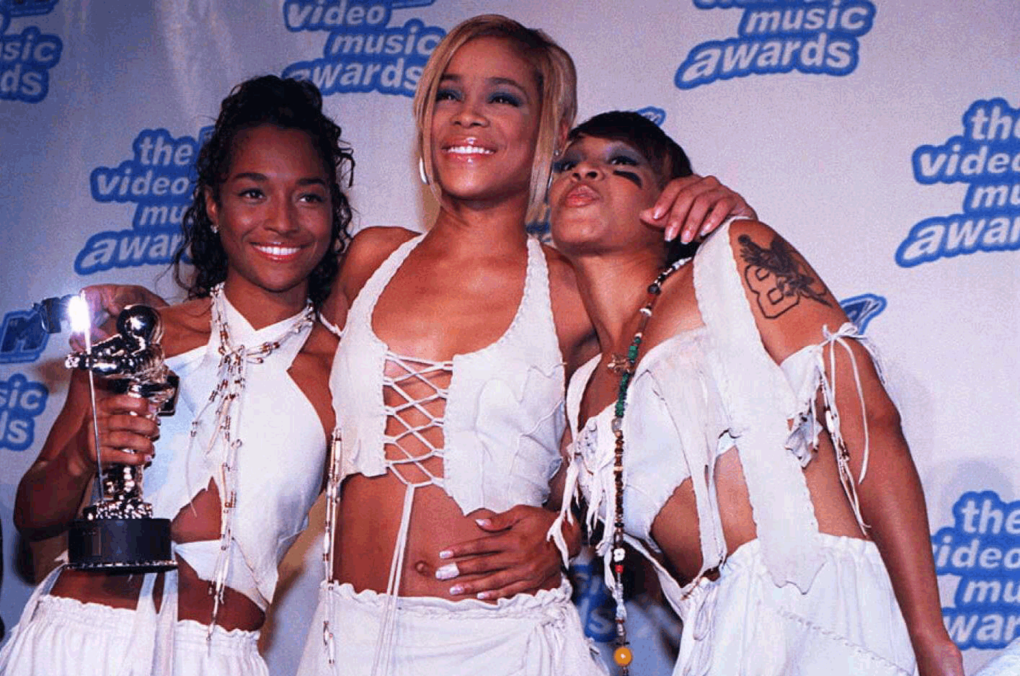
"caption": "Rozonda 'Chilli' Thomas (L), Tionne 'T-Boz' Watkins (C) and Lisa 'Left Eye' Lopes of the group TLC pose with their award for Best Video of the Year 07 September during the 1995 MTV Video Music Awards held at Radio City Music Hall in New York. ",
"description": "Rozonda 'Chilli' Thomas (L), Tionne 'T-Boz' Watkins (C) and Lisa 'Left Eye' Lopes of the group TLC pose with their award for Best Video of the Year 07 September during the 1995 MTV Video Music Awards held at Radio City Music Hall in New York. ",
"title": "GettyImages-51991767_resized",
"credit": "JON LEVY/AFP/Getty Images",
"status": "inherit",
"isLoading": false,
"fetchFailed": false
},
"arts_13849844": {
"type": "attachments",
"id": "arts_13849844",
"meta": {
"index": "attachments_1716263798",
"site": "arts",
"id": "13849844",
"found": true
},
"parent": 13849693,
"imgSizes": {
"twentyfourteen-full-width": {
"file": "https://ww2.kqed.org/app/uploads/sites/2/2019/01/safia-mafia-1038x576.jpeg",
"width": 1038,
"mimeType": "image/jpeg",
"height": 576
},
"thumbnail": {
"file": "https://ww2.kqed.org/app/uploads/sites/2/2019/01/safia-mafia-160x90.jpeg",
"width": 160,
"mimeType": "image/jpeg",
"height": 90
},
"post-thumbnail": {
"file": "https://ww2.kqed.org/app/uploads/sites/2/2019/01/safia-mafia-672x372.jpeg",
"width": 672,
"mimeType": "image/jpeg",
"height": 372
},
"kqedFullSize": {
"file": "https://ww2.kqed.org/app/uploads/sites/2/2019/01/safia-mafia.jpeg",
"width": 1920,
"height": 1080
},
"large": {
"file": "https://ww2.kqed.org/app/uploads/sites/2/2019/01/safia-mafia-1020x574.jpeg",
"width": 1020,
"mimeType": "image/jpeg",
"height": 574
},
"complete_open_graph": {
"file": "https://ww2.kqed.org/app/uploads/sites/2/2019/01/safia-mafia-1200x675.jpeg",
"width": 1200,
"mimeType": "image/jpeg",
"height": 675
},
"guest-author-50": {
"file": "https://ww2.kqed.org/app/uploads/sites/2/2019/01/safia-mafia-50x50.jpeg",
"width": 50,
"mimeType": "image/jpeg",
"height": 50
},
"guest-author-96": {
"file": "https://ww2.kqed.org/app/uploads/sites/2/2019/01/safia-mafia-96x96.jpeg",
"width": 96,
"mimeType": "image/jpeg",
"height": 96
},
"medium": {
"file": "https://ww2.kqed.org/app/uploads/sites/2/2019/01/safia-mafia-800x450.jpeg",
"width": 800,
"mimeType": "image/jpeg",
"height": 450
},
"guest-author-64": {
"file": "https://ww2.kqed.org/app/uploads/sites/2/2019/01/safia-mafia-64x64.jpeg",
"width": 64,
"mimeType": "image/jpeg",
"height": 64
},
"guest-author-32": {
"file": "https://ww2.kqed.org/app/uploads/sites/2/2019/01/safia-mafia-32x32.jpeg",
"width": 32,
"mimeType": "image/jpeg",
"height": 32
},
"full-width": {
"file": "https://ww2.kqed.org/app/uploads/sites/2/2019/01/safia-mafia-1920x1080.jpeg",
"width": 1920,
"mimeType": "image/jpeg",
"height": 1080
},
"detail": {
"file": "https://ww2.kqed.org/app/uploads/sites/2/2019/01/safia-mafia-150x150.jpeg",
"width": 150,
"mimeType": "image/jpeg",
"height": 150
},
"medium_large": {
"file": "https://ww2.kqed.org/app/uploads/sites/2/2019/01/safia-mafia-768x432.jpeg",
"width": 768,
"mimeType": "image/jpeg",
"height": 432
},
"guest-author-128": {
"file": "https://ww2.kqed.org/app/uploads/sites/2/2019/01/safia-mafia-128x128.jpeg",
"width": 128,
"mimeType": "image/jpeg",
"height": 128
}
},
"publishDate": 1548967525,
"modified": 1548985286,
"caption": "Safia Mafia's new album, 'Love Kills,' is a collection of thoughtful R&B songs that champion self-love. ",
"description": "Safia Mafia's new album, 'Love Kills,' is a collection of thoughtful R&B songs that champion self-love. ",
"title": "safia mafia",
"credit": "Courtesy of the artist",
"status": "inherit",
"isLoading": false,
"fetchFailed": false
},
"arts_13849827": {
"type": "attachments",
"id": "arts_13849827",
"meta": {
"index": "attachments_1716263798",
"site": "arts",
"id": "13849827",
"found": true
},
"parent": 13849823,
"imgSizes": {
"twentyfourteen-full-width": {
"file": "https://ww2.kqed.org/app/uploads/sites/2/2019/01/composite-1_custom-ef6c645f79daf9ecde1de15709f37396f06e65b2-1038x576.jpg",
"width": 1038,
"mimeType": "image/jpeg",
"height": 576
},
"thumbnail": {
"file": "https://ww2.kqed.org/app/uploads/sites/2/2019/01/composite-1_custom-ef6c645f79daf9ecde1de15709f37396f06e65b2-160x84.jpg",
"width": 160,
"mimeType": "image/jpeg",
"height": 84
},
"post-thumbnail": {
"file": "https://ww2.kqed.org/app/uploads/sites/2/2019/01/composite-1_custom-ef6c645f79daf9ecde1de15709f37396f06e65b2-672x372.jpg",
"width": 672,
"mimeType": "image/jpeg",
"height": 372
},
"kqedFullSize": {
"file": "https://ww2.kqed.org/app/uploads/sites/2/2019/01/composite-1_custom-ef6c645f79daf9ecde1de15709f37396f06e65b2-e1548955985110.jpg",
"width": 1920,
"height": 1004
},
"large": {
"file": "https://ww2.kqed.org/app/uploads/sites/2/2019/01/composite-1_custom-ef6c645f79daf9ecde1de15709f37396f06e65b2-1020x533.jpg",
"width": 1020,
"mimeType": "image/jpeg",
"height": 533
},
"complete_open_graph": {
"file": "https://ww2.kqed.org/app/uploads/sites/2/2019/01/composite-1_custom-ef6c645f79daf9ecde1de15709f37396f06e65b2-1200x628.jpg",
"width": 1200,
"mimeType": "image/jpeg",
"height": 628
},
"guest-author-50": {
"file": "https://ww2.kqed.org/app/uploads/sites/2/2019/01/composite-1_custom-ef6c645f79daf9ecde1de15709f37396f06e65b2-50x50.jpg",
"width": 50,
"mimeType": "image/jpeg",
"height": 50
},
"guest-author-96": {
"file": "https://ww2.kqed.org/app/uploads/sites/2/2019/01/composite-1_custom-ef6c645f79daf9ecde1de15709f37396f06e65b2-96x96.jpg",
"width": 96,
"mimeType": "image/jpeg",
"height": 96
},
"medium": {
"file": "https://ww2.kqed.org/app/uploads/sites/2/2019/01/composite-1_custom-ef6c645f79daf9ecde1de15709f37396f06e65b2-800x418.jpg",
"width": 800,
"mimeType": "image/jpeg",
"height": 418
},
"guest-author-64": {
"file": "https://ww2.kqed.org/app/uploads/sites/2/2019/01/composite-1_custom-ef6c645f79daf9ecde1de15709f37396f06e65b2-64x64.jpg",
"width": 64,
"mimeType": "image/jpeg",
"height": 64
},
"guest-author-32": {
"file": "https://ww2.kqed.org/app/uploads/sites/2/2019/01/composite-1_custom-ef6c645f79daf9ecde1de15709f37396f06e65b2-32x32.jpg",
"width": 32,
"mimeType": "image/jpeg",
"height": 32
},
"full-width": {
"file": "https://ww2.kqed.org/app/uploads/sites/2/2019/01/composite-1_custom-ef6c645f79daf9ecde1de15709f37396f06e65b2-1920x1004.jpg",
"width": 1920,
"mimeType": "image/jpeg",
"height": 1004
},
"detail": {
"file": "https://ww2.kqed.org/app/uploads/sites/2/2019/01/composite-1_custom-ef6c645f79daf9ecde1de15709f37396f06e65b2-150x150.jpg",
"width": 150,
"mimeType": "image/jpeg",
"height": 150
},
"medium_large": {
"file": "https://ww2.kqed.org/app/uploads/sites/2/2019/01/composite-1_custom-ef6c645f79daf9ecde1de15709f37396f06e65b2-768x402.jpg",
"width": 768,
"mimeType": "image/jpeg",
"height": 402
},
"guest-author-128": {
"file": "https://ww2.kqed.org/app/uploads/sites/2/2019/01/composite-1_custom-ef6c645f79daf9ecde1de15709f37396f06e65b2-128x128.jpg",
"width": 128,
"mimeType": "image/jpeg",
"height": 128
}
},
"publishDate": 1548955429,
"modified": 1548956025,
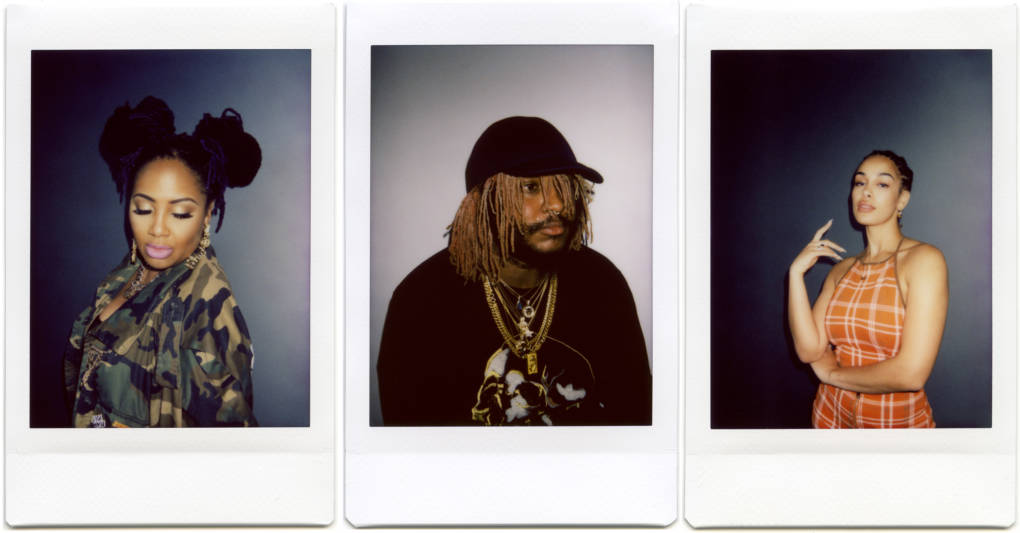
"caption": "Left to right: Lalah Hathaway, Thundercat, Jorja Smith.",
"description": "Left to right: Lalah Hathaway, Thundercat, Jorja Smith.",
"title": "Left to right: Lalah Hathaway, Thundercat, Jorja Smith.",
"credit": "Eslah Attar/NPR",
"status": "inherit",
"isLoading": false,
"fetchFailed": false
},
"arts_13849773": {
"type": "attachments",
"id": "arts_13849773",
"meta": {
"index": "attachments_1716263798",
"site": "arts",
"id": "13849773",
"found": true
},
"parent": 13849772,
"imgSizes": {
"twentyfourteen-full-width": {
"file": "https://ww2.kqed.org/app/uploads/sites/2/2019/01/beatles_wide-e4a0c82d01a0440c46cb5c048213c7c8d7c006c2-1038x576.jpg",
"width": 1038,
"mimeType": "image/jpeg",
"height": 576
},
"thumbnail": {
"file": "https://ww2.kqed.org/app/uploads/sites/2/2019/01/beatles_wide-e4a0c82d01a0440c46cb5c048213c7c8d7c006c2-160x90.jpg",
"width": 160,
"mimeType": "image/jpeg",
"height": 90
},
"post-thumbnail": {
"file": "https://ww2.kqed.org/app/uploads/sites/2/2019/01/beatles_wide-e4a0c82d01a0440c46cb5c048213c7c8d7c006c2-672x372.jpg",
"width": 672,
"mimeType": "image/jpeg",
"height": 372
},
"kqedFullSize": {
"file": "https://ww2.kqed.org/app/uploads/sites/2/2019/01/beatles_wide-e4a0c82d01a0440c46cb5c048213c7c8d7c006c2-e1548884238234.jpg",
"width": 1920,
"height": 1080
},
"large": {
"file": "https://ww2.kqed.org/app/uploads/sites/2/2019/01/beatles_wide-e4a0c82d01a0440c46cb5c048213c7c8d7c006c2-1020x574.jpg",
"width": 1020,
"mimeType": "image/jpeg",
"height": 574
},
"complete_open_graph": {
"file": "https://ww2.kqed.org/app/uploads/sites/2/2019/01/beatles_wide-e4a0c82d01a0440c46cb5c048213c7c8d7c006c2-1200x675.jpg",
"width": 1200,
"mimeType": "image/jpeg",
"height": 675
},
"guest-author-50": {
"file": "https://ww2.kqed.org/app/uploads/sites/2/2019/01/beatles_wide-e4a0c82d01a0440c46cb5c048213c7c8d7c006c2-50x50.jpg",
"width": 50,
"mimeType": "image/jpeg",
"height": 50
},
"guest-author-96": {
"file": "https://ww2.kqed.org/app/uploads/sites/2/2019/01/beatles_wide-e4a0c82d01a0440c46cb5c048213c7c8d7c006c2-96x96.jpg",
"width": 96,
"mimeType": "image/jpeg",
"height": 96
},
"medium": {
"file": "https://ww2.kqed.org/app/uploads/sites/2/2019/01/beatles_wide-e4a0c82d01a0440c46cb5c048213c7c8d7c006c2-800x450.jpg",
"width": 800,
"mimeType": "image/jpeg",
"height": 450
},
"guest-author-64": {
"file": "https://ww2.kqed.org/app/uploads/sites/2/2019/01/beatles_wide-e4a0c82d01a0440c46cb5c048213c7c8d7c006c2-64x64.jpg",
"width": 64,
"mimeType": "image/jpeg",
"height": 64
},
"guest-author-32": {
"file": "https://ww2.kqed.org/app/uploads/sites/2/2019/01/beatles_wide-e4a0c82d01a0440c46cb5c048213c7c8d7c006c2-32x32.jpg",
"width": 32,
"mimeType": "image/jpeg",
"height": 32
},
"full-width": {
"file": "https://ww2.kqed.org/app/uploads/sites/2/2019/01/beatles_wide-e4a0c82d01a0440c46cb5c048213c7c8d7c006c2-1920x1080.jpg",
"width": 1920,
"mimeType": "image/jpeg",
"height": 1080
},
"detail": {
"file": "https://ww2.kqed.org/app/uploads/sites/2/2019/01/beatles_wide-e4a0c82d01a0440c46cb5c048213c7c8d7c006c2-150x150.jpg",
"width": 150,
"mimeType": "image/jpeg",
"height": 150
},
"medium_large": {
"file": "https://ww2.kqed.org/app/uploads/sites/2/2019/01/beatles_wide-e4a0c82d01a0440c46cb5c048213c7c8d7c006c2-768x432.jpg",
"width": 768,
"mimeType": "image/jpeg",
"height": 432
},
"guest-author-128": {
"file": "https://ww2.kqed.org/app/uploads/sites/2/2019/01/beatles_wide-e4a0c82d01a0440c46cb5c048213c7c8d7c006c2-128x128.jpg",
"width": 128,
"mimeType": "image/jpeg",
"height": 128
}
},
"publishDate": 1548884122,
"modified": 1548885012,
"caption": "'Lord of the Rings' director Peter Jackson has been tapped to direct a Beatles documentary based on unseen footage from the 'Let It Be' session.",
"description": "'Lord of the Rings' director Peter Jackson has been tapped to direct a Beatles documentary based on unseen footage from the 'Let It Be' session.",
"title": "Lord of the Rings director Peter Jackson has been tapped to direct a Beatles documentary based on unseen footage from the Let It Be sessions.",
"credit": "Courtesy of the artist",
"status": "inherit",
"isLoading": false,
"fetchFailed": false
},
"arts_13849769": {
"type": "attachments",
"id": "arts_13849769",
"meta": {
"index": "attachments_1716263798",
"site": "arts",
"id": "13849769",
"found": true
},
"parent": 13849762,
"imgSizes": {
"thumbnail": {
"file": "https://ww2.kqed.org/app/uploads/sites/2/2019/01/fury-ballet-160x90.jpg",
"width": 160,
"mimeType": "image/jpeg",
"height": 90
},
"post-thumbnail": {
"file": "https://ww2.kqed.org/app/uploads/sites/2/2019/01/fury-ballet-672x372.jpg",
"width": 672,
"mimeType": "image/jpeg",
"height": 372
},
"kqedFullSize": {
"file": "https://ww2.kqed.org/app/uploads/sites/2/2019/01/fury-ballet.jpg",
"width": 800,
"height": 450
},
"guest-author-50": {
"file": "https://ww2.kqed.org/app/uploads/sites/2/2019/01/fury-ballet-50x50.jpg",
"width": 50,
"mimeType": "image/jpeg",
"height": 50
},
"guest-author-96": {
"file": "https://ww2.kqed.org/app/uploads/sites/2/2019/01/fury-ballet-96x96.jpg",
"width": 96,
"mimeType": "image/jpeg",
"height": 96
},
"medium": {
"file": "https://ww2.kqed.org/app/uploads/sites/2/2019/01/fury-ballet-800x450.jpg",
"width": 800,
"mimeType": "image/jpeg",
"height": 450
},
"guest-author-64": {
"file": "https://ww2.kqed.org/app/uploads/sites/2/2019/01/fury-ballet-64x64.jpg",
"width": 64,
"mimeType": "image/jpeg",
"height": 64
},
"detail": {
"file": "https://ww2.kqed.org/app/uploads/sites/2/2019/01/fury-ballet-150x150.jpg",
"width": 150,
"mimeType": "image/jpeg",
"height": 150
},
"guest-author-32": {
"file": "https://ww2.kqed.org/app/uploads/sites/2/2019/01/fury-ballet-32x32.jpg",
"width": 32,
"mimeType": "image/jpeg",
"height": 32
},
"medium_large": {
"file": "https://ww2.kqed.org/app/uploads/sites/2/2019/01/fury-ballet-768x432.jpg",
"width": 768,
"mimeType": "image/jpeg",
"height": 432
},
"guest-author-128": {
"file": "https://ww2.kqed.org/app/uploads/sites/2/2019/01/fury-ballet-128x128.jpg",
"width": 128,
"mimeType": "image/jpeg",
"height": 128
}
},
"publishDate": 1548883649,
"modified": 1548886475,
"caption": "Alonzo King LINES Ballet dancers Adji Cissoko and Babatunji performing in 'Fury.'",
"description": "Alonzo King LINES Ballet dancers Adji Cissoko and Babatunji performing in 'Fury.'",
"title": "fury ballet",
"credit": "Alexander Irwin",
"status": "inherit",
"isLoading": false,
"fetchFailed": false
},
"arts_13849653": {
"type": "attachments",
"id": "arts_13849653",
"meta": {
"index": "attachments_1716263798",
"site": "arts",
"id": "13849653",
"found": true
},
"parent": 13849625,
"imgSizes": {
"twentyfourteen-full-width": {
"file": "https://ww2.kqed.org/app/uploads/sites/2/2019/01/Pandora.MAIN_-1038x576.jpg",
"width": 1038,
"mimeType": "image/jpeg",
"height": 576
},
"thumbnail": {
"file": "https://ww2.kqed.org/app/uploads/sites/2/2019/01/Pandora.MAIN_-160x90.jpg",
"width": 160,
"mimeType": "image/jpeg",
"height": 90
},
"post-thumbnail": {
"file": "https://ww2.kqed.org/app/uploads/sites/2/2019/01/Pandora.MAIN_-672x372.jpg",
"width": 672,
"mimeType": "image/jpeg",
"height": 372
},
"kqedFullSize": {
"file": "https://ww2.kqed.org/app/uploads/sites/2/2019/01/Pandora.MAIN_.jpg",
"width": 1920,
"height": 1080
},
"large": {
"file": "https://ww2.kqed.org/app/uploads/sites/2/2019/01/Pandora.MAIN_-1020x574.jpg",
"width": 1020,
"mimeType": "image/jpeg",
"height": 574
},
"complete_open_graph": {
"file": "https://ww2.kqed.org/app/uploads/sites/2/2019/01/Pandora.MAIN_-1200x675.jpg",
"width": 1200,
"mimeType": "image/jpeg",
"height": 675
},
"guest-author-50": {
"file": "https://ww2.kqed.org/app/uploads/sites/2/2019/01/Pandora.MAIN_-50x50.jpg",
"width": 50,
"mimeType": "image/jpeg",
"height": 50
},
"guest-author-96": {
"file": "https://ww2.kqed.org/app/uploads/sites/2/2019/01/Pandora.MAIN_-96x96.jpg",
"width": 96,
"mimeType": "image/jpeg",
"height": 96
},
"medium": {
"file": "https://ww2.kqed.org/app/uploads/sites/2/2019/01/Pandora.MAIN_-800x450.jpg",
"width": 800,
"mimeType": "image/jpeg",
"height": 450
},
"guest-author-64": {
"file": "https://ww2.kqed.org/app/uploads/sites/2/2019/01/Pandora.MAIN_-64x64.jpg",
"width": 64,
"mimeType": "image/jpeg",
"height": 64
},
"guest-author-32": {
"file": "https://ww2.kqed.org/app/uploads/sites/2/2019/01/Pandora.MAIN_-32x32.jpg",
"width": 32,
"mimeType": "image/jpeg",
"height": 32
},
"full-width": {
"file": "https://ww2.kqed.org/app/uploads/sites/2/2019/01/Pandora.MAIN_-1920x1080.jpg",
"width": 1920,
"mimeType": "image/jpeg",
"height": 1080
},
"detail": {
"file": "https://ww2.kqed.org/app/uploads/sites/2/2019/01/Pandora.MAIN_-150x150.jpg",
"width": 150,
"mimeType": "image/jpeg",
"height": 150
},
"medium_large": {
"file": "https://ww2.kqed.org/app/uploads/sites/2/2019/01/Pandora.MAIN_-768x432.jpg",
"width": 768,
"mimeType": "image/jpeg",
"height": 432
},
"guest-author-128": {
"file": "https://ww2.kqed.org/app/uploads/sites/2/2019/01/Pandora.MAIN_-128x128.jpg",
"width": 128,
"mimeType": "image/jpeg",
"height": 128
}
},
"publishDate": 1548744369,
"modified": 1548744455,
"caption": "The Pandora logo at the New York Stock Exchange on the company's first public day of trading in 2011. Subscription radio company SiriusXM says it’s buying music streaming service Pandora Media Inc. in a stock deal valued at about $3.5 billion that’ll allow it to expand its service beyond cars and into homes and other mobile areas. ",
"description": "The Pandora logo at the New York Stock Exchange on the company's first public day of trading in 2011. Subscription radio company SiriusXM says it’s buying music streaming service Pandora Media Inc. in a stock deal valued at about $3.5 billion that’ll allow it to expand its service beyond cars and into homes and other mobile areas. ",
"title": "Pandora.MAIN",
"credit": "Spencer Platt/Getty Images",
"status": "inherit",
"isLoading": false,
"fetchFailed": false
},
"arts_13849595": {
"type": "attachments",
"id": "arts_13849595",
"meta": {
"index": "attachments_1716263798",
"site": "arts",
"id": "13849595",
"found": true
},
"parent": 13849594,
"imgSizes": {
"twentyfourteen-full-width": {
"file": "https://ww2.kqed.org/app/uploads/sites/2/2019/01/new-order_wide-288a91a89de57e2614d962af7fb8537cb2e6dacf-1038x576.jpg",
"width": 1038,
"mimeType": "image/jpeg",
"height": 576
},
"thumbnail": {
"file": "https://ww2.kqed.org/app/uploads/sites/2/2019/01/new-order_wide-288a91a89de57e2614d962af7fb8537cb2e6dacf-160x90.jpg",
"width": 160,
"mimeType": "image/jpeg",
"height": 90
},
"post-thumbnail": {
"file": "https://ww2.kqed.org/app/uploads/sites/2/2019/01/new-order_wide-288a91a89de57e2614d962af7fb8537cb2e6dacf-672x372.jpg",
"width": 672,
"mimeType": "image/jpeg",
"height": 372
},
"kqedFullSize": {
"file": "https://ww2.kqed.org/app/uploads/sites/2/2019/01/new-order_wide-288a91a89de57e2614d962af7fb8537cb2e6dacf.jpg",
"width": 1222,
"height": 687
},
"large": {
"file": "https://ww2.kqed.org/app/uploads/sites/2/2019/01/new-order_wide-288a91a89de57e2614d962af7fb8537cb2e6dacf-1020x573.jpg",
"width": 1020,
"mimeType": "image/jpeg",
"height": 573
},
"complete_open_graph": {
"file": "https://ww2.kqed.org/app/uploads/sites/2/2019/01/new-order_wide-288a91a89de57e2614d962af7fb8537cb2e6dacf-1200x675.jpg",
"width": 1200,
"mimeType": "image/jpeg",
"height": 675
},
"guest-author-50": {
"file": "https://ww2.kqed.org/app/uploads/sites/2/2019/01/new-order_wide-288a91a89de57e2614d962af7fb8537cb2e6dacf-50x50.jpg",
"width": 50,
"mimeType": "image/jpeg",
"height": 50
},
"guest-author-96": {
"file": "https://ww2.kqed.org/app/uploads/sites/2/2019/01/new-order_wide-288a91a89de57e2614d962af7fb8537cb2e6dacf-96x96.jpg",
"width": 96,
"mimeType": "image/jpeg",
"height": 96
},
"medium": {
"file": "https://ww2.kqed.org/app/uploads/sites/2/2019/01/new-order_wide-288a91a89de57e2614d962af7fb8537cb2e6dacf-800x450.jpg",
"width": 800,
"mimeType": "image/jpeg",
"height": 450
},
"guest-author-64": {
"file": "https://ww2.kqed.org/app/uploads/sites/2/2019/01/new-order_wide-288a91a89de57e2614d962af7fb8537cb2e6dacf-64x64.jpg",
"width": 64,
"mimeType": "image/jpeg",
"height": 64
},
"guest-author-32": {
"file": "https://ww2.kqed.org/app/uploads/sites/2/2019/01/new-order_wide-288a91a89de57e2614d962af7fb8537cb2e6dacf-32x32.jpg",
"width": 32,
"mimeType": "image/jpeg",
"height": 32
},
"detail": {
"file": "https://ww2.kqed.org/app/uploads/sites/2/2019/01/new-order_wide-288a91a89de57e2614d962af7fb8537cb2e6dacf-150x150.jpg",
"width": 150,
"mimeType": "image/jpeg",
"height": 150
},
"medium_large": {
"file": "https://ww2.kqed.org/app/uploads/sites/2/2019/01/new-order_wide-288a91a89de57e2614d962af7fb8537cb2e6dacf-768x432.jpg",
"width": 768,
"mimeType": "image/jpeg",
"height": 432
},
"guest-author-128": {
"file": "https://ww2.kqed.org/app/uploads/sites/2/2019/01/new-order_wide-288a91a89de57e2614d962af7fb8537cb2e6dacf-128x128.jpg",
"width": 128,
"mimeType": "image/jpeg",
"height": 128
}
},
"publishDate": 1548703885,
"modified": 1548703963,
"caption": "New Order, recorded live in 1981.",
"description": "New Order, recorded live in 1981.",
"title": "New Order, recorded live in 1981.",
"credit": "New Order, recorded live in 1981.",
"status": "inherit",
"isLoading": false,
"fetchFailed": false
},
"arts_13849560": {
"type": "attachments",
"id": "arts_13849560",
"meta": {
"index": "attachments_1716263798",
"site": "arts",
"id": "13849560",
"found": true
},
"parent": 13849409,
"imgSizes": {
"twentyfourteen-full-width": {
"file": "https://ww2.kqed.org/app/uploads/sites/2/2019/01/Keak.MAIN_.rev_-1038x576.jpg",
"width": 1038,
"mimeType": "image/jpeg",
"height": 576
},
"thumbnail": {
"file": "https://ww2.kqed.org/app/uploads/sites/2/2019/01/Keak.MAIN_.rev_-160x90.jpg",
"width": 160,
"mimeType": "image/jpeg",
"height": 90
},
"post-thumbnail": {
"file": "https://ww2.kqed.org/app/uploads/sites/2/2019/01/Keak.MAIN_.rev_-672x372.jpg",
"width": 672,
"mimeType": "image/jpeg",
"height": 372
},
"kqedFullSize": {
"file": "https://ww2.kqed.org/app/uploads/sites/2/2019/01/Keak.MAIN_.rev_.jpg",
"width": 1080,
"height": 608
},
"large": {
"file": "https://ww2.kqed.org/app/uploads/sites/2/2019/01/Keak.MAIN_.rev_-1020x574.jpg",
"width": 1020,
"mimeType": "image/jpeg",
"height": 574
},
"guest-author-50": {
"file": "https://ww2.kqed.org/app/uploads/sites/2/2019/01/Keak.MAIN_.rev_-50x50.jpg",
"width": 50,
"mimeType": "image/jpeg",
"height": 50
},
"guest-author-96": {
"file": "https://ww2.kqed.org/app/uploads/sites/2/2019/01/Keak.MAIN_.rev_-96x96.jpg",
"width": 96,
"mimeType": "image/jpeg",
"height": 96
},
"medium": {
"file": "https://ww2.kqed.org/app/uploads/sites/2/2019/01/Keak.MAIN_.rev_-800x450.jpg",
"width": 800,
"mimeType": "image/jpeg",
"height": 450
},
"guest-author-64": {
"file": "https://ww2.kqed.org/app/uploads/sites/2/2019/01/Keak.MAIN_.rev_-64x64.jpg",
"width": 64,
"mimeType": "image/jpeg",
"height": 64
},
"guest-author-32": {
"file": "https://ww2.kqed.org/app/uploads/sites/2/2019/01/Keak.MAIN_.rev_-32x32.jpg",
"width": 32,
"mimeType": "image/jpeg",
"height": 32
},
"detail": {
"file": "https://ww2.kqed.org/app/uploads/sites/2/2019/01/Keak.MAIN_.rev_-150x150.jpg",
"width": 150,
"mimeType": "image/jpeg",
"height": 150
},
"medium_large": {
"file": "https://ww2.kqed.org/app/uploads/sites/2/2019/01/Keak.MAIN_.rev_-768x432.jpg",
"width": 768,
"mimeType": "image/jpeg",
"height": 432
},
"guest-author-128": {
"file": "https://ww2.kqed.org/app/uploads/sites/2/2019/01/Keak.MAIN_.rev_-128x128.jpg",
"width": 128,
"mimeType": "image/jpeg",
"height": 128
}
},
"publishDate": 1548699934,
"modified": 1570046615,
"caption": "Rapper Keak Da Sneak.",
"description": "Rapper Keak Da Sneak worries that California correctional facilities have little compassion for inmates with disabilities. ",
"title": "Keak.MAIN.rev",
"credit": "Joel Galvan",
"status": "inherit",
"isLoading": false,
"fetchFailed": false
}
},
"audioPlayerReducer": {
"postId": "stream_live",
"isPaused": true,
"isPlaying": false,
"pfsActive": false,
"pledgeModalIsOpen": true,
"playerDrawerIsOpen": false,
"liveAudioPlayStartedAt": 0,
"liveAudioPlayContext": ""
},
"authorsReducer": {
"byline_arts_13850067": {
"type": "authors",
"id": "byline_arts_13850067",
"meta": {
"override": true
},
"slug": "byline_arts_13850067",
"name": "Matthew S. Schwartz",
"isLoading": false
},
"byline_arts_13849928": {
"type": "authors",
"id": "byline_arts_13849928",
"meta": {
"override": true
},
"slug": "byline_arts_13849928",
"name": "Ned Raggett",
"isLoading": false
},
"byline_news_11720875": {
"type": "authors",
"id": "byline_news_11720875",
"meta": {
"override": true
},
"slug": "byline_news_11720875",
"name": "Sasha Khokha",
"isLoading": false
},
"byline_arts_13849918": {
"type": "authors",
"id": "byline_arts_13849918",
"meta": {
"override": true
},
"slug": "byline_arts_13849918",
"name": "Meredith Ochs",
"isLoading": false
},
"byline_arts_13849897": {
"type": "authors",
"id": "byline_arts_13849897",
"meta": {
"override": true
},
"slug": "byline_arts_13849897",
"name": "Sidney Madden",
"isLoading": false
},
"byline_arts_13849823": {
"type": "authors",
"id": "byline_arts_13849823",
"meta": {
"override": true
},
"slug": "byline_arts_13849823",
"name": "Eslah Attar",
"isLoading": false
},
"byline_arts_13849772": {
"type": "authors",
"id": "byline_arts_13849772",
"meta": {
"override": true
},
"slug": "byline_arts_13849772",
"name": "Joshua Bote",
"isLoading": false
},
"byline_arts_13849594": {
"type": "authors",
"id": "byline_arts_13849594",
"meta": {
"override": true
},
"slug": "byline_arts_13849594",
"name": "Stephen Thompson",
"isLoading": false
},
"slefebvre": {
"type": "authors",
"id": "11091",
"meta": {
"index": "authors_1716337520",
"id": "11091",
"found": true
},
"name": "Sam Lefebvre",
"firstName": "Sam",
"lastName": "Lefebvre",
"slug": "slefebvre",
"email": "sdlefebvre@gmail.com",
"display_author_email": false,
"staff_mastheads": [],
"title": "KQED Contributor",
"bio": "Sam Lefebvre is an award-winning reporter at KQED Arts. He has worked as an editor and columnist at the \u003cem>East Bay Express\u003c/em>, \u003cem>SF Weekly \u003c/em>and Impose Magazine, and his journalism and criticism has appeared in \u003cem>The New York Times\u003c/em>, the Guardian and Pitchfork.",
"avatar": "https://secure.gravatar.com/avatar/49d39b42930b77fb13784ddd9fa63fe780666b71bf289368509dba576b64e69b?s=600&d=blank&r=g",
"twitter": "Lefebvre_Sam",
"bluesky": null,
"facebook": null,
"instagram": null,
"linkedin": null,
"sites": [
{
"site": "arts",
"roles": [
"subscriber"
]
},
{
"site": "news",
"roles": [
"author"
]
}
],
"headData": {
"title": "Sam Lefebvre | KQED",
"description": "KQED Contributor",
"ogImgSrc": "https://secure.gravatar.com/avatar/49d39b42930b77fb13784ddd9fa63fe780666b71bf289368509dba576b64e69b?s=600&d=blank&r=g",
"twImgSrc": "https://secure.gravatar.com/avatar/49d39b42930b77fb13784ddd9fa63fe780666b71bf289368509dba576b64e69b?s=600&d=blank&r=g"
},
"isLoading": false,
"link": "/author/slefebvre"
},
"nvoynovskaya": {
"type": "authors",
"id": "11387",
"meta": {
"index": "authors_1716337520",
"id": "11387",
"found": true
},
"name": "Nastia Voynovskaya",
"firstName": "Nastia",
"lastName": "Voynovskaya",
"slug": "nvoynovskaya",
"email": "nvoynovskaya@kqed.org",
"display_author_email": false,
"staff_mastheads": [
"arts"
],
"title": "Editor and reporter",
"bio": "Nastia Voynovskaya is a reporter, editor and host at KQED Arts & Culture. She's been covering the arts in the Bay Area for over a decade, with a focus on music, queer culture, labor issues and grassroots organizing. She has edited KQED story series such as Trans Bay: A History of San Francisco's Gender-Diverse Community, and co-created KQED's Bay Area hip-hop history project, That's My Word. Nastia's work has been recognized by the Society of Professional Journalists and San Francisco Press Club. She regularly appears on podcasts and radio programs, including NPR's All Songs Considered, and hosts live events where music, culture and conversation meet.",
"avatar": "https://secure.gravatar.com/avatar/5025ee460e5a85d69ca20ea6c6f2f80d7e17795c828f61ea3aecfcd924e9042e?s=600&d=blank&r=g",
"twitter": null,
"bluesky": null,
"facebook": null,
"instagram": "https://www.instagram.com/nananastia/",
"linkedin": null,
"sites": [
{
"site": "",
"roles": [
"editor"
]
},
{
"site": "arts",
"roles": [
"administrator"
]
},
{
"site": "news",
"roles": [
"editor"
]
},
{
"site": "pop",
"roles": [
"administrator"
]
},
{
"site": "bayareabites",
"roles": [
"editor"
]
},
{
"site": "podcasts",
"roles": [
"editor"
]
},
{
"site": "hiphop",
"roles": [
"editor"
]
}
],
"headData": {
"title": "Nastia Voynovskaya | KQED",
"description": "Editor and reporter",
"ogImgSrc": "https://secure.gravatar.com/avatar/5025ee460e5a85d69ca20ea6c6f2f80d7e17795c828f61ea3aecfcd924e9042e?s=600&d=blank&r=g",
"twImgSrc": "https://secure.gravatar.com/avatar/5025ee460e5a85d69ca20ea6c6f2f80d7e17795c828f61ea3aecfcd924e9042e?s=600&d=blank&r=g"
},
"isLoading": false,
"link": "/author/nvoynovskaya"
}
},
"pagesReducer": {
"arts_category_music": {
"type": "terms",
"id": "arts_69",
"meta": {
"index": "terms_1716263798",
"site": "arts",
"id": "69",
"score": 10.851818
},
"featImg": null,
"name": "Music",
"description": null,
"taxonomy": "category",
"headData": {
"twImgId": null,
"twTitle": null,
"ogTitle": null,
"ogImgId": null,
"twDescription": null,
"description": null,
"title": "Music Archives | KQED Arts",
"ogDescription": null
},
"ttid": 70,
"slug": "music",
"isLoading": false,
"title": "Music",
"pageMeta": {
"site": "arts",
"WpPageTemplate": "page-topic-editorial",
"currentPage": 159
},
"blocks": [
{
"blockName": "kqed/post-list",
"attrs": {
"layout": "cardArticle2",
"query": "posts/arts?category=music",
"seeMore": false,
"paginated": true,
"page": 159
}
},
{
"blockName": "kqed/ad"
}
]
}
},
"pfsSessionReducer": {},
"postsReducer": {
"stream_live": {
"type": "live",
"id": "stream_live",
"audioUrl": "https://streams.kqed.org/kqedradio",
"title": "Live Stream",
"excerpt": "Live Stream information currently unavailable.",
"link": "/radio",
"featImg": "",
"label": {
"name": "KQED Live",
"link": "/"
}
},
"stream_kqedNewscast": {
"type": "posts",
"id": "stream_kqedNewscast",
"audioUrl": "https://www.kqed.org/.stream/anon/radio/RDnews/newscast.mp3?_=1",
"title": "KQED Newscast",
"featImg": "",
"label": {
"name": "88.5 FM",
"link": "/"
}
},
"arts_13850067": {
"type": "posts",
"id": "arts_13850067",
"meta": {
"index": "posts_1716263798",
"site": "arts",
"id": "13850067",
"score": null,
"sort": [
1549308812000
]
},
"guestAuthors": [],
"slug": "rapper-21-savage-arrested-by-ice-for-allegedly-overstaying-visa",
"title": "Rapper 21 Savage Faces Deportation After Allegedly Overstaying Visa",
"publishDate": 1549308812,
"format": "standard",
"headTitle": "Rapper 21 Savage Faces Deportation After Allegedly Overstaying Visa | KQED",
"labelTerm": {
"term": 137,
"site": "arts"
},
"content": "\u003cp>The Grammy-nominated rapper 21 Savage, who has long been associated with Atlanta, has been arrested by U.S. Immigration and Customs Enforcement. The agency says he is actually a U.K. citizen who overstayed his visa and that he now faces deportation.\u003c/p>\n\u003cp>The news has come as a surprise to fans, who assumed the rapper was from Atlanta, as he has often talked about his tough childhood in the city’s Eastside. As The \u003ca href=\"https://www.ajc.com/news/breaking-ice-arrests-rapper-savage-says-actually-british-and-overstayed-visa/HgORJxcJCckHjlMdzlqwKM/\">Atlanta Journal Constitution put it\u003c/a>, 21 Savage — whose real name is Sha Yaa Bin Abraham-Joseph — “has long been considered a local act.”\u003c/p>\n\u003cp>The 26-year-old first appeared on the rap scene in 2015 and has since rocketed to success. In December, he scored \u003ca href=\"https://www.billboard.com/articles/columns/chart-beat/8491748/21-savages-i-am-i-was-album-debuts-at-no-1-on-billboard-200\">his first No. 1 \u003c/a>on the Billboard charts for his latest album, \u003cem>I Am > I Was.\u003c/em>\u003c/p>\n\u003cp>It turns out he was a U.K. national who came to the U.S. as a child but then overstayed his visa, federal officials say. He was taken into custody Sunday morning during a “targeted operation” in metro Atlanta, ICE spokesman Bryan Cox said, as reported by the \u003ca href=\"https://www.apnews.com/5775521aeeed48c0ba981e2ddb985ec0\">Associated Press\u003c/a>\u003cem>.\u003c/em>\u003c/p>\n\u003cp>\u003ca href=\"http://www.youtube.com/watch?v=opKizJadkzA\">http://www.youtube.com/watch?v=opKizJadkzA\u003c/a>\u003c/p>\n\u003cp>[ad fullwidth]\u003c/p>\n\u003cp style=\"font-size: 14px\">\u003cem>Just five days before his arrest, 21 Savage rapped about the children being detained along the U.S.-Mexico border and the Flint Michigan water crisis on ‘The Tonight Show.’ \u003c/em>\u003c/p>\n\u003cp>In July 2005, when he was 13, Abraham-Joseph entered the U.S. legally but stayed in the country after his visa expired a year later, Cox told the AP.\u003c/p>\n\u003cp>The rapper was convicted of felony drug charges in 2014, Cox said. But ICE was not aware of his immigration status at the time and only learned later, an ICE official told the \u003cem>Journal.\u003c/em>\u003c/p>\n\u003cp>According to CNN correspondent Nick Valencia, Abraham-Joseph “was in the car with another rapper who was the target of a criminal arrest.” After law enforcement learned about his immigration status, Abraham-Joseph was taken into custody. His lawyer, Dina LaPolt, \u003ca href=\"https://apnews.com/c03183435b974482ae8ec8877765f44c\">told \u003c/a>the AP she has been working to get him out, saying her client is a role model to young people.\u003c/p>\n\u003cp>As 21 Savage, Abraham-Joseph had a “commitment to telling the stories of life in Atlanta’s Zone 6,” \u003ca href=\"https://www.billboard.com/articles/columns/hip-hop/8491003/21-savage-previews-pop-up-motel-21\">Billboard wrote \u003c/a>last month, referring to the Eastside of Atlanta. “The East Atlanta rapper has been repping the neighborhood he grew up in, and rapping about the violence and pain that he’s encountered (and inflicted) since he first stepped into a recording booth.” Abraham-Joseph has said the “21” in his name refers to a street gang in Decatur, Ga., \u003ca href=\"https://www.cnn.com/2019/02/03/us/rapper-21-savage-arrest-ice/index.html\">CNN reported\u003c/a>. At the time of his arrest, his Wikipedia page had said he was born in Atlanta in 1992, according to The \u003ca href=\"https://www.washingtonpost.com/arts-entertainment/2019/02/03/rapper-savage-arrested-by-ice-agents-who-say-hes-united-kingdom-not-atlanta/?utm_term=.00776a105b42\">Washington Post\u003c/a>.\u003c/p>\n\u003cp>\u003c/p>\n\u003cp>\u003ca href=\"http://twitter.com/NickyBeachh/status/1092266997155618818\">http://twitter.com/NickyBeachh/status/1092266997155618818\u003c/a>\u003c/p>\n\u003cdiv class=\"fullattribution\">Copyright 2019 NPR. To see more, visit https://www.npr.org.\u003cimg decoding=\"async\" src=\"https://www.google-analytics.com/__utm.gif?utmac=UA-5828686-4&utmdt=Rapper+21+Savage+Arrested+By+ICE+For+Allegedly+Overstaying+Visa&utme=8(APIKey)9(MDAxOTAwOTE4MDEyMTkxMDAzNjczZDljZA004)\">\u003c/div>\n\n",
"blocks": [],
"excerpt": "Immigration and Customs Enforcement says the rapper, long associated with Atlanta, is actually a U.K. citizen who came to the U.S. in 2005 and overstayed his visa.",
"status": "publish",
"parent": 0,
"modified": 1726704778,
"stats": {
"hasAudio": false,
"hasVideo": false,
"hasChartOrMap": false,
"iframeSrcs": [],
"hasGoogleForm": false,
"hasGallery": false,
"hasHearkenModule": false,
"hasPolis": false,
"paragraphCount": 10,
"wordCount": 494
},
"headData": {
"title": "Rapper 21 Savage Faces Deportation After Allegedly Overstaying Visa | KQED",
"description": "Immigration and Customs Enforcement says the rapper, long associated with Atlanta, is actually a U.K. citizen who came to the U.S. in 2005 and overstayed his visa.",
"ogTitle": "",
"ogDescription": "",
"ogImgId": "",
"twTitle": "",
"twDescription": "",
"twImgId": "",
"schema": {
"@context": "https://schema.org",
"@type": "Article",
"headline": "Rapper 21 Savage Faces Deportation After Allegedly Overstaying Visa",
"datePublished": "2019-02-04T11:33:32-08:00",
"dateModified": "2024-09-18T17:12:58-07:00",
"image": "https://cdn.kqed.org/wp-content/uploads/2020/02/KQED-OG-Image@1x.png"
}
},
"sticky": false,
"nprImageCredit": "Prince Williams",
"nprByline": "Matthew S. Schwartz",
"nprImageAgency": "WireImage",
"nprStoryId": "691210275",
"nprApiLink": "http://api.npr.org/query?id=691210275&apiKey=MDAxOTAwOTE4MDEyMTkxMDAzNjczZDljZA004",
"nprHtmlLink": "https://www.npr.org/2019/02/04/691210275/atlanta-rapper-21-savage-arrested-by-ice-for-allegedly-overstaying-visa?ft=nprml&f=691210275",
"nprRetrievedStory": "1",
"nprPubDate": "Mon, 04 Feb 2019 13:42:00 -0500",
"nprStoryDate": "Mon, 04 Feb 2019 05:28:00 -0500",
"nprLastModifiedDate": "Mon, 04 Feb 2019 13:42:33 -0500",
"path": "/arts/13850067/rapper-21-savage-arrested-by-ice-for-allegedly-overstaying-visa",
"audioTrackLength": null,
"parsedContent": [
{
"type": "contentString",
"content": "\u003cdiv class=\"post-body\">\u003cp>\u003cp>The Grammy-nominated rapper 21 Savage, who has long been associated with Atlanta, has been arrested by U.S. Immigration and Customs Enforcement. The agency says he is actually a U.K. citizen who overstayed his visa and that he now faces deportation.\u003c/p>\n\u003cp>The news has come as a surprise to fans, who assumed the rapper was from Atlanta, as he has often talked about his tough childhood in the city’s Eastside. As The \u003ca href=\"https://www.ajc.com/news/breaking-ice-arrests-rapper-savage-says-actually-british-and-overstayed-visa/HgORJxcJCckHjlMdzlqwKM/\">Atlanta Journal Constitution put it\u003c/a>, 21 Savage — whose real name is Sha Yaa Bin Abraham-Joseph — “has long been considered a local act.”\u003c/p>\n\u003cp>The 26-year-old first appeared on the rap scene in 2015 and has since rocketed to success. In December, he scored \u003ca href=\"https://www.billboard.com/articles/columns/chart-beat/8491748/21-savages-i-am-i-was-album-debuts-at-no-1-on-billboard-200\">his first No. 1 \u003c/a>on the Billboard charts for his latest album, \u003cem>I Am > I Was.\u003c/em>\u003c/p>\n\u003cp>It turns out he was a U.K. national who came to the U.S. as a child but then overstayed his visa, federal officials say. He was taken into custody Sunday morning during a “targeted operation” in metro Atlanta, ICE spokesman Bryan Cox said, as reported by the \u003ca href=\"https://www.apnews.com/5775521aeeed48c0ba981e2ddb985ec0\">Associated Press\u003c/a>\u003cem>.\u003c/em>\u003c/p>\n\u003cp>\u003ca href=\"http://www.youtube.com/watch?v=opKizJadkzA\">http://www.youtube.com/watch?v=opKizJadkzA\u003c/a>\u003c/p>\n\u003cp>\u003c/p>\u003c/div>",
"attributes": {
"named": {},
"numeric": []
}
},
{
"type": "component",
"content": "",
"name": "ad",
"attributes": {
"named": {
"label": "fullwidth"
},
"numeric": [
"fullwidth"
]
}
},
{
"type": "contentString",
"content": "\u003cdiv class=\"post-body\">\u003cp>\u003c/p>\n\u003cp style=\"font-size: 14px\">\u003cem>Just five days before his arrest, 21 Savage rapped about the children being detained along the U.S.-Mexico border and the Flint Michigan water crisis on ‘The Tonight Show.’ \u003c/em>\u003c/p>\n\u003cp>In July 2005, when he was 13, Abraham-Joseph entered the U.S. legally but stayed in the country after his visa expired a year later, Cox told the AP.\u003c/p>\n\u003cp>The rapper was convicted of felony drug charges in 2014, Cox said. But ICE was not aware of his immigration status at the time and only learned later, an ICE official told the \u003cem>Journal.\u003c/em>\u003c/p>\n\u003cp>According to CNN correspondent Nick Valencia, Abraham-Joseph “was in the car with another rapper who was the target of a criminal arrest.” After law enforcement learned about his immigration status, Abraham-Joseph was taken into custody. His lawyer, Dina LaPolt, \u003ca href=\"https://apnews.com/c03183435b974482ae8ec8877765f44c\">told \u003c/a>the AP she has been working to get him out, saying her client is a role model to young people.\u003c/p>\n\u003cp>As 21 Savage, Abraham-Joseph had a “commitment to telling the stories of life in Atlanta’s Zone 6,” \u003ca href=\"https://www.billboard.com/articles/columns/hip-hop/8491003/21-savage-previews-pop-up-motel-21\">Billboard wrote \u003c/a>last month, referring to the Eastside of Atlanta. “The East Atlanta rapper has been repping the neighborhood he grew up in, and rapping about the violence and pain that he’s encountered (and inflicted) since he first stepped into a recording booth.” Abraham-Joseph has said the “21” in his name refers to a street gang in Decatur, Ga., \u003ca href=\"https://www.cnn.com/2019/02/03/us/rapper-21-savage-arrest-ice/index.html\">CNN reported\u003c/a>. At the time of his arrest, his Wikipedia page had said he was born in Atlanta in 1992, according to The \u003ca href=\"https://www.washingtonpost.com/arts-entertainment/2019/02/03/rapper-savage-arrested-by-ice-agents-who-say-hes-united-kingdom-not-atlanta/?utm_term=.00776a105b42\">Washington Post\u003c/a>.\u003c/p>\n\u003cp>\u003c/p>\n\u003cp>\u003ca href=\"http://twitter.com/NickyBeachh/status/1092266997155618818\">http://twitter.com/NickyBeachh/status/1092266997155618818\u003c/a>\u003c/p>\n\u003cdiv class=\"fullattribution\">Copyright 2019 NPR. To see more, visit https://www.npr.org.\u003cimg decoding=\"async\" src=\"https://www.google-analytics.com/__utm.gif?utmac=UA-5828686-4&utmdt=Rapper+21+Savage+Arrested+By+ICE+For+Allegedly+Overstaying+Visa&utme=8(APIKey)9(MDAxOTAwOTE4MDEyMTkxMDAzNjczZDljZA004)\">\u003c/div>\n\n\u003c/div>\u003c/p>",
"attributes": {
"named": {},
"numeric": []
}
}
],
"link": "/arts/13850067/rapper-21-savage-arrested-by-ice-for-allegedly-overstaying-visa",
"authors": [
"byline_arts_13850067"
],
"categories": [
"arts_69",
"arts_235"
],
"tags": [
"arts_6475",
"arts_3914",
"arts_746",
"arts_596"
],
"affiliates": [
"arts_137"
],
"featImg": "arts_13850070",
"label": "arts_137"
},
"arts_13849928": {
"type": "posts",
"id": "arts_13849928",
"meta": {
"index": "posts_1716263798",
"site": "arts",
"id": "13849928",
"score": null,
"sort": [
1549296002000
]
},
"parent": 0,
"labelTerm": {
"site": "arts",
"term": 140
},
"blocks": [],
"publishDate": 1549296002,
"format": "standard",
"title": "Bill Laswell, Producer for Your Faves, Lets His Hair Down at the Chapel",
"headTitle": "Bill Laswell, Producer for Your Faves, Lets His Hair Down at the Chapel | KQED",
"content": "\u003cp>\u003cspan style=\"font-weight: 400\">Even if you don’t know \u003ca href=\"http://www.silent-watcher.net\" target=\"_blank\" rel=\"noopener\">Bill Laswell\u003c/a> by name, it’s likely you’ve heard his music. \u003c/span>\u003c/p>\n\u003cp>\u003cspan style=\"font-weight: 400\">“People are catching up and paying attention, making connections,” reflects the bassist, who’s worked on dozens of major-label and underground releases for over four decades. \u003c/span>\u003c/p>\n\u003cp>\u003cspan style=\"font-weight: 400\">Laswell’s many roles inform his broad perspective: he’s a producer, remixer and the founder of several labels, including Axiom Records and Subharmonic. He’s worked with \u003c/span>\u003ca href=\"https://www.discogs.com/artist/661-Bill-Laswell\" target=\"_blank\" rel=\"noopener\">\u003cspan style=\"font-weight: 400\">hundreds of bands and performers\u003c/span>\u003c/a>, \u003cspan style=\"font-weight: 400\">quite literally from all over the globe\u003c/span>\u003cspan style=\"font-weight: 400\">. On the high-profile tip, Laswell produced Mick Jagger’s \u003c/span>\u003ca href=\"https://www.youtube.com/watch?v=frQLxn0uOD8\" target=\"_blank\" rel=\"noopener\">\u003ci>\u003cspan style=\"font-weight: 400\">She’s the Boss\u003c/span>\u003c/i>\u003c/a>\u003cspan style=\"font-weight: 400\">, Iggy Pop’s \u003c/span>\u003ca href=\"https://www.youtube.com/watch?v=uREE4Ycmy-I&list=PLijPiy4xM0hfgQXv-0OZBbQK00BWOPvs6\" target=\"_blank\" rel=\"noopener\">\u003ci>\u003cspan style=\"font-weight: 400\">Instinct\u003c/span>\u003c/i>\u003c/a>\u003cspan style=\"font-weight: 400\">, Motorhead’s \u003c/span>\u003ca href=\"https://www.youtube.com/watch?v=VdegjWkZW4Q\" target=\"_blank\" rel=\"noopener\">\u003ci>\u003cspan style=\"font-weight: 400\">Orgasmatron\u003c/span>\u003c/i>\u003c/a>\u003cspan style=\"font-weight: 400\"> and the Ramones’ \u003c/span>\u003ca href=\"https://www.youtube.com/watch?v=GHbNxzi2vvQ&list=PL72A4590244BE271D\" target=\"_blank\" rel=\"noopener\">\u003ci>\u003cspan style=\"font-weight: 400\">Brain Drain\u003c/span>\u003c/i>\u003c/a>\u003cspan style=\"font-weight: 400\">, and \u003ca href=\"https://www.youtube.com/watch?v=GpnM2nczctQ\" target=\"_blank\" rel=\"noopener\">remixed\u003c/a> some of Miles Davis’s most adventurous work. Laswell’s production duo, Material, even put out Whitney Houston’s \u003c/span>\u003ca href=\"https://www.youtube.com/watch?v=sNd4hmK0vqQ\">\u003cspan style=\"font-weight: 400\">first recorded lead vocal\u003c/span>\u003c/a>\u003cspan style=\"font-weight: 400\"> performance in 1982.\u003c/span>\u003c/p>\n\u003cp>\u003cspan style=\"font-weight: 400\">A living archive of music history, Laswell plays a short \u003ca href=\"https://www.thechapelsf.com/event/1809315-8-show-pass-bill-laswell-san-francisco/\" target=\"_blank\" rel=\"noopener\">residency\u003c/a> at The Chapel in San Francisco running Feb. 4–8. He’s best known as a collaborator, but the eight-concert series is a chance to showcase the musical talent that’s enabled him to work with these world-renowned acts.\u003c/span>\u003c/p>\n\u003cp>“[My work] continues, and so does the appreciation of it,” says Laswell, whose latest release with jazz and instrumental hip-hop band\u003ca href=\"https://billlaswell.bandcamp.com/album/instrumental-rhythm-and-recurrence\" target=\"_blank\" rel=\"noopener\"> AFTERMATHematics\u003c/a> came out on Jan. 18. “Every once in a while, something comes up and you say, ‘Well, that’s interesting that people found this from so long ago.’ You hope that the newer things will translate, and so far that’s been good.”\u003c/p>\n\u003cp>[ad fullwidth]\u003c/p>\n\u003cp>\u003c!-- iframe plugin v.4.3 wordpress.org/plugins/iframe/ -->\u003cbr>\n\u003ciframe loading=\"lazy\" style=\"border: 0; width: 100%; height: 120px;\" src=\"https://bandcamp.com/EmbeddedPlayer/album=1544565406/size=large/bgcol=ffffff/linkcol=0687f5/tracklist=false/artwork=small/transparent=true/\" width=\"100%\" height=\"500\" scrolling=\"yes\" class=\"iframe-class\" frameborder=\"0\">\u003c/iframe>\u003c/p>\n\u003cp>\u003cspan style=\"font-weight: 400\">Laswell’s \u003c/span>\u003ca href=\"https://billlaswell.bandcamp.com/\">\u003cspan style=\"font-weight: 400\">more experimental discography on his Bandcamp page\u003c/span>\u003c/a>\u003cspan style=\"font-weight: 400\"> attests to his passion for what he’s described as “collision music,” which is what happens when skilled performers from different musical paths combine and create. “People come up, young or old, and you always find somebody new who is doing something interesting,” he says of his collaborations over the years. “That hasn’t slowed down so much.”\u003c/span>\u003c/p>\n\u003cp>\u003cspan style=\"font-weight: 400\">Born and raised in the Midwest, where he first started performing, Laswell moved to New York City in the late ’70s and rapidly made a name for himself there both as producer and performer, riding out the flush major label years of the ’80s and ’90s, and continuing his career as an independent artist into the present day. \u003c/span>\u003c/p>\n\u003cp>\u003cspan style=\"font-weight: 400\">Laswell’s Bay Area connections run deep. In 2002, he recorded a live album at San Francisco’s annual Stern Grove festival with the quartet \u003ca href=\"https://youtu.be/gdVdRLohggc\" target=\"_blank\" rel=\"noopener\">Tabla Beat Science\u003c/a> (also featuring the famed percussionist Zakir Hussain), and another one in Switzerland in 1997 with \u003c/span>\u003ca href=\"https://www.youtube.com/watch?v=ppJFvJ_rIRg\">\u003cspan style=\"font-weight: 400\">Praxis\u003c/span>\u003c/a>\u003cspan style=\"font-weight: 400\">, a supergroup that included famed Bay Area turntablists Invisibl Skratch Piklz. \u003c/span>\u003c/p>\n\u003cp>\u003cspan style=\"font-weight: 400\">Laswell’s residency at The Chapel spotlights no less than six of his numerous collaborative projects. Those include his fierce avant-garde trio Massacre; the exploratory, serene Divination, which also features noted multi-instrumentalist Laraaji; and the hip-hop and dub ensemble Method of Defiance, appearing with a seven-person lineup that includes fellow NYC figures DJ Logic and Dr. Israel, among others.\u003c/span>\u003c/p>\n\u003cp>https://youtu.be/_B8TbxR7mVk\u003c/p>\n\u003cp>\u003cspan style=\"font-weight: 400\">One Bay Area musician core to Laswell’s work is Mills College music professor Fred Frith, a fellow member of Massacre, who joins Laswell on stage on Feb. 6. Though they’ve worked together since 1980, Laswell feels that the group reached a new level of prowess only recently. \u003c/span>\u003c/p>\n\u003cp>\u003cspan style=\"font-weight: 400\">“It’s encouraging to know that you can do that for so long and then you’re at your peak at this point,” he elaborates. “It’s a surprise, but it’s been coming consistently the whole time. Every few years it feels like it’s so much better, and then it continues. Concerts we’ve done recently in Japan and Paris and Portugal were I believe the best we’ve done.”\u003c/span>\u003c/p>\n\u003cp>\u003cspan style=\"font-weight: 400\">That exploratory process is a hallmark of Laswell’s style. He described Method of Defiance as a “semi-new thing,” still evolving after 10 years of irregular work together. Describing his approach to making music, he sums up the promise of the Chapel residency like this:\u003c/span>\u003c/p>\n\u003cp>\u003cspan style=\"font-weight: 400\">“There’s things that just pop up and surprise you, it’s not what you expected, and that turns out to be something you want to continue,” he muses. “It’s all a continuation. Different players come from different places and different groups, and all of a sudden they’re connected to another situation, another configuration. That’s becoming more natural.”\u003c/span>\u003c/p>\n\u003cp>\u003cimg loading=\"lazy\" decoding=\"async\" class=\"aligncenter size-medium wp-image-12127869\" src=\"https://ww2.kqed.org/arts/wp-content/uploads/sites/2/2016/09/Q.Logo_.Break_-800x78.jpg\" alt=\"\" width=\"800\" height=\"78\" srcset=\"https://cdn.kqed.org/wp-content/uploads/sites/2/2016/09/Q.Logo_.Break_.jpg 800w, https://cdn.kqed.org/wp-content/uploads/sites/2/2016/09/Q.Logo_.Break_-400x39.jpg 400w, https://cdn.kqed.org/wp-content/uploads/sites/2/2016/09/Q.Logo_.Break_-768x75.jpg 768w\" sizes=\"(max-width: 800px) 100vw, 800px\">\u003c/p>\n\u003cp>\u003c/p>\n\u003cp>\u003cem>Bill Laswell and friends perform at The Chapel in San Francisco Feb. 4–8. Details \u003ca href=\"https://www.thechapelsf.com/calendar/\" target=\"_blank\" rel=\"noopener\">here\u003c/a>. \u003c/em>\u003c/p>\n\n",
"stats": {
"hasVideo": false,
"hasChartOrMap": true,
"hasAudio": false,
"hasPolis": false,
"wordCount": 821,
"hasGoogleForm": false,
"hasGallery": false,
"hasHearkenModule": false,
"iframeSrcs": [
"https://bandcamp.com/EmbeddedPlayer/album=1544565406/size=large/bgcol=ffffff/linkcol=0687f5/tracklist=false/artwork=small/transparent=true/"
],
"paragraphCount": 18
},
"modified": 1705026662,
"excerpt": "The super producer's prowess is on full display at his Chapel residency this week in San Francisco.",
"headData": {
"twImgId": "",
"twTitle": "",
"ogTitle": "",
"ogImgId": "",
"twDescription": "",
"description": "The super producer's prowess is on full display at his Chapel residency this week in San Francisco.",
"title": "Bill Laswell, Producer for Your Faves, Lets His Hair Down at the Chapel | KQED",
"ogDescription": "",
"schema": {
"@context": "https://schema.org",
"@type": "Article",
"headline": "Bill Laswell, Producer for Your Faves, Lets His Hair Down at the Chapel",
"datePublished": "2019-02-04T08:00:02-08:00",
"dateModified": "2024-01-11T18:31:02-08:00",
"image": "https://cdn.kqed.org/wp-content/uploads/2020/02/KQED-OG-Image@1x.png"
}
},
"guestAuthors": [],
"slug": "bill-laswells-produced-for-your-faves-at-the-chapel-he-lets-his-hair-down",
"status": "publish",
"nprByline": "Ned Raggett",
"sticky": false,
"path": "/arts/13849928/bill-laswells-produced-for-your-faves-at-the-chapel-he-lets-his-hair-down",
"audioTrackLength": null,
"parsedContent": [
{
"type": "contentString",
"content": "\u003cdiv class=\"post-body\">\u003cp>\u003cp>\u003cspan style=\"font-weight: 400\">Even if you don’t know \u003ca href=\"http://www.silent-watcher.net\" target=\"_blank\" rel=\"noopener\">Bill Laswell\u003c/a> by name, it’s likely you’ve heard his music. \u003c/span>\u003c/p>\n\u003cp>\u003cspan style=\"font-weight: 400\">“People are catching up and paying attention, making connections,” reflects the bassist, who’s worked on dozens of major-label and underground releases for over four decades. \u003c/span>\u003c/p>\n\u003cp>\u003cspan style=\"font-weight: 400\">Laswell’s many roles inform his broad perspective: he’s a producer, remixer and the founder of several labels, including Axiom Records and Subharmonic. He’s worked with \u003c/span>\u003ca href=\"https://www.discogs.com/artist/661-Bill-Laswell\" target=\"_blank\" rel=\"noopener\">\u003cspan style=\"font-weight: 400\">hundreds of bands and performers\u003c/span>\u003c/a>, \u003cspan style=\"font-weight: 400\">quite literally from all over the globe\u003c/span>\u003cspan style=\"font-weight: 400\">. On the high-profile tip, Laswell produced Mick Jagger’s \u003c/span>\u003ca href=\"https://www.youtube.com/watch?v=frQLxn0uOD8\" target=\"_blank\" rel=\"noopener\">\u003ci>\u003cspan style=\"font-weight: 400\">She’s the Boss\u003c/span>\u003c/i>\u003c/a>\u003cspan style=\"font-weight: 400\">, Iggy Pop’s \u003c/span>\u003ca href=\"https://www.youtube.com/watch?v=uREE4Ycmy-I&list=PLijPiy4xM0hfgQXv-0OZBbQK00BWOPvs6\" target=\"_blank\" rel=\"noopener\">\u003ci>\u003cspan style=\"font-weight: 400\">Instinct\u003c/span>\u003c/i>\u003c/a>\u003cspan style=\"font-weight: 400\">, Motorhead’s \u003c/span>\u003ca href=\"https://www.youtube.com/watch?v=VdegjWkZW4Q\" target=\"_blank\" rel=\"noopener\">\u003ci>\u003cspan style=\"font-weight: 400\">Orgasmatron\u003c/span>\u003c/i>\u003c/a>\u003cspan style=\"font-weight: 400\"> and the Ramones’ \u003c/span>\u003ca href=\"https://www.youtube.com/watch?v=GHbNxzi2vvQ&list=PL72A4590244BE271D\" target=\"_blank\" rel=\"noopener\">\u003ci>\u003cspan style=\"font-weight: 400\">Brain Drain\u003c/span>\u003c/i>\u003c/a>\u003cspan style=\"font-weight: 400\">, and \u003ca href=\"https://www.youtube.com/watch?v=GpnM2nczctQ\" target=\"_blank\" rel=\"noopener\">remixed\u003c/a> some of Miles Davis’s most adventurous work. Laswell’s production duo, Material, even put out Whitney Houston’s \u003c/span>\u003ca href=\"https://www.youtube.com/watch?v=sNd4hmK0vqQ\">\u003cspan style=\"font-weight: 400\">first recorded lead vocal\u003c/span>\u003c/a>\u003cspan style=\"font-weight: 400\"> performance in 1982.\u003c/span>\u003c/p>\n\u003cp>\u003cspan style=\"font-weight: 400\">A living archive of music history, Laswell plays a short \u003ca href=\"https://www.thechapelsf.com/event/1809315-8-show-pass-bill-laswell-san-francisco/\" target=\"_blank\" rel=\"noopener\">residency\u003c/a> at The Chapel in San Francisco running Feb. 4–8. He’s best known as a collaborator, but the eight-concert series is a chance to showcase the musical talent that’s enabled him to work with these world-renowned acts.\u003c/span>\u003c/p>\n\u003cp>“[My work] continues, and so does the appreciation of it,” says Laswell, whose latest release with jazz and instrumental hip-hop band\u003ca href=\"https://billlaswell.bandcamp.com/album/instrumental-rhythm-and-recurrence\" target=\"_blank\" rel=\"noopener\"> AFTERMATHematics\u003c/a> came out on Jan. 18. “Every once in a while, something comes up and you say, ‘Well, that’s interesting that people found this from so long ago.’ You hope that the newer things will translate, and so far that’s been good.”\u003c/p>\n\u003cp>\u003c/p>\u003c/div>",
"attributes": {
"named": {},
"numeric": []
}
},
{
"type": "component",
"content": "",
"name": "ad",
"attributes": {
"named": {
"label": "fullwidth"
},
"numeric": [
"fullwidth"
]
}
},
{
"type": "contentString",
"content": "\u003cdiv class=\"post-body\">\u003cp>\u003c/p>\n\u003cp>\u003c!-- iframe plugin v.4.3 wordpress.org/plugins/iframe/ -->\u003cbr>\n\u003ciframe loading=\"lazy\" style=\"border: 0; width: 100%; height: 120px;\" src=\"https://bandcamp.com/EmbeddedPlayer/album=1544565406/size=large/bgcol=ffffff/linkcol=0687f5/tracklist=false/artwork=small/transparent=true/\" width=\"100%\" height=\"500\" scrolling=\"yes\" class=\"iframe-class\" frameborder=\"0\">\u003c/iframe>\u003c/p>\n\u003cp>\u003cspan style=\"font-weight: 400\">Laswell’s \u003c/span>\u003ca href=\"https://billlaswell.bandcamp.com/\">\u003cspan style=\"font-weight: 400\">more experimental discography on his Bandcamp page\u003c/span>\u003c/a>\u003cspan style=\"font-weight: 400\"> attests to his passion for what he’s described as “collision music,” which is what happens when skilled performers from different musical paths combine and create. “People come up, young or old, and you always find somebody new who is doing something interesting,” he says of his collaborations over the years. “That hasn’t slowed down so much.”\u003c/span>\u003c/p>\n\u003cp>\u003cspan style=\"font-weight: 400\">Born and raised in the Midwest, where he first started performing, Laswell moved to New York City in the late ’70s and rapidly made a name for himself there both as producer and performer, riding out the flush major label years of the ’80s and ’90s, and continuing his career as an independent artist into the present day. \u003c/span>\u003c/p>\n\u003cp>\u003cspan style=\"font-weight: 400\">Laswell’s Bay Area connections run deep. In 2002, he recorded a live album at San Francisco’s annual Stern Grove festival with the quartet \u003ca href=\"https://youtu.be/gdVdRLohggc\" target=\"_blank\" rel=\"noopener\">Tabla Beat Science\u003c/a> (also featuring the famed percussionist Zakir Hussain), and another one in Switzerland in 1997 with \u003c/span>\u003ca href=\"https://www.youtube.com/watch?v=ppJFvJ_rIRg\">\u003cspan style=\"font-weight: 400\">Praxis\u003c/span>\u003c/a>\u003cspan style=\"font-weight: 400\">, a supergroup that included famed Bay Area turntablists Invisibl Skratch Piklz. \u003c/span>\u003c/p>\n\u003cp>\u003cspan style=\"font-weight: 400\">Laswell’s residency at The Chapel spotlights no less than six of his numerous collaborative projects. Those include his fierce avant-garde trio Massacre; the exploratory, serene Divination, which also features noted multi-instrumentalist Laraaji; and the hip-hop and dub ensemble Method of Defiance, appearing with a seven-person lineup that includes fellow NYC figures DJ Logic and Dr. Israel, among others.\u003c/span>\u003c/p>\u003c/p>\u003cp>\u003cspan class='utils-parseShortcode-shortcodes-__youtubeShortcode__embedYoutube'>\n \u003cspan class='utils-parseShortcode-shortcodes-__youtubeShortcode__embedYoutubeInside'>\n \u003ciframe\n loading='lazy'\n class='utils-parseShortcode-shortcodes-__youtubeShortcode__youtubePlayer'\n type='text/html'\n src='//www.youtube.com/embed/_B8TbxR7mVk'\n title='//www.youtube.com/embed/_B8TbxR7mVk'\n allowfullscreen='true'\n style='border:0;'>\u003c/iframe>\n \u003c/span>\n \u003c/span>\u003c/p>\u003cp>\u003cp>\u003cspan style=\"font-weight: 400\">One Bay Area musician core to Laswell’s work is Mills College music professor Fred Frith, a fellow member of Massacre, who joins Laswell on stage on Feb. 6. Though they’ve worked together since 1980, Laswell feels that the group reached a new level of prowess only recently. \u003c/span>\u003c/p>\n\u003cp>\u003cspan style=\"font-weight: 400\">“It’s encouraging to know that you can do that for so long and then you’re at your peak at this point,” he elaborates. “It’s a surprise, but it’s been coming consistently the whole time. Every few years it feels like it’s so much better, and then it continues. Concerts we’ve done recently in Japan and Paris and Portugal were I believe the best we’ve done.”\u003c/span>\u003c/p>\n\u003cp>\u003cspan style=\"font-weight: 400\">That exploratory process is a hallmark of Laswell’s style. He described Method of Defiance as a “semi-new thing,” still evolving after 10 years of irregular work together. Describing his approach to making music, he sums up the promise of the Chapel residency like this:\u003c/span>\u003c/p>\n\u003cp>\u003cspan style=\"font-weight: 400\">“There’s things that just pop up and surprise you, it’s not what you expected, and that turns out to be something you want to continue,” he muses. “It’s all a continuation. Different players come from different places and different groups, and all of a sudden they’re connected to another situation, another configuration. That’s becoming more natural.”\u003c/span>\u003c/p>\n\u003cp>\u003cimg loading=\"lazy\" decoding=\"async\" class=\"aligncenter size-medium wp-image-12127869\" src=\"https://ww2.kqed.org/arts/wp-content/uploads/sites/2/2016/09/Q.Logo_.Break_-800x78.jpg\" alt=\"\" width=\"800\" height=\"78\" srcset=\"https://cdn.kqed.org/wp-content/uploads/sites/2/2016/09/Q.Logo_.Break_.jpg 800w, https://cdn.kqed.org/wp-content/uploads/sites/2/2016/09/Q.Logo_.Break_-400x39.jpg 400w, https://cdn.kqed.org/wp-content/uploads/sites/2/2016/09/Q.Logo_.Break_-768x75.jpg 768w\" sizes=\"(max-width: 800px) 100vw, 800px\">\u003c/p>\n\u003cp>\u003c/p>\n\u003cp>\u003cem>Bill Laswell and friends perform at The Chapel in San Francisco Feb. 4–8. Details \u003ca href=\"https://www.thechapelsf.com/calendar/\" target=\"_blank\" rel=\"noopener\">here\u003c/a>. \u003c/em>\u003c/p>\n\n\u003c/div>\u003c/p>",
"attributes": {
"named": {},
"numeric": []
}
}
],
"link": "/arts/13849928/bill-laswells-produced-for-your-faves-at-the-chapel-he-lets-his-hair-down",
"authors": [
"byline_arts_13849928"
],
"programs": [
"arts_140"
],
"categories": [
"arts_69"
],
"tags": [
"arts_1118",
"arts_6387"
],
"featImg": "arts_13849935",
"label": "arts_140"
},
"news_11720875": {
"type": "posts",
"id": "news_11720875",
"meta": {
"index": "posts_1716263798",
"site": "news",
"id": "11720875",
"score": null,
"sort": [
1549067368000
]
},
"parent": 0,
"labelTerm": {
"site": "news",
"term": 72
},
"blocks": [],
"publishDate": 1549067368,
"format": "standard",
"disqusTitle": "What Song Helped Mend Your Broken Heart?",
"title": "What Song Helped Mend Your Broken Heart?",
"headTitle": "The California Report | KQED News",
"content": "\u003cp>Valentine’s Day is just around the corner. And while some of us celebrate with flowers and chocolate, there are those who \u003cem>dread\u003c/em> February 14.\u003c/p>\n\u003cp>If you're one of those people, we're planning a Valentine's week show just for for you! \u003c/p>\n\u003cp>\u003ca href=\"http://itunes.apple.com/us/podcast/the-california-report-magazine/id1314750545?mt=2\" rel=\"noopener\" target=\"_blank\">The California Report Magazine\u003c/a> is going to talk breakups, and the \u003ci>songs\u003c/i> that got us through them.\u003c/p>\n\u003cp>So whether that parting was mutual or not, drawn out or sudden, happened 20 years ago or yesterday, we want to know about your breakup song.\u003c/p>\n\u003cp>Leave us a message at 415-830-6580. \u003c/p>\n\u003cp>[ad fullwidth]\u003c/p>\n\u003cp>\u003c/p>\n\u003cp>In a couple sentences, tell us about the song and why it helped you through a broken heart. We might use your message on the show for our California breakup playlist.\u003c/p>\n\n",
"disqusIdentifier": "11720875 https://ww2.kqed.org/news/?p=11720875",
"disqusUrl": "https://ww2.kqed.org/news/2019/02/01/what-song-helped-mend-your-broken-heart/",
"stats": {
"hasVideo": false,
"hasChartOrMap": false,
"hasAudio": false,
"hasPolis": false,
"wordCount": 130,
"hasGoogleForm": false,
"hasGallery": false,
"hasHearkenModule": false,
"iframeSrcs": [],
"paragraphCount": 8
},
"modified": 1549070269,
"excerpt": "Whether your last breakup was mutual or not, drawn out or sudden, happened 20 years ago or yesterday, we want to know about your breakup song.\r\n",
"headData": {
"twImgId": "",
"twTitle": "",
"ogTitle": "",
"ogImgId": "",
"twDescription": "",
"description": "Whether your last breakup was mutual or not, drawn out or sudden, happened 20 years ago or yesterday, we want to know about your breakup song.\r\n",
"title": "What Song Helped Mend Your Broken Heart? | KQED",
"ogDescription": "",
"schema": {
"@context": "https://schema.org",
"@type": "NewsArticle",
"headline": "What Song Helped Mend Your Broken Heart?",
"datePublished": "2019-02-01T16:29:28-08:00",
"dateModified": "2019-02-01T17:17:49-08:00",
"image": "https://cdn.kqed.org/wp-content/uploads/2020/02/KQED-OG-Image@1x.png",
"isAccessibleForFree": "True",
"publisher": {
"@type": "NewsMediaOrganization",
"@id": "https://www.kqed.org/#organization",
"name": "KQED",
"logo": "https://cdn.kqed.org/wp-content/uploads/2020/02/KQED-OG-Image@1x.png",
"url": "https://www.kqed.org",
"sameAs": [
"https://www.facebook.com/KQED",
"https://twitter.com/KQED",
"https://www.instagram.com/kqed/",
"https://www.tiktok.com/@kqedofficial",
"https://www.linkedin.com/company/kqed",
"https://www.youtube.com/channel/UCeC0IOo7i1P_61zVUWbJ4nw"
]
}
}
},
"guestAuthors": [],
"slug": "what-song-helped-mend-your-broken-heart",
"status": "publish",
"nprByline": "Sasha Khokha",
"path": "/news/11720875/what-song-helped-mend-your-broken-heart",
"audioTrackLength": null,
"parsedContent": [
{
"type": "contentString",
"content": "\u003cdiv class=\"post-body\">\u003cp>\u003cp>Valentine’s Day is just around the corner. And while some of us celebrate with flowers and chocolate, there are those who \u003cem>dread\u003c/em> February 14.\u003c/p>\n\u003cp>If you're one of those people, we're planning a Valentine's week show just for for you! \u003c/p>\n\u003cp>\u003ca href=\"http://itunes.apple.com/us/podcast/the-california-report-magazine/id1314750545?mt=2\" rel=\"noopener\" target=\"_blank\">The California Report Magazine\u003c/a> is going to talk breakups, and the \u003ci>songs\u003c/i> that got us through them.\u003c/p>\n\u003cp>So whether that parting was mutual or not, drawn out or sudden, happened 20 years ago or yesterday, we want to know about your breakup song.\u003c/p>\n\u003cp>Leave us a message at 415-830-6580. \u003c/p>\n\u003cp>\u003c/p>\u003c/div>",
"attributes": {
"named": {},
"numeric": []
}
},
{
"type": "component",
"content": "",
"name": "ad",
"attributes": {
"named": {
"label": "fullwidth"
},
"numeric": [
"fullwidth"
]
}
},
{
"type": "contentString",
"content": "\u003cdiv class=\"post-body\">\u003cp>\u003c/p>\n\u003cp>\u003c/p>\n\u003cp>In a couple sentences, tell us about the song and why it helped you through a broken heart. We might use your message on the show for our California breakup playlist.\u003c/p>\n\n\u003c/div>\u003c/p>",
"attributes": {
"named": {},
"numeric": []
}
}
],
"link": "/news/11720875/what-song-helped-mend-your-broken-heart",
"authors": [
"byline_news_11720875"
],
"programs": [
"news_72"
],
"categories": [
"news_21291"
],
"tags": [
"news_1425"
],
"featImg": "news_11720877",
"label": "news_72"
},
"arts_13849918": {
"type": "posts",
"id": "arts_13849918",
"meta": {
"index": "posts_1716263798",
"site": "arts",
"id": "13849918",
"score": null,
"sort": [
1549062678000
]
},
"parent": 0,
"labelTerm": {
"site": "arts",
"term": 137
},
"blocks": [],
"publishDate": 1549062678,
"format": "standard",
"title": "The Women Behind The Songs: Jessie Mae Robinson",
"headTitle": "The Women Behind The Songs: Jessie Mae Robinson | KQED",
"content": "\u003cp>Many may know \u003ca href=\"https://www.npr.org/artists/16302592/wanda-jackson\">Wanda Jackson\u003c/a>‘s 1960s hit “\u003ca href=\"https://www.youtube.com/watch?v=ip_rNAASt6I\">Let’s Have a Party\u003c/a>,” or even the versions performed by \u003ca href=\"https://www.npr.org/artists/15396553/led-zeppelin\">Led Zeppelin\u003c/a> and \u003ca href=\"https://www.npr.org/artists/15624007/elvis-presley\">Elvis Presley\u003c/a>, but most will not recognize the name of the woman who wrote it: Jessie Mae Robinson.\u003c/p>\n\u003cp>Whether she was composing party songs or heartbreak songs, Robinson wrote with the concise, evocative language of a journalist. She gave her characters dignity no matter who they were or what they were doing.\u003c/p>\n\u003cp>Born in Texas in 1918 and raised in California, Robinson’s songs have been recorded by hundreds of artists, from \u003ca href=\"https://www.npr.org/artists/15404400/louis-jordan\">Louis Jordan\u003c/a> to \u003ca href=\"https://www.npr.org/artists/145913023/lana-del-rey\">Lana Del Rey\u003c/a>.\u003c/p>\n\u003cp>[contextly_sidebar id=”wG4bQWyv4SVZes0v9saOts3pZRAiAmoW”]\u003c/p>\n\u003cp>Growing up in the Watts neighborhood of Los Angeles, Robinson found a supportive community, and plenty of opportunities to explore her creative interests. She became a champion tap dancer, competing at the old Largo Theater. As a teenager, she wrote a column for the \u003ca href=\"https://www.pbs.org/blackpress/news_bios/ca_eagle.html\">\u003cem>California Eagle\u003c/em>\u003c/a> newspaper. She earned an \u003ca href=\"https://www.actorsequity.org/join/\">Actors’ Equity\u003c/a> card, performing in WPA musicals like \u003cem>Show Boat\u003c/em>.\u003c/p>\n\u003cp>[ad fullwidth]\u003c/p>\n\u003cp>But Robinson also had a penchant for making up melodies and writing poetry. She was encouraged to become a songwriter by neighborhood friend Joe Adams, who’d go on to manage \u003ca href=\"https://www.npr.org/artists/14951033/ray-charles\">Ray Charles\u003c/a> and Dootsie Williams. Williams owned a local studio, where Robinson got her songwriting start. She caught a break in 1945, when a young \u003ca href=\"https://www.npr.org/artists/15404991/dinah-washington\">Dinah Washington\u003c/a> released “Mellow Mama Blues.”\u003c/p>\n\u003cp>Robinson was an African American woman working mostly on her own in the 1940s and 50s, but she challenged a music industry determined to pigeonhole her into writing only blues and R&B. She loved\u003ca href=\"https://www.npr.org/templates/story/story.php?storyId=103402874\"> Tin Pan Alley \u003c/a>and show tunes, and refused to be confined by genre.\u003c/p>\n\u003cp>[contextly_sidebar id=”ct1SmKSyDNDH3nDUThOhnHL6UQMjkK8m”]\u003c/p>\n\u003cp>In 1952, Robinson had her first pop music crossover success when \u003ca href=\"https://www.npr.org/sections/therecord/2013/01/03/168488929/patti-page-who-dominated-the-50s-pop-charts-dies\">Patti Page\u003c/a> recorded her song, “I Went To Your Wedding,” about watching the love of your life marry someone else.\u003c/p>\n\u003cp>A self-taught musician, Robinson wrote songs even when she had no access to an instrument. She’d hum melodies into a tape recorder, and scribble lyrics on random pieces of paper. She didn’t learn to drive until age 30, so early in her career, she’d take a bus to Hollywood, and have her songs transcribed onto sheet music that the studio musicians could read.\u003c/p>\n\u003cp>[contextly_sidebar id=”Nkp42ZQ5aAQPxYVtFnMbN4bi1oVEbWQc”]\u003c/p>\n\u003cp>In the early 1960s, Robinson started her own record labels, naming the first one after her daughter, June. Though she loved music, Robinson had grown tired of the industry. She was physically tired, too. Robinson’s health was in decline, and in 1966 she sought treatment for a chronic throat problem. The doctors suggested surgery, but she said no, fearful of permanently losing her voice.\u003c/p>\n\u003cp>\u003c/p>\n\u003cp>Robinson died in 1966 at age 48, leaving behind a body of work that reflects who she was: soft-spoken yet self-possessed, imaginative and ambitious. She was a uniquely gifted composer with an eye for detail that most people overlook and the ability to pack so much emotion into just a few words.\u003c/p>\n\u003cdiv class=\"fullattribution\">Copyright 2019 NPR. To see more, visit https://www.npr.org.\u003cimg decoding=\"async\" src=\"https://www.google-analytics.com/__utm.gif?utmac=UA-5828686-4&utmdt=The+Women+Behind+The+Songs%3A+Jessie+Mae+Robinson&utme=8(APIKey)9(MDAxOTAwOTE4MDEyMTkxMDAzNjczZDljZA004)\">\u003c/div>\n\n",
"stats": {
"hasVideo": false,
"hasChartOrMap": false,
"hasAudio": false,
"hasPolis": false,
"wordCount": 531,
"hasGoogleForm": false,
"hasGallery": false,
"hasHearkenModule": false,
"iframeSrcs": [],
"paragraphCount": 15
},
"modified": 1705026665,
"excerpt": "Born in Texas in 1918 and raised in California, Jessie Mae Robinson's songs have been recorded by hundreds of artists, from Louis Jordan to Lana Del Ray. ",
"headData": {
"twImgId": "",
"twTitle": "",
"ogTitle": "",
"ogImgId": "",
"twDescription": "",
"description": "Born in Texas in 1918 and raised in California, Jessie Mae Robinson's songs have been recorded by hundreds of artists, from Louis Jordan to Lana Del Ray. ",
"title": "The Women Behind The Songs: Jessie Mae Robinson | KQED",
"ogDescription": "",
"schema": {
"@context": "https://schema.org",
"@type": "Article",
"headline": "The Women Behind The Songs: Jessie Mae Robinson",
"datePublished": "2019-02-01T15:11:18-08:00",
"dateModified": "2024-01-11T18:31:05-08:00",
"image": "https://cdn.kqed.org/wp-content/uploads/2020/02/KQED-OG-Image@1x.png"
}
},
"guestAuthors": [],
"slug": "the-women-behind-the-songs-jessie-mae-robinson",
"status": "publish",
"nprApiLink": "http://api.npr.org/query?id=688199494&apiKey=MDAxOTAwOTE4MDEyMTkxMDAzNjczZDljZA004",
"nprStoryDate": "Thu, 31 Jan 2019 16:31:00 -0500",
"nprLastModifiedDate": "Thu, 31 Jan 2019 20:31:09 -0500",
"nprHtmlLink": "https://www.npr.org/2019/01/31/688199494/the-women-behind-the-songs-jessie-mae-robinson?ft=nprml&f=688199494",
"nprAudio": "https://ondemand.npr.org/anon.npr-mp3/npr/atc/2019/01/20190131_atc_the_women_behind_the_songs_jessie_mae_robinson.mp3?orgId=1&topicId=1106&d=293&p=2&story=688199494&ft=nprml&f=688199494",
"nprImageAgency": "Courtesy of the Robinson family",
"nprAudioM3u": "http://api.npr.org/m3u/1690469006-b30651.m3u?orgId=1&topicId=1106&d=293&p=2&story=688199494&ft=nprml&f=688199494",
"nprStoryId": "688199494",
"nprByline": "Meredith Ochs",
"sticky": false,
"audioTrackLength": 294,
"nprRetrievedStory": "1",
"nprPubDate": "Thu, 31 Jan 2019 20:31:00 -0500",
"path": "/arts/13849918/the-women-behind-the-songs-jessie-mae-robinson",
"audioUrl": "https://ondemand.npr.org/anon.npr-mp3/npr/atc/2019/01/20190131_atc_the_women_behind_the_songs_jessie_mae_robinson.mp3?orgId=1&topicId=1106&d=293&p=2&story=688199494&ft=nprml&f=688199494",
"parsedContent": [
{
"type": "contentString",
"content": "\u003cdiv class=\"post-body\">\u003cp>\u003cp>Many may know \u003ca href=\"https://www.npr.org/artists/16302592/wanda-jackson\">Wanda Jackson\u003c/a>‘s 1960s hit “\u003ca href=\"https://www.youtube.com/watch?v=ip_rNAASt6I\">Let’s Have a Party\u003c/a>,” or even the versions performed by \u003ca href=\"https://www.npr.org/artists/15396553/led-zeppelin\">Led Zeppelin\u003c/a> and \u003ca href=\"https://www.npr.org/artists/15624007/elvis-presley\">Elvis Presley\u003c/a>, but most will not recognize the name of the woman who wrote it: Jessie Mae Robinson.\u003c/p>\n\u003cp>Whether she was composing party songs or heartbreak songs, Robinson wrote with the concise, evocative language of a journalist. She gave her characters dignity no matter who they were or what they were doing.\u003c/p>\n\u003cp>Born in Texas in 1918 and raised in California, Robinson’s songs have been recorded by hundreds of artists, from \u003ca href=\"https://www.npr.org/artists/15404400/louis-jordan\">Louis Jordan\u003c/a> to \u003ca href=\"https://www.npr.org/artists/145913023/lana-del-rey\">Lana Del Rey\u003c/a>.\u003c/p>\n\u003cp>\u003c/p>\u003cp>\u003c/p>\u003cp>\u003c/p>\n\u003cp>Growing up in the Watts neighborhood of Los Angeles, Robinson found a supportive community, and plenty of opportunities to explore her creative interests. She became a champion tap dancer, competing at the old Largo Theater. As a teenager, she wrote a column for the \u003ca href=\"https://www.pbs.org/blackpress/news_bios/ca_eagle.html\">\u003cem>California Eagle\u003c/em>\u003c/a> newspaper. She earned an \u003ca href=\"https://www.actorsequity.org/join/\">Actors’ Equity\u003c/a> card, performing in WPA musicals like \u003cem>Show Boat\u003c/em>.\u003c/p>\n\u003cp>\u003c/p>\u003c/div>",
"attributes": {
"named": {},
"numeric": []
}
},
{
"type": "component",
"content": "",
"name": "ad",
"attributes": {
"named": {
"label": "fullwidth"
},
"numeric": [
"fullwidth"
]
}
},
{
"type": "contentString",
"content": "\u003cdiv class=\"post-body\">\u003cp>\u003c/p>\n\u003cp>But Robinson also had a penchant for making up melodies and writing poetry. She was encouraged to become a songwriter by neighborhood friend Joe Adams, who’d go on to manage \u003ca href=\"https://www.npr.org/artists/14951033/ray-charles\">Ray Charles\u003c/a> and Dootsie Williams. Williams owned a local studio, where Robinson got her songwriting start. She caught a break in 1945, when a young \u003ca href=\"https://www.npr.org/artists/15404991/dinah-washington\">Dinah Washington\u003c/a> released “Mellow Mama Blues.”\u003c/p>\n\u003cp>Robinson was an African American woman working mostly on her own in the 1940s and 50s, but she challenged a music industry determined to pigeonhole her into writing only blues and R&B. She loved\u003ca href=\"https://www.npr.org/templates/story/story.php?storyId=103402874\"> Tin Pan Alley \u003c/a>and show tunes, and refused to be confined by genre.\u003c/p>\n\u003cp>\u003c/p>\u003cp>\u003c/p>\u003cp>\u003c/p>\n\u003cp>In 1952, Robinson had her first pop music crossover success when \u003ca href=\"https://www.npr.org/sections/therecord/2013/01/03/168488929/patti-page-who-dominated-the-50s-pop-charts-dies\">Patti Page\u003c/a> recorded her song, “I Went To Your Wedding,” about watching the love of your life marry someone else.\u003c/p>\n\u003cp>A self-taught musician, Robinson wrote songs even when she had no access to an instrument. She’d hum melodies into a tape recorder, and scribble lyrics on random pieces of paper. She didn’t learn to drive until age 30, so early in her career, she’d take a bus to Hollywood, and have her songs transcribed onto sheet music that the studio musicians could read.\u003c/p>\n\u003cp>\u003c/p>\u003cp>\u003c/p>\u003cp>\u003c/p>\n\u003cp>In the early 1960s, Robinson started her own record labels, naming the first one after her daughter, June. Though she loved music, Robinson had grown tired of the industry. She was physically tired, too. Robinson’s health was in decline, and in 1966 she sought treatment for a chronic throat problem. The doctors suggested surgery, but she said no, fearful of permanently losing her voice.\u003c/p>\n\u003cp>\u003c/p>\n\u003cp>Robinson died in 1966 at age 48, leaving behind a body of work that reflects who she was: soft-spoken yet self-possessed, imaginative and ambitious. She was a uniquely gifted composer with an eye for detail that most people overlook and the ability to pack so much emotion into just a few words.\u003c/p>\n\u003cdiv class=\"fullattribution\">Copyright 2019 NPR. To see more, visit https://www.npr.org.\u003cimg decoding=\"async\" src=\"https://www.google-analytics.com/__utm.gif?utmac=UA-5828686-4&utmdt=The+Women+Behind+The+Songs%3A+Jessie+Mae+Robinson&utme=8(APIKey)9(MDAxOTAwOTE4MDEyMTkxMDAzNjczZDljZA004)\">\u003c/div>\n\n\u003c/div>\u003c/p>",
"attributes": {
"named": {},
"numeric": []
}
}
],
"link": "/arts/13849918/the-women-behind-the-songs-jessie-mae-robinson",
"authors": [
"byline_arts_13849918"
],
"categories": [
"arts_69",
"arts_1564"
],
"tags": [
"arts_6475",
"arts_2640",
"arts_1420",
"arts_596",
"arts_2653"
],
"affiliates": [
"arts_137"
],
"featImg": "arts_13849919",
"label": "arts_137"
},
"arts_13849897": {
"type": "posts",
"id": "arts_13849897",
"meta": {
"index": "posts_1716263798",
"site": "arts",
"id": "13849897",
"score": null,
"sort": [
1549049899000
]
},
"guestAuthors": [],
"slug": "oh-yes-son-theyre-talking-to-you-20-years-of-no-scrubs",
"title": "Oh Yes Son, They're Talking To You: 20 Years Of 'No Scrubs'",
"publishDate": 1549049899,
"format": "standard",
"headTitle": "Oh Yes Son, They’re Talking To You: 20 Years Of ‘No Scrubs’ | KQED",
"labelTerm": {
"term": 137,
"site": "arts"
},
"content": "\u003cp>\u003cem>This story is part of American Anthem, a yearlong series on songs that rouse, unite, celebrate and call to action. Find more at \u003c/em>\u003ca href=\"https://www.npr.org/series/622671774/american-anthem\">\u003cem>NPR.org/Anthem\u003c/em>\u003c/a>\u003cem>.\u003c/em>\u003c/p>\n\u003chr>\n\u003cp>In 1998, songwriter Kandi Burruss — on hiatus from her R&B group, Xscape — took a drive around Atlanta with a girlfriend, looking for inspiration. In the car, Burruss was playing tracks she’d gotten from a fellow songwriter, Kevin “She’kspere” Briggs, a few days earlier.\u003c/p>\n\u003cp>“No lyrics, no melody, just the music,” Burruss says. “I always like to listen to tracks in my car because I come up with my best ideas when I’m driving.”\u003c/p>\n\u003cp>As Burruss tells it, she and her friend were also trash-talking the guys they were dating at the time. “So I started freestylin’ over the track,” she says. “And I was just like, ‘\u003cem>A scrub is a guy who thinks he’s fly, and is also known as a busta / Always talking about what he wants, and just sits on his fat ass\u003c/em>.’ ”\u003c/p>\n\u003cp>[contextly_sidebar id=”JZv1mmAiy8qO5eD59P5YMiOuSBAKIk8z”]\u003c/p>\n\u003cp>She knew she had something there. For a title, she remembered something she’d scribbled in her songwriting notebook. The phrase “No Scrubs” came from a term popular in Atlanta at the time, slang for a guy with no purpose, no prospects, no couth.\u003c/p>\n\u003cp>[ad fullwidth]\u003c/p>\n\u003cp>Burruss took her idea to fellow Xscape member Tameka “Tiny” Cottle, who loved the freestyle. Together, they quickly fleshed out the entire song and recorded a demo, thinking they’d keep it for their own upcoming joint project. But once the demo was passed to a few other industry figures, the two were persuaded to sell the song to a bigger group — who would end up running with it.\u003c/p>\n\u003cp>\u003ciframe loading=\"lazy\" title=\"TLC - No Scrubs (Official HD Video)\" width=\"640\" height=\"480\" src=\"https://www.youtube.com/embed/FrLequ6dUdM?feature=oembed\" frameborder=\"0\" allow=\"accelerometer; autoplay; clipboard-write; encrypted-media; gyroscope; picture-in-picture; web-share\" referrerpolicy=\"strict-origin-when-cross-origin\" allowfullscreen>\u003c/iframe>\u003c/p>\n\u003cp>\u003ca href=\"https://www.npr.org/artists/15807876/tlc\">TLC\u003c/a>, also from Atlanta, already had its own formula for success. Early hits like “\u003ca href=\"https://www.youtube.com/watch?v=LlZydtG3xqI\">Creep\u003c/a>,” “\u003ca href=\"https://www.youtube.com/watch?v=8WEtxJ4-sh4\">Waterfalls\u003c/a>” and “\u003ca href=\"https://www.youtube.com/watch?v=XmH4_pr6mH0\">Ain’t 2 Proud 2 Beg\u003c/a>” cultivated an image of being socially aware, and Rozonda “Chilli” Thomas, Tionne “T-Boz” Watkins and Lisa “Left Eye” Lopes were known as bold, confident, independent young women. So when “No Scrubs” landed in their court, a few words were changed to suit that image and make the song their own. (Among them, “fat ass” became “broke ass,” making clear the group’s problem was with men who lacked not just coin, but ambition.)\u003c/p>\n\u003cp>“No Scrubs” was released in early 1999 as the lead single of TLC’s third studio album, \u003cem>FanMail\u003c/em>. The track locked up the No. 1 position on Billboard’s Hot 100 for four weeks and stayed on the chart for months. Chilli Thomas says she knew it would be a hit the first time she heard it, because even though the term was regional, the idea was universal. “A scrub is just a bum guy, you know?” she says. “You don’t want to bring him home.”\u003c/p>\n\u003cp>[contextly_sidebar id=”xuLhWTJpOFn0gzJRyeRcgiHk38kJye3Y”]\u003c/p>\n\u003cp>At the time TLC hadn’t dropped an album in over four years, but two things helped “No Scrubs” take off commercially. For one, it was bolstered by a dope, futuristic \u003ca href=\"https://www.youtube.com/watch?v=FrLequ6dUdM\">video\u003c/a> helmed by director Hype Williams. The visual found the trio in a cruising spaceship and each lady, decked out in a swishy space suit, got the chance to show her individual personality. Chilli remembers the challenges of that now-iconic shoot, in which she performed her verses on a giant swinging platform.\u003c/p>\n\u003cp>“I was looking at it and it’s ginormous — I’m like, ‘Who’s supposed to get on the swing?’ ” Chilli says. “I was so intimidated, but eventually, I did it. I mean, I got on there and I got comfortable, and then I got \u003cem>real\u003c/em> comfortable.” The video would earn TLC a MTV Video Music Award for best group video, \u003ca href=\"https://www.youtube.com/watch?v=4TYosRJA0FU\">beating out\u003c/a> the all-male competition in a category that included both ‘NSync and the Backstreet Boys at their height.\u003c/p>\n\u003cp>Second, LaFace Records was smart about marketing the single. “No Scrubs” was released in two versions, one with Left Eye’s rap verse and one without. This strategy ensured the song would get airplay on a variety of radio stations, regardless of format.\u003c/p>\n\u003cp>[contextly_sidebar id=”lE9sp0yLHtaDLT7BQNVfMGlWTArlXtSH”]\u003c/p>\n\u003cp>While some of the most popular late ’90s hip-hop and R&B tracks were saturated with misogyny and damsel-in-distress plotlines, Burruss says, “No Scrubs” helped flip the script. “This song almost made it to where guys felt they couldn’t ride to an event together anymore,” she remembers.\u003c/p>\n\u003cp>And men weren’t just stopping short of carpooling to the club. “No Scrubs” was a wake-up call for guys like Sean Armstrong, aka DJ Face of the radio station \u003ca href=\"https://mymajicdc.com/\">Majic 102.3\u003c/a>. He remembers hearing the song for the first time at a Baltimore record store and spinning it at D.C.-area clubs when it first came out.\u003c/p>\n\u003cp>“Guys started checking themselves, like, ‘Am I a scrub?,’ ” Face remembers. “You had to really think: ‘I don’t really lean out the window, you know, hollerin’ at women. I have my own car. I got a job. I’m not a scrub.’ Like, you had to take yourself off the list.”\u003c/p>\n\u003cp>Chilli says it’s not guys like DJ Face who have to worry. “I always say, the guys getting upset are the scrubs. If you’re not a scrub, then … a hit dog will holler, right?” she laughs. “So, if that’s not who you are, then you shouldn’t be getting upset.”\u003c/p>\n\u003cp>The feathers of Yonkers, N.Y. rap group Sporty Thievz were so ruffled, the trio released its own response track, “No Pigeons,” in May 1999, a month after “No Scrubs” hit No. 1. But even if some perceived “No Pigeons” as a diss to the song’s originators, it used the same melody as “No Scrubs” — so Burruss, Briggs and Cottle still got paid.\u003c/p>\n\u003cp>“That was a check,” Burruss says. “I thought it was clever. I love the fact that they flipped the song and gave the male point of view. And plus, we ended up getting all the royalties from it.”\u003c/p>\n\u003cp>\u003ciframe loading=\"lazy\" title=\"Sporty Thievz - No Pigeons (Video)\" width=\"640\" height=\"360\" src=\"https://www.youtube.com/embed/pP33_uFlzTM?feature=oembed\" frameborder=\"0\" allow=\"accelerometer; autoplay; clipboard-write; encrypted-media; gyroscope; picture-in-picture; web-share\" referrerpolicy=\"strict-origin-when-cross-origin\" allowfullscreen>\u003c/iframe>\u003c/p>\n\u003cp>In the two decades since the song was released, it’s never really gone away. In 2017, Ed Sheeran added the songwriters of “No Scrubs” to the credits of his own No. 1 hit, “Shape of You,” after some \u003ca href=\"https://www.billboard.com/articles/columns/pop/7735550/ed-sheeran-tlc-no-scrubs-writers-shape-of-you-credits\">drew comparisons\u003c/a> between the two songs’ \u003ca href=\"https://www.youtube.com/watch?v=8OrT52ZToUk\">melodies\u003c/a>. And it’s inspired covers across all genres. British R&B singer Jorja Smith keeps her version \u003ca href=\"https://www.youtube.com/watch?v=XoD8smiAXPI\">stripped down\u003c/a>, while country star Kacey Musgraves adds \u003ca href=\"https://www.youtube.com/watch?v=kdlAZHdAfZc\">a bit of twang\u003c/a>. In January, the four men of Weezer released a \u003ca href=\"https://www.youtube.com/watch?v=55UtG-1os_s\">rock cover\u003c/a>, with all gender pronouns left intact.\u003c/p>\n\u003cp>But at the end of the day, the original is still popular. On Spotify, “No Scrubs” has over 300 million streams to date. NPR intern Sophie Fouladi was born in the early 2000s and says the song was a hit at her junior prom in Northern Virginia just last spring.\u003c/p>\n\u003cp>“I thought it was really interesting that a throwback song was something that got everyone really excited,” Fouladi says. “There was just screams of recognition from a bunch of girls, and they were pulling each other to the dance floor. These are people who were born after the song was released.”\u003c/p>\n\u003cp>[contextly_sidebar id=”05CiLETtYYTrisZV6xEJxG5nBa6jYZQj”]\u003c/p>\n\u003cp>Will Eastman hosts a recurring \u003ca href=\"https://www.930.com/event/1717617-no-scrubs-90s-dance-party-washington/\">90’s dance party\u003c/a> called “No Scrubs” at Washington, D.C.’s 9:30 Club, and says he knows exactly the response he’ll get when he drops the song. “There’s an electricity that exists in the room,” he says. “You can feel it wash over the crowd, and for that three or four minutes, we’re all in it together.”\u003c/p>\n\u003cp>After playing the song for years, Eastman says he finally gets its message: “It’s a pop song, it’s an R&B song, but there’s also a subversive element to ‘No Scrubs’ which is taken from a position of, ‘Look, you are not in charge here. I’m in charge. I have agency here.’ That resonates with people.’ ”\u003c/p>\n\u003cp>[contextly_sidebar id=”JWY1bRLv8Jd3JIZYbWKW5i0sQKHllZ7Z”]\u003c/p>\n\u003cp>Chilli says she recognized the power of “No Scrubs” back when TLC first recorded it, and she’s proud of its legacy. “I feel really happy because I know that — even though you can jam to it, you dance to it — lyrically, I know that the girls are listening, you know? And the guys are, too,” she says.\u003c/p>\n\u003cp>[ad floatright]\u003c/p>\n\u003cp>Kandi Burruss agrees. “As women, we go through things every day, \u003cem>all day\u003c/em>,” she says. “No matter where we go, somebody is gonna try to push up or try to holler at you, and they’re not always a gentleman about it. So I feel like this song put it out there … and it just made women be a little bit more outspoken.”\u003c/p>\n\u003cdiv class=\"fullattribution\">Copyright 2019 NPR. To see more, visit https://www.npr.org.\u003cimg decoding=\"async\" src=\"https://www.google-analytics.com/__utm.gif?utmac=UA-5828686-4&utmdt=Oh+Yes+Son%2C+They%27re+Talking+To+You%3A+20+Years+Of+%27No+Scrubs%27&utme=8(APIKey)9(MDAxOTAwOTE4MDEyMTkxMDAzNjczZDljZA004)\">\u003c/div>\n\n",
"blocks": [],
"excerpt": "TLC's 1999 smash was a song women loved about the men they wouldn't put up with. Two decades later, fans still take its message to heart when scrubs run amok.",
"status": "publish",
"parent": 0,
"modified": 1726767392,
"stats": {
"hasAudio": false,
"hasVideo": true,
"hasChartOrMap": false,
"iframeSrcs": [],
"hasGoogleForm": false,
"hasGallery": false,
"hasHearkenModule": false,
"hasPolis": false,
"paragraphCount": 33,
"wordCount": 1639
},
"headData": {
"title": "Oh Yes Son, They're Talking To You: 20 Years Of 'No Scrubs' | KQED",
"description": "TLC's 1999 smash was a song women loved about the men they wouldn't put up with. Two decades later, fans still take its message to heart when scrubs run amok.",
"ogTitle": "",
"ogDescription": "",
"ogImgId": "",
"twTitle": "",
"twDescription": "",
"twImgId": "",
"schema": {
"@context": "https://schema.org",
"@type": "Article",
"headline": "Oh Yes Son, They're Talking To You: 20 Years Of 'No Scrubs'",
"datePublished": "2019-02-01T11:38:19-08:00",
"dateModified": "2024-09-19T10:36:32-07:00",
"image": "https://cdn.kqed.org/wp-content/uploads/2020/02/KQED-OG-Image@1x.png"
}
},
"sticky": false,
"nprImageCredit": "Henny Ray Abrams",
"nprByline": "Sidney Madden",
"nprImageAgency": "AFP/Getty Images",
"nprStoryId": "689703447",
"nprApiLink": "http://api.npr.org/query?id=689703447&apiKey=MDAxOTAwOTE4MDEyMTkxMDAzNjczZDljZA004",
"nprHtmlLink": "https://www.npr.org/2019/02/01/689703447/tlc-no-scrubs-20-years-american-anthem?ft=nprml&f=689703447",
"nprRetrievedStory": "1",
"nprPubDate": "Fri, 01 Feb 2019 10:58:00 -0500",
"nprStoryDate": "Fri, 01 Feb 2019 07:00:53 -0500",
"nprLastModifiedDate": "Fri, 01 Feb 2019 10:58:33 -0500",
"path": "/arts/13849897/oh-yes-son-theyre-talking-to-you-20-years-of-no-scrubs",
"audioTrackLength": null,
"parsedContent": [
{
"type": "contentString",
"content": "\u003cdiv class=\"post-body\">\u003cp>\u003cp>\u003cem>This story is part of American Anthem, a yearlong series on songs that rouse, unite, celebrate and call to action. Find more at \u003c/em>\u003ca href=\"https://www.npr.org/series/622671774/american-anthem\">\u003cem>NPR.org/Anthem\u003c/em>\u003c/a>\u003cem>.\u003c/em>\u003c/p>\n\u003chr>\n\u003cp>In 1998, songwriter Kandi Burruss — on hiatus from her R&B group, Xscape — took a drive around Atlanta with a girlfriend, looking for inspiration. In the car, Burruss was playing tracks she’d gotten from a fellow songwriter, Kevin “She’kspere” Briggs, a few days earlier.\u003c/p>\n\u003cp>“No lyrics, no melody, just the music,” Burruss says. “I always like to listen to tracks in my car because I come up with my best ideas when I’m driving.”\u003c/p>\n\u003cp>As Burruss tells it, she and her friend were also trash-talking the guys they were dating at the time. “So I started freestylin’ over the track,” she says. “And I was just like, ‘\u003cem>A scrub is a guy who thinks he’s fly, and is also known as a busta / Always talking about what he wants, and just sits on his fat ass\u003c/em>.’ ”\u003c/p>\n\u003cp>\u003c/p>\u003cp>\u003c/p>\u003cp>\u003c/p>\n\u003cp>She knew she had something there. For a title, she remembered something she’d scribbled in her songwriting notebook. The phrase “No Scrubs” came from a term popular in Atlanta at the time, slang for a guy with no purpose, no prospects, no couth.\u003c/p>\n\u003cp>\u003c/p>\u003c/div>",
"attributes": {
"named": {},
"numeric": []
}
},
{
"type": "component",
"content": "",
"name": "ad",
"attributes": {
"named": {
"label": "fullwidth"
},
"numeric": [
"fullwidth"
]
}
},
{
"type": "contentString",
"content": "\u003cdiv class=\"post-body\">\u003cp>\u003c/p>\n\u003cp>Burruss took her idea to fellow Xscape member Tameka “Tiny” Cottle, who loved the freestyle. Together, they quickly fleshed out the entire song and recorded a demo, thinking they’d keep it for their own upcoming joint project. But once the demo was passed to a few other industry figures, the two were persuaded to sell the song to a bigger group — who would end up running with it.\u003c/p>\n\u003cp>\u003ciframe loading=\"lazy\" title=\"TLC - No Scrubs (Official HD Video)\" width=\"640\" height=\"480\" src=\"https://www.youtube.com/embed/FrLequ6dUdM?feature=oembed\" frameborder=\"0\" allow=\"accelerometer; autoplay; clipboard-write; encrypted-media; gyroscope; picture-in-picture; web-share\" referrerpolicy=\"strict-origin-when-cross-origin\" allowfullscreen>\u003c/iframe>\u003c/p>\n\u003cp>\u003ca href=\"https://www.npr.org/artists/15807876/tlc\">TLC\u003c/a>, also from Atlanta, already had its own formula for success. Early hits like “\u003ca href=\"https://www.youtube.com/watch?v=LlZydtG3xqI\">Creep\u003c/a>,” “\u003ca href=\"https://www.youtube.com/watch?v=8WEtxJ4-sh4\">Waterfalls\u003c/a>” and “\u003ca href=\"https://www.youtube.com/watch?v=XmH4_pr6mH0\">Ain’t 2 Proud 2 Beg\u003c/a>” cultivated an image of being socially aware, and Rozonda “Chilli” Thomas, Tionne “T-Boz” Watkins and Lisa “Left Eye” Lopes were known as bold, confident, independent young women. So when “No Scrubs” landed in their court, a few words were changed to suit that image and make the song their own. (Among them, “fat ass” became “broke ass,” making clear the group’s problem was with men who lacked not just coin, but ambition.)\u003c/p>\n\u003cp>“No Scrubs” was released in early 1999 as the lead single of TLC’s third studio album, \u003cem>FanMail\u003c/em>. The track locked up the No. 1 position on Billboard’s Hot 100 for four weeks and stayed on the chart for months. Chilli Thomas says she knew it would be a hit the first time she heard it, because even though the term was regional, the idea was universal. “A scrub is just a bum guy, you know?” she says. “You don’t want to bring him home.”\u003c/p>\n\u003cp>\u003c/p>\u003cp>\u003c/p>\u003cp>\u003c/p>\n\u003cp>At the time TLC hadn’t dropped an album in over four years, but two things helped “No Scrubs” take off commercially. For one, it was bolstered by a dope, futuristic \u003ca href=\"https://www.youtube.com/watch?v=FrLequ6dUdM\">video\u003c/a> helmed by director Hype Williams. The visual found the trio in a cruising spaceship and each lady, decked out in a swishy space suit, got the chance to show her individual personality. Chilli remembers the challenges of that now-iconic shoot, in which she performed her verses on a giant swinging platform.\u003c/p>\n\u003cp>“I was looking at it and it’s ginormous — I’m like, ‘Who’s supposed to get on the swing?’ ” Chilli says. “I was so intimidated, but eventually, I did it. I mean, I got on there and I got comfortable, and then I got \u003cem>real\u003c/em> comfortable.” The video would earn TLC a MTV Video Music Award for best group video, \u003ca href=\"https://www.youtube.com/watch?v=4TYosRJA0FU\">beating out\u003c/a> the all-male competition in a category that included both ‘NSync and the Backstreet Boys at their height.\u003c/p>\n\u003cp>Second, LaFace Records was smart about marketing the single. “No Scrubs” was released in two versions, one with Left Eye’s rap verse and one without. This strategy ensured the song would get airplay on a variety of radio stations, regardless of format.\u003c/p>\n\u003cp>\u003c/p>\u003cp>\u003c/p>\u003cp>\u003c/p>\n\u003cp>While some of the most popular late ’90s hip-hop and R&B tracks were saturated with misogyny and damsel-in-distress plotlines, Burruss says, “No Scrubs” helped flip the script. “This song almost made it to where guys felt they couldn’t ride to an event together anymore,” she remembers.\u003c/p>\n\u003cp>And men weren’t just stopping short of carpooling to the club. “No Scrubs” was a wake-up call for guys like Sean Armstrong, aka DJ Face of the radio station \u003ca href=\"https://mymajicdc.com/\">Majic 102.3\u003c/a>. He remembers hearing the song for the first time at a Baltimore record store and spinning it at D.C.-area clubs when it first came out.\u003c/p>\n\u003cp>“Guys started checking themselves, like, ‘Am I a scrub?,’ ” Face remembers. “You had to really think: ‘I don’t really lean out the window, you know, hollerin’ at women. I have my own car. I got a job. I’m not a scrub.’ Like, you had to take yourself off the list.”\u003c/p>\n\u003cp>Chilli says it’s not guys like DJ Face who have to worry. “I always say, the guys getting upset are the scrubs. If you’re not a scrub, then … a hit dog will holler, right?” she laughs. “So, if that’s not who you are, then you shouldn’t be getting upset.”\u003c/p>\n\u003cp>The feathers of Yonkers, N.Y. rap group Sporty Thievz were so ruffled, the trio released its own response track, “No Pigeons,” in May 1999, a month after “No Scrubs” hit No. 1. But even if some perceived “No Pigeons” as a diss to the song’s originators, it used the same melody as “No Scrubs” — so Burruss, Briggs and Cottle still got paid.\u003c/p>\n\u003cp>“That was a check,” Burruss says. “I thought it was clever. I love the fact that they flipped the song and gave the male point of view. And plus, we ended up getting all the royalties from it.”\u003c/p>\n\u003cp>\u003ciframe loading=\"lazy\" title=\"Sporty Thievz - No Pigeons (Video)\" width=\"640\" height=\"360\" src=\"https://www.youtube.com/embed/pP33_uFlzTM?feature=oembed\" frameborder=\"0\" allow=\"accelerometer; autoplay; clipboard-write; encrypted-media; gyroscope; picture-in-picture; web-share\" referrerpolicy=\"strict-origin-when-cross-origin\" allowfullscreen>\u003c/iframe>\u003c/p>\n\u003cp>In the two decades since the song was released, it’s never really gone away. In 2017, Ed Sheeran added the songwriters of “No Scrubs” to the credits of his own No. 1 hit, “Shape of You,” after some \u003ca href=\"https://www.billboard.com/articles/columns/pop/7735550/ed-sheeran-tlc-no-scrubs-writers-shape-of-you-credits\">drew comparisons\u003c/a> between the two songs’ \u003ca href=\"https://www.youtube.com/watch?v=8OrT52ZToUk\">melodies\u003c/a>. And it’s inspired covers across all genres. British R&B singer Jorja Smith keeps her version \u003ca href=\"https://www.youtube.com/watch?v=XoD8smiAXPI\">stripped down\u003c/a>, while country star Kacey Musgraves adds \u003ca href=\"https://www.youtube.com/watch?v=kdlAZHdAfZc\">a bit of twang\u003c/a>. In January, the four men of Weezer released a \u003ca href=\"https://www.youtube.com/watch?v=55UtG-1os_s\">rock cover\u003c/a>, with all gender pronouns left intact.\u003c/p>\n\u003cp>But at the end of the day, the original is still popular. On Spotify, “No Scrubs” has over 300 million streams to date. NPR intern Sophie Fouladi was born in the early 2000s and says the song was a hit at her junior prom in Northern Virginia just last spring.\u003c/p>\n\u003cp>“I thought it was really interesting that a throwback song was something that got everyone really excited,” Fouladi says. “There was just screams of recognition from a bunch of girls, and they were pulling each other to the dance floor. These are people who were born after the song was released.”\u003c/p>\n\u003cp>\u003c/p>\u003cp>\u003c/p>\u003cp>\u003c/p>\n\u003cp>Will Eastman hosts a recurring \u003ca href=\"https://www.930.com/event/1717617-no-scrubs-90s-dance-party-washington/\">90’s dance party\u003c/a> called “No Scrubs” at Washington, D.C.’s 9:30 Club, and says he knows exactly the response he’ll get when he drops the song. “There’s an electricity that exists in the room,” he says. “You can feel it wash over the crowd, and for that three or four minutes, we’re all in it together.”\u003c/p>\n\u003cp>After playing the song for years, Eastman says he finally gets its message: “It’s a pop song, it’s an R&B song, but there’s also a subversive element to ‘No Scrubs’ which is taken from a position of, ‘Look, you are not in charge here. I’m in charge. I have agency here.’ That resonates with people.’ ”\u003c/p>\n\u003cp>\u003c/p>\u003cp>\u003c/p>\u003cp>\u003c/p>\n\u003cp>Chilli says she recognized the power of “No Scrubs” back when TLC first recorded it, and she’s proud of its legacy. “I feel really happy because I know that — even though you can jam to it, you dance to it — lyrically, I know that the girls are listening, you know? And the guys are, too,” she says.\u003c/p>\n\u003cp>\u003c/p>\u003c/div>",
"attributes": {
"named": {},
"numeric": []
}
},
{
"type": "component",
"content": "",
"name": "ad",
"attributes": {
"named": {
"label": "floatright"
},
"numeric": [
"floatright"
]
}
},
{
"type": "contentString",
"content": "\u003cdiv class=\"post-body\">\u003cp>\u003c/p>\n\u003cp>Kandi Burruss agrees. “As women, we go through things every day, \u003cem>all day\u003c/em>,” she says. “No matter where we go, somebody is gonna try to push up or try to holler at you, and they’re not always a gentleman about it. So I feel like this song put it out there … and it just made women be a little bit more outspoken.”\u003c/p>\n\u003cdiv class=\"fullattribution\">Copyright 2019 NPR. To see more, visit https://www.npr.org.\u003cimg decoding=\"async\" src=\"https://www.google-analytics.com/__utm.gif?utmac=UA-5828686-4&utmdt=Oh+Yes+Son%2C+They%27re+Talking+To+You%3A+20+Years+Of+%27No+Scrubs%27&utme=8(APIKey)9(MDAxOTAwOTE4MDEyMTkxMDAzNjczZDljZA004)\">\u003c/div>\n\n\u003c/div>\u003c/p>",
"attributes": {
"named": {},
"numeric": []
}
}
],
"link": "/arts/13849897/oh-yes-son-theyre-talking-to-you-20-years-of-no-scrubs",
"authors": [
"byline_arts_13849897"
],
"categories": [
"arts_69",
"arts_235",
"arts_75"
],
"tags": [
"arts_6475",
"arts_596",
"arts_925"
],
"affiliates": [
"arts_137"
],
"featImg": "arts_13849901",
"label": "arts_137"
},
"arts_13849693": {
"type": "posts",
"id": "arts_13849693",
"meta": {
"index": "posts_1716263798",
"site": "arts",
"id": "13849693",
"score": null,
"sort": [
1548982684000
]
},
"parent": 0,
"labelTerm": {
"site": "arts"
},
"blocks": [],
"publishDate": 1548982684,
"format": "image",
"title": "Safia Mafia's Wise R&B Is Perfect for Your Self-Love Playlist",
"headTitle": "Safia Mafia’s Wise R&B Is Perfect for Your Self-Love Playlist | KQED",
"content": "\u003cp>With her honeyed voice and sporty-chic style, \u003ca href=\"https://soundcloud.com/safiamafiamusic\" target=\"_blank\" rel=\"noopener\">Safia Mafia\u003c/a> isn’t the first person you’d peg as a Metallica fan.\u003c/p>\n\u003cp>But over scrambled eggs at an old-school breakfast spot near Oakland’s Lake Merritt, she geeks out over the fact that she recorded her new album, \u003cem>Love Kills\u003c/em>, at 17 Hertz, the studio where the Bay Area rock stars laid down “Enter Sandman” and other famous tracks.\u003c/p>\n\u003cp>Scooping a forkful of avocado, she chatters excitedly about recording in the 17 Hertz’s prestigious Studio A room. “You can feel the energy like, f-ck, Metallica was here, in the same space, making the \u003cem>Black Album\u003c/em> in this very room,” she says, beaming.\u003c/p>\n\u003cp>If Safia Mafia isn’t on your radar yet, it’s likely she will be soon. The Oakland-raised R&B singer and Berkeley High graduate has put a long, steady grind into her music career over for over 10 years, and it’s starting to finally pay off. Her live show debuted this summer at the \u003ca href=\"https://www.bet.com/bet-experience/2018.html\" target=\"_blank\" rel=\"noopener\">BET Experience\u003c/a> music festival, where chart-toppers like SZA, Ella Mai and Teyana Taylor also performed—not bad for her first time singing in front of an audience.\u003c/p>\n\u003cp>Now working with manager Francois Wiley, who helped take the East Bay’s \u003ca href=\"https://www.kqed.org/arts/13825052/kamaiyah-surprises-hayward-high-school-with-black-panther-tickets\" target=\"_blank\" rel=\"noopener\">Kamaiyah\u003c/a> from local mixtape star to Interscope signee, Safia hopes her music will take her even further. \u003ca href=\"https://itunes.apple.com/us/album/love-kills/1450659445\" target=\"_blank\" rel=\"noopener\">\u003cem>Love Kills\u003c/em>\u003c/a> is out today via Rockit Music. The album’s lead single, “Weed & Wine,” features Guapdad 4000, the \u003ca href=\"https://www.kqed.org/arts/13819858/pro-tip-keep-your-credit-cards-away-from-guapdad-4000\" target=\"_blank\" rel=\"noopener\">scamtastic\u003c/a> Oakland rapper who’s having a big year himself, including a collaboration with J. Cole at his \u003ca href=\"http://www.xxlmag.com/news/2019/01/artists-invited-record-dreamville-revenge-dreamers-iii-album/\" target=\"_blank\" rel=\"noopener\">Dreamville\u003c/a> recording sessions in Atlanta.\u003c/p>\n\u003cp>[ad fullwidth]\u003c/p>\n\u003cp>https://youtu.be/gW6T1qcbUkQ\u003c/p>\n\u003cp>Safia’s love for Metallica is only one dimension of the eclectic tastes that inform her work (other favorite artists include Nirvana, Amy Winehouse and John Coltrane). Those open-minded sensibilities make for a deliciously varied palette on \u003cem>Love Kills\u003c/em>, which moves from sexy Trap&B to vocal-driven art pop to a throwback sound steeped in ’80s Oakland R&B acts, like Tony! Toni! Toné! and Sheila E. (Tony! Toni! Toné!’s Raphael Saadiq is a major influence; Safia recorded her first EP, \u003cem>Pure\u003c/em>, at his studio, Blakeslee.)\u003c/p>\n\u003cp>It took Safia a while to hone in on her bright, airy vocal style. When she moved to Los Angeles to pursue her music dreams 10 years ago, she spent years locking herself in a makeshift recording booth in her closet, experimenting with vocal techniques without the input of engineers or producers. In many ways, her zigzagging path to her music career—which included many unglamorous day jobs and dropping out of a music journalism program in college—put her in the position to write the wise, thoughtful lyrics that give \u003cem>Love Kills \u003c/em>its strength.\u003c/p>\n\u003cp>https://youtu.be/PICIkvgrXS0\u003c/p>\n\u003cp>While the sunny, playful “Weed & Wine” is about the kind of sexual partner we’ve all told ourselves is a bad idea but hooked up with anyway, other tracks on \u003cem>Love Kills\u003c/em> deal with the most trusty BS-repellent one can arm oneself with in life: self-love. On “Little Darling,” she gently coaxes herself to stay motivated: “You still have some fight in you left / And your light shines brighter than them all,” she sings as tenacious horns and sweeping strings buoy her soft coos.\u003c/p>\n\u003cp>Safia says she owes a big part of her inner confidence to her regular therapy sessions. She’s not afraid to talk about them openly, either—it’s about time mental health stopped being a taboo subject, she says.\u003c/p>\n\u003cp>\u003cspan style=\"font-weight: 400\">“Newsflash, we all have issues, so what about it? I’m just doing something about mine,” she says with half-joking annoyance. “Therapy has really helped me musically because I can now talk about other things, I can express myself in a broader way.”\u003c/span>\u003c/p>\n\u003cp>That’s why on \u003cem>Love Kills\u003c/em>, she says, she doesn’t restrict the definition of love to the romantic variety, using the concept more broadly to sing about love of self, love of one’s hometown and love of the black community.\u003c/p>\n\u003cp>\u003cspan style=\"font-weight: 400\">“The unhealthy side is love can kill you self-esteem; love can kill your spirit; love can kill your self-worth,” she says. “But on the positive side, love can kill hate; love can kill self-doubt; love can kill the naysayers.”\u003c/span>\u003c/p>\n\u003cp>\u003c/p>\n\u003cp> \u003c/p>\n\n",
"stats": {
"hasVideo": false,
"hasChartOrMap": false,
"hasAudio": false,
"hasPolis": false,
"wordCount": 775,
"hasGoogleForm": false,
"hasGallery": false,
"hasHearkenModule": false,
"iframeSrcs": [],
"paragraphCount": 14
},
"modified": 1705026675,
"excerpt": "The Oakland-raised singer opens up about therapy and recording in the same studio as Metallica. ",
"headData": {
"twImgId": "",
"twTitle": "",
"ogTitle": "",
"ogImgId": "",
"twDescription": "",
"description": "The Oakland-raised singer opens up about therapy and recording in the same studio as Metallica. ",
"title": "Safia Mafia's Wise R&B Is Perfect for Your Self-Love Playlist | KQED",
"ogDescription": "",
"schema": {
"@context": "https://schema.org",
"@type": "Article",
"headline": "Safia Mafia's Wise R&B Is Perfect for Your Self-Love Playlist",
"datePublished": "2019-01-31T16:58:04-08:00",
"dateModified": "2024-01-11T18:31:15-08:00",
"image": "https://cdn.kqed.org/wp-content/uploads/2020/02/KQED-OG-Image@1x.png"
}
},
"guestAuthors": [],
"slug": "safia-mafias-wise-rb-is-perfect-for-your-self-love-playlist",
"status": "publish",
"sticky": false,
"path": "/arts/13849693/safia-mafias-wise-rb-is-perfect-for-your-self-love-playlist",
"audioTrackLength": null,
"parsedContent": [
{
"type": "contentString",
"content": "\u003cdiv class=\"post-body\">\u003cp>\u003cp>With her honeyed voice and sporty-chic style, \u003ca href=\"https://soundcloud.com/safiamafiamusic\" target=\"_blank\" rel=\"noopener\">Safia Mafia\u003c/a> isn’t the first person you’d peg as a Metallica fan.\u003c/p>\n\u003cp>But over scrambled eggs at an old-school breakfast spot near Oakland’s Lake Merritt, she geeks out over the fact that she recorded her new album, \u003cem>Love Kills\u003c/em>, at 17 Hertz, the studio where the Bay Area rock stars laid down “Enter Sandman” and other famous tracks.\u003c/p>\n\u003cp>Scooping a forkful of avocado, she chatters excitedly about recording in the 17 Hertz’s prestigious Studio A room. “You can feel the energy like, f-ck, Metallica was here, in the same space, making the \u003cem>Black Album\u003c/em> in this very room,” she says, beaming.\u003c/p>\n\u003cp>If Safia Mafia isn’t on your radar yet, it’s likely she will be soon. The Oakland-raised R&B singer and Berkeley High graduate has put a long, steady grind into her music career over for over 10 years, and it’s starting to finally pay off. Her live show debuted this summer at the \u003ca href=\"https://www.bet.com/bet-experience/2018.html\" target=\"_blank\" rel=\"noopener\">BET Experience\u003c/a> music festival, where chart-toppers like SZA, Ella Mai and Teyana Taylor also performed—not bad for her first time singing in front of an audience.\u003c/p>\n\u003cp>Now working with manager Francois Wiley, who helped take the East Bay’s \u003ca href=\"https://www.kqed.org/arts/13825052/kamaiyah-surprises-hayward-high-school-with-black-panther-tickets\" target=\"_blank\" rel=\"noopener\">Kamaiyah\u003c/a> from local mixtape star to Interscope signee, Safia hopes her music will take her even further. \u003ca href=\"https://itunes.apple.com/us/album/love-kills/1450659445\" target=\"_blank\" rel=\"noopener\">\u003cem>Love Kills\u003c/em>\u003c/a> is out today via Rockit Music. The album’s lead single, “Weed & Wine,” features Guapdad 4000, the \u003ca href=\"https://www.kqed.org/arts/13819858/pro-tip-keep-your-credit-cards-away-from-guapdad-4000\" target=\"_blank\" rel=\"noopener\">scamtastic\u003c/a> Oakland rapper who’s having a big year himself, including a collaboration with J. Cole at his \u003ca href=\"http://www.xxlmag.com/news/2019/01/artists-invited-record-dreamville-revenge-dreamers-iii-album/\" target=\"_blank\" rel=\"noopener\">Dreamville\u003c/a> recording sessions in Atlanta.\u003c/p>\n\u003cp>\u003c/p>\u003c/div>",
"attributes": {
"named": {},
"numeric": []
}
},
{
"type": "component",
"content": "",
"name": "ad",
"attributes": {
"named": {
"label": "fullwidth"
},
"numeric": [
"fullwidth"
]
}
},
{
"type": "contentString",
"content": "\u003cdiv class=\"post-body\">\u003cp>\u003c/p>\u003c/p>\u003cp>\u003cspan class='utils-parseShortcode-shortcodes-__youtubeShortcode__embedYoutube'>\n \u003cspan class='utils-parseShortcode-shortcodes-__youtubeShortcode__embedYoutubeInside'>\n \u003ciframe\n loading='lazy'\n class='utils-parseShortcode-shortcodes-__youtubeShortcode__youtubePlayer'\n type='text/html'\n src='//www.youtube.com/embed/gW6T1qcbUkQ'\n title='//www.youtube.com/embed/gW6T1qcbUkQ'\n allowfullscreen='true'\n style='border:0;'>\u003c/iframe>\n \u003c/span>\n \u003c/span>\u003c/p>\u003cp>\u003cp>Safia’s love for Metallica is only one dimension of the eclectic tastes that inform her work (other favorite artists include Nirvana, Amy Winehouse and John Coltrane). Those open-minded sensibilities make for a deliciously varied palette on \u003cem>Love Kills\u003c/em>, which moves from sexy Trap&B to vocal-driven art pop to a throwback sound steeped in ’80s Oakland R&B acts, like Tony! Toni! Toné! and Sheila E. (Tony! Toni! Toné!’s Raphael Saadiq is a major influence; Safia recorded her first EP, \u003cem>Pure\u003c/em>, at his studio, Blakeslee.)\u003c/p>\n\u003cp>It took Safia a while to hone in on her bright, airy vocal style. When she moved to Los Angeles to pursue her music dreams 10 years ago, she spent years locking herself in a makeshift recording booth in her closet, experimenting with vocal techniques without the input of engineers or producers. In many ways, her zigzagging path to her music career—which included many unglamorous day jobs and dropping out of a music journalism program in college—put her in the position to write the wise, thoughtful lyrics that give \u003cem>Love Kills \u003c/em>its strength.\u003c/p>\u003c/p>\u003cp>\u003cspan class='utils-parseShortcode-shortcodes-__youtubeShortcode__embedYoutube'>\n \u003cspan class='utils-parseShortcode-shortcodes-__youtubeShortcode__embedYoutubeInside'>\n \u003ciframe\n loading='lazy'\n class='utils-parseShortcode-shortcodes-__youtubeShortcode__youtubePlayer'\n type='text/html'\n src='//www.youtube.com/embed/PICIkvgrXS0'\n title='//www.youtube.com/embed/PICIkvgrXS0'\n allowfullscreen='true'\n style='border:0;'>\u003c/iframe>\n \u003c/span>\n \u003c/span>\u003c/p>\u003cp>\u003cp>While the sunny, playful “Weed & Wine” is about the kind of sexual partner we’ve all told ourselves is a bad idea but hooked up with anyway, other tracks on \u003cem>Love Kills\u003c/em> deal with the most trusty BS-repellent one can arm oneself with in life: self-love. On “Little Darling,” she gently coaxes herself to stay motivated: “You still have some fight in you left / And your light shines brighter than them all,” she sings as tenacious horns and sweeping strings buoy her soft coos.\u003c/p>\n\u003cp>Safia says she owes a big part of her inner confidence to her regular therapy sessions. She’s not afraid to talk about them openly, either—it’s about time mental health stopped being a taboo subject, she says.\u003c/p>\n\u003cp>\u003cspan style=\"font-weight: 400\">“Newsflash, we all have issues, so what about it? I’m just doing something about mine,” she says with half-joking annoyance. “Therapy has really helped me musically because I can now talk about other things, I can express myself in a broader way.”\u003c/span>\u003c/p>\n\u003cp>That’s why on \u003cem>Love Kills\u003c/em>, she says, she doesn’t restrict the definition of love to the romantic variety, using the concept more broadly to sing about love of self, love of one’s hometown and love of the black community.\u003c/p>\n\u003cp>\u003cspan style=\"font-weight: 400\">“The unhealthy side is love can kill you self-esteem; love can kill your spirit; love can kill your self-worth,” she says. “But on the positive side, love can kill hate; love can kill self-doubt; love can kill the naysayers.”\u003c/span>\u003c/p>\n\u003cp>\u003c/p>\n\u003cp> \u003c/p>\n\n\u003c/div>\u003c/p>",
"attributes": {
"named": {},
"numeric": []
}
}
],
"link": "/arts/13849693/safia-mafias-wise-rb-is-perfect-for-your-self-love-playlist",
"authors": [
"11387"
],
"categories": [
"arts_69"
],
"tags": [
"arts_4648",
"arts_1118",
"arts_3771"
],
"featImg": "arts_13849844",
"label": "arts"
},
"arts_13849823": {
"type": "posts",
"id": "arts_13849823",
"meta": {
"index": "posts_1716263798",
"site": "arts",
"id": "13849823",
"score": null,
"sort": [
1548956631000
]
},
"parent": 0,
"labelTerm": {
"site": "arts",
"term": 137
},
"blocks": [],
"publishDate": 1548956631,
"format": "image",
"title": "Instant Photos Capture Tiny Desk Artists Offstage, 'Flaws, Dust Specks and All'",
"headTitle": "Instant Photos Capture Tiny Desk Artists Offstage, ‘Flaws, Dust Specks and All’ | KQED",
"content": "\u003cp>\u003cem>When musicians visit NPR to perform in our Tiny Desk concert series, we occasionally use the opportunity to have a little fun. Eslah Attar created this series of instant film portraits during her time working at NPR in 2018.\u003c/em>\u003c/p>\n\u003chr>\n\u003cp>Creating a moment of connection is often the most difficult part of making a photograph: It has to happen in the instant the shutter clicks. Photographing performers can be even harder, since they naturally create personas as part of their work. So in photographing some of the musicians who have come to NPR to play \u003ca href=\"https://www.npr.org/series/tiny-desk-concerts/\">Tiny Desk concerts\u003c/a>, I wanted to find a way to capture them in a more natural state.\u003c/p>\n\u003cfigure id=\"attachment_13849828\" class=\"wp-caption aligncenter\" style=\"max-width: 800px\">\u003cimg loading=\"lazy\" decoding=\"async\" class=\"size-medium wp-image-13849828\" src=\"https://ww2.kqed.org/arts/wp-content/uploads/sites/2/2019/01/myoussef1_polaroidportrait043_custom-e6622b2964a4f592292ba2b7fddae286ce1f691d-800x506.jpg\" alt=\"Maimouna Youssef aka Mumu Fresh.\" width=\"800\" height=\"506\">\u003cfigcaption class=\"wp-caption-text\">Maimouna Youssef aka Mumu Fresh. \u003ccite>(Eslah Attar/NPR)\u003c/cite>\u003c/figcaption>\u003c/figure>\n\u003cp>I find that using an instant film camera often disarms the people I photograph. It’s familiar, nostalgic, almost a toy, so it doesn’t intimidate in the same way a professional camera does — which helps break down some of the barriers that usually exist between photographers and their subjects. It is also limiting: For these portraits I took only one or two shots of each artist, leaving little time to warm up to the situation or try out different poses. The moment happens quickly, and the imperfections are part of the result.\u003c/p>\n\u003cfigure id=\"attachment_13849824\" class=\"wp-caption aligncenter\" style=\"max-width: 800px\">\u003cimg loading=\"lazy\" decoding=\"async\" class=\"size-medium wp-image-13849824\" src=\"https://ww2.kqed.org/arts/wp-content/uploads/sites/2/2019/01/composite-2_custom-59bcddf6758649fe93b5fa58a36667a6c91b441b-800x1246.jpg\" alt=\"Clockwise from top left: Logan Richardson, Khalid, Josée Caron and Lucy Niles of Partner, Naia Izumi (winner of 2018's Tiny Desk Contest).\" width=\"800\" height=\"1246\">\u003cfigcaption class=\"wp-caption-text\">Clockwise from top left: Logan Richardson, Khalid, Josée Caron and Lucy Niles of Partner, Naia Izumi (winner of 2018’s Tiny Desk Contest). \u003ccite>(Eslah Attar/NPR)\u003c/cite>\u003c/figcaption>\u003c/figure>\n\u003cp>Seeing these artists perform at the Tiny Desk before I photographed them helped me get a more intimate idea of who they were. The setting is so simple — no bright lights or huge crowds, just the artist and a few onlookers — and through it I was able to see more of their personalities: sometimes awkward, sometimes confident, sometimes quiet, sometimes very normal.\u003c/p>\n\u003cfigure id=\"attachment_13849825\" class=\"wp-caption aligncenter\" style=\"max-width: 800px\">\u003cimg loading=\"lazy\" decoding=\"async\" class=\"size-medium wp-image-13849825\" src=\"https://ww2.kqed.org/arts/wp-content/uploads/sites/2/2019/01/rhye_polaroidportrait065_custom-8d8f000c58c068ec8f52389b2d3c909584383688-800x1254.jpg\" alt=\"Mike Milosh of Rhye.\" width=\"800\" height=\"1254\">\u003cfigcaption class=\"wp-caption-text\">Mike Milosh of Rhye. \u003ccite>(Eslah Attar/NPR)\u003c/cite>\u003c/figcaption>\u003c/figure>\n\u003cp>Behind the desk, \u003ca href=\"https://www.npr.org/2018/06/11/618198232/jorja-smith-tiny-desk-concert\">Jorja Smith\u003c/a> was reserved and thoughtful. In front of the camera she needed no direction, immediately tilting her head back and staring directly into the lens, confident and sophisticated. \u003ca href=\"https://www.npr.org/2018/06/18/619945249/khalid-tiny-desk-concert\">Khalid\u003c/a> gave a gentle and soft-spoken performance at the desk, hands resting in his lap, sometimes chatting quietly with his guitarist. In his portrait he stands with his eyes closed, leaves from a nearby plant spilling gently over his shoulder.\u003c/p>\n\u003cfigure id=\"attachment_13849829\" class=\"wp-caption aligncenter\" style=\"max-width: 800px\">\u003cimg loading=\"lazy\" decoding=\"async\" class=\"wp-image-13849829 size-medium\" src=\"https://ww2.kqed.org/arts/wp-content/uploads/sites/2/2019/01/macmiller1_polaroidportrait081_custom-126d364e6dfdc93b8dd305b26a5d38aa1d55fe4c-800x512.jpg\" alt=\"Mac Miller.\" width=\"800\" height=\"512\" srcset=\"https://cdn.kqed.org/wp-content/uploads/sites/2/2019/01/macmiller1_polaroidportrait081_custom-126d364e6dfdc93b8dd305b26a5d38aa1d55fe4c-800x512.jpg 800w, https://cdn.kqed.org/wp-content/uploads/sites/2/2019/01/macmiller1_polaroidportrait081_custom-126d364e6dfdc93b8dd305b26a5d38aa1d55fe4c-160x102.jpg 160w, https://cdn.kqed.org/wp-content/uploads/sites/2/2019/01/macmiller1_polaroidportrait081_custom-126d364e6dfdc93b8dd305b26a5d38aa1d55fe4c-768x491.jpg 768w, https://cdn.kqed.org/wp-content/uploads/sites/2/2019/01/macmiller1_polaroidportrait081_custom-126d364e6dfdc93b8dd305b26a5d38aa1d55fe4c-1020x652.jpg 1020w, https://cdn.kqed.org/wp-content/uploads/sites/2/2019/01/macmiller1_polaroidportrait081_custom-126d364e6dfdc93b8dd305b26a5d38aa1d55fe4c-1200x768.jpg 1200w, https://cdn.kqed.org/wp-content/uploads/sites/2/2019/01/macmiller1_polaroidportrait081_custom-126d364e6dfdc93b8dd305b26a5d38aa1d55fe4c-1920x1228.jpg 1920w, https://cdn.kqed.org/wp-content/uploads/sites/2/2019/01/macmiller1_polaroidportrait081_custom-126d364e6dfdc93b8dd305b26a5d38aa1d55fe4c.jpg 2048w\" sizes=\"(max-width: 800px) 100vw, 800px\">\u003cfigcaption class=\"wp-caption-text\">Mac Miller. \u003ccite>(Eslah Attar/NPR)\u003c/cite>\u003c/figcaption>\u003c/figure>\n\u003cp>\u003ca href=\"https://www.npr.org/2018/08/06/635054748/mac-miller-tiny-desk-concert\">Mac Miller\u003c/a>, who visited the Tiny Desk just two months before his death on Sept. 7, 2018, had a playfulness to him that spread throughout the audience the minute his set began, and he filled the silence between songs with warm, self-deprecating chatter. He doesn’t engage the camera here: Instead, he looks down with his hands on his head, showing his arms full of dark tattoos and a hat reading “Don’t Trip.”\u003c/p>\n\u003cfigure id=\"attachment_13849826\" class=\"wp-caption aligncenter\" style=\"max-width: 800px\">\u003cimg loading=\"lazy\" decoding=\"async\" class=\"size-medium wp-image-13849826\" src=\"https://ww2.kqed.org/arts/wp-content/uploads/sites/2/2019/01/composite-3_custom-ef19e060fb4941a9cce5af9b25810f685a28a585-800x637.jpg\" alt=\"Left to right: Jenny Ball of Jenny and the Mexicats, Jorge Drexler.\" width=\"800\" height=\"637\">\u003cfigcaption class=\"wp-caption-text\">Left to right: Jenny Ball of Jenny and the Mexicats, Jorge Drexler. \u003ccite>(Eslah Attar/NPR)\u003c/cite>\u003c/figcaption>\u003c/figure>\n\u003cp>As fans, we are often so familiar with an artist’s public self that we sometimes forget there’s a real person underneath. I hope these images — flaws, dust specks and all — help the viewer see those real people a little more clearly.\u003c/p>\n\u003cfigure id=\"attachment_13849830\" class=\"wp-caption aligncenter\" style=\"max-width: 800px\">\u003cimg loading=\"lazy\" decoding=\"async\" class=\"wp-image-13849830 size-medium\" src=\"https://ww2.kqed.org/arts/wp-content/uploads/sites/2/2019/01/composite-4_custom-2c35bbe5ce6d64b73362cd95d3b2055d1172a47d-800x419.jpg\" alt=\"Left to right: Big K.R.I.T., DAWN, PJ Morton.\" width=\"800\" height=\"419\" srcset=\"https://cdn.kqed.org/wp-content/uploads/sites/2/2019/01/composite-4_custom-2c35bbe5ce6d64b73362cd95d3b2055d1172a47d-800x419.jpg 800w, https://cdn.kqed.org/wp-content/uploads/sites/2/2019/01/composite-4_custom-2c35bbe5ce6d64b73362cd95d3b2055d1172a47d-160x84.jpg 160w, https://cdn.kqed.org/wp-content/uploads/sites/2/2019/01/composite-4_custom-2c35bbe5ce6d64b73362cd95d3b2055d1172a47d-768x402.jpg 768w, https://cdn.kqed.org/wp-content/uploads/sites/2/2019/01/composite-4_custom-2c35bbe5ce6d64b73362cd95d3b2055d1172a47d-1020x534.jpg 1020w, https://cdn.kqed.org/wp-content/uploads/sites/2/2019/01/composite-4_custom-2c35bbe5ce6d64b73362cd95d3b2055d1172a47d-1200x628.jpg 1200w, https://cdn.kqed.org/wp-content/uploads/sites/2/2019/01/composite-4_custom-2c35bbe5ce6d64b73362cd95d3b2055d1172a47d-1920x1005.jpg 1920w, https://cdn.kqed.org/wp-content/uploads/sites/2/2019/01/composite-4_custom-2c35bbe5ce6d64b73362cd95d3b2055d1172a47d.jpg 2048w\" sizes=\"(max-width: 800px) 100vw, 800px\">\u003cfigcaption class=\"wp-caption-text\">Left to right: Big K.R.I.T., DAWN, PJ Morton. \u003ccite>(Eslah Attar/NPR)\u003c/cite>\u003c/figcaption>\u003c/figure>\n\u003cdiv class=\"fullattribution\">Copyright 2019 NPR. To see more, visit https://www.npr.org.\u003cimg decoding=\"async\" src=\"https://www.google-analytics.com/__utm.gif?utmac=UA-5828686-4&utmdt=Instant+Photos+Capture+Tiny+Desk+Artists+Offstage%2C+%27Flaws%2C+Dust+Specks+and+All%27&utme=8(APIKey)9(MDAxOTAwOTE4MDEyMTkxMDAzNjczZDljZA004)\">\u003c/div>\n\u003cp>[ad fullwidth]\u003c/p>\u003cp>\u003c/p>\n",
"stats": {
"hasVideo": false,
"hasChartOrMap": false,
"hasAudio": false,
"hasPolis": false,
"wordCount": 561,
"hasGoogleForm": false,
"hasGallery": false,
"hasHearkenModule": false,
"iframeSrcs": [],
"paragraphCount": 9
},
"modified": 1705026677,
"excerpt": "See intimate moments with Thundercat, Jorja Smith, the late Mac Miller and other musicians from NPR's Tiny Desk concert series, captured just moments after they performed.",
"headData": {
"twImgId": "",
"twTitle": "",
"ogTitle": "",
"ogImgId": "",
"twDescription": "",
"description": "See intimate moments with Thundercat, Jorja Smith, the late Mac Miller and other musicians from NPR's Tiny Desk concert series, captured just moments after they performed.",
"title": "Instant Photos Capture Tiny Desk Artists Offstage, 'Flaws, Dust Specks and All' | KQED",
"ogDescription": "",
"schema": {
"@context": "https://schema.org",
"@type": "Article",
"headline": "Instant Photos Capture Tiny Desk Artists Offstage, 'Flaws, Dust Specks and All'",
"datePublished": "2019-01-31T09:43:51-08:00",
"dateModified": "2024-01-11T18:31:17-08:00",
"image": "https://cdn.kqed.org/wp-content/uploads/2020/02/KQED-OG-Image@1x.png"
}
},
"guestAuthors": [],
"slug": "instant-photos-capture-tiny-desk-artists-offstage-flaws-dust-specks-and-all",
"status": "publish",
"nprApiLink": "http://api.npr.org/query?id=682176536&apiKey=MDAxOTAwOTE4MDEyMTkxMDAzNjczZDljZA004",
"nprByline": "Eslah Attar",
"nprStoryDate": "Tue, 29 Jan 2019 07:01:00 -0500",
"nprLastModifiedDate": "Tue, 29 Jan 2019 16:56:34 -0500",
"sticky": false,
"nprHtmlLink": "https://www.npr.org/sections/pictureshow/2019/01/29/682176536/instant-photos-capture-tiny-desk-artists-offstage-flaws-dust-specks-and-all?ft=nprml&f=682176536",
"nprImageAgency": "NPR",
"nprImageCredit": "Eslah Attar",
"nprStoryId": "682176536",
"nprRetrievedStory": "1",
"nprPubDate": "Tue, 29 Jan 2019 16:56:00 -0500",
"path": "/arts/13849823/instant-photos-capture-tiny-desk-artists-offstage-flaws-dust-specks-and-all",
"audioTrackLength": null,
"parsedContent": [
{
"type": "contentString",
"content": "\u003cdiv class=\"post-body\">\u003cp>\u003cp>\u003cem>When musicians visit NPR to perform in our Tiny Desk concert series, we occasionally use the opportunity to have a little fun. Eslah Attar created this series of instant film portraits during her time working at NPR in 2018.\u003c/em>\u003c/p>\n\u003chr>\n\u003cp>Creating a moment of connection is often the most difficult part of making a photograph: It has to happen in the instant the shutter clicks. Photographing performers can be even harder, since they naturally create personas as part of their work. So in photographing some of the musicians who have come to NPR to play \u003ca href=\"https://www.npr.org/series/tiny-desk-concerts/\">Tiny Desk concerts\u003c/a>, I wanted to find a way to capture them in a more natural state.\u003c/p>\n\u003cfigure id=\"attachment_13849828\" class=\"wp-caption aligncenter\" style=\"max-width: 800px\">\u003cimg loading=\"lazy\" decoding=\"async\" class=\"size-medium wp-image-13849828\" src=\"https://ww2.kqed.org/arts/wp-content/uploads/sites/2/2019/01/myoussef1_polaroidportrait043_custom-e6622b2964a4f592292ba2b7fddae286ce1f691d-800x506.jpg\" alt=\"Maimouna Youssef aka Mumu Fresh.\" width=\"800\" height=\"506\">\u003cfigcaption class=\"wp-caption-text\">Maimouna Youssef aka Mumu Fresh. \u003ccite>(Eslah Attar/NPR)\u003c/cite>\u003c/figcaption>\u003c/figure>\n\u003cp>I find that using an instant film camera often disarms the people I photograph. It’s familiar, nostalgic, almost a toy, so it doesn’t intimidate in the same way a professional camera does — which helps break down some of the barriers that usually exist between photographers and their subjects. It is also limiting: For these portraits I took only one or two shots of each artist, leaving little time to warm up to the situation or try out different poses. The moment happens quickly, and the imperfections are part of the result.\u003c/p>\n\u003cfigure id=\"attachment_13849824\" class=\"wp-caption aligncenter\" style=\"max-width: 800px\">\u003cimg loading=\"lazy\" decoding=\"async\" class=\"size-medium wp-image-13849824\" src=\"https://ww2.kqed.org/arts/wp-content/uploads/sites/2/2019/01/composite-2_custom-59bcddf6758649fe93b5fa58a36667a6c91b441b-800x1246.jpg\" alt=\"Clockwise from top left: Logan Richardson, Khalid, Josée Caron and Lucy Niles of Partner, Naia Izumi (winner of 2018's Tiny Desk Contest).\" width=\"800\" height=\"1246\">\u003cfigcaption class=\"wp-caption-text\">Clockwise from top left: Logan Richardson, Khalid, Josée Caron and Lucy Niles of Partner, Naia Izumi (winner of 2018’s Tiny Desk Contest). \u003ccite>(Eslah Attar/NPR)\u003c/cite>\u003c/figcaption>\u003c/figure>\n\u003cp>Seeing these artists perform at the Tiny Desk before I photographed them helped me get a more intimate idea of who they were. The setting is so simple — no bright lights or huge crowds, just the artist and a few onlookers — and through it I was able to see more of their personalities: sometimes awkward, sometimes confident, sometimes quiet, sometimes very normal.\u003c/p>\n\u003cfigure id=\"attachment_13849825\" class=\"wp-caption aligncenter\" style=\"max-width: 800px\">\u003cimg loading=\"lazy\" decoding=\"async\" class=\"size-medium wp-image-13849825\" src=\"https://ww2.kqed.org/arts/wp-content/uploads/sites/2/2019/01/rhye_polaroidportrait065_custom-8d8f000c58c068ec8f52389b2d3c909584383688-800x1254.jpg\" alt=\"Mike Milosh of Rhye.\" width=\"800\" height=\"1254\">\u003cfigcaption class=\"wp-caption-text\">Mike Milosh of Rhye. \u003ccite>(Eslah Attar/NPR)\u003c/cite>\u003c/figcaption>\u003c/figure>\n\u003cp>Behind the desk, \u003ca href=\"https://www.npr.org/2018/06/11/618198232/jorja-smith-tiny-desk-concert\">Jorja Smith\u003c/a> was reserved and thoughtful. In front of the camera she needed no direction, immediately tilting her head back and staring directly into the lens, confident and sophisticated. \u003ca href=\"https://www.npr.org/2018/06/18/619945249/khalid-tiny-desk-concert\">Khalid\u003c/a> gave a gentle and soft-spoken performance at the desk, hands resting in his lap, sometimes chatting quietly with his guitarist. In his portrait he stands with his eyes closed, leaves from a nearby plant spilling gently over his shoulder.\u003c/p>\n\u003cfigure id=\"attachment_13849829\" class=\"wp-caption aligncenter\" style=\"max-width: 800px\">\u003cimg loading=\"lazy\" decoding=\"async\" class=\"wp-image-13849829 size-medium\" src=\"https://ww2.kqed.org/arts/wp-content/uploads/sites/2/2019/01/macmiller1_polaroidportrait081_custom-126d364e6dfdc93b8dd305b26a5d38aa1d55fe4c-800x512.jpg\" alt=\"Mac Miller.\" width=\"800\" height=\"512\" srcset=\"https://cdn.kqed.org/wp-content/uploads/sites/2/2019/01/macmiller1_polaroidportrait081_custom-126d364e6dfdc93b8dd305b26a5d38aa1d55fe4c-800x512.jpg 800w, https://cdn.kqed.org/wp-content/uploads/sites/2/2019/01/macmiller1_polaroidportrait081_custom-126d364e6dfdc93b8dd305b26a5d38aa1d55fe4c-160x102.jpg 160w, https://cdn.kqed.org/wp-content/uploads/sites/2/2019/01/macmiller1_polaroidportrait081_custom-126d364e6dfdc93b8dd305b26a5d38aa1d55fe4c-768x491.jpg 768w, https://cdn.kqed.org/wp-content/uploads/sites/2/2019/01/macmiller1_polaroidportrait081_custom-126d364e6dfdc93b8dd305b26a5d38aa1d55fe4c-1020x652.jpg 1020w, https://cdn.kqed.org/wp-content/uploads/sites/2/2019/01/macmiller1_polaroidportrait081_custom-126d364e6dfdc93b8dd305b26a5d38aa1d55fe4c-1200x768.jpg 1200w, https://cdn.kqed.org/wp-content/uploads/sites/2/2019/01/macmiller1_polaroidportrait081_custom-126d364e6dfdc93b8dd305b26a5d38aa1d55fe4c-1920x1228.jpg 1920w, https://cdn.kqed.org/wp-content/uploads/sites/2/2019/01/macmiller1_polaroidportrait081_custom-126d364e6dfdc93b8dd305b26a5d38aa1d55fe4c.jpg 2048w\" sizes=\"(max-width: 800px) 100vw, 800px\">\u003cfigcaption class=\"wp-caption-text\">Mac Miller. \u003ccite>(Eslah Attar/NPR)\u003c/cite>\u003c/figcaption>\u003c/figure>\n\u003cp>\u003ca href=\"https://www.npr.org/2018/08/06/635054748/mac-miller-tiny-desk-concert\">Mac Miller\u003c/a>, who visited the Tiny Desk just two months before his death on Sept. 7, 2018, had a playfulness to him that spread throughout the audience the minute his set began, and he filled the silence between songs with warm, self-deprecating chatter. He doesn’t engage the camera here: Instead, he looks down with his hands on his head, showing his arms full of dark tattoos and a hat reading “Don’t Trip.”\u003c/p>\n\u003cfigure id=\"attachment_13849826\" class=\"wp-caption aligncenter\" style=\"max-width: 800px\">\u003cimg loading=\"lazy\" decoding=\"async\" class=\"size-medium wp-image-13849826\" src=\"https://ww2.kqed.org/arts/wp-content/uploads/sites/2/2019/01/composite-3_custom-ef19e060fb4941a9cce5af9b25810f685a28a585-800x637.jpg\" alt=\"Left to right: Jenny Ball of Jenny and the Mexicats, Jorge Drexler.\" width=\"800\" height=\"637\">\u003cfigcaption class=\"wp-caption-text\">Left to right: Jenny Ball of Jenny and the Mexicats, Jorge Drexler. \u003ccite>(Eslah Attar/NPR)\u003c/cite>\u003c/figcaption>\u003c/figure>\n\u003cp>As fans, we are often so familiar with an artist’s public self that we sometimes forget there’s a real person underneath. I hope these images — flaws, dust specks and all — help the viewer see those real people a little more clearly.\u003c/p>\n\u003cfigure id=\"attachment_13849830\" class=\"wp-caption aligncenter\" style=\"max-width: 800px\">\u003cimg loading=\"lazy\" decoding=\"async\" class=\"wp-image-13849830 size-medium\" src=\"https://ww2.kqed.org/arts/wp-content/uploads/sites/2/2019/01/composite-4_custom-2c35bbe5ce6d64b73362cd95d3b2055d1172a47d-800x419.jpg\" alt=\"Left to right: Big K.R.I.T., DAWN, PJ Morton.\" width=\"800\" height=\"419\" srcset=\"https://cdn.kqed.org/wp-content/uploads/sites/2/2019/01/composite-4_custom-2c35bbe5ce6d64b73362cd95d3b2055d1172a47d-800x419.jpg 800w, https://cdn.kqed.org/wp-content/uploads/sites/2/2019/01/composite-4_custom-2c35bbe5ce6d64b73362cd95d3b2055d1172a47d-160x84.jpg 160w, https://cdn.kqed.org/wp-content/uploads/sites/2/2019/01/composite-4_custom-2c35bbe5ce6d64b73362cd95d3b2055d1172a47d-768x402.jpg 768w, https://cdn.kqed.org/wp-content/uploads/sites/2/2019/01/composite-4_custom-2c35bbe5ce6d64b73362cd95d3b2055d1172a47d-1020x534.jpg 1020w, https://cdn.kqed.org/wp-content/uploads/sites/2/2019/01/composite-4_custom-2c35bbe5ce6d64b73362cd95d3b2055d1172a47d-1200x628.jpg 1200w, https://cdn.kqed.org/wp-content/uploads/sites/2/2019/01/composite-4_custom-2c35bbe5ce6d64b73362cd95d3b2055d1172a47d-1920x1005.jpg 1920w, https://cdn.kqed.org/wp-content/uploads/sites/2/2019/01/composite-4_custom-2c35bbe5ce6d64b73362cd95d3b2055d1172a47d.jpg 2048w\" sizes=\"(max-width: 800px) 100vw, 800px\">\u003cfigcaption class=\"wp-caption-text\">Left to right: Big K.R.I.T., DAWN, PJ Morton. \u003ccite>(Eslah Attar/NPR)\u003c/cite>\u003c/figcaption>\u003c/figure>\n\u003cdiv class=\"fullattribution\">Copyright 2019 NPR. To see more, visit https://www.npr.org.\u003cimg decoding=\"async\" src=\"https://www.google-analytics.com/__utm.gif?utmac=UA-5828686-4&utmdt=Instant+Photos+Capture+Tiny+Desk+Artists+Offstage%2C+%27Flaws%2C+Dust+Specks+and+All%27&utme=8(APIKey)9(MDAxOTAwOTE4MDEyMTkxMDAzNjczZDljZA004)\">\u003c/div>\n\u003cp>\u003c/p>\u003c/div>",
"attributes": {
"named": {},
"numeric": []
}
},
{
"type": "component",
"content": "",
"name": "ad",
"attributes": {
"named": {
"label": "fullwidth"
},
"numeric": [
"fullwidth"
]
}
},
{
"type": "contentString",
"content": "\u003cdiv class=\"post-body\">\u003cp>\u003c/p>\u003cp>\u003c/p>\n\u003c/div>\u003c/p>",
"attributes": {
"named": {},
"numeric": []
}
}
],
"link": "/arts/13849823/instant-photos-capture-tiny-desk-artists-offstage-flaws-dust-specks-and-all",
"authors": [
"byline_arts_13849823"
],
"categories": [
"arts_1",
"arts_69",
"arts_235",
"arts_75"
],
"tags": [
"arts_6475",
"arts_977",
"arts_4591",
"arts_596",
"arts_822",
"arts_925",
"arts_5612",
"arts_6554",
"arts_4271",
"arts_901"
],
"affiliates": [
"arts_137"
],
"featImg": "arts_13849827",
"label": "arts_137"
},
"arts_13849772": {
"type": "posts",
"id": "arts_13849772",
"meta": {
"index": "posts_1716263798",
"site": "arts",
"id": "13849772",
"score": null,
"sort": [
1548884560000
]
},
"parent": 0,
"labelTerm": {
"site": "arts",
"term": 137
},
"blocks": [],
"publishDate": 1548884560,
"format": "standard",
"title": "Peter Jackson To Direct Documentary On The Beatles Recording 'Let It Be'",
"headTitle": "Peter Jackson To Direct Documentary On The Beatles Recording ‘Let It Be’ | KQED",
"content": "\u003cp>It seems to be a big week for The \u003ca href=\"https://www.npr.org/artists/15229570/the-beatles\">Beatles\u003c/a>: Director Peter Jackson is working on a documentary chronicling the recording process of the band’s final album with cooperation from Paul McCartney, Ringo Starr, Yoko Ono Lennon and Olivia Harrison.\u003c/p>\n\u003cp>[contextly_sidebar id=”Q1VMeIWecLL7zMCUgHagsbREjENGczcw”]\u003c/p>\n\u003cp>As was the case with \u003cem>They Shall Not Grow Old\u003c/em>, which found Jackson reviving a trove of archival World War I footage, the \u003cem>Lord of the Rings\u003c/em> filmmaker is mining 55 hours of unreleased footage of the band, using restoration techniques to render it in modern quality. The footage was originally intended for Michael Lindsay-Hogg’s 1970 documentary \u003cem>Let it Be\u003c/em>.\u003c/p>\n\u003cp>[contextly_sidebar id=”3G3S3V6JeGizHg9Ems42a1ch3wTQcOax”]\u003c/p>\n\u003cp>Jackson claims that the footage he’s working from reveals a dynamic counter to the prevailing narrative that tensions ran high during the creation of \u003cem>Let it Be\u003c/em>, which was released after The Beatles had broken up.\u003c/p>\n\u003cp>[ad fullwidth]\u003c/p>\n\u003cp>“I was relieved to discover the reality is very different to the myth,” says Jackson in press material. “After reviewing all the footage and audio that Michael Lindsay-Hogg shot 18 months before they broke up, it’s simply an amazing historical treasure-trove. Sure, there’s moments of drama — but none of the discord this project has long been associated with. Watching John, Paul, George, and Ringo work together, creating now-classic songs from scratch, is not only fascinating — it’s funny, uplifting and surprisingly intimate.”\u003c/p>\n\u003cp>\u003c/p>\n\u003cp>The film, currently in production, does not yet have a release date set.\u003c/p>\n\u003cdiv class=\"fullattribution\">Copyright 2019 NPR. To see more, visit https://www.npr.org.\u003cimg decoding=\"async\" src=\"https://www.google-analytics.com/__utm.gif?utmac=UA-5828686-4&utmdt=Peter+Jackson+To+Direct+Documentary+On+The+Beatles+Recording+%27Let+It+Be%27&utme=8(APIKey)9(MDAxOTAwOTE4MDEyMTkxMDAzNjczZDljZA004)\">\u003c/div>\n\n",
"stats": {
"hasVideo": false,
"hasChartOrMap": false,
"hasAudio": false,
"hasPolis": false,
"wordCount": 275,
"hasGoogleForm": false,
"hasGallery": false,
"hasHearkenModule": false,
"iframeSrcs": [],
"paragraphCount": 9
},
"modified": 1705026680,
"excerpt": "With cooperation from Sir Paul McCartney, Sir Ringo Starr, Yoko Ono Lennon and Olivia Harrison, Jackson will mine 55 hours of unreleased footage of the band in-studio.",
"headData": {
"twImgId": "",
"twTitle": "",
"ogTitle": "",
"ogImgId": "",
"twDescription": "",
"description": "With cooperation from Sir Paul McCartney, Sir Ringo Starr, Yoko Ono Lennon and Olivia Harrison, Jackson will mine 55 hours of unreleased footage of the band in-studio.",
"title": "Peter Jackson To Direct Documentary On The Beatles Recording 'Let It Be' | KQED",
"ogDescription": "",
"schema": {
"@context": "https://schema.org",
"@type": "Article",
"headline": "Peter Jackson To Direct Documentary On The Beatles Recording 'Let It Be'",
"datePublished": "2019-01-30T13:42:40-08:00",
"dateModified": "2024-01-11T18:31:20-08:00",
"image": "https://cdn.kqed.org/wp-content/uploads/2020/02/KQED-OG-Image@1x.png"
}
},
"guestAuthors": [],
"slug": "peter-jackson-to-direct-documentary-on-the-beatles-recording-let-it-be",
"status": "publish",
"nprApiLink": "http://api.npr.org/query?id=689961544&apiKey=MDAxOTAwOTE4MDEyMTkxMDAzNjczZDljZA004",
"nprByline": "Joshua Bote",
"nprStoryDate": "Wed, 30 Jan 2019 12:08:00 -0500",
"nprLastModifiedDate": "Wed, 30 Jan 2019 13:28:27 -0500",
"sticky": false,
"nprHtmlLink": "https://www.npr.org/2019/01/30/689961544/peter-jackson-to-direct-documentary-on-the-beatles-recording-let-it-be?ft=nprml&f=689961544",
"nprImageAgency": "Courtesy of the artist",
"nprStoryId": "689961544",
"nprRetrievedStory": "1",
"nprPubDate": "Wed, 30 Jan 2019 13:28:00 -0500",
"path": "/arts/13849772/peter-jackson-to-direct-documentary-on-the-beatles-recording-let-it-be",
"audioTrackLength": null,
"parsedContent": [
{
"type": "contentString",
"content": "\u003cdiv class=\"post-body\">\u003cp>\u003cp>It seems to be a big week for The \u003ca href=\"https://www.npr.org/artists/15229570/the-beatles\">Beatles\u003c/a>: Director Peter Jackson is working on a documentary chronicling the recording process of the band’s final album with cooperation from Paul McCartney, Ringo Starr, Yoko Ono Lennon and Olivia Harrison.\u003c/p>\n\u003cp>\u003c/p>\u003cp>\u003c/p>\u003cp>\u003c/p>\n\u003cp>As was the case with \u003cem>They Shall Not Grow Old\u003c/em>, which found Jackson reviving a trove of archival World War I footage, the \u003cem>Lord of the Rings\u003c/em> filmmaker is mining 55 hours of unreleased footage of the band, using restoration techniques to render it in modern quality. The footage was originally intended for Michael Lindsay-Hogg’s 1970 documentary \u003cem>Let it Be\u003c/em>.\u003c/p>\n\u003cp>\u003c/p>\u003cp>\u003c/p>\u003cp>\u003c/p>\n\u003cp>Jackson claims that the footage he’s working from reveals a dynamic counter to the prevailing narrative that tensions ran high during the creation of \u003cem>Let it Be\u003c/em>, which was released after The Beatles had broken up.\u003c/p>\n\u003cp>\u003c/p>\u003c/div>",
"attributes": {
"named": {},
"numeric": []
}
},
{
"type": "component",
"content": "",
"name": "ad",
"attributes": {
"named": {
"label": "fullwidth"
},
"numeric": [
"fullwidth"
]
}
},
{
"type": "contentString",
"content": "\u003cdiv class=\"post-body\">\u003cp>\u003c/p>\n\u003cp>“I was relieved to discover the reality is very different to the myth,” says Jackson in press material. “After reviewing all the footage and audio that Michael Lindsay-Hogg shot 18 months before they broke up, it’s simply an amazing historical treasure-trove. Sure, there’s moments of drama — but none of the discord this project has long been associated with. Watching John, Paul, George, and Ringo work together, creating now-classic songs from scratch, is not only fascinating — it’s funny, uplifting and surprisingly intimate.”\u003c/p>\n\u003cp>\u003c/p>\n\u003cp>The film, currently in production, does not yet have a release date set.\u003c/p>\n\u003cdiv class=\"fullattribution\">Copyright 2019 NPR. To see more, visit https://www.npr.org.\u003cimg decoding=\"async\" src=\"https://www.google-analytics.com/__utm.gif?utmac=UA-5828686-4&utmdt=Peter+Jackson+To+Direct+Documentary+On+The+Beatles+Recording+%27Let+It+Be%27&utme=8(APIKey)9(MDAxOTAwOTE4MDEyMTkxMDAzNjczZDljZA004)\">\u003c/div>\n\n\u003c/div>\u003c/p>",
"attributes": {
"named": {},
"numeric": []
}
}
],
"link": "/arts/13849772/peter-jackson-to-direct-documentary-on-the-beatles-recording-let-it-be",
"authors": [
"byline_arts_13849772"
],
"categories": [
"arts_74",
"arts_69",
"arts_235"
],
"tags": [
"arts_10589",
"arts_5426",
"arts_746",
"arts_596"
],
"affiliates": [
"arts_137"
],
"featImg": "arts_13849773",
"label": "arts_137"
},
"arts_13849762": {
"type": "posts",
"id": "arts_13849762",
"meta": {
"index": "posts_1716263798",
"site": "arts",
"id": "13849762",
"score": null,
"sort": [
1548883983000
]
},
"parent": 0,
"labelTerm": {
"site": "arts",
"term": 140
},
"blocks": [],
"publishDate": 1548883983,
"format": "standard",
"title": "This Post-Apocalyptic Rock Ballet Takes Inspiration from 'Mad Max: Fury Road'",
"headTitle": "This Post-Apocalyptic Rock Ballet Takes Inspiration from ‘Mad Max: Fury Road’ | KQED",
"content": "\u003cp>Worlds collide in\u003ca href=\"https://www.augusthallsf.com/events/2019/2/1/fury\" target=\"_blank\" rel=\"noopener\">\u003ci> Fury\u003c/i>\u003c/a>, a ballet that takes inspiration from the post-apocalyptic blockbuster \u003ca href=\"https://www.youtube.com/watch?v=hEJnMQG9ev8\" target=\"_blank\" rel=\"noopener\">\u003cem>Mad Max: Fury Road\u003c/em>\u003c/a>. The show comes to San Francisco’s August Hall on Feb. 1 and 2, and features an original score by North Bay art pop band Yassou, string arrangements by composer Kristina Dutton and immersive visuals by lighting designers Michael Straun, Luke Acret and Brandon McFarland. [contextly_sidebar id=”uxjZ1PBzSEgQapoMHIc5IRobRdn8RkZc”]\u003c/p>\n\u003cp>About a band of rogue adventurers fleeing an evil cult leader through a desert wasteland, \u003cem>Mad Max: Fury Road\u003c/em> received rave reviews upon its release in 2015 for its clever script, hair-raising action sequences and dark sense of humor. \u003cem>Fury\u003c/em> gives the concept a completely different spin, with choreography by Danielle Rowe and performances from top-tier dancers from \u003ca href=\"https://linesballet.org\" target=\"_blank\" rel=\"noopener\">Alonzo King LINES Ballet\u003c/a> (and special guests), including Adji Cissoko, Babatunji and Michael Montgomery.\u003c/p>\n\u003cp>August Hall, typically a standing-room music venue, is an unusual and intimate location for the performance, which aims to be more accessible than your typical ballet performance inside of a theater. The show sold out when it was previously presented at The Midway in September, but tickets are still available for this year’s rendition.\u003c/p>\n\u003cp>\u003cem>Details \u003ca href=\"https://www.augusthallsf.com/events/2019/2/1/fury\" target=\"_blank\" rel=\"noopener\">here\u003c/a>.\u003c/em>\u003c/p>\n\u003cp>https://vimeo.com/301097555\u003c/p>\n\u003cp>[ad fullwidth]\u003c/p>\u003cp>\u003c/p>\n",
"stats": {
"hasVideo": false,
"hasChartOrMap": false,
"hasAudio": false,
"hasPolis": false,
"wordCount": 216,
"hasGoogleForm": false,
"hasGallery": false,
"hasHearkenModule": false,
"iframeSrcs": [],
"paragraphCount": 6
},
"modified": 1705026681,
"excerpt": "Alonzo King LINES Ballet's latest production comes to August Hall on Feb. 1 and 2.",
"headData": {
"twImgId": "",
"twTitle": "",
"ogTitle": "",
"ogImgId": "",
"twDescription": "",
"description": "Alonzo King LINES Ballet's latest production comes to August Hall on Feb. 1 and 2.",
"title": "This Post-Apocalyptic Rock Ballet Takes Inspiration from 'Mad Max: Fury Road' | KQED",
"ogDescription": "",
"schema": {
"@context": "https://schema.org",
"@type": "Article",
"headline": "This Post-Apocalyptic Rock Ballet Takes Inspiration from 'Mad Max: Fury Road'",
"datePublished": "2019-01-30T13:33:03-08:00",
"dateModified": "2024-01-11T18:31:21-08:00",
"image": "https://cdn.kqed.org/wp-content/uploads/2020/02/KQED-OG-Image@1x.png"
}
},
"guestAuthors": [],
"slug": "this-post-apocalyptic-rock-ballet-takes-inspiration-from-mad-max-fury-road",
"status": "publish",
"sticky": false,
"path": "/arts/13849762/this-post-apocalyptic-rock-ballet-takes-inspiration-from-mad-max-fury-road",
"audioTrackLength": null,
"parsedContent": [
{
"type": "contentString",
"content": "\u003cdiv class=\"post-body\">\u003cp>\u003cp>Worlds collide in\u003ca href=\"https://www.augusthallsf.com/events/2019/2/1/fury\" target=\"_blank\" rel=\"noopener\">\u003ci> Fury\u003c/i>\u003c/a>, a ballet that takes inspiration from the post-apocalyptic blockbuster \u003ca href=\"https://www.youtube.com/watch?v=hEJnMQG9ev8\" target=\"_blank\" rel=\"noopener\">\u003cem>Mad Max: Fury Road\u003c/em>\u003c/a>. The show comes to San Francisco’s August Hall on Feb. 1 and 2, and features an original score by North Bay art pop band Yassou, string arrangements by composer Kristina Dutton and immersive visuals by lighting designers Michael Straun, Luke Acret and Brandon McFarland. \u003c/p>\u003cp>\u003c/p>\u003cp>\u003c/p>\n\u003cp>About a band of rogue adventurers fleeing an evil cult leader through a desert wasteland, \u003cem>Mad Max: Fury Road\u003c/em> received rave reviews upon its release in 2015 for its clever script, hair-raising action sequences and dark sense of humor. \u003cem>Fury\u003c/em> gives the concept a completely different spin, with choreography by Danielle Rowe and performances from top-tier dancers from \u003ca href=\"https://linesballet.org\" target=\"_blank\" rel=\"noopener\">Alonzo King LINES Ballet\u003c/a> (and special guests), including Adji Cissoko, Babatunji and Michael Montgomery.\u003c/p>\n\u003cp>August Hall, typically a standing-room music venue, is an unusual and intimate location for the performance, which aims to be more accessible than your typical ballet performance inside of a theater. The show sold out when it was previously presented at The Midway in September, but tickets are still available for this year’s rendition.\u003c/p>\n\u003cp>\u003cem>Details \u003ca href=\"https://www.augusthallsf.com/events/2019/2/1/fury\" target=\"_blank\" rel=\"noopener\">here\u003c/a>.\u003c/em>\u003c/p>\u003c/p>\u003c/div>",
"attributes": {
"named": {},
"numeric": []
}
},
{
"type": "component",
"content": "",
"name": "vimeoLink",
"attributes": {
"named": {
"vimeoId": "301097555"
},
"numeric": []
}
},
{
"type": "contentString",
"content": "\u003cdiv class=\"post-body\">\u003cp>\u003cp>\u003c/p>\u003c/div>",
"attributes": {
"named": {},
"numeric": []
}
},
{
"type": "component",
"content": "",
"name": "ad",
"attributes": {
"named": {
"label": "fullwidth"
},
"numeric": [
"fullwidth"
]
}
},
{
"type": "contentString",
"content": "\u003cdiv class=\"post-body\">\u003cp>\u003c/p>\u003cp>\u003c/p>\n\u003c/div>\u003c/p>",
"attributes": {
"named": {},
"numeric": []
}
}
],
"link": "/arts/13849762/this-post-apocalyptic-rock-ballet-takes-inspiration-from-mad-max-fury-road",
"authors": [
"11387"
],
"programs": [
"arts_140"
],
"categories": [
"arts_966",
"arts_69"
],
"tags": [
"arts_879",
"arts_1334"
],
"featImg": "arts_13849769",
"label": "arts_140"
},
"arts_13849625": {
"type": "posts",
"id": "arts_13849625",
"meta": {
"index": "posts_1716263798",
"site": "arts",
"id": "13849625",
"score": null,
"sort": [
1548796219000
]
},
"parent": 0,
"labelTerm": {
"site": "arts"
},
"blocks": [],
"publishDate": 1548796219,
"format": "standard",
"title": "Pandora’s New Corporate Parents Gave Millions to Trump, GOP",
"headTitle": "Pandora’s New Corporate Parents Gave Millions to Trump, GOP | KQED",
"content": "\u003cp>Pandora Media shareholders voted Tuesday to approve its $3.5 billion acquisition by satellite radio company Sirius XM, adding the struggling webcaster and one of Oakland’s largest employers to the portfolio of major Donald Trump and Republican Party donors at parent company Liberty Media.\u003c/p>\n\u003cp>The closely watched acquisition, announced in September and expected to close by March, creates what the companies call the world’s largest audio entertainment company.\u003c/p>\n\u003cp>Pandora has more than 70 million listeners, mostly on its ad-supported free tier, but the company has long lost money and lately fallen behind on-demand streaming competitors such as Spotify and Apple Music. Sirius, by contrast, is profitable with more than 30 million subscribers.\u003c/p>\n\u003cp>The deal consolidates Pandora and Sirius XM under the control of Liberty Media, a Colorado company owned and run by conservative donors, at a time when music industry political giving and tech ties to the Trump administration are increasingly scrutinized. Policy experts also say the merger empowers a company that’s aggressively fought to suppress royalty payments for artists and copyright holders. [contextly_sidebar id=”Ssb7QJZrkAgtiTRvG9JTtq0YEJwooM5O”]\u003c/p>\n\u003cp>Liberty founder John Malone, a longtime media mogul, and CEO Greg Maffei, who’s also the board chairman at Sirius, have donated millions to Trump and GOP candidates.\u003c/p>\n\u003cp>[ad fullwidth]\u003c/p>\n\u003cp>Individually and through Liberty political action committees, Malone and Maffei collectively gave $1 million to Trump’s 58th Presidential Inaugural Committee, according to Federal Election Commission filings. The donation follows roughly $1 million each to conservative national candidates for office, FEC records show.\u003c/p>\n\u003cp>Trump’ inaugural committee and a related super PAC are the subject of \u003ca href=\"https://www.nytimes.com/2018/12/13/us/politics/trump-inauguration-investigation.html\">federal investigation\u003c/a> for influence peddling and illegal coordination. Donors of $1 million or more, according to a brochure \u003ca href=\"https://publicintegrity.org/federal-politics/donald-trump-offering-huge-perks-for-inauguration-donors/\">published\u003c/a> by the Center for Public Integrity, received four tickets to a “leadership luncheon” advertised as an “exclusive inaugural event.”\u003c/p>\n\u003cp>Liberty spokespeople didn’t respond to comment requests from KQED. In interviews, Malone has voiced his \u003ca href=\"https://www.youtube.com/watch?v=tByi-4LuNE0\">support\u003c/a> for Trump’s positions on trade and immigration, and said he expects the administration to be favorable to the entertainment industry.\u003c/p>\n\u003cfigure id=\"attachment_13849654\" class=\"wp-caption aligncenter\" style=\"max-width: 800px\">\u003cimg loading=\"lazy\" decoding=\"async\" class=\"size-medium wp-image-13849654\" src=\"https://ww2.kqed.org/arts/wp-content/uploads/sites/2/2019/01/Tim-Westergren-800x532.jpg\" alt=\"Co-founder of Pandora Radio Tim Westergren speaks on stage in December 2016 in New York City. \" width=\"800\" height=\"532\" srcset=\"https://cdn.kqed.org/wp-content/uploads/sites/2/2019/01/Tim-Westergren.jpg 800w, https://cdn.kqed.org/wp-content/uploads/sites/2/2019/01/Tim-Westergren-160x106.jpg 160w, https://cdn.kqed.org/wp-content/uploads/sites/2/2019/01/Tim-Westergren-768x511.jpg 768w\" sizes=\"(max-width: 800px) 100vw, 800px\">\u003cfigcaption class=\"wp-caption-text\">Co-founder of Pandora Radio Tim Westergren speaks on stage in December 2016 in New York City. \u003ccite>(Theo Wargo/Getty Images for Pandora Media)\u003c/cite>\u003c/figcaption>\u003c/figure>\n\u003cp>Although Liberty’s controlling interest in Sirius has received little media attention, the Pandora acquisition comes at a time when conservative music industry giving has prompted protest. 2017 reports of Philip Anschutz, Goldenvoice parent company AEG’s owner, financially supporting \u003ca href=\"https://pitchfork.com/news/coachella-co-owners-latest-charitable-filing-shows-deep-anti-lgbtq-ties/\">anti-gay organizations\u003c/a> spurred calls to boycott Goldenvoice music festival Coachella. (Anschutz called the stories, based on public records of his charity, “fake news.”)\u003c/p>\n\u003cp>Liberty connections to Trump aside, Sirius has attracted liberal criticism for its own programming decisions. In 2016, a media coalition \u003ca href=\"https://futureofmusic.org/pressmention/latino-civil-rights-groups-media-coalition-take-aim-siriusxm-shifting-eight-latin-music\">protested\u003c/a> Sirius’ move to eliminate 80 percent of its Latin music channels, saying the satellite service turned its back on Spanish-speaking listeners “at a time when Latinos are most misunderstood and fighting constant attacks.”\u003c/p>\n\u003cp>The next year, Sirius reintroduced Steve Bannon as a regular host on its Patriot channel, calling the former Trump advisor a “conservative populist icon” as part of a Breitbart expansion. In response, celebrities such as Seth Rogen and Melissa Etheridge called for a \u003ca href=\"https://money.cnn.com/2017/12/10/media/sirius-xm-steve-bannon-boycott/index.html\">boycott\u003c/a> of Sirius. “I will not be a part of normalizing hate speech,” Etheridge said at the time.\u003c/p>\n\u003cp>(Breitbart eventually cut ties with Bannon in 2018, forcing him to also step down from Sirius.) [contextly_sidebar id=”behKZRs8K9PFoI9nTiaF7vymcBN4fSiN”]\u003c/p>\n\u003cp>Liberty is also a partial 34-percent owner of Live Nation, the world’s largest concert promoter, where Maffei also chairs the board. So the Pandora acquisition is, however indirectly, an expansion of Live Nation’s presence in the Bay Area. Goldenvoice and Live Nation have aggressively angled for more control of the local concert market in recent years—to the detriment, \u003ca href=\"https://www.kqed.org/arts/13846754/in-2018-corporate-monotony-seized-san-francisco-music-venues\">critics say\u003c/a>, of show-goers and independent venues.\u003c/p>\n\u003cp>Though the relationship between Pandora and other Liberty holdings such as Live Nation remains to be seen, Pandora cofounder and on-and-off executive Tim Westergren approvingly cited Sirius’s connection to “the live business” last year. And Liberty plans to expand further in the music business: According to a recent \u003ca href=\"https://www.rollingstone.com/music/music-features/liberty-media-about-to-become-the-most-powerful-company-in-music-780411/\">feature\u003c/a> in \u003cem>Rolling Stone\u003c/em>, it’s even eyeing broadcast giant iHeart Media.\u003c/p>\n\u003cp>Sirius XM is itself the result of onetime competitors Sirius and XM merging despite antitrust concerns in 2008. Kevin Erickson, director of Washington, D.C. artist advocacy group the Future of Music Coalition, said the Pandora-Sirius deal continues a troubling consolidation trend.\u003c/p>\n\u003cp>“If one company is allowed to combine the satellite radio monopoly with the largest company in digital radio, the largest broadcast radio station group, and potentially one of the two dominant forces in live music, that’s truly unprecedented gatekeeper power,” Erickson said, calling the plan “a catastrophe for independent musicians and a fans.” [contextly_sidebar id=”c2seARt6xoGD1iDGE2YLuYIMqQseZ1v1″]\u003c/p>\n\u003cp>As so called non-interactive services, Sirius and Pandora rely on statutory licenses issued by the government as a baseline for their royalty obligations to artists and copyright holders. Without competition, Erickson said, that baseline becomes the ceiling instead of the floor. “When one buyer effectively controls an entire marketplace—what’s called a monopsony—they have the bargaining power to drive wages down,” he said.\u003c/p>\n\u003cp>As an example of Liberty’s artist relations, Erickson pointed to the Music Modernization Act. The legislation, signed into law last year, aimed to adapt copyright for the streaming era in part by extending federal copyright protection to sound recordings made before February 15, 1972. Liberty, according to Erickson, was the act’s most aggressive opponent.\u003c/p>\n\u003cp>“So we already know something about how much respect they have for musicians,” he said.\u003c/p>\n\u003cp>Meanwhile, Bay Area tech industry ties to the Trump administration have begun to draw the ire of rank-and-file workers. Last June, protesters disrupted Salesforce’s annual Dreamforce conference to decry the software company’s contract with U.S. Customs and Border Patrol. The Tech Workers Coalition has argued that the contract makes Salesforce complicit in Trump’s anti-immigrant campaign, despite the company’s outspoken liberal leader Marc Benioff.\u003c/p>\n\u003cp>The mood among Pandora employees towards Liberty’s little-publicized political affinities is unclear. Two workers who asked to remain anonymous told KQED office talk is focused on the company’s move last year to cut 5 percent of its workforce amid an expansion in Atlanta. The combined company, according to an internal document \u003ca href=\"http://www.insideradio.com/free/after-merger-with-siriusxm-pandora-will-move-hq-to-new/article_efc95f62-d10f-11e8-aead-0f9a98996a12.html\">reported\u003c/a> in October, will be headquartered in New York.\u003c/p>\n\u003cp>Pandora had 2,488 full-time workers worldwide as of late last year.\u003c/p>\n\u003cp>[ad floatright]\u003c/p>\n\u003cp>Records show that Westergren, for years Pandora’s public face, has mostly donated to Democrats. According to a \u003cem>Billboard \u003c/em>\u003ca href=\"https://www.billboard.com/articles/business/6191206/pandora-tim-westergren-political-donations\">analysis\u003c/a>, his political giving generally targeted elected officials involved in Pandora-related policy making. The streaming company has spent millions \u003ca href=\"https://www.eastbayexpress.com/oakland/the-tyranny-of-free/Content?oid=4126731&showFullText=true\">lobbying Washington\u003c/a> to reduce its royalty obligation to artists and copyright holders.\u003c/p>\n\n",
"stats": {
"hasVideo": false,
"hasChartOrMap": false,
"hasAudio": false,
"hasPolis": false,
"wordCount": 1194,
"hasGoogleForm": false,
"hasGallery": false,
"hasHearkenModule": false,
"iframeSrcs": [],
"paragraphCount": 25
},
"modified": 1705026687,
"excerpt": "The merger of Oakland-based Pandora and Sirius XM continues a troubling music industry consolidation trend.",
"headData": {
"twImgId": "",
"twTitle": "",
"ogTitle": "",
"ogImgId": "",
"twDescription": "",
"description": "The merger of Oakland-based Pandora and Sirius XM continues a troubling music industry consolidation trend.",
"title": "Pandora’s New Corporate Parents Gave Millions to Trump, GOP | KQED",
"ogDescription": "",
"schema": {
"@context": "https://schema.org",
"@type": "Article",
"headline": "Pandora’s New Corporate Parents Gave Millions to Trump, GOP",
"datePublished": "2019-01-29T13:10:19-08:00",
"dateModified": "2024-01-11T18:31:27-08:00",
"image": "https://cdn.kqed.org/wp-content/uploads/2020/02/KQED-OG-Image@1x.png"
}
},
"guestAuthors": [],
"slug": "pandoras-new-corporate-parents-gave-millions-to-trump-gop",
"status": "publish",
"sticky": false,
"path": "/arts/13849625/pandoras-new-corporate-parents-gave-millions-to-trump-gop",
"audioTrackLength": null,
"parsedContent": [
{
"type": "contentString",
"content": "\u003cdiv class=\"post-body\">\u003cp>\u003cp>Pandora Media shareholders voted Tuesday to approve its $3.5 billion acquisition by satellite radio company Sirius XM, adding the struggling webcaster and one of Oakland’s largest employers to the portfolio of major Donald Trump and Republican Party donors at parent company Liberty Media.\u003c/p>\n\u003cp>The closely watched acquisition, announced in September and expected to close by March, creates what the companies call the world’s largest audio entertainment company.\u003c/p>\n\u003cp>Pandora has more than 70 million listeners, mostly on its ad-supported free tier, but the company has long lost money and lately fallen behind on-demand streaming competitors such as Spotify and Apple Music. Sirius, by contrast, is profitable with more than 30 million subscribers.\u003c/p>\n\u003cp>The deal consolidates Pandora and Sirius XM under the control of Liberty Media, a Colorado company owned and run by conservative donors, at a time when music industry political giving and tech ties to the Trump administration are increasingly scrutinized. Policy experts also say the merger empowers a company that’s aggressively fought to suppress royalty payments for artists and copyright holders. \u003c/p>\u003cp>\u003c/p>\u003cp>\u003c/p>\n\u003cp>Liberty founder John Malone, a longtime media mogul, and CEO Greg Maffei, who’s also the board chairman at Sirius, have donated millions to Trump and GOP candidates.\u003c/p>\n\u003cp>\u003c/p>\u003c/div>",
"attributes": {
"named": {},
"numeric": []
}
},
{
"type": "component",
"content": "",
"name": "ad",
"attributes": {
"named": {
"label": "fullwidth"
},
"numeric": [
"fullwidth"
]
}
},
{
"type": "contentString",
"content": "\u003cdiv class=\"post-body\">\u003cp>\u003c/p>\n\u003cp>Individually and through Liberty political action committees, Malone and Maffei collectively gave $1 million to Trump’s 58th Presidential Inaugural Committee, according to Federal Election Commission filings. The donation follows roughly $1 million each to conservative national candidates for office, FEC records show.\u003c/p>\n\u003cp>Trump’ inaugural committee and a related super PAC are the subject of \u003ca href=\"https://www.nytimes.com/2018/12/13/us/politics/trump-inauguration-investigation.html\">federal investigation\u003c/a> for influence peddling and illegal coordination. Donors of $1 million or more, according to a brochure \u003ca href=\"https://publicintegrity.org/federal-politics/donald-trump-offering-huge-perks-for-inauguration-donors/\">published\u003c/a> by the Center for Public Integrity, received four tickets to a “leadership luncheon” advertised as an “exclusive inaugural event.”\u003c/p>\n\u003cp>Liberty spokespeople didn’t respond to comment requests from KQED. In interviews, Malone has voiced his \u003ca href=\"https://www.youtube.com/watch?v=tByi-4LuNE0\">support\u003c/a> for Trump’s positions on trade and immigration, and said he expects the administration to be favorable to the entertainment industry.\u003c/p>\n\u003cfigure id=\"attachment_13849654\" class=\"wp-caption aligncenter\" style=\"max-width: 800px\">\u003cimg loading=\"lazy\" decoding=\"async\" class=\"size-medium wp-image-13849654\" src=\"https://ww2.kqed.org/arts/wp-content/uploads/sites/2/2019/01/Tim-Westergren-800x532.jpg\" alt=\"Co-founder of Pandora Radio Tim Westergren speaks on stage in December 2016 in New York City. \" width=\"800\" height=\"532\" srcset=\"https://cdn.kqed.org/wp-content/uploads/sites/2/2019/01/Tim-Westergren.jpg 800w, https://cdn.kqed.org/wp-content/uploads/sites/2/2019/01/Tim-Westergren-160x106.jpg 160w, https://cdn.kqed.org/wp-content/uploads/sites/2/2019/01/Tim-Westergren-768x511.jpg 768w\" sizes=\"(max-width: 800px) 100vw, 800px\">\u003cfigcaption class=\"wp-caption-text\">Co-founder of Pandora Radio Tim Westergren speaks on stage in December 2016 in New York City. \u003ccite>(Theo Wargo/Getty Images for Pandora Media)\u003c/cite>\u003c/figcaption>\u003c/figure>\n\u003cp>Although Liberty’s controlling interest in Sirius has received little media attention, the Pandora acquisition comes at a time when conservative music industry giving has prompted protest. 2017 reports of Philip Anschutz, Goldenvoice parent company AEG’s owner, financially supporting \u003ca href=\"https://pitchfork.com/news/coachella-co-owners-latest-charitable-filing-shows-deep-anti-lgbtq-ties/\">anti-gay organizations\u003c/a> spurred calls to boycott Goldenvoice music festival Coachella. (Anschutz called the stories, based on public records of his charity, “fake news.”)\u003c/p>\n\u003cp>Liberty connections to Trump aside, Sirius has attracted liberal criticism for its own programming decisions. In 2016, a media coalition \u003ca href=\"https://futureofmusic.org/pressmention/latino-civil-rights-groups-media-coalition-take-aim-siriusxm-shifting-eight-latin-music\">protested\u003c/a> Sirius’ move to eliminate 80 percent of its Latin music channels, saying the satellite service turned its back on Spanish-speaking listeners “at a time when Latinos are most misunderstood and fighting constant attacks.”\u003c/p>\n\u003cp>The next year, Sirius reintroduced Steve Bannon as a regular host on its Patriot channel, calling the former Trump advisor a “conservative populist icon” as part of a Breitbart expansion. In response, celebrities such as Seth Rogen and Melissa Etheridge called for a \u003ca href=\"https://money.cnn.com/2017/12/10/media/sirius-xm-steve-bannon-boycott/index.html\">boycott\u003c/a> of Sirius. “I will not be a part of normalizing hate speech,” Etheridge said at the time.\u003c/p>\n\u003cp>(Breitbart eventually cut ties with Bannon in 2018, forcing him to also step down from Sirius.) \u003c/p>\u003cp>\u003c/p>\u003cp>\u003c/p>\n\u003cp>Liberty is also a partial 34-percent owner of Live Nation, the world’s largest concert promoter, where Maffei also chairs the board. So the Pandora acquisition is, however indirectly, an expansion of Live Nation’s presence in the Bay Area. Goldenvoice and Live Nation have aggressively angled for more control of the local concert market in recent years—to the detriment, \u003ca href=\"https://www.kqed.org/arts/13846754/in-2018-corporate-monotony-seized-san-francisco-music-venues\">critics say\u003c/a>, of show-goers and independent venues.\u003c/p>\n\u003cp>Though the relationship between Pandora and other Liberty holdings such as Live Nation remains to be seen, Pandora cofounder and on-and-off executive Tim Westergren approvingly cited Sirius’s connection to “the live business” last year. And Liberty plans to expand further in the music business: According to a recent \u003ca href=\"https://www.rollingstone.com/music/music-features/liberty-media-about-to-become-the-most-powerful-company-in-music-780411/\">feature\u003c/a> in \u003cem>Rolling Stone\u003c/em>, it’s even eyeing broadcast giant iHeart Media.\u003c/p>\n\u003cp>Sirius XM is itself the result of onetime competitors Sirius and XM merging despite antitrust concerns in 2008. Kevin Erickson, director of Washington, D.C. artist advocacy group the Future of Music Coalition, said the Pandora-Sirius deal continues a troubling consolidation trend.\u003c/p>\n\u003cp>“If one company is allowed to combine the satellite radio monopoly with the largest company in digital radio, the largest broadcast radio station group, and potentially one of the two dominant forces in live music, that’s truly unprecedented gatekeeper power,” Erickson said, calling the plan “a catastrophe for independent musicians and a fans.” \u003c/p>\u003cp>\u003c/p>\u003cp>\u003c/p>\n\u003cp>As so called non-interactive services, Sirius and Pandora rely on statutory licenses issued by the government as a baseline for their royalty obligations to artists and copyright holders. Without competition, Erickson said, that baseline becomes the ceiling instead of the floor. “When one buyer effectively controls an entire marketplace—what’s called a monopsony—they have the bargaining power to drive wages down,” he said.\u003c/p>\n\u003cp>As an example of Liberty’s artist relations, Erickson pointed to the Music Modernization Act. The legislation, signed into law last year, aimed to adapt copyright for the streaming era in part by extending federal copyright protection to sound recordings made before February 15, 1972. Liberty, according to Erickson, was the act’s most aggressive opponent.\u003c/p>\n\u003cp>“So we already know something about how much respect they have for musicians,” he said.\u003c/p>\n\u003cp>Meanwhile, Bay Area tech industry ties to the Trump administration have begun to draw the ire of rank-and-file workers. Last June, protesters disrupted Salesforce’s annual Dreamforce conference to decry the software company’s contract with U.S. Customs and Border Patrol. The Tech Workers Coalition has argued that the contract makes Salesforce complicit in Trump’s anti-immigrant campaign, despite the company’s outspoken liberal leader Marc Benioff.\u003c/p>\n\u003cp>The mood among Pandora employees towards Liberty’s little-publicized political affinities is unclear. Two workers who asked to remain anonymous told KQED office talk is focused on the company’s move last year to cut 5 percent of its workforce amid an expansion in Atlanta. The combined company, according to an internal document \u003ca href=\"http://www.insideradio.com/free/after-merger-with-siriusxm-pandora-will-move-hq-to-new/article_efc95f62-d10f-11e8-aead-0f9a98996a12.html\">reported\u003c/a> in October, will be headquartered in New York.\u003c/p>\n\u003cp>Pandora had 2,488 full-time workers worldwide as of late last year.\u003c/p>\n\u003cp>\u003c/p>\u003c/div>",
"attributes": {
"named": {},
"numeric": []
}
},
{
"type": "component",
"content": "",
"name": "ad",
"attributes": {
"named": {
"label": "floatright"
},
"numeric": [
"floatright"
]
}
},
{
"type": "contentString",
"content": "\u003cdiv class=\"post-body\">\u003cp>\u003c/p>\n\u003cp>Records show that Westergren, for years Pandora’s public face, has mostly donated to Democrats. According to a \u003cem>Billboard \u003c/em>\u003ca href=\"https://www.billboard.com/articles/business/6191206/pandora-tim-westergren-political-donations\">analysis\u003c/a>, his political giving generally targeted elected officials involved in Pandora-related policy making. The streaming company has spent millions \u003ca href=\"https://www.eastbayexpress.com/oakland/the-tyranny-of-free/Content?oid=4126731&showFullText=true\">lobbying Washington\u003c/a> to reduce its royalty obligation to artists and copyright holders.\u003c/p>\n\n\u003c/div>\u003c/p>",
"attributes": {
"named": {},
"numeric": []
}
}
],
"link": "/arts/13849625/pandoras-new-corporate-parents-gave-millions-to-trump-gop",
"authors": [
"11091"
],
"categories": [
"arts_69",
"arts_235"
],
"tags": [
"arts_1753",
"arts_1118",
"arts_3219",
"arts_746",
"arts_596",
"arts_1935"
],
"featImg": "arts_13849653",
"label": "arts"
},
"arts_13849594": {
"type": "posts",
"id": "arts_13849594",
"meta": {
"index": "posts_1716263798",
"site": "arts",
"id": "13849594",
"score": null,
"sort": [
1548704167000
]
},
"parent": 0,
"labelTerm": {
"site": "arts",
"term": 137
},
"blocks": [],
"publishDate": 1548704167,
"format": "aside",
"title": "Watch New Order Perform 'Ceremony' In Rare Footage From 1981",
"headTitle": "Watch New Order Perform ‘Ceremony’ In Rare Footage From 1981 | KQED",
"content": "\u003cp>\u003ciframe loading=\"lazy\" title=\"New Order - Ceremony (Live at CoManCHE Student Union, Manchester on 6th February 1981)\" width=\"500\" height=\"375\" src=\"https://www.youtube.com/embed/NAmyMqL1AkI?feature=oembed\" frameborder=\"0\" allow=\"accelerometer; autoplay; clipboard-write; encrypted-media; gyroscope; picture-in-picture; web-share\" allowfullscreen>\u003c/iframe>\u003c/p>\n\u003cp>New Order, one of the most influential U.K. bands of the 20th century, formed in the long shadow of Joy Division, which disbanded following the 1980 death of singer Ian Curtis. Joy Division’s surviving members — Bernard Sumner, Peter Hook and Stephen Morris — formed New Order the same year and soon began carving out their own rich creative legacy, which spanned several decades and a string of massive singles.\u003c/p>\n\u003cp>[contextly_sidebar id=”9q4pj3iVxOaIzJywEkidmTQOPqNzVaeI”]\u003c/p>\n\u003cp>The first of those singles, “Ceremony,” was actually written with Joy Division prior to Curtis’ suicide. It popped up as a single in advance of New Order’s 1981 debut album, \u003cem>Movement\u003c/em>, which is about to receive the deluxe-reissue treatment; to commemorate the occasion, the band is circulating a little-seen performance of “Ceremony,” recorded live at Manchester’s CoManCHE Student Union.\u003c/p>\n\u003cp>[contextly_sidebar id=”QCF5XIZFj2kVzAbYmY41CMmzjiFOmIpp”]\u003c/p>\n\u003cp>Recorded on Feb. 6, 1981, it’s a marvelous document of New Order’s early years — steeped in tragedy but alive with possibility.\u003c/p>\n\u003cdiv class=\"fullattribution\">Copyright 2019 NPR. To see more, visit https://www.npr.org.\u003cimg decoding=\"async\" src=\"https://www.google-analytics.com/__utm.gif?utmac=UA-5828686-4&utmdt=Watch+New+Order+Perform+%27Ceremony%27+In+Rare+Footage+From+1981&utme=8(APIKey)9(MDAxOTAwOTE4MDEyMTkxMDAzNjczZDljZA004)\">\u003c/div>\n\u003cp>[ad fullwidth]\u003c/p>\u003cp>\u003c/p>\n",
"stats": {
"hasVideo": true,
"hasChartOrMap": false,
"hasAudio": false,
"hasPolis": false,
"wordCount": 192,
"hasGoogleForm": false,
"hasGallery": false,
"hasHearkenModule": false,
"iframeSrcs": [],
"paragraphCount": 8
},
"modified": 1705026694,
"excerpt": "To spread the word about an upcoming reissue campaign, the influential band is circulating a little-seen performance of its first single, recorded live in Manchester.",
"headData": {
"twImgId": "",
"twTitle": "",
"ogTitle": "",
"ogImgId": "",
"twDescription": "",
"description": "To spread the word about an upcoming reissue campaign, the influential band is circulating a little-seen performance of its first single, recorded live in Manchester.",
"title": "Watch New Order Perform 'Ceremony' In Rare Footage From 1981 | KQED",
"ogDescription": "",
"schema": {
"@context": "https://schema.org",
"@type": "Article",
"headline": "Watch New Order Perform 'Ceremony' In Rare Footage From 1981",
"datePublished": "2019-01-28T11:36:07-08:00",
"dateModified": "2024-01-11T18:31:34-08:00",
"image": "https://cdn.kqed.org/wp-content/uploads/2020/02/KQED-OG-Image@1x.png"
}
},
"guestAuthors": [],
"slug": "watch-new-order-perform-ceremony-in-rare-footage-from-1981",
"status": "publish",
"nprApiLink": "http://api.npr.org/query?id=689321248&apiKey=MDAxOTAwOTE4MDEyMTkxMDAzNjczZDljZA004",
"videoEmbed": "http://youtu.be/NAmyMqL1AkI",
"nprByline": "Stephen Thompson",
"nprStoryDate": "Mon, 28 Jan 2019 12:21:24 -0500",
"nprLastModifiedDate": "Mon, 28 Jan 2019 12:21:24 -0500",
"sticky": false,
"nprHtmlLink": "https://www.npr.org/sections/allsongs/2019/01/28/689321248/watch-new-order-perform-ceremony-in-rare-footage-from-1981?ft=nprml&f=689321248",
"nprImageAgency": "YouTube",
"nprStoryId": "689321248",
"nprRetrievedStory": "1",
"nprPubDate": "Mon, 28 Jan 2019 12:21:00 -0500",
"path": "/arts/13849594/watch-new-order-perform-ceremony-in-rare-footage-from-1981",
"audioTrackLength": null,
"parsedContent": [
{
"type": "contentString",
"content": "\u003cdiv class=\"post-body\">\u003cp>\u003cp>\u003ciframe loading=\"lazy\" title=\"New Order - Ceremony (Live at CoManCHE Student Union, Manchester on 6th February 1981)\" width=\"500\" height=\"375\" src=\"https://www.youtube.com/embed/NAmyMqL1AkI?feature=oembed\" frameborder=\"0\" allow=\"accelerometer; autoplay; clipboard-write; encrypted-media; gyroscope; picture-in-picture; web-share\" allowfullscreen>\u003c/iframe>\u003c/p>\n\u003cp>New Order, one of the most influential U.K. bands of the 20th century, formed in the long shadow of Joy Division, which disbanded following the 1980 death of singer Ian Curtis. Joy Division’s surviving members — Bernard Sumner, Peter Hook and Stephen Morris — formed New Order the same year and soon began carving out their own rich creative legacy, which spanned several decades and a string of massive singles.\u003c/p>\n\u003cp>\u003c/p>\u003cp>\u003c/p>\u003cp>\u003c/p>\n\u003cp>The first of those singles, “Ceremony,” was actually written with Joy Division prior to Curtis’ suicide. It popped up as a single in advance of New Order’s 1981 debut album, \u003cem>Movement\u003c/em>, which is about to receive the deluxe-reissue treatment; to commemorate the occasion, the band is circulating a little-seen performance of “Ceremony,” recorded live at Manchester’s CoManCHE Student Union.\u003c/p>\n\u003cp>\u003c/p>\u003cp>\u003c/p>\u003cp>\u003c/p>\n\u003cp>Recorded on Feb. 6, 1981, it’s a marvelous document of New Order’s early years — steeped in tragedy but alive with possibility.\u003c/p>\n\u003cdiv class=\"fullattribution\">Copyright 2019 NPR. To see more, visit https://www.npr.org.\u003cimg decoding=\"async\" src=\"https://www.google-analytics.com/__utm.gif?utmac=UA-5828686-4&utmdt=Watch+New+Order+Perform+%27Ceremony%27+In+Rare+Footage+From+1981&utme=8(APIKey)9(MDAxOTAwOTE4MDEyMTkxMDAzNjczZDljZA004)\">\u003c/div>\n\u003cp>\u003c/p>\u003c/div>",
"attributes": {
"named": {},
"numeric": []
}
},
{
"type": "component",
"content": "",
"name": "ad",
"attributes": {
"named": {
"label": "fullwidth"
},
"numeric": [
"fullwidth"
]
}
},
{
"type": "contentString",
"content": "\u003cdiv class=\"post-body\">\u003cp>\u003c/p>\u003cp>\u003c/p>\n\u003c/div>\u003c/p>",
"attributes": {
"named": {},
"numeric": []
}
}
],
"link": "/arts/13849594/watch-new-order-perform-ceremony-in-rare-footage-from-1981",
"authors": [
"byline_arts_13849594"
],
"categories": [
"arts_69",
"arts_235"
],
"affiliates": [
"arts_137"
],
"featImg": "arts_13849595",
"label": "arts_137"
},
"arts_13849409": {
"type": "posts",
"id": "arts_13849409",
"meta": {
"index": "posts_1716263798",
"site": "arts",
"id": "13849409",
"score": null,
"sort": [
1548702081000
]
},
"parent": 0,
"labelTerm": {
"site": "arts"
},
"blocks": [],
"publishDate": 1548702081,
"format": "aside",
"title": "Keak Da Sneak Heads to Prison; 'No Compassion' for Disabilities, He Says",
"headTitle": "Keak Da Sneak Heads to Prison; ‘No Compassion’ for Disabilities, He Says | KQED",
"content": "\u003cfigure id=\"attachment_13849510\" class=\"wp-caption alignright\" style=\"max-width: 800px\">\u003cimg loading=\"lazy\" decoding=\"async\" class=\"size-medium wp-image-13849510\" src=\"https://ww2.kqed.org/arts/wp-content/uploads/sites/2/2019/01/IMG_5205-800x1197.jpg\" alt=\"Rapper Keak Da Sneak says that California correctional facilities have little compassion for inmates with disabilities.\" width=\"800\" height=\"1197\" srcset=\"https://cdn.kqed.org/wp-content/uploads/sites/2/2019/01/IMG_5205-800x1197.jpg 800w, https://cdn.kqed.org/wp-content/uploads/sites/2/2019/01/IMG_5205-160x239.jpg 160w, https://cdn.kqed.org/wp-content/uploads/sites/2/2019/01/IMG_5205-768x1149.jpg 768w, https://cdn.kqed.org/wp-content/uploads/sites/2/2019/01/IMG_5205-1020x1526.jpg 1020w, https://cdn.kqed.org/wp-content/uploads/sites/2/2019/01/IMG_5205-802x1200.jpg 802w, https://cdn.kqed.org/wp-content/uploads/sites/2/2019/01/IMG_5205.jpg 1080w\" sizes=\"(max-width: 800px) 100vw, 800px\">\u003cfigcaption class=\"wp-caption-text\">Rapper Keak Da Sneak worries that California correctional facilities have little compassion for inmates with disabilities. \u003ccite>(Joel Galvan)\u003c/cite>\u003c/figcaption>\u003c/figure>\n\u003cp>\u003cem>\u003cstrong>Update, Feb. 7: \u003c/strong>Keak Da Sneak now has until April 11 to turn himself in, and is still fighting for house arrest. Read about his delayed sentencing \u003ca href=\"https://www.kqed.org/arts/13850378/keak-da-sneak-prison-sentence-delayed-other-options-remain-a-possibility\" target=\"_blank\" rel=\"noopener\">here\u003c/a>.\u003c/em>\u003c/p>\n\u003cp>\u003cem>\u003cstrong>Update, Jan. 28:\u003c/strong> At the Jan. 28 hearing, Amador County Superior Court Judge J.S. Hermanson gave Keak Da Sneak additional time to complete a medical procedure. He must now turn himself in on Feb. 7. \u003c/em>\u003c/p>\n\u003cp>\u003cspan style=\"font-size: 4.6875em;float: left;line-height: 0.733em;padding: 0.05em 0.1em 0 0;font-family: times, serif, georgia\">I\u003c/span>n January 2017, Keak Da Sneak survived a close brush with death.\u003c/p>\n\u003cp>The way the rapper tells it, a friend was dropping him off to his car in Oakland after a show in Tracy when several men pulled up and attempted to rob them. After an altercation, the assailants started shooting. Keak was sitting passenger side and narrowly escaped with his life.\u003c/p>\n\u003cp>“After that, I got a gun,” says the rapper, whose real name is Charles Kente Williams. Because of his hardscrabble early life in Oakland’s streets and his local celebrity as a godfather of the Bay Area’s hyphy movement, he says, he’s been the target of multiple violent attacks.\u003c/p>\n\u003cp>[ad fullwidth]\u003c/p>\n\u003cp>“Me being from the streets, this environment I grew up in, the streets will suck you in and spit you out,” he tells me over the phone. “There’s no love.”\u003c/p>\n\u003cp>California law prohibits Williams from owning a firearm as a convicted felon. But because he earns less as a musician than he did in the ’90s, when he was signed to Virgin Records with his group 3X Krazy—or in the 2000s, when he helped define the regional sound with tracks like “\u003ca href=\"https://www.youtube.com/watch?v=KrH-VKYY3nw\" target=\"_blank\" rel=\"noopener\">Super Hyphy\u003c/a>” and E-40’s “\u003ca href=\"https://www.youtube.com/watch?v=2GZbaXdK8Js\" target=\"_blank\" rel=\"noopener\">Tell Me When To Go\u003c/a>“—he couldn’t afford armed security. He took it upon himself to carry a weapon for self-defense.\u003c/p>\n\u003cp>Today, Jan. 28, Williams begins a 16-month sentence in state prison for one count of possession of a firearm as a felon. Though he has severe physical disabilities from the January 2017 incident and another shooting that occurred months later in Richmond (he uses a wheelchair full time, as well as a colostomy bag and a catheter, and sees a nurse three times a week), he says that over the two-year legal battle, prosecutors were unsympathetic to his condition and refused to consider house arrest as a part of his plea bargain.\u003c/p>\n\u003cp>“It feels like they had no compassion,” he says. “My health is not good. I know they’re not gonna give me the treatment I need in prison. I’ve been to jail before, and once you get behind these walls, they have no compassion. You have to be on your dying bed for them to give you some assistance.”\u003c/p>\n\u003cp>(The Amador County district attorney’s office was not available for comment as of press time.)\u003c/p>\n\u003cp>\u003cspan style=\"font-size: 4.6875em;float: left;line-height: 0.733em;padding: 0.05em 0.1em 0 0;font-family: times, serif, georgia\">W\u003c/span>illiams’ felony firearms possession charge goes back to March 2017. As he remembers it, he had the gun hidden in his car while returning from a night of gambling at a casino in Amador County, a rural area east of Sacramento whose population is 89-percent white, according to the latest census estimate. A police officer ran Williams’ license plate at a gas station and saw that he was on probation from a prior firearm charge, and decided to search his car.\u003c/p>\n\u003cp>“It was really racial profiling at an all-time high,” Williams says.\u003c/p>\n\u003cp>According to public records, the Amador County district attorney charged Williams with four felonies and one misdemeanor: possession of a firearm as a felon, possession of ammunition as a felon, receiving stolen property, driving with a suspended or revoked license and possession of a controlled substance. Over the course of the two-year court case, the district attorney dropped all charges except for firearm possession.\u003c/p>\n\u003cp>Not long after the criminal case began, Williams survived another shooting in August 2017, and his health took a major turn for the worse. That incident took place as Williams left a casino after another night of gambling. He was sitting in his parked car near a Richmond gas station when, he recalls, someone attempted to open the driver’s side door. The next thing he saw was a barrage of gunfire.\u003c/p>\n\u003cp>“The first bullet busted the window and hit me in the face, grazed my face,” he says. “It made me put my arms up and guard my head, so I got shot all in my side, abdomen, my elbows, my sides. When the gunfire stopped, I couldn’t feel my legs.”\u003c/p>\n\u003cp>Williams woke up two days later at Highland Hospital in Oakland, with his mother praying at his bedside.\u003c/p>\n\u003cp>https://youtu.be/rSRBp72DU2I\u003c/p>\n\u003cp>The road to recovery has not been easy since the second shooting. He spent weeks in the hospital and then transferred to a rehabilitation center, where he learned to adjust to life in a wheelchair. He now lives at home with his wife in the Sacramento area, where he also has regular physical therapy sessions; a nurse comes three times a week to care for him and clean his bed sores—a common ailment for people with mobility issues—in order to prevent infection.\u003c/p>\n\u003cp>During our interview, Williams’ voice occasionally rises from stoic resolve to anxiety. “Am I gonna get the treatment I’m getting out here? I don’t think so,” he says. “I’ve been to jail with people who were sick and really doing bad, and the guards and deputies didn’t care about them at all. They came and beat on them because they were pushing the button like, ‘I need help, I need help.'”\u003c/p>\n\u003cp>\u003cspan style=\"font-size: 4.6875em;float: left;line-height: 0.733em;padding: 0.05em 0.1em 0 0;font-family: times, serif, georgia\">I\u003c/span>ndeed, life in prison is incredibly challenging for inmates with disabilities, says lawyer and activist Aditi Juneja, a board member of the \u003ca href=\"http://disabilityrightsfund.org/\" target=\"_blank\" rel=\"noopener\">Disability Rights Fund\u003c/a>. Quality of medical care varies widely from facility to facility—even within the same state—and although prisons are covered under the Americans with Disabilities Act (ADA), there’s no guarantee that they’re always compliant.\u003c/p>\n\u003cp class=\"p1\">\u003cspan class=\"s1\">“When we talk about people with disabilities accessing services in general, people with disabilities face the onus of having to prove they are disabled and need the service,” Juneja says. “You see that with people waiting a really long time with Social Security Disability Insurance. When someone is incarcerated, you can imagine it’s that much worse. When someone has broken the law and is being subjected to this retributive justice we have here in the United States, there is less trust and less willingness to listen to people telling you what they need.”\u003c/span>\u003c/p>\n\u003cp>[contextly_sidebar id=”uIa5LyZymYnWgYJ6tbuggDBULmPpxbwX”]\u003c/p>\n\u003cp>California prisons are notoriously overcrowded (at 136.6 percent capacity, according to a \u003ca href=\"https://www.aclu.org/sites/default/files/field_document/010916-aclu-solitarydisabilityreport-single.pdf\" target=\"_blank\" rel=\"noopener\">2017 ACLU report\u003c/a>), and not all facilities have accommodations for wheelchair users, especially those who need regular nursing care like Williams. Typically, when an inmate is sentenced to a state prison, they’re sent to an interim facility called a reception center where the state assesses their physical, cognitive and security needs.\u003c/p>\n\u003cp>While able-bodied inmates can leave a reception center in as quickly as a week, those with disabilities can stay there for \u003ca href=\"https://www.cdcr.ca.gov/BOPH/docs/ADA-Resources/ARMSTRONG-I-Remedial-Plan.pdf\" target=\"_blank\" rel=\"noopener\">60 days\u003c/a>—sometimes longer—while the state matches them with a facility that can accommodate their needs. Reception centers are much \u003ca href=\"https://www.cdcr.ca.gov/ombuds/Entering_a_Prison_FAQs.html\" target=\"_blank\" rel=\"noopener\">more restrictive\u003c/a> than prisons; inmates have no phone privileges, and can only interact with visitors through a glass barrier.\u003c/p>\n\u003cp>California prisons also have a track record of violating the civil rights of inmates with disabilities. A federal class-action case, \u003ca href=\"https://en.wikipedia.org/wiki/Plata_v._Schwarzenegger\" target=\"_blank\" rel=\"noopener\">\u003cem>Plata v. Schwarzenegger\u003c/em>\u003c/a>, found the state prison system’s medical care to be inadequate and unconstitutional; as a result, its medical system was placed in a receivership in 2006. And \u003ca href=\"https://www.clearinghouse.net/detail.php?id=572\" target=\"_blank\" rel=\"noopener\">\u003cem>Armstrong v. Newsom\u003c/em>\u003c/a>, a class-action lawsuit on behalf of prisoners with disabilities that’s been ongoing since 1994, continues to monitor California state prisons for ADA compliance.\u003c/p>\n\u003cp>https://www.instagram.com/p/BsFclSZA-_4/\u003c/p>\n\u003cp>For all he’s been through, Williams says he’s closer than ever with his family, especially his kids. He’s grateful for the mobility and independence that he does have. “It got me looking at things real different: walking, being able to get up in the morning, brushing my teeth and making something to eat for myself,” he says.\u003c/p>\n\u003cp>In the weeks leading up to his sentencing date on Jan. 28, he stayed hard at work making music and filming a documentary to be released while he’s away.\u003c/p>\n\u003cp>“It got me doing a lot of recording right now, so while I’m gone I can be dropping music to take care of my family,” he says.\u003c/p>\n\u003cp>On the cusp of serving time, and with little chance of an appeal due to taking a plea bargain, it’s clear that the support of family and fans has kept Williams’ spirits up.\u003c/p>\n\u003cp>“I have a lot of people in my corner, on my side,” he says. “They feel like it’s biased, the way they’re treating me. If I was another race, they wouldn’t be doing me like this.”\u003c/p>\n\u003cp>[ad floatright]\u003c/p>\n\u003cp>\u003cimg loading=\"lazy\" decoding=\"async\" class=\"aligncenter size-medium wp-image-12127869\" src=\"https://ww2.kqed.org/arts/wp-content/uploads/sites/2/2016/09/Q.Logo_.Break_-800x78.jpg\" alt=\"\" width=\"800\" height=\"78\" srcset=\"https://cdn.kqed.org/wp-content/uploads/sites/2/2016/09/Q.Logo_.Break_.jpg 800w, https://cdn.kqed.org/wp-content/uploads/sites/2/2016/09/Q.Logo_.Break_-400x39.jpg 400w, https://cdn.kqed.org/wp-content/uploads/sites/2/2016/09/Q.Logo_.Break_-768x75.jpg 768w\" sizes=\"(max-width: 800px) 100vw, 800px\">\u003c/p>\n\n",
"stats": {
"hasVideo": false,
"hasChartOrMap": false,
"hasAudio": false,
"hasPolis": false,
"wordCount": 1595,
"hasGoogleForm": false,
"hasGallery": false,
"hasHearkenModule": false,
"iframeSrcs": [],
"paragraphCount": 31
},
"modified": 1705026695,
"excerpt": "'My health is not good,' he tells KQED. 'I know they’re not gonna give me the treatment I need in prison.'",
"headData": {
"twImgId": "",
"twTitle": "",
"ogTitle": "",
"ogImgId": "",
"twDescription": "",
"description": "'My health is not good,' he tells KQED. 'I know they’re not gonna give me the treatment I need in prison.'",
"title": "Keak Da Sneak Heads to Prison; 'No Compassion' for Disabilities, He Says | KQED",
"ogDescription": "",
"schema": {
"@context": "https://schema.org",
"@type": "Article",
"headline": "Keak Da Sneak Heads to Prison; 'No Compassion' for Disabilities, He Says",
"datePublished": "2019-01-28T11:01:21-08:00",
"dateModified": "2024-01-11T18:31:35-08:00",
"image": "https://cdn.kqed.org/wp-content/uploads/2020/02/KQED-OG-Image@1x.png"
}
},
"guestAuthors": [],
"slug": "keak-da-sneak-heads-to-prison-no-compassion-for-disabilities-he-says",
"status": "publish",
"sticky": false,
"path": "/arts/13849409/keak-da-sneak-heads-to-prison-no-compassion-for-disabilities-he-says",
"audioTrackLength": null,
"parsedContent": [
{
"type": "contentString",
"content": "\u003cdiv class=\"post-body\">\u003cp>\u003cfigure id=\"attachment_13849510\" class=\"wp-caption alignright\" style=\"max-width: 800px\">\u003cimg loading=\"lazy\" decoding=\"async\" class=\"size-medium wp-image-13849510\" src=\"https://ww2.kqed.org/arts/wp-content/uploads/sites/2/2019/01/IMG_5205-800x1197.jpg\" alt=\"Rapper Keak Da Sneak says that California correctional facilities have little compassion for inmates with disabilities.\" width=\"800\" height=\"1197\" srcset=\"https://cdn.kqed.org/wp-content/uploads/sites/2/2019/01/IMG_5205-800x1197.jpg 800w, https://cdn.kqed.org/wp-content/uploads/sites/2/2019/01/IMG_5205-160x239.jpg 160w, https://cdn.kqed.org/wp-content/uploads/sites/2/2019/01/IMG_5205-768x1149.jpg 768w, https://cdn.kqed.org/wp-content/uploads/sites/2/2019/01/IMG_5205-1020x1526.jpg 1020w, https://cdn.kqed.org/wp-content/uploads/sites/2/2019/01/IMG_5205-802x1200.jpg 802w, https://cdn.kqed.org/wp-content/uploads/sites/2/2019/01/IMG_5205.jpg 1080w\" sizes=\"(max-width: 800px) 100vw, 800px\">\u003cfigcaption class=\"wp-caption-text\">Rapper Keak Da Sneak worries that California correctional facilities have little compassion for inmates with disabilities. \u003ccite>(Joel Galvan)\u003c/cite>\u003c/figcaption>\u003c/figure>\n\u003cp>\u003cem>\u003cstrong>Update, Feb. 7: \u003c/strong>Keak Da Sneak now has until April 11 to turn himself in, and is still fighting for house arrest. Read about his delayed sentencing \u003ca href=\"https://www.kqed.org/arts/13850378/keak-da-sneak-prison-sentence-delayed-other-options-remain-a-possibility\" target=\"_blank\" rel=\"noopener\">here\u003c/a>.\u003c/em>\u003c/p>\n\u003cp>\u003cem>\u003cstrong>Update, Jan. 28:\u003c/strong> At the Jan. 28 hearing, Amador County Superior Court Judge J.S. Hermanson gave Keak Da Sneak additional time to complete a medical procedure. He must now turn himself in on Feb. 7. \u003c/em>\u003c/p>\n\u003cp>\u003cspan style=\"font-size: 4.6875em;float: left;line-height: 0.733em;padding: 0.05em 0.1em 0 0;font-family: times, serif, georgia\">I\u003c/span>n January 2017, Keak Da Sneak survived a close brush with death.\u003c/p>\n\u003cp>The way the rapper tells it, a friend was dropping him off to his car in Oakland after a show in Tracy when several men pulled up and attempted to rob them. After an altercation, the assailants started shooting. Keak was sitting passenger side and narrowly escaped with his life.\u003c/p>\n\u003cp>“After that, I got a gun,” says the rapper, whose real name is Charles Kente Williams. Because of his hardscrabble early life in Oakland’s streets and his local celebrity as a godfather of the Bay Area’s hyphy movement, he says, he’s been the target of multiple violent attacks.\u003c/p>\n\u003cp>\u003c/p>\u003c/div>",
"attributes": {
"named": {},
"numeric": []
}
},
{
"type": "component",
"content": "",
"name": "ad",
"attributes": {
"named": {
"label": "fullwidth"
},
"numeric": [
"fullwidth"
]
}
},
{
"type": "contentString",
"content": "\u003cdiv class=\"post-body\">\u003cp>\u003c/p>\n\u003cp>“Me being from the streets, this environment I grew up in, the streets will suck you in and spit you out,” he tells me over the phone. “There’s no love.”\u003c/p>\n\u003cp>California law prohibits Williams from owning a firearm as a convicted felon. But because he earns less as a musician than he did in the ’90s, when he was signed to Virgin Records with his group 3X Krazy—or in the 2000s, when he helped define the regional sound with tracks like “\u003ca href=\"https://www.youtube.com/watch?v=KrH-VKYY3nw\" target=\"_blank\" rel=\"noopener\">Super Hyphy\u003c/a>” and E-40’s “\u003ca href=\"https://www.youtube.com/watch?v=2GZbaXdK8Js\" target=\"_blank\" rel=\"noopener\">Tell Me When To Go\u003c/a>“—he couldn’t afford armed security. He took it upon himself to carry a weapon for self-defense.\u003c/p>\n\u003cp>Today, Jan. 28, Williams begins a 16-month sentence in state prison for one count of possession of a firearm as a felon. Though he has severe physical disabilities from the January 2017 incident and another shooting that occurred months later in Richmond (he uses a wheelchair full time, as well as a colostomy bag and a catheter, and sees a nurse three times a week), he says that over the two-year legal battle, prosecutors were unsympathetic to his condition and refused to consider house arrest as a part of his plea bargain.\u003c/p>\n\u003cp>“It feels like they had no compassion,” he says. “My health is not good. I know they’re not gonna give me the treatment I need in prison. I’ve been to jail before, and once you get behind these walls, they have no compassion. You have to be on your dying bed for them to give you some assistance.”\u003c/p>\n\u003cp>(The Amador County district attorney’s office was not available for comment as of press time.)\u003c/p>\n\u003cp>\u003cspan style=\"font-size: 4.6875em;float: left;line-height: 0.733em;padding: 0.05em 0.1em 0 0;font-family: times, serif, georgia\">W\u003c/span>illiams’ felony firearms possession charge goes back to March 2017. As he remembers it, he had the gun hidden in his car while returning from a night of gambling at a casino in Amador County, a rural area east of Sacramento whose population is 89-percent white, according to the latest census estimate. A police officer ran Williams’ license plate at a gas station and saw that he was on probation from a prior firearm charge, and decided to search his car.\u003c/p>\n\u003cp>“It was really racial profiling at an all-time high,” Williams says.\u003c/p>\n\u003cp>According to public records, the Amador County district attorney charged Williams with four felonies and one misdemeanor: possession of a firearm as a felon, possession of ammunition as a felon, receiving stolen property, driving with a suspended or revoked license and possession of a controlled substance. Over the course of the two-year court case, the district attorney dropped all charges except for firearm possession.\u003c/p>\n\u003cp>Not long after the criminal case began, Williams survived another shooting in August 2017, and his health took a major turn for the worse. That incident took place as Williams left a casino after another night of gambling. He was sitting in his parked car near a Richmond gas station when, he recalls, someone attempted to open the driver’s side door. The next thing he saw was a barrage of gunfire.\u003c/p>\n\u003cp>“The first bullet busted the window and hit me in the face, grazed my face,” he says. “It made me put my arms up and guard my head, so I got shot all in my side, abdomen, my elbows, my sides. When the gunfire stopped, I couldn’t feel my legs.”\u003c/p>\n\u003cp>Williams woke up two days later at Highland Hospital in Oakland, with his mother praying at his bedside.\u003c/p>\u003c/p>\u003cp>\u003cspan class='utils-parseShortcode-shortcodes-__youtubeShortcode__embedYoutube'>\n \u003cspan class='utils-parseShortcode-shortcodes-__youtubeShortcode__embedYoutubeInside'>\n \u003ciframe\n loading='lazy'\n class='utils-parseShortcode-shortcodes-__youtubeShortcode__youtubePlayer'\n type='text/html'\n src='//www.youtube.com/embed/rSRBp72DU2I'\n title='//www.youtube.com/embed/rSRBp72DU2I'\n allowfullscreen='true'\n style='border:0;'>\u003c/iframe>\n \u003c/span>\n \u003c/span>\u003c/p>\u003cp>\u003cp>The road to recovery has not been easy since the second shooting. He spent weeks in the hospital and then transferred to a rehabilitation center, where he learned to adjust to life in a wheelchair. He now lives at home with his wife in the Sacramento area, where he also has regular physical therapy sessions; a nurse comes three times a week to care for him and clean his bed sores—a common ailment for people with mobility issues—in order to prevent infection.\u003c/p>\n\u003cp>During our interview, Williams’ voice occasionally rises from stoic resolve to anxiety. “Am I gonna get the treatment I’m getting out here? I don’t think so,” he says. “I’ve been to jail with people who were sick and really doing bad, and the guards and deputies didn’t care about them at all. They came and beat on them because they were pushing the button like, ‘I need help, I need help.'”\u003c/p>\n\u003cp>\u003cspan style=\"font-size: 4.6875em;float: left;line-height: 0.733em;padding: 0.05em 0.1em 0 0;font-family: times, serif, georgia\">I\u003c/span>ndeed, life in prison is incredibly challenging for inmates with disabilities, says lawyer and activist Aditi Juneja, a board member of the \u003ca href=\"http://disabilityrightsfund.org/\" target=\"_blank\" rel=\"noopener\">Disability Rights Fund\u003c/a>. Quality of medical care varies widely from facility to facility—even within the same state—and although prisons are covered under the Americans with Disabilities Act (ADA), there’s no guarantee that they’re always compliant.\u003c/p>\n\u003cp class=\"p1\">\u003cspan class=\"s1\">“When we talk about people with disabilities accessing services in general, people with disabilities face the onus of having to prove they are disabled and need the service,” Juneja says. “You see that with people waiting a really long time with Social Security Disability Insurance. When someone is incarcerated, you can imagine it’s that much worse. When someone has broken the law and is being subjected to this retributive justice we have here in the United States, there is less trust and less willingness to listen to people telling you what they need.”\u003c/span>\u003c/p>\n\u003cp>\u003c/p>\u003cp>\u003c/p>\u003cp>\u003c/p>\n\u003cp>California prisons are notoriously overcrowded (at 136.6 percent capacity, according to a \u003ca href=\"https://www.aclu.org/sites/default/files/field_document/010916-aclu-solitarydisabilityreport-single.pdf\" target=\"_blank\" rel=\"noopener\">2017 ACLU report\u003c/a>), and not all facilities have accommodations for wheelchair users, especially those who need regular nursing care like Williams. Typically, when an inmate is sentenced to a state prison, they’re sent to an interim facility called a reception center where the state assesses their physical, cognitive and security needs.\u003c/p>\n\u003cp>While able-bodied inmates can leave a reception center in as quickly as a week, those with disabilities can stay there for \u003ca href=\"https://www.cdcr.ca.gov/BOPH/docs/ADA-Resources/ARMSTRONG-I-Remedial-Plan.pdf\" target=\"_blank\" rel=\"noopener\">60 days\u003c/a>—sometimes longer—while the state matches them with a facility that can accommodate their needs. Reception centers are much \u003ca href=\"https://www.cdcr.ca.gov/ombuds/Entering_a_Prison_FAQs.html\" target=\"_blank\" rel=\"noopener\">more restrictive\u003c/a> than prisons; inmates have no phone privileges, and can only interact with visitors through a glass barrier.\u003c/p>\n\u003cp>California prisons also have a track record of violating the civil rights of inmates with disabilities. A federal class-action case, \u003ca href=\"https://en.wikipedia.org/wiki/Plata_v._Schwarzenegger\" target=\"_blank\" rel=\"noopener\">\u003cem>Plata v. Schwarzenegger\u003c/em>\u003c/a>, found the state prison system’s medical care to be inadequate and unconstitutional; as a result, its medical system was placed in a receivership in 2006. And \u003ca href=\"https://www.clearinghouse.net/detail.php?id=572\" target=\"_blank\" rel=\"noopener\">\u003cem>Armstrong v. Newsom\u003c/em>\u003c/a>, a class-action lawsuit on behalf of prisoners with disabilities that’s been ongoing since 1994, continues to monitor California state prisons for ADA compliance.\u003c/p>\u003c/p>\u003c/div>",
"attributes": {
"named": {},
"numeric": []
}
},
{
"type": "component",
"content": "",
"name": "instagramLink",
"attributes": {
"named": {
"instagramUrl": "https://www.instagram.com/p/BsFclSZA-_4/"
},
"numeric": []
}
},
{
"type": "contentString",
"content": "\u003cdiv class=\"post-body\">\u003cp>\u003cp>For all he’s been through, Williams says he’s closer than ever with his family, especially his kids. He’s grateful for the mobility and independence that he does have. “It got me looking at things real different: walking, being able to get up in the morning, brushing my teeth and making something to eat for myself,” he says.\u003c/p>\n\u003cp>In the weeks leading up to his sentencing date on Jan. 28, he stayed hard at work making music and filming a documentary to be released while he’s away.\u003c/p>\n\u003cp>“It got me doing a lot of recording right now, so while I’m gone I can be dropping music to take care of my family,” he says.\u003c/p>\n\u003cp>On the cusp of serving time, and with little chance of an appeal due to taking a plea bargain, it’s clear that the support of family and fans has kept Williams’ spirits up.\u003c/p>\n\u003cp>“I have a lot of people in my corner, on my side,” he says. “They feel like it’s biased, the way they’re treating me. If I was another race, they wouldn’t be doing me like this.”\u003c/p>\n\u003cp>\u003c/p>\u003c/div>",
"attributes": {
"named": {},
"numeric": []
}
},
{
"type": "component",
"content": "",
"name": "ad",
"attributes": {
"named": {
"label": "floatright"
},
"numeric": [
"floatright"
]
}
},
{
"type": "contentString",
"content": "\u003cdiv class=\"post-body\">\u003cp>\u003c/p>\n\u003cp>\u003cimg loading=\"lazy\" decoding=\"async\" class=\"aligncenter size-medium wp-image-12127869\" src=\"https://ww2.kqed.org/arts/wp-content/uploads/sites/2/2016/09/Q.Logo_.Break_-800x78.jpg\" alt=\"\" width=\"800\" height=\"78\" srcset=\"https://cdn.kqed.org/wp-content/uploads/sites/2/2016/09/Q.Logo_.Break_.jpg 800w, https://cdn.kqed.org/wp-content/uploads/sites/2/2016/09/Q.Logo_.Break_-400x39.jpg 400w, https://cdn.kqed.org/wp-content/uploads/sites/2/2016/09/Q.Logo_.Break_-768x75.jpg 768w\" sizes=\"(max-width: 800px) 100vw, 800px\">\u003c/p>\n\n\u003c/div>\u003c/p>",
"attributes": {
"named": {},
"numeric": []
}
}
],
"link": "/arts/13849409/keak-da-sneak-heads-to-prison-no-compassion-for-disabilities-he-says",
"authors": [
"11387"
],
"categories": [
"arts_69",
"arts_235"
],
"tags": [
"arts_5397",
"arts_1118",
"arts_3838",
"arts_2173",
"arts_5849",
"arts_1526"
],
"featImg": "arts_13849560",
"label": "arts"
}
},
"podcastsReducer": {
"isFetching": false,
"fetchFailed": false,
"hasFetched": false,
"podcasts": {}
},
"radioProgramsReducer": {
"isFetching": false,
"fetchFailed": false,
"hasFetched": false,
"radioPrograms": {}
},
"radioSearchSegmentsReducer": {},
"programsReducer": {
"all-things-considered": {
"id": "all-things-considered",
"title": "All Things Considered",
"info": "Every weekday, \u003cem>All Things Considered\u003c/em> hosts Robert Siegel, Audie Cornish, Ari Shapiro, and Kelly McEvers present the program's trademark mix of news, interviews, commentaries, reviews, and offbeat features. Michel Martin hosts on the weekends.",
"airtime": "MON-FRI 1pm-2pm, 4:30pm-6:30pm\u003cbr />SAT-SUN 5pm-6pm",
"imageSrc": "https://cdn.kqed.org/wp-content/uploads/2024/04/All-Things-Considered-Podcast-Tile-360x360-1.jpg",
"officialWebsiteLink": "https://www.npr.org/programs/all-things-considered/",
"meta": {
"site": "news",
"source": "npr"
},
"link": "/radio/program/all-things-considered"
},
"american-suburb-podcast": {
"id": "american-suburb-podcast",
"title": "American Suburb: The Podcast",
"tagline": "The flip side of gentrification, told through one town",
"info": "Gentrification is changing cities across America, forcing people from neighborhoods they have long called home. Call them the displaced. Now those priced out of the Bay Area are looking for a better life in an unlikely place. American Suburb follows this migration to one California town along the Delta, 45 miles from San Francisco. But is this once sleepy suburb ready for them?",
"imageSrc": "https://cdn.kqed.org/wp-content/uploads/2024/04/American-Suburb-Podcast-Tile-703x703-1.jpg",
"officialWebsiteLink": "/news/series/american-suburb-podcast",
"meta": {
"site": "news",
"source": "kqed",
"order": 19
},
"link": "/news/series/american-suburb-podcast/",
"subscribe": {
"npr": "https://rpb3r.app.goo.gl/RBrW",
"apple": "https://itunes.apple.com/WebObjects/MZStore.woa/wa/viewPodcast?mt=2&id=1287748328",
"tuneIn": "https://tunein.com/radio/American-Suburb-p1086805/",
"rss": "https://ww2.kqed.org/news/series/american-suburb-podcast/feed/podcast",
"google": "https://podcasts.google.com/feed/aHR0cHM6Ly9mZWVkcy5tZWdhcGhvbmUuZm0vS1FJTkMzMDExODgxNjA5"
}
},
"baycurious": {
"id": "baycurious",
"title": "Bay Curious",
"tagline": "Exploring the Bay Area, one question at a time",
"info": "KQED’s new podcast, Bay Curious, gets to the bottom of the mysteries — both profound and peculiar — that give the Bay Area its unique identity. And we’ll do it with your help! You ask the questions. You decide what Bay Curious investigates. And you join us on the journey to find the answers.",
"imageSrc": "https://cdn.kqed.org/wp-content/uploads/2024/04/Bay-Curious-Podcast-Tile-703x703-1.jpg",
"imageAlt": "KQED Bay Curious",
"officialWebsiteLink": "/news/series/baycurious",
"meta": {
"site": "news",
"source": "kqed",
"order": 3
},
"link": "/podcasts/baycurious",
"subscribe": {
"apple": "https://podcasts.apple.com/us/podcast/bay-curious/id1172473406",
"npr": "https://www.npr.org/podcasts/500557090/bay-curious",
"rss": "https://ww2.kqed.org/news/category/bay-curious-podcast/feed/podcast",
"amazon": "https://music.amazon.com/podcasts/9a90d476-aa04-455d-9a4c-0871ed6216d4/bay-curious",
"stitcher": "https://www.stitcher.com/podcast/kqed/bay-curious",
"spotify": "https://open.spotify.com/show/6O76IdmhixfijmhTZLIJ8k"
}
},
"bbc-world-service": {
"id": "bbc-world-service",
"title": "BBC World Service",
"info": "The day's top stories from BBC News compiled twice daily in the week, once at weekends.",
"airtime": "MON-FRI 9pm-10pm, TUE-FRI 1am-2am",
"imageSrc": "https://cdn.kqed.org/wp-content/uploads/2024/04/BBC-World-Service-Podcast-Tile-360x360-1.jpg",
"officialWebsiteLink": "https://www.bbc.co.uk/sounds/play/live:bbc_world_service",
"meta": {
"site": "news",
"source": "BBC World Service"
},
"link": "/radio/program/bbc-world-service",
"subscribe": {
"apple": "https://itunes.apple.com/us/podcast/global-news-podcast/id135067274?mt=2",
"tuneIn": "https://tunein.com/radio/BBC-World-Service-p455581/",
"rss": "https://podcasts.files.bbci.co.uk/p02nq0gn.rss"
}
},
"californiareport": {
"id": "californiareport",
"title": "The California Report",
"tagline": "California, day by day",
"info": "KQED’s statewide radio news program providing daily coverage of issues, trends and public policy decisions.",
"imageSrc": "https://cdn.kqed.org/wp-content/uploads/2024/04/The-California-Report-Podcast-Tile-703x703-1.jpg",
"imageAlt": "KQED The California Report",
"officialWebsiteLink": "/californiareport",
"meta": {
"site": "news",
"source": "kqed",
"order": 8
},
"link": "/californiareport",
"subscribe": {
"apple": "https://podcasts.apple.com/us/podcast/kqeds-the-california-report/id79681292",
"amazon": "https://music.amazon.com/podcasts/26099305-72af-4542-9dde-ac1807fe36d5/kqed-s-the-california-report",
"npr": "https://www.npr.org/podcasts/432285393/the-california-report",
"stitcher": "https://www.stitcher.com/podcast/kqedfm-kqeds-the-california-report-podcast-8838",
"rss": "https://ww2.kqed.org/news/tag/tcram/feed/podcast"
}
},
"californiareportmagazine": {
"id": "californiareportmagazine",
"title": "The California Report Magazine",
"tagline": "Your state, your stories",
"info": "Every week, The California Report Magazine takes you on a road trip for the ears: to visit the places and meet the people who make California unique. The in-depth storytelling podcast from the California Report.",
"airtime": "FRI 4:30pm-5pm, 6:30pm-7pm, 11pm-11:30pm",
"imageSrc": "https://cdn.kqed.org/wp-content/uploads/2024/04/The-California-Report-Magazine-Podcast-Tile-703x703-1.jpg",
"imageAlt": "KQED The California Report Magazine",
"officialWebsiteLink": "/californiareportmagazine",
"meta": {
"site": "news",
"source": "kqed",
"order": 10
},
"link": "/californiareportmagazine",
"subscribe": {
"apple": "https://podcasts.apple.com/us/podcast/the-california-report-magazine/id1314750545",
"google": "https://podcasts.google.com/feed/aHR0cHM6Ly9mZWVkcy5tZWdhcGhvbmUuZm0vS1FJTkM3NjkwNjk1OTAz",
"npr": "https://www.npr.org/podcasts/564733126/the-california-report-magazine",
"stitcher": "https://www.stitcher.com/podcast/kqed/the-california-report-magazine",
"rss": "https://ww2.kqed.org/news/tag/tcrmag/feed/podcast"
}
},
"city-arts": {
"id": "city-arts",
"title": "City Arts & Lectures",
"info": "A one-hour radio program to hear celebrated writers, artists and thinkers address contemporary ideas and values, often discussing the creative process. Please note: tapes or transcripts are not available",
"imageSrc": "https://ww2.kqed.org/radio/wp-content/uploads/sites/50/2018/05/cityartsandlecture-300x300.jpg",
"officialWebsiteLink": "https://www.cityarts.net/",
"airtime": "SUN 1pm-2pm, TUE 10pm, WED 1am",
"meta": {
"site": "news",
"source": "City Arts & Lectures"
},
"link": "https://www.cityarts.net",
"subscribe": {
"tuneIn": "https://tunein.com/radio/City-Arts-and-Lectures-p692/",
"rss": "https://www.cityarts.net/feed/"
}
},
"closealltabs": {
"id": "closealltabs",
"title": "Close All Tabs",
"tagline": "Your irreverent guide to the trends redefining our world",
"info": "Close All Tabs breaks down how digital culture shapes our world through thoughtful insights and irreverent humor.",
"imageSrc": "https://cdn.kqed.org/wp-content/uploads/2025/02/CAT_2_Tile-scaled.jpg",
"imageAlt": "KQED Close All Tabs",
"officialWebsiteLink": "/podcasts/closealltabs",
"meta": {
"site": "news",
"source": "kqed",
"order": 1
},
"link": "/podcasts/closealltabs",
"subscribe": {
"apple": "https://podcasts.apple.com/us/podcast/close-all-tabs/id214663465",
"rss": "https://feeds.megaphone.fm/KQINC6993880386",
"amazon": "https://music.amazon.com/podcasts/92d9d4ac-67a3-4eed-b10a-fb45d45b1ef2/close-all-tabs",
"spotify": "https://open.spotify.com/show/6LAJFHnGK1pYXYzv6SIol6?si=deb0cae19813417c"
}
},
"code-switch-life-kit": {
"id": "code-switch-life-kit",
"title": "Code Switch / Life Kit",
"info": "\u003cem>Code Switch\u003c/em>, which listeners will hear in the first part of the hour, has fearless and much-needed conversations about race. Hosted by journalists of color, the show tackles the subject of race head-on, exploring how it impacts every part of society — from politics and pop culture to history, sports and more.\u003cbr />\u003cbr />\u003cem>Life Kit\u003c/em>, which will be in the second part of the hour, guides you through spaces and feelings no one prepares you for — from finances to mental health, from workplace microaggressions to imposter syndrome, from relationships to parenting. The show features experts with real world experience and shares their knowledge. Because everyone needs a little help being human.\u003cbr />\u003cbr />\u003ca href=\"https://www.npr.org/podcasts/510312/codeswitch\">\u003cem>Code Switch\u003c/em> offical site and podcast\u003c/a>\u003cbr />\u003ca href=\"https://www.npr.org/lifekit\">\u003cem>Life Kit\u003c/em> offical site and podcast\u003c/a>\u003cbr />",
"airtime": "SUN 9pm-10pm",
"imageSrc": "https://cdn.kqed.org/wp-content/uploads/2024/04/Code-Switch-Life-Kit-Podcast-Tile-360x360-1.jpg",
"meta": {
"site": "radio",
"source": "npr"
},
"link": "/radio/program/code-switch-life-kit",
"subscribe": {
"apple": "https://podcasts.apple.com/podcast/1112190608?mt=2&at=11l79Y&ct=nprdirectory",
"google": "https://podcasts.google.com/feed/aHR0cHM6Ly93d3cubnByLm9yZy9yc3MvcG9kY2FzdC5waHA_aWQ9NTEwMzEy",
"spotify": "https://open.spotify.com/show/3bExJ9JQpkwNhoHvaIIuyV",
"rss": "https://feeds.npr.org/510312/podcast.xml"
}
},
"commonwealth-club": {
"id": "commonwealth-club",
"title": "Commonwealth Club of California Podcast",
"info": "The Commonwealth Club of California is the nation's oldest and largest public affairs forum. As a non-partisan forum, The Club brings to the public airwaves diverse viewpoints on important topics. The Club's weekly radio broadcast - the oldest in the U.S., dating back to 1924 - is carried across the nation on public radio stations and is now podcasting. Our website archive features audio of our recent programs, as well as selected speeches from our long and distinguished history. This podcast feed is usually updated twice a week and is always un-edited.",
"airtime": "THU 10pm, FRI 1am",
"imageSrc": "https://cdn.kqed.org/wp-content/uploads/2024/04/Commonwealth-Club-Podcast-Tile-360x360-1.jpg",
"officialWebsiteLink": "https://www.commonwealthclub.org/podcasts",
"meta": {
"site": "news",
"source": "Commonwealth Club of California"
},
"link": "/radio/program/commonwealth-club",
"subscribe": {
"apple": "https://itunes.apple.com/us/podcast/commonwealth-club-of-california-podcast/id976334034?mt=2",
"google": "https://podcasts.google.com/feed/aHR0cDovL3d3dy5jb21tb253ZWFsdGhjbHViLm9yZy9hdWRpby9wb2RjYXN0L3dlZWtseS54bWw",
"tuneIn": "https://tunein.com/radio/Commonwealth-Club-of-California-p1060/"
}
},
"forum": {
"id": "forum",
"title": "Forum",
"tagline": "The conversation starts here",
"info": "KQED’s live call-in program discussing local, state, national and international issues, as well as in-depth interviews.",
"airtime": "MON-FRI 9am-11am, 10pm-11pm",
"imageSrc": "https://cdn.kqed.org/wp-content/uploads/2024/04/Forum-Podcast-Tile-703x703-1.jpg",
"imageAlt": "KQED Forum with Mina Kim and Alexis Madrigal",
"officialWebsiteLink": "/forum",
"meta": {
"site": "news",
"source": "kqed",
"order": 9
},
"link": "/forum",
"subscribe": {
"apple": "https://podcasts.apple.com/us/podcast/kqeds-forum/id73329719",
"google": "https://podcasts.google.com/feed/aHR0cHM6Ly9mZWVkcy5tZWdhcGhvbmUuZm0vS1FJTkM5NTU3MzgxNjMz",
"npr": "https://www.npr.org/podcasts/432307980/forum",
"stitcher": "https://www.stitcher.com/podcast/kqedfm-kqeds-forum-podcast",
"rss": "https://feeds.megaphone.fm/KQINC9557381633"
}
},
"freakonomics-radio": {
"id": "freakonomics-radio",
"title": "Freakonomics Radio",
"info": "Freakonomics Radio is a one-hour award-winning podcast and public-radio project hosted by Stephen Dubner, with co-author Steve Levitt as a regular guest. It is produced in partnership with WNYC.",
"imageSrc": "https://ww2.kqed.org/news/wp-content/uploads/sites/10/2018/05/freakonomicsRadio.png",
"officialWebsiteLink": "http://freakonomics.com/",
"airtime": "SUN 1am-2am, SAT 3pm-4pm",
"meta": {
"site": "radio",
"source": "WNYC"
},
"link": "/radio/program/freakonomics-radio",
"subscribe": {
"npr": "https://rpb3r.app.goo.gl/4s8b",
"apple": "https://itunes.apple.com/us/podcast/freakonomics-radio/id354668519",
"tuneIn": "https://tunein.com/podcasts/WNYC-Podcasts/Freakonomics-Radio-p272293/",
"rss": "https://feeds.feedburner.com/freakonomicsradio"
}
},
"fresh-air": {
"id": "fresh-air",
"title": "Fresh Air",
"info": "Hosted by Terry Gross, \u003cem>Fresh Air from WHYY\u003c/em> is the Peabody Award-winning weekday magazine of contemporary arts and issues. One of public radio's most popular programs, Fresh Air features intimate conversations with today's biggest luminaries.",
"airtime": "MON-FRI 7pm-8pm",
"imageSrc": "https://cdn.kqed.org/wp-content/uploads/2024/04/Fresh-Air-Podcast-Tile-360x360-1.jpg",
"officialWebsiteLink": "https://www.npr.org/programs/fresh-air/",
"meta": {
"site": "radio",
"source": "npr"
},
"link": "/radio/program/fresh-air",
"subscribe": {
"npr": "https://rpb3r.app.goo.gl/4s8b",
"apple": "https://itunes.apple.com/WebObjects/MZStore.woa/wa/viewPodcast?s=143441&mt=2&id=214089682&at=11l79Y&ct=nprdirectory",
"tuneIn": "https://tunein.com/radio/Fresh-Air-p17/",
"rss": "https://feeds.npr.org/381444908/podcast.xml"
}
},
"here-and-now": {
"id": "here-and-now",
"title": "Here & Now",
"info": "A live production of NPR and WBUR Boston, in collaboration with stations across the country, Here & Now reflects the fluid world of news as it's happening in the middle of the day, with timely, in-depth news, interviews and conversation. Hosted by Robin Young, Jeremy Hobson and Tonya Mosley.",
"airtime": "MON-THU 11am-12pm",
"imageSrc": "https://cdn.kqed.org/wp-content/uploads/2024/04/Here-And-Now-Podcast-Tile-360x360-1.jpg",
"officialWebsiteLink": "http://www.wbur.org/hereandnow",
"meta": {
"site": "news",
"source": "npr"
},
"link": "/radio/program/here-and-now",
"subsdcribe": {
"apple": "https://itunes.apple.com/WebObjects/MZStore.woa/wa/viewPodcast?mt=2&id=426698661",
"tuneIn": "https://tunein.com/radio/Here--Now-p211/",
"rss": "https://feeds.npr.org/510051/podcast.xml"
}
},
"hidden-brain": {
"id": "hidden-brain",
"title": "Hidden Brain",
"info": "Shankar Vedantam uses science and storytelling to reveal the unconscious patterns that drive human behavior, shape our choices and direct our relationships.",
"imageSrc": "https://ww2.kqed.org/radio/wp-content/uploads/sites/50/2018/05/hiddenbrain.jpg",
"officialWebsiteLink": "https://www.npr.org/series/423302056/hidden-brain",
"airtime": "SUN 7pm-8pm",
"meta": {
"site": "news",
"source": "NPR"
},
"link": "/radio/program/hidden-brain",
"subscribe": {
"apple": "https://itunes.apple.com/us/podcast/hidden-brain/id1028908750?mt=2",
"tuneIn": "https://tunein.com/podcasts/Science-Podcasts/Hidden-Brain-p787503/",
"rss": "https://feeds.npr.org/510308/podcast.xml"
}
},
"how-i-built-this": {
"id": "how-i-built-this",
"title": "How I Built This with Guy Raz",
"info": "Guy Raz dives into the stories behind some of the world's best known companies. How I Built This weaves a narrative journey about innovators, entrepreneurs and idealists—and the movements they built.",
"imageSrc": "https://ww2.kqed.org/news/wp-content/uploads/sites/10/2018/05/howIBuiltThis.png",
"officialWebsiteLink": "https://www.npr.org/podcasts/510313/how-i-built-this",
"airtime": "SUN 7:30pm-8pm",
"meta": {
"site": "news",
"source": "npr"
},
"link": "/radio/program/how-i-built-this",
"subscribe": {
"npr": "https://rpb3r.app.goo.gl/3zxy",
"apple": "https://itunes.apple.com/us/podcast/how-i-built-this-with-guy-raz/id1150510297?mt=2",
"tuneIn": "https://tunein.com/podcasts/Arts--Culture-Podcasts/How-I-Built-This-p910896/",
"rss": "https://feeds.npr.org/510313/podcast.xml"
}
},
"hyphenacion": {
"id": "hyphenacion",
"title": "Hyphenación",
"tagline": "Where conversation and cultura meet",
"info": "What kind of no sabo word is Hyphenación? For us, it’s about living within a hyphenation. Like being a third-gen Mexican-American from the Texas border now living that Bay Area Chicano life. Like Xorje! Each week we bring together a couple of hyphenated Latinos to talk all about personal life choices: family, careers, relationships, belonging … everything is on the table. ",
"imageSrc": "https://cdn.kqed.org/wp-content/uploads/2025/03/Hyphenacion_FinalAssets_PodcastTile.png",
"imageAlt": "KQED Hyphenación",
"officialWebsiteLink": "/podcasts/hyphenacion",
"meta": {
"site": "news",
"source": "kqed",
"order": 15
},
"link": "/podcasts/hyphenacion",
"subscribe": {
"apple": "https://podcasts.apple.com/us/podcast/hyphenaci%C3%B3n/id1191591838",
"spotify": "https://open.spotify.com/show/2p3Fifq96nw9BPcmFdIq0o?si=39209f7b25774f38",
"youtube": "https://www.youtube.com/c/kqedarts",
"amazon": "https://music.amazon.com/podcasts/6c3dd23c-93fb-4aab-97ba-1725fa6315f1/hyphenaci%C3%B3n",
"rss": "https://feeds.megaphone.fm/KQINC2275451163"
}
},
"jerrybrown": {
"id": "jerrybrown",
"title": "The Political Mind of Jerry Brown",
"tagline": "Lessons from a lifetime in politics",
"info": "The Political Mind of Jerry Brown brings listeners the wisdom of the former Governor, Mayor, and presidential candidate. Scott Shafer interviewed Brown for more than 40 hours, covering the former governor's life and half-century in the political game – and Brown has some lessons he'd like to share. ",
"imageSrc": "https://cdn.kqed.org/wp-content/uploads/2024/04/The-Political-Mind-of-Jerry-Brown-Podcast-Tile-703x703-1.jpg",
"imageAlt": "KQED The Political Mind of Jerry Brown",
"officialWebsiteLink": "/podcasts/jerrybrown",
"meta": {
"site": "news",
"source": "kqed",
"order": 18
},
"link": "/podcasts/jerrybrown",
"subscribe": {
"npr": "https://www.npr.org/podcasts/790253322/the-political-mind-of-jerry-brown",
"apple": "https://itunes.apple.com/us/podcast/id1492194549",
"rss": "https://ww2.kqed.org/news/series/jerrybrown/feed/podcast/",
"tuneIn": "http://tun.in/pjGcK",
"stitcher": "https://www.stitcher.com/podcast/kqed/the-political-mind-of-jerry-brown",
"spotify": "https://open.spotify.com/show/54C1dmuyFyKMFttY6X2j6r?si=K8SgRCoISNK6ZbjpXrX5-w",
"amazon": "https://music.amazon.com/podcasts/44420f75-3b0e-4301-ab3b-16da6b09e543/the-political-mind-of-jerry-brown"
}
},
"latino-usa": {
"id": "latino-usa",
"title": "Latino USA",
"airtime": "MON 1am-2am, SUN 6pm-7pm",
"info": "Latino USA, the radio journal of news and culture, is the only national, English-language radio program produced from a Latino perspective.",
"imageSrc": "https://ww2.kqed.org/radio/wp-content/uploads/sites/50/2018/04/latinoUsa.jpg",
"officialWebsiteLink": "http://latinousa.org/",
"meta": {
"site": "news",
"source": "npr"
},
"link": "/radio/program/latino-usa",
"subscribe": {
"npr": "https://rpb3r.app.goo.gl/xtTd",
"apple": "https://itunes.apple.com/WebObjects/MZStore.woa/wa/viewPodcast?s=143441&mt=2&id=79681317&at=11l79Y&ct=nprdirectory",
"tuneIn": "https://tunein.com/radio/Latino-USA-p621/",
"rss": "https://feeds.npr.org/510016/podcast.xml"
}
},
"marketplace": {
"id": "marketplace",
"title": "Marketplace",
"info": "Our flagship program, helmed by Kai Ryssdal, examines what the day in money delivered, through stories, conversations, newsworthy numbers and more. Updated Monday through Friday at about 3:30 p.m. PT.",
"airtime": "MON-FRI 4pm-4:30pm, MON-WED 6:30pm-7pm",
"imageSrc": "https://cdn.kqed.org/wp-content/uploads/2024/04/Marketplace-Podcast-Tile-360x360-1.jpg",
"officialWebsiteLink": "https://www.marketplace.org/",
"meta": {
"site": "news",
"source": "American Public Media"
},
"link": "/radio/program/marketplace",
"subscribe": {
"apple": "https://itunes.apple.com/WebObjects/MZStore.woa/wa/viewPodcast?s=143441&mt=2&id=201853034&at=11l79Y&ct=nprdirectory",
"tuneIn": "https://tunein.com/radio/APM-Marketplace-p88/",
"rss": "https://feeds.publicradio.org/public_feeds/marketplace-pm/rss/rss"
}
},
"masters-of-scale": {
"id": "masters-of-scale",
"title": "Masters of Scale",
"info": "Masters of Scale is an original podcast in which LinkedIn co-founder and Greylock Partner Reid Hoffman sets out to describe and prove theories that explain how great entrepreneurs take their companies from zero to a gazillion in ingenious fashion.",
"airtime": "Every other Wednesday June 12 through October 16 at 8pm (repeats Thursdays at 2am)",
"imageSrc": "https://cdn.kqed.org/wp-content/uploads/2024/04/Masters-of-Scale-Podcast-Tile-360x360-1.jpg",
"officialWebsiteLink": "https://mastersofscale.com/",
"meta": {
"site": "radio",
"source": "WaitWhat"
},
"link": "/radio/program/masters-of-scale",
"subscribe": {
"apple": "http://mastersofscale.app.link/",
"rss": "https://rss.art19.com/masters-of-scale"
}
},
"mindshift": {
"id": "mindshift",
"title": "MindShift",
"tagline": "A podcast about the future of learning and how we raise our kids",
"info": "The MindShift podcast explores the innovations in education that are shaping how kids learn. Hosts Ki Sung and Katrina Schwartz introduce listeners to educators, researchers, parents and students who are developing effective ways to improve how kids learn. We cover topics like how fed-up administrators are developing surprising tactics to deal with classroom disruptions; how listening to podcasts are helping kids develop reading skills; the consequences of overparenting; and why interdisciplinary learning can engage students on all ends of the traditional achievement spectrum. This podcast is part of the MindShift education site, a division of KQED News. KQED is an NPR/PBS member station based in San Francisco. You can also visit the MindShift website for episodes and supplemental blog posts or tweet us \u003ca href=\"https://twitter.com/MindShiftKQED\">@MindShiftKQED\u003c/a> or visit us at \u003ca href=\"/mindshift\">MindShift.KQED.org\u003c/a>",
"imageSrc": "https://cdn.kqed.org/wp-content/uploads/2024/04/Mindshift-Podcast-Tile-703x703-1.jpg",
"imageAlt": "KQED MindShift: How We Will Learn",
"officialWebsiteLink": "/mindshift/",
"meta": {
"site": "news",
"source": "kqed",
"order": 12
},
"link": "/podcasts/mindshift",
"subscribe": {
"apple": "https://podcasts.apple.com/us/podcast/mindshift-podcast/id1078765985",
"google": "https://podcasts.google.com/feed/aHR0cHM6Ly9mZWVkcy5tZWdhcGhvbmUuZm0vS1FJTkM1NzY0NjAwNDI5",
"npr": "https://www.npr.org/podcasts/464615685/mind-shift-podcast",
"stitcher": "https://www.stitcher.com/podcast/kqed/stories-teachers-share",
"spotify": "https://open.spotify.com/show/0MxSpNYZKNprFLCl7eEtyx"
}
},
"morning-edition": {
"id": "morning-edition",
"title": "Morning Edition",
"info": "\u003cem>Morning Edition\u003c/em> takes listeners around the country and the world with multi-faceted stories and commentaries every weekday. Hosts Steve Inskeep, David Greene and Rachel Martin bring you the latest breaking news and features to prepare you for the day.",
"airtime": "MON-FRI 3am-9am",
"imageSrc": "https://cdn.kqed.org/wp-content/uploads/2024/04/Morning-Edition-Podcast-Tile-360x360-1.jpg",
"officialWebsiteLink": "https://www.npr.org/programs/morning-edition/",
"meta": {
"site": "news",
"source": "npr"
},
"link": "/radio/program/morning-edition"
},
"onourwatch": {
"id": "onourwatch",
"title": "On Our Watch",
"tagline": "Deeply-reported investigative journalism",
"info": "For decades, the process for how police police themselves has been inconsistent – if not opaque. In some states, like California, these proceedings were completely hidden. After a new police transparency law unsealed scores of internal affairs files, our reporters set out to examine these cases and the shadow world of police discipline. On Our Watch brings listeners into the rooms where officers are questioned and witnesses are interrogated to find out who this system is really protecting. Is it the officers, or the public they've sworn to serve?",
"imageSrc": "https://cdn.kqed.org/wp-content/uploads/2024/04/On-Our-Watch-Podcast-Tile-703x703-1.jpg",
"imageAlt": "On Our Watch from NPR and KQED",
"officialWebsiteLink": "/podcasts/onourwatch",
"meta": {
"site": "news",
"source": "kqed",
"order": 11
},
"link": "/podcasts/onourwatch",
"subscribe": {
"apple": "https://podcasts.apple.com/podcast/id1567098962",
"google": "https://podcasts.google.com/feed/aHR0cHM6Ly9mZWVkcy5ucHIub3JnLzUxMDM2MC9wb2RjYXN0LnhtbD9zYz1nb29nbGVwb2RjYXN0cw",
"npr": "https://rpb3r.app.goo.gl/onourwatch",
"spotify": "https://open.spotify.com/show/0OLWoyizopu6tY1XiuX70x",
"tuneIn": "https://tunein.com/radio/On-Our-Watch-p1436229/",
"stitcher": "https://www.stitcher.com/show/on-our-watch",
"rss": "https://feeds.npr.org/510360/podcast.xml"
}
},
"on-the-media": {
"id": "on-the-media",
"title": "On The Media",
"info": "Our weekly podcast explores how the media 'sausage' is made, casts an incisive eye on fluctuations in the marketplace of ideas, and examines threats to the freedom of information and expression in America and abroad. For one hour a week, the show tries to lift the veil from the process of \"making media,\" especially news media, because it's through that lens that we see the world and the world sees us",
"airtime": "SUN 2pm-3pm, MON 12am-1am",
"imageSrc": "https://ww2.kqed.org/radio/wp-content/uploads/sites/50/2018/04/onTheMedia.png",
"officialWebsiteLink": "https://www.wnycstudios.org/shows/otm",
"meta": {
"site": "news",
"source": "wnyc"
},
"link": "/radio/program/on-the-media",
"subscribe": {
"apple": "https://itunes.apple.com/us/podcast/on-the-media/id73330715?mt=2",
"tuneIn": "https://tunein.com/radio/On-the-Media-p69/",
"rss": "http://feeds.wnyc.org/onthemedia"
}
},
"pbs-newshour": {
"id": "pbs-newshour",
"title": "PBS NewsHour",
"info": "Analysis, background reports and updates from the PBS NewsHour putting today's news in context.",
"airtime": "MON-FRI 3pm-4pm",
"imageSrc": "https://cdn.kqed.org/wp-content/uploads/2024/04/PBS-News-Hour-Podcast-Tile-360x360-1.jpg",
"officialWebsiteLink": "https://www.pbs.org/newshour/",
"meta": {
"site": "news",
"source": "pbs"
},
"link": "/radio/program/pbs-newshour",
"subscribe": {
"apple": "https://itunes.apple.com/us/podcast/pbs-newshour-full-show/id394432287?mt=2",
"tuneIn": "https://tunein.com/radio/PBS-NewsHour---Full-Show-p425698/",
"rss": "https://www.pbs.org/newshour/feeds/rss/podcasts/show"
}
},
"perspectives": {
"id": "perspectives",
"title": "Perspectives",
"tagline": "KQED's series of daily listener commentaries since 1991",
"info": "KQED's series of daily listener commentaries since 1991.",
"imageSrc": "https://cdn.kqed.org/wp-content/uploads/2025/01/Perspectives_Tile_Final.jpg",
"imageAlt": "KQED Perspectives",
"officialWebsiteLink": "/perspectives/",
"meta": {
"site": "radio",
"source": "kqed",
"order": 14
},
"link": "/perspectives",
"subscribe": {
"apple": "https://podcasts.apple.com/us/podcast/id73801135",
"npr": "https://www.npr.org/podcasts/432309616/perspectives",
"rss": "https://ww2.kqed.org/perspectives/category/perspectives/feed/",
"google": "https://podcasts.google.com/feed/aHR0cHM6Ly93dzIua3FlZC5vcmcvcGVyc3BlY3RpdmVzL2NhdGVnb3J5L3BlcnNwZWN0aXZlcy9mZWVkLw"
}
},
"planet-money": {
"id": "planet-money",
"title": "Planet Money",
"info": "The economy explained. Imagine you could call up a friend and say, Meet me at the bar and tell me what's going on with the economy. Now imagine that's actually a fun evening.",
"airtime": "SUN 3pm-4pm",
"imageSrc": "https://ww2.kqed.org/radio/wp-content/uploads/sites/50/2018/04/planetmoney.jpg",
"officialWebsiteLink": "https://www.npr.org/sections/money/",
"meta": {
"site": "news",
"source": "npr"
},
"link": "/radio/program/planet-money",
"subscribe": {
"npr": "https://rpb3r.app.goo.gl/M4f5",
"apple": "https://itunes.apple.com/us/podcast/planet-money/id290783428?mt=2",
"tuneIn": "https://tunein.com/podcasts/Business--Economics-Podcasts/Planet-Money-p164680/",
"rss": "https://feeds.npr.org/510289/podcast.xml"
}
},
"politicalbreakdown": {
"id": "politicalbreakdown",
"title": "Political Breakdown",
"tagline": "Politics from a personal perspective",
"info": "Political Breakdown is a new series that explores the political intersection of California and the nation. Each week hosts Scott Shafer and Marisa Lagos are joined with a new special guest to unpack politics -- with personality — and offer an insider’s glimpse at how politics happens.",
"airtime": "THU 6:30pm-7pm",
"imageSrc": "https://cdn.kqed.org/wp-content/uploads/2024/04/Political-Breakdown-2024-Podcast-Tile-703x703-1.jpg",
"imageAlt": "KQED Political Breakdown",
"officialWebsiteLink": "/podcasts/politicalbreakdown",
"meta": {
"site": "radio",
"source": "kqed",
"order": 5
},
"link": "/podcasts/politicalbreakdown",
"subscribe": {
"apple": "https://podcasts.apple.com/us/podcast/political-breakdown/id1327641087",
"amazon": "https://music.amazon.com/podcasts/e0c2d153-ad36-4c8d-901d-f1da6a724824/political-breakdown",
"npr": "https://www.npr.org/podcasts/572155894/political-breakdown",
"stitcher": "https://www.stitcher.com/podcast/kqed/political-breakdown",
"spotify": "https://open.spotify.com/show/07RVyIjIdk2WDuVehvBMoN",
"rss": "https://ww2.kqed.org/news/tag/political-breakdown/feed/podcast"
}
},
"possible": {
"id": "possible",
"title": "Possible",
"info": "Possible is hosted by entrepreneur Reid Hoffman and writer Aria Finger. Together in Possible, Hoffman and Finger lead enlightening discussions about building a brighter collective future. The show features interviews with visionary guests like Trevor Noah, Sam Altman and Janette Sadik-Khan. Possible paints an optimistic portrait of the world we can create through science, policy, business, art and our shared humanity. It asks: What if everything goes right for once? How can we get there? Each episode also includes a short fiction story generated by advanced AI GPT-4, serving as a thought-provoking springboard to speculate how humanity could leverage technology for good.",
"airtime": "SUN 2pm",
"imageSrc": "https://cdn.kqed.org/wp-content/uploads/2024/04/Possible-Podcast-Tile-360x360-1.jpg",
"officialWebsiteLink": "https://www.possible.fm/",
"meta": {
"site": "news",
"source": "Possible"
},
"link": "/radio/program/possible",
"subscribe": {
"apple": "https://podcasts.apple.com/us/podcast/possible/id1677184070",
"spotify": "https://open.spotify.com/show/730YpdUSNlMyPQwNnyjp4k"
}
},
"pri-the-world": {
"id": "pri-the-world",
"title": "PRI's The World: Latest Edition",
"info": "Each weekday, host Marco Werman and his team of producers bring you the world's most interesting stories in an hour of radio that reminds us just how small our planet really is.",
"airtime": "MON-FRI 2pm-3pm",
"imageSrc": "https://cdn.kqed.org/wp-content/uploads/2024/04/The-World-Podcast-Tile-360x360-1.jpg",
"officialWebsiteLink": "https://www.pri.org/programs/the-world",
"meta": {
"site": "news",
"source": "PRI"
},
"link": "/radio/program/pri-the-world",
"subscribe": {
"apple": "https://itunes.apple.com/us/podcast/pris-the-world-latest-edition/id278196007?mt=2",
"tuneIn": "https://tunein.com/podcasts/News--Politics-Podcasts/PRIs-The-World-p24/",
"rss": "http://feeds.feedburner.com/pri/theworld"
}
},
"radiolab": {
"id": "radiolab",
"title": "Radiolab",
"info": "A two-time Peabody Award-winner, Radiolab is an investigation told through sounds and stories, and centered around one big idea. In the Radiolab world, information sounds like music and science and culture collide. Hosted by Jad Abumrad and Robert Krulwich, the show is designed for listeners who demand skepticism, but appreciate wonder. WNYC Studios is the producer of other leading podcasts including Freakonomics Radio, Death, Sex & Money, On the Media and many more.",
"airtime": "SUN 12am-1am, SAT 2pm-3pm",
"imageSrc": "https://ww2.kqed.org/radio/wp-content/uploads/sites/50/2018/04/radiolab1400.png",
"officialWebsiteLink": "https://www.wnycstudios.org/shows/radiolab/",
"meta": {
"site": "science",
"source": "WNYC"
},
"link": "/radio/program/radiolab",
"subscribe": {
"apple": "https://itunes.apple.com/us/podcast/radiolab/id152249110?mt=2",
"tuneIn": "https://tunein.com/radio/RadioLab-p68032/",
"rss": "https://feeds.wnyc.org/radiolab"
}
},
"reveal": {
"id": "reveal",
"title": "Reveal",
"info": "Created by The Center for Investigative Reporting and PRX, Reveal is public radios first one-hour weekly radio show and podcast dedicated to investigative reporting. Credible, fact based and without a partisan agenda, Reveal combines the power and artistry of driveway moment storytelling with data-rich reporting on critically important issues. The result is stories that inform and inspire, arming our listeners with information to right injustices, hold the powerful accountable and improve lives.Reveal is hosted by Al Letson and showcases the award-winning work of CIR and newsrooms large and small across the nation. In a radio and podcast market crowded with choices, Reveal focuses on important and often surprising stories that illuminate the world for our listeners.",
"airtime": "SAT 4pm-5pm",
"imageSrc": "https://ww2.kqed.org/radio/wp-content/uploads/sites/50/2018/04/reveal300px.png",
"officialWebsiteLink": "https://www.revealnews.org/episodes/",
"meta": {
"site": "news",
"source": "npr"
},
"link": "/radio/program/reveal",
"subscribe": {
"apple": "https://itunes.apple.com/us/podcast/reveal/id886009669",
"tuneIn": "https://tunein.com/radio/Reveal-p679597/",
"rss": "http://feeds.revealradio.org/revealpodcast"
}
},
"rightnowish": {
"id": "rightnowish",
"title": "Rightnowish",
"tagline": "Art is where you find it",
"info": "Rightnowish digs into life in the Bay Area right now… ish. Journalist Pendarvis Harshaw takes us to galleries painted on the sides of liquor stores in West Oakland. We'll dance in warehouses in the Bayview, make smoothies with kids in South Berkeley, and listen to classical music in a 1984 Cutlass Supreme in Richmond. Every week, Pen talks to movers and shakers about how the Bay Area shapes what they create, and how they shape the place we call home.",
"imageSrc": "https://cdn.kqed.org/wp-content/uploads/2024/04/Rightnowish-Podcast-Tile-500x500-1.jpg",
"imageAlt": "KQED Rightnowish with Pendarvis Harshaw",
"officialWebsiteLink": "/podcasts/rightnowish",
"meta": {
"site": "arts",
"source": "kqed",
"order": 16
},
"link": "/podcasts/rightnowish",
"subscribe": {
"npr": "https://www.npr.org/podcasts/721590300/rightnowish",
"rss": "https://ww2.kqed.org/arts/programs/rightnowish/feed/podcast",
"apple": "https://podcasts.apple.com/us/podcast/rightnowish/id1482187648",
"stitcher": "https://www.stitcher.com/podcast/kqed/rightnowish",
"google": "https://podcasts.google.com/feed/aHR0cHM6Ly9mZWVkcy5tZWdhcGhvbmUuZm0vS1FJTkMxMjU5MTY3NDc4",
"spotify": "https://open.spotify.com/show/7kEJuafTzTVan7B78ttz1I"
}
},
"science-friday": {
"id": "science-friday",
"title": "Science Friday",
"info": "Science Friday is a weekly science talk show, broadcast live over public radio stations nationwide. Each week, the show focuses on science topics that are in the news and tries to bring an educated, balanced discussion to bear on the scientific issues at hand. Panels of expert guests join host Ira Flatow, a veteran science journalist, to discuss science and to take questions from listeners during the call-in portion of the program.",
"airtime": "FRI 11am-1pm",
"imageSrc": "https://cdn.kqed.org/wp-content/uploads/2024/04/Science-Friday-Podcast-Tile-360x360-1.jpg",
"officialWebsiteLink": "https://www.wnycstudios.org/shows/science-friday",
"meta": {
"site": "news",
"source": "npr"
},
"link": "/radio/program/science-friday",
"subscribe": {
"apple": "https://itunes.apple.com/WebObjects/MZStore.woa/wa/viewPodcast?s=143441&mt=2&id=73329284&at=11l79Y&ct=nprdirectory",
"tuneIn": "https://tunein.com/radio/Science-Friday-p394/",
"rss": "http://feeds.wnyc.org/science-friday"
}
},
"snap-judgment": {
"id": "snap-judgment",
"title": "Snap Judgment",
"tagline": "Real stories with killer beats",
"info": "The Snap Judgment radio show and podcast mixes real stories with killer beats to produce cinematic, dramatic radio. Snap's musical brand of storytelling dares listeners to see the world through the eyes of another. This is storytelling... with a BEAT!! Snap first aired on public radio stations nationwide in July 2010. Today, Snap Judgment airs on over 450 public radio stations and is brought to the airwaves by KQED & PRX.",
"airtime": "SAT 1pm-2pm, 9pm-10pm",
"imageSrc": "https://cdn.kqed.org/wp-content/uploads/2024/05/Snap-Judgment-Podcast-Tile-703x703-1.jpg",
"imageAlt": "KQED Snap Judgment",
"officialWebsiteLink": "https://snapjudgment.org",
"meta": {
"site": "arts",
"source": "kqed",
"order": 4
},
"link": "https://snapjudgment.org",
"subscribe": {
"apple": "https://podcasts.apple.com/us/podcast/snap-judgment/id283657561",
"npr": "https://www.npr.org/podcasts/449018144/snap-judgment",
"stitcher": "https://www.pandora.com/podcast/snap-judgment/PC:241?source=stitcher-sunset",
"spotify": "https://open.spotify.com/show/3Cct7ZWmxHNAtLgBTqjC5v",
"rss": "https://snap.feed.snapjudgment.org/"
}
},
"soldout": {
"id": "soldout",
"title": "SOLD OUT: Rethinking Housing in America",
"tagline": "A new future for housing",
"info": "Sold Out: Rethinking Housing in America",
"imageSrc": "https://cdn.kqed.org/wp-content/uploads/2024/04/Sold-Out-Podcast-Tile-703x703-1.jpg",
"imageAlt": "KQED Sold Out: Rethinking Housing in America",
"officialWebsiteLink": "/podcasts/soldout",
"meta": {
"site": "news",
"source": "kqed",
"order": 13
},
"link": "/podcasts/soldout",
"subscribe": {
"npr": "https://www.npr.org/podcasts/911586047/s-o-l-d-o-u-t-a-new-future-for-housing",
"apple": "https://podcasts.apple.com/us/podcast/introducing-sold-out-rethinking-housing-in-america/id1531354937",
"rss": "https://feeds.megaphone.fm/soldout",
"spotify": "https://open.spotify.com/show/38dTBSk2ISFoPiyYNoKn1X",
"stitcher": "https://www.stitcher.com/podcast/kqed/sold-out-rethinking-housing-in-america",
"tunein": "https://tunein.com/radio/SOLD-OUT-Rethinking-Housing-in-America-p1365871/"
}
},
"spooked": {
"id": "spooked",
"title": "Spooked",
"tagline": "True-life supernatural stories",
"info": "",
"imageSrc": "https://cdn.kqed.org/wp-content/uploads/2024/10/Spooked-Podcast-Tile-703x703-1.jpg",
"imageAlt": "KQED Spooked",
"officialWebsiteLink": "https://spookedpodcast.org/",
"meta": {
"site": "news",
"source": "kqed",
"order": 7
},
"link": "https://spookedpodcast.org/",
"subscribe": {
"apple": "https://podcasts.apple.com/us/podcast/spooked/id1279361017",
"npr": "https://www.npr.org/podcasts/549547848/snap-judgment-presents-spooked",
"spotify": "https://open.spotify.com/show/76571Rfl3m7PLJQZKQIGCT",
"rss": "https://feeds.simplecast.com/TBotaapn"
}
},
"tech-nation": {
"id": "tech-nation",
"title": "Tech Nation Radio Podcast",
"info": "Tech Nation is a weekly public radio program, hosted by Dr. Moira Gunn. Founded in 1993, it has grown from a simple interview show to a multi-faceted production, featuring conversations with noted technology and science leaders, and a weekly science and technology-related commentary.",
"airtime": "FRI 10pm",
"imageSrc": "https://cdn.kqed.org/wp-content/uploads/2024/04/Tech-Nation-Radio-Podcast-Tile-360x360-1.jpg",
"officialWebsiteLink": "http://technation.podomatic.com/",
"meta": {
"site": "science",
"source": "Tech Nation Media"
},
"link": "/radio/program/tech-nation",
"subscribe": {
"rss": "https://technation.podomatic.com/rss2.xml"
}
},
"ted-radio-hour": {
"id": "ted-radio-hour",
"title": "TED Radio Hour",
"info": "The TED Radio Hour is a journey through fascinating ideas, astonishing inventions, fresh approaches to old problems, and new ways to think and create.",
"airtime": "SUN 3pm-4pm, SAT 10pm-11pm",
"imageSrc": "https://ww2.kqed.org/radio/wp-content/uploads/sites/50/2018/04/tedRadioHour.jpg",
"officialWebsiteLink": "https://www.npr.org/programs/ted-radio-hour/?showDate=2018-06-22",
"meta": {
"site": "news",
"source": "npr"
},
"link": "/radio/program/ted-radio-hour",
"subscribe": {
"npr": "https://rpb3r.app.goo.gl/8vsS",
"apple": "https://itunes.apple.com/WebObjects/MZStore.woa/wa/viewPodcast?s=143441&mt=2&id=523121474&at=11l79Y&ct=nprdirectory",
"tuneIn": "https://tunein.com/radio/TED-Radio-Hour-p418021/",
"rss": "https://feeds.npr.org/510298/podcast.xml"
}
},
"thebay": {
"id": "thebay",
"title": "The Bay",
"tagline": "Local news to keep you rooted",
"info": "Host Devin Katayama walks you through the biggest story of the day with reporters and newsmakers.",
"imageSrc": "https://cdn.kqed.org/wp-content/uploads/2024/04/The-Bay-Podcast-Tile-703x703-1.jpg",
"imageAlt": "KQED The Bay",
"officialWebsiteLink": "/podcasts/thebay",
"meta": {
"site": "radio",
"source": "kqed",
"order": 2
},
"link": "/podcasts/thebay",
"subscribe": {
"apple": "https://podcasts.apple.com/us/podcast/the-bay/id1350043452",
"amazon": "https://music.amazon.com/podcasts/d800ea4c-7a2c-42f2-b861-edaf78a5db0b/the-bay",
"npr": "https://www.npr.org/podcasts/586725995/the-bay",
"stitcher": "https://www.stitcher.com/podcast/kqed/the-bay",
"spotify": "https://open.spotify.com/show/4BIKBKIujizLHlIlBNaAqQ",
"rss": "https://feeds.megaphone.fm/KQINC8259786327"
}
},
"thelatest": {
"id": "thelatest",
"title": "The Latest",
"tagline": "Trusted local news in real time",
"info": "",
"imageSrc": "https://cdn.kqed.org/wp-content/uploads/2025/05/The-Latest-2025-Podcast-Tile-703x703-1.jpg",
"imageAlt": "KQED The Latest",
"officialWebsiteLink": "/thelatest",
"meta": {
"site": "news",
"source": "kqed",
"order": 6
},
"link": "/thelatest",
"subscribe": {
"apple": "https://podcasts.apple.com/us/podcast/the-latest-from-kqed/id1197721799",
"npr": "https://www.npr.org/podcasts/1257949365/the-latest-from-k-q-e-d",
"spotify": "https://open.spotify.com/show/5KIIXMgM9GTi5AepwOYvIZ?si=bd3053fec7244dba",
"rss": "https://feeds.megaphone.fm/KQINC9137121918"
}
},
"theleap": {
"id": "theleap",
"title": "The Leap",
"tagline": "What if you closed your eyes, and jumped?",
"info": "Stories about people making dramatic, risky changes, told by award-winning public radio reporter Judy Campbell.",
"imageSrc": "https://cdn.kqed.org/wp-content/uploads/2024/04/The-Leap-Podcast-Tile-703x703-1.jpg",
"imageAlt": "KQED The Leap",
"officialWebsiteLink": "/podcasts/theleap",
"meta": {
"site": "news",
"source": "kqed",
"order": 17
},
"link": "/podcasts/theleap",
"subscribe": {
"apple": "https://podcasts.apple.com/us/podcast/the-leap/id1046668171",
"npr": "https://www.npr.org/podcasts/447248267/the-leap",
"stitcher": "https://www.stitcher.com/podcast/kqed/the-leap",
"spotify": "https://open.spotify.com/show/3sSlVHHzU0ytLwuGs1SD1U",
"rss": "https://ww2.kqed.org/news/programs/the-leap/feed/podcast"
}
},
"the-moth-radio-hour": {
"id": "the-moth-radio-hour",
"title": "The Moth Radio Hour",
"info": "Since its launch in 1997, The Moth has presented thousands of true stories, told live and without notes, to standing-room-only crowds worldwide. Moth storytellers stand alone, under a spotlight, with only a microphone and a roomful of strangers. The storyteller and the audience embark on a high-wire act of shared experience which is both terrifying and exhilarating. Since 2008, The Moth podcast has featured many of our favorite stories told live on Moth stages around the country. For information on all of our programs and live events, visit themoth.org.",
"airtime": "SAT 8pm-9pm and SUN 11am-12pm",
"imageSrc": "https://ww2.kqed.org/radio/wp-content/uploads/sites/50/2018/04/theMoth.jpg",
"officialWebsiteLink": "https://themoth.org/",
"meta": {
"site": "arts",
"source": "prx"
},
"link": "/radio/program/the-moth-radio-hour",
"subscribe": {
"apple": "https://itunes.apple.com/us/podcast/the-moth-podcast/id275699983?mt=2",
"tuneIn": "https://tunein.com/radio/The-Moth-p273888/",
"rss": "http://feeds.themoth.org/themothpodcast"
}
},
"the-new-yorker-radio-hour": {
"id": "the-new-yorker-radio-hour",
"title": "The New Yorker Radio Hour",
"info": "The New Yorker Radio Hour is a weekly program presented by the magazine's editor, David Remnick, and produced by WNYC Studios and The New Yorker. Each episode features a diverse mix of interviews, profiles, storytelling, and an occasional burst of humor inspired by the magazine, and shaped by its writers, artists, and editors. This isn't a radio version of a magazine, but something all its own, reflecting the rich possibilities of audio storytelling and conversation. Theme music for the show was composed and performed by Merrill Garbus of tUnE-YArDs.",
"airtime": "SAT 10am-11am",
"imageSrc": "https://cdn.kqed.org/wp-content/uploads/2024/04/The-New-Yorker-Podcast-Tile-360x360-1.jpg",
"officialWebsiteLink": "https://www.wnycstudios.org/shows/tnyradiohour",
"meta": {
"site": "arts",
"source": "WNYC"
},
"link": "/radio/program/the-new-yorker-radio-hour",
"subscribe": {
"apple": "https://itunes.apple.com/us/podcast/id1050430296",
"tuneIn": "https://tunein.com/podcasts/WNYC-Podcasts/New-Yorker-Radio-Hour-p803804/",
"rss": "https://feeds.feedburner.com/newyorkerradiohour"
}
},
"the-sam-sanders-show": {
"id": "the-sam-sanders-show",
"title": "The Sam Sanders Show",
"info": "One of public radio's most dynamic voices, Sam Sanders helped launch The NPR Politics Podcast and hosted NPR's hit show It's Been A Minute. Now, the award-winning host returns with something brand new, The Sam Sanders Show. Every week, Sam Sanders and friends dig into the culture that shapes our lives: what's driving the biggest trends, how artists really think, and even the memes you can't stop scrolling past. Sam is beloved for his way of unpacking the world and bringing you up close to fresh currents and engaging conversations. The Sam Sanders Show is smart, funny and always a good time.",
"airtime": "FRI 12-1pm AND SAT 11am-12pm",
"imageSrc": "https://cdn.kqed.org/wp-content/uploads/2025/11/The-Sam-Sanders-Show-Podcast-Tile-400x400-1.jpg",
"officialWebsiteLink": "https://www.kcrw.com/shows/the-sam-sanders-show/latest",
"meta": {
"site": "arts",
"source": "KCRW"
},
"link": "https://www.kcrw.com/shows/the-sam-sanders-show/latest",
"subscribe": {
"rss": "https://feed.cdnstream1.com/zjb/feed/download/ac/28/59/ac28594c-e1d0-4231-8728-61865cdc80e8.xml"
}
},
"the-splendid-table": {
"id": "the-splendid-table",
"title": "The Splendid Table",
"info": "\u003cem>The Splendid Table\u003c/em> hosts our nation's conversations about cooking, sustainability and food culture.",
"imageSrc": "https://cdn.kqed.org/wp-content/uploads/2024/04/The-Splendid-Table-Podcast-Tile-360x360-1.jpg",
"officialWebsiteLink": "https://www.splendidtable.org/",
"airtime": "SUN 10-11 pm",
"meta": {
"site": "radio",
"source": "npr"
},
"link": "/radio/program/the-splendid-table"
},
"this-american-life": {
"id": "this-american-life",
"title": "This American Life",
"info": "This American Life is a weekly public radio show, heard by 2.2 million people on more than 500 stations. Another 2.5 million people download the weekly podcast. It is hosted by Ira Glass, produced in collaboration with Chicago Public Media, delivered to stations by PRX The Public Radio Exchange, and has won all of the major broadcasting awards.",
"airtime": "SAT 12pm-1pm, 7pm-8pm",
"imageSrc": "https://ww2.kqed.org/radio/wp-content/uploads/sites/50/2018/04/thisAmericanLife.png",
"officialWebsiteLink": "https://www.thisamericanlife.org/",
"meta": {
"site": "news",
"source": "wbez"
},
"link": "/radio/program/this-american-life",
"subscribe": {
"apple": "https://itunes.apple.com/WebObjects/MZStore.woa/wa/viewPodcast?s=143441&mt=2&id=201671138&at=11l79Y&ct=nprdirectory",
"rss": "https://www.thisamericanlife.org/podcast/rss.xml"
}
},
"tinydeskradio": {
"id": "tinydeskradio",
"title": "Tiny Desk Radio",
"info": "We're bringing the best of Tiny Desk to the airwaves, only on public radio.",
"airtime": "SUN 8pm and SAT 9pm",
"imageSrc": "https://cdn.kqed.org/wp-content/uploads/2025/04/300x300-For-Member-Station-Logo-Tiny-Desk-Radio-@2x.png",
"officialWebsiteLink": "https://www.npr.org/series/g-s1-52030/tiny-desk-radio",
"meta": {
"site": "news",
"source": "npr"
},
"link": "/radio/program/tinydeskradio",
"subscribe": {
"rss": "https://feeds.npr.org/g-s1-52030/rss.xml"
}
},
"wait-wait-dont-tell-me": {
"id": "wait-wait-dont-tell-me",
"title": "Wait Wait... Don't Tell Me!",
"info": "Peter Sagal and Bill Kurtis host the weekly NPR News quiz show alongside some of the best and brightest news and entertainment personalities.",
"airtime": "SUN 10am-11am, SAT 11am-12pm, SAT 6pm-7pm",
"imageSrc": "https://cdn.kqed.org/wp-content/uploads/2024/04/Wait-Wait-Podcast-Tile-300x300-1.jpg",
"officialWebsiteLink": "https://www.npr.org/programs/wait-wait-dont-tell-me/",
"meta": {
"site": "news",
"source": "npr"
},
"link": "/radio/program/wait-wait-dont-tell-me",
"subscribe": {
"npr": "https://rpb3r.app.goo.gl/Xogv",
"apple": "https://itunes.apple.com/WebObjects/MZStore.woa/wa/viewPodcast?s=143441&mt=2&id=121493804&at=11l79Y&ct=nprdirectory",
"tuneIn": "https://tunein.com/radio/Wait-Wait-Dont-Tell-Me-p46/",
"rss": "https://feeds.npr.org/344098539/podcast.xml"
}
},
"weekend-edition-saturday": {
"id": "weekend-edition-saturday",
"title": "Weekend Edition Saturday",
"info": "Weekend Edition Saturday wraps up the week's news and offers a mix of analysis and features on a wide range of topics, including arts, sports, entertainment, and human interest stories. The two-hour program is hosted by NPR's Peabody Award-winning Scott Simon.",
"airtime": "SAT 5am-10am",
"imageSrc": "https://cdn.kqed.org/wp-content/uploads/2024/04/Weekend-Edition-Podcast-Tile-360x360-1.jpg",
"officialWebsiteLink": "https://www.npr.org/programs/weekend-edition-saturday/",
"meta": {
"site": "news",
"source": "npr"
},
"link": "/radio/program/weekend-edition-saturday"
},
"weekend-edition-sunday": {
"id": "weekend-edition-sunday",
"title": "Weekend Edition Sunday",
"info": "Weekend Edition Sunday features interviews with newsmakers, artists, scientists, politicians, musicians, writers, theologians and historians. The program has covered news events from Nelson Mandela's 1990 release from a South African prison to the capture of Saddam Hussein.",
"airtime": "SUN 5am-10am",
"imageSrc": "https://cdn.kqed.org/wp-content/uploads/2024/04/Weekend-Edition-Podcast-Tile-360x360-1.jpg",
"officialWebsiteLink": "https://www.npr.org/programs/weekend-edition-sunday/",
"meta": {
"site": "news",
"source": "npr"
},
"link": "/radio/program/weekend-edition-sunday"
}
},
"racesReducer": {},
"racesGenElectionReducer": {},
"racesGenElection2026Reducer": {},
"racesGenElection2026PresidentialReducer": {},
"radioSchedulesReducer": {},
"listsReducer": {
"posts/arts?category=music": {
"isFetching": false,
"latestQuery": {
"from": 1896,
"size": 12
},
"vitalsOnly": false,
"totalRequested": 12,
"isLoading": false,
"isLoadingMore": true,
"total": {
"value": 4933,
"relation": "eq"
},
"items": [
"arts_13850067",
"arts_13849928",
"news_11720875",
"arts_13849918",
"arts_13849897",
"arts_13849693",
"arts_13849823",
"arts_13849772",
"arts_13849762",
"arts_13849625",
"arts_13849594",
"arts_13849409"
],
"complete": true
}
},
"recallGuideReducer": {
"intros": {},
"policy": {},
"candidates": {}
},
"savedArticleReducer": {
"articles": [],
"status": {}
},
"newslettersReducer": {
"isFetching": false,
"fetchFailed": false,
"hasFetched": false,
"newsletters": {},
"isSubscribing": false,
"isUnsubscribing": false,
"subscribedNewsletters": {}
},
"termsReducer": {
"about": {
"name": "About",
"type": "terms",
"id": "about",
"slug": "about",
"link": "/about",
"taxonomy": "site"
},
"arts": {
"name": "Arts & Culture",
"grouping": [
"arts",
"pop",
"trulyca"
],
"description": "KQED Arts provides daily in-depth coverage of the Bay Area's music, art, film, performing arts, literature and arts news, as well as cultural commentary and criticism.",
"type": "terms",
"id": "arts",
"slug": "arts",
"link": "/arts",
"taxonomy": "site"
},
"artschool": {
"name": "Art School",
"parent": "arts",
"type": "terms",
"id": "artschool",
"slug": "artschool",
"link": "/artschool",
"taxonomy": "site"
},
"bayareabites": {
"name": "KQED food",
"grouping": [
"food",
"bayareabites",
"checkplease"
],
"parent": "food",
"type": "terms",
"id": "bayareabites",
"slug": "bayareabites",
"link": "/food",
"taxonomy": "site"
},
"bayareahiphop": {
"name": "Bay Area Hiphop",
"type": "terms",
"id": "bayareahiphop",
"slug": "bayareahiphop",
"link": "/bayareahiphop",
"taxonomy": "site"
},
"campaign21": {
"name": "Campaign 21",
"type": "terms",
"id": "campaign21",
"slug": "campaign21",
"link": "/campaign21",
"taxonomy": "site"
},
"careers": {
"name": "Careers",
"type": "terms",
"id": "careers",
"slug": "careers",
"link": "/careers",
"taxonomy": "site"
},
"checkplease": {
"name": "KQED food",
"grouping": [
"food",
"bayareabites",
"checkplease"
],
"parent": "food",
"type": "terms",
"id": "checkplease",
"slug": "checkplease",
"link": "/food",
"taxonomy": "site"
},
"education": {
"name": "Education",
"grouping": [
"education"
],
"type": "terms",
"id": "education",
"slug": "education",
"link": "/education",
"taxonomy": "site"
},
"elections": {
"name": "Elections",
"type": "terms",
"id": "elections",
"slug": "elections",
"link": "/elections",
"taxonomy": "site"
},
"events": {
"name": "Events",
"type": "terms",
"id": "events",
"slug": "events",
"link": "/events",
"taxonomy": "site"
},
"event": {
"name": "Event",
"alias": "events",
"type": "terms",
"id": "event",
"slug": "event",
"link": "/event",
"taxonomy": "site"
},
"filmschoolshorts": {
"name": "Film School Shorts",
"type": "terms",
"id": "filmschoolshorts",
"slug": "filmschoolshorts",
"link": "/filmschoolshorts",
"taxonomy": "site"
},
"food": {
"name": "KQED food",
"grouping": [
"food",
"bayareabites",
"checkplease"
],
"type": "terms",
"id": "food",
"slug": "food",
"link": "/food",
"taxonomy": "site"
},
"forum": {
"name": "Forum",
"relatedContentQuery": "posts/forum?",
"parent": "news",
"type": "terms",
"id": "forum",
"slug": "forum",
"link": "/forum",
"taxonomy": "site"
},
"futureofyou": {
"name": "Future of You",
"grouping": [
"science",
"futureofyou"
],
"parent": "science",
"type": "terms",
"id": "futureofyou",
"slug": "futureofyou",
"link": "/futureofyou",
"taxonomy": "site"
},
"jpepinheart": {
"name": "KQED food",
"relatedContentQuery": "posts/food,bayareabites,checkplease",
"parent": "food",
"type": "terms",
"id": "jpepinheart",
"slug": "jpepinheart",
"link": "/food",
"taxonomy": "site"
},
"liveblog": {
"name": "Live Blog",
"type": "terms",
"id": "liveblog",
"slug": "liveblog",
"link": "/liveblog",
"taxonomy": "site"
},
"livetv": {
"name": "Live TV",
"parent": "tv",
"type": "terms",
"id": "livetv",
"slug": "livetv",
"link": "/livetv",
"taxonomy": "site"
},
"lowdown": {
"name": "The Lowdown",
"relatedContentQuery": "posts/lowdown?",
"parent": "news",
"type": "terms",
"id": "lowdown",
"slug": "lowdown",
"link": "/lowdown",
"taxonomy": "site"
},
"mindshift": {
"name": "Mindshift",
"parent": "news",
"description": "MindShift explores the future of education by highlighting the innovative – and sometimes counterintuitive – ways educators and parents are helping all children succeed.",
"type": "terms",
"id": "mindshift",
"slug": "mindshift",
"link": "/mindshift",
"taxonomy": "site"
},
"news": {
"name": "News",
"grouping": [
"news",
"forum"
],
"type": "terms",
"id": "news",
"slug": "news",
"link": "/news",
"taxonomy": "site"
},
"newsletters": {
"name": "newsletters",
"type": "terms",
"id": "newsletters",
"slug": "newsletters",
"link": "/newsletters",
"taxonomy": "site"
},
"perspectives": {
"name": "Perspectives",
"parent": "radio",
"type": "terms",
"id": "perspectives",
"slug": "perspectives",
"link": "/perspectives",
"taxonomy": "site"
},
"podcasts": {
"name": "Podcasts",
"type": "terms",
"id": "podcasts",
"slug": "podcasts",
"link": "/podcasts",
"taxonomy": "site"
},
"pop": {
"name": "Pop",
"parent": "arts",
"type": "terms",
"id": "pop",
"slug": "pop",
"link": "/pop",
"taxonomy": "site"
},
"pressroom": {
"name": "Pressroom",
"type": "terms",
"id": "pressroom",
"slug": "pressroom",
"link": "/pressroom",
"taxonomy": "site"
},
"quest": {
"name": "Quest",
"parent": "science",
"type": "terms",
"id": "quest",
"slug": "quest",
"link": "/quest",
"taxonomy": "site"
},
"radio": {
"name": "Radio",
"grouping": [
"forum",
"perspectives"
],
"description": "Listen to KQED Public Radio – home of Forum and The California Report – on 88.5 FM in San Francisco, 89.3 FM in Sacramento, 88.3 FM in Santa Rosa and 88.1 FM in Martinez.",
"type": "terms",
"id": "radio",
"slug": "radio",
"link": "/radio",
"taxonomy": "site"
},
"root": {
"name": "KQED",
"image": "https://ww2.kqed.org/app/uploads/2020/02/KQED-OG-Image@1x.png",
"imageWidth": 1200,
"imageHeight": 630,
"headData": {
"title": "KQED | News, Radio, Podcasts, TV | Public Media for Northern California",
"description": "KQED provides public radio, television, and independent reporting on issues that matter to the Bay Area. We’re the NPR and PBS member station for Northern California."
},
"type": "terms",
"id": "root",
"slug": "root",
"link": "/root",
"taxonomy": "site"
},
"science": {
"name": "Science",
"grouping": [
"science",
"futureofyou"
],
"description": "KQED Science brings you award-winning science and environment coverage from the Bay Area and beyond.",
"type": "terms",
"id": "science",
"slug": "science",
"link": "/science",
"taxonomy": "site"
},
"stateofhealth": {
"name": "State of Health",
"parent": "science",
"type": "terms",
"id": "stateofhealth",
"slug": "stateofhealth",
"link": "/stateofhealth",
"taxonomy": "site"
},
"support": {
"name": "Support",
"type": "terms",
"id": "support",
"slug": "support",
"link": "/support",
"taxonomy": "site"
},
"thedolist": {
"name": "The Do List",
"parent": "arts",
"type": "terms",
"id": "thedolist",
"slug": "thedolist",
"link": "/thedolist",
"taxonomy": "site"
},
"trulyca": {
"name": "Truly CA",
"grouping": [
"arts",
"pop",
"trulyca"
],
"parent": "arts",
"type": "terms",
"id": "trulyca",
"slug": "trulyca",
"link": "/trulyca",
"taxonomy": "site"
},
"tv": {
"name": "TV",
"type": "terms",
"id": "tv",
"slug": "tv",
"link": "/tv",
"taxonomy": "site"
},
"voterguide": {
"name": "Voter Guide",
"parent": "elections",
"alias": "elections",
"type": "terms",
"id": "voterguide",
"slug": "voterguide",
"link": "/voterguide",
"taxonomy": "site"
},
"guiaelectoral": {
"name": "Guia Electoral",
"parent": "elections",
"alias": "elections",
"type": "terms",
"id": "guiaelectoral",
"slug": "guiaelectoral",
"link": "/guiaelectoral",
"taxonomy": "site"
},
"arts_category_music": {
"isLoading": true
},
"arts_69": {
"type": "terms",
"id": "arts_69",
"meta": {
"index": "terms_1716263798",
"site": "arts",
"id": "69",
"found": true
},
"relationships": {},
"featImg": null,
"name": "Music",
"description": null,
"taxonomy": "category",
"headData": {
"twImgId": null,
"twTitle": null,
"ogTitle": null,
"ogImgId": null,
"twDescription": null,
"description": null,
"title": "Music Archives | KQED Arts",
"ogDescription": null
},
"ttid": 70,
"slug": "music",
"isLoading": false,
"link": "/arts/category/music"
},
"arts_235": {
"type": "terms",
"id": "arts_235",
"meta": {
"index": "terms_1716263798",
"site": "arts",
"id": "235",
"found": true
},
"relationships": {},
"featImg": null,
"name": "News",
"description": null,
"taxonomy": "category",
"headData": {
"twImgId": null,
"twTitle": null,
"ogTitle": null,
"ogImgId": null,
"twDescription": null,
"description": null,
"title": "News Archives | KQED Arts",
"ogDescription": null
},
"ttid": 236,
"slug": "news",
"isLoading": false,
"link": "/arts/category/news"
},
"arts_6475": {
"type": "terms",
"id": "arts_6475",
"meta": {
"index": "terms_1716263798",
"site": "arts",
"id": "6475",
"found": true
},
"relationships": {},
"featImg": null,
"name": "artspop",
"description": null,
"taxonomy": "tag",
"headData": {
"twImgId": null,
"twTitle": null,
"ogTitle": null,
"ogImgId": null,
"twDescription": null,
"description": null,
"title": "artspop Archives | KQED Arts",
"ogDescription": null
},
"ttid": 6487,
"slug": "artspop",
"isLoading": false,
"link": "/arts/tag/artspop"
},
"arts_3914": {
"type": "terms",
"id": "arts_3914",
"meta": {
"index": "terms_1716263798",
"site": "arts",
"id": "3914",
"found": true
},
"relationships": {},
"featImg": null,
"name": "ICE",
"description": null,
"taxonomy": "tag",
"headData": {
"twImgId": null,
"twTitle": null,
"ogTitle": null,
"ogImgId": null,
"twDescription": null,
"description": null,
"title": "ICE Archives | KQED Arts",
"ogDescription": null
},
"ttid": 3926,
"slug": "ice",
"isLoading": false,
"link": "/arts/tag/ice"
},
"arts_746": {
"type": "terms",
"id": "arts_746",
"meta": {
"index": "terms_1716263798",
"site": "arts",
"id": "746",
"found": true
},
"relationships": {},
"featImg": null,
"name": "news",
"description": null,
"taxonomy": "tag",
"headData": {
"twImgId": null,
"twTitle": null,
"ogTitle": null,
"ogImgId": null,
"twDescription": null,
"description": null,
"title": "news Archives | KQED Arts",
"ogDescription": null
},
"ttid": 764,
"slug": "news-2",
"isLoading": false,
"link": "/arts/tag/news-2"
},
"arts_596": {
"type": "terms",
"id": "arts_596",
"meta": {
"index": "terms_1716263798",
"site": "arts",
"id": "596",
"found": true
},
"relationships": {},
"featImg": null,
"name": "ntv",
"description": null,
"taxonomy": "tag",
"headData": {
"twImgId": null,
"twTitle": null,
"ogTitle": null,
"ogImgId": null,
"twDescription": null,
"description": null,
"title": "ntv Archives | KQED Arts",
"ogDescription": null
},
"ttid": 602,
"slug": "ntv",
"isLoading": false,
"link": "/arts/tag/ntv"
},
"arts_137": {
"type": "terms",
"id": "arts_137",
"meta": {
"index": "terms_1716263798",
"site": "arts",
"id": "137",
"found": true
},
"relationships": {},
"featImg": "https://ww2.kqed.org/app/uploads/sites/2/2014/04/logo-npr-lg1.png",
"name": "NPR",
"description": null,
"taxonomy": "affiliate",
"headData": {
"twImgId": null,
"twTitle": null,
"ogTitle": null,
"ogImgId": null,
"twDescription": null,
"description": null,
"title": "NPR Archives | KQED Arts",
"ogDescription": null
},
"ttid": 138,
"slug": "npr",
"isLoading": false,
"link": "/arts/affiliate/npr"
},
"arts_140": {
"type": "terms",
"id": "arts_140",
"meta": {
"index": "terms_1716263798",
"site": "arts",
"id": "140",
"found": true
},
"relationships": {},
"name": "The Do List",
"slug": "the-do-list",
"taxonomy": "program",
"description": null,
"featImg": "https://cdn.kqed.org/wp-content/uploads/sites/2/2015/11/The-Do-LIst-logo-2014-horizontal-015.png",
"headData": {
"title": "The Do List Archives | KQED Arts",
"description": null,
"ogTitle": null,
"ogDescription": null,
"ogImgId": null,
"twTitle": null,
"twDescription": null,
"twImgId": null
},
"ttid": 141,
"isLoading": false,
"link": "/arts/program/the-do-list"
},
"arts_1118": {
"type": "terms",
"id": "arts_1118",
"meta": {
"index": "terms_1716263798",
"site": "arts",
"id": "1118",
"found": true
},
"relationships": {},
"featImg": null,
"name": "featured",
"description": null,
"taxonomy": "tag",
"headData": {
"twImgId": null,
"twTitle": null,
"ogTitle": null,
"ogImgId": null,
"twDescription": null,
"description": null,
"title": "featured Archives | KQED Arts",
"ogDescription": null
},
"ttid": 1135,
"slug": "featured",
"isLoading": false,
"link": "/arts/tag/featured"
},
"arts_6387": {
"type": "terms",
"id": "arts_6387",
"meta": {
"index": "terms_1716263798",
"site": "arts",
"id": "6387",
"found": true
},
"relationships": {},
"featImg": null,
"name": "music venues",
"description": null,
"taxonomy": "tag",
"headData": {
"twImgId": null,
"twTitle": null,
"ogTitle": null,
"ogImgId": null,
"twDescription": null,
"description": null,
"title": "music venues Archives | KQED Arts",
"ogDescription": null
},
"ttid": 6399,
"slug": "music-venues",
"isLoading": false,
"link": "/arts/tag/music-venues"
},
"news_72": {
"type": "terms",
"id": "news_72",
"meta": {
"index": "terms_1716263798",
"site": "news",
"id": "72",
"found": true
},
"relationships": {},
"featImg": "https://ww2.kqed.org/app/uploads/sites/10/2014/10/TCR-2-Logo-Web-Banners-03.png",
"name": "The California Report",
"description": null,
"taxonomy": "program",
"headData": {
"twImgId": null,
"twTitle": null,
"ogTitle": null,
"ogImgId": null,
"twDescription": null,
"description": null,
"title": "The California Report Archives | KQED News",
"ogDescription": null
},
"ttid": 6969,
"slug": "the-california-report",
"isLoading": false,
"link": "/news/program/the-california-report"
},
"news_21291": {
"type": "terms",
"id": "news_21291",
"meta": {
"index": "terms_1716263798",
"site": "news",
"id": "21291",
"found": true
},
"relationships": {},
"featImg": null,
"name": "Uncategorized",
"description": null,
"taxonomy": "category",
"headData": {
"twImgId": null,
"twTitle": null,
"ogTitle": null,
"ogImgId": null,
"twDescription": null,
"description": null,
"title": "Uncategorized Archives | KQED News",
"ogDescription": null
},
"ttid": 21308,
"slug": "uncategorized",
"isLoading": false,
"link": "/news/category/uncategorized"
},
"news_1425": {
"type": "terms",
"id": "news_1425",
"meta": {
"index": "terms_1716263798",
"site": "news",
"id": "1425",
"found": true
},
"relationships": {},
"featImg": null,
"name": "music",
"description": null,
"taxonomy": "tag",
"headData": {
"twImgId": null,
"twTitle": null,
"ogTitle": null,
"ogImgId": null,
"twDescription": null,
"description": null,
"title": "music Archives | KQED News",
"ogDescription": null
},
"ttid": 1437,
"slug": "music",
"isLoading": false,
"link": "/news/tag/music"
},
"arts_1564": {
"type": "terms",
"id": "arts_1564",
"meta": {
"index": "terms_1716263798",
"site": "arts",
"id": "1564",
"found": true
},
"relationships": {},
"featImg": null,
"name": "Remembrance",
"description": null,
"taxonomy": "category",
"headData": {
"twImgId": null,
"twTitle": null,
"ogTitle": null,
"ogImgId": null,
"twDescription": null,
"description": null,
"title": "Remembrance Archives | KQED Arts",
"ogDescription": null
},
"ttid": 1576,
"slug": "remembrance",
"isLoading": false,
"link": "/arts/category/remembrance"
},
"arts_2640": {
"type": "terms",
"id": "arts_2640",
"meta": {
"index": "terms_1716263798",
"site": "arts",
"id": "2640",
"found": true
},
"relationships": {},
"featImg": null,
"name": "history",
"description": null,
"taxonomy": "tag",
"headData": {
"twImgId": null,
"twTitle": null,
"ogTitle": null,
"ogImgId": null,
"twDescription": null,
"description": null,
"title": "history Archives | KQED Arts",
"ogDescription": null
},
"ttid": 2652,
"slug": "history",
"isLoading": false,
"link": "/arts/tag/history"
},
"arts_1420": {
"type": "terms",
"id": "arts_1420",
"meta": {
"index": "terms_1716263798",
"site": "arts",
"id": "1420",
"found": true
},
"relationships": {},
"featImg": null,
"name": "jazz",
"description": null,
"taxonomy": "tag",
"headData": {
"twImgId": null,
"twTitle": null,
"ogTitle": null,
"ogImgId": null,
"twDescription": null,
"description": null,
"title": "jazz Archives | KQED Arts",
"ogDescription": null
},
"ttid": 1432,
"slug": "jazz",
"isLoading": false,
"link": "/arts/tag/jazz"
},
"arts_2653": {
"type": "terms",
"id": "arts_2653",
"meta": {
"index": "terms_1716263798",
"site": "arts",
"id": "2653",
"found": true
},
"relationships": {},
"featImg": null,
"name": "WPA",
"description": null,
"taxonomy": "tag",
"headData": {
"twImgId": null,
"twTitle": null,
"ogTitle": null,
"ogImgId": null,
"twDescription": null,
"description": null,
"title": "WPA Archives | KQED Arts",
"ogDescription": null
},
"ttid": 2665,
"slug": "wpa",
"isLoading": false,
"link": "/arts/tag/wpa"
},
"arts_75": {
"type": "terms",
"id": "arts_75",
"meta": {
"index": "terms_1716263798",
"site": "arts",
"id": "75",
"found": true
},
"relationships": {},
"featImg": null,
"name": "Pop Culture",
"description": null,
"taxonomy": "category",
"headData": {
"twImgId": null,
"twTitle": null,
"ogTitle": null,
"ogImgId": null,
"twDescription": null,
"description": null,
"title": "Pop Culture Archives | KQED Arts",
"ogDescription": null
},
"ttid": 76,
"slug": "popculture",
"isLoading": false,
"link": "/arts/category/popculture"
},
"arts_925": {
"type": "terms",
"id": "arts_925",
"meta": {
"index": "terms_1716263798",
"site": "arts",
"id": "925",
"found": true
},
"relationships": {},
"featImg": null,
"name": "pop",
"description": null,
"taxonomy": "tag",
"headData": {
"twImgId": null,
"twTitle": null,
"ogTitle": null,
"ogImgId": null,
"twDescription": null,
"description": null,
"title": "pop Archives | KQED Arts",
"ogDescription": null
},
"ttid": 943,
"slug": "pop",
"isLoading": false,
"link": "/arts/tag/pop"
},
"arts_4648": {
"type": "terms",
"id": "arts_4648",
"meta": {
"index": "terms_1716263798",
"site": "arts",
"id": "4648",
"found": true
},
"relationships": {},
"featImg": null,
"name": "empire distribution",
"description": null,
"taxonomy": "tag",
"headData": {
"twImgId": null,
"twTitle": null,
"ogTitle": null,
"ogImgId": null,
"twDescription": null,
"description": null,
"title": "empire distribution Archives | KQED Arts",
"ogDescription": null
},
"ttid": 4660,
"slug": "empire-distribution",
"isLoading": false,
"link": "/arts/tag/empire-distribution"
},
"arts_3771": {
"type": "terms",
"id": "arts_3771",
"meta": {
"index": "terms_1716263798",
"site": "arts",
"id": "3771",
"found": true
},
"relationships": {},
"featImg": null,
"name": "guapdad4000",
"description": null,
"taxonomy": "tag",
"headData": {
"twImgId": null,
"twTitle": null,
"ogTitle": null,
"ogImgId": null,
"twDescription": null,
"description": null,
"title": "guapdad4000 Archives | KQED Arts",
"ogDescription": null
},
"ttid": 3783,
"slug": "guapdad4000",
"isLoading": false,
"link": "/arts/tag/guapdad4000"
},
"arts_1": {
"type": "terms",
"id": "arts_1",
"meta": {
"index": "terms_1716263798",
"site": "arts",
"id": "1",
"found": true
},
"relationships": {},
"featImg": null,
"name": "Arts",
"description": null,
"taxonomy": "category",
"headData": {
"twImgId": null,
"twTitle": null,
"ogTitle": null,
"ogImgId": null,
"twDescription": null,
"description": null,
"title": "Arts Archives | KQED Arts",
"ogDescription": null
},
"ttid": 1,
"slug": "arts",
"isLoading": false,
"link": "/arts/category/arts"
},
"arts_977": {
"type": "terms",
"id": "arts_977",
"meta": {
"index": "terms_1716263798",
"site": "arts",
"id": "977",
"found": true
},
"relationships": {},
"name": "Film",
"slug": "film",
"taxonomy": "tag",
"description": null,
"featImg": null,
"headData": {
"title": "Film Archives | KQED Arts",
"description": null,
"ogTitle": null,
"ogDescription": null,
"ogImgId": null,
"twTitle": null,
"twDescription": null,
"twImgId": null
},
"ttid": 995,
"isLoading": false,
"link": "/arts/tag/film"
},
"arts_4591": {
"type": "terms",
"id": "arts_4591",
"meta": {
"index": "terms_1716263798",
"site": "arts",
"id": "4591",
"found": true
},
"relationships": {},
"featImg": null,
"name": "npr music",
"description": null,
"taxonomy": "tag",
"headData": {
"twImgId": null,
"twTitle": null,
"ogTitle": null,
"ogImgId": null,
"twDescription": null,
"description": null,
"title": "npr music Archives | KQED Arts",
"ogDescription": null
},
"ttid": 4603,
"slug": "npr-music",
"isLoading": false,
"link": "/arts/tag/npr-music"
},
"arts_822": {
"type": "terms",
"id": "arts_822",
"meta": {
"index": "terms_1716263798",
"site": "arts",
"id": "822",
"found": true
},
"relationships": {},
"featImg": null,
"name": "photography",
"description": null,
"taxonomy": "tag",
"headData": {
"twImgId": null,
"twTitle": null,
"ogTitle": null,
"ogImgId": null,
"twDescription": null,
"description": null,
"title": "photography Archives | KQED Arts",
"ogDescription": null
},
"ttid": 840,
"slug": "photography",
"isLoading": false,
"link": "/arts/tag/photography"
},
"arts_5612": {
"type": "terms",
"id": "arts_5612",
"meta": {
"index": "terms_1716263798",
"site": "arts",
"id": "5612",
"found": true
},
"relationships": {},
"featImg": null,
"name": "pop culture",
"description": null,
"taxonomy": "tag",
"headData": {
"twImgId": null,
"twTitle": null,
"ogTitle": null,
"ogImgId": null,
"twDescription": null,
"description": null,
"title": "pop culture Archives | KQED Arts",
"ogDescription": null
},
"ttid": 5624,
"slug": "pop-culture",
"isLoading": false,
"link": "/arts/tag/pop-culture"
},
"arts_6554": {
"type": "terms",
"id": "arts_6554",
"meta": {
"index": "terms_1716263798",
"site": "arts",
"id": "6554",
"found": true
},
"relationships": {},
"featImg": null,
"name": "tiny desk",
"description": null,
"taxonomy": "tag",
"headData": {
"twImgId": null,
"twTitle": null,
"ogTitle": null,
"ogImgId": null,
"twDescription": null,
"description": null,
"title": "tiny desk Archives | KQED Arts",
"ogDescription": null
},
"ttid": 6566,
"slug": "tiny-desk",
"isLoading": false,
"link": "/arts/tag/tiny-desk"
},
"arts_4271": {
"type": "terms",
"id": "arts_4271",
"meta": {
"index": "terms_1716263798",
"site": "arts",
"id": "4271",
"found": true
},
"relationships": {},
"featImg": null,
"name": "tiny desk concert",
"description": null,
"taxonomy": "tag",
"headData": {
"twImgId": null,
"twTitle": null,
"ogTitle": null,
"ogImgId": null,
"twDescription": null,
"description": null,
"title": "tiny desk concert Archives | KQED Arts",
"ogDescription": null
},
"ttid": 4283,
"slug": "tiny-desk-concert",
"isLoading": false,
"link": "/arts/tag/tiny-desk-concert"
},
"arts_901": {
"type": "terms",
"id": "arts_901",
"meta": {
"index": "terms_1716263798",
"site": "arts",
"id": "901",
"found": true
},
"relationships": {},
"featImg": null,
"name": "visual art",
"description": null,
"taxonomy": "tag",
"headData": {
"twImgId": null,
"twTitle": null,
"ogTitle": null,
"ogImgId": null,
"twDescription": null,
"description": null,
"title": "visual art Archives | KQED Arts",
"ogDescription": null
},
"ttid": 919,
"slug": "visual-art",
"isLoading": false,
"link": "/arts/tag/visual-art"
},
"arts_74": {
"type": "terms",
"id": "arts_74",
"meta": {
"index": "terms_1716263798",
"site": "arts",
"id": "74",
"found": true
},
"relationships": {},
"featImg": null,
"name": "Movies",
"description": null,
"taxonomy": "category",
"headData": {
"twImgId": null,
"twTitle": null,
"ogTitle": null,
"ogImgId": null,
"twDescription": null,
"description": null,
"title": "Movies Archives | KQED Arts",
"ogDescription": null
},
"ttid": 75,
"slug": "movies",
"isLoading": false,
"link": "/arts/category/movies"
},
"arts_10589": {
"type": "terms",
"id": "arts_10589",
"meta": {
"index": "terms_1716263798",
"site": "arts",
"id": "10589",
"found": true
},
"relationships": {},
"featImg": null,
"name": "&Music",
"description": null,
"taxonomy": "tag",
"headData": {
"twImgId": null,
"twTitle": null,
"ogTitle": null,
"ogImgId": null,
"twDescription": null,
"description": null,
"title": "&Music Archives | KQED Arts",
"ogDescription": null
},
"ttid": 10601,
"slug": "music",
"isLoading": false,
"link": "/arts/tag/music"
},
"arts_5426": {
"type": "terms",
"id": "arts_5426",
"meta": {
"index": "terms_1716263798",
"site": "arts",
"id": "5426",
"found": true
},
"relationships": {},
"name": "1960s",
"slug": "1960s",
"taxonomy": "tag",
"description": null,
"featImg": null,
"headData": {
"title": "1960s | KQED Arts",
"description": null,
"ogTitle": null,
"ogDescription": null,
"ogImgId": null,
"twTitle": null,
"twDescription": null,
"twImgId": null
},
"ttid": 5438,
"isLoading": false,
"link": "/arts/tag/1960s"
},
"arts_966": {
"type": "terms",
"id": "arts_966",
"meta": {
"index": "terms_1716263798",
"site": "arts",
"id": "966",
"found": true
},
"relationships": {},
"featImg": null,
"name": "Dance",
"description": null,
"taxonomy": "category",
"headData": {
"twImgId": null,
"twTitle": null,
"ogTitle": null,
"ogImgId": null,
"twDescription": null,
"description": null,
"title": "Dance Archives | KQED Arts",
"ogDescription": null
},
"ttid": 984,
"slug": "dance",
"isLoading": false,
"link": "/arts/category/dance"
},
"arts_879": {
"type": "terms",
"id": "arts_879",
"meta": {
"index": "terms_1716263798",
"site": "arts",
"id": "879",
"found": true
},
"relationships": {},
"featImg": null,
"name": "dance",
"description": "Covering dance events in the Bay Area and more.",
"taxonomy": "tag",
"headData": {
"twImgId": null,
"twTitle": null,
"ogTitle": null,
"ogImgId": null,
"twDescription": null,
"description": "Covering dance events in the Bay Area and more.",
"title": "dance Archives | KQED Arts",
"ogDescription": null
},
"ttid": 897,
"slug": "dance",
"isLoading": false,
"link": "/arts/tag/dance"
},
"arts_1334": {
"type": "terms",
"id": "arts_1334",
"meta": {
"index": "terms_1716263798",
"site": "arts",
"id": "1334",
"found": true
},
"relationships": {},
"featImg": null,
"name": "the do list",
"description": null,
"taxonomy": "tag",
"headData": {
"twImgId": null,
"twTitle": null,
"ogTitle": null,
"ogImgId": null,
"twDescription": null,
"description": null,
"title": "the do list Archives | KQED Arts",
"ogDescription": null
},
"ttid": 1346,
"slug": "the-do-list",
"isLoading": false,
"link": "/arts/tag/the-do-list"
},
"arts_1753": {
"type": "terms",
"id": "arts_1753",
"meta": {
"index": "terms_1716263798",
"site": "arts",
"id": "1753",
"found": true
},
"relationships": {},
"featImg": null,
"name": "Donald Trump",
"description": null,
"taxonomy": "tag",
"headData": {
"twImgId": null,
"twTitle": null,
"ogTitle": null,
"ogImgId": null,
"twDescription": null,
"description": null,
"title": "Donald Trump Archives | KQED Arts",
"ogDescription": null
},
"ttid": 1765,
"slug": "donald-trump",
"isLoading": false,
"link": "/arts/tag/donald-trump"
},
"arts_3219": {
"type": "terms",
"id": "arts_3219",
"meta": {
"index": "terms_1716263798",
"site": "arts",
"id": "3219",
"found": true
},
"relationships": {},
"featImg": null,
"name": "Live Nation",
"description": null,
"taxonomy": "tag",
"headData": {
"twImgId": null,
"twTitle": null,
"ogTitle": null,
"ogImgId": null,
"twDescription": null,
"description": null,
"title": "Live Nation Archives | KQED Arts",
"ogDescription": null
},
"ttid": 3231,
"slug": "live-nation",
"isLoading": false,
"link": "/arts/tag/live-nation"
},
"arts_1935": {
"type": "terms",
"id": "arts_1935",
"meta": {
"index": "terms_1716263798",
"site": "arts",
"id": "1935",
"found": true
},
"relationships": {},
"featImg": null,
"name": "tech",
"description": null,
"taxonomy": "tag",
"headData": {
"twImgId": null,
"twTitle": null,
"ogTitle": null,
"ogImgId": null,
"twDescription": null,
"description": null,
"title": "tech Archives | KQED Arts",
"ogDescription": null
},
"ttid": 1947,
"slug": "tech",
"isLoading": false,
"link": "/arts/tag/tech"
},
"arts_5397": {
"type": "terms",
"id": "arts_5397",
"meta": {
"index": "terms_1716263798",
"site": "arts",
"id": "5397",
"found": true
},
"relationships": {},
"featImg": null,
"name": "bay area rap",
"description": null,
"taxonomy": "tag",
"headData": {
"twImgId": null,
"twTitle": null,
"ogTitle": null,
"ogImgId": null,
"twDescription": null,
"description": null,
"title": "bay area rap Archives | KQED Arts",
"ogDescription": null
},
"ttid": 5409,
"slug": "bay-area-rap",
"isLoading": false,
"link": "/arts/tag/bay-area-rap"
},
"arts_3838": {
"type": "terms",
"id": "arts_3838",
"meta": {
"index": "terms_1716263798",
"site": "arts",
"id": "3838",
"found": true
},
"relationships": {},
"featImg": null,
"name": "features",
"description": null,
"taxonomy": "tag",
"headData": {
"twImgId": null,
"twTitle": null,
"ogTitle": null,
"ogImgId": null,
"twDescription": null,
"description": null,
"title": "features Archives | KQED Arts",
"ogDescription": null
},
"ttid": 3850,
"slug": "features",
"isLoading": false,
"link": "/arts/tag/features"
},
"arts_2173": {
"type": "terms",
"id": "arts_2173",
"meta": {
"index": "terms_1716263798",
"site": "arts",
"id": "2173",
"found": true
},
"relationships": {},
"featImg": null,
"name": "keak da sneak",
"description": null,
"taxonomy": "tag",
"headData": {
"twImgId": null,
"twTitle": null,
"ogTitle": null,
"ogImgId": null,
"twDescription": null,
"description": null,
"title": "keak da sneak Archives | KQED Arts",
"ogDescription": null
},
"ttid": 2185,
"slug": "keak-da-sneak",
"isLoading": false,
"link": "/arts/tag/keak-da-sneak"
},
"arts_5849": {
"type": "terms",
"id": "arts_5849",
"meta": {
"index": "terms_1716263798",
"site": "arts",
"id": "5849",
"found": true
},
"relationships": {},
"featImg": null,
"name": "long",
"description": null,
"taxonomy": "tag",
"headData": {
"twImgId": null,
"twTitle": null,
"ogTitle": null,
"ogImgId": null,
"twDescription": null,
"description": null,
"title": "long Archives | KQED Arts",
"ogDescription": null
},
"ttid": 5861,
"slug": "long",
"isLoading": false,
"link": "/arts/tag/long"
},
"arts_1526": {
"type": "terms",
"id": "arts_1526",
"meta": {
"index": "terms_1716263798",
"site": "arts",
"id": "1526",
"found": true
},
"relationships": {},
"featImg": null,
"name": "prison",
"description": null,
"taxonomy": "tag",
"headData": {
"twImgId": null,
"twTitle": null,
"ogTitle": null,
"ogImgId": null,
"twDescription": null,
"description": null,
"title": "prison Archives | KQED Arts",
"ogDescription": null
},
"ttid": 1538,
"slug": "prison",
"isLoading": false,
"link": "/arts/tag/prison"
}
},
"userPermissionsReducer": {
"wpLoggedIn": false
},
"eventsReducer": {},
"fssReducer": {},
"tvDailyScheduleReducer": {},
"tvWeeklyScheduleReducer": {},
"tvPrimetimeScheduleReducer": {},
"tvMonthlyScheduleReducer": {},
"userAccountReducer": {
"user": {
"email": null,
"emailStatus": "EMAIL_UNVALIDATED",
"loggedStatus": "LOGGED_OUT",
"loggingChecked": false,
"articles": [],
"firstName": null,
"lastName": null,
"phoneNumber": null,
"fetchingMembership": false,
"membershipError": false,
"memberships": [
{
"id": null,
"startDate": null,
"firstName": null,
"lastName": null,
"familyNumber": null,
"memberNumber": null,
"memberSince": null,
"expirationDate": null,
"pfsEligible": false,
"isSustaining": false,
"membershipLevel": "Prospect",
"membershipStatus": "Non Member",
"lastGiftDate": null,
"renewalDate": null,
"lastDonationAmount": null
}
]
},
"authModal": {
"isOpen": false,
"view": "LANDING_VIEW"
},
"error": null
},
"youthMediaReducer": {},
"checkPleaseReducer": {
"filterData": {
"region": {
"key": "Restaurant Region",
"filters": [
"Any Region"
]
},
"cuisine": {
"key": "Restaurant Cuisine",
"filters": [
"Any Cuisine"
]
}
},
"restaurantDataById": {},
"restaurantIdsSorted": [],
"error": null
},
"userAgentReducer": {
"userAgent": "Mozilla/5.0 AppleWebKit/537.36 (KHTML, like Gecko; compatible; ClaudeBot/1.0; +claudebot@anthropic.com)",
"isBot": true
},
"requestOutcomesReducer": {
"notFound": []
}
}