window.__IS_SSR__=true
window.__INITIAL_STATE__={
"attachmentsReducer": {
"audio_0": {
"type": "attachments",
"id": "audio_0",
"imgSizes": {
"kqedFullSize": {
"file": "https://ww2.kqed.org/news/wp-content/themes/KQED-unified/img/audio_bgs/background0.jpg"
}
}
},
"audio_1": {
"type": "attachments",
"id": "audio_1",
"imgSizes": {
"kqedFullSize": {
"file": "https://ww2.kqed.org/news/wp-content/themes/KQED-unified/img/audio_bgs/background1.jpg"
}
}
},
"audio_2": {
"type": "attachments",
"id": "audio_2",
"imgSizes": {
"kqedFullSize": {
"file": "https://ww2.kqed.org/news/wp-content/themes/KQED-unified/img/audio_bgs/background2.jpg"
}
}
},
"audio_3": {
"type": "attachments",
"id": "audio_3",
"imgSizes": {
"kqedFullSize": {
"file": "https://ww2.kqed.org/news/wp-content/themes/KQED-unified/img/audio_bgs/background3.jpg"
}
}
},
"audio_4": {
"type": "attachments",
"id": "audio_4",
"imgSizes": {
"kqedFullSize": {
"file": "https://ww2.kqed.org/news/wp-content/themes/KQED-unified/img/audio_bgs/background4.jpg"
}
}
},
"placeholder": {
"type": "attachments",
"id": "placeholder",
"imgSizes": {
"thumbnail": {
"file": "https://cdn.kqed.org/wp-content/uploads/2024/12/KQED-Default-Image-816638274-2000x1333-1-160x107.jpg",
"width": 160,
"height": 107,
"mimeType": "image/jpeg"
},
"medium": {
"file": "https://cdn.kqed.org/wp-content/uploads/2024/12/KQED-Default-Image-816638274-2000x1333-1-800x533.jpg",
"width": 800,
"height": 533,
"mimeType": "image/jpeg"
},
"medium_large": {
"file": "https://cdn.kqed.org/wp-content/uploads/2024/12/KQED-Default-Image-816638274-2000x1333-1-768x512.jpg",
"width": 768,
"height": 512,
"mimeType": "image/jpeg"
},
"large": {
"file": "https://cdn.kqed.org/wp-content/uploads/2024/12/KQED-Default-Image-816638274-2000x1333-1-1020x680.jpg",
"width": 1020,
"height": 680,
"mimeType": "image/jpeg"
},
"1536x1536": {
"file": "https://cdn.kqed.org/wp-content/uploads/2024/12/KQED-Default-Image-816638274-2000x1333-1-1536x1024.jpg",
"width": 1536,
"height": 1024,
"mimeType": "image/jpeg"
},
"fd-lrg": {
"file": "https://cdn.kqed.org/wp-content/uploads/2024/12/KQED-Default-Image-816638274-2000x1333-1-1536x1024.jpg",
"width": 1536,
"height": 1024,
"mimeType": "image/jpeg"
},
"fd-med": {
"file": "https://cdn.kqed.org/wp-content/uploads/2024/12/KQED-Default-Image-816638274-2000x1333-1-1020x680.jpg",
"width": 1020,
"height": 680,
"mimeType": "image/jpeg"
},
"fd-sm": {
"file": "https://cdn.kqed.org/wp-content/uploads/2024/12/KQED-Default-Image-816638274-2000x1333-1-800x533.jpg",
"width": 800,
"height": 533,
"mimeType": "image/jpeg"
},
"post-thumbnail": {
"file": "https://cdn.kqed.org/wp-content/uploads/2024/12/KQED-Default-Image-816638274-2000x1333-1-672x372.jpg",
"width": 672,
"height": 372,
"mimeType": "image/jpeg"
},
"twentyfourteen-full-width": {
"file": "https://cdn.kqed.org/wp-content/uploads/2024/12/KQED-Default-Image-816638274-2000x1333-1-1038x576.jpg",
"width": 1038,
"height": 576,
"mimeType": "image/jpeg"
},
"xxsmall": {
"file": "https://cdn.kqed.org/wp-content/uploads/2024/12/KQED-Default-Image-816638274-2000x1333-1-160x107.jpg",
"width": 160,
"height": 107,
"mimeType": "image/jpeg"
},
"xsmall": {
"file": "https://cdn.kqed.org/wp-content/uploads/2024/12/KQED-Default-Image-816638274-2000x1333-1-672x372.jpg",
"width": 672,
"height": 372,
"mimeType": "image/jpeg"
},
"small": {
"file": "https://cdn.kqed.org/wp-content/uploads/2024/12/KQED-Default-Image-816638274-2000x1333-1-672x372.jpg",
"width": 672,
"height": 372,
"mimeType": "image/jpeg"
},
"xlarge": {
"file": "https://cdn.kqed.org/wp-content/uploads/2024/12/KQED-Default-Image-816638274-2000x1333-1-1020x680.jpg",
"width": 1020,
"height": 680,
"mimeType": "image/jpeg"
},
"full-width": {
"file": "https://cdn.kqed.org/wp-content/uploads/2024/12/KQED-Default-Image-816638274-2000x1333-1-1920x1280.jpg",
"width": 1920,
"height": 1280,
"mimeType": "image/jpeg"
},
"guest-author-32": {
"file": "https://cdn.kqed.org/wp-content/uploads/2025/01/KQED-Default-Image-816638274-1333x1333-1-160x160.jpg",
"width": 32,
"height": 32,
"mimeType": "image/jpeg"
},
"guest-author-50": {
"file": "https://cdn.kqed.org/wp-content/uploads/2025/01/KQED-Default-Image-816638274-1333x1333-1-160x160.jpg",
"width": 50,
"height": 50,
"mimeType": "image/jpeg"
},
"guest-author-64": {
"file": "https://cdn.kqed.org/wp-content/uploads/2025/01/KQED-Default-Image-816638274-1333x1333-1-160x160.jpg",
"width": 64,
"height": 64,
"mimeType": "image/jpeg"
},
"guest-author-96": {
"file": "https://cdn.kqed.org/wp-content/uploads/2025/01/KQED-Default-Image-816638274-1333x1333-1-160x160.jpg",
"width": 96,
"height": 96,
"mimeType": "image/jpeg"
},
"guest-author-128": {
"file": "https://cdn.kqed.org/wp-content/uploads/2025/01/KQED-Default-Image-816638274-1333x1333-1-160x160.jpg",
"width": 128,
"height": 128,
"mimeType": "image/jpeg"
},
"detail": {
"file": "https://cdn.kqed.org/wp-content/uploads/2025/01/KQED-Default-Image-816638274-1333x1333-1-160x160.jpg",
"width": 160,
"height": 160,
"mimeType": "image/jpeg"
},
"kqedFullSize": {
"file": "https://cdn.kqed.org/wp-content/uploads/2024/12/KQED-Default-Image-816638274-2000x1333-1.jpg",
"width": 2000,
"height": 1333
}
}
},
"arts_13853158": {
"type": "attachments",
"id": "arts_13853158",
"meta": {
"index": "attachments_1716263798",
"site": "arts",
"id": "13853158",
"found": true
},
"parent": 0,
"imgSizes": {
"twentyfourteen-full-width": {
"file": "https://ww2.kqed.org/app/uploads/sites/2/2019/03/Long-Road-roster-3-1038x576.jpg",
"width": 1038,
"mimeType": "image/jpeg",
"height": 576
},
"thumbnail": {
"file": "https://ww2.kqed.org/app/uploads/sites/2/2019/03/Long-Road-roster-3-160x90.jpg",
"width": 160,
"mimeType": "image/jpeg",
"height": 90
},
"post-thumbnail": {
"file": "https://ww2.kqed.org/app/uploads/sites/2/2019/03/Long-Road-roster-3-672x372.jpg",
"width": 672,
"mimeType": "image/jpeg",
"height": 372
},
"kqedFullSize": {
"file": "https://ww2.kqed.org/app/uploads/sites/2/2019/03/Long-Road-roster-3.jpg",
"width": 1920,
"height": 1080
},
"large": {
"file": "https://ww2.kqed.org/app/uploads/sites/2/2019/03/Long-Road-roster-3-1020x574.jpg",
"width": 1020,
"mimeType": "image/jpeg",
"height": 574
},
"complete_open_graph": {
"file": "https://ww2.kqed.org/app/uploads/sites/2/2019/03/Long-Road-roster-3-1200x675.jpg",
"width": 1200,
"mimeType": "image/jpeg",
"height": 675
},
"guest-author-50": {
"file": "https://ww2.kqed.org/app/uploads/sites/2/2019/03/Long-Road-roster-3-50x50.jpg",
"width": 50,
"mimeType": "image/jpeg",
"height": 50
},
"guest-author-96": {
"file": "https://ww2.kqed.org/app/uploads/sites/2/2019/03/Long-Road-roster-3-96x96.jpg",
"width": 96,
"mimeType": "image/jpeg",
"height": 96
},
"medium": {
"file": "https://ww2.kqed.org/app/uploads/sites/2/2019/03/Long-Road-roster-3-800x450.jpg",
"width": 800,
"mimeType": "image/jpeg",
"height": 450
},
"guest-author-64": {
"file": "https://ww2.kqed.org/app/uploads/sites/2/2019/03/Long-Road-roster-3-64x64.jpg",
"width": 64,
"mimeType": "image/jpeg",
"height": 64
},
"guest-author-32": {
"file": "https://ww2.kqed.org/app/uploads/sites/2/2019/03/Long-Road-roster-3-32x32.jpg",
"width": 32,
"mimeType": "image/jpeg",
"height": 32
},
"full-width": {
"file": "https://ww2.kqed.org/app/uploads/sites/2/2019/03/Long-Road-roster-3-1920x1080.jpg",
"width": 1920,
"mimeType": "image/jpeg",
"height": 1080
},
"medium_large": {
"file": "https://ww2.kqed.org/app/uploads/sites/2/2019/03/Long-Road-roster-3-768x432.jpg",
"width": 768,
"mimeType": "image/jpeg",
"height": 432
},
"guest-author-128": {
"file": "https://ww2.kqed.org/app/uploads/sites/2/2019/03/Long-Road-roster-3-128x128.jpg",
"width": 128,
"mimeType": "image/jpeg",
"height": 128
}
},
"publishDate": 1552931179,
"modified": 1552936075,
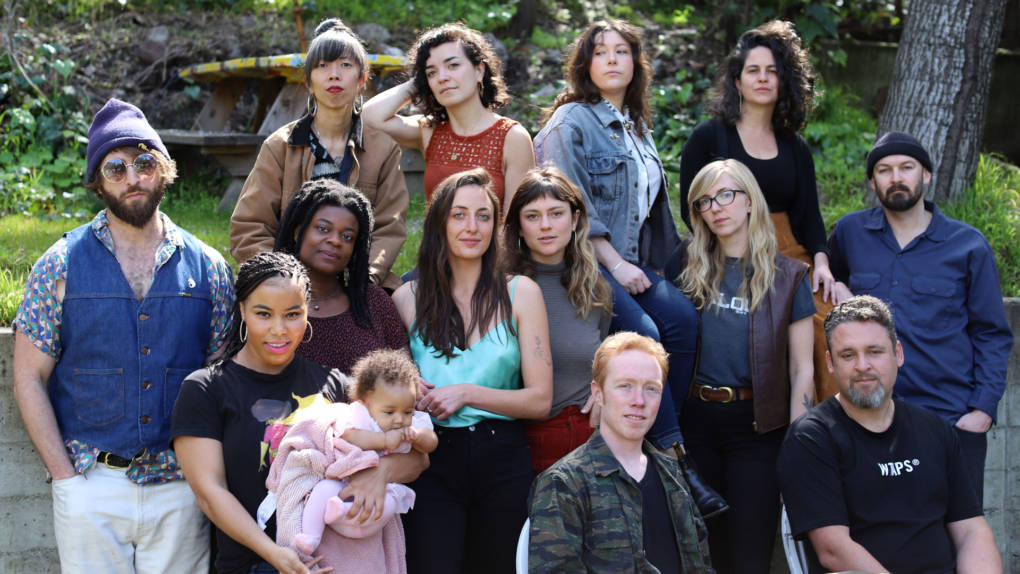
"caption": "Songwriter showcase Run With the Moon anchors the record label Long Road Society and a country-folk scene in Oakland. ",
"description": "Songwriter showcase Run With the Moon anchors the record label Long Road Society and a country-folk scene in Oakland. ",
"title": "Songwriter showcase Run With the Moon anchors the record label Long Road Society and a country-folk scene in Oakland.",
"credit": "Sam Lefebvre/KQED",
"status": "inherit",
"isLoading": false,
"fetchFailed": false
},
"arts_13853183": {
"type": "attachments",
"id": "arts_13853183",
"meta": {
"index": "attachments_1716263798",
"site": "arts",
"id": "13853183",
"found": true
},
"parent": 13853182,
"imgSizes": {
"twentyfourteen-full-width": {
"file": "https://ww2.kqed.org/app/uploads/sites/2/2019/03/gettyimages-74259813-7d977a916136a2a61554129b4eca4438685c8d45-1038x576.jpg",
"width": 1038,
"mimeType": "image/jpeg",
"height": 576
},
"thumbnail": {
"file": "https://ww2.kqed.org/app/uploads/sites/2/2019/03/gettyimages-74259813-7d977a916136a2a61554129b4eca4438685c8d45-160x120.jpg",
"width": 160,
"mimeType": "image/jpeg",
"height": 120
},
"post-thumbnail": {
"file": "https://ww2.kqed.org/app/uploads/sites/2/2019/03/gettyimages-74259813-7d977a916136a2a61554129b4eca4438685c8d45-672x372.jpg",
"width": 672,
"mimeType": "image/jpeg",
"height": 372
},
"kqedFullSize": {
"file": "https://ww2.kqed.org/app/uploads/sites/2/2019/03/gettyimages-74259813-7d977a916136a2a61554129b4eca4438685c8d45-e1552933302686.jpg",
"width": 1920,
"height": 1440
},
"large": {
"file": "https://ww2.kqed.org/app/uploads/sites/2/2019/03/gettyimages-74259813-7d977a916136a2a61554129b4eca4438685c8d45-1020x765.jpg",
"width": 1020,
"mimeType": "image/jpeg",
"height": 765
},
"complete_open_graph": {
"file": "https://ww2.kqed.org/app/uploads/sites/2/2019/03/gettyimages-74259813-7d977a916136a2a61554129b4eca4438685c8d45-1200x900.jpg",
"width": 1200,
"mimeType": "image/jpeg",
"height": 900
},
"guest-author-50": {
"file": "https://ww2.kqed.org/app/uploads/sites/2/2019/03/gettyimages-74259813-7d977a916136a2a61554129b4eca4438685c8d45-50x50.jpg",
"width": 50,
"mimeType": "image/jpeg",
"height": 50
},
"guest-author-96": {
"file": "https://ww2.kqed.org/app/uploads/sites/2/2019/03/gettyimages-74259813-7d977a916136a2a61554129b4eca4438685c8d45-96x96.jpg",
"width": 96,
"mimeType": "image/jpeg",
"height": 96
},
"medium": {
"file": "https://ww2.kqed.org/app/uploads/sites/2/2019/03/gettyimages-74259813-7d977a916136a2a61554129b4eca4438685c8d45-800x600.jpg",
"width": 800,
"mimeType": "image/jpeg",
"height": 600
},
"guest-author-64": {
"file": "https://ww2.kqed.org/app/uploads/sites/2/2019/03/gettyimages-74259813-7d977a916136a2a61554129b4eca4438685c8d45-64x64.jpg",
"width": 64,
"mimeType": "image/jpeg",
"height": 64
},
"guest-author-32": {
"file": "https://ww2.kqed.org/app/uploads/sites/2/2019/03/gettyimages-74259813-7d977a916136a2a61554129b4eca4438685c8d45-32x32.jpg",
"width": 32,
"mimeType": "image/jpeg",
"height": 32
},
"full-width": {
"file": "https://ww2.kqed.org/app/uploads/sites/2/2019/03/gettyimages-74259813-7d977a916136a2a61554129b4eca4438685c8d45-1920x1440.jpg",
"width": 1920,
"mimeType": "image/jpeg",
"height": 1440
},
"medium_large": {
"file": "https://ww2.kqed.org/app/uploads/sites/2/2019/03/gettyimages-74259813-7d977a916136a2a61554129b4eca4438685c8d45-768x576.jpg",
"width": 768,
"mimeType": "image/jpeg",
"height": 576
},
"guest-author-128": {
"file": "https://ww2.kqed.org/app/uploads/sites/2/2019/03/gettyimages-74259813-7d977a916136a2a61554129b4eca4438685c8d45-128x128.jpg",
"width": 128,
"mimeType": "image/jpeg",
"height": 128
}
},
"publishDate": 1552933219,
"modified": 1552933295,
"caption": "A photo of surf guitarist Dick Dale (with guitar) and his band, the Del-Tones.",
"description": "A photo of surf guitarist Dick Dale (with guitar) and his band, the Del-Tones.",
"title": "A photo of surf guitarist Dick Dale (with guitar) and his band, the Del-Tones.",
"credit": "Michael Ochs Archives/Getty Images",
"status": "inherit",
"isLoading": false,
"fetchFailed": false
},
"arts_13814632": {
"type": "attachments",
"id": "arts_13814632",
"meta": {
"index": "attachments_1716263798",
"site": "arts",
"id": "13814632",
"found": true
},
"parent": 13814628,
"imgSizes": {
"small": {
"file": "https://ww2.kqed.org/app/uploads/sites/2/2017/11/MG_1082-1-520x293.jpg",
"width": 520,
"mimeType": "image/jpeg",
"height": 293
},
"twentyfourteen-full-width": {
"file": "https://ww2.kqed.org/app/uploads/sites/2/2017/11/MG_1082-1-1038x576.jpg",
"width": 1038,
"mimeType": "image/jpeg",
"height": 576
},
"thumbnail": {
"file": "https://ww2.kqed.org/app/uploads/sites/2/2017/11/MG_1082-1-160x90.jpg",
"width": 160,
"mimeType": "image/jpeg",
"height": 90
},
"fd-sm": {
"file": "https://ww2.kqed.org/app/uploads/sites/2/2017/11/MG_1082-1-960x540.jpg",
"width": 960,
"mimeType": "image/jpeg",
"height": 540
},
"post-thumbnail": {
"file": "https://ww2.kqed.org/app/uploads/sites/2/2017/11/MG_1082-1-672x372.jpg",
"width": 672,
"mimeType": "image/jpeg",
"height": 372
},
"xsmall": {
"file": "https://ww2.kqed.org/app/uploads/sites/2/2017/11/MG_1082-1-375x211.jpg",
"width": 375,
"mimeType": "image/jpeg",
"height": 211
},
"kqedFullSize": {
"file": "https://ww2.kqed.org/app/uploads/sites/2/2017/11/MG_1082-1.jpg",
"width": 1920,
"height": 1080
},
"large": {
"file": "https://ww2.kqed.org/app/uploads/sites/2/2017/11/MG_1082-1-1020x574.jpg",
"width": 1020,
"mimeType": "image/jpeg",
"height": 574
},
"xlarge": {
"file": "https://ww2.kqed.org/app/uploads/sites/2/2017/11/MG_1082-1-1180x664.jpg",
"width": 1180,
"mimeType": "image/jpeg",
"height": 664
},
"guest-author-50": {
"file": "https://ww2.kqed.org/app/uploads/sites/2/2017/11/MG_1082-1-50x50.jpg",
"width": 50,
"mimeType": "image/jpeg",
"height": 50
},
"guest-author-96": {
"file": "https://ww2.kqed.org/app/uploads/sites/2/2017/11/MG_1082-1-96x96.jpg",
"width": 96,
"mimeType": "image/jpeg",
"height": 96
},
"medium": {
"file": "https://ww2.kqed.org/app/uploads/sites/2/2017/11/MG_1082-1-800x450.jpg",
"width": 800,
"mimeType": "image/jpeg",
"height": 450
},
"guest-author-64": {
"file": "https://ww2.kqed.org/app/uploads/sites/2/2017/11/MG_1082-1-64x64.jpg",
"width": 64,
"mimeType": "image/jpeg",
"height": 64
},
"guest-author-32": {
"file": "https://ww2.kqed.org/app/uploads/sites/2/2017/11/MG_1082-1-32x32.jpg",
"width": 32,
"mimeType": "image/jpeg",
"height": 32
},
"fd-lrg": {
"file": "https://ww2.kqed.org/app/uploads/sites/2/2017/11/MG_1082-1-1920x1080.jpg",
"width": 1920,
"mimeType": "image/jpeg",
"height": 1080
},
"fd-med": {
"file": "https://ww2.kqed.org/app/uploads/sites/2/2017/11/MG_1082-1-1180x664.jpg",
"width": 1180,
"mimeType": "image/jpeg",
"height": 664
},
"full-width": {
"file": "https://ww2.kqed.org/app/uploads/sites/2/2017/11/MG_1082-1-1920x1080.jpg",
"width": 1920,
"mimeType": "image/jpeg",
"height": 1080
},
"detail": {
"file": "https://ww2.kqed.org/app/uploads/sites/2/2017/11/MG_1082-1-150x150.jpg",
"width": 150,
"mimeType": "image/jpeg",
"height": 150
},
"medium_large": {
"file": "https://ww2.kqed.org/app/uploads/sites/2/2017/11/MG_1082-1-768x432.jpg",
"width": 768,
"mimeType": "image/jpeg",
"height": 432
},
"guest-author-128": {
"file": "https://ww2.kqed.org/app/uploads/sites/2/2017/11/MG_1082-1-128x128.jpg",
"width": 128,
"mimeType": "image/jpeg",
"height": 128
},
"xxsmall": {
"file": "https://ww2.kqed.org/app/uploads/sites/2/2017/11/MG_1082-1-240x135.jpg",
"width": 240,
"mimeType": "image/jpeg",
"height": 135
}
},
"publishDate": 1510342252,
"modified": 1510342286,
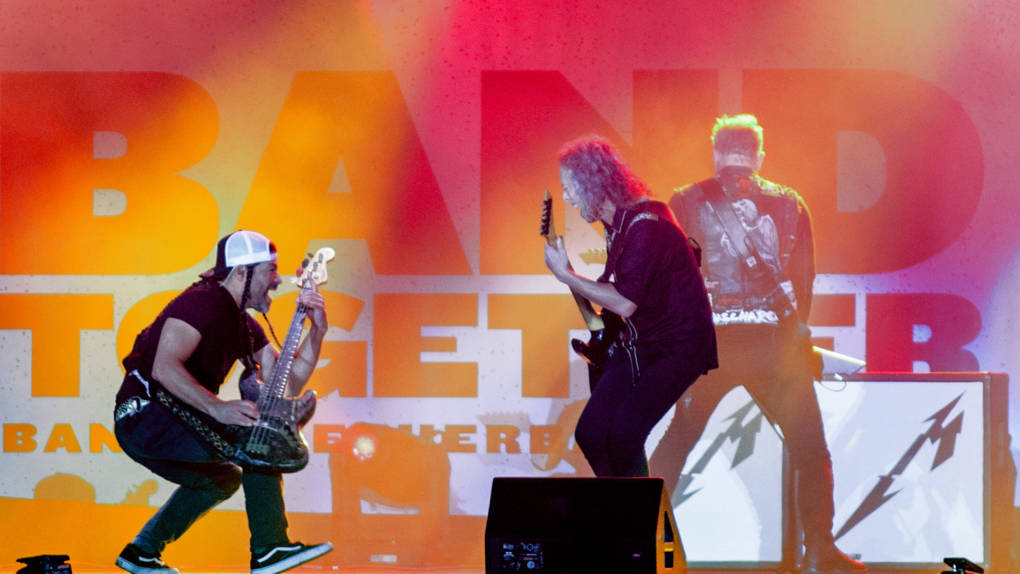
"caption": "Metallica headlines Band Together Bay Area, a benefit concert for North Bay Fire relief at AT&T Park on Thursday, November 9.",
"description": "Metallica headlines Band Together Bay Area, a benefit concert for North Bay Fire relief at AT&T Park on Thursday, November 9.",
"title": "MG_1082",
"credit": "Estefany Gonzalez",
"status": "inherit",
"isLoading": false,
"fetchFailed": false
},
"arts_13853165": {
"type": "attachments",
"id": "arts_13853165",
"meta": {
"index": "attachments_1716263798",
"site": "arts",
"id": "13853165",
"found": true
},
"parent": 13853150,
"imgSizes": {
"twentyfourteen-full-width": {
"file": "https://ww2.kqed.org/app/uploads/sites/2/2019/03/Myspacelogo-1038x576.jpg",
"width": 1038,
"mimeType": "image/jpeg",
"height": 576
},
"thumbnail": {
"file": "https://ww2.kqed.org/app/uploads/sites/2/2019/03/Myspacelogo-160x90.jpg",
"width": 160,
"mimeType": "image/jpeg",
"height": 90
},
"post-thumbnail": {
"file": "https://ww2.kqed.org/app/uploads/sites/2/2019/03/Myspacelogo-672x372.jpg",
"width": 672,
"mimeType": "image/jpeg",
"height": 372
},
"kqedFullSize": {
"file": "https://ww2.kqed.org/app/uploads/sites/2/2019/03/Myspacelogo.jpg",
"width": 1460,
"height": 821
},
"large": {
"file": "https://ww2.kqed.org/app/uploads/sites/2/2019/03/Myspacelogo-1020x574.jpg",
"width": 1020,
"mimeType": "image/jpeg",
"height": 574
},
"complete_open_graph": {
"file": "https://ww2.kqed.org/app/uploads/sites/2/2019/03/Myspacelogo-1200x675.jpg",
"width": 1200,
"mimeType": "image/jpeg",
"height": 675
},
"guest-author-50": {
"file": "https://ww2.kqed.org/app/uploads/sites/2/2019/03/Myspacelogo-50x50.jpg",
"width": 50,
"mimeType": "image/jpeg",
"height": 50
},
"guest-author-96": {
"file": "https://ww2.kqed.org/app/uploads/sites/2/2019/03/Myspacelogo-96x96.jpg",
"width": 96,
"mimeType": "image/jpeg",
"height": 96
},
"medium": {
"file": "https://ww2.kqed.org/app/uploads/sites/2/2019/03/Myspacelogo-800x450.jpg",
"width": 800,
"mimeType": "image/jpeg",
"height": 450
},
"guest-author-64": {
"file": "https://ww2.kqed.org/app/uploads/sites/2/2019/03/Myspacelogo-64x64.jpg",
"width": 64,
"mimeType": "image/jpeg",
"height": 64
},
"guest-author-32": {
"file": "https://ww2.kqed.org/app/uploads/sites/2/2019/03/Myspacelogo-32x32.jpg",
"width": 32,
"mimeType": "image/jpeg",
"height": 32
},
"medium_large": {
"file": "https://ww2.kqed.org/app/uploads/sites/2/2019/03/Myspacelogo-768x432.jpg",
"width": 768,
"mimeType": "image/jpeg",
"height": 432
},
"guest-author-128": {
"file": "https://ww2.kqed.org/app/uploads/sites/2/2019/03/Myspacelogo-128x128.jpg",
"width": 128,
"mimeType": "image/jpeg",
"height": 128
}
},
"publishDate": 1552931407,
"modified": 1552931494,
"caption": "MySpace reportedly admitted that it lost almost a decade's worth of music uploaded to the site.",
"description": "MySpace reportedly admitted that it lost almost a decade's worth of music uploaded to the site.",
"title": "Myspace music lost",
"credit": "MySpace",
"status": "inherit",
"isLoading": false,
"fetchFailed": false
},
"arts_13852997": {
"type": "attachments",
"id": "arts_13852997",
"meta": {
"index": "attachments_1716263798",
"site": "arts",
"id": "13852997",
"found": true
},
"parent": 13852820,
"imgSizes": {
"twentyfourteen-full-width": {
"file": "https://ww2.kqed.org/app/uploads/sites/2/2019/03/npr-tiny-desk-fantastic-negrito-1038x576.jpg",
"width": 1038,
"mimeType": "image/jpeg",
"height": 576
},
"thumbnail": {
"file": "https://ww2.kqed.org/app/uploads/sites/2/2019/03/npr-tiny-desk-fantastic-negrito-160x90.jpg",
"width": 160,
"mimeType": "image/jpeg",
"height": 90
},
"post-thumbnail": {
"file": "https://ww2.kqed.org/app/uploads/sites/2/2019/03/npr-tiny-desk-fantastic-negrito-672x372.jpg",
"width": 672,
"mimeType": "image/jpeg",
"height": 372
},
"kqedFullSize": {
"file": "https://ww2.kqed.org/app/uploads/sites/2/2019/03/npr-tiny-desk-fantastic-negrito.jpg",
"width": 1280,
"height": 720
},
"large": {
"file": "https://ww2.kqed.org/app/uploads/sites/2/2019/03/npr-tiny-desk-fantastic-negrito-1020x574.jpg",
"width": 1020,
"mimeType": "image/jpeg",
"height": 574
},
"complete_open_graph": {
"file": "https://ww2.kqed.org/app/uploads/sites/2/2019/03/npr-tiny-desk-fantastic-negrito-1200x675.jpg",
"width": 1200,
"mimeType": "image/jpeg",
"height": 675
},
"guest-author-50": {
"file": "https://ww2.kqed.org/app/uploads/sites/2/2019/03/npr-tiny-desk-fantastic-negrito-50x50.jpg",
"width": 50,
"mimeType": "image/jpeg",
"height": 50
},
"guest-author-96": {
"file": "https://ww2.kqed.org/app/uploads/sites/2/2019/03/npr-tiny-desk-fantastic-negrito-96x96.jpg",
"width": 96,
"mimeType": "image/jpeg",
"height": 96
},
"medium": {
"file": "https://ww2.kqed.org/app/uploads/sites/2/2019/03/npr-tiny-desk-fantastic-negrito-800x450.jpg",
"width": 800,
"mimeType": "image/jpeg",
"height": 450
},
"guest-author-64": {
"file": "https://ww2.kqed.org/app/uploads/sites/2/2019/03/npr-tiny-desk-fantastic-negrito-64x64.jpg",
"width": 64,
"mimeType": "image/jpeg",
"height": 64
},
"guest-author-32": {
"file": "https://ww2.kqed.org/app/uploads/sites/2/2019/03/npr-tiny-desk-fantastic-negrito-32x32.jpg",
"width": 32,
"mimeType": "image/jpeg",
"height": 32
},
"medium_large": {
"file": "https://ww2.kqed.org/app/uploads/sites/2/2019/03/npr-tiny-desk-fantastic-negrito-768x432.jpg",
"width": 768,
"mimeType": "image/jpeg",
"height": 432
},
"guest-author-128": {
"file": "https://ww2.kqed.org/app/uploads/sites/2/2019/03/npr-tiny-desk-fantastic-negrito-128x128.jpg",
"width": 128,
"mimeType": "image/jpeg",
"height": 128
}
},
"publishDate": 1552613220,
"modified": 1552613352,
"caption": "Fantastic Negrito performs at NPR's Tiny Desk Concert.",
"description": "Fantastic Negrito performs at NPR's Tiny Desk Concert.",
"title": "npr tiny desk fantastic negrito",
"credit": "NPR/YouTube",
"status": "inherit",
"isLoading": false,
"fetchFailed": false
},
"arts_13852742": {
"type": "attachments",
"id": "arts_13852742",
"meta": {
"index": "attachments_1716263798",
"site": "arts",
"id": "13852742",
"found": true
},
"parent": 0,
"imgSizes": {
"twentyfourteen-full-width": {
"file": "https://ww2.kqed.org/app/uploads/sites/2/2019/03/9200MHSQ8-1038x576.jpg",
"width": 1038,
"mimeType": "image/jpeg",
"height": 576
},
"thumbnail": {
"file": "https://ww2.kqed.org/app/uploads/sites/2/2019/03/9200MHSQ8-160x108.jpg",
"width": 160,
"mimeType": "image/jpeg",
"height": 108
},
"post-thumbnail": {
"file": "https://ww2.kqed.org/app/uploads/sites/2/2019/03/9200MHSQ8-672x372.jpg",
"width": 672,
"mimeType": "image/jpeg",
"height": 372
},
"kqedFullSize": {
"file": "https://ww2.kqed.org/app/uploads/sites/2/2019/03/9200MHSQ8.jpg",
"width": 1920,
"height": 1300
},
"large": {
"file": "https://ww2.kqed.org/app/uploads/sites/2/2019/03/9200MHSQ8-1020x691.jpg",
"width": 1020,
"mimeType": "image/jpeg",
"height": 691
},
"complete_open_graph": {
"file": "https://ww2.kqed.org/app/uploads/sites/2/2019/03/9200MHSQ8-1200x813.jpg",
"width": 1200,
"mimeType": "image/jpeg",
"height": 813
},
"guest-author-50": {
"file": "https://ww2.kqed.org/app/uploads/sites/2/2019/03/9200MHSQ8-50x50.jpg",
"width": 50,
"mimeType": "image/jpeg",
"height": 50
},
"guest-author-96": {
"file": "https://ww2.kqed.org/app/uploads/sites/2/2019/03/9200MHSQ8-96x96.jpg",
"width": 96,
"mimeType": "image/jpeg",
"height": 96
},
"medium": {
"file": "https://ww2.kqed.org/app/uploads/sites/2/2019/03/9200MHSQ8-800x542.jpg",
"width": 800,
"mimeType": "image/jpeg",
"height": 542
},
"guest-author-64": {
"file": "https://ww2.kqed.org/app/uploads/sites/2/2019/03/9200MHSQ8-64x64.jpg",
"width": 64,
"mimeType": "image/jpeg",
"height": 64
},
"guest-author-32": {
"file": "https://ww2.kqed.org/app/uploads/sites/2/2019/03/9200MHSQ8-32x32.jpg",
"width": 32,
"mimeType": "image/jpeg",
"height": 32
},
"full-width": {
"file": "https://ww2.kqed.org/app/uploads/sites/2/2019/03/9200MHSQ8-1920x1300.jpg",
"width": 1920,
"mimeType": "image/jpeg",
"height": 1300
},
"medium_large": {
"file": "https://ww2.kqed.org/app/uploads/sites/2/2019/03/9200MHSQ8-768x520.jpg",
"width": 768,
"mimeType": "image/jpeg",
"height": 520
},
"guest-author-128": {
"file": "https://ww2.kqed.org/app/uploads/sites/2/2019/03/9200MHSQ8-128x128.jpg",
"width": 128,
"mimeType": "image/jpeg",
"height": 128
}
},
"publishDate": 1552377026,
"modified": 1552850397,
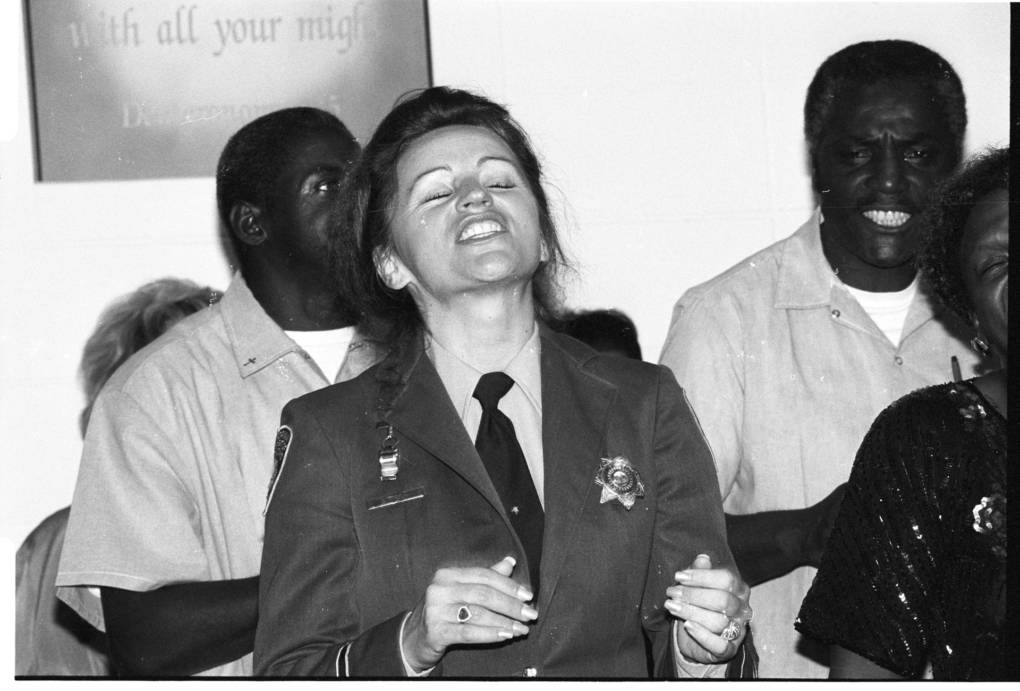
"caption": "Inmates and correctional officers sang side-by-side at a 1992 concert inside San Quentin State Prison, organized by the Grateful Dead.",
"description": "Inmates and correctional officers sang side-by-side at a 1992 concert inside San Quentin State Prison, organized by the Grateful Dead.",
"title": "San Quentin Gospel Grateful Dead",
"credit": "Susana Millman",
"status": "inherit",
"isLoading": false,
"fetchFailed": false
},
"arts_13852886": {
"type": "attachments",
"id": "arts_13852886",
"meta": {
"index": "attachments_1716263798",
"site": "arts",
"id": "13852886",
"found": true
},
"parent": 13852873,
"imgSizes": {
"thumbnail": {
"file": "https://ww2.kqed.org/app/uploads/sites/2/2019/03/ruby-ray-sid-vicious-160x109.jpg",
"width": 160,
"mimeType": "image/jpeg",
"height": 109
},
"post-thumbnail": {
"file": "https://ww2.kqed.org/app/uploads/sites/2/2019/03/ruby-ray-sid-vicious-642x372.jpg",
"width": 642,
"mimeType": "image/jpeg",
"height": 372
},
"kqedFullSize": {
"file": "https://ww2.kqed.org/app/uploads/sites/2/2019/03/ruby-ray-sid-vicious.jpg",
"width": 642,
"height": 439
},
"guest-author-50": {
"file": "https://ww2.kqed.org/app/uploads/sites/2/2019/03/ruby-ray-sid-vicious-50x50.jpg",
"width": 50,
"mimeType": "image/jpeg",
"height": 50
},
"guest-author-96": {
"file": "https://ww2.kqed.org/app/uploads/sites/2/2019/03/ruby-ray-sid-vicious-96x96.jpg",
"width": 96,
"mimeType": "image/jpeg",
"height": 96
},
"guest-author-64": {
"file": "https://ww2.kqed.org/app/uploads/sites/2/2019/03/ruby-ray-sid-vicious-64x64.jpg",
"width": 64,
"mimeType": "image/jpeg",
"height": 64
},
"guest-author-32": {
"file": "https://ww2.kqed.org/app/uploads/sites/2/2019/03/ruby-ray-sid-vicious-32x32.jpg",
"width": 32,
"mimeType": "image/jpeg",
"height": 32
},
"guest-author-128": {
"file": "https://ww2.kqed.org/app/uploads/sites/2/2019/03/ruby-ray-sid-vicious-128x128.jpg",
"width": 128,
"mimeType": "image/jpeg",
"height": 128
}
},
"publishDate": 1552509790,
"modified": 1552509804,
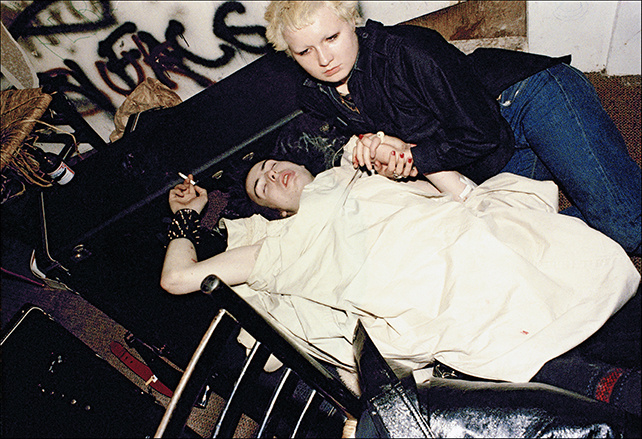
"caption": "Ruby Ray photographed Sex Pistols bassist Sid Vicious backstage at the Mabuhay Gardens.",
"description": "Ruby Ray photographed Sex Pistols bassist Sid Vicious backstage at the Mabuhay Gardens.",
"title": "Ruby Ray photographed Sex Pistols bassist Sid Vicious backstage at the Mabuhay Gardens.",
"credit": "Ruby Ray",
"status": "inherit",
"isLoading": false,
"fetchFailed": false
},
"arts_13852926": {
"type": "attachments",
"id": "arts_13852926",
"meta": {
"index": "attachments_1716263798",
"site": "arts",
"id": "13852926",
"found": true
},
"parent": 13852882,
"imgSizes": {
"twentyfourteen-full-width": {
"file": "https://ww2.kqed.org/app/uploads/sites/2/2019/03/today-at-apple-5-1038x576.jpeg",
"width": 1038,
"mimeType": "image/jpeg",
"height": 576
},
"thumbnail": {
"file": "https://ww2.kqed.org/app/uploads/sites/2/2019/03/today-at-apple-5-160x90.jpeg",
"width": 160,
"mimeType": "image/jpeg",
"height": 90
},
"post-thumbnail": {
"file": "https://ww2.kqed.org/app/uploads/sites/2/2019/03/today-at-apple-5-672x372.jpeg",
"width": 672,
"mimeType": "image/jpeg",
"height": 372
},
"kqedFullSize": {
"file": "https://ww2.kqed.org/app/uploads/sites/2/2019/03/today-at-apple-5.jpeg",
"width": 1920,
"height": 1080
},
"large": {
"file": "https://ww2.kqed.org/app/uploads/sites/2/2019/03/today-at-apple-5-1020x574.jpeg",
"width": 1020,
"mimeType": "image/jpeg",
"height": 574
},
"complete_open_graph": {
"file": "https://ww2.kqed.org/app/uploads/sites/2/2019/03/today-at-apple-5-1200x675.jpeg",
"width": 1200,
"mimeType": "image/jpeg",
"height": 675
},
"guest-author-50": {
"file": "https://ww2.kqed.org/app/uploads/sites/2/2019/03/today-at-apple-5-50x50.jpeg",
"width": 50,
"mimeType": "image/jpeg",
"height": 50
},
"guest-author-96": {
"file": "https://ww2.kqed.org/app/uploads/sites/2/2019/03/today-at-apple-5-96x96.jpeg",
"width": 96,
"mimeType": "image/jpeg",
"height": 96
},
"medium": {
"file": "https://ww2.kqed.org/app/uploads/sites/2/2019/03/today-at-apple-5-800x450.jpeg",
"width": 800,
"mimeType": "image/jpeg",
"height": 450
},
"guest-author-64": {
"file": "https://ww2.kqed.org/app/uploads/sites/2/2019/03/today-at-apple-5-64x64.jpeg",
"width": 64,
"mimeType": "image/jpeg",
"height": 64
},
"guest-author-32": {
"file": "https://ww2.kqed.org/app/uploads/sites/2/2019/03/today-at-apple-5-32x32.jpeg",
"width": 32,
"mimeType": "image/jpeg",
"height": 32
},
"full-width": {
"file": "https://ww2.kqed.org/app/uploads/sites/2/2019/03/today-at-apple-5-1920x1080.jpeg",
"width": 1920,
"mimeType": "image/jpeg",
"height": 1080
},
"medium_large": {
"file": "https://ww2.kqed.org/app/uploads/sites/2/2019/03/today-at-apple-5-768x432.jpeg",
"width": 768,
"mimeType": "image/jpeg",
"height": 432
},
"guest-author-128": {
"file": "https://ww2.kqed.org/app/uploads/sites/2/2019/03/today-at-apple-5-128x128.jpeg",
"width": 128,
"mimeType": "image/jpeg",
"height": 128
}
},
"publishDate": 1552526516,
"modified": 1552526585,
"caption": "Creative collective Le Vanguard performed and did a panel discussion at the Apple store in Union Square in August 2018.",
"description": "Creative collective Le Vanguard performed and did a panel discussion at the Apple store in Union Square in August 2018.",
"title": "today at apple 5",
"credit": "Kristian Contreras/YK La Familia",
"status": "inherit",
"isLoading": false,
"fetchFailed": false
},
"arts_13852783": {
"type": "attachments",
"id": "arts_13852783",
"meta": {
"index": "attachments_1716263798",
"site": "arts",
"id": "13852783",
"found": true
},
"parent": 13852770,
"imgSizes": {
"twentyfourteen-full-width": {
"file": "https://ww2.kqed.org/app/uploads/sites/2/2019/03/MTT-1920-c-Brandon-Patoc-1038x576.jpg",
"width": 1038,
"mimeType": "image/jpeg",
"height": 576
},
"thumbnail": {
"file": "https://ww2.kqed.org/app/uploads/sites/2/2019/03/MTT-1920-c-Brandon-Patoc-160x90.jpg",
"width": 160,
"mimeType": "image/jpeg",
"height": 90
},
"post-thumbnail": {
"file": "https://ww2.kqed.org/app/uploads/sites/2/2019/03/MTT-1920-c-Brandon-Patoc-672x372.jpg",
"width": 672,
"mimeType": "image/jpeg",
"height": 372
},
"kqedFullSize": {
"file": "https://ww2.kqed.org/app/uploads/sites/2/2019/03/MTT-1920-c-Brandon-Patoc.jpg",
"width": 1920,
"height": 1080
},
"large": {
"file": "https://ww2.kqed.org/app/uploads/sites/2/2019/03/MTT-1920-c-Brandon-Patoc-1020x574.jpg",
"width": 1020,
"mimeType": "image/jpeg",
"height": 574
},
"complete_open_graph": {
"file": "https://ww2.kqed.org/app/uploads/sites/2/2019/03/MTT-1920-c-Brandon-Patoc-1200x675.jpg",
"width": 1200,
"mimeType": "image/jpeg",
"height": 675
},
"guest-author-50": {
"file": "https://ww2.kqed.org/app/uploads/sites/2/2019/03/MTT-1920-c-Brandon-Patoc-50x50.jpg",
"width": 50,
"mimeType": "image/jpeg",
"height": 50
},
"guest-author-96": {
"file": "https://ww2.kqed.org/app/uploads/sites/2/2019/03/MTT-1920-c-Brandon-Patoc-96x96.jpg",
"width": 96,
"mimeType": "image/jpeg",
"height": 96
},
"medium": {
"file": "https://ww2.kqed.org/app/uploads/sites/2/2019/03/MTT-1920-c-Brandon-Patoc-800x450.jpg",
"width": 800,
"mimeType": "image/jpeg",
"height": 450
},
"guest-author-64": {
"file": "https://ww2.kqed.org/app/uploads/sites/2/2019/03/MTT-1920-c-Brandon-Patoc-64x64.jpg",
"width": 64,
"mimeType": "image/jpeg",
"height": 64
},
"guest-author-32": {
"file": "https://ww2.kqed.org/app/uploads/sites/2/2019/03/MTT-1920-c-Brandon-Patoc-32x32.jpg",
"width": 32,
"mimeType": "image/jpeg",
"height": 32
},
"full-width": {
"file": "https://ww2.kqed.org/app/uploads/sites/2/2019/03/MTT-1920-c-Brandon-Patoc-1920x1080.jpg",
"width": 1920,
"mimeType": "image/jpeg",
"height": 1080
},
"medium_large": {
"file": "https://ww2.kqed.org/app/uploads/sites/2/2019/03/MTT-1920-c-Brandon-Patoc-768x432.jpg",
"width": 768,
"mimeType": "image/jpeg",
"height": 432
},
"guest-author-128": {
"file": "https://ww2.kqed.org/app/uploads/sites/2/2019/03/MTT-1920-c-Brandon-Patoc-128x128.jpg",
"width": 128,
"mimeType": "image/jpeg",
"height": 128
}
},
"publishDate": 1552426422,
"modified": 1552426447,
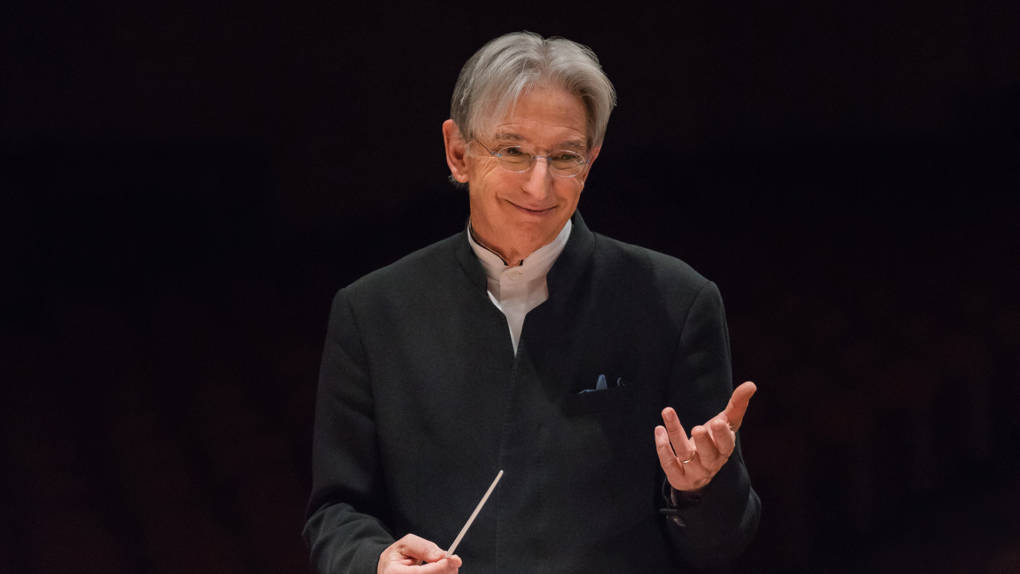
"caption": "Michael Tilson Thomas.",
"description": "Michael Tilson Thomas.",
"title": "MTT & Orchestra Portraits",
"credit": "Brandon Patoc",
"status": "inherit",
"isLoading": false,
"fetchFailed": false
},
"arts_13852680": {
"type": "attachments",
"id": "arts_13852680",
"meta": {
"index": "attachments_1716263798",
"site": "arts",
"id": "13852680",
"found": true
},
"parent": 13852678,
"imgSizes": {
"twentyfourteen-full-width": {
"file": "https://ww2.kqed.org/app/uploads/sites/2/2019/03/Stranded-storefront-1038x576.jpg",
"width": 1038,
"mimeType": "image/jpeg",
"height": 576
},
"thumbnail": {
"file": "https://ww2.kqed.org/app/uploads/sites/2/2019/03/Stranded-storefront-160x90.jpg",
"width": 160,
"mimeType": "image/jpeg",
"height": 90
},
"post-thumbnail": {
"file": "https://ww2.kqed.org/app/uploads/sites/2/2019/03/Stranded-storefront-672x372.jpg",
"width": 672,
"mimeType": "image/jpeg",
"height": 372
},
"kqedFullSize": {
"file": "https://ww2.kqed.org/app/uploads/sites/2/2019/03/Stranded-storefront.jpg",
"width": 1280,
"height": 720
},
"large": {
"file": "https://ww2.kqed.org/app/uploads/sites/2/2019/03/Stranded-storefront-1020x574.jpg",
"width": 1020,
"mimeType": "image/jpeg",
"height": 574
},
"complete_open_graph": {
"file": "https://ww2.kqed.org/app/uploads/sites/2/2019/03/Stranded-storefront-1200x675.jpg",
"width": 1200,
"mimeType": "image/jpeg",
"height": 675
},
"guest-author-50": {
"file": "https://ww2.kqed.org/app/uploads/sites/2/2019/03/Stranded-storefront-50x50.jpg",
"width": 50,
"mimeType": "image/jpeg",
"height": 50
},
"guest-author-96": {
"file": "https://ww2.kqed.org/app/uploads/sites/2/2019/03/Stranded-storefront-96x96.jpg",
"width": 96,
"mimeType": "image/jpeg",
"height": 96
},
"medium": {
"file": "https://ww2.kqed.org/app/uploads/sites/2/2019/03/Stranded-storefront-800x450.jpg",
"width": 800,
"mimeType": "image/jpeg",
"height": 450
},
"guest-author-64": {
"file": "https://ww2.kqed.org/app/uploads/sites/2/2019/03/Stranded-storefront-64x64.jpg",
"width": 64,
"mimeType": "image/jpeg",
"height": 64
},
"guest-author-32": {
"file": "https://ww2.kqed.org/app/uploads/sites/2/2019/03/Stranded-storefront-32x32.jpg",
"width": 32,
"mimeType": "image/jpeg",
"height": 32
},
"medium_large": {
"file": "https://ww2.kqed.org/app/uploads/sites/2/2019/03/Stranded-storefront-768x432.jpg",
"width": 768,
"mimeType": "image/jpeg",
"height": 432
},
"guest-author-128": {
"file": "https://ww2.kqed.org/app/uploads/sites/2/2019/03/Stranded-storefront-128x128.jpg",
"width": 128,
"mimeType": "image/jpeg",
"height": 128
}
},
"publishDate": 1552327770,
"modified": 1552327814,
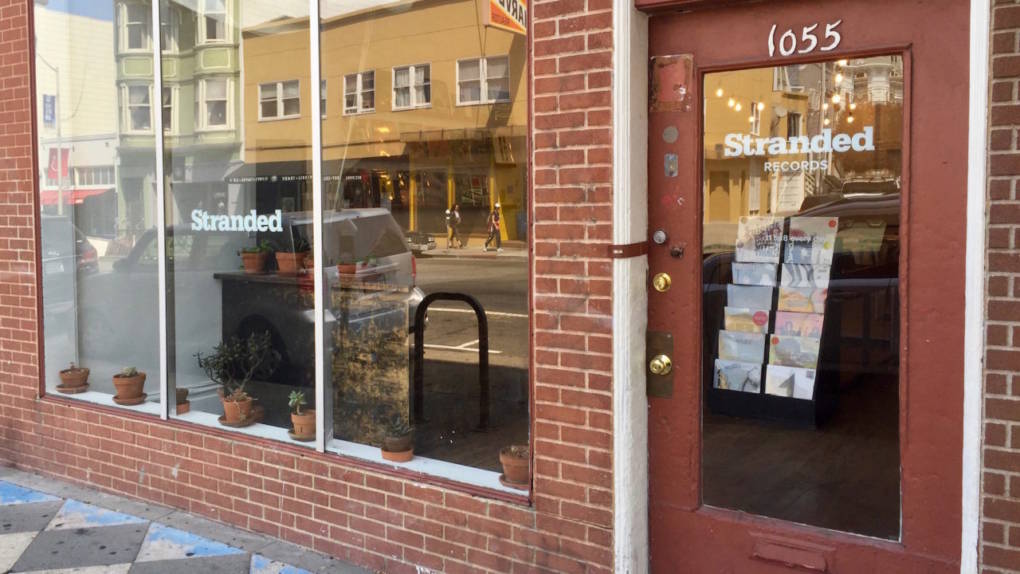
"caption": "Stranded Records expanded from Oakland to San Francisco after acquiring Aquarius Records in 2016. ",
"description": "Stranded Records expanded from Oakland to San Francisco after acquiring Aquarius Records in 2016. ",
"title": "Stranded storefront",
"credit": "Courtesy Stranded",
"status": "inherit",
"isLoading": false,
"fetchFailed": false
},
"news_11732077": {
"type": "attachments",
"id": "news_11732077",
"meta": {
"index": "attachments_1716263798",
"site": "news",
"id": "11732077",
"found": true
},
"parent": 11731961,
"imgSizes": {
"twentyfourteen-full-width": {
"file": "https://ww2.kqed.org/app/uploads/sites/10/2019/03/Jeanie-Patterson-1038x576.jpg",
"width": 1038,
"mimeType": "image/jpeg",
"height": 576
},
"thumbnail": {
"file": "https://ww2.kqed.org/app/uploads/sites/10/2019/03/Jeanie-Patterson-160x107.jpg",
"width": 160,
"mimeType": "image/jpeg",
"height": 107
},
"post-thumbnail": {
"file": "https://ww2.kqed.org/app/uploads/sites/10/2019/03/Jeanie-Patterson-672x372.jpg",
"width": 672,
"mimeType": "image/jpeg",
"height": 372
},
"kqedFullSize": {
"file": "https://ww2.kqed.org/app/uploads/sites/10/2019/03/Jeanie-Patterson.jpg",
"width": 1920,
"height": 1278
},
"large": {
"file": "https://ww2.kqed.org/app/uploads/sites/10/2019/03/Jeanie-Patterson-1020x679.jpg",
"width": 1020,
"mimeType": "image/jpeg",
"height": 679
},
"complete_open_graph": {
"file": "https://ww2.kqed.org/app/uploads/sites/10/2019/03/Jeanie-Patterson-1200x799.jpg",
"width": 1200,
"mimeType": "image/jpeg",
"height": 799
},
"guest-author-50": {
"file": "https://ww2.kqed.org/app/uploads/sites/10/2019/03/Jeanie-Patterson-50x50.jpg",
"width": 50,
"mimeType": "image/jpeg",
"height": 50
},
"guest-author-96": {
"file": "https://ww2.kqed.org/app/uploads/sites/10/2019/03/Jeanie-Patterson-96x96.jpg",
"width": 96,
"mimeType": "image/jpeg",
"height": 96
},
"medium": {
"file": "https://ww2.kqed.org/app/uploads/sites/10/2019/03/Jeanie-Patterson-800x533.jpg",
"width": 800,
"mimeType": "image/jpeg",
"height": 533
},
"guest-author-64": {
"file": "https://ww2.kqed.org/app/uploads/sites/10/2019/03/Jeanie-Patterson-64x64.jpg",
"width": 64,
"mimeType": "image/jpeg",
"height": 64
},
"guest-author-32": {
"file": "https://ww2.kqed.org/app/uploads/sites/10/2019/03/Jeanie-Patterson-32x32.jpg",
"width": 32,
"mimeType": "image/jpeg",
"height": 32
},
"full-width": {
"file": "https://ww2.kqed.org/app/uploads/sites/10/2019/03/Jeanie-Patterson-1920x1278.jpg",
"width": 1920,
"mimeType": "image/jpeg",
"height": 1278
},
"guest-author-128": {
"file": "https://ww2.kqed.org/app/uploads/sites/10/2019/03/Jeanie-Patterson-128x128.jpg",
"width": 128,
"mimeType": "image/jpeg",
"height": 128
}
},
"publishDate": 1552262353,
"modified": 1552262379,
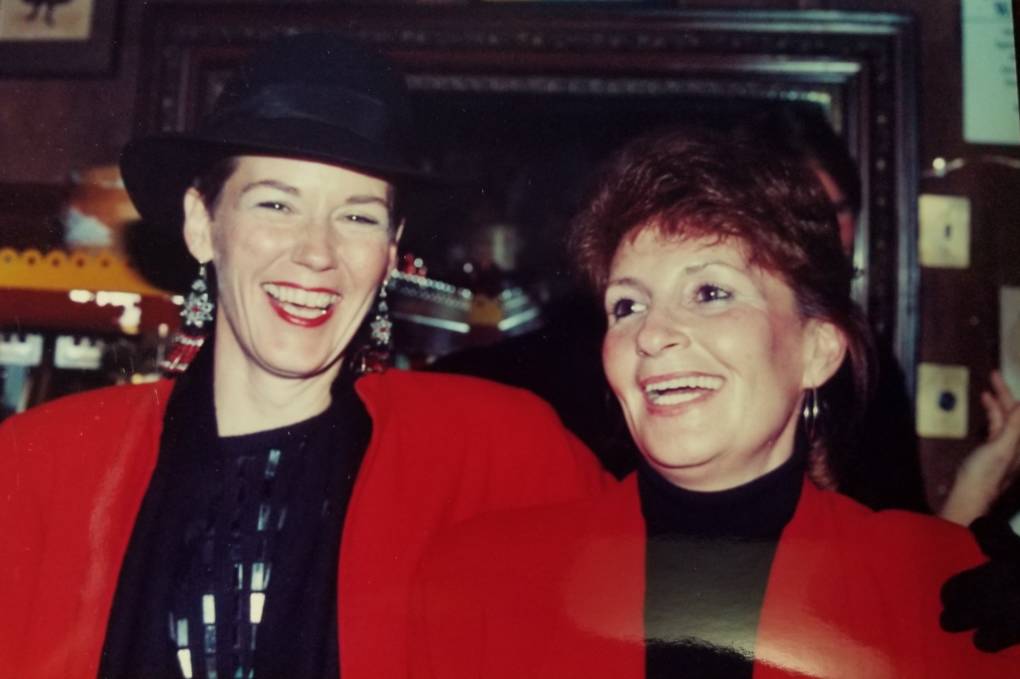
"caption": "Jeanie Patterson (R) owned the Sweetwater from 1979 to 1998. She is pictured here at the music club with Maye Cazallero.",
"description": "Jeanie Patterson (R) owned the Sweetwater from 1979 to 1998. She is pictured here at the music club with Maye Cazallero.",
"title": "Jeanie Patterson",
"credit": "Courtesy of John Goddard",
"status": "inherit",
"isLoading": false,
"fetchFailed": false
},
"arts_13838586": {
"type": "attachments",
"id": "arts_13838586",
"meta": {
"index": "attachments_1716263798",
"site": "arts",
"id": "13838586",
"found": true
},
"parent": 13838574,
"imgSizes": {
"small": {
"file": "https://ww2.kqed.org/app/uploads/sites/2/2018/08/multivers-1-520x293.jpg",
"width": 520,
"mimeType": "image/jpeg",
"height": 293
},
"twentyfourteen-full-width": {
"file": "https://ww2.kqed.org/app/uploads/sites/2/2018/08/multivers-1-1038x576.jpg",
"width": 1038,
"mimeType": "image/jpeg",
"height": 576
},
"thumbnail": {
"file": "https://ww2.kqed.org/app/uploads/sites/2/2018/08/multivers-1-160x90.jpg",
"width": 160,
"mimeType": "image/jpeg",
"height": 90
},
"fd-sm": {
"file": "https://ww2.kqed.org/app/uploads/sites/2/2018/08/multivers-1-960x540.jpg",
"width": 960,
"mimeType": "image/jpeg",
"height": 540
},
"post-thumbnail": {
"file": "https://ww2.kqed.org/app/uploads/sites/2/2018/08/multivers-1-672x372.jpg",
"width": 672,
"mimeType": "image/jpeg",
"height": 372
},
"xsmall": {
"file": "https://ww2.kqed.org/app/uploads/sites/2/2018/08/multivers-1-375x211.jpg",
"width": 375,
"mimeType": "image/jpeg",
"height": 211
},
"kqedFullSize": {
"file": "https://ww2.kqed.org/app/uploads/sites/2/2018/08/multivers-1.jpg",
"width": 1920,
"height": 1080
},
"large": {
"file": "https://ww2.kqed.org/app/uploads/sites/2/2018/08/multivers-1-1020x574.jpg",
"width": 1020,
"mimeType": "image/jpeg",
"height": 574
},
"xlarge": {
"file": "https://ww2.kqed.org/app/uploads/sites/2/2018/08/multivers-1-1180x664.jpg",
"width": 1180,
"mimeType": "image/jpeg",
"height": 664
},
"complete_open_graph": {
"file": "https://ww2.kqed.org/app/uploads/sites/2/2018/08/multivers-1-1200x675.jpg",
"width": 1200,
"mimeType": "image/jpeg",
"height": 675
},
"guest-author-50": {
"file": "https://ww2.kqed.org/app/uploads/sites/2/2018/08/multivers-1-50x50.jpg",
"width": 50,
"mimeType": "image/jpeg",
"height": 50
},
"guest-author-96": {
"file": "https://ww2.kqed.org/app/uploads/sites/2/2018/08/multivers-1-96x96.jpg",
"width": 96,
"mimeType": "image/jpeg",
"height": 96
},
"medium": {
"file": "https://ww2.kqed.org/app/uploads/sites/2/2018/08/multivers-1-800x450.jpg",
"width": 800,
"mimeType": "image/jpeg",
"height": 450
},
"guest-author-64": {
"file": "https://ww2.kqed.org/app/uploads/sites/2/2018/08/multivers-1-64x64.jpg",
"width": 64,
"mimeType": "image/jpeg",
"height": 64
},
"guest-author-32": {
"file": "https://ww2.kqed.org/app/uploads/sites/2/2018/08/multivers-1-32x32.jpg",
"width": 32,
"mimeType": "image/jpeg",
"height": 32
},
"fd-lrg": {
"file": "https://ww2.kqed.org/app/uploads/sites/2/2018/08/multivers-1-1920x1080.jpg",
"width": 1920,
"mimeType": "image/jpeg",
"height": 1080
},
"fd-med": {
"file": "https://ww2.kqed.org/app/uploads/sites/2/2018/08/multivers-1-1180x664.jpg",
"width": 1180,
"mimeType": "image/jpeg",
"height": 664
},
"full-width": {
"file": "https://ww2.kqed.org/app/uploads/sites/2/2018/08/multivers-1-1920x1080.jpg",
"width": 1920,
"mimeType": "image/jpeg",
"height": 1080
},
"detail": {
"file": "https://ww2.kqed.org/app/uploads/sites/2/2018/08/multivers-1-150x150.jpg",
"width": 150,
"mimeType": "image/jpeg",
"height": 150
},
"medium_large": {
"file": "https://ww2.kqed.org/app/uploads/sites/2/2018/08/multivers-1-768x432.jpg",
"width": 768,
"mimeType": "image/jpeg",
"height": 432
},
"guest-author-128": {
"file": "https://ww2.kqed.org/app/uploads/sites/2/2018/08/multivers-1-128x128.jpg",
"width": 128,
"mimeType": "image/jpeg",
"height": 128
},
"xxsmall": {
"file": "https://ww2.kqed.org/app/uploads/sites/2/2018/08/multivers-1-240x135.jpg",
"width": 240,
"mimeType": "image/jpeg",
"height": 135
}
},
"publishDate": 1533852573,
"modified": 1660250267,
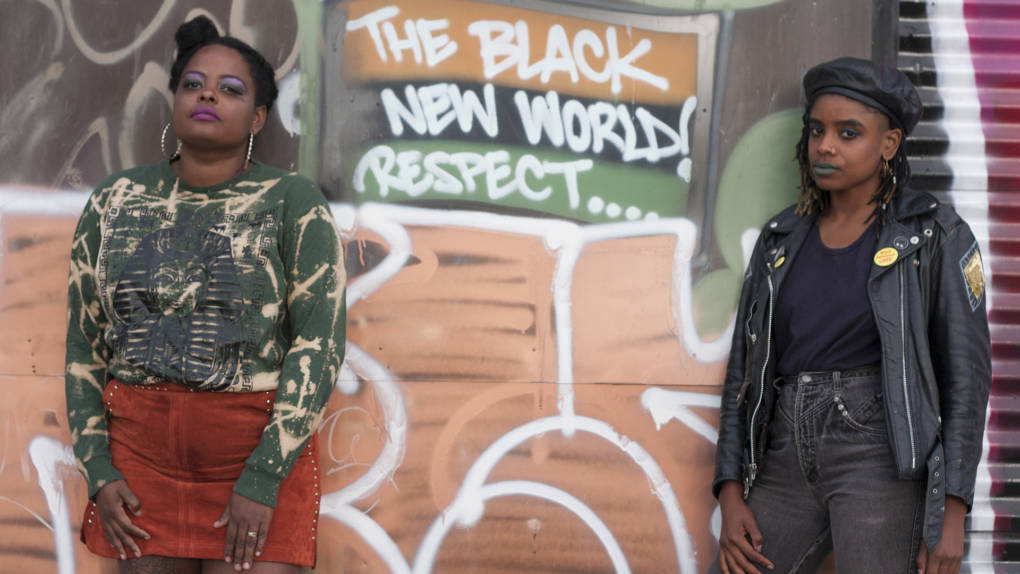
"caption": "Shawna Shante (left) and Jade Ariana Fair, two of the festival's original co-founders envisioned a multi-day punk festival as a way to celebrate black and brown punk and experimental musicians.",
"description": "Shawna Shante Scroggins (left) and Jade Ariana Fair envision The Multivers is Illuminated as a way to celebrate black and brown punk and experimental musicians.",
"title": "multivers",
"credit": "Jeffie Freeman",
"status": "inherit",
"altTag": "Shawna Shante Scroggins (left) and Jade Ariana Fair envision The Multivers is Illuminated as a way to celebrate black and brown punk and experimental musicians.",
"isLoading": false,
"fetchFailed": false
}
},
"audioPlayerReducer": {
"postId": "stream_live",
"isPaused": true,
"isPlaying": false,
"pfsActive": false,
"pledgeModalIsOpen": true,
"playerDrawerIsOpen": false,
"liveAudioPlayStartedAt": 0,
"liveAudioPlayContext": ""
},
"authorsReducer": {
"byline_arts_13853182": {
"type": "authors",
"id": "byline_arts_13853182",
"meta": {
"override": true
},
"slug": "byline_arts_13853182",
"name": "Otis Hart, Anastasia Tsioulcas",
"isLoading": false
},
"byline_arts_13853150": {
"type": "authors",
"id": "byline_arts_13853150",
"meta": {
"override": true
},
"slug": "byline_arts_13853150",
"name": "Shannon Van Sant",
"isLoading": false
},
"gmeline": {
"type": "authors",
"id": "185",
"meta": {
"index": "authors_1716337520",
"id": "185",
"found": true
},
"name": "Gabe Meline",
"firstName": "Gabe",
"lastName": "Meline",
"slug": "gmeline",
"email": "gmeline@kqed.org",
"display_author_email": true,
"staff_mastheads": [
"arts"
],
"title": "Senior Editor, KQED Arts & Culture",
"bio": "Gabe Meline entered journalism at age 15 making photocopied zines, and has since earned awards from the Edward R. Murrow Awards, the Society for Professional Journalists, the Online Journalism Awards, the Association of Alternative Newsweeklies and the California Newspaper Publishers Association. Prior to KQED, he was the editor of the \u003cem>North Bay Bohemian\u003c/em> and a touring musician. He lives with his wife and daughter in his hometown of Santa Rosa, CA.",
"avatar": "https://secure.gravatar.com/avatar/5bebe57be0d8bc2dd318934feb47299e2d2d10cba28d09d8d7afb389a2ce2bdd?s=600&d=blank&r=g",
"twitter": null,
"bluesky": null,
"facebook": null,
"instagram": null,
"linkedin": null,
"sites": [
{
"site": "",
"roles": [
"editor"
]
},
{
"site": "arts",
"roles": [
"administrator"
]
},
{
"site": "artschool",
"roles": [
"editor"
]
},
{
"site": "news",
"roles": [
"author"
]
},
{
"site": "pop",
"roles": [
"editor"
]
},
{
"site": "bayareabites",
"roles": [
"editor"
]
},
{
"site": "food",
"roles": [
"editor"
]
},
{
"site": "forum",
"roles": [
"administrator"
]
},
{
"site": "liveblog",
"roles": [
"editor"
]
},
{
"site": "hiphop",
"roles": [
"editor"
]
}
],
"headData": {
"title": "Gabe Meline | KQED",
"description": "Senior Editor, KQED Arts & Culture",
"ogImgSrc": "https://secure.gravatar.com/avatar/5bebe57be0d8bc2dd318934feb47299e2d2d10cba28d09d8d7afb389a2ce2bdd?s=600&d=blank&r=g",
"twImgSrc": "https://secure.gravatar.com/avatar/5bebe57be0d8bc2dd318934feb47299e2d2d10cba28d09d8d7afb389a2ce2bdd?s=600&d=blank&r=g"
},
"isLoading": false,
"link": "/author/gmeline"
},
"slefebvre": {
"type": "authors",
"id": "11091",
"meta": {
"index": "authors_1716337520",
"id": "11091",
"found": true
},
"name": "Sam Lefebvre",
"firstName": "Sam",
"lastName": "Lefebvre",
"slug": "slefebvre",
"email": "sdlefebvre@gmail.com",
"display_author_email": false,
"staff_mastheads": [],
"title": "KQED Contributor",
"bio": "Sam Lefebvre is an award-winning reporter at KQED Arts. He has worked as an editor and columnist at the \u003cem>East Bay Express\u003c/em>, \u003cem>SF Weekly \u003c/em>and Impose Magazine, and his journalism and criticism has appeared in \u003cem>The New York Times\u003c/em>, the Guardian and Pitchfork.",
"avatar": "https://secure.gravatar.com/avatar/49d39b42930b77fb13784ddd9fa63fe780666b71bf289368509dba576b64e69b?s=600&d=blank&r=g",
"twitter": "Lefebvre_Sam",
"bluesky": null,
"facebook": null,
"instagram": null,
"linkedin": null,
"sites": [
{
"site": "arts",
"roles": [
"subscriber"
]
},
{
"site": "news",
"roles": [
"author"
]
}
],
"headData": {
"title": "Sam Lefebvre | KQED",
"description": "KQED Contributor",
"ogImgSrc": "https://secure.gravatar.com/avatar/49d39b42930b77fb13784ddd9fa63fe780666b71bf289368509dba576b64e69b?s=600&d=blank&r=g",
"twImgSrc": "https://secure.gravatar.com/avatar/49d39b42930b77fb13784ddd9fa63fe780666b71bf289368509dba576b64e69b?s=600&d=blank&r=g"
},
"isLoading": false,
"link": "/author/slefebvre"
},
"shutson": {
"type": "authors",
"id": "11216",
"meta": {
"index": "authors_1716337520",
"id": "11216",
"found": true
},
"name": "Sonja Hutson",
"firstName": "Sonja",
"lastName": "Hutson",
"slug": "shutson",
"email": "shutson@kqed.org",
"display_author_email": false,
"staff_mastheads": [],
"title": "KQED Contributor",
"bio": "Sonja Hutson is a former reporter for KQED's Silicon Valley desk and weekend newscasts. She primarily covers tech and housing. Sonja is a Bay Area native and now lives in San Francisco. When she's not working, you can find her camping, skiing, scuba diving, and struggling with the New York Times Crossword. Email: \u003ca href=\"mailto:shutson@kqed.org\">shutson@kqed.org. \u003c/a>Twitter: \u003ca href=\"https://twitter.com/SonjaHutson\">@SonjaHutson\u003c/a>",
"avatar": "https://secure.gravatar.com/avatar/7537c5e36818614e599b6c0f41d72b7a?s=600&d=blank&r=g",
"twitter": "SonjaHutson",
"facebook": null,
"instagram": null,
"linkedin": null,
"sites": [
{
"site": "arts",
"roles": [
"author"
]
},
{
"site": "news",
"roles": [
"subscriber"
]
}
],
"headData": {
"title": "Sonja Hutson | KQED",
"description": "KQED Contributor",
"ogImgSrc": "https://secure.gravatar.com/avatar/7537c5e36818614e599b6c0f41d72b7a?s=600&d=blank&r=g",
"twImgSrc": "https://secure.gravatar.com/avatar/7537c5e36818614e599b6c0f41d72b7a?s=600&d=blank&r=g"
},
"isLoading": false,
"link": "/author/shutson"
},
"nvoynovskaya": {
"type": "authors",
"id": "11387",
"meta": {
"index": "authors_1716337520",
"id": "11387",
"found": true
},
"name": "Nastia Voynovskaya",
"firstName": "Nastia",
"lastName": "Voynovskaya",
"slug": "nvoynovskaya",
"email": "nvoynovskaya@kqed.org",
"display_author_email": false,
"staff_mastheads": [
"arts"
],
"title": "Editor and reporter",
"bio": "Nastia Voynovskaya is a reporter, editor and host at KQED Arts & Culture. She's been covering the arts in the Bay Area for over a decade, with a focus on music, queer culture, labor issues and grassroots organizing. She has edited KQED story series such as Trans Bay: A History of San Francisco's Gender-Diverse Community, and co-created KQED's Bay Area hip-hop history project, That's My Word. Nastia's work has been recognized by the Society of Professional Journalists and San Francisco Press Club. She regularly appears on podcasts and radio programs, including NPR's All Songs Considered, and hosts live events where music, culture and conversation meet.",
"avatar": "https://secure.gravatar.com/avatar/5025ee460e5a85d69ca20ea6c6f2f80d7e17795c828f61ea3aecfcd924e9042e?s=600&d=blank&r=g",
"twitter": null,
"bluesky": null,
"facebook": null,
"instagram": "https://www.instagram.com/nananastia/",
"linkedin": null,
"sites": [
{
"site": "",
"roles": [
"editor"
]
},
{
"site": "arts",
"roles": [
"administrator"
]
},
{
"site": "news",
"roles": [
"editor"
]
},
{
"site": "pop",
"roles": [
"administrator"
]
},
{
"site": "bayareabites",
"roles": [
"editor"
]
},
{
"site": "podcasts",
"roles": [
"editor"
]
},
{
"site": "hiphop",
"roles": [
"editor"
]
}
],
"headData": {
"title": "Nastia Voynovskaya | KQED",
"description": "Editor and reporter",
"ogImgSrc": "https://secure.gravatar.com/avatar/5025ee460e5a85d69ca20ea6c6f2f80d7e17795c828f61ea3aecfcd924e9042e?s=600&d=blank&r=g",
"twImgSrc": "https://secure.gravatar.com/avatar/5025ee460e5a85d69ca20ea6c6f2f80d7e17795c828f61ea3aecfcd924e9042e?s=600&d=blank&r=g"
},
"isLoading": false,
"link": "/author/nvoynovskaya"
}
},
"pagesReducer": {
"arts_category_music": {
"type": "terms",
"id": "arts_69",
"meta": {
"index": "terms_1716263798",
"site": "arts",
"id": "69",
"score": 10.85186
},
"featImg": null,
"name": "Music",
"description": null,
"taxonomy": "category",
"headData": {
"twImgId": null,
"twTitle": null,
"ogTitle": null,
"ogImgId": null,
"twDescription": null,
"description": null,
"title": "Music Archives | KQED Arts",
"ogDescription": null
},
"ttid": 70,
"slug": "music",
"isLoading": false,
"title": "Music",
"pageMeta": {
"site": "arts",
"WpPageTemplate": "page-topic-editorial",
"currentPage": 155
},
"blocks": [
{
"blockName": "kqed/post-list",
"attrs": {
"layout": "cardArticle2",
"query": "posts/arts?category=music",
"seeMore": false,
"paginated": true,
"page": 155
}
},
{
"blockName": "kqed/ad"
}
]
}
},
"pfsSessionReducer": {},
"postsReducer": {
"stream_live": {
"type": "live",
"id": "stream_live",
"audioUrl": "https://streams.kqed.org/kqedradio",
"title": "Live Stream",
"excerpt": "Live Stream information currently unavailable.",
"link": "/radio",
"featImg": "",
"label": {
"name": "KQED Live",
"link": "/"
}
},
"stream_kqedNewscast": {
"type": "posts",
"id": "stream_kqedNewscast",
"audioUrl": "https://www.kqed.org/.stream/anon/radio/RDnews/newscast.mp3?_=1",
"title": "KQED Newscast",
"featImg": "",
"label": {
"name": "88.5 FM",
"link": "/"
}
},
"arts_13853114": {
"type": "posts",
"id": "arts_13853114",
"meta": {
"index": "posts_1716263798",
"site": "arts",
"id": "13853114",
"score": null,
"sort": [
1552946450000
]
},
"parent": 0,
"labelTerm": {
"site": "arts"
},
"blocks": [],
"publishDate": 1552946450,
"format": "standard",
"title": "Under the Full Moon, a Roots Music Scene Grows in Oakland",
"headTitle": "Under the Full Moon, a Roots Music Scene Grows in Oakland | KQED",
"content": "\u003cp>When the \u003ca href=\"http://www.starlinesocialclub.com/StarlineSite/\" target=\"_blank\" rel=\"noopener\">Starline Social Club\u003c/a> opened in Oakland in 2015, Lisa Pezzino started playing records there on Wednesdays. “I’d end the night with a set of sad country—\u003ca href=\"https://www.youtube.com/watch?v=gBn6w5BSxjs\" target=\"_blank\" rel=\"noopener\">Blaze [Foley]\u003c/a>, \u003ca href=\"https://www.youtube.com/watch?v=3hrfjSaW8TQ\" target=\"_blank\" rel=\"noopener\">Townes [Van Zandt]\u003c/a>,” she says. The selections resonated with a server, Desiree Cannon, who was writing songs in a similarly plaintive, roots style. The two became friends and, later that year, booked a show for New York songwriter Feral Foster, with Cannon as the opener.\u003c/p>\n\u003cp>Many of the attendees were fellow songwriters. While Cannon was still on the clock, \u003ca href=\"http://longroadsociety.com/artists/hollow-bones/index.html\" target=\"_blank\" rel=\"noopener\">Hollow Bones\u003c/a> frontman Kit Center tested the speakers. “He didn’t fill up the space with notes,” she says of his impromptu performance. “There was room for feeling.” By the end of the night, the show-goers were passing a guitar. The next gig, booked for a pair of train-hopper friends who play banjo and fiddle, happened in the small side room. Cannon lit candles and decorated the stage with roses.\u003c/p>\n\u003cp>“We couldn’t have a campfire, couldn’t be sitting in the grass, but it was the next best thing,” Cannon says.\u003c/p>\n\u003cfigure id=\"attachment_13853156\" class=\"wp-caption aligncenter\" style=\"max-width: 800px\">\u003cimg loading=\"lazy\" decoding=\"async\" class=\"size-medium wp-image-13853156\" src=\"https://ww2.kqed.org/arts/wp-content/uploads/sites/2/2019/03/Desiree-Cannon-3-800x450.jpg\" alt=\"Run With the Moon host Desiree Cannon grew up shuttling between San Francisco and her grandfather's cattle ranch in San Benito County.\" width=\"800\" height=\"450\" srcset=\"https://cdn.kqed.org/wp-content/uploads/sites/2/2019/03/Desiree-Cannon-3-800x450.jpg 800w, https://cdn.kqed.org/wp-content/uploads/sites/2/2019/03/Desiree-Cannon-3-160x90.jpg 160w, https://cdn.kqed.org/wp-content/uploads/sites/2/2019/03/Desiree-Cannon-3-768x432.jpg 768w, https://cdn.kqed.org/wp-content/uploads/sites/2/2019/03/Desiree-Cannon-3-1020x574.jpg 1020w, https://cdn.kqed.org/wp-content/uploads/sites/2/2019/03/Desiree-Cannon-3-1200x675.jpg 1200w, https://cdn.kqed.org/wp-content/uploads/sites/2/2019/03/Desiree-Cannon-3.jpg 1920w\" sizes=\"(max-width: 800px) 100vw, 800px\">\u003cfigcaption class=\"wp-caption-text\">Run With the Moon host Desiree Cannon grew up shuttling between San Francisco and her grandfather’s cattle ranch in San Benito County. \u003ccite>(Sam Lefebvre/KQED)\u003c/cite>\u003c/figcaption>\u003c/figure>\n\u003cp>Center recalls being struck by the focus and stillness in the room. “You could hear a pin drop,” he says. “We’d been feeling the absence of a place for this kind of music for a long time.”\u003c/p>\n\u003cp>The shows were the first installments of what became Run With the Moon, a popular showcase of local and touring songwriters that anchors the record label \u003ca href=\"http://www.longroadsociety.com/\">Long Road Society\u003c/a> and a country-folk scene in Oakland. Named for a song by Van Zandt (who Pezzino called “our patron saint”), it occurs every full moon (they hold dates a year in advance) and is hosted, salon-style, by resident songwriters Cannon, Center and Sarah Rose Janko of Dawn Riding.\u003c/p>\n\u003cp>[ad fullwidth]\u003c/p>\n\u003cp>Pezzino, who co-organizes the night and plays drums in Hollow Bones, spoke recently in the living room of her home, which doubles as a recording studio, on a hill above Glen Echo Creek in Oakland. Center tended to logs in the fireplace. Run With the Moon, which officially started three years ago this month, attracted songwriters “like moths to a flame,” she says. “I felt surrounded by talent, but they were all at the beginning of their careers—no debut albums.”\u003c/p>\n\u003cfigure id=\"attachment_13853160\" class=\"wp-caption aligncenter\" style=\"max-width: 800px\">\u003cimg loading=\"lazy\" decoding=\"async\" class=\"size-medium wp-image-13853160\" src=\"https://ww2.kqed.org/arts/wp-content/uploads/sites/2/2019/03/L-to-R-Hall-McCann-Sarah-Rose-Janko-Jasmyn-Wong-of-Dawn-Riding-800x450.jpg\" alt=\"Left to right: Hall McCann, Sarah Rose Janko and Jasmyn Wong of Long Road Society act Dawn Riding.\" width=\"800\" height=\"450\" srcset=\"https://cdn.kqed.org/wp-content/uploads/sites/2/2019/03/L-to-R-Hall-McCann-Sarah-Rose-Janko-Jasmyn-Wong-of-Dawn-Riding-800x450.jpg 800w, https://cdn.kqed.org/wp-content/uploads/sites/2/2019/03/L-to-R-Hall-McCann-Sarah-Rose-Janko-Jasmyn-Wong-of-Dawn-Riding-160x90.jpg 160w, https://cdn.kqed.org/wp-content/uploads/sites/2/2019/03/L-to-R-Hall-McCann-Sarah-Rose-Janko-Jasmyn-Wong-of-Dawn-Riding-768x432.jpg 768w, https://cdn.kqed.org/wp-content/uploads/sites/2/2019/03/L-to-R-Hall-McCann-Sarah-Rose-Janko-Jasmyn-Wong-of-Dawn-Riding-1020x574.jpg 1020w, https://cdn.kqed.org/wp-content/uploads/sites/2/2019/03/L-to-R-Hall-McCann-Sarah-Rose-Janko-Jasmyn-Wong-of-Dawn-Riding-1200x675.jpg 1200w, https://cdn.kqed.org/wp-content/uploads/sites/2/2019/03/L-to-R-Hall-McCann-Sarah-Rose-Janko-Jasmyn-Wong-of-Dawn-Riding.jpg 1920w\" sizes=\"(max-width: 800px) 100vw, 800px\">\u003cfigcaption class=\"wp-caption-text\">Left to right: Hall McCann, Sarah Rose Janko and Jasmyn Wong of Long Road Society act Dawn Riding. \u003ccite>(Sam Lefebvre/KQED)\u003c/cite>\u003c/figcaption>\u003c/figure>\n\u003cp>Last year, Pezzino, Center and Morgan Nixon launched Long Road Society with an album by \u003ca href=\"http://longroadsociety.com/artists/sitka-sun/index.html\" target=\"_blank\" rel=\"noopener\">Sitka Sun\u003c/a>, creating a platform for the artists orbiting Run With the Moon. Janko of \u003ca href=\"http://www.longroadsociety.com/artists/dawn-riding/index.html\">Dawn Riding\u003c/a> writes earnest, windswept songs with an itinerant heart, her lilt enriched by harmonies with Hall McCann. \u003ca href=\"http://www.longroadsociety.com/artists/aviva-le-fey/index.html\">Aviva le Fey\u003c/a> likewise works in a clear register of bell-like melancholy atop spare instrumentation, while \u003ca href=\"http://www.longroadsociety.com/artists/mikayla-mcvey/index.html\">Mikayla McVey\u003c/a> uses gossamer finger-picking to stirring effect.\u003c/p>\n\u003cp>McVey and Sitka Sun, an instrumental ensemble led by Patrick Murphy, headline Run With the Moon’s free, third-anniversary installment with the regular hosts this Wednesday at Starline. Expected guests also include Jessica Leigh Smith, Karen Less and Liam Golden.\u003c/p>\n\u003cp>Cannon’s album, \u003cem>Beach Sleeper\u003c/em>, which Center recorded on reel-to-reel at the creekside home studio, stands out among the label’s releases for its somber, rocking-chair swagger. “Rose of No Man’s Land” is a narcotic waltz, while the ambling “Long Road” sets teardrop guitar melodies against Cannon’s wistful voice. “Oh Darlin’,” a Shangri Las-style ballad at the album’s core, captures the whiplash between regret and spite, resentment and righteous self-preservation of breaking up.\u003c/p>\n\u003cp>\u003c!-- iframe plugin v.4.3 wordpress.org/plugins/iframe/ -->\u003cbr>\n\u003ciframe loading=\"lazy\" style=\"border: 0; width: 100%; height: 120px;\" src=\"https://bandcamp.com/EmbeddedPlayer/album=881631982/size=large/bgcol=ffffff/linkcol=0687f5/tracklist=false/artwork=small/transparent=true/\" width=\"100%\" height=\"500\" scrolling=\"yes\" class=\"iframe-class\" frameborder=\"0\">\u003c/iframe>\u003c/p>\n\u003cp>Cannon grew up shuttling between San Francisco and her grandfather’s cattle ranch in San Benito County (south of Santa Cruz), where she absorbed Hank Williams Sr. on cassette and the frontier pulp of novelist Louis L’Amour. (She noted L’Amour’s matriarchal ranch motif as a particular inspiration.) Cannon went to college in New York, but dropped out. She started appearing at the Brooklyn songwriter showcase Roots and Ruckus, pining for the Bay Area while writing material that would appear on \u003cem>Beach Sleeper\u003c/em>.\u003c/p>\n\u003cp>“I’d come from my grandparents’ place, riding horses through the rolling hills of Steinbeck country,” she recalls before a recent show at the Cat House in Oakland. “So I was basically dying in New York. There was no horizon anywhere—you look up at the sky and it’s a grid.”\u003c/p>\n\u003cp>Cannon moved to Oakland in 2013 to study photography at California College of the Arts, and eventually started working at Starline. Playing guitar since the age of nine, she’d encountered Svengali types who wanted to architect her music career. But Cannon never felt as inclined to make an album as she did when Center and Pezzino, by then close friends through Run With the Moon, proposed recording and releasing \u003cem>Beach Sleeper\u003c/em> through Long Road last year.\u003c/p>\n\u003cfigure id=\"attachment_13853159\" class=\"wp-caption aligncenter\" style=\"max-width: 800px\">\u003cimg loading=\"lazy\" decoding=\"async\" class=\"size-medium wp-image-13853159\" src=\"https://ww2.kqed.org/arts/wp-content/uploads/sites/2/2019/03/L-to-R-Aviva-Le-Fey-Karen-Less-Mikayla-McVey-Patrick-Murphy-of-Long-Road-roster-800x450.jpg\" alt=\"Left to right: Long Road Society signees Aviva le Fey, Karen Less, Mikayla McVey and Sitka Sun bandleader Patrick Murphy.\" width=\"800\" height=\"450\" srcset=\"https://cdn.kqed.org/wp-content/uploads/sites/2/2019/03/L-to-R-Aviva-Le-Fey-Karen-Less-Mikayla-McVey-Patrick-Murphy-of-Long-Road-roster-800x450.jpg 800w, https://cdn.kqed.org/wp-content/uploads/sites/2/2019/03/L-to-R-Aviva-Le-Fey-Karen-Less-Mikayla-McVey-Patrick-Murphy-of-Long-Road-roster-160x90.jpg 160w, https://cdn.kqed.org/wp-content/uploads/sites/2/2019/03/L-to-R-Aviva-Le-Fey-Karen-Less-Mikayla-McVey-Patrick-Murphy-of-Long-Road-roster-768x432.jpg 768w, https://cdn.kqed.org/wp-content/uploads/sites/2/2019/03/L-to-R-Aviva-Le-Fey-Karen-Less-Mikayla-McVey-Patrick-Murphy-of-Long-Road-roster-1020x574.jpg 1020w, https://cdn.kqed.org/wp-content/uploads/sites/2/2019/03/L-to-R-Aviva-Le-Fey-Karen-Less-Mikayla-McVey-Patrick-Murphy-of-Long-Road-roster-1200x675.jpg 1200w, https://cdn.kqed.org/wp-content/uploads/sites/2/2019/03/L-to-R-Aviva-Le-Fey-Karen-Less-Mikayla-McVey-Patrick-Murphy-of-Long-Road-roster.jpg 1920w\" sizes=\"(max-width: 800px) 100vw, 800px\">\u003cfigcaption class=\"wp-caption-text\">Left to right: Long Road Society signees Aviva le Fey, Karen Less, Mikayla McVey and Sitka Sun bandleader Patrick Murphy. \u003ccite>(Sam Lefebvre/KQED)\u003c/cite>\u003c/figcaption>\u003c/figure>\n\u003cp>Long Road is run by people who, until they launched the label, had never used Spotify. Pezzino and Center are longtime record collectors, and Nixon is a vinyl obsessive with expertise in the arcana of the early Jamaican record industry. (Long Road is slated to publish Nixon’s book on the storied Studio One label.) Still, they’ve learned the minutiae of digital distribution, and built websites and press kits for the Long Road roster, scoring praise from NPR and \u003cem>SF Weekly\u003c/em>.\u003c/p>\n\u003cp>Long Road signees have complicated views of authenticity and nostalgia. Cannon’s genuine connection to ranch life (“\u003cspan style=\"font-weight: 400\">I doubt most of the country singers on today’s radio have been arms deep in the ass of a cow in order to place her uterus back inside of her,” she quips) influences her feminist inversions of country tropes. (“Long Ride,” for example, is about her grandma’s career as a trucker.) And her study of country storytelling shapes her lyrics in urban settings.\u003c/span>\u003c/p>\n\u003cp>Janko, for years a train-hopper and busker, says she learned to play folk music through a folk lifestyle, gleaning songs from fellow travelers. But to her mind, folk refers to music made with the resources at hand, whether acoustic guitar or a cellphone. And she strongly rejects what she called roots revivalism, saying she won’t glorify a past that’s even more exploitative than the present.\u003c/p>\n\u003cfigure id=\"attachment_13853157\" class=\"wp-caption aligncenter\" style=\"max-width: 800px\">\u003cimg loading=\"lazy\" decoding=\"async\" class=\"size-medium wp-image-13853157\" src=\"https://ww2.kqed.org/arts/wp-content/uploads/sites/2/2019/03/Kit-Center-Lisa-Pezzino-Morgan-Nixon-at-Board-800x450.jpg\" alt=\"Left to right: Long Road Society operators Kit Center, Lisa Pezzino and Morgan Nixon.\" width=\"800\" height=\"450\" srcset=\"https://cdn.kqed.org/wp-content/uploads/sites/2/2019/03/Kit-Center-Lisa-Pezzino-Morgan-Nixon-at-Board-800x450.jpg 800w, https://cdn.kqed.org/wp-content/uploads/sites/2/2019/03/Kit-Center-Lisa-Pezzino-Morgan-Nixon-at-Board-160x90.jpg 160w, https://cdn.kqed.org/wp-content/uploads/sites/2/2019/03/Kit-Center-Lisa-Pezzino-Morgan-Nixon-at-Board-768x432.jpg 768w, https://cdn.kqed.org/wp-content/uploads/sites/2/2019/03/Kit-Center-Lisa-Pezzino-Morgan-Nixon-at-Board-1020x574.jpg 1020w, https://cdn.kqed.org/wp-content/uploads/sites/2/2019/03/Kit-Center-Lisa-Pezzino-Morgan-Nixon-at-Board-1200x675.jpg 1200w, https://cdn.kqed.org/wp-content/uploads/sites/2/2019/03/Kit-Center-Lisa-Pezzino-Morgan-Nixon-at-Board.jpg 1920w\" sizes=\"(max-width: 800px) 100vw, 800px\">\u003cfigcaption class=\"wp-caption-text\">Left to right: Long Road Society operators Kit Center, Lisa Pezzino and Morgan Nixon. \u003ccite>(Sam Lefebvre/KQED)\u003c/cite>\u003c/figcaption>\u003c/figure>\n\u003cp>“As a feminist, anti-racist woman, how could I feel nostalgic?”\u003c/p>\n\u003cp>At Run With the Moon, there’s a revolving door between the stage and the dance floor. Like Long Road’s emphasis on home-recording and unvarnished feeling, it reminds Janko of punk scene camaraderie. At the Cat House show, where Dawn Riding shared the bill with Cannon and Zero Charisma, she pointed to a motorcyclist friend in the audience and thanked her for inspiring a song about how “you can’t cry with the wind in your eyes.”\u003c/p>\n\u003cp>That spirit colored the \u003cem>Beach Sleeper\u003c/em> release event last October at La Honda roadhouse Apple Jack’s. Friends from Oakland arrived by bike, bus and motorcycle, and they got along well with the locals; the bar owner allowed everyone to camp out back. “By the end of the night we were dancing,” Cannon says. “And after it closed we brought all of the bartenders to this school bus and passed a guitar.”\u003c/p>\n\u003cp>\u003cimg loading=\"lazy\" decoding=\"async\" class=\"aligncenter size-medium wp-image-12127869\" src=\"https://ww2.kqed.org/arts/wp-content/uploads/sites/2/2016/09/Q.Logo_.Break_-800x78.jpg\" alt=\"\" width=\"800\" height=\"78\" srcset=\"https://cdn.kqed.org/wp-content/uploads/sites/2/2016/09/Q.Logo_.Break_.jpg 800w, https://cdn.kqed.org/wp-content/uploads/sites/2/2016/09/Q.Logo_.Break_-400x39.jpg 400w, https://cdn.kqed.org/wp-content/uploads/sites/2/2016/09/Q.Logo_.Break_-768x75.jpg 768w\" sizes=\"(max-width: 800px) 100vw, 800px\">\u003c/p>\n\u003cp>[ad floatright]\u003c/p>\n\u003cp>\u003cem>The next Run with the Moon takes place at Starline Social Club on March 20. Details \u003ca href=\"http://www.starlinesocialclub.com/StarlineSite/event/run-with-the-moon-25/\" target=\"_blank\" rel=\"noopener\">here\u003c/a>. \u003c/em>\u003c/p>\n\n",
"stats": {
"hasVideo": false,
"hasChartOrMap": true,
"hasAudio": false,
"hasPolis": false,
"wordCount": 1373,
"hasGoogleForm": false,
"hasGallery": false,
"hasHearkenModule": false,
"iframeSrcs": [
"https://bandcamp.com/EmbeddedPlayer/album=881631982/size=large/bgcol=ffffff/linkcol=0687f5/tracklist=false/artwork=small/transparent=true/"
],
"paragraphCount": 23
},
"modified": 1705026468,
"excerpt": "Songwriter showcase Run With the Moon anchors a burgeoning country-folk community in the East Bay. ",
"headData": {
"twImgId": "",
"twTitle": "",
"ogTitle": "",
"ogImgId": "",
"twDescription": "",
"description": "Songwriter showcase Run With the Moon anchors a burgeoning country-folk community in the East Bay. ",
"title": "Under the Full Moon, a Roots Music Scene Grows in Oakland | KQED",
"ogDescription": "",
"schema": {
"@context": "https://schema.org",
"@type": "Article",
"headline": "Under the Full Moon, a Roots Music Scene Grows in Oakland",
"datePublished": "2019-03-18T15:00:50-07:00",
"dateModified": "2024-01-11T18:27:48-08:00",
"image": "https://cdn.kqed.org/wp-content/uploads/2020/02/KQED-OG-Image@1x.png"
}
},
"guestAuthors": [],
"slug": "long-road-society-oakland-run-with-the-moon-desiree-cannon",
"status": "publish",
"templateType": "standard",
"featuredImageType": "standard",
"sticky": false,
"path": "/arts/13853114/long-road-society-oakland-run-with-the-moon-desiree-cannon",
"audioTrackLength": null,
"parsedContent": [
{
"type": "contentString",
"content": "\u003cdiv class=\"post-body\">\u003cp>\u003cp>When the \u003ca href=\"http://www.starlinesocialclub.com/StarlineSite/\" target=\"_blank\" rel=\"noopener\">Starline Social Club\u003c/a> opened in Oakland in 2015, Lisa Pezzino started playing records there on Wednesdays. “I’d end the night with a set of sad country—\u003ca href=\"https://www.youtube.com/watch?v=gBn6w5BSxjs\" target=\"_blank\" rel=\"noopener\">Blaze [Foley]\u003c/a>, \u003ca href=\"https://www.youtube.com/watch?v=3hrfjSaW8TQ\" target=\"_blank\" rel=\"noopener\">Townes [Van Zandt]\u003c/a>,” she says. The selections resonated with a server, Desiree Cannon, who was writing songs in a similarly plaintive, roots style. The two became friends and, later that year, booked a show for New York songwriter Feral Foster, with Cannon as the opener.\u003c/p>\n\u003cp>Many of the attendees were fellow songwriters. While Cannon was still on the clock, \u003ca href=\"http://longroadsociety.com/artists/hollow-bones/index.html\" target=\"_blank\" rel=\"noopener\">Hollow Bones\u003c/a> frontman Kit Center tested the speakers. “He didn’t fill up the space with notes,” she says of his impromptu performance. “There was room for feeling.” By the end of the night, the show-goers were passing a guitar. The next gig, booked for a pair of train-hopper friends who play banjo and fiddle, happened in the small side room. Cannon lit candles and decorated the stage with roses.\u003c/p>\n\u003cp>“We couldn’t have a campfire, couldn’t be sitting in the grass, but it was the next best thing,” Cannon says.\u003c/p>\n\u003cfigure id=\"attachment_13853156\" class=\"wp-caption aligncenter\" style=\"max-width: 800px\">\u003cimg loading=\"lazy\" decoding=\"async\" class=\"size-medium wp-image-13853156\" src=\"https://ww2.kqed.org/arts/wp-content/uploads/sites/2/2019/03/Desiree-Cannon-3-800x450.jpg\" alt=\"Run With the Moon host Desiree Cannon grew up shuttling between San Francisco and her grandfather's cattle ranch in San Benito County.\" width=\"800\" height=\"450\" srcset=\"https://cdn.kqed.org/wp-content/uploads/sites/2/2019/03/Desiree-Cannon-3-800x450.jpg 800w, https://cdn.kqed.org/wp-content/uploads/sites/2/2019/03/Desiree-Cannon-3-160x90.jpg 160w, https://cdn.kqed.org/wp-content/uploads/sites/2/2019/03/Desiree-Cannon-3-768x432.jpg 768w, https://cdn.kqed.org/wp-content/uploads/sites/2/2019/03/Desiree-Cannon-3-1020x574.jpg 1020w, https://cdn.kqed.org/wp-content/uploads/sites/2/2019/03/Desiree-Cannon-3-1200x675.jpg 1200w, https://cdn.kqed.org/wp-content/uploads/sites/2/2019/03/Desiree-Cannon-3.jpg 1920w\" sizes=\"(max-width: 800px) 100vw, 800px\">\u003cfigcaption class=\"wp-caption-text\">Run With the Moon host Desiree Cannon grew up shuttling between San Francisco and her grandfather’s cattle ranch in San Benito County. \u003ccite>(Sam Lefebvre/KQED)\u003c/cite>\u003c/figcaption>\u003c/figure>\n\u003cp>Center recalls being struck by the focus and stillness in the room. “You could hear a pin drop,” he says. “We’d been feeling the absence of a place for this kind of music for a long time.”\u003c/p>\n\u003cp>The shows were the first installments of what became Run With the Moon, a popular showcase of local and touring songwriters that anchors the record label \u003ca href=\"http://www.longroadsociety.com/\">Long Road Society\u003c/a> and a country-folk scene in Oakland. Named for a song by Van Zandt (who Pezzino called “our patron saint”), it occurs every full moon (they hold dates a year in advance) and is hosted, salon-style, by resident songwriters Cannon, Center and Sarah Rose Janko of Dawn Riding.\u003c/p>\n\u003cp>\u003c/p>\u003c/div>",
"attributes": {
"named": {},
"numeric": []
}
},
{
"type": "component",
"content": "",
"name": "ad",
"attributes": {
"named": {
"label": "fullwidth"
},
"numeric": [
"fullwidth"
]
}
},
{
"type": "contentString",
"content": "\u003cdiv class=\"post-body\">\u003cp>\u003c/p>\n\u003cp>Pezzino, who co-organizes the night and plays drums in Hollow Bones, spoke recently in the living room of her home, which doubles as a recording studio, on a hill above Glen Echo Creek in Oakland. Center tended to logs in the fireplace. Run With the Moon, which officially started three years ago this month, attracted songwriters “like moths to a flame,” she says. “I felt surrounded by talent, but they were all at the beginning of their careers—no debut albums.”\u003c/p>\n\u003cfigure id=\"attachment_13853160\" class=\"wp-caption aligncenter\" style=\"max-width: 800px\">\u003cimg loading=\"lazy\" decoding=\"async\" class=\"size-medium wp-image-13853160\" src=\"https://ww2.kqed.org/arts/wp-content/uploads/sites/2/2019/03/L-to-R-Hall-McCann-Sarah-Rose-Janko-Jasmyn-Wong-of-Dawn-Riding-800x450.jpg\" alt=\"Left to right: Hall McCann, Sarah Rose Janko and Jasmyn Wong of Long Road Society act Dawn Riding.\" width=\"800\" height=\"450\" srcset=\"https://cdn.kqed.org/wp-content/uploads/sites/2/2019/03/L-to-R-Hall-McCann-Sarah-Rose-Janko-Jasmyn-Wong-of-Dawn-Riding-800x450.jpg 800w, https://cdn.kqed.org/wp-content/uploads/sites/2/2019/03/L-to-R-Hall-McCann-Sarah-Rose-Janko-Jasmyn-Wong-of-Dawn-Riding-160x90.jpg 160w, https://cdn.kqed.org/wp-content/uploads/sites/2/2019/03/L-to-R-Hall-McCann-Sarah-Rose-Janko-Jasmyn-Wong-of-Dawn-Riding-768x432.jpg 768w, https://cdn.kqed.org/wp-content/uploads/sites/2/2019/03/L-to-R-Hall-McCann-Sarah-Rose-Janko-Jasmyn-Wong-of-Dawn-Riding-1020x574.jpg 1020w, https://cdn.kqed.org/wp-content/uploads/sites/2/2019/03/L-to-R-Hall-McCann-Sarah-Rose-Janko-Jasmyn-Wong-of-Dawn-Riding-1200x675.jpg 1200w, https://cdn.kqed.org/wp-content/uploads/sites/2/2019/03/L-to-R-Hall-McCann-Sarah-Rose-Janko-Jasmyn-Wong-of-Dawn-Riding.jpg 1920w\" sizes=\"(max-width: 800px) 100vw, 800px\">\u003cfigcaption class=\"wp-caption-text\">Left to right: Hall McCann, Sarah Rose Janko and Jasmyn Wong of Long Road Society act Dawn Riding. \u003ccite>(Sam Lefebvre/KQED)\u003c/cite>\u003c/figcaption>\u003c/figure>\n\u003cp>Last year, Pezzino, Center and Morgan Nixon launched Long Road Society with an album by \u003ca href=\"http://longroadsociety.com/artists/sitka-sun/index.html\" target=\"_blank\" rel=\"noopener\">Sitka Sun\u003c/a>, creating a platform for the artists orbiting Run With the Moon. Janko of \u003ca href=\"http://www.longroadsociety.com/artists/dawn-riding/index.html\">Dawn Riding\u003c/a> writes earnest, windswept songs with an itinerant heart, her lilt enriched by harmonies with Hall McCann. \u003ca href=\"http://www.longroadsociety.com/artists/aviva-le-fey/index.html\">Aviva le Fey\u003c/a> likewise works in a clear register of bell-like melancholy atop spare instrumentation, while \u003ca href=\"http://www.longroadsociety.com/artists/mikayla-mcvey/index.html\">Mikayla McVey\u003c/a> uses gossamer finger-picking to stirring effect.\u003c/p>\n\u003cp>McVey and Sitka Sun, an instrumental ensemble led by Patrick Murphy, headline Run With the Moon’s free, third-anniversary installment with the regular hosts this Wednesday at Starline. Expected guests also include Jessica Leigh Smith, Karen Less and Liam Golden.\u003c/p>\n\u003cp>Cannon’s album, \u003cem>Beach Sleeper\u003c/em>, which Center recorded on reel-to-reel at the creekside home studio, stands out among the label’s releases for its somber, rocking-chair swagger. “Rose of No Man’s Land” is a narcotic waltz, while the ambling “Long Road” sets teardrop guitar melodies against Cannon’s wistful voice. “Oh Darlin’,” a Shangri Las-style ballad at the album’s core, captures the whiplash between regret and spite, resentment and righteous self-preservation of breaking up.\u003c/p>\n\u003cp>\u003c!-- iframe plugin v.4.3 wordpress.org/plugins/iframe/ -->\u003cbr>\n\u003ciframe loading=\"lazy\" style=\"border: 0; width: 100%; height: 120px;\" src=\"https://bandcamp.com/EmbeddedPlayer/album=881631982/size=large/bgcol=ffffff/linkcol=0687f5/tracklist=false/artwork=small/transparent=true/\" width=\"100%\" height=\"500\" scrolling=\"yes\" class=\"iframe-class\" frameborder=\"0\">\u003c/iframe>\u003c/p>\n\u003cp>Cannon grew up shuttling between San Francisco and her grandfather’s cattle ranch in San Benito County (south of Santa Cruz), where she absorbed Hank Williams Sr. on cassette and the frontier pulp of novelist Louis L’Amour. (She noted L’Amour’s matriarchal ranch motif as a particular inspiration.) Cannon went to college in New York, but dropped out. She started appearing at the Brooklyn songwriter showcase Roots and Ruckus, pining for the Bay Area while writing material that would appear on \u003cem>Beach Sleeper\u003c/em>.\u003c/p>\n\u003cp>“I’d come from my grandparents’ place, riding horses through the rolling hills of Steinbeck country,” she recalls before a recent show at the Cat House in Oakland. “So I was basically dying in New York. There was no horizon anywhere—you look up at the sky and it’s a grid.”\u003c/p>\n\u003cp>Cannon moved to Oakland in 2013 to study photography at California College of the Arts, and eventually started working at Starline. Playing guitar since the age of nine, she’d encountered Svengali types who wanted to architect her music career. But Cannon never felt as inclined to make an album as she did when Center and Pezzino, by then close friends through Run With the Moon, proposed recording and releasing \u003cem>Beach Sleeper\u003c/em> through Long Road last year.\u003c/p>\n\u003cfigure id=\"attachment_13853159\" class=\"wp-caption aligncenter\" style=\"max-width: 800px\">\u003cimg loading=\"lazy\" decoding=\"async\" class=\"size-medium wp-image-13853159\" src=\"https://ww2.kqed.org/arts/wp-content/uploads/sites/2/2019/03/L-to-R-Aviva-Le-Fey-Karen-Less-Mikayla-McVey-Patrick-Murphy-of-Long-Road-roster-800x450.jpg\" alt=\"Left to right: Long Road Society signees Aviva le Fey, Karen Less, Mikayla McVey and Sitka Sun bandleader Patrick Murphy.\" width=\"800\" height=\"450\" srcset=\"https://cdn.kqed.org/wp-content/uploads/sites/2/2019/03/L-to-R-Aviva-Le-Fey-Karen-Less-Mikayla-McVey-Patrick-Murphy-of-Long-Road-roster-800x450.jpg 800w, https://cdn.kqed.org/wp-content/uploads/sites/2/2019/03/L-to-R-Aviva-Le-Fey-Karen-Less-Mikayla-McVey-Patrick-Murphy-of-Long-Road-roster-160x90.jpg 160w, https://cdn.kqed.org/wp-content/uploads/sites/2/2019/03/L-to-R-Aviva-Le-Fey-Karen-Less-Mikayla-McVey-Patrick-Murphy-of-Long-Road-roster-768x432.jpg 768w, https://cdn.kqed.org/wp-content/uploads/sites/2/2019/03/L-to-R-Aviva-Le-Fey-Karen-Less-Mikayla-McVey-Patrick-Murphy-of-Long-Road-roster-1020x574.jpg 1020w, https://cdn.kqed.org/wp-content/uploads/sites/2/2019/03/L-to-R-Aviva-Le-Fey-Karen-Less-Mikayla-McVey-Patrick-Murphy-of-Long-Road-roster-1200x675.jpg 1200w, https://cdn.kqed.org/wp-content/uploads/sites/2/2019/03/L-to-R-Aviva-Le-Fey-Karen-Less-Mikayla-McVey-Patrick-Murphy-of-Long-Road-roster.jpg 1920w\" sizes=\"(max-width: 800px) 100vw, 800px\">\u003cfigcaption class=\"wp-caption-text\">Left to right: Long Road Society signees Aviva le Fey, Karen Less, Mikayla McVey and Sitka Sun bandleader Patrick Murphy. \u003ccite>(Sam Lefebvre/KQED)\u003c/cite>\u003c/figcaption>\u003c/figure>\n\u003cp>Long Road is run by people who, until they launched the label, had never used Spotify. Pezzino and Center are longtime record collectors, and Nixon is a vinyl obsessive with expertise in the arcana of the early Jamaican record industry. (Long Road is slated to publish Nixon’s book on the storied Studio One label.) Still, they’ve learned the minutiae of digital distribution, and built websites and press kits for the Long Road roster, scoring praise from NPR and \u003cem>SF Weekly\u003c/em>.\u003c/p>\n\u003cp>Long Road signees have complicated views of authenticity and nostalgia. Cannon’s genuine connection to ranch life (“\u003cspan style=\"font-weight: 400\">I doubt most of the country singers on today’s radio have been arms deep in the ass of a cow in order to place her uterus back inside of her,” she quips) influences her feminist inversions of country tropes. (“Long Ride,” for example, is about her grandma’s career as a trucker.) And her study of country storytelling shapes her lyrics in urban settings.\u003c/span>\u003c/p>\n\u003cp>Janko, for years a train-hopper and busker, says she learned to play folk music through a folk lifestyle, gleaning songs from fellow travelers. But to her mind, folk refers to music made with the resources at hand, whether acoustic guitar or a cellphone. And she strongly rejects what she called roots revivalism, saying she won’t glorify a past that’s even more exploitative than the present.\u003c/p>\n\u003cfigure id=\"attachment_13853157\" class=\"wp-caption aligncenter\" style=\"max-width: 800px\">\u003cimg loading=\"lazy\" decoding=\"async\" class=\"size-medium wp-image-13853157\" src=\"https://ww2.kqed.org/arts/wp-content/uploads/sites/2/2019/03/Kit-Center-Lisa-Pezzino-Morgan-Nixon-at-Board-800x450.jpg\" alt=\"Left to right: Long Road Society operators Kit Center, Lisa Pezzino and Morgan Nixon.\" width=\"800\" height=\"450\" srcset=\"https://cdn.kqed.org/wp-content/uploads/sites/2/2019/03/Kit-Center-Lisa-Pezzino-Morgan-Nixon-at-Board-800x450.jpg 800w, https://cdn.kqed.org/wp-content/uploads/sites/2/2019/03/Kit-Center-Lisa-Pezzino-Morgan-Nixon-at-Board-160x90.jpg 160w, https://cdn.kqed.org/wp-content/uploads/sites/2/2019/03/Kit-Center-Lisa-Pezzino-Morgan-Nixon-at-Board-768x432.jpg 768w, https://cdn.kqed.org/wp-content/uploads/sites/2/2019/03/Kit-Center-Lisa-Pezzino-Morgan-Nixon-at-Board-1020x574.jpg 1020w, https://cdn.kqed.org/wp-content/uploads/sites/2/2019/03/Kit-Center-Lisa-Pezzino-Morgan-Nixon-at-Board-1200x675.jpg 1200w, https://cdn.kqed.org/wp-content/uploads/sites/2/2019/03/Kit-Center-Lisa-Pezzino-Morgan-Nixon-at-Board.jpg 1920w\" sizes=\"(max-width: 800px) 100vw, 800px\">\u003cfigcaption class=\"wp-caption-text\">Left to right: Long Road Society operators Kit Center, Lisa Pezzino and Morgan Nixon. \u003ccite>(Sam Lefebvre/KQED)\u003c/cite>\u003c/figcaption>\u003c/figure>\n\u003cp>“As a feminist, anti-racist woman, how could I feel nostalgic?”\u003c/p>\n\u003cp>At Run With the Moon, there’s a revolving door between the stage and the dance floor. Like Long Road’s emphasis on home-recording and unvarnished feeling, it reminds Janko of punk scene camaraderie. At the Cat House show, where Dawn Riding shared the bill with Cannon and Zero Charisma, she pointed to a motorcyclist friend in the audience and thanked her for inspiring a song about how “you can’t cry with the wind in your eyes.”\u003c/p>\n\u003cp>That spirit colored the \u003cem>Beach Sleeper\u003c/em> release event last October at La Honda roadhouse Apple Jack’s. Friends from Oakland arrived by bike, bus and motorcycle, and they got along well with the locals; the bar owner allowed everyone to camp out back. “By the end of the night we were dancing,” Cannon says. “And after it closed we brought all of the bartenders to this school bus and passed a guitar.”\u003c/p>\n\u003cp>\u003cimg loading=\"lazy\" decoding=\"async\" class=\"aligncenter size-medium wp-image-12127869\" src=\"https://ww2.kqed.org/arts/wp-content/uploads/sites/2/2016/09/Q.Logo_.Break_-800x78.jpg\" alt=\"\" width=\"800\" height=\"78\" srcset=\"https://cdn.kqed.org/wp-content/uploads/sites/2/2016/09/Q.Logo_.Break_.jpg 800w, https://cdn.kqed.org/wp-content/uploads/sites/2/2016/09/Q.Logo_.Break_-400x39.jpg 400w, https://cdn.kqed.org/wp-content/uploads/sites/2/2016/09/Q.Logo_.Break_-768x75.jpg 768w\" sizes=\"(max-width: 800px) 100vw, 800px\">\u003c/p>\n\u003cp>\u003c/p>\u003c/div>",
"attributes": {
"named": {},
"numeric": []
}
},
{
"type": "component",
"content": "",
"name": "ad",
"attributes": {
"named": {
"label": "floatright"
},
"numeric": [
"floatright"
]
}
},
{
"type": "contentString",
"content": "\u003cdiv class=\"post-body\">\u003cp>\u003c/p>\n\u003cp>\u003cem>The next Run with the Moon takes place at Starline Social Club on March 20. Details \u003ca href=\"http://www.starlinesocialclub.com/StarlineSite/event/run-with-the-moon-25/\" target=\"_blank\" rel=\"noopener\">here\u003c/a>. \u003c/em>\u003c/p>\n\n\u003c/div>\u003c/p>",
"attributes": {
"named": {},
"numeric": []
}
}
],
"link": "/arts/13853114/long-road-society-oakland-run-with-the-moon-desiree-cannon",
"authors": [
"11091"
],
"categories": [
"arts_69"
],
"tags": [
"arts_7535",
"arts_1118",
"arts_596",
"arts_2830"
],
"featImg": "arts_13853158",
"label": "arts"
},
"arts_13853182": {
"type": "posts",
"id": "arts_13853182",
"meta": {
"index": "posts_1716263798",
"site": "arts",
"id": "13853182",
"score": null,
"sort": [
1552934262000
]
},
"guestAuthors": [],
"slug": "dick-dale-surf-guitar-legend-dead-at-81",
"title": "Dick Dale, Surf Guitar Legend, Dead At 81",
"publishDate": 1552934262,
"format": "standard",
"headTitle": "Dick Dale, Surf Guitar Legend, Dead At 81 | KQED",
"labelTerm": {
"term": 137,
"site": "arts"
},
"content": "\u003cp>Dick Dale, the surf rock pioneer who took reverb to new levels, died on Saturday night. He was 81. The guitarist’s health had declined over the past 20 years due to a number of illnesses, including diabetes, kidney disease and rectal cancer. The news was confirmed to NPR by Dusty Watson, a drummer who worked and toured with Dale between 1995 and 2006, who says he spoke with Dale’s wife, Lana Dale. No cause was given.\u003c/p>\n\u003cp>Dale, born Richard Anthony Monsour in 1937, changed the sound of rock and roll in the early 1960s when he upped the reverb on his guitar and applied the Arabic scales of his father’s native Lebanon. Born and originally raised in Massachusetts, he found his aesthetic when his family moved to Orange County, California in 1954—where he took up surfing.\u003c/p>\n\u003cp>[contextly_sidebar id=”183YBqjoFCgM3n39IS44W6BARMAjhZrL”]\u003c/p>\n\u003cp>His high-energy interpretation of \u003ca href=\"https://www.youtube.com/watch?v=LW6qGy3RtwY\">an old song from Asia Minor\u003c/a>, “Misirlou” (Egyptian Girl), became the most famous song of surf rock: He had learned the tune from his Lebanese uncles, who played it on the \u003cem>oud\u003c/em>.\u003c/p>\n\u003cp>“I started playing it,” Dale, who had started out as a drummer, told \u003ca href=\"https://www.npr.org/templates/story/story.php?storyId=130111454\">NPR in a 2010 interview\u003c/a>, “and I said, ‘Oh no, that’s too slow.’ And I thought of Gene Krupa’s drumming, his staccato drumming… When we went to California, I got my first guitar, but I was using this rocket-attack, Gene Krupa rhythm on the guitar.”\u003c/p>\n\u003cp>[ad fullwidth]\u003c/p>\n\u003cp>And that wildfire-tempo song became his signature: Dale self-released “Misirlou” as a single on Deltone Records in 1962, which led in part to a deal with Capitol Records to distribute his first album, 1962’s \u003cem>Surfer’s Choice\u003c/em>. Dale’s first album for Capitol was 1963’s \u003cem>King of the Surf Guitar\u003c/em>; he said that fans at an early show came up with the honorary moniker.\u003c/p>\n\u003cp>\u003ciframe loading=\"lazy\" title=\"Miserlou\" width=\"640\" height=\"480\" src=\"https://www.youtube.com/embed/mKpsuGMeqHI?feature=oembed\" frameborder=\"0\" allow=\"accelerometer; autoplay; clipboard-write; encrypted-media; gyroscope; picture-in-picture; web-share\" referrerpolicy=\"strict-origin-when-cross-origin\" allowfullscreen>\u003c/iframe>\u003c/p>\n\u003cp>Dale’s collaborations with guitar inventor Leo Fender also made sonic history. “I met a man called Leo Fender,” he told NPR, “who is the Einstein of the guitar and the amplifiers. He says, ‘Here, I just made a guitar, it’s a Stratocaster. You just beat it to death and tell me what you think. So when I started playing on that thing, I wanted to get it to be as loud as I could, like Gene Krupa drums. And as I was surfing, when the waves picked me up and took me through the tubes, I would get that rumble sound.”\u003c/p>\n\u003cp>Fender and Dale also worked together on amplifiers, Dale told \u003cem>Fresh Air\u003c/em>‘s Terry Gross in 1993. “I wanted to get a fat, thick, deep sound,” Dale remarked.\u003c/p>\n\u003cp>[contextly_sidebar id=”5u88zYVPpPEqRdoseCXB3TYcWpy63tAH”]\u003c/p>\n\u003cp>Fender kept trying options, but Dale still wasn’t satisfied. “We kept on making all these adjustments with output transformers, with speakers,” Dale told \u003cem>Fresh Air\u003c/em>, “and that’s how I blew up over 48 speakers and amplifiers. They’d catch on fire, the speakers would freeze, the speakers would tear from the coils … So he went back to the drawing board came up and invented the Dick Dale Showman amplifier, and the dual Showman amplifier with the 15 inch Lansing speaker. That was the end result … along with the creations that we did on the Stratocaster guitar, making it a real thick body because the thicker the wood, the purer the sound.”\u003c/p>\n\u003cp>Three decades after he first released his most famous tune, Dale and “Misirlou” had a wave of resurgence after the song was featured in the opening credits of Quentin Tarantino’s 1994 film \u003cem>Pulp Fiction\u003c/em>. The movie’s soundtrack sold more than 3 million copies and helped put surf rock—and Dale himself—in front of a new generation of music fans. New compilations were issued and he was even booked on the 1996 Warped Tour.\u003c/p>\n\u003cp>Over the decades that followed, he released two more albums and kept playing in front of live audiences. “I make my guitar scream with pain or pleasure or sensuality,” he told NPR. “It makes people move their feet and shake their bodies. That’s what music does.”\u003c/p>\n\u003chr>\n\u003cp>\u003c/p>\n\u003cp>\u003cem>NPR’s Andrew Flanagan contributed additional reporting.\u003c/em>\u003c/p>\n\u003cdiv class=\"fullattribution\">Copyright 2019 \u003ca href=\"https://www.npr.org\" target=\"_blank\" rel=\"noopener\">NPR\u003c/a>.\u003cimg decoding=\"async\" src=\"https://www.google-analytics.com/__utm.gif?utmac=UA-5828686-4&utmdt=Dick+Dale%2C+Surf+Guitar+Legend%2C+Dead+At+81&utme=8(APIKey)9(MDAxOTAwOTE4MDEyMTkxMDAzNjczZDljZA004)\">\u003c/div>\n\n",
"blocks": [],
"excerpt": "Dick Dale, the surf rock pioneer who took guitar distortion to new levels and whose version of \"Misirlou\" became pop-culture shorthand, died on Saturday night.",
"status": "publish",
"parent": 0,
"modified": 1726704747,
"stats": {
"hasAudio": false,
"hasVideo": true,
"hasChartOrMap": false,
"iframeSrcs": [],
"hasGoogleForm": false,
"hasGallery": false,
"hasHearkenModule": false,
"hasPolis": false,
"paragraphCount": 16,
"wordCount": 747
},
"headData": {
"title": "Dick Dale, Surf Guitar Legend, Dead At 81 | KQED",
"description": "Dick Dale, the surf rock pioneer who took guitar distortion to new levels and whose version of "Misirlou" became pop-culture shorthand, died on Saturday night.",
"ogTitle": "",
"ogDescription": "",
"ogImgId": "",
"twTitle": "",
"twDescription": "",
"twImgId": "",
"schema": {
"@context": "https://schema.org",
"@type": "Article",
"headline": "Dick Dale, Surf Guitar Legend, Dead At 81",
"datePublished": "2019-03-18T11:37:42-07:00",
"dateModified": "2024-09-18T17:12:27-07:00",
"image": "https://cdn.kqed.org/wp-content/uploads/2020/02/KQED-OG-Image@1x.png"
}
},
"sticky": false,
"nprImageCredit": "Michael Ochs Archives",
"nprByline": "Otis Hart, Anastasia Tsioulcas",
"nprImageAgency": "Getty Images",
"nprStoryId": "704329806",
"nprApiLink": "http://api.npr.org/query?id=704329806&apiKey=MDAxOTAwOTE4MDEyMTkxMDAzNjczZDljZA004",
"nprHtmlLink": "https://www.npr.org/2019/03/18/704329806/dick-dale-surf-guitar-legend-dead-at-81?ft=nprml&f=704329806",
"nprRetrievedStory": "1",
"nprPubDate": "Mon, 18 Mar 2019 00:51:00 -0400",
"nprStoryDate": "Mon, 18 Mar 2019 00:46:00 -0400",
"nprLastModifiedDate": "Mon, 18 Mar 2019 00:51:39 -0400",
"path": "/arts/13853182/dick-dale-surf-guitar-legend-dead-at-81",
"audioTrackLength": null,
"parsedContent": [
{
"type": "contentString",
"content": "\u003cdiv class=\"post-body\">\u003cp>\u003cp>Dick Dale, the surf rock pioneer who took reverb to new levels, died on Saturday night. He was 81. The guitarist’s health had declined over the past 20 years due to a number of illnesses, including diabetes, kidney disease and rectal cancer. The news was confirmed to NPR by Dusty Watson, a drummer who worked and toured with Dale between 1995 and 2006, who says he spoke with Dale’s wife, Lana Dale. No cause was given.\u003c/p>\n\u003cp>Dale, born Richard Anthony Monsour in 1937, changed the sound of rock and roll in the early 1960s when he upped the reverb on his guitar and applied the Arabic scales of his father’s native Lebanon. Born and originally raised in Massachusetts, he found his aesthetic when his family moved to Orange County, California in 1954—where he took up surfing.\u003c/p>\n\u003cp>\u003c/p>\u003cp>\u003c/p>\u003cp>\u003c/p>\n\u003cp>His high-energy interpretation of \u003ca href=\"https://www.youtube.com/watch?v=LW6qGy3RtwY\">an old song from Asia Minor\u003c/a>, “Misirlou” (Egyptian Girl), became the most famous song of surf rock: He had learned the tune from his Lebanese uncles, who played it on the \u003cem>oud\u003c/em>.\u003c/p>\n\u003cp>“I started playing it,” Dale, who had started out as a drummer, told \u003ca href=\"https://www.npr.org/templates/story/story.php?storyId=130111454\">NPR in a 2010 interview\u003c/a>, “and I said, ‘Oh no, that’s too slow.’ And I thought of Gene Krupa’s drumming, his staccato drumming… When we went to California, I got my first guitar, but I was using this rocket-attack, Gene Krupa rhythm on the guitar.”\u003c/p>\n\u003cp>\u003c/p>\u003c/div>",
"attributes": {
"named": {},
"numeric": []
}
},
{
"type": "component",
"content": "",
"name": "ad",
"attributes": {
"named": {
"label": "fullwidth"
},
"numeric": [
"fullwidth"
]
}
},
{
"type": "contentString",
"content": "\u003cdiv class=\"post-body\">\u003cp>\u003c/p>\n\u003cp>And that wildfire-tempo song became his signature: Dale self-released “Misirlou” as a single on Deltone Records in 1962, which led in part to a deal with Capitol Records to distribute his first album, 1962’s \u003cem>Surfer’s Choice\u003c/em>. Dale’s first album for Capitol was 1963’s \u003cem>King of the Surf Guitar\u003c/em>; he said that fans at an early show came up with the honorary moniker.\u003c/p>\n\u003cp>\u003ciframe loading=\"lazy\" title=\"Miserlou\" width=\"640\" height=\"480\" src=\"https://www.youtube.com/embed/mKpsuGMeqHI?feature=oembed\" frameborder=\"0\" allow=\"accelerometer; autoplay; clipboard-write; encrypted-media; gyroscope; picture-in-picture; web-share\" referrerpolicy=\"strict-origin-when-cross-origin\" allowfullscreen>\u003c/iframe>\u003c/p>\n\u003cp>Dale’s collaborations with guitar inventor Leo Fender also made sonic history. “I met a man called Leo Fender,” he told NPR, “who is the Einstein of the guitar and the amplifiers. He says, ‘Here, I just made a guitar, it’s a Stratocaster. You just beat it to death and tell me what you think. So when I started playing on that thing, I wanted to get it to be as loud as I could, like Gene Krupa drums. And as I was surfing, when the waves picked me up and took me through the tubes, I would get that rumble sound.”\u003c/p>\n\u003cp>Fender and Dale also worked together on amplifiers, Dale told \u003cem>Fresh Air\u003c/em>‘s Terry Gross in 1993. “I wanted to get a fat, thick, deep sound,” Dale remarked.\u003c/p>\n\u003cp>\u003c/p>\u003cp>\u003c/p>\u003cp>\u003c/p>\n\u003cp>Fender kept trying options, but Dale still wasn’t satisfied. “We kept on making all these adjustments with output transformers, with speakers,” Dale told \u003cem>Fresh Air\u003c/em>, “and that’s how I blew up over 48 speakers and amplifiers. They’d catch on fire, the speakers would freeze, the speakers would tear from the coils … So he went back to the drawing board came up and invented the Dick Dale Showman amplifier, and the dual Showman amplifier with the 15 inch Lansing speaker. That was the end result … along with the creations that we did on the Stratocaster guitar, making it a real thick body because the thicker the wood, the purer the sound.”\u003c/p>\n\u003cp>Three decades after he first released his most famous tune, Dale and “Misirlou” had a wave of resurgence after the song was featured in the opening credits of Quentin Tarantino’s 1994 film \u003cem>Pulp Fiction\u003c/em>. The movie’s soundtrack sold more than 3 million copies and helped put surf rock—and Dale himself—in front of a new generation of music fans. New compilations were issued and he was even booked on the 1996 Warped Tour.\u003c/p>\n\u003cp>Over the decades that followed, he released two more albums and kept playing in front of live audiences. “I make my guitar scream with pain or pleasure or sensuality,” he told NPR. “It makes people move their feet and shake their bodies. That’s what music does.”\u003c/p>\n\u003chr>\n\u003cp>\u003c/p>\n\u003cp>\u003cem>NPR’s Andrew Flanagan contributed additional reporting.\u003c/em>\u003c/p>\n\u003cdiv class=\"fullattribution\">Copyright 2019 \u003ca href=\"https://www.npr.org\" target=\"_blank\" rel=\"noopener\">NPR\u003c/a>.\u003cimg decoding=\"async\" src=\"https://www.google-analytics.com/__utm.gif?utmac=UA-5828686-4&utmdt=Dick+Dale%2C+Surf+Guitar+Legend%2C+Dead+At+81&utme=8(APIKey)9(MDAxOTAwOTE4MDEyMTkxMDAzNjczZDljZA004)\">\u003c/div>\n\n\u003c/div>\u003c/p>",
"attributes": {
"named": {},
"numeric": []
}
}
],
"link": "/arts/13853182/dick-dale-surf-guitar-legend-dead-at-81",
"authors": [
"byline_arts_13853182"
],
"categories": [
"arts_69",
"arts_235",
"arts_1564"
],
"tags": [
"arts_1398",
"arts_6929",
"arts_4681",
"arts_746",
"arts_6418",
"arts_596",
"arts_1091",
"arts_905"
],
"affiliates": [
"arts_137"
],
"featImg": "arts_13853183",
"label": "arts_137"
},
"arts_13853148": {
"type": "posts",
"id": "arts_13853148",
"meta": {
"index": "posts_1716263798",
"site": "arts",
"id": "13853148",
"score": null,
"sort": [
1552933375000
]
},
"parent": 0,
"labelTerm": {
"site": "arts",
"term": 140
},
"blocks": [],
"publishDate": 1552933375,
"format": "image",
"title": "SF Symphony and Metallica to Headline Inaugural Chase Center Concert",
"headTitle": "SF Symphony and Metallica to Headline Inaugural Chase Center Concert | KQED",
"content": "\u003cp>In 1999, the San Francisco Symphony and Metallica made history with \u003cem>S&M\u003c/em>, a series of concerts at the Berkeley Community Theatre that become a Grammy-winning live album.\u003c/p>\n\u003cp>On Sept. 6, the two Bay Area music giants will join forces once again for \u003cem>S&M2\u003c/em>, the inaugural event at San Francisco’s new Chase Center, which will soon become the home of the Golden State Warriors. The one-off concert celebrates the live album’s 20th anniversary, with Edwin Outwater as conductor and a specially appearance from San Francisco Symphony music director Michael Tilson Thomas.\u003c/p>\n\u003cp>The collaboration was announced today as part of Reveal Week, the first look at the events coming to the 18,064-capacity arena.\u003c/p>\n\u003cp>Presale tickets for \u003cem>S&M2\u003c/em> go on sale for Metallica \u003ca href=\"https://www.metallica.com/metclub/\" target=\"_blank\" rel=\"noopener\">fan club members\u003c/a> on March 19 at 9am, and for \u003ca href=\"http://chasecenter.com/event/1\" target=\"_blank\" rel=\"noopener\">Chase cardholders\u003c/a> at noon. They’ll become available to the \u003ca href=\"http://chasecenter.com\" target=\"_blank\" rel=\"noopener\">general public\u003c/a> on March 22 at 10am.\u003c/p>\n\u003cp>https://www.youtube.com/watch?v=BJt1rdFZXlY\u003c/p>\n\u003cp>[ad fullwidth]\u003c/p>\u003cp>\u003c/p>\n",
"stats": {
"hasVideo": true,
"hasChartOrMap": false,
"hasAudio": false,
"hasPolis": false,
"wordCount": 171,
"hasGoogleForm": false,
"hasGallery": false,
"hasHearkenModule": false,
"iframeSrcs": [],
"paragraphCount": 6
},
"modified": 1705026473,
"excerpt": "Presale tickets go on sale on March 19.",
"headData": {
"twImgId": "",
"twTitle": "",
"ogTitle": "",
"ogImgId": "",
"twDescription": "",
"description": "Presale tickets go on sale on March 19.",
"title": "SF Symphony and Metallica to Headline Inaugural Chase Center Concert | KQED",
"ogDescription": "",
"schema": {
"@context": "https://schema.org",
"@type": "Article",
"headline": "SF Symphony and Metallica to Headline Inaugural Chase Center Concert",
"datePublished": "2019-03-18T11:22:55-07:00",
"dateModified": "2024-01-11T18:27:53-08:00",
"image": "https://cdn.kqed.org/wp-content/uploads/2020/02/KQED-OG-Image@1x.png"
}
},
"guestAuthors": [],
"slug": "sf-symphony-and-metallica-to-headline-inaugural-chase-center-concert",
"status": "publish",
"sticky": false,
"path": "/arts/13853148/sf-symphony-and-metallica-to-headline-inaugural-chase-center-concert",
"audioTrackLength": null,
"parsedContent": [
{
"type": "contentString",
"content": "\u003cdiv class=\"post-body\">\u003cp>\u003cp>In 1999, the San Francisco Symphony and Metallica made history with \u003cem>S&M\u003c/em>, a series of concerts at the Berkeley Community Theatre that become a Grammy-winning live album.\u003c/p>\n\u003cp>On Sept. 6, the two Bay Area music giants will join forces once again for \u003cem>S&M2\u003c/em>, the inaugural event at San Francisco’s new Chase Center, which will soon become the home of the Golden State Warriors. The one-off concert celebrates the live album’s 20th anniversary, with Edwin Outwater as conductor and a specially appearance from San Francisco Symphony music director Michael Tilson Thomas.\u003c/p>\n\u003cp>The collaboration was announced today as part of Reveal Week, the first look at the events coming to the 18,064-capacity arena.\u003c/p>\n\u003cp>Presale tickets for \u003cem>S&M2\u003c/em> go on sale for Metallica \u003ca href=\"https://www.metallica.com/metclub/\" target=\"_blank\" rel=\"noopener\">fan club members\u003c/a> on March 19 at 9am, and for \u003ca href=\"http://chasecenter.com/event/1\" target=\"_blank\" rel=\"noopener\">Chase cardholders\u003c/a> at noon. They’ll become available to the \u003ca href=\"http://chasecenter.com\" target=\"_blank\" rel=\"noopener\">general public\u003c/a> on March 22 at 10am.\u003c/p>\u003c/p>\u003cp>\u003cspan class='utils-parseShortcode-shortcodes-__youtubeShortcode__embedYoutube'>\n \u003cspan class='utils-parseShortcode-shortcodes-__youtubeShortcode__embedYoutubeInside'>\n \u003ciframe\n loading='lazy'\n class='utils-parseShortcode-shortcodes-__youtubeShortcode__youtubePlayer'\n type='text/html'\n src='//www.youtube.com/embed/BJt1rdFZXlY'\n title='//www.youtube.com/embed/BJt1rdFZXlY'\n allowfullscreen='true'\n style='border:0;'>\u003c/iframe>\n \u003c/span>\n \u003c/span>\u003c/p>\u003cp>\u003cp>\u003c/p>\u003c/div>",
"attributes": {
"named": {},
"numeric": []
}
},
{
"type": "component",
"content": "",
"name": "ad",
"attributes": {
"named": {
"label": "fullwidth"
},
"numeric": [
"fullwidth"
]
}
},
{
"type": "contentString",
"content": "\u003cdiv class=\"post-body\">\u003cp>\u003c/p>\u003cp>\u003c/p>\n\u003c/div>\u003c/p>",
"attributes": {
"named": {},
"numeric": []
}
}
],
"link": "/arts/13853148/sf-symphony-and-metallica-to-headline-inaugural-chase-center-concert",
"authors": [
"11387"
],
"programs": [
"arts_140"
],
"categories": [
"arts_69",
"arts_235"
],
"tags": [
"arts_6926",
"arts_1118",
"arts_1010",
"arts_1367"
],
"featImg": "arts_13814632",
"label": "arts_140"
},
"arts_13853150": {
"type": "posts",
"id": "arts_13853150",
"meta": {
"index": "posts_1716263798",
"site": "arts",
"id": "13853150",
"score": null,
"sort": [
1552931638000
]
},
"parent": 0,
"labelTerm": {
"site": "arts"
},
"blocks": [],
"publishDate": 1552931638,
"format": "standard",
"title": "MySpace Says It Lost Years Of User-Uploaded Music",
"headTitle": "MySpace Says It Lost Years Of User-Uploaded Music | KQED",
"content": "\u003cp>MySpace — the once-dominant social media platform that was largely subsumed by Facebook — may have lost a decade’s worth of music uploaded by users, the company says.\u003c/p>\n\u003cp>MySpace started in 2003 and quickly gained traction as a platform for uploading and sharing music, particularly for new bands trying to find an audience.\u003c/p>\n\u003cp>Now the company says millions of music files uploaded to the site may have disappeared.\u003c/p>\n\u003cp>NPR has reached out for comment from MySpace. According to several media reports, it posted a message on its site recently reading, “As a result of a server migration project, any photos, videos, and audio files you uploaded more than three years ago may no longer be available on or from MySpace. We apologize for the inconvenience.” \u003c/p>\n\u003cp>“More than 50 million tracks from 14 million artists has been lost,” reports \u003ca href=\"https://www.theguardian.com/technology/2019/mar/18/myspace-loses-all-content-uploaded-before-2016\">The Guardian\u003c/a>. \u003c/p>\n\u003cp>[ad fullwidth]\u003c/p>\n\u003cp>Users of the social network have reported problems accessing their music over the past year. On “techsupport,” a Reddit forum,\u003ca href=\"https://www.reddit.com/r/techsupport/comments/7uiv8b/myspace_player_wont_play_songs_and_i_want_to/\"> one user wrote a year ago\u003c/a>, “duuuude i need my songs I hope they fix this soon.” \u003c/p>\n\u003cp>Another user responded: \u003c/p>\n\u003cblockquote>\n\u003cp>“I emailed their support, and got this… Slightly hope destroying message, so I don’t know. I’m not putting a lot of faith in them tbh …\u003c/p>\n\u003cp>‘There is an issue with all songs/videos uploaded over 3 years ago. We are aware of the issue and I have been informed the issue will be fixed, however, there is no exact time frame for when this will be completed. Until this is resolved the option to download is not available. I apologize for the inconvenience this may be causing.'”\u003c/p>\n\u003c/blockquote>\n\u003cp>Andy Baio, one of the people behind Kickstarter, tweeted, “Myspace accidentally lost all the music uploaded from its first 12 years in a server migration, losing over 50 million songs from 14 million artists. I’m deeply skeptical this was an accident. Flagrant incompetence may be bad PR, but it still sounds better than ‘we can’t be bothered with the effort and cost of migrating and hosting 50 million old MP3s.'” \u003c/p>\n\u003cp>In 2006 MySpace was the most visited Internet site in the U.S, and helped launch the careers of music stars such as Lily Allen, the Arctic Monkeys and Kate Nash.\u003c/p>\n\u003cp>The site was purchased by News Corp. in 2005 for $580 million. News Corp. considered acquiring Yahoo and merging it with MySpace but eventually dropped those plans. Instead, it sold MySpace for $35 million in 2011. The site has waned in popularity since its creation, but some members have continued to use it as a place to store music, photos and other media files. \u003c/p>\n\u003cp>\u003c/p>\n\u003cp> \u003c/p>\n\u003cdiv class=\"fullattribution\">Copyright 2019 NPR. To see more, visit \u003ca href=\"https://www.npr.org\" rel=\"noopener\" target=\"_blank\">NPR\u003c/a>.\u003cimg decoding=\"async\" src=\"https://www.google-analytics.com/__utm.gif?utmac=UA-5828686-4&utmdt=MySpace+Says+It+Lost+Years+Of+User-Uploaded+Music&utme=8(APIKey)9(MDAxOTAwOTE4MDEyMTkxMDAzNjczZDljZA004)\">\u003c/div>\n\n",
"stats": {
"hasVideo": false,
"hasChartOrMap": false,
"hasAudio": false,
"hasPolis": false,
"wordCount": 470,
"hasGoogleForm": false,
"hasGallery": false,
"hasHearkenModule": false,
"iframeSrcs": [],
"paragraphCount": 14
},
"modified": 1705026475,
"excerpt": "Millions of music and other media files may have been lost, the company acknowledges. ",
"headData": {
"twImgId": "",
"twTitle": "",
"ogTitle": "",
"ogImgId": "",
"twDescription": "",
"description": "Millions of music and other media files may have been lost, the company acknowledges. ",
"title": "MySpace Says It Lost Years Of User-Uploaded Music | KQED",
"ogDescription": "",
"schema": {
"@context": "https://schema.org",
"@type": "Article",
"headline": "MySpace Says It Lost Years Of User-Uploaded Music",
"datePublished": "2019-03-18T10:53:58-07:00",
"dateModified": "2024-01-11T18:27:55-08:00",
"image": "https://cdn.kqed.org/wp-content/uploads/2020/02/KQED-OG-Image@1x.png"
}
},
"guestAuthors": [],
"slug": "myspace-says-it-lost-years-of-user-uploaded-music",
"status": "publish",
"nprApiLink": "http://api.npr.org/query?id=704458168&apiKey=MDAxOTAwOTE4MDEyMTkxMDAzNjczZDljZA004",
"nprByline": "Shannon Van Sant",
"nprStoryDate": "Mon, 18 Mar 2019 12:47:51 -0400",
"nprLastModifiedDate": "Mon, 18 Mar 2019 13:08:31 -0400",
"sticky": false,
"nprHtmlLink": "https://www.npr.org/2019/03/18/704458168/myspace-says-it-lost-years-of-user-uploaded-music?ft=nprml&f=704458168",
"nprImageAgency": "AP",
"nprImageCredit": "Paul Sakuma",
"nprStoryId": "704458168",
"nprRetrievedStory": "1",
"nprPubDate": "Mon, 18 Mar 2019 13:08:00 -0400",
"path": "/arts/13853150/myspace-says-it-lost-years-of-user-uploaded-music",
"audioTrackLength": null,
"parsedContent": [
{
"type": "contentString",
"content": "\u003cdiv class=\"post-body\">\u003cp>\u003cp>MySpace — the once-dominant social media platform that was largely subsumed by Facebook — may have lost a decade’s worth of music uploaded by users, the company says.\u003c/p>\n\u003cp>MySpace started in 2003 and quickly gained traction as a platform for uploading and sharing music, particularly for new bands trying to find an audience.\u003c/p>\n\u003cp>Now the company says millions of music files uploaded to the site may have disappeared.\u003c/p>\n\u003cp>NPR has reached out for comment from MySpace. According to several media reports, it posted a message on its site recently reading, “As a result of a server migration project, any photos, videos, and audio files you uploaded more than three years ago may no longer be available on or from MySpace. We apologize for the inconvenience.” \u003c/p>\n\u003cp>“More than 50 million tracks from 14 million artists has been lost,” reports \u003ca href=\"https://www.theguardian.com/technology/2019/mar/18/myspace-loses-all-content-uploaded-before-2016\">The Guardian\u003c/a>. \u003c/p>\n\u003cp>\u003c/p>\u003c/div>",
"attributes": {
"named": {},
"numeric": []
}
},
{
"type": "component",
"content": "",
"name": "ad",
"attributes": {
"named": {
"label": "fullwidth"
},
"numeric": [
"fullwidth"
]
}
},
{
"type": "contentString",
"content": "\u003cdiv class=\"post-body\">\u003cp>\u003c/p>\n\u003cp>Users of the social network have reported problems accessing their music over the past year. On “techsupport,” a Reddit forum,\u003ca href=\"https://www.reddit.com/r/techsupport/comments/7uiv8b/myspace_player_wont_play_songs_and_i_want_to/\"> one user wrote a year ago\u003c/a>, “duuuude i need my songs I hope they fix this soon.” \u003c/p>\n\u003cp>Another user responded: \u003c/p>\n\u003cblockquote>\n\u003cp>“I emailed their support, and got this… Slightly hope destroying message, so I don’t know. I’m not putting a lot of faith in them tbh …\u003c/p>\n\u003cp>‘There is an issue with all songs/videos uploaded over 3 years ago. We are aware of the issue and I have been informed the issue will be fixed, however, there is no exact time frame for when this will be completed. Until this is resolved the option to download is not available. I apologize for the inconvenience this may be causing.'”\u003c/p>\n\u003c/blockquote>\n\u003cp>Andy Baio, one of the people behind Kickstarter, tweeted, “Myspace accidentally lost all the music uploaded from its first 12 years in a server migration, losing over 50 million songs from 14 million artists. I’m deeply skeptical this was an accident. Flagrant incompetence may be bad PR, but it still sounds better than ‘we can’t be bothered with the effort and cost of migrating and hosting 50 million old MP3s.'” \u003c/p>\n\u003cp>In 2006 MySpace was the most visited Internet site in the U.S, and helped launch the careers of music stars such as Lily Allen, the Arctic Monkeys and Kate Nash.\u003c/p>\n\u003cp>The site was purchased by News Corp. in 2005 for $580 million. News Corp. considered acquiring Yahoo and merging it with MySpace but eventually dropped those plans. Instead, it sold MySpace for $35 million in 2011. The site has waned in popularity since its creation, but some members have continued to use it as a place to store music, photos and other media files. \u003c/p>\n\u003cp>\u003c/p>\n\u003cp> \u003c/p>\n\u003cdiv class=\"fullattribution\">Copyright 2019 NPR. To see more, visit \u003ca href=\"https://www.npr.org\" rel=\"noopener\" target=\"_blank\">NPR\u003c/a>.\u003cimg decoding=\"async\" src=\"https://www.google-analytics.com/__utm.gif?utmac=UA-5828686-4&utmdt=MySpace+Says+It+Lost+Years+Of+User-Uploaded+Music&utme=8(APIKey)9(MDAxOTAwOTE4MDEyMTkxMDAzNjczZDljZA004)\">\u003c/div>\n\n\u003c/div>\u003c/p>",
"attributes": {
"named": {},
"numeric": []
}
}
],
"link": "/arts/13853150/myspace-says-it-lost-years-of-user-uploaded-music",
"authors": [
"byline_arts_13853150"
],
"categories": [
"arts_69",
"arts_235"
],
"tags": [
"arts_1118",
"arts_596",
"arts_2137"
],
"featImg": "arts_13853165",
"label": "arts"
},
"arts_13852820": {
"type": "posts",
"id": "arts_13852820",
"meta": {
"index": "posts_1716263798",
"site": "arts",
"id": "13852820",
"score": null,
"sort": [
1552921202000
]
},
"parent": 0,
"labelTerm": {
"site": "arts"
},
"blocks": [],
"publishDate": 1552921202,
"format": "standard",
"title": "Heads Up, Bay Area: Submissions for NPR's Tiny Desk Contest Are Open",
"headTitle": "Heads Up, Bay Area: Submissions for NPR’s Tiny Desk Contest Are Open | KQED",
"content": "\u003cp>\u003ca href=\"https://www.npr.org/sections/allsongs/2019/03/12/701184337/enter-the-2019-tiny-desk-contest\" target=\"_blank\" rel=\"noopener\">NPR’s Tiny Desk Contest\u003c/a> is a deceptively simple yet powerful idea that’s yielded some highly original live performances. In case you’re not familiar, here’s the drill: Every year, NPR invites artists from around the country to send a video of themselves performing an original song behind a desk of their choosing. The winner gets to travel to NPR HQ in Washington D.C. to play their own \u003ca href=\"https://www.npr.org/series/tiny-desk-concerts/\" target=\"_blank\" rel=\"noopener\">Tiny Desk Concert\u003c/a>, joining a long line of venerable performers such as \u003ca href=\"https://www.npr.org/2018/08/16/639206471/yo-yo-ma-tiny-desk-concert\" target=\"_blank\" rel=\"noopener\">Yo-Yo Ma\u003c/a> and \u003ca href=\"https://www.npr.org/2016/12/06/504593590/gucci-mane-tiny-desk-concert\" target=\"_blank\" rel=\"noopener\">Gucci Mane\u003c/a>. Then, they take off on a national tour.\u003c/p>\n\u003cp>The Bay Area has a long history at the Tiny Desk. Grammy-winning Oakland blues artist \u003ca href=\"https://www.npr.org/2015/03/09/391288717/fantastic-negrito-tiny-desk-concert\" target=\"_blank\" rel=\"noopener\">Fantastic Negrito\u003c/a> got his break when he won the first Tiny Desk Contest in 2015. Last year, \u003ca href=\"https://www.npr.org/2018/11/02/663422289/bernie-and-the-believers-feat-essence-tiny-desk-concert\" target=\"_blank\" rel=\"noopener\">Bernie and the Believers\u003c/a> didn’t win, but they made such a strong impression with their heartfelt entry that NPR invited them to the Tiny Desk anyway (bandleader Bernie Dalton, who has ALS, writes music that he can’t sing himself). Not to mention, Bay Area artists La Misa Negra, Eki Shola and Sol Development opened for last year’s winner, Naia Izumi, off the strength of their contest submissions.\u003c/p>\n\u003cp>If you’re 18 or older and live in the U.S., you can enter the 2019 Tiny Desk contest by uploading your audition video to YouTube and then sending it to NPR through this \u003ca href=\"https://tinydeskcontest.npr.org/2019/open/\" target=\"_blank\" rel=\"noopener\">form\u003c/a>. Submissions are open though \u003cstrong>April 14 at 11:59 p.m. EST\u003c/strong>. For more info, read the \u003ca href=\"http://tinydeskcontest.npr.org/rules\" target=\"_blank\" rel=\"noopener\">official rules\u003c/a> and \u003ca href=\"https://help.npr.org/customer/en/portal/articles/2255765-tiny-desk-contest-faq\" target=\"_blank\" rel=\"noopener\">FAQs\u003c/a>.\u003c/p>\n\u003cp>https://youtu.be/RYcQiWgEG2Q\u003c/p>\n\u003cp>[ad fullwidth]\u003c/p>\u003cp>\u003c/p>\n",
"stats": {
"hasVideo": false,
"hasChartOrMap": false,
"hasAudio": false,
"hasPolis": false,
"wordCount": 275,
"hasGoogleForm": false,
"hasGallery": false,
"hasHearkenModule": false,
"iframeSrcs": [],
"paragraphCount": 5
},
"modified": 1705026476,
"excerpt": "Submissions are open through April 14. ",
"headData": {
"twImgId": "",
"twTitle": "",
"ogTitle": "",
"ogImgId": "",
"twDescription": "",
"description": "Submissions are open through April 14. ",
"title": "Heads Up, Bay Area: Submissions for NPR's Tiny Desk Contest Are Open | KQED",
"ogDescription": "",
"schema": {
"@context": "https://schema.org",
"@type": "Article",
"headline": "Heads Up, Bay Area: Submissions for NPR's Tiny Desk Contest Are Open",
"datePublished": "2019-03-18T08:00:02-07:00",
"dateModified": "2024-01-11T18:27:56-08:00",
"image": "https://cdn.kqed.org/wp-content/uploads/2020/02/KQED-OG-Image@1x.png"
}
},
"guestAuthors": [],
"slug": "heads-up-bay-area-submissions-for-nprs-tiny-desk-contest-are-open",
"status": "publish",
"sticky": false,
"path": "/arts/13852820/heads-up-bay-area-submissions-for-nprs-tiny-desk-contest-are-open",
"audioTrackLength": null,
"parsedContent": [
{
"type": "contentString",
"content": "\u003cdiv class=\"post-body\">\u003cp>\u003cp>\u003ca href=\"https://www.npr.org/sections/allsongs/2019/03/12/701184337/enter-the-2019-tiny-desk-contest\" target=\"_blank\" rel=\"noopener\">NPR’s Tiny Desk Contest\u003c/a> is a deceptively simple yet powerful idea that’s yielded some highly original live performances. In case you’re not familiar, here’s the drill: Every year, NPR invites artists from around the country to send a video of themselves performing an original song behind a desk of their choosing. The winner gets to travel to NPR HQ in Washington D.C. to play their own \u003ca href=\"https://www.npr.org/series/tiny-desk-concerts/\" target=\"_blank\" rel=\"noopener\">Tiny Desk Concert\u003c/a>, joining a long line of venerable performers such as \u003ca href=\"https://www.npr.org/2018/08/16/639206471/yo-yo-ma-tiny-desk-concert\" target=\"_blank\" rel=\"noopener\">Yo-Yo Ma\u003c/a> and \u003ca href=\"https://www.npr.org/2016/12/06/504593590/gucci-mane-tiny-desk-concert\" target=\"_blank\" rel=\"noopener\">Gucci Mane\u003c/a>. Then, they take off on a national tour.\u003c/p>\n\u003cp>The Bay Area has a long history at the Tiny Desk. Grammy-winning Oakland blues artist \u003ca href=\"https://www.npr.org/2015/03/09/391288717/fantastic-negrito-tiny-desk-concert\" target=\"_blank\" rel=\"noopener\">Fantastic Negrito\u003c/a> got his break when he won the first Tiny Desk Contest in 2015. Last year, \u003ca href=\"https://www.npr.org/2018/11/02/663422289/bernie-and-the-believers-feat-essence-tiny-desk-concert\" target=\"_blank\" rel=\"noopener\">Bernie and the Believers\u003c/a> didn’t win, but they made such a strong impression with their heartfelt entry that NPR invited them to the Tiny Desk anyway (bandleader Bernie Dalton, who has ALS, writes music that he can’t sing himself). Not to mention, Bay Area artists La Misa Negra, Eki Shola and Sol Development opened for last year’s winner, Naia Izumi, off the strength of their contest submissions.\u003c/p>\n\u003cp>If you’re 18 or older and live in the U.S., you can enter the 2019 Tiny Desk contest by uploading your audition video to YouTube and then sending it to NPR through this \u003ca href=\"https://tinydeskcontest.npr.org/2019/open/\" target=\"_blank\" rel=\"noopener\">form\u003c/a>. Submissions are open though \u003cstrong>April 14 at 11:59 p.m. EST\u003c/strong>. For more info, read the \u003ca href=\"http://tinydeskcontest.npr.org/rules\" target=\"_blank\" rel=\"noopener\">official rules\u003c/a> and \u003ca href=\"https://help.npr.org/customer/en/portal/articles/2255765-tiny-desk-contest-faq\" target=\"_blank\" rel=\"noopener\">FAQs\u003c/a>.\u003c/p>\u003c/p>\u003cp>\u003cspan class='utils-parseShortcode-shortcodes-__youtubeShortcode__embedYoutube'>\n \u003cspan class='utils-parseShortcode-shortcodes-__youtubeShortcode__embedYoutubeInside'>\n \u003ciframe\n loading='lazy'\n class='utils-parseShortcode-shortcodes-__youtubeShortcode__youtubePlayer'\n type='text/html'\n src='//www.youtube.com/embed/RYcQiWgEG2Q'\n title='//www.youtube.com/embed/RYcQiWgEG2Q'\n allowfullscreen='true'\n style='border:0;'>\u003c/iframe>\n \u003c/span>\n \u003c/span>\u003c/p>\u003cp>\u003cp>\u003c/p>\u003c/div>",
"attributes": {
"named": {},
"numeric": []
}
},
{
"type": "component",
"content": "",
"name": "ad",
"attributes": {
"named": {
"label": "fullwidth"
},
"numeric": [
"fullwidth"
]
}
},
{
"type": "contentString",
"content": "\u003cdiv class=\"post-body\">\u003cp>\u003c/p>\u003cp>\u003c/p>\n\u003c/div>\u003c/p>",
"attributes": {
"named": {},
"numeric": []
}
}
],
"link": "/arts/13852820/heads-up-bay-area-submissions-for-nprs-tiny-desk-contest-are-open",
"authors": [
"11387"
],
"categories": [
"arts_69"
],
"tags": [
"arts_1118",
"arts_1377"
],
"featImg": "arts_13852997",
"label": "arts"
},
"arts_13853019": {
"type": "posts",
"id": "arts_13853019",
"meta": {
"index": "posts_1716263798",
"site": "arts",
"id": "13853019",
"score": null,
"sort": [
1552850638000
]
},
"guestAuthors": [],
"slug": "the-time-the-grateful-dead-organized-a-gospel-concert-at-san-quentin",
"title": "The Time the Grateful Dead Organized a Gospel Concert at San Quentin",
"publishDate": 1552850638,
"format": "standard",
"headTitle": "The Time the Grateful Dead Organized a Gospel Concert at San Quentin | KQED",
"labelTerm": {
"site": "arts"
},
"content": "\u003cp>It all started with a feeling. \u003c/p>\n\u003cp>The year was 1992, and Grateful Dead manager Danny Rifkin was driving a van past San Quentin State Prison with the Gyuto Monks. According to Grateful Dead publicist Dennis McNally, “The monks saw the building and said, ‘We sense a lot of pain over there.'”\u003c/p>\n\u003cp>When Rifkin told them it was a prison, they asked to pull over for a puja, or healing prayer. Rifkin later connected with prison chaplain \u003ca href=\"http://www.chaplainearlsmith.com/\" rel=\"noopener\" target=\"_blank\">Earl Smith\u003c/a> to see about getting inside San Quentin, and he asked, “What’s the single best thing we can do?”\u003c/p>\n\u003cp>“And Earl said, ‘Convince these guys that they’re not here isolated for the rest of their lives, and that they still have a connection to the rest of the planet and society,'” McNally recalls. “Eventually, this led to Mickey Hart learning about their gospel choir.”\u003c/p>\n\u003cfigure id=\"attachment_13852759\" class=\"wp-caption aligncenter\" style=\"max-width: 800px\">\u003cimg loading=\"lazy\" decoding=\"async\" src=\"https://ww2.kqed.org/arts/wp-content/uploads/sites/2/2019/03/9200MHSQ25-800x543.jpg\" alt=\"Mickey Hart at the concert inside San Quentin State Prison that resulted in the 1993 release of 'He's All I Need.'\" width=\"800\" height=\"543\" class=\"size-medium wp-image-13852759\" srcset=\"https://cdn.kqed.org/wp-content/uploads/sites/2/2019/03/9200MHSQ25-800x543.jpg 800w, https://cdn.kqed.org/wp-content/uploads/sites/2/2019/03/9200MHSQ25-160x109.jpg 160w, https://cdn.kqed.org/wp-content/uploads/sites/2/2019/03/9200MHSQ25-768x521.jpg 768w, https://cdn.kqed.org/wp-content/uploads/sites/2/2019/03/9200MHSQ25-1020x692.jpg 1020w, https://cdn.kqed.org/wp-content/uploads/sites/2/2019/03/9200MHSQ25-1200x814.jpg 1200w, https://cdn.kqed.org/wp-content/uploads/sites/2/2019/03/9200MHSQ25.jpg 1920w\" sizes=\"(max-width: 800px) 100vw, 800px\">\u003cfigcaption class=\"wp-caption-text\">Mickey Hart at the concert inside San Quentin State Prison that resulted in the 1993 release of ‘He’s All I Need.’ \u003ccite>(Susana Millman)\u003c/cite>\u003c/figcaption>\u003c/figure>\n\u003cp>The resulting concert inside San Quentin is a key moment in \u003cem>\u003ca href=\"https://www.facebook.com/invisiblebars/\" rel=\"noopener\" target=\"_blank\">Invisible Bars\u003c/a>\u003c/em>, a documentary by Bay Area filmmaker John Beck about the effect of prison on the families and children of the incarcerated. (It \u003ca href=\"https://www.kqed.org/tv/programs/index.jsp?pgmid=25420\" rel=\"noopener\" target=\"_blank\">premieres on KQED TV\u003c/a> on Tuesday, March 19, at 11 p.m.) \u003c/p>\n\u003cp>[ad fullwidth]\u003c/p>\n\u003cp>“It was an opportunity to leave there without leaving there, because you were in another place,” remembers Smith today. “We had a mix of staff and inmates doing what had never been done before. We had female staff members join the choir, and correctional officers playing the organ and drums.”\u003c/p>\n\u003cp>https://www.youtube.com/watch?v=nKLZHwr1Jj8\u003c/p>\n\u003cp>\u003cem>He’s All I Need\u003c/em>, a recording of the concert, was released by Grateful Dead Records in 1993. In the middle of some songs, inmates and prison staff alike tell short stories about their life at San Quentin, and testify to the Lord’s care. Looking back, “there was a magic about it,” says Smith, now the team chaplain for the Warriors and 49ers. \u003c/p>\n\u003cp>“Prison air is toxic, in so many cases, and what happened in that time, there was a breathing of clean air,” he adds.\u003c/p>\n\u003cp>[gallery type=\"slideshow\" size=\"full\" ids=\"13852737,13852743,13852750,13852740,13852745,13852752,13852739,13852754,13852744\"]\u003c/p>\n\u003cp>Another thing happened that day: Smith suggested to Rifkin that the Grateful Dead use their resources to help the children of inmates, who are at greater risk of landing in prison themselves. That eventually led to the creation of \u003ca href=\"http://www.projectavary.org/\" rel=\"noopener\" target=\"_blank\">Project Avary\u003c/a>, a nonprofit that provides support and guidance for children of incarcerated parents. \u003c/p>\n\u003cp>It’s the stories of those children shown in \u003cem>Invisible Bars\u003c/em>. (Public defender Jeff Adachi, who \u003ca href=\"https://www.kqed.org/news/11728381/san-francisco-public-defender-jeff-adachi-dies-at-age-59\" rel=\"noopener\" target=\"_blank\">died unexpectedly\u003c/a> in February, appears in the documentary as well.) And it all started with that day inside San Quentin, over 25 years ago.\u003c/p>\n\u003cp>“Even when you know that they’re going to let you out, when that door closes behind you, it is one cold feeling,” says McNally today.\u003c/p>\n\u003cp>\u003c/p>\n\u003cp>“But at least for a day, there was a light in the middle of their dark, regular days. They felt it. And the audience in the chapel was just seized by the moment and the music.”\u003c/p>\n\n",
"blocks": [],
"excerpt": "See inmates and prison guards singing side-by-side at the concert inside San Quentin State Prison.",
"status": "publish",
"parent": 0,
"modified": 1726767191,
"stats": {
"hasAudio": false,
"hasVideo": true,
"hasChartOrMap": false,
"iframeSrcs": [],
"hasGoogleForm": false,
"hasGallery": true,
"hasHearkenModule": false,
"hasPolis": false,
"paragraphCount": 15,
"wordCount": 561
},
"headData": {
"title": "The Time the Grateful Dead Organized a Gospel Concert at San Quentin | KQED",
"description": "See inmates and prison guards singing side-by-side at the concert inside San Quentin State Prison.",
"ogTitle": "",
"ogDescription": "",
"ogImgId": "",
"twTitle": "",
"twDescription": "",
"twImgId": "",
"schema": {
"@context": "https://schema.org",
"@type": "Article",
"headline": "The Time the Grateful Dead Organized a Gospel Concert at San Quentin",
"datePublished": "2019-03-17T12:23:58-07:00",
"dateModified": "2024-09-19T10:33:11-07:00",
"image": "https://cdn.kqed.org/wp-content/uploads/2020/02/KQED-OG-Image@1x.png"
}
},
"sticky": false,
"templateType": "standard",
"featuredImageType": "standard",
"excludeFromSiteSearch": "Include",
"articleAge": "0",
"path": "/arts/13853019/the-time-the-grateful-dead-organized-a-gospel-concert-at-san-quentin",
"audioTrackLength": null,
"parsedContent": [
{
"type": "contentString",
"content": "\u003cdiv class=\"post-body\">\u003cp>\u003cp>It all started with a feeling. \u003c/p>\n\u003cp>The year was 1992, and Grateful Dead manager Danny Rifkin was driving a van past San Quentin State Prison with the Gyuto Monks. According to Grateful Dead publicist Dennis McNally, “The monks saw the building and said, ‘We sense a lot of pain over there.'”\u003c/p>\n\u003cp>When Rifkin told them it was a prison, they asked to pull over for a puja, or healing prayer. Rifkin later connected with prison chaplain \u003ca href=\"http://www.chaplainearlsmith.com/\" rel=\"noopener\" target=\"_blank\">Earl Smith\u003c/a> to see about getting inside San Quentin, and he asked, “What’s the single best thing we can do?”\u003c/p>\n\u003cp>“And Earl said, ‘Convince these guys that they’re not here isolated for the rest of their lives, and that they still have a connection to the rest of the planet and society,'” McNally recalls. “Eventually, this led to Mickey Hart learning about their gospel choir.”\u003c/p>\n\u003cfigure id=\"attachment_13852759\" class=\"wp-caption aligncenter\" style=\"max-width: 800px\">\u003cimg loading=\"lazy\" decoding=\"async\" src=\"https://ww2.kqed.org/arts/wp-content/uploads/sites/2/2019/03/9200MHSQ25-800x543.jpg\" alt=\"Mickey Hart at the concert inside San Quentin State Prison that resulted in the 1993 release of 'He's All I Need.'\" width=\"800\" height=\"543\" class=\"size-medium wp-image-13852759\" srcset=\"https://cdn.kqed.org/wp-content/uploads/sites/2/2019/03/9200MHSQ25-800x543.jpg 800w, https://cdn.kqed.org/wp-content/uploads/sites/2/2019/03/9200MHSQ25-160x109.jpg 160w, https://cdn.kqed.org/wp-content/uploads/sites/2/2019/03/9200MHSQ25-768x521.jpg 768w, https://cdn.kqed.org/wp-content/uploads/sites/2/2019/03/9200MHSQ25-1020x692.jpg 1020w, https://cdn.kqed.org/wp-content/uploads/sites/2/2019/03/9200MHSQ25-1200x814.jpg 1200w, https://cdn.kqed.org/wp-content/uploads/sites/2/2019/03/9200MHSQ25.jpg 1920w\" sizes=\"(max-width: 800px) 100vw, 800px\">\u003cfigcaption class=\"wp-caption-text\">Mickey Hart at the concert inside San Quentin State Prison that resulted in the 1993 release of ‘He’s All I Need.’ \u003ccite>(Susana Millman)\u003c/cite>\u003c/figcaption>\u003c/figure>\n\u003cp>The resulting concert inside San Quentin is a key moment in \u003cem>\u003ca href=\"https://www.facebook.com/invisiblebars/\" rel=\"noopener\" target=\"_blank\">Invisible Bars\u003c/a>\u003c/em>, a documentary by Bay Area filmmaker John Beck about the effect of prison on the families and children of the incarcerated. (It \u003ca href=\"https://www.kqed.org/tv/programs/index.jsp?pgmid=25420\" rel=\"noopener\" target=\"_blank\">premieres on KQED TV\u003c/a> on Tuesday, March 19, at 11 p.m.) \u003c/p>\n\u003cp>\u003c/p>\u003c/div>",
"attributes": {
"named": {},
"numeric": []
}
},
{
"type": "component",
"content": "",
"name": "ad",
"attributes": {
"named": {
"label": "fullwidth"
},
"numeric": [
"fullwidth"
]
}
},
{
"type": "contentString",
"content": "\u003cdiv class=\"post-body\">\u003cp>\u003c/p>\n\u003cp>“It was an opportunity to leave there without leaving there, because you were in another place,” remembers Smith today. “We had a mix of staff and inmates doing what had never been done before. We had female staff members join the choir, and correctional officers playing the organ and drums.”\u003c/p>\u003c/p>\u003cp>\u003cspan class='utils-parseShortcode-shortcodes-__youtubeShortcode__embedYoutube'>\n \u003cspan class='utils-parseShortcode-shortcodes-__youtubeShortcode__embedYoutubeInside'>\n \u003ciframe\n loading='lazy'\n class='utils-parseShortcode-shortcodes-__youtubeShortcode__youtubePlayer'\n type='text/html'\n src='//www.youtube.com/embed/nKLZHwr1Jj8'\n title='//www.youtube.com/embed/nKLZHwr1Jj8'\n allowfullscreen='true'\n style='border:0;'>\u003c/iframe>\n \u003c/span>\n \u003c/span>\u003c/p>\u003cp>\u003cp>\u003cem>He’s All I Need\u003c/em>, a recording of the concert, was released by Grateful Dead Records in 1993. In the middle of some songs, inmates and prison staff alike tell short stories about their life at San Quentin, and testify to the Lord’s care. Looking back, “there was a magic about it,” says Smith, now the team chaplain for the Warriors and 49ers. \u003c/p>\n\u003cp>“Prison air is toxic, in so many cases, and what happened in that time, there was a breathing of clean air,” he adds.\u003c/p>\n\u003cp>\u003c/p>\u003c/div>",
"attributes": {
"named": {},
"numeric": []
}
},
{
"type": "component",
"content": "",
"name": "gallery",
"attributes": {
"named": {
"type": "slideshow",
"size": "full",
"ids": "13852737,13852743,13852750,13852740,13852745,13852752,13852739,13852754,13852744",
"label": ""
},
"numeric": []
}
},
{
"type": "contentString",
"content": "\u003cdiv class=\"post-body\">\u003cp>\u003c/p>\n\u003cp>Another thing happened that day: Smith suggested to Rifkin that the Grateful Dead use their resources to help the children of inmates, who are at greater risk of landing in prison themselves. That eventually led to the creation of \u003ca href=\"http://www.projectavary.org/\" rel=\"noopener\" target=\"_blank\">Project Avary\u003c/a>, a nonprofit that provides support and guidance for children of incarcerated parents. \u003c/p>\n\u003cp>It’s the stories of those children shown in \u003cem>Invisible Bars\u003c/em>. (Public defender Jeff Adachi, who \u003ca href=\"https://www.kqed.org/news/11728381/san-francisco-public-defender-jeff-adachi-dies-at-age-59\" rel=\"noopener\" target=\"_blank\">died unexpectedly\u003c/a> in February, appears in the documentary as well.) And it all started with that day inside San Quentin, over 25 years ago.\u003c/p>\n\u003cp>“Even when you know that they’re going to let you out, when that door closes behind you, it is one cold feeling,” says McNally today.\u003c/p>\n\u003cp>\u003c/p>\n\u003cp>“But at least for a day, there was a light in the middle of their dark, regular days. They felt it. And the audience in the chapel was just seized by the moment and the music.”\u003c/p>\n\n\u003c/div>\u003c/p>",
"attributes": {
"named": {},
"numeric": []
}
}
],
"link": "/arts/13853019/the-time-the-grateful-dead-organized-a-gospel-concert-at-san-quentin",
"authors": [
"185"
],
"categories": [
"arts_69",
"arts_235"
],
"tags": [
"arts_1118",
"arts_1845",
"arts_596",
"arts_1526",
"arts_1985"
],
"featImg": "arts_13852742",
"label": "arts"
},
"arts_13852873": {
"type": "posts",
"id": "arts_13852873",
"meta": {
"index": "posts_1716263798",
"site": "arts",
"id": "13852873",
"score": null,
"sort": [
1552575630000
]
},
"parent": 0,
"labelTerm": {
"site": "arts",
"term": 140
},
"blocks": [],
"publishDate": 1552575630,
"format": "standard",
"title": "San Francisco Punk Photographer Ruby Ray Launches New Book at City Lights",
"headTitle": "San Francisco Punk Photographer Ruby Ray Launches New Book at City Lights | KQED",
"content": "\u003cp>The San Francisco punk scene of the late 1970s is perhaps remembered almost as well by its imagery and as by its recordings: Crime frontman \u003ca href=\"https://www.kqed.org/arts/13840626/johnny-strike-frontman-of-sf-punk-pioneers-crime-dead-at-70\" rel=\"noopener\" target=\"_blank\">Johnny Strike’s gaunt mug\u003c/a> against the wall at Powell Street BART station, or Sex Pistols bassist Sid Vicious splayed backstage at the Mabuhay Gardens on the cusp of his group’s dissolution. The latter photograph is by Ruby Ray, who chronicled the scene as a staffer at the groundbreaking fanzine \u003cem>Search & Destroy\u003c/em>.\u003c/p>\n\u003cp>Ray is among the first-wave San Francisco punk photographers to attract renewed interest and publication in recent years. In 2009, she showed prints at the San Francisco Public Library, gaining the attention of archival record label Super Viaduct, which published her first book, \u003cem>From the Edge of the World\u003c/em>, in 2013. In the book’s introduction, English rock critic Jon Savage called Ray’s photos “a record of a lost moment that is finally receiving the attention it was always due.” [contextly_sidebar id=”nla06NdxEuBNisCcTkWLuNK1ie1pqYdq”]\u003c/p>\n\u003cp>\u003cem>Kalifornia Kool: Photographs 1976-1982\u003c/em>, recently published by Swedish writer Carl Abrahamsson via Trapart, collects many of the same photographs as Ray’s earlier, out-of-print volume, but this hardbound, 200-page book also features unseen material. Abrahamsson and V. Vale, the \u003cem>Search & Destroy\u003c/em> publisher who gave Ray her first photo assignment (The Dils, who she photographed on a pile of rubble), wrote introductions.\u003c/p>\n\u003cp>Ray launches the book Thursday, March 28, at 7pm at \u003ca href=\"http://www.citylights.com/bookstore/?fa=event&event_id=3395\">City Lights Bookstore\u003c/a> in North Beach. \u003c/p>\n\u003cp>[ad fullwidth]\u003c/p>\u003cp>\u003c/p>\n",
"stats": {
"hasVideo": false,
"hasChartOrMap": false,
"hasAudio": false,
"hasPolis": false,
"wordCount": 257,
"hasGoogleForm": false,
"hasGallery": false,
"hasHearkenModule": false,
"iframeSrcs": [],
"paragraphCount": 6
},
"modified": 1705026485,
"excerpt": "Ray was a staff photographer at groundbreaking punk fanzine Search & Destroy. ",
"headData": {
"twImgId": "",
"twTitle": "",
"ogTitle": "",
"ogImgId": "",
"twDescription": "",
"description": "Ray was a staff photographer at groundbreaking punk fanzine Search & Destroy. ",
"title": "San Francisco Punk Photographer Ruby Ray Launches New Book at City Lights | KQED",
"ogDescription": "",
"schema": {
"@context": "https://schema.org",
"@type": "Article",
"headline": "San Francisco Punk Photographer Ruby Ray Launches New Book at City Lights",
"datePublished": "2019-03-14T08:00:30-07:00",
"dateModified": "2024-01-11T18:28:05-08:00",
"image": "https://cdn.kqed.org/wp-content/uploads/2020/02/KQED-OG-Image@1x.png"
}
},
"guestAuthors": [],
"slug": "san-francisco-punk-photographer-ruby-ray-launches-new-book-at-city-lights",
"status": "publish",
"sticky": false,
"path": "/arts/13852873/san-francisco-punk-photographer-ruby-ray-launches-new-book-at-city-lights",
"audioTrackLength": null,
"parsedContent": [
{
"type": "contentString",
"content": "\u003cdiv class=\"post-body\">\u003cp>\u003cp>The San Francisco punk scene of the late 1970s is perhaps remembered almost as well by its imagery and as by its recordings: Crime frontman \u003ca href=\"https://www.kqed.org/arts/13840626/johnny-strike-frontman-of-sf-punk-pioneers-crime-dead-at-70\" rel=\"noopener\" target=\"_blank\">Johnny Strike’s gaunt mug\u003c/a> against the wall at Powell Street BART station, or Sex Pistols bassist Sid Vicious splayed backstage at the Mabuhay Gardens on the cusp of his group’s dissolution. The latter photograph is by Ruby Ray, who chronicled the scene as a staffer at the groundbreaking fanzine \u003cem>Search & Destroy\u003c/em>.\u003c/p>\n\u003cp>Ray is among the first-wave San Francisco punk photographers to attract renewed interest and publication in recent years. In 2009, she showed prints at the San Francisco Public Library, gaining the attention of archival record label Super Viaduct, which published her first book, \u003cem>From the Edge of the World\u003c/em>, in 2013. In the book’s introduction, English rock critic Jon Savage called Ray’s photos “a record of a lost moment that is finally receiving the attention it was always due.” \u003c/p>\u003cp>\u003c/p>\u003cp>\u003c/p>\n\u003cp>\u003cem>Kalifornia Kool: Photographs 1976-1982\u003c/em>, recently published by Swedish writer Carl Abrahamsson via Trapart, collects many of the same photographs as Ray’s earlier, out-of-print volume, but this hardbound, 200-page book also features unseen material. Abrahamsson and V. Vale, the \u003cem>Search & Destroy\u003c/em> publisher who gave Ray her first photo assignment (The Dils, who she photographed on a pile of rubble), wrote introductions.\u003c/p>\n\u003cp>Ray launches the book Thursday, March 28, at 7pm at \u003ca href=\"http://www.citylights.com/bookstore/?fa=event&event_id=3395\">City Lights Bookstore\u003c/a> in North Beach. \u003c/p>\n\u003cp>\u003c/p>\u003c/div>",
"attributes": {
"named": {},
"numeric": []
}
},
{
"type": "component",
"content": "",
"name": "ad",
"attributes": {
"named": {
"label": "fullwidth"
},
"numeric": [
"fullwidth"
]
}
},
{
"type": "contentString",
"content": "\u003cdiv class=\"post-body\">\u003cp>\u003c/p>\u003cp>\u003c/p>\n\u003c/div>\u003c/p>",
"attributes": {
"named": {},
"numeric": []
}
}
],
"link": "/arts/13852873/san-francisco-punk-photographer-ruby-ray-launches-new-book-at-city-lights",
"authors": [
"11091"
],
"programs": [
"arts_140"
],
"categories": [
"arts_1",
"arts_73",
"arts_69"
],
"tags": [
"arts_2208",
"arts_822",
"arts_913",
"arts_1146",
"arts_1334"
],
"featImg": "arts_13852886",
"label": "arts_140"
},
"arts_13852882": {
"type": "posts",
"id": "arts_13852882",
"meta": {
"index": "posts_1716263798",
"site": "arts",
"id": "13852882",
"score": null,
"sort": [
1552575620000
]
},
"guestAuthors": [],
"slug": "artists-today-at-apple-unpaid-exposure-money",
"title": "Apple Isn't Paying Artists Who Perform at Its Stores",
"publishDate": 1552575620,
"format": "image",
"headTitle": "Apple Isn’t Paying Artists Who Perform at Its Stores | KQED",
"labelTerm": {
"site": "arts"
},
"content": "\u003cp>\u003cspan style=\"font-weight: 400\">As tourists bustled across San Francisco’s Union Square on a crisp evening this past February, the flagship Apple store became the unlikely site of an intergenerational conversation about racial justice.\u003c/span>\u003c/p>\n\u003cp>For a Black History Month installment of the event series \u003ci>\u003cspan style=\"font-weight: 400\">Today at Apple\u003c/span>\u003c/i>\u003cspan style=\"font-weight: 400\">, Oakland playwright \u003ca href=\"http://www.ayodelenzinga.com/\" target=\"_blank\" rel=\"noopener\">Ayodele Nzinga\u003c/a> and a handful of other artists read spoken-word poetry and discussed Oakland’s musical history. Roughly two dozen friends and family members gathered around, and shoppers passively listened as they played with Apple gadgets.\u003c/span>\u003c/p>\n\u003cp>\u003cspan style=\"font-weight: 400\">“The art was an economic driver,” Nzinga said at one point, describing the resilience of Oakland’s African-American community amid systemic racism. “It was a way to take yourself out of poverty, or at least maintain.” \u003c/span>\u003c/p>\n\u003cp>\u003cspan style=\"font-weight: 400\">And yet, Apple didn’t pay any of the artists who performed or spoke that night—at least not in cash, Nzinga says. Instead, they were given Apple products. [aside postID='arts_13853392']\u003c/span>\u003c/p>\n\u003cp>\u003cspan style=\"font-weight: 400\">Nzinga isn’t the only local artist Apple has booked for their \u003c/span>\u003ca href=\"https://www.apple.com/today/unionsquare/\" target=\"_blank\" rel=\"noopener\">\u003ci>\u003cspan style=\"font-weight: 400\">Today at Apple\u003c/span>\u003c/i>\u003c/a>\u003cspan style=\"font-weight: 400\"> sessions in San Francisco without paying a flat fee. The event series has taken place at Apple stores across the country since 2017, and is marketed as an opportunity for customers to hear from “\u003ca href=\"https://www.apple.com/newsroom/2019/01/apple-announces-new-today-at-apple-sessions/\" target=\"_blank\" rel=\"noopener\">world-class creators\u003c/a>.” Eleven artists with whom KQED spoke, either on the record or on background, confirmed that Apple didn’t offer monetary compensation for performances, panels and workshops, instead paying them in their choice of an Apple Watch Series 3, AirPods or an Apple TV. \u003c/span>\u003c/p>\n\u003cp>[ad fullwidth]\u003c/p>\n\u003cp>\u003cspan style=\"font-weight: 400\">At a time when Apple and other tech giants are \u003ca href=\"https://www.businessinsider.com/apple-releases-2017-diversity-report-showing-little-progress-2017-11\" target=\"_blank\" rel=\"noopener\">under scrutiny for a lack of staff diversity\u003c/a>, experts say that \u003c/span>\u003ci>\u003cspan style=\"font-weight: 400\">Today at Apple\u003c/span>\u003c/i>\u003cspan style=\"font-weight: 400\">‘\u003c/span>\u003cspan style=\"font-weight: 400\">s roster of local artists lends the company a \u003ca href=\"https://www.engadget.com/2018/09/12/apple-diversity-iphone-xs-camera-photos-event/\" target=\"_blank\" rel=\"noopener\">valuable, socially responsible image\u003c/a> while preserving their status quo, and at virtually no cost. Though some of the interviewees for this story expressed gratitude for the chance to work with a powerful brand, several came away from the experience questioning why Apple—the world’s largest company by market value, with a revenue of $265.6 billion in 2018 alone—was unable to pay them for their labor.\u003c/span>\u003c/p>\n\u003cp>\u003cspan style=\"font-weight: 400\">In talking with more than a dozen people about \u003c/span>\u003ci>\u003cspan style=\"font-weight: 400\">Today at Apple\u003c/span>\u003c/i>\u003cspan style=\"font-weight: 400\">‘\u003c/span>\u003cspan style=\"font-weight: 400\">s model, a nuanced portrait emerges of the artist’s dilemma in the Bay Area. Apple’s event programming thrives in a climate where artists are pressured to work for exposure, making it difficult to negotiate fair pay. While some interviewees were directly critical of being paid in merchandise instead of cash, others were hesitant to go on the record about Apple for fear of souring their relationship with the company. Meanwhile, experts maintain that a work-for-trade arrangement with a corporation as large and profitable as Apple reinforces a power dynamic that keeps artists at a disadvantage. \u003c/span>\u003c/p>\n\u003cp>\u003cspan style=\"font-weight: 400\">Representatives from Apple declined KQED’s multiple requests for comment.\u003c/span>\u003c/p>\n\u003ch2>‘No return’ for artists\u003c/h2>\n\u003cp>\u003cspan style=\"font-weight: 400\">Victor Valle, founder of the creative agency \u003ca href=\"https://counterculture.group/\" target=\"_blank\" rel=\"noopener\">Counter Culture Group\u003c/a>, says two artists he manages performed at the Apple Store in Union Square in exchange for Apple Watches in 2017. He understands why the events appeal to up-and-coming musicians and performers. “This may feel like it’s going to be the break for you, like, ‘Oh man, we’re doing something with Apple!'” Valle says. \u003c/span>\u003c/p>\n\u003cp>\u003cspan style=\"font-weight: 400\">But he declined Apple’s subsequent offers to book his clients for in-store appearances, saying that there’s “no return” for artists who spend time and money putting a show together, only to find themselves performing for customers upgrading iPhones instead of an engaged audience. \u003c/span>\u003c/p>\n\u003cp>\u003cspan style=\"font-weight: 400\">[pullquote size=\"medium\" align=”right” citation=\"Victor Valle, artist manager\"]“You take a hit financially trying to get a band together, pay your [band] members, pay your way out to the store or even park in the area.”[/pullquote]\u003c/span>\u003c/p>\n\u003cp>\u003cspan style=\"font-weight: 400\">“You take a hit financially trying to get a band together, pay your [band] members, pay your way out to the store or even park in the area,” Valle says.\u003c/span>\u003c/p>\n\u003cp>\u003cspan style=\"font-weight: 400\">Though the events may seem like a free marketing opportunity, the artists end up bearing the burden of promotion, effectively leveraging their followings to draw potential customers into the Apple store. There are no official \u003c/span>\u003ci>\u003cspan style=\"font-weight: 400\">Today at Apple\u003c/span>\u003c/i>\u003cspan style=\"font-weight: 400\"> social media accounts that introduce Apple’s large follower base to the participants the company books. The only digital assets artists receive from \u003c/span>\u003ci>\u003cspan style=\"font-weight: 400\">Today at Apple\u003c/span>\u003c/i>\u003cspan style=\"font-weight: 400\"> are Instagram-ready flyers that use artists’ existing promotional photos. \u003c/span>\u003c/p>\n\u003cp>\u003cspan style=\"font-weight: 400\">When Nzinga was invited to participate in \u003c/span>\u003ci>\u003cspan style=\"font-weight: 400\">Today at Apple\u003c/span>\u003c/i>\u003cspan style=\"font-weight: 400\">, she thought the platform would help her promote her project, a month-long celebration of Black History Month called \u003ca href=\"http://www.bambdfest.com/About.php\" target=\"_blank\" rel=\"noopener\">BAMBDFest\u003c/a>. She agreed to take an Apple Watch Series 3 as payment. Though she called the evening “hella fun,” she was dismayed that Apple didn’t add links to her project on their website. Nor did the company hire a photographer to document the panel and poetry reading, which Nzinga says would have made working for trade more worthwhile.\u003c/span>\u003c/p>\n\u003cfigure id=\"attachment_13852911\" class=\"wp-caption aligncenter\" style=\"max-width: 800px\">\u003cimg loading=\"lazy\" decoding=\"async\" class=\"size-medium wp-image-13852911\" src=\"https://ww2.kqed.org/arts/wp-content/uploads/sites/2/2019/03/Today-at-Apple-1-800x560.jpg\" alt=\"Ayodele Nzinga (center) moderates a panel at the Apple store in San Francisco with musician Tom Bowden (left) and filmmaker Cheryl Fabio (right) in February 2019.\" width=\"800\" height=\"560\" srcset=\"https://cdn.kqed.org/wp-content/uploads/sites/2/2019/03/Today-at-Apple-1-800x560.jpg 800w, https://cdn.kqed.org/wp-content/uploads/sites/2/2019/03/Today-at-Apple-1-160x112.jpg 160w, https://cdn.kqed.org/wp-content/uploads/sites/2/2019/03/Today-at-Apple-1-768x537.jpg 768w, https://cdn.kqed.org/wp-content/uploads/sites/2/2019/03/Today-at-Apple-1-1020x713.jpg 1020w, https://cdn.kqed.org/wp-content/uploads/sites/2/2019/03/Today-at-Apple-1-1200x839.jpg 1200w, https://cdn.kqed.org/wp-content/uploads/sites/2/2019/03/Today-at-Apple-1.jpg 1920w\" sizes=\"(max-width: 800px) 100vw, 800px\">\u003cfigcaption class=\"wp-caption-text\">Ayodele Nzinga (center) moderates a panel at the Apple store in San Francisco with musician Tom Bowden (left) and filmmaker Cheryl Fabio (right) in February 2019. \u003ccite>(Nastia Voynovskaya)\u003c/cite>\u003c/figcaption>\u003c/figure>\n\u003cp>\u003cspan style=\"font-weight: 400\">“I was a little disappointed that they weren’t maximizing the moment as much as they could because they’re a huge tech company,” she says, adding that if Apple wants to meaningfully “show up different in their relationship to diversity,” it should consider how collaborations can be more mutually beneficial if cash isn’t part of the equation. \u003c/span>\u003c/p>\n\u003cp>\u003cspan style=\"font-weight: 400\">“They think the platform is sufficient,” she adds. “Of course, we have to pay rent like other people.”\u003c/span>\u003c/p>\n\u003ch2>Appealing to diversity\u003c/h2>\n\u003cp>\u003cspan style=\"font-weight: 400\">In a cultural climate where corporations project a progressive image to appeal to young people, the diverse roster of artists at San Francisco’s \u003c/span>\u003ci>\u003cspan style=\"font-weight: 400\">Today at Apple\u003c/span>\u003c/i>\u003cspan style=\"font-weight: 400\"> events gives Apple cultural capital. One of the poets at Nzinga’s event, \u003ca href=\"https://www.catbrooksforoakland.com/\" target=\"_blank\" rel=\"noopener\">Cat Brooks\u003c/a>, ran a mayoral campaign on her reputation as a community organizer and co-founder of the \u003ca href=\"http://www.antipoliceterrorproject.org/\" target=\"_blank\" rel=\"noopener\">Anti-Police Terror Project\u003c/a>. \u003ca href=\"https://www.ashara.io/ashara-ekundayo-gallery\" target=\"_blank\" rel=\"noopener\">Ashara Ekundayo Gallery\u003c/a>, which has co-presented several events, exhibits art exclusively by black women. And \u003ca href=\"https://rockyrivera.weebly.com/\" target=\"_blank\" rel=\"noopener\">Rocky Rivera\u003c/a>, who led a music video workshop at Apple in February, raps about feminism and has mentored youth organizers.\u003c/span>\u003c/p>\n\u003cp>\u003cspan style=\"font-weight: 400\">This sort of curation has clear benefits for Apple’s reputation, and its effectiveness at marketing products to a diverse, global customer base. Evelyn Carter, a senior consultant at \u003ca href=\"https://www.paradigmiq.com\" target=\"_blank\" rel=\"noopener\">Paradigm\u003c/a>, a strategy firm that advises companies like Slack, Pinterest and Airbnb, explains that in 2019, the public looks to companies as “moral leaders in issues of diversity, equity and inclusion.” \u003c/span>\u003c/p>\n\u003cp>[pullquote size=\"medium\" align=”right” citation=\"Evelyn Carter, strategy consultant\"]“There’s a history of companies benefiting from the creativity that black and brown folks bring, and the profits from the creativity don’t always come back to the folks who made that brand happen.”[/pullquote]\u003c/p>\n\u003cp>\u003cspan style=\"font-weight: 400\">One could look at \u003c/span>\u003ci>\u003cspan style=\"font-weight: 400\">Today at Apple\u003c/span>\u003c/i>\u003cspan style=\"font-weight: 400\"> as part of a centuries-old tradition. “There’s a history of companies benefiting from the creativity that black and brown folks bring, and the profits from the creativity don’t always come back to the folks who made that brand happen,” Carter says.\u003c/span>\u003c/p>\n\u003cp>\u003cspan style=\"font-weight: 400\">“There’s good stuff behind the idea, but it’s about making sure they’re following through,” she continues. “What does equity look like in this entire process?”\u003c/span>\u003c/p>\n\u003cp>\u003cspan style=\"font-weight: 400\">Apple paying artists in merchandise “is insulting, and furthermore is insulting in the context of diversity,” says music journalist \u003ca href=\"https://twitter.com/_davidturner_?lang=en\" target=\"_blank\" rel=\"noopener\">David Turner\u003c/a>, who covers the streaming industry in his popular newsletter, \u003ca href=\"https://www.getrevue.co/profile/pennyfractions\" target=\"_blank\" rel=\"noopener\">\u003cem>Penny Fractions\u003c/em>\u003c/a>. “Diversity isn’t just putting people’s faces on things: it has to mean you respect them and are giving them equal access to power.”\u003c/span>\u003c/p>\n\u003cfigure id=\"attachment_13852898\" class=\"wp-caption aligncenter\" style=\"max-width: 800px\">\u003cimg loading=\"lazy\" decoding=\"async\" class=\"size-medium wp-image-13852898\" src=\"https://ww2.kqed.org/arts/wp-content/uploads/sites/2/2019/03/today-at-apple-800x343.jpg\" alt=\"Flyers from recent performances at Today at Apple.\" width=\"800\" height=\"343\" srcset=\"https://cdn.kqed.org/wp-content/uploads/sites/2/2019/03/today-at-apple-800x343.jpg 800w, https://cdn.kqed.org/wp-content/uploads/sites/2/2019/03/today-at-apple-160x69.jpg 160w, https://cdn.kqed.org/wp-content/uploads/sites/2/2019/03/today-at-apple-768x330.jpg 768w, https://cdn.kqed.org/wp-content/uploads/sites/2/2019/03/today-at-apple-1020x438.jpg 1020w, https://cdn.kqed.org/wp-content/uploads/sites/2/2019/03/today-at-apple-1200x515.jpg 1200w, https://cdn.kqed.org/wp-content/uploads/sites/2/2019/03/today-at-apple.jpg 1752w\" sizes=\"(max-width: 800px) 100vw, 800px\">\u003cfigcaption class=\"wp-caption-text\">Flyers from recent performances at Today at Apple.\u003c/figcaption>\u003c/figure>\n\u003cp>\u003cspan style=\"font-weight: 400\">Indeed, \u003c/span>\u003ci>\u003cspan style=\"font-weight: 400\">Today at Apple\u003c/span>\u003c/i>\u003cspan style=\"font-weight: 400\"> gives the company an inclusive image for next to nothing. The free gifts artists receive for \u003c/span>\u003ci>\u003cspan style=\"font-weight: 400\">Today at Apple\u003c/span>\u003c/i>\u003cspan style=\"font-weight: 400\"> range from $149 to $379 in retail value, and cost Apple a fraction of that amount to produce. (Research firm IHS Technology estimated in 2015 that an Apple Watch only costs \u003c/span>\u003ca href=\"https://www.forbes.com/sites/aarontilley/2015/04/30/the-apple-watch-only-costs-83-70-to-make/#71f48b282f08\" target=\"_blank\" rel=\"noopener\">\u003cspan style=\"font-weight: 400\">$83.70\u003c/span>\u003c/a>\u003cspan style=\"font-weight: 400\"> to manufacture, though Apple’s Tim Cook and \u003c/span>\u003ca href=\"https://www.ibtimes.co.uk/apple-watch-does-not-cost-84-manufacture-it-costs-significantly-more-1500728\" target=\"_blank\" rel=\"noopener\">\u003cspan style=\"font-weight: 400\">other industry experts\u003c/span>\u003c/a>\u003cspan style=\"font-weight: 400\"> dispute that claim.)\u003c/span>\u003c/p>\n\u003cp>\u003cspan style=\"font-weight: 400\">Despite Apple’s public-facing image, the company’s \u003ca href=\"https://www.apple.com/diversity/\" target=\"_blank\" rel=\"noopener\">most recent diversity report\u003c/a> shows a different picture inside the company, whose U.S. workforce is 54-percent white. (The company’s leadership is even less diverse at 66-percent white.) Globally, the company is 68-percent male. In contrast, the roster of unpaid artists who’ve performed at \u003c/span>\u003ci>\u003cspan style=\"font-weight: 400\">Today at Apple\u003c/span>\u003c/i>\u003cspan style=\"font-weight: 400\"> in San Francisco are mostly women of color.\u003c/span>\u003c/p>\n\u003cfigure id=\"attachment_13852912\" class=\"wp-caption aligncenter\" style=\"max-width: 800px\">\u003cimg loading=\"lazy\" decoding=\"async\" class=\"size-medium wp-image-13852912\" src=\"https://ww2.kqed.org/arts/wp-content/uploads/sites/2/2019/03/apple-diversity-report-800x379.jpg\" alt=\"Apple's most recent diversity report reveals the company's employees to be mostly white and male.\" width=\"800\" height=\"379\" srcset=\"https://cdn.kqed.org/wp-content/uploads/sites/2/2019/03/apple-diversity-report-800x379.jpg 800w, https://cdn.kqed.org/wp-content/uploads/sites/2/2019/03/apple-diversity-report-160x76.jpg 160w, https://cdn.kqed.org/wp-content/uploads/sites/2/2019/03/apple-diversity-report-768x364.jpg 768w, https://cdn.kqed.org/wp-content/uploads/sites/2/2019/03/apple-diversity-report.jpg 989w\" sizes=\"(max-width: 800px) 100vw, 800px\">\u003cfigcaption class=\"wp-caption-text\">Apple’s most recent diversity report reveals that most of the company’s employees are white and male. \u003ccite>(Apple.com/Diversity)\u003c/cite>\u003c/figcaption>\u003c/figure>\n\u003cp>\u003cspan style=\"font-weight: 400\">Turner elaborates that \u003c/span>\u003ci>\u003cspan style=\"font-weight: 400\">Today at Apple\u003c/span>\u003c/i>\u003cspan style=\"font-weight: 400\"> “doesn’t serve any purpose but making the company look better; bringing down wages for these artists; and essentially saying diversity is something that we’re going to pay lip service towards, but not something we deeply care about.”\u003c/span>\u003c/p>\n\u003ch2>The exposure economy\u003c/h2>\n\u003cp>\u003cspan style=\"font-weight: 400\">In the Bay Area, Apple operates in an economy where paid opportunities for artists are scarce. Meanwhile, influencer culture sells up-and-coming artists the idea that getting one’s work in front of enough eyeballs will eventually lead to monetary income. Conditions are ripe for exploitation in this climate, and it’s common for corporations to ask ambitious, under-resourced creatives to work for low or no pay in return for “\u003c/span>\u003ca href=\"https://www.forbes.com/sites/lizryan/2017/03/13/no-i-wont-work-for-free-for-the-exposure/#b71265d44024\" target=\"_blank\" rel=\"noopener\">\u003cspan style=\"font-weight: 400\">exposure\u003c/span>\u003c/a>\u003cspan style=\"font-weight: 400\">.”\u003c/span>\u003c/p>\n\u003cp>\u003cspan style=\"font-weight: 400\">But working for low or no pay devalues creative labor as a whole. Rather than setting up artists for paid opportunities, unpaid and work-for-trade gigs become the norm, making it easier for companies to take advantage of the next hopeful.\u003c/span>\u003c/p>\n\u003cp>\u003cspan style=\"font-weight: 400\">“I’m really grateful for the opportunity and experience,” says Vanessa Nguyen, a.k.a. \u003ca href=\"https://www.besamebesa.me/#0\" target=\"_blank\" rel=\"noopener\">Besame\u003c/a>, a visual artist and event producer who was part of a session that included performances and a panel discussion with her creative collective, \u003ca href=\"http://levanguard.org/\" target=\"_blank\" rel=\"noopener\">Le Vanguard\u003c/a>. “But definitely knowing they’re a giant company that’s not going bankrupt, it’s kind of weird that they can’t compensate talent.”\u003c/span>\u003c/p>\n\u003cp>\u003cspan style=\"font-weight: 400\">She inquired with Apple representatives about monetary compensation and was told “all they could do was give product out.” People in her collective took home Apple TVs, while she received one iPad to share with another person.\u003c/span>\u003c/p>\n\u003cfigure id=\"attachment_13852927\" class=\"wp-caption aligncenter\" style=\"max-width: 800px\">\u003cimg loading=\"lazy\" decoding=\"async\" class=\"size-medium wp-image-13852927\" src=\"https://ww2.kqed.org/arts/wp-content/uploads/sites/2/2019/03/today-at-apple-6-800x533.jpeg\" alt=\"Creative collective Le Vanguard's Apple store appearance included live performances and a drawing demo.\" width=\"800\" height=\"533\" srcset=\"https://cdn.kqed.org/wp-content/uploads/sites/2/2019/03/today-at-apple-6-800x533.jpeg 800w, https://cdn.kqed.org/wp-content/uploads/sites/2/2019/03/today-at-apple-6-160x107.jpeg 160w, https://cdn.kqed.org/wp-content/uploads/sites/2/2019/03/today-at-apple-6-768x512.jpeg 768w, https://cdn.kqed.org/wp-content/uploads/sites/2/2019/03/today-at-apple-6-1020x680.jpeg 1020w, https://cdn.kqed.org/wp-content/uploads/sites/2/2019/03/today-at-apple-6-1200x800.jpeg 1200w, https://cdn.kqed.org/wp-content/uploads/sites/2/2019/03/today-at-apple-6.jpeg 1920w\" sizes=\"(max-width: 800px) 100vw, 800px\">\u003cfigcaption class=\"wp-caption-text\">Creative collective Le Vanguard’s Apple store appearance included live performances and a drawing demo. \u003ccite>(Kristian Contreras/YK La Familia)\u003c/cite>\u003c/figcaption>\u003c/figure>\n\u003cp>\u003cspan style=\"font-weight: 400\">The events at Apple’s Union Square store also take place in the context of exploding housing costs in the Bay Area, the most expensive rental market in the country. The average rent for a one-bedroom apartment is \u003ca href=\"https://www.rentjungle.com/average-rent-in-san-francisco-rent-trends/\" target=\"_blank\" rel=\"noopener\">$3,402 in San Francisco\u003c/a> and \u003ca href=\"https://www.rentjungle.com/average-rent-in-oakland-rent-trends/\" target=\"_blank\" rel=\"noopener\">$2,560 in Oakland\u003c/a>, according to apartment-hunting site RentJungle. (Artists in particular are struggling in this economy: a 2015 \u003ca href=\"https://www.kqed.org/arts/10960748/survey-confirms-market-forces-pushing-artists-out-of-san-francisco\" target=\"_blank\" rel=\"noopener\">San Francisco Arts Commission survey\u003c/a> found that nearly 70 percent of the 600 respondents had been displaced from their home, work space or both.)\u003c/span>\u003c/p>\n\u003cp>\u003cspan style=\"font-weight: 400\">“I think because artists are poor or broke, they’re easily exploited,” Nguyen says. “We were not really asking for much.”\u003c/span>\u003c/p>\n\u003ch2>A complicated choice for artists\u003c/h2>\n\u003cp>\u003cspan style=\"font-weight: 400\">Still, some artists have positive things to say about the work-for-trade arrangement at \u003c/span>\u003ci>\u003cspan style=\"font-weight: 400\">Today at Apple\u003c/span>\u003c/i>\u003cspan style=\"font-weight: 400\"> events, and see them as a showcase for their work at a busy location. Rocky Rivera characterized her appearance as an opportunity to share skills and, as a San Francisco native, reclaim space in a city where the tech industry has transformed the socioeconomic landscape. In fact, she approached Apple to host her panel and music video-making workshop, not the other way around. \u003c/span>\u003c/p>\n\u003cp>\u003cspan style=\"font-weight: 400\">“Not only was I showing my community how to use their devices to create art,” she says, “but I was also showing a very unapologetic stance of being a hometown artist that needs to benefit from these tech companies.”\u003c/span>\u003c/p>\n\u003cp>\u003cspan style=\"font-weight: 400\">Declining to state which product she accepted as payment (though she acknowledges the choice of either AirPods, an Apple TV or an Apple Watch Series 3), Rivera says the exchange felt equitable to her, but added that the issue of how corporations compensate artists is an important conversation. “Every artist has to make that decision: Is this exposure? Is it for a platform they believe in? Is that enough? Or do I feel exploited by this arrangement?” \u003c/span>\u003c/p>\n\u003cp>\u003cspan style=\"font-weight: 400\">[pullquote size=\"medium\" align=”right” citation=\"Rocky Rivera, rapper\"]“Every artist has to make that decision: Is this exposure? Is it for a platform they believe in? Is that enough? Or do I feel exploited by this arrangement?”[/pullquote]\u003c/span>\u003c/p>\n\u003cp>\u003cspan style=\"font-weight: 400\">\u003ca href=\"https://hieroglyphicsemporium.bigcartel.com/\" target=\"_blank\" rel=\"noopener\">Hieroglyphics\u003c/a>‘ Tajai Massey, who performed and spoke at \u003c/span>\u003ci>\u003cspan style=\"font-weight: 400\">Today at Apple\u003c/span>\u003c/i>\u003cspan style=\"font-weight: 400\"> last year, says he was fine with an Apple TV as compensation—but only because he has a day job as a successful architectural designer and entrepreneur, and doesn’t rely on music as a source of income “in a world where music isn’t even a product most people deem worthy of purchase.”\u003c/span>\u003c/p>\n\u003cp>\u003cspan style=\"font-weight: 400\">Instead of streaming music for free and expecting large corporations to pay artists fairly, he says, fans should consider buying artists’ albums and merchandise directly. “It seems like a lot of time, we feel like these corporations, which have no souls, are all of a sudden supposed to get a conscience,” he says.\u003c/span>\u003c/p>\n\u003cp>[ad floatright]\u003c/p>\n\u003cp>\u003cspan style=\"font-weight: 400\">All told, most of the artists and advocates interviewed for this story assert that if a company as profitable and influential as Apple values artistic labor, then it should pay for it—or at least invest in promoting the artists who give it their time. \u003c/span>\u003ci>\u003cspan style=\"font-weight: 400\">Today at Apple\u003c/span>\u003c/i>\u003cspan style=\"font-weight: 400\"> has the potential to be beneficial for all involved. The question is whether or not Apple will put its immense resources behind it.\u003c/span>\u003c/p>\n\n",
"blocks": [],
"excerpt": "The company trades AirPods and Apple TVs to artists, mostly of color, appearing at its flagship San Francisco store.",
"status": "publish",
"parent": 0,
"modified": 1726767209,
"stats": {
"hasAudio": false,
"hasVideo": false,
"hasChartOrMap": false,
"iframeSrcs": [],
"hasGoogleForm": false,
"hasGallery": false,
"hasHearkenModule": false,
"hasPolis": false,
"paragraphCount": 40,
"wordCount": 2404
},
"headData": {
"title": "Apple Isn't Paying Artists Who Perform at Its Stores | KQED",
"description": "The company trades AirPods and Apple TVs to artists, mostly of color, appearing at its flagship San Francisco store.",
"ogTitle": "",
"ogDescription": "",
"ogImgId": "",
"twTitle": "",
"twDescription": "",
"twImgId": "",
"schema": {
"@context": "https://schema.org",
"@type": "Article",
"headline": "Apple Isn't Paying Artists Who Perform at Its Stores",
"datePublished": "2019-03-14T08:00:20-07:00",
"dateModified": "2024-09-19T10:33:29-07:00",
"image": "https://cdn.kqed.org/wp-content/uploads/2020/02/KQED-OG-Image@1x.png"
}
},
"sticky": false,
"templateType": "standard",
"featuredImageType": "standard",
"path": "/arts/13852882/artists-today-at-apple-unpaid-exposure-money",
"audioTrackLength": null,
"parsedContent": [
{
"type": "contentString",
"content": "\u003cdiv class=\"post-body\">\u003cp>\u003cp>\u003cspan style=\"font-weight: 400\">As tourists bustled across San Francisco’s Union Square on a crisp evening this past February, the flagship Apple store became the unlikely site of an intergenerational conversation about racial justice.\u003c/span>\u003c/p>\n\u003cp>For a Black History Month installment of the event series \u003ci>\u003cspan style=\"font-weight: 400\">Today at Apple\u003c/span>\u003c/i>\u003cspan style=\"font-weight: 400\">, Oakland playwright \u003ca href=\"http://www.ayodelenzinga.com/\" target=\"_blank\" rel=\"noopener\">Ayodele Nzinga\u003c/a> and a handful of other artists read spoken-word poetry and discussed Oakland’s musical history. Roughly two dozen friends and family members gathered around, and shoppers passively listened as they played with Apple gadgets.\u003c/span>\u003c/p>\n\u003cp>\u003cspan style=\"font-weight: 400\">“The art was an economic driver,” Nzinga said at one point, describing the resilience of Oakland’s African-American community amid systemic racism. “It was a way to take yourself out of poverty, or at least maintain.” \u003c/span>\u003c/p>\n\u003cp>\u003cspan style=\"font-weight: 400\">And yet, Apple didn’t pay any of the artists who performed or spoke that night—at least not in cash, Nzinga says. Instead, they were given Apple products. \u003c/p>\u003c/div>",
"attributes": {
"named": {},
"numeric": []
}
},
{
"type": "component",
"content": "",
"name": "aside",
"attributes": {
"named": {
"postid": "arts_13853392",
"label": ""
},
"numeric": []
}
},
{
"type": "contentString",
"content": "\u003cdiv class=\"post-body\">\u003cp>\u003c/span>\u003c/p>\n\u003cp>\u003cspan style=\"font-weight: 400\">Nzinga isn’t the only local artist Apple has booked for their \u003c/span>\u003ca href=\"https://www.apple.com/today/unionsquare/\" target=\"_blank\" rel=\"noopener\">\u003ci>\u003cspan style=\"font-weight: 400\">Today at Apple\u003c/span>\u003c/i>\u003c/a>\u003cspan style=\"font-weight: 400\"> sessions in San Francisco without paying a flat fee. The event series has taken place at Apple stores across the country since 2017, and is marketed as an opportunity for customers to hear from “\u003ca href=\"https://www.apple.com/newsroom/2019/01/apple-announces-new-today-at-apple-sessions/\" target=\"_blank\" rel=\"noopener\">world-class creators\u003c/a>.” Eleven artists with whom KQED spoke, either on the record or on background, confirmed that Apple didn’t offer monetary compensation for performances, panels and workshops, instead paying them in their choice of an Apple Watch Series 3, AirPods or an Apple TV. \u003c/span>\u003c/p>\n\u003cp>\u003c/p>\u003c/div>",
"attributes": {
"named": {},
"numeric": []
}
},
{
"type": "component",
"content": "",
"name": "ad",
"attributes": {
"named": {
"label": "fullwidth"
},
"numeric": [
"fullwidth"
]
}
},
{
"type": "contentString",
"content": "\u003cdiv class=\"post-body\">\u003cp>\u003c/p>\n\u003cp>\u003cspan style=\"font-weight: 400\">At a time when Apple and other tech giants are \u003ca href=\"https://www.businessinsider.com/apple-releases-2017-diversity-report-showing-little-progress-2017-11\" target=\"_blank\" rel=\"noopener\">under scrutiny for a lack of staff diversity\u003c/a>, experts say that \u003c/span>\u003ci>\u003cspan style=\"font-weight: 400\">Today at Apple\u003c/span>\u003c/i>\u003cspan style=\"font-weight: 400\">‘\u003c/span>\u003cspan style=\"font-weight: 400\">s roster of local artists lends the company a \u003ca href=\"https://www.engadget.com/2018/09/12/apple-diversity-iphone-xs-camera-photos-event/\" target=\"_blank\" rel=\"noopener\">valuable, socially responsible image\u003c/a> while preserving their status quo, and at virtually no cost. Though some of the interviewees for this story expressed gratitude for the chance to work with a powerful brand, several came away from the experience questioning why Apple—the world’s largest company by market value, with a revenue of $265.6 billion in 2018 alone—was unable to pay them for their labor.\u003c/span>\u003c/p>\n\u003cp>\u003cspan style=\"font-weight: 400\">In talking with more than a dozen people about \u003c/span>\u003ci>\u003cspan style=\"font-weight: 400\">Today at Apple\u003c/span>\u003c/i>\u003cspan style=\"font-weight: 400\">‘\u003c/span>\u003cspan style=\"font-weight: 400\">s model, a nuanced portrait emerges of the artist’s dilemma in the Bay Area. Apple’s event programming thrives in a climate where artists are pressured to work for exposure, making it difficult to negotiate fair pay. While some interviewees were directly critical of being paid in merchandise instead of cash, others were hesitant to go on the record about Apple for fear of souring their relationship with the company. Meanwhile, experts maintain that a work-for-trade arrangement with a corporation as large and profitable as Apple reinforces a power dynamic that keeps artists at a disadvantage. \u003c/span>\u003c/p>\n\u003cp>\u003cspan style=\"font-weight: 400\">Representatives from Apple declined KQED’s multiple requests for comment.\u003c/span>\u003c/p>\n\u003ch2>‘No return’ for artists\u003c/h2>\n\u003cp>\u003cspan style=\"font-weight: 400\">Victor Valle, founder of the creative agency \u003ca href=\"https://counterculture.group/\" target=\"_blank\" rel=\"noopener\">Counter Culture Group\u003c/a>, says two artists he manages performed at the Apple Store in Union Square in exchange for Apple Watches in 2017. He understands why the events appeal to up-and-coming musicians and performers. “This may feel like it’s going to be the break for you, like, ‘Oh man, we’re doing something with Apple!'” Valle says. \u003c/span>\u003c/p>\n\u003cp>\u003cspan style=\"font-weight: 400\">But he declined Apple’s subsequent offers to book his clients for in-store appearances, saying that there’s “no return” for artists who spend time and money putting a show together, only to find themselves performing for customers upgrading iPhones instead of an engaged audience. \u003c/span>\u003c/p>\n\u003cp>\u003cspan style=\"font-weight: 400\">\u003c/p>\u003c/div>",
"attributes": {
"named": {},
"numeric": []
}
},
{
"type": "component",
"content": "“You take a hit financially trying to get a band together, pay your [band] members, pay your way out to the store or even park in the area.”",
"name": "pullquote",
"attributes": {
"named": {
"size": "medium",
"align": "”right”",
"citation": "Victor Valle, artist manager",
"label": ""
},
"numeric": []
}
},
{
"type": "contentString",
"content": "\u003cdiv class=\"post-body\">\u003cp>\u003c/span>\u003c/p>\n\u003cp>\u003cspan style=\"font-weight: 400\">“You take a hit financially trying to get a band together, pay your [band] members, pay your way out to the store or even park in the area,” Valle says.\u003c/span>\u003c/p>\n\u003cp>\u003cspan style=\"font-weight: 400\">Though the events may seem like a free marketing opportunity, the artists end up bearing the burden of promotion, effectively leveraging their followings to draw potential customers into the Apple store. There are no official \u003c/span>\u003ci>\u003cspan style=\"font-weight: 400\">Today at Apple\u003c/span>\u003c/i>\u003cspan style=\"font-weight: 400\"> social media accounts that introduce Apple’s large follower base to the participants the company books. The only digital assets artists receive from \u003c/span>\u003ci>\u003cspan style=\"font-weight: 400\">Today at Apple\u003c/span>\u003c/i>\u003cspan style=\"font-weight: 400\"> are Instagram-ready flyers that use artists’ existing promotional photos. \u003c/span>\u003c/p>\n\u003cp>\u003cspan style=\"font-weight: 400\">When Nzinga was invited to participate in \u003c/span>\u003ci>\u003cspan style=\"font-weight: 400\">Today at Apple\u003c/span>\u003c/i>\u003cspan style=\"font-weight: 400\">, she thought the platform would help her promote her project, a month-long celebration of Black History Month called \u003ca href=\"http://www.bambdfest.com/About.php\" target=\"_blank\" rel=\"noopener\">BAMBDFest\u003c/a>. She agreed to take an Apple Watch Series 3 as payment. Though she called the evening “hella fun,” she was dismayed that Apple didn’t add links to her project on their website. Nor did the company hire a photographer to document the panel and poetry reading, which Nzinga says would have made working for trade more worthwhile.\u003c/span>\u003c/p>\n\u003cfigure id=\"attachment_13852911\" class=\"wp-caption aligncenter\" style=\"max-width: 800px\">\u003cimg loading=\"lazy\" decoding=\"async\" class=\"size-medium wp-image-13852911\" src=\"https://ww2.kqed.org/arts/wp-content/uploads/sites/2/2019/03/Today-at-Apple-1-800x560.jpg\" alt=\"Ayodele Nzinga (center) moderates a panel at the Apple store in San Francisco with musician Tom Bowden (left) and filmmaker Cheryl Fabio (right) in February 2019.\" width=\"800\" height=\"560\" srcset=\"https://cdn.kqed.org/wp-content/uploads/sites/2/2019/03/Today-at-Apple-1-800x560.jpg 800w, https://cdn.kqed.org/wp-content/uploads/sites/2/2019/03/Today-at-Apple-1-160x112.jpg 160w, https://cdn.kqed.org/wp-content/uploads/sites/2/2019/03/Today-at-Apple-1-768x537.jpg 768w, https://cdn.kqed.org/wp-content/uploads/sites/2/2019/03/Today-at-Apple-1-1020x713.jpg 1020w, https://cdn.kqed.org/wp-content/uploads/sites/2/2019/03/Today-at-Apple-1-1200x839.jpg 1200w, https://cdn.kqed.org/wp-content/uploads/sites/2/2019/03/Today-at-Apple-1.jpg 1920w\" sizes=\"(max-width: 800px) 100vw, 800px\">\u003cfigcaption class=\"wp-caption-text\">Ayodele Nzinga (center) moderates a panel at the Apple store in San Francisco with musician Tom Bowden (left) and filmmaker Cheryl Fabio (right) in February 2019. \u003ccite>(Nastia Voynovskaya)\u003c/cite>\u003c/figcaption>\u003c/figure>\n\u003cp>\u003cspan style=\"font-weight: 400\">“I was a little disappointed that they weren’t maximizing the moment as much as they could because they’re a huge tech company,” she says, adding that if Apple wants to meaningfully “show up different in their relationship to diversity,” it should consider how collaborations can be more mutually beneficial if cash isn’t part of the equation. \u003c/span>\u003c/p>\n\u003cp>\u003cspan style=\"font-weight: 400\">“They think the platform is sufficient,” she adds. “Of course, we have to pay rent like other people.”\u003c/span>\u003c/p>\n\u003ch2>Appealing to diversity\u003c/h2>\n\u003cp>\u003cspan style=\"font-weight: 400\">In a cultural climate where corporations project a progressive image to appeal to young people, the diverse roster of artists at San Francisco’s \u003c/span>\u003ci>\u003cspan style=\"font-weight: 400\">Today at Apple\u003c/span>\u003c/i>\u003cspan style=\"font-weight: 400\"> events gives Apple cultural capital. One of the poets at Nzinga’s event, \u003ca href=\"https://www.catbrooksforoakland.com/\" target=\"_blank\" rel=\"noopener\">Cat Brooks\u003c/a>, ran a mayoral campaign on her reputation as a community organizer and co-founder of the \u003ca href=\"http://www.antipoliceterrorproject.org/\" target=\"_blank\" rel=\"noopener\">Anti-Police Terror Project\u003c/a>. \u003ca href=\"https://www.ashara.io/ashara-ekundayo-gallery\" target=\"_blank\" rel=\"noopener\">Ashara Ekundayo Gallery\u003c/a>, which has co-presented several events, exhibits art exclusively by black women. And \u003ca href=\"https://rockyrivera.weebly.com/\" target=\"_blank\" rel=\"noopener\">Rocky Rivera\u003c/a>, who led a music video workshop at Apple in February, raps about feminism and has mentored youth organizers.\u003c/span>\u003c/p>\n\u003cp>\u003cspan style=\"font-weight: 400\">This sort of curation has clear benefits for Apple’s reputation, and its effectiveness at marketing products to a diverse, global customer base. Evelyn Carter, a senior consultant at \u003ca href=\"https://www.paradigmiq.com\" target=\"_blank\" rel=\"noopener\">Paradigm\u003c/a>, a strategy firm that advises companies like Slack, Pinterest and Airbnb, explains that in 2019, the public looks to companies as “moral leaders in issues of diversity, equity and inclusion.” \u003c/span>\u003c/p>\n\u003cp>\u003c/p>\u003c/div>",
"attributes": {
"named": {},
"numeric": []
}
},
{
"type": "component",
"content": "“There’s a history of companies benefiting from the creativity that black and brown folks bring, and the profits from the creativity don’t always come back to the folks who made that brand happen.”",
"name": "pullquote",
"attributes": {
"named": {
"size": "medium",
"align": "”right”",
"citation": "Evelyn Carter, strategy consultant",
"label": ""
},
"numeric": []
}
},
{
"type": "contentString",
"content": "\u003cdiv class=\"post-body\">\u003cp>\u003c/p>\n\u003cp>\u003cspan style=\"font-weight: 400\">One could look at \u003c/span>\u003ci>\u003cspan style=\"font-weight: 400\">Today at Apple\u003c/span>\u003c/i>\u003cspan style=\"font-weight: 400\"> as part of a centuries-old tradition. “There’s a history of companies benefiting from the creativity that black and brown folks bring, and the profits from the creativity don’t always come back to the folks who made that brand happen,” Carter says.\u003c/span>\u003c/p>\n\u003cp>\u003cspan style=\"font-weight: 400\">“There’s good stuff behind the idea, but it’s about making sure they’re following through,” she continues. “What does equity look like in this entire process?”\u003c/span>\u003c/p>\n\u003cp>\u003cspan style=\"font-weight: 400\">Apple paying artists in merchandise “is insulting, and furthermore is insulting in the context of diversity,” says music journalist \u003ca href=\"https://twitter.com/_davidturner_?lang=en\" target=\"_blank\" rel=\"noopener\">David Turner\u003c/a>, who covers the streaming industry in his popular newsletter, \u003ca href=\"https://www.getrevue.co/profile/pennyfractions\" target=\"_blank\" rel=\"noopener\">\u003cem>Penny Fractions\u003c/em>\u003c/a>. “Diversity isn’t just putting people’s faces on things: it has to mean you respect them and are giving them equal access to power.”\u003c/span>\u003c/p>\n\u003cfigure id=\"attachment_13852898\" class=\"wp-caption aligncenter\" style=\"max-width: 800px\">\u003cimg loading=\"lazy\" decoding=\"async\" class=\"size-medium wp-image-13852898\" src=\"https://ww2.kqed.org/arts/wp-content/uploads/sites/2/2019/03/today-at-apple-800x343.jpg\" alt=\"Flyers from recent performances at Today at Apple.\" width=\"800\" height=\"343\" srcset=\"https://cdn.kqed.org/wp-content/uploads/sites/2/2019/03/today-at-apple-800x343.jpg 800w, https://cdn.kqed.org/wp-content/uploads/sites/2/2019/03/today-at-apple-160x69.jpg 160w, https://cdn.kqed.org/wp-content/uploads/sites/2/2019/03/today-at-apple-768x330.jpg 768w, https://cdn.kqed.org/wp-content/uploads/sites/2/2019/03/today-at-apple-1020x438.jpg 1020w, https://cdn.kqed.org/wp-content/uploads/sites/2/2019/03/today-at-apple-1200x515.jpg 1200w, https://cdn.kqed.org/wp-content/uploads/sites/2/2019/03/today-at-apple.jpg 1752w\" sizes=\"(max-width: 800px) 100vw, 800px\">\u003cfigcaption class=\"wp-caption-text\">Flyers from recent performances at Today at Apple.\u003c/figcaption>\u003c/figure>\n\u003cp>\u003cspan style=\"font-weight: 400\">Indeed, \u003c/span>\u003ci>\u003cspan style=\"font-weight: 400\">Today at Apple\u003c/span>\u003c/i>\u003cspan style=\"font-weight: 400\"> gives the company an inclusive image for next to nothing. The free gifts artists receive for \u003c/span>\u003ci>\u003cspan style=\"font-weight: 400\">Today at Apple\u003c/span>\u003c/i>\u003cspan style=\"font-weight: 400\"> range from $149 to $379 in retail value, and cost Apple a fraction of that amount to produce. (Research firm IHS Technology estimated in 2015 that an Apple Watch only costs \u003c/span>\u003ca href=\"https://www.forbes.com/sites/aarontilley/2015/04/30/the-apple-watch-only-costs-83-70-to-make/#71f48b282f08\" target=\"_blank\" rel=\"noopener\">\u003cspan style=\"font-weight: 400\">$83.70\u003c/span>\u003c/a>\u003cspan style=\"font-weight: 400\"> to manufacture, though Apple’s Tim Cook and \u003c/span>\u003ca href=\"https://www.ibtimes.co.uk/apple-watch-does-not-cost-84-manufacture-it-costs-significantly-more-1500728\" target=\"_blank\" rel=\"noopener\">\u003cspan style=\"font-weight: 400\">other industry experts\u003c/span>\u003c/a>\u003cspan style=\"font-weight: 400\"> dispute that claim.)\u003c/span>\u003c/p>\n\u003cp>\u003cspan style=\"font-weight: 400\">Despite Apple’s public-facing image, the company’s \u003ca href=\"https://www.apple.com/diversity/\" target=\"_blank\" rel=\"noopener\">most recent diversity report\u003c/a> shows a different picture inside the company, whose U.S. workforce is 54-percent white. (The company’s leadership is even less diverse at 66-percent white.) Globally, the company is 68-percent male. In contrast, the roster of unpaid artists who’ve performed at \u003c/span>\u003ci>\u003cspan style=\"font-weight: 400\">Today at Apple\u003c/span>\u003c/i>\u003cspan style=\"font-weight: 400\"> in San Francisco are mostly women of color.\u003c/span>\u003c/p>\n\u003cfigure id=\"attachment_13852912\" class=\"wp-caption aligncenter\" style=\"max-width: 800px\">\u003cimg loading=\"lazy\" decoding=\"async\" class=\"size-medium wp-image-13852912\" src=\"https://ww2.kqed.org/arts/wp-content/uploads/sites/2/2019/03/apple-diversity-report-800x379.jpg\" alt=\"Apple's most recent diversity report reveals the company's employees to be mostly white and male.\" width=\"800\" height=\"379\" srcset=\"https://cdn.kqed.org/wp-content/uploads/sites/2/2019/03/apple-diversity-report-800x379.jpg 800w, https://cdn.kqed.org/wp-content/uploads/sites/2/2019/03/apple-diversity-report-160x76.jpg 160w, https://cdn.kqed.org/wp-content/uploads/sites/2/2019/03/apple-diversity-report-768x364.jpg 768w, https://cdn.kqed.org/wp-content/uploads/sites/2/2019/03/apple-diversity-report.jpg 989w\" sizes=\"(max-width: 800px) 100vw, 800px\">\u003cfigcaption class=\"wp-caption-text\">Apple’s most recent diversity report reveals that most of the company’s employees are white and male. \u003ccite>(Apple.com/Diversity)\u003c/cite>\u003c/figcaption>\u003c/figure>\n\u003cp>\u003cspan style=\"font-weight: 400\">Turner elaborates that \u003c/span>\u003ci>\u003cspan style=\"font-weight: 400\">Today at Apple\u003c/span>\u003c/i>\u003cspan style=\"font-weight: 400\"> “doesn’t serve any purpose but making the company look better; bringing down wages for these artists; and essentially saying diversity is something that we’re going to pay lip service towards, but not something we deeply care about.”\u003c/span>\u003c/p>\n\u003ch2>The exposure economy\u003c/h2>\n\u003cp>\u003cspan style=\"font-weight: 400\">In the Bay Area, Apple operates in an economy where paid opportunities for artists are scarce. Meanwhile, influencer culture sells up-and-coming artists the idea that getting one’s work in front of enough eyeballs will eventually lead to monetary income. Conditions are ripe for exploitation in this climate, and it’s common for corporations to ask ambitious, under-resourced creatives to work for low or no pay in return for “\u003c/span>\u003ca href=\"https://www.forbes.com/sites/lizryan/2017/03/13/no-i-wont-work-for-free-for-the-exposure/#b71265d44024\" target=\"_blank\" rel=\"noopener\">\u003cspan style=\"font-weight: 400\">exposure\u003c/span>\u003c/a>\u003cspan style=\"font-weight: 400\">.”\u003c/span>\u003c/p>\n\u003cp>\u003cspan style=\"font-weight: 400\">But working for low or no pay devalues creative labor as a whole. Rather than setting up artists for paid opportunities, unpaid and work-for-trade gigs become the norm, making it easier for companies to take advantage of the next hopeful.\u003c/span>\u003c/p>\n\u003cp>\u003cspan style=\"font-weight: 400\">“I’m really grateful for the opportunity and experience,” says Vanessa Nguyen, a.k.a. \u003ca href=\"https://www.besamebesa.me/#0\" target=\"_blank\" rel=\"noopener\">Besame\u003c/a>, a visual artist and event producer who was part of a session that included performances and a panel discussion with her creative collective, \u003ca href=\"http://levanguard.org/\" target=\"_blank\" rel=\"noopener\">Le Vanguard\u003c/a>. “But definitely knowing they’re a giant company that’s not going bankrupt, it’s kind of weird that they can’t compensate talent.”\u003c/span>\u003c/p>\n\u003cp>\u003cspan style=\"font-weight: 400\">She inquired with Apple representatives about monetary compensation and was told “all they could do was give product out.” People in her collective took home Apple TVs, while she received one iPad to share with another person.\u003c/span>\u003c/p>\n\u003cfigure id=\"attachment_13852927\" class=\"wp-caption aligncenter\" style=\"max-width: 800px\">\u003cimg loading=\"lazy\" decoding=\"async\" class=\"size-medium wp-image-13852927\" src=\"https://ww2.kqed.org/arts/wp-content/uploads/sites/2/2019/03/today-at-apple-6-800x533.jpeg\" alt=\"Creative collective Le Vanguard's Apple store appearance included live performances and a drawing demo.\" width=\"800\" height=\"533\" srcset=\"https://cdn.kqed.org/wp-content/uploads/sites/2/2019/03/today-at-apple-6-800x533.jpeg 800w, https://cdn.kqed.org/wp-content/uploads/sites/2/2019/03/today-at-apple-6-160x107.jpeg 160w, https://cdn.kqed.org/wp-content/uploads/sites/2/2019/03/today-at-apple-6-768x512.jpeg 768w, https://cdn.kqed.org/wp-content/uploads/sites/2/2019/03/today-at-apple-6-1020x680.jpeg 1020w, https://cdn.kqed.org/wp-content/uploads/sites/2/2019/03/today-at-apple-6-1200x800.jpeg 1200w, https://cdn.kqed.org/wp-content/uploads/sites/2/2019/03/today-at-apple-6.jpeg 1920w\" sizes=\"(max-width: 800px) 100vw, 800px\">\u003cfigcaption class=\"wp-caption-text\">Creative collective Le Vanguard’s Apple store appearance included live performances and a drawing demo. \u003ccite>(Kristian Contreras/YK La Familia)\u003c/cite>\u003c/figcaption>\u003c/figure>\n\u003cp>\u003cspan style=\"font-weight: 400\">The events at Apple’s Union Square store also take place in the context of exploding housing costs in the Bay Area, the most expensive rental market in the country. The average rent for a one-bedroom apartment is \u003ca href=\"https://www.rentjungle.com/average-rent-in-san-francisco-rent-trends/\" target=\"_blank\" rel=\"noopener\">$3,402 in San Francisco\u003c/a> and \u003ca href=\"https://www.rentjungle.com/average-rent-in-oakland-rent-trends/\" target=\"_blank\" rel=\"noopener\">$2,560 in Oakland\u003c/a>, according to apartment-hunting site RentJungle. (Artists in particular are struggling in this economy: a 2015 \u003ca href=\"https://www.kqed.org/arts/10960748/survey-confirms-market-forces-pushing-artists-out-of-san-francisco\" target=\"_blank\" rel=\"noopener\">San Francisco Arts Commission survey\u003c/a> found that nearly 70 percent of the 600 respondents had been displaced from their home, work space or both.)\u003c/span>\u003c/p>\n\u003cp>\u003cspan style=\"font-weight: 400\">“I think because artists are poor or broke, they’re easily exploited,” Nguyen says. “We were not really asking for much.”\u003c/span>\u003c/p>\n\u003ch2>A complicated choice for artists\u003c/h2>\n\u003cp>\u003cspan style=\"font-weight: 400\">Still, some artists have positive things to say about the work-for-trade arrangement at \u003c/span>\u003ci>\u003cspan style=\"font-weight: 400\">Today at Apple\u003c/span>\u003c/i>\u003cspan style=\"font-weight: 400\"> events, and see them as a showcase for their work at a busy location. Rocky Rivera characterized her appearance as an opportunity to share skills and, as a San Francisco native, reclaim space in a city where the tech industry has transformed the socioeconomic landscape. In fact, she approached Apple to host her panel and music video-making workshop, not the other way around. \u003c/span>\u003c/p>\n\u003cp>\u003cspan style=\"font-weight: 400\">“Not only was I showing my community how to use their devices to create art,” she says, “but I was also showing a very unapologetic stance of being a hometown artist that needs to benefit from these tech companies.”\u003c/span>\u003c/p>\n\u003cp>\u003cspan style=\"font-weight: 400\">Declining to state which product she accepted as payment (though she acknowledges the choice of either AirPods, an Apple TV or an Apple Watch Series 3), Rivera says the exchange felt equitable to her, but added that the issue of how corporations compensate artists is an important conversation. “Every artist has to make that decision: Is this exposure? Is it for a platform they believe in? Is that enough? Or do I feel exploited by this arrangement?” \u003c/span>\u003c/p>\n\u003cp>\u003cspan style=\"font-weight: 400\">\u003c/p>\u003c/div>",
"attributes": {
"named": {},
"numeric": []
}
},
{
"type": "component",
"content": "“Every artist has to make that decision: Is this exposure? Is it for a platform they believe in? Is that enough? Or do I feel exploited by this arrangement?”",
"name": "pullquote",
"attributes": {
"named": {
"size": "medium",
"align": "”right”",
"citation": "Rocky Rivera, rapper",
"label": ""
},
"numeric": []
}
},
{
"type": "contentString",
"content": "\u003cdiv class=\"post-body\">\u003cp>\u003c/span>\u003c/p>\n\u003cp>\u003cspan style=\"font-weight: 400\">\u003ca href=\"https://hieroglyphicsemporium.bigcartel.com/\" target=\"_blank\" rel=\"noopener\">Hieroglyphics\u003c/a>‘ Tajai Massey, who performed and spoke at \u003c/span>\u003ci>\u003cspan style=\"font-weight: 400\">Today at Apple\u003c/span>\u003c/i>\u003cspan style=\"font-weight: 400\"> last year, says he was fine with an Apple TV as compensation—but only because he has a day job as a successful architectural designer and entrepreneur, and doesn’t rely on music as a source of income “in a world where music isn’t even a product most people deem worthy of purchase.”\u003c/span>\u003c/p>\n\u003cp>\u003cspan style=\"font-weight: 400\">Instead of streaming music for free and expecting large corporations to pay artists fairly, he says, fans should consider buying artists’ albums and merchandise directly. “It seems like a lot of time, we feel like these corporations, which have no souls, are all of a sudden supposed to get a conscience,” he says.\u003c/span>\u003c/p>\n\u003cp>\u003c/p>\u003c/div>",
"attributes": {
"named": {},
"numeric": []
}
},
{
"type": "component",
"content": "",
"name": "ad",
"attributes": {
"named": {
"label": "floatright"
},
"numeric": [
"floatright"
]
}
},
{
"type": "contentString",
"content": "\u003cdiv class=\"post-body\">\u003cp>\u003c/p>\n\u003cp>\u003cspan style=\"font-weight: 400\">All told, most of the artists and advocates interviewed for this story assert that if a company as profitable and influential as Apple values artistic labor, then it should pay for it—or at least invest in promoting the artists who give it their time. \u003c/span>\u003ci>\u003cspan style=\"font-weight: 400\">Today at Apple\u003c/span>\u003c/i>\u003cspan style=\"font-weight: 400\"> has the potential to be beneficial for all involved. The question is whether or not Apple will put its immense resources behind it.\u003c/span>\u003c/p>\n\n\u003c/div>\u003c/p>",
"attributes": {
"named": {},
"numeric": []
}
}
],
"link": "/arts/13852882/artists-today-at-apple-unpaid-exposure-money",
"authors": [
"11387"
],
"categories": [
"arts_69",
"arts_235"
],
"tags": [
"arts_1118",
"arts_3838",
"arts_5849",
"arts_1908"
],
"featImg": "arts_13852926",
"label": "arts"
},
"arts_13852770": {
"type": "posts",
"id": "arts_13852770",
"meta": {
"index": "posts_1716263798",
"site": "arts",
"id": "13852770",
"score": null,
"sort": [
1552427188000
]
},
"parent": 0,
"labelTerm": {
"site": "arts",
"term": 140
},
"blocks": [],
"publishDate": 1552427188,
"format": "image",
"title": "SF Symphony Announces Michael Tilson Thomas' Final Season as Music Director",
"headTitle": "SF Symphony Announces Michael Tilson Thomas’ Final Season as Music Director | KQED",
"content": "\u003cp>Michael Tilson Thomas, better known as MTT, has had a long, storied career with the San Francisco Symphony, imbuing its programming with his love of Mahler and innovative ideas, such as the experimental, youthful SoundBox series. After 22 years with the organization, Thomas announced his departure in 2017. In December 2018, the symphony welcomed his replacement, Finnish conductor and composer Esa-Pekka Salonen, who conducted several concerts with the symphony as the music director designate earlier this year. \u003cspan style=\"font-weight: 400\">[aside postID=\"arts_13813504\"]\u003c/span>\u003c/p>\n\u003cp>Today, the San Francisco Symphony announced MTT’s final season, which kicks off on Sept. 4, 2019. Among the highlights are world premieres of newly commissioned works by a number of risk-taking contemporary composers, including 2019 Grammy winner \u003ca href=\"https://www.kqed.org/arts/13849185/steve-jobs-opera-comes-home-as-sf-operas-2019-2020-season-announced\" target=\"_blank\" rel=\"noopener\">Mason Bates\u003c/a>, \u003ca href=\"https://www.kqed.org/forum/2010101862718/composer-john-adams-girls-of-the-golden-west-portrays-dark-underbelly-of-gold-rush-era\" target=\"_blank\" rel=\"noopener\">\u003cem>Girls of the Golden West\u003c/em>\u003c/a> composer John Adams, experimental vocalist and multimedia artist \u003ca href=\"https://ww2.kqed.org/spark/pamela-z/\" target=\"_blank\" rel=\"noopener\">Pamela Z\u003c/a> and MTT himself.\u003c/p>\n\u003cp>The season also includes residencies with soprano Julia Bullock, mezzo-soprano Sasha Cooke and violinist Anne-Sophie Mutter; a new SoundBox season curated by MTT, Bullock and Missy Mazzoli; an 11-city European tour; and performances of masterworks, including a semi-staged production of Wagner’s \u003cem>Der fliegende Holländer (The Flying Dutchman)\u003c/em> and a series of concerts celebrating of Beethoven’s 250th birthday. \u003cspan style=\"font-weight: 400\">[aside postID=\"arts_13849044\"]\u003c/span>\u003c/p>\n\u003cp>“From my very first encounter with the San Francisco Symphony in 1974, I was aware of the daring spirit of this Orchestra and this city,” Thomas said in a statement. “That spirit has been very much at the center of our long and meaningful relationship. When you come into an orchestra, you sense the personal qualities in that orchestra. It takes a very special environment of people who have worked together and deeply trust one another to make music magical, and that is what has happened these last 25 years. This season is very much about celebrating the relationships we have built together.”\u003c/p>\n\u003cp>\u003cem>The 2019-2020 season’s full schedule of programming can be found on the San Francisco Symphony’s \u003ca href=\"https://www.sfsymphony.org/MTT25\" target=\"_blank\" rel=\"noopener\">website\u003c/a>. \u003c/em>\u003c/p>\n\u003cp>[ad fullwidth]\u003c/p>\u003cp>\u003c/p>\n",
"stats": {
"hasVideo": false,
"hasChartOrMap": false,
"hasAudio": false,
"hasPolis": false,
"wordCount": 344,
"hasGoogleForm": false,
"hasGallery": false,
"hasHearkenModule": false,
"iframeSrcs": [],
"paragraphCount": 7
},
"modified": 1705026490,
"excerpt": "The 2019-2020 season celebrates MTT's storied, 25-year career as San Francisco Symphony music director. ",
"headData": {
"twImgId": "",
"twTitle": "",
"ogTitle": "",
"ogImgId": "",
"twDescription": "",
"description": "The 2019-2020 season celebrates MTT's storied, 25-year career as San Francisco Symphony music director. ",
"title": "SF Symphony Announces Michael Tilson Thomas' Final Season as Music Director | KQED",
"ogDescription": "",
"schema": {
"@context": "https://schema.org",
"@type": "Article",
"headline": "SF Symphony Announces Michael Tilson Thomas' Final Season as Music Director",
"datePublished": "2019-03-12T14:46:28-07:00",
"dateModified": "2024-01-11T18:28:10-08:00",
"image": "https://cdn.kqed.org/wp-content/uploads/2020/02/KQED-OG-Image@1x.png"
}
},
"guestAuthors": [],
"slug": "sf-symphony-announces-michael-tilson-thomas-final-season-as-music-director",
"status": "publish",
"sticky": false,
"path": "/arts/13852770/sf-symphony-announces-michael-tilson-thomas-final-season-as-music-director",
"audioTrackLength": null,
"parsedContent": [
{
"type": "contentString",
"content": "\u003cdiv class=\"post-body\">\u003cp>\u003cp>Michael Tilson Thomas, better known as MTT, has had a long, storied career with the San Francisco Symphony, imbuing its programming with his love of Mahler and innovative ideas, such as the experimental, youthful SoundBox series. After 22 years with the organization, Thomas announced his departure in 2017. In December 2018, the symphony welcomed his replacement, Finnish conductor and composer Esa-Pekka Salonen, who conducted several concerts with the symphony as the music director designate earlier this year. \u003cspan style=\"font-weight: 400\">\u003c/p>\u003c/div>",
"attributes": {
"named": {},
"numeric": []
}
},
{
"type": "component",
"content": "",
"name": "aside",
"attributes": {
"named": {
"postid": "arts_13813504",
"label": ""
},
"numeric": []
}
},
{
"type": "contentString",
"content": "\u003cdiv class=\"post-body\">\u003cp>\u003c/span>\u003c/p>\n\u003cp>Today, the San Francisco Symphony announced MTT’s final season, which kicks off on Sept. 4, 2019. Among the highlights are world premieres of newly commissioned works by a number of risk-taking contemporary composers, including 2019 Grammy winner \u003ca href=\"https://www.kqed.org/arts/13849185/steve-jobs-opera-comes-home-as-sf-operas-2019-2020-season-announced\" target=\"_blank\" rel=\"noopener\">Mason Bates\u003c/a>, \u003ca href=\"https://www.kqed.org/forum/2010101862718/composer-john-adams-girls-of-the-golden-west-portrays-dark-underbelly-of-gold-rush-era\" target=\"_blank\" rel=\"noopener\">\u003cem>Girls of the Golden West\u003c/em>\u003c/a> composer John Adams, experimental vocalist and multimedia artist \u003ca href=\"https://ww2.kqed.org/spark/pamela-z/\" target=\"_blank\" rel=\"noopener\">Pamela Z\u003c/a> and MTT himself.\u003c/p>\n\u003cp>The season also includes residencies with soprano Julia Bullock, mezzo-soprano Sasha Cooke and violinist Anne-Sophie Mutter; a new SoundBox season curated by MTT, Bullock and Missy Mazzoli; an 11-city European tour; and performances of masterworks, including a semi-staged production of Wagner’s \u003cem>Der fliegende Holländer (The Flying Dutchman)\u003c/em> and a series of concerts celebrating of Beethoven’s 250th birthday. \u003cspan style=\"font-weight: 400\">\u003c/p>\u003c/div>",
"attributes": {
"named": {},
"numeric": []
}
},
{
"type": "component",
"content": "",
"name": "aside",
"attributes": {
"named": {
"postid": "arts_13849044",
"label": ""
},
"numeric": []
}
},
{
"type": "contentString",
"content": "\u003cdiv class=\"post-body\">\u003cp>\u003c/span>\u003c/p>\n\u003cp>“From my very first encounter with the San Francisco Symphony in 1974, I was aware of the daring spirit of this Orchestra and this city,” Thomas said in a statement. “That spirit has been very much at the center of our long and meaningful relationship. When you come into an orchestra, you sense the personal qualities in that orchestra. It takes a very special environment of people who have worked together and deeply trust one another to make music magical, and that is what has happened these last 25 years. This season is very much about celebrating the relationships we have built together.”\u003c/p>\n\u003cp>\u003cem>The 2019-2020 season’s full schedule of programming can be found on the San Francisco Symphony’s \u003ca href=\"https://www.sfsymphony.org/MTT25\" target=\"_blank\" rel=\"noopener\">website\u003c/a>. \u003c/em>\u003c/p>\n\u003cp>\u003c/p>\u003c/div>",
"attributes": {
"named": {},
"numeric": []
}
},
{
"type": "component",
"content": "",
"name": "ad",
"attributes": {
"named": {
"label": "fullwidth"
},
"numeric": [
"fullwidth"
]
}
},
{
"type": "contentString",
"content": "\u003cdiv class=\"post-body\">\u003cp>\u003c/p>\u003cp>\u003c/p>\n\u003c/div>\u003c/p>",
"attributes": {
"named": {},
"numeric": []
}
}
],
"link": "/arts/13852770/sf-symphony-announces-michael-tilson-thomas-final-season-as-music-director",
"authors": [
"11387"
],
"programs": [
"arts_140"
],
"categories": [
"arts_69"
],
"tags": [
"arts_1118",
"arts_1366",
"arts_1367"
],
"featImg": "arts_13852783",
"label": "arts_140"
},
"arts_13852678": {
"type": "posts",
"id": "arts_13852678",
"meta": {
"index": "posts_1716263798",
"site": "arts",
"id": "13852678",
"score": null,
"sort": [
1552330588000
]
},
"parent": 0,
"labelTerm": {
"site": "arts"
},
"blocks": [],
"publishDate": 1552330588,
"format": "standard",
"title": "Stranded Records to Add Third Location in New York City",
"headTitle": "Stranded Records to Add Third Location in New York City | KQED",
"content": "\u003cp>Stranded Records, the vinyl retailer with storefronts in Oakland and San Francisco, will expand to New York with a third location opening by April 1, the proprietors confirmed to KQED.\u003c/p>\n\u003cp>The new and used record store, which shares ownership with archival label Superior Viaduct, will take over the Manhattan storefront occupied for more than a decade by Good Records. In a deal similar to the \u003ca href=\"https://www.kqed.org/arts/11702037/aquarius-records-san-franciscos-oldest-independent-record-store-has-been-sold\">2016 replacement of Aquarius Records\u003c/a>, Stranded co-owner Steve Viaduct said they’re acquiring Good’s record selection and retaining several of its longtime employees.\u003c/p>\n\u003cp>Viaduct said Stranded’s expansion is partly about increasing the associated label’s presence in New York, and partly to accommodate with its swelling used catalog. “The Bay Area stores have been doing so well,” he said. “We have two modestly sized shops, but the need for a third became apparent when we couldn’t sell inventory fast enough.”\u003c/p>\n\u003cp>\u003ca href=\"https://www.instagram.com/p/Bu0KdZWAiAI/\" target=\"_blank\" rel=\"noopener\">\u003cimg loading=\"lazy\" decoding=\"async\" class=\"aligncenter size-full wp-image-13852697\" src=\"https://ww2.kqed.org/arts/wp-content/uploads/sites/2/2019/03/GoodRecordsIG.jpg\" alt=\"\" width=\"613\" height=\"709\" srcset=\"https://cdn.kqed.org/wp-content/uploads/sites/2/2019/03/GoodRecordsIG.jpg 613w, https://cdn.kqed.org/wp-content/uploads/sites/2/2019/03/GoodRecordsIG-160x185.jpg 160w\" sizes=\"(max-width: 613px) 100vw, 613px\">\u003c/a>\u003c/p>\n\u003cp>In a social media \u003ca href=\"https://www.instagram.com/goodrecordsnyc/?hl=en\">announcement\u003c/a>, Good Records owner Jonathan “Jonny” Sklute emphasized that “lots of things will remain the same.” He continued, “Most importantly, there will still be vinyl records to dig and purchase and add to your collections, in the same bins, at the same location.”\u003c/p>\n\u003cp>[ad fullwidth]\u003c/p>\n\u003cp>The expansion runs against a trend: Amoeba, the most recognizable vinyl retailer based in the Bay Area, has \u003ca href=\"https://www.kqed.org/arts/12130897/amoeba-owner-says-marijuana-dispensary-will-save-berkeley-store\">downsized\u003c/a> its flagship location to make way for its own cannabis dispensary in Berkeley, while used record shops Champion Sound in Oakland and 101 Music in San Francisco recently shuttered or announced impending closure.\u003c/p>\n\u003cp>Stranded, where this writer once worked, \u003ca href=\"https://www.eastbayexpress.com/oakland/once-stranded-obscure-albums-find-a-champion/Content?oid=3400206\">first opened\u003c/a> in Oakland in 2012. In 2016 it expanded to San Francisco after acquiring Aquarius, until then the city’s longest-running record shop. The store is known for a broad selection of new and collectible titles as well as being a brick-and-mortar representation of Superior Viaduct, which now has a number of imprints.\u003c/p>\n\u003cp>[contextly_sidebar id=”7QnySPThEMh1LZXv2YyBSxV0l6oe3P69″]\u003c/p>\n\u003cp>Superior Viaduct started in 2011 with a focus on San Francisco punk, but it’s since branched into jazz, reggae, experimental and 20th century classical music plus contemporary titles through sub-label W.25th. “Our New York artists are another reason to be there,” Viaduct said.\u003c/p>\n\u003cp>Viaduct said the Good Records deal includes several thousand records, to which Stranded will add several thousand more before reopening, but the shop will look similar: “It’s got hardwood floors, tin ceiling—when we were imagining a store to open in New York, this was our mental example.”\u003c/p>\n\u003cp>\u003c/p>\n\u003cp>In his post, Sklute said he looks forward to focusing on his own label, The Key System, and to working with Superior Viaduct as Good transitions to Stranded. “Thank you for making our little shop a special and unique place in a world of rapidly increasing homogeneity,” he wrote.\u003c/p>\n\n",
"stats": {
"hasVideo": false,
"hasChartOrMap": false,
"hasAudio": false,
"hasPolis": false,
"wordCount": 487,
"hasGoogleForm": false,
"hasGallery": false,
"hasHearkenModule": false,
"iframeSrcs": [],
"paragraphCount": 13
},
"modified": 1705026498,
"excerpt": "The expansion runs against a trend of Bay Area record stores closing or downsizing.",
"headData": {
"twImgId": "",
"twTitle": "",
"ogTitle": "",
"ogImgId": "",
"twDescription": "",
"description": "The expansion runs against a trend of Bay Area record stores closing or downsizing.",
"title": "Stranded Records to Add Third Location in New York City | KQED",
"ogDescription": "",
"schema": {
"@context": "https://schema.org",
"@type": "Article",
"headline": "Stranded Records to Add Third Location in New York City",
"datePublished": "2019-03-11T11:56:28-07:00",
"dateModified": "2024-01-11T18:28:18-08:00",
"image": "https://cdn.kqed.org/wp-content/uploads/2020/02/KQED-OG-Image@1x.png"
}
},
"guestAuthors": [],
"slug": "stranded-records-to-add-third-location-in-new-york-city",
"status": "publish",
"sticky": false,
"path": "/arts/13852678/stranded-records-to-add-third-location-in-new-york-city",
"audioTrackLength": null,
"parsedContent": [
{
"type": "contentString",
"content": "\u003cdiv class=\"post-body\">\u003cp>\u003cp>Stranded Records, the vinyl retailer with storefronts in Oakland and San Francisco, will expand to New York with a third location opening by April 1, the proprietors confirmed to KQED.\u003c/p>\n\u003cp>The new and used record store, which shares ownership with archival label Superior Viaduct, will take over the Manhattan storefront occupied for more than a decade by Good Records. In a deal similar to the \u003ca href=\"https://www.kqed.org/arts/11702037/aquarius-records-san-franciscos-oldest-independent-record-store-has-been-sold\">2016 replacement of Aquarius Records\u003c/a>, Stranded co-owner Steve Viaduct said they’re acquiring Good’s record selection and retaining several of its longtime employees.\u003c/p>\n\u003cp>Viaduct said Stranded’s expansion is partly about increasing the associated label’s presence in New York, and partly to accommodate with its swelling used catalog. “The Bay Area stores have been doing so well,” he said. “We have two modestly sized shops, but the need for a third became apparent when we couldn’t sell inventory fast enough.”\u003c/p>\n\u003cp>\u003ca href=\"https://www.instagram.com/p/Bu0KdZWAiAI/\" target=\"_blank\" rel=\"noopener\">\u003cimg loading=\"lazy\" decoding=\"async\" class=\"aligncenter size-full wp-image-13852697\" src=\"https://ww2.kqed.org/arts/wp-content/uploads/sites/2/2019/03/GoodRecordsIG.jpg\" alt=\"\" width=\"613\" height=\"709\" srcset=\"https://cdn.kqed.org/wp-content/uploads/sites/2/2019/03/GoodRecordsIG.jpg 613w, https://cdn.kqed.org/wp-content/uploads/sites/2/2019/03/GoodRecordsIG-160x185.jpg 160w\" sizes=\"(max-width: 613px) 100vw, 613px\">\u003c/a>\u003c/p>\n\u003cp>In a social media \u003ca href=\"https://www.instagram.com/goodrecordsnyc/?hl=en\">announcement\u003c/a>, Good Records owner Jonathan “Jonny” Sklute emphasized that “lots of things will remain the same.” He continued, “Most importantly, there will still be vinyl records to dig and purchase and add to your collections, in the same bins, at the same location.”\u003c/p>\n\u003cp>\u003c/p>\u003c/div>",
"attributes": {
"named": {},
"numeric": []
}
},
{
"type": "component",
"content": "",
"name": "ad",
"attributes": {
"named": {
"label": "fullwidth"
},
"numeric": [
"fullwidth"
]
}
},
{
"type": "contentString",
"content": "\u003cdiv class=\"post-body\">\u003cp>\u003c/p>\n\u003cp>The expansion runs against a trend: Amoeba, the most recognizable vinyl retailer based in the Bay Area, has \u003ca href=\"https://www.kqed.org/arts/12130897/amoeba-owner-says-marijuana-dispensary-will-save-berkeley-store\">downsized\u003c/a> its flagship location to make way for its own cannabis dispensary in Berkeley, while used record shops Champion Sound in Oakland and 101 Music in San Francisco recently shuttered or announced impending closure.\u003c/p>\n\u003cp>Stranded, where this writer once worked, \u003ca href=\"https://www.eastbayexpress.com/oakland/once-stranded-obscure-albums-find-a-champion/Content?oid=3400206\">first opened\u003c/a> in Oakland in 2012. In 2016 it expanded to San Francisco after acquiring Aquarius, until then the city’s longest-running record shop. The store is known for a broad selection of new and collectible titles as well as being a brick-and-mortar representation of Superior Viaduct, which now has a number of imprints.\u003c/p>\n\u003cp>\u003c/p>\u003cp>\u003c/p>\u003cp>\u003c/p>\n\u003cp>Superior Viaduct started in 2011 with a focus on San Francisco punk, but it’s since branched into jazz, reggae, experimental and 20th century classical music plus contemporary titles through sub-label W.25th. “Our New York artists are another reason to be there,” Viaduct said.\u003c/p>\n\u003cp>Viaduct said the Good Records deal includes several thousand records, to which Stranded will add several thousand more before reopening, but the shop will look similar: “It’s got hardwood floors, tin ceiling—when we were imagining a store to open in New York, this was our mental example.”\u003c/p>\n\u003cp>\u003c/p>\n\u003cp>In his post, Sklute said he looks forward to focusing on his own label, The Key System, and to working with Superior Viaduct as Good transitions to Stranded. “Thank you for making our little shop a special and unique place in a world of rapidly increasing homogeneity,” he wrote.\u003c/p>\n\n\u003c/div>\u003c/p>",
"attributes": {
"named": {},
"numeric": []
}
}
],
"link": "/arts/13852678/stranded-records-to-add-third-location-in-new-york-city",
"authors": [
"11091"
],
"categories": [
"arts_69"
],
"tags": [
"arts_1118",
"arts_746",
"arts_596",
"arts_3741"
],
"featImg": "arts_13852680",
"label": "arts"
},
"news_11731961": {
"type": "posts",
"id": "news_11731961",
"meta": {
"index": "posts_1716263798",
"site": "news",
"id": "11731961",
"score": null,
"sort": [
1552261809000
]
},
"parent": 0,
"labelTerm": {
"site": "news",
"term": 72
},
"blocks": [],
"publishDate": 1552261809,
"format": "audio",
"disqusTitle": "'One of a Kind': Remembering Jeanie Patterson, Owner of Mill Valley's Sweetwater",
"title": "'One of a Kind': Remembering Jeanie Patterson, Owner of Mill Valley's Sweetwater",
"headTitle": "The California Report | KQED News",
"content": "\u003cp>If you walked into the Sweetwater in downtown Mill Valley on a Friday night during the 1980s or '90s, the tiny music venue would be packed. Patrons had to get there early to get a seat at one of the tables clustered close together next to walls plastered in photos and posters.\u003c/p>\n\u003cp>It could only hold about 100 people, but big names including Bob Weir, Elvis Costello, Huey Lewis, Sammy Hagar and Carlos Santana were known to stop by.\u003c/p>\n\u003cp>\"You never knew who was going to come by and sit in. It wasn't announced. It was just there because it was the Sweetwater,\" said Roy Rogers, a blues guitarist who used to play and hang out at Sweetwater.\u003c/p>\n\u003cfigure id=\"attachment_11732115\" class=\"wp-caption aligncenter\" style=\"max-width: 800px\">\u003cimg class=\"wp-image-11732115 size-medium\" src=\"https://ww2.kqed.org/news/wp-content/uploads/sites/10/2019/03/Sweetwater-800x642.jpg\" alt=\"\" width=\"800\" height=\"642\" srcset=\"https://ww2.kqed.org/app/uploads/sites/10/2019/03/Sweetwater-800x642.jpg 800w, https://ww2.kqed.org/app/uploads/sites/10/2019/03/Sweetwater-160x128.jpg 160w, https://ww2.kqed.org/app/uploads/sites/10/2019/03/Sweetwater-1020x819.jpg 1020w, https://ww2.kqed.org/app/uploads/sites/10/2019/03/Sweetwater-1200x964.jpg 1200w, https://ww2.kqed.org/app/uploads/sites/10/2019/03/Sweetwater-1920x1542.jpg 1920w, https://ww2.kqed.org/app/uploads/sites/10/2019/03/Sweetwater.jpg 2048w\" sizes=\"(max-width: 800px) 100vw, 800px\">\u003cfigcaption class=\"wp-caption-text\">(L-R) Sweetwater owner Jeanie Patterson, local record store owner John Goddard, blues signer and guitarist Bonnie Raitt, and folk and blues singer Maria Muldar stand in front of one of the many walls in the Sweetwater plastered in photos and posters. \u003ccite>(Courtesy of John Goddard)\u003c/cite>\u003c/figcaption>\u003c/figure>\n\u003cp>The woman who turned this tiny club into a magnet for top musicians was its longtime owner, Jeanie Patterson, who ran the club from 1979 to 1998 and died of cardiac arrest at the age of 75 in late February.\u003c/p>\n\u003cp>\"It was a one-of-a-kind club that was run by one-of-a-kind person,\" said John Goddard, a friend of Patterson's who owned a well-known record store in Mill Valley.\u003c/p>\n\u003cp>[ad fullwidth]\u003c/p>\n\u003cp>The original Sweetwater shut its doors in 2007, and a group of investors, including the Grateful Dead's Bob Weir, reopened the club at a nearby location in 2012.\u003c/p>\n\u003cp>https://www.youtube.com/watch?v=ew_FRsurUNI\u003c/p>\n\u003cp>Patterson's sister, Mary Tatter, says her charisma brought so many famous musicians into the tiny venue.\u003c/p>\n\u003cp>\"I think they all felt that from her,\" Tatter said, \"that she really cared about them, and she really cared about music and she was naive and they wanted to help her. And they fell in love with her like everyone has.\"\u003c/p>\n\u003cp>But, according to Tatter, it never went to her head.\u003c/p>\n\u003cp>\"She was very special and very modest and didn't talk about all the people that she knew and had met,\" Tatter said.\u003c/p>\n\u003cp>A lot of those musicians lived in or around Mill Valley, so word about Sweetwater spread. Patterson became friends with Weir, Bill Graham and many others.\u003c/p>\n\u003cfigure id=\"attachment_11732116\" class=\"wp-caption aligncenter\" style=\"max-width: 800px\">\u003cimg class=\"wp-image-11732116 size-medium\" src=\"https://ww2.kqed.org/news/wp-content/uploads/sites/10/2019/03/Sweetwater-3-800x643.jpg\" alt=\"\" width=\"800\" height=\"643\" srcset=\"https://ww2.kqed.org/app/uploads/sites/10/2019/03/Sweetwater-3-800x643.jpg 800w, https://ww2.kqed.org/app/uploads/sites/10/2019/03/Sweetwater-3-160x129.jpg 160w, https://ww2.kqed.org/app/uploads/sites/10/2019/03/Sweetwater-3-1020x820.jpg 1020w, https://ww2.kqed.org/app/uploads/sites/10/2019/03/Sweetwater-3-1200x965.jpg 1200w, https://ww2.kqed.org/app/uploads/sites/10/2019/03/Sweetwater-3-1920x1544.jpg 1920w, https://ww2.kqed.org/app/uploads/sites/10/2019/03/Sweetwater-3.jpg 2048w\" sizes=\"(max-width: 800px) 100vw, 800px\">\u003cfigcaption class=\"wp-caption-text\">(L-R) Blues musician Champion Jack Dupree, keyboardist Austin Delone and Sweetwater owner Jeanie Patterson hang out at the downtown Mill Valley music club. \u003ccite>(Courtesy of John Goddard)\u003c/cite>\u003c/figcaption>\u003c/figure>\n\u003cp>\"Everybody knew about it. It was just one of those clubs,\" Rogers said. \"You always knew the quality of the music would be great.\"\u003c/p>\n\u003cp>The Sweetwater became even more well-known and attracted even more talent when Patterson and Goddard, who owned Village Records in Mill Valley, teamed up to throw private parties at the club.\u003c/p>\n\u003cp>Goddard said the idea was sparked one day when the two were going over a list of Patterson's favorite musicians, and she wondered if she could get Ry Cooder to play a club as small as the Sweetwater. Goddard suggested that maybe he'd play at a private party.\u003c/p>\n\u003cp>Goddard and Patterson threw the party, and Cooder played.\u003c/p>\n\u003cp>\"And from then on we just we just took off,\" Goddard said.\u003c/p>\n\u003cp>Elvis Costello told the \u003ca href=\"https://www.marinij.com/2006/10/12/paul-liberatore-marins-delone-and-costello-together-again/\" target=\"_blank\" rel=\"noopener\">Marin Independent Journal in 2006\u003c/a>, the Sweetwater was the first venue he played in the United States.\u003c/p>\n\u003cfigure id=\"attachment_11732117\" class=\"wp-caption aligncenter\" style=\"max-width: 800px\">\u003cimg class=\"wp-image-11732117 size-medium\" src=\"https://ww2.kqed.org/news/wp-content/uploads/sites/10/2019/03/Sweetwater-2-800x566.jpg\" alt=\"\" width=\"800\" height=\"566\" srcset=\"https://ww2.kqed.org/app/uploads/sites/10/2019/03/Sweetwater-2-800x566.jpg 800w, https://ww2.kqed.org/app/uploads/sites/10/2019/03/Sweetwater-2-160x113.jpg 160w, https://ww2.kqed.org/app/uploads/sites/10/2019/03/Sweetwater-2-1020x722.jpg 1020w, https://ww2.kqed.org/app/uploads/sites/10/2019/03/Sweetwater-2-1200x849.jpg 1200w, https://ww2.kqed.org/app/uploads/sites/10/2019/03/Sweetwater-2-1920x1359.jpg 1920w, https://ww2.kqed.org/app/uploads/sites/10/2019/03/Sweetwater-2.jpg 2048w\" sizes=\"(max-width: 800px) 100vw, 800px\">\u003cfigcaption class=\"wp-caption-text\">Grateful Dead lead singer Jerry Garcia (L) plays at the Sweetwater with Elvis Costello (R). \u003ccite>(Courtesy of John Goddard)\u003c/cite>\u003c/figcaption>\u003c/figure>\n\u003cp>\"It built the local music scene,\" Goddard said. \"It turned Mill Valley from a place to live to a place to hang out.\"\u003c/p>\n\u003cp>After nearly 20 years of running the Sweetwater, Patterson sold it to local entrepreneur \u003ca href=\"https://www.sfgate.com/entertainment/article/11th-Hour-Reprieve-for-Sweetwater-2969723.php\" target=\"_blank\" rel=\"noopener\">Thomas Steere\u003c/a>. Both her sons died suddenly within in a couple years of each other around that time, and she left Mill Valley.\u003c/p>\n\u003cp>Goddards says the Sweetwater wasn't the same after that. He says Patterson's loving personality and the fact that she lived in the community gave the club a homey feel that most places in Mill Valley just don't have anymore.\u003c/p>\n\u003cp>\u003c/p>\n\u003cp>\"It was certainly a representation of what Mill Valley was in the '60s, '70s and '80s,\" Goddard said. \"There was a small town character that to me isn't there anymore ... Music was an integral part of our lives. And I think music has turned into the background now.\"\u003c/p>\n\n",
"disqusIdentifier": "11731961 https://ww2.kqed.org/news/?p=11731961",
"disqusUrl": "https://ww2.kqed.org/news/2019/03/10/one-of-a-kind-remembering-jeanie-patterson-and-mill-valleys-sweetwater-music-hall/",
"stats": {
"hasVideo": true,
"hasChartOrMap": false,
"hasAudio": false,
"hasPolis": false,
"wordCount": 744,
"hasGoogleForm": false,
"hasGallery": false,
"hasHearkenModule": false,
"iframeSrcs": [],
"paragraphCount": 23
},
"modified": 1552763387,
"excerpt": "Patterson turned the small Mill Valley club into a destination for stars including Elvis Costello, Bob Weir and Carlos Santana. She died in February at the age of 75.",
"headData": {
"twImgId": "",
"twTitle": "",
"ogTitle": "",
"ogImgId": "",
"twDescription": "",
"description": "Patterson turned the small Mill Valley club into a destination for stars including Elvis Costello, Bob Weir and Carlos Santana. She died in February at the age of 75.",
"title": "'One of a Kind': Remembering Jeanie Patterson, Owner of Mill Valley's Sweetwater | KQED",
"ogDescription": "",
"schema": {
"@context": "https://schema.org",
"@type": "NewsArticle",
"headline": "'One of a Kind': Remembering Jeanie Patterson, Owner of Mill Valley's Sweetwater",
"datePublished": "2019-03-10T16:50:09-07:00",
"dateModified": "2019-03-16T12:09:47-07:00",
"image": "https://cdn.kqed.org/wp-content/uploads/2020/02/KQED-OG-Image@1x.png",
"isAccessibleForFree": "True",
"publisher": {
"@type": "NewsMediaOrganization",
"@id": "https://www.kqed.org/#organization",
"name": "KQED",
"logo": "https://cdn.kqed.org/wp-content/uploads/2020/02/KQED-OG-Image@1x.png",
"url": "https://www.kqed.org",
"sameAs": [
"https://www.facebook.com/KQED",
"https://twitter.com/KQED",
"https://www.instagram.com/kqed/",
"https://www.tiktok.com/@kqedofficial",
"https://www.linkedin.com/company/kqed",
"https://www.youtube.com/channel/UCeC0IOo7i1P_61zVUWbJ4nw"
]
}
}
},
"guestAuthors": [],
"slug": "one-of-a-kind-remembering-jeanie-patterson-and-mill-valleys-sweetwater-music-hall",
"status": "publish",
"audioUrl": "https://www.kqed.org/.stream/anon/radio/RDnews/2019/03/sweetwaterspot.mp3",
"audioTrackLength": 107,
"path": "/news/11731961/one-of-a-kind-remembering-jeanie-patterson-and-mill-valleys-sweetwater-music-hall",
"audioDuration": 107000,
"parsedContent": [
{
"type": "contentString",
"content": "\u003cdiv class=\"post-body\">\u003cp>\u003cp>If you walked into the Sweetwater in downtown Mill Valley on a Friday night during the 1980s or '90s, the tiny music venue would be packed. Patrons had to get there early to get a seat at one of the tables clustered close together next to walls plastered in photos and posters.\u003c/p>\n\u003cp>It could only hold about 100 people, but big names including Bob Weir, Elvis Costello, Huey Lewis, Sammy Hagar and Carlos Santana were known to stop by.\u003c/p>\n\u003cp>\"You never knew who was going to come by and sit in. It wasn't announced. It was just there because it was the Sweetwater,\" said Roy Rogers, a blues guitarist who used to play and hang out at Sweetwater.\u003c/p>\n\u003cfigure id=\"attachment_11732115\" class=\"wp-caption aligncenter\" style=\"max-width: 800px\">\u003cimg class=\"wp-image-11732115 size-medium\" src=\"https://ww2.kqed.org/news/wp-content/uploads/sites/10/2019/03/Sweetwater-800x642.jpg\" alt=\"\" width=\"800\" height=\"642\" srcset=\"https://ww2.kqed.org/app/uploads/sites/10/2019/03/Sweetwater-800x642.jpg 800w, https://ww2.kqed.org/app/uploads/sites/10/2019/03/Sweetwater-160x128.jpg 160w, https://ww2.kqed.org/app/uploads/sites/10/2019/03/Sweetwater-1020x819.jpg 1020w, https://ww2.kqed.org/app/uploads/sites/10/2019/03/Sweetwater-1200x964.jpg 1200w, https://ww2.kqed.org/app/uploads/sites/10/2019/03/Sweetwater-1920x1542.jpg 1920w, https://ww2.kqed.org/app/uploads/sites/10/2019/03/Sweetwater.jpg 2048w\" sizes=\"(max-width: 800px) 100vw, 800px\">\u003cfigcaption class=\"wp-caption-text\">(L-R) Sweetwater owner Jeanie Patterson, local record store owner John Goddard, blues signer and guitarist Bonnie Raitt, and folk and blues singer Maria Muldar stand in front of one of the many walls in the Sweetwater plastered in photos and posters. \u003ccite>(Courtesy of John Goddard)\u003c/cite>\u003c/figcaption>\u003c/figure>\n\u003cp>The woman who turned this tiny club into a magnet for top musicians was its longtime owner, Jeanie Patterson, who ran the club from 1979 to 1998 and died of cardiac arrest at the age of 75 in late February.\u003c/p>\n\u003cp>\"It was a one-of-a-kind club that was run by one-of-a-kind person,\" said John Goddard, a friend of Patterson's who owned a well-known record store in Mill Valley.\u003c/p>\n\u003cp>\u003c/p>\u003c/div>",
"attributes": {
"named": {},
"numeric": []
}
},
{
"type": "component",
"content": "",
"name": "ad",
"attributes": {
"named": {
"label": "fullwidth"
},
"numeric": [
"fullwidth"
]
}
},
{
"type": "contentString",
"content": "\u003cdiv class=\"post-body\">\u003cp>\u003c/p>\n\u003cp>The original Sweetwater shut its doors in 2007, and a group of investors, including the Grateful Dead's Bob Weir, reopened the club at a nearby location in 2012.\u003c/p>\u003c/p>\u003cp>\u003cspan class='utils-parseShortcode-shortcodes-__youtubeShortcode__embedYoutube'>\n \u003cspan class='utils-parseShortcode-shortcodes-__youtubeShortcode__embedYoutubeInside'>\n \u003ciframe\n loading='lazy'\n class='utils-parseShortcode-shortcodes-__youtubeShortcode__youtubePlayer'\n type='text/html'\n src='//www.youtube.com/embed/ew_FRsurUNI'\n title='//www.youtube.com/embed/ew_FRsurUNI'\n allowfullscreen='true'\n style='border:0;'>\u003c/iframe>\n \u003c/span>\n \u003c/span>\u003c/p>\u003cp>\u003cp>Patterson's sister, Mary Tatter, says her charisma brought so many famous musicians into the tiny venue.\u003c/p>\n\u003cp>\"I think they all felt that from her,\" Tatter said, \"that she really cared about them, and she really cared about music and she was naive and they wanted to help her. And they fell in love with her like everyone has.\"\u003c/p>\n\u003cp>But, according to Tatter, it never went to her head.\u003c/p>\n\u003cp>\"She was very special and very modest and didn't talk about all the people that she knew and had met,\" Tatter said.\u003c/p>\n\u003cp>A lot of those musicians lived in or around Mill Valley, so word about Sweetwater spread. Patterson became friends with Weir, Bill Graham and many others.\u003c/p>\n\u003cfigure id=\"attachment_11732116\" class=\"wp-caption aligncenter\" style=\"max-width: 800px\">\u003cimg class=\"wp-image-11732116 size-medium\" src=\"https://ww2.kqed.org/news/wp-content/uploads/sites/10/2019/03/Sweetwater-3-800x643.jpg\" alt=\"\" width=\"800\" height=\"643\" srcset=\"https://ww2.kqed.org/app/uploads/sites/10/2019/03/Sweetwater-3-800x643.jpg 800w, https://ww2.kqed.org/app/uploads/sites/10/2019/03/Sweetwater-3-160x129.jpg 160w, https://ww2.kqed.org/app/uploads/sites/10/2019/03/Sweetwater-3-1020x820.jpg 1020w, https://ww2.kqed.org/app/uploads/sites/10/2019/03/Sweetwater-3-1200x965.jpg 1200w, https://ww2.kqed.org/app/uploads/sites/10/2019/03/Sweetwater-3-1920x1544.jpg 1920w, https://ww2.kqed.org/app/uploads/sites/10/2019/03/Sweetwater-3.jpg 2048w\" sizes=\"(max-width: 800px) 100vw, 800px\">\u003cfigcaption class=\"wp-caption-text\">(L-R) Blues musician Champion Jack Dupree, keyboardist Austin Delone and Sweetwater owner Jeanie Patterson hang out at the downtown Mill Valley music club. \u003ccite>(Courtesy of John Goddard)\u003c/cite>\u003c/figcaption>\u003c/figure>\n\u003cp>\"Everybody knew about it. It was just one of those clubs,\" Rogers said. \"You always knew the quality of the music would be great.\"\u003c/p>\n\u003cp>The Sweetwater became even more well-known and attracted even more talent when Patterson and Goddard, who owned Village Records in Mill Valley, teamed up to throw private parties at the club.\u003c/p>\n\u003cp>Goddard said the idea was sparked one day when the two were going over a list of Patterson's favorite musicians, and she wondered if she could get Ry Cooder to play a club as small as the Sweetwater. Goddard suggested that maybe he'd play at a private party.\u003c/p>\n\u003cp>Goddard and Patterson threw the party, and Cooder played.\u003c/p>\n\u003cp>\"And from then on we just we just took off,\" Goddard said.\u003c/p>\n\u003cp>Elvis Costello told the \u003ca href=\"https://www.marinij.com/2006/10/12/paul-liberatore-marins-delone-and-costello-together-again/\" target=\"_blank\" rel=\"noopener\">Marin Independent Journal in 2006\u003c/a>, the Sweetwater was the first venue he played in the United States.\u003c/p>\n\u003cfigure id=\"attachment_11732117\" class=\"wp-caption aligncenter\" style=\"max-width: 800px\">\u003cimg class=\"wp-image-11732117 size-medium\" src=\"https://ww2.kqed.org/news/wp-content/uploads/sites/10/2019/03/Sweetwater-2-800x566.jpg\" alt=\"\" width=\"800\" height=\"566\" srcset=\"https://ww2.kqed.org/app/uploads/sites/10/2019/03/Sweetwater-2-800x566.jpg 800w, https://ww2.kqed.org/app/uploads/sites/10/2019/03/Sweetwater-2-160x113.jpg 160w, https://ww2.kqed.org/app/uploads/sites/10/2019/03/Sweetwater-2-1020x722.jpg 1020w, https://ww2.kqed.org/app/uploads/sites/10/2019/03/Sweetwater-2-1200x849.jpg 1200w, https://ww2.kqed.org/app/uploads/sites/10/2019/03/Sweetwater-2-1920x1359.jpg 1920w, https://ww2.kqed.org/app/uploads/sites/10/2019/03/Sweetwater-2.jpg 2048w\" sizes=\"(max-width: 800px) 100vw, 800px\">\u003cfigcaption class=\"wp-caption-text\">Grateful Dead lead singer Jerry Garcia (L) plays at the Sweetwater with Elvis Costello (R). \u003ccite>(Courtesy of John Goddard)\u003c/cite>\u003c/figcaption>\u003c/figure>\n\u003cp>\"It built the local music scene,\" Goddard said. \"It turned Mill Valley from a place to live to a place to hang out.\"\u003c/p>\n\u003cp>After nearly 20 years of running the Sweetwater, Patterson sold it to local entrepreneur \u003ca href=\"https://www.sfgate.com/entertainment/article/11th-Hour-Reprieve-for-Sweetwater-2969723.php\" target=\"_blank\" rel=\"noopener\">Thomas Steere\u003c/a>. Both her sons died suddenly within in a couple years of each other around that time, and she left Mill Valley.\u003c/p>\n\u003cp>Goddards says the Sweetwater wasn't the same after that. He says Patterson's loving personality and the fact that she lived in the community gave the club a homey feel that most places in Mill Valley just don't have anymore.\u003c/p>\n\u003cp>\u003c/p>\n\u003cp>\"It was certainly a representation of what Mill Valley was in the '60s, '70s and '80s,\" Goddard said. \"There was a small town character that to me isn't there anymore ... Music was an integral part of our lives. And I think music has turned into the background now.\"\u003c/p>\n\n\u003c/div>\u003c/p>",
"attributes": {
"named": {},
"numeric": []
}
}
],
"link": "/news/11731961/one-of-a-kind-remembering-jeanie-patterson-and-mill-valleys-sweetwater-music-hall",
"authors": [
"11216"
],
"programs": [
"news_72"
],
"categories": [
"news_223",
"news_8"
],
"tags": [
"news_19542",
"news_657",
"news_1425",
"news_17041"
],
"featImg": "news_11732077",
"label": "news_72"
},
"arts_13852461": {
"type": "posts",
"id": "arts_13852461",
"meta": {
"index": "posts_1716263798",
"site": "arts",
"id": "13852461",
"score": null,
"sort": [
1552008507000
]
},
"parent": 0,
"labelTerm": {
"site": "arts"
},
"blocks": [],
"publishDate": 1552008507,
"format": "standard",
"title": "Porter Robinson to Change Multiverse Festival Name After Oakland Organizers' Protests",
"headTitle": "Porter Robinson to Change Multiverse Festival Name After Oakland Organizers’ Protests | KQED",
"content": "\u003cp>\u003cem>\u003cstrong>Update:\u003c/strong> After KQED’s report Thursday, on March 8, Porter Robinson announced on \u003ca href=\"https://www.facebook.com/events/343475346293395/?active_tab=discussion\" target=\"_blank\" rel=\"noopener\">Facebook\u003c/a> that he changed the name of Multiverse Festival to Second Sky Festival after becoming aware of the Multivrs is Illuminated. “i feel like the right thing to do is change the name of our festival,” he wrote, announcing the name change. He continued, “(to my fans, please respect my decision here & respect the other event).”\u003c/em>\u003c/p>\n\u003cp>On March 4, Grammy-nominated electronic music producer Porter Robinson announced a partnership with live music promoter Goldenvoice to bring a new festival to Oakland’s Middle Harbor Shoreline Park in June: \u003ca href=\"https://multiversefest.com/\" target=\"_blank\" rel=\"noopener\">Multiverse Festival\u003c/a>.\u003c/p>\n\u003cp>Robinson quickly encountered backlash, however, as Oakland is already home to a volunteer-run, donation-based music festival called \u003ca href=\"http://www.theuniverseislit.com/\" target=\"_blank\" rel=\"noopener\">the Multivrs is Illuminated\u003c/a>. The Multivrs is Illuminated, which debuted in 2017 as the Universe is Lit and changed its name in 2018, centers black and brown LGBTQ artists working in punk and experimental music, and features local and national underground artists.\u003c/p>\n\u003cp>Jade Ariana Fair and Shawna Shanté Scroggins, organizers of the Multivrs is Illuminated, aired their grievances on March 6 in \u003ca href=\"https://www.instagram.com/p/BusDvp6Bc0N/\" target=\"_blank\" rel=\"noopener\">an open letter\u003c/a> addressed to Robinson and Goldenvoice on Instagram.\u003c/p>\n\u003cp>After KQED inquired about the festival’s name, a representative for Multiverse Festival wrote in an email on March 7: “We have been made aware of the Multivrs is Illuminated and are currently in the process of changing the name.” (At press time, the name remains the same on the Multiverse Festival’s promotional materials and social media accounts. Goldenvoice did not return KQED’s request for comment for this story.)\u003c/p>\n\u003cp>https://www.instagram.com/p/BusDvp6Bc0N/\u003c/p>\n\u003cp>In contrast to the grassroots approach of the Multivrs is Illuminated, the Multiverse Festival is presented by Goldenvoice, a subsidiary of promotions giant AEG, which puts on Coachella, Stagecoach, FYF Fest and other large-scale music festivals across the country. Tickets cost $75-$95, and the lineup stars dubstep producer G Jones and electropop band Kero Kero Bonito.\u003c/p>\n\u003cp>Scroggins and Fair say Goldenvoice’s Multiverse marketing push has eclipsed their event’s online presence, and is emblematic of a larger trend of moneyed out-of-towners coming to the Bay Area and displacing local culture. The two also accuse Robinson and Goldenvoice of failing to do their due diligence to research Oakland’s existing festivals: a Google search would have yielded media coverage for their festival in the \u003cem>San Francisco Chronicle\u003c/em>, the \u003cem>East Bay Express\u003c/em>, KQED Arts, \u003cem>MaximumRockNRoll\u003c/em>, AJ+ and elsewhere. \u003cspan style=\"font-weight: 400\">[aside postID=\"arts_13838574\"]\u003c/span>\u003c/p>\n\u003cp>“One of our frustrations is that the entity Porter Robinson is working with is a multimillion dollar corporation. It’s a subsidiary of the second-largest producer of live music events in the world,” says Fair, referring to AEG. “They somehow didn’t have the market research, or didn’t think it was necessary, to see if anyone in Oakland was operating under a similar name doing a similar thing. That negligence is part the reason we’re so upset.”\u003c/p>\n\u003cp>“Just because people don’t have a lot of money doesn’t mean their creative ideas can be trampled on, reimagined or taken away,” says Scroggins.\u003c/p>\n\u003cp>Scroggins explains that she, Fair and their co-founders Sharmi Basu and Titania Kumeh originally conceptualized the Multivrs is Illuminated as a way to uplift artists from marginalized communities in the face of gentrification. Scroggins says Multivrs “was our love letter, our way of giving back to a city [where] so many people come to take what they can and not think about who they’re displacing, what was there before. We wanted to pay homage to the long line of radical and revolutionary music, events, organizing that has taken place [in Oakland].” The fest is due to return in the summer of 2020. [aside postID=\"arts_13846754\"]\u003c/p>\n\u003cp>Scroggins and Fair point out that Robinson’s Multiverse Festival is the latest development in a shifting live music landscape in the Bay Area—one where local artists are losing out on opportunities to corporate-backed acts. The City of Oakland shuttered several underground venues after the 2016 Ghost Ship fire. And as independent venues such as the Hemlock Tavern and Elbo Room San Francisco closed in 2018, Goldenvoice took control of talent buying at the previously locally booked Slim’s and Great American Music Hall, a move Bay Area musicians and promoters say means fewer local opportunities.\u003c/p>\n\u003cp>“In my eyes, [it’s part of] a whole chain of events taking away opportunities from people who don’t have major funding or major resources to create cultural spaces,” says Scroggins.\u003c/p>\n\u003cp>“I think it would be cool if Goldenvoice would give the means and backing to the amazing art collectives and party collectives that already exist [in Oakland],” she continues.\u003c/p>\n\u003cfigure id=\"attachment_13852496\" class=\"wp-caption aligncenter\" style=\"max-width: 800px\">\u003cimg loading=\"lazy\" decoding=\"async\" class=\"size-medium wp-image-13852496\" src=\"https://ww2.kqed.org/arts/wp-content/uploads/sites/2/2019/03/multivrs-081018-Delish-Da-Goddess-SHOTBYGUERRILLA-PROARTS-DSC00686-800x450.jpg\" alt=\"Dalish Da Goddess performs at Oakland festival the Multivrs is Illuminated in August 2018.\" width=\"800\" height=\"450\" srcset=\"https://cdn.kqed.org/wp-content/uploads/sites/2/2019/03/multivrs-081018-Delish-Da-Goddess-SHOTBYGUERRILLA-PROARTS-DSC00686-800x450.jpg 800w, https://cdn.kqed.org/wp-content/uploads/sites/2/2019/03/multivrs-081018-Delish-Da-Goddess-SHOTBYGUERRILLA-PROARTS-DSC00686-160x90.jpg 160w, https://cdn.kqed.org/wp-content/uploads/sites/2/2019/03/multivrs-081018-Delish-Da-Goddess-SHOTBYGUERRILLA-PROARTS-DSC00686-768x432.jpg 768w, https://cdn.kqed.org/wp-content/uploads/sites/2/2019/03/multivrs-081018-Delish-Da-Goddess-SHOTBYGUERRILLA-PROARTS-DSC00686-1020x574.jpg 1020w, https://cdn.kqed.org/wp-content/uploads/sites/2/2019/03/multivrs-081018-Delish-Da-Goddess-SHOTBYGUERRILLA-PROARTS-DSC00686-1200x675.jpg 1200w, https://cdn.kqed.org/wp-content/uploads/sites/2/2019/03/multivrs-081018-Delish-Da-Goddess-SHOTBYGUERRILLA-PROARTS-DSC00686.jpg 1500w\" sizes=\"(max-width: 800px) 100vw, 800px\">\u003cfigcaption class=\"wp-caption-text\">Dalish Da Goddess performs at Oakland festival the Multivrs is Illuminated in August 2018. \u003ccite>(Guerrilla Davis)\u003c/cite>\u003c/figcaption>\u003c/figure>\n\u003cp>In their open letter, Fair and Scroggins requested that Robinson and Goldenvoice publicly apologize and donate to the Multivrs is Illuminated to support their next festival, in addition to the name change. When they and their supporters commented on Robinson’s Multiverse Festival Instagram page to voice concerns about the name, hundreds of Robinson’s fans fired back. Some of them used racist and sexist language, and accused Fair and Scroggins of “making it about race.” “This is why no one takes LGBTQ shit seriously,” one user wrote.\u003c/p>\n\u003cp>“Literally his fan base has called us a bunch of bums; they’ve called our festival a swap meet of a festival,” says Fair. “To see the reaction of people being dismissive on the basis of race, class and gender—that’s why we created [our] event: to uplift the people who are constantly dismissed and disenfranchised based on race, class and gender.”\u003c/p>\n\u003cp>[ad fullwidth]\u003c/p>\n\u003cp>\u003c/p>\n",
"stats": {
"hasVideo": false,
"hasChartOrMap": false,
"hasAudio": false,
"hasPolis": false,
"wordCount": 1012,
"hasGoogleForm": false,
"hasGallery": false,
"hasHearkenModule": false,
"iframeSrcs": [],
"paragraphCount": 17
},
"modified": 1705026507,
"excerpt": "'Just because people don't have a lot of money doesn't mean their creative ideas can be trampled on, reimagined or taken away,' organizers said.",
"headData": {
"twImgId": "",
"twTitle": "",
"ogTitle": "",
"ogImgId": "",
"twDescription": "",
"description": "'Just because people don't have a lot of money doesn't mean their creative ideas can be trampled on, reimagined or taken away,' organizers said.",
"title": "Porter Robinson to Change Multiverse Festival Name After Oakland Organizers' Protests | KQED",
"ogDescription": "",
"schema": {
"@context": "https://schema.org",
"@type": "Article",
"headline": "Porter Robinson to Change Multiverse Festival Name After Oakland Organizers' Protests",
"datePublished": "2019-03-07T17:28:27-08:00",
"dateModified": "2024-01-11T18:28:27-08:00",
"image": "https://cdn.kqed.org/wp-content/uploads/2020/02/KQED-OG-Image@1x.png"
}
},
"guestAuthors": [],
"slug": "porter-robinson-to-change-multiverse-festival-name-after-oakland-organizers-protests",
"status": "publish",
"sticky": false,
"path": "/arts/13852461/porter-robinson-to-change-multiverse-festival-name-after-oakland-organizers-protests",
"audioTrackLength": null,
"parsedContent": [
{
"type": "contentString",
"content": "\u003cdiv class=\"post-body\">\u003cp>\u003cp>\u003cem>\u003cstrong>Update:\u003c/strong> After KQED’s report Thursday, on March 8, Porter Robinson announced on \u003ca href=\"https://www.facebook.com/events/343475346293395/?active_tab=discussion\" target=\"_blank\" rel=\"noopener\">Facebook\u003c/a> that he changed the name of Multiverse Festival to Second Sky Festival after becoming aware of the Multivrs is Illuminated. “i feel like the right thing to do is change the name of our festival,” he wrote, announcing the name change. He continued, “(to my fans, please respect my decision here & respect the other event).”\u003c/em>\u003c/p>\n\u003cp>On March 4, Grammy-nominated electronic music producer Porter Robinson announced a partnership with live music promoter Goldenvoice to bring a new festival to Oakland’s Middle Harbor Shoreline Park in June: \u003ca href=\"https://multiversefest.com/\" target=\"_blank\" rel=\"noopener\">Multiverse Festival\u003c/a>.\u003c/p>\n\u003cp>Robinson quickly encountered backlash, however, as Oakland is already home to a volunteer-run, donation-based music festival called \u003ca href=\"http://www.theuniverseislit.com/\" target=\"_blank\" rel=\"noopener\">the Multivrs is Illuminated\u003c/a>. The Multivrs is Illuminated, which debuted in 2017 as the Universe is Lit and changed its name in 2018, centers black and brown LGBTQ artists working in punk and experimental music, and features local and national underground artists.\u003c/p>\n\u003cp>Jade Ariana Fair and Shawna Shanté Scroggins, organizers of the Multivrs is Illuminated, aired their grievances on March 6 in \u003ca href=\"https://www.instagram.com/p/BusDvp6Bc0N/\" target=\"_blank\" rel=\"noopener\">an open letter\u003c/a> addressed to Robinson and Goldenvoice on Instagram.\u003c/p>\n\u003cp>After KQED inquired about the festival’s name, a representative for Multiverse Festival wrote in an email on March 7: “We have been made aware of the Multivrs is Illuminated and are currently in the process of changing the name.” (At press time, the name remains the same on the Multiverse Festival’s promotional materials and social media accounts. Goldenvoice did not return KQED’s request for comment for this story.)\u003c/p>\u003c/p>\u003c/div>",
"attributes": {
"named": {},
"numeric": []
}
},
{
"type": "component",
"content": "",
"name": "instagramLink",
"attributes": {
"named": {
"instagramUrl": "https://www.instagram.com/p/BusDvp6Bc0N/"
},
"numeric": []
}
},
{
"type": "contentString",
"content": "\u003cdiv class=\"post-body\">\u003cp>\u003cp>In contrast to the grassroots approach of the Multivrs is Illuminated, the Multiverse Festival is presented by Goldenvoice, a subsidiary of promotions giant AEG, which puts on Coachella, Stagecoach, FYF Fest and other large-scale music festivals across the country. Tickets cost $75-$95, and the lineup stars dubstep producer G Jones and electropop band Kero Kero Bonito.\u003c/p>\n\u003cp>Scroggins and Fair say Goldenvoice’s Multiverse marketing push has eclipsed their event’s online presence, and is emblematic of a larger trend of moneyed out-of-towners coming to the Bay Area and displacing local culture. The two also accuse Robinson and Goldenvoice of failing to do their due diligence to research Oakland’s existing festivals: a Google search would have yielded media coverage for their festival in the \u003cem>San Francisco Chronicle\u003c/em>, the \u003cem>East Bay Express\u003c/em>, KQED Arts, \u003cem>MaximumRockNRoll\u003c/em>, AJ+ and elsewhere. \u003cspan style=\"font-weight: 400\">\u003c/p>\u003c/div>",
"attributes": {
"named": {},
"numeric": []
}
},
{
"type": "component",
"content": "",
"name": "aside",
"attributes": {
"named": {
"postid": "arts_13838574",
"label": ""
},
"numeric": []
}
},
{
"type": "contentString",
"content": "\u003cdiv class=\"post-body\">\u003cp>\u003c/span>\u003c/p>\n\u003cp>“One of our frustrations is that the entity Porter Robinson is working with is a multimillion dollar corporation. It’s a subsidiary of the second-largest producer of live music events in the world,” says Fair, referring to AEG. “They somehow didn’t have the market research, or didn’t think it was necessary, to see if anyone in Oakland was operating under a similar name doing a similar thing. That negligence is part the reason we’re so upset.”\u003c/p>\n\u003cp>“Just because people don’t have a lot of money doesn’t mean their creative ideas can be trampled on, reimagined or taken away,” says Scroggins.\u003c/p>\n\u003cp>Scroggins explains that she, Fair and their co-founders Sharmi Basu and Titania Kumeh originally conceptualized the Multivrs is Illuminated as a way to uplift artists from marginalized communities in the face of gentrification. Scroggins says Multivrs “was our love letter, our way of giving back to a city [where] so many people come to take what they can and not think about who they’re displacing, what was there before. We wanted to pay homage to the long line of radical and revolutionary music, events, organizing that has taken place [in Oakland].” The fest is due to return in the summer of 2020. \u003c/p>\u003c/div>",
"attributes": {
"named": {},
"numeric": []
}
},
{
"type": "component",
"content": "",
"name": "aside",
"attributes": {
"named": {
"postid": "arts_13846754",
"label": ""
},
"numeric": []
}
},
{
"type": "contentString",
"content": "\u003cdiv class=\"post-body\">\u003cp>\u003c/p>\n\u003cp>Scroggins and Fair point out that Robinson’s Multiverse Festival is the latest development in a shifting live music landscape in the Bay Area—one where local artists are losing out on opportunities to corporate-backed acts. The City of Oakland shuttered several underground venues after the 2016 Ghost Ship fire. And as independent venues such as the Hemlock Tavern and Elbo Room San Francisco closed in 2018, Goldenvoice took control of talent buying at the previously locally booked Slim’s and Great American Music Hall, a move Bay Area musicians and promoters say means fewer local opportunities.\u003c/p>\n\u003cp>“In my eyes, [it’s part of] a whole chain of events taking away opportunities from people who don’t have major funding or major resources to create cultural spaces,” says Scroggins.\u003c/p>\n\u003cp>“I think it would be cool if Goldenvoice would give the means and backing to the amazing art collectives and party collectives that already exist [in Oakland],” she continues.\u003c/p>\n\u003cfigure id=\"attachment_13852496\" class=\"wp-caption aligncenter\" style=\"max-width: 800px\">\u003cimg loading=\"lazy\" decoding=\"async\" class=\"size-medium wp-image-13852496\" src=\"https://ww2.kqed.org/arts/wp-content/uploads/sites/2/2019/03/multivrs-081018-Delish-Da-Goddess-SHOTBYGUERRILLA-PROARTS-DSC00686-800x450.jpg\" alt=\"Dalish Da Goddess performs at Oakland festival the Multivrs is Illuminated in August 2018.\" width=\"800\" height=\"450\" srcset=\"https://cdn.kqed.org/wp-content/uploads/sites/2/2019/03/multivrs-081018-Delish-Da-Goddess-SHOTBYGUERRILLA-PROARTS-DSC00686-800x450.jpg 800w, https://cdn.kqed.org/wp-content/uploads/sites/2/2019/03/multivrs-081018-Delish-Da-Goddess-SHOTBYGUERRILLA-PROARTS-DSC00686-160x90.jpg 160w, https://cdn.kqed.org/wp-content/uploads/sites/2/2019/03/multivrs-081018-Delish-Da-Goddess-SHOTBYGUERRILLA-PROARTS-DSC00686-768x432.jpg 768w, https://cdn.kqed.org/wp-content/uploads/sites/2/2019/03/multivrs-081018-Delish-Da-Goddess-SHOTBYGUERRILLA-PROARTS-DSC00686-1020x574.jpg 1020w, https://cdn.kqed.org/wp-content/uploads/sites/2/2019/03/multivrs-081018-Delish-Da-Goddess-SHOTBYGUERRILLA-PROARTS-DSC00686-1200x675.jpg 1200w, https://cdn.kqed.org/wp-content/uploads/sites/2/2019/03/multivrs-081018-Delish-Da-Goddess-SHOTBYGUERRILLA-PROARTS-DSC00686.jpg 1500w\" sizes=\"(max-width: 800px) 100vw, 800px\">\u003cfigcaption class=\"wp-caption-text\">Dalish Da Goddess performs at Oakland festival the Multivrs is Illuminated in August 2018. \u003ccite>(Guerrilla Davis)\u003c/cite>\u003c/figcaption>\u003c/figure>\n\u003cp>In their open letter, Fair and Scroggins requested that Robinson and Goldenvoice publicly apologize and donate to the Multivrs is Illuminated to support their next festival, in addition to the name change. When they and their supporters commented on Robinson’s Multiverse Festival Instagram page to voice concerns about the name, hundreds of Robinson’s fans fired back. Some of them used racist and sexist language, and accused Fair and Scroggins of “making it about race.” “This is why no one takes LGBTQ shit seriously,” one user wrote.\u003c/p>\n\u003cp>“Literally his fan base has called us a bunch of bums; they’ve called our festival a swap meet of a festival,” says Fair. “To see the reaction of people being dismissive on the basis of race, class and gender—that’s why we created [our] event: to uplift the people who are constantly dismissed and disenfranchised based on race, class and gender.”\u003c/p>\n\u003cp>\u003c/p>\u003c/div>",
"attributes": {
"named": {},
"numeric": []
}
},
{
"type": "component",
"content": "",
"name": "ad",
"attributes": {
"named": {
"label": "fullwidth"
},
"numeric": [
"fullwidth"
]
}
},
{
"type": "contentString",
"content": "\u003cdiv class=\"post-body\">\u003cp>\u003c/p>\n\u003cp>\u003c/p>\n\u003c/div>\u003c/p>",
"attributes": {
"named": {},
"numeric": []
}
}
],
"link": "/arts/13852461/porter-robinson-to-change-multiverse-festival-name-after-oakland-organizers-protests",
"authors": [
"11387"
],
"categories": [
"arts_69",
"arts_235"
],
"tags": [
"arts_1118",
"arts_3875",
"arts_5431"
],
"featImg": "arts_13838586",
"label": "arts"
}
},
"podcastsReducer": {
"isFetching": false,
"fetchFailed": false,
"hasFetched": false,
"podcasts": {}
},
"radioProgramsReducer": {
"isFetching": false,
"fetchFailed": false,
"hasFetched": false,
"radioPrograms": {}
},
"radioSearchSegmentsReducer": {},
"programsReducer": {
"all-things-considered": {
"id": "all-things-considered",
"title": "All Things Considered",
"info": "Every weekday, \u003cem>All Things Considered\u003c/em> hosts Robert Siegel, Audie Cornish, Ari Shapiro, and Kelly McEvers present the program's trademark mix of news, interviews, commentaries, reviews, and offbeat features. Michel Martin hosts on the weekends.",
"airtime": "MON-FRI 1pm-2pm, 4:30pm-6:30pm\u003cbr />SAT-SUN 5pm-6pm",
"imageSrc": "https://cdn.kqed.org/wp-content/uploads/2024/04/All-Things-Considered-Podcast-Tile-360x360-1.jpg",
"officialWebsiteLink": "https://www.npr.org/programs/all-things-considered/",
"meta": {
"site": "news",
"source": "npr"
},
"link": "/radio/program/all-things-considered"
},
"american-suburb-podcast": {
"id": "american-suburb-podcast",
"title": "American Suburb: The Podcast",
"tagline": "The flip side of gentrification, told through one town",
"info": "Gentrification is changing cities across America, forcing people from neighborhoods they have long called home. Call them the displaced. Now those priced out of the Bay Area are looking for a better life in an unlikely place. American Suburb follows this migration to one California town along the Delta, 45 miles from San Francisco. But is this once sleepy suburb ready for them?",
"imageSrc": "https://cdn.kqed.org/wp-content/uploads/2024/04/American-Suburb-Podcast-Tile-703x703-1.jpg",
"officialWebsiteLink": "/news/series/american-suburb-podcast",
"meta": {
"site": "news",
"source": "kqed",
"order": 19
},
"link": "/news/series/american-suburb-podcast/",
"subscribe": {
"npr": "https://rpb3r.app.goo.gl/RBrW",
"apple": "https://itunes.apple.com/WebObjects/MZStore.woa/wa/viewPodcast?mt=2&id=1287748328",
"tuneIn": "https://tunein.com/radio/American-Suburb-p1086805/",
"rss": "https://ww2.kqed.org/news/series/american-suburb-podcast/feed/podcast",
"google": "https://podcasts.google.com/feed/aHR0cHM6Ly9mZWVkcy5tZWdhcGhvbmUuZm0vS1FJTkMzMDExODgxNjA5"
}
},
"baycurious": {
"id": "baycurious",
"title": "Bay Curious",
"tagline": "Exploring the Bay Area, one question at a time",
"info": "KQED’s new podcast, Bay Curious, gets to the bottom of the mysteries — both profound and peculiar — that give the Bay Area its unique identity. And we’ll do it with your help! You ask the questions. You decide what Bay Curious investigates. And you join us on the journey to find the answers.",
"imageSrc": "https://cdn.kqed.org/wp-content/uploads/2024/04/Bay-Curious-Podcast-Tile-703x703-1.jpg",
"imageAlt": "KQED Bay Curious",
"officialWebsiteLink": "/news/series/baycurious",
"meta": {
"site": "news",
"source": "kqed",
"order": 3
},
"link": "/podcasts/baycurious",
"subscribe": {
"apple": "https://podcasts.apple.com/us/podcast/bay-curious/id1172473406",
"npr": "https://www.npr.org/podcasts/500557090/bay-curious",
"rss": "https://ww2.kqed.org/news/category/bay-curious-podcast/feed/podcast",
"amazon": "https://music.amazon.com/podcasts/9a90d476-aa04-455d-9a4c-0871ed6216d4/bay-curious",
"stitcher": "https://www.stitcher.com/podcast/kqed/bay-curious",
"spotify": "https://open.spotify.com/show/6O76IdmhixfijmhTZLIJ8k"
}
},
"bbc-world-service": {
"id": "bbc-world-service",
"title": "BBC World Service",
"info": "The day's top stories from BBC News compiled twice daily in the week, once at weekends.",
"airtime": "MON-FRI 9pm-10pm, TUE-FRI 1am-2am",
"imageSrc": "https://cdn.kqed.org/wp-content/uploads/2024/04/BBC-World-Service-Podcast-Tile-360x360-1.jpg",
"officialWebsiteLink": "https://www.bbc.co.uk/sounds/play/live:bbc_world_service",
"meta": {
"site": "news",
"source": "BBC World Service"
},
"link": "/radio/program/bbc-world-service",
"subscribe": {
"apple": "https://itunes.apple.com/us/podcast/global-news-podcast/id135067274?mt=2",
"tuneIn": "https://tunein.com/radio/BBC-World-Service-p455581/",
"rss": "https://podcasts.files.bbci.co.uk/p02nq0gn.rss"
}
},
"californiareport": {
"id": "californiareport",
"title": "The California Report",
"tagline": "California, day by day",
"info": "KQED’s statewide radio news program providing daily coverage of issues, trends and public policy decisions.",
"imageSrc": "https://cdn.kqed.org/wp-content/uploads/2024/04/The-California-Report-Podcast-Tile-703x703-1.jpg",
"imageAlt": "KQED The California Report",
"officialWebsiteLink": "/californiareport",
"meta": {
"site": "news",
"source": "kqed",
"order": 8
},
"link": "/californiareport",
"subscribe": {
"apple": "https://podcasts.apple.com/us/podcast/kqeds-the-california-report/id79681292",
"amazon": "https://music.amazon.com/podcasts/26099305-72af-4542-9dde-ac1807fe36d5/kqed-s-the-california-report",
"npr": "https://www.npr.org/podcasts/432285393/the-california-report",
"stitcher": "https://www.stitcher.com/podcast/kqedfm-kqeds-the-california-report-podcast-8838",
"rss": "https://ww2.kqed.org/news/tag/tcram/feed/podcast"
}
},
"californiareportmagazine": {
"id": "californiareportmagazine",
"title": "The California Report Magazine",
"tagline": "Your state, your stories",
"info": "Every week, The California Report Magazine takes you on a road trip for the ears: to visit the places and meet the people who make California unique. The in-depth storytelling podcast from the California Report.",
"airtime": "FRI 4:30pm-5pm, 6:30pm-7pm, 11pm-11:30pm",
"imageSrc": "https://cdn.kqed.org/wp-content/uploads/2024/04/The-California-Report-Magazine-Podcast-Tile-703x703-1.jpg",
"imageAlt": "KQED The California Report Magazine",
"officialWebsiteLink": "/californiareportmagazine",
"meta": {
"site": "news",
"source": "kqed",
"order": 10
},
"link": "/californiareportmagazine",
"subscribe": {
"apple": "https://podcasts.apple.com/us/podcast/the-california-report-magazine/id1314750545",
"google": "https://podcasts.google.com/feed/aHR0cHM6Ly9mZWVkcy5tZWdhcGhvbmUuZm0vS1FJTkM3NjkwNjk1OTAz",
"npr": "https://www.npr.org/podcasts/564733126/the-california-report-magazine",
"stitcher": "https://www.stitcher.com/podcast/kqed/the-california-report-magazine",
"rss": "https://ww2.kqed.org/news/tag/tcrmag/feed/podcast"
}
},
"city-arts": {
"id": "city-arts",
"title": "City Arts & Lectures",
"info": "A one-hour radio program to hear celebrated writers, artists and thinkers address contemporary ideas and values, often discussing the creative process. Please note: tapes or transcripts are not available",
"imageSrc": "https://ww2.kqed.org/radio/wp-content/uploads/sites/50/2018/05/cityartsandlecture-300x300.jpg",
"officialWebsiteLink": "https://www.cityarts.net/",
"airtime": "SUN 1pm-2pm, TUE 10pm, WED 1am",
"meta": {
"site": "news",
"source": "City Arts & Lectures"
},
"link": "https://www.cityarts.net",
"subscribe": {
"tuneIn": "https://tunein.com/radio/City-Arts-and-Lectures-p692/",
"rss": "https://www.cityarts.net/feed/"
}
},
"closealltabs": {
"id": "closealltabs",
"title": "Close All Tabs",
"tagline": "Your irreverent guide to the trends redefining our world",
"info": "Close All Tabs breaks down how digital culture shapes our world through thoughtful insights and irreverent humor.",
"imageSrc": "https://cdn.kqed.org/wp-content/uploads/2025/02/CAT_2_Tile-scaled.jpg",
"imageAlt": "KQED Close All Tabs",
"officialWebsiteLink": "/podcasts/closealltabs",
"meta": {
"site": "news",
"source": "kqed",
"order": 1
},
"link": "/podcasts/closealltabs",
"subscribe": {
"apple": "https://podcasts.apple.com/us/podcast/close-all-tabs/id214663465",
"rss": "https://feeds.megaphone.fm/KQINC6993880386",
"amazon": "https://music.amazon.com/podcasts/92d9d4ac-67a3-4eed-b10a-fb45d45b1ef2/close-all-tabs",
"spotify": "https://open.spotify.com/show/6LAJFHnGK1pYXYzv6SIol6?si=deb0cae19813417c"
}
},
"code-switch-life-kit": {
"id": "code-switch-life-kit",
"title": "Code Switch / Life Kit",
"info": "\u003cem>Code Switch\u003c/em>, which listeners will hear in the first part of the hour, has fearless and much-needed conversations about race. Hosted by journalists of color, the show tackles the subject of race head-on, exploring how it impacts every part of society — from politics and pop culture to history, sports and more.\u003cbr />\u003cbr />\u003cem>Life Kit\u003c/em>, which will be in the second part of the hour, guides you through spaces and feelings no one prepares you for — from finances to mental health, from workplace microaggressions to imposter syndrome, from relationships to parenting. The show features experts with real world experience and shares their knowledge. Because everyone needs a little help being human.\u003cbr />\u003cbr />\u003ca href=\"https://www.npr.org/podcasts/510312/codeswitch\">\u003cem>Code Switch\u003c/em> offical site and podcast\u003c/a>\u003cbr />\u003ca href=\"https://www.npr.org/lifekit\">\u003cem>Life Kit\u003c/em> offical site and podcast\u003c/a>\u003cbr />",
"airtime": "SUN 9pm-10pm",
"imageSrc": "https://cdn.kqed.org/wp-content/uploads/2024/04/Code-Switch-Life-Kit-Podcast-Tile-360x360-1.jpg",
"meta": {
"site": "radio",
"source": "npr"
},
"link": "/radio/program/code-switch-life-kit",
"subscribe": {
"apple": "https://podcasts.apple.com/podcast/1112190608?mt=2&at=11l79Y&ct=nprdirectory",
"google": "https://podcasts.google.com/feed/aHR0cHM6Ly93d3cubnByLm9yZy9yc3MvcG9kY2FzdC5waHA_aWQ9NTEwMzEy",
"spotify": "https://open.spotify.com/show/3bExJ9JQpkwNhoHvaIIuyV",
"rss": "https://feeds.npr.org/510312/podcast.xml"
}
},
"commonwealth-club": {
"id": "commonwealth-club",
"title": "Commonwealth Club of California Podcast",
"info": "The Commonwealth Club of California is the nation's oldest and largest public affairs forum. As a non-partisan forum, The Club brings to the public airwaves diverse viewpoints on important topics. The Club's weekly radio broadcast - the oldest in the U.S., dating back to 1924 - is carried across the nation on public radio stations and is now podcasting. Our website archive features audio of our recent programs, as well as selected speeches from our long and distinguished history. This podcast feed is usually updated twice a week and is always un-edited.",
"airtime": "THU 10pm, FRI 1am",
"imageSrc": "https://cdn.kqed.org/wp-content/uploads/2024/04/Commonwealth-Club-Podcast-Tile-360x360-1.jpg",
"officialWebsiteLink": "https://www.commonwealthclub.org/podcasts",
"meta": {
"site": "news",
"source": "Commonwealth Club of California"
},
"link": "/radio/program/commonwealth-club",
"subscribe": {
"apple": "https://itunes.apple.com/us/podcast/commonwealth-club-of-california-podcast/id976334034?mt=2",
"google": "https://podcasts.google.com/feed/aHR0cDovL3d3dy5jb21tb253ZWFsdGhjbHViLm9yZy9hdWRpby9wb2RjYXN0L3dlZWtseS54bWw",
"tuneIn": "https://tunein.com/radio/Commonwealth-Club-of-California-p1060/"
}
},
"forum": {
"id": "forum",
"title": "Forum",
"tagline": "The conversation starts here",
"info": "KQED’s live call-in program discussing local, state, national and international issues, as well as in-depth interviews.",
"airtime": "MON-FRI 9am-11am, 10pm-11pm",
"imageSrc": "https://cdn.kqed.org/wp-content/uploads/2024/04/Forum-Podcast-Tile-703x703-1.jpg",
"imageAlt": "KQED Forum with Mina Kim and Alexis Madrigal",
"officialWebsiteLink": "/forum",
"meta": {
"site": "news",
"source": "kqed",
"order": 9
},
"link": "/forum",
"subscribe": {
"apple": "https://podcasts.apple.com/us/podcast/kqeds-forum/id73329719",
"google": "https://podcasts.google.com/feed/aHR0cHM6Ly9mZWVkcy5tZWdhcGhvbmUuZm0vS1FJTkM5NTU3MzgxNjMz",
"npr": "https://www.npr.org/podcasts/432307980/forum",
"stitcher": "https://www.stitcher.com/podcast/kqedfm-kqeds-forum-podcast",
"rss": "https://feeds.megaphone.fm/KQINC9557381633"
}
},
"freakonomics-radio": {
"id": "freakonomics-radio",
"title": "Freakonomics Radio",
"info": "Freakonomics Radio is a one-hour award-winning podcast and public-radio project hosted by Stephen Dubner, with co-author Steve Levitt as a regular guest. It is produced in partnership with WNYC.",
"imageSrc": "https://ww2.kqed.org/news/wp-content/uploads/sites/10/2018/05/freakonomicsRadio.png",
"officialWebsiteLink": "http://freakonomics.com/",
"airtime": "SUN 1am-2am, SAT 3pm-4pm",
"meta": {
"site": "radio",
"source": "WNYC"
},
"link": "/radio/program/freakonomics-radio",
"subscribe": {
"npr": "https://rpb3r.app.goo.gl/4s8b",
"apple": "https://itunes.apple.com/us/podcast/freakonomics-radio/id354668519",
"tuneIn": "https://tunein.com/podcasts/WNYC-Podcasts/Freakonomics-Radio-p272293/",
"rss": "https://feeds.feedburner.com/freakonomicsradio"
}
},
"fresh-air": {
"id": "fresh-air",
"title": "Fresh Air",
"info": "Hosted by Terry Gross, \u003cem>Fresh Air from WHYY\u003c/em> is the Peabody Award-winning weekday magazine of contemporary arts and issues. One of public radio's most popular programs, Fresh Air features intimate conversations with today's biggest luminaries.",
"airtime": "MON-FRI 7pm-8pm",
"imageSrc": "https://cdn.kqed.org/wp-content/uploads/2024/04/Fresh-Air-Podcast-Tile-360x360-1.jpg",
"officialWebsiteLink": "https://www.npr.org/programs/fresh-air/",
"meta": {
"site": "radio",
"source": "npr"
},
"link": "/radio/program/fresh-air",
"subscribe": {
"npr": "https://rpb3r.app.goo.gl/4s8b",
"apple": "https://itunes.apple.com/WebObjects/MZStore.woa/wa/viewPodcast?s=143441&mt=2&id=214089682&at=11l79Y&ct=nprdirectory",
"tuneIn": "https://tunein.com/radio/Fresh-Air-p17/",
"rss": "https://feeds.npr.org/381444908/podcast.xml"
}
},
"here-and-now": {
"id": "here-and-now",
"title": "Here & Now",
"info": "A live production of NPR and WBUR Boston, in collaboration with stations across the country, Here & Now reflects the fluid world of news as it's happening in the middle of the day, with timely, in-depth news, interviews and conversation. Hosted by Robin Young, Jeremy Hobson and Tonya Mosley.",
"airtime": "MON-THU 11am-12pm",
"imageSrc": "https://cdn.kqed.org/wp-content/uploads/2024/04/Here-And-Now-Podcast-Tile-360x360-1.jpg",
"officialWebsiteLink": "http://www.wbur.org/hereandnow",
"meta": {
"site": "news",
"source": "npr"
},
"link": "/radio/program/here-and-now",
"subsdcribe": {
"apple": "https://itunes.apple.com/WebObjects/MZStore.woa/wa/viewPodcast?mt=2&id=426698661",
"tuneIn": "https://tunein.com/radio/Here--Now-p211/",
"rss": "https://feeds.npr.org/510051/podcast.xml"
}
},
"hidden-brain": {
"id": "hidden-brain",
"title": "Hidden Brain",
"info": "Shankar Vedantam uses science and storytelling to reveal the unconscious patterns that drive human behavior, shape our choices and direct our relationships.",
"imageSrc": "https://ww2.kqed.org/radio/wp-content/uploads/sites/50/2018/05/hiddenbrain.jpg",
"officialWebsiteLink": "https://www.npr.org/series/423302056/hidden-brain",
"airtime": "SUN 7pm-8pm",
"meta": {
"site": "news",
"source": "NPR"
},
"link": "/radio/program/hidden-brain",
"subscribe": {
"apple": "https://itunes.apple.com/us/podcast/hidden-brain/id1028908750?mt=2",
"tuneIn": "https://tunein.com/podcasts/Science-Podcasts/Hidden-Brain-p787503/",
"rss": "https://feeds.npr.org/510308/podcast.xml"
}
},
"how-i-built-this": {
"id": "how-i-built-this",
"title": "How I Built This with Guy Raz",
"info": "Guy Raz dives into the stories behind some of the world's best known companies. How I Built This weaves a narrative journey about innovators, entrepreneurs and idealists—and the movements they built.",
"imageSrc": "https://ww2.kqed.org/news/wp-content/uploads/sites/10/2018/05/howIBuiltThis.png",
"officialWebsiteLink": "https://www.npr.org/podcasts/510313/how-i-built-this",
"airtime": "SUN 7:30pm-8pm",
"meta": {
"site": "news",
"source": "npr"
},
"link": "/radio/program/how-i-built-this",
"subscribe": {
"npr": "https://rpb3r.app.goo.gl/3zxy",
"apple": "https://itunes.apple.com/us/podcast/how-i-built-this-with-guy-raz/id1150510297?mt=2",
"tuneIn": "https://tunein.com/podcasts/Arts--Culture-Podcasts/How-I-Built-This-p910896/",
"rss": "https://feeds.npr.org/510313/podcast.xml"
}
},
"hyphenacion": {
"id": "hyphenacion",
"title": "Hyphenación",
"tagline": "Where conversation and cultura meet",
"info": "What kind of no sabo word is Hyphenación? For us, it’s about living within a hyphenation. Like being a third-gen Mexican-American from the Texas border now living that Bay Area Chicano life. Like Xorje! Each week we bring together a couple of hyphenated Latinos to talk all about personal life choices: family, careers, relationships, belonging … everything is on the table. ",
"imageSrc": "https://cdn.kqed.org/wp-content/uploads/2025/03/Hyphenacion_FinalAssets_PodcastTile.png",
"imageAlt": "KQED Hyphenación",
"officialWebsiteLink": "/podcasts/hyphenacion",
"meta": {
"site": "news",
"source": "kqed",
"order": 15
},
"link": "/podcasts/hyphenacion",
"subscribe": {
"apple": "https://podcasts.apple.com/us/podcast/hyphenaci%C3%B3n/id1191591838",
"spotify": "https://open.spotify.com/show/2p3Fifq96nw9BPcmFdIq0o?si=39209f7b25774f38",
"youtube": "https://www.youtube.com/c/kqedarts",
"amazon": "https://music.amazon.com/podcasts/6c3dd23c-93fb-4aab-97ba-1725fa6315f1/hyphenaci%C3%B3n",
"rss": "https://feeds.megaphone.fm/KQINC2275451163"
}
},
"jerrybrown": {
"id": "jerrybrown",
"title": "The Political Mind of Jerry Brown",
"tagline": "Lessons from a lifetime in politics",
"info": "The Political Mind of Jerry Brown brings listeners the wisdom of the former Governor, Mayor, and presidential candidate. Scott Shafer interviewed Brown for more than 40 hours, covering the former governor's life and half-century in the political game – and Brown has some lessons he'd like to share. ",
"imageSrc": "https://cdn.kqed.org/wp-content/uploads/2024/04/The-Political-Mind-of-Jerry-Brown-Podcast-Tile-703x703-1.jpg",
"imageAlt": "KQED The Political Mind of Jerry Brown",
"officialWebsiteLink": "/podcasts/jerrybrown",
"meta": {
"site": "news",
"source": "kqed",
"order": 18
},
"link": "/podcasts/jerrybrown",
"subscribe": {
"npr": "https://www.npr.org/podcasts/790253322/the-political-mind-of-jerry-brown",
"apple": "https://itunes.apple.com/us/podcast/id1492194549",
"rss": "https://ww2.kqed.org/news/series/jerrybrown/feed/podcast/",
"tuneIn": "http://tun.in/pjGcK",
"stitcher": "https://www.stitcher.com/podcast/kqed/the-political-mind-of-jerry-brown",
"spotify": "https://open.spotify.com/show/54C1dmuyFyKMFttY6X2j6r?si=K8SgRCoISNK6ZbjpXrX5-w",
"amazon": "https://music.amazon.com/podcasts/44420f75-3b0e-4301-ab3b-16da6b09e543/the-political-mind-of-jerry-brown"
}
},
"latino-usa": {
"id": "latino-usa",
"title": "Latino USA",
"airtime": "MON 1am-2am, SUN 6pm-7pm",
"info": "Latino USA, the radio journal of news and culture, is the only national, English-language radio program produced from a Latino perspective.",
"imageSrc": "https://ww2.kqed.org/radio/wp-content/uploads/sites/50/2018/04/latinoUsa.jpg",
"officialWebsiteLink": "http://latinousa.org/",
"meta": {
"site": "news",
"source": "npr"
},
"link": "/radio/program/latino-usa",
"subscribe": {
"npr": "https://rpb3r.app.goo.gl/xtTd",
"apple": "https://itunes.apple.com/WebObjects/MZStore.woa/wa/viewPodcast?s=143441&mt=2&id=79681317&at=11l79Y&ct=nprdirectory",
"tuneIn": "https://tunein.com/radio/Latino-USA-p621/",
"rss": "https://feeds.npr.org/510016/podcast.xml"
}
},
"marketplace": {
"id": "marketplace",
"title": "Marketplace",
"info": "Our flagship program, helmed by Kai Ryssdal, examines what the day in money delivered, through stories, conversations, newsworthy numbers and more. Updated Monday through Friday at about 3:30 p.m. PT.",
"airtime": "MON-FRI 4pm-4:30pm, MON-WED 6:30pm-7pm",
"imageSrc": "https://cdn.kqed.org/wp-content/uploads/2024/04/Marketplace-Podcast-Tile-360x360-1.jpg",
"officialWebsiteLink": "https://www.marketplace.org/",
"meta": {
"site": "news",
"source": "American Public Media"
},
"link": "/radio/program/marketplace",
"subscribe": {
"apple": "https://itunes.apple.com/WebObjects/MZStore.woa/wa/viewPodcast?s=143441&mt=2&id=201853034&at=11l79Y&ct=nprdirectory",
"tuneIn": "https://tunein.com/radio/APM-Marketplace-p88/",
"rss": "https://feeds.publicradio.org/public_feeds/marketplace-pm/rss/rss"
}
},
"masters-of-scale": {
"id": "masters-of-scale",
"title": "Masters of Scale",
"info": "Masters of Scale is an original podcast in which LinkedIn co-founder and Greylock Partner Reid Hoffman sets out to describe and prove theories that explain how great entrepreneurs take their companies from zero to a gazillion in ingenious fashion.",
"airtime": "Every other Wednesday June 12 through October 16 at 8pm (repeats Thursdays at 2am)",
"imageSrc": "https://cdn.kqed.org/wp-content/uploads/2024/04/Masters-of-Scale-Podcast-Tile-360x360-1.jpg",
"officialWebsiteLink": "https://mastersofscale.com/",
"meta": {
"site": "radio",
"source": "WaitWhat"
},
"link": "/radio/program/masters-of-scale",
"subscribe": {
"apple": "http://mastersofscale.app.link/",
"rss": "https://rss.art19.com/masters-of-scale"
}
},
"mindshift": {
"id": "mindshift",
"title": "MindShift",
"tagline": "A podcast about the future of learning and how we raise our kids",
"info": "The MindShift podcast explores the innovations in education that are shaping how kids learn. Hosts Ki Sung and Katrina Schwartz introduce listeners to educators, researchers, parents and students who are developing effective ways to improve how kids learn. We cover topics like how fed-up administrators are developing surprising tactics to deal with classroom disruptions; how listening to podcasts are helping kids develop reading skills; the consequences of overparenting; and why interdisciplinary learning can engage students on all ends of the traditional achievement spectrum. This podcast is part of the MindShift education site, a division of KQED News. KQED is an NPR/PBS member station based in San Francisco. You can also visit the MindShift website for episodes and supplemental blog posts or tweet us \u003ca href=\"https://twitter.com/MindShiftKQED\">@MindShiftKQED\u003c/a> or visit us at \u003ca href=\"/mindshift\">MindShift.KQED.org\u003c/a>",
"imageSrc": "https://cdn.kqed.org/wp-content/uploads/2024/04/Mindshift-Podcast-Tile-703x703-1.jpg",
"imageAlt": "KQED MindShift: How We Will Learn",
"officialWebsiteLink": "/mindshift/",
"meta": {
"site": "news",
"source": "kqed",
"order": 12
},
"link": "/podcasts/mindshift",
"subscribe": {
"apple": "https://podcasts.apple.com/us/podcast/mindshift-podcast/id1078765985",
"google": "https://podcasts.google.com/feed/aHR0cHM6Ly9mZWVkcy5tZWdhcGhvbmUuZm0vS1FJTkM1NzY0NjAwNDI5",
"npr": "https://www.npr.org/podcasts/464615685/mind-shift-podcast",
"stitcher": "https://www.stitcher.com/podcast/kqed/stories-teachers-share",
"spotify": "https://open.spotify.com/show/0MxSpNYZKNprFLCl7eEtyx"
}
},
"morning-edition": {
"id": "morning-edition",
"title": "Morning Edition",
"info": "\u003cem>Morning Edition\u003c/em> takes listeners around the country and the world with multi-faceted stories and commentaries every weekday. Hosts Steve Inskeep, David Greene and Rachel Martin bring you the latest breaking news and features to prepare you for the day.",
"airtime": "MON-FRI 3am-9am",
"imageSrc": "https://cdn.kqed.org/wp-content/uploads/2024/04/Morning-Edition-Podcast-Tile-360x360-1.jpg",
"officialWebsiteLink": "https://www.npr.org/programs/morning-edition/",
"meta": {
"site": "news",
"source": "npr"
},
"link": "/radio/program/morning-edition"
},
"onourwatch": {
"id": "onourwatch",
"title": "On Our Watch",
"tagline": "Deeply-reported investigative journalism",
"info": "For decades, the process for how police police themselves has been inconsistent – if not opaque. In some states, like California, these proceedings were completely hidden. After a new police transparency law unsealed scores of internal affairs files, our reporters set out to examine these cases and the shadow world of police discipline. On Our Watch brings listeners into the rooms where officers are questioned and witnesses are interrogated to find out who this system is really protecting. Is it the officers, or the public they've sworn to serve?",
"imageSrc": "https://cdn.kqed.org/wp-content/uploads/2024/04/On-Our-Watch-Podcast-Tile-703x703-1.jpg",
"imageAlt": "On Our Watch from NPR and KQED",
"officialWebsiteLink": "/podcasts/onourwatch",
"meta": {
"site": "news",
"source": "kqed",
"order": 11
},
"link": "/podcasts/onourwatch",
"subscribe": {
"apple": "https://podcasts.apple.com/podcast/id1567098962",
"google": "https://podcasts.google.com/feed/aHR0cHM6Ly9mZWVkcy5ucHIub3JnLzUxMDM2MC9wb2RjYXN0LnhtbD9zYz1nb29nbGVwb2RjYXN0cw",
"npr": "https://rpb3r.app.goo.gl/onourwatch",
"spotify": "https://open.spotify.com/show/0OLWoyizopu6tY1XiuX70x",
"tuneIn": "https://tunein.com/radio/On-Our-Watch-p1436229/",
"stitcher": "https://www.stitcher.com/show/on-our-watch",
"rss": "https://feeds.npr.org/510360/podcast.xml"
}
},
"on-the-media": {
"id": "on-the-media",
"title": "On The Media",
"info": "Our weekly podcast explores how the media 'sausage' is made, casts an incisive eye on fluctuations in the marketplace of ideas, and examines threats to the freedom of information and expression in America and abroad. For one hour a week, the show tries to lift the veil from the process of \"making media,\" especially news media, because it's through that lens that we see the world and the world sees us",
"airtime": "SUN 2pm-3pm, MON 12am-1am",
"imageSrc": "https://ww2.kqed.org/radio/wp-content/uploads/sites/50/2018/04/onTheMedia.png",
"officialWebsiteLink": "https://www.wnycstudios.org/shows/otm",
"meta": {
"site": "news",
"source": "wnyc"
},
"link": "/radio/program/on-the-media",
"subscribe": {
"apple": "https://itunes.apple.com/us/podcast/on-the-media/id73330715?mt=2",
"tuneIn": "https://tunein.com/radio/On-the-Media-p69/",
"rss": "http://feeds.wnyc.org/onthemedia"
}
},
"pbs-newshour": {
"id": "pbs-newshour",
"title": "PBS NewsHour",
"info": "Analysis, background reports and updates from the PBS NewsHour putting today's news in context.",
"airtime": "MON-FRI 3pm-4pm",
"imageSrc": "https://cdn.kqed.org/wp-content/uploads/2024/04/PBS-News-Hour-Podcast-Tile-360x360-1.jpg",
"officialWebsiteLink": "https://www.pbs.org/newshour/",
"meta": {
"site": "news",
"source": "pbs"
},
"link": "/radio/program/pbs-newshour",
"subscribe": {
"apple": "https://itunes.apple.com/us/podcast/pbs-newshour-full-show/id394432287?mt=2",
"tuneIn": "https://tunein.com/radio/PBS-NewsHour---Full-Show-p425698/",
"rss": "https://www.pbs.org/newshour/feeds/rss/podcasts/show"
}
},
"perspectives": {
"id": "perspectives",
"title": "Perspectives",
"tagline": "KQED's series of daily listener commentaries since 1991",
"info": "KQED's series of daily listener commentaries since 1991.",
"imageSrc": "https://cdn.kqed.org/wp-content/uploads/2025/01/Perspectives_Tile_Final.jpg",
"imageAlt": "KQED Perspectives",
"officialWebsiteLink": "/perspectives/",
"meta": {
"site": "radio",
"source": "kqed",
"order": 14
},
"link": "/perspectives",
"subscribe": {
"apple": "https://podcasts.apple.com/us/podcast/id73801135",
"npr": "https://www.npr.org/podcasts/432309616/perspectives",
"rss": "https://ww2.kqed.org/perspectives/category/perspectives/feed/",
"google": "https://podcasts.google.com/feed/aHR0cHM6Ly93dzIua3FlZC5vcmcvcGVyc3BlY3RpdmVzL2NhdGVnb3J5L3BlcnNwZWN0aXZlcy9mZWVkLw"
}
},
"planet-money": {
"id": "planet-money",
"title": "Planet Money",
"info": "The economy explained. Imagine you could call up a friend and say, Meet me at the bar and tell me what's going on with the economy. Now imagine that's actually a fun evening.",
"airtime": "SUN 3pm-4pm",
"imageSrc": "https://ww2.kqed.org/radio/wp-content/uploads/sites/50/2018/04/planetmoney.jpg",
"officialWebsiteLink": "https://www.npr.org/sections/money/",
"meta": {
"site": "news",
"source": "npr"
},
"link": "/radio/program/planet-money",
"subscribe": {
"npr": "https://rpb3r.app.goo.gl/M4f5",
"apple": "https://itunes.apple.com/us/podcast/planet-money/id290783428?mt=2",
"tuneIn": "https://tunein.com/podcasts/Business--Economics-Podcasts/Planet-Money-p164680/",
"rss": "https://feeds.npr.org/510289/podcast.xml"
}
},
"politicalbreakdown": {
"id": "politicalbreakdown",
"title": "Political Breakdown",
"tagline": "Politics from a personal perspective",
"info": "Political Breakdown is a new series that explores the political intersection of California and the nation. Each week hosts Scott Shafer and Marisa Lagos are joined with a new special guest to unpack politics -- with personality — and offer an insider’s glimpse at how politics happens.",
"airtime": "THU 6:30pm-7pm",
"imageSrc": "https://cdn.kqed.org/wp-content/uploads/2024/04/Political-Breakdown-2024-Podcast-Tile-703x703-1.jpg",
"imageAlt": "KQED Political Breakdown",
"officialWebsiteLink": "/podcasts/politicalbreakdown",
"meta": {
"site": "radio",
"source": "kqed",
"order": 5
},
"link": "/podcasts/politicalbreakdown",
"subscribe": {
"apple": "https://podcasts.apple.com/us/podcast/political-breakdown/id1327641087",
"amazon": "https://music.amazon.com/podcasts/e0c2d153-ad36-4c8d-901d-f1da6a724824/political-breakdown",
"npr": "https://www.npr.org/podcasts/572155894/political-breakdown",
"stitcher": "https://www.stitcher.com/podcast/kqed/political-breakdown",
"spotify": "https://open.spotify.com/show/07RVyIjIdk2WDuVehvBMoN",
"rss": "https://ww2.kqed.org/news/tag/political-breakdown/feed/podcast"
}
},
"possible": {
"id": "possible",
"title": "Possible",
"info": "Possible is hosted by entrepreneur Reid Hoffman and writer Aria Finger. Together in Possible, Hoffman and Finger lead enlightening discussions about building a brighter collective future. The show features interviews with visionary guests like Trevor Noah, Sam Altman and Janette Sadik-Khan. Possible paints an optimistic portrait of the world we can create through science, policy, business, art and our shared humanity. It asks: What if everything goes right for once? How can we get there? Each episode also includes a short fiction story generated by advanced AI GPT-4, serving as a thought-provoking springboard to speculate how humanity could leverage technology for good.",
"airtime": "SUN 2pm",
"imageSrc": "https://cdn.kqed.org/wp-content/uploads/2024/04/Possible-Podcast-Tile-360x360-1.jpg",
"officialWebsiteLink": "https://www.possible.fm/",
"meta": {
"site": "news",
"source": "Possible"
},
"link": "/radio/program/possible",
"subscribe": {
"apple": "https://podcasts.apple.com/us/podcast/possible/id1677184070",
"spotify": "https://open.spotify.com/show/730YpdUSNlMyPQwNnyjp4k"
}
},
"pri-the-world": {
"id": "pri-the-world",
"title": "PRI's The World: Latest Edition",
"info": "Each weekday, host Marco Werman and his team of producers bring you the world's most interesting stories in an hour of radio that reminds us just how small our planet really is.",
"airtime": "MON-FRI 2pm-3pm",
"imageSrc": "https://cdn.kqed.org/wp-content/uploads/2024/04/The-World-Podcast-Tile-360x360-1.jpg",
"officialWebsiteLink": "https://www.pri.org/programs/the-world",
"meta": {
"site": "news",
"source": "PRI"
},
"link": "/radio/program/pri-the-world",
"subscribe": {
"apple": "https://itunes.apple.com/us/podcast/pris-the-world-latest-edition/id278196007?mt=2",
"tuneIn": "https://tunein.com/podcasts/News--Politics-Podcasts/PRIs-The-World-p24/",
"rss": "http://feeds.feedburner.com/pri/theworld"
}
},
"radiolab": {
"id": "radiolab",
"title": "Radiolab",
"info": "A two-time Peabody Award-winner, Radiolab is an investigation told through sounds and stories, and centered around one big idea. In the Radiolab world, information sounds like music and science and culture collide. Hosted by Jad Abumrad and Robert Krulwich, the show is designed for listeners who demand skepticism, but appreciate wonder. WNYC Studios is the producer of other leading podcasts including Freakonomics Radio, Death, Sex & Money, On the Media and many more.",
"airtime": "SUN 12am-1am, SAT 2pm-3pm",
"imageSrc": "https://ww2.kqed.org/radio/wp-content/uploads/sites/50/2018/04/radiolab1400.png",
"officialWebsiteLink": "https://www.wnycstudios.org/shows/radiolab/",
"meta": {
"site": "science",
"source": "WNYC"
},
"link": "/radio/program/radiolab",
"subscribe": {
"apple": "https://itunes.apple.com/us/podcast/radiolab/id152249110?mt=2",
"tuneIn": "https://tunein.com/radio/RadioLab-p68032/",
"rss": "https://feeds.wnyc.org/radiolab"
}
},
"reveal": {
"id": "reveal",
"title": "Reveal",
"info": "Created by The Center for Investigative Reporting and PRX, Reveal is public radios first one-hour weekly radio show and podcast dedicated to investigative reporting. Credible, fact based and without a partisan agenda, Reveal combines the power and artistry of driveway moment storytelling with data-rich reporting on critically important issues. The result is stories that inform and inspire, arming our listeners with information to right injustices, hold the powerful accountable and improve lives.Reveal is hosted by Al Letson and showcases the award-winning work of CIR and newsrooms large and small across the nation. In a radio and podcast market crowded with choices, Reveal focuses on important and often surprising stories that illuminate the world for our listeners.",
"airtime": "SAT 4pm-5pm",
"imageSrc": "https://ww2.kqed.org/radio/wp-content/uploads/sites/50/2018/04/reveal300px.png",
"officialWebsiteLink": "https://www.revealnews.org/episodes/",
"meta": {
"site": "news",
"source": "npr"
},
"link": "/radio/program/reveal",
"subscribe": {
"apple": "https://itunes.apple.com/us/podcast/reveal/id886009669",
"tuneIn": "https://tunein.com/radio/Reveal-p679597/",
"rss": "http://feeds.revealradio.org/revealpodcast"
}
},
"rightnowish": {
"id": "rightnowish",
"title": "Rightnowish",
"tagline": "Art is where you find it",
"info": "Rightnowish digs into life in the Bay Area right now… ish. Journalist Pendarvis Harshaw takes us to galleries painted on the sides of liquor stores in West Oakland. We'll dance in warehouses in the Bayview, make smoothies with kids in South Berkeley, and listen to classical music in a 1984 Cutlass Supreme in Richmond. Every week, Pen talks to movers and shakers about how the Bay Area shapes what they create, and how they shape the place we call home.",
"imageSrc": "https://cdn.kqed.org/wp-content/uploads/2024/04/Rightnowish-Podcast-Tile-500x500-1.jpg",
"imageAlt": "KQED Rightnowish with Pendarvis Harshaw",
"officialWebsiteLink": "/podcasts/rightnowish",
"meta": {
"site": "arts",
"source": "kqed",
"order": 16
},
"link": "/podcasts/rightnowish",
"subscribe": {
"npr": "https://www.npr.org/podcasts/721590300/rightnowish",
"rss": "https://ww2.kqed.org/arts/programs/rightnowish/feed/podcast",
"apple": "https://podcasts.apple.com/us/podcast/rightnowish/id1482187648",
"stitcher": "https://www.stitcher.com/podcast/kqed/rightnowish",
"google": "https://podcasts.google.com/feed/aHR0cHM6Ly9mZWVkcy5tZWdhcGhvbmUuZm0vS1FJTkMxMjU5MTY3NDc4",
"spotify": "https://open.spotify.com/show/7kEJuafTzTVan7B78ttz1I"
}
},
"science-friday": {
"id": "science-friday",
"title": "Science Friday",
"info": "Science Friday is a weekly science talk show, broadcast live over public radio stations nationwide. Each week, the show focuses on science topics that are in the news and tries to bring an educated, balanced discussion to bear on the scientific issues at hand. Panels of expert guests join host Ira Flatow, a veteran science journalist, to discuss science and to take questions from listeners during the call-in portion of the program.",
"airtime": "FRI 11am-1pm",
"imageSrc": "https://cdn.kqed.org/wp-content/uploads/2024/04/Science-Friday-Podcast-Tile-360x360-1.jpg",
"officialWebsiteLink": "https://www.wnycstudios.org/shows/science-friday",
"meta": {
"site": "news",
"source": "npr"
},
"link": "/radio/program/science-friday",
"subscribe": {
"apple": "https://itunes.apple.com/WebObjects/MZStore.woa/wa/viewPodcast?s=143441&mt=2&id=73329284&at=11l79Y&ct=nprdirectory",
"tuneIn": "https://tunein.com/radio/Science-Friday-p394/",
"rss": "http://feeds.wnyc.org/science-friday"
}
},
"snap-judgment": {
"id": "snap-judgment",
"title": "Snap Judgment",
"tagline": "Real stories with killer beats",
"info": "The Snap Judgment radio show and podcast mixes real stories with killer beats to produce cinematic, dramatic radio. Snap's musical brand of storytelling dares listeners to see the world through the eyes of another. This is storytelling... with a BEAT!! Snap first aired on public radio stations nationwide in July 2010. Today, Snap Judgment airs on over 450 public radio stations and is brought to the airwaves by KQED & PRX.",
"airtime": "SAT 1pm-2pm, 9pm-10pm",
"imageSrc": "https://cdn.kqed.org/wp-content/uploads/2024/05/Snap-Judgment-Podcast-Tile-703x703-1.jpg",
"imageAlt": "KQED Snap Judgment",
"officialWebsiteLink": "https://snapjudgment.org",
"meta": {
"site": "arts",
"source": "kqed",
"order": 4
},
"link": "https://snapjudgment.org",
"subscribe": {
"apple": "https://podcasts.apple.com/us/podcast/snap-judgment/id283657561",
"npr": "https://www.npr.org/podcasts/449018144/snap-judgment",
"stitcher": "https://www.pandora.com/podcast/snap-judgment/PC:241?source=stitcher-sunset",
"spotify": "https://open.spotify.com/show/3Cct7ZWmxHNAtLgBTqjC5v",
"rss": "https://snap.feed.snapjudgment.org/"
}
},
"soldout": {
"id": "soldout",
"title": "SOLD OUT: Rethinking Housing in America",
"tagline": "A new future for housing",
"info": "Sold Out: Rethinking Housing in America",
"imageSrc": "https://cdn.kqed.org/wp-content/uploads/2024/04/Sold-Out-Podcast-Tile-703x703-1.jpg",
"imageAlt": "KQED Sold Out: Rethinking Housing in America",
"officialWebsiteLink": "/podcasts/soldout",
"meta": {
"site": "news",
"source": "kqed",
"order": 13
},
"link": "/podcasts/soldout",
"subscribe": {
"npr": "https://www.npr.org/podcasts/911586047/s-o-l-d-o-u-t-a-new-future-for-housing",
"apple": "https://podcasts.apple.com/us/podcast/introducing-sold-out-rethinking-housing-in-america/id1531354937",
"rss": "https://feeds.megaphone.fm/soldout",
"spotify": "https://open.spotify.com/show/38dTBSk2ISFoPiyYNoKn1X",
"stitcher": "https://www.stitcher.com/podcast/kqed/sold-out-rethinking-housing-in-america",
"tunein": "https://tunein.com/radio/SOLD-OUT-Rethinking-Housing-in-America-p1365871/"
}
},
"spooked": {
"id": "spooked",
"title": "Spooked",
"tagline": "True-life supernatural stories",
"info": "",
"imageSrc": "https://cdn.kqed.org/wp-content/uploads/2024/10/Spooked-Podcast-Tile-703x703-1.jpg",
"imageAlt": "KQED Spooked",
"officialWebsiteLink": "https://spookedpodcast.org/",
"meta": {
"site": "news",
"source": "kqed",
"order": 7
},
"link": "https://spookedpodcast.org/",
"subscribe": {
"apple": "https://podcasts.apple.com/us/podcast/spooked/id1279361017",
"npr": "https://www.npr.org/podcasts/549547848/snap-judgment-presents-spooked",
"spotify": "https://open.spotify.com/show/76571Rfl3m7PLJQZKQIGCT",
"rss": "https://feeds.simplecast.com/TBotaapn"
}
},
"tech-nation": {
"id": "tech-nation",
"title": "Tech Nation Radio Podcast",
"info": "Tech Nation is a weekly public radio program, hosted by Dr. Moira Gunn. Founded in 1993, it has grown from a simple interview show to a multi-faceted production, featuring conversations with noted technology and science leaders, and a weekly science and technology-related commentary.",
"airtime": "FRI 10pm",
"imageSrc": "https://cdn.kqed.org/wp-content/uploads/2024/04/Tech-Nation-Radio-Podcast-Tile-360x360-1.jpg",
"officialWebsiteLink": "http://technation.podomatic.com/",
"meta": {
"site": "science",
"source": "Tech Nation Media"
},
"link": "/radio/program/tech-nation",
"subscribe": {
"rss": "https://technation.podomatic.com/rss2.xml"
}
},
"ted-radio-hour": {
"id": "ted-radio-hour",
"title": "TED Radio Hour",
"info": "The TED Radio Hour is a journey through fascinating ideas, astonishing inventions, fresh approaches to old problems, and new ways to think and create.",
"airtime": "SUN 3pm-4pm, SAT 10pm-11pm",
"imageSrc": "https://ww2.kqed.org/radio/wp-content/uploads/sites/50/2018/04/tedRadioHour.jpg",
"officialWebsiteLink": "https://www.npr.org/programs/ted-radio-hour/?showDate=2018-06-22",
"meta": {
"site": "news",
"source": "npr"
},
"link": "/radio/program/ted-radio-hour",
"subscribe": {
"npr": "https://rpb3r.app.goo.gl/8vsS",
"apple": "https://itunes.apple.com/WebObjects/MZStore.woa/wa/viewPodcast?s=143441&mt=2&id=523121474&at=11l79Y&ct=nprdirectory",
"tuneIn": "https://tunein.com/radio/TED-Radio-Hour-p418021/",
"rss": "https://feeds.npr.org/510298/podcast.xml"
}
},
"thebay": {
"id": "thebay",
"title": "The Bay",
"tagline": "Local news to keep you rooted",
"info": "Host Devin Katayama walks you through the biggest story of the day with reporters and newsmakers.",
"imageSrc": "https://cdn.kqed.org/wp-content/uploads/2024/04/The-Bay-Podcast-Tile-703x703-1.jpg",
"imageAlt": "KQED The Bay",
"officialWebsiteLink": "/podcasts/thebay",
"meta": {
"site": "radio",
"source": "kqed",
"order": 2
},
"link": "/podcasts/thebay",
"subscribe": {
"apple": "https://podcasts.apple.com/us/podcast/the-bay/id1350043452",
"amazon": "https://music.amazon.com/podcasts/d800ea4c-7a2c-42f2-b861-edaf78a5db0b/the-bay",
"npr": "https://www.npr.org/podcasts/586725995/the-bay",
"stitcher": "https://www.stitcher.com/podcast/kqed/the-bay",
"spotify": "https://open.spotify.com/show/4BIKBKIujizLHlIlBNaAqQ",
"rss": "https://feeds.megaphone.fm/KQINC8259786327"
}
},
"thelatest": {
"id": "thelatest",
"title": "The Latest",
"tagline": "Trusted local news in real time",
"info": "",
"imageSrc": "https://cdn.kqed.org/wp-content/uploads/2025/05/The-Latest-2025-Podcast-Tile-703x703-1.jpg",
"imageAlt": "KQED The Latest",
"officialWebsiteLink": "/thelatest",
"meta": {
"site": "news",
"source": "kqed",
"order": 6
},
"link": "/thelatest",
"subscribe": {
"apple": "https://podcasts.apple.com/us/podcast/the-latest-from-kqed/id1197721799",
"npr": "https://www.npr.org/podcasts/1257949365/the-latest-from-k-q-e-d",
"spotify": "https://open.spotify.com/show/5KIIXMgM9GTi5AepwOYvIZ?si=bd3053fec7244dba",
"rss": "https://feeds.megaphone.fm/KQINC9137121918"
}
},
"theleap": {
"id": "theleap",
"title": "The Leap",
"tagline": "What if you closed your eyes, and jumped?",
"info": "Stories about people making dramatic, risky changes, told by award-winning public radio reporter Judy Campbell.",
"imageSrc": "https://cdn.kqed.org/wp-content/uploads/2024/04/The-Leap-Podcast-Tile-703x703-1.jpg",
"imageAlt": "KQED The Leap",
"officialWebsiteLink": "/podcasts/theleap",
"meta": {
"site": "news",
"source": "kqed",
"order": 17
},
"link": "/podcasts/theleap",
"subscribe": {
"apple": "https://podcasts.apple.com/us/podcast/the-leap/id1046668171",
"npr": "https://www.npr.org/podcasts/447248267/the-leap",
"stitcher": "https://www.stitcher.com/podcast/kqed/the-leap",
"spotify": "https://open.spotify.com/show/3sSlVHHzU0ytLwuGs1SD1U",
"rss": "https://ww2.kqed.org/news/programs/the-leap/feed/podcast"
}
},
"the-moth-radio-hour": {
"id": "the-moth-radio-hour",
"title": "The Moth Radio Hour",
"info": "Since its launch in 1997, The Moth has presented thousands of true stories, told live and without notes, to standing-room-only crowds worldwide. Moth storytellers stand alone, under a spotlight, with only a microphone and a roomful of strangers. The storyteller and the audience embark on a high-wire act of shared experience which is both terrifying and exhilarating. Since 2008, The Moth podcast has featured many of our favorite stories told live on Moth stages around the country. For information on all of our programs and live events, visit themoth.org.",
"airtime": "SAT 8pm-9pm and SUN 11am-12pm",
"imageSrc": "https://ww2.kqed.org/radio/wp-content/uploads/sites/50/2018/04/theMoth.jpg",
"officialWebsiteLink": "https://themoth.org/",
"meta": {
"site": "arts",
"source": "prx"
},
"link": "/radio/program/the-moth-radio-hour",
"subscribe": {
"apple": "https://itunes.apple.com/us/podcast/the-moth-podcast/id275699983?mt=2",
"tuneIn": "https://tunein.com/radio/The-Moth-p273888/",
"rss": "http://feeds.themoth.org/themothpodcast"
}
},
"the-new-yorker-radio-hour": {
"id": "the-new-yorker-radio-hour",
"title": "The New Yorker Radio Hour",
"info": "The New Yorker Radio Hour is a weekly program presented by the magazine's editor, David Remnick, and produced by WNYC Studios and The New Yorker. Each episode features a diverse mix of interviews, profiles, storytelling, and an occasional burst of humor inspired by the magazine, and shaped by its writers, artists, and editors. This isn't a radio version of a magazine, but something all its own, reflecting the rich possibilities of audio storytelling and conversation. Theme music for the show was composed and performed by Merrill Garbus of tUnE-YArDs.",
"airtime": "SAT 10am-11am",
"imageSrc": "https://cdn.kqed.org/wp-content/uploads/2024/04/The-New-Yorker-Podcast-Tile-360x360-1.jpg",
"officialWebsiteLink": "https://www.wnycstudios.org/shows/tnyradiohour",
"meta": {
"site": "arts",
"source": "WNYC"
},
"link": "/radio/program/the-new-yorker-radio-hour",
"subscribe": {
"apple": "https://itunes.apple.com/us/podcast/id1050430296",
"tuneIn": "https://tunein.com/podcasts/WNYC-Podcasts/New-Yorker-Radio-Hour-p803804/",
"rss": "https://feeds.feedburner.com/newyorkerradiohour"
}
},
"the-sam-sanders-show": {
"id": "the-sam-sanders-show",
"title": "The Sam Sanders Show",
"info": "One of public radio's most dynamic voices, Sam Sanders helped launch The NPR Politics Podcast and hosted NPR's hit show It's Been A Minute. Now, the award-winning host returns with something brand new, The Sam Sanders Show. Every week, Sam Sanders and friends dig into the culture that shapes our lives: what's driving the biggest trends, how artists really think, and even the memes you can't stop scrolling past. Sam is beloved for his way of unpacking the world and bringing you up close to fresh currents and engaging conversations. The Sam Sanders Show is smart, funny and always a good time.",
"airtime": "FRI 12-1pm AND SAT 11am-12pm",
"imageSrc": "https://cdn.kqed.org/wp-content/uploads/2025/11/The-Sam-Sanders-Show-Podcast-Tile-400x400-1.jpg",
"officialWebsiteLink": "https://www.kcrw.com/shows/the-sam-sanders-show/latest",
"meta": {
"site": "arts",
"source": "KCRW"
},
"link": "https://www.kcrw.com/shows/the-sam-sanders-show/latest",
"subscribe": {
"rss": "https://feed.cdnstream1.com/zjb/feed/download/ac/28/59/ac28594c-e1d0-4231-8728-61865cdc80e8.xml"
}
},
"the-splendid-table": {
"id": "the-splendid-table",
"title": "The Splendid Table",
"info": "\u003cem>The Splendid Table\u003c/em> hosts our nation's conversations about cooking, sustainability and food culture.",
"imageSrc": "https://cdn.kqed.org/wp-content/uploads/2024/04/The-Splendid-Table-Podcast-Tile-360x360-1.jpg",
"officialWebsiteLink": "https://www.splendidtable.org/",
"airtime": "SUN 10-11 pm",
"meta": {
"site": "radio",
"source": "npr"
},
"link": "/radio/program/the-splendid-table"
},
"this-american-life": {
"id": "this-american-life",
"title": "This American Life",
"info": "This American Life is a weekly public radio show, heard by 2.2 million people on more than 500 stations. Another 2.5 million people download the weekly podcast. It is hosted by Ira Glass, produced in collaboration with Chicago Public Media, delivered to stations by PRX The Public Radio Exchange, and has won all of the major broadcasting awards.",
"airtime": "SAT 12pm-1pm, 7pm-8pm",
"imageSrc": "https://ww2.kqed.org/radio/wp-content/uploads/sites/50/2018/04/thisAmericanLife.png",
"officialWebsiteLink": "https://www.thisamericanlife.org/",
"meta": {
"site": "news",
"source": "wbez"
},
"link": "/radio/program/this-american-life",
"subscribe": {
"apple": "https://itunes.apple.com/WebObjects/MZStore.woa/wa/viewPodcast?s=143441&mt=2&id=201671138&at=11l79Y&ct=nprdirectory",
"rss": "https://www.thisamericanlife.org/podcast/rss.xml"
}
},
"tinydeskradio": {
"id": "tinydeskradio",
"title": "Tiny Desk Radio",
"info": "We're bringing the best of Tiny Desk to the airwaves, only on public radio.",
"airtime": "SUN 8pm and SAT 9pm",
"imageSrc": "https://cdn.kqed.org/wp-content/uploads/2025/04/300x300-For-Member-Station-Logo-Tiny-Desk-Radio-@2x.png",
"officialWebsiteLink": "https://www.npr.org/series/g-s1-52030/tiny-desk-radio",
"meta": {
"site": "news",
"source": "npr"
},
"link": "/radio/program/tinydeskradio",
"subscribe": {
"rss": "https://feeds.npr.org/g-s1-52030/rss.xml"
}
},
"wait-wait-dont-tell-me": {
"id": "wait-wait-dont-tell-me",
"title": "Wait Wait... Don't Tell Me!",
"info": "Peter Sagal and Bill Kurtis host the weekly NPR News quiz show alongside some of the best and brightest news and entertainment personalities.",
"airtime": "SUN 10am-11am, SAT 11am-12pm, SAT 6pm-7pm",
"imageSrc": "https://cdn.kqed.org/wp-content/uploads/2024/04/Wait-Wait-Podcast-Tile-300x300-1.jpg",
"officialWebsiteLink": "https://www.npr.org/programs/wait-wait-dont-tell-me/",
"meta": {
"site": "news",
"source": "npr"
},
"link": "/radio/program/wait-wait-dont-tell-me",
"subscribe": {
"npr": "https://rpb3r.app.goo.gl/Xogv",
"apple": "https://itunes.apple.com/WebObjects/MZStore.woa/wa/viewPodcast?s=143441&mt=2&id=121493804&at=11l79Y&ct=nprdirectory",
"tuneIn": "https://tunein.com/radio/Wait-Wait-Dont-Tell-Me-p46/",
"rss": "https://feeds.npr.org/344098539/podcast.xml"
}
},
"weekend-edition-saturday": {
"id": "weekend-edition-saturday",
"title": "Weekend Edition Saturday",
"info": "Weekend Edition Saturday wraps up the week's news and offers a mix of analysis and features on a wide range of topics, including arts, sports, entertainment, and human interest stories. The two-hour program is hosted by NPR's Peabody Award-winning Scott Simon.",
"airtime": "SAT 5am-10am",
"imageSrc": "https://cdn.kqed.org/wp-content/uploads/2024/04/Weekend-Edition-Podcast-Tile-360x360-1.jpg",
"officialWebsiteLink": "https://www.npr.org/programs/weekend-edition-saturday/",
"meta": {
"site": "news",
"source": "npr"
},
"link": "/radio/program/weekend-edition-saturday"
},
"weekend-edition-sunday": {
"id": "weekend-edition-sunday",
"title": "Weekend Edition Sunday",
"info": "Weekend Edition Sunday features interviews with newsmakers, artists, scientists, politicians, musicians, writers, theologians and historians. The program has covered news events from Nelson Mandela's 1990 release from a South African prison to the capture of Saddam Hussein.",
"airtime": "SUN 5am-10am",
"imageSrc": "https://cdn.kqed.org/wp-content/uploads/2024/04/Weekend-Edition-Podcast-Tile-360x360-1.jpg",
"officialWebsiteLink": "https://www.npr.org/programs/weekend-edition-sunday/",
"meta": {
"site": "news",
"source": "npr"
},
"link": "/radio/program/weekend-edition-sunday"
}
},
"racesReducer": {},
"racesGenElectionReducer": {},
"racesGenElection2026Reducer": {},
"racesGenElection2026PresidentialReducer": {},
"radioSchedulesReducer": {},
"listsReducer": {
"posts/arts?category=music": {
"isFetching": false,
"latestQuery": {
"from": 1848,
"size": 12
},
"vitalsOnly": false,
"totalRequested": 12,
"isLoading": false,
"isLoadingMore": true,
"total": {
"value": 4933,
"relation": "eq"
},
"items": [
"arts_13853114",
"arts_13853182",
"arts_13853148",
"arts_13853150",
"arts_13852820",
"arts_13853019",
"arts_13852873",
"arts_13852882",
"arts_13852770",
"arts_13852678",
"news_11731961",
"arts_13852461"
],
"complete": true
}
},
"recallGuideReducer": {
"intros": {},
"policy": {},
"candidates": {}
},
"savedArticleReducer": {
"articles": [],
"status": {}
},
"newslettersReducer": {
"isFetching": false,
"fetchFailed": false,
"hasFetched": false,
"newsletters": {},
"isSubscribing": false,
"isUnsubscribing": false,
"subscribedNewsletters": {}
},
"termsReducer": {
"about": {
"name": "About",
"type": "terms",
"id": "about",
"slug": "about",
"link": "/about",
"taxonomy": "site"
},
"arts": {
"name": "Arts & Culture",
"grouping": [
"arts",
"pop",
"trulyca"
],
"description": "KQED Arts provides daily in-depth coverage of the Bay Area's music, art, film, performing arts, literature and arts news, as well as cultural commentary and criticism.",
"type": "terms",
"id": "arts",
"slug": "arts",
"link": "/arts",
"taxonomy": "site"
},
"artschool": {
"name": "Art School",
"parent": "arts",
"type": "terms",
"id": "artschool",
"slug": "artschool",
"link": "/artschool",
"taxonomy": "site"
},
"bayareabites": {
"name": "KQED food",
"grouping": [
"food",
"bayareabites",
"checkplease"
],
"parent": "food",
"type": "terms",
"id": "bayareabites",
"slug": "bayareabites",
"link": "/food",
"taxonomy": "site"
},
"bayareahiphop": {
"name": "Bay Area Hiphop",
"type": "terms",
"id": "bayareahiphop",
"slug": "bayareahiphop",
"link": "/bayareahiphop",
"taxonomy": "site"
},
"campaign21": {
"name": "Campaign 21",
"type": "terms",
"id": "campaign21",
"slug": "campaign21",
"link": "/campaign21",
"taxonomy": "site"
},
"careers": {
"name": "Careers",
"type": "terms",
"id": "careers",
"slug": "careers",
"link": "/careers",
"taxonomy": "site"
},
"checkplease": {
"name": "KQED food",
"grouping": [
"food",
"bayareabites",
"checkplease"
],
"parent": "food",
"type": "terms",
"id": "checkplease",
"slug": "checkplease",
"link": "/food",
"taxonomy": "site"
},
"education": {
"name": "Education",
"grouping": [
"education"
],
"type": "terms",
"id": "education",
"slug": "education",
"link": "/education",
"taxonomy": "site"
},
"elections": {
"name": "Elections",
"type": "terms",
"id": "elections",
"slug": "elections",
"link": "/elections",
"taxonomy": "site"
},
"events": {
"name": "Events",
"type": "terms",
"id": "events",
"slug": "events",
"link": "/events",
"taxonomy": "site"
},
"event": {
"name": "Event",
"alias": "events",
"type": "terms",
"id": "event",
"slug": "event",
"link": "/event",
"taxonomy": "site"
},
"filmschoolshorts": {
"name": "Film School Shorts",
"type": "terms",
"id": "filmschoolshorts",
"slug": "filmschoolshorts",
"link": "/filmschoolshorts",
"taxonomy": "site"
},
"food": {
"name": "KQED food",
"grouping": [
"food",
"bayareabites",
"checkplease"
],
"type": "terms",
"id": "food",
"slug": "food",
"link": "/food",
"taxonomy": "site"
},
"forum": {
"name": "Forum",
"relatedContentQuery": "posts/forum?",
"parent": "news",
"type": "terms",
"id": "forum",
"slug": "forum",
"link": "/forum",
"taxonomy": "site"
},
"futureofyou": {
"name": "Future of You",
"grouping": [
"science",
"futureofyou"
],
"parent": "science",
"type": "terms",
"id": "futureofyou",
"slug": "futureofyou",
"link": "/futureofyou",
"taxonomy": "site"
},
"jpepinheart": {
"name": "KQED food",
"relatedContentQuery": "posts/food,bayareabites,checkplease",
"parent": "food",
"type": "terms",
"id": "jpepinheart",
"slug": "jpepinheart",
"link": "/food",
"taxonomy": "site"
},
"liveblog": {
"name": "Live Blog",
"type": "terms",
"id": "liveblog",
"slug": "liveblog",
"link": "/liveblog",
"taxonomy": "site"
},
"livetv": {
"name": "Live TV",
"parent": "tv",
"type": "terms",
"id": "livetv",
"slug": "livetv",
"link": "/livetv",
"taxonomy": "site"
},
"lowdown": {
"name": "The Lowdown",
"relatedContentQuery": "posts/lowdown?",
"parent": "news",
"type": "terms",
"id": "lowdown",
"slug": "lowdown",
"link": "/lowdown",
"taxonomy": "site"
},
"mindshift": {
"name": "Mindshift",
"parent": "news",
"description": "MindShift explores the future of education by highlighting the innovative – and sometimes counterintuitive – ways educators and parents are helping all children succeed.",
"type": "terms",
"id": "mindshift",
"slug": "mindshift",
"link": "/mindshift",
"taxonomy": "site"
},
"news": {
"name": "News",
"grouping": [
"news",
"forum"
],
"type": "terms",
"id": "news",
"slug": "news",
"link": "/news",
"taxonomy": "site"
},
"newsletters": {
"name": "newsletters",
"type": "terms",
"id": "newsletters",
"slug": "newsletters",
"link": "/newsletters",
"taxonomy": "site"
},
"perspectives": {
"name": "Perspectives",
"parent": "radio",
"type": "terms",
"id": "perspectives",
"slug": "perspectives",
"link": "/perspectives",
"taxonomy": "site"
},
"podcasts": {
"name": "Podcasts",
"type": "terms",
"id": "podcasts",
"slug": "podcasts",
"link": "/podcasts",
"taxonomy": "site"
},
"pop": {
"name": "Pop",
"parent": "arts",
"type": "terms",
"id": "pop",
"slug": "pop",
"link": "/pop",
"taxonomy": "site"
},
"pressroom": {
"name": "Pressroom",
"type": "terms",
"id": "pressroom",
"slug": "pressroom",
"link": "/pressroom",
"taxonomy": "site"
},
"quest": {
"name": "Quest",
"parent": "science",
"type": "terms",
"id": "quest",
"slug": "quest",
"link": "/quest",
"taxonomy": "site"
},
"radio": {
"name": "Radio",
"grouping": [
"forum",
"perspectives"
],
"description": "Listen to KQED Public Radio – home of Forum and The California Report – on 88.5 FM in San Francisco, 89.3 FM in Sacramento, 88.3 FM in Santa Rosa and 88.1 FM in Martinez.",
"type": "terms",
"id": "radio",
"slug": "radio",
"link": "/radio",
"taxonomy": "site"
},
"root": {
"name": "KQED",
"image": "https://ww2.kqed.org/app/uploads/2020/02/KQED-OG-Image@1x.png",
"imageWidth": 1200,
"imageHeight": 630,
"headData": {
"title": "KQED | News, Radio, Podcasts, TV | Public Media for Northern California",
"description": "KQED provides public radio, television, and independent reporting on issues that matter to the Bay Area. We’re the NPR and PBS member station for Northern California."
},
"type": "terms",
"id": "root",
"slug": "root",
"link": "/root",
"taxonomy": "site"
},
"science": {
"name": "Science",
"grouping": [
"science",
"futureofyou"
],
"description": "KQED Science brings you award-winning science and environment coverage from the Bay Area and beyond.",
"type": "terms",
"id": "science",
"slug": "science",
"link": "/science",
"taxonomy": "site"
},
"stateofhealth": {
"name": "State of Health",
"parent": "science",
"type": "terms",
"id": "stateofhealth",
"slug": "stateofhealth",
"link": "/stateofhealth",
"taxonomy": "site"
},
"support": {
"name": "Support",
"type": "terms",
"id": "support",
"slug": "support",
"link": "/support",
"taxonomy": "site"
},
"thedolist": {
"name": "The Do List",
"parent": "arts",
"type": "terms",
"id": "thedolist",
"slug": "thedolist",
"link": "/thedolist",
"taxonomy": "site"
},
"trulyca": {
"name": "Truly CA",
"grouping": [
"arts",
"pop",
"trulyca"
],
"parent": "arts",
"type": "terms",
"id": "trulyca",
"slug": "trulyca",
"link": "/trulyca",
"taxonomy": "site"
},
"tv": {
"name": "TV",
"type": "terms",
"id": "tv",
"slug": "tv",
"link": "/tv",
"taxonomy": "site"
},
"voterguide": {
"name": "Voter Guide",
"parent": "elections",
"alias": "elections",
"type": "terms",
"id": "voterguide",
"slug": "voterguide",
"link": "/voterguide",
"taxonomy": "site"
},
"guiaelectoral": {
"name": "Guia Electoral",
"parent": "elections",
"alias": "elections",
"type": "terms",
"id": "guiaelectoral",
"slug": "guiaelectoral",
"link": "/guiaelectoral",
"taxonomy": "site"
},
"arts_category_music": {
"isLoading": true
},
"arts_69": {
"type": "terms",
"id": "arts_69",
"meta": {
"index": "terms_1716263798",
"site": "arts",
"id": "69",
"found": true
},
"relationships": {},
"featImg": null,
"name": "Music",
"description": null,
"taxonomy": "category",
"headData": {
"twImgId": null,
"twTitle": null,
"ogTitle": null,
"ogImgId": null,
"twDescription": null,
"description": null,
"title": "Music Archives | KQED Arts",
"ogDescription": null
},
"ttid": 70,
"slug": "music",
"isLoading": false,
"link": "/arts/category/music"
},
"arts_7535": {
"type": "terms",
"id": "arts_7535",
"meta": {
"index": "terms_1716263798",
"site": "arts",
"id": "7535",
"found": true
},
"relationships": {},
"featImg": null,
"name": "countrymusicPBS",
"description": null,
"taxonomy": "tag",
"headData": {
"twImgId": null,
"twTitle": null,
"ogTitle": null,
"ogImgId": null,
"twDescription": null,
"description": null,
"title": "countrymusicPBS Archives | KQED Arts",
"ogDescription": null
},
"ttid": 7547,
"slug": "countrymusicpbs",
"isLoading": false,
"link": "/arts/tag/countrymusicpbs"
},
"arts_1118": {
"type": "terms",
"id": "arts_1118",
"meta": {
"index": "terms_1716263798",
"site": "arts",
"id": "1118",
"found": true
},
"relationships": {},
"featImg": null,
"name": "featured",
"description": null,
"taxonomy": "tag",
"headData": {
"twImgId": null,
"twTitle": null,
"ogTitle": null,
"ogImgId": null,
"twDescription": null,
"description": null,
"title": "featured Archives | KQED Arts",
"ogDescription": null
},
"ttid": 1135,
"slug": "featured",
"isLoading": false,
"link": "/arts/tag/featured"
},
"arts_596": {
"type": "terms",
"id": "arts_596",
"meta": {
"index": "terms_1716263798",
"site": "arts",
"id": "596",
"found": true
},
"relationships": {},
"featImg": null,
"name": "ntv",
"description": null,
"taxonomy": "tag",
"headData": {
"twImgId": null,
"twTitle": null,
"ogTitle": null,
"ogImgId": null,
"twDescription": null,
"description": null,
"title": "ntv Archives | KQED Arts",
"ogDescription": null
},
"ttid": 602,
"slug": "ntv",
"isLoading": false,
"link": "/arts/tag/ntv"
},
"arts_2830": {
"type": "terms",
"id": "arts_2830",
"meta": {
"index": "terms_1716263798",
"site": "arts",
"id": "2830",
"found": true
},
"relationships": {},
"featImg": null,
"name": "Starline Social Club",
"description": null,
"taxonomy": "tag",
"headData": {
"twImgId": null,
"twTitle": null,
"ogTitle": null,
"ogImgId": null,
"twDescription": null,
"description": null,
"title": "Starline Social Club Archives | KQED Arts",
"ogDescription": null
},
"ttid": 2842,
"slug": "starline-social-club",
"isLoading": false,
"link": "/arts/tag/starline-social-club"
},
"arts_235": {
"type": "terms",
"id": "arts_235",
"meta": {
"index": "terms_1716263798",
"site": "arts",
"id": "235",
"found": true
},
"relationships": {},
"featImg": null,
"name": "News",
"description": null,
"taxonomy": "category",
"headData": {
"twImgId": null,
"twTitle": null,
"ogTitle": null,
"ogImgId": null,
"twDescription": null,
"description": null,
"title": "News Archives | KQED Arts",
"ogDescription": null
},
"ttid": 236,
"slug": "news",
"isLoading": false,
"link": "/arts/category/news"
},
"arts_1564": {
"type": "terms",
"id": "arts_1564",
"meta": {
"index": "terms_1716263798",
"site": "arts",
"id": "1564",
"found": true
},
"relationships": {},
"featImg": null,
"name": "Remembrance",
"description": null,
"taxonomy": "category",
"headData": {
"twImgId": null,
"twTitle": null,
"ogTitle": null,
"ogImgId": null,
"twDescription": null,
"description": null,
"title": "Remembrance Archives | KQED Arts",
"ogDescription": null
},
"ttid": 1576,
"slug": "remembrance",
"isLoading": false,
"link": "/arts/category/remembrance"
},
"arts_1398": {
"type": "terms",
"id": "arts_1398",
"meta": {
"index": "terms_1716263798",
"site": "arts",
"id": "1398",
"found": true
},
"relationships": {},
"featImg": null,
"name": "California",
"description": null,
"taxonomy": "tag",
"headData": {
"twImgId": null,
"twTitle": null,
"ogTitle": null,
"ogImgId": null,
"twDescription": null,
"description": null,
"title": "California Archives | KQED Arts",
"ogDescription": null
},
"ttid": 1410,
"slug": "california",
"isLoading": false,
"link": "/arts/tag/california"
},
"arts_6929": {
"type": "terms",
"id": "arts_6929",
"meta": {
"index": "terms_1716263798",
"site": "arts",
"id": "6929",
"found": true
},
"relationships": {},
"featImg": null,
"name": "in remembrance",
"description": null,
"taxonomy": "tag",
"headData": {
"twImgId": null,
"twTitle": null,
"ogTitle": null,
"ogImgId": null,
"twDescription": null,
"description": null,
"title": "in remembrance Archives | KQED Arts",
"ogDescription": null
},
"ttid": 6941,
"slug": "in-remembrance",
"isLoading": false,
"link": "/arts/tag/in-remembrance"
},
"arts_4681": {
"type": "terms",
"id": "arts_4681",
"meta": {
"index": "terms_1716263798",
"site": "arts",
"id": "4681",
"found": true
},
"relationships": {},
"featImg": null,
"name": "los angeles",
"description": null,
"taxonomy": "tag",
"headData": {
"twImgId": null,
"twTitle": null,
"ogTitle": null,
"ogImgId": null,
"twDescription": null,
"description": null,
"title": "los angeles Archives | KQED Arts",
"ogDescription": null
},
"ttid": 4693,
"slug": "los-angeles",
"isLoading": false,
"link": "/arts/tag/los-angeles"
},
"arts_746": {
"type": "terms",
"id": "arts_746",
"meta": {
"index": "terms_1716263798",
"site": "arts",
"id": "746",
"found": true
},
"relationships": {},
"featImg": null,
"name": "news",
"description": null,
"taxonomy": "tag",
"headData": {
"twImgId": null,
"twTitle": null,
"ogTitle": null,
"ogImgId": null,
"twDescription": null,
"description": null,
"title": "news Archives | KQED Arts",
"ogDescription": null
},
"ttid": 764,
"slug": "news-2",
"isLoading": false,
"link": "/arts/tag/news-2"
},
"arts_6418": {
"type": "terms",
"id": "arts_6418",
"meta": {
"index": "terms_1716263798",
"site": "arts",
"id": "6418",
"found": true
},
"relationships": {},
"featImg": null,
"name": "ntf",
"description": null,
"taxonomy": "tag",
"headData": {
"twImgId": null,
"twTitle": null,
"ogTitle": null,
"ogImgId": null,
"twDescription": null,
"description": null,
"title": "ntf Archives | KQED Arts",
"ogDescription": null
},
"ttid": 6430,
"slug": "ntf",
"isLoading": false,
"link": "/arts/tag/ntf"
},
"arts_1091": {
"type": "terms",
"id": "arts_1091",
"meta": {
"index": "terms_1716263798",
"site": "arts",
"id": "1091",
"found": true
},
"relationships": {},
"featImg": null,
"name": "obit",
"description": null,
"taxonomy": "tag",
"headData": {
"twImgId": null,
"twTitle": null,
"ogTitle": null,
"ogImgId": null,
"twDescription": null,
"description": null,
"title": "obit Archives | KQED Arts",
"ogDescription": null
},
"ttid": 1108,
"slug": "obit",
"isLoading": false,
"link": "/arts/tag/obit"
},
"arts_905": {
"type": "terms",
"id": "arts_905",
"meta": {
"index": "terms_1716263798",
"site": "arts",
"id": "905",
"found": true
},
"relationships": {},
"featImg": null,
"name": "rock",
"description": null,
"taxonomy": "tag",
"headData": {
"twImgId": null,
"twTitle": null,
"ogTitle": null,
"ogImgId": null,
"twDescription": null,
"description": null,
"title": "rock Archives | KQED Arts",
"ogDescription": null
},
"ttid": 923,
"slug": "rock",
"isLoading": false,
"link": "/arts/tag/rock"
},
"arts_137": {
"type": "terms",
"id": "arts_137",
"meta": {
"index": "terms_1716263798",
"site": "arts",
"id": "137",
"found": true
},
"relationships": {},
"featImg": "https://ww2.kqed.org/app/uploads/sites/2/2014/04/logo-npr-lg1.png",
"name": "NPR",
"description": null,
"taxonomy": "affiliate",
"headData": {
"twImgId": null,
"twTitle": null,
"ogTitle": null,
"ogImgId": null,
"twDescription": null,
"description": null,
"title": "NPR Archives | KQED Arts",
"ogDescription": null
},
"ttid": 138,
"slug": "npr",
"isLoading": false,
"link": "/arts/affiliate/npr"
},
"arts_140": {
"type": "terms",
"id": "arts_140",
"meta": {
"index": "terms_1716263798",
"site": "arts",
"id": "140",
"found": true
},
"relationships": {},
"name": "The Do List",
"slug": "the-do-list",
"taxonomy": "program",
"description": null,
"featImg": "https://cdn.kqed.org/wp-content/uploads/sites/2/2015/11/The-Do-LIst-logo-2014-horizontal-015.png",
"headData": {
"title": "The Do List Archives | KQED Arts",
"description": null,
"ogTitle": null,
"ogDescription": null,
"ogImgId": null,
"twTitle": null,
"twDescription": null,
"twImgId": null
},
"ttid": 141,
"isLoading": false,
"link": "/arts/program/the-do-list"
},
"arts_6926": {
"type": "terms",
"id": "arts_6926",
"meta": {
"index": "terms_1716263798",
"site": "arts",
"id": "6926",
"found": true
},
"relationships": {},
"featImg": null,
"name": "chase center",
"description": null,
"taxonomy": "tag",
"headData": {
"twImgId": null,
"twTitle": null,
"ogTitle": null,
"ogImgId": null,
"twDescription": null,
"description": null,
"title": "chase center Archives | KQED Arts",
"ogDescription": null
},
"ttid": 6938,
"slug": "chase-center",
"isLoading": false,
"link": "/arts/tag/chase-center"
},
"arts_1010": {
"type": "terms",
"id": "arts_1010",
"meta": {
"index": "terms_1716263798",
"site": "arts",
"id": "1010",
"found": true
},
"relationships": {},
"featImg": null,
"name": "Metallica",
"description": null,
"taxonomy": "tag",
"headData": {
"twImgId": null,
"twTitle": null,
"ogTitle": null,
"ogImgId": null,
"twDescription": null,
"description": null,
"title": "Metallica Archives | KQED Arts",
"ogDescription": null
},
"ttid": 1027,
"slug": "metallica",
"isLoading": false,
"link": "/arts/tag/metallica"
},
"arts_1367": {
"type": "terms",
"id": "arts_1367",
"meta": {
"index": "terms_1716263798",
"site": "arts",
"id": "1367",
"found": true
},
"relationships": {},
"featImg": null,
"name": "San Francisco Symphony",
"description": null,
"taxonomy": "tag",
"headData": {
"twImgId": null,
"twTitle": null,
"ogTitle": null,
"ogImgId": null,
"twDescription": null,
"description": null,
"title": "San Francisco Symphony Archives | KQED Arts",
"ogDescription": null
},
"ttid": 1379,
"slug": "san-francisco-symphony",
"isLoading": false,
"link": "/arts/tag/san-francisco-symphony"
},
"arts_2137": {
"type": "terms",
"id": "arts_2137",
"meta": {
"index": "terms_1716263798",
"site": "arts",
"id": "2137",
"found": true
},
"relationships": {},
"featImg": null,
"name": "social media",
"description": null,
"taxonomy": "tag",
"headData": {
"twImgId": null,
"twTitle": null,
"ogTitle": null,
"ogImgId": null,
"twDescription": null,
"description": null,
"title": "social media Archives | KQED Arts",
"ogDescription": null
},
"ttid": 2149,
"slug": "social-media",
"isLoading": false,
"link": "/arts/tag/social-media"
},
"arts_1377": {
"type": "terms",
"id": "arts_1377",
"meta": {
"index": "terms_1716263798",
"site": "arts",
"id": "1377",
"found": true
},
"relationships": {},
"featImg": null,
"name": "NPR",
"description": null,
"taxonomy": "tag",
"headData": {
"twImgId": null,
"twTitle": null,
"ogTitle": null,
"ogImgId": null,
"twDescription": null,
"description": null,
"title": "NPR Archives | KQED Arts",
"ogDescription": null
},
"ttid": 1389,
"slug": "npr",
"isLoading": false,
"link": "/arts/tag/npr"
},
"arts_1845": {
"type": "terms",
"id": "arts_1845",
"meta": {
"index": "terms_1716263798",
"site": "arts",
"id": "1845",
"found": true
},
"relationships": {},
"featImg": null,
"name": "Grateful Dead",
"description": null,
"taxonomy": "tag",
"headData": {
"twImgId": null,
"twTitle": null,
"ogTitle": null,
"ogImgId": null,
"twDescription": null,
"description": null,
"title": "Grateful Dead Archives | KQED Arts",
"ogDescription": null
},
"ttid": 1857,
"slug": "grateful-dead",
"isLoading": false,
"link": "/arts/tag/grateful-dead"
},
"arts_1526": {
"type": "terms",
"id": "arts_1526",
"meta": {
"index": "terms_1716263798",
"site": "arts",
"id": "1526",
"found": true
},
"relationships": {},
"featImg": null,
"name": "prison",
"description": null,
"taxonomy": "tag",
"headData": {
"twImgId": null,
"twTitle": null,
"ogTitle": null,
"ogImgId": null,
"twDescription": null,
"description": null,
"title": "prison Archives | KQED Arts",
"ogDescription": null
},
"ttid": 1538,
"slug": "prison",
"isLoading": false,
"link": "/arts/tag/prison"
},
"arts_1985": {
"type": "terms",
"id": "arts_1985",
"meta": {
"index": "terms_1716263798",
"site": "arts",
"id": "1985",
"found": true
},
"relationships": {},
"featImg": null,
"name": "San Quentin",
"description": null,
"taxonomy": "tag",
"headData": {
"twImgId": null,
"twTitle": null,
"ogTitle": null,
"ogImgId": null,
"twDescription": null,
"description": null,
"title": "San Quentin Archives | KQED Arts",
"ogDescription": null
},
"ttid": 1997,
"slug": "san-quentin",
"isLoading": false,
"link": "/arts/tag/san-quentin"
},
"arts_1": {
"type": "terms",
"id": "arts_1",
"meta": {
"index": "terms_1716263798",
"site": "arts",
"id": "1",
"found": true
},
"relationships": {},
"featImg": null,
"name": "Arts",
"description": null,
"taxonomy": "category",
"headData": {
"twImgId": null,
"twTitle": null,
"ogTitle": null,
"ogImgId": null,
"twDescription": null,
"description": null,
"title": "Arts Archives | KQED Arts",
"ogDescription": null
},
"ttid": 1,
"slug": "arts",
"isLoading": false,
"link": "/arts/category/arts"
},
"arts_73": {
"type": "terms",
"id": "arts_73",
"meta": {
"index": "terms_1716263798",
"site": "arts",
"id": "73",
"found": true
},
"relationships": {},
"featImg": null,
"name": "Books",
"description": null,
"taxonomy": "category",
"headData": {
"twImgId": null,
"twTitle": null,
"ogTitle": null,
"ogImgId": null,
"twDescription": null,
"description": null,
"title": "Books Archives | KQED Arts",
"ogDescription": null
},
"ttid": 74,
"slug": "literature",
"isLoading": false,
"link": "/arts/category/literature"
},
"arts_2208": {
"type": "terms",
"id": "arts_2208",
"meta": {
"index": "terms_1716263798",
"site": "arts",
"id": "2208",
"found": true
},
"relationships": {},
"featImg": null,
"name": "city lights",
"description": null,
"taxonomy": "tag",
"headData": {
"twImgId": null,
"twTitle": null,
"ogTitle": null,
"ogImgId": null,
"twDescription": null,
"description": null,
"title": "city lights Archives | KQED Arts",
"ogDescription": null
},
"ttid": 2220,
"slug": "city-lights",
"isLoading": false,
"link": "/arts/tag/city-lights"
},
"arts_822": {
"type": "terms",
"id": "arts_822",
"meta": {
"index": "terms_1716263798",
"site": "arts",
"id": "822",
"found": true
},
"relationships": {},
"featImg": null,
"name": "photography",
"description": null,
"taxonomy": "tag",
"headData": {
"twImgId": null,
"twTitle": null,
"ogTitle": null,
"ogImgId": null,
"twDescription": null,
"description": null,
"title": "photography Archives | KQED Arts",
"ogDescription": null
},
"ttid": 840,
"slug": "photography",
"isLoading": false,
"link": "/arts/tag/photography"
},
"arts_913": {
"type": "terms",
"id": "arts_913",
"meta": {
"index": "terms_1716263798",
"site": "arts",
"id": "913",
"found": true
},
"relationships": {},
"featImg": null,
"name": "punk",
"description": null,
"taxonomy": "tag",
"headData": {
"twImgId": null,
"twTitle": null,
"ogTitle": null,
"ogImgId": null,
"twDescription": null,
"description": null,
"title": "punk Archives | KQED Arts",
"ogDescription": null
},
"ttid": 931,
"slug": "punk",
"isLoading": false,
"link": "/arts/tag/punk"
},
"arts_1146": {
"type": "terms",
"id": "arts_1146",
"meta": {
"index": "terms_1716263798",
"site": "arts",
"id": "1146",
"found": true
},
"relationships": {},
"featImg": null,
"name": "San Francisco",
"description": null,
"taxonomy": "tag",
"headData": {
"twImgId": null,
"twTitle": null,
"ogTitle": null,
"ogImgId": null,
"twDescription": null,
"description": null,
"title": "San Francisco Archives | KQED Arts",
"ogDescription": null
},
"ttid": 701,
"slug": "san-francisco",
"isLoading": false,
"link": "/arts/tag/san-francisco"
},
"arts_1334": {
"type": "terms",
"id": "arts_1334",
"meta": {
"index": "terms_1716263798",
"site": "arts",
"id": "1334",
"found": true
},
"relationships": {},
"featImg": null,
"name": "the do list",
"description": null,
"taxonomy": "tag",
"headData": {
"twImgId": null,
"twTitle": null,
"ogTitle": null,
"ogImgId": null,
"twDescription": null,
"description": null,
"title": "the do list Archives | KQED Arts",
"ogDescription": null
},
"ttid": 1346,
"slug": "the-do-list",
"isLoading": false,
"link": "/arts/tag/the-do-list"
},
"arts_3838": {
"type": "terms",
"id": "arts_3838",
"meta": {
"index": "terms_1716263798",
"site": "arts",
"id": "3838",
"found": true
},
"relationships": {},
"featImg": null,
"name": "features",
"description": null,
"taxonomy": "tag",
"headData": {
"twImgId": null,
"twTitle": null,
"ogTitle": null,
"ogImgId": null,
"twDescription": null,
"description": null,
"title": "features Archives | KQED Arts",
"ogDescription": null
},
"ttid": 3850,
"slug": "features",
"isLoading": false,
"link": "/arts/tag/features"
},
"arts_5849": {
"type": "terms",
"id": "arts_5849",
"meta": {
"index": "terms_1716263798",
"site": "arts",
"id": "5849",
"found": true
},
"relationships": {},
"featImg": null,
"name": "long",
"description": null,
"taxonomy": "tag",
"headData": {
"twImgId": null,
"twTitle": null,
"ogTitle": null,
"ogImgId": null,
"twDescription": null,
"description": null,
"title": "long Archives | KQED Arts",
"ogDescription": null
},
"ttid": 5861,
"slug": "long",
"isLoading": false,
"link": "/arts/tag/long"
},
"arts_1908": {
"type": "terms",
"id": "arts_1908",
"meta": {
"index": "terms_1716263798",
"site": "arts",
"id": "1908",
"found": true
},
"relationships": {},
"featImg": null,
"name": "longreads",
"description": null,
"taxonomy": "tag",
"headData": {
"twImgId": null,
"twTitle": null,
"ogTitle": null,
"ogImgId": null,
"twDescription": null,
"description": null,
"title": "longreads Archives | KQED Arts",
"ogDescription": null
},
"ttid": 1920,
"slug": "longreads",
"isLoading": false,
"link": "/arts/tag/longreads"
},
"arts_1366": {
"type": "terms",
"id": "arts_1366",
"meta": {
"index": "terms_1716263798",
"site": "arts",
"id": "1366",
"found": true
},
"relationships": {},
"featImg": null,
"name": "Michael Tilson Thomas",
"description": null,
"taxonomy": "tag",
"headData": {
"twImgId": null,
"twTitle": null,
"ogTitle": null,
"ogImgId": null,
"twDescription": null,
"description": null,
"title": "Michael Tilson Thomas Archives | KQED Arts",
"ogDescription": null
},
"ttid": 1378,
"slug": "michael-tilson-thomas",
"isLoading": false,
"link": "/arts/tag/michael-tilson-thomas"
},
"arts_3741": {
"type": "terms",
"id": "arts_3741",
"meta": {
"index": "terms_1716263798",
"site": "arts",
"id": "3741",
"found": true
},
"relationships": {},
"featImg": null,
"name": "Vinyl",
"description": null,
"taxonomy": "tag",
"headData": {
"twImgId": null,
"twTitle": null,
"ogTitle": null,
"ogImgId": null,
"twDescription": null,
"description": null,
"title": "Vinyl Archives | KQED Arts",
"ogDescription": null
},
"ttid": 3753,
"slug": "vinyl",
"isLoading": false,
"link": "/arts/tag/vinyl"
},
"news_72": {
"type": "terms",
"id": "news_72",
"meta": {
"index": "terms_1716263798",
"site": "news",
"id": "72",
"found": true
},
"relationships": {},
"featImg": "https://ww2.kqed.org/app/uploads/sites/10/2014/10/TCR-2-Logo-Web-Banners-03.png",
"name": "The California Report",
"description": null,
"taxonomy": "program",
"headData": {
"twImgId": null,
"twTitle": null,
"ogTitle": null,
"ogImgId": null,
"twDescription": null,
"description": null,
"title": "The California Report Archives | KQED News",
"ogDescription": null
},
"ttid": 6969,
"slug": "the-california-report",
"isLoading": false,
"link": "/news/program/the-california-report"
},
"news_223": {
"type": "terms",
"id": "news_223",
"meta": {
"index": "terms_1716263798",
"site": "news",
"id": "223",
"found": true
},
"relationships": {},
"featImg": null,
"name": "Arts and Culture",
"description": null,
"taxonomy": "category",
"headData": {
"twImgId": null,
"twTitle": null,
"ogTitle": null,
"ogImgId": null,
"twDescription": null,
"description": null,
"title": "Arts and Culture Archives | KQED News",
"ogDescription": null
},
"ttid": 231,
"slug": "arts-and-culture",
"isLoading": false,
"link": "/news/category/arts-and-culture"
},
"news_8": {
"type": "terms",
"id": "news_8",
"meta": {
"index": "terms_1716263798",
"site": "news",
"id": "8",
"found": true
},
"relationships": {},
"featImg": null,
"name": "News",
"description": null,
"taxonomy": "category",
"headData": {
"twImgId": null,
"twTitle": null,
"ogTitle": null,
"ogImgId": null,
"twDescription": null,
"description": null,
"title": "News Archives | KQED News",
"ogDescription": null
},
"ttid": 8,
"slug": "news",
"isLoading": false,
"link": "/news/category/news"
},
"news_19542": {
"type": "terms",
"id": "news_19542",
"meta": {
"index": "terms_1716263798",
"site": "news",
"id": "19542",
"found": true
},
"relationships": {},
"featImg": null,
"name": "featured",
"description": null,
"taxonomy": "tag",
"headData": {
"twImgId": null,
"twTitle": null,
"ogTitle": null,
"ogImgId": null,
"twDescription": null,
"description": null,
"title": "featured Archives | KQED News",
"ogDescription": null
},
"ttid": 19559,
"slug": "featured",
"isLoading": false,
"link": "/news/tag/featured"
},
"news_657": {
"type": "terms",
"id": "news_657",
"meta": {
"index": "terms_1716263798",
"site": "news",
"id": "657",
"found": true
},
"relationships": {},
"featImg": null,
"name": "Mill Valley",
"description": null,
"taxonomy": "tag",
"headData": {
"twImgId": null,
"twTitle": null,
"ogTitle": null,
"ogImgId": null,
"twDescription": null,
"description": null,
"title": "Mill Valley Archives | KQED News",
"ogDescription": null
},
"ttid": 666,
"slug": "mill-valley",
"isLoading": false,
"link": "/news/tag/mill-valley"
},
"news_1425": {
"type": "terms",
"id": "news_1425",
"meta": {
"index": "terms_1716263798",
"site": "news",
"id": "1425",
"found": true
},
"relationships": {},
"featImg": null,
"name": "music",
"description": null,
"taxonomy": "tag",
"headData": {
"twImgId": null,
"twTitle": null,
"ogTitle": null,
"ogImgId": null,
"twDescription": null,
"description": null,
"title": "music Archives | KQED News",
"ogDescription": null
},
"ttid": 1437,
"slug": "music",
"isLoading": false,
"link": "/news/tag/music"
},
"news_17041": {
"type": "terms",
"id": "news_17041",
"meta": {
"index": "terms_1716263798",
"site": "news",
"id": "17041",
"found": true
},
"relationships": {},
"featImg": null,
"name": "the-california-report-featured",
"description": null,
"taxonomy": "tag",
"headData": {
"twImgId": null,
"twTitle": null,
"ogTitle": null,
"ogImgId": null,
"twDescription": null,
"description": null,
"title": "the-california-report-featured Archives | KQED News",
"ogDescription": null
},
"ttid": 17067,
"slug": "the-california-report-featured",
"isLoading": false,
"link": "/news/tag/the-california-report-featured"
},
"arts_3875": {
"type": "terms",
"id": "arts_3875",
"meta": {
"index": "terms_1716263798",
"site": "arts",
"id": "3875",
"found": true
},
"relationships": {},
"featImg": null,
"name": "Goldenvoice",
"description": null,
"taxonomy": "tag",
"headData": {
"twImgId": null,
"twTitle": null,
"ogTitle": null,
"ogImgId": null,
"twDescription": null,
"description": null,
"title": "Goldenvoice Archives | KQED Arts",
"ogDescription": null
},
"ttid": 3887,
"slug": "goldenvoice",
"isLoading": false,
"link": "/arts/tag/goldenvoice"
},
"arts_5431": {
"type": "terms",
"id": "arts_5431",
"meta": {
"index": "terms_1716263798",
"site": "arts",
"id": "5431",
"found": true
},
"relationships": {},
"featImg": null,
"name": "the universe is lit",
"description": null,
"taxonomy": "tag",
"headData": {
"twImgId": null,
"twTitle": null,
"ogTitle": null,
"ogImgId": null,
"twDescription": null,
"description": null,
"title": "the universe is lit Archives | KQED Arts",
"ogDescription": null
},
"ttid": 5443,
"slug": "the-universe-is-lit",
"isLoading": false,
"link": "/arts/tag/the-universe-is-lit"
}
},
"userPermissionsReducer": {
"wpLoggedIn": false
},
"eventsReducer": {},
"fssReducer": {},
"tvDailyScheduleReducer": {},
"tvWeeklyScheduleReducer": {},
"tvPrimetimeScheduleReducer": {},
"tvMonthlyScheduleReducer": {},
"userAccountReducer": {
"user": {
"email": null,
"emailStatus": "EMAIL_UNVALIDATED",
"loggedStatus": "LOGGED_OUT",
"loggingChecked": false,
"articles": [],
"firstName": null,
"lastName": null,
"phoneNumber": null,
"fetchingMembership": false,
"membershipError": false,
"memberships": [
{
"id": null,
"startDate": null,
"firstName": null,
"lastName": null,
"familyNumber": null,
"memberNumber": null,
"memberSince": null,
"expirationDate": null,
"pfsEligible": false,
"isSustaining": false,
"membershipLevel": "Prospect",
"membershipStatus": "Non Member",
"lastGiftDate": null,
"renewalDate": null,
"lastDonationAmount": null
}
]
},
"authModal": {
"isOpen": false,
"view": "LANDING_VIEW"
},
"error": null
},
"youthMediaReducer": {},
"checkPleaseReducer": {
"filterData": {
"region": {
"key": "Restaurant Region",
"filters": [
"Any Region"
]
},
"cuisine": {
"key": "Restaurant Cuisine",
"filters": [
"Any Cuisine"
]
}
},
"restaurantDataById": {},
"restaurantIdsSorted": [],
"error": null
},
"userAgentReducer": {
"userAgent": "Mozilla/5.0 AppleWebKit/537.36 (KHTML, like Gecko; compatible; ClaudeBot/1.0; +claudebot@anthropic.com)",
"isBot": true
},
"requestOutcomesReducer": {
"notFound": []
}
}