window.__IS_SSR__=true
window.__INITIAL_STATE__={
"attachmentsReducer": {
"audio_0": {
"type": "attachments",
"id": "audio_0",
"imgSizes": {
"kqedFullSize": {
"file": "https://ww2.kqed.org/news/wp-content/themes/KQED-unified/img/audio_bgs/background0.jpg"
}
}
},
"audio_1": {
"type": "attachments",
"id": "audio_1",
"imgSizes": {
"kqedFullSize": {
"file": "https://ww2.kqed.org/news/wp-content/themes/KQED-unified/img/audio_bgs/background1.jpg"
}
}
},
"audio_2": {
"type": "attachments",
"id": "audio_2",
"imgSizes": {
"kqedFullSize": {
"file": "https://ww2.kqed.org/news/wp-content/themes/KQED-unified/img/audio_bgs/background2.jpg"
}
}
},
"audio_3": {
"type": "attachments",
"id": "audio_3",
"imgSizes": {
"kqedFullSize": {
"file": "https://ww2.kqed.org/news/wp-content/themes/KQED-unified/img/audio_bgs/background3.jpg"
}
}
},
"audio_4": {
"type": "attachments",
"id": "audio_4",
"imgSizes": {
"kqedFullSize": {
"file": "https://ww2.kqed.org/news/wp-content/themes/KQED-unified/img/audio_bgs/background4.jpg"
}
}
},
"placeholder": {
"type": "attachments",
"id": "placeholder",
"imgSizes": {
"thumbnail": {
"file": "https://cdn.kqed.org/wp-content/uploads/2024/12/KQED-Default-Image-816638274-2000x1333-1-160x107.jpg",
"width": 160,
"height": 107,
"mimeType": "image/jpeg"
},
"medium": {
"file": "https://cdn.kqed.org/wp-content/uploads/2024/12/KQED-Default-Image-816638274-2000x1333-1-800x533.jpg",
"width": 800,
"height": 533,
"mimeType": "image/jpeg"
},
"medium_large": {
"file": "https://cdn.kqed.org/wp-content/uploads/2024/12/KQED-Default-Image-816638274-2000x1333-1-768x512.jpg",
"width": 768,
"height": 512,
"mimeType": "image/jpeg"
},
"large": {
"file": "https://cdn.kqed.org/wp-content/uploads/2024/12/KQED-Default-Image-816638274-2000x1333-1-1020x680.jpg",
"width": 1020,
"height": 680,
"mimeType": "image/jpeg"
},
"1536x1536": {
"file": "https://cdn.kqed.org/wp-content/uploads/2024/12/KQED-Default-Image-816638274-2000x1333-1-1536x1024.jpg",
"width": 1536,
"height": 1024,
"mimeType": "image/jpeg"
},
"fd-lrg": {
"file": "https://cdn.kqed.org/wp-content/uploads/2024/12/KQED-Default-Image-816638274-2000x1333-1-1536x1024.jpg",
"width": 1536,
"height": 1024,
"mimeType": "image/jpeg"
},
"fd-med": {
"file": "https://cdn.kqed.org/wp-content/uploads/2024/12/KQED-Default-Image-816638274-2000x1333-1-1020x680.jpg",
"width": 1020,
"height": 680,
"mimeType": "image/jpeg"
},
"fd-sm": {
"file": "https://cdn.kqed.org/wp-content/uploads/2024/12/KQED-Default-Image-816638274-2000x1333-1-800x533.jpg",
"width": 800,
"height": 533,
"mimeType": "image/jpeg"
},
"post-thumbnail": {
"file": "https://cdn.kqed.org/wp-content/uploads/2024/12/KQED-Default-Image-816638274-2000x1333-1-672x372.jpg",
"width": 672,
"height": 372,
"mimeType": "image/jpeg"
},
"twentyfourteen-full-width": {
"file": "https://cdn.kqed.org/wp-content/uploads/2024/12/KQED-Default-Image-816638274-2000x1333-1-1038x576.jpg",
"width": 1038,
"height": 576,
"mimeType": "image/jpeg"
},
"xxsmall": {
"file": "https://cdn.kqed.org/wp-content/uploads/2024/12/KQED-Default-Image-816638274-2000x1333-1-160x107.jpg",
"width": 160,
"height": 107,
"mimeType": "image/jpeg"
},
"xsmall": {
"file": "https://cdn.kqed.org/wp-content/uploads/2024/12/KQED-Default-Image-816638274-2000x1333-1-672x372.jpg",
"width": 672,
"height": 372,
"mimeType": "image/jpeg"
},
"small": {
"file": "https://cdn.kqed.org/wp-content/uploads/2024/12/KQED-Default-Image-816638274-2000x1333-1-672x372.jpg",
"width": 672,
"height": 372,
"mimeType": "image/jpeg"
},
"xlarge": {
"file": "https://cdn.kqed.org/wp-content/uploads/2024/12/KQED-Default-Image-816638274-2000x1333-1-1020x680.jpg",
"width": 1020,
"height": 680,
"mimeType": "image/jpeg"
},
"full-width": {
"file": "https://cdn.kqed.org/wp-content/uploads/2024/12/KQED-Default-Image-816638274-2000x1333-1-1920x1280.jpg",
"width": 1920,
"height": 1280,
"mimeType": "image/jpeg"
},
"guest-author-32": {
"file": "https://cdn.kqed.org/wp-content/uploads/2025/01/KQED-Default-Image-816638274-1333x1333-1-160x160.jpg",
"width": 32,
"height": 32,
"mimeType": "image/jpeg"
},
"guest-author-50": {
"file": "https://cdn.kqed.org/wp-content/uploads/2025/01/KQED-Default-Image-816638274-1333x1333-1-160x160.jpg",
"width": 50,
"height": 50,
"mimeType": "image/jpeg"
},
"guest-author-64": {
"file": "https://cdn.kqed.org/wp-content/uploads/2025/01/KQED-Default-Image-816638274-1333x1333-1-160x160.jpg",
"width": 64,
"height": 64,
"mimeType": "image/jpeg"
},
"guest-author-96": {
"file": "https://cdn.kqed.org/wp-content/uploads/2025/01/KQED-Default-Image-816638274-1333x1333-1-160x160.jpg",
"width": 96,
"height": 96,
"mimeType": "image/jpeg"
},
"guest-author-128": {
"file": "https://cdn.kqed.org/wp-content/uploads/2025/01/KQED-Default-Image-816638274-1333x1333-1-160x160.jpg",
"width": 128,
"height": 128,
"mimeType": "image/jpeg"
},
"detail": {
"file": "https://cdn.kqed.org/wp-content/uploads/2025/01/KQED-Default-Image-816638274-1333x1333-1-160x160.jpg",
"width": 160,
"height": 160,
"mimeType": "image/jpeg"
},
"kqedFullSize": {
"file": "https://cdn.kqed.org/wp-content/uploads/2024/12/KQED-Default-Image-816638274-2000x1333-1.jpg",
"width": 2000,
"height": 1333
}
}
},
"arts_10653561": {
"type": "attachments",
"id": "arts_10653561",
"meta": {
"index": "attachments_1716263798",
"site": "arts",
"id": "10653561",
"found": true
},
"parent": 10636309,
"imgSizes": {
"thumbnail": {
"file": "https://ww2.kqed.org/app/uploads/sites/2/2015/05/bastards_interior-400x225.jpg",
"width": 400,
"mimeType": "image/jpeg",
"height": 225
},
"post-thumbnail": {
"file": "https://ww2.kqed.org/app/uploads/sites/2/2015/05/bastards_interior-672x372.jpg",
"width": 672,
"mimeType": "image/jpeg",
"height": 372
},
"kqedFullSize": {
"file": "https://ww2.kqed.org/app/uploads/sites/2/2015/05/bastards_interior.jpg",
"width": 800,
"height": 450
},
"guest-author-96": {
"file": "https://ww2.kqed.org/app/uploads/sites/2/2015/05/bastards_interior-96x96.jpg",
"width": 96,
"mimeType": "image/jpeg",
"height": 96
},
"medium": {
"file": "https://ww2.kqed.org/app/uploads/sites/2/2015/05/bastards_interior-800x450.jpg",
"width": 800,
"mimeType": "image/jpeg",
"height": 450
},
"guest-author-64": {
"file": "https://ww2.kqed.org/app/uploads/sites/2/2015/05/bastards_interior-64x64.jpg",
"width": 64,
"mimeType": "image/jpeg",
"height": 64
},
"detail": {
"file": "https://ww2.kqed.org/app/uploads/sites/2/2015/05/bastards_interior-75x75.jpg",
"width": 75,
"mimeType": "image/jpeg",
"height": 75
},
"guest-author-32": {
"file": "https://ww2.kqed.org/app/uploads/sites/2/2015/05/bastards_interior-32x32.jpg",
"width": 32,
"mimeType": "image/jpeg",
"height": 32
},
"guest-author-128": {
"file": "https://ww2.kqed.org/app/uploads/sites/2/2015/05/bastards_interior-128x128.jpg",
"width": 128,
"mimeType": "image/jpeg",
"height": 128
}
},
"publishDate": 1431548302,
"modified": 1431548302,
"caption": null,
"description": null,
"title": "bastards_interior",
"credit": null,
"status": "inherit",
"isLoading": false,
"fetchFailed": false
},
"arts_10797355": {
"type": "attachments",
"id": "arts_10797355",
"meta": {
"index": "attachments_1716263798",
"site": "arts",
"id": "10797355",
"found": true
},
"parent": 10797206,
"imgSizes": {
"twentyfourteen-full-width": {
"file": "https://ww2.kqed.org/app/uploads/sites/2/2015/06/FullSizeRender-e1435181046421-1038x576.jpg",
"width": 1038,
"mimeType": "image/jpeg",
"height": 576
},
"thumbnail": {
"file": "https://ww2.kqed.org/app/uploads/sites/2/2015/06/FullSizeRender-e1435181046421-400x226.jpg",
"width": 400,
"mimeType": "image/jpeg",
"height": 226
},
"fd-sm": {
"file": "https://ww2.kqed.org/app/uploads/sites/2/2015/06/FullSizeRender-e1435181046421-960x542.jpg",
"width": 960,
"mimeType": "image/jpeg",
"height": 542
},
"post-thumbnail": {
"file": "https://ww2.kqed.org/app/uploads/sites/2/2015/06/FullSizeRender-e1435181046421-672x372.jpg",
"width": 672,
"mimeType": "image/jpeg",
"height": 372
},
"kqedFullSize": {
"file": "https://ww2.kqed.org/app/uploads/sites/2/2015/06/FullSizeRender-e1435181046421.jpg",
"width": 1219,
"height": 688
},
"large": {
"file": "https://ww2.kqed.org/app/uploads/sites/2/2015/06/FullSizeRender-e1435181046421-1180x666.jpg",
"width": 1180,
"mimeType": "image/jpeg",
"height": 666
},
"guest-author-96": {
"file": "https://ww2.kqed.org/app/uploads/sites/2/2015/06/FullSizeRender-e1435181046421-96x96.jpg",
"width": 96,
"mimeType": "image/jpeg",
"height": 96
},
"medium": {
"file": "https://ww2.kqed.org/app/uploads/sites/2/2015/06/FullSizeRender-e1435181046421-800x452.jpg",
"width": 800,
"mimeType": "image/jpeg",
"height": 452
},
"guest-author-64": {
"file": "https://ww2.kqed.org/app/uploads/sites/2/2015/06/FullSizeRender-e1435181046421-64x64.jpg",
"width": 64,
"mimeType": "image/jpeg",
"height": 64
},
"guest-author-32": {
"file": "https://ww2.kqed.org/app/uploads/sites/2/2015/06/FullSizeRender-e1435181046421-32x32.jpg",
"width": 32,
"mimeType": "image/jpeg",
"height": 32
},
"fd-med": {
"file": "https://ww2.kqed.org/app/uploads/sites/2/2015/06/FullSizeRender-e1435181046421-1180x666.jpg",
"width": 1180,
"mimeType": "image/jpeg",
"height": 666
},
"detail": {
"file": "https://ww2.kqed.org/app/uploads/sites/2/2015/06/FullSizeRender-e1435181046421-75x75.jpg",
"width": 75,
"mimeType": "image/jpeg",
"height": 75
},
"guest-author-128": {
"file": "https://ww2.kqed.org/app/uploads/sites/2/2015/06/FullSizeRender-e1435181046421-128x128.jpg",
"width": 128,
"mimeType": "image/jpeg",
"height": 128
}
},
"publishDate": 1435180940,
"modified": 1435180940,
"caption": null,
"description": null,
"title": "FullSizeRender",
"credit": null,
"status": "inherit",
"isLoading": false,
"fetchFailed": false
},
"arts_10780386": {
"type": "attachments",
"id": "arts_10780386",
"meta": {
"index": "attachments_1716263798",
"site": "arts",
"id": "10780386",
"found": true
},
"parent": 10763240,
"imgSizes": {
"thumbnail": {
"file": "https://ww2.kqed.org/app/uploads/sites/2/2015/06/Adam-Benforado-author-photo-credit-Joe-Craig800x450-400x225.jpg",
"width": 400,
"mimeType": "image/jpeg",
"height": 225
},
"post-thumbnail": {
"file": "https://ww2.kqed.org/app/uploads/sites/2/2015/06/Adam-Benforado-author-photo-credit-Joe-Craig800x450-672x372.jpg",
"width": 672,
"mimeType": "image/jpeg",
"height": 372
},
"kqedFullSize": {
"file": "https://ww2.kqed.org/app/uploads/sites/2/2015/06/Adam-Benforado-author-photo-credit-Joe-Craig800x450.jpg",
"width": 800,
"height": 450
},
"guest-author-96": {
"file": "https://ww2.kqed.org/app/uploads/sites/2/2015/06/Adam-Benforado-author-photo-credit-Joe-Craig800x450-96x96.jpg",
"width": 96,
"mimeType": "image/jpeg",
"height": 96
},
"medium": {
"file": "https://ww2.kqed.org/app/uploads/sites/2/2015/06/Adam-Benforado-author-photo-credit-Joe-Craig800x450-800x450.jpg",
"width": 800,
"mimeType": "image/jpeg",
"height": 450
},
"guest-author-64": {
"file": "https://ww2.kqed.org/app/uploads/sites/2/2015/06/Adam-Benforado-author-photo-credit-Joe-Craig800x450-64x64.jpg",
"width": 64,
"mimeType": "image/jpeg",
"height": 64
},
"detail": {
"file": "https://ww2.kqed.org/app/uploads/sites/2/2015/06/Adam-Benforado-author-photo-credit-Joe-Craig800x450-75x75.jpg",
"width": 75,
"mimeType": "image/jpeg",
"height": 75
},
"guest-author-32": {
"file": "https://ww2.kqed.org/app/uploads/sites/2/2015/06/Adam-Benforado-author-photo-credit-Joe-Craig800x450-32x32.jpg",
"width": 32,
"mimeType": "image/jpeg",
"height": 32
},
"guest-author-128": {
"file": "https://ww2.kqed.org/app/uploads/sites/2/2015/06/Adam-Benforado-author-photo-credit-Joe-Craig800x450-128x128.jpg",
"width": 128,
"mimeType": "image/jpeg",
"height": 128
}
},
"publishDate": 1434765329,
"modified": 1434765329,
"caption": null,
"description": null,
"title": "Adam-Benforado-author-photo-credit-Joe-Craig800x450",
"credit": null,
"status": "inherit",
"isLoading": false,
"fetchFailed": false
},
"arts_10789841": {
"type": "attachments",
"id": "arts_10789841",
"meta": {
"index": "attachments_1716263798",
"site": "arts",
"id": "10789841",
"found": true
},
"parent": 10778786,
"imgSizes": {
"thumbnail": {
"file": "https://ww2.kqed.org/app/uploads/sites/2/2015/06/GurbaMAIN-400x238.jpg",
"width": 400,
"mimeType": "image/jpeg",
"height": 238
},
"post-thumbnail": {
"file": "https://ww2.kqed.org/app/uploads/sites/2/2015/06/GurbaMAIN-672x372.jpg",
"width": 672,
"mimeType": "image/jpeg",
"height": 372
},
"kqedFullSize": {
"file": "https://ww2.kqed.org/app/uploads/sites/2/2015/06/GurbaMAIN.jpg",
"width": 800,
"height": 475
},
"guest-author-96": {
"file": "https://ww2.kqed.org/app/uploads/sites/2/2015/06/GurbaMAIN-96x96.jpg",
"width": 96,
"mimeType": "image/jpeg",
"height": 96
},
"medium": {
"file": "https://ww2.kqed.org/app/uploads/sites/2/2015/06/GurbaMAIN-800x475.jpg",
"width": 800,
"mimeType": "image/jpeg",
"height": 475
},
"guest-author-64": {
"file": "https://ww2.kqed.org/app/uploads/sites/2/2015/06/GurbaMAIN-64x64.jpg",
"width": 64,
"mimeType": "image/jpeg",
"height": 64
},
"detail": {
"file": "https://ww2.kqed.org/app/uploads/sites/2/2015/06/GurbaMAIN-75x75.jpg",
"width": 75,
"mimeType": "image/jpeg",
"height": 75
},
"guest-author-32": {
"file": "https://ww2.kqed.org/app/uploads/sites/2/2015/06/GurbaMAIN-32x32.jpg",
"width": 32,
"mimeType": "image/jpeg",
"height": 32
},
"guest-author-128": {
"file": "https://ww2.kqed.org/app/uploads/sites/2/2015/06/GurbaMAIN-128x128.jpg",
"width": 128,
"mimeType": "image/jpeg",
"height": 128
}
},
"publishDate": 1434997582,
"modified": 1434997604,
"caption": "\"Selfie of a Mexican in Front of an Iowa Hardware Store Where They Hate Mexicans\" (Photo: Myriam Gurba)",
"description": "Myriam Gurba",
"title": "GurbaMAIN",
"credit": null,
"status": "inherit",
"isLoading": false,
"fetchFailed": false
},
"arts_10769407": {
"type": "attachments",
"id": "arts_10769407",
"meta": {
"index": "attachments_1716263798",
"site": "arts",
"id": "10769407",
"found": true
},
"parent": 10766544,
"imgSizes": {
"twentyfourteen-full-width": {
"file": "https://ww2.kqed.org/app/uploads/sites/2/2015/06/Solovitch-1038x576.jpg",
"width": 1038,
"mimeType": "image/jpeg",
"height": 576
},
"thumbnail": {
"file": "https://ww2.kqed.org/app/uploads/sites/2/2015/06/Solovitch-400x290.jpg",
"width": 400,
"mimeType": "image/jpeg",
"height": 290
},
"fd-sm": {
"file": "https://ww2.kqed.org/app/uploads/sites/2/2015/06/Solovitch-960x695.jpg",
"width": 960,
"mimeType": "image/jpeg",
"height": 695
},
"post-thumbnail": {
"file": "https://ww2.kqed.org/app/uploads/sites/2/2015/06/Solovitch-672x372.jpg",
"width": 672,
"mimeType": "image/jpeg",
"height": 372
},
"kqedFullSize": {
"file": "https://ww2.kqed.org/app/uploads/sites/2/2015/06/Solovitch.jpg",
"width": 1920,
"height": 1390
},
"large": {
"file": "https://ww2.kqed.org/app/uploads/sites/2/2015/06/Solovitch-1180x854.jpg",
"width": 1180,
"mimeType": "image/jpeg",
"height": 854
},
"guest-author-96": {
"file": "https://ww2.kqed.org/app/uploads/sites/2/2015/06/Solovitch-96x96.jpg",
"width": 96,
"mimeType": "image/jpeg",
"height": 96
},
"medium": {
"file": "https://ww2.kqed.org/app/uploads/sites/2/2015/06/Solovitch-800x579.jpg",
"width": 800,
"mimeType": "image/jpeg",
"height": 579
},
"guest-author-64": {
"file": "https://ww2.kqed.org/app/uploads/sites/2/2015/06/Solovitch-64x64.jpg",
"width": 64,
"mimeType": "image/jpeg",
"height": 64
},
"guest-author-32": {
"file": "https://ww2.kqed.org/app/uploads/sites/2/2015/06/Solovitch-32x32.jpg",
"width": 32,
"mimeType": "image/jpeg",
"height": 32
},
"fd-med": {
"file": "https://ww2.kqed.org/app/uploads/sites/2/2015/06/Solovitch-1180x854.jpg",
"width": 1180,
"mimeType": "image/jpeg",
"height": 854
},
"detail": {
"file": "https://ww2.kqed.org/app/uploads/sites/2/2015/06/Solovitch-75x75.jpg",
"width": 75,
"mimeType": "image/jpeg",
"height": 75
},
"guest-author-128": {
"file": "https://ww2.kqed.org/app/uploads/sites/2/2015/06/Solovitch-128x128.jpg",
"width": 128,
"mimeType": "image/jpeg",
"height": 128
}
},
"publishDate": 1434487843,
"modified": 1434487878,
"caption": "Sara Solovitch plays the piano in the Terminal B baggage claim area at San Jose International Airport.",
"description": "Sara Solovitch plays the piano in the Terminal B baggage claim area at San Jose International Airport.",
"title": "Solovitch",
"credit": "Chloe Veltman/KQED",
"status": "inherit",
"isLoading": false,
"fetchFailed": false
},
"arts_10763244": {
"type": "attachments",
"id": "arts_10763244",
"meta": {
"index": "attachments_1716263798",
"site": "arts",
"id": "10763244",
"found": true
},
"parent": 10763238,
"imgSizes": {
"thumbnail": {
"file": "https://ww2.kqed.org/app/uploads/sites/2/2015/06/stephen_witt_800x450-400x225.jpg",
"width": 400,
"mimeType": "image/jpeg",
"height": 225
},
"post-thumbnail": {
"file": "https://ww2.kqed.org/app/uploads/sites/2/2015/06/stephen_witt_800x450-672x372.jpg",
"width": 672,
"mimeType": "image/jpeg",
"height": 372
},
"kqedFullSize": {
"file": "https://ww2.kqed.org/app/uploads/sites/2/2015/06/stephen_witt_800x450.jpg",
"width": 800,
"height": 450
},
"guest-author-96": {
"file": "https://ww2.kqed.org/app/uploads/sites/2/2015/06/stephen_witt_800x450-96x96.jpg",
"width": 96,
"mimeType": "image/jpeg",
"height": 96
},
"medium": {
"file": "https://ww2.kqed.org/app/uploads/sites/2/2015/06/stephen_witt_800x450-800x450.jpg",
"width": 800,
"mimeType": "image/jpeg",
"height": 450
},
"guest-author-64": {
"file": "https://ww2.kqed.org/app/uploads/sites/2/2015/06/stephen_witt_800x450-64x64.jpg",
"width": 64,
"mimeType": "image/jpeg",
"height": 64
},
"detail": {
"file": "https://ww2.kqed.org/app/uploads/sites/2/2015/06/stephen_witt_800x450-75x75.jpg",
"width": 75,
"mimeType": "image/jpeg",
"height": 75
},
"guest-author-32": {
"file": "https://ww2.kqed.org/app/uploads/sites/2/2015/06/stephen_witt_800x450-32x32.jpg",
"width": 32,
"mimeType": "image/jpeg",
"height": 32
},
"guest-author-128": {
"file": "https://ww2.kqed.org/app/uploads/sites/2/2015/06/stephen_witt_800x450-128x128.jpg",
"width": 128,
"mimeType": "image/jpeg",
"height": 128
}
},
"publishDate": 1434325823,
"modified": 1434501372,
"caption": "Author Stephen Witt.",
"description": null,
"title": "stephen_witt_800x450",
"credit": null,
"status": "inherit",
"isLoading": false,
"fetchFailed": false
},
"arts_10666883": {
"type": "attachments",
"id": "arts_10666883",
"meta": {
"index": "attachments_1716263798",
"site": "arts",
"id": "10666883",
"found": true
},
"parent": 10666881,
"imgSizes": {
"thumbnail": {
"file": "https://ww2.kqed.org/app/uploads/sites/2/2015/05/800px-Panorama_San_Miguel_de_Allende-400x266.jpg",
"width": 400,
"mimeType": "image/jpeg",
"height": 266
},
"post-thumbnail": {
"file": "https://ww2.kqed.org/app/uploads/sites/2/2015/05/800px-Panorama_San_Miguel_de_Allende-672x372.jpg",
"width": 672,
"mimeType": "image/jpeg",
"height": 372
},
"kqedFullSize": {
"file": "https://ww2.kqed.org/app/uploads/sites/2/2015/05/800px-Panorama_San_Miguel_de_Allende.jpg",
"width": 800,
"height": 532
},
"guest-author-96": {
"file": "https://ww2.kqed.org/app/uploads/sites/2/2015/05/800px-Panorama_San_Miguel_de_Allende-96x96.jpg",
"width": 96,
"mimeType": "image/jpeg",
"height": 96
},
"medium": {
"file": "https://ww2.kqed.org/app/uploads/sites/2/2015/05/800px-Panorama_San_Miguel_de_Allende-800x532.jpg",
"width": 800,
"mimeType": "image/jpeg",
"height": 532
},
"guest-author-64": {
"file": "https://ww2.kqed.org/app/uploads/sites/2/2015/05/800px-Panorama_San_Miguel_de_Allende-64x64.jpg",
"width": 64,
"mimeType": "image/jpeg",
"height": 64
},
"detail": {
"file": "https://ww2.kqed.org/app/uploads/sites/2/2015/05/800px-Panorama_San_Miguel_de_Allende-75x75.jpg",
"width": 75,
"mimeType": "image/jpeg",
"height": 75
},
"guest-author-32": {
"file": "https://ww2.kqed.org/app/uploads/sites/2/2015/05/800px-Panorama_San_Miguel_de_Allende-32x32.jpg",
"width": 32,
"mimeType": "image/jpeg",
"height": 32
},
"guest-author-128": {
"file": "https://ww2.kqed.org/app/uploads/sites/2/2015/05/800px-Panorama_San_Miguel_de_Allende-128x128.jpg",
"width": 128,
"mimeType": "image/jpeg",
"height": 128
}
},
"publishDate": 1431880942,
"modified": 1431881003,
"caption": "The Anger Meridian by Kaylie Jones is set during a tense and hot summer in San Miguel de Allende ",
"description": null,
"title": "800px-Panorama_San_Miguel_de_Allende",
"credit": null,
"status": "inherit",
"isLoading": false,
"fetchFailed": false
},
"arts_10726635": {
"type": "attachments",
"id": "arts_10726635",
"meta": {
"index": "attachments_1716263798",
"site": "arts",
"id": "10726635",
"found": true
},
"parent": 10726174,
"imgSizes": {
"thumbnail": {
"file": "https://ww2.kqed.org/app/uploads/sites/2/2015/06/carousel-item-1-400x225.jpg",
"width": 400,
"mimeType": "image/jpeg",
"height": 225
},
"post-thumbnail": {
"file": "https://ww2.kqed.org/app/uploads/sites/2/2015/06/carousel-item-1-672x372.jpg",
"width": 672,
"mimeType": "image/jpeg",
"height": 372
},
"kqedFullSize": {
"file": "https://ww2.kqed.org/app/uploads/sites/2/2015/06/carousel-item-1.jpg",
"width": 740,
"height": 417
},
"guest-author-96": {
"file": "https://ww2.kqed.org/app/uploads/sites/2/2015/06/carousel-item-1-96x96.jpg",
"width": 96,
"mimeType": "image/jpeg",
"height": 96
},
"guest-author-64": {
"file": "https://ww2.kqed.org/app/uploads/sites/2/2015/06/carousel-item-1-64x64.jpg",
"width": 64,
"mimeType": "image/jpeg",
"height": 64
},
"detail": {
"file": "https://ww2.kqed.org/app/uploads/sites/2/2015/06/carousel-item-1-75x75.jpg",
"width": 75,
"mimeType": "image/jpeg",
"height": 75
},
"guest-author-32": {
"file": "https://ww2.kqed.org/app/uploads/sites/2/2015/06/carousel-item-1-32x32.jpg",
"width": 32,
"mimeType": "image/jpeg",
"height": 32
},
"guest-author-128": {
"file": "https://ww2.kqed.org/app/uploads/sites/2/2015/06/carousel-item-1-128x128.jpg",
"width": 128,
"mimeType": "image/jpeg",
"height": 128
}
},
"publishDate": 1433369254,
"modified": 1433369623,
"caption": "The store at 2499 Telegraph served as a hub for used book lovers since 1964.",
"description": null,
"title": "carousel-item-1",
"credit": null,
"status": "inherit",
"isLoading": false,
"fetchFailed": false
},
"arts_10636325": {
"type": "attachments",
"id": "arts_10636325",
"meta": {
"index": "attachments_1716263798",
"site": "arts",
"id": "10636325",
"found": true
},
"parent": 10636307,
"imgSizes": {
"thumbnail": {
"file": "https://ww2.kqed.org/app/uploads/sites/2/2015/05/palo_alto-400x225.jpg",
"width": 400,
"mimeType": "image/jpeg",
"height": 225
},
"post-thumbnail": {
"file": "https://ww2.kqed.org/app/uploads/sites/2/2015/05/palo_alto-672x372.jpg",
"width": 672,
"mimeType": "image/jpeg",
"height": 372
},
"kqedFullSize": {
"file": "https://ww2.kqed.org/app/uploads/sites/2/2015/05/palo_alto.jpg",
"width": 800,
"height": 450
},
"guest-author-96": {
"file": "https://ww2.kqed.org/app/uploads/sites/2/2015/05/palo_alto-96x96.jpg",
"width": 96,
"mimeType": "image/jpeg",
"height": 96
},
"medium": {
"file": "https://ww2.kqed.org/app/uploads/sites/2/2015/05/palo_alto-800x450.jpg",
"width": 800,
"mimeType": "image/jpeg",
"height": 450
},
"guest-author-64": {
"file": "https://ww2.kqed.org/app/uploads/sites/2/2015/05/palo_alto-64x64.jpg",
"width": 64,
"mimeType": "image/jpeg",
"height": 64
},
"detail": {
"file": "https://ww2.kqed.org/app/uploads/sites/2/2015/05/palo_alto-75x75.jpg",
"width": 75,
"mimeType": "image/jpeg",
"height": 75
},
"guest-author-32": {
"file": "https://ww2.kqed.org/app/uploads/sites/2/2015/05/palo_alto-32x32.jpg",
"width": 32,
"mimeType": "image/jpeg",
"height": 32
},
"guest-author-128": {
"file": "https://ww2.kqed.org/app/uploads/sites/2/2015/05/palo_alto-128x128.jpg",
"width": 128,
"mimeType": "image/jpeg",
"height": 128
}
},
"publishDate": 1431114261,
"modified": 1432855273,
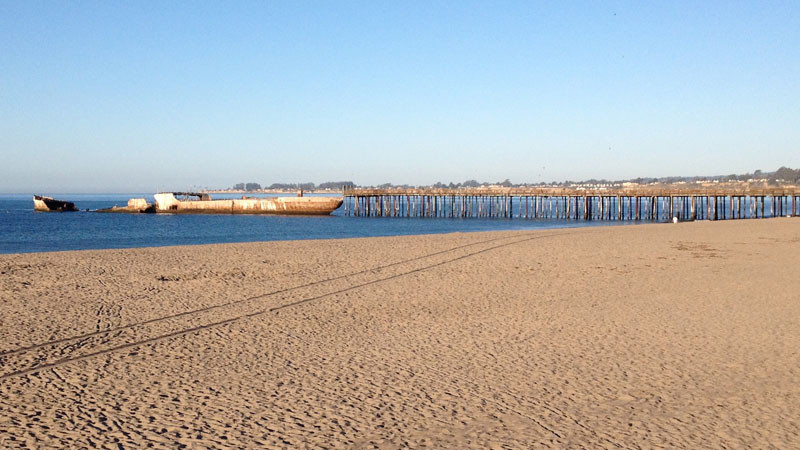
"caption": "The ship S.S. Palo Alto (Photo by Rick Kleffel)",
"description": "The ship S.S. Palo Alto (Photo by Rick Kleffel)",
"title": "palo_alto",
"credit": null,
"status": "inherit",
"isLoading": false,
"fetchFailed": false
},
"arts_10681227": {
"type": "attachments",
"id": "arts_10681227",
"meta": {
"index": "attachments_1716263798",
"site": "arts",
"id": "10681227",
"found": true
},
"parent": 10681225,
"imgSizes": {
"twentyfourteen-full-width": {
"file": "https://ww2.kqed.org/app/uploads/sites/2/2015/05/NelsonAuthorPhotoHCove2014-1038x576.jpeg",
"width": 1038,
"mimeType": "image/jpeg",
"height": 576
},
"thumbnail": {
"file": "https://ww2.kqed.org/app/uploads/sites/2/2015/05/NelsonAuthorPhotoHCove2014-e1432432095664-400x226.jpeg",
"width": 400,
"mimeType": "image/jpeg",
"height": 226
},
"fd-sm": {
"file": "https://ww2.kqed.org/app/uploads/sites/2/2015/05/NelsonAuthorPhotoHCove2014-e1432432095664-960x542.jpeg",
"width": 960,
"mimeType": "image/jpeg",
"height": 542
},
"post-thumbnail": {
"file": "https://ww2.kqed.org/app/uploads/sites/2/2015/05/NelsonAuthorPhotoHCove2014-e1432432095664-672x372.jpeg",
"width": 672,
"mimeType": "image/jpeg",
"height": 372
},
"kqedFullSize": {
"file": "https://ww2.kqed.org/app/uploads/sites/2/2015/05/NelsonAuthorPhotoHCove2014-e1432432095664.jpeg",
"width": 1012,
"height": 571
},
"large": {
"file": "https://ww2.kqed.org/app/uploads/sites/2/2015/05/NelsonAuthorPhotoHCove2014-1180x885.jpeg",
"width": 1180,
"mimeType": "image/jpeg",
"height": 885
},
"guest-author-96": {
"file": "https://ww2.kqed.org/app/uploads/sites/2/2015/05/NelsonAuthorPhotoHCove2014-e1432432095664-96x96.jpeg",
"width": 96,
"mimeType": "image/jpeg",
"height": 96
},
"medium": {
"file": "https://ww2.kqed.org/app/uploads/sites/2/2015/05/NelsonAuthorPhotoHCove2014-e1432432095664-800x451.jpeg",
"width": 800,
"mimeType": "image/jpeg",
"height": 451
},
"guest-author-64": {
"file": "https://ww2.kqed.org/app/uploads/sites/2/2015/05/NelsonAuthorPhotoHCove2014-e1432432095664-64x64.jpeg",
"width": 64,
"mimeType": "image/jpeg",
"height": 64
},
"guest-author-32": {
"file": "https://ww2.kqed.org/app/uploads/sites/2/2015/05/NelsonAuthorPhotoHCove2014-e1432432095664-32x32.jpeg",
"width": 32,
"mimeType": "image/jpeg",
"height": 32
},
"fd-med": {
"file": "https://ww2.kqed.org/app/uploads/sites/2/2015/05/NelsonAuthorPhotoHCove2014-1180x885.jpeg",
"width": 1180,
"mimeType": "image/jpeg",
"height": 885
},
"detail": {
"file": "https://ww2.kqed.org/app/uploads/sites/2/2015/05/NelsonAuthorPhotoHCove2014-e1432432095664-75x75.jpeg",
"width": 75,
"mimeType": "image/jpeg",
"height": 75
},
"guest-author-128": {
"file": "https://ww2.kqed.org/app/uploads/sites/2/2015/05/NelsonAuthorPhotoHCove2014-e1432432095664-128x128.jpeg",
"width": 128,
"mimeType": "image/jpeg",
"height": 128
}
},
"publishDate": 1432238000,
"modified": 1432446419,
"caption": "\u003cem>The Argonauts\u003c/em> weaves a birth and love story, with gender and sexuality theory, psychoanalytic theory, and radically honest expressions of joy. (Photo Credit: Harry Dodge) ",
"description": "\u003cem>The Argonauts\u003c/em> weaves a birth and love story, with gender and sexuality theory, psychoanalytic theory, and radically honest expressions of joy. (Photo Credit: Harry Dodge) ",
"title": "NelsonAuthorPhotoHCove2014",
"credit": null,
"status": "inherit",
"isLoading": false,
"fetchFailed": false
},
"arts_10664035": {
"type": "attachments",
"id": "arts_10664035",
"meta": {
"index": "attachments_1716263798",
"site": "arts",
"id": "10664035",
"found": true
},
"parent": 10653267,
"imgSizes": {
"twentyfourteen-full-width": {
"file": "https://ww2.kqed.org/app/uploads/sites/2/2015/05/PeachesMain-1038x576.jpg",
"width": 1038,
"mimeType": "image/jpeg",
"height": 576
},
"thumbnail": {
"file": "https://ww2.kqed.org/app/uploads/sites/2/2015/05/PeachesMain-400x225.jpg",
"width": 400,
"mimeType": "image/jpeg",
"height": 225
},
"fd-sm": {
"file": "https://ww2.kqed.org/app/uploads/sites/2/2015/05/PeachesMain-960x540.jpg",
"width": 960,
"mimeType": "image/jpeg",
"height": 540
},
"post-thumbnail": {
"file": "https://ww2.kqed.org/app/uploads/sites/2/2015/05/PeachesMain-672x372.jpg",
"width": 672,
"mimeType": "image/jpeg",
"height": 372
},
"kqedFullSize": {
"file": "https://ww2.kqed.org/app/uploads/sites/2/2015/05/PeachesMain.jpg",
"width": 1200,
"height": 675
},
"large": {
"file": "https://ww2.kqed.org/app/uploads/sites/2/2015/05/PeachesMain-1180x664.jpg",
"width": 1180,
"mimeType": "image/jpeg",
"height": 664
},
"guest-author-96": {
"file": "https://ww2.kqed.org/app/uploads/sites/2/2015/05/PeachesMain-96x96.jpg",
"width": 96,
"mimeType": "image/jpeg",
"height": 96
},
"medium": {
"file": "https://ww2.kqed.org/app/uploads/sites/2/2015/05/PeachesMain-800x450.jpg",
"width": 800,
"mimeType": "image/jpeg",
"height": 450
},
"guest-author-64": {
"file": "https://ww2.kqed.org/app/uploads/sites/2/2015/05/PeachesMain-64x64.jpg",
"width": 64,
"mimeType": "image/jpeg",
"height": 64
},
"guest-author-32": {
"file": "https://ww2.kqed.org/app/uploads/sites/2/2015/05/PeachesMain-32x32.jpg",
"width": 32,
"mimeType": "image/jpeg",
"height": 32
},
"fd-med": {
"file": "https://ww2.kqed.org/app/uploads/sites/2/2015/05/PeachesMain-1180x664.jpg",
"width": 1180,
"mimeType": "image/jpeg",
"height": 664
},
"detail": {
"file": "https://ww2.kqed.org/app/uploads/sites/2/2015/05/PeachesMain-75x75.jpg",
"width": 75,
"mimeType": "image/jpeg",
"height": 75
},
"guest-author-128": {
"file": "https://ww2.kqed.org/app/uploads/sites/2/2015/05/PeachesMain-128x128.jpg",
"width": 128,
"mimeType": "image/jpeg",
"height": 128
}
},
"publishDate": 1431808091,
"modified": 1431808119,
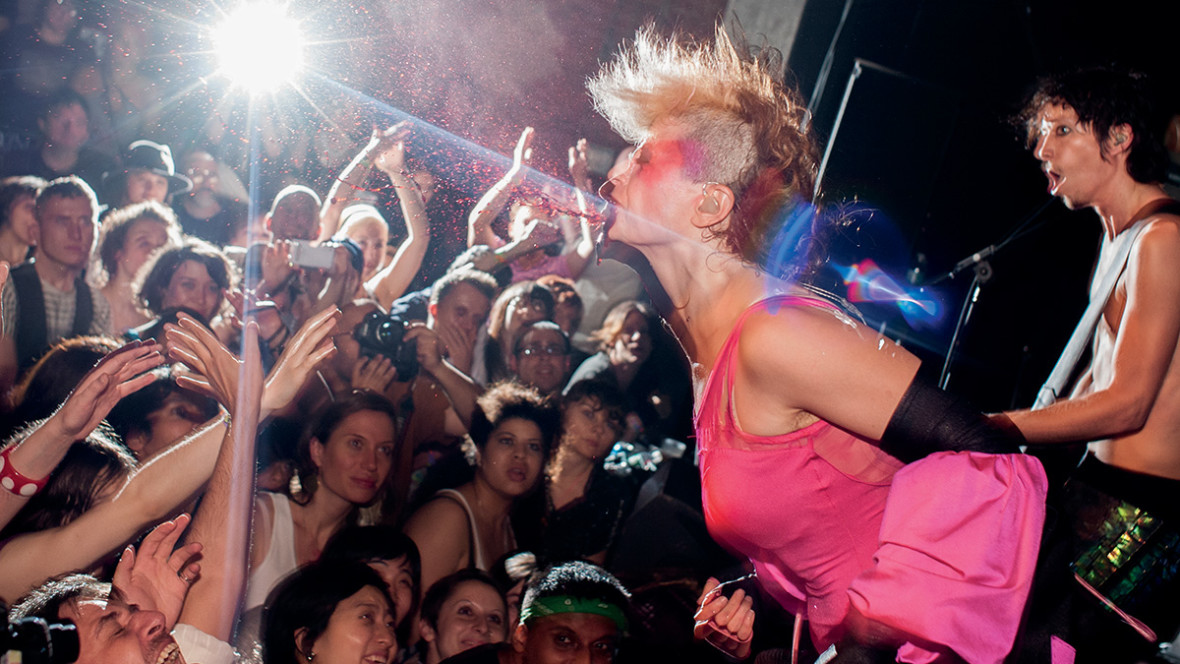
"caption": "Peaches performs at the Music Hall of Williamsburg, June 2009 (Photo Credit: Holger Talinski) ",
"description": "Peaches performs at the Music Hall of Williamsburg.",
"title": "PeachesMain",
"credit": null,
"status": "inherit",
"isLoading": false,
"fetchFailed": false
},
"arts_10627483": {
"type": "attachments",
"id": "arts_10627483",
"meta": {
"index": "attachments_1716263798",
"site": "arts",
"id": "10627483",
"found": true
},
"parent": 10627338,
"imgSizes": {
"twentyfourteen-full-width": {
"file": "https://ww2.kqed.org/app/uploads/sites/2/2015/05/sq4-1038x576.jpg",
"width": 1038,
"mimeType": "image/jpeg",
"height": 576
},
"thumbnail": {
"file": "https://ww2.kqed.org/app/uploads/sites/2/2015/05/sq4-400x165.jpg",
"width": 400,
"mimeType": "image/jpeg",
"height": 165
},
"fd-sm": {
"file": "https://ww2.kqed.org/app/uploads/sites/2/2015/05/sq4-960x396.jpg",
"width": 960,
"mimeType": "image/jpeg",
"height": 396
},
"post-thumbnail": {
"file": "https://ww2.kqed.org/app/uploads/sites/2/2015/05/sq4-672x372.jpg",
"width": 672,
"mimeType": "image/jpeg",
"height": 372
},
"kqedFullSize": {
"file": "https://ww2.kqed.org/app/uploads/sites/2/2015/05/sq4.jpg",
"width": 1405,
"height": 580
},
"large": {
"file": "https://ww2.kqed.org/app/uploads/sites/2/2015/05/sq4-1180x487.jpg",
"width": 1180,
"mimeType": "image/jpeg",
"height": 487
},
"guest-author-96": {
"file": "https://ww2.kqed.org/app/uploads/sites/2/2015/05/sq4-96x96.jpg",
"width": 96,
"mimeType": "image/jpeg",
"height": 96
},
"medium": {
"file": "https://ww2.kqed.org/app/uploads/sites/2/2015/05/sq4-800x330.jpg",
"width": 800,
"mimeType": "image/jpeg",
"height": 330
},
"guest-author-64": {
"file": "https://ww2.kqed.org/app/uploads/sites/2/2015/05/sq4-64x64.jpg",
"width": 64,
"mimeType": "image/jpeg",
"height": 64
},
"guest-author-32": {
"file": "https://ww2.kqed.org/app/uploads/sites/2/2015/05/sq4-32x32.jpg",
"width": 32,
"mimeType": "image/jpeg",
"height": 32
},
"fd-med": {
"file": "https://ww2.kqed.org/app/uploads/sites/2/2015/05/sq4-1180x487.jpg",
"width": 1180,
"mimeType": "image/jpeg",
"height": 487
},
"detail": {
"file": "https://ww2.kqed.org/app/uploads/sites/2/2015/05/sq4-75x75.jpg",
"width": 75,
"mimeType": "image/jpeg",
"height": 75
},
"guest-author-128": {
"file": "https://ww2.kqed.org/app/uploads/sites/2/2015/05/sq4-128x128.jpg",
"width": 128,
"mimeType": "image/jpeg",
"height": 128
}
},
"publishDate": 1430893642,
"modified": 1430893642,
"caption": null,
"description": null,
"title": "sq4",
"credit": null,
"status": "inherit",
"isLoading": false,
"fetchFailed": false
}
},
"audioPlayerReducer": {
"postId": "stream_live",
"isPaused": true,
"isPlaying": false,
"pfsActive": false,
"pledgeModalIsOpen": true,
"playerDrawerIsOpen": false,
"liveAudioPlayStartedAt": 0,
"liveAudioPlayContext": ""
},
"authorsReducer": {
"rkleffel": {
"type": "authors",
"id": "88",
"meta": {
"index": "authors_1716337520",
"id": "88",
"found": true
},
"name": "Rick Kleffel",
"firstName": "Rick",
"lastName": "Kleffel",
"slug": "rkleffel",
"email": "editor@bookotron.com",
"display_author_email": false,
"staff_mastheads": [],
"title": null,
"bio": "Rick Kleffel has been reading for more than half a century. He lives in Aptos, near the Palo Alto, a cement boat built at the end of World War I. He writes about books and podcasts interviews with authors at \u003ca href=\"http://agonycolumn.com\">The Agony Column\u003c/a>.",
"avatar": "https://secure.gravatar.com/avatar/179f850e768733fdeabc3c0c48ebf0e9?s=600&d=blank&r=g",
"twitter": null,
"facebook": null,
"instagram": null,
"linkedin": null,
"sites": [
{
"site": "arts",
"roles": [
"Contributor",
"contributor"
]
}
],
"headData": {
"title": "Rick Kleffel | KQED",
"description": null,
"ogImgSrc": "https://secure.gravatar.com/avatar/179f850e768733fdeabc3c0c48ebf0e9?s=600&d=blank&r=g",
"twImgSrc": "https://secure.gravatar.com/avatar/179f850e768733fdeabc3c0c48ebf0e9?s=600&d=blank&r=g"
},
"isLoading": false,
"link": "/author/rkleffel"
},
"lclark": {
"type": "authors",
"id": "3224",
"meta": {
"index": "authors_1716337520",
"id": "3224",
"found": true
},
"name": "Leilani Clark",
"firstName": "Leilani",
"lastName": "Clark",
"slug": "lclark",
"email": "clark.leil@gmail.com",
"display_author_email": false,
"staff_mastheads": [],
"title": null,
"bio": "Leilani Clark writes about books for KQED Arts. Her writing has been published at Mother Jones, The Guardian, Civil Eats, Time Magazine, Food & Wine, Edible Marin & Wine Country, and The Rumpus. She is the editor of Made Local magazine in Sonoma County. Find her on Twitter \u003ca href=\"https://twitter.com/leilclark\">@leilclark\u003c/a>.",
"avatar": "https://secure.gravatar.com/avatar/7f691fdc52ed2e3f4cf164d1f4ec0889?s=600&d=blank&r=g",
"twitter": null,
"facebook": null,
"instagram": null,
"linkedin": null,
"sites": [
{
"site": "arts",
"roles": [
"contributor"
]
},
{
"site": "bayareabites",
"roles": [
"contributor"
]
},
{
"site": "food",
"roles": [
"contributor"
]
}
],
"headData": {
"title": "Leilani Clark | KQED",
"description": null,
"ogImgSrc": "https://secure.gravatar.com/avatar/7f691fdc52ed2e3f4cf164d1f4ec0889?s=600&d=blank&r=g",
"twImgSrc": "https://secure.gravatar.com/avatar/7f691fdc52ed2e3f4cf164d1f4ec0889?s=600&d=blank&r=g"
},
"isLoading": false,
"link": "/author/lclark"
},
"caromichelle": {
"type": "authors",
"id": "3235",
"meta": {
"index": "authors_1716337520",
"id": "3235",
"found": true
},
"name": "Carolyn Petit",
"firstName": "Carolyn",
"lastName": "Petit",
"slug": "caromichelle",
"email": "caromichelle@gmail.com",
"display_author_email": false,
"staff_mastheads": [],
"title": null,
"bio": "Carolyn was an editor for GameSpot.com for four years. She is now a freelancer covering video games. She lives in Berkeley.",
"avatar": "https://secure.gravatar.com/avatar/86342d2a59aad3edd1b757675bc9a31a?s=600&d=blank&r=g",
"twitter": null,
"facebook": null,
"instagram": null,
"linkedin": null,
"sites": [
{
"site": "arts",
"roles": [
"contributor"
]
}
],
"headData": {
"title": "Carolyn Petit | KQED",
"description": null,
"ogImgSrc": "https://secure.gravatar.com/avatar/86342d2a59aad3edd1b757675bc9a31a?s=600&d=blank&r=g",
"twImgSrc": "https://secure.gravatar.com/avatar/86342d2a59aad3edd1b757675bc9a31a?s=600&d=blank&r=g"
},
"isLoading": false,
"link": "/author/caromichelle"
},
"esilvers": {
"type": "authors",
"id": "7237",
"meta": {
"index": "authors_1716337520",
"id": "7237",
"found": true
},
"name": "Emma Silvers",
"firstName": "Emma",
"lastName": "Silvers",
"slug": "esilvers",
"email": "esilvers@kqed.org",
"display_author_email": false,
"staff_mastheads": [],
"title": "KQED Contributor",
"bio": "Emma Silvers is an editor at KQED Arts and a former digital producer at KQED News. Born and raised in the Bay Area, she has previously been an arts and entertainment editor at the \u003cem>San Francisco Chronicle\u003c/em>, \u003cem>SF Weekly\u003c/em> and the \u003cem>San Francisco Bay Guardian.\u003c/em> \u003ca href=\"https://www.emmasilvers.com\">Her work\u003c/a> has also appeared in \u003cem>Rolling Stone\u003c/em>, Pitchfork and \u003cem>Mother Jones\u003c/em>. In 2017 she was the recipient of the Society of Professional Journalists-Northern California's award for arts and culture reporting. In 1993 she \u003ca href=\"https://www.kqed.org/pop/16759/wait-what-my-coworker-was-a-voice-over-hyperventilator-for-jurassic-park\">hyperventilated in \u003cem>Jurassic Park\u003c/em>\u003c/a>.",
"avatar": "https://secure.gravatar.com/avatar/247beada39b88ea5759db1f51dba05cf?s=600&d=blank&r=g",
"twitter": "emmaruthless",
"facebook": null,
"instagram": null,
"linkedin": null,
"sites": [
{
"site": "arts",
"roles": [
"editor"
]
},
{
"site": "news",
"roles": [
"editor"
]
},
{
"site": "pop",
"roles": [
"contributor"
]
},
{
"site": "bayareabites",
"roles": [
"editor"
]
},
{
"site": "food",
"roles": [
"contributor"
]
},
{
"site": "liveblog",
"roles": [
"editor"
]
}
],
"headData": {
"title": "Emma Silvers | KQED",
"description": "KQED Contributor",
"ogImgSrc": "https://secure.gravatar.com/avatar/247beada39b88ea5759db1f51dba05cf?s=600&d=blank&r=g",
"twImgSrc": "https://secure.gravatar.com/avatar/247beada39b88ea5759db1f51dba05cf?s=600&d=blank&r=g"
},
"isLoading": false,
"link": "/author/esilvers"
},
"cveltman": {
"type": "authors",
"id": "8608",
"meta": {
"index": "authors_1716337520",
"id": "8608",
"found": true
},
"name": "Chloe Veltman",
"firstName": "Chloe",
"lastName": "Veltman",
"slug": "cveltman",
"email": "cveltman@kqed.org",
"display_author_email": true,
"staff_mastheads": [],
"title": "Arts and Culture Reporter",
"bio": "Chloe Veltman is a former arts and culture reporter for KQED. Prior to joining the organization, she launched and led the arts bureau at Colorado Public Radio, served as the Bay Area's culture columnist for the New York Times, and was the founder, host and executive producer of VoiceBox, a national award-winning weekly podcast/radio show and live events series all about the human voice. Chloe is the recipient of numerous prizes, grants and fellowships including a Webby Award for her work on interactive storytelling, both the John S Knight Journalism Fellowship and Humanities Center Fellowship at Stanford University, the Sundance Arts Writing Fellowship and a Library of Congress Research Fellowship. She is the author of the book \"On Acting\" and has appeared as a guest lecturer at Yale University and the San Francisco Conservatory of Music among other institutions. She holds a BA in english literature from King's College, Cambridge, and a Masters in Dramaturgy from the Central School of Speech and Drama/Harvard Institute for Advanced Theater Training.\r\n\u003ca href=\"https://www.chloeveltman.com\">www.chloeveltman.com\u003c/a>",
"avatar": "https://secure.gravatar.com/avatar/55403394b00a1ddab683952c2eb2cf85?s=600&d=blank&r=g",
"twitter": "chloeveltman",
"facebook": null,
"instagram": null,
"linkedin": null,
"sites": [
{
"site": "arts",
"roles": []
},
{
"site": "news",
"roles": [
"author"
]
},
{
"site": "pop",
"roles": [
"editor"
]
},
{
"site": "science",
"roles": []
}
],
"headData": {
"title": "Chloe Veltman | KQED",
"description": "Arts and Culture Reporter",
"ogImgSrc": "https://secure.gravatar.com/avatar/55403394b00a1ddab683952c2eb2cf85?s=600&d=blank&r=g",
"twImgSrc": "https://secure.gravatar.com/avatar/55403394b00a1ddab683952c2eb2cf85?s=600&d=blank&r=g"
},
"isLoading": false,
"link": "/author/cveltman"
}
},
"pagesReducer": {
"arts_category_literature": {
"type": "terms",
"id": "arts_73",
"meta": {
"index": "terms_1716263798",
"site": "arts",
"id": "73",
"score": 12.797771
},
"featImg": null,
"name": "Books",
"description": null,
"taxonomy": "category",
"headData": {
"twImgId": null,
"twTitle": null,
"ogTitle": null,
"ogImgId": null,
"twDescription": null,
"description": null,
"title": "Books Archives | KQED Arts",
"ogDescription": null
},
"ttid": 74,
"slug": "literature",
"isLoading": false,
"title": "Books",
"pageMeta": {
"site": "arts",
"WpPageTemplate": "page-topic-editorial",
"currentPage": 97
},
"blocks": [
{
"blockName": "kqed/post-list",
"attrs": {
"layout": "cardArticle2",
"query": "posts/arts?category=literature",
"seeMore": false,
"paginated": true,
"page": 97
}
},
{
"blockName": "kqed/ad"
}
]
}
},
"pfsSessionReducer": {},
"postsReducer": {
"stream_live": {
"type": "live",
"id": "stream_live",
"audioUrl": "https://streams.kqed.org/kqedradio",
"title": "Live Stream",
"excerpt": "Live Stream information currently unavailable.",
"link": "/radio",
"featImg": "",
"label": {
"name": "KQED Live",
"link": "/"
}
},
"stream_kqedNewscast": {
"type": "posts",
"id": "stream_kqedNewscast",
"audioUrl": "https://www.kqed.org/.stream/anon/radio/RDnews/newscast.mp3?_=1",
"title": "KQED Newscast",
"featImg": "",
"label": {
"name": "88.5 FM",
"link": "/"
}
},
"arts_10636309": {
"type": "posts",
"id": "arts_10636309",
"meta": {
"index": "posts_1716263798",
"site": "arts",
"id": "10636309",
"score": null,
"sort": [
1436382015000
]
},
"parent": 0,
"labelTerm": {
"site": "arts"
},
"blocks": [],
"publishDate": 1436382015,
"format": "standard",
"title": "A Summer Reading List for Those Who Crave the Eclectic",
"headTitle": "A Summer Reading List for Those Who Crave the Eclectic | KQED",
"content": "\u003cp>Summer books, like summer movies, are generally widely promoted and easily found. Here are the books not so easily found that provide the pleasures of summer reading and leaven them with more than a frisson of the unusual.\u003c/p>\n\u003cp>From the San Francisco steampunk ghost huntress to the true story of the mother and daughter behind feminism and \u003cem>Frankenstein\u003c/em>, these ARE the books you were looking for – but might not otherwise have found.\u003c/p>\n\u003cp>\u003ca href=\"http://ww2.kqed.org/arts/wp-content/uploads/sites/2/2015/05/tanzer-vermillion.jpg\">\u003cimg loading=\"lazy\" decoding=\"async\" class=\" wp-image-10653566 alignleft\" src=\"http://ww2.kqed.org/arts/wp-content/uploads/sites/2/2015/05/tanzer-vermillion.jpg\" alt=\"tanzer-vermillion\" width=\"177\" height=\"266\">\u003c/a>Let’s start with \u003cem>Vermillion\u003c/em> by Molly Tanzer, a trade paperback from Petaluma publisher Word Horde. This is the epitome of the weird Western adventure, featuring Elouise “Lou” Merriwether, a 19 -ear-old “psychopomp” keeping San Francisco safe from ghosts, shades and the undead. Jung tells us the psychopomp is a mediator between the unconscious and conscious realms. For Tanzer she’s a supernatural troubleshooter. For the readers, she’s one hell of a lot of thought-provoking Taoist heroine fun.\u003c/p>\n\u003cp>\u003ca href=\"http://ww2.kqed.org/arts/wp-content/uploads/sites/2/2015/05/cantwell-bastards_of_the_absolute.jpg\">\u003cimg loading=\"lazy\" decoding=\"async\" class=\" wp-image-10653562 alignleft\" src=\"http://ww2.kqed.org/arts/wp-content/uploads/sites/2/2015/05/cantwell-bastards_of_the_absolute.jpg\" alt=\"cantwell-bastards_of_the_absolute\" width=\"164\" height=\"256\" srcset=\"https://cdn.kqed.org/wp-content/uploads/sites/2/2015/05/cantwell-bastards_of_the_absolute.jpg 400w, https://cdn.kqed.org/wp-content/uploads/sites/2/2015/05/cantwell-bastards_of_the_absolute-384x600.jpg 384w\" sizes=\"(max-width: 164px) 100vw, 164px\">\u003c/a>As it happens, British publisher Egaeus Press recently published Tanzer’s collection of recipe-driven short stories \u003cem>Rumbullion\u003c/em>. Their latest book is \u003cem>Bastards of the Absolute\u003c/em> by Adam Cantwell. Egaeus crafts books as art on all levels. \u003cem>Bastards\u003c/em> looks like an ancient volume of forbidden lore, and happily it reads like that as well. From prisoners entombed in murals to stories narrated by classical composers, this is deeply bent high literature. You may think that the author needs therapy while reading these, and you might seek the same tre afterwards.\u003c/p>\n\u003cp>\u003ca href=\"http://ww2.kqed.org/arts/wp-content/uploads/sites/2/2015/05/gordon-romantic_outlaws.jpg\">\u003cimg loading=\"lazy\" decoding=\"async\" class=\" wp-image-10653572 alignleft\" src=\"http://ww2.kqed.org/arts/wp-content/uploads/sites/2/2015/05/gordon-romantic_outlaws.jpg\" alt=\"gordon-romantic_outlaws\" width=\"169\" height=\"248\">\u003c/a>In 1792, Mary Wollstonecraft gave birth to \u003cem>A Vindication of the Rights of Woman\u003c/em>. She’s a founding figure of feminist philosophy and action. In 1797, she gave birth to her second daughter, also named Mary, who grew up to become Mary Wollstonecraft Shelley, the author of \u003cem>Frankenstein: or, The Modern Prometheus\u003c/em>. Charlotte Gordon examines the lives of these two literary and philosophical ground-breakers with the passion and intensity of a literary thriller. Gordon has the gift of great characters to work with, and she tells their story with verve. A great pairing with Tanzer’s novel.\u003c/p>\n\u003cp>[ad fullwidth]\u003c/p>\n\u003cp>\u003ca href=\"http://ww2.kqed.org/arts/wp-content/uploads/sites/2/2015/05/bacigalupi-the_water_knife.jpg\">\u003cimg loading=\"lazy\" decoding=\"async\" class=\" wp-image-10653560 alignleft\" src=\"http://ww2.kqed.org/arts/wp-content/uploads/sites/2/2015/05/bacigalupi-the_water_knife.jpg\" alt=\"bacigalupi-the_water_knife\" width=\"191\" height=\"285\">\u003c/a>We’re all about the water shortage, and what better way to enjoy it than reading \u003cem>The Water Knife\u003c/em> by Paolo Bacigalupi? Bacigalupi’s novel looks out about say, fifteen years? – and finds “water knife” Angel Velasquez as the man who “cuts” water for Nevada arcology boss Catherine Case. He makes sure she gets plenty even if California goes to dust. Rumors of a new tech surface, and the bodies follow on. This book will not re-assure you. This is not a happy adventure dystopia. This is a day-after-tomorrow novel of intense suspense. Like most knives, this one cuts both ways, in that it is both engrossingly entertaining and deeply disturbing.\u003c/p>\n\u003cp>\u003ca href=\"http://ww2.kqed.org/arts/wp-content/uploads/sites/2/2015/05/faye-the_fatal-flame.jpg\">\u003cimg loading=\"lazy\" decoding=\"async\" class=\" wp-image-10653563 alignleft\" src=\"http://ww2.kqed.org/arts/wp-content/uploads/sites/2/2015/05/faye-the_fatal-flame.jpg\" alt=\"faye-the_fatal-flame\" width=\"178\" height=\"261\">\u003c/a>It’s always a good idea start a series after the third book is released. To that end, you can now start reading \u003cem>The Gods of Gotham\u003c/em> by Lyndsay Faye, knowing the follow-up \u003cem>Seven for a Secret\u003c/em>, and now the third book, \u003cem>The Fatal Flame\u003c/em> and the author, are showing up in local bookstores. The first introduces us to Timothy Wilde, a barkeeper in 1845 New York who is pulled into the just-formed police force after a fire destroys his bar and part of his face. Crisp but filled with gritty details, \u003cem>The Gods of Gotham\u003c/em> sends Timothy in pursuit of a child killer; the newest book has him after a serial arsonist. It’s nice to know just how much worse things were back then.\u003c/p>\n\u003cp>\u003cimg loading=\"lazy\" decoding=\"async\" src=\"http://ww2.kqed.org/arts/wp-content/uploads/sites/2/2015/07/The-Border-e1436505888720.jpg\" alt=\"The Border\" width=\"200\" height=\"300\" class=\"alignleft size-full wp-image-10829375\">The alien invasion novel seems as if it must be by definition limited; creatures show up, attack and conquer, almost. Robert R. McCammon turns in one of the year’s best under-the-radar novels, \u003cem>The Border\u003c/em>, and proves this is not the case. He immerses us in the post-apocalyptic aftermath of a war between two alien races, the Cyphers and the Gorgons, fought on earth. We’re collateral damage. Ethan, a teenage boy finds himself recovering from amnesia with a set of powers that may tip the balance of power. McCammon offers a big cast, great characters, and dialogue that rings true even in circumstances that demonstrate his horrifically vivid imagination. Subterranean Press makes a beautiful book, illustrated with color plates. Snap up a copy while you can and make the world go away before the Cyphers and Gorgons do it for you. \u003c/p>\n\u003cp>\u003ca href=\"http://ww2.kqed.org/arts/wp-content/uploads/sites/2/2015/05/parker-strange_tales_v.jpg\">\u003cimg loading=\"lazy\" decoding=\"async\" class=\" wp-image-10653565 alignleft\" src=\"http://ww2.kqed.org/arts/wp-content/uploads/sites/2/2015/05/parker-strange_tales_v.jpg\" alt=\"parker-strange_tales_v\" width=\"206\" height=\"311\" srcset=\"https://cdn.kqed.org/wp-content/uploads/sites/2/2015/05/parker-strange_tales_v.jpg 400w, https://cdn.kqed.org/wp-content/uploads/sites/2/2015/05/parker-strange_tales_v-397x600.jpg 397w\" sizes=\"(max-width: 206px) 100vw, 206px\">\u003c/a>You can hardly walk through a bookstore without seeing a dozen spins on the “Year’s Best” genre fiction anthologies. But visit \u003ca href=\"http://www.ziesings.com/?folio=9POR7JU99\">Borderlands Books\u003c/a>, which does still exist, and ask for \u003cem>Strange Takes V\u003c/em>, from Tartarus Press, edited by Rosalie Parker to find a book worth keeping. Parker has a very eclectic sensibility, and here you’ll find all original stories you’ll not find anywhere else. This is wild variety defined, from Mark Valentine’s “Yes, I Knew the Venusian Commodore” to Jacarutu:23’s “Bardo Thodol Backup File.” Northern California’s L. S. Johnson’s story “Julie” reads like a great Anne Rice novel in miniature. This is a lovely book with a silk bookmark and a gorgeous frontispiece by artist Stephen J Clark. Read with care so you can show it off later.\u003c/p>\n\u003cp>\u003c/p>\n\u003cp>\u003ca href=\"http://ww2.kqed.org/arts/wp-content/uploads/sites/2/2015/05/vida-the_divers_clothes_lie_empty.jpg\">\u003cimg loading=\"lazy\" decoding=\"async\" class=\" wp-image-10653567 alignleft\" src=\"http://ww2.kqed.org/arts/wp-content/uploads/sites/2/2015/05/vida-the_divers_clothes_lie_empty.jpg\" alt=\"vida-the_divers_clothes_lie_empty\" width=\"212\" height=\"321\" srcset=\"https://cdn.kqed.org/wp-content/uploads/sites/2/2015/05/vida-the_divers_clothes_lie_empty.jpg 400w, https://cdn.kqed.org/wp-content/uploads/sites/2/2015/05/vida-the_divers_clothes_lie_empty-397x600.jpg 397w\" sizes=\"(max-width: 212px) 100vw, 212px\">\u003c/a>Who are you? You look in the mirror and there’s no answer. But Vendela Vida’s \u003cem>The Diver’s Clothes Lie Empty\u003c/em> is an excellent place to start looking. She’s a Bay Area literary icon for a very good reason well beyond her work in the publishing world. She writes sparse, tense novels that are thrilling to both read and think about. Here, her unnamed narrator goes to Morocco, where she loses her backpack and slowly, her sense of self. Vida expertly captures the sense of a bureaucratic, life-changing nightmare. Perhaps there’s a reason that she lost the backpack. Memory plays tricks on the mind. We are ever our own worst enemies. All it takes is a great book, an unexpected find, to help us remember why we read. To help us remember who we are, and why.\u003c/p>\n\n",
"stats": {
"hasVideo": false,
"hasChartOrMap": false,
"hasAudio": false,
"hasPolis": false,
"wordCount": 1050,
"hasGoogleForm": false,
"hasGallery": false,
"hasHearkenModule": false,
"iframeSrcs": [],
"paragraphCount": 12
},
"modified": 1705046809,
"excerpt": "Summer books, like summer movies, are generally widely promoted and easily found. Here are the books not so easily found that provide the pleasures of summer reading and leaven them with more than a frisson of the unusual.",
"headData": {
"twImgId": "",
"twTitle": "",
"ogTitle": "",
"ogImgId": "",
"twDescription": "",
"description": "Summer books, like summer movies, are generally widely promoted and easily found. Here are the books not so easily found that provide the pleasures of summer reading and leaven them with more than a frisson of the unusual.",
"title": "A Summer Reading List for Those Who Crave the Eclectic | KQED",
"ogDescription": "",
"schema": {
"@context": "https://schema.org",
"@type": "Article",
"headline": "A Summer Reading List for Those Who Crave the Eclectic",
"datePublished": "2015-07-08T12:00:15-07:00",
"dateModified": "2024-01-12T00:06:49-08:00",
"image": "https://cdn.kqed.org/wp-content/uploads/2020/02/KQED-OG-Image@1x.png"
}
},
"guestAuthors": [],
"slug": "a-summer-reading-list-for-those-who-crave-the-eclectic",
"status": "publish",
"sticky": false,
"path": "/arts/10636309/a-summer-reading-list-for-those-who-crave-the-eclectic",
"audioTrackLength": null,
"parsedContent": [
{
"type": "contentString",
"content": "\u003cdiv class=\"post-body\">\u003cp>\u003cp>Summer books, like summer movies, are generally widely promoted and easily found. Here are the books not so easily found that provide the pleasures of summer reading and leaven them with more than a frisson of the unusual.\u003c/p>\n\u003cp>From the San Francisco steampunk ghost huntress to the true story of the mother and daughter behind feminism and \u003cem>Frankenstein\u003c/em>, these ARE the books you were looking for – but might not otherwise have found.\u003c/p>\n\u003cp>\u003ca href=\"http://ww2.kqed.org/arts/wp-content/uploads/sites/2/2015/05/tanzer-vermillion.jpg\">\u003cimg loading=\"lazy\" decoding=\"async\" class=\" wp-image-10653566 alignleft\" src=\"http://ww2.kqed.org/arts/wp-content/uploads/sites/2/2015/05/tanzer-vermillion.jpg\" alt=\"tanzer-vermillion\" width=\"177\" height=\"266\">\u003c/a>Let’s start with \u003cem>Vermillion\u003c/em> by Molly Tanzer, a trade paperback from Petaluma publisher Word Horde. This is the epitome of the weird Western adventure, featuring Elouise “Lou” Merriwether, a 19 -ear-old “psychopomp” keeping San Francisco safe from ghosts, shades and the undead. Jung tells us the psychopomp is a mediator between the unconscious and conscious realms. For Tanzer she’s a supernatural troubleshooter. For the readers, she’s one hell of a lot of thought-provoking Taoist heroine fun.\u003c/p>\n\u003cp>\u003ca href=\"http://ww2.kqed.org/arts/wp-content/uploads/sites/2/2015/05/cantwell-bastards_of_the_absolute.jpg\">\u003cimg loading=\"lazy\" decoding=\"async\" class=\" wp-image-10653562 alignleft\" src=\"http://ww2.kqed.org/arts/wp-content/uploads/sites/2/2015/05/cantwell-bastards_of_the_absolute.jpg\" alt=\"cantwell-bastards_of_the_absolute\" width=\"164\" height=\"256\" srcset=\"https://cdn.kqed.org/wp-content/uploads/sites/2/2015/05/cantwell-bastards_of_the_absolute.jpg 400w, https://cdn.kqed.org/wp-content/uploads/sites/2/2015/05/cantwell-bastards_of_the_absolute-384x600.jpg 384w\" sizes=\"(max-width: 164px) 100vw, 164px\">\u003c/a>As it happens, British publisher Egaeus Press recently published Tanzer’s collection of recipe-driven short stories \u003cem>Rumbullion\u003c/em>. Their latest book is \u003cem>Bastards of the Absolute\u003c/em> by Adam Cantwell. Egaeus crafts books as art on all levels. \u003cem>Bastards\u003c/em> looks like an ancient volume of forbidden lore, and happily it reads like that as well. From prisoners entombed in murals to stories narrated by classical composers, this is deeply bent high literature. You may think that the author needs therapy while reading these, and you might seek the same tre afterwards.\u003c/p>\n\u003cp>\u003ca href=\"http://ww2.kqed.org/arts/wp-content/uploads/sites/2/2015/05/gordon-romantic_outlaws.jpg\">\u003cimg loading=\"lazy\" decoding=\"async\" class=\" wp-image-10653572 alignleft\" src=\"http://ww2.kqed.org/arts/wp-content/uploads/sites/2/2015/05/gordon-romantic_outlaws.jpg\" alt=\"gordon-romantic_outlaws\" width=\"169\" height=\"248\">\u003c/a>In 1792, Mary Wollstonecraft gave birth to \u003cem>A Vindication of the Rights of Woman\u003c/em>. She’s a founding figure of feminist philosophy and action. In 1797, she gave birth to her second daughter, also named Mary, who grew up to become Mary Wollstonecraft Shelley, the author of \u003cem>Frankenstein: or, The Modern Prometheus\u003c/em>. Charlotte Gordon examines the lives of these two literary and philosophical ground-breakers with the passion and intensity of a literary thriller. Gordon has the gift of great characters to work with, and she tells their story with verve. A great pairing with Tanzer’s novel.\u003c/p>\n\u003cp>\u003c/p>\u003c/div>",
"attributes": {
"named": {},
"numeric": []
}
},
{
"type": "component",
"content": "",
"name": "ad",
"attributes": {
"named": {
"label": "fullwidth"
},
"numeric": [
"fullwidth"
]
}
},
{
"type": "contentString",
"content": "\u003cdiv class=\"post-body\">\u003cp>\u003c/p>\n\u003cp>\u003ca href=\"http://ww2.kqed.org/arts/wp-content/uploads/sites/2/2015/05/bacigalupi-the_water_knife.jpg\">\u003cimg loading=\"lazy\" decoding=\"async\" class=\" wp-image-10653560 alignleft\" src=\"http://ww2.kqed.org/arts/wp-content/uploads/sites/2/2015/05/bacigalupi-the_water_knife.jpg\" alt=\"bacigalupi-the_water_knife\" width=\"191\" height=\"285\">\u003c/a>We’re all about the water shortage, and what better way to enjoy it than reading \u003cem>The Water Knife\u003c/em> by Paolo Bacigalupi? Bacigalupi’s novel looks out about say, fifteen years? – and finds “water knife” Angel Velasquez as the man who “cuts” water for Nevada arcology boss Catherine Case. He makes sure she gets plenty even if California goes to dust. Rumors of a new tech surface, and the bodies follow on. This book will not re-assure you. This is not a happy adventure dystopia. This is a day-after-tomorrow novel of intense suspense. Like most knives, this one cuts both ways, in that it is both engrossingly entertaining and deeply disturbing.\u003c/p>\n\u003cp>\u003ca href=\"http://ww2.kqed.org/arts/wp-content/uploads/sites/2/2015/05/faye-the_fatal-flame.jpg\">\u003cimg loading=\"lazy\" decoding=\"async\" class=\" wp-image-10653563 alignleft\" src=\"http://ww2.kqed.org/arts/wp-content/uploads/sites/2/2015/05/faye-the_fatal-flame.jpg\" alt=\"faye-the_fatal-flame\" width=\"178\" height=\"261\">\u003c/a>It’s always a good idea start a series after the third book is released. To that end, you can now start reading \u003cem>The Gods of Gotham\u003c/em> by Lyndsay Faye, knowing the follow-up \u003cem>Seven for a Secret\u003c/em>, and now the third book, \u003cem>The Fatal Flame\u003c/em> and the author, are showing up in local bookstores. The first introduces us to Timothy Wilde, a barkeeper in 1845 New York who is pulled into the just-formed police force after a fire destroys his bar and part of his face. Crisp but filled with gritty details, \u003cem>The Gods of Gotham\u003c/em> sends Timothy in pursuit of a child killer; the newest book has him after a serial arsonist. It’s nice to know just how much worse things were back then.\u003c/p>\n\u003cp>\u003cimg loading=\"lazy\" decoding=\"async\" src=\"http://ww2.kqed.org/arts/wp-content/uploads/sites/2/2015/07/The-Border-e1436505888720.jpg\" alt=\"The Border\" width=\"200\" height=\"300\" class=\"alignleft size-full wp-image-10829375\">The alien invasion novel seems as if it must be by definition limited; creatures show up, attack and conquer, almost. Robert R. McCammon turns in one of the year’s best under-the-radar novels, \u003cem>The Border\u003c/em>, and proves this is not the case. He immerses us in the post-apocalyptic aftermath of a war between two alien races, the Cyphers and the Gorgons, fought on earth. We’re collateral damage. Ethan, a teenage boy finds himself recovering from amnesia with a set of powers that may tip the balance of power. McCammon offers a big cast, great characters, and dialogue that rings true even in circumstances that demonstrate his horrifically vivid imagination. Subterranean Press makes a beautiful book, illustrated with color plates. Snap up a copy while you can and make the world go away before the Cyphers and Gorgons do it for you. \u003c/p>\n\u003cp>\u003ca href=\"http://ww2.kqed.org/arts/wp-content/uploads/sites/2/2015/05/parker-strange_tales_v.jpg\">\u003cimg loading=\"lazy\" decoding=\"async\" class=\" wp-image-10653565 alignleft\" src=\"http://ww2.kqed.org/arts/wp-content/uploads/sites/2/2015/05/parker-strange_tales_v.jpg\" alt=\"parker-strange_tales_v\" width=\"206\" height=\"311\" srcset=\"https://cdn.kqed.org/wp-content/uploads/sites/2/2015/05/parker-strange_tales_v.jpg 400w, https://cdn.kqed.org/wp-content/uploads/sites/2/2015/05/parker-strange_tales_v-397x600.jpg 397w\" sizes=\"(max-width: 206px) 100vw, 206px\">\u003c/a>You can hardly walk through a bookstore without seeing a dozen spins on the “Year’s Best” genre fiction anthologies. But visit \u003ca href=\"http://www.ziesings.com/?folio=9POR7JU99\">Borderlands Books\u003c/a>, which does still exist, and ask for \u003cem>Strange Takes V\u003c/em>, from Tartarus Press, edited by Rosalie Parker to find a book worth keeping. Parker has a very eclectic sensibility, and here you’ll find all original stories you’ll not find anywhere else. This is wild variety defined, from Mark Valentine’s “Yes, I Knew the Venusian Commodore” to Jacarutu:23’s “Bardo Thodol Backup File.” Northern California’s L. S. Johnson’s story “Julie” reads like a great Anne Rice novel in miniature. This is a lovely book with a silk bookmark and a gorgeous frontispiece by artist Stephen J Clark. Read with care so you can show it off later.\u003c/p>\n\u003cp>\u003c/p>\n\u003cp>\u003ca href=\"http://ww2.kqed.org/arts/wp-content/uploads/sites/2/2015/05/vida-the_divers_clothes_lie_empty.jpg\">\u003cimg loading=\"lazy\" decoding=\"async\" class=\" wp-image-10653567 alignleft\" src=\"http://ww2.kqed.org/arts/wp-content/uploads/sites/2/2015/05/vida-the_divers_clothes_lie_empty.jpg\" alt=\"vida-the_divers_clothes_lie_empty\" width=\"212\" height=\"321\" srcset=\"https://cdn.kqed.org/wp-content/uploads/sites/2/2015/05/vida-the_divers_clothes_lie_empty.jpg 400w, https://cdn.kqed.org/wp-content/uploads/sites/2/2015/05/vida-the_divers_clothes_lie_empty-397x600.jpg 397w\" sizes=\"(max-width: 212px) 100vw, 212px\">\u003c/a>Who are you? You look in the mirror and there’s no answer. But Vendela Vida’s \u003cem>The Diver’s Clothes Lie Empty\u003c/em> is an excellent place to start looking. She’s a Bay Area literary icon for a very good reason well beyond her work in the publishing world. She writes sparse, tense novels that are thrilling to both read and think about. Here, her unnamed narrator goes to Morocco, where she loses her backpack and slowly, her sense of self. Vida expertly captures the sense of a bureaucratic, life-changing nightmare. Perhaps there’s a reason that she lost the backpack. Memory plays tricks on the mind. We are ever our own worst enemies. All it takes is a great book, an unexpected find, to help us remember why we read. To help us remember who we are, and why.\u003c/p>\n\n\u003c/div>\u003c/p>",
"attributes": {
"named": {},
"numeric": []
}
}
],
"link": "/arts/10636309/a-summer-reading-list-for-those-who-crave-the-eclectic",
"authors": [
"88"
],
"categories": [
"arts_73"
],
"tags": [
"arts_596"
],
"featImg": "arts_10653561",
"label": "arts"
},
"arts_10797206": {
"type": "posts",
"id": "arts_10797206",
"meta": {
"index": "posts_1716263798",
"site": "arts",
"id": "10797206",
"score": null,
"sort": [
1435184539000
]
},
"guestAuthors": [],
"slug": "bowling-for-npr-amy-tan-and-michael-pollan-trade-pens-for-pins",
"title": "Bowling for NPR: Amy Tan and Michael Pollan Trade Pens for Pins",
"publishDate": 1435184539,
"format": "standard",
"headTitle": "Bowling for NPR: Amy Tan and Michael Pollan Trade Pens for Pins | KQED",
"labelTerm": {
"site": "arts"
},
"content": "\u003cp>It’s 7:30 pm on a mild evening in San Francisco’s Mission District, and so far the soundtrack at \u003ca href=\"http://missionbowlingclub.com/\" target=\"_blank\" rel=\"noopener\">Mission Bowling Club\u003c/a> has been a steady stream of classic ’60s soul tunes. But all of a sudden the opening drumbeats to Pharrell’s “Happy” kick out over the speakers, and Amy Tan is \u003ci>feelin’ \u003c/i>it.\u003c/p>\n\u003cp>In jeans and sneakers, flanked by her husband and a rowdy group of friends, the tiny author of \u003ci>The Joy Luck Club\u003c/i> and a half-dozen other best-selling novels is seriously boogeying, shimmying her hips from side to side as she waits for her ball to return.\u003c/p>\n\u003cp>Her bowling style is decidedly different from that of famed Chez Panisse restaurateur and \u003ca href=\"http://www.slowfood.com/\" target=\"_blank\" rel=\"noopener\">Slow Food\u003c/a> thought leader Alice Waters, who, in the next lane down, radiates calm determination in a deep blue caftan as she focuses, pitches the ball forward, and knocks out a remaining pin for a spare. Victory. A fist in the air. A few yards behind Waters, beloved \u003ci>Tales from the City\u003c/i> author Armistead Maupin (lavender button-up shirt, hearty laugh) eyes a fresh tray of crispy fried chicken.\u003c/p>\n\u003cp>Forget \u003cem>Dancing With the Stars\u003c/em>: Bowling with San Francisco literary royalty is waaay better. Especially when it’s a \u003ca href=\"http://www.kitchensisters.org/support/\" target=\"_blank\" rel=\"noopener\">fundraiser for public radio\u003c/a> — NPR’s \u003ca href=\"http://www.kitchensisters.org/\" target=\"_blank\" rel=\"noopener\">Kitchen Sisters\u003c/a>, in which producer-hosts Davia Nelson and Nikki Silva explore the ways communities come together through food. Especially when the bowling alley has an open bar and one of the best burgers in the city. Even Michael Pollan (he of “eat food — not too much — mostly plants” fame) seemed to agree.\u003c/p>\n\u003cp>And \u003ci>especially \u003c/i>when you get to watch the fundraiser’s celebrity guests (which also included author Ayelet Waldman and Pollan’s wife, the artist Judith Belzer; writer-director Roman Coppola was scheduled but couldn’t make it) get straight-up schooled on the lanes by a 91-year-old lady in pearl earrings.\u003c/p>\n\u003cfigure id=\"attachment_10797358\" class=\"wp-caption alignright\" style=\"max-width: 400px\">\u003ca href=\"http://ww2.kqed.org/arts/wp-content/uploads/sites/2/2015/06/Capture.png\">\u003cimg loading=\"lazy\" decoding=\"async\" class=\"wp-image-10797358 size-thumbnail\" src=\"http://ww2.kqed.org/arts/wp-content/uploads/sites/2/2015/06/Capture-400x359.png\" alt='\"Amazing\" Grace Mulloy (Photo: Kitchen Sisters/Instagram)' width=\"400\" height=\"359\" srcset=\"https://cdn.kqed.org/wp-content/uploads/sites/2/2015/06/Capture-400x359.png 400w, https://cdn.kqed.org/wp-content/uploads/sites/2/2015/06/Capture.png 640w\" sizes=\"(max-width: 400px) 100vw, 400px\">\u003c/a>\u003cfigcaption class=\"wp-caption-text\">“Amazing” Grace Mulloy (Photo: Kitchen Sisters/Instagram)\u003c/figcaption>\u003c/figure>\n\u003cp>That would be the amazing Grace Mulloy, the titular Grace of “Bowling with Grace,” as the Kitchen Sisters dubbed their fundraiser party Tuesday night.\u003c/p>\n\u003cp>[ad fullwidth]\u003c/p>\n\u003cp>A lifelong bowler, Mulloy — whose granddaughter works with the Kitchen Sisters — was indisputably the star of the evening, knocking out strike after strike despite her status as legally blind. The foodie celebrities around her, whose scores mostly hovered in the 70 to 90 range, looked on with awe.\u003c/p>\n\u003cp>“It’s always nice to have an excuse for a party,” Mulloy said at the start of the evening, as the place began to fill up and the bowlers — VIPs and non-VIPs who had paid $150 a ticket alike — mixed and mingled themselves into teams.\u003c/p>\n\u003cp>At the bar, as attendees tried to choose from nine cheeky celebrity-inspired cocktails (an Amy Black & Tan or an Alice Scotch & Waters, anyone? Or might I pour you The Pollanator?) a deeply tanned older gentleman in a starched green suit and dark sunglasses was giving a younger man what seemed to be advice about some kind of health food store investment.\u003c/p>\n\u003cp>“Why should I go to Whole Foods if I can get chia seeds and almond butter at the corner store?” he demanded to know. “These are the kinds of things you have to think about.”\u003c/p>\n\u003cp>\u003ca href=\"http://ww2.kqed.org/arts/wp-content/uploads/sites/2/2015/06/FullSizeRender-1.jpg\">\u003cimg loading=\"lazy\" decoding=\"async\" class=\"alignleft wp-image-10797359\" src=\"http://ww2.kqed.org/arts/wp-content/uploads/sites/2/2015/06/FullSizeRender-1-400x533.jpg\" alt=\"FullSizeRender (1)\" width=\"306\" height=\"408\" srcset=\"https://cdn.kqed.org/wp-content/uploads/sites/2/2015/06/FullSizeRender-1-400x533.jpg 400w, https://cdn.kqed.org/wp-content/uploads/sites/2/2015/06/FullSizeRender-1-450x600.jpg 450w, https://cdn.kqed.org/wp-content/uploads/sites/2/2015/06/FullSizeRender-1-885x1180.jpg 885w, https://cdn.kqed.org/wp-content/uploads/sites/2/2015/06/FullSizeRender-1.jpg 960w\" sizes=\"(max-width: 306px) 100vw, 306px\">\u003c/a>\u003c/p>\n\u003cp>Are they, though?\u003c/p>\n\u003cp>On a bench in Michael Pollan’s lane, someone’s 6- or 7-year-old kid seemed content to sit, belly out, with an iPad full of games and a very fancy pair of headphones blocking out the cacophony of literary icons mingling all around him. He was successfully ignoring everything — until an adult passing by absentmindedly placed a cookie from Tartine directly in front of his face. He glanced out for less than a second, gobbled it in one bite, and went back to his iPad. Fun guessing game: Which of the radiantly wealthy people around him were his parents? It was impossible to tell.\u003c/p>\n\u003cp>If the kid was ready to go well before last call at 10 p.m., you couldn’t really blame him — and he wasn’t alone. After Armistead Maupin emceed the raffle (one lucky bowler went home with a stylish PUBLIC bike — but not before a slew of dad jokes and the fake winner “Harry Pair of Testes” getting called at least three times), patrons started to trickle out. Alice Waters, looking continuously victorious, appeared to float.\u003c/p>\n\u003cp>Not Amy Tan, though. Taking a break from dancing, seemingly giddy after having received some tips from the masterful Molloy, Tan shared her new technique.\u003c/p>\n\u003cp>“She taught me about my deviation, my natural angle, I guess. I’m a deviant!” Tan said excitedly.\u003c/p>\n\u003cp>Go on with your bad self, Amy Tan.\u003c/p>\n\u003cp>And besides, as Mulloy apparently likes to tell people: “If you have one bad frame, keep bowling. Don’t worry about it. Don’t slow your roll.”\u003c/p>\n\u003cp>\u003c/p>\n\u003cp>Words to live by, especially in a surreal, schmoozy room full of local literati on a Tuesday night in the city — and \u003cem>especially\u003c/em> after one has had a few Ayelet Wallbangers (vodka, grapefruit juice, and Galliano). Onto the next frame.\u003c/p>\n\n",
"blocks": [],
"excerpt": "KQED spends an evening bowling with Bay Area literary royalty to fundraise for the Kitchen Sisters, and eeks out some life lessons in the process. ",
"status": "publish",
"parent": 0,
"modified": 1726788432,
"stats": {
"hasAudio": false,
"hasVideo": false,
"hasChartOrMap": false,
"iframeSrcs": [],
"hasGoogleForm": false,
"hasGallery": false,
"hasHearkenModule": false,
"hasPolis": false,
"paragraphCount": 21,
"wordCount": 918
},
"headData": {
"title": "Bowling for NPR: Amy Tan and Michael Pollan Trade Pens for Pins | KQED",
"description": "KQED spends an evening bowling with Bay Area literary royalty to fundraise for the Kitchen Sisters, and eeks out some life lessons in the process. ",
"ogTitle": "",
"ogDescription": "",
"ogImgId": "",
"twTitle": "",
"twDescription": "",
"twImgId": "",
"schema": {
"@context": "https://schema.org",
"@type": "Article",
"headline": "Bowling for NPR: Amy Tan and Michael Pollan Trade Pens for Pins",
"datePublished": "2015-06-24T15:22:19-07:00",
"dateModified": "2024-09-19T16:27:12-07:00",
"image": "https://cdn.kqed.org/wp-content/uploads/2020/02/KQED-OG-Image@1x.png"
}
},
"sticky": false,
"path": "/arts/10797206/bowling-for-npr-amy-tan-and-michael-pollan-trade-pens-for-pins",
"audioTrackLength": null,
"parsedContent": [
{
"type": "contentString",
"content": "\u003cdiv class=\"post-body\">\u003cp>\u003cp>It’s 7:30 pm on a mild evening in San Francisco’s Mission District, and so far the soundtrack at \u003ca href=\"http://missionbowlingclub.com/\" target=\"_blank\" rel=\"noopener\">Mission Bowling Club\u003c/a> has been a steady stream of classic ’60s soul tunes. But all of a sudden the opening drumbeats to Pharrell’s “Happy” kick out over the speakers, and Amy Tan is \u003ci>feelin’ \u003c/i>it.\u003c/p>\n\u003cp>In jeans and sneakers, flanked by her husband and a rowdy group of friends, the tiny author of \u003ci>The Joy Luck Club\u003c/i> and a half-dozen other best-selling novels is seriously boogeying, shimmying her hips from side to side as she waits for her ball to return.\u003c/p>\n\u003cp>Her bowling style is decidedly different from that of famed Chez Panisse restaurateur and \u003ca href=\"http://www.slowfood.com/\" target=\"_blank\" rel=\"noopener\">Slow Food\u003c/a> thought leader Alice Waters, who, in the next lane down, radiates calm determination in a deep blue caftan as she focuses, pitches the ball forward, and knocks out a remaining pin for a spare. Victory. A fist in the air. A few yards behind Waters, beloved \u003ci>Tales from the City\u003c/i> author Armistead Maupin (lavender button-up shirt, hearty laugh) eyes a fresh tray of crispy fried chicken.\u003c/p>\n\u003cp>Forget \u003cem>Dancing With the Stars\u003c/em>: Bowling with San Francisco literary royalty is waaay better. Especially when it’s a \u003ca href=\"http://www.kitchensisters.org/support/\" target=\"_blank\" rel=\"noopener\">fundraiser for public radio\u003c/a> — NPR’s \u003ca href=\"http://www.kitchensisters.org/\" target=\"_blank\" rel=\"noopener\">Kitchen Sisters\u003c/a>, in which producer-hosts Davia Nelson and Nikki Silva explore the ways communities come together through food. Especially when the bowling alley has an open bar and one of the best burgers in the city. Even Michael Pollan (he of “eat food — not too much — mostly plants” fame) seemed to agree.\u003c/p>\n\u003cp>And \u003ci>especially \u003c/i>when you get to watch the fundraiser’s celebrity guests (which also included author Ayelet Waldman and Pollan’s wife, the artist Judith Belzer; writer-director Roman Coppola was scheduled but couldn’t make it) get straight-up schooled on the lanes by a 91-year-old lady in pearl earrings.\u003c/p>\n\u003cfigure id=\"attachment_10797358\" class=\"wp-caption alignright\" style=\"max-width: 400px\">\u003ca href=\"http://ww2.kqed.org/arts/wp-content/uploads/sites/2/2015/06/Capture.png\">\u003cimg loading=\"lazy\" decoding=\"async\" class=\"wp-image-10797358 size-thumbnail\" src=\"http://ww2.kqed.org/arts/wp-content/uploads/sites/2/2015/06/Capture-400x359.png\" alt='\"Amazing\" Grace Mulloy (Photo: Kitchen Sisters/Instagram)' width=\"400\" height=\"359\" srcset=\"https://cdn.kqed.org/wp-content/uploads/sites/2/2015/06/Capture-400x359.png 400w, https://cdn.kqed.org/wp-content/uploads/sites/2/2015/06/Capture.png 640w\" sizes=\"(max-width: 400px) 100vw, 400px\">\u003c/a>\u003cfigcaption class=\"wp-caption-text\">“Amazing” Grace Mulloy (Photo: Kitchen Sisters/Instagram)\u003c/figcaption>\u003c/figure>\n\u003cp>That would be the amazing Grace Mulloy, the titular Grace of “Bowling with Grace,” as the Kitchen Sisters dubbed their fundraiser party Tuesday night.\u003c/p>\n\u003cp>\u003c/p>\u003c/div>",
"attributes": {
"named": {},
"numeric": []
}
},
{
"type": "component",
"content": "",
"name": "ad",
"attributes": {
"named": {
"label": "fullwidth"
},
"numeric": [
"fullwidth"
]
}
},
{
"type": "contentString",
"content": "\u003cdiv class=\"post-body\">\u003cp>\u003c/p>\n\u003cp>A lifelong bowler, Mulloy — whose granddaughter works with the Kitchen Sisters — was indisputably the star of the evening, knocking out strike after strike despite her status as legally blind. The foodie celebrities around her, whose scores mostly hovered in the 70 to 90 range, looked on with awe.\u003c/p>\n\u003cp>“It’s always nice to have an excuse for a party,” Mulloy said at the start of the evening, as the place began to fill up and the bowlers — VIPs and non-VIPs who had paid $150 a ticket alike — mixed and mingled themselves into teams.\u003c/p>\n\u003cp>At the bar, as attendees tried to choose from nine cheeky celebrity-inspired cocktails (an Amy Black & Tan or an Alice Scotch & Waters, anyone? Or might I pour you The Pollanator?) a deeply tanned older gentleman in a starched green suit and dark sunglasses was giving a younger man what seemed to be advice about some kind of health food store investment.\u003c/p>\n\u003cp>“Why should I go to Whole Foods if I can get chia seeds and almond butter at the corner store?” he demanded to know. “These are the kinds of things you have to think about.”\u003c/p>\n\u003cp>\u003ca href=\"http://ww2.kqed.org/arts/wp-content/uploads/sites/2/2015/06/FullSizeRender-1.jpg\">\u003cimg loading=\"lazy\" decoding=\"async\" class=\"alignleft wp-image-10797359\" src=\"http://ww2.kqed.org/arts/wp-content/uploads/sites/2/2015/06/FullSizeRender-1-400x533.jpg\" alt=\"FullSizeRender (1)\" width=\"306\" height=\"408\" srcset=\"https://cdn.kqed.org/wp-content/uploads/sites/2/2015/06/FullSizeRender-1-400x533.jpg 400w, https://cdn.kqed.org/wp-content/uploads/sites/2/2015/06/FullSizeRender-1-450x600.jpg 450w, https://cdn.kqed.org/wp-content/uploads/sites/2/2015/06/FullSizeRender-1-885x1180.jpg 885w, https://cdn.kqed.org/wp-content/uploads/sites/2/2015/06/FullSizeRender-1.jpg 960w\" sizes=\"(max-width: 306px) 100vw, 306px\">\u003c/a>\u003c/p>\n\u003cp>Are they, though?\u003c/p>\n\u003cp>On a bench in Michael Pollan’s lane, someone’s 6- or 7-year-old kid seemed content to sit, belly out, with an iPad full of games and a very fancy pair of headphones blocking out the cacophony of literary icons mingling all around him. He was successfully ignoring everything — until an adult passing by absentmindedly placed a cookie from Tartine directly in front of his face. He glanced out for less than a second, gobbled it in one bite, and went back to his iPad. Fun guessing game: Which of the radiantly wealthy people around him were his parents? It was impossible to tell.\u003c/p>\n\u003cp>If the kid was ready to go well before last call at 10 p.m., you couldn’t really blame him — and he wasn’t alone. After Armistead Maupin emceed the raffle (one lucky bowler went home with a stylish PUBLIC bike — but not before a slew of dad jokes and the fake winner “Harry Pair of Testes” getting called at least three times), patrons started to trickle out. Alice Waters, looking continuously victorious, appeared to float.\u003c/p>\n\u003cp>Not Amy Tan, though. Taking a break from dancing, seemingly giddy after having received some tips from the masterful Molloy, Tan shared her new technique.\u003c/p>\n\u003cp>“She taught me about my deviation, my natural angle, I guess. I’m a deviant!” Tan said excitedly.\u003c/p>\n\u003cp>Go on with your bad self, Amy Tan.\u003c/p>\n\u003cp>And besides, as Mulloy apparently likes to tell people: “If you have one bad frame, keep bowling. Don’t worry about it. Don’t slow your roll.”\u003c/p>\n\u003cp>\u003c/p>\n\u003cp>Words to live by, especially in a surreal, schmoozy room full of local literati on a Tuesday night in the city — and \u003cem>especially\u003c/em> after one has had a few Ayelet Wallbangers (vodka, grapefruit juice, and Galliano). Onto the next frame.\u003c/p>\n\n\u003c/div>\u003c/p>",
"attributes": {
"named": {},
"numeric": []
}
}
],
"link": "/arts/10797206/bowling-for-npr-amy-tan-and-michael-pollan-trade-pens-for-pins",
"authors": [
"7237"
],
"categories": [
"arts_73",
"arts_75"
],
"tags": [
"arts_596"
],
"featImg": "arts_10797355",
"label": "arts"
},
"arts_10763240": {
"type": "posts",
"id": "arts_10763240",
"meta": {
"index": "posts_1716263798",
"site": "arts",
"id": "10763240",
"score": null,
"sort": [
1435096840000
]
},
"parent": 0,
"labelTerm": {
"site": "arts",
"term": 140
},
"blocks": [],
"publishDate": 1435096840,
"format": "standard",
"title": "New Book says Blame Humans for Legal Injustice, Not the System",
"headTitle": "New Book says Blame Humans for Legal Injustice, Not the System | KQED",
"content": "\u003cp>We have a justice problem in America. It’s obvious, even embarrassing. Our so-called system of justice churns out one bad verdict after another, followed closely by constant cries to reform the system.\u003c/p>\n\u003cp>But what if it’s not the system that’s the problem?\u003c/p>\n\u003cp>Adam Benforado, who teaches law at Drexel University and is an attorney himself, has come to the conclusion that \u003cem>we\u003c/em> are the problem.\u003c/p>\n\u003cp>The U.S. legal system is based on assumptions about human behavior that are no longer supported by the latest facts emerging from the world of neuroscience, Benforado argues. We are not in control of our perceptions, let alone the justice system.\u003c/p>\n\u003cp>\u003ca href=\"http://ww2.kqed.org/arts/wp-content/uploads/sites/2/2015/06/benforado-unfair-400.jpg\">\u003cimg loading=\"lazy\" decoding=\"async\" class=\"alignleft wp-image-10780387\" src=\"http://ww2.kqed.org/arts/wp-content/uploads/sites/2/2015/06/benforado-unfair-400.jpg\" alt=\"benforado-unfair-400\" width=\"197\" height=\"299\" srcset=\"https://cdn.kqed.org/wp-content/uploads/sites/2/2015/06/benforado-unfair-400.jpg 400w, https://cdn.kqed.org/wp-content/uploads/sites/2/2015/06/benforado-unfair-400-395x600.jpg 395w\" sizes=\"(max-width: 197px) 100vw, 197px\">\u003c/a>In \u003cem>Unfair: The New Science of Criminal Injustice\u003c/em>, and \u003ca href=\"http://www.nytimes.com/2015/06/14/opinion/flawed-humans-flawed-justice.html?smid=tw-share&_r=1\">in a recent op-ed for \u003cem>The New York Times\u003c/em>\u003c/a>, Benforado methodically looks at each player in the system – the Victim, the Detective, the Suspect, the Lawyer, the Jury, the Eyewitness, the Expert, the Judge, the Public and the Prisoner – and then examines the many unconscious and subconscious forces that make justice unlikely, if not impossible.\u003c/p>\n\u003cp>[ad fullwidth]\u003c/p>\n\u003cp>Part of the power of the book stems from the fact that it grew out of Benforado’s personal journey.\u003c/p>\n\u003cp>“The seeds of the book were sewn in my experience as an idealistic and somewhat naïve law student,” Benforado tells me. “I went to law school, in large part, because I wanted to combat injustice. And what often mattered most seemed not to be the black-letter law, but the particular thinking and behavior of the legal decision-makers.”\u003c/p>\n\u003cp>\u003cem>\u003ca href=\"http://bookotron.com/agony/audio/2015/2015-interviews/adam_benforado-2015.mp3\" target=\"_blank\" rel=\"noopener\">[Listen to a full audio interview with Adam Benforado here.]\u003c/a>\u003c/em>\u003c/p>\n\u003cp>As part of his research, Benforado sought the voices of system skeptics, including Jon Hanson, now Director of the Project on Law and Mind Sciences at Harvard Law School.\u003c/p>\n\u003cp>“I began engaging the psychological literature and that’s what spurred me to one of the book’s core conclusions,” Benforado says. “The foundation of our legal system is fundamentally flawed because it’s built on an incorrect model of human behavior.”\u003c/p>\n\u003cp>The reception of these ideas in the legal community has been surprisingly warm.\u003c/p>\n\u003cp>“One day, I walked into my judge’s office and presented her with a big stack of psychological research,” Benforado says. “To her credit, she read through it all. With the book out a week, I’ve already heard from a couple of judges who are interested in developing continuing education for members of the bench.”\u003c/p>\n\u003cp>Those in policing seem equally ready to embrace his ideas. Benforado recently received an email from a police chief in Wisconsin who attached some scientific articles on the subject, asking to know his thoughts. “That gives me real hope for our future,” Benforado says. “Here is someone out there on the streets who is committed to evidence-based criminal justice.”\u003c/p>\n\u003cp>In \u003cem>Unfair,\u003c/em> Benforado offers readers compelling stories and anecdotes that demonstrate his science. Sourcing the right narratives was challenging. “I was always trying to figure out how I could be factually accurate and true to the science, but still tell a story that would bring in the broad set of readers I wanted to reach,” Benforado says.\u003c/p>\n\u003cp>But the author had to temper his approach so as not to mislead his audience.\u003c/p>\n\u003cp>“I tried to be careful about using the stories as a means to provide a real-world context for the science, but to avoid falling into the trap of saying the reason that this particular real world event occurred was this particular psychological phenomenon,” Benforado said. “For the most part, the data just doesn’t allow us to do that.”\u003c/p>\n\u003cp>Benfordo thinks insights from psychology can help shed light on almost every tragic case that has emerged over the last several months, such as the shooting of David Baril in Baltimore.\u003c/p>\n\u003cp>“Two witnesses immediately came forward to say that they had seen a police officer shoot an unarmed man who was running away,” Benforado said of the case. “But surveillance footage revealed that the man had actually been chasing an officer, swinging a hammer. Neither witness was apparently trying to mislead anyone; they genuinely believed they saw something that did not happen. It’s hard to understand this without looking at the experimental evidence on false memory and how we fill in gaps in our recollection.”\u003c/p>\n\u003cp>In \u003cem>Unfair\u003c/em>, Adam Benforado makes a compelling argument that if justice is at the moment impaired, it is not altogether impossible. We just need to understand how \u003cem>we\u003c/em> work.\u003c/p>\n\u003cp>\u003c/p>\n\u003cp>\u003cem>Adam Benforado appears at the Commonwealth Club on Wednesday, June 24 at 6pm, at 555 Post St., San Francisco; and at Book Passage on Thursday, June 25 at 7pm, 51 Tamal Vista Blvd, Corte Madera, CA 94925.\u003c/em>\u003c/p>\n\n",
"stats": {
"hasVideo": false,
"hasChartOrMap": false,
"hasAudio": false,
"hasPolis": false,
"wordCount": 827,
"hasGoogleForm": false,
"hasGallery": false,
"hasHearkenModule": false,
"iframeSrcs": [],
"paragraphCount": 22
},
"modified": 1705046903,
"excerpt": "In 'Unfair: The New Science of Criminal Injustice,' lawyer Adam Benforado draws on neuroscience to challenge long-held beliefs about how the U.S. legal system works.",
"headData": {
"twImgId": "",
"twTitle": "",
"ogTitle": "",
"ogImgId": "",
"twDescription": "",
"description": "In 'Unfair: The New Science of Criminal Injustice,' lawyer Adam Benforado draws on neuroscience to challenge long-held beliefs about how the U.S. legal system works.",
"title": "New Book says Blame Humans for Legal Injustice, Not the System | KQED",
"ogDescription": "",
"schema": {
"@context": "https://schema.org",
"@type": "Article",
"headline": "New Book says Blame Humans for Legal Injustice, Not the System",
"datePublished": "2015-06-23T15:00:40-07:00",
"dateModified": "2024-01-12T00:08:23-08:00",
"image": "https://cdn.kqed.org/wp-content/uploads/2020/02/KQED-OG-Image@1x.png"
}
},
"guestAuthors": [],
"slug": "new-book-says-blame-humans-for-legal-injustice-not-the-system",
"status": "publish",
"sticky": false,
"path": "/arts/10763240/new-book-says-blame-humans-for-legal-injustice-not-the-system",
"audioTrackLength": null,
"parsedContent": [
{
"type": "contentString",
"content": "\u003cdiv class=\"post-body\">\u003cp>\u003cp>We have a justice problem in America. It’s obvious, even embarrassing. Our so-called system of justice churns out one bad verdict after another, followed closely by constant cries to reform the system.\u003c/p>\n\u003cp>But what if it’s not the system that’s the problem?\u003c/p>\n\u003cp>Adam Benforado, who teaches law at Drexel University and is an attorney himself, has come to the conclusion that \u003cem>we\u003c/em> are the problem.\u003c/p>\n\u003cp>The U.S. legal system is based on assumptions about human behavior that are no longer supported by the latest facts emerging from the world of neuroscience, Benforado argues. We are not in control of our perceptions, let alone the justice system.\u003c/p>\n\u003cp>\u003ca href=\"http://ww2.kqed.org/arts/wp-content/uploads/sites/2/2015/06/benforado-unfair-400.jpg\">\u003cimg loading=\"lazy\" decoding=\"async\" class=\"alignleft wp-image-10780387\" src=\"http://ww2.kqed.org/arts/wp-content/uploads/sites/2/2015/06/benforado-unfair-400.jpg\" alt=\"benforado-unfair-400\" width=\"197\" height=\"299\" srcset=\"https://cdn.kqed.org/wp-content/uploads/sites/2/2015/06/benforado-unfair-400.jpg 400w, https://cdn.kqed.org/wp-content/uploads/sites/2/2015/06/benforado-unfair-400-395x600.jpg 395w\" sizes=\"(max-width: 197px) 100vw, 197px\">\u003c/a>In \u003cem>Unfair: The New Science of Criminal Injustice\u003c/em>, and \u003ca href=\"http://www.nytimes.com/2015/06/14/opinion/flawed-humans-flawed-justice.html?smid=tw-share&_r=1\">in a recent op-ed for \u003cem>The New York Times\u003c/em>\u003c/a>, Benforado methodically looks at each player in the system – the Victim, the Detective, the Suspect, the Lawyer, the Jury, the Eyewitness, the Expert, the Judge, the Public and the Prisoner – and then examines the many unconscious and subconscious forces that make justice unlikely, if not impossible.\u003c/p>\n\u003cp>\u003c/p>\u003c/div>",
"attributes": {
"named": {},
"numeric": []
}
},
{
"type": "component",
"content": "",
"name": "ad",
"attributes": {
"named": {
"label": "fullwidth"
},
"numeric": [
"fullwidth"
]
}
},
{
"type": "contentString",
"content": "\u003cdiv class=\"post-body\">\u003cp>\u003c/p>\n\u003cp>Part of the power of the book stems from the fact that it grew out of Benforado’s personal journey.\u003c/p>\n\u003cp>“The seeds of the book were sewn in my experience as an idealistic and somewhat naïve law student,” Benforado tells me. “I went to law school, in large part, because I wanted to combat injustice. And what often mattered most seemed not to be the black-letter law, but the particular thinking and behavior of the legal decision-makers.”\u003c/p>\n\u003cp>\u003cem>\u003ca href=\"http://bookotron.com/agony/audio/2015/2015-interviews/adam_benforado-2015.mp3\" target=\"_blank\" rel=\"noopener\">[Listen to a full audio interview with Adam Benforado here.]\u003c/a>\u003c/em>\u003c/p>\n\u003cp>As part of his research, Benforado sought the voices of system skeptics, including Jon Hanson, now Director of the Project on Law and Mind Sciences at Harvard Law School.\u003c/p>\n\u003cp>“I began engaging the psychological literature and that’s what spurred me to one of the book’s core conclusions,” Benforado says. “The foundation of our legal system is fundamentally flawed because it’s built on an incorrect model of human behavior.”\u003c/p>\n\u003cp>The reception of these ideas in the legal community has been surprisingly warm.\u003c/p>\n\u003cp>“One day, I walked into my judge’s office and presented her with a big stack of psychological research,” Benforado says. “To her credit, she read through it all. With the book out a week, I’ve already heard from a couple of judges who are interested in developing continuing education for members of the bench.”\u003c/p>\n\u003cp>Those in policing seem equally ready to embrace his ideas. Benforado recently received an email from a police chief in Wisconsin who attached some scientific articles on the subject, asking to know his thoughts. “That gives me real hope for our future,” Benforado says. “Here is someone out there on the streets who is committed to evidence-based criminal justice.”\u003c/p>\n\u003cp>In \u003cem>Unfair,\u003c/em> Benforado offers readers compelling stories and anecdotes that demonstrate his science. Sourcing the right narratives was challenging. “I was always trying to figure out how I could be factually accurate and true to the science, but still tell a story that would bring in the broad set of readers I wanted to reach,” Benforado says.\u003c/p>\n\u003cp>But the author had to temper his approach so as not to mislead his audience.\u003c/p>\n\u003cp>“I tried to be careful about using the stories as a means to provide a real-world context for the science, but to avoid falling into the trap of saying the reason that this particular real world event occurred was this particular psychological phenomenon,” Benforado said. “For the most part, the data just doesn’t allow us to do that.”\u003c/p>\n\u003cp>Benfordo thinks insights from psychology can help shed light on almost every tragic case that has emerged over the last several months, such as the shooting of David Baril in Baltimore.\u003c/p>\n\u003cp>“Two witnesses immediately came forward to say that they had seen a police officer shoot an unarmed man who was running away,” Benforado said of the case. “But surveillance footage revealed that the man had actually been chasing an officer, swinging a hammer. Neither witness was apparently trying to mislead anyone; they genuinely believed they saw something that did not happen. It’s hard to understand this without looking at the experimental evidence on false memory and how we fill in gaps in our recollection.”\u003c/p>\n\u003cp>In \u003cem>Unfair\u003c/em>, Adam Benforado makes a compelling argument that if justice is at the moment impaired, it is not altogether impossible. We just need to understand how \u003cem>we\u003c/em> work.\u003c/p>\n\u003cp>\u003c/p>\n\u003cp>\u003cem>Adam Benforado appears at the Commonwealth Club on Wednesday, June 24 at 6pm, at 555 Post St., San Francisco; and at Book Passage on Thursday, June 25 at 7pm, 51 Tamal Vista Blvd, Corte Madera, CA 94925.\u003c/em>\u003c/p>\n\n\u003c/div>\u003c/p>",
"attributes": {
"named": {},
"numeric": []
}
}
],
"link": "/arts/10763240/new-book-says-blame-humans-for-legal-injustice-not-the-system",
"authors": [
"88"
],
"programs": [
"arts_140"
],
"categories": [
"arts_73"
],
"tags": [
"arts_596",
"arts_989"
],
"featImg": "arts_10780386",
"label": "arts_140"
},
"arts_10778786": {
"type": "posts",
"id": "arts_10778786",
"meta": {
"index": "posts_1716263798",
"site": "arts",
"id": "10778786",
"score": null,
"sort": [
1434999652000
]
},
"parent": 0,
"labelTerm": {
"site": "arts",
"term": 140
},
"blocks": [],
"publishDate": 1434999652,
"format": "standard",
"title": "For Mexican Girls Who Paint Their Fingernails Black",
"headTitle": "For Mexican Girls Who Paint Their Fingernails Black | KQED",
"content": "\u003caside class=\"event-info alignright\">\n\u003cfigure>\u003ca href=\"http://ww2.kqed.org/arts/programs/the-do-list/\">\u003cimg decoding=\"async\" src=\"http://ww2.kqed.org/wp-content/themes/KQED-unified/img/thedolist_icon.png\" alt=\"\" width=\"100\">\u003c/a>\u003c/figure>\n\u003ch3>\u003ca href=\"http://ww2.kqed.org/arts/the-do-list/myriam-gurba/\" target=\"_blank\" rel=\"noopener\">Event Information\u003c/a>\u003c/h3>\n\u003ch2>Myriam Gurba\u003c/h2>\n\u003cdiv class=\"event-desc\">Author in conversation with MariNaomi.\u003c/div>\n\u003cdiv class=\"event-dates\">\n\u003ch4>June 23, 2015\u003c/h4>\n\u003c/div>\n\u003cdiv class=\"event-venue\">The Booksmith\u003c/div>\n\u003cul>\n\u003cli>\u003ca href=\"http://ww2.kqed.org/arts/the-do-list/myriam-gurba/\" target=\"_blank\" rel=\"noopener\">Details and tickets\u003c/a>\u003c/li>\n\u003c/ul>\n\u003c/aside>\n\u003cp>Recently, someone asked Myriam Gurba a pointed question about \u003cem>Painting Their Portraits in Winter\u003c/em> (Manic D Press), her new collection of short stories. He wanted to know what her book was about and, more specifically, who she’d written it for, exactly.\u003c/p>\n\u003cp>“I told him, ‘I wrote this for Mexican girls who sit alone in their bedrooms at night painting their fingernails black,'” the 38-year-old writer and visual artist says, by phone from Long Beach. “He was just so put off, he was no longer interested in my book. I felt like I had triumphed.”\u003c/p>\n\u003cp>The anecdote is conveyed with the same mix of sarcasm, humor, and honesty that infuses \u003cem>Painting Their Portraits in Winter\u003c/em>. Take the opening lines from “Chihuawhite”:\u003c/p>\n\u003cblockquote>\u003cp>“I got obsessed with a moth, a Mexican Goth. She wore black bodysuits. When she stomped, her saddlebags jiggled. Her lazy eye took long siestas. Her good eye was robust. Enlightened. I always saw it reading.”\u003c/p>\u003c/blockquote>\n\u003cp>\u003ca href=\"http://ww2.kqed.org/arts/wp-content/uploads/sites/2/2015/06/Painting_Their_Portraits-1-e1434724202915.jpg\">\u003cimg loading=\"lazy\" decoding=\"async\" class=\"alignright size-full wp-image-10778787\" src=\"http://ww2.kqed.org/arts/wp-content/uploads/sites/2/2015/06/Painting_Their_Portraits-1-e1434724202915.jpg\" alt=\"Painting_Their_Portraits-1\" width=\"300\" height=\"456\">\u003c/a>\u003c/p>\n\u003cp>Gurba, three-quarters Chicana and raised on the central California coast, says that \u003cem>Painting Their Portraits in Winter\u003c/em> is probably her most “Chicana” book to date, though it’s hard to label or pigeonhole her work.\u003c/p>\n\u003cp>[ad fullwidth]\u003c/p>\n\u003cp>“I see myself with one foot in the Chicana writing tradition and the other foot in a completely different tradition,” she says. “Some of my work speaks really overtly to the Chicana identity. But some of my work is more abstract and harder to place in an ethnic context. When I take a form, it’s hard for me to work in that form without destroying it. I consider it trans-genre — though some people might just call it weird.”\u003c/p>\n\u003cp>Gurba started out publishing zines and chapbooks, mainly filled with strange, abstract, sometimes grotesque, poetic prose. In her twenties, she completed her first novel.\u003c/p>\n\u003cp>“It was a monstrous manuscript,” she recalls. “A sprawling and huge story that reflected my childhood.” After shopping the novel around the publishers without much luck, she was asked by someone at \u003ca href=\"http://www.manicdpress.com/\" target=\"_blank\" rel=\"noopener\">Manic D Press\u003c/a> about her short stories. In 2007, the indie press released \u003cem>\u003ca href=\"http://www.powells.com/biblio/9781933149165\">Dahlia Season\u003c/a>\u003c/em>. In 2011 a collection of poetry called \u003cem>\u003ca href=\"http://www.quimbys.com/store/4590\">Wish You Were Me\u003c/a> \u003c/em>came out on Portland’s Future Tense Books. Another poetry collection, \u003cem>Sweatsuits of the Damned\u003c/em>, was published by Radar Productions and won the Eli Coppola Memorial Chapbook Prize. She also toured twice with Sister Spit, the queer and radical literary performance group birthed in San Francisco in the late nineties — an experience she calls “invaluable.”\u003c/p>\n\u003cp>Though she now lives in Southern California, Gurba keeps strong ties to the Bay Area, having lived for six years in Berkeley and Oakland. After graduating from UC Berkeley with a history degree, she worked as an editorial assistant at both \u003ca href=\"https://www.frontiersmedia.com/archives/\">Frontiers\u003c/a> magazine and \u003ca href=\"https://en.wikipedia.org/wiki/On_Our_Backs\">On Our Backs\u003c/a>, two groundbreaking queer publications published in San Francisco.\u003c/p>\n\u003cp>For the last decade, Gurba has taught social studies at a high school in Long Beach. “When people find out that I write they assume that I’m an English teacher,” she says with a laugh. “When they see what I look like they assume I’m an art teacher, and when they learn that I’m a social studies teacher, they’re like ‘eeeewww’ and all the horror stories come out.”\u003c/p>\n\u003cp>[youtube http://www.youtube.com/watch?v=vLMB5FwWwNE&w=560&h=315]\u003c/p>\n\u003cp>On the subject of horror stories, \u003cem>Painting Their Portraits\u003c/em> contains many moments that are utterly macabre. The book’s title story, “How Some Abuelitas Keep Their Chicana Grandaughters Still While Painting Their Portraits in Winter,” has the narrator spending the winter in Guadalajara, in her mother’s childhood home. A painter (just like Gruba’s maternal grandmother), Abuelita tells her granddaughters stories to keep them still during portrait sittings — gruesome tales, involving children made into tamale meat, one-eyed perverts, and a satanic German shepherd that threatens bad children with eternal damnation.\u003c/p>\n\u003cp>There are also ghosts, like \u003ca href=\"http://www.legendsofamerica.com/gh-lallorona.html\">La Llorona,\u003c/a> an addition that Gurba attributes to the stories and folk tales that peppered her childhood.\u003c/p>\n\u003cp>“When you get a bunch of Mexicans together and bring up the subject of ghosts, the stories just spill,” she says. “I’ve always loved that. Even now, when I’m with my family, I’ll bring up the subjects of spirits or ghosts to see what it’ll do to my aunts because I know that I’m going to be entertained for hours. I have all of these folk tales and ghost stories logged in my memory.”\u003c/p>\n\u003cp>In the end, \u003cem>Painting Their Portraits\u003c/em> represents a deeply Mexican experience, one particular to a young, Chicana, queer, nerdy girl with a taste for the shadowy side of life. A girl, Gurba adds, who hasn’t been considered much by the larger literary publishing world as an audience.\u003c/p>\n\u003cp>\u003c/p>\n\u003cp>“She’s the girl who likes to listen to sad music and wear dark clothes,” says Gurba. “She might be second- or third-generation American. She’s a little bit nerdy but knows she’s not supposed to like school that much. I know that this audience exists, because I’m part of it, and working with kids, I see that audience all over the place. I understand the experience and the taste of that audience, and I understand why they are hungry for stuff that’s a little bit macabre. It makes sense culturally where we come from.”\u003c/p>\n\n",
"stats": {
"hasVideo": true,
"hasChartOrMap": false,
"hasAudio": false,
"hasPolis": false,
"wordCount": 974,
"hasGoogleForm": false,
"hasGallery": false,
"hasHearkenModule": false,
"iframeSrcs": [],
"paragraphCount": 19
},
"modified": 1705046908,
"excerpt": "Author Myriam Gurba talks with KQED on the Chicana literary tradition, macabre folk tales, and her new book 'Painting Their Portraits in Winter.'",
"headData": {
"twImgId": "",
"twTitle": "",
"ogTitle": "",
"ogImgId": "",
"twDescription": "",
"description": "Author Myriam Gurba talks with KQED on the Chicana literary tradition, macabre folk tales, and her new book 'Painting Their Portraits in Winter.'",
"title": "For Mexican Girls Who Paint Their Fingernails Black | KQED",
"ogDescription": "",
"schema": {
"@context": "https://schema.org",
"@type": "Article",
"headline": "For Mexican Girls Who Paint Their Fingernails Black",
"datePublished": "2015-06-22T12:00:52-07:00",
"dateModified": "2024-01-12T00:08:28-08:00",
"image": "https://cdn.kqed.org/wp-content/uploads/2020/02/KQED-OG-Image@1x.png"
}
},
"guestAuthors": [],
"slug": "for-mexican-girls-who-paint-their-fingernails-black",
"status": "publish",
"sticky": false,
"path": "/arts/10778786/for-mexican-girls-who-paint-their-fingernails-black",
"audioTrackLength": null,
"parsedContent": [
{
"type": "contentString",
"content": "\u003cdiv class=\"post-body\">\u003cp>\u003caside class=\"event-info alignright\">\n\u003cfigure>\u003ca href=\"http://ww2.kqed.org/arts/programs/the-do-list/\">\u003cimg decoding=\"async\" src=\"http://ww2.kqed.org/wp-content/themes/KQED-unified/img/thedolist_icon.png\" alt=\"\" width=\"100\">\u003c/a>\u003c/figure>\n\u003ch3>\u003ca href=\"http://ww2.kqed.org/arts/the-do-list/myriam-gurba/\" target=\"_blank\" rel=\"noopener\">Event Information\u003c/a>\u003c/h3>\n\u003ch2>Myriam Gurba\u003c/h2>\n\u003cdiv class=\"event-desc\">Author in conversation with MariNaomi.\u003c/div>\n\u003cdiv class=\"event-dates\">\n\u003ch4>June 23, 2015\u003c/h4>\n\u003c/div>\n\u003cdiv class=\"event-venue\">The Booksmith\u003c/div>\n\u003cul>\n\u003cli>\u003ca href=\"http://ww2.kqed.org/arts/the-do-list/myriam-gurba/\" target=\"_blank\" rel=\"noopener\">Details and tickets\u003c/a>\u003c/li>\n\u003c/ul>\n\u003c/aside>\n\u003cp>Recently, someone asked Myriam Gurba a pointed question about \u003cem>Painting Their Portraits in Winter\u003c/em> (Manic D Press), her new collection of short stories. He wanted to know what her book was about and, more specifically, who she’d written it for, exactly.\u003c/p>\n\u003cp>“I told him, ‘I wrote this for Mexican girls who sit alone in their bedrooms at night painting their fingernails black,'” the 38-year-old writer and visual artist says, by phone from Long Beach. “He was just so put off, he was no longer interested in my book. I felt like I had triumphed.”\u003c/p>\n\u003cp>The anecdote is conveyed with the same mix of sarcasm, humor, and honesty that infuses \u003cem>Painting Their Portraits in Winter\u003c/em>. Take the opening lines from “Chihuawhite”:\u003c/p>\n\u003cblockquote>\u003cp>“I got obsessed with a moth, a Mexican Goth. She wore black bodysuits. When she stomped, her saddlebags jiggled. Her lazy eye took long siestas. Her good eye was robust. Enlightened. I always saw it reading.”\u003c/p>\u003c/blockquote>\n\u003cp>\u003ca href=\"http://ww2.kqed.org/arts/wp-content/uploads/sites/2/2015/06/Painting_Their_Portraits-1-e1434724202915.jpg\">\u003cimg loading=\"lazy\" decoding=\"async\" class=\"alignright size-full wp-image-10778787\" src=\"http://ww2.kqed.org/arts/wp-content/uploads/sites/2/2015/06/Painting_Their_Portraits-1-e1434724202915.jpg\" alt=\"Painting_Their_Portraits-1\" width=\"300\" height=\"456\">\u003c/a>\u003c/p>\n\u003cp>Gurba, three-quarters Chicana and raised on the central California coast, says that \u003cem>Painting Their Portraits in Winter\u003c/em> is probably her most “Chicana” book to date, though it’s hard to label or pigeonhole her work.\u003c/p>\n\u003cp>\u003c/p>\u003c/div>",
"attributes": {
"named": {},
"numeric": []
}
},
{
"type": "component",
"content": "",
"name": "ad",
"attributes": {
"named": {
"label": "fullwidth"
},
"numeric": [
"fullwidth"
]
}
},
{
"type": "contentString",
"content": "\u003cdiv class=\"post-body\">\u003cp>\u003c/p>\n\u003cp>“I see myself with one foot in the Chicana writing tradition and the other foot in a completely different tradition,” she says. “Some of my work speaks really overtly to the Chicana identity. But some of my work is more abstract and harder to place in an ethnic context. When I take a form, it’s hard for me to work in that form without destroying it. I consider it trans-genre — though some people might just call it weird.”\u003c/p>\n\u003cp>Gurba started out publishing zines and chapbooks, mainly filled with strange, abstract, sometimes grotesque, poetic prose. In her twenties, she completed her first novel.\u003c/p>\n\u003cp>“It was a monstrous manuscript,” she recalls. “A sprawling and huge story that reflected my childhood.” After shopping the novel around the publishers without much luck, she was asked by someone at \u003ca href=\"http://www.manicdpress.com/\" target=\"_blank\" rel=\"noopener\">Manic D Press\u003c/a> about her short stories. In 2007, the indie press released \u003cem>\u003ca href=\"http://www.powells.com/biblio/9781933149165\">Dahlia Season\u003c/a>\u003c/em>. In 2011 a collection of poetry called \u003cem>\u003ca href=\"http://www.quimbys.com/store/4590\">Wish You Were Me\u003c/a> \u003c/em>came out on Portland’s Future Tense Books. Another poetry collection, \u003cem>Sweatsuits of the Damned\u003c/em>, was published by Radar Productions and won the Eli Coppola Memorial Chapbook Prize. She also toured twice with Sister Spit, the queer and radical literary performance group birthed in San Francisco in the late nineties — an experience she calls “invaluable.”\u003c/p>\n\u003cp>Though she now lives in Southern California, Gurba keeps strong ties to the Bay Area, having lived for six years in Berkeley and Oakland. After graduating from UC Berkeley with a history degree, she worked as an editorial assistant at both \u003ca href=\"https://www.frontiersmedia.com/archives/\">Frontiers\u003c/a> magazine and \u003ca href=\"https://en.wikipedia.org/wiki/On_Our_Backs\">On Our Backs\u003c/a>, two groundbreaking queer publications published in San Francisco.\u003c/p>\n\u003cp>For the last decade, Gurba has taught social studies at a high school in Long Beach. “When people find out that I write they assume that I’m an English teacher,” she says with a laugh. “When they see what I look like they assume I’m an art teacher, and when they learn that I’m a social studies teacher, they’re like ‘eeeewww’ and all the horror stories come out.”\u003c/p>\n\u003cp>\u003c/p>\u003cp>\u003cspan class='utils-parseShortcode-shortcodes-__youtubeShortcode__embedYoutube'>\n \u003cspan class='utils-parseShortcode-shortcodes-__youtubeShortcode__embedYoutubeInside'>\n \u003ciframe\n loading='lazy'\n class='utils-parseShortcode-shortcodes-__youtubeShortcode__youtubePlayer'\n type='text/html'\n src='//www.youtube.com/embed/vLMB5FwWwNE'\n title='//www.youtube.com/embed/vLMB5FwWwNE'\n allowfullscreen='true'\n style='border:0;'>\u003c/iframe>\n \u003c/span>\n \u003c/span>\u003c/p>\u003cp>\u003c/p>\n\u003cp>On the subject of horror stories, \u003cem>Painting Their Portraits\u003c/em> contains many moments that are utterly macabre. The book’s title story, “How Some Abuelitas Keep Their Chicana Grandaughters Still While Painting Their Portraits in Winter,” has the narrator spending the winter in Guadalajara, in her mother’s childhood home. A painter (just like Gruba’s maternal grandmother), Abuelita tells her granddaughters stories to keep them still during portrait sittings — gruesome tales, involving children made into tamale meat, one-eyed perverts, and a satanic German shepherd that threatens bad children with eternal damnation.\u003c/p>\n\u003cp>There are also ghosts, like \u003ca href=\"http://www.legendsofamerica.com/gh-lallorona.html\">La Llorona,\u003c/a> an addition that Gurba attributes to the stories and folk tales that peppered her childhood.\u003c/p>\n\u003cp>“When you get a bunch of Mexicans together and bring up the subject of ghosts, the stories just spill,” she says. “I’ve always loved that. Even now, when I’m with my family, I’ll bring up the subjects of spirits or ghosts to see what it’ll do to my aunts because I know that I’m going to be entertained for hours. I have all of these folk tales and ghost stories logged in my memory.”\u003c/p>\n\u003cp>In the end, \u003cem>Painting Their Portraits\u003c/em> represents a deeply Mexican experience, one particular to a young, Chicana, queer, nerdy girl with a taste for the shadowy side of life. A girl, Gurba adds, who hasn’t been considered much by the larger literary publishing world as an audience.\u003c/p>\n\u003cp>\u003c/p>\n\u003cp>“She’s the girl who likes to listen to sad music and wear dark clothes,” says Gurba. “She might be second- or third-generation American. She’s a little bit nerdy but knows she’s not supposed to like school that much. I know that this audience exists, because I’m part of it, and working with kids, I see that audience all over the place. I understand the experience and the taste of that audience, and I understand why they are hungry for stuff that’s a little bit macabre. It makes sense culturally where we come from.”\u003c/p>\n\n\u003c/div>\u003c/p>",
"attributes": {
"named": {},
"numeric": []
}
}
],
"link": "/arts/10778786/for-mexican-girls-who-paint-their-fingernails-black",
"authors": [
"3224"
],
"programs": [
"arts_140"
],
"categories": [
"arts_73"
],
"tags": [
"arts_596",
"arts_989",
"arts_626"
],
"featImg": "arts_10789841",
"label": "arts_140"
},
"arts_10766544": {
"type": "posts",
"id": "arts_10766544",
"meta": {
"index": "posts_1716263798",
"site": "arts",
"id": "10766544",
"score": null,
"sort": [
1434665897000
]
},
"parent": 0,
"labelTerm": {
"site": "arts"
},
"blocks": [],
"publishDate": 1434665897,
"format": "standard",
"title": "How to Overcome Stage Fright: Psychotherapy, Pills and Practice",
"headTitle": "How to Overcome Stage Fright: Psychotherapy, Pills and Practice | KQED",
"content": "\u003cp>In the past, if Sara Solovitch tripped up while playing the piano, she would get flustered and stop. Especially in front of an audience.\u003c/p>\n\u003cp>“I felt like I had to correct everything and each note had to be perfect,” the Santa Cruz-based author and pianist recently said after playing the French composer Claude Debussy’s lyrical piano piece \u003cem>Reflections on the Water\u003c/em>. She’d breezed through a few bum notes as if no one were listening. “One of the things I’ve really worked on has been continuing to play.”\u003c/p>\n\u003cp>\u003cb>\u003c/b>For the past three years, Solovitch has been coming regularly to San Jose International airport to play the beat-up Hamilton baby grand located in the Terminal B baggage claim area.\u003c/p>\n\u003cp>[soundcloud url=”https://api.soundcloud.com/tracks/211133564″ params=”color=ff5500&auto_play=false&hide_related=false&show_comments=true&show_user=true&show_reposts=false” width=”100%” height=”166″ iframe=”true” /]\u003c/p>\n\u003cp>\u003cb>“\u003c/b>Here, I’m not worried about people’s judgment and evaluation,” Solovitch said. “People aren’t listening and that’s kind of a godsend to me.”\u003c/p>\n\u003cp>[ad fullwidth]\u003c/p>\n\u003cp>\u003ci>\u003c/i>Alongside doing yoga and taking anti-anxiety meds, Solovitch’s impromptu airport recitals are part of her push to overcome stage fright — a phobia that has plagued the musician since she was a little girl.\u003c/p>\n\u003cp>And now she’s written a book on the subject — \u003cem>\u003ca href=\"http://www.bloomsbury.com/us/playing-scared-9781620400913/\" target=\"_blank\" rel=\"noopener\">Playing Scared: A History and Memoir of Stage Fright\u003c/a>. \u003c/em>\u003c/p>\n\u003cp>Solovitch loves the piano. But she’s so scared of playing the instrument in public that even practicing at home when her family is around regularly unsettles her.\u003c/p>\n\u003cp>“My hands turn wet with sweat and they’ll slip and slide,” Solovitch said. “My feet tremble so that I have a hard time controlling the pedal. I feel my heart beating really uncontrollably. And then there’s just this kind of like pounding in my head.”\u003c/p>\n\u003cp>Solovitch is an amateur musician. But even the most seasoned performers struggle with stage fright.\u003c/p>\n\u003cfigure id=\"attachment_10766552\" class=\"wp-caption alignnone\" style=\"max-width: 800px\">\u003ca href=\"http://ww2.kqed.org/arts/wp-content/uploads/sites/2/2015/06/IMG_2733.jpg\">\u003cimg loading=\"lazy\" decoding=\"async\" class=\"size-medium wp-image-10766552\" src=\"http://ww2.kqed.org/arts/wp-content/uploads/sites/2/2015/06/IMG_2733-800x600.jpg\" alt=\"Comedian W Kamau Bell at home in Berkeley. \" width=\"800\" height=\"600\" srcset=\"https://cdn.kqed.org/wp-content/uploads/sites/2/2015/06/IMG_2733-800x600.jpg 800w, https://cdn.kqed.org/wp-content/uploads/sites/2/2015/06/IMG_2733-400x300.jpg 400w, https://cdn.kqed.org/wp-content/uploads/sites/2/2015/06/IMG_2733-1180x885.jpg 1180w, https://cdn.kqed.org/wp-content/uploads/sites/2/2015/06/IMG_2733-960x720.jpg 960w\" sizes=\"(max-width: 800px) 100vw, 800px\">\u003c/a>\u003cfigcaption class=\"wp-caption-text\">Comedian W Kamau Bell at home in Berkeley. \u003ccite>(Chloe Veltman/KQED)\u003c/cite>\u003c/figcaption>\u003c/figure>\n\u003cp>Berkeley standup comedian W Kamau Bell has hosted his own cable TV series and has appeared on popular podcasts like \u003cem>WTF with Marc Maron\u003c/em>.\u003c/p>\n\u003cp>Yet despite Bell’s impressive chops and widespread renown, the comic still suffers from performance anxiety on a regular basis. And it makes no difference if he’s in front of a national television audience or a small crowd at a bar; he says his mind scrambles and his mouth goes dry.\u003c/p>\n\u003cp>“I’ve often said that if there’s a way to email the crowd the jokes and still get the same feeling from performing live I would just as soon do that,” Bell said.\u003c/p>\n\u003cp>It’s not just performers who deal with this issue. San Francisco Jungian psychiatrist John Beebe, who has dealt with performance anxiety in his own career and treats people who suffer from it, thinks stage fright is universal.\u003c/p>\n\u003cp>“When we can’t live up to the image we’d like to project we just feel within ourselves that we fail terribly,” Beebe said.\u003c/p>\n\u003cp>But Beebe believes people can overcome stage fright if they face it head on. Repetition is key.\u003c/p>\n\u003cp>“I think some of us have learned that the only way to master anything is to practice and do it,” Beebe said.\u003c/p>\n\u003cp>A steady diet of playing to passersby at San Jose Airport has helped Sara Solovitch vanquish her stage fright.\u003c/p>\n\u003cp>“You have to practice performing as much as you practice practise,” Solovitch said.\u003c/p>\n\u003cp>Her practice seems to have paid off: Solovitch is actually looking forward to her next gig. She’ll be performing at the public library in Santa Cruz in August.\u003c/p>\n\u003cp>“I used to talk to myself the way one doesn’t talk to their dog: You know, ‘you’re stupid, you’re an idiot, how could you make that mistake?’” Solovitch said. “And now as I approach a performance, instead of saying ‘I’m nervous,’ I say to myself ‘I’m excited.’”\u003c/p>\n\u003cp>\u003cem>Sara Solovitch’s new book, \u003ca href=\"http://www.bloomsbury.com/us/playing-scared-9781620400913/\" target=\"_blank\" rel=\"noopener\">Playing Scared: A History and Memoir of Stage Fright\u003c/a> comes out this week from Bloomsbury Publishing.\u003c/em>\u003c/p>\n\u003cp>\u003c/p>\n\u003cp>\u003cem>Listen to an audio version of this story on The California Report, Friday June 19. \u003c/em>\u003c/p>\n\n",
"stats": {
"hasVideo": false,
"hasChartOrMap": false,
"hasAudio": false,
"hasPolis": false,
"wordCount": 783,
"hasGoogleForm": false,
"hasGallery": false,
"hasHearkenModule": false,
"iframeSrcs": [],
"paragraphCount": 25
},
"modified": 1705046926,
"excerpt": "In her new book 'Playing Scared: A History and Memoir of Stage Fright,' Bay Area author and pianist Solovitch explains how she overcame a lifetime of performance anxiety. ",
"headData": {
"twImgId": "",
"twTitle": "",
"ogTitle": "",
"ogImgId": "",
"twDescription": "",
"description": "In her new book 'Playing Scared: A History and Memoir of Stage Fright,' Bay Area author and pianist Solovitch explains how she overcame a lifetime of performance anxiety. ",
"title": "How to Overcome Stage Fright: Psychotherapy, Pills and Practice | KQED",
"ogDescription": "",
"schema": {
"@context": "https://schema.org",
"@type": "Article",
"headline": "How to Overcome Stage Fright: Psychotherapy, Pills and Practice",
"datePublished": "2015-06-18T15:18:17-07:00",
"dateModified": "2024-01-12T00:08:46-08:00",
"image": "https://cdn.kqed.org/wp-content/uploads/2020/02/KQED-OG-Image@1x.png"
}
},
"guestAuthors": [],
"slug": "how-to-overcome-stage-fright-psychotherapy-pills-and-practice",
"status": "publish",
"sticky": false,
"path": "/arts/10766544/how-to-overcome-stage-fright-psychotherapy-pills-and-practice",
"audioTrackLength": null,
"parsedContent": [
{
"type": "contentString",
"content": "\u003cdiv class=\"post-body\">\u003cp>\u003cp>In the past, if Sara Solovitch tripped up while playing the piano, she would get flustered and stop. Especially in front of an audience.\u003c/p>\n\u003cp>“I felt like I had to correct everything and each note had to be perfect,” the Santa Cruz-based author and pianist recently said after playing the French composer Claude Debussy’s lyrical piano piece \u003cem>Reflections on the Water\u003c/em>. She’d breezed through a few bum notes as if no one were listening. “One of the things I’ve really worked on has been continuing to play.”\u003c/p>\n\u003cp>\u003cb>\u003c/b>For the past three years, Solovitch has been coming regularly to San Jose International airport to play the beat-up Hamilton baby grand located in the Terminal B baggage claim area.\u003c/p>\n\u003cp>\u003c/p>\u003cp>\u003cdiv class='utils-parseShortcode-shortcodes-__shortcodes__shortcodeWrapper'>\n \u003ciframe width='”100%”' height='”166″'\n scrolling='no' frameborder='no'\n src='https://w.soundcloud.com/player/?url=”https://api.soundcloud.com/tracks/211133564″&visual=true&”color=ff5500&auto_play=false&hide_related=false&show_comments=true&show_user=true&show_reposts=false”'\n title='”https://api.soundcloud.com/tracks/211133564″'>\n \u003c/iframe>\n \u003c/div>\u003c/p>\u003cp>\u003c/p>\n\u003cp>\u003cb>“\u003c/b>Here, I’m not worried about people’s judgment and evaluation,” Solovitch said. “People aren’t listening and that’s kind of a godsend to me.”\u003c/p>\n\u003cp>\u003c/p>\u003c/div>",
"attributes": {
"named": {},
"numeric": []
}
},
{
"type": "component",
"content": "",
"name": "ad",
"attributes": {
"named": {
"label": "fullwidth"
},
"numeric": [
"fullwidth"
]
}
},
{
"type": "contentString",
"content": "\u003cdiv class=\"post-body\">\u003cp>\u003c/p>\n\u003cp>\u003ci>\u003c/i>Alongside doing yoga and taking anti-anxiety meds, Solovitch’s impromptu airport recitals are part of her push to overcome stage fright — a phobia that has plagued the musician since she was a little girl.\u003c/p>\n\u003cp>And now she’s written a book on the subject — \u003cem>\u003ca href=\"http://www.bloomsbury.com/us/playing-scared-9781620400913/\" target=\"_blank\" rel=\"noopener\">Playing Scared: A History and Memoir of Stage Fright\u003c/a>. \u003c/em>\u003c/p>\n\u003cp>Solovitch loves the piano. But she’s so scared of playing the instrument in public that even practicing at home when her family is around regularly unsettles her.\u003c/p>\n\u003cp>“My hands turn wet with sweat and they’ll slip and slide,” Solovitch said. “My feet tremble so that I have a hard time controlling the pedal. I feel my heart beating really uncontrollably. And then there’s just this kind of like pounding in my head.”\u003c/p>\n\u003cp>Solovitch is an amateur musician. But even the most seasoned performers struggle with stage fright.\u003c/p>\n\u003cfigure id=\"attachment_10766552\" class=\"wp-caption alignnone\" style=\"max-width: 800px\">\u003ca href=\"http://ww2.kqed.org/arts/wp-content/uploads/sites/2/2015/06/IMG_2733.jpg\">\u003cimg loading=\"lazy\" decoding=\"async\" class=\"size-medium wp-image-10766552\" src=\"http://ww2.kqed.org/arts/wp-content/uploads/sites/2/2015/06/IMG_2733-800x600.jpg\" alt=\"Comedian W Kamau Bell at home in Berkeley. \" width=\"800\" height=\"600\" srcset=\"https://cdn.kqed.org/wp-content/uploads/sites/2/2015/06/IMG_2733-800x600.jpg 800w, https://cdn.kqed.org/wp-content/uploads/sites/2/2015/06/IMG_2733-400x300.jpg 400w, https://cdn.kqed.org/wp-content/uploads/sites/2/2015/06/IMG_2733-1180x885.jpg 1180w, https://cdn.kqed.org/wp-content/uploads/sites/2/2015/06/IMG_2733-960x720.jpg 960w\" sizes=\"(max-width: 800px) 100vw, 800px\">\u003c/a>\u003cfigcaption class=\"wp-caption-text\">Comedian W Kamau Bell at home in Berkeley. \u003ccite>(Chloe Veltman/KQED)\u003c/cite>\u003c/figcaption>\u003c/figure>\n\u003cp>Berkeley standup comedian W Kamau Bell has hosted his own cable TV series and has appeared on popular podcasts like \u003cem>WTF with Marc Maron\u003c/em>.\u003c/p>\n\u003cp>Yet despite Bell’s impressive chops and widespread renown, the comic still suffers from performance anxiety on a regular basis. And it makes no difference if he’s in front of a national television audience or a small crowd at a bar; he says his mind scrambles and his mouth goes dry.\u003c/p>\n\u003cp>“I’ve often said that if there’s a way to email the crowd the jokes and still get the same feeling from performing live I would just as soon do that,” Bell said.\u003c/p>\n\u003cp>It’s not just performers who deal with this issue. San Francisco Jungian psychiatrist John Beebe, who has dealt with performance anxiety in his own career and treats people who suffer from it, thinks stage fright is universal.\u003c/p>\n\u003cp>“When we can’t live up to the image we’d like to project we just feel within ourselves that we fail terribly,” Beebe said.\u003c/p>\n\u003cp>But Beebe believes people can overcome stage fright if they face it head on. Repetition is key.\u003c/p>\n\u003cp>“I think some of us have learned that the only way to master anything is to practice and do it,” Beebe said.\u003c/p>\n\u003cp>A steady diet of playing to passersby at San Jose Airport has helped Sara Solovitch vanquish her stage fright.\u003c/p>\n\u003cp>“You have to practice performing as much as you practice practise,” Solovitch said.\u003c/p>\n\u003cp>Her practice seems to have paid off: Solovitch is actually looking forward to her next gig. She’ll be performing at the public library in Santa Cruz in August.\u003c/p>\n\u003cp>“I used to talk to myself the way one doesn’t talk to their dog: You know, ‘you’re stupid, you’re an idiot, how could you make that mistake?’” Solovitch said. “And now as I approach a performance, instead of saying ‘I’m nervous,’ I say to myself ‘I’m excited.’”\u003c/p>\n\u003cp>\u003cem>Sara Solovitch’s new book, \u003ca href=\"http://www.bloomsbury.com/us/playing-scared-9781620400913/\" target=\"_blank\" rel=\"noopener\">Playing Scared: A History and Memoir of Stage Fright\u003c/a> comes out this week from Bloomsbury Publishing.\u003c/em>\u003c/p>\n\u003cp>\u003c/p>\n\u003cp>\u003cem>Listen to an audio version of this story on The California Report, Friday June 19. \u003c/em>\u003c/p>\n\n\u003c/div>\u003c/p>",
"attributes": {
"named": {},
"numeric": []
}
}
],
"link": "/arts/10766544/how-to-overcome-stage-fright-psychotherapy-pills-and-practice",
"authors": [
"8608"
],
"categories": [
"arts_73",
"arts_235"
],
"tags": [
"arts_596"
],
"featImg": "arts_10769407",
"label": "arts"
},
"arts_10763238": {
"type": "posts",
"id": "arts_10763238",
"meta": {
"index": "posts_1716263798",
"site": "arts",
"id": "10763238",
"score": null,
"sort": [
1434506447000
]
},
"parent": 0,
"labelTerm": {
"site": "arts"
},
"blocks": [],
"publishDate": 1434506447,
"format": "standard",
"title": "Creating a Generation of Virtual Thieves",
"headTitle": "Creating a Generation of Virtual Thieves | KQED",
"content": "\u003cp>Stephen Witt came of age in a generation of thieves. The theft was so easy, so ubiquitous, that it didn’t even feel like stealing. It only felt like keeping up.\u003c/p>\n\u003cp>His story — our story, really — as told in \u003cem>How Music Got Free: The End of An Industry, The Turn of the Century and The Patient Zero of Piracy\u003c/em> is a scathing and hilarious one. What’s left but laughter? These horses have long since left the barn.\u003c/p>\n\u003cp>“I am a member of the pirate generation,” Witt writes. “I pirated on an industrial scale, but told no one… Most of the music I never actually listened to.”\u003c/p>\n\u003cp>Later, as a journalism student, he grew curious as to where all his ill-gotten gains came from. It’s a digital era, and we all leave tracks we cannot erase, so with an impressive sense of sleuthing, Witt tracked down the narrative of file-sharing. And for all the Napsters, the Universal Music Groups and Lars Ulrichs who dominated the headlines of the times, at the center of the story he found truly compelling characters who never made it above the fold, or even to the back pages.\u003c/p>\n\u003cp>\u003ca href=\"http://ww2.kqed.org/arts/wp-content/uploads/sites/2/2015/06/witt-how_music_got_free-400.jpg\">\u003cimg loading=\"lazy\" decoding=\"async\" class=\"alignleft wp-image-10763242\" src=\"http://ww2.kqed.org/arts/wp-content/uploads/sites/2/2015/06/witt-how_music_got_free-400.jpg\" alt=\"witt-how_music_got_free-400\" width=\"231\" height=\"341\">\u003c/a>\u003c/p>\n\u003cp>[ad fullwidth]\u003c/p>\n\u003cp>One of them was Karlheinz Brandenburg, who began as a grad student working for the Fraunhofer IIS and who eventually led the crew who created the MP3 file format. The marketing team at Phillips eviscerated his business model, and marginalized his superior product. Brandenburg was left to license his work wherever he could, even giving it away.\u003c/p>\n\u003cp>Witt’s “patient zero” was even more unprepossessing. Benny Lydell Glover started out as a temp working on the line at a CD manufacturing plant in Kings Mountain, North Carolina, living with his girlfriend in a trailer behind his parents’ house. As Witt writes, “his favorite musical genre was rap, his second favorite was country, and his lifestyle was a mash-up of the two.”\u003c/p>\n\u003cp>But Glover also had a love for computers. He got himself on the internet early, and found his way into chat rooms where teenagers with names like Kali had set up secret sharing sites with thousands of albums, video games, videos — anything that could be broken down into ones and zeros. Glover, willing to leak albums before their release from the CD manufacturing warehouse, proved to be an ongoing gold mine for the file-sharing sites. (\u003cem>The New Yorker\u003c/em> published Witt’s \u003ca href=\"http://www.newyorker.com/magazine/2015/04/27/the-man-who-broke-the-music-business\">article on Glover\u003c/a> in April.)\u003c/p>\n\u003cp>It doesn’t matter if you think you know what happened next, because Witt weaves a ripping yarn, from the tattered rags of the music industry to the world we know today. Brandenburg’s original impulse for creating the MP3 format was to create a “digital radio jukebox”; he had Spotify, Tidal, and Apple Music in his sights long before such streaming services became ubiquitous.\u003c/p>\n\u003cp>\u003cimg loading=\"lazy\" decoding=\"async\" class=\"alignleft wp-image-10763245\" src=\"http://ww2.kqed.org/arts/wp-content/uploads/sites/2/2015/06/fraunhofer-mp3_front_cd-scan.jpeg\" alt=\"fraunhofer-mp3_front_cd-scan\" width=\"201\" height=\"192\" srcset=\"https://cdn.kqed.org/wp-content/uploads/sites/2/2015/06/fraunhofer-mp3_front_cd-scan.jpeg 349w, https://cdn.kqed.org/wp-content/uploads/sites/2/2015/06/fraunhofer-mp3_front_cd-scan-32x32.jpeg 32w\" sizes=\"(max-width: 201px) 100vw, 201px\">Not surprisingly, \u003ca href=\"http://www.ft.com/intl/cms/s/2/a354d97e-1022-11e5-ad5a-00144feabdc0.html#axzz3d5EfGj41\">Witt has some smart and not so happy news for those services as well\u003c/a>. With his combination of humor, insight and storytelling skill, he’s a must-see when he’s town, and especially if he decides to train that laser-like sensibility on \u003cem>your\u003c/em> business model. “Look upon \u003cem>your\u003c/em> works, ye mighty, and despair,” indeed.\u003c/p>\n\u003cp>I caught up with Stephen Witt via email to ask him about writing the book — and about the possibility of seeing it pirated online. (You can also listen to my \u003ca href=\"http://bookotron.com/agony/audio/2015/2015-interviews/stephen_witt-2015.mp3\" target=\"_blank\" rel=\"noopener\">audio interview with Witt here\u003c/a>.)\u003c/p>\n\u003cp>\u003cstrong>Your book describes a collision of technical and social visionaries, none of whom had great social skills. How did you go about researching and interviewing players who had trouble expressing themselves?\u003c/strong>\u003c/p>\n\u003cp>I had to re-draft the portions explaining the origins of the mp3 many times. The German engineers in particular were difficult; they all spoke perfect English, but they used very technical language, and objected to any imprecision in description. Fortunately, I had taped many of these interviews, so I could play them back as needed. With time, I was able to simplify the story to three points: 1) that the mp3 worked by taking advantage of inherent flaws in the human ear, 2) that inventor Karlheinz Brandenburg really was the key intellectual force behind the thing, despite his modest attempts to deflect credit, and 3) that it was an almost total commercial failure, until the pirates got their hands on it!\u003c/p>\n\u003cp>\u003cstrong>We’re accustomed to stories where “Follow the money” provides an easy through line for “solving the crime” or unraveling the nefarious netherworld. Was that the case with this story, and if not, how did you unearth the unconnected and determine how one life touched another?\u003c/strong>\u003c/p>\n\u003cp>In this case, the FBI had done a lot of the work already. I pulled the files on nearly 100 piracy prosecutions in the course of writing this book; I also was able to obtain access to some of the FBI’s internal memoranda, via the Freedom of Information Act. The other thing that really helped was the pirate’s own bureaucracy! For a shadowy network of digital outlaws, they kept very good records. There’s a number of hobbyists who now work to archive and preserve this stuff.\u003c/p>\n\u003cp>\u003cstrong>The initial intention of the inventors of the MP3 is only now being realized as so-called streaming services come online. Have the creators of these services researched what happened and how in order to foresee future potential perversions of their intent that may bring about their demise?\u003c/strong>\u003c/p>\n\u003cp>Streaming presents an elegant solution to the problem of piracy-in fact, it was Brandenburg’s original purpose in creating the mp3. Since the streams originate from centralized servers, under corporate oversight, it’s much easier to police their content. Of course, pirate streamers exist too, as many people who watched the recent Mayweather-Pacquiao fight know. But it’s harder for them to reach scale.\u003c/p>\n\u003cp>\u003cstrong>Has your experience researching and writing the book brought you to believe that there is a means of policing music and other digital entertainment? Coming back to its origins, is the solution technical, social or impossible?\u003c/strong>\u003c/p>\n\u003cp>The solution is technically possible; we’re watching it unfold right now. Decisions made in the early days of the Internet gave the average user a tremendous amount of power. The IRC underground where digital piracy originated was a home-brew affair-average people sharing information without oversight. That enabled a lot of wonderful things, but it was terrible for rightsholders. So, for a long time, technology and copyright were in opposition; I’d say, though, starting around 2007 or 2008, there was a shift.\u003c/p>\n\u003cp>Now, the interests of rightsholders and technologists are aligned, and the goal is not to empower the user, but to extract value from them. Today, most Internet content is hosted in corporate libraries, with robots scanning uploaded files in search of infringing content-both Youtube and Soundcloud have such systems. Megaupload, by contrast, refused to police its users’ activity; now its founder Kim Dotcom is facing jail time.\u003c/p>\n\u003cp>\u003cstrong>Have you considered posting your book online? If it were to happen, how would you feel?\u003c/strong>\u003c/p>\n\u003cp>I won’t do it myself, but there’s already a large number of requests for it in the torrent underground. I suspect it will be available within minutes of the e-book going on sale. I’m cool with that.\u003c/p>\n\u003cp> \u003c/p>\n\u003cp>[ad floatright]\u003c/p>\n\u003cp>\u003cem>Stephen Witt appears at \u003ca href=\"http://www.townecenterbooks.com/townecenternews.html\">Towne Center Books in Pleasanton\u003c/a> on June 19 at 7pm, and at \u003ca href=\"http://www.bookpassage.com/event/stephen-witt-how-music-got-free\">Book Passage in the Ferry Building\u003c/a> on June 20 at 12:30pm.\u003c/em>\u003c/p>\n\n",
"stats": {
"hasVideo": false,
"hasChartOrMap": false,
"hasAudio": false,
"hasPolis": false,
"wordCount": 1288,
"hasGoogleForm": false,
"hasGallery": false,
"hasHearkenModule": false,
"iframeSrcs": [],
"paragraphCount": 25
},
"modified": 1705046941,
"excerpt": "'How Music Got Free' finds author Stephen Witt tracking down the wild, crazy history of album leaks and online file-sharing -- and creating a road map to the streaming services of today.",
"headData": {
"twImgId": "",
"twTitle": "",
"ogTitle": "",
"ogImgId": "",
"twDescription": "",
"description": "'How Music Got Free' finds author Stephen Witt tracking down the wild, crazy history of album leaks and online file-sharing -- and creating a road map to the streaming services of today.",
"title": "Creating a Generation of Virtual Thieves | KQED",
"ogDescription": "",
"schema": {
"@context": "https://schema.org",
"@type": "Article",
"headline": "Creating a Generation of Virtual Thieves",
"datePublished": "2015-06-16T19:00:47-07:00",
"dateModified": "2024-01-12T00:09:01-08:00",
"image": "https://cdn.kqed.org/wp-content/uploads/2020/02/KQED-OG-Image@1x.png"
}
},
"guestAuthors": [],
"slug": "creating-a-generation-of-virtual-thieves",
"status": "publish",
"sticky": false,
"path": "/arts/10763238/creating-a-generation-of-virtual-thieves",
"audioTrackLength": null,
"parsedContent": [
{
"type": "contentString",
"content": "\u003cdiv class=\"post-body\">\u003cp>\u003cp>Stephen Witt came of age in a generation of thieves. The theft was so easy, so ubiquitous, that it didn’t even feel like stealing. It only felt like keeping up.\u003c/p>\n\u003cp>His story — our story, really — as told in \u003cem>How Music Got Free: The End of An Industry, The Turn of the Century and The Patient Zero of Piracy\u003c/em> is a scathing and hilarious one. What’s left but laughter? These horses have long since left the barn.\u003c/p>\n\u003cp>“I am a member of the pirate generation,” Witt writes. “I pirated on an industrial scale, but told no one… Most of the music I never actually listened to.”\u003c/p>\n\u003cp>Later, as a journalism student, he grew curious as to where all his ill-gotten gains came from. It’s a digital era, and we all leave tracks we cannot erase, so with an impressive sense of sleuthing, Witt tracked down the narrative of file-sharing. And for all the Napsters, the Universal Music Groups and Lars Ulrichs who dominated the headlines of the times, at the center of the story he found truly compelling characters who never made it above the fold, or even to the back pages.\u003c/p>\n\u003cp>\u003ca href=\"http://ww2.kqed.org/arts/wp-content/uploads/sites/2/2015/06/witt-how_music_got_free-400.jpg\">\u003cimg loading=\"lazy\" decoding=\"async\" class=\"alignleft wp-image-10763242\" src=\"http://ww2.kqed.org/arts/wp-content/uploads/sites/2/2015/06/witt-how_music_got_free-400.jpg\" alt=\"witt-how_music_got_free-400\" width=\"231\" height=\"341\">\u003c/a>\u003c/p>\n\u003cp>\u003c/p>\u003c/div>",
"attributes": {
"named": {},
"numeric": []
}
},
{
"type": "component",
"content": "",
"name": "ad",
"attributes": {
"named": {
"label": "fullwidth"
},
"numeric": [
"fullwidth"
]
}
},
{
"type": "contentString",
"content": "\u003cdiv class=\"post-body\">\u003cp>\u003c/p>\n\u003cp>One of them was Karlheinz Brandenburg, who began as a grad student working for the Fraunhofer IIS and who eventually led the crew who created the MP3 file format. The marketing team at Phillips eviscerated his business model, and marginalized his superior product. Brandenburg was left to license his work wherever he could, even giving it away.\u003c/p>\n\u003cp>Witt’s “patient zero” was even more unprepossessing. Benny Lydell Glover started out as a temp working on the line at a CD manufacturing plant in Kings Mountain, North Carolina, living with his girlfriend in a trailer behind his parents’ house. As Witt writes, “his favorite musical genre was rap, his second favorite was country, and his lifestyle was a mash-up of the two.”\u003c/p>\n\u003cp>But Glover also had a love for computers. He got himself on the internet early, and found his way into chat rooms where teenagers with names like Kali had set up secret sharing sites with thousands of albums, video games, videos — anything that could be broken down into ones and zeros. Glover, willing to leak albums before their release from the CD manufacturing warehouse, proved to be an ongoing gold mine for the file-sharing sites. (\u003cem>The New Yorker\u003c/em> published Witt’s \u003ca href=\"http://www.newyorker.com/magazine/2015/04/27/the-man-who-broke-the-music-business\">article on Glover\u003c/a> in April.)\u003c/p>\n\u003cp>It doesn’t matter if you think you know what happened next, because Witt weaves a ripping yarn, from the tattered rags of the music industry to the world we know today. Brandenburg’s original impulse for creating the MP3 format was to create a “digital radio jukebox”; he had Spotify, Tidal, and Apple Music in his sights long before such streaming services became ubiquitous.\u003c/p>\n\u003cp>\u003cimg loading=\"lazy\" decoding=\"async\" class=\"alignleft wp-image-10763245\" src=\"http://ww2.kqed.org/arts/wp-content/uploads/sites/2/2015/06/fraunhofer-mp3_front_cd-scan.jpeg\" alt=\"fraunhofer-mp3_front_cd-scan\" width=\"201\" height=\"192\" srcset=\"https://cdn.kqed.org/wp-content/uploads/sites/2/2015/06/fraunhofer-mp3_front_cd-scan.jpeg 349w, https://cdn.kqed.org/wp-content/uploads/sites/2/2015/06/fraunhofer-mp3_front_cd-scan-32x32.jpeg 32w\" sizes=\"(max-width: 201px) 100vw, 201px\">Not surprisingly, \u003ca href=\"http://www.ft.com/intl/cms/s/2/a354d97e-1022-11e5-ad5a-00144feabdc0.html#axzz3d5EfGj41\">Witt has some smart and not so happy news for those services as well\u003c/a>. With his combination of humor, insight and storytelling skill, he’s a must-see when he’s town, and especially if he decides to train that laser-like sensibility on \u003cem>your\u003c/em> business model. “Look upon \u003cem>your\u003c/em> works, ye mighty, and despair,” indeed.\u003c/p>\n\u003cp>I caught up with Stephen Witt via email to ask him about writing the book — and about the possibility of seeing it pirated online. (You can also listen to my \u003ca href=\"http://bookotron.com/agony/audio/2015/2015-interviews/stephen_witt-2015.mp3\" target=\"_blank\" rel=\"noopener\">audio interview with Witt here\u003c/a>.)\u003c/p>\n\u003cp>\u003cstrong>Your book describes a collision of technical and social visionaries, none of whom had great social skills. How did you go about researching and interviewing players who had trouble expressing themselves?\u003c/strong>\u003c/p>\n\u003cp>I had to re-draft the portions explaining the origins of the mp3 many times. The German engineers in particular were difficult; they all spoke perfect English, but they used very technical language, and objected to any imprecision in description. Fortunately, I had taped many of these interviews, so I could play them back as needed. With time, I was able to simplify the story to three points: 1) that the mp3 worked by taking advantage of inherent flaws in the human ear, 2) that inventor Karlheinz Brandenburg really was the key intellectual force behind the thing, despite his modest attempts to deflect credit, and 3) that it was an almost total commercial failure, until the pirates got their hands on it!\u003c/p>\n\u003cp>\u003cstrong>We’re accustomed to stories where “Follow the money” provides an easy through line for “solving the crime” or unraveling the nefarious netherworld. Was that the case with this story, and if not, how did you unearth the unconnected and determine how one life touched another?\u003c/strong>\u003c/p>\n\u003cp>In this case, the FBI had done a lot of the work already. I pulled the files on nearly 100 piracy prosecutions in the course of writing this book; I also was able to obtain access to some of the FBI’s internal memoranda, via the Freedom of Information Act. The other thing that really helped was the pirate’s own bureaucracy! For a shadowy network of digital outlaws, they kept very good records. There’s a number of hobbyists who now work to archive and preserve this stuff.\u003c/p>\n\u003cp>\u003cstrong>The initial intention of the inventors of the MP3 is only now being realized as so-called streaming services come online. Have the creators of these services researched what happened and how in order to foresee future potential perversions of their intent that may bring about their demise?\u003c/strong>\u003c/p>\n\u003cp>Streaming presents an elegant solution to the problem of piracy-in fact, it was Brandenburg’s original purpose in creating the mp3. Since the streams originate from centralized servers, under corporate oversight, it’s much easier to police their content. Of course, pirate streamers exist too, as many people who watched the recent Mayweather-Pacquiao fight know. But it’s harder for them to reach scale.\u003c/p>\n\u003cp>\u003cstrong>Has your experience researching and writing the book brought you to believe that there is a means of policing music and other digital entertainment? Coming back to its origins, is the solution technical, social or impossible?\u003c/strong>\u003c/p>\n\u003cp>The solution is technically possible; we’re watching it unfold right now. Decisions made in the early days of the Internet gave the average user a tremendous amount of power. The IRC underground where digital piracy originated was a home-brew affair-average people sharing information without oversight. That enabled a lot of wonderful things, but it was terrible for rightsholders. So, for a long time, technology and copyright were in opposition; I’d say, though, starting around 2007 or 2008, there was a shift.\u003c/p>\n\u003cp>Now, the interests of rightsholders and technologists are aligned, and the goal is not to empower the user, but to extract value from them. Today, most Internet content is hosted in corporate libraries, with robots scanning uploaded files in search of infringing content-both Youtube and Soundcloud have such systems. Megaupload, by contrast, refused to police its users’ activity; now its founder Kim Dotcom is facing jail time.\u003c/p>\n\u003cp>\u003cstrong>Have you considered posting your book online? If it were to happen, how would you feel?\u003c/strong>\u003c/p>\n\u003cp>I won’t do it myself, but there’s already a large number of requests for it in the torrent underground. I suspect it will be available within minutes of the e-book going on sale. I’m cool with that.\u003c/p>\n\u003cp> \u003c/p>\n\u003cp>\u003c/p>\u003c/div>",
"attributes": {
"named": {},
"numeric": []
}
},
{
"type": "component",
"content": "",
"name": "ad",
"attributes": {
"named": {
"label": "floatright"
},
"numeric": [
"floatright"
]
}
},
{
"type": "contentString",
"content": "\u003cdiv class=\"post-body\">\u003cp>\u003c/p>\n\u003cp>\u003cem>Stephen Witt appears at \u003ca href=\"http://www.townecenterbooks.com/townecenternews.html\">Towne Center Books in Pleasanton\u003c/a> on June 19 at 7pm, and at \u003ca href=\"http://www.bookpassage.com/event/stephen-witt-how-music-got-free\">Book Passage in the Ferry Building\u003c/a> on June 20 at 12:30pm.\u003c/em>\u003c/p>\n\n\u003c/div>\u003c/p>",
"attributes": {
"named": {},
"numeric": []
}
}
],
"link": "/arts/10763238/creating-a-generation-of-virtual-thieves",
"authors": [
"88"
],
"categories": [
"arts_73",
"arts_967"
],
"tags": [
"arts_989"
],
"featImg": "arts_10763244",
"label": "arts"
},
"arts_10666881": {
"type": "posts",
"id": "arts_10666881",
"meta": {
"index": "posts_1716263798",
"site": "arts",
"id": "10666881",
"score": null,
"sort": [
1433541649000
]
},
"guestAuthors": [],
"slug": "beach-reads-for-rebels-5-alternatives-to-the-average-summer-thriller",
"title": "Beach Reads for Rebels: 5 Alternatives to the Average Summer Thriller",
"publishDate": 1433541649,
"format": "standard",
"headTitle": "Beach Reads for Rebels: 5 Alternatives to the Average Summer Thriller | KQED",
"labelTerm": {
"site": "arts"
},
"content": "\u003cp>\u003ca href=\"http://ww2.kqed.org/arts/series/summer-arts-guide-2015\">\u003cimg loading=\"lazy\" decoding=\"async\" class=\"alignright size-thumbnail wp-image-10671038\" src=\"http://ww2.kqed.org/arts/wp-content/uploads/sites/2/2015/05/SummerArtsGuide-2015-400x400-1-400x400.png\" alt=\"SummerArtsGuide-2015-400x400-1\" width=\"300\" height=\"300\" srcset=\"https://cdn.kqed.org/wp-content/uploads/sites/2/2015/05/SummerArtsGuide-2015-400x400-1.png 400w, https://cdn.kqed.org/wp-content/uploads/sites/2/2015/05/SummerArtsGuide-2015-400x400-1-32x32.png 32w, https://cdn.kqed.org/wp-content/uploads/sites/2/2015/05/SummerArtsGuide-2015-400x400-1-64x64.png 64w, https://cdn.kqed.org/wp-content/uploads/sites/2/2015/05/SummerArtsGuide-2015-400x400-1-96x96.png 96w, https://cdn.kqed.org/wp-content/uploads/sites/2/2015/05/SummerArtsGuide-2015-400x400-1-128x128.png 128w, https://cdn.kqed.org/wp-content/uploads/sites/2/2015/05/SummerArtsGuide-2015-400x400-1-75x75.png 75w\" sizes=\"(max-width: 300px) 100vw, 300px\">\u003c/a>\u003c/p>\n\u003cp>More than a few summer vacations ago, I gave up on trudging through heavyweight classics when the July sun hits peak power. Because, let’s face it, \u003ci>The Brothers Karamazov \u003c/i>and lounging next to the pool on a perfectly warm day just don’t mix. At the same time, unless you’re looking to a totally mindless reading experience, the formula thriller and romance books don’t often cut it. What about novels that balance page-turning tension with a sense of the literary? To that end, here’s a list of alternative “thrillers” (for most of these push the boundaries of the thriller) set for release in late spring and early summer.\u003c/p>\n\u003cdiv class=\"callout noborder\">\n\u003cfigure id=\"attachment_10666885\" class=\"wp-caption alignleft\" style=\"max-width: 254px\">\u003cimg loading=\"lazy\" decoding=\"async\" class=\"size-thumbnail wp-image-10666885\" src=\"http://ww2.kqed.org/arts/wp-content/uploads/sites/2/2015/05/GhostNetwork.jpg\" alt=\"The Ghost Network\" width=\"254\" height=\"346\">\u003cfigcaption class=\"wp-caption-text\">The Ghost Network\u003c/figcaption>\u003c/figure>\n\u003ch3>\u003cem>The Ghost Network\u003c/em>\u003c/h3>\n\u003ch5>By Catie Disabato\u003c/h5>\n\u003cdiv class=\"inside text\" style=\"width: 680px;float: left\">\n\u003cp class=\"p1\">Melville House has a reputation for publishing boundary blurring literature and \u003ci>The Ghost Network \u003c/i>doesn’t break from that tradition. Debut novelist Catie Disabato has created a plot that moves forward at a thriller-like pace, only to break form for meanders through, say, the history of the Situationists, or the Chicago Transit Authority.\u003c/p>\n\u003cp class=\"p1\">The story opens after the mysterious disappearance of two women: Molly Metropolis and Cait Taer. Metropolis is a Lady Gaga-esque figure, an international pop star with more than a few secrets, including an obsession with the murky New Situationists. Taer is a struggling music journalist with a major Metropolis fixation. After months of retracing Molly’s last days, Taer “drowns” during a drunken outing on Lake Michigan. At the heart of \u003cem>The Ghost Network\u003c/em> dwells a mystery, one told with through a split, foot-noted narrative and pieced together bits from journals, interviews, and addendums. As multiple narrators try to decipher exactly what happened to Molly Metropolis, who disappears one afternoon before one of the biggest performances of her biggest tour to date, the reader is taken along for a bumpy, challenging narrative ride, one that’s worth taking until the end of the line.\u003c/p>\n\u003c/div>\n\u003c/div>\n\u003cdiv class=\"callout noborder\">\n\u003cfigure id=\"attachment_10666886\" class=\"wp-caption alignleft\" style=\"max-width: 400px\">\u003cimg loading=\"lazy\" decoding=\"async\" class=\"size-thumbnail wp-image-10666886\" src=\"http://ww2.kqed.org/arts/wp-content/uploads/sites/2/2015/05/blondes-cover-400x604.jpg\" alt=\"The Blondes\" width=\"400\" height=\"604\">\u003cfigcaption class=\"wp-caption-text\">The Blondes\u003c/figcaption>\u003c/figure>\n\u003ch3>\u003cem>The Blondes\u003c/em>\u003c/h3>\n\u003ch5>By Emily Schultz\u003c/h5>\n\u003cp>Emily Schultz’s third novel takes something as innocuous as hair color and turns the whole thing on its head. \u003cem>The Blondes\u003c/em> starts with a seemingly absurd premise: What if a terrible epidemic hit most of the blondes in the world, natural and dyed, turning them into rabid, violent beasts? At the novel’s center is Hazel Hayes, a red-headed Canadian grad student and recent arrival to Manhattan, there to finish her thesis, and escape a sad affair with her graduate adviser. Soon, she finds out she’s pregnant. Then, when a blonde businesswoman attacks a young female student at a subway station, without any provocation, Hazel witnesses the first attack of what will come to be known as “The Blonde Fury.” What seems like an isolated incident turns out to be the beginning of a terrifying worldwide epidemic. As Hayes attempts to journey home, she gets locked in a detention center for blonde women (and in-betweeners like herself) and witnesses a few more terrible incidents, including a heart-racing eruption involving a trove of killer flight attendants at JFK airport. The books drags at points, but for the most part, it’s rollicking breakneck satire, with a satisfying arc.\u003c/p>\n\u003c/div>\n\u003cdiv class=\"callout noborder\">\n\u003cfigure id=\"attachment_10666887\" class=\"wp-caption alignleft\" style=\"max-width: 231px\">\u003cimg loading=\"lazy\" decoding=\"async\" class=\"size-thumbnail wp-image-10666887\" src=\"http://ww2.kqed.org/arts/wp-content/uploads/sites/2/2015/05/theangermeridian.jpg\" alt=\"The Anger Meridian\" width=\"231\" height=\"346\">\u003cfigcaption class=\"wp-caption-text\">The Anger Meridian\u003c/figcaption>\u003c/figure>\n\u003ch3>\u003cem>The Anger Meridian \u003c/em>\u003c/h3>\n\u003ch5>By Kaylie Jones\u003c/h5>\n\u003cdiv class=\"inside text\" style=\"width: 680px;float: left\">\n\u003cp class=\"p1\">\u003cem>The Anger Meridian\u003c/em> opens with high drama. Merryn Huntley, a Dallas housewife married to a wealthy real estate mogul, is awakened by the local police with news that her husband, along with his young mistress, has been killed in a car accident. From the start, Huntley comes across as an unreliable narrator, which adds an extra layer of tension to the book. Did Merryn know about the affair before hand? Did she know about her husband’s shady business dealings and the millions of missing dollars hidden in a secret account? Within a few pages, she’s escaped with her nine-year-old daughter, to stay with her despotic, ex-pat mother in San Miguel de Allende, Mexico. It’s there that Merryn must come to terms with her husband’s true nature, as well as that of her beloved mother “Bibi.” The novel may follow the typical formula found in many romance-tinged thrillers (the handsome doctor who falls madly in love with Merryn at first sight, for example), but it maintains a lovely sense of place and character. There is a psychological depth to the story, especially in regards to a keen focus on mother and daughter relationships. Underlying this is a compelling mystery and a sense of tension that will keep readers moving fast through the story.\u003c/p>\n\u003c/div>\n\u003c/div>\n\u003cdiv class=\"callout noborder\">\n\u003cfigure id=\"attachment_10666888\" class=\"wp-caption alignleft\" style=\"max-width: 396px\">\u003cimg loading=\"lazy\" decoding=\"async\" class=\"size-thumbnail wp-image-10666888\" src=\"http://ww2.kqed.org/arts/wp-content/uploads/sites/2/2015/05/Theliminalwar.gif\" alt=\"The Liminal War\" width=\"396\" height=\"612\" srcset=\"https://cdn.kqed.org/wp-content/uploads/sites/2/2015/05/Theliminalwar.gif 396w, https://cdn.kqed.org/wp-content/uploads/sites/2/2015/05/Theliminalwar-388x600.gif 388w\" sizes=\"(max-width: 396px) 100vw, 396px\">\u003cfigcaption class=\"wp-caption-text\">The Liminal War\u003c/figcaption>\u003c/figure>\n\u003ch3>\u003cem>The Liminal War \u003c/em>\u003c/h3>\n\u003ch5>By Ayize Jama-Everett\u003c/h5>\n\u003cp>In the installment of his Liminal trilogy, Bay Area author Ayize Jama-Everett continues a rough-neck ride through a dystopian landscape as seen through the eyes of Taggert, a mercenary turned healer. Taggert’s adopted daughter Prentis has disappeared, most likely stolen away by his nemesis Norden. Taggert and his powerful Liminal daughter Tamara (within the first few pages she mentally knocks out half of London’s population after finding out about Prentis’ kidnapping) are determined to rescue their kin by any means necessary.\u003c/p>\n\u003cp>Liminals are a fascinating bunch and their ability to fluctuate dramatically between good and evil sets the book on a narrative tightrope. Explains Taggert: “Liminals – folks like myself, born with a variety of abilities and skills – tend to be . . . difficult. With no template of appropriate behavior, a Liminal with the ability to enter dreams can be a fairy godmother or a psychic racist. My brother, with hard telekinetic abilities, chose the latter route.”\u003c/p>\n\u003cdiv class=\"inside text\" style=\"width: 680px;float: left\">\n\u003cp class=\"p1\">Like Ursula K. LeGuin and Octavia Butler before him, Jama-Everett has a knack for braiding issues of spirituality and race throughout a compelling fantasy landscape. It wouldn’t hurt to read the first book in the trilogy, \u003cem>The Liminal People,\u003c/em> to get background on this compelling group of characters.\u003c/p>\n\u003c/div>\n\u003c/div>\n\u003cdiv class=\"callout noborder\">\n\u003cfigure id=\"attachment_10666889\" class=\"wp-caption alignleft\" style=\"max-width: 228px\">\u003cimg loading=\"lazy\" decoding=\"async\" class=\"size-thumbnail wp-image-10666889\" src=\"http://ww2.kqed.org/arts/wp-content/uploads/sites/2/2015/05/sunlitnight.jpg\" alt=\"The Sunlit Night\" width=\"228\" height=\"346\">\u003cfigcaption class=\"wp-caption-text\">The Sunlit Night\u003c/figcaption>\u003c/figure>\n\u003ch3>The Sunlit Night\u003c/h3>\n\u003ch5>By Rebecca Dinerstein\u003c/h5>\n\u003cp>Okay, \u003cem>The Sunlit Night\u003c/em> isn’t really a thriller in the truest sense (no dead bodies or mysterious disappearances to solve), but it is, as Jonathan Safran Foer enthuses on the cover, “as psychologically rich as a thriller.” From the opening line, the novel, a first for poet Rebecca Dinerstein, is hard to put down. Here, the reader is introduced to Frances, an art student at the tail end of a three-month long affair that ends with a whimper not a bang. On returning to her parent’s tiny Manhattan apartment, where Frances and her sister share a tiny bedroom, she learns that her family is about to be blown apart by separation and marriage. Told in gorgeous, taut prose, Dinerstein sends Frances on a journey to the far north, to Lofoten, a tiny island in the Norwegian Sea, miles north of the Arctic Circle. “It was May, and I was interested in getting all of my light in one night-less season. Then hanging onto it. That’s what I needed, I thought, a lesson in either light-making, or light keeping,” thinks Frances, before embarking on her adventure. In those cold climes, Frances meets Yasha, a young baker from Brighton Beach. As too be expected, the two find solace in each other, and in the prospect of connection sans agony and alienation.\u003c/p>\n\u003c/div>\n\u003cp>[ad fullwidth]\u003c/p>\u003cp>[ad floatright]\u003c/p>\n",
"blocks": [],
"excerpt": "Not all books are meant to be read while you're sitting poolside. We made a list of books that you would enjoy under the sun but might not be obvious for such relaxing activities.",
"status": "publish",
"parent": 0,
"modified": 1726702761,
"stats": {
"hasAudio": false,
"hasVideo": false,
"hasChartOrMap": false,
"iframeSrcs": [],
"hasGoogleForm": false,
"hasGallery": false,
"hasHearkenModule": false,
"hasPolis": false,
"paragraphCount": 8,
"wordCount": 1262
},
"headData": {
"title": "Beach Reads for Rebels: 5 Alternatives to the Average Summer Thriller | KQED",
"description": "Not all books are meant to be read while you're sitting poolside. We made a list of books that you would enjoy under the sun but might not be obvious for such relaxing activities.",
"ogTitle": "",
"ogDescription": "",
"ogImgId": "",
"twTitle": "",
"twDescription": "",
"twImgId": "",
"schema": {
"@context": "https://schema.org",
"@type": "Article",
"headline": "Beach Reads for Rebels: 5 Alternatives to the Average Summer Thriller",
"datePublished": "2015-06-05T15:00:49-07:00",
"dateModified": "2024-09-18T16:39:21-07:00",
"image": "https://cdn.kqed.org/wp-content/uploads/2020/02/KQED-OG-Image@1x.png"
}
},
"sticky": false,
"path": "/arts/10666881/beach-reads-for-rebels-5-alternatives-to-the-average-summer-thriller",
"audioTrackLength": null,
"parsedContent": [
{
"type": "contentString",
"content": "\u003cdiv class=\"post-body\">\u003cp>\u003cp>\u003ca href=\"http://ww2.kqed.org/arts/series/summer-arts-guide-2015\">\u003cimg loading=\"lazy\" decoding=\"async\" class=\"alignright size-thumbnail wp-image-10671038\" src=\"http://ww2.kqed.org/arts/wp-content/uploads/sites/2/2015/05/SummerArtsGuide-2015-400x400-1-400x400.png\" alt=\"SummerArtsGuide-2015-400x400-1\" width=\"300\" height=\"300\" srcset=\"https://cdn.kqed.org/wp-content/uploads/sites/2/2015/05/SummerArtsGuide-2015-400x400-1.png 400w, https://cdn.kqed.org/wp-content/uploads/sites/2/2015/05/SummerArtsGuide-2015-400x400-1-32x32.png 32w, https://cdn.kqed.org/wp-content/uploads/sites/2/2015/05/SummerArtsGuide-2015-400x400-1-64x64.png 64w, https://cdn.kqed.org/wp-content/uploads/sites/2/2015/05/SummerArtsGuide-2015-400x400-1-96x96.png 96w, https://cdn.kqed.org/wp-content/uploads/sites/2/2015/05/SummerArtsGuide-2015-400x400-1-128x128.png 128w, https://cdn.kqed.org/wp-content/uploads/sites/2/2015/05/SummerArtsGuide-2015-400x400-1-75x75.png 75w\" sizes=\"(max-width: 300px) 100vw, 300px\">\u003c/a>\u003c/p>\n\u003cp>More than a few summer vacations ago, I gave up on trudging through heavyweight classics when the July sun hits peak power. Because, let’s face it, \u003ci>The Brothers Karamazov \u003c/i>and lounging next to the pool on a perfectly warm day just don’t mix. At the same time, unless you’re looking to a totally mindless reading experience, the formula thriller and romance books don’t often cut it. What about novels that balance page-turning tension with a sense of the literary? To that end, here’s a list of alternative “thrillers” (for most of these push the boundaries of the thriller) set for release in late spring and early summer.\u003c/p>\n\u003cdiv class=\"callout noborder\">\n\u003cfigure id=\"attachment_10666885\" class=\"wp-caption alignleft\" style=\"max-width: 254px\">\u003cimg loading=\"lazy\" decoding=\"async\" class=\"size-thumbnail wp-image-10666885\" src=\"http://ww2.kqed.org/arts/wp-content/uploads/sites/2/2015/05/GhostNetwork.jpg\" alt=\"The Ghost Network\" width=\"254\" height=\"346\">\u003cfigcaption class=\"wp-caption-text\">The Ghost Network\u003c/figcaption>\u003c/figure>\n\u003ch3>\u003cem>The Ghost Network\u003c/em>\u003c/h3>\n\u003ch5>By Catie Disabato\u003c/h5>\n\u003cdiv class=\"inside text\" style=\"width: 680px;float: left\">\n\u003cp class=\"p1\">Melville House has a reputation for publishing boundary blurring literature and \u003ci>The Ghost Network \u003c/i>doesn’t break from that tradition. Debut novelist Catie Disabato has created a plot that moves forward at a thriller-like pace, only to break form for meanders through, say, the history of the Situationists, or the Chicago Transit Authority.\u003c/p>\n\u003cp class=\"p1\">The story opens after the mysterious disappearance of two women: Molly Metropolis and Cait Taer. Metropolis is a Lady Gaga-esque figure, an international pop star with more than a few secrets, including an obsession with the murky New Situationists. Taer is a struggling music journalist with a major Metropolis fixation. After months of retracing Molly’s last days, Taer “drowns” during a drunken outing on Lake Michigan. At the heart of \u003cem>The Ghost Network\u003c/em> dwells a mystery, one told with through a split, foot-noted narrative and pieced together bits from journals, interviews, and addendums. As multiple narrators try to decipher exactly what happened to Molly Metropolis, who disappears one afternoon before one of the biggest performances of her biggest tour to date, the reader is taken along for a bumpy, challenging narrative ride, one that’s worth taking until the end of the line.\u003c/p>\n\u003c/div>\n\u003c/div>\n\u003cdiv class=\"callout noborder\">\n\u003cfigure id=\"attachment_10666886\" class=\"wp-caption alignleft\" style=\"max-width: 400px\">\u003cimg loading=\"lazy\" decoding=\"async\" class=\"size-thumbnail wp-image-10666886\" src=\"http://ww2.kqed.org/arts/wp-content/uploads/sites/2/2015/05/blondes-cover-400x604.jpg\" alt=\"The Blondes\" width=\"400\" height=\"604\">\u003cfigcaption class=\"wp-caption-text\">The Blondes\u003c/figcaption>\u003c/figure>\n\u003ch3>\u003cem>The Blondes\u003c/em>\u003c/h3>\n\u003ch5>By Emily Schultz\u003c/h5>\n\u003cp>Emily Schultz’s third novel takes something as innocuous as hair color and turns the whole thing on its head. \u003cem>The Blondes\u003c/em> starts with a seemingly absurd premise: What if a terrible epidemic hit most of the blondes in the world, natural and dyed, turning them into rabid, violent beasts? At the novel’s center is Hazel Hayes, a red-headed Canadian grad student and recent arrival to Manhattan, there to finish her thesis, and escape a sad affair with her graduate adviser. Soon, she finds out she’s pregnant. Then, when a blonde businesswoman attacks a young female student at a subway station, without any provocation, Hazel witnesses the first attack of what will come to be known as “The Blonde Fury.” What seems like an isolated incident turns out to be the beginning of a terrifying worldwide epidemic. As Hayes attempts to journey home, she gets locked in a detention center for blonde women (and in-betweeners like herself) and witnesses a few more terrible incidents, including a heart-racing eruption involving a trove of killer flight attendants at JFK airport. The books drags at points, but for the most part, it’s rollicking breakneck satire, with a satisfying arc.\u003c/p>\n\u003c/div>\n\u003cdiv class=\"callout noborder\">\n\u003cfigure id=\"attachment_10666887\" class=\"wp-caption alignleft\" style=\"max-width: 231px\">\u003cimg loading=\"lazy\" decoding=\"async\" class=\"size-thumbnail wp-image-10666887\" src=\"http://ww2.kqed.org/arts/wp-content/uploads/sites/2/2015/05/theangermeridian.jpg\" alt=\"The Anger Meridian\" width=\"231\" height=\"346\">\u003cfigcaption class=\"wp-caption-text\">The Anger Meridian\u003c/figcaption>\u003c/figure>\n\u003ch3>\u003cem>The Anger Meridian \u003c/em>\u003c/h3>\n\u003ch5>By Kaylie Jones\u003c/h5>\n\u003cdiv class=\"inside text\" style=\"width: 680px;float: left\">\n\u003cp class=\"p1\">\u003cem>The Anger Meridian\u003c/em> opens with high drama. Merryn Huntley, a Dallas housewife married to a wealthy real estate mogul, is awakened by the local police with news that her husband, along with his young mistress, has been killed in a car accident. From the start, Huntley comes across as an unreliable narrator, which adds an extra layer of tension to the book. Did Merryn know about the affair before hand? Did she know about her husband’s shady business dealings and the millions of missing dollars hidden in a secret account? Within a few pages, she’s escaped with her nine-year-old daughter, to stay with her despotic, ex-pat mother in San Miguel de Allende, Mexico. It’s there that Merryn must come to terms with her husband’s true nature, as well as that of her beloved mother “Bibi.” The novel may follow the typical formula found in many romance-tinged thrillers (the handsome doctor who falls madly in love with Merryn at first sight, for example), but it maintains a lovely sense of place and character. There is a psychological depth to the story, especially in regards to a keen focus on mother and daughter relationships. Underlying this is a compelling mystery and a sense of tension that will keep readers moving fast through the story.\u003c/p>\n\u003c/div>\n\u003c/div>\n\u003cdiv class=\"callout noborder\">\n\u003cfigure id=\"attachment_10666888\" class=\"wp-caption alignleft\" style=\"max-width: 396px\">\u003cimg loading=\"lazy\" decoding=\"async\" class=\"size-thumbnail wp-image-10666888\" src=\"http://ww2.kqed.org/arts/wp-content/uploads/sites/2/2015/05/Theliminalwar.gif\" alt=\"The Liminal War\" width=\"396\" height=\"612\" srcset=\"https://cdn.kqed.org/wp-content/uploads/sites/2/2015/05/Theliminalwar.gif 396w, https://cdn.kqed.org/wp-content/uploads/sites/2/2015/05/Theliminalwar-388x600.gif 388w\" sizes=\"(max-width: 396px) 100vw, 396px\">\u003cfigcaption class=\"wp-caption-text\">The Liminal War\u003c/figcaption>\u003c/figure>\n\u003ch3>\u003cem>The Liminal War \u003c/em>\u003c/h3>\n\u003ch5>By Ayize Jama-Everett\u003c/h5>\n\u003cp>In the installment of his Liminal trilogy, Bay Area author Ayize Jama-Everett continues a rough-neck ride through a dystopian landscape as seen through the eyes of Taggert, a mercenary turned healer. Taggert’s adopted daughter Prentis has disappeared, most likely stolen away by his nemesis Norden. Taggert and his powerful Liminal daughter Tamara (within the first few pages she mentally knocks out half of London’s population after finding out about Prentis’ kidnapping) are determined to rescue their kin by any means necessary.\u003c/p>\n\u003cp>Liminals are a fascinating bunch and their ability to fluctuate dramatically between good and evil sets the book on a narrative tightrope. Explains Taggert: “Liminals – folks like myself, born with a variety of abilities and skills – tend to be . . . difficult. With no template of appropriate behavior, a Liminal with the ability to enter dreams can be a fairy godmother or a psychic racist. My brother, with hard telekinetic abilities, chose the latter route.”\u003c/p>\n\u003cdiv class=\"inside text\" style=\"width: 680px;float: left\">\n\u003cp class=\"p1\">Like Ursula K. LeGuin and Octavia Butler before him, Jama-Everett has a knack for braiding issues of spirituality and race throughout a compelling fantasy landscape. It wouldn’t hurt to read the first book in the trilogy, \u003cem>The Liminal People,\u003c/em> to get background on this compelling group of characters.\u003c/p>\n\u003c/div>\n\u003c/div>\n\u003cdiv class=\"callout noborder\">\n\u003cfigure id=\"attachment_10666889\" class=\"wp-caption alignleft\" style=\"max-width: 228px\">\u003cimg loading=\"lazy\" decoding=\"async\" class=\"size-thumbnail wp-image-10666889\" src=\"http://ww2.kqed.org/arts/wp-content/uploads/sites/2/2015/05/sunlitnight.jpg\" alt=\"The Sunlit Night\" width=\"228\" height=\"346\">\u003cfigcaption class=\"wp-caption-text\">The Sunlit Night\u003c/figcaption>\u003c/figure>\n\u003ch3>The Sunlit Night\u003c/h3>\n\u003ch5>By Rebecca Dinerstein\u003c/h5>\n\u003cp>Okay, \u003cem>The Sunlit Night\u003c/em> isn’t really a thriller in the truest sense (no dead bodies or mysterious disappearances to solve), but it is, as Jonathan Safran Foer enthuses on the cover, “as psychologically rich as a thriller.” From the opening line, the novel, a first for poet Rebecca Dinerstein, is hard to put down. Here, the reader is introduced to Frances, an art student at the tail end of a three-month long affair that ends with a whimper not a bang. On returning to her parent’s tiny Manhattan apartment, where Frances and her sister share a tiny bedroom, she learns that her family is about to be blown apart by separation and marriage. Told in gorgeous, taut prose, Dinerstein sends Frances on a journey to the far north, to Lofoten, a tiny island in the Norwegian Sea, miles north of the Arctic Circle. “It was May, and I was interested in getting all of my light in one night-less season. Then hanging onto it. That’s what I needed, I thought, a lesson in either light-making, or light keeping,” thinks Frances, before embarking on her adventure. In those cold climes, Frances meets Yasha, a young baker from Brighton Beach. As too be expected, the two find solace in each other, and in the prospect of connection sans agony and alienation.\u003c/p>\n\u003c/div>\n\u003cp>\u003c/p>\u003c/div>",
"attributes": {
"named": {},
"numeric": []
}
},
{
"type": "component",
"content": "",
"name": "ad",
"attributes": {
"named": {
"label": "fullwidth"
},
"numeric": [
"fullwidth"
]
}
},
{
"type": "contentString",
"content": "\u003cdiv class=\"post-body\">\u003cp>\u003c/p>\u003cp>\u003c/p>\u003c/div>",
"attributes": {
"named": {},
"numeric": []
}
},
{
"type": "component",
"content": "",
"name": "ad",
"attributes": {
"named": {
"label": "floatright"
},
"numeric": [
"floatright"
]
}
},
{
"type": "contentString",
"content": "\u003cdiv class=\"post-body\">\u003cp>\u003c/p>\n\u003c/div>\u003c/p>",
"attributes": {
"named": {},
"numeric": []
}
}
],
"link": "/arts/10666881/beach-reads-for-rebels-5-alternatives-to-the-average-summer-thriller",
"authors": [
"3224"
],
"categories": [
"arts_73"
],
"tags": [
"arts_1006",
"arts_596"
],
"featImg": "arts_10666883",
"label": "arts"
},
"arts_10726174": {
"type": "posts",
"id": "arts_10726174",
"meta": {
"index": "posts_1716263798",
"site": "arts",
"id": "10726174",
"score": null,
"sort": [
1433369559000
]
},
"guestAuthors": [],
"slug": "berkeleys-shakespeare-co-books-closes-after-51-years",
"title": "Berkeley's Shakespeare & Co. Books Closes After 51 Years",
"publishDate": 1433369559,
"format": "standard",
"headTitle": "Berkeley’s Shakespeare & Co. Books Closes After 51 Years | KQED",
"labelTerm": {
"site": "arts"
},
"content": "\u003cp>Berkeley’s \u003ca href=\"http://www.shakespeareandcobooks.com/\" target=\"_blank\" rel=\"noopener\">Shakespeare & Co. Books\u003c/a>, one of the oldest independent bookstores in the Bay Area, closed abruptly Tuesday night after 51 years in business. Owner Jon Wobber confirmed the closure to KQED the following morning.\u003c/p>\n\u003cp>A homey space on the corner of Dwight and Telegraph Ave., the store was a longtime hub for bibliophiles thanks to its packed shelves of hard-to-find used fiction, poetry, and nonfiction; the store also played host to the kind of political tomes, metaphysical oddities, and literary events that whispered of a different, more radical time in Berkeley’s history.\u003c/p>\n\u003cp>But staring down the cost of necessary renovations and dwindling sales, the business hadn’t been profitable for “the past four or five years,” said Wobber by phone from Cotati, where he lives. “It happened quickly, but it’s also been happening for a long time.”\u003c/p>\n\u003cp>Wobber has been associated with Shakespeare and Co. for 25 years; he worked there part-time before buying the business in 2004. But since around 2010, “I’ve been putting in 65-hour weeks, and we haven’t been earning anything out of it … so when the previous owners decided to put the building on the market in March of 2014, I had to step back and say, ‘Whatever’s going on here, this is not a sustainable formula.’”\u003c/p>\n\u003cp>The building at 2499 Telegraph had been owned by successive generations of one family — the Kesslers — since 1915. In October 2014, the building was purchased by Telegraph Partners LLC, a group that owns a handful of other retail spaces on the block, including the Sweet Leaf cafe and Pieology, a pizzeria.\u003c/p>\n\u003cp>[ad fullwidth]\u003c/p>\n\u003cp>At that time, partner Ito Ripsteen (a broker who also serves as a board member for the Downtown Berkeley Association) \u003ca href=\"//www.contracostatimes.com/west-county-times/ci_26643944/berkeley-property-partner-sees-bright-future-telegraph\" target=\"_blank\" rel=\"noopener\">told the \u003cem>Contra Costa Times\u003c/em> that he had no immediate plans to bring in new tenants\u003c/a>. But Wobber was soon informed that the group wanted the store to undergo sweeping renovations — “not leveling the building, but [construction and remodeling] inside and out,” he says. This would have meant Shakespeare closing for six to nine months, something Wobber felt the store could not withstand financially.\u003c/p>\n\u003cp>Wobber says he understands the owners’ predicament, and is friendly with the landlord. “[Ripsteen] would like to have me there, I completely understand, but it’s just not practical.” Wobber said he believes the landlord is “committed to retail,” but otherwise couldn’t speculate on the fate of the building. Ripsteen was not immediately available for comment.\u003c/p>\n\u003cp>As for dwindling business, Wobber points to both e-books and the rise of online giants like Amazon (which “seems to have a goal of driving the hard copy book out of existence,” he says), as well as “a changing culture” and shifts in Berkeley’s landscape.\u003c/p>\n\u003cp>“People want things to be a lot more immediate, and I’m afraid we’re living in a kind of soundbite culture … there’s also just not as much foot traffic on Telegraph as there used to be. Berkeley’s more focused toward downtown now, maybe.”\u003c/p>\n\u003cp>Wobber put the bookstore on the market in August of last year, but said he hadn’t gotten any solid offers until he made a call late last week to Powell’s Books, the Portland, Oregon-based store that bills itself as “the largest independent used and new bookstore in the world.”\u003c/p>\n\u003cp>Buyers from Powell’s flew down within days; after surveying the store Tuesday afternoon, they made Wobber an offer for his entire stock, and Shakespeare and Co. closed for good at 8pm last night.\u003c/p>\n\u003cp>Lovers of actual physical books will note that this is hardly an isolated event, especially in Berkeley: Cody’s Books, another independent Telegraph Ave. stalwart since 1956, shut down in 2008, facing similar financial pressures. Though a few other booksellers remain nearby — the tiny Revolution Books is tucked into a small shopping center off Channing — Shakespeare and Co.’s closure means that Moe’s Books, which has been in business just across the street from Shakespeare since the mid-’60s, is technically the last bookstore on the Avenue.\u003c/p>\n\u003cp>According to writer \u003ca href=\"http://en.wikipedia.org/wiki/Aaron_Cometbus\" target=\"_blank\" rel=\"noopener\">Aaron Elliott\u003c/a>, who published an entire issue of his \u003ci>Cometbus \u003c/i>zine dedicated to the history of Telegraph Avenue, Moe’s maintained a bitter, long-running feud with Shakespeare & Co. One anecdote in \u003ci>Cometbus \u003c/i>recounts the one and only time Moe’s Books owner Moe Moskowitz set foot inside the competing store: Moskowitz chased a shoplifter across the street and into Shakespeare & Co., looked around, realized where he was and walked out.\u003c/p>\n\u003cp>Wobber shows no signs of such bitterness, however. “Moe’s is a great place,” he said. “I’ve been friendly with them. They were among the first to hear, and a couple [employees] came right over to wish me well.”\u003c/p>\n\u003cp>As for him, he plans to focus on Vicarious Experience, a store he’s owned — in a building he also owns — since 1979. He closed it temporarily when he took over Shakespeare in 2004, but with that store closing, he’ll be back in Cotati full-time, full steam ahead. If people miss the Shakespeare & Co. experience, they should come see him in Cotati, he said. “It’s still the same person selling books.”\u003c/p>\n\u003cp>Still, he acknowledges Shakespeare’s closing is “a big event” — for him personally, as well as for Berkeley.\u003c/p>\n\u003cp>\u003c/p>\n\u003cp>“We had a good bookstore,” he says. “I had a lot of good relationships there with people from all walks of life. Some of our best customers didn’t have a home and just needed a place to read … it was a community. And I’ll miss being part of it.”\u003c/p>\n\n",
"blocks": [],
"excerpt": "\"We had a good bookstore,\" said Jon Wobber of the Telegraph Avenue business, a home for used book lovers since 1964.",
"status": "publish",
"parent": 0,
"modified": 1726700952,
"stats": {
"hasAudio": false,
"hasVideo": false,
"hasChartOrMap": false,
"iframeSrcs": [],
"hasGoogleForm": false,
"hasGallery": false,
"hasHearkenModule": false,
"hasPolis": false,
"paragraphCount": 19,
"wordCount": 1026
},
"headData": {
"title": "Berkeley's Shakespeare & Co. Books Closes After 51 Years | KQED",
"description": ""We had a good bookstore," said Jon Wobber of the Telegraph Avenue business, a home for used book lovers since 1964.",
"ogTitle": "",
"ogDescription": "",
"ogImgId": "",
"twTitle": "",
"twDescription": "",
"twImgId": "",
"schema": {
"@context": "https://schema.org",
"@type": "Article",
"headline": "Berkeley's Shakespeare & Co. Books Closes After 51 Years",
"datePublished": "2015-06-03T15:12:39-07:00",
"dateModified": "2024-09-18T16:09:12-07:00",
"image": "https://cdn.kqed.org/wp-content/uploads/2020/02/KQED-OG-Image@1x.png"
}
},
"sticky": false,
"nprStoryId": "464727087",
"path": "/arts/10726174/berkeleys-shakespeare-co-books-closes-after-51-years",
"audioTrackLength": null,
"parsedContent": [
{
"type": "contentString",
"content": "\u003cdiv class=\"post-body\">\u003cp>\u003cp>Berkeley’s \u003ca href=\"http://www.shakespeareandcobooks.com/\" target=\"_blank\" rel=\"noopener\">Shakespeare & Co. Books\u003c/a>, one of the oldest independent bookstores in the Bay Area, closed abruptly Tuesday night after 51 years in business. Owner Jon Wobber confirmed the closure to KQED the following morning.\u003c/p>\n\u003cp>A homey space on the corner of Dwight and Telegraph Ave., the store was a longtime hub for bibliophiles thanks to its packed shelves of hard-to-find used fiction, poetry, and nonfiction; the store also played host to the kind of political tomes, metaphysical oddities, and literary events that whispered of a different, more radical time in Berkeley’s history.\u003c/p>\n\u003cp>But staring down the cost of necessary renovations and dwindling sales, the business hadn’t been profitable for “the past four or five years,” said Wobber by phone from Cotati, where he lives. “It happened quickly, but it’s also been happening for a long time.”\u003c/p>\n\u003cp>Wobber has been associated with Shakespeare and Co. for 25 years; he worked there part-time before buying the business in 2004. But since around 2010, “I’ve been putting in 65-hour weeks, and we haven’t been earning anything out of it … so when the previous owners decided to put the building on the market in March of 2014, I had to step back and say, ‘Whatever’s going on here, this is not a sustainable formula.’”\u003c/p>\n\u003cp>The building at 2499 Telegraph had been owned by successive generations of one family — the Kesslers — since 1915. In October 2014, the building was purchased by Telegraph Partners LLC, a group that owns a handful of other retail spaces on the block, including the Sweet Leaf cafe and Pieology, a pizzeria.\u003c/p>\n\u003cp>\u003c/p>\u003c/div>",
"attributes": {
"named": {},
"numeric": []
}
},
{
"type": "component",
"content": "",
"name": "ad",
"attributes": {
"named": {
"label": "fullwidth"
},
"numeric": [
"fullwidth"
]
}
},
{
"type": "contentString",
"content": "\u003cdiv class=\"post-body\">\u003cp>\u003c/p>\n\u003cp>At that time, partner Ito Ripsteen (a broker who also serves as a board member for the Downtown Berkeley Association) \u003ca href=\"//www.contracostatimes.com/west-county-times/ci_26643944/berkeley-property-partner-sees-bright-future-telegraph\" target=\"_blank\" rel=\"noopener\">told the \u003cem>Contra Costa Times\u003c/em> that he had no immediate plans to bring in new tenants\u003c/a>. But Wobber was soon informed that the group wanted the store to undergo sweeping renovations — “not leveling the building, but [construction and remodeling] inside and out,” he says. This would have meant Shakespeare closing for six to nine months, something Wobber felt the store could not withstand financially.\u003c/p>\n\u003cp>Wobber says he understands the owners’ predicament, and is friendly with the landlord. “[Ripsteen] would like to have me there, I completely understand, but it’s just not practical.” Wobber said he believes the landlord is “committed to retail,” but otherwise couldn’t speculate on the fate of the building. Ripsteen was not immediately available for comment.\u003c/p>\n\u003cp>As for dwindling business, Wobber points to both e-books and the rise of online giants like Amazon (which “seems to have a goal of driving the hard copy book out of existence,” he says), as well as “a changing culture” and shifts in Berkeley’s landscape.\u003c/p>\n\u003cp>“People want things to be a lot more immediate, and I’m afraid we’re living in a kind of soundbite culture … there’s also just not as much foot traffic on Telegraph as there used to be. Berkeley’s more focused toward downtown now, maybe.”\u003c/p>\n\u003cp>Wobber put the bookstore on the market in August of last year, but said he hadn’t gotten any solid offers until he made a call late last week to Powell’s Books, the Portland, Oregon-based store that bills itself as “the largest independent used and new bookstore in the world.”\u003c/p>\n\u003cp>Buyers from Powell’s flew down within days; after surveying the store Tuesday afternoon, they made Wobber an offer for his entire stock, and Shakespeare and Co. closed for good at 8pm last night.\u003c/p>\n\u003cp>Lovers of actual physical books will note that this is hardly an isolated event, especially in Berkeley: Cody’s Books, another independent Telegraph Ave. stalwart since 1956, shut down in 2008, facing similar financial pressures. Though a few other booksellers remain nearby — the tiny Revolution Books is tucked into a small shopping center off Channing — Shakespeare and Co.’s closure means that Moe’s Books, which has been in business just across the street from Shakespeare since the mid-’60s, is technically the last bookstore on the Avenue.\u003c/p>\n\u003cp>According to writer \u003ca href=\"http://en.wikipedia.org/wiki/Aaron_Cometbus\" target=\"_blank\" rel=\"noopener\">Aaron Elliott\u003c/a>, who published an entire issue of his \u003ci>Cometbus \u003c/i>zine dedicated to the history of Telegraph Avenue, Moe’s maintained a bitter, long-running feud with Shakespeare & Co. One anecdote in \u003ci>Cometbus \u003c/i>recounts the one and only time Moe’s Books owner Moe Moskowitz set foot inside the competing store: Moskowitz chased a shoplifter across the street and into Shakespeare & Co., looked around, realized where he was and walked out.\u003c/p>\n\u003cp>Wobber shows no signs of such bitterness, however. “Moe’s is a great place,” he said. “I’ve been friendly with them. They were among the first to hear, and a couple [employees] came right over to wish me well.”\u003c/p>\n\u003cp>As for him, he plans to focus on Vicarious Experience, a store he’s owned — in a building he also owns — since 1979. He closed it temporarily when he took over Shakespeare in 2004, but with that store closing, he’ll be back in Cotati full-time, full steam ahead. If people miss the Shakespeare & Co. experience, they should come see him in Cotati, he said. “It’s still the same person selling books.”\u003c/p>\n\u003cp>Still, he acknowledges Shakespeare’s closing is “a big event” — for him personally, as well as for Berkeley.\u003c/p>\n\u003cp>\u003c/p>\n\u003cp>“We had a good bookstore,” he says. “I had a lot of good relationships there with people from all walks of life. Some of our best customers didn’t have a home and just needed a place to read … it was a community. And I’ll miss being part of it.”\u003c/p>\n\n\u003c/div>\u003c/p>",
"attributes": {
"named": {},
"numeric": []
}
}
],
"link": "/arts/10726174/berkeleys-shakespeare-co-books-closes-after-51-years",
"authors": [
"7237"
],
"categories": [
"arts_73",
"arts_235"
],
"featImg": "arts_10726635",
"label": "arts"
},
"arts_10636307": {
"type": "posts",
"id": "arts_10636307",
"meta": {
"index": "posts_1716263798",
"site": "arts",
"id": "10636307",
"score": null,
"sort": [
1432854367000
]
},
"guestAuthors": [],
"slug": "beach-appropriate-reading-what-to-read-where-to-read-it",
"title": "Beach Appropriate Reading: What to Read & Where to Read It",
"publishDate": 1432854367,
"format": "standard",
"headTitle": "Beach Appropriate Reading: What to Read & Where to Read It | KQED",
"labelTerm": {
"site": "arts"
},
"content": "\u003cp>California is blessed with lots of great beaches, where we paradoxically go to ignore all that beauty and read. “Beach reading” books are typically designated to be trashy thrillers or romances, or both. You can feel good about leaving one behind for the next occupant of your vacation villa to read.\u003c/p>\n\u003cp>\u003ca href=\"http://ww2.kqed.org/arts/series/summer-arts-guide-2015\">\u003cimg loading=\"lazy\" decoding=\"async\" class=\"alignright size-thumbnail wp-image-10671038\" src=\"http://ww2.kqed.org/arts/wp-content/uploads/sites/2/2015/05/SummerArtsGuide-2015-400x400-1-400x400.png\" alt=\"SummerArtsGuide-2015-400x400-1\" width=\"300\" height=\"300\" srcset=\"https://cdn.kqed.org/wp-content/uploads/sites/2/2015/05/SummerArtsGuide-2015-400x400-1.png 400w, https://cdn.kqed.org/wp-content/uploads/sites/2/2015/05/SummerArtsGuide-2015-400x400-1-32x32.png 32w, https://cdn.kqed.org/wp-content/uploads/sites/2/2015/05/SummerArtsGuide-2015-400x400-1-64x64.png 64w, https://cdn.kqed.org/wp-content/uploads/sites/2/2015/05/SummerArtsGuide-2015-400x400-1-96x96.png 96w, https://cdn.kqed.org/wp-content/uploads/sites/2/2015/05/SummerArtsGuide-2015-400x400-1-128x128.png 128w, https://cdn.kqed.org/wp-content/uploads/sites/2/2015/05/SummerArtsGuide-2015-400x400-1-75x75.png 75w\" sizes=\"(max-width: 300px) 100vw, 300px\">\u003c/a>\u003c/p>\n\u003cp>It doesn’t have to be that way. You can find books you’ll want to keep, both because they’re great reading and because every beach has a book that belongs on that stretch of sand. You can read great books that relate to any of the beautiful beaches you’ll find here in Northern California, and return to that beach when you re-read the book.\u003c/p>\n\u003cdiv class=\"callout noborder\">\n\u003cfigure id=\"attachment_10636320\" class=\"wp-caption alignleft\" style=\"max-width: 329px\">\u003cimg loading=\"lazy\" decoding=\"async\" src=\"http://ww2.kqed.org/arts/wp-content/uploads/sites/2/2015/05/casey-the_wave.jpg\" alt=\"<i>The Wave</i>\" width=\"329\" height=\"498\" class=\"size-thumbnail wp-image-10636320\">\u003cfigcaption class=\"wp-caption-text\">\u003ci>The Wave\u003c/i>\u003c/figcaption>\u003c/figure>\n\u003ch3>\u003ci>The Wave\u003c/i>\u003c/h3>\n\u003ch5>Baker Beach\u003c/h5>\n\u003cdiv class=\"inside text\" style=\"width: 600px;float: left\">\n\u003cp class=\"p1\">Baker Beach is the quintessential San Francisco Beach. It’s the sense of scale that is striking; the view of the Golden Gate and the Bay. Why not kick back in your beach chair and read Susan Casey’s \u003cem>The Wave: In Pursuit of the Rogues, Freaks and Giants of the Ocean\u003c/em> and let your imagination take it from there. \u003cem>The Wave\u003c/em> begins in the middle of a storm in the North Sea, in February of 2000 when the \u003cem>RRS Discovery\u003c/em>, en route from England to Iceland to sample ocean water and test for changes in salinity, oxygen and other factors, found itself being slammed by waves that some thought could not exist.\u003c/p>\n\u003cp class=\"p1\">Casey goes on to interview surfers of giant waves, the scientists who study rogue waves – and rides them herself. This is a fascinating, intense, involving work of non-fiction that will give you visions of watery grandeur for years to come – and help you fill in the Baker Beach view with the terrifying majesty of the waves Casey describes.\u003c/p>\n\u003c/div>\n\u003c/div>\n\u003cdiv class=\"callout noborder\">\n\u003cfigure id=\"attachment_10636321\" class=\"wp-caption alignleft\" style=\"max-width: 400px\">\u003cimg loading=\"lazy\" decoding=\"async\" src=\"http://ww2.kqed.org/arts/wp-content/uploads/sites/2/2015/05/du_maurier-the_birds-400x618.jpg\" alt=\"<i>The Birds</i>\" width=\"400\" height=\"618\" class=\"size-thumbnail wp-image-10636321\" srcset=\"https://cdn.kqed.org/wp-content/uploads/sites/2/2015/05/du_maurier-the_birds.jpg 400w, https://cdn.kqed.org/wp-content/uploads/sites/2/2015/05/du_maurier-the_birds-388x600.jpg 388w\" sizes=\"(max-width: 400px) 100vw, 400px\">\u003cfigcaption class=\"wp-caption-text\">\u003ci>The Birds\u003c/i>\u003c/figcaption>\u003c/figure>\n\u003ch3>\u003ci>The Birds\u003c/i>\u003c/h3>\n\u003ch5>Rio Del Mar Beach\u003c/h5>\n\u003cdiv class=\"inside text\" style=\"width: 600px;float: left\">\n\u003cp class=\"p1\">Daphne Du Maurier is not a name we associate with beach reading, but her novella \u003cem>The Birds\u003c/em> still stands as one of great works of beach-based fiction. And while you might be inclined to read it at Bodega Bay, where the movie by Hitchcock was famously filmed, you’re better advised to head a couple of hours south, to Rio Del Mar Beach, which is just south of Santa Cruz.\u003c/p>\n\u003cp class=\"p1\">There you’ll find the Palo Alto sunk just off the shore, one of the cement ships created during the steel shortages of World War One. Hitchcock was living in nearby Scotts Valley in 1961, when he read a news story in which, “A massive flight of sooty shearwaters, fresh from a feast of anchovies, collided with shoreside structures from Pleasure Point to Rio del Mar during the night.” Algae blooms are to blame, but du Maurier’s chilling vision of nature itself striking a blow again humanity remains ever relevant. Let every bird shadow bring a chill as you read this on that very beach – or anywhere else.\u003c/p>\n\u003c/div>\n\u003c/div>\n\u003cdiv class=\"callout noborder\">\n\u003cfigure id=\"attachment_10636323\" class=\"wp-caption alignleft\" style=\"max-width: 288px\">\u003cimg loading=\"lazy\" decoding=\"async\" src=\"http://ww2.kqed.org/arts/wp-content/uploads/sites/2/2015/05/kotler-west_of_jesus.jpg\" alt=\"<i>West of Jesus</i>\" width=\"288\" height=\"431\" class=\"size-thumbnail wp-image-10636323\">\u003cfigcaption class=\"wp-caption-text\">\u003ci>West of Jesus\u003c/i>\u003c/figcaption>\u003c/figure>\n\u003ch3>\u003ci>West Of Jesus: Surfing, Science and the Origins of Belief\u003c/i>\u003c/h3>\n\u003ch5>Stinson Beach\u003c/h5>\n\u003cp>Stinson Beach, home to surf camps and surf lessons, deserves no less than Steven Kotler’s \u003cem>West of Jesus: Surfing, Science and the Origins of Belief\u003c/em>, an engagingly eccentric combination of lyme-disease memoir, surf lore and neuroscience. Kotler is profound when he’s not screamingly funny; he surfs, often badly, and when he’s not suspended in the moment while riding the waves, he’s always a thought-provoking, engaging writer. Researching the states of ecstasy found in surfers and nuns, Kotler manages to craft a work that takes us on a journey from one to the other in a manner that seems natural and is consistently entertaining.\n\u003c/p>\u003c/div>\n\u003cdiv class=\"callout noborder\">\n\u003cfigure id=\"attachment_10636322\" class=\"wp-caption alignleft\" style=\"max-width: 400px\">\u003cimg loading=\"lazy\" decoding=\"async\" src=\"http://ww2.kqed.org/arts/wp-content/uploads/sites/2/2015/05/dyer-another_great_day_at_sea-400x587.jpg\" alt=\"<i>Another Great Day At Sea</i>\" width=\"400\" height=\"587\" class=\"size-thumbnail wp-image-10636322\">\u003cfigcaption class=\"wp-caption-text\">\u003ci>Another Great Day At Sea\u003c/i>\u003c/figcaption>\u003c/figure>\n\u003ch3>\u003ci>Another Great Day At Sea\u003c/i>\u003c/h3>\n\u003ch5>Fisherman’s Wharf\u003c/h5>\n\u003cdiv class=\"inside text\" style=\"width: 600px;float: left\">\n\u003cp class=\"p1\">Beaches don’t always come with sand. One of the classic destinations in San Francisco is Fisherman’s Wharf, and there are lots of places to take up a chair and read. Between the \u003cem>SS Jeremiah O’Brien\u003c/em> and the\u003cem> USS Pampanito\u003c/em>, you’ll find the perfect places to read Geoff Dyer’s \u003cem>Another Great Day At Sea: Life Aboard the USS George H.W. Bush\u003c/em>. Asked if there was anywhere he’d like to go for a couple of weeks, with the idea he’d write a smallish book about his experiences, Dyer chooses an American aircraft carrier. For two weeks, he was the writer in residence aboard the\u003cem> USS George H. W. Bush\u003c/em>. He’s a genial passenger and a hilarious writer.\u003c/p>\n\u003cp class=\"p1\">Dyer portrays himself as a bit fussy, insisting on a cabin by himself, a luxury unheard of on the carrier — but he manages to get it. For all his joviality, Dyer has a deep streak of honesty in him. As we read his self-deprecating prose, we feel we’re getting raw reportage, the real deal, even as Dyer waxes effectively poetic. This is jaunty, informative and fun book about a city at sea, full of great characters and memorable scenes.\u003c/p>\n\u003c/div>\n\u003c/div>\n\u003cdiv class=\"callout noborder\">\n\u003cfigure id=\"attachment_10636324\" class=\"wp-caption alignleft\" style=\"max-width: 400px\">\u003cimg loading=\"lazy\" decoding=\"async\" src=\"http://ww2.kqed.org/arts/wp-content/uploads/sites/2/2015/05/nunn-the_dogs_of_winter-400x620.jpg\" alt=\"<i>The Dogs Of Winter</i>\" width=\"400\" height=\"620\" class=\"size-thumbnail wp-image-10636324\" srcset=\"https://cdn.kqed.org/wp-content/uploads/sites/2/2015/05/nunn-the_dogs_of_winter.jpg 400w, https://cdn.kqed.org/wp-content/uploads/sites/2/2015/05/nunn-the_dogs_of_winter-387x600.jpg 387w\" sizes=\"(max-width: 400px) 100vw, 400px\">\u003cfigcaption class=\"wp-caption-text\">\u003ci>The Dogs Of Winter\u003c/i>\u003c/figcaption>\u003c/figure>\n\u003ch3>\u003ci>The Dogs Of Winter\u003c/i>\u003c/h3>\n\u003ch5>Half Moon Bay\u003c/h5>\n\u003cp>Half Moon Bay is synonymous with great surf. Sneak just a bit south to Martin’s Beach, now that Silicon Valley billionaire Vinod Khosla has lost his lawsuit regarding public access. Make sure you take with you Kem Nunn’s surf novel classic \u003cem>The Dogs of Winter\u003c/em>, and let the literary echoes carry you away. When surf photographer Fletcher is hired by a glossy surfing magazine to shoot aging master Drew Harmon at Heart Attacks, a secluded beach, he starts down a road filled with bad blood and gorgeous prose. The primal power of great fiction, the roll of the great waves and pounding of your pulse as you read. You’ll look up and, holding \u003cem>this\u003c/em> book at \u003cem>this\u003c/em> beach, know what beach reading is really all about.\n\u003c/p>\u003c/div>\n\u003cp>[ad fullwidth]\u003c/p>\u003cp>\u003c/p>\n",
"blocks": [],
"excerpt": "Beach reads don't need to be trashy thrillers or romances -- they can be real contributions to the world of literature, and they can even be about the beaches you're visiting. ",
"status": "publish",
"parent": 0,
"modified": 1726702795,
"stats": {
"hasAudio": false,
"hasVideo": false,
"hasChartOrMap": false,
"iframeSrcs": [],
"hasGoogleForm": false,
"hasGallery": false,
"hasHearkenModule": false,
"hasPolis": false,
"paragraphCount": 7,
"wordCount": 1006
},
"headData": {
"title": "Beach Appropriate Reading: What to Read & Where to Read It | KQED",
"description": "Beach reads don't need to be trashy thrillers or romances -- they can be real contributions to the world of literature, and they can even be about the beaches you're visiting. ",
"ogTitle": "",
"ogDescription": "",
"ogImgId": "",
"twTitle": "",
"twDescription": "",
"twImgId": "",
"schema": {
"@context": "https://schema.org",
"@type": "Article",
"headline": "Beach Appropriate Reading: What to Read & Where to Read It",
"datePublished": "2015-05-28T16:06:07-07:00",
"dateModified": "2024-09-18T16:39:55-07:00",
"image": "https://cdn.kqed.org/wp-content/uploads/2020/02/KQED-OG-Image@1x.png"
}
},
"sticky": false,
"path": "/arts/10636307/beach-appropriate-reading-what-to-read-where-to-read-it",
"audioTrackLength": null,
"parsedContent": [
{
"type": "contentString",
"content": "\u003cdiv class=\"post-body\">\u003cp>\u003cp>California is blessed with lots of great beaches, where we paradoxically go to ignore all that beauty and read. “Beach reading” books are typically designated to be trashy thrillers or romances, or both. You can feel good about leaving one behind for the next occupant of your vacation villa to read.\u003c/p>\n\u003cp>\u003ca href=\"http://ww2.kqed.org/arts/series/summer-arts-guide-2015\">\u003cimg loading=\"lazy\" decoding=\"async\" class=\"alignright size-thumbnail wp-image-10671038\" src=\"http://ww2.kqed.org/arts/wp-content/uploads/sites/2/2015/05/SummerArtsGuide-2015-400x400-1-400x400.png\" alt=\"SummerArtsGuide-2015-400x400-1\" width=\"300\" height=\"300\" srcset=\"https://cdn.kqed.org/wp-content/uploads/sites/2/2015/05/SummerArtsGuide-2015-400x400-1.png 400w, https://cdn.kqed.org/wp-content/uploads/sites/2/2015/05/SummerArtsGuide-2015-400x400-1-32x32.png 32w, https://cdn.kqed.org/wp-content/uploads/sites/2/2015/05/SummerArtsGuide-2015-400x400-1-64x64.png 64w, https://cdn.kqed.org/wp-content/uploads/sites/2/2015/05/SummerArtsGuide-2015-400x400-1-96x96.png 96w, https://cdn.kqed.org/wp-content/uploads/sites/2/2015/05/SummerArtsGuide-2015-400x400-1-128x128.png 128w, https://cdn.kqed.org/wp-content/uploads/sites/2/2015/05/SummerArtsGuide-2015-400x400-1-75x75.png 75w\" sizes=\"(max-width: 300px) 100vw, 300px\">\u003c/a>\u003c/p>\n\u003cp>It doesn’t have to be that way. You can find books you’ll want to keep, both because they’re great reading and because every beach has a book that belongs on that stretch of sand. You can read great books that relate to any of the beautiful beaches you’ll find here in Northern California, and return to that beach when you re-read the book.\u003c/p>\n\u003cdiv class=\"callout noborder\">\n\u003cfigure id=\"attachment_10636320\" class=\"wp-caption alignleft\" style=\"max-width: 329px\">\u003cimg loading=\"lazy\" decoding=\"async\" src=\"http://ww2.kqed.org/arts/wp-content/uploads/sites/2/2015/05/casey-the_wave.jpg\" alt=\"<i>The Wave</i>\" width=\"329\" height=\"498\" class=\"size-thumbnail wp-image-10636320\">\u003cfigcaption class=\"wp-caption-text\">\u003ci>The Wave\u003c/i>\u003c/figcaption>\u003c/figure>\n\u003ch3>\u003ci>The Wave\u003c/i>\u003c/h3>\n\u003ch5>Baker Beach\u003c/h5>\n\u003cdiv class=\"inside text\" style=\"width: 600px;float: left\">\n\u003cp class=\"p1\">Baker Beach is the quintessential San Francisco Beach. It’s the sense of scale that is striking; the view of the Golden Gate and the Bay. Why not kick back in your beach chair and read Susan Casey’s \u003cem>The Wave: In Pursuit of the Rogues, Freaks and Giants of the Ocean\u003c/em> and let your imagination take it from there. \u003cem>The Wave\u003c/em> begins in the middle of a storm in the North Sea, in February of 2000 when the \u003cem>RRS Discovery\u003c/em>, en route from England to Iceland to sample ocean water and test for changes in salinity, oxygen and other factors, found itself being slammed by waves that some thought could not exist.\u003c/p>\n\u003cp class=\"p1\">Casey goes on to interview surfers of giant waves, the scientists who study rogue waves – and rides them herself. This is a fascinating, intense, involving work of non-fiction that will give you visions of watery grandeur for years to come – and help you fill in the Baker Beach view with the terrifying majesty of the waves Casey describes.\u003c/p>\n\u003c/div>\n\u003c/div>\n\u003cdiv class=\"callout noborder\">\n\u003cfigure id=\"attachment_10636321\" class=\"wp-caption alignleft\" style=\"max-width: 400px\">\u003cimg loading=\"lazy\" decoding=\"async\" src=\"http://ww2.kqed.org/arts/wp-content/uploads/sites/2/2015/05/du_maurier-the_birds-400x618.jpg\" alt=\"<i>The Birds</i>\" width=\"400\" height=\"618\" class=\"size-thumbnail wp-image-10636321\" srcset=\"https://cdn.kqed.org/wp-content/uploads/sites/2/2015/05/du_maurier-the_birds.jpg 400w, https://cdn.kqed.org/wp-content/uploads/sites/2/2015/05/du_maurier-the_birds-388x600.jpg 388w\" sizes=\"(max-width: 400px) 100vw, 400px\">\u003cfigcaption class=\"wp-caption-text\">\u003ci>The Birds\u003c/i>\u003c/figcaption>\u003c/figure>\n\u003ch3>\u003ci>The Birds\u003c/i>\u003c/h3>\n\u003ch5>Rio Del Mar Beach\u003c/h5>\n\u003cdiv class=\"inside text\" style=\"width: 600px;float: left\">\n\u003cp class=\"p1\">Daphne Du Maurier is not a name we associate with beach reading, but her novella \u003cem>The Birds\u003c/em> still stands as one of great works of beach-based fiction. And while you might be inclined to read it at Bodega Bay, where the movie by Hitchcock was famously filmed, you’re better advised to head a couple of hours south, to Rio Del Mar Beach, which is just south of Santa Cruz.\u003c/p>\n\u003cp class=\"p1\">There you’ll find the Palo Alto sunk just off the shore, one of the cement ships created during the steel shortages of World War One. Hitchcock was living in nearby Scotts Valley in 1961, when he read a news story in which, “A massive flight of sooty shearwaters, fresh from a feast of anchovies, collided with shoreside structures from Pleasure Point to Rio del Mar during the night.” Algae blooms are to blame, but du Maurier’s chilling vision of nature itself striking a blow again humanity remains ever relevant. Let every bird shadow bring a chill as you read this on that very beach – or anywhere else.\u003c/p>\n\u003c/div>\n\u003c/div>\n\u003cdiv class=\"callout noborder\">\n\u003cfigure id=\"attachment_10636323\" class=\"wp-caption alignleft\" style=\"max-width: 288px\">\u003cimg loading=\"lazy\" decoding=\"async\" src=\"http://ww2.kqed.org/arts/wp-content/uploads/sites/2/2015/05/kotler-west_of_jesus.jpg\" alt=\"<i>West of Jesus</i>\" width=\"288\" height=\"431\" class=\"size-thumbnail wp-image-10636323\">\u003cfigcaption class=\"wp-caption-text\">\u003ci>West of Jesus\u003c/i>\u003c/figcaption>\u003c/figure>\n\u003ch3>\u003ci>West Of Jesus: Surfing, Science and the Origins of Belief\u003c/i>\u003c/h3>\n\u003ch5>Stinson Beach\u003c/h5>\n\u003cp>Stinson Beach, home to surf camps and surf lessons, deserves no less than Steven Kotler’s \u003cem>West of Jesus: Surfing, Science and the Origins of Belief\u003c/em>, an engagingly eccentric combination of lyme-disease memoir, surf lore and neuroscience. Kotler is profound when he’s not screamingly funny; he surfs, often badly, and when he’s not suspended in the moment while riding the waves, he’s always a thought-provoking, engaging writer. Researching the states of ecstasy found in surfers and nuns, Kotler manages to craft a work that takes us on a journey from one to the other in a manner that seems natural and is consistently entertaining.\n\u003c/p>\u003c/div>\n\u003cdiv class=\"callout noborder\">\n\u003cfigure id=\"attachment_10636322\" class=\"wp-caption alignleft\" style=\"max-width: 400px\">\u003cimg loading=\"lazy\" decoding=\"async\" src=\"http://ww2.kqed.org/arts/wp-content/uploads/sites/2/2015/05/dyer-another_great_day_at_sea-400x587.jpg\" alt=\"<i>Another Great Day At Sea</i>\" width=\"400\" height=\"587\" class=\"size-thumbnail wp-image-10636322\">\u003cfigcaption class=\"wp-caption-text\">\u003ci>Another Great Day At Sea\u003c/i>\u003c/figcaption>\u003c/figure>\n\u003ch3>\u003ci>Another Great Day At Sea\u003c/i>\u003c/h3>\n\u003ch5>Fisherman’s Wharf\u003c/h5>\n\u003cdiv class=\"inside text\" style=\"width: 600px;float: left\">\n\u003cp class=\"p1\">Beaches don’t always come with sand. One of the classic destinations in San Francisco is Fisherman’s Wharf, and there are lots of places to take up a chair and read. Between the \u003cem>SS Jeremiah O’Brien\u003c/em> and the\u003cem> USS Pampanito\u003c/em>, you’ll find the perfect places to read Geoff Dyer’s \u003cem>Another Great Day At Sea: Life Aboard the USS George H.W. Bush\u003c/em>. Asked if there was anywhere he’d like to go for a couple of weeks, with the idea he’d write a smallish book about his experiences, Dyer chooses an American aircraft carrier. For two weeks, he was the writer in residence aboard the\u003cem> USS George H. W. Bush\u003c/em>. He’s a genial passenger and a hilarious writer.\u003c/p>\n\u003cp class=\"p1\">Dyer portrays himself as a bit fussy, insisting on a cabin by himself, a luxury unheard of on the carrier — but he manages to get it. For all his joviality, Dyer has a deep streak of honesty in him. As we read his self-deprecating prose, we feel we’re getting raw reportage, the real deal, even as Dyer waxes effectively poetic. This is jaunty, informative and fun book about a city at sea, full of great characters and memorable scenes.\u003c/p>\n\u003c/div>\n\u003c/div>\n\u003cdiv class=\"callout noborder\">\n\u003cfigure id=\"attachment_10636324\" class=\"wp-caption alignleft\" style=\"max-width: 400px\">\u003cimg loading=\"lazy\" decoding=\"async\" src=\"http://ww2.kqed.org/arts/wp-content/uploads/sites/2/2015/05/nunn-the_dogs_of_winter-400x620.jpg\" alt=\"<i>The Dogs Of Winter</i>\" width=\"400\" height=\"620\" class=\"size-thumbnail wp-image-10636324\" srcset=\"https://cdn.kqed.org/wp-content/uploads/sites/2/2015/05/nunn-the_dogs_of_winter.jpg 400w, https://cdn.kqed.org/wp-content/uploads/sites/2/2015/05/nunn-the_dogs_of_winter-387x600.jpg 387w\" sizes=\"(max-width: 400px) 100vw, 400px\">\u003cfigcaption class=\"wp-caption-text\">\u003ci>The Dogs Of Winter\u003c/i>\u003c/figcaption>\u003c/figure>\n\u003ch3>\u003ci>The Dogs Of Winter\u003c/i>\u003c/h3>\n\u003ch5>Half Moon Bay\u003c/h5>\n\u003cp>Half Moon Bay is synonymous with great surf. Sneak just a bit south to Martin’s Beach, now that Silicon Valley billionaire Vinod Khosla has lost his lawsuit regarding public access. Make sure you take with you Kem Nunn’s surf novel classic \u003cem>The Dogs of Winter\u003c/em>, and let the literary echoes carry you away. When surf photographer Fletcher is hired by a glossy surfing magazine to shoot aging master Drew Harmon at Heart Attacks, a secluded beach, he starts down a road filled with bad blood and gorgeous prose. The primal power of great fiction, the roll of the great waves and pounding of your pulse as you read. You’ll look up and, holding \u003cem>this\u003c/em> book at \u003cem>this\u003c/em> beach, know what beach reading is really all about.\n\u003c/p>\u003c/div>\n\u003cp>\u003c/p>\u003c/div>",
"attributes": {
"named": {},
"numeric": []
}
},
{
"type": "component",
"content": "",
"name": "ad",
"attributes": {
"named": {
"label": "fullwidth"
},
"numeric": [
"fullwidth"
]
}
},
{
"type": "contentString",
"content": "\u003cdiv class=\"post-body\">\u003cp>\u003c/p>\u003cp>\u003c/p>\n\u003c/div>\u003c/p>",
"attributes": {
"named": {},
"numeric": []
}
}
],
"link": "/arts/10636307/beach-appropriate-reading-what-to-read-where-to-read-it",
"authors": [
"88"
],
"categories": [
"arts_73"
],
"tags": [
"arts_596",
"arts_769"
],
"featImg": "arts_10636325",
"label": "arts"
},
"arts_10681225": {
"type": "posts",
"id": "arts_10681225",
"meta": {
"index": "posts_1716263798",
"site": "arts",
"id": "10681225",
"score": null,
"sort": [
1432479603000
]
},
"parent": 0,
"labelTerm": {
"site": "arts"
},
"blocks": [],
"publishDate": 1432479603,
"format": "standard",
"title": "Ablaze with Care: Maggie Nelson on her New Book, 'The Argonauts'",
"headTitle": "Ablaze with Care: Maggie Nelson on her New Book, ‘The Argonauts’ | KQED",
"content": "\u003caside class=\"event-info alignright\">\n\u003cfigure>\u003ca href=\"http://ww2.kqed.org/arts/programs/the-do-list/\">\u003cimg decoding=\"async\" src=\"http://ww2.kqed.org/wp-content/themes/KQED-unified/img/thedolist_icon.png\" alt=\"\" width=\"100\">\u003c/a>\u003c/figure>\n\u003ch3>\u003ca href=\"http://ww2.kqed.org/arts/the-do-list/maggie-nelson/\" target=\"_blank\" rel=\"noopener\">Event Information\u003c/a>\u003c/h3>\n\u003ch2>Maggie Nelson\u003c/h2>\n\u003cdiv class=\"event-desc\">Author discusses ‘The Argonauts.’\u003c/div>\n\u003cdiv class=\"event-dates\">\n\u003ch4>May 28, 2015\u003c/h4>\n\u003c/div>\n\u003cdiv class=\"event-venue\">UC Santa Cruz Humanities Lecture Hall\u003c/div>\n\u003cul>\n\u003cli>\u003ca href=\"http://ww2.kqed.org/arts/the-do-list/maggie-nelson/\" target=\"_blank\" rel=\"noopener\">Details and tickets\u003c/a>\u003c/li>\n\u003c/ul>\n\u003c/aside>\n\u003cp>In her new book \u003cem>\u003ca href=\"https://www.graywolfpress.org/books/argonauts\">The Argonauts\u003c/a>\u003c/em>, the poet, critic, and nonfiction author Maggie Nelson acknowledges, at times, her adopted tribe of “many-gendered mothers of the heart.”\u003c/p>\n\u003cp>These are the artists, writers, and theorists who inform her thinking, whose theories and questions about gender, sexuality, motherhood, marriage, happiness, identity politics, and language weave through the paragraphs that make up Nelson’s own story: “They insist, no matter the evidence marshaled against their insistence: \u003cem>There is nothing you can throw at me that I cannot metabolize, no thing impervious to my alchemy\u003c/em>,” she writes.\u003c/p>\n\u003cp>I first adopted Nelson as one of own my many-gendered mothers, so to speak, after devouring \u003cem>Bluets\u003c/em> — her measured, exquisite 2009 prose masterpiece on heartbreak, loneliness, divinity, and sex. At the core (if there is such a thing) of \u003cem>The Argonauts\u003c/em>, Nelson’s ninth book, is the story of her courtship, marriage, and venture into parenthood with \u003ca href=\"http://harrydodge.com/bio/\">Harry Dodge\u003c/a>, an internationally exhibited performance artist, sculptor, and video artist, who identifies as neither male or female. Their partnership and the ensuing birth of son Iggy in 2012, which came two years after beginning monthly artificial insemination sessions, opened up the opportunity for Nelson to delve with precision, beauty, and radical honesty into queer family-making. With gender as both freedom and trap, the essential okayness of becoming without ever arriving, and the joy she finds in, as D.W. Winnicott puts it, “ordinary devotion,” she writes: “The \u003cem>Argo’s\u003c/em> parts may get replaced, but it’s still called the \u003cem> Argo.\u003c/em>”\u003c/p>\n\u003cp>The recipient of a Guggenheim fellowship for nonfiction, for her 2012 work of criticism \u003cem>The Art of Cruelty\u003c/em>, Nelson has taught for the past 10 years at CalArts in Los Angeles, where she lives with Dodge and their two boys, a 10-year-old stepson and three-year-old Iggy. KQED spoke with her in advance of two Bay Area appearances. She’ll be in conversation with Sarah Manguso at UC Santa Cruz on May 28. On June 17, Nelson reads at the \u003ca href=\"http://www.radarproductions.org/reading-series/\">Radar Superstar \u003c/a>reading at 100 Larkin Street in San Francisco.\u003c/p>\n\u003cp>\u003cem>Note: Interview has been edited for length and clarity.\u003c/em>\u003c/p>\n\u003cp>[ad fullwidth]\u003c/p>\n\u003cp>\u003cstrong>In \u003cem>The Argonaut\u003c/em>s, you write the following about pregnancy: “Is there something inherently queer about pregnancy itself? . . . How can an experience so profoundly strange and wild and transformative also symbolize or enact the ultimate conformity?” Pregnancy and motherhood, including the details of the birth of your son, compose a good chunk of \u003cem>The Argonauts\u003c/em>. It seems like there are a lot of birth stories out there already. Why write about pregnancy, and in turn, motherhood, in this way?\u003c/strong>\u003c/p>\n\u003cp>I can actually count two, on my hand, birth stories I’ve ever read in the first person by another person who’s given birth. I think it’s a faulty meme that’s been told many times. The two I read most recently were by Karl Ove Knausgård and Philip Lopate, about their wives’ births, and I thought, “Well, if that’s compelling, it certainly might be compelling for me to give my birth experience.”\u003c/p>\n\u003cp>But I didn’t write the story down with the aim of publishing it. I wrote it down just a few days after I came home from the hospital, just because I’m a writer and I try to write things down so I don’t forget them. I’d been working on this project in different ways, part of it was a talk about \u003ca href=\"http://www.nytimes.com/2009/04/15/arts/15sedgwick.html\">Eve Sedgewick\u003c/a>, and part of it came from a short essay I wrote in a zine for my friend A.L. Steiner’s show \u003ca href=\"https://paddle8.com/work/al-steiner/47175-puppies-babies\">Puppies and Babies\u003c/a>. It wasn’t really until later in the game that I married some of that diaristic writing into those pieces. It wasn’t like I saw a need in the culture and set out to fill it with my own story. My writing doesn’t quite happen that way. I don’t know if anyone’s does, unless it’s more journalistic than exploratory.\u003c/p>\n\u003cp>\u003cstrong>Towards the end of the book, you write: “What I know now, in our blessed return to the land of health, which is that my time with him has been the happiest time of my life. Its happiness has been of a more palpable and undeniable and unmitigated quality than any I’ve ever known. For it isn’t just moments of happiness, which is all I thought we got. It’s a happiness that spreads.” Is it possible to get out from under the idea that motherhood is the only vocation that will truly fulfill a woman, thus leading to happiness, while recognizing the moments of pure joy that can arise from being a mother?\u003c/strong>\u003c/p>\n\u003cp>That was a tricky thing, because I knew that was not a narrative I wanted to serve. As I mention in the book, most cultures have developed very extensive ways of \u003ca href=\"http://ideas.time.com/2013/08/01/no-regrets-why-i-dont-have-children/\">punishing\u003c/a> those women that decide not to bear children — from the light American shaming to total community ostracization.\u003c/p>\n\u003cp>Given the book’s interest in disrupting norms, by the point I said that, I was trying to have laid the groundwork for, one: a sense of honesty, that this narrator is speaking a truth. And two: a kind of discourse on happiness vis-a-vis quotes from \u003ca href=\"http://www.poetryfoundation.org/bio/audre-lorde\">Audre Lorde\u003c/a> or \u003ca href=\"http://feministkilljoys.com/\">Sarah Ahmed\u003c/a>.\u003c/p>\n\u003cp>In queer theory there’s been a conversation between what’s often called “queer pessimism” and “queer optimism.” On the queer pessimism side, a reclamation of things like shame and humiliation. But then, a friend of mine named \u003ca href=\"http://www.upress.umn.edu/book-division/books/queer-optimism\">Michael Snediker\u003c/a> wrote a book called \u003cem>Queer Optimism\u003c/em> a few years ago that takes a different tact. Snediker writes about how we might be able to find happiness interesting, as opposed to something along the lines of the Tolstoy quote, “All happy families are happy in the same way,” but \u003cem>are\u003c/em> they though? The book really labors to show that every situation has its specificities, too.\u003c/p>\n\u003cp>Eve Sedgwick — who I write a lot in service to — writes about happiness, and how that happiness comes always shadowed by different forces. All of that said, if people are having a terrible time, as many of my friends have had trying to mother infants, that’s fine too. But I felt like, [being a mother] was very joyful. I guess I was trying to figure out, could there be a joy that’s not normative? That doesn’t necessary underscore the same brutal norms. Not self-censor by saying, it’s not interesting, or it’s normative. I wanted this book, in some ways, to be about the problem of writing about happiness, which everyone says can’t be done well. It wasn’t about being smug about being happy, but it felt like where I needed to push as a writer. To push at my own demons, in a way.\u003c/p>\n\u003cp>\u003cstrong>Can you talk a bit about the layers that make up \u003cem>The Argonauts\u003c/em>: Queer family-making, gender, sexuality, death, motherhood, aging and becoming, happiness . . .\u003c/strong>\u003c/p>\n\u003cp>I’m glad that you interpret it as all of those layers. For me, the book \u003cem>is\u003c/em> about gender, and sexuality, and queer family-making. The book begins with a conversation about language that Harry and I had, and questions about representation and visibility. Gender and sexuality are one arena in which those questions travel, but they’re not the only ones activated in the book. Like we were just talking about, there is the discourse on happiness, happiness and its shadows, so many different trains of thought. \u003cem>Bluets\u003c/em> had six or eight themes: divinity, perception, sex, alcohol. I see that many, or more, at work in \u003cem>The Argonauts\u003c/em> too. It does have a narrative frame of a relationship, and I don’t mind if people say it’s a love story.\u003c/p>\n\u003cp>[ad floatright]\u003c/p>\n\u003cp>At one point in the book, I write: “You could say that my body was becoming more and more female, while his was becoming more and more male, but that’s not how I felt on the inside.” The punchline to that paragraph is my acknowledgement that we were aging. What I’m trying to get at here — before you seize upon, reader, this easy narrative of the book just being about gender play during these life events — is to think about all bodies, think about all people. This is not utterly specific to gender queer people or gender queer relations. The book, in the spirit of Eve Sedgwick, is interested in what she called a “universalizing” narrative. The easy narratives about \u003cem>The Argonauts\u003c/em> are ones that exoticize the relationship at hand. It’s more interesting to me to imagine how people might apply all of the concepts that I’ve put into play to \u003cem>any\u003c/em> life.\u003c/p>\n\n",
"stats": {
"hasVideo": false,
"hasChartOrMap": false,
"hasAudio": false,
"hasPolis": false,
"wordCount": 1555,
"hasGoogleForm": false,
"hasGallery": false,
"hasHearkenModule": false,
"iframeSrcs": [],
"paragraphCount": 18
},
"modified": 1705047072,
"excerpt": "Author Maggie Nelson talks with us about gender fluidity and motherhood in her new, astonishing book, \u003cem>The Argonauts\u003c/em>. ",
"headData": {
"twImgId": "",
"twTitle": "",
"ogTitle": "",
"ogImgId": "",
"twDescription": "",
"description": "Author Maggie Nelson talks with us about gender fluidity and motherhood in her new, astonishing book, The Argonauts. ",
"title": "Ablaze with Care: Maggie Nelson on her New Book, 'The Argonauts' | KQED",
"ogDescription": "",
"schema": {
"@context": "https://schema.org",
"@type": "Article",
"headline": "Ablaze with Care: Maggie Nelson on her New Book, 'The Argonauts'",
"datePublished": "2015-05-24T08:00:03-07:00",
"dateModified": "2024-01-12T00:11:12-08:00",
"image": "https://cdn.kqed.org/wp-content/uploads/2020/02/KQED-OG-Image@1x.png"
}
},
"guestAuthors": [],
"slug": "ablaze-with-care-maggie-nelson-on-her-new-book-the-argonauts",
"status": "publish",
"sticky": false,
"path": "/arts/10681225/ablaze-with-care-maggie-nelson-on-her-new-book-the-argonauts",
"audioTrackLength": null,
"parsedContent": [
{
"type": "contentString",
"content": "\u003cdiv class=\"post-body\">\u003cp>\u003caside class=\"event-info alignright\">\n\u003cfigure>\u003ca href=\"http://ww2.kqed.org/arts/programs/the-do-list/\">\u003cimg decoding=\"async\" src=\"http://ww2.kqed.org/wp-content/themes/KQED-unified/img/thedolist_icon.png\" alt=\"\" width=\"100\">\u003c/a>\u003c/figure>\n\u003ch3>\u003ca href=\"http://ww2.kqed.org/arts/the-do-list/maggie-nelson/\" target=\"_blank\" rel=\"noopener\">Event Information\u003c/a>\u003c/h3>\n\u003ch2>Maggie Nelson\u003c/h2>\n\u003cdiv class=\"event-desc\">Author discusses ‘The Argonauts.’\u003c/div>\n\u003cdiv class=\"event-dates\">\n\u003ch4>May 28, 2015\u003c/h4>\n\u003c/div>\n\u003cdiv class=\"event-venue\">UC Santa Cruz Humanities Lecture Hall\u003c/div>\n\u003cul>\n\u003cli>\u003ca href=\"http://ww2.kqed.org/arts/the-do-list/maggie-nelson/\" target=\"_blank\" rel=\"noopener\">Details and tickets\u003c/a>\u003c/li>\n\u003c/ul>\n\u003c/aside>\n\u003cp>In her new book \u003cem>\u003ca href=\"https://www.graywolfpress.org/books/argonauts\">The Argonauts\u003c/a>\u003c/em>, the poet, critic, and nonfiction author Maggie Nelson acknowledges, at times, her adopted tribe of “many-gendered mothers of the heart.”\u003c/p>\n\u003cp>These are the artists, writers, and theorists who inform her thinking, whose theories and questions about gender, sexuality, motherhood, marriage, happiness, identity politics, and language weave through the paragraphs that make up Nelson’s own story: “They insist, no matter the evidence marshaled against their insistence: \u003cem>There is nothing you can throw at me that I cannot metabolize, no thing impervious to my alchemy\u003c/em>,” she writes.\u003c/p>\n\u003cp>I first adopted Nelson as one of own my many-gendered mothers, so to speak, after devouring \u003cem>Bluets\u003c/em> — her measured, exquisite 2009 prose masterpiece on heartbreak, loneliness, divinity, and sex. At the core (if there is such a thing) of \u003cem>The Argonauts\u003c/em>, Nelson’s ninth book, is the story of her courtship, marriage, and venture into parenthood with \u003ca href=\"http://harrydodge.com/bio/\">Harry Dodge\u003c/a>, an internationally exhibited performance artist, sculptor, and video artist, who identifies as neither male or female. Their partnership and the ensuing birth of son Iggy in 2012, which came two years after beginning monthly artificial insemination sessions, opened up the opportunity for Nelson to delve with precision, beauty, and radical honesty into queer family-making. With gender as both freedom and trap, the essential okayness of becoming without ever arriving, and the joy she finds in, as D.W. Winnicott puts it, “ordinary devotion,” she writes: “The \u003cem>Argo’s\u003c/em> parts may get replaced, but it’s still called the \u003cem> Argo.\u003c/em>”\u003c/p>\n\u003cp>The recipient of a Guggenheim fellowship for nonfiction, for her 2012 work of criticism \u003cem>The Art of Cruelty\u003c/em>, Nelson has taught for the past 10 years at CalArts in Los Angeles, where she lives with Dodge and their two boys, a 10-year-old stepson and three-year-old Iggy. KQED spoke with her in advance of two Bay Area appearances. She’ll be in conversation with Sarah Manguso at UC Santa Cruz on May 28. On June 17, Nelson reads at the \u003ca href=\"http://www.radarproductions.org/reading-series/\">Radar Superstar \u003c/a>reading at 100 Larkin Street in San Francisco.\u003c/p>\n\u003cp>\u003cem>Note: Interview has been edited for length and clarity.\u003c/em>\u003c/p>\n\u003cp>\u003c/p>\u003c/div>",
"attributes": {
"named": {},
"numeric": []
}
},
{
"type": "component",
"content": "",
"name": "ad",
"attributes": {
"named": {
"label": "fullwidth"
},
"numeric": [
"fullwidth"
]
}
},
{
"type": "contentString",
"content": "\u003cdiv class=\"post-body\">\u003cp>\u003c/p>\n\u003cp>\u003cstrong>In \u003cem>The Argonaut\u003c/em>s, you write the following about pregnancy: “Is there something inherently queer about pregnancy itself? . . . How can an experience so profoundly strange and wild and transformative also symbolize or enact the ultimate conformity?” Pregnancy and motherhood, including the details of the birth of your son, compose a good chunk of \u003cem>The Argonauts\u003c/em>. It seems like there are a lot of birth stories out there already. Why write about pregnancy, and in turn, motherhood, in this way?\u003c/strong>\u003c/p>\n\u003cp>I can actually count two, on my hand, birth stories I’ve ever read in the first person by another person who’s given birth. I think it’s a faulty meme that’s been told many times. The two I read most recently were by Karl Ove Knausgård and Philip Lopate, about their wives’ births, and I thought, “Well, if that’s compelling, it certainly might be compelling for me to give my birth experience.”\u003c/p>\n\u003cp>But I didn’t write the story down with the aim of publishing it. I wrote it down just a few days after I came home from the hospital, just because I’m a writer and I try to write things down so I don’t forget them. I’d been working on this project in different ways, part of it was a talk about \u003ca href=\"http://www.nytimes.com/2009/04/15/arts/15sedgwick.html\">Eve Sedgewick\u003c/a>, and part of it came from a short essay I wrote in a zine for my friend A.L. Steiner’s show \u003ca href=\"https://paddle8.com/work/al-steiner/47175-puppies-babies\">Puppies and Babies\u003c/a>. It wasn’t really until later in the game that I married some of that diaristic writing into those pieces. It wasn’t like I saw a need in the culture and set out to fill it with my own story. My writing doesn’t quite happen that way. I don’t know if anyone’s does, unless it’s more journalistic than exploratory.\u003c/p>\n\u003cp>\u003cstrong>Towards the end of the book, you write: “What I know now, in our blessed return to the land of health, which is that my time with him has been the happiest time of my life. Its happiness has been of a more palpable and undeniable and unmitigated quality than any I’ve ever known. For it isn’t just moments of happiness, which is all I thought we got. It’s a happiness that spreads.” Is it possible to get out from under the idea that motherhood is the only vocation that will truly fulfill a woman, thus leading to happiness, while recognizing the moments of pure joy that can arise from being a mother?\u003c/strong>\u003c/p>\n\u003cp>That was a tricky thing, because I knew that was not a narrative I wanted to serve. As I mention in the book, most cultures have developed very extensive ways of \u003ca href=\"http://ideas.time.com/2013/08/01/no-regrets-why-i-dont-have-children/\">punishing\u003c/a> those women that decide not to bear children — from the light American shaming to total community ostracization.\u003c/p>\n\u003cp>Given the book’s interest in disrupting norms, by the point I said that, I was trying to have laid the groundwork for, one: a sense of honesty, that this narrator is speaking a truth. And two: a kind of discourse on happiness vis-a-vis quotes from \u003ca href=\"http://www.poetryfoundation.org/bio/audre-lorde\">Audre Lorde\u003c/a> or \u003ca href=\"http://feministkilljoys.com/\">Sarah Ahmed\u003c/a>.\u003c/p>\n\u003cp>In queer theory there’s been a conversation between what’s often called “queer pessimism” and “queer optimism.” On the queer pessimism side, a reclamation of things like shame and humiliation. But then, a friend of mine named \u003ca href=\"http://www.upress.umn.edu/book-division/books/queer-optimism\">Michael Snediker\u003c/a> wrote a book called \u003cem>Queer Optimism\u003c/em> a few years ago that takes a different tact. Snediker writes about how we might be able to find happiness interesting, as opposed to something along the lines of the Tolstoy quote, “All happy families are happy in the same way,” but \u003cem>are\u003c/em> they though? The book really labors to show that every situation has its specificities, too.\u003c/p>\n\u003cp>Eve Sedgwick — who I write a lot in service to — writes about happiness, and how that happiness comes always shadowed by different forces. All of that said, if people are having a terrible time, as many of my friends have had trying to mother infants, that’s fine too. But I felt like, [being a mother] was very joyful. I guess I was trying to figure out, could there be a joy that’s not normative? That doesn’t necessary underscore the same brutal norms. Not self-censor by saying, it’s not interesting, or it’s normative. I wanted this book, in some ways, to be about the problem of writing about happiness, which everyone says can’t be done well. It wasn’t about being smug about being happy, but it felt like where I needed to push as a writer. To push at my own demons, in a way.\u003c/p>\n\u003cp>\u003cstrong>Can you talk a bit about the layers that make up \u003cem>The Argonauts\u003c/em>: Queer family-making, gender, sexuality, death, motherhood, aging and becoming, happiness . . .\u003c/strong>\u003c/p>\n\u003cp>I’m glad that you interpret it as all of those layers. For me, the book \u003cem>is\u003c/em> about gender, and sexuality, and queer family-making. The book begins with a conversation about language that Harry and I had, and questions about representation and visibility. Gender and sexuality are one arena in which those questions travel, but they’re not the only ones activated in the book. Like we were just talking about, there is the discourse on happiness, happiness and its shadows, so many different trains of thought. \u003cem>Bluets\u003c/em> had six or eight themes: divinity, perception, sex, alcohol. I see that many, or more, at work in \u003cem>The Argonauts\u003c/em> too. It does have a narrative frame of a relationship, and I don’t mind if people say it’s a love story.\u003c/p>\n\u003cp>\u003c/p>\u003c/div>",
"attributes": {
"named": {},
"numeric": []
}
},
{
"type": "component",
"content": "",
"name": "ad",
"attributes": {
"named": {
"label": "floatright"
},
"numeric": [
"floatright"
]
}
},
{
"type": "contentString",
"content": "\u003cdiv class=\"post-body\">\u003cp>\u003c/p>\n\u003cp>At one point in the book, I write: “You could say that my body was becoming more and more female, while his was becoming more and more male, but that’s not how I felt on the inside.” The punchline to that paragraph is my acknowledgement that we were aging. What I’m trying to get at here — before you seize upon, reader, this easy narrative of the book just being about gender play during these life events — is to think about all bodies, think about all people. This is not utterly specific to gender queer people or gender queer relations. The book, in the spirit of Eve Sedgwick, is interested in what she called a “universalizing” narrative. The easy narratives about \u003cem>The Argonauts\u003c/em> are ones that exoticize the relationship at hand. It’s more interesting to me to imagine how people might apply all of the concepts that I’ve put into play to \u003cem>any\u003c/em> life.\u003c/p>\n\n\u003c/div>\u003c/p>",
"attributes": {
"named": {},
"numeric": []
}
}
],
"link": "/arts/10681225/ablaze-with-care-maggie-nelson-on-her-new-book-the-argonauts",
"authors": [
"3224"
],
"categories": [
"arts_73"
],
"tags": [
"arts_596",
"arts_989"
],
"featImg": "arts_10681227",
"label": "arts"
},
"arts_10653267": {
"type": "posts",
"id": "arts_10653267",
"meta": {
"index": "posts_1716263798",
"site": "arts",
"id": "10653267",
"score": null,
"sort": [
1431803374000
]
},
"parent": 0,
"labelTerm": {
"site": "arts"
},
"blocks": [],
"publishDate": 1431803374,
"format": "standard",
"title": "Teach Us, Peaches",
"headTitle": "Teach Us, Peaches | KQED",
"content": "\u003caside class=\"event-info alignright\">\n\u003cfigure>\u003ca href=\"http://ww2.kqed.org/arts/programs/the-do-list/\">\u003cimg decoding=\"async\" src=\"http://ww2.kqed.org/wp-content/themes/KQED-unified/img/thedolist_icon.png\" alt=\"\" width=\"100\">\u003c/a>\u003c/figure>\n\u003ch3>\u003ca href=\"http://ww2.kqed.org/arts/the-do-list/teaches-of-peaches/\" target=\"_blank\" rel=\"noopener\">Event Information\u003c/a>\u003c/h3>\n\u003ch2>Peaches\u003c/h2>\n\u003cdiv class=\"event-desc\">Provocateur in conversation with Annie Sprinkle.\u003c/div>\n\u003cdiv class=\"event-dates\">\n\u003ch4>May 20, 2015\u003c/h4>\n\u003c/div>\n\u003cdiv class=\"event-venue\">City Lights Books\u003c/div>\n\u003cul>\n\u003cli>\u003ca href=\"http://ww2.kqed.org/arts/the-do-list/teaches-of-peaches/\" target=\"_blank\" rel=\"noopener\">Details and tickets\u003c/a>\u003c/li>\n\u003c/ul>\n\u003c/aside>\n\u003cp>Fifteen years ago, the singer Peaches released her breakthrough album \u003cem>\u003ca href=\"http://en.wikipedia.org/wiki/The_Teaches_of_Peaches\" target=\"_blank\" rel=\"noopener\">The Teaches of Peaches\u003c/a>\u003c/em>. In 2000, my friends and I, punk rock and feminist to the core, were coming off 10 years of politically infused riot grrrl bands — a movement that captured the psychic and physical subjugation we felt as young women living in a society obsessed with stifling beauty concepts: skinny, white, hairless, “feminine.”\u003c/p>\n\u003cp>We adored Peaches from the start.\u003c/p>\n\u003cp>She was the raunchy, gender-blurring, sex-positive rock star we’d been waiting for. She wore sparkly leotards and capes. She had transgender backup dancers (backup dancers!) that looked like Amazonian warrior gods. She had armpit hair and wasn’t afraid of the occasional beard. She pulled off the ultimate rock ‘n’ roll swagger, the kind that made our tongues drop to the floor like a dog in a Warner Bros. cartoon. And then, there were her lyrics.\u003c/p>\n\u003cp>To be honest, I don’t remember most of the songs from \u003cem>The Teaches of Peaches\u003c/em>. They’ve been overshadowed by the album’s opening track. “F*ck the Pain Away” kicks off with a dark, synth beat, setting the stage for Peaches’ raunchy, unabashedly sex-loving lyrics, half-rapped, half-sung. The song got a lot of play at the turn of the century — in 2003, it featured prominently in the Sofia Coppola film \u003cem>Lost in Translation\u003c/em> — and every listen felt like one step closer to liberation. From what? Mainly, the worry about fitting into some prescribed package of what it meant to be a young woman. Peaches gave us permission to enjoy sex, to own and celebrate our bodies, to blur gender and to wear skin-tight sparkly leggings, if that was our jam. Most importantly, Peaces let us know that engaging in these behaviors wouldn’t get our feminist club membership revoked.\u003c/p>\n\u003cp>As actress Ellen Page writes in an heartfelt essay in \u003cem>The Teaches of Peaches\u003c/em>, which comes out next month on \u003ca href=\"http://www.akashicbooks.com/catalog/what-else-is-in-the-teaches-of-peaches/\">Akashic Books\u003c/a>: “She (Peaches) is more than a musician, though: she is a true artist, and a prolific one at that. For a 16-year-old gay person, she offered something that I could not find elsewhere.”\u003c/p>\n\u003cp>[ad fullwidth]\u003c/p>\n\u003cp>\u003ca href=\"http://ww2.kqed.org/arts/wp-content/uploads/sites/2/2015/05/51pGF5e-RiL._SX258_BO1204203200_.jpg\">\u003cimg loading=\"lazy\" decoding=\"async\" class=\" size-full wp-image-10656913 alignright\" src=\"http://ww2.kqed.org/arts/wp-content/uploads/sites/2/2015/05/51pGF5e-RiL._SX258_BO1204203200_.jpg\" alt=\"51pGF5e-RiL._SX258_BO1,204,203,200_\" width=\"260\" height=\"336\">\u003c/a>Alongside written tributes by Yoko Ono and Michael Stipe, as well as Page’s essay, \u003cem>The Teaches of Peaches\u003c/em> collects 154 color photographs by German photographer \u003ca href=\"http://www.holgertalinski.de/\">Holger Talinski\u003c/a>. Taken over a six-year period, from 2008–2014, the book captures a whirlwind period in Peaches’ art-fueled life: an 18-month tour for her fourth studio album \u003cem>I Feel Cream\u003c/em>, an ambitious staging of \u003cem>Jesus Christ Superstar\u003c/em> (renamed \u003cem>\u003ca href=\"https://youtu.be/EEh1EXSlwHY\">Peaches Christ Superstar,\u003c/a>\u003c/em> of course), the creation of an original electro-rock opera \u003cem>Peaches Does Herself\u003c/em>, a debut performance in an original opera singing the Italian male leading role, and a performance of Yoko Ono’s dramatic \u003ca href=\"http://www.medienkunstnetz.de/works/cut-piece/\">\u003cem>Cut Piece\u003c/em>\u003c/a> at the Meltdown Festival in London.\u003c/p>\n\u003cp>http://www.youtube.com/watch?v=KhNhrKNYvSo\u003c/p>\n\u003cp>“Holger Talinski was there with his camera throughout,” writes Peaches in the book’s foreword. “He captured all of these moments, both the magic and the realities. Holger shows the exhaustion, the work, the relaxation, the parties, the quiet moments, and the family visits.”\u003c/p>\n\u003cp>For Peaches fans, the collection offers glimpses into both the public and private life of the artist who put feminist \u003ca href=\"http://en.wikipedia.org/wiki/Electroclash\" target=\"_blank\" rel=\"noopener\">electroclash\u003c/a> on the map. Peaches led the way, not only for other underground electronic acts like Le Tigre, Ladytron, and Chicks on Speed, but also artists that went on to major mainstream success. Would M.I.A. exist without Peaches? Lady Gaga? In her current iteration, Miley Cyrus?\u003c/p>\n\u003cp>The collection captures many over-the-top, laser-lit, rock ‘n’ roll performances (Peaches put on one of the absolute best live shows I’ve ever seen, in San Diego, 2004), but Talinksi’s access to Peaches allows another side to emerge; Peaches sleeping draped across her parents’ laps and knees on a living room couch; Peaches on the toilet, red-eyed and looking like she could use a decade’s worth of sleep; Peaches in a cloud of pot smoke; Peaches hanging with a fan, who is surrounded by three children; Peaches laughing with friends, her smile open, obviously happy.\u003c/p>\n\u003cp>Also on display are photos of the rock-star side of Peaches, hanging backstage with famous friends and collaborators: Iggy Pop, Christina Aguilera, Pink, Michael Stipe, Yoko Ono, P.J. Harvey. Peaches enjoying a nice bubble bath with Annie Sprinkle.\u003c/p>\n\u003cp>In the end, \u003cem>The Teaches of Peaches\u003c/em> is a reminder that Peaches, the artist and the musician, didn’t go the way of other electroclash acts like Chicks on Speed (where are \u003cem>they\u003c/em> now?). She’s forged a vibrant, genre-bending career that continues to throb with spirit, transgression, energy, and ambition. And, a lion’s share of fabulous leotards, sequins, leather, and lasers.\u003c/p>\n\u003cp>\u003c/p>\n\u003cp>\u003cem>Peaches talks and signs copies of ‘The Teaches of Peaches’ at City Lights Books on May 20. She’s joined by sexologist Annie Sprinkle and UCSC professor and “eco-sex” advocate Beth Stephens.\u003c/em>\u003c/p>\n\n",
"stats": {
"hasVideo": false,
"hasChartOrMap": false,
"hasAudio": false,
"hasPolis": false,
"wordCount": 894,
"hasGoogleForm": false,
"hasGallery": false,
"hasHearkenModule": false,
"iframeSrcs": [],
"paragraphCount": 14
},
"modified": 1705047107,
"excerpt": "A new book, \u003cem>What Else is in the Teaches of Peaches\u003c/em>, revisits the provocative revolution started by the raunchy, gender-blurring, sex-positive artist -- and her impact on the indie generation.",
"headData": {
"twImgId": "",
"twTitle": "",
"ogTitle": "",
"ogImgId": "",
"twDescription": "",
"description": "A new book, What Else is in the Teaches of Peaches, revisits the provocative revolution started by the raunchy, gender-blurring, sex-positive artist -- and her impact on the indie generation.",
"title": "Teach Us, Peaches | KQED",
"ogDescription": "",
"schema": {
"@context": "https://schema.org",
"@type": "Article",
"headline": "Teach Us, Peaches",
"datePublished": "2015-05-16T12:09:34-07:00",
"dateModified": "2024-01-12T00:11:47-08:00",
"image": "https://cdn.kqed.org/wp-content/uploads/2020/02/KQED-OG-Image@1x.png"
}
},
"guestAuthors": [],
"slug": "teach-us-peaches",
"status": "publish",
"sticky": false,
"path": "/arts/10653267/teach-us-peaches",
"audioTrackLength": null,
"parsedContent": [
{
"type": "contentString",
"content": "\u003cdiv class=\"post-body\">\u003cp>\u003caside class=\"event-info alignright\">\n\u003cfigure>\u003ca href=\"http://ww2.kqed.org/arts/programs/the-do-list/\">\u003cimg decoding=\"async\" src=\"http://ww2.kqed.org/wp-content/themes/KQED-unified/img/thedolist_icon.png\" alt=\"\" width=\"100\">\u003c/a>\u003c/figure>\n\u003ch3>\u003ca href=\"http://ww2.kqed.org/arts/the-do-list/teaches-of-peaches/\" target=\"_blank\" rel=\"noopener\">Event Information\u003c/a>\u003c/h3>\n\u003ch2>Peaches\u003c/h2>\n\u003cdiv class=\"event-desc\">Provocateur in conversation with Annie Sprinkle.\u003c/div>\n\u003cdiv class=\"event-dates\">\n\u003ch4>May 20, 2015\u003c/h4>\n\u003c/div>\n\u003cdiv class=\"event-venue\">City Lights Books\u003c/div>\n\u003cul>\n\u003cli>\u003ca href=\"http://ww2.kqed.org/arts/the-do-list/teaches-of-peaches/\" target=\"_blank\" rel=\"noopener\">Details and tickets\u003c/a>\u003c/li>\n\u003c/ul>\n\u003c/aside>\n\u003cp>Fifteen years ago, the singer Peaches released her breakthrough album \u003cem>\u003ca href=\"http://en.wikipedia.org/wiki/The_Teaches_of_Peaches\" target=\"_blank\" rel=\"noopener\">The Teaches of Peaches\u003c/a>\u003c/em>. In 2000, my friends and I, punk rock and feminist to the core, were coming off 10 years of politically infused riot grrrl bands — a movement that captured the psychic and physical subjugation we felt as young women living in a society obsessed with stifling beauty concepts: skinny, white, hairless, “feminine.”\u003c/p>\n\u003cp>We adored Peaches from the start.\u003c/p>\n\u003cp>She was the raunchy, gender-blurring, sex-positive rock star we’d been waiting for. She wore sparkly leotards and capes. She had transgender backup dancers (backup dancers!) that looked like Amazonian warrior gods. She had armpit hair and wasn’t afraid of the occasional beard. She pulled off the ultimate rock ‘n’ roll swagger, the kind that made our tongues drop to the floor like a dog in a Warner Bros. cartoon. And then, there were her lyrics.\u003c/p>\n\u003cp>To be honest, I don’t remember most of the songs from \u003cem>The Teaches of Peaches\u003c/em>. They’ve been overshadowed by the album’s opening track. “F*ck the Pain Away” kicks off with a dark, synth beat, setting the stage for Peaches’ raunchy, unabashedly sex-loving lyrics, half-rapped, half-sung. The song got a lot of play at the turn of the century — in 2003, it featured prominently in the Sofia Coppola film \u003cem>Lost in Translation\u003c/em> — and every listen felt like one step closer to liberation. From what? Mainly, the worry about fitting into some prescribed package of what it meant to be a young woman. Peaches gave us permission to enjoy sex, to own and celebrate our bodies, to blur gender and to wear skin-tight sparkly leggings, if that was our jam. Most importantly, Peaces let us know that engaging in these behaviors wouldn’t get our feminist club membership revoked.\u003c/p>\n\u003cp>As actress Ellen Page writes in an heartfelt essay in \u003cem>The Teaches of Peaches\u003c/em>, which comes out next month on \u003ca href=\"http://www.akashicbooks.com/catalog/what-else-is-in-the-teaches-of-peaches/\">Akashic Books\u003c/a>: “She (Peaches) is more than a musician, though: she is a true artist, and a prolific one at that. For a 16-year-old gay person, she offered something that I could not find elsewhere.”\u003c/p>\n\u003cp>\u003c/p>\u003c/div>",
"attributes": {
"named": {},
"numeric": []
}
},
{
"type": "component",
"content": "",
"name": "ad",
"attributes": {
"named": {
"label": "fullwidth"
},
"numeric": [
"fullwidth"
]
}
},
{
"type": "contentString",
"content": "\u003cdiv class=\"post-body\">\u003cp>\u003c/p>\n\u003cp>\u003ca href=\"http://ww2.kqed.org/arts/wp-content/uploads/sites/2/2015/05/51pGF5e-RiL._SX258_BO1204203200_.jpg\">\u003cimg loading=\"lazy\" decoding=\"async\" class=\" size-full wp-image-10656913 alignright\" src=\"http://ww2.kqed.org/arts/wp-content/uploads/sites/2/2015/05/51pGF5e-RiL._SX258_BO1204203200_.jpg\" alt=\"51pGF5e-RiL._SX258_BO1,204,203,200_\" width=\"260\" height=\"336\">\u003c/a>Alongside written tributes by Yoko Ono and Michael Stipe, as well as Page’s essay, \u003cem>The Teaches of Peaches\u003c/em> collects 154 color photographs by German photographer \u003ca href=\"http://www.holgertalinski.de/\">Holger Talinski\u003c/a>. Taken over a six-year period, from 2008–2014, the book captures a whirlwind period in Peaches’ art-fueled life: an 18-month tour for her fourth studio album \u003cem>I Feel Cream\u003c/em>, an ambitious staging of \u003cem>Jesus Christ Superstar\u003c/em> (renamed \u003cem>\u003ca href=\"https://youtu.be/EEh1EXSlwHY\">Peaches Christ Superstar,\u003c/a>\u003c/em> of course), the creation of an original electro-rock opera \u003cem>Peaches Does Herself\u003c/em>, a debut performance in an original opera singing the Italian male leading role, and a performance of Yoko Ono’s dramatic \u003ca href=\"http://www.medienkunstnetz.de/works/cut-piece/\">\u003cem>Cut Piece\u003c/em>\u003c/a> at the Meltdown Festival in London.\u003c/p>\u003c/p>\u003cp>\u003cspan class='utils-parseShortcode-shortcodes-__youtubeShortcode__embedYoutube'>\n \u003cspan class='utils-parseShortcode-shortcodes-__youtubeShortcode__embedYoutubeInside'>\n \u003ciframe\n loading='lazy'\n class='utils-parseShortcode-shortcodes-__youtubeShortcode__youtubePlayer'\n type='text/html'\n src='//www.youtube.com/embed/KhNhrKNYvSo'\n title='//www.youtube.com/embed/KhNhrKNYvSo'\n allowfullscreen='true'\n style='border:0;'>\u003c/iframe>\n \u003c/span>\n \u003c/span>\u003c/p>\u003cp>\u003cp>“Holger Talinski was there with his camera throughout,” writes Peaches in the book’s foreword. “He captured all of these moments, both the magic and the realities. Holger shows the exhaustion, the work, the relaxation, the parties, the quiet moments, and the family visits.”\u003c/p>\n\u003cp>For Peaches fans, the collection offers glimpses into both the public and private life of the artist who put feminist \u003ca href=\"http://en.wikipedia.org/wiki/Electroclash\" target=\"_blank\" rel=\"noopener\">electroclash\u003c/a> on the map. Peaches led the way, not only for other underground electronic acts like Le Tigre, Ladytron, and Chicks on Speed, but also artists that went on to major mainstream success. Would M.I.A. exist without Peaches? Lady Gaga? In her current iteration, Miley Cyrus?\u003c/p>\n\u003cp>The collection captures many over-the-top, laser-lit, rock ‘n’ roll performances (Peaches put on one of the absolute best live shows I’ve ever seen, in San Diego, 2004), but Talinksi’s access to Peaches allows another side to emerge; Peaches sleeping draped across her parents’ laps and knees on a living room couch; Peaches on the toilet, red-eyed and looking like she could use a decade’s worth of sleep; Peaches in a cloud of pot smoke; Peaches hanging with a fan, who is surrounded by three children; Peaches laughing with friends, her smile open, obviously happy.\u003c/p>\n\u003cp>Also on display are photos of the rock-star side of Peaches, hanging backstage with famous friends and collaborators: Iggy Pop, Christina Aguilera, Pink, Michael Stipe, Yoko Ono, P.J. Harvey. Peaches enjoying a nice bubble bath with Annie Sprinkle.\u003c/p>\n\u003cp>In the end, \u003cem>The Teaches of Peaches\u003c/em> is a reminder that Peaches, the artist and the musician, didn’t go the way of other electroclash acts like Chicks on Speed (where are \u003cem>they\u003c/em> now?). She’s forged a vibrant, genre-bending career that continues to throb with spirit, transgression, energy, and ambition. And, a lion’s share of fabulous leotards, sequins, leather, and lasers.\u003c/p>\n\u003cp>\u003c/p>\n\u003cp>\u003cem>Peaches talks and signs copies of ‘The Teaches of Peaches’ at City Lights Books on May 20. She’s joined by sexologist Annie Sprinkle and UCSC professor and “eco-sex” advocate Beth Stephens.\u003c/em>\u003c/p>\n\n\u003c/div>\u003c/p>",
"attributes": {
"named": {},
"numeric": []
}
}
],
"link": "/arts/10653267/teach-us-peaches",
"authors": [
"3224"
],
"categories": [
"arts_73"
],
"tags": [
"arts_596",
"arts_769",
"arts_626"
],
"featImg": "arts_10664035",
"label": "arts"
},
"arts_10627338": {
"type": "posts",
"id": "arts_10627338",
"meta": {
"index": "posts_1716263798",
"site": "arts",
"id": "10627338",
"score": null,
"sort": [
1431554454000
]
},
"guestAuthors": [],
"slug": "new-graphic-novel-second-quest-questions-gaming-culture",
"title": "New Graphic Novel Questions Foundations of Gaming Culture",
"publishDate": 1431554454,
"format": "standard",
"headTitle": "New Graphic Novel Questions Foundations of Gaming Culture | KQED",
"labelTerm": {
"site": "arts"
},
"content": "\u003cp>In the new video-game-inspired graphic novel \u003cem>Second Quest\u003c/em>, a young woman named Azalea who lives in a floating land with a mysterious history begins to see things most people don’t. Touching certain objects, she can glimpse their past, witnessing moments in the lives of other people who have also wielded those objects. But this ability also brings with it a different perspective on her world. \u003c/p>\n\u003cp>Knowing that not all is what it seems, Azalea starts questioning the conventional wisdom of her society, challenging the stories that say “this is why things are the way they are.” She has begun to suspect that maybe they don’t have to be that way, and that maybe the stories that say they do have to be that way are only told to convince people that this is the way things have to be. But as she dares to question the accepted truths of her world, she faces tremendous resistance. Challenging the status quo is a radical act, and not one that comes without a price.\u003c/p>\n\u003cp>In October of 2013, the writer of \u003cem>Second Quest, \u003c/em>Tevis Thompson, suggested in a different way that maybe things don’t have to be the way they are. Earlier that year, the long-awaited, highly anticipated first-person shooter \u003ci>BioShock Infinite \u003c/i>was released to critical acclaim. It earned glowing reviews from every major gaming site, seemingly meeting or surpassing all expectations players might reasonably have for such a game.\u003c/p>\n\u003cp>But what shapes our expectations for new games? Are our notions of what a game like \u003ci>BioShock Infinite \u003c/i>should or shouldn’t do shaped to some degree by game reviews that evaluate whether or not such games do or don’t do very specific things? Should we expect more? Can we even imagine games doing more?\u003c/p>\n\u003cfigure id=\"attachment_10627480\" class=\"wp-caption alignright\" style=\"max-width: 270px\">\u003ca href=\"http://ww2.kqed.org/arts/wp-content/uploads/sites/2/2015/05/sq2.jpg\">\u003cimg loading=\"lazy\" decoding=\"async\" class=\"size-medium wp-image-10627480\" src=\"http://ww2.kqed.org/arts/wp-content/uploads/sites/2/2015/05/sq2-270x600.jpg\" alt=\"Video games often present violence as the only viable option for confronting problems.\" width=\"270\" height=\"600\" srcset=\"https://cdn.kqed.org/wp-content/uploads/sites/2/2015/05/sq2-270x600.jpg 270w, https://cdn.kqed.org/wp-content/uploads/sites/2/2015/05/sq2.jpg 330w\" sizes=\"(max-width: 270px) 100vw, 270px\">\u003c/a>\u003cfigcaption class=\"wp-caption-text\">Video games often present violence as the only viable option for confronting problems.\u003c/figcaption>\u003c/figure>\n\u003cp>Thompson published a piece called \u003ca href=\"http://tevisthompson.com/on-videogame-reviews/\" target=\"_blank\" rel=\"noopener\">\u003ci>On Videogame Reviews\u003c/i>\u003c/a>, and in it, he used the critical reactions to \u003ci>BioShock Infinite \u003c/i>as a jumping-off point to challenge the entire state of mainstream video game criticism, and by extension, the larger gaming culture it simultaneously served and helped to sustain.\u003c/p>\n\u003cp>[ad fullwidth]\u003c/p>\n\u003cp>“The straight white male gamers so untroubled by \u003ci>BioShock Infinite\u003c/i>, whose ideology and privilege are in fact perfectly reflected in it, are just not up to the task of reviewing on their own. Their subjectivities betray complicity. It’s a dead end, the good old boys speaking to their bros, and only by diversifying in every way possible can the review community thrive,” Thompson wrote. “This means more women, more people of color, more queer and transgender folks, more reviewers from diverse social, economic, and cultural backgrounds that don’t neatly fit the lifelong gamer mold. Not simply because we need reviewers to match the shifting demographics of those playing games, but because diversity is of clear and obvious value to any community and any discourse.”\u003c/p>\n\u003cp>Given that I was working as an editor at a major video game website at the time, I read the piece with great interest, and not just because Thompson makes specific mention of my review of \u003cem>Grand Theft Auto V\u003c/em> and the reactions to that review. It was, for me, a challenging and exhilarating piece of work that illuminated new possibilities. It opened my eyes and encouraged me to ask questions about why we approach games in such a specific and predictable way. Thompson seemed to be pushing up against the established boundaries of video game criticism and video game culture, like a character in a video game pushing up against walls hoping to find a secret passage to a place that might offer a new perspective. The act struck me as an inherently hopeful one. He was saying: Things don’t have to be this way. There can be more.\u003c/p>\n\u003cp>Reading \u003cem>\u003ca href=\"http://www.secondquestcomic.com/\" target=\"_blank\" rel=\"noopener\">Second Quest\u003c/a> \u003c/em>some 18 months after the publication of \u003cem>On Videogame Reviews\u003c/em>, what struck me most is how, even though it’s a work of fantasy fiction and not a piece of criticism, in its pages you can still sense Thompson pushing up against the established norms, encouraging us to question the accepted conventions of game design and the assumptions that shape our perception of the world.\u003c/p>\n\u003cp>The book’s title is a nod to the 1986 game \u003ci>The Legend of Zelda\u003c/i>, which featured a second, more difficult quest that made enemies tougher and significantly changed the layouts of the game’s dungeons and the locations of important items. It’s a fitting title, not just because echoes of the Zelda mythos reverberate throughout \u003ci>Second Quest\u003c/i>’s story, but also because it is a story about the kind of new beginning that happens when you realize that things aren’t quite the way you expected them to be, and you start to see the world through fresh eyes.\u003c/p>\n\u003cfigure id=\"attachment_10627481\" class=\"wp-caption alignright\" style=\"max-width: 785px\">\u003ca href=\"http://ww2.kqed.org/arts/wp-content/uploads/sites/2/2015/05/sq3.jpg\">\u003cimg loading=\"lazy\" decoding=\"async\" class=\"size-full wp-image-10627481\" src=\"http://ww2.kqed.org/arts/wp-content/uploads/sites/2/2015/05/sq3.jpg\" alt=\"Seeing the possibility of a new and different world can be scary.\" width=\"785\" height=\"385\" srcset=\"https://cdn.kqed.org/wp-content/uploads/sites/2/2015/05/sq3.jpg 785w, https://cdn.kqed.org/wp-content/uploads/sites/2/2015/05/sq3-400x196.jpg 400w\" sizes=\"(max-width: 785px) 100vw, 785px\">\u003c/a>\u003cfigcaption class=\"wp-caption-text\">Seeing the possibility of a new and different world can be scary.\u003c/figcaption>\u003c/figure>\n\u003cp>\u003ci>Second Quest\u003c/i> is not set in the universe of Nintendo’s Zelda games, nor does it require any familiarity with those games or any other games to be understood and enjoyed. But the way it weaves elements from the Zelda games into its story of a young woman who starts to question the fundamental truths of her culture makes it clear that Thompson and his collaborator, artist David Hellman, are interested in encouraging gamers to question elements of gaming culture as well. Why do we simply accept that so many games present violence as the only way to solve a problem? Why do we accept so many narratives about brave heroes fighting evil and rescuing the girl without ever questioning how the narratives are constructed precisely to leave us with no room to ask questions about whether the bad guys are really so bad or whether what we’re doing is really so good? What is the effect of being told, over and over again, that we’re the hero, the good guy, the chosen one, and that those people over there are evil, and that this is just the way the world is, and that violence is your only option?\u003c/p>\n\u003cp>[ad floatright]\u003c/p>\n\u003cp>Of course, as the passage I quoted earlier from \u003ci>On Videogame Reviews \u003c/i>indicates, gaming culture and our wider culture are hardly entirely separate from each other, and therefore, challenging one often involves challenging the other. \u003ci>Second Quest \u003c/i>doesn’t need to be interpreted through the lens of video games; it works just as well as a metaphor for a kind of feminist awakening–the sometimes scary but exciting process of starting to perceive and push back against the patriarchal systems and power structures that shape our society. And I don’t want to give away the ending of \u003ci>Second Quest\u003c/i>, but I will say that, like \u003ci>On Videogame Reviews\u003c/i>, in the end it left me both hopeful and excited. It seemed to say that if we’re willing to not just ask the big questions but follow through to where the answers lead us, things can be so much different, and so much better, than they are now.\u003c/p>\n\n",
"blocks": [],
"excerpt": "A new graphic novel from Tevis Thompson tells a fictional story but uses the medium to challenge accepted norms in gaming culture.",
"status": "publish",
"parent": 0,
"modified": 1726771428,
"stats": {
"hasAudio": false,
"hasVideo": false,
"hasChartOrMap": false,
"iframeSrcs": [],
"hasGoogleForm": false,
"hasGallery": false,
"hasHearkenModule": false,
"hasPolis": false,
"paragraphCount": 13,
"wordCount": 1220
},
"headData": {
"title": "New Graphic Novel Questions Foundations of Gaming Culture | KQED",
"description": "A new graphic novel from Tevis Thompson tells a fictional story but uses the medium to challenge accepted norms in gaming culture.",
"ogTitle": "",
"ogDescription": "",
"ogImgId": "",
"twTitle": "",
"twDescription": "",
"twImgId": "",
"schema": {
"@context": "https://schema.org",
"@type": "Article",
"headline": "New Graphic Novel Questions Foundations of Gaming Culture",
"datePublished": "2015-05-13T15:00:54-07:00",
"dateModified": "2024-09-19T11:43:48-07:00",
"image": "https://cdn.kqed.org/wp-content/uploads/2020/02/KQED-OG-Image@1x.png"
}
},
"sticky": false,
"path": "/arts/10627338/new-graphic-novel-second-quest-questions-gaming-culture",
"audioTrackLength": null,
"parsedContent": [
{
"type": "contentString",
"content": "\u003cdiv class=\"post-body\">\u003cp>\u003cp>In the new video-game-inspired graphic novel \u003cem>Second Quest\u003c/em>, a young woman named Azalea who lives in a floating land with a mysterious history begins to see things most people don’t. Touching certain objects, she can glimpse their past, witnessing moments in the lives of other people who have also wielded those objects. But this ability also brings with it a different perspective on her world. \u003c/p>\n\u003cp>Knowing that not all is what it seems, Azalea starts questioning the conventional wisdom of her society, challenging the stories that say “this is why things are the way they are.” She has begun to suspect that maybe they don’t have to be that way, and that maybe the stories that say they do have to be that way are only told to convince people that this is the way things have to be. But as she dares to question the accepted truths of her world, she faces tremendous resistance. Challenging the status quo is a radical act, and not one that comes without a price.\u003c/p>\n\u003cp>In October of 2013, the writer of \u003cem>Second Quest, \u003c/em>Tevis Thompson, suggested in a different way that maybe things don’t have to be the way they are. Earlier that year, the long-awaited, highly anticipated first-person shooter \u003ci>BioShock Infinite \u003c/i>was released to critical acclaim. It earned glowing reviews from every major gaming site, seemingly meeting or surpassing all expectations players might reasonably have for such a game.\u003c/p>\n\u003cp>But what shapes our expectations for new games? Are our notions of what a game like \u003ci>BioShock Infinite \u003c/i>should or shouldn’t do shaped to some degree by game reviews that evaluate whether or not such games do or don’t do very specific things? Should we expect more? Can we even imagine games doing more?\u003c/p>\n\u003cfigure id=\"attachment_10627480\" class=\"wp-caption alignright\" style=\"max-width: 270px\">\u003ca href=\"http://ww2.kqed.org/arts/wp-content/uploads/sites/2/2015/05/sq2.jpg\">\u003cimg loading=\"lazy\" decoding=\"async\" class=\"size-medium wp-image-10627480\" src=\"http://ww2.kqed.org/arts/wp-content/uploads/sites/2/2015/05/sq2-270x600.jpg\" alt=\"Video games often present violence as the only viable option for confronting problems.\" width=\"270\" height=\"600\" srcset=\"https://cdn.kqed.org/wp-content/uploads/sites/2/2015/05/sq2-270x600.jpg 270w, https://cdn.kqed.org/wp-content/uploads/sites/2/2015/05/sq2.jpg 330w\" sizes=\"(max-width: 270px) 100vw, 270px\">\u003c/a>\u003cfigcaption class=\"wp-caption-text\">Video games often present violence as the only viable option for confronting problems.\u003c/figcaption>\u003c/figure>\n\u003cp>Thompson published a piece called \u003ca href=\"http://tevisthompson.com/on-videogame-reviews/\" target=\"_blank\" rel=\"noopener\">\u003ci>On Videogame Reviews\u003c/i>\u003c/a>, and in it, he used the critical reactions to \u003ci>BioShock Infinite \u003c/i>as a jumping-off point to challenge the entire state of mainstream video game criticism, and by extension, the larger gaming culture it simultaneously served and helped to sustain.\u003c/p>\n\u003cp>\u003c/p>\u003c/div>",
"attributes": {
"named": {},
"numeric": []
}
},
{
"type": "component",
"content": "",
"name": "ad",
"attributes": {
"named": {
"label": "fullwidth"
},
"numeric": [
"fullwidth"
]
}
},
{
"type": "contentString",
"content": "\u003cdiv class=\"post-body\">\u003cp>\u003c/p>\n\u003cp>“The straight white male gamers so untroubled by \u003ci>BioShock Infinite\u003c/i>, whose ideology and privilege are in fact perfectly reflected in it, are just not up to the task of reviewing on their own. Their subjectivities betray complicity. It’s a dead end, the good old boys speaking to their bros, and only by diversifying in every way possible can the review community thrive,” Thompson wrote. “This means more women, more people of color, more queer and transgender folks, more reviewers from diverse social, economic, and cultural backgrounds that don’t neatly fit the lifelong gamer mold. Not simply because we need reviewers to match the shifting demographics of those playing games, but because diversity is of clear and obvious value to any community and any discourse.”\u003c/p>\n\u003cp>Given that I was working as an editor at a major video game website at the time, I read the piece with great interest, and not just because Thompson makes specific mention of my review of \u003cem>Grand Theft Auto V\u003c/em> and the reactions to that review. It was, for me, a challenging and exhilarating piece of work that illuminated new possibilities. It opened my eyes and encouraged me to ask questions about why we approach games in such a specific and predictable way. Thompson seemed to be pushing up against the established boundaries of video game criticism and video game culture, like a character in a video game pushing up against walls hoping to find a secret passage to a place that might offer a new perspective. The act struck me as an inherently hopeful one. He was saying: Things don’t have to be this way. There can be more.\u003c/p>\n\u003cp>Reading \u003cem>\u003ca href=\"http://www.secondquestcomic.com/\" target=\"_blank\" rel=\"noopener\">Second Quest\u003c/a> \u003c/em>some 18 months after the publication of \u003cem>On Videogame Reviews\u003c/em>, what struck me most is how, even though it’s a work of fantasy fiction and not a piece of criticism, in its pages you can still sense Thompson pushing up against the established norms, encouraging us to question the accepted conventions of game design and the assumptions that shape our perception of the world.\u003c/p>\n\u003cp>The book’s title is a nod to the 1986 game \u003ci>The Legend of Zelda\u003c/i>, which featured a second, more difficult quest that made enemies tougher and significantly changed the layouts of the game’s dungeons and the locations of important items. It’s a fitting title, not just because echoes of the Zelda mythos reverberate throughout \u003ci>Second Quest\u003c/i>’s story, but also because it is a story about the kind of new beginning that happens when you realize that things aren’t quite the way you expected them to be, and you start to see the world through fresh eyes.\u003c/p>\n\u003cfigure id=\"attachment_10627481\" class=\"wp-caption alignright\" style=\"max-width: 785px\">\u003ca href=\"http://ww2.kqed.org/arts/wp-content/uploads/sites/2/2015/05/sq3.jpg\">\u003cimg loading=\"lazy\" decoding=\"async\" class=\"size-full wp-image-10627481\" src=\"http://ww2.kqed.org/arts/wp-content/uploads/sites/2/2015/05/sq3.jpg\" alt=\"Seeing the possibility of a new and different world can be scary.\" width=\"785\" height=\"385\" srcset=\"https://cdn.kqed.org/wp-content/uploads/sites/2/2015/05/sq3.jpg 785w, https://cdn.kqed.org/wp-content/uploads/sites/2/2015/05/sq3-400x196.jpg 400w\" sizes=\"(max-width: 785px) 100vw, 785px\">\u003c/a>\u003cfigcaption class=\"wp-caption-text\">Seeing the possibility of a new and different world can be scary.\u003c/figcaption>\u003c/figure>\n\u003cp>\u003ci>Second Quest\u003c/i> is not set in the universe of Nintendo’s Zelda games, nor does it require any familiarity with those games or any other games to be understood and enjoyed. But the way it weaves elements from the Zelda games into its story of a young woman who starts to question the fundamental truths of her culture makes it clear that Thompson and his collaborator, artist David Hellman, are interested in encouraging gamers to question elements of gaming culture as well. Why do we simply accept that so many games present violence as the only way to solve a problem? Why do we accept so many narratives about brave heroes fighting evil and rescuing the girl without ever questioning how the narratives are constructed precisely to leave us with no room to ask questions about whether the bad guys are really so bad or whether what we’re doing is really so good? What is the effect of being told, over and over again, that we’re the hero, the good guy, the chosen one, and that those people over there are evil, and that this is just the way the world is, and that violence is your only option?\u003c/p>\n\u003cp>\u003c/p>\u003c/div>",
"attributes": {
"named": {},
"numeric": []
}
},
{
"type": "component",
"content": "",
"name": "ad",
"attributes": {
"named": {
"label": "floatright"
},
"numeric": [
"floatright"
]
}
},
{
"type": "contentString",
"content": "\u003cdiv class=\"post-body\">\u003cp>\u003c/p>\n\u003cp>Of course, as the passage I quoted earlier from \u003ci>On Videogame Reviews \u003c/i>indicates, gaming culture and our wider culture are hardly entirely separate from each other, and therefore, challenging one often involves challenging the other. \u003ci>Second Quest \u003c/i>doesn’t need to be interpreted through the lens of video games; it works just as well as a metaphor for a kind of feminist awakening–the sometimes scary but exciting process of starting to perceive and push back against the patriarchal systems and power structures that shape our society. And I don’t want to give away the ending of \u003ci>Second Quest\u003c/i>, but I will say that, like \u003ci>On Videogame Reviews\u003c/i>, in the end it left me both hopeful and excited. It seemed to say that if we’re willing to not just ask the big questions but follow through to where the answers lead us, things can be so much different, and so much better, than they are now.\u003c/p>\n\n\u003c/div>\u003c/p>",
"attributes": {
"named": {},
"numeric": []
}
}
],
"link": "/arts/10627338/new-graphic-novel-second-quest-questions-gaming-culture",
"authors": [
"3235"
],
"categories": [
"arts_73"
],
"tags": [
"arts_596",
"arts_769"
],
"featImg": "arts_10627483",
"label": "arts"
}
},
"podcastsReducer": {
"isFetching": false,
"fetchFailed": false,
"hasFetched": false,
"podcasts": {}
},
"radioProgramsReducer": {
"isFetching": false,
"fetchFailed": false,
"hasFetched": false,
"radioPrograms": {}
},
"radioSearchSegmentsReducer": {},
"programsReducer": {
"all-things-considered": {
"id": "all-things-considered",
"title": "All Things Considered",
"info": "Every weekday, \u003cem>All Things Considered\u003c/em> hosts Robert Siegel, Audie Cornish, Ari Shapiro, and Kelly McEvers present the program's trademark mix of news, interviews, commentaries, reviews, and offbeat features. Michel Martin hosts on the weekends.",
"airtime": "MON-FRI 1pm-2pm, 4:30pm-6:30pm\u003cbr />SAT-SUN 5pm-6pm",
"imageSrc": "https://cdn.kqed.org/wp-content/uploads/2024/04/All-Things-Considered-Podcast-Tile-360x360-1.jpg",
"officialWebsiteLink": "https://www.npr.org/programs/all-things-considered/",
"meta": {
"site": "news",
"source": "npr"
},
"link": "/radio/program/all-things-considered"
},
"american-suburb-podcast": {
"id": "american-suburb-podcast",
"title": "American Suburb: The Podcast",
"tagline": "The flip side of gentrification, told through one town",
"info": "Gentrification is changing cities across America, forcing people from neighborhoods they have long called home. Call them the displaced. Now those priced out of the Bay Area are looking for a better life in an unlikely place. American Suburb follows this migration to one California town along the Delta, 45 miles from San Francisco. But is this once sleepy suburb ready for them?",
"imageSrc": "https://cdn.kqed.org/wp-content/uploads/2024/04/American-Suburb-Podcast-Tile-703x703-1.jpg",
"officialWebsiteLink": "/news/series/american-suburb-podcast",
"meta": {
"site": "news",
"source": "kqed",
"order": 19
},
"link": "/news/series/american-suburb-podcast/",
"subscribe": {
"npr": "https://rpb3r.app.goo.gl/RBrW",
"apple": "https://itunes.apple.com/WebObjects/MZStore.woa/wa/viewPodcast?mt=2&id=1287748328",
"tuneIn": "https://tunein.com/radio/American-Suburb-p1086805/",
"rss": "https://ww2.kqed.org/news/series/american-suburb-podcast/feed/podcast",
"google": "https://podcasts.google.com/feed/aHR0cHM6Ly9mZWVkcy5tZWdhcGhvbmUuZm0vS1FJTkMzMDExODgxNjA5"
}
},
"baycurious": {
"id": "baycurious",
"title": "Bay Curious",
"tagline": "Exploring the Bay Area, one question at a time",
"info": "KQED’s new podcast, Bay Curious, gets to the bottom of the mysteries — both profound and peculiar — that give the Bay Area its unique identity. And we’ll do it with your help! You ask the questions. You decide what Bay Curious investigates. And you join us on the journey to find the answers.",
"imageSrc": "https://cdn.kqed.org/wp-content/uploads/2024/04/Bay-Curious-Podcast-Tile-703x703-1.jpg",
"imageAlt": "KQED Bay Curious",
"officialWebsiteLink": "/news/series/baycurious",
"meta": {
"site": "news",
"source": "kqed",
"order": 3
},
"link": "/podcasts/baycurious",
"subscribe": {
"apple": "https://podcasts.apple.com/us/podcast/bay-curious/id1172473406",
"npr": "https://www.npr.org/podcasts/500557090/bay-curious",
"rss": "https://ww2.kqed.org/news/category/bay-curious-podcast/feed/podcast",
"amazon": "https://music.amazon.com/podcasts/9a90d476-aa04-455d-9a4c-0871ed6216d4/bay-curious",
"stitcher": "https://www.stitcher.com/podcast/kqed/bay-curious",
"spotify": "https://open.spotify.com/show/6O76IdmhixfijmhTZLIJ8k"
}
},
"bbc-world-service": {
"id": "bbc-world-service",
"title": "BBC World Service",
"info": "The day's top stories from BBC News compiled twice daily in the week, once at weekends.",
"airtime": "MON-FRI 9pm-10pm, TUE-FRI 1am-2am",
"imageSrc": "https://cdn.kqed.org/wp-content/uploads/2024/04/BBC-World-Service-Podcast-Tile-360x360-1.jpg",
"officialWebsiteLink": "https://www.bbc.co.uk/sounds/play/live:bbc_world_service",
"meta": {
"site": "news",
"source": "BBC World Service"
},
"link": "/radio/program/bbc-world-service",
"subscribe": {
"apple": "https://itunes.apple.com/us/podcast/global-news-podcast/id135067274?mt=2",
"tuneIn": "https://tunein.com/radio/BBC-World-Service-p455581/",
"rss": "https://podcasts.files.bbci.co.uk/p02nq0gn.rss"
}
},
"californiareport": {
"id": "californiareport",
"title": "The California Report",
"tagline": "California, day by day",
"info": "KQED’s statewide radio news program providing daily coverage of issues, trends and public policy decisions.",
"imageSrc": "https://cdn.kqed.org/wp-content/uploads/2024/04/The-California-Report-Podcast-Tile-703x703-1.jpg",
"imageAlt": "KQED The California Report",
"officialWebsiteLink": "/californiareport",
"meta": {
"site": "news",
"source": "kqed",
"order": 8
},
"link": "/californiareport",
"subscribe": {
"apple": "https://podcasts.apple.com/us/podcast/kqeds-the-california-report/id79681292",
"amazon": "https://music.amazon.com/podcasts/26099305-72af-4542-9dde-ac1807fe36d5/kqed-s-the-california-report",
"npr": "https://www.npr.org/podcasts/432285393/the-california-report",
"stitcher": "https://www.stitcher.com/podcast/kqedfm-kqeds-the-california-report-podcast-8838",
"rss": "https://ww2.kqed.org/news/tag/tcram/feed/podcast"
}
},
"californiareportmagazine": {
"id": "californiareportmagazine",
"title": "The California Report Magazine",
"tagline": "Your state, your stories",
"info": "Every week, The California Report Magazine takes you on a road trip for the ears: to visit the places and meet the people who make California unique. The in-depth storytelling podcast from the California Report.",
"airtime": "FRI 4:30pm-5pm, 6:30pm-7pm, 11pm-11:30pm",
"imageSrc": "https://cdn.kqed.org/wp-content/uploads/2024/04/The-California-Report-Magazine-Podcast-Tile-703x703-1.jpg",
"imageAlt": "KQED The California Report Magazine",
"officialWebsiteLink": "/californiareportmagazine",
"meta": {
"site": "news",
"source": "kqed",
"order": 10
},
"link": "/californiareportmagazine",
"subscribe": {
"apple": "https://podcasts.apple.com/us/podcast/the-california-report-magazine/id1314750545",
"google": "https://podcasts.google.com/feed/aHR0cHM6Ly9mZWVkcy5tZWdhcGhvbmUuZm0vS1FJTkM3NjkwNjk1OTAz",
"npr": "https://www.npr.org/podcasts/564733126/the-california-report-magazine",
"stitcher": "https://www.stitcher.com/podcast/kqed/the-california-report-magazine",
"rss": "https://ww2.kqed.org/news/tag/tcrmag/feed/podcast"
}
},
"city-arts": {
"id": "city-arts",
"title": "City Arts & Lectures",
"info": "A one-hour radio program to hear celebrated writers, artists and thinkers address contemporary ideas and values, often discussing the creative process. Please note: tapes or transcripts are not available",
"imageSrc": "https://ww2.kqed.org/radio/wp-content/uploads/sites/50/2018/05/cityartsandlecture-300x300.jpg",
"officialWebsiteLink": "https://www.cityarts.net/",
"airtime": "SUN 1pm-2pm, TUE 10pm, WED 1am",
"meta": {
"site": "news",
"source": "City Arts & Lectures"
},
"link": "https://www.cityarts.net",
"subscribe": {
"tuneIn": "https://tunein.com/radio/City-Arts-and-Lectures-p692/",
"rss": "https://www.cityarts.net/feed/"
}
},
"closealltabs": {
"id": "closealltabs",
"title": "Close All Tabs",
"tagline": "Your irreverent guide to the trends redefining our world",
"info": "Close All Tabs breaks down how digital culture shapes our world through thoughtful insights and irreverent humor.",
"imageSrc": "https://cdn.kqed.org/wp-content/uploads/2025/02/CAT_2_Tile-scaled.jpg",
"imageAlt": "KQED Close All Tabs",
"officialWebsiteLink": "/podcasts/closealltabs",
"meta": {
"site": "news",
"source": "kqed",
"order": 1
},
"link": "/podcasts/closealltabs",
"subscribe": {
"apple": "https://podcasts.apple.com/us/podcast/close-all-tabs/id214663465",
"rss": "https://feeds.megaphone.fm/KQINC6993880386",
"amazon": "https://music.amazon.com/podcasts/92d9d4ac-67a3-4eed-b10a-fb45d45b1ef2/close-all-tabs",
"spotify": "https://open.spotify.com/show/6LAJFHnGK1pYXYzv6SIol6?si=deb0cae19813417c"
}
},
"code-switch-life-kit": {
"id": "code-switch-life-kit",
"title": "Code Switch / Life Kit",
"info": "\u003cem>Code Switch\u003c/em>, which listeners will hear in the first part of the hour, has fearless and much-needed conversations about race. Hosted by journalists of color, the show tackles the subject of race head-on, exploring how it impacts every part of society — from politics and pop culture to history, sports and more.\u003cbr />\u003cbr />\u003cem>Life Kit\u003c/em>, which will be in the second part of the hour, guides you through spaces and feelings no one prepares you for — from finances to mental health, from workplace microaggressions to imposter syndrome, from relationships to parenting. The show features experts with real world experience and shares their knowledge. Because everyone needs a little help being human.\u003cbr />\u003cbr />\u003ca href=\"https://www.npr.org/podcasts/510312/codeswitch\">\u003cem>Code Switch\u003c/em> offical site and podcast\u003c/a>\u003cbr />\u003ca href=\"https://www.npr.org/lifekit\">\u003cem>Life Kit\u003c/em> offical site and podcast\u003c/a>\u003cbr />",
"airtime": "SUN 9pm-10pm",
"imageSrc": "https://cdn.kqed.org/wp-content/uploads/2024/04/Code-Switch-Life-Kit-Podcast-Tile-360x360-1.jpg",
"meta": {
"site": "radio",
"source": "npr"
},
"link": "/radio/program/code-switch-life-kit",
"subscribe": {
"apple": "https://podcasts.apple.com/podcast/1112190608?mt=2&at=11l79Y&ct=nprdirectory",
"google": "https://podcasts.google.com/feed/aHR0cHM6Ly93d3cubnByLm9yZy9yc3MvcG9kY2FzdC5waHA_aWQ9NTEwMzEy",
"spotify": "https://open.spotify.com/show/3bExJ9JQpkwNhoHvaIIuyV",
"rss": "https://feeds.npr.org/510312/podcast.xml"
}
},
"commonwealth-club": {
"id": "commonwealth-club",
"title": "Commonwealth Club of California Podcast",
"info": "The Commonwealth Club of California is the nation's oldest and largest public affairs forum. As a non-partisan forum, The Club brings to the public airwaves diverse viewpoints on important topics. The Club's weekly radio broadcast - the oldest in the U.S., dating back to 1924 - is carried across the nation on public radio stations and is now podcasting. Our website archive features audio of our recent programs, as well as selected speeches from our long and distinguished history. This podcast feed is usually updated twice a week and is always un-edited.",
"airtime": "THU 10pm, FRI 1am",
"imageSrc": "https://cdn.kqed.org/wp-content/uploads/2024/04/Commonwealth-Club-Podcast-Tile-360x360-1.jpg",
"officialWebsiteLink": "https://www.commonwealthclub.org/podcasts",
"meta": {
"site": "news",
"source": "Commonwealth Club of California"
},
"link": "/radio/program/commonwealth-club",
"subscribe": {
"apple": "https://itunes.apple.com/us/podcast/commonwealth-club-of-california-podcast/id976334034?mt=2",
"google": "https://podcasts.google.com/feed/aHR0cDovL3d3dy5jb21tb253ZWFsdGhjbHViLm9yZy9hdWRpby9wb2RjYXN0L3dlZWtseS54bWw",
"tuneIn": "https://tunein.com/radio/Commonwealth-Club-of-California-p1060/"
}
},
"forum": {
"id": "forum",
"title": "Forum",
"tagline": "The conversation starts here",
"info": "KQED’s live call-in program discussing local, state, national and international issues, as well as in-depth interviews.",
"airtime": "MON-FRI 9am-11am, 10pm-11pm",
"imageSrc": "https://cdn.kqed.org/wp-content/uploads/2024/04/Forum-Podcast-Tile-703x703-1.jpg",
"imageAlt": "KQED Forum with Mina Kim and Alexis Madrigal",
"officialWebsiteLink": "/forum",
"meta": {
"site": "news",
"source": "kqed",
"order": 9
},
"link": "/forum",
"subscribe": {
"apple": "https://podcasts.apple.com/us/podcast/kqeds-forum/id73329719",
"google": "https://podcasts.google.com/feed/aHR0cHM6Ly9mZWVkcy5tZWdhcGhvbmUuZm0vS1FJTkM5NTU3MzgxNjMz",
"npr": "https://www.npr.org/podcasts/432307980/forum",
"stitcher": "https://www.stitcher.com/podcast/kqedfm-kqeds-forum-podcast",
"rss": "https://feeds.megaphone.fm/KQINC9557381633"
}
},
"freakonomics-radio": {
"id": "freakonomics-radio",
"title": "Freakonomics Radio",
"info": "Freakonomics Radio is a one-hour award-winning podcast and public-radio project hosted by Stephen Dubner, with co-author Steve Levitt as a regular guest. It is produced in partnership with WNYC.",
"imageSrc": "https://ww2.kqed.org/news/wp-content/uploads/sites/10/2018/05/freakonomicsRadio.png",
"officialWebsiteLink": "http://freakonomics.com/",
"airtime": "SUN 1am-2am, SAT 3pm-4pm",
"meta": {
"site": "radio",
"source": "WNYC"
},
"link": "/radio/program/freakonomics-radio",
"subscribe": {
"npr": "https://rpb3r.app.goo.gl/4s8b",
"apple": "https://itunes.apple.com/us/podcast/freakonomics-radio/id354668519",
"tuneIn": "https://tunein.com/podcasts/WNYC-Podcasts/Freakonomics-Radio-p272293/",
"rss": "https://feeds.feedburner.com/freakonomicsradio"
}
},
"fresh-air": {
"id": "fresh-air",
"title": "Fresh Air",
"info": "Hosted by Terry Gross, \u003cem>Fresh Air from WHYY\u003c/em> is the Peabody Award-winning weekday magazine of contemporary arts and issues. One of public radio's most popular programs, Fresh Air features intimate conversations with today's biggest luminaries.",
"airtime": "MON-FRI 7pm-8pm",
"imageSrc": "https://cdn.kqed.org/wp-content/uploads/2024/04/Fresh-Air-Podcast-Tile-360x360-1.jpg",
"officialWebsiteLink": "https://www.npr.org/programs/fresh-air/",
"meta": {
"site": "radio",
"source": "npr"
},
"link": "/radio/program/fresh-air",
"subscribe": {
"npr": "https://rpb3r.app.goo.gl/4s8b",
"apple": "https://itunes.apple.com/WebObjects/MZStore.woa/wa/viewPodcast?s=143441&mt=2&id=214089682&at=11l79Y&ct=nprdirectory",
"tuneIn": "https://tunein.com/radio/Fresh-Air-p17/",
"rss": "https://feeds.npr.org/381444908/podcast.xml"
}
},
"here-and-now": {
"id": "here-and-now",
"title": "Here & Now",
"info": "A live production of NPR and WBUR Boston, in collaboration with stations across the country, Here & Now reflects the fluid world of news as it's happening in the middle of the day, with timely, in-depth news, interviews and conversation. Hosted by Robin Young, Jeremy Hobson and Tonya Mosley.",
"airtime": "MON-THU 11am-12pm",
"imageSrc": "https://cdn.kqed.org/wp-content/uploads/2024/04/Here-And-Now-Podcast-Tile-360x360-1.jpg",
"officialWebsiteLink": "http://www.wbur.org/hereandnow",
"meta": {
"site": "news",
"source": "npr"
},
"link": "/radio/program/here-and-now",
"subsdcribe": {
"apple": "https://itunes.apple.com/WebObjects/MZStore.woa/wa/viewPodcast?mt=2&id=426698661",
"tuneIn": "https://tunein.com/radio/Here--Now-p211/",
"rss": "https://feeds.npr.org/510051/podcast.xml"
}
},
"hidden-brain": {
"id": "hidden-brain",
"title": "Hidden Brain",
"info": "Shankar Vedantam uses science and storytelling to reveal the unconscious patterns that drive human behavior, shape our choices and direct our relationships.",
"imageSrc": "https://ww2.kqed.org/radio/wp-content/uploads/sites/50/2018/05/hiddenbrain.jpg",
"officialWebsiteLink": "https://www.npr.org/series/423302056/hidden-brain",
"airtime": "SUN 7pm-8pm",
"meta": {
"site": "news",
"source": "NPR"
},
"link": "/radio/program/hidden-brain",
"subscribe": {
"apple": "https://itunes.apple.com/us/podcast/hidden-brain/id1028908750?mt=2",
"tuneIn": "https://tunein.com/podcasts/Science-Podcasts/Hidden-Brain-p787503/",
"rss": "https://feeds.npr.org/510308/podcast.xml"
}
},
"how-i-built-this": {
"id": "how-i-built-this",
"title": "How I Built This with Guy Raz",
"info": "Guy Raz dives into the stories behind some of the world's best known companies. How I Built This weaves a narrative journey about innovators, entrepreneurs and idealists—and the movements they built.",
"imageSrc": "https://ww2.kqed.org/news/wp-content/uploads/sites/10/2018/05/howIBuiltThis.png",
"officialWebsiteLink": "https://www.npr.org/podcasts/510313/how-i-built-this",
"airtime": "SUN 7:30pm-8pm",
"meta": {
"site": "news",
"source": "npr"
},
"link": "/radio/program/how-i-built-this",
"subscribe": {
"npr": "https://rpb3r.app.goo.gl/3zxy",
"apple": "https://itunes.apple.com/us/podcast/how-i-built-this-with-guy-raz/id1150510297?mt=2",
"tuneIn": "https://tunein.com/podcasts/Arts--Culture-Podcasts/How-I-Built-This-p910896/",
"rss": "https://feeds.npr.org/510313/podcast.xml"
}
},
"hyphenacion": {
"id": "hyphenacion",
"title": "Hyphenación",
"tagline": "Where conversation and cultura meet",
"info": "What kind of no sabo word is Hyphenación? For us, it’s about living within a hyphenation. Like being a third-gen Mexican-American from the Texas border now living that Bay Area Chicano life. Like Xorje! Each week we bring together a couple of hyphenated Latinos to talk all about personal life choices: family, careers, relationships, belonging … everything is on the table. ",
"imageSrc": "https://cdn.kqed.org/wp-content/uploads/2025/03/Hyphenacion_FinalAssets_PodcastTile.png",
"imageAlt": "KQED Hyphenación",
"officialWebsiteLink": "/podcasts/hyphenacion",
"meta": {
"site": "news",
"source": "kqed",
"order": 15
},
"link": "/podcasts/hyphenacion",
"subscribe": {
"apple": "https://podcasts.apple.com/us/podcast/hyphenaci%C3%B3n/id1191591838",
"spotify": "https://open.spotify.com/show/2p3Fifq96nw9BPcmFdIq0o?si=39209f7b25774f38",
"youtube": "https://www.youtube.com/c/kqedarts",
"amazon": "https://music.amazon.com/podcasts/6c3dd23c-93fb-4aab-97ba-1725fa6315f1/hyphenaci%C3%B3n",
"rss": "https://feeds.megaphone.fm/KQINC2275451163"
}
},
"jerrybrown": {
"id": "jerrybrown",
"title": "The Political Mind of Jerry Brown",
"tagline": "Lessons from a lifetime in politics",
"info": "The Political Mind of Jerry Brown brings listeners the wisdom of the former Governor, Mayor, and presidential candidate. Scott Shafer interviewed Brown for more than 40 hours, covering the former governor's life and half-century in the political game – and Brown has some lessons he'd like to share. ",
"imageSrc": "https://cdn.kqed.org/wp-content/uploads/2024/04/The-Political-Mind-of-Jerry-Brown-Podcast-Tile-703x703-1.jpg",
"imageAlt": "KQED The Political Mind of Jerry Brown",
"officialWebsiteLink": "/podcasts/jerrybrown",
"meta": {
"site": "news",
"source": "kqed",
"order": 18
},
"link": "/podcasts/jerrybrown",
"subscribe": {
"npr": "https://www.npr.org/podcasts/790253322/the-political-mind-of-jerry-brown",
"apple": "https://itunes.apple.com/us/podcast/id1492194549",
"rss": "https://ww2.kqed.org/news/series/jerrybrown/feed/podcast/",
"tuneIn": "http://tun.in/pjGcK",
"stitcher": "https://www.stitcher.com/podcast/kqed/the-political-mind-of-jerry-brown",
"spotify": "https://open.spotify.com/show/54C1dmuyFyKMFttY6X2j6r?si=K8SgRCoISNK6ZbjpXrX5-w",
"amazon": "https://music.amazon.com/podcasts/44420f75-3b0e-4301-ab3b-16da6b09e543/the-political-mind-of-jerry-brown"
}
},
"latino-usa": {
"id": "latino-usa",
"title": "Latino USA",
"airtime": "MON 1am-2am, SUN 6pm-7pm",
"info": "Latino USA, the radio journal of news and culture, is the only national, English-language radio program produced from a Latino perspective.",
"imageSrc": "https://ww2.kqed.org/radio/wp-content/uploads/sites/50/2018/04/latinoUsa.jpg",
"officialWebsiteLink": "http://latinousa.org/",
"meta": {
"site": "news",
"source": "npr"
},
"link": "/radio/program/latino-usa",
"subscribe": {
"npr": "https://rpb3r.app.goo.gl/xtTd",
"apple": "https://itunes.apple.com/WebObjects/MZStore.woa/wa/viewPodcast?s=143441&mt=2&id=79681317&at=11l79Y&ct=nprdirectory",
"tuneIn": "https://tunein.com/radio/Latino-USA-p621/",
"rss": "https://feeds.npr.org/510016/podcast.xml"
}
},
"marketplace": {
"id": "marketplace",
"title": "Marketplace",
"info": "Our flagship program, helmed by Kai Ryssdal, examines what the day in money delivered, through stories, conversations, newsworthy numbers and more. Updated Monday through Friday at about 3:30 p.m. PT.",
"airtime": "MON-FRI 4pm-4:30pm, MON-WED 6:30pm-7pm",
"imageSrc": "https://cdn.kqed.org/wp-content/uploads/2024/04/Marketplace-Podcast-Tile-360x360-1.jpg",
"officialWebsiteLink": "https://www.marketplace.org/",
"meta": {
"site": "news",
"source": "American Public Media"
},
"link": "/radio/program/marketplace",
"subscribe": {
"apple": "https://itunes.apple.com/WebObjects/MZStore.woa/wa/viewPodcast?s=143441&mt=2&id=201853034&at=11l79Y&ct=nprdirectory",
"tuneIn": "https://tunein.com/radio/APM-Marketplace-p88/",
"rss": "https://feeds.publicradio.org/public_feeds/marketplace-pm/rss/rss"
}
},
"masters-of-scale": {
"id": "masters-of-scale",
"title": "Masters of Scale",
"info": "Masters of Scale is an original podcast in which LinkedIn co-founder and Greylock Partner Reid Hoffman sets out to describe and prove theories that explain how great entrepreneurs take their companies from zero to a gazillion in ingenious fashion.",
"airtime": "Every other Wednesday June 12 through October 16 at 8pm (repeats Thursdays at 2am)",
"imageSrc": "https://cdn.kqed.org/wp-content/uploads/2024/04/Masters-of-Scale-Podcast-Tile-360x360-1.jpg",
"officialWebsiteLink": "https://mastersofscale.com/",
"meta": {
"site": "radio",
"source": "WaitWhat"
},
"link": "/radio/program/masters-of-scale",
"subscribe": {
"apple": "http://mastersofscale.app.link/",
"rss": "https://rss.art19.com/masters-of-scale"
}
},
"mindshift": {
"id": "mindshift",
"title": "MindShift",
"tagline": "A podcast about the future of learning and how we raise our kids",
"info": "The MindShift podcast explores the innovations in education that are shaping how kids learn. Hosts Ki Sung and Katrina Schwartz introduce listeners to educators, researchers, parents and students who are developing effective ways to improve how kids learn. We cover topics like how fed-up administrators are developing surprising tactics to deal with classroom disruptions; how listening to podcasts are helping kids develop reading skills; the consequences of overparenting; and why interdisciplinary learning can engage students on all ends of the traditional achievement spectrum. This podcast is part of the MindShift education site, a division of KQED News. KQED is an NPR/PBS member station based in San Francisco. You can also visit the MindShift website for episodes and supplemental blog posts or tweet us \u003ca href=\"https://twitter.com/MindShiftKQED\">@MindShiftKQED\u003c/a> or visit us at \u003ca href=\"/mindshift\">MindShift.KQED.org\u003c/a>",
"imageSrc": "https://cdn.kqed.org/wp-content/uploads/2024/04/Mindshift-Podcast-Tile-703x703-1.jpg",
"imageAlt": "KQED MindShift: How We Will Learn",
"officialWebsiteLink": "/mindshift/",
"meta": {
"site": "news",
"source": "kqed",
"order": 12
},
"link": "/podcasts/mindshift",
"subscribe": {
"apple": "https://podcasts.apple.com/us/podcast/mindshift-podcast/id1078765985",
"google": "https://podcasts.google.com/feed/aHR0cHM6Ly9mZWVkcy5tZWdhcGhvbmUuZm0vS1FJTkM1NzY0NjAwNDI5",
"npr": "https://www.npr.org/podcasts/464615685/mind-shift-podcast",
"stitcher": "https://www.stitcher.com/podcast/kqed/stories-teachers-share",
"spotify": "https://open.spotify.com/show/0MxSpNYZKNprFLCl7eEtyx"
}
},
"morning-edition": {
"id": "morning-edition",
"title": "Morning Edition",
"info": "\u003cem>Morning Edition\u003c/em> takes listeners around the country and the world with multi-faceted stories and commentaries every weekday. Hosts Steve Inskeep, David Greene and Rachel Martin bring you the latest breaking news and features to prepare you for the day.",
"airtime": "MON-FRI 3am-9am",
"imageSrc": "https://cdn.kqed.org/wp-content/uploads/2024/04/Morning-Edition-Podcast-Tile-360x360-1.jpg",
"officialWebsiteLink": "https://www.npr.org/programs/morning-edition/",
"meta": {
"site": "news",
"source": "npr"
},
"link": "/radio/program/morning-edition"
},
"onourwatch": {
"id": "onourwatch",
"title": "On Our Watch",
"tagline": "Deeply-reported investigative journalism",
"info": "For decades, the process for how police police themselves has been inconsistent – if not opaque. In some states, like California, these proceedings were completely hidden. After a new police transparency law unsealed scores of internal affairs files, our reporters set out to examine these cases and the shadow world of police discipline. On Our Watch brings listeners into the rooms where officers are questioned and witnesses are interrogated to find out who this system is really protecting. Is it the officers, or the public they've sworn to serve?",
"imageSrc": "https://cdn.kqed.org/wp-content/uploads/2024/04/On-Our-Watch-Podcast-Tile-703x703-1.jpg",
"imageAlt": "On Our Watch from NPR and KQED",
"officialWebsiteLink": "/podcasts/onourwatch",
"meta": {
"site": "news",
"source": "kqed",
"order": 11
},
"link": "/podcasts/onourwatch",
"subscribe": {
"apple": "https://podcasts.apple.com/podcast/id1567098962",
"google": "https://podcasts.google.com/feed/aHR0cHM6Ly9mZWVkcy5ucHIub3JnLzUxMDM2MC9wb2RjYXN0LnhtbD9zYz1nb29nbGVwb2RjYXN0cw",
"npr": "https://rpb3r.app.goo.gl/onourwatch",
"spotify": "https://open.spotify.com/show/0OLWoyizopu6tY1XiuX70x",
"tuneIn": "https://tunein.com/radio/On-Our-Watch-p1436229/",
"stitcher": "https://www.stitcher.com/show/on-our-watch",
"rss": "https://feeds.npr.org/510360/podcast.xml"
}
},
"on-the-media": {
"id": "on-the-media",
"title": "On The Media",
"info": "Our weekly podcast explores how the media 'sausage' is made, casts an incisive eye on fluctuations in the marketplace of ideas, and examines threats to the freedom of information and expression in America and abroad. For one hour a week, the show tries to lift the veil from the process of \"making media,\" especially news media, because it's through that lens that we see the world and the world sees us",
"airtime": "SUN 2pm-3pm, MON 12am-1am",
"imageSrc": "https://ww2.kqed.org/radio/wp-content/uploads/sites/50/2018/04/onTheMedia.png",
"officialWebsiteLink": "https://www.wnycstudios.org/shows/otm",
"meta": {
"site": "news",
"source": "wnyc"
},
"link": "/radio/program/on-the-media",
"subscribe": {
"apple": "https://itunes.apple.com/us/podcast/on-the-media/id73330715?mt=2",
"tuneIn": "https://tunein.com/radio/On-the-Media-p69/",
"rss": "http://feeds.wnyc.org/onthemedia"
}
},
"pbs-newshour": {
"id": "pbs-newshour",
"title": "PBS NewsHour",
"info": "Analysis, background reports and updates from the PBS NewsHour putting today's news in context.",
"airtime": "MON-FRI 3pm-4pm",
"imageSrc": "https://cdn.kqed.org/wp-content/uploads/2024/04/PBS-News-Hour-Podcast-Tile-360x360-1.jpg",
"officialWebsiteLink": "https://www.pbs.org/newshour/",
"meta": {
"site": "news",
"source": "pbs"
},
"link": "/radio/program/pbs-newshour",
"subscribe": {
"apple": "https://itunes.apple.com/us/podcast/pbs-newshour-full-show/id394432287?mt=2",
"tuneIn": "https://tunein.com/radio/PBS-NewsHour---Full-Show-p425698/",
"rss": "https://www.pbs.org/newshour/feeds/rss/podcasts/show"
}
},
"perspectives": {
"id": "perspectives",
"title": "Perspectives",
"tagline": "KQED's series of daily listener commentaries since 1991",
"info": "KQED's series of daily listener commentaries since 1991.",
"imageSrc": "https://cdn.kqed.org/wp-content/uploads/2025/01/Perspectives_Tile_Final.jpg",
"imageAlt": "KQED Perspectives",
"officialWebsiteLink": "/perspectives/",
"meta": {
"site": "radio",
"source": "kqed",
"order": 14
},
"link": "/perspectives",
"subscribe": {
"apple": "https://podcasts.apple.com/us/podcast/id73801135",
"npr": "https://www.npr.org/podcasts/432309616/perspectives",
"rss": "https://ww2.kqed.org/perspectives/category/perspectives/feed/",
"google": "https://podcasts.google.com/feed/aHR0cHM6Ly93dzIua3FlZC5vcmcvcGVyc3BlY3RpdmVzL2NhdGVnb3J5L3BlcnNwZWN0aXZlcy9mZWVkLw"
}
},
"planet-money": {
"id": "planet-money",
"title": "Planet Money",
"info": "The economy explained. Imagine you could call up a friend and say, Meet me at the bar and tell me what's going on with the economy. Now imagine that's actually a fun evening.",
"airtime": "SUN 3pm-4pm",
"imageSrc": "https://ww2.kqed.org/radio/wp-content/uploads/sites/50/2018/04/planetmoney.jpg",
"officialWebsiteLink": "https://www.npr.org/sections/money/",
"meta": {
"site": "news",
"source": "npr"
},
"link": "/radio/program/planet-money",
"subscribe": {
"npr": "https://rpb3r.app.goo.gl/M4f5",
"apple": "https://itunes.apple.com/us/podcast/planet-money/id290783428?mt=2",
"tuneIn": "https://tunein.com/podcasts/Business--Economics-Podcasts/Planet-Money-p164680/",
"rss": "https://feeds.npr.org/510289/podcast.xml"
}
},
"politicalbreakdown": {
"id": "politicalbreakdown",
"title": "Political Breakdown",
"tagline": "Politics from a personal perspective",
"info": "Political Breakdown is a new series that explores the political intersection of California and the nation. Each week hosts Scott Shafer and Marisa Lagos are joined with a new special guest to unpack politics -- with personality — and offer an insider’s glimpse at how politics happens.",
"airtime": "THU 6:30pm-7pm",
"imageSrc": "https://cdn.kqed.org/wp-content/uploads/2024/04/Political-Breakdown-2024-Podcast-Tile-703x703-1.jpg",
"imageAlt": "KQED Political Breakdown",
"officialWebsiteLink": "/podcasts/politicalbreakdown",
"meta": {
"site": "radio",
"source": "kqed",
"order": 5
},
"link": "/podcasts/politicalbreakdown",
"subscribe": {
"apple": "https://podcasts.apple.com/us/podcast/political-breakdown/id1327641087",
"amazon": "https://music.amazon.com/podcasts/e0c2d153-ad36-4c8d-901d-f1da6a724824/political-breakdown",
"npr": "https://www.npr.org/podcasts/572155894/political-breakdown",
"stitcher": "https://www.stitcher.com/podcast/kqed/political-breakdown",
"spotify": "https://open.spotify.com/show/07RVyIjIdk2WDuVehvBMoN",
"rss": "https://ww2.kqed.org/news/tag/political-breakdown/feed/podcast"
}
},
"possible": {
"id": "possible",
"title": "Possible",
"info": "Possible is hosted by entrepreneur Reid Hoffman and writer Aria Finger. Together in Possible, Hoffman and Finger lead enlightening discussions about building a brighter collective future. The show features interviews with visionary guests like Trevor Noah, Sam Altman and Janette Sadik-Khan. Possible paints an optimistic portrait of the world we can create through science, policy, business, art and our shared humanity. It asks: What if everything goes right for once? How can we get there? Each episode also includes a short fiction story generated by advanced AI GPT-4, serving as a thought-provoking springboard to speculate how humanity could leverage technology for good.",
"airtime": "SUN 2pm",
"imageSrc": "https://cdn.kqed.org/wp-content/uploads/2024/04/Possible-Podcast-Tile-360x360-1.jpg",
"officialWebsiteLink": "https://www.possible.fm/",
"meta": {
"site": "news",
"source": "Possible"
},
"link": "/radio/program/possible",
"subscribe": {
"apple": "https://podcasts.apple.com/us/podcast/possible/id1677184070",
"spotify": "https://open.spotify.com/show/730YpdUSNlMyPQwNnyjp4k"
}
},
"pri-the-world": {
"id": "pri-the-world",
"title": "PRI's The World: Latest Edition",
"info": "Each weekday, host Marco Werman and his team of producers bring you the world's most interesting stories in an hour of radio that reminds us just how small our planet really is.",
"airtime": "MON-FRI 2pm-3pm",
"imageSrc": "https://cdn.kqed.org/wp-content/uploads/2024/04/The-World-Podcast-Tile-360x360-1.jpg",
"officialWebsiteLink": "https://www.pri.org/programs/the-world",
"meta": {
"site": "news",
"source": "PRI"
},
"link": "/radio/program/pri-the-world",
"subscribe": {
"apple": "https://itunes.apple.com/us/podcast/pris-the-world-latest-edition/id278196007?mt=2",
"tuneIn": "https://tunein.com/podcasts/News--Politics-Podcasts/PRIs-The-World-p24/",
"rss": "http://feeds.feedburner.com/pri/theworld"
}
},
"radiolab": {
"id": "radiolab",
"title": "Radiolab",
"info": "A two-time Peabody Award-winner, Radiolab is an investigation told through sounds and stories, and centered around one big idea. In the Radiolab world, information sounds like music and science and culture collide. Hosted by Jad Abumrad and Robert Krulwich, the show is designed for listeners who demand skepticism, but appreciate wonder. WNYC Studios is the producer of other leading podcasts including Freakonomics Radio, Death, Sex & Money, On the Media and many more.",
"airtime": "SUN 12am-1am, SAT 2pm-3pm",
"imageSrc": "https://ww2.kqed.org/radio/wp-content/uploads/sites/50/2018/04/radiolab1400.png",
"officialWebsiteLink": "https://www.wnycstudios.org/shows/radiolab/",
"meta": {
"site": "science",
"source": "WNYC"
},
"link": "/radio/program/radiolab",
"subscribe": {
"apple": "https://itunes.apple.com/us/podcast/radiolab/id152249110?mt=2",
"tuneIn": "https://tunein.com/radio/RadioLab-p68032/",
"rss": "https://feeds.wnyc.org/radiolab"
}
},
"reveal": {
"id": "reveal",
"title": "Reveal",
"info": "Created by The Center for Investigative Reporting and PRX, Reveal is public radios first one-hour weekly radio show and podcast dedicated to investigative reporting. Credible, fact based and without a partisan agenda, Reveal combines the power and artistry of driveway moment storytelling with data-rich reporting on critically important issues. The result is stories that inform and inspire, arming our listeners with information to right injustices, hold the powerful accountable and improve lives.Reveal is hosted by Al Letson and showcases the award-winning work of CIR and newsrooms large and small across the nation. In a radio and podcast market crowded with choices, Reveal focuses on important and often surprising stories that illuminate the world for our listeners.",
"airtime": "SAT 4pm-5pm",
"imageSrc": "https://ww2.kqed.org/radio/wp-content/uploads/sites/50/2018/04/reveal300px.png",
"officialWebsiteLink": "https://www.revealnews.org/episodes/",
"meta": {
"site": "news",
"source": "npr"
},
"link": "/radio/program/reveal",
"subscribe": {
"apple": "https://itunes.apple.com/us/podcast/reveal/id886009669",
"tuneIn": "https://tunein.com/radio/Reveal-p679597/",
"rss": "http://feeds.revealradio.org/revealpodcast"
}
},
"rightnowish": {
"id": "rightnowish",
"title": "Rightnowish",
"tagline": "Art is where you find it",
"info": "Rightnowish digs into life in the Bay Area right now… ish. Journalist Pendarvis Harshaw takes us to galleries painted on the sides of liquor stores in West Oakland. We'll dance in warehouses in the Bayview, make smoothies with kids in South Berkeley, and listen to classical music in a 1984 Cutlass Supreme in Richmond. Every week, Pen talks to movers and shakers about how the Bay Area shapes what they create, and how they shape the place we call home.",
"imageSrc": "https://cdn.kqed.org/wp-content/uploads/2024/04/Rightnowish-Podcast-Tile-500x500-1.jpg",
"imageAlt": "KQED Rightnowish with Pendarvis Harshaw",
"officialWebsiteLink": "/podcasts/rightnowish",
"meta": {
"site": "arts",
"source": "kqed",
"order": 16
},
"link": "/podcasts/rightnowish",
"subscribe": {
"npr": "https://www.npr.org/podcasts/721590300/rightnowish",
"rss": "https://ww2.kqed.org/arts/programs/rightnowish/feed/podcast",
"apple": "https://podcasts.apple.com/us/podcast/rightnowish/id1482187648",
"stitcher": "https://www.stitcher.com/podcast/kqed/rightnowish",
"google": "https://podcasts.google.com/feed/aHR0cHM6Ly9mZWVkcy5tZWdhcGhvbmUuZm0vS1FJTkMxMjU5MTY3NDc4",
"spotify": "https://open.spotify.com/show/7kEJuafTzTVan7B78ttz1I"
}
},
"science-friday": {
"id": "science-friday",
"title": "Science Friday",
"info": "Science Friday is a weekly science talk show, broadcast live over public radio stations nationwide. Each week, the show focuses on science topics that are in the news and tries to bring an educated, balanced discussion to bear on the scientific issues at hand. Panels of expert guests join host Ira Flatow, a veteran science journalist, to discuss science and to take questions from listeners during the call-in portion of the program.",
"airtime": "FRI 11am-1pm",
"imageSrc": "https://cdn.kqed.org/wp-content/uploads/2024/04/Science-Friday-Podcast-Tile-360x360-1.jpg",
"officialWebsiteLink": "https://www.wnycstudios.org/shows/science-friday",
"meta": {
"site": "news",
"source": "npr"
},
"link": "/radio/program/science-friday",
"subscribe": {
"apple": "https://itunes.apple.com/WebObjects/MZStore.woa/wa/viewPodcast?s=143441&mt=2&id=73329284&at=11l79Y&ct=nprdirectory",
"tuneIn": "https://tunein.com/radio/Science-Friday-p394/",
"rss": "http://feeds.wnyc.org/science-friday"
}
},
"snap-judgment": {
"id": "snap-judgment",
"title": "Snap Judgment",
"tagline": "Real stories with killer beats",
"info": "The Snap Judgment radio show and podcast mixes real stories with killer beats to produce cinematic, dramatic radio. Snap's musical brand of storytelling dares listeners to see the world through the eyes of another. This is storytelling... with a BEAT!! Snap first aired on public radio stations nationwide in July 2010. Today, Snap Judgment airs on over 450 public radio stations and is brought to the airwaves by KQED & PRX.",
"airtime": "SAT 1pm-2pm, 9pm-10pm",
"imageSrc": "https://cdn.kqed.org/wp-content/uploads/2024/05/Snap-Judgment-Podcast-Tile-703x703-1.jpg",
"imageAlt": "KQED Snap Judgment",
"officialWebsiteLink": "https://snapjudgment.org",
"meta": {
"site": "arts",
"source": "kqed",
"order": 4
},
"link": "https://snapjudgment.org",
"subscribe": {
"apple": "https://podcasts.apple.com/us/podcast/snap-judgment/id283657561",
"npr": "https://www.npr.org/podcasts/449018144/snap-judgment",
"stitcher": "https://www.pandora.com/podcast/snap-judgment/PC:241?source=stitcher-sunset",
"spotify": "https://open.spotify.com/show/3Cct7ZWmxHNAtLgBTqjC5v",
"rss": "https://snap.feed.snapjudgment.org/"
}
},
"soldout": {
"id": "soldout",
"title": "SOLD OUT: Rethinking Housing in America",
"tagline": "A new future for housing",
"info": "Sold Out: Rethinking Housing in America",
"imageSrc": "https://cdn.kqed.org/wp-content/uploads/2024/04/Sold-Out-Podcast-Tile-703x703-1.jpg",
"imageAlt": "KQED Sold Out: Rethinking Housing in America",
"officialWebsiteLink": "/podcasts/soldout",
"meta": {
"site": "news",
"source": "kqed",
"order": 13
},
"link": "/podcasts/soldout",
"subscribe": {
"npr": "https://www.npr.org/podcasts/911586047/s-o-l-d-o-u-t-a-new-future-for-housing",
"apple": "https://podcasts.apple.com/us/podcast/introducing-sold-out-rethinking-housing-in-america/id1531354937",
"rss": "https://feeds.megaphone.fm/soldout",
"spotify": "https://open.spotify.com/show/38dTBSk2ISFoPiyYNoKn1X",
"stitcher": "https://www.stitcher.com/podcast/kqed/sold-out-rethinking-housing-in-america",
"tunein": "https://tunein.com/radio/SOLD-OUT-Rethinking-Housing-in-America-p1365871/"
}
},
"spooked": {
"id": "spooked",
"title": "Spooked",
"tagline": "True-life supernatural stories",
"info": "",
"imageSrc": "https://cdn.kqed.org/wp-content/uploads/2024/10/Spooked-Podcast-Tile-703x703-1.jpg",
"imageAlt": "KQED Spooked",
"officialWebsiteLink": "https://spookedpodcast.org/",
"meta": {
"site": "news",
"source": "kqed",
"order": 7
},
"link": "https://spookedpodcast.org/",
"subscribe": {
"apple": "https://podcasts.apple.com/us/podcast/spooked/id1279361017",
"npr": "https://www.npr.org/podcasts/549547848/snap-judgment-presents-spooked",
"spotify": "https://open.spotify.com/show/76571Rfl3m7PLJQZKQIGCT",
"rss": "https://feeds.simplecast.com/TBotaapn"
}
},
"tech-nation": {
"id": "tech-nation",
"title": "Tech Nation Radio Podcast",
"info": "Tech Nation is a weekly public radio program, hosted by Dr. Moira Gunn. Founded in 1993, it has grown from a simple interview show to a multi-faceted production, featuring conversations with noted technology and science leaders, and a weekly science and technology-related commentary.",
"airtime": "FRI 10pm",
"imageSrc": "https://cdn.kqed.org/wp-content/uploads/2024/04/Tech-Nation-Radio-Podcast-Tile-360x360-1.jpg",
"officialWebsiteLink": "http://technation.podomatic.com/",
"meta": {
"site": "science",
"source": "Tech Nation Media"
},
"link": "/radio/program/tech-nation",
"subscribe": {
"rss": "https://technation.podomatic.com/rss2.xml"
}
},
"ted-radio-hour": {
"id": "ted-radio-hour",
"title": "TED Radio Hour",
"info": "The TED Radio Hour is a journey through fascinating ideas, astonishing inventions, fresh approaches to old problems, and new ways to think and create.",
"airtime": "SUN 3pm-4pm, SAT 10pm-11pm",
"imageSrc": "https://ww2.kqed.org/radio/wp-content/uploads/sites/50/2018/04/tedRadioHour.jpg",
"officialWebsiteLink": "https://www.npr.org/programs/ted-radio-hour/?showDate=2018-06-22",
"meta": {
"site": "news",
"source": "npr"
},
"link": "/radio/program/ted-radio-hour",
"subscribe": {
"npr": "https://rpb3r.app.goo.gl/8vsS",
"apple": "https://itunes.apple.com/WebObjects/MZStore.woa/wa/viewPodcast?s=143441&mt=2&id=523121474&at=11l79Y&ct=nprdirectory",
"tuneIn": "https://tunein.com/radio/TED-Radio-Hour-p418021/",
"rss": "https://feeds.npr.org/510298/podcast.xml"
}
},
"thebay": {
"id": "thebay",
"title": "The Bay",
"tagline": "Local news to keep you rooted",
"info": "Host Devin Katayama walks you through the biggest story of the day with reporters and newsmakers.",
"imageSrc": "https://cdn.kqed.org/wp-content/uploads/2024/04/The-Bay-Podcast-Tile-703x703-1.jpg",
"imageAlt": "KQED The Bay",
"officialWebsiteLink": "/podcasts/thebay",
"meta": {
"site": "radio",
"source": "kqed",
"order": 2
},
"link": "/podcasts/thebay",
"subscribe": {
"apple": "https://podcasts.apple.com/us/podcast/the-bay/id1350043452",
"amazon": "https://music.amazon.com/podcasts/d800ea4c-7a2c-42f2-b861-edaf78a5db0b/the-bay",
"npr": "https://www.npr.org/podcasts/586725995/the-bay",
"stitcher": "https://www.stitcher.com/podcast/kqed/the-bay",
"spotify": "https://open.spotify.com/show/4BIKBKIujizLHlIlBNaAqQ",
"rss": "https://feeds.megaphone.fm/KQINC8259786327"
}
},
"thelatest": {
"id": "thelatest",
"title": "The Latest",
"tagline": "Trusted local news in real time",
"info": "",
"imageSrc": "https://cdn.kqed.org/wp-content/uploads/2025/05/The-Latest-2025-Podcast-Tile-703x703-1.jpg",
"imageAlt": "KQED The Latest",
"officialWebsiteLink": "/thelatest",
"meta": {
"site": "news",
"source": "kqed",
"order": 6
},
"link": "/thelatest",
"subscribe": {
"apple": "https://podcasts.apple.com/us/podcast/the-latest-from-kqed/id1197721799",
"npr": "https://www.npr.org/podcasts/1257949365/the-latest-from-k-q-e-d",
"spotify": "https://open.spotify.com/show/5KIIXMgM9GTi5AepwOYvIZ?si=bd3053fec7244dba",
"rss": "https://feeds.megaphone.fm/KQINC9137121918"
}
},
"theleap": {
"id": "theleap",
"title": "The Leap",
"tagline": "What if you closed your eyes, and jumped?",
"info": "Stories about people making dramatic, risky changes, told by award-winning public radio reporter Judy Campbell.",
"imageSrc": "https://cdn.kqed.org/wp-content/uploads/2024/04/The-Leap-Podcast-Tile-703x703-1.jpg",
"imageAlt": "KQED The Leap",
"officialWebsiteLink": "/podcasts/theleap",
"meta": {
"site": "news",
"source": "kqed",
"order": 17
},
"link": "/podcasts/theleap",
"subscribe": {
"apple": "https://podcasts.apple.com/us/podcast/the-leap/id1046668171",
"npr": "https://www.npr.org/podcasts/447248267/the-leap",
"stitcher": "https://www.stitcher.com/podcast/kqed/the-leap",
"spotify": "https://open.spotify.com/show/3sSlVHHzU0ytLwuGs1SD1U",
"rss": "https://ww2.kqed.org/news/programs/the-leap/feed/podcast"
}
},
"the-moth-radio-hour": {
"id": "the-moth-radio-hour",
"title": "The Moth Radio Hour",
"info": "Since its launch in 1997, The Moth has presented thousands of true stories, told live and without notes, to standing-room-only crowds worldwide. Moth storytellers stand alone, under a spotlight, with only a microphone and a roomful of strangers. The storyteller and the audience embark on a high-wire act of shared experience which is both terrifying and exhilarating. Since 2008, The Moth podcast has featured many of our favorite stories told live on Moth stages around the country. For information on all of our programs and live events, visit themoth.org.",
"airtime": "SAT 8pm-9pm and SUN 11am-12pm",
"imageSrc": "https://ww2.kqed.org/radio/wp-content/uploads/sites/50/2018/04/theMoth.jpg",
"officialWebsiteLink": "https://themoth.org/",
"meta": {
"site": "arts",
"source": "prx"
},
"link": "/radio/program/the-moth-radio-hour",
"subscribe": {
"apple": "https://itunes.apple.com/us/podcast/the-moth-podcast/id275699983?mt=2",
"tuneIn": "https://tunein.com/radio/The-Moth-p273888/",
"rss": "http://feeds.themoth.org/themothpodcast"
}
},
"the-new-yorker-radio-hour": {
"id": "the-new-yorker-radio-hour",
"title": "The New Yorker Radio Hour",
"info": "The New Yorker Radio Hour is a weekly program presented by the magazine's editor, David Remnick, and produced by WNYC Studios and The New Yorker. Each episode features a diverse mix of interviews, profiles, storytelling, and an occasional burst of humor inspired by the magazine, and shaped by its writers, artists, and editors. This isn't a radio version of a magazine, but something all its own, reflecting the rich possibilities of audio storytelling and conversation. Theme music for the show was composed and performed by Merrill Garbus of tUnE-YArDs.",
"airtime": "SAT 10am-11am",
"imageSrc": "https://cdn.kqed.org/wp-content/uploads/2024/04/The-New-Yorker-Podcast-Tile-360x360-1.jpg",
"officialWebsiteLink": "https://www.wnycstudios.org/shows/tnyradiohour",
"meta": {
"site": "arts",
"source": "WNYC"
},
"link": "/radio/program/the-new-yorker-radio-hour",
"subscribe": {
"apple": "https://itunes.apple.com/us/podcast/id1050430296",
"tuneIn": "https://tunein.com/podcasts/WNYC-Podcasts/New-Yorker-Radio-Hour-p803804/",
"rss": "https://feeds.feedburner.com/newyorkerradiohour"
}
},
"the-sam-sanders-show": {
"id": "the-sam-sanders-show",
"title": "The Sam Sanders Show",
"info": "One of public radio's most dynamic voices, Sam Sanders helped launch The NPR Politics Podcast and hosted NPR's hit show It's Been A Minute. Now, the award-winning host returns with something brand new, The Sam Sanders Show. Every week, Sam Sanders and friends dig into the culture that shapes our lives: what's driving the biggest trends, how artists really think, and even the memes you can't stop scrolling past. Sam is beloved for his way of unpacking the world and bringing you up close to fresh currents and engaging conversations. The Sam Sanders Show is smart, funny and always a good time.",
"airtime": "FRI 12-1pm AND SAT 11am-12pm",
"imageSrc": "https://cdn.kqed.org/wp-content/uploads/2025/11/The-Sam-Sanders-Show-Podcast-Tile-400x400-1.jpg",
"officialWebsiteLink": "https://www.kcrw.com/shows/the-sam-sanders-show/latest",
"meta": {
"site": "arts",
"source": "KCRW"
},
"link": "https://www.kcrw.com/shows/the-sam-sanders-show/latest",
"subscribe": {
"rss": "https://feed.cdnstream1.com/zjb/feed/download/ac/28/59/ac28594c-e1d0-4231-8728-61865cdc80e8.xml"
}
},
"the-splendid-table": {
"id": "the-splendid-table",
"title": "The Splendid Table",
"info": "\u003cem>The Splendid Table\u003c/em> hosts our nation's conversations about cooking, sustainability and food culture.",
"imageSrc": "https://cdn.kqed.org/wp-content/uploads/2024/04/The-Splendid-Table-Podcast-Tile-360x360-1.jpg",
"officialWebsiteLink": "https://www.splendidtable.org/",
"airtime": "SUN 10-11 pm",
"meta": {
"site": "radio",
"source": "npr"
},
"link": "/radio/program/the-splendid-table"
},
"this-american-life": {
"id": "this-american-life",
"title": "This American Life",
"info": "This American Life is a weekly public radio show, heard by 2.2 million people on more than 500 stations. Another 2.5 million people download the weekly podcast. It is hosted by Ira Glass, produced in collaboration with Chicago Public Media, delivered to stations by PRX The Public Radio Exchange, and has won all of the major broadcasting awards.",
"airtime": "SAT 12pm-1pm, 7pm-8pm",
"imageSrc": "https://ww2.kqed.org/radio/wp-content/uploads/sites/50/2018/04/thisAmericanLife.png",
"officialWebsiteLink": "https://www.thisamericanlife.org/",
"meta": {
"site": "news",
"source": "wbez"
},
"link": "/radio/program/this-american-life",
"subscribe": {
"apple": "https://itunes.apple.com/WebObjects/MZStore.woa/wa/viewPodcast?s=143441&mt=2&id=201671138&at=11l79Y&ct=nprdirectory",
"rss": "https://www.thisamericanlife.org/podcast/rss.xml"
}
},
"tinydeskradio": {
"id": "tinydeskradio",
"title": "Tiny Desk Radio",
"info": "We're bringing the best of Tiny Desk to the airwaves, only on public radio.",
"airtime": "SUN 8pm and SAT 9pm",
"imageSrc": "https://cdn.kqed.org/wp-content/uploads/2025/04/300x300-For-Member-Station-Logo-Tiny-Desk-Radio-@2x.png",
"officialWebsiteLink": "https://www.npr.org/series/g-s1-52030/tiny-desk-radio",
"meta": {
"site": "news",
"source": "npr"
},
"link": "/radio/program/tinydeskradio",
"subscribe": {
"rss": "https://feeds.npr.org/g-s1-52030/rss.xml"
}
},
"wait-wait-dont-tell-me": {
"id": "wait-wait-dont-tell-me",
"title": "Wait Wait... Don't Tell Me!",
"info": "Peter Sagal and Bill Kurtis host the weekly NPR News quiz show alongside some of the best and brightest news and entertainment personalities.",
"airtime": "SUN 10am-11am, SAT 11am-12pm, SAT 6pm-7pm",
"imageSrc": "https://cdn.kqed.org/wp-content/uploads/2024/04/Wait-Wait-Podcast-Tile-300x300-1.jpg",
"officialWebsiteLink": "https://www.npr.org/programs/wait-wait-dont-tell-me/",
"meta": {
"site": "news",
"source": "npr"
},
"link": "/radio/program/wait-wait-dont-tell-me",
"subscribe": {
"npr": "https://rpb3r.app.goo.gl/Xogv",
"apple": "https://itunes.apple.com/WebObjects/MZStore.woa/wa/viewPodcast?s=143441&mt=2&id=121493804&at=11l79Y&ct=nprdirectory",
"tuneIn": "https://tunein.com/radio/Wait-Wait-Dont-Tell-Me-p46/",
"rss": "https://feeds.npr.org/344098539/podcast.xml"
}
},
"weekend-edition-saturday": {
"id": "weekend-edition-saturday",
"title": "Weekend Edition Saturday",
"info": "Weekend Edition Saturday wraps up the week's news and offers a mix of analysis and features on a wide range of topics, including arts, sports, entertainment, and human interest stories. The two-hour program is hosted by NPR's Peabody Award-winning Scott Simon.",
"airtime": "SAT 5am-10am",
"imageSrc": "https://cdn.kqed.org/wp-content/uploads/2024/04/Weekend-Edition-Podcast-Tile-360x360-1.jpg",
"officialWebsiteLink": "https://www.npr.org/programs/weekend-edition-saturday/",
"meta": {
"site": "news",
"source": "npr"
},
"link": "/radio/program/weekend-edition-saturday"
},
"weekend-edition-sunday": {
"id": "weekend-edition-sunday",
"title": "Weekend Edition Sunday",
"info": "Weekend Edition Sunday features interviews with newsmakers, artists, scientists, politicians, musicians, writers, theologians and historians. The program has covered news events from Nelson Mandela's 1990 release from a South African prison to the capture of Saddam Hussein.",
"airtime": "SUN 5am-10am",
"imageSrc": "https://cdn.kqed.org/wp-content/uploads/2024/04/Weekend-Edition-Podcast-Tile-360x360-1.jpg",
"officialWebsiteLink": "https://www.npr.org/programs/weekend-edition-sunday/",
"meta": {
"site": "news",
"source": "npr"
},
"link": "/radio/program/weekend-edition-sunday"
}
},
"racesReducer": {},
"racesGenElectionReducer": {},
"racesGenElection2026Reducer": {},
"racesGenElection2026PresidentialReducer": {},
"radioSchedulesReducer": {},
"listsReducer": {
"posts/arts?category=literature": {
"isFetching": false,
"latestQuery": {
"from": 1152,
"size": 12
},
"vitalsOnly": false,
"totalRequested": 12,
"isLoading": false,
"isLoadingMore": true,
"total": {
"value": 1928,
"relation": "eq"
},
"items": [
"arts_10636309",
"arts_10797206",
"arts_10763240",
"arts_10778786",
"arts_10766544",
"arts_10763238",
"arts_10666881",
"arts_10726174",
"arts_10636307",
"arts_10681225",
"arts_10653267",
"arts_10627338"
],
"complete": true
}
},
"recallGuideReducer": {
"intros": {},
"policy": {},
"candidates": {}
},
"savedArticleReducer": {
"articles": [],
"status": {}
},
"newslettersReducer": {
"isFetching": false,
"fetchFailed": false,
"hasFetched": false,
"newsletters": {},
"isSubscribing": false,
"isUnsubscribing": false,
"subscribedNewsletters": {}
},
"termsReducer": {
"about": {
"name": "About",
"type": "terms",
"id": "about",
"slug": "about",
"link": "/about",
"taxonomy": "site"
},
"arts": {
"name": "Arts & Culture",
"grouping": [
"arts",
"pop",
"trulyca"
],
"description": "KQED Arts provides daily in-depth coverage of the Bay Area's music, art, film, performing arts, literature and arts news, as well as cultural commentary and criticism.",
"type": "terms",
"id": "arts",
"slug": "arts",
"link": "/arts",
"taxonomy": "site"
},
"artschool": {
"name": "Art School",
"parent": "arts",
"type": "terms",
"id": "artschool",
"slug": "artschool",
"link": "/artschool",
"taxonomy": "site"
},
"bayareabites": {
"name": "KQED food",
"grouping": [
"food",
"bayareabites",
"checkplease"
],
"parent": "food",
"type": "terms",
"id": "bayareabites",
"slug": "bayareabites",
"link": "/food",
"taxonomy": "site"
},
"bayareahiphop": {
"name": "Bay Area Hiphop",
"type": "terms",
"id": "bayareahiphop",
"slug": "bayareahiphop",
"link": "/bayareahiphop",
"taxonomy": "site"
},
"campaign21": {
"name": "Campaign 21",
"type": "terms",
"id": "campaign21",
"slug": "campaign21",
"link": "/campaign21",
"taxonomy": "site"
},
"careers": {
"name": "Careers",
"type": "terms",
"id": "careers",
"slug": "careers",
"link": "/careers",
"taxonomy": "site"
},
"checkplease": {
"name": "KQED food",
"grouping": [
"food",
"bayareabites",
"checkplease"
],
"parent": "food",
"type": "terms",
"id": "checkplease",
"slug": "checkplease",
"link": "/food",
"taxonomy": "site"
},
"education": {
"name": "Education",
"grouping": [
"education"
],
"type": "terms",
"id": "education",
"slug": "education",
"link": "/education",
"taxonomy": "site"
},
"elections": {
"name": "Elections",
"type": "terms",
"id": "elections",
"slug": "elections",
"link": "/elections",
"taxonomy": "site"
},
"events": {
"name": "Events",
"type": "terms",
"id": "events",
"slug": "events",
"link": "/events",
"taxonomy": "site"
},
"event": {
"name": "Event",
"alias": "events",
"type": "terms",
"id": "event",
"slug": "event",
"link": "/event",
"taxonomy": "site"
},
"filmschoolshorts": {
"name": "Film School Shorts",
"type": "terms",
"id": "filmschoolshorts",
"slug": "filmschoolshorts",
"link": "/filmschoolshorts",
"taxonomy": "site"
},
"food": {
"name": "KQED food",
"grouping": [
"food",
"bayareabites",
"checkplease"
],
"type": "terms",
"id": "food",
"slug": "food",
"link": "/food",
"taxonomy": "site"
},
"forum": {
"name": "Forum",
"relatedContentQuery": "posts/forum?",
"parent": "news",
"type": "terms",
"id": "forum",
"slug": "forum",
"link": "/forum",
"taxonomy": "site"
},
"futureofyou": {
"name": "Future of You",
"grouping": [
"science",
"futureofyou"
],
"parent": "science",
"type": "terms",
"id": "futureofyou",
"slug": "futureofyou",
"link": "/futureofyou",
"taxonomy": "site"
},
"jpepinheart": {
"name": "KQED food",
"relatedContentQuery": "posts/food,bayareabites,checkplease",
"parent": "food",
"type": "terms",
"id": "jpepinheart",
"slug": "jpepinheart",
"link": "/food",
"taxonomy": "site"
},
"liveblog": {
"name": "Live Blog",
"type": "terms",
"id": "liveblog",
"slug": "liveblog",
"link": "/liveblog",
"taxonomy": "site"
},
"livetv": {
"name": "Live TV",
"parent": "tv",
"type": "terms",
"id": "livetv",
"slug": "livetv",
"link": "/livetv",
"taxonomy": "site"
},
"lowdown": {
"name": "The Lowdown",
"relatedContentQuery": "posts/lowdown?",
"parent": "news",
"type": "terms",
"id": "lowdown",
"slug": "lowdown",
"link": "/lowdown",
"taxonomy": "site"
},
"mindshift": {
"name": "Mindshift",
"parent": "news",
"description": "MindShift explores the future of education by highlighting the innovative – and sometimes counterintuitive – ways educators and parents are helping all children succeed.",
"type": "terms",
"id": "mindshift",
"slug": "mindshift",
"link": "/mindshift",
"taxonomy": "site"
},
"news": {
"name": "News",
"grouping": [
"news",
"forum"
],
"type": "terms",
"id": "news",
"slug": "news",
"link": "/news",
"taxonomy": "site"
},
"newsletters": {
"name": "newsletters",
"type": "terms",
"id": "newsletters",
"slug": "newsletters",
"link": "/newsletters",
"taxonomy": "site"
},
"perspectives": {
"name": "Perspectives",
"parent": "radio",
"type": "terms",
"id": "perspectives",
"slug": "perspectives",
"link": "/perspectives",
"taxonomy": "site"
},
"podcasts": {
"name": "Podcasts",
"type": "terms",
"id": "podcasts",
"slug": "podcasts",
"link": "/podcasts",
"taxonomy": "site"
},
"pop": {
"name": "Pop",
"parent": "arts",
"type": "terms",
"id": "pop",
"slug": "pop",
"link": "/pop",
"taxonomy": "site"
},
"pressroom": {
"name": "Pressroom",
"type": "terms",
"id": "pressroom",
"slug": "pressroom",
"link": "/pressroom",
"taxonomy": "site"
},
"quest": {
"name": "Quest",
"parent": "science",
"type": "terms",
"id": "quest",
"slug": "quest",
"link": "/quest",
"taxonomy": "site"
},
"radio": {
"name": "Radio",
"grouping": [
"forum",
"perspectives"
],
"description": "Listen to KQED Public Radio – home of Forum and The California Report – on 88.5 FM in San Francisco, 89.3 FM in Sacramento, 88.3 FM in Santa Rosa and 88.1 FM in Martinez.",
"type": "terms",
"id": "radio",
"slug": "radio",
"link": "/radio",
"taxonomy": "site"
},
"root": {
"name": "KQED",
"image": "https://ww2.kqed.org/app/uploads/2020/02/KQED-OG-Image@1x.png",
"imageWidth": 1200,
"imageHeight": 630,
"headData": {
"title": "KQED | News, Radio, Podcasts, TV | Public Media for Northern California",
"description": "KQED provides public radio, television, and independent reporting on issues that matter to the Bay Area. We’re the NPR and PBS member station for Northern California."
},
"type": "terms",
"id": "root",
"slug": "root",
"link": "/root",
"taxonomy": "site"
},
"science": {
"name": "Science",
"grouping": [
"science",
"futureofyou"
],
"description": "KQED Science brings you award-winning science and environment coverage from the Bay Area and beyond.",
"type": "terms",
"id": "science",
"slug": "science",
"link": "/science",
"taxonomy": "site"
},
"stateofhealth": {
"name": "State of Health",
"parent": "science",
"type": "terms",
"id": "stateofhealth",
"slug": "stateofhealth",
"link": "/stateofhealth",
"taxonomy": "site"
},
"support": {
"name": "Support",
"type": "terms",
"id": "support",
"slug": "support",
"link": "/support",
"taxonomy": "site"
},
"thedolist": {
"name": "The Do List",
"parent": "arts",
"type": "terms",
"id": "thedolist",
"slug": "thedolist",
"link": "/thedolist",
"taxonomy": "site"
},
"trulyca": {
"name": "Truly CA",
"grouping": [
"arts",
"pop",
"trulyca"
],
"parent": "arts",
"type": "terms",
"id": "trulyca",
"slug": "trulyca",
"link": "/trulyca",
"taxonomy": "site"
},
"tv": {
"name": "TV",
"type": "terms",
"id": "tv",
"slug": "tv",
"link": "/tv",
"taxonomy": "site"
},
"voterguide": {
"name": "Voter Guide",
"parent": "elections",
"alias": "elections",
"type": "terms",
"id": "voterguide",
"slug": "voterguide",
"link": "/voterguide",
"taxonomy": "site"
},
"guiaelectoral": {
"name": "Guia Electoral",
"parent": "elections",
"alias": "elections",
"type": "terms",
"id": "guiaelectoral",
"slug": "guiaelectoral",
"link": "/guiaelectoral",
"taxonomy": "site"
},
"arts_category_literature": {
"isLoading": true
},
"arts_73": {
"type": "terms",
"id": "arts_73",
"meta": {
"index": "terms_1716263798",
"site": "arts",
"id": "73",
"found": true
},
"relationships": {},
"featImg": null,
"name": "Books",
"description": null,
"taxonomy": "category",
"headData": {
"twImgId": null,
"twTitle": null,
"ogTitle": null,
"ogImgId": null,
"twDescription": null,
"description": null,
"title": "Books Archives | KQED Arts",
"ogDescription": null
},
"ttid": 74,
"slug": "literature",
"isLoading": false,
"link": "/arts/category/literature"
},
"arts_596": {
"type": "terms",
"id": "arts_596",
"meta": {
"index": "terms_1716263798",
"site": "arts",
"id": "596",
"found": true
},
"relationships": {},
"featImg": null,
"name": "ntv",
"description": null,
"taxonomy": "tag",
"headData": {
"twImgId": null,
"twTitle": null,
"ogTitle": null,
"ogImgId": null,
"twDescription": null,
"description": null,
"title": "ntv Archives | KQED Arts",
"ogDescription": null
},
"ttid": 602,
"slug": "ntv",
"isLoading": false,
"link": "/arts/tag/ntv"
},
"arts_75": {
"type": "terms",
"id": "arts_75",
"meta": {
"index": "terms_1716263798",
"site": "arts",
"id": "75",
"found": true
},
"relationships": {},
"featImg": null,
"name": "Pop Culture",
"description": null,
"taxonomy": "category",
"headData": {
"twImgId": null,
"twTitle": null,
"ogTitle": null,
"ogImgId": null,
"twDescription": null,
"description": null,
"title": "Pop Culture Archives | KQED Arts",
"ogDescription": null
},
"ttid": 76,
"slug": "popculture",
"isLoading": false,
"link": "/arts/category/popculture"
},
"arts_140": {
"type": "terms",
"id": "arts_140",
"meta": {
"index": "terms_1716263798",
"site": "arts",
"id": "140",
"found": true
},
"relationships": {},
"name": "The Do List",
"slug": "the-do-list",
"taxonomy": "program",
"description": null,
"featImg": "https://cdn.kqed.org/wp-content/uploads/sites/2/2015/11/The-Do-LIst-logo-2014-horizontal-015.png",
"headData": {
"title": "The Do List Archives | KQED Arts",
"description": null,
"ogTitle": null,
"ogDescription": null,
"ogImgId": null,
"twTitle": null,
"twDescription": null,
"twImgId": null
},
"ttid": 141,
"isLoading": false,
"link": "/arts/program/the-do-list"
},
"arts_989": {
"type": "terms",
"id": "arts_989",
"meta": {
"index": "terms_1716263798",
"site": "arts",
"id": "989",
"found": true
},
"relationships": {},
"featImg": null,
"name": "Q&A",
"description": null,
"taxonomy": "tag",
"headData": {
"twImgId": null,
"twTitle": null,
"ogTitle": null,
"ogImgId": null,
"twDescription": null,
"description": null,
"title": "Q&A Archives | KQED Arts",
"ogDescription": null
},
"ttid": 1007,
"slug": "qa",
"isLoading": false,
"link": "/arts/tag/qa"
},
"arts_626": {
"type": "terms",
"id": "arts_626",
"meta": {
"index": "terms_1716263798",
"site": "arts",
"id": "626",
"found": true
},
"relationships": {},
"featImg": null,
"name": "the-do-list-featured",
"description": null,
"taxonomy": "tag",
"headData": {
"twImgId": null,
"twTitle": null,
"ogTitle": null,
"ogImgId": null,
"twDescription": null,
"description": null,
"title": "the-do-list-featured Archives | KQED Arts",
"ogDescription": null
},
"ttid": 634,
"slug": "the-do-list-featured",
"isLoading": false,
"link": "/arts/tag/the-do-list-featured"
},
"arts_235": {
"type": "terms",
"id": "arts_235",
"meta": {
"index": "terms_1716263798",
"site": "arts",
"id": "235",
"found": true
},
"relationships": {},
"featImg": null,
"name": "News",
"description": null,
"taxonomy": "category",
"headData": {
"twImgId": null,
"twTitle": null,
"ogTitle": null,
"ogImgId": null,
"twDescription": null,
"description": null,
"title": "News Archives | KQED Arts",
"ogDescription": null
},
"ttid": 236,
"slug": "news",
"isLoading": false,
"link": "/arts/category/news"
},
"arts_967": {
"type": "terms",
"id": "arts_967",
"meta": {
"index": "terms_1716263798",
"site": "arts",
"id": "967",
"found": true
},
"relationships": {},
"featImg": null,
"name": "Theater",
"description": null,
"taxonomy": "category",
"headData": {
"twImgId": null,
"twTitle": null,
"ogTitle": null,
"ogImgId": null,
"twDescription": null,
"description": null,
"title": "Theater Archives | KQED Arts",
"ogDescription": null
},
"ttid": 985,
"slug": "theater",
"isLoading": false,
"link": "/arts/category/theater"
},
"arts_1006": {
"type": "terms",
"id": "arts_1006",
"meta": {
"index": "terms_1716263798",
"site": "arts",
"id": "1006",
"found": true
},
"relationships": {},
"featImg": null,
"name": "guide",
"description": null,
"taxonomy": "tag",
"headData": {
"twImgId": null,
"twTitle": null,
"ogTitle": null,
"ogImgId": null,
"twDescription": null,
"description": null,
"title": "guide Archives | KQED Arts",
"ogDescription": null
},
"ttid": 1023,
"slug": "guide",
"isLoading": false,
"link": "/arts/tag/guide"
},
"arts_769": {
"type": "terms",
"id": "arts_769",
"meta": {
"index": "terms_1716263798",
"site": "arts",
"id": "769",
"found": true
},
"relationships": {},
"featImg": null,
"name": "review",
"description": null,
"taxonomy": "tag",
"headData": {
"twImgId": null,
"twTitle": null,
"ogTitle": null,
"ogImgId": null,
"twDescription": null,
"description": null,
"title": "review Archives | KQED Arts",
"ogDescription": null
},
"ttid": 787,
"slug": "review",
"isLoading": false,
"link": "/arts/tag/review"
}
},
"userPermissionsReducer": {
"wpLoggedIn": false
},
"eventsReducer": {},
"fssReducer": {},
"tvDailyScheduleReducer": {},
"tvWeeklyScheduleReducer": {},
"tvPrimetimeScheduleReducer": {},
"tvMonthlyScheduleReducer": {},
"userAccountReducer": {
"user": {
"email": null,
"emailStatus": "EMAIL_UNVALIDATED",
"loggedStatus": "LOGGED_OUT",
"loggingChecked": false,
"articles": [],
"firstName": null,
"lastName": null,
"phoneNumber": null,
"fetchingMembership": false,
"membershipError": false,
"memberships": [
{
"id": null,
"startDate": null,
"firstName": null,
"lastName": null,
"familyNumber": null,
"memberNumber": null,
"memberSince": null,
"expirationDate": null,
"pfsEligible": false,
"isSustaining": false,
"membershipLevel": "Prospect",
"membershipStatus": "Non Member",
"lastGiftDate": null,
"renewalDate": null,
"lastDonationAmount": null
}
]
},
"authModal": {
"isOpen": false,
"view": "LANDING_VIEW"
},
"error": null
},
"youthMediaReducer": {},
"checkPleaseReducer": {
"filterData": {
"region": {
"key": "Restaurant Region",
"filters": [
"Any Region"
]
},
"cuisine": {
"key": "Restaurant Cuisine",
"filters": [
"Any Cuisine"
]
}
},
"restaurantDataById": {},
"restaurantIdsSorted": [],
"error": null
},
"userAgentReducer": {
"userAgent": "Mozilla/5.0 AppleWebKit/537.36 (KHTML, like Gecko; compatible; ClaudeBot/1.0; +claudebot@anthropic.com)",
"isBot": true
},
"requestOutcomesReducer": {
"notFound": []
}
}