window.__IS_SSR__=true
window.__INITIAL_STATE__={
"attachmentsReducer": {
"audio_0": {
"type": "attachments",
"id": "audio_0",
"imgSizes": {
"kqedFullSize": {
"file": "https://ww2.kqed.org/news/wp-content/themes/KQED-unified/img/audio_bgs/background0.jpg"
}
}
},
"audio_1": {
"type": "attachments",
"id": "audio_1",
"imgSizes": {
"kqedFullSize": {
"file": "https://ww2.kqed.org/news/wp-content/themes/KQED-unified/img/audio_bgs/background1.jpg"
}
}
},
"audio_2": {
"type": "attachments",
"id": "audio_2",
"imgSizes": {
"kqedFullSize": {
"file": "https://ww2.kqed.org/news/wp-content/themes/KQED-unified/img/audio_bgs/background2.jpg"
}
}
},
"audio_3": {
"type": "attachments",
"id": "audio_3",
"imgSizes": {
"kqedFullSize": {
"file": "https://ww2.kqed.org/news/wp-content/themes/KQED-unified/img/audio_bgs/background3.jpg"
}
}
},
"audio_4": {
"type": "attachments",
"id": "audio_4",
"imgSizes": {
"kqedFullSize": {
"file": "https://ww2.kqed.org/news/wp-content/themes/KQED-unified/img/audio_bgs/background4.jpg"
}
}
},
"placeholder": {
"type": "attachments",
"id": "placeholder",
"imgSizes": {
"thumbnail": {
"file": "https://cdn.kqed.org/wp-content/uploads/2024/12/KQED-Default-Image-816638274-2000x1333-1-160x107.jpg",
"width": 160,
"height": 107,
"mimeType": "image/jpeg"
},
"medium": {
"file": "https://cdn.kqed.org/wp-content/uploads/2024/12/KQED-Default-Image-816638274-2000x1333-1-800x533.jpg",
"width": 800,
"height": 533,
"mimeType": "image/jpeg"
},
"medium_large": {
"file": "https://cdn.kqed.org/wp-content/uploads/2024/12/KQED-Default-Image-816638274-2000x1333-1-768x512.jpg",
"width": 768,
"height": 512,
"mimeType": "image/jpeg"
},
"large": {
"file": "https://cdn.kqed.org/wp-content/uploads/2024/12/KQED-Default-Image-816638274-2000x1333-1-1020x680.jpg",
"width": 1020,
"height": 680,
"mimeType": "image/jpeg"
},
"1536x1536": {
"file": "https://cdn.kqed.org/wp-content/uploads/2024/12/KQED-Default-Image-816638274-2000x1333-1-1536x1024.jpg",
"width": 1536,
"height": 1024,
"mimeType": "image/jpeg"
},
"fd-lrg": {
"file": "https://cdn.kqed.org/wp-content/uploads/2024/12/KQED-Default-Image-816638274-2000x1333-1-1536x1024.jpg",
"width": 1536,
"height": 1024,
"mimeType": "image/jpeg"
},
"fd-med": {
"file": "https://cdn.kqed.org/wp-content/uploads/2024/12/KQED-Default-Image-816638274-2000x1333-1-1020x680.jpg",
"width": 1020,
"height": 680,
"mimeType": "image/jpeg"
},
"fd-sm": {
"file": "https://cdn.kqed.org/wp-content/uploads/2024/12/KQED-Default-Image-816638274-2000x1333-1-800x533.jpg",
"width": 800,
"height": 533,
"mimeType": "image/jpeg"
},
"post-thumbnail": {
"file": "https://cdn.kqed.org/wp-content/uploads/2024/12/KQED-Default-Image-816638274-2000x1333-1-672x372.jpg",
"width": 672,
"height": 372,
"mimeType": "image/jpeg"
},
"twentyfourteen-full-width": {
"file": "https://cdn.kqed.org/wp-content/uploads/2024/12/KQED-Default-Image-816638274-2000x1333-1-1038x576.jpg",
"width": 1038,
"height": 576,
"mimeType": "image/jpeg"
},
"xxsmall": {
"file": "https://cdn.kqed.org/wp-content/uploads/2024/12/KQED-Default-Image-816638274-2000x1333-1-160x107.jpg",
"width": 160,
"height": 107,
"mimeType": "image/jpeg"
},
"xsmall": {
"file": "https://cdn.kqed.org/wp-content/uploads/2024/12/KQED-Default-Image-816638274-2000x1333-1-672x372.jpg",
"width": 672,
"height": 372,
"mimeType": "image/jpeg"
},
"small": {
"file": "https://cdn.kqed.org/wp-content/uploads/2024/12/KQED-Default-Image-816638274-2000x1333-1-672x372.jpg",
"width": 672,
"height": 372,
"mimeType": "image/jpeg"
},
"xlarge": {
"file": "https://cdn.kqed.org/wp-content/uploads/2024/12/KQED-Default-Image-816638274-2000x1333-1-1020x680.jpg",
"width": 1020,
"height": 680,
"mimeType": "image/jpeg"
},
"full-width": {
"file": "https://cdn.kqed.org/wp-content/uploads/2024/12/KQED-Default-Image-816638274-2000x1333-1-1920x1280.jpg",
"width": 1920,
"height": 1280,
"mimeType": "image/jpeg"
},
"guest-author-32": {
"file": "https://cdn.kqed.org/wp-content/uploads/2025/01/KQED-Default-Image-816638274-1333x1333-1-160x160.jpg",
"width": 32,
"height": 32,
"mimeType": "image/jpeg"
},
"guest-author-50": {
"file": "https://cdn.kqed.org/wp-content/uploads/2025/01/KQED-Default-Image-816638274-1333x1333-1-160x160.jpg",
"width": 50,
"height": 50,
"mimeType": "image/jpeg"
},
"guest-author-64": {
"file": "https://cdn.kqed.org/wp-content/uploads/2025/01/KQED-Default-Image-816638274-1333x1333-1-160x160.jpg",
"width": 64,
"height": 64,
"mimeType": "image/jpeg"
},
"guest-author-96": {
"file": "https://cdn.kqed.org/wp-content/uploads/2025/01/KQED-Default-Image-816638274-1333x1333-1-160x160.jpg",
"width": 96,
"height": 96,
"mimeType": "image/jpeg"
},
"guest-author-128": {
"file": "https://cdn.kqed.org/wp-content/uploads/2025/01/KQED-Default-Image-816638274-1333x1333-1-160x160.jpg",
"width": 128,
"height": 128,
"mimeType": "image/jpeg"
},
"detail": {
"file": "https://cdn.kqed.org/wp-content/uploads/2025/01/KQED-Default-Image-816638274-1333x1333-1-160x160.jpg",
"width": 160,
"height": 160,
"mimeType": "image/jpeg"
},
"kqedFullSize": {
"file": "https://cdn.kqed.org/wp-content/uploads/2024/12/KQED-Default-Image-816638274-2000x1333-1.jpg",
"width": 2000,
"height": 1333
}
}
},
"arts_11444589": {
"type": "attachments",
"id": "arts_11444589",
"meta": {
"index": "attachments_1716263798",
"site": "arts",
"id": "11444589",
"found": true
},
"parent": 11444584,
"imgSizes": {
"twentyfourteen-full-width": {
"file": "https://ww2.kqed.org/app/uploads/sites/2/2016/03/lkimg_2933_custom-12af31a8cb0e32b6d672f27c88d8e9c9b565bab2-e1459191289973-1038x576.jpg",
"width": 1038,
"mimeType": "image/jpeg",
"height": 576
},
"thumbnail": {
"file": "https://ww2.kqed.org/app/uploads/sites/2/2016/03/lkimg_2933_custom-12af31a8cb0e32b6d672f27c88d8e9c9b565bab2-e1459191289973-400x225.jpg",
"width": 400,
"mimeType": "image/jpeg",
"height": 225
},
"fd-sm": {
"file": "https://ww2.kqed.org/app/uploads/sites/2/2016/03/lkimg_2933_custom-12af31a8cb0e32b6d672f27c88d8e9c9b565bab2-e1459191289973-960x540.jpg",
"width": 960,
"mimeType": "image/jpeg",
"height": 540
},
"post-thumbnail": {
"file": "https://ww2.kqed.org/app/uploads/sites/2/2016/03/lkimg_2933_custom-12af31a8cb0e32b6d672f27c88d8e9c9b565bab2-e1459191289973-672x372.jpg",
"width": 672,
"mimeType": "image/jpeg",
"height": 372
},
"kqedFullSize": {
"file": "https://ww2.kqed.org/app/uploads/sites/2/2016/03/lkimg_2933_custom-12af31a8cb0e32b6d672f27c88d8e9c9b565bab2-e1459191289973.jpg",
"width": 5293,
"height": 2977
},
"large": {
"file": "https://ww2.kqed.org/app/uploads/sites/2/2016/03/lkimg_2933_custom-12af31a8cb0e32b6d672f27c88d8e9c9b565bab2-e1459191289973-1180x664.jpg",
"width": 1180,
"mimeType": "image/jpeg",
"height": 664
},
"guest-author-96": {
"file": "https://ww2.kqed.org/app/uploads/sites/2/2016/03/lkimg_2933_custom-12af31a8cb0e32b6d672f27c88d8e9c9b565bab2-e1459191289973-96x96.jpg",
"width": 96,
"mimeType": "image/jpeg",
"height": 96
},
"medium": {
"file": "https://ww2.kqed.org/app/uploads/sites/2/2016/03/lkimg_2933_custom-12af31a8cb0e32b6d672f27c88d8e9c9b565bab2-e1459191289973-800x450.jpg",
"width": 800,
"mimeType": "image/jpeg",
"height": 450
},
"guest-author-64": {
"file": "https://ww2.kqed.org/app/uploads/sites/2/2016/03/lkimg_2933_custom-12af31a8cb0e32b6d672f27c88d8e9c9b565bab2-e1459191289973-64x64.jpg",
"width": 64,
"mimeType": "image/jpeg",
"height": 64
},
"guest-author-32": {
"file": "https://ww2.kqed.org/app/uploads/sites/2/2016/03/lkimg_2933_custom-12af31a8cb0e32b6d672f27c88d8e9c9b565bab2-e1459191289973-32x32.jpg",
"width": 32,
"mimeType": "image/jpeg",
"height": 32
},
"fd-lrg": {
"file": "https://ww2.kqed.org/app/uploads/sites/2/2016/03/lkimg_2933_custom-12af31a8cb0e32b6d672f27c88d8e9c9b565bab2-e1459191289973-1920x1080.jpg",
"width": 1920,
"mimeType": "image/jpeg",
"height": 1080
},
"fd-med": {
"file": "https://ww2.kqed.org/app/uploads/sites/2/2016/03/lkimg_2933_custom-12af31a8cb0e32b6d672f27c88d8e9c9b565bab2-e1459191289973-1180x664.jpg",
"width": 1180,
"mimeType": "image/jpeg",
"height": 664
},
"detail": {
"file": "https://ww2.kqed.org/app/uploads/sites/2/2016/03/lkimg_2933_custom-12af31a8cb0e32b6d672f27c88d8e9c9b565bab2-e1459191289973-75x75.jpg",
"width": 75,
"mimeType": "image/jpeg",
"height": 75
},
"medium_large": {
"file": "https://ww2.kqed.org/app/uploads/sites/2/2016/03/lkimg_2933_custom-12af31a8cb0e32b6d672f27c88d8e9c9b565bab2-e1459191289973-768x432.jpg",
"width": 768,
"mimeType": "image/jpeg",
"height": 432
},
"guest-author-128": {
"file": "https://ww2.kqed.org/app/uploads/sites/2/2016/03/lkimg_2933_custom-12af31a8cb0e32b6d672f27c88d8e9c9b565bab2-e1459191289973-128x128.jpg",
"width": 128,
"mimeType": "image/jpeg",
"height": 128
}
},
"publishDate": 1459190361,
"modified": 1459191192,
"caption": "An interior view of the fictional Selig family's house. Here, in the kitchen, a portal — one of many — leads out of the house into the otherworldly bey",
"description": "An interior view of the fictional Selig family's house. Here, in the kitchen, a portal — one of many — leads out of the house into the otherworldly bey",
"title": "An interior view of the fictional Selig family's house. Here, in the kitchen, a portal — one of many — leads out of the house into the otherworldly beyond.",
"credit": "Photo: Lindsey Kennedy/Courtesy of Meow Wolf\t ",
"status": "inherit",
"isLoading": false,
"fetchFailed": false
},
"pop_21595": {
"type": "attachments",
"id": "pop_21595",
"meta": {
"index": "attachments_1716263798",
"site": "pop",
"id": "21595",
"found": true
},
"parent": 21594,
"imgSizes": {
"twentyfourteen-full-width": {
"file": "https://ww2.kqed.org/app/uploads/sites/12/2016/03/12901361_10154182797049474_77035176133757259_o-d698b4b407b92d1c32d00e21fe9273e348f13398-1038x576.jpg",
"width": 1038,
"mimeType": "image/jpeg",
"height": 576
},
"thumbnail": {
"file": "https://ww2.kqed.org/app/uploads/sites/12/2016/03/12901361_10154182797049474_77035176133757259_o-d698b4b407b92d1c32d00e21fe9273e348f13398-400x300.jpg",
"width": 400,
"mimeType": "image/jpeg",
"height": 300
},
"fd-sm": {
"file": "https://ww2.kqed.org/app/uploads/sites/12/2016/03/12901361_10154182797049474_77035176133757259_o-d698b4b407b92d1c32d00e21fe9273e348f13398-960x720.jpg",
"width": 960,
"mimeType": "image/jpeg",
"height": 720
},
"post-thumbnail": {
"file": "https://ww2.kqed.org/app/uploads/sites/12/2016/03/12901361_10154182797049474_77035176133757259_o-d698b4b407b92d1c32d00e21fe9273e348f13398-672x372.jpg",
"width": 672,
"mimeType": "image/jpeg",
"height": 372
},
"kqedFullSize": {
"file": "https://ww2.kqed.org/app/uploads/sites/12/2016/03/12901361_10154182797049474_77035176133757259_o-d698b4b407b92d1c32d00e21fe9273e348f13398-e1459195434416.jpg",
"width": 800,
"height": 600
},
"large": {
"file": "https://ww2.kqed.org/app/uploads/sites/12/2016/03/12901361_10154182797049474_77035176133757259_o-d698b4b407b92d1c32d00e21fe9273e348f13398-1440x1080.jpg",
"width": 1440,
"mimeType": "image/jpeg",
"height": 1080
},
"guest-author-96": {
"file": "https://ww2.kqed.org/app/uploads/sites/12/2016/03/12901361_10154182797049474_77035176133757259_o-d698b4b407b92d1c32d00e21fe9273e348f13398-96x96.jpg",
"width": 96,
"mimeType": "image/jpeg",
"height": 96
},
"medium": {
"file": "https://ww2.kqed.org/app/uploads/sites/12/2016/03/12901361_10154182797049474_77035176133757259_o-d698b4b407b92d1c32d00e21fe9273e348f13398-800x600.jpg",
"width": 800,
"mimeType": "image/jpeg",
"height": 600
},
"guest-author-64": {
"file": "https://ww2.kqed.org/app/uploads/sites/12/2016/03/12901361_10154182797049474_77035176133757259_o-d698b4b407b92d1c32d00e21fe9273e348f13398-64x64.jpg",
"width": 64,
"mimeType": "image/jpeg",
"height": 64
},
"guest-author-32": {
"file": "https://ww2.kqed.org/app/uploads/sites/12/2016/03/12901361_10154182797049474_77035176133757259_o-d698b4b407b92d1c32d00e21fe9273e348f13398-32x32.jpg",
"width": 32,
"mimeType": "image/jpeg",
"height": 32
},
"fd-lrg": {
"file": "https://ww2.kqed.org/app/uploads/sites/12/2016/03/12901361_10154182797049474_77035176133757259_o-d698b4b407b92d1c32d00e21fe9273e348f13398-1920x1440.jpg",
"width": 1920,
"mimeType": "image/jpeg",
"height": 1440
},
"fd-med": {
"file": "https://ww2.kqed.org/app/uploads/sites/12/2016/03/12901361_10154182797049474_77035176133757259_o-d698b4b407b92d1c32d00e21fe9273e348f13398-1180x885.jpg",
"width": 1180,
"mimeType": "image/jpeg",
"height": 885
},
"detail": {
"file": "https://ww2.kqed.org/app/uploads/sites/12/2016/03/12901361_10154182797049474_77035176133757259_o-d698b4b407b92d1c32d00e21fe9273e348f13398-75x75.jpg",
"width": 75,
"mimeType": "image/jpeg",
"height": 75
},
"medium_large": {
"file": "https://ww2.kqed.org/app/uploads/sites/12/2016/03/12901361_10154182797049474_77035176133757259_o-d698b4b407b92d1c32d00e21fe9273e348f13398-768x576.jpg",
"width": 768,
"mimeType": "image/jpeg",
"height": 576
},
"guest-author-128": {
"file": "https://ww2.kqed.org/app/uploads/sites/12/2016/03/12901361_10154182797049474_77035176133757259_o-d698b4b407b92d1c32d00e21fe9273e348f13398-128x128.jpg",
"width": 128,
"mimeType": "image/jpeg",
"height": 128
}
},
"publishDate": 1459195338,
"modified": 1459195419,
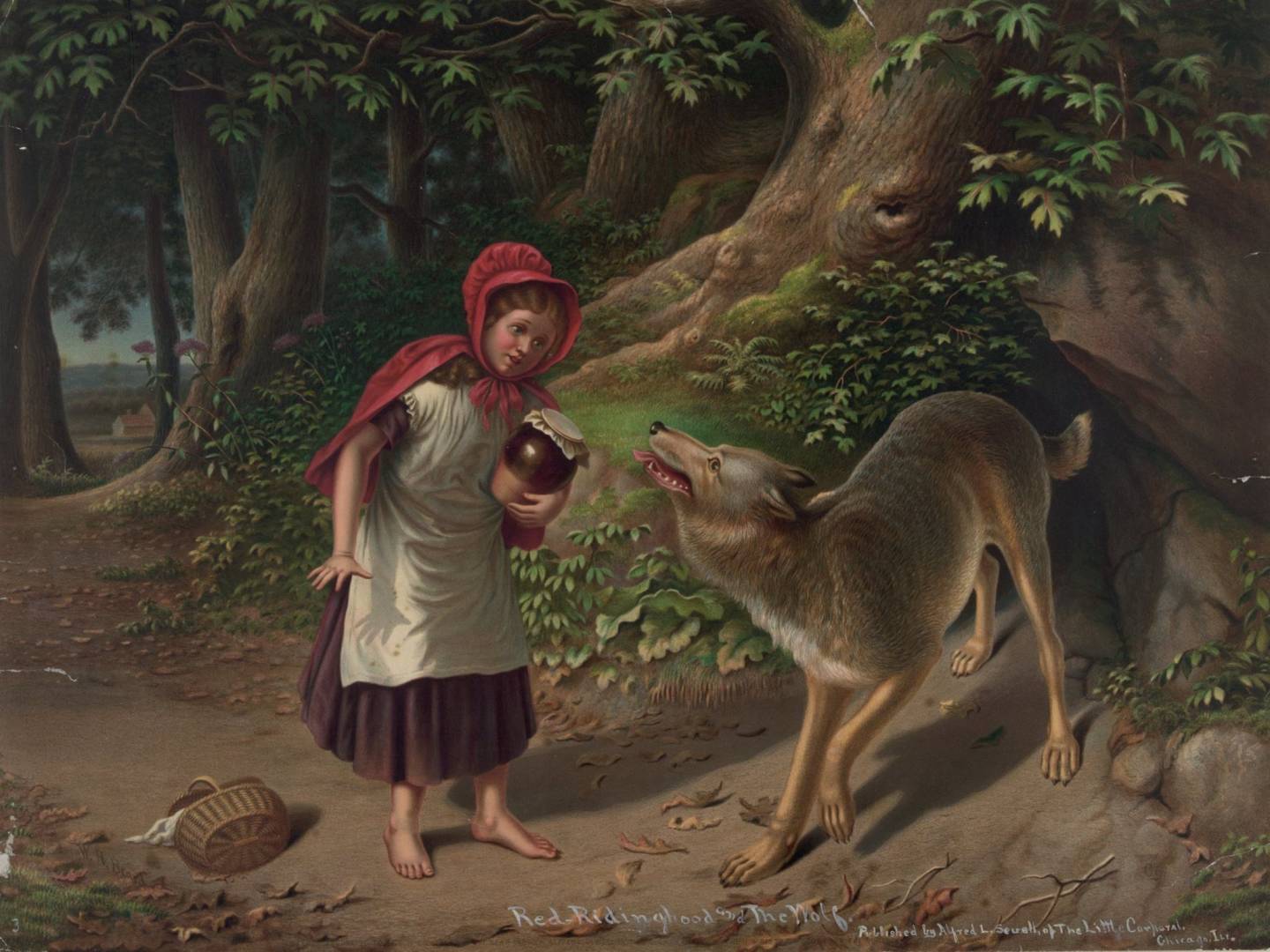
"caption": "In \"Little Red Riding Hood,\" a young girl and her grandmother are attacked by a wolf, seen in this 1870s illustration by Alfred L. Sewell. In the NRA version, Red wards off the wolf with a rifle. (Photo: Buyenlarge via Getty Images)",
"description": "In \"Little Red Riding Hood,\" a young girl and her grandmother are attacked by a wolf, seen in this 1870s illustration by Alfred L. Sewell. In the NRA version, Red wards off the wolf with a rifle.",
"title": "little red riding hood nra",
"credit": null,
"status": "inherit",
"isLoading": false,
"fetchFailed": false
},
"arts_11441669": {
"type": "attachments",
"id": "arts_11441669",
"meta": {
"index": "attachments_1716263798",
"site": "arts",
"id": "11441669",
"found": true
},
"parent": 11433242,
"imgSizes": {
"twentyfourteen-full-width": {
"file": "https://ww2.kqed.org/app/uploads/sites/2/2016/03/Tony.BookandBio-1038x576.jpg",
"width": 1038,
"mimeType": "image/jpeg",
"height": 576
},
"thumbnail": {
"file": "https://ww2.kqed.org/app/uploads/sites/2/2016/03/Tony.BookandBio-400x225.jpg",
"width": 400,
"mimeType": "image/jpeg",
"height": 225
},
"fd-sm": {
"file": "https://ww2.kqed.org/app/uploads/sites/2/2016/03/Tony.BookandBio-960x540.jpg",
"width": 960,
"mimeType": "image/jpeg",
"height": 540
},
"post-thumbnail": {
"file": "https://ww2.kqed.org/app/uploads/sites/2/2016/03/Tony.BookandBio-672x372.jpg",
"width": 672,
"mimeType": "image/jpeg",
"height": 372
},
"kqedFullSize": {
"file": "https://ww2.kqed.org/app/uploads/sites/2/2016/03/Tony.BookandBio.jpg",
"width": 1550,
"height": 872
},
"large": {
"file": "https://ww2.kqed.org/app/uploads/sites/2/2016/03/Tony.BookandBio-1180x664.jpg",
"width": 1180,
"mimeType": "image/jpeg",
"height": 664
},
"guest-author-96": {
"file": "https://ww2.kqed.org/app/uploads/sites/2/2016/03/Tony.BookandBio-96x96.jpg",
"width": 96,
"mimeType": "image/jpeg",
"height": 96
},
"medium": {
"file": "https://ww2.kqed.org/app/uploads/sites/2/2016/03/Tony.BookandBio-800x450.jpg",
"width": 800,
"mimeType": "image/jpeg",
"height": 450
},
"guest-author-64": {
"file": "https://ww2.kqed.org/app/uploads/sites/2/2016/03/Tony.BookandBio-64x64.jpg",
"width": 64,
"mimeType": "image/jpeg",
"height": 64
},
"guest-author-32": {
"file": "https://ww2.kqed.org/app/uploads/sites/2/2016/03/Tony.BookandBio-32x32.jpg",
"width": 32,
"mimeType": "image/jpeg",
"height": 32
},
"fd-med": {
"file": "https://ww2.kqed.org/app/uploads/sites/2/2016/03/Tony.BookandBio-1180x664.jpg",
"width": 1180,
"mimeType": "image/jpeg",
"height": 664
},
"detail": {
"file": "https://ww2.kqed.org/app/uploads/sites/2/2016/03/Tony.BookandBio-75x75.jpg",
"width": 75,
"mimeType": "image/jpeg",
"height": 75
},
"medium_large": {
"file": "https://ww2.kqed.org/app/uploads/sites/2/2016/03/Tony.BookandBio-768x432.jpg",
"width": 768,
"mimeType": "image/jpeg",
"height": 432
},
"guest-author-128": {
"file": "https://ww2.kqed.org/app/uploads/sites/2/2016/03/Tony.BookandBio-128x128.jpg",
"width": 128,
"mimeType": "image/jpeg",
"height": 128
}
},
"publishDate": 1459102178,
"modified": 1459102766,
"caption": "In 'Private Citizens,' Tony Tulathimutte writes like he’s tossing firecrackers: quick and brutal bursts of language and narrative.",
"description": "In 'Private Citizens,' Tony Tulathimutte writes like he’s tossing firecrackers: quick and brutal bursts of language and narrative.",
"title": "Tony.BookandBio",
"credit": "Photo: Lydia White ",
"status": "inherit",
"isLoading": false,
"fetchFailed": false
},
"pop_21445": {
"type": "attachments",
"id": "pop_21445",
"meta": {
"index": "attachments_1716263798",
"site": "pop",
"id": "21445",
"found": true
},
"parent": 21444,
"imgSizes": {
"thumbnail": {
"file": "https://ww2.kqed.org/app/uploads/sites/12/2016/03/nina-eb8e5990c511382da71216ef40bb2e7ae9bd17dd-400x300.png",
"width": 400,
"mimeType": "image/png",
"height": 300
},
"post-thumbnail": {
"file": "https://ww2.kqed.org/app/uploads/sites/12/2016/03/nina-eb8e5990c511382da71216ef40bb2e7ae9bd17dd-672x372.png",
"width": 672,
"mimeType": "image/png",
"height": 372
},
"kqedFullSize": {
"file": "https://ww2.kqed.org/app/uploads/sites/12/2016/03/nina-eb8e5990c511382da71216ef40bb2e7ae9bd17dd.png",
"width": 715,
"height": 536
},
"guest-author-96": {
"file": "https://ww2.kqed.org/app/uploads/sites/12/2016/03/nina-eb8e5990c511382da71216ef40bb2e7ae9bd17dd-96x96.png",
"width": 96,
"mimeType": "image/png",
"height": 96
},
"guest-author-64": {
"file": "https://ww2.kqed.org/app/uploads/sites/12/2016/03/nina-eb8e5990c511382da71216ef40bb2e7ae9bd17dd-64x64.png",
"width": 64,
"mimeType": "image/png",
"height": 64
},
"detail": {
"file": "https://ww2.kqed.org/app/uploads/sites/12/2016/03/nina-eb8e5990c511382da71216ef40bb2e7ae9bd17dd-75x75.png",
"width": 75,
"mimeType": "image/png",
"height": 75
},
"guest-author-32": {
"file": "https://ww2.kqed.org/app/uploads/sites/12/2016/03/nina-eb8e5990c511382da71216ef40bb2e7ae9bd17dd-32x32.png",
"width": 32,
"mimeType": "image/png",
"height": 32
},
"guest-author-128": {
"file": "https://ww2.kqed.org/app/uploads/sites/12/2016/03/nina-eb8e5990c511382da71216ef40bb2e7ae9bd17dd-128x128.png",
"width": 128,
"mimeType": "image/png",
"height": 128
}
},
"publishDate": 1458686823,
"modified": 1458687029,
"caption": "This still is from the first trailer for Nina, starring Zoe Saldana as singer Nina Simone. This image of Saldana in dark makeup and with a prosthetic nose helped reignite a controversy over skin color and casting.",
"description": null,
"title": "nina simone zoe saldana",
"credit": null,
"status": "inherit",
"isLoading": false,
"fetchFailed": false
},
"pop_21271": {
"type": "attachments",
"id": "pop_21271",
"meta": {
"index": "attachments_1716263798",
"site": "pop",
"id": "21271",
"found": true
},
"parent": 21265,
"imgSizes": {
"twentyfourteen-full-width": {
"file": "https://ww2.kqed.org/app/uploads/sites/12/2016/03/PATIENCE_P79-80_Colors-copy-1038x576.jpg",
"width": 1038,
"mimeType": "image/jpeg",
"height": 576
},
"thumbnail": {
"file": "https://ww2.kqed.org/app/uploads/sites/12/2016/03/PATIENCE_P79-80_Colors-copy-400x257.jpg",
"width": 400,
"mimeType": "image/jpeg",
"height": 257
},
"fd-sm": {
"file": "https://ww2.kqed.org/app/uploads/sites/12/2016/03/PATIENCE_P79-80_Colors-copy-960x617.jpg",
"width": 960,
"mimeType": "image/jpeg",
"height": 617
},
"post-thumbnail": {
"file": "https://ww2.kqed.org/app/uploads/sites/12/2016/03/PATIENCE_P79-80_Colors-copy-672x372.jpg",
"width": 672,
"mimeType": "image/jpeg",
"height": 372
},
"kqedFullSize": {
"file": "https://ww2.kqed.org/app/uploads/sites/12/2016/03/PATIENCE_P79-80_Colors-copy.jpg",
"width": 4844,
"height": 3113
},
"large": {
"file": "https://ww2.kqed.org/app/uploads/sites/12/2016/03/PATIENCE_P79-80_Colors-copy-1440x925.jpg",
"width": 1440,
"mimeType": "image/jpeg",
"height": 925
},
"guest-author-96": {
"file": "https://ww2.kqed.org/app/uploads/sites/12/2016/03/PATIENCE_P79-80_Colors-copy-96x96.jpg",
"width": 96,
"mimeType": "image/jpeg",
"height": 96
},
"medium": {
"file": "https://ww2.kqed.org/app/uploads/sites/12/2016/03/PATIENCE_P79-80_Colors-copy-800x514.jpg",
"width": 800,
"mimeType": "image/jpeg",
"height": 514
},
"guest-author-64": {
"file": "https://ww2.kqed.org/app/uploads/sites/12/2016/03/PATIENCE_P79-80_Colors-copy-64x64.jpg",
"width": 64,
"mimeType": "image/jpeg",
"height": 64
},
"guest-author-32": {
"file": "https://ww2.kqed.org/app/uploads/sites/12/2016/03/PATIENCE_P79-80_Colors-copy-32x32.jpg",
"width": 32,
"mimeType": "image/jpeg",
"height": 32
},
"fd-lrg": {
"file": "https://ww2.kqed.org/app/uploads/sites/12/2016/03/PATIENCE_P79-80_Colors-copy-1920x1234.jpg",
"width": 1920,
"mimeType": "image/jpeg",
"height": 1234
},
"fd-med": {
"file": "https://ww2.kqed.org/app/uploads/sites/12/2016/03/PATIENCE_P79-80_Colors-copy-1180x758.jpg",
"width": 1180,
"mimeType": "image/jpeg",
"height": 758
},
"detail": {
"file": "https://ww2.kqed.org/app/uploads/sites/12/2016/03/PATIENCE_P79-80_Colors-copy-75x75.jpg",
"width": 75,
"mimeType": "image/jpeg",
"height": 75
},
"medium_large": {
"file": "https://ww2.kqed.org/app/uploads/sites/12/2016/03/PATIENCE_P79-80_Colors-copy-768x494.jpg",
"width": 768,
"mimeType": "image/jpeg",
"height": 494
},
"guest-author-128": {
"file": "https://ww2.kqed.org/app/uploads/sites/12/2016/03/PATIENCE_P79-80_Colors-copy-128x128.jpg",
"width": 128,
"mimeType": "image/jpeg",
"height": 128
}
},
"publishDate": 1458261010,
"modified": 1458261038,
"caption": "A page from 'Patience,' by Daniel Clowes. ",
"description": "A page from 'Patience,' by Daniel Clowes. ",
"title": "PATIENCE_P79-80_Colors copy",
"credit": "Fantagraphics",
"status": "inherit",
"isLoading": false,
"fetchFailed": false
},
"arts_11412069": {
"type": "attachments",
"id": "arts_11412069",
"meta": {
"index": "attachments_1716263798",
"site": "arts",
"id": "11412069",
"found": true
},
"parent": 11412068,
"imgSizes": {
"twentyfourteen-full-width": {
"file": "https://ww2.kqed.org/app/uploads/sites/2/2016/03/elizabethpercer-1038x576.jpg",
"width": 1038,
"mimeType": "image/jpeg",
"height": 576
},
"thumbnail": {
"file": "https://ww2.kqed.org/app/uploads/sites/2/2016/03/elizabethpercer-400x267.jpg",
"width": 400,
"mimeType": "image/jpeg",
"height": 267
},
"fd-sm": {
"file": "https://ww2.kqed.org/app/uploads/sites/2/2016/03/elizabethpercer-960x640.jpg",
"width": 960,
"mimeType": "image/jpeg",
"height": 640
},
"post-thumbnail": {
"file": "https://ww2.kqed.org/app/uploads/sites/2/2016/03/elizabethpercer-672x372.jpg",
"width": 672,
"mimeType": "image/jpeg",
"height": 372
},
"kqedFullSize": {
"file": "https://ww2.kqed.org/app/uploads/sites/2/2016/03/elizabethpercer-e1458165750217.jpg",
"width": 1080,
"height": 720
},
"large": {
"file": "https://ww2.kqed.org/app/uploads/sites/2/2016/03/elizabethpercer-1180x786.jpg",
"width": 1180,
"mimeType": "image/jpeg",
"height": 786
},
"guest-author-96": {
"file": "https://ww2.kqed.org/app/uploads/sites/2/2016/03/elizabethpercer-96x96.jpg",
"width": 96,
"mimeType": "image/jpeg",
"height": 96
},
"medium": {
"file": "https://ww2.kqed.org/app/uploads/sites/2/2016/03/elizabethpercer-800x533.jpg",
"width": 800,
"mimeType": "image/jpeg",
"height": 533
},
"guest-author-64": {
"file": "https://ww2.kqed.org/app/uploads/sites/2/2016/03/elizabethpercer-64x64.jpg",
"width": 64,
"mimeType": "image/jpeg",
"height": 64
},
"guest-author-32": {
"file": "https://ww2.kqed.org/app/uploads/sites/2/2016/03/elizabethpercer-32x32.jpg",
"width": 32,
"mimeType": "image/jpeg",
"height": 32
},
"fd-lrg": {
"file": "https://ww2.kqed.org/app/uploads/sites/2/2016/03/elizabethpercer-1920x1280.jpg",
"width": 1920,
"mimeType": "image/jpeg",
"height": 1280
},
"fd-med": {
"file": "https://ww2.kqed.org/app/uploads/sites/2/2016/03/elizabethpercer-1180x786.jpg",
"width": 1180,
"mimeType": "image/jpeg",
"height": 786
},
"detail": {
"file": "https://ww2.kqed.org/app/uploads/sites/2/2016/03/elizabethpercer-75x75.jpg",
"width": 75,
"mimeType": "image/jpeg",
"height": 75
},
"medium_large": {
"file": "https://ww2.kqed.org/app/uploads/sites/2/2016/03/elizabethpercer-768x512.jpg",
"width": 768,
"mimeType": "image/jpeg",
"height": 512
},
"guest-author-128": {
"file": "https://ww2.kqed.org/app/uploads/sites/2/2016/03/elizabethpercer-128x128.jpg",
"width": 128,
"mimeType": "image/jpeg",
"height": 128
}
},
"publishDate": 1458165733,
"modified": 1458495228,
"caption": "Elizabeth Percer, author of 'All Stories are Love Stories' appears at City Lights on March 22 and Books Inc. Palo Alto on March 29. ",
"description": "Elizabeth Percer, author of 'All Stories are Love Stories' appears at City Lights on March 22 and Books Inc. Palo Alto on March 29. ",
"title": "elizabethpercer",
"credit": null,
"status": "inherit",
"isLoading": false,
"fetchFailed": false
},
"arts_11418577": {
"type": "attachments",
"id": "arts_11418577",
"meta": {
"index": "attachments_1716263798",
"site": "arts",
"id": "11418577",
"found": true
},
"parent": 11418576,
"imgSizes": {
"twentyfourteen-full-width": {
"file": "https://ww2.kqed.org/app/uploads/sites/2/2016/03/RS18831_Woz.JPG-qut-1038x576.jpg",
"width": 1038,
"mimeType": "image/jpeg",
"height": 576
},
"thumbnail": {
"file": "https://ww2.kqed.org/app/uploads/sites/2/2016/03/RS18831_Woz.JPG-qut-400x300.jpg",
"width": 400,
"mimeType": "image/jpeg",
"height": 300
},
"fd-sm": {
"file": "https://ww2.kqed.org/app/uploads/sites/2/2016/03/RS18831_Woz.JPG-qut-960x720.jpg",
"width": 960,
"mimeType": "image/jpeg",
"height": 720
},
"post-thumbnail": {
"file": "https://ww2.kqed.org/app/uploads/sites/2/2016/03/RS18831_Woz.JPG-qut-672x372.jpg",
"width": 672,
"mimeType": "image/jpeg",
"height": 372
},
"kqedFullSize": {
"file": "https://ww2.kqed.org/app/uploads/sites/2/2016/03/RS18831_Woz.JPG-qut.jpg",
"width": 1632,
"height": 1224
},
"large": {
"file": "https://ww2.kqed.org/app/uploads/sites/2/2016/03/RS18831_Woz.JPG-qut-1180x885.jpg",
"width": 1180,
"mimeType": "image/jpeg",
"height": 885
},
"guest-author-96": {
"file": "https://ww2.kqed.org/app/uploads/sites/2/2016/03/RS18831_Woz.JPG-qut-96x96.jpg",
"width": 96,
"mimeType": "image/jpeg",
"height": 96
},
"medium": {
"file": "https://ww2.kqed.org/app/uploads/sites/2/2016/03/RS18831_Woz.JPG-qut-800x600.jpg",
"width": 800,
"mimeType": "image/jpeg",
"height": 600
},
"guest-author-64": {
"file": "https://ww2.kqed.org/app/uploads/sites/2/2016/03/RS18831_Woz.JPG-qut-64x64.jpg",
"width": 64,
"mimeType": "image/jpeg",
"height": 64
},
"guest-author-32": {
"file": "https://ww2.kqed.org/app/uploads/sites/2/2016/03/RS18831_Woz.JPG-qut-32x32.jpg",
"width": 32,
"mimeType": "image/jpeg",
"height": 32
},
"fd-med": {
"file": "https://ww2.kqed.org/app/uploads/sites/2/2016/03/RS18831_Woz.JPG-qut-1180x885.jpg",
"width": 1180,
"mimeType": "image/jpeg",
"height": 885
},
"detail": {
"file": "https://ww2.kqed.org/app/uploads/sites/2/2016/03/RS18831_Woz.JPG-qut-75x75.jpg",
"width": 75,
"mimeType": "image/jpeg",
"height": 75
},
"medium_large": {
"file": "https://ww2.kqed.org/app/uploads/sites/2/2016/03/RS18831_Woz.JPG-qut-768x576.jpg",
"width": 768,
"mimeType": "image/jpeg",
"height": 576
},
"guest-author-128": {
"file": "https://ww2.kqed.org/app/uploads/sites/2/2016/03/RS18831_Woz.JPG-qut-128x128.jpg",
"width": 128,
"mimeType": "image/jpeg",
"height": 128
}
},
"publishDate": 1458360252,
"modified": 1458360302,
"caption": "Silicon Valley Comic Con co-founder Steve Wozniak is literally the face of this event.",
"description": "Silicon Valley Comic Con co-founder Steve Wozniak is literally the face of this event.",
"title": "RS18831_Woz.JPG-qut",
"credit": "Photo: Rachael Myrow/KQED",
"status": "inherit",
"isLoading": false,
"fetchFailed": false
},
"arts_11414651": {
"type": "attachments",
"id": "arts_11414651",
"meta": {
"index": "attachments_1716263798",
"site": "arts",
"id": "11414651",
"found": true
},
"parent": 11414527,
"imgSizes": {
"twentyfourteen-full-width": {
"file": "https://ww2.kqed.org/app/uploads/sites/2/2016/03/Burlesque_JulieMuz_credit-RoxiDlite-2-e1458246497572-1038x576.jpg",
"width": 1038,
"mimeType": "image/jpeg",
"height": 576
},
"thumbnail": {
"file": "https://ww2.kqed.org/app/uploads/sites/2/2016/03/Burlesque_JulieMuz_credit-RoxiDlite-2-e1458246497572-400x266.jpg",
"width": 400,
"mimeType": "image/jpeg",
"height": 266
},
"fd-sm": {
"file": "https://ww2.kqed.org/app/uploads/sites/2/2016/03/Burlesque_JulieMuz_credit-RoxiDlite-2-e1458246497572-960x638.jpg",
"width": 960,
"mimeType": "image/jpeg",
"height": 638
},
"post-thumbnail": {
"file": "https://ww2.kqed.org/app/uploads/sites/2/2016/03/Burlesque_JulieMuz_credit-RoxiDlite-2-e1458246497572-672x372.jpg",
"width": 672,
"mimeType": "image/jpeg",
"height": 372
},
"kqedFullSize": {
"file": "https://ww2.kqed.org/app/uploads/sites/2/2016/03/Burlesque_JulieMuz_credit-RoxiDlite-2-e1458246497572.jpg",
"width": 2005,
"height": 1332
},
"large": {
"file": "https://ww2.kqed.org/app/uploads/sites/2/2016/03/Burlesque_JulieMuz_credit-RoxiDlite-2-e1458246497572-1180x784.jpg",
"width": 1180,
"mimeType": "image/jpeg",
"height": 784
},
"guest-author-96": {
"file": "https://ww2.kqed.org/app/uploads/sites/2/2016/03/Burlesque_JulieMuz_credit-RoxiDlite-2-e1458246497572-96x96.jpg",
"width": 96,
"mimeType": "image/jpeg",
"height": 96
},
"medium": {
"file": "https://ww2.kqed.org/app/uploads/sites/2/2016/03/Burlesque_JulieMuz_credit-RoxiDlite-2-e1458246497572-800x531.jpg",
"width": 800,
"mimeType": "image/jpeg",
"height": 531
},
"guest-author-64": {
"file": "https://ww2.kqed.org/app/uploads/sites/2/2016/03/Burlesque_JulieMuz_credit-RoxiDlite-2-e1458246497572-64x64.jpg",
"width": 64,
"mimeType": "image/jpeg",
"height": 64
},
"guest-author-32": {
"file": "https://ww2.kqed.org/app/uploads/sites/2/2016/03/Burlesque_JulieMuz_credit-RoxiDlite-2-e1458246497572-32x32.jpg",
"width": 32,
"mimeType": "image/jpeg",
"height": 32
},
"fd-lrg": {
"file": "https://ww2.kqed.org/app/uploads/sites/2/2016/03/Burlesque_JulieMuz_credit-RoxiDlite-2-e1458246497572-1920x1276.jpg",
"width": 1920,
"mimeType": "image/jpeg",
"height": 1276
},
"fd-med": {
"file": "https://ww2.kqed.org/app/uploads/sites/2/2016/03/Burlesque_JulieMuz_credit-RoxiDlite-2-e1458246497572-1180x784.jpg",
"width": 1180,
"mimeType": "image/jpeg",
"height": 784
},
"detail": {
"file": "https://ww2.kqed.org/app/uploads/sites/2/2016/03/Burlesque_JulieMuz_credit-RoxiDlite-2-e1458246497572-75x75.jpg",
"width": 75,
"mimeType": "image/jpeg",
"height": 75
},
"medium_large": {
"file": "https://ww2.kqed.org/app/uploads/sites/2/2016/03/Burlesque_JulieMuz_credit-RoxiDlite-2-e1458246497572-768x510.jpg",
"width": 768,
"mimeType": "image/jpeg",
"height": 510
},
"guest-author-128": {
"file": "https://ww2.kqed.org/app/uploads/sites/2/2016/03/Burlesque_JulieMuz_credit-RoxiDlite-2-e1458246497572-128x128.jpg",
"width": 128,
"mimeType": "image/jpeg",
"height": 128
}
},
"publishDate": 1458240796,
"modified": 1458240980,
"caption": "Performer Julie Muz in ‘Take It Off! Burlesque’, part of the Jewish Community Center’s ‘Uninhibited About Sex’ series this spring",
"description": "Performer Julie Muz in ‘Take It Off! Burlesque’, part of the Jewish Community Center’s ‘Uninhibited About Sex’ series this spring",
"title": "Burlesque_Julie+Muz_credit-Roxi+Dlite 2",
"credit": "Photo: Courtesy of The Jewish Community Center of San Francisco",
"status": "inherit",
"isLoading": false,
"fetchFailed": false
},
"arts_11397684": {
"type": "attachments",
"id": "arts_11397684",
"meta": {
"index": "attachments_1716263798",
"site": "arts",
"id": "11397684",
"found": true
},
"parent": 11397306,
"imgSizes": {
"thumbnail": {
"file": "https://ww2.kqed.org/app/uploads/sites/2/2016/03/Nest.MAIN_-400x225.jpg",
"width": 400,
"mimeType": "image/jpeg",
"height": 225
},
"post-thumbnail": {
"file": "https://ww2.kqed.org/app/uploads/sites/2/2016/03/Nest.MAIN_-672x372.jpg",
"width": 672,
"mimeType": "image/jpeg",
"height": 372
},
"kqedFullSize": {
"file": "https://ww2.kqed.org/app/uploads/sites/2/2016/03/Nest.MAIN_.jpg",
"width": 800,
"height": 450
},
"guest-author-96": {
"file": "https://ww2.kqed.org/app/uploads/sites/2/2016/03/Nest.MAIN_-96x96.jpg",
"width": 96,
"mimeType": "image/jpeg",
"height": 96
},
"medium": {
"file": "https://ww2.kqed.org/app/uploads/sites/2/2016/03/Nest.MAIN_-800x450.jpg",
"width": 800,
"mimeType": "image/jpeg",
"height": 450
},
"guest-author-64": {
"file": "https://ww2.kqed.org/app/uploads/sites/2/2016/03/Nest.MAIN_-64x64.jpg",
"width": 64,
"mimeType": "image/jpeg",
"height": 64
},
"detail": {
"file": "https://ww2.kqed.org/app/uploads/sites/2/2016/03/Nest.MAIN_-75x75.jpg",
"width": 75,
"mimeType": "image/jpeg",
"height": 75
},
"guest-author-32": {
"file": "https://ww2.kqed.org/app/uploads/sites/2/2016/03/Nest.MAIN_-32x32.jpg",
"width": 32,
"mimeType": "image/jpeg",
"height": 32
},
"medium_large": {
"file": "https://ww2.kqed.org/app/uploads/sites/2/2016/03/Nest.MAIN_-768x432.jpg",
"width": 768,
"mimeType": "image/jpeg",
"height": 432
},
"guest-author-128": {
"file": "https://ww2.kqed.org/app/uploads/sites/2/2016/03/Nest.MAIN_-128x128.jpg",
"width": 128,
"mimeType": "image/jpeg",
"height": 128
}
},
"publishDate": 1457731892,
"modified": 1457731892,
"caption": null,
"description": null,
"title": "Nest.MAIN",
"credit": null,
"status": "inherit",
"isLoading": false,
"fetchFailed": false
},
"arts_11407160": {
"type": "attachments",
"id": "arts_11407160",
"meta": {
"index": "attachments_1716263798",
"site": "arts",
"id": "11407160",
"found": true
},
"parent": 11406303,
"imgSizes": {
"twentyfourteen-full-width": {
"file": "https://ww2.kqed.org/app/uploads/sites/2/2016/03/Fun-Homes-Creators-l-r-Alison-Bechdel-Lisa-Kron-Jeanine-Tesorio-Sam-Gold-1038x576.jpg",
"width": 1038,
"mimeType": "image/jpeg",
"height": 576
},
"thumbnail": {
"file": "https://ww2.kqed.org/app/uploads/sites/2/2016/03/Fun-Homes-Creators-l-r-Alison-Bechdel-Lisa-Kron-Jeanine-Tesorio-Sam-Gold-400x247.jpg",
"width": 400,
"mimeType": "image/jpeg",
"height": 247
},
"fd-sm": {
"file": "https://ww2.kqed.org/app/uploads/sites/2/2016/03/Fun-Homes-Creators-l-r-Alison-Bechdel-Lisa-Kron-Jeanine-Tesorio-Sam-Gold-960x594.jpg",
"width": 960,
"mimeType": "image/jpeg",
"height": 594
},
"post-thumbnail": {
"file": "https://ww2.kqed.org/app/uploads/sites/2/2016/03/Fun-Homes-Creators-l-r-Alison-Bechdel-Lisa-Kron-Jeanine-Tesorio-Sam-Gold-672x372.jpg",
"width": 672,
"mimeType": "image/jpeg",
"height": 372
},
"kqedFullSize": {
"file": "https://ww2.kqed.org/app/uploads/sites/2/2016/03/Fun-Homes-Creators-l-r-Alison-Bechdel-Lisa-Kron-Jeanine-Tesorio-Sam-Gold.jpg",
"width": 2938,
"height": 1817
},
"large": {
"file": "https://ww2.kqed.org/app/uploads/sites/2/2016/03/Fun-Homes-Creators-l-r-Alison-Bechdel-Lisa-Kron-Jeanine-Tesorio-Sam-Gold-1180x730.jpg",
"width": 1180,
"mimeType": "image/jpeg",
"height": 730
},
"guest-author-96": {
"file": "https://ww2.kqed.org/app/uploads/sites/2/2016/03/Fun-Homes-Creators-l-r-Alison-Bechdel-Lisa-Kron-Jeanine-Tesorio-Sam-Gold-96x96.jpg",
"width": 96,
"mimeType": "image/jpeg",
"height": 96
},
"medium": {
"file": "https://ww2.kqed.org/app/uploads/sites/2/2016/03/Fun-Homes-Creators-l-r-Alison-Bechdel-Lisa-Kron-Jeanine-Tesorio-Sam-Gold-800x495.jpg",
"width": 800,
"mimeType": "image/jpeg",
"height": 495
},
"guest-author-64": {
"file": "https://ww2.kqed.org/app/uploads/sites/2/2016/03/Fun-Homes-Creators-l-r-Alison-Bechdel-Lisa-Kron-Jeanine-Tesorio-Sam-Gold-64x64.jpg",
"width": 64,
"mimeType": "image/jpeg",
"height": 64
},
"guest-author-32": {
"file": "https://ww2.kqed.org/app/uploads/sites/2/2016/03/Fun-Homes-Creators-l-r-Alison-Bechdel-Lisa-Kron-Jeanine-Tesorio-Sam-Gold-32x32.jpg",
"width": 32,
"mimeType": "image/jpeg",
"height": 32
},
"fd-lrg": {
"file": "https://ww2.kqed.org/app/uploads/sites/2/2016/03/Fun-Homes-Creators-l-r-Alison-Bechdel-Lisa-Kron-Jeanine-Tesorio-Sam-Gold-1920x1187.jpg",
"width": 1920,
"mimeType": "image/jpeg",
"height": 1187
},
"fd-med": {
"file": "https://ww2.kqed.org/app/uploads/sites/2/2016/03/Fun-Homes-Creators-l-r-Alison-Bechdel-Lisa-Kron-Jeanine-Tesorio-Sam-Gold-1180x730.jpg",
"width": 1180,
"mimeType": "image/jpeg",
"height": 730
},
"detail": {
"file": "https://ww2.kqed.org/app/uploads/sites/2/2016/03/Fun-Homes-Creators-l-r-Alison-Bechdel-Lisa-Kron-Jeanine-Tesorio-Sam-Gold-75x75.jpg",
"width": 75,
"mimeType": "image/jpeg",
"height": 75
},
"medium_large": {
"file": "https://ww2.kqed.org/app/uploads/sites/2/2016/03/Fun-Homes-Creators-l-r-Alison-Bechdel-Lisa-Kron-Jeanine-Tesorio-Sam-Gold-768x475.jpg",
"width": 768,
"mimeType": "image/jpeg",
"height": 475
},
"guest-author-128": {
"file": "https://ww2.kqed.org/app/uploads/sites/2/2016/03/Fun-Homes-Creators-l-r-Alison-Bechdel-Lisa-Kron-Jeanine-Tesorio-Sam-Gold-128x128.jpg",
"width": 128,
"mimeType": "image/jpeg",
"height": 128
}
},
"publishDate": 1458022320,
"modified": 1458022611,
"caption": "Fun Home's Creators: (l-r) Alison Bechdel, Lisa Kron, Jeanine Tesorio, Sam Gold'Fun Home' creators: (l-r) Alison Bechdel, Lisa Kron, Jeanine Tesorio, Sam Gold",
"description": "'Fun Home' creators: (l-r) Alison Bechdel, Lisa Kron, Jeanine Tesorio, Sam Gold",
"title": "'Fun Home' creators: (l-r) Alison Bechdel, Lisa Kron, Jeanine Tesorio, Sam Gold",
"credit": "Photo: Cy Musiker/KQED",
"status": "inherit",
"isLoading": false,
"fetchFailed": false
},
"arts_11403098": {
"type": "attachments",
"id": "arts_11403098",
"meta": {
"index": "attachments_1716263798",
"site": "arts",
"id": "11403098",
"found": true
},
"parent": 11397686,
"imgSizes": {
"twentyfourteen-full-width": {
"file": "https://ww2.kqed.org/app/uploads/sites/2/2016/03/BroadCity.LaneSavage-1038x576.jpg",
"width": 1038,
"mimeType": "image/jpeg",
"height": 576
},
"thumbnail": {
"file": "https://ww2.kqed.org/app/uploads/sites/2/2016/03/BroadCity.LaneSavage-400x225.jpg",
"width": 400,
"mimeType": "image/jpeg",
"height": 225
},
"fd-sm": {
"file": "https://ww2.kqed.org/app/uploads/sites/2/2016/03/BroadCity.LaneSavage-960x540.jpg",
"width": 960,
"mimeType": "image/jpeg",
"height": 540
},
"post-thumbnail": {
"file": "https://ww2.kqed.org/app/uploads/sites/2/2016/03/BroadCity.LaneSavage-672x372.jpg",
"width": 672,
"mimeType": "image/jpeg",
"height": 372
},
"kqedFullSize": {
"file": "https://ww2.kqed.org/app/uploads/sites/2/2016/03/BroadCity.LaneSavage.jpg",
"width": 1734,
"height": 975
},
"large": {
"file": "https://ww2.kqed.org/app/uploads/sites/2/2016/03/BroadCity.LaneSavage-1180x663.jpg",
"width": 1180,
"mimeType": "image/jpeg",
"height": 663
},
"guest-author-96": {
"file": "https://ww2.kqed.org/app/uploads/sites/2/2016/03/BroadCity.LaneSavage-96x96.jpg",
"width": 96,
"mimeType": "image/jpeg",
"height": 96
},
"medium": {
"file": "https://ww2.kqed.org/app/uploads/sites/2/2016/03/BroadCity.LaneSavage-800x450.jpg",
"width": 800,
"mimeType": "image/jpeg",
"height": 450
},
"guest-author-64": {
"file": "https://ww2.kqed.org/app/uploads/sites/2/2016/03/BroadCity.LaneSavage-64x64.jpg",
"width": 64,
"mimeType": "image/jpeg",
"height": 64
},
"guest-author-32": {
"file": "https://ww2.kqed.org/app/uploads/sites/2/2016/03/BroadCity.LaneSavage-32x32.jpg",
"width": 32,
"mimeType": "image/jpeg",
"height": 32
},
"fd-med": {
"file": "https://ww2.kqed.org/app/uploads/sites/2/2016/03/BroadCity.LaneSavage-1180x663.jpg",
"width": 1180,
"mimeType": "image/jpeg",
"height": 663
},
"detail": {
"file": "https://ww2.kqed.org/app/uploads/sites/2/2016/03/BroadCity.LaneSavage-75x75.jpg",
"width": 75,
"mimeType": "image/jpeg",
"height": 75
},
"medium_large": {
"file": "https://ww2.kqed.org/app/uploads/sites/2/2016/03/BroadCity.LaneSavage-768x432.jpg",
"width": 768,
"mimeType": "image/jpeg",
"height": 432
},
"guest-author-128": {
"file": "https://ww2.kqed.org/app/uploads/sites/2/2016/03/BroadCity.LaneSavage-128x128.jpg",
"width": 128,
"mimeType": "image/jpeg",
"height": 128
}
},
"publishDate": 1457899014,
"modified": 1457899050,
"caption": "\"A decade after Sex and the City's end, television has Broad City, which is even less apologetic about its vision of female friendship eclipsing hetero partnership.\" From 'All the Single Ladies: Unmarried Women and the Rise of the Independent Nation' by Rebecca Traister.",
"description": "\"A decade after Sex and the City's end, television has Broad City, which is even less apologetic about its vision of female friendship eclipsing hetero partnership.\" From 'All the Single Ladies: Unmarried Women and the Rise of the Independent Nation' by Rebecca Traister.",
"title": "BroadCity.LaneSavage",
"credit": "Lane Savage",
"status": "inherit",
"isLoading": false,
"fetchFailed": false
},
"arts_11377070": {
"type": "attachments",
"id": "arts_11377070",
"meta": {
"index": "attachments_1716263798",
"site": "arts",
"id": "11377070",
"found": true
},
"parent": 11376959,
"imgSizes": {
"twentyfourteen-full-width": {
"file": "https://ww2.kqed.org/app/uploads/sites/2/2016/03/CSpic-e1457311748773-1038x576.png",
"width": 1038,
"mimeType": "image/png",
"height": 576
},
"thumbnail": {
"file": "https://ww2.kqed.org/app/uploads/sites/2/2016/03/CSpic-e1457311748773-400x243.png",
"width": 400,
"mimeType": "image/png",
"height": 243
},
"fd-sm": {
"file": "https://ww2.kqed.org/app/uploads/sites/2/2016/03/CSpic-e1457311748773-960x583.png",
"width": 960,
"mimeType": "image/png",
"height": 583
},
"post-thumbnail": {
"file": "https://ww2.kqed.org/app/uploads/sites/2/2016/03/CSpic-e1457311748773-672x372.png",
"width": 672,
"mimeType": "image/png",
"height": 372
},
"kqedFullSize": {
"file": "https://ww2.kqed.org/app/uploads/sites/2/2016/03/CSpic-e1457311748773.png",
"width": 1039,
"height": 631
},
"guest-author-96": {
"file": "https://ww2.kqed.org/app/uploads/sites/2/2016/03/CSpic-e1457311748773-96x96.png",
"width": 96,
"mimeType": "image/png",
"height": 96
},
"medium": {
"file": "https://ww2.kqed.org/app/uploads/sites/2/2016/03/CSpic-e1457311748773-800x486.png",
"width": 800,
"mimeType": "image/png",
"height": 486
},
"guest-author-64": {
"file": "https://ww2.kqed.org/app/uploads/sites/2/2016/03/CSpic-e1457311748773-64x64.png",
"width": 64,
"mimeType": "image/png",
"height": 64
},
"detail": {
"file": "https://ww2.kqed.org/app/uploads/sites/2/2016/03/CSpic-e1457311748773-75x75.png",
"width": 75,
"mimeType": "image/png",
"height": 75
},
"guest-author-32": {
"file": "https://ww2.kqed.org/app/uploads/sites/2/2016/03/CSpic-e1457311748773-32x32.png",
"width": 32,
"mimeType": "image/png",
"height": 32
},
"medium_large": {
"file": "https://ww2.kqed.org/app/uploads/sites/2/2016/03/CSpic-e1457311748773-768x466.png",
"width": 768,
"mimeType": "image/png",
"height": 466
},
"guest-author-128": {
"file": "https://ww2.kqed.org/app/uploads/sites/2/2016/03/CSpic-e1457311748773-128x128.png",
"width": 128,
"mimeType": "image/png",
"height": 128
}
},
"publishDate": 1457035305,
"modified": 1457035540,
"caption": "Charlotte Shane hit it big with her Tiny Letter 'Prostitute Laundry.' She'll be at Green Apple Books in conversation with poet Jenny Zhang on Wednesday, March 9. (Photo Credit: Charlotte Shane) ",
"description": null,
"title": "CSpic",
"credit": null,
"status": "inherit",
"isLoading": false,
"fetchFailed": false
}
},
"audioPlayerReducer": {
"postId": "stream_live",
"isPaused": true,
"isPlaying": false,
"pfsActive": false,
"pledgeModalIsOpen": true,
"playerDrawerIsOpen": false,
"liveAudioPlayStartedAt": 0,
"liveAudioPlayContext": ""
},
"authorsReducer": {
"byline_arts_11444584": {
"type": "authors",
"id": "byline_arts_11444584",
"meta": {
"override": true
},
"slug": "byline_arts_11444584",
"name": "Alexi Horowitz-Ghazi",
"isLoading": false
},
"byline_pop_21594": {
"type": "authors",
"id": "byline_pop_21594",
"meta": {
"override": true
},
"slug": "byline_pop_21594",
"name": "Camila Domonoske",
"isLoading": false
},
"byline_pop_21444": {
"type": "authors",
"id": "byline_pop_21444",
"meta": {
"override": true
},
"slug": "byline_pop_21444",
"name": "Leah Donnella",
"isLoading": false
},
"byline_arts_11397306": {
"type": "authors",
"id": "byline_arts_11397306",
"meta": {
"override": true
},
"slug": "byline_arts_11397306",
"name": "Joy Lazendorfer",
"isLoading": false
},
"cmusiker": {
"type": "authors",
"id": "32",
"meta": {
"index": "authors_1716337520",
"id": "32",
"found": true
},
"name": "Cy Musiker",
"firstName": "Cy",
"lastName": "Musiker",
"slug": "cmusiker",
"email": "cmusiker@kqed.org",
"display_author_email": false,
"staff_mastheads": [],
"title": "KQED Contributor",
"bio": "Cy Musiker is a former co-host of The Do List and a former reporter covering the arts for KQED News and The California Report. He loves live performance, especially great theater, jazz, roots music, anything by Mahler. Cy has an MJ from UC Berkeley's School of Journalism, and got his BA from Hampshire College. His work has been recognized by the Society for Professional Journalists with their Sigma Delta Chi Award for Public Service in Journalism. When he can, Cy likes to swim in Tomales Bay, run with his dog in the East Bay Hills, and hike the Sierra.",
"avatar": "https://secure.gravatar.com/avatar/05eaba5c5696ce8f062e4ea2df428a43?s=600&d=blank&r=g",
"twitter": null,
"facebook": null,
"instagram": null,
"linkedin": null,
"sites": [
{
"site": "arts",
"roles": [
"Contributor",
"subscriber"
]
},
{
"site": "news",
"roles": [
"author"
]
},
{
"site": "bayareabites",
"roles": [
"contributor"
]
}
],
"headData": {
"title": "Cy Musiker | KQED",
"description": "KQED Contributor",
"ogImgSrc": "https://secure.gravatar.com/avatar/05eaba5c5696ce8f062e4ea2df428a43?s=600&d=blank&r=g",
"twImgSrc": "https://secure.gravatar.com/avatar/05eaba5c5696ce8f062e4ea2df428a43?s=600&d=blank&r=g"
},
"isLoading": false,
"link": "/author/cmusiker"
},
"rachael-myrow": {
"type": "authors",
"id": "251",
"meta": {
"index": "authors_1716337520",
"id": "251",
"found": true
},
"name": "Rachael Myrow",
"firstName": "Rachael",
"lastName": "Myrow",
"slug": "rachael-myrow",
"email": "rmyrow@kqed.org",
"display_author_email": true,
"staff_mastheads": [
"news"
],
"title": "Senior Editor of KQED's Silicon Valley News Desk",
"bio": "• I write and edit stories about how Silicon Valley power and policies shape everyday life in California. I’m also passionate about making Bay Area history and culture more accessible to a broad public. • I’ve been a journalist for most of my life, starting in high school with The Franklin Press in Los Angeles, where I grew up. While earning my first degree in English at UC Berkeley, I got my start in public radio at KALX-FM. After completing a second degree in journalism at Cal, I landed my first professional job at Marketplace, then moved on to KPCC (now LAist), and then KQED, where I hosted The California Report for more than seven years. • My reporting has appeared on NPR, The World, WBUR’s \u003ci>Here & Now\u003c/i>, and the BBC. I also guest host for KQED’s \u003ci>Forum\u003c/i>, as well as the Commonwealth Club in San Francisco. • I speak periodically on media, democracy and technology issues, and do voiceover work for documentaries and educational video projects. • Outside of the studio, you'll find me hiking Bay Area trails and whipping up Insta-ready meals in my kitchen. • I do not accept gifts, money, or favors from anyone connected to my reporting, I don't pay people for information, and I do not support or donate to political causes. • I strive to treat the people I report on with fairness, honesty, and respect. I also recognize there are often multiple sides to a story and work to verify information through multiple sources and documentation. If I get something wrong, I correct it.",
"avatar": "https://secure.gravatar.com/avatar/3ed8a3c5f26025e4a805ba634cda8cd764906b97438a6d9ce216b044e340da4e?s=600&d=blank&r=g",
"twitter": "rachaelmyrow",
"bluesky": null,
"facebook": null,
"instagram": null,
"linkedin": "https://www.linkedin.com/in/rachaelmyrow/",
"sites": [
{
"site": "arts",
"roles": [
"administrator"
]
},
{
"site": "news",
"roles": [
"edit_others_posts",
"editor"
]
},
{
"site": "futureofyou",
"roles": [
"editor"
]
},
{
"site": "bayareabites",
"roles": [
"editor"
]
},
{
"site": "stateofhealth",
"roles": [
"editor"
]
},
{
"site": "science",
"roles": [
"editor"
]
},
{
"site": "food",
"roles": [
"editor"
]
},
{
"site": "forum",
"roles": [
"editor"
]
},
{
"site": "liveblog",
"roles": [
"author"
]
}
],
"headData": {
"title": "Rachael Myrow | KQED",
"description": "Senior Editor of KQED's Silicon Valley News Desk",
"ogImgSrc": "https://secure.gravatar.com/avatar/3ed8a3c5f26025e4a805ba634cda8cd764906b97438a6d9ce216b044e340da4e?s=600&d=blank&r=g",
"twImgSrc": "https://secure.gravatar.com/avatar/3ed8a3c5f26025e4a805ba634cda8cd764906b97438a6d9ce216b044e340da4e?s=600&d=blank&r=g"
},
"isLoading": false,
"link": "/author/rachael-myrow"
},
"lclark": {
"type": "authors",
"id": "3224",
"meta": {
"index": "authors_1716337520",
"id": "3224",
"found": true
},
"name": "Leilani Clark",
"firstName": "Leilani",
"lastName": "Clark",
"slug": "lclark",
"email": "clark.leil@gmail.com",
"display_author_email": false,
"staff_mastheads": [],
"title": null,
"bio": "Leilani Clark writes about books for KQED Arts. Her writing has been published at Mother Jones, The Guardian, Civil Eats, Time Magazine, Food & Wine, Edible Marin & Wine Country, and The Rumpus. She is the editor of Made Local magazine in Sonoma County. Find her on Twitter \u003ca href=\"https://twitter.com/leilclark\">@leilclark\u003c/a>.",
"avatar": "https://secure.gravatar.com/avatar/7f691fdc52ed2e3f4cf164d1f4ec0889?s=600&d=blank&r=g",
"twitter": null,
"facebook": null,
"instagram": null,
"linkedin": null,
"sites": [
{
"site": "arts",
"roles": [
"contributor"
]
},
{
"site": "bayareabites",
"roles": [
"contributor"
]
},
{
"site": "food",
"roles": [
"contributor"
]
}
],
"headData": {
"title": "Leilani Clark | KQED",
"description": null,
"ogImgSrc": "https://secure.gravatar.com/avatar/7f691fdc52ed2e3f4cf164d1f4ec0889?s=600&d=blank&r=g",
"twImgSrc": "https://secure.gravatar.com/avatar/7f691fdc52ed2e3f4cf164d1f4ec0889?s=600&d=blank&r=g"
},
"isLoading": false,
"link": "/author/lclark"
},
"esilvers": {
"type": "authors",
"id": "7237",
"meta": {
"index": "authors_1716337520",
"id": "7237",
"found": true
},
"name": "Emma Silvers",
"firstName": "Emma",
"lastName": "Silvers",
"slug": "esilvers",
"email": "esilvers@kqed.org",
"display_author_email": false,
"staff_mastheads": [],
"title": "KQED Contributor",
"bio": "Emma Silvers is an editor at KQED Arts and a former digital producer at KQED News. Born and raised in the Bay Area, she has previously been an arts and entertainment editor at the \u003cem>San Francisco Chronicle\u003c/em>, \u003cem>SF Weekly\u003c/em> and the \u003cem>San Francisco Bay Guardian.\u003c/em> \u003ca href=\"https://www.emmasilvers.com\">Her work\u003c/a> has also appeared in \u003cem>Rolling Stone\u003c/em>, Pitchfork and \u003cem>Mother Jones\u003c/em>. In 2017 she was the recipient of the Society of Professional Journalists-Northern California's award for arts and culture reporting. In 1993 she \u003ca href=\"https://www.kqed.org/pop/16759/wait-what-my-coworker-was-a-voice-over-hyperventilator-for-jurassic-park\">hyperventilated in \u003cem>Jurassic Park\u003c/em>\u003c/a>.",
"avatar": "https://secure.gravatar.com/avatar/247beada39b88ea5759db1f51dba05cf?s=600&d=blank&r=g",
"twitter": "emmaruthless",
"facebook": null,
"instagram": null,
"linkedin": null,
"sites": [
{
"site": "arts",
"roles": [
"editor"
]
},
{
"site": "news",
"roles": [
"editor"
]
},
{
"site": "pop",
"roles": [
"contributor"
]
},
{
"site": "bayareabites",
"roles": [
"editor"
]
},
{
"site": "food",
"roles": [
"contributor"
]
},
{
"site": "liveblog",
"roles": [
"editor"
]
}
],
"headData": {
"title": "Emma Silvers | KQED",
"description": "KQED Contributor",
"ogImgSrc": "https://secure.gravatar.com/avatar/247beada39b88ea5759db1f51dba05cf?s=600&d=blank&r=g",
"twImgSrc": "https://secure.gravatar.com/avatar/247beada39b88ea5759db1f51dba05cf?s=600&d=blank&r=g"
},
"isLoading": false,
"link": "/author/esilvers"
},
"cveltman": {
"type": "authors",
"id": "8608",
"meta": {
"index": "authors_1716337520",
"id": "8608",
"found": true
},
"name": "Chloe Veltman",
"firstName": "Chloe",
"lastName": "Veltman",
"slug": "cveltman",
"email": "cveltman@kqed.org",
"display_author_email": true,
"staff_mastheads": [],
"title": "Arts and Culture Reporter",
"bio": "Chloe Veltman is a former arts and culture reporter for KQED. Prior to joining the organization, she launched and led the arts bureau at Colorado Public Radio, served as the Bay Area's culture columnist for the New York Times, and was the founder, host and executive producer of VoiceBox, a national award-winning weekly podcast/radio show and live events series all about the human voice. Chloe is the recipient of numerous prizes, grants and fellowships including a Webby Award for her work on interactive storytelling, both the John S Knight Journalism Fellowship and Humanities Center Fellowship at Stanford University, the Sundance Arts Writing Fellowship and a Library of Congress Research Fellowship. She is the author of the book \"On Acting\" and has appeared as a guest lecturer at Yale University and the San Francisco Conservatory of Music among other institutions. She holds a BA in english literature from King's College, Cambridge, and a Masters in Dramaturgy from the Central School of Speech and Drama/Harvard Institute for Advanced Theater Training.\r\n\u003ca href=\"https://www.chloeveltman.com\">www.chloeveltman.com\u003c/a>",
"avatar": "https://secure.gravatar.com/avatar/55403394b00a1ddab683952c2eb2cf85?s=600&d=blank&r=g",
"twitter": "chloeveltman",
"facebook": null,
"instagram": null,
"linkedin": null,
"sites": [
{
"site": "arts",
"roles": []
},
{
"site": "news",
"roles": [
"author"
]
},
{
"site": "pop",
"roles": [
"editor"
]
},
{
"site": "science",
"roles": []
}
],
"headData": {
"title": "Chloe Veltman | KQED",
"description": "Arts and Culture Reporter",
"ogImgSrc": "https://secure.gravatar.com/avatar/55403394b00a1ddab683952c2eb2cf85?s=600&d=blank&r=g",
"twImgSrc": "https://secure.gravatar.com/avatar/55403394b00a1ddab683952c2eb2cf85?s=600&d=blank&r=g"
},
"isLoading": false,
"link": "/author/cveltman"
}
},
"pagesReducer": {
"arts_category_literature": {
"type": "terms",
"id": "arts_73",
"meta": {
"index": "terms_1716263798",
"site": "arts",
"id": "73",
"score": 12.795071
},
"featImg": null,
"name": "Books",
"description": null,
"taxonomy": "category",
"headData": {
"twImgId": null,
"twTitle": null,
"ogTitle": null,
"ogImgId": null,
"twDescription": null,
"description": null,
"title": "Books Archives | KQED Arts",
"ogDescription": null
},
"ttid": 74,
"slug": "literature",
"isLoading": false,
"title": "Books",
"pageMeta": {
"site": "arts",
"WpPageTemplate": "page-topic-editorial",
"currentPage": 91
},
"blocks": [
{
"blockName": "kqed/post-list",
"attrs": {
"layout": "cardArticle2",
"query": "posts/arts?category=literature",
"seeMore": false,
"paginated": true,
"page": 91
}
},
{
"blockName": "kqed/ad"
}
]
}
},
"pfsSessionReducer": {},
"postsReducer": {
"stream_live": {
"type": "live",
"id": "stream_live",
"audioUrl": "https://hls.kqed.org/hls/kqed_app/playlist.m3u8",
"title": "Live Stream",
"excerpt": "Live Stream information currently unavailable.",
"link": "/radio",
"featImg": "",
"label": {
"name": "KQED Live",
"link": "/"
}
},
"stream_kqedNewscast": {
"type": "posts",
"id": "stream_kqedNewscast",
"audioUrl": "https://www.kqed.org/.stream/anon/radio/RDnews/newscast.mp3?_=1",
"title": "KQED Newscast",
"featImg": "",
"label": {
"name": "88.5 FM",
"link": "/"
}
},
"arts_11444584": {
"type": "posts",
"id": "arts_11444584",
"meta": {
"index": "posts_1716263798",
"site": "arts",
"id": "11444584",
"score": null,
"sort": [
1459191602000
]
},
"parent": 0,
"labelTerm": {
"site": "arts",
"term": 137
},
"blocks": [],
"publishDate": 1459191602,
"format": "standard",
"title": "DIY Artists Paint the Town Strange, with Some Help From George R.R. Martin",
"headTitle": "DIY Artists Paint the Town Strange, with Some Help From George R.R. Martin | KQED",
"content": "\u003cp>When you step into the House of Eternal Return, it feels a bit like walking into your family home — and finding yourself lost in a PeeWee’s Playhouse on steroids. Or amphetamines. Or better yet, some undiscovered alien narcotic.\u003c/p>\n\u003cp>Set up in the industrial district of Santa Fe, N.M., the new permanent art exhibition is a far cry from the fine arts galleries and museums for which Santa Fe is known. Think of it instead as a kind of art amusement park, built by an arts collective called Meow Wolf and largely funded by a surprising benefactor: George R.R. Martin.\u003c/p>\n\u003cp>But before we get ahead of ourselves, let’s start with the tour: When I arrive around 10 the night before the exhibition opens, dozens of Meow Wolf’s 135 artists are scrambling to put the finishing touches on their meticulously crafted installations.\u003c/p>\n\u003cp>One of those installations, a two-story Victorian house built from scratch, marks the entrance to the exhibition. All around it are uncanny reminders of the Seligs — the fictional family ostensibly lived here. I’m told the family has curiously disappeared after a break in the space-time continuum, and like all visitors, I’m set loose by the artists to explore the interdimensional mystery.\u003c/p>\n\u003cp>“It’s not art that you stand back from and look at,” says Chadney Everett, the painter and former film prop-maker who designed the house. “It’s art that you interact with and you experience in a very visceral way.”\u003c/p>\n\u003cfigure id=\"attachment_11444590\" class=\"wp-caption aligncenter\" style=\"max-width: 640px\">\u003cimg loading=\"lazy\" decoding=\"async\" src=\"http://ww2.kqed.org/arts/wp-content/uploads/sites/2/2016/03/lkimg_16532_slide-392abba3bf84b41efcea84438f22cc0bf2bffc67-1180x787.jpg\" alt='\"The Aquarium\", by Matt King — with fish sculpted by Sarah Bradle' width=\"640\" height=\"427\" class=\"size-large wp-image-11444590\" srcset=\"https://cdn.kqed.org/wp-content/uploads/sites/2/2016/03/lkimg_16532_slide-392abba3bf84b41efcea84438f22cc0bf2bffc67-1180x787.jpg 1180w, https://cdn.kqed.org/wp-content/uploads/sites/2/2016/03/lkimg_16532_slide-392abba3bf84b41efcea84438f22cc0bf2bffc67-400x267.jpg 400w, https://cdn.kqed.org/wp-content/uploads/sites/2/2016/03/lkimg_16532_slide-392abba3bf84b41efcea84438f22cc0bf2bffc67-800x533.jpg 800w, https://cdn.kqed.org/wp-content/uploads/sites/2/2016/03/lkimg_16532_slide-392abba3bf84b41efcea84438f22cc0bf2bffc67-768x512.jpg 768w, https://cdn.kqed.org/wp-content/uploads/sites/2/2016/03/lkimg_16532_slide-392abba3bf84b41efcea84438f22cc0bf2bffc67-1920x1280.jpg 1920w, https://cdn.kqed.org/wp-content/uploads/sites/2/2016/03/lkimg_16532_slide-392abba3bf84b41efcea84438f22cc0bf2bffc67-960x640.jpg 960w\" sizes=\"(max-width: 640px) 100vw, 640px\">\u003cfigcaption class=\"wp-caption-text\">“The Aquarium”, by Matt King — with fish sculpted by Sarah Bradle \u003ccite>(Photo: Lindsey Kennedy/Courtesy of Meow Wolf)\u003c/cite>\u003c/figcaption>\u003c/figure>\n\u003cp>Like most of the people I meet here, he’s got a cultlike dedication to Meow Wolf’s vision of immersive, interactive art — and to making it accessible to everyone. Despite suffering from a herniated disk, he’s been putting in 14 hours a day to finish.\u003c/p>\n\u003cp>[ad fullwidth]\u003c/p>\n\u003cp>“It’s been really hard, but it’s so worth it. We’re gonna be open in a couple days, and then I’ll rest and fix my spine,” he laughs.\u003c/p>\n\u003cp>I opt to crawl through the family fireplace into a series of prehistoric caves, with a glowing, 12-foot mastodon skeleton at their center. Sculptor Matt Crimmins turned its rib cage into a radiant makeshift marimba.\u003c/p>\n\u003cp>“We’re still trying to work out the kinks, but it’s getting there,” he says.\u003c/p>\n\u003cp>The same could be said of Meow Wolf as a whole. Founding member Vince Kadlubek explains that when the collective started eight years ago, it was just a small band of creative 20-somethings who felt out of place in Santa Fe’s high-brow art establishment.\u003c/p>\n\u003cp>“We kind of always felt like we were on the outside looking in.”\u003c/p>\n\u003cp>So, they started their own DIY venue in a defunct barbershop. As the collective grew in size and popularity, Kadlubek says, their immersive shows grew more elaborate.\u003c/p>\n\u003cp>But they still didn’t have a large space of their own.\u003c/p>\n\u003cp>“We all knew that it could work, but we just didn’t have the heavy hitter,” Kadlubek says. “We needed somebody to take a risk on us.”\u003c/p>\n\u003cp>That’s where George R.R. Martin comes in. The mastermind behind A\u003cem> Song of Ice and Fire\u003c/em> — the massively popular book series that spawned the massively popular \u003cem>Game of Thrones\u003c/em> TV series — has become something of a latter-day Medici in his adopted hometown of Santa Fe. He has already reopened an old art house movie theater and converted a vacant high school into artist studios.\u003c/p>\n\u003cp>Martin didn’t plan on buying an old bowling alley — but when Meow Wolf showed him the space and told him what they planned to do with it, he couldn’t resist.\u003c/p>\n\u003cp>“They explained this vision of a Victorian house, unmoored in time and space with a haunted forest and a magical cave system, and portals to other worlds,” Martin says. “And of course, it pushed all my buttons. I love that kind of stuff.”\u003c/p>\n\u003cp>Martin bought and leased the place to Meow Wolf for 10 years, and spent an additional $2.5 million in renovations. That was enough to help Meow Wolf raise more money from investors to build their art complex, which includes a nonprofit education center for children and a makerspace, offering artists training and access to expensive equipment.\u003c/p>\n\u003cfigure id=\"attachment_11444591\" class=\"wp-caption aligncenter\" style=\"max-width: 640px\">\u003cimg loading=\"lazy\" decoding=\"async\" src=\"http://ww2.kqed.org/arts/wp-content/uploads/sites/2/2016/03/lkimg_2766-84f7ee075450744239e379fac002735b7cf34a69-1180x885.jpg\" alt=\"A wood mosaic wall and door, created by Lance Ryan McGoldrick.\" width=\"640\" height=\"480\" class=\"size-large wp-image-11444591\" srcset=\"https://cdn.kqed.org/wp-content/uploads/sites/2/2016/03/lkimg_2766-84f7ee075450744239e379fac002735b7cf34a69-1180x885.jpg 1180w, https://cdn.kqed.org/wp-content/uploads/sites/2/2016/03/lkimg_2766-84f7ee075450744239e379fac002735b7cf34a69-400x300.jpg 400w, https://cdn.kqed.org/wp-content/uploads/sites/2/2016/03/lkimg_2766-84f7ee075450744239e379fac002735b7cf34a69-800x600.jpg 800w, https://cdn.kqed.org/wp-content/uploads/sites/2/2016/03/lkimg_2766-84f7ee075450744239e379fac002735b7cf34a69-768x576.jpg 768w, https://cdn.kqed.org/wp-content/uploads/sites/2/2016/03/lkimg_2766-84f7ee075450744239e379fac002735b7cf34a69-1920x1440.jpg 1920w, https://cdn.kqed.org/wp-content/uploads/sites/2/2016/03/lkimg_2766-84f7ee075450744239e379fac002735b7cf34a69-960x720.jpg 960w\" sizes=\"(max-width: 640px) 100vw, 640px\">\u003cfigcaption class=\"wp-caption-text\">A wood mosaic wall and door, created by Lance Ryan McGoldrick. \u003ccite>(Photo: Lindsey Kennedy/Courtesy of Meow Wolf)\u003c/cite>\u003c/figcaption>\u003c/figure>\n\u003cp>In the process, Meow Wolf has gone from DIY collective to a for-profit company. Now, in addition to solving problems like how to cut a bus in half or rig animatronic eyeballs to follow passersby, Meow Wolf must focus on ticket sales, too. The group’s future depends on its ability to bring in enough new and repeat visitors to sustain and grow the business.\u003c/p>\n\u003cp>Artist Megan Ronniger says the complex brings something unique to the city’s art ecosystem.\u003c/p>\n\u003cp>“You’ve got these large institutions, museums and universities, you’ve got your commercial galleries, and then you have the experimental spaces. And they’re all hopefully informing one another,” she says.\u003c/p>\n\u003cp>With investors and city officials and one internationally famous fantasy author backing them, Meow Wolf is playing in a different league than it did in in its early days.\u003c/p>\n\u003cp>\u003c/p>\n\u003cp>Perhaps for that reason, when I leave the House of Eternal Return — as I’d expect of any art establishment worth its salt — I exit through the gift shop. \u003c/p>\n\u003cdiv class=\"fullattribution\">Copyright 2016 NPR. To see more, visit http://www.npr.org/.\u003cimg decoding=\"async\" src=\"http://www.google-analytics.com/__utm.gif?utmac=UA-5828686-4&utmdt=DIY+Artists+Paint+The+Town+Strange%2C+With+Some+Help+From+George+R.R.+Martin&utme=8(APIKey)9(MDAxOTAwOTE4MDEyMTkxMDAzNjczZDljZA004)\">\u003c/div>\n\n",
"stats": {
"hasVideo": false,
"hasChartOrMap": false,
"hasAudio": false,
"hasPolis": false,
"wordCount": 985,
"hasGoogleForm": false,
"hasGallery": false,
"hasHearkenModule": false,
"iframeSrcs": [],
"paragraphCount": 25
},
"modified": 1705044749,
"excerpt": "The art market is booming in Santa Fe, N.M., but the highbrow scene leaves some artists feeling out of place. So, one collective made a space of their own — with a big boost from the fantasy author.",
"headData": {
"twImgId": "",
"twTitle": "",
"ogTitle": "",
"ogImgId": "",
"twDescription": "",
"description": "The art market is booming in Santa Fe, N.M., but the highbrow scene leaves some artists feeling out of place. So, one collective made a space of their own — with a big boost from the fantasy author.",
"title": "DIY Artists Paint the Town Strange, with Some Help From George R.R. Martin | KQED",
"ogDescription": "",
"schema": {
"@context": "https://schema.org",
"@type": "Article",
"headline": "DIY Artists Paint the Town Strange, with Some Help From George R.R. Martin",
"datePublished": "2016-03-28T12:00:02-07:00",
"dateModified": "2024-01-11T23:32:29-08:00",
"image": "https://cdn.kqed.org/wp-content/uploads/2020/02/KQED-OG-Image@1x.png"
}
},
"guestAuthors": [],
"slug": "diy-artists-paint-the-town-strange-with-some-help-from-george-r-r-martin",
"status": "publish",
"nprApiLink": "http://api.npr.org/query?id=471732581&apiKey=MDAxOTAwOTE4MDEyMTkxMDAzNjczZDljZA004",
"nprStoryDate": "Sun, 27 Mar 2016 18:17:00 -0400",
"nprLastModifiedDate": "Sun, 27 Mar 2016 19:32:42 -0400",
"nprHtmlLink": "http://www.npr.org/2016/03/27/471732581/diy-artists-paint-the-town-strange-with-some-help-from-george-r-r-martin?ft=nprml&f=471732581",
"nprAudio": "http://pd.npr.org/anon.npr-mp3/npr/atc/2016/03/20160327_atc_diy_artists_paint_the_town_strange_with_help_from_george_rr_martin.mp3?orgId=1&topicId=1047&d=289&p=2&story=471732581&t=progseg&e=472067186&seg=9&ft=nprml&f=471732581",
"nprImageAgency": "Courtesy of Meow Wolf",
"nprAudioM3u": "http://api.npr.org/m3u/1472067254-dd54ce.m3u?orgId=1&topicId=1047&d=289&p=2&story=471732581&t=progseg&e=472067186&seg=9&ft=nprml&f=471732581",
"nprStoryId": "471732581",
"nprByline": "Alexi Horowitz-Ghazi",
"sticky": false,
"nprImageCredit": "Lindsey Kennedy",
"nprRetrievedStory": "1",
"nprPubDate": "Sun, 27 Mar 2016 19:31:00 -0400",
"path": "/arts/11444584/diy-artists-paint-the-town-strange-with-some-help-from-george-r-r-martin",
"audioUrl": "http://pd.npr.org/anon.npr-mp3/npr/atc/2016/03/20160327_atc_diy_artists_paint_the_town_strange_with_help_from_george_rr_martin.mp3?orgId=1&topicId=1047&d=289&p=2&story=471732581&t=progseg&e=472067186&seg=9&ft=nprml&f=471732581",
"audioTrackLength": null,
"parsedContent": [
{
"type": "contentString",
"content": "\u003cdiv class=\"post-body\">\u003cp>\u003cp>When you step into the House of Eternal Return, it feels a bit like walking into your family home — and finding yourself lost in a PeeWee’s Playhouse on steroids. Or amphetamines. Or better yet, some undiscovered alien narcotic.\u003c/p>\n\u003cp>Set up in the industrial district of Santa Fe, N.M., the new permanent art exhibition is a far cry from the fine arts galleries and museums for which Santa Fe is known. Think of it instead as a kind of art amusement park, built by an arts collective called Meow Wolf and largely funded by a surprising benefactor: George R.R. Martin.\u003c/p>\n\u003cp>But before we get ahead of ourselves, let’s start with the tour: When I arrive around 10 the night before the exhibition opens, dozens of Meow Wolf’s 135 artists are scrambling to put the finishing touches on their meticulously crafted installations.\u003c/p>\n\u003cp>One of those installations, a two-story Victorian house built from scratch, marks the entrance to the exhibition. All around it are uncanny reminders of the Seligs — the fictional family ostensibly lived here. I’m told the family has curiously disappeared after a break in the space-time continuum, and like all visitors, I’m set loose by the artists to explore the interdimensional mystery.\u003c/p>\n\u003cp>“It’s not art that you stand back from and look at,” says Chadney Everett, the painter and former film prop-maker who designed the house. “It’s art that you interact with and you experience in a very visceral way.”\u003c/p>\n\u003cfigure id=\"attachment_11444590\" class=\"wp-caption aligncenter\" style=\"max-width: 640px\">\u003cimg loading=\"lazy\" decoding=\"async\" src=\"http://ww2.kqed.org/arts/wp-content/uploads/sites/2/2016/03/lkimg_16532_slide-392abba3bf84b41efcea84438f22cc0bf2bffc67-1180x787.jpg\" alt='\"The Aquarium\", by Matt King — with fish sculpted by Sarah Bradle' width=\"640\" height=\"427\" class=\"size-large wp-image-11444590\" srcset=\"https://cdn.kqed.org/wp-content/uploads/sites/2/2016/03/lkimg_16532_slide-392abba3bf84b41efcea84438f22cc0bf2bffc67-1180x787.jpg 1180w, https://cdn.kqed.org/wp-content/uploads/sites/2/2016/03/lkimg_16532_slide-392abba3bf84b41efcea84438f22cc0bf2bffc67-400x267.jpg 400w, https://cdn.kqed.org/wp-content/uploads/sites/2/2016/03/lkimg_16532_slide-392abba3bf84b41efcea84438f22cc0bf2bffc67-800x533.jpg 800w, https://cdn.kqed.org/wp-content/uploads/sites/2/2016/03/lkimg_16532_slide-392abba3bf84b41efcea84438f22cc0bf2bffc67-768x512.jpg 768w, https://cdn.kqed.org/wp-content/uploads/sites/2/2016/03/lkimg_16532_slide-392abba3bf84b41efcea84438f22cc0bf2bffc67-1920x1280.jpg 1920w, https://cdn.kqed.org/wp-content/uploads/sites/2/2016/03/lkimg_16532_slide-392abba3bf84b41efcea84438f22cc0bf2bffc67-960x640.jpg 960w\" sizes=\"(max-width: 640px) 100vw, 640px\">\u003cfigcaption class=\"wp-caption-text\">“The Aquarium”, by Matt King — with fish sculpted by Sarah Bradle \u003ccite>(Photo: Lindsey Kennedy/Courtesy of Meow Wolf)\u003c/cite>\u003c/figcaption>\u003c/figure>\n\u003cp>Like most of the people I meet here, he’s got a cultlike dedication to Meow Wolf’s vision of immersive, interactive art — and to making it accessible to everyone. Despite suffering from a herniated disk, he’s been putting in 14 hours a day to finish.\u003c/p>\n\u003cp>\u003c/p>\u003c/div>",
"attributes": {
"named": {},
"numeric": []
}
},
{
"type": "component",
"content": "",
"name": "ad",
"attributes": {
"named": {
"label": "fullwidth"
},
"numeric": [
"fullwidth"
]
}
},
{
"type": "contentString",
"content": "\u003cdiv class=\"post-body\">\u003cp>\u003c/p>\n\u003cp>“It’s been really hard, but it’s so worth it. We’re gonna be open in a couple days, and then I’ll rest and fix my spine,” he laughs.\u003c/p>\n\u003cp>I opt to crawl through the family fireplace into a series of prehistoric caves, with a glowing, 12-foot mastodon skeleton at their center. Sculptor Matt Crimmins turned its rib cage into a radiant makeshift marimba.\u003c/p>\n\u003cp>“We’re still trying to work out the kinks, but it’s getting there,” he says.\u003c/p>\n\u003cp>The same could be said of Meow Wolf as a whole. Founding member Vince Kadlubek explains that when the collective started eight years ago, it was just a small band of creative 20-somethings who felt out of place in Santa Fe’s high-brow art establishment.\u003c/p>\n\u003cp>“We kind of always felt like we were on the outside looking in.”\u003c/p>\n\u003cp>So, they started their own DIY venue in a defunct barbershop. As the collective grew in size and popularity, Kadlubek says, their immersive shows grew more elaborate.\u003c/p>\n\u003cp>But they still didn’t have a large space of their own.\u003c/p>\n\u003cp>“We all knew that it could work, but we just didn’t have the heavy hitter,” Kadlubek says. “We needed somebody to take a risk on us.”\u003c/p>\n\u003cp>That’s where George R.R. Martin comes in. The mastermind behind A\u003cem> Song of Ice and Fire\u003c/em> — the massively popular book series that spawned the massively popular \u003cem>Game of Thrones\u003c/em> TV series — has become something of a latter-day Medici in his adopted hometown of Santa Fe. He has already reopened an old art house movie theater and converted a vacant high school into artist studios.\u003c/p>\n\u003cp>Martin didn’t plan on buying an old bowling alley — but when Meow Wolf showed him the space and told him what they planned to do with it, he couldn’t resist.\u003c/p>\n\u003cp>“They explained this vision of a Victorian house, unmoored in time and space with a haunted forest and a magical cave system, and portals to other worlds,” Martin says. “And of course, it pushed all my buttons. I love that kind of stuff.”\u003c/p>\n\u003cp>Martin bought and leased the place to Meow Wolf for 10 years, and spent an additional $2.5 million in renovations. That was enough to help Meow Wolf raise more money from investors to build their art complex, which includes a nonprofit education center for children and a makerspace, offering artists training and access to expensive equipment.\u003c/p>\n\u003cfigure id=\"attachment_11444591\" class=\"wp-caption aligncenter\" style=\"max-width: 640px\">\u003cimg loading=\"lazy\" decoding=\"async\" src=\"http://ww2.kqed.org/arts/wp-content/uploads/sites/2/2016/03/lkimg_2766-84f7ee075450744239e379fac002735b7cf34a69-1180x885.jpg\" alt=\"A wood mosaic wall and door, created by Lance Ryan McGoldrick.\" width=\"640\" height=\"480\" class=\"size-large wp-image-11444591\" srcset=\"https://cdn.kqed.org/wp-content/uploads/sites/2/2016/03/lkimg_2766-84f7ee075450744239e379fac002735b7cf34a69-1180x885.jpg 1180w, https://cdn.kqed.org/wp-content/uploads/sites/2/2016/03/lkimg_2766-84f7ee075450744239e379fac002735b7cf34a69-400x300.jpg 400w, https://cdn.kqed.org/wp-content/uploads/sites/2/2016/03/lkimg_2766-84f7ee075450744239e379fac002735b7cf34a69-800x600.jpg 800w, https://cdn.kqed.org/wp-content/uploads/sites/2/2016/03/lkimg_2766-84f7ee075450744239e379fac002735b7cf34a69-768x576.jpg 768w, https://cdn.kqed.org/wp-content/uploads/sites/2/2016/03/lkimg_2766-84f7ee075450744239e379fac002735b7cf34a69-1920x1440.jpg 1920w, https://cdn.kqed.org/wp-content/uploads/sites/2/2016/03/lkimg_2766-84f7ee075450744239e379fac002735b7cf34a69-960x720.jpg 960w\" sizes=\"(max-width: 640px) 100vw, 640px\">\u003cfigcaption class=\"wp-caption-text\">A wood mosaic wall and door, created by Lance Ryan McGoldrick. \u003ccite>(Photo: Lindsey Kennedy/Courtesy of Meow Wolf)\u003c/cite>\u003c/figcaption>\u003c/figure>\n\u003cp>In the process, Meow Wolf has gone from DIY collective to a for-profit company. Now, in addition to solving problems like how to cut a bus in half or rig animatronic eyeballs to follow passersby, Meow Wolf must focus on ticket sales, too. The group’s future depends on its ability to bring in enough new and repeat visitors to sustain and grow the business.\u003c/p>\n\u003cp>Artist Megan Ronniger says the complex brings something unique to the city’s art ecosystem.\u003c/p>\n\u003cp>“You’ve got these large institutions, museums and universities, you’ve got your commercial galleries, and then you have the experimental spaces. And they’re all hopefully informing one another,” she says.\u003c/p>\n\u003cp>With investors and city officials and one internationally famous fantasy author backing them, Meow Wolf is playing in a different league than it did in in its early days.\u003c/p>\n\u003cp>\u003c/p>\n\u003cp>Perhaps for that reason, when I leave the House of Eternal Return — as I’d expect of any art establishment worth its salt — I exit through the gift shop. \u003c/p>\n\u003cdiv class=\"fullattribution\">Copyright 2016 NPR. To see more, visit http://www.npr.org/.\u003cimg decoding=\"async\" src=\"http://www.google-analytics.com/__utm.gif?utmac=UA-5828686-4&utmdt=DIY+Artists+Paint+The+Town+Strange%2C+With+Some+Help+From+George+R.R.+Martin&utme=8(APIKey)9(MDAxOTAwOTE4MDEyMTkxMDAzNjczZDljZA004)\">\u003c/div>\n\n\u003c/div>\u003c/p>",
"attributes": {
"named": {},
"numeric": []
}
}
],
"link": "/arts/11444584/diy-artists-paint-the-town-strange-with-some-help-from-george-r-r-martin",
"authors": [
"byline_arts_11444584"
],
"categories": [
"arts_1",
"arts_73",
"arts_75",
"arts_990",
"arts_70"
],
"tags": [
"arts_1310",
"arts_1118",
"arts_746",
"arts_596"
],
"affiliates": [
"arts_137"
],
"featImg": "arts_11444589",
"label": "arts_137"
},
"pop_21594": {
"type": "posts",
"id": "pop_21594",
"meta": {
"index": "posts_1716263798",
"site": "pop",
"id": "21594",
"score": null,
"sort": [
1459195765000
]
},
"parent": 0,
"labelTerm": {
"site": "pop"
},
"blocks": [],
"publishDate": 1459195765,
"format": "standard",
"disqusTitle": "NRA Rewrites Fairy Tales With More Firearms, Less Bloodshed",
"title": "NRA Rewrites Fairy Tales With More Firearms, Less Bloodshed",
"headTitle": "KQED Pop | KQED Arts",
"content": "\u003cp>Adding guns to the world of the Brothers Grimm drastically reduces death rates, according to a study — well, OK, according to a couple of stories published by the NRA.\u003c/p>\n\u003cp>So far, there are only two data points. And they're imaginary. But the trendline is clear: In the NRA's reimagined fairy tales, putting rifles in the hands of children creates a safer world.\u003c/p>\n\u003cp>The \u003ca href=\"http://www.nrafamily.org/\">NRA Family\u003c/a> site published its first reimagined fairy tale — \u003ca href=\"http://www.nrafamily.org/articles/2016/1/13/little-red-riding-hood-has-a-gun/\">\"Little Red Riding Hood (Has A Gun)\"\u003c/a> in January, and followed up with \u003ca href=\"http://www.nrafamily.org/articles/2016/3/17/hansel-and-gretel-have-guns/\">\"Hansel and Gretel (Have Guns)\"\u003c/a> last week.\u003c/p>\n\u003cp>On Twitter, inspired by the series, a few people have been inventing their own #NRAfairytales, imagining tales that begin with \"once upon a time\" and end with a bang.\u003c/p>\n\u003cp>\"Prince traveling kingdom 2 find owner of glass slipper shot dead by gun wielding evil stepmother,\" \u003ca href=\"https://twitter.com/SarahFMcD/status/713054955058257921\">@SarahFMcD wrote\u003c/a>.\u003c/p>\n\u003cp>[ad fullwidth]\u003c/p>\n\u003cp>\"The porridge was too cold, the bed was too hard, but this AK47 is just right,\" \u003ca href=\"https://twitter.com/Scott_Craven2/status/713023488815153152\">@Scott_Craven2 offered\u003c/a>. \"Who's up for some bearskln rugs?\"\u003c/p>\n\u003cp>But the NRA's own stories — written by Amelia Hamilton — are noteworthy for their nearly complete lack of violence.\u003c/p>\n\u003cp>Fairy tales, of course, were notoriously gory and grim in their original incarnations. But the NRA's versions take place in a utopia filled with empowered and unharmed children.\u003c/p>\n\u003cp>Take Little Red Riding Hood. In the original, a young girl and her grandmother are both devoured. A woodcutter with an ax kills the wolf and rips him open, saving the two women.\u003c/p>\n\u003cp>In \u003ca href=\"http://www.nrafamily.org/articles/2016/1/13/little-red-riding-hood-has-a-gun/\">the NRA's rewrite\u003c/a>, Red walks through the woods with a rifle in her hands, warding off the wolf along the path. And at her grandmother's house, the situation was defused without a single bullet being fired:\u003c/p>\n\u003cblockquote>\u003cp>\"The wolf leaned in, jaws open wide, then stopped suddenly. Those big ears heard the unmistakable sound of a shotgun's safety being clicked off. Those big eyes looked down and saw that grandma had a scattergun aimed right at him. He realized that Grandmother hadn't been backing away from him; she had been moving towards her shotgun to protect herself and her home.\u003c/p>\n\u003cp>\" 'I don't think I'll be eaten today,' said Grandma, 'and you won't be eating anyone again.' Grandma kept her gun trained on the wolf, who was too scared to move. Before long, he heard a familiar voice call 'Grandmother, I'm here!' Red peeked her head in the door. The wolf couldn't believe his luck—he had come across two capable ladies in the same day, and they were related! Oh, how he hated when families learned how to protect themselves.\"\u003c/p>\u003c/blockquote>\n\u003cp>The wolf is carried away by the hunter, to an undefined but unpleasant end.\u003c/p>\n\u003cp>Or the classic Hansel and Gretel, where two children are abandoned in the woods to die, then imprisoned as food and slave labor, until a witch is killed by, um, forcible cremation.\u003c/p>\n\u003cp>In \u003ca href=\"http://www.nrafamily.org/articles/2016/3/17/hansel-and-gretel-have-guns/\">Hamilton's version\u003c/a>, the family's hunger prompts not the abandonment of the children, but a hunting trip. The two kids set out into the woods to feed the family. Gretel takes down a 10-point buck before they head home and, as in the original, get lost in the woods.\u003c/p>\n\u003cp>When they see the gingerbread house, they aren't tempted to eat it — they're fully loaded with meat, after all — but they do save two boys who were trapped by the witch. The scene features a rifle, but it proves to be unnecessary:\u003c/p>\n\u003cblockquote>\u003cp>\" 'We're going to get you out of here,' Hansel told the boy, hoisting himself up and climbing into the window, helping Gretel in after him, for he was stronger than his sister.\u003c/p>\n\u003cp>\"The boys directed Hansel to the key that would unlock their cage while Gretel stood at the ready with her firearm just in case, for she was a better shot than her brother. Hansel unlocked the cage and opened the door. The hinges gave a groan and the sound of the witch's snoring stopped, the silence filling the room as they looked at each other in panic. Gretel got her rifle ready, but lowered it again when the snoring resumed. They helped the boys back out the window and hurried into the forest, breathing a sigh of relief when the cottage was out of sight.\"\u003c/p>\u003c/blockquote>\n\u003cp>Guns reappear when the well-armed local populace march on the witch's cottage. The villainess is imprisoned by the local sheriff, \"to be taken away so she could never harm another child.\"\u003c/p>\n\u003cp>Maybe they'll inspire some other advocacy and lobbying groups to defang disturbing fairy tales.\u003c/p>\n\u003cp>Will the pharmaceutical industry take the bite out of Snow White's poisoned apple? Will PETA soothe the angst of the Boy Who Cried Wolf, when the townspeople realize the joys of an animal-free life and set loose their sheep? Will agribusiness harness Jack's beanstalk?\u003c/p>\n\u003cp>The NRA series has inspired some criticism, as \u003ca href=\"https://www.washingtonpost.com/news/morning-mix/wp/2016/03/24/oh-grandmother-what-a-big-gun-you-have-the-nra-rewrites-classic-fairy-tales/\">The Washington Post has noted\u003c/a>: Gun control advocacy groups have decried it for advancing gun culture. Gun rights advocates, meanwhile, have mocked liberal objections to the stories, pointing to the sheer horror of the original tales.\u003c/p>\n\u003cp>\u003c/p>\n\u003cp>But the NRA is pretty clear about its own intent: The stories are tagged \"Fun Friday\" and \"Just for fun\" on the site.\u003c/p>\n\u003cdiv class=\"fullattribution\">\u003cem>Copyright 2016 NPR. To see more, visit http://www.npr.org/.\u003cimg src=\"http://www.google-analytics.com/__utm.gif?utmac=UA-5828686-4&utmdt=NRA+Rewrites+Fairy+Tales+With+More+Firearms%2C+Less+Bloodshed&utme=8(APIKey)9(MDAxOTAwOTE4MDEyMTkxMDAzNjczZDljZA004)\" alt=\"\">\u003c/em>\u003c/div>\n\n",
"disqusIdentifier": "21594 http://ww2.kqed.org/pop/?p=21594",
"disqusUrl": "https://ww2.kqed.org/pop/2016/03/28/nra-rewrites-fairy-tales-with-more-firearms-less-bloodshed/",
"stats": {
"hasVideo": false,
"hasChartOrMap": false,
"hasAudio": false,
"hasPolis": false,
"wordCount": 899,
"hasGoogleForm": false,
"hasGallery": false,
"hasHearkenModule": false,
"iframeSrcs": [],
"paragraphCount": 25
},
"modified": 1459195765,
"excerpt": "The NRA is publishing a series of twists on classic tales — picture Gretel with a rifle in the witch's gingerbread house. The stories themselves are remarkably devoid of violence.",
"headData": {
"twImgId": "",
"twTitle": "",
"ogTitle": "",
"ogImgId": "",
"twDescription": "",
"description": "The NRA is publishing a series of twists on classic tales — picture Gretel with a rifle in the witch's gingerbread house. The stories themselves are remarkably devoid of violence.",
"title": "NRA Rewrites Fairy Tales With More Firearms, Less Bloodshed | KQED",
"ogDescription": "",
"schema": {
"@context": "https://schema.org",
"@type": "Article",
"headline": "NRA Rewrites Fairy Tales With More Firearms, Less Bloodshed",
"datePublished": "2016-03-28T13:09:25-07:00",
"dateModified": "2016-03-28T13:09:25-07:00",
"image": "https://cdn.kqed.org/wp-content/uploads/2020/02/KQED-OG-Image@1x.png"
}
},
"guestAuthors": [],
"slug": "nra-rewrites-fairy-tales-with-more-firearms-less-bloodshed",
"status": "publish",
"nprApiLink": "http://api.npr.org/query?id=471726704&apiKey=MDAxOTAwOTE4MDEyMTkxMDAzNjczZDljZA004",
"nprByline": "Camila Domonoske",
"nprStoryDate": "Fri, 25 Mar 2016 07:00:00 -0400",
"nprLastModifiedDate": "Fri, 25 Mar 2016 09:40:24 -0400",
"nprHtmlLink": "http://www.npr.org/sections/thetwo-way/2016/03/25/471726704/nra-rewrites-fairy-tales-with-more-firearms-less-bloodshed?ft=nprml&f=471726704",
"nprImageAgency": "Buyenlarge via Getty Images",
"nprStoryId": "471726704",
"nprRetrievedStory": "1",
"nprPubDate": "Fri, 25 Mar 2016 09:40:00 -0400",
"path": "/pop/21594/nra-rewrites-fairy-tales-with-more-firearms-less-bloodshed",
"audioTrackLength": null,
"parsedContent": [
{
"type": "contentString",
"content": "\u003cdiv class=\"post-body\">\u003cp>\u003cp>Adding guns to the world of the Brothers Grimm drastically reduces death rates, according to a study — well, OK, according to a couple of stories published by the NRA.\u003c/p>\n\u003cp>So far, there are only two data points. And they're imaginary. But the trendline is clear: In the NRA's reimagined fairy tales, putting rifles in the hands of children creates a safer world.\u003c/p>\n\u003cp>The \u003ca href=\"http://www.nrafamily.org/\">NRA Family\u003c/a> site published its first reimagined fairy tale — \u003ca href=\"http://www.nrafamily.org/articles/2016/1/13/little-red-riding-hood-has-a-gun/\">\"Little Red Riding Hood (Has A Gun)\"\u003c/a> in January, and followed up with \u003ca href=\"http://www.nrafamily.org/articles/2016/3/17/hansel-and-gretel-have-guns/\">\"Hansel and Gretel (Have Guns)\"\u003c/a> last week.\u003c/p>\n\u003cp>On Twitter, inspired by the series, a few people have been inventing their own #NRAfairytales, imagining tales that begin with \"once upon a time\" and end with a bang.\u003c/p>\n\u003cp>\"Prince traveling kingdom 2 find owner of glass slipper shot dead by gun wielding evil stepmother,\" \u003ca href=\"https://twitter.com/SarahFMcD/status/713054955058257921\">@SarahFMcD wrote\u003c/a>.\u003c/p>\n\u003cp>\u003c/p>\u003c/div>",
"attributes": {
"named": {},
"numeric": []
}
},
{
"type": "component",
"content": "",
"name": "ad",
"attributes": {
"named": {
"label": "fullwidth"
},
"numeric": [
"fullwidth"
]
}
},
{
"type": "contentString",
"content": "\u003cdiv class=\"post-body\">\u003cp>\u003c/p>\n\u003cp>\"The porridge was too cold, the bed was too hard, but this AK47 is just right,\" \u003ca href=\"https://twitter.com/Scott_Craven2/status/713023488815153152\">@Scott_Craven2 offered\u003c/a>. \"Who's up for some bearskln rugs?\"\u003c/p>\n\u003cp>But the NRA's own stories — written by Amelia Hamilton — are noteworthy for their nearly complete lack of violence.\u003c/p>\n\u003cp>Fairy tales, of course, were notoriously gory and grim in their original incarnations. But the NRA's versions take place in a utopia filled with empowered and unharmed children.\u003c/p>\n\u003cp>Take Little Red Riding Hood. In the original, a young girl and her grandmother are both devoured. A woodcutter with an ax kills the wolf and rips him open, saving the two women.\u003c/p>\n\u003cp>In \u003ca href=\"http://www.nrafamily.org/articles/2016/1/13/little-red-riding-hood-has-a-gun/\">the NRA's rewrite\u003c/a>, Red walks through the woods with a rifle in her hands, warding off the wolf along the path. And at her grandmother's house, the situation was defused without a single bullet being fired:\u003c/p>\n\u003cblockquote>\u003cp>\"The wolf leaned in, jaws open wide, then stopped suddenly. Those big ears heard the unmistakable sound of a shotgun's safety being clicked off. Those big eyes looked down and saw that grandma had a scattergun aimed right at him. He realized that Grandmother hadn't been backing away from him; she had been moving towards her shotgun to protect herself and her home.\u003c/p>\n\u003cp>\" 'I don't think I'll be eaten today,' said Grandma, 'and you won't be eating anyone again.' Grandma kept her gun trained on the wolf, who was too scared to move. Before long, he heard a familiar voice call 'Grandmother, I'm here!' Red peeked her head in the door. The wolf couldn't believe his luck—he had come across two capable ladies in the same day, and they were related! Oh, how he hated when families learned how to protect themselves.\"\u003c/p>\u003c/blockquote>\n\u003cp>The wolf is carried away by the hunter, to an undefined but unpleasant end.\u003c/p>\n\u003cp>Or the classic Hansel and Gretel, where two children are abandoned in the woods to die, then imprisoned as food and slave labor, until a witch is killed by, um, forcible cremation.\u003c/p>\n\u003cp>In \u003ca href=\"http://www.nrafamily.org/articles/2016/3/17/hansel-and-gretel-have-guns/\">Hamilton's version\u003c/a>, the family's hunger prompts not the abandonment of the children, but a hunting trip. The two kids set out into the woods to feed the family. Gretel takes down a 10-point buck before they head home and, as in the original, get lost in the woods.\u003c/p>\n\u003cp>When they see the gingerbread house, they aren't tempted to eat it — they're fully loaded with meat, after all — but they do save two boys who were trapped by the witch. The scene features a rifle, but it proves to be unnecessary:\u003c/p>\n\u003cblockquote>\u003cp>\" 'We're going to get you out of here,' Hansel told the boy, hoisting himself up and climbing into the window, helping Gretel in after him, for he was stronger than his sister.\u003c/p>\n\u003cp>\"The boys directed Hansel to the key that would unlock their cage while Gretel stood at the ready with her firearm just in case, for she was a better shot than her brother. Hansel unlocked the cage and opened the door. The hinges gave a groan and the sound of the witch's snoring stopped, the silence filling the room as they looked at each other in panic. Gretel got her rifle ready, but lowered it again when the snoring resumed. They helped the boys back out the window and hurried into the forest, breathing a sigh of relief when the cottage was out of sight.\"\u003c/p>\u003c/blockquote>\n\u003cp>Guns reappear when the well-armed local populace march on the witch's cottage. The villainess is imprisoned by the local sheriff, \"to be taken away so she could never harm another child.\"\u003c/p>\n\u003cp>Maybe they'll inspire some other advocacy and lobbying groups to defang disturbing fairy tales.\u003c/p>\n\u003cp>Will the pharmaceutical industry take the bite out of Snow White's poisoned apple? Will PETA soothe the angst of the Boy Who Cried Wolf, when the townspeople realize the joys of an animal-free life and set loose their sheep? Will agribusiness harness Jack's beanstalk?\u003c/p>\n\u003cp>The NRA series has inspired some criticism, as \u003ca href=\"https://www.washingtonpost.com/news/morning-mix/wp/2016/03/24/oh-grandmother-what-a-big-gun-you-have-the-nra-rewrites-classic-fairy-tales/\">The Washington Post has noted\u003c/a>: Gun control advocacy groups have decried it for advancing gun culture. Gun rights advocates, meanwhile, have mocked liberal objections to the stories, pointing to the sheer horror of the original tales.\u003c/p>\n\u003cp>\u003c/p>\n\u003cp>But the NRA is pretty clear about its own intent: The stories are tagged \"Fun Friday\" and \"Just for fun\" on the site.\u003c/p>\n\u003cdiv class=\"fullattribution\">\u003cem>Copyright 2016 NPR. To see more, visit http://www.npr.org/.\u003cimg src=\"http://www.google-analytics.com/__utm.gif?utmac=UA-5828686-4&utmdt=NRA+Rewrites+Fairy+Tales+With+More+Firearms%2C+Less+Bloodshed&utme=8(APIKey)9(MDAxOTAwOTE4MDEyMTkxMDAzNjczZDljZA004)\" alt=\"\">\u003c/em>\u003c/div>\n\n\u003c/div>\u003c/p>",
"attributes": {
"named": {},
"numeric": []
}
}
],
"link": "/pop/21594/nra-rewrites-fairy-tales-with-more-firearms-less-bloodshed",
"authors": [
"byline_pop_21594"
],
"categories": [
"pop_1548"
],
"tags": [
"pop_1569"
],
"featImg": "pop_21595",
"label": "pop"
},
"arts_11433242": {
"type": "posts",
"id": "arts_11433242",
"meta": {
"index": "posts_1716263798",
"site": "arts",
"id": "11433242",
"score": null,
"sort": [
1459105250000
]
},
"guestAuthors": [],
"slug": "tony-tulathimuttes-private-citizens-skewers-san-francisco-millennials",
"title": "Tony Tulathimutte's 'Private Citizens' Skewers San Francisco Millennials",
"publishDate": 1459105250,
"format": "standard",
"headTitle": "Tony Tulathimutte’s ‘Private Citizens’ Skewers San Francisco Millennials | KQED",
"labelTerm": {
"site": "arts"
},
"content": "\u003cp>I got a text from a friend recently: “Too sick to read, so I’ve been hate-watching \u003cem>Girls\u003c/em>, which is the absolute worst. I so hate Millennials right now.” Keep in mind this came from a 30-year-old who fits quite tidily into the Millennial category, whereas my age lands me squarely in Generation X, the “slacker generation.”\u003c/p>\n\u003cp>But I’d just finished reading \u003cem>Private Citizens\u003c/em> by Tony Tulathimutte. I could relate to hating Millennials.\u003c/p>\n\u003cp>Tulathimutte’s debut novel takes place in San Francisco in 2007. Ten years later, reading the novel already feels like getting a glimpse of the distant past, a bit of time-traveling into a city about to be savaged by tech wealth. Tulathimutte, a graduate of Stanford and the Iowa Writers’ Workshop, started writing \u003cem>Private Citizens\u003c/em> almost a decade ago, a time described as “too recent for retro and too distant for novelty, that everything considered fashionable then tends to give off a stench of expired cool — MySpace, American Apparel, Burning Man, feather earrings.”\u003c/p>\n\u003cp>\u003cimg loading=\"lazy\" decoding=\"async\" class=\"size-full wp-image-11433361 aligncenter\" src=\"http://ww2.kqed.org/arts/wp-content/uploads/sites/2/2016/03/617BpkFW0aL._SX330_BO1204203200_.jpg\" alt=\"617BpkFW0aL._SX330_BO1,204,203,200_\" width=\"332\" height=\"499\">\u003c/p>\n\u003cp>Cory, Henrik, Will, and Linda are four young college graduates in their mid-twenties stumbling through post-graduation lives in San Francisco. Will is a wealthy internet-porn addict with a major complex about his male Asianness. He is dating Vanya, a beautiful woman who became paraplegic after an accident on a beauty contest stage, and who aspires to be an Oprah-like internet guru for young, disabled women. Cory works at Socialize, a startup that organizes fundraising events for vaguely noble-sounding nonprofits. Henrik is a failed researcher with deep mental health issues. And Linda, well, she’s someone who might have been easily described as a “hot mess” back in the mid-aughts. She can’t maintain relationships, aspires to be a writer without actually writing, and stumbles through San Francisco in a haze of bad relationships, half-friendships, and bad drugs.\u003c/p>\n\u003cp>[ad fullwidth]\u003c/p>\n\u003cp>As you can imagine, these kids aren’t destined for much of anything good. Luckily for them, aside from Henrik, they all come from wealthy families. Will and Cory, in particular, are buffered from real failure by economic privilege — one of the novel’s more interesting elements.\u003c/p>\n\u003cp>Like Jonathan Swift’s \u003cem>\u003ca href=\"http://www.online-literature.com/swift/947/\">A Modest Proposal\u003c/a>\u003c/em>, if you read \u003cem>Private Citizens\u003c/em> straight, or looking for some kind of heart, you’ll be disappointed. No, this novel begs to be read with an eye and appreciation for satire as well as over-the-top plot theatrics. I can’t get into it without spoilers, but suffice to say, Tulathimutte isn’t afraid of drawing blood — whether through violent plot twists or vicious characterizations. No one is spared.\u003c/p>\n\u003cp>Take this description of Roopa, Cory’s roommate at the SoMa commune, a converted cookie factory where “navigating to her bedroom in the far corner of the warehouse was like strolling down Market Street, with its miscellaneous zoning and visible class gradients.”\u003c/p>\n\u003cblockquote>\u003cp>Roopa was big on food fads, and her current regimen was a self-invented one she called “ruminarianism”: every day she rode the BART to Berkeley or Piedmont, wandering in meadows to pick mushrooms and herbs while listening to her iPod, then Dumpster-dove at Trader Joe’s, all for a meal she’d spend two more hours cooking. She grew chanterelles in a Mycodome and sage and holy basil on a bathroom windowsill. Before this, she’d abjured meals in favor of chewing on little biscuits that looked like oil pellets; before that it was a low-fat raw vegan and Master Cleanse.\u003c/p>\u003c/blockquote>\n\u003cp>\u003cem>Private Citizens\u003c/em> is lit up with passages like this. Tulathimutte writes like he’s tossing firecrackers: quick and brutal bursts of language and narrative. It’s a style that’s exhausting, pretentious, and exhilarating all at once — kind of like San Francisco in 2007.\u003c/p>\n\u003cp> \u003c/p>\n\u003cp>\u003c/p>\n\u003cp>\u003cem>Tony Tulathimutte appears at Books Inc. Opera Plaza on April 6. \u003ca href=\"http://www.booksinc.net/event/tony-tulathimutte-books-inc-opera-plaza\">Details here\u003c/a>. \u003c/em>\u003c/p>\n\n",
"blocks": [],
"excerpt": "In 'Private Citizens,' Tulathimutte writes like he’s tossing firecrackers: quick and brutal bursts of language and narrative about privileged twentysomethings in the San Francisco of 2007.",
"status": "publish",
"parent": 0,
"modified": 1726700486,
"stats": {
"hasAudio": false,
"hasVideo": false,
"hasChartOrMap": false,
"iframeSrcs": [],
"hasGoogleForm": false,
"hasGallery": false,
"hasHearkenModule": false,
"hasPolis": false,
"paragraphCount": 13,
"wordCount": 680
},
"headData": {
"title": "Tony Tulathimutte's 'Private Citizens' Skewers San Francisco Millennials | KQED",
"description": "In 'Private Citizens,' Tulathimutte writes like he’s tossing firecrackers: quick and brutal bursts of language and narrative about privileged twentysomethings in the San Francisco of 2007.",
"ogTitle": "",
"ogDescription": "",
"ogImgId": "",
"twTitle": "",
"twDescription": "",
"twImgId": "",
"schema": {
"@context": "https://schema.org",
"@type": "Article",
"headline": "Tony Tulathimutte's 'Private Citizens' Skewers San Francisco Millennials",
"datePublished": "2016-03-27T12:00:50-07:00",
"dateModified": "2024-09-18T16:01:26-07:00",
"image": "https://cdn.kqed.org/wp-content/uploads/2020/02/KQED-OG-Image@1x.png"
}
},
"sticky": false,
"path": "/arts/11433242/tony-tulathimuttes-private-citizens-skewers-san-francisco-millennials",
"audioTrackLength": null,
"parsedContent": [
{
"type": "contentString",
"content": "\u003cdiv class=\"post-body\">\u003cp>\u003cp>I got a text from a friend recently: “Too sick to read, so I’ve been hate-watching \u003cem>Girls\u003c/em>, which is the absolute worst. I so hate Millennials right now.” Keep in mind this came from a 30-year-old who fits quite tidily into the Millennial category, whereas my age lands me squarely in Generation X, the “slacker generation.”\u003c/p>\n\u003cp>But I’d just finished reading \u003cem>Private Citizens\u003c/em> by Tony Tulathimutte. I could relate to hating Millennials.\u003c/p>\n\u003cp>Tulathimutte’s debut novel takes place in San Francisco in 2007. Ten years later, reading the novel already feels like getting a glimpse of the distant past, a bit of time-traveling into a city about to be savaged by tech wealth. Tulathimutte, a graduate of Stanford and the Iowa Writers’ Workshop, started writing \u003cem>Private Citizens\u003c/em> almost a decade ago, a time described as “too recent for retro and too distant for novelty, that everything considered fashionable then tends to give off a stench of expired cool — MySpace, American Apparel, Burning Man, feather earrings.”\u003c/p>\n\u003cp>\u003cimg loading=\"lazy\" decoding=\"async\" class=\"size-full wp-image-11433361 aligncenter\" src=\"http://ww2.kqed.org/arts/wp-content/uploads/sites/2/2016/03/617BpkFW0aL._SX330_BO1204203200_.jpg\" alt=\"617BpkFW0aL._SX330_BO1,204,203,200_\" width=\"332\" height=\"499\">\u003c/p>\n\u003cp>Cory, Henrik, Will, and Linda are four young college graduates in their mid-twenties stumbling through post-graduation lives in San Francisco. Will is a wealthy internet-porn addict with a major complex about his male Asianness. He is dating Vanya, a beautiful woman who became paraplegic after an accident on a beauty contest stage, and who aspires to be an Oprah-like internet guru for young, disabled women. Cory works at Socialize, a startup that organizes fundraising events for vaguely noble-sounding nonprofits. Henrik is a failed researcher with deep mental health issues. And Linda, well, she’s someone who might have been easily described as a “hot mess” back in the mid-aughts. She can’t maintain relationships, aspires to be a writer without actually writing, and stumbles through San Francisco in a haze of bad relationships, half-friendships, and bad drugs.\u003c/p>\n\u003cp>\u003c/p>\u003c/div>",
"attributes": {
"named": {},
"numeric": []
}
},
{
"type": "component",
"content": "",
"name": "ad",
"attributes": {
"named": {
"label": "fullwidth"
},
"numeric": [
"fullwidth"
]
}
},
{
"type": "contentString",
"content": "\u003cdiv class=\"post-body\">\u003cp>\u003c/p>\n\u003cp>As you can imagine, these kids aren’t destined for much of anything good. Luckily for them, aside from Henrik, they all come from wealthy families. Will and Cory, in particular, are buffered from real failure by economic privilege — one of the novel’s more interesting elements.\u003c/p>\n\u003cp>Like Jonathan Swift’s \u003cem>\u003ca href=\"http://www.online-literature.com/swift/947/\">A Modest Proposal\u003c/a>\u003c/em>, if you read \u003cem>Private Citizens\u003c/em> straight, or looking for some kind of heart, you’ll be disappointed. No, this novel begs to be read with an eye and appreciation for satire as well as over-the-top plot theatrics. I can’t get into it without spoilers, but suffice to say, Tulathimutte isn’t afraid of drawing blood — whether through violent plot twists or vicious characterizations. No one is spared.\u003c/p>\n\u003cp>Take this description of Roopa, Cory’s roommate at the SoMa commune, a converted cookie factory where “navigating to her bedroom in the far corner of the warehouse was like strolling down Market Street, with its miscellaneous zoning and visible class gradients.”\u003c/p>\n\u003cblockquote>\u003cp>Roopa was big on food fads, and her current regimen was a self-invented one she called “ruminarianism”: every day she rode the BART to Berkeley or Piedmont, wandering in meadows to pick mushrooms and herbs while listening to her iPod, then Dumpster-dove at Trader Joe’s, all for a meal she’d spend two more hours cooking. She grew chanterelles in a Mycodome and sage and holy basil on a bathroom windowsill. Before this, she’d abjured meals in favor of chewing on little biscuits that looked like oil pellets; before that it was a low-fat raw vegan and Master Cleanse.\u003c/p>\u003c/blockquote>\n\u003cp>\u003cem>Private Citizens\u003c/em> is lit up with passages like this. Tulathimutte writes like he’s tossing firecrackers: quick and brutal bursts of language and narrative. It’s a style that’s exhausting, pretentious, and exhilarating all at once — kind of like San Francisco in 2007.\u003c/p>\n\u003cp> \u003c/p>\n\u003cp>\u003c/p>\n\u003cp>\u003cem>Tony Tulathimutte appears at Books Inc. Opera Plaza on April 6. \u003ca href=\"http://www.booksinc.net/event/tony-tulathimutte-books-inc-opera-plaza\">Details here\u003c/a>. \u003c/em>\u003c/p>\n\n\u003c/div>\u003c/p>",
"attributes": {
"named": {},
"numeric": []
}
}
],
"link": "/arts/11433242/tony-tulathimuttes-private-citizens-skewers-san-francisco-millennials",
"authors": [
"3224"
],
"categories": [
"arts_73"
],
"tags": [
"arts_1118",
"arts_596"
],
"featImg": "arts_11441669",
"label": "arts"
},
"pop_21444": {
"type": "posts",
"id": "pop_21444",
"meta": {
"index": "posts_1716263798",
"site": "pop",
"id": "21444",
"score": null,
"sort": [
1458687370000
]
},
"parent": 0,
"labelTerm": {
"site": "pop"
},
"blocks": [],
"publishDate": 1458687370,
"format": "standard",
"disqusTitle": "Ta-Nehisi Coates On The Fight Over 'Nina Simone's Face'",
"title": "Ta-Nehisi Coates On The Fight Over 'Nina Simone's Face'",
"headTitle": "KQED Pop | KQED Arts",
"content": "\u003cp>Lots of people are fuming about \u003cem>Nina\u003c/em>, an upcoming biopic about legendary singer Nina Simone. According to its critics, the filmmakers butcher important parts of Simone's biography (in part, by attributing much of her success to the men in her life), but that their larger sin was casting actress Zoe Saldana, who plays the lead role with the help of skin-darkening makeup and a prosthetic nose.\u003c/p>\n\u003cp>Many argue that casting the lighter skinned Afro-Latina actress, rather than someone who better resembled Simone, was an attempt to make the film more marketable instead of staying true to the singer and the life that inspired her art. The makeup and prosthetic nose, they also charge, were sloppy and poorly executed. In one of the more gentle critiques, singer India.Arie called the casting move \"\u003ca href=\"http://www.theroot.com/blogs/the_grapevine/2016/03/india_arie_calls_zoe_saldana_as_nina_simone_tone_deaf_casting.html?utm_content=bufferf2a7d&utm_medium=social&utm_source=twitter.com&utm_campaign=buffer\" target=\"_blank\">tone deaf\u003c/a>.\" Others went with \"\u003ca href=\"https://twitter.com/Amaku_Dancer/status/708076918315347968\">disrespectful\u003c/a>,\" \"\u003ca href=\"https://twitter.com/SonikMudi/status/705141228250206209\">deplorable\u003c/a>,\" and \"\u003ca href=\"https://twitter.com/MrjBmg_/status/708964425202601984\">embarrassing\u003c/a>.\"\u003c/p>\n\u003cfigure id=\"attachment_21446\" class=\"wp-caption alignright\" style=\"max-width: 400px\">\u003ca href=\"http://ww2.kqed.org/pop/wp-content/uploads/sites/12/2016/03/gettyimages-152092748-270a7688786447e9bd0039f1e23b09cf9ba221e5.jpg\" rel=\"attachment wp-att-21446\">\u003cimg class=\"size-thumbnail wp-image-21446\" src=\"http://ww2.kqed.org/pop/wp-content/uploads/sites/12/2016/03/gettyimages-152092748-270a7688786447e9bd0039f1e23b09cf9ba221e5-400x300.jpg\" alt=\"In this composite image, a comparison has been made between Nina Simone and actress Zoe Saldana.\" width=\"400\" height=\"300\" srcset=\"https://ww2.kqed.org/app/uploads/sites/12/2016/03/gettyimages-152092748-270a7688786447e9bd0039f1e23b09cf9ba221e5-400x300.jpg 400w, https://ww2.kqed.org/app/uploads/sites/12/2016/03/gettyimages-152092748-270a7688786447e9bd0039f1e23b09cf9ba221e5-800x600.jpg 800w, https://ww2.kqed.org/app/uploads/sites/12/2016/03/gettyimages-152092748-270a7688786447e9bd0039f1e23b09cf9ba221e5-768x576.jpg 768w, https://ww2.kqed.org/app/uploads/sites/12/2016/03/gettyimages-152092748-270a7688786447e9bd0039f1e23b09cf9ba221e5-1440x1080.jpg 1440w, https://ww2.kqed.org/app/uploads/sites/12/2016/03/gettyimages-152092748-270a7688786447e9bd0039f1e23b09cf9ba221e5-1920x1440.jpg 1920w, https://ww2.kqed.org/app/uploads/sites/12/2016/03/gettyimages-152092748-270a7688786447e9bd0039f1e23b09cf9ba221e5-1180x885.jpg 1180w, https://ww2.kqed.org/app/uploads/sites/12/2016/03/gettyimages-152092748-270a7688786447e9bd0039f1e23b09cf9ba221e5-960x720.jpg 960w\" sizes=\"(max-width: 400px) 100vw, 400px\">\u003c/a>\u003cfigcaption class=\"wp-caption-text\">In this composite image, a comparison has been made between Nina Simone and actress Zoe Saldana. (Photo: David Redfern/Frazer Harrison/Redferns/Getty Images for Relativity Media)\u003c/figcaption>\u003c/figure>\n\u003cp>\u003cem>Buzzfeed\u003c/em> rounded up some of the \u003ca href=\"http://www.buzzfeed.com/essencegant/zoe-saldana-is-playing-nina-simone?bftw&utm_term=.eimd06qjw#.jcQ9eRyW3\">Twitter reactions\u003c/a> to the film's trailer. \u003cem>Jezebel\u003c/em> highlighted the \u003ca href=\"http://jezebel.com/meet-the-team-behind-nina-1762401564\">overwhelmingly white team\u003c/a> behind the production. \u003cem>Time\u003c/em> magazine talked to \u003ca href=\"http://time.com/4246449/nina-simone-zoe-saldana/\">Simone's daughter, Lisa Simone Kelly,\u003c/a> about the movie's narrative flaws, and the Guardian chronicled some of the \u003ca href=\"http://www.theguardian.com/lifeandstyle/2016/mar/12/race-in-movies-row-nina-simone-oscars-hadley-freeman?CMP=twt_gu\">offensive backlash\u003c/a> to people's complaints about the film. \u003cem>Vox\u003c/em> also \u003ca href=\"http://www.vox.com/2016/3/4/11161980/nina-simone-saldana\">voxsplained the whole controversy\u003c/a>, from \u003ca href=\"http://www.npr.org/2012/11/20/165346202/controversial-casting-for-a-nina-simone-biopic\">pre-production\u003c/a> to the release of the first trailer.\u003c/p>\n\u003cp>But more than any other, \u003ca href=\"http://www.theatlantic.com/entertainment/archive/2016/03/nina-simone-face/472107/\">Ta-Nehisi Coates' recently published essay\u003c/a> seems to capture the full emotional depth of all this frustration. He suggests this wasn't just another questionable casting choice involving a person of color in a \u003ca href=\"http://www.npr.org/sections/codeswitch/2016/01/28/464691819/let-twitter-be-your-guide-through-this-michael-jackson-casting-mess\">long line\u003c/a> of \u003ca href=\"http://screenrant.com/worst-examples-whitewashing-movies/?view=all\">such casting choices\u003c/a>. To explain, Coates gets personal:\u003c/p>\n\u003cblockquote>\u003cp>\"When I was kid, I knew what the worst parts of me were—my hair and my mouth. My hair was nappy. My lips were big. Nearly every kid around me knew something similar of themselves because nearly every one of us had some sort of physical defect—dark skin, nappy hair, broad nose, full lips—that opened us up to ridicule from one another. That each of these \"defects\" were representative of all the Africa that ran through us was never lost on anyone. \"Africa\" was an insult—African bush-boogie, African bootie-scratcher etc. Ethiopian famine jokes were all the rage back then...\u003c/p>\n\u003cp>...[Nina] Simone was in possession of nearly every feature that we denigrated as children. And yet somehow she willed herself into a goddess.\"\u003c/p>\u003c/blockquote>\n\u003cp>Coates goes on to explain how Simone's appearance, as well as her music, helped him view his childhood musings on race in a larger context:\u003c/p>\n\u003cblockquote>\u003cp>\"Simone is something more than a female Bob Marley. It is not simply the voice: It is the world that made that voice, all the hurt and pain of denigration, forged into something otherworldly. That voice, inevitably, calls us to look at Nina Simone's face, and for a brief moment, understand that the hate we felt, that the mockery we dispensed, was unnatural, was the fruit of conjurations and the shadow of plunder. We look at Nina Simone's face and the lie is exposed and we are shamed. We look at Nina Simone's face and a terrible truth comes into view—there was nothing wrong with her. But there is something deeply wrong with us.\"\u003c/p>\u003c/blockquote>\n\u003cp>Finally, Coates takes us through what all of this means, both for the potential audience and \u003cem>Nina\u003c/em>'s creators:\u003c/p>\n\u003cblockquote>\u003cp>\"It's here that the term 'appropriation' bears some usage. We're not talking about someone inspired by the deeper lessons of Simone's life and her music. We are talking about people who think it's fine to profit off her music while heedlessly contributing to the kind of pain that brought that music into being. To acknowledge that pain, to consider it in casting, would be inconvenient—as anti-racist action always is. It would mean giving an opportunity to someone who's actively experienced the kind of pain that plagued Simone. That would doubtlessly mean a diminished chance at garnering funds for such a film. And that, in turn, would court years of delays and the possibility of the film never coming into being. That would be unfortunate—but less so for Nina Simone than for the agents who feel themselves entitled to profit her story.\"\u003c/p>\u003c/blockquote>\n\u003cp>The whole piece is worth reading and thinking about. You can \u003ca href=\"http://www.theatlantic.com/entertainment/archive/2016/03/nina-simone-face/472107/\">check it out\u003c/a> over at \u003cem>The Atlantic\u003c/em>.\u003c/p>\n\u003cdiv class=\"fullattribution\">\u003cem>Copyright 2016 NPR. To see more, visit http://www.npr.org/.\u003cimg src=\"http://www.google-analytics.com/__utm.gif?utmac=UA-5828686-4&utmdt=Ta-Nehisi+Coates+On+The+Fight+Over+%27Nina+Simone%27s+Face%27&utme=8(APIKey)9(MDAxOTAwOTE4MDEyMTkxMDAzNjczZDljZA004)\" alt=\"\">\u003c/em>\u003c/div>\n\u003cp>[ad fullwidth]\u003c/p>\u003cp>\u003c/p>\n",
"disqusIdentifier": "21444 http://ww2.kqed.org/pop/?p=21444",
"disqusUrl": "https://ww2.kqed.org/pop/2016/03/22/ta-nehisi-coates-on-the-fight-over-nina-simones-face/",
"stats": {
"hasVideo": false,
"hasChartOrMap": false,
"hasAudio": false,
"hasPolis": false,
"wordCount": 769,
"hasGoogleForm": false,
"hasGallery": false,
"hasHearkenModule": false,
"iframeSrcs": [],
"paragraphCount": 13
},
"modified": 1458687370,
"excerpt": "Many people have decried the casting of Zoe Saldana in upcoming biopic 'Nina', but Ta-Nehisi Coates digs deep into why this choice struck a nerve.",
"headData": {
"twImgId": "",
"twTitle": "",
"ogTitle": "",
"ogImgId": "",
"twDescription": "",
"description": "Many people have decried the casting of Zoe Saldana in upcoming biopic 'Nina', but Ta-Nehisi Coates digs deep into why this choice struck a nerve.",
"title": "Ta-Nehisi Coates On The Fight Over 'Nina Simone's Face' | KQED",
"ogDescription": "",
"schema": {
"@context": "https://schema.org",
"@type": "Article",
"headline": "Ta-Nehisi Coates On The Fight Over 'Nina Simone's Face'",
"datePublished": "2016-03-22T15:56:10-07:00",
"dateModified": "2016-03-22T15:56:10-07:00",
"image": "https://cdn.kqed.org/wp-content/uploads/2020/02/KQED-OG-Image@1x.png"
}
},
"guestAuthors": [],
"slug": "ta-nehisi-coates-on-the-fight-over-nina-simones-face",
"status": "publish",
"nprApiLink": "http://api.npr.org/query?id=470721842&apiKey=MDAxOTAwOTE4MDEyMTkxMDAzNjczZDljZA004",
"nprByline": "Leah Donnella",
"nprStoryDate": "Sat, 19 Mar 2016 09:25:00 -0400",
"nprLastModifiedDate": "Sat, 19 Mar 2016 09:26:38 -0400",
"nprHtmlLink": "http://www.npr.org/sections/codeswitch/2016/03/19/470721842/ta-nehisi-coates-on-the-fight-over-nina-simones-face?ft=nprml&f=470721842",
"nprImageAgency": "Nina (2016) Trailer, IMDb",
"nprStoryId": "470721842",
"nprRetrievedStory": "1",
"nprPubDate": "Sat, 19 Mar 2016 09:26:00 -0400",
"path": "/pop/21444/ta-nehisi-coates-on-the-fight-over-nina-simones-face",
"audioTrackLength": null,
"parsedContent": [
{
"type": "contentString",
"content": "\u003cdiv class=\"post-body\">\u003cp>\u003cp>Lots of people are fuming about \u003cem>Nina\u003c/em>, an upcoming biopic about legendary singer Nina Simone. According to its critics, the filmmakers butcher important parts of Simone's biography (in part, by attributing much of her success to the men in her life), but that their larger sin was casting actress Zoe Saldana, who plays the lead role with the help of skin-darkening makeup and a prosthetic nose.\u003c/p>\n\u003cp>Many argue that casting the lighter skinned Afro-Latina actress, rather than someone who better resembled Simone, was an attempt to make the film more marketable instead of staying true to the singer and the life that inspired her art. The makeup and prosthetic nose, they also charge, were sloppy and poorly executed. In one of the more gentle critiques, singer India.Arie called the casting move \"\u003ca href=\"http://www.theroot.com/blogs/the_grapevine/2016/03/india_arie_calls_zoe_saldana_as_nina_simone_tone_deaf_casting.html?utm_content=bufferf2a7d&utm_medium=social&utm_source=twitter.com&utm_campaign=buffer\" target=\"_blank\">tone deaf\u003c/a>.\" Others went with \"\u003ca href=\"https://twitter.com/Amaku_Dancer/status/708076918315347968\">disrespectful\u003c/a>,\" \"\u003ca href=\"https://twitter.com/SonikMudi/status/705141228250206209\">deplorable\u003c/a>,\" and \"\u003ca href=\"https://twitter.com/MrjBmg_/status/708964425202601984\">embarrassing\u003c/a>.\"\u003c/p>\n\u003cfigure id=\"attachment_21446\" class=\"wp-caption alignright\" style=\"max-width: 400px\">\u003ca href=\"http://ww2.kqed.org/pop/wp-content/uploads/sites/12/2016/03/gettyimages-152092748-270a7688786447e9bd0039f1e23b09cf9ba221e5.jpg\" rel=\"attachment wp-att-21446\">\u003cimg class=\"size-thumbnail wp-image-21446\" src=\"http://ww2.kqed.org/pop/wp-content/uploads/sites/12/2016/03/gettyimages-152092748-270a7688786447e9bd0039f1e23b09cf9ba221e5-400x300.jpg\" alt=\"In this composite image, a comparison has been made between Nina Simone and actress Zoe Saldana.\" width=\"400\" height=\"300\" srcset=\"https://ww2.kqed.org/app/uploads/sites/12/2016/03/gettyimages-152092748-270a7688786447e9bd0039f1e23b09cf9ba221e5-400x300.jpg 400w, https://ww2.kqed.org/app/uploads/sites/12/2016/03/gettyimages-152092748-270a7688786447e9bd0039f1e23b09cf9ba221e5-800x600.jpg 800w, https://ww2.kqed.org/app/uploads/sites/12/2016/03/gettyimages-152092748-270a7688786447e9bd0039f1e23b09cf9ba221e5-768x576.jpg 768w, https://ww2.kqed.org/app/uploads/sites/12/2016/03/gettyimages-152092748-270a7688786447e9bd0039f1e23b09cf9ba221e5-1440x1080.jpg 1440w, https://ww2.kqed.org/app/uploads/sites/12/2016/03/gettyimages-152092748-270a7688786447e9bd0039f1e23b09cf9ba221e5-1920x1440.jpg 1920w, https://ww2.kqed.org/app/uploads/sites/12/2016/03/gettyimages-152092748-270a7688786447e9bd0039f1e23b09cf9ba221e5-1180x885.jpg 1180w, https://ww2.kqed.org/app/uploads/sites/12/2016/03/gettyimages-152092748-270a7688786447e9bd0039f1e23b09cf9ba221e5-960x720.jpg 960w\" sizes=\"(max-width: 400px) 100vw, 400px\">\u003c/a>\u003cfigcaption class=\"wp-caption-text\">In this composite image, a comparison has been made between Nina Simone and actress Zoe Saldana. (Photo: David Redfern/Frazer Harrison/Redferns/Getty Images for Relativity Media)\u003c/figcaption>\u003c/figure>\n\u003cp>\u003cem>Buzzfeed\u003c/em> rounded up some of the \u003ca href=\"http://www.buzzfeed.com/essencegant/zoe-saldana-is-playing-nina-simone?bftw&utm_term=.eimd06qjw#.jcQ9eRyW3\">Twitter reactions\u003c/a> to the film's trailer. \u003cem>Jezebel\u003c/em> highlighted the \u003ca href=\"http://jezebel.com/meet-the-team-behind-nina-1762401564\">overwhelmingly white team\u003c/a> behind the production. \u003cem>Time\u003c/em> magazine talked to \u003ca href=\"http://time.com/4246449/nina-simone-zoe-saldana/\">Simone's daughter, Lisa Simone Kelly,\u003c/a> about the movie's narrative flaws, and the Guardian chronicled some of the \u003ca href=\"http://www.theguardian.com/lifeandstyle/2016/mar/12/race-in-movies-row-nina-simone-oscars-hadley-freeman?CMP=twt_gu\">offensive backlash\u003c/a> to people's complaints about the film. \u003cem>Vox\u003c/em> also \u003ca href=\"http://www.vox.com/2016/3/4/11161980/nina-simone-saldana\">voxsplained the whole controversy\u003c/a>, from \u003ca href=\"http://www.npr.org/2012/11/20/165346202/controversial-casting-for-a-nina-simone-biopic\">pre-production\u003c/a> to the release of the first trailer.\u003c/p>\n\u003cp>But more than any other, \u003ca href=\"http://www.theatlantic.com/entertainment/archive/2016/03/nina-simone-face/472107/\">Ta-Nehisi Coates' recently published essay\u003c/a> seems to capture the full emotional depth of all this frustration. He suggests this wasn't just another questionable casting choice involving a person of color in a \u003ca href=\"http://www.npr.org/sections/codeswitch/2016/01/28/464691819/let-twitter-be-your-guide-through-this-michael-jackson-casting-mess\">long line\u003c/a> of \u003ca href=\"http://screenrant.com/worst-examples-whitewashing-movies/?view=all\">such casting choices\u003c/a>. To explain, Coates gets personal:\u003c/p>\n\u003cblockquote>\u003cp>\"When I was kid, I knew what the worst parts of me were—my hair and my mouth. My hair was nappy. My lips were big. Nearly every kid around me knew something similar of themselves because nearly every one of us had some sort of physical defect—dark skin, nappy hair, broad nose, full lips—that opened us up to ridicule from one another. That each of these \"defects\" were representative of all the Africa that ran through us was never lost on anyone. \"Africa\" was an insult—African bush-boogie, African bootie-scratcher etc. Ethiopian famine jokes were all the rage back then...\u003c/p>\n\u003cp>...[Nina] Simone was in possession of nearly every feature that we denigrated as children. And yet somehow she willed herself into a goddess.\"\u003c/p>\u003c/blockquote>\n\u003cp>Coates goes on to explain how Simone's appearance, as well as her music, helped him view his childhood musings on race in a larger context:\u003c/p>\n\u003cblockquote>\u003cp>\"Simone is something more than a female Bob Marley. It is not simply the voice: It is the world that made that voice, all the hurt and pain of denigration, forged into something otherworldly. That voice, inevitably, calls us to look at Nina Simone's face, and for a brief moment, understand that the hate we felt, that the mockery we dispensed, was unnatural, was the fruit of conjurations and the shadow of plunder. We look at Nina Simone's face and the lie is exposed and we are shamed. We look at Nina Simone's face and a terrible truth comes into view—there was nothing wrong with her. But there is something deeply wrong with us.\"\u003c/p>\u003c/blockquote>\n\u003cp>Finally, Coates takes us through what all of this means, both for the potential audience and \u003cem>Nina\u003c/em>'s creators:\u003c/p>\n\u003cblockquote>\u003cp>\"It's here that the term 'appropriation' bears some usage. We're not talking about someone inspired by the deeper lessons of Simone's life and her music. We are talking about people who think it's fine to profit off her music while heedlessly contributing to the kind of pain that brought that music into being. To acknowledge that pain, to consider it in casting, would be inconvenient—as anti-racist action always is. It would mean giving an opportunity to someone who's actively experienced the kind of pain that plagued Simone. That would doubtlessly mean a diminished chance at garnering funds for such a film. And that, in turn, would court years of delays and the possibility of the film never coming into being. That would be unfortunate—but less so for Nina Simone than for the agents who feel themselves entitled to profit her story.\"\u003c/p>\u003c/blockquote>\n\u003cp>The whole piece is worth reading and thinking about. You can \u003ca href=\"http://www.theatlantic.com/entertainment/archive/2016/03/nina-simone-face/472107/\">check it out\u003c/a> over at \u003cem>The Atlantic\u003c/em>.\u003c/p>\n\u003cdiv class=\"fullattribution\">\u003cem>Copyright 2016 NPR. To see more, visit http://www.npr.org/.\u003cimg src=\"http://www.google-analytics.com/__utm.gif?utmac=UA-5828686-4&utmdt=Ta-Nehisi+Coates+On+The+Fight+Over+%27Nina+Simone%27s+Face%27&utme=8(APIKey)9(MDAxOTAwOTE4MDEyMTkxMDAzNjczZDljZA004)\" alt=\"\">\u003c/em>\u003c/div>\n\u003cp>\u003c/p>\u003c/div>",
"attributes": {
"named": {},
"numeric": []
}
},
{
"type": "component",
"content": "",
"name": "ad",
"attributes": {
"named": {
"label": "fullwidth"
},
"numeric": [
"fullwidth"
]
}
},
{
"type": "contentString",
"content": "\u003cdiv class=\"post-body\">\u003cp>\u003c/p>\u003cp>\u003c/p>\n\u003c/div>\u003c/p>",
"attributes": {
"named": {},
"numeric": []
}
}
],
"link": "/pop/21444/ta-nehisi-coates-on-the-fight-over-nina-simones-face",
"authors": [
"byline_pop_21444"
],
"categories": [
"pop_51"
],
"featImg": "pop_21445",
"label": "pop"
},
"pop_21265": {
"type": "posts",
"id": "pop_21265",
"meta": {
"index": "posts_1716263798",
"site": "pop",
"id": "21265",
"score": null,
"sort": [
1458572426000
]
},
"parent": 0,
"labelTerm": {
"site": "pop"
},
"blocks": [],
"publishDate": 1458572426,
"format": "image",
"disqusTitle": "Daniel Clowes On Time Travel, a Changing Oakland, and 'Patience'",
"title": "Daniel Clowes On Time Travel, a Changing Oakland, and 'Patience'",
"headTitle": "KQED Pop | KQED Arts",
"content": "\u003cp>It's a cliché because it's true: Life can change in an instant. Often, of course, we can’t tell which choices will shape our lives until they’re years away in the rearview mirror, given weight and color by the present. So it’s oddly fitting, perhaps, that \u003cem>\u003ca href=\"http://www.fantagraphics.com/patience/\" target=\"_blank\">Patience\u003c/a>\u003c/em>, Daniel Clowes’ first book in a half-decade -- the renowned graphic novelist’s most ambitious, reflective, weighty work yet, and one that took him five long years to birth -- is obsessed with events that take place in a matter of seconds.\u003c/p>\n\u003cp>Clowes was one of the first comics artists to propel the graphic novel into the mainstream literary world. Though a devoted, far-flung fan base had been following his delightfully weird \u003ca href=\"http://www.fantagraphics.com/complete8ball/\" target=\"_blank\">\u003cem>Eightball\u003c/em> series\u003c/a> for a nearly a decade, it was the bleak comedy of 1997's coming-of-age story \u003cem>Ghost World\u003c/em> that, for many, cast a whole new light on what comics could be. (The screenplay adaptation of that book earned Clowes an Oscar nomination, revealing a new talent of his, as well.)\u003c/p>\n\u003cp>In the nearly two decades since, Clowes has become something of a \u003ca href=\"http://ww2.kqed.org/arts/2016/01/06/daniel-clowes-boycotting-comic-award-contest-bereft-of-female-nominees/\" target=\"_blank\">respected elder figure within the comics scene\u003c/a> (no matter how uncomfortable that delineation might make the 54-year-old) as his art fills retrospectives and museum exhibits alongside current \u003cem>New Yorker \u003c/em>covers. But his hallmark remains: an uncanny ability to imbue a seemingly dull interaction between characters with a level of nuance that leaps off the page, not in spite of but because of its quietude: the simple melancholia and hilarity of everyday existence, the hopes and pitfalls of loners and weirdos, are rendered with as much urgency as any bank robbery or high-speed car chase.\u003c/p>\n\u003cfigure id=\"attachment_21317\" class=\"wp-caption aligncenter\" style=\"max-width: 650px\">\u003cimg class=\"wp-image-21317 size-full\" src=\"http://ww2.kqed.org/pop/wp-content/uploads/sites/12/2016/03/dc3.jpg\" alt=\"dc3\" width=\"650\" height=\"435\" srcset=\"https://ww2.kqed.org/app/uploads/sites/12/2016/03/dc3.jpg 650w, https://ww2.kqed.org/app/uploads/sites/12/2016/03/dc3-400x268.jpg 400w\" sizes=\"(max-width: 650px) 100vw, 650px\">\u003cfigcaption class=\"wp-caption-text\">A panel from 'Patience.'\u003c/figcaption>\u003c/figure>\n\u003cp>In a departure from much of his earlier work, \u003cem>Patience\u003c/em> (Fantagraphics; $29.99) sees Clowes blending literal action -- ray-gun fight scenes, seedy gambling dens straight out of\u003cem> Blade Runner\u003c/em> -- with his usual subtle human drama. Over the course of 180 bright, color-saturated pages, the reader follows a couple (the titular Patience and her husband Jack) on a surrealist, time-traveling adventure; Jack fixates on the past, attempting to change the course of history in order to ensure his family’s future.\u003c/p>\n\u003cp>Clowes, who lives in Piedmont with his own wife and son, made some time to chat about the book ahead of \u003ca href=\"http://www.greenapplebooks.com/event/9th-ave-daniel-clowes\" target=\"_blank\">his appearance on Wednesday, March 23 at Green Apple Books on the Park in San Francisco\u003c/a>. (This interview has been edited and condensed, if you can believe that.)\u003c/p>\n\u003cp>[ad fullwidth]\u003c/p>\n\u003cp>\u003cstrong>KQED Pop: One thing I’ve always admired about your earlier work is the degree to which you experimented and changed styles between comics, even within a single issue of \u003cem>Eightball\u003c/em>. So I’m curious what it felt like to work on one cohesive project for five long years?\u003c/strong>\u003c/p>\n\u003cp>\u003cstrong>Daniel Clowes:\u003c/strong> You put the proper gravitas in that question. It’s funny, because I know the book looks fairly uniform, but I’ve gotten to the point where there are all these subtle shifts in style that made it seem jarringly different from page to page, and that’s in no way perceptible to anybody but me. But that was enough to keep me from feeling like I was stuck in a method I got bored with.\u003c/p>\n\u003cp>Also somehow I knew that this was going to be a book that was all about the coloring. In the past, all my color books started out, like, ‘This could still be black and white, or maybe just one color,’ and then I morphed into color mode by the end. In this one, I knew what I wanted it to look like. I think the color brings it all together and you don’t really notice the slight stylistic shifts from scene to scene.\u003c/p>\n\u003cp>[In terms of the narrative], carrying all the initial inspirations all the way through over five years really was that feeling of carrying a lit match across a windstorm.\u003c/p>\n\u003cfigure id=\"attachment_21314\" class=\"wp-caption aligncenter\" style=\"max-width: 538px\">\u003cimg class=\"size-full wp-image-21314\" src=\"http://ww2.kqed.org/pop/wp-content/uploads/sites/12/2016/03/dc1.jpg\" alt=\"Panels from 'Patience'\" width=\"538\" height=\"484\" srcset=\"https://ww2.kqed.org/app/uploads/sites/12/2016/03/dc1.jpg 538w, https://ww2.kqed.org/app/uploads/sites/12/2016/03/dc1-400x360.jpg 400w\" sizes=\"(max-width: 538px) 100vw, 538px\">\u003cfigcaption class=\"wp-caption-text\">Panels from 'Patience.'\u003c/figcaption>\u003c/figure>\n\u003cp>\u003cstrong>With some of the action sequences, I was thinking about in \u003cem>Calvin and Hobbes\u003c/em>, when Bill Watterson would use Spaceman Spiff to let out that adventure-action comic strip he always wanted to do. Are these images things you’d been wanting to draw for years, and this was your chance?\u003c/strong>\u003c/p>\n\u003cp>There are a few things I’ve wanted to [do] for a long time -- not necessarily specific images in my head that I wanted to get on paper. But I love that idea of seeing a little bit of the workings of the universe behind the visual reality that we all see every day. I’ve always felt that presence, that there’s some infinite mathematical void that’s in the wings behind the stage, behind that play that we’re looking at as our reality, and thought about how to best depict that. There are [other] comic artists that allude to that -- mostly guys from the '50s, post-war guys with PTSD, looking at the world in a bigger way than their stories would indicate. I was always very inspired by that.\u003c/p>\n\u003cp>\u003cstrong>The time-travel stuff, the ability to go back and change a specific moment in the past -- did that come out of anything in particular for you?\u003c/strong>\u003c/p>\n\u003cp>Well, the notion of examining your past very carefully ... the last 10 years or so, I’ve had a whole bunch of retrospective projects, which are the kind of thing I normally just run from. I really don’t want to go back in time. But I got roped into doing a museum show of my work, and that led to a monograph, and then at the same time I had agreed to do a reprint of all the early \u003cem>Eightball\u003c/em>s, and that box set. It was all stuff that I thought, ‘Okay, I’ll let somebody else do that and I’ll work on my own thing.’ Then, of course, I got really drawn into the whole process and found myself in this odd dialogue with this younger version of myself. And in some ways it seemed like no time had passed at all, and in other ways it seemed like I was talking to a different person, in a different era, and it wasn’t myself at all. I didn’t even recognize myself in some of it.\u003c/p>\n\u003cfigure id=\"attachment_21272\" class=\"wp-caption aligncenter\" style=\"max-width: 500px\">\u003cimg class=\"wp-image-21272 size-full\" src=\"http://ww2.kqed.org/pop/wp-content/uploads/sites/12/2016/03/tumblr_inline_o380a6psMB1s2tgut_500.jpg\" alt=\"Patience, in 'Patience.'\" width=\"500\" height=\"331\" srcset=\"https://ww2.kqed.org/app/uploads/sites/12/2016/03/tumblr_inline_o380a6psMB1s2tgut_500.jpg 500w, https://ww2.kqed.org/app/uploads/sites/12/2016/03/tumblr_inline_o380a6psMB1s2tgut_500-400x265.jpg 400w\" sizes=\"(max-width: 500px) 100vw, 500px\">\u003cfigcaption class=\"wp-caption-text\">Patience, in 'Patience.' \u003ccite>(Fantagraphics)\u003c/cite>\u003c/figcaption>\u003c/figure>\n\u003cp>\u003cstrong>I heard that \u003ca href=\"http://museumca.org/exhibit/modern-cartoonist-art-daniel-clowes\" target=\"_blank\">Oakland Museum exhibition\u003c/a> was great, but it also sounds a little bit like being eulogized before your time?\u003c/strong>\u003c/p>\n\u003cp>It absolutely felt like that. It was like attending your own funeral and hearing what people say about you -- which was all very nice. There’s a movie called \u003cem>Scarlet Street\u003c/em> that opens with Edward G. Robinson going to his retirement dinner, and he’s presented with this gold watch and everybody pats him on his back and then that’s it. He leaves and he has no friends or life after that. It really did feel like that. It was weird. I disassociated myself from it and started to just think of myself as a collector of Daniel Clowes artwork after a while, because you’d see name tags on things like they were on loan from a collector -- but it was ‘on loan from Daniel and Erica Clowes.’ I would be so proud. Like, wow, I have artwork loaned to a museum!\u003c/p>\n\u003cp>\u003cstrong>Are there works you specifically noticed that, if you could go back, you would change?\u003c/strong>\u003c/p>\n\u003cp>The time in my life I most thought about going back and changing things was when I was much younger. Like, “I wish I could go back to Thursday and not have said that stupid thing in class.” You know, the whole “If I could only do it again, I’d have the perfect comeback for that guy.” Stuff like that. And then as you get older, you have so many of those moments you couldn’t really pick one. It would be your entire life. [Laughs.]\u003c/p>\n\u003cp>I also sometimes think, when I look at my old comics, “If I could redo that now, I could make it really perfect.” But that would be such a terrible idea. A, it would make it worse, no matter how well you drew it or wrote it, and B, it would crush your life as it is now. It’s just not a good way to think. The more I got into the story, the more I realized that I have no desire whatsoever to do that, and I embraced the way that events unfold in a way you can’t really imagine.\u003c/p>\n\u003cfigure id=\"attachment_21275\" class=\"wp-caption aligncenter\" style=\"max-width: 800px\">\u003cimg class=\"size-medium wp-image-21275\" src=\"http://ww2.kqed.org/pop/wp-content/uploads/sites/12/2016/03/DanClowesPortrait-800x963.jpg\" alt=\"Dan Clowes, a self-portrait.\" width=\"800\" height=\"963\" srcset=\"https://ww2.kqed.org/app/uploads/sites/12/2016/03/DanClowesPortrait-800x963.jpg 800w, https://ww2.kqed.org/app/uploads/sites/12/2016/03/DanClowesPortrait-400x482.jpg 400w, https://ww2.kqed.org/app/uploads/sites/12/2016/03/DanClowesPortrait-768x925.jpg 768w, https://ww2.kqed.org/app/uploads/sites/12/2016/03/DanClowesPortrait-1440x1734.jpg 1440w, https://ww2.kqed.org/app/uploads/sites/12/2016/03/DanClowesPortrait-1920x2312.jpg 1920w, https://ww2.kqed.org/app/uploads/sites/12/2016/03/DanClowesPortrait-1180x1421.jpg 1180w, https://ww2.kqed.org/app/uploads/sites/12/2016/03/DanClowesPortrait-960x1156.jpg 960w\" sizes=\"(max-width: 800px) 100vw, 800px\">\u003cfigcaption class=\"wp-caption-text\">Dan Clowes, a self-portrait. \u003ccite>(Fantagraphics)\u003c/cite>\u003c/figcaption>\u003c/figure>\n\u003cp>\u003cstrong>With a lot of artistic depictions of dystopian futures, there’s usually a nostalgia about the past, a romanticism about decades gone by, and I really didn’t get that in \u003cem>Patience\u003c/em>. It seems like Jack is pissed off to be in the '70s or whatever. “This sh*t, really?”\u003c/strong>\u003c/p>\n\u003cp>[Laughs.] Yeah, if somebody sent me back to 1985, I would just be \u003cem>so sad\u003c/em>. It’s funny, because I really love certain past aesthetics, and I’ve always felt that the way history just steamrolls the past, especially art history -- the way there’ll be a perfectly good method of painting or writing or something and then the next thing will come along and destroy that. I’ve always been interested in going back and finding these old modes that were cast aside too soon and seeing what there is in them and combining them with other modes, things like that. I’m certainly not someone who’s 100 percent forward-minded. But I don’t have any desire to go back to any other time. I think as crazy and chaotic as things are, things are always slightly improving in some way.\u003c/p>\n\u003cp>\u003cstrong>That’s a message I think a lot of people could use right now.\u003c/strong>\u003c/p>\n\u003cp>And I didn’t really want to depict the future as a dystopia. I think people always have the feeling that they’re in the end times and everything is crumbling. I don’t know that that’s necessarily true. I feel like it’s just getting more fragmented and hard to grasp.\u003c/p>\n\u003cp>\u003cimg class=\"aligncenter size-full wp-image-21319\" src=\"http://ww2.kqed.org/pop/wp-content/uploads/sites/12/2016/03/Patience-24-650x371.jpg\" alt=\"Patience-24-650x371\" width=\"650\" height=\"371\" srcset=\"https://ww2.kqed.org/app/uploads/sites/12/2016/03/Patience-24-650x371.jpg 650w, https://ww2.kqed.org/app/uploads/sites/12/2016/03/Patience-24-650x371-400x228.jpg 400w\" sizes=\"(max-width: 650px) 100vw, 650px\">\u003c/p>\n\u003cp>\u003cstrong>Since you mentioned the, uh, end times: there’s a kind of blowhard evangelical political TV personality in the book. Was that based on anyone in particular?\u003c/strong>\u003c/p>\n\u003cp>I just like that kind of American demagogue character. Of course, now it seems really prescient that we’ve got actual people like that vying for the White House. At the time, I was writing it and I thought ‘What would it take for a guy like this to become president?’ I thought that seemed really far-fetched, and now it seems much less so. But yeah, he came out of guys like Glenn Beck and people like that, who are clearly not speaking truthfully to their audience, projecting an image that’s not necessarily true in any way.\u003c/p>\n\u003cp>\u003cstrong>I’ve read that you didn’t show this to anyone as you worked?\u003c/strong>\u003c/p>\n\u003cp>I did not let anybody read it. People come in and out of my studio all the time, and pages are out; pages are there. People who saw it had no idea what was going on, and I think a lot of them thought I had lost my mind when they were just looking at the art. My wife wants to read it all at once -- which, I would never want her to be reading something and go “hmm.” That would throw me off so intensely. Just a little “what?” And then that’s all I would think about. Zero response is the best. Then when it’s done, I’m more than happy to hear anything, negative or positive, but not while I’m in the throes of it.\u003c/p>\n\u003cfigure id=\"attachment_21276\" class=\"wp-caption aligncenter\" style=\"max-width: 750px\">\u003cimg class=\"size-full wp-image-21276\" src=\"http://ww2.kqed.org/pop/wp-content/uploads/sites/12/2016/03/clowes_eightball15.jpg\" alt=\"From 'Caricature,' Eightball #5. \" width=\"750\" height=\"648\" srcset=\"https://ww2.kqed.org/app/uploads/sites/12/2016/03/clowes_eightball15.jpg 750w, https://ww2.kqed.org/app/uploads/sites/12/2016/03/clowes_eightball15-400x346.jpg 400w\" sizes=\"(max-width: 750px) 100vw, 750px\">\u003cfigcaption class=\"wp-caption-text\">From 'Caricature,' Eightball #5.\u003c/figcaption>\u003c/figure>\n\u003cp>\u003cstrong>I’m interested in your relationship to feedback in general, because the reader feedback you used to publish -- the letters section in \u003cem>Eightball\u003c/em> -- was always so entertaining. Even the hateful letters made it such a hilarious little community to be a part of.\u003c/strong>\u003c/p>\n\u003cp>That was such a fun era. And I felt a responsibility back then, because there was no internet; there was no forum where people who read these comics or were interested in this stuff could connect with each other. I would set people up -- literally, I’d get letters from two different people in Danbury, Connecticut, and I would [write back] saying “There’s this girl who lives in town. You should call her.” I felt like I had to write back to everybody. Anybody who did any comics at all, I’d write them encouraging letters.\u003c/p>\n\u003cp>When I talk to other artists from my era, like the Hernandez Brothers [of \u003cem>Love and Rockets\u003c/em>], we all talk about how we basically knew 40 percent of our readers by name. On this recent tour a woman came out who had been at a signing I did in 1993, and I completely remembered her name, because she’d written me.\u003c/p>\n\u003cp>\u003cstrong>Is there a modern version of that? Do you keep up with what fans are saying on the internet? It seems like once you open that door it’s another thing entirely.\u003c/strong>\u003c/p>\n\u003cp>Yeah, it’s too overwhelming. I can’t get involved in it. It’s just different: there was an ease to it. You’d send a letter and then you’d wait three weeks and get a letter back… every Sunday I spent an hour doing it. I wish I could go back to the old way. It was the ideal scenario, and it was fun: I’d go to my mailbox once a week and it was like Christmas every time. Now, I just have no connection because it’d be too much. But that’s why I really do actually enjoy going on book tours and signings, because you see the demographics. You see, \"Oh, good, I still have young people showing up.\"\u003c/p>\n\u003cp>\u003cstrong>You \u003ca href=\"http://boingboing.net/2016/02/17/daniel-clowes-remembers-publis.html\" target=\"_blank\">posted a sweet piece about your friend and assistant Alvin\u003c/a>, who recently passed away. I thought it was such a great note to end on that he took your social media passwords with him.\u003c/strong>\u003c/p>\n\u003cp>Yeah. He was a wonderful guy, just a kind soul and a really good friend of mine. I miss him every minute. And yeah, he was very protective of that stuff. He took it on himself --\"I'm making you an Instagram page.\" \"Okay.\" I never asked for any of it. And he hated social media!\u003c/p>\n\u003cfigure id=\"attachment_21277\" class=\"wp-caption aligncenter\" style=\"max-width: 504px\">\u003cimg class=\" wp-image-21277\" src=\"http://ww2.kqed.org/pop/wp-content/uploads/sites/12/2016/03/tumblr_inline_nbncq074HH1s2tgut.jpg\" alt=\"Detail from a New Yorker cover by Clowes, May 2009. \" width=\"504\" height=\"365\" srcset=\"https://ww2.kqed.org/app/uploads/sites/12/2016/03/tumblr_inline_nbncq074HH1s2tgut.jpg 500w, https://ww2.kqed.org/app/uploads/sites/12/2016/03/tumblr_inline_nbncq074HH1s2tgut-400x290.jpg 400w\" sizes=\"(max-width: 504px) 100vw, 504px\">\u003cfigcaption class=\"wp-caption-text\">Detail from a New Yorker cover by Clowes, May 2009.\u003c/figcaption>\u003c/figure>\n\u003cp>\u003cstrong>Have you had to wade into the social media waters yourself since then?\u003c/strong>\u003c/p>\n\u003cp>No, I immediately tried to get somebody else to take over. [Laughs.] I want people who are looking for info about the book to be able to find it, but I have no desire to craft little jokes and post four times a day or whatever. That seems hopelessly sad to me, to imagine people I really like and respect sitting there and racking their brains to think of a little joke, to get that little jolt of dopamine or whatever. I just feel bad for them that they feel like they have to do that. And you see people who have done 200,000 tweets and you think, that’s just all gone. That’s buried. Nobody will ever, ever look at anything before yesterday. I couldn’t face that. It seems really Sisyphean.\u003c/p>\n\u003cp>\u003cstrong>I wanted to talk about setting a bit -- I know you live in Oakland, and your love for it came through so clearly in \u003cem>Wilson\u003c/em>, your last book. But the city’s obviously changed a lot since that came out in 2010, even.\u003c/strong>\u003c/p>\n\u003cp>Right. So, they’re working on a movie of \u003cem>Wilson\u003c/em> -- it’s pretty much done, actually -- and I tried so hard to get them to shoot in Oakland. I wrote the whole script with specific Oakland locations; every one is a real place. But because of regulations it was almost impossible to shoot a movie here. So they shot in St. Paul, Minnesota, which is really weirdly like a version of Oakland from about five or six years ago, before it got the five-star restaurants and all that. It was a good solution, but disappointing.\u003c/p>\n\u003cfigure id=\"attachment_21316\" class=\"wp-caption aligncenter\" style=\"max-width: 800px\">\u003cimg class=\"wp-image-21316 size-medium\" src=\"http://ww2.kqed.org/pop/wp-content/uploads/sites/12/2016/03/wilson_0-e1458345053601-800x771.jpg\" alt=\"A panel from 'Wilson,' set at Lake Merritt. \" width=\"800\" height=\"771\" srcset=\"https://ww2.kqed.org/app/uploads/sites/12/2016/03/wilson_0-e1458345053601-800x771.jpg 800w, https://ww2.kqed.org/app/uploads/sites/12/2016/03/wilson_0-e1458345053601-400x386.jpg 400w, https://ww2.kqed.org/app/uploads/sites/12/2016/03/wilson_0-e1458345053601-768x740.jpg 768w, https://ww2.kqed.org/app/uploads/sites/12/2016/03/wilson_0-e1458345053601-32x32.jpg 32w, https://ww2.kqed.org/app/uploads/sites/12/2016/03/wilson_0-e1458345053601.jpg 861w\" sizes=\"(max-width: 800px) 100vw, 800px\">\u003cfigcaption class=\"wp-caption-text\">A panel from 'Wilson,' set at Lake Merritt.\u003c/figcaption>\u003c/figure>\n\u003cp>\u003cstrong>Do you feel like the city’s changes have seeped into your work at all?\u003c/strong>\u003c/p>\n\u003cp>Well, I’m always responding to stuff much later than it’s actually happened. If I were doing a daily strip or something I’m sure it’d be all about the weird developments in Oakland, but it’s stuff that seeps into the work after the fact. I’m guessing my next book will have quite a bit of that, because every single day I find I’m talking to my friends about, “Oh my god, that place went out business and now there’s this new thing.” It’s bizarre, because Oakland seemed so stagnant for the first 15 years I lived here. I used to go downtown all the time and just walk around the abandoned parts of downtown Oakland and think \"How can this be? How can this big structure for commerce just be sitting empty?\"\u003c/p>\n\u003cp>\u003cstrong>Can you imagine having moved here now? There’s obviously a different situation than you moved into, for artists and creative people trying to make a living.\u003c/strong>\u003c/p>\n\u003cp>I’m pretty aware that there will probably never be a community of young cartoonists here, which really bothers me. You go to a place like Portland, which I’m sure will wind up like Oakland in about five years, but there’s just hundreds of cartoonists there, and it feels like this real community. Here, it’s just daunting. I wouldn’t even recommend anybody who wants to do something like cartooning live here. You can do it anywhere! I guess if you’re somebody who’s really skilled with tech stuff you could get an easy job and then do it in your spare time or something... but most cartoonists aren’t really tech people. It’s a very different part of your brain.\u003c/p>\n\u003cp>\u003cstrong>Do you have a sense of what’s next for you after the tours for this book are over? Do you have the itch do shorter things after working on something so lengthy?\u003c/strong>\u003c/p>\n\u003cp>My whole goal after this was to take a month off, not think about anything, just read books and hang out. And after about two days of that, I was going insane. I started to feel like, I have this limited time on the planet and every day is precious. I have that Midwestern work ethic drummed into me, I think. So I started jotting down ideas for a new story. I always look through my old notebooks and see if anything pops out that I maybe dismissed earlier, and I came up with a couple things that hold my interest. I’m piecing something together. But it’ll probably be a while! We’ll see.\u003c/p>\n\u003cp> \u003c/p>\n\u003cp>[ad floatright]\u003c/p>\n\u003cp>\u003cem>Daniel Clowes discusses \u003c/em>Patience\u003cem> at Green Apple Books on the Park on Wednesday, March 23 at at 7:30pm. \u003ca href=\"http://www.greenapplebooks.com/event/9th-ave-daniel-clowes\" target=\"_blank\">Details here\u003c/a>. \u003c/em>\u003c/p>\n\n",
"disqusIdentifier": "21265 http://ww2.kqed.org/pop/?p=21265",
"disqusUrl": "https://ww2.kqed.org/pop/2016/03/21/daniel-clowes-on-time-travel-a-changing-oakland-and-patience/",
"stats": {
"hasVideo": false,
"hasChartOrMap": false,
"hasAudio": false,
"hasPolis": false,
"wordCount": 3359,
"hasGoogleForm": false,
"hasGallery": false,
"hasHearkenModule": false,
"iframeSrcs": [],
"paragraphCount": 47
},
"modified": 1461877503,
"excerpt": "On the heels of his first new book in five years, the renowned comics artist takes stock -- of his own work, his home, and his (lack of) desire to change the past. ",
"headData": {
"twImgId": "",
"twTitle": "",
"ogTitle": "",
"ogImgId": "",
"twDescription": "",
"description": "On the heels of his first new book in five years, the renowned comics artist takes stock -- of his own work, his home, and his (lack of) desire to change the past. ",
"title": "Daniel Clowes On Time Travel, a Changing Oakland, and 'Patience' | KQED",
"ogDescription": "",
"schema": {
"@context": "https://schema.org",
"@type": "Article",
"headline": "Daniel Clowes On Time Travel, a Changing Oakland, and 'Patience'",
"datePublished": "2016-03-21T08:00:26-07:00",
"dateModified": "2016-04-28T14:05:03-07:00",
"image": "https://cdn.kqed.org/wp-content/uploads/2020/02/KQED-OG-Image@1x.png"
}
},
"guestAuthors": [],
"slug": "daniel-clowes-on-time-travel-a-changing-oakland-and-patience",
"status": "publish",
"path": "/pop/21265/daniel-clowes-on-time-travel-a-changing-oakland-and-patience",
"audioTrackLength": null,
"parsedContent": [
{
"type": "contentString",
"content": "\u003cdiv class=\"post-body\">\u003cp>\u003cp>It's a cliché because it's true: Life can change in an instant. Often, of course, we can’t tell which choices will shape our lives until they’re years away in the rearview mirror, given weight and color by the present. So it’s oddly fitting, perhaps, that \u003cem>\u003ca href=\"http://www.fantagraphics.com/patience/\" target=\"_blank\">Patience\u003c/a>\u003c/em>, Daniel Clowes’ first book in a half-decade -- the renowned graphic novelist’s most ambitious, reflective, weighty work yet, and one that took him five long years to birth -- is obsessed with events that take place in a matter of seconds.\u003c/p>\n\u003cp>Clowes was one of the first comics artists to propel the graphic novel into the mainstream literary world. Though a devoted, far-flung fan base had been following his delightfully weird \u003ca href=\"http://www.fantagraphics.com/complete8ball/\" target=\"_blank\">\u003cem>Eightball\u003c/em> series\u003c/a> for a nearly a decade, it was the bleak comedy of 1997's coming-of-age story \u003cem>Ghost World\u003c/em> that, for many, cast a whole new light on what comics could be. (The screenplay adaptation of that book earned Clowes an Oscar nomination, revealing a new talent of his, as well.)\u003c/p>\n\u003cp>In the nearly two decades since, Clowes has become something of a \u003ca href=\"http://ww2.kqed.org/arts/2016/01/06/daniel-clowes-boycotting-comic-award-contest-bereft-of-female-nominees/\" target=\"_blank\">respected elder figure within the comics scene\u003c/a> (no matter how uncomfortable that delineation might make the 54-year-old) as his art fills retrospectives and museum exhibits alongside current \u003cem>New Yorker \u003c/em>covers. But his hallmark remains: an uncanny ability to imbue a seemingly dull interaction between characters with a level of nuance that leaps off the page, not in spite of but because of its quietude: the simple melancholia and hilarity of everyday existence, the hopes and pitfalls of loners and weirdos, are rendered with as much urgency as any bank robbery or high-speed car chase.\u003c/p>\n\u003cfigure id=\"attachment_21317\" class=\"wp-caption aligncenter\" style=\"max-width: 650px\">\u003cimg class=\"wp-image-21317 size-full\" src=\"http://ww2.kqed.org/pop/wp-content/uploads/sites/12/2016/03/dc3.jpg\" alt=\"dc3\" width=\"650\" height=\"435\" srcset=\"https://ww2.kqed.org/app/uploads/sites/12/2016/03/dc3.jpg 650w, https://ww2.kqed.org/app/uploads/sites/12/2016/03/dc3-400x268.jpg 400w\" sizes=\"(max-width: 650px) 100vw, 650px\">\u003cfigcaption class=\"wp-caption-text\">A panel from 'Patience.'\u003c/figcaption>\u003c/figure>\n\u003cp>In a departure from much of his earlier work, \u003cem>Patience\u003c/em> (Fantagraphics; $29.99) sees Clowes blending literal action -- ray-gun fight scenes, seedy gambling dens straight out of\u003cem> Blade Runner\u003c/em> -- with his usual subtle human drama. Over the course of 180 bright, color-saturated pages, the reader follows a couple (the titular Patience and her husband Jack) on a surrealist, time-traveling adventure; Jack fixates on the past, attempting to change the course of history in order to ensure his family’s future.\u003c/p>\n\u003cp>Clowes, who lives in Piedmont with his own wife and son, made some time to chat about the book ahead of \u003ca href=\"http://www.greenapplebooks.com/event/9th-ave-daniel-clowes\" target=\"_blank\">his appearance on Wednesday, March 23 at Green Apple Books on the Park in San Francisco\u003c/a>. (This interview has been edited and condensed, if you can believe that.)\u003c/p>\n\u003cp>\u003c/p>\u003c/div>",
"attributes": {
"named": {},
"numeric": []
}
},
{
"type": "component",
"content": "",
"name": "ad",
"attributes": {
"named": {
"label": "fullwidth"
},
"numeric": [
"fullwidth"
]
}
},
{
"type": "contentString",
"content": "\u003cdiv class=\"post-body\">\u003cp>\u003c/p>\n\u003cp>\u003cstrong>KQED Pop: One thing I’ve always admired about your earlier work is the degree to which you experimented and changed styles between comics, even within a single issue of \u003cem>Eightball\u003c/em>. So I’m curious what it felt like to work on one cohesive project for five long years?\u003c/strong>\u003c/p>\n\u003cp>\u003cstrong>Daniel Clowes:\u003c/strong> You put the proper gravitas in that question. It’s funny, because I know the book looks fairly uniform, but I’ve gotten to the point where there are all these subtle shifts in style that made it seem jarringly different from page to page, and that’s in no way perceptible to anybody but me. But that was enough to keep me from feeling like I was stuck in a method I got bored with.\u003c/p>\n\u003cp>Also somehow I knew that this was going to be a book that was all about the coloring. In the past, all my color books started out, like, ‘This could still be black and white, or maybe just one color,’ and then I morphed into color mode by the end. In this one, I knew what I wanted it to look like. I think the color brings it all together and you don’t really notice the slight stylistic shifts from scene to scene.\u003c/p>\n\u003cp>[In terms of the narrative], carrying all the initial inspirations all the way through over five years really was that feeling of carrying a lit match across a windstorm.\u003c/p>\n\u003cfigure id=\"attachment_21314\" class=\"wp-caption aligncenter\" style=\"max-width: 538px\">\u003cimg class=\"size-full wp-image-21314\" src=\"http://ww2.kqed.org/pop/wp-content/uploads/sites/12/2016/03/dc1.jpg\" alt=\"Panels from 'Patience'\" width=\"538\" height=\"484\" srcset=\"https://ww2.kqed.org/app/uploads/sites/12/2016/03/dc1.jpg 538w, https://ww2.kqed.org/app/uploads/sites/12/2016/03/dc1-400x360.jpg 400w\" sizes=\"(max-width: 538px) 100vw, 538px\">\u003cfigcaption class=\"wp-caption-text\">Panels from 'Patience.'\u003c/figcaption>\u003c/figure>\n\u003cp>\u003cstrong>With some of the action sequences, I was thinking about in \u003cem>Calvin and Hobbes\u003c/em>, when Bill Watterson would use Spaceman Spiff to let out that adventure-action comic strip he always wanted to do. Are these images things you’d been wanting to draw for years, and this was your chance?\u003c/strong>\u003c/p>\n\u003cp>There are a few things I’ve wanted to [do] for a long time -- not necessarily specific images in my head that I wanted to get on paper. But I love that idea of seeing a little bit of the workings of the universe behind the visual reality that we all see every day. I’ve always felt that presence, that there’s some infinite mathematical void that’s in the wings behind the stage, behind that play that we’re looking at as our reality, and thought about how to best depict that. There are [other] comic artists that allude to that -- mostly guys from the '50s, post-war guys with PTSD, looking at the world in a bigger way than their stories would indicate. I was always very inspired by that.\u003c/p>\n\u003cp>\u003cstrong>The time-travel stuff, the ability to go back and change a specific moment in the past -- did that come out of anything in particular for you?\u003c/strong>\u003c/p>\n\u003cp>Well, the notion of examining your past very carefully ... the last 10 years or so, I’ve had a whole bunch of retrospective projects, which are the kind of thing I normally just run from. I really don’t want to go back in time. But I got roped into doing a museum show of my work, and that led to a monograph, and then at the same time I had agreed to do a reprint of all the early \u003cem>Eightball\u003c/em>s, and that box set. It was all stuff that I thought, ‘Okay, I’ll let somebody else do that and I’ll work on my own thing.’ Then, of course, I got really drawn into the whole process and found myself in this odd dialogue with this younger version of myself. And in some ways it seemed like no time had passed at all, and in other ways it seemed like I was talking to a different person, in a different era, and it wasn’t myself at all. I didn’t even recognize myself in some of it.\u003c/p>\n\u003cfigure id=\"attachment_21272\" class=\"wp-caption aligncenter\" style=\"max-width: 500px\">\u003cimg class=\"wp-image-21272 size-full\" src=\"http://ww2.kqed.org/pop/wp-content/uploads/sites/12/2016/03/tumblr_inline_o380a6psMB1s2tgut_500.jpg\" alt=\"Patience, in 'Patience.'\" width=\"500\" height=\"331\" srcset=\"https://ww2.kqed.org/app/uploads/sites/12/2016/03/tumblr_inline_o380a6psMB1s2tgut_500.jpg 500w, https://ww2.kqed.org/app/uploads/sites/12/2016/03/tumblr_inline_o380a6psMB1s2tgut_500-400x265.jpg 400w\" sizes=\"(max-width: 500px) 100vw, 500px\">\u003cfigcaption class=\"wp-caption-text\">Patience, in 'Patience.' \u003ccite>(Fantagraphics)\u003c/cite>\u003c/figcaption>\u003c/figure>\n\u003cp>\u003cstrong>I heard that \u003ca href=\"http://museumca.org/exhibit/modern-cartoonist-art-daniel-clowes\" target=\"_blank\">Oakland Museum exhibition\u003c/a> was great, but it also sounds a little bit like being eulogized before your time?\u003c/strong>\u003c/p>\n\u003cp>It absolutely felt like that. It was like attending your own funeral and hearing what people say about you -- which was all very nice. There’s a movie called \u003cem>Scarlet Street\u003c/em> that opens with Edward G. Robinson going to his retirement dinner, and he’s presented with this gold watch and everybody pats him on his back and then that’s it. He leaves and he has no friends or life after that. It really did feel like that. It was weird. I disassociated myself from it and started to just think of myself as a collector of Daniel Clowes artwork after a while, because you’d see name tags on things like they were on loan from a collector -- but it was ‘on loan from Daniel and Erica Clowes.’ I would be so proud. Like, wow, I have artwork loaned to a museum!\u003c/p>\n\u003cp>\u003cstrong>Are there works you specifically noticed that, if you could go back, you would change?\u003c/strong>\u003c/p>\n\u003cp>The time in my life I most thought about going back and changing things was when I was much younger. Like, “I wish I could go back to Thursday and not have said that stupid thing in class.” You know, the whole “If I could only do it again, I’d have the perfect comeback for that guy.” Stuff like that. And then as you get older, you have so many of those moments you couldn’t really pick one. It would be your entire life. [Laughs.]\u003c/p>\n\u003cp>I also sometimes think, when I look at my old comics, “If I could redo that now, I could make it really perfect.” But that would be such a terrible idea. A, it would make it worse, no matter how well you drew it or wrote it, and B, it would crush your life as it is now. It’s just not a good way to think. The more I got into the story, the more I realized that I have no desire whatsoever to do that, and I embraced the way that events unfold in a way you can’t really imagine.\u003c/p>\n\u003cfigure id=\"attachment_21275\" class=\"wp-caption aligncenter\" style=\"max-width: 800px\">\u003cimg class=\"size-medium wp-image-21275\" src=\"http://ww2.kqed.org/pop/wp-content/uploads/sites/12/2016/03/DanClowesPortrait-800x963.jpg\" alt=\"Dan Clowes, a self-portrait.\" width=\"800\" height=\"963\" srcset=\"https://ww2.kqed.org/app/uploads/sites/12/2016/03/DanClowesPortrait-800x963.jpg 800w, https://ww2.kqed.org/app/uploads/sites/12/2016/03/DanClowesPortrait-400x482.jpg 400w, https://ww2.kqed.org/app/uploads/sites/12/2016/03/DanClowesPortrait-768x925.jpg 768w, https://ww2.kqed.org/app/uploads/sites/12/2016/03/DanClowesPortrait-1440x1734.jpg 1440w, https://ww2.kqed.org/app/uploads/sites/12/2016/03/DanClowesPortrait-1920x2312.jpg 1920w, https://ww2.kqed.org/app/uploads/sites/12/2016/03/DanClowesPortrait-1180x1421.jpg 1180w, https://ww2.kqed.org/app/uploads/sites/12/2016/03/DanClowesPortrait-960x1156.jpg 960w\" sizes=\"(max-width: 800px) 100vw, 800px\">\u003cfigcaption class=\"wp-caption-text\">Dan Clowes, a self-portrait. \u003ccite>(Fantagraphics)\u003c/cite>\u003c/figcaption>\u003c/figure>\n\u003cp>\u003cstrong>With a lot of artistic depictions of dystopian futures, there’s usually a nostalgia about the past, a romanticism about decades gone by, and I really didn’t get that in \u003cem>Patience\u003c/em>. It seems like Jack is pissed off to be in the '70s or whatever. “This sh*t, really?”\u003c/strong>\u003c/p>\n\u003cp>[Laughs.] Yeah, if somebody sent me back to 1985, I would just be \u003cem>so sad\u003c/em>. It’s funny, because I really love certain past aesthetics, and I’ve always felt that the way history just steamrolls the past, especially art history -- the way there’ll be a perfectly good method of painting or writing or something and then the next thing will come along and destroy that. I’ve always been interested in going back and finding these old modes that were cast aside too soon and seeing what there is in them and combining them with other modes, things like that. I’m certainly not someone who’s 100 percent forward-minded. But I don’t have any desire to go back to any other time. I think as crazy and chaotic as things are, things are always slightly improving in some way.\u003c/p>\n\u003cp>\u003cstrong>That’s a message I think a lot of people could use right now.\u003c/strong>\u003c/p>\n\u003cp>And I didn’t really want to depict the future as a dystopia. I think people always have the feeling that they’re in the end times and everything is crumbling. I don’t know that that’s necessarily true. I feel like it’s just getting more fragmented and hard to grasp.\u003c/p>\n\u003cp>\u003cimg class=\"aligncenter size-full wp-image-21319\" src=\"http://ww2.kqed.org/pop/wp-content/uploads/sites/12/2016/03/Patience-24-650x371.jpg\" alt=\"Patience-24-650x371\" width=\"650\" height=\"371\" srcset=\"https://ww2.kqed.org/app/uploads/sites/12/2016/03/Patience-24-650x371.jpg 650w, https://ww2.kqed.org/app/uploads/sites/12/2016/03/Patience-24-650x371-400x228.jpg 400w\" sizes=\"(max-width: 650px) 100vw, 650px\">\u003c/p>\n\u003cp>\u003cstrong>Since you mentioned the, uh, end times: there’s a kind of blowhard evangelical political TV personality in the book. Was that based on anyone in particular?\u003c/strong>\u003c/p>\n\u003cp>I just like that kind of American demagogue character. Of course, now it seems really prescient that we’ve got actual people like that vying for the White House. At the time, I was writing it and I thought ‘What would it take for a guy like this to become president?’ I thought that seemed really far-fetched, and now it seems much less so. But yeah, he came out of guys like Glenn Beck and people like that, who are clearly not speaking truthfully to their audience, projecting an image that’s not necessarily true in any way.\u003c/p>\n\u003cp>\u003cstrong>I’ve read that you didn’t show this to anyone as you worked?\u003c/strong>\u003c/p>\n\u003cp>I did not let anybody read it. People come in and out of my studio all the time, and pages are out; pages are there. People who saw it had no idea what was going on, and I think a lot of them thought I had lost my mind when they were just looking at the art. My wife wants to read it all at once -- which, I would never want her to be reading something and go “hmm.” That would throw me off so intensely. Just a little “what?” And then that’s all I would think about. Zero response is the best. Then when it’s done, I’m more than happy to hear anything, negative or positive, but not while I’m in the throes of it.\u003c/p>\n\u003cfigure id=\"attachment_21276\" class=\"wp-caption aligncenter\" style=\"max-width: 750px\">\u003cimg class=\"size-full wp-image-21276\" src=\"http://ww2.kqed.org/pop/wp-content/uploads/sites/12/2016/03/clowes_eightball15.jpg\" alt=\"From 'Caricature,' Eightball #5. \" width=\"750\" height=\"648\" srcset=\"https://ww2.kqed.org/app/uploads/sites/12/2016/03/clowes_eightball15.jpg 750w, https://ww2.kqed.org/app/uploads/sites/12/2016/03/clowes_eightball15-400x346.jpg 400w\" sizes=\"(max-width: 750px) 100vw, 750px\">\u003cfigcaption class=\"wp-caption-text\">From 'Caricature,' Eightball #5.\u003c/figcaption>\u003c/figure>\n\u003cp>\u003cstrong>I’m interested in your relationship to feedback in general, because the reader feedback you used to publish -- the letters section in \u003cem>Eightball\u003c/em> -- was always so entertaining. Even the hateful letters made it such a hilarious little community to be a part of.\u003c/strong>\u003c/p>\n\u003cp>That was such a fun era. And I felt a responsibility back then, because there was no internet; there was no forum where people who read these comics or were interested in this stuff could connect with each other. I would set people up -- literally, I’d get letters from two different people in Danbury, Connecticut, and I would [write back] saying “There’s this girl who lives in town. You should call her.” I felt like I had to write back to everybody. Anybody who did any comics at all, I’d write them encouraging letters.\u003c/p>\n\u003cp>When I talk to other artists from my era, like the Hernandez Brothers [of \u003cem>Love and Rockets\u003c/em>], we all talk about how we basically knew 40 percent of our readers by name. On this recent tour a woman came out who had been at a signing I did in 1993, and I completely remembered her name, because she’d written me.\u003c/p>\n\u003cp>\u003cstrong>Is there a modern version of that? Do you keep up with what fans are saying on the internet? It seems like once you open that door it’s another thing entirely.\u003c/strong>\u003c/p>\n\u003cp>Yeah, it’s too overwhelming. I can’t get involved in it. It’s just different: there was an ease to it. You’d send a letter and then you’d wait three weeks and get a letter back… every Sunday I spent an hour doing it. I wish I could go back to the old way. It was the ideal scenario, and it was fun: I’d go to my mailbox once a week and it was like Christmas every time. Now, I just have no connection because it’d be too much. But that’s why I really do actually enjoy going on book tours and signings, because you see the demographics. You see, \"Oh, good, I still have young people showing up.\"\u003c/p>\n\u003cp>\u003cstrong>You \u003ca href=\"http://boingboing.net/2016/02/17/daniel-clowes-remembers-publis.html\" target=\"_blank\">posted a sweet piece about your friend and assistant Alvin\u003c/a>, who recently passed away. I thought it was such a great note to end on that he took your social media passwords with him.\u003c/strong>\u003c/p>\n\u003cp>Yeah. He was a wonderful guy, just a kind soul and a really good friend of mine. I miss him every minute. And yeah, he was very protective of that stuff. He took it on himself --\"I'm making you an Instagram page.\" \"Okay.\" I never asked for any of it. And he hated social media!\u003c/p>\n\u003cfigure id=\"attachment_21277\" class=\"wp-caption aligncenter\" style=\"max-width: 504px\">\u003cimg class=\" wp-image-21277\" src=\"http://ww2.kqed.org/pop/wp-content/uploads/sites/12/2016/03/tumblr_inline_nbncq074HH1s2tgut.jpg\" alt=\"Detail from a New Yorker cover by Clowes, May 2009. \" width=\"504\" height=\"365\" srcset=\"https://ww2.kqed.org/app/uploads/sites/12/2016/03/tumblr_inline_nbncq074HH1s2tgut.jpg 500w, https://ww2.kqed.org/app/uploads/sites/12/2016/03/tumblr_inline_nbncq074HH1s2tgut-400x290.jpg 400w\" sizes=\"(max-width: 504px) 100vw, 504px\">\u003cfigcaption class=\"wp-caption-text\">Detail from a New Yorker cover by Clowes, May 2009.\u003c/figcaption>\u003c/figure>\n\u003cp>\u003cstrong>Have you had to wade into the social media waters yourself since then?\u003c/strong>\u003c/p>\n\u003cp>No, I immediately tried to get somebody else to take over. [Laughs.] I want people who are looking for info about the book to be able to find it, but I have no desire to craft little jokes and post four times a day or whatever. That seems hopelessly sad to me, to imagine people I really like and respect sitting there and racking their brains to think of a little joke, to get that little jolt of dopamine or whatever. I just feel bad for them that they feel like they have to do that. And you see people who have done 200,000 tweets and you think, that’s just all gone. That’s buried. Nobody will ever, ever look at anything before yesterday. I couldn’t face that. It seems really Sisyphean.\u003c/p>\n\u003cp>\u003cstrong>I wanted to talk about setting a bit -- I know you live in Oakland, and your love for it came through so clearly in \u003cem>Wilson\u003c/em>, your last book. But the city’s obviously changed a lot since that came out in 2010, even.\u003c/strong>\u003c/p>\n\u003cp>Right. So, they’re working on a movie of \u003cem>Wilson\u003c/em> -- it’s pretty much done, actually -- and I tried so hard to get them to shoot in Oakland. I wrote the whole script with specific Oakland locations; every one is a real place. But because of regulations it was almost impossible to shoot a movie here. So they shot in St. Paul, Minnesota, which is really weirdly like a version of Oakland from about five or six years ago, before it got the five-star restaurants and all that. It was a good solution, but disappointing.\u003c/p>\n\u003cfigure id=\"attachment_21316\" class=\"wp-caption aligncenter\" style=\"max-width: 800px\">\u003cimg class=\"wp-image-21316 size-medium\" src=\"http://ww2.kqed.org/pop/wp-content/uploads/sites/12/2016/03/wilson_0-e1458345053601-800x771.jpg\" alt=\"A panel from 'Wilson,' set at Lake Merritt. \" width=\"800\" height=\"771\" srcset=\"https://ww2.kqed.org/app/uploads/sites/12/2016/03/wilson_0-e1458345053601-800x771.jpg 800w, https://ww2.kqed.org/app/uploads/sites/12/2016/03/wilson_0-e1458345053601-400x386.jpg 400w, https://ww2.kqed.org/app/uploads/sites/12/2016/03/wilson_0-e1458345053601-768x740.jpg 768w, https://ww2.kqed.org/app/uploads/sites/12/2016/03/wilson_0-e1458345053601-32x32.jpg 32w, https://ww2.kqed.org/app/uploads/sites/12/2016/03/wilson_0-e1458345053601.jpg 861w\" sizes=\"(max-width: 800px) 100vw, 800px\">\u003cfigcaption class=\"wp-caption-text\">A panel from 'Wilson,' set at Lake Merritt.\u003c/figcaption>\u003c/figure>\n\u003cp>\u003cstrong>Do you feel like the city’s changes have seeped into your work at all?\u003c/strong>\u003c/p>\n\u003cp>Well, I’m always responding to stuff much later than it’s actually happened. If I were doing a daily strip or something I’m sure it’d be all about the weird developments in Oakland, but it’s stuff that seeps into the work after the fact. I’m guessing my next book will have quite a bit of that, because every single day I find I’m talking to my friends about, “Oh my god, that place went out business and now there’s this new thing.” It’s bizarre, because Oakland seemed so stagnant for the first 15 years I lived here. I used to go downtown all the time and just walk around the abandoned parts of downtown Oakland and think \"How can this be? How can this big structure for commerce just be sitting empty?\"\u003c/p>\n\u003cp>\u003cstrong>Can you imagine having moved here now? There’s obviously a different situation than you moved into, for artists and creative people trying to make a living.\u003c/strong>\u003c/p>\n\u003cp>I’m pretty aware that there will probably never be a community of young cartoonists here, which really bothers me. You go to a place like Portland, which I’m sure will wind up like Oakland in about five years, but there’s just hundreds of cartoonists there, and it feels like this real community. Here, it’s just daunting. I wouldn’t even recommend anybody who wants to do something like cartooning live here. You can do it anywhere! I guess if you’re somebody who’s really skilled with tech stuff you could get an easy job and then do it in your spare time or something... but most cartoonists aren’t really tech people. It’s a very different part of your brain.\u003c/p>\n\u003cp>\u003cstrong>Do you have a sense of what’s next for you after the tours for this book are over? Do you have the itch do shorter things after working on something so lengthy?\u003c/strong>\u003c/p>\n\u003cp>My whole goal after this was to take a month off, not think about anything, just read books and hang out. And after about two days of that, I was going insane. I started to feel like, I have this limited time on the planet and every day is precious. I have that Midwestern work ethic drummed into me, I think. So I started jotting down ideas for a new story. I always look through my old notebooks and see if anything pops out that I maybe dismissed earlier, and I came up with a couple things that hold my interest. I’m piecing something together. But it’ll probably be a while! We’ll see.\u003c/p>\n\u003cp> \u003c/p>\n\u003cp>\u003c/p>\u003c/div>",
"attributes": {
"named": {},
"numeric": []
}
},
{
"type": "component",
"content": "",
"name": "ad",
"attributes": {
"named": {
"label": "floatright"
},
"numeric": [
"floatright"
]
}
},
{
"type": "contentString",
"content": "\u003cdiv class=\"post-body\">\u003cp>\u003c/p>\n\u003cp>\u003cem>Daniel Clowes discusses \u003c/em>Patience\u003cem> at Green Apple Books on the Park on Wednesday, March 23 at at 7:30pm. \u003ca href=\"http://www.greenapplebooks.com/event/9th-ave-daniel-clowes\" target=\"_blank\">Details here\u003c/a>. \u003c/em>\u003c/p>\n\n\u003c/div>\u003c/p>",
"attributes": {
"named": {},
"numeric": []
}
}
],
"link": "/pop/21265/daniel-clowes-on-time-travel-a-changing-oakland-and-patience",
"authors": [
"7237"
],
"categories": [
"pop_1548"
],
"tags": [
"pop_2840",
"pop_965",
"pop_966"
],
"featImg": "pop_21271",
"label": "pop"
},
"arts_11412068": {
"type": "posts",
"id": "arts_11412068",
"meta": {
"index": "posts_1716263798",
"site": "arts",
"id": "11412068",
"score": null,
"sort": [
1458511246000
]
},
"parent": 0,
"labelTerm": {
"site": "arts",
"term": 140
},
"blocks": [],
"publishDate": 1458511246,
"format": "standard",
"title": "Earthquakes, Bombs, and Baldwin: Lit Picks for March 22 - April 3",
"headTitle": "Earthquakes, Bombs, and Baldwin: Lit Picks for March 22 – April 3 | KQED",
"content": "\u003cp>Sometimes I wish James Baldwin were still alive, so he could help me make sense, through his writing, of a complicated, frustrating, and messy modern world. Alas, he died a long time ago. Luckily, his books remain the fodder for book clubs, like this month’s discussion of \u003cem>Another Country\u003c/em> hosted by Oakland Queer People of Color Book Club. In other news, earthquakes, bombings, and modern day ghost towns. This month’s authors bring turn it up on disaster, both human-caused, natural, or a little bit of both.\u003c/p>\n\u003cp>\u003cstrong>Tuesday, March 22: Elizabeth Percer at City Lights Booksellers, SF \u003c/strong>\u003c/p>\n\u003cp>\u003cimg loading=\"lazy\" decoding=\"async\" class=\"alignleft size-full wp-image-11412070\" src=\"http://ww2.kqed.org/arts/wp-content/uploads/sites/2/2016/03/percerx.jpg\" alt=\"percerx\" width=\"183\" height=\"276\">Earthquakes. For the California born-and-bred, the threat of the big one is like a constant low-grade hum in the back of the brain. It’s annoying, but eventually you get used to it. Except for occasional moments of fear, like say, you are driving across the Golden Gate bridge and you suddenly realize the Big One could happen right then and there, and your heartbeat races a tiny bit, and the little hum becomes a roar of Not Right Now, Please Dear God, Just Let Me Get Across This Damn Bridge. \u003cem>All Stories are Love Stories\u003c/em>, the new novel from Bay Area writer Elizabeth Percer, takes the catastrophic earthquake scenario and runs with it. On Valentine’s Day, two huge earthquakes hit San Francisco, all in the same hour, leaving behind ruin and devastation. Three survivors – Max, Vashti, and Gene – must navigate the rough physical and psychological aftermath.\u003c/p>\n\u003cp>*Elizabeth Percer will also \u003ca href=\"http://www.booksinc.net/event/elizabeth-percer-holly-brown-books-inc-palo-alto\">appear\u003c/a> at Books Inc., Palo Alto on March 29\u003c/p>\n\u003cp>\u003cstrong>Wednesday, March 23: Daniel Clowes at Green Apple Books, SF \u003c/strong>\u003c/p>\n\u003cp>[ad fullwidth]\u003c/p>\n\u003cp>\u003cimg loading=\"lazy\" decoding=\"async\" class=\"alignleft wp-image-11412071\" src=\"http://ww2.kqed.org/arts/wp-content/uploads/sites/2/2016/03/patience_clowes-e1458165879810.png\" alt=\"patience_clowes\" width=\"182\" height=\"236\">Enid and Rebecca, the two teenage girls at the heart of \u003cem>Ghost World, \u003c/em>Daniel Clowes’ cult-hit graphic novel published in 1997, were like the penultimate ’90s teens. Angsty, semi-goth, disaffected, and alienated, they captured a zeitgeist that we didn’t even know was happening at the time. Looking back, it all makes sense. Clowes, a legend in the alt-comic world with such a distinctive style “Clowesian” can be used as an adjective without batting an eye, hasn’t published a graphic novel in five years. Now, he’s back with \u003cem>Patience\u003c/em>, a 180-page, full color graphic novel billed as a “psychedelic science-fiction love story.” Sounds promising in a Flaming Lips sort of way. \u003ca href=\"http://www.greenapplebooks.com/event/9th-ave-daniel-clowes\">Details here\u003c/a>\u003c/p>\n\u003cp>\u003cstrong>Friday, March 25: Karan Mahajan at Kepler’s Books, Menlo Park \u003c/strong>\u003c/p>\n\u003cp>\u003cem>\u003cimg loading=\"lazy\" decoding=\"async\" class=\"alignleft size-full wp-image-11412072\" src=\"http://ww2.kqed.org/arts/wp-content/uploads/sites/2/2016/03/9780525429630-e1458165917419.jpg\" alt=\"9780525429630\" width=\"180\" height=\"272\">The Association of Small Bombs\u003c/em>, the new novel from Stanford University graduate Karan Mahajan, opens, no surprise, with a bombing. “A flat, percussive event that began under the bonnet of a parked white Maruti 800, though of course that detail, that detail about the car could only be confirmed later. A good bombing begins everywhere at once.” The bomb takes the lives of Tushar and Nakul Khurana, two Delhi schoolboys who happen to be in the market to pick up their family’s television. The boys don’t survive the bombing, but their friend Mansoor Ahmed does. From there begins an exploration of the lasting effects of the bomb on the surviving families, Mansoor, and the actual bomber. Adam Johnson has praised the book as “urgent and masterful,” and its making the rounds of the “most anticipated novels of 2016” lists across the internet. Mahajan will be in conversation with Ruth Galm, whose book was reviewed at KQED last year. \u003ca href=\"//www.brownpapertickets.com/event/2467232\">Details here\u003c/a>\u003c/p>\n\u003cp>\u003cstrong>Monday, March 28: Another Country Book Club at Diesel Books, Oakland \u003c/strong>\u003c/p>\n\u003cp>\u003cimg loading=\"lazy\" decoding=\"async\" class=\"alignleft size-full wp-image-11412073\" src=\"http://ww2.kqed.org/arts/wp-content/uploads/sites/2/2016/03/james-baldwin-4-e1458165942676.jpg\" alt=\"james-baldwin-4\" width=\"200\" height=\"117\">For a long time, my absolute favorite book was \u003cem>Another Country\u003c/em>. James Baldwin was most definitely my literary crush. Still is. Set in Greenwich Village, Harlem, and France, \u003cem>Another Country\u003c/em> is a sweeping, stunning look at racial and gender tension in America and beyond. Sponsored by the Oakland Queer People of Color (QPOC) Book Club, the event holds promise for a thoughtful and energizing discussion of the book’s radical themes and gorgeous sentences. For added bonus points, read \u003ca href=\"http://www.buzzfeed.com/rachelkaadzighansah/the-weight-of-james-arthur-baldwin-203#.xjDG4e2rp\">The Weight of James Arthur Baldwin\u003c/a> by Rachel Kaadzi Ghansah, a beautiful exploration of Baldwin’s legacy by one of the most brilliant essayists writing in America today. \u003ca href=\"http://www.dieselbookstore.com/event/qpoc-book-club-discusses-another-country-james-baldwin\">Details here\u003c/a>\u003c/p>\n\u003cp>\u003cstrong>Friday, April 1: Brooks Roddan on Mare Island, Green Apple Books, SF\u003c/strong>\u003c/p>\n\u003cp>\u003cimg loading=\"lazy\" decoding=\"async\" class=\"alignleft wp-image-11415043\" src=\"http://ww2.kqed.org/arts/wp-content/uploads/sites/2/2016/03/MAWEB300.jpg\" alt=\"MAWEB300\" width=\"190\" height=\"262\">If you’ve never traveled to \u003ca href=\"https://en.wikipedia.org/wiki/Mare_Island\">Mare Island\u003c/a>, I recommend going there. It’s a strange space, to say the least. Strange in the way of all places that were once inhabited by humans, movement, society – but are no longer. A feeling like it’s just been emptied out, but that everyone will return soon. Mare Island was the first U.S. naval base to open on the Pacific Ocean, on a peninsula in Vallejo, 23 miles northeast of San Francisco. Once the workplace to over 50,000 people, it was shuttered by Congress in 1996. \u003cem>Mare Island\u003c/em>, the new slim volume of prose and photos from Brooks Roddan, explores a place abandoned by people, government, and commerce. “The Stonehenge of the American empire,” as Roddan describes it. \u003ca href=\"http://www.greenapplebooks.com/product/mare-island\">Details here \u003c/a>\u003c/p>\n\u003cp> \u003c/p>\n\u003cp>\u003c/p>\n\u003cp> \u003c/p>\n\n",
"stats": {
"hasVideo": false,
"hasChartOrMap": false,
"hasAudio": false,
"hasPolis": false,
"wordCount": 868,
"hasGoogleForm": false,
"hasGallery": false,
"hasHearkenModule": false,
"iframeSrcs": [],
"paragraphCount": 14
},
"modified": 1705044807,
"excerpt": "Our literary critic's picks this month also include some Bay Area history lessons and a psychedelic, time-traveling love story. ",
"headData": {
"twImgId": "",
"twTitle": "",
"ogTitle": "",
"ogImgId": "",
"twDescription": "",
"description": "Our literary critic's picks this month also include some Bay Area history lessons and a psychedelic, time-traveling love story. ",
"title": "Earthquakes, Bombs, and Baldwin: Lit Picks for March 22 - April 3 | KQED",
"ogDescription": "",
"schema": {
"@context": "https://schema.org",
"@type": "Article",
"headline": "Earthquakes, Bombs, and Baldwin: Lit Picks for March 22 - April 3",
"datePublished": "2016-03-20T15:00:46-07:00",
"dateModified": "2024-01-11T23:33:27-08:00",
"image": "https://cdn.kqed.org/wp-content/uploads/2020/02/KQED-OG-Image@1x.png"
}
},
"guestAuthors": [],
"slug": "earthquakes-bombs-and-baldwin-lit-picks-for-march-22-april-3",
"status": "publish",
"sticky": false,
"path": "/arts/11412068/earthquakes-bombs-and-baldwin-lit-picks-for-march-22-april-3",
"audioTrackLength": null,
"parsedContent": [
{
"type": "contentString",
"content": "\u003cdiv class=\"post-body\">\u003cp>\u003cp>Sometimes I wish James Baldwin were still alive, so he could help me make sense, through his writing, of a complicated, frustrating, and messy modern world. Alas, he died a long time ago. Luckily, his books remain the fodder for book clubs, like this month’s discussion of \u003cem>Another Country\u003c/em> hosted by Oakland Queer People of Color Book Club. In other news, earthquakes, bombings, and modern day ghost towns. This month’s authors bring turn it up on disaster, both human-caused, natural, or a little bit of both.\u003c/p>\n\u003cp>\u003cstrong>Tuesday, March 22: Elizabeth Percer at City Lights Booksellers, SF \u003c/strong>\u003c/p>\n\u003cp>\u003cimg loading=\"lazy\" decoding=\"async\" class=\"alignleft size-full wp-image-11412070\" src=\"http://ww2.kqed.org/arts/wp-content/uploads/sites/2/2016/03/percerx.jpg\" alt=\"percerx\" width=\"183\" height=\"276\">Earthquakes. For the California born-and-bred, the threat of the big one is like a constant low-grade hum in the back of the brain. It’s annoying, but eventually you get used to it. Except for occasional moments of fear, like say, you are driving across the Golden Gate bridge and you suddenly realize the Big One could happen right then and there, and your heartbeat races a tiny bit, and the little hum becomes a roar of Not Right Now, Please Dear God, Just Let Me Get Across This Damn Bridge. \u003cem>All Stories are Love Stories\u003c/em>, the new novel from Bay Area writer Elizabeth Percer, takes the catastrophic earthquake scenario and runs with it. On Valentine’s Day, two huge earthquakes hit San Francisco, all in the same hour, leaving behind ruin and devastation. Three survivors – Max, Vashti, and Gene – must navigate the rough physical and psychological aftermath.\u003c/p>\n\u003cp>*Elizabeth Percer will also \u003ca href=\"http://www.booksinc.net/event/elizabeth-percer-holly-brown-books-inc-palo-alto\">appear\u003c/a> at Books Inc., Palo Alto on March 29\u003c/p>\n\u003cp>\u003cstrong>Wednesday, March 23: Daniel Clowes at Green Apple Books, SF \u003c/strong>\u003c/p>\n\u003cp>\u003c/p>\u003c/div>",
"attributes": {
"named": {},
"numeric": []
}
},
{
"type": "component",
"content": "",
"name": "ad",
"attributes": {
"named": {
"label": "fullwidth"
},
"numeric": [
"fullwidth"
]
}
},
{
"type": "contentString",
"content": "\u003cdiv class=\"post-body\">\u003cp>\u003c/p>\n\u003cp>\u003cimg loading=\"lazy\" decoding=\"async\" class=\"alignleft wp-image-11412071\" src=\"http://ww2.kqed.org/arts/wp-content/uploads/sites/2/2016/03/patience_clowes-e1458165879810.png\" alt=\"patience_clowes\" width=\"182\" height=\"236\">Enid and Rebecca, the two teenage girls at the heart of \u003cem>Ghost World, \u003c/em>Daniel Clowes’ cult-hit graphic novel published in 1997, were like the penultimate ’90s teens. Angsty, semi-goth, disaffected, and alienated, they captured a zeitgeist that we didn’t even know was happening at the time. Looking back, it all makes sense. Clowes, a legend in the alt-comic world with such a distinctive style “Clowesian” can be used as an adjective without batting an eye, hasn’t published a graphic novel in five years. Now, he’s back with \u003cem>Patience\u003c/em>, a 180-page, full color graphic novel billed as a “psychedelic science-fiction love story.” Sounds promising in a Flaming Lips sort of way. \u003ca href=\"http://www.greenapplebooks.com/event/9th-ave-daniel-clowes\">Details here\u003c/a>\u003c/p>\n\u003cp>\u003cstrong>Friday, March 25: Karan Mahajan at Kepler’s Books, Menlo Park \u003c/strong>\u003c/p>\n\u003cp>\u003cem>\u003cimg loading=\"lazy\" decoding=\"async\" class=\"alignleft size-full wp-image-11412072\" src=\"http://ww2.kqed.org/arts/wp-content/uploads/sites/2/2016/03/9780525429630-e1458165917419.jpg\" alt=\"9780525429630\" width=\"180\" height=\"272\">The Association of Small Bombs\u003c/em>, the new novel from Stanford University graduate Karan Mahajan, opens, no surprise, with a bombing. “A flat, percussive event that began under the bonnet of a parked white Maruti 800, though of course that detail, that detail about the car could only be confirmed later. A good bombing begins everywhere at once.” The bomb takes the lives of Tushar and Nakul Khurana, two Delhi schoolboys who happen to be in the market to pick up their family’s television. The boys don’t survive the bombing, but their friend Mansoor Ahmed does. From there begins an exploration of the lasting effects of the bomb on the surviving families, Mansoor, and the actual bomber. Adam Johnson has praised the book as “urgent and masterful,” and its making the rounds of the “most anticipated novels of 2016” lists across the internet. Mahajan will be in conversation with Ruth Galm, whose book was reviewed at KQED last year. \u003ca href=\"//www.brownpapertickets.com/event/2467232\">Details here\u003c/a>\u003c/p>\n\u003cp>\u003cstrong>Monday, March 28: Another Country Book Club at Diesel Books, Oakland \u003c/strong>\u003c/p>\n\u003cp>\u003cimg loading=\"lazy\" decoding=\"async\" class=\"alignleft size-full wp-image-11412073\" src=\"http://ww2.kqed.org/arts/wp-content/uploads/sites/2/2016/03/james-baldwin-4-e1458165942676.jpg\" alt=\"james-baldwin-4\" width=\"200\" height=\"117\">For a long time, my absolute favorite book was \u003cem>Another Country\u003c/em>. James Baldwin was most definitely my literary crush. Still is. Set in Greenwich Village, Harlem, and France, \u003cem>Another Country\u003c/em> is a sweeping, stunning look at racial and gender tension in America and beyond. Sponsored by the Oakland Queer People of Color (QPOC) Book Club, the event holds promise for a thoughtful and energizing discussion of the book’s radical themes and gorgeous sentences. For added bonus points, read \u003ca href=\"http://www.buzzfeed.com/rachelkaadzighansah/the-weight-of-james-arthur-baldwin-203#.xjDG4e2rp\">The Weight of James Arthur Baldwin\u003c/a> by Rachel Kaadzi Ghansah, a beautiful exploration of Baldwin’s legacy by one of the most brilliant essayists writing in America today. \u003ca href=\"http://www.dieselbookstore.com/event/qpoc-book-club-discusses-another-country-james-baldwin\">Details here\u003c/a>\u003c/p>\n\u003cp>\u003cstrong>Friday, April 1: Brooks Roddan on Mare Island, Green Apple Books, SF\u003c/strong>\u003c/p>\n\u003cp>\u003cimg loading=\"lazy\" decoding=\"async\" class=\"alignleft wp-image-11415043\" src=\"http://ww2.kqed.org/arts/wp-content/uploads/sites/2/2016/03/MAWEB300.jpg\" alt=\"MAWEB300\" width=\"190\" height=\"262\">If you’ve never traveled to \u003ca href=\"https://en.wikipedia.org/wiki/Mare_Island\">Mare Island\u003c/a>, I recommend going there. It’s a strange space, to say the least. Strange in the way of all places that were once inhabited by humans, movement, society – but are no longer. A feeling like it’s just been emptied out, but that everyone will return soon. Mare Island was the first U.S. naval base to open on the Pacific Ocean, on a peninsula in Vallejo, 23 miles northeast of San Francisco. Once the workplace to over 50,000 people, it was shuttered by Congress in 1996. \u003cem>Mare Island\u003c/em>, the new slim volume of prose and photos from Brooks Roddan, explores a place abandoned by people, government, and commerce. “The Stonehenge of the American empire,” as Roddan describes it. \u003ca href=\"http://www.greenapplebooks.com/product/mare-island\">Details here \u003c/a>\u003c/p>\n\u003cp> \u003c/p>\n\u003cp>\u003c/p>\n\u003cp> \u003c/p>\n\n\u003c/div>\u003c/p>",
"attributes": {
"named": {},
"numeric": []
}
}
],
"link": "/arts/11412068/earthquakes-bombs-and-baldwin-lit-picks-for-march-22-april-3",
"authors": [
"3224"
],
"programs": [
"arts_140"
],
"categories": [
"arts_73"
],
"tags": [
"arts_1118",
"arts_596"
],
"featImg": "arts_11412069",
"label": "arts_140"
},
"arts_11418576": {
"type": "posts",
"id": "arts_11418576",
"meta": {
"index": "posts_1716263798",
"site": "arts",
"id": "11418576",
"score": null,
"sort": [
1458372002000
]
},
"guestAuthors": [],
"slug": "silicon-valley-comic-con-brings-an-eyeful-to-san-jose",
"title": "Silicon Valley Comic Con Brings an Eyeful to San Jose",
"publishDate": 1458372002,
"format": "standard",
"headTitle": "Silicon Valley Comic Con Brings an Eyeful to San Jose | KQED",
"labelTerm": {
"site": "arts"
},
"content": "\u003cp>Thor, Spock and other assorted sci-fi and fantasy characters are wandering the halls of the San Jose Convention Center this weekend for \u003ca href=\"http://svcomiccon.com/\" target=\"_blank\" rel=\"noopener\">Silicon Valley Comic Con\u003c/a>.\u003c/p>\n\u003cp>As you’d expect, the people-watching will be a big draw. Not only will spectators get to ogle pint-sized superheroes in their Halloween costumes, they’ll eve catch glimpses of tech icons like Apple co founder Steve Wozniak.\u003c/p>\n\u003cp>Wozniak is a sci-fi fan boy and he wanted a new Comic Con close to home. “I go back 30, 40 years driving down to Los Angeles to see Star Trek conventions and see those people, and I’m going to actually get to meet William Shatner. I heard that he wants to have a dinner with me. Wow. I mean I’m real nervous over that.”\u003c/p>\n\u003cp>[contextly_sidebar id=”OqkPYrEeyYXdAIKZH4Hw8kkM9mCYknKd”]\u003c/p>\n\u003cp>Dinner with Capt. Kirk may be the real reason Wozniak helped rally the people and capital to spawn another spinoff of the original Comic Con in San Diego. But the event is more than another opportunity to appreciate Hollywood franchises.\u003c/p>\n\u003cp>[ad fullwidth]\u003c/p>\n\u003cp>Local artists are displaying their work here before a genuinely enthusiastic crowd of thousands, an estimated 30,000 per day.\u003c/p>\n\u003cfigure id=\"attachment_11418693\" class=\"wp-caption aligncenter\" style=\"max-width: 400px\">\u003cimg loading=\"lazy\" decoding=\"async\" class=\"wp-image-11418693 size-thumbnail\" src=\"http://ww2.kqed.org/arts/wp-content/uploads/sites/2/2016/03/RS18832_trex.JPG-qut-1-400x511.jpg\" alt=\"This is Hannah McGill's best-seller. "A lot of people think he's singing opera."\" width=\"400\" height=\"511\" srcset=\"https://cdn.kqed.org/wp-content/uploads/sites/2/2016/03/RS18832_trex.JPG-qut-1-400x511.jpg 400w, https://cdn.kqed.org/wp-content/uploads/sites/2/2016/03/RS18832_trex.JPG-qut-1-470x600.jpg 470w, https://cdn.kqed.org/wp-content/uploads/sites/2/2016/03/RS18832_trex.JPG-qut-1.jpg 626w\" sizes=\"(max-width: 400px) 100vw, 400px\">\u003cfigcaption class=\"wp-caption-text\">This is Hannah McGill’s best-seller. “A lot of people think he’s singing opera.” \u003ccite>(Photo: Rachael Myrow/KQED)\u003c/cite>\u003c/figcaption>\u003c/figure>\n\u003cp>One such artist on display is illustrator \u003ca href=\"http://www.hannahmcgill.com/\" target=\"_blank\" rel=\"noopener\">Hannah McGill\u003c/a> from Mountain View. Her passion is paleontology and her take on it is decidedly humorous. “I loved going to the science museum growing up,” she says. “I love the people I’ve met through it. Including paleontologists.”\u003c/p>\n\u003cp>Laurie Gee from Foster City likes to buy art and books at conventions like this, because she can get the artists to sign their work. “I’m downsizing, but I can’t help it sometimes,” she says before heading back to browse the display booths.\u003c/p>\n\u003cfigure id=\"attachment_11418694\" class=\"wp-caption aligncenter\" style=\"max-width: 800px\">\u003cimg loading=\"lazy\" decoding=\"async\" class=\"size-medium wp-image-11418694\" src=\"http://ww2.kqed.org/arts/wp-content/uploads/sites/2/2016/03/RS18833_Kwan.JPG-qut-800x600.jpg\" alt=\"Freelance artist Joanne Kwan of San Jose hopes to make a little money selling art at this Comic Con, but "It's also just fun to hang out with friends. "\" width=\"800\" height=\"600\" srcset=\"https://cdn.kqed.org/wp-content/uploads/sites/2/2016/03/RS18833_Kwan.JPG-qut-800x600.jpg 800w, https://cdn.kqed.org/wp-content/uploads/sites/2/2016/03/RS18833_Kwan.JPG-qut-400x300.jpg 400w, https://cdn.kqed.org/wp-content/uploads/sites/2/2016/03/RS18833_Kwan.JPG-qut-768x576.jpg 768w, https://cdn.kqed.org/wp-content/uploads/sites/2/2016/03/RS18833_Kwan.JPG-qut-1180x885.jpg 1180w, https://cdn.kqed.org/wp-content/uploads/sites/2/2016/03/RS18833_Kwan.JPG-qut.jpg 1920w, https://cdn.kqed.org/wp-content/uploads/sites/2/2016/03/RS18833_Kwan.JPG-qut-960x720.jpg 960w\" sizes=\"(max-width: 800px) 100vw, 800px\">\u003cfigcaption class=\"wp-caption-text\">Freelance artist Joanne Kwan of San Jose hopes to make a little money selling art at this Comic Con, but “It’s also just fun to hang out with friends. “\u003c/figcaption>\u003c/figure>\n\u003cp>\u003c/p>\n\u003cp>The Silicon Valley Comic Con runs through Sunday.\u003c/p>\n\n",
"blocks": [],
"excerpt": null,
"status": "publish",
"parent": 0,
"modified": 1726788134,
"stats": {
"hasAudio": false,
"hasVideo": false,
"hasChartOrMap": false,
"iframeSrcs": [],
"hasGoogleForm": false,
"hasGallery": false,
"hasHearkenModule": false,
"hasPolis": false,
"paragraphCount": 11,
"wordCount": 374
},
"headData": {
"title": "Silicon Valley Comic Con Brings an Eyeful to San Jose | KQED",
"description": "Thor, Spock and other assorted sci-fi and fantasy characters are wandering the halls of the San Jose Convention Center this weekend for Silicon Valley Comic Con. As you'd expect, the people-watching will be a big draw. Not only will spectators get to ogle pint-sized superheroes in their Halloween costumes, they'll eve catch glimpses of tech icons like Apple co founder Steve Wozniak. Wozniak is a sci-fi fan boy and he wanted a new Comic Con close to home. "I go back 30, 40 years driving down to Los Angeles to see Star Trek conventions and see those people, and I’m",
"ogTitle": "",
"ogDescription": "",
"ogImgId": "",
"twTitle": "",
"twDescription": "",
"twImgId": "",
"schema": {
"@context": "https://schema.org",
"@type": "Article",
"headline": "Silicon Valley Comic Con Brings an Eyeful to San Jose",
"datePublished": "2016-03-19T00:20:02-07:00",
"dateModified": "2024-09-19T16:22:14-07:00",
"image": "https://cdn.kqed.org/wp-content/uploads/2020/02/KQED-OG-Image@1x.png"
}
},
"sticky": false,
"path": "/arts/11418576/silicon-valley-comic-con-brings-an-eyeful-to-san-jose",
"audioTrackLength": null,
"parsedContent": [
{
"type": "contentString",
"content": "\u003cdiv class=\"post-body\">\u003cp>\u003cp>Thor, Spock and other assorted sci-fi and fantasy characters are wandering the halls of the San Jose Convention Center this weekend for \u003ca href=\"http://svcomiccon.com/\" target=\"_blank\" rel=\"noopener\">Silicon Valley Comic Con\u003c/a>.\u003c/p>\n\u003cp>As you’d expect, the people-watching will be a big draw. Not only will spectators get to ogle pint-sized superheroes in their Halloween costumes, they’ll eve catch glimpses of tech icons like Apple co founder Steve Wozniak.\u003c/p>\n\u003cp>Wozniak is a sci-fi fan boy and he wanted a new Comic Con close to home. “I go back 30, 40 years driving down to Los Angeles to see Star Trek conventions and see those people, and I’m going to actually get to meet William Shatner. I heard that he wants to have a dinner with me. Wow. I mean I’m real nervous over that.”\u003c/p>\n\u003cp>\u003c/p>\u003cp>\u003c/p>\u003cp>\u003c/p>\n\u003cp>Dinner with Capt. Kirk may be the real reason Wozniak helped rally the people and capital to spawn another spinoff of the original Comic Con in San Diego. But the event is more than another opportunity to appreciate Hollywood franchises.\u003c/p>\n\u003cp>\u003c/p>\u003c/div>",
"attributes": {
"named": {},
"numeric": []
}
},
{
"type": "component",
"content": "",
"name": "ad",
"attributes": {
"named": {
"label": "fullwidth"
},
"numeric": [
"fullwidth"
]
}
},
{
"type": "contentString",
"content": "\u003cdiv class=\"post-body\">\u003cp>\u003c/p>\n\u003cp>Local artists are displaying their work here before a genuinely enthusiastic crowd of thousands, an estimated 30,000 per day.\u003c/p>\n\u003cfigure id=\"attachment_11418693\" class=\"wp-caption aligncenter\" style=\"max-width: 400px\">\u003cimg loading=\"lazy\" decoding=\"async\" class=\"wp-image-11418693 size-thumbnail\" src=\"http://ww2.kqed.org/arts/wp-content/uploads/sites/2/2016/03/RS18832_trex.JPG-qut-1-400x511.jpg\" alt=\"This is Hannah McGill's best-seller. "A lot of people think he's singing opera."\" width=\"400\" height=\"511\" srcset=\"https://cdn.kqed.org/wp-content/uploads/sites/2/2016/03/RS18832_trex.JPG-qut-1-400x511.jpg 400w, https://cdn.kqed.org/wp-content/uploads/sites/2/2016/03/RS18832_trex.JPG-qut-1-470x600.jpg 470w, https://cdn.kqed.org/wp-content/uploads/sites/2/2016/03/RS18832_trex.JPG-qut-1.jpg 626w\" sizes=\"(max-width: 400px) 100vw, 400px\">\u003cfigcaption class=\"wp-caption-text\">This is Hannah McGill’s best-seller. “A lot of people think he’s singing opera.” \u003ccite>(Photo: Rachael Myrow/KQED)\u003c/cite>\u003c/figcaption>\u003c/figure>\n\u003cp>One such artist on display is illustrator \u003ca href=\"http://www.hannahmcgill.com/\" target=\"_blank\" rel=\"noopener\">Hannah McGill\u003c/a> from Mountain View. Her passion is paleontology and her take on it is decidedly humorous. “I loved going to the science museum growing up,” she says. “I love the people I’ve met through it. Including paleontologists.”\u003c/p>\n\u003cp>Laurie Gee from Foster City likes to buy art and books at conventions like this, because she can get the artists to sign their work. “I’m downsizing, but I can’t help it sometimes,” she says before heading back to browse the display booths.\u003c/p>\n\u003cfigure id=\"attachment_11418694\" class=\"wp-caption aligncenter\" style=\"max-width: 800px\">\u003cimg loading=\"lazy\" decoding=\"async\" class=\"size-medium wp-image-11418694\" src=\"http://ww2.kqed.org/arts/wp-content/uploads/sites/2/2016/03/RS18833_Kwan.JPG-qut-800x600.jpg\" alt=\"Freelance artist Joanne Kwan of San Jose hopes to make a little money selling art at this Comic Con, but "It's also just fun to hang out with friends. "\" width=\"800\" height=\"600\" srcset=\"https://cdn.kqed.org/wp-content/uploads/sites/2/2016/03/RS18833_Kwan.JPG-qut-800x600.jpg 800w, https://cdn.kqed.org/wp-content/uploads/sites/2/2016/03/RS18833_Kwan.JPG-qut-400x300.jpg 400w, https://cdn.kqed.org/wp-content/uploads/sites/2/2016/03/RS18833_Kwan.JPG-qut-768x576.jpg 768w, https://cdn.kqed.org/wp-content/uploads/sites/2/2016/03/RS18833_Kwan.JPG-qut-1180x885.jpg 1180w, https://cdn.kqed.org/wp-content/uploads/sites/2/2016/03/RS18833_Kwan.JPG-qut.jpg 1920w, https://cdn.kqed.org/wp-content/uploads/sites/2/2016/03/RS18833_Kwan.JPG-qut-960x720.jpg 960w\" sizes=\"(max-width: 800px) 100vw, 800px\">\u003cfigcaption class=\"wp-caption-text\">Freelance artist Joanne Kwan of San Jose hopes to make a little money selling art at this Comic Con, but “It’s also just fun to hang out with friends. “\u003c/figcaption>\u003c/figure>\n\u003cp>\u003c/p>\n\u003cp>The Silicon Valley Comic Con runs through Sunday.\u003c/p>\n\n\u003c/div>\u003c/p>",
"attributes": {
"named": {},
"numeric": []
}
}
],
"link": "/arts/11418576/silicon-valley-comic-con-brings-an-eyeful-to-san-jose",
"authors": [
"251"
],
"categories": [
"arts_1",
"arts_73",
"arts_74",
"arts_75",
"arts_990",
"arts_70"
],
"tags": [
"arts_596"
],
"featImg": "arts_11418577",
"label": "arts"
},
"arts_11414527": {
"type": "posts",
"id": "arts_11414527",
"meta": {
"index": "posts_1716263798",
"site": "arts",
"id": "11414527",
"score": null,
"sort": [
1458245405000
]
},
"guestAuthors": [],
"slug": "jewish-community-center-sf-is-uninhibited-about-sex",
"title": "Jewish Community Center SF Is 'Uninhibited About Sex'",
"publishDate": 1458245405,
"format": "standard",
"headTitle": "Jewish Community Center SF Is ‘Uninhibited About Sex’ | KQED",
"labelTerm": {
"term": 140,
"site": "arts"
},
"content": "\u003cp>\u003cem>Q: What’s special about the elevator at Bloomingdales?\u003c/em>\u003cbr>\n\u003cem> A: It’s the only thing a Jewish girl will go down on.\u003c/em>\u003c/p>\n\u003cp>Jews have been parting their lips since long before the parting of the Red Sea, and have a sense of humor that’s kinkier than a rabbi’s sidelocks. So it makes perfect sense for the \u003ca href=\"https://www.jccsf.org\" target=\"_blank\" rel=\"noopener\">Jewish Community Center of San Francisco\u003c/a> (JCCSF) to peek under the covers of the Jewish sexual experience in \u003cem>\u003ca href=\"https://www.jccsf.org/arts-ideas/uninhibited\" target=\"_blank\" rel=\"noopener\">Uninhibited About Sex\u003c/a>\u003c/em> — a new series of performances, lectures and workshops that runs through the end of May.\u003c/p>\n\u003cp>“Jews are some of the sexiest people around and good healthy sex is a Jewish value for sure,” says Barbara Lane, director of the JCCSF’s Arts & Ideas program. “If this helps get people out of their heads and into their bodies, then far out.”\u003c/p>\n\u003cfigure id=\"attachment_11414654\" class=\"wp-caption aligncenter\" style=\"max-width: 800px\">\u003cimg loading=\"lazy\" decoding=\"async\" class=\"size-medium wp-image-11414654\" src=\"http://ww2.kqed.org/arts/wp-content/uploads/sites/2/2016/03/Burlesque-Miss-Dirty-Martini_2_credit-Leland-Bobbe-e1458244079701-800x554.jpg\" alt=\"Miss Dirty Martini, a performer in ‘Take It Off! Burlesque’, part of the Jewish Community Center’s ‘Uninhibited About Sex’ series \" width=\"800\" height=\"554\" srcset=\"https://cdn.kqed.org/wp-content/uploads/sites/2/2016/03/Burlesque-Miss-Dirty-Martini_2_credit-Leland-Bobbe-e1458244079701-800x554.jpg 800w, https://cdn.kqed.org/wp-content/uploads/sites/2/2016/03/Burlesque-Miss-Dirty-Martini_2_credit-Leland-Bobbe-e1458244079701-400x277.jpg 400w, https://cdn.kqed.org/wp-content/uploads/sites/2/2016/03/Burlesque-Miss-Dirty-Martini_2_credit-Leland-Bobbe-e1458244079701-768x532.jpg 768w, https://cdn.kqed.org/wp-content/uploads/sites/2/2016/03/Burlesque-Miss-Dirty-Martini_2_credit-Leland-Bobbe-e1458244079701-1180x817.jpg 1180w, https://cdn.kqed.org/wp-content/uploads/sites/2/2016/03/Burlesque-Miss-Dirty-Martini_2_credit-Leland-Bobbe-e1458244079701-1920x1329.jpg 1920w, https://cdn.kqed.org/wp-content/uploads/sites/2/2016/03/Burlesque-Miss-Dirty-Martini_2_credit-Leland-Bobbe-e1458244079701-960x665.jpg 960w\" sizes=\"(max-width: 800px) 100vw, 800px\">\u003cfigcaption class=\"wp-caption-text\">Miss Dirty Martini, a performer in ‘Take It Off! Burlesque’, part of the Jewish Community Center’s ‘Uninhibited About Sex’ series \u003ccite>(Photo: Leland Bobbe)\u003c/cite>\u003c/figcaption>\u003c/figure>\n\u003cp>The action begins on Friday, Mar. 18 with \u003cem>Take it Off! The New Burlesque\u003c/em>, a spicy revue featuring, among other attributes, a pogo striptease act and some of the burlesque scene’s most vivacious exponents like Miss Dirty Martini, Julie Atlas Muz, Miss Harvest Moon, Roky Roulette and Kitten on the Keys.\u003c/p>\n\u003cp>Sex columnist Dan Savage makes an appearance on Monday, Mar. 21, and on Thursday, Mar. 24, JCCSF presents an evening of bawdy storytelling in which a lineup of creative types share sundry sexploits alongside live music and an activity called “Bang-o!” which, allegedly “dares to go where Bingo does not.”\u003c/p>\n\u003cfigure id=\"attachment_11414787\" class=\"wp-caption aligncenter\" style=\"max-width: 800px\">\u003cimg loading=\"lazy\" decoding=\"async\" class=\"size-medium wp-image-11414787\" src=\"http://ww2.kqed.org/arts/wp-content/uploads/sites/2/2016/03/Bawdy-Storytelling_image1-Photo-by-Neuroptik-Photography-800x534.jpg\" alt=\"‘Bawdy Storytelling,’ part of the Jewish Community Center’s ‘Uninhibited About Sex’ series \" width=\"800\" height=\"534\">\u003cfigcaption class=\"wp-caption-text\">‘Bawdy Storytelling,’ part of the Jewish Community Center’s ‘Uninhibited About Sex’ series \u003ccite>(Photo: Neuroptik Photography)\u003c/cite>\u003c/figcaption>\u003c/figure>\n\u003cp>In April, the series continues with, among other come-hither curiosities, a night of romantic music from the folks at the ever-inventive \u003cem>UnderCover Presents\u003c/em> series. But don’t worry: Lionel Ritchie’s “Hello” might have been selected by \u003cem>The New York Times\u003c/em> as one of “\u003ca href=\"http://www.nytimes.com/interactive/2016/03/10/magazine/25-songs-that-tell-us-where-music-is-going.html\" target=\"_blank\" rel=\"noopener\">25 songs that tell us where music is going\u003c/a>,” but the mawkish ’80s ballad is unlikely to make an appearance at this evening of cover songs to kiss to. And there’s also an intriguing evening later in the month devoted to animal reproduction involving “dinosaur misogyny, female octopi capable of killing males during intercourse, a homosexual flamingo couple, and promiscuous pandas” hosted by zoologist and BBC broadcaster Jules Howard.\u003c/p>\n\u003cp>[ad fullwidth]\u003c/p>\n\u003cp>“I think it’s racy,” Lane says of the entire \u003cem>Uninhibited About Sex\u003c/em> program. “But it’s also responsible. We’re not being salacious just to be salacious. Hopefully we’re being informative and educational.”\u003c/p>\n\u003cp>\u003c/p>\n\u003cp>\u003cstrong>\u003cem>\u003ca href=\"https://www.jccsf.org/arts-ideas/uninhibited\" target=\"_blank\" rel=\"noopener\">Uninhibited About Sex\u003c/a>\u003c/em> runs through Tuesday, May 31 at the Jewish Community Center of San Francisco. For more information, \u003ca href=\"https://www.jccsf.org/arts-ideas/uninhibited\" target=\"_blank\" rel=\"noopener\">go here.\u003c/a>\u003c/strong>\u003c/p>\n\n",
"blocks": [],
"excerpt": "With a little help from Dan Savage, a zoologist and more, JCCSF's kinky new events series explores the serious and silly sides of sensuality.",
"status": "publish",
"parent": 0,
"modified": 1726788139,
"stats": {
"hasAudio": false,
"hasVideo": false,
"hasChartOrMap": false,
"iframeSrcs": [],
"hasGoogleForm": false,
"hasGallery": false,
"hasHearkenModule": false,
"hasPolis": false,
"paragraphCount": 10,
"wordCount": 500
},
"headData": {
"title": "Jewish Community Center SF Is 'Uninhibited About Sex' | KQED",
"description": "With a little help from Dan Savage, a zoologist and more, JCCSF's kinky new events series explores the serious and silly sides of sensuality.",
"ogTitle": "",
"ogDescription": "",
"ogImgId": "",
"twTitle": "",
"twDescription": "",
"twImgId": "",
"schema": {
"@context": "https://schema.org",
"@type": "Article",
"headline": "Jewish Community Center SF Is 'Uninhibited About Sex'",
"datePublished": "2016-03-17T13:10:05-07:00",
"dateModified": "2024-09-19T16:22:19-07:00",
"image": "https://cdn.kqed.org/wp-content/uploads/2020/02/KQED-OG-Image@1x.png"
}
},
"sticky": false,
"path": "/arts/11414527/jewish-community-center-sf-is-uninhibited-about-sex",
"audioTrackLength": null,
"parsedContent": [
{
"type": "contentString",
"content": "\u003cdiv class=\"post-body\">\u003cp>\u003cp>\u003cem>Q: What’s special about the elevator at Bloomingdales?\u003c/em>\u003cbr>\n\u003cem> A: It’s the only thing a Jewish girl will go down on.\u003c/em>\u003c/p>\n\u003cp>Jews have been parting their lips since long before the parting of the Red Sea, and have a sense of humor that’s kinkier than a rabbi’s sidelocks. So it makes perfect sense for the \u003ca href=\"https://www.jccsf.org\" target=\"_blank\" rel=\"noopener\">Jewish Community Center of San Francisco\u003c/a> (JCCSF) to peek under the covers of the Jewish sexual experience in \u003cem>\u003ca href=\"https://www.jccsf.org/arts-ideas/uninhibited\" target=\"_blank\" rel=\"noopener\">Uninhibited About Sex\u003c/a>\u003c/em> — a new series of performances, lectures and workshops that runs through the end of May.\u003c/p>\n\u003cp>“Jews are some of the sexiest people around and good healthy sex is a Jewish value for sure,” says Barbara Lane, director of the JCCSF’s Arts & Ideas program. “If this helps get people out of their heads and into their bodies, then far out.”\u003c/p>\n\u003cfigure id=\"attachment_11414654\" class=\"wp-caption aligncenter\" style=\"max-width: 800px\">\u003cimg loading=\"lazy\" decoding=\"async\" class=\"size-medium wp-image-11414654\" src=\"http://ww2.kqed.org/arts/wp-content/uploads/sites/2/2016/03/Burlesque-Miss-Dirty-Martini_2_credit-Leland-Bobbe-e1458244079701-800x554.jpg\" alt=\"Miss Dirty Martini, a performer in ‘Take It Off! Burlesque’, part of the Jewish Community Center’s ‘Uninhibited About Sex’ series \" width=\"800\" height=\"554\" srcset=\"https://cdn.kqed.org/wp-content/uploads/sites/2/2016/03/Burlesque-Miss-Dirty-Martini_2_credit-Leland-Bobbe-e1458244079701-800x554.jpg 800w, https://cdn.kqed.org/wp-content/uploads/sites/2/2016/03/Burlesque-Miss-Dirty-Martini_2_credit-Leland-Bobbe-e1458244079701-400x277.jpg 400w, https://cdn.kqed.org/wp-content/uploads/sites/2/2016/03/Burlesque-Miss-Dirty-Martini_2_credit-Leland-Bobbe-e1458244079701-768x532.jpg 768w, https://cdn.kqed.org/wp-content/uploads/sites/2/2016/03/Burlesque-Miss-Dirty-Martini_2_credit-Leland-Bobbe-e1458244079701-1180x817.jpg 1180w, https://cdn.kqed.org/wp-content/uploads/sites/2/2016/03/Burlesque-Miss-Dirty-Martini_2_credit-Leland-Bobbe-e1458244079701-1920x1329.jpg 1920w, https://cdn.kqed.org/wp-content/uploads/sites/2/2016/03/Burlesque-Miss-Dirty-Martini_2_credit-Leland-Bobbe-e1458244079701-960x665.jpg 960w\" sizes=\"(max-width: 800px) 100vw, 800px\">\u003cfigcaption class=\"wp-caption-text\">Miss Dirty Martini, a performer in ‘Take It Off! Burlesque’, part of the Jewish Community Center’s ‘Uninhibited About Sex’ series \u003ccite>(Photo: Leland Bobbe)\u003c/cite>\u003c/figcaption>\u003c/figure>\n\u003cp>The action begins on Friday, Mar. 18 with \u003cem>Take it Off! The New Burlesque\u003c/em>, a spicy revue featuring, among other attributes, a pogo striptease act and some of the burlesque scene’s most vivacious exponents like Miss Dirty Martini, Julie Atlas Muz, Miss Harvest Moon, Roky Roulette and Kitten on the Keys.\u003c/p>\n\u003cp>Sex columnist Dan Savage makes an appearance on Monday, Mar. 21, and on Thursday, Mar. 24, JCCSF presents an evening of bawdy storytelling in which a lineup of creative types share sundry sexploits alongside live music and an activity called “Bang-o!” which, allegedly “dares to go where Bingo does not.”\u003c/p>\n\u003cfigure id=\"attachment_11414787\" class=\"wp-caption aligncenter\" style=\"max-width: 800px\">\u003cimg loading=\"lazy\" decoding=\"async\" class=\"size-medium wp-image-11414787\" src=\"http://ww2.kqed.org/arts/wp-content/uploads/sites/2/2016/03/Bawdy-Storytelling_image1-Photo-by-Neuroptik-Photography-800x534.jpg\" alt=\"‘Bawdy Storytelling,’ part of the Jewish Community Center’s ‘Uninhibited About Sex’ series \" width=\"800\" height=\"534\">\u003cfigcaption class=\"wp-caption-text\">‘Bawdy Storytelling,’ part of the Jewish Community Center’s ‘Uninhibited About Sex’ series \u003ccite>(Photo: Neuroptik Photography)\u003c/cite>\u003c/figcaption>\u003c/figure>\n\u003cp>In April, the series continues with, among other come-hither curiosities, a night of romantic music from the folks at the ever-inventive \u003cem>UnderCover Presents\u003c/em> series. But don’t worry: Lionel Ritchie’s “Hello” might have been selected by \u003cem>The New York Times\u003c/em> as one of “\u003ca href=\"http://www.nytimes.com/interactive/2016/03/10/magazine/25-songs-that-tell-us-where-music-is-going.html\" target=\"_blank\" rel=\"noopener\">25 songs that tell us where music is going\u003c/a>,” but the mawkish ’80s ballad is unlikely to make an appearance at this evening of cover songs to kiss to. And there’s also an intriguing evening later in the month devoted to animal reproduction involving “dinosaur misogyny, female octopi capable of killing males during intercourse, a homosexual flamingo couple, and promiscuous pandas” hosted by zoologist and BBC broadcaster Jules Howard.\u003c/p>\n\u003cp>\u003c/p>\u003c/div>",
"attributes": {
"named": {},
"numeric": []
}
},
{
"type": "component",
"content": "",
"name": "ad",
"attributes": {
"named": {
"label": "fullwidth"
},
"numeric": [
"fullwidth"
]
}
},
{
"type": "contentString",
"content": "\u003cdiv class=\"post-body\">\u003cp>\u003c/p>\n\u003cp>“I think it’s racy,” Lane says of the entire \u003cem>Uninhibited About Sex\u003c/em> program. “But it’s also responsible. We’re not being salacious just to be salacious. Hopefully we’re being informative and educational.”\u003c/p>\n\u003cp>\u003c/p>\n\u003cp>\u003cstrong>\u003cem>\u003ca href=\"https://www.jccsf.org/arts-ideas/uninhibited\" target=\"_blank\" rel=\"noopener\">Uninhibited About Sex\u003c/a>\u003c/em> runs through Tuesday, May 31 at the Jewish Community Center of San Francisco. For more information, \u003ca href=\"https://www.jccsf.org/arts-ideas/uninhibited\" target=\"_blank\" rel=\"noopener\">go here.\u003c/a>\u003c/strong>\u003c/p>\n\n\u003c/div>\u003c/p>",
"attributes": {
"named": {},
"numeric": []
}
}
],
"link": "/arts/11414527/jewish-community-center-sf-is-uninhibited-about-sex",
"authors": [
"8608"
],
"programs": [
"arts_140"
],
"categories": [
"arts_1",
"arts_73",
"arts_968",
"arts_966",
"arts_69",
"arts_235",
"arts_75",
"arts_967"
],
"tags": [
"arts_596",
"arts_1386"
],
"featImg": "arts_11414651",
"label": "arts_140"
},
"arts_11397306": {
"type": "posts",
"id": "arts_11397306",
"meta": {
"index": "posts_1716263798",
"site": "arts",
"id": "11397306",
"score": null,
"sort": [
1458154837000
]
},
"parent": 0,
"labelTerm": {
"site": "arts"
},
"blocks": [],
"publishDate": 1458154837,
"format": "standard",
"title": "Review: Is 'The Nest' Worth Its Famed Seven-Figure Advance?",
"headTitle": "Review: Is ‘The Nest’ Worth Its Famed Seven-Figure Advance? | KQED",
"content": "\u003cp>It wasn’t long ago that an author receiving a six-figure book advance was newsworthy. These days, it’s hardly worth mentioning. Publishers have moved onto the seven-figure advance. Not only are celebrities benefiting from this trend — Amy Schumer just received \u003ca href=\"http://www.nytimes.com/2015/10/01/books/for-amy-schumer-multimillion-dollar-book-deal-is-all-in-the-timing.html\" target=\"_blank\" rel=\"noopener\">a rumored $8 million\u003c/a> for a book of essays — so are \u003ca href=\"http://www.publishersweekly.com/pw/by-topic/industry-news/book-deals/article/64848-the-rise-of-the-seven-figure-advance.html\" target=\"_blank\" rel=\"noopener\">many first-time novelists\u003c/a>. It’s becoming common to hear about a writer getting at least a million dollars for a debut. \u003c/p>\n\u003cp>Cynthia D’Aprix Sweeney is one of those writers. Ecco bought her first novel, \u003cem>The Nest\u003c/em>, for seven figures. It’s fitting, then, that \u003cem>The Nest\u003c/em> is about money — the plot revolves around four siblings squabbling over a dwindling inheritance. Signs of the publisher’s investment are all over the book, including a blurb by Amy Poehler. More famous actors and authors talk about having siblings in \u003ca href=\"http://www.ew.com/article/2016/01/12/the-nest-book-trailer\" target=\"_blank\" rel=\"noopener\">\u003cem>The Nest\u003c/em> book trailer\u003c/a>. \u003c/p>\n\u003cfigure id=\"attachment_11397561\" class=\"wp-caption alignright\" style=\"max-width: 449px\">\u003cimg loading=\"lazy\" decoding=\"async\" src=\"http://ww2.kqed.org/arts/wp-content/uploads/sites/2/2016/03/CynthiaSweeny.Authorphoto-449x600.jpg\" alt=\"Cynthia D'Aprix Sweeney.\" width=\"449\" height=\"600\" class=\"size-medium wp-image-11397561\" srcset=\"https://cdn.kqed.org/wp-content/uploads/sites/2/2016/03/CynthiaSweeny.Authorphoto-449x600.jpg 449w, https://cdn.kqed.org/wp-content/uploads/sites/2/2016/03/CynthiaSweeny.Authorphoto-400x534.jpg 400w, https://cdn.kqed.org/wp-content/uploads/sites/2/2016/03/CynthiaSweeny.Authorphoto.jpg 599w\" sizes=\"(max-width: 449px) 100vw, 449px\">\u003cfigcaption class=\"wp-caption-text\">Cynthia D’Aprix Sweeney. \u003ccite>(Courtesy Ecco/Harper Collins)\u003c/cite>\u003c/figcaption>\u003c/figure>\n\u003cp>I have mixed feelings about seven-figure book advances. On one hand, I’m all for writers making money, since they usually work for low pay. And Sweeney is the type of writer I like to see get a big advance. She isn’t a celebrity, for one thing. She’s a 50-something marketing copywriter from L.A. who wrote a novel in her spare time. The excitement seems based on the quality of the book alone, which is the ideal. \u003c/p>\n\u003cp>But aside from the fact that this chunk of money could have funded many other first novels in addition to \u003cem>The Nest\u003c/em>, it’s a lot of pressure to take a seven-figure advance. Novels frequently flop, especially debuts. If a writer can’t make back her advance, it can affect the rest of her career. For the reader, it can be difficult to approach a book like \u003cem>The Nest\u003c/em> without wondering what the fuss is about. It’s hard to separate the work from the price tag. \u003c/p>\n\u003cp>That said, I can see why publishers were fighting over \u003cem>The Nest\u003c/em>. It’s an engaging book that sucks you in the further you go. The four Plumb siblings could have come straight out of the TV show \u003cem>Arrested Development\u003c/em>. There’s charismatic Leo, who causes a car wreck that eats up the family’s joint trust fund. Then there’s nervous Melody, stuffy gay brother Jack, and Beatrice, a stalled writer who once had a promising literary career. The Plumbs are a fractured family circling around the selfish, distant Leo. “Who was Bea with Leo and who might she be without him?” Beatrice’s boss, Paul, wonders at one point. “Who might \u003cem>he\u003c/em> be without Leo in the picture? Who might they be together?” \u003c/p>\n\u003cfigure id=\"attachment_11397562\" class=\"wp-caption alignright\" style=\"max-width: 386px\">\u003cimg loading=\"lazy\" decoding=\"async\" src=\"http://ww2.kqed.org/arts/wp-content/uploads/sites/2/2016/03/NestCover-386x600.png\" alt=\"'The Nest.'\" width=\"386\" height=\"600\" class=\"size-medium wp-image-11397562\">\u003cfigcaption class=\"wp-caption-text\">‘The Nest.’ \u003ccite>(Courtesy Ecco/Harper Collins)\u003c/cite>\u003c/figcaption>\u003c/figure>\n\u003cp>Sweeney has a knack for characters. She’s able to convincingly inhabit different types of people, whether it’s a lesbian teen discovering her sexuality or a spoiled white man preoccupied with financial worries or a veteran who lost an arm in a war. She’s also a funny writer. \u003cem>The Nest\u003c/em> humorously skewers the wealthy worlds of Manhattan and Brooklyn, which sometimes feel similar to the Bay Area. Women walking by with Yoga mats react to Leo’s cigarette by waving their arms as if the smoke “was a swarm of stinging wasps.” Jack regrets that he didn’t purchase Brooklyn real estate when it was affordable. “\u003cem>Another lost opportunity\u003c/em>, Jack thought. Well, that was the story these days if you were a longtime New Yorker and hadn’t jumped on the real estate carousel at the right time.” When one of the teenage Plumbs won’t let a boy in the museum draw in her sketchbook, the mother’s passive-aggressive response feels like something that could happen in Berkeley. “How come she won’t share?” the little boy whined. “I don’t know honey,” his mother said. “Not everyone is a good sharer like you.”\u003c/p>\n\u003cp>[ad fullwidth]\u003c/p>\n\u003cp>At other times, the characters’ lives seem slightly absurd. Their preoccupations make them so blind to their advantages that they see other people’s problems as lesser than their own. Jack, for example, “envied the teens on the pier, hopping up and down to stay warm, drinking beer from a paper bag — no cares, no worries … Did kids even worry about being gay, worry about having to tell their families? He wished that was all he had to agonize about.” The reader is too invested in the characters to dismiss their concerns, no matter how shallow, which leaves the book’s tone off-kilter. Sometimes I didn’t know whether I was reading a satire or not. Because of this, Sweeney moralizes to make clear who’s right and who’s wrong. The characters tell each other off, saying things like, “Am I ignoring any other pat jingoistic self-serving sentiments that you’ve previously reviled but might now summon to defend your abhorrent greed?” Or they freeze each other out. When Melody expresses hesitation about her daughter’s lesbianism, her husband “walked away in disgust.” \u003c/p>\n\u003cp>As a result, \u003cem>The Nest\u003c/em> lacks complexity, as if Sweeney was uncomfortable with the likable aspects of her more politically problematic characters. The novel presents a friendly liberal worldview that’s light and reassuring, but with little room for shades of gray. It’s still a fun read. And, given the star power behind the book, it won’t be long before someone grabs the movie rights.\u003c/p>\n\u003cp> \u003c/p>\n\u003cp>\u003c/p>\n\u003cp>\u003cem>Cynthia D’Aprix Sweeney reads on \u003ca href=\"http://www.bookpassage.com/event/cynthia-daprix-sweeney-nest\" target=\"_blank\" rel=\"noopener\">Wednesday, April 6, at Book Passage\u003c/a> in Corte Madera, and on \u003ca href=\"http://www.copperfieldsbooks.com/event/copperfields-pairing-cynthia-d%E2%80%99aprix-sweeney\" target=\"_blank\" rel=\"noopener\">Thursday, April 7, at Copperfield’s Books\u003c/a> in Healdsburg.\u003c/em>\u003c/p>\n\n",
"stats": {
"hasVideo": false,
"hasChartOrMap": false,
"hasAudio": false,
"hasPolis": false,
"wordCount": 1004,
"hasGoogleForm": false,
"hasGallery": false,
"hasHearkenModule": false,
"iframeSrcs": [],
"paragraphCount": 11
},
"modified": 1705044852,
"excerpt": "Cynthia D’Aprix Sweeney's debut novel, the story of siblings feuding over a family estate. has attracted celebrities, attention, and a million-dollar advance.",
"headData": {
"twImgId": "",
"twTitle": "",
"ogTitle": "",
"ogImgId": "",
"twDescription": "",
"description": "Cynthia D’Aprix Sweeney's debut novel, the story of siblings feuding over a family estate. has attracted celebrities, attention, and a million-dollar advance.",
"title": "Review: Is 'The Nest' Worth Its Famed Seven-Figure Advance? | KQED",
"ogDescription": "",
"schema": {
"@context": "https://schema.org",
"@type": "Article",
"headline": "Review: Is 'The Nest' Worth Its Famed Seven-Figure Advance?",
"datePublished": "2016-03-16T12:00:37-07:00",
"dateModified": "2024-01-11T23:34:12-08:00",
"image": "https://cdn.kqed.org/wp-content/uploads/2020/02/KQED-OG-Image@1x.png"
}
},
"guestAuthors": [],
"slug": "review-is-the-nest-worth-its-famed-seven-figure-advance",
"status": "publish",
"nprByline": "Joy Lazendorfer",
"sticky": false,
"path": "/arts/11397306/review-is-the-nest-worth-its-famed-seven-figure-advance",
"audioTrackLength": null,
"parsedContent": [
{
"type": "contentString",
"content": "\u003cdiv class=\"post-body\">\u003cp>\u003cp>It wasn’t long ago that an author receiving a six-figure book advance was newsworthy. These days, it’s hardly worth mentioning. Publishers have moved onto the seven-figure advance. Not only are celebrities benefiting from this trend — Amy Schumer just received \u003ca href=\"http://www.nytimes.com/2015/10/01/books/for-amy-schumer-multimillion-dollar-book-deal-is-all-in-the-timing.html\" target=\"_blank\" rel=\"noopener\">a rumored $8 million\u003c/a> for a book of essays — so are \u003ca href=\"http://www.publishersweekly.com/pw/by-topic/industry-news/book-deals/article/64848-the-rise-of-the-seven-figure-advance.html\" target=\"_blank\" rel=\"noopener\">many first-time novelists\u003c/a>. It’s becoming common to hear about a writer getting at least a million dollars for a debut. \u003c/p>\n\u003cp>Cynthia D’Aprix Sweeney is one of those writers. Ecco bought her first novel, \u003cem>The Nest\u003c/em>, for seven figures. It’s fitting, then, that \u003cem>The Nest\u003c/em> is about money — the plot revolves around four siblings squabbling over a dwindling inheritance. Signs of the publisher’s investment are all over the book, including a blurb by Amy Poehler. More famous actors and authors talk about having siblings in \u003ca href=\"http://www.ew.com/article/2016/01/12/the-nest-book-trailer\" target=\"_blank\" rel=\"noopener\">\u003cem>The Nest\u003c/em> book trailer\u003c/a>. \u003c/p>\n\u003cfigure id=\"attachment_11397561\" class=\"wp-caption alignright\" style=\"max-width: 449px\">\u003cimg loading=\"lazy\" decoding=\"async\" src=\"http://ww2.kqed.org/arts/wp-content/uploads/sites/2/2016/03/CynthiaSweeny.Authorphoto-449x600.jpg\" alt=\"Cynthia D'Aprix Sweeney.\" width=\"449\" height=\"600\" class=\"size-medium wp-image-11397561\" srcset=\"https://cdn.kqed.org/wp-content/uploads/sites/2/2016/03/CynthiaSweeny.Authorphoto-449x600.jpg 449w, https://cdn.kqed.org/wp-content/uploads/sites/2/2016/03/CynthiaSweeny.Authorphoto-400x534.jpg 400w, https://cdn.kqed.org/wp-content/uploads/sites/2/2016/03/CynthiaSweeny.Authorphoto.jpg 599w\" sizes=\"(max-width: 449px) 100vw, 449px\">\u003cfigcaption class=\"wp-caption-text\">Cynthia D’Aprix Sweeney. \u003ccite>(Courtesy Ecco/Harper Collins)\u003c/cite>\u003c/figcaption>\u003c/figure>\n\u003cp>I have mixed feelings about seven-figure book advances. On one hand, I’m all for writers making money, since they usually work for low pay. And Sweeney is the type of writer I like to see get a big advance. She isn’t a celebrity, for one thing. She’s a 50-something marketing copywriter from L.A. who wrote a novel in her spare time. The excitement seems based on the quality of the book alone, which is the ideal. \u003c/p>\n\u003cp>But aside from the fact that this chunk of money could have funded many other first novels in addition to \u003cem>The Nest\u003c/em>, it’s a lot of pressure to take a seven-figure advance. Novels frequently flop, especially debuts. If a writer can’t make back her advance, it can affect the rest of her career. For the reader, it can be difficult to approach a book like \u003cem>The Nest\u003c/em> without wondering what the fuss is about. It’s hard to separate the work from the price tag. \u003c/p>\n\u003cp>That said, I can see why publishers were fighting over \u003cem>The Nest\u003c/em>. It’s an engaging book that sucks you in the further you go. The four Plumb siblings could have come straight out of the TV show \u003cem>Arrested Development\u003c/em>. There’s charismatic Leo, who causes a car wreck that eats up the family’s joint trust fund. Then there’s nervous Melody, stuffy gay brother Jack, and Beatrice, a stalled writer who once had a promising literary career. The Plumbs are a fractured family circling around the selfish, distant Leo. “Who was Bea with Leo and who might she be without him?” Beatrice’s boss, Paul, wonders at one point. “Who might \u003cem>he\u003c/em> be without Leo in the picture? Who might they be together?” \u003c/p>\n\u003cfigure id=\"attachment_11397562\" class=\"wp-caption alignright\" style=\"max-width: 386px\">\u003cimg loading=\"lazy\" decoding=\"async\" src=\"http://ww2.kqed.org/arts/wp-content/uploads/sites/2/2016/03/NestCover-386x600.png\" alt=\"'The Nest.'\" width=\"386\" height=\"600\" class=\"size-medium wp-image-11397562\">\u003cfigcaption class=\"wp-caption-text\">‘The Nest.’ \u003ccite>(Courtesy Ecco/Harper Collins)\u003c/cite>\u003c/figcaption>\u003c/figure>\n\u003cp>Sweeney has a knack for characters. She’s able to convincingly inhabit different types of people, whether it’s a lesbian teen discovering her sexuality or a spoiled white man preoccupied with financial worries or a veteran who lost an arm in a war. She’s also a funny writer. \u003cem>The Nest\u003c/em> humorously skewers the wealthy worlds of Manhattan and Brooklyn, which sometimes feel similar to the Bay Area. Women walking by with Yoga mats react to Leo’s cigarette by waving their arms as if the smoke “was a swarm of stinging wasps.” Jack regrets that he didn’t purchase Brooklyn real estate when it was affordable. “\u003cem>Another lost opportunity\u003c/em>, Jack thought. Well, that was the story these days if you were a longtime New Yorker and hadn’t jumped on the real estate carousel at the right time.” When one of the teenage Plumbs won’t let a boy in the museum draw in her sketchbook, the mother’s passive-aggressive response feels like something that could happen in Berkeley. “How come she won’t share?” the little boy whined. “I don’t know honey,” his mother said. “Not everyone is a good sharer like you.”\u003c/p>\n\u003cp>\u003c/p>\u003c/div>",
"attributes": {
"named": {},
"numeric": []
}
},
{
"type": "component",
"content": "",
"name": "ad",
"attributes": {
"named": {
"label": "fullwidth"
},
"numeric": [
"fullwidth"
]
}
},
{
"type": "contentString",
"content": "\u003cdiv class=\"post-body\">\u003cp>\u003c/p>\n\u003cp>At other times, the characters’ lives seem slightly absurd. Their preoccupations make them so blind to their advantages that they see other people’s problems as lesser than their own. Jack, for example, “envied the teens on the pier, hopping up and down to stay warm, drinking beer from a paper bag — no cares, no worries … Did kids even worry about being gay, worry about having to tell their families? He wished that was all he had to agonize about.” The reader is too invested in the characters to dismiss their concerns, no matter how shallow, which leaves the book’s tone off-kilter. Sometimes I didn’t know whether I was reading a satire or not. Because of this, Sweeney moralizes to make clear who’s right and who’s wrong. The characters tell each other off, saying things like, “Am I ignoring any other pat jingoistic self-serving sentiments that you’ve previously reviled but might now summon to defend your abhorrent greed?” Or they freeze each other out. When Melody expresses hesitation about her daughter’s lesbianism, her husband “walked away in disgust.” \u003c/p>\n\u003cp>As a result, \u003cem>The Nest\u003c/em> lacks complexity, as if Sweeney was uncomfortable with the likable aspects of her more politically problematic characters. The novel presents a friendly liberal worldview that’s light and reassuring, but with little room for shades of gray. It’s still a fun read. And, given the star power behind the book, it won’t be long before someone grabs the movie rights.\u003c/p>\n\u003cp> \u003c/p>\n\u003cp>\u003c/p>\n\u003cp>\u003cem>Cynthia D’Aprix Sweeney reads on \u003ca href=\"http://www.bookpassage.com/event/cynthia-daprix-sweeney-nest\" target=\"_blank\" rel=\"noopener\">Wednesday, April 6, at Book Passage\u003c/a> in Corte Madera, and on \u003ca href=\"http://www.copperfieldsbooks.com/event/copperfields-pairing-cynthia-d%E2%80%99aprix-sweeney\" target=\"_blank\" rel=\"noopener\">Thursday, April 7, at Copperfield’s Books\u003c/a> in Healdsburg.\u003c/em>\u003c/p>\n\n\u003c/div>\u003c/p>",
"attributes": {
"named": {},
"numeric": []
}
}
],
"link": "/arts/11397306/review-is-the-nest-worth-its-famed-seven-figure-advance",
"authors": [
"byline_arts_11397306"
],
"categories": [
"arts_73"
],
"tags": [
"arts_1118",
"arts_596"
],
"featImg": "arts_11397684",
"label": "arts"
},
"arts_11406303": {
"type": "posts",
"id": "arts_11406303",
"meta": {
"index": "posts_1716263798",
"site": "arts",
"id": "11406303",
"score": null,
"sort": [
1458054004000
]
},
"guestAuthors": [],
"slug": "first-broadway-musical-with-lesbian-hero-coming-to-san-francisco",
"title": "First Broadway Musical with Lesbian Hero Coming to San Francisco",
"publishDate": 1458054004,
"format": "standard",
"headTitle": "First Broadway Musical with Lesbian Hero Coming to San Francisco | KQED",
"labelTerm": {
"site": "arts"
},
"content": "\u003cp>\u003cem>Fun Home,\u003c/em> the first Broadway musical with a lesbian protagonist, is coming to San Francisco. \u003c/p>\n\u003cp>The musical is based on an award winning graphic novel — really a memoir — by Alison Bechdel. The Tony wining musical adaptation of the novel, with music by \u003ca href=\"http://www.masterworksbroadway.com/artist/jeanine-tesori/\" target=\"_blank\" rel=\"noopener\">Jeanine Tesori \u003c/a>and lyrics and book by \u003ca href=\"http://PLmdYg8hpYRaGZ\" target=\"_blank\" rel=\"noopener\">Lisa Kron\u003c/a>, will be the first production for the reopened \u003ca href=\"http://sfcurran.com/\" target=\"_blank\" rel=\"noopener\">Curran Theatre\u003c/a> in January of 2017.\u003c/p>\n\u003cp>Promoter Carol Shorenstein Hays announced the booking Monday evening at an event at the Curran, now undergoing renovation, featuring the musical’s principal creators: Bechdel, Tesori, Kron, and director Sam Gold.\u003c/p>\n\u003cfigure id=\"attachment_11407162\" class=\"wp-caption aligncenter\" style=\"max-width: 800px\">\u003cimg loading=\"lazy\" decoding=\"async\" class=\"size-medium wp-image-11407162\" src=\"http://ww2.kqed.org/arts/wp-content/uploads/sites/2/2016/03/IMG_3141-800x586.jpg\" alt=\"Curran Theatre owner Carol Shorenstein Hays\" width=\"800\" height=\"586\" srcset=\"https://cdn.kqed.org/wp-content/uploads/sites/2/2016/03/IMG_3141-800x586.jpg 800w, https://cdn.kqed.org/wp-content/uploads/sites/2/2016/03/IMG_3141-400x293.jpg 400w, https://cdn.kqed.org/wp-content/uploads/sites/2/2016/03/IMG_3141-768x562.jpg 768w, https://cdn.kqed.org/wp-content/uploads/sites/2/2016/03/IMG_3141-1180x864.jpg 1180w, https://cdn.kqed.org/wp-content/uploads/sites/2/2016/03/IMG_3141-1920x1405.jpg 1920w, https://cdn.kqed.org/wp-content/uploads/sites/2/2016/03/IMG_3141-960x703.jpg 960w\" sizes=\"(max-width: 800px) 100vw, 800px\">\u003cfigcaption class=\"wp-caption-text\">Curran Theatre owner Carol Shorenstein Hays \u003ccite>(Photo: Cy Musiker/KQED)\u003c/cite>\u003c/figcaption>\u003c/figure>\n\u003cp>Hays said \u003cem>Fun Home\u003c/em> is the kind of work she hopes to showcase at the Curran: “Brave and bold.”\u003c/p>\n\u003cp>https://www.youtube.com/watch?v=USae9nIwqhk\u003c/p>\n\u003cp>[ad fullwidth]\u003c/p>\n\u003cp>The book and the musical tell the story of Bechdel’s dysfunctional family, her relationship with her closeted gay father and her own recognition as a teenager that she was gay. Bechdel is also famous for her work on the comic strip \u003cem>\u003ca href=\"http://dykestowatchoutfor.com/\" target=\"_blank\" rel=\"noopener\">Dykes to Watch Out For\u003c/a>. \u003c/em>\u003c/p>\n\u003cp>“I don’t think this (play) could have happened 10 years ago,” Bechdel said. “People weren’t ready for a queer story (on Broadway).”\u003c/p>\n\u003cp>\u003c/p>\n\u003cp>And yes, by the way, Alison Bechdel and her friend Liz Wallace are responsible for what’s known as the Bechdel-Wallace test, where a work of fiction, usually a movie, is judged on whether it features at least two women who talk to each other about something other than a man. \u003cem>Fun Home\u003c/em> passes the test.\u003c/p>\n\n",
"blocks": [],
"excerpt": "'Fun Home' is about a girl's recognition she's a lesbian and her relationship with her closeted dad.",
"status": "publish",
"parent": 0,
"modified": 1726710155,
"stats": {
"hasAudio": false,
"hasVideo": true,
"hasChartOrMap": false,
"iframeSrcs": [],
"hasGoogleForm": false,
"hasGallery": false,
"hasHearkenModule": false,
"hasPolis": false,
"paragraphCount": 9,
"wordCount": 276
},
"headData": {
"title": "First Broadway Musical with Lesbian Hero Coming to San Francisco | KQED",
"description": "'Fun Home' is about a girl's recognition she's a lesbian and her relationship with her closeted dad.",
"ogTitle": "",
"ogDescription": "",
"ogImgId": "",
"twTitle": "",
"twDescription": "",
"twImgId": "",
"schema": {
"@context": "https://schema.org",
"@type": "Article",
"headline": "First Broadway Musical with Lesbian Hero Coming to San Francisco",
"datePublished": "2016-03-15T08:00:04-07:00",
"dateModified": "2024-09-18T18:42:35-07:00",
"image": "https://cdn.kqed.org/wp-content/uploads/2020/02/KQED-OG-Image@1x.png"
}
},
"sticky": false,
"path": "/arts/11406303/first-broadway-musical-with-lesbian-hero-coming-to-san-francisco",
"audioTrackLength": null,
"parsedContent": [
{
"type": "contentString",
"content": "\u003cdiv class=\"post-body\">\u003cp>\u003cp>\u003cem>Fun Home,\u003c/em> the first Broadway musical with a lesbian protagonist, is coming to San Francisco. \u003c/p>\n\u003cp>The musical is based on an award winning graphic novel — really a memoir — by Alison Bechdel. The Tony wining musical adaptation of the novel, with music by \u003ca href=\"http://www.masterworksbroadway.com/artist/jeanine-tesori/\" target=\"_blank\" rel=\"noopener\">Jeanine Tesori \u003c/a>and lyrics and book by \u003ca href=\"http://PLmdYg8hpYRaGZ\" target=\"_blank\" rel=\"noopener\">Lisa Kron\u003c/a>, will be the first production for the reopened \u003ca href=\"http://sfcurran.com/\" target=\"_blank\" rel=\"noopener\">Curran Theatre\u003c/a> in January of 2017.\u003c/p>\n\u003cp>Promoter Carol Shorenstein Hays announced the booking Monday evening at an event at the Curran, now undergoing renovation, featuring the musical’s principal creators: Bechdel, Tesori, Kron, and director Sam Gold.\u003c/p>\n\u003cfigure id=\"attachment_11407162\" class=\"wp-caption aligncenter\" style=\"max-width: 800px\">\u003cimg loading=\"lazy\" decoding=\"async\" class=\"size-medium wp-image-11407162\" src=\"http://ww2.kqed.org/arts/wp-content/uploads/sites/2/2016/03/IMG_3141-800x586.jpg\" alt=\"Curran Theatre owner Carol Shorenstein Hays\" width=\"800\" height=\"586\" srcset=\"https://cdn.kqed.org/wp-content/uploads/sites/2/2016/03/IMG_3141-800x586.jpg 800w, https://cdn.kqed.org/wp-content/uploads/sites/2/2016/03/IMG_3141-400x293.jpg 400w, https://cdn.kqed.org/wp-content/uploads/sites/2/2016/03/IMG_3141-768x562.jpg 768w, https://cdn.kqed.org/wp-content/uploads/sites/2/2016/03/IMG_3141-1180x864.jpg 1180w, https://cdn.kqed.org/wp-content/uploads/sites/2/2016/03/IMG_3141-1920x1405.jpg 1920w, https://cdn.kqed.org/wp-content/uploads/sites/2/2016/03/IMG_3141-960x703.jpg 960w\" sizes=\"(max-width: 800px) 100vw, 800px\">\u003cfigcaption class=\"wp-caption-text\">Curran Theatre owner Carol Shorenstein Hays \u003ccite>(Photo: Cy Musiker/KQED)\u003c/cite>\u003c/figcaption>\u003c/figure>\n\u003cp>Hays said \u003cem>Fun Home\u003c/em> is the kind of work she hopes to showcase at the Curran: “Brave and bold.”\u003c/p>\u003c/p>\u003cp>\u003cspan class='utils-parseShortcode-shortcodes-__youtubeShortcode__embedYoutube'>\n \u003cspan class='utils-parseShortcode-shortcodes-__youtubeShortcode__embedYoutubeInside'>\n \u003ciframe\n loading='lazy'\n class='utils-parseShortcode-shortcodes-__youtubeShortcode__youtubePlayer'\n type='text/html'\n src='//www.youtube.com/embed/USae9nIwqhk'\n title='//www.youtube.com/embed/USae9nIwqhk'\n allowfullscreen='true'\n style='border:0;'>\u003c/iframe>\n \u003c/span>\n \u003c/span>\u003c/p>\u003cp>\u003cp>\u003c/p>\u003c/div>",
"attributes": {
"named": {},
"numeric": []
}
},
{
"type": "component",
"content": "",
"name": "ad",
"attributes": {
"named": {
"label": "fullwidth"
},
"numeric": [
"fullwidth"
]
}
},
{
"type": "contentString",
"content": "\u003cdiv class=\"post-body\">\u003cp>\u003c/p>\n\u003cp>The book and the musical tell the story of Bechdel’s dysfunctional family, her relationship with her closeted gay father and her own recognition as a teenager that she was gay. Bechdel is also famous for her work on the comic strip \u003cem>\u003ca href=\"http://dykestowatchoutfor.com/\" target=\"_blank\" rel=\"noopener\">Dykes to Watch Out For\u003c/a>. \u003c/em>\u003c/p>\n\u003cp>“I don’t think this (play) could have happened 10 years ago,” Bechdel said. “People weren’t ready for a queer story (on Broadway).”\u003c/p>\n\u003cp>\u003c/p>\n\u003cp>And yes, by the way, Alison Bechdel and her friend Liz Wallace are responsible for what’s known as the Bechdel-Wallace test, where a work of fiction, usually a movie, is judged on whether it features at least two women who talk to each other about something other than a man. \u003cem>Fun Home\u003c/em> passes the test.\u003c/p>\n\n\u003c/div>\u003c/p>",
"attributes": {
"named": {},
"numeric": []
}
}
],
"link": "/arts/11406303/first-broadway-musical-with-lesbian-hero-coming-to-san-francisco",
"authors": [
"32"
],
"categories": [
"arts_73",
"arts_967"
],
"tags": [
"arts_596"
],
"featImg": "arts_11407160",
"label": "arts"
},
"arts_11397686": {
"type": "posts",
"id": "arts_11397686",
"meta": {
"index": "posts_1716263798",
"site": "arts",
"id": "11397686",
"score": null,
"sort": [
1457906405000
]
},
"guestAuthors": [],
"slug": "thornback-and-proud-on-rebecca-traisters-all-the-single-ladies",
"title": "Thornback and Proud: On Rebecca Traister's 'All the Single Ladies'",
"publishDate": 1457906405,
"format": "standard",
"headTitle": "Thornback and Proud: On Rebecca Traister’s ‘All the Single Ladies’ | KQED",
"labelTerm": {
"site": "arts"
},
"content": "\u003cblockquote>\u003cp>\u003cem>Marriage is traditionally the destiny offered to women by society. Most women are married or have been, or plan to be or suffer from not being\u003c/em>. – Simone de Beauvoir\u003c/p>\u003c/blockquote>\n\u003cp>When I was 24, my best friend and I were invited to the wedding of a woman, our age, that we knew from the feminist punk scene. She was marrying her high school boyfriend. Britt and I wore wigs to the ceremony — though it wasn’t that kind of party. Looking back, I think we subconsciously felt like the whole idea of marriage was so peculiar, so weird, that we needed to make a statement. Why not make a spectacle at a spectacle?\u003c/p>\n\u003cp>For the majority of my posse of foxy, nonconformist friends, marriage was as distant and cold as Siberia. We had way more fun things to do. Bands to see. Global travel adventures to plan. Boys and girls to hook up with. Degrees to finish. Music to write. Stories to publish. Protests to plan. Weddings? No thanks. Besides, we had each other for companionship, love, and support. Sure, some were in committed relationships, but we absolutely, positively were \u003cem>not\u003c/em> looking to get married. Marriage to me looked stifling, patriarchal, oppressive, and — worst of all — boring. Back in colonial times, we would have been referred to has “\u003ca href=\"http://friendsoflajollashores.com/marinelife/thornbackray/\">thornbacks\u003c/a>,” the word for an unmarried woman over the age of 26.\u003c/p>\n\u003cp>Just a generation before, things were different. My mom married my dad at the age of 19, to live with him during Army training. Her two sisters married young as well. Neither of those marriages lasted long; my parents, on the other hand, have been together since 1969.\u003c/p>\n\u003cp>\u003cimg loading=\"lazy\" decoding=\"async\" class=\"wp-image-11397688 aligncenter\" src=\"http://ww2.kqed.org/arts/wp-content/uploads/sites/2/2016/03/all-the-single-ladies-9781476716565_hr-e1457732029377.jpg\" alt=\"all-the-single-ladies-9781476716565_hr\" width=\"356\" height=\"538\">\u003c/p>\n\u003cp>I got to thinking about marriage, and the single life, and what it all means after reading\u003cem> All the Single Ladies: Unmarried Women and the Rise of an Independent Nation\u003c/em>, the excellent and engrossing new book by Rebecca Traister. A keen blend of history, socio-cultural commentary and memoir, the book reads as a prism of issues, struggles, and victories surrounding single women in America — both today and throughout history. We are now living in the “epoch of single women,” writes Traister. As such, it’s time for government and legislators to step up to the policy plate and build a world around this new, impressive, and fully data-supported reality.\u003c/p>\n\u003cblockquote>\u003cp>“Single women are taking up space in a world that was not built for them. We are a new republic, with a new category of citizen. If we are to flourish, we must make room for free women, must adjust our economic and social systems, the ones that are built around the presumption that no woman really counts unless she is married.”\u003c/p>\u003c/blockquote>\n\u003cp>The choice to be single is not a new phenomenon. But, statistically, there are far more single ladies in the U.S. now than ever before. As of 2009, the “number of adults younger than thirty-four who had never married was up to 46 percent.” For the first time in history, due to a complex political, cultural, and economic stew, single women outnumber married women. More women are also choosing to delay marriage, if they marry at all.\u003c/p>\n\u003cp>[ad fullwidth]\u003c/p>\n\u003cp>I didn’t marry until I was 34, and not without a fair amount of trepidation. It was exciting to be engaged to a man that I loved, to make such a big commitment. It was also terrifying. I felt like a wild horse about to be tamed. I had built a life of creativity, of socializing with my friends and basking in my own agency. As such, I found much to identify with in Traister’s nuanced look at the steadily increasing sexual, economic, and cultural power of single women in the U.S.\u003c/p>\n\u003cp>So why do people get married in 2016? Lots of reasons, explains Traister. In rural areas, being single can still be a rough path to take, and so women marry out of religious or social pressure. Many people these days marry for love, whether they are fooling themselves or not. Others marry, as one of my Facebook friends put it, “for financial aid and health insurance.” Marriage, if anything, has become a more complicated proposition than it was 100 years ago, when marrying was simply the expected thing to do, for better or for worse.\u003c/p>\n\u003cfigure id=\"attachment_11397689\" class=\"wp-caption alignright\" style=\"max-width: 600px\">\u003cimg loading=\"lazy\" decoding=\"async\" src=\"http://ww2.kqed.org/arts/wp-content/uploads/sites/2/2016/03/rebeccatraister-headshot.jpg\" alt=\"Rebecca Traister.\" width=\"600\" height=\"400\" class=\"size-full wp-image-11397689\" srcset=\"https://cdn.kqed.org/wp-content/uploads/sites/2/2016/03/rebeccatraister-headshot.jpg 600w, https://cdn.kqed.org/wp-content/uploads/sites/2/2016/03/rebeccatraister-headshot-400x267.jpg 400w\" sizes=\"(max-width: 600px) 100vw, 600px\">\u003cfigcaption class=\"wp-caption-text\">Rebecca Traister. \u003ccite>(Eliza Brown)\u003c/cite>\u003c/figcaption>\u003c/figure>\n\u003cp>I also discovered that I’m not alone in my choice to marry later in life. This is a good thing, argues Traister. Despite what conservative pundits bemoaning the dismal drop in early marriage rates might argue, the postponement of marriage, and the prolonged ability for women to be single, has actually made the whole institution a better place to live.\u003c/p>\n\u003cblockquote>\u003cp>“The women who, for centuries, have been fighting to be able to stay single longer or forever, who have been blasting new paths and new space for themselves in the world, have made an impression on their fellow citizens. In delaying marriage, they have made it more conceivable to riff on it, to do it later, to do it differently, to do it better.”\u003c/p>\u003c/blockquote>\n\u003cp>Yet there’s also a range of reasons why women choose not to marry. Some, like Lena Dunham, the poster girl for single millennial creative success, most likely view marriage as an infringement on creative freedom, and not a requirement for full lady status. Or, as Traister \u003ca href=\"http://jezebel.com/marriage-changes-when-you-dont-just-need-a-warm-body-an-1762007106\">told\u003c/a> Jia Tolentino in a Jezebel interview: “Yes, marriage changes if you don’t just need a warm body and a paycheck. If you can get your \u003cem>own \u003c/em>paycheck—if you can have a baby on your own—if you can have a sex life…” Young women now also have “alternate models of female life more visible and available to them.” Others, like some of the women profiled in Traister’s book, live in poor communities, where high rates of incarceration, unemployment, and domestic violence make marriage unappealing, if not downright impossible.\u003c/p>\n\u003cp>[contextly_sidebar id=”cXZTFRmtKZI9ygySkt957yNPHiUMjZOt”]\u003c/p>\n\u003cp>Another element of single life that Traister covers well is female friendship. “Among the largely unacknowledged truths of female life is that women’s primary, foundational, formative relationships are as likely to be with each other as they are with the men we’ve been told since childhood are supposed to be the ones who complete us,” she writes.\u003c/p>\n\u003cp>My husband sometimes comments on how easily I make friends, and how devoted I am to those friends once they are in my life. It’s true. I take the \u003ca href=\"https://en.wikipedia.org/wiki/Anne_Shirley\">Anne Shirley \u003c/a>approach to friendship, a feverish devotion. (“It’s about Diana,’ sobbed Anne luxuriously. ‘I love Diana so, Marilla. I cannot ever live without her. But I know very well when we grow up that Diana will get married and go away and leave me.”) My old friends from my fancy-free twenties mostly live in different cities now, but we still have a love that bonds us, hopefully until the end of our lives. Not all of us are single ladies anymore, but most of us who married did so late, if at all — shaped already by years of female bonding, sexual experimentation, college and graduate school, travel and adventure. We got our taste of freedom. It shaped us, it shifted us, and it made us who we are today. If I’d gotten married at 22, and had kids early, I don’t think I’d have the same sense of self. Nor would I have these deep friendships that sustain me as much as my marriage does, in different, just-as-essential ways.\u003c/p>\n\u003cp>\u003cem>All the Single Ladies\u003c/em> left me with one burning question. Why do women get married these days? I can count on one hand my few friends that have married for religious reasons. But most of my married friends are savvy, strong, and smart people who could easily make it through life without a husband or wife. Is everyone marrying for love?\u003c/p>\n\u003cp>[ad floatright]\u003c/p>\n\u003cp>I don’t have an answer. But reading \u003cem>All the Single Ladies\u003c/em> has me thinking about how we, as a society and a country, can better support and celebrate the single woman, whatever her age, class, or status. Traister shares a few suggestions for how to do this, policy-wise, and they are good. Most of all, the book handed me a new lens through which to view my single twenties, my choice to marry late, and the choice of others in my friend circle and beyond to stay permanently single. This is not an aberration. This is an evolution, and not a minute too soon.\u003c/p>\n\n",
"blocks": [],
"excerpt": "As women nationwide marry later and later in life, Rebecca Traister takes a nuanced look at the steadily increasing sexual, economic, and cultural power of single women in the U.S.",
"status": "publish",
"parent": 0,
"modified": 1726700491,
"stats": {
"hasAudio": false,
"hasVideo": false,
"hasChartOrMap": false,
"iframeSrcs": [],
"hasGoogleForm": false,
"hasGallery": false,
"hasHearkenModule": false,
"hasPolis": false,
"paragraphCount": 20,
"wordCount": 1477
},
"headData": {
"title": "Thornback and Proud: On Rebecca Traister's 'All the Single Ladies' | KQED",
"description": "As women nationwide marry later and later in life, Rebecca Traister takes a nuanced look at the steadily increasing sexual, economic, and cultural power of single women in the U.S.",
"ogTitle": "",
"ogDescription": "",
"ogImgId": "",
"twTitle": "",
"twDescription": "",
"twImgId": "",
"schema": {
"@context": "https://schema.org",
"@type": "Article",
"headline": "Thornback and Proud: On Rebecca Traister's 'All the Single Ladies'",
"datePublished": "2016-03-13T15:00:05-07:00",
"dateModified": "2024-09-18T16:01:31-07:00",
"image": "https://cdn.kqed.org/wp-content/uploads/2020/02/KQED-OG-Image@1x.png"
}
},
"sticky": false,
"path": "/arts/11397686/thornback-and-proud-on-rebecca-traisters-all-the-single-ladies",
"audioTrackLength": null,
"parsedContent": [
{
"type": "contentString",
"content": "\u003cdiv class=\"post-body\">\u003cp>\u003cblockquote>\u003cp>\u003cem>Marriage is traditionally the destiny offered to women by society. Most women are married or have been, or plan to be or suffer from not being\u003c/em>. – Simone de Beauvoir\u003c/p>\u003c/blockquote>\n\u003cp>When I was 24, my best friend and I were invited to the wedding of a woman, our age, that we knew from the feminist punk scene. She was marrying her high school boyfriend. Britt and I wore wigs to the ceremony — though it wasn’t that kind of party. Looking back, I think we subconsciously felt like the whole idea of marriage was so peculiar, so weird, that we needed to make a statement. Why not make a spectacle at a spectacle?\u003c/p>\n\u003cp>For the majority of my posse of foxy, nonconformist friends, marriage was as distant and cold as Siberia. We had way more fun things to do. Bands to see. Global travel adventures to plan. Boys and girls to hook up with. Degrees to finish. Music to write. Stories to publish. Protests to plan. Weddings? No thanks. Besides, we had each other for companionship, love, and support. Sure, some were in committed relationships, but we absolutely, positively were \u003cem>not\u003c/em> looking to get married. Marriage to me looked stifling, patriarchal, oppressive, and — worst of all — boring. Back in colonial times, we would have been referred to has “\u003ca href=\"http://friendsoflajollashores.com/marinelife/thornbackray/\">thornbacks\u003c/a>,” the word for an unmarried woman over the age of 26.\u003c/p>\n\u003cp>Just a generation before, things were different. My mom married my dad at the age of 19, to live with him during Army training. Her two sisters married young as well. Neither of those marriages lasted long; my parents, on the other hand, have been together since 1969.\u003c/p>\n\u003cp>\u003cimg loading=\"lazy\" decoding=\"async\" class=\"wp-image-11397688 aligncenter\" src=\"http://ww2.kqed.org/arts/wp-content/uploads/sites/2/2016/03/all-the-single-ladies-9781476716565_hr-e1457732029377.jpg\" alt=\"all-the-single-ladies-9781476716565_hr\" width=\"356\" height=\"538\">\u003c/p>\n\u003cp>I got to thinking about marriage, and the single life, and what it all means after reading\u003cem> All the Single Ladies: Unmarried Women and the Rise of an Independent Nation\u003c/em>, the excellent and engrossing new book by Rebecca Traister. A keen blend of history, socio-cultural commentary and memoir, the book reads as a prism of issues, struggles, and victories surrounding single women in America — both today and throughout history. We are now living in the “epoch of single women,” writes Traister. As such, it’s time for government and legislators to step up to the policy plate and build a world around this new, impressive, and fully data-supported reality.\u003c/p>\n\u003cblockquote>\u003cp>“Single women are taking up space in a world that was not built for them. We are a new republic, with a new category of citizen. If we are to flourish, we must make room for free women, must adjust our economic and social systems, the ones that are built around the presumption that no woman really counts unless she is married.”\u003c/p>\u003c/blockquote>\n\u003cp>The choice to be single is not a new phenomenon. But, statistically, there are far more single ladies in the U.S. now than ever before. As of 2009, the “number of adults younger than thirty-four who had never married was up to 46 percent.” For the first time in history, due to a complex political, cultural, and economic stew, single women outnumber married women. More women are also choosing to delay marriage, if they marry at all.\u003c/p>\n\u003cp>\u003c/p>\u003c/div>",
"attributes": {
"named": {},
"numeric": []
}
},
{
"type": "component",
"content": "",
"name": "ad",
"attributes": {
"named": {
"label": "fullwidth"
},
"numeric": [
"fullwidth"
]
}
},
{
"type": "contentString",
"content": "\u003cdiv class=\"post-body\">\u003cp>\u003c/p>\n\u003cp>I didn’t marry until I was 34, and not without a fair amount of trepidation. It was exciting to be engaged to a man that I loved, to make such a big commitment. It was also terrifying. I felt like a wild horse about to be tamed. I had built a life of creativity, of socializing with my friends and basking in my own agency. As such, I found much to identify with in Traister’s nuanced look at the steadily increasing sexual, economic, and cultural power of single women in the U.S.\u003c/p>\n\u003cp>So why do people get married in 2016? Lots of reasons, explains Traister. In rural areas, being single can still be a rough path to take, and so women marry out of religious or social pressure. Many people these days marry for love, whether they are fooling themselves or not. Others marry, as one of my Facebook friends put it, “for financial aid and health insurance.” Marriage, if anything, has become a more complicated proposition than it was 100 years ago, when marrying was simply the expected thing to do, for better or for worse.\u003c/p>\n\u003cfigure id=\"attachment_11397689\" class=\"wp-caption alignright\" style=\"max-width: 600px\">\u003cimg loading=\"lazy\" decoding=\"async\" src=\"http://ww2.kqed.org/arts/wp-content/uploads/sites/2/2016/03/rebeccatraister-headshot.jpg\" alt=\"Rebecca Traister.\" width=\"600\" height=\"400\" class=\"size-full wp-image-11397689\" srcset=\"https://cdn.kqed.org/wp-content/uploads/sites/2/2016/03/rebeccatraister-headshot.jpg 600w, https://cdn.kqed.org/wp-content/uploads/sites/2/2016/03/rebeccatraister-headshot-400x267.jpg 400w\" sizes=\"(max-width: 600px) 100vw, 600px\">\u003cfigcaption class=\"wp-caption-text\">Rebecca Traister. \u003ccite>(Eliza Brown)\u003c/cite>\u003c/figcaption>\u003c/figure>\n\u003cp>I also discovered that I’m not alone in my choice to marry later in life. This is a good thing, argues Traister. Despite what conservative pundits bemoaning the dismal drop in early marriage rates might argue, the postponement of marriage, and the prolonged ability for women to be single, has actually made the whole institution a better place to live.\u003c/p>\n\u003cblockquote>\u003cp>“The women who, for centuries, have been fighting to be able to stay single longer or forever, who have been blasting new paths and new space for themselves in the world, have made an impression on their fellow citizens. In delaying marriage, they have made it more conceivable to riff on it, to do it later, to do it differently, to do it better.”\u003c/p>\u003c/blockquote>\n\u003cp>Yet there’s also a range of reasons why women choose not to marry. Some, like Lena Dunham, the poster girl for single millennial creative success, most likely view marriage as an infringement on creative freedom, and not a requirement for full lady status. Or, as Traister \u003ca href=\"http://jezebel.com/marriage-changes-when-you-dont-just-need-a-warm-body-an-1762007106\">told\u003c/a> Jia Tolentino in a Jezebel interview: “Yes, marriage changes if you don’t just need a warm body and a paycheck. If you can get your \u003cem>own \u003c/em>paycheck—if you can have a baby on your own—if you can have a sex life…” Young women now also have “alternate models of female life more visible and available to them.” Others, like some of the women profiled in Traister’s book, live in poor communities, where high rates of incarceration, unemployment, and domestic violence make marriage unappealing, if not downright impossible.\u003c/p>\n\u003cp>\u003c/p>\u003cp>\u003c/p>\u003cp>\u003c/p>\n\u003cp>Another element of single life that Traister covers well is female friendship. “Among the largely unacknowledged truths of female life is that women’s primary, foundational, formative relationships are as likely to be with each other as they are with the men we’ve been told since childhood are supposed to be the ones who complete us,” she writes.\u003c/p>\n\u003cp>My husband sometimes comments on how easily I make friends, and how devoted I am to those friends once they are in my life. It’s true. I take the \u003ca href=\"https://en.wikipedia.org/wiki/Anne_Shirley\">Anne Shirley \u003c/a>approach to friendship, a feverish devotion. (“It’s about Diana,’ sobbed Anne luxuriously. ‘I love Diana so, Marilla. I cannot ever live without her. But I know very well when we grow up that Diana will get married and go away and leave me.”) My old friends from my fancy-free twenties mostly live in different cities now, but we still have a love that bonds us, hopefully until the end of our lives. Not all of us are single ladies anymore, but most of us who married did so late, if at all — shaped already by years of female bonding, sexual experimentation, college and graduate school, travel and adventure. We got our taste of freedom. It shaped us, it shifted us, and it made us who we are today. If I’d gotten married at 22, and had kids early, I don’t think I’d have the same sense of self. Nor would I have these deep friendships that sustain me as much as my marriage does, in different, just-as-essential ways.\u003c/p>\n\u003cp>\u003cem>All the Single Ladies\u003c/em> left me with one burning question. Why do women get married these days? I can count on one hand my few friends that have married for religious reasons. But most of my married friends are savvy, strong, and smart people who could easily make it through life without a husband or wife. Is everyone marrying for love?\u003c/p>\n\u003cp>\u003c/p>\u003c/div>",
"attributes": {
"named": {},
"numeric": []
}
},
{
"type": "component",
"content": "",
"name": "ad",
"attributes": {
"named": {
"label": "floatright"
},
"numeric": [
"floatright"
]
}
},
{
"type": "contentString",
"content": "\u003cdiv class=\"post-body\">\u003cp>\u003c/p>\n\u003cp>I don’t have an answer. But reading \u003cem>All the Single Ladies\u003c/em> has me thinking about how we, as a society and a country, can better support and celebrate the single woman, whatever her age, class, or status. Traister shares a few suggestions for how to do this, policy-wise, and they are good. Most of all, the book handed me a new lens through which to view my single twenties, my choice to marry late, and the choice of others in my friend circle and beyond to stay permanently single. This is not an aberration. This is an evolution, and not a minute too soon.\u003c/p>\n\n\u003c/div>\u003c/p>",
"attributes": {
"named": {},
"numeric": []
}
}
],
"link": "/arts/11397686/thornback-and-proud-on-rebecca-traisters-all-the-single-ladies",
"authors": [
"3224"
],
"categories": [
"arts_73"
],
"tags": [
"arts_1118",
"arts_596",
"arts_769",
"arts_1234"
],
"featImg": "arts_11403098",
"label": "arts"
},
"arts_11376959": {
"type": "posts",
"id": "arts_11376959",
"meta": {
"index": "posts_1716263798",
"site": "arts",
"id": "11376959",
"score": null,
"sort": [
1457280043000
]
},
"parent": 0,
"labelTerm": {
"site": "arts",
"term": 140
},
"blocks": [],
"publishDate": 1457280043,
"format": "standard",
"title": "Litquake Palo Alto, Dana Spiotta, and Prostitute Laundry: Lit Picks for March 9 - 20",
"headTitle": "Litquake Palo Alto, Dana Spiotta, and Prostitute Laundry: Lit Picks for March 9 – 20 | KQED",
"content": "\u003cp>In this month’s lit news, we can look forward to Silicon Valley’s version of Litquake, an afternoon with a subversive literary star at San Francisco’s Cafe Zoetrope, and conversations between smart, cool, young women with much to say about feminism, poetry, sex work, and love.\u003c/p>\n\u003cp>\u003cstrong>Wednesday, March 9: Jenny Zhang and Charlotte Shane at Green Apple Books, SF\u003c/strong>\u003c/p>\n\u003cp>\u003cimg loading=\"lazy\" decoding=\"async\" class=\"alignleft wp-image-11377069\" src=\"http://ww2.kqed.org/arts/wp-content/uploads/sites/2/2016/03/I5DFcP3c.jpg\" alt=\"I5DFcP3c\" width=\"198\" height=\"198\" srcset=\"https://cdn.kqed.org/wp-content/uploads/sites/2/2016/03/I5DFcP3c.jpg 512w, https://cdn.kqed.org/wp-content/uploads/sites/2/2016/03/I5DFcP3c-400x400.jpg 400w, https://cdn.kqed.org/wp-content/uploads/sites/2/2016/03/I5DFcP3c-32x32.jpg 32w, https://cdn.kqed.org/wp-content/uploads/sites/2/2016/03/I5DFcP3c-64x64.jpg 64w, https://cdn.kqed.org/wp-content/uploads/sites/2/2016/03/I5DFcP3c-96x96.jpg 96w, https://cdn.kqed.org/wp-content/uploads/sites/2/2016/03/I5DFcP3c-128x128.jpg 128w, https://cdn.kqed.org/wp-content/uploads/sites/2/2016/03/I5DFcP3c-75x75.jpg 75w\" sizes=\"(max-width: 198px) 100vw, 198px\">As an editor at \u003ca href=\"http://www.rookiemag.com/author/Jenny/\">Rookie Magazine \u003c/a>(Tavi Gevinson’s magnum opus) Jenny Zhang has her figure on the pulse of all that is culturally cool. She’s also an accomplished poet and writer, as seen in her 2012 poetry collection \u003cem>Dear Jenny, We Are All Find\u003c/em>. She’ll be in conversation about sex work, relationships, and feminism with Charlotte Shane, the writer and sex worker who gained a buzz with \u003cem>Prostitute Laundry,\u003c/em> her 2014 \u003ca href=\"http://www.bkmag.com/2016/02/02/meet-charlotte-shane-author-and-publisher-of-prostitute-laundry/\">newsletter\u003c/a> on Tiny Letter (which later became a book) about life as a young woman in a conflicted and complicated society. \u003ca href=\"http://www.greenapplebooks.com/event/9th-ave-charlotte-shane-and-jenny-zhang\">Details here\u003c/a>.\u003c/p>\n\u003cp>\u003cstrong>Friday, March 11: Dana Spiotta at Cafe Zoetrope, SF.\u003c/strong>\u003c/p>\n\u003cp>\u003cimg loading=\"lazy\" decoding=\"async\" class=\"alignleft wp-image-11376968\" src=\"http://ww2.kqed.org/arts/wp-content/uploads/sites/2/2016/03/SpiottaDana.by_.JessicaMarx-900-e1457032728979.jpg\" alt=\"SpiottaDana.by_.JessicaMarx-900\" width=\"174\" height=\"232\">A recent \u003cem>New York Times\u003c/em> \u003ca href=\"http://www.nytimes.com/2016/02/21/magazine/the-quietly-subversive-fictions-of-dana-spiotta.html?smtyp=cur\">profile\u003c/a> described Dana Spiotta’s writing as “radiant and concentrated.” The novelist, who lives and teaches in Syracuse, New York has come close to winning the National Book Award at least once, and has earned accolades from the likes of George Saunders, who called her gaze “smarty and witty.” Spiotta’s latest novel, \u003cem>Innocents and Others\u003c/em>, tells the story of two best friends, growing up in LA in the ’80s. Both become filmmakers. And both find their lives changed after meeting an older, mysterious woman named Jelly who “cold calls powerful men and seduces them not through sex but through listening.” This event features an opening statement from \u003cem>Zoetrope: All Story\u003c/em> editor Michael Ray. \u003ca href=\"http://www.citylights.com/info/?fa=event&event_id=2606\">Details here\u003c/a>.\u003c/p>\n\u003cp>[ad fullwidth]\u003c/p>\n\u003cp>\u003cstrong>Sunday, March 13: Litquake at Oshman Family JCC, Palo Alto\u003c/strong>\u003c/p>\n\u003cfigure id=\"attachment_11377067\" class=\"wp-caption alignleft\" style=\"max-width: 205px\">\u003cimg loading=\"lazy\" decoding=\"async\" class=\"wp-image-11377067 size-full\" src=\"http://ww2.kqed.org/arts/wp-content/uploads/sites/2/2016/03/yangzhex.jpg\" alt=\"yangzhex\" width=\"205\" height=\"246\">\u003cfigcaption class=\"wp-caption-text\">Yangsze Choo is a featured writer at Litquake Palo Alto on March 13\u003c/figcaption>\u003c/figure>\n\u003cp>Litquake puts on some stellar events and the Palo Alto version is no exception. This year’s event, which is free, BTW, features a host of great authors, including Daniel Handler (otherwise known as Lemony Snicket), Joyce Maynard, Bich Minh Nguyen, Yangsze Choo, and Kevin Sessums. For food lovers, there’s J. Kenji Lopez-Alt, author of \u003cem>The Food Lab: Better Home Cooking Through Science\u003c/em>. In addition to keynote speaker Joyce Carol Oates, there will be salons on topics like Women in Politics and Cross-Cultural Literature. Plus, kids’ workshops and a young adult salon for reading teens. All good stuff. \u003ca href=\"http://paloaltojcc.org/Events/litquake-palo-alto-2016\">Details here.\u003c/a>\u003c/p>\n\u003cp>\u003cstrong>Sunday, March 13: M.F.K Fisher Book Launch at Copperfield’s Books, Healdsburg\u003c/strong>\u003c/p>\n\u003cp>\u003cimg loading=\"lazy\" decoding=\"async\" class=\"alignleft size-full wp-image-11377066\" src=\"http://ww2.kqed.org/arts/wp-content/uploads/sites/2/2016/03/index.jpg\" alt=\"index\" width=\"199\" height=\"293\">I \u003ca href=\"http://ww2.kqed.org/arts/2016/02/15/how-hunger-made-m-f-k-fisher-a-modern-girl/\">wrote \u003c/a>about MFK Fisher last month, and lo and behold. That same week an unpublished novel by the prolific food and travel writer was about to be released into the world. The \u003cem>Theoretical Foot\u003c/em> is an autobiographical novel set in 1930’s Switzerland. It tells a fictionalized version of Fisher’s real story that began when her second husband, Tim Parrish, began developing a circulatory disease that led to the amputation of his leg. According to the book’s description, the “agony of his phantom limb – the theoretical foot of the title- eventually drove him to suicide.” Kennedy Golden, Fisher’s daughter, will be on hand to discuss the newly excavated novel, along with Jane Vandenburgh, the author of the afterword. \u003ca href=\"http://www.copperfieldsbooks.com/event/mfk-book-launch-celebration-kennedy-golden-jane-vandenburgh\">Details here. \u003c/a>\u003c/p>\n\u003cp>\u003cstrong>Saturday, March 19: \u003cem>Cross-Strokes Anthology\u003c/em> launch at Pegasus Books, Berkeley\u003c/strong>\u003c/p>\n\u003cp>\u003cimg loading=\"lazy\" decoding=\"async\" class=\"alignleft wp-image-11377068\" src=\"http://ww2.kqed.org/arts/wp-content/uploads/sites/2/2016/03/crossstrokes_cover.png\" alt=\"crossstrokes_cover\" width=\"211\" height=\"300\" srcset=\"https://cdn.kqed.org/wp-content/uploads/sites/2/2016/03/crossstrokes_cover.png 422w, https://cdn.kqed.org/wp-content/uploads/sites/2/2016/03/crossstrokes_cover-400x569.png 400w\" sizes=\"(max-width: 211px) 100vw, 211px\">\u003ca href=\"http://www.latimes.com/local/obituaries/la-me-harold-norse13-2009jun13-story.html\">Harold Norse\u003c/a> is one of the lesser known voices of the Beat poets, though when he died at the age of 92, he had outlived most of his peers. He was also one of many poets who beat a track between San Francisco and Los Angeles after World War II, when transitory migrations inspired by \u003cem>On the Road\u003c/em> became a thing. A new anthology edited by Neeli Cherkovski and Bill Mohr, \u003cem>Cross-Strokes: Poetry Between Los Angeles and San Francisco\u003c/em>, gathers poetry and writings from over two dozen figures with presences up and down the West Cost. In doing so, they “trace the restless poetics that epitomizes the small press movement in California.” The book launch will feature readings from the anthology by Neeli Cherkovksi, Tim Donnelly, Stephen Kessler, Jack and Adelle Foley, and Bucky Sinister, and others. \u003ca href=\"http://www.pegasusbookstore.com/event/cross-strokes-anthology-east-bay-launch\">Details here\u003c/a>.\u003c/p>\n\u003cp>\u003c/p>\n\u003cp> \u003c/p>\n\n",
"stats": {
"hasVideo": false,
"hasChartOrMap": false,
"hasAudio": false,
"hasPolis": false,
"wordCount": 739,
"hasGoogleForm": false,
"hasGallery": false,
"hasHearkenModule": false,
"iframeSrcs": [],
"paragraphCount": 13
},
"modified": 1705044932,
"excerpt": "Our literary critic's selections also include readings by Jenny Zhang, Daniel Handler, and Neeli Cherkovksi. ",
"headData": {
"twImgId": "",
"twTitle": "",
"ogTitle": "",
"ogImgId": "",
"twDescription": "",
"description": "Our literary critic's selections also include readings by Jenny Zhang, Daniel Handler, and Neeli Cherkovksi. ",
"title": "Litquake Palo Alto, Dana Spiotta, and Prostitute Laundry: Lit Picks for March 9 - 20 | KQED",
"ogDescription": "",
"schema": {
"@context": "https://schema.org",
"@type": "Article",
"headline": "Litquake Palo Alto, Dana Spiotta, and Prostitute Laundry: Lit Picks for March 9 - 20",
"datePublished": "2016-03-06T08:00:43-08:00",
"dateModified": "2024-01-11T23:35:32-08:00",
"image": "https://cdn.kqed.org/wp-content/uploads/2020/02/KQED-OG-Image@1x.png"
}
},
"guestAuthors": [],
"slug": "litquake-palo-alto-dana-spiotta-and-prostitute-laundry-lit-picks-for-march-9-20",
"status": "publish",
"sticky": false,
"path": "/arts/11376959/litquake-palo-alto-dana-spiotta-and-prostitute-laundry-lit-picks-for-march-9-20",
"audioTrackLength": null,
"parsedContent": [
{
"type": "contentString",
"content": "\u003cdiv class=\"post-body\">\u003cp>\u003cp>In this month’s lit news, we can look forward to Silicon Valley’s version of Litquake, an afternoon with a subversive literary star at San Francisco’s Cafe Zoetrope, and conversations between smart, cool, young women with much to say about feminism, poetry, sex work, and love.\u003c/p>\n\u003cp>\u003cstrong>Wednesday, March 9: Jenny Zhang and Charlotte Shane at Green Apple Books, SF\u003c/strong>\u003c/p>\n\u003cp>\u003cimg loading=\"lazy\" decoding=\"async\" class=\"alignleft wp-image-11377069\" src=\"http://ww2.kqed.org/arts/wp-content/uploads/sites/2/2016/03/I5DFcP3c.jpg\" alt=\"I5DFcP3c\" width=\"198\" height=\"198\" srcset=\"https://cdn.kqed.org/wp-content/uploads/sites/2/2016/03/I5DFcP3c.jpg 512w, https://cdn.kqed.org/wp-content/uploads/sites/2/2016/03/I5DFcP3c-400x400.jpg 400w, https://cdn.kqed.org/wp-content/uploads/sites/2/2016/03/I5DFcP3c-32x32.jpg 32w, https://cdn.kqed.org/wp-content/uploads/sites/2/2016/03/I5DFcP3c-64x64.jpg 64w, https://cdn.kqed.org/wp-content/uploads/sites/2/2016/03/I5DFcP3c-96x96.jpg 96w, https://cdn.kqed.org/wp-content/uploads/sites/2/2016/03/I5DFcP3c-128x128.jpg 128w, https://cdn.kqed.org/wp-content/uploads/sites/2/2016/03/I5DFcP3c-75x75.jpg 75w\" sizes=\"(max-width: 198px) 100vw, 198px\">As an editor at \u003ca href=\"http://www.rookiemag.com/author/Jenny/\">Rookie Magazine \u003c/a>(Tavi Gevinson’s magnum opus) Jenny Zhang has her figure on the pulse of all that is culturally cool. She’s also an accomplished poet and writer, as seen in her 2012 poetry collection \u003cem>Dear Jenny, We Are All Find\u003c/em>. She’ll be in conversation about sex work, relationships, and feminism with Charlotte Shane, the writer and sex worker who gained a buzz with \u003cem>Prostitute Laundry,\u003c/em> her 2014 \u003ca href=\"http://www.bkmag.com/2016/02/02/meet-charlotte-shane-author-and-publisher-of-prostitute-laundry/\">newsletter\u003c/a> on Tiny Letter (which later became a book) about life as a young woman in a conflicted and complicated society. \u003ca href=\"http://www.greenapplebooks.com/event/9th-ave-charlotte-shane-and-jenny-zhang\">Details here\u003c/a>.\u003c/p>\n\u003cp>\u003cstrong>Friday, March 11: Dana Spiotta at Cafe Zoetrope, SF.\u003c/strong>\u003c/p>\n\u003cp>\u003cimg loading=\"lazy\" decoding=\"async\" class=\"alignleft wp-image-11376968\" src=\"http://ww2.kqed.org/arts/wp-content/uploads/sites/2/2016/03/SpiottaDana.by_.JessicaMarx-900-e1457032728979.jpg\" alt=\"SpiottaDana.by_.JessicaMarx-900\" width=\"174\" height=\"232\">A recent \u003cem>New York Times\u003c/em> \u003ca href=\"http://www.nytimes.com/2016/02/21/magazine/the-quietly-subversive-fictions-of-dana-spiotta.html?smtyp=cur\">profile\u003c/a> described Dana Spiotta’s writing as “radiant and concentrated.” The novelist, who lives and teaches in Syracuse, New York has come close to winning the National Book Award at least once, and has earned accolades from the likes of George Saunders, who called her gaze “smarty and witty.” Spiotta’s latest novel, \u003cem>Innocents and Others\u003c/em>, tells the story of two best friends, growing up in LA in the ’80s. Both become filmmakers. And both find their lives changed after meeting an older, mysterious woman named Jelly who “cold calls powerful men and seduces them not through sex but through listening.” This event features an opening statement from \u003cem>Zoetrope: All Story\u003c/em> editor Michael Ray. \u003ca href=\"http://www.citylights.com/info/?fa=event&event_id=2606\">Details here\u003c/a>.\u003c/p>\n\u003cp>\u003c/p>\u003c/div>",
"attributes": {
"named": {},
"numeric": []
}
},
{
"type": "component",
"content": "",
"name": "ad",
"attributes": {
"named": {
"label": "fullwidth"
},
"numeric": [
"fullwidth"
]
}
},
{
"type": "contentString",
"content": "\u003cdiv class=\"post-body\">\u003cp>\u003c/p>\n\u003cp>\u003cstrong>Sunday, March 13: Litquake at Oshman Family JCC, Palo Alto\u003c/strong>\u003c/p>\n\u003cfigure id=\"attachment_11377067\" class=\"wp-caption alignleft\" style=\"max-width: 205px\">\u003cimg loading=\"lazy\" decoding=\"async\" class=\"wp-image-11377067 size-full\" src=\"http://ww2.kqed.org/arts/wp-content/uploads/sites/2/2016/03/yangzhex.jpg\" alt=\"yangzhex\" width=\"205\" height=\"246\">\u003cfigcaption class=\"wp-caption-text\">Yangsze Choo is a featured writer at Litquake Palo Alto on March 13\u003c/figcaption>\u003c/figure>\n\u003cp>Litquake puts on some stellar events and the Palo Alto version is no exception. This year’s event, which is free, BTW, features a host of great authors, including Daniel Handler (otherwise known as Lemony Snicket), Joyce Maynard, Bich Minh Nguyen, Yangsze Choo, and Kevin Sessums. For food lovers, there’s J. Kenji Lopez-Alt, author of \u003cem>The Food Lab: Better Home Cooking Through Science\u003c/em>. In addition to keynote speaker Joyce Carol Oates, there will be salons on topics like Women in Politics and Cross-Cultural Literature. Plus, kids’ workshops and a young adult salon for reading teens. All good stuff. \u003ca href=\"http://paloaltojcc.org/Events/litquake-palo-alto-2016\">Details here.\u003c/a>\u003c/p>\n\u003cp>\u003cstrong>Sunday, March 13: M.F.K Fisher Book Launch at Copperfield’s Books, Healdsburg\u003c/strong>\u003c/p>\n\u003cp>\u003cimg loading=\"lazy\" decoding=\"async\" class=\"alignleft size-full wp-image-11377066\" src=\"http://ww2.kqed.org/arts/wp-content/uploads/sites/2/2016/03/index.jpg\" alt=\"index\" width=\"199\" height=\"293\">I \u003ca href=\"http://ww2.kqed.org/arts/2016/02/15/how-hunger-made-m-f-k-fisher-a-modern-girl/\">wrote \u003c/a>about MFK Fisher last month, and lo and behold. That same week an unpublished novel by the prolific food and travel writer was about to be released into the world. The \u003cem>Theoretical Foot\u003c/em> is an autobiographical novel set in 1930’s Switzerland. It tells a fictionalized version of Fisher’s real story that began when her second husband, Tim Parrish, began developing a circulatory disease that led to the amputation of his leg. According to the book’s description, the “agony of his phantom limb – the theoretical foot of the title- eventually drove him to suicide.” Kennedy Golden, Fisher’s daughter, will be on hand to discuss the newly excavated novel, along with Jane Vandenburgh, the author of the afterword. \u003ca href=\"http://www.copperfieldsbooks.com/event/mfk-book-launch-celebration-kennedy-golden-jane-vandenburgh\">Details here. \u003c/a>\u003c/p>\n\u003cp>\u003cstrong>Saturday, March 19: \u003cem>Cross-Strokes Anthology\u003c/em> launch at Pegasus Books, Berkeley\u003c/strong>\u003c/p>\n\u003cp>\u003cimg loading=\"lazy\" decoding=\"async\" class=\"alignleft wp-image-11377068\" src=\"http://ww2.kqed.org/arts/wp-content/uploads/sites/2/2016/03/crossstrokes_cover.png\" alt=\"crossstrokes_cover\" width=\"211\" height=\"300\" srcset=\"https://cdn.kqed.org/wp-content/uploads/sites/2/2016/03/crossstrokes_cover.png 422w, https://cdn.kqed.org/wp-content/uploads/sites/2/2016/03/crossstrokes_cover-400x569.png 400w\" sizes=\"(max-width: 211px) 100vw, 211px\">\u003ca href=\"http://www.latimes.com/local/obituaries/la-me-harold-norse13-2009jun13-story.html\">Harold Norse\u003c/a> is one of the lesser known voices of the Beat poets, though when he died at the age of 92, he had outlived most of his peers. He was also one of many poets who beat a track between San Francisco and Los Angeles after World War II, when transitory migrations inspired by \u003cem>On the Road\u003c/em> became a thing. A new anthology edited by Neeli Cherkovski and Bill Mohr, \u003cem>Cross-Strokes: Poetry Between Los Angeles and San Francisco\u003c/em>, gathers poetry and writings from over two dozen figures with presences up and down the West Cost. In doing so, they “trace the restless poetics that epitomizes the small press movement in California.” The book launch will feature readings from the anthology by Neeli Cherkovksi, Tim Donnelly, Stephen Kessler, Jack and Adelle Foley, and Bucky Sinister, and others. \u003ca href=\"http://www.pegasusbookstore.com/event/cross-strokes-anthology-east-bay-launch\">Details here\u003c/a>.\u003c/p>\n\u003cp>\u003c/p>\n\u003cp> \u003c/p>\n\n\u003c/div>\u003c/p>",
"attributes": {
"named": {},
"numeric": []
}
}
],
"link": "/arts/11376959/litquake-palo-alto-dana-spiotta-and-prostitute-laundry-lit-picks-for-march-9-20",
"authors": [
"3224"
],
"programs": [
"arts_140"
],
"categories": [
"arts_73"
],
"tags": [
"arts_1118",
"arts_596"
],
"featImg": "arts_11377070",
"label": "arts_140"
}
},
"podcastsReducer": {
"isFetching": false,
"fetchFailed": false,
"hasFetched": false,
"podcasts": {}
},
"radioProgramsReducer": {
"isFetching": false,
"fetchFailed": false,
"hasFetched": false,
"radioPrograms": {}
},
"radioSearchSegmentsReducer": {},
"programsReducer": {
"all-things-considered": {
"id": "all-things-considered",
"title": "All Things Considered",
"info": "Every weekday, \u003cem>All Things Considered\u003c/em> hosts Robert Siegel, Audie Cornish, Ari Shapiro, and Kelly McEvers present the program's trademark mix of news, interviews, commentaries, reviews, and offbeat features. Michel Martin hosts on the weekends.",
"airtime": "MON-FRI 1pm-2pm, 4:30pm-6:30pm\u003cbr />SAT-SUN 5pm-6pm",
"imageSrc": "https://cdn.kqed.org/wp-content/uploads/2024/04/All-Things-Considered-Podcast-Tile-360x360-1.jpg",
"officialWebsiteLink": "https://www.npr.org/programs/all-things-considered/",
"meta": {
"site": "news",
"source": "npr"
},
"link": "/radio/program/all-things-considered"
},
"american-suburb-podcast": {
"id": "american-suburb-podcast",
"title": "American Suburb: The Podcast",
"tagline": "The flip side of gentrification, told through one town",
"info": "Gentrification is changing cities across America, forcing people from neighborhoods they have long called home. Call them the displaced. Now those priced out of the Bay Area are looking for a better life in an unlikely place. American Suburb follows this migration to one California town along the Delta, 45 miles from San Francisco. But is this once sleepy suburb ready for them?",
"imageSrc": "https://cdn.kqed.org/wp-content/uploads/2024/04/American-Suburb-Podcast-Tile-703x703-1.jpg",
"officialWebsiteLink": "/news/series/american-suburb-podcast",
"meta": {
"site": "news",
"source": "kqed",
"order": 19
},
"link": "/news/series/american-suburb-podcast/",
"subscribe": {
"npr": "https://rpb3r.app.goo.gl/RBrW",
"apple": "https://itunes.apple.com/WebObjects/MZStore.woa/wa/viewPodcast?mt=2&id=1287748328",
"tuneIn": "https://tunein.com/radio/American-Suburb-p1086805/",
"rss": "https://ww2.kqed.org/news/series/american-suburb-podcast/feed/podcast",
"google": "https://podcasts.google.com/feed/aHR0cHM6Ly9mZWVkcy5tZWdhcGhvbmUuZm0vS1FJTkMzMDExODgxNjA5"
}
},
"baycurious": {
"id": "baycurious",
"title": "Bay Curious",
"tagline": "Exploring the Bay Area, one question at a time",
"info": "KQED’s new podcast, Bay Curious, gets to the bottom of the mysteries — both profound and peculiar — that give the Bay Area its unique identity. And we’ll do it with your help! You ask the questions. You decide what Bay Curious investigates. And you join us on the journey to find the answers.",
"imageSrc": "https://cdn.kqed.org/wp-content/uploads/2024/04/Bay-Curious-Podcast-Tile-703x703-1.jpg",
"imageAlt": "KQED Bay Curious",
"officialWebsiteLink": "/news/series/baycurious",
"meta": {
"site": "news",
"source": "kqed",
"order": 3
},
"link": "/podcasts/baycurious",
"subscribe": {
"apple": "https://podcasts.apple.com/us/podcast/bay-curious/id1172473406",
"npr": "https://www.npr.org/podcasts/500557090/bay-curious",
"rss": "https://ww2.kqed.org/news/category/bay-curious-podcast/feed/podcast",
"amazon": "https://music.amazon.com/podcasts/9a90d476-aa04-455d-9a4c-0871ed6216d4/bay-curious",
"stitcher": "https://www.stitcher.com/podcast/kqed/bay-curious",
"spotify": "https://open.spotify.com/show/6O76IdmhixfijmhTZLIJ8k"
}
},
"bbc-world-service": {
"id": "bbc-world-service",
"title": "BBC World Service",
"info": "The day's top stories from BBC News compiled twice daily in the week, once at weekends.",
"airtime": "MON-FRI 9pm-10pm, TUE-FRI 1am-2am",
"imageSrc": "https://cdn.kqed.org/wp-content/uploads/2024/04/BBC-World-Service-Podcast-Tile-360x360-1.jpg",
"officialWebsiteLink": "https://www.bbc.co.uk/sounds/play/live:bbc_world_service",
"meta": {
"site": "news",
"source": "BBC World Service"
},
"link": "/radio/program/bbc-world-service",
"subscribe": {
"apple": "https://itunes.apple.com/us/podcast/global-news-podcast/id135067274?mt=2",
"tuneIn": "https://tunein.com/radio/BBC-World-Service-p455581/",
"rss": "https://podcasts.files.bbci.co.uk/p02nq0gn.rss"
}
},
"californiareport": {
"id": "californiareport",
"title": "The California Report",
"tagline": "California, day by day",
"info": "KQED’s statewide radio news program providing daily coverage of issues, trends and public policy decisions.",
"imageSrc": "https://cdn.kqed.org/wp-content/uploads/2024/04/The-California-Report-Podcast-Tile-703x703-1.jpg",
"imageAlt": "KQED The California Report",
"officialWebsiteLink": "/californiareport",
"meta": {
"site": "news",
"source": "kqed",
"order": 8
},
"link": "/californiareport",
"subscribe": {
"apple": "https://podcasts.apple.com/us/podcast/kqeds-the-california-report/id79681292",
"amazon": "https://music.amazon.com/podcasts/26099305-72af-4542-9dde-ac1807fe36d5/kqed-s-the-california-report",
"npr": "https://www.npr.org/podcasts/432285393/the-california-report",
"stitcher": "https://www.stitcher.com/podcast/kqedfm-kqeds-the-california-report-podcast-8838",
"rss": "https://ww2.kqed.org/news/tag/tcram/feed/podcast"
}
},
"californiareportmagazine": {
"id": "californiareportmagazine",
"title": "The California Report Magazine",
"tagline": "Your state, your stories",
"info": "Every week, The California Report Magazine takes you on a road trip for the ears: to visit the places and meet the people who make California unique. The in-depth storytelling podcast from the California Report.",
"airtime": "FRI 4:30pm-5pm, 6:30pm-7pm, 11pm-11:30pm",
"imageSrc": "https://cdn.kqed.org/wp-content/uploads/2024/04/The-California-Report-Magazine-Podcast-Tile-703x703-1.jpg",
"imageAlt": "KQED The California Report Magazine",
"officialWebsiteLink": "/californiareportmagazine",
"meta": {
"site": "news",
"source": "kqed",
"order": 10
},
"link": "/californiareportmagazine",
"subscribe": {
"apple": "https://podcasts.apple.com/us/podcast/the-california-report-magazine/id1314750545",
"google": "https://podcasts.google.com/feed/aHR0cHM6Ly9mZWVkcy5tZWdhcGhvbmUuZm0vS1FJTkM3NjkwNjk1OTAz",
"npr": "https://www.npr.org/podcasts/564733126/the-california-report-magazine",
"stitcher": "https://www.stitcher.com/podcast/kqed/the-california-report-magazine",
"rss": "https://ww2.kqed.org/news/tag/tcrmag/feed/podcast"
}
},
"city-arts": {
"id": "city-arts",
"title": "City Arts & Lectures",
"info": "A one-hour radio program to hear celebrated writers, artists and thinkers address contemporary ideas and values, often discussing the creative process. Please note: tapes or transcripts are not available",
"imageSrc": "https://ww2.kqed.org/radio/wp-content/uploads/sites/50/2018/05/cityartsandlecture-300x300.jpg",
"officialWebsiteLink": "https://www.cityarts.net/",
"airtime": "SUN 1pm-2pm, TUE 10pm, WED 1am",
"meta": {
"site": "news",
"source": "City Arts & Lectures"
},
"link": "https://www.cityarts.net",
"subscribe": {
"tuneIn": "https://tunein.com/radio/City-Arts-and-Lectures-p692/",
"rss": "https://www.cityarts.net/feed/"
}
},
"closealltabs": {
"id": "closealltabs",
"title": "Close All Tabs",
"tagline": "Your irreverent guide to the trends redefining our world",
"info": "Close All Tabs breaks down how digital culture shapes our world through thoughtful insights and irreverent humor.",
"imageSrc": "https://cdn.kqed.org/wp-content/uploads/2025/02/CAT_2_Tile-scaled.jpg",
"imageAlt": "KQED Close All Tabs",
"officialWebsiteLink": "/podcasts/closealltabs",
"meta": {
"site": "news",
"source": "kqed",
"order": 1
},
"link": "/podcasts/closealltabs",
"subscribe": {
"apple": "https://podcasts.apple.com/us/podcast/close-all-tabs/id214663465",
"rss": "https://feeds.megaphone.fm/KQINC6993880386",
"amazon": "https://music.amazon.com/podcasts/92d9d4ac-67a3-4eed-b10a-fb45d45b1ef2/close-all-tabs",
"spotify": "https://open.spotify.com/show/6LAJFHnGK1pYXYzv6SIol6?si=deb0cae19813417c"
}
},
"code-switch-life-kit": {
"id": "code-switch-life-kit",
"title": "Code Switch / Life Kit",
"info": "\u003cem>Code Switch\u003c/em>, which listeners will hear in the first part of the hour, has fearless and much-needed conversations about race. Hosted by journalists of color, the show tackles the subject of race head-on, exploring how it impacts every part of society — from politics and pop culture to history, sports and more.\u003cbr />\u003cbr />\u003cem>Life Kit\u003c/em>, which will be in the second part of the hour, guides you through spaces and feelings no one prepares you for — from finances to mental health, from workplace microaggressions to imposter syndrome, from relationships to parenting. The show features experts with real world experience and shares their knowledge. Because everyone needs a little help being human.\u003cbr />\u003cbr />\u003ca href=\"https://www.npr.org/podcasts/510312/codeswitch\">\u003cem>Code Switch\u003c/em> offical site and podcast\u003c/a>\u003cbr />\u003ca href=\"https://www.npr.org/lifekit\">\u003cem>Life Kit\u003c/em> offical site and podcast\u003c/a>\u003cbr />",
"airtime": "SUN 9pm-10pm",
"imageSrc": "https://cdn.kqed.org/wp-content/uploads/2024/04/Code-Switch-Life-Kit-Podcast-Tile-360x360-1.jpg",
"meta": {
"site": "radio",
"source": "npr"
},
"link": "/radio/program/code-switch-life-kit",
"subscribe": {
"apple": "https://podcasts.apple.com/podcast/1112190608?mt=2&at=11l79Y&ct=nprdirectory",
"google": "https://podcasts.google.com/feed/aHR0cHM6Ly93d3cubnByLm9yZy9yc3MvcG9kY2FzdC5waHA_aWQ9NTEwMzEy",
"spotify": "https://open.spotify.com/show/3bExJ9JQpkwNhoHvaIIuyV",
"rss": "https://feeds.npr.org/510312/podcast.xml"
}
},
"commonwealth-club": {
"id": "commonwealth-club",
"title": "Commonwealth Club of California Podcast",
"info": "The Commonwealth Club of California is the nation's oldest and largest public affairs forum. As a non-partisan forum, The Club brings to the public airwaves diverse viewpoints on important topics. The Club's weekly radio broadcast - the oldest in the U.S., dating back to 1924 - is carried across the nation on public radio stations and is now podcasting. Our website archive features audio of our recent programs, as well as selected speeches from our long and distinguished history. This podcast feed is usually updated twice a week and is always un-edited.",
"airtime": "THU 10pm, FRI 1am",
"imageSrc": "https://cdn.kqed.org/wp-content/uploads/2024/04/Commonwealth-Club-Podcast-Tile-360x360-1.jpg",
"officialWebsiteLink": "https://www.commonwealthclub.org/podcasts",
"meta": {
"site": "news",
"source": "Commonwealth Club of California"
},
"link": "/radio/program/commonwealth-club",
"subscribe": {
"apple": "https://itunes.apple.com/us/podcast/commonwealth-club-of-california-podcast/id976334034?mt=2",
"google": "https://podcasts.google.com/feed/aHR0cDovL3d3dy5jb21tb253ZWFsdGhjbHViLm9yZy9hdWRpby9wb2RjYXN0L3dlZWtseS54bWw",
"tuneIn": "https://tunein.com/radio/Commonwealth-Club-of-California-p1060/"
}
},
"forum": {
"id": "forum",
"title": "Forum",
"tagline": "The conversation starts here",
"info": "KQED’s live call-in program discussing local, state, national and international issues, as well as in-depth interviews.",
"airtime": "MON-FRI 9am-11am, 10pm-11pm",
"imageSrc": "https://cdn.kqed.org/wp-content/uploads/2024/04/Forum-Podcast-Tile-703x703-1.jpg",
"imageAlt": "KQED Forum with Mina Kim and Alexis Madrigal",
"officialWebsiteLink": "/forum",
"meta": {
"site": "news",
"source": "kqed",
"order": 9
},
"link": "/forum",
"subscribe": {
"apple": "https://podcasts.apple.com/us/podcast/kqeds-forum/id73329719",
"google": "https://podcasts.google.com/feed/aHR0cHM6Ly9mZWVkcy5tZWdhcGhvbmUuZm0vS1FJTkM5NTU3MzgxNjMz",
"npr": "https://www.npr.org/podcasts/432307980/forum",
"stitcher": "https://www.stitcher.com/podcast/kqedfm-kqeds-forum-podcast",
"rss": "https://feeds.megaphone.fm/KQINC9557381633"
}
},
"freakonomics-radio": {
"id": "freakonomics-radio",
"title": "Freakonomics Radio",
"info": "Freakonomics Radio is a one-hour award-winning podcast and public-radio project hosted by Stephen Dubner, with co-author Steve Levitt as a regular guest. It is produced in partnership with WNYC.",
"imageSrc": "https://ww2.kqed.org/news/wp-content/uploads/sites/10/2018/05/freakonomicsRadio.png",
"officialWebsiteLink": "http://freakonomics.com/",
"airtime": "SUN 1am-2am, SAT 3pm-4pm",
"meta": {
"site": "radio",
"source": "WNYC"
},
"link": "/radio/program/freakonomics-radio",
"subscribe": {
"npr": "https://rpb3r.app.goo.gl/4s8b",
"apple": "https://itunes.apple.com/us/podcast/freakonomics-radio/id354668519",
"tuneIn": "https://tunein.com/podcasts/WNYC-Podcasts/Freakonomics-Radio-p272293/",
"rss": "https://feeds.feedburner.com/freakonomicsradio"
}
},
"fresh-air": {
"id": "fresh-air",
"title": "Fresh Air",
"info": "Hosted by Terry Gross, \u003cem>Fresh Air from WHYY\u003c/em> is the Peabody Award-winning weekday magazine of contemporary arts and issues. One of public radio's most popular programs, Fresh Air features intimate conversations with today's biggest luminaries.",
"airtime": "MON-FRI 7pm-8pm",
"imageSrc": "https://cdn.kqed.org/wp-content/uploads/2024/04/Fresh-Air-Podcast-Tile-360x360-1.jpg",
"officialWebsiteLink": "https://www.npr.org/programs/fresh-air/",
"meta": {
"site": "radio",
"source": "npr"
},
"link": "/radio/program/fresh-air",
"subscribe": {
"npr": "https://rpb3r.app.goo.gl/4s8b",
"apple": "https://itunes.apple.com/WebObjects/MZStore.woa/wa/viewPodcast?s=143441&mt=2&id=214089682&at=11l79Y&ct=nprdirectory",
"tuneIn": "https://tunein.com/radio/Fresh-Air-p17/",
"rss": "https://feeds.npr.org/381444908/podcast.xml"
}
},
"here-and-now": {
"id": "here-and-now",
"title": "Here & Now",
"info": "A live production of NPR and WBUR Boston, in collaboration with stations across the country, Here & Now reflects the fluid world of news as it's happening in the middle of the day, with timely, in-depth news, interviews and conversation. Hosted by Robin Young, Jeremy Hobson and Tonya Mosley.",
"airtime": "MON-THU 11am-12pm",
"imageSrc": "https://cdn.kqed.org/wp-content/uploads/2024/04/Here-And-Now-Podcast-Tile-360x360-1.jpg",
"officialWebsiteLink": "http://www.wbur.org/hereandnow",
"meta": {
"site": "news",
"source": "npr"
},
"link": "/radio/program/here-and-now",
"subsdcribe": {
"apple": "https://itunes.apple.com/WebObjects/MZStore.woa/wa/viewPodcast?mt=2&id=426698661",
"tuneIn": "https://tunein.com/radio/Here--Now-p211/",
"rss": "https://feeds.npr.org/510051/podcast.xml"
}
},
"hidden-brain": {
"id": "hidden-brain",
"title": "Hidden Brain",
"info": "Shankar Vedantam uses science and storytelling to reveal the unconscious patterns that drive human behavior, shape our choices and direct our relationships.",
"imageSrc": "https://ww2.kqed.org/radio/wp-content/uploads/sites/50/2018/05/hiddenbrain.jpg",
"officialWebsiteLink": "https://www.npr.org/series/423302056/hidden-brain",
"airtime": "SUN 7pm-8pm",
"meta": {
"site": "news",
"source": "NPR"
},
"link": "/radio/program/hidden-brain",
"subscribe": {
"apple": "https://itunes.apple.com/us/podcast/hidden-brain/id1028908750?mt=2",
"tuneIn": "https://tunein.com/podcasts/Science-Podcasts/Hidden-Brain-p787503/",
"rss": "https://feeds.npr.org/510308/podcast.xml"
}
},
"how-i-built-this": {
"id": "how-i-built-this",
"title": "How I Built This with Guy Raz",
"info": "Guy Raz dives into the stories behind some of the world's best known companies. How I Built This weaves a narrative journey about innovators, entrepreneurs and idealists—and the movements they built.",
"imageSrc": "https://ww2.kqed.org/news/wp-content/uploads/sites/10/2018/05/howIBuiltThis.png",
"officialWebsiteLink": "https://www.npr.org/podcasts/510313/how-i-built-this",
"airtime": "SUN 7:30pm-8pm",
"meta": {
"site": "news",
"source": "npr"
},
"link": "/radio/program/how-i-built-this",
"subscribe": {
"npr": "https://rpb3r.app.goo.gl/3zxy",
"apple": "https://itunes.apple.com/us/podcast/how-i-built-this-with-guy-raz/id1150510297?mt=2",
"tuneIn": "https://tunein.com/podcasts/Arts--Culture-Podcasts/How-I-Built-This-p910896/",
"rss": "https://feeds.npr.org/510313/podcast.xml"
}
},
"hyphenacion": {
"id": "hyphenacion",
"title": "Hyphenación",
"tagline": "Where conversation and cultura meet",
"info": "What kind of no sabo word is Hyphenación? For us, it’s about living within a hyphenation. Like being a third-gen Mexican-American from the Texas border now living that Bay Area Chicano life. Like Xorje! Each week we bring together a couple of hyphenated Latinos to talk all about personal life choices: family, careers, relationships, belonging … everything is on the table. ",
"imageSrc": "https://cdn.kqed.org/wp-content/uploads/2025/03/Hyphenacion_FinalAssets_PodcastTile.png",
"imageAlt": "KQED Hyphenación",
"officialWebsiteLink": "/podcasts/hyphenacion",
"meta": {
"site": "news",
"source": "kqed",
"order": 15
},
"link": "/podcasts/hyphenacion",
"subscribe": {
"apple": "https://podcasts.apple.com/us/podcast/hyphenaci%C3%B3n/id1191591838",
"spotify": "https://open.spotify.com/show/2p3Fifq96nw9BPcmFdIq0o?si=39209f7b25774f38",
"youtube": "https://www.youtube.com/c/kqedarts",
"amazon": "https://music.amazon.com/podcasts/6c3dd23c-93fb-4aab-97ba-1725fa6315f1/hyphenaci%C3%B3n",
"rss": "https://feeds.megaphone.fm/KQINC2275451163"
}
},
"jerrybrown": {
"id": "jerrybrown",
"title": "The Political Mind of Jerry Brown",
"tagline": "Lessons from a lifetime in politics",
"info": "The Political Mind of Jerry Brown brings listeners the wisdom of the former Governor, Mayor, and presidential candidate. Scott Shafer interviewed Brown for more than 40 hours, covering the former governor's life and half-century in the political game – and Brown has some lessons he'd like to share. ",
"imageSrc": "https://cdn.kqed.org/wp-content/uploads/2024/04/The-Political-Mind-of-Jerry-Brown-Podcast-Tile-703x703-1.jpg",
"imageAlt": "KQED The Political Mind of Jerry Brown",
"officialWebsiteLink": "/podcasts/jerrybrown",
"meta": {
"site": "news",
"source": "kqed",
"order": 18
},
"link": "/podcasts/jerrybrown",
"subscribe": {
"npr": "https://www.npr.org/podcasts/790253322/the-political-mind-of-jerry-brown",
"apple": "https://itunes.apple.com/us/podcast/id1492194549",
"rss": "https://ww2.kqed.org/news/series/jerrybrown/feed/podcast/",
"tuneIn": "http://tun.in/pjGcK",
"stitcher": "https://www.stitcher.com/podcast/kqed/the-political-mind-of-jerry-brown",
"spotify": "https://open.spotify.com/show/54C1dmuyFyKMFttY6X2j6r?si=K8SgRCoISNK6ZbjpXrX5-w",
"amazon": "https://music.amazon.com/podcasts/44420f75-3b0e-4301-ab3b-16da6b09e543/the-political-mind-of-jerry-brown"
}
},
"latino-usa": {
"id": "latino-usa",
"title": "Latino USA",
"airtime": "MON 1am-2am, SUN 6pm-7pm",
"info": "Latino USA, the radio journal of news and culture, is the only national, English-language radio program produced from a Latino perspective.",
"imageSrc": "https://ww2.kqed.org/radio/wp-content/uploads/sites/50/2018/04/latinoUsa.jpg",
"officialWebsiteLink": "http://latinousa.org/",
"meta": {
"site": "news",
"source": "npr"
},
"link": "/radio/program/latino-usa",
"subscribe": {
"npr": "https://rpb3r.app.goo.gl/xtTd",
"apple": "https://itunes.apple.com/WebObjects/MZStore.woa/wa/viewPodcast?s=143441&mt=2&id=79681317&at=11l79Y&ct=nprdirectory",
"tuneIn": "https://tunein.com/radio/Latino-USA-p621/",
"rss": "https://feeds.npr.org/510016/podcast.xml"
}
},
"marketplace": {
"id": "marketplace",
"title": "Marketplace",
"info": "Our flagship program, helmed by Kai Ryssdal, examines what the day in money delivered, through stories, conversations, newsworthy numbers and more. Updated Monday through Friday at about 3:30 p.m. PT.",
"airtime": "MON-FRI 4pm-4:30pm, MON-WED 6:30pm-7pm",
"imageSrc": "https://cdn.kqed.org/wp-content/uploads/2024/04/Marketplace-Podcast-Tile-360x360-1.jpg",
"officialWebsiteLink": "https://www.marketplace.org/",
"meta": {
"site": "news",
"source": "American Public Media"
},
"link": "/radio/program/marketplace",
"subscribe": {
"apple": "https://itunes.apple.com/WebObjects/MZStore.woa/wa/viewPodcast?s=143441&mt=2&id=201853034&at=11l79Y&ct=nprdirectory",
"tuneIn": "https://tunein.com/radio/APM-Marketplace-p88/",
"rss": "https://feeds.publicradio.org/public_feeds/marketplace-pm/rss/rss"
}
},
"masters-of-scale": {
"id": "masters-of-scale",
"title": "Masters of Scale",
"info": "Masters of Scale is an original podcast in which LinkedIn co-founder and Greylock Partner Reid Hoffman sets out to describe and prove theories that explain how great entrepreneurs take their companies from zero to a gazillion in ingenious fashion.",
"airtime": "Every other Wednesday June 12 through October 16 at 8pm (repeats Thursdays at 2am)",
"imageSrc": "https://cdn.kqed.org/wp-content/uploads/2024/04/Masters-of-Scale-Podcast-Tile-360x360-1.jpg",
"officialWebsiteLink": "https://mastersofscale.com/",
"meta": {
"site": "radio",
"source": "WaitWhat"
},
"link": "/radio/program/masters-of-scale",
"subscribe": {
"apple": "http://mastersofscale.app.link/",
"rss": "https://rss.art19.com/masters-of-scale"
}
},
"mindshift": {
"id": "mindshift",
"title": "MindShift",
"tagline": "A podcast about the future of learning and how we raise our kids",
"info": "The MindShift podcast explores the innovations in education that are shaping how kids learn. Hosts Ki Sung and Katrina Schwartz introduce listeners to educators, researchers, parents and students who are developing effective ways to improve how kids learn. We cover topics like how fed-up administrators are developing surprising tactics to deal with classroom disruptions; how listening to podcasts are helping kids develop reading skills; the consequences of overparenting; and why interdisciplinary learning can engage students on all ends of the traditional achievement spectrum. This podcast is part of the MindShift education site, a division of KQED News. KQED is an NPR/PBS member station based in San Francisco. You can also visit the MindShift website for episodes and supplemental blog posts or tweet us \u003ca href=\"https://twitter.com/MindShiftKQED\">@MindShiftKQED\u003c/a> or visit us at \u003ca href=\"/mindshift\">MindShift.KQED.org\u003c/a>",
"imageSrc": "https://cdn.kqed.org/wp-content/uploads/2024/04/Mindshift-Podcast-Tile-703x703-1.jpg",
"imageAlt": "KQED MindShift: How We Will Learn",
"officialWebsiteLink": "/mindshift/",
"meta": {
"site": "news",
"source": "kqed",
"order": 12
},
"link": "/podcasts/mindshift",
"subscribe": {
"apple": "https://podcasts.apple.com/us/podcast/mindshift-podcast/id1078765985",
"google": "https://podcasts.google.com/feed/aHR0cHM6Ly9mZWVkcy5tZWdhcGhvbmUuZm0vS1FJTkM1NzY0NjAwNDI5",
"npr": "https://www.npr.org/podcasts/464615685/mind-shift-podcast",
"stitcher": "https://www.stitcher.com/podcast/kqed/stories-teachers-share",
"spotify": "https://open.spotify.com/show/0MxSpNYZKNprFLCl7eEtyx"
}
},
"morning-edition": {
"id": "morning-edition",
"title": "Morning Edition",
"info": "\u003cem>Morning Edition\u003c/em> takes listeners around the country and the world with multi-faceted stories and commentaries every weekday. Hosts Steve Inskeep, David Greene and Rachel Martin bring you the latest breaking news and features to prepare you for the day.",
"airtime": "MON-FRI 3am-9am",
"imageSrc": "https://cdn.kqed.org/wp-content/uploads/2024/04/Morning-Edition-Podcast-Tile-360x360-1.jpg",
"officialWebsiteLink": "https://www.npr.org/programs/morning-edition/",
"meta": {
"site": "news",
"source": "npr"
},
"link": "/radio/program/morning-edition"
},
"onourwatch": {
"id": "onourwatch",
"title": "On Our Watch",
"tagline": "Deeply-reported investigative journalism",
"info": "For decades, the process for how police police themselves has been inconsistent – if not opaque. In some states, like California, these proceedings were completely hidden. After a new police transparency law unsealed scores of internal affairs files, our reporters set out to examine these cases and the shadow world of police discipline. On Our Watch brings listeners into the rooms where officers are questioned and witnesses are interrogated to find out who this system is really protecting. Is it the officers, or the public they've sworn to serve?",
"imageSrc": "https://cdn.kqed.org/wp-content/uploads/2024/04/On-Our-Watch-Podcast-Tile-703x703-1.jpg",
"imageAlt": "On Our Watch from NPR and KQED",
"officialWebsiteLink": "/podcasts/onourwatch",
"meta": {
"site": "news",
"source": "kqed",
"order": 11
},
"link": "/podcasts/onourwatch",
"subscribe": {
"apple": "https://podcasts.apple.com/podcast/id1567098962",
"google": "https://podcasts.google.com/feed/aHR0cHM6Ly9mZWVkcy5ucHIub3JnLzUxMDM2MC9wb2RjYXN0LnhtbD9zYz1nb29nbGVwb2RjYXN0cw",
"npr": "https://rpb3r.app.goo.gl/onourwatch",
"spotify": "https://open.spotify.com/show/0OLWoyizopu6tY1XiuX70x",
"tuneIn": "https://tunein.com/radio/On-Our-Watch-p1436229/",
"stitcher": "https://www.stitcher.com/show/on-our-watch",
"rss": "https://feeds.npr.org/510360/podcast.xml"
}
},
"on-the-media": {
"id": "on-the-media",
"title": "On The Media",
"info": "Our weekly podcast explores how the media 'sausage' is made, casts an incisive eye on fluctuations in the marketplace of ideas, and examines threats to the freedom of information and expression in America and abroad. For one hour a week, the show tries to lift the veil from the process of \"making media,\" especially news media, because it's through that lens that we see the world and the world sees us",
"airtime": "SUN 2pm-3pm, MON 12am-1am",
"imageSrc": "https://ww2.kqed.org/radio/wp-content/uploads/sites/50/2018/04/onTheMedia.png",
"officialWebsiteLink": "https://www.wnycstudios.org/shows/otm",
"meta": {
"site": "news",
"source": "wnyc"
},
"link": "/radio/program/on-the-media",
"subscribe": {
"apple": "https://itunes.apple.com/us/podcast/on-the-media/id73330715?mt=2",
"tuneIn": "https://tunein.com/radio/On-the-Media-p69/",
"rss": "http://feeds.wnyc.org/onthemedia"
}
},
"pbs-newshour": {
"id": "pbs-newshour",
"title": "PBS NewsHour",
"info": "Analysis, background reports and updates from the PBS NewsHour putting today's news in context.",
"airtime": "MON-FRI 3pm-4pm",
"imageSrc": "https://cdn.kqed.org/wp-content/uploads/2024/04/PBS-News-Hour-Podcast-Tile-360x360-1.jpg",
"officialWebsiteLink": "https://www.pbs.org/newshour/",
"meta": {
"site": "news",
"source": "pbs"
},
"link": "/radio/program/pbs-newshour",
"subscribe": {
"apple": "https://itunes.apple.com/us/podcast/pbs-newshour-full-show/id394432287?mt=2",
"tuneIn": "https://tunein.com/radio/PBS-NewsHour---Full-Show-p425698/",
"rss": "https://www.pbs.org/newshour/feeds/rss/podcasts/show"
}
},
"perspectives": {
"id": "perspectives",
"title": "Perspectives",
"tagline": "KQED's series of daily listener commentaries since 1991",
"info": "KQED's series of daily listener commentaries since 1991.",
"imageSrc": "https://cdn.kqed.org/wp-content/uploads/2025/01/Perspectives_Tile_Final.jpg",
"imageAlt": "KQED Perspectives",
"officialWebsiteLink": "/perspectives/",
"meta": {
"site": "radio",
"source": "kqed",
"order": 14
},
"link": "/perspectives",
"subscribe": {
"apple": "https://podcasts.apple.com/us/podcast/id73801135",
"npr": "https://www.npr.org/podcasts/432309616/perspectives",
"rss": "https://ww2.kqed.org/perspectives/category/perspectives/feed/",
"google": "https://podcasts.google.com/feed/aHR0cHM6Ly93dzIua3FlZC5vcmcvcGVyc3BlY3RpdmVzL2NhdGVnb3J5L3BlcnNwZWN0aXZlcy9mZWVkLw"
}
},
"planet-money": {
"id": "planet-money",
"title": "Planet Money",
"info": "The economy explained. Imagine you could call up a friend and say, Meet me at the bar and tell me what's going on with the economy. Now imagine that's actually a fun evening.",
"airtime": "SUN 3pm-4pm",
"imageSrc": "https://ww2.kqed.org/radio/wp-content/uploads/sites/50/2018/04/planetmoney.jpg",
"officialWebsiteLink": "https://www.npr.org/sections/money/",
"meta": {
"site": "news",
"source": "npr"
},
"link": "/radio/program/planet-money",
"subscribe": {
"npr": "https://rpb3r.app.goo.gl/M4f5",
"apple": "https://itunes.apple.com/us/podcast/planet-money/id290783428?mt=2",
"tuneIn": "https://tunein.com/podcasts/Business--Economics-Podcasts/Planet-Money-p164680/",
"rss": "https://feeds.npr.org/510289/podcast.xml"
}
},
"politicalbreakdown": {
"id": "politicalbreakdown",
"title": "Political Breakdown",
"tagline": "Politics from a personal perspective",
"info": "Political Breakdown is a new series that explores the political intersection of California and the nation. Each week hosts Scott Shafer and Marisa Lagos are joined with a new special guest to unpack politics -- with personality — and offer an insider’s glimpse at how politics happens.",
"airtime": "THU 6:30pm-7pm",
"imageSrc": "https://cdn.kqed.org/wp-content/uploads/2024/04/Political-Breakdown-2024-Podcast-Tile-703x703-1.jpg",
"imageAlt": "KQED Political Breakdown",
"officialWebsiteLink": "/podcasts/politicalbreakdown",
"meta": {
"site": "radio",
"source": "kqed",
"order": 5
},
"link": "/podcasts/politicalbreakdown",
"subscribe": {
"apple": "https://podcasts.apple.com/us/podcast/political-breakdown/id1327641087",
"amazon": "https://music.amazon.com/podcasts/e0c2d153-ad36-4c8d-901d-f1da6a724824/political-breakdown",
"npr": "https://www.npr.org/podcasts/572155894/political-breakdown",
"stitcher": "https://www.stitcher.com/podcast/kqed/political-breakdown",
"spotify": "https://open.spotify.com/show/07RVyIjIdk2WDuVehvBMoN",
"rss": "https://ww2.kqed.org/news/tag/political-breakdown/feed/podcast"
}
},
"possible": {
"id": "possible",
"title": "Possible",
"info": "Possible is hosted by entrepreneur Reid Hoffman and writer Aria Finger. Together in Possible, Hoffman and Finger lead enlightening discussions about building a brighter collective future. The show features interviews with visionary guests like Trevor Noah, Sam Altman and Janette Sadik-Khan. Possible paints an optimistic portrait of the world we can create through science, policy, business, art and our shared humanity. It asks: What if everything goes right for once? How can we get there? Each episode also includes a short fiction story generated by advanced AI GPT-4, serving as a thought-provoking springboard to speculate how humanity could leverage technology for good.",
"airtime": "SUN 2pm",
"imageSrc": "https://cdn.kqed.org/wp-content/uploads/2024/04/Possible-Podcast-Tile-360x360-1.jpg",
"officialWebsiteLink": "https://www.possible.fm/",
"meta": {
"site": "news",
"source": "Possible"
},
"link": "/radio/program/possible",
"subscribe": {
"apple": "https://podcasts.apple.com/us/podcast/possible/id1677184070",
"spotify": "https://open.spotify.com/show/730YpdUSNlMyPQwNnyjp4k"
}
},
"pri-the-world": {
"id": "pri-the-world",
"title": "PRI's The World: Latest Edition",
"info": "Each weekday, host Marco Werman and his team of producers bring you the world's most interesting stories in an hour of radio that reminds us just how small our planet really is.",
"airtime": "MON-FRI 2pm-3pm",
"imageSrc": "https://cdn.kqed.org/wp-content/uploads/2024/04/The-World-Podcast-Tile-360x360-1.jpg",
"officialWebsiteLink": "https://www.pri.org/programs/the-world",
"meta": {
"site": "news",
"source": "PRI"
},
"link": "/radio/program/pri-the-world",
"subscribe": {
"apple": "https://itunes.apple.com/us/podcast/pris-the-world-latest-edition/id278196007?mt=2",
"tuneIn": "https://tunein.com/podcasts/News--Politics-Podcasts/PRIs-The-World-p24/",
"rss": "http://feeds.feedburner.com/pri/theworld"
}
},
"radiolab": {
"id": "radiolab",
"title": "Radiolab",
"info": "A two-time Peabody Award-winner, Radiolab is an investigation told through sounds and stories, and centered around one big idea. In the Radiolab world, information sounds like music and science and culture collide. Hosted by Jad Abumrad and Robert Krulwich, the show is designed for listeners who demand skepticism, but appreciate wonder. WNYC Studios is the producer of other leading podcasts including Freakonomics Radio, Death, Sex & Money, On the Media and many more.",
"airtime": "SUN 12am-1am, SAT 2pm-3pm",
"imageSrc": "https://ww2.kqed.org/radio/wp-content/uploads/sites/50/2018/04/radiolab1400.png",
"officialWebsiteLink": "https://www.wnycstudios.org/shows/radiolab/",
"meta": {
"site": "science",
"source": "WNYC"
},
"link": "/radio/program/radiolab",
"subscribe": {
"apple": "https://itunes.apple.com/us/podcast/radiolab/id152249110?mt=2",
"tuneIn": "https://tunein.com/radio/RadioLab-p68032/",
"rss": "https://feeds.wnyc.org/radiolab"
}
},
"reveal": {
"id": "reveal",
"title": "Reveal",
"info": "Created by The Center for Investigative Reporting and PRX, Reveal is public radios first one-hour weekly radio show and podcast dedicated to investigative reporting. Credible, fact based and without a partisan agenda, Reveal combines the power and artistry of driveway moment storytelling with data-rich reporting on critically important issues. The result is stories that inform and inspire, arming our listeners with information to right injustices, hold the powerful accountable and improve lives.Reveal is hosted by Al Letson and showcases the award-winning work of CIR and newsrooms large and small across the nation. In a radio and podcast market crowded with choices, Reveal focuses on important and often surprising stories that illuminate the world for our listeners.",
"airtime": "SAT 4pm-5pm",
"imageSrc": "https://ww2.kqed.org/radio/wp-content/uploads/sites/50/2018/04/reveal300px.png",
"officialWebsiteLink": "https://www.revealnews.org/episodes/",
"meta": {
"site": "news",
"source": "npr"
},
"link": "/radio/program/reveal",
"subscribe": {
"apple": "https://itunes.apple.com/us/podcast/reveal/id886009669",
"tuneIn": "https://tunein.com/radio/Reveal-p679597/",
"rss": "http://feeds.revealradio.org/revealpodcast"
}
},
"rightnowish": {
"id": "rightnowish",
"title": "Rightnowish",
"tagline": "Art is where you find it",
"info": "Rightnowish digs into life in the Bay Area right now… ish. Journalist Pendarvis Harshaw takes us to galleries painted on the sides of liquor stores in West Oakland. We'll dance in warehouses in the Bayview, make smoothies with kids in South Berkeley, and listen to classical music in a 1984 Cutlass Supreme in Richmond. Every week, Pen talks to movers and shakers about how the Bay Area shapes what they create, and how they shape the place we call home.",
"imageSrc": "https://cdn.kqed.org/wp-content/uploads/2024/04/Rightnowish-Podcast-Tile-500x500-1.jpg",
"imageAlt": "KQED Rightnowish with Pendarvis Harshaw",
"officialWebsiteLink": "/podcasts/rightnowish",
"meta": {
"site": "arts",
"source": "kqed",
"order": 16
},
"link": "/podcasts/rightnowish",
"subscribe": {
"npr": "https://www.npr.org/podcasts/721590300/rightnowish",
"rss": "https://ww2.kqed.org/arts/programs/rightnowish/feed/podcast",
"apple": "https://podcasts.apple.com/us/podcast/rightnowish/id1482187648",
"stitcher": "https://www.stitcher.com/podcast/kqed/rightnowish",
"google": "https://podcasts.google.com/feed/aHR0cHM6Ly9mZWVkcy5tZWdhcGhvbmUuZm0vS1FJTkMxMjU5MTY3NDc4",
"spotify": "https://open.spotify.com/show/7kEJuafTzTVan7B78ttz1I"
}
},
"science-friday": {
"id": "science-friday",
"title": "Science Friday",
"info": "Science Friday is a weekly science talk show, broadcast live over public radio stations nationwide. Each week, the show focuses on science topics that are in the news and tries to bring an educated, balanced discussion to bear on the scientific issues at hand. Panels of expert guests join host Ira Flatow, a veteran science journalist, to discuss science and to take questions from listeners during the call-in portion of the program.",
"airtime": "FRI 11am-1pm",
"imageSrc": "https://cdn.kqed.org/wp-content/uploads/2024/04/Science-Friday-Podcast-Tile-360x360-1.jpg",
"officialWebsiteLink": "https://www.wnycstudios.org/shows/science-friday",
"meta": {
"site": "news",
"source": "npr"
},
"link": "/radio/program/science-friday",
"subscribe": {
"apple": "https://itunes.apple.com/WebObjects/MZStore.woa/wa/viewPodcast?s=143441&mt=2&id=73329284&at=11l79Y&ct=nprdirectory",
"tuneIn": "https://tunein.com/radio/Science-Friday-p394/",
"rss": "http://feeds.wnyc.org/science-friday"
}
},
"snap-judgment": {
"id": "snap-judgment",
"title": "Snap Judgment",
"tagline": "Real stories with killer beats",
"info": "The Snap Judgment radio show and podcast mixes real stories with killer beats to produce cinematic, dramatic radio. Snap's musical brand of storytelling dares listeners to see the world through the eyes of another. This is storytelling... with a BEAT!! Snap first aired on public radio stations nationwide in July 2010. Today, Snap Judgment airs on over 450 public radio stations and is brought to the airwaves by KQED & PRX.",
"airtime": "SAT 1pm-2pm, 9pm-10pm",
"imageSrc": "https://cdn.kqed.org/wp-content/uploads/2024/05/Snap-Judgment-Podcast-Tile-703x703-1.jpg",
"imageAlt": "KQED Snap Judgment",
"officialWebsiteLink": "https://snapjudgment.org",
"meta": {
"site": "arts",
"source": "kqed",
"order": 4
},
"link": "https://snapjudgment.org",
"subscribe": {
"apple": "https://podcasts.apple.com/us/podcast/snap-judgment/id283657561",
"npr": "https://www.npr.org/podcasts/449018144/snap-judgment",
"stitcher": "https://www.pandora.com/podcast/snap-judgment/PC:241?source=stitcher-sunset",
"spotify": "https://open.spotify.com/show/3Cct7ZWmxHNAtLgBTqjC5v",
"rss": "https://snap.feed.snapjudgment.org/"
}
},
"soldout": {
"id": "soldout",
"title": "SOLD OUT: Rethinking Housing in America",
"tagline": "A new future for housing",
"info": "Sold Out: Rethinking Housing in America",
"imageSrc": "https://cdn.kqed.org/wp-content/uploads/2024/04/Sold-Out-Podcast-Tile-703x703-1.jpg",
"imageAlt": "KQED Sold Out: Rethinking Housing in America",
"officialWebsiteLink": "/podcasts/soldout",
"meta": {
"site": "news",
"source": "kqed",
"order": 13
},
"link": "/podcasts/soldout",
"subscribe": {
"npr": "https://www.npr.org/podcasts/911586047/s-o-l-d-o-u-t-a-new-future-for-housing",
"apple": "https://podcasts.apple.com/us/podcast/introducing-sold-out-rethinking-housing-in-america/id1531354937",
"rss": "https://feeds.megaphone.fm/soldout",
"spotify": "https://open.spotify.com/show/38dTBSk2ISFoPiyYNoKn1X",
"stitcher": "https://www.stitcher.com/podcast/kqed/sold-out-rethinking-housing-in-america",
"tunein": "https://tunein.com/radio/SOLD-OUT-Rethinking-Housing-in-America-p1365871/"
}
},
"spooked": {
"id": "spooked",
"title": "Spooked",
"tagline": "True-life supernatural stories",
"info": "",
"imageSrc": "https://cdn.kqed.org/wp-content/uploads/2024/10/Spooked-Podcast-Tile-703x703-1.jpg",
"imageAlt": "KQED Spooked",
"officialWebsiteLink": "https://spookedpodcast.org/",
"meta": {
"site": "news",
"source": "kqed",
"order": 7
},
"link": "https://spookedpodcast.org/",
"subscribe": {
"apple": "https://podcasts.apple.com/us/podcast/spooked/id1279361017",
"npr": "https://www.npr.org/podcasts/549547848/snap-judgment-presents-spooked",
"spotify": "https://open.spotify.com/show/76571Rfl3m7PLJQZKQIGCT",
"rss": "https://feeds.simplecast.com/TBotaapn"
}
},
"tech-nation": {
"id": "tech-nation",
"title": "Tech Nation Radio Podcast",
"info": "Tech Nation is a weekly public radio program, hosted by Dr. Moira Gunn. Founded in 1993, it has grown from a simple interview show to a multi-faceted production, featuring conversations with noted technology and science leaders, and a weekly science and technology-related commentary.",
"airtime": "FRI 10pm",
"imageSrc": "https://cdn.kqed.org/wp-content/uploads/2024/04/Tech-Nation-Radio-Podcast-Tile-360x360-1.jpg",
"officialWebsiteLink": "http://technation.podomatic.com/",
"meta": {
"site": "science",
"source": "Tech Nation Media"
},
"link": "/radio/program/tech-nation",
"subscribe": {
"rss": "https://technation.podomatic.com/rss2.xml"
}
},
"ted-radio-hour": {
"id": "ted-radio-hour",
"title": "TED Radio Hour",
"info": "The TED Radio Hour is a journey through fascinating ideas, astonishing inventions, fresh approaches to old problems, and new ways to think and create.",
"airtime": "SUN 3pm-4pm, SAT 10pm-11pm",
"imageSrc": "https://ww2.kqed.org/radio/wp-content/uploads/sites/50/2018/04/tedRadioHour.jpg",
"officialWebsiteLink": "https://www.npr.org/programs/ted-radio-hour/?showDate=2018-06-22",
"meta": {
"site": "news",
"source": "npr"
},
"link": "/radio/program/ted-radio-hour",
"subscribe": {
"npr": "https://rpb3r.app.goo.gl/8vsS",
"apple": "https://itunes.apple.com/WebObjects/MZStore.woa/wa/viewPodcast?s=143441&mt=2&id=523121474&at=11l79Y&ct=nprdirectory",
"tuneIn": "https://tunein.com/radio/TED-Radio-Hour-p418021/",
"rss": "https://feeds.npr.org/510298/podcast.xml"
}
},
"thebay": {
"id": "thebay",
"title": "The Bay",
"tagline": "Local news to keep you rooted",
"info": "Host Devin Katayama walks you through the biggest story of the day with reporters and newsmakers.",
"imageSrc": "https://cdn.kqed.org/wp-content/uploads/2024/04/The-Bay-Podcast-Tile-703x703-1.jpg",
"imageAlt": "KQED The Bay",
"officialWebsiteLink": "/podcasts/thebay",
"meta": {
"site": "radio",
"source": "kqed",
"order": 2
},
"link": "/podcasts/thebay",
"subscribe": {
"apple": "https://podcasts.apple.com/us/podcast/the-bay/id1350043452",
"amazon": "https://music.amazon.com/podcasts/d800ea4c-7a2c-42f2-b861-edaf78a5db0b/the-bay",
"npr": "https://www.npr.org/podcasts/586725995/the-bay",
"stitcher": "https://www.stitcher.com/podcast/kqed/the-bay",
"spotify": "https://open.spotify.com/show/4BIKBKIujizLHlIlBNaAqQ",
"rss": "https://feeds.megaphone.fm/KQINC8259786327"
}
},
"thelatest": {
"id": "thelatest",
"title": "The Latest",
"tagline": "Trusted local news in real time",
"info": "",
"imageSrc": "https://cdn.kqed.org/wp-content/uploads/2025/05/The-Latest-2025-Podcast-Tile-703x703-1.jpg",
"imageAlt": "KQED The Latest",
"officialWebsiteLink": "/thelatest",
"meta": {
"site": "news",
"source": "kqed",
"order": 6
},
"link": "/thelatest",
"subscribe": {
"apple": "https://podcasts.apple.com/us/podcast/the-latest-from-kqed/id1197721799",
"npr": "https://www.npr.org/podcasts/1257949365/the-latest-from-k-q-e-d",
"spotify": "https://open.spotify.com/show/5KIIXMgM9GTi5AepwOYvIZ?si=bd3053fec7244dba",
"rss": "https://feeds.megaphone.fm/KQINC9137121918"
}
},
"theleap": {
"id": "theleap",
"title": "The Leap",
"tagline": "What if you closed your eyes, and jumped?",
"info": "Stories about people making dramatic, risky changes, told by award-winning public radio reporter Judy Campbell.",
"imageSrc": "https://cdn.kqed.org/wp-content/uploads/2024/04/The-Leap-Podcast-Tile-703x703-1.jpg",
"imageAlt": "KQED The Leap",
"officialWebsiteLink": "/podcasts/theleap",
"meta": {
"site": "news",
"source": "kqed",
"order": 17
},
"link": "/podcasts/theleap",
"subscribe": {
"apple": "https://podcasts.apple.com/us/podcast/the-leap/id1046668171",
"npr": "https://www.npr.org/podcasts/447248267/the-leap",
"stitcher": "https://www.stitcher.com/podcast/kqed/the-leap",
"spotify": "https://open.spotify.com/show/3sSlVHHzU0ytLwuGs1SD1U",
"rss": "https://ww2.kqed.org/news/programs/the-leap/feed/podcast"
}
},
"the-moth-radio-hour": {
"id": "the-moth-radio-hour",
"title": "The Moth Radio Hour",
"info": "Since its launch in 1997, The Moth has presented thousands of true stories, told live and without notes, to standing-room-only crowds worldwide. Moth storytellers stand alone, under a spotlight, with only a microphone and a roomful of strangers. The storyteller and the audience embark on a high-wire act of shared experience which is both terrifying and exhilarating. Since 2008, The Moth podcast has featured many of our favorite stories told live on Moth stages around the country. For information on all of our programs and live events, visit themoth.org.",
"airtime": "SAT 8pm-9pm and SUN 11am-12pm",
"imageSrc": "https://ww2.kqed.org/radio/wp-content/uploads/sites/50/2018/04/theMoth.jpg",
"officialWebsiteLink": "https://themoth.org/",
"meta": {
"site": "arts",
"source": "prx"
},
"link": "/radio/program/the-moth-radio-hour",
"subscribe": {
"apple": "https://itunes.apple.com/us/podcast/the-moth-podcast/id275699983?mt=2",
"tuneIn": "https://tunein.com/radio/The-Moth-p273888/",
"rss": "http://feeds.themoth.org/themothpodcast"
}
},
"the-new-yorker-radio-hour": {
"id": "the-new-yorker-radio-hour",
"title": "The New Yorker Radio Hour",
"info": "The New Yorker Radio Hour is a weekly program presented by the magazine's editor, David Remnick, and produced by WNYC Studios and The New Yorker. Each episode features a diverse mix of interviews, profiles, storytelling, and an occasional burst of humor inspired by the magazine, and shaped by its writers, artists, and editors. This isn't a radio version of a magazine, but something all its own, reflecting the rich possibilities of audio storytelling and conversation. Theme music for the show was composed and performed by Merrill Garbus of tUnE-YArDs.",
"airtime": "SAT 10am-11am",
"imageSrc": "https://cdn.kqed.org/wp-content/uploads/2024/04/The-New-Yorker-Podcast-Tile-360x360-1.jpg",
"officialWebsiteLink": "https://www.wnycstudios.org/shows/tnyradiohour",
"meta": {
"site": "arts",
"source": "WNYC"
},
"link": "/radio/program/the-new-yorker-radio-hour",
"subscribe": {
"apple": "https://itunes.apple.com/us/podcast/id1050430296",
"tuneIn": "https://tunein.com/podcasts/WNYC-Podcasts/New-Yorker-Radio-Hour-p803804/",
"rss": "https://feeds.feedburner.com/newyorkerradiohour"
}
},
"the-sam-sanders-show": {
"id": "the-sam-sanders-show",
"title": "The Sam Sanders Show",
"info": "One of public radio's most dynamic voices, Sam Sanders helped launch The NPR Politics Podcast and hosted NPR's hit show It's Been A Minute. Now, the award-winning host returns with something brand new, The Sam Sanders Show. Every week, Sam Sanders and friends dig into the culture that shapes our lives: what's driving the biggest trends, how artists really think, and even the memes you can't stop scrolling past. Sam is beloved for his way of unpacking the world and bringing you up close to fresh currents and engaging conversations. The Sam Sanders Show is smart, funny and always a good time.",
"airtime": "FRI 12-1pm AND SAT 11am-12pm",
"imageSrc": "https://cdn.kqed.org/wp-content/uploads/2025/11/The-Sam-Sanders-Show-Podcast-Tile-400x400-1.jpg",
"officialWebsiteLink": "https://www.kcrw.com/shows/the-sam-sanders-show/latest",
"meta": {
"site": "arts",
"source": "KCRW"
},
"link": "https://www.kcrw.com/shows/the-sam-sanders-show/latest",
"subscribe": {
"rss": "https://feed.cdnstream1.com/zjb/feed/download/ac/28/59/ac28594c-e1d0-4231-8728-61865cdc80e8.xml"
}
},
"the-splendid-table": {
"id": "the-splendid-table",
"title": "The Splendid Table",
"info": "\u003cem>The Splendid Table\u003c/em> hosts our nation's conversations about cooking, sustainability and food culture.",
"imageSrc": "https://cdn.kqed.org/wp-content/uploads/2024/04/The-Splendid-Table-Podcast-Tile-360x360-1.jpg",
"officialWebsiteLink": "https://www.splendidtable.org/",
"airtime": "SUN 10-11 pm",
"meta": {
"site": "radio",
"source": "npr"
},
"link": "/radio/program/the-splendid-table"
},
"this-american-life": {
"id": "this-american-life",
"title": "This American Life",
"info": "This American Life is a weekly public radio show, heard by 2.2 million people on more than 500 stations. Another 2.5 million people download the weekly podcast. It is hosted by Ira Glass, produced in collaboration with Chicago Public Media, delivered to stations by PRX The Public Radio Exchange, and has won all of the major broadcasting awards.",
"airtime": "SAT 12pm-1pm, 7pm-8pm",
"imageSrc": "https://ww2.kqed.org/radio/wp-content/uploads/sites/50/2018/04/thisAmericanLife.png",
"officialWebsiteLink": "https://www.thisamericanlife.org/",
"meta": {
"site": "news",
"source": "wbez"
},
"link": "/radio/program/this-american-life",
"subscribe": {
"apple": "https://itunes.apple.com/WebObjects/MZStore.woa/wa/viewPodcast?s=143441&mt=2&id=201671138&at=11l79Y&ct=nprdirectory",
"rss": "https://www.thisamericanlife.org/podcast/rss.xml"
}
},
"tinydeskradio": {
"id": "tinydeskradio",
"title": "Tiny Desk Radio",
"info": "We're bringing the best of Tiny Desk to the airwaves, only on public radio.",
"airtime": "SUN 8pm and SAT 9pm",
"imageSrc": "https://cdn.kqed.org/wp-content/uploads/2025/04/300x300-For-Member-Station-Logo-Tiny-Desk-Radio-@2x.png",
"officialWebsiteLink": "https://www.npr.org/series/g-s1-52030/tiny-desk-radio",
"meta": {
"site": "news",
"source": "npr"
},
"link": "/radio/program/tinydeskradio",
"subscribe": {
"rss": "https://feeds.npr.org/g-s1-52030/rss.xml"
}
},
"wait-wait-dont-tell-me": {
"id": "wait-wait-dont-tell-me",
"title": "Wait Wait... Don't Tell Me!",
"info": "Peter Sagal and Bill Kurtis host the weekly NPR News quiz show alongside some of the best and brightest news and entertainment personalities.",
"airtime": "SUN 10am-11am, SAT 11am-12pm, SAT 6pm-7pm",
"imageSrc": "https://cdn.kqed.org/wp-content/uploads/2024/04/Wait-Wait-Podcast-Tile-300x300-1.jpg",
"officialWebsiteLink": "https://www.npr.org/programs/wait-wait-dont-tell-me/",
"meta": {
"site": "news",
"source": "npr"
},
"link": "/radio/program/wait-wait-dont-tell-me",
"subscribe": {
"npr": "https://rpb3r.app.goo.gl/Xogv",
"apple": "https://itunes.apple.com/WebObjects/MZStore.woa/wa/viewPodcast?s=143441&mt=2&id=121493804&at=11l79Y&ct=nprdirectory",
"tuneIn": "https://tunein.com/radio/Wait-Wait-Dont-Tell-Me-p46/",
"rss": "https://feeds.npr.org/344098539/podcast.xml"
}
},
"weekend-edition-saturday": {
"id": "weekend-edition-saturday",
"title": "Weekend Edition Saturday",
"info": "Weekend Edition Saturday wraps up the week's news and offers a mix of analysis and features on a wide range of topics, including arts, sports, entertainment, and human interest stories. The two-hour program is hosted by NPR's Peabody Award-winning Scott Simon.",
"airtime": "SAT 5am-10am",
"imageSrc": "https://cdn.kqed.org/wp-content/uploads/2024/04/Weekend-Edition-Podcast-Tile-360x360-1.jpg",
"officialWebsiteLink": "https://www.npr.org/programs/weekend-edition-saturday/",
"meta": {
"site": "news",
"source": "npr"
},
"link": "/radio/program/weekend-edition-saturday"
},
"weekend-edition-sunday": {
"id": "weekend-edition-sunday",
"title": "Weekend Edition Sunday",
"info": "Weekend Edition Sunday features interviews with newsmakers, artists, scientists, politicians, musicians, writers, theologians and historians. The program has covered news events from Nelson Mandela's 1990 release from a South African prison to the capture of Saddam Hussein.",
"airtime": "SUN 5am-10am",
"imageSrc": "https://cdn.kqed.org/wp-content/uploads/2024/04/Weekend-Edition-Podcast-Tile-360x360-1.jpg",
"officialWebsiteLink": "https://www.npr.org/programs/weekend-edition-sunday/",
"meta": {
"site": "news",
"source": "npr"
},
"link": "/radio/program/weekend-edition-sunday"
}
},
"racesReducer": {},
"racesGenElectionReducer": {},
"racesGenElection2026Reducer": {},
"racesGeneralEl2026Reducer": {},
"radioSchedulesReducer": {},
"listsReducer": {
"posts/arts?category=literature": {
"isFetching": false,
"latestQuery": {
"from": 1080,
"size": 12
},
"vitalsOnly": false,
"totalRequested": 12,
"isLoading": false,
"isLoadingMore": true,
"total": {
"value": 1936,
"relation": "eq"
},
"items": [
"arts_11444584",
"pop_21594",
"arts_11433242",
"pop_21444",
"pop_21265",
"arts_11412068",
"arts_11418576",
"arts_11414527",
"arts_11397306",
"arts_11406303",
"arts_11397686",
"arts_11376959"
],
"complete": true
}
},
"recallGuideReducer": {
"intros": {},
"policy": {},
"candidates": {}
},
"savedArticleReducer": {
"articles": [],
"status": {}
},
"newslettersReducer": {
"isFetching": false,
"fetchFailed": false,
"hasFetched": false,
"newsletters": {},
"isSubscribing": false,
"isUnsubscribing": false,
"subscribedNewsletters": {}
},
"termsReducer": {
"about": {
"name": "About",
"type": "terms",
"id": "about",
"slug": "about",
"link": "/about",
"taxonomy": "site"
},
"arts": {
"name": "Arts & Culture",
"grouping": [
"arts",
"pop",
"trulyca"
],
"description": "KQED Arts provides daily in-depth coverage of the Bay Area's music, art, film, performing arts, literature and arts news, as well as cultural commentary and criticism.",
"type": "terms",
"id": "arts",
"slug": "arts",
"link": "/arts",
"taxonomy": "site"
},
"artschool": {
"name": "Art School",
"parent": "arts",
"type": "terms",
"id": "artschool",
"slug": "artschool",
"link": "/artschool",
"taxonomy": "site"
},
"bayareabites": {
"name": "KQED food",
"grouping": [
"food",
"bayareabites",
"checkplease"
],
"parent": "food",
"type": "terms",
"id": "bayareabites",
"slug": "bayareabites",
"link": "/food",
"taxonomy": "site"
},
"bayareahiphop": {
"name": "Bay Area Hiphop",
"type": "terms",
"id": "bayareahiphop",
"slug": "bayareahiphop",
"link": "/bayareahiphop",
"taxonomy": "site"
},
"campaign21": {
"name": "Campaign 21",
"type": "terms",
"id": "campaign21",
"slug": "campaign21",
"link": "/campaign21",
"taxonomy": "site"
},
"careers": {
"name": "Careers",
"type": "terms",
"id": "careers",
"slug": "careers",
"link": "/careers",
"taxonomy": "site"
},
"checkplease": {
"name": "KQED food",
"grouping": [
"food",
"bayareabites",
"checkplease"
],
"parent": "food",
"type": "terms",
"id": "checkplease",
"slug": "checkplease",
"link": "/food",
"taxonomy": "site"
},
"education": {
"name": "Education",
"grouping": [
"education"
],
"type": "terms",
"id": "education",
"slug": "education",
"link": "/education",
"taxonomy": "site"
},
"elections": {
"name": "Elections",
"type": "terms",
"id": "elections",
"slug": "elections",
"link": "/elections",
"taxonomy": "site"
},
"events": {
"name": "Events",
"type": "terms",
"id": "events",
"slug": "events",
"link": "/events",
"taxonomy": "site"
},
"event": {
"name": "Event",
"alias": "events",
"type": "terms",
"id": "event",
"slug": "event",
"link": "/event",
"taxonomy": "site"
},
"filmschoolshorts": {
"name": "Film School Shorts",
"type": "terms",
"id": "filmschoolshorts",
"slug": "filmschoolshorts",
"link": "/filmschoolshorts",
"taxonomy": "site"
},
"food": {
"name": "KQED food",
"grouping": [
"food",
"bayareabites",
"checkplease"
],
"type": "terms",
"id": "food",
"slug": "food",
"link": "/food",
"taxonomy": "site"
},
"forum": {
"name": "Forum",
"relatedContentQuery": "posts/forum?",
"parent": "news",
"type": "terms",
"id": "forum",
"slug": "forum",
"link": "/forum",
"taxonomy": "site"
},
"futureofyou": {
"name": "Future of You",
"grouping": [
"science",
"futureofyou"
],
"parent": "science",
"type": "terms",
"id": "futureofyou",
"slug": "futureofyou",
"link": "/futureofyou",
"taxonomy": "site"
},
"jpepinheart": {
"name": "KQED food",
"relatedContentQuery": "posts/food,bayareabites,checkplease",
"parent": "food",
"type": "terms",
"id": "jpepinheart",
"slug": "jpepinheart",
"link": "/food",
"taxonomy": "site"
},
"liveblog": {
"name": "Live Blog",
"type": "terms",
"id": "liveblog",
"slug": "liveblog",
"link": "/liveblog",
"taxonomy": "site"
},
"livetv": {
"name": "Live TV",
"parent": "tv",
"type": "terms",
"id": "livetv",
"slug": "livetv",
"link": "/livetv",
"taxonomy": "site"
},
"lowdown": {
"name": "The Lowdown",
"relatedContentQuery": "posts/lowdown?",
"parent": "news",
"type": "terms",
"id": "lowdown",
"slug": "lowdown",
"link": "/lowdown",
"taxonomy": "site"
},
"mindshift": {
"name": "Mindshift",
"parent": "news",
"description": "MindShift explores the future of education by highlighting the innovative – and sometimes counterintuitive – ways educators and parents are helping all children succeed.",
"type": "terms",
"id": "mindshift",
"slug": "mindshift",
"link": "/mindshift",
"taxonomy": "site"
},
"news": {
"name": "News",
"grouping": [
"news",
"forum"
],
"type": "terms",
"id": "news",
"slug": "news",
"link": "/news",
"taxonomy": "site"
},
"newsletters": {
"name": "newsletters",
"type": "terms",
"id": "newsletters",
"slug": "newsletters",
"link": "/newsletters",
"taxonomy": "site"
},
"perspectives": {
"name": "Perspectives",
"parent": "radio",
"type": "terms",
"id": "perspectives",
"slug": "perspectives",
"link": "/perspectives",
"taxonomy": "site"
},
"podcasts": {
"name": "Podcasts",
"type": "terms",
"id": "podcasts",
"slug": "podcasts",
"link": "/podcasts",
"taxonomy": "site"
},
"pop": {
"name": "Pop",
"parent": "arts",
"type": "terms",
"id": "pop",
"slug": "pop",
"link": "/pop",
"taxonomy": "site"
},
"pressroom": {
"name": "Pressroom",
"type": "terms",
"id": "pressroom",
"slug": "pressroom",
"link": "/pressroom",
"taxonomy": "site"
},
"quest": {
"name": "Quest",
"parent": "science",
"type": "terms",
"id": "quest",
"slug": "quest",
"link": "/quest",
"taxonomy": "site"
},
"radio": {
"name": "Radio",
"grouping": [
"forum",
"perspectives"
],
"description": "Listen to KQED Public Radio – home of Forum and The California Report – on 88.5 FM in San Francisco, 89.3 FM in Sacramento, 88.3 FM in Santa Rosa and 88.1 FM in Martinez.",
"type": "terms",
"id": "radio",
"slug": "radio",
"link": "/radio",
"taxonomy": "site"
},
"root": {
"name": "KQED",
"image": "https://ww2.kqed.org/app/uploads/2020/02/KQED-OG-Image@1x.png",
"imageWidth": 1200,
"imageHeight": 630,
"headData": {
"title": "KQED | News, Radio, Podcasts, TV | Public Media for Northern California",
"description": "KQED provides public radio, television, and independent reporting on issues that matter to the Bay Area. We’re the NPR and PBS member station for Northern California."
},
"type": "terms",
"id": "root",
"slug": "root",
"link": "/root",
"taxonomy": "site"
},
"science": {
"name": "Science",
"grouping": [
"science",
"futureofyou"
],
"description": "KQED Science brings you award-winning science and environment coverage from the Bay Area and beyond.",
"type": "terms",
"id": "science",
"slug": "science",
"link": "/science",
"taxonomy": "site"
},
"stateofhealth": {
"name": "State of Health",
"parent": "science",
"type": "terms",
"id": "stateofhealth",
"slug": "stateofhealth",
"link": "/stateofhealth",
"taxonomy": "site"
},
"support": {
"name": "Support",
"type": "terms",
"id": "support",
"slug": "support",
"link": "/support",
"taxonomy": "site"
},
"thedolist": {
"name": "The Do List",
"parent": "arts",
"type": "terms",
"id": "thedolist",
"slug": "thedolist",
"link": "/thedolist",
"taxonomy": "site"
},
"trulyca": {
"name": "Truly CA",
"grouping": [
"arts",
"pop",
"trulyca"
],
"parent": "arts",
"type": "terms",
"id": "trulyca",
"slug": "trulyca",
"link": "/trulyca",
"taxonomy": "site"
},
"tv": {
"name": "TV",
"type": "terms",
"id": "tv",
"slug": "tv",
"link": "/tv",
"taxonomy": "site"
},
"voterguide": {
"name": "Voter Guide",
"parent": "elections",
"alias": "elections",
"type": "terms",
"id": "voterguide",
"slug": "voterguide",
"link": "/voterguide",
"taxonomy": "site"
},
"guiaelectoral": {
"name": "Guia Electoral",
"parent": "elections",
"alias": "elections",
"type": "terms",
"id": "guiaelectoral",
"slug": "guiaelectoral",
"link": "/guiaelectoral",
"taxonomy": "site"
},
"arts_category_literature": {
"isLoading": true
},
"arts_73": {
"type": "terms",
"id": "arts_73",
"meta": {
"index": "terms_1716263798",
"site": "arts",
"id": "73",
"found": true
},
"relationships": {},
"featImg": null,
"name": "Books",
"description": null,
"taxonomy": "category",
"headData": {
"twImgId": null,
"twTitle": null,
"ogTitle": null,
"ogImgId": null,
"twDescription": null,
"description": null,
"title": "Books Archives | KQED Arts",
"ogDescription": null
},
"ttid": 74,
"slug": "literature",
"isLoading": false,
"link": "/arts/category/literature"
},
"arts_1": {
"type": "terms",
"id": "arts_1",
"meta": {
"index": "terms_1716263798",
"site": "arts",
"id": "1",
"found": true
},
"relationships": {},
"featImg": null,
"name": "Arts",
"description": null,
"taxonomy": "category",
"headData": {
"twImgId": null,
"twTitle": null,
"ogTitle": null,
"ogImgId": null,
"twDescription": null,
"description": null,
"title": "Arts Archives | KQED Arts",
"ogDescription": null
},
"ttid": 1,
"slug": "arts",
"isLoading": false,
"link": "/arts/category/arts"
},
"arts_75": {
"type": "terms",
"id": "arts_75",
"meta": {
"index": "terms_1716263798",
"site": "arts",
"id": "75",
"found": true
},
"relationships": {},
"featImg": null,
"name": "Pop Culture",
"description": null,
"taxonomy": "category",
"headData": {
"twImgId": null,
"twTitle": null,
"ogTitle": null,
"ogImgId": null,
"twDescription": null,
"description": null,
"title": "Pop Culture Archives | KQED Arts",
"ogDescription": null
},
"ttid": 76,
"slug": "popculture",
"isLoading": false,
"link": "/arts/category/popculture"
},
"arts_990": {
"type": "terms",
"id": "arts_990",
"meta": {
"index": "terms_1716263798",
"site": "arts",
"id": "990",
"found": true
},
"relationships": {},
"featImg": null,
"name": "TV",
"description": null,
"taxonomy": "category",
"headData": {
"twImgId": null,
"twTitle": null,
"ogTitle": null,
"ogImgId": null,
"twDescription": null,
"description": null,
"title": "TV Archives | KQED Arts",
"ogDescription": null
},
"ttid": 1008,
"slug": "tv",
"isLoading": false,
"link": "/arts/category/tv"
},
"arts_70": {
"type": "terms",
"id": "arts_70",
"meta": {
"index": "terms_1716263798",
"site": "arts",
"id": "70",
"found": true
},
"relationships": {},
"featImg": null,
"name": "Visual Arts",
"description": null,
"taxonomy": "category",
"headData": {
"twImgId": null,
"twTitle": null,
"ogTitle": null,
"ogImgId": null,
"twDescription": null,
"description": null,
"title": "Visual Arts Archives | KQED Arts",
"ogDescription": null
},
"ttid": 71,
"slug": "visualarts",
"isLoading": false,
"link": "/arts/category/visualarts"
},
"arts_1310": {
"type": "terms",
"id": "arts_1310",
"meta": {
"index": "terms_1716263798",
"site": "arts",
"id": "1310",
"found": true
},
"relationships": {},
"featImg": null,
"name": "Art in the Open",
"description": null,
"taxonomy": "tag",
"headData": {
"twImgId": null,
"twTitle": null,
"ogTitle": null,
"ogImgId": null,
"twDescription": null,
"description": null,
"title": "Art in the Open Archives | KQED Arts",
"ogDescription": null
},
"ttid": 1322,
"slug": "art-in-the-open",
"isLoading": false,
"link": "/arts/tag/art-in-the-open"
},
"arts_1118": {
"type": "terms",
"id": "arts_1118",
"meta": {
"index": "terms_1716263798",
"site": "arts",
"id": "1118",
"found": true
},
"relationships": {},
"featImg": null,
"name": "featured",
"description": null,
"taxonomy": "tag",
"headData": {
"twImgId": null,
"twTitle": null,
"ogTitle": null,
"ogImgId": null,
"twDescription": null,
"description": null,
"title": "featured Archives | KQED Arts",
"ogDescription": null
},
"ttid": 1135,
"slug": "featured",
"isLoading": false,
"link": "/arts/tag/featured"
},
"arts_746": {
"type": "terms",
"id": "arts_746",
"meta": {
"index": "terms_1716263798",
"site": "arts",
"id": "746",
"found": true
},
"relationships": {},
"featImg": null,
"name": "news",
"description": null,
"taxonomy": "tag",
"headData": {
"twImgId": null,
"twTitle": null,
"ogTitle": null,
"ogImgId": null,
"twDescription": null,
"description": null,
"title": "news Archives | KQED Arts",
"ogDescription": null
},
"ttid": 764,
"slug": "news-2",
"isLoading": false,
"link": "/arts/tag/news-2"
},
"arts_596": {
"type": "terms",
"id": "arts_596",
"meta": {
"index": "terms_1716263798",
"site": "arts",
"id": "596",
"found": true
},
"relationships": {},
"featImg": null,
"name": "ntv",
"description": null,
"taxonomy": "tag",
"headData": {
"twImgId": null,
"twTitle": null,
"ogTitle": null,
"ogImgId": null,
"twDescription": null,
"description": null,
"title": "ntv Archives | KQED Arts",
"ogDescription": null
},
"ttid": 602,
"slug": "ntv",
"isLoading": false,
"link": "/arts/tag/ntv"
},
"arts_137": {
"type": "terms",
"id": "arts_137",
"meta": {
"index": "terms_1716263798",
"site": "arts",
"id": "137",
"found": true
},
"relationships": {},
"featImg": "https://ww2.kqed.org/app/uploads/sites/2/2014/04/logo-npr-lg1.png",
"name": "NPR",
"description": null,
"taxonomy": "affiliate",
"headData": {
"twImgId": null,
"twTitle": null,
"ogTitle": null,
"ogImgId": null,
"twDescription": null,
"description": null,
"title": "NPR Archives | KQED Arts",
"ogDescription": null
},
"ttid": 138,
"slug": "npr",
"isLoading": false,
"link": "/arts/affiliate/npr"
},
"pop_1548": {
"type": "terms",
"id": "pop_1548",
"meta": {
"index": "terms_1716263798",
"site": "pop",
"id": "1548",
"found": true
},
"relationships": {},
"featImg": null,
"name": "Books",
"description": null,
"taxonomy": "category",
"headData": {
"twImgId": null,
"twTitle": null,
"ogTitle": null,
"ogImgId": null,
"twDescription": null,
"description": null,
"title": "Books Archives | KQED Arts",
"ogDescription": null
},
"ttid": 1552,
"slug": "books-2",
"isLoading": false,
"link": "/pop/category/books-2"
},
"pop_1569": {
"type": "terms",
"id": "pop_1569",
"meta": {
"index": "terms_1716263798",
"site": "pop",
"id": "1569",
"found": true
},
"relationships": {},
"featImg": null,
"name": "fairy tales",
"description": null,
"taxonomy": "tag",
"headData": {
"twImgId": null,
"twTitle": null,
"ogTitle": null,
"ogImgId": null,
"twDescription": null,
"description": null,
"title": "fairy tales Archives | KQED Arts",
"ogDescription": null
},
"ttid": 1573,
"slug": "fairy-tales",
"isLoading": false,
"link": "/pop/tag/fairy-tales"
},
"pop_51": {
"type": "terms",
"id": "pop_51",
"meta": {
"index": "terms_1716263798",
"site": "pop",
"id": "51",
"found": true
},
"relationships": {},
"featImg": null,
"name": "Movies",
"description": null,
"taxonomy": "category",
"headData": {
"twImgId": null,
"twTitle": null,
"ogTitle": null,
"ogImgId": null,
"twDescription": null,
"description": null,
"title": "Movies Archives | KQED Arts",
"ogDescription": null
},
"ttid": 51,
"slug": "movies",
"isLoading": false,
"link": "/pop/category/movies"
},
"pop_2840": {
"type": "terms",
"id": "pop_2840",
"meta": {
"index": "terms_1716263798",
"site": "pop",
"id": "2840",
"found": true
},
"relationships": {},
"featImg": null,
"name": "cheap date",
"description": null,
"taxonomy": "tag",
"headData": {
"twImgId": null,
"twTitle": null,
"ogTitle": null,
"ogImgId": null,
"twDescription": null,
"description": null,
"title": "cheap date Archives | KQED Arts",
"ogDescription": null
},
"ttid": 2840,
"slug": "cheap-date",
"isLoading": false,
"link": "/pop/tag/cheap-date"
},
"pop_965": {
"type": "terms",
"id": "pop_965",
"meta": {
"index": "terms_1716263798",
"site": "pop",
"id": "965",
"found": true
},
"relationships": {},
"featImg": null,
"name": "comics",
"description": null,
"taxonomy": "tag",
"headData": {
"twImgId": null,
"twTitle": null,
"ogTitle": null,
"ogImgId": null,
"twDescription": null,
"description": null,
"title": "comics Archives | KQED Arts",
"ogDescription": null
},
"ttid": 966,
"slug": "comics",
"isLoading": false,
"link": "/pop/tag/comics"
},
"pop_966": {
"type": "terms",
"id": "pop_966",
"meta": {
"index": "terms_1716263798",
"site": "pop",
"id": "966",
"found": true
},
"relationships": {},
"featImg": null,
"name": "graphic novels",
"description": null,
"taxonomy": "tag",
"headData": {
"twImgId": null,
"twTitle": null,
"ogTitle": null,
"ogImgId": null,
"twDescription": null,
"description": null,
"title": "graphic novels Archives | KQED Arts",
"ogDescription": null
},
"ttid": 967,
"slug": "graphic-novels",
"isLoading": false,
"link": "/pop/tag/graphic-novels"
},
"arts_140": {
"type": "terms",
"id": "arts_140",
"meta": {
"index": "terms_1716263798",
"site": "arts",
"id": "140",
"found": true
},
"relationships": {},
"name": "The Do List",
"slug": "the-do-list",
"taxonomy": "program",
"description": null,
"featImg": "https://cdn.kqed.org/wp-content/uploads/sites/2/2015/11/The-Do-LIst-logo-2014-horizontal-015.png",
"headData": {
"title": "The Do List Archives | KQED Arts",
"description": null,
"ogTitle": null,
"ogDescription": null,
"ogImgId": null,
"twTitle": null,
"twDescription": null,
"twImgId": null
},
"ttid": 141,
"isLoading": false,
"link": "/arts/program/the-do-list"
},
"arts_74": {
"type": "terms",
"id": "arts_74",
"meta": {
"index": "terms_1716263798",
"site": "arts",
"id": "74",
"found": true
},
"relationships": {},
"featImg": null,
"name": "Movies",
"description": null,
"taxonomy": "category",
"headData": {
"twImgId": null,
"twTitle": null,
"ogTitle": null,
"ogImgId": null,
"twDescription": null,
"description": null,
"title": "Movies Archives | KQED Arts",
"ogDescription": null
},
"ttid": 75,
"slug": "movies",
"isLoading": false,
"link": "/arts/category/movies"
},
"arts_968": {
"type": "terms",
"id": "arts_968",
"meta": {
"index": "terms_1716263798",
"site": "arts",
"id": "968",
"found": true
},
"relationships": {},
"featImg": null,
"name": "Comedy",
"description": null,
"taxonomy": "category",
"headData": {
"twImgId": null,
"twTitle": null,
"ogTitle": null,
"ogImgId": null,
"twDescription": null,
"description": null,
"title": "Comedy Archives | KQED Arts",
"ogDescription": null
},
"ttid": 986,
"slug": "comedy",
"isLoading": false,
"link": "/arts/category/comedy"
},
"arts_966": {
"type": "terms",
"id": "arts_966",
"meta": {
"index": "terms_1716263798",
"site": "arts",
"id": "966",
"found": true
},
"relationships": {},
"featImg": null,
"name": "Dance",
"description": null,
"taxonomy": "category",
"headData": {
"twImgId": null,
"twTitle": null,
"ogTitle": null,
"ogImgId": null,
"twDescription": null,
"description": null,
"title": "Dance Archives | KQED Arts",
"ogDescription": null
},
"ttid": 984,
"slug": "dance",
"isLoading": false,
"link": "/arts/category/dance"
},
"arts_69": {
"type": "terms",
"id": "arts_69",
"meta": {
"index": "terms_1716263798",
"site": "arts",
"id": "69",
"found": true
},
"relationships": {},
"featImg": null,
"name": "Music",
"description": null,
"taxonomy": "category",
"headData": {
"twImgId": null,
"twTitle": null,
"ogTitle": null,
"ogImgId": null,
"twDescription": null,
"description": null,
"title": "Music Archives | KQED Arts",
"ogDescription": null
},
"ttid": 70,
"slug": "music",
"isLoading": false,
"link": "/arts/category/music"
},
"arts_235": {
"type": "terms",
"id": "arts_235",
"meta": {
"index": "terms_1716263798",
"site": "arts",
"id": "235",
"found": true
},
"relationships": {},
"featImg": null,
"name": "News",
"description": null,
"taxonomy": "category",
"headData": {
"twImgId": null,
"twTitle": null,
"ogTitle": null,
"ogImgId": null,
"twDescription": null,
"description": null,
"title": "News Archives | KQED Arts",
"ogDescription": null
},
"ttid": 236,
"slug": "news",
"isLoading": false,
"link": "/arts/category/news"
},
"arts_967": {
"type": "terms",
"id": "arts_967",
"meta": {
"index": "terms_1716263798",
"site": "arts",
"id": "967",
"found": true
},
"relationships": {},
"featImg": null,
"name": "Theater",
"description": null,
"taxonomy": "category",
"headData": {
"twImgId": null,
"twTitle": null,
"ogTitle": null,
"ogImgId": null,
"twDescription": null,
"description": null,
"title": "Theater Archives | KQED Arts",
"ogDescription": null
},
"ttid": 985,
"slug": "theater",
"isLoading": false,
"link": "/arts/category/theater"
},
"arts_1386": {
"type": "terms",
"id": "arts_1386",
"meta": {
"index": "terms_1716263798",
"site": "arts",
"id": "1386",
"found": true
},
"relationships": {},
"featImg": null,
"name": "sex",
"description": null,
"taxonomy": "tag",
"headData": {
"twImgId": null,
"twTitle": null,
"ogTitle": null,
"ogImgId": null,
"twDescription": null,
"description": null,
"title": "sex Archives | KQED Arts",
"ogDescription": null
},
"ttid": 1398,
"slug": "sex",
"isLoading": false,
"link": "/arts/tag/sex"
},
"arts_769": {
"type": "terms",
"id": "arts_769",
"meta": {
"index": "terms_1716263798",
"site": "arts",
"id": "769",
"found": true
},
"relationships": {},
"featImg": null,
"name": "review",
"description": null,
"taxonomy": "tag",
"headData": {
"twImgId": null,
"twTitle": null,
"ogTitle": null,
"ogImgId": null,
"twDescription": null,
"description": null,
"title": "review Archives | KQED Arts",
"ogDescription": null
},
"ttid": 787,
"slug": "review",
"isLoading": false,
"link": "/arts/tag/review"
},
"arts_1234": {
"type": "terms",
"id": "arts_1234",
"meta": {
"index": "terms_1716263798",
"site": "arts",
"id": "1234",
"found": true
},
"relationships": {},
"featImg": null,
"name": "the spine",
"description": null,
"taxonomy": "tag",
"headData": {
"twImgId": null,
"twTitle": null,
"ogTitle": null,
"ogImgId": null,
"twDescription": null,
"description": null,
"title": "the spine Archives | KQED Arts",
"ogDescription": null
},
"ttid": 1246,
"slug": "the-spine",
"isLoading": false,
"link": "/arts/tag/the-spine"
}
},
"userPermissionsReducer": {
"wpLoggedIn": false
},
"eventsReducer": {},
"fssReducer": {},
"tvDailyScheduleReducer": {},
"tvWeeklyScheduleReducer": {},
"tvPrimetimeScheduleReducer": {},
"tvMonthlyScheduleReducer": {},
"userAccountReducer": {
"user": {
"email": null,
"emailStatus": "EMAIL_UNVALIDATED",
"loggedStatus": "LOGGED_OUT",
"loggingChecked": false,
"articles": [],
"firstName": null,
"lastName": null,
"phoneNumber": null,
"fetchingMembership": false,
"membershipError": false,
"memberships": [
{
"id": null,
"startDate": null,
"firstName": null,
"lastName": null,
"familyNumber": null,
"memberNumber": null,
"memberSince": null,
"expirationDate": null,
"pfsEligible": false,
"isSustaining": false,
"membershipLevel": "Prospect",
"membershipStatus": "Non Member",
"lastGiftDate": null,
"renewalDate": null,
"lastDonationAmount": null
}
]
},
"authModal": {
"isOpen": false,
"view": "LANDING_VIEW"
},
"error": null
},
"youthMediaReducer": {},
"checkPleaseReducer": {
"filterData": {
"region": {
"key": "Restaurant Region",
"filters": [
"Any Region"
]
},
"cuisine": {
"key": "Restaurant Cuisine",
"filters": [
"Any Cuisine"
]
}
},
"restaurantDataById": {},
"restaurantIdsSorted": [],
"error": null
},
"userAgentReducer": {
"userAgent": "Mozilla/5.0 AppleWebKit/537.36 (KHTML, like Gecko; compatible; ClaudeBot/1.0; +claudebot@anthropic.com)",
"isBot": true
},
"requestOutcomesReducer": {
"notFound": []
},
"navPromosReducer": {
"isFetching": false,
"fetchFailed": false,
"hasFetched": true,
"promos": {
"news": {},
"podcasts-radio": {},
"video-tv": {},
"events": {},
"support": {
"name": "Shop exclusive Bay Area offers",
"link": "https://shop.kqed.org/",
"imageURL": "https://cdn.kqed.org/wp-content/uploads/2026/11/Nav-Support-KQED-Marketplace@2x-e29b8111.png",
"description": "100% of net proceeds go to support KQED’s mission."
}
}
}
}