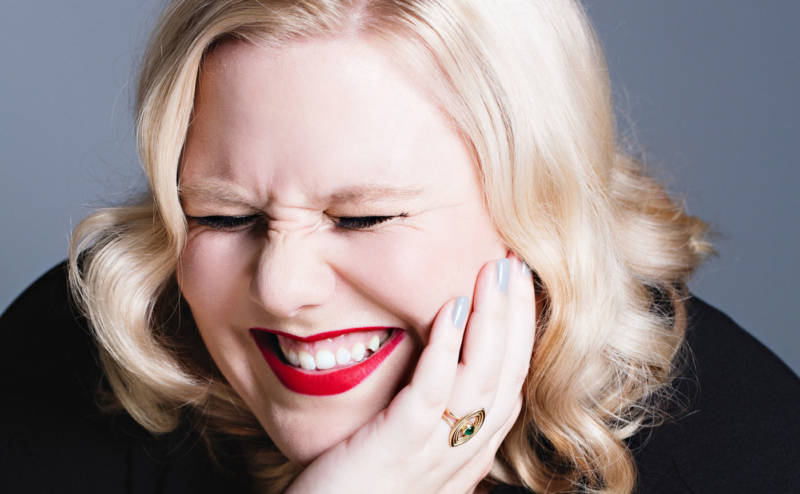
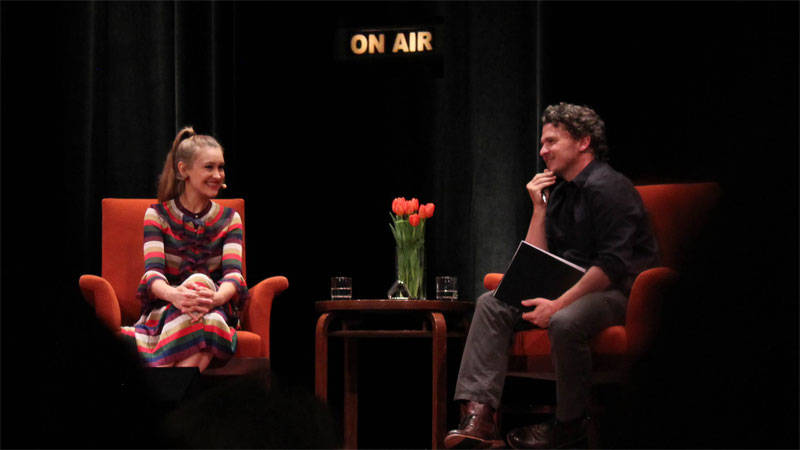
window.__IS_SSR__=true
window.__INITIAL_STATE__={
"attachmentsReducer": {
"audio_0": {
"type": "attachments",
"id": "audio_0",
"imgSizes": {
"kqedFullSize": {
"file": "https://ww2.kqed.org/news/wp-content/themes/KQED-unified/img/audio_bgs/background0.jpg"
}
}
},
"audio_1": {
"type": "attachments",
"id": "audio_1",
"imgSizes": {
"kqedFullSize": {
"file": "https://ww2.kqed.org/news/wp-content/themes/KQED-unified/img/audio_bgs/background1.jpg"
}
}
},
"audio_2": {
"type": "attachments",
"id": "audio_2",
"imgSizes": {
"kqedFullSize": {
"file": "https://ww2.kqed.org/news/wp-content/themes/KQED-unified/img/audio_bgs/background2.jpg"
}
}
},
"audio_3": {
"type": "attachments",
"id": "audio_3",
"imgSizes": {
"kqedFullSize": {
"file": "https://ww2.kqed.org/news/wp-content/themes/KQED-unified/img/audio_bgs/background3.jpg"
}
}
},
"audio_4": {
"type": "attachments",
"id": "audio_4",
"imgSizes": {
"kqedFullSize": {
"file": "https://ww2.kqed.org/news/wp-content/themes/KQED-unified/img/audio_bgs/background4.jpg"
}
}
},
"placeholder": {
"type": "attachments",
"id": "placeholder",
"imgSizes": {
"thumbnail": {
"file": "https://cdn.kqed.org/wp-content/uploads/2024/12/KQED-Default-Image-816638274-2000x1333-1-160x107.jpg",
"width": 160,
"height": 107,
"mimeType": "image/jpeg"
},
"medium": {
"file": "https://cdn.kqed.org/wp-content/uploads/2024/12/KQED-Default-Image-816638274-2000x1333-1-800x533.jpg",
"width": 800,
"height": 533,
"mimeType": "image/jpeg"
},
"medium_large": {
"file": "https://cdn.kqed.org/wp-content/uploads/2024/12/KQED-Default-Image-816638274-2000x1333-1-768x512.jpg",
"width": 768,
"height": 512,
"mimeType": "image/jpeg"
},
"large": {
"file": "https://cdn.kqed.org/wp-content/uploads/2024/12/KQED-Default-Image-816638274-2000x1333-1-1020x680.jpg",
"width": 1020,
"height": 680,
"mimeType": "image/jpeg"
},
"1536x1536": {
"file": "https://cdn.kqed.org/wp-content/uploads/2024/12/KQED-Default-Image-816638274-2000x1333-1-1536x1024.jpg",
"width": 1536,
"height": 1024,
"mimeType": "image/jpeg"
},
"fd-lrg": {
"file": "https://cdn.kqed.org/wp-content/uploads/2024/12/KQED-Default-Image-816638274-2000x1333-1-1536x1024.jpg",
"width": 1536,
"height": 1024,
"mimeType": "image/jpeg"
},
"fd-med": {
"file": "https://cdn.kqed.org/wp-content/uploads/2024/12/KQED-Default-Image-816638274-2000x1333-1-1020x680.jpg",
"width": 1020,
"height": 680,
"mimeType": "image/jpeg"
},
"fd-sm": {
"file": "https://cdn.kqed.org/wp-content/uploads/2024/12/KQED-Default-Image-816638274-2000x1333-1-800x533.jpg",
"width": 800,
"height": 533,
"mimeType": "image/jpeg"
},
"post-thumbnail": {
"file": "https://cdn.kqed.org/wp-content/uploads/2024/12/KQED-Default-Image-816638274-2000x1333-1-672x372.jpg",
"width": 672,
"height": 372,
"mimeType": "image/jpeg"
},
"twentyfourteen-full-width": {
"file": "https://cdn.kqed.org/wp-content/uploads/2024/12/KQED-Default-Image-816638274-2000x1333-1-1038x576.jpg",
"width": 1038,
"height": 576,
"mimeType": "image/jpeg"
},
"xxsmall": {
"file": "https://cdn.kqed.org/wp-content/uploads/2024/12/KQED-Default-Image-816638274-2000x1333-1-160x107.jpg",
"width": 160,
"height": 107,
"mimeType": "image/jpeg"
},
"xsmall": {
"file": "https://cdn.kqed.org/wp-content/uploads/2024/12/KQED-Default-Image-816638274-2000x1333-1-672x372.jpg",
"width": 672,
"height": 372,
"mimeType": "image/jpeg"
},
"small": {
"file": "https://cdn.kqed.org/wp-content/uploads/2024/12/KQED-Default-Image-816638274-2000x1333-1-672x372.jpg",
"width": 672,
"height": 372,
"mimeType": "image/jpeg"
},
"xlarge": {
"file": "https://cdn.kqed.org/wp-content/uploads/2024/12/KQED-Default-Image-816638274-2000x1333-1-1020x680.jpg",
"width": 1020,
"height": 680,
"mimeType": "image/jpeg"
},
"full-width": {
"file": "https://cdn.kqed.org/wp-content/uploads/2024/12/KQED-Default-Image-816638274-2000x1333-1-1920x1280.jpg",
"width": 1920,
"height": 1280,
"mimeType": "image/jpeg"
},
"guest-author-32": {
"file": "https://cdn.kqed.org/wp-content/uploads/2025/01/KQED-Default-Image-816638274-1333x1333-1-160x160.jpg",
"width": 32,
"height": 32,
"mimeType": "image/jpeg"
},
"guest-author-50": {
"file": "https://cdn.kqed.org/wp-content/uploads/2025/01/KQED-Default-Image-816638274-1333x1333-1-160x160.jpg",
"width": 50,
"height": 50,
"mimeType": "image/jpeg"
},
"guest-author-64": {
"file": "https://cdn.kqed.org/wp-content/uploads/2025/01/KQED-Default-Image-816638274-1333x1333-1-160x160.jpg",
"width": 64,
"height": 64,
"mimeType": "image/jpeg"
},
"guest-author-96": {
"file": "https://cdn.kqed.org/wp-content/uploads/2025/01/KQED-Default-Image-816638274-1333x1333-1-160x160.jpg",
"width": 96,
"height": 96,
"mimeType": "image/jpeg"
},
"guest-author-128": {
"file": "https://cdn.kqed.org/wp-content/uploads/2025/01/KQED-Default-Image-816638274-1333x1333-1-160x160.jpg",
"width": 128,
"height": 128,
"mimeType": "image/jpeg"
},
"detail": {
"file": "https://cdn.kqed.org/wp-content/uploads/2025/01/KQED-Default-Image-816638274-1333x1333-1-160x160.jpg",
"width": 160,
"height": 160,
"mimeType": "image/jpeg"
},
"kqedFullSize": {
"file": "https://cdn.kqed.org/wp-content/uploads/2024/12/KQED-Default-Image-816638274-2000x1333-1.jpg",
"width": 2000,
"height": 1333
}
}
},
"pop_24778": {
"type": "attachments",
"id": "pop_24778",
"meta": {
"index": "attachments_1716263798",
"site": "pop",
"id": "24778",
"found": true
},
"parent": 24705,
"imgSizes": {
"twentyfourteen-full-width": {
"file": "https://ww2.kqed.org/app/uploads/sites/12/2016/05/giggle-e1463762005150-1038x576.jpg",
"width": 1038,
"mimeType": "image/jpeg",
"height": 576
},
"thumbnail": {
"file": "https://ww2.kqed.org/app/uploads/sites/12/2016/05/giggle-e1463762005150-400x247.jpg",
"width": 400,
"mimeType": "image/jpeg",
"height": 247
},
"fd-sm": {
"file": "https://ww2.kqed.org/app/uploads/sites/12/2016/05/giggle-e1463762005150-960x592.jpg",
"width": 960,
"mimeType": "image/jpeg",
"height": 592
},
"post-thumbnail": {
"file": "https://ww2.kqed.org/app/uploads/sites/12/2016/05/giggle-e1463762005150-672x372.jpg",
"width": 672,
"mimeType": "image/jpeg",
"height": 372
},
"kqedFullSize": {
"file": "https://ww2.kqed.org/app/uploads/sites/12/2016/05/giggle-e1463762005150.jpg",
"width": 1400,
"height": 864
},
"guest-author-50": {
"file": "https://ww2.kqed.org/app/uploads/sites/12/2016/05/giggle-e1463762005150-50x50.jpg",
"width": 50,
"mimeType": "image/jpeg",
"height": 50
},
"guest-author-96": {
"file": "https://ww2.kqed.org/app/uploads/sites/12/2016/05/giggle-e1463762005150-96x96.jpg",
"width": 96,
"mimeType": "image/jpeg",
"height": 96
},
"medium": {
"file": "https://ww2.kqed.org/app/uploads/sites/12/2016/05/giggle-e1463762005150-800x494.jpg",
"width": 800,
"mimeType": "image/jpeg",
"height": 494
},
"guest-author-64": {
"file": "https://ww2.kqed.org/app/uploads/sites/12/2016/05/giggle-e1463762005150-64x64.jpg",
"width": 64,
"mimeType": "image/jpeg",
"height": 64
},
"guest-author-32": {
"file": "https://ww2.kqed.org/app/uploads/sites/12/2016/05/giggle-e1463762005150-32x32.jpg",
"width": 32,
"mimeType": "image/jpeg",
"height": 32
},
"fd-med": {
"file": "https://ww2.kqed.org/app/uploads/sites/12/2016/05/giggle-e1463762005150-1180x728.jpg",
"width": 1180,
"mimeType": "image/jpeg",
"height": 728
},
"detail": {
"file": "https://ww2.kqed.org/app/uploads/sites/12/2016/05/giggle-e1463762005150-150x150.jpg",
"width": 150,
"mimeType": "image/jpeg",
"height": 150
},
"medium_large": {
"file": "https://ww2.kqed.org/app/uploads/sites/12/2016/05/giggle-e1463762005150-768x474.jpg",
"width": 768,
"mimeType": "image/jpeg",
"height": 474
},
"guest-author-128": {
"file": "https://ww2.kqed.org/app/uploads/sites/12/2016/05/giggle-e1463762005150-128x128.jpg",
"width": 128,
"mimeType": "image/jpeg",
"height": 128
}
},
"publishDate": 1463704810,
"modified": 1463704889,
"caption": "Lindy West, author of 'Shrill.'",
"description": "Lindy West, author of 'Shrill.'",
"title": "giggle",
"credit": "Jenny Jimenez",
"status": "inherit",
"isLoading": false,
"fetchFailed": false
},
"arts_10720214": {
"type": "attachments",
"id": "arts_10720214",
"meta": {
"index": "attachments_1716263798",
"site": "arts",
"id": "10720214",
"found": true
},
"parent": 10719608,
"imgSizes": {
"thumbnail": {
"file": "https://ww2.kqed.org/app/uploads/sites/2/2015/06/BR2015_FRI-ChrisTuite-Cage--400x257.jpg",
"width": 400,
"mimeType": "image/jpeg",
"height": 257
},
"post-thumbnail": {
"file": "https://ww2.kqed.org/app/uploads/sites/2/2015/06/BR2015_FRI-ChrisTuite-Cage--672x372.jpg",
"width": 672,
"mimeType": "image/jpeg",
"height": 372
},
"kqedFullSize": {
"file": "https://ww2.kqed.org/app/uploads/sites/2/2015/06/BR2015_FRI-ChrisTuite-Cage-.jpg",
"width": 800,
"height": 513
},
"guest-author-96": {
"file": "https://ww2.kqed.org/app/uploads/sites/2/2015/06/BR2015_FRI-ChrisTuite-Cage--96x96.jpg",
"width": 96,
"mimeType": "image/jpeg",
"height": 96
},
"medium": {
"file": "https://ww2.kqed.org/app/uploads/sites/2/2015/06/BR2015_FRI-ChrisTuite-Cage--800x513.jpg",
"width": 800,
"mimeType": "image/jpeg",
"height": 513
},
"guest-author-64": {
"file": "https://ww2.kqed.org/app/uploads/sites/2/2015/06/BR2015_FRI-ChrisTuite-Cage--64x64.jpg",
"width": 64,
"mimeType": "image/jpeg",
"height": 64
},
"detail": {
"file": "https://ww2.kqed.org/app/uploads/sites/2/2015/06/BR2015_FRI-ChrisTuite-Cage--75x75.jpg",
"width": 75,
"mimeType": "image/jpeg",
"height": 75
},
"guest-author-32": {
"file": "https://ww2.kqed.org/app/uploads/sites/2/2015/06/BR2015_FRI-ChrisTuite-Cage--32x32.jpg",
"width": 32,
"mimeType": "image/jpeg",
"height": 32
},
"guest-author-128": {
"file": "https://ww2.kqed.org/app/uploads/sites/2/2015/06/BR2015_FRI-ChrisTuite-Cage--128x128.jpg",
"width": 128,
"mimeType": "image/jpeg",
"height": 128
}
},
"publishDate": 1433205918,
"modified": 1621268842,
"caption": "A BottleRock crowd in 2015, while Cage the Elephant performs.",
"description": "A BottleRock crowd in 2015, while Cage the Elephant performs.",
"title": "BR2015_FRI-ChrisTuite-Cage-",
"credit": "Gabe Meline/KQED",
"status": "inherit",
"altTag": "A BottleRock crowd in 2015, while Cage the Elephant performs.",
"isLoading": false,
"fetchFailed": false
},
"arts_11597825": {
"type": "attachments",
"id": "arts_11597825",
"meta": {
"index": "attachments_1716263798",
"site": "arts",
"id": "11597825",
"found": true
},
"parent": 11597686,
"imgSizes": {
"thumbnail": {
"file": "https://ww2.kqed.org/app/uploads/sites/2/2016/05/On-the-Road-covers-400x225.jpg",
"width": 400,
"mimeType": "image/jpeg",
"height": 225
},
"post-thumbnail": {
"file": "https://ww2.kqed.org/app/uploads/sites/2/2016/05/On-the-Road-covers-672x372.jpg",
"width": 672,
"mimeType": "image/jpeg",
"height": 372
},
"kqedFullSize": {
"file": "https://ww2.kqed.org/app/uploads/sites/2/2016/05/On-the-Road-covers.jpg",
"width": 789,
"height": 444
},
"guest-author-50": {
"file": "https://ww2.kqed.org/app/uploads/sites/2/2016/05/On-the-Road-covers-50x50.jpg",
"width": 50,
"mimeType": "image/jpeg",
"height": 50
},
"guest-author-96": {
"file": "https://ww2.kqed.org/app/uploads/sites/2/2016/05/On-the-Road-covers-96x96.jpg",
"width": 96,
"mimeType": "image/jpeg",
"height": 96
},
"guest-author-64": {
"file": "https://ww2.kqed.org/app/uploads/sites/2/2016/05/On-the-Road-covers-64x64.jpg",
"width": 64,
"mimeType": "image/jpeg",
"height": 64
},
"detail": {
"file": "https://ww2.kqed.org/app/uploads/sites/2/2016/05/On-the-Road-covers-150x150.jpg",
"width": 150,
"mimeType": "image/jpeg",
"height": 150
},
"guest-author-32": {
"file": "https://ww2.kqed.org/app/uploads/sites/2/2016/05/On-the-Road-covers-32x32.jpg",
"width": 32,
"mimeType": "image/jpeg",
"height": 32
},
"medium_large": {
"file": "https://ww2.kqed.org/app/uploads/sites/2/2016/05/On-the-Road-covers-768x432.jpg",
"width": 768,
"mimeType": "image/jpeg",
"height": 432
},
"guest-author-128": {
"file": "https://ww2.kqed.org/app/uploads/sites/2/2016/05/On-the-Road-covers-128x128.jpg",
"width": 128,
"mimeType": "image/jpeg",
"height": 128
}
},
"publishDate": 1463695975,
"modified": 1463696191,
"caption": "A hardback copy of the 50th-anniversary edition(L) of Jack Kerouac's \" On The Road\" sits next to the 40th-anniversary edition on the shelves at Borders Books in New York 20 August 2007. ",
"description": "A hardback copy of the 50th-anniversary edition(L) of Jack Kerouac's \" On The Road\" sits next to the 40th-anniversary edition on the shelves at Borders Books in New York 20 August 2007. ",
"title": "A hardback copy of the 50th-anniversary",
"credit": "Photo: Timothy A. Clary/AFP/Getty Images",
"status": "inherit",
"isLoading": false,
"fetchFailed": false
},
"arts_11588895": {
"type": "attachments",
"id": "arts_11588895",
"meta": {
"index": "attachments_1716263798",
"site": "arts",
"id": "11588895",
"found": true
},
"parent": 11588894,
"imgSizes": {
"twentyfourteen-full-width": {
"file": "https://ww2.kqed.org/app/uploads/sites/2/2016/05/istock_000068588675_full_wide-08f4003d4700b3f2d1a32e208cea0988459161a1-1038x576.jpg",
"width": 1038,
"mimeType": "image/jpeg",
"height": 576
},
"thumbnail": {
"file": "https://ww2.kqed.org/app/uploads/sites/2/2016/05/istock_000068588675_full_wide-08f4003d4700b3f2d1a32e208cea0988459161a1-400x225.jpg",
"width": 400,
"mimeType": "image/jpeg",
"height": 225
},
"fd-sm": {
"file": "https://ww2.kqed.org/app/uploads/sites/2/2016/05/istock_000068588675_full_wide-08f4003d4700b3f2d1a32e208cea0988459161a1-960x540.jpg",
"width": 960,
"mimeType": "image/jpeg",
"height": 540
},
"post-thumbnail": {
"file": "https://ww2.kqed.org/app/uploads/sites/2/2016/05/istock_000068588675_full_wide-08f4003d4700b3f2d1a32e208cea0988459161a1-672x372.jpg",
"width": 672,
"mimeType": "image/jpeg",
"height": 372
},
"kqedFullSize": {
"file": "https://ww2.kqed.org/app/uploads/sites/2/2016/05/istock_000068588675_full_wide-08f4003d4700b3f2d1a32e208cea0988459161a1.jpg",
"width": 2700,
"height": 1518
},
"large": {
"file": "https://ww2.kqed.org/app/uploads/sites/2/2016/05/istock_000068588675_full_wide-08f4003d4700b3f2d1a32e208cea0988459161a1-1180x663.jpg",
"width": 1180,
"mimeType": "image/jpeg",
"height": 663
},
"guest-author-50": {
"file": "https://ww2.kqed.org/app/uploads/sites/2/2016/05/istock_000068588675_full_wide-08f4003d4700b3f2d1a32e208cea0988459161a1-50x50.jpg",
"width": 50,
"mimeType": "image/jpeg",
"height": 50
},
"guest-author-96": {
"file": "https://ww2.kqed.org/app/uploads/sites/2/2016/05/istock_000068588675_full_wide-08f4003d4700b3f2d1a32e208cea0988459161a1-96x96.jpg",
"width": 96,
"mimeType": "image/jpeg",
"height": 96
},
"medium": {
"file": "https://ww2.kqed.org/app/uploads/sites/2/2016/05/istock_000068588675_full_wide-08f4003d4700b3f2d1a32e208cea0988459161a1-800x450.jpg",
"width": 800,
"mimeType": "image/jpeg",
"height": 450
},
"guest-author-64": {
"file": "https://ww2.kqed.org/app/uploads/sites/2/2016/05/istock_000068588675_full_wide-08f4003d4700b3f2d1a32e208cea0988459161a1-64x64.jpg",
"width": 64,
"mimeType": "image/jpeg",
"height": 64
},
"guest-author-32": {
"file": "https://ww2.kqed.org/app/uploads/sites/2/2016/05/istock_000068588675_full_wide-08f4003d4700b3f2d1a32e208cea0988459161a1-32x32.jpg",
"width": 32,
"mimeType": "image/jpeg",
"height": 32
},
"fd-lrg": {
"file": "https://ww2.kqed.org/app/uploads/sites/2/2016/05/istock_000068588675_full_wide-08f4003d4700b3f2d1a32e208cea0988459161a1-1920x1079.jpg",
"width": 1920,
"mimeType": "image/jpeg",
"height": 1079
},
"fd-med": {
"file": "https://ww2.kqed.org/app/uploads/sites/2/2016/05/istock_000068588675_full_wide-08f4003d4700b3f2d1a32e208cea0988459161a1-1180x663.jpg",
"width": 1180,
"mimeType": "image/jpeg",
"height": 663
},
"detail": {
"file": "https://ww2.kqed.org/app/uploads/sites/2/2016/05/istock_000068588675_full_wide-08f4003d4700b3f2d1a32e208cea0988459161a1-150x150.jpg",
"width": 150,
"mimeType": "image/jpeg",
"height": 150
},
"medium_large": {
"file": "https://ww2.kqed.org/app/uploads/sites/2/2016/05/istock_000068588675_full_wide-08f4003d4700b3f2d1a32e208cea0988459161a1-768x432.jpg",
"width": 768,
"mimeType": "image/jpeg",
"height": 432
},
"guest-author-128": {
"file": "https://ww2.kqed.org/app/uploads/sites/2/2016/05/istock_000068588675_full_wide-08f4003d4700b3f2d1a32e208cea0988459161a1-128x128.jpg",
"width": 128,
"mimeType": "image/jpeg",
"height": 128
}
},
"publishDate": 1463461100,
"modified": 1463461100,
"caption": null,
"description": "Nebula promo image",
"title": "Nebula promo image",
"credit": null,
"status": "inherit",
"isLoading": false,
"fetchFailed": false
},
"pop_24599": {
"type": "attachments",
"id": "pop_24599",
"meta": {
"index": "attachments_1716263798",
"site": "pop",
"id": "24599",
"found": true
},
"parent": 24580,
"imgSizes": {
"thumbnail": {
"file": "https://ww2.kqed.org/app/uploads/sites/12/2016/05/joanna-newsom-dave-eggers-city-arts-400x225.jpg",
"width": 400,
"mimeType": "image/jpeg",
"height": 225
},
"post-thumbnail": {
"file": "https://ww2.kqed.org/app/uploads/sites/12/2016/05/joanna-newsom-dave-eggers-city-arts-672x372.jpg",
"width": 672,
"mimeType": "image/jpeg",
"height": 372
},
"kqedFullSize": {
"file": "https://ww2.kqed.org/app/uploads/sites/12/2016/05/joanna-newsom-dave-eggers-city-arts.jpg",
"width": 800,
"height": 450
},
"guest-author-50": {
"file": "https://ww2.kqed.org/app/uploads/sites/12/2016/05/joanna-newsom-dave-eggers-city-arts-50x50.jpg",
"width": 50,
"mimeType": "image/jpeg",
"height": 50
},
"guest-author-96": {
"file": "https://ww2.kqed.org/app/uploads/sites/12/2016/05/joanna-newsom-dave-eggers-city-arts-96x96.jpg",
"width": 96,
"mimeType": "image/jpeg",
"height": 96
},
"medium": {
"file": "https://ww2.kqed.org/app/uploads/sites/12/2016/05/joanna-newsom-dave-eggers-city-arts-800x450.jpg",
"width": 800,
"mimeType": "image/jpeg",
"height": 450
},
"guest-author-64": {
"file": "https://ww2.kqed.org/app/uploads/sites/12/2016/05/joanna-newsom-dave-eggers-city-arts-64x64.jpg",
"width": 64,
"mimeType": "image/jpeg",
"height": 64
},
"detail": {
"file": "https://ww2.kqed.org/app/uploads/sites/12/2016/05/joanna-newsom-dave-eggers-city-arts-150x150.jpg",
"width": 150,
"mimeType": "image/jpeg",
"height": 150
},
"guest-author-32": {
"file": "https://ww2.kqed.org/app/uploads/sites/12/2016/05/joanna-newsom-dave-eggers-city-arts-32x32.jpg",
"width": 32,
"mimeType": "image/jpeg",
"height": 32
},
"medium_large": {
"file": "https://ww2.kqed.org/app/uploads/sites/12/2016/05/joanna-newsom-dave-eggers-city-arts-768x432.jpg",
"width": 768,
"mimeType": "image/jpeg",
"height": 432
},
"guest-author-128": {
"file": "https://ww2.kqed.org/app/uploads/sites/12/2016/05/joanna-newsom-dave-eggers-city-arts-128x128.jpg",
"width": 128,
"mimeType": "image/jpeg",
"height": 128
}
},
"publishDate": 1463518019,
"modified": 1463518809,
"caption": "Joanna melting all the hearts, alongside Dave Eggers. Photo: JP Barbagelata",
"description": null,
"title": "joanna-newsom-dave-eggers-city-arts",
"credit": null,
"status": "inherit",
"isLoading": false,
"fetchFailed": false
},
"arts_11571316": {
"type": "attachments",
"id": "arts_11571316",
"meta": {
"index": "attachments_1716263798",
"site": "arts",
"id": "11571316",
"found": true
},
"parent": 11571315,
"imgSizes": {
"twentyfourteen-full-width": {
"file": "https://ww2.kqed.org/app/uploads/sites/2/2016/05/la-ca-jc-louise-erdrich-20160508-1038x576.jpg",
"width": 1038,
"mimeType": "image/jpeg",
"height": 576
},
"thumbnail": {
"file": "https://ww2.kqed.org/app/uploads/sites/2/2016/05/la-ca-jc-louise-erdrich-20160508-400x225.jpg",
"width": 400,
"mimeType": "image/jpeg",
"height": 225
},
"fd-sm": {
"file": "https://ww2.kqed.org/app/uploads/sites/2/2016/05/la-ca-jc-louise-erdrich-20160508-960x540.jpg",
"width": 960,
"mimeType": "image/jpeg",
"height": 540
},
"post-thumbnail": {
"file": "https://ww2.kqed.org/app/uploads/sites/2/2016/05/la-ca-jc-louise-erdrich-20160508-672x372.jpg",
"width": 672,
"mimeType": "image/jpeg",
"height": 372
},
"kqedFullSize": {
"file": "https://ww2.kqed.org/app/uploads/sites/2/2016/05/la-ca-jc-louise-erdrich-20160508-e1463000096343.jpg",
"width": 1080,
"height": 608
},
"large": {
"file": "https://ww2.kqed.org/app/uploads/sites/2/2016/05/la-ca-jc-louise-erdrich-20160508-1180x664.jpg",
"width": 1180,
"mimeType": "image/jpeg",
"height": 664
},
"guest-author-96": {
"file": "https://ww2.kqed.org/app/uploads/sites/2/2016/05/la-ca-jc-louise-erdrich-20160508-96x96.jpg",
"width": 96,
"mimeType": "image/jpeg",
"height": 96
},
"medium": {
"file": "https://ww2.kqed.org/app/uploads/sites/2/2016/05/la-ca-jc-louise-erdrich-20160508-800x450.jpg",
"width": 800,
"mimeType": "image/jpeg",
"height": 450
},
"guest-author-64": {
"file": "https://ww2.kqed.org/app/uploads/sites/2/2016/05/la-ca-jc-louise-erdrich-20160508-64x64.jpg",
"width": 64,
"mimeType": "image/jpeg",
"height": 64
},
"guest-author-32": {
"file": "https://ww2.kqed.org/app/uploads/sites/2/2016/05/la-ca-jc-louise-erdrich-20160508-32x32.jpg",
"width": 32,
"mimeType": "image/jpeg",
"height": 32
},
"fd-lrg": {
"file": "https://ww2.kqed.org/app/uploads/sites/2/2016/05/la-ca-jc-louise-erdrich-20160508-1920x1080.jpg",
"width": 1920,
"mimeType": "image/jpeg",
"height": 1080
},
"fd-med": {
"file": "https://ww2.kqed.org/app/uploads/sites/2/2016/05/la-ca-jc-louise-erdrich-20160508-1180x664.jpg",
"width": 1180,
"mimeType": "image/jpeg",
"height": 664
},
"detail": {
"file": "https://ww2.kqed.org/app/uploads/sites/2/2016/05/la-ca-jc-louise-erdrich-20160508-150x150.jpg",
"width": 150,
"mimeType": "image/jpeg",
"height": 150
},
"medium_large": {
"file": "https://ww2.kqed.org/app/uploads/sites/2/2016/05/la-ca-jc-louise-erdrich-20160508-768x432.jpg",
"width": 768,
"mimeType": "image/jpeg",
"height": 432
},
"guest-author-128": {
"file": "https://ww2.kqed.org/app/uploads/sites/2/2016/05/la-ca-jc-louise-erdrich-20160508-128x128.jpg",
"width": 128,
"mimeType": "image/jpeg",
"height": 128
}
},
"publishDate": 1463000084,
"modified": 1463000288,
"caption": "National Book Award winner Louise Erdrich has two Bay Area appearances this month. (Photo Credit: Paul Hummel) ",
"description": null,
"title": "la-ca-jc-louise-erdrich-20160508",
"credit": null,
"status": "inherit",
"isLoading": false,
"fetchFailed": false
},
"arts_11568075": {
"type": "attachments",
"id": "arts_11568075",
"meta": {
"index": "attachments_1716263798",
"site": "arts",
"id": "11568075",
"found": true
},
"parent": 11568074,
"imgSizes": {
"twentyfourteen-full-width": {
"file": "https://ww2.kqed.org/app/uploads/sites/2/2016/05/d7a7519reading_slide-258630732560cf338d02b22c67f5cff7e03ad688-e1462907366998-1038x576.jpg",
"width": 1038,
"mimeType": "image/jpeg",
"height": 576
},
"thumbnail": {
"file": "https://ww2.kqed.org/app/uploads/sites/2/2016/05/d7a7519reading_slide-258630732560cf338d02b22c67f5cff7e03ad688-e1462907366998-400x225.jpg",
"width": 400,
"mimeType": "image/jpeg",
"height": 225
},
"fd-sm": {
"file": "https://ww2.kqed.org/app/uploads/sites/2/2016/05/d7a7519reading_slide-258630732560cf338d02b22c67f5cff7e03ad688-e1462907366998-960x540.jpg",
"width": 960,
"mimeType": "image/jpeg",
"height": 540
},
"post-thumbnail": {
"file": "https://ww2.kqed.org/app/uploads/sites/2/2016/05/d7a7519reading_slide-258630732560cf338d02b22c67f5cff7e03ad688-e1462907366998-672x372.jpg",
"width": 672,
"mimeType": "image/jpeg",
"height": 372
},
"kqedFullSize": {
"file": "https://ww2.kqed.org/app/uploads/sites/2/2016/05/d7a7519reading_slide-258630732560cf338d02b22c67f5cff7e03ad688-e1462907366998.jpg",
"width": 2997,
"height": 1685
},
"large": {
"file": "https://ww2.kqed.org/app/uploads/sites/2/2016/05/d7a7519reading_slide-258630732560cf338d02b22c67f5cff7e03ad688-e1462907366998-1180x663.jpg",
"width": 1180,
"mimeType": "image/jpeg",
"height": 663
},
"guest-author-96": {
"file": "https://ww2.kqed.org/app/uploads/sites/2/2016/05/d7a7519reading_slide-258630732560cf338d02b22c67f5cff7e03ad688-e1462907366998-96x96.jpg",
"width": 96,
"mimeType": "image/jpeg",
"height": 96
},
"medium": {
"file": "https://ww2.kqed.org/app/uploads/sites/2/2016/05/d7a7519reading_slide-258630732560cf338d02b22c67f5cff7e03ad688-e1462907366998-800x450.jpg",
"width": 800,
"mimeType": "image/jpeg",
"height": 450
},
"guest-author-64": {
"file": "https://ww2.kqed.org/app/uploads/sites/2/2016/05/d7a7519reading_slide-258630732560cf338d02b22c67f5cff7e03ad688-e1462907366998-64x64.jpg",
"width": 64,
"mimeType": "image/jpeg",
"height": 64
},
"guest-author-32": {
"file": "https://ww2.kqed.org/app/uploads/sites/2/2016/05/d7a7519reading_slide-258630732560cf338d02b22c67f5cff7e03ad688-e1462907366998-32x32.jpg",
"width": 32,
"mimeType": "image/jpeg",
"height": 32
},
"fd-lrg": {
"file": "https://ww2.kqed.org/app/uploads/sites/2/2016/05/d7a7519reading_slide-258630732560cf338d02b22c67f5cff7e03ad688-e1462907366998-1920x1079.jpg",
"width": 1920,
"mimeType": "image/jpeg",
"height": 1079
},
"fd-med": {
"file": "https://ww2.kqed.org/app/uploads/sites/2/2016/05/d7a7519reading_slide-258630732560cf338d02b22c67f5cff7e03ad688-e1462907366998-1180x663.jpg",
"width": 1180,
"mimeType": "image/jpeg",
"height": 663
},
"detail": {
"file": "https://ww2.kqed.org/app/uploads/sites/2/2016/05/d7a7519reading_slide-258630732560cf338d02b22c67f5cff7e03ad688-e1462907366998-150x150.jpg",
"width": 150,
"mimeType": "image/jpeg",
"height": 150
},
"medium_large": {
"file": "https://ww2.kqed.org/app/uploads/sites/2/2016/05/d7a7519reading_slide-258630732560cf338d02b22c67f5cff7e03ad688-e1462907366998-768x432.jpg",
"width": 768,
"mimeType": "image/jpeg",
"height": 432
},
"guest-author-128": {
"file": "https://ww2.kqed.org/app/uploads/sites/2/2016/05/d7a7519reading_slide-258630732560cf338d02b22c67f5cff7e03ad688-e1462907366998-128x128.jpg",
"width": 128,
"mimeType": "image/jpeg",
"height": 128
}
},
"publishDate": 1462906475,
"modified": 1462907347,
"caption": "Kindergarten students read before class starts at Walker-Jones Education Campus in Washington, D.C.",
"description": "Kindergarten students read before class starts at Walker-Jones Education Campus in Washington, D.C.",
"title": "Kindergarten students read before class starts at Walker-Jones Education Campus in Washington, D.C.",
"credit": "Photo: Elissa Nadworny/NPR",
"status": "inherit",
"isLoading": false,
"fetchFailed": false
},
"arts_11560164": {
"type": "attachments",
"id": "arts_11560164",
"meta": {
"index": "attachments_1716263798",
"site": "arts",
"id": "11560164",
"found": true
},
"parent": 11553918,
"imgSizes": {
"twentyfourteen-full-width": {
"file": "https://ww2.kqed.org/app/uploads/sites/2/2016/05/ChinakaHodge.MAIN_-1038x576.jpg",
"width": 1038,
"mimeType": "image/jpeg",
"height": 576
},
"thumbnail": {
"file": "https://ww2.kqed.org/app/uploads/sites/2/2016/05/ChinakaHodge.MAIN_-400x225.jpg",
"width": 400,
"mimeType": "image/jpeg",
"height": 225
},
"fd-sm": {
"file": "https://ww2.kqed.org/app/uploads/sites/2/2016/05/ChinakaHodge.MAIN_-960x540.jpg",
"width": 960,
"mimeType": "image/jpeg",
"height": 540
},
"post-thumbnail": {
"file": "https://ww2.kqed.org/app/uploads/sites/2/2016/05/ChinakaHodge.MAIN_-672x372.jpg",
"width": 672,
"mimeType": "image/jpeg",
"height": 372
},
"kqedFullSize": {
"file": "https://ww2.kqed.org/app/uploads/sites/2/2016/05/ChinakaHodge.MAIN_.jpg",
"width": 1920,
"height": 1080
},
"large": {
"file": "https://ww2.kqed.org/app/uploads/sites/2/2016/05/ChinakaHodge.MAIN_-1180x664.jpg",
"width": 1180,
"mimeType": "image/jpeg",
"height": 664
},
"guest-author-96": {
"file": "https://ww2.kqed.org/app/uploads/sites/2/2016/05/ChinakaHodge.MAIN_-96x96.jpg",
"width": 96,
"mimeType": "image/jpeg",
"height": 96
},
"medium": {
"file": "https://ww2.kqed.org/app/uploads/sites/2/2016/05/ChinakaHodge.MAIN_-800x450.jpg",
"width": 800,
"mimeType": "image/jpeg",
"height": 450
},
"guest-author-64": {
"file": "https://ww2.kqed.org/app/uploads/sites/2/2016/05/ChinakaHodge.MAIN_-64x64.jpg",
"width": 64,
"mimeType": "image/jpeg",
"height": 64
},
"guest-author-32": {
"file": "https://ww2.kqed.org/app/uploads/sites/2/2016/05/ChinakaHodge.MAIN_-32x32.jpg",
"width": 32,
"mimeType": "image/jpeg",
"height": 32
},
"fd-lrg": {
"file": "https://ww2.kqed.org/app/uploads/sites/2/2016/05/ChinakaHodge.MAIN_-1920x1080.jpg",
"width": 1920,
"mimeType": "image/jpeg",
"height": 1080
},
"fd-med": {
"file": "https://ww2.kqed.org/app/uploads/sites/2/2016/05/ChinakaHodge.MAIN_-1180x664.jpg",
"width": 1180,
"mimeType": "image/jpeg",
"height": 664
},
"detail": {
"file": "https://ww2.kqed.org/app/uploads/sites/2/2016/05/ChinakaHodge.MAIN_-150x150.jpg",
"width": 150,
"mimeType": "image/jpeg",
"height": 150
},
"medium_large": {
"file": "https://ww2.kqed.org/app/uploads/sites/2/2016/05/ChinakaHodge.MAIN_-768x432.jpg",
"width": 768,
"mimeType": "image/jpeg",
"height": 432
},
"guest-author-128": {
"file": "https://ww2.kqed.org/app/uploads/sites/2/2016/05/ChinakaHodge.MAIN_-128x128.jpg",
"width": 128,
"mimeType": "image/jpeg",
"height": 128
}
},
"publishDate": 1462666332,
"modified": 1462666356,
"caption": "\"Nobody does today's mathematics, the last night of hip hop as they know it and they don't even know it,\" writes Chinaka Hodge in 'Dated Emcees.'",
"description": "\"Nobody does today's mathematics, the last night of hip hop as they know it and they don't even know it,\" writes Chinaka Hodge in 'Dated Emcees.'",
"title": "ChinakaHodge.MAIN",
"credit": "Author photo",
"status": "inherit",
"isLoading": false,
"fetchFailed": false
},
"pop_23908": {
"type": "attachments",
"id": "pop_23908",
"meta": {
"index": "attachments_1716263798",
"site": "pop",
"id": "23908",
"found": true
},
"parent": 23854,
"imgSizes": {
"twentyfourteen-full-width": {
"file": "https://ww2.kqed.org/app/uploads/sites/12/2016/05/FullSizeRender-21-e1462502701539-1038x576.jpg",
"width": 1038,
"mimeType": "image/jpeg",
"height": 576
},
"thumbnail": {
"file": "https://ww2.kqed.org/app/uploads/sites/12/2016/05/FullSizeRender-21-e1462502701539-400x273.jpg",
"width": 400,
"mimeType": "image/jpeg",
"height": 273
},
"fd-sm": {
"file": "https://ww2.kqed.org/app/uploads/sites/12/2016/05/FullSizeRender-21-e1462502701539-960x654.jpg",
"width": 960,
"mimeType": "image/jpeg",
"height": 654
},
"post-thumbnail": {
"file": "https://ww2.kqed.org/app/uploads/sites/12/2016/05/FullSizeRender-21-e1462502701539-672x372.jpg",
"width": 672,
"mimeType": "image/jpeg",
"height": 372
},
"kqedFullSize": {
"file": "https://ww2.kqed.org/app/uploads/sites/12/2016/05/FullSizeRender-21-e1462502701539.jpg",
"width": 3255,
"height": 2219
},
"large": {
"file": "https://ww2.kqed.org/app/uploads/sites/12/2016/05/FullSizeRender-21-e1462502701539-1440x982.jpg",
"width": 1440,
"mimeType": "image/jpeg",
"height": 982
},
"guest-author-96": {
"file": "https://ww2.kqed.org/app/uploads/sites/12/2016/05/FullSizeRender-21-e1462502701539-96x96.jpg",
"width": 96,
"mimeType": "image/jpeg",
"height": 96
},
"medium": {
"file": "https://ww2.kqed.org/app/uploads/sites/12/2016/05/FullSizeRender-21-e1462502701539-800x545.jpg",
"width": 800,
"mimeType": "image/jpeg",
"height": 545
},
"guest-author-64": {
"file": "https://ww2.kqed.org/app/uploads/sites/12/2016/05/FullSizeRender-21-e1462502701539-64x64.jpg",
"width": 64,
"mimeType": "image/jpeg",
"height": 64
},
"guest-author-32": {
"file": "https://ww2.kqed.org/app/uploads/sites/12/2016/05/FullSizeRender-21-e1462502701539-32x32.jpg",
"width": 32,
"mimeType": "image/jpeg",
"height": 32
},
"fd-lrg": {
"file": "https://ww2.kqed.org/app/uploads/sites/12/2016/05/FullSizeRender-21-e1462502701539-1920x1309.jpg",
"width": 1920,
"mimeType": "image/jpeg",
"height": 1309
},
"fd-med": {
"file": "https://ww2.kqed.org/app/uploads/sites/12/2016/05/FullSizeRender-21-e1462502701539-1180x804.jpg",
"width": 1180,
"mimeType": "image/jpeg",
"height": 804
},
"detail": {
"file": "https://ww2.kqed.org/app/uploads/sites/12/2016/05/FullSizeRender-21-e1462502701539-150x150.jpg",
"width": 150,
"mimeType": "image/jpeg",
"height": 150
},
"medium_large": {
"file": "https://ww2.kqed.org/app/uploads/sites/12/2016/05/FullSizeRender-21-e1462502701539-768x524.jpg",
"width": 768,
"mimeType": "image/jpeg",
"height": 524
},
"guest-author-128": {
"file": "https://ww2.kqed.org/app/uploads/sites/12/2016/05/FullSizeRender-21-e1462502701539-128x128.jpg",
"width": 128,
"mimeType": "image/jpeg",
"height": 128
}
},
"publishDate": 1462502671,
"modified": 1462502671,
"caption": null,
"description": null,
"title": "FullSizeRender (21)",
"credit": null,
"status": "inherit",
"isLoading": false,
"fetchFailed": false
},
"forum_2010101854467": {
"type": "attachments",
"id": "forum_2010101854467",
"meta": {
"index": "attachments_1716263798",
"site": "forum",
"id": "2010101854467",
"found": true
},
"parent": 2010101854466,
"imgSizes": {
"twentyfourteen-full-width": {
"file": "https://ww2.kqed.org/app/uploads/sites/43/2016/05/VietThanhNguyencreditVietThanhNguyen2cropped-1038x576.jpg",
"width": 1038,
"mimeType": "image/jpeg",
"height": 576
},
"thumbnail": {
"file": "https://ww2.kqed.org/app/uploads/sites/43/2016/05/VietThanhNguyencreditVietThanhNguyen2cropped-400x225.jpg",
"width": 400,
"mimeType": "image/jpeg",
"height": 225
},
"fd-sm": {
"file": "https://ww2.kqed.org/app/uploads/sites/43/2016/05/VietThanhNguyencreditVietThanhNguyen2cropped-960x540.jpg",
"width": 960,
"mimeType": "image/jpeg",
"height": 540
},
"post-thumbnail": {
"file": "https://ww2.kqed.org/app/uploads/sites/43/2016/05/VietThanhNguyencreditVietThanhNguyen2cropped-672x372.jpg",
"width": 672,
"mimeType": "image/jpeg",
"height": 372
},
"kqedFullSize": {
"file": "https://ww2.kqed.org/app/uploads/sites/43/2016/05/VietThanhNguyencreditVietThanhNguyen2cropped.jpg",
"width": 1857,
"height": 1045
},
"large": {
"file": "https://ww2.kqed.org/app/uploads/sites/43/2016/05/VietThanhNguyencreditVietThanhNguyen2cropped-1180x664.jpg",
"width": 1180,
"mimeType": "image/jpeg",
"height": 664
},
"guest-author-96": {
"file": "https://ww2.kqed.org/app/uploads/sites/43/2016/05/VietThanhNguyencreditVietThanhNguyen2cropped-96x96.jpg",
"width": 96,
"mimeType": "image/jpeg",
"height": 96
},
"medium": {
"file": "https://ww2.kqed.org/app/uploads/sites/43/2016/05/VietThanhNguyencreditVietThanhNguyen2cropped-800x450.jpg",
"width": 800,
"mimeType": "image/jpeg",
"height": 450
},
"guest-author-64": {
"file": "https://ww2.kqed.org/app/uploads/sites/43/2016/05/VietThanhNguyencreditVietThanhNguyen2cropped-64x64.jpg",
"width": 64,
"mimeType": "image/jpeg",
"height": 64
},
"guest-author-32": {
"file": "https://ww2.kqed.org/app/uploads/sites/43/2016/05/VietThanhNguyencreditVietThanhNguyen2cropped-32x32.jpg",
"width": 32,
"mimeType": "image/jpeg",
"height": 32
},
"fd-med": {
"file": "https://ww2.kqed.org/app/uploads/sites/43/2016/05/VietThanhNguyencreditVietThanhNguyen2cropped-1180x664.jpg",
"width": 1180,
"mimeType": "image/jpeg",
"height": 664
},
"detail": {
"file": "https://ww2.kqed.org/app/uploads/sites/43/2016/05/VietThanhNguyencreditVietThanhNguyen2cropped-150x150.jpg",
"width": 150,
"mimeType": "image/jpeg",
"height": 150
},
"medium_large": {
"file": "https://ww2.kqed.org/app/uploads/sites/43/2016/05/VietThanhNguyencreditVietThanhNguyen2cropped-768x432.jpg",
"width": 768,
"mimeType": "image/jpeg",
"height": 432
},
"guest-author-128": {
"file": "https://ww2.kqed.org/app/uploads/sites/43/2016/05/VietThanhNguyencreditVietThanhNguyen2cropped-128x128.jpg",
"width": 128,
"mimeType": "image/jpeg",
"height": 128
}
},
"publishDate": 1462410793,
"modified": 1462410805,
"caption": null,
"description": null,
"title": "VietThanhNguyencreditVietThanhNguyen2cropped",
"credit": "Viet Thanh Nguyen",
"status": "inherit",
"isLoading": false,
"fetchFailed": false
},
"forum_2010101854437": {
"type": "attachments",
"id": "forum_2010101854437",
"meta": {
"index": "attachments_1716263798",
"site": "forum",
"id": "2010101854437",
"found": true
},
"parent": 2010101854432,
"imgSizes": {
"twentyfourteen-full-width": {
"file": "https://ww2.kqed.org/app/uploads/sites/43/2016/05/ZeislerAndicrJefferyWallsPhotographycropped-1038x576.jpg",
"width": 1038,
"mimeType": "image/jpeg",
"height": 576
},
"thumbnail": {
"file": "https://ww2.kqed.org/app/uploads/sites/43/2016/05/ZeislerAndicrJefferyWallsPhotographycropped-400x225.jpg",
"width": 400,
"mimeType": "image/jpeg",
"height": 225
},
"fd-sm": {
"file": "https://ww2.kqed.org/app/uploads/sites/43/2016/05/ZeislerAndicrJefferyWallsPhotographycropped-960x541.jpg",
"width": 960,
"mimeType": "image/jpeg",
"height": 541
},
"post-thumbnail": {
"file": "https://ww2.kqed.org/app/uploads/sites/43/2016/05/ZeislerAndicrJefferyWallsPhotographycropped-672x372.jpg",
"width": 672,
"mimeType": "image/jpeg",
"height": 372
},
"kqedFullSize": {
"file": "https://ww2.kqed.org/app/uploads/sites/43/2016/05/ZeislerAndicrJefferyWallsPhotographycropped.jpg",
"width": 1920,
"height": 1081
},
"large": {
"file": "https://ww2.kqed.org/app/uploads/sites/43/2016/05/ZeislerAndicrJefferyWallsPhotographycropped-1180x664.jpg",
"width": 1180,
"mimeType": "image/jpeg",
"height": 664
},
"guest-author-96": {
"file": "https://ww2.kqed.org/app/uploads/sites/43/2016/05/ZeislerAndicrJefferyWallsPhotographycropped-96x96.jpg",
"width": 96,
"mimeType": "image/jpeg",
"height": 96
},
"medium": {
"file": "https://ww2.kqed.org/app/uploads/sites/43/2016/05/ZeislerAndicrJefferyWallsPhotographycropped-800x450.jpg",
"width": 800,
"mimeType": "image/jpeg",
"height": 450
},
"guest-author-64": {
"file": "https://ww2.kqed.org/app/uploads/sites/43/2016/05/ZeislerAndicrJefferyWallsPhotographycropped-64x64.jpg",
"width": 64,
"mimeType": "image/jpeg",
"height": 64
},
"guest-author-32": {
"file": "https://ww2.kqed.org/app/uploads/sites/43/2016/05/ZeislerAndicrJefferyWallsPhotographycropped-32x32.jpg",
"width": 32,
"mimeType": "image/jpeg",
"height": 32
},
"fd-lrg": {
"file": "https://ww2.kqed.org/app/uploads/sites/43/2016/05/ZeislerAndicrJefferyWallsPhotographycropped-1920x1081.jpg",
"width": 1920,
"mimeType": "image/jpeg",
"height": 1081
},
"fd-med": {
"file": "https://ww2.kqed.org/app/uploads/sites/43/2016/05/ZeislerAndicrJefferyWallsPhotographycropped-1180x664.jpg",
"width": 1180,
"mimeType": "image/jpeg",
"height": 664
},
"detail": {
"file": "https://ww2.kqed.org/app/uploads/sites/43/2016/05/ZeislerAndicrJefferyWallsPhotographycropped-150x150.jpg",
"width": 150,
"mimeType": "image/jpeg",
"height": 150
},
"medium_large": {
"file": "https://ww2.kqed.org/app/uploads/sites/43/2016/05/ZeislerAndicrJefferyWallsPhotographycropped-768x432.jpg",
"width": 768,
"mimeType": "image/jpeg",
"height": 432
},
"guest-author-128": {
"file": "https://ww2.kqed.org/app/uploads/sites/43/2016/05/ZeislerAndicrJefferyWallsPhotographycropped-128x128.jpg",
"width": 128,
"mimeType": "image/jpeg",
"height": 128
}
},
"publishDate": 1462382026,
"modified": 1462382026,
"caption": null,
"description": null,
"title": "ZeislerAndicrJefferyWallsPhotographycropped",
"credit": null,
"status": "inherit",
"isLoading": false,
"fetchFailed": false
},
"arts_11538017": {
"type": "attachments",
"id": "arts_11538017",
"meta": {
"index": "attachments_1716263798",
"site": "arts",
"id": "11538017",
"found": true
},
"parent": 11533773,
"imgSizes": {
"twentyfourteen-full-width": {
"file": "https://ww2.kqed.org/app/uploads/sites/2/2016/04/Marinomi.MAIN_-1038x576.jpg",
"width": 1038,
"mimeType": "image/jpeg",
"height": 576
},
"thumbnail": {
"file": "https://ww2.kqed.org/app/uploads/sites/2/2016/04/Marinomi.MAIN_-400x225.jpg",
"width": 400,
"mimeType": "image/jpeg",
"height": 225
},
"fd-sm": {
"file": "https://ww2.kqed.org/app/uploads/sites/2/2016/04/Marinomi.MAIN_-960x540.jpg",
"width": 960,
"mimeType": "image/jpeg",
"height": 540
},
"post-thumbnail": {
"file": "https://ww2.kqed.org/app/uploads/sites/2/2016/04/Marinomi.MAIN_-672x372.jpg",
"width": 672,
"mimeType": "image/jpeg",
"height": 372
},
"kqedFullSize": {
"file": "https://ww2.kqed.org/app/uploads/sites/2/2016/04/Marinomi.MAIN_.jpg",
"width": 1100,
"height": 619
},
"guest-author-96": {
"file": "https://ww2.kqed.org/app/uploads/sites/2/2016/04/Marinomi.MAIN_-96x96.jpg",
"width": 96,
"mimeType": "image/jpeg",
"height": 96
},
"medium": {
"file": "https://ww2.kqed.org/app/uploads/sites/2/2016/04/Marinomi.MAIN_-800x450.jpg",
"width": 800,
"mimeType": "image/jpeg",
"height": 450
},
"guest-author-64": {
"file": "https://ww2.kqed.org/app/uploads/sites/2/2016/04/Marinomi.MAIN_-64x64.jpg",
"width": 64,
"mimeType": "image/jpeg",
"height": 64
},
"detail": {
"file": "https://ww2.kqed.org/app/uploads/sites/2/2016/04/Marinomi.MAIN_-150x150.jpg",
"width": 150,
"mimeType": "image/jpeg",
"height": 150
},
"guest-author-32": {
"file": "https://ww2.kqed.org/app/uploads/sites/2/2016/04/Marinomi.MAIN_-32x32.jpg",
"width": 32,
"mimeType": "image/jpeg",
"height": 32
},
"medium_large": {
"file": "https://ww2.kqed.org/app/uploads/sites/2/2016/04/Marinomi.MAIN_-768x432.jpg",
"width": 768,
"mimeType": "image/jpeg",
"height": 432
},
"guest-author-128": {
"file": "https://ww2.kqed.org/app/uploads/sites/2/2016/04/Marinomi.MAIN_-128x128.jpg",
"width": 128,
"mimeType": "image/jpeg",
"height": 128
}
},
"publishDate": 1461993975,
"modified": 1461993999,
"caption": "MariNaomi brings her new graphic memoir 'Turning Japanese' to the Booksmith on May 10. ",
"description": "MariNaomi brings her new graphic memoir 'Turning Japanese' to the Booksmith on May 10. ",
"title": "Marinomi.MAIN",
"credit": "Author photo",
"status": "inherit",
"isLoading": false,
"fetchFailed": false
}
},
"audioPlayerReducer": {
"postId": "stream_live",
"isPaused": true,
"isPlaying": false,
"pfsActive": false,
"pledgeModalIsOpen": true,
"playerDrawerIsOpen": false,
"liveAudioPlayStartedAt": 0,
"liveAudioPlayContext": ""
},
"authorsReducer": {
"byline_pop_24705": {
"type": "authors",
"id": "byline_pop_24705",
"meta": {
"override": true
},
"slug": "byline_pop_24705",
"name": "Jennifer Maerz",
"isLoading": false
},
"byline_arts_11597686": {
"type": "authors",
"id": "byline_arts_11597686",
"meta": {
"override": true
},
"slug": "byline_arts_11597686",
"name": "Associated Press",
"isLoading": false
},
"byline_arts_11588894": {
"type": "authors",
"id": "byline_arts_11588894",
"meta": {
"override": true
},
"slug": "byline_arts_11588894",
"name": "K. Tempest Bradford",
"isLoading": false
},
"byline_arts_11568074": {
"type": "authors",
"id": "byline_arts_11568074",
"meta": {
"override": true
},
"slug": "byline_arts_11568074",
"name": "Byrd Pinkerton",
"isLoading": false
},
"ehapsis": {
"type": "authors",
"id": "27",
"meta": {
"index": "authors_1716337520",
"id": "27",
"found": true
},
"name": "Emmanuel Hapsis",
"firstName": "Emmanuel",
"lastName": "Hapsis",
"slug": "ehapsis",
"email": "ehapsis@kqed.org",
"display_author_email": false,
"staff_mastheads": [],
"title": "KQED Contributor",
"bio": "Emmanuel Hapsis is the creator and editor of KQED Pop and also the host of \u003cem>\u003ca href=\"https://itunes.apple.com/us/podcast/the-cooler/id1041117499?mt=2\">The Cooler\u003c/a>\u003c/em>. He studied creative writing at University of Maryland and went on to receive his MFA in the field from California College of the Arts. In his free time, he sings his heart out at karaoke.",
"avatar": "https://secure.gravatar.com/avatar/6302b6f7ef8b2dcd3acd9e2c6bc570b7?s=600&d=blank&r=g",
"twitter": "xcusemybeauty",
"facebook": null,
"instagram": null,
"linkedin": null,
"sites": [
{
"site": "arts",
"roles": [
"Contributor",
"subscriber"
]
},
{
"site": "pop",
"roles": [
"contributor"
]
}
],
"headData": {
"title": "Emmanuel Hapsis | KQED",
"description": "KQED Contributor",
"ogImgSrc": "https://secure.gravatar.com/avatar/6302b6f7ef8b2dcd3acd9e2c6bc570b7?s=600&d=blank&r=g",
"twImgSrc": "https://secure.gravatar.com/avatar/6302b6f7ef8b2dcd3acd9e2c6bc570b7?s=600&d=blank&r=g"
},
"isLoading": false,
"link": "/author/ehapsis"
},
"cmusiker": {
"type": "authors",
"id": "32",
"meta": {
"index": "authors_1716337520",
"id": "32",
"found": true
},
"name": "Cy Musiker",
"firstName": "Cy",
"lastName": "Musiker",
"slug": "cmusiker",
"email": "cmusiker@kqed.org",
"display_author_email": false,
"staff_mastheads": [],
"title": "KQED Contributor",
"bio": "Cy Musiker is a former co-host of The Do List and a former reporter covering the arts for KQED News and The California Report. He loves live performance, especially great theater, jazz, roots music, anything by Mahler. Cy has an MJ from UC Berkeley's School of Journalism, and got his BA from Hampshire College. His work has been recognized by the Society for Professional Journalists with their Sigma Delta Chi Award for Public Service in Journalism. When he can, Cy likes to swim in Tomales Bay, run with his dog in the East Bay Hills, and hike the Sierra.",
"avatar": "https://secure.gravatar.com/avatar/05eaba5c5696ce8f062e4ea2df428a43?s=600&d=blank&r=g",
"twitter": null,
"facebook": null,
"instagram": null,
"linkedin": null,
"sites": [
{
"site": "arts",
"roles": [
"Contributor",
"subscriber"
]
},
{
"site": "news",
"roles": [
"author"
]
},
{
"site": "bayareabites",
"roles": [
"contributor"
]
}
],
"headData": {
"title": "Cy Musiker | KQED",
"description": "KQED Contributor",
"ogImgSrc": "https://secure.gravatar.com/avatar/05eaba5c5696ce8f062e4ea2df428a43?s=600&d=blank&r=g",
"twImgSrc": "https://secure.gravatar.com/avatar/05eaba5c5696ce8f062e4ea2df428a43?s=600&d=blank&r=g"
},
"isLoading": false,
"link": "/author/cmusiker"
},
"lclark": {
"type": "authors",
"id": "3224",
"meta": {
"index": "authors_1716337520",
"id": "3224",
"found": true
},
"name": "Leilani Clark",
"firstName": "Leilani",
"lastName": "Clark",
"slug": "lclark",
"email": "clark.leil@gmail.com",
"display_author_email": false,
"staff_mastheads": [],
"title": null,
"bio": "Leilani Clark writes about books for KQED Arts. Her writing has been published at Mother Jones, The Guardian, Civil Eats, Time Magazine, Food & Wine, Edible Marin & Wine Country, and The Rumpus. She is the editor of Made Local magazine in Sonoma County. Find her on Twitter \u003ca href=\"https://twitter.com/leilclark\">@leilclark\u003c/a>.",
"avatar": "https://secure.gravatar.com/avatar/7f691fdc52ed2e3f4cf164d1f4ec0889?s=600&d=blank&r=g",
"twitter": null,
"facebook": null,
"instagram": null,
"linkedin": null,
"sites": [
{
"site": "arts",
"roles": [
"contributor"
]
},
{
"site": "bayareabites",
"roles": [
"contributor"
]
},
{
"site": "food",
"roles": [
"contributor"
]
}
],
"headData": {
"title": "Leilani Clark | KQED",
"description": null,
"ogImgSrc": "https://secure.gravatar.com/avatar/7f691fdc52ed2e3f4cf164d1f4ec0889?s=600&d=blank&r=g",
"twImgSrc": "https://secure.gravatar.com/avatar/7f691fdc52ed2e3f4cf164d1f4ec0889?s=600&d=blank&r=g"
},
"isLoading": false,
"link": "/author/lclark"
},
"esilvers": {
"type": "authors",
"id": "7237",
"meta": {
"index": "authors_1716337520",
"id": "7237",
"found": true
},
"name": "Emma Silvers",
"firstName": "Emma",
"lastName": "Silvers",
"slug": "esilvers",
"email": "esilvers@kqed.org",
"display_author_email": false,
"staff_mastheads": [],
"title": "KQED Contributor",
"bio": "Emma Silvers is an editor at KQED Arts and a former digital producer at KQED News. Born and raised in the Bay Area, she has previously been an arts and entertainment editor at the \u003cem>San Francisco Chronicle\u003c/em>, \u003cem>SF Weekly\u003c/em> and the \u003cem>San Francisco Bay Guardian.\u003c/em> \u003ca href=\"https://www.emmasilvers.com\">Her work\u003c/a> has also appeared in \u003cem>Rolling Stone\u003c/em>, Pitchfork and \u003cem>Mother Jones\u003c/em>. In 2017 she was the recipient of the Society of Professional Journalists-Northern California's award for arts and culture reporting. In 1993 she \u003ca href=\"https://www.kqed.org/pop/16759/wait-what-my-coworker-was-a-voice-over-hyperventilator-for-jurassic-park\">hyperventilated in \u003cem>Jurassic Park\u003c/em>\u003c/a>.",
"avatar": "https://secure.gravatar.com/avatar/247beada39b88ea5759db1f51dba05cf?s=600&d=blank&r=g",
"twitter": "emmaruthless",
"facebook": null,
"instagram": null,
"linkedin": null,
"sites": [
{
"site": "arts",
"roles": [
"editor"
]
},
{
"site": "news",
"roles": [
"editor"
]
},
{
"site": "pop",
"roles": [
"contributor"
]
},
{
"site": "bayareabites",
"roles": [
"editor"
]
},
{
"site": "food",
"roles": [
"contributor"
]
},
{
"site": "liveblog",
"roles": [
"editor"
]
}
],
"headData": {
"title": "Emma Silvers | KQED",
"description": "KQED Contributor",
"ogImgSrc": "https://secure.gravatar.com/avatar/247beada39b88ea5759db1f51dba05cf?s=600&d=blank&r=g",
"twImgSrc": "https://secure.gravatar.com/avatar/247beada39b88ea5759db1f51dba05cf?s=600&d=blank&r=g"
},
"isLoading": false,
"link": "/author/esilvers"
},
"mkrasny": {
"type": "authors",
"id": "11247",
"meta": {
"index": "authors_1716337520",
"id": "11247",
"found": true
},
"name": "Michael Krasny",
"firstName": "Michael",
"lastName": "Krasny",
"slug": "mkrasny",
"email": "mkrasny@kqed.org",
"display_author_email": false,
"staff_mastheads": [],
"title": "KQED Contributor",
"bio": "Michael Krasny was the former host of the program, Forum. He was with ABC in both radio and television and migrated to public broadcasting in 1993. He was a Professor of English at San Francisco State University and also taught at Stanford, the University of San Francisco and the University of California, as well as in the Fulbright International Institutes. A veteran interviewer for the nationally broadcast City Arts and Lectures, he is the author of a number of books, including “Off Mike: A Memoir of Talk Radio and Literary Life” (Stanford University Press) “Spiritual Envy” (New World); “Sound Ideas” (with M.E. Sokolik/ McGraw-Hill); “Let There Be Laughter” (Harper-Collins) as well as the twenty-four lecture series in DVD, audio and book, “Short Story Masterpieces” (The Teaching Company). He has interviewed many of the world’s leading political, cultural, literary, science and technology figures, as well as major figures from the world of entertainment. He is the recipient of many awards and honors including the S.Y. Agnon Medal for Intellectual Achievement; The Eugene Block Award for Human Rights Journalism; the James Madison Freedom of Information Award; the Excellence in Journalism Award from the National Lesbian and Gay Journalists Association; Career Achievement Award from the Society of Professional Journalists and an award from the Radio and Television News Directors Association. He holds a B.A. (cum laude) and M.A. from Ohio University and a PhD from the University of Wisconsin.",
"avatar": "https://secure.gravatar.com/avatar/243c9ef51f3b90a42850d3a766d24865?s=600&d=blank&r=g",
"twitter": null,
"facebook": null,
"instagram": null,
"linkedin": null,
"sites": [
{
"site": "forum",
"roles": [
"subscriber"
]
}
],
"headData": {
"title": "Michael Krasny | KQED",
"description": "KQED Contributor",
"ogImgSrc": "https://secure.gravatar.com/avatar/243c9ef51f3b90a42850d3a766d24865?s=600&d=blank&r=g",
"twImgSrc": "https://secure.gravatar.com/avatar/243c9ef51f3b90a42850d3a766d24865?s=600&d=blank&r=g"
},
"isLoading": false,
"link": "/author/mkrasny"
}
},
"pagesReducer": {
"arts_category_literature": {
"type": "terms",
"id": "arts_73",
"meta": {
"index": "terms_1716263798",
"site": "arts",
"id": "73",
"score": 12.797728
},
"featImg": null,
"name": "Books",
"description": null,
"taxonomy": "category",
"headData": {
"twImgId": null,
"twTitle": null,
"ogTitle": null,
"ogImgId": null,
"twDescription": null,
"description": null,
"title": "Books Archives | KQED Arts",
"ogDescription": null
},
"ttid": 74,
"slug": "literature",
"isLoading": false,
"title": "Books",
"pageMeta": {
"site": "arts",
"WpPageTemplate": "page-topic-editorial",
"currentPage": 88
},
"blocks": [
{
"blockName": "kqed/post-list",
"attrs": {
"layout": "cardArticle2",
"query": "posts/arts?category=literature",
"seeMore": false,
"paginated": true,
"page": 88
}
},
{
"blockName": "kqed/ad"
}
]
}
},
"pfsSessionReducer": {},
"postsReducer": {
"stream_live": {
"type": "live",
"id": "stream_live",
"audioUrl": "https://streams.kqed.org/kqedradio",
"title": "Live Stream",
"excerpt": "Live Stream information currently unavailable.",
"link": "/radio",
"featImg": "",
"label": {
"name": "KQED Live",
"link": "/"
}
},
"stream_kqedNewscast": {
"type": "posts",
"id": "stream_kqedNewscast",
"audioUrl": "https://www.kqed.org/.stream/anon/radio/RDnews/newscast.mp3?_=1",
"title": "KQED Newscast",
"featImg": "",
"label": {
"name": "88.5 FM",
"link": "/"
}
},
"pop_24705": {
"type": "posts",
"id": "pop_24705",
"meta": {
"index": "posts_1716263798",
"site": "pop",
"id": "24705",
"score": null,
"sort": [
1463762425000
]
},
"parent": 0,
"labelTerm": {
"site": "pop"
},
"blocks": [],
"publishDate": 1463762425,
"format": "standard",
"disqusTitle": "Pump Up the Volume: With 'Shrill,' Lindy West Drowns Out the Trolls",
"title": "Pump Up the Volume: With 'Shrill,' Lindy West Drowns Out the Trolls",
"headTitle": "KQED Pop | KQED Arts",
"content": "\u003cp>Imagine a workplace where any time you took a stand on a controversial issue, a choir of men who disagreed ticked off a litany of violent acts that should be done to you. Not awful enough? Picture an office where hundreds of men drop by your cube to, as shrewd feminist essayist \u003ca href=\"http://www.lindywest.net/#about\" target=\"_blank\">Lindy West\u003c/a> writes, inform you that “you’re too fat to rape, but perhaps they’ll just saw you with an electric knife.”\u003c/p>\n\u003cp>It’s unfathomable that modern American society would tolerate such threatening language as valid expressions of differences of opinion. No sane boss would tell his or her employees to get over it, or “hey, just don’t listen to the taunts,” if this was happening face-to-face.\u003c/p>\n\u003cp>But what about when it happens online? As West writes in her excellent new memoir \u003cem>Shrill: Notes From a Loud Woman\u003c/em>, this nasty breed of vehemence is a regular and under-addressed workplace occurrence for many female journalists who make a living shedding light on issues pertaining to how we treat and talk about women -- particularly self-proclaimed fat women like her.\u003c/p>\n\u003cp>“Pretty much every day, at least one stranger seeks me out to call me a fat bitch (or some pithy variation thereof),” she writes, adding that together with rape and injury threats, “This is the barbarism — the eager abandonment of the social contract — that so many of us face simply for doing our jobs.”\u003c/p>\n\u003cp>\u003cimg class=\"aligncenter size-medium wp-image-24832\" src=\"http://ww2.kqed.org/pop/wp-content/uploads/sites/12/2016/05/Shrill_HC-800x1228.jpg\" alt=\"Shrill_HC\" width=\"800\" height=\"1228\" srcset=\"https://ww2.kqed.org/app/uploads/sites/12/2016/05/Shrill_HC-800x1228.jpg 800w, https://ww2.kqed.org/app/uploads/sites/12/2016/05/Shrill_HC-400x614.jpg 400w, https://ww2.kqed.org/app/uploads/sites/12/2016/05/Shrill_HC-768x1178.jpg 768w, https://ww2.kqed.org/app/uploads/sites/12/2016/05/Shrill_HC-1440x2210.jpg 1440w, https://ww2.kqed.org/app/uploads/sites/12/2016/05/Shrill_HC-1180x1811.jpg 1180w, https://ww2.kqed.org/app/uploads/sites/12/2016/05/Shrill_HC-960x1473.jpg 960w, https://ww2.kqed.org/app/uploads/sites/12/2016/05/Shrill_HC.jpg 1613w\" sizes=\"(max-width: 800px) 100vw, 800px\">\u003c/p>\n\u003cp>[ad fullwidth]\u003c/p>\n\u003cp>You may recognize West’s name from her work as a columnist for the \u003cem>Guardian\u003c/em>, or a freelancer for \u003cem>New York Times\u003c/em>,\u003cem> Cosmopolitan\u003c/em>, and \u003cem>GQ\u003c/em>. Or perhaps you remember her as the Jezebel staffer who wrote a \u003ca href=\"http://jezebel.com/heres-what-it-feels-like-to-be-a-fat-person-on-a-plane-1488750726\" target=\"_blank\">vulnerable essay \u003c/a>about the “low-grade hostility” she faces from other passengers every time she flies simply because she’s a fat woman. The online responses to that article, she writes, included such disgusting comments as “I wouldn’t stoop to feminist levels and wish her bodily harm — castration/acid burning her face, etc. — on her, but if I did…”\u003c/p>\n\u003cp>Maybe you remember her coming out against rape jokes, because, as she writes, “there is nothing novel or comedic or righteous about men using the threat of sexual violence to control non-compliant women.” She went head to head on \u003cem>Totally Biased\u003c/em> with comedian Jim Norton over that issue. Their debate stoked yet another avalanche of horrid comments that she details in \u003cem>Shrill\u003c/em>, such as this one: “Holes like this make me want to commit rape out of anger.” The rampage against her was so strong that West, who came up in the Seattle comedy scene, decided to quit going to open mics and comedy shows completely, which was “the toll of rocking the boat in an industry you love.”\u003c/p>\n\u003cp>In a phone conversation to promote her book tour for \u003cem>Shrill\u003c/em>, West tells me she has PTSD from the deluge of raging rape comments that were directed at her.\u003c/p>\n\u003cp>“I have a hard time going to comedy clubs and seeing stand-up, and that’s not from an ideological perspective, but from a physical perspective,” she says. “When I go to a comedy club I’m like, ‘Which of these open mic comics lurking in the back corners has told me they hope I get raped and die on Twitter?’ I don’t feel comfortable there any more.” It’s a heartbreaking admission from someone so preternaturally funny in both the personal and political arenas.\u003c/p>\n\u003cfigure id=\"attachment_24789\" class=\"wp-caption aligncenter\" style=\"max-width: 800px\">\u003cimg class=\"size-medium wp-image-24789\" src=\"http://ww2.kqed.org/pop/wp-content/uploads/sites/12/2016/05/lindy2-800x449.jpg\" alt=\"Lindy West\" width=\"800\" height=\"449\" srcset=\"https://ww2.kqed.org/app/uploads/sites/12/2016/05/lindy2-800x449.jpg 800w, https://ww2.kqed.org/app/uploads/sites/12/2016/05/lindy2-400x225.jpg 400w, https://ww2.kqed.org/app/uploads/sites/12/2016/05/lindy2-768x432.jpg 768w, https://ww2.kqed.org/app/uploads/sites/12/2016/05/lindy2-960x539.jpg 960w, https://ww2.kqed.org/app/uploads/sites/12/2016/05/lindy2.jpg 970w\" sizes=\"(max-width: 800px) 100vw, 800px\">\u003cfigcaption class=\"wp-caption-text\">Lindy West \u003ccite>(Jenny Jimenez)\u003c/cite>\u003c/figcaption>\u003c/figure>\n\u003cp>One particularly revolting instance of online abuse got national exposure, when West contributed a moving piece about it to \u003cem>\u003ca href=\"http://www.thisamericanlife.org/radio-archives/episode/545/if-you-dont-have-anything-nice-to-say-say-it-in-all-caps\" target=\"_blank\">This American Life\u003c/a>.\u003c/em> In the segment, she details how she confronted a troll who had impersonated her recently deceased, beloved father in order to launch social media attacks against her. Their eventual phone conversation, which West describes in \u003cem>Shrill\u003c/em>, serves as a monumental moment for anyone who has gone to battle with any level of troll, from the garden personalized-attack variety to the more insidious Gamergate and swatter variety detailed in a recent\u003ca href=\"http://www.nytimes.com/2015/11/29/magazine/the-serial-swatter.html?_r=1\" target=\"_blank\">\u003cem> New York Times Magazine\u003c/em> story\u003c/a>. West’s harasser broke down, apologized, and admitted that he’d gone after her out of jealousy of her confidence. She now has an admirable level of empathy for trolls, many of whom she believes are just miserable people hiding behind the Internet.\u003c/p>\n\u003cp>I'll acknowledge the experiences coloring my own views here: You don’t work in digital media without dealing with some level of trolling. When I was editor-in-chief at The Bold Italic, we were constantly weeding out heinous responses to our writers’ personal essays. But in reading this memoir by West, a writer I’ve long admired for her wicked sense of humor and astute observations on the way women are shut down, I had to wonder, is “troll” still the right word for this deluge of venom that people at her level of visibility battle?\u003c/p>\n\u003cp>A troll sounds like an evil monster, sure, but he’s a li’l guy. Turn off your computer and he disappears. What West describes, in detailed account after detailed account throughout \u003cem>Shrill\u003c/em> are activities she rightly categorizes as workplace harassment. Dealing with them, she writes, “[is] costing me time, potential income, and mental health.”\u003c/p>\n\u003cp>“More significantly, though,” she adds, “it’s part of a massive, multifarious online harassment campaign that has saturated my life for the past decade — and, on a broader scale, is actively driving women off the Internet.”\u003c/p>\n\u003cp>http://www.thisamericanlife.org/play_full.php?play=545\u003c/p>\n\u003cp>So I ask West if the thinks “troll” is still the correct word to encapsulate someone whose actions have such serious psychological consequences.\u003c/p>\n\u003cp>“There are still people who I think the term troll is perfectly fine for,” she says. “It’s a hard thing to make a taxonomy of. There are people who are just screwing around and aren’t trying to emotionally traumatize people.” The difference, she adds, is when you look at the vicious language and the cumulative harm it does. “When people are posting your home address and threatening to rape you and clearly, deliberately trying to cause harm, we need to call that what it is,” she says. “We don’t need to give it a cute euphemism. We can call it harassment and stalking.”\u003c/p>\n\u003cp>And when we do have the right language, then what? How do we deal with these linguistic knives? West doesn’t offer universal answers, especially since, as she emphasizes, her background isn’t in tech. In \u003cem>Shrill\u003c/em>, she describes her personal method of coping, which is a combo of A) “don’t click on anything,” B) “mock and block” the person, and C) “wine.” If you \u003ca href=\"https://twitter.com/thelindywest\" target=\"_blank\">follow her on social media\u003c/a> you can watch plan B in action, as she slays her taunters with mostly witty comebacks like an action hero picking off the bad guys one by one. But she doesn’t want to set a standard that everyone needs to be such a warrior.\u003c/p>\n\u003cp>“I don’t ever want to say that there’s one model for what you should do, because I don’t even want to say that it’s anyone’s responsibility to weather this kind of garbage,” she says. “But I hope that in the end we’ve managed to hang on to some of these voices who might otherwise have been driven away. I want to help provide a pillar of solidarity and for people to know they’re not alone.”\u003c/p>\n\u003cp>She says she hears often from young writers, especially women, who say they want to get into blogging but are afraid of getting ripped to shreds. “I just want to be visible, not being destroyed by that, for people who need to see that,” she said.\u003c/p>\n\u003cp>I don’t want to paint the picture that \u003cem>Shrill\u003c/em> is a book only about harassment, because it’s not. It’s also a book detailing how Lindy West, a girl who was too good at making herself “small” — speaking in whispers, retreating into fantasy novels — became one of the preeminent feminist bloggers of this social media era, one who is equally hilarious and heartfelt. The key to her evolution can’t be wrapped up in a single chapter or an easy aphorism. It’s in the culmination of battle after battle — with \u003cem>The Stranger\u003c/em>’s then-editor Dan Savage when he went on a horrid blogging tear about fat people while West was still working for that paper; with pro-rape joke activists and fat chauvinists; and with her own self-image.\u003c/p>\n\u003cp>Along the way, \u003cem>Shrill\u003c/em> has many vulnerable and non-troll-y personal moments, about her father and his terminal illness, about her husband and how their relationship nearly fell apart, and about her body and all the moments she went from being horrified at its monthly bleeding or ability to break chairs to appreciating its strengths.\u003c/p>\n\u003cp>For a book that’s so politically and socially-minded, \u003cem>Shrill\u003c/em> is also infused with warmth and self-effacing humor, which is to be expected from a writer who has long been comfortable telling her personal story in order to shed light on the universal. (See also: #shoutyourabortion, the successful social media campaign she launched with two Seattle friends to turn the narrative around abortions from being shameful and/or secretive to being a very practical experience for some women).\u003c/p>\n\u003cp>And West says there’s more humor to come. Her main priority now is to get through a follow-up to \u003cem>Shrill\u003c/em> — which she loved writing because working on a book “keeps me off the Internet.” The concept behind the next one is secret for now, she says, but she will divulge that it’s going to be funny.\u003c/p>\n\u003cp>“I \u003cem>always\u003c/em> just wanted to write funny things,” she says. Instead, she says she got dragged into more political writing, which she also loves and feels is very necessary. But while \u003cem>Shrill\u003c/em> was “really political and really feelings-y,” she now wants to take time to write a book that shows her comic side — and, she adds with a laugh, “is light on feelings.”\u003c/p>\n\u003cp>\u003cem>Lindy West reads from Shrill on Tuesday, May 24, at Book Passage in Corte Madera, 51 Tamal Vista Blvd., at 7 p.m.\u003ca href=\"http://www.bookpassage.com/event/lindy-west-shrill-corte-madera\" target=\"_blank\"> Details here. \u003c/a>\u003c/em>\u003c/p>\n\u003cp>[ad floatright]\u003c/p>\n\u003cp> \u003c/p>\n\n",
"disqusIdentifier": "24705 http://ww2.kqed.org/pop/?p=24705",
"disqusUrl": "https://ww2.kqed.org/pop/2016/05/20/pump-up-the-volume-with-shrill-lindy-west-drowns-out-the-trolls/",
"stats": {
"hasVideo": false,
"hasChartOrMap": false,
"hasAudio": false,
"hasPolis": false,
"wordCount": 1837,
"hasGoogleForm": false,
"hasGallery": false,
"hasHearkenModule": false,
"iframeSrcs": [],
"paragraphCount": 26
},
"modified": 1463764362,
"excerpt": "In her new book, the sharp-witted writer and activist chronicles the perils of being a woman on the Internet -- to both heartbreaking and hilarious effect. ",
"headData": {
"twImgId": "",
"twTitle": "",
"ogTitle": "",
"ogImgId": "",
"twDescription": "",
"description": "In her new book, the sharp-witted writer and activist chronicles the perils of being a woman on the Internet -- to both heartbreaking and hilarious effect. ",
"title": "Pump Up the Volume: With 'Shrill,' Lindy West Drowns Out the Trolls | KQED",
"ogDescription": "",
"schema": {
"@context": "https://schema.org",
"@type": "Article",
"headline": "Pump Up the Volume: With 'Shrill,' Lindy West Drowns Out the Trolls",
"datePublished": "2016-05-20T09:40:25-07:00",
"dateModified": "2016-05-20T10:12:42-07:00",
"image": "https://cdn.kqed.org/wp-content/uploads/2020/02/KQED-OG-Image@1x.png"
}
},
"guestAuthors": [],
"slug": "pump-up-the-volume-with-shrill-lindy-west-drowns-out-the-trolls",
"status": "publish",
"nprByline": "Jennifer Maerz",
"path": "/pop/24705/pump-up-the-volume-with-shrill-lindy-west-drowns-out-the-trolls",
"audioTrackLength": null,
"parsedContent": [
{
"type": "contentString",
"content": "\u003cdiv class=\"post-body\">\u003cp>\u003cp>Imagine a workplace where any time you took a stand on a controversial issue, a choir of men who disagreed ticked off a litany of violent acts that should be done to you. Not awful enough? Picture an office where hundreds of men drop by your cube to, as shrewd feminist essayist \u003ca href=\"http://www.lindywest.net/#about\" target=\"_blank\">Lindy West\u003c/a> writes, inform you that “you’re too fat to rape, but perhaps they’ll just saw you with an electric knife.”\u003c/p>\n\u003cp>It’s unfathomable that modern American society would tolerate such threatening language as valid expressions of differences of opinion. No sane boss would tell his or her employees to get over it, or “hey, just don’t listen to the taunts,” if this was happening face-to-face.\u003c/p>\n\u003cp>But what about when it happens online? As West writes in her excellent new memoir \u003cem>Shrill: Notes From a Loud Woman\u003c/em>, this nasty breed of vehemence is a regular and under-addressed workplace occurrence for many female journalists who make a living shedding light on issues pertaining to how we treat and talk about women -- particularly self-proclaimed fat women like her.\u003c/p>\n\u003cp>“Pretty much every day, at least one stranger seeks me out to call me a fat bitch (or some pithy variation thereof),” she writes, adding that together with rape and injury threats, “This is the barbarism — the eager abandonment of the social contract — that so many of us face simply for doing our jobs.”\u003c/p>\n\u003cp>\u003cimg class=\"aligncenter size-medium wp-image-24832\" src=\"http://ww2.kqed.org/pop/wp-content/uploads/sites/12/2016/05/Shrill_HC-800x1228.jpg\" alt=\"Shrill_HC\" width=\"800\" height=\"1228\" srcset=\"https://ww2.kqed.org/app/uploads/sites/12/2016/05/Shrill_HC-800x1228.jpg 800w, https://ww2.kqed.org/app/uploads/sites/12/2016/05/Shrill_HC-400x614.jpg 400w, https://ww2.kqed.org/app/uploads/sites/12/2016/05/Shrill_HC-768x1178.jpg 768w, https://ww2.kqed.org/app/uploads/sites/12/2016/05/Shrill_HC-1440x2210.jpg 1440w, https://ww2.kqed.org/app/uploads/sites/12/2016/05/Shrill_HC-1180x1811.jpg 1180w, https://ww2.kqed.org/app/uploads/sites/12/2016/05/Shrill_HC-960x1473.jpg 960w, https://ww2.kqed.org/app/uploads/sites/12/2016/05/Shrill_HC.jpg 1613w\" sizes=\"(max-width: 800px) 100vw, 800px\">\u003c/p>\n\u003cp>\u003c/p>\u003c/div>",
"attributes": {
"named": {},
"numeric": []
}
},
{
"type": "component",
"content": "",
"name": "ad",
"attributes": {
"named": {
"label": "fullwidth"
},
"numeric": [
"fullwidth"
]
}
},
{
"type": "contentString",
"content": "\u003cdiv class=\"post-body\">\u003cp>\u003c/p>\n\u003cp>You may recognize West’s name from her work as a columnist for the \u003cem>Guardian\u003c/em>, or a freelancer for \u003cem>New York Times\u003c/em>,\u003cem> Cosmopolitan\u003c/em>, and \u003cem>GQ\u003c/em>. Or perhaps you remember her as the Jezebel staffer who wrote a \u003ca href=\"http://jezebel.com/heres-what-it-feels-like-to-be-a-fat-person-on-a-plane-1488750726\" target=\"_blank\">vulnerable essay \u003c/a>about the “low-grade hostility” she faces from other passengers every time she flies simply because she’s a fat woman. The online responses to that article, she writes, included such disgusting comments as “I wouldn’t stoop to feminist levels and wish her bodily harm — castration/acid burning her face, etc. — on her, but if I did…”\u003c/p>\n\u003cp>Maybe you remember her coming out against rape jokes, because, as she writes, “there is nothing novel or comedic or righteous about men using the threat of sexual violence to control non-compliant women.” She went head to head on \u003cem>Totally Biased\u003c/em> with comedian Jim Norton over that issue. Their debate stoked yet another avalanche of horrid comments that she details in \u003cem>Shrill\u003c/em>, such as this one: “Holes like this make me want to commit rape out of anger.” The rampage against her was so strong that West, who came up in the Seattle comedy scene, decided to quit going to open mics and comedy shows completely, which was “the toll of rocking the boat in an industry you love.”\u003c/p>\n\u003cp>In a phone conversation to promote her book tour for \u003cem>Shrill\u003c/em>, West tells me she has PTSD from the deluge of raging rape comments that were directed at her.\u003c/p>\n\u003cp>“I have a hard time going to comedy clubs and seeing stand-up, and that’s not from an ideological perspective, but from a physical perspective,” she says. “When I go to a comedy club I’m like, ‘Which of these open mic comics lurking in the back corners has told me they hope I get raped and die on Twitter?’ I don’t feel comfortable there any more.” It’s a heartbreaking admission from someone so preternaturally funny in both the personal and political arenas.\u003c/p>\n\u003cfigure id=\"attachment_24789\" class=\"wp-caption aligncenter\" style=\"max-width: 800px\">\u003cimg class=\"size-medium wp-image-24789\" src=\"http://ww2.kqed.org/pop/wp-content/uploads/sites/12/2016/05/lindy2-800x449.jpg\" alt=\"Lindy West\" width=\"800\" height=\"449\" srcset=\"https://ww2.kqed.org/app/uploads/sites/12/2016/05/lindy2-800x449.jpg 800w, https://ww2.kqed.org/app/uploads/sites/12/2016/05/lindy2-400x225.jpg 400w, https://ww2.kqed.org/app/uploads/sites/12/2016/05/lindy2-768x432.jpg 768w, https://ww2.kqed.org/app/uploads/sites/12/2016/05/lindy2-960x539.jpg 960w, https://ww2.kqed.org/app/uploads/sites/12/2016/05/lindy2.jpg 970w\" sizes=\"(max-width: 800px) 100vw, 800px\">\u003cfigcaption class=\"wp-caption-text\">Lindy West \u003ccite>(Jenny Jimenez)\u003c/cite>\u003c/figcaption>\u003c/figure>\n\u003cp>One particularly revolting instance of online abuse got national exposure, when West contributed a moving piece about it to \u003cem>\u003ca href=\"http://www.thisamericanlife.org/radio-archives/episode/545/if-you-dont-have-anything-nice-to-say-say-it-in-all-caps\" target=\"_blank\">This American Life\u003c/a>.\u003c/em> In the segment, she details how she confronted a troll who had impersonated her recently deceased, beloved father in order to launch social media attacks against her. Their eventual phone conversation, which West describes in \u003cem>Shrill\u003c/em>, serves as a monumental moment for anyone who has gone to battle with any level of troll, from the garden personalized-attack variety to the more insidious Gamergate and swatter variety detailed in a recent\u003ca href=\"http://www.nytimes.com/2015/11/29/magazine/the-serial-swatter.html?_r=1\" target=\"_blank\">\u003cem> New York Times Magazine\u003c/em> story\u003c/a>. West’s harasser broke down, apologized, and admitted that he’d gone after her out of jealousy of her confidence. She now has an admirable level of empathy for trolls, many of whom she believes are just miserable people hiding behind the Internet.\u003c/p>\n\u003cp>I'll acknowledge the experiences coloring my own views here: You don’t work in digital media without dealing with some level of trolling. When I was editor-in-chief at The Bold Italic, we were constantly weeding out heinous responses to our writers’ personal essays. But in reading this memoir by West, a writer I’ve long admired for her wicked sense of humor and astute observations on the way women are shut down, I had to wonder, is “troll” still the right word for this deluge of venom that people at her level of visibility battle?\u003c/p>\n\u003cp>A troll sounds like an evil monster, sure, but he’s a li’l guy. Turn off your computer and he disappears. What West describes, in detailed account after detailed account throughout \u003cem>Shrill\u003c/em> are activities she rightly categorizes as workplace harassment. Dealing with them, she writes, “[is] costing me time, potential income, and mental health.”\u003c/p>\n\u003cp>“More significantly, though,” she adds, “it’s part of a massive, multifarious online harassment campaign that has saturated my life for the past decade — and, on a broader scale, is actively driving women off the Internet.”\u003c/p>\n\u003cp>http://www.thisamericanlife.org/play_full.php?play=545\u003c/p>\n\u003cp>So I ask West if the thinks “troll” is still the correct word to encapsulate someone whose actions have such serious psychological consequences.\u003c/p>\n\u003cp>“There are still people who I think the term troll is perfectly fine for,” she says. “It’s a hard thing to make a taxonomy of. There are people who are just screwing around and aren’t trying to emotionally traumatize people.” The difference, she adds, is when you look at the vicious language and the cumulative harm it does. “When people are posting your home address and threatening to rape you and clearly, deliberately trying to cause harm, we need to call that what it is,” she says. “We don’t need to give it a cute euphemism. We can call it harassment and stalking.”\u003c/p>\n\u003cp>And when we do have the right language, then what? How do we deal with these linguistic knives? West doesn’t offer universal answers, especially since, as she emphasizes, her background isn’t in tech. In \u003cem>Shrill\u003c/em>, she describes her personal method of coping, which is a combo of A) “don’t click on anything,” B) “mock and block” the person, and C) “wine.” If you \u003ca href=\"https://twitter.com/thelindywest\" target=\"_blank\">follow her on social media\u003c/a> you can watch plan B in action, as she slays her taunters with mostly witty comebacks like an action hero picking off the bad guys one by one. But she doesn’t want to set a standard that everyone needs to be such a warrior.\u003c/p>\n\u003cp>“I don’t ever want to say that there’s one model for what you should do, because I don’t even want to say that it’s anyone’s responsibility to weather this kind of garbage,” she says. “But I hope that in the end we’ve managed to hang on to some of these voices who might otherwise have been driven away. I want to help provide a pillar of solidarity and for people to know they’re not alone.”\u003c/p>\n\u003cp>She says she hears often from young writers, especially women, who say they want to get into blogging but are afraid of getting ripped to shreds. “I just want to be visible, not being destroyed by that, for people who need to see that,” she said.\u003c/p>\n\u003cp>I don’t want to paint the picture that \u003cem>Shrill\u003c/em> is a book only about harassment, because it’s not. It’s also a book detailing how Lindy West, a girl who was too good at making herself “small” — speaking in whispers, retreating into fantasy novels — became one of the preeminent feminist bloggers of this social media era, one who is equally hilarious and heartfelt. The key to her evolution can’t be wrapped up in a single chapter or an easy aphorism. It’s in the culmination of battle after battle — with \u003cem>The Stranger\u003c/em>’s then-editor Dan Savage when he went on a horrid blogging tear about fat people while West was still working for that paper; with pro-rape joke activists and fat chauvinists; and with her own self-image.\u003c/p>\n\u003cp>Along the way, \u003cem>Shrill\u003c/em> has many vulnerable and non-troll-y personal moments, about her father and his terminal illness, about her husband and how their relationship nearly fell apart, and about her body and all the moments she went from being horrified at its monthly bleeding or ability to break chairs to appreciating its strengths.\u003c/p>\n\u003cp>For a book that’s so politically and socially-minded, \u003cem>Shrill\u003c/em> is also infused with warmth and self-effacing humor, which is to be expected from a writer who has long been comfortable telling her personal story in order to shed light on the universal. (See also: #shoutyourabortion, the successful social media campaign she launched with two Seattle friends to turn the narrative around abortions from being shameful and/or secretive to being a very practical experience for some women).\u003c/p>\n\u003cp>And West says there’s more humor to come. Her main priority now is to get through a follow-up to \u003cem>Shrill\u003c/em> — which she loved writing because working on a book “keeps me off the Internet.” The concept behind the next one is secret for now, she says, but she will divulge that it’s going to be funny.\u003c/p>\n\u003cp>“I \u003cem>always\u003c/em> just wanted to write funny things,” she says. Instead, she says she got dragged into more political writing, which she also loves and feels is very necessary. But while \u003cem>Shrill\u003c/em> was “really political and really feelings-y,” she now wants to take time to write a book that shows her comic side — and, she adds with a laugh, “is light on feelings.”\u003c/p>\n\u003cp>\u003cem>Lindy West reads from Shrill on Tuesday, May 24, at Book Passage in Corte Madera, 51 Tamal Vista Blvd., at 7 p.m.\u003ca href=\"http://www.bookpassage.com/event/lindy-west-shrill-corte-madera\" target=\"_blank\"> Details here. \u003c/a>\u003c/em>\u003c/p>\n\u003cp>\u003c/p>\u003c/div>",
"attributes": {
"named": {},
"numeric": []
}
},
{
"type": "component",
"content": "",
"name": "ad",
"attributes": {
"named": {
"label": "floatright"
},
"numeric": [
"floatright"
]
}
},
{
"type": "contentString",
"content": "\u003cdiv class=\"post-body\">\u003cp>\u003c/p>\n\u003cp> \u003c/p>\n\n\u003c/div>\u003c/p>",
"attributes": {
"named": {},
"numeric": []
}
}
],
"link": "/pop/24705/pump-up-the-volume-with-shrill-lindy-west-drowns-out-the-trolls",
"authors": [
"byline_pop_24705"
],
"categories": [
"pop_1548"
],
"tags": [
"pop_197",
"pop_29",
"pop_2858",
"pop_2849",
"pop_2857"
],
"featImg": "pop_24778",
"label": "pop"
},
"arts_11597254": {
"type": "posts",
"id": "arts_11597254",
"meta": {
"index": "posts_1716263798",
"site": "arts",
"id": "11597254",
"score": null,
"sort": [
1463702413000
]
},
"guestAuthors": [],
"slug": "cy-and-davids-picks-a-fresh-look-at-an-old-musical-great-lieder-and-a-bottlerock-preview",
"title": "Cy and David's Picks: A Fresh Look at an Old Musical, Great Lieder, and a BottleRock Preview",
"publishDate": 1463702413,
"format": "standard",
"headTitle": "Cy and David’s Picks: A Fresh Look at an Old Musical, Great Lieder, and a BottleRock Preview | KQED",
"labelTerm": {
"term": 140,
"site": "arts"
},
"content": "\u003caside class=\"aligncenter\">\n\u003ch4>KQED’s Cy Musiker and David Wiegand share their picks for great events around the Bay Area this week.\u003c/h4>\n\u003cp>http://www.kqed.org/.stream/anon/radio/thedolist/2016/05/TDL20160520.mp3\u003cbr>\n\u003c/p>\u003c/aside>\n\u003cp>https://www.youtube.com/watch?v=bZrrYr2Tr5Y\u003c/p>\n\u003cp>\u003cstrong>May 21:\u003c/strong> The \u003ca href=\"http://www.eastsideartsalliance.com/\" target=\"_blank\" rel=\"noopener\">Malcolm X Jazz Festival \u003c/a>features some great local performers on three stages of dance, spoken word, and music. The festival is celebrating the 50th anniversary of the founding of the Black Panther Party in Oakland, and you can bet you’ll hear about that from poet and jazz singer Avotcja (she’s reviving her “Oaktown Blues”), and from writers Kamau Daoud and \u003ca href=\"http://chinakahodge.com/\" target=\"_blank\" rel=\"noopener\">Chinaka Hodge\u003c/a>. There’s also music out of NOLA from Mr. Blazio and his New Orleans Second Line Band (displaced from New Orleans after Katrina), plus DJ Davey D, dance from \u003ca href=\"http://www.congolesecamp.org/CDDW/node/236\" target=\"_blank\" rel=\"noopener\">Fua Dia Congo\u003c/a>, and more. Details for the Malcolm X Jazz Festival at Oakland’s \u003ca href=\"https://localwiki.org/oakland/San_Antonio_Park\" target=\"_blank\" rel=\"noopener\">San Antonio Park \u003c/a>are \u003ca href=\"https://www.facebook.com/EastSideArtsAlliance\" target=\"_blank\" rel=\"noopener\">here\u003c/a>.\u003c/p>\n\u003cfigure id=\"attachment_11597687\" class=\"wp-caption aligncenter\" style=\"max-width: 602px\">\u003cimg loading=\"lazy\" decoding=\"async\" class=\"size-full wp-image-11597687\" src=\"http://ww2.kqed.org/arts/wp-content/uploads/sites/2/2016/05/SF-Porchfest.png\" alt=\"SF Porchfest\" width=\"602\" height=\"489\" srcset=\"https://cdn.kqed.org/wp-content/uploads/sites/2/2016/05/SF-Porchfest.png 602w, https://cdn.kqed.org/wp-content/uploads/sites/2/2016/05/SF-Porchfest-400x325.png 400w\" sizes=\"(max-width: 602px) 100vw, 602px\">\u003cfigcaption class=\"wp-caption-text\">SF Porchfest \u003ccite>(Photo: Courtesy Porchfest)\u003c/cite>\u003c/figcaption>\u003c/figure>\n\u003cp>\u003cstrong>May 21:\u003c/strong> \u003ca href=\"http://www.sfporchfest.org/\" target=\"_blank\" rel=\"noopener\">SF Porchfest\u003c/a> is back for a second year. This free (Cheap Thrill!) community building event puts musicians in backyards, garages, and on front steps all over the Mission District. If you don’t like one band, wander down the street, meet some neighbors, and check out another show. Deadbeat Dads, Dirty Cello, Claudia and Friends, and Los Pereguinos Còsmicos are among the featured bands. Details for SF Porchfest’s day of music on Mission District stoops are \u003ca href=\"http://www.sfporchfest.org/\" target=\"_blank\" rel=\"noopener\">here.\u003c/a>\u003c/p>\n\u003cp>https://www.youtube.com/watch?v=jCAgM_G8gHA\u003c/p>\n\u003cp>\u003cstrong>Through June 12:\u003c/strong> \u003ca href=\"https://en.wikipedia.org/wiki/On_a_Clear_Day_You_Can_See_Forever\" target=\"_blank\" rel=\"noopener\">\u003cem>On a Clear Day You Can See Forever\u003c/em>\u003c/a> was both a lovely earworm of a song, and a mixed success as a stage musical by Burton Lane and Alan Jay Lerner. Now New Conservatory Theater is reviving a 2011 rewrite of the show by Peter Parnell. It mixes some elements of the original Broadway and the later film productions, but most significantly gives the show a gay lead, replacing the reincarnated heroine Daisy (played by Barbara Harris on Broadway and Barbara Streisand in the movie) with David. If anyone can pull this off, it’s The New Conservatory Theater. Details for their production \u003ca href=\"http://www.nctcsf.org/2015-16-season/on-a-clear-day-you-can-see-forever\" target=\"_blank\" rel=\"noopener\">here.\u003c/a>\u003c/p>\n\u003cp>[ad fullwidth]\u003c/p>\n\u003cp>https://www.youtube.com/watch?v=z775tHpWDNw\u003c/p>\n\u003cp>\u003cstrong>Through June 18:\u003c/strong> Meanwhile, Theatre Rhinoceros, San Francisco’s “Live Professional Queer Theater” is doing a version of \u003cem>Present Laughter\u003c/em>… Noel Coward’s semi-autobiographical comedy about an actor having a midlife crisis because he’s turning 40. (David and I laugh at midlife crises before the age of 60). Theater Rhino is making the most of the subtext for this show, that the hero “thinks the world of himself, and so do all his girlfriends and boyfriends.” Details for Present Laughter at Theatre Rhino are \u003ca href=\"http://www.therhino.org/\" target=\"_blank\" rel=\"noopener\">here.\u003c/a>\u003c/p>\n\u003cp>https://www.youtube.com/watch?v=wqmz4gE15cU\u003c/p>\n\u003cp>\u003cstrong>May 21:\u003c/strong> \u003ca href=\"http://www.askonasholt.co.uk/artists/singers/tenor/ian-bostridge\" target=\"_blank\" rel=\"noopener\">Ian Bostridge\u003c/a> literally wrote the book on Schubert, a dissection of his most famous song cycle, \u003ca href=\"http://www.amazon.com/Schuberts-Winter-Journey-Anatomy-Obsession/dp/030796163X\" target=\"_blank\" rel=\"noopener\">\u003cem>Winterreise\u003c/em>\u003c/a>, and he’ll do a recital of Schubert Lieder Saturday at Herbst Theater. It’s a great example of the kind of intimate performance \u003ca href=\"http://www.performances.org/index.html\" target=\"_blank\" rel=\"noopener\">San Francisco Performances\u003c/a> has perfected under founding President Ruth Felt. She’s stepping down in August, to be replaced by Melanie Smith, former director for the \u003ca href=\"http://sfgirlschorus.org/\" target=\"_blank\" rel=\"noopener\">San Francisco Girl’s Chorus.\u003c/a> “Over the years,” Smith told me, “San Francisco Performances has cultivated and developed an audience with very sophisticated ears, passionate about these forms of music. They love it. They become sort of groupies for some of these artists. And I think that’s unique in this city still.” Details for the Ian Bostridge recital are \u003ca href=\"http://www.performances.org/index.html\" target=\"_blank\" rel=\"noopener\">here.\u003c/a>\u003c/p>\n\u003cfigure id=\"attachment_11597688\" class=\"wp-caption aligncenter\" style=\"max-width: 800px\">\u003cimg loading=\"lazy\" decoding=\"async\" class=\"size-medium wp-image-11597688\" src=\"http://ww2.kqed.org/arts/wp-content/uploads/sites/2/2016/05/Oakland-Book-Fest-800x533.jpeg\" alt=\"Attendees enter Oakland City Hall for the first annual Oakland Book Festival\" width=\"800\" height=\"533\" srcset=\"https://cdn.kqed.org/wp-content/uploads/sites/2/2016/05/Oakland-Book-Fest-800x533.jpeg 800w, https://cdn.kqed.org/wp-content/uploads/sites/2/2016/05/Oakland-Book-Fest-400x267.jpeg 400w, https://cdn.kqed.org/wp-content/uploads/sites/2/2016/05/Oakland-Book-Fest-768x512.jpeg 768w, https://cdn.kqed.org/wp-content/uploads/sites/2/2016/05/Oakland-Book-Fest-1180x786.jpeg 1180w, https://cdn.kqed.org/wp-content/uploads/sites/2/2016/05/Oakland-Book-Fest-960x640.jpeg 960w, https://cdn.kqed.org/wp-content/uploads/sites/2/2016/05/Oakland-Book-Fest.jpeg 1280w\" sizes=\"(max-width: 800px) 100vw, 800px\">\u003cfigcaption class=\"wp-caption-text\">Attendees enter Oakland City Hall for the first annual Oakland Book Festival \u003ccite>(Photo: Courtesy Oakland Book Festival)\u003c/cite>\u003c/figcaption>\u003c/figure>\n\u003cp>\u003cstrong>May 22:\u003c/strong> The Oakland Book Festival (another Cheap Thrill! It’s free) is back Sunday for a second year. The theme this year is labor, allowing for discussion of everything from the gig economy, as Uber moves its headquarters in up the street, to a panel called “Working in Silicon Valley.” Expect 200 writers including locals like Mary Roach, Greil Marcus, Frank Chin, and Arlie Russell Hochschild. You’ll find children’s book authors at Laurel Books across the street. Details on all the panels and readings are \u003ca href=\"http://www.oaklandbookfestival.org/\" target=\"_blank\" rel=\"noopener\">here.\u003c/a>\u003c/p>\n\u003cp>https://www.youtube.com/watch?v=NdB296pKdPI\u003c/p>\n\u003cp>\u003cstrong>May 27-29:\u003c/strong> BottleRock Napa Valley is a week away, but it’s by no means too soon to plan how you’re getting there and what bands to catch. We’re partial to the pop grooves of \u003ca href=\"http://www.grouplovemusic.com/\" target=\"_blank\" rel=\"noopener\">Grouplove \u003c/a>(above), guitar shredder Buddy Guy, Oakland’s \u003ca href=\"http://www.fantasticnegrito.com/\" target=\"_blank\" rel=\"noopener\">Fantastic Negrito\u003c/a>, LA’s \u003ca href=\"http://ozomatli.com/\" target=\"_blank\" rel=\"noopener\">Ozomatli\u003c/a>, Brooklyn’s \u003ca href=\"http://pimpsofjoytime.com/\" target=\"_blank\" rel=\"noopener\">Pimps of Joytown\u003c/a>, The \u003ca href=\"http://thepharcyde.com/\" target=\"_blank\" rel=\"noopener\">Pharcyde,\u003c/a> the old master \u003ca href=\"http://www.steviewonder.net/\" target=\"_blank\" rel=\"noopener\">Stevie Wonder\u003c/a>, and the classic goofball of \u003ca href=\"http://cheechandchong.com/\" target=\"_blank\" rel=\"noopener\">Cheech and Chong\u003c/a>. But note that BottleRock is sold out, so your best chance to catch some of these bands, and in far more intimate venues, is at the \u003ca href=\"http://www.bottlerocknapavalley.com/aftershows/\" target=\"_blank\" rel=\"noopener\">“aftershows.”\u003c/a> We’re thinking retro rockers \u003ca href=\"http://thestruts.rtouring.com/\" target=\"_blank\" rel=\"noopener\">The Struts \u003c/a>playing \u003ca href=\"http://theritzsanjose.com/\" target=\"_blank\" rel=\"noopener\">The Ritz\u003c/a> in San Jose one night, and joining Grouplove at the \u003ca href=\"http://www.nvoh.org/\" target=\"_blank\" rel=\"noopener\">Napa Valley Opera House\u003c/a> the next; The Pharcyde at \u003ca href=\"http://www.uptowntheatrenapa.com/\" target=\"_blank\" rel=\"noopener\">Napa’s Uptown Theatre;\u003c/a> \u003ca href=\"http://www.sanferminband.com/#news-preview\" target=\"_blank\" rel=\"noopener\">San Fermin \u003c/a>and son of a preacher man \u003ca href=\"http://sonlittlemusic.net/\" target=\"_blank\" rel=\"noopener\">Son Little\u003c/a> both do shows at \u003ca href=\"http://www.silosnapa.com/\" target=\"_blank\" rel=\"noopener\">Silo’s Club \u003c/a>in Napa, and lots more. “Aftershow” details are \u003ca href=\"http://www.bottlerocknapavalley.com/aftershows/\" target=\"_blank\" rel=\"noopener\">here.\u003c/a>\u003c/p>\n\u003cp>\u003c/p>\n\u003cp>\u003cstrong>May 21: \u003c/strong>One more Cheap Thrill! Luis Valdez’s \u003ca href=\"http://elteatrocampesino.com/\" target=\"_blank\" rel=\"noopener\">El Teatro Campesino \u003c/a>is staging \u003cem>The Popul Vuh, \u003c/em>the Mayan\u003cem> \u003c/em>creation myth, in a free performance in the schoolyard at \u003ca href=\"https://cces-sfusd-ca.schoolloop.com/\" target=\"_blank\" rel=\"noopener\">Cesar Chavez Elementary \u003c/a>Saturday at 2pm. How often can you see a play in Spanish, English, and Quiché? Details \u003ca href=\"http://www.brava.org/current-shows/current-shows/popol-vuh/\" target=\"_blank\" rel=\"noopener\">here.\u003c/a>\u003c/p>\n\n",
"blocks": [],
"excerpt": "KQED's Cy Musiker and David Wiegand share their picks for great events around the Bay Area this week.",
"status": "publish",
"parent": 0,
"modified": 1726788047,
"stats": {
"hasAudio": true,
"hasVideo": true,
"hasChartOrMap": false,
"iframeSrcs": [],
"hasGoogleForm": false,
"hasGallery": false,
"hasHearkenModule": false,
"hasPolis": false,
"paragraphCount": 10,
"wordCount": 985
},
"headData": {
"title": "Cy and David's Picks: A Fresh Look at an Old Musical, Great Lieder, and a BottleRock Preview | KQED",
"description": "KQED's Cy Musiker and David Wiegand share their picks for great events around the Bay Area this week.",
"ogTitle": "",
"ogDescription": "",
"ogImgId": "",
"twTitle": "",
"twDescription": "",
"twImgId": "",
"schema": {
"@context": "https://schema.org",
"@type": "Article",
"headline": "Cy and David's Picks: A Fresh Look at an Old Musical, Great Lieder, and a BottleRock Preview",
"datePublished": "2016-05-19T17:00:13-07:00",
"dateModified": "2024-09-19T16:20:47-07:00",
"image": "https://cdn.kqed.org/wp-content/uploads/2020/02/KQED-OG-Image@1x.png"
}
},
"sticky": false,
"nprStoryId": "478768091",
"path": "/arts/11597254/cy-and-davids-picks-a-fresh-look-at-an-old-musical-great-lieder-and-a-bottlerock-preview",
"audioUrl": "http://www.kqed.org/.stream/anon/radio/thedolist/2016/05/TDL20160520.mp3",
"audioDuration": null,
"audioTrackLength": null,
"parsedContent": [
{
"type": "contentString",
"content": "\u003cdiv class=\"post-body\">\u003cp>\u003caside class=\"aligncenter\">\n\u003ch4>KQED’s Cy Musiker and David Wiegand share their picks for great events around the Bay Area this week.\u003c/h4>\n\u003cp>http://www.kqed.org/.stream/anon/radio/thedolist/2016/05/TDL20160520.mp3\u003cbr>\n\u003c/p>\u003c/aside>\u003c/p>\u003cp>\u003cspan class='utils-parseShortcode-shortcodes-__youtubeShortcode__embedYoutube'>\n \u003cspan class='utils-parseShortcode-shortcodes-__youtubeShortcode__embedYoutubeInside'>\n \u003ciframe\n loading='lazy'\n class='utils-parseShortcode-shortcodes-__youtubeShortcode__youtubePlayer'\n type='text/html'\n src='//www.youtube.com/embed/bZrrYr2Tr5Y'\n title='//www.youtube.com/embed/bZrrYr2Tr5Y'\n allowfullscreen='true'\n style='border:0;'>\u003c/iframe>\n \u003c/span>\n \u003c/span>\u003c/p>\u003cp>\u003cp>\u003cstrong>May 21:\u003c/strong> The \u003ca href=\"http://www.eastsideartsalliance.com/\" target=\"_blank\" rel=\"noopener\">Malcolm X Jazz Festival \u003c/a>features some great local performers on three stages of dance, spoken word, and music. The festival is celebrating the 50th anniversary of the founding of the Black Panther Party in Oakland, and you can bet you’ll hear about that from poet and jazz singer Avotcja (she’s reviving her “Oaktown Blues”), and from writers Kamau Daoud and \u003ca href=\"http://chinakahodge.com/\" target=\"_blank\" rel=\"noopener\">Chinaka Hodge\u003c/a>. There’s also music out of NOLA from Mr. Blazio and his New Orleans Second Line Band (displaced from New Orleans after Katrina), plus DJ Davey D, dance from \u003ca href=\"http://www.congolesecamp.org/CDDW/node/236\" target=\"_blank\" rel=\"noopener\">Fua Dia Congo\u003c/a>, and more. Details for the Malcolm X Jazz Festival at Oakland’s \u003ca href=\"https://localwiki.org/oakland/San_Antonio_Park\" target=\"_blank\" rel=\"noopener\">San Antonio Park \u003c/a>are \u003ca href=\"https://www.facebook.com/EastSideArtsAlliance\" target=\"_blank\" rel=\"noopener\">here\u003c/a>.\u003c/p>\n\u003cfigure id=\"attachment_11597687\" class=\"wp-caption aligncenter\" style=\"max-width: 602px\">\u003cimg loading=\"lazy\" decoding=\"async\" class=\"size-full wp-image-11597687\" src=\"http://ww2.kqed.org/arts/wp-content/uploads/sites/2/2016/05/SF-Porchfest.png\" alt=\"SF Porchfest\" width=\"602\" height=\"489\" srcset=\"https://cdn.kqed.org/wp-content/uploads/sites/2/2016/05/SF-Porchfest.png 602w, https://cdn.kqed.org/wp-content/uploads/sites/2/2016/05/SF-Porchfest-400x325.png 400w\" sizes=\"(max-width: 602px) 100vw, 602px\">\u003cfigcaption class=\"wp-caption-text\">SF Porchfest \u003ccite>(Photo: Courtesy Porchfest)\u003c/cite>\u003c/figcaption>\u003c/figure>\n\u003cp>\u003cstrong>May 21:\u003c/strong> \u003ca href=\"http://www.sfporchfest.org/\" target=\"_blank\" rel=\"noopener\">SF Porchfest\u003c/a> is back for a second year. This free (Cheap Thrill!) community building event puts musicians in backyards, garages, and on front steps all over the Mission District. If you don’t like one band, wander down the street, meet some neighbors, and check out another show. Deadbeat Dads, Dirty Cello, Claudia and Friends, and Los Pereguinos Còsmicos are among the featured bands. Details for SF Porchfest’s day of music on Mission District stoops are \u003ca href=\"http://www.sfporchfest.org/\" target=\"_blank\" rel=\"noopener\">here.\u003c/a>\u003c/p>\u003c/p>\u003cp>\u003cspan class='utils-parseShortcode-shortcodes-__youtubeShortcode__embedYoutube'>\n \u003cspan class='utils-parseShortcode-shortcodes-__youtubeShortcode__embedYoutubeInside'>\n \u003ciframe\n loading='lazy'\n class='utils-parseShortcode-shortcodes-__youtubeShortcode__youtubePlayer'\n type='text/html'\n src='//www.youtube.com/embed/jCAgM_G8gHA'\n title='//www.youtube.com/embed/jCAgM_G8gHA'\n allowfullscreen='true'\n style='border:0;'>\u003c/iframe>\n \u003c/span>\n \u003c/span>\u003c/p>\u003cp>\u003cp>\u003cstrong>Through June 12:\u003c/strong> \u003ca href=\"https://en.wikipedia.org/wiki/On_a_Clear_Day_You_Can_See_Forever\" target=\"_blank\" rel=\"noopener\">\u003cem>On a Clear Day You Can See Forever\u003c/em>\u003c/a> was both a lovely earworm of a song, and a mixed success as a stage musical by Burton Lane and Alan Jay Lerner. Now New Conservatory Theater is reviving a 2011 rewrite of the show by Peter Parnell. It mixes some elements of the original Broadway and the later film productions, but most significantly gives the show a gay lead, replacing the reincarnated heroine Daisy (played by Barbara Harris on Broadway and Barbara Streisand in the movie) with David. If anyone can pull this off, it’s The New Conservatory Theater. Details for their production \u003ca href=\"http://www.nctcsf.org/2015-16-season/on-a-clear-day-you-can-see-forever\" target=\"_blank\" rel=\"noopener\">here.\u003c/a>\u003c/p>\n\u003cp>\u003c/p>\u003c/div>",
"attributes": {
"named": {},
"numeric": []
}
},
{
"type": "component",
"content": "",
"name": "ad",
"attributes": {
"named": {
"label": "fullwidth"
},
"numeric": [
"fullwidth"
]
}
},
{
"type": "contentString",
"content": "\u003cdiv class=\"post-body\">\u003cp>\u003c/p>\u003c/p>\u003cp>\u003cspan class='utils-parseShortcode-shortcodes-__youtubeShortcode__embedYoutube'>\n \u003cspan class='utils-parseShortcode-shortcodes-__youtubeShortcode__embedYoutubeInside'>\n \u003ciframe\n loading='lazy'\n class='utils-parseShortcode-shortcodes-__youtubeShortcode__youtubePlayer'\n type='text/html'\n src='//www.youtube.com/embed/z775tHpWDNw'\n title='//www.youtube.com/embed/z775tHpWDNw'\n allowfullscreen='true'\n style='border:0;'>\u003c/iframe>\n \u003c/span>\n \u003c/span>\u003c/p>\u003cp>\u003cp>\u003cstrong>Through June 18:\u003c/strong> Meanwhile, Theatre Rhinoceros, San Francisco’s “Live Professional Queer Theater” is doing a version of \u003cem>Present Laughter\u003c/em>… Noel Coward’s semi-autobiographical comedy about an actor having a midlife crisis because he’s turning 40. (David and I laugh at midlife crises before the age of 60). Theater Rhino is making the most of the subtext for this show, that the hero “thinks the world of himself, and so do all his girlfriends and boyfriends.” Details for Present Laughter at Theatre Rhino are \u003ca href=\"http://www.therhino.org/\" target=\"_blank\" rel=\"noopener\">here.\u003c/a>\u003c/p>\u003c/p>\u003cp>\u003cspan class='utils-parseShortcode-shortcodes-__youtubeShortcode__embedYoutube'>\n \u003cspan class='utils-parseShortcode-shortcodes-__youtubeShortcode__embedYoutubeInside'>\n \u003ciframe\n loading='lazy'\n class='utils-parseShortcode-shortcodes-__youtubeShortcode__youtubePlayer'\n type='text/html'\n src='//www.youtube.com/embed/wqmz4gE15cU'\n title='//www.youtube.com/embed/wqmz4gE15cU'\n allowfullscreen='true'\n style='border:0;'>\u003c/iframe>\n \u003c/span>\n \u003c/span>\u003c/p>\u003cp>\u003cp>\u003cstrong>May 21:\u003c/strong> \u003ca href=\"http://www.askonasholt.co.uk/artists/singers/tenor/ian-bostridge\" target=\"_blank\" rel=\"noopener\">Ian Bostridge\u003c/a> literally wrote the book on Schubert, a dissection of his most famous song cycle, \u003ca href=\"http://www.amazon.com/Schuberts-Winter-Journey-Anatomy-Obsession/dp/030796163X\" target=\"_blank\" rel=\"noopener\">\u003cem>Winterreise\u003c/em>\u003c/a>, and he’ll do a recital of Schubert Lieder Saturday at Herbst Theater. It’s a great example of the kind of intimate performance \u003ca href=\"http://www.performances.org/index.html\" target=\"_blank\" rel=\"noopener\">San Francisco Performances\u003c/a> has perfected under founding President Ruth Felt. She’s stepping down in August, to be replaced by Melanie Smith, former director for the \u003ca href=\"http://sfgirlschorus.org/\" target=\"_blank\" rel=\"noopener\">San Francisco Girl’s Chorus.\u003c/a> “Over the years,” Smith told me, “San Francisco Performances has cultivated and developed an audience with very sophisticated ears, passionate about these forms of music. They love it. They become sort of groupies for some of these artists. And I think that’s unique in this city still.” Details for the Ian Bostridge recital are \u003ca href=\"http://www.performances.org/index.html\" target=\"_blank\" rel=\"noopener\">here.\u003c/a>\u003c/p>\n\u003cfigure id=\"attachment_11597688\" class=\"wp-caption aligncenter\" style=\"max-width: 800px\">\u003cimg loading=\"lazy\" decoding=\"async\" class=\"size-medium wp-image-11597688\" src=\"http://ww2.kqed.org/arts/wp-content/uploads/sites/2/2016/05/Oakland-Book-Fest-800x533.jpeg\" alt=\"Attendees enter Oakland City Hall for the first annual Oakland Book Festival\" width=\"800\" height=\"533\" srcset=\"https://cdn.kqed.org/wp-content/uploads/sites/2/2016/05/Oakland-Book-Fest-800x533.jpeg 800w, https://cdn.kqed.org/wp-content/uploads/sites/2/2016/05/Oakland-Book-Fest-400x267.jpeg 400w, https://cdn.kqed.org/wp-content/uploads/sites/2/2016/05/Oakland-Book-Fest-768x512.jpeg 768w, https://cdn.kqed.org/wp-content/uploads/sites/2/2016/05/Oakland-Book-Fest-1180x786.jpeg 1180w, https://cdn.kqed.org/wp-content/uploads/sites/2/2016/05/Oakland-Book-Fest-960x640.jpeg 960w, https://cdn.kqed.org/wp-content/uploads/sites/2/2016/05/Oakland-Book-Fest.jpeg 1280w\" sizes=\"(max-width: 800px) 100vw, 800px\">\u003cfigcaption class=\"wp-caption-text\">Attendees enter Oakland City Hall for the first annual Oakland Book Festival \u003ccite>(Photo: Courtesy Oakland Book Festival)\u003c/cite>\u003c/figcaption>\u003c/figure>\n\u003cp>\u003cstrong>May 22:\u003c/strong> The Oakland Book Festival (another Cheap Thrill! It’s free) is back Sunday for a second year. The theme this year is labor, allowing for discussion of everything from the gig economy, as Uber moves its headquarters in up the street, to a panel called “Working in Silicon Valley.” Expect 200 writers including locals like Mary Roach, Greil Marcus, Frank Chin, and Arlie Russell Hochschild. You’ll find children’s book authors at Laurel Books across the street. Details on all the panels and readings are \u003ca href=\"http://www.oaklandbookfestival.org/\" target=\"_blank\" rel=\"noopener\">here.\u003c/a>\u003c/p>\u003c/p>\u003cp>\u003cspan class='utils-parseShortcode-shortcodes-__youtubeShortcode__embedYoutube'>\n \u003cspan class='utils-parseShortcode-shortcodes-__youtubeShortcode__embedYoutubeInside'>\n \u003ciframe\n loading='lazy'\n class='utils-parseShortcode-shortcodes-__youtubeShortcode__youtubePlayer'\n type='text/html'\n src='//www.youtube.com/embed/NdB296pKdPI'\n title='//www.youtube.com/embed/NdB296pKdPI'\n allowfullscreen='true'\n style='border:0;'>\u003c/iframe>\n \u003c/span>\n \u003c/span>\u003c/p>\u003cp>\u003cp>\u003cstrong>May 27-29:\u003c/strong> BottleRock Napa Valley is a week away, but it’s by no means too soon to plan how you’re getting there and what bands to catch. We’re partial to the pop grooves of \u003ca href=\"http://www.grouplovemusic.com/\" target=\"_blank\" rel=\"noopener\">Grouplove \u003c/a>(above), guitar shredder Buddy Guy, Oakland’s \u003ca href=\"http://www.fantasticnegrito.com/\" target=\"_blank\" rel=\"noopener\">Fantastic Negrito\u003c/a>, LA’s \u003ca href=\"http://ozomatli.com/\" target=\"_blank\" rel=\"noopener\">Ozomatli\u003c/a>, Brooklyn’s \u003ca href=\"http://pimpsofjoytime.com/\" target=\"_blank\" rel=\"noopener\">Pimps of Joytown\u003c/a>, The \u003ca href=\"http://thepharcyde.com/\" target=\"_blank\" rel=\"noopener\">Pharcyde,\u003c/a> the old master \u003ca href=\"http://www.steviewonder.net/\" target=\"_blank\" rel=\"noopener\">Stevie Wonder\u003c/a>, and the classic goofball of \u003ca href=\"http://cheechandchong.com/\" target=\"_blank\" rel=\"noopener\">Cheech and Chong\u003c/a>. But note that BottleRock is sold out, so your best chance to catch some of these bands, and in far more intimate venues, is at the \u003ca href=\"http://www.bottlerocknapavalley.com/aftershows/\" target=\"_blank\" rel=\"noopener\">“aftershows.”\u003c/a> We’re thinking retro rockers \u003ca href=\"http://thestruts.rtouring.com/\" target=\"_blank\" rel=\"noopener\">The Struts \u003c/a>playing \u003ca href=\"http://theritzsanjose.com/\" target=\"_blank\" rel=\"noopener\">The Ritz\u003c/a> in San Jose one night, and joining Grouplove at the \u003ca href=\"http://www.nvoh.org/\" target=\"_blank\" rel=\"noopener\">Napa Valley Opera House\u003c/a> the next; The Pharcyde at \u003ca href=\"http://www.uptowntheatrenapa.com/\" target=\"_blank\" rel=\"noopener\">Napa’s Uptown Theatre;\u003c/a> \u003ca href=\"http://www.sanferminband.com/#news-preview\" target=\"_blank\" rel=\"noopener\">San Fermin \u003c/a>and son of a preacher man \u003ca href=\"http://sonlittlemusic.net/\" target=\"_blank\" rel=\"noopener\">Son Little\u003c/a> both do shows at \u003ca href=\"http://www.silosnapa.com/\" target=\"_blank\" rel=\"noopener\">Silo’s Club \u003c/a>in Napa, and lots more. “Aftershow” details are \u003ca href=\"http://www.bottlerocknapavalley.com/aftershows/\" target=\"_blank\" rel=\"noopener\">here.\u003c/a>\u003c/p>\n\u003cp>\u003c/p>\n\u003cp>\u003cstrong>May 21: \u003c/strong>One more Cheap Thrill! Luis Valdez’s \u003ca href=\"http://elteatrocampesino.com/\" target=\"_blank\" rel=\"noopener\">El Teatro Campesino \u003c/a>is staging \u003cem>The Popul Vuh, \u003c/em>the Mayan\u003cem> \u003c/em>creation myth, in a free performance in the schoolyard at \u003ca href=\"https://cces-sfusd-ca.schoolloop.com/\" target=\"_blank\" rel=\"noopener\">Cesar Chavez Elementary \u003c/a>Saturday at 2pm. How often can you see a play in Spanish, English, and Quiché? Details \u003ca href=\"http://www.brava.org/current-shows/current-shows/popol-vuh/\" target=\"_blank\" rel=\"noopener\">here.\u003c/a>\u003c/p>\n\n\u003c/div>\u003c/p>",
"attributes": {
"named": {},
"numeric": []
}
}
],
"link": "/arts/11597254/cy-and-davids-picks-a-fresh-look-at-an-old-musical-great-lieder-and-a-bottlerock-preview",
"authors": [
"32"
],
"programs": [
"arts_140"
],
"categories": [
"arts_1",
"arts_73",
"arts_69"
],
"tags": [
"arts_1119",
"arts_1118",
"arts_596",
"arts_626"
],
"featImg": "arts_10720214",
"label": "arts_140"
},
"arts_11597686": {
"type": "posts",
"id": "arts_11597686",
"meta": {
"index": "posts_1716263798",
"site": "arts",
"id": "11597686",
"score": null,
"sort": [
1463696258000
]
},
"guestAuthors": [],
"slug": "neal-cassady-letter-that-inspired-kerouac-to-be-auctioned-off-could-bring-600000",
"title": "Neal Cassady Letter That Inspired Kerouac to Be Auctioned Off",
"publishDate": 1463696258,
"format": "standard",
"headTitle": "Neal Cassady Letter That Inspired Kerouac to Be Auctioned Off | KQED",
"labelTerm": {
"site": "arts"
},
"content": "\u003cp>A 1950 Neal Cassady letter that inspired Jack Kerouac’s spontaneous style in \u003cem>On the Road\u003c/em> is heading to auction where it’s expected to bring up to $600,000.\u003cbr>\n\u003ca href=\"http://www.christies.com/features/Neal-Cassady-long-lost-letter-to-Jack-Kerouac-comes-to-auction-7393-1.aspx\" target=\"_blank\" rel=\"noopener\">Christie’s\u003c/a> is offering the 18 double-sided-page letter on June 16.\u003c/p>\n\u003cp>Known as the “Joan Anderson Letter,” it was believed lost until it surfaced in 2012 in the discarded files of the now-defunct Golden Goose Press, a San Francisco publishing house where it had been placed in a “to read” pile.\u003c/p>\n\u003cp>Cassady wrote the 16,000-word letter to Kerouac, his fellow Beat generation figure, about an amorous relationship. Only a fragment, believed to have been copied by Kerouac himself, had been published in 1964 by John Bryan in his “Notes from Underground #1.”\u003c/p>\n\u003cp>Kerouac said in an interview in 1968 that Cassady’s letter “was the greatest piece of writing I ever saw” and that it gave him the idea for the “spontaneous style” of \u003cem>On the Road\u003c/em>.\u003c/p>\n\u003cfigure id=\"attachment_11597935\" class=\"wp-caption aligncenter\" style=\"max-width: 800px\">\u003cimg loading=\"lazy\" decoding=\"async\" src=\"http://ww2.kqed.org/arts/wp-content/uploads/sites/2/2016/05/1463684603-cassady-letter-800x400.jpg\" alt='An excerpt of the \"Joan Anderson Letter\" written by Neal Cassady' width=\"800\" height=\"400\" class=\"size-medium wp-image-11597935\" srcset=\"https://cdn.kqed.org/wp-content/uploads/sites/2/2016/05/1463684603-cassady-letter-800x400.jpg 800w, https://cdn.kqed.org/wp-content/uploads/sites/2/2016/05/1463684603-cassady-letter-400x200.jpg 400w, https://cdn.kqed.org/wp-content/uploads/sites/2/2016/05/1463684603-cassady-letter-768x384.jpg 768w, https://cdn.kqed.org/wp-content/uploads/sites/2/2016/05/1463684603-cassady-letter-960x480.jpg 960w, https://cdn.kqed.org/wp-content/uploads/sites/2/2016/05/1463684603-cassady-letter.jpg 1000w\" sizes=\"(max-width: 800px) 100vw, 800px\">\u003cfigcaption class=\"wp-caption-text\">An excerpt of the “Joan Anderson Letter” written by Neal Cassady \u003ccite>(Photo: Courtesy of Christie's)\u003c/cite>\u003c/figcaption>\u003c/figure>\n\u003cp>“I got the idea for the spontaneous style of ‘On the Road’ from seeing how good old Neal Cassady wrote his letters to me, all first person, fast, mad, confessional, completely serious, all detailed, with real names in his case, however (being letters),” Kerouac wrote.\u003c/p>\n\u003cp>[ad fullwidth]\u003c/p>\n\u003cp>Cassady later admitted that he had been binging on Benzedrine when he wrote the letter.\u003c/p>\n\u003cp>In 1971, the fragment was published by City Lights as an addendum to Cassady’s book “The First Third.” It was also the basis for the 1997 film, “The Last Time I Committed Suicide,” starring Thomas Jane and Keanu Reeves.\u003c/p>\n\u003cp>Christie’s says title claims to the letter that were raised during a small California auction in 2014 — in which the letter was withdrawn — have been resolved, allowing the letter to be offered at its upcoming books and manuscripts sale. Christie’s declined to name the seller. However, the copyright on the letter lists Cassady family members.\u003c/p>\n\u003cp>The letter will tour Seattle, San Francisco, Los Angeles and New York between May 31 and June 15.\u003c/p>\n\u003cp>\u003c/p>\n\u003cp>Copyright 2016 The Associated Press. All rights reserved. \u003c/p>\n\n",
"blocks": [],
"excerpt": "The letter by Cassady, who later admitted he wrote it while high on benzedrine, inspired Kerouac's spontaneous style",
"status": "publish",
"parent": 0,
"modified": 1726709760,
"stats": {
"hasAudio": false,
"hasVideo": false,
"hasChartOrMap": false,
"iframeSrcs": [],
"hasGoogleForm": false,
"hasGallery": false,
"hasHearkenModule": false,
"hasPolis": false,
"paragraphCount": 12,
"wordCount": 392
},
"headData": {
"title": "Neal Cassady Letter That Inspired Kerouac to Be Auctioned Off | KQED",
"description": "The letter by Cassady, who later admitted he wrote it while high on benzedrine, inspired Kerouac's spontaneous style",
"ogTitle": "",
"ogDescription": "",
"ogImgId": "",
"twTitle": "",
"twDescription": "",
"twImgId": "",
"schema": {
"@context": "https://schema.org",
"@type": "Article",
"headline": "Neal Cassady Letter That Inspired Kerouac to Be Auctioned Off",
"datePublished": "2016-05-19T15:17:38-07:00",
"dateModified": "2024-09-18T18:36:00-07:00",
"image": "https://cdn.kqed.org/wp-content/uploads/2020/02/KQED-OG-Image@1x.png"
}
},
"sticky": false,
"nprByline": "Associated Press",
"nprStoryId": "478756861",
"path": "/arts/11597686/neal-cassady-letter-that-inspired-kerouac-to-be-auctioned-off-could-bring-600000",
"audioTrackLength": null,
"parsedContent": [
{
"type": "contentString",
"content": "\u003cdiv class=\"post-body\">\u003cp>\u003cp>A 1950 Neal Cassady letter that inspired Jack Kerouac’s spontaneous style in \u003cem>On the Road\u003c/em> is heading to auction where it’s expected to bring up to $600,000.\u003cbr>\n\u003ca href=\"http://www.christies.com/features/Neal-Cassady-long-lost-letter-to-Jack-Kerouac-comes-to-auction-7393-1.aspx\" target=\"_blank\" rel=\"noopener\">Christie’s\u003c/a> is offering the 18 double-sided-page letter on June 16.\u003c/p>\n\u003cp>Known as the “Joan Anderson Letter,” it was believed lost until it surfaced in 2012 in the discarded files of the now-defunct Golden Goose Press, a San Francisco publishing house where it had been placed in a “to read” pile.\u003c/p>\n\u003cp>Cassady wrote the 16,000-word letter to Kerouac, his fellow Beat generation figure, about an amorous relationship. Only a fragment, believed to have been copied by Kerouac himself, had been published in 1964 by John Bryan in his “Notes from Underground #1.”\u003c/p>\n\u003cp>Kerouac said in an interview in 1968 that Cassady’s letter “was the greatest piece of writing I ever saw” and that it gave him the idea for the “spontaneous style” of \u003cem>On the Road\u003c/em>.\u003c/p>\n\u003cfigure id=\"attachment_11597935\" class=\"wp-caption aligncenter\" style=\"max-width: 800px\">\u003cimg loading=\"lazy\" decoding=\"async\" src=\"http://ww2.kqed.org/arts/wp-content/uploads/sites/2/2016/05/1463684603-cassady-letter-800x400.jpg\" alt='An excerpt of the \"Joan Anderson Letter\" written by Neal Cassady' width=\"800\" height=\"400\" class=\"size-medium wp-image-11597935\" srcset=\"https://cdn.kqed.org/wp-content/uploads/sites/2/2016/05/1463684603-cassady-letter-800x400.jpg 800w, https://cdn.kqed.org/wp-content/uploads/sites/2/2016/05/1463684603-cassady-letter-400x200.jpg 400w, https://cdn.kqed.org/wp-content/uploads/sites/2/2016/05/1463684603-cassady-letter-768x384.jpg 768w, https://cdn.kqed.org/wp-content/uploads/sites/2/2016/05/1463684603-cassady-letter-960x480.jpg 960w, https://cdn.kqed.org/wp-content/uploads/sites/2/2016/05/1463684603-cassady-letter.jpg 1000w\" sizes=\"(max-width: 800px) 100vw, 800px\">\u003cfigcaption class=\"wp-caption-text\">An excerpt of the “Joan Anderson Letter” written by Neal Cassady \u003ccite>(Photo: Courtesy of Christie's)\u003c/cite>\u003c/figcaption>\u003c/figure>\n\u003cp>“I got the idea for the spontaneous style of ‘On the Road’ from seeing how good old Neal Cassady wrote his letters to me, all first person, fast, mad, confessional, completely serious, all detailed, with real names in his case, however (being letters),” Kerouac wrote.\u003c/p>\n\u003cp>\u003c/p>\u003c/div>",
"attributes": {
"named": {},
"numeric": []
}
},
{
"type": "component",
"content": "",
"name": "ad",
"attributes": {
"named": {
"label": "fullwidth"
},
"numeric": [
"fullwidth"
]
}
},
{
"type": "contentString",
"content": "\u003cdiv class=\"post-body\">\u003cp>\u003c/p>\n\u003cp>Cassady later admitted that he had been binging on Benzedrine when he wrote the letter.\u003c/p>\n\u003cp>In 1971, the fragment was published by City Lights as an addendum to Cassady’s book “The First Third.” It was also the basis for the 1997 film, “The Last Time I Committed Suicide,” starring Thomas Jane and Keanu Reeves.\u003c/p>\n\u003cp>Christie’s says title claims to the letter that were raised during a small California auction in 2014 — in which the letter was withdrawn — have been resolved, allowing the letter to be offered at its upcoming books and manuscripts sale. Christie’s declined to name the seller. However, the copyright on the letter lists Cassady family members.\u003c/p>\n\u003cp>The letter will tour Seattle, San Francisco, Los Angeles and New York between May 31 and June 15.\u003c/p>\n\u003cp>\u003c/p>\n\u003cp>Copyright 2016 The Associated Press. All rights reserved. \u003c/p>\n\n\u003c/div>\u003c/p>",
"attributes": {
"named": {},
"numeric": []
}
}
],
"link": "/arts/11597686/neal-cassady-letter-that-inspired-kerouac-to-be-auctioned-off-could-bring-600000",
"authors": [
"byline_arts_11597686"
],
"categories": [
"arts_73",
"arts_235"
],
"tags": [
"arts_596",
"arts_1427"
],
"featImg": "arts_11597825",
"label": "arts"
},
"arts_11588894": {
"type": "posts",
"id": "arts_11588894",
"meta": {
"index": "posts_1716263798",
"site": "arts",
"id": "11588894",
"score": null,
"sort": [
1463497226000
]
},
"parent": 0,
"labelTerm": {
"site": "arts",
"term": 137
},
"blocks": [],
"publishDate": 1463497226,
"format": "standard",
"title": "\"People Want These Stories\": Women Win Big at the Nebula Awards",
"headTitle": "“People Want These Stories”: Women Win Big at the Nebula Awards | KQED",
"content": "\u003cp>\u003ca href=\"http://www.ktempestbradford.com\" target=\"_blank\" rel=\"noopener\">\u003cem>\u003c/em>\u003c/a>The wave of conversation about diversity and representation in fiction is about to crest again: Women swept this year’s Nebula Awards, handed out this past weekend in Chicago.\u003c/p>\n\u003cp>All of the fiction awards — for short story, novelette, novella, novel, and the Andre Norton Award for Young Adult novels — went to women authors, and \u003cem>Mad Max: Fury Road\u003c/em> (a film NPR’s Chris Kilmek called a “\u003ca href=\"http://www.npr.org/2015/05/14/406009465/a-visceral-inventive-blockbuster-roars-to-life-in-mad-max-fury-road\" target=\"_blank\" rel=\"noopener\">boldly feminist chase flick\u003c/a>“) won the Ray Bradbury Award for dramatic presentation. (The Solstice Award — given occasionally at the discretion of the SFWA board to people who’ve made a big impact in the field — did go to a man, the late Terry Pratchett.) In some ways the winners, and the full nominating ballot they were chosen from, represent a local, genre-specific eddy of change in the larger ocean of literature.\u003c/p>\n\u003cp>“I think it is a product of our time that great stories, diverse stories, are appearing and being celebrated,” says Sarah Pinsker, whose story “\u003ca href=\"http://www.sarahpinsker.com/our_lady_of_the_open_road/\">Our Lady of the Open Road\u003c/a>” won best novelette.\u003c/p>\n\u003caside class=\"pullquote alignright\">\n\u003ch2>2015 Nebula Award Winners\u003c/h2>\n\u003ch4>Best Novel: ‘Uprooted’ by Naomi Novik\u003c/h4>\n\u003ch4>Best Novella: ‘Binti’ by Nnedi Okorafor\u003c/h4>\n\u003ch4>Best Novelette: ‘Our Lady of the Open Road’ by Sarah Pinsker\u003c/h4>\n\u003ch4>Best Short Story: “Hungry Daughters of Starving Mothers” by Alyssa Wong\u003c/h4>\n\u003ch4>Andre Norton Award for Best Young Adult Science Fiction and Fantasy: ‘Updraft’ by Fran Wilde\u003c/h4>\n\u003ch4>Ray Bradbury Award for Outstanding Dramatic Presentation: ‘Mad Max: Fury Road’ Written by George Miller, Brendan McCarthy, Nick Lathouris\u003c/h4>\n\u003ch4>Solstice Award: Terry Pratchett\u003c/h4>\n\u003c/aside>\n\u003cp>The Nebulas are nominated by and voted on by the members of the Science Fiction and Fantasy Writers of America (SFWA), an organization made up of working writers, editors, and other publishing professionals. They’re given out during the group’s annual conference, which is dedicated to celebrating, educating, and supporting genre writers.\u003c/p>\n\u003cp>This year’s celebration started with the presentation of the SFWA Grand Master award to C. J. Cherryh, honoring her lifetime contributions to the science fiction and fantasy field. Then, in category after category, authors like Alyssa Wong, Nnedi Okorafor, and Naomi Novik took home glittering nebulae and planet replicas encased in clear Lucite.\u003c/p>\n\u003cp>[ad fullwidth]\u003c/p>\n\u003cp>To some observers, this might signal a dramatic shift in the science fiction and fantasy genres, which are often perceived as being a (white) boys’ club that’s only recently begun to diversify. But that’s not the whole picture, as the Nebulas themselves prove. This isn’t the first time women have swept the awards; you have to go back to the late 1960s and early 1970s, the very beginning of the Nebulas, to find a group of years dominated by men — and even then the list of nominees included women and one of the men consistently winning was African-American author Samuel R Delany.\u003c/p>\n\u003cp>This weekend’s winners reflect many different types of diversity beyond gender. Half are women of color, half are self-identified queer women – which mirrors the overall diversity of the ballot. 24 out of the 34 works nominated for the award were written by women from multiple racial and cultural backgrounds and a spectrum of sexual orientations. Of the 10 works by men, five of them were written by people of color and queer authors.\u003c/p>\n\u003cp>“The Nebula ballot is everything a ballot should be in this community,” said Brooke Bolander, author of the nominated story “\u003ca href=\"http://www.lightspeedmagazine.com/fiction/shall-know-trail-dead/\" target=\"_blank\" rel=\"noopener\">And You Shall Know Her by the Trail of Dead\u003c/a>.”\u003cem> \u003c/em>“It’s diverse, it’s wide-ranging, and it includes amazing stories by amazing authors.”\u003c/p>\n\u003cp>That’s an important point, given the ongoing conversation about diversity happening now in speculative fiction circles. The Hugos — the other major awards in the genre — are nominated by fans. Last year and again this year, Hugo nominations have been affected by the \u003ca href=\"http://www.npr.org/2015/08/19/432910333/as-more-women-minorities-win-hugos-sad-puppies-blast-sci-fi-awards\" target=\"_blank\" rel=\"noopener\">Sad and Rabid Puppies groups\u003c/a>, who campaign against what they see as affirmative action-based nominating and voting in the Hugo and Nebula awards.\u003c/p>\n\u003cp>But “people want these stories,” says Alyssa Wong. She was the first Filipino author to be nominated for the Nebula award last year and is now the first to win it for her 2015 short story “\u003ca href=\"http://www.nightmare-magazine.com/fiction/hungry-daughters-of-starving-mothers/\" target=\"_blank\" rel=\"noopener\">Hungry Daughters of Starving Mothers\u003c/a>.”\u003cem> \u003c/em>Though she says she’s seen some Puppy-style criticism of her success, most of the reaction has been positive.\u003c/p>\n\u003cp>Readers “want to read stories from the points of view of people who have been historically been locked out of the genre,” Wong says. “‘Hungry Daughters’ is about a group of women who are all Asian-American and all from very different backgrounds, all of whom feel isolated in some way … But clearly this is not just Asian-American audiences who this is resonating with. I’m appreciative that people are reading more widely now. It means more opportunities — not just to be published, but to be seen.”\u003c/p>\n\u003cp>\u003c/p>\n\u003cp>\u003ca href=\"http://www.ktempestbradford.com\" target=\"_blank\" rel=\"noopener\">Tempest Bradford\u003c/a> \u003cem>is a speculative fiction author, media critic, podcaster, vlogger, and issuer of the\u003c/em> \u003ca href=\"http://challenge.ktempestbradford.com\" target=\"_blank\" rel=\"noopener\">Tempest Challenge\u003c/a>. \u003c/p>\n\u003cdiv class=\"fullattribution\">Copyright 2016 NPR. To see more, visit http://www.npr.org/.\u003cimg decoding=\"async\" src=\"http://www.google-analytics.com/__utm.gif?utmac=UA-5828686-4&utmdt=%27People+Want+These+Stories%27%3A+Women+Win+Big+At+The+Nebula+Awards&utme=8(APIKey)9(MDAxOTAwOTE4MDEyMTkxMDAzNjczZDljZA004)\">\u003c/div>\n\n",
"stats": {
"hasVideo": false,
"hasChartOrMap": false,
"hasAudio": false,
"hasPolis": false,
"wordCount": 886,
"hasGoogleForm": false,
"hasGallery": false,
"hasHearkenModule": false,
"iframeSrcs": [],
"paragraphCount": 14
},
"modified": 1705034199,
"excerpt": "The Nebula Awards are some of the most prestigious prizes in science fiction and fantasy. This year, women authors swept the awards — and not for the first time.",
"headData": {
"twImgId": "",
"twTitle": "",
"ogTitle": "",
"ogImgId": "",
"twDescription": "",
"description": "The Nebula Awards are some of the most prestigious prizes in science fiction and fantasy. This year, women authors swept the awards — and not for the first time.",
"title": "\"People Want These Stories\": Women Win Big at the Nebula Awards | KQED",
"ogDescription": "",
"schema": {
"@context": "https://schema.org",
"@type": "Article",
"headline": "\"People Want These Stories\": Women Win Big at the Nebula Awards",
"datePublished": "2016-05-17T08:00:26-07:00",
"dateModified": "2024-01-11T20:36:39-08:00",
"image": "https://cdn.kqed.org/wp-content/uploads/2020/02/KQED-OG-Image@1x.png"
}
},
"guestAuthors": [],
"slug": "people-want-these-stories-women-win-big-at-the-nebula-awards",
"status": "publish",
"nprApiLink": "http://api.npr.org/query?id=478269681&apiKey=MDAxOTAwOTE4MDEyMTkxMDAzNjczZDljZA004",
"nprByline": "K. Tempest Bradford",
"nprStoryDate": "Mon, 16 May 2016 16:58:17 -0400",
"nprLastModifiedDate": "Mon, 16 May 2016 16:58:17 -0400",
"sticky": false,
"nprHtmlLink": "http://www.npr.org/2016/05/16/478269681/people-want-these-stories-women-win-big-at-the-nebula-awards?ft=nprml&f=478269681",
"nprImageAgency": "iStockphoto.com",
"nprImageCredit": "Korionov Igor",
"nprStoryId": "478269681",
"nprRetrievedStory": "1",
"nprPubDate": "Mon, 16 May 2016 16:58:00 -0400",
"path": "/arts/11588894/people-want-these-stories-women-win-big-at-the-nebula-awards",
"audioTrackLength": null,
"parsedContent": [
{
"type": "contentString",
"content": "\u003cdiv class=\"post-body\">\u003cp>\u003cp>\u003ca href=\"http://www.ktempestbradford.com\" target=\"_blank\" rel=\"noopener\">\u003cem>\u003c/em>\u003c/a>The wave of conversation about diversity and representation in fiction is about to crest again: Women swept this year’s Nebula Awards, handed out this past weekend in Chicago.\u003c/p>\n\u003cp>All of the fiction awards — for short story, novelette, novella, novel, and the Andre Norton Award for Young Adult novels — went to women authors, and \u003cem>Mad Max: Fury Road\u003c/em> (a film NPR’s Chris Kilmek called a “\u003ca href=\"http://www.npr.org/2015/05/14/406009465/a-visceral-inventive-blockbuster-roars-to-life-in-mad-max-fury-road\" target=\"_blank\" rel=\"noopener\">boldly feminist chase flick\u003c/a>“) won the Ray Bradbury Award for dramatic presentation. (The Solstice Award — given occasionally at the discretion of the SFWA board to people who’ve made a big impact in the field — did go to a man, the late Terry Pratchett.) In some ways the winners, and the full nominating ballot they were chosen from, represent a local, genre-specific eddy of change in the larger ocean of literature.\u003c/p>\n\u003cp>“I think it is a product of our time that great stories, diverse stories, are appearing and being celebrated,” says Sarah Pinsker, whose story “\u003ca href=\"http://www.sarahpinsker.com/our_lady_of_the_open_road/\">Our Lady of the Open Road\u003c/a>” won best novelette.\u003c/p>\n\u003caside class=\"pullquote alignright\">\n\u003ch2>2015 Nebula Award Winners\u003c/h2>\n\u003ch4>Best Novel: ‘Uprooted’ by Naomi Novik\u003c/h4>\n\u003ch4>Best Novella: ‘Binti’ by Nnedi Okorafor\u003c/h4>\n\u003ch4>Best Novelette: ‘Our Lady of the Open Road’ by Sarah Pinsker\u003c/h4>\n\u003ch4>Best Short Story: “Hungry Daughters of Starving Mothers” by Alyssa Wong\u003c/h4>\n\u003ch4>Andre Norton Award for Best Young Adult Science Fiction and Fantasy: ‘Updraft’ by Fran Wilde\u003c/h4>\n\u003ch4>Ray Bradbury Award for Outstanding Dramatic Presentation: ‘Mad Max: Fury Road’ Written by George Miller, Brendan McCarthy, Nick Lathouris\u003c/h4>\n\u003ch4>Solstice Award: Terry Pratchett\u003c/h4>\n\u003c/aside>\n\u003cp>The Nebulas are nominated by and voted on by the members of the Science Fiction and Fantasy Writers of America (SFWA), an organization made up of working writers, editors, and other publishing professionals. They’re given out during the group’s annual conference, which is dedicated to celebrating, educating, and supporting genre writers.\u003c/p>\n\u003cp>This year’s celebration started with the presentation of the SFWA Grand Master award to C. J. Cherryh, honoring her lifetime contributions to the science fiction and fantasy field. Then, in category after category, authors like Alyssa Wong, Nnedi Okorafor, and Naomi Novik took home glittering nebulae and planet replicas encased in clear Lucite.\u003c/p>\n\u003cp>\u003c/p>\u003c/div>",
"attributes": {
"named": {},
"numeric": []
}
},
{
"type": "component",
"content": "",
"name": "ad",
"attributes": {
"named": {
"label": "fullwidth"
},
"numeric": [
"fullwidth"
]
}
},
{
"type": "contentString",
"content": "\u003cdiv class=\"post-body\">\u003cp>\u003c/p>\n\u003cp>To some observers, this might signal a dramatic shift in the science fiction and fantasy genres, which are often perceived as being a (white) boys’ club that’s only recently begun to diversify. But that’s not the whole picture, as the Nebulas themselves prove. This isn’t the first time women have swept the awards; you have to go back to the late 1960s and early 1970s, the very beginning of the Nebulas, to find a group of years dominated by men — and even then the list of nominees included women and one of the men consistently winning was African-American author Samuel R Delany.\u003c/p>\n\u003cp>This weekend’s winners reflect many different types of diversity beyond gender. Half are women of color, half are self-identified queer women – which mirrors the overall diversity of the ballot. 24 out of the 34 works nominated for the award were written by women from multiple racial and cultural backgrounds and a spectrum of sexual orientations. Of the 10 works by men, five of them were written by people of color and queer authors.\u003c/p>\n\u003cp>“The Nebula ballot is everything a ballot should be in this community,” said Brooke Bolander, author of the nominated story “\u003ca href=\"http://www.lightspeedmagazine.com/fiction/shall-know-trail-dead/\" target=\"_blank\" rel=\"noopener\">And You Shall Know Her by the Trail of Dead\u003c/a>.”\u003cem> \u003c/em>“It’s diverse, it’s wide-ranging, and it includes amazing stories by amazing authors.”\u003c/p>\n\u003cp>That’s an important point, given the ongoing conversation about diversity happening now in speculative fiction circles. The Hugos — the other major awards in the genre — are nominated by fans. Last year and again this year, Hugo nominations have been affected by the \u003ca href=\"http://www.npr.org/2015/08/19/432910333/as-more-women-minorities-win-hugos-sad-puppies-blast-sci-fi-awards\" target=\"_blank\" rel=\"noopener\">Sad and Rabid Puppies groups\u003c/a>, who campaign against what they see as affirmative action-based nominating and voting in the Hugo and Nebula awards.\u003c/p>\n\u003cp>But “people want these stories,” says Alyssa Wong. She was the first Filipino author to be nominated for the Nebula award last year and is now the first to win it for her 2015 short story “\u003ca href=\"http://www.nightmare-magazine.com/fiction/hungry-daughters-of-starving-mothers/\" target=\"_blank\" rel=\"noopener\">Hungry Daughters of Starving Mothers\u003c/a>.”\u003cem> \u003c/em>Though she says she’s seen some Puppy-style criticism of her success, most of the reaction has been positive.\u003c/p>\n\u003cp>Readers “want to read stories from the points of view of people who have been historically been locked out of the genre,” Wong says. “‘Hungry Daughters’ is about a group of women who are all Asian-American and all from very different backgrounds, all of whom feel isolated in some way … But clearly this is not just Asian-American audiences who this is resonating with. I’m appreciative that people are reading more widely now. It means more opportunities — not just to be published, but to be seen.”\u003c/p>\n\u003cp>\u003c/p>\n\u003cp>\u003ca href=\"http://www.ktempestbradford.com\" target=\"_blank\" rel=\"noopener\">Tempest Bradford\u003c/a> \u003cem>is a speculative fiction author, media critic, podcaster, vlogger, and issuer of the\u003c/em> \u003ca href=\"http://challenge.ktempestbradford.com\" target=\"_blank\" rel=\"noopener\">Tempest Challenge\u003c/a>. \u003c/p>\n\u003cdiv class=\"fullattribution\">Copyright 2016 NPR. To see more, visit http://www.npr.org/.\u003cimg decoding=\"async\" src=\"http://www.google-analytics.com/__utm.gif?utmac=UA-5828686-4&utmdt=%27People+Want+These+Stories%27%3A+Women+Win+Big+At+The+Nebula+Awards&utme=8(APIKey)9(MDAxOTAwOTE4MDEyMTkxMDAzNjczZDljZA004)\">\u003c/div>\n\n\u003c/div>\u003c/p>",
"attributes": {
"named": {},
"numeric": []
}
}
],
"link": "/arts/11588894/people-want-these-stories-women-win-big-at-the-nebula-awards",
"authors": [
"byline_arts_11588894"
],
"categories": [
"arts_73"
],
"tags": [
"arts_1118",
"arts_596",
"arts_1427"
],
"affiliates": [
"arts_137"
],
"featImg": "arts_11588895",
"label": "arts_137"
},
"pop_24580": {
"type": "posts",
"id": "pop_24580",
"meta": {
"index": "posts_1716263798",
"site": "pop",
"id": "24580",
"score": null,
"sort": [
1463518814000
]
},
"parent": 0,
"labelTerm": {
"site": "pop"
},
"blocks": [],
"publishDate": 1463518814,
"format": "standard",
"disqusTitle": "All the Things Joanna Newsom Revealed to Dave Eggers Last Night",
"title": "All the Things Joanna Newsom Revealed to Dave Eggers Last Night",
"headTitle": "KQED Pop | KQED Arts",
"content": "\u003cp>[contextly_sidebar id=\"DxM3sXPHwdqoCIi3Lm9zhf0IV7RsnYtz\"]There are certain things I \u003cem>think\u003c/em> I know everything about: \u003ca href=\"http://ww2.kqed.org/pop/tag/gilmore-girls/\">\u003cem>Gilmore Girls\u003c/em>\u003c/a>, \u003ca href=\"http://ww2.kqed.org/pop/2013/08/23/5-reasons-why-adapting-reality-bites-is-a-terrible-idea-winona-ryder-ben-stiller/\">Winona Ryder\u003c/a>, \u003ca href=\"http://ww2.kqed.org/pop/2016/02/18/weird-facts-you-never-knew-about-the-u-s-presidents/\">Abe Lincoln\u003c/a>, the \u003ca href=\"http://ww2.kqed.org/pop/tag/spice-girls/\">Spice Girls\u003c/a>, and Joanna Newsom. Last night, at a City Arts and Lectures event hosted by Dave Eggers, I found out that I had more to learn about the latter. Here are all the new things I discovered about Joanna Newsom and her music:\u003c/p>\n\u003cul>\n\u003cli>Her most interesting fan interaction: A woman approached Joanna, presented her tween daughter and said she gave birth to her while listening to Joanna's music.\u003c/li>\n\u003c/ul>\n\u003cul>\n\u003cli>The event took place on Hayes Street at the Nourse Theater, which reminded Joanna of her time working in retail on that very street years ago. She said she was awful at it. When women would try garments on and fish for permission to buy something expensive by saying things like \"It's so beautiful, but I should probably pay rent,\" Joanna would say \"That sounds important! You should pay rent!\" instead of the shop girl refrain, \"Oh, forget that! You deserve it!\"\u003c/li>\n\u003c/ul>\n\u003cul>\n\u003cli>Joanna said she was a flaky kid, but that music was \"the thing I never flaked on.\" She learned how to play the piano at the age of four and went on to learn how to play the harp at the age of eight. A childhood teacher recently sent Joanna sheet music of her first ever composition. It was about a camel.\u003c/li>\n\u003c/ul>\n\u003cul>\n\u003cli>Her very first song was titled \"Flying a Kite.\"\u003c/li>\n\u003c/ul>\n\u003cul>\n\u003cli>When Joanna was at Mills College, she started out as a composition major, but soon switched over to a self study in West African music and then later to creative writing. She claims her poems were terrible, until she realized that they were actually songs.\u003c/li>\n\u003c/ul>\n\u003cul>\n\u003cli>Joanna is a huge Nabokov fan. She went as far as writing a paper in college on the color mauve's role in \u003cem>Lolita\u003c/em>, one of her all-time favorite pieces of literature.\u003c/li>\n\u003c/ul>\n\u003cul>\n\u003cli>Joanna says she's \"kind of a jock about songwriting.\" When she gets it right, she bro-yells \"YEAH!\" and goes around kicking things.\u003c/li>\n\u003c/ul>\n\u003cul>\n\u003cli>She sang all the harmonies on her last album \u003cem>Divers\u003c/em> to keep up the theme of time folding onto itself. She wanted the layered vocals to symbolize different versions of herself traveling from parallel universes to sing in harmony with each other.\u003c/li>\n\u003c/ul>\n\u003cul>\n\u003cli>When asked to explain the concept behind \u003cem>Divers\u003c/em>, Joanna shared that she wanted it to evoke the questions: \"What's the point? Why are we all doing [this] if it all gets extinguished in the end?\" She also intended for the album to represent someone who has just realized that we all die and the journey it takes to process that information.\u003c/li>\n\u003c/ul>\n\u003cul>\n\u003cli>On the last record, Joanna had a rule that no collaborator would be in the room for more than one purpose to ensure clarity of purpose.\u003c/li>\n\u003c/ul>\n\u003cul>\n\u003cli>Before recording \u003cem>Have One on Me\u003c/em>, Joanna tried to sing one day and heard a pop and a hiss emanate from her throat, like opening a soda can. Turns out she had developed nodes on her vocal chords from extensive touring without proper vocal training. Surgery was encouraged, but because of horror stories Joanna had heard about how some who undergo the process lose their ability to sing, she decided to go on a two-month vocal rest instead.\u003c/li>\n\u003c/ul>\n\u003cul>\n\u003cli>She would walk around with a button that explained that she wasn't speaking and a dry-erase board to communicate. Because her hometown of Nevada City is also home to a lot of performance artists and buskers, many thought it was an art project. So she changed the language, only to then have people assume she had a \"horrible disease\" or that she was dying. She eventually figured out the right message to get the point across.\u003c/li>\n\u003c/ul>\n\u003cul>\n\u003cli>After her vocal rest, she gained 5 notes at the top of her register and 6 notes at the bottom. She now practices \"the same hygiene\" on her voice as she does with her harp, by doing vocal exercises for 30 minutes before every sound check, rehearsal and performance.\u003c/li>\n\u003c/ul>\n\u003cul>\n\u003cli>The way she found out Paul Thomas Anderson wanted her to be in the film adaptation of \u003cem>Inherent Vice\u003c/em>: Warner Bros. called out of the blue asking for measurements.\u003c/li>\n\u003c/ul>\n\u003cul>\n\u003cli>Like the rest of us, Joanna also procrastinates. Her poison: shopping for antiques online.\u003c/li>\n\u003c/ul>\n\u003cul>\n\u003cli>Joanna loves Kate Bush, but did not fall in love with her until after she had debuted on the musical scene, despite many critics claiming Bush must have been a strong influence early on.\u003c/li>\n\u003c/ul>\n\u003cul>\n\u003cli>Her favorite methods of self-care and healing: going on walks and cooking for others. \"I love the slowness of it.\"\u003c/li>\n\u003c/ul>\n\u003cul>\n\u003cli>When she's making music, Joanna doesn't imagine anyone ever hearing her songs. Instead, she works from the mindset of living in a post-apocalyptic world and recording from a bomb shelter.\u003c/li>\n\u003c/ul>\n\u003cp>Want to keep your Joanna Newsom education going, check out all these big words from \u003cem>Divers\u003c/em>:\u003c/p>\n\u003cp>http://ww2.kqed.org/pop/2015/10/26/all-the-big-words-youll-learn-from-joanna-newsoms-new-album-divers/\u003c/p>\n\u003cp>[ad fullwidth]\u003c/p>\u003cp>\u003c/p>\n",
"disqusIdentifier": "24580 http://ww2.kqed.org/pop/?p=24580",
"disqusUrl": "https://ww2.kqed.org/pop/2016/05/17/all-the-things-joanna-newsom-revealed-to-dave-eggers-last-night/",
"stats": {
"hasVideo": false,
"hasChartOrMap": false,
"hasAudio": false,
"hasPolis": false,
"wordCount": 862,
"hasGoogleForm": false,
"hasGallery": false,
"hasHearkenModule": false,
"iframeSrcs": [],
"paragraphCount": 4
},
"modified": 1463520912,
"excerpt": "Why did people in her hometown think she had a horrible disease? Find out!",
"headData": {
"twImgId": "",
"twTitle": "",
"ogTitle": "",
"ogImgId": "",
"twDescription": "",
"description": "Why did people in her hometown think she had a horrible disease? Find out!",
"title": "All the Things Joanna Newsom Revealed to Dave Eggers Last Night | KQED",
"ogDescription": "",
"schema": {
"@context": "https://schema.org",
"@type": "Article",
"headline": "All the Things Joanna Newsom Revealed to Dave Eggers Last Night",
"datePublished": "2016-05-17T14:00:14-07:00",
"dateModified": "2016-05-17T14:35:12-07:00",
"image": "https://cdn.kqed.org/wp-content/uploads/2020/02/KQED-OG-Image@1x.png"
}
},
"guestAuthors": [],
"slug": "all-the-things-joanna-newsom-revealed-to-dave-eggers-last-night",
"status": "publish",
"path": "/pop/24580/all-the-things-joanna-newsom-revealed-to-dave-eggers-last-night",
"audioTrackLength": null,
"parsedContent": [
{
"type": "contentString",
"content": "\u003cdiv class=\"post-body\">\u003cp>\u003cp>\u003c/p>\u003cp>\u003c/p>\u003cp>There are certain things I \u003cem>think\u003c/em> I know everything about: \u003ca href=\"http://ww2.kqed.org/pop/tag/gilmore-girls/\">\u003cem>Gilmore Girls\u003c/em>\u003c/a>, \u003ca href=\"http://ww2.kqed.org/pop/2013/08/23/5-reasons-why-adapting-reality-bites-is-a-terrible-idea-winona-ryder-ben-stiller/\">Winona Ryder\u003c/a>, \u003ca href=\"http://ww2.kqed.org/pop/2016/02/18/weird-facts-you-never-knew-about-the-u-s-presidents/\">Abe Lincoln\u003c/a>, the \u003ca href=\"http://ww2.kqed.org/pop/tag/spice-girls/\">Spice Girls\u003c/a>, and Joanna Newsom. Last night, at a City Arts and Lectures event hosted by Dave Eggers, I found out that I had more to learn about the latter. Here are all the new things I discovered about Joanna Newsom and her music:\u003c/p>\n\u003cul>\n\u003cli>Her most interesting fan interaction: A woman approached Joanna, presented her tween daughter and said she gave birth to her while listening to Joanna's music.\u003c/li>\n\u003c/ul>\n\u003cul>\n\u003cli>The event took place on Hayes Street at the Nourse Theater, which reminded Joanna of her time working in retail on that very street years ago. She said she was awful at it. When women would try garments on and fish for permission to buy something expensive by saying things like \"It's so beautiful, but I should probably pay rent,\" Joanna would say \"That sounds important! You should pay rent!\" instead of the shop girl refrain, \"Oh, forget that! You deserve it!\"\u003c/li>\n\u003c/ul>\n\u003cul>\n\u003cli>Joanna said she was a flaky kid, but that music was \"the thing I never flaked on.\" She learned how to play the piano at the age of four and went on to learn how to play the harp at the age of eight. A childhood teacher recently sent Joanna sheet music of her first ever composition. It was about a camel.\u003c/li>\n\u003c/ul>\n\u003cul>\n\u003cli>Her very first song was titled \"Flying a Kite.\"\u003c/li>\n\u003c/ul>\n\u003cul>\n\u003cli>When Joanna was at Mills College, she started out as a composition major, but soon switched over to a self study in West African music and then later to creative writing. She claims her poems were terrible, until she realized that they were actually songs.\u003c/li>\n\u003c/ul>\n\u003cul>\n\u003cli>Joanna is a huge Nabokov fan. She went as far as writing a paper in college on the color mauve's role in \u003cem>Lolita\u003c/em>, one of her all-time favorite pieces of literature.\u003c/li>\n\u003c/ul>\n\u003cul>\n\u003cli>Joanna says she's \"kind of a jock about songwriting.\" When she gets it right, she bro-yells \"YEAH!\" and goes around kicking things.\u003c/li>\n\u003c/ul>\n\u003cul>\n\u003cli>She sang all the harmonies on her last album \u003cem>Divers\u003c/em> to keep up the theme of time folding onto itself. She wanted the layered vocals to symbolize different versions of herself traveling from parallel universes to sing in harmony with each other.\u003c/li>\n\u003c/ul>\n\u003cul>\n\u003cli>When asked to explain the concept behind \u003cem>Divers\u003c/em>, Joanna shared that she wanted it to evoke the questions: \"What's the point? Why are we all doing [this] if it all gets extinguished in the end?\" She also intended for the album to represent someone who has just realized that we all die and the journey it takes to process that information.\u003c/li>\n\u003c/ul>\n\u003cul>\n\u003cli>On the last record, Joanna had a rule that no collaborator would be in the room for more than one purpose to ensure clarity of purpose.\u003c/li>\n\u003c/ul>\n\u003cul>\n\u003cli>Before recording \u003cem>Have One on Me\u003c/em>, Joanna tried to sing one day and heard a pop and a hiss emanate from her throat, like opening a soda can. Turns out she had developed nodes on her vocal chords from extensive touring without proper vocal training. Surgery was encouraged, but because of horror stories Joanna had heard about how some who undergo the process lose their ability to sing, she decided to go on a two-month vocal rest instead.\u003c/li>\n\u003c/ul>\n\u003cul>\n\u003cli>She would walk around with a button that explained that she wasn't speaking and a dry-erase board to communicate. Because her hometown of Nevada City is also home to a lot of performance artists and buskers, many thought it was an art project. So she changed the language, only to then have people assume she had a \"horrible disease\" or that she was dying. She eventually figured out the right message to get the point across.\u003c/li>\n\u003c/ul>\n\u003cul>\n\u003cli>After her vocal rest, she gained 5 notes at the top of her register and 6 notes at the bottom. She now practices \"the same hygiene\" on her voice as she does with her harp, by doing vocal exercises for 30 minutes before every sound check, rehearsal and performance.\u003c/li>\n\u003c/ul>\n\u003cul>\n\u003cli>The way she found out Paul Thomas Anderson wanted her to be in the film adaptation of \u003cem>Inherent Vice\u003c/em>: Warner Bros. called out of the blue asking for measurements.\u003c/li>\n\u003c/ul>\n\u003cul>\n\u003cli>Like the rest of us, Joanna also procrastinates. Her poison: shopping for antiques online.\u003c/li>\n\u003c/ul>\n\u003cul>\n\u003cli>Joanna loves Kate Bush, but did not fall in love with her until after she had debuted on the musical scene, despite many critics claiming Bush must have been a strong influence early on.\u003c/li>\n\u003c/ul>\n\u003cul>\n\u003cli>Her favorite methods of self-care and healing: going on walks and cooking for others. \"I love the slowness of it.\"\u003c/li>\n\u003c/ul>\n\u003cul>\n\u003cli>When she's making music, Joanna doesn't imagine anyone ever hearing her songs. Instead, she works from the mindset of living in a post-apocalyptic world and recording from a bomb shelter.\u003c/li>\n\u003c/ul>\n\u003cp>Want to keep your Joanna Newsom education going, check out all these big words from \u003cem>Divers\u003c/em>:\u003c/p>\u003c/p>\u003c/div>",
"attributes": {
"named": {},
"numeric": []
}
},
{
"type": "component",
"content": "",
"name": "kqedEmbed",
"attributes": {
"named": {
"url": "http://ww2.kqed.org/pop/2015/10/26/all-the-big-words-youll-learn-from-joanna-newsoms-new-album-divers/"
},
"numeric": []
}
},
{
"type": "contentString",
"content": "\u003cdiv class=\"post-body\">\u003cp>\u003cp>\u003c/p>\u003c/div>",
"attributes": {
"named": {},
"numeric": []
}
},
{
"type": "component",
"content": "",
"name": "ad",
"attributes": {
"named": {
"label": "fullwidth"
},
"numeric": [
"fullwidth"
]
}
},
{
"type": "contentString",
"content": "\u003cdiv class=\"post-body\">\u003cp>\u003c/p>\u003cp>\u003c/p>\n\u003c/div>\u003c/p>",
"attributes": {
"named": {},
"numeric": []
}
}
],
"link": "/pop/24580/all-the-things-joanna-newsom-revealed-to-dave-eggers-last-night",
"authors": [
"27"
],
"categories": [
"pop_4"
],
"tags": [
"pop_2785"
],
"featImg": "pop_24599",
"label": "pop"
},
"arts_11571315": {
"type": "posts",
"id": "arts_11571315",
"meta": {
"index": "posts_1716263798",
"site": "arts",
"id": "11571315",
"score": null,
"sort": [
1463324413000
]
},
"parent": 0,
"labelTerm": {
"site": "arts",
"term": 140
},
"blocks": [],
"publishDate": 1463324413,
"format": "standard",
"title": "Louise Erdrich, Flight of Poets, and Oakland Book Festival: Lit Picks for May",
"headTitle": "Louise Erdrich, Flight of Poets, and Oakland Book Festival: Lit Picks for May | KQED",
"content": "\u003cp>\u003cstrong>Tuesday, May 17: Louise Erdrich at Nourse Theater, SF \u003c/strong>\u003c/p>\n\u003cp>\u003cimg loading=\"lazy\" decoding=\"async\" class=\"alignleft wp-image-11571318\" src=\"http://ww2.kqed.org/arts/wp-content/uploads/sites/2/2016/05/u341FEVWH7ngw7NLVXIcKIKW2pmYAGlw8rbMsYHBRIAG5OUet9tcq9F2XjffXkZsjELHH1dotzfe59Az2vNK7LiZyZNsBWsKtMX1WWsW1OYzkgsRAdZgmVYczu.png\" alt=\"u34+1F!EVWH7ngw7NLVXIcKIKW2pmYA+Gl!w8rbMsYH!BRIAG5OUet9tcq9F2XjffXkZsjELHH1dotzfe59Az2vNK7LiZyZN+sBWsKtMX1WWsW1OYzkgsRAdZgmVYczu\" width=\"176\" height=\"266\">Read the description of \u003cem>LaRose\u003c/em>, the latest novel from prolific, National Book Award winner Louise Erdrich and I dare you to tell me it doesn’t sound amazing:\u003c/p>\n\u003cblockquote>\u003cp>In LaRose, Landreaux Iron kills his neighbor’s five-year-old son, Dusty Ravich, in a hunting accident. The youngest child of his friend and neighbor, Peter Ravich, Dusty was best friends with Landreaux’s five-year-old son, LaRose. The two families have always been close, sharing food, clothing, and rides into town; their children played together despite going to different schools; and Landreaux’s wife, Emmaline, is half sister to Dusty’s mother, Nola. Horrified at what he’s done, the recovered alcoholic turns to tradition the sweat lodge for guidance, and finds a way forward. Following an ancient means of retribution, he and Emmaline will give LaRose to the grieving Peter and Nola. “Our son will be your son now,” they tell them.\u003c/p>\u003c/blockquote>\n\u003cp>Every book I’ve encountered by Erdrich, one of our best contemporary Native American novelists, has stuck with me for long after the actual act of reading. At random moments I’ll recall moments and characters from her novels — \u003cem>Love Medicine\u003c/em>, \u003cem>The Last Report on the Miracles at Little No Horse — \u003c/em>because they are unforgettable like that. \u003ca href=\"http://www.cityarts.net/event/louise-erdrich/\">Details here\u003c/a>\u003c/p>\n\u003cp>\u003cem>Erdrich also \u003ca href=\"http://www.brownpapertickets.com/event/2475293\">appears at Kepler’s Books\u003c/a> on May 18. \u003c/em>\u003c/p>\n\u003cp>\u003cstrong>Saturday, May 21: Writers with Drinks at the Make-Out Room, SF \u003c/strong>\u003c/p>\n\u003cfigure id=\"attachment_11571319\" class=\"wp-caption alignleft\" style=\"max-width: 202px\">\u003cimg loading=\"lazy\" decoding=\"async\" class=\"wp-image-11571319\" src=\"http://ww2.kqed.org/arts/wp-content/uploads/sites/2/2016/05/kwan1.jpg\" alt=\"kwan1\" width=\"202\" height=\"155\" srcset=\"https://cdn.kqed.org/wp-content/uploads/sites/2/2016/05/kwan1.jpg 500w, https://cdn.kqed.org/wp-content/uploads/sites/2/2016/05/kwan1-400x307.jpg 400w\" sizes=\"(max-width: 202px) 100vw, 202px\">\u003cfigcaption class=\"wp-caption-text\">Kwam Booth\u003c/figcaption>\u003c/figure>\n\u003cp>Do you like fantasy novels? Afro-Futurism? Drinking? Then the latest Writers with Drinks is right up your alley. Canadian fantasy novelist Guy Gavriel Kay is the featured reader. He won the World Fantasy Award for his book Ysabel in 2008. \u003cem>Children of Earth and Sky\u003c/em>, his latest novel, dwells in spies, elite infantries, one power-hungry khalif, pirates, and a daughter seeking vengeance. Sounds like a good time. Reader \u003ca href=\"https://twitter.com/Boothism\">Kwan Booth\u003c/a> is a founding member of the \u003ca href=\"http://blackfuturistproject.org/about-black-futurists/\">Black Futurist Project\u003c/a> and producer of the Black Futurists Speaks literary series. He also created the “Sit Next to a Black Person Month” community media project. Other readers in May include Yangsze Choo, David Lau, and Ariel Waldman. \u003ca href=\"https://www.facebook.com/events/118512268560130/\">Details here\u003c/a>\u003c/p>\n\u003cp>[ad fullwidth]\u003c/p>\n\u003cp>\u003cstrong>Sunday, May 22: Flight of Poets at Gundlach Bundschu Winery, Sonoma\u003c/strong>\u003c/p>\n\u003cfigure id=\"attachment_11571320\" class=\"wp-caption alignleft\" style=\"max-width: 191px\">\u003cimg loading=\"lazy\" decoding=\"async\" class=\" wp-image-11571320\" src=\"http://ww2.kqed.org/arts/wp-content/uploads/sites/2/2016/05/IMG_4024.jpg\" alt=\"Ada Limon reads at Flight of Poets. \" width=\"191\" height=\"191\" srcset=\"https://cdn.kqed.org/wp-content/uploads/sites/2/2016/05/IMG_4024.jpg 960w, https://cdn.kqed.org/wp-content/uploads/sites/2/2016/05/IMG_4024-400x400.jpg 400w, https://cdn.kqed.org/wp-content/uploads/sites/2/2016/05/IMG_4024-600x600.jpg 600w, https://cdn.kqed.org/wp-content/uploads/sites/2/2016/05/IMG_4024-768x768.jpg 768w, https://cdn.kqed.org/wp-content/uploads/sites/2/2016/05/IMG_4024-32x32.jpg 32w, https://cdn.kqed.org/wp-content/uploads/sites/2/2016/05/IMG_4024-64x64.jpg 64w, https://cdn.kqed.org/wp-content/uploads/sites/2/2016/05/IMG_4024-96x96.jpg 96w, https://cdn.kqed.org/wp-content/uploads/sites/2/2016/05/IMG_4024-128x128.jpg 128w, https://cdn.kqed.org/wp-content/uploads/sites/2/2016/05/IMG_4024-150x150.jpg 150w\" sizes=\"(max-width: 191px) 100vw, 191px\">\u003cfigcaption class=\"wp-caption-text\">Ada Limon will read at Flight of Poets.\u003c/figcaption>\u003c/figure>\n\u003cp>Imagine — it’s a beautiful golden-hazed Sunday afternoon in a Sonoma vineyard and you are sipping on a fancy wine curated by a renowned sommelier, as a quartet of the coolest local poets read from their work. No, you haven’t time-traveled back to the \u003ca href=\"https://en.wikipedia.org/wiki/Bloomsbury_Group\">Bloomsbury Set’s\u003c/a> days of leisurely literary glory. This is the real deal, a Wine Country iteration of the popular Flight of Poets reading series. Sommelier Christopher Sawyer pairs each poet — Hollie Hardy, Ada Limon, Dean Rader, and Tess Taylor — with a wine “carefully selected to illuminate their work.” \u003ca href=\"https://www.eventbrite.com/e/flight-of-poets-at-gun-bun-tickets-24638066119\">Details here\u003c/a>\u003c/p>\n\u003cp>\u003cstrong>Sunday, May 22: Oakland Book Festival at Frank Ogawa Plaza and other locations.\u003c/strong>\u003c/p>\n\u003cp>This year’s festival features a banner line-up of novelists, poets, journalists and many more book-loving people. The “Marathon Reading,” sponsored by \u003ca href=\"http://www.nomadicpress.org/\">Nomadic Press\u003c/a>, sees over 100 writers (see the full list on the website) reading three minutes of material backed up by band of local musicians. The line-up of panels, most with a social justice lens, is positively drool-worthy and will have you running back and forth between venues to catch all the goodness. \u003cstrong>Melissa Gira Grant\u003c/strong> on sex work and sex workers; \u003cstrong>Mary Roach\u003c/strong> on, well, the adventures of Mary Roach; \u003cstrong>Michael Eric Dyson\u003c/strong> on Malcolm X; \u003cem>Mother Jones\u003c/em> editor Clara Jeffrey on journalism and digital media. And that’s just the tip of the iceberg. \u003ca href=\"http://www.oaklandbookfestival.org/festival-2016/\">Details here\u003c/a>\u003c/p>\n\u003cp> \u003c/p>\n\u003cp> \u003c/p>\n\u003cp> \u003c/p>\n\u003cp> \u003c/p>\n\u003cp>\u003c/p>\n\u003cp>]\u003c/p>\n\n",
"stats": {
"hasVideo": false,
"hasChartOrMap": false,
"hasAudio": false,
"hasPolis": false,
"wordCount": 657,
"hasGoogleForm": false,
"hasGallery": false,
"hasHearkenModule": false,
"iframeSrcs": [],
"paragraphCount": 14
},
"modified": 1705034215,
"excerpt": "Our literary critic's picks just happen include two different pairings of the written word and booze. Treat yourself. ",
"headData": {
"twImgId": "",
"twTitle": "",
"ogTitle": "",
"ogImgId": "",
"twDescription": "",
"description": "Our literary critic's picks just happen include two different pairings of the written word and booze. Treat yourself. ",
"title": "Louise Erdrich, Flight of Poets, and Oakland Book Festival: Lit Picks for May | KQED",
"ogDescription": "",
"schema": {
"@context": "https://schema.org",
"@type": "Article",
"headline": "Louise Erdrich, Flight of Poets, and Oakland Book Festival: Lit Picks for May",
"datePublished": "2016-05-15T08:00:13-07:00",
"dateModified": "2024-01-11T20:36:55-08:00",
"image": "https://cdn.kqed.org/wp-content/uploads/2020/02/KQED-OG-Image@1x.png"
}
},
"guestAuthors": [],
"slug": "louise-erdrich-flight-of-poets-and-oakland-book-festival-lit-picks-for-may",
"status": "publish",
"sticky": false,
"nprStoryId": "478124967",
"path": "/arts/11571315/louise-erdrich-flight-of-poets-and-oakland-book-festival-lit-picks-for-may",
"audioTrackLength": null,
"parsedContent": [
{
"type": "contentString",
"content": "\u003cdiv class=\"post-body\">\u003cp>\u003cp>\u003cstrong>Tuesday, May 17: Louise Erdrich at Nourse Theater, SF \u003c/strong>\u003c/p>\n\u003cp>\u003cimg loading=\"lazy\" decoding=\"async\" class=\"alignleft wp-image-11571318\" src=\"http://ww2.kqed.org/arts/wp-content/uploads/sites/2/2016/05/u341FEVWH7ngw7NLVXIcKIKW2pmYAGlw8rbMsYHBRIAG5OUet9tcq9F2XjffXkZsjELHH1dotzfe59Az2vNK7LiZyZNsBWsKtMX1WWsW1OYzkgsRAdZgmVYczu.png\" alt=\"u34+1F!EVWH7ngw7NLVXIcKIKW2pmYA+Gl!w8rbMsYH!BRIAG5OUet9tcq9F2XjffXkZsjELHH1dotzfe59Az2vNK7LiZyZN+sBWsKtMX1WWsW1OYzkgsRAdZgmVYczu\" width=\"176\" height=\"266\">Read the description of \u003cem>LaRose\u003c/em>, the latest novel from prolific, National Book Award winner Louise Erdrich and I dare you to tell me it doesn’t sound amazing:\u003c/p>\n\u003cblockquote>\u003cp>In LaRose, Landreaux Iron kills his neighbor’s five-year-old son, Dusty Ravich, in a hunting accident. The youngest child of his friend and neighbor, Peter Ravich, Dusty was best friends with Landreaux’s five-year-old son, LaRose. The two families have always been close, sharing food, clothing, and rides into town; their children played together despite going to different schools; and Landreaux’s wife, Emmaline, is half sister to Dusty’s mother, Nola. Horrified at what he’s done, the recovered alcoholic turns to tradition the sweat lodge for guidance, and finds a way forward. Following an ancient means of retribution, he and Emmaline will give LaRose to the grieving Peter and Nola. “Our son will be your son now,” they tell them.\u003c/p>\u003c/blockquote>\n\u003cp>Every book I’ve encountered by Erdrich, one of our best contemporary Native American novelists, has stuck with me for long after the actual act of reading. At random moments I’ll recall moments and characters from her novels — \u003cem>Love Medicine\u003c/em>, \u003cem>The Last Report on the Miracles at Little No Horse — \u003c/em>because they are unforgettable like that. \u003ca href=\"http://www.cityarts.net/event/louise-erdrich/\">Details here\u003c/a>\u003c/p>\n\u003cp>\u003cem>Erdrich also \u003ca href=\"http://www.brownpapertickets.com/event/2475293\">appears at Kepler’s Books\u003c/a> on May 18. \u003c/em>\u003c/p>\n\u003cp>\u003cstrong>Saturday, May 21: Writers with Drinks at the Make-Out Room, SF \u003c/strong>\u003c/p>\n\u003cfigure id=\"attachment_11571319\" class=\"wp-caption alignleft\" style=\"max-width: 202px\">\u003cimg loading=\"lazy\" decoding=\"async\" class=\"wp-image-11571319\" src=\"http://ww2.kqed.org/arts/wp-content/uploads/sites/2/2016/05/kwan1.jpg\" alt=\"kwan1\" width=\"202\" height=\"155\" srcset=\"https://cdn.kqed.org/wp-content/uploads/sites/2/2016/05/kwan1.jpg 500w, https://cdn.kqed.org/wp-content/uploads/sites/2/2016/05/kwan1-400x307.jpg 400w\" sizes=\"(max-width: 202px) 100vw, 202px\">\u003cfigcaption class=\"wp-caption-text\">Kwam Booth\u003c/figcaption>\u003c/figure>\n\u003cp>Do you like fantasy novels? Afro-Futurism? Drinking? Then the latest Writers with Drinks is right up your alley. Canadian fantasy novelist Guy Gavriel Kay is the featured reader. He won the World Fantasy Award for his book Ysabel in 2008. \u003cem>Children of Earth and Sky\u003c/em>, his latest novel, dwells in spies, elite infantries, one power-hungry khalif, pirates, and a daughter seeking vengeance. Sounds like a good time. Reader \u003ca href=\"https://twitter.com/Boothism\">Kwan Booth\u003c/a> is a founding member of the \u003ca href=\"http://blackfuturistproject.org/about-black-futurists/\">Black Futurist Project\u003c/a> and producer of the Black Futurists Speaks literary series. He also created the “Sit Next to a Black Person Month” community media project. Other readers in May include Yangsze Choo, David Lau, and Ariel Waldman. \u003ca href=\"https://www.facebook.com/events/118512268560130/\">Details here\u003c/a>\u003c/p>\n\u003cp>\u003c/p>\u003c/div>",
"attributes": {
"named": {},
"numeric": []
}
},
{
"type": "component",
"content": "",
"name": "ad",
"attributes": {
"named": {
"label": "fullwidth"
},
"numeric": [
"fullwidth"
]
}
},
{
"type": "contentString",
"content": "\u003cdiv class=\"post-body\">\u003cp>\u003c/p>\n\u003cp>\u003cstrong>Sunday, May 22: Flight of Poets at Gundlach Bundschu Winery, Sonoma\u003c/strong>\u003c/p>\n\u003cfigure id=\"attachment_11571320\" class=\"wp-caption alignleft\" style=\"max-width: 191px\">\u003cimg loading=\"lazy\" decoding=\"async\" class=\" wp-image-11571320\" src=\"http://ww2.kqed.org/arts/wp-content/uploads/sites/2/2016/05/IMG_4024.jpg\" alt=\"Ada Limon reads at Flight of Poets. \" width=\"191\" height=\"191\" srcset=\"https://cdn.kqed.org/wp-content/uploads/sites/2/2016/05/IMG_4024.jpg 960w, https://cdn.kqed.org/wp-content/uploads/sites/2/2016/05/IMG_4024-400x400.jpg 400w, https://cdn.kqed.org/wp-content/uploads/sites/2/2016/05/IMG_4024-600x600.jpg 600w, https://cdn.kqed.org/wp-content/uploads/sites/2/2016/05/IMG_4024-768x768.jpg 768w, https://cdn.kqed.org/wp-content/uploads/sites/2/2016/05/IMG_4024-32x32.jpg 32w, https://cdn.kqed.org/wp-content/uploads/sites/2/2016/05/IMG_4024-64x64.jpg 64w, https://cdn.kqed.org/wp-content/uploads/sites/2/2016/05/IMG_4024-96x96.jpg 96w, https://cdn.kqed.org/wp-content/uploads/sites/2/2016/05/IMG_4024-128x128.jpg 128w, https://cdn.kqed.org/wp-content/uploads/sites/2/2016/05/IMG_4024-150x150.jpg 150w\" sizes=\"(max-width: 191px) 100vw, 191px\">\u003cfigcaption class=\"wp-caption-text\">Ada Limon will read at Flight of Poets.\u003c/figcaption>\u003c/figure>\n\u003cp>Imagine — it’s a beautiful golden-hazed Sunday afternoon in a Sonoma vineyard and you are sipping on a fancy wine curated by a renowned sommelier, as a quartet of the coolest local poets read from their work. No, you haven’t time-traveled back to the \u003ca href=\"https://en.wikipedia.org/wiki/Bloomsbury_Group\">Bloomsbury Set’s\u003c/a> days of leisurely literary glory. This is the real deal, a Wine Country iteration of the popular Flight of Poets reading series. Sommelier Christopher Sawyer pairs each poet — Hollie Hardy, Ada Limon, Dean Rader, and Tess Taylor — with a wine “carefully selected to illuminate their work.” \u003ca href=\"https://www.eventbrite.com/e/flight-of-poets-at-gun-bun-tickets-24638066119\">Details here\u003c/a>\u003c/p>\n\u003cp>\u003cstrong>Sunday, May 22: Oakland Book Festival at Frank Ogawa Plaza and other locations.\u003c/strong>\u003c/p>\n\u003cp>This year’s festival features a banner line-up of novelists, poets, journalists and many more book-loving people. The “Marathon Reading,” sponsored by \u003ca href=\"http://www.nomadicpress.org/\">Nomadic Press\u003c/a>, sees over 100 writers (see the full list on the website) reading three minutes of material backed up by band of local musicians. The line-up of panels, most with a social justice lens, is positively drool-worthy and will have you running back and forth between venues to catch all the goodness. \u003cstrong>Melissa Gira Grant\u003c/strong> on sex work and sex workers; \u003cstrong>Mary Roach\u003c/strong> on, well, the adventures of Mary Roach; \u003cstrong>Michael Eric Dyson\u003c/strong> on Malcolm X; \u003cem>Mother Jones\u003c/em> editor Clara Jeffrey on journalism and digital media. And that’s just the tip of the iceberg. \u003ca href=\"http://www.oaklandbookfestival.org/festival-2016/\">Details here\u003c/a>\u003c/p>\n\u003cp> \u003c/p>\n\u003cp> \u003c/p>\n\u003cp> \u003c/p>\n\u003cp> \u003c/p>\n\u003cp>\u003c/p>\n\u003cp>]\u003c/p>\n\n\u003c/div>\u003c/p>",
"attributes": {
"named": {},
"numeric": []
}
}
],
"link": "/arts/11571315/louise-erdrich-flight-of-poets-and-oakland-book-festival-lit-picks-for-may",
"authors": [
"3224"
],
"programs": [
"arts_140"
],
"categories": [
"arts_73"
],
"tags": [
"arts_1118",
"arts_596",
"arts_1334",
"arts_626"
],
"featImg": "arts_11571316",
"label": "arts_140"
},
"arts_11568074": {
"type": "posts",
"id": "arts_11568074",
"meta": {
"index": "posts_1716263798",
"site": "arts",
"id": "11568074",
"score": null,
"sort": [
1462907375000
]
},
"parent": 0,
"labelTerm": {
"site": "arts",
"term": 137
},
"blocks": [],
"publishDate": 1462907375,
"format": "standard",
"title": "Through the Looking Glass: How Children's Books Have Grown Up",
"headTitle": "Through the Looking Glass: How Children’s Books Have Grown Up | KQED",
"content": "\u003cp>In Sarah Parrish’s second-grade classroom, the colors are loud, but the kids are quiet.\u003c/p>\n\u003cp>It’s Thursday morning. Her students sit at their desks, reading to themselves. Books about Ramona and Junie B. Jones. Mystery books, fantasy books …\u003c/p>\n\u003cp>Marisa Sotelino has just finished \u003cem>Horse Diaries #3: Koda\u003c/em>. She grins when asked about it, showing a mouthful of light green braces.\u003c/p>\n\u003cp>“It’s interesting to see other people, or animals’ point of view,” she explains, “because, well, you can’t \u003cem>be\u003c/em> a different person.”\u003c/p>\n\u003cp>Nearby, a boy named Alec Mahini talks about his love for fantasy books: “It makes me feel that I’m in the adventure kind of, like the narrator.”\u003c/p>\n\u003cp>[ad fullwidth]\u003c/p>\n\u003cp>Their teacher thinks all these genres — fantasy, mystery, biography — are worth reading. “Any book that can hook their interest is wonderful,” Parrish explains. “Because we want to encourage that reading. The fun and excitement of it — that kind of spark is really important.”\u003c/p>\n\u003cp>It might seem totally obvious: Children should read fun, fantastical books in the classroom and outside of it, so they can learn to love to read. But it turns out that this particular view of children’s books is relatively new.\u003c/p>\n\u003cp>American classrooms have had some form of children’s books since the 17th century, but the books teachers have used, and the way they use them, have changed dramatically. For our \u003ca href=\"http://www.npr.org/series/359620445/tools-of-the-trade\" target=\"_blank\" rel=\"noopener\">Tools of the Trade \u003c/a>series, we decided to go back to the beginning.\u003c/p>\n\u003cp>\u003cstrong>Chapter 1: Once upon a time (in the late 1600s), in a land far, far away (England), there lived a British philosopher named John Locke.\u003c/strong>\u003c/p>\n\u003cp>He’s mostly remembered for his works of political theory. But for our purposes, let’s focus on a \u003ca href=\"http://www.bartleby.com/37/1/\" target=\"_blank\" rel=\"noopener\">short book he wrote in 1693\u003c/a>, called \u003cem>Some Thoughts Concerning Education. \u003c/em>\u003c/p>\n\u003cp>Locke wanted to change education — and one of his big ideas was to make reading fun. The alphabet, he wrote, should be taught with dice games, and readers should start with “easy, pleasant” books, even books with pictures.\u003c/p>\n\u003cp> These are not unusual ideas today, but they were relatively new in their time. The first widely printed picture book for kids — the \u003ca href=\"http://www.gutenberg.org/files/28299/28299-h/28299-h.htm\" target=\"_blank\" rel=\"noopener\">Orbis Pictus\u003c/a> \u003cem>—\u003c/em> had been published only a few decades before, in 1658.\u003c/p>\n\u003cp>As Locke put it, ” … ’tis usually long before Learners find any Use or Pleasure in reading which may tempt them to it.”\u003c/p>\n\u003cp>The popular school books in Locke’s time, like the American \u003ca href=\"http://www.sacred-texts.com/chr/nep/1777/\" target=\"_blank\" rel=\"noopener\">New England Primer\u003c/a>\u003cem>, \u003c/em>were not about storytelling. The \u003cem>Primer \u003c/em>did have some pictures, but it was mostly tables of letters and syllables, used to help people learn to read the Bible.\u003c/p>\n\u003cp>As Locke’s theories took hold, both in England and in the United States, they shaped many of the children’s books that were published in the 1700s.\u003c/p>\n\u003cp>Take \u003cem>The History of Little Goody Two Shoes\u003c/em>, from 1765. It sticks closely to Locke’s educational model of making learning a game. Little \u003ca href=\"http://www.bl.uk/collection-items/the-history-of-little-goody-two-shoes\" target=\"_blank\" rel=\"noopener\">Margery Meanwell\u003c/a>, also known as Goody Two Shoes, grows up poor, but betters herself through charity and education. For most of the book, she goes around teaching spelling through games, as she does in this passage:\u003c/p>\n\u003cfigure id=\"attachment_11568076\" class=\"wp-caption alignright\" style=\"max-width: 356px\">\u003cimg loading=\"lazy\" decoding=\"async\" src=\"http://ww2.kqed.org/arts/wp-content/uploads/sites/2/2016/05/ba0011_enlarge_custom-c74dc7738977aac77c59b043de6e5e000709ddc7.jpg\" alt=\"An edition of the <em>The New England Primer</em>, from 1803.\" width=\"356\" height=\"441\" class=\"size-full wp-image-11568076\">\u003cfigcaption class=\"wp-caption-text\">An edition of the \u003cem>The New England Primer\u003c/em>, from 1803. \u003ccite>(Photo: Rare Book and Special Collections Division/Library Of Congress)\u003c/cite>\u003c/figcaption>\u003c/figure>\n\u003cblockquote>\n\u003cp>“The usual manner of spelling, or carrying on the game, as they called it, was this; supposed the word to be spelt was plumb pudding (and who can suppose better) the children were placed in a circle, and the first brought the letter p, the next l, the next u, the next m, the next b, and so on, until the whole was spelt; and if any one brought a wrong letter, he was to pay a fine, or play no more.”\u003c/p>\n\u003c/blockquote>\n\u003cp>But even though \u003cem>Goody Two Shoes\u003c/em> had a plot, it was not the kind of fantastical adventure we’re familiar with today.\u003c/p>\n\u003cp>“Locke was very suspicious of anything that might be thought to escape the real,” explains William Gleason, a professor of English at Princeton University who researches children’s literature.\u003c/p>\n\u003cp>“It doesn’t mean that there wasn’t any fantasy,” Gleason adds, “but the dominant strain — and particularly the strain that was educationally approved — was highly rationalized.”\u003c/p>\n\u003cp>\u003cstrong>Chapter 2: Then, we fell down the rabbit hole.\u003c/strong>\u003c/p>\n\u003cp>Lewis Carroll published \u003cem>Alice’s Adventures in Wonderland \u003c/em>in 1865.\u003c/p>\n\u003cp>“It offers such an amazing imagined world of curiosity that it really kind of changes the game,” says Gleason. \u003ca href=\"https://www.gutenberg.org/files/11/11-h/11-h.htm\" target=\"_blank\" rel=\"noopener\">Alice\u003c/a> kicked off a whole series of books that focused on imagination — \u003cem>Peter Pan, Tom Sawyer, The Little Princess, The Secret Garden — \u003c/em>books now considered staples of the “golden age” of children’s literature.\u003c/p>\n\u003cp>Gleason says these books were part of a shifting sense of what childhood really meant. In the late 1800s, a child, or, at least, a middle-class Anglo-American child, was becoming less of an economic unit and more of an emotional one. Childhood was seen as a space of protected innocence.\u003c/p>\n\u003cp>\u003cem>So Alice \u003c/em>embraced childhood curiosity and wonder, reinventing children’s books. She did not, however, reinvent the American classroom.\u003c/p>\n\u003cfigure id=\"attachment_11568077\" class=\"wp-caption alignright\" style=\"max-width: 472px\">\u003cimg loading=\"lazy\" decoding=\"async\" src=\"http://ww2.kqed.org/arts/wp-content/uploads/sites/2/2016/05/alice_par_john_tenniel_30-10748a63687640c52692ac4835378dd0ecac2ea4.png\" alt=\"Alice attempting to play croquet using a flamingo in 'Alice's Adventures in Wonderland.'\" width=\"472\" height=\"354\" class=\"size-full wp-image-11568077\" srcset=\"https://cdn.kqed.org/wp-content/uploads/sites/2/2016/05/alice_par_john_tenniel_30-10748a63687640c52692ac4835378dd0ecac2ea4.png 472w, https://cdn.kqed.org/wp-content/uploads/sites/2/2016/05/alice_par_john_tenniel_30-10748a63687640c52692ac4835378dd0ecac2ea4-400x300.png 400w\" sizes=\"(max-width: 472px) 100vw, 472px\">\u003cfigcaption class=\"wp-caption-text\">Alice attempting to play croquet using a flamingo in ‘Alice’s Adventures in Wonderland.’ \u003ccite>(Photo: John Tenniel - Alice's Adventures in Wonderland/Wikipedia Commons)\u003c/cite>\u003c/figcaption>\u003c/figure>\n\u003cp>Books like \u003cem>Alice’s Adventures in Wonderland\u003c/em> and the \u003cem>Adventures of Huckleberry Finn\u003c/em> sold well, but they weren’t really taught in schools. That’s partly because they took an almost anti-educational stance. Huck, for the most part, doesn’t go to school, and Alice’s book smarts don’t get her very far in Wonderland.\u003c/p>\n\u003cp>There may be another reason, though, that authors like Twain and Carroll didn’t make it into classrooms. Seth Lerer argues that those books didn’t align with a major purpose of U.S. education in the late 19th and early 20th centuries: the assimilation of immigrants.\u003c/p>\n\u003cp>Lerer studies children’s literature at the University of California, San Diego. He points out a widely popular children’s book from that time that did make it into schools: Hendrik van Loon’s\u003cem> \u003c/em>\u003ca href=\"http://www.gutenberg.org/files/754/754-h/754-h.htm#link2H_4_0003\">The Story of Mankind\u003c/a>, an illustrated walk through the history of Western civilization. Its central themes are individualism and democratic participation — ideals that schools at that time were seeking to instill.\u003c/p>\n\u003cp>“The classroom,” Lerer says, “is the educational Ellis Island for early 20th century America.”\u003c/p>\n\u003cp>\u003cstrong>Chapter 3: The Russians are coming.\u003c/strong>\u003c/p>\n\u003cp>In the mid-20th century, the U.S. competition with the Soviet Union drove a re-evaluation of children’s books in the classroom, according to Philip Nel, who studies children’s literature at Kansas State University. Suddenly, the whole country was afraid that the U.S. was falling behind, and that education was to blame.\u003c/p>\n\u003cp>Rudolf Flesch’s best-seller, \u003cem>Why Johnny Can’t Read, and What You Can Do About It,\u003c/em> and a piece in \u003cem>Life\u003c/em> magazine titled \u003cem>Why Do Students Bog Down on First R? \u003c/em>led the charge.\u003c/p>\n\u003cp>\u003cem>\u003c/em>\u003ca href=\"https://books.google.com/books?id=JFMEAAAAMBAJ&pg=PA136&lpg=PA136&dq=why+do+students+bog+down+on+first+r&source=bl&ots=GHqaEJys9_&sig=4bfHzxyN8uiDqShLgE6BDCvRN6g&hl=en&sa=X&sqi=2&ved=0ahUKEwjLyvqA1sPMAhXEFT4KHaboCn4Q6AEIHDAA#v=onepage&q=why%20do%20students%20bog%20down%20on%20first%20r&f=false\">The Life article\u003c/a>, by the journalist and author John Hersey, suggested that boring \u003cem>Dick and Jane \u003c/em>readers were to blame for Americans’ subpar literacy.\u003c/p>\n\u003cp>“Many children understandably prefer lurid comic books and television shows to insipid, goody-goody school readers,” he wrote. “In bookstores, anyone can buy brighter, livelier books featuring strange and wonderful animals and children who behave naturally, i.e. sometimes misbehave.”\u003c/p>\n\u003cp>So began the effort to make early readers that children might actually enjoy.\u003c/p>\n\u003cp>The result?\u003c/p>\n\u003cfigure id=\"attachment_11568078\" class=\"wp-caption alignright\" style=\"max-width: 200px\">\u003cimg loading=\"lazy\" decoding=\"async\" src=\"http://ww2.kqed.org/arts/wp-content/uploads/sites/2/2016/05/manpowerandmachinepower_custom-1801588f2d3e7f0105e9712c8815b14fa0caceda.jpg\" alt=\"An illustration of the shift from manpower to machine power in 'The Story of Mankind.'\" width=\"200\" height=\"205\" class=\"size-full wp-image-11568078\" srcset=\"https://cdn.kqed.org/wp-content/uploads/sites/2/2016/05/manpowerandmachinepower_custom-1801588f2d3e7f0105e9712c8815b14fa0caceda.jpg 200w, https://cdn.kqed.org/wp-content/uploads/sites/2/2016/05/manpowerandmachinepower_custom-1801588f2d3e7f0105e9712c8815b14fa0caceda-32x32.jpg 32w\" sizes=\"(max-width: 200px) 100vw, 200px\">\u003cfigcaption class=\"wp-caption-text\">An illustration of the shift from manpower to machine power in ‘The Story of Mankind.’ \u003ccite>(Photo: Hendrik Willem van Loon /Ohio State University Library)\u003c/cite>\u003c/figcaption>\u003c/figure>\n\u003cp>\u003cem>The Cat in the Hat. Green Eggs and Ham. Are You My Mother? The Berenstain Bears. Go, Dog. Go!\u003c/em>\u003c/p>\n\u003cp>Seuss and Sendak were unleashed in schools, and the shift away from morally improving, no-frills lessons that began with \u003cem>Alice \u003c/em>a century earlier was complete.\u003c/p>\n\u003cp>\u003cstrong>Chapter 4: To \u003cem>The Hunger Games \u003c/em>and beyond.\u003c/strong>\u003c/p>\n\u003cp>William Gleason, the Princeton professor, sees another shift taking place, slowly. A shift toward books that confront the complexity — and deep emotional challenges — that children and adolescents face. There’s also been a growing move toward \u003ca href=\"http://www.npr.org/sections/ed/2016/02/26/467969663/wheres-the-color-in-kids-lit-ask-the-girl-with-1-000-books-and-counting\">books that reflect the diversity\u003c/a> of the current student population.\u003c/p>\n\u003cp>Books like Judy Blume’s \u003cem>Are You There God? It’s Me, Margaret, \u003c/em>which deals very frankly with puberty, are a part of this shift. And young-adult dystopian books like the \u003cem>Hunger Games \u003c/em>series, with its dark themes of violence and frustration, continue it.\u003c/p>\n\u003cp>[ad floatright]\u003c/p>\n\u003cp>“We’re taking childhood anger and fear and anxiety seriously and turning it into powerful representation,” Gleason says. “That is something different.” \u003c/p>\n\u003cdiv class=\"fullattribution\">Copyright 2016 NPR. To see more, visit http://www.npr.org/.\u003cimg decoding=\"async\" src=\"http://www.google-analytics.com/__utm.gif?utmac=UA-5828686-4&utmdt=Through+The+Looking+Glass%3A+How+Children%27s+Books+Have+Grown+Up&utme=8(APIKey)9(MDAxOTAwOTE4MDEyMTkxMDAzNjczZDljZA004)\">\u003c/div>\n\n",
"stats": {
"hasVideo": false,
"hasChartOrMap": false,
"hasAudio": false,
"hasPolis": false,
"wordCount": 1532,
"hasGoogleForm": false,
"hasGallery": false,
"hasHearkenModule": false,
"iframeSrcs": [],
"paragraphCount": 44
},
"modified": 1705034243,
"excerpt": "Literature for kids hasn't always been focused on the magical and whimsical. We take a three-century tour through the history of children's books in the classroom.",
"headData": {
"twImgId": "",
"twTitle": "",
"ogTitle": "",
"ogImgId": "",
"twDescription": "",
"description": "Literature for kids hasn't always been focused on the magical and whimsical. We take a three-century tour through the history of children's books in the classroom.",
"title": "Through the Looking Glass: How Children's Books Have Grown Up | KQED",
"ogDescription": "",
"schema": {
"@context": "https://schema.org",
"@type": "Article",
"headline": "Through the Looking Glass: How Children's Books Have Grown Up",
"datePublished": "2016-05-10T12:09:35-07:00",
"dateModified": "2024-01-11T20:37:23-08:00",
"image": "https://cdn.kqed.org/wp-content/uploads/2020/02/KQED-OG-Image@1x.png"
}
},
"guestAuthors": [],
"slug": "through-the-looking-glass-how-childrens-books-have-grown-up",
"status": "publish",
"nprApiLink": "http://api.npr.org/query?id=476490413&apiKey=MDAxOTAwOTE4MDEyMTkxMDAzNjczZDljZA004",
"nprByline": "Byrd Pinkerton",
"nprStoryDate": "Tue, 10 May 2016 06:00:00 -0400",
"nprLastModifiedDate": "Tue, 10 May 2016 12:53:58 -0400",
"sticky": false,
"nprHtmlLink": "http://www.npr.org/sections/ed/2016/05/10/476490413/through-the-looking-glass-how-childrens-books-have-grown-up?ft=nprml&f=476490413",
"nprImageAgency": "NPR",
"nprImageCredit": "Elissa Nadworny",
"nprStoryId": "476490413",
"nprRetrievedStory": "1",
"nprPubDate": "Tue, 10 May 2016 12:53:00 -0400",
"path": "/arts/11568074/through-the-looking-glass-how-childrens-books-have-grown-up",
"audioTrackLength": null,
"parsedContent": [
{
"type": "contentString",
"content": "\u003cdiv class=\"post-body\">\u003cp>\u003cp>In Sarah Parrish’s second-grade classroom, the colors are loud, but the kids are quiet.\u003c/p>\n\u003cp>It’s Thursday morning. Her students sit at their desks, reading to themselves. Books about Ramona and Junie B. Jones. Mystery books, fantasy books …\u003c/p>\n\u003cp>Marisa Sotelino has just finished \u003cem>Horse Diaries #3: Koda\u003c/em>. She grins when asked about it, showing a mouthful of light green braces.\u003c/p>\n\u003cp>“It’s interesting to see other people, or animals’ point of view,” she explains, “because, well, you can’t \u003cem>be\u003c/em> a different person.”\u003c/p>\n\u003cp>Nearby, a boy named Alec Mahini talks about his love for fantasy books: “It makes me feel that I’m in the adventure kind of, like the narrator.”\u003c/p>\n\u003cp>\u003c/p>\u003c/div>",
"attributes": {
"named": {},
"numeric": []
}
},
{
"type": "component",
"content": "",
"name": "ad",
"attributes": {
"named": {
"label": "fullwidth"
},
"numeric": [
"fullwidth"
]
}
},
{
"type": "contentString",
"content": "\u003cdiv class=\"post-body\">\u003cp>\u003c/p>\n\u003cp>Their teacher thinks all these genres — fantasy, mystery, biography — are worth reading. “Any book that can hook their interest is wonderful,” Parrish explains. “Because we want to encourage that reading. The fun and excitement of it — that kind of spark is really important.”\u003c/p>\n\u003cp>It might seem totally obvious: Children should read fun, fantastical books in the classroom and outside of it, so they can learn to love to read. But it turns out that this particular view of children’s books is relatively new.\u003c/p>\n\u003cp>American classrooms have had some form of children’s books since the 17th century, but the books teachers have used, and the way they use them, have changed dramatically. For our \u003ca href=\"http://www.npr.org/series/359620445/tools-of-the-trade\" target=\"_blank\" rel=\"noopener\">Tools of the Trade \u003c/a>series, we decided to go back to the beginning.\u003c/p>\n\u003cp>\u003cstrong>Chapter 1: Once upon a time (in the late 1600s), in a land far, far away (England), there lived a British philosopher named John Locke.\u003c/strong>\u003c/p>\n\u003cp>He’s mostly remembered for his works of political theory. But for our purposes, let’s focus on a \u003ca href=\"http://www.bartleby.com/37/1/\" target=\"_blank\" rel=\"noopener\">short book he wrote in 1693\u003c/a>, called \u003cem>Some Thoughts Concerning Education. \u003c/em>\u003c/p>\n\u003cp>Locke wanted to change education — and one of his big ideas was to make reading fun. The alphabet, he wrote, should be taught with dice games, and readers should start with “easy, pleasant” books, even books with pictures.\u003c/p>\n\u003cp> These are not unusual ideas today, but they were relatively new in their time. The first widely printed picture book for kids — the \u003ca href=\"http://www.gutenberg.org/files/28299/28299-h/28299-h.htm\" target=\"_blank\" rel=\"noopener\">Orbis Pictus\u003c/a> \u003cem>—\u003c/em> had been published only a few decades before, in 1658.\u003c/p>\n\u003cp>As Locke put it, ” … ’tis usually long before Learners find any Use or Pleasure in reading which may tempt them to it.”\u003c/p>\n\u003cp>The popular school books in Locke’s time, like the American \u003ca href=\"http://www.sacred-texts.com/chr/nep/1777/\" target=\"_blank\" rel=\"noopener\">New England Primer\u003c/a>\u003cem>, \u003c/em>were not about storytelling. The \u003cem>Primer \u003c/em>did have some pictures, but it was mostly tables of letters and syllables, used to help people learn to read the Bible.\u003c/p>\n\u003cp>As Locke’s theories took hold, both in England and in the United States, they shaped many of the children’s books that were published in the 1700s.\u003c/p>\n\u003cp>Take \u003cem>The History of Little Goody Two Shoes\u003c/em>, from 1765. It sticks closely to Locke’s educational model of making learning a game. Little \u003ca href=\"http://www.bl.uk/collection-items/the-history-of-little-goody-two-shoes\" target=\"_blank\" rel=\"noopener\">Margery Meanwell\u003c/a>, also known as Goody Two Shoes, grows up poor, but betters herself through charity and education. For most of the book, she goes around teaching spelling through games, as she does in this passage:\u003c/p>\n\u003cfigure id=\"attachment_11568076\" class=\"wp-caption alignright\" style=\"max-width: 356px\">\u003cimg loading=\"lazy\" decoding=\"async\" src=\"http://ww2.kqed.org/arts/wp-content/uploads/sites/2/2016/05/ba0011_enlarge_custom-c74dc7738977aac77c59b043de6e5e000709ddc7.jpg\" alt=\"An edition of the <em>The New England Primer</em>, from 1803.\" width=\"356\" height=\"441\" class=\"size-full wp-image-11568076\">\u003cfigcaption class=\"wp-caption-text\">An edition of the \u003cem>The New England Primer\u003c/em>, from 1803. \u003ccite>(Photo: Rare Book and Special Collections Division/Library Of Congress)\u003c/cite>\u003c/figcaption>\u003c/figure>\n\u003cblockquote>\n\u003cp>“The usual manner of spelling, or carrying on the game, as they called it, was this; supposed the word to be spelt was plumb pudding (and who can suppose better) the children were placed in a circle, and the first brought the letter p, the next l, the next u, the next m, the next b, and so on, until the whole was spelt; and if any one brought a wrong letter, he was to pay a fine, or play no more.”\u003c/p>\n\u003c/blockquote>\n\u003cp>But even though \u003cem>Goody Two Shoes\u003c/em> had a plot, it was not the kind of fantastical adventure we’re familiar with today.\u003c/p>\n\u003cp>“Locke was very suspicious of anything that might be thought to escape the real,” explains William Gleason, a professor of English at Princeton University who researches children’s literature.\u003c/p>\n\u003cp>“It doesn’t mean that there wasn’t any fantasy,” Gleason adds, “but the dominant strain — and particularly the strain that was educationally approved — was highly rationalized.”\u003c/p>\n\u003cp>\u003cstrong>Chapter 2: Then, we fell down the rabbit hole.\u003c/strong>\u003c/p>\n\u003cp>Lewis Carroll published \u003cem>Alice’s Adventures in Wonderland \u003c/em>in 1865.\u003c/p>\n\u003cp>“It offers such an amazing imagined world of curiosity that it really kind of changes the game,” says Gleason. \u003ca href=\"https://www.gutenberg.org/files/11/11-h/11-h.htm\" target=\"_blank\" rel=\"noopener\">Alice\u003c/a> kicked off a whole series of books that focused on imagination — \u003cem>Peter Pan, Tom Sawyer, The Little Princess, The Secret Garden — \u003c/em>books now considered staples of the “golden age” of children’s literature.\u003c/p>\n\u003cp>Gleason says these books were part of a shifting sense of what childhood really meant. In the late 1800s, a child, or, at least, a middle-class Anglo-American child, was becoming less of an economic unit and more of an emotional one. Childhood was seen as a space of protected innocence.\u003c/p>\n\u003cp>\u003cem>So Alice \u003c/em>embraced childhood curiosity and wonder, reinventing children’s books. She did not, however, reinvent the American classroom.\u003c/p>\n\u003cfigure id=\"attachment_11568077\" class=\"wp-caption alignright\" style=\"max-width: 472px\">\u003cimg loading=\"lazy\" decoding=\"async\" src=\"http://ww2.kqed.org/arts/wp-content/uploads/sites/2/2016/05/alice_par_john_tenniel_30-10748a63687640c52692ac4835378dd0ecac2ea4.png\" alt=\"Alice attempting to play croquet using a flamingo in 'Alice's Adventures in Wonderland.'\" width=\"472\" height=\"354\" class=\"size-full wp-image-11568077\" srcset=\"https://cdn.kqed.org/wp-content/uploads/sites/2/2016/05/alice_par_john_tenniel_30-10748a63687640c52692ac4835378dd0ecac2ea4.png 472w, https://cdn.kqed.org/wp-content/uploads/sites/2/2016/05/alice_par_john_tenniel_30-10748a63687640c52692ac4835378dd0ecac2ea4-400x300.png 400w\" sizes=\"(max-width: 472px) 100vw, 472px\">\u003cfigcaption class=\"wp-caption-text\">Alice attempting to play croquet using a flamingo in ‘Alice’s Adventures in Wonderland.’ \u003ccite>(Photo: John Tenniel - Alice's Adventures in Wonderland/Wikipedia Commons)\u003c/cite>\u003c/figcaption>\u003c/figure>\n\u003cp>Books like \u003cem>Alice’s Adventures in Wonderland\u003c/em> and the \u003cem>Adventures of Huckleberry Finn\u003c/em> sold well, but they weren’t really taught in schools. That’s partly because they took an almost anti-educational stance. Huck, for the most part, doesn’t go to school, and Alice’s book smarts don’t get her very far in Wonderland.\u003c/p>\n\u003cp>There may be another reason, though, that authors like Twain and Carroll didn’t make it into classrooms. Seth Lerer argues that those books didn’t align with a major purpose of U.S. education in the late 19th and early 20th centuries: the assimilation of immigrants.\u003c/p>\n\u003cp>Lerer studies children’s literature at the University of California, San Diego. He points out a widely popular children’s book from that time that did make it into schools: Hendrik van Loon’s\u003cem> \u003c/em>\u003ca href=\"http://www.gutenberg.org/files/754/754-h/754-h.htm#link2H_4_0003\">The Story of Mankind\u003c/a>, an illustrated walk through the history of Western civilization. Its central themes are individualism and democratic participation — ideals that schools at that time were seeking to instill.\u003c/p>\n\u003cp>“The classroom,” Lerer says, “is the educational Ellis Island for early 20th century America.”\u003c/p>\n\u003cp>\u003cstrong>Chapter 3: The Russians are coming.\u003c/strong>\u003c/p>\n\u003cp>In the mid-20th century, the U.S. competition with the Soviet Union drove a re-evaluation of children’s books in the classroom, according to Philip Nel, who studies children’s literature at Kansas State University. Suddenly, the whole country was afraid that the U.S. was falling behind, and that education was to blame.\u003c/p>\n\u003cp>Rudolf Flesch’s best-seller, \u003cem>Why Johnny Can’t Read, and What You Can Do About It,\u003c/em> and a piece in \u003cem>Life\u003c/em> magazine titled \u003cem>Why Do Students Bog Down on First R? \u003c/em>led the charge.\u003c/p>\n\u003cp>\u003cem>\u003c/em>\u003ca href=\"https://books.google.com/books?id=JFMEAAAAMBAJ&pg=PA136&lpg=PA136&dq=why+do+students+bog+down+on+first+r&source=bl&ots=GHqaEJys9_&sig=4bfHzxyN8uiDqShLgE6BDCvRN6g&hl=en&sa=X&sqi=2&ved=0ahUKEwjLyvqA1sPMAhXEFT4KHaboCn4Q6AEIHDAA#v=onepage&q=why%20do%20students%20bog%20down%20on%20first%20r&f=false\">The Life article\u003c/a>, by the journalist and author John Hersey, suggested that boring \u003cem>Dick and Jane \u003c/em>readers were to blame for Americans’ subpar literacy.\u003c/p>\n\u003cp>“Many children understandably prefer lurid comic books and television shows to insipid, goody-goody school readers,” he wrote. “In bookstores, anyone can buy brighter, livelier books featuring strange and wonderful animals and children who behave naturally, i.e. sometimes misbehave.”\u003c/p>\n\u003cp>So began the effort to make early readers that children might actually enjoy.\u003c/p>\n\u003cp>The result?\u003c/p>\n\u003cfigure id=\"attachment_11568078\" class=\"wp-caption alignright\" style=\"max-width: 200px\">\u003cimg loading=\"lazy\" decoding=\"async\" src=\"http://ww2.kqed.org/arts/wp-content/uploads/sites/2/2016/05/manpowerandmachinepower_custom-1801588f2d3e7f0105e9712c8815b14fa0caceda.jpg\" alt=\"An illustration of the shift from manpower to machine power in 'The Story of Mankind.'\" width=\"200\" height=\"205\" class=\"size-full wp-image-11568078\" srcset=\"https://cdn.kqed.org/wp-content/uploads/sites/2/2016/05/manpowerandmachinepower_custom-1801588f2d3e7f0105e9712c8815b14fa0caceda.jpg 200w, https://cdn.kqed.org/wp-content/uploads/sites/2/2016/05/manpowerandmachinepower_custom-1801588f2d3e7f0105e9712c8815b14fa0caceda-32x32.jpg 32w\" sizes=\"(max-width: 200px) 100vw, 200px\">\u003cfigcaption class=\"wp-caption-text\">An illustration of the shift from manpower to machine power in ‘The Story of Mankind.’ \u003ccite>(Photo: Hendrik Willem van Loon /Ohio State University Library)\u003c/cite>\u003c/figcaption>\u003c/figure>\n\u003cp>\u003cem>The Cat in the Hat. Green Eggs and Ham. Are You My Mother? The Berenstain Bears. Go, Dog. Go!\u003c/em>\u003c/p>\n\u003cp>Seuss and Sendak were unleashed in schools, and the shift away from morally improving, no-frills lessons that began with \u003cem>Alice \u003c/em>a century earlier was complete.\u003c/p>\n\u003cp>\u003cstrong>Chapter 4: To \u003cem>The Hunger Games \u003c/em>and beyond.\u003c/strong>\u003c/p>\n\u003cp>William Gleason, the Princeton professor, sees another shift taking place, slowly. A shift toward books that confront the complexity — and deep emotional challenges — that children and adolescents face. There’s also been a growing move toward \u003ca href=\"http://www.npr.org/sections/ed/2016/02/26/467969663/wheres-the-color-in-kids-lit-ask-the-girl-with-1-000-books-and-counting\">books that reflect the diversity\u003c/a> of the current student population.\u003c/p>\n\u003cp>Books like Judy Blume’s \u003cem>Are You There God? It’s Me, Margaret, \u003c/em>which deals very frankly with puberty, are a part of this shift. And young-adult dystopian books like the \u003cem>Hunger Games \u003c/em>series, with its dark themes of violence and frustration, continue it.\u003c/p>\n\u003cp>\u003c/p>\u003c/div>",
"attributes": {
"named": {},
"numeric": []
}
},
{
"type": "component",
"content": "",
"name": "ad",
"attributes": {
"named": {
"label": "floatright"
},
"numeric": [
"floatright"
]
}
},
{
"type": "contentString",
"content": "\u003cdiv class=\"post-body\">\u003cp>\u003c/p>\n\u003cp>“We’re taking childhood anger and fear and anxiety seriously and turning it into powerful representation,” Gleason says. “That is something different.” \u003c/p>\n\u003cdiv class=\"fullattribution\">Copyright 2016 NPR. To see more, visit http://www.npr.org/.\u003cimg decoding=\"async\" src=\"http://www.google-analytics.com/__utm.gif?utmac=UA-5828686-4&utmdt=Through+The+Looking+Glass%3A+How+Children%27s+Books+Have+Grown+Up&utme=8(APIKey)9(MDAxOTAwOTE4MDEyMTkxMDAzNjczZDljZA004)\">\u003c/div>\n\n\u003c/div>\u003c/p>",
"attributes": {
"named": {},
"numeric": []
}
}
],
"link": "/arts/11568074/through-the-looking-glass-how-childrens-books-have-grown-up",
"authors": [
"byline_arts_11568074"
],
"categories": [
"arts_73"
],
"tags": [
"arts_1118",
"arts_596",
"arts_1427"
],
"affiliates": [
"arts_137"
],
"featImg": "arts_11568075",
"label": "arts_137"
},
"arts_11553918": {
"type": "posts",
"id": "arts_11553918",
"meta": {
"index": "posts_1716263798",
"site": "arts",
"id": "11553918",
"score": null,
"sort": [
1462719625000
]
},
"guestAuthors": [],
"slug": "chinaka-hodge-shines-a-harsh-true-light-on-life-in-hip-hop-with-dated-emcees",
"title": "Chinaka Hodge Shines a Piercing Light on Life in Hip-Hop with 'Dated Emcees'",
"publishDate": 1462719625,
"format": "image",
"headTitle": "Chinaka Hodge Shines a Piercing Light on Life in Hip-Hop with ‘Dated Emcees’ | KQED",
"labelTerm": {
"site": "arts"
},
"content": "\u003cp>Chinaka Hodge’s talent seems to have no limit. She’s \u003ca href=\"http://mirrorsineverycorner.blogspot.com/\">written an experimental play\u003c/a> starring Daveed Diggs, the Oakland-born rapper \u003ca href=\"http://time.com/4287898/tony-award-hamilton-daveed-diggs-jefferson-lafayette/\">recently nominated for a Tony\u003c/a> for his role in \u003cem>Hamilton\u003c/em>. She’s a \u003ca href=\"https://www.youtube.com/watch?v=6LTLuzkqpZc\">hot-as-hell guest MC\u003c/a>. She’s written a screenplay that earned her a fellowship at the Sundance Institute. She’s made an impact as an educator with Youth Speaks, the influential poetry nonprofit that impacts kids’ lives across the Bay Area. She’s teamed with the director Ryan Coogler (\u003cem>Fruitvale\u003c/em>, \u003cem>Creed\u003c/em>) on a new drama series about young people affected by institutionalization. And she has a sense of humor: check out her acting role as a gun-toting criminal with an elderly lover in the \u003cem>Harold and Maude\u003c/em>-gone-amok video for Atmosphere’s “\u003ca href=\"https://www.youtube.com/watch?v=3JrDVPsVbVA\">Kanye West\u003c/a>.”\u003c/p>\n\u003cp>On top of this already stacked resumé, Hodge is a well-received poet. Her second poetry collection, \u003cem>Dated Emcees\u003c/em>, comes out in June on the City Lights imprint Sister Spit. Hodge grew up in Oakland, under the influence of hip-hop and nineties East Bay culture. In fact, she’s a founding member of collaborative hip-hop ensemble \u003ca href=\"https://www.youtube.com/watch?v=LEphXa7sRD0\" target=\"_blank\" rel=\"noopener\">The Getback\u003c/a>, along with Daveed Diggs and others. In this new collection of 25 poems, she examines her own life through the lens of hip-hop, modeling the book’s length on a classic double album.\u003c/p>\n\u003cp>\u003cimg loading=\"lazy\" decoding=\"async\" class=\"size-full wp-image-11554040 aligncenter\" src=\"http://ww2.kqed.org/arts/wp-content/uploads/sites/2/2016/05/unnamed-e1462476777205.jpg\" alt=\"unnamed\" width=\"500\" height=\"727\">\u003c/p>\n\u003cp>The collection’s title poem is a scathing critique of “washed-up” rappers “otherwise known as old dudes rocking old fits” and hitting on teenage girls. Hodge’s narrator goes to a party in New York, where she’s propositioned by a man “round greying in a shirt that came with the pants / and a pair of gazelles actually older than my father.” He hands her his coke-white business card, and, as it turns out, the old guy is Positive K: You might remember him from the 1992 song “\u003ca href=\"https://www.youtube.com/watch?v=VvYIpa1Ulvw\">I Got a Man\u003c/a>.” You can guess how the young lady responds to his groupie treatment of a woman two decades his junior.\u003c/p>\n\u003cp>The poem sets the reader up for the rest of the collection’s excellent mix of humor, tragedy, and sly cultural and political allusions.\u003c/p>\n\u003cp>[ad fullwidth]\u003c/p>\n\u003cp>“Title track” opens with this powerhouse stanza:\u003c/p>\n\u003cblockquote>\u003cp>no jazz men left: I date emcees,\u003c/p>\n\u003cp>tries to rehabilitate them,\u003c/p>\n\u003cp>into honest, working stiffs\u003c/p>\n\u003cp>i foot the bills, handle\u003c/p>\n\u003cp>the losses them come\u003c/p>\n\u003cp>loud leave softly\u003c/p>\n\u003cp>fall short break\u003c/p>\n\u003cp>daylight\u003c/p>\n\u003cp>gone\u003c/p>\u003c/blockquote>\n\u003cp>The opening functions as a bit of braggadocio about all the rappers the narrator has hooked up with over the years, the men of “fast dishonest / words, thoughts, childish aliases” that morph swiftly into the “lames i held / on too long / way past / time.” The voice is harsh, unforgiving, a spotlight shone on all players involved, and on the futility of playing the same games over and over, until you end up “in the studio / four am red bull / china shopping / married to / same old / acts” — a familiar scenario to anyone that has spent any amount of intimate time with musicians.\u003c/p>\n\u003cfigure id=\"attachment_11554035\" class=\"wp-caption aligncenter\" style=\"max-width: 800px\">\u003cimg loading=\"lazy\" decoding=\"async\" src=\"http://ww2.kqed.org/arts/wp-content/uploads/sites/2/2016/05/Chinakahodges-800x434.jpg\" alt=\"Chinaka Hodge.\" width=\"800\" height=\"434\" class=\"size-medium wp-image-11554035\" srcset=\"https://cdn.kqed.org/wp-content/uploads/sites/2/2016/05/Chinakahodges-800x434.jpg 800w, https://cdn.kqed.org/wp-content/uploads/sites/2/2016/05/Chinakahodges-400x217.jpg 400w, https://cdn.kqed.org/wp-content/uploads/sites/2/2016/05/Chinakahodges-768x417.jpg 768w, https://cdn.kqed.org/wp-content/uploads/sites/2/2016/05/Chinakahodges-1180x640.jpg 1180w, https://cdn.kqed.org/wp-content/uploads/sites/2/2016/05/Chinakahodges-960x521.jpg 960w, https://cdn.kqed.org/wp-content/uploads/sites/2/2016/05/Chinakahodges.jpg 1914w\" sizes=\"(max-width: 800px) 100vw, 800px\">\u003cfigcaption class=\"wp-caption-text\">Chinaka Hodge. \u003ccite>(Author photo)\u003c/cite>\u003c/figcaption>\u003c/figure>\n\u003cp>There are 24 haikus for every year of the life of Notorious B.I.G., and couplets for every year of Tupac Shakur’s life, including one for \u003ca href=\"http://ww2.kqed.org/pop/2016/05/04/you-cant-kill-the-revolution-davey-d-on-tupacs-mother-afeni-shakur/\" target=\"_blank\" rel=\"noopener\">the late Afeni Shakur\u003c/a>: “your dear mama, eschews her crackfiend fame / afeni becomes a household, recognized name.”\u003c/p>\n\u003cp>Other poems like “One Being the Other Woman,” “First Date with the Engaged Rapper,” and “Life is Good” speak of betrayal, the loneliness of being the second choice, or the disgust at discovering you’re the one being cheated on.\u003c/p>\n\u003cp>“The Ballad of Hollywood” captures the impulsive, destructive nature of anger; how a drink spilled on a prized silk shirt can lead to an explosion of violence, changing the entire course of a night out at the club. Hodge explores how violence infuses certain men with energy, offering a way to truly feel all the feels.\u003c/p>\n\u003cblockquote>\u003cp>You got to understand, he knows it’s fleeting\u003c/p>\n\u003cp>but when he draws someone’s blood away\u003c/p>\n\u003cp>from its course and holds it in his mouth\u003c/p>\n\u003cp>and fist at once he tastes tomorrow\u003c/p>\n\u003cp>he does feel like a new man\u003c/p>\n\u003cp>thumps a fist against his heart\u003c/p>\n\u003cp>invincible\u003c/p>\u003c/blockquote>\n\u003cp>\u003cem>Dated Emcees\u003c/em> hits hard from beginning to end, but “The Oscars: an epic” is truly brutal in its insight about systemic racism and the aftermath of the killings of Trayvon Martin, Oscar Grant, and other young black men.\u003c/p>\n\u003cblockquote>\u003cp>When they said it was fine for the boy to lay there\u003c/p>\n\u003cp>and the killer to walk. I was just outside of Folsom, drove\u003c/p>\n\u003cp>straight to his house. Waited for him to get off set.\u003c/p>\n\u003cp>He held me while I sobbed.\u003c/p>\u003c/blockquote>\n\u003cp>The arrests, the profiling, the random sanctioned violence: “Everyone black man I love been through it,” writes Hodge.\u003c/p>\n\u003cp>Ultimately, this is a book that begs to be read over and over, like a\u003ca href=\"https://www.youtube.com/watch?v=BB5zLq1zcdo\"> favorite album\u003c/a> that you play morning ’til night, until you know the lyrics, secret messages, and hard-won insights as intimately as you know your own beating heart. \u003cem>Dated Emcees\u003c/em> is another gem from one of Oakland’s best.\u003c/p>\n\u003cp> \u003c/p>\n\u003cp>\u003c/p>\n\u003cp>\u003cem>Chinaka Hodge \u003ca href=\"https://www.facebook.com/events/1233283343363499/\">appears at Freight and Salvage\u003c/a> on June 2, with Saul Williams and Black Spirituals, as part of the Bay Area Book Festival. Hodge also appears in a Q&A with Mona Eltahawy and a panels with Rebecca Solnit, Aya de Leon, and Julia Serano at the Book Fetsival on June 5. \u003ca href=\"http://www.baybookfest.org/content/schedule/schedule.html\" target=\"_blank\" rel=\"noopener\">Details here\u003c/a>.\u003c/em>\u003c/p>\n\n",
"blocks": [],
"excerpt": "The Oakland-raised screenwriter, actor, MC and playwright releases an excellent new poetry collection that marinates in Hodge's East Bay upbringing in hip-hop culture.",
"status": "publish",
"parent": 0,
"modified": 1726700456,
"stats": {
"hasAudio": false,
"hasVideo": false,
"hasChartOrMap": false,
"iframeSrcs": [],
"hasGoogleForm": false,
"hasGallery": false,
"hasHearkenModule": false,
"hasPolis": false,
"paragraphCount": 36,
"wordCount": 961
},
"headData": {
"title": "Chinaka Hodge Shines a Piercing Light on Life in Hip-Hop with 'Dated Emcees' | KQED",
"description": "The Oakland-raised screenwriter, actor, MC and playwright releases an excellent new poetry collection that marinates in Hodge's East Bay upbringing in hip-hop culture.",
"ogTitle": "",
"ogDescription": "",
"ogImgId": "",
"twTitle": "",
"twDescription": "",
"twImgId": "",
"schema": {
"@context": "https://schema.org",
"@type": "Article",
"headline": "Chinaka Hodge Shines a Piercing Light on Life in Hip-Hop with 'Dated Emcees'",
"datePublished": "2016-05-08T08:00:25-07:00",
"dateModified": "2024-09-18T16:00:56-07:00",
"image": "https://cdn.kqed.org/wp-content/uploads/2020/02/KQED-OG-Image@1x.png"
}
},
"sticky": false,
"path": "/arts/11553918/chinaka-hodge-shines-a-harsh-true-light-on-life-in-hip-hop-with-dated-emcees",
"audioTrackLength": null,
"parsedContent": [
{
"type": "contentString",
"content": "\u003cdiv class=\"post-body\">\u003cp>\u003cp>Chinaka Hodge’s talent seems to have no limit. She’s \u003ca href=\"http://mirrorsineverycorner.blogspot.com/\">written an experimental play\u003c/a> starring Daveed Diggs, the Oakland-born rapper \u003ca href=\"http://time.com/4287898/tony-award-hamilton-daveed-diggs-jefferson-lafayette/\">recently nominated for a Tony\u003c/a> for his role in \u003cem>Hamilton\u003c/em>. She’s a \u003ca href=\"https://www.youtube.com/watch?v=6LTLuzkqpZc\">hot-as-hell guest MC\u003c/a>. She’s written a screenplay that earned her a fellowship at the Sundance Institute. She’s made an impact as an educator with Youth Speaks, the influential poetry nonprofit that impacts kids’ lives across the Bay Area. She’s teamed with the director Ryan Coogler (\u003cem>Fruitvale\u003c/em>, \u003cem>Creed\u003c/em>) on a new drama series about young people affected by institutionalization. And she has a sense of humor: check out her acting role as a gun-toting criminal with an elderly lover in the \u003cem>Harold and Maude\u003c/em>-gone-amok video for Atmosphere’s “\u003ca href=\"https://www.youtube.com/watch?v=3JrDVPsVbVA\">Kanye West\u003c/a>.”\u003c/p>\n\u003cp>On top of this already stacked resumé, Hodge is a well-received poet. Her second poetry collection, \u003cem>Dated Emcees\u003c/em>, comes out in June on the City Lights imprint Sister Spit. Hodge grew up in Oakland, under the influence of hip-hop and nineties East Bay culture. In fact, she’s a founding member of collaborative hip-hop ensemble \u003ca href=\"https://www.youtube.com/watch?v=LEphXa7sRD0\" target=\"_blank\" rel=\"noopener\">The Getback\u003c/a>, along with Daveed Diggs and others. In this new collection of 25 poems, she examines her own life through the lens of hip-hop, modeling the book’s length on a classic double album.\u003c/p>\n\u003cp>\u003cimg loading=\"lazy\" decoding=\"async\" class=\"size-full wp-image-11554040 aligncenter\" src=\"http://ww2.kqed.org/arts/wp-content/uploads/sites/2/2016/05/unnamed-e1462476777205.jpg\" alt=\"unnamed\" width=\"500\" height=\"727\">\u003c/p>\n\u003cp>The collection’s title poem is a scathing critique of “washed-up” rappers “otherwise known as old dudes rocking old fits” and hitting on teenage girls. Hodge’s narrator goes to a party in New York, where she’s propositioned by a man “round greying in a shirt that came with the pants / and a pair of gazelles actually older than my father.” He hands her his coke-white business card, and, as it turns out, the old guy is Positive K: You might remember him from the 1992 song “\u003ca href=\"https://www.youtube.com/watch?v=VvYIpa1Ulvw\">I Got a Man\u003c/a>.” You can guess how the young lady responds to his groupie treatment of a woman two decades his junior.\u003c/p>\n\u003cp>The poem sets the reader up for the rest of the collection’s excellent mix of humor, tragedy, and sly cultural and political allusions.\u003c/p>\n\u003cp>\u003c/p>\u003c/div>",
"attributes": {
"named": {},
"numeric": []
}
},
{
"type": "component",
"content": "",
"name": "ad",
"attributes": {
"named": {
"label": "fullwidth"
},
"numeric": [
"fullwidth"
]
}
},
{
"type": "contentString",
"content": "\u003cdiv class=\"post-body\">\u003cp>\u003c/p>\n\u003cp>“Title track” opens with this powerhouse stanza:\u003c/p>\n\u003cblockquote>\u003cp>no jazz men left: I date emcees,\u003c/p>\n\u003cp>tries to rehabilitate them,\u003c/p>\n\u003cp>into honest, working stiffs\u003c/p>\n\u003cp>i foot the bills, handle\u003c/p>\n\u003cp>the losses them come\u003c/p>\n\u003cp>loud leave softly\u003c/p>\n\u003cp>fall short break\u003c/p>\n\u003cp>daylight\u003c/p>\n\u003cp>gone\u003c/p>\u003c/blockquote>\n\u003cp>The opening functions as a bit of braggadocio about all the rappers the narrator has hooked up with over the years, the men of “fast dishonest / words, thoughts, childish aliases” that morph swiftly into the “lames i held / on too long / way past / time.” The voice is harsh, unforgiving, a spotlight shone on all players involved, and on the futility of playing the same games over and over, until you end up “in the studio / four am red bull / china shopping / married to / same old / acts” — a familiar scenario to anyone that has spent any amount of intimate time with musicians.\u003c/p>\n\u003cfigure id=\"attachment_11554035\" class=\"wp-caption aligncenter\" style=\"max-width: 800px\">\u003cimg loading=\"lazy\" decoding=\"async\" src=\"http://ww2.kqed.org/arts/wp-content/uploads/sites/2/2016/05/Chinakahodges-800x434.jpg\" alt=\"Chinaka Hodge.\" width=\"800\" height=\"434\" class=\"size-medium wp-image-11554035\" srcset=\"https://cdn.kqed.org/wp-content/uploads/sites/2/2016/05/Chinakahodges-800x434.jpg 800w, https://cdn.kqed.org/wp-content/uploads/sites/2/2016/05/Chinakahodges-400x217.jpg 400w, https://cdn.kqed.org/wp-content/uploads/sites/2/2016/05/Chinakahodges-768x417.jpg 768w, https://cdn.kqed.org/wp-content/uploads/sites/2/2016/05/Chinakahodges-1180x640.jpg 1180w, https://cdn.kqed.org/wp-content/uploads/sites/2/2016/05/Chinakahodges-960x521.jpg 960w, https://cdn.kqed.org/wp-content/uploads/sites/2/2016/05/Chinakahodges.jpg 1914w\" sizes=\"(max-width: 800px) 100vw, 800px\">\u003cfigcaption class=\"wp-caption-text\">Chinaka Hodge. \u003ccite>(Author photo)\u003c/cite>\u003c/figcaption>\u003c/figure>\n\u003cp>There are 24 haikus for every year of the life of Notorious B.I.G., and couplets for every year of Tupac Shakur’s life, including one for \u003ca href=\"http://ww2.kqed.org/pop/2016/05/04/you-cant-kill-the-revolution-davey-d-on-tupacs-mother-afeni-shakur/\" target=\"_blank\" rel=\"noopener\">the late Afeni Shakur\u003c/a>: “your dear mama, eschews her crackfiend fame / afeni becomes a household, recognized name.”\u003c/p>\n\u003cp>Other poems like “One Being the Other Woman,” “First Date with the Engaged Rapper,” and “Life is Good” speak of betrayal, the loneliness of being the second choice, or the disgust at discovering you’re the one being cheated on.\u003c/p>\n\u003cp>“The Ballad of Hollywood” captures the impulsive, destructive nature of anger; how a drink spilled on a prized silk shirt can lead to an explosion of violence, changing the entire course of a night out at the club. Hodge explores how violence infuses certain men with energy, offering a way to truly feel all the feels.\u003c/p>\n\u003cblockquote>\u003cp>You got to understand, he knows it’s fleeting\u003c/p>\n\u003cp>but when he draws someone’s blood away\u003c/p>\n\u003cp>from its course and holds it in his mouth\u003c/p>\n\u003cp>and fist at once he tastes tomorrow\u003c/p>\n\u003cp>he does feel like a new man\u003c/p>\n\u003cp>thumps a fist against his heart\u003c/p>\n\u003cp>invincible\u003c/p>\u003c/blockquote>\n\u003cp>\u003cem>Dated Emcees\u003c/em> hits hard from beginning to end, but “The Oscars: an epic” is truly brutal in its insight about systemic racism and the aftermath of the killings of Trayvon Martin, Oscar Grant, and other young black men.\u003c/p>\n\u003cblockquote>\u003cp>When they said it was fine for the boy to lay there\u003c/p>\n\u003cp>and the killer to walk. I was just outside of Folsom, drove\u003c/p>\n\u003cp>straight to his house. Waited for him to get off set.\u003c/p>\n\u003cp>He held me while I sobbed.\u003c/p>\u003c/blockquote>\n\u003cp>The arrests, the profiling, the random sanctioned violence: “Everyone black man I love been through it,” writes Hodge.\u003c/p>\n\u003cp>Ultimately, this is a book that begs to be read over and over, like a\u003ca href=\"https://www.youtube.com/watch?v=BB5zLq1zcdo\"> favorite album\u003c/a> that you play morning ’til night, until you know the lyrics, secret messages, and hard-won insights as intimately as you know your own beating heart. \u003cem>Dated Emcees\u003c/em> is another gem from one of Oakland’s best.\u003c/p>\n\u003cp> \u003c/p>\n\u003cp>\u003c/p>\n\u003cp>\u003cem>Chinaka Hodge \u003ca href=\"https://www.facebook.com/events/1233283343363499/\">appears at Freight and Salvage\u003c/a> on June 2, with Saul Williams and Black Spirituals, as part of the Bay Area Book Festival. Hodge also appears in a Q&A with Mona Eltahawy and a panels with Rebecca Solnit, Aya de Leon, and Julia Serano at the Book Fetsival on June 5. \u003ca href=\"http://www.baybookfest.org/content/schedule/schedule.html\" target=\"_blank\" rel=\"noopener\">Details here\u003c/a>.\u003c/em>\u003c/p>\n\n\u003c/div>\u003c/p>",
"attributes": {
"named": {},
"numeric": []
}
}
],
"link": "/arts/11553918/chinaka-hodge-shines-a-harsh-true-light-on-life-in-hip-hop-with-dated-emcees",
"authors": [
"3224"
],
"categories": [
"arts_73"
],
"tags": [
"arts_1118",
"arts_596",
"arts_769"
],
"featImg": "arts_11560164",
"label": "arts"
},
"pop_23854": {
"type": "posts",
"id": "pop_23854",
"meta": {
"index": "posts_1716263798",
"site": "pop",
"id": "23854",
"score": null,
"sort": [
1462553185000
]
},
"parent": 0,
"labelTerm": {
"site": "pop"
},
"blocks": [],
"publishDate": 1462553185,
"format": "standard",
"title": "Deep Breaths: A Dispatch From the Gwyneth Paltrow Industrial Complex",
"headTitle": "Deep Breaths: A Dispatch From the Gwyneth Paltrow Industrial Complex | KQED",
"content": "\u003cp>Let’s start with this: I am not here to hate bluntly on Gwyneth Paltrow. And a desire to do that is not, I swear to you, why I felt a subtle yet unmistakable gravitational pull toward the actress’s new San Francisco pop-up shop, \u003ca href=\"http://goop.com/goop-mrkt/\">Goop MRKT\u003c/a> (apparently she got the memo about ditching vowels if you want to do good business in the Bay Area), when I learned she would be appearing there May 5 to sign her new cookbook and shower plebeians with her effervescent, organically produced glow.\u003c/p>\n\u003cp>Gwyneth is an easy target. Too easy, one could say. In this \u003ca href=\"http://www.huffingtonpost.com/entry/muslim-woman-attacked_us_57289b7ae4b0bc9cb0447aed\" target=\"_blank\" rel=\"noopener\">terrifying political climate\u003c/a>, with our current levels of income inequality — while five hunger strikers endanger themselves in the hopes of raising awareness about police brutality against young men of color \u003ca href=\"http://ww2.kqed.org/arts/2016/04/30/equiptos-hunger-strike-the-importance-of-art-in-social-change/\">four blocks away from my house\u003c/a> — it is all too convenient to point a finger at the extremely wealthy thin white blonde actress lady shilling \u003ca href=\"http://www.amazon.com/dp/1455522716/ref=pd_lpo_sbs_dp_ss_2?pf_rd_p=1944687682&pf_rd_s=lpo-top-stripe-1&pf_rd_t=201&pf_rd_i=1455584215&pf_rd_m=ATVPDKIKX0DER&pf_rd_r=1VS4T5GV941V0EWNXQCW\">health-conscious cookbooks\u003c/a> and an organic skincare line as part of her \u003ca href=\"http://goop.com/\">egregiously overpriced lifestyle brand\u003c/a> and say, “That right there, that’s a thing I know how to hate. That seems simple. Let’s just focus on that for today.”\u003c/p>\n\u003cp>Hating on Gwyneth has, in fact, become such an\u003ca href=\"http://www.dailymail.co.uk/tvshowbiz/article-2310405/Gwyneth-Paltrow-named-hated-celebrities-Hollywood-beats-Anne-Hathaway-Kristen-Stewart-poll.html\"> obvious national pastime\u003c/a> that when she was gruesomely killed off in the first 10 minutes of \u003cem>Contagion \u003c/em>a few years ago\u003cem>, \u003c/em>one had to wonder if Steven Soderbergh was enacting a bit of cinematic revenge porn for his audience’s collective benefit.\u003c/p>\n\u003cfigure id=\"attachment_23939\" class=\"wp-caption aligncenter\" style=\"max-width: 800px\">\u003cimg loading=\"lazy\" decoding=\"async\" class=\"size-medium wp-image-23939\" src=\"http://ww2.kqed.org/pop/wp-content/uploads/sites/12/2016/05/gwyneth-paltrow-as-beth-emhoff-in-contagion-800x450.jpg\" alt=\"Gwyneth looking not that pretty \" width=\"800\" height=\"450\" srcset=\"https://cdn.kqed.org/wp-content/uploads/sites/12/2016/05/gwyneth-paltrow-as-beth-emhoff-in-contagion-800x450.jpg 800w, https://cdn.kqed.org/wp-content/uploads/sites/12/2016/05/gwyneth-paltrow-as-beth-emhoff-in-contagion-400x225.jpg 400w, https://cdn.kqed.org/wp-content/uploads/sites/12/2016/05/gwyneth-paltrow-as-beth-emhoff-in-contagion-768x432.jpg 768w, https://cdn.kqed.org/wp-content/uploads/sites/12/2016/05/gwyneth-paltrow-as-beth-emhoff-in-contagion-1180x664.jpg 1180w, https://cdn.kqed.org/wp-content/uploads/sites/12/2016/05/gwyneth-paltrow-as-beth-emhoff-in-contagion-960x540.jpg 960w, https://cdn.kqed.org/wp-content/uploads/sites/12/2016/05/gwyneth-paltrow-as-beth-emhoff-in-contagion.jpg 1280w\" sizes=\"(max-width: 800px) 100vw, 800px\">\u003cfigcaption class=\"wp-caption-text\">Gwyneth looking not that pretty in ‘Contagion.’\u003c/figcaption>\u003c/figure>\n\u003cp>Which, in turn, brings up a slew of questions, such as: Is she in on the joke? Surely the most hated celebrity in America has an inkling of that status by now. On the other hand: Is a person whose online kitchenware store includes \u003ca href=\"http://shop.goop.com/collections/kitchen-tabletop/products/copper-spoons\">$1200 spoons\u003c/a> and a \u003ca href=\"http://shop.goop.com/collections/kitchen-tabletop/products/apron-with-leather\">$200 apron\u003c/a> one must disassemble with a screwdriver in order to wash really a person who’s in touch with the rest of America?\u003c/p>\n\u003cp>\u003cimg loading=\"lazy\" decoding=\"async\" class=\"aligncenter size-medium wp-image-23945\" src=\"http://ww2.kqed.org/pop/wp-content/uploads/sites/12/2016/05/Paltrow-Vegetables1-800x776.jpg\" alt=\"Paltrow-Vegetables1\" width=\"800\" height=\"776\" srcset=\"https://cdn.kqed.org/wp-content/uploads/sites/12/2016/05/Paltrow-Vegetables1-800x776.jpg 800w, https://cdn.kqed.org/wp-content/uploads/sites/12/2016/05/Paltrow-Vegetables1-400x388.jpg 400w, https://cdn.kqed.org/wp-content/uploads/sites/12/2016/05/Paltrow-Vegetables1-768x745.jpg 768w, https://cdn.kqed.org/wp-content/uploads/sites/12/2016/05/Paltrow-Vegetables1-32x32.jpg 32w, https://cdn.kqed.org/wp-content/uploads/sites/12/2016/05/Paltrow-Vegetables1.jpg 940w\" sizes=\"(max-width: 800px) 100vw, 800px\">\u003c/p>\n\u003cp>[ad fullwidth]\u003c/p>\n\u003cp>If I’m not here to add on the hate-pile, you might ask, then why did I join a couple hundred Gwyneth fans on the street in downtown San Francisco yesterday, all for the privilege of getting an up-close-and-personal look at her line of children’s clothes, face washes, and frying pans, then wait in line for nearly 90 minutes to have her royal blondness sign a cookbook for my mother?\u003c/p>\n\u003cp>I can say I was genuinely curious about the interior of San Francisco’s only \u003ca href=\"http://www.sfchronicle.com/bayarea/place/article/S-F-move-to-protect-interior-of-Frank-Lloyd-6834897.php\">Frank Lloyd Wright-designed building\u003c/a>, which is the “mrkt” from whence Gwyneth shall sell her Goop until May 22. And I can promise that I really tried to leave my preconceived notions behind — to consciously uncouple, if you will, from whatever biases I may have previously formed about the woman.\u003c/p>\n\u003cfigure id=\"attachment_23876\" class=\"wp-caption aligncenter\" style=\"max-width: 800px\">\u003cimg loading=\"lazy\" decoding=\"async\" class=\"wp-image-23876 size-medium\" src=\"http://ww2.kqed.org/pop/wp-content/uploads/sites/12/2016/05/goop-mrkt-details-left-800x569.jpg\" alt=\"goop-mrkt-details-left\" width=\"800\" height=\"569\" srcset=\"https://cdn.kqed.org/wp-content/uploads/sites/12/2016/05/goop-mrkt-details-left-800x569.jpg 800w, https://cdn.kqed.org/wp-content/uploads/sites/12/2016/05/goop-mrkt-details-left-400x284.jpg 400w, https://cdn.kqed.org/wp-content/uploads/sites/12/2016/05/goop-mrkt-details-left-768x546.jpg 768w, https://cdn.kqed.org/wp-content/uploads/sites/12/2016/05/goop-mrkt-details-left-1180x839.jpg 1180w, https://cdn.kqed.org/wp-content/uploads/sites/12/2016/05/goop-mrkt-details-left-960x683.jpg 960w, https://cdn.kqed.org/wp-content/uploads/sites/12/2016/05/goop-mrkt-details-left.jpg 1350w\" sizes=\"(max-width: 800px) 100vw, 800px\">\u003cfigcaption class=\"wp-caption-text\">Official press photos from the goop MRKT website.\u003c/figcaption>\u003c/figure>\n\u003cp>Still, I had questions, and I thought her devotees, these subjects of Gwyneth’s empire who had dutifully flocked here on a muggy, overcast Thursday morning, might answer them.\u003c/p>\n\u003cp>Luckily, I also had some time to kill. Gwyneth was due to sign books from 10:30 to noon; the doorman informed that me that the first people began lining up around 9am. By 10:30, when I arrived, the line stretched entirely down the length of Maiden Lane. Roughly 95 percent of these people were women; maybe 93 percent of them were white; 100 percent of them were beautiful. A special kind of beautiful. You know that specific kind of rich-people beautiful that involves perfect skin and shiny hair and flawless manicures and a general aura of effortlessness that somehow also communicates a great deal of effort and certainly a f*ck-ton of money? I was immediately aware of my chipped nail polish, of the stray cat hair on my jacket. I couldn’t tell if I hated everyone or wanted them to adopt me.\u003c/p>\n\u003cp>“What brings you here?” I asked about a dozen women, tossing my hair, trying my darnedest to act like I belonged.\u003c/p>\n\u003cp>\u003cimg loading=\"lazy\" decoding=\"async\" class=\"aligncenter size-full wp-image-25768\" src=\"http://ww2.kqed.org/pop/wp-content/uploads/sites/12/2016/05/Screen-Shot-2016-06-02-at-10.26.36-PM.png\" alt=\"Screen Shot 2016-06-02 at 10.26.36 PM\" width=\"475\" height=\"407\" srcset=\"https://cdn.kqed.org/wp-content/uploads/sites/12/2016/05/Screen-Shot-2016-06-02-at-10.26.36-PM.png 475w, https://cdn.kqed.org/wp-content/uploads/sites/12/2016/05/Screen-Shot-2016-06-02-at-10.26.36-PM-400x343.png 400w\" sizes=\"(max-width: 475px) 100vw, 475px\">\u003c/p>\n\u003cp>“I’ve just been a fan of hers forever,” offered a woman with immaculate eyeliner. “I just think she’s really cool, and has a great sense of style. And I try to eat healthy, so her recipes are great.”\u003c/p>\n\u003cp>Another told me she traveled for work frequently, and Gwyneth’s \u003ca href=\"http://goop.com/city-guides/city-guide/\">hotel and restaurant tips \u003c/a>were always right up her alley.\u003c/p>\n\u003cp>“Cool,” I said. “What do you do for work?”\u003c/p>\n\u003cp>“I work in marketing at Twitter,” she said.\u003c/p>\n\u003cp>“Cool,” I said.\u003c/p>\n\u003cfigure id=\"attachment_23897\" class=\"wp-caption aligncenter\" style=\"max-width: 800px\">\u003cimg loading=\"lazy\" decoding=\"async\" class=\"size-medium wp-image-23897\" src=\"http://ww2.kqed.org/pop/wp-content/uploads/sites/12/2016/05/FullSizeRender-18-800x1059.jpg\" alt=\"Who looks beautiful holding cans of sardines? Gwyneth Paltrow looks beautiful holding cans of sardines. \" width=\"800\" height=\"1059\" srcset=\"https://cdn.kqed.org/wp-content/uploads/sites/12/2016/05/FullSizeRender-18-800x1059.jpg 800w, https://cdn.kqed.org/wp-content/uploads/sites/12/2016/05/FullSizeRender-18-400x530.jpg 400w, https://cdn.kqed.org/wp-content/uploads/sites/12/2016/05/FullSizeRender-18-768x1017.jpg 768w, https://cdn.kqed.org/wp-content/uploads/sites/12/2016/05/FullSizeRender-18-1440x1907.jpg 1440w, https://cdn.kqed.org/wp-content/uploads/sites/12/2016/05/FullSizeRender-18-1920x2542.jpg 1920w, https://cdn.kqed.org/wp-content/uploads/sites/12/2016/05/FullSizeRender-18-1180x1563.jpg 1180w, https://cdn.kqed.org/wp-content/uploads/sites/12/2016/05/FullSizeRender-18-960x1271.jpg 960w, https://cdn.kqed.org/wp-content/uploads/sites/12/2016/05/FullSizeRender-18.jpg 1925w\" sizes=\"(max-width: 800px) 100vw, 800px\">\u003cfigcaption class=\"wp-caption-text\">Who looks beautiful holding cans of sardines? Gwyneth Paltrow looks beautiful holding cans of sardines.\u003c/figcaption>\u003c/figure>\n\u003cp>Another young woman who worked in PR revealed to me that this was not her first Goop experience this week: She had attended a Goop workout class at The Battery, San Francisco’s grand members-only club, the previous evening.\u003c/p>\n\u003cp>“What kind of workout class?” I asked. “Was Gwyneth there, like, on the floor doing Pilates with you guys?”\u003c/p>\n\u003cp>“Oh, no, she wasn’t there,” she clarified with a laugh, looking starry-eyed at the thought. “Just a Goop thing. They had us, like, running around on the roof.”\u003c/p>\n\u003cp>“Cool,” I said.\u003c/p>\n\u003cfigure id=\"attachment_23885\" class=\"wp-caption aligncenter\" style=\"max-width: 800px\">\u003cimg loading=\"lazy\" decoding=\"async\" class=\"size-medium wp-image-23885\" src=\"http://ww2.kqed.org/pop/wp-content/uploads/sites/12/2016/05/FullSizeRender-13-800x600.jpg\" alt=\"goop waterbottles for those goop workouts\" width=\"800\" height=\"600\" srcset=\"https://cdn.kqed.org/wp-content/uploads/sites/12/2016/05/FullSizeRender-13-800x600.jpg 800w, https://cdn.kqed.org/wp-content/uploads/sites/12/2016/05/FullSizeRender-13-400x300.jpg 400w, https://cdn.kqed.org/wp-content/uploads/sites/12/2016/05/FullSizeRender-13-768x576.jpg 768w, https://cdn.kqed.org/wp-content/uploads/sites/12/2016/05/FullSizeRender-13-1440x1080.jpg 1440w, https://cdn.kqed.org/wp-content/uploads/sites/12/2016/05/FullSizeRender-13-1920x1440.jpg 1920w, https://cdn.kqed.org/wp-content/uploads/sites/12/2016/05/FullSizeRender-13-1180x885.jpg 1180w, https://cdn.kqed.org/wp-content/uploads/sites/12/2016/05/FullSizeRender-13-960x720.jpg 960w\" sizes=\"(max-width: 800px) 100vw, 800px\">\u003cfigcaption class=\"wp-caption-text\">Goop waterbottles for those Goop workouts.\u003c/figcaption>\u003c/figure>\n\u003cp>Many attendees reported that they were in fact big fans of Gwyneth’s previous cookbooks, including \u003cem>My Father’s Daughter: Delicious, Easy Recipes Celebrating Family & Togetherness \u003c/em>and\u003cem> It’s All Good: Delicious, Easy Recipes That Will Make You Look Good and Feel Great. \u003c/em>\u003c/p>\n\u003cp>The new book, out in time for Mother’s Day, is titled \u003cem>It’s All Easy: Delicious Weekday Recipes for the Super-Busy Home Cook. \u003c/em>Its promotional copy, in case the title didn’t make this clear, emphasizes that these are Gwyneth’s favorite recipes for regular people like you and me — people with jobs, in other words, and without personal chefs, nor millions of dollars.\u003c/p>\n\u003cfigure id=\"attachment_23880\" class=\"wp-caption aligncenter\" style=\"max-width: 640px\">\u003cimg loading=\"lazy\" decoding=\"async\" class=\"size-full wp-image-23880\" src=\"http://ww2.kqed.org/pop/wp-content/uploads/sites/12/2016/05/8943550_5-simple-and-healthy-breakfast-recipes-gwyneth_5a4d079a_m.png\" alt=\"Something that Gwyneth Paltrow totally eats on the regular hahahaha yeah right\" width=\"640\" height=\"320\" srcset=\"https://cdn.kqed.org/wp-content/uploads/sites/12/2016/05/8943550_5-simple-and-healthy-breakfast-recipes-gwyneth_5a4d079a_m.png 640w, https://cdn.kqed.org/wp-content/uploads/sites/12/2016/05/8943550_5-simple-and-healthy-breakfast-recipes-gwyneth_5a4d079a_m-400x200.png 400w\" sizes=\"(max-width: 640px) 100vw, 640px\">\u003cfigcaption class=\"wp-caption-text\">Something that Gwyneth Paltrow totally eats on the regular hahahaha yeah right.\u003c/figcaption>\u003c/figure>\n\u003cp>It is filled, naturally, with photos of Gwyneth looking beautiful, wearing chunky knit sweaters at home or in nature with her children, in addition to photos of the beautiful meals she ostensibly prepares on weeknights when she is home from her imaginary regular-person job, and must feed her regular children without any help whatsoever. These spreads are interspersed with “easy” recipes — the very first in the book is for an “easy” acai bowl — plus stories about Gwyneth’s ostensible regular-person life.\u003c/p>\n\u003cp>The persistent attempt to come off like a relatable human being results in some hilarious reaches, like the recipe for a beautiful, gourmet salad niçoise made with nine-minute eggs served on a fresh baguette, which Gwyneth suggests should really be enjoyed during a picnic with a bottle of rosé, but can also be wolfed down while sitting in one’s car waiting for the kids to finish soccer practice. (You can clearly envision the edit meetings: “That’s a thing people do, right?”)\u003c/p>\n\u003cp>Here are some actual excerpts from the book, selected via a process of opening it to random pages once I was home, writing this, eating cheese popcorn out of a bag that I bought at the liquor store across the street.\u003c/p>\n\u003cp>\u003cem>Cacio e pepe is one of my favorite simple pasta dishes, so when Thea and I started spiralizing vegetables like maniacs, we thought a zucchini noodle version might be nice. \u003c/em>\u003c/p>\n\u003cp>\u003cem>If you’re short on time, get someone at the meat counter to pound out your chicken for you and be sure to let the lemon slices get caramelized and sweet before adding the other ingredients. \u003c/em>\u003c/p>\n\u003cp>\u003cem>When working on a GOOP story with the L.A.-based company Moon Juice, we learned the easiest-ever method for making instant almond milk: simply blend good almond butter and water together. Duh — why didn’t we think of that?! Here we make a hot version with fresh ginger and a little sesame oil to add roundness. \u003c/em>\u003c/p>\n\u003cp>Duh!! Anyway, the interior of the building was truly beautiful. With a nod from the doorman, I passed the rubicon (goopicon? sorry) to see beautiful assistants swiping credit cards through iPads as customers bought books for Gwyneth to sign; the line to meet her packed the spiral ramp to the second floor.\u003c/p>\n\u003cp>\u003cimg loading=\"lazy\" decoding=\"async\" class=\"aligncenter size-medium wp-image-23879\" src=\"http://ww2.kqed.org/pop/wp-content/uploads/sites/12/2016/05/FullSizeRender-9-800x600.jpg\" alt=\"FullSizeRender (9)\" width=\"800\" height=\"600\" srcset=\"https://cdn.kqed.org/wp-content/uploads/sites/12/2016/05/FullSizeRender-9-800x600.jpg 800w, https://cdn.kqed.org/wp-content/uploads/sites/12/2016/05/FullSizeRender-9-400x300.jpg 400w, https://cdn.kqed.org/wp-content/uploads/sites/12/2016/05/FullSizeRender-9-768x576.jpg 768w, https://cdn.kqed.org/wp-content/uploads/sites/12/2016/05/FullSizeRender-9-1440x1080.jpg 1440w, https://cdn.kqed.org/wp-content/uploads/sites/12/2016/05/FullSizeRender-9-1920x1440.jpg 1920w, https://cdn.kqed.org/wp-content/uploads/sites/12/2016/05/FullSizeRender-9-1180x885.jpg 1180w, https://cdn.kqed.org/wp-content/uploads/sites/12/2016/05/FullSizeRender-9-960x720.jpg 960w\" sizes=\"(max-width: 800px) 100vw, 800px\">\u003c/p>\n\u003cp>On the ground floor below, the Goop beauty and skincare line occupied one bright-white corner, while another, set up to look like an expensive but also regular-person living room, featured bookshelves full of architecture tomes and travel guides; $200 throw pillows; and black and white photographs lining each wall. (“She curated those herself,” I heard one impressed woman murmur to another, as Rihanna extolled the virtues of \u003cem>werk werk werk werk werk\u003c/em> over a PA.) A white old-timey bicycle was perched in another corner; I couldn’t tell if it was for sale or if perhaps Gwyneth had pedaled it here herself while carrying a basket overflowing with fresh vegetables.\u003c/p>\n\u003cp>\u003cimg loading=\"lazy\" decoding=\"async\" class=\"aligncenter wp-image-23882\" src=\"http://ww2.kqed.org/pop/wp-content/uploads/sites/12/2016/05/FullSizeRender-12-800x600.jpg\" alt=\"FullSizeRender (12)\" width=\"489\" height=\"367\" srcset=\"https://cdn.kqed.org/wp-content/uploads/sites/12/2016/05/FullSizeRender-12-800x600.jpg 800w, https://cdn.kqed.org/wp-content/uploads/sites/12/2016/05/FullSizeRender-12-400x300.jpg 400w, https://cdn.kqed.org/wp-content/uploads/sites/12/2016/05/FullSizeRender-12-768x576.jpg 768w, https://cdn.kqed.org/wp-content/uploads/sites/12/2016/05/FullSizeRender-12-1440x1080.jpg 1440w, https://cdn.kqed.org/wp-content/uploads/sites/12/2016/05/FullSizeRender-12-1920x1440.jpg 1920w, https://cdn.kqed.org/wp-content/uploads/sites/12/2016/05/FullSizeRender-12-1180x885.jpg 1180w, https://cdn.kqed.org/wp-content/uploads/sites/12/2016/05/FullSizeRender-12-960x720.jpg 960w\" sizes=\"(max-width: 489px) 100vw, 489px\">\u003c/p>\n\u003cp>Up the walkway, the line snaked past Goop’s various houseware and clothing lines — workout gear, children’s items, these weird things that were hanging on the wall and I still don’t know what they are after looking them up but they cost \u003cem>$300 each\u003c/em>. Oh wait, the tag says they’re “wall tassels.” That clears it up.\u003c/p>\n\u003cp>\u003cimg loading=\"lazy\" decoding=\"async\" class=\"aligncenter size-medium wp-image-24910\" src=\"http://ww2.kqed.org/pop/wp-content/uploads/sites/12/2016/05/FullSizeRender-22-800x600.jpg\" alt=\"FullSizeRender (22)\" width=\"800\" height=\"600\" srcset=\"https://cdn.kqed.org/wp-content/uploads/sites/12/2016/05/FullSizeRender-22-800x600.jpg 800w, https://cdn.kqed.org/wp-content/uploads/sites/12/2016/05/FullSizeRender-22-400x300.jpg 400w, https://cdn.kqed.org/wp-content/uploads/sites/12/2016/05/FullSizeRender-22-768x576.jpg 768w, https://cdn.kqed.org/wp-content/uploads/sites/12/2016/05/FullSizeRender-22-1440x1079.jpg 1440w, https://cdn.kqed.org/wp-content/uploads/sites/12/2016/05/FullSizeRender-22-1920x1439.jpg 1920w, https://cdn.kqed.org/wp-content/uploads/sites/12/2016/05/FullSizeRender-22-1180x884.jpg 1180w, https://cdn.kqed.org/wp-content/uploads/sites/12/2016/05/FullSizeRender-22-960x720.jpg 960w\" sizes=\"(max-width: 800px) 100vw, 800px\">\u003c/p>\n\u003cp>You get the idea.\u003c/p>\n\u003cp>And yet: As I made my way through the vortex, inching closer to the holy grail — Gwyneth had been set up for the book-signing behind a hilariously wide butcher-block table, accessorized with Goop dish sets and cast iron pans for that “I’m totally actually in Gwyneth Paltrow’s kitchen!” feeling — I felt some air leaking slowly from my dark balloon of repulsion.\u003c/p>\n\u003cp>Maybe it was the fact that every single beautiful human I’d interacted with for the past hour and a half had been wonderfully kind and friendly. Then there was the fact that every person walking away from the table after meeting her looked like they could die happy, on the spot. Then, from 10 feet away, I could see Gwyneth’s own smile as she chatted up each beautiful human who’d come out to see her, and — in my limited experience with encountering celebrities in the flesh — it was among the most warm, lifelike, genuine smiles I’d seen.\u003c/p>\n\u003cp>\u003cimg loading=\"lazy\" decoding=\"async\" class=\"aligncenter size-full wp-image-23900\" src=\"http://ww2.kqed.org/pop/wp-content/uploads/sites/12/2016/05/32A327B600000578-0-image-a-4_1459335038932-1.jpg\" alt=\"32A327B600000578-0-image-a-4_1459335038932-1\" width=\"634\" height=\"607\" srcset=\"https://cdn.kqed.org/wp-content/uploads/sites/12/2016/05/32A327B600000578-0-image-a-4_1459335038932-1.jpg 634w, https://cdn.kqed.org/wp-content/uploads/sites/12/2016/05/32A327B600000578-0-image-a-4_1459335038932-1-400x383.jpg 400w, https://cdn.kqed.org/wp-content/uploads/sites/12/2016/05/32A327B600000578-0-image-a-4_1459335038932-1-32x32.jpg 32w\" sizes=\"(max-width: 634px) 100vw, 634px\">\u003c/p>\n\u003cp>Or maybe it was more like: Over the course of 90 minutes, I’d made peace with my incredulity. Because you know what? It’s fine to be obscenely wealthy. It’s fine that she was born into a Hollywood family, and has therefore been wealthy, and privileged, and ensconced in a bubble with people just like her, for literally her entire life. It’s even fine that she’s selling this \u003ca href=\"http://shop.goop.com/collections/kitchen-tabletop/products/three-dip-board\">slab of wood you’re supposed to pay $395 to put hummus on\u003c/a>. (I mean it’s crazy, but it’s fine.)\u003c/p>\n\u003cp>But that is not why people hate her. Extreme wealth in and of itself is not grounds for ridicule in this country. It’s your attitude about it — your understanding of where you fit into the grand scheme of things — that can get you in trouble. The Kardashians are mocked for many things, but they have never pretended they cook their own meals. George Clooney owns a f*cking villa in Italy; he does not, however, have a weekly newsletter with suggestions for other people about how to decorate their Italian villas. (That I know of. Someone please sign me up immediately if I’m wrong.)\u003c/p>\n\u003cfigure id=\"attachment_23896\" class=\"wp-caption aligncenter\" style=\"max-width: 800px\">\u003cimg loading=\"lazy\" decoding=\"async\" class=\"size-medium wp-image-23896\" src=\"http://ww2.kqed.org/pop/wp-content/uploads/sites/12/2016/05/IMG_0233-800x600.jpg\" alt='Here is a seafood-and-sherry dish one is supposed to be able to make at the last minute if one has \"unexpected guests\"' width=\"800\" height=\"600\" srcset=\"https://cdn.kqed.org/wp-content/uploads/sites/12/2016/05/IMG_0233-800x600.jpg 800w, https://cdn.kqed.org/wp-content/uploads/sites/12/2016/05/IMG_0233-400x300.jpg 400w, https://cdn.kqed.org/wp-content/uploads/sites/12/2016/05/IMG_0233-768x576.jpg 768w, https://cdn.kqed.org/wp-content/uploads/sites/12/2016/05/IMG_0233-1440x1080.jpg 1440w, https://cdn.kqed.org/wp-content/uploads/sites/12/2016/05/IMG_0233-1920x1440.jpg 1920w, https://cdn.kqed.org/wp-content/uploads/sites/12/2016/05/IMG_0233-1180x885.jpg 1180w, https://cdn.kqed.org/wp-content/uploads/sites/12/2016/05/IMG_0233-960x720.jpg 960w\" sizes=\"(max-width: 800px) 100vw, 800px\">\u003cfigcaption class=\"wp-caption-text\">Here is a seafood-and-sherry dish one is supposed to be able to make at the last minute if one has “unexpected guests.”\u003c/figcaption>\u003c/figure>\n\u003cp>Whether it’s complete lack of self-awareness or calculated business strategy or both, the idea of being so disconnected from reality that you see “regular person with a 9-to-5 and kids to feed” as a charming brand to try on is staggering; it’s homemaker fetishization of the most insidious degree. The fact that it’s difficult for busy people with little money to feed their children nutritious food is a source of real pain for real humans every day, not to mention the root of a massive national health crisis, and for Gwyneth Paltrow — who has publicly proved that she’s \u003ca href=\"https://www.washingtonpost.com/news/morning-mix/wp/2015/04/17/a-hungry-gwyneth-paltrow-fails-the-food-stamp-challenge-four-days-in/\">woefully incapable of eating on a budget for more than four days\u003c/a> — to suggest that she can relate to this problem, let alone has solutions to it, is patently insulting. \u003cem>It’s All Easy\u003c/em> is a book for people who can afford to not cook but want to feel like they’re the kind of people who do anyway.\u003c/p>\n\u003cp>The central conceit, that Gwyneth is a regular person in any way, is condescending and gross. It’s tacky. And the level of narcissism and near-sightedness it reveals implies a kind of existence \u003cem>I don’t actually think I would ever want.\u003c/em> I work for a public radio station, Gwyneth. I live in the most expensive city in America, one whose future is alarmingly uncertain. I’m hanging on by a thread, and relatively speaking I’m incredibly lucky: I walked by approximately 30 homeless people in and around BART stations just to get here.\u003c/p>\n\u003cp>Here is a $165 keychain by Stella McCartney.\u003c/p>\n\u003cp>\u003cimg loading=\"lazy\" decoding=\"async\" class=\"aligncenter size-medium wp-image-23899\" src=\"http://ww2.kqed.org/pop/wp-content/uploads/sites/12/2016/05/IMG_0229-800x800.jpg\" alt=\"IMG_0229\" width=\"800\" height=\"800\" srcset=\"https://cdn.kqed.org/wp-content/uploads/sites/12/2016/05/IMG_0229-800x800.jpg 800w, https://cdn.kqed.org/wp-content/uploads/sites/12/2016/05/IMG_0229-400x400.jpg 400w, https://cdn.kqed.org/wp-content/uploads/sites/12/2016/05/IMG_0229-768x768.jpg 768w, https://cdn.kqed.org/wp-content/uploads/sites/12/2016/05/IMG_0229-1440x1440.jpg 1440w, https://cdn.kqed.org/wp-content/uploads/sites/12/2016/05/IMG_0229-1920x1920.jpg 1920w, https://cdn.kqed.org/wp-content/uploads/sites/12/2016/05/IMG_0229-1180x1180.jpg 1180w, https://cdn.kqed.org/wp-content/uploads/sites/12/2016/05/IMG_0229-960x960.jpg 960w, https://cdn.kqed.org/wp-content/uploads/sites/12/2016/05/IMG_0229-32x32.jpg 32w, https://cdn.kqed.org/wp-content/uploads/sites/12/2016/05/IMG_0229-64x64.jpg 64w, https://cdn.kqed.org/wp-content/uploads/sites/12/2016/05/IMG_0229-96x96.jpg 96w, https://cdn.kqed.org/wp-content/uploads/sites/12/2016/05/IMG_0229-128x128.jpg 128w, https://cdn.kqed.org/wp-content/uploads/sites/12/2016/05/IMG_0229-150x150.jpg 150w\" sizes=\"(max-width: 800px) 100vw, 800px\">\u003c/p>\n\u003cp>“It’s aspirational, for sure,” the girl behind me in line said thoughtfully, of her affinity for Gwyn’s cookbooks.\u003c/p>\n\u003cp>“Right,” I said. “Like if you’re eating the same dinner she’s eating, you might — ”\u003c/p>\n\u003cp>“Kind of become her? Yeah,” she laughed. “It’s a little weird, isn’t it.”\u003c/p>\n\u003cp>A little.\u003c/p>\n\u003cp>Our journey ends like this: Gwyneth was a doll. No, I mean she actually looked like a doll. A tiny, beautiful, beaming doll, and one who — with zero prompting — signed a copy of \u003cem>It’s All Easy\u003c/em> with a Mother’s Day message for my mother, then both my name and hers.\u003c/p>\n\u003cp>\u003cimg loading=\"lazy\" decoding=\"async\" class=\"aligncenter size-medium wp-image-23890\" src=\"http://ww2.kqed.org/pop/wp-content/uploads/sites/12/2016/05/FullSizeRender-17-800x923.jpg\" alt=\"FullSizeRender (17)\" width=\"800\" height=\"923\" srcset=\"https://cdn.kqed.org/wp-content/uploads/sites/12/2016/05/FullSizeRender-17-800x923.jpg 800w, https://cdn.kqed.org/wp-content/uploads/sites/12/2016/05/FullSizeRender-17-400x462.jpg 400w, https://cdn.kqed.org/wp-content/uploads/sites/12/2016/05/FullSizeRender-17-768x886.jpg 768w, https://cdn.kqed.org/wp-content/uploads/sites/12/2016/05/FullSizeRender-17-1440x1662.jpg 1440w, https://cdn.kqed.org/wp-content/uploads/sites/12/2016/05/FullSizeRender-17-1920x2216.jpg 1920w, https://cdn.kqed.org/wp-content/uploads/sites/12/2016/05/FullSizeRender-17-1180x1362.jpg 1180w, https://cdn.kqed.org/wp-content/uploads/sites/12/2016/05/FullSizeRender-17-960x1108.jpg 960w, https://cdn.kqed.org/wp-content/uploads/sites/12/2016/05/FullSizeRender-17.jpg 1948w\" sizes=\"(max-width: 800px) 100vw, 800px\">\u003c/p>\n\u003cp>“So,” I said to her from across the table, with what I can only assume was the voice of a sheepish giantess, willing myself to be something like a journalist and not a large, trembly child meeting Cinderella at Disneyland. “What do you do when it doesn’t all \u003cem>feel\u003c/em> easy?”\u003c/p>\n\u003cp>She looked peeved for a moment, cocked her head to one side. For one, instantaneous flash of a second, I saw a crack in her golden human-shaped costume, a slight tinge of awareness of being mocked. And then it was gone, and she was beaming again.\u003c/p>\n\u003cp>“Just take deep breaths,” she said, in a beautiful voice. “And keep putting one foot in front of the other.”\u003c/p>\n\u003cp>I nodded. And then I did just that, Gwyneth. All the way home.\u003c/p>\n\u003cp>\u003cimg loading=\"lazy\" decoding=\"async\" class=\"aligncenter size-medium wp-image-12127869\" src=\"https://ww2.kqed.org/arts/wp-content/uploads/sites/2/2016/09/Q.Logo_.Break_-800x78.jpg\" alt=\"\" width=\"800\" height=\"78\">\u003c/p>\n\u003cp>[ad floatright]\u003c/p>\n\u003cp>\u003cem>\u003ca href=\"https://www.kqed.org/pop/24274/whats-really-behind-all-the-hate-gwyneth-paltrow-and-goop-get\">More about Emma’s Goopy day can be found in this episode of ‘The Cooler.’\u003c/a>\u003c/em>\u003c/p>\n\n",
"stats": {
"hasVideo": false,
"hasChartOrMap": false,
"hasAudio": false,
"hasPolis": false,
"wordCount": 2677,
"hasGoogleForm": false,
"hasGallery": false,
"hasHearkenModule": false,
"iframeSrcs": [],
"paragraphCount": 58
},
"modified": 1707869705,
"excerpt": "The actress-turned-lifestyle-brand appeared at the launch of her pop-up shop in San Francisco May 5. We showed up with some questions. ",
"headData": {
"twImgId": "",
"twTitle": "",
"ogTitle": "",
"ogImgId": "",
"twDescription": "",
"description": "The actress-turned-lifestyle-brand appeared at the launch of her pop-up shop in San Francisco May 5. We showed up with some questions. ",
"title": "Deep Breaths: A Dispatch From the Gwyneth Paltrow Industrial Complex | KQED",
"ogDescription": "",
"schema": {
"@context": "https://schema.org",
"@type": "Article",
"headline": "Deep Breaths: A Dispatch From the Gwyneth Paltrow Industrial Complex",
"datePublished": "2016-05-06T09:46:25-07:00",
"dateModified": "2024-02-13T16:15:05-08:00",
"image": "https://cdn.kqed.org/wp-content/uploads/2020/02/KQED-OG-Image@1x.png"
}
},
"guestAuthors": [],
"slug": "deep-breaths-a-dispatch-from-the-gwyneth-paltrow-industrial-complex",
"status": "publish",
"templateType": "standard",
"excludeFromSiteSearch": "Include",
"featuredImageType": "standard",
"sticky": false,
"articleAge": "0",
"path": "/pop/23854/deep-breaths-a-dispatch-from-the-gwyneth-paltrow-industrial-complex",
"audioTrackLength": null,
"parsedContent": [
{
"type": "contentString",
"content": "\u003cdiv class=\"post-body\">\u003cp>\u003cp>Let’s start with this: I am not here to hate bluntly on Gwyneth Paltrow. And a desire to do that is not, I swear to you, why I felt a subtle yet unmistakable gravitational pull toward the actress’s new San Francisco pop-up shop, \u003ca href=\"http://goop.com/goop-mrkt/\">Goop MRKT\u003c/a> (apparently she got the memo about ditching vowels if you want to do good business in the Bay Area), when I learned she would be appearing there May 5 to sign her new cookbook and shower plebeians with her effervescent, organically produced glow.\u003c/p>\n\u003cp>Gwyneth is an easy target. Too easy, one could say. In this \u003ca href=\"http://www.huffingtonpost.com/entry/muslim-woman-attacked_us_57289b7ae4b0bc9cb0447aed\" target=\"_blank\" rel=\"noopener\">terrifying political climate\u003c/a>, with our current levels of income inequality — while five hunger strikers endanger themselves in the hopes of raising awareness about police brutality against young men of color \u003ca href=\"http://ww2.kqed.org/arts/2016/04/30/equiptos-hunger-strike-the-importance-of-art-in-social-change/\">four blocks away from my house\u003c/a> — it is all too convenient to point a finger at the extremely wealthy thin white blonde actress lady shilling \u003ca href=\"http://www.amazon.com/dp/1455522716/ref=pd_lpo_sbs_dp_ss_2?pf_rd_p=1944687682&pf_rd_s=lpo-top-stripe-1&pf_rd_t=201&pf_rd_i=1455584215&pf_rd_m=ATVPDKIKX0DER&pf_rd_r=1VS4T5GV941V0EWNXQCW\">health-conscious cookbooks\u003c/a> and an organic skincare line as part of her \u003ca href=\"http://goop.com/\">egregiously overpriced lifestyle brand\u003c/a> and say, “That right there, that’s a thing I know how to hate. That seems simple. Let’s just focus on that for today.”\u003c/p>\n\u003cp>Hating on Gwyneth has, in fact, become such an\u003ca href=\"http://www.dailymail.co.uk/tvshowbiz/article-2310405/Gwyneth-Paltrow-named-hated-celebrities-Hollywood-beats-Anne-Hathaway-Kristen-Stewart-poll.html\"> obvious national pastime\u003c/a> that when she was gruesomely killed off in the first 10 minutes of \u003cem>Contagion \u003c/em>a few years ago\u003cem>, \u003c/em>one had to wonder if Steven Soderbergh was enacting a bit of cinematic revenge porn for his audience’s collective benefit.\u003c/p>\n\u003cfigure id=\"attachment_23939\" class=\"wp-caption aligncenter\" style=\"max-width: 800px\">\u003cimg loading=\"lazy\" decoding=\"async\" class=\"size-medium wp-image-23939\" src=\"http://ww2.kqed.org/pop/wp-content/uploads/sites/12/2016/05/gwyneth-paltrow-as-beth-emhoff-in-contagion-800x450.jpg\" alt=\"Gwyneth looking not that pretty \" width=\"800\" height=\"450\" srcset=\"https://cdn.kqed.org/wp-content/uploads/sites/12/2016/05/gwyneth-paltrow-as-beth-emhoff-in-contagion-800x450.jpg 800w, https://cdn.kqed.org/wp-content/uploads/sites/12/2016/05/gwyneth-paltrow-as-beth-emhoff-in-contagion-400x225.jpg 400w, https://cdn.kqed.org/wp-content/uploads/sites/12/2016/05/gwyneth-paltrow-as-beth-emhoff-in-contagion-768x432.jpg 768w, https://cdn.kqed.org/wp-content/uploads/sites/12/2016/05/gwyneth-paltrow-as-beth-emhoff-in-contagion-1180x664.jpg 1180w, https://cdn.kqed.org/wp-content/uploads/sites/12/2016/05/gwyneth-paltrow-as-beth-emhoff-in-contagion-960x540.jpg 960w, https://cdn.kqed.org/wp-content/uploads/sites/12/2016/05/gwyneth-paltrow-as-beth-emhoff-in-contagion.jpg 1280w\" sizes=\"(max-width: 800px) 100vw, 800px\">\u003cfigcaption class=\"wp-caption-text\">Gwyneth looking not that pretty in ‘Contagion.’\u003c/figcaption>\u003c/figure>\n\u003cp>Which, in turn, brings up a slew of questions, such as: Is she in on the joke? Surely the most hated celebrity in America has an inkling of that status by now. On the other hand: Is a person whose online kitchenware store includes \u003ca href=\"http://shop.goop.com/collections/kitchen-tabletop/products/copper-spoons\">$1200 spoons\u003c/a> and a \u003ca href=\"http://shop.goop.com/collections/kitchen-tabletop/products/apron-with-leather\">$200 apron\u003c/a> one must disassemble with a screwdriver in order to wash really a person who’s in touch with the rest of America?\u003c/p>\n\u003cp>\u003cimg loading=\"lazy\" decoding=\"async\" class=\"aligncenter size-medium wp-image-23945\" src=\"http://ww2.kqed.org/pop/wp-content/uploads/sites/12/2016/05/Paltrow-Vegetables1-800x776.jpg\" alt=\"Paltrow-Vegetables1\" width=\"800\" height=\"776\" srcset=\"https://cdn.kqed.org/wp-content/uploads/sites/12/2016/05/Paltrow-Vegetables1-800x776.jpg 800w, https://cdn.kqed.org/wp-content/uploads/sites/12/2016/05/Paltrow-Vegetables1-400x388.jpg 400w, https://cdn.kqed.org/wp-content/uploads/sites/12/2016/05/Paltrow-Vegetables1-768x745.jpg 768w, https://cdn.kqed.org/wp-content/uploads/sites/12/2016/05/Paltrow-Vegetables1-32x32.jpg 32w, https://cdn.kqed.org/wp-content/uploads/sites/12/2016/05/Paltrow-Vegetables1.jpg 940w\" sizes=\"(max-width: 800px) 100vw, 800px\">\u003c/p>\n\u003cp>\u003c/p>\u003c/div>",
"attributes": {
"named": {},
"numeric": []
}
},
{
"type": "component",
"content": "",
"name": "ad",
"attributes": {
"named": {
"label": "fullwidth"
},
"numeric": [
"fullwidth"
]
}
},
{
"type": "contentString",
"content": "\u003cdiv class=\"post-body\">\u003cp>\u003c/p>\n\u003cp>If I’m not here to add on the hate-pile, you might ask, then why did I join a couple hundred Gwyneth fans on the street in downtown San Francisco yesterday, all for the privilege of getting an up-close-and-personal look at her line of children’s clothes, face washes, and frying pans, then wait in line for nearly 90 minutes to have her royal blondness sign a cookbook for my mother?\u003c/p>\n\u003cp>I can say I was genuinely curious about the interior of San Francisco’s only \u003ca href=\"http://www.sfchronicle.com/bayarea/place/article/S-F-move-to-protect-interior-of-Frank-Lloyd-6834897.php\">Frank Lloyd Wright-designed building\u003c/a>, which is the “mrkt” from whence Gwyneth shall sell her Goop until May 22. And I can promise that I really tried to leave my preconceived notions behind — to consciously uncouple, if you will, from whatever biases I may have previously formed about the woman.\u003c/p>\n\u003cfigure id=\"attachment_23876\" class=\"wp-caption aligncenter\" style=\"max-width: 800px\">\u003cimg loading=\"lazy\" decoding=\"async\" class=\"wp-image-23876 size-medium\" src=\"http://ww2.kqed.org/pop/wp-content/uploads/sites/12/2016/05/goop-mrkt-details-left-800x569.jpg\" alt=\"goop-mrkt-details-left\" width=\"800\" height=\"569\" srcset=\"https://cdn.kqed.org/wp-content/uploads/sites/12/2016/05/goop-mrkt-details-left-800x569.jpg 800w, https://cdn.kqed.org/wp-content/uploads/sites/12/2016/05/goop-mrkt-details-left-400x284.jpg 400w, https://cdn.kqed.org/wp-content/uploads/sites/12/2016/05/goop-mrkt-details-left-768x546.jpg 768w, https://cdn.kqed.org/wp-content/uploads/sites/12/2016/05/goop-mrkt-details-left-1180x839.jpg 1180w, https://cdn.kqed.org/wp-content/uploads/sites/12/2016/05/goop-mrkt-details-left-960x683.jpg 960w, https://cdn.kqed.org/wp-content/uploads/sites/12/2016/05/goop-mrkt-details-left.jpg 1350w\" sizes=\"(max-width: 800px) 100vw, 800px\">\u003cfigcaption class=\"wp-caption-text\">Official press photos from the goop MRKT website.\u003c/figcaption>\u003c/figure>\n\u003cp>Still, I had questions, and I thought her devotees, these subjects of Gwyneth’s empire who had dutifully flocked here on a muggy, overcast Thursday morning, might answer them.\u003c/p>\n\u003cp>Luckily, I also had some time to kill. Gwyneth was due to sign books from 10:30 to noon; the doorman informed that me that the first people began lining up around 9am. By 10:30, when I arrived, the line stretched entirely down the length of Maiden Lane. Roughly 95 percent of these people were women; maybe 93 percent of them were white; 100 percent of them were beautiful. A special kind of beautiful. You know that specific kind of rich-people beautiful that involves perfect skin and shiny hair and flawless manicures and a general aura of effortlessness that somehow also communicates a great deal of effort and certainly a f*ck-ton of money? I was immediately aware of my chipped nail polish, of the stray cat hair on my jacket. I couldn’t tell if I hated everyone or wanted them to adopt me.\u003c/p>\n\u003cp>“What brings you here?” I asked about a dozen women, tossing my hair, trying my darnedest to act like I belonged.\u003c/p>\n\u003cp>\u003cimg loading=\"lazy\" decoding=\"async\" class=\"aligncenter size-full wp-image-25768\" src=\"http://ww2.kqed.org/pop/wp-content/uploads/sites/12/2016/05/Screen-Shot-2016-06-02-at-10.26.36-PM.png\" alt=\"Screen Shot 2016-06-02 at 10.26.36 PM\" width=\"475\" height=\"407\" srcset=\"https://cdn.kqed.org/wp-content/uploads/sites/12/2016/05/Screen-Shot-2016-06-02-at-10.26.36-PM.png 475w, https://cdn.kqed.org/wp-content/uploads/sites/12/2016/05/Screen-Shot-2016-06-02-at-10.26.36-PM-400x343.png 400w\" sizes=\"(max-width: 475px) 100vw, 475px\">\u003c/p>\n\u003cp>“I’ve just been a fan of hers forever,” offered a woman with immaculate eyeliner. “I just think she’s really cool, and has a great sense of style. And I try to eat healthy, so her recipes are great.”\u003c/p>\n\u003cp>Another told me she traveled for work frequently, and Gwyneth’s \u003ca href=\"http://goop.com/city-guides/city-guide/\">hotel and restaurant tips \u003c/a>were always right up her alley.\u003c/p>\n\u003cp>“Cool,” I said. “What do you do for work?”\u003c/p>\n\u003cp>“I work in marketing at Twitter,” she said.\u003c/p>\n\u003cp>“Cool,” I said.\u003c/p>\n\u003cfigure id=\"attachment_23897\" class=\"wp-caption aligncenter\" style=\"max-width: 800px\">\u003cimg loading=\"lazy\" decoding=\"async\" class=\"size-medium wp-image-23897\" src=\"http://ww2.kqed.org/pop/wp-content/uploads/sites/12/2016/05/FullSizeRender-18-800x1059.jpg\" alt=\"Who looks beautiful holding cans of sardines? Gwyneth Paltrow looks beautiful holding cans of sardines. \" width=\"800\" height=\"1059\" srcset=\"https://cdn.kqed.org/wp-content/uploads/sites/12/2016/05/FullSizeRender-18-800x1059.jpg 800w, https://cdn.kqed.org/wp-content/uploads/sites/12/2016/05/FullSizeRender-18-400x530.jpg 400w, https://cdn.kqed.org/wp-content/uploads/sites/12/2016/05/FullSizeRender-18-768x1017.jpg 768w, https://cdn.kqed.org/wp-content/uploads/sites/12/2016/05/FullSizeRender-18-1440x1907.jpg 1440w, https://cdn.kqed.org/wp-content/uploads/sites/12/2016/05/FullSizeRender-18-1920x2542.jpg 1920w, https://cdn.kqed.org/wp-content/uploads/sites/12/2016/05/FullSizeRender-18-1180x1563.jpg 1180w, https://cdn.kqed.org/wp-content/uploads/sites/12/2016/05/FullSizeRender-18-960x1271.jpg 960w, https://cdn.kqed.org/wp-content/uploads/sites/12/2016/05/FullSizeRender-18.jpg 1925w\" sizes=\"(max-width: 800px) 100vw, 800px\">\u003cfigcaption class=\"wp-caption-text\">Who looks beautiful holding cans of sardines? Gwyneth Paltrow looks beautiful holding cans of sardines.\u003c/figcaption>\u003c/figure>\n\u003cp>Another young woman who worked in PR revealed to me that this was not her first Goop experience this week: She had attended a Goop workout class at The Battery, San Francisco’s grand members-only club, the previous evening.\u003c/p>\n\u003cp>“What kind of workout class?” I asked. “Was Gwyneth there, like, on the floor doing Pilates with you guys?”\u003c/p>\n\u003cp>“Oh, no, she wasn’t there,” she clarified with a laugh, looking starry-eyed at the thought. “Just a Goop thing. They had us, like, running around on the roof.”\u003c/p>\n\u003cp>“Cool,” I said.\u003c/p>\n\u003cfigure id=\"attachment_23885\" class=\"wp-caption aligncenter\" style=\"max-width: 800px\">\u003cimg loading=\"lazy\" decoding=\"async\" class=\"size-medium wp-image-23885\" src=\"http://ww2.kqed.org/pop/wp-content/uploads/sites/12/2016/05/FullSizeRender-13-800x600.jpg\" alt=\"goop waterbottles for those goop workouts\" width=\"800\" height=\"600\" srcset=\"https://cdn.kqed.org/wp-content/uploads/sites/12/2016/05/FullSizeRender-13-800x600.jpg 800w, https://cdn.kqed.org/wp-content/uploads/sites/12/2016/05/FullSizeRender-13-400x300.jpg 400w, https://cdn.kqed.org/wp-content/uploads/sites/12/2016/05/FullSizeRender-13-768x576.jpg 768w, https://cdn.kqed.org/wp-content/uploads/sites/12/2016/05/FullSizeRender-13-1440x1080.jpg 1440w, https://cdn.kqed.org/wp-content/uploads/sites/12/2016/05/FullSizeRender-13-1920x1440.jpg 1920w, https://cdn.kqed.org/wp-content/uploads/sites/12/2016/05/FullSizeRender-13-1180x885.jpg 1180w, https://cdn.kqed.org/wp-content/uploads/sites/12/2016/05/FullSizeRender-13-960x720.jpg 960w\" sizes=\"(max-width: 800px) 100vw, 800px\">\u003cfigcaption class=\"wp-caption-text\">Goop waterbottles for those Goop workouts.\u003c/figcaption>\u003c/figure>\n\u003cp>Many attendees reported that they were in fact big fans of Gwyneth’s previous cookbooks, including \u003cem>My Father’s Daughter: Delicious, Easy Recipes Celebrating Family & Togetherness \u003c/em>and\u003cem> It’s All Good: Delicious, Easy Recipes That Will Make You Look Good and Feel Great. \u003c/em>\u003c/p>\n\u003cp>The new book, out in time for Mother’s Day, is titled \u003cem>It’s All Easy: Delicious Weekday Recipes for the Super-Busy Home Cook. \u003c/em>Its promotional copy, in case the title didn’t make this clear, emphasizes that these are Gwyneth’s favorite recipes for regular people like you and me — people with jobs, in other words, and without personal chefs, nor millions of dollars.\u003c/p>\n\u003cfigure id=\"attachment_23880\" class=\"wp-caption aligncenter\" style=\"max-width: 640px\">\u003cimg loading=\"lazy\" decoding=\"async\" class=\"size-full wp-image-23880\" src=\"http://ww2.kqed.org/pop/wp-content/uploads/sites/12/2016/05/8943550_5-simple-and-healthy-breakfast-recipes-gwyneth_5a4d079a_m.png\" alt=\"Something that Gwyneth Paltrow totally eats on the regular hahahaha yeah right\" width=\"640\" height=\"320\" srcset=\"https://cdn.kqed.org/wp-content/uploads/sites/12/2016/05/8943550_5-simple-and-healthy-breakfast-recipes-gwyneth_5a4d079a_m.png 640w, https://cdn.kqed.org/wp-content/uploads/sites/12/2016/05/8943550_5-simple-and-healthy-breakfast-recipes-gwyneth_5a4d079a_m-400x200.png 400w\" sizes=\"(max-width: 640px) 100vw, 640px\">\u003cfigcaption class=\"wp-caption-text\">Something that Gwyneth Paltrow totally eats on the regular hahahaha yeah right.\u003c/figcaption>\u003c/figure>\n\u003cp>It is filled, naturally, with photos of Gwyneth looking beautiful, wearing chunky knit sweaters at home or in nature with her children, in addition to photos of the beautiful meals she ostensibly prepares on weeknights when she is home from her imaginary regular-person job, and must feed her regular children without any help whatsoever. These spreads are interspersed with “easy” recipes — the very first in the book is for an “easy” acai bowl — plus stories about Gwyneth’s ostensible regular-person life.\u003c/p>\n\u003cp>The persistent attempt to come off like a relatable human being results in some hilarious reaches, like the recipe for a beautiful, gourmet salad niçoise made with nine-minute eggs served on a fresh baguette, which Gwyneth suggests should really be enjoyed during a picnic with a bottle of rosé, but can also be wolfed down while sitting in one’s car waiting for the kids to finish soccer practice. (You can clearly envision the edit meetings: “That’s a thing people do, right?”)\u003c/p>\n\u003cp>Here are some actual excerpts from the book, selected via a process of opening it to random pages once I was home, writing this, eating cheese popcorn out of a bag that I bought at the liquor store across the street.\u003c/p>\n\u003cp>\u003cem>Cacio e pepe is one of my favorite simple pasta dishes, so when Thea and I started spiralizing vegetables like maniacs, we thought a zucchini noodle version might be nice. \u003c/em>\u003c/p>\n\u003cp>\u003cem>If you’re short on time, get someone at the meat counter to pound out your chicken for you and be sure to let the lemon slices get caramelized and sweet before adding the other ingredients. \u003c/em>\u003c/p>\n\u003cp>\u003cem>When working on a GOOP story with the L.A.-based company Moon Juice, we learned the easiest-ever method for making instant almond milk: simply blend good almond butter and water together. Duh — why didn’t we think of that?! Here we make a hot version with fresh ginger and a little sesame oil to add roundness. \u003c/em>\u003c/p>\n\u003cp>Duh!! Anyway, the interior of the building was truly beautiful. With a nod from the doorman, I passed the rubicon (goopicon? sorry) to see beautiful assistants swiping credit cards through iPads as customers bought books for Gwyneth to sign; the line to meet her packed the spiral ramp to the second floor.\u003c/p>\n\u003cp>\u003cimg loading=\"lazy\" decoding=\"async\" class=\"aligncenter size-medium wp-image-23879\" src=\"http://ww2.kqed.org/pop/wp-content/uploads/sites/12/2016/05/FullSizeRender-9-800x600.jpg\" alt=\"FullSizeRender (9)\" width=\"800\" height=\"600\" srcset=\"https://cdn.kqed.org/wp-content/uploads/sites/12/2016/05/FullSizeRender-9-800x600.jpg 800w, https://cdn.kqed.org/wp-content/uploads/sites/12/2016/05/FullSizeRender-9-400x300.jpg 400w, https://cdn.kqed.org/wp-content/uploads/sites/12/2016/05/FullSizeRender-9-768x576.jpg 768w, https://cdn.kqed.org/wp-content/uploads/sites/12/2016/05/FullSizeRender-9-1440x1080.jpg 1440w, https://cdn.kqed.org/wp-content/uploads/sites/12/2016/05/FullSizeRender-9-1920x1440.jpg 1920w, https://cdn.kqed.org/wp-content/uploads/sites/12/2016/05/FullSizeRender-9-1180x885.jpg 1180w, https://cdn.kqed.org/wp-content/uploads/sites/12/2016/05/FullSizeRender-9-960x720.jpg 960w\" sizes=\"(max-width: 800px) 100vw, 800px\">\u003c/p>\n\u003cp>On the ground floor below, the Goop beauty and skincare line occupied one bright-white corner, while another, set up to look like an expensive but also regular-person living room, featured bookshelves full of architecture tomes and travel guides; $200 throw pillows; and black and white photographs lining each wall. (“She curated those herself,” I heard one impressed woman murmur to another, as Rihanna extolled the virtues of \u003cem>werk werk werk werk werk\u003c/em> over a PA.) A white old-timey bicycle was perched in another corner; I couldn’t tell if it was for sale or if perhaps Gwyneth had pedaled it here herself while carrying a basket overflowing with fresh vegetables.\u003c/p>\n\u003cp>\u003cimg loading=\"lazy\" decoding=\"async\" class=\"aligncenter wp-image-23882\" src=\"http://ww2.kqed.org/pop/wp-content/uploads/sites/12/2016/05/FullSizeRender-12-800x600.jpg\" alt=\"FullSizeRender (12)\" width=\"489\" height=\"367\" srcset=\"https://cdn.kqed.org/wp-content/uploads/sites/12/2016/05/FullSizeRender-12-800x600.jpg 800w, https://cdn.kqed.org/wp-content/uploads/sites/12/2016/05/FullSizeRender-12-400x300.jpg 400w, https://cdn.kqed.org/wp-content/uploads/sites/12/2016/05/FullSizeRender-12-768x576.jpg 768w, https://cdn.kqed.org/wp-content/uploads/sites/12/2016/05/FullSizeRender-12-1440x1080.jpg 1440w, https://cdn.kqed.org/wp-content/uploads/sites/12/2016/05/FullSizeRender-12-1920x1440.jpg 1920w, https://cdn.kqed.org/wp-content/uploads/sites/12/2016/05/FullSizeRender-12-1180x885.jpg 1180w, https://cdn.kqed.org/wp-content/uploads/sites/12/2016/05/FullSizeRender-12-960x720.jpg 960w\" sizes=\"(max-width: 489px) 100vw, 489px\">\u003c/p>\n\u003cp>Up the walkway, the line snaked past Goop’s various houseware and clothing lines — workout gear, children’s items, these weird things that were hanging on the wall and I still don’t know what they are after looking them up but they cost \u003cem>$300 each\u003c/em>. Oh wait, the tag says they’re “wall tassels.” That clears it up.\u003c/p>\n\u003cp>\u003cimg loading=\"lazy\" decoding=\"async\" class=\"aligncenter size-medium wp-image-24910\" src=\"http://ww2.kqed.org/pop/wp-content/uploads/sites/12/2016/05/FullSizeRender-22-800x600.jpg\" alt=\"FullSizeRender (22)\" width=\"800\" height=\"600\" srcset=\"https://cdn.kqed.org/wp-content/uploads/sites/12/2016/05/FullSizeRender-22-800x600.jpg 800w, https://cdn.kqed.org/wp-content/uploads/sites/12/2016/05/FullSizeRender-22-400x300.jpg 400w, https://cdn.kqed.org/wp-content/uploads/sites/12/2016/05/FullSizeRender-22-768x576.jpg 768w, https://cdn.kqed.org/wp-content/uploads/sites/12/2016/05/FullSizeRender-22-1440x1079.jpg 1440w, https://cdn.kqed.org/wp-content/uploads/sites/12/2016/05/FullSizeRender-22-1920x1439.jpg 1920w, https://cdn.kqed.org/wp-content/uploads/sites/12/2016/05/FullSizeRender-22-1180x884.jpg 1180w, https://cdn.kqed.org/wp-content/uploads/sites/12/2016/05/FullSizeRender-22-960x720.jpg 960w\" sizes=\"(max-width: 800px) 100vw, 800px\">\u003c/p>\n\u003cp>You get the idea.\u003c/p>\n\u003cp>And yet: As I made my way through the vortex, inching closer to the holy grail — Gwyneth had been set up for the book-signing behind a hilariously wide butcher-block table, accessorized with Goop dish sets and cast iron pans for that “I’m totally actually in Gwyneth Paltrow’s kitchen!” feeling — I felt some air leaking slowly from my dark balloon of repulsion.\u003c/p>\n\u003cp>Maybe it was the fact that every single beautiful human I’d interacted with for the past hour and a half had been wonderfully kind and friendly. Then there was the fact that every person walking away from the table after meeting her looked like they could die happy, on the spot. Then, from 10 feet away, I could see Gwyneth’s own smile as she chatted up each beautiful human who’d come out to see her, and — in my limited experience with encountering celebrities in the flesh — it was among the most warm, lifelike, genuine smiles I’d seen.\u003c/p>\n\u003cp>\u003cimg loading=\"lazy\" decoding=\"async\" class=\"aligncenter size-full wp-image-23900\" src=\"http://ww2.kqed.org/pop/wp-content/uploads/sites/12/2016/05/32A327B600000578-0-image-a-4_1459335038932-1.jpg\" alt=\"32A327B600000578-0-image-a-4_1459335038932-1\" width=\"634\" height=\"607\" srcset=\"https://cdn.kqed.org/wp-content/uploads/sites/12/2016/05/32A327B600000578-0-image-a-4_1459335038932-1.jpg 634w, https://cdn.kqed.org/wp-content/uploads/sites/12/2016/05/32A327B600000578-0-image-a-4_1459335038932-1-400x383.jpg 400w, https://cdn.kqed.org/wp-content/uploads/sites/12/2016/05/32A327B600000578-0-image-a-4_1459335038932-1-32x32.jpg 32w\" sizes=\"(max-width: 634px) 100vw, 634px\">\u003c/p>\n\u003cp>Or maybe it was more like: Over the course of 90 minutes, I’d made peace with my incredulity. Because you know what? It’s fine to be obscenely wealthy. It’s fine that she was born into a Hollywood family, and has therefore been wealthy, and privileged, and ensconced in a bubble with people just like her, for literally her entire life. It’s even fine that she’s selling this \u003ca href=\"http://shop.goop.com/collections/kitchen-tabletop/products/three-dip-board\">slab of wood you’re supposed to pay $395 to put hummus on\u003c/a>. (I mean it’s crazy, but it’s fine.)\u003c/p>\n\u003cp>But that is not why people hate her. Extreme wealth in and of itself is not grounds for ridicule in this country. It’s your attitude about it — your understanding of where you fit into the grand scheme of things — that can get you in trouble. The Kardashians are mocked for many things, but they have never pretended they cook their own meals. George Clooney owns a f*cking villa in Italy; he does not, however, have a weekly newsletter with suggestions for other people about how to decorate their Italian villas. (That I know of. Someone please sign me up immediately if I’m wrong.)\u003c/p>\n\u003cfigure id=\"attachment_23896\" class=\"wp-caption aligncenter\" style=\"max-width: 800px\">\u003cimg loading=\"lazy\" decoding=\"async\" class=\"size-medium wp-image-23896\" src=\"http://ww2.kqed.org/pop/wp-content/uploads/sites/12/2016/05/IMG_0233-800x600.jpg\" alt='Here is a seafood-and-sherry dish one is supposed to be able to make at the last minute if one has \"unexpected guests\"' width=\"800\" height=\"600\" srcset=\"https://cdn.kqed.org/wp-content/uploads/sites/12/2016/05/IMG_0233-800x600.jpg 800w, https://cdn.kqed.org/wp-content/uploads/sites/12/2016/05/IMG_0233-400x300.jpg 400w, https://cdn.kqed.org/wp-content/uploads/sites/12/2016/05/IMG_0233-768x576.jpg 768w, https://cdn.kqed.org/wp-content/uploads/sites/12/2016/05/IMG_0233-1440x1080.jpg 1440w, https://cdn.kqed.org/wp-content/uploads/sites/12/2016/05/IMG_0233-1920x1440.jpg 1920w, https://cdn.kqed.org/wp-content/uploads/sites/12/2016/05/IMG_0233-1180x885.jpg 1180w, https://cdn.kqed.org/wp-content/uploads/sites/12/2016/05/IMG_0233-960x720.jpg 960w\" sizes=\"(max-width: 800px) 100vw, 800px\">\u003cfigcaption class=\"wp-caption-text\">Here is a seafood-and-sherry dish one is supposed to be able to make at the last minute if one has “unexpected guests.”\u003c/figcaption>\u003c/figure>\n\u003cp>Whether it’s complete lack of self-awareness or calculated business strategy or both, the idea of being so disconnected from reality that you see “regular person with a 9-to-5 and kids to feed” as a charming brand to try on is staggering; it’s homemaker fetishization of the most insidious degree. The fact that it’s difficult for busy people with little money to feed their children nutritious food is a source of real pain for real humans every day, not to mention the root of a massive national health crisis, and for Gwyneth Paltrow — who has publicly proved that she’s \u003ca href=\"https://www.washingtonpost.com/news/morning-mix/wp/2015/04/17/a-hungry-gwyneth-paltrow-fails-the-food-stamp-challenge-four-days-in/\">woefully incapable of eating on a budget for more than four days\u003c/a> — to suggest that she can relate to this problem, let alone has solutions to it, is patently insulting. \u003cem>It’s All Easy\u003c/em> is a book for people who can afford to not cook but want to feel like they’re the kind of people who do anyway.\u003c/p>\n\u003cp>The central conceit, that Gwyneth is a regular person in any way, is condescending and gross. It’s tacky. And the level of narcissism and near-sightedness it reveals implies a kind of existence \u003cem>I don’t actually think I would ever want.\u003c/em> I work for a public radio station, Gwyneth. I live in the most expensive city in America, one whose future is alarmingly uncertain. I’m hanging on by a thread, and relatively speaking I’m incredibly lucky: I walked by approximately 30 homeless people in and around BART stations just to get here.\u003c/p>\n\u003cp>Here is a $165 keychain by Stella McCartney.\u003c/p>\n\u003cp>\u003cimg loading=\"lazy\" decoding=\"async\" class=\"aligncenter size-medium wp-image-23899\" src=\"http://ww2.kqed.org/pop/wp-content/uploads/sites/12/2016/05/IMG_0229-800x800.jpg\" alt=\"IMG_0229\" width=\"800\" height=\"800\" srcset=\"https://cdn.kqed.org/wp-content/uploads/sites/12/2016/05/IMG_0229-800x800.jpg 800w, https://cdn.kqed.org/wp-content/uploads/sites/12/2016/05/IMG_0229-400x400.jpg 400w, https://cdn.kqed.org/wp-content/uploads/sites/12/2016/05/IMG_0229-768x768.jpg 768w, https://cdn.kqed.org/wp-content/uploads/sites/12/2016/05/IMG_0229-1440x1440.jpg 1440w, https://cdn.kqed.org/wp-content/uploads/sites/12/2016/05/IMG_0229-1920x1920.jpg 1920w, https://cdn.kqed.org/wp-content/uploads/sites/12/2016/05/IMG_0229-1180x1180.jpg 1180w, https://cdn.kqed.org/wp-content/uploads/sites/12/2016/05/IMG_0229-960x960.jpg 960w, https://cdn.kqed.org/wp-content/uploads/sites/12/2016/05/IMG_0229-32x32.jpg 32w, https://cdn.kqed.org/wp-content/uploads/sites/12/2016/05/IMG_0229-64x64.jpg 64w, https://cdn.kqed.org/wp-content/uploads/sites/12/2016/05/IMG_0229-96x96.jpg 96w, https://cdn.kqed.org/wp-content/uploads/sites/12/2016/05/IMG_0229-128x128.jpg 128w, https://cdn.kqed.org/wp-content/uploads/sites/12/2016/05/IMG_0229-150x150.jpg 150w\" sizes=\"(max-width: 800px) 100vw, 800px\">\u003c/p>\n\u003cp>“It’s aspirational, for sure,” the girl behind me in line said thoughtfully, of her affinity for Gwyn’s cookbooks.\u003c/p>\n\u003cp>“Right,” I said. “Like if you’re eating the same dinner she’s eating, you might — ”\u003c/p>\n\u003cp>“Kind of become her? Yeah,” she laughed. “It’s a little weird, isn’t it.”\u003c/p>\n\u003cp>A little.\u003c/p>\n\u003cp>Our journey ends like this: Gwyneth was a doll. No, I mean she actually looked like a doll. A tiny, beautiful, beaming doll, and one who — with zero prompting — signed a copy of \u003cem>It’s All Easy\u003c/em> with a Mother’s Day message for my mother, then both my name and hers.\u003c/p>\n\u003cp>\u003cimg loading=\"lazy\" decoding=\"async\" class=\"aligncenter size-medium wp-image-23890\" src=\"http://ww2.kqed.org/pop/wp-content/uploads/sites/12/2016/05/FullSizeRender-17-800x923.jpg\" alt=\"FullSizeRender (17)\" width=\"800\" height=\"923\" srcset=\"https://cdn.kqed.org/wp-content/uploads/sites/12/2016/05/FullSizeRender-17-800x923.jpg 800w, https://cdn.kqed.org/wp-content/uploads/sites/12/2016/05/FullSizeRender-17-400x462.jpg 400w, https://cdn.kqed.org/wp-content/uploads/sites/12/2016/05/FullSizeRender-17-768x886.jpg 768w, https://cdn.kqed.org/wp-content/uploads/sites/12/2016/05/FullSizeRender-17-1440x1662.jpg 1440w, https://cdn.kqed.org/wp-content/uploads/sites/12/2016/05/FullSizeRender-17-1920x2216.jpg 1920w, https://cdn.kqed.org/wp-content/uploads/sites/12/2016/05/FullSizeRender-17-1180x1362.jpg 1180w, https://cdn.kqed.org/wp-content/uploads/sites/12/2016/05/FullSizeRender-17-960x1108.jpg 960w, https://cdn.kqed.org/wp-content/uploads/sites/12/2016/05/FullSizeRender-17.jpg 1948w\" sizes=\"(max-width: 800px) 100vw, 800px\">\u003c/p>\n\u003cp>“So,” I said to her from across the table, with what I can only assume was the voice of a sheepish giantess, willing myself to be something like a journalist and not a large, trembly child meeting Cinderella at Disneyland. “What do you do when it doesn’t all \u003cem>feel\u003c/em> easy?”\u003c/p>\n\u003cp>She looked peeved for a moment, cocked her head to one side. For one, instantaneous flash of a second, I saw a crack in her golden human-shaped costume, a slight tinge of awareness of being mocked. And then it was gone, and she was beaming again.\u003c/p>\n\u003cp>“Just take deep breaths,” she said, in a beautiful voice. “And keep putting one foot in front of the other.”\u003c/p>\n\u003cp>I nodded. And then I did just that, Gwyneth. All the way home.\u003c/p>\n\u003cp>\u003cimg loading=\"lazy\" decoding=\"async\" class=\"aligncenter size-medium wp-image-12127869\" src=\"https://ww2.kqed.org/arts/wp-content/uploads/sites/2/2016/09/Q.Logo_.Break_-800x78.jpg\" alt=\"\" width=\"800\" height=\"78\">\u003c/p>\n\u003cp>\u003c/p>\u003c/div>",
"attributes": {
"named": {},
"numeric": []
}
},
{
"type": "component",
"content": "",
"name": "ad",
"attributes": {
"named": {
"label": "floatright"
},
"numeric": [
"floatright"
]
}
},
{
"type": "contentString",
"content": "\u003cdiv class=\"post-body\">\u003cp>\u003c/p>\n\u003cp>\u003cem>\u003ca href=\"https://www.kqed.org/pop/24274/whats-really-behind-all-the-hate-gwyneth-paltrow-and-goop-get\">More about Emma’s Goopy day can be found in this episode of ‘The Cooler.’\u003c/a>\u003c/em>\u003c/p>\n\n\u003c/div>\u003c/p>",
"attributes": {
"named": {},
"numeric": []
}
}
],
"link": "/pop/23854/deep-breaths-a-dispatch-from-the-gwyneth-paltrow-industrial-complex",
"authors": [
"7237"
],
"categories": [
"pop_7"
],
"tags": [
"pop_601",
"pop_2851",
"pop_2852",
"pop_2849"
],
"featImg": "pop_23908",
"label": "pop"
},
"forum_2010101854466": {
"type": "posts",
"id": "forum_2010101854466",
"meta": {
"index": "posts_1716263798",
"site": "forum",
"id": "2010101854466",
"score": null,
"sort": [
1462467600000
]
},
"parent": 0,
"labelTerm": {
"site": "forum",
"term": 3
},
"blocks": [],
"publishDate": 1462411022,
"format": "audio",
"title": "San Jose Native Viet Thanh Nguyen Wins Pulitzer Prize for 'The Sympathizer'",
"headTitle": "San Jose Native Viet Thanh Nguyen Wins Pulitzer Prize for ‘The Sympathizer’ | KQED",
"content": "\u003cp>When Viet Thanh Nguyen sat down to pen “The Sympathizer,” his debut novel about a Vietnamese spy who flees wartime Saigon, Nguyen channeled his own experience as an immigrant. He says exploring that “feeling between two worlds” was central to his writing process. The book was awarded the Pulitzer Prize for fiction in April. He joins us in-studio to talk about literature’s top prize, life as a refugee and the role that marginalization and resistance play\u003cbr>\nin his work.\u003c/p>\n\u003cp>[ad fullwidth]\u003c/p>\u003cp>\u003c/p>\n",
"stats": {
"hasVideo": false,
"hasChartOrMap": false,
"hasAudio": false,
"hasPolis": false,
"wordCount": 95,
"hasGoogleForm": false,
"hasGallery": false,
"hasHearkenModule": false,
"iframeSrcs": [],
"paragraphCount": 3
},
"modified": 1704435960,
"excerpt": "When Viet Thanh Nguyen sat down to pen \"The Sympathizer,\" his debut novel about a Vietnamese spy who flees wartime Saigon, Nguyen channeled his own experience as an immigrant. He says exploring that \"feeling between two worlds\" was central to his writing process. The book was awarded the Pulitzer Prize for fiction in April. He joins us in-studio to talk about literature's top prize, life as a refugee and the role that marginalization and resistance play\r\nin his work.",
"headData": {
"twImgId": "",
"twTitle": "",
"ogTitle": "",
"ogImgId": "",
"twDescription": "",
"description": "When Viet Thanh Nguyen sat down to pen "The Sympathizer," his debut novel about a Vietnamese spy who flees wartime Saigon, Nguyen channeled his own experience as an immigrant. He says exploring that "feeling between two worlds" was central to his writing process. The book was awarded the Pulitzer Prize for fiction in April. He joins us in-studio to talk about literature's top prize, life as a refugee and the role that marginalization and resistance play\r\nin his work.",
"title": "San Jose Native Viet Thanh Nguyen Wins Pulitzer Prize for 'The Sympathizer' | KQED",
"ogDescription": "",
"schema": {
"@context": "https://schema.org",
"@type": "Article",
"headline": "San Jose Native Viet Thanh Nguyen Wins Pulitzer Prize for 'The Sympathizer'",
"datePublished": "2016-05-04T18:17:02-07:00",
"dateModified": "2024-01-04T22:26:00-08:00",
"image": "https://cdn.kqed.org/wp-content/uploads/2020/02/KQED-OG-Image@1x.png"
}
},
"guestAuthors": [],
"slug": "san-jose-native-viet-thanh-nguyen-wins-pulitzer-prize-for-the-sympathizer",
"status": "publish",
"audioUrl": "https://www.kqed.org/.stream/anon/radio/forum/2016/05/Forum20160505b.mp3",
"forumGuests": [
{
"name": "Viet Thanh Nguyen",
"bio": "author, \"The Sympathizer\" and \"Nothing Ever Dies: Vietnam and the Memory of War; associate professor of English and American Studies and Ethnicity, University of Southern California"
}
],
"airdate": 1462467600,
"sticky": false,
"path": "/forum/2010101854466/san-jose-native-viet-thanh-nguyen-wins-pulitzer-prize-for-the-sympathizer",
"audioDuration": 3087000,
"audioTrackLength": null,
"parsedContent": [
{
"type": "contentString",
"content": "\u003cdiv class=\"post-body\">\u003cp>\u003cp>When Viet Thanh Nguyen sat down to pen “The Sympathizer,” his debut novel about a Vietnamese spy who flees wartime Saigon, Nguyen channeled his own experience as an immigrant. He says exploring that “feeling between two worlds” was central to his writing process. The book was awarded the Pulitzer Prize for fiction in April. He joins us in-studio to talk about literature’s top prize, life as a refugee and the role that marginalization and resistance play\u003cbr>\nin his work.\u003c/p>\n\u003cp>\u003c/p>\u003c/div>",
"attributes": {
"named": {},
"numeric": []
}
},
{
"type": "component",
"content": "",
"name": "ad",
"attributes": {
"named": {
"label": "fullwidth"
},
"numeric": [
"fullwidth"
]
}
},
{
"type": "contentString",
"content": "\u003cdiv class=\"post-body\">\u003cp>\u003c/p>\u003cp>\u003c/p>\n\u003c/div>\u003c/p>",
"attributes": {
"named": {},
"numeric": []
}
}
],
"link": "/forum/2010101854466/san-jose-native-viet-thanh-nguyen-wins-pulitzer-prize-for-the-sympathizer",
"authors": [
"11247"
],
"programs": [
"forum_3"
],
"categories": [
"forum_1623"
],
"tags": [
"forum_29"
],
"featImg": "forum_2010101854467",
"label": "forum_3"
},
"forum_2010101854432": {
"type": "posts",
"id": "forum_2010101854432",
"meta": {
"index": "posts_1716263798",
"site": "forum",
"id": "2010101854432",
"score": null,
"sort": [
1462381200000
]
},
"parent": 0,
"labelTerm": {
"site": "forum"
},
"blocks": [],
"publishDate": 1462343070,
"format": "audio",
"title": "Feminism Should Be a Movement, Not a Brand, Argues Bitch Media Co-Founder Andi Zeisler",
"headTitle": "Feminism Should Be a Movement, Not a Brand, Argues Bitch Media Co-Founder Andi Zeisler | KQED",
"content": "\u003cp>In the age of Beyonce, #YesAllWomen and Hillary Clinton’s presidential run, it’s tempting to say that feminism is thriving. But Andi Zeisler, co-founder of Bitch Media, is worried that the political movement has turned into what she calls, “marketplace feminism,” full of “empowertising.” In her new book, “We Were Feminists Once,” Zeisler argues that modern feminism is less about beliefs and identity and more about products and celebrities. Zeisler joins Forum to discuss the commercialization of feminism and what it means for women.\u003c/p>\n\u003cp>[ad fullwidth]\u003c/p>\u003cp>\u003c/p>\n",
"stats": {
"hasVideo": false,
"hasChartOrMap": false,
"hasAudio": false,
"hasPolis": false,
"wordCount": 96,
"hasGoogleForm": false,
"hasGallery": false,
"hasHearkenModule": false,
"iframeSrcs": [],
"paragraphCount": 3
},
"modified": 1704435971,
"excerpt": "In the age of Beyonce, #YesAllWomen and Hillary Clinton's presidential run, it's tempting to say that feminism is thriving. But Andi Zeisler, co-founder of Bitch Media, is worried that the political movement has turned into what she calls, \"marketplace feminism,\" full of \"empowertising.\" In her new book, \"We Were Feminists Once,\" Zeisler argues that modern feminism is less about beliefs and identity and more about products and celebrities. Zeisler joins Forum to discuss the commercialization of feminism and what it means for women.",
"headData": {
"twImgId": "",
"twTitle": "",
"ogTitle": "",
"ogImgId": "",
"twDescription": "",
"description": "In the age of Beyonce, #YesAllWomen and Hillary Clinton's presidential run, it's tempting to say that feminism is thriving. But Andi Zeisler, co-founder of Bitch Media, is worried that the political movement has turned into what she calls, "marketplace feminism," full of "empowertising." In her new book, "We Were Feminists Once," Zeisler argues that modern feminism is less about beliefs and identity and more about products and celebrities. Zeisler joins Forum to discuss the commercialization of feminism and what it means for women.",
"title": "Feminism Should Be a Movement, Not a Brand, Argues Bitch Media Co-Founder Andi Zeisler | KQED",
"ogDescription": "",
"schema": {
"@context": "https://schema.org",
"@type": "Article",
"headline": "Feminism Should Be a Movement, Not a Brand, Argues Bitch Media Co-Founder Andi Zeisler",
"datePublished": "2016-05-03T23:24:30-07:00",
"dateModified": "2024-01-04T22:26:11-08:00",
"image": "https://cdn.kqed.org/wp-content/uploads/2020/02/KQED-OG-Image@1x.png"
}
},
"guestAuthors": [],
"slug": "feminism-should-be-a-movement-not-a-brand-argues-bitch-media-co-founder-andi-zeisler",
"status": "publish",
"audioUrl": "https://www.kqed.org/.stream/anon/radio/forum/2016/05/Forum20160504b.mp3",
"forumGuests": [
{
"name": "Andi Zeisler",
"bio": "author, \"We Were Feminists Once: From Riot Grrrl to CoverGirl, the Buying and Selling of a Political Movement\"; co-founder Bitch Media"
}
],
"airdate": 1462381200,
"sticky": false,
"nprStoryId": "477547367",
"path": "/forum/2010101854432/feminism-should-be-a-movement-not-a-brand-argues-bitch-media-co-founder-andi-zeisler",
"audioDuration": 3088000,
"audioTrackLength": null,
"parsedContent": [
{
"type": "contentString",
"content": "\u003cdiv class=\"post-body\">\u003cp>\u003cp>In the age of Beyonce, #YesAllWomen and Hillary Clinton’s presidential run, it’s tempting to say that feminism is thriving. But Andi Zeisler, co-founder of Bitch Media, is worried that the political movement has turned into what she calls, “marketplace feminism,” full of “empowertising.” In her new book, “We Were Feminists Once,” Zeisler argues that modern feminism is less about beliefs and identity and more about products and celebrities. Zeisler joins Forum to discuss the commercialization of feminism and what it means for women.\u003c/p>\n\u003cp>\u003c/p>\u003c/div>",
"attributes": {
"named": {},
"numeric": []
}
},
{
"type": "component",
"content": "",
"name": "ad",
"attributes": {
"named": {
"label": "fullwidth"
},
"numeric": [
"fullwidth"
]
}
},
{
"type": "contentString",
"content": "\u003cdiv class=\"post-body\">\u003cp>\u003c/p>\u003cp>\u003c/p>\n\u003c/div>\u003c/p>",
"attributes": {
"named": {},
"numeric": []
}
}
],
"link": "/forum/2010101854432/feminism-should-be-a-movement-not-a-brand-argues-bitch-media-co-founder-andi-zeisler",
"authors": [
"11247"
],
"categories": [
"forum_1623"
],
"tags": [
"forum_29"
],
"featImg": "forum_2010101854437",
"label": "forum"
},
"arts_11533773": {
"type": "posts",
"id": "arts_11533773",
"meta": {
"index": "posts_1716263798",
"site": "arts",
"id": "11533773",
"score": null,
"sort": [
1462114831000
]
},
"guestAuthors": [],
"slug": "black-british-writers-so-many-poets-marinaomi-and-don-delillo-lit-picks-for-may-4-may-13",
"title": "MariNaomi, Don DeLillo, Poets and More: Lit Picks for May 4–May 13",
"publishDate": 1462114831,
"format": "standard",
"headTitle": "MariNaomi, Don DeLillo, Poets and More: Lit Picks for May 4–May 13 | KQED",
"labelTerm": {
"site": "arts"
},
"content": "\u003cp>Exciting news! MariNaomi is back with another awesome graphic memoir. Plus, if \u003ca href=\"http://ww2.kqed.org/pop/2016/04/23/beyonces-lemonade-isnt-the-first-time-shes-used-divorce-to-play-with-our-emotions/\">Bey’s \u003cem>Lemonade\u003c/em>\u003c/a> has you \u003ca href=\"http://ww2.kqed.org/pop/2016/04/26/meet-warsan-shire-the-poet-whose-words-are-all-over-beyonces-lemonade/\">hungering for poetry\u003c/a>, you’re in luck. May is here, and poetry has sprung from every sidewalk — or so it seems with all of the poets hitting the mic this month.\u003c/p>\n\u003cp>\u003cstrong>Wednesday, May 4: ‘Breaking Ground: Black British Writers’ at Green Apple Books on the Park, SF. \u003c/strong>\u003c/p>\n\u003cfigure id=\"attachment_11533775\" class=\"wp-caption alignleft\" style=\"max-width: 200px\">\u003ca href=\"https://bevaristo.com/\">\u003cimg loading=\"lazy\" decoding=\"async\" class=\"wp-image-11533775 \" src=\"http://ww2.kqed.org/arts/wp-content/uploads/sites/2/2016/04/KAREN8-1024x682-e1461869179543.jpg\" alt=\"KAREN8-1024x682\" width=\"200\" height=\"133\">\u003c/a>\u003cfigcaption class=\"wp-caption-text\">Karen McCarthy Woolf is part of the ‘Breaking Ground’ reading tour.\u003c/figcaption>\u003c/figure>\n\u003cp>\u003ca href=\"https://bevaristo.com/\">Bernardine Evaristo’s\u003c/a> latest novel tells the story of a 74-year-old gay Caribbean London man who has lived in the closet his entire life\u003ca href=\"http://www.colingrant.info/\">. Colin Grant\u003c/a> is the author of \u003cem>Negro with a Hat: The Rise and Fall of Marcus Garvey and His Dream of Mother Africa\u003c/em>, as well as a historian and BBC radio producer. \u003ca href=\"http://www.diranadebayo.com/index.php?page=about\">Diran Adebayo\u003c/a> is an award-winning novelist and cultural critic, and \u003ca href=\"http://mccarthywoolf.com/about/\">Karen McCarthy Woolf\u003c/a> is known for \u003cem>An Aviary of Small Birds\u003c/em>, a poetry collection lauded as “beautiful, painful, and pitch-perfect” by critics. These are just some of the writers in the spotlight during the \u003cem>Breaking Ground\u003c/em> tour, which was developed to “highlight the diversity of Black British writing,” and writers who’ve had little access to American readers and audiences. \u003ca href=\"http://www.greenapplebooks.com/event/9th-ave-breaking-ground-black-british-writers\">Details here\u003c/a>.\u003c/p>\n\u003cp>\u003cstrong>Thursday, May 5: Legacy of Poetry Day at Hammer Theater Center, San Jose \u003c/strong>\u003c/p>\n\u003cfigure id=\"attachment_11533779\" class=\"wp-caption alignleft\" style=\"max-width: 347px\">\u003cimg loading=\"lazy\" decoding=\"async\" class=\"size-full wp-image-11533779\" src=\"http://ww2.kqed.org/arts/wp-content/uploads/sites/2/2016/04/cee425_4be86913d14543d6a3ced3b7e14b5709.jpg\" alt=\"U.S. Poet Laureate Juan Felipe Herrera \" width=\"347\" height=\"184\">\u003cfigcaption class=\"wp-caption-text\">U.S. Poet Laureate Juan Felipe Herrera.\u003c/figcaption>\u003c/figure>\n\u003cp>“do you know where that is i want to sing / so you can hear me and maybe you can tell me / where to go so you can hear me and just maybe you can tell me where to go,” writes Juan Felipe Herrera, United States Poet Laureate, in his City Lights poetry collection \u003cem>Notes on the Assemblage\u003c/em>. To answer Herrera’s question, one can go to San Jose to hear the legendary poet give a keynote address, following readings by other poet laureates: Al Young (California Poet Laureate Emeritus), Caroline Goodwin (San Mateo County Poet Laureate), Alejandro Murgia (San Francisco Poet Laureate), Amanda Williamsen (Cupertino Poet Laureate) and more. Celebrate Cinco De Mayo by nourishing the mind and heart. \u003ca href=\"http://legacyofpoetryday.wix.com/hammer\">Details here\u003c/a>.\u003c/p>\n\u003cp>[ad fullwidth]\u003c/p>\n\u003cp>\u003cstrong>Monday, May 9: Don DeLillo at City Arts and Lectures, SF \u003c/strong>\u003c/p>\n\u003cp>\u003cimg loading=\"lazy\" decoding=\"async\" class=\"alignleft wp-image-11533782\" src=\"http://ww2.kqed.org/arts/wp-content/uploads/sites/2/2016/04/Zero_K-2015-Don_DeLillo_cover-678x1024-e1461869839598.jpg\" alt=\"Zero_K-2015-Don_DeLillo_cover-678x1024\" width=\"248\" height=\"374\">\u003cem>New York Times\u003c/em> book reviewer Michiko Kakutani recently described \u003cem>Zero K\u003c/em>, DeLillo’s latest novel, \u003ca href=\"http://www.nytimes.com/2016/04/26/books/review-in-don-delillos-zero-k-daring-to-outwit-death.html?_r=0\">as a kind of bookend to \u003cem>White Noise\u003c/em>\u003c/a>\u003cem>.\u003c/em> The title comes from a special secret unit in remote Kazakhstan, where patents can opt to transition to the next level before reaching their natural deaths. As with \u003cem>White Noise,\u003c/em> the notoriously kinetic author takes on themes of mortality, technology, and the ways that we fall prey to distraction in an attempt to evade our impeding deaths. Disaster, as to be expected, makes an appearance as well. DeLillo will be in conversation with Rachel Kushner, whose novel \u003cem>The Flamethrowers\u003c/em> received \u003ca href=\"http://www.npr.org/2013/04/04/175351776/racing-from-art-to-revolution-and-back-again-in-the-flamethrowers\">much attention\u003c/a> and accolades (and comparisons to DeLillo) upon its release in 2013. \u003ca href=\"http://www.cityarts.net/event/don-delillo/\">Details here\u003c/a>.\u003c/p>\n\u003cp>\u003cstrong>Tuesday, May 10: MariNaomi at The Booksmith, SF \u003c/strong>\u003c/p>\n\u003cp>\u003cem>\u003cimg loading=\"lazy\" decoding=\"async\" class=\"alignleft size-full wp-image-11533784\" src=\"http://ww2.kqed.org/arts/wp-content/uploads/sites/2/2016/04/index.png\" alt=\"index\" width=\"194\" height=\"259\">Turning Japanese\u003c/em>, the latest graphic memoir from \u003ca href=\"http://marinaomi.com/\">MariNaomi\u003c/a>, chronicles her experiences working at illegal hostess bars in San Jose and Tokyo. Currently living in Southern California, MariNomi grew up in Mill Valley, and later moved to San Jose where she began working, at 22, at a hostess bar for Japanese expats. The experience sparked a desire to learn Japanese and connect with her neglected Japanese roots. As an accomplished author, illustrator, and creator of the Cartoonists of Color Database and LGBTQ Cartoonists Database, MariNaomi is a force to be reckoned with. \u003ca href=\"http://www.booksmith.com/event/marinaomi-turning-japanese\">Details here\u003c/a>.\u003c/p>\n\u003cp>\u003cstrong>Friday, May 13: Fresh and Best New Poets Reading at Diesel A Bookstore, Oakland \u003c/strong>\u003c/p>\n\u003cp>\u003c/p>\n\u003cp>\u003cimg loading=\"lazy\" decoding=\"async\" class=\"alignleft wp-image-11533788\" src=\"http://ww2.kqed.org/arts/wp-content/uploads/sites/2/2016/04/13760.jpg\" alt=\"13760\" width=\"258\" height=\"181\" srcset=\"https://cdn.kqed.org/wp-content/uploads/sites/2/2016/04/13760.jpg 602w, https://cdn.kqed.org/wp-content/uploads/sites/2/2016/04/13760-400x280.jpg 400w\" sizes=\"(max-width: 258px) 100vw, 258px\">Three poets head up the latest Fresh and Best reading series edition at Diesel. \u003cstrong>Julien Poirer’\u003c/strong>s new collection of poetry \u003cem>Out of Print\u003c/em> is available through City Lights. The Berkeley-based poet is a founding member of the \u003ca href=\"http://www.uglyducklingpresse.org/\">Ugly Duckling Presse Collective\u003c/a> and has published several poetry collections. He’ll read with \u003cstrong>Sierra Ventura\u003c/strong>, a creative writing student at Mills College, whose poems have been featured in chapbooks like Winter Vomiting Disease and Daria ReRuns. \u003cstrong>Sean Labrador y Manzano\u003c/strong>, editor of the journal \u003cem>Conversations at the Wartime Cafe\u003c/em>, rounds out the lineup. \u003ca href=\"http://www.dieselbookstore.com/event/fresh-and-best-new-poets-reading-series-0\">Details here\u003c/a>.\u003c/p>\n\n",
"blocks": [],
"excerpt": "Poetry's having a pop culture moment, thanks to (who else?) Beyoncé. Good thing there's a plethora of local opportunities to get your fix. ",
"status": "publish",
"parent": 0,
"modified": 1726700463,
"stats": {
"hasAudio": false,
"hasVideo": false,
"hasChartOrMap": false,
"iframeSrcs": [],
"hasGoogleForm": false,
"hasGallery": false,
"hasHearkenModule": false,
"hasPolis": false,
"paragraphCount": 13,
"wordCount": 711
},
"headData": {
"title": "MariNaomi, Don DeLillo, Poets and More: Lit Picks for May 4–May 13 | KQED",
"description": "Poetry's having a pop culture moment, thanks to (who else?) Beyoncé. Good thing there's a plethora of local opportunities to get your fix. ",
"ogTitle": "",
"ogDescription": "",
"ogImgId": "",
"twTitle": "",
"twDescription": "",
"twImgId": "",
"schema": {
"@context": "https://schema.org",
"@type": "Article",
"headline": "MariNaomi, Don DeLillo, Poets and More: Lit Picks for May 4–May 13",
"datePublished": "2016-05-01T08:00:31-07:00",
"dateModified": "2024-09-18T16:01:03-07:00",
"image": "https://cdn.kqed.org/wp-content/uploads/2020/02/KQED-OG-Image@1x.png"
}
},
"sticky": false,
"path": "/arts/11533773/black-british-writers-so-many-poets-marinaomi-and-don-delillo-lit-picks-for-may-4-may-13",
"audioTrackLength": null,
"parsedContent": [
{
"type": "contentString",
"content": "\u003cdiv class=\"post-body\">\u003cp>\u003cp>Exciting news! MariNaomi is back with another awesome graphic memoir. Plus, if \u003ca href=\"http://ww2.kqed.org/pop/2016/04/23/beyonces-lemonade-isnt-the-first-time-shes-used-divorce-to-play-with-our-emotions/\">Bey’s \u003cem>Lemonade\u003c/em>\u003c/a> has you \u003ca href=\"http://ww2.kqed.org/pop/2016/04/26/meet-warsan-shire-the-poet-whose-words-are-all-over-beyonces-lemonade/\">hungering for poetry\u003c/a>, you’re in luck. May is here, and poetry has sprung from every sidewalk — or so it seems with all of the poets hitting the mic this month.\u003c/p>\n\u003cp>\u003cstrong>Wednesday, May 4: ‘Breaking Ground: Black British Writers’ at Green Apple Books on the Park, SF. \u003c/strong>\u003c/p>\n\u003cfigure id=\"attachment_11533775\" class=\"wp-caption alignleft\" style=\"max-width: 200px\">\u003ca href=\"https://bevaristo.com/\">\u003cimg loading=\"lazy\" decoding=\"async\" class=\"wp-image-11533775 \" src=\"http://ww2.kqed.org/arts/wp-content/uploads/sites/2/2016/04/KAREN8-1024x682-e1461869179543.jpg\" alt=\"KAREN8-1024x682\" width=\"200\" height=\"133\">\u003c/a>\u003cfigcaption class=\"wp-caption-text\">Karen McCarthy Woolf is part of the ‘Breaking Ground’ reading tour.\u003c/figcaption>\u003c/figure>\n\u003cp>\u003ca href=\"https://bevaristo.com/\">Bernardine Evaristo’s\u003c/a> latest novel tells the story of a 74-year-old gay Caribbean London man who has lived in the closet his entire life\u003ca href=\"http://www.colingrant.info/\">. Colin Grant\u003c/a> is the author of \u003cem>Negro with a Hat: The Rise and Fall of Marcus Garvey and His Dream of Mother Africa\u003c/em>, as well as a historian and BBC radio producer. \u003ca href=\"http://www.diranadebayo.com/index.php?page=about\">Diran Adebayo\u003c/a> is an award-winning novelist and cultural critic, and \u003ca href=\"http://mccarthywoolf.com/about/\">Karen McCarthy Woolf\u003c/a> is known for \u003cem>An Aviary of Small Birds\u003c/em>, a poetry collection lauded as “beautiful, painful, and pitch-perfect” by critics. These are just some of the writers in the spotlight during the \u003cem>Breaking Ground\u003c/em> tour, which was developed to “highlight the diversity of Black British writing,” and writers who’ve had little access to American readers and audiences. \u003ca href=\"http://www.greenapplebooks.com/event/9th-ave-breaking-ground-black-british-writers\">Details here\u003c/a>.\u003c/p>\n\u003cp>\u003cstrong>Thursday, May 5: Legacy of Poetry Day at Hammer Theater Center, San Jose \u003c/strong>\u003c/p>\n\u003cfigure id=\"attachment_11533779\" class=\"wp-caption alignleft\" style=\"max-width: 347px\">\u003cimg loading=\"lazy\" decoding=\"async\" class=\"size-full wp-image-11533779\" src=\"http://ww2.kqed.org/arts/wp-content/uploads/sites/2/2016/04/cee425_4be86913d14543d6a3ced3b7e14b5709.jpg\" alt=\"U.S. Poet Laureate Juan Felipe Herrera \" width=\"347\" height=\"184\">\u003cfigcaption class=\"wp-caption-text\">U.S. Poet Laureate Juan Felipe Herrera.\u003c/figcaption>\u003c/figure>\n\u003cp>“do you know where that is i want to sing / so you can hear me and maybe you can tell me / where to go so you can hear me and just maybe you can tell me where to go,” writes Juan Felipe Herrera, United States Poet Laureate, in his City Lights poetry collection \u003cem>Notes on the Assemblage\u003c/em>. To answer Herrera’s question, one can go to San Jose to hear the legendary poet give a keynote address, following readings by other poet laureates: Al Young (California Poet Laureate Emeritus), Caroline Goodwin (San Mateo County Poet Laureate), Alejandro Murgia (San Francisco Poet Laureate), Amanda Williamsen (Cupertino Poet Laureate) and more. Celebrate Cinco De Mayo by nourishing the mind and heart. \u003ca href=\"http://legacyofpoetryday.wix.com/hammer\">Details here\u003c/a>.\u003c/p>\n\u003cp>\u003c/p>\u003c/div>",
"attributes": {
"named": {},
"numeric": []
}
},
{
"type": "component",
"content": "",
"name": "ad",
"attributes": {
"named": {
"label": "fullwidth"
},
"numeric": [
"fullwidth"
]
}
},
{
"type": "contentString",
"content": "\u003cdiv class=\"post-body\">\u003cp>\u003c/p>\n\u003cp>\u003cstrong>Monday, May 9: Don DeLillo at City Arts and Lectures, SF \u003c/strong>\u003c/p>\n\u003cp>\u003cimg loading=\"lazy\" decoding=\"async\" class=\"alignleft wp-image-11533782\" src=\"http://ww2.kqed.org/arts/wp-content/uploads/sites/2/2016/04/Zero_K-2015-Don_DeLillo_cover-678x1024-e1461869839598.jpg\" alt=\"Zero_K-2015-Don_DeLillo_cover-678x1024\" width=\"248\" height=\"374\">\u003cem>New York Times\u003c/em> book reviewer Michiko Kakutani recently described \u003cem>Zero K\u003c/em>, DeLillo’s latest novel, \u003ca href=\"http://www.nytimes.com/2016/04/26/books/review-in-don-delillos-zero-k-daring-to-outwit-death.html?_r=0\">as a kind of bookend to \u003cem>White Noise\u003c/em>\u003c/a>\u003cem>.\u003c/em> The title comes from a special secret unit in remote Kazakhstan, where patents can opt to transition to the next level before reaching their natural deaths. As with \u003cem>White Noise,\u003c/em> the notoriously kinetic author takes on themes of mortality, technology, and the ways that we fall prey to distraction in an attempt to evade our impeding deaths. Disaster, as to be expected, makes an appearance as well. DeLillo will be in conversation with Rachel Kushner, whose novel \u003cem>The Flamethrowers\u003c/em> received \u003ca href=\"http://www.npr.org/2013/04/04/175351776/racing-from-art-to-revolution-and-back-again-in-the-flamethrowers\">much attention\u003c/a> and accolades (and comparisons to DeLillo) upon its release in 2013. \u003ca href=\"http://www.cityarts.net/event/don-delillo/\">Details here\u003c/a>.\u003c/p>\n\u003cp>\u003cstrong>Tuesday, May 10: MariNaomi at The Booksmith, SF \u003c/strong>\u003c/p>\n\u003cp>\u003cem>\u003cimg loading=\"lazy\" decoding=\"async\" class=\"alignleft size-full wp-image-11533784\" src=\"http://ww2.kqed.org/arts/wp-content/uploads/sites/2/2016/04/index.png\" alt=\"index\" width=\"194\" height=\"259\">Turning Japanese\u003c/em>, the latest graphic memoir from \u003ca href=\"http://marinaomi.com/\">MariNaomi\u003c/a>, chronicles her experiences working at illegal hostess bars in San Jose and Tokyo. Currently living in Southern California, MariNomi grew up in Mill Valley, and later moved to San Jose where she began working, at 22, at a hostess bar for Japanese expats. The experience sparked a desire to learn Japanese and connect with her neglected Japanese roots. As an accomplished author, illustrator, and creator of the Cartoonists of Color Database and LGBTQ Cartoonists Database, MariNaomi is a force to be reckoned with. \u003ca href=\"http://www.booksmith.com/event/marinaomi-turning-japanese\">Details here\u003c/a>.\u003c/p>\n\u003cp>\u003cstrong>Friday, May 13: Fresh and Best New Poets Reading at Diesel A Bookstore, Oakland \u003c/strong>\u003c/p>\n\u003cp>\u003c/p>\n\u003cp>\u003cimg loading=\"lazy\" decoding=\"async\" class=\"alignleft wp-image-11533788\" src=\"http://ww2.kqed.org/arts/wp-content/uploads/sites/2/2016/04/13760.jpg\" alt=\"13760\" width=\"258\" height=\"181\" srcset=\"https://cdn.kqed.org/wp-content/uploads/sites/2/2016/04/13760.jpg 602w, https://cdn.kqed.org/wp-content/uploads/sites/2/2016/04/13760-400x280.jpg 400w\" sizes=\"(max-width: 258px) 100vw, 258px\">Three poets head up the latest Fresh and Best reading series edition at Diesel. \u003cstrong>Julien Poirer’\u003c/strong>s new collection of poetry \u003cem>Out of Print\u003c/em> is available through City Lights. The Berkeley-based poet is a founding member of the \u003ca href=\"http://www.uglyducklingpresse.org/\">Ugly Duckling Presse Collective\u003c/a> and has published several poetry collections. He’ll read with \u003cstrong>Sierra Ventura\u003c/strong>, a creative writing student at Mills College, whose poems have been featured in chapbooks like Winter Vomiting Disease and Daria ReRuns. \u003cstrong>Sean Labrador y Manzano\u003c/strong>, editor of the journal \u003cem>Conversations at the Wartime Cafe\u003c/em>, rounds out the lineup. \u003ca href=\"http://www.dieselbookstore.com/event/fresh-and-best-new-poets-reading-series-0\">Details here\u003c/a>.\u003c/p>\n\n\u003c/div>\u003c/p>",
"attributes": {
"named": {},
"numeric": []
}
}
],
"link": "/arts/11533773/black-british-writers-so-many-poets-marinaomi-and-don-delillo-lit-picks-for-may-4-may-13",
"authors": [
"3224"
],
"categories": [
"arts_73"
],
"tags": [
"arts_1118",
"arts_596"
],
"featImg": "arts_11538017",
"label": "arts"
}
},
"podcastsReducer": {
"isFetching": false,
"fetchFailed": false,
"hasFetched": false,
"podcasts": {}
},
"radioProgramsReducer": {
"isFetching": false,
"fetchFailed": false,
"hasFetched": false,
"radioPrograms": {}
},
"radioSearchSegmentsReducer": {},
"programsReducer": {
"all-things-considered": {
"id": "all-things-considered",
"title": "All Things Considered",
"info": "Every weekday, \u003cem>All Things Considered\u003c/em> hosts Robert Siegel, Audie Cornish, Ari Shapiro, and Kelly McEvers present the program's trademark mix of news, interviews, commentaries, reviews, and offbeat features. Michel Martin hosts on the weekends.",
"airtime": "MON-FRI 1pm-2pm, 4:30pm-6:30pm\u003cbr />SAT-SUN 5pm-6pm",
"imageSrc": "https://cdn.kqed.org/wp-content/uploads/2024/04/All-Things-Considered-Podcast-Tile-360x360-1.jpg",
"officialWebsiteLink": "https://www.npr.org/programs/all-things-considered/",
"meta": {
"site": "news",
"source": "npr"
},
"link": "/radio/program/all-things-considered"
},
"american-suburb-podcast": {
"id": "american-suburb-podcast",
"title": "American Suburb: The Podcast",
"tagline": "The flip side of gentrification, told through one town",
"info": "Gentrification is changing cities across America, forcing people from neighborhoods they have long called home. Call them the displaced. Now those priced out of the Bay Area are looking for a better life in an unlikely place. American Suburb follows this migration to one California town along the Delta, 45 miles from San Francisco. But is this once sleepy suburb ready for them?",
"imageSrc": "https://cdn.kqed.org/wp-content/uploads/2024/04/American-Suburb-Podcast-Tile-703x703-1.jpg",
"officialWebsiteLink": "/news/series/american-suburb-podcast",
"meta": {
"site": "news",
"source": "kqed",
"order": 19
},
"link": "/news/series/american-suburb-podcast/",
"subscribe": {
"npr": "https://rpb3r.app.goo.gl/RBrW",
"apple": "https://itunes.apple.com/WebObjects/MZStore.woa/wa/viewPodcast?mt=2&id=1287748328",
"tuneIn": "https://tunein.com/radio/American-Suburb-p1086805/",
"rss": "https://ww2.kqed.org/news/series/american-suburb-podcast/feed/podcast",
"google": "https://podcasts.google.com/feed/aHR0cHM6Ly9mZWVkcy5tZWdhcGhvbmUuZm0vS1FJTkMzMDExODgxNjA5"
}
},
"baycurious": {
"id": "baycurious",
"title": "Bay Curious",
"tagline": "Exploring the Bay Area, one question at a time",
"info": "KQED’s new podcast, Bay Curious, gets to the bottom of the mysteries — both profound and peculiar — that give the Bay Area its unique identity. And we’ll do it with your help! You ask the questions. You decide what Bay Curious investigates. And you join us on the journey to find the answers.",
"imageSrc": "https://cdn.kqed.org/wp-content/uploads/2024/04/Bay-Curious-Podcast-Tile-703x703-1.jpg",
"imageAlt": "KQED Bay Curious",
"officialWebsiteLink": "/news/series/baycurious",
"meta": {
"site": "news",
"source": "kqed",
"order": 3
},
"link": "/podcasts/baycurious",
"subscribe": {
"apple": "https://podcasts.apple.com/us/podcast/bay-curious/id1172473406",
"npr": "https://www.npr.org/podcasts/500557090/bay-curious",
"rss": "https://ww2.kqed.org/news/category/bay-curious-podcast/feed/podcast",
"amazon": "https://music.amazon.com/podcasts/9a90d476-aa04-455d-9a4c-0871ed6216d4/bay-curious",
"stitcher": "https://www.stitcher.com/podcast/kqed/bay-curious",
"spotify": "https://open.spotify.com/show/6O76IdmhixfijmhTZLIJ8k"
}
},
"bbc-world-service": {
"id": "bbc-world-service",
"title": "BBC World Service",
"info": "The day's top stories from BBC News compiled twice daily in the week, once at weekends.",
"airtime": "MON-FRI 9pm-10pm, TUE-FRI 1am-2am",
"imageSrc": "https://cdn.kqed.org/wp-content/uploads/2024/04/BBC-World-Service-Podcast-Tile-360x360-1.jpg",
"officialWebsiteLink": "https://www.bbc.co.uk/sounds/play/live:bbc_world_service",
"meta": {
"site": "news",
"source": "BBC World Service"
},
"link": "/radio/program/bbc-world-service",
"subscribe": {
"apple": "https://itunes.apple.com/us/podcast/global-news-podcast/id135067274?mt=2",
"tuneIn": "https://tunein.com/radio/BBC-World-Service-p455581/",
"rss": "https://podcasts.files.bbci.co.uk/p02nq0gn.rss"
}
},
"californiareport": {
"id": "californiareport",
"title": "The California Report",
"tagline": "California, day by day",
"info": "KQED’s statewide radio news program providing daily coverage of issues, trends and public policy decisions.",
"imageSrc": "https://cdn.kqed.org/wp-content/uploads/2024/04/The-California-Report-Podcast-Tile-703x703-1.jpg",
"imageAlt": "KQED The California Report",
"officialWebsiteLink": "/californiareport",
"meta": {
"site": "news",
"source": "kqed",
"order": 8
},
"link": "/californiareport",
"subscribe": {
"apple": "https://podcasts.apple.com/us/podcast/kqeds-the-california-report/id79681292",
"amazon": "https://music.amazon.com/podcasts/26099305-72af-4542-9dde-ac1807fe36d5/kqed-s-the-california-report",
"npr": "https://www.npr.org/podcasts/432285393/the-california-report",
"stitcher": "https://www.stitcher.com/podcast/kqedfm-kqeds-the-california-report-podcast-8838",
"rss": "https://ww2.kqed.org/news/tag/tcram/feed/podcast"
}
},
"californiareportmagazine": {
"id": "californiareportmagazine",
"title": "The California Report Magazine",
"tagline": "Your state, your stories",
"info": "Every week, The California Report Magazine takes you on a road trip for the ears: to visit the places and meet the people who make California unique. The in-depth storytelling podcast from the California Report.",
"airtime": "FRI 4:30pm-5pm, 6:30pm-7pm, 11pm-11:30pm",
"imageSrc": "https://cdn.kqed.org/wp-content/uploads/2024/04/The-California-Report-Magazine-Podcast-Tile-703x703-1.jpg",
"imageAlt": "KQED The California Report Magazine",
"officialWebsiteLink": "/californiareportmagazine",
"meta": {
"site": "news",
"source": "kqed",
"order": 10
},
"link": "/californiareportmagazine",
"subscribe": {
"apple": "https://podcasts.apple.com/us/podcast/the-california-report-magazine/id1314750545",
"google": "https://podcasts.google.com/feed/aHR0cHM6Ly9mZWVkcy5tZWdhcGhvbmUuZm0vS1FJTkM3NjkwNjk1OTAz",
"npr": "https://www.npr.org/podcasts/564733126/the-california-report-magazine",
"stitcher": "https://www.stitcher.com/podcast/kqed/the-california-report-magazine",
"rss": "https://ww2.kqed.org/news/tag/tcrmag/feed/podcast"
}
},
"city-arts": {
"id": "city-arts",
"title": "City Arts & Lectures",
"info": "A one-hour radio program to hear celebrated writers, artists and thinkers address contemporary ideas and values, often discussing the creative process. Please note: tapes or transcripts are not available",
"imageSrc": "https://ww2.kqed.org/radio/wp-content/uploads/sites/50/2018/05/cityartsandlecture-300x300.jpg",
"officialWebsiteLink": "https://www.cityarts.net/",
"airtime": "SUN 1pm-2pm, TUE 10pm, WED 1am",
"meta": {
"site": "news",
"source": "City Arts & Lectures"
},
"link": "https://www.cityarts.net",
"subscribe": {
"tuneIn": "https://tunein.com/radio/City-Arts-and-Lectures-p692/",
"rss": "https://www.cityarts.net/feed/"
}
},
"closealltabs": {
"id": "closealltabs",
"title": "Close All Tabs",
"tagline": "Your irreverent guide to the trends redefining our world",
"info": "Close All Tabs breaks down how digital culture shapes our world through thoughtful insights and irreverent humor.",
"imageSrc": "https://cdn.kqed.org/wp-content/uploads/2025/02/CAT_2_Tile-scaled.jpg",
"imageAlt": "KQED Close All Tabs",
"officialWebsiteLink": "/podcasts/closealltabs",
"meta": {
"site": "news",
"source": "kqed",
"order": 1
},
"link": "/podcasts/closealltabs",
"subscribe": {
"apple": "https://podcasts.apple.com/us/podcast/close-all-tabs/id214663465",
"rss": "https://feeds.megaphone.fm/KQINC6993880386",
"amazon": "https://music.amazon.com/podcasts/92d9d4ac-67a3-4eed-b10a-fb45d45b1ef2/close-all-tabs",
"spotify": "https://open.spotify.com/show/6LAJFHnGK1pYXYzv6SIol6?si=deb0cae19813417c"
}
},
"code-switch-life-kit": {
"id": "code-switch-life-kit",
"title": "Code Switch / Life Kit",
"info": "\u003cem>Code Switch\u003c/em>, which listeners will hear in the first part of the hour, has fearless and much-needed conversations about race. Hosted by journalists of color, the show tackles the subject of race head-on, exploring how it impacts every part of society — from politics and pop culture to history, sports and more.\u003cbr />\u003cbr />\u003cem>Life Kit\u003c/em>, which will be in the second part of the hour, guides you through spaces and feelings no one prepares you for — from finances to mental health, from workplace microaggressions to imposter syndrome, from relationships to parenting. The show features experts with real world experience and shares their knowledge. Because everyone needs a little help being human.\u003cbr />\u003cbr />\u003ca href=\"https://www.npr.org/podcasts/510312/codeswitch\">\u003cem>Code Switch\u003c/em> offical site and podcast\u003c/a>\u003cbr />\u003ca href=\"https://www.npr.org/lifekit\">\u003cem>Life Kit\u003c/em> offical site and podcast\u003c/a>\u003cbr />",
"airtime": "SUN 9pm-10pm",
"imageSrc": "https://cdn.kqed.org/wp-content/uploads/2024/04/Code-Switch-Life-Kit-Podcast-Tile-360x360-1.jpg",
"meta": {
"site": "radio",
"source": "npr"
},
"link": "/radio/program/code-switch-life-kit",
"subscribe": {
"apple": "https://podcasts.apple.com/podcast/1112190608?mt=2&at=11l79Y&ct=nprdirectory",
"google": "https://podcasts.google.com/feed/aHR0cHM6Ly93d3cubnByLm9yZy9yc3MvcG9kY2FzdC5waHA_aWQ9NTEwMzEy",
"spotify": "https://open.spotify.com/show/3bExJ9JQpkwNhoHvaIIuyV",
"rss": "https://feeds.npr.org/510312/podcast.xml"
}
},
"commonwealth-club": {
"id": "commonwealth-club",
"title": "Commonwealth Club of California Podcast",
"info": "The Commonwealth Club of California is the nation's oldest and largest public affairs forum. As a non-partisan forum, The Club brings to the public airwaves diverse viewpoints on important topics. The Club's weekly radio broadcast - the oldest in the U.S., dating back to 1924 - is carried across the nation on public radio stations and is now podcasting. Our website archive features audio of our recent programs, as well as selected speeches from our long and distinguished history. This podcast feed is usually updated twice a week and is always un-edited.",
"airtime": "THU 10pm, FRI 1am",
"imageSrc": "https://cdn.kqed.org/wp-content/uploads/2024/04/Commonwealth-Club-Podcast-Tile-360x360-1.jpg",
"officialWebsiteLink": "https://www.commonwealthclub.org/podcasts",
"meta": {
"site": "news",
"source": "Commonwealth Club of California"
},
"link": "/radio/program/commonwealth-club",
"subscribe": {
"apple": "https://itunes.apple.com/us/podcast/commonwealth-club-of-california-podcast/id976334034?mt=2",
"google": "https://podcasts.google.com/feed/aHR0cDovL3d3dy5jb21tb253ZWFsdGhjbHViLm9yZy9hdWRpby9wb2RjYXN0L3dlZWtseS54bWw",
"tuneIn": "https://tunein.com/radio/Commonwealth-Club-of-California-p1060/"
}
},
"forum": {
"id": "forum",
"title": "Forum",
"tagline": "The conversation starts here",
"info": "KQED’s live call-in program discussing local, state, national and international issues, as well as in-depth interviews.",
"airtime": "MON-FRI 9am-11am, 10pm-11pm",
"imageSrc": "https://cdn.kqed.org/wp-content/uploads/2024/04/Forum-Podcast-Tile-703x703-1.jpg",
"imageAlt": "KQED Forum with Mina Kim and Alexis Madrigal",
"officialWebsiteLink": "/forum",
"meta": {
"site": "news",
"source": "kqed",
"order": 9
},
"link": "/forum",
"subscribe": {
"apple": "https://podcasts.apple.com/us/podcast/kqeds-forum/id73329719",
"google": "https://podcasts.google.com/feed/aHR0cHM6Ly9mZWVkcy5tZWdhcGhvbmUuZm0vS1FJTkM5NTU3MzgxNjMz",
"npr": "https://www.npr.org/podcasts/432307980/forum",
"stitcher": "https://www.stitcher.com/podcast/kqedfm-kqeds-forum-podcast",
"rss": "https://feeds.megaphone.fm/KQINC9557381633"
}
},
"freakonomics-radio": {
"id": "freakonomics-radio",
"title": "Freakonomics Radio",
"info": "Freakonomics Radio is a one-hour award-winning podcast and public-radio project hosted by Stephen Dubner, with co-author Steve Levitt as a regular guest. It is produced in partnership with WNYC.",
"imageSrc": "https://ww2.kqed.org/news/wp-content/uploads/sites/10/2018/05/freakonomicsRadio.png",
"officialWebsiteLink": "http://freakonomics.com/",
"airtime": "SUN 1am-2am, SAT 3pm-4pm",
"meta": {
"site": "radio",
"source": "WNYC"
},
"link": "/radio/program/freakonomics-radio",
"subscribe": {
"npr": "https://rpb3r.app.goo.gl/4s8b",
"apple": "https://itunes.apple.com/us/podcast/freakonomics-radio/id354668519",
"tuneIn": "https://tunein.com/podcasts/WNYC-Podcasts/Freakonomics-Radio-p272293/",
"rss": "https://feeds.feedburner.com/freakonomicsradio"
}
},
"fresh-air": {
"id": "fresh-air",
"title": "Fresh Air",
"info": "Hosted by Terry Gross, \u003cem>Fresh Air from WHYY\u003c/em> is the Peabody Award-winning weekday magazine of contemporary arts and issues. One of public radio's most popular programs, Fresh Air features intimate conversations with today's biggest luminaries.",
"airtime": "MON-FRI 7pm-8pm",
"imageSrc": "https://cdn.kqed.org/wp-content/uploads/2024/04/Fresh-Air-Podcast-Tile-360x360-1.jpg",
"officialWebsiteLink": "https://www.npr.org/programs/fresh-air/",
"meta": {
"site": "radio",
"source": "npr"
},
"link": "/radio/program/fresh-air",
"subscribe": {
"npr": "https://rpb3r.app.goo.gl/4s8b",
"apple": "https://itunes.apple.com/WebObjects/MZStore.woa/wa/viewPodcast?s=143441&mt=2&id=214089682&at=11l79Y&ct=nprdirectory",
"tuneIn": "https://tunein.com/radio/Fresh-Air-p17/",
"rss": "https://feeds.npr.org/381444908/podcast.xml"
}
},
"here-and-now": {
"id": "here-and-now",
"title": "Here & Now",
"info": "A live production of NPR and WBUR Boston, in collaboration with stations across the country, Here & Now reflects the fluid world of news as it's happening in the middle of the day, with timely, in-depth news, interviews and conversation. Hosted by Robin Young, Jeremy Hobson and Tonya Mosley.",
"airtime": "MON-THU 11am-12pm",
"imageSrc": "https://cdn.kqed.org/wp-content/uploads/2024/04/Here-And-Now-Podcast-Tile-360x360-1.jpg",
"officialWebsiteLink": "http://www.wbur.org/hereandnow",
"meta": {
"site": "news",
"source": "npr"
},
"link": "/radio/program/here-and-now",
"subsdcribe": {
"apple": "https://itunes.apple.com/WebObjects/MZStore.woa/wa/viewPodcast?mt=2&id=426698661",
"tuneIn": "https://tunein.com/radio/Here--Now-p211/",
"rss": "https://feeds.npr.org/510051/podcast.xml"
}
},
"hidden-brain": {
"id": "hidden-brain",
"title": "Hidden Brain",
"info": "Shankar Vedantam uses science and storytelling to reveal the unconscious patterns that drive human behavior, shape our choices and direct our relationships.",
"imageSrc": "https://ww2.kqed.org/radio/wp-content/uploads/sites/50/2018/05/hiddenbrain.jpg",
"officialWebsiteLink": "https://www.npr.org/series/423302056/hidden-brain",
"airtime": "SUN 7pm-8pm",
"meta": {
"site": "news",
"source": "NPR"
},
"link": "/radio/program/hidden-brain",
"subscribe": {
"apple": "https://itunes.apple.com/us/podcast/hidden-brain/id1028908750?mt=2",
"tuneIn": "https://tunein.com/podcasts/Science-Podcasts/Hidden-Brain-p787503/",
"rss": "https://feeds.npr.org/510308/podcast.xml"
}
},
"how-i-built-this": {
"id": "how-i-built-this",
"title": "How I Built This with Guy Raz",
"info": "Guy Raz dives into the stories behind some of the world's best known companies. How I Built This weaves a narrative journey about innovators, entrepreneurs and idealists—and the movements they built.",
"imageSrc": "https://ww2.kqed.org/news/wp-content/uploads/sites/10/2018/05/howIBuiltThis.png",
"officialWebsiteLink": "https://www.npr.org/podcasts/510313/how-i-built-this",
"airtime": "SUN 7:30pm-8pm",
"meta": {
"site": "news",
"source": "npr"
},
"link": "/radio/program/how-i-built-this",
"subscribe": {
"npr": "https://rpb3r.app.goo.gl/3zxy",
"apple": "https://itunes.apple.com/us/podcast/how-i-built-this-with-guy-raz/id1150510297?mt=2",
"tuneIn": "https://tunein.com/podcasts/Arts--Culture-Podcasts/How-I-Built-This-p910896/",
"rss": "https://feeds.npr.org/510313/podcast.xml"
}
},
"hyphenacion": {
"id": "hyphenacion",
"title": "Hyphenación",
"tagline": "Where conversation and cultura meet",
"info": "What kind of no sabo word is Hyphenación? For us, it’s about living within a hyphenation. Like being a third-gen Mexican-American from the Texas border now living that Bay Area Chicano life. Like Xorje! Each week we bring together a couple of hyphenated Latinos to talk all about personal life choices: family, careers, relationships, belonging … everything is on the table. ",
"imageSrc": "https://cdn.kqed.org/wp-content/uploads/2025/03/Hyphenacion_FinalAssets_PodcastTile.png",
"imageAlt": "KQED Hyphenación",
"officialWebsiteLink": "/podcasts/hyphenacion",
"meta": {
"site": "news",
"source": "kqed",
"order": 15
},
"link": "/podcasts/hyphenacion",
"subscribe": {
"apple": "https://podcasts.apple.com/us/podcast/hyphenaci%C3%B3n/id1191591838",
"spotify": "https://open.spotify.com/show/2p3Fifq96nw9BPcmFdIq0o?si=39209f7b25774f38",
"youtube": "https://www.youtube.com/c/kqedarts",
"amazon": "https://music.amazon.com/podcasts/6c3dd23c-93fb-4aab-97ba-1725fa6315f1/hyphenaci%C3%B3n",
"rss": "https://feeds.megaphone.fm/KQINC2275451163"
}
},
"jerrybrown": {
"id": "jerrybrown",
"title": "The Political Mind of Jerry Brown",
"tagline": "Lessons from a lifetime in politics",
"info": "The Political Mind of Jerry Brown brings listeners the wisdom of the former Governor, Mayor, and presidential candidate. Scott Shafer interviewed Brown for more than 40 hours, covering the former governor's life and half-century in the political game – and Brown has some lessons he'd like to share. ",
"imageSrc": "https://cdn.kqed.org/wp-content/uploads/2024/04/The-Political-Mind-of-Jerry-Brown-Podcast-Tile-703x703-1.jpg",
"imageAlt": "KQED The Political Mind of Jerry Brown",
"officialWebsiteLink": "/podcasts/jerrybrown",
"meta": {
"site": "news",
"source": "kqed",
"order": 18
},
"link": "/podcasts/jerrybrown",
"subscribe": {
"npr": "https://www.npr.org/podcasts/790253322/the-political-mind-of-jerry-brown",
"apple": "https://itunes.apple.com/us/podcast/id1492194549",
"rss": "https://ww2.kqed.org/news/series/jerrybrown/feed/podcast/",
"tuneIn": "http://tun.in/pjGcK",
"stitcher": "https://www.stitcher.com/podcast/kqed/the-political-mind-of-jerry-brown",
"spotify": "https://open.spotify.com/show/54C1dmuyFyKMFttY6X2j6r?si=K8SgRCoISNK6ZbjpXrX5-w",
"amazon": "https://music.amazon.com/podcasts/44420f75-3b0e-4301-ab3b-16da6b09e543/the-political-mind-of-jerry-brown"
}
},
"latino-usa": {
"id": "latino-usa",
"title": "Latino USA",
"airtime": "MON 1am-2am, SUN 6pm-7pm",
"info": "Latino USA, the radio journal of news and culture, is the only national, English-language radio program produced from a Latino perspective.",
"imageSrc": "https://ww2.kqed.org/radio/wp-content/uploads/sites/50/2018/04/latinoUsa.jpg",
"officialWebsiteLink": "http://latinousa.org/",
"meta": {
"site": "news",
"source": "npr"
},
"link": "/radio/program/latino-usa",
"subscribe": {
"npr": "https://rpb3r.app.goo.gl/xtTd",
"apple": "https://itunes.apple.com/WebObjects/MZStore.woa/wa/viewPodcast?s=143441&mt=2&id=79681317&at=11l79Y&ct=nprdirectory",
"tuneIn": "https://tunein.com/radio/Latino-USA-p621/",
"rss": "https://feeds.npr.org/510016/podcast.xml"
}
},
"marketplace": {
"id": "marketplace",
"title": "Marketplace",
"info": "Our flagship program, helmed by Kai Ryssdal, examines what the day in money delivered, through stories, conversations, newsworthy numbers and more. Updated Monday through Friday at about 3:30 p.m. PT.",
"airtime": "MON-FRI 4pm-4:30pm, MON-WED 6:30pm-7pm",
"imageSrc": "https://cdn.kqed.org/wp-content/uploads/2024/04/Marketplace-Podcast-Tile-360x360-1.jpg",
"officialWebsiteLink": "https://www.marketplace.org/",
"meta": {
"site": "news",
"source": "American Public Media"
},
"link": "/radio/program/marketplace",
"subscribe": {
"apple": "https://itunes.apple.com/WebObjects/MZStore.woa/wa/viewPodcast?s=143441&mt=2&id=201853034&at=11l79Y&ct=nprdirectory",
"tuneIn": "https://tunein.com/radio/APM-Marketplace-p88/",
"rss": "https://feeds.publicradio.org/public_feeds/marketplace-pm/rss/rss"
}
},
"masters-of-scale": {
"id": "masters-of-scale",
"title": "Masters of Scale",
"info": "Masters of Scale is an original podcast in which LinkedIn co-founder and Greylock Partner Reid Hoffman sets out to describe and prove theories that explain how great entrepreneurs take their companies from zero to a gazillion in ingenious fashion.",
"airtime": "Every other Wednesday June 12 through October 16 at 8pm (repeats Thursdays at 2am)",
"imageSrc": "https://cdn.kqed.org/wp-content/uploads/2024/04/Masters-of-Scale-Podcast-Tile-360x360-1.jpg",
"officialWebsiteLink": "https://mastersofscale.com/",
"meta": {
"site": "radio",
"source": "WaitWhat"
},
"link": "/radio/program/masters-of-scale",
"subscribe": {
"apple": "http://mastersofscale.app.link/",
"rss": "https://rss.art19.com/masters-of-scale"
}
},
"mindshift": {
"id": "mindshift",
"title": "MindShift",
"tagline": "A podcast about the future of learning and how we raise our kids",
"info": "The MindShift podcast explores the innovations in education that are shaping how kids learn. Hosts Ki Sung and Katrina Schwartz introduce listeners to educators, researchers, parents and students who are developing effective ways to improve how kids learn. We cover topics like how fed-up administrators are developing surprising tactics to deal with classroom disruptions; how listening to podcasts are helping kids develop reading skills; the consequences of overparenting; and why interdisciplinary learning can engage students on all ends of the traditional achievement spectrum. This podcast is part of the MindShift education site, a division of KQED News. KQED is an NPR/PBS member station based in San Francisco. You can also visit the MindShift website for episodes and supplemental blog posts or tweet us \u003ca href=\"https://twitter.com/MindShiftKQED\">@MindShiftKQED\u003c/a> or visit us at \u003ca href=\"/mindshift\">MindShift.KQED.org\u003c/a>",
"imageSrc": "https://cdn.kqed.org/wp-content/uploads/2024/04/Mindshift-Podcast-Tile-703x703-1.jpg",
"imageAlt": "KQED MindShift: How We Will Learn",
"officialWebsiteLink": "/mindshift/",
"meta": {
"site": "news",
"source": "kqed",
"order": 12
},
"link": "/podcasts/mindshift",
"subscribe": {
"apple": "https://podcasts.apple.com/us/podcast/mindshift-podcast/id1078765985",
"google": "https://podcasts.google.com/feed/aHR0cHM6Ly9mZWVkcy5tZWdhcGhvbmUuZm0vS1FJTkM1NzY0NjAwNDI5",
"npr": "https://www.npr.org/podcasts/464615685/mind-shift-podcast",
"stitcher": "https://www.stitcher.com/podcast/kqed/stories-teachers-share",
"spotify": "https://open.spotify.com/show/0MxSpNYZKNprFLCl7eEtyx"
}
},
"morning-edition": {
"id": "morning-edition",
"title": "Morning Edition",
"info": "\u003cem>Morning Edition\u003c/em> takes listeners around the country and the world with multi-faceted stories and commentaries every weekday. Hosts Steve Inskeep, David Greene and Rachel Martin bring you the latest breaking news and features to prepare you for the day.",
"airtime": "MON-FRI 3am-9am",
"imageSrc": "https://cdn.kqed.org/wp-content/uploads/2024/04/Morning-Edition-Podcast-Tile-360x360-1.jpg",
"officialWebsiteLink": "https://www.npr.org/programs/morning-edition/",
"meta": {
"site": "news",
"source": "npr"
},
"link": "/radio/program/morning-edition"
},
"onourwatch": {
"id": "onourwatch",
"title": "On Our Watch",
"tagline": "Deeply-reported investigative journalism",
"info": "For decades, the process for how police police themselves has been inconsistent – if not opaque. In some states, like California, these proceedings were completely hidden. After a new police transparency law unsealed scores of internal affairs files, our reporters set out to examine these cases and the shadow world of police discipline. On Our Watch brings listeners into the rooms where officers are questioned and witnesses are interrogated to find out who this system is really protecting. Is it the officers, or the public they've sworn to serve?",
"imageSrc": "https://cdn.kqed.org/wp-content/uploads/2024/04/On-Our-Watch-Podcast-Tile-703x703-1.jpg",
"imageAlt": "On Our Watch from NPR and KQED",
"officialWebsiteLink": "/podcasts/onourwatch",
"meta": {
"site": "news",
"source": "kqed",
"order": 11
},
"link": "/podcasts/onourwatch",
"subscribe": {
"apple": "https://podcasts.apple.com/podcast/id1567098962",
"google": "https://podcasts.google.com/feed/aHR0cHM6Ly9mZWVkcy5ucHIub3JnLzUxMDM2MC9wb2RjYXN0LnhtbD9zYz1nb29nbGVwb2RjYXN0cw",
"npr": "https://rpb3r.app.goo.gl/onourwatch",
"spotify": "https://open.spotify.com/show/0OLWoyizopu6tY1XiuX70x",
"tuneIn": "https://tunein.com/radio/On-Our-Watch-p1436229/",
"stitcher": "https://www.stitcher.com/show/on-our-watch",
"rss": "https://feeds.npr.org/510360/podcast.xml"
}
},
"on-the-media": {
"id": "on-the-media",
"title": "On The Media",
"info": "Our weekly podcast explores how the media 'sausage' is made, casts an incisive eye on fluctuations in the marketplace of ideas, and examines threats to the freedom of information and expression in America and abroad. For one hour a week, the show tries to lift the veil from the process of \"making media,\" especially news media, because it's through that lens that we see the world and the world sees us",
"airtime": "SUN 2pm-3pm, MON 12am-1am",
"imageSrc": "https://ww2.kqed.org/radio/wp-content/uploads/sites/50/2018/04/onTheMedia.png",
"officialWebsiteLink": "https://www.wnycstudios.org/shows/otm",
"meta": {
"site": "news",
"source": "wnyc"
},
"link": "/radio/program/on-the-media",
"subscribe": {
"apple": "https://itunes.apple.com/us/podcast/on-the-media/id73330715?mt=2",
"tuneIn": "https://tunein.com/radio/On-the-Media-p69/",
"rss": "http://feeds.wnyc.org/onthemedia"
}
},
"pbs-newshour": {
"id": "pbs-newshour",
"title": "PBS NewsHour",
"info": "Analysis, background reports and updates from the PBS NewsHour putting today's news in context.",
"airtime": "MON-FRI 3pm-4pm",
"imageSrc": "https://cdn.kqed.org/wp-content/uploads/2024/04/PBS-News-Hour-Podcast-Tile-360x360-1.jpg",
"officialWebsiteLink": "https://www.pbs.org/newshour/",
"meta": {
"site": "news",
"source": "pbs"
},
"link": "/radio/program/pbs-newshour",
"subscribe": {
"apple": "https://itunes.apple.com/us/podcast/pbs-newshour-full-show/id394432287?mt=2",
"tuneIn": "https://tunein.com/radio/PBS-NewsHour---Full-Show-p425698/",
"rss": "https://www.pbs.org/newshour/feeds/rss/podcasts/show"
}
},
"perspectives": {
"id": "perspectives",
"title": "Perspectives",
"tagline": "KQED's series of daily listener commentaries since 1991",
"info": "KQED's series of daily listener commentaries since 1991.",
"imageSrc": "https://cdn.kqed.org/wp-content/uploads/2025/01/Perspectives_Tile_Final.jpg",
"imageAlt": "KQED Perspectives",
"officialWebsiteLink": "/perspectives/",
"meta": {
"site": "radio",
"source": "kqed",
"order": 14
},
"link": "/perspectives",
"subscribe": {
"apple": "https://podcasts.apple.com/us/podcast/id73801135",
"npr": "https://www.npr.org/podcasts/432309616/perspectives",
"rss": "https://ww2.kqed.org/perspectives/category/perspectives/feed/",
"google": "https://podcasts.google.com/feed/aHR0cHM6Ly93dzIua3FlZC5vcmcvcGVyc3BlY3RpdmVzL2NhdGVnb3J5L3BlcnNwZWN0aXZlcy9mZWVkLw"
}
},
"planet-money": {
"id": "planet-money",
"title": "Planet Money",
"info": "The economy explained. Imagine you could call up a friend and say, Meet me at the bar and tell me what's going on with the economy. Now imagine that's actually a fun evening.",
"airtime": "SUN 3pm-4pm",
"imageSrc": "https://ww2.kqed.org/radio/wp-content/uploads/sites/50/2018/04/planetmoney.jpg",
"officialWebsiteLink": "https://www.npr.org/sections/money/",
"meta": {
"site": "news",
"source": "npr"
},
"link": "/radio/program/planet-money",
"subscribe": {
"npr": "https://rpb3r.app.goo.gl/M4f5",
"apple": "https://itunes.apple.com/us/podcast/planet-money/id290783428?mt=2",
"tuneIn": "https://tunein.com/podcasts/Business--Economics-Podcasts/Planet-Money-p164680/",
"rss": "https://feeds.npr.org/510289/podcast.xml"
}
},
"politicalbreakdown": {
"id": "politicalbreakdown",
"title": "Political Breakdown",
"tagline": "Politics from a personal perspective",
"info": "Political Breakdown is a new series that explores the political intersection of California and the nation. Each week hosts Scott Shafer and Marisa Lagos are joined with a new special guest to unpack politics -- with personality — and offer an insider’s glimpse at how politics happens.",
"airtime": "THU 6:30pm-7pm",
"imageSrc": "https://cdn.kqed.org/wp-content/uploads/2024/04/Political-Breakdown-2024-Podcast-Tile-703x703-1.jpg",
"imageAlt": "KQED Political Breakdown",
"officialWebsiteLink": "/podcasts/politicalbreakdown",
"meta": {
"site": "radio",
"source": "kqed",
"order": 5
},
"link": "/podcasts/politicalbreakdown",
"subscribe": {
"apple": "https://podcasts.apple.com/us/podcast/political-breakdown/id1327641087",
"amazon": "https://music.amazon.com/podcasts/e0c2d153-ad36-4c8d-901d-f1da6a724824/political-breakdown",
"npr": "https://www.npr.org/podcasts/572155894/political-breakdown",
"stitcher": "https://www.stitcher.com/podcast/kqed/political-breakdown",
"spotify": "https://open.spotify.com/show/07RVyIjIdk2WDuVehvBMoN",
"rss": "https://ww2.kqed.org/news/tag/political-breakdown/feed/podcast"
}
},
"possible": {
"id": "possible",
"title": "Possible",
"info": "Possible is hosted by entrepreneur Reid Hoffman and writer Aria Finger. Together in Possible, Hoffman and Finger lead enlightening discussions about building a brighter collective future. The show features interviews with visionary guests like Trevor Noah, Sam Altman and Janette Sadik-Khan. Possible paints an optimistic portrait of the world we can create through science, policy, business, art and our shared humanity. It asks: What if everything goes right for once? How can we get there? Each episode also includes a short fiction story generated by advanced AI GPT-4, serving as a thought-provoking springboard to speculate how humanity could leverage technology for good.",
"airtime": "SUN 2pm",
"imageSrc": "https://cdn.kqed.org/wp-content/uploads/2024/04/Possible-Podcast-Tile-360x360-1.jpg",
"officialWebsiteLink": "https://www.possible.fm/",
"meta": {
"site": "news",
"source": "Possible"
},
"link": "/radio/program/possible",
"subscribe": {
"apple": "https://podcasts.apple.com/us/podcast/possible/id1677184070",
"spotify": "https://open.spotify.com/show/730YpdUSNlMyPQwNnyjp4k"
}
},
"pri-the-world": {
"id": "pri-the-world",
"title": "PRI's The World: Latest Edition",
"info": "Each weekday, host Marco Werman and his team of producers bring you the world's most interesting stories in an hour of radio that reminds us just how small our planet really is.",
"airtime": "MON-FRI 2pm-3pm",
"imageSrc": "https://cdn.kqed.org/wp-content/uploads/2024/04/The-World-Podcast-Tile-360x360-1.jpg",
"officialWebsiteLink": "https://www.pri.org/programs/the-world",
"meta": {
"site": "news",
"source": "PRI"
},
"link": "/radio/program/pri-the-world",
"subscribe": {
"apple": "https://itunes.apple.com/us/podcast/pris-the-world-latest-edition/id278196007?mt=2",
"tuneIn": "https://tunein.com/podcasts/News--Politics-Podcasts/PRIs-The-World-p24/",
"rss": "http://feeds.feedburner.com/pri/theworld"
}
},
"radiolab": {
"id": "radiolab",
"title": "Radiolab",
"info": "A two-time Peabody Award-winner, Radiolab is an investigation told through sounds and stories, and centered around one big idea. In the Radiolab world, information sounds like music and science and culture collide. Hosted by Jad Abumrad and Robert Krulwich, the show is designed for listeners who demand skepticism, but appreciate wonder. WNYC Studios is the producer of other leading podcasts including Freakonomics Radio, Death, Sex & Money, On the Media and many more.",
"airtime": "SUN 12am-1am, SAT 2pm-3pm",
"imageSrc": "https://ww2.kqed.org/radio/wp-content/uploads/sites/50/2018/04/radiolab1400.png",
"officialWebsiteLink": "https://www.wnycstudios.org/shows/radiolab/",
"meta": {
"site": "science",
"source": "WNYC"
},
"link": "/radio/program/radiolab",
"subscribe": {
"apple": "https://itunes.apple.com/us/podcast/radiolab/id152249110?mt=2",
"tuneIn": "https://tunein.com/radio/RadioLab-p68032/",
"rss": "https://feeds.wnyc.org/radiolab"
}
},
"reveal": {
"id": "reveal",
"title": "Reveal",
"info": "Created by The Center for Investigative Reporting and PRX, Reveal is public radios first one-hour weekly radio show and podcast dedicated to investigative reporting. Credible, fact based and without a partisan agenda, Reveal combines the power and artistry of driveway moment storytelling with data-rich reporting on critically important issues. The result is stories that inform and inspire, arming our listeners with information to right injustices, hold the powerful accountable and improve lives.Reveal is hosted by Al Letson and showcases the award-winning work of CIR and newsrooms large and small across the nation. In a radio and podcast market crowded with choices, Reveal focuses on important and often surprising stories that illuminate the world for our listeners.",
"airtime": "SAT 4pm-5pm",
"imageSrc": "https://ww2.kqed.org/radio/wp-content/uploads/sites/50/2018/04/reveal300px.png",
"officialWebsiteLink": "https://www.revealnews.org/episodes/",
"meta": {
"site": "news",
"source": "npr"
},
"link": "/radio/program/reveal",
"subscribe": {
"apple": "https://itunes.apple.com/us/podcast/reveal/id886009669",
"tuneIn": "https://tunein.com/radio/Reveal-p679597/",
"rss": "http://feeds.revealradio.org/revealpodcast"
}
},
"rightnowish": {
"id": "rightnowish",
"title": "Rightnowish",
"tagline": "Art is where you find it",
"info": "Rightnowish digs into life in the Bay Area right now… ish. Journalist Pendarvis Harshaw takes us to galleries painted on the sides of liquor stores in West Oakland. We'll dance in warehouses in the Bayview, make smoothies with kids in South Berkeley, and listen to classical music in a 1984 Cutlass Supreme in Richmond. Every week, Pen talks to movers and shakers about how the Bay Area shapes what they create, and how they shape the place we call home.",
"imageSrc": "https://cdn.kqed.org/wp-content/uploads/2024/04/Rightnowish-Podcast-Tile-500x500-1.jpg",
"imageAlt": "KQED Rightnowish with Pendarvis Harshaw",
"officialWebsiteLink": "/podcasts/rightnowish",
"meta": {
"site": "arts",
"source": "kqed",
"order": 16
},
"link": "/podcasts/rightnowish",
"subscribe": {
"npr": "https://www.npr.org/podcasts/721590300/rightnowish",
"rss": "https://ww2.kqed.org/arts/programs/rightnowish/feed/podcast",
"apple": "https://podcasts.apple.com/us/podcast/rightnowish/id1482187648",
"stitcher": "https://www.stitcher.com/podcast/kqed/rightnowish",
"google": "https://podcasts.google.com/feed/aHR0cHM6Ly9mZWVkcy5tZWdhcGhvbmUuZm0vS1FJTkMxMjU5MTY3NDc4",
"spotify": "https://open.spotify.com/show/7kEJuafTzTVan7B78ttz1I"
}
},
"science-friday": {
"id": "science-friday",
"title": "Science Friday",
"info": "Science Friday is a weekly science talk show, broadcast live over public radio stations nationwide. Each week, the show focuses on science topics that are in the news and tries to bring an educated, balanced discussion to bear on the scientific issues at hand. Panels of expert guests join host Ira Flatow, a veteran science journalist, to discuss science and to take questions from listeners during the call-in portion of the program.",
"airtime": "FRI 11am-1pm",
"imageSrc": "https://cdn.kqed.org/wp-content/uploads/2024/04/Science-Friday-Podcast-Tile-360x360-1.jpg",
"officialWebsiteLink": "https://www.wnycstudios.org/shows/science-friday",
"meta": {
"site": "news",
"source": "npr"
},
"link": "/radio/program/science-friday",
"subscribe": {
"apple": "https://itunes.apple.com/WebObjects/MZStore.woa/wa/viewPodcast?s=143441&mt=2&id=73329284&at=11l79Y&ct=nprdirectory",
"tuneIn": "https://tunein.com/radio/Science-Friday-p394/",
"rss": "http://feeds.wnyc.org/science-friday"
}
},
"snap-judgment": {
"id": "snap-judgment",
"title": "Snap Judgment",
"tagline": "Real stories with killer beats",
"info": "The Snap Judgment radio show and podcast mixes real stories with killer beats to produce cinematic, dramatic radio. Snap's musical brand of storytelling dares listeners to see the world through the eyes of another. This is storytelling... with a BEAT!! Snap first aired on public radio stations nationwide in July 2010. Today, Snap Judgment airs on over 450 public radio stations and is brought to the airwaves by KQED & PRX.",
"airtime": "SAT 1pm-2pm, 9pm-10pm",
"imageSrc": "https://cdn.kqed.org/wp-content/uploads/2024/05/Snap-Judgment-Podcast-Tile-703x703-1.jpg",
"imageAlt": "KQED Snap Judgment",
"officialWebsiteLink": "https://snapjudgment.org",
"meta": {
"site": "arts",
"source": "kqed",
"order": 4
},
"link": "https://snapjudgment.org",
"subscribe": {
"apple": "https://podcasts.apple.com/us/podcast/snap-judgment/id283657561",
"npr": "https://www.npr.org/podcasts/449018144/snap-judgment",
"stitcher": "https://www.pandora.com/podcast/snap-judgment/PC:241?source=stitcher-sunset",
"spotify": "https://open.spotify.com/show/3Cct7ZWmxHNAtLgBTqjC5v",
"rss": "https://snap.feed.snapjudgment.org/"
}
},
"soldout": {
"id": "soldout",
"title": "SOLD OUT: Rethinking Housing in America",
"tagline": "A new future for housing",
"info": "Sold Out: Rethinking Housing in America",
"imageSrc": "https://cdn.kqed.org/wp-content/uploads/2024/04/Sold-Out-Podcast-Tile-703x703-1.jpg",
"imageAlt": "KQED Sold Out: Rethinking Housing in America",
"officialWebsiteLink": "/podcasts/soldout",
"meta": {
"site": "news",
"source": "kqed",
"order": 13
},
"link": "/podcasts/soldout",
"subscribe": {
"npr": "https://www.npr.org/podcasts/911586047/s-o-l-d-o-u-t-a-new-future-for-housing",
"apple": "https://podcasts.apple.com/us/podcast/introducing-sold-out-rethinking-housing-in-america/id1531354937",
"rss": "https://feeds.megaphone.fm/soldout",
"spotify": "https://open.spotify.com/show/38dTBSk2ISFoPiyYNoKn1X",
"stitcher": "https://www.stitcher.com/podcast/kqed/sold-out-rethinking-housing-in-america",
"tunein": "https://tunein.com/radio/SOLD-OUT-Rethinking-Housing-in-America-p1365871/"
}
},
"spooked": {
"id": "spooked",
"title": "Spooked",
"tagline": "True-life supernatural stories",
"info": "",
"imageSrc": "https://cdn.kqed.org/wp-content/uploads/2024/10/Spooked-Podcast-Tile-703x703-1.jpg",
"imageAlt": "KQED Spooked",
"officialWebsiteLink": "https://spookedpodcast.org/",
"meta": {
"site": "news",
"source": "kqed",
"order": 7
},
"link": "https://spookedpodcast.org/",
"subscribe": {
"apple": "https://podcasts.apple.com/us/podcast/spooked/id1279361017",
"npr": "https://www.npr.org/podcasts/549547848/snap-judgment-presents-spooked",
"spotify": "https://open.spotify.com/show/76571Rfl3m7PLJQZKQIGCT",
"rss": "https://feeds.simplecast.com/TBotaapn"
}
},
"tech-nation": {
"id": "tech-nation",
"title": "Tech Nation Radio Podcast",
"info": "Tech Nation is a weekly public radio program, hosted by Dr. Moira Gunn. Founded in 1993, it has grown from a simple interview show to a multi-faceted production, featuring conversations with noted technology and science leaders, and a weekly science and technology-related commentary.",
"airtime": "FRI 10pm",
"imageSrc": "https://cdn.kqed.org/wp-content/uploads/2024/04/Tech-Nation-Radio-Podcast-Tile-360x360-1.jpg",
"officialWebsiteLink": "http://technation.podomatic.com/",
"meta": {
"site": "science",
"source": "Tech Nation Media"
},
"link": "/radio/program/tech-nation",
"subscribe": {
"rss": "https://technation.podomatic.com/rss2.xml"
}
},
"ted-radio-hour": {
"id": "ted-radio-hour",
"title": "TED Radio Hour",
"info": "The TED Radio Hour is a journey through fascinating ideas, astonishing inventions, fresh approaches to old problems, and new ways to think and create.",
"airtime": "SUN 3pm-4pm, SAT 10pm-11pm",
"imageSrc": "https://ww2.kqed.org/radio/wp-content/uploads/sites/50/2018/04/tedRadioHour.jpg",
"officialWebsiteLink": "https://www.npr.org/programs/ted-radio-hour/?showDate=2018-06-22",
"meta": {
"site": "news",
"source": "npr"
},
"link": "/radio/program/ted-radio-hour",
"subscribe": {
"npr": "https://rpb3r.app.goo.gl/8vsS",
"apple": "https://itunes.apple.com/WebObjects/MZStore.woa/wa/viewPodcast?s=143441&mt=2&id=523121474&at=11l79Y&ct=nprdirectory",
"tuneIn": "https://tunein.com/radio/TED-Radio-Hour-p418021/",
"rss": "https://feeds.npr.org/510298/podcast.xml"
}
},
"thebay": {
"id": "thebay",
"title": "The Bay",
"tagline": "Local news to keep you rooted",
"info": "Host Devin Katayama walks you through the biggest story of the day with reporters and newsmakers.",
"imageSrc": "https://cdn.kqed.org/wp-content/uploads/2024/04/The-Bay-Podcast-Tile-703x703-1.jpg",
"imageAlt": "KQED The Bay",
"officialWebsiteLink": "/podcasts/thebay",
"meta": {
"site": "radio",
"source": "kqed",
"order": 2
},
"link": "/podcasts/thebay",
"subscribe": {
"apple": "https://podcasts.apple.com/us/podcast/the-bay/id1350043452",
"amazon": "https://music.amazon.com/podcasts/d800ea4c-7a2c-42f2-b861-edaf78a5db0b/the-bay",
"npr": "https://www.npr.org/podcasts/586725995/the-bay",
"stitcher": "https://www.stitcher.com/podcast/kqed/the-bay",
"spotify": "https://open.spotify.com/show/4BIKBKIujizLHlIlBNaAqQ",
"rss": "https://feeds.megaphone.fm/KQINC8259786327"
}
},
"thelatest": {
"id": "thelatest",
"title": "The Latest",
"tagline": "Trusted local news in real time",
"info": "",
"imageSrc": "https://cdn.kqed.org/wp-content/uploads/2025/05/The-Latest-2025-Podcast-Tile-703x703-1.jpg",
"imageAlt": "KQED The Latest",
"officialWebsiteLink": "/thelatest",
"meta": {
"site": "news",
"source": "kqed",
"order": 6
},
"link": "/thelatest",
"subscribe": {
"apple": "https://podcasts.apple.com/us/podcast/the-latest-from-kqed/id1197721799",
"npr": "https://www.npr.org/podcasts/1257949365/the-latest-from-k-q-e-d",
"spotify": "https://open.spotify.com/show/5KIIXMgM9GTi5AepwOYvIZ?si=bd3053fec7244dba",
"rss": "https://feeds.megaphone.fm/KQINC9137121918"
}
},
"theleap": {
"id": "theleap",
"title": "The Leap",
"tagline": "What if you closed your eyes, and jumped?",
"info": "Stories about people making dramatic, risky changes, told by award-winning public radio reporter Judy Campbell.",
"imageSrc": "https://cdn.kqed.org/wp-content/uploads/2024/04/The-Leap-Podcast-Tile-703x703-1.jpg",
"imageAlt": "KQED The Leap",
"officialWebsiteLink": "/podcasts/theleap",
"meta": {
"site": "news",
"source": "kqed",
"order": 17
},
"link": "/podcasts/theleap",
"subscribe": {
"apple": "https://podcasts.apple.com/us/podcast/the-leap/id1046668171",
"npr": "https://www.npr.org/podcasts/447248267/the-leap",
"stitcher": "https://www.stitcher.com/podcast/kqed/the-leap",
"spotify": "https://open.spotify.com/show/3sSlVHHzU0ytLwuGs1SD1U",
"rss": "https://ww2.kqed.org/news/programs/the-leap/feed/podcast"
}
},
"the-moth-radio-hour": {
"id": "the-moth-radio-hour",
"title": "The Moth Radio Hour",
"info": "Since its launch in 1997, The Moth has presented thousands of true stories, told live and without notes, to standing-room-only crowds worldwide. Moth storytellers stand alone, under a spotlight, with only a microphone and a roomful of strangers. The storyteller and the audience embark on a high-wire act of shared experience which is both terrifying and exhilarating. Since 2008, The Moth podcast has featured many of our favorite stories told live on Moth stages around the country. For information on all of our programs and live events, visit themoth.org.",
"airtime": "SAT 8pm-9pm and SUN 11am-12pm",
"imageSrc": "https://ww2.kqed.org/radio/wp-content/uploads/sites/50/2018/04/theMoth.jpg",
"officialWebsiteLink": "https://themoth.org/",
"meta": {
"site": "arts",
"source": "prx"
},
"link": "/radio/program/the-moth-radio-hour",
"subscribe": {
"apple": "https://itunes.apple.com/us/podcast/the-moth-podcast/id275699983?mt=2",
"tuneIn": "https://tunein.com/radio/The-Moth-p273888/",
"rss": "http://feeds.themoth.org/themothpodcast"
}
},
"the-new-yorker-radio-hour": {
"id": "the-new-yorker-radio-hour",
"title": "The New Yorker Radio Hour",
"info": "The New Yorker Radio Hour is a weekly program presented by the magazine's editor, David Remnick, and produced by WNYC Studios and The New Yorker. Each episode features a diverse mix of interviews, profiles, storytelling, and an occasional burst of humor inspired by the magazine, and shaped by its writers, artists, and editors. This isn't a radio version of a magazine, but something all its own, reflecting the rich possibilities of audio storytelling and conversation. Theme music for the show was composed and performed by Merrill Garbus of tUnE-YArDs.",
"airtime": "SAT 10am-11am",
"imageSrc": "https://cdn.kqed.org/wp-content/uploads/2024/04/The-New-Yorker-Podcast-Tile-360x360-1.jpg",
"officialWebsiteLink": "https://www.wnycstudios.org/shows/tnyradiohour",
"meta": {
"site": "arts",
"source": "WNYC"
},
"link": "/radio/program/the-new-yorker-radio-hour",
"subscribe": {
"apple": "https://itunes.apple.com/us/podcast/id1050430296",
"tuneIn": "https://tunein.com/podcasts/WNYC-Podcasts/New-Yorker-Radio-Hour-p803804/",
"rss": "https://feeds.feedburner.com/newyorkerradiohour"
}
},
"the-sam-sanders-show": {
"id": "the-sam-sanders-show",
"title": "The Sam Sanders Show",
"info": "One of public radio's most dynamic voices, Sam Sanders helped launch The NPR Politics Podcast and hosted NPR's hit show It's Been A Minute. Now, the award-winning host returns with something brand new, The Sam Sanders Show. Every week, Sam Sanders and friends dig into the culture that shapes our lives: what's driving the biggest trends, how artists really think, and even the memes you can't stop scrolling past. Sam is beloved for his way of unpacking the world and bringing you up close to fresh currents and engaging conversations. The Sam Sanders Show is smart, funny and always a good time.",
"airtime": "FRI 12-1pm AND SAT 11am-12pm",
"imageSrc": "https://cdn.kqed.org/wp-content/uploads/2025/11/The-Sam-Sanders-Show-Podcast-Tile-400x400-1.jpg",
"officialWebsiteLink": "https://www.kcrw.com/shows/the-sam-sanders-show/latest",
"meta": {
"site": "arts",
"source": "KCRW"
},
"link": "https://www.kcrw.com/shows/the-sam-sanders-show/latest",
"subscribe": {
"rss": "https://feed.cdnstream1.com/zjb/feed/download/ac/28/59/ac28594c-e1d0-4231-8728-61865cdc80e8.xml"
}
},
"the-splendid-table": {
"id": "the-splendid-table",
"title": "The Splendid Table",
"info": "\u003cem>The Splendid Table\u003c/em> hosts our nation's conversations about cooking, sustainability and food culture.",
"imageSrc": "https://cdn.kqed.org/wp-content/uploads/2024/04/The-Splendid-Table-Podcast-Tile-360x360-1.jpg",
"officialWebsiteLink": "https://www.splendidtable.org/",
"airtime": "SUN 10-11 pm",
"meta": {
"site": "radio",
"source": "npr"
},
"link": "/radio/program/the-splendid-table"
},
"this-american-life": {
"id": "this-american-life",
"title": "This American Life",
"info": "This American Life is a weekly public radio show, heard by 2.2 million people on more than 500 stations. Another 2.5 million people download the weekly podcast. It is hosted by Ira Glass, produced in collaboration with Chicago Public Media, delivered to stations by PRX The Public Radio Exchange, and has won all of the major broadcasting awards.",
"airtime": "SAT 12pm-1pm, 7pm-8pm",
"imageSrc": "https://ww2.kqed.org/radio/wp-content/uploads/sites/50/2018/04/thisAmericanLife.png",
"officialWebsiteLink": "https://www.thisamericanlife.org/",
"meta": {
"site": "news",
"source": "wbez"
},
"link": "/radio/program/this-american-life",
"subscribe": {
"apple": "https://itunes.apple.com/WebObjects/MZStore.woa/wa/viewPodcast?s=143441&mt=2&id=201671138&at=11l79Y&ct=nprdirectory",
"rss": "https://www.thisamericanlife.org/podcast/rss.xml"
}
},
"tinydeskradio": {
"id": "tinydeskradio",
"title": "Tiny Desk Radio",
"info": "We're bringing the best of Tiny Desk to the airwaves, only on public radio.",
"airtime": "SUN 8pm and SAT 9pm",
"imageSrc": "https://cdn.kqed.org/wp-content/uploads/2025/04/300x300-For-Member-Station-Logo-Tiny-Desk-Radio-@2x.png",
"officialWebsiteLink": "https://www.npr.org/series/g-s1-52030/tiny-desk-radio",
"meta": {
"site": "news",
"source": "npr"
},
"link": "/radio/program/tinydeskradio",
"subscribe": {
"rss": "https://feeds.npr.org/g-s1-52030/rss.xml"
}
},
"wait-wait-dont-tell-me": {
"id": "wait-wait-dont-tell-me",
"title": "Wait Wait... Don't Tell Me!",
"info": "Peter Sagal and Bill Kurtis host the weekly NPR News quiz show alongside some of the best and brightest news and entertainment personalities.",
"airtime": "SUN 10am-11am, SAT 11am-12pm, SAT 6pm-7pm",
"imageSrc": "https://cdn.kqed.org/wp-content/uploads/2024/04/Wait-Wait-Podcast-Tile-300x300-1.jpg",
"officialWebsiteLink": "https://www.npr.org/programs/wait-wait-dont-tell-me/",
"meta": {
"site": "news",
"source": "npr"
},
"link": "/radio/program/wait-wait-dont-tell-me",
"subscribe": {
"npr": "https://rpb3r.app.goo.gl/Xogv",
"apple": "https://itunes.apple.com/WebObjects/MZStore.woa/wa/viewPodcast?s=143441&mt=2&id=121493804&at=11l79Y&ct=nprdirectory",
"tuneIn": "https://tunein.com/radio/Wait-Wait-Dont-Tell-Me-p46/",
"rss": "https://feeds.npr.org/344098539/podcast.xml"
}
},
"weekend-edition-saturday": {
"id": "weekend-edition-saturday",
"title": "Weekend Edition Saturday",
"info": "Weekend Edition Saturday wraps up the week's news and offers a mix of analysis and features on a wide range of topics, including arts, sports, entertainment, and human interest stories. The two-hour program is hosted by NPR's Peabody Award-winning Scott Simon.",
"airtime": "SAT 5am-10am",
"imageSrc": "https://cdn.kqed.org/wp-content/uploads/2024/04/Weekend-Edition-Podcast-Tile-360x360-1.jpg",
"officialWebsiteLink": "https://www.npr.org/programs/weekend-edition-saturday/",
"meta": {
"site": "news",
"source": "npr"
},
"link": "/radio/program/weekend-edition-saturday"
},
"weekend-edition-sunday": {
"id": "weekend-edition-sunday",
"title": "Weekend Edition Sunday",
"info": "Weekend Edition Sunday features interviews with newsmakers, artists, scientists, politicians, musicians, writers, theologians and historians. The program has covered news events from Nelson Mandela's 1990 release from a South African prison to the capture of Saddam Hussein.",
"airtime": "SUN 5am-10am",
"imageSrc": "https://cdn.kqed.org/wp-content/uploads/2024/04/Weekend-Edition-Podcast-Tile-360x360-1.jpg",
"officialWebsiteLink": "https://www.npr.org/programs/weekend-edition-sunday/",
"meta": {
"site": "news",
"source": "npr"
},
"link": "/radio/program/weekend-edition-sunday"
}
},
"racesReducer": {},
"racesGenElectionReducer": {},
"racesGenElection2026Reducer": {},
"racesGenElection2026PresidentialReducer": {},
"radioSchedulesReducer": {},
"listsReducer": {
"posts/arts?category=literature": {
"isFetching": false,
"latestQuery": {
"from": 1044,
"size": 12
},
"vitalsOnly": false,
"totalRequested": 12,
"isLoading": false,
"isLoadingMore": true,
"total": {
"value": 1928,
"relation": "eq"
},
"items": [
"pop_24705",
"arts_11597254",
"arts_11597686",
"arts_11588894",
"pop_24580",
"arts_11571315",
"arts_11568074",
"arts_11553918",
"pop_23854",
"forum_2010101854466",
"forum_2010101854432",
"arts_11533773"
],
"complete": true
}
},
"recallGuideReducer": {
"intros": {},
"policy": {},
"candidates": {}
},
"savedArticleReducer": {
"articles": [],
"status": {}
},
"newslettersReducer": {
"isFetching": false,
"fetchFailed": false,
"hasFetched": false,
"newsletters": {},
"isSubscribing": false,
"isUnsubscribing": false,
"subscribedNewsletters": {}
},
"termsReducer": {
"about": {
"name": "About",
"type": "terms",
"id": "about",
"slug": "about",
"link": "/about",
"taxonomy": "site"
},
"arts": {
"name": "Arts & Culture",
"grouping": [
"arts",
"pop",
"trulyca"
],
"description": "KQED Arts provides daily in-depth coverage of the Bay Area's music, art, film, performing arts, literature and arts news, as well as cultural commentary and criticism.",
"type": "terms",
"id": "arts",
"slug": "arts",
"link": "/arts",
"taxonomy": "site"
},
"artschool": {
"name": "Art School",
"parent": "arts",
"type": "terms",
"id": "artschool",
"slug": "artschool",
"link": "/artschool",
"taxonomy": "site"
},
"bayareabites": {
"name": "KQED food",
"grouping": [
"food",
"bayareabites",
"checkplease"
],
"parent": "food",
"type": "terms",
"id": "bayareabites",
"slug": "bayareabites",
"link": "/food",
"taxonomy": "site"
},
"bayareahiphop": {
"name": "Bay Area Hiphop",
"type": "terms",
"id": "bayareahiphop",
"slug": "bayareahiphop",
"link": "/bayareahiphop",
"taxonomy": "site"
},
"campaign21": {
"name": "Campaign 21",
"type": "terms",
"id": "campaign21",
"slug": "campaign21",
"link": "/campaign21",
"taxonomy": "site"
},
"careers": {
"name": "Careers",
"type": "terms",
"id": "careers",
"slug": "careers",
"link": "/careers",
"taxonomy": "site"
},
"checkplease": {
"name": "KQED food",
"grouping": [
"food",
"bayareabites",
"checkplease"
],
"parent": "food",
"type": "terms",
"id": "checkplease",
"slug": "checkplease",
"link": "/food",
"taxonomy": "site"
},
"education": {
"name": "Education",
"grouping": [
"education"
],
"type": "terms",
"id": "education",
"slug": "education",
"link": "/education",
"taxonomy": "site"
},
"elections": {
"name": "Elections",
"type": "terms",
"id": "elections",
"slug": "elections",
"link": "/elections",
"taxonomy": "site"
},
"events": {
"name": "Events",
"type": "terms",
"id": "events",
"slug": "events",
"link": "/events",
"taxonomy": "site"
},
"event": {
"name": "Event",
"alias": "events",
"type": "terms",
"id": "event",
"slug": "event",
"link": "/event",
"taxonomy": "site"
},
"filmschoolshorts": {
"name": "Film School Shorts",
"type": "terms",
"id": "filmschoolshorts",
"slug": "filmschoolshorts",
"link": "/filmschoolshorts",
"taxonomy": "site"
},
"food": {
"name": "KQED food",
"grouping": [
"food",
"bayareabites",
"checkplease"
],
"type": "terms",
"id": "food",
"slug": "food",
"link": "/food",
"taxonomy": "site"
},
"forum": {
"name": "Forum",
"relatedContentQuery": "posts/forum?",
"parent": "news",
"type": "terms",
"id": "forum",
"slug": "forum",
"link": "/forum",
"taxonomy": "site"
},
"futureofyou": {
"name": "Future of You",
"grouping": [
"science",
"futureofyou"
],
"parent": "science",
"type": "terms",
"id": "futureofyou",
"slug": "futureofyou",
"link": "/futureofyou",
"taxonomy": "site"
},
"jpepinheart": {
"name": "KQED food",
"relatedContentQuery": "posts/food,bayareabites,checkplease",
"parent": "food",
"type": "terms",
"id": "jpepinheart",
"slug": "jpepinheart",
"link": "/food",
"taxonomy": "site"
},
"liveblog": {
"name": "Live Blog",
"type": "terms",
"id": "liveblog",
"slug": "liveblog",
"link": "/liveblog",
"taxonomy": "site"
},
"livetv": {
"name": "Live TV",
"parent": "tv",
"type": "terms",
"id": "livetv",
"slug": "livetv",
"link": "/livetv",
"taxonomy": "site"
},
"lowdown": {
"name": "The Lowdown",
"relatedContentQuery": "posts/lowdown?",
"parent": "news",
"type": "terms",
"id": "lowdown",
"slug": "lowdown",
"link": "/lowdown",
"taxonomy": "site"
},
"mindshift": {
"name": "Mindshift",
"parent": "news",
"description": "MindShift explores the future of education by highlighting the innovative – and sometimes counterintuitive – ways educators and parents are helping all children succeed.",
"type": "terms",
"id": "mindshift",
"slug": "mindshift",
"link": "/mindshift",
"taxonomy": "site"
},
"news": {
"name": "News",
"grouping": [
"news",
"forum"
],
"type": "terms",
"id": "news",
"slug": "news",
"link": "/news",
"taxonomy": "site"
},
"newsletters": {
"name": "newsletters",
"type": "terms",
"id": "newsletters",
"slug": "newsletters",
"link": "/newsletters",
"taxonomy": "site"
},
"perspectives": {
"name": "Perspectives",
"parent": "radio",
"type": "terms",
"id": "perspectives",
"slug": "perspectives",
"link": "/perspectives",
"taxonomy": "site"
},
"podcasts": {
"name": "Podcasts",
"type": "terms",
"id": "podcasts",
"slug": "podcasts",
"link": "/podcasts",
"taxonomy": "site"
},
"pop": {
"name": "Pop",
"parent": "arts",
"type": "terms",
"id": "pop",
"slug": "pop",
"link": "/pop",
"taxonomy": "site"
},
"pressroom": {
"name": "Pressroom",
"type": "terms",
"id": "pressroom",
"slug": "pressroom",
"link": "/pressroom",
"taxonomy": "site"
},
"quest": {
"name": "Quest",
"parent": "science",
"type": "terms",
"id": "quest",
"slug": "quest",
"link": "/quest",
"taxonomy": "site"
},
"radio": {
"name": "Radio",
"grouping": [
"forum",
"perspectives"
],
"description": "Listen to KQED Public Radio – home of Forum and The California Report – on 88.5 FM in San Francisco, 89.3 FM in Sacramento, 88.3 FM in Santa Rosa and 88.1 FM in Martinez.",
"type": "terms",
"id": "radio",
"slug": "radio",
"link": "/radio",
"taxonomy": "site"
},
"root": {
"name": "KQED",
"image": "https://ww2.kqed.org/app/uploads/2020/02/KQED-OG-Image@1x.png",
"imageWidth": 1200,
"imageHeight": 630,
"headData": {
"title": "KQED | News, Radio, Podcasts, TV | Public Media for Northern California",
"description": "KQED provides public radio, television, and independent reporting on issues that matter to the Bay Area. We’re the NPR and PBS member station for Northern California."
},
"type": "terms",
"id": "root",
"slug": "root",
"link": "/root",
"taxonomy": "site"
},
"science": {
"name": "Science",
"grouping": [
"science",
"futureofyou"
],
"description": "KQED Science brings you award-winning science and environment coverage from the Bay Area and beyond.",
"type": "terms",
"id": "science",
"slug": "science",
"link": "/science",
"taxonomy": "site"
},
"stateofhealth": {
"name": "State of Health",
"parent": "science",
"type": "terms",
"id": "stateofhealth",
"slug": "stateofhealth",
"link": "/stateofhealth",
"taxonomy": "site"
},
"support": {
"name": "Support",
"type": "terms",
"id": "support",
"slug": "support",
"link": "/support",
"taxonomy": "site"
},
"thedolist": {
"name": "The Do List",
"parent": "arts",
"type": "terms",
"id": "thedolist",
"slug": "thedolist",
"link": "/thedolist",
"taxonomy": "site"
},
"trulyca": {
"name": "Truly CA",
"grouping": [
"arts",
"pop",
"trulyca"
],
"parent": "arts",
"type": "terms",
"id": "trulyca",
"slug": "trulyca",
"link": "/trulyca",
"taxonomy": "site"
},
"tv": {
"name": "TV",
"type": "terms",
"id": "tv",
"slug": "tv",
"link": "/tv",
"taxonomy": "site"
},
"voterguide": {
"name": "Voter Guide",
"parent": "elections",
"alias": "elections",
"type": "terms",
"id": "voterguide",
"slug": "voterguide",
"link": "/voterguide",
"taxonomy": "site"
},
"guiaelectoral": {
"name": "Guia Electoral",
"parent": "elections",
"alias": "elections",
"type": "terms",
"id": "guiaelectoral",
"slug": "guiaelectoral",
"link": "/guiaelectoral",
"taxonomy": "site"
},
"arts_category_literature": {
"isLoading": true
},
"arts_73": {
"type": "terms",
"id": "arts_73",
"meta": {
"index": "terms_1716263798",
"site": "arts",
"id": "73",
"found": true
},
"relationships": {},
"featImg": null,
"name": "Books",
"description": null,
"taxonomy": "category",
"headData": {
"twImgId": null,
"twTitle": null,
"ogTitle": null,
"ogImgId": null,
"twDescription": null,
"description": null,
"title": "Books Archives | KQED Arts",
"ogDescription": null
},
"ttid": 74,
"slug": "literature",
"isLoading": false,
"link": "/arts/category/literature"
},
"pop_1548": {
"type": "terms",
"id": "pop_1548",
"meta": {
"index": "terms_1716263798",
"site": "pop",
"id": "1548",
"found": true
},
"relationships": {},
"featImg": null,
"name": "Books",
"description": null,
"taxonomy": "category",
"headData": {
"twImgId": null,
"twTitle": null,
"ogTitle": null,
"ogImgId": null,
"twDescription": null,
"description": null,
"title": "Books Archives | KQED Arts",
"ogDescription": null
},
"ttid": 1552,
"slug": "books-2",
"isLoading": false,
"link": "/pop/category/books-2"
},
"pop_197": {
"type": "terms",
"id": "pop_197",
"meta": {
"index": "terms_1716263798",
"site": "pop",
"id": "197",
"found": true
},
"relationships": {},
"featImg": null,
"name": "feminism",
"description": null,
"taxonomy": "tag",
"headData": {
"twImgId": null,
"twTitle": null,
"ogTitle": null,
"ogImgId": null,
"twDescription": null,
"description": null,
"title": "feminism Archives | KQED Arts",
"ogDescription": null
},
"ttid": 197,
"slug": "feminism",
"isLoading": false,
"link": "/pop/tag/feminism"
},
"pop_29": {
"type": "terms",
"id": "pop_29",
"meta": {
"index": "terms_1716263798",
"site": "pop",
"id": "29",
"found": true
},
"relationships": {},
"featImg": null,
"name": "interview",
"description": null,
"taxonomy": "tag",
"headData": {
"twImgId": null,
"twTitle": null,
"ogTitle": null,
"ogImgId": null,
"twDescription": null,
"description": null,
"title": "interview Archives | KQED Arts",
"ogDescription": null
},
"ttid": 29,
"slug": "interview",
"isLoading": false,
"link": "/pop/tag/interview"
},
"pop_2858": {
"type": "terms",
"id": "pop_2858",
"meta": {
"index": "terms_1716263798",
"site": "pop",
"id": "2858",
"found": true
},
"relationships": {},
"featImg": null,
"name": "lindy west",
"description": null,
"taxonomy": "tag",
"headData": {
"twImgId": null,
"twTitle": null,
"ogTitle": null,
"ogImgId": null,
"twDescription": null,
"description": null,
"title": "lindy west Archives | KQED Arts",
"ogDescription": null
},
"ttid": 2858,
"slug": "lindy-west",
"isLoading": false,
"link": "/pop/tag/lindy-west"
},
"pop_2849": {
"type": "terms",
"id": "pop_2849",
"meta": {
"index": "terms_1716263798",
"site": "pop",
"id": "2849",
"found": true
},
"relationships": {},
"featImg": null,
"name": "ntv",
"description": null,
"taxonomy": "tag",
"headData": {
"twImgId": null,
"twTitle": null,
"ogTitle": null,
"ogImgId": null,
"twDescription": null,
"description": null,
"title": "ntv Archives | KQED Arts",
"ogDescription": null
},
"ttid": 2849,
"slug": "ntv",
"isLoading": false,
"link": "/pop/tag/ntv"
},
"pop_2857": {
"type": "terms",
"id": "pop_2857",
"meta": {
"index": "terms_1716263798",
"site": "pop",
"id": "2857",
"found": true
},
"relationships": {},
"featImg": null,
"name": "trolls",
"description": null,
"taxonomy": "tag",
"headData": {
"twImgId": null,
"twTitle": null,
"ogTitle": null,
"ogImgId": null,
"twDescription": null,
"description": null,
"title": "trolls Archives | KQED Arts",
"ogDescription": null
},
"ttid": 2857,
"slug": "trolls",
"isLoading": false,
"link": "/pop/tag/trolls"
},
"arts_140": {
"type": "terms",
"id": "arts_140",
"meta": {
"index": "terms_1716263798",
"site": "arts",
"id": "140",
"found": true
},
"relationships": {},
"name": "The Do List",
"slug": "the-do-list",
"taxonomy": "program",
"description": null,
"featImg": "https://cdn.kqed.org/wp-content/uploads/sites/2/2015/11/The-Do-LIst-logo-2014-horizontal-015.png",
"headData": {
"title": "The Do List Archives | KQED Arts",
"description": null,
"ogTitle": null,
"ogDescription": null,
"ogImgId": null,
"twTitle": null,
"twDescription": null,
"twImgId": null
},
"ttid": 141,
"isLoading": false,
"link": "/arts/program/the-do-list"
},
"arts_1": {
"type": "terms",
"id": "arts_1",
"meta": {
"index": "terms_1716263798",
"site": "arts",
"id": "1",
"found": true
},
"relationships": {},
"featImg": null,
"name": "Arts",
"description": null,
"taxonomy": "category",
"headData": {
"twImgId": null,
"twTitle": null,
"ogTitle": null,
"ogImgId": null,
"twDescription": null,
"description": null,
"title": "Arts Archives | KQED Arts",
"ogDescription": null
},
"ttid": 1,
"slug": "arts",
"isLoading": false,
"link": "/arts/category/arts"
},
"arts_69": {
"type": "terms",
"id": "arts_69",
"meta": {
"index": "terms_1716263798",
"site": "arts",
"id": "69",
"found": true
},
"relationships": {},
"featImg": null,
"name": "Music",
"description": null,
"taxonomy": "category",
"headData": {
"twImgId": null,
"twTitle": null,
"ogTitle": null,
"ogImgId": null,
"twDescription": null,
"description": null,
"title": "Music Archives | KQED Arts",
"ogDescription": null
},
"ttid": 70,
"slug": "music",
"isLoading": false,
"link": "/arts/category/music"
},
"arts_1119": {
"type": "terms",
"id": "arts_1119",
"meta": {
"index": "terms_1716263798",
"site": "arts",
"id": "1119",
"found": true
},
"relationships": {},
"featImg": null,
"name": "feature",
"description": null,
"taxonomy": "tag",
"headData": {
"twImgId": null,
"twTitle": null,
"ogTitle": null,
"ogImgId": null,
"twDescription": null,
"description": null,
"title": "feature Archives | KQED Arts",
"ogDescription": null
},
"ttid": 1136,
"slug": "feature",
"isLoading": false,
"link": "/arts/tag/feature"
},
"arts_1118": {
"type": "terms",
"id": "arts_1118",
"meta": {
"index": "terms_1716263798",
"site": "arts",
"id": "1118",
"found": true
},
"relationships": {},
"featImg": null,
"name": "featured",
"description": null,
"taxonomy": "tag",
"headData": {
"twImgId": null,
"twTitle": null,
"ogTitle": null,
"ogImgId": null,
"twDescription": null,
"description": null,
"title": "featured Archives | KQED Arts",
"ogDescription": null
},
"ttid": 1135,
"slug": "featured",
"isLoading": false,
"link": "/arts/tag/featured"
},
"arts_596": {
"type": "terms",
"id": "arts_596",
"meta": {
"index": "terms_1716263798",
"site": "arts",
"id": "596",
"found": true
},
"relationships": {},
"featImg": null,
"name": "ntv",
"description": null,
"taxonomy": "tag",
"headData": {
"twImgId": null,
"twTitle": null,
"ogTitle": null,
"ogImgId": null,
"twDescription": null,
"description": null,
"title": "ntv Archives | KQED Arts",
"ogDescription": null
},
"ttid": 602,
"slug": "ntv",
"isLoading": false,
"link": "/arts/tag/ntv"
},
"arts_626": {
"type": "terms",
"id": "arts_626",
"meta": {
"index": "terms_1716263798",
"site": "arts",
"id": "626",
"found": true
},
"relationships": {},
"featImg": null,
"name": "the-do-list-featured",
"description": null,
"taxonomy": "tag",
"headData": {
"twImgId": null,
"twTitle": null,
"ogTitle": null,
"ogImgId": null,
"twDescription": null,
"description": null,
"title": "the-do-list-featured Archives | KQED Arts",
"ogDescription": null
},
"ttid": 634,
"slug": "the-do-list-featured",
"isLoading": false,
"link": "/arts/tag/the-do-list-featured"
},
"arts_235": {
"type": "terms",
"id": "arts_235",
"meta": {
"index": "terms_1716263798",
"site": "arts",
"id": "235",
"found": true
},
"relationships": {},
"featImg": null,
"name": "News",
"description": null,
"taxonomy": "category",
"headData": {
"twImgId": null,
"twTitle": null,
"ogTitle": null,
"ogImgId": null,
"twDescription": null,
"description": null,
"title": "News Archives | KQED Arts",
"ogDescription": null
},
"ttid": 236,
"slug": "news",
"isLoading": false,
"link": "/arts/category/news"
},
"arts_1427": {
"type": "terms",
"id": "arts_1427",
"meta": {
"index": "terms_1716263798",
"site": "arts",
"id": "1427",
"found": true
},
"relationships": {},
"featImg": null,
"name": "wire",
"description": null,
"taxonomy": "tag",
"headData": {
"twImgId": null,
"twTitle": null,
"ogTitle": null,
"ogImgId": null,
"twDescription": null,
"description": null,
"title": "wire Archives | KQED Arts",
"ogDescription": null
},
"ttid": 1439,
"slug": "wire",
"isLoading": false,
"link": "/arts/tag/wire"
},
"arts_137": {
"type": "terms",
"id": "arts_137",
"meta": {
"index": "terms_1716263798",
"site": "arts",
"id": "137",
"found": true
},
"relationships": {},
"featImg": "https://ww2.kqed.org/app/uploads/sites/2/2014/04/logo-npr-lg1.png",
"name": "NPR",
"description": null,
"taxonomy": "affiliate",
"headData": {
"twImgId": null,
"twTitle": null,
"ogTitle": null,
"ogImgId": null,
"twDescription": null,
"description": null,
"title": "NPR Archives | KQED Arts",
"ogDescription": null
},
"ttid": 138,
"slug": "npr",
"isLoading": false,
"link": "/arts/affiliate/npr"
},
"pop_4": {
"type": "terms",
"id": "pop_4",
"meta": {
"index": "terms_1716263798",
"site": "pop",
"id": "4",
"found": true
},
"relationships": {},
"featImg": null,
"name": "Music",
"description": null,
"taxonomy": "category",
"headData": {
"twImgId": null,
"twTitle": null,
"ogTitle": null,
"ogImgId": null,
"twDescription": null,
"description": null,
"title": "Music Archives | KQED Arts",
"ogDescription": null
},
"ttid": 4,
"slug": "music",
"isLoading": false,
"link": "/pop/category/music"
},
"pop_2785": {
"type": "terms",
"id": "pop_2785",
"meta": {
"index": "terms_1716263798",
"site": "pop",
"id": "2785",
"found": true
},
"relationships": {},
"featImg": null,
"name": "Joanna Newsom",
"description": null,
"taxonomy": "tag",
"headData": {
"twImgId": null,
"twTitle": null,
"ogTitle": null,
"ogImgId": null,
"twDescription": null,
"description": null,
"title": "Joanna Newsom Archives | KQED Arts",
"ogDescription": null
},
"ttid": 2791,
"slug": "joanna-newsom",
"isLoading": false,
"link": "/pop/tag/joanna-newsom"
},
"arts_1334": {
"type": "terms",
"id": "arts_1334",
"meta": {
"index": "terms_1716263798",
"site": "arts",
"id": "1334",
"found": true
},
"relationships": {},
"featImg": null,
"name": "the do list",
"description": null,
"taxonomy": "tag",
"headData": {
"twImgId": null,
"twTitle": null,
"ogTitle": null,
"ogImgId": null,
"twDescription": null,
"description": null,
"title": "the do list Archives | KQED Arts",
"ogDescription": null
},
"ttid": 1346,
"slug": "the-do-list",
"isLoading": false,
"link": "/arts/tag/the-do-list"
},
"arts_769": {
"type": "terms",
"id": "arts_769",
"meta": {
"index": "terms_1716263798",
"site": "arts",
"id": "769",
"found": true
},
"relationships": {},
"featImg": null,
"name": "review",
"description": null,
"taxonomy": "tag",
"headData": {
"twImgId": null,
"twTitle": null,
"ogTitle": null,
"ogImgId": null,
"twDescription": null,
"description": null,
"title": "review Archives | KQED Arts",
"ogDescription": null
},
"ttid": 787,
"slug": "review",
"isLoading": false,
"link": "/arts/tag/review"
},
"pop_7": {
"type": "terms",
"id": "pop_7",
"meta": {
"index": "terms_1716263798",
"site": "pop",
"id": "7",
"found": true
},
"relationships": {},
"featImg": null,
"name": "Celebrity",
"description": null,
"taxonomy": "category",
"headData": {
"twImgId": null,
"twTitle": null,
"ogTitle": null,
"ogImgId": null,
"twDescription": null,
"description": null,
"title": "Celebrity Archives | KQED Arts",
"ogDescription": null
},
"ttid": 7,
"slug": "celebrity",
"isLoading": false,
"link": "/pop/category/celebrity"
},
"pop_601": {
"type": "terms",
"id": "pop_601",
"meta": {
"index": "terms_1716263798",
"site": "pop",
"id": "601",
"found": true
},
"relationships": {},
"featImg": null,
"name": "food",
"description": null,
"taxonomy": "tag",
"headData": {
"twImgId": null,
"twTitle": null,
"ogTitle": null,
"ogImgId": null,
"twDescription": null,
"description": null,
"title": "food Archives | KQED Arts",
"ogDescription": null
},
"ttid": 602,
"slug": "food",
"isLoading": false,
"link": "/pop/tag/food"
},
"pop_2851": {
"type": "terms",
"id": "pop_2851",
"meta": {
"index": "terms_1716263798",
"site": "pop",
"id": "2851",
"found": true
},
"relationships": {},
"featImg": null,
"name": "gwyneth paltrow",
"description": null,
"taxonomy": "tag",
"headData": {
"twImgId": null,
"twTitle": null,
"ogTitle": null,
"ogImgId": null,
"twDescription": null,
"description": null,
"title": "gwyneth paltrow Archives | KQED Arts",
"ogDescription": null
},
"ttid": 2851,
"slug": "gwyneth-paltrow",
"isLoading": false,
"link": "/pop/tag/gwyneth-paltrow"
},
"pop_2852": {
"type": "terms",
"id": "pop_2852",
"meta": {
"index": "terms_1716263798",
"site": "pop",
"id": "2852",
"found": true
},
"relationships": {},
"featImg": null,
"name": "lines",
"description": null,
"taxonomy": "tag",
"headData": {
"twImgId": null,
"twTitle": null,
"ogTitle": null,
"ogImgId": null,
"twDescription": null,
"description": null,
"title": "lines Archives | KQED Arts",
"ogDescription": null
},
"ttid": 2852,
"slug": "lines",
"isLoading": false,
"link": "/pop/tag/lines"
},
"forum_3": {
"type": "terms",
"id": "forum_3",
"meta": {
"index": "terms_1716263798",
"site": "forum",
"id": "3",
"found": true
},
"relationships": {},
"name": "Forum",
"slug": "forum",
"taxonomy": "program",
"description": "\u003cem>Forum\u003c/em> finds the most interesting stories about where we live and who we are, and charts where our region and world are headed. Hosts Mina Kim and Alexis Madrigal invite communities in the Bay Area and California to engage in meaningful conversation in a two-hour live show that informs and challenges listeners with big ideas and different viewpoints.\r\n\r\nAt 9 a.m., Alexis gives the mic to the Bay Area, from San Rafael to San Jose, and at 10 a.m. with Mina, the perspective widens to all of California.Want to call/submit your comments during our live \u003cem>Forum\u003c/em> program Mon-Fri, 9am-11am? We'd love to hear from you! Please dial 866.SF.FORUM or \u003cstrong>(866) 733-6786\u003c/strong>, email \u003ca href=\"mailto:forum@kqed.org\" target=\"_blank\" rel=\"noreferrer noopener\">forum@kqed.org\u003c/a>, \u003ca href=\"https://twitter.com/search?q=%40kqedforum\" target=\"_blank\" rel=\"noreferrer noopener\">tweet\u003c/a>, or post on \u003ca href=\"https://www.facebook.com/KQEDForum/\" target=\"_blank\" rel=\"noreferrer noopener\">Facebook\u003c/a>.",
"featImg": null,
"headData": {
"title": "Forum - Forum",
"description": "Forum finds the most interesting stories about where we live and who we are, and charts where our region and world are headed. Hosts Mina Kim and Alexis Madrigal invite communities in the Bay Area and California to engage in meaningful conversation in a two-hour live show that informs and challenges listeners with big ideas and different viewpoints. At 9 a.m., Alexis gives the mic to the Bay Area, from San Rafael to San Jose, and at 10 a.m. with Mina, the perspective widens to all of California.Want to call/submit your comments during our live Forum program Mon-Fri, 9am-11am? We'd love to hear from you! Please dial 866.SF.FORUM or (866) 733-6786, email forum@kqed.org, tweet, or post on Facebook.",
"ogTitle": null,
"ogDescription": null,
"ogImgId": null,
"twTitle": null,
"twDescription": null,
"twImgId": null
},
"ttid": 3,
"isLoading": false,
"link": "/forum/program/forum"
},
"forum_1623": {
"type": "terms",
"id": "forum_1623",
"meta": {
"index": "terms_1716263798",
"site": "forum",
"id": "1623",
"found": true
},
"relationships": {},
"featImg": null,
"name": "Podcast",
"description": null,
"taxonomy": "category",
"headData": {
"twImgId": null,
"twTitle": null,
"ogTitle": null,
"ogImgId": null,
"twDescription": null,
"description": null,
"title": "Podcast Archives - KQED Forum",
"ogDescription": null
},
"ttid": 1623,
"slug": "podcast",
"isLoading": false,
"link": "/forum/category/podcast"
},
"forum_29": {
"type": "terms",
"id": "forum_29",
"meta": {
"index": "terms_1716263798",
"site": "forum",
"id": "29",
"found": true
},
"relationships": {},
"featImg": null,
"name": "Arts: Literature",
"description": null,
"taxonomy": "tag",
"headData": {
"twImgId": null,
"twTitle": null,
"ogTitle": null,
"ogImgId": null,
"twDescription": null,
"description": null,
"title": "Arts: Literature Archives | KQED Forum",
"ogDescription": null
},
"ttid": 29,
"slug": "arts-literature",
"isLoading": false,
"link": "/forum/tag/arts-literature"
}
},
"userPermissionsReducer": {
"wpLoggedIn": false
},
"eventsReducer": {},
"fssReducer": {},
"tvDailyScheduleReducer": {},
"tvWeeklyScheduleReducer": {},
"tvPrimetimeScheduleReducer": {},
"tvMonthlyScheduleReducer": {},
"userAccountReducer": {
"user": {
"email": null,
"emailStatus": "EMAIL_UNVALIDATED",
"loggedStatus": "LOGGED_OUT",
"loggingChecked": false,
"articles": [],
"firstName": null,
"lastName": null,
"phoneNumber": null,
"fetchingMembership": false,
"membershipError": false,
"memberships": [
{
"id": null,
"startDate": null,
"firstName": null,
"lastName": null,
"familyNumber": null,
"memberNumber": null,
"memberSince": null,
"expirationDate": null,
"pfsEligible": false,
"isSustaining": false,
"membershipLevel": "Prospect",
"membershipStatus": "Non Member",
"lastGiftDate": null,
"renewalDate": null,
"lastDonationAmount": null
}
]
},
"authModal": {
"isOpen": false,
"view": "LANDING_VIEW"
},
"error": null
},
"youthMediaReducer": {},
"checkPleaseReducer": {
"filterData": {
"region": {
"key": "Restaurant Region",
"filters": [
"Any Region"
]
},
"cuisine": {
"key": "Restaurant Cuisine",
"filters": [
"Any Cuisine"
]
}
},
"restaurantDataById": {},
"restaurantIdsSorted": [],
"error": null
},
"userAgentReducer": {
"userAgent": "Mozilla/5.0 AppleWebKit/537.36 (KHTML, like Gecko; compatible; ClaudeBot/1.0; +claudebot@anthropic.com)",
"isBot": true
},
"requestOutcomesReducer": {
"notFound": []
}
}