window.__IS_SSR__=true
window.__INITIAL_STATE__={
"attachmentsReducer": {
"audio_0": {
"type": "attachments",
"id": "audio_0",
"imgSizes": {
"kqedFullSize": {
"file": "https://ww2.kqed.org/news/wp-content/themes/KQED-unified/img/audio_bgs/background0.jpg"
}
}
},
"audio_1": {
"type": "attachments",
"id": "audio_1",
"imgSizes": {
"kqedFullSize": {
"file": "https://ww2.kqed.org/news/wp-content/themes/KQED-unified/img/audio_bgs/background1.jpg"
}
}
},
"audio_2": {
"type": "attachments",
"id": "audio_2",
"imgSizes": {
"kqedFullSize": {
"file": "https://ww2.kqed.org/news/wp-content/themes/KQED-unified/img/audio_bgs/background2.jpg"
}
}
},
"audio_3": {
"type": "attachments",
"id": "audio_3",
"imgSizes": {
"kqedFullSize": {
"file": "https://ww2.kqed.org/news/wp-content/themes/KQED-unified/img/audio_bgs/background3.jpg"
}
}
},
"audio_4": {
"type": "attachments",
"id": "audio_4",
"imgSizes": {
"kqedFullSize": {
"file": "https://ww2.kqed.org/news/wp-content/themes/KQED-unified/img/audio_bgs/background4.jpg"
}
}
},
"placeholder": {
"type": "attachments",
"id": "placeholder",
"imgSizes": {
"thumbnail": {
"file": "https://cdn.kqed.org/wp-content/uploads/2024/12/KQED-Default-Image-816638274-2000x1333-1-160x107.jpg",
"width": 160,
"height": 107,
"mimeType": "image/jpeg"
},
"medium": {
"file": "https://cdn.kqed.org/wp-content/uploads/2024/12/KQED-Default-Image-816638274-2000x1333-1-800x533.jpg",
"width": 800,
"height": 533,
"mimeType": "image/jpeg"
},
"medium_large": {
"file": "https://cdn.kqed.org/wp-content/uploads/2024/12/KQED-Default-Image-816638274-2000x1333-1-768x512.jpg",
"width": 768,
"height": 512,
"mimeType": "image/jpeg"
},
"large": {
"file": "https://cdn.kqed.org/wp-content/uploads/2024/12/KQED-Default-Image-816638274-2000x1333-1-1020x680.jpg",
"width": 1020,
"height": 680,
"mimeType": "image/jpeg"
},
"1536x1536": {
"file": "https://cdn.kqed.org/wp-content/uploads/2024/12/KQED-Default-Image-816638274-2000x1333-1-1536x1024.jpg",
"width": 1536,
"height": 1024,
"mimeType": "image/jpeg"
},
"fd-lrg": {
"file": "https://cdn.kqed.org/wp-content/uploads/2024/12/KQED-Default-Image-816638274-2000x1333-1-1536x1024.jpg",
"width": 1536,
"height": 1024,
"mimeType": "image/jpeg"
},
"fd-med": {
"file": "https://cdn.kqed.org/wp-content/uploads/2024/12/KQED-Default-Image-816638274-2000x1333-1-1020x680.jpg",
"width": 1020,
"height": 680,
"mimeType": "image/jpeg"
},
"fd-sm": {
"file": "https://cdn.kqed.org/wp-content/uploads/2024/12/KQED-Default-Image-816638274-2000x1333-1-800x533.jpg",
"width": 800,
"height": 533,
"mimeType": "image/jpeg"
},
"post-thumbnail": {
"file": "https://cdn.kqed.org/wp-content/uploads/2024/12/KQED-Default-Image-816638274-2000x1333-1-672x372.jpg",
"width": 672,
"height": 372,
"mimeType": "image/jpeg"
},
"twentyfourteen-full-width": {
"file": "https://cdn.kqed.org/wp-content/uploads/2024/12/KQED-Default-Image-816638274-2000x1333-1-1038x576.jpg",
"width": 1038,
"height": 576,
"mimeType": "image/jpeg"
},
"xxsmall": {
"file": "https://cdn.kqed.org/wp-content/uploads/2024/12/KQED-Default-Image-816638274-2000x1333-1-160x107.jpg",
"width": 160,
"height": 107,
"mimeType": "image/jpeg"
},
"xsmall": {
"file": "https://cdn.kqed.org/wp-content/uploads/2024/12/KQED-Default-Image-816638274-2000x1333-1-672x372.jpg",
"width": 672,
"height": 372,
"mimeType": "image/jpeg"
},
"small": {
"file": "https://cdn.kqed.org/wp-content/uploads/2024/12/KQED-Default-Image-816638274-2000x1333-1-672x372.jpg",
"width": 672,
"height": 372,
"mimeType": "image/jpeg"
},
"xlarge": {
"file": "https://cdn.kqed.org/wp-content/uploads/2024/12/KQED-Default-Image-816638274-2000x1333-1-1020x680.jpg",
"width": 1020,
"height": 680,
"mimeType": "image/jpeg"
},
"full-width": {
"file": "https://cdn.kqed.org/wp-content/uploads/2024/12/KQED-Default-Image-816638274-2000x1333-1-1920x1280.jpg",
"width": 1920,
"height": 1280,
"mimeType": "image/jpeg"
},
"guest-author-32": {
"file": "https://cdn.kqed.org/wp-content/uploads/2025/01/KQED-Default-Image-816638274-1333x1333-1-160x160.jpg",
"width": 32,
"height": 32,
"mimeType": "image/jpeg"
},
"guest-author-50": {
"file": "https://cdn.kqed.org/wp-content/uploads/2025/01/KQED-Default-Image-816638274-1333x1333-1-160x160.jpg",
"width": 50,
"height": 50,
"mimeType": "image/jpeg"
},
"guest-author-64": {
"file": "https://cdn.kqed.org/wp-content/uploads/2025/01/KQED-Default-Image-816638274-1333x1333-1-160x160.jpg",
"width": 64,
"height": 64,
"mimeType": "image/jpeg"
},
"guest-author-96": {
"file": "https://cdn.kqed.org/wp-content/uploads/2025/01/KQED-Default-Image-816638274-1333x1333-1-160x160.jpg",
"width": 96,
"height": 96,
"mimeType": "image/jpeg"
},
"guest-author-128": {
"file": "https://cdn.kqed.org/wp-content/uploads/2025/01/KQED-Default-Image-816638274-1333x1333-1-160x160.jpg",
"width": 128,
"height": 128,
"mimeType": "image/jpeg"
},
"detail": {
"file": "https://cdn.kqed.org/wp-content/uploads/2025/01/KQED-Default-Image-816638274-1333x1333-1-160x160.jpg",
"width": 160,
"height": 160,
"mimeType": "image/jpeg"
},
"kqedFullSize": {
"file": "https://cdn.kqed.org/wp-content/uploads/2024/12/KQED-Default-Image-816638274-2000x1333-1.jpg",
"width": 2000,
"height": 1333
}
}
},
"arts_13964563": {
"type": "attachments",
"id": "arts_13964563",
"meta": {
"index": "attachments_1716263798",
"site": "arts",
"id": "13964563",
"found": true
},
"title": "yasmeen cover image",
"publishDate": 1726693565,
"status": "inherit",
"parent": 13964548,
"modified": 1726693623,
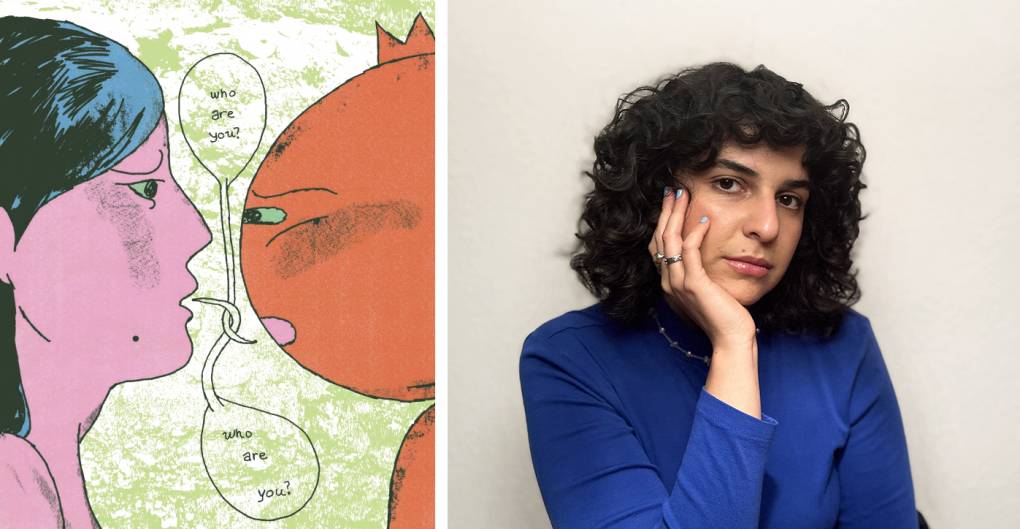
"caption": "Oakland comics artist Yasmeen Abedifard explores shame, queerness, survival and her Persian roots in 'When to Pick a Pomegranate.' ",
"credit": "Courtesy of Yasmeen Abedifard",
"altTag": null,
"description": null,
"imgSizes": {
"medium": {
"file": "https://cdn.kqed.org/wp-content/uploads/sites/2/2024/09/yasmeen-cover-image-800x415.jpg",
"width": 800,
"height": 415,
"mimeType": "image/jpeg"
},
"large": {
"file": "https://cdn.kqed.org/wp-content/uploads/sites/2/2024/09/yasmeen-cover-image-1020x529.jpg",
"width": 1020,
"height": 529,
"mimeType": "image/jpeg"
},
"thumbnail": {
"file": "https://cdn.kqed.org/wp-content/uploads/sites/2/2024/09/yasmeen-cover-image-160x83.jpg",
"width": 160,
"height": 83,
"mimeType": "image/jpeg"
},
"medium_large": {
"file": "https://cdn.kqed.org/wp-content/uploads/sites/2/2024/09/yasmeen-cover-image-768x398.jpg",
"width": 768,
"height": 398,
"mimeType": "image/jpeg"
},
"post-thumbnail": {
"file": "https://cdn.kqed.org/wp-content/uploads/sites/2/2024/09/yasmeen-cover-image-672x372.jpg",
"width": 672,
"height": 372,
"mimeType": "image/jpeg"
},
"twentyfourteen-full-width": {
"file": "https://cdn.kqed.org/wp-content/uploads/sites/2/2024/09/yasmeen-cover-image-1038x576.jpg",
"width": 1038,
"height": 576,
"mimeType": "image/jpeg"
},
"kqedFullSize": {
"file": "https://cdn.kqed.org/wp-content/uploads/sites/2/2024/09/yasmeen-cover-image.jpg",
"width": 1397,
"height": 724
}
},
"isLoading": false,
"fetchFailed": false
},
"arts_13964531": {
"type": "attachments",
"id": "arts_13964531",
"meta": {
"index": "attachments_1716263798",
"site": "arts",
"id": "13964531",
"found": true
},
"title": "Audience inside",
"publishDate": 1726685487,
"status": "inherit",
"parent": 13964508,
"modified": 1726685571,
"caption": "The audience at the South Asian Literature and Art Festival in 2023. ",
"credit": "Courtesy of SALA",
"altTag": "Audience members smile and clap.",
"description": null,
"imgSizes": {
"medium": {
"file": "https://cdn.kqed.org/wp-content/uploads/sites/2/2024/09/Audience-inside-800x533.jpg",
"width": 800,
"height": 533,
"mimeType": "image/jpeg"
},
"large": {
"file": "https://cdn.kqed.org/wp-content/uploads/sites/2/2024/09/Audience-inside-1020x680.jpg",
"width": 1020,
"height": 680,
"mimeType": "image/jpeg"
},
"thumbnail": {
"file": "https://cdn.kqed.org/wp-content/uploads/sites/2/2024/09/Audience-inside-160x107.jpg",
"width": 160,
"height": 107,
"mimeType": "image/jpeg"
},
"medium_large": {
"file": "https://cdn.kqed.org/wp-content/uploads/sites/2/2024/09/Audience-inside-768x512.jpg",
"width": 768,
"height": 512,
"mimeType": "image/jpeg"
},
"1536x1536": {
"file": "https://cdn.kqed.org/wp-content/uploads/sites/2/2024/09/Audience-inside-1536x1024.jpg",
"width": 1536,
"height": 1024,
"mimeType": "image/jpeg"
},
"post-thumbnail": {
"file": "https://cdn.kqed.org/wp-content/uploads/sites/2/2024/09/Audience-inside-672x372.jpg",
"width": 672,
"height": 372,
"mimeType": "image/jpeg"
},
"twentyfourteen-full-width": {
"file": "https://cdn.kqed.org/wp-content/uploads/sites/2/2024/09/Audience-inside-1038x576.jpg",
"width": 1038,
"height": 576,
"mimeType": "image/jpeg"
},
"full-width": {
"file": "https://cdn.kqed.org/wp-content/uploads/sites/2/2024/09/Audience-inside-1920x1280.jpg",
"width": 1920,
"height": 1280,
"mimeType": "image/jpeg"
},
"kqedFullSize": {
"file": "https://cdn.kqed.org/wp-content/uploads/sites/2/2024/09/Audience-inside.jpg",
"width": 2000,
"height": 1333
}
},
"isLoading": false,
"fetchFailed": false
},
"arts_13963164": {
"type": "attachments",
"id": "arts_13963164",
"meta": {
"index": "attachments_1716263798",
"site": "arts",
"id": "13963164",
"found": true
},
"title": "Tate and Vera, the central characters of ‘Deprog.’",
"publishDate": 1724452089,
"status": "inherit",
"parent": 13963133,
"modified": 1724452230,
"caption": "Tate and Vera, the central characters of ‘Deprog.’",
"credit": "Dead Sky Publishing",
"altTag": "An illustrated panel featuring a woman of color with short cropped hair and a beautiful blonde in a tight dress.",
"description": null,
"imgSizes": {
"medium": {
"file": "https://cdn.kqed.org/wp-content/uploads/sites/2/2024/08/deprog-800x548.png",
"width": 800,
"height": 548,
"mimeType": "image/png"
},
"large": {
"file": "https://cdn.kqed.org/wp-content/uploads/sites/2/2024/08/deprog-1020x699.png",
"width": 1020,
"height": 699,
"mimeType": "image/png"
},
"thumbnail": {
"file": "https://cdn.kqed.org/wp-content/uploads/sites/2/2024/08/deprog-160x110.png",
"width": 160,
"height": 110,
"mimeType": "image/png"
},
"medium_large": {
"file": "https://cdn.kqed.org/wp-content/uploads/sites/2/2024/08/deprog-768x526.png",
"width": 768,
"height": 526,
"mimeType": "image/png"
},
"1536x1536": {
"file": "https://cdn.kqed.org/wp-content/uploads/sites/2/2024/08/deprog-1536x1053.png",
"width": 1536,
"height": 1053,
"mimeType": "image/png"
},
"post-thumbnail": {
"file": "https://cdn.kqed.org/wp-content/uploads/sites/2/2024/08/deprog-672x372.png",
"width": 672,
"height": 372,
"mimeType": "image/png"
},
"twentyfourteen-full-width": {
"file": "https://cdn.kqed.org/wp-content/uploads/sites/2/2024/08/deprog-1038x576.png",
"width": 1038,
"height": 576,
"mimeType": "image/png"
},
"full-width": {
"file": "https://cdn.kqed.org/wp-content/uploads/sites/2/2024/08/deprog-1920x1316.png",
"width": 1920,
"height": 1316,
"mimeType": "image/png"
},
"kqedFullSize": {
"file": "https://cdn.kqed.org/wp-content/uploads/sites/2/2024/08/deprog.png",
"width": 2000,
"height": 1371
}
},
"isLoading": false,
"fetchFailed": false
},
"arts_13964276": {
"type": "attachments",
"id": "arts_13964276",
"meta": {
"index": "attachments_1716263798",
"site": "arts",
"id": "13964276",
"found": true
},
"title": "‘Why We Love Football: A History in 100 Moments’ by Joe Posnanski.",
"publishDate": 1726503692,
"status": "inherit",
"parent": 13964273,
"modified": 1726503729,
"caption": "‘Why We Love Football: A History in 100 Moments’ by Joe Posnanski.",
"credit": "Dutton",
"altTag": null,
"description": null,
"imgSizes": {
"medium": {
"file": "https://cdn.kqed.org/wp-content/uploads/sites/2/2024/09/foot-small-800x496.png",
"width": 800,
"height": 496,
"mimeType": "image/png"
},
"large": {
"file": "https://cdn.kqed.org/wp-content/uploads/sites/2/2024/09/foot-small-1020x632.png",
"width": 1020,
"height": 632,
"mimeType": "image/png"
},
"thumbnail": {
"file": "https://cdn.kqed.org/wp-content/uploads/sites/2/2024/09/foot-small-160x99.png",
"width": 160,
"height": 99,
"mimeType": "image/png"
},
"medium_large": {
"file": "https://cdn.kqed.org/wp-content/uploads/sites/2/2024/09/foot-small-768x476.png",
"width": 768,
"height": 476,
"mimeType": "image/png"
},
"1536x1536": {
"file": "https://cdn.kqed.org/wp-content/uploads/sites/2/2024/09/foot-small-1536x952.png",
"width": 1536,
"height": 952,
"mimeType": "image/png"
},
"post-thumbnail": {
"file": "https://cdn.kqed.org/wp-content/uploads/sites/2/2024/09/foot-small-672x372.png",
"width": 672,
"height": 372,
"mimeType": "image/png"
},
"twentyfourteen-full-width": {
"file": "https://cdn.kqed.org/wp-content/uploads/sites/2/2024/09/foot-small-1038x576.png",
"width": 1038,
"height": 576,
"mimeType": "image/png"
},
"full-width": {
"file": "https://cdn.kqed.org/wp-content/uploads/sites/2/2024/09/foot-small-1920x1190.png",
"width": 1920,
"height": 1190,
"mimeType": "image/png"
},
"kqedFullSize": {
"file": "https://cdn.kqed.org/wp-content/uploads/sites/2/2024/09/foot-small.png",
"width": 2000,
"height": 1240
}
},
"isLoading": false,
"fetchFailed": false
},
"arts_13963873": {
"type": "attachments",
"id": "arts_13963873",
"meta": {
"index": "attachments_1716263798",
"site": "arts",
"id": "13963873",
"found": true
},
"title": "‘We’re Alone’ by Edwidge Danticat.",
"publishDate": 1725901336,
"status": "inherit",
"parent": 13963867,
"modified": 1725901381,
"caption": "‘We’re Alone’ by Edwidge Danticat. ",
"credit": "Graywolf Press",
"altTag": null,
"description": null,
"imgSizes": {
"medium": {
"file": "https://cdn.kqed.org/wp-content/uploads/sites/2/2024/09/alone-800x528.png",
"width": 800,
"height": 528,
"mimeType": "image/png"
},
"large": {
"file": "https://cdn.kqed.org/wp-content/uploads/sites/2/2024/09/alone-1020x674.png",
"width": 1020,
"height": 674,
"mimeType": "image/png"
},
"thumbnail": {
"file": "https://cdn.kqed.org/wp-content/uploads/sites/2/2024/09/alone-160x106.png",
"width": 160,
"height": 106,
"mimeType": "image/png"
},
"medium_large": {
"file": "https://cdn.kqed.org/wp-content/uploads/sites/2/2024/09/alone-768x507.png",
"width": 768,
"height": 507,
"mimeType": "image/png"
},
"1536x1536": {
"file": "https://cdn.kqed.org/wp-content/uploads/sites/2/2024/09/alone-1536x1015.png",
"width": 1536,
"height": 1015,
"mimeType": "image/png"
},
"post-thumbnail": {
"file": "https://cdn.kqed.org/wp-content/uploads/sites/2/2024/09/alone-672x372.png",
"width": 672,
"height": 372,
"mimeType": "image/png"
},
"twentyfourteen-full-width": {
"file": "https://cdn.kqed.org/wp-content/uploads/sites/2/2024/09/alone-1038x576.png",
"width": 1038,
"height": 576,
"mimeType": "image/png"
},
"full-width": {
"file": "https://cdn.kqed.org/wp-content/uploads/sites/2/2024/09/alone-1920x1268.png",
"width": 1920,
"height": 1268,
"mimeType": "image/png"
},
"kqedFullSize": {
"file": "https://cdn.kqed.org/wp-content/uploads/sites/2/2024/09/alone.png",
"width": 2000,
"height": 1321
}
},
"isLoading": false,
"fetchFailed": false
},
"arts_13963859": {
"type": "attachments",
"id": "arts_13963859",
"meta": {
"index": "attachments_1716263798",
"site": "arts",
"id": "13963859",
"found": true
},
"title": "JasmineRashid.16x9",
"publishDate": 1725863837,
"status": "inherit",
"parent": 13963667,
"modified": 1725864206,
"caption": "Jasmine Rashid wants to instill 'financial activism' in those benefitting from generational wealth transfers.",
"credit": "Techboogie",
"altTag": null,
"description": null,
"imgSizes": {
"medium": {
"file": "https://cdn.kqed.org/wp-content/uploads/sites/2/2024/09/JasmineRashid.16x9-800x450.jpg",
"width": 800,
"height": 450,
"mimeType": "image/jpeg"
},
"large": {
"file": "https://cdn.kqed.org/wp-content/uploads/sites/2/2024/09/JasmineRashid.16x9-1020x574.jpg",
"width": 1020,
"height": 574,
"mimeType": "image/jpeg"
},
"thumbnail": {
"file": "https://cdn.kqed.org/wp-content/uploads/sites/2/2024/09/JasmineRashid.16x9-160x90.jpg",
"width": 160,
"height": 90,
"mimeType": "image/jpeg"
},
"medium_large": {
"file": "https://cdn.kqed.org/wp-content/uploads/sites/2/2024/09/JasmineRashid.16x9-768x432.jpg",
"width": 768,
"height": 432,
"mimeType": "image/jpeg"
},
"1536x1536": {
"file": "https://cdn.kqed.org/wp-content/uploads/sites/2/2024/09/JasmineRashid.16x9-1536x864.jpg",
"width": 1536,
"height": 864,
"mimeType": "image/jpeg"
},
"post-thumbnail": {
"file": "https://cdn.kqed.org/wp-content/uploads/sites/2/2024/09/JasmineRashid.16x9-672x372.jpg",
"width": 672,
"height": 372,
"mimeType": "image/jpeg"
},
"twentyfourteen-full-width": {
"file": "https://cdn.kqed.org/wp-content/uploads/sites/2/2024/09/JasmineRashid.16x9-1038x576.jpg",
"width": 1038,
"height": 576,
"mimeType": "image/jpeg"
},
"kqedFullSize": {
"file": "https://cdn.kqed.org/wp-content/uploads/sites/2/2024/09/JasmineRashid.16x9.jpg",
"width": 1920,
"height": 1080
}
},
"isLoading": false,
"fetchFailed": false
},
"arts_13963704": {
"type": "attachments",
"id": "arts_13963704",
"meta": {
"index": "attachments_1716263798",
"site": "arts",
"id": "13963704",
"found": true
},
"title": "‘I Just Keep Talking’ by Nell Irvin Painter.",
"publishDate": 1725560694,
"status": "inherit",
"parent": 13963695,
"modified": 1725560734,
"caption": "‘I Just Keep Talking’ by Nell Irvin Painter.",
"credit": "Doubleday ",
"altTag": "A book cover featuring an abstract illustration of a face.",
"description": null,
"imgSizes": {
"medium": {
"file": "https://cdn.kqed.org/wp-content/uploads/sites/2/2024/09/Screenshot-2024-09-05-at-11.24.37 AM-800x530.png",
"width": 800,
"height": 530,
"mimeType": "image/png"
},
"large": {
"file": "https://cdn.kqed.org/wp-content/uploads/sites/2/2024/09/Screenshot-2024-09-05-at-11.24.37 AM-1020x676.png",
"width": 1020,
"height": 676,
"mimeType": "image/png"
},
"thumbnail": {
"file": "https://cdn.kqed.org/wp-content/uploads/sites/2/2024/09/Screenshot-2024-09-05-at-11.24.37 AM-160x106.png",
"width": 160,
"height": 106,
"mimeType": "image/png"
},
"medium_large": {
"file": "https://cdn.kqed.org/wp-content/uploads/sites/2/2024/09/Screenshot-2024-09-05-at-11.24.37 AM-768x509.png",
"width": 768,
"height": 509,
"mimeType": "image/png"
},
"post-thumbnail": {
"file": "https://cdn.kqed.org/wp-content/uploads/sites/2/2024/09/Screenshot-2024-09-05-at-11.24.37 AM-672x372.png",
"width": 672,
"height": 372,
"mimeType": "image/png"
},
"twentyfourteen-full-width": {
"file": "https://cdn.kqed.org/wp-content/uploads/sites/2/2024/09/Screenshot-2024-09-05-at-11.24.37 AM-1038x576.png",
"width": 1038,
"height": 576,
"mimeType": "image/png"
},
"kqedFullSize": {
"file": "https://cdn.kqed.org/wp-content/uploads/sites/2/2024/09/Screenshot-2024-09-05-at-11.24.37 AM.png",
"width": 1312,
"height": 870
}
},
"isLoading": false,
"fetchFailed": false
},
"arts_13963670": {
"type": "attachments",
"id": "arts_13963670",
"meta": {
"index": "attachments_1716263798",
"site": "arts",
"id": "13963670",
"found": true
},
"title": "Hieronymus Bosch as drawn by Guy Colwell in his new graphic novel, ‘Delights.’",
"publishDate": 1725480435,
"status": "inherit",
"parent": 13963277,
"modified": 1725480613,
"caption": "Hieronymus Bosch as drawn by Guy Colwell in his new graphic novel, ‘Delights.’",
"credit": "Courtesy of Guy Colwell",
"altTag": "An illustration of a concerned looking man painting a landscape featuring naked people.",
"description": null,
"imgSizes": {
"medium": {
"file": "https://cdn.kqed.org/wp-content/uploads/sites/2/2024/08/bosch-800x505.jpg",
"width": 800,
"height": 505,
"mimeType": "image/jpeg"
},
"large": {
"file": "https://cdn.kqed.org/wp-content/uploads/sites/2/2024/08/bosch-1020x644.jpg",
"width": 1020,
"height": 644,
"mimeType": "image/jpeg"
},
"thumbnail": {
"file": "https://cdn.kqed.org/wp-content/uploads/sites/2/2024/08/bosch-160x101.jpg",
"width": 160,
"height": 101,
"mimeType": "image/jpeg"
},
"medium_large": {
"file": "https://cdn.kqed.org/wp-content/uploads/sites/2/2024/08/bosch-768x485.jpg",
"width": 768,
"height": 485,
"mimeType": "image/jpeg"
},
"1536x1536": {
"file": "https://cdn.kqed.org/wp-content/uploads/sites/2/2024/08/bosch-1536x970.jpg",
"width": 1536,
"height": 970,
"mimeType": "image/jpeg"
},
"post-thumbnail": {
"file": "https://cdn.kqed.org/wp-content/uploads/sites/2/2024/08/bosch-672x372.jpg",
"width": 672,
"height": 372,
"mimeType": "image/jpeg"
},
"twentyfourteen-full-width": {
"file": "https://cdn.kqed.org/wp-content/uploads/sites/2/2024/08/bosch-1038x576.jpg",
"width": 1038,
"height": 576,
"mimeType": "image/jpeg"
},
"full-width": {
"file": "https://cdn.kqed.org/wp-content/uploads/sites/2/2024/08/bosch-1920x1212.jpg",
"width": 1920,
"height": 1212,
"mimeType": "image/jpeg"
},
"kqedFullSize": {
"file": "https://cdn.kqed.org/wp-content/uploads/sites/2/2024/08/bosch.jpg",
"width": 2000,
"height": 1263
}
},
"isLoading": false,
"fetchFailed": false
},
"arts_13963664": {
"type": "attachments",
"id": "arts_13963664",
"meta": {
"index": "attachments_1716263798",
"site": "arts",
"id": "13963664",
"found": true
},
"title": "A new season is upon us — and it's bringing books.",
"publishDate": 1725478323,
"status": "inherit",
"parent": 13963659,
"modified": 1725478467,
"caption": "A new season is upon us — and it's bringing books.",
"credit": "iStock/Yul38885",
"altTag": null,
"description": null,
"imgSizes": {
"medium": {
"file": "https://cdn.kqed.org/wp-content/uploads/sites/2/2024/09/iStock-1174082199-800x533.jpg",
"width": 800,
"height": 533,
"mimeType": "image/jpeg"
},
"large": {
"file": "https://cdn.kqed.org/wp-content/uploads/sites/2/2024/09/iStock-1174082199-1020x680.jpg",
"width": 1020,
"height": 680,
"mimeType": "image/jpeg"
},
"thumbnail": {
"file": "https://cdn.kqed.org/wp-content/uploads/sites/2/2024/09/iStock-1174082199-160x107.jpg",
"width": 160,
"height": 107,
"mimeType": "image/jpeg"
},
"medium_large": {
"file": "https://cdn.kqed.org/wp-content/uploads/sites/2/2024/09/iStock-1174082199-768x512.jpg",
"width": 768,
"height": 512,
"mimeType": "image/jpeg"
},
"1536x1536": {
"file": "https://cdn.kqed.org/wp-content/uploads/sites/2/2024/09/iStock-1174082199-1536x1024.jpg",
"width": 1536,
"height": 1024,
"mimeType": "image/jpeg"
},
"2048x2048": {
"file": "https://cdn.kqed.org/wp-content/uploads/sites/2/2024/09/iStock-1174082199-2048x1365.jpg",
"width": 2048,
"height": 1365,
"mimeType": "image/jpeg"
},
"post-thumbnail": {
"file": "https://cdn.kqed.org/wp-content/uploads/sites/2/2024/09/iStock-1174082199-672x372.jpg",
"width": 672,
"height": 372,
"mimeType": "image/jpeg"
},
"twentyfourteen-full-width": {
"file": "https://cdn.kqed.org/wp-content/uploads/sites/2/2024/09/iStock-1174082199-1038x576.jpg",
"width": 1038,
"height": 576,
"mimeType": "image/jpeg"
},
"full-width": {
"file": "https://cdn.kqed.org/wp-content/uploads/sites/2/2024/09/iStock-1174082199-1920x1280.jpg",
"width": 1920,
"height": 1280,
"mimeType": "image/jpeg"
},
"kqedFullSize": {
"file": "https://cdn.kqed.org/wp-content/uploads/sites/2/2024/09/iStock-1174082199.jpg",
"width": 2121,
"height": 1414
}
},
"isLoading": false,
"fetchFailed": false
},
"arts_13963574": {
"type": "attachments",
"id": "arts_13963574",
"meta": {
"index": "attachments_1716263798",
"site": "arts",
"id": "13963574",
"found": true
},
"title": "‘A Day in September: The Battle of Antietam and the World It Left Behind’ by Stephen Budiansky.",
"publishDate": 1725393284,
"status": "inherit",
"parent": 13963567,
"modified": 1725393321,
"caption": "‘A Day in September: The Battle of Antietam and the World It Left Behind’\nby Stephen Budiansky.",
"credit": "W. W. Norton & Company",
"altTag": "An illustration of soldiers lying in a large ditch.",
"description": null,
"imgSizes": {
"medium": {
"file": "https://cdn.kqed.org/wp-content/uploads/sites/2/2024/09/Screenshot-2024-09-03-at-12.50.55 PM-800x486.png",
"width": 800,
"height": 486,
"mimeType": "image/png"
},
"large": {
"file": "https://cdn.kqed.org/wp-content/uploads/sites/2/2024/09/Screenshot-2024-09-03-at-12.50.55 PM-1020x619.png",
"width": 1020,
"height": 619,
"mimeType": "image/png"
},
"thumbnail": {
"file": "https://cdn.kqed.org/wp-content/uploads/sites/2/2024/09/Screenshot-2024-09-03-at-12.50.55 PM-160x97.png",
"width": 160,
"height": 97,
"mimeType": "image/png"
},
"medium_large": {
"file": "https://cdn.kqed.org/wp-content/uploads/sites/2/2024/09/Screenshot-2024-09-03-at-12.50.55 PM-768x466.png",
"width": 768,
"height": 466,
"mimeType": "image/png"
},
"post-thumbnail": {
"file": "https://cdn.kqed.org/wp-content/uploads/sites/2/2024/09/Screenshot-2024-09-03-at-12.50.55 PM-672x372.png",
"width": 672,
"height": 372,
"mimeType": "image/png"
},
"twentyfourteen-full-width": {
"file": "https://cdn.kqed.org/wp-content/uploads/sites/2/2024/09/Screenshot-2024-09-03-at-12.50.55 PM-1038x576.png",
"width": 1038,
"height": 576,
"mimeType": "image/png"
},
"kqedFullSize": {
"file": "https://cdn.kqed.org/wp-content/uploads/sites/2/2024/09/Screenshot-2024-09-03-at-12.50.55 PM.png",
"width": 1038,
"height": 630
}
},
"isLoading": false,
"fetchFailed": false
},
"arts_13963411": {
"type": "attachments",
"id": "arts_13963411",
"meta": {
"index": "attachments_1716263798",
"site": "arts",
"id": "13963411",
"found": true
},
"title": "‘How Albert Fell Down the Rabbit Hole and Came Up With the Universe,’ by Ken Krimstein.",
"publishDate": 1724960095,
"status": "inherit",
"parent": 13963406,
"modified": 1724960205,
"caption": "‘How Albert Fell Down the Rabbit Hole and Came Up With the Universe,’ by Ken Krimstein.",
"credit": "Bloomsbury Publishing",
"altTag": "A book cover illustration depicts a Einstein, pipe in mouth, falling over backwards.",
"description": null,
"imgSizes": {
"medium": {
"file": "https://cdn.kqed.org/wp-content/uploads/sites/2/2024/08/piece-800x527.png",
"width": 800,
"height": 527,
"mimeType": "image/png"
},
"large": {
"file": "https://cdn.kqed.org/wp-content/uploads/sites/2/2024/08/piece-1020x672.png",
"width": 1020,
"height": 672,
"mimeType": "image/png"
},
"thumbnail": {
"file": "https://cdn.kqed.org/wp-content/uploads/sites/2/2024/08/piece-160x105.png",
"width": 160,
"height": 105,
"mimeType": "image/png"
},
"medium_large": {
"file": "https://cdn.kqed.org/wp-content/uploads/sites/2/2024/08/piece-768x506.png",
"width": 768,
"height": 506,
"mimeType": "image/png"
},
"1536x1536": {
"file": "https://cdn.kqed.org/wp-content/uploads/sites/2/2024/08/piece-1536x1012.png",
"width": 1536,
"height": 1012,
"mimeType": "image/png"
},
"post-thumbnail": {
"file": "https://cdn.kqed.org/wp-content/uploads/sites/2/2024/08/piece-672x372.png",
"width": 672,
"height": 372,
"mimeType": "image/png"
},
"twentyfourteen-full-width": {
"file": "https://cdn.kqed.org/wp-content/uploads/sites/2/2024/08/piece-1038x576.png",
"width": 1038,
"height": 576,
"mimeType": "image/png"
},
"full-width": {
"file": "https://cdn.kqed.org/wp-content/uploads/sites/2/2024/08/piece-1920x1265.png",
"width": 1920,
"height": 1265,
"mimeType": "image/png"
},
"kqedFullSize": {
"file": "https://cdn.kqed.org/wp-content/uploads/sites/2/2024/08/piece.png",
"width": 2000,
"height": 1318
}
},
"isLoading": false,
"fetchFailed": false
},
"arts_13963260": {
"type": "attachments",
"id": "arts_13963260",
"meta": {
"index": "attachments_1716263798",
"site": "arts",
"id": "13963260",
"found": true
},
"title": "Screenshot 2024-08-27 at 12.12.51 PM",
"publishDate": 1724786147,
"status": "inherit",
"parent": 13963257,
"modified": 1724786147,
"caption": null,
"credit": null,
"altTag": null,
"description": null,
"imgSizes": {
"medium": {
"file": "https://cdn.kqed.org/wp-content/uploads/sites/2/2024/08/Screenshot-2024-08-27-at-12.12.51 PM-800x524.png",
"width": 800,
"height": 524,
"mimeType": "image/png"
},
"thumbnail": {
"file": "https://cdn.kqed.org/wp-content/uploads/sites/2/2024/08/Screenshot-2024-08-27-at-12.12.51 PM-160x105.png",
"width": 160,
"height": 105,
"mimeType": "image/png"
},
"medium_large": {
"file": "https://cdn.kqed.org/wp-content/uploads/sites/2/2024/08/Screenshot-2024-08-27-at-12.12.51 PM-768x503.png",
"width": 768,
"height": 503,
"mimeType": "image/png"
},
"post-thumbnail": {
"file": "https://cdn.kqed.org/wp-content/uploads/sites/2/2024/08/Screenshot-2024-08-27-at-12.12.51 PM-672x372.png",
"width": 672,
"height": 372,
"mimeType": "image/png"
},
"twentyfourteen-full-width": {
"file": "https://cdn.kqed.org/wp-content/uploads/sites/2/2024/08/Screenshot-2024-08-27-at-12.12.51 PM-1014x576.png",
"width": 1014,
"height": 576,
"mimeType": "image/png"
},
"kqedFullSize": {
"file": "https://cdn.kqed.org/wp-content/uploads/sites/2/2024/08/Screenshot-2024-08-27-at-12.12.51 PM.png",
"width": 1014,
"height": 664
}
},
"isLoading": false,
"fetchFailed": false
}
},
"audioPlayerReducer": {
"postId": "stream_live",
"isPaused": true,
"isPlaying": false,
"pfsActive": false,
"pledgeModalIsOpen": true,
"playerDrawerIsOpen": false,
"liveAudioPlayStartedAt": 0,
"liveAudioPlayContext": ""
},
"authorsReducer": {
"byline_arts_13964273": {
"type": "authors",
"id": "byline_arts_13964273",
"meta": {
"override": true
},
"slug": "byline_arts_13964273",
"name": "Mike Householder, Associated Press",
"isLoading": false
},
"byline_arts_13963867": {
"type": "authors",
"id": "byline_arts_13963867",
"meta": {
"override": true
},
"slug": "byline_arts_13963867",
"name": "Gabino Iglesias, NPR",
"isLoading": false
},
"byline_arts_13963695": {
"type": "authors",
"id": "byline_arts_13963695",
"meta": {
"override": true
},
"slug": "byline_arts_13963695",
"name": "Martha Anne Toll",
"isLoading": false
},
"byline_arts_13963659": {
"type": "authors",
"id": "byline_arts_13963659",
"meta": {
"override": true
},
"slug": "byline_arts_13963659",
"name": "Andrew Limbong",
"isLoading": false
},
"byline_arts_13963567": {
"type": "authors",
"id": "byline_arts_13963567",
"meta": {
"override": true
},
"slug": "byline_arts_13963567",
"name": "Jeff Rowe, Associated Press",
"isLoading": false
},
"byline_arts_13963406": {
"type": "authors",
"id": "byline_arts_13963406",
"meta": {
"override": true
},
"slug": "byline_arts_13963406",
"name": "Tahneer Oksman, NPR",
"isLoading": false
},
"byline_arts_13963257": {
"type": "authors",
"id": "byline_arts_13963257",
"meta": {
"override": true
},
"slug": "byline_arts_13963257",
"name": "Andrew DeMillo, Associated Press",
"isLoading": false
},
"ralexandra": {
"type": "authors",
"id": "11242",
"meta": {
"index": "authors_1716337520",
"id": "11242",
"found": true
},
"name": "Rae Alexandra",
"firstName": "Rae",
"lastName": "Alexandra",
"slug": "ralexandra",
"email": "rae-alexandra@outlook.com",
"display_author_email": true,
"staff_mastheads": [],
"title": "Former Staff Writer and Reporter, KQED Arts & Culture",
"bio": "Rae Alexandra is the creator and author of the series \u003ca href=\"https://www.kqed.org/arts/program/rebel-girls-from-bay-area-history\">Rebel Girls From Bay Area History\u003c/a> and \u003ca href=\"https://www.kqed.org/bizarrebayarea\">Bizarre Bay Area\u003c/a>. Her debut book, \u003ca href=\"https://citylights.com/politics-current-events-history/unsung-heroines35-women-who-changed/\">Unsung Heroines: 35 Women Who Changed the Bay Area\u003c/a> was published by City Lights in March 2026. In 2023, Rae was awarded an SPJ Excellence in Journalism Award for Arts & Culture. Rae was born and raised in Wales and subsequently — even after two decades in Northern California — still uses phrases that regularly baffle her coworkers.",
"avatar": "https://secure.gravatar.com/avatar/4cfcc3e7d8f591d2193600c92003ff8b3519bc2d4aebb2c04075082fd1cc0838?s=600&d=blank&r=g",
"twitter": null,
"bluesky": null,
"facebook": null,
"instagram": null,
"linkedin": null,
"sites": [
{
"site": "arts",
"roles": [
"contributor"
]
},
{
"site": "news",
"roles": [
"subscriber"
]
},
{
"site": "pop",
"roles": [
"subscriber"
]
},
{
"site": "bayareabites",
"roles": [
"subscriber"
]
},
{
"site": "science",
"roles": [
"subscriber"
]
}
],
"headData": {
"title": "Rae Alexandra | KQED",
"description": "Former Staff Writer and Reporter, KQED Arts & Culture",
"ogImgSrc": "https://secure.gravatar.com/avatar/4cfcc3e7d8f591d2193600c92003ff8b3519bc2d4aebb2c04075082fd1cc0838?s=600&d=blank&r=g",
"twImgSrc": "https://secure.gravatar.com/avatar/4cfcc3e7d8f591d2193600c92003ff8b3519bc2d4aebb2c04075082fd1cc0838?s=600&d=blank&r=g"
},
"isLoading": false,
"link": "/author/ralexandra"
},
"nvoynovskaya": {
"type": "authors",
"id": "11387",
"meta": {
"index": "authors_1716337520",
"id": "11387",
"found": true
},
"name": "Nastia Voynovskaya",
"firstName": "Nastia",
"lastName": "Voynovskaya",
"slug": "nvoynovskaya",
"email": "nvoynovskaya@kqed.org",
"display_author_email": false,
"staff_mastheads": [
"arts"
],
"title": "Editor and reporter",
"bio": "Nastia Voynovskaya is a reporter, editor and host at KQED Arts & Culture. She's been covering the arts in the Bay Area for over a decade, with a focus on music, queer culture, labor issues and grassroots organizing. She has edited KQED story series such as Trans Bay: A History of San Francisco's Gender-Diverse Community, and co-created KQED's Bay Area hip-hop history project, That's My Word. Nastia's work has been recognized by the Society of Professional Journalists and San Francisco Press Club. She regularly appears on podcasts and radio programs, including NPR's All Songs Considered, and hosts live events where music, culture and conversation meet.",
"avatar": "https://secure.gravatar.com/avatar/5025ee460e5a85d69ca20ea6c6f2f80d7e17795c828f61ea3aecfcd924e9042e?s=600&d=blank&r=g",
"twitter": null,
"bluesky": null,
"facebook": null,
"instagram": "https://www.instagram.com/nananastia/",
"linkedin": null,
"sites": [
{
"site": "",
"roles": [
"editor"
]
},
{
"site": "arts",
"roles": [
"administrator"
]
},
{
"site": "news",
"roles": [
"editor"
]
},
{
"site": "pop",
"roles": [
"administrator"
]
},
{
"site": "bayareabites",
"roles": [
"editor"
]
},
{
"site": "podcasts",
"roles": [
"editor"
]
},
{
"site": "hiphop",
"roles": [
"editor"
]
}
],
"headData": {
"title": "Nastia Voynovskaya | KQED",
"description": "Editor and reporter",
"ogImgSrc": "https://secure.gravatar.com/avatar/5025ee460e5a85d69ca20ea6c6f2f80d7e17795c828f61ea3aecfcd924e9042e?s=600&d=blank&r=g",
"twImgSrc": "https://secure.gravatar.com/avatar/5025ee460e5a85d69ca20ea6c6f2f80d7e17795c828f61ea3aecfcd924e9042e?s=600&d=blank&r=g"
},
"isLoading": false,
"link": "/author/nvoynovskaya"
},
"ogpenn": {
"type": "authors",
"id": "11491",
"meta": {
"index": "authors_1716337520",
"id": "11491",
"found": true
},
"name": "Pendarvis Harshaw",
"firstName": "Pendarvis",
"lastName": "Harshaw",
"slug": "ogpenn",
"email": "ogpenn@gmail.com",
"display_author_email": false,
"staff_mastheads": [
"arts"
],
"title": "Community Engagement Reporter",
"bio": "Pendarvis Harshaw is an educator, host and writer with KQED Arts.",
"avatar": "https://secure.gravatar.com/avatar/972b77ee8e3f346ae2b00622661187fbfabd059b5693bbdc1475ea7a722fd4cd?s=600&d=blank&r=g",
"twitter": null,
"bluesky": null,
"facebook": null,
"instagram": "ogpenn",
"linkedin": null,
"sites": [
{
"site": "arts",
"roles": [
"administrator"
]
},
{
"site": "news",
"roles": [
"editor"
]
},
{
"site": "bayareabites",
"roles": [
"author"
]
},
{
"site": "hiphop",
"roles": [
"editor"
]
}
],
"headData": {
"title": "Pendarvis Harshaw | KQED",
"description": "Community Engagement Reporter",
"ogImgSrc": "https://secure.gravatar.com/avatar/972b77ee8e3f346ae2b00622661187fbfabd059b5693bbdc1475ea7a722fd4cd?s=600&d=blank&r=g",
"twImgSrc": "https://secure.gravatar.com/avatar/972b77ee8e3f346ae2b00622661187fbfabd059b5693bbdc1475ea7a722fd4cd?s=600&d=blank&r=g"
},
"isLoading": false,
"link": "/author/ogpenn"
},
"ksong": {
"type": "authors",
"id": "11813",
"meta": {
"index": "authors_1716337520",
"id": "11813",
"found": true
},
"name": "Kristie Song",
"firstName": "Kristie",
"lastName": "Song",
"slug": "ksong",
"email": "ksong@kqed.org",
"display_author_email": false,
"staff_mastheads": [],
"title": "Editorial Intern ",
"bio": "Kristie Song is an Arts & Culture Intern at KQED. She is currently a graduate student at UC Berkeley, where she studies audio and multimedia journalism. Previously, she covered the local community for Oakland North, produced episodes for The Science of Happiness, and served as news director for KUCI, UC Irvine’s radio station. Outside of reporting, she likes drawing comics, listening to angsty rock, and practicing the guitar.",
"avatar": "https://secure.gravatar.com/avatar/c1149e78c3c44f92d4945a8ab0711af6?s=600&d=blank&r=g",
"twitter": null,
"facebook": null,
"instagram": null,
"linkedin": null,
"sites": [
{
"site": "arts",
"roles": [
"editor"
]
}
],
"headData": {
"title": "Kristie Song | KQED",
"description": "Editorial Intern ",
"ogImgSrc": "https://secure.gravatar.com/avatar/c1149e78c3c44f92d4945a8ab0711af6?s=600&d=blank&r=g",
"twImgSrc": "https://secure.gravatar.com/avatar/c1149e78c3c44f92d4945a8ab0711af6?s=600&d=blank&r=g"
},
"isLoading": false,
"link": "/author/ksong"
}
},
"pagesReducer": {
"arts_category_literature": {
"type": "terms",
"id": "arts_73",
"meta": {
"index": "terms_1716263798",
"site": "arts",
"id": "73",
"score": 12.794861
},
"featImg": null,
"name": "Books",
"description": null,
"taxonomy": "category",
"headData": {
"twImgId": null,
"twTitle": null,
"ogTitle": null,
"ogImgId": null,
"twDescription": null,
"description": null,
"title": "Books Archives | KQED Arts",
"ogDescription": null
},
"ttid": 74,
"slug": "literature",
"isLoading": false,
"title": "Books",
"pageMeta": {
"site": "arts",
"WpPageTemplate": "page-topic-editorial",
"currentPage": 22
},
"blocks": [
{
"blockName": "kqed/post-list",
"attrs": {
"layout": "cardArticle2",
"query": "posts/arts?category=literature",
"seeMore": false,
"paginated": true,
"page": 22
}
},
{
"blockName": "kqed/ad"
}
]
}
},
"pfsSessionReducer": {},
"postsReducer": {
"stream_live": {
"type": "live",
"id": "stream_live",
"audioUrl": "https://hls.kqed.org/hls/kqed_app/playlist.m3u8",
"title": "Live Stream",
"excerpt": "Live Stream information currently unavailable.",
"link": "/radio",
"featImg": "",
"label": {
"name": "KQED Live",
"link": "/"
}
},
"stream_kqedNewscast": {
"type": "posts",
"id": "stream_kqedNewscast",
"audioUrl": "https://www.kqed.org/.stream/anon/radio/RDnews/newscast.mp3?_=1",
"title": "KQED Newscast",
"featImg": "",
"label": {
"name": "88.5 FM",
"link": "/"
}
},
"arts_13964548": {
"type": "posts",
"id": "arts_13964548",
"meta": {
"index": "posts_1716263798",
"site": "arts",
"id": "13964548",
"score": null,
"sort": [
1726694265000
]
},
"guestAuthors": [],
"slug": "yasmeen-abedifard-when-to-pick-a-pomegranate-silver-sprocket",
"title": "A Pomegranate Goes on a Cosmic Journey in Yasmeen Abedifard’s New Book",
"publishDate": 1726694265,
"format": "standard",
"headTitle": "A Pomegranate Goes on a Cosmic Journey in Yasmeen Abedifard’s New Book | KQED",
"labelTerm": {
"term": 140,
"site": "arts"
},
"content": "\u003cp>Upon waking in a garden-like void, a disoriented pomegranate named Anar and a woman named Guli question their existence: Who are they? What is their purpose? Suddenly, a pair of divine hands plucks them from their quiet panic and launches them through a journey — one in which they are born and reborn, their souls interlinked but their relationship ever-changing. From cycle to cycle, Anar and Guli shape-shift, taking on different physical forms as they amalgamate and coalesce, inflicting the sharpness of their hate, anger, desire, hunger and shame onto one another.\u003c/p>\n\u003cp>The two perform the ceaseless and sometimes futile yearning for transformation in Oakland-based artist Yasmeen Abedifard’s new comic collection, \u003ca href=\"https://store.silversprocket.net/products/pre-order-when-to-pick-a-pomegranate-by-yasmeen\">\u003cem>When to Pick a Pomegranate\u003c/em>\u003c/a> (out Sept. 25 via Silver Sprocket). In seven short comics that follow the plant life cycle, Anar and Guli’s iterations begin as a seed before evolving through propagation and bursting with ripeness until they inevitably rot. As they repeat the process over and over, they experience a Punnett square of change: endless outcomes in which their autonomy and sense of self is tested and morphed.\u003c/p>\n\u003cfigure id=\"attachment_13964556\" class=\"wp-caption aligncenter\" style=\"max-width: 1142px\">\u003cimg loading=\"lazy\" decoding=\"async\" class=\"size-full wp-image-13964556\" src=\"https://cdn.kqed.org/wp-content/uploads/sites/2/2024/09/Book-cover.png\" alt=\"\" width=\"1142\" height=\"1394\" srcset=\"https://cdn.kqed.org/wp-content/uploads/sites/2/2024/09/Book-cover.png 1142w, https://cdn.kqed.org/wp-content/uploads/sites/2/2024/09/Book-cover-800x977.png 800w, https://cdn.kqed.org/wp-content/uploads/sites/2/2024/09/Book-cover-1020x1245.png 1020w, https://cdn.kqed.org/wp-content/uploads/sites/2/2024/09/Book-cover-160x195.png 160w, https://cdn.kqed.org/wp-content/uploads/sites/2/2024/09/Book-cover-768x937.png 768w\" sizes=\"(max-width: 1142px) 100vw, 1142px\">\u003cfigcaption class=\"wp-caption-text\">The cover of ‘When to Pick a Pomegranate’ by Yasmeen Abedifard. \u003ccite>(Silver Sprocket)\u003c/cite>\u003c/figcaption>\u003c/figure>\n\u003cp>Like the sections of her book, Abedifard’s artistry has bloomed through various life stages. Her parents immigrated to the U.S. from Iran, and Abedifard was raised in the South Bay suburb of Sunnyvale, where she developed an affinity for drawing and cartoons. “They had a public library, and there was a manga section, and so my mom would take me and my sister,” she says during an interview in a Berkeley park. “We would plop ourselves down and I would just read a whole book.”\u003c/p>\n\u003cp>As a teen, Abedifard got into making digital art on a small Wacom tablet and began posting her illustrations onto the platform DeviantArt. With a penchant for drawing characters, she contemplated going to art school for college. “But I had two immigrant parents that were like — maybe try something else. And I actually have some gratitude to that,” Abedifard reflects.\u003c/p>\n\u003cp>She ended up studying psychology and Middle Eastern Studies at the University of San Francisco. “I got to learn a lot about Islamic and Persian history. I got to learn a lot about how the brain works and how cognitive function impacts your daily life — all of these things that became really important to me.”\u003c/p>\n\u003cfigure id=\"attachment_13964560\" class=\"wp-caption aligncenter\" style=\"max-width: 876px\">\u003cimg loading=\"lazy\" decoding=\"async\" class=\"size-full wp-image-13964560\" src=\"https://cdn.kqed.org/wp-content/uploads/sites/2/2024/09/Yasmeen-painting-2-POM-book.png\" alt='Repeated drawings of a woman eating a pomegranate. Text reads: \"I was ripe.\"' width=\"876\" height=\"1062\" srcset=\"https://cdn.kqed.org/wp-content/uploads/sites/2/2024/09/Yasmeen-painting-2-POM-book.png 876w, https://cdn.kqed.org/wp-content/uploads/sites/2/2024/09/Yasmeen-painting-2-POM-book-800x970.png 800w, https://cdn.kqed.org/wp-content/uploads/sites/2/2024/09/Yasmeen-painting-2-POM-book-160x194.png 160w, https://cdn.kqed.org/wp-content/uploads/sites/2/2024/09/Yasmeen-painting-2-POM-book-768x931.png 768w\" sizes=\"(max-width: 876px) 100vw, 876px\">\u003cfigcaption class=\"wp-caption-text\">Artwork by Yasmeen Abedifard from her book ‘When to Pick a Pomegranate.’ \u003ccite>(Courtesy of Yasmeen Abedifard)\u003c/cite>\u003c/figcaption>\u003c/figure>\n\u003cp>Abedifard immediately entered an interdisciplinary visual arts MFA program at Cornell, where she grew increasingly lost and disillusioned with the critique she was receiving. While many of her peers were older artists who worked with abstract imagery, she was drawn to figurative work inspired by illuminated manuscripts and Islamic iconography.\u003c/p>\n\u003cp>[ad fullwidth]\u003c/p>\n\u003cp>“I started to become really frustrated because all that I was getting critiqued on or talked about was material, like how things are made rather than the actual image itself,” Abedifard explains. “Because I was like, I want you to see what this image is and what it makes you feel, right? I felt like I was totally an imposter, being really young and in a new space. And then I was like, ‘Why don’t I just make comics again? This is the thing I like to do.’”\u003c/p>\n\u003cfigure id=\"attachment_13964558\" class=\"wp-caption aligncenter\" style=\"max-width: 876px\">\u003cimg loading=\"lazy\" decoding=\"async\" class=\"size-full wp-image-13964558\" src=\"https://cdn.kqed.org/wp-content/uploads/sites/2/2024/09/Rotten-page-Yasmeen-POM-book.png\" alt='A drawing of a pomegranate tearing itself open. The text reads: \"i want to tear these thoughts out of my flesh. How could I forget just how rotten I am?\"' width=\"876\" height=\"1062\" srcset=\"https://cdn.kqed.org/wp-content/uploads/sites/2/2024/09/Rotten-page-Yasmeen-POM-book.png 876w, https://cdn.kqed.org/wp-content/uploads/sites/2/2024/09/Rotten-page-Yasmeen-POM-book-800x970.png 800w, https://cdn.kqed.org/wp-content/uploads/sites/2/2024/09/Rotten-page-Yasmeen-POM-book-160x194.png 160w, https://cdn.kqed.org/wp-content/uploads/sites/2/2024/09/Rotten-page-Yasmeen-POM-book-768x931.png 768w\" sizes=\"(max-width: 876px) 100vw, 876px\">\u003cfigcaption class=\"wp-caption-text\">The version of Yasmeen Abedifard’s comic ‘Rotten’ that appears in her book ‘When to Pick a Pomegranate.’ \u003ccite>(Yasmeen Abedifard)\u003c/cite>\u003c/figcaption>\u003c/figure>\n\u003cp>Her excitement was reinvigorated. She redrew the first comic she ever made (“Rotten”), screen printed all of the pages and exhibited them at a group show at the end of her first year. In her second year, she leaned into comics making and experimented with animation and other visual mediums that allowed her to explore her interests in Persian art, poetry and storytelling.\u003c/p>\n\u003cp>\u003cem>When to Pick a Pomegranate\u003c/em> is the culmination of the ways Abedifard’s path has diverged and reconverged in her love of cartoons, comics and her desire to connect with her heritage. There are several references to Persian art, history and language, including in the naming of the comics. “Every title, I have it in Farsi as well, because there’s a lot of meaning in the Farsi that the English doesn’t have,” says Abedifard. “For example, this word خراب (“rotten”) is like a fruit went bad, right? But also, it means something is broken or wrong.”\u003c/p>\n\u003cp>In \u003cem>When to Pick a Pomegranate\u003c/em>, Abedifard once again redrew “Rotten,” this time with a stark, saturated color palette bathed in hellish hues of blood red and black. Lyrical prose and Abedifard’s signature style of expressive emotions amplify both humorous and emotionally anguished scenes — “Rotten” dives into an all-consuming self-loathing that rots Anar from the inside out. He dreams of tearing himself apart to be free of a shameful desire, represented through an evocative panel of body horror.\u003c/p>\n\u003cfigure id=\"attachment_13964561\" class=\"wp-caption aligncenter\" style=\"max-width: 876px\">\u003cimg loading=\"lazy\" decoding=\"async\" class=\"size-full wp-image-13964561\" src=\"https://cdn.kqed.org/wp-content/uploads/sites/2/2024/09/Yasmeen-painting-3-POM-book.png\" alt=\"\" width=\"876\" height=\"1062\" srcset=\"https://cdn.kqed.org/wp-content/uploads/sites/2/2024/09/Yasmeen-painting-3-POM-book.png 876w, https://cdn.kqed.org/wp-content/uploads/sites/2/2024/09/Yasmeen-painting-3-POM-book-800x970.png 800w, https://cdn.kqed.org/wp-content/uploads/sites/2/2024/09/Yasmeen-painting-3-POM-book-160x194.png 160w, https://cdn.kqed.org/wp-content/uploads/sites/2/2024/09/Yasmeen-painting-3-POM-book-768x931.png 768w\" sizes=\"(max-width: 876px) 100vw, 876px\">\u003cfigcaption class=\"wp-caption-text\">Artwork by Yasmeen Abedifard from her book ‘When to Pick a Pomegranate.’ \u003ccite>(Courtesy of Yasmeen Abedifard)\u003c/cite>\u003c/figcaption>\u003c/figure>\n\u003cp>“This comic was grappling with this idea of desiring something that was not allowed, and sort of dealing with the core queer trauma of feeling disgusted with oneself [and] trying to think about ways to remove it,” says Abedifard. “I feel like this one brings up so many feelings I have around desire, eroticism, sensuality, intimacy, shame, trauma, anger … It’s my baby because it’s my first comic, [and] I just wanted to hammer it home this time.”\u003c/p>\n\u003cp>Beyond its focus on change and the anxieties around it, \u003cem>When to Pick a Pomegranate\u003c/em> challenges readers to question: How do we heal from events that threaten to stunt us? How can we rediscover pleasure, joy and rest in ourselves and our communities? Dedicated to “saplings plucked too early,” the collection is a visually and emotionally complex venture into a contemporary kind of myth-making, one in which historical images are supplanted by daring, new roots.\u003c/p>\n\u003chr>\n\u003cp>[ad floatright]\u003c/p>\n\u003cp>\u003cem>‘When to Pick a Pomegranate’ will be published Sept. 25, 2024. Abedifard’s book tour kicks off with a \u003ca href=\"https://www.instagram.com/p/C_L9XzKyOov/\">release party\u003c/a> at San Francisco comics shop Silver Sprocket on Sept. 21. \u003ca href=\"https://www.instagram.com/p/C_lVuTxv9Bx/?hl=en\">More information about the full book tour here\u003c/a>.\u003c/em>\u003c/p>\n\n",
"blocks": [],
"excerpt": "The Oakland comics artist explores shame, queerness, survival and Persian roots in her modern fable. ",
"status": "publish",
"parent": 0,
"modified": 1726694265,
"stats": {
"hasAudio": false,
"hasVideo": false,
"hasChartOrMap": false,
"iframeSrcs": [],
"hasGoogleForm": false,
"hasGallery": false,
"hasHearkenModule": false,
"hasPolis": false,
"paragraphCount": 15,
"wordCount": 1096
},
"headData": {
"title": "A Pomegranate Goes on a Cosmic Journey in Yasmeen Abedifard’s New Book | KQED",
"description": "The Oakland comics artist explores shame, queerness, survival and Persian roots in her modern fable. ",
"ogTitle": "",
"ogDescription": "",
"ogImgId": "",
"twTitle": "",
"twDescription": "",
"twImgId": "",
"schema": {
"@context": "https://schema.org",
"@type": "Article",
"headline": "A Pomegranate Goes on a Cosmic Journey in Yasmeen Abedifard’s New Book",
"datePublished": "2024-09-18T14:17:45-07:00",
"dateModified": "2024-09-18T14:17:45-07:00",
"image": "https://cdn.kqed.org/wp-content/uploads/2020/02/KQED-OG-Image@1x.png"
}
},
"sticky": false,
"nprStoryId": "kqed-13964548",
"templateType": "standard",
"featuredImageType": "standard",
"excludeFromSiteSearch": "Include",
"articleAge": "0",
"path": "/arts/13964548/yasmeen-abedifard-when-to-pick-a-pomegranate-silver-sprocket",
"audioTrackLength": null,
"parsedContent": [
{
"type": "contentString",
"content": "\u003cdiv class=\"post-body\">\u003cp>\u003cp>Upon waking in a garden-like void, a disoriented pomegranate named Anar and a woman named Guli question their existence: Who are they? What is their purpose? Suddenly, a pair of divine hands plucks them from their quiet panic and launches them through a journey — one in which they are born and reborn, their souls interlinked but their relationship ever-changing. From cycle to cycle, Anar and Guli shape-shift, taking on different physical forms as they amalgamate and coalesce, inflicting the sharpness of their hate, anger, desire, hunger and shame onto one another.\u003c/p>\n\u003cp>The two perform the ceaseless and sometimes futile yearning for transformation in Oakland-based artist Yasmeen Abedifard’s new comic collection, \u003ca href=\"https://store.silversprocket.net/products/pre-order-when-to-pick-a-pomegranate-by-yasmeen\">\u003cem>When to Pick a Pomegranate\u003c/em>\u003c/a> (out Sept. 25 via Silver Sprocket). In seven short comics that follow the plant life cycle, Anar and Guli’s iterations begin as a seed before evolving through propagation and bursting with ripeness until they inevitably rot. As they repeat the process over and over, they experience a Punnett square of change: endless outcomes in which their autonomy and sense of self is tested and morphed.\u003c/p>\n\u003cfigure id=\"attachment_13964556\" class=\"wp-caption aligncenter\" style=\"max-width: 1142px\">\u003cimg loading=\"lazy\" decoding=\"async\" class=\"size-full wp-image-13964556\" src=\"https://cdn.kqed.org/wp-content/uploads/sites/2/2024/09/Book-cover.png\" alt=\"\" width=\"1142\" height=\"1394\" srcset=\"https://cdn.kqed.org/wp-content/uploads/sites/2/2024/09/Book-cover.png 1142w, https://cdn.kqed.org/wp-content/uploads/sites/2/2024/09/Book-cover-800x977.png 800w, https://cdn.kqed.org/wp-content/uploads/sites/2/2024/09/Book-cover-1020x1245.png 1020w, https://cdn.kqed.org/wp-content/uploads/sites/2/2024/09/Book-cover-160x195.png 160w, https://cdn.kqed.org/wp-content/uploads/sites/2/2024/09/Book-cover-768x937.png 768w\" sizes=\"(max-width: 1142px) 100vw, 1142px\">\u003cfigcaption class=\"wp-caption-text\">The cover of ‘When to Pick a Pomegranate’ by Yasmeen Abedifard. \u003ccite>(Silver Sprocket)\u003c/cite>\u003c/figcaption>\u003c/figure>\n\u003cp>Like the sections of her book, Abedifard’s artistry has bloomed through various life stages. Her parents immigrated to the U.S. from Iran, and Abedifard was raised in the South Bay suburb of Sunnyvale, where she developed an affinity for drawing and cartoons. “They had a public library, and there was a manga section, and so my mom would take me and my sister,” she says during an interview in a Berkeley park. “We would plop ourselves down and I would just read a whole book.”\u003c/p>\n\u003cp>As a teen, Abedifard got into making digital art on a small Wacom tablet and began posting her illustrations onto the platform DeviantArt. With a penchant for drawing characters, she contemplated going to art school for college. “But I had two immigrant parents that were like — maybe try something else. And I actually have some gratitude to that,” Abedifard reflects.\u003c/p>\n\u003cp>She ended up studying psychology and Middle Eastern Studies at the University of San Francisco. “I got to learn a lot about Islamic and Persian history. I got to learn a lot about how the brain works and how cognitive function impacts your daily life — all of these things that became really important to me.”\u003c/p>\n\u003cfigure id=\"attachment_13964560\" class=\"wp-caption aligncenter\" style=\"max-width: 876px\">\u003cimg loading=\"lazy\" decoding=\"async\" class=\"size-full wp-image-13964560\" src=\"https://cdn.kqed.org/wp-content/uploads/sites/2/2024/09/Yasmeen-painting-2-POM-book.png\" alt='Repeated drawings of a woman eating a pomegranate. Text reads: \"I was ripe.\"' width=\"876\" height=\"1062\" srcset=\"https://cdn.kqed.org/wp-content/uploads/sites/2/2024/09/Yasmeen-painting-2-POM-book.png 876w, https://cdn.kqed.org/wp-content/uploads/sites/2/2024/09/Yasmeen-painting-2-POM-book-800x970.png 800w, https://cdn.kqed.org/wp-content/uploads/sites/2/2024/09/Yasmeen-painting-2-POM-book-160x194.png 160w, https://cdn.kqed.org/wp-content/uploads/sites/2/2024/09/Yasmeen-painting-2-POM-book-768x931.png 768w\" sizes=\"(max-width: 876px) 100vw, 876px\">\u003cfigcaption class=\"wp-caption-text\">Artwork by Yasmeen Abedifard from her book ‘When to Pick a Pomegranate.’ \u003ccite>(Courtesy of Yasmeen Abedifard)\u003c/cite>\u003c/figcaption>\u003c/figure>\n\u003cp>Abedifard immediately entered an interdisciplinary visual arts MFA program at Cornell, where she grew increasingly lost and disillusioned with the critique she was receiving. While many of her peers were older artists who worked with abstract imagery, she was drawn to figurative work inspired by illuminated manuscripts and Islamic iconography.\u003c/p>\n\u003cp>\u003c/p>\u003c/div>",
"attributes": {
"named": {},
"numeric": []
}
},
{
"type": "component",
"content": "",
"name": "ad",
"attributes": {
"named": {
"label": "fullwidth"
},
"numeric": [
"fullwidth"
]
}
},
{
"type": "contentString",
"content": "\u003cdiv class=\"post-body\">\u003cp>\u003c/p>\n\u003cp>“I started to become really frustrated because all that I was getting critiqued on or talked about was material, like how things are made rather than the actual image itself,” Abedifard explains. “Because I was like, I want you to see what this image is and what it makes you feel, right? I felt like I was totally an imposter, being really young and in a new space. And then I was like, ‘Why don’t I just make comics again? This is the thing I like to do.’”\u003c/p>\n\u003cfigure id=\"attachment_13964558\" class=\"wp-caption aligncenter\" style=\"max-width: 876px\">\u003cimg loading=\"lazy\" decoding=\"async\" class=\"size-full wp-image-13964558\" src=\"https://cdn.kqed.org/wp-content/uploads/sites/2/2024/09/Rotten-page-Yasmeen-POM-book.png\" alt='A drawing of a pomegranate tearing itself open. The text reads: \"i want to tear these thoughts out of my flesh. How could I forget just how rotten I am?\"' width=\"876\" height=\"1062\" srcset=\"https://cdn.kqed.org/wp-content/uploads/sites/2/2024/09/Rotten-page-Yasmeen-POM-book.png 876w, https://cdn.kqed.org/wp-content/uploads/sites/2/2024/09/Rotten-page-Yasmeen-POM-book-800x970.png 800w, https://cdn.kqed.org/wp-content/uploads/sites/2/2024/09/Rotten-page-Yasmeen-POM-book-160x194.png 160w, https://cdn.kqed.org/wp-content/uploads/sites/2/2024/09/Rotten-page-Yasmeen-POM-book-768x931.png 768w\" sizes=\"(max-width: 876px) 100vw, 876px\">\u003cfigcaption class=\"wp-caption-text\">The version of Yasmeen Abedifard’s comic ‘Rotten’ that appears in her book ‘When to Pick a Pomegranate.’ \u003ccite>(Yasmeen Abedifard)\u003c/cite>\u003c/figcaption>\u003c/figure>\n\u003cp>Her excitement was reinvigorated. She redrew the first comic she ever made (“Rotten”), screen printed all of the pages and exhibited them at a group show at the end of her first year. In her second year, she leaned into comics making and experimented with animation and other visual mediums that allowed her to explore her interests in Persian art, poetry and storytelling.\u003c/p>\n\u003cp>\u003cem>When to Pick a Pomegranate\u003c/em> is the culmination of the ways Abedifard’s path has diverged and reconverged in her love of cartoons, comics and her desire to connect with her heritage. There are several references to Persian art, history and language, including in the naming of the comics. “Every title, I have it in Farsi as well, because there’s a lot of meaning in the Farsi that the English doesn’t have,” says Abedifard. “For example, this word خراب (“rotten”) is like a fruit went bad, right? But also, it means something is broken or wrong.”\u003c/p>\n\u003cp>In \u003cem>When to Pick a Pomegranate\u003c/em>, Abedifard once again redrew “Rotten,” this time with a stark, saturated color palette bathed in hellish hues of blood red and black. Lyrical prose and Abedifard’s signature style of expressive emotions amplify both humorous and emotionally anguished scenes — “Rotten” dives into an all-consuming self-loathing that rots Anar from the inside out. He dreams of tearing himself apart to be free of a shameful desire, represented through an evocative panel of body horror.\u003c/p>\n\u003cfigure id=\"attachment_13964561\" class=\"wp-caption aligncenter\" style=\"max-width: 876px\">\u003cimg loading=\"lazy\" decoding=\"async\" class=\"size-full wp-image-13964561\" src=\"https://cdn.kqed.org/wp-content/uploads/sites/2/2024/09/Yasmeen-painting-3-POM-book.png\" alt=\"\" width=\"876\" height=\"1062\" srcset=\"https://cdn.kqed.org/wp-content/uploads/sites/2/2024/09/Yasmeen-painting-3-POM-book.png 876w, https://cdn.kqed.org/wp-content/uploads/sites/2/2024/09/Yasmeen-painting-3-POM-book-800x970.png 800w, https://cdn.kqed.org/wp-content/uploads/sites/2/2024/09/Yasmeen-painting-3-POM-book-160x194.png 160w, https://cdn.kqed.org/wp-content/uploads/sites/2/2024/09/Yasmeen-painting-3-POM-book-768x931.png 768w\" sizes=\"(max-width: 876px) 100vw, 876px\">\u003cfigcaption class=\"wp-caption-text\">Artwork by Yasmeen Abedifard from her book ‘When to Pick a Pomegranate.’ \u003ccite>(Courtesy of Yasmeen Abedifard)\u003c/cite>\u003c/figcaption>\u003c/figure>\n\u003cp>“This comic was grappling with this idea of desiring something that was not allowed, and sort of dealing with the core queer trauma of feeling disgusted with oneself [and] trying to think about ways to remove it,” says Abedifard. “I feel like this one brings up so many feelings I have around desire, eroticism, sensuality, intimacy, shame, trauma, anger … It’s my baby because it’s my first comic, [and] I just wanted to hammer it home this time.”\u003c/p>\n\u003cp>Beyond its focus on change and the anxieties around it, \u003cem>When to Pick a Pomegranate\u003c/em> challenges readers to question: How do we heal from events that threaten to stunt us? How can we rediscover pleasure, joy and rest in ourselves and our communities? Dedicated to “saplings plucked too early,” the collection is a visually and emotionally complex venture into a contemporary kind of myth-making, one in which historical images are supplanted by daring, new roots.\u003c/p>\n\u003chr>\n\u003cp>\u003c/p>\u003c/div>",
"attributes": {
"named": {},
"numeric": []
}
},
{
"type": "component",
"content": "",
"name": "ad",
"attributes": {
"named": {
"label": "floatright"
},
"numeric": [
"floatright"
]
}
},
{
"type": "contentString",
"content": "\u003cdiv class=\"post-body\">\u003cp>\u003c/p>\n\u003cp>\u003cem>‘When to Pick a Pomegranate’ will be published Sept. 25, 2024. Abedifard’s book tour kicks off with a \u003ca href=\"https://www.instagram.com/p/C_L9XzKyOov/\">release party\u003c/a> at San Francisco comics shop Silver Sprocket on Sept. 21. \u003ca href=\"https://www.instagram.com/p/C_lVuTxv9Bx/?hl=en\">More information about the full book tour here\u003c/a>.\u003c/em>\u003c/p>\n\n\u003c/div>\u003c/p>",
"attributes": {
"named": {},
"numeric": []
}
}
],
"link": "/arts/13964548/yasmeen-abedifard-when-to-pick-a-pomegranate-silver-sprocket",
"authors": [
"11813"
],
"programs": [
"arts_140"
],
"categories": [
"arts_1",
"arts_73",
"arts_70"
],
"tags": [
"arts_1942",
"arts_10278",
"arts_19453",
"arts_585"
],
"featImg": "arts_13964563",
"label": "arts_140"
},
"arts_13964508": {
"type": "posts",
"id": "arts_13964508",
"meta": {
"index": "posts_1716263798",
"site": "arts",
"id": "13964508",
"score": null,
"sort": [
1726690141000
]
},
"guestAuthors": [],
"slug": "south-asian-literature-and-art-festival-2024-stanford",
"title": "South Asian Literature and Art Festival Puts Creatives In Conversation",
"publishDate": 1726690141,
"format": "standard",
"headTitle": "South Asian Literature and Art Festival Puts Creatives In Conversation | KQED",
"labelTerm": {},
"content": "\u003cp>A who’s who of South Asian artists, writers, journalists, filmmakers and intellectuals will soon arrive in the Bay Area for a weekend of conversations, art and poetry. The \u003ca href=\"https://www.salafestival.org/\">South Asian Literature and Art Festival\u003c/a> gets underway at Stanford University Sept. 28–29 with a theme of “Plurality in Community.” That means the festival won’t shy away from complex topics such as caste, class, gender and borders “to understand,” as the event proclaims, “how individuality and collectivity can coexist and collide.”\u003c/p>\n\u003cp>This year’s keynote speakers include filmmaker Imtiaz Ali, who directed some of India’s most popular romantic films of the 2000s and 2010s. He made a comeback this year with the Netflix biopic \u003cem>Amar Singh Chankila\u003c/em>, about the slain Punjabi singer whose murder remains unsolved.\u003c/p>\n\u003cp>Pakistani artist and professor Salima Hashmi will speak about her decades of efforts to unearth the work of overlooked female artists. Indian Parliament member and author Dr. Shashi Tharoor and Booker Prize-nominated Sri Lankan novelist Shehan Karunatilaka will also give keynote addresses.\u003c/p>\n\u003cp>The weekend also includes panels on a wide range of topics such as “South Asian Voice in an American Newsroom” (which features the Alameda-based host of NPR’s \u003cem>Here and Now\u003c/em>, Deepa Fernandes), culinary panels such as “Tapestry of Taste” and “Blow Cold Be Cool: Ice Cream Panel,” and philosophical and spiritual discussions such as “Being Human: The Inner and Outer Journey.”\u003c/p>\n\u003cp>Book signings, poetry open mics and art exhibitions will punctuate the 22 discussions planned for the weekend, organized by Art Forum SF and the Stanford Center for South Asia.\u003c/p>\n\u003cp>[ad fullwidth]\u003c/p>\n\u003cp>\u003c/p>\n\u003cp>“Here in the Bay Area, South Asians are definitely seen as the tech or the math people,” Ambika Sahay, executive director at Art Forum SF, \u003ca href=\"https://www.kqed.org/arts/13935563/sala-festival-bay-area-south-asian-authors-artists\">told KQED\u003c/a> last year. “We wanted to showcase through the SALA Festival that culture, art and literature is also very viable. And there is space for that within the South Asian community — and that South Asian community is doing a lot.”\u003c/p>\n\n",
"blocks": [],
"excerpt": "Filmmakers, poets, visual artists and intellectuals will arrive at Stanford University Sept. 28–29. ",
"status": "publish",
"parent": 0,
"modified": 1726700548,
"stats": {
"hasAudio": false,
"hasVideo": false,
"hasChartOrMap": false,
"iframeSrcs": [],
"hasGoogleForm": false,
"hasGallery": false,
"hasHearkenModule": false,
"hasPolis": false,
"paragraphCount": 8,
"wordCount": 356
},
"headData": {
"title": "South Asian Literature and Art Festival Returns Sept. 28–29 | KQED",
"description": "The event brings poets, visual artists and intellectuals to Stanford University.",
"ogTitle": "South Asian Literature and Art Festival Puts Creatives In Conversation",
"ogDescription": "",
"ogImgId": "",
"twTitle": "South Asian Literature and Art Festival Puts Creatives In Conversation",
"twDescription": "",
"twImgId": "",
"socialTitle": "South Asian Literature and Art Festival Returns Sept. 28–29 %%page%% %%sep%% KQED",
"socialDescription": "The event brings poets, visual artists and intellectuals to Stanford University.",
"schema": {
"@context": "https://schema.org",
"@type": "Article",
"headline": "South Asian Literature and Art Festival Puts Creatives In Conversation",
"datePublished": "2024-09-18T13:09:01-07:00",
"dateModified": "2024-09-18T16:02:28-07:00",
"image": "https://cdn.kqed.org/wp-content/uploads/2020/02/KQED-OG-Image@1x.png"
}
},
"source": "Food",
"sourceUrl": "https://www.kqed.org/food",
"sticky": false,
"nprStoryId": "kqed-13964508",
"templateType": "standard",
"featuredImageType": "standard",
"excludeFromSiteSearch": "Include",
"articleAge": "0",
"path": "/arts/13964508/south-asian-literature-and-art-festival-2024-stanford",
"audioTrackLength": null,
"parsedContent": [
{
"type": "contentString",
"content": "\u003cdiv class=\"post-body\">\u003cp>\u003cp>A who’s who of South Asian artists, writers, journalists, filmmakers and intellectuals will soon arrive in the Bay Area for a weekend of conversations, art and poetry. The \u003ca href=\"https://www.salafestival.org/\">South Asian Literature and Art Festival\u003c/a> gets underway at Stanford University Sept. 28–29 with a theme of “Plurality in Community.” That means the festival won’t shy away from complex topics such as caste, class, gender and borders “to understand,” as the event proclaims, “how individuality and collectivity can coexist and collide.”\u003c/p>\n\u003cp>This year’s keynote speakers include filmmaker Imtiaz Ali, who directed some of India’s most popular romantic films of the 2000s and 2010s. He made a comeback this year with the Netflix biopic \u003cem>Amar Singh Chankila\u003c/em>, about the slain Punjabi singer whose murder remains unsolved.\u003c/p>\n\u003cp>Pakistani artist and professor Salima Hashmi will speak about her decades of efforts to unearth the work of overlooked female artists. Indian Parliament member and author Dr. Shashi Tharoor and Booker Prize-nominated Sri Lankan novelist Shehan Karunatilaka will also give keynote addresses.\u003c/p>\n\u003cp>The weekend also includes panels on a wide range of topics such as “South Asian Voice in an American Newsroom” (which features the Alameda-based host of NPR’s \u003cem>Here and Now\u003c/em>, Deepa Fernandes), culinary panels such as “Tapestry of Taste” and “Blow Cold Be Cool: Ice Cream Panel,” and philosophical and spiritual discussions such as “Being Human: The Inner and Outer Journey.”\u003c/p>\n\u003cp>Book signings, poetry open mics and art exhibitions will punctuate the 22 discussions planned for the weekend, organized by Art Forum SF and the Stanford Center for South Asia.\u003c/p>\n\u003cp>\u003c/p>\u003c/div>",
"attributes": {
"named": {},
"numeric": []
}
},
{
"type": "component",
"content": "",
"name": "ad",
"attributes": {
"named": {
"label": "fullwidth"
},
"numeric": [
"fullwidth"
]
}
},
{
"type": "contentString",
"content": "\u003cdiv class=\"post-body\">\u003cp>\u003c/p>\n\u003cp>\u003c/p>\n\u003cp>“Here in the Bay Area, South Asians are definitely seen as the tech or the math people,” Ambika Sahay, executive director at Art Forum SF, \u003ca href=\"https://www.kqed.org/arts/13935563/sala-festival-bay-area-south-asian-authors-artists\">told KQED\u003c/a> last year. “We wanted to showcase through the SALA Festival that culture, art and literature is also very viable. And there is space for that within the South Asian community — and that South Asian community is doing a lot.”\u003c/p>\n\n\u003c/div>\u003c/p>",
"attributes": {
"named": {},
"numeric": []
}
}
],
"link": "/arts/13964508/south-asian-literature-and-art-festival-2024-stanford",
"authors": [
"11387"
],
"programs": [
"arts_140"
],
"categories": [
"arts_1",
"arts_73",
"arts_12276",
"arts_70"
],
"tags": [
"arts_10278",
"arts_16152",
"arts_2309",
"arts_585"
],
"featImg": "arts_13964531",
"label": "source_arts_13964508"
},
"arts_13963133": {
"type": "posts",
"id": "arts_13963133",
"meta": {
"index": "posts_1716263798",
"site": "arts",
"id": "13963133",
"score": null,
"sort": [
1726585207000
]
},
"guestAuthors": [],
"slug": "deprog-queer-graphic-novel-about-cults-tina-horn-lisa-sterle",
"title": "Submit to ‘Deprog’: A Racy, Queer-Centric Graphic Novel About Cults",
"publishDate": 1726585207,
"format": "standard",
"headTitle": "Submit to ‘Deprog’: A Racy, Queer-Centric Graphic Novel About Cults | KQED",
"labelTerm": {
"term": 140,
"site": "arts"
},
"content": "\u003cp>Let’s get something important out of the way first: \u003cem>Deprog\u003c/em> might just be one of the most bizarre \u003ca href=\"https://www.kqed.org/arts/tag/graphic-novels\">graphic novels\u003c/a> of the year.\u003c/p>\n\u003cp>At the center of the story is Tate Debs, a BDSM-loving lesbian who specializes in “deprogramming” cult survivors. One day, a beautiful femme named Vera enters Tate’s office (located in the back of a video store) and begs for assistance in getting her brother out of a cult that calls itself The Caring. It just so happens that Tate was born and raised inside the group, and barely survived it herself. Soon, Tate, Vera and video store guy Lester are on a mission to the desert to infiltrate the cult and track down its mysterious leader, Lorenz.\u003c/p>\n\u003cp>[aside postid='arts_13963277']While that all probably sounds fairly straightforward, this is a story that spirals quickly. By the end of Chapter 1, Tate and Vera are going at it in a sex dungeon. By the end of Chapter 2, we’ve been introduced to mysterious twins handing out cult seltzer with a label that reads: “He who drinks bathwater of the universe cares for the unified self.” (A statement that, by the end of the graphic novel, actually makes sense.) By the end of the final fourth chapter, there’s been brainwashing, torture, jaw-dropping childhood secrets revealed and dyke-related quips aplenty.\u003c/p>\n\u003cp>\u003cem>Deprog\u003c/em> was originally published as four separate comic books, the last of which came out in June. The series is the brainchild of four female collaborators led by writer and sexual subculture expert \u003ca href=\"https://www.instagram.com/tinahornsass/?hl=en\">Tina Horn\u003c/a>, who spent her formative years in the Bay Area. \u003ca href=\"https://www.lisasterle.com/\">Lisa Sterle\u003c/a> (best known for her \u003ca href=\"https://www.lisasterle.com/mwt\">Modern Witch Tarot\u003c/a> deck) illustrated, \u003ca href=\"https://www.instagram.com/GabContrerasR/\">Gab Contreras\u003c/a> acted as colorist, and Greek artist \u003ca href=\"https://www.instagram.com/danistrips/?hl=en\">DaNi\u003c/a> was responsible for the cover art. Their work is gleefully and unabashedly sexy, but is careful to include realistic depictions of women’s bodies — pubic hair, round bellies and all.\u003c/p>\n\u003cp>All of which is to say that \u003cem>Deprog\u003c/em> is a total trip — one that women, queer folk and fans of neo-noir will surely enjoy taking.\u003c/p>\n\u003chr>\n\u003cp>\u003cem>‘Deprog’ is released on Sept. 24, 2024, via \u003ca href=\"https://deadskypublishing.com/\">Dead Sky Publishing\u003c/a>.\u003c/em>\u003c/p>\n\u003cp>[ad fullwidth]\u003c/p>\u003cp>\u003c/p>\n",
"blocks": [],
"excerpt": "Follow Tate Debs, a neo-noir hero with a penchant for BDSM, as she tries to infiltrate a bizarre California cult. ",
"status": "publish",
"parent": 0,
"modified": 1726599063,
"stats": {
"hasAudio": false,
"hasVideo": false,
"hasChartOrMap": false,
"iframeSrcs": [],
"hasGoogleForm": false,
"hasGallery": false,
"hasHearkenModule": false,
"hasPolis": false,
"paragraphCount": 8,
"wordCount": 373
},
"headData": {
"title": "Graphic Novel Review: ‘Deprog’ Is a Queer, Sexy Romp | KQED",
"description": "Follow Tate Debs, a neo-noir hero with a penchant for BDSM, as she tries to infiltrate a bizarre California cult. ",
"ogTitle": "Submit to ‘Deprog’: a Racy, Queer-Centric Graphic Novel About Cults",
"ogDescription": "",
"ogImgId": "",
"twTitle": "Submit to ‘Deprog’: a Racy, Queer-Centric Graphic Novel About Cults",
"twDescription": "",
"twImgId": "",
"socialTitle": "Graphic Novel Review: ‘Deprog’ Is a Queer, Sexy Romp %%page%% %%sep%% KQED",
"schema": {
"@context": "https://schema.org",
"@type": "Article",
"headline": "Submit to ‘Deprog’: A Racy, Queer-Centric Graphic Novel About Cults",
"datePublished": "2024-09-17T08:00:07-07:00",
"dateModified": "2024-09-17T11:51:03-07:00",
"image": "https://cdn.kqed.org/wp-content/uploads/2020/02/KQED-OG-Image@1x.png"
}
},
"sticky": false,
"nprStoryId": "kqed-13963133",
"templateType": "standard",
"featuredImageType": "standard",
"excludeFromSiteSearch": "Include",
"articleAge": "0",
"path": "/arts/13963133/deprog-queer-graphic-novel-about-cults-tina-horn-lisa-sterle",
"audioTrackLength": null,
"parsedContent": [
{
"type": "contentString",
"content": "\u003cdiv class=\"post-body\">\u003cp>\u003cp>Let’s get something important out of the way first: \u003cem>Deprog\u003c/em> might just be one of the most bizarre \u003ca href=\"https://www.kqed.org/arts/tag/graphic-novels\">graphic novels\u003c/a> of the year.\u003c/p>\n\u003cp>At the center of the story is Tate Debs, a BDSM-loving lesbian who specializes in “deprogramming” cult survivors. One day, a beautiful femme named Vera enters Tate’s office (located in the back of a video store) and begs for assistance in getting her brother out of a cult that calls itself The Caring. It just so happens that Tate was born and raised inside the group, and barely survived it herself. Soon, Tate, Vera and video store guy Lester are on a mission to the desert to infiltrate the cult and track down its mysterious leader, Lorenz.\u003c/p>\n\u003cp>\u003c/p>\u003c/div>",
"attributes": {
"named": {},
"numeric": []
}
},
{
"type": "component",
"content": "",
"name": "aside",
"attributes": {
"named": {
"postid": "arts_13963277",
"label": ""
},
"numeric": []
}
},
{
"type": "contentString",
"content": "\u003cdiv class=\"post-body\">\u003cp>While that all probably sounds fairly straightforward, this is a story that spirals quickly. By the end of Chapter 1, Tate and Vera are going at it in a sex dungeon. By the end of Chapter 2, we’ve been introduced to mysterious twins handing out cult seltzer with a label that reads: “He who drinks bathwater of the universe cares for the unified self.” (A statement that, by the end of the graphic novel, actually makes sense.) By the end of the final fourth chapter, there’s been brainwashing, torture, jaw-dropping childhood secrets revealed and dyke-related quips aplenty.\u003c/p>\n\u003cp>\u003cem>Deprog\u003c/em> was originally published as four separate comic books, the last of which came out in June. The series is the brainchild of four female collaborators led by writer and sexual subculture expert \u003ca href=\"https://www.instagram.com/tinahornsass/?hl=en\">Tina Horn\u003c/a>, who spent her formative years in the Bay Area. \u003ca href=\"https://www.lisasterle.com/\">Lisa Sterle\u003c/a> (best known for her \u003ca href=\"https://www.lisasterle.com/mwt\">Modern Witch Tarot\u003c/a> deck) illustrated, \u003ca href=\"https://www.instagram.com/GabContrerasR/\">Gab Contreras\u003c/a> acted as colorist, and Greek artist \u003ca href=\"https://www.instagram.com/danistrips/?hl=en\">DaNi\u003c/a> was responsible for the cover art. Their work is gleefully and unabashedly sexy, but is careful to include realistic depictions of women’s bodies — pubic hair, round bellies and all.\u003c/p>\n\u003cp>All of which is to say that \u003cem>Deprog\u003c/em> is a total trip — one that women, queer folk and fans of neo-noir will surely enjoy taking.\u003c/p>\n\u003chr>\n\u003cp>\u003cem>‘Deprog’ is released on Sept. 24, 2024, via \u003ca href=\"https://deadskypublishing.com/\">Dead Sky Publishing\u003c/a>.\u003c/em>\u003c/p>\n\u003cp>\u003c/p>\u003c/div>",
"attributes": {
"named": {},
"numeric": []
}
},
{
"type": "component",
"content": "",
"name": "ad",
"attributes": {
"named": {
"label": "fullwidth"
},
"numeric": [
"fullwidth"
]
}
},
{
"type": "contentString",
"content": "\u003cdiv class=\"post-body\">\u003cp>\u003c/p>\u003cp>\u003c/p>\n\u003c/div>\u003c/p>",
"attributes": {
"named": {},
"numeric": []
}
}
],
"link": "/arts/13963133/deprog-queer-graphic-novel-about-cults-tina-horn-lisa-sterle",
"authors": [
"11242"
],
"programs": [
"arts_140"
],
"categories": [
"arts_1",
"arts_73",
"arts_75"
],
"tags": [
"arts_7584",
"arts_10629",
"arts_3226",
"arts_19453",
"arts_769",
"arts_585"
],
"featImg": "arts_13963164",
"label": "arts_140"
},
"arts_13964273": {
"type": "posts",
"id": "arts_13964273",
"meta": {
"index": "posts_1716263798",
"site": "arts",
"id": "13964273",
"score": null,
"sort": [
1726507944000
]
},
"guestAuthors": [],
"slug": "why-we-love-football-history-in-100-moments-joe-posnanski-book-review",
"title": "Joe Posnanski Scores With Poignant, Informative, Hilarious ‘Why We Love Football’",
"publishDate": 1726507944,
"format": "aside",
"headTitle": "Joe Posnanski Scores With Poignant, Informative, Hilarious ‘Why We Love Football’ | KQED",
"labelTerm": {
"term": 140,
"site": "arts"
},
"content": "\u003cfigure id=\"attachment_13964275\" class=\"wp-caption aligncenter\" style=\"max-width: 1374px\">\u003cimg loading=\"lazy\" decoding=\"async\" class=\"size-full wp-image-13964275\" src=\"https://cdn.kqed.org/wp-content/uploads/sites/2/2024/09/football.png\" alt=\"A book cover featuring an American football.\" width=\"1374\" height=\"2000\" srcset=\"https://cdn.kqed.org/wp-content/uploads/sites/2/2024/09/football.png 1374w, https://cdn.kqed.org/wp-content/uploads/sites/2/2024/09/football-800x1164.png 800w, https://cdn.kqed.org/wp-content/uploads/sites/2/2024/09/football-1020x1485.png 1020w, https://cdn.kqed.org/wp-content/uploads/sites/2/2024/09/football-160x233.png 160w, https://cdn.kqed.org/wp-content/uploads/sites/2/2024/09/football-768x1118.png 768w, https://cdn.kqed.org/wp-content/uploads/sites/2/2024/09/football-1055x1536.png 1055w\" sizes=\"(max-width: 1374px) 100vw, 1374px\">\u003cfigcaption class=\"wp-caption-text\">‘Why We Love Football: A History in 100 Moments’ by Joe Posnanski. \u003ccite>(Dutton)\u003c/cite>\u003c/figcaption>\u003c/figure>\n\u003cp>Joe Posnanski is getting pretty good at this whole sports countdown thing.\u003c/p>\n\u003cp>The award-winning sportswriter’s previous books have profiled significant ballplayers (\u003cem>The Baseball 100\u003c/em>) and ticked off 50 of the biggest occasions in the history of our national pastime (\u003cem>Why We Love Baseball\u003c/em>.)\u003c/p>\n\u003cp>[aside postid='arts_13926031']Posnanski is back with a new sport and total. \u003cem>In Why We Love Football: A History in 100 Moments\u003c/em>, the former \u003cem>Sports Illustrated\u003c/em> scribe pens a thoroughly enjoyable look back at the players and plays that have come to define America’s most popular sport.\u003c/p>\n\u003cp>Sure, one could argue with what was included and what was not, the order, etc. But at the end of the day, the book is a love letter to football — a poignant, informative and at times hilarious look at what makes the gridiron game such a part of the national fabric.\u003c/p>\n\u003cp>“It takes us fans to the mountaintop, and it tears our hearts out,” Posnanski writes. “It lifts us and crushes us, thrills us and revolts us, leaves us empty and leaves us wanting and leaves us breathless.”\u003c/p>\n\u003cp>[ad fullwidth]\u003c/p>\n\u003cp>There are no-brainers in there — the 1972 “Immaculate Reception” that lifted the Pittsburgh Steelers over the Oakland Raiders to their first-ever playoff victory, the “Kick-Six” missed field goal return for Auburn that stunned Alabama in the 2013 Iron Bowl and Bart Starr’s title-winning quarterback keeper during the 1967 NFL Championship “Ice Bowl” game against Dallas at Lambeau Field — but \u003cem>Why We Love Football\u003c/em> is at its best when it explores the off-the-beaten-path moments in the game’s long history.\u003c/p>\n\u003cp>And the intersection of football and pop culture. The passage on former Notre Dame coach Dan Devine’s portrayal in the underdog feel-good film \u003cem>Rudy\u003c/em> alone might be worth the book’s purchase price.\u003c/p>\n\u003cp>[aside postid='arts_13962267']For football fans like this reviewer, the book is an absolute must-read. But it should be accessible to the football-averse, too, with its brilliant writing and research that unearths gems and perspectives that bring the game and its characters to life. Readers will find themselves laughing out loud at times.\u003c/p>\n\u003cp>“Football matters because, at its best, the game illustrates life at its most exuberant and most passionate and most emotionally heightened,” Posnanski writes.\u003c/p>\n\u003cp>\u003cem>Why We Love Football\u003c/em> proves that statement by reminding us all what makes it the No. 1 sport in the land.\u003c/p>\n\u003chr>\n\u003cp>\u003c/p>\n\u003cp>\u003cem>‘Why We Love Football: A History in 100 Moments’ by Joe Posnanski is released on Sept. 17, 2024 via Dutton.\u003c/em>\u003c/p>\n\n",
"blocks": [],
"excerpt": "In the new book, the former ‘Sports Illustrated’ scribe presents an enjoyable look back at America’s most popular sport.",
"status": "publish",
"parent": 0,
"modified": 1726504387,
"stats": {
"hasAudio": false,
"hasVideo": false,
"hasChartOrMap": false,
"iframeSrcs": [],
"hasGoogleForm": false,
"hasGallery": false,
"hasHearkenModule": false,
"hasPolis": false,
"paragraphCount": 13,
"wordCount": 462
},
"headData": {
"title": "Book Review: ‘Why We Love Football’ by Joe Posnanski | KQED",
"description": "In the new book, the former ‘Sports Illustrated’ scribe presents an enjoyable look back at America’s most popular sport.",
"ogTitle": "Joe Posnanski Scores With Poignant, Informative, Hilarious ‘Why We Love Football’",
"ogDescription": "",
"ogImgId": "",
"twTitle": "Joe Posnanski Scores With Poignant, Informative, Hilarious ‘Why We Love Football’",
"twDescription": "",
"twImgId": "",
"socialTitle": "Book Review: ‘Why We Love Football’ by Joe Posnanski %%page%% %%sep%% KQED",
"schema": {
"@context": "https://schema.org",
"@type": "Article",
"headline": "Joe Posnanski Scores With Poignant, Informative, Hilarious ‘Why We Love Football’",
"datePublished": "2024-09-16T10:32:24-07:00",
"dateModified": "2024-09-16T09:33:07-07:00",
"image": "https://cdn.kqed.org/wp-content/uploads/2020/02/KQED-OG-Image@1x.png"
}
},
"sticky": false,
"nprByline": "Mike Householder, Associated Press",
"templateType": "standard",
"featuredImageType": "standard",
"excludeFromSiteSearch": "Include",
"showOnAuthorArchivePages": "No",
"articleAge": "0",
"path": "/arts/13964273/why-we-love-football-history-in-100-moments-joe-posnanski-book-review",
"audioTrackLength": null,
"parsedContent": [
{
"type": "contentString",
"content": "\u003cdiv class=\"post-body\">\u003cp>\u003cfigure id=\"attachment_13964275\" class=\"wp-caption aligncenter\" style=\"max-width: 1374px\">\u003cimg loading=\"lazy\" decoding=\"async\" class=\"size-full wp-image-13964275\" src=\"https://cdn.kqed.org/wp-content/uploads/sites/2/2024/09/football.png\" alt=\"A book cover featuring an American football.\" width=\"1374\" height=\"2000\" srcset=\"https://cdn.kqed.org/wp-content/uploads/sites/2/2024/09/football.png 1374w, https://cdn.kqed.org/wp-content/uploads/sites/2/2024/09/football-800x1164.png 800w, https://cdn.kqed.org/wp-content/uploads/sites/2/2024/09/football-1020x1485.png 1020w, https://cdn.kqed.org/wp-content/uploads/sites/2/2024/09/football-160x233.png 160w, https://cdn.kqed.org/wp-content/uploads/sites/2/2024/09/football-768x1118.png 768w, https://cdn.kqed.org/wp-content/uploads/sites/2/2024/09/football-1055x1536.png 1055w\" sizes=\"(max-width: 1374px) 100vw, 1374px\">\u003cfigcaption class=\"wp-caption-text\">‘Why We Love Football: A History in 100 Moments’ by Joe Posnanski. \u003ccite>(Dutton)\u003c/cite>\u003c/figcaption>\u003c/figure>\n\u003cp>Joe Posnanski is getting pretty good at this whole sports countdown thing.\u003c/p>\n\u003cp>The award-winning sportswriter’s previous books have profiled significant ballplayers (\u003cem>The Baseball 100\u003c/em>) and ticked off 50 of the biggest occasions in the history of our national pastime (\u003cem>Why We Love Baseball\u003c/em>.)\u003c/p>\n\u003cp>\u003c/p>\u003c/div>",
"attributes": {
"named": {},
"numeric": []
}
},
{
"type": "component",
"content": "",
"name": "aside",
"attributes": {
"named": {
"postid": "arts_13926031",
"label": ""
},
"numeric": []
}
},
{
"type": "contentString",
"content": "\u003cdiv class=\"post-body\">\u003cp>Posnanski is back with a new sport and total. \u003cem>In Why We Love Football: A History in 100 Moments\u003c/em>, the former \u003cem>Sports Illustrated\u003c/em> scribe pens a thoroughly enjoyable look back at the players and plays that have come to define America’s most popular sport.\u003c/p>\n\u003cp>Sure, one could argue with what was included and what was not, the order, etc. But at the end of the day, the book is a love letter to football — a poignant, informative and at times hilarious look at what makes the gridiron game such a part of the national fabric.\u003c/p>\n\u003cp>“It takes us fans to the mountaintop, and it tears our hearts out,” Posnanski writes. “It lifts us and crushes us, thrills us and revolts us, leaves us empty and leaves us wanting and leaves us breathless.”\u003c/p>\n\u003cp>\u003c/p>\u003c/div>",
"attributes": {
"named": {},
"numeric": []
}
},
{
"type": "component",
"content": "",
"name": "ad",
"attributes": {
"named": {
"label": "fullwidth"
},
"numeric": [
"fullwidth"
]
}
},
{
"type": "contentString",
"content": "\u003cdiv class=\"post-body\">\u003cp>\u003c/p>\n\u003cp>There are no-brainers in there — the 1972 “Immaculate Reception” that lifted the Pittsburgh Steelers over the Oakland Raiders to their first-ever playoff victory, the “Kick-Six” missed field goal return for Auburn that stunned Alabama in the 2013 Iron Bowl and Bart Starr’s title-winning quarterback keeper during the 1967 NFL Championship “Ice Bowl” game against Dallas at Lambeau Field — but \u003cem>Why We Love Football\u003c/em> is at its best when it explores the off-the-beaten-path moments in the game’s long history.\u003c/p>\n\u003cp>And the intersection of football and pop culture. The passage on former Notre Dame coach Dan Devine’s portrayal in the underdog feel-good film \u003cem>Rudy\u003c/em> alone might be worth the book’s purchase price.\u003c/p>\n\u003cp>\u003c/p>\u003c/div>",
"attributes": {
"named": {},
"numeric": []
}
},
{
"type": "component",
"content": "",
"name": "aside",
"attributes": {
"named": {
"postid": "arts_13962267",
"label": ""
},
"numeric": []
}
},
{
"type": "contentString",
"content": "\u003cdiv class=\"post-body\">\u003cp>For football fans like this reviewer, the book is an absolute must-read. But it should be accessible to the football-averse, too, with its brilliant writing and research that unearths gems and perspectives that bring the game and its characters to life. Readers will find themselves laughing out loud at times.\u003c/p>\n\u003cp>“Football matters because, at its best, the game illustrates life at its most exuberant and most passionate and most emotionally heightened,” Posnanski writes.\u003c/p>\n\u003cp>\u003cem>Why We Love Football\u003c/em> proves that statement by reminding us all what makes it the No. 1 sport in the land.\u003c/p>\n\u003chr>\n\u003cp>\u003c/p>\n\u003cp>\u003cem>‘Why We Love Football: A History in 100 Moments’ by Joe Posnanski is released on Sept. 17, 2024 via Dutton.\u003c/em>\u003c/p>\n\n\u003c/div>\u003c/p>",
"attributes": {
"named": {},
"numeric": []
}
}
],
"link": "/arts/13964273/why-we-love-football-history-in-100-moments-joe-posnanski-book-review",
"authors": [
"byline_arts_13964273"
],
"programs": [
"arts_140"
],
"categories": [
"arts_1",
"arts_73",
"arts_75",
"arts_13238"
],
"tags": [
"arts_8273",
"arts_769",
"arts_585"
],
"featImg": "arts_13964276",
"label": "arts_140"
},
"arts_13963867": {
"type": "posts",
"id": "arts_13963867",
"meta": {
"index": "posts_1716263798",
"site": "arts",
"id": "13963867",
"score": null,
"sort": [
1725902170000
]
},
"guestAuthors": [],
"slug": "were-alone-edwidge-danticat-new-essay-collection-book-review",
"title": "‘We’re Alone,’ but Together, in Edwidge Danticat’s Remarkable Essays",
"publishDate": 1725902170,
"format": "aside",
"headTitle": "‘We’re Alone,’ but Together, in Edwidge Danticat’s Remarkable Essays | KQED",
"labelTerm": {},
"content": "\u003cp> \u003c/p>\n\u003cfigure id=\"attachment_13963868\" class=\"wp-caption aligncenter\" style=\"max-width: 1000px\">\u003cimg loading=\"lazy\" decoding=\"async\" class=\"size-full wp-image-13963868\" src=\"https://cdn.kqed.org/wp-content/uploads/sites/2/2024/09/werealone.jpeg\" alt=\"A book cover featuring a photo of a Black woman standing in a body of water looking at artwork hanging from a clothes rack.\" width=\"1000\" height=\"1500\" srcset=\"https://cdn.kqed.org/wp-content/uploads/sites/2/2024/09/werealone.jpeg 1000w, https://cdn.kqed.org/wp-content/uploads/sites/2/2024/09/werealone-800x1200.jpeg 800w, https://cdn.kqed.org/wp-content/uploads/sites/2/2024/09/werealone-160x240.jpeg 160w, https://cdn.kqed.org/wp-content/uploads/sites/2/2024/09/werealone-768x1152.jpeg 768w\" sizes=\"(max-width: 1000px) 100vw, 1000px\">\u003cfigcaption class=\"wp-caption-text\">‘We’re Alone’ by Edwidge Danticat. \u003ccite>(Graywolf Press)\u003c/cite>\u003c/figcaption>\u003c/figure>\n\u003cp>Reading Edwidge Danticat’s \u003cem>We’re Alone \u003c/em>is like sitting down to listen to an old friend. Personal, touching, rich in observations, smart, resonant, vibrant and complex, the eight essays that make up this collection open a door into Danticat’s past and present, her history and the history of Haiti, her relationship to worldly things and to the work of timeless writers. With clear, concise prose that delves into harsh topics without losing its sense of humor, Danticat once again proves that she is one of contemporary literature’s strongest, most graceful voices.\u003c/p>\n\u003cp>\u003cem>We’re Alone\u003c/em> opens with a preface in which Danticat explains that, for her, writing essays is a quest for a very specific “kind of aloneness/togetherness, as well as something akin to what the Haitian American anthropologist and artist Gina Athena Ulysse has labeled \u003cem>rasanblaj\u003c/em>, which she defines as “assembly, compilation, enlisting, regrouping (of people, spirits, things, ideas).” That aloneness/togetherness is present in every essay. We all experience things differently, but the way Danticat talks about love, loss, migration, grief and injustice, to name a few, makes them feel patently universal.\u003c/p>\n\u003cp>[aside postid='arts_13960144']This short collection has no throwaways, but some standouts merit individual attention.\u003c/p>\n\u003cp>“They Are Waiting in the Hills: Traveling with Lorraine Hansberry, Audre Lorde, James Baldwin, Gabriel García Márquez, Paule Marshall, and Toni Morrison” is, despite its long title, a wonderfully paced essay in which Danticat shares some of her own travels and experiences throughout her career while simultaneously entering into a conversation, full of admiration, with the authors named in the title. Danticat is an accomplished writer, but this essay is all about her love of literature and the way the work of others have impacted her and sometimes worked as a lens through which she could start processing various experiences.\u003c/p>\n\u003cp>[ad fullwidth]\u003c/p>\n\u003cp>In “This Is My Body,” we’re right there with the author two days before Christmas of 2017 as she ditches her car, runs away from a shooter at a mall and hides behind a bush. The shooting turned out to be one of many hoaxes perpetrated that year so people could steal from stores during the ensuing chaos, but for Danticat, recounting the experience is an excuse to get the conversation started. From there, the piece morphs into an essay about parenting, her own mother’s death from cancer, and how she tried to parent even from beyond the grave by leaving Danticat and her brothers a tape with instructions for life, including what she wanted the author to wear at her funeral. From there, the essay moves — smoothly, always — into a discussion of hunger and, among other things, the ethics of force-feeding at Guantanamo and a recognition of how the “grace of the young Parkland survivors, their eloquence, their efforts to include less privileged youth — among them young people of color whose communities are chronically and disproportionately affected by gun violence — has been especially eye opening.”\u003c/p>\n\u003cp>“By the Time You Read This” is another marvel that seamlessly weaves together past and present while exploring the death of George Floyd, recounting the racism Danticat observed while riding New York City Transit buses, and then touches on the massive migration of African Americans from rural areas in the South to cities in the North of the United States.\u003c/p>\n\u003cp>[aside postid='arts_13963659']The rest of the essays share the same shapeshifting nature. However, they do so while also containing at least one of the cohesive elements that make the book feel like a whole; history, family, racism, Haiti, migration, literature, etc. Danticat masterfully moves from one topic or idea to the next with the powerful fluidity of a raging river. From every Haitian being suspected of having AIDS to memories of the “ruthless Duvalier dictatorship,” every essay here contains at least a slice of history. From a discussion of temporary protected status for Haitians that turns into a conversation about rainbows to the many excerpts of poems and names that celebrate Black excellence throughout the collection — Toni Morrison, Alice Walker, Audre Lorde, Gwendolyn Brooks, Nikki Giovanni, Maya Angelou — this collection shows exactly where Danticat fits, and just how much her work is in conversation with that of other giants.\u003c/p>\n\u003cp>\u003cem>We’re Alone \u003c/em>accomplishes a lot, but perhaps the most important thing it does is that it manages to feel like an invitation from the opening pages. Yes, this is Danticat talking about racism and injustice while digging deep and showing us just how ugly humanity can be, but it’s also a collection full of hope and a celebration of writing. Ultimately, this is more than a collection of essays; this is an invitation. “You’re alone and I’m alone,” says Danticat in one way or another in every essay, “but if you join me, we can be alone together.” This beautiful invitation is one I encourage you to accept.\u003c/p>\n\u003chr>\n\u003cp>\u003c/p>\n\u003cp>\u003cem>‘We’re Alone’ by Edwidge Danticat is out now, via Graywolf Press.\u003c/em>\u003c/p>\n\n",
"blocks": [],
"excerpt": "With prose that delves into harsh topics while retaining humor, Danticat proves she’s one of literature's most graceful voices.",
"status": "publish",
"parent": 0,
"modified": 1726700677,
"stats": {
"hasAudio": false,
"hasVideo": false,
"hasChartOrMap": false,
"iframeSrcs": [],
"hasGoogleForm": false,
"hasGallery": false,
"hasHearkenModule": false,
"hasPolis": false,
"paragraphCount": 11,
"wordCount": 880
},
"headData": {
"title": "Book Review: ‘We’re Alone’ by Edwidge Danticat | KQED",
"description": "With prose that delves into harsh topics while retaining humor, Danticat proves she’s one of literature's most graceful voices.",
"ogTitle": "‘We’re Alone,’ but Together, in Edwidge Danticat’s Remarkable Essays",
"ogDescription": "",
"ogImgId": "",
"twTitle": "‘We’re Alone,’ but Together, in Edwidge Danticat’s Remarkable Essays",
"twDescription": "",
"twImgId": "",
"socialTitle": "Book Review: ‘We’re Alone’ by Edwidge Danticat %%page%% %%sep%% KQED",
"schema": {
"@context": "https://schema.org",
"@type": "Article",
"headline": "‘We’re Alone,’ but Together, in Edwidge Danticat’s Remarkable Essays",
"datePublished": "2024-09-09T10:16:10-07:00",
"dateModified": "2024-09-18T16:04:37-07:00",
"image": "https://cdn.kqed.org/wp-content/uploads/2020/02/KQED-OG-Image@1x.png"
}
},
"source": "Food",
"sourceUrl": "https://www.kqed.org/food",
"sticky": false,
"nprByline": "Gabino Iglesias, NPR",
"nprStoryId": "nx-s1-5100218",
"nprHtmlLink": "https://www.npr.org/2024/09/09/nx-s1-5100218/were-alone-edwidge-danticat",
"nprRetrievedStory": "1",
"nprPubDate": "2024-09-09T09:00:00-04:00",
"nprStoryDate": "2024-09-09T09:00:00-04:00",
"nprLastModifiedDate": "2024-09-09T09:00:20.568-04:00",
"templateType": "standard",
"featuredImageType": "standard",
"excludeFromSiteSearch": "Include",
"showOnAuthorArchivePages": "No",
"articleAge": "0",
"path": "/arts/13963867/were-alone-edwidge-danticat-new-essay-collection-book-review",
"audioTrackLength": null,
"parsedContent": [
{
"type": "contentString",
"content": "\u003cdiv class=\"post-body\">\u003cp>\u003cp> \u003c/p>\n\u003cfigure id=\"attachment_13963868\" class=\"wp-caption aligncenter\" style=\"max-width: 1000px\">\u003cimg loading=\"lazy\" decoding=\"async\" class=\"size-full wp-image-13963868\" src=\"https://cdn.kqed.org/wp-content/uploads/sites/2/2024/09/werealone.jpeg\" alt=\"A book cover featuring a photo of a Black woman standing in a body of water looking at artwork hanging from a clothes rack.\" width=\"1000\" height=\"1500\" srcset=\"https://cdn.kqed.org/wp-content/uploads/sites/2/2024/09/werealone.jpeg 1000w, https://cdn.kqed.org/wp-content/uploads/sites/2/2024/09/werealone-800x1200.jpeg 800w, https://cdn.kqed.org/wp-content/uploads/sites/2/2024/09/werealone-160x240.jpeg 160w, https://cdn.kqed.org/wp-content/uploads/sites/2/2024/09/werealone-768x1152.jpeg 768w\" sizes=\"(max-width: 1000px) 100vw, 1000px\">\u003cfigcaption class=\"wp-caption-text\">‘We’re Alone’ by Edwidge Danticat. \u003ccite>(Graywolf Press)\u003c/cite>\u003c/figcaption>\u003c/figure>\n\u003cp>Reading Edwidge Danticat’s \u003cem>We’re Alone \u003c/em>is like sitting down to listen to an old friend. Personal, touching, rich in observations, smart, resonant, vibrant and complex, the eight essays that make up this collection open a door into Danticat’s past and present, her history and the history of Haiti, her relationship to worldly things and to the work of timeless writers. With clear, concise prose that delves into harsh topics without losing its sense of humor, Danticat once again proves that she is one of contemporary literature’s strongest, most graceful voices.\u003c/p>\n\u003cp>\u003cem>We’re Alone\u003c/em> opens with a preface in which Danticat explains that, for her, writing essays is a quest for a very specific “kind of aloneness/togetherness, as well as something akin to what the Haitian American anthropologist and artist Gina Athena Ulysse has labeled \u003cem>rasanblaj\u003c/em>, which she defines as “assembly, compilation, enlisting, regrouping (of people, spirits, things, ideas).” That aloneness/togetherness is present in every essay. We all experience things differently, but the way Danticat talks about love, loss, migration, grief and injustice, to name a few, makes them feel patently universal.\u003c/p>\n\u003cp>\u003c/p>\u003c/div>",
"attributes": {
"named": {},
"numeric": []
}
},
{
"type": "component",
"content": "",
"name": "aside",
"attributes": {
"named": {
"postid": "arts_13960144",
"label": ""
},
"numeric": []
}
},
{
"type": "contentString",
"content": "\u003cdiv class=\"post-body\">\u003cp>This short collection has no throwaways, but some standouts merit individual attention.\u003c/p>\n\u003cp>“They Are Waiting in the Hills: Traveling with Lorraine Hansberry, Audre Lorde, James Baldwin, Gabriel García Márquez, Paule Marshall, and Toni Morrison” is, despite its long title, a wonderfully paced essay in which Danticat shares some of her own travels and experiences throughout her career while simultaneously entering into a conversation, full of admiration, with the authors named in the title. Danticat is an accomplished writer, but this essay is all about her love of literature and the way the work of others have impacted her and sometimes worked as a lens through which she could start processing various experiences.\u003c/p>\n\u003cp>\u003c/p>\u003c/div>",
"attributes": {
"named": {},
"numeric": []
}
},
{
"type": "component",
"content": "",
"name": "ad",
"attributes": {
"named": {
"label": "fullwidth"
},
"numeric": [
"fullwidth"
]
}
},
{
"type": "contentString",
"content": "\u003cdiv class=\"post-body\">\u003cp>\u003c/p>\n\u003cp>In “This Is My Body,” we’re right there with the author two days before Christmas of 2017 as she ditches her car, runs away from a shooter at a mall and hides behind a bush. The shooting turned out to be one of many hoaxes perpetrated that year so people could steal from stores during the ensuing chaos, but for Danticat, recounting the experience is an excuse to get the conversation started. From there, the piece morphs into an essay about parenting, her own mother’s death from cancer, and how she tried to parent even from beyond the grave by leaving Danticat and her brothers a tape with instructions for life, including what she wanted the author to wear at her funeral. From there, the essay moves — smoothly, always — into a discussion of hunger and, among other things, the ethics of force-feeding at Guantanamo and a recognition of how the “grace of the young Parkland survivors, their eloquence, their efforts to include less privileged youth — among them young people of color whose communities are chronically and disproportionately affected by gun violence — has been especially eye opening.”\u003c/p>\n\u003cp>“By the Time You Read This” is another marvel that seamlessly weaves together past and present while exploring the death of George Floyd, recounting the racism Danticat observed while riding New York City Transit buses, and then touches on the massive migration of African Americans from rural areas in the South to cities in the North of the United States.\u003c/p>\n\u003cp>\u003c/p>\u003c/div>",
"attributes": {
"named": {},
"numeric": []
}
},
{
"type": "component",
"content": "",
"name": "aside",
"attributes": {
"named": {
"postid": "arts_13963659",
"label": ""
},
"numeric": []
}
},
{
"type": "contentString",
"content": "\u003cdiv class=\"post-body\">\u003cp>The rest of the essays share the same shapeshifting nature. However, they do so while also containing at least one of the cohesive elements that make the book feel like a whole; history, family, racism, Haiti, migration, literature, etc. Danticat masterfully moves from one topic or idea to the next with the powerful fluidity of a raging river. From every Haitian being suspected of having AIDS to memories of the “ruthless Duvalier dictatorship,” every essay here contains at least a slice of history. From a discussion of temporary protected status for Haitians that turns into a conversation about rainbows to the many excerpts of poems and names that celebrate Black excellence throughout the collection — Toni Morrison, Alice Walker, Audre Lorde, Gwendolyn Brooks, Nikki Giovanni, Maya Angelou — this collection shows exactly where Danticat fits, and just how much her work is in conversation with that of other giants.\u003c/p>\n\u003cp>\u003cem>We’re Alone \u003c/em>accomplishes a lot, but perhaps the most important thing it does is that it manages to feel like an invitation from the opening pages. Yes, this is Danticat talking about racism and injustice while digging deep and showing us just how ugly humanity can be, but it’s also a collection full of hope and a celebration of writing. Ultimately, this is more than a collection of essays; this is an invitation. “You’re alone and I’m alone,” says Danticat in one way or another in every essay, “but if you join me, we can be alone together.” This beautiful invitation is one I encourage you to accept.\u003c/p>\n\u003chr>\n\u003cp>\u003c/p>\n\u003cp>\u003cem>‘We’re Alone’ by Edwidge Danticat is out now, via Graywolf Press.\u003c/em>\u003c/p>\n\n\u003c/div>\u003c/p>",
"attributes": {
"named": {},
"numeric": []
}
}
],
"link": "/arts/13963867/were-alone-edwidge-danticat-new-essay-collection-book-review",
"authors": [
"byline_arts_13963867"
],
"programs": [
"arts_140"
],
"categories": [
"arts_1",
"arts_73"
],
"tags": [
"arts_769",
"arts_585"
],
"affiliates": [
"arts_137"
],
"featImg": "arts_13963873",
"label": "source_arts_13963867"
},
"arts_13963667": {
"type": "posts",
"id": "arts_13963667",
"meta": {
"index": "posts_1716263798",
"site": "arts",
"id": "13963667",
"score": null,
"sort": [
1725894005000
]
},
"guestAuthors": [],
"slug": "jasmine-rashid-financial-activist-generational-wealth",
"title": "The ‘Financial Activist’ and the Trillion-Dollar Discussion",
"publishDate": 1725894005,
"format": "aside",
"headTitle": "The ‘Financial Activist’ and the Trillion-Dollar Discussion | KQED",
"labelTerm": {
"site": "arts"
},
"content": "\u003cfigure id=\"attachment_13963858\" class=\"wp-caption aligncenter\" style=\"max-width: 1920px\">\u003cimg loading=\"lazy\" decoding=\"async\" class=\"size-full wp-image-13963858\" src=\"https://cdn.kqed.org/wp-content/uploads/sites/2/2024/09/JasmineRashid.jpg\" alt=\"\" width=\"1920\" height=\"1461\" srcset=\"https://cdn.kqed.org/wp-content/uploads/sites/2/2024/09/JasmineRashid.jpg 1920w, https://cdn.kqed.org/wp-content/uploads/sites/2/2024/09/JasmineRashid-800x609.jpg 800w, https://cdn.kqed.org/wp-content/uploads/sites/2/2024/09/JasmineRashid-1020x776.jpg 1020w, https://cdn.kqed.org/wp-content/uploads/sites/2/2024/09/JasmineRashid-160x122.jpg 160w, https://cdn.kqed.org/wp-content/uploads/sites/2/2024/09/JasmineRashid-768x584.jpg 768w, https://cdn.kqed.org/wp-content/uploads/sites/2/2024/09/JasmineRashid-1536x1169.jpg 1536w\" sizes=\"(max-width: 1920px) 100vw, 1920px\">\u003cfigcaption class=\"wp-caption-text\">Jasmine Rashid wants to instill “financial activism” in those benefitting from generational wealth transfers. \u003ccite>(Techboogie)\u003c/cite>\u003c/figcaption>\u003c/figure>\n\u003cp>There’s a major shift of power happening right now, but it’s as subtle as grains of sand slipping from one half of an hourglass to the other. Individually, a single grain doesn’t matter much, but collectively, that mass of sand moving from one side to the other is a significant change.\u003c/p>\n\u003cp>The sand, in this example, is wealth subtly shifting from one generation to the next. Right now, baby boomers are either retiring or meeting their mortality. As they do, it’s predicted that upwards of \u003ca href=\"https://www.knightfrank.com/research/article/2024-02-28-how-will-millennials-spend-us90-trillion\" target=\"_blank\" rel=\"noopener\">$90 trillion\u003c/a> will be transferred to millennials and Gen Z.\u003c/p>\n\u003cp>Staggering as that number may be, the amount of money changing hands might not be the biggest part of the story. Whose hands that wealth lands in — \u003cem>that’s\u003c/em> the real story.\u003c/p>\n\u003cp>In the coming years, \u003ca href=\"https://www.forbes.com/sites/hollycorbett/2024/02/29/the-great-wealth-transfer-what-it-means-for-women-and-for-the-world/\" target=\"_blank\" rel=\"noopener\">women are poised to gain more money\u003c/a>, resources and ownership than ever before. With that shift, this economy will become more inclusive, less extractive and all-around better for the well-being of workers, as well as the planet.\u003c/p>\n\u003cfigure id=\"attachment_13963703\" class=\"wp-caption aligncenter\" style=\"max-width: 1708px\">\u003cimg loading=\"lazy\" decoding=\"async\" class=\"size-full wp-image-13963703\" src=\"https://cdn.kqed.org/wp-content/uploads/sites/2/2024/09/unnamed-scaled.jpg\" alt=\"\" width=\"1708\" height=\"2560\" srcset=\"https://cdn.kqed.org/wp-content/uploads/sites/2/2024/09/unnamed-scaled.jpg 1708w, https://cdn.kqed.org/wp-content/uploads/sites/2/2024/09/unnamed-800x1199.jpg 800w, https://cdn.kqed.org/wp-content/uploads/sites/2/2024/09/unnamed-1020x1529.jpg 1020w, https://cdn.kqed.org/wp-content/uploads/sites/2/2024/09/unnamed-160x240.jpg 160w, https://cdn.kqed.org/wp-content/uploads/sites/2/2024/09/unnamed-768x1151.jpg 768w, https://cdn.kqed.org/wp-content/uploads/sites/2/2024/09/unnamed-1025x1536.jpg 1025w, https://cdn.kqed.org/wp-content/uploads/sites/2/2024/09/unnamed-1367x2048.jpg 1367w, https://cdn.kqed.org/wp-content/uploads/sites/2/2024/09/unnamed-1920x2877.jpg 1920w\" sizes=\"(max-width: 1708px) 100vw, 1708px\">\u003cfigcaption class=\"wp-caption-text\">Jasmine Rashid. \u003ccite>(Maya Minhas)\u003c/cite>\u003c/figcaption>\u003c/figure>\n\u003cp>This changing of the tide is what inspires Jasmine Rashid.\u003c/p>\n\u003cp>[ad fullwidth]\u003c/p>\n\u003cp>The author of \u003ca href=\"https://bookshop.org/p/books/the-financial-activist-playbook-8-strategies-for-everyday-people-to-reclaim-wealth-and-collective-well-being-jasmine-rashid/20990999?ean=9781523006366\" target=\"_blank\" rel=\"noopener\" data-saferedirecturl=\"https://www.google.com/url?q=http://jasminerashid.com/&source=gmail&ust=1725565371436000&usg=AOvVaw0wTozpJXIRYGjzK1Q6WE-v\">\u003ci>The Financial Activist Playbook: 8 Strategies for Everyday People to Reclaim Wealth and Collective Well-Being\u003c/i>\u003c/a> (Berrett-Koehler Publishers), Rashid says she was intentional about using the term “financial activist” in her book title.\u003c/p>\n\u003cp>She knows the term has a certain connotation, especially here in the Bay. But that’s the goal: to show folks that they, too, are activists.\u003c/p>\n\u003cp>Rashid believes that benevolent changes can be made by everyday people being mindful about their finances, particularly women, in the midst of this great wealth transfer.\u003c/p>\n\u003cp>Mentioned alone, the word “financial” brings to mind business suits, stocks, bonds, equity and insurance. The term “activist” is tied to notions of freedom fighters, organizers and those who sacrifice themselves for the greater good.\u003c/p>\n\u003cp>But when combined, Rashid writes, the term “financial activist” refers to “anyone intentionally taking action in ways big and small to shift the flow of capital and power, resisting systems that cause harm to people and the planet for the sake of profit, and redesigning our relationships to money and one another.”\u003c/p>\n\u003cp>This can take the form of a retail clerk who opens a bank account at a credit union, a content creator who’s critical of housing prices or even an artist who speaks about the billions of taxpayer dollars going towards government-sanctioned violence overseas.\u003c/p>\n\u003cp>Ultimately, a financial activist is anyone that’s aware of their spending habits, mindful of where their resources are going and an “expert in their own unique lived experience,” writes Rashid.\u003c/p>\n\u003cp>Built as a resource for those who may not be wealthy but yearn for economic empowerment, the book is full of real-world examples to bring lofty financial concepts down to earth. At one point, Rashid references a diagram depicting a participatory budget drawn in chalk on the ground near Lake Merritt — literally bringing a massive idea down to ground-level.\u003c/p>\n\u003cp>“Finance,” Rashid tells me during a recent phone call, “has been designed to be inextricably inaccessible.” To combat that, Rashid — who works full-time in impact investing, has written for \u003cem>Forbes\u003c/em> and has a background in social change theory — explains it’s not about becoming financial experts, but simply rerouting our relationship with money.\u003c/p>\n\u003cfigure id=\"attachment_13963709\" class=\"wp-caption aligncenter\" style=\"max-width: 1646px\">\u003cimg loading=\"lazy\" decoding=\"async\" class=\"size-full wp-image-13963709\" src=\"https://cdn.kqed.org/wp-content/uploads/sites/2/2024/09/unnamed.png\" alt=\"\" width=\"1646\" height=\"1398\" srcset=\"https://cdn.kqed.org/wp-content/uploads/sites/2/2024/09/unnamed.png 1646w, https://cdn.kqed.org/wp-content/uploads/sites/2/2024/09/unnamed-800x679.png 800w, https://cdn.kqed.org/wp-content/uploads/sites/2/2024/09/unnamed-1020x866.png 1020w, https://cdn.kqed.org/wp-content/uploads/sites/2/2024/09/unnamed-160x136.png 160w, https://cdn.kqed.org/wp-content/uploads/sites/2/2024/09/unnamed-768x652.png 768w, https://cdn.kqed.org/wp-content/uploads/sites/2/2024/09/unnamed-1536x1305.png 1536w\" sizes=\"(max-width: 1646px) 100vw, 1646px\">\u003cfigcaption class=\"wp-caption-text\">‘The Financial Activist Playbook’ release is augmented with a playlist, sticker sheet, zine and more. \u003ccite>(Berrett-Koehler)\u003c/cite>\u003c/figcaption>\u003c/figure>\n\u003cp>“It’s really about how we reclaim our agency and our nervous systems,” Rashid says, “in ways that make our relationship to money on an everyday basis more abundant, more relaxed and really reducing shame around conversations about money.”\u003c/p>\n\u003cp>\u003cspan style=\"font-weight: 400\">In doing so, she imagines a world where people don’t worry about tremendous amounts of debt; a world where, as a community, we aren’t burdened with a lack of affordable housing. “Both things have to happen at the same time,” says Rashid. \u003c/span>\u003c/p>\n\u003cp>Rashid’s book is centered around eight strategies: talking about money, banking on ourselves, flexing some buying power, giving (and receiving), showing up for one another beyond money, shifting budgets, leveraging the magic of investment and handling our business.\u003c/p>\n\u003cp>The strategies are supported by anecdotal stories, interviews and research. Rashid, a Bangladeshi-American woman originally from New York and now based in Oakland, also relies on insight from her friend circle, as well as her own experiences in fiscal management.\u003c/p>\n\u003cp>Knowing that big change beings with the small grains of local movements, Rashid turns to Bay Area-based organizations, like \u003ca href=\"https://www.hellaheartoakland.com/\" target=\"_blank\" rel=\"noopener\">The Hella Heart Oakland Giving Circle\u003c/a> and \u003ca href=\"https://sogoreate-landtrust.org/\" target=\"_blank\" rel=\"noopener\">The Sogorea Te’ Land Trust\u003c/a>, as examples of groups thinking outside of the common flow of money to bring resources to the broader community.\u003c/p>\n\u003cp>Rashid’s book, released on Sept. 12, includes a set of thought-provoking questions for people to workshop for themselves, as well as a glossary for the litany of financial terms Rashid introduces to the reader throughout the book’s 230-plus pages.\u003c/p>\n\u003cfigure id=\"attachment_13963710\" class=\"wp-caption aligncenter\" style=\"max-width: 1708px\">\u003cimg loading=\"lazy\" decoding=\"async\" class=\"size-full wp-image-13963710\" src=\"https://cdn.kqed.org/wp-content/uploads/sites/2/2024/09/unnamed-1-scaled.jpg\" alt=\"\" width=\"1708\" height=\"2560\" srcset=\"https://cdn.kqed.org/wp-content/uploads/sites/2/2024/09/unnamed-1-scaled.jpg 1708w, https://cdn.kqed.org/wp-content/uploads/sites/2/2024/09/unnamed-1-800x1199.jpg 800w, https://cdn.kqed.org/wp-content/uploads/sites/2/2024/09/unnamed-1-1020x1529.jpg 1020w, https://cdn.kqed.org/wp-content/uploads/sites/2/2024/09/unnamed-1-160x240.jpg 160w, https://cdn.kqed.org/wp-content/uploads/sites/2/2024/09/unnamed-1-768x1151.jpg 768w, https://cdn.kqed.org/wp-content/uploads/sites/2/2024/09/unnamed-1-1025x1536.jpg 1025w, https://cdn.kqed.org/wp-content/uploads/sites/2/2024/09/unnamed-1-1366x2048.jpg 1366w, https://cdn.kqed.org/wp-content/uploads/sites/2/2024/09/unnamed-1-1920x2878.jpg 1920w\" sizes=\"(max-width: 1708px) 100vw, 1708px\">\u003cfigcaption class=\"wp-caption-text\">Jasmine Rashid. \u003ccite>(Maya Minhas)\u003c/cite>\u003c/figcaption>\u003c/figure>\n\u003cp>Additionally, \u003ca href=\"https://static1.squarespace.com/static/652f60aa85bfd5678c240944/t/66a66edca2e4320b6f3d67ae/1722183446930/Discussion+Guide+Zine.pdf\" target=\"_blank\" rel=\"noopener\">Rashid is offering a free zine\u003c/a> for those interested in the topic who might see the book’s price tag as a barrier.\u003c/p>\n\u003cp>\u003ca href=\"https://www.eventbrite.com/e/book-launch-party-for-the-financial-activist-playbook-tickets-933081551037?aff=oddtdtcreator\" target=\"_blank\" rel=\"noopener\">On Sept. 12, Rashid celebrates her book launch at Kinfolx Cafe in Oakland\u003c/a>, where she’ll discuss the book and host an “offers and needs market” demonstration, where participants can gain an understanding of a different economic system. The event will also have \u003ca href=\"https://www.kqed.org/arts/13871703/photographing-oakland-one-portrait-at-a-time\" target=\"_blank\" rel=\"noopener\">a photo booth anchored by acclaimed photographer Lara Kaur\u003c/a> and a Just Economy Market, where participants can support small local businesses.\u003c/p>\n\u003cp>Rashid emphasizes that the tangible examples of thinking differently are a key component.\u003c/p>\n\u003cp>\u003cspan style=\"font-weight: 400\">“The reality is,” says Rashid, “that in order to move into a more equitable economy, we need to decentralize profit for the few and re-center well-being for the many.” It’s not about creating a utopia, she adds, but being grounded in reality. \u003c/span>\u003c/p>\n\u003cp>When asked if this is about moving away from capitalism, she says, in short: yes. But it’s more nuanced than that. Ultimately, Rashid says, “I’m focused less on what we call it — capitalism, socialism or any other ism — I’m here to make sure everyone eats.”\u003c/p>\n\u003cp>For Rashid, it’s about finding a system that’s sustainable for the people and the planet. It’s about this massive wealth transfer, and having “a just transition” that brings about benevolent, long-term change. It’s about reminding people that as we work, pay bills and run this ratrace, we may feel as insignificant as a grain of sand trapped in an hourglass.\u003c/p>\n\u003cp>But “because we interact with money on a daily basis,” Rashid says, “we can be activists.”\u003c/p>\n\u003chr>\n\u003cp>[ad floatright]\u003c/p>\n\u003cp>\u003cem>Jasmine Rashid’s book \u003ca href=\"https://www.jasminerashid.com/\">‘The Financial Activist Playbook: 8 Strategies for Everyday People to Reclaim Wealth and Collective Well-Being’\u003c/a> is released on Sept. 12. Rashid’s book launch will be held at Kinfolx Cafe in Oakland that evening, from 6 p.m.–9 p.m. \u003ca href=\"https://www.eventbrite.com/e/book-launch-party-for-the-financial-activist-playbook-tickets-933081551037?aff=oddtdtcreator\" target=\"_blank\" rel=\"noopener\">Details here\u003c/a>.\u003c/em>\u003c/p>\n\n",
"blocks": [],
"excerpt": "Amidst a mass transfer of wealth from baby boomers, how can generations that benefit remain uncorrupted?",
"status": "publish",
"parent": 0,
"modified": 1725990910,
"stats": {
"hasAudio": false,
"hasVideo": false,
"hasChartOrMap": false,
"iframeSrcs": [],
"hasGoogleForm": false,
"hasGallery": false,
"hasHearkenModule": false,
"hasPolis": false,
"paragraphCount": 30,
"wordCount": 1255
},
"headData": {
"title": "The ‘Financial Activist’ and the Trillion-Dollar Discussion | KQED",
"description": "Amidst a mass transfer of wealth from baby boomers, how can generations that benefit remain uncorrupted?",
"ogTitle": "",
"ogDescription": "",
"ogImgId": "",
"twTitle": "",
"twDescription": "",
"twImgId": "",
"schema": {
"@context": "https://schema.org",
"@type": "Article",
"headline": "The ‘Financial Activist’ and the Trillion-Dollar Discussion",
"datePublished": "2024-09-09T08:00:05-07:00",
"dateModified": "2024-09-10T10:55:10-07:00",
"image": "https://cdn.kqed.org/wp-content/uploads/2020/02/KQED-OG-Image@1x.png"
}
},
"sticky": false,
"nprStoryId": "kqed-13963667",
"templateType": "standard",
"featuredImageType": "standard",
"excludeFromSiteSearch": "Include",
"articleAge": "0",
"path": "/arts/13963667/jasmine-rashid-financial-activist-generational-wealth",
"audioTrackLength": null,
"parsedContent": [
{
"type": "contentString",
"content": "\u003cdiv class=\"post-body\">\u003cp>\u003cfigure id=\"attachment_13963858\" class=\"wp-caption aligncenter\" style=\"max-width: 1920px\">\u003cimg loading=\"lazy\" decoding=\"async\" class=\"size-full wp-image-13963858\" src=\"https://cdn.kqed.org/wp-content/uploads/sites/2/2024/09/JasmineRashid.jpg\" alt=\"\" width=\"1920\" height=\"1461\" srcset=\"https://cdn.kqed.org/wp-content/uploads/sites/2/2024/09/JasmineRashid.jpg 1920w, https://cdn.kqed.org/wp-content/uploads/sites/2/2024/09/JasmineRashid-800x609.jpg 800w, https://cdn.kqed.org/wp-content/uploads/sites/2/2024/09/JasmineRashid-1020x776.jpg 1020w, https://cdn.kqed.org/wp-content/uploads/sites/2/2024/09/JasmineRashid-160x122.jpg 160w, https://cdn.kqed.org/wp-content/uploads/sites/2/2024/09/JasmineRashid-768x584.jpg 768w, https://cdn.kqed.org/wp-content/uploads/sites/2/2024/09/JasmineRashid-1536x1169.jpg 1536w\" sizes=\"(max-width: 1920px) 100vw, 1920px\">\u003cfigcaption class=\"wp-caption-text\">Jasmine Rashid wants to instill “financial activism” in those benefitting from generational wealth transfers. \u003ccite>(Techboogie)\u003c/cite>\u003c/figcaption>\u003c/figure>\n\u003cp>There’s a major shift of power happening right now, but it’s as subtle as grains of sand slipping from one half of an hourglass to the other. Individually, a single grain doesn’t matter much, but collectively, that mass of sand moving from one side to the other is a significant change.\u003c/p>\n\u003cp>The sand, in this example, is wealth subtly shifting from one generation to the next. Right now, baby boomers are either retiring or meeting their mortality. As they do, it’s predicted that upwards of \u003ca href=\"https://www.knightfrank.com/research/article/2024-02-28-how-will-millennials-spend-us90-trillion\" target=\"_blank\" rel=\"noopener\">$90 trillion\u003c/a> will be transferred to millennials and Gen Z.\u003c/p>\n\u003cp>Staggering as that number may be, the amount of money changing hands might not be the biggest part of the story. Whose hands that wealth lands in — \u003cem>that’s\u003c/em> the real story.\u003c/p>\n\u003cp>In the coming years, \u003ca href=\"https://www.forbes.com/sites/hollycorbett/2024/02/29/the-great-wealth-transfer-what-it-means-for-women-and-for-the-world/\" target=\"_blank\" rel=\"noopener\">women are poised to gain more money\u003c/a>, resources and ownership than ever before. With that shift, this economy will become more inclusive, less extractive and all-around better for the well-being of workers, as well as the planet.\u003c/p>\n\u003cfigure id=\"attachment_13963703\" class=\"wp-caption aligncenter\" style=\"max-width: 1708px\">\u003cimg loading=\"lazy\" decoding=\"async\" class=\"size-full wp-image-13963703\" src=\"https://cdn.kqed.org/wp-content/uploads/sites/2/2024/09/unnamed-scaled.jpg\" alt=\"\" width=\"1708\" height=\"2560\" srcset=\"https://cdn.kqed.org/wp-content/uploads/sites/2/2024/09/unnamed-scaled.jpg 1708w, https://cdn.kqed.org/wp-content/uploads/sites/2/2024/09/unnamed-800x1199.jpg 800w, https://cdn.kqed.org/wp-content/uploads/sites/2/2024/09/unnamed-1020x1529.jpg 1020w, https://cdn.kqed.org/wp-content/uploads/sites/2/2024/09/unnamed-160x240.jpg 160w, https://cdn.kqed.org/wp-content/uploads/sites/2/2024/09/unnamed-768x1151.jpg 768w, https://cdn.kqed.org/wp-content/uploads/sites/2/2024/09/unnamed-1025x1536.jpg 1025w, https://cdn.kqed.org/wp-content/uploads/sites/2/2024/09/unnamed-1367x2048.jpg 1367w, https://cdn.kqed.org/wp-content/uploads/sites/2/2024/09/unnamed-1920x2877.jpg 1920w\" sizes=\"(max-width: 1708px) 100vw, 1708px\">\u003cfigcaption class=\"wp-caption-text\">Jasmine Rashid. \u003ccite>(Maya Minhas)\u003c/cite>\u003c/figcaption>\u003c/figure>\n\u003cp>This changing of the tide is what inspires Jasmine Rashid.\u003c/p>\n\u003cp>\u003c/p>\u003c/div>",
"attributes": {
"named": {},
"numeric": []
}
},
{
"type": "component",
"content": "",
"name": "ad",
"attributes": {
"named": {
"label": "fullwidth"
},
"numeric": [
"fullwidth"
]
}
},
{
"type": "contentString",
"content": "\u003cdiv class=\"post-body\">\u003cp>\u003c/p>\n\u003cp>The author of \u003ca href=\"https://bookshop.org/p/books/the-financial-activist-playbook-8-strategies-for-everyday-people-to-reclaim-wealth-and-collective-well-being-jasmine-rashid/20990999?ean=9781523006366\" target=\"_blank\" rel=\"noopener\" data-saferedirecturl=\"https://www.google.com/url?q=http://jasminerashid.com/&source=gmail&ust=1725565371436000&usg=AOvVaw0wTozpJXIRYGjzK1Q6WE-v\">\u003ci>The Financial Activist Playbook: 8 Strategies for Everyday People to Reclaim Wealth and Collective Well-Being\u003c/i>\u003c/a> (Berrett-Koehler Publishers), Rashid says she was intentional about using the term “financial activist” in her book title.\u003c/p>\n\u003cp>She knows the term has a certain connotation, especially here in the Bay. But that’s the goal: to show folks that they, too, are activists.\u003c/p>\n\u003cp>Rashid believes that benevolent changes can be made by everyday people being mindful about their finances, particularly women, in the midst of this great wealth transfer.\u003c/p>\n\u003cp>Mentioned alone, the word “financial” brings to mind business suits, stocks, bonds, equity and insurance. The term “activist” is tied to notions of freedom fighters, organizers and those who sacrifice themselves for the greater good.\u003c/p>\n\u003cp>But when combined, Rashid writes, the term “financial activist” refers to “anyone intentionally taking action in ways big and small to shift the flow of capital and power, resisting systems that cause harm to people and the planet for the sake of profit, and redesigning our relationships to money and one another.”\u003c/p>\n\u003cp>This can take the form of a retail clerk who opens a bank account at a credit union, a content creator who’s critical of housing prices or even an artist who speaks about the billions of taxpayer dollars going towards government-sanctioned violence overseas.\u003c/p>\n\u003cp>Ultimately, a financial activist is anyone that’s aware of their spending habits, mindful of where their resources are going and an “expert in their own unique lived experience,” writes Rashid.\u003c/p>\n\u003cp>Built as a resource for those who may not be wealthy but yearn for economic empowerment, the book is full of real-world examples to bring lofty financial concepts down to earth. At one point, Rashid references a diagram depicting a participatory budget drawn in chalk on the ground near Lake Merritt — literally bringing a massive idea down to ground-level.\u003c/p>\n\u003cp>“Finance,” Rashid tells me during a recent phone call, “has been designed to be inextricably inaccessible.” To combat that, Rashid — who works full-time in impact investing, has written for \u003cem>Forbes\u003c/em> and has a background in social change theory — explains it’s not about becoming financial experts, but simply rerouting our relationship with money.\u003c/p>\n\u003cfigure id=\"attachment_13963709\" class=\"wp-caption aligncenter\" style=\"max-width: 1646px\">\u003cimg loading=\"lazy\" decoding=\"async\" class=\"size-full wp-image-13963709\" src=\"https://cdn.kqed.org/wp-content/uploads/sites/2/2024/09/unnamed.png\" alt=\"\" width=\"1646\" height=\"1398\" srcset=\"https://cdn.kqed.org/wp-content/uploads/sites/2/2024/09/unnamed.png 1646w, https://cdn.kqed.org/wp-content/uploads/sites/2/2024/09/unnamed-800x679.png 800w, https://cdn.kqed.org/wp-content/uploads/sites/2/2024/09/unnamed-1020x866.png 1020w, https://cdn.kqed.org/wp-content/uploads/sites/2/2024/09/unnamed-160x136.png 160w, https://cdn.kqed.org/wp-content/uploads/sites/2/2024/09/unnamed-768x652.png 768w, https://cdn.kqed.org/wp-content/uploads/sites/2/2024/09/unnamed-1536x1305.png 1536w\" sizes=\"(max-width: 1646px) 100vw, 1646px\">\u003cfigcaption class=\"wp-caption-text\">‘The Financial Activist Playbook’ release is augmented with a playlist, sticker sheet, zine and more. \u003ccite>(Berrett-Koehler)\u003c/cite>\u003c/figcaption>\u003c/figure>\n\u003cp>“It’s really about how we reclaim our agency and our nervous systems,” Rashid says, “in ways that make our relationship to money on an everyday basis more abundant, more relaxed and really reducing shame around conversations about money.”\u003c/p>\n\u003cp>\u003cspan style=\"font-weight: 400\">In doing so, she imagines a world where people don’t worry about tremendous amounts of debt; a world where, as a community, we aren’t burdened with a lack of affordable housing. “Both things have to happen at the same time,” says Rashid. \u003c/span>\u003c/p>\n\u003cp>Rashid’s book is centered around eight strategies: talking about money, banking on ourselves, flexing some buying power, giving (and receiving), showing up for one another beyond money, shifting budgets, leveraging the magic of investment and handling our business.\u003c/p>\n\u003cp>The strategies are supported by anecdotal stories, interviews and research. Rashid, a Bangladeshi-American woman originally from New York and now based in Oakland, also relies on insight from her friend circle, as well as her own experiences in fiscal management.\u003c/p>\n\u003cp>Knowing that big change beings with the small grains of local movements, Rashid turns to Bay Area-based organizations, like \u003ca href=\"https://www.hellaheartoakland.com/\" target=\"_blank\" rel=\"noopener\">The Hella Heart Oakland Giving Circle\u003c/a> and \u003ca href=\"https://sogoreate-landtrust.org/\" target=\"_blank\" rel=\"noopener\">The Sogorea Te’ Land Trust\u003c/a>, as examples of groups thinking outside of the common flow of money to bring resources to the broader community.\u003c/p>\n\u003cp>Rashid’s book, released on Sept. 12, includes a set of thought-provoking questions for people to workshop for themselves, as well as a glossary for the litany of financial terms Rashid introduces to the reader throughout the book’s 230-plus pages.\u003c/p>\n\u003cfigure id=\"attachment_13963710\" class=\"wp-caption aligncenter\" style=\"max-width: 1708px\">\u003cimg loading=\"lazy\" decoding=\"async\" class=\"size-full wp-image-13963710\" src=\"https://cdn.kqed.org/wp-content/uploads/sites/2/2024/09/unnamed-1-scaled.jpg\" alt=\"\" width=\"1708\" height=\"2560\" srcset=\"https://cdn.kqed.org/wp-content/uploads/sites/2/2024/09/unnamed-1-scaled.jpg 1708w, https://cdn.kqed.org/wp-content/uploads/sites/2/2024/09/unnamed-1-800x1199.jpg 800w, https://cdn.kqed.org/wp-content/uploads/sites/2/2024/09/unnamed-1-1020x1529.jpg 1020w, https://cdn.kqed.org/wp-content/uploads/sites/2/2024/09/unnamed-1-160x240.jpg 160w, https://cdn.kqed.org/wp-content/uploads/sites/2/2024/09/unnamed-1-768x1151.jpg 768w, https://cdn.kqed.org/wp-content/uploads/sites/2/2024/09/unnamed-1-1025x1536.jpg 1025w, https://cdn.kqed.org/wp-content/uploads/sites/2/2024/09/unnamed-1-1366x2048.jpg 1366w, https://cdn.kqed.org/wp-content/uploads/sites/2/2024/09/unnamed-1-1920x2878.jpg 1920w\" sizes=\"(max-width: 1708px) 100vw, 1708px\">\u003cfigcaption class=\"wp-caption-text\">Jasmine Rashid. \u003ccite>(Maya Minhas)\u003c/cite>\u003c/figcaption>\u003c/figure>\n\u003cp>Additionally, \u003ca href=\"https://static1.squarespace.com/static/652f60aa85bfd5678c240944/t/66a66edca2e4320b6f3d67ae/1722183446930/Discussion+Guide+Zine.pdf\" target=\"_blank\" rel=\"noopener\">Rashid is offering a free zine\u003c/a> for those interested in the topic who might see the book’s price tag as a barrier.\u003c/p>\n\u003cp>\u003ca href=\"https://www.eventbrite.com/e/book-launch-party-for-the-financial-activist-playbook-tickets-933081551037?aff=oddtdtcreator\" target=\"_blank\" rel=\"noopener\">On Sept. 12, Rashid celebrates her book launch at Kinfolx Cafe in Oakland\u003c/a>, where she’ll discuss the book and host an “offers and needs market” demonstration, where participants can gain an understanding of a different economic system. The event will also have \u003ca href=\"https://www.kqed.org/arts/13871703/photographing-oakland-one-portrait-at-a-time\" target=\"_blank\" rel=\"noopener\">a photo booth anchored by acclaimed photographer Lara Kaur\u003c/a> and a Just Economy Market, where participants can support small local businesses.\u003c/p>\n\u003cp>Rashid emphasizes that the tangible examples of thinking differently are a key component.\u003c/p>\n\u003cp>\u003cspan style=\"font-weight: 400\">“The reality is,” says Rashid, “that in order to move into a more equitable economy, we need to decentralize profit for the few and re-center well-being for the many.” It’s not about creating a utopia, she adds, but being grounded in reality. \u003c/span>\u003c/p>\n\u003cp>When asked if this is about moving away from capitalism, she says, in short: yes. But it’s more nuanced than that. Ultimately, Rashid says, “I’m focused less on what we call it — capitalism, socialism or any other ism — I’m here to make sure everyone eats.”\u003c/p>\n\u003cp>For Rashid, it’s about finding a system that’s sustainable for the people and the planet. It’s about this massive wealth transfer, and having “a just transition” that brings about benevolent, long-term change. It’s about reminding people that as we work, pay bills and run this ratrace, we may feel as insignificant as a grain of sand trapped in an hourglass.\u003c/p>\n\u003cp>But “because we interact with money on a daily basis,” Rashid says, “we can be activists.”\u003c/p>\n\u003chr>\n\u003cp>\u003c/p>\u003c/div>",
"attributes": {
"named": {},
"numeric": []
}
},
{
"type": "component",
"content": "",
"name": "ad",
"attributes": {
"named": {
"label": "floatright"
},
"numeric": [
"floatright"
]
}
},
{
"type": "contentString",
"content": "\u003cdiv class=\"post-body\">\u003cp>\u003c/p>\n\u003cp>\u003cem>Jasmine Rashid’s book \u003ca href=\"https://www.jasminerashid.com/\">‘The Financial Activist Playbook: 8 Strategies for Everyday People to Reclaim Wealth and Collective Well-Being’\u003c/a> is released on Sept. 12. Rashid’s book launch will be held at Kinfolx Cafe in Oakland that evening, from 6 p.m.–9 p.m. \u003ca href=\"https://www.eventbrite.com/e/book-launch-party-for-the-financial-activist-playbook-tickets-933081551037?aff=oddtdtcreator\" target=\"_blank\" rel=\"noopener\">Details here\u003c/a>.\u003c/em>\u003c/p>\n\n\u003c/div>\u003c/p>",
"attributes": {
"named": {},
"numeric": []
}
}
],
"link": "/arts/13963667/jasmine-rashid-financial-activist-generational-wealth",
"authors": [
"11491"
],
"categories": [
"arts_1",
"arts_73"
],
"tags": [
"arts_10278"
],
"featImg": "arts_13963859",
"label": "arts"
},
"arts_13963695": {
"type": "posts",
"id": "arts_13963695",
"meta": {
"index": "posts_1716263798",
"site": "arts",
"id": "13963695",
"score": null,
"sort": [
1725561092000
]
},
"guestAuthors": [],
"slug": "i-just-keep-talking-is-a-refreshing-and-wide-ranging-essay-collection",
"title": "‘I Just Keep Talking’ Is a Refreshing and Wide-Ranging Essay Collection",
"publishDate": 1725561092,
"format": "aside",
"headTitle": "‘I Just Keep Talking’ Is a Refreshing and Wide-Ranging Essay Collection | KQED",
"labelTerm": {
"term": 140,
"site": "arts"
},
"content": "\u003cfigure id=\"attachment_13963702\" class=\"wp-caption aligncenter\" style=\"max-width: 1359px\">\u003cimg loading=\"lazy\" decoding=\"async\" class=\"size-full wp-image-13963702\" src=\"https://cdn.kqed.org/wp-content/uploads/sites/2/2024/09/keep-talking.png\" alt=\"A book cover featuring an abstract illustration of a face.\" width=\"1359\" height=\"2000\" srcset=\"https://cdn.kqed.org/wp-content/uploads/sites/2/2024/09/keep-talking.png 1359w, https://cdn.kqed.org/wp-content/uploads/sites/2/2024/09/keep-talking-800x1177.png 800w, https://cdn.kqed.org/wp-content/uploads/sites/2/2024/09/keep-talking-1020x1501.png 1020w, https://cdn.kqed.org/wp-content/uploads/sites/2/2024/09/keep-talking-160x235.png 160w, https://cdn.kqed.org/wp-content/uploads/sites/2/2024/09/keep-talking-768x1130.png 768w, https://cdn.kqed.org/wp-content/uploads/sites/2/2024/09/keep-talking-1044x1536.png 1044w\" sizes=\"auto, (max-width: 1359px) 100vw, 1359px\">\u003cfigcaption class=\"wp-caption-text\">‘I Just Keep Talking’ by Nell Irvin Painter. \u003ccite>(Doubleday )\u003c/cite>\u003c/figcaption>\u003c/figure>\n\u003cp>Nell Irvin Painter — author, scholar, historian, artist, raconteur — rocked my world with her \u003ca href=\"https://wwnorton.com/books/9780393339741\">\u003cem>The History of\u003c/em> \u003cem>White People\u003c/em>\u003c/a> and endeared me with her memoir \u003ca href=\"https://www.counterpointpress.com/books/old-in-art-school/\">\u003cem>Old in Art School\u003c/em>.\u003c/a> Painter’s latest book, \u003cem>I Just Keep Talking\u003c/em> is an insightful addition to her canon.\u003c/p>\n\u003cp>[aside postid='arts_13963567']Painter’s professional accomplishments are stratospheric: a chair in the American History Department at Princeton, bestselling author of eight books along with others she’s edited, too many other publications to count, and an entirely separate career as a visual artist. She calls her latest book \u003cem>A Life in Essays\u003c/em>, which I found reductive. Although the first group of essays is entitled \u003cem>Autobiography\u003c/em>, this volume reaches far beyond Nell Painter’s own story in the best possible way.\u003c/p>\n\u003cp>Painter’s \u003cem>The History of White People\u003c/em> combines scholarship with readability to prove that “whiteness” is a relatively newly created sociological construct. Slavery has been around for millennia, as has war and conquering peoples, but whiteness, with its bizarre, insidious, and pervasive myths about racial superiority, dates from around the 15th century forward. The concept of whiteness is entangled with America’s mendacious justifications for its capture and trade in human beings, and the terrible, lasting consequences of chattel slavery.\u003c/p>\n\u003cp>Painter has been clear that she stands on the shoulders of others in naming whiteness as a construct. What makes \u003cem>The History of White People\u003c/em> indispensable is that it collects the historical antecedents of whiteness in a compelling narrative, and calls out to readers, including myself, the need to unlearn whiteness as a norm, even — and especially — if it is an unconscious norm.\u003c/p>\n\u003cp>As Painter wound down from a full academic load at Princeton, she obtained undergraduate and graduate degrees in fine art. In \u003cem>Old in Art School,\u003c/em> as well as this current volume, she recounts the putdowns and hazing she suffered from fellow art students and her art professors, just as \u003cem>The History of White People\u003c/em> was hitting the bestseller lists. Painter acknowledges that book’s commercial success but does not hide her bitterness that it did not win any major prizes.\u003c/p>\n\u003cp>[ad fullwidth]\u003c/p>\n\u003cp>Painter’s tour through her life and interests makes for a fascinating journey. To introduce her essay collection, Painter writes, “My Blackness isn’t broken… Mine is a Blackness of solidarity, a community, a connectedness….” She grew up in an intellectual family in the Bay Area amidst the burgeoning Black power movement. Her studies took her to Ghana and Paris, before completing her Ph.D. in U.S. history at Harvard.\u003c/p>\n\u003cp>Painter started making art at an early age. She threads that interest through the essays, wondering what would have happened if her professional life had started with art, instead of as a scholar.\u003c/p>\n\u003cp>[aside postid='arts_13963277']Painter’s captivating mixed media illustrations in \u003cem>I Just Keep Talking\u003c/em> speak to injustice. She combines words that blister — “same frustrations for 25 years” (a work from 2022), with blocks of color and figurative representations. I felt drawn in by these visual pieces with their trenchant messages. “This text + art is the way I work, the way I think,” she writes. In Painter’s hands, a picture\u003cem> can \u003c/em>be worth a thousand words.\u003c/p>\n\u003cp>Painter’s essays pose critical questions. She will not accept received wisdom at face value, refuses the status quo, and freely offers her expert opinions. The pieces in this book address such wide topics as the meaning of history and historiography; America’s false, rose-colored-glasses-interpretation of slavery; the appalling absence of Black people from America’s story about itself; how and where feminism fits in; southern American history; the white gaze; and visual culture.\u003c/p>\n\u003cp>She takes a hard look at Thomas Jefferson’s hypocrisy concerning Black people and slavery, and compares his viewpoint to that of Charles Dickens, who toured the U.S. 15 years after Jefferson died. Audiences cooled to Dickens after he “excoriate[d] Americans for…tolerating the continued existence of enslavement by shrugging their shoulders, saying nothing can be done on account of ‘public opinion.’”\u003c/p>\n\u003cp>Painter was onto Supreme Court Justice Clarence Thomas well before Professor Hill delivered her explosive testimony at his confirmation hearing. In a chapter called “Hill, Thomas, and the Use of Racial Stereotype,” Painter delivers a withering takedown of Thomas’ manipulation of gender stereotypes to advantage himself.\u003c/p>\n\u003cp>[aside postid='arts_13963659']Painter dates her essays and provides extensive endnotes, but I wanted more information about which essays had been previously published and which, if any, derived from unpublished journal entries. I wondered particularly about the shorter, less annotated pieces, which I could imagine her writing to develop analyses for longer efforts (though only speculation on my part).\u003c/p>\n\u003cp>The variety in length and scholarly sophistication is refreshing in this collection. Each entry deals with topics that are sadly as relevant today as they have been throughout America’s history.\u003c/p>\n\u003cp>Please keep talking Nell Painter, and we’ll keep listening.\u003c/p>\n\u003chr>\n\u003cp>\u003c/p>\n\u003cp>\u003cem>Martha Anne Toll is a D.C.-based writer and reviewer. Her debut novel ‘\u003ca href=\"https://www.regalhousepublishing.com/product/three-muses/\">Three Muses\u003c/a>’ won the Petrichor Prize for Finely Crafted Fiction and was shortlisted for the Gotham Book Prize. Her second novel ‘Duet for One’ is due out May 2025.\u003c/em>\u003c/p>\n\n",
"blocks": [],
"excerpt": "Scholar, historian and artist Nell Irvin Painter’s latest book is an insightful addition to her canon.",
"status": "publish",
"parent": 0,
"modified": 1741715486,
"stats": {
"hasAudio": false,
"hasVideo": false,
"hasChartOrMap": false,
"iframeSrcs": [],
"hasGoogleForm": false,
"hasGallery": false,
"hasHearkenModule": false,
"hasPolis": false,
"paragraphCount": 17,
"wordCount": 915
},
"headData": {
"title": "Book Review: ‘I Just Keep Talking’ by Nell Irvin Painter | KQED",
"description": "Scholar, historian and artist Nell Irvin Painter’s latest book is an insightful addition to her canon.",
"ogTitle": "‘I Just Keep Talking’ Is a Refreshing and Wide-Ranging Essay Collection",
"ogDescription": "",
"ogImgId": "",
"twTitle": "‘I Just Keep Talking’ Is a Refreshing and Wide-Ranging Essay Collection",
"twDescription": "",
"twImgId": "",
"socialTitle": "Book Review: ‘I Just Keep Talking’ by Nell Irvin Painter%%page%% %%sep%% KQED",
"schema": {
"@context": "https://schema.org",
"@type": "Article",
"headline": "‘I Just Keep Talking’ Is a Refreshing and Wide-Ranging Essay Collection",
"datePublished": "2024-09-05T11:31:32-07:00",
"dateModified": "2025-03-11T10:51:26-07:00",
"image": "https://cdn.kqed.org/wp-content/uploads/2020/02/KQED-OG-Image@1x.png"
}
},
"sticky": false,
"nprByline": "Martha Anne Toll",
"nprStoryId": "nx-s1-5099241",
"nprHtmlLink": "https://www.npr.org/2024/09/04/nx-s1-5099241/nell-painter-i-just-keep-talking",
"nprRetrievedStory": "1",
"nprPubDate": "2024-09-05T09:00:00-04:00",
"nprStoryDate": "2024-09-05T09:00:00-04:00",
"nprLastModifiedDate": "2024-09-05T09:00:04.104-04:00",
"templateType": "standard",
"featuredImageType": "standard",
"excludeFromSiteSearch": "Include",
"showOnAuthorArchivePages": "No",
"articleAge": "0",
"path": "/arts/13963695/i-just-keep-talking-is-a-refreshing-and-wide-ranging-essay-collection",
"audioTrackLength": null,
"parsedContent": [
{
"type": "contentString",
"content": "\u003cdiv class=\"post-body\">\u003cp>\u003cfigure id=\"attachment_13963702\" class=\"wp-caption aligncenter\" style=\"max-width: 1359px\">\u003cimg loading=\"lazy\" decoding=\"async\" class=\"size-full wp-image-13963702\" src=\"https://cdn.kqed.org/wp-content/uploads/sites/2/2024/09/keep-talking.png\" alt=\"A book cover featuring an abstract illustration of a face.\" width=\"1359\" height=\"2000\" srcset=\"https://cdn.kqed.org/wp-content/uploads/sites/2/2024/09/keep-talking.png 1359w, https://cdn.kqed.org/wp-content/uploads/sites/2/2024/09/keep-talking-800x1177.png 800w, https://cdn.kqed.org/wp-content/uploads/sites/2/2024/09/keep-talking-1020x1501.png 1020w, https://cdn.kqed.org/wp-content/uploads/sites/2/2024/09/keep-talking-160x235.png 160w, https://cdn.kqed.org/wp-content/uploads/sites/2/2024/09/keep-talking-768x1130.png 768w, https://cdn.kqed.org/wp-content/uploads/sites/2/2024/09/keep-talking-1044x1536.png 1044w\" sizes=\"auto, (max-width: 1359px) 100vw, 1359px\">\u003cfigcaption class=\"wp-caption-text\">‘I Just Keep Talking’ by Nell Irvin Painter. \u003ccite>(Doubleday )\u003c/cite>\u003c/figcaption>\u003c/figure>\n\u003cp>Nell Irvin Painter — author, scholar, historian, artist, raconteur — rocked my world with her \u003ca href=\"https://wwnorton.com/books/9780393339741\">\u003cem>The History of\u003c/em> \u003cem>White People\u003c/em>\u003c/a> and endeared me with her memoir \u003ca href=\"https://www.counterpointpress.com/books/old-in-art-school/\">\u003cem>Old in Art School\u003c/em>.\u003c/a> Painter’s latest book, \u003cem>I Just Keep Talking\u003c/em> is an insightful addition to her canon.\u003c/p>\n\u003cp>\u003c/p>\u003c/div>",
"attributes": {
"named": {},
"numeric": []
}
},
{
"type": "component",
"content": "",
"name": "aside",
"attributes": {
"named": {
"postid": "arts_13963567",
"label": ""
},
"numeric": []
}
},
{
"type": "contentString",
"content": "\u003cdiv class=\"post-body\">\u003cp>Painter’s professional accomplishments are stratospheric: a chair in the American History Department at Princeton, bestselling author of eight books along with others she’s edited, too many other publications to count, and an entirely separate career as a visual artist. She calls her latest book \u003cem>A Life in Essays\u003c/em>, which I found reductive. Although the first group of essays is entitled \u003cem>Autobiography\u003c/em>, this volume reaches far beyond Nell Painter’s own story in the best possible way.\u003c/p>\n\u003cp>Painter’s \u003cem>The History of White People\u003c/em> combines scholarship with readability to prove that “whiteness” is a relatively newly created sociological construct. Slavery has been around for millennia, as has war and conquering peoples, but whiteness, with its bizarre, insidious, and pervasive myths about racial superiority, dates from around the 15th century forward. The concept of whiteness is entangled with America’s mendacious justifications for its capture and trade in human beings, and the terrible, lasting consequences of chattel slavery.\u003c/p>\n\u003cp>Painter has been clear that she stands on the shoulders of others in naming whiteness as a construct. What makes \u003cem>The History of White People\u003c/em> indispensable is that it collects the historical antecedents of whiteness in a compelling narrative, and calls out to readers, including myself, the need to unlearn whiteness as a norm, even — and especially — if it is an unconscious norm.\u003c/p>\n\u003cp>As Painter wound down from a full academic load at Princeton, she obtained undergraduate and graduate degrees in fine art. In \u003cem>Old in Art School,\u003c/em> as well as this current volume, she recounts the putdowns and hazing she suffered from fellow art students and her art professors, just as \u003cem>The History of White People\u003c/em> was hitting the bestseller lists. Painter acknowledges that book’s commercial success but does not hide her bitterness that it did not win any major prizes.\u003c/p>\n\u003cp>\u003c/p>\u003c/div>",
"attributes": {
"named": {},
"numeric": []
}
},
{
"type": "component",
"content": "",
"name": "ad",
"attributes": {
"named": {
"label": "fullwidth"
},
"numeric": [
"fullwidth"
]
}
},
{
"type": "contentString",
"content": "\u003cdiv class=\"post-body\">\u003cp>\u003c/p>\n\u003cp>Painter’s tour through her life and interests makes for a fascinating journey. To introduce her essay collection, Painter writes, “My Blackness isn’t broken… Mine is a Blackness of solidarity, a community, a connectedness….” She grew up in an intellectual family in the Bay Area amidst the burgeoning Black power movement. Her studies took her to Ghana and Paris, before completing her Ph.D. in U.S. history at Harvard.\u003c/p>\n\u003cp>Painter started making art at an early age. She threads that interest through the essays, wondering what would have happened if her professional life had started with art, instead of as a scholar.\u003c/p>\n\u003cp>\u003c/p>\u003c/div>",
"attributes": {
"named": {},
"numeric": []
}
},
{
"type": "component",
"content": "",
"name": "aside",
"attributes": {
"named": {
"postid": "arts_13963277",
"label": ""
},
"numeric": []
}
},
{
"type": "contentString",
"content": "\u003cdiv class=\"post-body\">\u003cp>Painter’s captivating mixed media illustrations in \u003cem>I Just Keep Talking\u003c/em> speak to injustice. She combines words that blister — “same frustrations for 25 years” (a work from 2022), with blocks of color and figurative representations. I felt drawn in by these visual pieces with their trenchant messages. “This text + art is the way I work, the way I think,” she writes. In Painter’s hands, a picture\u003cem> can \u003c/em>be worth a thousand words.\u003c/p>\n\u003cp>Painter’s essays pose critical questions. She will not accept received wisdom at face value, refuses the status quo, and freely offers her expert opinions. The pieces in this book address such wide topics as the meaning of history and historiography; America’s false, rose-colored-glasses-interpretation of slavery; the appalling absence of Black people from America’s story about itself; how and where feminism fits in; southern American history; the white gaze; and visual culture.\u003c/p>\n\u003cp>She takes a hard look at Thomas Jefferson’s hypocrisy concerning Black people and slavery, and compares his viewpoint to that of Charles Dickens, who toured the U.S. 15 years after Jefferson died. Audiences cooled to Dickens after he “excoriate[d] Americans for…tolerating the continued existence of enslavement by shrugging their shoulders, saying nothing can be done on account of ‘public opinion.’”\u003c/p>\n\u003cp>Painter was onto Supreme Court Justice Clarence Thomas well before Professor Hill delivered her explosive testimony at his confirmation hearing. In a chapter called “Hill, Thomas, and the Use of Racial Stereotype,” Painter delivers a withering takedown of Thomas’ manipulation of gender stereotypes to advantage himself.\u003c/p>\n\u003cp>\u003c/p>\u003c/div>",
"attributes": {
"named": {},
"numeric": []
}
},
{
"type": "component",
"content": "",
"name": "aside",
"attributes": {
"named": {
"postid": "arts_13963659",
"label": ""
},
"numeric": []
}
},
{
"type": "contentString",
"content": "\u003cdiv class=\"post-body\">\u003cp>Painter dates her essays and provides extensive endnotes, but I wanted more information about which essays had been previously published and which, if any, derived from unpublished journal entries. I wondered particularly about the shorter, less annotated pieces, which I could imagine her writing to develop analyses for longer efforts (though only speculation on my part).\u003c/p>\n\u003cp>The variety in length and scholarly sophistication is refreshing in this collection. Each entry deals with topics that are sadly as relevant today as they have been throughout America’s history.\u003c/p>\n\u003cp>Please keep talking Nell Painter, and we’ll keep listening.\u003c/p>\n\u003chr>\n\u003cp>\u003c/p>\n\u003cp>\u003cem>Martha Anne Toll is a D.C.-based writer and reviewer. Her debut novel ‘\u003ca href=\"https://www.regalhousepublishing.com/product/three-muses/\">Three Muses\u003c/a>’ won the Petrichor Prize for Finely Crafted Fiction and was shortlisted for the Gotham Book Prize. Her second novel ‘Duet for One’ is due out May 2025.\u003c/em>\u003c/p>\n\n\u003c/div>\u003c/p>",
"attributes": {
"named": {},
"numeric": []
}
}
],
"link": "/arts/13963695/i-just-keep-talking-is-a-refreshing-and-wide-ranging-essay-collection",
"authors": [
"byline_arts_13963695"
],
"programs": [
"arts_140"
],
"categories": [
"arts_1",
"arts_73",
"arts_7862"
],
"tags": [
"arts_22296",
"arts_3650",
"arts_769",
"arts_585"
],
"affiliates": [
"arts_137"
],
"featImg": "arts_13963704",
"label": "arts_140"
},
"arts_13963277": {
"type": "posts",
"id": "arts_13963277",
"meta": {
"index": "posts_1716263798",
"site": "arts",
"id": "13963277",
"score": null,
"sort": [
1725548417000
]
},
"guestAuthors": [],
"slug": "delights-a-story-of-hieronymus-bosch-graphic-novel-review-guy-colwell",
"title": "‘Delights: A Story of Hieronymus Bosch’ Explores the Struggles of a Conflicted Artist",
"publishDate": 1725548417,
"format": "aside",
"headTitle": "‘Delights: A Story of Hieronymus Bosch’ Explores the Struggles of a Conflicted Artist | KQED",
"labelTerm": {
"term": 140,
"site": "arts"
},
"content": "\u003cfigure id=\"attachment_13963673\" class=\"wp-caption aligncenter\" style=\"max-width: 2000px\">\u003cimg loading=\"lazy\" decoding=\"async\" class=\"size-full wp-image-13963673\" src=\"https://cdn.kqed.org/wp-content/uploads/sites/2/2024/09/hb.jpg\" alt=\"An illustration of a concerned looking man painting a landscape featuring naked people.\" width=\"2000\" height=\"1975\" srcset=\"https://cdn.kqed.org/wp-content/uploads/sites/2/2024/09/hb.jpg 2000w, https://cdn.kqed.org/wp-content/uploads/sites/2/2024/09/hb-800x790.jpg 800w, https://cdn.kqed.org/wp-content/uploads/sites/2/2024/09/hb-1020x1007.jpg 1020w, https://cdn.kqed.org/wp-content/uploads/sites/2/2024/09/hb-160x158.jpg 160w, https://cdn.kqed.org/wp-content/uploads/sites/2/2024/09/hb-768x758.jpg 768w, https://cdn.kqed.org/wp-content/uploads/sites/2/2024/09/hb-1536x1517.jpg 1536w, https://cdn.kqed.org/wp-content/uploads/sites/2/2024/09/hb-1920x1896.jpg 1920w\" sizes=\"(max-width: 2000px) 100vw, 2000px\">\u003cfigcaption class=\"wp-caption-text\">Hieronymus Bosch as drawn by Guy Colwell in his new graphic novel, ‘Delights.’\u003c/figcaption>\u003c/figure>\n\u003cp>It’s not easy being tasked with painting a biblically inspired image so viscerally impactful that it forces humans to grapple with the consequences of sin. It’s also not easy capturing the story of the man who performed that task in the 15th century. That’s probably why the new graphic novel \u003ca href=\"https://www.fantagraphics.com/products/delights-a-story-of-hieronymus-bosch?srsltid=AfmBOorNI9XJs2guAwfqE3q1ymCJt8wvErdaZEBInJLevc5tRwqH4iq7\">\u003cem>Delights: A Story of Hieronymus Bosch\u003c/em>\u003c/a> took Berkeley-based author and artist Guy Colwell nine years to complete.\u003c/p>\n\u003cp>[aside postid='arts_13963406']The epic book depicts the Dutch painter in a labor of love (and obsession) as he creates his world-famous\u003cem> The Garden of Earthly Delights.\u003c/em> The triptych famously features a central image of humans in unrestrained commune with fantastic animals and a technicolor version of nature. To the left of that image is a reflection of a still-peaceful Eden. To the right is a depiction of a despondent, squalid hellscape very much in line with Bosch’s earlier, notoriously dark work.\u003c/p>\n\u003cp>How Bosch came to his final vision for \u003cem>The Garden\u003c/em> has been the subject of much speculation over the years. Colwell is clear in the graphic novel’s introduction that his version of events utilizes a combination of historical fact and conjecture.\u003c/p>\n\u003cp>“I looked at various suppositions, postulates and theories about \u003cem>Garden \u003c/em>and the artist,” Colwell writes\u003cem>,\u003c/em> “and decided I could boil down and twist around some of the most plausible and put them into the form of a fictional story that I hoped would provide delight to readers, as well as a glimpse of life in the 15th century.”\u003c/p>\n\u003cp>In the book, we see Bosch approached by two “lascivious lords” who commission a painting of “beauty and pleasure … with no shame or guilt.” Bosch quickly goes about sketching as many nude models as he can find and acquiring the aged oak panels on which he’ll paint. All the while, he works to keep his work hidden from the curious religious minds around him. Bosch, a man of faith himself, worries that \u003cem>The Garden\u003c/em> might put his afterlife in jeopardy and wrestles with what the final painting should look like.\u003c/p>\n\u003cp>[ad fullwidth]\u003c/p>\n\u003cp>\u003cem>Delights\u003c/em> is at its best in the moments where Bosch’s imagination (and Colwell’s) is permitted to run wild. At one point, a walk in the woods turns into a paranoid nightmare where Bosch is pursued by monsters, devils and the many naked people from his painting. “I’ve had to dispute with myself whether my painting is really based on religion or an unholy act of frivolous perversion,” Bosch says to himself. “I live with a terror that for a few coins I will have to face an unhappy judgement.”\u003c/p>\n\u003cp>[aside postid='arts_13963133']A full analysis of the painting makes its way into \u003cem>Delights\u003c/em> as Bosch is forced to justify its existence to local churchmen. (Colwell says this sequence was inspired by the Spanish Inquisition’s examination of the painting when it was relocated to Spain.)\u003c/p>\n\u003cp>In the end, \u003cem>Delights\u003c/em> is a thought-provoking reminder of Bosch’s bold, curious and (in many ways) disturbing mind. Colwell has done a thorough job imagining what Bosch went through in the course of creating \u003cem>The Garden of Earthly Delights.\u003c/em> As we watch him wrestle with his demons, questioning his own moral compass at every step, it’s a reminder of the value of artists everywhere who are willing to challenge not just others, but themselves. That we’re still wondering about Bosch this many centuries later is a solid indication that it’s worth it.\u003c/p>\n\u003chr>\n\u003cp>\u003cem>‘Delights: A Story of Hieronymus Bosch’ by Guy Colwell is out now, via Fantagraphics.\u003c/em>\u003c/p>\n\u003cp>\u003c/p>\n\u003cp>\u003cem>Colwell will sign copies of the book at San Francisco’s 111 Minna Gallery on Sept. 7, 2024, between noon and 6 p.m.\u003c/em>\u003c/p>\n\n",
"blocks": [],
"excerpt": "Berkeley author Guy Colwell will sign copies of his new graphic novel on Sept. 7 at San Francisco’s 111 Minna gallery.",
"status": "publish",
"parent": 0,
"modified": 1726770868,
"stats": {
"hasAudio": false,
"hasVideo": false,
"hasChartOrMap": false,
"iframeSrcs": [],
"hasGoogleForm": false,
"hasGallery": false,
"hasHearkenModule": false,
"hasPolis": false,
"paragraphCount": 12,
"wordCount": 667
},
"headData": {
"title": "Book Review: ‘Delights: A Story of Hieronymus Bosch’ | KQED",
"description": "Berkeley author Guy Colwell will sign copies of his new graphic novel on Sept. 7 at San Francisco’s 111 Minna gallery.",
"ogTitle": "‘Delights: A Story of Hieronymus Bosch’ Explores the Struggles of a Conflicted Artist",
"ogDescription": "",
"ogImgId": "",
"twTitle": "‘Delights: A Story of Hieronymus Bosch’ Explores the Struggles of a Conflicted Artist",
"twDescription": "",
"twImgId": "",
"socialTitle": "Book Review: ‘Delights: A Story of Hieronymus Bosch’%%page%% %%sep%% KQED",
"schema": {
"@context": "https://schema.org",
"@type": "Article",
"headline": "‘Delights: A Story of Hieronymus Bosch’ Explores the Struggles of a Conflicted Artist",
"datePublished": "2024-09-05T08:00:17-07:00",
"dateModified": "2024-09-19T11:34:28-07:00",
"image": "https://cdn.kqed.org/wp-content/uploads/2020/02/KQED-OG-Image@1x.png"
}
},
"sticky": false,
"nprStoryId": "kqed-13963277",
"templateType": "standard",
"featuredImageType": "standard",
"excludeFromSiteSearch": "Include",
"articleAge": "0",
"path": "/arts/13963277/delights-a-story-of-hieronymus-bosch-graphic-novel-review-guy-colwell",
"audioTrackLength": null,
"parsedContent": [
{
"type": "contentString",
"content": "\u003cdiv class=\"post-body\">\u003cp>\u003cfigure id=\"attachment_13963673\" class=\"wp-caption aligncenter\" style=\"max-width: 2000px\">\u003cimg loading=\"lazy\" decoding=\"async\" class=\"size-full wp-image-13963673\" src=\"https://cdn.kqed.org/wp-content/uploads/sites/2/2024/09/hb.jpg\" alt=\"An illustration of a concerned looking man painting a landscape featuring naked people.\" width=\"2000\" height=\"1975\" srcset=\"https://cdn.kqed.org/wp-content/uploads/sites/2/2024/09/hb.jpg 2000w, https://cdn.kqed.org/wp-content/uploads/sites/2/2024/09/hb-800x790.jpg 800w, https://cdn.kqed.org/wp-content/uploads/sites/2/2024/09/hb-1020x1007.jpg 1020w, https://cdn.kqed.org/wp-content/uploads/sites/2/2024/09/hb-160x158.jpg 160w, https://cdn.kqed.org/wp-content/uploads/sites/2/2024/09/hb-768x758.jpg 768w, https://cdn.kqed.org/wp-content/uploads/sites/2/2024/09/hb-1536x1517.jpg 1536w, https://cdn.kqed.org/wp-content/uploads/sites/2/2024/09/hb-1920x1896.jpg 1920w\" sizes=\"(max-width: 2000px) 100vw, 2000px\">\u003cfigcaption class=\"wp-caption-text\">Hieronymus Bosch as drawn by Guy Colwell in his new graphic novel, ‘Delights.’\u003c/figcaption>\u003c/figure>\n\u003cp>It’s not easy being tasked with painting a biblically inspired image so viscerally impactful that it forces humans to grapple with the consequences of sin. It’s also not easy capturing the story of the man who performed that task in the 15th century. That’s probably why the new graphic novel \u003ca href=\"https://www.fantagraphics.com/products/delights-a-story-of-hieronymus-bosch?srsltid=AfmBOorNI9XJs2guAwfqE3q1ymCJt8wvErdaZEBInJLevc5tRwqH4iq7\">\u003cem>Delights: A Story of Hieronymus Bosch\u003c/em>\u003c/a> took Berkeley-based author and artist Guy Colwell nine years to complete.\u003c/p>\n\u003cp>\u003c/p>\u003c/div>",
"attributes": {
"named": {},
"numeric": []
}
},
{
"type": "component",
"content": "",
"name": "aside",
"attributes": {
"named": {
"postid": "arts_13963406",
"label": ""
},
"numeric": []
}
},
{
"type": "contentString",
"content": "\u003cdiv class=\"post-body\">\u003cp>The epic book depicts the Dutch painter in a labor of love (and obsession) as he creates his world-famous\u003cem> The Garden of Earthly Delights.\u003c/em> The triptych famously features a central image of humans in unrestrained commune with fantastic animals and a technicolor version of nature. To the left of that image is a reflection of a still-peaceful Eden. To the right is a depiction of a despondent, squalid hellscape very much in line with Bosch’s earlier, notoriously dark work.\u003c/p>\n\u003cp>How Bosch came to his final vision for \u003cem>The Garden\u003c/em> has been the subject of much speculation over the years. Colwell is clear in the graphic novel’s introduction that his version of events utilizes a combination of historical fact and conjecture.\u003c/p>\n\u003cp>“I looked at various suppositions, postulates and theories about \u003cem>Garden \u003c/em>and the artist,” Colwell writes\u003cem>,\u003c/em> “and decided I could boil down and twist around some of the most plausible and put them into the form of a fictional story that I hoped would provide delight to readers, as well as a glimpse of life in the 15th century.”\u003c/p>\n\u003cp>In the book, we see Bosch approached by two “lascivious lords” who commission a painting of “beauty and pleasure … with no shame or guilt.” Bosch quickly goes about sketching as many nude models as he can find and acquiring the aged oak panels on which he’ll paint. All the while, he works to keep his work hidden from the curious religious minds around him. Bosch, a man of faith himself, worries that \u003cem>The Garden\u003c/em> might put his afterlife in jeopardy and wrestles with what the final painting should look like.\u003c/p>\n\u003cp>\u003c/p>\u003c/div>",
"attributes": {
"named": {},
"numeric": []
}
},
{
"type": "component",
"content": "",
"name": "ad",
"attributes": {
"named": {
"label": "fullwidth"
},
"numeric": [
"fullwidth"
]
}
},
{
"type": "contentString",
"content": "\u003cdiv class=\"post-body\">\u003cp>\u003c/p>\n\u003cp>\u003cem>Delights\u003c/em> is at its best in the moments where Bosch’s imagination (and Colwell’s) is permitted to run wild. At one point, a walk in the woods turns into a paranoid nightmare where Bosch is pursued by monsters, devils and the many naked people from his painting. “I’ve had to dispute with myself whether my painting is really based on religion or an unholy act of frivolous perversion,” Bosch says to himself. “I live with a terror that for a few coins I will have to face an unhappy judgement.”\u003c/p>\n\u003cp>\u003c/p>\u003c/div>",
"attributes": {
"named": {},
"numeric": []
}
},
{
"type": "component",
"content": "",
"name": "aside",
"attributes": {
"named": {
"postid": "arts_13963133",
"label": ""
},
"numeric": []
}
},
{
"type": "contentString",
"content": "\u003cdiv class=\"post-body\">\u003cp>A full analysis of the painting makes its way into \u003cem>Delights\u003c/em> as Bosch is forced to justify its existence to local churchmen. (Colwell says this sequence was inspired by the Spanish Inquisition’s examination of the painting when it was relocated to Spain.)\u003c/p>\n\u003cp>In the end, \u003cem>Delights\u003c/em> is a thought-provoking reminder of Bosch’s bold, curious and (in many ways) disturbing mind. Colwell has done a thorough job imagining what Bosch went through in the course of creating \u003cem>The Garden of Earthly Delights.\u003c/em> As we watch him wrestle with his demons, questioning his own moral compass at every step, it’s a reminder of the value of artists everywhere who are willing to challenge not just others, but themselves. That we’re still wondering about Bosch this many centuries later is a solid indication that it’s worth it.\u003c/p>\n\u003chr>\n\u003cp>\u003cem>‘Delights: A Story of Hieronymus Bosch’ by Guy Colwell is out now, via Fantagraphics.\u003c/em>\u003c/p>\n\u003cp>\u003c/p>\n\u003cp>\u003cem>Colwell will sign copies of the book at San Francisco’s 111 Minna Gallery on Sept. 7, 2024, between noon and 6 p.m.\u003c/em>\u003c/p>\n\n\u003c/div>\u003c/p>",
"attributes": {
"named": {},
"numeric": []
}
}
],
"link": "/arts/13963277/delights-a-story-of-hieronymus-bosch-graphic-novel-review-guy-colwell",
"authors": [
"11242"
],
"programs": [
"arts_140"
],
"categories": [
"arts_1",
"arts_73"
],
"tags": [
"arts_22101",
"arts_10629",
"arts_769",
"arts_585"
],
"featImg": "arts_13963670",
"label": "arts_140"
},
"arts_13963659": {
"type": "posts",
"id": "arts_13963659",
"meta": {
"index": "posts_1716263798",
"site": "arts",
"id": "13963659",
"score": null,
"sort": [
1725478520000
]
},
"guestAuthors": [],
"slug": "best-new-books-fall-2024-npr-critics",
"title": "16 New Books NPR Critics Are Looking Forward to This Fall",
"publishDate": 1725478520,
"format": "standard",
"headTitle": "16 New Books NPR Critics Are Looking Forward to This Fall | KQED",
"labelTerm": {
"term": 140,
"site": "arts"
},
"content": "\u003cp>The fall to-do list is long: There are apples to be picked, Oktoberfest beers to sip, elections to vote in, and of course — so many new books to read! We sorted through the current and upcoming releases to find 16 titles you should watch out for this fall. Dive in!\u003c/p>\n\u003ch2>Fiction\u003c/h2>\n\u003cfigure id=\"attachment_13963661\" class=\"wp-caption aligncenter\" style=\"max-width: 2000px\">\u003cimg loading=\"lazy\" decoding=\"async\" class=\"size-full wp-image-13963661\" src=\"https://cdn.kqed.org/wp-content/uploads/sites/2/2024/09/fiction.png\" alt=\"Eight book covers laid out in two rows of four.\" width=\"2000\" height=\"1217\" srcset=\"https://cdn.kqed.org/wp-content/uploads/sites/2/2024/09/fiction.png 2000w, https://cdn.kqed.org/wp-content/uploads/sites/2/2024/09/fiction-800x487.png 800w, https://cdn.kqed.org/wp-content/uploads/sites/2/2024/09/fiction-1020x621.png 1020w, https://cdn.kqed.org/wp-content/uploads/sites/2/2024/09/fiction-160x97.png 160w, https://cdn.kqed.org/wp-content/uploads/sites/2/2024/09/fiction-768x467.png 768w, https://cdn.kqed.org/wp-content/uploads/sites/2/2024/09/fiction-1536x935.png 1536w, https://cdn.kqed.org/wp-content/uploads/sites/2/2024/09/fiction-1920x1168.png 1920w\" sizes=\"(max-width: 2000px) 100vw, 2000px\">\u003cfigcaption class=\"wp-caption-text\">Fiction recommendations from NPR. \u003ccite>(NPR)\u003c/cite>\u003c/figcaption>\u003c/figure>\n\u003ch2>\u003cstrong>‘Creation Lake’ by Rachel Kushner (Sept. 3)\u003c/strong>\u003c/h2>\n\u003cp>Kushner’s new novel is about a spy named Sadie Smith (great spy name), infiltrating an eco-extremist group in southern France. The book’s already being met with great reviews, including a spot on the longlist for the Booker Prize, the UK’s fanciest literary award.\u003c/p>\n\u003ch2>\u003cstrong>‘Guide Me Home’ by Attica Locke (Sept. 3) \u003c/strong>\u003c/h2>\n\u003cp>Darren Matthews is a detective pulled out of retirement for \u003cem>one last case\u003c/em>. This time it’s the case of a Black college student missing from an all white sorority. Locke is a longtime hand at writing crime novels, and this is the conclusion of her Highway 59 trilogy.\u003c/p>\n\u003ch2>\u003cstrong>‘A Sunny Place for Shady People’ by Mariana Enriquez, translated by Megan McDowell (Sept. 17) \u003c/strong>\u003c/h2>\n\u003cp>Enriquez has made a name for herself blending supernatural horrors (ghosts, haunted houses, witches, that sort of thing) with the concrete horrors of everyday life in Argentina. Her last novel was a nearly 600-page tome, but this newest one is a collection of shorts — like a pillowcase full of trick-or-treat candies.\u003c/p>\n\u003ch2>\u003cstrong>‘The Mighty Red’ by Louise Erdrich (Oct. 1) \u003c/strong>\u003c/h2>\n\u003cp>The newest Erdrich release (which is always a big deal in the literary world) will take place during the economic crisis of 2008. There’s something of a love triangle in this book, with a woman named Kismet at the center. But Kismet’s mother has reason to worry about Kismet’s future.\u003c/p>\n\u003ch2>\u003cstrong>‘The Great When’\u003c/strong> \u003cstrong>by Alan Moore (Oct. 1) \u003c/strong>\u003c/h2>\n\u003cp>The legendary comic book writer returns with his first novel since \u003ca href=\"https://www.npr.org/2016/09/18/494287211/in-jerusalem-nothing-youve-ever-lost-is-truly-gone\">\u003cu>2016’s \u003c/u>\u003cem>\u003cu>Jerusalem.\u003c/u>\u003c/em>\u003c/a> This new one takes place in postwar London, following a young bookshop employee named Dennis who find a copy of a book from a \u003cem>different\u003c/em>, more fantastical London.\u003c/p>\n\u003ch2>\u003cstrong>‘Bull Moon Rising’ by Ruby Dixon (Oct. 15) \u003c/strong>\u003c/h2>\n\u003cp>Dixon is the author behind the \u003cem>Ice Planet Barbarians\u003c/em> series, a world of romance/erotica books with a fairly outlandish premise (Women land on a planet of sexy aliens. They do stuff together). Her new book is the start of a whole new world where our hero Aspeth Honori marries a minotaur.\u003c/p>\n\u003ch2>\u003cstrong>‘Absolution’ by Jeff VanderMeer (Oct. 22) \u003c/strong>\u003c/h2>\n\u003cp>The popular Southern Reach trilogy becomes a quadrilogy nearly 10 years after the original series was released. This newest book is a prequel, exploring the origins of the mysterious Area X.\u003c/p>\n\u003ch2>\u003cstrong>‘The City and its Uncertain Walls’\u003c/strong> \u003cstrong>by Haruki Murakami, translated by Philip Gabriel (Nov. 19) \u003c/strong>\u003c/h2>\n\u003cp>The latest novel from Japanese writer Haruki Murakami comes out in English this fall. It’s his first in six years, taking place in a fantastical realm where people read dreams and shadows can become untethered from their source. In classic Murakami fashion, the book touches on themes of loss, loneliness, and isolation.\u003c/p>\n\u003ch2>Nonfiction\u003c/h2>\n\u003cfigure id=\"attachment_13963662\" class=\"wp-caption aligncenter\" style=\"max-width: 2000px\">\u003cimg loading=\"lazy\" decoding=\"async\" class=\"size-full wp-image-13963662\" src=\"https://cdn.kqed.org/wp-content/uploads/sites/2/2024/09/nonfiction.png\" alt=\"Eight book covers laid out in two rows of four.\" width=\"2000\" height=\"1218\" srcset=\"https://cdn.kqed.org/wp-content/uploads/sites/2/2024/09/nonfiction.png 2000w, https://cdn.kqed.org/wp-content/uploads/sites/2/2024/09/nonfiction-800x487.png 800w, https://cdn.kqed.org/wp-content/uploads/sites/2/2024/09/nonfiction-1020x621.png 1020w, https://cdn.kqed.org/wp-content/uploads/sites/2/2024/09/nonfiction-160x97.png 160w, https://cdn.kqed.org/wp-content/uploads/sites/2/2024/09/nonfiction-768x468.png 768w, https://cdn.kqed.org/wp-content/uploads/sites/2/2024/09/nonfiction-1536x935.png 1536w, https://cdn.kqed.org/wp-content/uploads/sites/2/2024/09/nonfiction-1920x1169.png 1920w\" sizes=\"(max-width: 2000px) 100vw, 2000px\">\u003cfigcaption class=\"wp-caption-text\">Nonfiction recommendations from NPR. \u003ccite>(NPR)\u003c/cite>\u003c/figcaption>\u003c/figure>\n\u003ch2>\u003cstrong>\u003cem>‘Lovely One: A Memoir’ \u003c/em>by Ketanji Brown Jackson (Sept. 3) \u003c/strong>\u003c/h2>\n\u003cp>America’s first Black female Supreme Court justice writes a memoir detailing her early childhood, and the hurdles she faced coming up in the legal world.\u003c/p>\n\u003ch2>\u003cstrong>‘We’re Alone: Essays’ by Edwidge Danticat (Sept. 3) \u003c/strong>\u003c/h2>\n\u003cp>This essay collection finds Danticat looking back at her native country of Haiti. Not with the naive rose-colored glasses of nostalgia, but with full awareness of the complicated nature of “resilience” and the mixed feelings anyone has about where they came from.\u003c/p>\n\u003ch2>\u003cstrong>‘Reagan: His Life and Legend’ by Max Boot (Sept. 10) \u003c/strong>\u003c/h2>\n\u003cp>For the person in your life obsessed with presidential biographies, Boot’s newest book is a deeply reported look into the life of Ronald Reagan. Covering his childhood, his Hollywood years and, of course, his presidency, Boot portrays a man that is somehow both more\u003ca href=\"https://www.washingtonpost.com/opinions/2024/08/27/reagan-ideologue-pragmatist-boot/\">\u003cu> ideological and more pragmatic than\u003c/u>\u003c/a> we might think.\u003c/p>\n\u003ch2>\u003cstrong>‘Connie: A Memoir’ by Connie Chung (Sept. 17) \u003c/strong>\u003c/h2>\n\u003cp>Connie Chung is a broadcast legend. As the first woman to co-anchor the \u003cem>CBS Evening News\u003c/em> as well as the first Asian to anchor a national news broadcast in the U.S., Chung has got loads of stories to share about breaking into the industry and dealing with rivals and the other men in her way.\u003c/p>\n\u003ch2>\u003cstrong>‘The Message’ by Ta-Nehisi Coates (Oct. 1) \u003c/strong>\u003c/h2>\n\u003cp>Coates’ 2015 book \u003cem>Between the World and Me\u003c/em> made a huge splash, winning awards and audiences as it addressed race in America. Since then, Coates has written comics, a novel, and did some reporting. And this new book is the result of that reporting, documenting his travels everywhere from the West Bank to Columbia, South Carolina, in order to come to terms with the myths we tell ourselves.\u003c/p>\n\u003ch2>\u003cstrong>‘Sonny Boy: A Memoir’\u003c/strong> \u003cstrong>by Al Pacino (Oct. 15) \u003c/strong>\u003c/h2>\n\u003cp>It was Pacino’s mom that first used the nickname Sonny Boy. It comes from an Al Jolson song she used to sing to him. The book digs deep into old memories like this one, detailing his childhood in the South Bronx and how he fell in love with the craft of filmmaking.\u003c/p>\n\u003ch2>\u003cstrong>‘War’ by Bob Woodward (Oct. 15) \u003c/strong>\u003c/h2>\n\u003cp>The Pulitzer Prize-winning journalist continues his run of deeply reported portrayals of what’s going on in the upper echelons of American government. This new book examines President Biden’s handling of the wars in Ukraine and the Middle East, and how former president Trump has been spending his time in the run-up to this November’s election.\u003c/p>\n\u003ch2>\u003cstrong>‘High and Rising: A Book About De La Soul’ by Marcus J. Moore\u003c/strong> \u003cstrong>(Nov. 19) \u003c/strong>\u003c/h2>\n\u003cp>It’s been a little over a year now since the influential hip hop group De La Soul made its way onto streaming platforms. Which means we’re overdue for a big book about them. Music writer Marcus J. Moore tells the story of what made this band work, re-contextualizing them for old heads and introducing them to new listeners alike.\u003c/p>\n\u003cp>[ad fullwidth]\u003c/p>\u003cp>\u003c/p>\n",
"blocks": [],
"excerpt": "Bad news: Summer's over. Good news: Fall books are here! NPR’s got a list of 16 titles you'll want to look out for.",
"status": "publish",
"parent": 0,
"modified": 1726700713,
"stats": {
"hasAudio": false,
"hasVideo": false,
"hasChartOrMap": false,
"iframeSrcs": [],
"hasGoogleForm": false,
"hasGallery": false,
"hasHearkenModule": false,
"hasPolis": false,
"paragraphCount": 19,
"wordCount": 1073
},
"headData": {
"title": "Best New Fiction and Nonfiction Books for Fall 2024 | KQED",
"description": "Bad news: Summer's over. Good news: Fall books are here! NPR’s got a list of 16 titles you'll want to look out for.",
"ogTitle": "16 New Books NPR Critics Are Looking Forward to This Fall",
"ogDescription": "",
"ogImgId": "",
"twTitle": "16 New Books NPR Critics Are Looking Forward to This Fall",
"twDescription": "",
"twImgId": "",
"socialTitle": "Best New Fiction and Nonfiction Books for Fall 2024 %%page%% %%sep%% KQED",
"schema": {
"@context": "https://schema.org",
"@type": "Article",
"headline": "16 New Books NPR Critics Are Looking Forward to This Fall",
"datePublished": "2024-09-04T12:35:20-07:00",
"dateModified": "2024-09-18T16:05:13-07:00",
"image": "https://cdn.kqed.org/wp-content/uploads/2020/02/KQED-OG-Image@1x.png"
}
},
"sticky": false,
"nprByline": "Andrew Limbong",
"nprStoryId": "nx-s1-5099220",
"nprHtmlLink": "https://www.npr.org/2024/09/03/nx-s1-5099220/best-books-fiction-nonfiction-2024",
"nprRetrievedStory": "1",
"nprPubDate": "2024-09-04T07:00:00-04:00",
"nprStoryDate": "2024-09-04T07:00:00-04:00",
"nprLastModifiedDate": "2024-09-04T07:00:05.102-04:00",
"templateType": "standard",
"featuredImageType": "standard",
"excludeFromSiteSearch": "Include",
"showOnAuthorArchivePages": "No",
"articleAge": "0",
"path": "/arts/13963659/best-new-books-fall-2024-npr-critics",
"audioTrackLength": null,
"parsedContent": [
{
"type": "contentString",
"content": "\u003cdiv class=\"post-body\">\u003cp>\u003cp>The fall to-do list is long: There are apples to be picked, Oktoberfest beers to sip, elections to vote in, and of course — so many new books to read! We sorted through the current and upcoming releases to find 16 titles you should watch out for this fall. Dive in!\u003c/p>\n\u003ch2>Fiction\u003c/h2>\n\u003cfigure id=\"attachment_13963661\" class=\"wp-caption aligncenter\" style=\"max-width: 2000px\">\u003cimg loading=\"lazy\" decoding=\"async\" class=\"size-full wp-image-13963661\" src=\"https://cdn.kqed.org/wp-content/uploads/sites/2/2024/09/fiction.png\" alt=\"Eight book covers laid out in two rows of four.\" width=\"2000\" height=\"1217\" srcset=\"https://cdn.kqed.org/wp-content/uploads/sites/2/2024/09/fiction.png 2000w, https://cdn.kqed.org/wp-content/uploads/sites/2/2024/09/fiction-800x487.png 800w, https://cdn.kqed.org/wp-content/uploads/sites/2/2024/09/fiction-1020x621.png 1020w, https://cdn.kqed.org/wp-content/uploads/sites/2/2024/09/fiction-160x97.png 160w, https://cdn.kqed.org/wp-content/uploads/sites/2/2024/09/fiction-768x467.png 768w, https://cdn.kqed.org/wp-content/uploads/sites/2/2024/09/fiction-1536x935.png 1536w, https://cdn.kqed.org/wp-content/uploads/sites/2/2024/09/fiction-1920x1168.png 1920w\" sizes=\"(max-width: 2000px) 100vw, 2000px\">\u003cfigcaption class=\"wp-caption-text\">Fiction recommendations from NPR. \u003ccite>(NPR)\u003c/cite>\u003c/figcaption>\u003c/figure>\n\u003ch2>\u003cstrong>‘Creation Lake’ by Rachel Kushner (Sept. 3)\u003c/strong>\u003c/h2>\n\u003cp>Kushner’s new novel is about a spy named Sadie Smith (great spy name), infiltrating an eco-extremist group in southern France. The book’s already being met with great reviews, including a spot on the longlist for the Booker Prize, the UK’s fanciest literary award.\u003c/p>\n\u003ch2>\u003cstrong>‘Guide Me Home’ by Attica Locke (Sept. 3) \u003c/strong>\u003c/h2>\n\u003cp>Darren Matthews is a detective pulled out of retirement for \u003cem>one last case\u003c/em>. This time it’s the case of a Black college student missing from an all white sorority. Locke is a longtime hand at writing crime novels, and this is the conclusion of her Highway 59 trilogy.\u003c/p>\n\u003ch2>\u003cstrong>‘A Sunny Place for Shady People’ by Mariana Enriquez, translated by Megan McDowell (Sept. 17) \u003c/strong>\u003c/h2>\n\u003cp>Enriquez has made a name for herself blending supernatural horrors (ghosts, haunted houses, witches, that sort of thing) with the concrete horrors of everyday life in Argentina. Her last novel was a nearly 600-page tome, but this newest one is a collection of shorts — like a pillowcase full of trick-or-treat candies.\u003c/p>\n\u003ch2>\u003cstrong>‘The Mighty Red’ by Louise Erdrich (Oct. 1) \u003c/strong>\u003c/h2>\n\u003cp>The newest Erdrich release (which is always a big deal in the literary world) will take place during the economic crisis of 2008. There’s something of a love triangle in this book, with a woman named Kismet at the center. But Kismet’s mother has reason to worry about Kismet’s future.\u003c/p>\n\u003ch2>\u003cstrong>‘The Great When’\u003c/strong> \u003cstrong>by Alan Moore (Oct. 1) \u003c/strong>\u003c/h2>\n\u003cp>The legendary comic book writer returns with his first novel since \u003ca href=\"https://www.npr.org/2016/09/18/494287211/in-jerusalem-nothing-youve-ever-lost-is-truly-gone\">\u003cu>2016’s \u003c/u>\u003cem>\u003cu>Jerusalem.\u003c/u>\u003c/em>\u003c/a> This new one takes place in postwar London, following a young bookshop employee named Dennis who find a copy of a book from a \u003cem>different\u003c/em>, more fantastical London.\u003c/p>\n\u003ch2>\u003cstrong>‘Bull Moon Rising’ by Ruby Dixon (Oct. 15) \u003c/strong>\u003c/h2>\n\u003cp>Dixon is the author behind the \u003cem>Ice Planet Barbarians\u003c/em> series, a world of romance/erotica books with a fairly outlandish premise (Women land on a planet of sexy aliens. They do stuff together). Her new book is the start of a whole new world where our hero Aspeth Honori marries a minotaur.\u003c/p>\n\u003ch2>\u003cstrong>‘Absolution’ by Jeff VanderMeer (Oct. 22) \u003c/strong>\u003c/h2>\n\u003cp>The popular Southern Reach trilogy becomes a quadrilogy nearly 10 years after the original series was released. This newest book is a prequel, exploring the origins of the mysterious Area X.\u003c/p>\n\u003ch2>\u003cstrong>‘The City and its Uncertain Walls’\u003c/strong> \u003cstrong>by Haruki Murakami, translated by Philip Gabriel (Nov. 19) \u003c/strong>\u003c/h2>\n\u003cp>The latest novel from Japanese writer Haruki Murakami comes out in English this fall. It’s his first in six years, taking place in a fantastical realm where people read dreams and shadows can become untethered from their source. In classic Murakami fashion, the book touches on themes of loss, loneliness, and isolation.\u003c/p>\n\u003ch2>Nonfiction\u003c/h2>\n\u003cfigure id=\"attachment_13963662\" class=\"wp-caption aligncenter\" style=\"max-width: 2000px\">\u003cimg loading=\"lazy\" decoding=\"async\" class=\"size-full wp-image-13963662\" src=\"https://cdn.kqed.org/wp-content/uploads/sites/2/2024/09/nonfiction.png\" alt=\"Eight book covers laid out in two rows of four.\" width=\"2000\" height=\"1218\" srcset=\"https://cdn.kqed.org/wp-content/uploads/sites/2/2024/09/nonfiction.png 2000w, https://cdn.kqed.org/wp-content/uploads/sites/2/2024/09/nonfiction-800x487.png 800w, https://cdn.kqed.org/wp-content/uploads/sites/2/2024/09/nonfiction-1020x621.png 1020w, https://cdn.kqed.org/wp-content/uploads/sites/2/2024/09/nonfiction-160x97.png 160w, https://cdn.kqed.org/wp-content/uploads/sites/2/2024/09/nonfiction-768x468.png 768w, https://cdn.kqed.org/wp-content/uploads/sites/2/2024/09/nonfiction-1536x935.png 1536w, https://cdn.kqed.org/wp-content/uploads/sites/2/2024/09/nonfiction-1920x1169.png 1920w\" sizes=\"(max-width: 2000px) 100vw, 2000px\">\u003cfigcaption class=\"wp-caption-text\">Nonfiction recommendations from NPR. \u003ccite>(NPR)\u003c/cite>\u003c/figcaption>\u003c/figure>\n\u003ch2>\u003cstrong>\u003cem>‘Lovely One: A Memoir’ \u003c/em>by Ketanji Brown Jackson (Sept. 3) \u003c/strong>\u003c/h2>\n\u003cp>America’s first Black female Supreme Court justice writes a memoir detailing her early childhood, and the hurdles she faced coming up in the legal world.\u003c/p>\n\u003ch2>\u003cstrong>‘We’re Alone: Essays’ by Edwidge Danticat (Sept. 3) \u003c/strong>\u003c/h2>\n\u003cp>This essay collection finds Danticat looking back at her native country of Haiti. Not with the naive rose-colored glasses of nostalgia, but with full awareness of the complicated nature of “resilience” and the mixed feelings anyone has about where they came from.\u003c/p>\n\u003ch2>\u003cstrong>‘Reagan: His Life and Legend’ by Max Boot (Sept. 10) \u003c/strong>\u003c/h2>\n\u003cp>For the person in your life obsessed with presidential biographies, Boot’s newest book is a deeply reported look into the life of Ronald Reagan. Covering his childhood, his Hollywood years and, of course, his presidency, Boot portrays a man that is somehow both more\u003ca href=\"https://www.washingtonpost.com/opinions/2024/08/27/reagan-ideologue-pragmatist-boot/\">\u003cu> ideological and more pragmatic than\u003c/u>\u003c/a> we might think.\u003c/p>\n\u003ch2>\u003cstrong>‘Connie: A Memoir’ by Connie Chung (Sept. 17) \u003c/strong>\u003c/h2>\n\u003cp>Connie Chung is a broadcast legend. As the first woman to co-anchor the \u003cem>CBS Evening News\u003c/em> as well as the first Asian to anchor a national news broadcast in the U.S., Chung has got loads of stories to share about breaking into the industry and dealing with rivals and the other men in her way.\u003c/p>\n\u003ch2>\u003cstrong>‘The Message’ by Ta-Nehisi Coates (Oct. 1) \u003c/strong>\u003c/h2>\n\u003cp>Coates’ 2015 book \u003cem>Between the World and Me\u003c/em> made a huge splash, winning awards and audiences as it addressed race in America. Since then, Coates has written comics, a novel, and did some reporting. And this new book is the result of that reporting, documenting his travels everywhere from the West Bank to Columbia, South Carolina, in order to come to terms with the myths we tell ourselves.\u003c/p>\n\u003ch2>\u003cstrong>‘Sonny Boy: A Memoir’\u003c/strong> \u003cstrong>by Al Pacino (Oct. 15) \u003c/strong>\u003c/h2>\n\u003cp>It was Pacino’s mom that first used the nickname Sonny Boy. It comes from an Al Jolson song she used to sing to him. The book digs deep into old memories like this one, detailing his childhood in the South Bronx and how he fell in love with the craft of filmmaking.\u003c/p>\n\u003ch2>\u003cstrong>‘War’ by Bob Woodward (Oct. 15) \u003c/strong>\u003c/h2>\n\u003cp>The Pulitzer Prize-winning journalist continues his run of deeply reported portrayals of what’s going on in the upper echelons of American government. This new book examines President Biden’s handling of the wars in Ukraine and the Middle East, and how former president Trump has been spending his time in the run-up to this November’s election.\u003c/p>\n\u003ch2>\u003cstrong>‘High and Rising: A Book About De La Soul’ by Marcus J. Moore\u003c/strong> \u003cstrong>(Nov. 19) \u003c/strong>\u003c/h2>\n\u003cp>It’s been a little over a year now since the influential hip hop group De La Soul made its way onto streaming platforms. Which means we’re overdue for a big book about them. Music writer Marcus J. Moore tells the story of what made this band work, re-contextualizing them for old heads and introducing them to new listeners alike.\u003c/p>\n\u003cp>\u003c/p>\u003c/div>",
"attributes": {
"named": {},
"numeric": []
}
},
{
"type": "component",
"content": "",
"name": "ad",
"attributes": {
"named": {
"label": "fullwidth"
},
"numeric": [
"fullwidth"
]
}
},
{
"type": "contentString",
"content": "\u003cdiv class=\"post-body\">\u003cp>\u003c/p>\u003cp>\u003c/p>\n\u003c/div>\u003c/p>",
"attributes": {
"named": {},
"numeric": []
}
}
],
"link": "/arts/13963659/best-new-books-fall-2024-npr-critics",
"authors": [
"byline_arts_13963659"
],
"programs": [
"arts_140"
],
"categories": [
"arts_1",
"arts_73",
"arts_75"
],
"tags": [
"arts_22281",
"arts_5221",
"arts_22296",
"arts_585"
],
"affiliates": [
"arts_137"
],
"featImg": "arts_13963664",
"label": "arts_140"
},
"arts_13963567": {
"type": "posts",
"id": "arts_13963567",
"meta": {
"index": "posts_1716263798",
"site": "arts",
"id": "13963567",
"score": null,
"sort": [
1725393675000
]
},
"guestAuthors": [],
"slug": "best-civil-war-book-review-a-day-in-september-stephen-budiansky-american-history",
"title": "‘A Day in September’ Examines the Lessons From a Key Civil War Battle",
"publishDate": 1725393675,
"format": "aside",
"headTitle": "‘A Day in September’ Examines the Lessons From a Key Civil War Battle | KQED",
"labelTerm": {
"term": 140,
"site": "arts"
},
"content": "\u003cfigure id=\"attachment_13963569\" class=\"wp-caption aligncenter\" style=\"max-width: 830px\">\u003cimg loading=\"lazy\" decoding=\"async\" class=\"size-full wp-image-13963569\" src=\"https://cdn.kqed.org/wp-content/uploads/sites/2/2024/09/a-day-in-september.png\" alt=\"A book cover featuring an illustration of soldiers lying in a large ditch.\" width=\"830\" height=\"1212\" srcset=\"https://cdn.kqed.org/wp-content/uploads/sites/2/2024/09/a-day-in-september.png 830w, https://cdn.kqed.org/wp-content/uploads/sites/2/2024/09/a-day-in-september-800x1168.png 800w, https://cdn.kqed.org/wp-content/uploads/sites/2/2024/09/a-day-in-september-160x234.png 160w, https://cdn.kqed.org/wp-content/uploads/sites/2/2024/09/a-day-in-september-768x1121.png 768w\" sizes=\"auto, (max-width: 830px) 100vw, 830px\">\u003cfigcaption class=\"wp-caption-text\">‘A Day in September: The Battle of Antietam and the World It Left Behind’\u003cbr>by Stephen Budiansky. \u003ccite>(W. W. Norton & Company)\u003c/cite>\u003c/figcaption>\u003c/figure>\n\u003cp>About 57,000 books have been published on the American Civil War so what possibly could be left to explore ?\u003c/p>\n\u003cp>Quite a bit, it turns out, particularly regarding the bloodiest battle of the war and in American history, Antietam. In one day of savage fighting, Sept. 17, 1862, an estimated 6,500 soldiers were killed and at least 15,000 wounded.\u003c/p>\n\u003cp>[aside postid='arts_13963406']In 291 brisk, fact-stuffed but engaging, thought-provoking pages, \u003cem>A Day in September\u003c/em> by Stephen Budiansky examines how ill-prepared we as a nation were for war, but more significantly, what we learned and how those advances led to better military training, rapid improvements in battlefield medical care and the beginnings of a reconciling of the differences in North and South society, values and beliefs.\u003c/p>\n\u003cp>Some key American institutions at the outbreak of the Civil War were astonishingly primitive and Antietam revealed just how bad. Pre-Civil War, for example, most graduates of the U.S. Military Academy were well-schooled in math and engineering, much less so in military tactics.\u003c/p>\n\u003cp>Many soldiers lacked even rudimentary training such as target shooting. Militias often behaved like fraternal organizations or a mob, Budiansky writes.\u003c/p>\n\u003cp>[ad fullwidth]\u003c/p>\n\u003cp>Medical care was primitive. For example, most doctors of the Civil War era did not understand how disease was transmitted. Treatment of the wounded at Antietam typically was chaotic; drivers charged with taking wounded to field hospitals often were drunk, the book observes.\u003c/p>\n\u003cp>What might have made the book even more engaging would be to carry the lessons learned from these failings to the present day.\u003c/p>\n\u003cp>For example, can we resolve our current differences peacefully?\u003c/p>\n\u003cp>This is an absorbing, illuminating, compelling book that calls on us to consider the advances in military strategy, medical care and diplomacy that Antietam gave us at horrific cost.\u003c/p>\n\u003cp>[aside postid='arts_13962885']It also asks us to consider a rift between science and religion that emerged after the war. The book notes that our religious leaders also fell short, telling the populace on both sides during the Civil War that God was on their side, but as the author quotes Lincoln as observing, one side must be wrong.\u003c/p>\n\u003cp>Then and now, reasoned discussions and diplomacy largely failed and some Americans are openly talking about a potential Civil War II. They would not if we absorbed some of the lessons from this book.\u003c/p>\n\u003chr>\n\u003cp>\u003c/p>\n\u003cp>\u003cem>‘A Day in September: The Battle of Antietam and the World It Left Behind’ by Stephen Budiansky is released on Sept. 3, 2024, via W. W. Norton & Company.\u003c/em>\u003c/p>\n\n",
"blocks": [],
"excerpt": "Stephen Budiansky’s book closely examines Antietam, the bloodiest battle in American history.",
"status": "publish",
"parent": 0,
"modified": 1741715490,
"stats": {
"hasAudio": false,
"hasVideo": false,
"hasChartOrMap": false,
"iframeSrcs": [],
"hasGoogleForm": false,
"hasGallery": false,
"hasHearkenModule": false,
"hasPolis": false,
"paragraphCount": 14,
"wordCount": 451
},
"headData": {
"title": "Book Review: ‘A Day in September’ by Stephen Budiansky | KQED",
"description": "Stephen Budiansky’s book closely examines Antietam, the bloodiest battle in American history.",
"ogTitle": "‘A Day in September’ Examines the Lessons From a Key Civil War Battle",
"ogDescription": "",
"ogImgId": "",
"twTitle": "‘A Day in September’ Examines the Lessons From a Key Civil War Battle",
"twDescription": "",
"twImgId": "",
"socialTitle": "Book Review: ‘A Day in September’ by Stephen Budiansky%%page%% %%sep%% KQED",
"schema": {
"@context": "https://schema.org",
"@type": "Article",
"headline": "‘A Day in September’ Examines the Lessons From a Key Civil War Battle",
"datePublished": "2024-09-03T13:01:15-07:00",
"dateModified": "2025-03-11T10:51:30-07:00",
"image": "https://cdn.kqed.org/wp-content/uploads/2020/02/KQED-OG-Image@1x.png"
}
},
"sticky": false,
"nprByline": "Jeff Rowe, Associated Press",
"nprStoryId": "kqed-13963567",
"templateType": "standard",
"featuredImageType": "standard",
"excludeFromSiteSearch": "Include",
"showOnAuthorArchivePages": "No",
"articleAge": "0",
"path": "/arts/13963567/best-civil-war-book-review-a-day-in-september-stephen-budiansky-american-history",
"audioTrackLength": null,
"parsedContent": [
{
"type": "contentString",
"content": "\u003cdiv class=\"post-body\">\u003cp>\u003cfigure id=\"attachment_13963569\" class=\"wp-caption aligncenter\" style=\"max-width: 830px\">\u003cimg loading=\"lazy\" decoding=\"async\" class=\"size-full wp-image-13963569\" src=\"https://cdn.kqed.org/wp-content/uploads/sites/2/2024/09/a-day-in-september.png\" alt=\"A book cover featuring an illustration of soldiers lying in a large ditch.\" width=\"830\" height=\"1212\" srcset=\"https://cdn.kqed.org/wp-content/uploads/sites/2/2024/09/a-day-in-september.png 830w, https://cdn.kqed.org/wp-content/uploads/sites/2/2024/09/a-day-in-september-800x1168.png 800w, https://cdn.kqed.org/wp-content/uploads/sites/2/2024/09/a-day-in-september-160x234.png 160w, https://cdn.kqed.org/wp-content/uploads/sites/2/2024/09/a-day-in-september-768x1121.png 768w\" sizes=\"auto, (max-width: 830px) 100vw, 830px\">\u003cfigcaption class=\"wp-caption-text\">‘A Day in September: The Battle of Antietam and the World It Left Behind’\u003cbr>by Stephen Budiansky. \u003ccite>(W. W. Norton & Company)\u003c/cite>\u003c/figcaption>\u003c/figure>\n\u003cp>About 57,000 books have been published on the American Civil War so what possibly could be left to explore ?\u003c/p>\n\u003cp>Quite a bit, it turns out, particularly regarding the bloodiest battle of the war and in American history, Antietam. In one day of savage fighting, Sept. 17, 1862, an estimated 6,500 soldiers were killed and at least 15,000 wounded.\u003c/p>\n\u003cp>\u003c/p>\u003c/div>",
"attributes": {
"named": {},
"numeric": []
}
},
{
"type": "component",
"content": "",
"name": "aside",
"attributes": {
"named": {
"postid": "arts_13963406",
"label": ""
},
"numeric": []
}
},
{
"type": "contentString",
"content": "\u003cdiv class=\"post-body\">\u003cp>In 291 brisk, fact-stuffed but engaging, thought-provoking pages, \u003cem>A Day in September\u003c/em> by Stephen Budiansky examines how ill-prepared we as a nation were for war, but more significantly, what we learned and how those advances led to better military training, rapid improvements in battlefield medical care and the beginnings of a reconciling of the differences in North and South society, values and beliefs.\u003c/p>\n\u003cp>Some key American institutions at the outbreak of the Civil War were astonishingly primitive and Antietam revealed just how bad. Pre-Civil War, for example, most graduates of the U.S. Military Academy were well-schooled in math and engineering, much less so in military tactics.\u003c/p>\n\u003cp>Many soldiers lacked even rudimentary training such as target shooting. Militias often behaved like fraternal organizations or a mob, Budiansky writes.\u003c/p>\n\u003cp>\u003c/p>\u003c/div>",
"attributes": {
"named": {},
"numeric": []
}
},
{
"type": "component",
"content": "",
"name": "ad",
"attributes": {
"named": {
"label": "fullwidth"
},
"numeric": [
"fullwidth"
]
}
},
{
"type": "contentString",
"content": "\u003cdiv class=\"post-body\">\u003cp>\u003c/p>\n\u003cp>Medical care was primitive. For example, most doctors of the Civil War era did not understand how disease was transmitted. Treatment of the wounded at Antietam typically was chaotic; drivers charged with taking wounded to field hospitals often were drunk, the book observes.\u003c/p>\n\u003cp>What might have made the book even more engaging would be to carry the lessons learned from these failings to the present day.\u003c/p>\n\u003cp>For example, can we resolve our current differences peacefully?\u003c/p>\n\u003cp>This is an absorbing, illuminating, compelling book that calls on us to consider the advances in military strategy, medical care and diplomacy that Antietam gave us at horrific cost.\u003c/p>\n\u003cp>\u003c/p>\u003c/div>",
"attributes": {
"named": {},
"numeric": []
}
},
{
"type": "component",
"content": "",
"name": "aside",
"attributes": {
"named": {
"postid": "arts_13962885",
"label": ""
},
"numeric": []
}
},
{
"type": "contentString",
"content": "\u003cdiv class=\"post-body\">\u003cp>It also asks us to consider a rift between science and religion that emerged after the war. The book notes that our religious leaders also fell short, telling the populace on both sides during the Civil War that God was on their side, but as the author quotes Lincoln as observing, one side must be wrong.\u003c/p>\n\u003cp>Then and now, reasoned discussions and diplomacy largely failed and some Americans are openly talking about a potential Civil War II. They would not if we absorbed some of the lessons from this book.\u003c/p>\n\u003chr>\n\u003cp>\u003c/p>\n\u003cp>\u003cem>‘A Day in September: The Battle of Antietam and the World It Left Behind’ by Stephen Budiansky is released on Sept. 3, 2024, via W. W. Norton & Company.\u003c/em>\u003c/p>\n\n\u003c/div>\u003c/p>",
"attributes": {
"named": {},
"numeric": []
}
}
],
"link": "/arts/13963567/best-civil-war-book-review-a-day-in-september-stephen-budiansky-american-history",
"authors": [
"byline_arts_13963567"
],
"programs": [
"arts_140"
],
"categories": [
"arts_1",
"arts_73",
"arts_7862"
],
"tags": [
"arts_22296",
"arts_769",
"arts_585"
],
"featImg": "arts_13963574",
"label": "arts_140"
},
"arts_13963406": {
"type": "posts",
"id": "arts_13963406",
"meta": {
"index": "posts_1716263798",
"site": "arts",
"id": "13963406",
"score": null,
"sort": [
1724961794000
]
},
"guestAuthors": [],
"slug": "einstein-in-kafkaland-graphic-novel-review-history-genius-ken-krimstein",
"title": "This is Genius: A New Graphic Novel Imagines Conversations Between Einstein and Kafka",
"publishDate": 1724961794,
"format": "aside",
"headTitle": "This is Genius: A New Graphic Novel Imagines Conversations Between Einstein and Kafka | KQED",
"labelTerm": {
"term": 140,
"site": "arts"
},
"content": "\u003cfigure id=\"attachment_13963408\" class=\"wp-caption aligncenter\" style=\"max-width: 1558px\">\u003cimg loading=\"lazy\" decoding=\"async\" class=\"size-full wp-image-13963408\" src=\"https://cdn.kqed.org/wp-content/uploads/sites/2/2024/08/kafkaland-cover.png\" alt=\"A book cover featuring an illustration of a man with wild hair, smoking a pipe and tumbling backwards.\" width=\"1558\" height=\"2000\" srcset=\"https://cdn.kqed.org/wp-content/uploads/sites/2/2024/08/kafkaland-cover.png 1558w, https://cdn.kqed.org/wp-content/uploads/sites/2/2024/08/kafkaland-cover-800x1027.png 800w, https://cdn.kqed.org/wp-content/uploads/sites/2/2024/08/kafkaland-cover-1020x1309.png 1020w, https://cdn.kqed.org/wp-content/uploads/sites/2/2024/08/kafkaland-cover-160x205.png 160w, https://cdn.kqed.org/wp-content/uploads/sites/2/2024/08/kafkaland-cover-768x986.png 768w, https://cdn.kqed.org/wp-content/uploads/sites/2/2024/08/kafkaland-cover-1197x1536.png 1197w\" sizes=\"(max-width: 1558px) 100vw, 1558px\">\u003cfigcaption class=\"wp-caption-text\">‘How Albert Fell Down the Rabbit Hole and Came Up With the Universe,’ by Ken Krimstein. \u003ccite>(Bloomsbury Publishing)\u003c/cite>\u003c/figcaption>\u003c/figure>\n\u003cp>It’s April 1, 1911, and 32-year-old Albert Einstein — former bureaucrat at the Swiss Patent Office, with a half-decade old doctorate in physics from the University of Zurich — sits in a train car with his two sons and his wife, fellow physicist and mathematician Mileva Marić. They are traveling from Zurich to Prague, where Einstein has landed a job as a full professor in theoretical physics, teaching in the German section of what is now Charles University. He has a few things on his mind, including money troubles, but most critical is his unfinished theory of relativity. When they leave the city 15 months later, Einstein will have cracked the code.\u003c/p>\n\u003cp>What happens over the course of this long, mysterious year in Prague is the question driving Ken Krimstein’s new graphic novel \u003cem>Einstein in Kafkaland\u003c/em>. Part biography, part historical fiction, Krimstein playfully explores the possibilities, building, with footnotes, on a thorough archive of letters, diaries, and other research. The result, a thought-provoking work made up of comics suffused in a gentle mix of aquamarine watercolors, is equal parts joyful and ruminative. (Think: \u003cem>Alice in Wonderland \u003c/em>meets \u003cem>The Lives of the Poets \u003c/em>meets \u003cem>Krazy Kat.\u003c/em>) The full subtitle to the book — \u003cem>How Albert Fell Down the Rabbit Hole and Came Up with the Universe\u003c/em> — signals the lavish whimsy that goes a long way towards making this such a delightful, inspiring read.\u003c/p>\n\u003cfigure id=\"attachment_13963410\" class=\"wp-caption aligncenter\" style=\"max-width: 1482px\">\u003cimg loading=\"lazy\" decoding=\"async\" class=\"size-full wp-image-13963410\" src=\"https://cdn.kqed.org/wp-content/uploads/sites/2/2024/08/ein-2.png\" alt=\"An illustration of a small figure standing at a huge window frame where there is the enormous bearded face of a man talking.\" width=\"1482\" height=\"2000\" srcset=\"https://cdn.kqed.org/wp-content/uploads/sites/2/2024/08/ein-2.png 1482w, https://cdn.kqed.org/wp-content/uploads/sites/2/2024/08/ein-2-800x1080.png 800w, https://cdn.kqed.org/wp-content/uploads/sites/2/2024/08/ein-2-1020x1377.png 1020w, https://cdn.kqed.org/wp-content/uploads/sites/2/2024/08/ein-2-160x216.png 160w, https://cdn.kqed.org/wp-content/uploads/sites/2/2024/08/ein-2-768x1036.png 768w, https://cdn.kqed.org/wp-content/uploads/sites/2/2024/08/ein-2-1138x1536.png 1138w\" sizes=\"(max-width: 1482px) 100vw, 1482px\">\u003cfigcaption class=\"wp-caption-text\">Turns out that Albert Einstein and Franz Kafka lived in Prague at the same time and had the same circle of friends. \u003ccite>(Ken Krimstein/Bloomsbury Publishing)\u003c/cite>\u003c/figcaption>\u003c/figure>\n\u003cp>Throughout, cartoon-Einstein sports his characteristic pipe alongside a signature frizzy head of hair. But it’s his obsessive ruminations that perhaps most effectively signal what has become Einstein-the-character, a culmination of all the gossip, public appearances, private words, and first-hand accounts of one of the best-known scientists to have ever lived.\u003c/p>\n\u003cp>[aside postid='arts_13963016']Krimstein pairs Einstein’s story with that of Franz Kafka, who was 28, virtually unpublished, and living with his parents in a house in Prague when Einstein arrived for his short but impactful stay. What binds the two together, in addition to an alleged one-time meeting at a weekly salon, is a complementary preoccupation with getting at the truth — “the true truth” — against all odds, and against many other people’s better judgements. For both, a journey to find this truth, whether in science or literature, is one that will sometimes alienate as painfully as it may ultimately bind them to others.\u003c/p>\n\u003cp>During Einstein’s time in Prague, a time in which he works out his theory of relativity, Kafka will have his own breakthrough. In one long feverish night he will pen the short story, most often known in English as “The Judgment,” which will launch an unparalleled writing career forever transforming art and literature. Like Einstein’s completed theory of relativity, Kafka, too, will offer the world a new way of thinking. It’s a way of thinking that, our narrator assures us, “we’re all still struggling to catch up to.”\u003c/p>\n\u003cfigure id=\"attachment_13963409\" class=\"wp-caption aligncenter\" style=\"max-width: 1441px\">\u003cimg loading=\"lazy\" decoding=\"async\" class=\"size-full wp-image-13963409\" src=\"https://cdn.kqed.org/wp-content/uploads/sites/2/2024/08/ein.png\" alt=\"A page of watercolored panels depicting Albert Einstein gazing pensively out of a window.\" width=\"1441\" height=\"2000\" srcset=\"https://cdn.kqed.org/wp-content/uploads/sites/2/2024/08/ein.png 1441w, https://cdn.kqed.org/wp-content/uploads/sites/2/2024/08/ein-800x1110.png 800w, https://cdn.kqed.org/wp-content/uploads/sites/2/2024/08/ein-1020x1416.png 1020w, https://cdn.kqed.org/wp-content/uploads/sites/2/2024/08/ein-160x222.png 160w, https://cdn.kqed.org/wp-content/uploads/sites/2/2024/08/ein-768x1066.png 768w, https://cdn.kqed.org/wp-content/uploads/sites/2/2024/08/ein-1107x1536.png 1107w\" sizes=\"(max-width: 1441px) 100vw, 1441px\">\u003cfigcaption class=\"wp-caption-text\">A moment from ‘Einstein in Kafkaland.’ \u003ccite>(Ken Krimstein/Bloomsbury Publishing)\u003c/cite>\u003c/figcaption>\u003c/figure>\n\u003cp>Despite his title, Krimstein centers his book unevenly, focusing mainly on Einstein, and taking us step by step through the meditations that lead to his discovery. Nonetheless, along the way he also provides readers with glimpses into the life of the perpetually melancholic insomniac insurance clerk, Kafka. We witness, for example, an early morning swimming routine with his best bud — and future literary executor — Max Brod. But what Kafka’s presence in the narrative most crucially enables are imagined conversations between him and Einstein. In these, the two puzzle, and sometimes commiserate, over what it means to see the world differently from everyone else. What happens when you believe so confidently in your own hard-won perceptions that you risk killing the heroes that brought you there?\u003c/p>\n\u003cp>[ad fullwidth]\u003c/p>\n\u003cp>Krimstein, a well-published cartoonist whose previous work includes another delightful graphic biography, \u003cem>The Three Escapes of Hannah Arendt\u003c/em>, luxuriates in intellectual history shoulder to shoulder with juicy biographical details. He depicts Einstein debating with his foe, Max Abraham; taking fantastical trips into a four-dimensional world with Euclid; and walking and talking with Austrian physicist, and dear friend, Paul Ehrenfest. And he exposes, too, scenes of the future Nobel Prize winner in the bath, trying to kill off bedbugs; or engaging with his young children, and wife, in Gedankenexperiments (thought experiments), to help him think through the problems that continually occupy him.\u003c/p>\n\u003cp>[aside postid='arts_13962965']At its heart, \u003cem>Einstein in Kafkaland \u003c/em>is the story of ordinary genius. It unwraps the ways in which genius so often arises out of ordinary circumstances. Perhaps even more compellingly, the book tracks how unimaginable discoveries develop following exchanges with others — friends and family, colleagues and nemeses, neighbors and role models. Aberrations aside, works of genius most wholly emerge in dialogue.\u003c/p>\n\u003chr>\n\u003cp>\u003cem>‘Einstein in Kafkaland: How Albert Fell Down the Rabbit Hole and Came Up With the Universe’ by Ken Krimstein is out now, via Bloomsbury Publishing.\u003c/em>\u003c/p>\n\u003cp>\u003c/p>\n\u003cp>\u003cem>Tahneer Oksman is a writer, teacher, and scholar specializing in memoir as well as graphic novels and comics. She lives in Brooklyn, N.Y.\u003c/em>\u003c/p>\n\n",
"blocks": [],
"excerpt": "Albert Einstein and Franz Kafka had the same circle of friends. In a new graphic novel, Ken Krimstein puts us in the room.",
"status": "publish",
"parent": 0,
"modified": 1726700788,
"stats": {
"hasAudio": false,
"hasVideo": false,
"hasChartOrMap": false,
"iframeSrcs": [],
"hasGoogleForm": false,
"hasGallery": false,
"hasHearkenModule": false,
"hasPolis": false,
"paragraphCount": 12,
"wordCount": 920
},
"headData": {
"title": "Graphic Novel Review: ‘Einstein in Kafkaland’ Ken Krimstein | KQED",
"description": "Albert Einstein and Franz Kafka had the same circle of friends. In a new graphic novel, Ken Krimstein puts us in the room.",
"ogTitle": "This is Genius: A New Graphic Novel Imagines Conversations Between Einstein and Kafka",
"ogDescription": "",
"ogImgId": "",
"twTitle": "This is Genius: A New Graphic Novel Imagines Conversations Between Einstein and Kafka",
"twDescription": "",
"twImgId": "",
"socialTitle": "Graphic Novel Review: ‘Einstein in Kafkaland’ Ken Krimstein %%page%% %%sep%% KQED",
"schema": {
"@context": "https://schema.org",
"@type": "Article",
"headline": "This is Genius: A New Graphic Novel Imagines Conversations Between Einstein and Kafka",
"datePublished": "2024-08-29T13:03:14-07:00",
"dateModified": "2024-09-18T16:06:28-07:00",
"image": "https://cdn.kqed.org/wp-content/uploads/2020/02/KQED-OG-Image@1x.png"
}
},
"sticky": false,
"nprByline": "Tahneer Oksman, NPR",
"nprStoryId": "nx-s1-5090981",
"nprHtmlLink": "https://www.npr.org/2024/08/28/nx-s1-5090981/einstein-in-kafkaland-ken-krimstein-graphic-novel",
"nprRetrievedStory": "1",
"nprPubDate": "2024-08-28T12:20:56.875-04:00",
"nprStoryDate": "2024-08-28T12:20:56.875-04:00",
"nprLastModifiedDate": "2024-08-28T12:20:56.875-04:00",
"templateType": "standard",
"featuredImageType": "standard",
"excludeFromSiteSearch": "Include",
"showOnAuthorArchivePages": "No",
"articleAge": "0",
"path": "/arts/13963406/einstein-in-kafkaland-graphic-novel-review-history-genius-ken-krimstein",
"audioTrackLength": null,
"parsedContent": [
{
"type": "contentString",
"content": "\u003cdiv class=\"post-body\">\u003cp>\u003cfigure id=\"attachment_13963408\" class=\"wp-caption aligncenter\" style=\"max-width: 1558px\">\u003cimg loading=\"lazy\" decoding=\"async\" class=\"size-full wp-image-13963408\" src=\"https://cdn.kqed.org/wp-content/uploads/sites/2/2024/08/kafkaland-cover.png\" alt=\"A book cover featuring an illustration of a man with wild hair, smoking a pipe and tumbling backwards.\" width=\"1558\" height=\"2000\" srcset=\"https://cdn.kqed.org/wp-content/uploads/sites/2/2024/08/kafkaland-cover.png 1558w, https://cdn.kqed.org/wp-content/uploads/sites/2/2024/08/kafkaland-cover-800x1027.png 800w, https://cdn.kqed.org/wp-content/uploads/sites/2/2024/08/kafkaland-cover-1020x1309.png 1020w, https://cdn.kqed.org/wp-content/uploads/sites/2/2024/08/kafkaland-cover-160x205.png 160w, https://cdn.kqed.org/wp-content/uploads/sites/2/2024/08/kafkaland-cover-768x986.png 768w, https://cdn.kqed.org/wp-content/uploads/sites/2/2024/08/kafkaland-cover-1197x1536.png 1197w\" sizes=\"(max-width: 1558px) 100vw, 1558px\">\u003cfigcaption class=\"wp-caption-text\">‘How Albert Fell Down the Rabbit Hole and Came Up With the Universe,’ by Ken Krimstein. \u003ccite>(Bloomsbury Publishing)\u003c/cite>\u003c/figcaption>\u003c/figure>\n\u003cp>It’s April 1, 1911, and 32-year-old Albert Einstein — former bureaucrat at the Swiss Patent Office, with a half-decade old doctorate in physics from the University of Zurich — sits in a train car with his two sons and his wife, fellow physicist and mathematician Mileva Marić. They are traveling from Zurich to Prague, where Einstein has landed a job as a full professor in theoretical physics, teaching in the German section of what is now Charles University. He has a few things on his mind, including money troubles, but most critical is his unfinished theory of relativity. When they leave the city 15 months later, Einstein will have cracked the code.\u003c/p>\n\u003cp>What happens over the course of this long, mysterious year in Prague is the question driving Ken Krimstein’s new graphic novel \u003cem>Einstein in Kafkaland\u003c/em>. Part biography, part historical fiction, Krimstein playfully explores the possibilities, building, with footnotes, on a thorough archive of letters, diaries, and other research. The result, a thought-provoking work made up of comics suffused in a gentle mix of aquamarine watercolors, is equal parts joyful and ruminative. (Think: \u003cem>Alice in Wonderland \u003c/em>meets \u003cem>The Lives of the Poets \u003c/em>meets \u003cem>Krazy Kat.\u003c/em>) The full subtitle to the book — \u003cem>How Albert Fell Down the Rabbit Hole and Came Up with the Universe\u003c/em> — signals the lavish whimsy that goes a long way towards making this such a delightful, inspiring read.\u003c/p>\n\u003cfigure id=\"attachment_13963410\" class=\"wp-caption aligncenter\" style=\"max-width: 1482px\">\u003cimg loading=\"lazy\" decoding=\"async\" class=\"size-full wp-image-13963410\" src=\"https://cdn.kqed.org/wp-content/uploads/sites/2/2024/08/ein-2.png\" alt=\"An illustration of a small figure standing at a huge window frame where there is the enormous bearded face of a man talking.\" width=\"1482\" height=\"2000\" srcset=\"https://cdn.kqed.org/wp-content/uploads/sites/2/2024/08/ein-2.png 1482w, https://cdn.kqed.org/wp-content/uploads/sites/2/2024/08/ein-2-800x1080.png 800w, https://cdn.kqed.org/wp-content/uploads/sites/2/2024/08/ein-2-1020x1377.png 1020w, https://cdn.kqed.org/wp-content/uploads/sites/2/2024/08/ein-2-160x216.png 160w, https://cdn.kqed.org/wp-content/uploads/sites/2/2024/08/ein-2-768x1036.png 768w, https://cdn.kqed.org/wp-content/uploads/sites/2/2024/08/ein-2-1138x1536.png 1138w\" sizes=\"(max-width: 1482px) 100vw, 1482px\">\u003cfigcaption class=\"wp-caption-text\">Turns out that Albert Einstein and Franz Kafka lived in Prague at the same time and had the same circle of friends. \u003ccite>(Ken Krimstein/Bloomsbury Publishing)\u003c/cite>\u003c/figcaption>\u003c/figure>\n\u003cp>Throughout, cartoon-Einstein sports his characteristic pipe alongside a signature frizzy head of hair. But it’s his obsessive ruminations that perhaps most effectively signal what has become Einstein-the-character, a culmination of all the gossip, public appearances, private words, and first-hand accounts of one of the best-known scientists to have ever lived.\u003c/p>\n\u003cp>\u003c/p>\u003c/div>",
"attributes": {
"named": {},
"numeric": []
}
},
{
"type": "component",
"content": "",
"name": "aside",
"attributes": {
"named": {
"postid": "arts_13963016",
"label": ""
},
"numeric": []
}
},
{
"type": "contentString",
"content": "\u003cdiv class=\"post-body\">\u003cp>Krimstein pairs Einstein’s story with that of Franz Kafka, who was 28, virtually unpublished, and living with his parents in a house in Prague when Einstein arrived for his short but impactful stay. What binds the two together, in addition to an alleged one-time meeting at a weekly salon, is a complementary preoccupation with getting at the truth — “the true truth” — against all odds, and against many other people’s better judgements. For both, a journey to find this truth, whether in science or literature, is one that will sometimes alienate as painfully as it may ultimately bind them to others.\u003c/p>\n\u003cp>During Einstein’s time in Prague, a time in which he works out his theory of relativity, Kafka will have his own breakthrough. In one long feverish night he will pen the short story, most often known in English as “The Judgment,” which will launch an unparalleled writing career forever transforming art and literature. Like Einstein’s completed theory of relativity, Kafka, too, will offer the world a new way of thinking. It’s a way of thinking that, our narrator assures us, “we’re all still struggling to catch up to.”\u003c/p>\n\u003cfigure id=\"attachment_13963409\" class=\"wp-caption aligncenter\" style=\"max-width: 1441px\">\u003cimg loading=\"lazy\" decoding=\"async\" class=\"size-full wp-image-13963409\" src=\"https://cdn.kqed.org/wp-content/uploads/sites/2/2024/08/ein.png\" alt=\"A page of watercolored panels depicting Albert Einstein gazing pensively out of a window.\" width=\"1441\" height=\"2000\" srcset=\"https://cdn.kqed.org/wp-content/uploads/sites/2/2024/08/ein.png 1441w, https://cdn.kqed.org/wp-content/uploads/sites/2/2024/08/ein-800x1110.png 800w, https://cdn.kqed.org/wp-content/uploads/sites/2/2024/08/ein-1020x1416.png 1020w, https://cdn.kqed.org/wp-content/uploads/sites/2/2024/08/ein-160x222.png 160w, https://cdn.kqed.org/wp-content/uploads/sites/2/2024/08/ein-768x1066.png 768w, https://cdn.kqed.org/wp-content/uploads/sites/2/2024/08/ein-1107x1536.png 1107w\" sizes=\"(max-width: 1441px) 100vw, 1441px\">\u003cfigcaption class=\"wp-caption-text\">A moment from ‘Einstein in Kafkaland.’ \u003ccite>(Ken Krimstein/Bloomsbury Publishing)\u003c/cite>\u003c/figcaption>\u003c/figure>\n\u003cp>Despite his title, Krimstein centers his book unevenly, focusing mainly on Einstein, and taking us step by step through the meditations that lead to his discovery. Nonetheless, along the way he also provides readers with glimpses into the life of the perpetually melancholic insomniac insurance clerk, Kafka. We witness, for example, an early morning swimming routine with his best bud — and future literary executor — Max Brod. But what Kafka’s presence in the narrative most crucially enables are imagined conversations between him and Einstein. In these, the two puzzle, and sometimes commiserate, over what it means to see the world differently from everyone else. What happens when you believe so confidently in your own hard-won perceptions that you risk killing the heroes that brought you there?\u003c/p>\n\u003cp>\u003c/p>\u003c/div>",
"attributes": {
"named": {},
"numeric": []
}
},
{
"type": "component",
"content": "",
"name": "ad",
"attributes": {
"named": {
"label": "fullwidth"
},
"numeric": [
"fullwidth"
]
}
},
{
"type": "contentString",
"content": "\u003cdiv class=\"post-body\">\u003cp>\u003c/p>\n\u003cp>Krimstein, a well-published cartoonist whose previous work includes another delightful graphic biography, \u003cem>The Three Escapes of Hannah Arendt\u003c/em>, luxuriates in intellectual history shoulder to shoulder with juicy biographical details. He depicts Einstein debating with his foe, Max Abraham; taking fantastical trips into a four-dimensional world with Euclid; and walking and talking with Austrian physicist, and dear friend, Paul Ehrenfest. And he exposes, too, scenes of the future Nobel Prize winner in the bath, trying to kill off bedbugs; or engaging with his young children, and wife, in Gedankenexperiments (thought experiments), to help him think through the problems that continually occupy him.\u003c/p>\n\u003cp>\u003c/p>\u003c/div>",
"attributes": {
"named": {},
"numeric": []
}
},
{
"type": "component",
"content": "",
"name": "aside",
"attributes": {
"named": {
"postid": "arts_13962965",
"label": ""
},
"numeric": []
}
},
{
"type": "contentString",
"content": "\u003cdiv class=\"post-body\">\u003cp>At its heart, \u003cem>Einstein in Kafkaland \u003c/em>is the story of ordinary genius. It unwraps the ways in which genius so often arises out of ordinary circumstances. Perhaps even more compellingly, the book tracks how unimaginable discoveries develop following exchanges with others — friends and family, colleagues and nemeses, neighbors and role models. Aberrations aside, works of genius most wholly emerge in dialogue.\u003c/p>\n\u003chr>\n\u003cp>\u003cem>‘Einstein in Kafkaland: How Albert Fell Down the Rabbit Hole and Came Up With the Universe’ by Ken Krimstein is out now, via Bloomsbury Publishing.\u003c/em>\u003c/p>\n\u003cp>\u003c/p>\n\u003cp>\u003cem>Tahneer Oksman is a writer, teacher, and scholar specializing in memoir as well as graphic novels and comics. She lives in Brooklyn, N.Y.\u003c/em>\u003c/p>\n\n\u003c/div>\u003c/p>",
"attributes": {
"named": {},
"numeric": []
}
}
],
"link": "/arts/13963406/einstein-in-kafkaland-graphic-novel-review-history-genius-ken-krimstein",
"authors": [
"byline_arts_13963406"
],
"programs": [
"arts_140"
],
"categories": [
"arts_1",
"arts_73",
"arts_7862",
"arts_75"
],
"tags": [
"arts_10629",
"arts_769",
"arts_585"
],
"affiliates": [
"arts_137"
],
"featImg": "arts_13963411",
"label": "arts_140"
},
"arts_13963257": {
"type": "posts",
"id": "arts_13963257",
"meta": {
"index": "posts_1716263798",
"site": "arts",
"id": "13963257",
"score": null,
"sort": [
1724786418000
]
},
"guestAuthors": [],
"slug": "swallow-the-ghost-is-a-promising-exploration-of-memory-in-the-internet-age",
"title": "‘Swallow the Ghost’ Is a Promising Exploration of Memory in the Internet Age",
"publishDate": 1724786418,
"format": "aside",
"headTitle": "‘Swallow the Ghost’ Is a Promising Exploration of Memory in the Internet Age | KQED",
"labelTerm": {
"term": 140,
"site": "arts"
},
"content": "\u003cfigure id=\"attachment_13963259\" class=\"wp-caption aligncenter\" style=\"max-width: 1338px\">\u003cimg loading=\"lazy\" decoding=\"async\" class=\"size-full wp-image-13963259\" src=\"https://cdn.kqed.org/wp-content/uploads/sites/2/2024/08/Screenshot-2024-08-27-at-12.12.06%E2%80%AFPM.png\" alt=\"A book cover featuring a photograph of a woman's face that looks shattered like glass.\" width=\"1338\" height=\"2000\" srcset=\"https://cdn.kqed.org/wp-content/uploads/sites/2/2024/08/Screenshot-2024-08-27-at-12.12.06 PM.png 1338w, https://cdn.kqed.org/wp-content/uploads/sites/2/2024/08/Screenshot-2024-08-27-at-12.12.06 PM-800x1196.png 800w, https://cdn.kqed.org/wp-content/uploads/sites/2/2024/08/Screenshot-2024-08-27-at-12.12.06 PM-1020x1525.png 1020w, https://cdn.kqed.org/wp-content/uploads/sites/2/2024/08/Screenshot-2024-08-27-at-12.12.06 PM-160x239.png 160w, https://cdn.kqed.org/wp-content/uploads/sites/2/2024/08/Screenshot-2024-08-27-at-12.12.06 PM-768x1148.png 768w, https://cdn.kqed.org/wp-content/uploads/sites/2/2024/08/Screenshot-2024-08-27-at-12.12.06 PM-1028x1536.png 1028w\" sizes=\"(max-width: 1338px) 100vw, 1338px\">\u003cfigcaption class=\"wp-caption-text\">‘Swallow the Ghost’ by Eugenie Montague. \u003ccite>(Mulholland Books)\u003c/cite>\u003c/figcaption>\u003c/figure>\n\u003cp>In many ways, Eugenie Montague’s \u003cem>Swallow the Ghost\u003c/em> feels like three separate novels. That’s what makes her debut novel so imaginative — and also so frustrating.\u003c/p>\n\u003cp>The story’s center is Jane Murphy, who works at a New York social media startup on an internet novel that’s become a viral hit through social media posts where elaborate backstories about its characters are formed.\u003c/p>\n\u003cp>[aside postid='arts_13962885']But Murphy’s story and a tragic event are told through three interlocking sections. The first focuses on Jane. The second focuses on Jesse, a former journalist working as an investigator for a law firm. The third focuses on Jeremy, the pretentious, Kafka-quoting novelist and sometimes boyfriend of Jane’s.\u003c/p>\n\u003cp>The writing style and genre shifts with each section, but Montague’s novel at its heart explores memory in the digital era. It’s a promising concept but feels uneven.\u003c/p>\n\u003cp>Montague’s novel is filled with beautiful prose that’s hard to forget, and poses intriguing questions about how someone is remembered. The interactions between Jesse and his mother, who he cares for and who has dementia, are some of the most simply heartbreaking moments in the novel.\u003c/p>\n\u003cp>[ad fullwidth]\u003c/p>\n\u003cp>But there are other portions of the novel that meander, especially the final section of the book that is framed as a transcript of a conversation with Jeremy at a bookstore event. The conversation reveals more about Jane and also about the questions the novel poses, but it also slows down the momentum of the prior section focused on Jesse and the mystery he was investigating.\u003c/p>\n\u003cp>Though the approach falls short at times, it’s an ambitious one that leaves readers much to think about and introduces Montague as an inventive new voice.\u003c/p>\n\u003chr>\n\u003cp>\u003c/p>\n\u003cp>\u003cem>‘Swallow the Ghost’ by Eugenie Montague is out now, via Mulholland Books.\u003c/em>\u003c/p>\n\n",
"blocks": [],
"excerpt": "Eugenie Montague’s imaginative debut is told through three separate but interlocking sections.",
"status": "publish",
"parent": 0,
"modified": 1724786418,
"stats": {
"hasAudio": false,
"hasVideo": false,
"hasChartOrMap": false,
"iframeSrcs": [],
"hasGoogleForm": false,
"hasGallery": false,
"hasHearkenModule": false,
"hasPolis": false,
"paragraphCount": 10,
"wordCount": 328
},
"headData": {
"title": "Book Review: ‘Swallow the Ghost’ Is Promising, Ambitious | KQED",
"description": "Eugenie Montague’s imaginative debut is told through three separate but interlocking sections.",
"ogTitle": "‘Swallow the Ghost’ Is a Promising Exploration of Memory in the Internet Age",
"ogDescription": "",
"ogImgId": "",
"twTitle": "‘Swallow the Ghost’ Is a Promising Exploration of Memory in the Internet Age",
"twDescription": "",
"twImgId": "",
"socialTitle": "Book Review: ‘Swallow the Ghost’ Is Promising, Ambitious %%page%% %%sep%% KQED",
"schema": {
"@context": "https://schema.org",
"@type": "Article",
"headline": "‘Swallow the Ghost’ Is a Promising Exploration of Memory in the Internet Age",
"datePublished": "2024-08-27T12:20:18-07:00",
"dateModified": "2024-08-27T12:20:18-07:00",
"image": "https://cdn.kqed.org/wp-content/uploads/2020/02/KQED-OG-Image@1x.png"
}
},
"sticky": false,
"nprByline": "Andrew DeMillo, Associated Press",
"nprStoryId": "kqed-13963257",
"templateType": "standard",
"featuredImageType": "standard",
"excludeFromSiteSearch": "Include",
"showOnAuthorArchivePages": "No",
"articleAge": "0",
"path": "/arts/13963257/swallow-the-ghost-is-a-promising-exploration-of-memory-in-the-internet-age",
"audioTrackLength": null,
"parsedContent": [
{
"type": "contentString",
"content": "\u003cdiv class=\"post-body\">\u003cp>\u003cfigure id=\"attachment_13963259\" class=\"wp-caption aligncenter\" style=\"max-width: 1338px\">\u003cimg loading=\"lazy\" decoding=\"async\" class=\"size-full wp-image-13963259\" src=\"https://cdn.kqed.org/wp-content/uploads/sites/2/2024/08/Screenshot-2024-08-27-at-12.12.06%E2%80%AFPM.png\" alt=\"A book cover featuring a photograph of a woman's face that looks shattered like glass.\" width=\"1338\" height=\"2000\" srcset=\"https://cdn.kqed.org/wp-content/uploads/sites/2/2024/08/Screenshot-2024-08-27-at-12.12.06 PM.png 1338w, https://cdn.kqed.org/wp-content/uploads/sites/2/2024/08/Screenshot-2024-08-27-at-12.12.06 PM-800x1196.png 800w, https://cdn.kqed.org/wp-content/uploads/sites/2/2024/08/Screenshot-2024-08-27-at-12.12.06 PM-1020x1525.png 1020w, https://cdn.kqed.org/wp-content/uploads/sites/2/2024/08/Screenshot-2024-08-27-at-12.12.06 PM-160x239.png 160w, https://cdn.kqed.org/wp-content/uploads/sites/2/2024/08/Screenshot-2024-08-27-at-12.12.06 PM-768x1148.png 768w, https://cdn.kqed.org/wp-content/uploads/sites/2/2024/08/Screenshot-2024-08-27-at-12.12.06 PM-1028x1536.png 1028w\" sizes=\"(max-width: 1338px) 100vw, 1338px\">\u003cfigcaption class=\"wp-caption-text\">‘Swallow the Ghost’ by Eugenie Montague. \u003ccite>(Mulholland Books)\u003c/cite>\u003c/figcaption>\u003c/figure>\n\u003cp>In many ways, Eugenie Montague’s \u003cem>Swallow the Ghost\u003c/em> feels like three separate novels. That’s what makes her debut novel so imaginative — and also so frustrating.\u003c/p>\n\u003cp>The story’s center is Jane Murphy, who works at a New York social media startup on an internet novel that’s become a viral hit through social media posts where elaborate backstories about its characters are formed.\u003c/p>\n\u003cp>\u003c/p>\u003c/div>",
"attributes": {
"named": {},
"numeric": []
}
},
{
"type": "component",
"content": "",
"name": "aside",
"attributes": {
"named": {
"postid": "arts_13962885",
"label": ""
},
"numeric": []
}
},
{
"type": "contentString",
"content": "\u003cdiv class=\"post-body\">\u003cp>But Murphy’s story and a tragic event are told through three interlocking sections. The first focuses on Jane. The second focuses on Jesse, a former journalist working as an investigator for a law firm. The third focuses on Jeremy, the pretentious, Kafka-quoting novelist and sometimes boyfriend of Jane’s.\u003c/p>\n\u003cp>The writing style and genre shifts with each section, but Montague’s novel at its heart explores memory in the digital era. It’s a promising concept but feels uneven.\u003c/p>\n\u003cp>Montague’s novel is filled with beautiful prose that’s hard to forget, and poses intriguing questions about how someone is remembered. The interactions between Jesse and his mother, who he cares for and who has dementia, are some of the most simply heartbreaking moments in the novel.\u003c/p>\n\u003cp>\u003c/p>\u003c/div>",
"attributes": {
"named": {},
"numeric": []
}
},
{
"type": "component",
"content": "",
"name": "ad",
"attributes": {
"named": {
"label": "fullwidth"
},
"numeric": [
"fullwidth"
]
}
},
{
"type": "contentString",
"content": "\u003cdiv class=\"post-body\">\u003cp>\u003c/p>\n\u003cp>But there are other portions of the novel that meander, especially the final section of the book that is framed as a transcript of a conversation with Jeremy at a bookstore event. The conversation reveals more about Jane and also about the questions the novel poses, but it also slows down the momentum of the prior section focused on Jesse and the mystery he was investigating.\u003c/p>\n\u003cp>Though the approach falls short at times, it’s an ambitious one that leaves readers much to think about and introduces Montague as an inventive new voice.\u003c/p>\n\u003chr>\n\u003cp>\u003c/p>\n\u003cp>\u003cem>‘Swallow the Ghost’ by Eugenie Montague is out now, via Mulholland Books.\u003c/em>\u003c/p>\n\n\u003c/div>\u003c/p>",
"attributes": {
"named": {},
"numeric": []
}
}
],
"link": "/arts/13963257/swallow-the-ghost-is-a-promising-exploration-of-memory-in-the-internet-age",
"authors": [
"byline_arts_13963257"
],
"programs": [
"arts_140"
],
"categories": [
"arts_1",
"arts_73",
"arts_75"
],
"tags": [
"arts_5221",
"arts_769",
"arts_585"
],
"featImg": "arts_13963260",
"label": "arts_140"
}
},
"podcastsReducer": {
"isFetching": false,
"fetchFailed": false,
"hasFetched": false,
"podcasts": {}
},
"radioProgramsReducer": {
"isFetching": false,
"fetchFailed": false,
"hasFetched": false,
"radioPrograms": {}
},
"radioSearchSegmentsReducer": {},
"programsReducer": {
"all-things-considered": {
"id": "all-things-considered",
"title": "All Things Considered",
"info": "Every weekday, \u003cem>All Things Considered\u003c/em> hosts Robert Siegel, Audie Cornish, Ari Shapiro, and Kelly McEvers present the program's trademark mix of news, interviews, commentaries, reviews, and offbeat features. Michel Martin hosts on the weekends.",
"airtime": "MON-FRI 1pm-2pm, 4:30pm-6:30pm\u003cbr />SAT-SUN 5pm-6pm",
"imageSrc": "https://cdn.kqed.org/wp-content/uploads/2024/04/All-Things-Considered-Podcast-Tile-360x360-1.jpg",
"officialWebsiteLink": "https://www.npr.org/programs/all-things-considered/",
"meta": {
"site": "news",
"source": "npr"
},
"link": "/radio/program/all-things-considered"
},
"american-suburb-podcast": {
"id": "american-suburb-podcast",
"title": "American Suburb: The Podcast",
"tagline": "The flip side of gentrification, told through one town",
"info": "Gentrification is changing cities across America, forcing people from neighborhoods they have long called home. Call them the displaced. Now those priced out of the Bay Area are looking for a better life in an unlikely place. American Suburb follows this migration to one California town along the Delta, 45 miles from San Francisco. But is this once sleepy suburb ready for them?",
"imageSrc": "https://cdn.kqed.org/wp-content/uploads/2024/04/American-Suburb-Podcast-Tile-703x703-1.jpg",
"officialWebsiteLink": "/news/series/american-suburb-podcast",
"meta": {
"site": "news",
"source": "kqed",
"order": 19
},
"link": "/news/series/american-suburb-podcast/",
"subscribe": {
"npr": "https://rpb3r.app.goo.gl/RBrW",
"apple": "https://itunes.apple.com/WebObjects/MZStore.woa/wa/viewPodcast?mt=2&id=1287748328",
"tuneIn": "https://tunein.com/radio/American-Suburb-p1086805/",
"rss": "https://ww2.kqed.org/news/series/american-suburb-podcast/feed/podcast",
"google": "https://podcasts.google.com/feed/aHR0cHM6Ly9mZWVkcy5tZWdhcGhvbmUuZm0vS1FJTkMzMDExODgxNjA5"
}
},
"baycurious": {
"id": "baycurious",
"title": "Bay Curious",
"tagline": "Exploring the Bay Area, one question at a time",
"info": "KQED’s new podcast, Bay Curious, gets to the bottom of the mysteries — both profound and peculiar — that give the Bay Area its unique identity. And we’ll do it with your help! You ask the questions. You decide what Bay Curious investigates. And you join us on the journey to find the answers.",
"imageSrc": "https://cdn.kqed.org/wp-content/uploads/2024/04/Bay-Curious-Podcast-Tile-703x703-1.jpg",
"imageAlt": "KQED Bay Curious",
"officialWebsiteLink": "/news/series/baycurious",
"meta": {
"site": "news",
"source": "kqed",
"order": 3
},
"link": "/podcasts/baycurious",
"subscribe": {
"apple": "https://podcasts.apple.com/us/podcast/bay-curious/id1172473406",
"npr": "https://www.npr.org/podcasts/500557090/bay-curious",
"rss": "https://ww2.kqed.org/news/category/bay-curious-podcast/feed/podcast",
"amazon": "https://music.amazon.com/podcasts/9a90d476-aa04-455d-9a4c-0871ed6216d4/bay-curious",
"stitcher": "https://www.stitcher.com/podcast/kqed/bay-curious",
"spotify": "https://open.spotify.com/show/6O76IdmhixfijmhTZLIJ8k"
}
},
"bbc-world-service": {
"id": "bbc-world-service",
"title": "BBC World Service",
"info": "The day's top stories from BBC News compiled twice daily in the week, once at weekends.",
"airtime": "MON-FRI 9pm-10pm, TUE-FRI 1am-2am",
"imageSrc": "https://cdn.kqed.org/wp-content/uploads/2024/04/BBC-World-Service-Podcast-Tile-360x360-1.jpg",
"officialWebsiteLink": "https://www.bbc.co.uk/sounds/play/live:bbc_world_service",
"meta": {
"site": "news",
"source": "BBC World Service"
},
"link": "/radio/program/bbc-world-service",
"subscribe": {
"apple": "https://itunes.apple.com/us/podcast/global-news-podcast/id135067274?mt=2",
"tuneIn": "https://tunein.com/radio/BBC-World-Service-p455581/",
"rss": "https://podcasts.files.bbci.co.uk/p02nq0gn.rss"
}
},
"californiareport": {
"id": "californiareport",
"title": "The California Report",
"tagline": "California, day by day",
"info": "KQED’s statewide radio news program providing daily coverage of issues, trends and public policy decisions.",
"imageSrc": "https://cdn.kqed.org/wp-content/uploads/2024/04/The-California-Report-Podcast-Tile-703x703-1.jpg",
"imageAlt": "KQED The California Report",
"officialWebsiteLink": "/californiareport",
"meta": {
"site": "news",
"source": "kqed",
"order": 8
},
"link": "/californiareport",
"subscribe": {
"apple": "https://podcasts.apple.com/us/podcast/kqeds-the-california-report/id79681292",
"amazon": "https://music.amazon.com/podcasts/26099305-72af-4542-9dde-ac1807fe36d5/kqed-s-the-california-report",
"npr": "https://www.npr.org/podcasts/432285393/the-california-report",
"stitcher": "https://www.stitcher.com/podcast/kqedfm-kqeds-the-california-report-podcast-8838",
"rss": "https://ww2.kqed.org/news/tag/tcram/feed/podcast"
}
},
"californiareportmagazine": {
"id": "californiareportmagazine",
"title": "The California Report Magazine",
"tagline": "Your state, your stories",
"info": "Every week, The California Report Magazine takes you on a road trip for the ears: to visit the places and meet the people who make California unique. The in-depth storytelling podcast from the California Report.",
"airtime": "FRI 4:30pm-5pm, 6:30pm-7pm, 11pm-11:30pm",
"imageSrc": "https://cdn.kqed.org/wp-content/uploads/2024/04/The-California-Report-Magazine-Podcast-Tile-703x703-1.jpg",
"imageAlt": "KQED The California Report Magazine",
"officialWebsiteLink": "/californiareportmagazine",
"meta": {
"site": "news",
"source": "kqed",
"order": 10
},
"link": "/californiareportmagazine",
"subscribe": {
"apple": "https://podcasts.apple.com/us/podcast/the-california-report-magazine/id1314750545",
"google": "https://podcasts.google.com/feed/aHR0cHM6Ly9mZWVkcy5tZWdhcGhvbmUuZm0vS1FJTkM3NjkwNjk1OTAz",
"npr": "https://www.npr.org/podcasts/564733126/the-california-report-magazine",
"stitcher": "https://www.stitcher.com/podcast/kqed/the-california-report-magazine",
"rss": "https://ww2.kqed.org/news/tag/tcrmag/feed/podcast"
}
},
"city-arts": {
"id": "city-arts",
"title": "City Arts & Lectures",
"info": "A one-hour radio program to hear celebrated writers, artists and thinkers address contemporary ideas and values, often discussing the creative process. Please note: tapes or transcripts are not available",
"imageSrc": "https://ww2.kqed.org/radio/wp-content/uploads/sites/50/2018/05/cityartsandlecture-300x300.jpg",
"officialWebsiteLink": "https://www.cityarts.net/",
"airtime": "SUN 1pm-2pm, TUE 10pm, WED 1am",
"meta": {
"site": "news",
"source": "City Arts & Lectures"
},
"link": "https://www.cityarts.net",
"subscribe": {
"tuneIn": "https://tunein.com/radio/City-Arts-and-Lectures-p692/",
"rss": "https://www.cityarts.net/feed/"
}
},
"closealltabs": {
"id": "closealltabs",
"title": "Close All Tabs",
"tagline": "Your irreverent guide to the trends redefining our world",
"info": "Close All Tabs breaks down how digital culture shapes our world through thoughtful insights and irreverent humor.",
"imageSrc": "https://cdn.kqed.org/wp-content/uploads/2025/02/CAT_2_Tile-scaled.jpg",
"imageAlt": "KQED Close All Tabs",
"officialWebsiteLink": "/podcasts/closealltabs",
"meta": {
"site": "news",
"source": "kqed",
"order": 1
},
"link": "/podcasts/closealltabs",
"subscribe": {
"apple": "https://podcasts.apple.com/us/podcast/close-all-tabs/id214663465",
"rss": "https://feeds.megaphone.fm/KQINC6993880386",
"amazon": "https://music.amazon.com/podcasts/92d9d4ac-67a3-4eed-b10a-fb45d45b1ef2/close-all-tabs",
"spotify": "https://open.spotify.com/show/6LAJFHnGK1pYXYzv6SIol6?si=deb0cae19813417c"
}
},
"code-switch-life-kit": {
"id": "code-switch-life-kit",
"title": "Code Switch / Life Kit",
"info": "\u003cem>Code Switch\u003c/em>, which listeners will hear in the first part of the hour, has fearless and much-needed conversations about race. Hosted by journalists of color, the show tackles the subject of race head-on, exploring how it impacts every part of society — from politics and pop culture to history, sports and more.\u003cbr />\u003cbr />\u003cem>Life Kit\u003c/em>, which will be in the second part of the hour, guides you through spaces and feelings no one prepares you for — from finances to mental health, from workplace microaggressions to imposter syndrome, from relationships to parenting. The show features experts with real world experience and shares their knowledge. Because everyone needs a little help being human.\u003cbr />\u003cbr />\u003ca href=\"https://www.npr.org/podcasts/510312/codeswitch\">\u003cem>Code Switch\u003c/em> offical site and podcast\u003c/a>\u003cbr />\u003ca href=\"https://www.npr.org/lifekit\">\u003cem>Life Kit\u003c/em> offical site and podcast\u003c/a>\u003cbr />",
"airtime": "SUN 9pm-10pm",
"imageSrc": "https://cdn.kqed.org/wp-content/uploads/2024/04/Code-Switch-Life-Kit-Podcast-Tile-360x360-1.jpg",
"meta": {
"site": "radio",
"source": "npr"
},
"link": "/radio/program/code-switch-life-kit",
"subscribe": {
"apple": "https://podcasts.apple.com/podcast/1112190608?mt=2&at=11l79Y&ct=nprdirectory",
"google": "https://podcasts.google.com/feed/aHR0cHM6Ly93d3cubnByLm9yZy9yc3MvcG9kY2FzdC5waHA_aWQ9NTEwMzEy",
"spotify": "https://open.spotify.com/show/3bExJ9JQpkwNhoHvaIIuyV",
"rss": "https://feeds.npr.org/510312/podcast.xml"
}
},
"commonwealth-club": {
"id": "commonwealth-club",
"title": "Commonwealth Club of California Podcast",
"info": "The Commonwealth Club of California is the nation's oldest and largest public affairs forum. As a non-partisan forum, The Club brings to the public airwaves diverse viewpoints on important topics. The Club's weekly radio broadcast - the oldest in the U.S., dating back to 1924 - is carried across the nation on public radio stations and is now podcasting. Our website archive features audio of our recent programs, as well as selected speeches from our long and distinguished history. This podcast feed is usually updated twice a week and is always un-edited.",
"airtime": "THU 10pm, FRI 1am",
"imageSrc": "https://cdn.kqed.org/wp-content/uploads/2024/04/Commonwealth-Club-Podcast-Tile-360x360-1.jpg",
"officialWebsiteLink": "https://www.commonwealthclub.org/podcasts",
"meta": {
"site": "news",
"source": "Commonwealth Club of California"
},
"link": "/radio/program/commonwealth-club",
"subscribe": {
"apple": "https://itunes.apple.com/us/podcast/commonwealth-club-of-california-podcast/id976334034?mt=2",
"google": "https://podcasts.google.com/feed/aHR0cDovL3d3dy5jb21tb253ZWFsdGhjbHViLm9yZy9hdWRpby9wb2RjYXN0L3dlZWtseS54bWw",
"tuneIn": "https://tunein.com/radio/Commonwealth-Club-of-California-p1060/"
}
},
"forum": {
"id": "forum",
"title": "Forum",
"tagline": "The conversation starts here",
"info": "KQED’s live call-in program discussing local, state, national and international issues, as well as in-depth interviews.",
"airtime": "MON-FRI 9am-11am, 10pm-11pm",
"imageSrc": "https://cdn.kqed.org/wp-content/uploads/2024/04/Forum-Podcast-Tile-703x703-1.jpg",
"imageAlt": "KQED Forum with Mina Kim and Alexis Madrigal",
"officialWebsiteLink": "/forum",
"meta": {
"site": "news",
"source": "kqed",
"order": 9
},
"link": "/forum",
"subscribe": {
"apple": "https://podcasts.apple.com/us/podcast/kqeds-forum/id73329719",
"google": "https://podcasts.google.com/feed/aHR0cHM6Ly9mZWVkcy5tZWdhcGhvbmUuZm0vS1FJTkM5NTU3MzgxNjMz",
"npr": "https://www.npr.org/podcasts/432307980/forum",
"stitcher": "https://www.stitcher.com/podcast/kqedfm-kqeds-forum-podcast",
"rss": "https://feeds.megaphone.fm/KQINC9557381633"
}
},
"freakonomics-radio": {
"id": "freakonomics-radio",
"title": "Freakonomics Radio",
"info": "Freakonomics Radio is a one-hour award-winning podcast and public-radio project hosted by Stephen Dubner, with co-author Steve Levitt as a regular guest. It is produced in partnership with WNYC.",
"imageSrc": "https://ww2.kqed.org/news/wp-content/uploads/sites/10/2018/05/freakonomicsRadio.png",
"officialWebsiteLink": "http://freakonomics.com/",
"airtime": "SUN 1am-2am, SAT 3pm-4pm",
"meta": {
"site": "radio",
"source": "WNYC"
},
"link": "/radio/program/freakonomics-radio",
"subscribe": {
"npr": "https://rpb3r.app.goo.gl/4s8b",
"apple": "https://itunes.apple.com/us/podcast/freakonomics-radio/id354668519",
"tuneIn": "https://tunein.com/podcasts/WNYC-Podcasts/Freakonomics-Radio-p272293/",
"rss": "https://feeds.feedburner.com/freakonomicsradio"
}
},
"fresh-air": {
"id": "fresh-air",
"title": "Fresh Air",
"info": "Hosted by Terry Gross, \u003cem>Fresh Air from WHYY\u003c/em> is the Peabody Award-winning weekday magazine of contemporary arts and issues. One of public radio's most popular programs, Fresh Air features intimate conversations with today's biggest luminaries.",
"airtime": "MON-FRI 7pm-8pm",
"imageSrc": "https://cdn.kqed.org/wp-content/uploads/2024/04/Fresh-Air-Podcast-Tile-360x360-1.jpg",
"officialWebsiteLink": "https://www.npr.org/programs/fresh-air/",
"meta": {
"site": "radio",
"source": "npr"
},
"link": "/radio/program/fresh-air",
"subscribe": {
"npr": "https://rpb3r.app.goo.gl/4s8b",
"apple": "https://itunes.apple.com/WebObjects/MZStore.woa/wa/viewPodcast?s=143441&mt=2&id=214089682&at=11l79Y&ct=nprdirectory",
"tuneIn": "https://tunein.com/radio/Fresh-Air-p17/",
"rss": "https://feeds.npr.org/381444908/podcast.xml"
}
},
"here-and-now": {
"id": "here-and-now",
"title": "Here & Now",
"info": "A live production of NPR and WBUR Boston, in collaboration with stations across the country, Here & Now reflects the fluid world of news as it's happening in the middle of the day, with timely, in-depth news, interviews and conversation. Hosted by Robin Young, Jeremy Hobson and Tonya Mosley.",
"airtime": "MON-THU 11am-12pm",
"imageSrc": "https://cdn.kqed.org/wp-content/uploads/2024/04/Here-And-Now-Podcast-Tile-360x360-1.jpg",
"officialWebsiteLink": "http://www.wbur.org/hereandnow",
"meta": {
"site": "news",
"source": "npr"
},
"link": "/radio/program/here-and-now",
"subsdcribe": {
"apple": "https://itunes.apple.com/WebObjects/MZStore.woa/wa/viewPodcast?mt=2&id=426698661",
"tuneIn": "https://tunein.com/radio/Here--Now-p211/",
"rss": "https://feeds.npr.org/510051/podcast.xml"
}
},
"hidden-brain": {
"id": "hidden-brain",
"title": "Hidden Brain",
"info": "Shankar Vedantam uses science and storytelling to reveal the unconscious patterns that drive human behavior, shape our choices and direct our relationships.",
"imageSrc": "https://ww2.kqed.org/radio/wp-content/uploads/sites/50/2018/05/hiddenbrain.jpg",
"officialWebsiteLink": "https://www.npr.org/series/423302056/hidden-brain",
"airtime": "SUN 7pm-8pm",
"meta": {
"site": "news",
"source": "NPR"
},
"link": "/radio/program/hidden-brain",
"subscribe": {
"apple": "https://itunes.apple.com/us/podcast/hidden-brain/id1028908750?mt=2",
"tuneIn": "https://tunein.com/podcasts/Science-Podcasts/Hidden-Brain-p787503/",
"rss": "https://feeds.npr.org/510308/podcast.xml"
}
},
"how-i-built-this": {
"id": "how-i-built-this",
"title": "How I Built This with Guy Raz",
"info": "Guy Raz dives into the stories behind some of the world's best known companies. How I Built This weaves a narrative journey about innovators, entrepreneurs and idealists—and the movements they built.",
"imageSrc": "https://ww2.kqed.org/news/wp-content/uploads/sites/10/2018/05/howIBuiltThis.png",
"officialWebsiteLink": "https://www.npr.org/podcasts/510313/how-i-built-this",
"airtime": "SUN 7:30pm-8pm",
"meta": {
"site": "news",
"source": "npr"
},
"link": "/radio/program/how-i-built-this",
"subscribe": {
"npr": "https://rpb3r.app.goo.gl/3zxy",
"apple": "https://itunes.apple.com/us/podcast/how-i-built-this-with-guy-raz/id1150510297?mt=2",
"tuneIn": "https://tunein.com/podcasts/Arts--Culture-Podcasts/How-I-Built-This-p910896/",
"rss": "https://feeds.npr.org/510313/podcast.xml"
}
},
"hyphenacion": {
"id": "hyphenacion",
"title": "Hyphenación",
"tagline": "Where conversation and cultura meet",
"info": "What kind of no sabo word is Hyphenación? For us, it’s about living within a hyphenation. Like being a third-gen Mexican-American from the Texas border now living that Bay Area Chicano life. Like Xorje! Each week we bring together a couple of hyphenated Latinos to talk all about personal life choices: family, careers, relationships, belonging … everything is on the table. ",
"imageSrc": "https://cdn.kqed.org/wp-content/uploads/2025/03/Hyphenacion_FinalAssets_PodcastTile.png",
"imageAlt": "KQED Hyphenación",
"officialWebsiteLink": "/podcasts/hyphenacion",
"meta": {
"site": "news",
"source": "kqed",
"order": 15
},
"link": "/podcasts/hyphenacion",
"subscribe": {
"apple": "https://podcasts.apple.com/us/podcast/hyphenaci%C3%B3n/id1191591838",
"spotify": "https://open.spotify.com/show/2p3Fifq96nw9BPcmFdIq0o?si=39209f7b25774f38",
"youtube": "https://www.youtube.com/c/kqedarts",
"amazon": "https://music.amazon.com/podcasts/6c3dd23c-93fb-4aab-97ba-1725fa6315f1/hyphenaci%C3%B3n",
"rss": "https://feeds.megaphone.fm/KQINC2275451163"
}
},
"jerrybrown": {
"id": "jerrybrown",
"title": "The Political Mind of Jerry Brown",
"tagline": "Lessons from a lifetime in politics",
"info": "The Political Mind of Jerry Brown brings listeners the wisdom of the former Governor, Mayor, and presidential candidate. Scott Shafer interviewed Brown for more than 40 hours, covering the former governor's life and half-century in the political game – and Brown has some lessons he'd like to share. ",
"imageSrc": "https://cdn.kqed.org/wp-content/uploads/2024/04/The-Political-Mind-of-Jerry-Brown-Podcast-Tile-703x703-1.jpg",
"imageAlt": "KQED The Political Mind of Jerry Brown",
"officialWebsiteLink": "/podcasts/jerrybrown",
"meta": {
"site": "news",
"source": "kqed",
"order": 18
},
"link": "/podcasts/jerrybrown",
"subscribe": {
"npr": "https://www.npr.org/podcasts/790253322/the-political-mind-of-jerry-brown",
"apple": "https://itunes.apple.com/us/podcast/id1492194549",
"rss": "https://ww2.kqed.org/news/series/jerrybrown/feed/podcast/",
"tuneIn": "http://tun.in/pjGcK",
"stitcher": "https://www.stitcher.com/podcast/kqed/the-political-mind-of-jerry-brown",
"spotify": "https://open.spotify.com/show/54C1dmuyFyKMFttY6X2j6r?si=K8SgRCoISNK6ZbjpXrX5-w",
"amazon": "https://music.amazon.com/podcasts/44420f75-3b0e-4301-ab3b-16da6b09e543/the-political-mind-of-jerry-brown"
}
},
"latino-usa": {
"id": "latino-usa",
"title": "Latino USA",
"airtime": "MON 1am-2am, SUN 6pm-7pm",
"info": "Latino USA, the radio journal of news and culture, is the only national, English-language radio program produced from a Latino perspective.",
"imageSrc": "https://ww2.kqed.org/radio/wp-content/uploads/sites/50/2018/04/latinoUsa.jpg",
"officialWebsiteLink": "http://latinousa.org/",
"meta": {
"site": "news",
"source": "npr"
},
"link": "/radio/program/latino-usa",
"subscribe": {
"npr": "https://rpb3r.app.goo.gl/xtTd",
"apple": "https://itunes.apple.com/WebObjects/MZStore.woa/wa/viewPodcast?s=143441&mt=2&id=79681317&at=11l79Y&ct=nprdirectory",
"tuneIn": "https://tunein.com/radio/Latino-USA-p621/",
"rss": "https://feeds.npr.org/510016/podcast.xml"
}
},
"marketplace": {
"id": "marketplace",
"title": "Marketplace",
"info": "Our flagship program, helmed by Kai Ryssdal, examines what the day in money delivered, through stories, conversations, newsworthy numbers and more. Updated Monday through Friday at about 3:30 p.m. PT.",
"airtime": "MON-FRI 4pm-4:30pm, MON-WED 6:30pm-7pm",
"imageSrc": "https://cdn.kqed.org/wp-content/uploads/2024/04/Marketplace-Podcast-Tile-360x360-1.jpg",
"officialWebsiteLink": "https://www.marketplace.org/",
"meta": {
"site": "news",
"source": "American Public Media"
},
"link": "/radio/program/marketplace",
"subscribe": {
"apple": "https://itunes.apple.com/WebObjects/MZStore.woa/wa/viewPodcast?s=143441&mt=2&id=201853034&at=11l79Y&ct=nprdirectory",
"tuneIn": "https://tunein.com/radio/APM-Marketplace-p88/",
"rss": "https://feeds.publicradio.org/public_feeds/marketplace-pm/rss/rss"
}
},
"masters-of-scale": {
"id": "masters-of-scale",
"title": "Masters of Scale",
"info": "Masters of Scale is an original podcast in which LinkedIn co-founder and Greylock Partner Reid Hoffman sets out to describe and prove theories that explain how great entrepreneurs take their companies from zero to a gazillion in ingenious fashion.",
"airtime": "Every other Wednesday June 12 through October 16 at 8pm (repeats Thursdays at 2am)",
"imageSrc": "https://cdn.kqed.org/wp-content/uploads/2024/04/Masters-of-Scale-Podcast-Tile-360x360-1.jpg",
"officialWebsiteLink": "https://mastersofscale.com/",
"meta": {
"site": "radio",
"source": "WaitWhat"
},
"link": "/radio/program/masters-of-scale",
"subscribe": {
"apple": "http://mastersofscale.app.link/",
"rss": "https://rss.art19.com/masters-of-scale"
}
},
"mindshift": {
"id": "mindshift",
"title": "MindShift",
"tagline": "A podcast about the future of learning and how we raise our kids",
"info": "The MindShift podcast explores the innovations in education that are shaping how kids learn. Hosts Ki Sung and Katrina Schwartz introduce listeners to educators, researchers, parents and students who are developing effective ways to improve how kids learn. We cover topics like how fed-up administrators are developing surprising tactics to deal with classroom disruptions; how listening to podcasts are helping kids develop reading skills; the consequences of overparenting; and why interdisciplinary learning can engage students on all ends of the traditional achievement spectrum. This podcast is part of the MindShift education site, a division of KQED News. KQED is an NPR/PBS member station based in San Francisco. You can also visit the MindShift website for episodes and supplemental blog posts or tweet us \u003ca href=\"https://twitter.com/MindShiftKQED\">@MindShiftKQED\u003c/a> or visit us at \u003ca href=\"/mindshift\">MindShift.KQED.org\u003c/a>",
"imageSrc": "https://cdn.kqed.org/wp-content/uploads/2024/04/Mindshift-Podcast-Tile-703x703-1.jpg",
"imageAlt": "KQED MindShift: How We Will Learn",
"officialWebsiteLink": "/mindshift/",
"meta": {
"site": "news",
"source": "kqed",
"order": 12
},
"link": "/podcasts/mindshift",
"subscribe": {
"apple": "https://podcasts.apple.com/us/podcast/mindshift-podcast/id1078765985",
"google": "https://podcasts.google.com/feed/aHR0cHM6Ly9mZWVkcy5tZWdhcGhvbmUuZm0vS1FJTkM1NzY0NjAwNDI5",
"npr": "https://www.npr.org/podcasts/464615685/mind-shift-podcast",
"stitcher": "https://www.stitcher.com/podcast/kqed/stories-teachers-share",
"spotify": "https://open.spotify.com/show/0MxSpNYZKNprFLCl7eEtyx"
}
},
"morning-edition": {
"id": "morning-edition",
"title": "Morning Edition",
"info": "\u003cem>Morning Edition\u003c/em> takes listeners around the country and the world with multi-faceted stories and commentaries every weekday. Hosts Steve Inskeep, David Greene and Rachel Martin bring you the latest breaking news and features to prepare you for the day.",
"airtime": "MON-FRI 3am-9am",
"imageSrc": "https://cdn.kqed.org/wp-content/uploads/2024/04/Morning-Edition-Podcast-Tile-360x360-1.jpg",
"officialWebsiteLink": "https://www.npr.org/programs/morning-edition/",
"meta": {
"site": "news",
"source": "npr"
},
"link": "/radio/program/morning-edition"
},
"onourwatch": {
"id": "onourwatch",
"title": "On Our Watch",
"tagline": "Deeply-reported investigative journalism",
"info": "For decades, the process for how police police themselves has been inconsistent – if not opaque. In some states, like California, these proceedings were completely hidden. After a new police transparency law unsealed scores of internal affairs files, our reporters set out to examine these cases and the shadow world of police discipline. On Our Watch brings listeners into the rooms where officers are questioned and witnesses are interrogated to find out who this system is really protecting. Is it the officers, or the public they've sworn to serve?",
"imageSrc": "https://cdn.kqed.org/wp-content/uploads/2024/04/On-Our-Watch-Podcast-Tile-703x703-1.jpg",
"imageAlt": "On Our Watch from NPR and KQED",
"officialWebsiteLink": "/podcasts/onourwatch",
"meta": {
"site": "news",
"source": "kqed",
"order": 11
},
"link": "/podcasts/onourwatch",
"subscribe": {
"apple": "https://podcasts.apple.com/podcast/id1567098962",
"google": "https://podcasts.google.com/feed/aHR0cHM6Ly9mZWVkcy5ucHIub3JnLzUxMDM2MC9wb2RjYXN0LnhtbD9zYz1nb29nbGVwb2RjYXN0cw",
"npr": "https://rpb3r.app.goo.gl/onourwatch",
"spotify": "https://open.spotify.com/show/0OLWoyizopu6tY1XiuX70x",
"tuneIn": "https://tunein.com/radio/On-Our-Watch-p1436229/",
"stitcher": "https://www.stitcher.com/show/on-our-watch",
"rss": "https://feeds.npr.org/510360/podcast.xml"
}
},
"on-the-media": {
"id": "on-the-media",
"title": "On The Media",
"info": "Our weekly podcast explores how the media 'sausage' is made, casts an incisive eye on fluctuations in the marketplace of ideas, and examines threats to the freedom of information and expression in America and abroad. For one hour a week, the show tries to lift the veil from the process of \"making media,\" especially news media, because it's through that lens that we see the world and the world sees us",
"airtime": "SUN 2pm-3pm, MON 12am-1am",
"imageSrc": "https://ww2.kqed.org/radio/wp-content/uploads/sites/50/2018/04/onTheMedia.png",
"officialWebsiteLink": "https://www.wnycstudios.org/shows/otm",
"meta": {
"site": "news",
"source": "wnyc"
},
"link": "/radio/program/on-the-media",
"subscribe": {
"apple": "https://itunes.apple.com/us/podcast/on-the-media/id73330715?mt=2",
"tuneIn": "https://tunein.com/radio/On-the-Media-p69/",
"rss": "http://feeds.wnyc.org/onthemedia"
}
},
"pbs-newshour": {
"id": "pbs-newshour",
"title": "PBS NewsHour",
"info": "Analysis, background reports and updates from the PBS NewsHour putting today's news in context.",
"airtime": "MON-FRI 3pm-4pm",
"imageSrc": "https://cdn.kqed.org/wp-content/uploads/2024/04/PBS-News-Hour-Podcast-Tile-360x360-1.jpg",
"officialWebsiteLink": "https://www.pbs.org/newshour/",
"meta": {
"site": "news",
"source": "pbs"
},
"link": "/radio/program/pbs-newshour",
"subscribe": {
"apple": "https://itunes.apple.com/us/podcast/pbs-newshour-full-show/id394432287?mt=2",
"tuneIn": "https://tunein.com/radio/PBS-NewsHour---Full-Show-p425698/",
"rss": "https://www.pbs.org/newshour/feeds/rss/podcasts/show"
}
},
"perspectives": {
"id": "perspectives",
"title": "Perspectives",
"tagline": "KQED's series of daily listener commentaries since 1991",
"info": "KQED's series of daily listener commentaries since 1991.",
"imageSrc": "https://cdn.kqed.org/wp-content/uploads/2025/01/Perspectives_Tile_Final.jpg",
"imageAlt": "KQED Perspectives",
"officialWebsiteLink": "/perspectives/",
"meta": {
"site": "radio",
"source": "kqed",
"order": 14
},
"link": "/perspectives",
"subscribe": {
"apple": "https://podcasts.apple.com/us/podcast/id73801135",
"npr": "https://www.npr.org/podcasts/432309616/perspectives",
"rss": "https://ww2.kqed.org/perspectives/category/perspectives/feed/",
"google": "https://podcasts.google.com/feed/aHR0cHM6Ly93dzIua3FlZC5vcmcvcGVyc3BlY3RpdmVzL2NhdGVnb3J5L3BlcnNwZWN0aXZlcy9mZWVkLw"
}
},
"planet-money": {
"id": "planet-money",
"title": "Planet Money",
"info": "The economy explained. Imagine you could call up a friend and say, Meet me at the bar and tell me what's going on with the economy. Now imagine that's actually a fun evening.",
"airtime": "SUN 3pm-4pm",
"imageSrc": "https://ww2.kqed.org/radio/wp-content/uploads/sites/50/2018/04/planetmoney.jpg",
"officialWebsiteLink": "https://www.npr.org/sections/money/",
"meta": {
"site": "news",
"source": "npr"
},
"link": "/radio/program/planet-money",
"subscribe": {
"npr": "https://rpb3r.app.goo.gl/M4f5",
"apple": "https://itunes.apple.com/us/podcast/planet-money/id290783428?mt=2",
"tuneIn": "https://tunein.com/podcasts/Business--Economics-Podcasts/Planet-Money-p164680/",
"rss": "https://feeds.npr.org/510289/podcast.xml"
}
},
"politicalbreakdown": {
"id": "politicalbreakdown",
"title": "Political Breakdown",
"tagline": "Politics from a personal perspective",
"info": "Political Breakdown is a new series that explores the political intersection of California and the nation. Each week hosts Scott Shafer and Marisa Lagos are joined with a new special guest to unpack politics -- with personality — and offer an insider’s glimpse at how politics happens.",
"airtime": "THU 6:30pm-7pm",
"imageSrc": "https://cdn.kqed.org/wp-content/uploads/2024/04/Political-Breakdown-2024-Podcast-Tile-703x703-1.jpg",
"imageAlt": "KQED Political Breakdown",
"officialWebsiteLink": "/podcasts/politicalbreakdown",
"meta": {
"site": "radio",
"source": "kqed",
"order": 5
},
"link": "/podcasts/politicalbreakdown",
"subscribe": {
"apple": "https://podcasts.apple.com/us/podcast/political-breakdown/id1327641087",
"amazon": "https://music.amazon.com/podcasts/e0c2d153-ad36-4c8d-901d-f1da6a724824/political-breakdown",
"npr": "https://www.npr.org/podcasts/572155894/political-breakdown",
"stitcher": "https://www.stitcher.com/podcast/kqed/political-breakdown",
"spotify": "https://open.spotify.com/show/07RVyIjIdk2WDuVehvBMoN",
"rss": "https://ww2.kqed.org/news/tag/political-breakdown/feed/podcast"
}
},
"possible": {
"id": "possible",
"title": "Possible",
"info": "Possible is hosted by entrepreneur Reid Hoffman and writer Aria Finger. Together in Possible, Hoffman and Finger lead enlightening discussions about building a brighter collective future. The show features interviews with visionary guests like Trevor Noah, Sam Altman and Janette Sadik-Khan. Possible paints an optimistic portrait of the world we can create through science, policy, business, art and our shared humanity. It asks: What if everything goes right for once? How can we get there? Each episode also includes a short fiction story generated by advanced AI GPT-4, serving as a thought-provoking springboard to speculate how humanity could leverage technology for good.",
"airtime": "SUN 2pm",
"imageSrc": "https://cdn.kqed.org/wp-content/uploads/2024/04/Possible-Podcast-Tile-360x360-1.jpg",
"officialWebsiteLink": "https://www.possible.fm/",
"meta": {
"site": "news",
"source": "Possible"
},
"link": "/radio/program/possible",
"subscribe": {
"apple": "https://podcasts.apple.com/us/podcast/possible/id1677184070",
"spotify": "https://open.spotify.com/show/730YpdUSNlMyPQwNnyjp4k"
}
},
"pri-the-world": {
"id": "pri-the-world",
"title": "PRI's The World: Latest Edition",
"info": "Each weekday, host Marco Werman and his team of producers bring you the world's most interesting stories in an hour of radio that reminds us just how small our planet really is.",
"airtime": "MON-FRI 2pm-3pm",
"imageSrc": "https://cdn.kqed.org/wp-content/uploads/2024/04/The-World-Podcast-Tile-360x360-1.jpg",
"officialWebsiteLink": "https://www.pri.org/programs/the-world",
"meta": {
"site": "news",
"source": "PRI"
},
"link": "/radio/program/pri-the-world",
"subscribe": {
"apple": "https://itunes.apple.com/us/podcast/pris-the-world-latest-edition/id278196007?mt=2",
"tuneIn": "https://tunein.com/podcasts/News--Politics-Podcasts/PRIs-The-World-p24/",
"rss": "http://feeds.feedburner.com/pri/theworld"
}
},
"radiolab": {
"id": "radiolab",
"title": "Radiolab",
"info": "A two-time Peabody Award-winner, Radiolab is an investigation told through sounds and stories, and centered around one big idea. In the Radiolab world, information sounds like music and science and culture collide. Hosted by Jad Abumrad and Robert Krulwich, the show is designed for listeners who demand skepticism, but appreciate wonder. WNYC Studios is the producer of other leading podcasts including Freakonomics Radio, Death, Sex & Money, On the Media and many more.",
"airtime": "SUN 12am-1am, SAT 2pm-3pm",
"imageSrc": "https://ww2.kqed.org/radio/wp-content/uploads/sites/50/2018/04/radiolab1400.png",
"officialWebsiteLink": "https://www.wnycstudios.org/shows/radiolab/",
"meta": {
"site": "science",
"source": "WNYC"
},
"link": "/radio/program/radiolab",
"subscribe": {
"apple": "https://itunes.apple.com/us/podcast/radiolab/id152249110?mt=2",
"tuneIn": "https://tunein.com/radio/RadioLab-p68032/",
"rss": "https://feeds.wnyc.org/radiolab"
}
},
"reveal": {
"id": "reveal",
"title": "Reveal",
"info": "Created by The Center for Investigative Reporting and PRX, Reveal is public radios first one-hour weekly radio show and podcast dedicated to investigative reporting. Credible, fact based and without a partisan agenda, Reveal combines the power and artistry of driveway moment storytelling with data-rich reporting on critically important issues. The result is stories that inform and inspire, arming our listeners with information to right injustices, hold the powerful accountable and improve lives.Reveal is hosted by Al Letson and showcases the award-winning work of CIR and newsrooms large and small across the nation. In a radio and podcast market crowded with choices, Reveal focuses on important and often surprising stories that illuminate the world for our listeners.",
"airtime": "SAT 4pm-5pm",
"imageSrc": "https://ww2.kqed.org/radio/wp-content/uploads/sites/50/2018/04/reveal300px.png",
"officialWebsiteLink": "https://www.revealnews.org/episodes/",
"meta": {
"site": "news",
"source": "npr"
},
"link": "/radio/program/reveal",
"subscribe": {
"apple": "https://itunes.apple.com/us/podcast/reveal/id886009669",
"tuneIn": "https://tunein.com/radio/Reveal-p679597/",
"rss": "http://feeds.revealradio.org/revealpodcast"
}
},
"rightnowish": {
"id": "rightnowish",
"title": "Rightnowish",
"tagline": "Art is where you find it",
"info": "Rightnowish digs into life in the Bay Area right now… ish. Journalist Pendarvis Harshaw takes us to galleries painted on the sides of liquor stores in West Oakland. We'll dance in warehouses in the Bayview, make smoothies with kids in South Berkeley, and listen to classical music in a 1984 Cutlass Supreme in Richmond. Every week, Pen talks to movers and shakers about how the Bay Area shapes what they create, and how they shape the place we call home.",
"imageSrc": "https://cdn.kqed.org/wp-content/uploads/2024/04/Rightnowish-Podcast-Tile-500x500-1.jpg",
"imageAlt": "KQED Rightnowish with Pendarvis Harshaw",
"officialWebsiteLink": "/podcasts/rightnowish",
"meta": {
"site": "arts",
"source": "kqed",
"order": 16
},
"link": "/podcasts/rightnowish",
"subscribe": {
"npr": "https://www.npr.org/podcasts/721590300/rightnowish",
"rss": "https://ww2.kqed.org/arts/programs/rightnowish/feed/podcast",
"apple": "https://podcasts.apple.com/us/podcast/rightnowish/id1482187648",
"stitcher": "https://www.stitcher.com/podcast/kqed/rightnowish",
"google": "https://podcasts.google.com/feed/aHR0cHM6Ly9mZWVkcy5tZWdhcGhvbmUuZm0vS1FJTkMxMjU5MTY3NDc4",
"spotify": "https://open.spotify.com/show/7kEJuafTzTVan7B78ttz1I"
}
},
"science-friday": {
"id": "science-friday",
"title": "Science Friday",
"info": "Science Friday is a weekly science talk show, broadcast live over public radio stations nationwide. Each week, the show focuses on science topics that are in the news and tries to bring an educated, balanced discussion to bear on the scientific issues at hand. Panels of expert guests join host Ira Flatow, a veteran science journalist, to discuss science and to take questions from listeners during the call-in portion of the program.",
"airtime": "FRI 11am-1pm",
"imageSrc": "https://cdn.kqed.org/wp-content/uploads/2024/04/Science-Friday-Podcast-Tile-360x360-1.jpg",
"officialWebsiteLink": "https://www.wnycstudios.org/shows/science-friday",
"meta": {
"site": "news",
"source": "npr"
},
"link": "/radio/program/science-friday",
"subscribe": {
"apple": "https://itunes.apple.com/WebObjects/MZStore.woa/wa/viewPodcast?s=143441&mt=2&id=73329284&at=11l79Y&ct=nprdirectory",
"tuneIn": "https://tunein.com/radio/Science-Friday-p394/",
"rss": "http://feeds.wnyc.org/science-friday"
}
},
"snap-judgment": {
"id": "snap-judgment",
"title": "Snap Judgment",
"tagline": "Real stories with killer beats",
"info": "The Snap Judgment radio show and podcast mixes real stories with killer beats to produce cinematic, dramatic radio. Snap's musical brand of storytelling dares listeners to see the world through the eyes of another. This is storytelling... with a BEAT!! Snap first aired on public radio stations nationwide in July 2010. Today, Snap Judgment airs on over 450 public radio stations and is brought to the airwaves by KQED & PRX.",
"airtime": "SAT 1pm-2pm, 9pm-10pm",
"imageSrc": "https://cdn.kqed.org/wp-content/uploads/2024/05/Snap-Judgment-Podcast-Tile-703x703-1.jpg",
"imageAlt": "KQED Snap Judgment",
"officialWebsiteLink": "https://snapjudgment.org",
"meta": {
"site": "arts",
"source": "kqed",
"order": 4
},
"link": "https://snapjudgment.org",
"subscribe": {
"apple": "https://podcasts.apple.com/us/podcast/snap-judgment/id283657561",
"npr": "https://www.npr.org/podcasts/449018144/snap-judgment",
"stitcher": "https://www.pandora.com/podcast/snap-judgment/PC:241?source=stitcher-sunset",
"spotify": "https://open.spotify.com/show/3Cct7ZWmxHNAtLgBTqjC5v",
"rss": "https://snap.feed.snapjudgment.org/"
}
},
"soldout": {
"id": "soldout",
"title": "SOLD OUT: Rethinking Housing in America",
"tagline": "A new future for housing",
"info": "Sold Out: Rethinking Housing in America",
"imageSrc": "https://cdn.kqed.org/wp-content/uploads/2024/04/Sold-Out-Podcast-Tile-703x703-1.jpg",
"imageAlt": "KQED Sold Out: Rethinking Housing in America",
"officialWebsiteLink": "/podcasts/soldout",
"meta": {
"site": "news",
"source": "kqed",
"order": 13
},
"link": "/podcasts/soldout",
"subscribe": {
"npr": "https://www.npr.org/podcasts/911586047/s-o-l-d-o-u-t-a-new-future-for-housing",
"apple": "https://podcasts.apple.com/us/podcast/introducing-sold-out-rethinking-housing-in-america/id1531354937",
"rss": "https://feeds.megaphone.fm/soldout",
"spotify": "https://open.spotify.com/show/38dTBSk2ISFoPiyYNoKn1X",
"stitcher": "https://www.stitcher.com/podcast/kqed/sold-out-rethinking-housing-in-america",
"tunein": "https://tunein.com/radio/SOLD-OUT-Rethinking-Housing-in-America-p1365871/"
}
},
"spooked": {
"id": "spooked",
"title": "Spooked",
"tagline": "True-life supernatural stories",
"info": "",
"imageSrc": "https://cdn.kqed.org/wp-content/uploads/2024/10/Spooked-Podcast-Tile-703x703-1.jpg",
"imageAlt": "KQED Spooked",
"officialWebsiteLink": "https://spookedpodcast.org/",
"meta": {
"site": "news",
"source": "kqed",
"order": 7
},
"link": "https://spookedpodcast.org/",
"subscribe": {
"apple": "https://podcasts.apple.com/us/podcast/spooked/id1279361017",
"npr": "https://www.npr.org/podcasts/549547848/snap-judgment-presents-spooked",
"spotify": "https://open.spotify.com/show/76571Rfl3m7PLJQZKQIGCT",
"rss": "https://feeds.simplecast.com/TBotaapn"
}
},
"tech-nation": {
"id": "tech-nation",
"title": "Tech Nation Radio Podcast",
"info": "Tech Nation is a weekly public radio program, hosted by Dr. Moira Gunn. Founded in 1993, it has grown from a simple interview show to a multi-faceted production, featuring conversations with noted technology and science leaders, and a weekly science and technology-related commentary.",
"airtime": "FRI 10pm",
"imageSrc": "https://cdn.kqed.org/wp-content/uploads/2024/04/Tech-Nation-Radio-Podcast-Tile-360x360-1.jpg",
"officialWebsiteLink": "http://technation.podomatic.com/",
"meta": {
"site": "science",
"source": "Tech Nation Media"
},
"link": "/radio/program/tech-nation",
"subscribe": {
"rss": "https://technation.podomatic.com/rss2.xml"
}
},
"ted-radio-hour": {
"id": "ted-radio-hour",
"title": "TED Radio Hour",
"info": "The TED Radio Hour is a journey through fascinating ideas, astonishing inventions, fresh approaches to old problems, and new ways to think and create.",
"airtime": "SUN 3pm-4pm, SAT 10pm-11pm",
"imageSrc": "https://ww2.kqed.org/radio/wp-content/uploads/sites/50/2018/04/tedRadioHour.jpg",
"officialWebsiteLink": "https://www.npr.org/programs/ted-radio-hour/?showDate=2018-06-22",
"meta": {
"site": "news",
"source": "npr"
},
"link": "/radio/program/ted-radio-hour",
"subscribe": {
"npr": "https://rpb3r.app.goo.gl/8vsS",
"apple": "https://itunes.apple.com/WebObjects/MZStore.woa/wa/viewPodcast?s=143441&mt=2&id=523121474&at=11l79Y&ct=nprdirectory",
"tuneIn": "https://tunein.com/radio/TED-Radio-Hour-p418021/",
"rss": "https://feeds.npr.org/510298/podcast.xml"
}
},
"thebay": {
"id": "thebay",
"title": "The Bay",
"tagline": "Local news to keep you rooted",
"info": "Host Devin Katayama walks you through the biggest story of the day with reporters and newsmakers.",
"imageSrc": "https://cdn.kqed.org/wp-content/uploads/2024/04/The-Bay-Podcast-Tile-703x703-1.jpg",
"imageAlt": "KQED The Bay",
"officialWebsiteLink": "/podcasts/thebay",
"meta": {
"site": "radio",
"source": "kqed",
"order": 2
},
"link": "/podcasts/thebay",
"subscribe": {
"apple": "https://podcasts.apple.com/us/podcast/the-bay/id1350043452",
"amazon": "https://music.amazon.com/podcasts/d800ea4c-7a2c-42f2-b861-edaf78a5db0b/the-bay",
"npr": "https://www.npr.org/podcasts/586725995/the-bay",
"stitcher": "https://www.stitcher.com/podcast/kqed/the-bay",
"spotify": "https://open.spotify.com/show/4BIKBKIujizLHlIlBNaAqQ",
"rss": "https://feeds.megaphone.fm/KQINC8259786327"
}
},
"thelatest": {
"id": "thelatest",
"title": "The Latest",
"tagline": "Trusted local news in real time",
"info": "",
"imageSrc": "https://cdn.kqed.org/wp-content/uploads/2025/05/The-Latest-2025-Podcast-Tile-703x703-1.jpg",
"imageAlt": "KQED The Latest",
"officialWebsiteLink": "/thelatest",
"meta": {
"site": "news",
"source": "kqed",
"order": 6
},
"link": "/thelatest",
"subscribe": {
"apple": "https://podcasts.apple.com/us/podcast/the-latest-from-kqed/id1197721799",
"npr": "https://www.npr.org/podcasts/1257949365/the-latest-from-k-q-e-d",
"spotify": "https://open.spotify.com/show/5KIIXMgM9GTi5AepwOYvIZ?si=bd3053fec7244dba",
"rss": "https://feeds.megaphone.fm/KQINC9137121918"
}
},
"theleap": {
"id": "theleap",
"title": "The Leap",
"tagline": "What if you closed your eyes, and jumped?",
"info": "Stories about people making dramatic, risky changes, told by award-winning public radio reporter Judy Campbell.",
"imageSrc": "https://cdn.kqed.org/wp-content/uploads/2024/04/The-Leap-Podcast-Tile-703x703-1.jpg",
"imageAlt": "KQED The Leap",
"officialWebsiteLink": "/podcasts/theleap",
"meta": {
"site": "news",
"source": "kqed",
"order": 17
},
"link": "/podcasts/theleap",
"subscribe": {
"apple": "https://podcasts.apple.com/us/podcast/the-leap/id1046668171",
"npr": "https://www.npr.org/podcasts/447248267/the-leap",
"stitcher": "https://www.stitcher.com/podcast/kqed/the-leap",
"spotify": "https://open.spotify.com/show/3sSlVHHzU0ytLwuGs1SD1U",
"rss": "https://ww2.kqed.org/news/programs/the-leap/feed/podcast"
}
},
"the-moth-radio-hour": {
"id": "the-moth-radio-hour",
"title": "The Moth Radio Hour",
"info": "Since its launch in 1997, The Moth has presented thousands of true stories, told live and without notes, to standing-room-only crowds worldwide. Moth storytellers stand alone, under a spotlight, with only a microphone and a roomful of strangers. The storyteller and the audience embark on a high-wire act of shared experience which is both terrifying and exhilarating. Since 2008, The Moth podcast has featured many of our favorite stories told live on Moth stages around the country. For information on all of our programs and live events, visit themoth.org.",
"airtime": "SAT 8pm-9pm and SUN 11am-12pm",
"imageSrc": "https://ww2.kqed.org/radio/wp-content/uploads/sites/50/2018/04/theMoth.jpg",
"officialWebsiteLink": "https://themoth.org/",
"meta": {
"site": "arts",
"source": "prx"
},
"link": "/radio/program/the-moth-radio-hour",
"subscribe": {
"apple": "https://itunes.apple.com/us/podcast/the-moth-podcast/id275699983?mt=2",
"tuneIn": "https://tunein.com/radio/The-Moth-p273888/",
"rss": "http://feeds.themoth.org/themothpodcast"
}
},
"the-new-yorker-radio-hour": {
"id": "the-new-yorker-radio-hour",
"title": "The New Yorker Radio Hour",
"info": "The New Yorker Radio Hour is a weekly program presented by the magazine's editor, David Remnick, and produced by WNYC Studios and The New Yorker. Each episode features a diverse mix of interviews, profiles, storytelling, and an occasional burst of humor inspired by the magazine, and shaped by its writers, artists, and editors. This isn't a radio version of a magazine, but something all its own, reflecting the rich possibilities of audio storytelling and conversation. Theme music for the show was composed and performed by Merrill Garbus of tUnE-YArDs.",
"airtime": "SAT 10am-11am",
"imageSrc": "https://cdn.kqed.org/wp-content/uploads/2024/04/The-New-Yorker-Podcast-Tile-360x360-1.jpg",
"officialWebsiteLink": "https://www.wnycstudios.org/shows/tnyradiohour",
"meta": {
"site": "arts",
"source": "WNYC"
},
"link": "/radio/program/the-new-yorker-radio-hour",
"subscribe": {
"apple": "https://itunes.apple.com/us/podcast/id1050430296",
"tuneIn": "https://tunein.com/podcasts/WNYC-Podcasts/New-Yorker-Radio-Hour-p803804/",
"rss": "https://feeds.feedburner.com/newyorkerradiohour"
}
},
"the-sam-sanders-show": {
"id": "the-sam-sanders-show",
"title": "The Sam Sanders Show",
"info": "One of public radio's most dynamic voices, Sam Sanders helped launch The NPR Politics Podcast and hosted NPR's hit show It's Been A Minute. Now, the award-winning host returns with something brand new, The Sam Sanders Show. Every week, Sam Sanders and friends dig into the culture that shapes our lives: what's driving the biggest trends, how artists really think, and even the memes you can't stop scrolling past. Sam is beloved for his way of unpacking the world and bringing you up close to fresh currents and engaging conversations. The Sam Sanders Show is smart, funny and always a good time.",
"airtime": "FRI 12-1pm AND SAT 11am-12pm",
"imageSrc": "https://cdn.kqed.org/wp-content/uploads/2025/11/The-Sam-Sanders-Show-Podcast-Tile-400x400-1.jpg",
"officialWebsiteLink": "https://www.kcrw.com/shows/the-sam-sanders-show/latest",
"meta": {
"site": "arts",
"source": "KCRW"
},
"link": "https://www.kcrw.com/shows/the-sam-sanders-show/latest",
"subscribe": {
"rss": "https://feed.cdnstream1.com/zjb/feed/download/ac/28/59/ac28594c-e1d0-4231-8728-61865cdc80e8.xml"
}
},
"the-splendid-table": {
"id": "the-splendid-table",
"title": "The Splendid Table",
"info": "\u003cem>The Splendid Table\u003c/em> hosts our nation's conversations about cooking, sustainability and food culture.",
"imageSrc": "https://cdn.kqed.org/wp-content/uploads/2024/04/The-Splendid-Table-Podcast-Tile-360x360-1.jpg",
"officialWebsiteLink": "https://www.splendidtable.org/",
"airtime": "SUN 10-11 pm",
"meta": {
"site": "radio",
"source": "npr"
},
"link": "/radio/program/the-splendid-table"
},
"this-american-life": {
"id": "this-american-life",
"title": "This American Life",
"info": "This American Life is a weekly public radio show, heard by 2.2 million people on more than 500 stations. Another 2.5 million people download the weekly podcast. It is hosted by Ira Glass, produced in collaboration with Chicago Public Media, delivered to stations by PRX The Public Radio Exchange, and has won all of the major broadcasting awards.",
"airtime": "SAT 12pm-1pm, 7pm-8pm",
"imageSrc": "https://ww2.kqed.org/radio/wp-content/uploads/sites/50/2018/04/thisAmericanLife.png",
"officialWebsiteLink": "https://www.thisamericanlife.org/",
"meta": {
"site": "news",
"source": "wbez"
},
"link": "/radio/program/this-american-life",
"subscribe": {
"apple": "https://itunes.apple.com/WebObjects/MZStore.woa/wa/viewPodcast?s=143441&mt=2&id=201671138&at=11l79Y&ct=nprdirectory",
"rss": "https://www.thisamericanlife.org/podcast/rss.xml"
}
},
"tinydeskradio": {
"id": "tinydeskradio",
"title": "Tiny Desk Radio",
"info": "We're bringing the best of Tiny Desk to the airwaves, only on public radio.",
"airtime": "SUN 8pm and SAT 9pm",
"imageSrc": "https://cdn.kqed.org/wp-content/uploads/2025/04/300x300-For-Member-Station-Logo-Tiny-Desk-Radio-@2x.png",
"officialWebsiteLink": "https://www.npr.org/series/g-s1-52030/tiny-desk-radio",
"meta": {
"site": "news",
"source": "npr"
},
"link": "/radio/program/tinydeskradio",
"subscribe": {
"rss": "https://feeds.npr.org/g-s1-52030/rss.xml"
}
},
"wait-wait-dont-tell-me": {
"id": "wait-wait-dont-tell-me",
"title": "Wait Wait... Don't Tell Me!",
"info": "Peter Sagal and Bill Kurtis host the weekly NPR News quiz show alongside some of the best and brightest news and entertainment personalities.",
"airtime": "SUN 10am-11am, SAT 11am-12pm, SAT 6pm-7pm",
"imageSrc": "https://cdn.kqed.org/wp-content/uploads/2024/04/Wait-Wait-Podcast-Tile-300x300-1.jpg",
"officialWebsiteLink": "https://www.npr.org/programs/wait-wait-dont-tell-me/",
"meta": {
"site": "news",
"source": "npr"
},
"link": "/radio/program/wait-wait-dont-tell-me",
"subscribe": {
"npr": "https://rpb3r.app.goo.gl/Xogv",
"apple": "https://itunes.apple.com/WebObjects/MZStore.woa/wa/viewPodcast?s=143441&mt=2&id=121493804&at=11l79Y&ct=nprdirectory",
"tuneIn": "https://tunein.com/radio/Wait-Wait-Dont-Tell-Me-p46/",
"rss": "https://feeds.npr.org/344098539/podcast.xml"
}
},
"weekend-edition-saturday": {
"id": "weekend-edition-saturday",
"title": "Weekend Edition Saturday",
"info": "Weekend Edition Saturday wraps up the week's news and offers a mix of analysis and features on a wide range of topics, including arts, sports, entertainment, and human interest stories. The two-hour program is hosted by NPR's Peabody Award-winning Scott Simon.",
"airtime": "SAT 5am-10am",
"imageSrc": "https://cdn.kqed.org/wp-content/uploads/2024/04/Weekend-Edition-Podcast-Tile-360x360-1.jpg",
"officialWebsiteLink": "https://www.npr.org/programs/weekend-edition-saturday/",
"meta": {
"site": "news",
"source": "npr"
},
"link": "/radio/program/weekend-edition-saturday"
},
"weekend-edition-sunday": {
"id": "weekend-edition-sunday",
"title": "Weekend Edition Sunday",
"info": "Weekend Edition Sunday features interviews with newsmakers, artists, scientists, politicians, musicians, writers, theologians and historians. The program has covered news events from Nelson Mandela's 1990 release from a South African prison to the capture of Saddam Hussein.",
"airtime": "SUN 5am-10am",
"imageSrc": "https://cdn.kqed.org/wp-content/uploads/2024/04/Weekend-Edition-Podcast-Tile-360x360-1.jpg",
"officialWebsiteLink": "https://www.npr.org/programs/weekend-edition-sunday/",
"meta": {
"site": "news",
"source": "npr"
},
"link": "/radio/program/weekend-edition-sunday"
}
},
"racesReducer": {},
"racesGenElectionReducer": {},
"racesGenElection2026Reducer": {},
"racesGeneralEl2026Reducer": {},
"radioSchedulesReducer": {},
"listsReducer": {
"posts/arts?category=literature": {
"isFetching": false,
"latestQuery": {
"from": 252,
"size": 12
},
"vitalsOnly": false,
"totalRequested": 12,
"isLoading": false,
"isLoadingMore": true,
"total": {
"value": 1936,
"relation": "eq"
},
"items": [
"arts_13964548",
"arts_13964508",
"arts_13963133",
"arts_13964273",
"arts_13963867",
"arts_13963667",
"arts_13963695",
"arts_13963277",
"arts_13963659",
"arts_13963567",
"arts_13963406",
"arts_13963257"
],
"complete": true
}
},
"recallGuideReducer": {
"intros": {},
"policy": {},
"candidates": {}
},
"savedArticleReducer": {
"articles": [],
"status": {}
},
"newslettersReducer": {
"isFetching": false,
"fetchFailed": false,
"hasFetched": false,
"newsletters": {},
"isSubscribing": false,
"isUnsubscribing": false,
"subscribedNewsletters": {}
},
"termsReducer": {
"about": {
"name": "About",
"type": "terms",
"id": "about",
"slug": "about",
"link": "/about",
"taxonomy": "site"
},
"arts": {
"name": "Arts & Culture",
"grouping": [
"arts",
"pop",
"trulyca"
],
"description": "KQED Arts provides daily in-depth coverage of the Bay Area's music, art, film, performing arts, literature and arts news, as well as cultural commentary and criticism.",
"type": "terms",
"id": "arts",
"slug": "arts",
"link": "/arts",
"taxonomy": "site"
},
"artschool": {
"name": "Art School",
"parent": "arts",
"type": "terms",
"id": "artschool",
"slug": "artschool",
"link": "/artschool",
"taxonomy": "site"
},
"bayareabites": {
"name": "KQED food",
"grouping": [
"food",
"bayareabites",
"checkplease"
],
"parent": "food",
"type": "terms",
"id": "bayareabites",
"slug": "bayareabites",
"link": "/food",
"taxonomy": "site"
},
"bayareahiphop": {
"name": "Bay Area Hiphop",
"type": "terms",
"id": "bayareahiphop",
"slug": "bayareahiphop",
"link": "/bayareahiphop",
"taxonomy": "site"
},
"campaign21": {
"name": "Campaign 21",
"type": "terms",
"id": "campaign21",
"slug": "campaign21",
"link": "/campaign21",
"taxonomy": "site"
},
"careers": {
"name": "Careers",
"type": "terms",
"id": "careers",
"slug": "careers",
"link": "/careers",
"taxonomy": "site"
},
"checkplease": {
"name": "KQED food",
"grouping": [
"food",
"bayareabites",
"checkplease"
],
"parent": "food",
"type": "terms",
"id": "checkplease",
"slug": "checkplease",
"link": "/food",
"taxonomy": "site"
},
"education": {
"name": "Education",
"grouping": [
"education"
],
"type": "terms",
"id": "education",
"slug": "education",
"link": "/education",
"taxonomy": "site"
},
"elections": {
"name": "Elections",
"type": "terms",
"id": "elections",
"slug": "elections",
"link": "/elections",
"taxonomy": "site"
},
"events": {
"name": "Events",
"type": "terms",
"id": "events",
"slug": "events",
"link": "/events",
"taxonomy": "site"
},
"event": {
"name": "Event",
"alias": "events",
"type": "terms",
"id": "event",
"slug": "event",
"link": "/event",
"taxonomy": "site"
},
"filmschoolshorts": {
"name": "Film School Shorts",
"type": "terms",
"id": "filmschoolshorts",
"slug": "filmschoolshorts",
"link": "/filmschoolshorts",
"taxonomy": "site"
},
"food": {
"name": "KQED food",
"grouping": [
"food",
"bayareabites",
"checkplease"
],
"type": "terms",
"id": "food",
"slug": "food",
"link": "/food",
"taxonomy": "site"
},
"forum": {
"name": "Forum",
"relatedContentQuery": "posts/forum?",
"parent": "news",
"type": "terms",
"id": "forum",
"slug": "forum",
"link": "/forum",
"taxonomy": "site"
},
"futureofyou": {
"name": "Future of You",
"grouping": [
"science",
"futureofyou"
],
"parent": "science",
"type": "terms",
"id": "futureofyou",
"slug": "futureofyou",
"link": "/futureofyou",
"taxonomy": "site"
},
"jpepinheart": {
"name": "KQED food",
"relatedContentQuery": "posts/food,bayareabites,checkplease",
"parent": "food",
"type": "terms",
"id": "jpepinheart",
"slug": "jpepinheart",
"link": "/food",
"taxonomy": "site"
},
"liveblog": {
"name": "Live Blog",
"type": "terms",
"id": "liveblog",
"slug": "liveblog",
"link": "/liveblog",
"taxonomy": "site"
},
"livetv": {
"name": "Live TV",
"parent": "tv",
"type": "terms",
"id": "livetv",
"slug": "livetv",
"link": "/livetv",
"taxonomy": "site"
},
"lowdown": {
"name": "The Lowdown",
"relatedContentQuery": "posts/lowdown?",
"parent": "news",
"type": "terms",
"id": "lowdown",
"slug": "lowdown",
"link": "/lowdown",
"taxonomy": "site"
},
"mindshift": {
"name": "Mindshift",
"parent": "news",
"description": "MindShift explores the future of education by highlighting the innovative – and sometimes counterintuitive – ways educators and parents are helping all children succeed.",
"type": "terms",
"id": "mindshift",
"slug": "mindshift",
"link": "/mindshift",
"taxonomy": "site"
},
"news": {
"name": "News",
"grouping": [
"news",
"forum"
],
"type": "terms",
"id": "news",
"slug": "news",
"link": "/news",
"taxonomy": "site"
},
"newsletters": {
"name": "newsletters",
"type": "terms",
"id": "newsletters",
"slug": "newsletters",
"link": "/newsletters",
"taxonomy": "site"
},
"perspectives": {
"name": "Perspectives",
"parent": "radio",
"type": "terms",
"id": "perspectives",
"slug": "perspectives",
"link": "/perspectives",
"taxonomy": "site"
},
"podcasts": {
"name": "Podcasts",
"type": "terms",
"id": "podcasts",
"slug": "podcasts",
"link": "/podcasts",
"taxonomy": "site"
},
"pop": {
"name": "Pop",
"parent": "arts",
"type": "terms",
"id": "pop",
"slug": "pop",
"link": "/pop",
"taxonomy": "site"
},
"pressroom": {
"name": "Pressroom",
"type": "terms",
"id": "pressroom",
"slug": "pressroom",
"link": "/pressroom",
"taxonomy": "site"
},
"quest": {
"name": "Quest",
"parent": "science",
"type": "terms",
"id": "quest",
"slug": "quest",
"link": "/quest",
"taxonomy": "site"
},
"radio": {
"name": "Radio",
"grouping": [
"forum",
"perspectives"
],
"description": "Listen to KQED Public Radio – home of Forum and The California Report – on 88.5 FM in San Francisco, 89.3 FM in Sacramento, 88.3 FM in Santa Rosa and 88.1 FM in Martinez.",
"type": "terms",
"id": "radio",
"slug": "radio",
"link": "/radio",
"taxonomy": "site"
},
"root": {
"name": "KQED",
"image": "https://ww2.kqed.org/app/uploads/2020/02/KQED-OG-Image@1x.png",
"imageWidth": 1200,
"imageHeight": 630,
"headData": {
"title": "KQED | News, Radio, Podcasts, TV | Public Media for Northern California",
"description": "KQED provides public radio, television, and independent reporting on issues that matter to the Bay Area. We’re the NPR and PBS member station for Northern California."
},
"type": "terms",
"id": "root",
"slug": "root",
"link": "/root",
"taxonomy": "site"
},
"science": {
"name": "Science",
"grouping": [
"science",
"futureofyou"
],
"description": "KQED Science brings you award-winning science and environment coverage from the Bay Area and beyond.",
"type": "terms",
"id": "science",
"slug": "science",
"link": "/science",
"taxonomy": "site"
},
"stateofhealth": {
"name": "State of Health",
"parent": "science",
"type": "terms",
"id": "stateofhealth",
"slug": "stateofhealth",
"link": "/stateofhealth",
"taxonomy": "site"
},
"support": {
"name": "Support",
"type": "terms",
"id": "support",
"slug": "support",
"link": "/support",
"taxonomy": "site"
},
"thedolist": {
"name": "The Do List",
"parent": "arts",
"type": "terms",
"id": "thedolist",
"slug": "thedolist",
"link": "/thedolist",
"taxonomy": "site"
},
"trulyca": {
"name": "Truly CA",
"grouping": [
"arts",
"pop",
"trulyca"
],
"parent": "arts",
"type": "terms",
"id": "trulyca",
"slug": "trulyca",
"link": "/trulyca",
"taxonomy": "site"
},
"tv": {
"name": "TV",
"type": "terms",
"id": "tv",
"slug": "tv",
"link": "/tv",
"taxonomy": "site"
},
"voterguide": {
"name": "Voter Guide",
"parent": "elections",
"alias": "elections",
"type": "terms",
"id": "voterguide",
"slug": "voterguide",
"link": "/voterguide",
"taxonomy": "site"
},
"guiaelectoral": {
"name": "Guia Electoral",
"parent": "elections",
"alias": "elections",
"type": "terms",
"id": "guiaelectoral",
"slug": "guiaelectoral",
"link": "/guiaelectoral",
"taxonomy": "site"
},
"arts_category_literature": {
"isLoading": true
},
"arts_73": {
"type": "terms",
"id": "arts_73",
"meta": {
"index": "terms_1716263798",
"site": "arts",
"id": "73",
"found": true
},
"relationships": {},
"featImg": null,
"name": "Books",
"description": null,
"taxonomy": "category",
"headData": {
"twImgId": null,
"twTitle": null,
"ogTitle": null,
"ogImgId": null,
"twDescription": null,
"description": null,
"title": "Books Archives | KQED Arts",
"ogDescription": null
},
"ttid": 74,
"slug": "literature",
"isLoading": false,
"link": "/arts/category/literature"
},
"source_arts_13964508": {
"type": "terms",
"id": "source_arts_13964508",
"meta": {
"override": true
},
"name": "Food",
"link": "https://www.kqed.org/food",
"isLoading": false
},
"source_arts_13963867": {
"type": "terms",
"id": "source_arts_13963867",
"meta": {
"override": true
},
"name": "Food",
"link": "https://www.kqed.org/food",
"isLoading": false
},
"arts_140": {
"type": "terms",
"id": "arts_140",
"meta": {
"index": "terms_1716263798",
"site": "arts",
"id": "140",
"found": true
},
"relationships": {},
"name": "The Do List",
"slug": "the-do-list",
"taxonomy": "program",
"description": null,
"featImg": "https://cdn.kqed.org/wp-content/uploads/sites/2/2015/11/The-Do-LIst-logo-2014-horizontal-015.png",
"headData": {
"title": "The Do List Archives | KQED Arts",
"description": null,
"ogTitle": null,
"ogDescription": null,
"ogImgId": null,
"twTitle": null,
"twDescription": null,
"twImgId": null
},
"ttid": 141,
"isLoading": false,
"link": "/arts/program/the-do-list"
},
"arts_1": {
"type": "terms",
"id": "arts_1",
"meta": {
"index": "terms_1716263798",
"site": "arts",
"id": "1",
"found": true
},
"relationships": {},
"featImg": null,
"name": "Arts",
"description": null,
"taxonomy": "category",
"headData": {
"twImgId": null,
"twTitle": null,
"ogTitle": null,
"ogImgId": null,
"twDescription": null,
"description": null,
"title": "Arts Archives | KQED Arts",
"ogDescription": null
},
"ttid": 1,
"slug": "arts",
"isLoading": false,
"link": "/arts/category/arts"
},
"arts_70": {
"type": "terms",
"id": "arts_70",
"meta": {
"index": "terms_1716263798",
"site": "arts",
"id": "70",
"found": true
},
"relationships": {},
"featImg": null,
"name": "Visual Arts",
"description": null,
"taxonomy": "category",
"headData": {
"twImgId": null,
"twTitle": null,
"ogTitle": null,
"ogImgId": null,
"twDescription": null,
"description": null,
"title": "Visual Arts Archives | KQED Arts",
"ogDescription": null
},
"ttid": 71,
"slug": "visualarts",
"isLoading": false,
"link": "/arts/category/visualarts"
},
"arts_1942": {
"type": "terms",
"id": "arts_1942",
"meta": {
"index": "terms_1716263798",
"site": "arts",
"id": "1942",
"found": true
},
"relationships": {},
"featImg": null,
"name": "comics",
"description": null,
"taxonomy": "tag",
"headData": {
"twImgId": null,
"twTitle": null,
"ogTitle": null,
"ogImgId": null,
"twDescription": null,
"description": null,
"title": "comics Archives | KQED Arts",
"ogDescription": null
},
"ttid": 1954,
"slug": "comics",
"isLoading": false,
"link": "/arts/tag/comics"
},
"arts_10278": {
"type": "terms",
"id": "arts_10278",
"meta": {
"index": "terms_1716263798",
"site": "arts",
"id": "10278",
"found": true
},
"relationships": {},
"featImg": null,
"name": "featured-arts",
"description": null,
"taxonomy": "tag",
"headData": {
"twImgId": null,
"twTitle": null,
"ogTitle": null,
"ogImgId": null,
"twDescription": null,
"description": null,
"title": "featured-arts Archives | KQED Arts",
"ogDescription": null
},
"ttid": 10290,
"slug": "featured-arts",
"isLoading": false,
"link": "/arts/tag/featured-arts"
},
"arts_19453": {
"type": "terms",
"id": "arts_19453",
"meta": {
"index": "terms_1716263798",
"site": "arts",
"id": "19453",
"found": true
},
"relationships": {},
"featImg": null,
"name": "queer comics",
"description": null,
"taxonomy": "tag",
"headData": {
"twImgId": null,
"twTitle": null,
"ogTitle": null,
"ogImgId": null,
"twDescription": null,
"description": null,
"title": "queer comics Archives | KQED Arts",
"ogDescription": null
},
"ttid": 19465,
"slug": "queer-comics",
"isLoading": false,
"link": "/arts/tag/queer-comics"
},
"arts_585": {
"type": "terms",
"id": "arts_585",
"meta": {
"index": "terms_1716263798",
"site": "arts",
"id": "585",
"found": true
},
"relationships": {},
"featImg": null,
"name": "thedolist",
"description": null,
"taxonomy": "tag",
"headData": {
"twImgId": null,
"twTitle": null,
"ogTitle": null,
"ogImgId": null,
"twDescription": null,
"description": null,
"title": "thedolist Archives | KQED Arts",
"ogDescription": null
},
"ttid": 590,
"slug": "thedolist",
"isLoading": false,
"link": "/arts/tag/thedolist"
},
"arts_21866": {
"type": "terms",
"id": "arts_21866",
"meta": {
"index": "terms_1716263798",
"site": "arts",
"id": "21866",
"found": true
},
"relationships": {},
"featImg": null,
"name": "Arts and Culture",
"description": null,
"taxonomy": "interest",
"headData": {
"twImgId": null,
"twTitle": null,
"ogTitle": null,
"ogImgId": null,
"twDescription": null,
"description": null,
"title": "Arts and Culture Archives | KQED Arts",
"ogDescription": null
},
"ttid": 21878,
"slug": "arts-and-culture",
"isLoading": false,
"link": "/arts/interest/arts-and-culture"
},
"arts_21872": {
"type": "terms",
"id": "arts_21872",
"meta": {
"index": "terms_1716263798",
"site": "arts",
"id": "21872",
"found": true
},
"relationships": {},
"featImg": null,
"name": "Berkeley",
"description": null,
"taxonomy": "interest",
"headData": {
"twImgId": null,
"twTitle": null,
"ogTitle": null,
"ogImgId": null,
"twDescription": null,
"description": null,
"title": "Berkeley Archives | KQED Arts",
"ogDescription": null
},
"ttid": 21884,
"slug": "berkeley",
"isLoading": false,
"link": "/arts/interest/berkeley"
},
"arts_21871": {
"type": "terms",
"id": "arts_21871",
"meta": {
"index": "terms_1716263798",
"site": "arts",
"id": "21871",
"found": true
},
"relationships": {},
"featImg": null,
"name": "East Bay",
"description": null,
"taxonomy": "interest",
"headData": {
"twImgId": null,
"twTitle": null,
"ogTitle": null,
"ogImgId": null,
"twDescription": null,
"description": null,
"title": "East Bay Archives | KQED Arts",
"ogDescription": null
},
"ttid": 21883,
"slug": "east-bay",
"isLoading": false,
"link": "/arts/interest/east-bay"
},
"arts_21859": {
"type": "terms",
"id": "arts_21859",
"meta": {
"index": "terms_1716263798",
"site": "arts",
"id": "21859",
"found": true
},
"relationships": {},
"featImg": null,
"name": "San Francisco",
"description": null,
"taxonomy": "interest",
"headData": {
"twImgId": null,
"twTitle": null,
"ogTitle": null,
"ogImgId": null,
"twDescription": null,
"description": null,
"title": "San Francisco Archives | KQED Arts",
"ogDescription": null
},
"ttid": 21871,
"slug": "san-francisco",
"isLoading": false,
"link": "/arts/interest/san-francisco"
},
"arts_12276": {
"type": "terms",
"id": "arts_12276",
"meta": {
"index": "terms_1716263798",
"site": "arts",
"id": "12276",
"found": true
},
"relationships": {},
"featImg": null,
"name": "Food",
"description": null,
"taxonomy": "category",
"headData": {
"twImgId": null,
"twTitle": null,
"ogTitle": null,
"ogImgId": null,
"twDescription": null,
"description": "Explore the Bay Area culinary scene through KQED's food stories, recipes, dining experiences, and stories from the diverse tastemakers that define the Bay's cuisines.",
"title": "Bay Area Food Archives, Articles, News, and Reviews | KQED",
"ogDescription": null
},
"ttid": 12288,
"slug": "food",
"isLoading": false,
"link": "/arts/category/food"
},
"arts_16152": {
"type": "terms",
"id": "arts_16152",
"meta": {
"index": "terms_1716263798",
"site": "arts",
"id": "16152",
"found": true
},
"relationships": {},
"featImg": null,
"name": "South Asian",
"description": null,
"taxonomy": "tag",
"headData": {
"twImgId": null,
"twTitle": null,
"ogTitle": null,
"ogImgId": null,
"twDescription": null,
"description": null,
"title": "South Asian Archives | KQED Arts",
"ogDescription": null
},
"ttid": 16164,
"slug": "south-asian",
"isLoading": false,
"link": "/arts/tag/south-asian"
},
"arts_2309": {
"type": "terms",
"id": "arts_2309",
"meta": {
"index": "terms_1716263798",
"site": "arts",
"id": "2309",
"found": true
},
"relationships": {},
"featImg": null,
"name": "Stanford",
"description": null,
"taxonomy": "tag",
"headData": {
"twImgId": null,
"twTitle": null,
"ogTitle": null,
"ogImgId": null,
"twDescription": null,
"description": null,
"title": "Stanford Archives | KQED Arts",
"ogDescription": null
},
"ttid": 2321,
"slug": "stanford",
"isLoading": false,
"link": "/arts/tag/stanford"
},
"arts_21879": {
"type": "terms",
"id": "arts_21879",
"meta": {
"index": "terms_1716263798",
"site": "arts",
"id": "21879",
"found": true
},
"relationships": {},
"featImg": null,
"name": "Entertainment",
"description": null,
"taxonomy": "interest",
"headData": {
"twImgId": null,
"twTitle": null,
"ogTitle": null,
"ogImgId": null,
"twDescription": null,
"description": null,
"title": "Entertainment Archives | KQED Arts",
"ogDescription": null
},
"ttid": 21891,
"slug": "entertainment",
"isLoading": false,
"link": "/arts/interest/entertainment"
},
"arts_21870": {
"type": "terms",
"id": "arts_21870",
"meta": {
"index": "terms_1716263798",
"site": "arts",
"id": "21870",
"found": true
},
"relationships": {},
"featImg": null,
"name": "Events",
"description": null,
"taxonomy": "interest",
"headData": {
"twImgId": null,
"twTitle": null,
"ogTitle": null,
"ogImgId": null,
"twDescription": null,
"description": null,
"title": "Events Archives | KQED Arts",
"ogDescription": null
},
"ttid": 21882,
"slug": "events",
"isLoading": false,
"link": "/arts/interest/events"
},
"arts_21865": {
"type": "terms",
"id": "arts_21865",
"meta": {
"index": "terms_1716263798",
"site": "arts",
"id": "21865",
"found": true
},
"relationships": {},
"featImg": null,
"name": "Food and Drink",
"description": null,
"taxonomy": "interest",
"headData": {
"twImgId": null,
"twTitle": null,
"ogTitle": null,
"ogImgId": null,
"twDescription": null,
"description": null,
"title": "Food and Drink Archives | KQED Arts",
"ogDescription": null
},
"ttid": 21877,
"slug": "food-and-drink",
"isLoading": false,
"link": "/arts/interest/food-and-drink"
},
"arts_21874": {
"type": "terms",
"id": "arts_21874",
"meta": {
"index": "terms_1716263798",
"site": "arts",
"id": "21874",
"found": true
},
"relationships": {},
"featImg": null,
"name": "Peninsula",
"description": null,
"taxonomy": "interest",
"headData": {
"twImgId": null,
"twTitle": null,
"ogTitle": null,
"ogImgId": null,
"twDescription": null,
"description": null,
"title": "Peninsula Archives | KQED Arts",
"ogDescription": null
},
"ttid": 21886,
"slug": "peninsula",
"isLoading": false,
"link": "/arts/interest/peninsula"
},
"arts_75": {
"type": "terms",
"id": "arts_75",
"meta": {
"index": "terms_1716263798",
"site": "arts",
"id": "75",
"found": true
},
"relationships": {},
"featImg": null,
"name": "Pop Culture",
"description": null,
"taxonomy": "category",
"headData": {
"twImgId": null,
"twTitle": null,
"ogTitle": null,
"ogImgId": null,
"twDescription": null,
"description": null,
"title": "Pop Culture Archives | KQED Arts",
"ogDescription": null
},
"ttid": 76,
"slug": "popculture",
"isLoading": false,
"link": "/arts/category/popculture"
},
"arts_7584": {
"type": "terms",
"id": "arts_7584",
"meta": {
"index": "terms_1716263798",
"site": "arts",
"id": "7584",
"found": true
},
"relationships": {},
"featImg": null,
"name": "comic books",
"description": null,
"taxonomy": "tag",
"headData": {
"twImgId": null,
"twTitle": null,
"ogTitle": null,
"ogImgId": null,
"twDescription": null,
"description": null,
"title": "comic books Archives | KQED Arts",
"ogDescription": null
},
"ttid": 7596,
"slug": "comic-books",
"isLoading": false,
"link": "/arts/tag/comic-books"
},
"arts_10629": {
"type": "terms",
"id": "arts_10629",
"meta": {
"index": "terms_1716263798",
"site": "arts",
"id": "10629",
"found": true
},
"relationships": {},
"name": "Graphic Novels",
"slug": "graphic-novels",
"taxonomy": "tag",
"description": null,
"featImg": null,
"headData": {
"title": "Graphic Novels | KQED Arts",
"description": null,
"ogTitle": null,
"ogDescription": null,
"ogImgId": null,
"twTitle": null,
"twDescription": null,
"twImgId": null
},
"ttid": 10641,
"isLoading": false,
"link": "/arts/tag/graphic-novels"
},
"arts_3226": {
"type": "terms",
"id": "arts_3226",
"meta": {
"index": "terms_1716263798",
"site": "arts",
"id": "3226",
"found": true
},
"relationships": {},
"name": "LGBTQ+",
"slug": "lgbtq",
"taxonomy": "tag",
"description": null,
"featImg": null,
"headData": {
"title": "LGBTQ+ | KQED Arts",
"description": null,
"ogTitle": null,
"ogDescription": null,
"ogImgId": null,
"twTitle": null,
"twDescription": null,
"twImgId": null
},
"ttid": 3238,
"isLoading": false,
"link": "/arts/tag/lgbtq"
},
"arts_769": {
"type": "terms",
"id": "arts_769",
"meta": {
"index": "terms_1716263798",
"site": "arts",
"id": "769",
"found": true
},
"relationships": {},
"featImg": null,
"name": "review",
"description": null,
"taxonomy": "tag",
"headData": {
"twImgId": null,
"twTitle": null,
"ogTitle": null,
"ogImgId": null,
"twDescription": null,
"description": null,
"title": "review Archives | KQED Arts",
"ogDescription": null
},
"ttid": 787,
"slug": "review",
"isLoading": false,
"link": "/arts/tag/review"
},
"arts_21868": {
"type": "terms",
"id": "arts_21868",
"meta": {
"index": "terms_1716263798",
"site": "arts",
"id": "21868",
"found": true
},
"relationships": {},
"featImg": null,
"name": "California",
"description": null,
"taxonomy": "interest",
"headData": {
"twImgId": null,
"twTitle": null,
"ogTitle": null,
"ogImgId": null,
"twDescription": null,
"description": null,
"title": "California Archives | KQED Arts",
"ogDescription": null
},
"ttid": 21880,
"slug": "california",
"isLoading": false,
"link": "/arts/interest/california"
},
"arts_13238": {
"type": "terms",
"id": "arts_13238",
"meta": {
"index": "terms_1716263798",
"site": "arts",
"id": "13238",
"found": true
},
"relationships": {},
"featImg": null,
"name": "Sports",
"description": null,
"taxonomy": "category",
"headData": {
"twImgId": null,
"twTitle": null,
"ogTitle": null,
"ogImgId": null,
"twDescription": null,
"description": null,
"title": "Sports Archives | KQED Arts",
"ogDescription": null
},
"ttid": 13250,
"slug": "sports",
"isLoading": false,
"link": "/arts/category/sports"
},
"arts_8273": {
"type": "terms",
"id": "arts_8273",
"meta": {
"index": "terms_1716263798",
"site": "arts",
"id": "8273",
"found": true
},
"relationships": {},
"featImg": null,
"name": "football",
"description": null,
"taxonomy": "tag",
"headData": {
"twImgId": null,
"twTitle": null,
"ogTitle": null,
"ogImgId": null,
"twDescription": null,
"description": null,
"title": "football Archives | KQED Arts",
"ogDescription": null
},
"ttid": 8285,
"slug": "football",
"isLoading": false,
"link": "/arts/tag/football"
},
"arts_137": {
"type": "terms",
"id": "arts_137",
"meta": {
"index": "terms_1716263798",
"site": "arts",
"id": "137",
"found": true
},
"relationships": {},
"featImg": "https://ww2.kqed.org/app/uploads/sites/2/2014/04/logo-npr-lg1.png",
"name": "NPR",
"description": null,
"taxonomy": "affiliate",
"headData": {
"twImgId": null,
"twTitle": null,
"ogTitle": null,
"ogImgId": null,
"twDescription": null,
"description": null,
"title": "NPR Archives | KQED Arts",
"ogDescription": null
},
"ttid": 138,
"slug": "npr",
"isLoading": false,
"link": "/arts/affiliate/npr"
},
"arts_7862": {
"type": "terms",
"id": "arts_7862",
"meta": {
"index": "terms_1716263798",
"site": "arts",
"id": "7862",
"found": true
},
"relationships": {},
"featImg": null,
"name": "History",
"description": null,
"taxonomy": "category",
"headData": {
"twImgId": null,
"twTitle": null,
"ogTitle": null,
"ogImgId": null,
"twDescription": null,
"description": null,
"title": "History Archives | KQED Arts",
"ogDescription": null
},
"ttid": 7874,
"slug": "history",
"isLoading": false,
"link": "/arts/category/history"
},
"arts_22296": {
"type": "terms",
"id": "arts_22296",
"meta": {
"index": "terms_1716263798",
"site": "arts",
"id": "22296",
"found": true
},
"relationships": {},
"name": "nonfiction",
"slug": "nonfiction",
"taxonomy": "tag",
"description": null,
"featImg": null,
"headData": {
"title": "nonfiction | KQED Arts",
"description": null,
"ogTitle": null,
"ogDescription": null,
"ogImgId": null,
"twTitle": null,
"twDescription": null,
"twImgId": null
},
"ttid": 22308,
"isLoading": false,
"link": "/arts/tag/nonfiction"
},
"arts_3650": {
"type": "terms",
"id": "arts_3650",
"meta": {
"index": "terms_1716263798",
"site": "arts",
"id": "3650",
"found": true
},
"relationships": {},
"featImg": null,
"name": "race",
"description": null,
"taxonomy": "tag",
"headData": {
"twImgId": null,
"twTitle": null,
"ogTitle": null,
"ogImgId": null,
"twDescription": null,
"description": null,
"title": "race Archives | KQED Arts",
"ogDescription": null
},
"ttid": 3662,
"slug": "race",
"isLoading": false,
"link": "/arts/tag/race"
},
"arts_22101": {
"type": "terms",
"id": "arts_22101",
"meta": {
"index": "terms_1716263798",
"site": "arts",
"id": "22101",
"found": true
},
"relationships": {},
"featImg": null,
"name": "Event",
"description": null,
"taxonomy": "tag",
"headData": {
"twImgId": null,
"twTitle": null,
"ogTitle": null,
"ogImgId": null,
"twDescription": null,
"description": null,
"title": "Event Archives | KQED Arts",
"ogDescription": null
},
"ttid": 22113,
"slug": "event",
"isLoading": false,
"link": "/arts/tag/event"
},
"arts_22281": {
"type": "terms",
"id": "arts_22281",
"meta": {
"index": "terms_1716263798",
"site": "arts",
"id": "22281",
"found": true
},
"relationships": {
"ogImgId": {
"data": {
"type": "attachments",
"id": "arts_13963291"
}
},
"twImgId": {
"data": {
"type": "attachments",
"id": "arts_13963291"
}
}
},
"name": "Fall Guide 2024",
"slug": "fall-guide-2024",
"taxonomy": "tag",
"description": "Your guide to the best concerts, exhibits, plays and movies in the Bay Area this fall.",
"featImg": null,
"headData": {
"title": "Fall Guide 2024 | KQED Arts",
"description": "Your guide to the best concerts, exhibits, plays and movies in the Bay Area this fall.",
"ogTitle": null,
"ogDescription": null,
"ogImgId": "arts_13963291",
"twTitle": null,
"twDescription": null,
"twImgId": "arts_13963291"
},
"ttid": 22293,
"isLoading": false,
"link": "/arts/tag/fall-guide-2024"
},
"arts_5221": {
"type": "terms",
"id": "arts_5221",
"meta": {
"index": "terms_1716263798",
"site": "arts",
"id": "5221",
"found": true
},
"relationships": {},
"featImg": null,
"name": "fiction",
"description": null,
"taxonomy": "tag",
"headData": {
"twImgId": null,
"twTitle": null,
"ogTitle": null,
"ogImgId": null,
"twDescription": null,
"description": null,
"title": "fiction Archives | KQED Arts",
"ogDescription": null
},
"ttid": 5233,
"slug": "fiction",
"isLoading": false,
"link": "/arts/tag/fiction"
}
},
"userPermissionsReducer": {
"wpLoggedIn": false
},
"eventsReducer": {},
"fssReducer": {},
"tvDailyScheduleReducer": {},
"tvWeeklyScheduleReducer": {},
"tvPrimetimeScheduleReducer": {},
"tvMonthlyScheduleReducer": {},
"userAccountReducer": {
"user": {
"email": null,
"emailStatus": "EMAIL_UNVALIDATED",
"loggedStatus": "LOGGED_OUT",
"loggingChecked": false,
"articles": [],
"firstName": null,
"lastName": null,
"phoneNumber": null,
"fetchingMembership": false,
"membershipError": false,
"memberships": [
{
"id": null,
"startDate": null,
"firstName": null,
"lastName": null,
"familyNumber": null,
"memberNumber": null,
"memberSince": null,
"expirationDate": null,
"pfsEligible": false,
"isSustaining": false,
"membershipLevel": "Prospect",
"membershipStatus": "Non Member",
"lastGiftDate": null,
"renewalDate": null,
"lastDonationAmount": null
}
]
},
"authModal": {
"isOpen": false,
"view": "LANDING_VIEW"
},
"error": null
},
"youthMediaReducer": {},
"checkPleaseReducer": {
"filterData": {
"region": {
"key": "Restaurant Region",
"filters": [
"Any Region"
]
},
"cuisine": {
"key": "Restaurant Cuisine",
"filters": [
"Any Cuisine"
]
}
},
"restaurantDataById": {},
"restaurantIdsSorted": [],
"error": null
},
"userAgentReducer": {
"userAgent": "Mozilla/5.0 AppleWebKit/537.36 (KHTML, like Gecko; compatible; ClaudeBot/1.0; +claudebot@anthropic.com)",
"isBot": true
},
"requestOutcomesReducer": {
"notFound": []
},
"navPromosReducer": {
"isFetching": false,
"fetchFailed": false,
"hasFetched": true,
"promos": {
"news": {},
"podcasts-radio": {},
"video-tv": {},
"events": {},
"support": {
"name": "Shop exclusive Bay Area offers",
"link": "https://shop.kqed.org/",
"imageURL": "https://cdn.kqed.org/wp-content/uploads/2026/11/Nav-Support-KQED-Marketplace@2x-e29b8111.png",
"description": "100% of net proceeds go to support KQED’s mission."
}
}
}
}