window.__IS_SSR__=true
window.__INITIAL_STATE__={
"attachmentsReducer": {
"audio_0": {
"type": "attachments",
"id": "audio_0",
"imgSizes": {
"kqedFullSize": {
"file": "https://ww2.kqed.org/news/wp-content/themes/KQED-unified/img/audio_bgs/background0.jpg"
}
}
},
"audio_1": {
"type": "attachments",
"id": "audio_1",
"imgSizes": {
"kqedFullSize": {
"file": "https://ww2.kqed.org/news/wp-content/themes/KQED-unified/img/audio_bgs/background1.jpg"
}
}
},
"audio_2": {
"type": "attachments",
"id": "audio_2",
"imgSizes": {
"kqedFullSize": {
"file": "https://ww2.kqed.org/news/wp-content/themes/KQED-unified/img/audio_bgs/background2.jpg"
}
}
},
"audio_3": {
"type": "attachments",
"id": "audio_3",
"imgSizes": {
"kqedFullSize": {
"file": "https://ww2.kqed.org/news/wp-content/themes/KQED-unified/img/audio_bgs/background3.jpg"
}
}
},
"audio_4": {
"type": "attachments",
"id": "audio_4",
"imgSizes": {
"kqedFullSize": {
"file": "https://ww2.kqed.org/news/wp-content/themes/KQED-unified/img/audio_bgs/background4.jpg"
}
}
},
"placeholder": {
"type": "attachments",
"id": "placeholder",
"imgSizes": {
"thumbnail": {
"file": "https://cdn.kqed.org/wp-content/uploads/2024/12/KQED-Default-Image-816638274-2000x1333-1-160x107.jpg",
"width": 160,
"height": 107,
"mimeType": "image/jpeg"
},
"medium": {
"file": "https://cdn.kqed.org/wp-content/uploads/2024/12/KQED-Default-Image-816638274-2000x1333-1-800x533.jpg",
"width": 800,
"height": 533,
"mimeType": "image/jpeg"
},
"medium_large": {
"file": "https://cdn.kqed.org/wp-content/uploads/2024/12/KQED-Default-Image-816638274-2000x1333-1-768x512.jpg",
"width": 768,
"height": 512,
"mimeType": "image/jpeg"
},
"large": {
"file": "https://cdn.kqed.org/wp-content/uploads/2024/12/KQED-Default-Image-816638274-2000x1333-1-1020x680.jpg",
"width": 1020,
"height": 680,
"mimeType": "image/jpeg"
},
"1536x1536": {
"file": "https://cdn.kqed.org/wp-content/uploads/2024/12/KQED-Default-Image-816638274-2000x1333-1-1536x1024.jpg",
"width": 1536,
"height": 1024,
"mimeType": "image/jpeg"
},
"fd-lrg": {
"file": "https://cdn.kqed.org/wp-content/uploads/2024/12/KQED-Default-Image-816638274-2000x1333-1-1536x1024.jpg",
"width": 1536,
"height": 1024,
"mimeType": "image/jpeg"
},
"fd-med": {
"file": "https://cdn.kqed.org/wp-content/uploads/2024/12/KQED-Default-Image-816638274-2000x1333-1-1020x680.jpg",
"width": 1020,
"height": 680,
"mimeType": "image/jpeg"
},
"fd-sm": {
"file": "https://cdn.kqed.org/wp-content/uploads/2024/12/KQED-Default-Image-816638274-2000x1333-1-800x533.jpg",
"width": 800,
"height": 533,
"mimeType": "image/jpeg"
},
"post-thumbnail": {
"file": "https://cdn.kqed.org/wp-content/uploads/2024/12/KQED-Default-Image-816638274-2000x1333-1-672x372.jpg",
"width": 672,
"height": 372,
"mimeType": "image/jpeg"
},
"twentyfourteen-full-width": {
"file": "https://cdn.kqed.org/wp-content/uploads/2024/12/KQED-Default-Image-816638274-2000x1333-1-1038x576.jpg",
"width": 1038,
"height": 576,
"mimeType": "image/jpeg"
},
"xxsmall": {
"file": "https://cdn.kqed.org/wp-content/uploads/2024/12/KQED-Default-Image-816638274-2000x1333-1-160x107.jpg",
"width": 160,
"height": 107,
"mimeType": "image/jpeg"
},
"xsmall": {
"file": "https://cdn.kqed.org/wp-content/uploads/2024/12/KQED-Default-Image-816638274-2000x1333-1-672x372.jpg",
"width": 672,
"height": 372,
"mimeType": "image/jpeg"
},
"small": {
"file": "https://cdn.kqed.org/wp-content/uploads/2024/12/KQED-Default-Image-816638274-2000x1333-1-672x372.jpg",
"width": 672,
"height": 372,
"mimeType": "image/jpeg"
},
"xlarge": {
"file": "https://cdn.kqed.org/wp-content/uploads/2024/12/KQED-Default-Image-816638274-2000x1333-1-1020x680.jpg",
"width": 1020,
"height": 680,
"mimeType": "image/jpeg"
},
"full-width": {
"file": "https://cdn.kqed.org/wp-content/uploads/2024/12/KQED-Default-Image-816638274-2000x1333-1-1920x1280.jpg",
"width": 1920,
"height": 1280,
"mimeType": "image/jpeg"
},
"guest-author-32": {
"file": "https://cdn.kqed.org/wp-content/uploads/2025/01/KQED-Default-Image-816638274-1333x1333-1-160x160.jpg",
"width": 32,
"height": 32,
"mimeType": "image/jpeg"
},
"guest-author-50": {
"file": "https://cdn.kqed.org/wp-content/uploads/2025/01/KQED-Default-Image-816638274-1333x1333-1-160x160.jpg",
"width": 50,
"height": 50,
"mimeType": "image/jpeg"
},
"guest-author-64": {
"file": "https://cdn.kqed.org/wp-content/uploads/2025/01/KQED-Default-Image-816638274-1333x1333-1-160x160.jpg",
"width": 64,
"height": 64,
"mimeType": "image/jpeg"
},
"guest-author-96": {
"file": "https://cdn.kqed.org/wp-content/uploads/2025/01/KQED-Default-Image-816638274-1333x1333-1-160x160.jpg",
"width": 96,
"height": 96,
"mimeType": "image/jpeg"
},
"guest-author-128": {
"file": "https://cdn.kqed.org/wp-content/uploads/2025/01/KQED-Default-Image-816638274-1333x1333-1-160x160.jpg",
"width": 128,
"height": 128,
"mimeType": "image/jpeg"
},
"detail": {
"file": "https://cdn.kqed.org/wp-content/uploads/2025/01/KQED-Default-Image-816638274-1333x1333-1-160x160.jpg",
"width": 160,
"height": 160,
"mimeType": "image/jpeg"
},
"kqedFullSize": {
"file": "https://cdn.kqed.org/wp-content/uploads/2024/12/KQED-Default-Image-816638274-2000x1333-1.jpg",
"width": 2000,
"height": 1333
}
}
},
"arts_10022956": {
"type": "attachments",
"id": "arts_10022956",
"meta": {
"index": "attachments_1716263798",
"site": "arts",
"id": "10022956",
"found": true
},
"parent": 22956,
"imgSizes": {
"kqedFullSize": {
"file": "https://ww2.kqed.org/app/uploads/sites/2/2008/06/no-one-belongs-rec.jpg",
"width": 248,
"height": 140
},
"guest-author-96": {
"file": "https://ww2.kqed.org/app/uploads/sites/2/2008/06/no-one-belongs-rec-96x96.jpg",
"width": 96,
"mimeType": "image/jpeg",
"height": 96
},
"guest-author-64": {
"file": "https://ww2.kqed.org/app/uploads/sites/2/2008/06/no-one-belongs-rec-64x64.jpg",
"width": 64,
"mimeType": "image/jpeg",
"height": 64
},
"detail": {
"file": "https://ww2.kqed.org/app/uploads/sites/2/2008/06/no-one-belongs-rec-75x75.jpg",
"width": 75,
"mimeType": "image/jpeg",
"height": 75
},
"guest-author-32": {
"file": "https://ww2.kqed.org/app/uploads/sites/2/2008/06/no-one-belongs-rec-32x32.jpg",
"width": 32,
"mimeType": "image/jpeg",
"height": 32
},
"guest-author-128": {
"file": "https://ww2.kqed.org/app/uploads/sites/2/2008/06/no-one-belongs-rec-128x128.jpg",
"width": 128,
"mimeType": "image/jpeg",
"height": 128
}
},
"publishDate": 1214362581,
"modified": 1214362581,
"caption": null,
"description": null,
"title": "The Shared Patio-",
"credit": null,
"status": "inherit",
"isLoading": false,
"fetchFailed": false
},
"arts_10022927": {
"type": "attachments",
"id": "arts_10022927",
"meta": {
"index": "attachments_1716263798",
"site": "arts",
"id": "10022927",
"found": true
},
"parent": 22927,
"imgSizes": {
"kqedFullSize": {
"file": "https://ww2.kqed.org/app/uploads/sites/2/2008/06/story-of-marriage-rec5.jpg",
"width": 248,
"height": 140
},
"detail": {
"file": "https://ww2.kqed.org/app/uploads/sites/2/2008/06/story-of-marriage-rec5-75x75.jpg",
"width": 75,
"mimeType": "image/jpeg",
"height": 75
}
},
"publishDate": 1213732526,
"modified": 1213732526,
"caption": null,
"description": null,
"title": "The Story of a Marriage-",
"credit": null,
"status": "inherit",
"isLoading": false,
"fetchFailed": false
},
"arts_10022906": {
"type": "attachments",
"id": "arts_10022906",
"meta": {
"index": "attachments_1716263798",
"site": "arts",
"id": "10022906",
"found": true
},
"parent": 22906,
"imgSizes": {
"kqedFullSize": {
"file": "https://ww2.kqed.org/app/uploads/sites/2/2008/06/book-expo-rec.jpg",
"width": 248,
"height": 140
},
"guest-author-96": {
"file": "https://ww2.kqed.org/app/uploads/sites/2/2008/06/book-expo-rec-96x96.jpg",
"width": 96,
"mimeType": "image/jpeg",
"height": 96
},
"guest-author-64": {
"file": "https://ww2.kqed.org/app/uploads/sites/2/2008/06/book-expo-rec-64x64.jpg",
"width": 64,
"mimeType": "image/jpeg",
"height": 64
},
"detail": {
"file": "https://ww2.kqed.org/app/uploads/sites/2/2008/06/book-expo-rec-75x75.jpg",
"width": 75,
"mimeType": "image/jpeg",
"height": 75
},
"guest-author-32": {
"file": "https://ww2.kqed.org/app/uploads/sites/2/2008/06/book-expo-rec-32x32.jpg",
"width": 32,
"mimeType": "image/jpeg",
"height": 32
},
"guest-author-128": {
"file": "https://ww2.kqed.org/app/uploads/sites/2/2008/06/book-expo-rec-128x128.jpg",
"width": 128,
"mimeType": "image/jpeg",
"height": 128
}
},
"publishDate": 1213317371,
"modified": 1213317371,
"caption": null,
"description": null,
"title": "The Book Expo America Advance Review Copy Freebie Haul -",
"credit": null,
"status": "inherit",
"isLoading": false,
"fetchFailed": false
},
"arts_10022877": {
"type": "attachments",
"id": "arts_10022877",
"meta": {
"index": "attachments_1716263798",
"site": "arts",
"id": "10022877",
"found": true
},
"parent": 22877,
"imgSizes": {
"kqedFullSize": {
"file": "https://ww2.kqed.org/app/uploads/sites/2/2008/06/helpmate-rec.jpg",
"width": 248,
"height": 140
},
"guest-author-96": {
"file": "https://ww2.kqed.org/app/uploads/sites/2/2008/06/helpmate-rec-96x96.jpg",
"width": 96,
"mimeType": "image/jpeg",
"height": 96
},
"guest-author-64": {
"file": "https://ww2.kqed.org/app/uploads/sites/2/2008/06/helpmate-rec-64x64.jpg",
"width": 64,
"mimeType": "image/jpeg",
"height": 64
},
"detail": {
"file": "https://ww2.kqed.org/app/uploads/sites/2/2008/06/helpmate-rec-75x75.jpg",
"width": 75,
"mimeType": "image/jpeg",
"height": 75
},
"guest-author-32": {
"file": "https://ww2.kqed.org/app/uploads/sites/2/2008/06/helpmate-rec-32x32.jpg",
"width": 32,
"mimeType": "image/jpeg",
"height": 32
},
"guest-author-128": {
"file": "https://ww2.kqed.org/app/uploads/sites/2/2008/06/helpmate-rec-128x128.jpg",
"width": 128,
"mimeType": "image/jpeg",
"height": 128
}
},
"publishDate": 1213055296,
"modified": 1213055296,
"caption": null,
"description": null,
"title": "Helpmate-",
"credit": null,
"status": "inherit",
"isLoading": false,
"fetchFailed": false
}
},
"audioPlayerReducer": {
"postId": "stream_live",
"isPaused": true,
"isPlaying": false,
"pfsActive": false,
"pledgeModalIsOpen": true,
"playerDrawerIsOpen": false,
"liveAudioPlayStartedAt": 0,
"liveAudioPlayContext": ""
},
"authorsReducer": {
"byline_arts_22956": {
"type": "authors",
"id": "byline_arts_22956",
"meta": {
"override": true
},
"slug": "byline_arts_22956",
"name": "Miranda July",
"isLoading": false
},
"byline_arts_22927": {
"type": "authors",
"id": "byline_arts_22927",
"meta": {
"override": true
},
"slug": "byline_arts_22927",
"name": "Andrew Sean Greer",
"isLoading": false
},
"byline_arts_22877": {
"type": "authors",
"id": "byline_arts_22877",
"meta": {
"override": true
},
"slug": "byline_arts_22877",
"name": "Ben Greenman",
"isLoading": false
},
"byline_arts_22840": {
"type": "authors",
"id": "byline_arts_22840",
"meta": {
"override": true
},
"slug": "byline_arts_22840",
"name": "Brian Copeland",
"isLoading": false
},
"byline_arts_22832": {
"type": "authors",
"id": "byline_arts_22832",
"meta": {
"override": true
},
"slug": "byline_arts_22832",
"name": "Jack Pendarvis",
"isLoading": false
},
"byline_arts_22824": {
"type": "authors",
"id": "byline_arts_22824",
"meta": {
"override": true
},
"slug": "byline_arts_22824",
"name": "Rudolph Delson",
"isLoading": false
},
"byline_arts_22706": {
"type": "authors",
"id": "byline_arts_22706",
"meta": {
"override": true
},
"slug": "byline_arts_22706",
"name": "Dan White",
"isLoading": false
},
"byline_arts_22636": {
"type": "authors",
"id": "byline_arts_22636",
"meta": {
"override": true
},
"slug": "byline_arts_22636",
"name": "Ben Joseph",
"isLoading": false
},
"skleid": {
"type": "authors",
"id": "19",
"meta": {
"index": "authors_1716337520",
"id": "19",
"found": true
},
"name": "Suzanne Kleid",
"firstName": "Suzanne",
"lastName": "Kleid",
"slug": "skleid",
"email": "FAKE_skleid@kqed.org",
"display_author_email": false,
"staff_mastheads": [],
"title": null,
"bio": "Suzanne Kleid is a fiction writer, book critic, copyeditor and bookseller. Her work has appeared in \u003ca href=\"http://www.pindeldyboz.com\">Pindeldyboz\u003c/a>, Watchword\u003c/a>, \u003ca href=\"http://www.othermag.org\">other Magazine\u003c/a>, and \u003ca href=\"http://www.mcsweeneys.net\">mcsweeneys.net\u003c/a> . She is a contributing editor to \u003ci>other Magazine\u003c/i>, and co-edited the anthology \u003cb>Created In Darkness By Troubled Americans: The Best of McSweeney's Humor Category\u003c/b>, released by Alfred A. Knopf in 2004.",
"avatar": "https://secure.gravatar.com/avatar/e51f1ad5569860b5667f6495a535951b?s=600&d=blank&r=g",
"twitter": null,
"facebook": null,
"instagram": null,
"linkedin": null,
"sites": [
{
"site": "arts",
"roles": [
"Contributor",
"subscriber"
]
}
],
"headData": {
"title": "Suzanne Kleid | KQED",
"description": null,
"ogImgSrc": "https://secure.gravatar.com/avatar/e51f1ad5569860b5667f6495a535951b?s=600&d=blank&r=g",
"twImgSrc": "https://secure.gravatar.com/avatar/e51f1ad5569860b5667f6495a535951b?s=600&d=blank&r=g"
},
"isLoading": false,
"link": "/author/skleid"
},
"kqedarts": {
"type": "authors",
"id": "92",
"meta": {
"index": "authors_1716337520",
"id": "92",
"found": true
},
"name": "KQED Arts",
"firstName": "KQED",
"lastName": "Arts",
"slug": "kqedarts",
"email": "arts@kqed.org",
"display_author_email": false,
"staff_mastheads": [],
"title": "KQED Staff",
"bio": null,
"avatar": "https://secure.gravatar.com/avatar/321c9ebfeb7736f9e55366a6d3399ab0?s=600&d=blank&r=g",
"twitter": null,
"facebook": null,
"instagram": "https://www.instagram.com/kqed_arts/",
"linkedin": null,
"sites": [
{
"site": "arts",
"roles": [
"contributor"
]
},
{
"site": "pop",
"roles": [
"contributor"
]
},
{
"site": "science",
"roles": [
"author"
]
},
{
"site": "food",
"roles": [
"contributor"
]
}
],
"headData": {
"title": "KQED Arts | KQED",
"description": "KQED Staff",
"ogImgSrc": "https://secure.gravatar.com/avatar/321c9ebfeb7736f9e55366a6d3399ab0?s=600&d=blank&r=g",
"twImgSrc": "https://secure.gravatar.com/avatar/321c9ebfeb7736f9e55366a6d3399ab0?s=600&d=blank&r=g"
},
"isLoading": false,
"link": "/author/kqedarts"
}
},
"pagesReducer": {
"arts_category_literature": {
"type": "terms",
"id": "arts_73",
"meta": {
"index": "terms_1716263798",
"site": "arts",
"id": "73",
"score": 12.797771
},
"featImg": null,
"name": "Books",
"description": null,
"taxonomy": "category",
"headData": {
"twImgId": null,
"twTitle": null,
"ogTitle": null,
"ogImgId": null,
"twDescription": null,
"description": null,
"title": "Books Archives | KQED Arts",
"ogDescription": null
},
"ttid": 74,
"slug": "literature",
"isLoading": false,
"title": "Books",
"pageMeta": {
"site": "arts",
"WpPageTemplate": "page-topic-editorial",
"currentPage": 143
},
"blocks": [
{
"blockName": "kqed/post-list",
"attrs": {
"layout": "cardArticle2",
"query": "posts/arts?category=literature",
"seeMore": false,
"paginated": true,
"page": 143
}
},
{
"blockName": "kqed/ad"
}
]
}
},
"pfsSessionReducer": {},
"postsReducer": {
"stream_live": {
"type": "live",
"id": "stream_live",
"audioUrl": "https://streams.kqed.org/kqedradio",
"title": "Live Stream",
"excerpt": "Live Stream information currently unavailable.",
"link": "/radio",
"featImg": "",
"label": {
"name": "KQED Live",
"link": "/"
}
},
"stream_kqedNewscast": {
"type": "posts",
"id": "stream_kqedNewscast",
"audioUrl": "https://www.kqed.org/.stream/anon/radio/RDnews/newscast.mp3?_=1",
"title": "KQED Newscast",
"featImg": "",
"label": {
"name": "88.5 FM",
"link": "/"
}
},
"arts_22956": {
"type": "posts",
"id": "arts_22956",
"meta": {
"index": "posts_1716263798",
"site": "arts",
"id": "22956",
"score": null,
"sort": [
1214362581000
]
},
"guestAuthors": [],
"slug": "the_shared_patio",
"title": "The Shared Patio",
"publishDate": 1214362581,
"format": "audio",
"headTitle": "The Shared Patio | KQED",
"labelTerm": {
"site": "arts"
},
"content": "\u003cp>Award-winning filmmaker and performing artist Miranda July brings her extraordinary talents to the page in a startling, sexy and tender collection. In these stories, July gives the most seemingly insignificant moments a sly potency. A benign encounter, a misunderstanding, a shy revelation can reconfigure the world. Her characters engage awkwardly — they are sometimes too remote, sometimes too intimate. With great compassion and generosity, July reveals their idiosyncrasies and the odd logic and longing that govern their lives. \u003cb>No One Belongs Here More Than You\u003c/b> is a stunning debut, the work of a writer with a spectacularly original and compelling voice.\u003c/p>\n\u003cp>[ad fullwidth]\u003c/p>\u003cp>\u003c/p>\n",
"blocks": [],
"excerpt": "Miranda July reads a selection from \u003cb>No One Belongs Here More Than You\u003c/b>, her debut collection of short stories. In \"The Shared Patio,\" a woman longs to share her neighbor's life, but learns that her fantasy of him bears no resemblance to reality. ",
"status": "publish",
"parent": 0,
"modified": 1726706612,
"stats": {
"hasAudio": false,
"hasVideo": false,
"hasChartOrMap": false,
"iframeSrcs": [],
"hasGoogleForm": false,
"hasGallery": false,
"hasHearkenModule": false,
"hasPolis": false,
"paragraphCount": 3,
"wordCount": 104
},
"headData": {
"title": "The Shared Patio | KQED",
"description": "Miranda July reads a selection from No One Belongs Here More Than You, her debut collection of short stories. In "The Shared Patio," a woman longs to share her neighbor's life, but learns that her fantasy of him bears no resemblance to reality. ",
"ogTitle": "",
"ogDescription": "",
"ogImgId": "",
"twTitle": "",
"twDescription": "",
"twImgId": "",
"schema": {
"@context": "https://schema.org",
"@type": "Article",
"headline": "The Shared Patio",
"datePublished": "2008-06-24T19:56:21-07:00",
"dateModified": "2024-09-18T17:43:32-07:00",
"image": "https://cdn.kqed.org/wp-content/uploads/2020/02/KQED-OG-Image@1x.png"
}
},
"sourceUrl": "http://www.kqed.org/arts/programs/writersblock/",
"sticky": false,
"nprByline": "Miranda July",
"path": "/arts/22956/the_shared_patio",
"audioTrackLength": null,
"parsedContent": [
{
"type": "contentString",
"content": "\u003cdiv class=\"post-body\">\u003cp>\u003cp>Award-winning filmmaker and performing artist Miranda July brings her extraordinary talents to the page in a startling, sexy and tender collection. In these stories, July gives the most seemingly insignificant moments a sly potency. A benign encounter, a misunderstanding, a shy revelation can reconfigure the world. Her characters engage awkwardly — they are sometimes too remote, sometimes too intimate. With great compassion and generosity, July reveals their idiosyncrasies and the odd logic and longing that govern their lives. \u003cb>No One Belongs Here More Than You\u003c/b> is a stunning debut, the work of a writer with a spectacularly original and compelling voice.\u003c/p>\n\u003cp>\u003c/p>\u003c/div>",
"attributes": {
"named": {},
"numeric": []
}
},
{
"type": "component",
"content": "",
"name": "ad",
"attributes": {
"named": {
"label": "fullwidth"
},
"numeric": [
"fullwidth"
]
}
},
{
"type": "contentString",
"content": "\u003cdiv class=\"post-body\">\u003cp>\u003c/p>\u003cp>\u003c/p>\n\u003c/div>\u003c/p>",
"attributes": {
"named": {},
"numeric": []
}
}
],
"link": "/arts/22956/the_shared_patio",
"authors": [
"byline_arts_22956"
],
"categories": [
"arts_73"
],
"tags": [
"arts_330"
],
"featImg": "arts_10022956",
"label": "arts"
},
"arts_22927": {
"type": "posts",
"id": "arts_22927",
"meta": {
"index": "posts_1716263798",
"site": "arts",
"id": "22927",
"score": null,
"sort": [
1213732526000
]
},
"guestAuthors": [],
"slug": "the_story_of_a_marriage",
"title": "The Story of a Marriage",
"publishDate": 1213732526,
"format": "audio",
"headTitle": "The Story of a Marriage | KQED",
"labelTerm": {
"site": "arts"
},
"content": "\u003cp>In San Francisco in 1953, narrator Pearlie relates the circumstances of her marriage to Holland Cook, her childhood sweetheart. Pearlie’s sacrifices for Holland begin when they are teenagers and continue when the two reunite a few years later, marry and have an adored son. The reappearance in Holland’s life of his former boss and lover, Buzz Drumer, propels them into a triangular relationship of agonizing decisions. Greer expertly uses his setting as historical and cultural counterpoint to a story that hinges on racial and sexual issues and a climate of fear and repression.\u003c/p>\n\u003cp>[ad fullwidth]\u003c/p>\u003cp>\u003c/p>\n",
"blocks": [],
"excerpt": "Andrew Sean Greer reads the first chapter of \u003cb>The Story of a Marriage\u003c/b>, in which Pearlie recounts her courtship and marriage to Holland Cook, her childhood sweetheart.",
"status": "publish",
"parent": 0,
"modified": 1726706616,
"stats": {
"hasAudio": false,
"hasVideo": false,
"hasChartOrMap": false,
"iframeSrcs": [],
"hasGoogleForm": false,
"hasGallery": false,
"hasHearkenModule": false,
"hasPolis": false,
"paragraphCount": 3,
"wordCount": 99
},
"headData": {
"title": "The Story of a Marriage | KQED",
"description": "Andrew Sean Greer reads the first chapter of The Story of a Marriage, in which Pearlie recounts her courtship and marriage to Holland Cook, her childhood sweetheart.",
"ogTitle": "",
"ogDescription": "",
"ogImgId": "",
"twTitle": "",
"twDescription": "",
"twImgId": "",
"schema": {
"@context": "https://schema.org",
"@type": "Article",
"headline": "The Story of a Marriage",
"datePublished": "2008-06-17T12:55:26-07:00",
"dateModified": "2024-09-18T17:43:36-07:00",
"image": "https://cdn.kqed.org/wp-content/uploads/2020/02/KQED-OG-Image@1x.png"
}
},
"sourceUrl": "http://www.kqed.org/arts/programs/writersblock/",
"sticky": false,
"nprByline": "Andrew Sean Greer",
"path": "/arts/22927/the_story_of_a_marriage",
"audioTrackLength": null,
"parsedContent": [
{
"type": "contentString",
"content": "\u003cdiv class=\"post-body\">\u003cp>\u003cp>In San Francisco in 1953, narrator Pearlie relates the circumstances of her marriage to Holland Cook, her childhood sweetheart. Pearlie’s sacrifices for Holland begin when they are teenagers and continue when the two reunite a few years later, marry and have an adored son. The reappearance in Holland’s life of his former boss and lover, Buzz Drumer, propels them into a triangular relationship of agonizing decisions. Greer expertly uses his setting as historical and cultural counterpoint to a story that hinges on racial and sexual issues and a climate of fear and repression.\u003c/p>\n\u003cp>\u003c/p>\u003c/div>",
"attributes": {
"named": {},
"numeric": []
}
},
{
"type": "component",
"content": "",
"name": "ad",
"attributes": {
"named": {
"label": "fullwidth"
},
"numeric": [
"fullwidth"
]
}
},
{
"type": "contentString",
"content": "\u003cdiv class=\"post-body\">\u003cp>\u003c/p>\u003cp>\u003c/p>\n\u003c/div>\u003c/p>",
"attributes": {
"named": {},
"numeric": []
}
}
],
"link": "/arts/22927/the_story_of_a_marriage",
"authors": [
"byline_arts_22927"
],
"categories": [
"arts_73"
],
"tags": [
"arts_330"
],
"featImg": "arts_10022927",
"label": "arts"
},
"arts_22906": {
"type": "posts",
"id": "arts_22906",
"meta": {
"index": "posts_1716263798",
"site": "arts",
"id": "22906",
"score": null,
"sort": [
1213317371000
]
},
"parent": 0,
"labelTerm": {
"site": "arts"
},
"blocks": [],
"publishDate": 1213317371,
"format": "standard",
"title": "The Book Expo America Advance Review Copy Freebie Haul",
"headTitle": "The Book Expo America Advance Review Copy Freebie Haul | KQED",
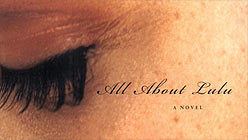
"content": "\u003cp>So I spent Thursday, May 30 through Sunday, June 1, 2008 at a big ol’ crazy trade show called the \u003ca href=\"http://www.bookexpoamerica.com/\" target=\"offsite\" rel=\"noopener\">Book Expo America\u003c/a>. This year, the BEA was held at the Los Angeles Convention Center, and in the very scant little bits of media attention the show received this year, the running theme has been: “Yawn.” The show, which is the largest annual gathering of people who publish and sell books, alternates between cities on the east and west coasts. But the truth is, if it’s not held in New York, nobody shows up, and attendance was about the lowest it has ever been. This year, that gang of “nobody” included Slash, Ernest Borgnine, the women who write the \u003cb>Skinny Bitch\u003c/b> diet books, Jackie Collins, and a Scientology swing band dressed in pirate costumes. And me.\u003c/p>\n\u003cp>But if you knew where to look, there were plenty of books to get excited about for the upcoming year, especially if you are someone like me, who has absolutely zero interest in the Next Big Hit. I just want to read something good. I came home with a suitcase that was twice as heavy as when I left home, full of free books. The BEA is to the book-obsessed what an open bar is to the alcoholic. That is: totally awesome until you wake up in a motel the next morning, not remembering where you are, or why waves of pain are radiating from your back, feet, and head. (The fact that the show was followed each night by an assortment of open-bar schmoozefests didn’t help either.)\u003c/p>\n\u003cp>Here’s some of what I got. And yes, I’ve finished all of these books already:\u003c/p>\n\u003cp>\u003ca href=\"http://www.amazon.com/Black-Sabbaths-Master-Reality-33/dp/0826428991/ref=pd_bbs_sr_1?ie=UTF8&s=books&qid=1213039076&sr=1-1\" target=\"offsite\" rel=\"noopener\">Master Of Reality\u003c/a> by John Darnielle, Continuum’s 33 1/3 series\u003cbr>You may already know about, and perhaps own, some of the little matching volumes from Continuum Publishing’s \u003cb>33 1/3\u003c/b> series of music books. The premise is simple: in each book, a different writer dissects a seminal rock and roll album. As the years go on, the threshold for what’s considered a classic have widened considerably (Celine Dion?!) but I admire their creativity. For example, not every book is a VH1-style frothing fanboy essay on why an album Changed Music Forever. Several of them are actually novels! John Darnielle, best known as the singer-songwriter behind emotive neo-folk act The Mountain Goats, wrote this very short and affecting little novella based on Black Sabbath’s “Master Of Reality” album. The story is written as a journal kept by a teenage psychiatric hospital inmate in 1985, trying desperately to get his walkman and Sabbath tapes back from nurses who see them as signs of mental illness. I finished it in two hours, but it has stuck with me.\u003c/p>\n\u003cp>\u003ca href=\"http://www.amazon.com/All-About-Lulu-Jonathan-Evison/dp/1593761961/ref=pd_bbs_sr_1?ie=UTF8&s=books&qid=1213039297&sr=1-1\" target=\"offsite\" rel=\"noopener\">All About Lulu\u003c/a> by Jonathan Evison, Soft Skull Press\u003cbr>A crazy, shaggy beast of a book by debut novelist Jonathan Evison, who was making a personal appearance in the Soft Skull Press booth and signed it for me. (“Dear Suzzane, sorry about the extra z!”) Evison is a master of mySpace marketing, so I’ve been hearing about this book for a while. It’s the story of young William Miller Jr., scrawny vegetarian son of a pro bodybuilder named Big Bill Miller. When Big Bill remarries, Will becomes completely, rapturously, romantically and sexually obsessed with his stepsister Lulu. There’s also Fatburger, a hot dog stand, lat spreads, a ghost cat, and a guest appearance by future governor Arnold Schwartzenegger as an unbearably cocky Mr. Olympia 1980. Entertaining, digressive, totally nuts.\u003c/p>\n\u003cp>[ad fullwidth]\u003c/p>\n\u003cp>\u003ca href=\"http://www.amazon.com/November-22-1963-Adam-Braver/dp/0980243629/ref=sr_1_6?ie=UTF8&s=books&qid=1213039447&sr=1-6\" target=\"offsite\" rel=\"noopener\">Nov 22, 1963\u003c/a> by Adam Braver, Tin House Books\u003cbr>Another brief little jewel, this novel follows the events of the Kennedy assassination from a perspective I have never seen before. The butlers and nannies on the white house staff, the funeral home owner in Dallas, the forensic pathologists at Bethesda Naval Hospital, all of them bumble accidentally into a front row center view of history. In the center is Jackie Kennedy, using protocol and etiquette to keep herself from falling to pieces, while wearing a pink suit stained with her husband’s blood. Most of the dialogue is taken from testimony, interviews, White House records, and some particularly smarmy recorded phone calls with Lyndon Johnson. No mention is ever made of who the shooter might have been, or why the assassination happened. Since all the action takes place on the day of the killing itself, no one has had time to reflect. I would never have thought there was a new way to view a moment so thoroughly dissected. Turns out there is. Quite an achievement.\u003c/p>\n\u003cp>\u003ca href=\"http://www.amazon.com/Miles-Nowhere-Nami-Mun/dp/1594488541/ref=sr_1_1?ie=UTF8&s=books&qid=1213039539&sr=1-1\" target=\"offsite\" rel=\"noopener\">Miles From Nowhere\u003c/a> by Nami Mun, Riverhead books\u003cbr>A debut novel, Nami Mun’s take on aimless New York teenagers of the 1980s was featured at both the “Editor’s Buzz” panel, and at the “Emerging Voices” reading the following day. The main character is Joon, a Korean-American girl from the Bronx who runs away from home after her father leaves and her mother goes crazy. Joon and a supporting cast of runaways, dealers, and underage prostitutes try to make their way in a cold world as best they can. Fans of \u003ca href=\"http://www.kqed.org/arts/people/profile.jsp?id=5264\">Stephen Elliott\u003c/a> and JT LeRoy will probably love this. The quiet voice is quite lovely, and I don’t think I’ve ever seen a character in fiction quite like Joon. I couldn’t help but think, though: New York, the early 1980s, all that shooting up, all those boys turning tricks, and no mention of AIDS? Not even as a nagging, far-off fear?\u003c/p>\n\u003cp>That’s just a small taste of what will be appearing on bookstore shelves near you between now and the holidays. There’s also a hotly-anticipated new novel from Paul Auster, and no less than THREE books about witches. John Updike has written a followup to \u003cb>The Witches of Eastwick\u003c/b> called \u003cb>The Widows Of Eastwick\u003c/b>. A supernatural witch-related thriller called \u003cb>The Lace Reader\u003c/b> by Salem resident Brunonia Barry was a local hit in self-published form, and has been picked up for a major release. There’s also \u003cb>The Heretic’s Daughter\u003c/b> by Kathleen Kent, more of a straight-ahead historical fiction take on the life of Martha Carrier, one of the first accused witches hanged in Salem. Kent is Martha Carrier’s tenth-generation direct descendant. (How do these fads get started? I will never understand.)\u003c/p>\n\u003cp>Another common thread is the 1980s. Notice in my capsule reviews above, every single book is set in the eighties except for Adam Braver’s. Maybe this is because today’s hot debut novelists are at a young enough age that they are mythologizing their own acid-washed, poofy-haired, Reagan administration youth. A prediction for Book Expo 2018: seven debut novels about aimless teenagers of the dot-com boom Clinton years. You heard it here first.\u003c/p>\n\u003cp>[ad floatright]\u003c/p>\n\u003cp>I would love to tell you more, about the extended hand-wringing that followed the panel on the Amazon Kindle, or about the \u003ca href=\"http://www.esotouric.com/buk\" target=\"offsite\" rel=\"noopener\">“Charles Bukowski’s Los Angeles” Bus Tour\u003c/a>, which was one of the coolest things I’ve ever done in my life, probably. Or that I went to a star studded poolside party at the Hotel Figueroa, where there was an open bar and the bartender was wearing an authentic Shriner’s fez. But I can’t talk now — I’m too busy reading.\u003c/p>\n\n",
"stats": {
"hasVideo": false,
"hasChartOrMap": false,
"hasAudio": false,
"hasPolis": false,
"wordCount": 1281,
"hasGoogleForm": false,
"hasGallery": false,
"hasHearkenModule": false,
"iframeSrcs": [],
"paragraphCount": 12
},
"modified": 1705053097,
"excerpt": "So I spent Thursday, May 30 through Sunday, June 1, 2008 at a big ol' crazy trade show called the \u003ca href=\"http://www.bookexpoamerica.com/\" target=\"offsite\" rel=\"noopener\">Book Expo America\u003c/a>. This year, the BEA was held at the Los Angeles Convention Center, and in the very scant little bits of media attention the show received this year, the running theme has been: \"Yawn.\" ",
"headData": {
"twImgId": "",
"twTitle": "",
"ogTitle": "",
"ogImgId": "",
"twDescription": "",
"description": "So I spent Thursday, May 30 through Sunday, June 1, 2008 at a big ol' crazy trade show called the Book Expo America. This year, the BEA was held at the Los Angeles Convention Center, and in the very scant little bits of media attention the show received this year, the running theme has been: "Yawn." ",
"title": "The Book Expo America Advance Review Copy Freebie Haul | KQED",
"ogDescription": "",
"schema": {
"@context": "https://schema.org",
"@type": "Article",
"headline": "The Book Expo America Advance Review Copy Freebie Haul",
"datePublished": "2008-06-12T17:36:11-07:00",
"dateModified": "2024-01-12T01:51:37-08:00",
"image": "https://cdn.kqed.org/wp-content/uploads/2020/02/KQED-OG-Image@1x.png"
}
},
"guestAuthors": [],
"slug": "the_book_expo_america_advance_review_copy_freebie_haul",
"status": "publish",
"sourceUrl": "http://www.kqed.org/arts/category/literature/",
"sticky": false,
"path": "/arts/22906/the_book_expo_america_advance_review_copy_freebie_haul",
"audioTrackLength": null,
"parsedContent": [
{
"type": "contentString",
"content": "\u003cdiv class=\"post-body\">\u003cp>\u003cp>So I spent Thursday, May 30 through Sunday, June 1, 2008 at a big ol’ crazy trade show called the \u003ca href=\"http://www.bookexpoamerica.com/\" target=\"offsite\" rel=\"noopener\">Book Expo America\u003c/a>. This year, the BEA was held at the Los Angeles Convention Center, and in the very scant little bits of media attention the show received this year, the running theme has been: “Yawn.” The show, which is the largest annual gathering of people who publish and sell books, alternates between cities on the east and west coasts. But the truth is, if it’s not held in New York, nobody shows up, and attendance was about the lowest it has ever been. This year, that gang of “nobody” included Slash, Ernest Borgnine, the women who write the \u003cb>Skinny Bitch\u003c/b> diet books, Jackie Collins, and a Scientology swing band dressed in pirate costumes. And me.\u003c/p>\n\u003cp>But if you knew where to look, there were plenty of books to get excited about for the upcoming year, especially if you are someone like me, who has absolutely zero interest in the Next Big Hit. I just want to read something good. I came home with a suitcase that was twice as heavy as when I left home, full of free books. The BEA is to the book-obsessed what an open bar is to the alcoholic. That is: totally awesome until you wake up in a motel the next morning, not remembering where you are, or why waves of pain are radiating from your back, feet, and head. (The fact that the show was followed each night by an assortment of open-bar schmoozefests didn’t help either.)\u003c/p>\n\u003cp>Here’s some of what I got. And yes, I’ve finished all of these books already:\u003c/p>\n\u003cp>\u003ca href=\"http://www.amazon.com/Black-Sabbaths-Master-Reality-33/dp/0826428991/ref=pd_bbs_sr_1?ie=UTF8&s=books&qid=1213039076&sr=1-1\" target=\"offsite\" rel=\"noopener\">Master Of Reality\u003c/a> by John Darnielle, Continuum’s 33 1/3 series\u003cbr>You may already know about, and perhaps own, some of the little matching volumes from Continuum Publishing’s \u003cb>33 1/3\u003c/b> series of music books. The premise is simple: in each book, a different writer dissects a seminal rock and roll album. As the years go on, the threshold for what’s considered a classic have widened considerably (Celine Dion?!) but I admire their creativity. For example, not every book is a VH1-style frothing fanboy essay on why an album Changed Music Forever. Several of them are actually novels! John Darnielle, best known as the singer-songwriter behind emotive neo-folk act The Mountain Goats, wrote this very short and affecting little novella based on Black Sabbath’s “Master Of Reality” album. The story is written as a journal kept by a teenage psychiatric hospital inmate in 1985, trying desperately to get his walkman and Sabbath tapes back from nurses who see them as signs of mental illness. I finished it in two hours, but it has stuck with me.\u003c/p>\n\u003cp>\u003ca href=\"http://www.amazon.com/All-About-Lulu-Jonathan-Evison/dp/1593761961/ref=pd_bbs_sr_1?ie=UTF8&s=books&qid=1213039297&sr=1-1\" target=\"offsite\" rel=\"noopener\">All About Lulu\u003c/a> by Jonathan Evison, Soft Skull Press\u003cbr>A crazy, shaggy beast of a book by debut novelist Jonathan Evison, who was making a personal appearance in the Soft Skull Press booth and signed it for me. (“Dear Suzzane, sorry about the extra z!”) Evison is a master of mySpace marketing, so I’ve been hearing about this book for a while. It’s the story of young William Miller Jr., scrawny vegetarian son of a pro bodybuilder named Big Bill Miller. When Big Bill remarries, Will becomes completely, rapturously, romantically and sexually obsessed with his stepsister Lulu. There’s also Fatburger, a hot dog stand, lat spreads, a ghost cat, and a guest appearance by future governor Arnold Schwartzenegger as an unbearably cocky Mr. Olympia 1980. Entertaining, digressive, totally nuts.\u003c/p>\n\u003cp>\u003c/p>\u003c/div>",
"attributes": {
"named": {},
"numeric": []
}
},
{
"type": "component",
"content": "",
"name": "ad",
"attributes": {
"named": {
"label": "fullwidth"
},
"numeric": [
"fullwidth"
]
}
},
{
"type": "contentString",
"content": "\u003cdiv class=\"post-body\">\u003cp>\u003c/p>\n\u003cp>\u003ca href=\"http://www.amazon.com/November-22-1963-Adam-Braver/dp/0980243629/ref=sr_1_6?ie=UTF8&s=books&qid=1213039447&sr=1-6\" target=\"offsite\" rel=\"noopener\">Nov 22, 1963\u003c/a> by Adam Braver, Tin House Books\u003cbr>Another brief little jewel, this novel follows the events of the Kennedy assassination from a perspective I have never seen before. The butlers and nannies on the white house staff, the funeral home owner in Dallas, the forensic pathologists at Bethesda Naval Hospital, all of them bumble accidentally into a front row center view of history. In the center is Jackie Kennedy, using protocol and etiquette to keep herself from falling to pieces, while wearing a pink suit stained with her husband’s blood. Most of the dialogue is taken from testimony, interviews, White House records, and some particularly smarmy recorded phone calls with Lyndon Johnson. No mention is ever made of who the shooter might have been, or why the assassination happened. Since all the action takes place on the day of the killing itself, no one has had time to reflect. I would never have thought there was a new way to view a moment so thoroughly dissected. Turns out there is. Quite an achievement.\u003c/p>\n\u003cp>\u003ca href=\"http://www.amazon.com/Miles-Nowhere-Nami-Mun/dp/1594488541/ref=sr_1_1?ie=UTF8&s=books&qid=1213039539&sr=1-1\" target=\"offsite\" rel=\"noopener\">Miles From Nowhere\u003c/a> by Nami Mun, Riverhead books\u003cbr>A debut novel, Nami Mun’s take on aimless New York teenagers of the 1980s was featured at both the “Editor’s Buzz” panel, and at the “Emerging Voices” reading the following day. The main character is Joon, a Korean-American girl from the Bronx who runs away from home after her father leaves and her mother goes crazy. Joon and a supporting cast of runaways, dealers, and underage prostitutes try to make their way in a cold world as best they can. Fans of \u003ca href=\"http://www.kqed.org/arts/people/profile.jsp?id=5264\">Stephen Elliott\u003c/a> and JT LeRoy will probably love this. The quiet voice is quite lovely, and I don’t think I’ve ever seen a character in fiction quite like Joon. I couldn’t help but think, though: New York, the early 1980s, all that shooting up, all those boys turning tricks, and no mention of AIDS? Not even as a nagging, far-off fear?\u003c/p>\n\u003cp>That’s just a small taste of what will be appearing on bookstore shelves near you between now and the holidays. There’s also a hotly-anticipated new novel from Paul Auster, and no less than THREE books about witches. John Updike has written a followup to \u003cb>The Witches of Eastwick\u003c/b> called \u003cb>The Widows Of Eastwick\u003c/b>. A supernatural witch-related thriller called \u003cb>The Lace Reader\u003c/b> by Salem resident Brunonia Barry was a local hit in self-published form, and has been picked up for a major release. There’s also \u003cb>The Heretic’s Daughter\u003c/b> by Kathleen Kent, more of a straight-ahead historical fiction take on the life of Martha Carrier, one of the first accused witches hanged in Salem. Kent is Martha Carrier’s tenth-generation direct descendant. (How do these fads get started? I will never understand.)\u003c/p>\n\u003cp>Another common thread is the 1980s. Notice in my capsule reviews above, every single book is set in the eighties except for Adam Braver’s. Maybe this is because today’s hot debut novelists are at a young enough age that they are mythologizing their own acid-washed, poofy-haired, Reagan administration youth. A prediction for Book Expo 2018: seven debut novels about aimless teenagers of the dot-com boom Clinton years. You heard it here first.\u003c/p>\n\u003cp>\u003c/p>\u003c/div>",
"attributes": {
"named": {},
"numeric": []
}
},
{
"type": "component",
"content": "",
"name": "ad",
"attributes": {
"named": {
"label": "floatright"
},
"numeric": [
"floatright"
]
}
},
{
"type": "contentString",
"content": "\u003cdiv class=\"post-body\">\u003cp>\u003c/p>\n\u003cp>I would love to tell you more, about the extended hand-wringing that followed the panel on the Amazon Kindle, or about the \u003ca href=\"http://www.esotouric.com/buk\" target=\"offsite\" rel=\"noopener\">“Charles Bukowski’s Los Angeles” Bus Tour\u003c/a>, which was one of the coolest things I’ve ever done in my life, probably. Or that I went to a star studded poolside party at the Hotel Figueroa, where there was an open bar and the bartender was wearing an authentic Shriner’s fez. But I can’t talk now — I’m too busy reading.\u003c/p>\n\n\u003c/div>\u003c/p>",
"attributes": {
"named": {},
"numeric": []
}
}
],
"link": "/arts/22906/the_book_expo_america_advance_review_copy_freebie_haul",
"authors": [
"19"
],
"categories": [
"arts_73"
],
"featImg": "arts_10022906",
"label": "arts"
},
"arts_22877": {
"type": "posts",
"id": "arts_22877",
"meta": {
"index": "posts_1716263798",
"site": "arts",
"id": "22877",
"score": null,
"sort": [
1213055296000
]
},
"guestAuthors": [],
"slug": "helpmate",
"title": "Helpmate",
"publishDate": 1213055296,
"format": "audio",
"headTitle": "Helpmate | KQED",
"labelTerm": {
"site": "arts"
},
"content": "\u003cp>\u003cb>Correspondences\u003c/b> is a set of stories about correspondence, letter-writing, and how epistolary culture has changed over the years. A specially-designed limited edition will be available in the fall of 2008 from Hotel St. George Press, with a more traditional book to follow.\u003c/p>\n\u003cp>[ad fullwidth]\u003c/p>\u003cp>\u003c/p>\n",
"blocks": [],
"excerpt": "Ben Greenman reads a letter from the forthcoming \u003cb>Correspondences\u003c/b>. In \"Helpmate,\" a man composes a letter to his wife, reminiscing on his life and (perhaps) its conclusion.",
"status": "publish",
"parent": 0,
"modified": 1726706619,
"stats": {
"hasAudio": false,
"hasVideo": false,
"hasChartOrMap": false,
"iframeSrcs": [],
"hasGoogleForm": false,
"hasGallery": false,
"hasHearkenModule": false,
"hasPolis": false,
"paragraphCount": 3,
"wordCount": 46
},
"headData": {
"title": "Helpmate | KQED",
"description": "Ben Greenman reads a letter from the forthcoming Correspondences. In "Helpmate," a man composes a letter to his wife, reminiscing on his life and (perhaps) its conclusion.",
"ogTitle": "",
"ogDescription": "",
"ogImgId": "",
"twTitle": "",
"twDescription": "",
"twImgId": "",
"schema": {
"@context": "https://schema.org",
"@type": "Article",
"headline": "Helpmate",
"datePublished": "2008-06-09T16:48:16-07:00",
"dateModified": "2024-09-18T17:43:39-07:00",
"image": "https://cdn.kqed.org/wp-content/uploads/2020/02/KQED-OG-Image@1x.png"
}
},
"sourceUrl": "http://www.kqed.org/arts/programs/writersblock/",
"sticky": false,
"nprByline": "Ben Greenman",
"path": "/arts/22877/helpmate",
"audioTrackLength": null,
"parsedContent": [
{
"type": "contentString",
"content": "\u003cdiv class=\"post-body\">\u003cp>\u003cp>\u003cb>Correspondences\u003c/b> is a set of stories about correspondence, letter-writing, and how epistolary culture has changed over the years. A specially-designed limited edition will be available in the fall of 2008 from Hotel St. George Press, with a more traditional book to follow.\u003c/p>\n\u003cp>\u003c/p>\u003c/div>",
"attributes": {
"named": {},
"numeric": []
}
},
{
"type": "component",
"content": "",
"name": "ad",
"attributes": {
"named": {
"label": "fullwidth"
},
"numeric": [
"fullwidth"
]
}
},
{
"type": "contentString",
"content": "\u003cdiv class=\"post-body\">\u003cp>\u003c/p>\u003cp>\u003c/p>\n\u003c/div>\u003c/p>",
"attributes": {
"named": {},
"numeric": []
}
}
],
"link": "/arts/22877/helpmate",
"authors": [
"byline_arts_22877"
],
"categories": [
"arts_73"
],
"tags": [
"arts_330"
],
"featImg": "arts_10022877",
"label": "arts"
},
"arts_22840": {
"type": "posts",
"id": "arts_22840",
"meta": {
"index": "posts_1716263798",
"site": "arts",
"id": "22840",
"score": null,
"sort": [
1212545213000
]
},
"guestAuthors": [],
"slug": "not_a_genuine_black_man",
"title": "Not a Genuine Black Man",
"publishDate": 1212545213,
"format": "audio",
"headTitle": "Not a Genuine Black Man | KQED",
"labelTerm": {
"site": "arts"
},
"content": "\u003cp>In the summer of 1972, when Brian Copeland was eight, his family moved from Oakland to San Leandro, CA, hoping for a better life. At the time, San Leandro was 99.99% white and widely considered to be one of the most racist enclaves in the nation. This reputation was confirmed almost immediately: Brian got his first look at the inside of a cop car, forced into the backseat after walking to the park with a baseball bat in hand. Days later, Brian was turned away by several barbers who said “we don’t cut that kind of hair.” And that Christmas, while shopping at a local department store, Brian was accused of stealing and forced to empty his pockets in front of store security.\u003c/p>\n\u003cp>It was a time that Brian spent his adult years trying to forget, until one day an anonymous letter arrived that forced him to reevaluate his childhood: “As an African American, I am disgusted every time I hear your voice because YOU are not a genuine black man!”\u003c/p>\n\u003cp>A poignant, hilarious, and disarming memoir about growing up black in an all-white suburb, \u003cb>Not a Genuine Black Man\u003c/b> is also a powerful contemplation on the meaning of race, and a thoughtful examination of how our surroundings make us who we are.\u003c/p>\n\u003cp>[ad fullwidth]\u003c/p>\u003cp>\u003c/p>\n",
"blocks": [],
"excerpt": "Brian Copeland reads the first chapter of \u003cb>Not a Genunine Black Man\u003c/b>, his hilarious memoir about growing up black in the all-white suburb of San Leandro, CA.",
"status": "publish",
"parent": 0,
"modified": 1726706623,
"stats": {
"hasAudio": false,
"hasVideo": false,
"hasChartOrMap": false,
"iframeSrcs": [],
"hasGoogleForm": false,
"hasGallery": false,
"hasHearkenModule": false,
"hasPolis": false,
"paragraphCount": 5,
"wordCount": 223
},
"headData": {
"title": "Not a Genuine Black Man | KQED",
"description": "Brian Copeland reads the first chapter of Not a Genunine Black Man, his hilarious memoir about growing up black in the all-white suburb of San Leandro, CA.",
"ogTitle": "",
"ogDescription": "",
"ogImgId": "",
"twTitle": "",
"twDescription": "",
"twImgId": "",
"schema": {
"@context": "https://schema.org",
"@type": "Article",
"headline": "Not a Genuine Black Man",
"datePublished": "2008-06-03T19:06:53-07:00",
"dateModified": "2024-09-18T17:43:43-07:00",
"image": "https://cdn.kqed.org/wp-content/uploads/2020/02/KQED-OG-Image@1x.png"
}
},
"sourceUrl": "http://www.kqed.org/arts/programs/writersblock/",
"sticky": false,
"nprByline": "Brian Copeland",
"path": "/arts/22840/not_a_genuine_black_man",
"audioTrackLength": null,
"parsedContent": [
{
"type": "contentString",
"content": "\u003cdiv class=\"post-body\">\u003cp>\u003cp>In the summer of 1972, when Brian Copeland was eight, his family moved from Oakland to San Leandro, CA, hoping for a better life. At the time, San Leandro was 99.99% white and widely considered to be one of the most racist enclaves in the nation. This reputation was confirmed almost immediately: Brian got his first look at the inside of a cop car, forced into the backseat after walking to the park with a baseball bat in hand. Days later, Brian was turned away by several barbers who said “we don’t cut that kind of hair.” And that Christmas, while shopping at a local department store, Brian was accused of stealing and forced to empty his pockets in front of store security.\u003c/p>\n\u003cp>It was a time that Brian spent his adult years trying to forget, until one day an anonymous letter arrived that forced him to reevaluate his childhood: “As an African American, I am disgusted every time I hear your voice because YOU are not a genuine black man!”\u003c/p>\n\u003cp>A poignant, hilarious, and disarming memoir about growing up black in an all-white suburb, \u003cb>Not a Genuine Black Man\u003c/b> is also a powerful contemplation on the meaning of race, and a thoughtful examination of how our surroundings make us who we are.\u003c/p>\n\u003cp>\u003c/p>\u003c/div>",
"attributes": {
"named": {},
"numeric": []
}
},
{
"type": "component",
"content": "",
"name": "ad",
"attributes": {
"named": {
"label": "fullwidth"
},
"numeric": [
"fullwidth"
]
}
},
{
"type": "contentString",
"content": "\u003cdiv class=\"post-body\">\u003cp>\u003c/p>\u003cp>\u003c/p>\n\u003c/div>\u003c/p>",
"attributes": {
"named": {},
"numeric": []
}
}
],
"link": "/arts/22840/not_a_genuine_black_man",
"authors": [
"byline_arts_22840"
],
"categories": [
"arts_73"
],
"tags": [
"arts_330"
],
"label": "arts"
},
"arts_22832": {
"type": "posts",
"id": "arts_22832",
"meta": {
"index": "posts_1716263798",
"site": "arts",
"id": "22832",
"score": null,
"sort": [
1212527380000
]
},
"guestAuthors": [],
"slug": "awesome",
"title": "Awesome",
"publishDate": 1212527380,
"format": "audio",
"headTitle": "Awesome | KQED",
"labelTerm": {
"site": "arts"
},
"content": "\u003cp>\u003cb>Awesome\u003c/b> is a giant’s tale. But not just any giant. This one builds robots, wears a lustrous derby hat, and kisses like a dream. And he’s presently roaming the U.S. on a quest to find its greatest treasures, hoping to win back his lost lady-love. From the rocky coast of New England to the golden hayfields of Stockton, California, he gathers the bounty of America in order to prove his love and devotion to the beautiful Glorious Jones.\u003c/p>\n\u003cp>[ad fullwidth]\u003c/p>\u003cp>\u003c/p>\n",
"blocks": [],
"excerpt": "Jack Pendarvis reads the first chapter of \u003cb>Awesome\u003c/b>, a humorous and heartwarming tale of the richest, sexiest, handsomest giant you'll ever meet.",
"status": "publish",
"parent": 0,
"modified": 1726706626,
"stats": {
"hasAudio": false,
"hasVideo": false,
"hasChartOrMap": false,
"iframeSrcs": [],
"hasGoogleForm": false,
"hasGallery": false,
"hasHearkenModule": false,
"hasPolis": false,
"paragraphCount": 3,
"wordCount": 86
},
"headData": {
"title": "Awesome | KQED",
"description": "Jack Pendarvis reads the first chapter of Awesome, a humorous and heartwarming tale of the richest, sexiest, handsomest giant you'll ever meet.",
"ogTitle": "",
"ogDescription": "",
"ogImgId": "",
"twTitle": "",
"twDescription": "",
"twImgId": "",
"schema": {
"@context": "https://schema.org",
"@type": "Article",
"headline": "Awesome",
"datePublished": "2008-06-03T14:09:40-07:00",
"dateModified": "2024-09-18T17:43:46-07:00",
"image": "https://cdn.kqed.org/wp-content/uploads/2020/02/KQED-OG-Image@1x.png"
}
},
"sourceUrl": "http://www.kqed.org/arts/programs/writersblock/",
"sticky": false,
"nprByline": "Jack Pendarvis",
"path": "/arts/22832/awesome",
"audioTrackLength": null,
"parsedContent": [
{
"type": "contentString",
"content": "\u003cdiv class=\"post-body\">\u003cp>\u003cp>\u003cb>Awesome\u003c/b> is a giant’s tale. But not just any giant. This one builds robots, wears a lustrous derby hat, and kisses like a dream. And he’s presently roaming the U.S. on a quest to find its greatest treasures, hoping to win back his lost lady-love. From the rocky coast of New England to the golden hayfields of Stockton, California, he gathers the bounty of America in order to prove his love and devotion to the beautiful Glorious Jones.\u003c/p>\n\u003cp>\u003c/p>\u003c/div>",
"attributes": {
"named": {},
"numeric": []
}
},
{
"type": "component",
"content": "",
"name": "ad",
"attributes": {
"named": {
"label": "fullwidth"
},
"numeric": [
"fullwidth"
]
}
},
{
"type": "contentString",
"content": "\u003cdiv class=\"post-body\">\u003cp>\u003c/p>\u003cp>\u003c/p>\n\u003c/div>\u003c/p>",
"attributes": {
"named": {},
"numeric": []
}
}
],
"link": "/arts/22832/awesome",
"authors": [
"byline_arts_22832"
],
"categories": [
"arts_73"
],
"tags": [
"arts_330"
],
"label": "arts"
},
"arts_22824": {
"type": "posts",
"id": "arts_22824",
"meta": {
"index": "posts_1716263798",
"site": "arts",
"id": "22824",
"score": null,
"sort": [
1212520160000
]
},
"guestAuthors": [],
"slug": "maynard__jennica",
"title": "Maynard & Jennica",
"publishDate": 1212520160,
"format": "audio",
"headTitle": "Maynard & Jennica | KQED",
"labelTerm": {
"site": "arts"
},
"content": "\u003cp>\u003cb>Maynard & Jennica\u003c/b> is a creative first novel that interweaves multiple plot lines and dozens of narrators to tell a wholly original love story — wrapped up in an antic New York-centric comedy, a page-turning literary mystery, and a spot-on portrait of our times.\u003c/p>\n\u003cp>[ad fullwidth]\u003c/p>\u003cp>\u003c/p>\n",
"blocks": [],
"excerpt": "Rudolph Delson reads a selection from his debut novel, \u003cb>Maynard and Jennica\u003c/b>. In this excerpt, Jennica Green waxes nostalgic for California, and her parents, brother, and long-lost best friend all chime in.",
"status": "publish",
"parent": 0,
"modified": 1726706629,
"stats": {
"hasAudio": false,
"hasVideo": false,
"hasChartOrMap": false,
"iframeSrcs": [],
"hasGoogleForm": false,
"hasGallery": false,
"hasHearkenModule": false,
"hasPolis": false,
"paragraphCount": 3,
"wordCount": 49
},
"headData": {
"title": "Maynard & Jennica | KQED",
"description": "Rudolph Delson reads a selection from his debut novel, Maynard and Jennica. In this excerpt, Jennica Green waxes nostalgic for California, and her parents, brother, and long-lost best friend all chime in.",
"ogTitle": "",
"ogDescription": "",
"ogImgId": "",
"twTitle": "",
"twDescription": "",
"twImgId": "",
"schema": {
"@context": "https://schema.org",
"@type": "Article",
"headline": "Maynard & Jennica",
"datePublished": "2008-06-03T12:09:20-07:00",
"dateModified": "2024-09-18T17:43:49-07:00",
"image": "https://cdn.kqed.org/wp-content/uploads/2020/02/KQED-OG-Image@1x.png"
}
},
"sourceUrl": "http://www.kqed.org/arts/programs/writersblock/",
"sticky": false,
"nprByline": "Rudolph Delson",
"path": "/arts/22824/maynard__jennica",
"audioTrackLength": null,
"parsedContent": [
{
"type": "contentString",
"content": "\u003cdiv class=\"post-body\">\u003cp>\u003cp>\u003cb>Maynard & Jennica\u003c/b> is a creative first novel that interweaves multiple plot lines and dozens of narrators to tell a wholly original love story — wrapped up in an antic New York-centric comedy, a page-turning literary mystery, and a spot-on portrait of our times.\u003c/p>\n\u003cp>\u003c/p>\u003c/div>",
"attributes": {
"named": {},
"numeric": []
}
},
{
"type": "component",
"content": "",
"name": "ad",
"attributes": {
"named": {
"label": "fullwidth"
},
"numeric": [
"fullwidth"
]
}
},
{
"type": "contentString",
"content": "\u003cdiv class=\"post-body\">\u003cp>\u003c/p>\u003cp>\u003c/p>\n\u003c/div>\u003c/p>",
"attributes": {
"named": {},
"numeric": []
}
}
],
"link": "/arts/22824/maynard__jennica",
"authors": [
"byline_arts_22824"
],
"categories": [
"arts_73"
],
"tags": [
"arts_330"
],
"label": "arts"
},
"arts_22806": {
"type": "posts",
"id": "arts_22806",
"meta": {
"index": "posts_1716263798",
"site": "arts",
"id": "22806",
"score": null,
"sort": [
1212016330000
]
},
"guestAuthors": [],
"slug": "opium_magazine_bookmark_contest_pt_2",
"title": "Opium Magazine: Bookmark Contest, Pt. 2",
"publishDate": 1212016330,
"format": "audio",
"headTitle": "Opium Magazine: Bookmark Contest, Pt. 2 | KQED",
"labelTerm": {
"site": "arts"
},
"content": "\u003cp>In May 2008, \u003ci>Opium Magazine\u003c/i> published the winner and finalists of its 250-word Bookmark Contest, judged by Aimee Bender. The latest of Opium’s oddball competitions — following the 500-word Memoir and 7-Line Story contests — challenged writers to pen a story that would fit on a bookmark. The results were strange, wonderfully imaginative, tiny gems that are all readable — or in this case listenable — in under a minute and a half. Contest winner Rachel Khong, first runner-up Lisa K. Buchanan, and finalists Matt Leibel and join actors Jon Wolanske and Erin Carter to read the contest’s top ten stories.\u003c/p>\n\u003cp>\u003ci>Opium Magazine\u003c/i> is a literary humor publication that features fiction and poetry (each with an estimated reading time) along with cartoons, quirky art and progressive design. The website has been updated daily since its launch in 2001, and the print magazine has been published semi-annually since its debut in August, 2005. Featured artists include Etgar Keret, Aimee Bender, Roy Kesey, Jack Handey, Dennis Cooper, Tao Lin and dozens of future literary household names.\u003c/p>\n\u003cp>[ad fullwidth]\u003c/p>\u003cp>\u003c/p>\n",
"blocks": [],
"excerpt": "Authors Rachel Khong and Matt Leibel join actors Jon Wolanske and Erin Carter to read \"Two Eggs, Any Style,\" \"Heartless,\" \"Industry,\" \"Minnesota Menage,\" and \"Reading,\" the winner and some of the finalists of \u003ci>Opium Magazine\u003c/i>'s 250-word Bookmark Contest.",
"status": "publish",
"parent": 0,
"modified": 1726706631,
"stats": {
"hasAudio": false,
"hasVideo": false,
"hasChartOrMap": false,
"iframeSrcs": [],
"hasGoogleForm": false,
"hasGallery": false,
"hasHearkenModule": false,
"hasPolis": false,
"paragraphCount": 4,
"wordCount": 185
},
"headData": {
"title": "Opium Magazine: Bookmark Contest, Pt. 2 | KQED",
"description": "Authors Rachel Khong and Matt Leibel join actors Jon Wolanske and Erin Carter to read "Two Eggs, Any Style," "Heartless," "Industry," "Minnesota Menage," and "Reading," the winner and some of the finalists of Opium Magazine's 250-word Bookmark Contest.",
"ogTitle": "",
"ogDescription": "",
"ogImgId": "",
"twTitle": "",
"twDescription": "",
"twImgId": "",
"schema": {
"@context": "https://schema.org",
"@type": "Article",
"headline": "Opium Magazine: Bookmark Contest, Pt. 2",
"datePublished": "2008-05-28T16:12:10-07:00",
"dateModified": "2024-09-18T17:43:51-07:00",
"image": "https://cdn.kqed.org/wp-content/uploads/2020/02/KQED-OG-Image@1x.png"
}
},
"sourceUrl": "http://www.kqed.org/arts/programs/writersblock/",
"sticky": false,
"path": "/arts/22806/opium_magazine_bookmark_contest_pt_2",
"audioTrackLength": null,
"parsedContent": [
{
"type": "contentString",
"content": "\u003cdiv class=\"post-body\">\u003cp>\u003cp>In May 2008, \u003ci>Opium Magazine\u003c/i> published the winner and finalists of its 250-word Bookmark Contest, judged by Aimee Bender. The latest of Opium’s oddball competitions — following the 500-word Memoir and 7-Line Story contests — challenged writers to pen a story that would fit on a bookmark. The results were strange, wonderfully imaginative, tiny gems that are all readable — or in this case listenable — in under a minute and a half. Contest winner Rachel Khong, first runner-up Lisa K. Buchanan, and finalists Matt Leibel and join actors Jon Wolanske and Erin Carter to read the contest’s top ten stories.\u003c/p>\n\u003cp>\u003ci>Opium Magazine\u003c/i> is a literary humor publication that features fiction and poetry (each with an estimated reading time) along with cartoons, quirky art and progressive design. The website has been updated daily since its launch in 2001, and the print magazine has been published semi-annually since its debut in August, 2005. Featured artists include Etgar Keret, Aimee Bender, Roy Kesey, Jack Handey, Dennis Cooper, Tao Lin and dozens of future literary household names.\u003c/p>\n\u003cp>\u003c/p>\u003c/div>",
"attributes": {
"named": {},
"numeric": []
}
},
{
"type": "component",
"content": "",
"name": "ad",
"attributes": {
"named": {
"label": "fullwidth"
},
"numeric": [
"fullwidth"
]
}
},
{
"type": "contentString",
"content": "\u003cdiv class=\"post-body\">\u003cp>\u003c/p>\u003cp>\u003c/p>\n\u003c/div>\u003c/p>",
"attributes": {
"named": {},
"numeric": []
}
}
],
"link": "/arts/22806/opium_magazine_bookmark_contest_pt_2",
"authors": [
"92"
],
"categories": [
"arts_73"
],
"tags": [
"arts_330"
],
"label": "arts"
},
"arts_22801": {
"type": "posts",
"id": "arts_22801",
"meta": {
"index": "posts_1716263798",
"site": "arts",
"id": "22801",
"score": null,
"sort": [
1211922924000
]
},
"guestAuthors": [],
"slug": "opium_magazine_bookmark_contest_pt_1",
"title": "Opium Magazine: Bookmark Contest, Pt. 1",
"publishDate": 1211922924,
"format": "audio",
"headTitle": "Opium Magazine: Bookmark Contest, Pt. 1 | KQED",
"labelTerm": {
"site": "arts"
},
"content": "\u003cp>In May 2008, \u003ci>Opium Magazine\u003c/i> published the winner and finalists of its 250-word Bookmark Contest, judged by Aimee Bender. The latest of Opium’s oddball competitions — following the 500-word Memoir and 7-Line Story contests — challenged writers to pen a story that would fit on a bookmark. The results were strange, wonderfully imaginative, tiny gems that are all readable — or in this case listenable — in under a minute and a half. Contest winner Rachel Khong, first runner-up Lisa K. Buchanan, and finalists Matt Leibel and join actors Jon Wolanske and Erin Carter to read the contest’s top ten stories.\u003c/p>\n\u003cp>\u003ci>Opium Magazine\u003c/i> is a literary humor publication that features fiction and poetry (each with an estimated reading time) along with cartoons, quirky art and progressive design. The website has been updated daily since its launch in 2001, and the print magazine has been published semi-annually since its debut in August, 2005. Featured artists include Etgar Keret, Aimee Bender, Roy Kesey, Jack Handey, Dennis Cooper, Tao Lin and dozens of future literary household names.\u003c/p>\n\u003cp>[ad fullwidth]\u003c/p>\u003cp>\u003c/p>\n",
"blocks": [],
"excerpt": "\u003ci>Opium Magazine\u003c/i>'s \u003cb>Go Green! (But Save Me First)\u003c/b> issue (May 2008) featured the winner and finalists of its 250-word Bookmark Contest, judged by Aimee Bender. Authors Lisa K. Buchanan and Kristin Kearns join actors Jon Wolanske and Erin Carter to read \"Hiss,\" \"What Follows Us,\" \"The Hansel Fiasco,\" \"The Sail,\" and \"Mr. Artichoke Eats Monday.\"",
"status": "publish",
"parent": 0,
"modified": 1726706635,
"stats": {
"hasAudio": false,
"hasVideo": false,
"hasChartOrMap": false,
"iframeSrcs": [],
"hasGoogleForm": false,
"hasGallery": false,
"hasHearkenModule": false,
"hasPolis": false,
"paragraphCount": 4,
"wordCount": 185
},
"headData": {
"title": "Opium Magazine: Bookmark Contest, Pt. 1 | KQED",
"description": "Opium Magazine's Go Green! (But Save Me First) issue (May 2008) featured the winner and finalists of its 250-word Bookmark Contest, judged by Aimee Bender. Authors Lisa K. Buchanan and Kristin Kearns join actors Jon Wolanske and Erin Carter to read "Hiss," "What Follows Us," "The Hansel Fiasco," "The Sail," and "Mr. Artichoke Eats Monday."",
"ogTitle": "",
"ogDescription": "",
"ogImgId": "",
"twTitle": "",
"twDescription": "",
"twImgId": "",
"schema": {
"@context": "https://schema.org",
"@type": "Article",
"headline": "Opium Magazine: Bookmark Contest, Pt. 1",
"datePublished": "2008-05-27T14:15:24-07:00",
"dateModified": "2024-09-18T17:43:55-07:00",
"image": "https://cdn.kqed.org/wp-content/uploads/2020/02/KQED-OG-Image@1x.png"
}
},
"sourceUrl": "http://www.kqed.org/arts/programs/writersblock/",
"sticky": false,
"path": "/arts/22801/opium_magazine_bookmark_contest_pt_1",
"audioTrackLength": null,
"parsedContent": [
{
"type": "contentString",
"content": "\u003cdiv class=\"post-body\">\u003cp>\u003cp>In May 2008, \u003ci>Opium Magazine\u003c/i> published the winner and finalists of its 250-word Bookmark Contest, judged by Aimee Bender. The latest of Opium’s oddball competitions — following the 500-word Memoir and 7-Line Story contests — challenged writers to pen a story that would fit on a bookmark. The results were strange, wonderfully imaginative, tiny gems that are all readable — or in this case listenable — in under a minute and a half. Contest winner Rachel Khong, first runner-up Lisa K. Buchanan, and finalists Matt Leibel and join actors Jon Wolanske and Erin Carter to read the contest’s top ten stories.\u003c/p>\n\u003cp>\u003ci>Opium Magazine\u003c/i> is a literary humor publication that features fiction and poetry (each with an estimated reading time) along with cartoons, quirky art and progressive design. The website has been updated daily since its launch in 2001, and the print magazine has been published semi-annually since its debut in August, 2005. Featured artists include Etgar Keret, Aimee Bender, Roy Kesey, Jack Handey, Dennis Cooper, Tao Lin and dozens of future literary household names.\u003c/p>\n\u003cp>\u003c/p>\u003c/div>",
"attributes": {
"named": {},
"numeric": []
}
},
{
"type": "component",
"content": "",
"name": "ad",
"attributes": {
"named": {
"label": "fullwidth"
},
"numeric": [
"fullwidth"
]
}
},
{
"type": "contentString",
"content": "\u003cdiv class=\"post-body\">\u003cp>\u003c/p>\u003cp>\u003c/p>\n\u003c/div>\u003c/p>",
"attributes": {
"named": {},
"numeric": []
}
}
],
"link": "/arts/22801/opium_magazine_bookmark_contest_pt_1",
"authors": [
"92"
],
"categories": [
"arts_73"
],
"tags": [
"arts_330"
],
"label": "arts"
},
"arts_22737": {
"type": "posts",
"id": "arts_22737",
"meta": {
"index": "posts_1716263798",
"site": "arts",
"id": "22737",
"score": null,
"sort": [
1210815713000
]
},
"parent": 0,
"labelTerm": {
"site": "arts"
},
"blocks": [],
"publishDate": 1210815713,
"format": "standard",
"title": "The Needles & Pens Twenty-Three Dollar Adventure",
"headTitle": "The Needles & Pens Twenty-Three Dollar Adventure | KQED",
"content": "\u003cp>I decided to try something a little different this week. I’m dedicating this post to work put out by the smallest presses of all: individuals who publish their own writing by stapling it together on their kitchen tables. These people are of course also known as zinesters.\u003c/p>\n\u003cp>I made a visit to \u003cb>Needles & Pens\u003c/b>, the DIY culture boutique/magazine stand/art gallery on 16th Street between Guerrero and Dolores, next door to Creativity Explored. Needles & Pens used to reside in a teeny space on 14th Street, where there was a curtained loft space above the cash register area, which led me to believe the proprietors were actually living in the back. And it used to only be open four days a week — presumably because said proprietors needed other jobs to keep things running. Times have changed; the current shop is twice as big as the old one, it’s open every day, and, for good or ill, you no longer feel like you’re walking into somebody’s living room.\u003c/p>\n\u003cp>But Needles & Pens is still clearly a labor of love for the folks who work there, and it’s stocked with labors of love from other overworked and underpaid creators around the country. Half the shop is handmade clothing (thus, “Needles”) and accessories like wallets, purses, and jewelry. The other half is printed matter (hence, “Pens”): zines, magazines, comic books, art books, stationery, calendars, as well as a small gallery space.\u003c/p>\n\u003cp>Tara, the woman behind the counter that day, gave me permission to use her name “as long as [your article]’s not going to be all like ‘oh man that girl was so dumb'”. So let me just state for the record: Tara is definitely not dumb. I laid out the ground rules for the experiment: If I wanted to get 4 or 5 great zines, and spend about twenty bucks, what should I get? With Tara’s expert advice, I walked out with five little books, spent just over twenty dollars, and became happily acquainted with five new voices that ranged from “meh” to utterly transcendent. Here they are, in order of price:\u003c/p>\n\u003cp>\u003cb>Ker-Bloom! #70\u003c/b> by Artnoose. Price: $2.00.\u003cbr>This zine, as well as the rest of the five in my random sample, is the size of a regular sheet of paper folded in half twice — a little bigger than the palm of your hand. For many, many years, \u003cb>Ker-Bloom!\u003c/b> was based out of Oakland, and was a fixture at zine shows and at the Anarchist Bookfair. Normally, \u003cb>Ker-Bloom!\u003c/b> contains musings on personal relationships or radical politics, or the places where both intersect. It’s also normally set by hand on a letterpress. It appears, though, that \u003cb>Ker-Bloom!\u003c/b> and its creator have decamped to Pittsburgh, Pennsylvania, and maybe its unusual format this time reflects the upheaval. Instead of letterpressed text, we get silkscreened cartoons, “Yins-ville comix.” A variety of odd characters speak the kind of sentences that apparently one often overhears in the Iron City: “So I bought a huge house but all my housemates moved out and bought their own houses.” A talking dinosaur skeleton says, “I just went to a ten hour bike collective meeting. Now I’ll ravage the city!” If you’re wondering why the \u003cb>Ker-Bloom!\u003c/b> lady moved to Pittsburgh, a clue might be found on the page where a giant man happily shouts “I just bought a $4000 house in Braddock! Skidoooo!” (That’s not a typo. FOUR thousand dollars. For a HOUSE.)\u003c/p>\n\u003cp>[ad fullwidth]\u003c/p>\n\u003cp>\u003cb>Brainscan #22: “A Practical Body Modification”\u003c/b> by Alex Wrekk. Price: $2.00\u003cbr>This zine is very pretty, with a delicately designed package and cover. It comes in a birthday-card-sized envelope, and since the topic of this issue is the author’s intrauterine contraceptive device, the envelope has a little sketch of an IUD in gold ink. The cover of the actual zine has a very small, full-color photocopy of an anatomical drawing of a uterus. Unfortunately the interior text is a little bit sterile (no pun intended, ha) and marred by numerous crossed-out typos. This kind of zine comes out of a long tradition of women’s consciousness-raising and skill-sharing, and if one was considering getting an IUD, this would be helpful reading. As light entertainment, not so much. All of this probably also applies to \u003cb>Brainscan #21\u003c/b>, which is about escaping an abusive relationship. Alex Wrekk, a resident of Portland, Oregon, also wrote \u003cb>Stolen Sharpie Revolution\u003c/b>, a nuts-and-bolts guide to zine publishing, now in its third edition.\u003c/p>\n\u003cp>\u003cb>Dream Date\u003c/b> by Chelsea Martin. Price: $3.00\u003cbr>This one is pretty weird. A tiny booklet with pink pages, it alternates between ink-washed drawings of disembodied arms, and surreal paragraphs of disembodied text. “You’re standing in front of a painting of two deer grazing…you notice that one of the deer seems to be trying to impress the other by grazing in a very sexual manner. You think this must be the deer that represents your boyfriend; he would totally try to have sex during a meal.” For some reason, my copy is all crumpled like it already spent time in someone’s back pocket. Chelsea Martin’s website, \u003ca href=\"http://jerkethics.com/\" target=\"offsite\" rel=\"noopener\">jerkethics.com\u003c/a>, is even weirder. Dig around and you’ll find a link to the full text of \u003cb>Dream Date\u003c/b>.\u003c/p>\n\u003cp>\u003cb>Sobstory? #8\u003c/b> by Andrew Scott. Price: $3.50\u003cbr>\u003ca href=\"http://www.amscott.org/blackhole/\" target=\"offsite\" rel=\"noopener\">Andrew Scott\u003c/a> is the co-proprietor of Needles & Pens. It’s not surprising, then, that his own zine is pretty darn \u003ca href=\"http://www.sobstory.net/\" target=\"offsite\" rel=\"noopener\">professional-looking\u003c/a>, looking like it was done with Photoshop and inDesign, instead of an x-acto knife and rubber cement. He tells the story of a spontaneous trip to Europe, interspersed with photos and musings about America’s place in the world and modern life in general. He starts with a perceptive essay about how technology has changed the zine scene irrevocably: “I’m a bit concerned that everything I once used to enjoy holding in my hands will turn into something that will have to be looked at through a screen. I worry that eventually there won’t be anything left on earth that’s actually tangible, as the physical is devoured by the virtual.” He’s not too wistful, though, about those tangible things. “Can you imagine anything more ludicrous than selling printed blogs to people?” And yet, that’s what he does, apparently with enough customers to run a brick-and-mortar shop full of tangibles. The zine is far from dead or dying, thanks to Andrew Scott and others like him.\u003c/p>\n\u003cp>\u003cb>Dream Whip #14\u003c/b> by Bill Brown. Price: $11.00\u003cbr>Wow. if the other four zines were appetizers, \u003cb>Dream Whip\u003c/b> is the main course. It seems a little unfair to even call it a zine when it’s more like a book. Published by \u003ca href=\"http://www.microcosmpublishing.com/\" target=\"offsite\" rel=\"noopener\">Microcosm\u003c/a>, a Portland-based publisher and distributor, it has an ISBN number and feels like a little brick, fat with several hundred teeny perfectly-bound pages. The quality of the writing — hand-lettered in Brown’s even, square, all-caps handwriting — is absolutely tremendous. A native of Lubbock, Texas, Brown describes helping migrants in the border deserts, traveling across America via Amtrak, and taking a freighter ship to Europe.\u003c/p>\n\u003cp>Although some parts are superficially similar to \u003cb>Sobstory?\u003c/b> (a solo, sensitive American dude wandering around Europe, in search of something, but what?) \u003ca href=\"http://channel.creative-capital.org/project_417.html\" target=\"offsite\" rel=\"noopener\">Bill Brown\u003c/a>, also a filmmaker, proves that the difference between decent writing and transcendently beautiful writing is all in the author’s powers of observation. He knows exactly which tiny detail to zoom in on and magnify. In France, he watches a little girl (“with a black, kid-sized valise and a serious expression”) ride a train by herself. “For the next few stops. I feel like I’ve stumbled into some dreamed-up world. A place beyond harm, where school kids ride alone on the local trains past country houses with red tile roofs. At a village called Audruicq, the little girl steps off. Then the train rolls back into the world where I’m from, where there’s no such thing as a place beyond harm.” He doesn’t ever need to mention strained Franco-American relations, the Iraq War, or George W. Bush for you to understand exactly what he’s talking about.\u003c/p>\n\u003cp>In Germany, Brown notices, strangers don’t greet one another when they enter crowded train compartments. “But when this person finally gets up to leave, they’ll always pause by the door and say “Tschuss”, meaning “so long.” As if this is what’s worth acknowledging: not the hours spent traveling with strangers, but the brief, poignant moment of saying goodbye to them.”\u003c/p>\n\u003cp>From beginning to end, \u003cb>Dream Whip\u003c/b> just aches with sweet, lonely beauty. The book ends with Brown moving to Detroit, a city that seems to provide great fodder for zinemaking, full of its own lonely, decaying beauty. If I ever meet Bill Brown, I may propose marriage immediately.\u003c/p>\n\u003cp>Blogs are a dime a dozen. They require very little financial investment on the part of the creator, and none at all on the part of the reader. It takes a bigger, more special burst of inspiration to make a physical object out of your life experience. I feel like I’ve shared a moment with each of these folks, and I’m grateful for it. I highly recommend visiting Needles & Pens — or any independent bookshop, boutique, or comics shop in your neighborhood that has a rack of self-published zines on display — and share a moment of your own.\u003c/p>\n\u003cp>Tschuss\u003c/p>\n\u003cp>[ad floatright]\u003c/p>\n\u003cp>\u003ca href=\"http://www.needles-pens.com\" target=\"offsite\" rel=\"noopener\">Needles & Pens\u003c/a> is located at 3253 16th Street, between Guerrero and Dolores Streets in San Francisco. Open every day from noon to 7pm.\u003c/p>\n\n",
"stats": {
"hasVideo": false,
"hasChartOrMap": false,
"hasAudio": false,
"hasPolis": false,
"wordCount": 1709,
"hasGoogleForm": false,
"hasGallery": false,
"hasHearkenModule": false,
"iframeSrcs": [],
"paragraphCount": 17
},
"modified": 1705053133,
"excerpt": "I decided to try something a little different this week. I'm dedicating this post to work put out by the smallest presses of all: individuals who publish their own writing by stapling it together on their kitchen tables. These people are of course also known as zinesters.",
"headData": {
"twImgId": "",
"twTitle": "",
"ogTitle": "",
"ogImgId": "",
"twDescription": "",
"description": "I decided to try something a little different this week. I'm dedicating this post to work put out by the smallest presses of all: individuals who publish their own writing by stapling it together on their kitchen tables. These people are of course also known as zinesters.",
"title": "The Needles & Pens Twenty-Three Dollar Adventure | KQED",
"ogDescription": "",
"schema": {
"@context": "https://schema.org",
"@type": "Article",
"headline": "The Needles & Pens Twenty-Three Dollar Adventure",
"datePublished": "2008-05-14T18:41:53-07:00",
"dateModified": "2024-01-12T01:52:13-08:00",
"image": "https://cdn.kqed.org/wp-content/uploads/2020/02/KQED-OG-Image@1x.png"
}
},
"guestAuthors": [],
"slug": "the_needles_amp_pens_twentythree_dollar_adventure",
"status": "publish",
"sourceUrl": "http://www.kqed.org/arts/category/literature/",
"sticky": false,
"path": "/arts/22737/the_needles_amp_pens_twentythree_dollar_adventure",
"audioTrackLength": null,
"parsedContent": [
{
"type": "contentString",
"content": "\u003cdiv class=\"post-body\">\u003cp>\u003cp>I decided to try something a little different this week. I’m dedicating this post to work put out by the smallest presses of all: individuals who publish their own writing by stapling it together on their kitchen tables. These people are of course also known as zinesters.\u003c/p>\n\u003cp>I made a visit to \u003cb>Needles & Pens\u003c/b>, the DIY culture boutique/magazine stand/art gallery on 16th Street between Guerrero and Dolores, next door to Creativity Explored. Needles & Pens used to reside in a teeny space on 14th Street, where there was a curtained loft space above the cash register area, which led me to believe the proprietors were actually living in the back. And it used to only be open four days a week — presumably because said proprietors needed other jobs to keep things running. Times have changed; the current shop is twice as big as the old one, it’s open every day, and, for good or ill, you no longer feel like you’re walking into somebody’s living room.\u003c/p>\n\u003cp>But Needles & Pens is still clearly a labor of love for the folks who work there, and it’s stocked with labors of love from other overworked and underpaid creators around the country. Half the shop is handmade clothing (thus, “Needles”) and accessories like wallets, purses, and jewelry. The other half is printed matter (hence, “Pens”): zines, magazines, comic books, art books, stationery, calendars, as well as a small gallery space.\u003c/p>\n\u003cp>Tara, the woman behind the counter that day, gave me permission to use her name “as long as [your article]’s not going to be all like ‘oh man that girl was so dumb'”. So let me just state for the record: Tara is definitely not dumb. I laid out the ground rules for the experiment: If I wanted to get 4 or 5 great zines, and spend about twenty bucks, what should I get? With Tara’s expert advice, I walked out with five little books, spent just over twenty dollars, and became happily acquainted with five new voices that ranged from “meh” to utterly transcendent. Here they are, in order of price:\u003c/p>\n\u003cp>\u003cb>Ker-Bloom! #70\u003c/b> by Artnoose. Price: $2.00.\u003cbr>This zine, as well as the rest of the five in my random sample, is the size of a regular sheet of paper folded in half twice — a little bigger than the palm of your hand. For many, many years, \u003cb>Ker-Bloom!\u003c/b> was based out of Oakland, and was a fixture at zine shows and at the Anarchist Bookfair. Normally, \u003cb>Ker-Bloom!\u003c/b> contains musings on personal relationships or radical politics, or the places where both intersect. It’s also normally set by hand on a letterpress. It appears, though, that \u003cb>Ker-Bloom!\u003c/b> and its creator have decamped to Pittsburgh, Pennsylvania, and maybe its unusual format this time reflects the upheaval. Instead of letterpressed text, we get silkscreened cartoons, “Yins-ville comix.” A variety of odd characters speak the kind of sentences that apparently one often overhears in the Iron City: “So I bought a huge house but all my housemates moved out and bought their own houses.” A talking dinosaur skeleton says, “I just went to a ten hour bike collective meeting. Now I’ll ravage the city!” If you’re wondering why the \u003cb>Ker-Bloom!\u003c/b> lady moved to Pittsburgh, a clue might be found on the page where a giant man happily shouts “I just bought a $4000 house in Braddock! Skidoooo!” (That’s not a typo. FOUR thousand dollars. For a HOUSE.)\u003c/p>\n\u003cp>\u003c/p>\u003c/div>",
"attributes": {
"named": {},
"numeric": []
}
},
{
"type": "component",
"content": "",
"name": "ad",
"attributes": {
"named": {
"label": "fullwidth"
},
"numeric": [
"fullwidth"
]
}
},
{
"type": "contentString",
"content": "\u003cdiv class=\"post-body\">\u003cp>\u003c/p>\n\u003cp>\u003cb>Brainscan #22: “A Practical Body Modification”\u003c/b> by Alex Wrekk. Price: $2.00\u003cbr>This zine is very pretty, with a delicately designed package and cover. It comes in a birthday-card-sized envelope, and since the topic of this issue is the author’s intrauterine contraceptive device, the envelope has a little sketch of an IUD in gold ink. The cover of the actual zine has a very small, full-color photocopy of an anatomical drawing of a uterus. Unfortunately the interior text is a little bit sterile (no pun intended, ha) and marred by numerous crossed-out typos. This kind of zine comes out of a long tradition of women’s consciousness-raising and skill-sharing, and if one was considering getting an IUD, this would be helpful reading. As light entertainment, not so much. All of this probably also applies to \u003cb>Brainscan #21\u003c/b>, which is about escaping an abusive relationship. Alex Wrekk, a resident of Portland, Oregon, also wrote \u003cb>Stolen Sharpie Revolution\u003c/b>, a nuts-and-bolts guide to zine publishing, now in its third edition.\u003c/p>\n\u003cp>\u003cb>Dream Date\u003c/b> by Chelsea Martin. Price: $3.00\u003cbr>This one is pretty weird. A tiny booklet with pink pages, it alternates between ink-washed drawings of disembodied arms, and surreal paragraphs of disembodied text. “You’re standing in front of a painting of two deer grazing…you notice that one of the deer seems to be trying to impress the other by grazing in a very sexual manner. You think this must be the deer that represents your boyfriend; he would totally try to have sex during a meal.” For some reason, my copy is all crumpled like it already spent time in someone’s back pocket. Chelsea Martin’s website, \u003ca href=\"http://jerkethics.com/\" target=\"offsite\" rel=\"noopener\">jerkethics.com\u003c/a>, is even weirder. Dig around and you’ll find a link to the full text of \u003cb>Dream Date\u003c/b>.\u003c/p>\n\u003cp>\u003cb>Sobstory? #8\u003c/b> by Andrew Scott. Price: $3.50\u003cbr>\u003ca href=\"http://www.amscott.org/blackhole/\" target=\"offsite\" rel=\"noopener\">Andrew Scott\u003c/a> is the co-proprietor of Needles & Pens. It’s not surprising, then, that his own zine is pretty darn \u003ca href=\"http://www.sobstory.net/\" target=\"offsite\" rel=\"noopener\">professional-looking\u003c/a>, looking like it was done with Photoshop and inDesign, instead of an x-acto knife and rubber cement. He tells the story of a spontaneous trip to Europe, interspersed with photos and musings about America’s place in the world and modern life in general. He starts with a perceptive essay about how technology has changed the zine scene irrevocably: “I’m a bit concerned that everything I once used to enjoy holding in my hands will turn into something that will have to be looked at through a screen. I worry that eventually there won’t be anything left on earth that’s actually tangible, as the physical is devoured by the virtual.” He’s not too wistful, though, about those tangible things. “Can you imagine anything more ludicrous than selling printed blogs to people?” And yet, that’s what he does, apparently with enough customers to run a brick-and-mortar shop full of tangibles. The zine is far from dead or dying, thanks to Andrew Scott and others like him.\u003c/p>\n\u003cp>\u003cb>Dream Whip #14\u003c/b> by Bill Brown. Price: $11.00\u003cbr>Wow. if the other four zines were appetizers, \u003cb>Dream Whip\u003c/b> is the main course. It seems a little unfair to even call it a zine when it’s more like a book. Published by \u003ca href=\"http://www.microcosmpublishing.com/\" target=\"offsite\" rel=\"noopener\">Microcosm\u003c/a>, a Portland-based publisher and distributor, it has an ISBN number and feels like a little brick, fat with several hundred teeny perfectly-bound pages. The quality of the writing — hand-lettered in Brown’s even, square, all-caps handwriting — is absolutely tremendous. A native of Lubbock, Texas, Brown describes helping migrants in the border deserts, traveling across America via Amtrak, and taking a freighter ship to Europe.\u003c/p>\n\u003cp>Although some parts are superficially similar to \u003cb>Sobstory?\u003c/b> (a solo, sensitive American dude wandering around Europe, in search of something, but what?) \u003ca href=\"http://channel.creative-capital.org/project_417.html\" target=\"offsite\" rel=\"noopener\">Bill Brown\u003c/a>, also a filmmaker, proves that the difference between decent writing and transcendently beautiful writing is all in the author’s powers of observation. He knows exactly which tiny detail to zoom in on and magnify. In France, he watches a little girl (“with a black, kid-sized valise and a serious expression”) ride a train by herself. “For the next few stops. I feel like I’ve stumbled into some dreamed-up world. A place beyond harm, where school kids ride alone on the local trains past country houses with red tile roofs. At a village called Audruicq, the little girl steps off. Then the train rolls back into the world where I’m from, where there’s no such thing as a place beyond harm.” He doesn’t ever need to mention strained Franco-American relations, the Iraq War, or George W. Bush for you to understand exactly what he’s talking about.\u003c/p>\n\u003cp>In Germany, Brown notices, strangers don’t greet one another when they enter crowded train compartments. “But when this person finally gets up to leave, they’ll always pause by the door and say “Tschuss”, meaning “so long.” As if this is what’s worth acknowledging: not the hours spent traveling with strangers, but the brief, poignant moment of saying goodbye to them.”\u003c/p>\n\u003cp>From beginning to end, \u003cb>Dream Whip\u003c/b> just aches with sweet, lonely beauty. The book ends with Brown moving to Detroit, a city that seems to provide great fodder for zinemaking, full of its own lonely, decaying beauty. If I ever meet Bill Brown, I may propose marriage immediately.\u003c/p>\n\u003cp>Blogs are a dime a dozen. They require very little financial investment on the part of the creator, and none at all on the part of the reader. It takes a bigger, more special burst of inspiration to make a physical object out of your life experience. I feel like I’ve shared a moment with each of these folks, and I’m grateful for it. I highly recommend visiting Needles & Pens — or any independent bookshop, boutique, or comics shop in your neighborhood that has a rack of self-published zines on display — and share a moment of your own.\u003c/p>\n\u003cp>Tschuss\u003c/p>\n\u003cp>\u003c/p>\u003c/div>",
"attributes": {
"named": {},
"numeric": []
}
},
{
"type": "component",
"content": "",
"name": "ad",
"attributes": {
"named": {
"label": "floatright"
},
"numeric": [
"floatright"
]
}
},
{
"type": "contentString",
"content": "\u003cdiv class=\"post-body\">\u003cp>\u003c/p>\n\u003cp>\u003ca href=\"http://www.needles-pens.com\" target=\"offsite\" rel=\"noopener\">Needles & Pens\u003c/a> is located at 3253 16th Street, between Guerrero and Dolores Streets in San Francisco. Open every day from noon to 7pm.\u003c/p>\n\n\u003c/div>\u003c/p>",
"attributes": {
"named": {},
"numeric": []
}
}
],
"link": "/arts/22737/the_needles_amp_pens_twentythree_dollar_adventure",
"authors": [
"19"
],
"categories": [
"arts_73"
],
"label": "arts"
},
"arts_22706": {
"type": "posts",
"id": "arts_22706",
"meta": {
"index": "posts_1716263798",
"site": "arts",
"id": "22706",
"score": null,
"sort": [
1210124115000
]
},
"guestAuthors": [],
"slug": "operation_water_dump",
"title": "Operation Water Dump",
"publishDate": 1210124115,
"format": "audio",
"headTitle": "Operation Water Dump | KQED",
"labelTerm": {
"site": "arts"
},
"content": "\u003cp>Dan White’s first book, \u003cb>The Cactus Eaters\u003c/b> is a chronicle of his harrowing attempt to through-hike the Pacific Crest Trail with his then-girlfriend. The two undertake this beautiful but strenuous 2,650-mile journey from Mexico to Canada with scant experience and a heaping pile of expensive gear. A real-life dark comedy about a vision quest that goes ridiculously awry in the wild American West, the book draws on diaries White kept at the time.\u003c/p>\n\u003cp>[ad fullwidth]\u003c/p>\u003cp>\u003c/p>\n",
"blocks": [],
"excerpt": "Dan White reads \"Operation Water Dump,\" a chapter from his book, \u003cb>The Cactus Eaters\u003c/b>, which revolves around the extremely bad decision that inspired the book's title. ",
"status": "publish",
"parent": 0,
"modified": 1726706637,
"stats": {
"hasAudio": false,
"hasVideo": false,
"hasChartOrMap": false,
"iframeSrcs": [],
"hasGoogleForm": false,
"hasGallery": false,
"hasHearkenModule": false,
"hasPolis": false,
"paragraphCount": 3,
"wordCount": 82
},
"headData": {
"title": "Operation Water Dump | KQED",
"description": "Dan White reads "Operation Water Dump," a chapter from his book, The Cactus Eaters, which revolves around the extremely bad decision that inspired the book's title. ",
"ogTitle": "",
"ogDescription": "",
"ogImgId": "",
"twTitle": "",
"twDescription": "",
"twImgId": "",
"schema": {
"@context": "https://schema.org",
"@type": "Article",
"headline": "Operation Water Dump",
"datePublished": "2008-05-06T18:35:15-07:00",
"dateModified": "2024-09-18T17:43:57-07:00",
"image": "https://cdn.kqed.org/wp-content/uploads/2020/02/KQED-OG-Image@1x.png"
}
},
"sourceUrl": "http://www.kqed.org/arts/programs/writersblock/",
"sticky": false,
"nprByline": "Dan White",
"path": "/arts/22706/operation_water_dump",
"audioTrackLength": null,
"parsedContent": [
{
"type": "contentString",
"content": "\u003cdiv class=\"post-body\">\u003cp>\u003cp>Dan White’s first book, \u003cb>The Cactus Eaters\u003c/b> is a chronicle of his harrowing attempt to through-hike the Pacific Crest Trail with his then-girlfriend. The two undertake this beautiful but strenuous 2,650-mile journey from Mexico to Canada with scant experience and a heaping pile of expensive gear. A real-life dark comedy about a vision quest that goes ridiculously awry in the wild American West, the book draws on diaries White kept at the time.\u003c/p>\n\u003cp>\u003c/p>\u003c/div>",
"attributes": {
"named": {},
"numeric": []
}
},
{
"type": "component",
"content": "",
"name": "ad",
"attributes": {
"named": {
"label": "fullwidth"
},
"numeric": [
"fullwidth"
]
}
},
{
"type": "contentString",
"content": "\u003cdiv class=\"post-body\">\u003cp>\u003c/p>\u003cp>\u003c/p>\n\u003c/div>\u003c/p>",
"attributes": {
"named": {},
"numeric": []
}
}
],
"link": "/arts/22706/operation_water_dump",
"authors": [
"byline_arts_22706"
],
"categories": [
"arts_73"
],
"tags": [
"arts_330"
],
"label": "arts"
},
"arts_22636": {
"type": "posts",
"id": "arts_22636",
"meta": {
"index": "posts_1716263798",
"site": "arts",
"id": "22636",
"score": null,
"sort": [
1208983692000
]
},
"guestAuthors": [],
"slug": "its_not_you_its_your_uncontrollable_telekinesis",
"title": "It's Not You, It's Your Uncontrollable Telekinesis",
"publishDate": 1208983692,
"format": "audio",
"headTitle": "It’s Not You, It’s Your Uncontrollable Telekinesis | KQED",
"labelTerm": {
"site": "arts"
},
"content": "\u003cp>“It’s Not You, It’s Your Uncontrollable Telekinesis” is a completely true story loosely based on actual events. The story first appeared in \u003ca href=\"http://www.mcsweeneys.net/\" target=\"offsite\" rel=\"noopener\">McSweeney’s\u003c/a>.\u003c/p>\n\u003cp>Special Effects: Emmanuel Hapsis\u003c/p>\n\u003cp>[ad fullwidth]\u003c/p>\u003cp>\u003c/p>\n",
"blocks": [],
"excerpt": "Ben Joseph reads \"It's Not You, It's Your Uncontrollable Telekinesis,\" a completely true story loosely based on actual events.",
"status": "publish",
"parent": 0,
"modified": 1726706640,
"stats": {
"hasAudio": false,
"hasVideo": false,
"hasChartOrMap": false,
"iframeSrcs": [],
"hasGoogleForm": false,
"hasGallery": false,
"hasHearkenModule": false,
"hasPolis": false,
"paragraphCount": 4,
"wordCount": 37
},
"headData": {
"title": "It's Not You, It's Your Uncontrollable Telekinesis | KQED",
"description": "Ben Joseph reads "It's Not You, It's Your Uncontrollable Telekinesis," a completely true story loosely based on actual events.",
"ogTitle": "",
"ogDescription": "",
"ogImgId": "",
"twTitle": "",
"twDescription": "",
"twImgId": "",
"schema": {
"@context": "https://schema.org",
"@type": "Article",
"headline": "It's Not You, It's Your Uncontrollable Telekinesis",
"datePublished": "2008-04-23T13:48:12-07:00",
"dateModified": "2024-09-18T17:44:00-07:00",
"image": "https://cdn.kqed.org/wp-content/uploads/2020/02/KQED-OG-Image@1x.png"
}
},
"sourceUrl": "http://www.kqed.org/arts/programs/writersblock/",
"sticky": false,
"nprByline": "Ben Joseph",
"path": "/arts/22636/its_not_you_its_your_uncontrollable_telekinesis",
"audioTrackLength": null,
"parsedContent": [
{
"type": "contentString",
"content": "\u003cdiv class=\"post-body\">\u003cp>\u003cp>“It’s Not You, It’s Your Uncontrollable Telekinesis” is a completely true story loosely based on actual events. The story first appeared in \u003ca href=\"http://www.mcsweeneys.net/\" target=\"offsite\" rel=\"noopener\">McSweeney’s\u003c/a>.\u003c/p>\n\u003cp>Special Effects: Emmanuel Hapsis\u003c/p>\n\u003cp>\u003c/p>\u003c/div>",
"attributes": {
"named": {},
"numeric": []
}
},
{
"type": "component",
"content": "",
"name": "ad",
"attributes": {
"named": {
"label": "fullwidth"
},
"numeric": [
"fullwidth"
]
}
},
{
"type": "contentString",
"content": "\u003cdiv class=\"post-body\">\u003cp>\u003c/p>\u003cp>\u003c/p>\n\u003c/div>\u003c/p>",
"attributes": {
"named": {},
"numeric": []
}
}
],
"link": "/arts/22636/its_not_you_its_your_uncontrollable_telekinesis",
"authors": [
"byline_arts_22636"
],
"categories": [
"arts_73"
],
"tags": [
"arts_330"
],
"label": "arts"
}
},
"podcastsReducer": {
"isFetching": false,
"fetchFailed": false,
"hasFetched": false,
"podcasts": {}
},
"radioProgramsReducer": {
"isFetching": false,
"fetchFailed": false,
"hasFetched": false,
"radioPrograms": {}
},
"radioSearchSegmentsReducer": {},
"programsReducer": {
"all-things-considered": {
"id": "all-things-considered",
"title": "All Things Considered",
"info": "Every weekday, \u003cem>All Things Considered\u003c/em> hosts Robert Siegel, Audie Cornish, Ari Shapiro, and Kelly McEvers present the program's trademark mix of news, interviews, commentaries, reviews, and offbeat features. Michel Martin hosts on the weekends.",
"airtime": "MON-FRI 1pm-2pm, 4:30pm-6:30pm\u003cbr />SAT-SUN 5pm-6pm",
"imageSrc": "https://cdn.kqed.org/wp-content/uploads/2024/04/All-Things-Considered-Podcast-Tile-360x360-1.jpg",
"officialWebsiteLink": "https://www.npr.org/programs/all-things-considered/",
"meta": {
"site": "news",
"source": "npr"
},
"link": "/radio/program/all-things-considered"
},
"american-suburb-podcast": {
"id": "american-suburb-podcast",
"title": "American Suburb: The Podcast",
"tagline": "The flip side of gentrification, told through one town",
"info": "Gentrification is changing cities across America, forcing people from neighborhoods they have long called home. Call them the displaced. Now those priced out of the Bay Area are looking for a better life in an unlikely place. American Suburb follows this migration to one California town along the Delta, 45 miles from San Francisco. But is this once sleepy suburb ready for them?",
"imageSrc": "https://cdn.kqed.org/wp-content/uploads/2024/04/American-Suburb-Podcast-Tile-703x703-1.jpg",
"officialWebsiteLink": "/news/series/american-suburb-podcast",
"meta": {
"site": "news",
"source": "kqed",
"order": 19
},
"link": "/news/series/american-suburb-podcast/",
"subscribe": {
"npr": "https://rpb3r.app.goo.gl/RBrW",
"apple": "https://itunes.apple.com/WebObjects/MZStore.woa/wa/viewPodcast?mt=2&id=1287748328",
"tuneIn": "https://tunein.com/radio/American-Suburb-p1086805/",
"rss": "https://ww2.kqed.org/news/series/american-suburb-podcast/feed/podcast",
"google": "https://podcasts.google.com/feed/aHR0cHM6Ly9mZWVkcy5tZWdhcGhvbmUuZm0vS1FJTkMzMDExODgxNjA5"
}
},
"baycurious": {
"id": "baycurious",
"title": "Bay Curious",
"tagline": "Exploring the Bay Area, one question at a time",
"info": "KQED’s new podcast, Bay Curious, gets to the bottom of the mysteries — both profound and peculiar — that give the Bay Area its unique identity. And we’ll do it with your help! You ask the questions. You decide what Bay Curious investigates. And you join us on the journey to find the answers.",
"imageSrc": "https://cdn.kqed.org/wp-content/uploads/2024/04/Bay-Curious-Podcast-Tile-703x703-1.jpg",
"imageAlt": "KQED Bay Curious",
"officialWebsiteLink": "/news/series/baycurious",
"meta": {
"site": "news",
"source": "kqed",
"order": 3
},
"link": "/podcasts/baycurious",
"subscribe": {
"apple": "https://podcasts.apple.com/us/podcast/bay-curious/id1172473406",
"npr": "https://www.npr.org/podcasts/500557090/bay-curious",
"rss": "https://ww2.kqed.org/news/category/bay-curious-podcast/feed/podcast",
"amazon": "https://music.amazon.com/podcasts/9a90d476-aa04-455d-9a4c-0871ed6216d4/bay-curious",
"stitcher": "https://www.stitcher.com/podcast/kqed/bay-curious",
"spotify": "https://open.spotify.com/show/6O76IdmhixfijmhTZLIJ8k"
}
},
"bbc-world-service": {
"id": "bbc-world-service",
"title": "BBC World Service",
"info": "The day's top stories from BBC News compiled twice daily in the week, once at weekends.",
"airtime": "MON-FRI 9pm-10pm, TUE-FRI 1am-2am",
"imageSrc": "https://cdn.kqed.org/wp-content/uploads/2024/04/BBC-World-Service-Podcast-Tile-360x360-1.jpg",
"officialWebsiteLink": "https://www.bbc.co.uk/sounds/play/live:bbc_world_service",
"meta": {
"site": "news",
"source": "BBC World Service"
},
"link": "/radio/program/bbc-world-service",
"subscribe": {
"apple": "https://itunes.apple.com/us/podcast/global-news-podcast/id135067274?mt=2",
"tuneIn": "https://tunein.com/radio/BBC-World-Service-p455581/",
"rss": "https://podcasts.files.bbci.co.uk/p02nq0gn.rss"
}
},
"californiareport": {
"id": "californiareport",
"title": "The California Report",
"tagline": "California, day by day",
"info": "KQED’s statewide radio news program providing daily coverage of issues, trends and public policy decisions.",
"imageSrc": "https://cdn.kqed.org/wp-content/uploads/2024/04/The-California-Report-Podcast-Tile-703x703-1.jpg",
"imageAlt": "KQED The California Report",
"officialWebsiteLink": "/californiareport",
"meta": {
"site": "news",
"source": "kqed",
"order": 8
},
"link": "/californiareport",
"subscribe": {
"apple": "https://podcasts.apple.com/us/podcast/kqeds-the-california-report/id79681292",
"amazon": "https://music.amazon.com/podcasts/26099305-72af-4542-9dde-ac1807fe36d5/kqed-s-the-california-report",
"npr": "https://www.npr.org/podcasts/432285393/the-california-report",
"stitcher": "https://www.stitcher.com/podcast/kqedfm-kqeds-the-california-report-podcast-8838",
"rss": "https://ww2.kqed.org/news/tag/tcram/feed/podcast"
}
},
"californiareportmagazine": {
"id": "californiareportmagazine",
"title": "The California Report Magazine",
"tagline": "Your state, your stories",
"info": "Every week, The California Report Magazine takes you on a road trip for the ears: to visit the places and meet the people who make California unique. The in-depth storytelling podcast from the California Report.",
"airtime": "FRI 4:30pm-5pm, 6:30pm-7pm, 11pm-11:30pm",
"imageSrc": "https://cdn.kqed.org/wp-content/uploads/2024/04/The-California-Report-Magazine-Podcast-Tile-703x703-1.jpg",
"imageAlt": "KQED The California Report Magazine",
"officialWebsiteLink": "/californiareportmagazine",
"meta": {
"site": "news",
"source": "kqed",
"order": 10
},
"link": "/californiareportmagazine",
"subscribe": {
"apple": "https://podcasts.apple.com/us/podcast/the-california-report-magazine/id1314750545",
"google": "https://podcasts.google.com/feed/aHR0cHM6Ly9mZWVkcy5tZWdhcGhvbmUuZm0vS1FJTkM3NjkwNjk1OTAz",
"npr": "https://www.npr.org/podcasts/564733126/the-california-report-magazine",
"stitcher": "https://www.stitcher.com/podcast/kqed/the-california-report-magazine",
"rss": "https://ww2.kqed.org/news/tag/tcrmag/feed/podcast"
}
},
"city-arts": {
"id": "city-arts",
"title": "City Arts & Lectures",
"info": "A one-hour radio program to hear celebrated writers, artists and thinkers address contemporary ideas and values, often discussing the creative process. Please note: tapes or transcripts are not available",
"imageSrc": "https://ww2.kqed.org/radio/wp-content/uploads/sites/50/2018/05/cityartsandlecture-300x300.jpg",
"officialWebsiteLink": "https://www.cityarts.net/",
"airtime": "SUN 1pm-2pm, TUE 10pm, WED 1am",
"meta": {
"site": "news",
"source": "City Arts & Lectures"
},
"link": "https://www.cityarts.net",
"subscribe": {
"tuneIn": "https://tunein.com/radio/City-Arts-and-Lectures-p692/",
"rss": "https://www.cityarts.net/feed/"
}
},
"closealltabs": {
"id": "closealltabs",
"title": "Close All Tabs",
"tagline": "Your irreverent guide to the trends redefining our world",
"info": "Close All Tabs breaks down how digital culture shapes our world through thoughtful insights and irreverent humor.",
"imageSrc": "https://cdn.kqed.org/wp-content/uploads/2025/02/CAT_2_Tile-scaled.jpg",
"imageAlt": "KQED Close All Tabs",
"officialWebsiteLink": "/podcasts/closealltabs",
"meta": {
"site": "news",
"source": "kqed",
"order": 1
},
"link": "/podcasts/closealltabs",
"subscribe": {
"apple": "https://podcasts.apple.com/us/podcast/close-all-tabs/id214663465",
"rss": "https://feeds.megaphone.fm/KQINC6993880386",
"amazon": "https://music.amazon.com/podcasts/92d9d4ac-67a3-4eed-b10a-fb45d45b1ef2/close-all-tabs",
"spotify": "https://open.spotify.com/show/6LAJFHnGK1pYXYzv6SIol6?si=deb0cae19813417c"
}
},
"code-switch-life-kit": {
"id": "code-switch-life-kit",
"title": "Code Switch / Life Kit",
"info": "\u003cem>Code Switch\u003c/em>, which listeners will hear in the first part of the hour, has fearless and much-needed conversations about race. Hosted by journalists of color, the show tackles the subject of race head-on, exploring how it impacts every part of society — from politics and pop culture to history, sports and more.\u003cbr />\u003cbr />\u003cem>Life Kit\u003c/em>, which will be in the second part of the hour, guides you through spaces and feelings no one prepares you for — from finances to mental health, from workplace microaggressions to imposter syndrome, from relationships to parenting. The show features experts with real world experience and shares their knowledge. Because everyone needs a little help being human.\u003cbr />\u003cbr />\u003ca href=\"https://www.npr.org/podcasts/510312/codeswitch\">\u003cem>Code Switch\u003c/em> offical site and podcast\u003c/a>\u003cbr />\u003ca href=\"https://www.npr.org/lifekit\">\u003cem>Life Kit\u003c/em> offical site and podcast\u003c/a>\u003cbr />",
"airtime": "SUN 9pm-10pm",
"imageSrc": "https://cdn.kqed.org/wp-content/uploads/2024/04/Code-Switch-Life-Kit-Podcast-Tile-360x360-1.jpg",
"meta": {
"site": "radio",
"source": "npr"
},
"link": "/radio/program/code-switch-life-kit",
"subscribe": {
"apple": "https://podcasts.apple.com/podcast/1112190608?mt=2&at=11l79Y&ct=nprdirectory",
"google": "https://podcasts.google.com/feed/aHR0cHM6Ly93d3cubnByLm9yZy9yc3MvcG9kY2FzdC5waHA_aWQ9NTEwMzEy",
"spotify": "https://open.spotify.com/show/3bExJ9JQpkwNhoHvaIIuyV",
"rss": "https://feeds.npr.org/510312/podcast.xml"
}
},
"commonwealth-club": {
"id": "commonwealth-club",
"title": "Commonwealth Club of California Podcast",
"info": "The Commonwealth Club of California is the nation's oldest and largest public affairs forum. As a non-partisan forum, The Club brings to the public airwaves diverse viewpoints on important topics. The Club's weekly radio broadcast - the oldest in the U.S., dating back to 1924 - is carried across the nation on public radio stations and is now podcasting. Our website archive features audio of our recent programs, as well as selected speeches from our long and distinguished history. This podcast feed is usually updated twice a week and is always un-edited.",
"airtime": "THU 10pm, FRI 1am",
"imageSrc": "https://cdn.kqed.org/wp-content/uploads/2024/04/Commonwealth-Club-Podcast-Tile-360x360-1.jpg",
"officialWebsiteLink": "https://www.commonwealthclub.org/podcasts",
"meta": {
"site": "news",
"source": "Commonwealth Club of California"
},
"link": "/radio/program/commonwealth-club",
"subscribe": {
"apple": "https://itunes.apple.com/us/podcast/commonwealth-club-of-california-podcast/id976334034?mt=2",
"google": "https://podcasts.google.com/feed/aHR0cDovL3d3dy5jb21tb253ZWFsdGhjbHViLm9yZy9hdWRpby9wb2RjYXN0L3dlZWtseS54bWw",
"tuneIn": "https://tunein.com/radio/Commonwealth-Club-of-California-p1060/"
}
},
"forum": {
"id": "forum",
"title": "Forum",
"tagline": "The conversation starts here",
"info": "KQED’s live call-in program discussing local, state, national and international issues, as well as in-depth interviews.",
"airtime": "MON-FRI 9am-11am, 10pm-11pm",
"imageSrc": "https://cdn.kqed.org/wp-content/uploads/2024/04/Forum-Podcast-Tile-703x703-1.jpg",
"imageAlt": "KQED Forum with Mina Kim and Alexis Madrigal",
"officialWebsiteLink": "/forum",
"meta": {
"site": "news",
"source": "kqed",
"order": 9
},
"link": "/forum",
"subscribe": {
"apple": "https://podcasts.apple.com/us/podcast/kqeds-forum/id73329719",
"google": "https://podcasts.google.com/feed/aHR0cHM6Ly9mZWVkcy5tZWdhcGhvbmUuZm0vS1FJTkM5NTU3MzgxNjMz",
"npr": "https://www.npr.org/podcasts/432307980/forum",
"stitcher": "https://www.stitcher.com/podcast/kqedfm-kqeds-forum-podcast",
"rss": "https://feeds.megaphone.fm/KQINC9557381633"
}
},
"freakonomics-radio": {
"id": "freakonomics-radio",
"title": "Freakonomics Radio",
"info": "Freakonomics Radio is a one-hour award-winning podcast and public-radio project hosted by Stephen Dubner, with co-author Steve Levitt as a regular guest. It is produced in partnership with WNYC.",
"imageSrc": "https://ww2.kqed.org/news/wp-content/uploads/sites/10/2018/05/freakonomicsRadio.png",
"officialWebsiteLink": "http://freakonomics.com/",
"airtime": "SUN 1am-2am, SAT 3pm-4pm",
"meta": {
"site": "radio",
"source": "WNYC"
},
"link": "/radio/program/freakonomics-radio",
"subscribe": {
"npr": "https://rpb3r.app.goo.gl/4s8b",
"apple": "https://itunes.apple.com/us/podcast/freakonomics-radio/id354668519",
"tuneIn": "https://tunein.com/podcasts/WNYC-Podcasts/Freakonomics-Radio-p272293/",
"rss": "https://feeds.feedburner.com/freakonomicsradio"
}
},
"fresh-air": {
"id": "fresh-air",
"title": "Fresh Air",
"info": "Hosted by Terry Gross, \u003cem>Fresh Air from WHYY\u003c/em> is the Peabody Award-winning weekday magazine of contemporary arts and issues. One of public radio's most popular programs, Fresh Air features intimate conversations with today's biggest luminaries.",
"airtime": "MON-FRI 7pm-8pm",
"imageSrc": "https://cdn.kqed.org/wp-content/uploads/2024/04/Fresh-Air-Podcast-Tile-360x360-1.jpg",
"officialWebsiteLink": "https://www.npr.org/programs/fresh-air/",
"meta": {
"site": "radio",
"source": "npr"
},
"link": "/radio/program/fresh-air",
"subscribe": {
"npr": "https://rpb3r.app.goo.gl/4s8b",
"apple": "https://itunes.apple.com/WebObjects/MZStore.woa/wa/viewPodcast?s=143441&mt=2&id=214089682&at=11l79Y&ct=nprdirectory",
"tuneIn": "https://tunein.com/radio/Fresh-Air-p17/",
"rss": "https://feeds.npr.org/381444908/podcast.xml"
}
},
"here-and-now": {
"id": "here-and-now",
"title": "Here & Now",
"info": "A live production of NPR and WBUR Boston, in collaboration with stations across the country, Here & Now reflects the fluid world of news as it's happening in the middle of the day, with timely, in-depth news, interviews and conversation. Hosted by Robin Young, Jeremy Hobson and Tonya Mosley.",
"airtime": "MON-THU 11am-12pm",
"imageSrc": "https://cdn.kqed.org/wp-content/uploads/2024/04/Here-And-Now-Podcast-Tile-360x360-1.jpg",
"officialWebsiteLink": "http://www.wbur.org/hereandnow",
"meta": {
"site": "news",
"source": "npr"
},
"link": "/radio/program/here-and-now",
"subsdcribe": {
"apple": "https://itunes.apple.com/WebObjects/MZStore.woa/wa/viewPodcast?mt=2&id=426698661",
"tuneIn": "https://tunein.com/radio/Here--Now-p211/",
"rss": "https://feeds.npr.org/510051/podcast.xml"
}
},
"hidden-brain": {
"id": "hidden-brain",
"title": "Hidden Brain",
"info": "Shankar Vedantam uses science and storytelling to reveal the unconscious patterns that drive human behavior, shape our choices and direct our relationships.",
"imageSrc": "https://ww2.kqed.org/radio/wp-content/uploads/sites/50/2018/05/hiddenbrain.jpg",
"officialWebsiteLink": "https://www.npr.org/series/423302056/hidden-brain",
"airtime": "SUN 7pm-8pm",
"meta": {
"site": "news",
"source": "NPR"
},
"link": "/radio/program/hidden-brain",
"subscribe": {
"apple": "https://itunes.apple.com/us/podcast/hidden-brain/id1028908750?mt=2",
"tuneIn": "https://tunein.com/podcasts/Science-Podcasts/Hidden-Brain-p787503/",
"rss": "https://feeds.npr.org/510308/podcast.xml"
}
},
"how-i-built-this": {
"id": "how-i-built-this",
"title": "How I Built This with Guy Raz",
"info": "Guy Raz dives into the stories behind some of the world's best known companies. How I Built This weaves a narrative journey about innovators, entrepreneurs and idealists—and the movements they built.",
"imageSrc": "https://ww2.kqed.org/news/wp-content/uploads/sites/10/2018/05/howIBuiltThis.png",
"officialWebsiteLink": "https://www.npr.org/podcasts/510313/how-i-built-this",
"airtime": "SUN 7:30pm-8pm",
"meta": {
"site": "news",
"source": "npr"
},
"link": "/radio/program/how-i-built-this",
"subscribe": {
"npr": "https://rpb3r.app.goo.gl/3zxy",
"apple": "https://itunes.apple.com/us/podcast/how-i-built-this-with-guy-raz/id1150510297?mt=2",
"tuneIn": "https://tunein.com/podcasts/Arts--Culture-Podcasts/How-I-Built-This-p910896/",
"rss": "https://feeds.npr.org/510313/podcast.xml"
}
},
"hyphenacion": {
"id": "hyphenacion",
"title": "Hyphenación",
"tagline": "Where conversation and cultura meet",
"info": "What kind of no sabo word is Hyphenación? For us, it’s about living within a hyphenation. Like being a third-gen Mexican-American from the Texas border now living that Bay Area Chicano life. Like Xorje! Each week we bring together a couple of hyphenated Latinos to talk all about personal life choices: family, careers, relationships, belonging … everything is on the table. ",
"imageSrc": "https://cdn.kqed.org/wp-content/uploads/2025/03/Hyphenacion_FinalAssets_PodcastTile.png",
"imageAlt": "KQED Hyphenación",
"officialWebsiteLink": "/podcasts/hyphenacion",
"meta": {
"site": "news",
"source": "kqed",
"order": 15
},
"link": "/podcasts/hyphenacion",
"subscribe": {
"apple": "https://podcasts.apple.com/us/podcast/hyphenaci%C3%B3n/id1191591838",
"spotify": "https://open.spotify.com/show/2p3Fifq96nw9BPcmFdIq0o?si=39209f7b25774f38",
"youtube": "https://www.youtube.com/c/kqedarts",
"amazon": "https://music.amazon.com/podcasts/6c3dd23c-93fb-4aab-97ba-1725fa6315f1/hyphenaci%C3%B3n",
"rss": "https://feeds.megaphone.fm/KQINC2275451163"
}
},
"jerrybrown": {
"id": "jerrybrown",
"title": "The Political Mind of Jerry Brown",
"tagline": "Lessons from a lifetime in politics",
"info": "The Political Mind of Jerry Brown brings listeners the wisdom of the former Governor, Mayor, and presidential candidate. Scott Shafer interviewed Brown for more than 40 hours, covering the former governor's life and half-century in the political game – and Brown has some lessons he'd like to share. ",
"imageSrc": "https://cdn.kqed.org/wp-content/uploads/2024/04/The-Political-Mind-of-Jerry-Brown-Podcast-Tile-703x703-1.jpg",
"imageAlt": "KQED The Political Mind of Jerry Brown",
"officialWebsiteLink": "/podcasts/jerrybrown",
"meta": {
"site": "news",
"source": "kqed",
"order": 18
},
"link": "/podcasts/jerrybrown",
"subscribe": {
"npr": "https://www.npr.org/podcasts/790253322/the-political-mind-of-jerry-brown",
"apple": "https://itunes.apple.com/us/podcast/id1492194549",
"rss": "https://ww2.kqed.org/news/series/jerrybrown/feed/podcast/",
"tuneIn": "http://tun.in/pjGcK",
"stitcher": "https://www.stitcher.com/podcast/kqed/the-political-mind-of-jerry-brown",
"spotify": "https://open.spotify.com/show/54C1dmuyFyKMFttY6X2j6r?si=K8SgRCoISNK6ZbjpXrX5-w",
"amazon": "https://music.amazon.com/podcasts/44420f75-3b0e-4301-ab3b-16da6b09e543/the-political-mind-of-jerry-brown"
}
},
"latino-usa": {
"id": "latino-usa",
"title": "Latino USA",
"airtime": "MON 1am-2am, SUN 6pm-7pm",
"info": "Latino USA, the radio journal of news and culture, is the only national, English-language radio program produced from a Latino perspective.",
"imageSrc": "https://ww2.kqed.org/radio/wp-content/uploads/sites/50/2018/04/latinoUsa.jpg",
"officialWebsiteLink": "http://latinousa.org/",
"meta": {
"site": "news",
"source": "npr"
},
"link": "/radio/program/latino-usa",
"subscribe": {
"npr": "https://rpb3r.app.goo.gl/xtTd",
"apple": "https://itunes.apple.com/WebObjects/MZStore.woa/wa/viewPodcast?s=143441&mt=2&id=79681317&at=11l79Y&ct=nprdirectory",
"tuneIn": "https://tunein.com/radio/Latino-USA-p621/",
"rss": "https://feeds.npr.org/510016/podcast.xml"
}
},
"marketplace": {
"id": "marketplace",
"title": "Marketplace",
"info": "Our flagship program, helmed by Kai Ryssdal, examines what the day in money delivered, through stories, conversations, newsworthy numbers and more. Updated Monday through Friday at about 3:30 p.m. PT.",
"airtime": "MON-FRI 4pm-4:30pm, MON-WED 6:30pm-7pm",
"imageSrc": "https://cdn.kqed.org/wp-content/uploads/2024/04/Marketplace-Podcast-Tile-360x360-1.jpg",
"officialWebsiteLink": "https://www.marketplace.org/",
"meta": {
"site": "news",
"source": "American Public Media"
},
"link": "/radio/program/marketplace",
"subscribe": {
"apple": "https://itunes.apple.com/WebObjects/MZStore.woa/wa/viewPodcast?s=143441&mt=2&id=201853034&at=11l79Y&ct=nprdirectory",
"tuneIn": "https://tunein.com/radio/APM-Marketplace-p88/",
"rss": "https://feeds.publicradio.org/public_feeds/marketplace-pm/rss/rss"
}
},
"masters-of-scale": {
"id": "masters-of-scale",
"title": "Masters of Scale",
"info": "Masters of Scale is an original podcast in which LinkedIn co-founder and Greylock Partner Reid Hoffman sets out to describe and prove theories that explain how great entrepreneurs take their companies from zero to a gazillion in ingenious fashion.",
"airtime": "Every other Wednesday June 12 through October 16 at 8pm (repeats Thursdays at 2am)",
"imageSrc": "https://cdn.kqed.org/wp-content/uploads/2024/04/Masters-of-Scale-Podcast-Tile-360x360-1.jpg",
"officialWebsiteLink": "https://mastersofscale.com/",
"meta": {
"site": "radio",
"source": "WaitWhat"
},
"link": "/radio/program/masters-of-scale",
"subscribe": {
"apple": "http://mastersofscale.app.link/",
"rss": "https://rss.art19.com/masters-of-scale"
}
},
"mindshift": {
"id": "mindshift",
"title": "MindShift",
"tagline": "A podcast about the future of learning and how we raise our kids",
"info": "The MindShift podcast explores the innovations in education that are shaping how kids learn. Hosts Ki Sung and Katrina Schwartz introduce listeners to educators, researchers, parents and students who are developing effective ways to improve how kids learn. We cover topics like how fed-up administrators are developing surprising tactics to deal with classroom disruptions; how listening to podcasts are helping kids develop reading skills; the consequences of overparenting; and why interdisciplinary learning can engage students on all ends of the traditional achievement spectrum. This podcast is part of the MindShift education site, a division of KQED News. KQED is an NPR/PBS member station based in San Francisco. You can also visit the MindShift website for episodes and supplemental blog posts or tweet us \u003ca href=\"https://twitter.com/MindShiftKQED\">@MindShiftKQED\u003c/a> or visit us at \u003ca href=\"/mindshift\">MindShift.KQED.org\u003c/a>",
"imageSrc": "https://cdn.kqed.org/wp-content/uploads/2024/04/Mindshift-Podcast-Tile-703x703-1.jpg",
"imageAlt": "KQED MindShift: How We Will Learn",
"officialWebsiteLink": "/mindshift/",
"meta": {
"site": "news",
"source": "kqed",
"order": 12
},
"link": "/podcasts/mindshift",
"subscribe": {
"apple": "https://podcasts.apple.com/us/podcast/mindshift-podcast/id1078765985",
"google": "https://podcasts.google.com/feed/aHR0cHM6Ly9mZWVkcy5tZWdhcGhvbmUuZm0vS1FJTkM1NzY0NjAwNDI5",
"npr": "https://www.npr.org/podcasts/464615685/mind-shift-podcast",
"stitcher": "https://www.stitcher.com/podcast/kqed/stories-teachers-share",
"spotify": "https://open.spotify.com/show/0MxSpNYZKNprFLCl7eEtyx"
}
},
"morning-edition": {
"id": "morning-edition",
"title": "Morning Edition",
"info": "\u003cem>Morning Edition\u003c/em> takes listeners around the country and the world with multi-faceted stories and commentaries every weekday. Hosts Steve Inskeep, David Greene and Rachel Martin bring you the latest breaking news and features to prepare you for the day.",
"airtime": "MON-FRI 3am-9am",
"imageSrc": "https://cdn.kqed.org/wp-content/uploads/2024/04/Morning-Edition-Podcast-Tile-360x360-1.jpg",
"officialWebsiteLink": "https://www.npr.org/programs/morning-edition/",
"meta": {
"site": "news",
"source": "npr"
},
"link": "/radio/program/morning-edition"
},
"onourwatch": {
"id": "onourwatch",
"title": "On Our Watch",
"tagline": "Deeply-reported investigative journalism",
"info": "For decades, the process for how police police themselves has been inconsistent – if not opaque. In some states, like California, these proceedings were completely hidden. After a new police transparency law unsealed scores of internal affairs files, our reporters set out to examine these cases and the shadow world of police discipline. On Our Watch brings listeners into the rooms where officers are questioned and witnesses are interrogated to find out who this system is really protecting. Is it the officers, or the public they've sworn to serve?",
"imageSrc": "https://cdn.kqed.org/wp-content/uploads/2024/04/On-Our-Watch-Podcast-Tile-703x703-1.jpg",
"imageAlt": "On Our Watch from NPR and KQED",
"officialWebsiteLink": "/podcasts/onourwatch",
"meta": {
"site": "news",
"source": "kqed",
"order": 11
},
"link": "/podcasts/onourwatch",
"subscribe": {
"apple": "https://podcasts.apple.com/podcast/id1567098962",
"google": "https://podcasts.google.com/feed/aHR0cHM6Ly9mZWVkcy5ucHIub3JnLzUxMDM2MC9wb2RjYXN0LnhtbD9zYz1nb29nbGVwb2RjYXN0cw",
"npr": "https://rpb3r.app.goo.gl/onourwatch",
"spotify": "https://open.spotify.com/show/0OLWoyizopu6tY1XiuX70x",
"tuneIn": "https://tunein.com/radio/On-Our-Watch-p1436229/",
"stitcher": "https://www.stitcher.com/show/on-our-watch",
"rss": "https://feeds.npr.org/510360/podcast.xml"
}
},
"on-the-media": {
"id": "on-the-media",
"title": "On The Media",
"info": "Our weekly podcast explores how the media 'sausage' is made, casts an incisive eye on fluctuations in the marketplace of ideas, and examines threats to the freedom of information and expression in America and abroad. For one hour a week, the show tries to lift the veil from the process of \"making media,\" especially news media, because it's through that lens that we see the world and the world sees us",
"airtime": "SUN 2pm-3pm, MON 12am-1am",
"imageSrc": "https://ww2.kqed.org/radio/wp-content/uploads/sites/50/2018/04/onTheMedia.png",
"officialWebsiteLink": "https://www.wnycstudios.org/shows/otm",
"meta": {
"site": "news",
"source": "wnyc"
},
"link": "/radio/program/on-the-media",
"subscribe": {
"apple": "https://itunes.apple.com/us/podcast/on-the-media/id73330715?mt=2",
"tuneIn": "https://tunein.com/radio/On-the-Media-p69/",
"rss": "http://feeds.wnyc.org/onthemedia"
}
},
"pbs-newshour": {
"id": "pbs-newshour",
"title": "PBS NewsHour",
"info": "Analysis, background reports and updates from the PBS NewsHour putting today's news in context.",
"airtime": "MON-FRI 3pm-4pm",
"imageSrc": "https://cdn.kqed.org/wp-content/uploads/2024/04/PBS-News-Hour-Podcast-Tile-360x360-1.jpg",
"officialWebsiteLink": "https://www.pbs.org/newshour/",
"meta": {
"site": "news",
"source": "pbs"
},
"link": "/radio/program/pbs-newshour",
"subscribe": {
"apple": "https://itunes.apple.com/us/podcast/pbs-newshour-full-show/id394432287?mt=2",
"tuneIn": "https://tunein.com/radio/PBS-NewsHour---Full-Show-p425698/",
"rss": "https://www.pbs.org/newshour/feeds/rss/podcasts/show"
}
},
"perspectives": {
"id": "perspectives",
"title": "Perspectives",
"tagline": "KQED's series of daily listener commentaries since 1991",
"info": "KQED's series of daily listener commentaries since 1991.",
"imageSrc": "https://cdn.kqed.org/wp-content/uploads/2025/01/Perspectives_Tile_Final.jpg",
"imageAlt": "KQED Perspectives",
"officialWebsiteLink": "/perspectives/",
"meta": {
"site": "radio",
"source": "kqed",
"order": 14
},
"link": "/perspectives",
"subscribe": {
"apple": "https://podcasts.apple.com/us/podcast/id73801135",
"npr": "https://www.npr.org/podcasts/432309616/perspectives",
"rss": "https://ww2.kqed.org/perspectives/category/perspectives/feed/",
"google": "https://podcasts.google.com/feed/aHR0cHM6Ly93dzIua3FlZC5vcmcvcGVyc3BlY3RpdmVzL2NhdGVnb3J5L3BlcnNwZWN0aXZlcy9mZWVkLw"
}
},
"planet-money": {
"id": "planet-money",
"title": "Planet Money",
"info": "The economy explained. Imagine you could call up a friend and say, Meet me at the bar and tell me what's going on with the economy. Now imagine that's actually a fun evening.",
"airtime": "SUN 3pm-4pm",
"imageSrc": "https://ww2.kqed.org/radio/wp-content/uploads/sites/50/2018/04/planetmoney.jpg",
"officialWebsiteLink": "https://www.npr.org/sections/money/",
"meta": {
"site": "news",
"source": "npr"
},
"link": "/radio/program/planet-money",
"subscribe": {
"npr": "https://rpb3r.app.goo.gl/M4f5",
"apple": "https://itunes.apple.com/us/podcast/planet-money/id290783428?mt=2",
"tuneIn": "https://tunein.com/podcasts/Business--Economics-Podcasts/Planet-Money-p164680/",
"rss": "https://feeds.npr.org/510289/podcast.xml"
}
},
"politicalbreakdown": {
"id": "politicalbreakdown",
"title": "Political Breakdown",
"tagline": "Politics from a personal perspective",
"info": "Political Breakdown is a new series that explores the political intersection of California and the nation. Each week hosts Scott Shafer and Marisa Lagos are joined with a new special guest to unpack politics -- with personality — and offer an insider’s glimpse at how politics happens.",
"airtime": "THU 6:30pm-7pm",
"imageSrc": "https://cdn.kqed.org/wp-content/uploads/2024/04/Political-Breakdown-2024-Podcast-Tile-703x703-1.jpg",
"imageAlt": "KQED Political Breakdown",
"officialWebsiteLink": "/podcasts/politicalbreakdown",
"meta": {
"site": "radio",
"source": "kqed",
"order": 5
},
"link": "/podcasts/politicalbreakdown",
"subscribe": {
"apple": "https://podcasts.apple.com/us/podcast/political-breakdown/id1327641087",
"amazon": "https://music.amazon.com/podcasts/e0c2d153-ad36-4c8d-901d-f1da6a724824/political-breakdown",
"npr": "https://www.npr.org/podcasts/572155894/political-breakdown",
"stitcher": "https://www.stitcher.com/podcast/kqed/political-breakdown",
"spotify": "https://open.spotify.com/show/07RVyIjIdk2WDuVehvBMoN",
"rss": "https://ww2.kqed.org/news/tag/political-breakdown/feed/podcast"
}
},
"possible": {
"id": "possible",
"title": "Possible",
"info": "Possible is hosted by entrepreneur Reid Hoffman and writer Aria Finger. Together in Possible, Hoffman and Finger lead enlightening discussions about building a brighter collective future. The show features interviews with visionary guests like Trevor Noah, Sam Altman and Janette Sadik-Khan. Possible paints an optimistic portrait of the world we can create through science, policy, business, art and our shared humanity. It asks: What if everything goes right for once? How can we get there? Each episode also includes a short fiction story generated by advanced AI GPT-4, serving as a thought-provoking springboard to speculate how humanity could leverage technology for good.",
"airtime": "SUN 2pm",
"imageSrc": "https://cdn.kqed.org/wp-content/uploads/2024/04/Possible-Podcast-Tile-360x360-1.jpg",
"officialWebsiteLink": "https://www.possible.fm/",
"meta": {
"site": "news",
"source": "Possible"
},
"link": "/radio/program/possible",
"subscribe": {
"apple": "https://podcasts.apple.com/us/podcast/possible/id1677184070",
"spotify": "https://open.spotify.com/show/730YpdUSNlMyPQwNnyjp4k"
}
},
"pri-the-world": {
"id": "pri-the-world",
"title": "PRI's The World: Latest Edition",
"info": "Each weekday, host Marco Werman and his team of producers bring you the world's most interesting stories in an hour of radio that reminds us just how small our planet really is.",
"airtime": "MON-FRI 2pm-3pm",
"imageSrc": "https://cdn.kqed.org/wp-content/uploads/2024/04/The-World-Podcast-Tile-360x360-1.jpg",
"officialWebsiteLink": "https://www.pri.org/programs/the-world",
"meta": {
"site": "news",
"source": "PRI"
},
"link": "/radio/program/pri-the-world",
"subscribe": {
"apple": "https://itunes.apple.com/us/podcast/pris-the-world-latest-edition/id278196007?mt=2",
"tuneIn": "https://tunein.com/podcasts/News--Politics-Podcasts/PRIs-The-World-p24/",
"rss": "http://feeds.feedburner.com/pri/theworld"
}
},
"radiolab": {
"id": "radiolab",
"title": "Radiolab",
"info": "A two-time Peabody Award-winner, Radiolab is an investigation told through sounds and stories, and centered around one big idea. In the Radiolab world, information sounds like music and science and culture collide. Hosted by Jad Abumrad and Robert Krulwich, the show is designed for listeners who demand skepticism, but appreciate wonder. WNYC Studios is the producer of other leading podcasts including Freakonomics Radio, Death, Sex & Money, On the Media and many more.",
"airtime": "SUN 12am-1am, SAT 2pm-3pm",
"imageSrc": "https://ww2.kqed.org/radio/wp-content/uploads/sites/50/2018/04/radiolab1400.png",
"officialWebsiteLink": "https://www.wnycstudios.org/shows/radiolab/",
"meta": {
"site": "science",
"source": "WNYC"
},
"link": "/radio/program/radiolab",
"subscribe": {
"apple": "https://itunes.apple.com/us/podcast/radiolab/id152249110?mt=2",
"tuneIn": "https://tunein.com/radio/RadioLab-p68032/",
"rss": "https://feeds.wnyc.org/radiolab"
}
},
"reveal": {
"id": "reveal",
"title": "Reveal",
"info": "Created by The Center for Investigative Reporting and PRX, Reveal is public radios first one-hour weekly radio show and podcast dedicated to investigative reporting. Credible, fact based and without a partisan agenda, Reveal combines the power and artistry of driveway moment storytelling with data-rich reporting on critically important issues. The result is stories that inform and inspire, arming our listeners with information to right injustices, hold the powerful accountable and improve lives.Reveal is hosted by Al Letson and showcases the award-winning work of CIR and newsrooms large and small across the nation. In a radio and podcast market crowded with choices, Reveal focuses on important and often surprising stories that illuminate the world for our listeners.",
"airtime": "SAT 4pm-5pm",
"imageSrc": "https://ww2.kqed.org/radio/wp-content/uploads/sites/50/2018/04/reveal300px.png",
"officialWebsiteLink": "https://www.revealnews.org/episodes/",
"meta": {
"site": "news",
"source": "npr"
},
"link": "/radio/program/reveal",
"subscribe": {
"apple": "https://itunes.apple.com/us/podcast/reveal/id886009669",
"tuneIn": "https://tunein.com/radio/Reveal-p679597/",
"rss": "http://feeds.revealradio.org/revealpodcast"
}
},
"rightnowish": {
"id": "rightnowish",
"title": "Rightnowish",
"tagline": "Art is where you find it",
"info": "Rightnowish digs into life in the Bay Area right now… ish. Journalist Pendarvis Harshaw takes us to galleries painted on the sides of liquor stores in West Oakland. We'll dance in warehouses in the Bayview, make smoothies with kids in South Berkeley, and listen to classical music in a 1984 Cutlass Supreme in Richmond. Every week, Pen talks to movers and shakers about how the Bay Area shapes what they create, and how they shape the place we call home.",
"imageSrc": "https://cdn.kqed.org/wp-content/uploads/2024/04/Rightnowish-Podcast-Tile-500x500-1.jpg",
"imageAlt": "KQED Rightnowish with Pendarvis Harshaw",
"officialWebsiteLink": "/podcasts/rightnowish",
"meta": {
"site": "arts",
"source": "kqed",
"order": 16
},
"link": "/podcasts/rightnowish",
"subscribe": {
"npr": "https://www.npr.org/podcasts/721590300/rightnowish",
"rss": "https://ww2.kqed.org/arts/programs/rightnowish/feed/podcast",
"apple": "https://podcasts.apple.com/us/podcast/rightnowish/id1482187648",
"stitcher": "https://www.stitcher.com/podcast/kqed/rightnowish",
"google": "https://podcasts.google.com/feed/aHR0cHM6Ly9mZWVkcy5tZWdhcGhvbmUuZm0vS1FJTkMxMjU5MTY3NDc4",
"spotify": "https://open.spotify.com/show/7kEJuafTzTVan7B78ttz1I"
}
},
"science-friday": {
"id": "science-friday",
"title": "Science Friday",
"info": "Science Friday is a weekly science talk show, broadcast live over public radio stations nationwide. Each week, the show focuses on science topics that are in the news and tries to bring an educated, balanced discussion to bear on the scientific issues at hand. Panels of expert guests join host Ira Flatow, a veteran science journalist, to discuss science and to take questions from listeners during the call-in portion of the program.",
"airtime": "FRI 11am-1pm",
"imageSrc": "https://cdn.kqed.org/wp-content/uploads/2024/04/Science-Friday-Podcast-Tile-360x360-1.jpg",
"officialWebsiteLink": "https://www.wnycstudios.org/shows/science-friday",
"meta": {
"site": "news",
"source": "npr"
},
"link": "/radio/program/science-friday",
"subscribe": {
"apple": "https://itunes.apple.com/WebObjects/MZStore.woa/wa/viewPodcast?s=143441&mt=2&id=73329284&at=11l79Y&ct=nprdirectory",
"tuneIn": "https://tunein.com/radio/Science-Friday-p394/",
"rss": "http://feeds.wnyc.org/science-friday"
}
},
"snap-judgment": {
"id": "snap-judgment",
"title": "Snap Judgment",
"tagline": "Real stories with killer beats",
"info": "The Snap Judgment radio show and podcast mixes real stories with killer beats to produce cinematic, dramatic radio. Snap's musical brand of storytelling dares listeners to see the world through the eyes of another. This is storytelling... with a BEAT!! Snap first aired on public radio stations nationwide in July 2010. Today, Snap Judgment airs on over 450 public radio stations and is brought to the airwaves by KQED & PRX.",
"airtime": "SAT 1pm-2pm, 9pm-10pm",
"imageSrc": "https://cdn.kqed.org/wp-content/uploads/2024/05/Snap-Judgment-Podcast-Tile-703x703-1.jpg",
"imageAlt": "KQED Snap Judgment",
"officialWebsiteLink": "https://snapjudgment.org",
"meta": {
"site": "arts",
"source": "kqed",
"order": 4
},
"link": "https://snapjudgment.org",
"subscribe": {
"apple": "https://podcasts.apple.com/us/podcast/snap-judgment/id283657561",
"npr": "https://www.npr.org/podcasts/449018144/snap-judgment",
"stitcher": "https://www.pandora.com/podcast/snap-judgment/PC:241?source=stitcher-sunset",
"spotify": "https://open.spotify.com/show/3Cct7ZWmxHNAtLgBTqjC5v",
"rss": "https://snap.feed.snapjudgment.org/"
}
},
"soldout": {
"id": "soldout",
"title": "SOLD OUT: Rethinking Housing in America",
"tagline": "A new future for housing",
"info": "Sold Out: Rethinking Housing in America",
"imageSrc": "https://cdn.kqed.org/wp-content/uploads/2024/04/Sold-Out-Podcast-Tile-703x703-1.jpg",
"imageAlt": "KQED Sold Out: Rethinking Housing in America",
"officialWebsiteLink": "/podcasts/soldout",
"meta": {
"site": "news",
"source": "kqed",
"order": 13
},
"link": "/podcasts/soldout",
"subscribe": {
"npr": "https://www.npr.org/podcasts/911586047/s-o-l-d-o-u-t-a-new-future-for-housing",
"apple": "https://podcasts.apple.com/us/podcast/introducing-sold-out-rethinking-housing-in-america/id1531354937",
"rss": "https://feeds.megaphone.fm/soldout",
"spotify": "https://open.spotify.com/show/38dTBSk2ISFoPiyYNoKn1X",
"stitcher": "https://www.stitcher.com/podcast/kqed/sold-out-rethinking-housing-in-america",
"tunein": "https://tunein.com/radio/SOLD-OUT-Rethinking-Housing-in-America-p1365871/"
}
},
"spooked": {
"id": "spooked",
"title": "Spooked",
"tagline": "True-life supernatural stories",
"info": "",
"imageSrc": "https://cdn.kqed.org/wp-content/uploads/2024/10/Spooked-Podcast-Tile-703x703-1.jpg",
"imageAlt": "KQED Spooked",
"officialWebsiteLink": "https://spookedpodcast.org/",
"meta": {
"site": "news",
"source": "kqed",
"order": 7
},
"link": "https://spookedpodcast.org/",
"subscribe": {
"apple": "https://podcasts.apple.com/us/podcast/spooked/id1279361017",
"npr": "https://www.npr.org/podcasts/549547848/snap-judgment-presents-spooked",
"spotify": "https://open.spotify.com/show/76571Rfl3m7PLJQZKQIGCT",
"rss": "https://feeds.simplecast.com/TBotaapn"
}
},
"tech-nation": {
"id": "tech-nation",
"title": "Tech Nation Radio Podcast",
"info": "Tech Nation is a weekly public radio program, hosted by Dr. Moira Gunn. Founded in 1993, it has grown from a simple interview show to a multi-faceted production, featuring conversations with noted technology and science leaders, and a weekly science and technology-related commentary.",
"airtime": "FRI 10pm",
"imageSrc": "https://cdn.kqed.org/wp-content/uploads/2024/04/Tech-Nation-Radio-Podcast-Tile-360x360-1.jpg",
"officialWebsiteLink": "http://technation.podomatic.com/",
"meta": {
"site": "science",
"source": "Tech Nation Media"
},
"link": "/radio/program/tech-nation",
"subscribe": {
"rss": "https://technation.podomatic.com/rss2.xml"
}
},
"ted-radio-hour": {
"id": "ted-radio-hour",
"title": "TED Radio Hour",
"info": "The TED Radio Hour is a journey through fascinating ideas, astonishing inventions, fresh approaches to old problems, and new ways to think and create.",
"airtime": "SUN 3pm-4pm, SAT 10pm-11pm",
"imageSrc": "https://ww2.kqed.org/radio/wp-content/uploads/sites/50/2018/04/tedRadioHour.jpg",
"officialWebsiteLink": "https://www.npr.org/programs/ted-radio-hour/?showDate=2018-06-22",
"meta": {
"site": "news",
"source": "npr"
},
"link": "/radio/program/ted-radio-hour",
"subscribe": {
"npr": "https://rpb3r.app.goo.gl/8vsS",
"apple": "https://itunes.apple.com/WebObjects/MZStore.woa/wa/viewPodcast?s=143441&mt=2&id=523121474&at=11l79Y&ct=nprdirectory",
"tuneIn": "https://tunein.com/radio/TED-Radio-Hour-p418021/",
"rss": "https://feeds.npr.org/510298/podcast.xml"
}
},
"thebay": {
"id": "thebay",
"title": "The Bay",
"tagline": "Local news to keep you rooted",
"info": "Host Devin Katayama walks you through the biggest story of the day with reporters and newsmakers.",
"imageSrc": "https://cdn.kqed.org/wp-content/uploads/2024/04/The-Bay-Podcast-Tile-703x703-1.jpg",
"imageAlt": "KQED The Bay",
"officialWebsiteLink": "/podcasts/thebay",
"meta": {
"site": "radio",
"source": "kqed",
"order": 2
},
"link": "/podcasts/thebay",
"subscribe": {
"apple": "https://podcasts.apple.com/us/podcast/the-bay/id1350043452",
"amazon": "https://music.amazon.com/podcasts/d800ea4c-7a2c-42f2-b861-edaf78a5db0b/the-bay",
"npr": "https://www.npr.org/podcasts/586725995/the-bay",
"stitcher": "https://www.stitcher.com/podcast/kqed/the-bay",
"spotify": "https://open.spotify.com/show/4BIKBKIujizLHlIlBNaAqQ",
"rss": "https://feeds.megaphone.fm/KQINC8259786327"
}
},
"thelatest": {
"id": "thelatest",
"title": "The Latest",
"tagline": "Trusted local news in real time",
"info": "",
"imageSrc": "https://cdn.kqed.org/wp-content/uploads/2025/05/The-Latest-2025-Podcast-Tile-703x703-1.jpg",
"imageAlt": "KQED The Latest",
"officialWebsiteLink": "/thelatest",
"meta": {
"site": "news",
"source": "kqed",
"order": 6
},
"link": "/thelatest",
"subscribe": {
"apple": "https://podcasts.apple.com/us/podcast/the-latest-from-kqed/id1197721799",
"npr": "https://www.npr.org/podcasts/1257949365/the-latest-from-k-q-e-d",
"spotify": "https://open.spotify.com/show/5KIIXMgM9GTi5AepwOYvIZ?si=bd3053fec7244dba",
"rss": "https://feeds.megaphone.fm/KQINC9137121918"
}
},
"theleap": {
"id": "theleap",
"title": "The Leap",
"tagline": "What if you closed your eyes, and jumped?",
"info": "Stories about people making dramatic, risky changes, told by award-winning public radio reporter Judy Campbell.",
"imageSrc": "https://cdn.kqed.org/wp-content/uploads/2024/04/The-Leap-Podcast-Tile-703x703-1.jpg",
"imageAlt": "KQED The Leap",
"officialWebsiteLink": "/podcasts/theleap",
"meta": {
"site": "news",
"source": "kqed",
"order": 17
},
"link": "/podcasts/theleap",
"subscribe": {
"apple": "https://podcasts.apple.com/us/podcast/the-leap/id1046668171",
"npr": "https://www.npr.org/podcasts/447248267/the-leap",
"stitcher": "https://www.stitcher.com/podcast/kqed/the-leap",
"spotify": "https://open.spotify.com/show/3sSlVHHzU0ytLwuGs1SD1U",
"rss": "https://ww2.kqed.org/news/programs/the-leap/feed/podcast"
}
},
"the-moth-radio-hour": {
"id": "the-moth-radio-hour",
"title": "The Moth Radio Hour",
"info": "Since its launch in 1997, The Moth has presented thousands of true stories, told live and without notes, to standing-room-only crowds worldwide. Moth storytellers stand alone, under a spotlight, with only a microphone and a roomful of strangers. The storyteller and the audience embark on a high-wire act of shared experience which is both terrifying and exhilarating. Since 2008, The Moth podcast has featured many of our favorite stories told live on Moth stages around the country. For information on all of our programs and live events, visit themoth.org.",
"airtime": "SAT 8pm-9pm and SUN 11am-12pm",
"imageSrc": "https://ww2.kqed.org/radio/wp-content/uploads/sites/50/2018/04/theMoth.jpg",
"officialWebsiteLink": "https://themoth.org/",
"meta": {
"site": "arts",
"source": "prx"
},
"link": "/radio/program/the-moth-radio-hour",
"subscribe": {
"apple": "https://itunes.apple.com/us/podcast/the-moth-podcast/id275699983?mt=2",
"tuneIn": "https://tunein.com/radio/The-Moth-p273888/",
"rss": "http://feeds.themoth.org/themothpodcast"
}
},
"the-new-yorker-radio-hour": {
"id": "the-new-yorker-radio-hour",
"title": "The New Yorker Radio Hour",
"info": "The New Yorker Radio Hour is a weekly program presented by the magazine's editor, David Remnick, and produced by WNYC Studios and The New Yorker. Each episode features a diverse mix of interviews, profiles, storytelling, and an occasional burst of humor inspired by the magazine, and shaped by its writers, artists, and editors. This isn't a radio version of a magazine, but something all its own, reflecting the rich possibilities of audio storytelling and conversation. Theme music for the show was composed and performed by Merrill Garbus of tUnE-YArDs.",
"airtime": "SAT 10am-11am",
"imageSrc": "https://cdn.kqed.org/wp-content/uploads/2024/04/The-New-Yorker-Podcast-Tile-360x360-1.jpg",
"officialWebsiteLink": "https://www.wnycstudios.org/shows/tnyradiohour",
"meta": {
"site": "arts",
"source": "WNYC"
},
"link": "/radio/program/the-new-yorker-radio-hour",
"subscribe": {
"apple": "https://itunes.apple.com/us/podcast/id1050430296",
"tuneIn": "https://tunein.com/podcasts/WNYC-Podcasts/New-Yorker-Radio-Hour-p803804/",
"rss": "https://feeds.feedburner.com/newyorkerradiohour"
}
},
"the-sam-sanders-show": {
"id": "the-sam-sanders-show",
"title": "The Sam Sanders Show",
"info": "One of public radio's most dynamic voices, Sam Sanders helped launch The NPR Politics Podcast and hosted NPR's hit show It's Been A Minute. Now, the award-winning host returns with something brand new, The Sam Sanders Show. Every week, Sam Sanders and friends dig into the culture that shapes our lives: what's driving the biggest trends, how artists really think, and even the memes you can't stop scrolling past. Sam is beloved for his way of unpacking the world and bringing you up close to fresh currents and engaging conversations. The Sam Sanders Show is smart, funny and always a good time.",
"airtime": "FRI 12-1pm AND SAT 11am-12pm",
"imageSrc": "https://cdn.kqed.org/wp-content/uploads/2025/11/The-Sam-Sanders-Show-Podcast-Tile-400x400-1.jpg",
"officialWebsiteLink": "https://www.kcrw.com/shows/the-sam-sanders-show/latest",
"meta": {
"site": "arts",
"source": "KCRW"
},
"link": "https://www.kcrw.com/shows/the-sam-sanders-show/latest",
"subscribe": {
"rss": "https://feed.cdnstream1.com/zjb/feed/download/ac/28/59/ac28594c-e1d0-4231-8728-61865cdc80e8.xml"
}
},
"the-splendid-table": {
"id": "the-splendid-table",
"title": "The Splendid Table",
"info": "\u003cem>The Splendid Table\u003c/em> hosts our nation's conversations about cooking, sustainability and food culture.",
"imageSrc": "https://cdn.kqed.org/wp-content/uploads/2024/04/The-Splendid-Table-Podcast-Tile-360x360-1.jpg",
"officialWebsiteLink": "https://www.splendidtable.org/",
"airtime": "SUN 10-11 pm",
"meta": {
"site": "radio",
"source": "npr"
},
"link": "/radio/program/the-splendid-table"
},
"this-american-life": {
"id": "this-american-life",
"title": "This American Life",
"info": "This American Life is a weekly public radio show, heard by 2.2 million people on more than 500 stations. Another 2.5 million people download the weekly podcast. It is hosted by Ira Glass, produced in collaboration with Chicago Public Media, delivered to stations by PRX The Public Radio Exchange, and has won all of the major broadcasting awards.",
"airtime": "SAT 12pm-1pm, 7pm-8pm",
"imageSrc": "https://ww2.kqed.org/radio/wp-content/uploads/sites/50/2018/04/thisAmericanLife.png",
"officialWebsiteLink": "https://www.thisamericanlife.org/",
"meta": {
"site": "news",
"source": "wbez"
},
"link": "/radio/program/this-american-life",
"subscribe": {
"apple": "https://itunes.apple.com/WebObjects/MZStore.woa/wa/viewPodcast?s=143441&mt=2&id=201671138&at=11l79Y&ct=nprdirectory",
"rss": "https://www.thisamericanlife.org/podcast/rss.xml"
}
},
"tinydeskradio": {
"id": "tinydeskradio",
"title": "Tiny Desk Radio",
"info": "We're bringing the best of Tiny Desk to the airwaves, only on public radio.",
"airtime": "SUN 8pm and SAT 9pm",
"imageSrc": "https://cdn.kqed.org/wp-content/uploads/2025/04/300x300-For-Member-Station-Logo-Tiny-Desk-Radio-@2x.png",
"officialWebsiteLink": "https://www.npr.org/series/g-s1-52030/tiny-desk-radio",
"meta": {
"site": "news",
"source": "npr"
},
"link": "/radio/program/tinydeskradio",
"subscribe": {
"rss": "https://feeds.npr.org/g-s1-52030/rss.xml"
}
},
"wait-wait-dont-tell-me": {
"id": "wait-wait-dont-tell-me",
"title": "Wait Wait... Don't Tell Me!",
"info": "Peter Sagal and Bill Kurtis host the weekly NPR News quiz show alongside some of the best and brightest news and entertainment personalities.",
"airtime": "SUN 10am-11am, SAT 11am-12pm, SAT 6pm-7pm",
"imageSrc": "https://cdn.kqed.org/wp-content/uploads/2024/04/Wait-Wait-Podcast-Tile-300x300-1.jpg",
"officialWebsiteLink": "https://www.npr.org/programs/wait-wait-dont-tell-me/",
"meta": {
"site": "news",
"source": "npr"
},
"link": "/radio/program/wait-wait-dont-tell-me",
"subscribe": {
"npr": "https://rpb3r.app.goo.gl/Xogv",
"apple": "https://itunes.apple.com/WebObjects/MZStore.woa/wa/viewPodcast?s=143441&mt=2&id=121493804&at=11l79Y&ct=nprdirectory",
"tuneIn": "https://tunein.com/radio/Wait-Wait-Dont-Tell-Me-p46/",
"rss": "https://feeds.npr.org/344098539/podcast.xml"
}
},
"weekend-edition-saturday": {
"id": "weekend-edition-saturday",
"title": "Weekend Edition Saturday",
"info": "Weekend Edition Saturday wraps up the week's news and offers a mix of analysis and features on a wide range of topics, including arts, sports, entertainment, and human interest stories. The two-hour program is hosted by NPR's Peabody Award-winning Scott Simon.",
"airtime": "SAT 5am-10am",
"imageSrc": "https://cdn.kqed.org/wp-content/uploads/2024/04/Weekend-Edition-Podcast-Tile-360x360-1.jpg",
"officialWebsiteLink": "https://www.npr.org/programs/weekend-edition-saturday/",
"meta": {
"site": "news",
"source": "npr"
},
"link": "/radio/program/weekend-edition-saturday"
},
"weekend-edition-sunday": {
"id": "weekend-edition-sunday",
"title": "Weekend Edition Sunday",
"info": "Weekend Edition Sunday features interviews with newsmakers, artists, scientists, politicians, musicians, writers, theologians and historians. The program has covered news events from Nelson Mandela's 1990 release from a South African prison to the capture of Saddam Hussein.",
"airtime": "SUN 5am-10am",
"imageSrc": "https://cdn.kqed.org/wp-content/uploads/2024/04/Weekend-Edition-Podcast-Tile-360x360-1.jpg",
"officialWebsiteLink": "https://www.npr.org/programs/weekend-edition-sunday/",
"meta": {
"site": "news",
"source": "npr"
},
"link": "/radio/program/weekend-edition-sunday"
}
},
"racesReducer": {},
"racesGenElectionReducer": {},
"racesGenElection2026Reducer": {},
"racesGenElection2026PresidentialReducer": {},
"radioSchedulesReducer": {},
"listsReducer": {
"posts/arts?category=literature": {
"isFetching": false,
"latestQuery": {
"from": 1704,
"size": 12
},
"vitalsOnly": false,
"totalRequested": 12,
"isLoading": false,
"isLoadingMore": true,
"total": {
"value": 1930,
"relation": "eq"
},
"items": [
"arts_22956",
"arts_22927",
"arts_22906",
"arts_22877",
"arts_22840",
"arts_22832",
"arts_22824",
"arts_22806",
"arts_22801",
"arts_22737",
"arts_22706",
"arts_22636"
],
"complete": true
}
},
"recallGuideReducer": {
"intros": {},
"policy": {},
"candidates": {}
},
"savedArticleReducer": {
"articles": [],
"status": {}
},
"newslettersReducer": {
"isFetching": false,
"fetchFailed": false,
"hasFetched": false,
"newsletters": {},
"isSubscribing": false,
"isUnsubscribing": false,
"subscribedNewsletters": {}
},
"termsReducer": {
"about": {
"name": "About",
"type": "terms",
"id": "about",
"slug": "about",
"link": "/about",
"taxonomy": "site"
},
"arts": {
"name": "Arts & Culture",
"grouping": [
"arts",
"pop",
"trulyca"
],
"description": "KQED Arts provides daily in-depth coverage of the Bay Area's music, art, film, performing arts, literature and arts news, as well as cultural commentary and criticism.",
"type": "terms",
"id": "arts",
"slug": "arts",
"link": "/arts",
"taxonomy": "site"
},
"artschool": {
"name": "Art School",
"parent": "arts",
"type": "terms",
"id": "artschool",
"slug": "artschool",
"link": "/artschool",
"taxonomy": "site"
},
"bayareabites": {
"name": "KQED food",
"grouping": [
"food",
"bayareabites",
"checkplease"
],
"parent": "food",
"type": "terms",
"id": "bayareabites",
"slug": "bayareabites",
"link": "/food",
"taxonomy": "site"
},
"bayareahiphop": {
"name": "Bay Area Hiphop",
"type": "terms",
"id": "bayareahiphop",
"slug": "bayareahiphop",
"link": "/bayareahiphop",
"taxonomy": "site"
},
"campaign21": {
"name": "Campaign 21",
"type": "terms",
"id": "campaign21",
"slug": "campaign21",
"link": "/campaign21",
"taxonomy": "site"
},
"careers": {
"name": "Careers",
"type": "terms",
"id": "careers",
"slug": "careers",
"link": "/careers",
"taxonomy": "site"
},
"checkplease": {
"name": "KQED food",
"grouping": [
"food",
"bayareabites",
"checkplease"
],
"parent": "food",
"type": "terms",
"id": "checkplease",
"slug": "checkplease",
"link": "/food",
"taxonomy": "site"
},
"education": {
"name": "Education",
"grouping": [
"education"
],
"type": "terms",
"id": "education",
"slug": "education",
"link": "/education",
"taxonomy": "site"
},
"elections": {
"name": "Elections",
"type": "terms",
"id": "elections",
"slug": "elections",
"link": "/elections",
"taxonomy": "site"
},
"events": {
"name": "Events",
"type": "terms",
"id": "events",
"slug": "events",
"link": "/events",
"taxonomy": "site"
},
"event": {
"name": "Event",
"alias": "events",
"type": "terms",
"id": "event",
"slug": "event",
"link": "/event",
"taxonomy": "site"
},
"filmschoolshorts": {
"name": "Film School Shorts",
"type": "terms",
"id": "filmschoolshorts",
"slug": "filmschoolshorts",
"link": "/filmschoolshorts",
"taxonomy": "site"
},
"food": {
"name": "KQED food",
"grouping": [
"food",
"bayareabites",
"checkplease"
],
"type": "terms",
"id": "food",
"slug": "food",
"link": "/food",
"taxonomy": "site"
},
"forum": {
"name": "Forum",
"relatedContentQuery": "posts/forum?",
"parent": "news",
"type": "terms",
"id": "forum",
"slug": "forum",
"link": "/forum",
"taxonomy": "site"
},
"futureofyou": {
"name": "Future of You",
"grouping": [
"science",
"futureofyou"
],
"parent": "science",
"type": "terms",
"id": "futureofyou",
"slug": "futureofyou",
"link": "/futureofyou",
"taxonomy": "site"
},
"jpepinheart": {
"name": "KQED food",
"relatedContentQuery": "posts/food,bayareabites,checkplease",
"parent": "food",
"type": "terms",
"id": "jpepinheart",
"slug": "jpepinheart",
"link": "/food",
"taxonomy": "site"
},
"liveblog": {
"name": "Live Blog",
"type": "terms",
"id": "liveblog",
"slug": "liveblog",
"link": "/liveblog",
"taxonomy": "site"
},
"livetv": {
"name": "Live TV",
"parent": "tv",
"type": "terms",
"id": "livetv",
"slug": "livetv",
"link": "/livetv",
"taxonomy": "site"
},
"lowdown": {
"name": "The Lowdown",
"relatedContentQuery": "posts/lowdown?",
"parent": "news",
"type": "terms",
"id": "lowdown",
"slug": "lowdown",
"link": "/lowdown",
"taxonomy": "site"
},
"mindshift": {
"name": "Mindshift",
"parent": "news",
"description": "MindShift explores the future of education by highlighting the innovative – and sometimes counterintuitive – ways educators and parents are helping all children succeed.",
"type": "terms",
"id": "mindshift",
"slug": "mindshift",
"link": "/mindshift",
"taxonomy": "site"
},
"news": {
"name": "News",
"grouping": [
"news",
"forum"
],
"type": "terms",
"id": "news",
"slug": "news",
"link": "/news",
"taxonomy": "site"
},
"newsletters": {
"name": "newsletters",
"type": "terms",
"id": "newsletters",
"slug": "newsletters",
"link": "/newsletters",
"taxonomy": "site"
},
"perspectives": {
"name": "Perspectives",
"parent": "radio",
"type": "terms",
"id": "perspectives",
"slug": "perspectives",
"link": "/perspectives",
"taxonomy": "site"
},
"podcasts": {
"name": "Podcasts",
"type": "terms",
"id": "podcasts",
"slug": "podcasts",
"link": "/podcasts",
"taxonomy": "site"
},
"pop": {
"name": "Pop",
"parent": "arts",
"type": "terms",
"id": "pop",
"slug": "pop",
"link": "/pop",
"taxonomy": "site"
},
"pressroom": {
"name": "Pressroom",
"type": "terms",
"id": "pressroom",
"slug": "pressroom",
"link": "/pressroom",
"taxonomy": "site"
},
"quest": {
"name": "Quest",
"parent": "science",
"type": "terms",
"id": "quest",
"slug": "quest",
"link": "/quest",
"taxonomy": "site"
},
"radio": {
"name": "Radio",
"grouping": [
"forum",
"perspectives"
],
"description": "Listen to KQED Public Radio – home of Forum and The California Report – on 88.5 FM in San Francisco, 89.3 FM in Sacramento, 88.3 FM in Santa Rosa and 88.1 FM in Martinez.",
"type": "terms",
"id": "radio",
"slug": "radio",
"link": "/radio",
"taxonomy": "site"
},
"root": {
"name": "KQED",
"image": "https://ww2.kqed.org/app/uploads/2020/02/KQED-OG-Image@1x.png",
"imageWidth": 1200,
"imageHeight": 630,
"headData": {
"title": "KQED | News, Radio, Podcasts, TV | Public Media for Northern California",
"description": "KQED provides public radio, television, and independent reporting on issues that matter to the Bay Area. We’re the NPR and PBS member station for Northern California."
},
"type": "terms",
"id": "root",
"slug": "root",
"link": "/root",
"taxonomy": "site"
},
"science": {
"name": "Science",
"grouping": [
"science",
"futureofyou"
],
"description": "KQED Science brings you award-winning science and environment coverage from the Bay Area and beyond.",
"type": "terms",
"id": "science",
"slug": "science",
"link": "/science",
"taxonomy": "site"
},
"stateofhealth": {
"name": "State of Health",
"parent": "science",
"type": "terms",
"id": "stateofhealth",
"slug": "stateofhealth",
"link": "/stateofhealth",
"taxonomy": "site"
},
"support": {
"name": "Support",
"type": "terms",
"id": "support",
"slug": "support",
"link": "/support",
"taxonomy": "site"
},
"thedolist": {
"name": "The Do List",
"parent": "arts",
"type": "terms",
"id": "thedolist",
"slug": "thedolist",
"link": "/thedolist",
"taxonomy": "site"
},
"trulyca": {
"name": "Truly CA",
"grouping": [
"arts",
"pop",
"trulyca"
],
"parent": "arts",
"type": "terms",
"id": "trulyca",
"slug": "trulyca",
"link": "/trulyca",
"taxonomy": "site"
},
"tv": {
"name": "TV",
"type": "terms",
"id": "tv",
"slug": "tv",
"link": "/tv",
"taxonomy": "site"
},
"voterguide": {
"name": "Voter Guide",
"parent": "elections",
"alias": "elections",
"type": "terms",
"id": "voterguide",
"slug": "voterguide",
"link": "/voterguide",
"taxonomy": "site"
},
"guiaelectoral": {
"name": "Guia Electoral",
"parent": "elections",
"alias": "elections",
"type": "terms",
"id": "guiaelectoral",
"slug": "guiaelectoral",
"link": "/guiaelectoral",
"taxonomy": "site"
},
"arts_category_literature": {
"isLoading": true
},
"arts_73": {
"type": "terms",
"id": "arts_73",
"meta": {
"index": "terms_1716263798",
"site": "arts",
"id": "73",
"found": true
},
"relationships": {},
"featImg": null,
"name": "Books",
"description": null,
"taxonomy": "category",
"headData": {
"twImgId": null,
"twTitle": null,
"ogTitle": null,
"ogImgId": null,
"twDescription": null,
"description": null,
"title": "Books Archives | KQED Arts",
"ogDescription": null
},
"ttid": 74,
"slug": "literature",
"isLoading": false,
"link": "/arts/category/literature"
},
"arts_330": {
"type": "terms",
"id": "arts_330",
"meta": {
"index": "terms_1716263798",
"site": "arts",
"id": "330",
"found": true
},
"relationships": {},
"featImg": null,
"name": "The Writers' Block",
"description": null,
"taxonomy": "tag",
"headData": {
"twImgId": null,
"twTitle": null,
"ogTitle": null,
"ogImgId": null,
"twDescription": null,
"description": null,
"title": "The Writers' Block Archives | KQED Arts",
"ogDescription": null
},
"ttid": 331,
"slug": "writersblock",
"isLoading": false,
"link": "/arts/tag/writersblock"
}
},
"userPermissionsReducer": {
"wpLoggedIn": false
},
"eventsReducer": {},
"fssReducer": {},
"tvDailyScheduleReducer": {},
"tvWeeklyScheduleReducer": {},
"tvPrimetimeScheduleReducer": {},
"tvMonthlyScheduleReducer": {},
"userAccountReducer": {
"user": {
"email": null,
"emailStatus": "EMAIL_UNVALIDATED",
"loggedStatus": "LOGGED_OUT",
"loggingChecked": false,
"articles": [],
"firstName": null,
"lastName": null,
"phoneNumber": null,
"fetchingMembership": false,
"membershipError": false,
"memberships": [
{
"id": null,
"startDate": null,
"firstName": null,
"lastName": null,
"familyNumber": null,
"memberNumber": null,
"memberSince": null,
"expirationDate": null,
"pfsEligible": false,
"isSustaining": false,
"membershipLevel": "Prospect",
"membershipStatus": "Non Member",
"lastGiftDate": null,
"renewalDate": null,
"lastDonationAmount": null
}
]
},
"authModal": {
"isOpen": false,
"view": "LANDING_VIEW"
},
"error": null
},
"youthMediaReducer": {},
"checkPleaseReducer": {
"filterData": {
"region": {
"key": "Restaurant Region",
"filters": [
"Any Region"
]
},
"cuisine": {
"key": "Restaurant Cuisine",
"filters": [
"Any Cuisine"
]
}
},
"restaurantDataById": {},
"restaurantIdsSorted": [],
"error": null
},
"userAgentReducer": {
"userAgent": "Mozilla/5.0 AppleWebKit/537.36 (KHTML, like Gecko; compatible; ClaudeBot/1.0; +claudebot@anthropic.com)",
"isBot": true
},
"requestOutcomesReducer": {
"notFound": []
}
}