window.__IS_SSR__=true
window.__INITIAL_STATE__={
"attachmentsReducer": {
"audio_0": {
"type": "attachments",
"id": "audio_0",
"imgSizes": {
"kqedFullSize": {
"file": "https://ww2.kqed.org/news/wp-content/themes/KQED-unified/img/audio_bgs/background0.jpg"
}
}
},
"audio_1": {
"type": "attachments",
"id": "audio_1",
"imgSizes": {
"kqedFullSize": {
"file": "https://ww2.kqed.org/news/wp-content/themes/KQED-unified/img/audio_bgs/background1.jpg"
}
}
},
"audio_2": {
"type": "attachments",
"id": "audio_2",
"imgSizes": {
"kqedFullSize": {
"file": "https://ww2.kqed.org/news/wp-content/themes/KQED-unified/img/audio_bgs/background2.jpg"
}
}
},
"audio_3": {
"type": "attachments",
"id": "audio_3",
"imgSizes": {
"kqedFullSize": {
"file": "https://ww2.kqed.org/news/wp-content/themes/KQED-unified/img/audio_bgs/background3.jpg"
}
}
},
"audio_4": {
"type": "attachments",
"id": "audio_4",
"imgSizes": {
"kqedFullSize": {
"file": "https://ww2.kqed.org/news/wp-content/themes/KQED-unified/img/audio_bgs/background4.jpg"
}
}
},
"placeholder": {
"type": "attachments",
"id": "placeholder",
"imgSizes": {
"thumbnail": {
"file": "https://cdn.kqed.org/wp-content/uploads/2024/12/KQED-Default-Image-816638274-2000x1333-1-160x107.jpg",
"width": 160,
"height": 107,
"mimeType": "image/jpeg"
},
"medium": {
"file": "https://cdn.kqed.org/wp-content/uploads/2024/12/KQED-Default-Image-816638274-2000x1333-1-800x533.jpg",
"width": 800,
"height": 533,
"mimeType": "image/jpeg"
},
"medium_large": {
"file": "https://cdn.kqed.org/wp-content/uploads/2024/12/KQED-Default-Image-816638274-2000x1333-1-768x512.jpg",
"width": 768,
"height": 512,
"mimeType": "image/jpeg"
},
"large": {
"file": "https://cdn.kqed.org/wp-content/uploads/2024/12/KQED-Default-Image-816638274-2000x1333-1-1020x680.jpg",
"width": 1020,
"height": 680,
"mimeType": "image/jpeg"
},
"1536x1536": {
"file": "https://cdn.kqed.org/wp-content/uploads/2024/12/KQED-Default-Image-816638274-2000x1333-1-1536x1024.jpg",
"width": 1536,
"height": 1024,
"mimeType": "image/jpeg"
},
"fd-lrg": {
"file": "https://cdn.kqed.org/wp-content/uploads/2024/12/KQED-Default-Image-816638274-2000x1333-1-1536x1024.jpg",
"width": 1536,
"height": 1024,
"mimeType": "image/jpeg"
},
"fd-med": {
"file": "https://cdn.kqed.org/wp-content/uploads/2024/12/KQED-Default-Image-816638274-2000x1333-1-1020x680.jpg",
"width": 1020,
"height": 680,
"mimeType": "image/jpeg"
},
"fd-sm": {
"file": "https://cdn.kqed.org/wp-content/uploads/2024/12/KQED-Default-Image-816638274-2000x1333-1-800x533.jpg",
"width": 800,
"height": 533,
"mimeType": "image/jpeg"
},
"post-thumbnail": {
"file": "https://cdn.kqed.org/wp-content/uploads/2024/12/KQED-Default-Image-816638274-2000x1333-1-672x372.jpg",
"width": 672,
"height": 372,
"mimeType": "image/jpeg"
},
"twentyfourteen-full-width": {
"file": "https://cdn.kqed.org/wp-content/uploads/2024/12/KQED-Default-Image-816638274-2000x1333-1-1038x576.jpg",
"width": 1038,
"height": 576,
"mimeType": "image/jpeg"
},
"xxsmall": {
"file": "https://cdn.kqed.org/wp-content/uploads/2024/12/KQED-Default-Image-816638274-2000x1333-1-160x107.jpg",
"width": 160,
"height": 107,
"mimeType": "image/jpeg"
},
"xsmall": {
"file": "https://cdn.kqed.org/wp-content/uploads/2024/12/KQED-Default-Image-816638274-2000x1333-1-672x372.jpg",
"width": 672,
"height": 372,
"mimeType": "image/jpeg"
},
"small": {
"file": "https://cdn.kqed.org/wp-content/uploads/2024/12/KQED-Default-Image-816638274-2000x1333-1-672x372.jpg",
"width": 672,
"height": 372,
"mimeType": "image/jpeg"
},
"xlarge": {
"file": "https://cdn.kqed.org/wp-content/uploads/2024/12/KQED-Default-Image-816638274-2000x1333-1-1020x680.jpg",
"width": 1020,
"height": 680,
"mimeType": "image/jpeg"
},
"full-width": {
"file": "https://cdn.kqed.org/wp-content/uploads/2024/12/KQED-Default-Image-816638274-2000x1333-1-1920x1280.jpg",
"width": 1920,
"height": 1280,
"mimeType": "image/jpeg"
},
"guest-author-32": {
"file": "https://cdn.kqed.org/wp-content/uploads/2025/01/KQED-Default-Image-816638274-1333x1333-1-160x160.jpg",
"width": 32,
"height": 32,
"mimeType": "image/jpeg"
},
"guest-author-50": {
"file": "https://cdn.kqed.org/wp-content/uploads/2025/01/KQED-Default-Image-816638274-1333x1333-1-160x160.jpg",
"width": 50,
"height": 50,
"mimeType": "image/jpeg"
},
"guest-author-64": {
"file": "https://cdn.kqed.org/wp-content/uploads/2025/01/KQED-Default-Image-816638274-1333x1333-1-160x160.jpg",
"width": 64,
"height": 64,
"mimeType": "image/jpeg"
},
"guest-author-96": {
"file": "https://cdn.kqed.org/wp-content/uploads/2025/01/KQED-Default-Image-816638274-1333x1333-1-160x160.jpg",
"width": 96,
"height": 96,
"mimeType": "image/jpeg"
},
"guest-author-128": {
"file": "https://cdn.kqed.org/wp-content/uploads/2025/01/KQED-Default-Image-816638274-1333x1333-1-160x160.jpg",
"width": 128,
"height": 128,
"mimeType": "image/jpeg"
},
"detail": {
"file": "https://cdn.kqed.org/wp-content/uploads/2025/01/KQED-Default-Image-816638274-1333x1333-1-160x160.jpg",
"width": 160,
"height": 160,
"mimeType": "image/jpeg"
},
"kqedFullSize": {
"file": "https://cdn.kqed.org/wp-content/uploads/2024/12/KQED-Default-Image-816638274-2000x1333-1.jpg",
"width": 2000,
"height": 1333
}
}
},
"arts_10098617": {
"type": "attachments",
"id": "arts_10098617",
"meta": {
"index": "attachments_1716263798",
"site": "arts",
"id": "10098617",
"found": true
},
"parent": 98617,
"imgSizes": {
"kqedFullSize": {
"file": "https://ww2.kqed.org/app/uploads/sites/2/2012/06/hound-2485.jpg",
"width": 248,
"height": 140
},
"detail": {
"file": "https://ww2.kqed.org/app/uploads/sites/2/2012/06/hound-2485-75x75.jpg",
"width": 75,
"mimeType": "image/jpeg",
"height": 75
}
},
"publishDate": 1340322197,
"modified": 1340322197,
"caption": null,
"description": null,
"title": "Far from Elementary, a Collection of Sherlock Holmes Artifacts-",
"credit": null,
"status": "inherit",
"isLoading": false,
"fetchFailed": false
},
"arts_10097466": {
"type": "attachments",
"id": "arts_10097466",
"meta": {
"index": "attachments_1716263798",
"site": "arts",
"id": "10097466",
"found": true
},
"parent": 97466,
"imgSizes": {
"kqedFullSize": {
"file": "https://ww2.kqed.org/app/uploads/sites/2/2012/06/wilderrec.jpg",
"width": 248,
"height": 140
},
"guest-author-96": {
"file": "https://ww2.kqed.org/app/uploads/sites/2/2012/06/wilderrec-96x96.jpg",
"width": 96,
"mimeType": "image/jpeg",
"height": 96
},
"guest-author-64": {
"file": "https://ww2.kqed.org/app/uploads/sites/2/2012/06/wilderrec-64x64.jpg",
"width": 64,
"mimeType": "image/jpeg",
"height": 64
},
"detail": {
"file": "https://ww2.kqed.org/app/uploads/sites/2/2012/06/wilderrec-75x75.jpg",
"width": 75,
"mimeType": "image/jpeg",
"height": 75
},
"guest-author-32": {
"file": "https://ww2.kqed.org/app/uploads/sites/2/2012/06/wilderrec-32x32.jpg",
"width": 32,
"mimeType": "image/jpeg",
"height": 32
},
"guest-author-128": {
"file": "https://ww2.kqed.org/app/uploads/sites/2/2012/06/wilderrec-128x128.jpg",
"width": 128,
"mimeType": "image/jpeg",
"height": 128
}
},
"publishDate": 1339643802,
"modified": 1339643802,
"caption": null,
"description": null,
"title": "The Wilder Life-",
"credit": null,
"status": "inherit",
"isLoading": false,
"fetchFailed": false
},
"arts_10096697": {
"type": "attachments",
"id": "arts_10096697",
"meta": {
"index": "attachments_1716263798",
"site": "arts",
"id": "10096697",
"found": true
},
"parent": 96697,
"imgSizes": {
"kqedFullSize": {
"file": "https://ww2.kqed.org/app/uploads/sites/2/2012/06/pretendrec4.jpg",
"width": 248,
"height": 140
},
"detail": {
"file": "https://ww2.kqed.org/app/uploads/sites/2/2012/06/pretendrec4-75x75.jpg",
"width": 75,
"mimeType": "image/jpeg",
"height": 75
}
},
"publishDate": 1339120163,
"modified": 1339120163,
"caption": null,
"description": null,
"title": "Let's Pretend This Never Happened-",
"credit": null,
"status": "inherit",
"isLoading": false,
"fetchFailed": false
},
"arts_10095474": {
"type": "attachments",
"id": "arts_10095474",
"meta": {
"index": "attachments_1716263798",
"site": "arts",
"id": "10095474",
"found": true
},
"parent": 95474,
"imgSizes": {
"kqedFullSize": {
"file": "https://ww2.kqed.org/app/uploads/sites/2/2012/05/lionrec6.jpg",
"width": 248,
"height": 140
},
"detail": {
"file": "https://ww2.kqed.org/app/uploads/sites/2/2012/05/lionrec6-75x75.jpg",
"width": 75,
"mimeType": "image/jpeg",
"height": 75
}
},
"publishDate": 1338338433,
"modified": 1338338433,
"caption": null,
"description": null,
"title": "The Lion Is In-",
"credit": null,
"status": "inherit",
"isLoading": false,
"fetchFailed": false
},
"arts_10095218": {
"type": "attachments",
"id": "arts_10095218",
"meta": {
"index": "attachments_1716263798",
"site": "arts",
"id": "10095218",
"found": true
},
"parent": 95218,
"imgSizes": {
"kqedFullSize": {
"file": "https://ww2.kqed.org/app/uploads/sites/2/2012/05/ggbrec.jpg",
"width": 248,
"height": 140
},
"guest-author-96": {
"file": "https://ww2.kqed.org/app/uploads/sites/2/2012/05/ggbrec-96x96.jpg",
"width": 96,
"mimeType": "image/jpeg",
"height": 96
},
"guest-author-64": {
"file": "https://ww2.kqed.org/app/uploads/sites/2/2012/05/ggbrec-64x64.jpg",
"width": 64,
"mimeType": "image/jpeg",
"height": 64
},
"detail": {
"file": "https://ww2.kqed.org/app/uploads/sites/2/2012/05/ggbrec-75x75.jpg",
"width": 75,
"mimeType": "image/jpeg",
"height": 75
},
"guest-author-32": {
"file": "https://ww2.kqed.org/app/uploads/sites/2/2012/05/ggbrec-32x32.jpg",
"width": 32,
"mimeType": "image/jpeg",
"height": 32
},
"guest-author-128": {
"file": "https://ww2.kqed.org/app/uploads/sites/2/2012/05/ggbrec-128x128.jpg",
"width": 128,
"mimeType": "image/jpeg",
"height": 128
}
},
"publishDate": 1337976877,
"modified": 1337976877,
"caption": null,
"description": null,
"title": "Weight Less Than Shadow-",
"credit": null,
"status": "inherit",
"isLoading": false,
"fetchFailed": false
},
"arts_10095077": {
"type": "attachments",
"id": "arts_10095077",
"meta": {
"index": "attachments_1716263798",
"site": "arts",
"id": "10095077",
"found": true
},
"parent": 95077,
"imgSizes": {
"kqedFullSize": {
"file": "https://ww2.kqed.org/app/uploads/sites/2/2012/05/ya-sabriel-248.jpg",
"width": 248,
"height": 140
},
"guest-author-96": {
"file": "https://ww2.kqed.org/app/uploads/sites/2/2012/05/ya-sabriel-248-96x96.jpg",
"width": 96,
"mimeType": "image/jpeg",
"height": 96
},
"guest-author-64": {
"file": "https://ww2.kqed.org/app/uploads/sites/2/2012/05/ya-sabriel-248-64x64.jpg",
"width": 64,
"mimeType": "image/jpeg",
"height": 64
},
"detail": {
"file": "https://ww2.kqed.org/app/uploads/sites/2/2012/05/ya-sabriel-248-75x75.jpg",
"width": 75,
"mimeType": "image/jpeg",
"height": 75
},
"guest-author-32": {
"file": "https://ww2.kqed.org/app/uploads/sites/2/2012/05/ya-sabriel-248-32x32.jpg",
"width": 32,
"mimeType": "image/jpeg",
"height": 32
},
"guest-author-128": {
"file": "https://ww2.kqed.org/app/uploads/sites/2/2012/05/ya-sabriel-248-128x128.jpg",
"width": 128,
"mimeType": "image/jpeg",
"height": 128
}
},
"publishDate": 1337896455,
"modified": 1337896455,
"caption": null,
"description": null,
"title": "Formidable Females in YA Fiction-",
"credit": null,
"status": "inherit",
"isLoading": false,
"fetchFailed": false
},
"arts_10094260": {
"type": "attachments",
"id": "arts_10094260",
"meta": {
"index": "attachments_1716263798",
"site": "arts",
"id": "10094260",
"found": true
},
"parent": 94260,
"imgSizes": {
"kqedFullSize": {
"file": "https://ww2.kqed.org/app/uploads/sites/2/2012/05/lettersto248.jpg",
"width": 248,
"height": 140
},
"guest-author-96": {
"file": "https://ww2.kqed.org/app/uploads/sites/2/2012/05/lettersto248-96x96.jpg",
"width": 96,
"mimeType": "image/jpeg",
"height": 96
},
"guest-author-64": {
"file": "https://ww2.kqed.org/app/uploads/sites/2/2012/05/lettersto248-64x64.jpg",
"width": 64,
"mimeType": "image/jpeg",
"height": 64
},
"detail": {
"file": "https://ww2.kqed.org/app/uploads/sites/2/2012/05/lettersto248-75x75.jpg",
"width": 75,
"mimeType": "image/jpeg",
"height": 75
},
"guest-author-32": {
"file": "https://ww2.kqed.org/app/uploads/sites/2/2012/05/lettersto248-32x32.jpg",
"width": 32,
"mimeType": "image/jpeg",
"height": 32
},
"guest-author-128": {
"file": "https://ww2.kqed.org/app/uploads/sites/2/2012/05/lettersto248-128x128.jpg",
"width": 128,
"mimeType": "image/jpeg",
"height": 128
}
},
"publishDate": 1337224683,
"modified": 1337224683,
"caption": null,
"description": null,
"title": "Letters to Kurt-",
"credit": null,
"status": "inherit",
"isLoading": false,
"fetchFailed": false
},
"arts_13829392": {
"type": "attachments",
"id": "arts_13829392",
"meta": {
"index": "attachments_1716263798",
"site": "arts",
"id": "13829392",
"found": true
},
"parent": 93663,
"imgSizes": {
"small": {
"file": "https://ww2.kqed.org/app/uploads/sites/2/2012/05/Alison-Bechdel-520x293.jpg",
"width": 520,
"mimeType": "image/jpeg",
"height": 293
},
"twentyfourteen-full-width": {
"file": "https://ww2.kqed.org/app/uploads/sites/2/2012/05/Alison-Bechdel-1038x576.jpg",
"width": 1038,
"mimeType": "image/jpeg",
"height": 576
},
"thumbnail": {
"file": "https://ww2.kqed.org/app/uploads/sites/2/2012/05/Alison-Bechdel-160x90.jpg",
"width": 160,
"mimeType": "image/jpeg",
"height": 90
},
"fd-sm": {
"file": "https://ww2.kqed.org/app/uploads/sites/2/2012/05/Alison-Bechdel-960x540.jpg",
"width": 960,
"mimeType": "image/jpeg",
"height": 540
},
"post-thumbnail": {
"file": "https://ww2.kqed.org/app/uploads/sites/2/2012/05/Alison-Bechdel-672x372.jpg",
"width": 672,
"mimeType": "image/jpeg",
"height": 372
},
"xsmall": {
"file": "https://ww2.kqed.org/app/uploads/sites/2/2012/05/Alison-Bechdel-375x211.jpg",
"width": 375,
"mimeType": "image/jpeg",
"height": 211
},
"kqedFullSize": {
"file": "https://ww2.kqed.org/app/uploads/sites/2/2012/05/Alison-Bechdel.jpg",
"width": 1920,
"height": 1080
},
"large": {
"file": "https://ww2.kqed.org/app/uploads/sites/2/2012/05/Alison-Bechdel-1020x574.jpg",
"width": 1020,
"mimeType": "image/jpeg",
"height": 574
},
"xlarge": {
"file": "https://ww2.kqed.org/app/uploads/sites/2/2012/05/Alison-Bechdel-1180x664.jpg",
"width": 1180,
"mimeType": "image/jpeg",
"height": 664
},
"complete_open_graph": {
"file": "https://ww2.kqed.org/app/uploads/sites/2/2012/05/Alison-Bechdel-1200x675.jpg",
"width": 1200,
"mimeType": "image/jpeg",
"height": 675
},
"guest-author-50": {
"file": "https://ww2.kqed.org/app/uploads/sites/2/2012/05/Alison-Bechdel-50x50.jpg",
"width": 50,
"mimeType": "image/jpeg",
"height": 50
},
"guest-author-96": {
"file": "https://ww2.kqed.org/app/uploads/sites/2/2012/05/Alison-Bechdel-96x96.jpg",
"width": 96,
"mimeType": "image/jpeg",
"height": 96
},
"medium": {
"file": "https://ww2.kqed.org/app/uploads/sites/2/2012/05/Alison-Bechdel-800x450.jpg",
"width": 800,
"mimeType": "image/jpeg",
"height": 450
},
"guest-author-64": {
"file": "https://ww2.kqed.org/app/uploads/sites/2/2012/05/Alison-Bechdel-64x64.jpg",
"width": 64,
"mimeType": "image/jpeg",
"height": 64
},
"guest-author-32": {
"file": "https://ww2.kqed.org/app/uploads/sites/2/2012/05/Alison-Bechdel-32x32.jpg",
"width": 32,
"mimeType": "image/jpeg",
"height": 32
},
"fd-lrg": {
"file": "https://ww2.kqed.org/app/uploads/sites/2/2012/05/Alison-Bechdel-1920x1080.jpg",
"width": 1920,
"mimeType": "image/jpeg",
"height": 1080
},
"fd-med": {
"file": "https://ww2.kqed.org/app/uploads/sites/2/2012/05/Alison-Bechdel-1180x664.jpg",
"width": 1180,
"mimeType": "image/jpeg",
"height": 664
},
"full-width": {
"file": "https://ww2.kqed.org/app/uploads/sites/2/2012/05/Alison-Bechdel-1920x1080.jpg",
"width": 1920,
"mimeType": "image/jpeg",
"height": 1080
},
"detail": {
"file": "https://ww2.kqed.org/app/uploads/sites/2/2012/05/Alison-Bechdel-150x150.jpg",
"width": 150,
"mimeType": "image/jpeg",
"height": 150
},
"medium_large": {
"file": "https://ww2.kqed.org/app/uploads/sites/2/2012/05/Alison-Bechdel-768x432.jpg",
"width": 768,
"mimeType": "image/jpeg",
"height": 432
},
"guest-author-128": {
"file": "https://ww2.kqed.org/app/uploads/sites/2/2012/05/Alison-Bechdel-128x128.jpg",
"width": 128,
"mimeType": "image/jpeg",
"height": 128
},
"xxsmall": {
"file": "https://ww2.kqed.org/app/uploads/sites/2/2012/05/Alison-Bechdel-240x135.jpg",
"width": 240,
"mimeType": "image/jpeg",
"height": 135
}
},
"publishDate": 1523662103,
"modified": 1523662596,
"caption": "Alison Bechdel attends the Re-Opening of the Curran Theater with the Tony Award Winning Best Musical 'Fun Home' on January 26, 2017 in San Francisco, California. ",
"description": "Alison Bechdel attends the Re-Opening of the Curran Theater with the Tony Award Winning Best Musical 'Fun Home' on January 26, 2017 in San Francisco, California. ",
"title": "Curran Theater Re-Opens With \"Fun Home\"",
"credit": "Steve Jennings/Getty Images for Curran",
"status": "inherit",
"isLoading": false,
"fetchFailed": false
},
"arts_10092531": {
"type": "attachments",
"id": "arts_10092531",
"meta": {
"index": "attachments_1716263798",
"site": "arts",
"id": "10092531",
"found": true
},
"parent": 92531,
"imgSizes": {
"kqedFullSize": {
"file": "https://ww2.kqed.org/app/uploads/sites/2/2012/05/ntrrec.jpg",
"width": 248,
"height": 140
},
"guest-author-96": {
"file": "https://ww2.kqed.org/app/uploads/sites/2/2012/05/ntrrec-96x96.jpg",
"width": 96,
"mimeType": "image/jpeg",
"height": 96
},
"guest-author-64": {
"file": "https://ww2.kqed.org/app/uploads/sites/2/2012/05/ntrrec-64x64.jpg",
"width": 64,
"mimeType": "image/jpeg",
"height": 64
},
"detail": {
"file": "https://ww2.kqed.org/app/uploads/sites/2/2012/05/ntrrec-75x75.jpg",
"width": 75,
"mimeType": "image/jpeg",
"height": 75
},
"guest-author-32": {
"file": "https://ww2.kqed.org/app/uploads/sites/2/2012/05/ntrrec-32x32.jpg",
"width": 32,
"mimeType": "image/jpeg",
"height": 32
},
"guest-author-128": {
"file": "https://ww2.kqed.org/app/uploads/sites/2/2012/05/ntrrec-128x128.jpg",
"width": 128,
"mimeType": "image/jpeg",
"height": 128
}
},
"publishDate": 1335922988,
"modified": 1335922988,
"caption": null,
"description": null,
"title": "None of This Is Real-",
"credit": null,
"status": "inherit",
"isLoading": false,
"fetchFailed": false
},
"arts_10091842": {
"type": "attachments",
"id": "arts_10091842",
"meta": {
"index": "attachments_1716263798",
"site": "arts",
"id": "10091842",
"found": true
},
"parent": 91842,
"imgSizes": {
"kqedFullSize": {
"file": "https://ww2.kqed.org/app/uploads/sites/2/2012/04/euro248x140.jpg",
"width": 248,
"height": 141
},
"guest-author-96": {
"file": "https://ww2.kqed.org/app/uploads/sites/2/2012/04/euro248x140-96x96.jpg",
"width": 96,
"mimeType": "image/jpeg",
"height": 96
},
"guest-author-64": {
"file": "https://ww2.kqed.org/app/uploads/sites/2/2012/04/euro248x140-64x64.jpg",
"width": 64,
"mimeType": "image/jpeg",
"height": 64
},
"detail": {
"file": "https://ww2.kqed.org/app/uploads/sites/2/2012/04/euro248x140-75x75.jpg",
"width": 75,
"mimeType": "image/jpeg",
"height": 75
},
"guest-author-32": {
"file": "https://ww2.kqed.org/app/uploads/sites/2/2012/04/euro248x140-32x32.jpg",
"width": 32,
"mimeType": "image/jpeg",
"height": 32
},
"guest-author-128": {
"file": "https://ww2.kqed.org/app/uploads/sites/2/2012/04/euro248x140-128x128.jpg",
"width": 128,
"mimeType": "image/jpeg",
"height": 128
}
},
"publishDate": 1335311557,
"modified": 1335311557,
"caption": null,
"description": null,
"title": "Europe on 5 Wrong Turns a Day-",
"credit": null,
"status": "inherit",
"isLoading": false,
"fetchFailed": false
},
"arts_10091205": {
"type": "attachments",
"id": "arts_10091205",
"meta": {
"index": "attachments_1716263798",
"site": "arts",
"id": "10091205",
"found": true
},
"parent": 91205,
"imgSizes": {
"kqedFullSize": {
"file": "https://ww2.kqed.org/app/uploads/sites/2/2012/04/kasherrec6.jpg",
"width": 248,
"height": 140
},
"detail": {
"file": "https://ww2.kqed.org/app/uploads/sites/2/2012/04/kasherrec6-75x75.jpg",
"width": 75,
"mimeType": "image/jpeg",
"height": 75
}
},
"publishDate": 1334712811,
"modified": 1334712811,
"caption": null,
"description": null,
"title": "Kasher in the Rye-",
"credit": null,
"status": "inherit",
"isLoading": false,
"fetchFailed": false
},
"arts_10090638": {
"type": "attachments",
"id": "arts_10090638",
"meta": {
"index": "attachments_1716263798",
"site": "arts",
"id": "10090638",
"found": true
},
"parent": 90638,
"imgSizes": {
"kqedFullSize": {
"file": "https://ww2.kqed.org/app/uploads/sites/2/2012/04/nor5.jpg",
"width": 248,
"height": 140
},
"detail": {
"file": "https://ww2.kqed.org/app/uploads/sites/2/2012/04/nor5-75x75.jpg",
"width": 75,
"mimeType": "image/jpeg",
"height": 75
}
},
"publishDate": 1334174818,
"modified": 1334174818,
"caption": null,
"description": null,
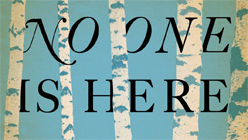
"title": "No One Is Here Except All Of Us-",
"credit": null,
"status": "inherit",
"isLoading": false,
"fetchFailed": false
}
},
"audioPlayerReducer": {
"postId": "stream_live",
"isPaused": true,
"isPlaying": false,
"pfsActive": false,
"pledgeModalIsOpen": true,
"playerDrawerIsOpen": false,
"liveAudioPlayStartedAt": 0,
"liveAudioPlayContext": ""
},
"authorsReducer": {
"byline_arts_97466": {
"type": "authors",
"id": "byline_arts_97466",
"meta": {
"override": true
},
"slug": "byline_arts_97466",
"name": "Wendy McClure",
"isLoading": false
},
"byline_arts_96697": {
"type": "authors",
"id": "byline_arts_96697",
"meta": {
"override": true
},
"slug": "byline_arts_96697",
"name": "Jenny Lawson",
"isLoading": false
},
"byline_arts_95474": {
"type": "authors",
"id": "byline_arts_95474",
"meta": {
"override": true
},
"slug": "byline_arts_95474",
"name": "Delia Ephron",
"isLoading": false
},
"byline_arts_95218": {
"type": "authors",
"id": "byline_arts_95218",
"meta": {
"override": true
},
"slug": "byline_arts_95218",
"name": "Jim Nisbet",
"isLoading": false
},
"byline_arts_94260": {
"type": "authors",
"id": "byline_arts_94260",
"meta": {
"override": true
},
"slug": "byline_arts_94260",
"name": "Eric Erlandson",
"isLoading": false
},
"byline_arts_93663": {
"type": "authors",
"id": "byline_arts_93663",
"meta": {
"override": true
},
"slug": "byline_arts_93663",
"name": "Alison Bechdel",
"isLoading": false
},
"byline_arts_92531": {
"type": "authors",
"id": "byline_arts_92531",
"meta": {
"override": true
},
"slug": "byline_arts_92531",
"name": "Miranda Mellis",
"isLoading": false
},
"byline_arts_91842": {
"type": "authors",
"id": "byline_arts_91842",
"meta": {
"override": true
},
"slug": "byline_arts_91842",
"name": "Doug Mack",
"isLoading": false
},
"byline_arts_91205": {
"type": "authors",
"id": "byline_arts_91205",
"meta": {
"override": true
},
"slug": "byline_arts_91205",
"name": "Moshe Kasher",
"isLoading": false
},
"byline_arts_90638": {
"type": "authors",
"id": "byline_arts_90638",
"meta": {
"override": true
},
"slug": "byline_arts_90638",
"name": "Ramona Ausubel",
"isLoading": false
},
"shotchkiss": {
"type": "authors",
"id": "61",
"meta": {
"index": "authors_1716337520",
"id": "61",
"found": true
},
"name": "Sarah Hotchkiss",
"firstName": "Sarah",
"lastName": "Hotchkiss",
"slug": "shotchkiss",
"email": "shotchkiss@kqed.org",
"display_author_email": true,
"staff_mastheads": [
"arts"
],
"title": "Senior Editor",
"bio": "Sarah Hotchkiss is a San Francisco \u003ca href=\"http://www.sarahhotchkiss.com\">artist\u003c/a> and arts writer. In 2019, she received the Dorothea & Leo Rabkin Foundation grant for visual art journalism and in 2020 she received a Society of Professional Journalists, Northern California award for excellence in arts and culture reporting.",
"avatar": "https://secure.gravatar.com/avatar/bc662df144b3d27fd8b1b6f1c2a420d34e91e53154d411bb7ad353cc8b6cea8d?s=600&d=blank&r=g",
"twitter": null,
"bluesky": null,
"facebook": null,
"instagram": null,
"linkedin": null,
"sites": [
{
"site": "",
"roles": [
"editor"
]
},
{
"site": "arts",
"roles": [
"Contributor",
"administrator"
]
},
{
"site": "artschool",
"roles": [
"administrator"
]
},
{
"site": "news",
"roles": [
"editor"
]
},
{
"site": "pop",
"roles": [
"administrator"
]
},
{
"site": "bayareabites",
"roles": [
"editor"
]
},
{
"site": "spark",
"roles": [
"editor"
]
},
{
"site": "checkplease",
"roles": [
"editor"
]
}
],
"headData": {
"title": "Sarah Hotchkiss | KQED",
"description": "Senior Editor",
"ogImgSrc": "https://secure.gravatar.com/avatar/bc662df144b3d27fd8b1b6f1c2a420d34e91e53154d411bb7ad353cc8b6cea8d?s=600&d=blank&r=g",
"twImgSrc": "https://secure.gravatar.com/avatar/bc662df144b3d27fd8b1b6f1c2a420d34e91e53154d411bb7ad353cc8b6cea8d?s=600&d=blank&r=g"
},
"isLoading": false,
"link": "/author/shotchkiss"
}
},
"pagesReducer": {
"arts_category_literature": {
"type": "terms",
"id": "arts_73",
"meta": {
"index": "terms_1716263798",
"site": "arts",
"id": "73",
"score": 12.797771
},
"featImg": null,
"name": "Books",
"description": null,
"taxonomy": "category",
"headData": {
"twImgId": null,
"twTitle": null,
"ogTitle": null,
"ogImgId": null,
"twDescription": null,
"description": null,
"title": "Books Archives | KQED Arts",
"ogDescription": null
},
"ttid": 74,
"slug": "literature",
"isLoading": false,
"title": "Books",
"pageMeta": {
"site": "arts",
"WpPageTemplate": "page-topic-editorial",
"currentPage": 117
},
"blocks": [
{
"blockName": "kqed/post-list",
"attrs": {
"layout": "cardArticle2",
"query": "posts/arts?category=literature",
"seeMore": false,
"paginated": true,
"page": 117
}
},
{
"blockName": "kqed/ad"
}
]
}
},
"pfsSessionReducer": {},
"postsReducer": {
"stream_live": {
"type": "live",
"id": "stream_live",
"audioUrl": "https://streams.kqed.org/kqedradio",
"title": "Live Stream",
"excerpt": "Live Stream information currently unavailable.",
"link": "/radio",
"featImg": "",
"label": {
"name": "KQED Live",
"link": "/"
}
},
"stream_kqedNewscast": {
"type": "posts",
"id": "stream_kqedNewscast",
"audioUrl": "https://www.kqed.org/.stream/anon/radio/RDnews/newscast.mp3?_=1",
"title": "KQED Newscast",
"featImg": "",
"label": {
"name": "88.5 FM",
"link": "/"
}
},
"arts_98617": {
"type": "posts",
"id": "arts_98617",
"meta": {
"index": "posts_1716263798",
"site": "arts",
"id": "98617",
"score": null,
"sort": [
1340322197000
]
},
"parent": 0,
"labelTerm": {
"site": "arts"
},
"blocks": [],
"publishDate": 1340322197,
"format": "standard",
"title": "Far from Elementary, a Collection of Sherlock Holmes Artifacts",
"headTitle": "Far from Elementary, a Collection of Sherlock Holmes Artifacts | KQED",
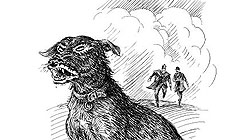
"content": "\u003cp>First things first: The Book Club of California. Tucked above Sutter Street, this cozy gathering place is dedicated to letterpress books and the people who read, collect, make, and sell them. Host to literary talks, receptions, and exhibitions, the club is plush, full of overstuffed couches and sound-canceling carpets. The bar appears well-stocked, the reference library voluminous. This is the setting for \u003cb>You Know My Methods: A Collector’s Approach to the Sherlockian Canon\u003c/b>, an exhibition that will make rare book collectors drool, mystery fans gape, and the average reader smile.\u003c/p>\n\u003cp>The show draws entirely from the collection of Glen S. Miranker, a self-professed victim of the “gentle madness” that afflicts bibliomanes. In a talk at the opening, Miranker answered a few whys. Why collect books? Why Sherlock Holmes? For him, it’s about the excitement of the hunt and the ability to have a different kind of relationship with a book. From his first answer, it is apparent that he and Holmes are kindred spirits — Miranker’s quest for rare items mirroring the Great Detective’s search for clues.\u003c/p>\n\u003cp>\u003cimg decoding=\"async\" style=\"margin-bottom: 10px\" src=\"http://a.s.kqed.net/img/arts/blog/hound1.jpg\" alt=\"\">\u003c/p>\n\u003cp>While Holmes recently resurfaced in pop culture (with both film and television manifestations), \u003cb>You Know My Methods\u003c/b> proves that his popularity is hardly a new fad. Focusing exclusively on the 1902 novel \u003ci>The Hound of the Baskervilles\u003c/i>, the exhibition is filled with rare treats: some of Arthur Conan Doyle’s original manuscript pages, a first British Edition, a first American edition, a first American edition inscribed by the author, the only known “salesman’s dummy,” among other tomes.\u003c/p>\n\u003cp>Many of these items are nearly identical to each other. In the United States, the \u003ci>Hound\u003c/i> was widely popular. Caught off-guard, the publishers reprinted the book five times in its first year on the shelves. Between these “states” tiny and perplexing differences appear. In such comparisons, the viewer glimpses a collector’s drive, the motivation to own not just one copy of \u003ci>The Hound of the Baskervilles\u003c/i> but ALL copies of \u003ci>The Hound of the Baskervilles\u003c/i>.\u003c/p>\n\u003cp>[ad fullwidth]\u003c/p>\n\u003cp>The exhibition extends beyond the book, in true completist fashion. There are \u003ci>Hound\u003c/i> movie posters, board games in a variety of colored packages, Sherlock Holmes cigars, cigarette cards, and strange little buttons. Original illustrations hang on the walls, their images repeated on some of the books in the surrounding vitrines.\u003c/p>\n\u003cp>\u003cimg decoding=\"async\" style=\"margin-bottom: 10px\" src=\"http://a.s.kqed.net/img/arts/blog/hound3.jpg\" alt=\"\">\u003c/p>\n\u003cp>Through entertaining and informative object labels, the exhibition conveys the broader story behind the creation and continuation of Sherlock Holmes. One 1926 cartoon published in \u003ci>Punch Magazine\u003c/i> depicts a gargantuan Conan Doyle, his head in the clouds, feet shackled with a chain held by the elegant figure of Sherlock Holmes. The truth of the matter: Conan Doyle yearned to be remembered for his historical novels and other, more serious writing, not “a little group of detective books.”\u003c/p>\n\u003cp>By 1893 he had written 24 stories and two novels for Holmes. That same year he wrote matter-of-factly in his notebook (on display at the club), “Dec. Killed Holmes.” This marks the publication date of \u003ci>The Final Problem\u003c/i> in \u003ci>The Strand Magazine\u003c/i>. Upon news of Holmes’ death uproar ensued, circulation plummeted, and still Conan Doyle was unrepentant. “I have been much blamed for doing that gentleman to death,” he said in an 1895 speech (hand-written notes on view), “but I hold that it was not murder, but justifiable homicide in self-defense, since, if I had not killed him, he would certainly have killed me.”\u003c/p>\n\u003cp>Eight years later, a combination of opportunity and financial pressure led to the serialized publication of \u003ci>The Hound of the Baskervilles\u003c/i>, set prior to Holmes’ death, but supplying Conan Doyle’s audience with their beloved detective once again.\u003c/p>\n\u003cp>\u003cb>You Know My Methods\u003c/b> is about the novel but also about the ways in which collectors methodically gather an ever-widening circle of materials based on their initial obsessions. In his talk, Miranker claimed that the experience of collecting books is greater than the experience of actually reading them. Here, I must disagree.\u003c/p>\n\u003cp>After leaving the Book Club, my appetite for all things Sherlockian whetted, I sit with \u003ci>The New Annotated Sherlock Holmes: The Novels\u003c/i> at my side. The spine waits to be cracked. The mystery calls for brilliant detective work, and the story yearns to be read.\u003c/p>\n\u003cp>\u003c/p>\n\u003cp>\u003cb>You Know My Methods: A Collector’s Approach to the Sherlockian Canon\u003c/b> is on view at The Book Club of California in San Francisco through September 10, 2012. For \u003ca href=\"http://www.bccbooks.org/\">more information\u003c/a> visit bccbooks.org.\u003c/p>\n\n",
"stats": {
"hasVideo": false,
"hasChartOrMap": false,
"hasAudio": false,
"hasPolis": false,
"wordCount": 771,
"hasGoogleForm": false,
"hasGallery": false,
"hasHearkenModule": false,
"iframeSrcs": [],
"paragraphCount": 15
},
"modified": 1705050662,
"excerpt": "The Book Club of California (on Sutter Street in SF) hosts \u003cb>You Know My Methods\u003c/b>, an exhibition of focused exclusively on the 1902 Sherlock Holmes novel \u003ci>The Hound of the Baskervilles\u003c/i> by Arthur Conan Doyle.",
"headData": {
"twImgId": "",
"twTitle": "",
"ogTitle": "",
"ogImgId": "",
"twDescription": "",
"description": "The Book Club of California (on Sutter Street in SF) hosts You Know My Methods, an exhibition of focused exclusively on the 1902 Sherlock Holmes novel The Hound of the Baskervilles by Arthur Conan Doyle.",
"title": "Far from Elementary, a Collection of Sherlock Holmes Artifacts | KQED",
"ogDescription": "",
"schema": {
"@context": "https://schema.org",
"@type": "Article",
"headline": "Far from Elementary, a Collection of Sherlock Holmes Artifacts",
"datePublished": "2012-06-21T16:43:17-07:00",
"dateModified": "2024-01-12T01:11:02-08:00",
"image": "https://cdn.kqed.org/wp-content/uploads/2020/02/KQED-OG-Image@1x.png"
}
},
"guestAuthors": [],
"slug": "far_from_elementary_a_collection_of_sherlock_holmes_artifacts",
"status": "publish",
"sourceUrl": "http://www.kqed.org/arts/category/literature/",
"sticky": false,
"path": "/arts/98617/far_from_elementary_a_collection_of_sherlock_holmes_artifacts",
"audioTrackLength": null,
"parsedContent": [
{
"type": "contentString",
"content": "\u003cdiv class=\"post-body\">\u003cp>\u003cp>First things first: The Book Club of California. Tucked above Sutter Street, this cozy gathering place is dedicated to letterpress books and the people who read, collect, make, and sell them. Host to literary talks, receptions, and exhibitions, the club is plush, full of overstuffed couches and sound-canceling carpets. The bar appears well-stocked, the reference library voluminous. This is the setting for \u003cb>You Know My Methods: A Collector’s Approach to the Sherlockian Canon\u003c/b>, an exhibition that will make rare book collectors drool, mystery fans gape, and the average reader smile.\u003c/p>\n\u003cp>The show draws entirely from the collection of Glen S. Miranker, a self-professed victim of the “gentle madness” that afflicts bibliomanes. In a talk at the opening, Miranker answered a few whys. Why collect books? Why Sherlock Holmes? For him, it’s about the excitement of the hunt and the ability to have a different kind of relationship with a book. From his first answer, it is apparent that he and Holmes are kindred spirits — Miranker’s quest for rare items mirroring the Great Detective’s search for clues.\u003c/p>\n\u003cp>\u003cimg decoding=\"async\" style=\"margin-bottom: 10px\" src=\"http://a.s.kqed.net/img/arts/blog/hound1.jpg\" alt=\"\">\u003c/p>\n\u003cp>While Holmes recently resurfaced in pop culture (with both film and television manifestations), \u003cb>You Know My Methods\u003c/b> proves that his popularity is hardly a new fad. Focusing exclusively on the 1902 novel \u003ci>The Hound of the Baskervilles\u003c/i>, the exhibition is filled with rare treats: some of Arthur Conan Doyle’s original manuscript pages, a first British Edition, a first American edition, a first American edition inscribed by the author, the only known “salesman’s dummy,” among other tomes.\u003c/p>\n\u003cp>Many of these items are nearly identical to each other. In the United States, the \u003ci>Hound\u003c/i> was widely popular. Caught off-guard, the publishers reprinted the book five times in its first year on the shelves. Between these “states” tiny and perplexing differences appear. In such comparisons, the viewer glimpses a collector’s drive, the motivation to own not just one copy of \u003ci>The Hound of the Baskervilles\u003c/i> but ALL copies of \u003ci>The Hound of the Baskervilles\u003c/i>.\u003c/p>\n\u003cp>\u003c/p>\u003c/div>",
"attributes": {
"named": {},
"numeric": []
}
},
{
"type": "component",
"content": "",
"name": "ad",
"attributes": {
"named": {
"label": "fullwidth"
},
"numeric": [
"fullwidth"
]
}
},
{
"type": "contentString",
"content": "\u003cdiv class=\"post-body\">\u003cp>\u003c/p>\n\u003cp>The exhibition extends beyond the book, in true completist fashion. There are \u003ci>Hound\u003c/i> movie posters, board games in a variety of colored packages, Sherlock Holmes cigars, cigarette cards, and strange little buttons. Original illustrations hang on the walls, their images repeated on some of the books in the surrounding vitrines.\u003c/p>\n\u003cp>\u003cimg decoding=\"async\" style=\"margin-bottom: 10px\" src=\"http://a.s.kqed.net/img/arts/blog/hound3.jpg\" alt=\"\">\u003c/p>\n\u003cp>Through entertaining and informative object labels, the exhibition conveys the broader story behind the creation and continuation of Sherlock Holmes. One 1926 cartoon published in \u003ci>Punch Magazine\u003c/i> depicts a gargantuan Conan Doyle, his head in the clouds, feet shackled with a chain held by the elegant figure of Sherlock Holmes. The truth of the matter: Conan Doyle yearned to be remembered for his historical novels and other, more serious writing, not “a little group of detective books.”\u003c/p>\n\u003cp>By 1893 he had written 24 stories and two novels for Holmes. That same year he wrote matter-of-factly in his notebook (on display at the club), “Dec. Killed Holmes.” This marks the publication date of \u003ci>The Final Problem\u003c/i> in \u003ci>The Strand Magazine\u003c/i>. Upon news of Holmes’ death uproar ensued, circulation plummeted, and still Conan Doyle was unrepentant. “I have been much blamed for doing that gentleman to death,” he said in an 1895 speech (hand-written notes on view), “but I hold that it was not murder, but justifiable homicide in self-defense, since, if I had not killed him, he would certainly have killed me.”\u003c/p>\n\u003cp>Eight years later, a combination of opportunity and financial pressure led to the serialized publication of \u003ci>The Hound of the Baskervilles\u003c/i>, set prior to Holmes’ death, but supplying Conan Doyle’s audience with their beloved detective once again.\u003c/p>\n\u003cp>\u003cb>You Know My Methods\u003c/b> is about the novel but also about the ways in which collectors methodically gather an ever-widening circle of materials based on their initial obsessions. In his talk, Miranker claimed that the experience of collecting books is greater than the experience of actually reading them. Here, I must disagree.\u003c/p>\n\u003cp>After leaving the Book Club, my appetite for all things Sherlockian whetted, I sit with \u003ci>The New Annotated Sherlock Holmes: The Novels\u003c/i> at my side. The spine waits to be cracked. The mystery calls for brilliant detective work, and the story yearns to be read.\u003c/p>\n\u003cp>\u003c/p>\n\u003cp>\u003cb>You Know My Methods: A Collector’s Approach to the Sherlockian Canon\u003c/b> is on view at The Book Club of California in San Francisco through September 10, 2012. For \u003ca href=\"http://www.bccbooks.org/\">more information\u003c/a> visit bccbooks.org.\u003c/p>\n\n\u003c/div>\u003c/p>",
"attributes": {
"named": {},
"numeric": []
}
}
],
"link": "/arts/98617/far_from_elementary_a_collection_of_sherlock_holmes_artifacts",
"authors": [
"61"
],
"categories": [
"arts_73"
],
"featImg": "arts_10098617",
"label": "arts"
},
"arts_97466": {
"type": "posts",
"id": "arts_97466",
"meta": {
"index": "posts_1716263798",
"site": "arts",
"id": "97466",
"score": null,
"sort": [
1339643802000
]
},
"guestAuthors": [],
"slug": "the_wilder_life",
"title": "The Wilder Life",
"publishDate": 1339643802,
"format": "audio",
"headTitle": "The Wilder Life | KQED",
"labelTerm": {
"site": "arts"
},
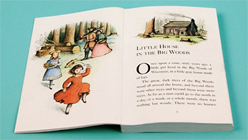
"content": "\u003cp>For anyone who has ever wanted to step into the world of a favorite book, here is a pioneer pilgrimage, a tribute to Laura Ingalls Wilder, and a hilarious account of butter-churning obsession.\u003c/p>\n\u003cp>Wendy McClure is on a quest to find the world of beloved \u003ci>Little House on the Prairie\u003c/i> author Laura Ingalls Wilder — a fantastic realm of fiction, history, and places she’s never been to, yet somehow knows by heart. She retraces the pioneer journey of the Ingalls family — looking for the Big Woods among the medium trees in Wisconsin, wading in Plum Creek, and enduring a prairie hailstorm in South Dakota. She immerses herself in all things Little House, and explores the story from fact to fiction, and from the TV shows to the annual summer pageants in Laura’s hometowns. Whether she’s churning butter in her apartment or sitting in a replica log cabin, McClure is always in pursuit of “the Laura experience.” Along the way, she comes to understand how Wilder’s life and work have shaped our ideas about girlhood and the American West.\u003c/p>\n\u003cp>\u003ci>The Wilder Life\u003c/i> is a loving, irreverent, spirited tribute to a series of books that have inspired generations of American women. It is also an incredibly funny first-person account of obsessive reading, and a story about what happens when we reconnect with our childhood touchstones — and find that our old love has only deepened.\u003c/p>\n\u003cp>[ad fullwidth]\u003c/p>\u003cp>\u003c/p>\n",
"blocks": [],
"excerpt": "Wendy McClure reads a passage from \u003ci>The Wilder Life\u003c/i>, a hilarious chronicle of her attempt to immerse herself in all things Little House on the Prairie.",
"status": "publish",
"parent": 0,
"modified": 1726705795,
"stats": {
"hasAudio": false,
"hasVideo": false,
"hasChartOrMap": false,
"iframeSrcs": [],
"hasGoogleForm": false,
"hasGallery": false,
"hasHearkenModule": false,
"hasPolis": false,
"paragraphCount": 5,
"wordCount": 248
},
"headData": {
"title": "The Wilder Life | KQED",
"description": "Wendy McClure reads a passage from The Wilder Life, a hilarious chronicle of her attempt to immerse herself in all things Little House on the Prairie.",
"ogTitle": "",
"ogDescription": "",
"ogImgId": "",
"twTitle": "",
"twDescription": "",
"twImgId": "",
"schema": {
"@context": "https://schema.org",
"@type": "Article",
"headline": "The Wilder Life",
"datePublished": "2012-06-13T20:16:42-07:00",
"dateModified": "2024-09-18T17:29:55-07:00",
"image": "https://cdn.kqed.org/wp-content/uploads/2020/02/KQED-OG-Image@1x.png"
}
},
"sourceUrl": "http://www.kqed.org/arts/programs/writersblock/",
"audioUrl": "http://podcastdownload.npr.org/anon.npr-podcasts/podcast/151/510076/154999469/KQED_154999469.mp3",
"sticky": false,
"nprByline": "Wendy McClure",
"path": "/arts/97466/the_wilder_life",
"audioTrackLength": null,
"parsedContent": [
{
"type": "contentString",
"content": "\u003cdiv class=\"post-body\">\u003cp>\u003cp>For anyone who has ever wanted to step into the world of a favorite book, here is a pioneer pilgrimage, a tribute to Laura Ingalls Wilder, and a hilarious account of butter-churning obsession.\u003c/p>\n\u003cp>Wendy McClure is on a quest to find the world of beloved \u003ci>Little House on the Prairie\u003c/i> author Laura Ingalls Wilder — a fantastic realm of fiction, history, and places she’s never been to, yet somehow knows by heart. She retraces the pioneer journey of the Ingalls family — looking for the Big Woods among the medium trees in Wisconsin, wading in Plum Creek, and enduring a prairie hailstorm in South Dakota. She immerses herself in all things Little House, and explores the story from fact to fiction, and from the TV shows to the annual summer pageants in Laura’s hometowns. Whether she’s churning butter in her apartment or sitting in a replica log cabin, McClure is always in pursuit of “the Laura experience.” Along the way, she comes to understand how Wilder’s life and work have shaped our ideas about girlhood and the American West.\u003c/p>\n\u003cp>\u003ci>The Wilder Life\u003c/i> is a loving, irreverent, spirited tribute to a series of books that have inspired generations of American women. It is also an incredibly funny first-person account of obsessive reading, and a story about what happens when we reconnect with our childhood touchstones — and find that our old love has only deepened.\u003c/p>\n\u003cp>\u003c/p>\u003c/div>",
"attributes": {
"named": {},
"numeric": []
}
},
{
"type": "component",
"content": "",
"name": "ad",
"attributes": {
"named": {
"label": "fullwidth"
},
"numeric": [
"fullwidth"
]
}
},
{
"type": "contentString",
"content": "\u003cdiv class=\"post-body\">\u003cp>\u003c/p>\u003cp>\u003c/p>\n\u003c/div>\u003c/p>",
"attributes": {
"named": {},
"numeric": []
}
}
],
"link": "/arts/97466/the_wilder_life",
"authors": [
"byline_arts_97466"
],
"categories": [
"arts_73"
],
"tags": [
"arts_330"
],
"featImg": "arts_10097466",
"label": "arts"
},
"arts_96697": {
"type": "posts",
"id": "arts_96697",
"meta": {
"index": "posts_1716263798",
"site": "arts",
"id": "96697",
"score": null,
"sort": [
1339120163000
]
},
"guestAuthors": [],
"slug": "lets_pretend_this_never_happened",
"title": "Let's Pretend This Never Happened",
"publishDate": 1339120163,
"format": "audio",
"headTitle": "Let’s Pretend This Never Happened | KQED",
"labelTerm": {
"site": "arts"
},
"content": "\u003cp>For fans of Tina Fey and David Sedaris: Internet star Jenny Lawson, aka The Bloggess, makes her literary debut.\u003c/p>\n\u003cp>When Jenny Lawson was little, all she ever wanted was to fit in. That dream was cut short by her fantastically unbalanced father (a professional taxidermist who created dead-animal hand puppets) and a childhood of wearing winter shoes made out of used bread sacks. It did, however, open up an opportunity for Lawson to find the humor in the strange shame spiral that is her life, and we are all the better for it.\u003c/p>\n\u003cp>Lawson’s long-suffering husband and sweet daughter are the perfect comedic foils to her absurdities, and help her to uncover the surprising discovery that the most terribly human moments — the ones we want to pretend never happened — are the very same moments that make us the people we are today.\u003c/p>\n\u003cp>\u003ci>Let’s Pretend This Never Happened: A Mostly True Memoir\u003c/i> is a poignantly disturbing, yet darkly hysterical tome for every intellectual misfit who thought they were the only ones to think the things that Lawson dares to say out loud. Like laughing at a funeral, this book is both irreverent and impossible to hold back once you get started.\u003c/p>\n\u003cp>[ad fullwidth]\u003c/p>\u003cp>\u003c/p>\n",
"blocks": [],
"excerpt": "Jenny Lawson, also known as the Bloggess, reads a hilarious passage from \u003ci>Let's Pretend This Never Happened\u003c/i>, about the time her father brought home a magic squirrel.",
"status": "publish",
"parent": 0,
"modified": 1726705799,
"stats": {
"hasAudio": false,
"hasVideo": false,
"hasChartOrMap": false,
"iframeSrcs": [],
"hasGoogleForm": false,
"hasGallery": false,
"hasHearkenModule": false,
"hasPolis": false,
"paragraphCount": 6,
"wordCount": 210
},
"headData": {
"title": "Let's Pretend This Never Happened | KQED",
"description": "Jenny Lawson, also known as the Bloggess, reads a hilarious passage from Let's Pretend This Never Happened, about the time her father brought home a magic squirrel.",
"ogTitle": "",
"ogDescription": "",
"ogImgId": "",
"twTitle": "",
"twDescription": "",
"twImgId": "",
"schema": {
"@context": "https://schema.org",
"@type": "Article",
"headline": "Let's Pretend This Never Happened",
"datePublished": "2012-06-07T18:49:23-07:00",
"dateModified": "2024-09-18T17:29:59-07:00",
"image": "https://cdn.kqed.org/wp-content/uploads/2020/02/KQED-OG-Image@1x.png"
}
},
"sourceUrl": "http://www.kqed.org/arts/programs/writersblock/",
"audioUrl": "http://podcastdownload.npr.org/anon.npr-podcasts/podcast/151/510076/154558567/KQED_154558567.mp3",
"sticky": false,
"nprByline": "Jenny Lawson",
"path": "/arts/96697/lets_pretend_this_never_happened",
"audioTrackLength": null,
"parsedContent": [
{
"type": "contentString",
"content": "\u003cdiv class=\"post-body\">\u003cp>\u003cp>For fans of Tina Fey and David Sedaris: Internet star Jenny Lawson, aka The Bloggess, makes her literary debut.\u003c/p>\n\u003cp>When Jenny Lawson was little, all she ever wanted was to fit in. That dream was cut short by her fantastically unbalanced father (a professional taxidermist who created dead-animal hand puppets) and a childhood of wearing winter shoes made out of used bread sacks. It did, however, open up an opportunity for Lawson to find the humor in the strange shame spiral that is her life, and we are all the better for it.\u003c/p>\n\u003cp>Lawson’s long-suffering husband and sweet daughter are the perfect comedic foils to her absurdities, and help her to uncover the surprising discovery that the most terribly human moments — the ones we want to pretend never happened — are the very same moments that make us the people we are today.\u003c/p>\n\u003cp>\u003ci>Let’s Pretend This Never Happened: A Mostly True Memoir\u003c/i> is a poignantly disturbing, yet darkly hysterical tome for every intellectual misfit who thought they were the only ones to think the things that Lawson dares to say out loud. Like laughing at a funeral, this book is both irreverent and impossible to hold back once you get started.\u003c/p>\n\u003cp>\u003c/p>\u003c/div>",
"attributes": {
"named": {},
"numeric": []
}
},
{
"type": "component",
"content": "",
"name": "ad",
"attributes": {
"named": {
"label": "fullwidth"
},
"numeric": [
"fullwidth"
]
}
},
{
"type": "contentString",
"content": "\u003cdiv class=\"post-body\">\u003cp>\u003c/p>\u003cp>\u003c/p>\n\u003c/div>\u003c/p>",
"attributes": {
"named": {},
"numeric": []
}
}
],
"link": "/arts/96697/lets_pretend_this_never_happened",
"authors": [
"byline_arts_96697"
],
"categories": [
"arts_73"
],
"tags": [
"arts_330"
],
"featImg": "arts_10096697",
"label": "arts"
},
"arts_95474": {
"type": "posts",
"id": "arts_95474",
"meta": {
"index": "posts_1716263798",
"site": "arts",
"id": "95474",
"score": null,
"sort": [
1338338433000
]
},
"guestAuthors": [],
"slug": "the_lion_is_in",
"title": "The Lion Is In",
"publishDate": 1338338433,
"format": "audio",
"headTitle": "The Lion Is In | KQED",
"labelTerm": {
"site": "arts"
},
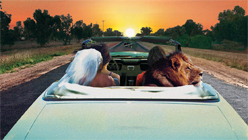
"content": "\u003cp>Tracee is a runaway bride and kleptomaniac. Lana’s an audacious beauty and a recovering alcoholic. Rita is a holy-roller minister’s wife, desperate to escape her marriage and discover whether she actually has a mind of her own.\u003c/p>\n\u003cp>One warm summer’s night, these three women go on the lam together. Their car breaks down on a rural highway in North Carolina and they’re forced to seek shelter in a seemingly abandoned nightclub. Which is where they meet Marcel. And soon everything changes.\u003c/p>\n\u003cp>Marcel, you see, is a lion, a retired circus performer stuck in a cage in this godforsaken roadhouse. And through admiration — one might even say love — for Marcel, our heroines find a way to confront their complicated pasts and fight for the strange, embracing relationships they’ve formed out in the middle of nowhere. They ultimately navigate their way back to their own hearts — and ours.\u003c/p>\n\u003cp>Written with the deftness, humor, and sparkling wit that have marked her books, plays, and movies, Delia Ephron’s \u003ci>The Lion Is In\u003c/i> is an unforgettable story of friendship, courage, love — and learning to salsa with the king of the jungle.\u003c/p>\n\u003cp>[ad fullwidth]\u003c/p>\u003cp>\u003c/p>\n",
"blocks": [],
"excerpt": "Delia Ephron, the woman behind such films as \u003ci>You've Got Mail\u003c/i>, \u003ci>Hanging Up\u003c/i>, and \u003ci>The Sisterhood of the Traveling Pants\u003c/i>, reads a passage from \u003ci>The Lion Is In\u003c/i>, her new novel about three women who flee their lives and encounter the unlikeliest of companions, a lion named Marcel.",
"status": "publish",
"parent": 0,
"modified": 1726705802,
"stats": {
"hasAudio": false,
"hasVideo": false,
"hasChartOrMap": false,
"iframeSrcs": [],
"hasGoogleForm": false,
"hasGallery": false,
"hasHearkenModule": false,
"hasPolis": false,
"paragraphCount": 6,
"wordCount": 205
},
"headData": {
"title": "The Lion Is In | KQED",
"description": "Delia Ephron, the woman behind such films as You've Got Mail, Hanging Up, and The Sisterhood of the Traveling Pants, reads a passage from The Lion Is In, her new novel about three women who flee their lives and encounter the unlikeliest of companions, a lion named Marcel.",
"ogTitle": "",
"ogDescription": "",
"ogImgId": "",
"twTitle": "",
"twDescription": "",
"twImgId": "",
"schema": {
"@context": "https://schema.org",
"@type": "Article",
"headline": "The Lion Is In",
"datePublished": "2012-05-29T17:40:33-07:00",
"dateModified": "2024-09-18T17:30:02-07:00",
"image": "https://cdn.kqed.org/wp-content/uploads/2020/02/KQED-OG-Image@1x.png"
}
},
"sourceUrl": "http://www.kqed.org/arts/programs/writersblock/",
"audioUrl": "http://podcastdownload.npr.org/anon.npr-podcasts/podcast/151/510076/154131552/KQED_154131552.mp3",
"sticky": false,
"nprByline": "Delia Ephron",
"path": "/arts/95474/the_lion_is_in",
"audioTrackLength": null,
"parsedContent": [
{
"type": "contentString",
"content": "\u003cdiv class=\"post-body\">\u003cp>\u003cp>Tracee is a runaway bride and kleptomaniac. Lana’s an audacious beauty and a recovering alcoholic. Rita is a holy-roller minister’s wife, desperate to escape her marriage and discover whether she actually has a mind of her own.\u003c/p>\n\u003cp>One warm summer’s night, these three women go on the lam together. Their car breaks down on a rural highway in North Carolina and they’re forced to seek shelter in a seemingly abandoned nightclub. Which is where they meet Marcel. And soon everything changes.\u003c/p>\n\u003cp>Marcel, you see, is a lion, a retired circus performer stuck in a cage in this godforsaken roadhouse. And through admiration — one might even say love — for Marcel, our heroines find a way to confront their complicated pasts and fight for the strange, embracing relationships they’ve formed out in the middle of nowhere. They ultimately navigate their way back to their own hearts — and ours.\u003c/p>\n\u003cp>Written with the deftness, humor, and sparkling wit that have marked her books, plays, and movies, Delia Ephron’s \u003ci>The Lion Is In\u003c/i> is an unforgettable story of friendship, courage, love — and learning to salsa with the king of the jungle.\u003c/p>\n\u003cp>\u003c/p>\u003c/div>",
"attributes": {
"named": {},
"numeric": []
}
},
{
"type": "component",
"content": "",
"name": "ad",
"attributes": {
"named": {
"label": "fullwidth"
},
"numeric": [
"fullwidth"
]
}
},
{
"type": "contentString",
"content": "\u003cdiv class=\"post-body\">\u003cp>\u003c/p>\u003cp>\u003c/p>\n\u003c/div>\u003c/p>",
"attributes": {
"named": {},
"numeric": []
}
}
],
"link": "/arts/95474/the_lion_is_in",
"authors": [
"byline_arts_95474"
],
"categories": [
"arts_73"
],
"tags": [
"arts_330"
],
"featImg": "arts_10095474",
"label": "arts"
},
"arts_95218": {
"type": "posts",
"id": "arts_95218",
"meta": {
"index": "posts_1716263798",
"site": "arts",
"id": "95218",
"score": null,
"sort": [
1337976877000
]
},
"guestAuthors": [],
"slug": "weight_less_than_shadow-2",
"title": "Weight Less Than Shadow",
"publishDate": 1337976877,
"format": "audio",
"headTitle": "Weight Less Than Shadow | KQED",
"labelTerm": {
"site": "arts"
},
"content": "\u003cp>\u003cb>About “Weight Less Than Shadow”\u003c/b>\u003cbr>Setting: The Golden Gate bridge sometime in the near future. An innocent stroll on a sunny Sunday afternoon turns into something more… much more. The story is featured in \u003cb>San Francisco Noir\u003c/b>, a hard-biting collection of tales exploring the shadowy nether regions of scenic “Baghdad by the Bay.” In this superb collection, virtuosos of the genre meet up with the best of S.F.’s literary fiction community to chart a unique psycho-geography for a dark landscape.\u003c/p>\n\u003cp>From inner city boroughs to the outlands, each contributor offers an original story based in a distinct neighborhood. At times brutal, darkly humorous, and revelatory — the stories speak of a hidden San Francisco, a town where the fog is but a prelude to darker realities lingering beneath.\u003c/p>\n\u003cp>[ad fullwidth]\u003c/p>\u003cp>\u003c/p>\n",
"blocks": [],
"excerpt": "In honor of the Golden Gate Bridge's 75th Anniversary, we pulled this reading by Jim Nisbet from the archives to get you in the mood to celebrate San Francisco's favorite piece of infrastructure.",
"status": "publish",
"parent": 0,
"modified": 1726705806,
"stats": {
"hasAudio": false,
"hasVideo": false,
"hasChartOrMap": false,
"iframeSrcs": [],
"hasGoogleForm": false,
"hasGallery": false,
"hasHearkenModule": false,
"hasPolis": false,
"paragraphCount": 4,
"wordCount": 140
},
"headData": {
"title": "Weight Less Than Shadow | KQED",
"description": "In honor of the Golden Gate Bridge's 75th Anniversary, we pulled this reading by Jim Nisbet from the archives to get you in the mood to celebrate San Francisco's favorite piece of infrastructure.",
"ogTitle": "",
"ogDescription": "",
"ogImgId": "",
"twTitle": "",
"twDescription": "",
"twImgId": "",
"schema": {
"@context": "https://schema.org",
"@type": "Article",
"headline": "Weight Less Than Shadow",
"datePublished": "2012-05-25T13:14:37-07:00",
"dateModified": "2024-09-18T17:30:06-07:00",
"image": "https://cdn.kqed.org/wp-content/uploads/2020/02/KQED-OG-Image@1x.png"
}
},
"sourceUrl": "http://www.kqed.org/arts/programs/writersblock/",
"audioUrl": "http://podcastdownload.npr.org/anon.npr-podcasts/podcast/151/510076/153730351/KQED_153730351.mp3",
"sticky": false,
"nprByline": "Jim Nisbet",
"path": "/arts/95218/weight_less_than_shadow-2",
"audioTrackLength": null,
"parsedContent": [
{
"type": "contentString",
"content": "\u003cdiv class=\"post-body\">\u003cp>\u003cp>\u003cb>About “Weight Less Than Shadow”\u003c/b>\u003cbr>Setting: The Golden Gate bridge sometime in the near future. An innocent stroll on a sunny Sunday afternoon turns into something more… much more. The story is featured in \u003cb>San Francisco Noir\u003c/b>, a hard-biting collection of tales exploring the shadowy nether regions of scenic “Baghdad by the Bay.” In this superb collection, virtuosos of the genre meet up with the best of S.F.’s literary fiction community to chart a unique psycho-geography for a dark landscape.\u003c/p>\n\u003cp>From inner city boroughs to the outlands, each contributor offers an original story based in a distinct neighborhood. At times brutal, darkly humorous, and revelatory — the stories speak of a hidden San Francisco, a town where the fog is but a prelude to darker realities lingering beneath.\u003c/p>\n\u003cp>\u003c/p>\u003c/div>",
"attributes": {
"named": {},
"numeric": []
}
},
{
"type": "component",
"content": "",
"name": "ad",
"attributes": {
"named": {
"label": "fullwidth"
},
"numeric": [
"fullwidth"
]
}
},
{
"type": "contentString",
"content": "\u003cdiv class=\"post-body\">\u003cp>\u003c/p>\u003cp>\u003c/p>\n\u003c/div>\u003c/p>",
"attributes": {
"named": {},
"numeric": []
}
}
],
"link": "/arts/95218/weight_less_than_shadow-2",
"authors": [
"byline_arts_95218"
],
"categories": [
"arts_73"
],
"tags": [
"arts_330"
],
"featImg": "arts_10095218",
"label": "arts"
},
"arts_95077": {
"type": "posts",
"id": "arts_95077",
"meta": {
"index": "posts_1716263798",
"site": "arts",
"id": "95077",
"score": null,
"sort": [
1337896455000
]
},
"parent": 0,
"labelTerm": {
"site": "arts"
},
"blocks": [],
"publishDate": 1337896455,
"format": "standard",
"title": "Formidable Females in YA Fiction",
"headTitle": "Formidable Females in YA Fiction | KQED",
"content": "\u003cp>Did \u003ci>The Hunger Games\u003c/i> trilogy sweep you off your feet and leave you helpless in a swirl of post-apocalyptic PTSD narratives? If, like me, you read the first book, saw the movie, and then read the next two books at a break-neck pace, you’ve spent the past few weeks since it all ended in a kind of withdrawal.\u003c/p>\n\u003cp>What was it that made it all so engaging? Katniss and her break from the traditional gender narrative? The tangible danger of the games? Suzanne Collins’ cinematic prose? Despite its record-setting box office numbers, the movie confirmed once again that books are better than their film adaptations. So let us fill the void \u003ci>The Hunger Games\u003c/i> left behind with more books, specifically the type of book the \u003ci>Twilight\u003c/i> series left us wanting: dynamic young-adult fiction with stereotype-bucking female leads.\u003c/p>\n\u003cp>I present to you the following good reads — including two trilogies to keep you busy — no matter what your age, in no particular order:\u003c/p>\n\u003cp>\u003cimg decoding=\"async\" style=\"margin-bottom: 10px\" src=\"http://a.s.kqed.net/img/arts/blog/ya-truegrit.jpg\" alt=\"\">\u003ci>True Grit\u003c/i> by Charles Portis\u003cbr>\nOriginally published serially in the \u003ci>Saturday Evening Post\u003c/i> and brought to the screen twice (most recently in the excellent 2010 adaptation by the Coen brothers), \u003ci>True Grit\u003c/i> is the story of a formative chapter in 14-year-old Mattie Ross’ life as told by her much older spinster self. Determined to avenge her father’s senseless murder by the “riffraff” Tom Chaney, she hires Marshal “Rooster” Cogburn to help her track the man down and falls in with a Texas Ranger, also on Chaney’s tail.\u003c/p>\n\u003cp>The clarity and righteous cadence of Mattie’s voice capture a reader’s attention like few other narrators in the history of American literature. The spellbinding journey she describes is filled with violence, harsh conditions, moral uncertainty, and the banding together of an unlikely group of loners, leaving Mattie forever changed by the experience. Though not fantastical or futuristic, Mattie’s tale is just as gripping as any to take place in an imagined world, and possibly more inspiring as a result.\u003c/p>\n\u003cp>[ad fullwidth]\u003c/p>\n\u003cp>\u003cimg decoding=\"async\" style=\"margin-bottom: 10px\" src=\"http://a.s.kqed.net/img/arts/blog/ya-sabriel.jpg\" alt=\"\">\u003ci>Sabriel\u003c/i>, \u003ci>Lireal\u003c/i>, and \u003ci>Abhorsen\u003c/i> by Garth Nix\u003cbr>\nIn this fantasy trilogy, Nix richly depicts an alternate world (the Old Kingdom) of magic, prophesy, and near-apocalypse. When dangerous spirits are released from death, only one person can return them from whence they came: the Abhorsen. The epic begins as Sabriel inherits her father’s position as Abhorsen and follows her on a quest she reluctantly embraces despite repeated near-death experiences.\u003c/p>\n\u003cp>\u003ci>Lireal\u003c/i> and \u003ci>Abhorsen\u003c/i> pick up approximately 14 years later as an even greater force of destruction threatens the Old Kingdom. Once again, a young woman must embrace her unexpected destiny as a challenger to that evil. All three books are engrossing, with persuasive detail, conflicted characters, and plenty of action driving the story forward. No one sits around waiting for her vampire boyfriend to work through his relationship issues, that’s for sure.\u003c/p>\n\u003cp>\u003cimg decoding=\"async\" style=\"margin-bottom: 10px\" src=\"http://a.s.kqed.net/img/arts/blog/ya-wrinkle.jpg\" alt=\"\">\u003ci>A Wrinkle in Time\u003c/i> by Madeline L’Engle\u003cbr>\n“It was a dark and stormy night,” begins this classic and well-loved sci-fi fantasy novel. Meg Murray is the eldest daughter of two scientist parents, unsure of her place in the world, but determined to rescue her father (with the help of her genius 5-year-old brother Charles) when he goes missing. The Murrays and their neighbor encounter strange planets, even stranger creatures, and a truly terrifying opponent attempting to swallow the entire universe.\u003c/p>\n\u003cp>L’Engle’s book hinges on Christian philosophy and the principle that love can conquer all darkness, but it doesn’t shove anything down the reader’s throat. Instead, the text relies on Meg’s discovery of her inner strength to fashion a relatable and continuously relevant text.\u003c/p>\n\u003cp>\u003cimg decoding=\"async\" style=\"margin-bottom: 10px\" src=\"http://a.s.kqed.net/img/arts/blog/ya-golden.jpg\" alt=\"\">\u003ci>The Golden Compass\u003c/i>, \u003ci>The Subtle Knife\u003c/i>, and \u003ci>The Amber Spyglass\u003c/i> by Phillip Pullman\u003cbr>\nAnd finally, an epic to match all epics. In this trilogy, set in a parallel universe to our own, a person’s soul is represented by an animal companion, his or her “dæmon.” Lyra Belacqua, the 11-year-old heroine, is a smart, disobedient, curious, and crafty young woman. Her adventure takes her through distant lands, multiple universes, and ultimately to her own sexual awakening.\u003c/p>\n\u003cp>\u003c/p>\n\u003cp>The supporting characters in these books are fantastic. In \u003ci>The Golden Compass\u003c/i> alone, Lyra meets an armored bear, a traveling balloonist, and divinatory witches. Pullman’s books, in contrast to L’Engle’s, are highly critical of organized religion and the constrictions placed on populations by religious groups. Still controversial to many, you should read these books at the very least just to see what all the fuss is about.\u003c/p>\n\n",
"stats": {
"hasVideo": false,
"hasChartOrMap": false,
"hasAudio": false,
"hasPolis": false,
"wordCount": 799,
"hasGoogleForm": false,
"hasGallery": false,
"hasHearkenModule": false,
"iframeSrcs": [],
"paragraphCount": 13
},
"modified": 1705050722,
"excerpt": "Looking for something to read this summer? Some selections of young adult fiction featuring strong female leads.",
"headData": {
"twImgId": "",
"twTitle": "",
"ogTitle": "",
"ogImgId": "",
"twDescription": "",
"description": "Looking for something to read this summer? Some selections of young adult fiction featuring strong female leads.",
"title": "Formidable Females in YA Fiction | KQED",
"ogDescription": "",
"schema": {
"@context": "https://schema.org",
"@type": "Article",
"headline": "Formidable Females in YA Fiction",
"datePublished": "2012-05-24T14:54:15-07:00",
"dateModified": "2024-01-12T01:12:02-08:00",
"image": "https://cdn.kqed.org/wp-content/uploads/2020/02/KQED-OG-Image@1x.png"
}
},
"guestAuthors": [],
"slug": "formidable_females_in_ya_fiction",
"status": "publish",
"sourceUrl": "http://www.kqed.org/arts/category/literature/",
"sticky": false,
"path": "/arts/95077/formidable_females_in_ya_fiction",
"audioTrackLength": null,
"parsedContent": [
{
"type": "contentString",
"content": "\u003cdiv class=\"post-body\">\u003cp>\u003cp>Did \u003ci>The Hunger Games\u003c/i> trilogy sweep you off your feet and leave you helpless in a swirl of post-apocalyptic PTSD narratives? If, like me, you read the first book, saw the movie, and then read the next two books at a break-neck pace, you’ve spent the past few weeks since it all ended in a kind of withdrawal.\u003c/p>\n\u003cp>What was it that made it all so engaging? Katniss and her break from the traditional gender narrative? The tangible danger of the games? Suzanne Collins’ cinematic prose? Despite its record-setting box office numbers, the movie confirmed once again that books are better than their film adaptations. So let us fill the void \u003ci>The Hunger Games\u003c/i> left behind with more books, specifically the type of book the \u003ci>Twilight\u003c/i> series left us wanting: dynamic young-adult fiction with stereotype-bucking female leads.\u003c/p>\n\u003cp>I present to you the following good reads — including two trilogies to keep you busy — no matter what your age, in no particular order:\u003c/p>\n\u003cp>\u003cimg decoding=\"async\" style=\"margin-bottom: 10px\" src=\"http://a.s.kqed.net/img/arts/blog/ya-truegrit.jpg\" alt=\"\">\u003ci>True Grit\u003c/i> by Charles Portis\u003cbr>\nOriginally published serially in the \u003ci>Saturday Evening Post\u003c/i> and brought to the screen twice (most recently in the excellent 2010 adaptation by the Coen brothers), \u003ci>True Grit\u003c/i> is the story of a formative chapter in 14-year-old Mattie Ross’ life as told by her much older spinster self. Determined to avenge her father’s senseless murder by the “riffraff” Tom Chaney, she hires Marshal “Rooster” Cogburn to help her track the man down and falls in with a Texas Ranger, also on Chaney’s tail.\u003c/p>\n\u003cp>The clarity and righteous cadence of Mattie’s voice capture a reader’s attention like few other narrators in the history of American literature. The spellbinding journey she describes is filled with violence, harsh conditions, moral uncertainty, and the banding together of an unlikely group of loners, leaving Mattie forever changed by the experience. Though not fantastical or futuristic, Mattie’s tale is just as gripping as any to take place in an imagined world, and possibly more inspiring as a result.\u003c/p>\n\u003cp>\u003c/p>\u003c/div>",
"attributes": {
"named": {},
"numeric": []
}
},
{
"type": "component",
"content": "",
"name": "ad",
"attributes": {
"named": {
"label": "fullwidth"
},
"numeric": [
"fullwidth"
]
}
},
{
"type": "contentString",
"content": "\u003cdiv class=\"post-body\">\u003cp>\u003c/p>\n\u003cp>\u003cimg decoding=\"async\" style=\"margin-bottom: 10px\" src=\"http://a.s.kqed.net/img/arts/blog/ya-sabriel.jpg\" alt=\"\">\u003ci>Sabriel\u003c/i>, \u003ci>Lireal\u003c/i>, and \u003ci>Abhorsen\u003c/i> by Garth Nix\u003cbr>\nIn this fantasy trilogy, Nix richly depicts an alternate world (the Old Kingdom) of magic, prophesy, and near-apocalypse. When dangerous spirits are released from death, only one person can return them from whence they came: the Abhorsen. The epic begins as Sabriel inherits her father’s position as Abhorsen and follows her on a quest she reluctantly embraces despite repeated near-death experiences.\u003c/p>\n\u003cp>\u003ci>Lireal\u003c/i> and \u003ci>Abhorsen\u003c/i> pick up approximately 14 years later as an even greater force of destruction threatens the Old Kingdom. Once again, a young woman must embrace her unexpected destiny as a challenger to that evil. All three books are engrossing, with persuasive detail, conflicted characters, and plenty of action driving the story forward. No one sits around waiting for her vampire boyfriend to work through his relationship issues, that’s for sure.\u003c/p>\n\u003cp>\u003cimg decoding=\"async\" style=\"margin-bottom: 10px\" src=\"http://a.s.kqed.net/img/arts/blog/ya-wrinkle.jpg\" alt=\"\">\u003ci>A Wrinkle in Time\u003c/i> by Madeline L’Engle\u003cbr>\n“It was a dark and stormy night,” begins this classic and well-loved sci-fi fantasy novel. Meg Murray is the eldest daughter of two scientist parents, unsure of her place in the world, but determined to rescue her father (with the help of her genius 5-year-old brother Charles) when he goes missing. The Murrays and their neighbor encounter strange planets, even stranger creatures, and a truly terrifying opponent attempting to swallow the entire universe.\u003c/p>\n\u003cp>L’Engle’s book hinges on Christian philosophy and the principle that love can conquer all darkness, but it doesn’t shove anything down the reader’s throat. Instead, the text relies on Meg’s discovery of her inner strength to fashion a relatable and continuously relevant text.\u003c/p>\n\u003cp>\u003cimg decoding=\"async\" style=\"margin-bottom: 10px\" src=\"http://a.s.kqed.net/img/arts/blog/ya-golden.jpg\" alt=\"\">\u003ci>The Golden Compass\u003c/i>, \u003ci>The Subtle Knife\u003c/i>, and \u003ci>The Amber Spyglass\u003c/i> by Phillip Pullman\u003cbr>\nAnd finally, an epic to match all epics. In this trilogy, set in a parallel universe to our own, a person’s soul is represented by an animal companion, his or her “dæmon.” Lyra Belacqua, the 11-year-old heroine, is a smart, disobedient, curious, and crafty young woman. Her adventure takes her through distant lands, multiple universes, and ultimately to her own sexual awakening.\u003c/p>\n\u003cp>\u003c/p>\n\u003cp>The supporting characters in these books are fantastic. In \u003ci>The Golden Compass\u003c/i> alone, Lyra meets an armored bear, a traveling balloonist, and divinatory witches. Pullman’s books, in contrast to L’Engle’s, are highly critical of organized religion and the constrictions placed on populations by religious groups. Still controversial to many, you should read these books at the very least just to see what all the fuss is about.\u003c/p>\n\n\u003c/div>\u003c/p>",
"attributes": {
"named": {},
"numeric": []
}
}
],
"link": "/arts/95077/formidable_females_in_ya_fiction",
"authors": [
"61"
],
"categories": [
"arts_73"
],
"featImg": "arts_10095077",
"label": "arts"
},
"arts_94260": {
"type": "posts",
"id": "arts_94260",
"meta": {
"index": "posts_1716263798",
"site": "arts",
"id": "94260",
"score": null,
"sort": [
1337224683000
]
},
"guestAuthors": [],
"slug": "letters_to_kurt",
"title": "Letters to Kurt",
"publishDate": 1337224683,
"format": "audio",
"headTitle": "Letters to Kurt | KQED",
"labelTerm": {
"site": "arts"
},
"content": "\u003cp>\u003cb>Letters to Kurt\u003c/b> is an anguished, angry, and tender meditation on the octane and ether of rock and roll and its many moons: sex, drugs, suicide, fame, and rage. It’s part Dream Songs, part Bukowski, Ferlinghetti, Ginsberg, and the Clash. Rants, reflections, and gunshot fill these fifty-two prose poems. They are raw, funny, sad, and searching. This will make a beautiful book for anyone who loved Nirvana and Hole and the time and place when their music changed everything. Ultimately, it’s an elegy for Kurt and the “suicide idols” who tragically fail to find salvation in their amazing music.\u003c/p>\n\u003cp>[ad fullwidth]\u003c/p>\u003cp>\u003c/p>\n",
"blocks": [],
"excerpt": "Eric Erlandson, founding member of the band Hole, reads a passage from \u003cb>Letters to Kurt\u003c/b>, an anguished, angry, and tender meditation on the octane and ether of rock and roll.",
"status": "publish",
"parent": 0,
"modified": 1726705811,
"stats": {
"hasAudio": false,
"hasVideo": false,
"hasChartOrMap": false,
"iframeSrcs": [],
"hasGoogleForm": false,
"hasGallery": false,
"hasHearkenModule": false,
"hasPolis": false,
"paragraphCount": 3,
"wordCount": 108
},
"headData": {
"title": "Letters to Kurt | KQED",
"description": "Eric Erlandson, founding member of the band Hole, reads a passage from Letters to Kurt, an anguished, angry, and tender meditation on the octane and ether of rock and roll.",
"ogTitle": "",
"ogDescription": "",
"ogImgId": "",
"twTitle": "",
"twDescription": "",
"twImgId": "",
"schema": {
"@context": "https://schema.org",
"@type": "Article",
"headline": "Letters to Kurt",
"datePublished": "2012-05-16T20:18:03-07:00",
"dateModified": "2024-09-18T17:30:11-07:00",
"image": "https://cdn.kqed.org/wp-content/uploads/2020/02/KQED-OG-Image@1x.png"
}
},
"sourceUrl": "http://www.kqed.org/arts/programs/writersblock/",
"audioUrl": "http://podcastdownload.npr.org/anon.npr-podcasts/podcast/151/510076/152968550/KQED_152968550.mp3",
"sticky": false,
"nprByline": "Eric Erlandson",
"path": "/arts/94260/letters_to_kurt",
"audioTrackLength": null,
"parsedContent": [
{
"type": "contentString",
"content": "\u003cdiv class=\"post-body\">\u003cp>\u003cp>\u003cb>Letters to Kurt\u003c/b> is an anguished, angry, and tender meditation on the octane and ether of rock and roll and its many moons: sex, drugs, suicide, fame, and rage. It’s part Dream Songs, part Bukowski, Ferlinghetti, Ginsberg, and the Clash. Rants, reflections, and gunshot fill these fifty-two prose poems. They are raw, funny, sad, and searching. This will make a beautiful book for anyone who loved Nirvana and Hole and the time and place when their music changed everything. Ultimately, it’s an elegy for Kurt and the “suicide idols” who tragically fail to find salvation in their amazing music.\u003c/p>\n\u003cp>\u003c/p>\u003c/div>",
"attributes": {
"named": {},
"numeric": []
}
},
{
"type": "component",
"content": "",
"name": "ad",
"attributes": {
"named": {
"label": "fullwidth"
},
"numeric": [
"fullwidth"
]
}
},
{
"type": "contentString",
"content": "\u003cdiv class=\"post-body\">\u003cp>\u003c/p>\u003cp>\u003c/p>\n\u003c/div>\u003c/p>",
"attributes": {
"named": {},
"numeric": []
}
}
],
"link": "/arts/94260/letters_to_kurt",
"authors": [
"byline_arts_94260"
],
"categories": [
"arts_73"
],
"tags": [
"arts_330"
],
"featImg": "arts_10094260",
"label": "arts"
},
"arts_93663": {
"type": "posts",
"id": "arts_93663",
"meta": {
"index": "posts_1716263798",
"site": "arts",
"id": "93663",
"score": null,
"sort": [
1336702611000
]
},
"guestAuthors": [],
"slug": "are_you_my_mother",
"title": "'Are You My Mother?'",
"publishDate": 1336702611,
"format": "audio",
"headTitle": "‘Are You My Mother?’ | KQED",
"labelTerm": {
"site": "arts"
},
"content": "\u003cp>From the best-selling author of \u003ci>Fun Home\u003c/i>, \u003ci>Time Magazine\u003c/i>‘s No. 1 Book of the Year, a brilliantly told graphic memoir of Alison Bechdel becoming the artist her mother wanted to be.\u003c/p>\n\u003cp>Alison Bechdel’s \u003ci>Fun Home\u003c/i> was a pop culture and literary phenomenon. Now, a second thrilling tale of filial sleuthery, this time about her mother: voracious reader, music lover, passionate amateur actor. Also a woman, unhappily married to a closeted gay man, whose artistic aspirations simmered under the surface of Bechdel’s childhood…and who stopped touching or kissing her daughter good night, forever, when she was seven. Poignantly, hilariously, Bechdel embarks on a quest for answers concerning the mother-daughter gulf. It’s a richly layered search that leads readers from the fascinating life and work of the iconic twentieth-century psychoanalyst Donald Winnicott, to one explosively illuminating Dr. Seuss illustration, to Bechdel’s own (serially monogamous) adult love life. And, finally, back to Mother — to a truce, fragile and real-time, that will move and astonish all adult children of gifted mothers.\u003c/p>\n\u003cp>[audio src=\"https://www.kqed.org/.stream/anon/radio//2018/04/KQED152482843.mp3\" title=\"Listen to Alison Bechdel read an excerpt from \u003ci>Are You My Mother?\u003c/i>\" program=\"The Writers' Block\" image=\"https://ww2.kqed.org/arts/wp-content/uploads/sites/2/2012/05/Alison-Bechdel.jpg\"]\u003c/p>\n\u003cp>[ad fullwidth]\u003c/p>\u003cp>\u003c/p>\n",
"blocks": [],
"excerpt": "Alison Bechdel, author of the wildly successful \u003cb>Fun Home\u003c/b>, reads a passage from her latest graphic memoir, \u003ci>Are You My Mother?\u003c/i>",
"status": "publish",
"parent": 0,
"modified": 1726705814,
"stats": {
"hasAudio": true,
"hasVideo": false,
"hasChartOrMap": false,
"iframeSrcs": [],
"hasGoogleForm": false,
"hasGallery": false,
"hasHearkenModule": false,
"hasPolis": false,
"paragraphCount": 4,
"wordCount": 232
},
"headData": {
"title": "'Are You My Mother?' | KQED",
"description": "Alison Bechdel, author of the wildly successful Fun Home, reads a passage from her latest graphic memoir, Are You My Mother?",
"ogTitle": "",
"ogDescription": "",
"ogImgId": "",
"twTitle": "",
"twDescription": "",
"twImgId": "",
"schema": {
"@context": "https://schema.org",
"@type": "Article",
"headline": "'Are You My Mother?'",
"datePublished": "2012-05-10T19:16:51-07:00",
"dateModified": "2024-09-18T17:30:14-07:00",
"image": "https://cdn.kqed.org/wp-content/uploads/2020/02/KQED-OG-Image@1x.png"
}
},
"sourceUrl": "http://www.kqed.org/arts/programs/writersblock/",
"audioUrl": "https://www.kqed.org/.stream/anon/radio//2018/04/KQED152482843.mp3",
"sticky": false,
"nprByline": "Alison Bechdel",
"path": "/arts/93663/are_you_my_mother",
"audioDuration": null,
"audioTrackLength": null,
"parsedContent": [
{
"type": "contentString",
"content": "\u003cdiv class=\"post-body\">\u003cp>\u003cp>From the best-selling author of \u003ci>Fun Home\u003c/i>, \u003ci>Time Magazine\u003c/i>‘s No. 1 Book of the Year, a brilliantly told graphic memoir of Alison Bechdel becoming the artist her mother wanted to be.\u003c/p>\n\u003cp>Alison Bechdel’s \u003ci>Fun Home\u003c/i> was a pop culture and literary phenomenon. Now, a second thrilling tale of filial sleuthery, this time about her mother: voracious reader, music lover, passionate amateur actor. Also a woman, unhappily married to a closeted gay man, whose artistic aspirations simmered under the surface of Bechdel’s childhood…and who stopped touching or kissing her daughter good night, forever, when she was seven. Poignantly, hilariously, Bechdel embarks on a quest for answers concerning the mother-daughter gulf. It’s a richly layered search that leads readers from the fascinating life and work of the iconic twentieth-century psychoanalyst Donald Winnicott, to one explosively illuminating Dr. Seuss illustration, to Bechdel’s own (serially monogamous) adult love life. And, finally, back to Mother — to a truce, fragile and real-time, that will move and astonish all adult children of gifted mothers.\u003c/p>\n\u003cp>\u003c/p>\u003c/div>",
"attributes": {
"named": {},
"numeric": []
}
},
{
"type": "component",
"content": "",
"name": "audio",
"attributes": {
"named": {
"src": "https://www.kqed.org/.stream/anon/radio//2018/04/KQED152482843.mp3",
"title": "Listen to Alison Bechdel read an excerpt from \u003ci>Are You My Mother?\u003c/i>",
"program": "The Writers' Block",
"image": "https://ww2.kqed.org/arts/wp-content/uploads/sites/2/2012/05/Alison-Bechdel.jpg",
"label": ""
},
"numeric": []
}
},
{
"type": "contentString",
"content": "\u003cdiv class=\"post-body\">\u003cp>\u003c/p>\n\u003cp>\u003c/p>\u003c/div>",
"attributes": {
"named": {},
"numeric": []
}
},
{
"type": "component",
"content": "",
"name": "ad",
"attributes": {
"named": {
"label": "fullwidth"
},
"numeric": [
"fullwidth"
]
}
},
{
"type": "contentString",
"content": "\u003cdiv class=\"post-body\">\u003cp>\u003c/p>\u003cp>\u003c/p>\n\u003c/div>\u003c/p>",
"attributes": {
"named": {},
"numeric": []
}
}
],
"link": "/arts/93663/are_you_my_mother",
"authors": [
"byline_arts_93663"
],
"categories": [
"arts_73"
],
"tags": [
"arts_330"
],
"featImg": "arts_13829392",
"label": "arts"
},
"arts_92531": {
"type": "posts",
"id": "arts_92531",
"meta": {
"index": "posts_1716263798",
"site": "arts",
"id": "92531",
"score": null,
"sort": [
1335922988000
]
},
"guestAuthors": [],
"slug": "none_of_this_is_real",
"title": "None of This Is Real",
"publishDate": 1335922988,
"format": "audio",
"headTitle": "None of This Is Real | KQED",
"labelTerm": {
"site": "arts"
},
"content": "\u003cp>\u003ci>None of This Is Real\u003c/i> imagines a not-too-alternate reality of philosophical children, reincarnating chimeras, mutant matriarchies, and kind seers adapting to affliction. These five fictions question what is knowable and what actions can be taken in the face of loss — of family, heritage, ecosystems, agency, and power. A face incapable of masking its sneering rebellions; young sisters in search of their missing mother; a page whose very body extracts meaning from occult readings in response to alienation; a never-ending line for coffee that becomes a surreal site of quotidian wars in miniature; a nightmare future of scientific subjugation and regenerate seekers — this first collection by the author of \u003ci>The Revisionist\u003c/i> illuminates the gap between institutional powers and those failed by, or otherwise mortally at odds with, those powers. Drawing inspiration from absurdism, noir, fairy tales, and the occult, \u003ci>None of This is Real\u003c/i> brings the playfulness of contemporary fabulism to bear on today’s pressing ethical and political issues, exploring the potential and limits of magical thinking with empathy, subtle humor, and an engrossing mastery of the fictional form.\u003c/p>\n\u003cp>[ad fullwidth]\u003c/p>\u003cp>\u003c/p>\n",
"blocks": [],
"excerpt": "Miranda Mellis reads a passage from \u003ci>None of This Is Real\u003c/i>, her collection that imagines a not-too-alternate reality of philosophical children, reincarnating chimeras, mutant matriarchies, and kind seers adapting to affliction.",
"status": "publish",
"parent": 0,
"modified": 1726705819,
"stats": {
"hasAudio": false,
"hasVideo": false,
"hasChartOrMap": false,
"iframeSrcs": [],
"hasGoogleForm": false,
"hasGallery": false,
"hasHearkenModule": false,
"hasPolis": false,
"paragraphCount": 3,
"wordCount": 187
},
"headData": {
"title": "None of This Is Real | KQED",
"description": "Miranda Mellis reads a passage from None of This Is Real, her collection that imagines a not-too-alternate reality of philosophical children, reincarnating chimeras, mutant matriarchies, and kind seers adapting to affliction.",
"ogTitle": "",
"ogDescription": "",
"ogImgId": "",
"twTitle": "",
"twDescription": "",
"twImgId": "",
"schema": {
"@context": "https://schema.org",
"@type": "Article",
"headline": "None of This Is Real",
"datePublished": "2012-05-01T18:43:08-07:00",
"dateModified": "2024-09-18T17:30:19-07:00",
"image": "https://cdn.kqed.org/wp-content/uploads/2020/02/KQED-OG-Image@1x.png"
}
},
"sourceUrl": "http://www.kqed.org/arts/programs/writersblock/",
"audioUrl": "http://podcastdownload.npr.org/anon.npr-podcasts/podcast/151/510076/151815555/KQED_151815555.mp3",
"sticky": false,
"nprByline": "Miranda Mellis",
"path": "/arts/92531/none_of_this_is_real",
"audioTrackLength": null,
"parsedContent": [
{
"type": "contentString",
"content": "\u003cdiv class=\"post-body\">\u003cp>\u003cp>\u003ci>None of This Is Real\u003c/i> imagines a not-too-alternate reality of philosophical children, reincarnating chimeras, mutant matriarchies, and kind seers adapting to affliction. These five fictions question what is knowable and what actions can be taken in the face of loss — of family, heritage, ecosystems, agency, and power. A face incapable of masking its sneering rebellions; young sisters in search of their missing mother; a page whose very body extracts meaning from occult readings in response to alienation; a never-ending line for coffee that becomes a surreal site of quotidian wars in miniature; a nightmare future of scientific subjugation and regenerate seekers — this first collection by the author of \u003ci>The Revisionist\u003c/i> illuminates the gap between institutional powers and those failed by, or otherwise mortally at odds with, those powers. Drawing inspiration from absurdism, noir, fairy tales, and the occult, \u003ci>None of This is Real\u003c/i> brings the playfulness of contemporary fabulism to bear on today’s pressing ethical and political issues, exploring the potential and limits of magical thinking with empathy, subtle humor, and an engrossing mastery of the fictional form.\u003c/p>\n\u003cp>\u003c/p>\u003c/div>",
"attributes": {
"named": {},
"numeric": []
}
},
{
"type": "component",
"content": "",
"name": "ad",
"attributes": {
"named": {
"label": "fullwidth"
},
"numeric": [
"fullwidth"
]
}
},
{
"type": "contentString",
"content": "\u003cdiv class=\"post-body\">\u003cp>\u003c/p>\u003cp>\u003c/p>\n\u003c/div>\u003c/p>",
"attributes": {
"named": {},
"numeric": []
}
}
],
"link": "/arts/92531/none_of_this_is_real",
"authors": [
"byline_arts_92531"
],
"categories": [
"arts_73"
],
"tags": [
"arts_330"
],
"featImg": "arts_10092531",
"label": "arts"
},
"arts_91842": {
"type": "posts",
"id": "arts_91842",
"meta": {
"index": "posts_1716263798",
"site": "arts",
"id": "91842",
"score": null,
"sort": [
1335311557000
]
},
"guestAuthors": [],
"slug": "europe_on_5_wrong_turns_a_day",
"title": "Europe on 5 Wrong Turns a Day",
"publishDate": 1335311557,
"format": "audio",
"headTitle": "Europe on 5 Wrong Turns a Day | KQED",
"labelTerm": {
"site": "arts"
},
"content": "\u003cp>Enough with the road less traveled. This is the story of straight-up, cliché-ridden tourism, a funny, thoughtful remix of the standard travel memoir formula, a journey firmly on the beaten path and an exploration of how, exactly, the path got so beaten in the first place.\u003c/p>\n\u003cp>When Doug Mack picked up a 1963 edition of \u003ci>Europe on Five Dollars a Day\u003c/i>, he stumbled on an inspired idea: to boldly go where millions have gone before, relying only on the advice of a travel guide that’s nearly a half century out-of-date. Add to the mix his mother’s much-documented grand tour through Europe in the late 1960s, and the result is a funny and fascinating journey into a new (old) world, and a disarming look at the ways the classic tourist experience has changed- and has not-in the last generation.\u003c/p>\n\u003cp>After a whirlwind adventure spanning eight countries — and costing way more than five dollars a day — Mack’s endearing account is part time travel, part paean to Arthur Frommer’s much-loved guide, and a celebration of the modern traveler’s grand (and not-so-grand) tour.\u003c/p>\n\u003cp>[ad fullwidth]\u003c/p>\u003cp>\u003c/p>\n",
"blocks": [],
"excerpt": "Doug Mack reads a passage from \u003ci>Europe on 5 Wrong Turns a Day\u003c/i>, about being mistaken for a Diane Keaton groupie on a trip to Paris.",
"status": "publish",
"parent": 0,
"modified": 1726705824,
"stats": {
"hasAudio": false,
"hasVideo": false,
"hasChartOrMap": false,
"iframeSrcs": [],
"hasGoogleForm": false,
"hasGallery": false,
"hasHearkenModule": false,
"hasPolis": false,
"paragraphCount": 5,
"wordCount": 203
},
"headData": {
"title": "Europe on 5 Wrong Turns a Day | KQED",
"description": "Doug Mack reads a passage from Europe on 5 Wrong Turns a Day, about being mistaken for a Diane Keaton groupie on a trip to Paris.",
"ogTitle": "",
"ogDescription": "",
"ogImgId": "",
"twTitle": "",
"twDescription": "",
"twImgId": "",
"schema": {
"@context": "https://schema.org",
"@type": "Article",
"headline": "Europe on 5 Wrong Turns a Day",
"datePublished": "2012-04-24T16:52:37-07:00",
"dateModified": "2024-09-18T17:30:24-07:00",
"image": "https://cdn.kqed.org/wp-content/uploads/2020/02/KQED-OG-Image@1x.png"
}
},
"sourceUrl": "http://www.kqed.org/arts/programs/writersblock/",
"audioUrl": "http://podcastdownload.npr.org/anon.npr-podcasts/podcast/151/510076/151341193/KQED_151341193.mp3",
"sticky": false,
"nprByline": "Doug Mack",
"path": "/arts/91842/europe_on_5_wrong_turns_a_day",
"audioTrackLength": null,
"parsedContent": [
{
"type": "contentString",
"content": "\u003cdiv class=\"post-body\">\u003cp>\u003cp>Enough with the road less traveled. This is the story of straight-up, cliché-ridden tourism, a funny, thoughtful remix of the standard travel memoir formula, a journey firmly on the beaten path and an exploration of how, exactly, the path got so beaten in the first place.\u003c/p>\n\u003cp>When Doug Mack picked up a 1963 edition of \u003ci>Europe on Five Dollars a Day\u003c/i>, he stumbled on an inspired idea: to boldly go where millions have gone before, relying only on the advice of a travel guide that’s nearly a half century out-of-date. Add to the mix his mother’s much-documented grand tour through Europe in the late 1960s, and the result is a funny and fascinating journey into a new (old) world, and a disarming look at the ways the classic tourist experience has changed- and has not-in the last generation.\u003c/p>\n\u003cp>After a whirlwind adventure spanning eight countries — and costing way more than five dollars a day — Mack’s endearing account is part time travel, part paean to Arthur Frommer’s much-loved guide, and a celebration of the modern traveler’s grand (and not-so-grand) tour.\u003c/p>\n\u003cp>\u003c/p>\u003c/div>",
"attributes": {
"named": {},
"numeric": []
}
},
{
"type": "component",
"content": "",
"name": "ad",
"attributes": {
"named": {
"label": "fullwidth"
},
"numeric": [
"fullwidth"
]
}
},
{
"type": "contentString",
"content": "\u003cdiv class=\"post-body\">\u003cp>\u003c/p>\u003cp>\u003c/p>\n\u003c/div>\u003c/p>",
"attributes": {
"named": {},
"numeric": []
}
}
],
"link": "/arts/91842/europe_on_5_wrong_turns_a_day",
"authors": [
"byline_arts_91842"
],
"categories": [
"arts_73"
],
"tags": [
"arts_330"
],
"featImg": "arts_10091842",
"label": "arts"
},
"arts_91205": {
"type": "posts",
"id": "arts_91205",
"meta": {
"index": "posts_1716263798",
"site": "arts",
"id": "91205",
"score": null,
"sort": [
1334712811000
]
},
"guestAuthors": [],
"slug": "kasher_in_the_rye",
"title": "Kasher in the Rye",
"publishDate": 1334712811,
"format": "audio",
"headTitle": "Kasher in the Rye | KQED",
"labelTerm": {
"site": "arts"
},
"content": "\u003cp>Rising young comedian Moshe Kasher is lucky to be alive. He started using drugs when he was just 12. At that point, he had already in psychoanalysis for 8 years. By the time he was 15, he had been in and out of several mental institutions, drifting from therapy to rehab to arrest to…you get the picture. But \u003ci>Kasher in the Rye\u003c/i> is not an “eye opener” to the horrors of addiction. It’s a hilarious memoir about the absurdity of it all.\u003c/p>\n\u003cp>When he was a young boy, Kasher’s mother took him on a vacation to the West Coast. Well it was more like an abduction. Only not officially. She stole them away from their father and they moved to Oakland , California. That’s where the real fun begins, in the war zone of Oakland Public Schools. He was more than just out of control-his mother walked him around on a leash, which he chewed through and ran away.\u003c/p>\n\u003cp>Those early years read like part Augusten Burroughs, part David Sedaris, with a touch of Jim Carrol…but a lot more Jewish. In fact, Kasher later spends time in a Brooklyn Hasidic community. Then came addiction…\u003c/p>\n\u003cp>Brutally honest and laugh-out-loud funny, Kasher’s first literary endeavor finds humor in even the most horrifying situations.\u003c/p>\n\u003cp>[ad fullwidth]\u003c/p>\u003cp>\u003c/p>\n",
"blocks": [],
"excerpt": "Moshe Kasher reads a passage from \u003ci>Kasher in the Rye\u003c/i>, the true tale of a white boy from Oakland who became a drug addict, criminal, mental patient, and then turned 16.",
"status": "publish",
"parent": 0,
"modified": 1726705828,
"stats": {
"hasAudio": false,
"hasVideo": false,
"hasChartOrMap": false,
"iframeSrcs": [],
"hasGoogleForm": false,
"hasGallery": false,
"hasHearkenModule": false,
"hasPolis": false,
"paragraphCount": 6,
"wordCount": 230
},
"headData": {
"title": "Kasher in the Rye | KQED",
"description": "Moshe Kasher reads a passage from Kasher in the Rye, the true tale of a white boy from Oakland who became a drug addict, criminal, mental patient, and then turned 16.",
"ogTitle": "",
"ogDescription": "",
"ogImgId": "",
"twTitle": "",
"twDescription": "",
"twImgId": "",
"schema": {
"@context": "https://schema.org",
"@type": "Article",
"headline": "Kasher in the Rye",
"datePublished": "2012-04-17T18:33:31-07:00",
"dateModified": "2024-09-18T17:30:28-07:00",
"image": "https://cdn.kqed.org/wp-content/uploads/2020/02/KQED-OG-Image@1x.png"
}
},
"sourceUrl": "http://www.kqed.org/arts/programs/writersblock/",
"audioUrl": "http://podcastdownload.npr.org/anon.npr-podcasts/podcast/151/510076/150860797/KQED_150860797.mp3",
"sticky": false,
"nprByline": "Moshe Kasher",
"path": "/arts/91205/kasher_in_the_rye",
"audioTrackLength": null,
"parsedContent": [
{
"type": "contentString",
"content": "\u003cdiv class=\"post-body\">\u003cp>\u003cp>Rising young comedian Moshe Kasher is lucky to be alive. He started using drugs when he was just 12. At that point, he had already in psychoanalysis for 8 years. By the time he was 15, he had been in and out of several mental institutions, drifting from therapy to rehab to arrest to…you get the picture. But \u003ci>Kasher in the Rye\u003c/i> is not an “eye opener” to the horrors of addiction. It’s a hilarious memoir about the absurdity of it all.\u003c/p>\n\u003cp>When he was a young boy, Kasher’s mother took him on a vacation to the West Coast. Well it was more like an abduction. Only not officially. She stole them away from their father and they moved to Oakland , California. That’s where the real fun begins, in the war zone of Oakland Public Schools. He was more than just out of control-his mother walked him around on a leash, which he chewed through and ran away.\u003c/p>\n\u003cp>Those early years read like part Augusten Burroughs, part David Sedaris, with a touch of Jim Carrol…but a lot more Jewish. In fact, Kasher later spends time in a Brooklyn Hasidic community. Then came addiction…\u003c/p>\n\u003cp>Brutally honest and laugh-out-loud funny, Kasher’s first literary endeavor finds humor in even the most horrifying situations.\u003c/p>\n\u003cp>\u003c/p>\u003c/div>",
"attributes": {
"named": {},
"numeric": []
}
},
{
"type": "component",
"content": "",
"name": "ad",
"attributes": {
"named": {
"label": "fullwidth"
},
"numeric": [
"fullwidth"
]
}
},
{
"type": "contentString",
"content": "\u003cdiv class=\"post-body\">\u003cp>\u003c/p>\u003cp>\u003c/p>\n\u003c/div>\u003c/p>",
"attributes": {
"named": {},
"numeric": []
}
}
],
"link": "/arts/91205/kasher_in_the_rye",
"authors": [
"byline_arts_91205"
],
"categories": [
"arts_73"
],
"tags": [
"arts_330"
],
"featImg": "arts_10091205",
"label": "arts"
},
"arts_90638": {
"type": "posts",
"id": "arts_90638",
"meta": {
"index": "posts_1716263798",
"site": "arts",
"id": "90638",
"score": null,
"sort": [
1334174818000
]
},
"guestAuthors": [],
"slug": "no_one_is_here_except_all_of_us",
"title": "No One Is Here Except All Of Us",
"publishDate": 1334174818,
"format": "audio",
"headTitle": "No One Is Here Except All Of Us | KQED",
"labelTerm": {
"site": "arts"
},
"content": "\u003cp>In 1939, the families in a remote Jewish village in Romania feel the war close in on them. Their tribe has moved and escaped for thousands of years — across oceans, deserts, and mountains — but now, it seems, there is nowhere else to go. Danger is imminent in every direction, yet the territory of imagination and belief is limitless. At the suggestion of an eleven-year-old girl and a mysterious stranger who has washed up on the riverbank, the villagers decide to reinvent the world: deny any relationship with the known, and start over from scratch. Destiny is unwritten. Time and history are forgotten. Jobs, husbands, a child, are reassigned. And for years, there is boundless hope. But the real world continues to unfold alongside the imagined one, eventually overtaking it, and soon our narrator — the girl, grown into a young mother — must flee her village, move from one world to the next, to find her husband and save her children, and propel them toward a real and hopeful future.\u003c/p>\n\u003cp>[ad fullwidth]\u003c/p>\u003cp>\u003c/p>\n",
"blocks": [],
"excerpt": "Ramona Ausubel reads a passage from \u003ci>No One Is Here Except All Of Us\u003c/i>, about a Romanian village that tries to save itself from the horrors of World War II through the sheer force of imagination.",
"status": "publish",
"parent": 0,
"modified": 1726705832,
"stats": {
"hasAudio": false,
"hasVideo": false,
"hasChartOrMap": false,
"iframeSrcs": [],
"hasGoogleForm": false,
"hasGallery": false,
"hasHearkenModule": false,
"hasPolis": false,
"paragraphCount": 3,
"wordCount": 176
},
"headData": {
"title": "No One Is Here Except All Of Us | KQED",
"description": "Ramona Ausubel reads a passage from No One Is Here Except All Of Us, about a Romanian village that tries to save itself from the horrors of World War II through the sheer force of imagination.",
"ogTitle": "",
"ogDescription": "",
"ogImgId": "",
"twTitle": "",
"twDescription": "",
"twImgId": "",
"schema": {
"@context": "https://schema.org",
"@type": "Article",
"headline": "No One Is Here Except All Of Us",
"datePublished": "2012-04-11T13:06:58-07:00",
"dateModified": "2024-09-18T17:30:32-07:00",
"image": "https://cdn.kqed.org/wp-content/uploads/2020/02/KQED-OG-Image@1x.png"
}
},
"sourceUrl": "http://www.kqed.org/arts/programs/writersblock/",
"audioUrl": "http://podcastdownload.npr.org/anon.npr-podcasts/podcast/151/510076/150464171/KQED_150464171.mp3",
"sticky": false,
"nprByline": "Ramona Ausubel",
"path": "/arts/90638/no_one_is_here_except_all_of_us",
"audioTrackLength": null,
"parsedContent": [
{
"type": "contentString",
"content": "\u003cdiv class=\"post-body\">\u003cp>\u003cp>In 1939, the families in a remote Jewish village in Romania feel the war close in on them. Their tribe has moved and escaped for thousands of years — across oceans, deserts, and mountains — but now, it seems, there is nowhere else to go. Danger is imminent in every direction, yet the territory of imagination and belief is limitless. At the suggestion of an eleven-year-old girl and a mysterious stranger who has washed up on the riverbank, the villagers decide to reinvent the world: deny any relationship with the known, and start over from scratch. Destiny is unwritten. Time and history are forgotten. Jobs, husbands, a child, are reassigned. And for years, there is boundless hope. But the real world continues to unfold alongside the imagined one, eventually overtaking it, and soon our narrator — the girl, grown into a young mother — must flee her village, move from one world to the next, to find her husband and save her children, and propel them toward a real and hopeful future.\u003c/p>\n\u003cp>\u003c/p>\u003c/div>",
"attributes": {
"named": {},
"numeric": []
}
},
{
"type": "component",
"content": "",
"name": "ad",
"attributes": {
"named": {
"label": "fullwidth"
},
"numeric": [
"fullwidth"
]
}
},
{
"type": "contentString",
"content": "\u003cdiv class=\"post-body\">\u003cp>\u003c/p>\u003cp>\u003c/p>\n\u003c/div>\u003c/p>",
"attributes": {
"named": {},
"numeric": []
}
}
],
"link": "/arts/90638/no_one_is_here_except_all_of_us",
"authors": [
"byline_arts_90638"
],
"categories": [
"arts_73"
],
"tags": [
"arts_330"
],
"featImg": "arts_10090638",
"label": "arts"
}
},
"podcastsReducer": {
"isFetching": false,
"fetchFailed": false,
"hasFetched": false,
"podcasts": {}
},
"radioProgramsReducer": {
"isFetching": false,
"fetchFailed": false,
"hasFetched": false,
"radioPrograms": {}
},
"radioSearchSegmentsReducer": {},
"programsReducer": {
"all-things-considered": {
"id": "all-things-considered",
"title": "All Things Considered",
"info": "Every weekday, \u003cem>All Things Considered\u003c/em> hosts Robert Siegel, Audie Cornish, Ari Shapiro, and Kelly McEvers present the program's trademark mix of news, interviews, commentaries, reviews, and offbeat features. Michel Martin hosts on the weekends.",
"airtime": "MON-FRI 1pm-2pm, 4:30pm-6:30pm\u003cbr />SAT-SUN 5pm-6pm",
"imageSrc": "https://cdn.kqed.org/wp-content/uploads/2024/04/All-Things-Considered-Podcast-Tile-360x360-1.jpg",
"officialWebsiteLink": "https://www.npr.org/programs/all-things-considered/",
"meta": {
"site": "news",
"source": "npr"
},
"link": "/radio/program/all-things-considered"
},
"american-suburb-podcast": {
"id": "american-suburb-podcast",
"title": "American Suburb: The Podcast",
"tagline": "The flip side of gentrification, told through one town",
"info": "Gentrification is changing cities across America, forcing people from neighborhoods they have long called home. Call them the displaced. Now those priced out of the Bay Area are looking for a better life in an unlikely place. American Suburb follows this migration to one California town along the Delta, 45 miles from San Francisco. But is this once sleepy suburb ready for them?",
"imageSrc": "https://cdn.kqed.org/wp-content/uploads/2024/04/American-Suburb-Podcast-Tile-703x703-1.jpg",
"officialWebsiteLink": "/news/series/american-suburb-podcast",
"meta": {
"site": "news",
"source": "kqed",
"order": 19
},
"link": "/news/series/american-suburb-podcast/",
"subscribe": {
"npr": "https://rpb3r.app.goo.gl/RBrW",
"apple": "https://itunes.apple.com/WebObjects/MZStore.woa/wa/viewPodcast?mt=2&id=1287748328",
"tuneIn": "https://tunein.com/radio/American-Suburb-p1086805/",
"rss": "https://ww2.kqed.org/news/series/american-suburb-podcast/feed/podcast",
"google": "https://podcasts.google.com/feed/aHR0cHM6Ly9mZWVkcy5tZWdhcGhvbmUuZm0vS1FJTkMzMDExODgxNjA5"
}
},
"baycurious": {
"id": "baycurious",
"title": "Bay Curious",
"tagline": "Exploring the Bay Area, one question at a time",
"info": "KQED’s new podcast, Bay Curious, gets to the bottom of the mysteries — both profound and peculiar — that give the Bay Area its unique identity. And we’ll do it with your help! You ask the questions. You decide what Bay Curious investigates. And you join us on the journey to find the answers.",
"imageSrc": "https://cdn.kqed.org/wp-content/uploads/2024/04/Bay-Curious-Podcast-Tile-703x703-1.jpg",
"imageAlt": "KQED Bay Curious",
"officialWebsiteLink": "/news/series/baycurious",
"meta": {
"site": "news",
"source": "kqed",
"order": 3
},
"link": "/podcasts/baycurious",
"subscribe": {
"apple": "https://podcasts.apple.com/us/podcast/bay-curious/id1172473406",
"npr": "https://www.npr.org/podcasts/500557090/bay-curious",
"rss": "https://ww2.kqed.org/news/category/bay-curious-podcast/feed/podcast",
"amazon": "https://music.amazon.com/podcasts/9a90d476-aa04-455d-9a4c-0871ed6216d4/bay-curious",
"stitcher": "https://www.stitcher.com/podcast/kqed/bay-curious",
"spotify": "https://open.spotify.com/show/6O76IdmhixfijmhTZLIJ8k"
}
},
"bbc-world-service": {
"id": "bbc-world-service",
"title": "BBC World Service",
"info": "The day's top stories from BBC News compiled twice daily in the week, once at weekends.",
"airtime": "MON-FRI 9pm-10pm, TUE-FRI 1am-2am",
"imageSrc": "https://cdn.kqed.org/wp-content/uploads/2024/04/BBC-World-Service-Podcast-Tile-360x360-1.jpg",
"officialWebsiteLink": "https://www.bbc.co.uk/sounds/play/live:bbc_world_service",
"meta": {
"site": "news",
"source": "BBC World Service"
},
"link": "/radio/program/bbc-world-service",
"subscribe": {
"apple": "https://itunes.apple.com/us/podcast/global-news-podcast/id135067274?mt=2",
"tuneIn": "https://tunein.com/radio/BBC-World-Service-p455581/",
"rss": "https://podcasts.files.bbci.co.uk/p02nq0gn.rss"
}
},
"californiareport": {
"id": "californiareport",
"title": "The California Report",
"tagline": "California, day by day",
"info": "KQED’s statewide radio news program providing daily coverage of issues, trends and public policy decisions.",
"imageSrc": "https://cdn.kqed.org/wp-content/uploads/2024/04/The-California-Report-Podcast-Tile-703x703-1.jpg",
"imageAlt": "KQED The California Report",
"officialWebsiteLink": "/californiareport",
"meta": {
"site": "news",
"source": "kqed",
"order": 8
},
"link": "/californiareport",
"subscribe": {
"apple": "https://podcasts.apple.com/us/podcast/kqeds-the-california-report/id79681292",
"amazon": "https://music.amazon.com/podcasts/26099305-72af-4542-9dde-ac1807fe36d5/kqed-s-the-california-report",
"npr": "https://www.npr.org/podcasts/432285393/the-california-report",
"stitcher": "https://www.stitcher.com/podcast/kqedfm-kqeds-the-california-report-podcast-8838",
"rss": "https://ww2.kqed.org/news/tag/tcram/feed/podcast"
}
},
"californiareportmagazine": {
"id": "californiareportmagazine",
"title": "The California Report Magazine",
"tagline": "Your state, your stories",
"info": "Every week, The California Report Magazine takes you on a road trip for the ears: to visit the places and meet the people who make California unique. The in-depth storytelling podcast from the California Report.",
"airtime": "FRI 4:30pm-5pm, 6:30pm-7pm, 11pm-11:30pm",
"imageSrc": "https://cdn.kqed.org/wp-content/uploads/2024/04/The-California-Report-Magazine-Podcast-Tile-703x703-1.jpg",
"imageAlt": "KQED The California Report Magazine",
"officialWebsiteLink": "/californiareportmagazine",
"meta": {
"site": "news",
"source": "kqed",
"order": 10
},
"link": "/californiareportmagazine",
"subscribe": {
"apple": "https://podcasts.apple.com/us/podcast/the-california-report-magazine/id1314750545",
"google": "https://podcasts.google.com/feed/aHR0cHM6Ly9mZWVkcy5tZWdhcGhvbmUuZm0vS1FJTkM3NjkwNjk1OTAz",
"npr": "https://www.npr.org/podcasts/564733126/the-california-report-magazine",
"stitcher": "https://www.stitcher.com/podcast/kqed/the-california-report-magazine",
"rss": "https://ww2.kqed.org/news/tag/tcrmag/feed/podcast"
}
},
"city-arts": {
"id": "city-arts",
"title": "City Arts & Lectures",
"info": "A one-hour radio program to hear celebrated writers, artists and thinkers address contemporary ideas and values, often discussing the creative process. Please note: tapes or transcripts are not available",
"imageSrc": "https://ww2.kqed.org/radio/wp-content/uploads/sites/50/2018/05/cityartsandlecture-300x300.jpg",
"officialWebsiteLink": "https://www.cityarts.net/",
"airtime": "SUN 1pm-2pm, TUE 10pm, WED 1am",
"meta": {
"site": "news",
"source": "City Arts & Lectures"
},
"link": "https://www.cityarts.net",
"subscribe": {
"tuneIn": "https://tunein.com/radio/City-Arts-and-Lectures-p692/",
"rss": "https://www.cityarts.net/feed/"
}
},
"closealltabs": {
"id": "closealltabs",
"title": "Close All Tabs",
"tagline": "Your irreverent guide to the trends redefining our world",
"info": "Close All Tabs breaks down how digital culture shapes our world through thoughtful insights and irreverent humor.",
"imageSrc": "https://cdn.kqed.org/wp-content/uploads/2025/02/CAT_2_Tile-scaled.jpg",
"imageAlt": "KQED Close All Tabs",
"officialWebsiteLink": "/podcasts/closealltabs",
"meta": {
"site": "news",
"source": "kqed",
"order": 1
},
"link": "/podcasts/closealltabs",
"subscribe": {
"apple": "https://podcasts.apple.com/us/podcast/close-all-tabs/id214663465",
"rss": "https://feeds.megaphone.fm/KQINC6993880386",
"amazon": "https://music.amazon.com/podcasts/92d9d4ac-67a3-4eed-b10a-fb45d45b1ef2/close-all-tabs",
"spotify": "https://open.spotify.com/show/6LAJFHnGK1pYXYzv6SIol6?si=deb0cae19813417c"
}
},
"code-switch-life-kit": {
"id": "code-switch-life-kit",
"title": "Code Switch / Life Kit",
"info": "\u003cem>Code Switch\u003c/em>, which listeners will hear in the first part of the hour, has fearless and much-needed conversations about race. Hosted by journalists of color, the show tackles the subject of race head-on, exploring how it impacts every part of society — from politics and pop culture to history, sports and more.\u003cbr />\u003cbr />\u003cem>Life Kit\u003c/em>, which will be in the second part of the hour, guides you through spaces and feelings no one prepares you for — from finances to mental health, from workplace microaggressions to imposter syndrome, from relationships to parenting. The show features experts with real world experience and shares their knowledge. Because everyone needs a little help being human.\u003cbr />\u003cbr />\u003ca href=\"https://www.npr.org/podcasts/510312/codeswitch\">\u003cem>Code Switch\u003c/em> offical site and podcast\u003c/a>\u003cbr />\u003ca href=\"https://www.npr.org/lifekit\">\u003cem>Life Kit\u003c/em> offical site and podcast\u003c/a>\u003cbr />",
"airtime": "SUN 9pm-10pm",
"imageSrc": "https://cdn.kqed.org/wp-content/uploads/2024/04/Code-Switch-Life-Kit-Podcast-Tile-360x360-1.jpg",
"meta": {
"site": "radio",
"source": "npr"
},
"link": "/radio/program/code-switch-life-kit",
"subscribe": {
"apple": "https://podcasts.apple.com/podcast/1112190608?mt=2&at=11l79Y&ct=nprdirectory",
"google": "https://podcasts.google.com/feed/aHR0cHM6Ly93d3cubnByLm9yZy9yc3MvcG9kY2FzdC5waHA_aWQ9NTEwMzEy",
"spotify": "https://open.spotify.com/show/3bExJ9JQpkwNhoHvaIIuyV",
"rss": "https://feeds.npr.org/510312/podcast.xml"
}
},
"commonwealth-club": {
"id": "commonwealth-club",
"title": "Commonwealth Club of California Podcast",
"info": "The Commonwealth Club of California is the nation's oldest and largest public affairs forum. As a non-partisan forum, The Club brings to the public airwaves diverse viewpoints on important topics. The Club's weekly radio broadcast - the oldest in the U.S., dating back to 1924 - is carried across the nation on public radio stations and is now podcasting. Our website archive features audio of our recent programs, as well as selected speeches from our long and distinguished history. This podcast feed is usually updated twice a week and is always un-edited.",
"airtime": "THU 10pm, FRI 1am",
"imageSrc": "https://cdn.kqed.org/wp-content/uploads/2024/04/Commonwealth-Club-Podcast-Tile-360x360-1.jpg",
"officialWebsiteLink": "https://www.commonwealthclub.org/podcasts",
"meta": {
"site": "news",
"source": "Commonwealth Club of California"
},
"link": "/radio/program/commonwealth-club",
"subscribe": {
"apple": "https://itunes.apple.com/us/podcast/commonwealth-club-of-california-podcast/id976334034?mt=2",
"google": "https://podcasts.google.com/feed/aHR0cDovL3d3dy5jb21tb253ZWFsdGhjbHViLm9yZy9hdWRpby9wb2RjYXN0L3dlZWtseS54bWw",
"tuneIn": "https://tunein.com/radio/Commonwealth-Club-of-California-p1060/"
}
},
"forum": {
"id": "forum",
"title": "Forum",
"tagline": "The conversation starts here",
"info": "KQED’s live call-in program discussing local, state, national and international issues, as well as in-depth interviews.",
"airtime": "MON-FRI 9am-11am, 10pm-11pm",
"imageSrc": "https://cdn.kqed.org/wp-content/uploads/2024/04/Forum-Podcast-Tile-703x703-1.jpg",
"imageAlt": "KQED Forum with Mina Kim and Alexis Madrigal",
"officialWebsiteLink": "/forum",
"meta": {
"site": "news",
"source": "kqed",
"order": 9
},
"link": "/forum",
"subscribe": {
"apple": "https://podcasts.apple.com/us/podcast/kqeds-forum/id73329719",
"google": "https://podcasts.google.com/feed/aHR0cHM6Ly9mZWVkcy5tZWdhcGhvbmUuZm0vS1FJTkM5NTU3MzgxNjMz",
"npr": "https://www.npr.org/podcasts/432307980/forum",
"stitcher": "https://www.stitcher.com/podcast/kqedfm-kqeds-forum-podcast",
"rss": "https://feeds.megaphone.fm/KQINC9557381633"
}
},
"freakonomics-radio": {
"id": "freakonomics-radio",
"title": "Freakonomics Radio",
"info": "Freakonomics Radio is a one-hour award-winning podcast and public-radio project hosted by Stephen Dubner, with co-author Steve Levitt as a regular guest. It is produced in partnership with WNYC.",
"imageSrc": "https://ww2.kqed.org/news/wp-content/uploads/sites/10/2018/05/freakonomicsRadio.png",
"officialWebsiteLink": "http://freakonomics.com/",
"airtime": "SUN 1am-2am, SAT 3pm-4pm",
"meta": {
"site": "radio",
"source": "WNYC"
},
"link": "/radio/program/freakonomics-radio",
"subscribe": {
"npr": "https://rpb3r.app.goo.gl/4s8b",
"apple": "https://itunes.apple.com/us/podcast/freakonomics-radio/id354668519",
"tuneIn": "https://tunein.com/podcasts/WNYC-Podcasts/Freakonomics-Radio-p272293/",
"rss": "https://feeds.feedburner.com/freakonomicsradio"
}
},
"fresh-air": {
"id": "fresh-air",
"title": "Fresh Air",
"info": "Hosted by Terry Gross, \u003cem>Fresh Air from WHYY\u003c/em> is the Peabody Award-winning weekday magazine of contemporary arts and issues. One of public radio's most popular programs, Fresh Air features intimate conversations with today's biggest luminaries.",
"airtime": "MON-FRI 7pm-8pm",
"imageSrc": "https://cdn.kqed.org/wp-content/uploads/2024/04/Fresh-Air-Podcast-Tile-360x360-1.jpg",
"officialWebsiteLink": "https://www.npr.org/programs/fresh-air/",
"meta": {
"site": "radio",
"source": "npr"
},
"link": "/radio/program/fresh-air",
"subscribe": {
"npr": "https://rpb3r.app.goo.gl/4s8b",
"apple": "https://itunes.apple.com/WebObjects/MZStore.woa/wa/viewPodcast?s=143441&mt=2&id=214089682&at=11l79Y&ct=nprdirectory",
"tuneIn": "https://tunein.com/radio/Fresh-Air-p17/",
"rss": "https://feeds.npr.org/381444908/podcast.xml"
}
},
"here-and-now": {
"id": "here-and-now",
"title": "Here & Now",
"info": "A live production of NPR and WBUR Boston, in collaboration with stations across the country, Here & Now reflects the fluid world of news as it's happening in the middle of the day, with timely, in-depth news, interviews and conversation. Hosted by Robin Young, Jeremy Hobson and Tonya Mosley.",
"airtime": "MON-THU 11am-12pm",
"imageSrc": "https://cdn.kqed.org/wp-content/uploads/2024/04/Here-And-Now-Podcast-Tile-360x360-1.jpg",
"officialWebsiteLink": "http://www.wbur.org/hereandnow",
"meta": {
"site": "news",
"source": "npr"
},
"link": "/radio/program/here-and-now",
"subsdcribe": {
"apple": "https://itunes.apple.com/WebObjects/MZStore.woa/wa/viewPodcast?mt=2&id=426698661",
"tuneIn": "https://tunein.com/radio/Here--Now-p211/",
"rss": "https://feeds.npr.org/510051/podcast.xml"
}
},
"hidden-brain": {
"id": "hidden-brain",
"title": "Hidden Brain",
"info": "Shankar Vedantam uses science and storytelling to reveal the unconscious patterns that drive human behavior, shape our choices and direct our relationships.",
"imageSrc": "https://ww2.kqed.org/radio/wp-content/uploads/sites/50/2018/05/hiddenbrain.jpg",
"officialWebsiteLink": "https://www.npr.org/series/423302056/hidden-brain",
"airtime": "SUN 7pm-8pm",
"meta": {
"site": "news",
"source": "NPR"
},
"link": "/radio/program/hidden-brain",
"subscribe": {
"apple": "https://itunes.apple.com/us/podcast/hidden-brain/id1028908750?mt=2",
"tuneIn": "https://tunein.com/podcasts/Science-Podcasts/Hidden-Brain-p787503/",
"rss": "https://feeds.npr.org/510308/podcast.xml"
}
},
"how-i-built-this": {
"id": "how-i-built-this",
"title": "How I Built This with Guy Raz",
"info": "Guy Raz dives into the stories behind some of the world's best known companies. How I Built This weaves a narrative journey about innovators, entrepreneurs and idealists—and the movements they built.",
"imageSrc": "https://ww2.kqed.org/news/wp-content/uploads/sites/10/2018/05/howIBuiltThis.png",
"officialWebsiteLink": "https://www.npr.org/podcasts/510313/how-i-built-this",
"airtime": "SUN 7:30pm-8pm",
"meta": {
"site": "news",
"source": "npr"
},
"link": "/radio/program/how-i-built-this",
"subscribe": {
"npr": "https://rpb3r.app.goo.gl/3zxy",
"apple": "https://itunes.apple.com/us/podcast/how-i-built-this-with-guy-raz/id1150510297?mt=2",
"tuneIn": "https://tunein.com/podcasts/Arts--Culture-Podcasts/How-I-Built-This-p910896/",
"rss": "https://feeds.npr.org/510313/podcast.xml"
}
},
"hyphenacion": {
"id": "hyphenacion",
"title": "Hyphenación",
"tagline": "Where conversation and cultura meet",
"info": "What kind of no sabo word is Hyphenación? For us, it’s about living within a hyphenation. Like being a third-gen Mexican-American from the Texas border now living that Bay Area Chicano life. Like Xorje! Each week we bring together a couple of hyphenated Latinos to talk all about personal life choices: family, careers, relationships, belonging … everything is on the table. ",
"imageSrc": "https://cdn.kqed.org/wp-content/uploads/2025/03/Hyphenacion_FinalAssets_PodcastTile.png",
"imageAlt": "KQED Hyphenación",
"officialWebsiteLink": "/podcasts/hyphenacion",
"meta": {
"site": "news",
"source": "kqed",
"order": 15
},
"link": "/podcasts/hyphenacion",
"subscribe": {
"apple": "https://podcasts.apple.com/us/podcast/hyphenaci%C3%B3n/id1191591838",
"spotify": "https://open.spotify.com/show/2p3Fifq96nw9BPcmFdIq0o?si=39209f7b25774f38",
"youtube": "https://www.youtube.com/c/kqedarts",
"amazon": "https://music.amazon.com/podcasts/6c3dd23c-93fb-4aab-97ba-1725fa6315f1/hyphenaci%C3%B3n",
"rss": "https://feeds.megaphone.fm/KQINC2275451163"
}
},
"jerrybrown": {
"id": "jerrybrown",
"title": "The Political Mind of Jerry Brown",
"tagline": "Lessons from a lifetime in politics",
"info": "The Political Mind of Jerry Brown brings listeners the wisdom of the former Governor, Mayor, and presidential candidate. Scott Shafer interviewed Brown for more than 40 hours, covering the former governor's life and half-century in the political game – and Brown has some lessons he'd like to share. ",
"imageSrc": "https://cdn.kqed.org/wp-content/uploads/2024/04/The-Political-Mind-of-Jerry-Brown-Podcast-Tile-703x703-1.jpg",
"imageAlt": "KQED The Political Mind of Jerry Brown",
"officialWebsiteLink": "/podcasts/jerrybrown",
"meta": {
"site": "news",
"source": "kqed",
"order": 18
},
"link": "/podcasts/jerrybrown",
"subscribe": {
"npr": "https://www.npr.org/podcasts/790253322/the-political-mind-of-jerry-brown",
"apple": "https://itunes.apple.com/us/podcast/id1492194549",
"rss": "https://ww2.kqed.org/news/series/jerrybrown/feed/podcast/",
"tuneIn": "http://tun.in/pjGcK",
"stitcher": "https://www.stitcher.com/podcast/kqed/the-political-mind-of-jerry-brown",
"spotify": "https://open.spotify.com/show/54C1dmuyFyKMFttY6X2j6r?si=K8SgRCoISNK6ZbjpXrX5-w",
"amazon": "https://music.amazon.com/podcasts/44420f75-3b0e-4301-ab3b-16da6b09e543/the-political-mind-of-jerry-brown"
}
},
"latino-usa": {
"id": "latino-usa",
"title": "Latino USA",
"airtime": "MON 1am-2am, SUN 6pm-7pm",
"info": "Latino USA, the radio journal of news and culture, is the only national, English-language radio program produced from a Latino perspective.",
"imageSrc": "https://ww2.kqed.org/radio/wp-content/uploads/sites/50/2018/04/latinoUsa.jpg",
"officialWebsiteLink": "http://latinousa.org/",
"meta": {
"site": "news",
"source": "npr"
},
"link": "/radio/program/latino-usa",
"subscribe": {
"npr": "https://rpb3r.app.goo.gl/xtTd",
"apple": "https://itunes.apple.com/WebObjects/MZStore.woa/wa/viewPodcast?s=143441&mt=2&id=79681317&at=11l79Y&ct=nprdirectory",
"tuneIn": "https://tunein.com/radio/Latino-USA-p621/",
"rss": "https://feeds.npr.org/510016/podcast.xml"
}
},
"marketplace": {
"id": "marketplace",
"title": "Marketplace",
"info": "Our flagship program, helmed by Kai Ryssdal, examines what the day in money delivered, through stories, conversations, newsworthy numbers and more. Updated Monday through Friday at about 3:30 p.m. PT.",
"airtime": "MON-FRI 4pm-4:30pm, MON-WED 6:30pm-7pm",
"imageSrc": "https://cdn.kqed.org/wp-content/uploads/2024/04/Marketplace-Podcast-Tile-360x360-1.jpg",
"officialWebsiteLink": "https://www.marketplace.org/",
"meta": {
"site": "news",
"source": "American Public Media"
},
"link": "/radio/program/marketplace",
"subscribe": {
"apple": "https://itunes.apple.com/WebObjects/MZStore.woa/wa/viewPodcast?s=143441&mt=2&id=201853034&at=11l79Y&ct=nprdirectory",
"tuneIn": "https://tunein.com/radio/APM-Marketplace-p88/",
"rss": "https://feeds.publicradio.org/public_feeds/marketplace-pm/rss/rss"
}
},
"masters-of-scale": {
"id": "masters-of-scale",
"title": "Masters of Scale",
"info": "Masters of Scale is an original podcast in which LinkedIn co-founder and Greylock Partner Reid Hoffman sets out to describe and prove theories that explain how great entrepreneurs take their companies from zero to a gazillion in ingenious fashion.",
"airtime": "Every other Wednesday June 12 through October 16 at 8pm (repeats Thursdays at 2am)",
"imageSrc": "https://cdn.kqed.org/wp-content/uploads/2024/04/Masters-of-Scale-Podcast-Tile-360x360-1.jpg",
"officialWebsiteLink": "https://mastersofscale.com/",
"meta": {
"site": "radio",
"source": "WaitWhat"
},
"link": "/radio/program/masters-of-scale",
"subscribe": {
"apple": "http://mastersofscale.app.link/",
"rss": "https://rss.art19.com/masters-of-scale"
}
},
"mindshift": {
"id": "mindshift",
"title": "MindShift",
"tagline": "A podcast about the future of learning and how we raise our kids",
"info": "The MindShift podcast explores the innovations in education that are shaping how kids learn. Hosts Ki Sung and Katrina Schwartz introduce listeners to educators, researchers, parents and students who are developing effective ways to improve how kids learn. We cover topics like how fed-up administrators are developing surprising tactics to deal with classroom disruptions; how listening to podcasts are helping kids develop reading skills; the consequences of overparenting; and why interdisciplinary learning can engage students on all ends of the traditional achievement spectrum. This podcast is part of the MindShift education site, a division of KQED News. KQED is an NPR/PBS member station based in San Francisco. You can also visit the MindShift website for episodes and supplemental blog posts or tweet us \u003ca href=\"https://twitter.com/MindShiftKQED\">@MindShiftKQED\u003c/a> or visit us at \u003ca href=\"/mindshift\">MindShift.KQED.org\u003c/a>",
"imageSrc": "https://cdn.kqed.org/wp-content/uploads/2024/04/Mindshift-Podcast-Tile-703x703-1.jpg",
"imageAlt": "KQED MindShift: How We Will Learn",
"officialWebsiteLink": "/mindshift/",
"meta": {
"site": "news",
"source": "kqed",
"order": 12
},
"link": "/podcasts/mindshift",
"subscribe": {
"apple": "https://podcasts.apple.com/us/podcast/mindshift-podcast/id1078765985",
"google": "https://podcasts.google.com/feed/aHR0cHM6Ly9mZWVkcy5tZWdhcGhvbmUuZm0vS1FJTkM1NzY0NjAwNDI5",
"npr": "https://www.npr.org/podcasts/464615685/mind-shift-podcast",
"stitcher": "https://www.stitcher.com/podcast/kqed/stories-teachers-share",
"spotify": "https://open.spotify.com/show/0MxSpNYZKNprFLCl7eEtyx"
}
},
"morning-edition": {
"id": "morning-edition",
"title": "Morning Edition",
"info": "\u003cem>Morning Edition\u003c/em> takes listeners around the country and the world with multi-faceted stories and commentaries every weekday. Hosts Steve Inskeep, David Greene and Rachel Martin bring you the latest breaking news and features to prepare you for the day.",
"airtime": "MON-FRI 3am-9am",
"imageSrc": "https://cdn.kqed.org/wp-content/uploads/2024/04/Morning-Edition-Podcast-Tile-360x360-1.jpg",
"officialWebsiteLink": "https://www.npr.org/programs/morning-edition/",
"meta": {
"site": "news",
"source": "npr"
},
"link": "/radio/program/morning-edition"
},
"onourwatch": {
"id": "onourwatch",
"title": "On Our Watch",
"tagline": "Deeply-reported investigative journalism",
"info": "For decades, the process for how police police themselves has been inconsistent – if not opaque. In some states, like California, these proceedings were completely hidden. After a new police transparency law unsealed scores of internal affairs files, our reporters set out to examine these cases and the shadow world of police discipline. On Our Watch brings listeners into the rooms where officers are questioned and witnesses are interrogated to find out who this system is really protecting. Is it the officers, or the public they've sworn to serve?",
"imageSrc": "https://cdn.kqed.org/wp-content/uploads/2024/04/On-Our-Watch-Podcast-Tile-703x703-1.jpg",
"imageAlt": "On Our Watch from NPR and KQED",
"officialWebsiteLink": "/podcasts/onourwatch",
"meta": {
"site": "news",
"source": "kqed",
"order": 11
},
"link": "/podcasts/onourwatch",
"subscribe": {
"apple": "https://podcasts.apple.com/podcast/id1567098962",
"google": "https://podcasts.google.com/feed/aHR0cHM6Ly9mZWVkcy5ucHIub3JnLzUxMDM2MC9wb2RjYXN0LnhtbD9zYz1nb29nbGVwb2RjYXN0cw",
"npr": "https://rpb3r.app.goo.gl/onourwatch",
"spotify": "https://open.spotify.com/show/0OLWoyizopu6tY1XiuX70x",
"tuneIn": "https://tunein.com/radio/On-Our-Watch-p1436229/",
"stitcher": "https://www.stitcher.com/show/on-our-watch",
"rss": "https://feeds.npr.org/510360/podcast.xml"
}
},
"on-the-media": {
"id": "on-the-media",
"title": "On The Media",
"info": "Our weekly podcast explores how the media 'sausage' is made, casts an incisive eye on fluctuations in the marketplace of ideas, and examines threats to the freedom of information and expression in America and abroad. For one hour a week, the show tries to lift the veil from the process of \"making media,\" especially news media, because it's through that lens that we see the world and the world sees us",
"airtime": "SUN 2pm-3pm, MON 12am-1am",
"imageSrc": "https://ww2.kqed.org/radio/wp-content/uploads/sites/50/2018/04/onTheMedia.png",
"officialWebsiteLink": "https://www.wnycstudios.org/shows/otm",
"meta": {
"site": "news",
"source": "wnyc"
},
"link": "/radio/program/on-the-media",
"subscribe": {
"apple": "https://itunes.apple.com/us/podcast/on-the-media/id73330715?mt=2",
"tuneIn": "https://tunein.com/radio/On-the-Media-p69/",
"rss": "http://feeds.wnyc.org/onthemedia"
}
},
"pbs-newshour": {
"id": "pbs-newshour",
"title": "PBS NewsHour",
"info": "Analysis, background reports and updates from the PBS NewsHour putting today's news in context.",
"airtime": "MON-FRI 3pm-4pm",
"imageSrc": "https://cdn.kqed.org/wp-content/uploads/2024/04/PBS-News-Hour-Podcast-Tile-360x360-1.jpg",
"officialWebsiteLink": "https://www.pbs.org/newshour/",
"meta": {
"site": "news",
"source": "pbs"
},
"link": "/radio/program/pbs-newshour",
"subscribe": {
"apple": "https://itunes.apple.com/us/podcast/pbs-newshour-full-show/id394432287?mt=2",
"tuneIn": "https://tunein.com/radio/PBS-NewsHour---Full-Show-p425698/",
"rss": "https://www.pbs.org/newshour/feeds/rss/podcasts/show"
}
},
"perspectives": {
"id": "perspectives",
"title": "Perspectives",
"tagline": "KQED's series of daily listener commentaries since 1991",
"info": "KQED's series of daily listener commentaries since 1991.",
"imageSrc": "https://cdn.kqed.org/wp-content/uploads/2025/01/Perspectives_Tile_Final.jpg",
"imageAlt": "KQED Perspectives",
"officialWebsiteLink": "/perspectives/",
"meta": {
"site": "radio",
"source": "kqed",
"order": 14
},
"link": "/perspectives",
"subscribe": {
"apple": "https://podcasts.apple.com/us/podcast/id73801135",
"npr": "https://www.npr.org/podcasts/432309616/perspectives",
"rss": "https://ww2.kqed.org/perspectives/category/perspectives/feed/",
"google": "https://podcasts.google.com/feed/aHR0cHM6Ly93dzIua3FlZC5vcmcvcGVyc3BlY3RpdmVzL2NhdGVnb3J5L3BlcnNwZWN0aXZlcy9mZWVkLw"
}
},
"planet-money": {
"id": "planet-money",
"title": "Planet Money",
"info": "The economy explained. Imagine you could call up a friend and say, Meet me at the bar and tell me what's going on with the economy. Now imagine that's actually a fun evening.",
"airtime": "SUN 3pm-4pm",
"imageSrc": "https://ww2.kqed.org/radio/wp-content/uploads/sites/50/2018/04/planetmoney.jpg",
"officialWebsiteLink": "https://www.npr.org/sections/money/",
"meta": {
"site": "news",
"source": "npr"
},
"link": "/radio/program/planet-money",
"subscribe": {
"npr": "https://rpb3r.app.goo.gl/M4f5",
"apple": "https://itunes.apple.com/us/podcast/planet-money/id290783428?mt=2",
"tuneIn": "https://tunein.com/podcasts/Business--Economics-Podcasts/Planet-Money-p164680/",
"rss": "https://feeds.npr.org/510289/podcast.xml"
}
},
"politicalbreakdown": {
"id": "politicalbreakdown",
"title": "Political Breakdown",
"tagline": "Politics from a personal perspective",
"info": "Political Breakdown is a new series that explores the political intersection of California and the nation. Each week hosts Scott Shafer and Marisa Lagos are joined with a new special guest to unpack politics -- with personality — and offer an insider’s glimpse at how politics happens.",
"airtime": "THU 6:30pm-7pm",
"imageSrc": "https://cdn.kqed.org/wp-content/uploads/2024/04/Political-Breakdown-2024-Podcast-Tile-703x703-1.jpg",
"imageAlt": "KQED Political Breakdown",
"officialWebsiteLink": "/podcasts/politicalbreakdown",
"meta": {
"site": "radio",
"source": "kqed",
"order": 5
},
"link": "/podcasts/politicalbreakdown",
"subscribe": {
"apple": "https://podcasts.apple.com/us/podcast/political-breakdown/id1327641087",
"amazon": "https://music.amazon.com/podcasts/e0c2d153-ad36-4c8d-901d-f1da6a724824/political-breakdown",
"npr": "https://www.npr.org/podcasts/572155894/political-breakdown",
"stitcher": "https://www.stitcher.com/podcast/kqed/political-breakdown",
"spotify": "https://open.spotify.com/show/07RVyIjIdk2WDuVehvBMoN",
"rss": "https://ww2.kqed.org/news/tag/political-breakdown/feed/podcast"
}
},
"possible": {
"id": "possible",
"title": "Possible",
"info": "Possible is hosted by entrepreneur Reid Hoffman and writer Aria Finger. Together in Possible, Hoffman and Finger lead enlightening discussions about building a brighter collective future. The show features interviews with visionary guests like Trevor Noah, Sam Altman and Janette Sadik-Khan. Possible paints an optimistic portrait of the world we can create through science, policy, business, art and our shared humanity. It asks: What if everything goes right for once? How can we get there? Each episode also includes a short fiction story generated by advanced AI GPT-4, serving as a thought-provoking springboard to speculate how humanity could leverage technology for good.",
"airtime": "SUN 2pm",
"imageSrc": "https://cdn.kqed.org/wp-content/uploads/2024/04/Possible-Podcast-Tile-360x360-1.jpg",
"officialWebsiteLink": "https://www.possible.fm/",
"meta": {
"site": "news",
"source": "Possible"
},
"link": "/radio/program/possible",
"subscribe": {
"apple": "https://podcasts.apple.com/us/podcast/possible/id1677184070",
"spotify": "https://open.spotify.com/show/730YpdUSNlMyPQwNnyjp4k"
}
},
"pri-the-world": {
"id": "pri-the-world",
"title": "PRI's The World: Latest Edition",
"info": "Each weekday, host Marco Werman and his team of producers bring you the world's most interesting stories in an hour of radio that reminds us just how small our planet really is.",
"airtime": "MON-FRI 2pm-3pm",
"imageSrc": "https://cdn.kqed.org/wp-content/uploads/2024/04/The-World-Podcast-Tile-360x360-1.jpg",
"officialWebsiteLink": "https://www.pri.org/programs/the-world",
"meta": {
"site": "news",
"source": "PRI"
},
"link": "/radio/program/pri-the-world",
"subscribe": {
"apple": "https://itunes.apple.com/us/podcast/pris-the-world-latest-edition/id278196007?mt=2",
"tuneIn": "https://tunein.com/podcasts/News--Politics-Podcasts/PRIs-The-World-p24/",
"rss": "http://feeds.feedburner.com/pri/theworld"
}
},
"radiolab": {
"id": "radiolab",
"title": "Radiolab",
"info": "A two-time Peabody Award-winner, Radiolab is an investigation told through sounds and stories, and centered around one big idea. In the Radiolab world, information sounds like music and science and culture collide. Hosted by Jad Abumrad and Robert Krulwich, the show is designed for listeners who demand skepticism, but appreciate wonder. WNYC Studios is the producer of other leading podcasts including Freakonomics Radio, Death, Sex & Money, On the Media and many more.",
"airtime": "SUN 12am-1am, SAT 2pm-3pm",
"imageSrc": "https://ww2.kqed.org/radio/wp-content/uploads/sites/50/2018/04/radiolab1400.png",
"officialWebsiteLink": "https://www.wnycstudios.org/shows/radiolab/",
"meta": {
"site": "science",
"source": "WNYC"
},
"link": "/radio/program/radiolab",
"subscribe": {
"apple": "https://itunes.apple.com/us/podcast/radiolab/id152249110?mt=2",
"tuneIn": "https://tunein.com/radio/RadioLab-p68032/",
"rss": "https://feeds.wnyc.org/radiolab"
}
},
"reveal": {
"id": "reveal",
"title": "Reveal",
"info": "Created by The Center for Investigative Reporting and PRX, Reveal is public radios first one-hour weekly radio show and podcast dedicated to investigative reporting. Credible, fact based and without a partisan agenda, Reveal combines the power and artistry of driveway moment storytelling with data-rich reporting on critically important issues. The result is stories that inform and inspire, arming our listeners with information to right injustices, hold the powerful accountable and improve lives.Reveal is hosted by Al Letson and showcases the award-winning work of CIR and newsrooms large and small across the nation. In a radio and podcast market crowded with choices, Reveal focuses on important and often surprising stories that illuminate the world for our listeners.",
"airtime": "SAT 4pm-5pm",
"imageSrc": "https://ww2.kqed.org/radio/wp-content/uploads/sites/50/2018/04/reveal300px.png",
"officialWebsiteLink": "https://www.revealnews.org/episodes/",
"meta": {
"site": "news",
"source": "npr"
},
"link": "/radio/program/reveal",
"subscribe": {
"apple": "https://itunes.apple.com/us/podcast/reveal/id886009669",
"tuneIn": "https://tunein.com/radio/Reveal-p679597/",
"rss": "http://feeds.revealradio.org/revealpodcast"
}
},
"rightnowish": {
"id": "rightnowish",
"title": "Rightnowish",
"tagline": "Art is where you find it",
"info": "Rightnowish digs into life in the Bay Area right now… ish. Journalist Pendarvis Harshaw takes us to galleries painted on the sides of liquor stores in West Oakland. We'll dance in warehouses in the Bayview, make smoothies with kids in South Berkeley, and listen to classical music in a 1984 Cutlass Supreme in Richmond. Every week, Pen talks to movers and shakers about how the Bay Area shapes what they create, and how they shape the place we call home.",
"imageSrc": "https://cdn.kqed.org/wp-content/uploads/2024/04/Rightnowish-Podcast-Tile-500x500-1.jpg",
"imageAlt": "KQED Rightnowish with Pendarvis Harshaw",
"officialWebsiteLink": "/podcasts/rightnowish",
"meta": {
"site": "arts",
"source": "kqed",
"order": 16
},
"link": "/podcasts/rightnowish",
"subscribe": {
"npr": "https://www.npr.org/podcasts/721590300/rightnowish",
"rss": "https://ww2.kqed.org/arts/programs/rightnowish/feed/podcast",
"apple": "https://podcasts.apple.com/us/podcast/rightnowish/id1482187648",
"stitcher": "https://www.stitcher.com/podcast/kqed/rightnowish",
"google": "https://podcasts.google.com/feed/aHR0cHM6Ly9mZWVkcy5tZWdhcGhvbmUuZm0vS1FJTkMxMjU5MTY3NDc4",
"spotify": "https://open.spotify.com/show/7kEJuafTzTVan7B78ttz1I"
}
},
"science-friday": {
"id": "science-friday",
"title": "Science Friday",
"info": "Science Friday is a weekly science talk show, broadcast live over public radio stations nationwide. Each week, the show focuses on science topics that are in the news and tries to bring an educated, balanced discussion to bear on the scientific issues at hand. Panels of expert guests join host Ira Flatow, a veteran science journalist, to discuss science and to take questions from listeners during the call-in portion of the program.",
"airtime": "FRI 11am-1pm",
"imageSrc": "https://cdn.kqed.org/wp-content/uploads/2024/04/Science-Friday-Podcast-Tile-360x360-1.jpg",
"officialWebsiteLink": "https://www.wnycstudios.org/shows/science-friday",
"meta": {
"site": "news",
"source": "npr"
},
"link": "/radio/program/science-friday",
"subscribe": {
"apple": "https://itunes.apple.com/WebObjects/MZStore.woa/wa/viewPodcast?s=143441&mt=2&id=73329284&at=11l79Y&ct=nprdirectory",
"tuneIn": "https://tunein.com/radio/Science-Friday-p394/",
"rss": "http://feeds.wnyc.org/science-friday"
}
},
"snap-judgment": {
"id": "snap-judgment",
"title": "Snap Judgment",
"tagline": "Real stories with killer beats",
"info": "The Snap Judgment radio show and podcast mixes real stories with killer beats to produce cinematic, dramatic radio. Snap's musical brand of storytelling dares listeners to see the world through the eyes of another. This is storytelling... with a BEAT!! Snap first aired on public radio stations nationwide in July 2010. Today, Snap Judgment airs on over 450 public radio stations and is brought to the airwaves by KQED & PRX.",
"airtime": "SAT 1pm-2pm, 9pm-10pm",
"imageSrc": "https://cdn.kqed.org/wp-content/uploads/2024/05/Snap-Judgment-Podcast-Tile-703x703-1.jpg",
"imageAlt": "KQED Snap Judgment",
"officialWebsiteLink": "https://snapjudgment.org",
"meta": {
"site": "arts",
"source": "kqed",
"order": 4
},
"link": "https://snapjudgment.org",
"subscribe": {
"apple": "https://podcasts.apple.com/us/podcast/snap-judgment/id283657561",
"npr": "https://www.npr.org/podcasts/449018144/snap-judgment",
"stitcher": "https://www.pandora.com/podcast/snap-judgment/PC:241?source=stitcher-sunset",
"spotify": "https://open.spotify.com/show/3Cct7ZWmxHNAtLgBTqjC5v",
"rss": "https://snap.feed.snapjudgment.org/"
}
},
"soldout": {
"id": "soldout",
"title": "SOLD OUT: Rethinking Housing in America",
"tagline": "A new future for housing",
"info": "Sold Out: Rethinking Housing in America",
"imageSrc": "https://cdn.kqed.org/wp-content/uploads/2024/04/Sold-Out-Podcast-Tile-703x703-1.jpg",
"imageAlt": "KQED Sold Out: Rethinking Housing in America",
"officialWebsiteLink": "/podcasts/soldout",
"meta": {
"site": "news",
"source": "kqed",
"order": 13
},
"link": "/podcasts/soldout",
"subscribe": {
"npr": "https://www.npr.org/podcasts/911586047/s-o-l-d-o-u-t-a-new-future-for-housing",
"apple": "https://podcasts.apple.com/us/podcast/introducing-sold-out-rethinking-housing-in-america/id1531354937",
"rss": "https://feeds.megaphone.fm/soldout",
"spotify": "https://open.spotify.com/show/38dTBSk2ISFoPiyYNoKn1X",
"stitcher": "https://www.stitcher.com/podcast/kqed/sold-out-rethinking-housing-in-america",
"tunein": "https://tunein.com/radio/SOLD-OUT-Rethinking-Housing-in-America-p1365871/"
}
},
"spooked": {
"id": "spooked",
"title": "Spooked",
"tagline": "True-life supernatural stories",
"info": "",
"imageSrc": "https://cdn.kqed.org/wp-content/uploads/2024/10/Spooked-Podcast-Tile-703x703-1.jpg",
"imageAlt": "KQED Spooked",
"officialWebsiteLink": "https://spookedpodcast.org/",
"meta": {
"site": "news",
"source": "kqed",
"order": 7
},
"link": "https://spookedpodcast.org/",
"subscribe": {
"apple": "https://podcasts.apple.com/us/podcast/spooked/id1279361017",
"npr": "https://www.npr.org/podcasts/549547848/snap-judgment-presents-spooked",
"spotify": "https://open.spotify.com/show/76571Rfl3m7PLJQZKQIGCT",
"rss": "https://feeds.simplecast.com/TBotaapn"
}
},
"tech-nation": {
"id": "tech-nation",
"title": "Tech Nation Radio Podcast",
"info": "Tech Nation is a weekly public radio program, hosted by Dr. Moira Gunn. Founded in 1993, it has grown from a simple interview show to a multi-faceted production, featuring conversations with noted technology and science leaders, and a weekly science and technology-related commentary.",
"airtime": "FRI 10pm",
"imageSrc": "https://cdn.kqed.org/wp-content/uploads/2024/04/Tech-Nation-Radio-Podcast-Tile-360x360-1.jpg",
"officialWebsiteLink": "http://technation.podomatic.com/",
"meta": {
"site": "science",
"source": "Tech Nation Media"
},
"link": "/radio/program/tech-nation",
"subscribe": {
"rss": "https://technation.podomatic.com/rss2.xml"
}
},
"ted-radio-hour": {
"id": "ted-radio-hour",
"title": "TED Radio Hour",
"info": "The TED Radio Hour is a journey through fascinating ideas, astonishing inventions, fresh approaches to old problems, and new ways to think and create.",
"airtime": "SUN 3pm-4pm, SAT 10pm-11pm",
"imageSrc": "https://ww2.kqed.org/radio/wp-content/uploads/sites/50/2018/04/tedRadioHour.jpg",
"officialWebsiteLink": "https://www.npr.org/programs/ted-radio-hour/?showDate=2018-06-22",
"meta": {
"site": "news",
"source": "npr"
},
"link": "/radio/program/ted-radio-hour",
"subscribe": {
"npr": "https://rpb3r.app.goo.gl/8vsS",
"apple": "https://itunes.apple.com/WebObjects/MZStore.woa/wa/viewPodcast?s=143441&mt=2&id=523121474&at=11l79Y&ct=nprdirectory",
"tuneIn": "https://tunein.com/radio/TED-Radio-Hour-p418021/",
"rss": "https://feeds.npr.org/510298/podcast.xml"
}
},
"thebay": {
"id": "thebay",
"title": "The Bay",
"tagline": "Local news to keep you rooted",
"info": "Host Devin Katayama walks you through the biggest story of the day with reporters and newsmakers.",
"imageSrc": "https://cdn.kqed.org/wp-content/uploads/2024/04/The-Bay-Podcast-Tile-703x703-1.jpg",
"imageAlt": "KQED The Bay",
"officialWebsiteLink": "/podcasts/thebay",
"meta": {
"site": "radio",
"source": "kqed",
"order": 2
},
"link": "/podcasts/thebay",
"subscribe": {
"apple": "https://podcasts.apple.com/us/podcast/the-bay/id1350043452",
"amazon": "https://music.amazon.com/podcasts/d800ea4c-7a2c-42f2-b861-edaf78a5db0b/the-bay",
"npr": "https://www.npr.org/podcasts/586725995/the-bay",
"stitcher": "https://www.stitcher.com/podcast/kqed/the-bay",
"spotify": "https://open.spotify.com/show/4BIKBKIujizLHlIlBNaAqQ",
"rss": "https://feeds.megaphone.fm/KQINC8259786327"
}
},
"thelatest": {
"id": "thelatest",
"title": "The Latest",
"tagline": "Trusted local news in real time",
"info": "",
"imageSrc": "https://cdn.kqed.org/wp-content/uploads/2025/05/The-Latest-2025-Podcast-Tile-703x703-1.jpg",
"imageAlt": "KQED The Latest",
"officialWebsiteLink": "/thelatest",
"meta": {
"site": "news",
"source": "kqed",
"order": 6
},
"link": "/thelatest",
"subscribe": {
"apple": "https://podcasts.apple.com/us/podcast/the-latest-from-kqed/id1197721799",
"npr": "https://www.npr.org/podcasts/1257949365/the-latest-from-k-q-e-d",
"spotify": "https://open.spotify.com/show/5KIIXMgM9GTi5AepwOYvIZ?si=bd3053fec7244dba",
"rss": "https://feeds.megaphone.fm/KQINC9137121918"
}
},
"theleap": {
"id": "theleap",
"title": "The Leap",
"tagline": "What if you closed your eyes, and jumped?",
"info": "Stories about people making dramatic, risky changes, told by award-winning public radio reporter Judy Campbell.",
"imageSrc": "https://cdn.kqed.org/wp-content/uploads/2024/04/The-Leap-Podcast-Tile-703x703-1.jpg",
"imageAlt": "KQED The Leap",
"officialWebsiteLink": "/podcasts/theleap",
"meta": {
"site": "news",
"source": "kqed",
"order": 17
},
"link": "/podcasts/theleap",
"subscribe": {
"apple": "https://podcasts.apple.com/us/podcast/the-leap/id1046668171",
"npr": "https://www.npr.org/podcasts/447248267/the-leap",
"stitcher": "https://www.stitcher.com/podcast/kqed/the-leap",
"spotify": "https://open.spotify.com/show/3sSlVHHzU0ytLwuGs1SD1U",
"rss": "https://ww2.kqed.org/news/programs/the-leap/feed/podcast"
}
},
"the-moth-radio-hour": {
"id": "the-moth-radio-hour",
"title": "The Moth Radio Hour",
"info": "Since its launch in 1997, The Moth has presented thousands of true stories, told live and without notes, to standing-room-only crowds worldwide. Moth storytellers stand alone, under a spotlight, with only a microphone and a roomful of strangers. The storyteller and the audience embark on a high-wire act of shared experience which is both terrifying and exhilarating. Since 2008, The Moth podcast has featured many of our favorite stories told live on Moth stages around the country. For information on all of our programs and live events, visit themoth.org.",
"airtime": "SAT 8pm-9pm and SUN 11am-12pm",
"imageSrc": "https://ww2.kqed.org/radio/wp-content/uploads/sites/50/2018/04/theMoth.jpg",
"officialWebsiteLink": "https://themoth.org/",
"meta": {
"site": "arts",
"source": "prx"
},
"link": "/radio/program/the-moth-radio-hour",
"subscribe": {
"apple": "https://itunes.apple.com/us/podcast/the-moth-podcast/id275699983?mt=2",
"tuneIn": "https://tunein.com/radio/The-Moth-p273888/",
"rss": "http://feeds.themoth.org/themothpodcast"
}
},
"the-new-yorker-radio-hour": {
"id": "the-new-yorker-radio-hour",
"title": "The New Yorker Radio Hour",
"info": "The New Yorker Radio Hour is a weekly program presented by the magazine's editor, David Remnick, and produced by WNYC Studios and The New Yorker. Each episode features a diverse mix of interviews, profiles, storytelling, and an occasional burst of humor inspired by the magazine, and shaped by its writers, artists, and editors. This isn't a radio version of a magazine, but something all its own, reflecting the rich possibilities of audio storytelling and conversation. Theme music for the show was composed and performed by Merrill Garbus of tUnE-YArDs.",
"airtime": "SAT 10am-11am",
"imageSrc": "https://cdn.kqed.org/wp-content/uploads/2024/04/The-New-Yorker-Podcast-Tile-360x360-1.jpg",
"officialWebsiteLink": "https://www.wnycstudios.org/shows/tnyradiohour",
"meta": {
"site": "arts",
"source": "WNYC"
},
"link": "/radio/program/the-new-yorker-radio-hour",
"subscribe": {
"apple": "https://itunes.apple.com/us/podcast/id1050430296",
"tuneIn": "https://tunein.com/podcasts/WNYC-Podcasts/New-Yorker-Radio-Hour-p803804/",
"rss": "https://feeds.feedburner.com/newyorkerradiohour"
}
},
"the-sam-sanders-show": {
"id": "the-sam-sanders-show",
"title": "The Sam Sanders Show",
"info": "One of public radio's most dynamic voices, Sam Sanders helped launch The NPR Politics Podcast and hosted NPR's hit show It's Been A Minute. Now, the award-winning host returns with something brand new, The Sam Sanders Show. Every week, Sam Sanders and friends dig into the culture that shapes our lives: what's driving the biggest trends, how artists really think, and even the memes you can't stop scrolling past. Sam is beloved for his way of unpacking the world and bringing you up close to fresh currents and engaging conversations. The Sam Sanders Show is smart, funny and always a good time.",
"airtime": "FRI 12-1pm AND SAT 11am-12pm",
"imageSrc": "https://cdn.kqed.org/wp-content/uploads/2025/11/The-Sam-Sanders-Show-Podcast-Tile-400x400-1.jpg",
"officialWebsiteLink": "https://www.kcrw.com/shows/the-sam-sanders-show/latest",
"meta": {
"site": "arts",
"source": "KCRW"
},
"link": "https://www.kcrw.com/shows/the-sam-sanders-show/latest",
"subscribe": {
"rss": "https://feed.cdnstream1.com/zjb/feed/download/ac/28/59/ac28594c-e1d0-4231-8728-61865cdc80e8.xml"
}
},
"the-splendid-table": {
"id": "the-splendid-table",
"title": "The Splendid Table",
"info": "\u003cem>The Splendid Table\u003c/em> hosts our nation's conversations about cooking, sustainability and food culture.",
"imageSrc": "https://cdn.kqed.org/wp-content/uploads/2024/04/The-Splendid-Table-Podcast-Tile-360x360-1.jpg",
"officialWebsiteLink": "https://www.splendidtable.org/",
"airtime": "SUN 10-11 pm",
"meta": {
"site": "radio",
"source": "npr"
},
"link": "/radio/program/the-splendid-table"
},
"this-american-life": {
"id": "this-american-life",
"title": "This American Life",
"info": "This American Life is a weekly public radio show, heard by 2.2 million people on more than 500 stations. Another 2.5 million people download the weekly podcast. It is hosted by Ira Glass, produced in collaboration with Chicago Public Media, delivered to stations by PRX The Public Radio Exchange, and has won all of the major broadcasting awards.",
"airtime": "SAT 12pm-1pm, 7pm-8pm",
"imageSrc": "https://ww2.kqed.org/radio/wp-content/uploads/sites/50/2018/04/thisAmericanLife.png",
"officialWebsiteLink": "https://www.thisamericanlife.org/",
"meta": {
"site": "news",
"source": "wbez"
},
"link": "/radio/program/this-american-life",
"subscribe": {
"apple": "https://itunes.apple.com/WebObjects/MZStore.woa/wa/viewPodcast?s=143441&mt=2&id=201671138&at=11l79Y&ct=nprdirectory",
"rss": "https://www.thisamericanlife.org/podcast/rss.xml"
}
},
"tinydeskradio": {
"id": "tinydeskradio",
"title": "Tiny Desk Radio",
"info": "We're bringing the best of Tiny Desk to the airwaves, only on public radio.",
"airtime": "SUN 8pm and SAT 9pm",
"imageSrc": "https://cdn.kqed.org/wp-content/uploads/2025/04/300x300-For-Member-Station-Logo-Tiny-Desk-Radio-@2x.png",
"officialWebsiteLink": "https://www.npr.org/series/g-s1-52030/tiny-desk-radio",
"meta": {
"site": "news",
"source": "npr"
},
"link": "/radio/program/tinydeskradio",
"subscribe": {
"rss": "https://feeds.npr.org/g-s1-52030/rss.xml"
}
},
"wait-wait-dont-tell-me": {
"id": "wait-wait-dont-tell-me",
"title": "Wait Wait... Don't Tell Me!",
"info": "Peter Sagal and Bill Kurtis host the weekly NPR News quiz show alongside some of the best and brightest news and entertainment personalities.",
"airtime": "SUN 10am-11am, SAT 11am-12pm, SAT 6pm-7pm",
"imageSrc": "https://cdn.kqed.org/wp-content/uploads/2024/04/Wait-Wait-Podcast-Tile-300x300-1.jpg",
"officialWebsiteLink": "https://www.npr.org/programs/wait-wait-dont-tell-me/",
"meta": {
"site": "news",
"source": "npr"
},
"link": "/radio/program/wait-wait-dont-tell-me",
"subscribe": {
"npr": "https://rpb3r.app.goo.gl/Xogv",
"apple": "https://itunes.apple.com/WebObjects/MZStore.woa/wa/viewPodcast?s=143441&mt=2&id=121493804&at=11l79Y&ct=nprdirectory",
"tuneIn": "https://tunein.com/radio/Wait-Wait-Dont-Tell-Me-p46/",
"rss": "https://feeds.npr.org/344098539/podcast.xml"
}
},
"weekend-edition-saturday": {
"id": "weekend-edition-saturday",
"title": "Weekend Edition Saturday",
"info": "Weekend Edition Saturday wraps up the week's news and offers a mix of analysis and features on a wide range of topics, including arts, sports, entertainment, and human interest stories. The two-hour program is hosted by NPR's Peabody Award-winning Scott Simon.",
"airtime": "SAT 5am-10am",
"imageSrc": "https://cdn.kqed.org/wp-content/uploads/2024/04/Weekend-Edition-Podcast-Tile-360x360-1.jpg",
"officialWebsiteLink": "https://www.npr.org/programs/weekend-edition-saturday/",
"meta": {
"site": "news",
"source": "npr"
},
"link": "/radio/program/weekend-edition-saturday"
},
"weekend-edition-sunday": {
"id": "weekend-edition-sunday",
"title": "Weekend Edition Sunday",
"info": "Weekend Edition Sunday features interviews with newsmakers, artists, scientists, politicians, musicians, writers, theologians and historians. The program has covered news events from Nelson Mandela's 1990 release from a South African prison to the capture of Saddam Hussein.",
"airtime": "SUN 5am-10am",
"imageSrc": "https://cdn.kqed.org/wp-content/uploads/2024/04/Weekend-Edition-Podcast-Tile-360x360-1.jpg",
"officialWebsiteLink": "https://www.npr.org/programs/weekend-edition-sunday/",
"meta": {
"site": "news",
"source": "npr"
},
"link": "/radio/program/weekend-edition-sunday"
}
},
"racesReducer": {},
"racesGenElectionReducer": {},
"racesGenElection2026Reducer": {},
"racesGenElection2026PresidentialReducer": {},
"radioSchedulesReducer": {},
"listsReducer": {
"posts/arts?category=literature": {
"isFetching": false,
"latestQuery": {
"from": 1392,
"size": 12
},
"vitalsOnly": false,
"totalRequested": 12,
"isLoading": false,
"isLoadingMore": true,
"total": {
"value": 1928,
"relation": "eq"
},
"items": [
"arts_98617",
"arts_97466",
"arts_96697",
"arts_95474",
"arts_95218",
"arts_95077",
"arts_94260",
"arts_93663",
"arts_92531",
"arts_91842",
"arts_91205",
"arts_90638"
],
"complete": true
}
},
"recallGuideReducer": {
"intros": {},
"policy": {},
"candidates": {}
},
"savedArticleReducer": {
"articles": [],
"status": {}
},
"newslettersReducer": {
"isFetching": false,
"fetchFailed": false,
"hasFetched": false,
"newsletters": {},
"isSubscribing": false,
"isUnsubscribing": false,
"subscribedNewsletters": {}
},
"termsReducer": {
"about": {
"name": "About",
"type": "terms",
"id": "about",
"slug": "about",
"link": "/about",
"taxonomy": "site"
},
"arts": {
"name": "Arts & Culture",
"grouping": [
"arts",
"pop",
"trulyca"
],
"description": "KQED Arts provides daily in-depth coverage of the Bay Area's music, art, film, performing arts, literature and arts news, as well as cultural commentary and criticism.",
"type": "terms",
"id": "arts",
"slug": "arts",
"link": "/arts",
"taxonomy": "site"
},
"artschool": {
"name": "Art School",
"parent": "arts",
"type": "terms",
"id": "artschool",
"slug": "artschool",
"link": "/artschool",
"taxonomy": "site"
},
"bayareabites": {
"name": "KQED food",
"grouping": [
"food",
"bayareabites",
"checkplease"
],
"parent": "food",
"type": "terms",
"id": "bayareabites",
"slug": "bayareabites",
"link": "/food",
"taxonomy": "site"
},
"bayareahiphop": {
"name": "Bay Area Hiphop",
"type": "terms",
"id": "bayareahiphop",
"slug": "bayareahiphop",
"link": "/bayareahiphop",
"taxonomy": "site"
},
"campaign21": {
"name": "Campaign 21",
"type": "terms",
"id": "campaign21",
"slug": "campaign21",
"link": "/campaign21",
"taxonomy": "site"
},
"careers": {
"name": "Careers",
"type": "terms",
"id": "careers",
"slug": "careers",
"link": "/careers",
"taxonomy": "site"
},
"checkplease": {
"name": "KQED food",
"grouping": [
"food",
"bayareabites",
"checkplease"
],
"parent": "food",
"type": "terms",
"id": "checkplease",
"slug": "checkplease",
"link": "/food",
"taxonomy": "site"
},
"education": {
"name": "Education",
"grouping": [
"education"
],
"type": "terms",
"id": "education",
"slug": "education",
"link": "/education",
"taxonomy": "site"
},
"elections": {
"name": "Elections",
"type": "terms",
"id": "elections",
"slug": "elections",
"link": "/elections",
"taxonomy": "site"
},
"events": {
"name": "Events",
"type": "terms",
"id": "events",
"slug": "events",
"link": "/events",
"taxonomy": "site"
},
"event": {
"name": "Event",
"alias": "events",
"type": "terms",
"id": "event",
"slug": "event",
"link": "/event",
"taxonomy": "site"
},
"filmschoolshorts": {
"name": "Film School Shorts",
"type": "terms",
"id": "filmschoolshorts",
"slug": "filmschoolshorts",
"link": "/filmschoolshorts",
"taxonomy": "site"
},
"food": {
"name": "KQED food",
"grouping": [
"food",
"bayareabites",
"checkplease"
],
"type": "terms",
"id": "food",
"slug": "food",
"link": "/food",
"taxonomy": "site"
},
"forum": {
"name": "Forum",
"relatedContentQuery": "posts/forum?",
"parent": "news",
"type": "terms",
"id": "forum",
"slug": "forum",
"link": "/forum",
"taxonomy": "site"
},
"futureofyou": {
"name": "Future of You",
"grouping": [
"science",
"futureofyou"
],
"parent": "science",
"type": "terms",
"id": "futureofyou",
"slug": "futureofyou",
"link": "/futureofyou",
"taxonomy": "site"
},
"jpepinheart": {
"name": "KQED food",
"relatedContentQuery": "posts/food,bayareabites,checkplease",
"parent": "food",
"type": "terms",
"id": "jpepinheart",
"slug": "jpepinheart",
"link": "/food",
"taxonomy": "site"
},
"liveblog": {
"name": "Live Blog",
"type": "terms",
"id": "liveblog",
"slug": "liveblog",
"link": "/liveblog",
"taxonomy": "site"
},
"livetv": {
"name": "Live TV",
"parent": "tv",
"type": "terms",
"id": "livetv",
"slug": "livetv",
"link": "/livetv",
"taxonomy": "site"
},
"lowdown": {
"name": "The Lowdown",
"relatedContentQuery": "posts/lowdown?",
"parent": "news",
"type": "terms",
"id": "lowdown",
"slug": "lowdown",
"link": "/lowdown",
"taxonomy": "site"
},
"mindshift": {
"name": "Mindshift",
"parent": "news",
"description": "MindShift explores the future of education by highlighting the innovative – and sometimes counterintuitive – ways educators and parents are helping all children succeed.",
"type": "terms",
"id": "mindshift",
"slug": "mindshift",
"link": "/mindshift",
"taxonomy": "site"
},
"news": {
"name": "News",
"grouping": [
"news",
"forum"
],
"type": "terms",
"id": "news",
"slug": "news",
"link": "/news",
"taxonomy": "site"
},
"newsletters": {
"name": "newsletters",
"type": "terms",
"id": "newsletters",
"slug": "newsletters",
"link": "/newsletters",
"taxonomy": "site"
},
"perspectives": {
"name": "Perspectives",
"parent": "radio",
"type": "terms",
"id": "perspectives",
"slug": "perspectives",
"link": "/perspectives",
"taxonomy": "site"
},
"podcasts": {
"name": "Podcasts",
"type": "terms",
"id": "podcasts",
"slug": "podcasts",
"link": "/podcasts",
"taxonomy": "site"
},
"pop": {
"name": "Pop",
"parent": "arts",
"type": "terms",
"id": "pop",
"slug": "pop",
"link": "/pop",
"taxonomy": "site"
},
"pressroom": {
"name": "Pressroom",
"type": "terms",
"id": "pressroom",
"slug": "pressroom",
"link": "/pressroom",
"taxonomy": "site"
},
"quest": {
"name": "Quest",
"parent": "science",
"type": "terms",
"id": "quest",
"slug": "quest",
"link": "/quest",
"taxonomy": "site"
},
"radio": {
"name": "Radio",
"grouping": [
"forum",
"perspectives"
],
"description": "Listen to KQED Public Radio – home of Forum and The California Report – on 88.5 FM in San Francisco, 89.3 FM in Sacramento, 88.3 FM in Santa Rosa and 88.1 FM in Martinez.",
"type": "terms",
"id": "radio",
"slug": "radio",
"link": "/radio",
"taxonomy": "site"
},
"root": {
"name": "KQED",
"image": "https://ww2.kqed.org/app/uploads/2020/02/KQED-OG-Image@1x.png",
"imageWidth": 1200,
"imageHeight": 630,
"headData": {
"title": "KQED | News, Radio, Podcasts, TV | Public Media for Northern California",
"description": "KQED provides public radio, television, and independent reporting on issues that matter to the Bay Area. We’re the NPR and PBS member station for Northern California."
},
"type": "terms",
"id": "root",
"slug": "root",
"link": "/root",
"taxonomy": "site"
},
"science": {
"name": "Science",
"grouping": [
"science",
"futureofyou"
],
"description": "KQED Science brings you award-winning science and environment coverage from the Bay Area and beyond.",
"type": "terms",
"id": "science",
"slug": "science",
"link": "/science",
"taxonomy": "site"
},
"stateofhealth": {
"name": "State of Health",
"parent": "science",
"type": "terms",
"id": "stateofhealth",
"slug": "stateofhealth",
"link": "/stateofhealth",
"taxonomy": "site"
},
"support": {
"name": "Support",
"type": "terms",
"id": "support",
"slug": "support",
"link": "/support",
"taxonomy": "site"
},
"thedolist": {
"name": "The Do List",
"parent": "arts",
"type": "terms",
"id": "thedolist",
"slug": "thedolist",
"link": "/thedolist",
"taxonomy": "site"
},
"trulyca": {
"name": "Truly CA",
"grouping": [
"arts",
"pop",
"trulyca"
],
"parent": "arts",
"type": "terms",
"id": "trulyca",
"slug": "trulyca",
"link": "/trulyca",
"taxonomy": "site"
},
"tv": {
"name": "TV",
"type": "terms",
"id": "tv",
"slug": "tv",
"link": "/tv",
"taxonomy": "site"
},
"voterguide": {
"name": "Voter Guide",
"parent": "elections",
"alias": "elections",
"type": "terms",
"id": "voterguide",
"slug": "voterguide",
"link": "/voterguide",
"taxonomy": "site"
},
"guiaelectoral": {
"name": "Guia Electoral",
"parent": "elections",
"alias": "elections",
"type": "terms",
"id": "guiaelectoral",
"slug": "guiaelectoral",
"link": "/guiaelectoral",
"taxonomy": "site"
},
"arts_category_literature": {
"isLoading": true
},
"arts_73": {
"type": "terms",
"id": "arts_73",
"meta": {
"index": "terms_1716263798",
"site": "arts",
"id": "73",
"found": true
},
"relationships": {},
"featImg": null,
"name": "Books",
"description": null,
"taxonomy": "category",
"headData": {
"twImgId": null,
"twTitle": null,
"ogTitle": null,
"ogImgId": null,
"twDescription": null,
"description": null,
"title": "Books Archives | KQED Arts",
"ogDescription": null
},
"ttid": 74,
"slug": "literature",
"isLoading": false,
"link": "/arts/category/literature"
},
"arts_330": {
"type": "terms",
"id": "arts_330",
"meta": {
"index": "terms_1716263798",
"site": "arts",
"id": "330",
"found": true
},
"relationships": {},
"featImg": null,
"name": "The Writers' Block",
"description": null,
"taxonomy": "tag",
"headData": {
"twImgId": null,
"twTitle": null,
"ogTitle": null,
"ogImgId": null,
"twDescription": null,
"description": null,
"title": "The Writers' Block Archives | KQED Arts",
"ogDescription": null
},
"ttid": 331,
"slug": "writersblock",
"isLoading": false,
"link": "/arts/tag/writersblock"
}
},
"userPermissionsReducer": {
"wpLoggedIn": false
},
"eventsReducer": {},
"fssReducer": {},
"tvDailyScheduleReducer": {},
"tvWeeklyScheduleReducer": {},
"tvPrimetimeScheduleReducer": {},
"tvMonthlyScheduleReducer": {},
"userAccountReducer": {
"user": {
"email": null,
"emailStatus": "EMAIL_UNVALIDATED",
"loggedStatus": "LOGGED_OUT",
"loggingChecked": false,
"articles": [],
"firstName": null,
"lastName": null,
"phoneNumber": null,
"fetchingMembership": false,
"membershipError": false,
"memberships": [
{
"id": null,
"startDate": null,
"firstName": null,
"lastName": null,
"familyNumber": null,
"memberNumber": null,
"memberSince": null,
"expirationDate": null,
"pfsEligible": false,
"isSustaining": false,
"membershipLevel": "Prospect",
"membershipStatus": "Non Member",
"lastGiftDate": null,
"renewalDate": null,
"lastDonationAmount": null
}
]
},
"authModal": {
"isOpen": false,
"view": "LANDING_VIEW"
},
"error": null
},
"youthMediaReducer": {},
"checkPleaseReducer": {
"filterData": {
"region": {
"key": "Restaurant Region",
"filters": [
"Any Region"
]
},
"cuisine": {
"key": "Restaurant Cuisine",
"filters": [
"Any Cuisine"
]
}
},
"restaurantDataById": {},
"restaurantIdsSorted": [],
"error": null
},
"userAgentReducer": {
"userAgent": "Mozilla/5.0 AppleWebKit/537.36 (KHTML, like Gecko; compatible; ClaudeBot/1.0; +claudebot@anthropic.com)",
"isBot": true
},
"requestOutcomesReducer": {
"notFound": []
}
}