window.__IS_SSR__=true
window.__INITIAL_STATE__={
"attachmentsReducer": {
"audio_0": {
"type": "attachments",
"id": "audio_0",
"imgSizes": {
"kqedFullSize": {
"file": "https://ww2.kqed.org/news/wp-content/themes/KQED-unified/img/audio_bgs/background0.jpg"
}
}
},
"audio_1": {
"type": "attachments",
"id": "audio_1",
"imgSizes": {
"kqedFullSize": {
"file": "https://ww2.kqed.org/news/wp-content/themes/KQED-unified/img/audio_bgs/background1.jpg"
}
}
},
"audio_2": {
"type": "attachments",
"id": "audio_2",
"imgSizes": {
"kqedFullSize": {
"file": "https://ww2.kqed.org/news/wp-content/themes/KQED-unified/img/audio_bgs/background2.jpg"
}
}
},
"audio_3": {
"type": "attachments",
"id": "audio_3",
"imgSizes": {
"kqedFullSize": {
"file": "https://ww2.kqed.org/news/wp-content/themes/KQED-unified/img/audio_bgs/background3.jpg"
}
}
},
"audio_4": {
"type": "attachments",
"id": "audio_4",
"imgSizes": {
"kqedFullSize": {
"file": "https://ww2.kqed.org/news/wp-content/themes/KQED-unified/img/audio_bgs/background4.jpg"
}
}
},
"placeholder": {
"type": "attachments",
"id": "placeholder",
"imgSizes": {
"thumbnail": {
"file": "https://cdn.kqed.org/wp-content/uploads/2024/12/KQED-Default-Image-816638274-2000x1333-1-160x107.jpg",
"width": 160,
"height": 107,
"mimeType": "image/jpeg"
},
"medium": {
"file": "https://cdn.kqed.org/wp-content/uploads/2024/12/KQED-Default-Image-816638274-2000x1333-1-800x533.jpg",
"width": 800,
"height": 533,
"mimeType": "image/jpeg"
},
"medium_large": {
"file": "https://cdn.kqed.org/wp-content/uploads/2024/12/KQED-Default-Image-816638274-2000x1333-1-768x512.jpg",
"width": 768,
"height": 512,
"mimeType": "image/jpeg"
},
"large": {
"file": "https://cdn.kqed.org/wp-content/uploads/2024/12/KQED-Default-Image-816638274-2000x1333-1-1020x680.jpg",
"width": 1020,
"height": 680,
"mimeType": "image/jpeg"
},
"1536x1536": {
"file": "https://cdn.kqed.org/wp-content/uploads/2024/12/KQED-Default-Image-816638274-2000x1333-1-1536x1024.jpg",
"width": 1536,
"height": 1024,
"mimeType": "image/jpeg"
},
"fd-lrg": {
"file": "https://cdn.kqed.org/wp-content/uploads/2024/12/KQED-Default-Image-816638274-2000x1333-1-1536x1024.jpg",
"width": 1536,
"height": 1024,
"mimeType": "image/jpeg"
},
"fd-med": {
"file": "https://cdn.kqed.org/wp-content/uploads/2024/12/KQED-Default-Image-816638274-2000x1333-1-1020x680.jpg",
"width": 1020,
"height": 680,
"mimeType": "image/jpeg"
},
"fd-sm": {
"file": "https://cdn.kqed.org/wp-content/uploads/2024/12/KQED-Default-Image-816638274-2000x1333-1-800x533.jpg",
"width": 800,
"height": 533,
"mimeType": "image/jpeg"
},
"post-thumbnail": {
"file": "https://cdn.kqed.org/wp-content/uploads/2024/12/KQED-Default-Image-816638274-2000x1333-1-672x372.jpg",
"width": 672,
"height": 372,
"mimeType": "image/jpeg"
},
"twentyfourteen-full-width": {
"file": "https://cdn.kqed.org/wp-content/uploads/2024/12/KQED-Default-Image-816638274-2000x1333-1-1038x576.jpg",
"width": 1038,
"height": 576,
"mimeType": "image/jpeg"
},
"xxsmall": {
"file": "https://cdn.kqed.org/wp-content/uploads/2024/12/KQED-Default-Image-816638274-2000x1333-1-160x107.jpg",
"width": 160,
"height": 107,
"mimeType": "image/jpeg"
},
"xsmall": {
"file": "https://cdn.kqed.org/wp-content/uploads/2024/12/KQED-Default-Image-816638274-2000x1333-1-672x372.jpg",
"width": 672,
"height": 372,
"mimeType": "image/jpeg"
},
"small": {
"file": "https://cdn.kqed.org/wp-content/uploads/2024/12/KQED-Default-Image-816638274-2000x1333-1-672x372.jpg",
"width": 672,
"height": 372,
"mimeType": "image/jpeg"
},
"xlarge": {
"file": "https://cdn.kqed.org/wp-content/uploads/2024/12/KQED-Default-Image-816638274-2000x1333-1-1020x680.jpg",
"width": 1020,
"height": 680,
"mimeType": "image/jpeg"
},
"full-width": {
"file": "https://cdn.kqed.org/wp-content/uploads/2024/12/KQED-Default-Image-816638274-2000x1333-1-1920x1280.jpg",
"width": 1920,
"height": 1280,
"mimeType": "image/jpeg"
},
"guest-author-32": {
"file": "https://cdn.kqed.org/wp-content/uploads/2025/01/KQED-Default-Image-816638274-1333x1333-1-160x160.jpg",
"width": 32,
"height": 32,
"mimeType": "image/jpeg"
},
"guest-author-50": {
"file": "https://cdn.kqed.org/wp-content/uploads/2025/01/KQED-Default-Image-816638274-1333x1333-1-160x160.jpg",
"width": 50,
"height": 50,
"mimeType": "image/jpeg"
},
"guest-author-64": {
"file": "https://cdn.kqed.org/wp-content/uploads/2025/01/KQED-Default-Image-816638274-1333x1333-1-160x160.jpg",
"width": 64,
"height": 64,
"mimeType": "image/jpeg"
},
"guest-author-96": {
"file": "https://cdn.kqed.org/wp-content/uploads/2025/01/KQED-Default-Image-816638274-1333x1333-1-160x160.jpg",
"width": 96,
"height": 96,
"mimeType": "image/jpeg"
},
"guest-author-128": {
"file": "https://cdn.kqed.org/wp-content/uploads/2025/01/KQED-Default-Image-816638274-1333x1333-1-160x160.jpg",
"width": 128,
"height": 128,
"mimeType": "image/jpeg"
},
"detail": {
"file": "https://cdn.kqed.org/wp-content/uploads/2025/01/KQED-Default-Image-816638274-1333x1333-1-160x160.jpg",
"width": 160,
"height": 160,
"mimeType": "image/jpeg"
},
"kqedFullSize": {
"file": "https://cdn.kqed.org/wp-content/uploads/2024/12/KQED-Default-Image-816638274-2000x1333-1.jpg",
"width": 2000,
"height": 1333
}
}
},
"pop_12117": {
"type": "attachments",
"id": "pop_12117",
"meta": {
"index": "attachments_1716263798",
"site": "pop",
"id": "12117",
"found": true
},
"parent": 12102,
"imgSizes": {
"thumbnail": {
"file": "https://ww2.kqed.org/app/uploads/sites/12/2014/05/old-books-400x225.jpg",
"width": 400,
"mimeType": "image/jpeg",
"height": 225
},
"kqedFullSize": {
"file": "https://ww2.kqed.org/app/uploads/sites/12/2014/05/old-books.jpg",
"width": 640,
"height": 360
},
"guest-author-96": {
"file": "https://ww2.kqed.org/app/uploads/sites/12/2014/05/old-books-96x96.jpg",
"width": 96,
"mimeType": "image/jpeg",
"height": 96
},
"guest-author-64": {
"file": "https://ww2.kqed.org/app/uploads/sites/12/2014/05/old-books-64x64.jpg",
"width": 64,
"mimeType": "image/jpeg",
"height": 64
},
"detail": {
"file": "https://ww2.kqed.org/app/uploads/sites/12/2014/05/old-books-75x75.jpg",
"width": 75,
"mimeType": "image/jpeg",
"height": 75
},
"guest-author-32": {
"file": "https://ww2.kqed.org/app/uploads/sites/12/2014/05/old-books-32x32.jpg",
"width": 32,
"mimeType": "image/jpeg",
"height": 32
},
"guest-author-128": {
"file": "https://ww2.kqed.org/app/uploads/sites/12/2014/05/old-books-128x128.jpg",
"width": 128,
"mimeType": "image/jpeg",
"height": 128
}
},
"publishDate": 1399932251,
"modified": 1399932251,
"caption": "Photo: \u003ca href=\"https://www.flickr.com/photos/library_mistress/525385509/\">library_mistress\u003c/a>, via Flickr",
"description": null,
"title": "old-books",
"credit": null,
"status": "inherit",
"isLoading": false,
"fetchFailed": false
},
"arts_10135829": {
"type": "attachments",
"id": "arts_10135829",
"meta": {
"index": "attachments_1716263798",
"site": "arts",
"id": "10135829",
"found": true
},
"parent": 10135828,
"imgSizes": {
"thumbnail": {
"file": "https://ww2.kqed.org/app/uploads/sites/2/2014/05/10135828-thumb-400x225.jpg",
"width": 400,
"mimeType": "image/jpeg",
"height": 225
},
"kqedFullSize": {
"file": "https://ww2.kqed.org/app/uploads/sites/2/2014/05/10135828-thumb.jpg",
"width": 640,
"height": 360
},
"guest-author-96": {
"file": "https://ww2.kqed.org/app/uploads/sites/2/2014/05/10135828-thumb-96x96.jpg",
"width": 96,
"mimeType": "image/jpeg",
"height": 96
},
"medium": {
"file": "https://ww2.kqed.org/app/uploads/sites/2/2014/05/10135828-thumb-300x168.jpg",
"width": 300,
"mimeType": "image/jpeg",
"height": 168
},
"guest-author-64": {
"file": "https://ww2.kqed.org/app/uploads/sites/2/2014/05/10135828-thumb-64x64.jpg",
"width": 64,
"mimeType": "image/jpeg",
"height": 64
},
"detail": {
"file": "https://ww2.kqed.org/app/uploads/sites/2/2014/05/10135828-thumb-75x75.jpg",
"width": 75,
"mimeType": "image/jpeg",
"height": 75
},
"guest-author-32": {
"file": "https://ww2.kqed.org/app/uploads/sites/2/2014/05/10135828-thumb-32x32.jpg",
"width": 32,
"mimeType": "image/jpeg",
"height": 32
},
"guest-author-128": {
"file": "https://ww2.kqed.org/app/uploads/sites/2/2014/05/10135828-thumb-128x128.jpg",
"width": 128,
"mimeType": "image/jpeg",
"height": 128
}
},
"publishDate": 1399922923,
"modified": 1399922923,
"caption": null,
"description": null,
"title": "Thumbnail for 10135828",
"credit": null,
"status": "inherit",
"isLoading": false,
"fetchFailed": false
},
"arts_10135064": {
"type": "attachments",
"id": "arts_10135064",
"meta": {
"index": "attachments_1716263798",
"site": "arts",
"id": "10135064",
"found": true
},
"parent": 10135063,
"imgSizes": {
"twentyfourteen-full-width": {
"file": "https://ww2.kqed.org/app/uploads/sites/2/2014/04/Blind-Date-e1399840505141-1038x576.jpg",
"width": 1038,
"mimeType": "image/jpeg",
"height": 576
},
"thumbnail": {
"file": "https://ww2.kqed.org/app/uploads/sites/2/2014/04/Blind-Date-e1399840505141-400x225.jpg",
"width": 400,
"mimeType": "image/jpeg",
"height": 225
},
"post-thumbnail": {
"file": "https://ww2.kqed.org/app/uploads/sites/2/2014/04/Blind-Date-e1399840505141-672x372.jpg",
"width": 672,
"mimeType": "image/jpeg",
"height": 372
},
"kqedFullSize": {
"file": "https://ww2.kqed.org/app/uploads/sites/2/2014/04/Blind-Date-e1399840517324.jpg",
"width": 800,
"height": 450
},
"large": {
"file": "https://ww2.kqed.org/app/uploads/sites/2/2014/04/Blind-Date-e1399840505141-1440x810.jpg",
"width": 1440,
"mimeType": "image/jpeg",
"height": 810
},
"guest-author-96": {
"file": "https://ww2.kqed.org/app/uploads/sites/2/2014/04/Blind-Date-e1399840505141-96x96.jpg",
"width": 96,
"mimeType": "image/jpeg",
"height": 96
},
"medium": {
"file": "https://ww2.kqed.org/app/uploads/sites/2/2014/04/Blind-Date-e1399840505141-300x168.jpg",
"width": 300,
"mimeType": "image/jpeg",
"height": 168
},
"guest-author-64": {
"file": "https://ww2.kqed.org/app/uploads/sites/2/2014/04/Blind-Date-e1399840505141-64x64.jpg",
"width": 64,
"mimeType": "image/jpeg",
"height": 64
},
"detail": {
"file": "https://ww2.kqed.org/app/uploads/sites/2/2014/04/Blind-Date-e1399840505141-75x75.jpg",
"width": 75,
"mimeType": "image/jpeg",
"height": 75
},
"guest-author-32": {
"file": "https://ww2.kqed.org/app/uploads/sites/2/2014/04/Blind-Date-e1399840505141-32x32.jpg",
"width": 32,
"mimeType": "image/jpeg",
"height": 32
},
"guest-author-128": {
"file": "https://ww2.kqed.org/app/uploads/sites/2/2014/04/Blind-Date-e1399840505141-128x128.jpg",
"width": 128,
"mimeType": "image/jpeg",
"height": 128
}
},
"publishDate": 1398102775,
"modified": 1398102775,
"caption": null,
"description": null,
"title": "Blind Date",
"credit": "Philip Ericsson",
"status": "inherit",
"isLoading": false,
"fetchFailed": false
},
"arts_10135714": {
"type": "attachments",
"id": "arts_10135714",
"meta": {
"index": "attachments_1716263798",
"site": "arts",
"id": "10135714",
"found": true
},
"parent": 10135713,
"imgSizes": {
"thumbnail": {
"file": "https://ww2.kqed.org/app/uploads/sites/2/2014/05/10135713-thumb-400x225.jpg",
"width": 400,
"mimeType": "image/jpeg",
"height": 225
},
"kqedFullSize": {
"file": "https://ww2.kqed.org/app/uploads/sites/2/2014/05/10135713-thumb.jpg",
"width": 640,
"height": 360
},
"guest-author-96": {
"file": "https://ww2.kqed.org/app/uploads/sites/2/2014/05/10135713-thumb-96x96.jpg",
"width": 96,
"mimeType": "image/jpeg",
"height": 96
},
"medium": {
"file": "https://ww2.kqed.org/app/uploads/sites/2/2014/05/10135713-thumb-300x168.jpg",
"width": 300,
"mimeType": "image/jpeg",
"height": 168
},
"guest-author-64": {
"file": "https://ww2.kqed.org/app/uploads/sites/2/2014/05/10135713-thumb-64x64.jpg",
"width": 64,
"mimeType": "image/jpeg",
"height": 64
},
"detail": {
"file": "https://ww2.kqed.org/app/uploads/sites/2/2014/05/10135713-thumb-75x75.jpg",
"width": 75,
"mimeType": "image/jpeg",
"height": 75
},
"guest-author-32": {
"file": "https://ww2.kqed.org/app/uploads/sites/2/2014/05/10135713-thumb-32x32.jpg",
"width": 32,
"mimeType": "image/jpeg",
"height": 32
},
"guest-author-128": {
"file": "https://ww2.kqed.org/app/uploads/sites/2/2014/05/10135713-thumb-128x128.jpg",
"width": 128,
"mimeType": "image/jpeg",
"height": 128
}
},
"publishDate": 1399687127,
"modified": 1399687127,
"caption": null,
"description": null,
"title": "Thumbnail for 10135713",
"credit": null,
"status": "inherit",
"isLoading": false,
"fetchFailed": false
},
"arts_10135589": {
"type": "attachments",
"id": "arts_10135589",
"meta": {
"index": "attachments_1716263798",
"site": "arts",
"id": "10135589",
"found": true
},
"parent": 10135588,
"imgSizes": {
"twentyfourteen-full-width": {
"file": "https://ww2.kqed.org/app/uploads/sites/2/2014/05/mcmurtry-e7c9bcd0cd718eaecf95f703218190f388bf9ca8-826x576.jpg",
"width": 826,
"mimeType": "image/jpeg",
"height": 576
},
"thumbnail": {
"file": "https://ww2.kqed.org/app/uploads/sites/2/2014/05/mcmurtry-e7c9bcd0cd718eaecf95f703218190f388bf9ca8-e1399508973541-400x224.jpg",
"width": 400,
"mimeType": "image/jpeg",
"height": 224
},
"post-thumbnail": {
"file": "https://ww2.kqed.org/app/uploads/sites/2/2014/05/mcmurtry-e7c9bcd0cd718eaecf95f703218190f388bf9ca8-e1399508973541-672x372.jpg",
"width": 672,
"mimeType": "image/jpeg",
"height": 372
},
"kqedFullSize": {
"file": "https://ww2.kqed.org/app/uploads/sites/2/2014/05/mcmurtry-e7c9bcd0cd718eaecf95f703218190f388bf9ca8-e1399508973541.jpg",
"width": 826,
"height": 464
},
"guest-author-96": {
"file": "https://ww2.kqed.org/app/uploads/sites/2/2014/05/mcmurtry-e7c9bcd0cd718eaecf95f703218190f388bf9ca8-e1399508973541-96x96.jpg",
"width": 96,
"mimeType": "image/jpeg",
"height": 96
},
"medium": {
"file": "https://ww2.kqed.org/app/uploads/sites/2/2014/05/mcmurtry-e7c9bcd0cd718eaecf95f703218190f388bf9ca8-e1399508973541-300x168.jpg",
"width": 300,
"mimeType": "image/jpeg",
"height": 168
},
"guest-author-64": {
"file": "https://ww2.kqed.org/app/uploads/sites/2/2014/05/mcmurtry-e7c9bcd0cd718eaecf95f703218190f388bf9ca8-e1399508973541-64x64.jpg",
"width": 64,
"mimeType": "image/jpeg",
"height": 64
},
"detail": {
"file": "https://ww2.kqed.org/app/uploads/sites/2/2014/05/mcmurtry-e7c9bcd0cd718eaecf95f703218190f388bf9ca8-e1399508973541-75x75.jpg",
"width": 75,
"mimeType": "image/jpeg",
"height": 75
},
"guest-author-32": {
"file": "https://ww2.kqed.org/app/uploads/sites/2/2014/05/mcmurtry-e7c9bcd0cd718eaecf95f703218190f388bf9ca8-e1399508973541-32x32.jpg",
"width": 32,
"mimeType": "image/jpeg",
"height": 32
},
"guest-author-128": {
"file": "https://ww2.kqed.org/app/uploads/sites/2/2014/05/mcmurtry-e7c9bcd0cd718eaecf95f703218190f388bf9ca8-e1399508973541-128x128.jpg",
"width": 128,
"mimeType": "image/jpeg",
"height": 128
}
},
"publishDate": 1399506872,
"modified": 1399506872,
"caption": null,
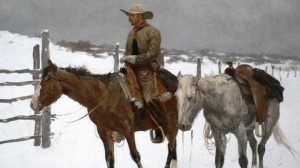
"description": "The Last Kind Words Saloon",
"title": "The Last Kind Words Saloon",
"credit": null,
"status": "inherit",
"isLoading": false,
"fetchFailed": false
},
"arts_10135576": {
"type": "attachments",
"id": "arts_10135576",
"meta": {
"index": "attachments_1716263798",
"site": "arts",
"id": "10135576",
"found": true
},
"parent": 10135575,
"imgSizes": {
"twentyfourteen-full-width": {
"file": "https://ww2.kqed.org/app/uploads/sites/2/2014/05/14789281_h12225234-350f02ecb876979d7e7b7b2e3ad401629009d34c-1038x576.jpg",
"width": 1038,
"mimeType": "image/jpeg",
"height": 576
},
"thumbnail": {
"file": "https://ww2.kqed.org/app/uploads/sites/2/2014/05/14789281_h12225234-350f02ecb876979d7e7b7b2e3ad401629009d34c-e1399498914343-400x225.jpg",
"width": 400,
"mimeType": "image/jpeg",
"height": 225
},
"post-thumbnail": {
"file": "https://ww2.kqed.org/app/uploads/sites/2/2014/05/14789281_h12225234-350f02ecb876979d7e7b7b2e3ad401629009d34c-672x372.jpg",
"width": 672,
"mimeType": "image/jpeg",
"height": 372
},
"kqedFullSize": {
"file": "https://ww2.kqed.org/app/uploads/sites/2/2014/05/14789281_h12225234-350f02ecb876979d7e7b7b2e3ad401629009d34c-e1399498947239.jpg",
"width": 800,
"height": 450
},
"large": {
"file": "https://ww2.kqed.org/app/uploads/sites/2/2014/05/14789281_h12225234-350f02ecb876979d7e7b7b2e3ad401629009d34c-e1399498914343-1440x810.jpg",
"width": 1440,
"mimeType": "image/jpeg",
"height": 810
},
"guest-author-96": {
"file": "https://ww2.kqed.org/app/uploads/sites/2/2014/05/14789281_h12225234-350f02ecb876979d7e7b7b2e3ad401629009d34c-96x96.jpg",
"width": 96,
"mimeType": "image/jpeg",
"height": 96
},
"medium": {
"file": "https://ww2.kqed.org/app/uploads/sites/2/2014/05/14789281_h12225234-350f02ecb876979d7e7b7b2e3ad401629009d34c-e1399498914343-300x168.jpg",
"width": 300,
"mimeType": "image/jpeg",
"height": 168
},
"guest-author-64": {
"file": "https://ww2.kqed.org/app/uploads/sites/2/2014/05/14789281_h12225234-350f02ecb876979d7e7b7b2e3ad401629009d34c-64x64.jpg",
"width": 64,
"mimeType": "image/jpeg",
"height": 64
},
"detail": {
"file": "https://ww2.kqed.org/app/uploads/sites/2/2014/05/14789281_h12225234-350f02ecb876979d7e7b7b2e3ad401629009d34c-75x75.jpg",
"width": 75,
"mimeType": "image/jpeg",
"height": 75
},
"guest-author-32": {
"file": "https://ww2.kqed.org/app/uploads/sites/2/2014/05/14789281_h12225234-350f02ecb876979d7e7b7b2e3ad401629009d34c-32x32.jpg",
"width": 32,
"mimeType": "image/jpeg",
"height": 32
},
"guest-author-128": {
"file": "https://ww2.kqed.org/app/uploads/sites/2/2014/05/14789281_h12225234-350f02ecb876979d7e7b7b2e3ad401629009d34c-128x128.jpg",
"width": 128,
"mimeType": "image/jpeg",
"height": 128
}
},
"publishDate": 1399498665,
"modified": 1399498665,
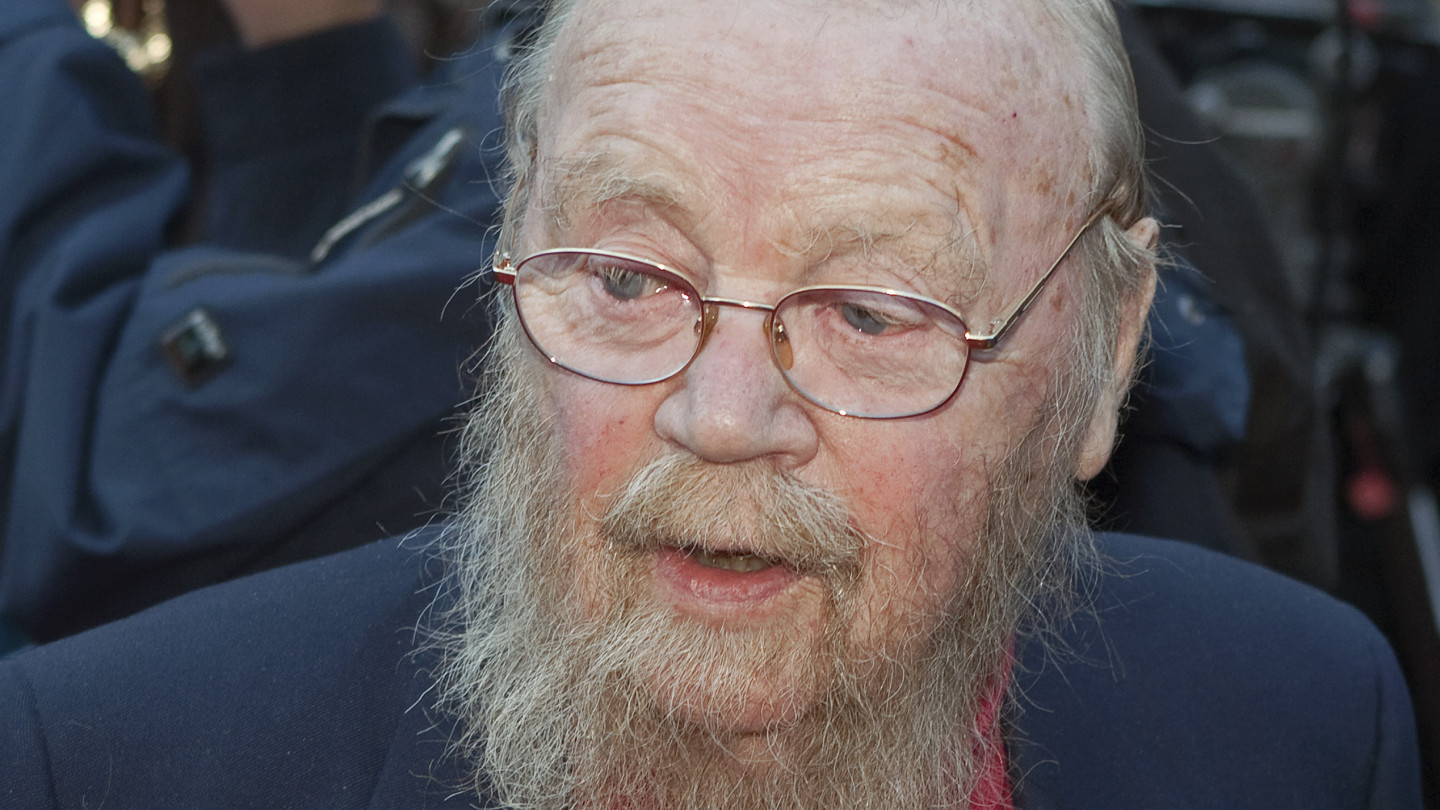
"caption": "Farley Mowat arrives on the Red Carpet outside the Canon Theatre during the 2010 Canada Walk of Fame Tribute in downtown Toronto, Ontario, in October 2010. Mowat died Tuesday at age 92.",
"description": "Farley Mowat arrives on the Red Carpet outside the Canon Theatre during the 2010 Canada Walk of Fame Tribute in downtown Toronto, Ontario, in October 2010. Mowat died Tuesday at age 92.",
"title": "Farley Mowat arrives on the Red Carpet outside the Canon Theatre during the 2010 Canada Walk of Fame Tribute in downtown Toronto, Ontario, in October 2010. Mowat died Tuesday at age 92.",
"credit": "Heinz Ruckemann/UPI/Landov",
"status": "inherit",
"isLoading": false,
"fetchFailed": false
},
"arts_10135558": {
"type": "attachments",
"id": "arts_10135558",
"meta": {
"index": "attachments_1716263798",
"site": "arts",
"id": "10135558",
"found": true
},
"parent": 10135557,
"imgSizes": {
"twentyfourteen-full-width": {
"file": "https://ww2.kqed.org/app/uploads/sites/2/2014/05/the-bees-cover-27ff0a0338d721b3dc3fb8f59f02c8e8b7b8f5ac-e1399410123455-1038x576.jpg",
"width": 1038,
"mimeType": "image/jpeg",
"height": 576
},
"thumbnail": {
"file": "https://ww2.kqed.org/app/uploads/sites/2/2014/05/the-bees-cover-27ff0a0338d721b3dc3fb8f59f02c8e8b7b8f5ac-e1399410123455-400x199.jpg",
"width": 400,
"mimeType": "image/jpeg",
"height": 199
},
"post-thumbnail": {
"file": "https://ww2.kqed.org/app/uploads/sites/2/2014/05/the-bees-cover-27ff0a0338d721b3dc3fb8f59f02c8e8b7b8f5ac-e1399410123455-672x372.jpg",
"width": 672,
"mimeType": "image/jpeg",
"height": 372
},
"kqedFullSize": {
"file": "https://ww2.kqed.org/app/uploads/sites/2/2014/05/the-bees-cover-27ff0a0338d721b3dc3fb8f59f02c8e8b7b8f5ac-e1399410123455.jpg",
"width": 1463,
"height": 731
},
"large": {
"file": "https://ww2.kqed.org/app/uploads/sites/2/2014/05/the-bees-cover-27ff0a0338d721b3dc3fb8f59f02c8e8b7b8f5ac-e1399410123455-1440x719.jpg",
"width": 1440,
"mimeType": "image/jpeg",
"height": 719
},
"guest-author-96": {
"file": "https://ww2.kqed.org/app/uploads/sites/2/2014/05/the-bees-cover-27ff0a0338d721b3dc3fb8f59f02c8e8b7b8f5ac-e1399410123455-96x96.jpg",
"width": 96,
"mimeType": "image/jpeg",
"height": 96
},
"medium": {
"file": "https://ww2.kqed.org/app/uploads/sites/2/2014/05/the-bees-cover-27ff0a0338d721b3dc3fb8f59f02c8e8b7b8f5ac-e1399410123455-300x149.jpg",
"width": 300,
"mimeType": "image/jpeg",
"height": 149
},
"guest-author-64": {
"file": "https://ww2.kqed.org/app/uploads/sites/2/2014/05/the-bees-cover-27ff0a0338d721b3dc3fb8f59f02c8e8b7b8f5ac-e1399410123455-64x64.jpg",
"width": 64,
"mimeType": "image/jpeg",
"height": 64
},
"detail": {
"file": "https://ww2.kqed.org/app/uploads/sites/2/2014/05/the-bees-cover-27ff0a0338d721b3dc3fb8f59f02c8e8b7b8f5ac-e1399410123455-75x75.jpg",
"width": 75,
"mimeType": "image/jpeg",
"height": 75
},
"guest-author-32": {
"file": "https://ww2.kqed.org/app/uploads/sites/2/2014/05/the-bees-cover-27ff0a0338d721b3dc3fb8f59f02c8e8b7b8f5ac-e1399410123455-32x32.jpg",
"width": 32,
"mimeType": "image/jpeg",
"height": 32
},
"guest-author-128": {
"file": "https://ww2.kqed.org/app/uploads/sites/2/2014/05/the-bees-cover-27ff0a0338d721b3dc3fb8f59f02c8e8b7b8f5ac-e1399410123455-128x128.jpg",
"width": 128,
"mimeType": "image/jpeg",
"height": 128
}
},
"publishDate": 1399407932,
"modified": 1399407932,
"caption": null,
"description": "The Bees cover image",
"title": "The Bees cover image",
"credit": null,
"status": "inherit",
"isLoading": false,
"fetchFailed": false
},
"arts_10135498": {
"type": "attachments",
"id": "arts_10135498",
"meta": {
"index": "attachments_1716263798",
"site": "arts",
"id": "10135498",
"found": true
},
"parent": 10135497,
"imgSizes": {
"thumbnail": {
"file": "https://ww2.kqed.org/app/uploads/sites/2/2014/05/10135497-thumb-400x225.jpg",
"width": 400,
"mimeType": "image/jpeg",
"height": 225
},
"kqedFullSize": {
"file": "https://ww2.kqed.org/app/uploads/sites/2/2014/05/10135497-thumb.jpg",
"width": 640,
"height": 360
},
"guest-author-96": {
"file": "https://ww2.kqed.org/app/uploads/sites/2/2014/05/10135497-thumb-96x96.jpg",
"width": 96,
"mimeType": "image/jpeg",
"height": 96
},
"medium": {
"file": "https://ww2.kqed.org/app/uploads/sites/2/2014/05/10135497-thumb-300x168.jpg",
"width": 300,
"mimeType": "image/jpeg",
"height": 168
},
"guest-author-64": {
"file": "https://ww2.kqed.org/app/uploads/sites/2/2014/05/10135497-thumb-64x64.jpg",
"width": 64,
"mimeType": "image/jpeg",
"height": 64
},
"detail": {
"file": "https://ww2.kqed.org/app/uploads/sites/2/2014/05/10135497-thumb-75x75.jpg",
"width": 75,
"mimeType": "image/jpeg",
"height": 75
},
"guest-author-32": {
"file": "https://ww2.kqed.org/app/uploads/sites/2/2014/05/10135497-thumb-32x32.jpg",
"width": 32,
"mimeType": "image/jpeg",
"height": 32
},
"guest-author-128": {
"file": "https://ww2.kqed.org/app/uploads/sites/2/2014/05/10135497-thumb-128x128.jpg",
"width": 128,
"mimeType": "image/jpeg",
"height": 128
}
},
"publishDate": 1399317759,
"modified": 1399317759,
"caption": null,
"description": null,
"title": "Thumbnail for 10135497",
"credit": null,
"status": "inherit",
"isLoading": false,
"fetchFailed": false
},
"arts_10135452": {
"type": "attachments",
"id": "arts_10135452",
"meta": {
"index": "attachments_1716263798",
"site": "arts",
"id": "10135452",
"found": true
},
"parent": 10135451,
"imgSizes": {
"thumbnail": {
"file": "https://ww2.kqed.org/app/uploads/sites/2/2014/05/10135451-thumb-400x225.jpg",
"width": 400,
"mimeType": "image/jpeg",
"height": 225
},
"kqedFullSize": {
"file": "https://ww2.kqed.org/app/uploads/sites/2/2014/05/10135451-thumb.jpg",
"width": 640,
"height": 360
},
"guest-author-96": {
"file": "https://ww2.kqed.org/app/uploads/sites/2/2014/05/10135451-thumb-96x96.jpg",
"width": 96,
"mimeType": "image/jpeg",
"height": 96
},
"medium": {
"file": "https://ww2.kqed.org/app/uploads/sites/2/2014/05/10135451-thumb-300x168.jpg",
"width": 300,
"mimeType": "image/jpeg",
"height": 168
},
"guest-author-64": {
"file": "https://ww2.kqed.org/app/uploads/sites/2/2014/05/10135451-thumb-64x64.jpg",
"width": 64,
"mimeType": "image/jpeg",
"height": 64
},
"detail": {
"file": "https://ww2.kqed.org/app/uploads/sites/2/2014/05/10135451-thumb-75x75.jpg",
"width": 75,
"mimeType": "image/jpeg",
"height": 75
},
"guest-author-32": {
"file": "https://ww2.kqed.org/app/uploads/sites/2/2014/05/10135451-thumb-32x32.jpg",
"width": 32,
"mimeType": "image/jpeg",
"height": 32
},
"guest-author-128": {
"file": "https://ww2.kqed.org/app/uploads/sites/2/2014/05/10135451-thumb-128x128.jpg",
"width": 128,
"mimeType": "image/jpeg",
"height": 128
}
},
"publishDate": 1399076562,
"modified": 1399076562,
"caption": null,
"description": null,
"title": "Thumbnail for 10135451",
"credit": null,
"status": "inherit",
"isLoading": false,
"fetchFailed": false
},
"arts_10135323": {
"type": "attachments",
"id": "arts_10135323",
"meta": {
"index": "attachments_1716263798",
"site": "arts",
"id": "10135323",
"found": true
},
"parent": 10135272,
"imgSizes": {
"thumbnail": {
"file": "https://ww2.kqed.org/app/uploads/sites/2/2014/04/Calif-BookStore-Day-Logo-crop-400x225.jpg",
"width": 400,
"mimeType": "image/jpeg",
"height": 225
},
"post-thumbnail": {
"file": "https://ww2.kqed.org/app/uploads/sites/2/2014/04/Calif-BookStore-Day-Logo-crop-672x372.jpg",
"width": 672,
"mimeType": "image/jpeg",
"height": 372
},
"kqedFullSize": {
"file": "https://ww2.kqed.org/app/uploads/sites/2/2014/04/Calif-BookStore-Day-Logo-crop.jpg",
"width": 800,
"height": 450
},
"guest-author-96": {
"file": "https://ww2.kqed.org/app/uploads/sites/2/2014/04/Calif-BookStore-Day-Logo-crop-96x96.jpg",
"width": 96,
"mimeType": "image/jpeg",
"height": 96
},
"medium": {
"file": "https://ww2.kqed.org/app/uploads/sites/2/2014/04/Calif-BookStore-Day-Logo-crop-300x168.jpg",
"width": 300,
"mimeType": "image/jpeg",
"height": 168
},
"guest-author-64": {
"file": "https://ww2.kqed.org/app/uploads/sites/2/2014/04/Calif-BookStore-Day-Logo-crop-64x64.jpg",
"width": 64,
"mimeType": "image/jpeg",
"height": 64
},
"detail": {
"file": "https://ww2.kqed.org/app/uploads/sites/2/2014/04/Calif-BookStore-Day-Logo-crop-75x75.jpg",
"width": 75,
"mimeType": "image/jpeg",
"height": 75
},
"guest-author-32": {
"file": "https://ww2.kqed.org/app/uploads/sites/2/2014/04/Calif-BookStore-Day-Logo-crop-32x32.jpg",
"width": 32,
"mimeType": "image/jpeg",
"height": 32
},
"guest-author-128": {
"file": "https://ww2.kqed.org/app/uploads/sites/2/2014/04/Calif-BookStore-Day-Logo-crop-128x128.jpg",
"width": 128,
"mimeType": "image/jpeg",
"height": 128
}
},
"publishDate": 1398884776,
"modified": 1398884776,
"caption": null,
"description": null,
"title": "Calif BookStore Day Logo crop",
"credit": "California Bookstore Day",
"status": "inherit",
"isLoading": false,
"fetchFailed": false
},
"pop_11915": {
"type": "attachments",
"id": "pop_11915",
"meta": {
"index": "attachments_1716263798",
"site": "pop",
"id": "11915",
"found": true
},
"parent": 11892,
"imgSizes": {
"thumbnail": {
"file": "https://ww2.kqed.org/app/uploads/sites/12/2014/04/wolf-hall-the-hunger-games-400x225.jpg",
"width": 400,
"mimeType": "image/jpeg",
"height": 225
},
"kqedFullSize": {
"file": "https://ww2.kqed.org/app/uploads/sites/12/2014/04/wolf-hall-the-hunger-games.jpg",
"width": 640,
"height": 360
},
"guest-author-96": {
"file": "https://ww2.kqed.org/app/uploads/sites/12/2014/04/wolf-hall-the-hunger-games-96x96.jpg",
"width": 96,
"mimeType": "image/jpeg",
"height": 96
},
"guest-author-64": {
"file": "https://ww2.kqed.org/app/uploads/sites/12/2014/04/wolf-hall-the-hunger-games-64x64.jpg",
"width": 64,
"mimeType": "image/jpeg",
"height": 64
},
"detail": {
"file": "https://ww2.kqed.org/app/uploads/sites/12/2014/04/wolf-hall-the-hunger-games-75x75.jpg",
"width": 75,
"mimeType": "image/jpeg",
"height": 75
},
"guest-author-32": {
"file": "https://ww2.kqed.org/app/uploads/sites/12/2014/04/wolf-hall-the-hunger-games-32x32.jpg",
"width": 32,
"mimeType": "image/jpeg",
"height": 32
},
"guest-author-128": {
"file": "https://ww2.kqed.org/app/uploads/sites/12/2014/04/wolf-hall-the-hunger-games-128x128.jpg",
"width": 128,
"mimeType": "image/jpeg",
"height": 128
}
},
"publishDate": 1398290355,
"modified": 1398290355,
"caption": null,
"description": null,
"title": "wolf-hall-the-hunger-games",
"credit": null,
"status": "inherit",
"isLoading": false,
"fetchFailed": false
}
},
"audioPlayerReducer": {
"postId": "stream_live",
"isPaused": true,
"isPlaying": false,
"pfsActive": false,
"pledgeModalIsOpen": true,
"playerDrawerIsOpen": false,
"liveAudioPlayStartedAt": 0,
"liveAudioPlayContext": ""
},
"authorsReducer": {
"byline_arts_10135588": {
"type": "authors",
"id": "byline_arts_10135588",
"meta": {
"override": true
},
"slug": "byline_arts_10135588",
"name": "Lynn Neary",
"isLoading": false
},
"byline_arts_10135575": {
"type": "authors",
"id": "byline_arts_10135575",
"meta": {
"override": true
},
"slug": "byline_arts_10135575",
"name": "Scott Neuman",
"isLoading": false
},
"byline_arts_10135557": {
"type": "authors",
"id": "byline_arts_10135557",
"meta": {
"override": true
},
"slug": "byline_arts_10135557",
"name": "Amal El-Mohtar",
"isLoading": false
},
"mkorn": {
"type": "authors",
"id": "60",
"meta": {
"index": "authors_1716337520",
"id": "60",
"found": true
},
"name": "Mirabelle Korn",
"firstName": "Mirabelle",
"lastName": "Korn",
"slug": "mkorn",
"email": "mirabelle.korn@gmail.com",
"display_author_email": false,
"staff_mastheads": [],
"title": null,
"bio": "Mirabelle Korn is an Oakland native who recently moved back to the Bay Area after completing her M.A. in contemporary literature at the University of East Anglia in Norwich, England. Previously, she earned a B.A. in French and German from Scripps College, taught theater to children at California Shakespeare Theater, and edited videos for Reporters Without Borders in Paris, France. Her writing has been featured in \u003ci>In Dance\u003c/i> and on \u003ci>Parutions.com\u003c/i>.",
"avatar": "https://secure.gravatar.com/avatar/f4fb207536ff3bb2b8f5644d06d00cd2?s=600&d=blank&r=g",
"twitter": null,
"facebook": null,
"instagram": null,
"linkedin": null,
"sites": [
{
"site": "arts",
"roles": [
"Contributor",
"contributor"
]
}
],
"headData": {
"title": "Mirabelle Korn | KQED",
"description": null,
"ogImgSrc": "https://secure.gravatar.com/avatar/f4fb207536ff3bb2b8f5644d06d00cd2?s=600&d=blank&r=g",
"twImgSrc": "https://secure.gravatar.com/avatar/f4fb207536ff3bb2b8f5644d06d00cd2?s=600&d=blank&r=g"
},
"isLoading": false,
"link": "/author/mkorn"
},
"ablaine": {
"type": "authors",
"id": "72",
"meta": {
"index": "authors_1716337520",
"id": "72",
"found": true
},
"name": "Adrienne Blaine",
"firstName": "Adrienne",
"lastName": "Blaine",
"slug": "ablaine",
"email": "adrienneblaine@hotmail.com",
"display_author_email": false,
"staff_mastheads": [],
"title": null,
"bio": "Adrienne Blaine is a Millennial writer from the South Bay. She has a BA in Comparative Literary and Cultural Studies combined with Communications and Media Studies from Franklin University Switzerland. Living in Switzerland for four years and traveling from Morocco to Iceland introduced her to diverse art, culture and food. She currently lives in San Francisco and writes about these topics.",
"avatar": "https://secure.gravatar.com/avatar/10d0a10a2189067e5e3f6fc9fc4ebdf2?s=600&d=blank&r=g",
"twitter": null,
"facebook": null,
"instagram": null,
"linkedin": null,
"sites": [
{
"site": "arts",
"roles": [
"Contributor",
"contributor"
]
},
{
"site": "bayareabites",
"roles": [
"contributor"
]
},
{
"site": "food",
"roles": [
"contributor"
]
}
],
"headData": {
"title": "Adrienne Blaine | KQED",
"description": null,
"ogImgSrc": "https://secure.gravatar.com/avatar/10d0a10a2189067e5e3f6fc9fc4ebdf2?s=600&d=blank&r=g",
"twImgSrc": "https://secure.gravatar.com/avatar/10d0a10a2189067e5e3f6fc9fc4ebdf2?s=600&d=blank&r=g"
},
"isLoading": false,
"link": "/author/ablaine"
},
"kqedarts": {
"type": "authors",
"id": "92",
"meta": {
"index": "authors_1716337520",
"id": "92",
"found": true
},
"name": "KQED Arts",
"firstName": "KQED",
"lastName": "Arts",
"slug": "kqedarts",
"email": "arts@kqed.org",
"display_author_email": false,
"staff_mastheads": [],
"title": "KQED Staff",
"bio": null,
"avatar": "https://secure.gravatar.com/avatar/321c9ebfeb7736f9e55366a6d3399ab0?s=600&d=blank&r=g",
"twitter": null,
"facebook": null,
"instagram": "https://www.instagram.com/kqed_arts/",
"linkedin": null,
"sites": [
{
"site": "arts",
"roles": [
"contributor"
]
},
{
"site": "pop",
"roles": [
"contributor"
]
},
{
"site": "science",
"roles": [
"author"
]
},
{
"site": "food",
"roles": [
"contributor"
]
}
],
"headData": {
"title": "KQED Arts | KQED",
"description": "KQED Staff",
"ogImgSrc": "https://secure.gravatar.com/avatar/321c9ebfeb7736f9e55366a6d3399ab0?s=600&d=blank&r=g",
"twImgSrc": "https://secure.gravatar.com/avatar/321c9ebfeb7736f9e55366a6d3399ab0?s=600&d=blank&r=g"
},
"isLoading": false,
"link": "/author/kqedarts"
},
"lauraschadler": {
"type": "authors",
"id": "2415",
"meta": {
"index": "authors_1716337520",
"id": "2415",
"found": true
},
"name": "Laura Schadler",
"firstName": "Laura",
"lastName": "Schadler",
"slug": "lauraschadler",
"email": "lauraschadler@gmail.com",
"display_author_email": false,
"staff_mastheads": [],
"title": null,
"bio": "Laura Schadler grew up in the mountains of Virginia. She studied filmmaking at Bard College, and writing at California College of the Arts. Her fiction has appeared in The Southern Review, Denver Quarterly, Gettysburg Review, Fourteen Hills, and West Branch Wired, among others. She teaches writing and is currently working on a novel.",
"avatar": "https://secure.gravatar.com/avatar/54b3e2bf5ef54f0355e347c12eb0a368?s=600&d=blank&r=g",
"twitter": "lauraschadler",
"facebook": null,
"instagram": null,
"linkedin": null,
"sites": [
{
"site": "pop",
"roles": [
"contributor"
]
}
],
"headData": {
"title": "Laura Schadler | KQED",
"description": null,
"ogImgSrc": "https://secure.gravatar.com/avatar/54b3e2bf5ef54f0355e347c12eb0a368?s=600&d=blank&r=g",
"twImgSrc": "https://secure.gravatar.com/avatar/54b3e2bf5ef54f0355e347c12eb0a368?s=600&d=blank&r=g"
},
"isLoading": false,
"link": "/author/lauraschadler"
},
"kqedpop": {
"type": "authors",
"id": "2421",
"meta": {
"index": "authors_1716337520",
"id": "2421",
"found": true
},
"name": "KQED Pop",
"firstName": "KQED",
"lastName": "Pop",
"slug": "kqedpop",
"email": "pop@kqed.org",
"display_author_email": false,
"staff_mastheads": [],
"title": "KQED Contributor",
"bio": "KQED Pop is a daily blog edited by Emmanuel Hapsis that critically examines the social and cultural impact of music, movies, television, advertisements, fashion, the internet and all the other collective experiences that make us laugh, cringe and cry. We focus on local, national and international experiences with a Bay Area lens. We don’t do reviews.",
"avatar": "https://secure.gravatar.com/avatar/28b423a68ba9acb207fe107dd55b9e6882c1ba6805a4c8af8b7cae7079f362b9?s=600&d=blank&r=g",
"twitter": "KQEDpop",
"bluesky": null,
"facebook": null,
"instagram": null,
"linkedin": null,
"sites": [
{
"site": "arts",
"roles": [
"contributor"
]
},
{
"site": "pop",
"roles": [
"contributor"
]
}
],
"headData": {
"title": "KQED Pop | KQED",
"description": "KQED Contributor",
"ogImgSrc": "https://secure.gravatar.com/avatar/28b423a68ba9acb207fe107dd55b9e6882c1ba6805a4c8af8b7cae7079f362b9?s=600&d=blank&r=g",
"twImgSrc": "https://secure.gravatar.com/avatar/28b423a68ba9acb207fe107dd55b9e6882c1ba6805a4c8af8b7cae7079f362b9?s=600&d=blank&r=g"
},
"isLoading": false,
"link": "/author/kqedpop"
}
},
"pagesReducer": {
"arts_category_literature": {
"type": "terms",
"id": "arts_73",
"meta": {
"index": "terms_1716263798",
"site": "arts",
"id": "73",
"score": 12.797771
},
"featImg": null,
"name": "Books",
"description": null,
"taxonomy": "category",
"headData": {
"twImgId": null,
"twTitle": null,
"ogTitle": null,
"ogImgId": null,
"twDescription": null,
"description": null,
"title": "Books Archives | KQED Arts",
"ogDescription": null
},
"ttid": 74,
"slug": "literature",
"isLoading": false,
"title": "Books",
"pageMeta": {
"site": "arts",
"WpPageTemplate": "page-topic-editorial",
"currentPage": 107
},
"blocks": [
{
"blockName": "kqed/post-list",
"attrs": {
"layout": "cardArticle2",
"query": "posts/arts?category=literature",
"seeMore": false,
"paginated": true,
"page": 107
}
},
{
"blockName": "kqed/ad"
}
]
}
},
"pfsSessionReducer": {},
"postsReducer": {
"stream_live": {
"type": "live",
"id": "stream_live",
"audioUrl": "https://streams.kqed.org/kqedradio",
"title": "Live Stream",
"excerpt": "Live Stream information currently unavailable.",
"link": "/radio",
"featImg": "",
"label": {
"name": "KQED Live",
"link": "/"
}
},
"stream_kqedNewscast": {
"type": "posts",
"id": "stream_kqedNewscast",
"audioUrl": "https://www.kqed.org/.stream/anon/radio/RDnews/newscast.mp3?_=1",
"title": "KQED Newscast",
"featImg": "",
"label": {
"name": "88.5 FM",
"link": "/"
}
},
"pop_12102": {
"type": "posts",
"id": "pop_12102",
"meta": {
"index": "posts_1716263798",
"site": "pop",
"id": "12102",
"score": null,
"sort": [
1399993327000
]
},
"parent": 0,
"labelTerm": {
"site": "pop"
},
"blocks": [],
"publishDate": 1399993327,
"format": "aside",
"disqusTitle": "3 Out of Print Books You Need to Get Your Hands On",
"title": "3 Out of Print Books You Need to Get Your Hands On",
"headTitle": "KQED Pop | KQED Arts",
"content": "\u003cfigure id=\"attachment_12117\" class=\"wp-caption aligncenter\" style=\"max-width: 640px\">\u003ca href=\"http://blogs.kqed.org/pop/2014/05/13/3-out-of-print-books-you-need-to-get-your-hands-on/old-books/\" rel=\"attachment wp-att-12117\">\u003cimg class=\"size-full wp-image-12117\" src=\"http://ww2.kqed.org/pop/wp-content/uploads/sites/12/2014/05/old-books.jpg\" alt=\"Photo: library_mistress, via Flickr\" width=\"640\" height=\"360\" srcset=\"https://ww2.kqed.org/app/uploads/sites/12/2014/05/old-books.jpg 640w, https://ww2.kqed.org/app/uploads/sites/12/2014/05/old-books-400x225.jpg 400w\" sizes=\"(max-width: 640px) 100vw, 640px\">\u003c/a>\u003cfigcaption class=\"wp-caption-text\">Photo: \u003ca href=\"https://www.flickr.com/photos/library_mistress/525385509/\">library_mistress\u003c/a>, via Flickr\u003c/figcaption>\u003c/figure>\n\u003cp>In last Sunday's \u003cem>New York Times Magazine\u003c/em>, Steve Almond \u003ca href=\"http://www.nytimes.com/2014/05/11/magazine/you-should-seriously-read-stoner-right-now.html\">writes beautifully\u003c/a> about the novel \u003cem>Stoner\u003c/em> by John Williams, a book that has gone out of print twice since 1965, and sold an impressively meager 2,000 copies in its first printing. In addition to inspiring me to rush out and immediately read \u003cem>Stoner\u003c/em>, Almond's article also got me thinking about how some of my very favorite books are ones that went out of print, and then luckily found their way back into the world again.\u003c/p>\n\u003cp>While I'm sure there are plenty of lost books whose disappearance is not a terrible tragedy, it fascinates me to think of the reasons why certain gems are not appreciated at first. Whether because of harsh critics, the trends and inclinations of the era, the fickle proclivities of the reader, the lackluster support of a publisher, or something else entirely, a novel falls out of favor or slips into obscurity. And what brings it back? Why are we ready later rather than sooner?\u003c/p>\n\u003cp>In the spirit of Almond's \"besotted\" praise of \u003cem>Stoner\u003c/em>\u003cem>, \u003c/em>I want to revisit some of my favorite books that have risen from their premature graves.\u003c/p>\n\u003cp>\u003ca href=\"http://blogs.kqed.org/pop/2014/05/13/3-out-of-print-books-you-need-to-get-your-hands-on/_57/\" rel=\"attachment wp-att-12119\">\u003cimg class=\"alignleft wp-image-12119\" src=\"http://ww2.kqed.org/pop/wp-content/uploads/sites/12/2014/05/57.jpg\" alt=\"$_57\" width=\"233\" height=\"300\">\u003c/a>\u003c/p>\n\u003cp>First up, \u003cem>The Changeling \u003c/em>by the incomparable \u003ca href=\"https://www.byliner.com/read/joy-williams/99-stories-of-god\">Joy Williams\u003c/a>. A scathing review arguably killed Williams's second novel when it was published in 1978, and it subsequently went out of print. \u003ca href=\"http://artsbeat.blogs.nytimes.com/2008/04/21/joy-williamss-30-year-old-comeback-novel/?_php=true&_type=blogs&_r=0\">Thirty years later\u003c/a>, Fairy Tale Review Press published this dark, bizarre, wonderful novel to a more receptive audience. In his introduction to the new edition, Rick Moody writes, \"Thirty years later, the situation looks quite different...the tectonic movements of [Williams's] paragraphs and her narratives no longer looks impulsive, if indeed it ever did. Now it looks like originality.\"\u003c/p>\n\u003cp>[ad fullwidth]\u003c/p>\n\u003cp>That's the thing about Joy Williams; there is no one even close to similar. I once heard her say she channels spirit messengers, and her work reads as if that were very true. If you haven't read her, please do so right now. Admittedly, you might not want to start with \u003cem>The Changeling\u003c/em>, as it helps to be a bit in love already before you tackle this one. \u003ci>Escapes\u003c/i> is a good introduction. Become besotted, and then move on to this strange specimen of a second novel. Moody suggests that maybe the late '70s, with its \"punk rock nihilism and...Studio 54 fatuousness\" wasn't the time for this kind of tale. Thankfully, perhaps now is the right time?\u003c/p>\n\u003cp>\u003cstrong>Sample line:\u003c/strong> \"There is no room in life for decorum! At times it is necessary to expose the skeleton within us, to make manifest the death within us.\"\u003c/p>\n\u003cp>\u003ca href=\"http://blogs.kqed.org/pop/2014/05/13/3-out-of-print-books-you-need-to-get-your-hands-on/paula_fox/\" rel=\"attachment wp-att-12120\">\u003cimg class=\"alignright size-full wp-image-12120\" src=\"http://ww2.kqed.org/pop/wp-content/uploads/sites/12/2014/05/paula_fox.jpg\" alt=\"paula_fox\" width=\"169\" height=\"259\">\u003c/a>\u003c/p>\n\u003cp>Next up, \u003cem>Desperate Characters, \u003c/em>by \u003ca href=\"http://www.nytimes.com/2001/03/04/magazine/the-life-and-death-and-life-of-paula-fox.html\">Paula Fox\u003c/a> (also known for being Courtney Love's biological grandmother!). Published in 1970 to critical praise, it still ended up out of print. Also a second novel, \u003cem>Desperate Characters\u003c/em> is a slim, taut, mysterious book filled with a slow building desperation that is creepy, thrilling and hard to summarize.\u003c/p>\n\u003cp>Jonathan Franzen fell in love with the novel in the library at \u003ca href=\"http://www.yaddo.org/\">Yaddo\u003c/a>, but, when he went to buy his own copy, discovered it was out of print. He wasn't having it, and proceeded to make all sorts of awesome declarations about Fox being a better writer than John Updike and all of her other famous male counterparts. He also wrote an ode to the novel in \u003cem>Harper's,\u003c/em> which finally got the attention of an editor at W.W. Norton.\u003c/p>\n\u003cp>It seems profound to consider the implications of a novel written during one period of time being reintroduced into the context of a new time and being perhaps even more significant. Franzen writes in his introduction: \"\u003cem>Desperate Characters \u003c/em>is a novel in revolt against its own perfection. The questions it raises are radical and unpleasant. What is the point of meaning -- especially literary meaning -- in a rabid modern world? Why bother creating and preserving order if civilization is every bit as killing as the anarchy to which it's opposed? Why not be rabid? Why torment ourselves with books?\" These questions seem all the more pressing today, as a new set of readers gets the opportunity to read this fantastic book.\u003c/p>\n\u003cp>\u003cstrong>Sample line: \u003c/strong>\"[She] felt an extraordinary relief as though, at last, she'd discovered what it was that could create a balance between the quiet, rather vacant progression of the days she spent in this house, and those portents that lit up the dark at the edge of her own existence.\"\u003c/p>\n\u003cp>\u003ca href=\"http://blogs.kqed.org/pop/2014/05/13/3-out-of-print-books-you-need-to-get-your-hands-on/b4ef9330dca0884bb9f02010-l/\" rel=\"attachment wp-att-12121\">\u003cimg class=\"alignleft wp-image-12121\" src=\"http://ww2.kqed.org/pop/wp-content/uploads/sites/12/2014/05/b4ef9330dca0884bb9f02010.L.jpg\" alt=\"b4ef9330dca0884bb9f02010.L\" width=\"212\" height=\"300\">\u003c/a>\u003c/p>\n\u003cp>When I spent a week at the \u003ca href=\"http://www.tinhouse.com/blog/30661/2014-summer-writers-workshop-faculty-announcement.html\">Tin House Summer Writer's Workshop\u003c/a>, it was in large part due to my love of the not-as-prolific-as-I-wish-he-was genius Charles D'Ambrosio. His impeccably crafted \u003ca href=\"http://www.newyorker.com/archive/2004/10/11/041011fi_fiction\">short stories\u003c/a> in \u003cem>The Dead Fish Museum\u003c/em> and \u003cem>The Point \u003c/em>are some of my favorites. But his essay collection \u003cem>Orphans\u003c/em> is the book I keep sitting on my desk at all times to remind myself of what it means to be a writer.\u003c/p>\n\u003cp>From a police stake-out to a hell house to a suicide note, D'Ambrosio finds ways to describe the world that I have never heard before, in turns exacting and lush with feeling. The book itself is a beautiful object, very small, with a ribbon book mark. Now out of print, it's a crapshoot whether you can find it online for $13 or $300.\u003c/p>\n\u003cp>When I nervously stood in line to have D'Ambrosio sign my copy at Tin House, he looked surprised to see it and asked, \"Where did you find this little thing? I thought all the copies of it were in my garage.\" Now, thankfully, not only will the essays of \u003cem>Orphans\u003c/em> be available outside of his garage, but D'Ambrosio has new work to share as well. In November, Tin House Books will publish \u003cem>\u003ca href=\"http://www.oregonlive.com/books/index.ssf/2014/03/tin_house_books_will_publish_t.html\">Loitering: New & Collected Essays\u003c/a>\u003c/em>,\u003cem> \u003c/em>which will include all of the eleven essays in \u003cem>Orphans. \u003c/em>\u003c/p>\n\u003cp>\u003cstrong>Sample line: \u003c/strong>\" The difference between the truth and a cliche is the difference between what we really know and what we've all heard about.\"\u003c/p>\n\u003cp>[ad floatright]\u003c/p>\n\u003cp>In his praise of \u003cem>Stoner\u003c/em>, Almond writes, \"As a fictional hero, William Stoner will have to dwell in obscurity forever. But that, too, is our destiny. Our most profound acts of virtue and vice, of heroism and villainy, will be known by only those closest to us and forgotten soon enough. Even our deepest feelings will, for the most part, lay concealed within the vault of our hearts.\" Almond says the truest literary critic is time. And perhaps for many of our books that disappear for a while and then return to us, time is insisting we re-examine what at first appeared too complicated, too quiet, too irrelevant. If our deepest feelings lay concealed within the vault of our hearts, perhaps some of these books that persist over the years to reveal themselves to us again, also reveal to us a new part of ourselves.\u003c/p>\n\n",
"disqusIdentifier": "12102 http://blogs.kqed.org/pop/?p=12102",
"disqusUrl": "https://ww2.kqed.org/pop/2014/05/13/3-out-of-print-books-you-need-to-get-your-hands-on/",
"stats": {
"hasVideo": false,
"hasChartOrMap": false,
"hasAudio": false,
"hasPolis": false,
"wordCount": 1195,
"hasGoogleForm": false,
"hasGallery": false,
"hasHearkenModule": false,
"iframeSrcs": [],
"paragraphCount": 20
},
"modified": 1399937840,
"excerpt": "Why do some great books slip into obscurity? And what brings them back?",
"headData": {
"twImgId": "",
"twTitle": "",
"ogTitle": "",
"ogImgId": "",
"twDescription": "",
"description": "Why do some great books slip into obscurity? And what brings them back?",
"title": "3 Out of Print Books You Need to Get Your Hands On | KQED",
"ogDescription": "",
"schema": {
"@context": "https://schema.org",
"@type": "Article",
"headline": "3 Out of Print Books You Need to Get Your Hands On",
"datePublished": "2014-05-13T08:02:07-07:00",
"dateModified": "2014-05-12T16:37:20-07:00",
"image": "https://cdn.kqed.org/wp-content/uploads/2020/02/KQED-OG-Image@1x.png"
}
},
"guestAuthors": [],
"slug": "3-out-of-print-books-you-need-to-get-your-hands-on",
"status": "publish",
"path": "/pop/12102/3-out-of-print-books-you-need-to-get-your-hands-on",
"audioTrackLength": null,
"parsedContent": [
{
"type": "contentString",
"content": "\u003cdiv class=\"post-body\">\u003cp>\u003cfigure id=\"attachment_12117\" class=\"wp-caption aligncenter\" style=\"max-width: 640px\">\u003ca href=\"http://blogs.kqed.org/pop/2014/05/13/3-out-of-print-books-you-need-to-get-your-hands-on/old-books/\" rel=\"attachment wp-att-12117\">\u003cimg class=\"size-full wp-image-12117\" src=\"http://ww2.kqed.org/pop/wp-content/uploads/sites/12/2014/05/old-books.jpg\" alt=\"Photo: library_mistress, via Flickr\" width=\"640\" height=\"360\" srcset=\"https://ww2.kqed.org/app/uploads/sites/12/2014/05/old-books.jpg 640w, https://ww2.kqed.org/app/uploads/sites/12/2014/05/old-books-400x225.jpg 400w\" sizes=\"(max-width: 640px) 100vw, 640px\">\u003c/a>\u003cfigcaption class=\"wp-caption-text\">Photo: \u003ca href=\"https://www.flickr.com/photos/library_mistress/525385509/\">library_mistress\u003c/a>, via Flickr\u003c/figcaption>\u003c/figure>\n\u003cp>In last Sunday's \u003cem>New York Times Magazine\u003c/em>, Steve Almond \u003ca href=\"http://www.nytimes.com/2014/05/11/magazine/you-should-seriously-read-stoner-right-now.html\">writes beautifully\u003c/a> about the novel \u003cem>Stoner\u003c/em> by John Williams, a book that has gone out of print twice since 1965, and sold an impressively meager 2,000 copies in its first printing. In addition to inspiring me to rush out and immediately read \u003cem>Stoner\u003c/em>, Almond's article also got me thinking about how some of my very favorite books are ones that went out of print, and then luckily found their way back into the world again.\u003c/p>\n\u003cp>While I'm sure there are plenty of lost books whose disappearance is not a terrible tragedy, it fascinates me to think of the reasons why certain gems are not appreciated at first. Whether because of harsh critics, the trends and inclinations of the era, the fickle proclivities of the reader, the lackluster support of a publisher, or something else entirely, a novel falls out of favor or slips into obscurity. And what brings it back? Why are we ready later rather than sooner?\u003c/p>\n\u003cp>In the spirit of Almond's \"besotted\" praise of \u003cem>Stoner\u003c/em>\u003cem>, \u003c/em>I want to revisit some of my favorite books that have risen from their premature graves.\u003c/p>\n\u003cp>\u003ca href=\"http://blogs.kqed.org/pop/2014/05/13/3-out-of-print-books-you-need-to-get-your-hands-on/_57/\" rel=\"attachment wp-att-12119\">\u003cimg class=\"alignleft wp-image-12119\" src=\"http://ww2.kqed.org/pop/wp-content/uploads/sites/12/2014/05/57.jpg\" alt=\"$_57\" width=\"233\" height=\"300\">\u003c/a>\u003c/p>\n\u003cp>First up, \u003cem>The Changeling \u003c/em>by the incomparable \u003ca href=\"https://www.byliner.com/read/joy-williams/99-stories-of-god\">Joy Williams\u003c/a>. A scathing review arguably killed Williams's second novel when it was published in 1978, and it subsequently went out of print. \u003ca href=\"http://artsbeat.blogs.nytimes.com/2008/04/21/joy-williamss-30-year-old-comeback-novel/?_php=true&_type=blogs&_r=0\">Thirty years later\u003c/a>, Fairy Tale Review Press published this dark, bizarre, wonderful novel to a more receptive audience. In his introduction to the new edition, Rick Moody writes, \"Thirty years later, the situation looks quite different...the tectonic movements of [Williams's] paragraphs and her narratives no longer looks impulsive, if indeed it ever did. Now it looks like originality.\"\u003c/p>\n\u003cp>\u003c/p>\u003c/div>",
"attributes": {
"named": {},
"numeric": []
}
},
{
"type": "component",
"content": "",
"name": "ad",
"attributes": {
"named": {
"label": "fullwidth"
},
"numeric": [
"fullwidth"
]
}
},
{
"type": "contentString",
"content": "\u003cdiv class=\"post-body\">\u003cp>\u003c/p>\n\u003cp>That's the thing about Joy Williams; there is no one even close to similar. I once heard her say she channels spirit messengers, and her work reads as if that were very true. If you haven't read her, please do so right now. Admittedly, you might not want to start with \u003cem>The Changeling\u003c/em>, as it helps to be a bit in love already before you tackle this one. \u003ci>Escapes\u003c/i> is a good introduction. Become besotted, and then move on to this strange specimen of a second novel. Moody suggests that maybe the late '70s, with its \"punk rock nihilism and...Studio 54 fatuousness\" wasn't the time for this kind of tale. Thankfully, perhaps now is the right time?\u003c/p>\n\u003cp>\u003cstrong>Sample line:\u003c/strong> \"There is no room in life for decorum! At times it is necessary to expose the skeleton within us, to make manifest the death within us.\"\u003c/p>\n\u003cp>\u003ca href=\"http://blogs.kqed.org/pop/2014/05/13/3-out-of-print-books-you-need-to-get-your-hands-on/paula_fox/\" rel=\"attachment wp-att-12120\">\u003cimg class=\"alignright size-full wp-image-12120\" src=\"http://ww2.kqed.org/pop/wp-content/uploads/sites/12/2014/05/paula_fox.jpg\" alt=\"paula_fox\" width=\"169\" height=\"259\">\u003c/a>\u003c/p>\n\u003cp>Next up, \u003cem>Desperate Characters, \u003c/em>by \u003ca href=\"http://www.nytimes.com/2001/03/04/magazine/the-life-and-death-and-life-of-paula-fox.html\">Paula Fox\u003c/a> (also known for being Courtney Love's biological grandmother!). Published in 1970 to critical praise, it still ended up out of print. Also a second novel, \u003cem>Desperate Characters\u003c/em> is a slim, taut, mysterious book filled with a slow building desperation that is creepy, thrilling and hard to summarize.\u003c/p>\n\u003cp>Jonathan Franzen fell in love with the novel in the library at \u003ca href=\"http://www.yaddo.org/\">Yaddo\u003c/a>, but, when he went to buy his own copy, discovered it was out of print. He wasn't having it, and proceeded to make all sorts of awesome declarations about Fox being a better writer than John Updike and all of her other famous male counterparts. He also wrote an ode to the novel in \u003cem>Harper's,\u003c/em> which finally got the attention of an editor at W.W. Norton.\u003c/p>\n\u003cp>It seems profound to consider the implications of a novel written during one period of time being reintroduced into the context of a new time and being perhaps even more significant. Franzen writes in his introduction: \"\u003cem>Desperate Characters \u003c/em>is a novel in revolt against its own perfection. The questions it raises are radical and unpleasant. What is the point of meaning -- especially literary meaning -- in a rabid modern world? Why bother creating and preserving order if civilization is every bit as killing as the anarchy to which it's opposed? Why not be rabid? Why torment ourselves with books?\" These questions seem all the more pressing today, as a new set of readers gets the opportunity to read this fantastic book.\u003c/p>\n\u003cp>\u003cstrong>Sample line: \u003c/strong>\"[She] felt an extraordinary relief as though, at last, she'd discovered what it was that could create a balance between the quiet, rather vacant progression of the days she spent in this house, and those portents that lit up the dark at the edge of her own existence.\"\u003c/p>\n\u003cp>\u003ca href=\"http://blogs.kqed.org/pop/2014/05/13/3-out-of-print-books-you-need-to-get-your-hands-on/b4ef9330dca0884bb9f02010-l/\" rel=\"attachment wp-att-12121\">\u003cimg class=\"alignleft wp-image-12121\" src=\"http://ww2.kqed.org/pop/wp-content/uploads/sites/12/2014/05/b4ef9330dca0884bb9f02010.L.jpg\" alt=\"b4ef9330dca0884bb9f02010.L\" width=\"212\" height=\"300\">\u003c/a>\u003c/p>\n\u003cp>When I spent a week at the \u003ca href=\"http://www.tinhouse.com/blog/30661/2014-summer-writers-workshop-faculty-announcement.html\">Tin House Summer Writer's Workshop\u003c/a>, it was in large part due to my love of the not-as-prolific-as-I-wish-he-was genius Charles D'Ambrosio. His impeccably crafted \u003ca href=\"http://www.newyorker.com/archive/2004/10/11/041011fi_fiction\">short stories\u003c/a> in \u003cem>The Dead Fish Museum\u003c/em> and \u003cem>The Point \u003c/em>are some of my favorites. But his essay collection \u003cem>Orphans\u003c/em> is the book I keep sitting on my desk at all times to remind myself of what it means to be a writer.\u003c/p>\n\u003cp>From a police stake-out to a hell house to a suicide note, D'Ambrosio finds ways to describe the world that I have never heard before, in turns exacting and lush with feeling. The book itself is a beautiful object, very small, with a ribbon book mark. Now out of print, it's a crapshoot whether you can find it online for $13 or $300.\u003c/p>\n\u003cp>When I nervously stood in line to have D'Ambrosio sign my copy at Tin House, he looked surprised to see it and asked, \"Where did you find this little thing? I thought all the copies of it were in my garage.\" Now, thankfully, not only will the essays of \u003cem>Orphans\u003c/em> be available outside of his garage, but D'Ambrosio has new work to share as well. In November, Tin House Books will publish \u003cem>\u003ca href=\"http://www.oregonlive.com/books/index.ssf/2014/03/tin_house_books_will_publish_t.html\">Loitering: New & Collected Essays\u003c/a>\u003c/em>,\u003cem> \u003c/em>which will include all of the eleven essays in \u003cem>Orphans. \u003c/em>\u003c/p>\n\u003cp>\u003cstrong>Sample line: \u003c/strong>\" The difference between the truth and a cliche is the difference between what we really know and what we've all heard about.\"\u003c/p>\n\u003cp>\u003c/p>\u003c/div>",
"attributes": {
"named": {},
"numeric": []
}
},
{
"type": "component",
"content": "",
"name": "ad",
"attributes": {
"named": {
"label": "floatright"
},
"numeric": [
"floatright"
]
}
},
{
"type": "contentString",
"content": "\u003cdiv class=\"post-body\">\u003cp>\u003c/p>\n\u003cp>In his praise of \u003cem>Stoner\u003c/em>, Almond writes, \"As a fictional hero, William Stoner will have to dwell in obscurity forever. But that, too, is our destiny. Our most profound acts of virtue and vice, of heroism and villainy, will be known by only those closest to us and forgotten soon enough. Even our deepest feelings will, for the most part, lay concealed within the vault of our hearts.\" Almond says the truest literary critic is time. And perhaps for many of our books that disappear for a while and then return to us, time is insisting we re-examine what at first appeared too complicated, too quiet, too irrelevant. If our deepest feelings lay concealed within the vault of our hearts, perhaps some of these books that persist over the years to reveal themselves to us again, also reveal to us a new part of ourselves.\u003c/p>\n\n\u003c/div>\u003c/p>",
"attributes": {
"named": {},
"numeric": []
}
}
],
"link": "/pop/12102/3-out-of-print-books-you-need-to-get-your-hands-on",
"authors": [
"2415"
],
"categories": [
"pop_1548"
],
"tags": [
"pop_108"
],
"featImg": "pop_12117",
"label": "pop"
},
"arts_10135828": {
"type": "posts",
"id": "arts_10135828",
"meta": {
"index": "posts_1716263798",
"site": "arts",
"id": "10135828",
"score": null,
"sort": [
1399922906000
]
},
"parent": 0,
"labelTerm": {
"site": "forum"
},
"blocks": [],
"publishDate": 1399922906,
"format": "standard",
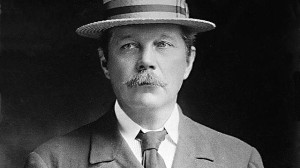
"title": "Sherlock Holmes, Arthur Conan Doyle and the Quest to Cure Tuberculosis",
"headTitle": "Sherlock Holmes, Arthur Conan Doyle and the Quest to Cure Tuberculosis | KQED",
"content": "\u003cp>Sir Arthur Conan Doyle was known for creating one of the world’s most famous fictional detectives: Sherlock Holmes. But in real life, Conan Doyle was a physician and medical sleuth, much like his other creation, John Watson. In his new book “The Remedy,” author Thomas Goetz tells the true story \u003ca href=\"http://www.kqed.org/epArchive/R201405121000?pid=RD19\" target=\"_self\" class=\"rssmi_more\" rel=\"noopener\"> …read more\u003c/a> \u003c/p>\n\u003cp>Source: \u003ca href=\"http://www.kqed.org/epArchive/R201405121000?pid=RD19\" target=\"_self\" title=\"Sherlock Holmes, Arthur Conan Doyle and the Quest to Cure Tuberculosis\" rel=\"noopener\">Forum Books\u003c/a>\u003c/p>\n\u003cp>[ad fullwidth]\u003c/p>\u003cp>\u003c/p>\n",
"stats": {
"hasVideo": false,
"hasChartOrMap": false,
"hasAudio": false,
"hasPolis": false,
"wordCount": 62,
"hasGoogleForm": false,
"hasGallery": false,
"hasHearkenModule": false,
"iframeSrcs": [],
"paragraphCount": 4
},
"modified": 1705048987,
"excerpt": "Sir Arthur Conan Doyle was known for creating one of the world's most famous fictional detectives: Sherlock Holmes. But in real life, Conan Doyle was a physician and medical sleuth, much like his other creation, John Watson. In his new book \"The Remedy,\" author Thomas Goetz tells the true story \u003ca href=\"http://www.kqed.org/epArchive/R201405121000?pid=RD19\" target=\"_self\" class=\"rssmi_more\" rel=\"noopener\"> ...read more\u003c/a>",
"headData": {
"twImgId": "",
"twTitle": "",
"ogTitle": "",
"ogImgId": "",
"twDescription": "",
"description": "Sir Arthur Conan Doyle was known for creating one of the world's most famous fictional detectives: Sherlock Holmes. But in real life, Conan Doyle was a physician and medical sleuth, much like his other creation, John Watson. In his new book "The Remedy," author Thomas Goetz tells the true story ...read more",
"title": "Sherlock Holmes, Arthur Conan Doyle and the Quest to Cure Tuberculosis | KQED",
"ogDescription": "",
"schema": {
"@context": "https://schema.org",
"@type": "Article",
"headline": "Sherlock Holmes, Arthur Conan Doyle and the Quest to Cure Tuberculosis",
"datePublished": "2014-05-12T12:28:26-07:00",
"dateModified": "2024-01-12T00:43:07-08:00",
"image": "https://cdn.kqed.org/wp-content/uploads/2020/02/KQED-OG-Image@1x.png"
}
},
"guestAuthors": [],
"slug": "sherlock-holmes-arthur-conan-doyle-and-the-quest-to-cure-tuberculosis",
"status": "publish",
"redirect": {
"type": "external",
"url": "http://www.kqed.org/epArchive/R201405121000?pid=RD19"
},
"rssmiSourceLink": "http://www.kqed.org/epArchive/R201405121000?pid=RD19",
"sticky": false,
"path": "/arts/10135828/sherlock-holmes-arthur-conan-doyle-and-the-quest-to-cure-tuberculosis",
"audioTrackLength": null,
"parsedContent": [
{
"type": "contentString",
"content": "\u003cdiv class=\"post-body\">\u003cp>\u003cp>Sir Arthur Conan Doyle was known for creating one of the world’s most famous fictional detectives: Sherlock Holmes. But in real life, Conan Doyle was a physician and medical sleuth, much like his other creation, John Watson. In his new book “The Remedy,” author Thomas Goetz tells the true story \u003ca href=\"http://www.kqed.org/epArchive/R201405121000?pid=RD19\" target=\"_self\" class=\"rssmi_more\" rel=\"noopener\"> …read more\u003c/a> \u003c/p>\n\u003cp>Source: \u003ca href=\"http://www.kqed.org/epArchive/R201405121000?pid=RD19\" target=\"_self\" title=\"Sherlock Holmes, Arthur Conan Doyle and the Quest to Cure Tuberculosis\" rel=\"noopener\">Forum Books\u003c/a>\u003c/p>\n\u003cp>\u003c/p>\u003c/div>",
"attributes": {
"named": {},
"numeric": []
}
},
{
"type": "component",
"content": "",
"name": "ad",
"attributes": {
"named": {
"label": "fullwidth"
},
"numeric": [
"fullwidth"
]
}
},
{
"type": "contentString",
"content": "\u003cdiv class=\"post-body\">\u003cp>\u003c/p>\u003cp>\u003c/p>\n\u003c/div>\u003c/p>",
"attributes": {
"named": {},
"numeric": []
}
}
],
"link": "http://www.kqed.org/epArchive/R201405121000?pid=RD19",
"authors": [
"92"
],
"categories": [
"arts_73"
],
"featImg": "arts_10135829",
"label": "arts"
},
"arts_10135063": {
"type": "posts",
"id": "arts_10135063",
"meta": {
"index": "posts_1716263798",
"site": "arts",
"id": "10135063",
"score": null,
"sort": [
1399813239000
]
},
"parent": 0,
"labelTerm": {
"site": "arts"
},
"blocks": [],
"publishDate": 1399813239,
"format": "standard",
"title": "My Blind Date With a Book",
"headTitle": "My Blind Date With a Book | KQED",
"content": "\u003cp>Blind dates wouldn’t exist if we didn’t believe our friends had our best interests in mind, since suggestions are taken purely on faith. While online dating websites and Internet warehouses like Amazon have algorithms for recommending “perfect” matches, I continue to trust people more than I do machines. Call me old fashioned.\u003c/p>\n\u003cp>When I walked into \u003ca href=\"http://www.bookshopsantacruz.com/\">Bookshop Santa Cruz\u003c/a> in February and saw that they had a Valentine’s Day promotion encouraging customers to take a “blind date” with their staff’s favorite books, I knew I couldn’t go wrong.\u003c/p>\n\u003cp>It just so happened that I was already on a date at the time (who, incidentally, I met through friends). After casually browsing the store, my partner and I were both intrigued by a the table of books wrapped in brown paper to disguise their contents.\u003c/p>\n\u003cp>Each wrapping listed the book’s genre and a few key details. I picked up the “Blind Date with History,” while he considered the “Blind Date with Nature Writing.” I chose, “mid-nineteenth century San Francisco; Mark Twain; Arson,” and he went with “the comfort of wild place; otters & whales.”\u003c/p>\n\u003cfigure id=\"attachment_10135066\" class=\"wp-caption alignright\" style=\"max-width: 600px\">\u003ca href=\"http://ww2.kqed.org/arts/wp-content/uploads/sites/2/2014/04/Blind-Date-Wrapped.jpg\">\u003cimg loading=\"lazy\" decoding=\"async\" class=\"wp-image-10135066\" src=\"http://ww2.kqed.org/arts/wp-content/uploads/sites/2/2014/04/Blind-Date-Wrapped.jpg\" alt=\"Blind Date Wrapped\" width=\"600\" height=\"800\" srcset=\"https://cdn.kqed.org/wp-content/uploads/sites/2/2014/04/Blind-Date-Wrapped.jpg 852w, https://cdn.kqed.org/wp-content/uploads/sites/2/2014/04/Blind-Date-Wrapped-400x533.jpg 400w, https://cdn.kqed.org/wp-content/uploads/sites/2/2014/04/Blind-Date-Wrapped-224x300.jpg 224w\" sizes=\"(max-width: 600px) 100vw, 600px\">\u003c/a>\u003cfigcaption class=\"wp-caption-text\">Wrapped books \u003ccite>(Adrienne Blaine)\u003c/cite>\u003c/figcaption>\u003c/figure>\n\u003cp>Bookshop Santa Cruz had pegged our interests so well that it seemed as if cupid himself had arranged the bookstand. And while it may seem uncharacteristic for two Millennials, we didn’t hesitate to purchase the books at full price. As far as dates go, $15 is pretty reasonable, especially since a book won’t take one look at you and turn around.\u003c/p>\n\u003cp>[ad fullwidth]\u003c/p>\n\u003cp>And why shouldn’t we invest as much in books that could change our lives as we do in the promise of even the most fleeting romantic connection? In an age where customers increasingly treat bookstores like showrooms for items they plan to buy online, it’s time to reintroduce some mystery and romance into the tried and true routine.\u003c/p>\n\u003cp>Bookshop Santa Cruz got their Blind Date idea from a customer who had seen a similar promotion at a library. The bookshop’s challenge to judge a book by something other than its cover, amused writer, Michael Marshall, who tweeted a picture of the display on January 18th.\u003c/p>\n\u003cblockquote class=\"twitter-tweet\" lang=\"en\">\u003cp>VERY cool idea from \u003ca href=\"https://twitter.com/BookshopSC\">@bookshopSC\u003c/a> \u003ca href=\"http://t.co/2POcsHKHfQ\">pic.twitter.com/2POcsHKHfQ\u003c/a>\u003c/p>\n\u003cp>— MichaelMarshallSmith (@ememess) \u003ca href=\"https://twitter.com/ememess/statuses/424618074537340928\">January 18, 2014\u003c/a>\u003c/p>\u003c/blockquote>\n\u003cp>\u003ca href=\"http://ww2.kqed.org/arts/wp-content/uploads/sites/2/2014/04/Marshall-Blind-Date.jpg\">\u003cimg loading=\"lazy\" decoding=\"async\" class=\"aligncenter wp-image-10135065 size-full\" src=\"http://ww2.kqed.org/arts/wp-content/uploads/sites/2/2014/04/Marshall-Blind-Date.jpg\" alt=\"Michael Marshall Blind Date\" width=\"600\" height=\"800\" srcset=\"https://cdn.kqed.org/wp-content/uploads/sites/2/2014/04/Marshall-Blind-Date.jpg 600w, https://cdn.kqed.org/wp-content/uploads/sites/2/2014/04/Marshall-Blind-Date-400x533.jpg 400w, https://cdn.kqed.org/wp-content/uploads/sites/2/2014/04/Marshall-Blind-Date-225x300.jpg 225w\" sizes=\"(max-width: 600px) 100vw, 600px\">\u003c/a>\u003c/p>\n\u003cp>With over 1,500 retweets and nearly 800 favorites at the time of writing, this kind of approach may be just what local bookstores need to entice would-be readers, even if book cover illustrators may be less than amused.\u003c/p>\n\u003cp>After months of reading Robert Graysmith’s \u003ca href=\"http://www.indiebound.org/book/9780307720573\">Black Fire\u003c/a> and borrowing Kathleen Dean Moore’s \u003ca href=\"http://www.bookshopsantacruz.com/search/apachesolr_search/wild%20comfort\">Wild Comfort\u003c/a>, it occurred to me that my romantic relationship was developing alongside my relationship to these books. We took our books to the beach, sat comfortably with them by the fire: metaphorically wining and dining them.\u003c/p>\n\u003cp>\u003ca href=\"http://ww2.kqed.org/arts/wp-content/uploads/sites/2/2014/04/Blind-Date-Unwrapped.jpg\">\u003cimg loading=\"lazy\" decoding=\"async\" class=\"aligncenter wp-image-10135067\" src=\"http://ww2.kqed.org/arts/wp-content/uploads/sites/2/2014/04/Blind-Date-Unwrapped.jpg\" alt=\"Blind Date Unwrapped\" width=\"600\" height=\"800\" srcset=\"https://cdn.kqed.org/wp-content/uploads/sites/2/2014/04/Blind-Date-Unwrapped.jpg 852w, https://cdn.kqed.org/wp-content/uploads/sites/2/2014/04/Blind-Date-Unwrapped-400x533.jpg 400w, https://cdn.kqed.org/wp-content/uploads/sites/2/2014/04/Blind-Date-Unwrapped-224x300.jpg 224w\" sizes=\"(max-width: 600px) 100vw, 600px\">\u003c/a>\u003c/p>\n\u003cp>This kind of focused attention is a huge commitment for modern readers, and even the most avid reader can see well-meaning book recommendations as drudgery. But if you’ve been out of the reading game for a while, it’s never too late to jump back in. There are plenty of fish in the sea, as they say.\u003c/p>\n\u003cp>\u003c/p>\n\u003cp>To find a local bookstore near you visit \u003ca href=\"http://www.indiebound.org/\">Indie Bound\u003c/a>, where you can find local bookstores and search for specific titles.\u003c/p>\n\n",
"stats": {
"hasVideo": false,
"hasChartOrMap": false,
"hasAudio": false,
"hasPolis": false,
"wordCount": 581,
"hasGoogleForm": false,
"hasGallery": false,
"hasHearkenModule": false,
"iframeSrcs": [],
"paragraphCount": 17
},
"modified": 1705048992,
"excerpt": null,
"headData": {
"twImgId": "",
"twTitle": "",
"ogTitle": "",
"ogImgId": "",
"twDescription": "",
"description": "Blind dates wouldn’t exist if we didn’t believe our friends had our best interests in mind, since suggestions are taken purely on faith. While online dating websites and Internet warehouses like Amazon have algorithms for recommending “perfect” matches, I continue to trust people more than I do machines. Call me old fashioned. When I walked",
"title": "My Blind Date With a Book | KQED",
"ogDescription": "",
"schema": {
"@context": "https://schema.org",
"@type": "Article",
"headline": "My Blind Date With a Book",
"datePublished": "2014-05-11T06:00:39-07:00",
"dateModified": "2024-01-12T00:43:12-08:00",
"image": "https://cdn.kqed.org/wp-content/uploads/2020/02/KQED-OG-Image@1x.png"
}
},
"guestAuthors": [],
"slug": "my-blind-date-with-a-book",
"status": "publish",
"sourceUrl": "http://ww2.kqed.org/arts/2014/04/05/my-blind-date-with-a-book/",
"sticky": false,
"path": "/arts/10135063/my-blind-date-with-a-book",
"audioTrackLength": null,
"parsedContent": [
{
"type": "contentString",
"content": "\u003cdiv class=\"post-body\">\u003cp>\u003cp>Blind dates wouldn’t exist if we didn’t believe our friends had our best interests in mind, since suggestions are taken purely on faith. While online dating websites and Internet warehouses like Amazon have algorithms for recommending “perfect” matches, I continue to trust people more than I do machines. Call me old fashioned.\u003c/p>\n\u003cp>When I walked into \u003ca href=\"http://www.bookshopsantacruz.com/\">Bookshop Santa Cruz\u003c/a> in February and saw that they had a Valentine’s Day promotion encouraging customers to take a “blind date” with their staff’s favorite books, I knew I couldn’t go wrong.\u003c/p>\n\u003cp>It just so happened that I was already on a date at the time (who, incidentally, I met through friends). After casually browsing the store, my partner and I were both intrigued by a the table of books wrapped in brown paper to disguise their contents.\u003c/p>\n\u003cp>Each wrapping listed the book’s genre and a few key details. I picked up the “Blind Date with History,” while he considered the “Blind Date with Nature Writing.” I chose, “mid-nineteenth century San Francisco; Mark Twain; Arson,” and he went with “the comfort of wild place; otters & whales.”\u003c/p>\n\u003cfigure id=\"attachment_10135066\" class=\"wp-caption alignright\" style=\"max-width: 600px\">\u003ca href=\"http://ww2.kqed.org/arts/wp-content/uploads/sites/2/2014/04/Blind-Date-Wrapped.jpg\">\u003cimg loading=\"lazy\" decoding=\"async\" class=\"wp-image-10135066\" src=\"http://ww2.kqed.org/arts/wp-content/uploads/sites/2/2014/04/Blind-Date-Wrapped.jpg\" alt=\"Blind Date Wrapped\" width=\"600\" height=\"800\" srcset=\"https://cdn.kqed.org/wp-content/uploads/sites/2/2014/04/Blind-Date-Wrapped.jpg 852w, https://cdn.kqed.org/wp-content/uploads/sites/2/2014/04/Blind-Date-Wrapped-400x533.jpg 400w, https://cdn.kqed.org/wp-content/uploads/sites/2/2014/04/Blind-Date-Wrapped-224x300.jpg 224w\" sizes=\"(max-width: 600px) 100vw, 600px\">\u003c/a>\u003cfigcaption class=\"wp-caption-text\">Wrapped books \u003ccite>(Adrienne Blaine)\u003c/cite>\u003c/figcaption>\u003c/figure>\n\u003cp>Bookshop Santa Cruz had pegged our interests so well that it seemed as if cupid himself had arranged the bookstand. And while it may seem uncharacteristic for two Millennials, we didn’t hesitate to purchase the books at full price. As far as dates go, $15 is pretty reasonable, especially since a book won’t take one look at you and turn around.\u003c/p>\n\u003cp>\u003c/p>\u003c/div>",
"attributes": {
"named": {},
"numeric": []
}
},
{
"type": "component",
"content": "",
"name": "ad",
"attributes": {
"named": {
"label": "fullwidth"
},
"numeric": [
"fullwidth"
]
}
},
{
"type": "contentString",
"content": "\u003cdiv class=\"post-body\">\u003cp>\u003c/p>\n\u003cp>And why shouldn’t we invest as much in books that could change our lives as we do in the promise of even the most fleeting romantic connection? In an age where customers increasingly treat bookstores like showrooms for items they plan to buy online, it’s time to reintroduce some mystery and romance into the tried and true routine.\u003c/p>\n\u003cp>Bookshop Santa Cruz got their Blind Date idea from a customer who had seen a similar promotion at a library. The bookshop’s challenge to judge a book by something other than its cover, amused writer, Michael Marshall, who tweeted a picture of the display on January 18th.\u003c/p>\n\u003cblockquote class=\"twitter-tweet\" lang=\"en\">\u003cp>VERY cool idea from \u003ca href=\"https://twitter.com/BookshopSC\">@bookshopSC\u003c/a> \u003ca href=\"http://t.co/2POcsHKHfQ\">pic.twitter.com/2POcsHKHfQ\u003c/a>\u003c/p>\n\u003cp>— MichaelMarshallSmith (@ememess) \u003ca href=\"https://twitter.com/ememess/statuses/424618074537340928\">January 18, 2014\u003c/a>\u003c/p>\u003c/blockquote>\n\u003cp>\u003ca href=\"http://ww2.kqed.org/arts/wp-content/uploads/sites/2/2014/04/Marshall-Blind-Date.jpg\">\u003cimg loading=\"lazy\" decoding=\"async\" class=\"aligncenter wp-image-10135065 size-full\" src=\"http://ww2.kqed.org/arts/wp-content/uploads/sites/2/2014/04/Marshall-Blind-Date.jpg\" alt=\"Michael Marshall Blind Date\" width=\"600\" height=\"800\" srcset=\"https://cdn.kqed.org/wp-content/uploads/sites/2/2014/04/Marshall-Blind-Date.jpg 600w, https://cdn.kqed.org/wp-content/uploads/sites/2/2014/04/Marshall-Blind-Date-400x533.jpg 400w, https://cdn.kqed.org/wp-content/uploads/sites/2/2014/04/Marshall-Blind-Date-225x300.jpg 225w\" sizes=\"(max-width: 600px) 100vw, 600px\">\u003c/a>\u003c/p>\n\u003cp>With over 1,500 retweets and nearly 800 favorites at the time of writing, this kind of approach may be just what local bookstores need to entice would-be readers, even if book cover illustrators may be less than amused.\u003c/p>\n\u003cp>After months of reading Robert Graysmith’s \u003ca href=\"http://www.indiebound.org/book/9780307720573\">Black Fire\u003c/a> and borrowing Kathleen Dean Moore’s \u003ca href=\"http://www.bookshopsantacruz.com/search/apachesolr_search/wild%20comfort\">Wild Comfort\u003c/a>, it occurred to me that my romantic relationship was developing alongside my relationship to these books. We took our books to the beach, sat comfortably with them by the fire: metaphorically wining and dining them.\u003c/p>\n\u003cp>\u003ca href=\"http://ww2.kqed.org/arts/wp-content/uploads/sites/2/2014/04/Blind-Date-Unwrapped.jpg\">\u003cimg loading=\"lazy\" decoding=\"async\" class=\"aligncenter wp-image-10135067\" src=\"http://ww2.kqed.org/arts/wp-content/uploads/sites/2/2014/04/Blind-Date-Unwrapped.jpg\" alt=\"Blind Date Unwrapped\" width=\"600\" height=\"800\" srcset=\"https://cdn.kqed.org/wp-content/uploads/sites/2/2014/04/Blind-Date-Unwrapped.jpg 852w, https://cdn.kqed.org/wp-content/uploads/sites/2/2014/04/Blind-Date-Unwrapped-400x533.jpg 400w, https://cdn.kqed.org/wp-content/uploads/sites/2/2014/04/Blind-Date-Unwrapped-224x300.jpg 224w\" sizes=\"(max-width: 600px) 100vw, 600px\">\u003c/a>\u003c/p>\n\u003cp>This kind of focused attention is a huge commitment for modern readers, and even the most avid reader can see well-meaning book recommendations as drudgery. But if you’ve been out of the reading game for a while, it’s never too late to jump back in. There are plenty of fish in the sea, as they say.\u003c/p>\n\u003cp>\u003c/p>\n\u003cp>To find a local bookstore near you visit \u003ca href=\"http://www.indiebound.org/\">Indie Bound\u003c/a>, where you can find local bookstores and search for specific titles.\u003c/p>\n\n\u003c/div>\u003c/p>",
"attributes": {
"named": {},
"numeric": []
}
}
],
"link": "/arts/10135063/my-blind-date-with-a-book",
"authors": [
"72"
],
"categories": [
"arts_73"
],
"featImg": "arts_10135064",
"label": "arts"
},
"arts_10135713": {
"type": "posts",
"id": "arts_10135713",
"meta": {
"index": "posts_1716263798",
"site": "arts",
"id": "10135713",
"score": null,
"sort": [
1399687112000
]
},
"parent": 0,
"labelTerm": {
"site": "forum"
},
"blocks": [],
"publishDate": 1399687112,
"format": "standard",
"title": "Sandra Tsing Loh on Life in 'Generation Triple-M'",
"headTitle": "Sandra Tsing Loh on Life in ‘Generation Triple-M’ | KQED",
"content": "\u003cp>At the age of 49, writer and performer Sandra Tsing Loh’s life turned upside down. She had an affair that ended her marriage and her body and moods were changing wildly. In her new memoir “The Madwoman in the Volvo,” Loh chronicles the rollercoaster year leading up to her 50th \u003ca href=\"http://www.kqed.org/epArchive/R201405081000?pid=RD19\" target=\"_self\" class=\"rssmi_more\" rel=\"noopener\"> …read more\u003c/a> \u003c/p>\n\u003cp>Source: \u003ca href=\"http://www.kqed.org/epArchive/R201405081000?pid=RD19\" target=\"_self\" title=\"Sandra Tsing Loh on Life in 'Generation Triple-M'\" rel=\"noopener\">Forum Books\u003c/a>\u003c/p>\n\u003cp>[ad fullwidth]\u003c/p>\u003cp>\u003c/p>\n",
"stats": {
"hasVideo": false,
"hasChartOrMap": false,
"hasAudio": false,
"hasPolis": false,
"wordCount": 62,
"hasGoogleForm": false,
"hasGallery": false,
"hasHearkenModule": false,
"iframeSrcs": [],
"paragraphCount": 4
},
"modified": 1705048997,
"excerpt": "At the age of 49, writer and performer Sandra Tsing Loh's life turned upside down. She had an affair that ended her marriage and her body and moods were changing wildly. In her new memoir \"The Madwoman in the Volvo,\" Loh chronicles the rollercoaster year leading up to her 50th \u003ca href=\"http://www.kqed.org/epArchive/R201405081000?pid=RD19\" target=\"_self\" class=\"rssmi_more\" rel=\"noopener\"> ...read more\u003c/a>",
"headData": {
"twImgId": "",
"twTitle": "",
"ogTitle": "",
"ogImgId": "",
"twDescription": "",
"description": "At the age of 49, writer and performer Sandra Tsing Loh's life turned upside down. She had an affair that ended her marriage and her body and moods were changing wildly. In her new memoir "The Madwoman in the Volvo," Loh chronicles the rollercoaster year leading up to her 50th ...read more",
"title": "Sandra Tsing Loh on Life in 'Generation Triple-M' | KQED",
"ogDescription": "",
"schema": {
"@context": "https://schema.org",
"@type": "Article",
"headline": "Sandra Tsing Loh on Life in 'Generation Triple-M'",
"datePublished": "2014-05-09T18:58:32-07:00",
"dateModified": "2024-01-12T00:43:17-08:00",
"image": "https://cdn.kqed.org/wp-content/uploads/2020/02/KQED-OG-Image@1x.png"
}
},
"guestAuthors": [],
"slug": "sandra-tsing-loh-on-life-in-generation-triple-m",
"status": "publish",
"redirect": {
"type": "external",
"url": "http://www.kqed.org/epArchive/R201405081000?pid=RD19"
},
"rssmiSourceLink": "http://www.kqed.org/epArchive/R201405081000?pid=RD19",
"sticky": false,
"path": "/arts/10135713/sandra-tsing-loh-on-life-in-generation-triple-m",
"audioTrackLength": null,
"parsedContent": [
{
"type": "contentString",
"content": "\u003cdiv class=\"post-body\">\u003cp>\u003cp>At the age of 49, writer and performer Sandra Tsing Loh’s life turned upside down. She had an affair that ended her marriage and her body and moods were changing wildly. In her new memoir “The Madwoman in the Volvo,” Loh chronicles the rollercoaster year leading up to her 50th \u003ca href=\"http://www.kqed.org/epArchive/R201405081000?pid=RD19\" target=\"_self\" class=\"rssmi_more\" rel=\"noopener\"> …read more\u003c/a> \u003c/p>\n\u003cp>Source: \u003ca href=\"http://www.kqed.org/epArchive/R201405081000?pid=RD19\" target=\"_self\" title=\"Sandra Tsing Loh on Life in 'Generation Triple-M'\" rel=\"noopener\">Forum Books\u003c/a>\u003c/p>\n\u003cp>\u003c/p>\u003c/div>",
"attributes": {
"named": {},
"numeric": []
}
},
{
"type": "component",
"content": "",
"name": "ad",
"attributes": {
"named": {
"label": "fullwidth"
},
"numeric": [
"fullwidth"
]
}
},
{
"type": "contentString",
"content": "\u003cdiv class=\"post-body\">\u003cp>\u003c/p>\u003cp>\u003c/p>\n\u003c/div>\u003c/p>",
"attributes": {
"named": {},
"numeric": []
}
}
],
"link": "http://www.kqed.org/epArchive/R201405081000?pid=RD19",
"authors": [
"92"
],
"categories": [
"arts_73"
],
"featImg": "arts_10135714",
"label": "arts"
},
"arts_10135588": {
"type": "posts",
"id": "arts_10135588",
"meta": {
"index": "posts_1716263798",
"site": "arts",
"id": "10135588",
"score": null,
"sort": [
1399508991000
]
},
"parent": 0,
"labelTerm": {
"site": "arts",
"term": 137
},
"blocks": [],
"publishDate": 1399508991,
"format": "standard",
"title": "Larry McMurtry Loves The West, But Knocks The Cowboy Off His High Horse",
"headTitle": "Larry McMurtry Loves The West, But Knocks The Cowboy Off His High Horse | KQED",
"content": "\u003cp>Larry McMurtry may well be the only Academy Award winner who used some of the precious moments of his acceptance speech to thank booksellers: “From the humblest paperback exchange to the masters of the great bookshops of the world, all are contributors to the survival of the culture of the book, a wonderful culture which we musn’t lose,” he told the audience in 2006 as he accepted the Oscar for his screenplay for \u003cem>Brokeback Mountain\u003c/em> — which was based on a short story.\u003c/p>\n\u003cp>In addition to being a Pulitzer Prize-winning novelist and an Oscar-winning screenwriter, McMurtry has been a bookseller for most of his life. He still has a collection of 200,000 books in his private library and store in Archer City, Texas. His latest novel, \u003cem>The Last Kind Words Saloon,\u003c/em> is a spare and unsentimental story about two Western icons, Wyatt Earp and Doc Holliday.\u003c/p>\n\u003cfigure id=\"attachment_10135597\" class=\"wp-caption alignright\" style=\"max-width: 800px\">\u003ca href=\"http://ww2.kqed.org/arts/wp-content/uploads/sites/2/2014/05/Larry-McMurtry.jpg\">\u003cimg loading=\"lazy\" decoding=\"async\" src=\"http://ww2.kqed.org/arts/wp-content/uploads/sites/2/2014/05/Larry-McMurtry.jpg\" alt=\"Writer Larry McMurtry is also the founder and owner of the Booked Up bookstore in Archer City, Texas.\" width=\"800\" height=\"450\" class=\"size-full wp-image-10135597\" srcset=\"https://cdn.kqed.org/wp-content/uploads/sites/2/2014/05/Larry-McMurtry.jpg 800w, https://cdn.kqed.org/wp-content/uploads/sites/2/2014/05/Larry-McMurtry-400x225.jpg 400w, https://cdn.kqed.org/wp-content/uploads/sites/2/2014/05/Larry-McMurtry-300x168.jpg 300w\" sizes=\"(max-width: 800px) 100vw, 800px\">\u003c/a>\u003cfigcaption class=\"wp-caption-text\">Writer Larry McMurtry is also the founder and owner of the Booked Up bookstore in Archer City, Texas. \u003ccite>(LM Otero/AP)\u003c/cite>\u003c/figcaption>\u003c/figure>\n\u003cp>A number of McMurtry’s books have been made into successful films, including \u003cem>Hud, The Last Picture Show \u003c/em>and \u003cem>Terms of Endearment\u003c/em>. His Pulitzer Prize-winning novel, \u003cem>Lonesome Dove, \u003c/em>was a popular TV miniseries starring Robert Duvall and Tommy Lee Jones.\u003c/p>\n\u003cp>McMurtry says he never saw the miniseries and doesn’t think \u003cem>Lonesome Dove \u003c/em>is his best book. “I think of \u003cem>Lonesome Dove\u003c/em> as the \u003cem>Gone With the Wind\u003c/em> of the West,” he says. “It’s a pretty good book; it’s not a towering masterpiece.”\u003c/p>\n\u003cp>McMurtry comes by his affinity for the West naturally. His grandfather made his living breaking horses; his father raised cattle. McMurtry grew up in Texas at a time when ranching was in its waning days. He views the West with a realist’s eye but understands why it has taken on mythic proportions for so many.\u003c/p>\n\u003cp>[ad fullwidth]\u003c/p>\n\u003cp>“The West is mostly a very beautiful place,” McMurtry says. “They’re all those lovely spaces; they’re all those running horses. It’s a poetic imagery and it’s been there for a long time.”\u003c/p>\n\u003cp>But for someone who feels so connected to the West, McMurtry doesn’t buy into the myth of the cowboy as hero.\u003c/p>\n\u003cp>“To me it was hollow,” he says, “and I think it was hollow for my father, though he would not have ever brought that to his conscious mind. He totally loved cowboys and so did most of the cowboys he worked with and that got him through his life. But he knew perfectly well that it wouldn’t last another generation … it just was not going to last.”\u003c/p>\n\u003cp>\u003ca href=\"http://ww2.kqed.org/arts/wp-content/uploads/sites/2/2014/05/Last-Kind-Words-Saloon.jpg\">\u003cimg loading=\"lazy\" decoding=\"async\" src=\"http://ww2.kqed.org/arts/wp-content/uploads/sites/2/2014/05/Last-Kind-Words-Saloon.jpg\" alt=\"Last Kind Words Saloon\" width=\"300\" height=\"455\" class=\"alignright size-full wp-image-10135600\" srcset=\"https://cdn.kqed.org/wp-content/uploads/sites/2/2014/05/Last-Kind-Words-Saloon.jpg 300w, https://cdn.kqed.org/wp-content/uploads/sites/2/2014/05/Last-Kind-Words-Saloon-197x300.jpg 197w\" sizes=\"(max-width: 300px) 100vw, 300px\">\u003c/a>\u003c/p>\n\u003cp>In his new book, \u003cem>The Last Kind Words Saloon,\u003c/em> McMurtry creates an unvarnished picture of one of the heroes of Western myth, Wyatt Earp, and his sidekick, Doc Holliday. Over the years Earp has been portrayed as a legendary lawman, but McMurtry says it’s a reputation he doesn’t deserve.\u003c/p>\n\u003cp>“Wyatt didn’t do much of anything except drink and pester his wife and run around,” he says. “He didn’t do anything remarkable his whole life, ever.”\u003c/p>\n\u003cp>McMurtry strips Earp down to a guy who doesn’t talk much, hits his wife and gets people killed for no particularly good reason. Earp and Holliday spend a lot of time doing nothing. At one point they try, unsuccessfully, to become stars in Buffalo Bill’s Wild West show. The duo’s adventures culminate in the infamous shootout at the O.K. Corral.\u003c/p>\n\u003cp>In McMurtry’s portrayal of the confrontation, the shooting happens almost by accident and is over in seconds. Three men are killed, and Earp’s two brothers are injured. Earp lives to be an old man who has forgotten much of his past. It’s not a flattering picture, but McMurtry says he didn’t deliberately set out to debunk the myth.\u003c/p>\n\u003cp>“I was just wanting to make the novel come to the right end. It was not a terrific animus against the Earps. They weren’t very nice men; certainly Wyatt was not a very nice man. I didn’t have a grand overall plan, I just wanted to write a novel about the winding down of the West.”\u003c/p>\n\u003cp>\u003c/p>\n\u003cp>McMurtry has written 31 novels, not all of them Westerns. Some years back he said he was bored with the 19th century American West. But he keeps coming back to it. There is something about the myth a writer can’t resist. \u003c/p>\n\u003cdiv class=\"fullattribution\">Copyright 2014 NPR. To see more, visit http://www.npr.org/.\u003cimg decoding=\"async\" src=\"http://www.google-analytics.com/__utm.gif?utmac=UA-5828686-4&utmdt=Larry+McMurtry+Loves+The+West%2C+But+Knocks+The+Cowboy+Off+His+High+Horse&utme=8(APIKey)9(MDAxOTAwOTE4MDEyMTkxMDAzNjczZDljZA004)\">\u003c/div>\n\n",
"stats": {
"hasVideo": false,
"hasChartOrMap": false,
"hasAudio": false,
"hasPolis": false,
"wordCount": 804,
"hasGoogleForm": false,
"hasGallery": false,
"hasHearkenModule": false,
"iframeSrcs": [],
"paragraphCount": 17
},
"modified": 1705049009,
"excerpt": "The Pulitzer Prize-winning novelist says the myth of the cowboy feels \"hollow.\"\u003cem> The Last Kind Words Saloon\u003c/em> is a spare and unsentimental story about two Western icons, Wyatt Earp and Doc Holliday.",
"headData": {
"twImgId": "",
"twTitle": "",
"ogTitle": "",
"ogImgId": "",
"twDescription": "",
"description": "The Pulitzer Prize-winning novelist says the myth of the cowboy feels "hollow." The Last Kind Words Saloon is a spare and unsentimental story about two Western icons, Wyatt Earp and Doc Holliday.",
"title": "Larry McMurtry Loves The West, But Knocks The Cowboy Off His High Horse | KQED",
"ogDescription": "",
"schema": {
"@context": "https://schema.org",
"@type": "Article",
"headline": "Larry McMurtry Loves The West, But Knocks The Cowboy Off His High Horse",
"datePublished": "2014-05-07T17:29:51-07:00",
"dateModified": "2024-01-12T00:43:29-08:00",
"image": "https://cdn.kqed.org/wp-content/uploads/2020/02/KQED-OG-Image@1x.png"
}
},
"guestAuthors": [],
"slug": "larry-mcmurtry-loves-the-west-but-knocks-the-cowboy-off-his-high-horse",
"status": "publish",
"nprApiLink": "http://api.npr.org/query?id=310422556&apiKey=MDAxOTAwOTE4MDEyMTkxMDAzNjczZDljZA004",
"nprByline": "Lynn Neary",
"nprStoryDate": "Wed, 07 May 2014 16:29:00 -0400",
"nprLastModifiedDate": "Wed, 07 May 2014 17:26:54 -0400",
"sticky": false,
"nprHtmlLink": "http://www.npr.org/2014/05/07/310422556/larry-mcmurtry-loves-the-west-but-knocks-the-cowboy-off-his-high-horse?ft=3&f=310422556",
"nprAudio": "http://pd.npr.org/anon.npr-mp3/npr/atc/2014/05/20140507_atc_larry_mcmurtry_loves_the_west_but_knocks_the_cowboy_off_his_high_horse.mp3?orgId=1&topicId=1033&ft=3&f=310422556",
"nprAudioM3u": "http://api.npr.org/m3u/1310476549-258524.m3u?orgId=1&topicId=1033&ft=3&f=310422556",
"nprStoryId": "310422556",
"nprRetrievedStory": "1",
"nprPubDate": "Wed, 07 May 2014 19:54:00 -0400",
"path": "/arts/10135588/larry-mcmurtry-loves-the-west-but-knocks-the-cowboy-off-his-high-horse",
"audioUrl": "http://pd.npr.org/anon.npr-mp3/npr/atc/2014/05/20140507_atc_larry_mcmurtry_loves_the_west_but_knocks_the_cowboy_off_his_high_horse.mp3?orgId=1&topicId=1033&ft=3&f=310422556",
"audioTrackLength": null,
"parsedContent": [
{
"type": "contentString",
"content": "\u003cdiv class=\"post-body\">\u003cp>\u003cp>Larry McMurtry may well be the only Academy Award winner who used some of the precious moments of his acceptance speech to thank booksellers: “From the humblest paperback exchange to the masters of the great bookshops of the world, all are contributors to the survival of the culture of the book, a wonderful culture which we musn’t lose,” he told the audience in 2006 as he accepted the Oscar for his screenplay for \u003cem>Brokeback Mountain\u003c/em> — which was based on a short story.\u003c/p>\n\u003cp>In addition to being a Pulitzer Prize-winning novelist and an Oscar-winning screenwriter, McMurtry has been a bookseller for most of his life. He still has a collection of 200,000 books in his private library and store in Archer City, Texas. His latest novel, \u003cem>The Last Kind Words Saloon,\u003c/em> is a spare and unsentimental story about two Western icons, Wyatt Earp and Doc Holliday.\u003c/p>\n\u003cfigure id=\"attachment_10135597\" class=\"wp-caption alignright\" style=\"max-width: 800px\">\u003ca href=\"http://ww2.kqed.org/arts/wp-content/uploads/sites/2/2014/05/Larry-McMurtry.jpg\">\u003cimg loading=\"lazy\" decoding=\"async\" src=\"http://ww2.kqed.org/arts/wp-content/uploads/sites/2/2014/05/Larry-McMurtry.jpg\" alt=\"Writer Larry McMurtry is also the founder and owner of the Booked Up bookstore in Archer City, Texas.\" width=\"800\" height=\"450\" class=\"size-full wp-image-10135597\" srcset=\"https://cdn.kqed.org/wp-content/uploads/sites/2/2014/05/Larry-McMurtry.jpg 800w, https://cdn.kqed.org/wp-content/uploads/sites/2/2014/05/Larry-McMurtry-400x225.jpg 400w, https://cdn.kqed.org/wp-content/uploads/sites/2/2014/05/Larry-McMurtry-300x168.jpg 300w\" sizes=\"(max-width: 800px) 100vw, 800px\">\u003c/a>\u003cfigcaption class=\"wp-caption-text\">Writer Larry McMurtry is also the founder and owner of the Booked Up bookstore in Archer City, Texas. \u003ccite>(LM Otero/AP)\u003c/cite>\u003c/figcaption>\u003c/figure>\n\u003cp>A number of McMurtry’s books have been made into successful films, including \u003cem>Hud, The Last Picture Show \u003c/em>and \u003cem>Terms of Endearment\u003c/em>. His Pulitzer Prize-winning novel, \u003cem>Lonesome Dove, \u003c/em>was a popular TV miniseries starring Robert Duvall and Tommy Lee Jones.\u003c/p>\n\u003cp>McMurtry says he never saw the miniseries and doesn’t think \u003cem>Lonesome Dove \u003c/em>is his best book. “I think of \u003cem>Lonesome Dove\u003c/em> as the \u003cem>Gone With the Wind\u003c/em> of the West,” he says. “It’s a pretty good book; it’s not a towering masterpiece.”\u003c/p>\n\u003cp>McMurtry comes by his affinity for the West naturally. His grandfather made his living breaking horses; his father raised cattle. McMurtry grew up in Texas at a time when ranching was in its waning days. He views the West with a realist’s eye but understands why it has taken on mythic proportions for so many.\u003c/p>\n\u003cp>\u003c/p>\u003c/div>",
"attributes": {
"named": {},
"numeric": []
}
},
{
"type": "component",
"content": "",
"name": "ad",
"attributes": {
"named": {
"label": "fullwidth"
},
"numeric": [
"fullwidth"
]
}
},
{
"type": "contentString",
"content": "\u003cdiv class=\"post-body\">\u003cp>\u003c/p>\n\u003cp>“The West is mostly a very beautiful place,” McMurtry says. “They’re all those lovely spaces; they’re all those running horses. It’s a poetic imagery and it’s been there for a long time.”\u003c/p>\n\u003cp>But for someone who feels so connected to the West, McMurtry doesn’t buy into the myth of the cowboy as hero.\u003c/p>\n\u003cp>“To me it was hollow,” he says, “and I think it was hollow for my father, though he would not have ever brought that to his conscious mind. He totally loved cowboys and so did most of the cowboys he worked with and that got him through his life. But he knew perfectly well that it wouldn’t last another generation … it just was not going to last.”\u003c/p>\n\u003cp>\u003ca href=\"http://ww2.kqed.org/arts/wp-content/uploads/sites/2/2014/05/Last-Kind-Words-Saloon.jpg\">\u003cimg loading=\"lazy\" decoding=\"async\" src=\"http://ww2.kqed.org/arts/wp-content/uploads/sites/2/2014/05/Last-Kind-Words-Saloon.jpg\" alt=\"Last Kind Words Saloon\" width=\"300\" height=\"455\" class=\"alignright size-full wp-image-10135600\" srcset=\"https://cdn.kqed.org/wp-content/uploads/sites/2/2014/05/Last-Kind-Words-Saloon.jpg 300w, https://cdn.kqed.org/wp-content/uploads/sites/2/2014/05/Last-Kind-Words-Saloon-197x300.jpg 197w\" sizes=\"(max-width: 300px) 100vw, 300px\">\u003c/a>\u003c/p>\n\u003cp>In his new book, \u003cem>The Last Kind Words Saloon,\u003c/em> McMurtry creates an unvarnished picture of one of the heroes of Western myth, Wyatt Earp, and his sidekick, Doc Holliday. Over the years Earp has been portrayed as a legendary lawman, but McMurtry says it’s a reputation he doesn’t deserve.\u003c/p>\n\u003cp>“Wyatt didn’t do much of anything except drink and pester his wife and run around,” he says. “He didn’t do anything remarkable his whole life, ever.”\u003c/p>\n\u003cp>McMurtry strips Earp down to a guy who doesn’t talk much, hits his wife and gets people killed for no particularly good reason. Earp and Holliday spend a lot of time doing nothing. At one point they try, unsuccessfully, to become stars in Buffalo Bill’s Wild West show. The duo’s adventures culminate in the infamous shootout at the O.K. Corral.\u003c/p>\n\u003cp>In McMurtry’s portrayal of the confrontation, the shooting happens almost by accident and is over in seconds. Three men are killed, and Earp’s two brothers are injured. Earp lives to be an old man who has forgotten much of his past. It’s not a flattering picture, but McMurtry says he didn’t deliberately set out to debunk the myth.\u003c/p>\n\u003cp>“I was just wanting to make the novel come to the right end. It was not a terrific animus against the Earps. They weren’t very nice men; certainly Wyatt was not a very nice man. I didn’t have a grand overall plan, I just wanted to write a novel about the winding down of the West.”\u003c/p>\n\u003cp>\u003c/p>\n\u003cp>McMurtry has written 31 novels, not all of them Westerns. Some years back he said he was bored with the 19th century American West. But he keeps coming back to it. There is something about the myth a writer can’t resist. \u003c/p>\n\u003cdiv class=\"fullattribution\">Copyright 2014 NPR. To see more, visit http://www.npr.org/.\u003cimg decoding=\"async\" src=\"http://www.google-analytics.com/__utm.gif?utmac=UA-5828686-4&utmdt=Larry+McMurtry+Loves+The+West%2C+But+Knocks+The+Cowboy+Off+His+High+Horse&utme=8(APIKey)9(MDAxOTAwOTE4MDEyMTkxMDAzNjczZDljZA004)\">\u003c/div>\n\n\u003c/div>\u003c/p>",
"attributes": {
"named": {},
"numeric": []
}
}
],
"link": "/arts/10135588/larry-mcmurtry-loves-the-west-but-knocks-the-cowboy-off-his-high-horse",
"authors": [
"byline_arts_10135588"
],
"categories": [
"arts_73"
],
"affiliates": [
"arts_137"
],
"featImg": "arts_10135589",
"label": "arts_137"
},
"arts_10135575": {
"type": "posts",
"id": "arts_10135575",
"meta": {
"index": "posts_1716263798",
"site": "arts",
"id": "10135575",
"score": null,
"sort": [
1399488649000
]
},
"parent": 0,
"labelTerm": {
"site": "arts",
"term": 137
},
"blocks": [],
"publishDate": 1399488649,
"format": "standard",
"title": "Author Farley Mowat, Who Wrote 'Never Cry Wolf,' Dies At 92",
"headTitle": "Author Farley Mowat, Who Wrote ‘Never Cry Wolf,’ Dies At 92 | KQED",
"content": "\u003cp>Farley Mowat, the Canadian author of the nature classic \u003cem>Never Cry Wolf\u003c/em>, has died at age 92, Canadian media report.\u003c/p>\n\u003cp>\u003cem>\u003ca href=\"http://www.thestar.com/entertainment/books/2014/05/07/farley_mowat_acclaimed_canadian_author_dead_at_92.html\">The Star\u003c/a> \u003c/em>quotes Mowat’s brother, John, as saying the acclaimed writer and environmentalist died Tuesday, just a few days shy of his 93rd birthday.\u003c/p>\n\u003cp>\u003ca href=\"http://m.theglobeandmail.com/news/national/acclaimed-canadian-author-farley-mowat-dead-at-92/article18511064/?service=mobile\">\u003cem>The Globe and Mail\u003c/em> writes:\u003c/a>\u003c/p>\n\u003cblockquote>\n\u003cp>“In a 50-plus-year career as a freelance writer, he wrote more than 40 books including several memoirs, and won many prizes and honours including the Governor General’s Literary Award, the Order of Canada and several honorary degrees. Even as recently as July, 2009, Nicholas D. Kristof, an op-ed columnist for the New York Times, listed Mr. Mowat’s \u003cem>The Dog who Wouldn’t Be\u003c/em> (first published in 1957) as one of the best children’s books of all time.”\u003c/p>\n\u003c/blockquote>\n\u003cp>Besides being a best-selling author and “one of the elder statesmen of Canadian literature,” the \u003cem>Globe and Mail\u003c/em> describes Mowat as “a trickster, a ferocious imp with a silver pen, an ardent environmentalist who opened up the idea of the North to curious southerners, a public clown who hid his shyness behind flamboyant rum-swigging and kilt-flipping, and a passionate polemicist who blurred the lines between fiction and facts to dramatize his cause. ”\u003c/p>\n\u003cp>\u003cem>The Star\u003c/em> says:\u003c/p>\n\u003cblockquote>\n\u003cp>“Mowat has never been one to back away from controversy. A 2012 Toronto Star \u003ca href=\"http://www.thestar.com/entertainment/books/2012/05/11/farley_mowats_legacy_our_supreme_storyteller.html\">profile\u003c/a> of the author of dozens of books — starting with \u003cem>People of the Deer\u003c/em>, published in 1952, to his memoirs \u003cem>Otherwise\u003c/em>, published in 2008, and \u003cem>Eastern Passage\u003c/em>in 2010 — described him as still rising at 6:30 to walk his dog, and begin his writing after breakfast with his wife of 55 years, Claire.”\u003c/p>\n\u003c/blockquote>\n\u003cp>In his advanced years, Mowat continued to actively campaign to protect the Canadian wilderness he so loved. \u003ca href=\"http://www.cbc.ca/thecurrent/episode/2014/05/01/wifi-in-some-of-canadas-national-parks-gets-a-fuzzy-reception-from-campers/\">He was recently quoted by CBC Radio\u003c/a> voicing his opposition to extending wifi service to the country’s national parks.\u003c/p>\n\u003cp>[ad fullwidth]\u003c/p>\n\u003cp>“My thoughts can be expressed quite simply. I think it is a disastrous, quite stupid, idiotic concept, and should be eliminated immediately,” he told the Canadian Broadcast Corp.\u003c/p>\n\u003cp>\u003c/p>\n\u003cp>“I have very strong feelings that national parks, provincial parks, any kind of parks, that are theoretically set up to provide for the protection of nature, in some form or another, should be respected absolutely and ultimately and human beings should be kept out of them as much as possible,” he said. \u003c/p>\n\u003cdiv class=\"fullattribution\">Copyright 2014 NPR. To see more, visit http://www.npr.org/.\u003cimg decoding=\"async\" src=\"http://www.google-analytics.com/__utm.gif?utmac=UA-5828686-4&utmdt=Author+Farley+Mowat%2C+Who+Wrote+%27Never+Cry+Wolf%2C%27+Dies+At+92+&utme=8(APIKey)9(MDAxOTAwOTE4MDEyMTkxMDAzNjczZDljZA004)\">\u003c/div>\n\n",
"stats": {
"hasVideo": false,
"hasChartOrMap": false,
"hasAudio": false,
"hasPolis": false,
"wordCount": 428,
"hasGoogleForm": false,
"hasGallery": false,
"hasHearkenModule": false,
"iframeSrcs": [],
"paragraphCount": 12
},
"modified": 1705049012,
"excerpt": "The writer of books including \u003cem>People of the Deer\u003c/em> and \u003cem>The Dog Who Wouldn't Be\u003c/em>, was also an ardent campaigner for environmental causes well into his later years.",
"headData": {
"twImgId": "",
"twTitle": "",
"ogTitle": "",
"ogImgId": "",
"twDescription": "",
"description": "The writer of books including People of the Deer and The Dog Who Wouldn't Be, was also an ardent campaigner for environmental causes well into his later years.",
"title": "Author Farley Mowat, Who Wrote 'Never Cry Wolf,' Dies At 92 | KQED",
"ogDescription": "",
"schema": {
"@context": "https://schema.org",
"@type": "Article",
"headline": "Author Farley Mowat, Who Wrote 'Never Cry Wolf,' Dies At 92",
"datePublished": "2014-05-07T11:50:49-07:00",
"dateModified": "2024-01-12T00:43:32-08:00",
"image": "https://cdn.kqed.org/wp-content/uploads/2020/02/KQED-OG-Image@1x.png"
}
},
"guestAuthors": [],
"slug": "author-farley-mowat-who-wrote-never-cry-wolf-dies-at-92",
"status": "publish",
"nprApiLink": "http://api.npr.org/query?id=310461853&apiKey=MDAxOTAwOTE4MDEyMTkxMDAzNjczZDljZA004",
"nprByline": "Scott Neuman",
"nprStoryDate": "Wed, 07 May 2014 14:50:00 -0400",
"nprLastModifiedDate": "Wed, 07 May 2014 14:52:01 -0400",
"sticky": false,
"nprHtmlLink": "http://www.npr.org/blogs/thetwo-way/2014/05/07/310461853/author-farley-mowat-who-wrote-never-cry-wolf-dies-at-92?ft=3&f=310461853",
"nprStoryId": "310461853",
"nprRetrievedStory": "1",
"nprPubDate": "Wed, 07 May 2014 14:52:00 -0400",
"path": "/arts/10135575/author-farley-mowat-who-wrote-never-cry-wolf-dies-at-92",
"audioTrackLength": null,
"parsedContent": [
{
"type": "contentString",
"content": "\u003cdiv class=\"post-body\">\u003cp>\u003cp>Farley Mowat, the Canadian author of the nature classic \u003cem>Never Cry Wolf\u003c/em>, has died at age 92, Canadian media report.\u003c/p>\n\u003cp>\u003cem>\u003ca href=\"http://www.thestar.com/entertainment/books/2014/05/07/farley_mowat_acclaimed_canadian_author_dead_at_92.html\">The Star\u003c/a> \u003c/em>quotes Mowat’s brother, John, as saying the acclaimed writer and environmentalist died Tuesday, just a few days shy of his 93rd birthday.\u003c/p>\n\u003cp>\u003ca href=\"http://m.theglobeandmail.com/news/national/acclaimed-canadian-author-farley-mowat-dead-at-92/article18511064/?service=mobile\">\u003cem>The Globe and Mail\u003c/em> writes:\u003c/a>\u003c/p>\n\u003cblockquote>\n\u003cp>“In a 50-plus-year career as a freelance writer, he wrote more than 40 books including several memoirs, and won many prizes and honours including the Governor General’s Literary Award, the Order of Canada and several honorary degrees. Even as recently as July, 2009, Nicholas D. Kristof, an op-ed columnist for the New York Times, listed Mr. Mowat’s \u003cem>The Dog who Wouldn’t Be\u003c/em> (first published in 1957) as one of the best children’s books of all time.”\u003c/p>\n\u003c/blockquote>\n\u003cp>Besides being a best-selling author and “one of the elder statesmen of Canadian literature,” the \u003cem>Globe and Mail\u003c/em> describes Mowat as “a trickster, a ferocious imp with a silver pen, an ardent environmentalist who opened up the idea of the North to curious southerners, a public clown who hid his shyness behind flamboyant rum-swigging and kilt-flipping, and a passionate polemicist who blurred the lines between fiction and facts to dramatize his cause. ”\u003c/p>\n\u003cp>\u003cem>The Star\u003c/em> says:\u003c/p>\n\u003cblockquote>\n\u003cp>“Mowat has never been one to back away from controversy. A 2012 Toronto Star \u003ca href=\"http://www.thestar.com/entertainment/books/2012/05/11/farley_mowats_legacy_our_supreme_storyteller.html\">profile\u003c/a> of the author of dozens of books — starting with \u003cem>People of the Deer\u003c/em>, published in 1952, to his memoirs \u003cem>Otherwise\u003c/em>, published in 2008, and \u003cem>Eastern Passage\u003c/em>in 2010 — described him as still rising at 6:30 to walk his dog, and begin his writing after breakfast with his wife of 55 years, Claire.”\u003c/p>\n\u003c/blockquote>\n\u003cp>In his advanced years, Mowat continued to actively campaign to protect the Canadian wilderness he so loved. \u003ca href=\"http://www.cbc.ca/thecurrent/episode/2014/05/01/wifi-in-some-of-canadas-national-parks-gets-a-fuzzy-reception-from-campers/\">He was recently quoted by CBC Radio\u003c/a> voicing his opposition to extending wifi service to the country’s national parks.\u003c/p>\n\u003cp>\u003c/p>\u003c/div>",
"attributes": {
"named": {},
"numeric": []
}
},
{
"type": "component",
"content": "",
"name": "ad",
"attributes": {
"named": {
"label": "fullwidth"
},
"numeric": [
"fullwidth"
]
}
},
{
"type": "contentString",
"content": "\u003cdiv class=\"post-body\">\u003cp>\u003c/p>\n\u003cp>“My thoughts can be expressed quite simply. I think it is a disastrous, quite stupid, idiotic concept, and should be eliminated immediately,” he told the Canadian Broadcast Corp.\u003c/p>\n\u003cp>\u003c/p>\n\u003cp>“I have very strong feelings that national parks, provincial parks, any kind of parks, that are theoretically set up to provide for the protection of nature, in some form or another, should be respected absolutely and ultimately and human beings should be kept out of them as much as possible,” he said. \u003c/p>\n\u003cdiv class=\"fullattribution\">Copyright 2014 NPR. To see more, visit http://www.npr.org/.\u003cimg decoding=\"async\" src=\"http://www.google-analytics.com/__utm.gif?utmac=UA-5828686-4&utmdt=Author+Farley+Mowat%2C+Who+Wrote+%27Never+Cry+Wolf%2C%27+Dies+At+92+&utme=8(APIKey)9(MDAxOTAwOTE4MDEyMTkxMDAzNjczZDljZA004)\">\u003c/div>\n\n\u003c/div>\u003c/p>",
"attributes": {
"named": {},
"numeric": []
}
}
],
"link": "/arts/10135575/author-farley-mowat-who-wrote-never-cry-wolf-dies-at-92",
"authors": [
"byline_arts_10135575"
],
"categories": [
"arts_73",
"arts_235"
],
"affiliates": [
"arts_137"
],
"featImg": "arts_10135576",
"label": "arts_137"
},
"arts_10135557": {
"type": "posts",
"id": "arts_10135557",
"meta": {
"index": "posts_1716263798",
"site": "arts",
"id": "10135557",
"score": null,
"sort": [
1399410429000
]
},
"parent": 0,
"labelTerm": {
"site": "arts",
"term": 137
},
"blocks": [],
"publishDate": 1399410429,
"format": "standard",
"title": "From Flower To Factory, These Bees Are No Bumblers",
"headTitle": "From Flower To Factory, These Bees Are No Bumblers | KQED",
"content": "\u003cp>Fortunate happenstance has led to me reviewing Laline Paull’s \u003cem>The Bees\u003c/em> alongside Dave Goulson’s \u003cem>A Sting in the Tale\u003c/em>. I am more than a little obsessed with bees, honey, watching wildlife and reading dystopias, and am therefore predisposed to find both books interesting. Together they make a splendid double-header of fiction and non-fiction: there is a precision and economy to the former and an almost lazy charm to the latter that makes them remarkably complementary. Where \u003cem>The Bees\u003c/em> captures the fervor and fierceness of hive life from the perspective of one of its workers, \u003cem>A Sting in the Tale\u003c/em> is very much the narrative of a friendly professor sitting in a garden, holding forth on his favourite subject while watching a bumblebee buzz by.\u003c/p>\n\u003cp>Paull’s novel is riveting. Flora 717 is of ignoble kin, the very humblest of workers in a honeybee hive: the Sanitation workers. All other workers are associated with specific flowers: where Teasel kin work the Nurseries, Thistle kin guard the hive, and Sage priestesses govern in the Queen’s name, Floras are dismissed as unworthy of differentiation and forbidden to speak. But from her first emergence 717 is marked by a Sage priestess as unusual: much larger and uglier than her kin, she nevertheless has the capacity to produce royal jelly, called Flow, at a time when the hive is in dire need of more nurses. This first distinction leads to more, and Flora 717 gradually learns the hive’s inner workings — and troubling secrets.\u003c/p>\n\u003cp>The prose is lovely without being distracting, and the way Paull relays the bees’ world through scent, heat, and movement is immensely successful. There were points at which I was jarred by a sudden anthropomorphization — a bee prodding another bee with a stick, for instance — but for the most part I loved the stylistic choices governing the bees’ language and life. The bees learn the Latin names of flowers by seducing them through pollination; they name all enemies of the hive The Myriad; they have scent-painted histories of the hive in a sort of library. It’s evocative and beautiful.\u003c/p>\n\u003cp>Working in a tradition of anthropomorphised animal fables such as \u003cem>Animal Farm \u003c/em>and \u003cem>Watership Down, \u003c/em>Paull distinguishes herself: instead of using the rhythms and mores of animals as a central metaphor for political or social allegory, \u003cem>The Bees\u003c/em> begins and ends with the hive, effectively dramatizing its lifecycle without the sound of any one axe grinding in the background. \u003cem> \u003c/em>Indeed, the somewhat extraneous frame narrative — a man looking at the hive while considering whether or not to sell the land it’s on — brings this home: humans layer the hive with their own meanings, but the bees are utterly indifferent to them, and their respective stories and realities do not match.\u003c/p>\n\u003cp>The laid-back, avuncular congeniality of Goulson’s rambling \u003cem>Sting in the Tale\u003c/em> makes quite a contrast to Flora 717’s compelling, high-stakes story. Book-ended with the story of the British short-haired bumblebee’s introduction to New Zealand, subsequent extinction in the UK, and very recent plans for its reintroduction with New Zealand stock, \u003cem>Tale\u003c/em> melts memoir and conservation issues into a sweet pot, moving from subject to subject very much in the manner of a foraging bee seeking flowers.\u003c/p>\n\u003cp>[ad fullwidth]\u003c/p>\n\u003cp>It took some getting used to at first; the preface especially seems to delight in relaying boyhood ventures into conservation that go horribly, upsettingly wrong, and the sizzled bees and decapitated quails are rather at odds with the cheerfully indifferent (though perhaps slightly embarrassed) tone in which Goulson describes them. But once his passion for conservation is kindled, the book is warm and delightful: I frequently found myself wanting to put it down to go bird and bee-watching, to find for myself the species he discusses.\u003c/p>\n\u003cp>Sometimes the frequency of Goulson’s anecdotes about his doctoral students gave me pause, as I couldn’t help but wonder whether they’d given permission to have their divorces, appearances, and eating habits so freely detailed — they may well have done, but I nevertheless felt uncomfortable reading about them. I was much happier with the book when Goulson stuck to describing ecology, especially the ways in which thousands of moving parts work together to create a meadow landscape we take for granted — or, conversely, how unnatural and convoluted are the processes that bring us something as ubiquitous as ketchup:\u003c/p>\n\u003cp>\u003cem>When you next squirt Heinz tomato ketchup on to your fish and chips, reflect on the nature of the modern world. Your ketchup was most likely made in a factory in the Netherlands from tomatoes grown in Spain, pollinated by Turkish bees reared in a factory in Slovakia.\u003c/em>\u003c/p>\n\u003cp>I had no idea that bumblebees are commercially reared, nor that the industry is apparently haphazardly regulated. I found this, like many of the book’s anecdotes — whether about training nest-sniffing dogs, studying bees in Tasmania, or starting up an immensely successful bumblebee charity from humble beginnings — memorable and interesting.\u003c/p>\n\u003cp>While I knew a fair amount about honeybees going in, \u003cem>A Sting in the Tale\u003c/em>‘s focus on bumblebees drove home how much I’d assumed them to be similar creatures when they’re notably distinct and fascinating in their own right. The chapters on bumblebee enemies and reproduction resonated with me especially, having just seen those aspects colourfully plotted through \u003cem>The Bees\u003c/em>. Given how much Goulson’s information reads like medieval history – all queens being usurped and workers being enslaved under Cuckoo bees — I found myself wondering what a novel called \u003cem>The Bumblebees \u003c/em>would be like.\u003c/p>\n\u003cp>[ad floatright]\u003c/p>\n\u003cp>Reading these books back to back was thought-provoking in another sense: it made me realize the extent to which my love of bees comes of only half-knowing them. We see their societies, their sisterhoods and motherhoods, and can’t help but layer our meanings and musings over them to shore up the gap between what they do and what we see. Goulson frequently reiterates how, in spite of multiple scientific advances and innumerable field trips and research papers, much about bees remains a mystery to us; Paull, in giving us a highly detailed, immersive fantasy of a hive’s interior, says essentially the same thing. \u003c/p>\n\u003cdiv class=\"fullattribution\">Copyright 2014 NPR. To see more, visit http://www.npr.org/.\u003cimg decoding=\"async\" src=\"http://www.google-analytics.com/__utm.gif?utmac=UA-5828686-4&utmdt=From+Flower+To+Factory%2C+These+Bees+Are+No+Bumblers&utme=8(APIKey)9(MDAxOTAwOTE4MDEyMTkxMDAzNjczZDljZA004)\">\u003c/div>\n\n",
"stats": {
"hasVideo": false,
"hasChartOrMap": false,
"hasAudio": false,
"hasPolis": false,
"wordCount": 1087,
"hasGoogleForm": false,
"hasGallery": false,
"hasHearkenModule": false,
"iframeSrcs": [],
"paragraphCount": 13
},
"modified": 1705049015,
"excerpt": "Two new books consider the complicated world of bees: Laline Paull's debut novel \u003cem>The Bees\u003c/em> imagines humble worker bee's hive adventures, and \u003cem>A Sting in the Tale\u003c/em> considers focuses on the bumblebee.",
"headData": {
"twImgId": "",
"twTitle": "",
"ogTitle": "",
"ogImgId": "",
"twDescription": "",
"description": "Two new books consider the complicated world of bees: Laline Paull's debut novel The Bees imagines humble worker bee's hive adventures, and A Sting in the Tale considers focuses on the bumblebee.",
"title": "From Flower To Factory, These Bees Are No Bumblers | KQED",
"ogDescription": "",
"schema": {
"@context": "https://schema.org",
"@type": "Article",
"headline": "From Flower To Factory, These Bees Are No Bumblers",
"datePublished": "2014-05-06T14:07:09-07:00",
"dateModified": "2024-01-12T00:43:35-08:00",
"image": "https://cdn.kqed.org/wp-content/uploads/2020/02/KQED-OG-Image@1x.png"
}
},
"guestAuthors": [],
"slug": "from-flower-to-factory-these-bees-are-no-bumblers",
"status": "publish",
"nprApiLink": "http://api.npr.org/query?id=308265030&apiKey=MDAxOTAwOTE4MDEyMTkxMDAzNjczZDljZA004",
"nprByline": "Amal El-Mohtar",
"nprStoryDate": "Tue, 06 May 2014 07:03:13 -0400",
"nprLastModifiedDate": "Tue, 06 May 2014 07:03:13 -0400",
"sticky": false,
"nprHtmlLink": "http://www.npr.org/2014/05/06/308265030/from-flower-to-factory-these-bees-are-no-bumblers?ft=3&f=308265030",
"nprStoryId": "308265030",
"nprRetrievedStory": "1",
"nprPubDate": "Tue, 06 May 2014 07:03:00 -0400",
"path": "/arts/10135557/from-flower-to-factory-these-bees-are-no-bumblers",
"audioTrackLength": null,
"parsedContent": [
{
"type": "contentString",
"content": "\u003cdiv class=\"post-body\">\u003cp>\u003cp>Fortunate happenstance has led to me reviewing Laline Paull’s \u003cem>The Bees\u003c/em> alongside Dave Goulson’s \u003cem>A Sting in the Tale\u003c/em>. I am more than a little obsessed with bees, honey, watching wildlife and reading dystopias, and am therefore predisposed to find both books interesting. Together they make a splendid double-header of fiction and non-fiction: there is a precision and economy to the former and an almost lazy charm to the latter that makes them remarkably complementary. Where \u003cem>The Bees\u003c/em> captures the fervor and fierceness of hive life from the perspective of one of its workers, \u003cem>A Sting in the Tale\u003c/em> is very much the narrative of a friendly professor sitting in a garden, holding forth on his favourite subject while watching a bumblebee buzz by.\u003c/p>\n\u003cp>Paull’s novel is riveting. Flora 717 is of ignoble kin, the very humblest of workers in a honeybee hive: the Sanitation workers. All other workers are associated with specific flowers: where Teasel kin work the Nurseries, Thistle kin guard the hive, and Sage priestesses govern in the Queen’s name, Floras are dismissed as unworthy of differentiation and forbidden to speak. But from her first emergence 717 is marked by a Sage priestess as unusual: much larger and uglier than her kin, she nevertheless has the capacity to produce royal jelly, called Flow, at a time when the hive is in dire need of more nurses. This first distinction leads to more, and Flora 717 gradually learns the hive’s inner workings — and troubling secrets.\u003c/p>\n\u003cp>The prose is lovely without being distracting, and the way Paull relays the bees’ world through scent, heat, and movement is immensely successful. There were points at which I was jarred by a sudden anthropomorphization — a bee prodding another bee with a stick, for instance — but for the most part I loved the stylistic choices governing the bees’ language and life. The bees learn the Latin names of flowers by seducing them through pollination; they name all enemies of the hive The Myriad; they have scent-painted histories of the hive in a sort of library. It’s evocative and beautiful.\u003c/p>\n\u003cp>Working in a tradition of anthropomorphised animal fables such as \u003cem>Animal Farm \u003c/em>and \u003cem>Watership Down, \u003c/em>Paull distinguishes herself: instead of using the rhythms and mores of animals as a central metaphor for political or social allegory, \u003cem>The Bees\u003c/em> begins and ends with the hive, effectively dramatizing its lifecycle without the sound of any one axe grinding in the background. \u003cem> \u003c/em>Indeed, the somewhat extraneous frame narrative — a man looking at the hive while considering whether or not to sell the land it’s on — brings this home: humans layer the hive with their own meanings, but the bees are utterly indifferent to them, and their respective stories and realities do not match.\u003c/p>\n\u003cp>The laid-back, avuncular congeniality of Goulson’s rambling \u003cem>Sting in the Tale\u003c/em> makes quite a contrast to Flora 717’s compelling, high-stakes story. Book-ended with the story of the British short-haired bumblebee’s introduction to New Zealand, subsequent extinction in the UK, and very recent plans for its reintroduction with New Zealand stock, \u003cem>Tale\u003c/em> melts memoir and conservation issues into a sweet pot, moving from subject to subject very much in the manner of a foraging bee seeking flowers.\u003c/p>\n\u003cp>\u003c/p>\u003c/div>",
"attributes": {
"named": {},
"numeric": []
}
},
{
"type": "component",
"content": "",
"name": "ad",
"attributes": {
"named": {
"label": "fullwidth"
},
"numeric": [
"fullwidth"
]
}
},
{
"type": "contentString",
"content": "\u003cdiv class=\"post-body\">\u003cp>\u003c/p>\n\u003cp>It took some getting used to at first; the preface especially seems to delight in relaying boyhood ventures into conservation that go horribly, upsettingly wrong, and the sizzled bees and decapitated quails are rather at odds with the cheerfully indifferent (though perhaps slightly embarrassed) tone in which Goulson describes them. But once his passion for conservation is kindled, the book is warm and delightful: I frequently found myself wanting to put it down to go bird and bee-watching, to find for myself the species he discusses.\u003c/p>\n\u003cp>Sometimes the frequency of Goulson’s anecdotes about his doctoral students gave me pause, as I couldn’t help but wonder whether they’d given permission to have their divorces, appearances, and eating habits so freely detailed — they may well have done, but I nevertheless felt uncomfortable reading about them. I was much happier with the book when Goulson stuck to describing ecology, especially the ways in which thousands of moving parts work together to create a meadow landscape we take for granted — or, conversely, how unnatural and convoluted are the processes that bring us something as ubiquitous as ketchup:\u003c/p>\n\u003cp>\u003cem>When you next squirt Heinz tomato ketchup on to your fish and chips, reflect on the nature of the modern world. Your ketchup was most likely made in a factory in the Netherlands from tomatoes grown in Spain, pollinated by Turkish bees reared in a factory in Slovakia.\u003c/em>\u003c/p>\n\u003cp>I had no idea that bumblebees are commercially reared, nor that the industry is apparently haphazardly regulated. I found this, like many of the book’s anecdotes — whether about training nest-sniffing dogs, studying bees in Tasmania, or starting up an immensely successful bumblebee charity from humble beginnings — memorable and interesting.\u003c/p>\n\u003cp>While I knew a fair amount about honeybees going in, \u003cem>A Sting in the Tale\u003c/em>‘s focus on bumblebees drove home how much I’d assumed them to be similar creatures when they’re notably distinct and fascinating in their own right. The chapters on bumblebee enemies and reproduction resonated with me especially, having just seen those aspects colourfully plotted through \u003cem>The Bees\u003c/em>. Given how much Goulson’s information reads like medieval history – all queens being usurped and workers being enslaved under Cuckoo bees — I found myself wondering what a novel called \u003cem>The Bumblebees \u003c/em>would be like.\u003c/p>\n\u003cp>\u003c/p>\u003c/div>",
"attributes": {
"named": {},
"numeric": []
}
},
{
"type": "component",
"content": "",
"name": "ad",
"attributes": {
"named": {
"label": "floatright"
},
"numeric": [
"floatright"
]
}
},
{
"type": "contentString",
"content": "\u003cdiv class=\"post-body\">\u003cp>\u003c/p>\n\u003cp>Reading these books back to back was thought-provoking in another sense: it made me realize the extent to which my love of bees comes of only half-knowing them. We see their societies, their sisterhoods and motherhoods, and can’t help but layer our meanings and musings over them to shore up the gap between what they do and what we see. Goulson frequently reiterates how, in spite of multiple scientific advances and innumerable field trips and research papers, much about bees remains a mystery to us; Paull, in giving us a highly detailed, immersive fantasy of a hive’s interior, says essentially the same thing. \u003c/p>\n\u003cdiv class=\"fullattribution\">Copyright 2014 NPR. To see more, visit http://www.npr.org/.\u003cimg decoding=\"async\" src=\"http://www.google-analytics.com/__utm.gif?utmac=UA-5828686-4&utmdt=From+Flower+To+Factory%2C+These+Bees+Are+No+Bumblers&utme=8(APIKey)9(MDAxOTAwOTE4MDEyMTkxMDAzNjczZDljZA004)\">\u003c/div>\n\n\u003c/div>\u003c/p>",
"attributes": {
"named": {},
"numeric": []
}
}
],
"link": "/arts/10135557/from-flower-to-factory-these-bees-are-no-bumblers",
"authors": [
"byline_arts_10135557"
],
"categories": [
"arts_73"
],
"affiliates": [
"arts_137"
],
"featImg": "arts_10135558",
"label": "arts_137"
},
"arts_10135497": {
"type": "posts",
"id": "arts_10135497",
"meta": {
"index": "posts_1716263798",
"site": "arts",
"id": "10135497",
"score": null,
"sort": [
1399317744000
]
},
"parent": 0,
"labelTerm": {
"site": "forum"
},
"blocks": [],
"publishDate": 1399317744,
"format": "standard",
"title": "Editor Wendy Lesser on the Pleasure of Books",
"headTitle": "Editor Wendy Lesser on the Pleasure of Books | KQED",
"content": "\u003cp>\n\t\u003cb>Wendy Lesser’s Five Recent Recommended Books:\u003c/b>\u003c/p>\n\u003cp>\n\t\u003ca target=\"_self\" href=\"http://www.indiebound.org/book/9781400068142\" rel=\"noopener\">\u003ci>Kinder Than Solitude\u003c/i>\u003c/a> by Yiyun Li\u003c/p>\n\u003cp>\n\t\u003ca target=\"_self\" href=\"http://www.indiebound.org/book/9781555976774\" rel=\"noopener\">\u003ci>The Colour of Memory\u003c/i>\u003c/a> by Geoff Dyer\u003c/p>\n\u003cp>\n\t \u003ca target=\"_self\" href=\"http://cup.columbia.edu/book/978-0-231-16142-8/light-and-dark\" rel=\"noopener\">\u003ci>Light and Dark\u003c/i>\u003c/a> by Natsume Soseki\u003c/p>\n\u003cp>\n\t\u003ca target=\"_self\" href=\"http://www.michaelrobotham.com/books/watching-you.php\" rel=\"noopener\">\u003ci>Watching You\u003c/i>\u003c/a> by Michael Robotham\u003c/p>\n\u003cp>[ad fullwidth]\u003c/p>\n\u003cp>\n\t\u003ca target=\"_self\" href=\"http://www.indiebound.org/book/9780374266325\" rel=\"noopener\">\u003ci>The Snow Queen\u003c/i>\u003c/a> by Michael Cunningham\u003c/p>\n\u003cp> \u003ca href=\"http://www.kqed.org/epArchive/R201405051000?pid=RD19\" target=\"_self\" class=\"rssmi_more\" rel=\"noopener\"> …read more\u003c/a> \u003c/p>\n\u003cp>\u003c/p>\n\u003cp>Source: \u003ca href=\"http://www.kqed.org/epArchive/R201405051000?pid=RD19\" target=\"_self\" title=\"Editor Wendy Lesser on the Pleasure of Books\" rel=\"noopener\">Forum Books\u003c/a>\u003c/p>\n\n",
"stats": {
"hasVideo": false,
"hasChartOrMap": false,
"hasAudio": false,
"hasPolis": false,
"wordCount": 46,
"hasGoogleForm": false,
"hasGallery": false,
"hasHearkenModule": false,
"iframeSrcs": [],
"paragraphCount": 10
},
"modified": 1705049024,
"excerpt": "\n\u003cp>\r\n\t\u003cb>Wendy Lesser's Five Recent Recommended Books:\u003c/b>\u003c/p>\r\n\u003cp>\r\n\t\u003ca target=\"_self\" href=\"http://www.indiebound.org/book/9781400068142\" rel=\"noopener\">\u003ci>Kinder Than Solitude\u003c/i>\u003c/a> by Yiyun Li\u003c/p>\r\n\u003cp>\r\n\t\u003ca target=\"_self\" href=\"http://www.indiebound.org/book/9781555976774\" rel=\"noopener\">\u003ci>The Colour of Memory\u003c/i>\u003c/a> by Geoff Dyer\u003c/p>\r\n\u003cp>\r\n\t \u003ca target=\"_self\" href=\"http://cup.columbia.edu/book/978-0-231-16142-8/light-and-dark\" rel=\"noopener\">\u003ci>Light and Dark\u003c/i>\u003c/a> by Natsume Soseki\u003c/p>\r\n\u003cp>\r\n\t\u003ca target=\"_self\" href=\"http://www.michaelrobotham.com/books/watching-you.php\" rel=\"noopener\">\u003ci>Watching You\u003c/i>\u003c/a> by Michael Robotham\u003c/p>\r\n\u003cp>\r\n\t\u003ca target=\"_self\" href=\"http://www.indiebound.org/book/9780374266325\" rel=\"noopener\">\u003ci>The Snow Queen\u003c/i>\u003c/a> by Michael Cunningham\u003c/p>\n \u003ca href=\"http://www.kqed.org/epArchive/R201405051000?pid=RD19\" target=\"_self\" class=\"rssmi_more\" rel=\"noopener\"> ...read more\u003c/a>",
"headData": {
"twImgId": "",
"twTitle": "",
"ogTitle": "",
"ogImgId": "",
"twDescription": "",
"description": "\n\r\n\tWendy Lesser's Five Recent Recommended Books:\r\n\r\n\tKinder Than Solitude by Yiyun Li\r\n\r\n\tThe Colour of Memory by Geoff Dyer\r\n\r\n\t Light and Dark by Natsume Soseki\r\n\r\n\tWatching You by Michael Robotham\r\n\r\n\tThe Snow Queen by Michael Cunningham\n ...read more",
"title": "Editor Wendy Lesser on the Pleasure of Books | KQED",
"ogDescription": "",
"schema": {
"@context": "https://schema.org",
"@type": "Article",
"headline": "Editor Wendy Lesser on the Pleasure of Books",
"datePublished": "2014-05-05T12:22:24-07:00",
"dateModified": "2024-01-12T00:43:44-08:00",
"image": "https://cdn.kqed.org/wp-content/uploads/2020/02/KQED-OG-Image@1x.png"
}
},
"guestAuthors": [],
"slug": "editor-wendy-lesser-on-the-pleasure-of-books",
"status": "publish",
"redirect": {
"type": "external",
"url": "http://www.kqed.org/epArchive/R201405051000?pid=RD19"
},
"rssmiSourceLink": "http://www.kqed.org/epArchive/R201405051000?pid=RD19",
"sticky": false,
"path": "/arts/10135497/editor-wendy-lesser-on-the-pleasure-of-books",
"audioTrackLength": null,
"parsedContent": [
{
"type": "contentString",
"content": "\u003cdiv class=\"post-body\">\u003cp>\u003cp>\n\t\u003cb>Wendy Lesser’s Five Recent Recommended Books:\u003c/b>\u003c/p>\n\u003cp>\n\t\u003ca target=\"_self\" href=\"http://www.indiebound.org/book/9781400068142\" rel=\"noopener\">\u003ci>Kinder Than Solitude\u003c/i>\u003c/a> by Yiyun Li\u003c/p>\n\u003cp>\n\t\u003ca target=\"_self\" href=\"http://www.indiebound.org/book/9781555976774\" rel=\"noopener\">\u003ci>The Colour of Memory\u003c/i>\u003c/a> by Geoff Dyer\u003c/p>\n\u003cp>\n\t \u003ca target=\"_self\" href=\"http://cup.columbia.edu/book/978-0-231-16142-8/light-and-dark\" rel=\"noopener\">\u003ci>Light and Dark\u003c/i>\u003c/a> by Natsume Soseki\u003c/p>\n\u003cp>\n\t\u003ca target=\"_self\" href=\"http://www.michaelrobotham.com/books/watching-you.php\" rel=\"noopener\">\u003ci>Watching You\u003c/i>\u003c/a> by Michael Robotham\u003c/p>\n\u003cp>\u003c/p>\u003c/div>",
"attributes": {
"named": {},
"numeric": []
}
},
{
"type": "component",
"content": "",
"name": "ad",
"attributes": {
"named": {
"label": "fullwidth"
},
"numeric": [
"fullwidth"
]
}
},
{
"type": "contentString",
"content": "\u003cdiv class=\"post-body\">\u003cp>\u003c/p>\n\u003cp>\n\t\u003ca target=\"_self\" href=\"http://www.indiebound.org/book/9780374266325\" rel=\"noopener\">\u003ci>The Snow Queen\u003c/i>\u003c/a> by Michael Cunningham\u003c/p>\n\u003cp> \u003ca href=\"http://www.kqed.org/epArchive/R201405051000?pid=RD19\" target=\"_self\" class=\"rssmi_more\" rel=\"noopener\"> …read more\u003c/a> \u003c/p>\n\u003cp>\u003c/p>\n\u003cp>Source: \u003ca href=\"http://www.kqed.org/epArchive/R201405051000?pid=RD19\" target=\"_self\" title=\"Editor Wendy Lesser on the Pleasure of Books\" rel=\"noopener\">Forum Books\u003c/a>\u003c/p>\n\n\u003c/div>\u003c/p>",
"attributes": {
"named": {},
"numeric": []
}
}
],
"link": "http://www.kqed.org/epArchive/R201405051000?pid=RD19",
"authors": [
"92"
],
"categories": [
"arts_73"
],
"featImg": "arts_10135498",
"label": "arts"
},
"arts_10135451": {
"type": "posts",
"id": "arts_10135451",
"meta": {
"index": "posts_1716263798",
"site": "arts",
"id": "10135451",
"score": null,
"sort": [
1399076545000
]
},
"parent": 0,
"labelTerm": {},
"blocks": [],
"publishDate": 1399076545,
"format": "standard",
"title": "Sellers Hope for Big Turnout on First California Bookstore Day",
"headTitle": "Sellers Hope for Big Turnout on First California Bookstore Day | KQED",
"content": "\u003cp>\n\tPortland has Powell’s. San Francisco has City Lights. Los Angeles has Book Soup. Independent bookstores occupy a special place in communities across the country. And this Saturday in California, they are being celebrated with the very first \u003ca target=\"_self\" href=\"http://cabookstoreday.com/\" rel=\"noopener\">California Bookstore Day.\u003c/a>\u003c/p>\n\u003cp>\n\tAt Green Apple Books on Clement Street in San Francisco, \u003ca href=\"http://www.californiareport.org/archive/R201405021630/e\" target=\"_self\" class=\"rssmi_more\" rel=\"noopener\"> …read more\u003c/a> \u003c/p>\n\u003cp>Source: \u003ca href=\"http://www.californiareport.org/archive/R201405021630/e\" target=\"_self\" title=\"Sellers Hope for Big Turnout on First California Bookstore Day\" rel=\"noopener\">TCR Books\u003c/a>\u003c/p>\n\u003cp>[ad fullwidth]\u003c/p>\u003cp>\u003c/p>\n",
"stats": {
"hasVideo": false,
"hasChartOrMap": false,
"hasAudio": false,
"hasPolis": false,
"wordCount": 60,
"hasGoogleForm": false,
"hasGallery": false,
"hasHearkenModule": false,
"iframeSrcs": [],
"paragraphCount": 5
},
"modified": 1705049031,
"excerpt": "\u003cp>\r\n\tPortland has Powell's. San Francisco has City Lights. Los Angeles has Book Soup. Independent bookstores occupy a special place in communities across the country. And this Saturday in California, they are being celebrated with the very first \u003ca target=\"_self\" href=\"http://cabookstoreday.com/\" rel=\"noopener\">California Bookstore Day.\u003c/a>\u003c/p>\r\n\u003cp>\r\n\tAt Green Apple Books on Clement Street in San Francisco, \u003ca href=\"http://www.californiareport.org/archive/R201405021630/e\" target=\"_self\" class=\"rssmi_more\" rel=\"noopener\"> ...read more\u003c/a>",
"headData": {
"twImgId": "",
"twTitle": "",
"ogTitle": "",
"ogImgId": "",
"twDescription": "",
"description": "\r\n\tPortland has Powell's. San Francisco has City Lights. Los Angeles has Book Soup. Independent bookstores occupy a special place in communities across the country. And this Saturday in California, they are being celebrated with the very first California Bookstore Day.\r\n\r\n\tAt Green Apple Books on Clement Street in San Francisco, ...read more",
"title": "Sellers Hope for Big Turnout on First California Bookstore Day | KQED",
"ogDescription": "",
"schema": {
"@context": "https://schema.org",
"@type": "Article",
"headline": "Sellers Hope for Big Turnout on First California Bookstore Day",
"datePublished": "2014-05-02T17:22:25-07:00",
"dateModified": "2024-01-12T00:43:51-08:00",
"image": "https://cdn.kqed.org/wp-content/uploads/2020/02/KQED-OG-Image@1x.png"
}
},
"guestAuthors": [],
"slug": "sellers-hope-for-big-turnout-on-first-california-bookstore-day",
"status": "publish",
"redirect": {
"type": "external",
"url": "http://www.californiareport.org/archive/R201405021630/e"
},
"rssmiSourceLink": "http://www.californiareport.org/archive/R201405021630/e",
"sticky": false,
"path": "/arts/10135451/sellers-hope-for-big-turnout-on-first-california-bookstore-day",
"audioTrackLength": null,
"parsedContent": [
{
"type": "contentString",
"content": "\u003cdiv class=\"post-body\">\u003cp>\u003cp>\n\tPortland has Powell’s. San Francisco has City Lights. Los Angeles has Book Soup. Independent bookstores occupy a special place in communities across the country. And this Saturday in California, they are being celebrated with the very first \u003ca target=\"_self\" href=\"http://cabookstoreday.com/\" rel=\"noopener\">California Bookstore Day.\u003c/a>\u003c/p>\n\u003cp>\n\tAt Green Apple Books on Clement Street in San Francisco, \u003ca href=\"http://www.californiareport.org/archive/R201405021630/e\" target=\"_self\" class=\"rssmi_more\" rel=\"noopener\"> …read more\u003c/a> \u003c/p>\n\u003cp>Source: \u003ca href=\"http://www.californiareport.org/archive/R201405021630/e\" target=\"_self\" title=\"Sellers Hope for Big Turnout on First California Bookstore Day\" rel=\"noopener\">TCR Books\u003c/a>\u003c/p>\n\u003cp>\u003c/p>\u003c/div>",
"attributes": {
"named": {},
"numeric": []
}
},
{
"type": "component",
"content": "",
"name": "ad",
"attributes": {
"named": {
"label": "fullwidth"
},
"numeric": [
"fullwidth"
]
}
},
{
"type": "contentString",
"content": "\u003cdiv class=\"post-body\">\u003cp>\u003c/p>\u003cp>\u003c/p>\n\u003c/div>\u003c/p>",
"attributes": {
"named": {},
"numeric": []
}
}
],
"link": "http://www.californiareport.org/archive/R201405021630/e",
"authors": [
"92"
],
"categories": [
"arts_73"
],
"featImg": "arts_10135452",
"label": "arts"
},
"arts_10135272": {
"type": "posts",
"id": "arts_10135272",
"meta": {
"index": "posts_1716263798",
"site": "arts",
"id": "10135272",
"score": null,
"sort": [
1398949238000
]
},
"parent": 0,
"labelTerm": {
"site": "arts"
},
"blocks": [],
"publishDate": 1398949238,
"format": "standard",
"title": "California Celebrates its Independent Bookstores in Style",
"headTitle": "California Celebrates its Independent Bookstores in Style | KQED",
"content": "\u003cp>When I tell you that California is celebrating its first annual \u003ca href=\"http://cabookstoreday.com/\" target=\"_blank\" rel=\"noopener\">Bookstore Day\u003c/a> on Saturday, May 3, your first question may well be: What took so long? Despite the supposed demise of the printed word, California is full of bookstores, from neighborhood gems to tourist landmarks like \u003ca href=\"http://www.citylights.com/\" target=\"_blank\" rel=\"noopener\">City Lights\u003c/a> in San Francisco and \u003ca href=\"http://lastbookstorela.com/\" target=\"_blank\" rel=\"noopener\">The Last Bookstore\u003c/a> in L.A.\u003c/p>\n\u003cp>Saturday’s festivities will take place in nearly 100 bookstores from Eureka to San Diego and from San Francisco to Truckee, where special events such as games, readings by local authors, workshops, and activities for both kids and adults. In other words, California Bookstore Day will be a condensed and more festive version of what independent bookstores offer daily: a community around books. On any given week, readings and book launches at local books stores give readers with chances to meet their favorite authors, discover new ones, or chat with like-minded people about literature. California Bookstore Day draws attention to this phenomenon and the fact that bookstores are a cultural resource by demonstrating how reading is about more than sitting down alone with a book.\u003c/p>\n\u003cp>What really sets California Bookstore Day apart from any other day in the life of an independent bookstore is the array of limited edition books, posters, and other literature-related collectibles that will be available only in bookstores and only on that day. With contributions from several well-known authors, designers, and publishers, the organizers of California Bookstore Day have assembled a \u003ca href=\"http://cabookstoreday.com/2014-items/\" target=\"_blank\" rel=\"noopener\">collection of special items\u003c/a> that symbolizes how Californians value the printed word.\u003c/p>\n\u003cfigure id=\"attachment_10135325\" class=\"wp-caption alignright\" style=\"max-width: 800px\">\u003ca href=\"http://ww2.kqed.org/arts/wp-content/uploads/sites/2/2014/05/Eggers-Tote.jpg\">\u003cimg loading=\"lazy\" decoding=\"async\" src=\"http://ww2.kqed.org/arts/wp-content/uploads/sites/2/2014/05/Eggers-Tote.jpg\" alt=\"Dave Eggers-themed Tote Bag\" width=\"800\" height=\"660\" class=\"size-full wp-image-10135325\" srcset=\"https://cdn.kqed.org/wp-content/uploads/sites/2/2014/05/Eggers-Tote.jpg 800w, https://cdn.kqed.org/wp-content/uploads/sites/2/2014/05/Eggers-Tote-400x330.jpg 400w, https://cdn.kqed.org/wp-content/uploads/sites/2/2014/05/Eggers-Tote-300x247.jpg 300w\" sizes=\"(max-width: 800px) 100vw, 800px\">\u003c/a>\u003cfigcaption class=\"wp-caption-text\">The Dave Eggers-themed tote bag being released on California Bookstore Day \u003ccite>(California Bookstore Day)\u003c/cite>\u003c/figcaption>\u003c/figure>\n\u003cp>Some of these items emphasize a personal connection to a well-known author, like the special edition of George Saunders’ convocation address, \u003cem>Congratulations, By the Way\u003c/em>, which features Saunders’ doodles and addendums in the margins; or the tasteful box set of recipes from local food icon Michael Pollan. Other Bookstore Day items are works of art in themselves — a printed illustration from \u003cem>The Invention of Hugo Cabret\u003c/em> and a tote bag featuring the complete text of \u003cem>A Heartbreaking Work of Staggering Genius\u003c/em> are two of the more artistically spectacular items, having been beautifully designed to be something bibliophiles can treasure for a long time.\u003c/p>\n\u003cp>The organizers behind California Bookstore Day also acknowledge that book lovers come in all shapes and sizes, and they’ve made sure some of the special items being released on May 3 reflect that. \u003cem>Do You Smell Carrots?: A Joke Book for Kids\u003c/em> features contributions from an array of beloved children’s authors, including Lemony Snicket and Jeff Kinney. Wendy MacNaughton’s \u003cem>Punk Rock Writers Journal\u003c/em> and a poster designed by Snicket poke good-natured fun at the literary establishment, and \u003ca href=\"http://www.americanchickens.com/cartoons/3panelreviews.php\" target=\"_blank\" rel=\"noopener\">\u003cem>Depressed. Repressed. Obsessed. 3-Panel Book Reviews\u003c/em>\u003c/a> follows a popular trend of blogs-turned-books. \u003c/p>\n\u003cp>[ad fullwidth]\u003c/p>\n\u003cp>The activities planned for California Bookstore Day also cater to a wide range of tastes – costume contests and trivia for the connoisseurs, appearances by well-known authors for the star-gazers, music and cartoon drawing for the art lovers, and treasure hunts for the kids.\u003c/p>\n\u003cp>\u003cfigure id=\"attachment_10135326\" class=\"wp-caption alignright\" style=\"max-width: 800px\">\u003ca href=\"http://ww2.kqed.org/arts/wp-content/uploads/sites/2/2014/05/Calif-Classics-box.jpg\">\u003cimg loading=\"lazy\" decoding=\"async\" src=\"http://ww2.kqed.org/arts/wp-content/uploads/sites/2/2014/05/Calif-Classics-box.jpg\" alt=\"California Classics box set\" width=\"800\" height=\"752\" class=\"size-full wp-image-10135326\" srcset=\"https://cdn.kqed.org/wp-content/uploads/sites/2/2014/05/Calif-Classics-box.jpg 800w, https://cdn.kqed.org/wp-content/uploads/sites/2/2014/05/Calif-Classics-box-400x376.jpg 400w, https://cdn.kqed.org/wp-content/uploads/sites/2/2014/05/Calif-Classics-box-300x282.jpg 300w\" sizes=\"(max-width: 800px) 100vw, 800px\">\u003c/a>\u003cfigcaption class=\"wp-caption-text\">California Bookstore Day box set: “California Classics”\u003c/figcaption>\u003c/figure>\n\u003c/p>\u003cp>Most of all, this will be a day for Californians. A box set of classic California literature and a literary map of California spotlight the rich history of books in our state, from \u003cem>The Maltese Falcon\u003c/em> to \u003cem>The Joy Luck Club\u003c/em>. But the celebration is more than a commemoration; California Bookstore Day shows that our state’s literary tradition is being proudly upheld by authors, publishers, booksellers, and book buyers, so that there will be independent bookstores here to celebrate and enjoy for many years to come.\u003c/p>\n\u003cp>\u003c/p>\n\u003cp>California Bookstore Day takes place on May 3, 2014. For \u003ca href=\"http://cabookstoreday.com/\" target=\"_blank\" rel=\"noopener\">more information and a full list of participating bookstores\u003c/a>, visit cabookstoreday.com.\u003c/p>\n\n",
"stats": {
"hasVideo": false,
"hasChartOrMap": false,
"hasAudio": false,
"hasPolis": false,
"wordCount": 649,
"hasGoogleForm": false,
"hasGallery": false,
"hasHearkenModule": false,
"iframeSrcs": [],
"paragraphCount": 11
},
"modified": 1705049046,
"excerpt": "California Bookstore Day will be a condensed and more festive version of what independent bookstores offer daily: a community around books.",
"headData": {
"twImgId": "",
"twTitle": "",
"ogTitle": "",
"ogImgId": "",
"twDescription": "",
"description": "California Bookstore Day will be a condensed and more festive version of what independent bookstores offer daily: a community around books.",
"title": "California Celebrates its Independent Bookstores in Style | KQED",
"ogDescription": "",
"schema": {
"@context": "https://schema.org",
"@type": "Article",
"headline": "California Celebrates its Independent Bookstores in Style",
"datePublished": "2014-05-01T06:00:38-07:00",
"dateModified": "2024-01-12T00:44:06-08:00",
"image": "https://cdn.kqed.org/wp-content/uploads/2020/02/KQED-OG-Image@1x.png"
}
},
"guestAuthors": [],
"slug": "california-celebrates-its-independent-bookstores-in-style",
"status": "publish",
"sticky": false,
"path": "/arts/10135272/california-celebrates-its-independent-bookstores-in-style",
"audioTrackLength": null,
"parsedContent": [
{
"type": "contentString",
"content": "\u003cdiv class=\"post-body\">\u003cp>\u003cp>When I tell you that California is celebrating its first annual \u003ca href=\"http://cabookstoreday.com/\" target=\"_blank\" rel=\"noopener\">Bookstore Day\u003c/a> on Saturday, May 3, your first question may well be: What took so long? Despite the supposed demise of the printed word, California is full of bookstores, from neighborhood gems to tourist landmarks like \u003ca href=\"http://www.citylights.com/\" target=\"_blank\" rel=\"noopener\">City Lights\u003c/a> in San Francisco and \u003ca href=\"http://lastbookstorela.com/\" target=\"_blank\" rel=\"noopener\">The Last Bookstore\u003c/a> in L.A.\u003c/p>\n\u003cp>Saturday’s festivities will take place in nearly 100 bookstores from Eureka to San Diego and from San Francisco to Truckee, where special events such as games, readings by local authors, workshops, and activities for both kids and adults. In other words, California Bookstore Day will be a condensed and more festive version of what independent bookstores offer daily: a community around books. On any given week, readings and book launches at local books stores give readers with chances to meet their favorite authors, discover new ones, or chat with like-minded people about literature. California Bookstore Day draws attention to this phenomenon and the fact that bookstores are a cultural resource by demonstrating how reading is about more than sitting down alone with a book.\u003c/p>\n\u003cp>What really sets California Bookstore Day apart from any other day in the life of an independent bookstore is the array of limited edition books, posters, and other literature-related collectibles that will be available only in bookstores and only on that day. With contributions from several well-known authors, designers, and publishers, the organizers of California Bookstore Day have assembled a \u003ca href=\"http://cabookstoreday.com/2014-items/\" target=\"_blank\" rel=\"noopener\">collection of special items\u003c/a> that symbolizes how Californians value the printed word.\u003c/p>\n\u003cfigure id=\"attachment_10135325\" class=\"wp-caption alignright\" style=\"max-width: 800px\">\u003ca href=\"http://ww2.kqed.org/arts/wp-content/uploads/sites/2/2014/05/Eggers-Tote.jpg\">\u003cimg loading=\"lazy\" decoding=\"async\" src=\"http://ww2.kqed.org/arts/wp-content/uploads/sites/2/2014/05/Eggers-Tote.jpg\" alt=\"Dave Eggers-themed Tote Bag\" width=\"800\" height=\"660\" class=\"size-full wp-image-10135325\" srcset=\"https://cdn.kqed.org/wp-content/uploads/sites/2/2014/05/Eggers-Tote.jpg 800w, https://cdn.kqed.org/wp-content/uploads/sites/2/2014/05/Eggers-Tote-400x330.jpg 400w, https://cdn.kqed.org/wp-content/uploads/sites/2/2014/05/Eggers-Tote-300x247.jpg 300w\" sizes=\"(max-width: 800px) 100vw, 800px\">\u003c/a>\u003cfigcaption class=\"wp-caption-text\">The Dave Eggers-themed tote bag being released on California Bookstore Day \u003ccite>(California Bookstore Day)\u003c/cite>\u003c/figcaption>\u003c/figure>\n\u003cp>Some of these items emphasize a personal connection to a well-known author, like the special edition of George Saunders’ convocation address, \u003cem>Congratulations, By the Way\u003c/em>, which features Saunders’ doodles and addendums in the margins; or the tasteful box set of recipes from local food icon Michael Pollan. Other Bookstore Day items are works of art in themselves — a printed illustration from \u003cem>The Invention of Hugo Cabret\u003c/em> and a tote bag featuring the complete text of \u003cem>A Heartbreaking Work of Staggering Genius\u003c/em> are two of the more artistically spectacular items, having been beautifully designed to be something bibliophiles can treasure for a long time.\u003c/p>\n\u003cp>The organizers behind California Bookstore Day also acknowledge that book lovers come in all shapes and sizes, and they’ve made sure some of the special items being released on May 3 reflect that. \u003cem>Do You Smell Carrots?: A Joke Book for Kids\u003c/em> features contributions from an array of beloved children’s authors, including Lemony Snicket and Jeff Kinney. Wendy MacNaughton’s \u003cem>Punk Rock Writers Journal\u003c/em> and a poster designed by Snicket poke good-natured fun at the literary establishment, and \u003ca href=\"http://www.americanchickens.com/cartoons/3panelreviews.php\" target=\"_blank\" rel=\"noopener\">\u003cem>Depressed. Repressed. Obsessed. 3-Panel Book Reviews\u003c/em>\u003c/a> follows a popular trend of blogs-turned-books. \u003c/p>\n\u003cp>\u003c/p>\u003c/div>",
"attributes": {
"named": {},
"numeric": []
}
},
{
"type": "component",
"content": "",
"name": "ad",
"attributes": {
"named": {
"label": "fullwidth"
},
"numeric": [
"fullwidth"
]
}
},
{
"type": "contentString",
"content": "\u003cdiv class=\"post-body\">\u003cp>\u003c/p>\n\u003cp>The activities planned for California Bookstore Day also cater to a wide range of tastes – costume contests and trivia for the connoisseurs, appearances by well-known authors for the star-gazers, music and cartoon drawing for the art lovers, and treasure hunts for the kids.\u003c/p>\n\u003cp>\u003cfigure id=\"attachment_10135326\" class=\"wp-caption alignright\" style=\"max-width: 800px\">\u003ca href=\"http://ww2.kqed.org/arts/wp-content/uploads/sites/2/2014/05/Calif-Classics-box.jpg\">\u003cimg loading=\"lazy\" decoding=\"async\" src=\"http://ww2.kqed.org/arts/wp-content/uploads/sites/2/2014/05/Calif-Classics-box.jpg\" alt=\"California Classics box set\" width=\"800\" height=\"752\" class=\"size-full wp-image-10135326\" srcset=\"https://cdn.kqed.org/wp-content/uploads/sites/2/2014/05/Calif-Classics-box.jpg 800w, https://cdn.kqed.org/wp-content/uploads/sites/2/2014/05/Calif-Classics-box-400x376.jpg 400w, https://cdn.kqed.org/wp-content/uploads/sites/2/2014/05/Calif-Classics-box-300x282.jpg 300w\" sizes=\"(max-width: 800px) 100vw, 800px\">\u003c/a>\u003cfigcaption class=\"wp-caption-text\">California Bookstore Day box set: “California Classics”\u003c/figcaption>\u003c/figure>\n\u003c/p>\u003cp>Most of all, this will be a day for Californians. A box set of classic California literature and a literary map of California spotlight the rich history of books in our state, from \u003cem>The Maltese Falcon\u003c/em> to \u003cem>The Joy Luck Club\u003c/em>. But the celebration is more than a commemoration; California Bookstore Day shows that our state’s literary tradition is being proudly upheld by authors, publishers, booksellers, and book buyers, so that there will be independent bookstores here to celebrate and enjoy for many years to come.\u003c/p>\n\u003cp>\u003c/p>\n\u003cp>California Bookstore Day takes place on May 3, 2014. For \u003ca href=\"http://cabookstoreday.com/\" target=\"_blank\" rel=\"noopener\">more information and a full list of participating bookstores\u003c/a>, visit cabookstoreday.com.\u003c/p>\n\n\u003c/div>\u003c/p>",
"attributes": {
"named": {},
"numeric": []
}
}
],
"link": "/arts/10135272/california-celebrates-its-independent-bookstores-in-style",
"authors": [
"60"
],
"categories": [
"arts_73"
],
"featImg": "arts_10135323",
"label": "arts"
},
"pop_11892": {
"type": "posts",
"id": "pop_11892",
"meta": {
"index": "posts_1716263798",
"site": "pop",
"id": "11892",
"score": null,
"sort": [
1398351738000
]
},
"parent": 0,
"labelTerm": {
"site": "pop"
},
"blocks": [],
"publishDate": 1398351738,
"format": "aside",
"disqusTitle": "Why Do We Only Want To Read About The Future Or The Past?",
"title": "Why Do We Only Want To Read About The Future Or The Past?",
"headTitle": "KQED Pop | KQED Arts",
"content": "\u003cp>\u003cstrong>\u003ca href=\"http://blogs.kqed.org/pop/?attachment_id=11915\" rel=\"attachment wp-att-11915\">\u003cimg class=\"aligncenter size-full wp-image-11915\" src=\"http://ww2.kqed.org/pop/wp-content/uploads/sites/12/2014/04/wolf-hall-the-hunger-games.jpg\" alt=\"wolf-hall-the-hunger-games\" width=\"640\" height=\"360\" srcset=\"https://ww2.kqed.org/app/uploads/sites/12/2014/04/wolf-hall-the-hunger-games.jpg 640w, https://ww2.kqed.org/app/uploads/sites/12/2014/04/wolf-hall-the-hunger-games-400x225.jpg 400w\" sizes=\"(max-width: 640px) 100vw, 640px\">\u003c/a>By Aya de Leon\u003c/strong>\u003c/p>\n\u003cp>In 2011, I completed the manuscript of my novel and was sending it out in the hope of getting a literary agent. As part of the process, I purchased a subscription to Publishers Marketplace, an online service that allowed me to research agents’ sales records. As part of the subscription, I also got a daily email reporting all the books that had been sold the previous day. It was a fascinating time for me, because reading the daily deals allowed me to get a big picture of what type of books were selling. I was not even a week into the process when one thing became immediately clear: the vast majority of books were focused either on the past or future. I write about the contemporary society, and was having trouble landing an agent. I began to ask myself, what’s so challenging about the present moment in our society that people have a hard time reading work set in the now?\u003c/p>\n\u003cp>Historical and futuristic/dystopic/paranormal stories are of great value, and have much to tell us about the human condition, but what's really driving the reading public’s current appetite for stories that take place anywhere but now? Maybe it's because we face unprecedented levels of environmental degradation, socio-economic inequality, and violence. And while technology virtually guarantees that we will be bombarded with TMI details about everything going on in the last five minutes, most of the internet conversations reinforce our hopelessness, highlighting the mean-spirited or disturbing for shock value.\u003c/p>\n\u003cp>I suspect that our culture is so anxious over the issues facing us that, if our present moment were a novel, it would be a thriller building to some economic, environmental, or political tragedy. It’s as if we, as readers, can’t take the suspense. We want to either skip ahead to the part after the tragedy has taken place where the hero or heroine try to make a life in the new society or we want to go back to some simpler time in the past (the '60s have been quite popular lately, but the 1700s to early 20th century are always in fashion). We have trouble inhabiting this moment.\u003c/p>\n\u003cp>With regard to the literary industry, it’s always hard to tell whether books sold represent the actual demand of the reading public or whether the supply is skewed by the tastes or biases of industry professionals. In \u003ca href=\"http://www.buzzfeed.com/danieljoseolder/diversity-is-not-enough\">a post this week on BuzzFeed books\u003c/a>, author Daniel Jose Older criticized these industry professionals: “The publishing industry, people often say as if it’s a gigantic revelation, needs to make money and as such, it responds to The Market…” Older was making a case about the industry’s lack of racial diversity. “The publishing industry looks a lot like one of these best-selling teenage dystopias: white and full of people destroying each other to survive.”\u003c/p>\n\u003cp>[ad fullwidth]\u003c/p>\n\u003cp>He also quoted Anika Noni Rose from \u003ca href=\"http://www.vanityfair.com/online/daily/2014/04/anika-noni-rose-a-raisin-in-the-sun-segregated-literature\">an article in \u003cem>Vanity Fair\u003c/em>\u003c/a> this month: “There are so many writers of color out there, and often what they get when they bring their books to their editors, they say, ‘We don’t relate to the character.’” That was certainly my experience in 2011, when I sent out queries for my contemporary sexy feminist heist novel to over a dozen agents. I was told that I wrote well, but no thanks. I wondered if it would have been more successful if it were a futuristic heist? Or maybe an 18th century servant protagonist?\u003c/p>\n\u003cp>\u003c/p>\n\u003cp>Instead of writing to the trends, I got a freelance editor and, five revisions later, I will be submitting my book to editors this season. My novel is a mix of escapist entertainment and activism: my protagonist’s response to the current problems in society is to rob corrupt corporate CEOs to provide for the community -- a Latina Robin Hood, with Manhattan’s Lower East Side as her Sherwood Forest. While I do have one idea for a dystopic young adult book and a few novels set in the '80s, most of my work is contemporary, perhaps due to my background as an activist. I write about the now because I want to change the present and the future. I believe that we still can.\u003c/p>\n\n",
"disqusIdentifier": "11892 http://blogs.kqed.org/pop/?p=11892",
"disqusUrl": "https://ww2.kqed.org/pop/2014/04/24/in-novels-why-do-we-only-want-to-read-about-the-future-or-the-past/",
"stats": {
"hasVideo": false,
"hasChartOrMap": false,
"hasAudio": false,
"hasPolis": false,
"wordCount": 737,
"hasGoogleForm": false,
"hasGallery": false,
"hasHearkenModule": false,
"iframeSrcs": [],
"paragraphCount": 9
},
"modified": 1398297647,
"excerpt": "What’s so challenging about the present moment that people have a hard time reading fiction set in the now?",
"headData": {
"twImgId": "",
"twTitle": "",
"ogTitle": "",
"ogImgId": "",
"twDescription": "",
"description": "What’s so challenging about the present moment that people have a hard time reading fiction set in the now?",
"title": "Why Do We Only Want To Read About The Future Or The Past? | KQED",
"ogDescription": "",
"schema": {
"@context": "https://schema.org",
"@type": "Article",
"headline": "Why Do We Only Want To Read About The Future Or The Past?",
"datePublished": "2014-04-24T08:02:18-07:00",
"dateModified": "2014-04-23T17:00:47-07:00",
"image": "https://cdn.kqed.org/wp-content/uploads/2020/02/KQED-OG-Image@1x.png"
}
},
"guestAuthors": [],
"slug": "in-novels-why-do-we-only-want-to-read-about-the-future-or-the-past",
"status": "publish",
"path": "/pop/11892/in-novels-why-do-we-only-want-to-read-about-the-future-or-the-past",
"audioTrackLength": null,
"parsedContent": [
{
"type": "contentString",
"content": "\u003cdiv class=\"post-body\">\u003cp>\u003cp>\u003cstrong>\u003ca href=\"http://blogs.kqed.org/pop/?attachment_id=11915\" rel=\"attachment wp-att-11915\">\u003cimg class=\"aligncenter size-full wp-image-11915\" src=\"http://ww2.kqed.org/pop/wp-content/uploads/sites/12/2014/04/wolf-hall-the-hunger-games.jpg\" alt=\"wolf-hall-the-hunger-games\" width=\"640\" height=\"360\" srcset=\"https://ww2.kqed.org/app/uploads/sites/12/2014/04/wolf-hall-the-hunger-games.jpg 640w, https://ww2.kqed.org/app/uploads/sites/12/2014/04/wolf-hall-the-hunger-games-400x225.jpg 400w\" sizes=\"(max-width: 640px) 100vw, 640px\">\u003c/a>By Aya de Leon\u003c/strong>\u003c/p>\n\u003cp>In 2011, I completed the manuscript of my novel and was sending it out in the hope of getting a literary agent. As part of the process, I purchased a subscription to Publishers Marketplace, an online service that allowed me to research agents’ sales records. As part of the subscription, I also got a daily email reporting all the books that had been sold the previous day. It was a fascinating time for me, because reading the daily deals allowed me to get a big picture of what type of books were selling. I was not even a week into the process when one thing became immediately clear: the vast majority of books were focused either on the past or future. I write about the contemporary society, and was having trouble landing an agent. I began to ask myself, what’s so challenging about the present moment in our society that people have a hard time reading work set in the now?\u003c/p>\n\u003cp>Historical and futuristic/dystopic/paranormal stories are of great value, and have much to tell us about the human condition, but what's really driving the reading public’s current appetite for stories that take place anywhere but now? Maybe it's because we face unprecedented levels of environmental degradation, socio-economic inequality, and violence. And while technology virtually guarantees that we will be bombarded with TMI details about everything going on in the last five minutes, most of the internet conversations reinforce our hopelessness, highlighting the mean-spirited or disturbing for shock value.\u003c/p>\n\u003cp>I suspect that our culture is so anxious over the issues facing us that, if our present moment were a novel, it would be a thriller building to some economic, environmental, or political tragedy. It’s as if we, as readers, can’t take the suspense. We want to either skip ahead to the part after the tragedy has taken place where the hero or heroine try to make a life in the new society or we want to go back to some simpler time in the past (the '60s have been quite popular lately, but the 1700s to early 20th century are always in fashion). We have trouble inhabiting this moment.\u003c/p>\n\u003cp>With regard to the literary industry, it’s always hard to tell whether books sold represent the actual demand of the reading public or whether the supply is skewed by the tastes or biases of industry professionals. In \u003ca href=\"http://www.buzzfeed.com/danieljoseolder/diversity-is-not-enough\">a post this week on BuzzFeed books\u003c/a>, author Daniel Jose Older criticized these industry professionals: “The publishing industry, people often say as if it’s a gigantic revelation, needs to make money and as such, it responds to The Market…” Older was making a case about the industry’s lack of racial diversity. “The publishing industry looks a lot like one of these best-selling teenage dystopias: white and full of people destroying each other to survive.”\u003c/p>\n\u003cp>\u003c/p>\u003c/div>",
"attributes": {
"named": {},
"numeric": []
}
},
{
"type": "component",
"content": "",
"name": "ad",
"attributes": {
"named": {
"label": "fullwidth"
},
"numeric": [
"fullwidth"
]
}
},
{
"type": "contentString",
"content": "\u003cdiv class=\"post-body\">\u003cp>\u003c/p>\n\u003cp>He also quoted Anika Noni Rose from \u003ca href=\"http://www.vanityfair.com/online/daily/2014/04/anika-noni-rose-a-raisin-in-the-sun-segregated-literature\">an article in \u003cem>Vanity Fair\u003c/em>\u003c/a> this month: “There are so many writers of color out there, and often what they get when they bring their books to their editors, they say, ‘We don’t relate to the character.’” That was certainly my experience in 2011, when I sent out queries for my contemporary sexy feminist heist novel to over a dozen agents. I was told that I wrote well, but no thanks. I wondered if it would have been more successful if it were a futuristic heist? Or maybe an 18th century servant protagonist?\u003c/p>\n\u003cp>\u003c/p>\n\u003cp>Instead of writing to the trends, I got a freelance editor and, five revisions later, I will be submitting my book to editors this season. My novel is a mix of escapist entertainment and activism: my protagonist’s response to the current problems in society is to rob corrupt corporate CEOs to provide for the community -- a Latina Robin Hood, with Manhattan’s Lower East Side as her Sherwood Forest. While I do have one idea for a dystopic young adult book and a few novels set in the '80s, most of my work is contemporary, perhaps due to my background as an activist. I write about the now because I want to change the present and the future. I believe that we still can.\u003c/p>\n\n\u003c/div>\u003c/p>",
"attributes": {
"named": {},
"numeric": []
}
}
],
"link": "/pop/11892/in-novels-why-do-we-only-want-to-read-about-the-future-or-the-past",
"authors": [
"2421"
],
"categories": [
"pop_1548"
],
"tags": [
"pop_108"
],
"featImg": "pop_11915",
"label": "pop"
}
},
"podcastsReducer": {
"isFetching": false,
"fetchFailed": false,
"hasFetched": false,
"podcasts": {}
},
"radioProgramsReducer": {
"isFetching": false,
"fetchFailed": false,
"hasFetched": false,
"radioPrograms": {}
},
"radioSearchSegmentsReducer": {},
"programsReducer": {
"all-things-considered": {
"id": "all-things-considered",
"title": "All Things Considered",
"info": "Every weekday, \u003cem>All Things Considered\u003c/em> hosts Robert Siegel, Audie Cornish, Ari Shapiro, and Kelly McEvers present the program's trademark mix of news, interviews, commentaries, reviews, and offbeat features. Michel Martin hosts on the weekends.",
"airtime": "MON-FRI 1pm-2pm, 4:30pm-6:30pm\u003cbr />SAT-SUN 5pm-6pm",
"imageSrc": "https://cdn.kqed.org/wp-content/uploads/2024/04/All-Things-Considered-Podcast-Tile-360x360-1.jpg",
"officialWebsiteLink": "https://www.npr.org/programs/all-things-considered/",
"meta": {
"site": "news",
"source": "npr"
},
"link": "/radio/program/all-things-considered"
},
"american-suburb-podcast": {
"id": "american-suburb-podcast",
"title": "American Suburb: The Podcast",
"tagline": "The flip side of gentrification, told through one town",
"info": "Gentrification is changing cities across America, forcing people from neighborhoods they have long called home. Call them the displaced. Now those priced out of the Bay Area are looking for a better life in an unlikely place. American Suburb follows this migration to one California town along the Delta, 45 miles from San Francisco. But is this once sleepy suburb ready for them?",
"imageSrc": "https://cdn.kqed.org/wp-content/uploads/2024/04/American-Suburb-Podcast-Tile-703x703-1.jpg",
"officialWebsiteLink": "/news/series/american-suburb-podcast",
"meta": {
"site": "news",
"source": "kqed",
"order": 19
},
"link": "/news/series/american-suburb-podcast/",
"subscribe": {
"npr": "https://rpb3r.app.goo.gl/RBrW",
"apple": "https://itunes.apple.com/WebObjects/MZStore.woa/wa/viewPodcast?mt=2&id=1287748328",
"tuneIn": "https://tunein.com/radio/American-Suburb-p1086805/",
"rss": "https://ww2.kqed.org/news/series/american-suburb-podcast/feed/podcast",
"google": "https://podcasts.google.com/feed/aHR0cHM6Ly9mZWVkcy5tZWdhcGhvbmUuZm0vS1FJTkMzMDExODgxNjA5"
}
},
"baycurious": {
"id": "baycurious",
"title": "Bay Curious",
"tagline": "Exploring the Bay Area, one question at a time",
"info": "KQED’s new podcast, Bay Curious, gets to the bottom of the mysteries — both profound and peculiar — that give the Bay Area its unique identity. And we’ll do it with your help! You ask the questions. You decide what Bay Curious investigates. And you join us on the journey to find the answers.",
"imageSrc": "https://cdn.kqed.org/wp-content/uploads/2024/04/Bay-Curious-Podcast-Tile-703x703-1.jpg",
"imageAlt": "KQED Bay Curious",
"officialWebsiteLink": "/news/series/baycurious",
"meta": {
"site": "news",
"source": "kqed",
"order": 3
},
"link": "/podcasts/baycurious",
"subscribe": {
"apple": "https://podcasts.apple.com/us/podcast/bay-curious/id1172473406",
"npr": "https://www.npr.org/podcasts/500557090/bay-curious",
"rss": "https://ww2.kqed.org/news/category/bay-curious-podcast/feed/podcast",
"amazon": "https://music.amazon.com/podcasts/9a90d476-aa04-455d-9a4c-0871ed6216d4/bay-curious",
"stitcher": "https://www.stitcher.com/podcast/kqed/bay-curious",
"spotify": "https://open.spotify.com/show/6O76IdmhixfijmhTZLIJ8k"
}
},
"bbc-world-service": {
"id": "bbc-world-service",
"title": "BBC World Service",
"info": "The day's top stories from BBC News compiled twice daily in the week, once at weekends.",
"airtime": "MON-FRI 9pm-10pm, TUE-FRI 1am-2am",
"imageSrc": "https://cdn.kqed.org/wp-content/uploads/2024/04/BBC-World-Service-Podcast-Tile-360x360-1.jpg",
"officialWebsiteLink": "https://www.bbc.co.uk/sounds/play/live:bbc_world_service",
"meta": {
"site": "news",
"source": "BBC World Service"
},
"link": "/radio/program/bbc-world-service",
"subscribe": {
"apple": "https://itunes.apple.com/us/podcast/global-news-podcast/id135067274?mt=2",
"tuneIn": "https://tunein.com/radio/BBC-World-Service-p455581/",
"rss": "https://podcasts.files.bbci.co.uk/p02nq0gn.rss"
}
},
"californiareport": {
"id": "californiareport",
"title": "The California Report",
"tagline": "California, day by day",
"info": "KQED’s statewide radio news program providing daily coverage of issues, trends and public policy decisions.",
"imageSrc": "https://cdn.kqed.org/wp-content/uploads/2024/04/The-California-Report-Podcast-Tile-703x703-1.jpg",
"imageAlt": "KQED The California Report",
"officialWebsiteLink": "/californiareport",
"meta": {
"site": "news",
"source": "kqed",
"order": 8
},
"link": "/californiareport",
"subscribe": {
"apple": "https://podcasts.apple.com/us/podcast/kqeds-the-california-report/id79681292",
"amazon": "https://music.amazon.com/podcasts/26099305-72af-4542-9dde-ac1807fe36d5/kqed-s-the-california-report",
"npr": "https://www.npr.org/podcasts/432285393/the-california-report",
"stitcher": "https://www.stitcher.com/podcast/kqedfm-kqeds-the-california-report-podcast-8838",
"rss": "https://ww2.kqed.org/news/tag/tcram/feed/podcast"
}
},
"californiareportmagazine": {
"id": "californiareportmagazine",
"title": "The California Report Magazine",
"tagline": "Your state, your stories",
"info": "Every week, The California Report Magazine takes you on a road trip for the ears: to visit the places and meet the people who make California unique. The in-depth storytelling podcast from the California Report.",
"airtime": "FRI 4:30pm-5pm, 6:30pm-7pm, 11pm-11:30pm",
"imageSrc": "https://cdn.kqed.org/wp-content/uploads/2024/04/The-California-Report-Magazine-Podcast-Tile-703x703-1.jpg",
"imageAlt": "KQED The California Report Magazine",
"officialWebsiteLink": "/californiareportmagazine",
"meta": {
"site": "news",
"source": "kqed",
"order": 10
},
"link": "/californiareportmagazine",
"subscribe": {
"apple": "https://podcasts.apple.com/us/podcast/the-california-report-magazine/id1314750545",
"google": "https://podcasts.google.com/feed/aHR0cHM6Ly9mZWVkcy5tZWdhcGhvbmUuZm0vS1FJTkM3NjkwNjk1OTAz",
"npr": "https://www.npr.org/podcasts/564733126/the-california-report-magazine",
"stitcher": "https://www.stitcher.com/podcast/kqed/the-california-report-magazine",
"rss": "https://ww2.kqed.org/news/tag/tcrmag/feed/podcast"
}
},
"city-arts": {
"id": "city-arts",
"title": "City Arts & Lectures",
"info": "A one-hour radio program to hear celebrated writers, artists and thinkers address contemporary ideas and values, often discussing the creative process. Please note: tapes or transcripts are not available",
"imageSrc": "https://ww2.kqed.org/radio/wp-content/uploads/sites/50/2018/05/cityartsandlecture-300x300.jpg",
"officialWebsiteLink": "https://www.cityarts.net/",
"airtime": "SUN 1pm-2pm, TUE 10pm, WED 1am",
"meta": {
"site": "news",
"source": "City Arts & Lectures"
},
"link": "https://www.cityarts.net",
"subscribe": {
"tuneIn": "https://tunein.com/radio/City-Arts-and-Lectures-p692/",
"rss": "https://www.cityarts.net/feed/"
}
},
"closealltabs": {
"id": "closealltabs",
"title": "Close All Tabs",
"tagline": "Your irreverent guide to the trends redefining our world",
"info": "Close All Tabs breaks down how digital culture shapes our world through thoughtful insights and irreverent humor.",
"imageSrc": "https://cdn.kqed.org/wp-content/uploads/2025/02/CAT_2_Tile-scaled.jpg",
"imageAlt": "KQED Close All Tabs",
"officialWebsiteLink": "/podcasts/closealltabs",
"meta": {
"site": "news",
"source": "kqed",
"order": 1
},
"link": "/podcasts/closealltabs",
"subscribe": {
"apple": "https://podcasts.apple.com/us/podcast/close-all-tabs/id214663465",
"rss": "https://feeds.megaphone.fm/KQINC6993880386",
"amazon": "https://music.amazon.com/podcasts/92d9d4ac-67a3-4eed-b10a-fb45d45b1ef2/close-all-tabs",
"spotify": "https://open.spotify.com/show/6LAJFHnGK1pYXYzv6SIol6?si=deb0cae19813417c"
}
},
"code-switch-life-kit": {
"id": "code-switch-life-kit",
"title": "Code Switch / Life Kit",
"info": "\u003cem>Code Switch\u003c/em>, which listeners will hear in the first part of the hour, has fearless and much-needed conversations about race. Hosted by journalists of color, the show tackles the subject of race head-on, exploring how it impacts every part of society — from politics and pop culture to history, sports and more.\u003cbr />\u003cbr />\u003cem>Life Kit\u003c/em>, which will be in the second part of the hour, guides you through spaces and feelings no one prepares you for — from finances to mental health, from workplace microaggressions to imposter syndrome, from relationships to parenting. The show features experts with real world experience and shares their knowledge. Because everyone needs a little help being human.\u003cbr />\u003cbr />\u003ca href=\"https://www.npr.org/podcasts/510312/codeswitch\">\u003cem>Code Switch\u003c/em> offical site and podcast\u003c/a>\u003cbr />\u003ca href=\"https://www.npr.org/lifekit\">\u003cem>Life Kit\u003c/em> offical site and podcast\u003c/a>\u003cbr />",
"airtime": "SUN 9pm-10pm",
"imageSrc": "https://cdn.kqed.org/wp-content/uploads/2024/04/Code-Switch-Life-Kit-Podcast-Tile-360x360-1.jpg",
"meta": {
"site": "radio",
"source": "npr"
},
"link": "/radio/program/code-switch-life-kit",
"subscribe": {
"apple": "https://podcasts.apple.com/podcast/1112190608?mt=2&at=11l79Y&ct=nprdirectory",
"google": "https://podcasts.google.com/feed/aHR0cHM6Ly93d3cubnByLm9yZy9yc3MvcG9kY2FzdC5waHA_aWQ9NTEwMzEy",
"spotify": "https://open.spotify.com/show/3bExJ9JQpkwNhoHvaIIuyV",
"rss": "https://feeds.npr.org/510312/podcast.xml"
}
},
"commonwealth-club": {
"id": "commonwealth-club",
"title": "Commonwealth Club of California Podcast",
"info": "The Commonwealth Club of California is the nation's oldest and largest public affairs forum. As a non-partisan forum, The Club brings to the public airwaves diverse viewpoints on important topics. The Club's weekly radio broadcast - the oldest in the U.S., dating back to 1924 - is carried across the nation on public radio stations and is now podcasting. Our website archive features audio of our recent programs, as well as selected speeches from our long and distinguished history. This podcast feed is usually updated twice a week and is always un-edited.",
"airtime": "THU 10pm, FRI 1am",
"imageSrc": "https://cdn.kqed.org/wp-content/uploads/2024/04/Commonwealth-Club-Podcast-Tile-360x360-1.jpg",
"officialWebsiteLink": "https://www.commonwealthclub.org/podcasts",
"meta": {
"site": "news",
"source": "Commonwealth Club of California"
},
"link": "/radio/program/commonwealth-club",
"subscribe": {
"apple": "https://itunes.apple.com/us/podcast/commonwealth-club-of-california-podcast/id976334034?mt=2",
"google": "https://podcasts.google.com/feed/aHR0cDovL3d3dy5jb21tb253ZWFsdGhjbHViLm9yZy9hdWRpby9wb2RjYXN0L3dlZWtseS54bWw",
"tuneIn": "https://tunein.com/radio/Commonwealth-Club-of-California-p1060/"
}
},
"forum": {
"id": "forum",
"title": "Forum",
"tagline": "The conversation starts here",
"info": "KQED’s live call-in program discussing local, state, national and international issues, as well as in-depth interviews.",
"airtime": "MON-FRI 9am-11am, 10pm-11pm",
"imageSrc": "https://cdn.kqed.org/wp-content/uploads/2024/04/Forum-Podcast-Tile-703x703-1.jpg",
"imageAlt": "KQED Forum with Mina Kim and Alexis Madrigal",
"officialWebsiteLink": "/forum",
"meta": {
"site": "news",
"source": "kqed",
"order": 9
},
"link": "/forum",
"subscribe": {
"apple": "https://podcasts.apple.com/us/podcast/kqeds-forum/id73329719",
"google": "https://podcasts.google.com/feed/aHR0cHM6Ly9mZWVkcy5tZWdhcGhvbmUuZm0vS1FJTkM5NTU3MzgxNjMz",
"npr": "https://www.npr.org/podcasts/432307980/forum",
"stitcher": "https://www.stitcher.com/podcast/kqedfm-kqeds-forum-podcast",
"rss": "https://feeds.megaphone.fm/KQINC9557381633"
}
},
"freakonomics-radio": {
"id": "freakonomics-radio",
"title": "Freakonomics Radio",
"info": "Freakonomics Radio is a one-hour award-winning podcast and public-radio project hosted by Stephen Dubner, with co-author Steve Levitt as a regular guest. It is produced in partnership with WNYC.",
"imageSrc": "https://ww2.kqed.org/news/wp-content/uploads/sites/10/2018/05/freakonomicsRadio.png",
"officialWebsiteLink": "http://freakonomics.com/",
"airtime": "SUN 1am-2am, SAT 3pm-4pm",
"meta": {
"site": "radio",
"source": "WNYC"
},
"link": "/radio/program/freakonomics-radio",
"subscribe": {
"npr": "https://rpb3r.app.goo.gl/4s8b",
"apple": "https://itunes.apple.com/us/podcast/freakonomics-radio/id354668519",
"tuneIn": "https://tunein.com/podcasts/WNYC-Podcasts/Freakonomics-Radio-p272293/",
"rss": "https://feeds.feedburner.com/freakonomicsradio"
}
},
"fresh-air": {
"id": "fresh-air",
"title": "Fresh Air",
"info": "Hosted by Terry Gross, \u003cem>Fresh Air from WHYY\u003c/em> is the Peabody Award-winning weekday magazine of contemporary arts and issues. One of public radio's most popular programs, Fresh Air features intimate conversations with today's biggest luminaries.",
"airtime": "MON-FRI 7pm-8pm",
"imageSrc": "https://cdn.kqed.org/wp-content/uploads/2024/04/Fresh-Air-Podcast-Tile-360x360-1.jpg",
"officialWebsiteLink": "https://www.npr.org/programs/fresh-air/",
"meta": {
"site": "radio",
"source": "npr"
},
"link": "/radio/program/fresh-air",
"subscribe": {
"npr": "https://rpb3r.app.goo.gl/4s8b",
"apple": "https://itunes.apple.com/WebObjects/MZStore.woa/wa/viewPodcast?s=143441&mt=2&id=214089682&at=11l79Y&ct=nprdirectory",
"tuneIn": "https://tunein.com/radio/Fresh-Air-p17/",
"rss": "https://feeds.npr.org/381444908/podcast.xml"
}
},
"here-and-now": {
"id": "here-and-now",
"title": "Here & Now",
"info": "A live production of NPR and WBUR Boston, in collaboration with stations across the country, Here & Now reflects the fluid world of news as it's happening in the middle of the day, with timely, in-depth news, interviews and conversation. Hosted by Robin Young, Jeremy Hobson and Tonya Mosley.",
"airtime": "MON-THU 11am-12pm",
"imageSrc": "https://cdn.kqed.org/wp-content/uploads/2024/04/Here-And-Now-Podcast-Tile-360x360-1.jpg",
"officialWebsiteLink": "http://www.wbur.org/hereandnow",
"meta": {
"site": "news",
"source": "npr"
},
"link": "/radio/program/here-and-now",
"subsdcribe": {
"apple": "https://itunes.apple.com/WebObjects/MZStore.woa/wa/viewPodcast?mt=2&id=426698661",
"tuneIn": "https://tunein.com/radio/Here--Now-p211/",
"rss": "https://feeds.npr.org/510051/podcast.xml"
}
},
"hidden-brain": {
"id": "hidden-brain",
"title": "Hidden Brain",
"info": "Shankar Vedantam uses science and storytelling to reveal the unconscious patterns that drive human behavior, shape our choices and direct our relationships.",
"imageSrc": "https://ww2.kqed.org/radio/wp-content/uploads/sites/50/2018/05/hiddenbrain.jpg",
"officialWebsiteLink": "https://www.npr.org/series/423302056/hidden-brain",
"airtime": "SUN 7pm-8pm",
"meta": {
"site": "news",
"source": "NPR"
},
"link": "/radio/program/hidden-brain",
"subscribe": {
"apple": "https://itunes.apple.com/us/podcast/hidden-brain/id1028908750?mt=2",
"tuneIn": "https://tunein.com/podcasts/Science-Podcasts/Hidden-Brain-p787503/",
"rss": "https://feeds.npr.org/510308/podcast.xml"
}
},
"how-i-built-this": {
"id": "how-i-built-this",
"title": "How I Built This with Guy Raz",
"info": "Guy Raz dives into the stories behind some of the world's best known companies. How I Built This weaves a narrative journey about innovators, entrepreneurs and idealists—and the movements they built.",
"imageSrc": "https://ww2.kqed.org/news/wp-content/uploads/sites/10/2018/05/howIBuiltThis.png",
"officialWebsiteLink": "https://www.npr.org/podcasts/510313/how-i-built-this",
"airtime": "SUN 7:30pm-8pm",
"meta": {
"site": "news",
"source": "npr"
},
"link": "/radio/program/how-i-built-this",
"subscribe": {
"npr": "https://rpb3r.app.goo.gl/3zxy",
"apple": "https://itunes.apple.com/us/podcast/how-i-built-this-with-guy-raz/id1150510297?mt=2",
"tuneIn": "https://tunein.com/podcasts/Arts--Culture-Podcasts/How-I-Built-This-p910896/",
"rss": "https://feeds.npr.org/510313/podcast.xml"
}
},
"hyphenacion": {
"id": "hyphenacion",
"title": "Hyphenación",
"tagline": "Where conversation and cultura meet",
"info": "What kind of no sabo word is Hyphenación? For us, it’s about living within a hyphenation. Like being a third-gen Mexican-American from the Texas border now living that Bay Area Chicano life. Like Xorje! Each week we bring together a couple of hyphenated Latinos to talk all about personal life choices: family, careers, relationships, belonging … everything is on the table. ",
"imageSrc": "https://cdn.kqed.org/wp-content/uploads/2025/03/Hyphenacion_FinalAssets_PodcastTile.png",
"imageAlt": "KQED Hyphenación",
"officialWebsiteLink": "/podcasts/hyphenacion",
"meta": {
"site": "news",
"source": "kqed",
"order": 15
},
"link": "/podcasts/hyphenacion",
"subscribe": {
"apple": "https://podcasts.apple.com/us/podcast/hyphenaci%C3%B3n/id1191591838",
"spotify": "https://open.spotify.com/show/2p3Fifq96nw9BPcmFdIq0o?si=39209f7b25774f38",
"youtube": "https://www.youtube.com/c/kqedarts",
"amazon": "https://music.amazon.com/podcasts/6c3dd23c-93fb-4aab-97ba-1725fa6315f1/hyphenaci%C3%B3n",
"rss": "https://feeds.megaphone.fm/KQINC2275451163"
}
},
"jerrybrown": {
"id": "jerrybrown",
"title": "The Political Mind of Jerry Brown",
"tagline": "Lessons from a lifetime in politics",
"info": "The Political Mind of Jerry Brown brings listeners the wisdom of the former Governor, Mayor, and presidential candidate. Scott Shafer interviewed Brown for more than 40 hours, covering the former governor's life and half-century in the political game – and Brown has some lessons he'd like to share. ",
"imageSrc": "https://cdn.kqed.org/wp-content/uploads/2024/04/The-Political-Mind-of-Jerry-Brown-Podcast-Tile-703x703-1.jpg",
"imageAlt": "KQED The Political Mind of Jerry Brown",
"officialWebsiteLink": "/podcasts/jerrybrown",
"meta": {
"site": "news",
"source": "kqed",
"order": 18
},
"link": "/podcasts/jerrybrown",
"subscribe": {
"npr": "https://www.npr.org/podcasts/790253322/the-political-mind-of-jerry-brown",
"apple": "https://itunes.apple.com/us/podcast/id1492194549",
"rss": "https://ww2.kqed.org/news/series/jerrybrown/feed/podcast/",
"tuneIn": "http://tun.in/pjGcK",
"stitcher": "https://www.stitcher.com/podcast/kqed/the-political-mind-of-jerry-brown",
"spotify": "https://open.spotify.com/show/54C1dmuyFyKMFttY6X2j6r?si=K8SgRCoISNK6ZbjpXrX5-w",
"amazon": "https://music.amazon.com/podcasts/44420f75-3b0e-4301-ab3b-16da6b09e543/the-political-mind-of-jerry-brown"
}
},
"latino-usa": {
"id": "latino-usa",
"title": "Latino USA",
"airtime": "MON 1am-2am, SUN 6pm-7pm",
"info": "Latino USA, the radio journal of news and culture, is the only national, English-language radio program produced from a Latino perspective.",
"imageSrc": "https://ww2.kqed.org/radio/wp-content/uploads/sites/50/2018/04/latinoUsa.jpg",
"officialWebsiteLink": "http://latinousa.org/",
"meta": {
"site": "news",
"source": "npr"
},
"link": "/radio/program/latino-usa",
"subscribe": {
"npr": "https://rpb3r.app.goo.gl/xtTd",
"apple": "https://itunes.apple.com/WebObjects/MZStore.woa/wa/viewPodcast?s=143441&mt=2&id=79681317&at=11l79Y&ct=nprdirectory",
"tuneIn": "https://tunein.com/radio/Latino-USA-p621/",
"rss": "https://feeds.npr.org/510016/podcast.xml"
}
},
"marketplace": {
"id": "marketplace",
"title": "Marketplace",
"info": "Our flagship program, helmed by Kai Ryssdal, examines what the day in money delivered, through stories, conversations, newsworthy numbers and more. Updated Monday through Friday at about 3:30 p.m. PT.",
"airtime": "MON-FRI 4pm-4:30pm, MON-WED 6:30pm-7pm",
"imageSrc": "https://cdn.kqed.org/wp-content/uploads/2024/04/Marketplace-Podcast-Tile-360x360-1.jpg",
"officialWebsiteLink": "https://www.marketplace.org/",
"meta": {
"site": "news",
"source": "American Public Media"
},
"link": "/radio/program/marketplace",
"subscribe": {
"apple": "https://itunes.apple.com/WebObjects/MZStore.woa/wa/viewPodcast?s=143441&mt=2&id=201853034&at=11l79Y&ct=nprdirectory",
"tuneIn": "https://tunein.com/radio/APM-Marketplace-p88/",
"rss": "https://feeds.publicradio.org/public_feeds/marketplace-pm/rss/rss"
}
},
"masters-of-scale": {
"id": "masters-of-scale",
"title": "Masters of Scale",
"info": "Masters of Scale is an original podcast in which LinkedIn co-founder and Greylock Partner Reid Hoffman sets out to describe and prove theories that explain how great entrepreneurs take their companies from zero to a gazillion in ingenious fashion.",
"airtime": "Every other Wednesday June 12 through October 16 at 8pm (repeats Thursdays at 2am)",
"imageSrc": "https://cdn.kqed.org/wp-content/uploads/2024/04/Masters-of-Scale-Podcast-Tile-360x360-1.jpg",
"officialWebsiteLink": "https://mastersofscale.com/",
"meta": {
"site": "radio",
"source": "WaitWhat"
},
"link": "/radio/program/masters-of-scale",
"subscribe": {
"apple": "http://mastersofscale.app.link/",
"rss": "https://rss.art19.com/masters-of-scale"
}
},
"mindshift": {
"id": "mindshift",
"title": "MindShift",
"tagline": "A podcast about the future of learning and how we raise our kids",
"info": "The MindShift podcast explores the innovations in education that are shaping how kids learn. Hosts Ki Sung and Katrina Schwartz introduce listeners to educators, researchers, parents and students who are developing effective ways to improve how kids learn. We cover topics like how fed-up administrators are developing surprising tactics to deal with classroom disruptions; how listening to podcasts are helping kids develop reading skills; the consequences of overparenting; and why interdisciplinary learning can engage students on all ends of the traditional achievement spectrum. This podcast is part of the MindShift education site, a division of KQED News. KQED is an NPR/PBS member station based in San Francisco. You can also visit the MindShift website for episodes and supplemental blog posts or tweet us \u003ca href=\"https://twitter.com/MindShiftKQED\">@MindShiftKQED\u003c/a> or visit us at \u003ca href=\"/mindshift\">MindShift.KQED.org\u003c/a>",
"imageSrc": "https://cdn.kqed.org/wp-content/uploads/2024/04/Mindshift-Podcast-Tile-703x703-1.jpg",
"imageAlt": "KQED MindShift: How We Will Learn",
"officialWebsiteLink": "/mindshift/",
"meta": {
"site": "news",
"source": "kqed",
"order": 12
},
"link": "/podcasts/mindshift",
"subscribe": {
"apple": "https://podcasts.apple.com/us/podcast/mindshift-podcast/id1078765985",
"google": "https://podcasts.google.com/feed/aHR0cHM6Ly9mZWVkcy5tZWdhcGhvbmUuZm0vS1FJTkM1NzY0NjAwNDI5",
"npr": "https://www.npr.org/podcasts/464615685/mind-shift-podcast",
"stitcher": "https://www.stitcher.com/podcast/kqed/stories-teachers-share",
"spotify": "https://open.spotify.com/show/0MxSpNYZKNprFLCl7eEtyx"
}
},
"morning-edition": {
"id": "morning-edition",
"title": "Morning Edition",
"info": "\u003cem>Morning Edition\u003c/em> takes listeners around the country and the world with multi-faceted stories and commentaries every weekday. Hosts Steve Inskeep, David Greene and Rachel Martin bring you the latest breaking news and features to prepare you for the day.",
"airtime": "MON-FRI 3am-9am",
"imageSrc": "https://cdn.kqed.org/wp-content/uploads/2024/04/Morning-Edition-Podcast-Tile-360x360-1.jpg",
"officialWebsiteLink": "https://www.npr.org/programs/morning-edition/",
"meta": {
"site": "news",
"source": "npr"
},
"link": "/radio/program/morning-edition"
},
"onourwatch": {
"id": "onourwatch",
"title": "On Our Watch",
"tagline": "Deeply-reported investigative journalism",
"info": "For decades, the process for how police police themselves has been inconsistent – if not opaque. In some states, like California, these proceedings were completely hidden. After a new police transparency law unsealed scores of internal affairs files, our reporters set out to examine these cases and the shadow world of police discipline. On Our Watch brings listeners into the rooms where officers are questioned and witnesses are interrogated to find out who this system is really protecting. Is it the officers, or the public they've sworn to serve?",
"imageSrc": "https://cdn.kqed.org/wp-content/uploads/2024/04/On-Our-Watch-Podcast-Tile-703x703-1.jpg",
"imageAlt": "On Our Watch from NPR and KQED",
"officialWebsiteLink": "/podcasts/onourwatch",
"meta": {
"site": "news",
"source": "kqed",
"order": 11
},
"link": "/podcasts/onourwatch",
"subscribe": {
"apple": "https://podcasts.apple.com/podcast/id1567098962",
"google": "https://podcasts.google.com/feed/aHR0cHM6Ly9mZWVkcy5ucHIub3JnLzUxMDM2MC9wb2RjYXN0LnhtbD9zYz1nb29nbGVwb2RjYXN0cw",
"npr": "https://rpb3r.app.goo.gl/onourwatch",
"spotify": "https://open.spotify.com/show/0OLWoyizopu6tY1XiuX70x",
"tuneIn": "https://tunein.com/radio/On-Our-Watch-p1436229/",
"stitcher": "https://www.stitcher.com/show/on-our-watch",
"rss": "https://feeds.npr.org/510360/podcast.xml"
}
},
"on-the-media": {
"id": "on-the-media",
"title": "On The Media",
"info": "Our weekly podcast explores how the media 'sausage' is made, casts an incisive eye on fluctuations in the marketplace of ideas, and examines threats to the freedom of information and expression in America and abroad. For one hour a week, the show tries to lift the veil from the process of \"making media,\" especially news media, because it's through that lens that we see the world and the world sees us",
"airtime": "SUN 2pm-3pm, MON 12am-1am",
"imageSrc": "https://ww2.kqed.org/radio/wp-content/uploads/sites/50/2018/04/onTheMedia.png",
"officialWebsiteLink": "https://www.wnycstudios.org/shows/otm",
"meta": {
"site": "news",
"source": "wnyc"
},
"link": "/radio/program/on-the-media",
"subscribe": {
"apple": "https://itunes.apple.com/us/podcast/on-the-media/id73330715?mt=2",
"tuneIn": "https://tunein.com/radio/On-the-Media-p69/",
"rss": "http://feeds.wnyc.org/onthemedia"
}
},
"pbs-newshour": {
"id": "pbs-newshour",
"title": "PBS NewsHour",
"info": "Analysis, background reports and updates from the PBS NewsHour putting today's news in context.",
"airtime": "MON-FRI 3pm-4pm",
"imageSrc": "https://cdn.kqed.org/wp-content/uploads/2024/04/PBS-News-Hour-Podcast-Tile-360x360-1.jpg",
"officialWebsiteLink": "https://www.pbs.org/newshour/",
"meta": {
"site": "news",
"source": "pbs"
},
"link": "/radio/program/pbs-newshour",
"subscribe": {
"apple": "https://itunes.apple.com/us/podcast/pbs-newshour-full-show/id394432287?mt=2",
"tuneIn": "https://tunein.com/radio/PBS-NewsHour---Full-Show-p425698/",
"rss": "https://www.pbs.org/newshour/feeds/rss/podcasts/show"
}
},
"perspectives": {
"id": "perspectives",
"title": "Perspectives",
"tagline": "KQED's series of daily listener commentaries since 1991",
"info": "KQED's series of daily listener commentaries since 1991.",
"imageSrc": "https://cdn.kqed.org/wp-content/uploads/2025/01/Perspectives_Tile_Final.jpg",
"imageAlt": "KQED Perspectives",
"officialWebsiteLink": "/perspectives/",
"meta": {
"site": "radio",
"source": "kqed",
"order": 14
},
"link": "/perspectives",
"subscribe": {
"apple": "https://podcasts.apple.com/us/podcast/id73801135",
"npr": "https://www.npr.org/podcasts/432309616/perspectives",
"rss": "https://ww2.kqed.org/perspectives/category/perspectives/feed/",
"google": "https://podcasts.google.com/feed/aHR0cHM6Ly93dzIua3FlZC5vcmcvcGVyc3BlY3RpdmVzL2NhdGVnb3J5L3BlcnNwZWN0aXZlcy9mZWVkLw"
}
},
"planet-money": {
"id": "planet-money",
"title": "Planet Money",
"info": "The economy explained. Imagine you could call up a friend and say, Meet me at the bar and tell me what's going on with the economy. Now imagine that's actually a fun evening.",
"airtime": "SUN 3pm-4pm",
"imageSrc": "https://ww2.kqed.org/radio/wp-content/uploads/sites/50/2018/04/planetmoney.jpg",
"officialWebsiteLink": "https://www.npr.org/sections/money/",
"meta": {
"site": "news",
"source": "npr"
},
"link": "/radio/program/planet-money",
"subscribe": {
"npr": "https://rpb3r.app.goo.gl/M4f5",
"apple": "https://itunes.apple.com/us/podcast/planet-money/id290783428?mt=2",
"tuneIn": "https://tunein.com/podcasts/Business--Economics-Podcasts/Planet-Money-p164680/",
"rss": "https://feeds.npr.org/510289/podcast.xml"
}
},
"politicalbreakdown": {
"id": "politicalbreakdown",
"title": "Political Breakdown",
"tagline": "Politics from a personal perspective",
"info": "Political Breakdown is a new series that explores the political intersection of California and the nation. Each week hosts Scott Shafer and Marisa Lagos are joined with a new special guest to unpack politics -- with personality — and offer an insider’s glimpse at how politics happens.",
"airtime": "THU 6:30pm-7pm",
"imageSrc": "https://cdn.kqed.org/wp-content/uploads/2024/04/Political-Breakdown-2024-Podcast-Tile-703x703-1.jpg",
"imageAlt": "KQED Political Breakdown",
"officialWebsiteLink": "/podcasts/politicalbreakdown",
"meta": {
"site": "radio",
"source": "kqed",
"order": 5
},
"link": "/podcasts/politicalbreakdown",
"subscribe": {
"apple": "https://podcasts.apple.com/us/podcast/political-breakdown/id1327641087",
"amazon": "https://music.amazon.com/podcasts/e0c2d153-ad36-4c8d-901d-f1da6a724824/political-breakdown",
"npr": "https://www.npr.org/podcasts/572155894/political-breakdown",
"stitcher": "https://www.stitcher.com/podcast/kqed/political-breakdown",
"spotify": "https://open.spotify.com/show/07RVyIjIdk2WDuVehvBMoN",
"rss": "https://ww2.kqed.org/news/tag/political-breakdown/feed/podcast"
}
},
"possible": {
"id": "possible",
"title": "Possible",
"info": "Possible is hosted by entrepreneur Reid Hoffman and writer Aria Finger. Together in Possible, Hoffman and Finger lead enlightening discussions about building a brighter collective future. The show features interviews with visionary guests like Trevor Noah, Sam Altman and Janette Sadik-Khan. Possible paints an optimistic portrait of the world we can create through science, policy, business, art and our shared humanity. It asks: What if everything goes right for once? How can we get there? Each episode also includes a short fiction story generated by advanced AI GPT-4, serving as a thought-provoking springboard to speculate how humanity could leverage technology for good.",
"airtime": "SUN 2pm",
"imageSrc": "https://cdn.kqed.org/wp-content/uploads/2024/04/Possible-Podcast-Tile-360x360-1.jpg",
"officialWebsiteLink": "https://www.possible.fm/",
"meta": {
"site": "news",
"source": "Possible"
},
"link": "/radio/program/possible",
"subscribe": {
"apple": "https://podcasts.apple.com/us/podcast/possible/id1677184070",
"spotify": "https://open.spotify.com/show/730YpdUSNlMyPQwNnyjp4k"
}
},
"pri-the-world": {
"id": "pri-the-world",
"title": "PRI's The World: Latest Edition",
"info": "Each weekday, host Marco Werman and his team of producers bring you the world's most interesting stories in an hour of radio that reminds us just how small our planet really is.",
"airtime": "MON-FRI 2pm-3pm",
"imageSrc": "https://cdn.kqed.org/wp-content/uploads/2024/04/The-World-Podcast-Tile-360x360-1.jpg",
"officialWebsiteLink": "https://www.pri.org/programs/the-world",
"meta": {
"site": "news",
"source": "PRI"
},
"link": "/radio/program/pri-the-world",
"subscribe": {
"apple": "https://itunes.apple.com/us/podcast/pris-the-world-latest-edition/id278196007?mt=2",
"tuneIn": "https://tunein.com/podcasts/News--Politics-Podcasts/PRIs-The-World-p24/",
"rss": "http://feeds.feedburner.com/pri/theworld"
}
},
"radiolab": {
"id": "radiolab",
"title": "Radiolab",
"info": "A two-time Peabody Award-winner, Radiolab is an investigation told through sounds and stories, and centered around one big idea. In the Radiolab world, information sounds like music and science and culture collide. Hosted by Jad Abumrad and Robert Krulwich, the show is designed for listeners who demand skepticism, but appreciate wonder. WNYC Studios is the producer of other leading podcasts including Freakonomics Radio, Death, Sex & Money, On the Media and many more.",
"airtime": "SUN 12am-1am, SAT 2pm-3pm",
"imageSrc": "https://ww2.kqed.org/radio/wp-content/uploads/sites/50/2018/04/radiolab1400.png",
"officialWebsiteLink": "https://www.wnycstudios.org/shows/radiolab/",
"meta": {
"site": "science",
"source": "WNYC"
},
"link": "/radio/program/radiolab",
"subscribe": {
"apple": "https://itunes.apple.com/us/podcast/radiolab/id152249110?mt=2",
"tuneIn": "https://tunein.com/radio/RadioLab-p68032/",
"rss": "https://feeds.wnyc.org/radiolab"
}
},
"reveal": {
"id": "reveal",
"title": "Reveal",
"info": "Created by The Center for Investigative Reporting and PRX, Reveal is public radios first one-hour weekly radio show and podcast dedicated to investigative reporting. Credible, fact based and without a partisan agenda, Reveal combines the power and artistry of driveway moment storytelling with data-rich reporting on critically important issues. The result is stories that inform and inspire, arming our listeners with information to right injustices, hold the powerful accountable and improve lives.Reveal is hosted by Al Letson and showcases the award-winning work of CIR and newsrooms large and small across the nation. In a radio and podcast market crowded with choices, Reveal focuses on important and often surprising stories that illuminate the world for our listeners.",
"airtime": "SAT 4pm-5pm",
"imageSrc": "https://ww2.kqed.org/radio/wp-content/uploads/sites/50/2018/04/reveal300px.png",
"officialWebsiteLink": "https://www.revealnews.org/episodes/",
"meta": {
"site": "news",
"source": "npr"
},
"link": "/radio/program/reveal",
"subscribe": {
"apple": "https://itunes.apple.com/us/podcast/reveal/id886009669",
"tuneIn": "https://tunein.com/radio/Reveal-p679597/",
"rss": "http://feeds.revealradio.org/revealpodcast"
}
},
"rightnowish": {
"id": "rightnowish",
"title": "Rightnowish",
"tagline": "Art is where you find it",
"info": "Rightnowish digs into life in the Bay Area right now… ish. Journalist Pendarvis Harshaw takes us to galleries painted on the sides of liquor stores in West Oakland. We'll dance in warehouses in the Bayview, make smoothies with kids in South Berkeley, and listen to classical music in a 1984 Cutlass Supreme in Richmond. Every week, Pen talks to movers and shakers about how the Bay Area shapes what they create, and how they shape the place we call home.",
"imageSrc": "https://cdn.kqed.org/wp-content/uploads/2024/04/Rightnowish-Podcast-Tile-500x500-1.jpg",
"imageAlt": "KQED Rightnowish with Pendarvis Harshaw",
"officialWebsiteLink": "/podcasts/rightnowish",
"meta": {
"site": "arts",
"source": "kqed",
"order": 16
},
"link": "/podcasts/rightnowish",
"subscribe": {
"npr": "https://www.npr.org/podcasts/721590300/rightnowish",
"rss": "https://ww2.kqed.org/arts/programs/rightnowish/feed/podcast",
"apple": "https://podcasts.apple.com/us/podcast/rightnowish/id1482187648",
"stitcher": "https://www.stitcher.com/podcast/kqed/rightnowish",
"google": "https://podcasts.google.com/feed/aHR0cHM6Ly9mZWVkcy5tZWdhcGhvbmUuZm0vS1FJTkMxMjU5MTY3NDc4",
"spotify": "https://open.spotify.com/show/7kEJuafTzTVan7B78ttz1I"
}
},
"science-friday": {
"id": "science-friday",
"title": "Science Friday",
"info": "Science Friday is a weekly science talk show, broadcast live over public radio stations nationwide. Each week, the show focuses on science topics that are in the news and tries to bring an educated, balanced discussion to bear on the scientific issues at hand. Panels of expert guests join host Ira Flatow, a veteran science journalist, to discuss science and to take questions from listeners during the call-in portion of the program.",
"airtime": "FRI 11am-1pm",
"imageSrc": "https://cdn.kqed.org/wp-content/uploads/2024/04/Science-Friday-Podcast-Tile-360x360-1.jpg",
"officialWebsiteLink": "https://www.wnycstudios.org/shows/science-friday",
"meta": {
"site": "news",
"source": "npr"
},
"link": "/radio/program/science-friday",
"subscribe": {
"apple": "https://itunes.apple.com/WebObjects/MZStore.woa/wa/viewPodcast?s=143441&mt=2&id=73329284&at=11l79Y&ct=nprdirectory",
"tuneIn": "https://tunein.com/radio/Science-Friday-p394/",
"rss": "http://feeds.wnyc.org/science-friday"
}
},
"snap-judgment": {
"id": "snap-judgment",
"title": "Snap Judgment",
"tagline": "Real stories with killer beats",
"info": "The Snap Judgment radio show and podcast mixes real stories with killer beats to produce cinematic, dramatic radio. Snap's musical brand of storytelling dares listeners to see the world through the eyes of another. This is storytelling... with a BEAT!! Snap first aired on public radio stations nationwide in July 2010. Today, Snap Judgment airs on over 450 public radio stations and is brought to the airwaves by KQED & PRX.",
"airtime": "SAT 1pm-2pm, 9pm-10pm",
"imageSrc": "https://cdn.kqed.org/wp-content/uploads/2024/05/Snap-Judgment-Podcast-Tile-703x703-1.jpg",
"imageAlt": "KQED Snap Judgment",
"officialWebsiteLink": "https://snapjudgment.org",
"meta": {
"site": "arts",
"source": "kqed",
"order": 4
},
"link": "https://snapjudgment.org",
"subscribe": {
"apple": "https://podcasts.apple.com/us/podcast/snap-judgment/id283657561",
"npr": "https://www.npr.org/podcasts/449018144/snap-judgment",
"stitcher": "https://www.pandora.com/podcast/snap-judgment/PC:241?source=stitcher-sunset",
"spotify": "https://open.spotify.com/show/3Cct7ZWmxHNAtLgBTqjC5v",
"rss": "https://snap.feed.snapjudgment.org/"
}
},
"soldout": {
"id": "soldout",
"title": "SOLD OUT: Rethinking Housing in America",
"tagline": "A new future for housing",
"info": "Sold Out: Rethinking Housing in America",
"imageSrc": "https://cdn.kqed.org/wp-content/uploads/2024/04/Sold-Out-Podcast-Tile-703x703-1.jpg",
"imageAlt": "KQED Sold Out: Rethinking Housing in America",
"officialWebsiteLink": "/podcasts/soldout",
"meta": {
"site": "news",
"source": "kqed",
"order": 13
},
"link": "/podcasts/soldout",
"subscribe": {
"npr": "https://www.npr.org/podcasts/911586047/s-o-l-d-o-u-t-a-new-future-for-housing",
"apple": "https://podcasts.apple.com/us/podcast/introducing-sold-out-rethinking-housing-in-america/id1531354937",
"rss": "https://feeds.megaphone.fm/soldout",
"spotify": "https://open.spotify.com/show/38dTBSk2ISFoPiyYNoKn1X",
"stitcher": "https://www.stitcher.com/podcast/kqed/sold-out-rethinking-housing-in-america",
"tunein": "https://tunein.com/radio/SOLD-OUT-Rethinking-Housing-in-America-p1365871/"
}
},
"spooked": {
"id": "spooked",
"title": "Spooked",
"tagline": "True-life supernatural stories",
"info": "",
"imageSrc": "https://cdn.kqed.org/wp-content/uploads/2024/10/Spooked-Podcast-Tile-703x703-1.jpg",
"imageAlt": "KQED Spooked",
"officialWebsiteLink": "https://spookedpodcast.org/",
"meta": {
"site": "news",
"source": "kqed",
"order": 7
},
"link": "https://spookedpodcast.org/",
"subscribe": {
"apple": "https://podcasts.apple.com/us/podcast/spooked/id1279361017",
"npr": "https://www.npr.org/podcasts/549547848/snap-judgment-presents-spooked",
"spotify": "https://open.spotify.com/show/76571Rfl3m7PLJQZKQIGCT",
"rss": "https://feeds.simplecast.com/TBotaapn"
}
},
"tech-nation": {
"id": "tech-nation",
"title": "Tech Nation Radio Podcast",
"info": "Tech Nation is a weekly public radio program, hosted by Dr. Moira Gunn. Founded in 1993, it has grown from a simple interview show to a multi-faceted production, featuring conversations with noted technology and science leaders, and a weekly science and technology-related commentary.",
"airtime": "FRI 10pm",
"imageSrc": "https://cdn.kqed.org/wp-content/uploads/2024/04/Tech-Nation-Radio-Podcast-Tile-360x360-1.jpg",
"officialWebsiteLink": "http://technation.podomatic.com/",
"meta": {
"site": "science",
"source": "Tech Nation Media"
},
"link": "/radio/program/tech-nation",
"subscribe": {
"rss": "https://technation.podomatic.com/rss2.xml"
}
},
"ted-radio-hour": {
"id": "ted-radio-hour",
"title": "TED Radio Hour",
"info": "The TED Radio Hour is a journey through fascinating ideas, astonishing inventions, fresh approaches to old problems, and new ways to think and create.",
"airtime": "SUN 3pm-4pm, SAT 10pm-11pm",
"imageSrc": "https://ww2.kqed.org/radio/wp-content/uploads/sites/50/2018/04/tedRadioHour.jpg",
"officialWebsiteLink": "https://www.npr.org/programs/ted-radio-hour/?showDate=2018-06-22",
"meta": {
"site": "news",
"source": "npr"
},
"link": "/radio/program/ted-radio-hour",
"subscribe": {
"npr": "https://rpb3r.app.goo.gl/8vsS",
"apple": "https://itunes.apple.com/WebObjects/MZStore.woa/wa/viewPodcast?s=143441&mt=2&id=523121474&at=11l79Y&ct=nprdirectory",
"tuneIn": "https://tunein.com/radio/TED-Radio-Hour-p418021/",
"rss": "https://feeds.npr.org/510298/podcast.xml"
}
},
"thebay": {
"id": "thebay",
"title": "The Bay",
"tagline": "Local news to keep you rooted",
"info": "Host Devin Katayama walks you through the biggest story of the day with reporters and newsmakers.",
"imageSrc": "https://cdn.kqed.org/wp-content/uploads/2024/04/The-Bay-Podcast-Tile-703x703-1.jpg",
"imageAlt": "KQED The Bay",
"officialWebsiteLink": "/podcasts/thebay",
"meta": {
"site": "radio",
"source": "kqed",
"order": 2
},
"link": "/podcasts/thebay",
"subscribe": {
"apple": "https://podcasts.apple.com/us/podcast/the-bay/id1350043452",
"amazon": "https://music.amazon.com/podcasts/d800ea4c-7a2c-42f2-b861-edaf78a5db0b/the-bay",
"npr": "https://www.npr.org/podcasts/586725995/the-bay",
"stitcher": "https://www.stitcher.com/podcast/kqed/the-bay",
"spotify": "https://open.spotify.com/show/4BIKBKIujizLHlIlBNaAqQ",
"rss": "https://feeds.megaphone.fm/KQINC8259786327"
}
},
"thelatest": {
"id": "thelatest",
"title": "The Latest",
"tagline": "Trusted local news in real time",
"info": "",
"imageSrc": "https://cdn.kqed.org/wp-content/uploads/2025/05/The-Latest-2025-Podcast-Tile-703x703-1.jpg",
"imageAlt": "KQED The Latest",
"officialWebsiteLink": "/thelatest",
"meta": {
"site": "news",
"source": "kqed",
"order": 6
},
"link": "/thelatest",
"subscribe": {
"apple": "https://podcasts.apple.com/us/podcast/the-latest-from-kqed/id1197721799",
"npr": "https://www.npr.org/podcasts/1257949365/the-latest-from-k-q-e-d",
"spotify": "https://open.spotify.com/show/5KIIXMgM9GTi5AepwOYvIZ?si=bd3053fec7244dba",
"rss": "https://feeds.megaphone.fm/KQINC9137121918"
}
},
"theleap": {
"id": "theleap",
"title": "The Leap",
"tagline": "What if you closed your eyes, and jumped?",
"info": "Stories about people making dramatic, risky changes, told by award-winning public radio reporter Judy Campbell.",
"imageSrc": "https://cdn.kqed.org/wp-content/uploads/2024/04/The-Leap-Podcast-Tile-703x703-1.jpg",
"imageAlt": "KQED The Leap",
"officialWebsiteLink": "/podcasts/theleap",
"meta": {
"site": "news",
"source": "kqed",
"order": 17
},
"link": "/podcasts/theleap",
"subscribe": {
"apple": "https://podcasts.apple.com/us/podcast/the-leap/id1046668171",
"npr": "https://www.npr.org/podcasts/447248267/the-leap",
"stitcher": "https://www.stitcher.com/podcast/kqed/the-leap",
"spotify": "https://open.spotify.com/show/3sSlVHHzU0ytLwuGs1SD1U",
"rss": "https://ww2.kqed.org/news/programs/the-leap/feed/podcast"
}
},
"the-moth-radio-hour": {
"id": "the-moth-radio-hour",
"title": "The Moth Radio Hour",
"info": "Since its launch in 1997, The Moth has presented thousands of true stories, told live and without notes, to standing-room-only crowds worldwide. Moth storytellers stand alone, under a spotlight, with only a microphone and a roomful of strangers. The storyteller and the audience embark on a high-wire act of shared experience which is both terrifying and exhilarating. Since 2008, The Moth podcast has featured many of our favorite stories told live on Moth stages around the country. For information on all of our programs and live events, visit themoth.org.",
"airtime": "SAT 8pm-9pm and SUN 11am-12pm",
"imageSrc": "https://ww2.kqed.org/radio/wp-content/uploads/sites/50/2018/04/theMoth.jpg",
"officialWebsiteLink": "https://themoth.org/",
"meta": {
"site": "arts",
"source": "prx"
},
"link": "/radio/program/the-moth-radio-hour",
"subscribe": {
"apple": "https://itunes.apple.com/us/podcast/the-moth-podcast/id275699983?mt=2",
"tuneIn": "https://tunein.com/radio/The-Moth-p273888/",
"rss": "http://feeds.themoth.org/themothpodcast"
}
},
"the-new-yorker-radio-hour": {
"id": "the-new-yorker-radio-hour",
"title": "The New Yorker Radio Hour",
"info": "The New Yorker Radio Hour is a weekly program presented by the magazine's editor, David Remnick, and produced by WNYC Studios and The New Yorker. Each episode features a diverse mix of interviews, profiles, storytelling, and an occasional burst of humor inspired by the magazine, and shaped by its writers, artists, and editors. This isn't a radio version of a magazine, but something all its own, reflecting the rich possibilities of audio storytelling and conversation. Theme music for the show was composed and performed by Merrill Garbus of tUnE-YArDs.",
"airtime": "SAT 10am-11am",
"imageSrc": "https://cdn.kqed.org/wp-content/uploads/2024/04/The-New-Yorker-Podcast-Tile-360x360-1.jpg",
"officialWebsiteLink": "https://www.wnycstudios.org/shows/tnyradiohour",
"meta": {
"site": "arts",
"source": "WNYC"
},
"link": "/radio/program/the-new-yorker-radio-hour",
"subscribe": {
"apple": "https://itunes.apple.com/us/podcast/id1050430296",
"tuneIn": "https://tunein.com/podcasts/WNYC-Podcasts/New-Yorker-Radio-Hour-p803804/",
"rss": "https://feeds.feedburner.com/newyorkerradiohour"
}
},
"the-sam-sanders-show": {
"id": "the-sam-sanders-show",
"title": "The Sam Sanders Show",
"info": "One of public radio's most dynamic voices, Sam Sanders helped launch The NPR Politics Podcast and hosted NPR's hit show It's Been A Minute. Now, the award-winning host returns with something brand new, The Sam Sanders Show. Every week, Sam Sanders and friends dig into the culture that shapes our lives: what's driving the biggest trends, how artists really think, and even the memes you can't stop scrolling past. Sam is beloved for his way of unpacking the world and bringing you up close to fresh currents and engaging conversations. The Sam Sanders Show is smart, funny and always a good time.",
"airtime": "FRI 12-1pm AND SAT 11am-12pm",
"imageSrc": "https://cdn.kqed.org/wp-content/uploads/2025/11/The-Sam-Sanders-Show-Podcast-Tile-400x400-1.jpg",
"officialWebsiteLink": "https://www.kcrw.com/shows/the-sam-sanders-show/latest",
"meta": {
"site": "arts",
"source": "KCRW"
},
"link": "https://www.kcrw.com/shows/the-sam-sanders-show/latest",
"subscribe": {
"rss": "https://feed.cdnstream1.com/zjb/feed/download/ac/28/59/ac28594c-e1d0-4231-8728-61865cdc80e8.xml"
}
},
"the-splendid-table": {
"id": "the-splendid-table",
"title": "The Splendid Table",
"info": "\u003cem>The Splendid Table\u003c/em> hosts our nation's conversations about cooking, sustainability and food culture.",
"imageSrc": "https://cdn.kqed.org/wp-content/uploads/2024/04/The-Splendid-Table-Podcast-Tile-360x360-1.jpg",
"officialWebsiteLink": "https://www.splendidtable.org/",
"airtime": "SUN 10-11 pm",
"meta": {
"site": "radio",
"source": "npr"
},
"link": "/radio/program/the-splendid-table"
},
"this-american-life": {
"id": "this-american-life",
"title": "This American Life",
"info": "This American Life is a weekly public radio show, heard by 2.2 million people on more than 500 stations. Another 2.5 million people download the weekly podcast. It is hosted by Ira Glass, produced in collaboration with Chicago Public Media, delivered to stations by PRX The Public Radio Exchange, and has won all of the major broadcasting awards.",
"airtime": "SAT 12pm-1pm, 7pm-8pm",
"imageSrc": "https://ww2.kqed.org/radio/wp-content/uploads/sites/50/2018/04/thisAmericanLife.png",
"officialWebsiteLink": "https://www.thisamericanlife.org/",
"meta": {
"site": "news",
"source": "wbez"
},
"link": "/radio/program/this-american-life",
"subscribe": {
"apple": "https://itunes.apple.com/WebObjects/MZStore.woa/wa/viewPodcast?s=143441&mt=2&id=201671138&at=11l79Y&ct=nprdirectory",
"rss": "https://www.thisamericanlife.org/podcast/rss.xml"
}
},
"tinydeskradio": {
"id": "tinydeskradio",
"title": "Tiny Desk Radio",
"info": "We're bringing the best of Tiny Desk to the airwaves, only on public radio.",
"airtime": "SUN 8pm and SAT 9pm",
"imageSrc": "https://cdn.kqed.org/wp-content/uploads/2025/04/300x300-For-Member-Station-Logo-Tiny-Desk-Radio-@2x.png",
"officialWebsiteLink": "https://www.npr.org/series/g-s1-52030/tiny-desk-radio",
"meta": {
"site": "news",
"source": "npr"
},
"link": "/radio/program/tinydeskradio",
"subscribe": {
"rss": "https://feeds.npr.org/g-s1-52030/rss.xml"
}
},
"wait-wait-dont-tell-me": {
"id": "wait-wait-dont-tell-me",
"title": "Wait Wait... Don't Tell Me!",
"info": "Peter Sagal and Bill Kurtis host the weekly NPR News quiz show alongside some of the best and brightest news and entertainment personalities.",
"airtime": "SUN 10am-11am, SAT 11am-12pm, SAT 6pm-7pm",
"imageSrc": "https://cdn.kqed.org/wp-content/uploads/2024/04/Wait-Wait-Podcast-Tile-300x300-1.jpg",
"officialWebsiteLink": "https://www.npr.org/programs/wait-wait-dont-tell-me/",
"meta": {
"site": "news",
"source": "npr"
},
"link": "/radio/program/wait-wait-dont-tell-me",
"subscribe": {
"npr": "https://rpb3r.app.goo.gl/Xogv",
"apple": "https://itunes.apple.com/WebObjects/MZStore.woa/wa/viewPodcast?s=143441&mt=2&id=121493804&at=11l79Y&ct=nprdirectory",
"tuneIn": "https://tunein.com/radio/Wait-Wait-Dont-Tell-Me-p46/",
"rss": "https://feeds.npr.org/344098539/podcast.xml"
}
},
"weekend-edition-saturday": {
"id": "weekend-edition-saturday",
"title": "Weekend Edition Saturday",
"info": "Weekend Edition Saturday wraps up the week's news and offers a mix of analysis and features on a wide range of topics, including arts, sports, entertainment, and human interest stories. The two-hour program is hosted by NPR's Peabody Award-winning Scott Simon.",
"airtime": "SAT 5am-10am",
"imageSrc": "https://cdn.kqed.org/wp-content/uploads/2024/04/Weekend-Edition-Podcast-Tile-360x360-1.jpg",
"officialWebsiteLink": "https://www.npr.org/programs/weekend-edition-saturday/",
"meta": {
"site": "news",
"source": "npr"
},
"link": "/radio/program/weekend-edition-saturday"
},
"weekend-edition-sunday": {
"id": "weekend-edition-sunday",
"title": "Weekend Edition Sunday",
"info": "Weekend Edition Sunday features interviews with newsmakers, artists, scientists, politicians, musicians, writers, theologians and historians. The program has covered news events from Nelson Mandela's 1990 release from a South African prison to the capture of Saddam Hussein.",
"airtime": "SUN 5am-10am",
"imageSrc": "https://cdn.kqed.org/wp-content/uploads/2024/04/Weekend-Edition-Podcast-Tile-360x360-1.jpg",
"officialWebsiteLink": "https://www.npr.org/programs/weekend-edition-sunday/",
"meta": {
"site": "news",
"source": "npr"
},
"link": "/radio/program/weekend-edition-sunday"
}
},
"racesReducer": {},
"racesGenElectionReducer": {},
"racesGenElection2026Reducer": {},
"racesGenElection2026PresidentialReducer": {},
"radioSchedulesReducer": {},
"listsReducer": {
"posts/arts?category=literature": {
"isFetching": false,
"latestQuery": {
"from": 1272,
"size": 12
},
"vitalsOnly": false,
"totalRequested": 12,
"isLoading": false,
"isLoadingMore": true,
"total": {
"value": 1928,
"relation": "eq"
},
"items": [
"pop_12102",
"arts_10135828",
"arts_10135063",
"arts_10135713",
"arts_10135588",
"arts_10135575",
"arts_10135557",
"arts_10135497",
"arts_10135451",
"arts_10135272",
"pop_11892",
"pop_11892"
],
"complete": true
}
},
"recallGuideReducer": {
"intros": {},
"policy": {},
"candidates": {}
},
"savedArticleReducer": {
"articles": [],
"status": {}
},
"newslettersReducer": {
"isFetching": false,
"fetchFailed": false,
"hasFetched": false,
"newsletters": {},
"isSubscribing": false,
"isUnsubscribing": false,
"subscribedNewsletters": {}
},
"termsReducer": {
"about": {
"name": "About",
"type": "terms",
"id": "about",
"slug": "about",
"link": "/about",
"taxonomy": "site"
},
"arts": {
"name": "Arts & Culture",
"grouping": [
"arts",
"pop",
"trulyca"
],
"description": "KQED Arts provides daily in-depth coverage of the Bay Area's music, art, film, performing arts, literature and arts news, as well as cultural commentary and criticism.",
"type": "terms",
"id": "arts",
"slug": "arts",
"link": "/arts",
"taxonomy": "site"
},
"artschool": {
"name": "Art School",
"parent": "arts",
"type": "terms",
"id": "artschool",
"slug": "artschool",
"link": "/artschool",
"taxonomy": "site"
},
"bayareabites": {
"name": "KQED food",
"grouping": [
"food",
"bayareabites",
"checkplease"
],
"parent": "food",
"type": "terms",
"id": "bayareabites",
"slug": "bayareabites",
"link": "/food",
"taxonomy": "site"
},
"bayareahiphop": {
"name": "Bay Area Hiphop",
"type": "terms",
"id": "bayareahiphop",
"slug": "bayareahiphop",
"link": "/bayareahiphop",
"taxonomy": "site"
},
"campaign21": {
"name": "Campaign 21",
"type": "terms",
"id": "campaign21",
"slug": "campaign21",
"link": "/campaign21",
"taxonomy": "site"
},
"careers": {
"name": "Careers",
"type": "terms",
"id": "careers",
"slug": "careers",
"link": "/careers",
"taxonomy": "site"
},
"checkplease": {
"name": "KQED food",
"grouping": [
"food",
"bayareabites",
"checkplease"
],
"parent": "food",
"type": "terms",
"id": "checkplease",
"slug": "checkplease",
"link": "/food",
"taxonomy": "site"
},
"education": {
"name": "Education",
"grouping": [
"education"
],
"type": "terms",
"id": "education",
"slug": "education",
"link": "/education",
"taxonomy": "site"
},
"elections": {
"name": "Elections",
"type": "terms",
"id": "elections",
"slug": "elections",
"link": "/elections",
"taxonomy": "site"
},
"events": {
"name": "Events",
"type": "terms",
"id": "events",
"slug": "events",
"link": "/events",
"taxonomy": "site"
},
"event": {
"name": "Event",
"alias": "events",
"type": "terms",
"id": "event",
"slug": "event",
"link": "/event",
"taxonomy": "site"
},
"filmschoolshorts": {
"name": "Film School Shorts",
"type": "terms",
"id": "filmschoolshorts",
"slug": "filmschoolshorts",
"link": "/filmschoolshorts",
"taxonomy": "site"
},
"food": {
"name": "KQED food",
"grouping": [
"food",
"bayareabites",
"checkplease"
],
"type": "terms",
"id": "food",
"slug": "food",
"link": "/food",
"taxonomy": "site"
},
"forum": {
"name": "Forum",
"relatedContentQuery": "posts/forum?",
"parent": "news",
"type": "terms",
"id": "forum",
"slug": "forum",
"link": "/forum",
"taxonomy": "site"
},
"futureofyou": {
"name": "Future of You",
"grouping": [
"science",
"futureofyou"
],
"parent": "science",
"type": "terms",
"id": "futureofyou",
"slug": "futureofyou",
"link": "/futureofyou",
"taxonomy": "site"
},
"jpepinheart": {
"name": "KQED food",
"relatedContentQuery": "posts/food,bayareabites,checkplease",
"parent": "food",
"type": "terms",
"id": "jpepinheart",
"slug": "jpepinheart",
"link": "/food",
"taxonomy": "site"
},
"liveblog": {
"name": "Live Blog",
"type": "terms",
"id": "liveblog",
"slug": "liveblog",
"link": "/liveblog",
"taxonomy": "site"
},
"livetv": {
"name": "Live TV",
"parent": "tv",
"type": "terms",
"id": "livetv",
"slug": "livetv",
"link": "/livetv",
"taxonomy": "site"
},
"lowdown": {
"name": "The Lowdown",
"relatedContentQuery": "posts/lowdown?",
"parent": "news",
"type": "terms",
"id": "lowdown",
"slug": "lowdown",
"link": "/lowdown",
"taxonomy": "site"
},
"mindshift": {
"name": "Mindshift",
"parent": "news",
"description": "MindShift explores the future of education by highlighting the innovative – and sometimes counterintuitive – ways educators and parents are helping all children succeed.",
"type": "terms",
"id": "mindshift",
"slug": "mindshift",
"link": "/mindshift",
"taxonomy": "site"
},
"news": {
"name": "News",
"grouping": [
"news",
"forum"
],
"type": "terms",
"id": "news",
"slug": "news",
"link": "/news",
"taxonomy": "site"
},
"newsletters": {
"name": "newsletters",
"type": "terms",
"id": "newsletters",
"slug": "newsletters",
"link": "/newsletters",
"taxonomy": "site"
},
"perspectives": {
"name": "Perspectives",
"parent": "radio",
"type": "terms",
"id": "perspectives",
"slug": "perspectives",
"link": "/perspectives",
"taxonomy": "site"
},
"podcasts": {
"name": "Podcasts",
"type": "terms",
"id": "podcasts",
"slug": "podcasts",
"link": "/podcasts",
"taxonomy": "site"
},
"pop": {
"name": "Pop",
"parent": "arts",
"type": "terms",
"id": "pop",
"slug": "pop",
"link": "/pop",
"taxonomy": "site"
},
"pressroom": {
"name": "Pressroom",
"type": "terms",
"id": "pressroom",
"slug": "pressroom",
"link": "/pressroom",
"taxonomy": "site"
},
"quest": {
"name": "Quest",
"parent": "science",
"type": "terms",
"id": "quest",
"slug": "quest",
"link": "/quest",
"taxonomy": "site"
},
"radio": {
"name": "Radio",
"grouping": [
"forum",
"perspectives"
],
"description": "Listen to KQED Public Radio – home of Forum and The California Report – on 88.5 FM in San Francisco, 89.3 FM in Sacramento, 88.3 FM in Santa Rosa and 88.1 FM in Martinez.",
"type": "terms",
"id": "radio",
"slug": "radio",
"link": "/radio",
"taxonomy": "site"
},
"root": {
"name": "KQED",
"image": "https://ww2.kqed.org/app/uploads/2020/02/KQED-OG-Image@1x.png",
"imageWidth": 1200,
"imageHeight": 630,
"headData": {
"title": "KQED | News, Radio, Podcasts, TV | Public Media for Northern California",
"description": "KQED provides public radio, television, and independent reporting on issues that matter to the Bay Area. We’re the NPR and PBS member station for Northern California."
},
"type": "terms",
"id": "root",
"slug": "root",
"link": "/root",
"taxonomy": "site"
},
"science": {
"name": "Science",
"grouping": [
"science",
"futureofyou"
],
"description": "KQED Science brings you award-winning science and environment coverage from the Bay Area and beyond.",
"type": "terms",
"id": "science",
"slug": "science",
"link": "/science",
"taxonomy": "site"
},
"stateofhealth": {
"name": "State of Health",
"parent": "science",
"type": "terms",
"id": "stateofhealth",
"slug": "stateofhealth",
"link": "/stateofhealth",
"taxonomy": "site"
},
"support": {
"name": "Support",
"type": "terms",
"id": "support",
"slug": "support",
"link": "/support",
"taxonomy": "site"
},
"thedolist": {
"name": "The Do List",
"parent": "arts",
"type": "terms",
"id": "thedolist",
"slug": "thedolist",
"link": "/thedolist",
"taxonomy": "site"
},
"trulyca": {
"name": "Truly CA",
"grouping": [
"arts",
"pop",
"trulyca"
],
"parent": "arts",
"type": "terms",
"id": "trulyca",
"slug": "trulyca",
"link": "/trulyca",
"taxonomy": "site"
},
"tv": {
"name": "TV",
"type": "terms",
"id": "tv",
"slug": "tv",
"link": "/tv",
"taxonomy": "site"
},
"voterguide": {
"name": "Voter Guide",
"parent": "elections",
"alias": "elections",
"type": "terms",
"id": "voterguide",
"slug": "voterguide",
"link": "/voterguide",
"taxonomy": "site"
},
"guiaelectoral": {
"name": "Guia Electoral",
"parent": "elections",
"alias": "elections",
"type": "terms",
"id": "guiaelectoral",
"slug": "guiaelectoral",
"link": "/guiaelectoral",
"taxonomy": "site"
},
"arts_category_literature": {
"isLoading": true
},
"arts_73": {
"type": "terms",
"id": "arts_73",
"meta": {
"index": "terms_1716263798",
"site": "arts",
"id": "73",
"found": true
},
"relationships": {},
"featImg": null,
"name": "Books",
"description": null,
"taxonomy": "category",
"headData": {
"twImgId": null,
"twTitle": null,
"ogTitle": null,
"ogImgId": null,
"twDescription": null,
"description": null,
"title": "Books Archives | KQED Arts",
"ogDescription": null
},
"ttid": 74,
"slug": "literature",
"isLoading": false,
"link": "/arts/category/literature"
},
"pop_1548": {
"type": "terms",
"id": "pop_1548",
"meta": {
"index": "terms_1716263798",
"site": "pop",
"id": "1548",
"found": true
},
"relationships": {},
"featImg": null,
"name": "Books",
"description": null,
"taxonomy": "category",
"headData": {
"twImgId": null,
"twTitle": null,
"ogTitle": null,
"ogImgId": null,
"twDescription": null,
"description": null,
"title": "Books Archives | KQED Arts",
"ogDescription": null
},
"ttid": 1552,
"slug": "books-2",
"isLoading": false,
"link": "/pop/category/books-2"
},
"pop_108": {
"type": "terms",
"id": "pop_108",
"meta": {
"index": "terms_1716263798",
"site": "pop",
"id": "108",
"found": true
},
"relationships": {},
"featImg": null,
"name": "books",
"description": null,
"taxonomy": "tag",
"headData": {
"twImgId": null,
"twTitle": null,
"ogTitle": null,
"ogImgId": null,
"twDescription": null,
"description": null,
"title": "books Archives | KQED Arts",
"ogDescription": null
},
"ttid": 108,
"slug": "books",
"isLoading": false,
"link": "/pop/tag/books"
},
"arts_137": {
"type": "terms",
"id": "arts_137",
"meta": {
"index": "terms_1716263798",
"site": "arts",
"id": "137",
"found": true
},
"relationships": {},
"featImg": "https://ww2.kqed.org/app/uploads/sites/2/2014/04/logo-npr-lg1.png",
"name": "NPR",
"description": null,
"taxonomy": "affiliate",
"headData": {
"twImgId": null,
"twTitle": null,
"ogTitle": null,
"ogImgId": null,
"twDescription": null,
"description": null,
"title": "NPR Archives | KQED Arts",
"ogDescription": null
},
"ttid": 138,
"slug": "npr",
"isLoading": false,
"link": "/arts/affiliate/npr"
},
"arts_235": {
"type": "terms",
"id": "arts_235",
"meta": {
"index": "terms_1716263798",
"site": "arts",
"id": "235",
"found": true
},
"relationships": {},
"featImg": null,
"name": "News",
"description": null,
"taxonomy": "category",
"headData": {
"twImgId": null,
"twTitle": null,
"ogTitle": null,
"ogImgId": null,
"twDescription": null,
"description": null,
"title": "News Archives | KQED Arts",
"ogDescription": null
},
"ttid": 236,
"slug": "news",
"isLoading": false,
"link": "/arts/category/news"
}
},
"userPermissionsReducer": {
"wpLoggedIn": false
},
"eventsReducer": {},
"fssReducer": {},
"tvDailyScheduleReducer": {},
"tvWeeklyScheduleReducer": {},
"tvPrimetimeScheduleReducer": {},
"tvMonthlyScheduleReducer": {},
"userAccountReducer": {
"user": {
"email": null,
"emailStatus": "EMAIL_UNVALIDATED",
"loggedStatus": "LOGGED_OUT",
"loggingChecked": false,
"articles": [],
"firstName": null,
"lastName": null,
"phoneNumber": null,
"fetchingMembership": false,
"membershipError": false,
"memberships": [
{
"id": null,
"startDate": null,
"firstName": null,
"lastName": null,
"familyNumber": null,
"memberNumber": null,
"memberSince": null,
"expirationDate": null,
"pfsEligible": false,
"isSustaining": false,
"membershipLevel": "Prospect",
"membershipStatus": "Non Member",
"lastGiftDate": null,
"renewalDate": null,
"lastDonationAmount": null
}
]
},
"authModal": {
"isOpen": false,
"view": "LANDING_VIEW"
},
"error": null
},
"youthMediaReducer": {},
"checkPleaseReducer": {
"filterData": {
"region": {
"key": "Restaurant Region",
"filters": [
"Any Region"
]
},
"cuisine": {
"key": "Restaurant Cuisine",
"filters": [
"Any Cuisine"
]
}
},
"restaurantDataById": {},
"restaurantIdsSorted": [],
"error": null
},
"userAgentReducer": {
"userAgent": "Mozilla/5.0 AppleWebKit/537.36 (KHTML, like Gecko; compatible; ClaudeBot/1.0; +claudebot@anthropic.com)",
"isBot": true
},
"requestOutcomesReducer": {
"notFound": []
}
}