window.__IS_SSR__=true
window.__INITIAL_STATE__={
"attachmentsReducer": {
"audio_0": {
"type": "attachments",
"id": "audio_0",
"imgSizes": {
"kqedFullSize": {
"file": "https://ww2.kqed.org/news/wp-content/themes/KQED-unified/img/audio_bgs/background0.jpg"
}
}
},
"audio_1": {
"type": "attachments",
"id": "audio_1",
"imgSizes": {
"kqedFullSize": {
"file": "https://ww2.kqed.org/news/wp-content/themes/KQED-unified/img/audio_bgs/background1.jpg"
}
}
},
"audio_2": {
"type": "attachments",
"id": "audio_2",
"imgSizes": {
"kqedFullSize": {
"file": "https://ww2.kqed.org/news/wp-content/themes/KQED-unified/img/audio_bgs/background2.jpg"
}
}
},
"audio_3": {
"type": "attachments",
"id": "audio_3",
"imgSizes": {
"kqedFullSize": {
"file": "https://ww2.kqed.org/news/wp-content/themes/KQED-unified/img/audio_bgs/background3.jpg"
}
}
},
"audio_4": {
"type": "attachments",
"id": "audio_4",
"imgSizes": {
"kqedFullSize": {
"file": "https://ww2.kqed.org/news/wp-content/themes/KQED-unified/img/audio_bgs/background4.jpg"
}
}
},
"placeholder": {
"type": "attachments",
"id": "placeholder",
"imgSizes": {
"thumbnail": {
"file": "https://cdn.kqed.org/wp-content/uploads/2024/12/KQED-Default-Image-816638274-2000x1333-1-160x107.jpg",
"width": 160,
"height": 107,
"mimeType": "image/jpeg"
},
"medium": {
"file": "https://cdn.kqed.org/wp-content/uploads/2024/12/KQED-Default-Image-816638274-2000x1333-1-800x533.jpg",
"width": 800,
"height": 533,
"mimeType": "image/jpeg"
},
"medium_large": {
"file": "https://cdn.kqed.org/wp-content/uploads/2024/12/KQED-Default-Image-816638274-2000x1333-1-768x512.jpg",
"width": 768,
"height": 512,
"mimeType": "image/jpeg"
},
"large": {
"file": "https://cdn.kqed.org/wp-content/uploads/2024/12/KQED-Default-Image-816638274-2000x1333-1-1020x680.jpg",
"width": 1020,
"height": 680,
"mimeType": "image/jpeg"
},
"1536x1536": {
"file": "https://cdn.kqed.org/wp-content/uploads/2024/12/KQED-Default-Image-816638274-2000x1333-1-1536x1024.jpg",
"width": 1536,
"height": 1024,
"mimeType": "image/jpeg"
},
"fd-lrg": {
"file": "https://cdn.kqed.org/wp-content/uploads/2024/12/KQED-Default-Image-816638274-2000x1333-1-1536x1024.jpg",
"width": 1536,
"height": 1024,
"mimeType": "image/jpeg"
},
"fd-med": {
"file": "https://cdn.kqed.org/wp-content/uploads/2024/12/KQED-Default-Image-816638274-2000x1333-1-1020x680.jpg",
"width": 1020,
"height": 680,
"mimeType": "image/jpeg"
},
"fd-sm": {
"file": "https://cdn.kqed.org/wp-content/uploads/2024/12/KQED-Default-Image-816638274-2000x1333-1-800x533.jpg",
"width": 800,
"height": 533,
"mimeType": "image/jpeg"
},
"post-thumbnail": {
"file": "https://cdn.kqed.org/wp-content/uploads/2024/12/KQED-Default-Image-816638274-2000x1333-1-672x372.jpg",
"width": 672,
"height": 372,
"mimeType": "image/jpeg"
},
"twentyfourteen-full-width": {
"file": "https://cdn.kqed.org/wp-content/uploads/2024/12/KQED-Default-Image-816638274-2000x1333-1-1038x576.jpg",
"width": 1038,
"height": 576,
"mimeType": "image/jpeg"
},
"xxsmall": {
"file": "https://cdn.kqed.org/wp-content/uploads/2024/12/KQED-Default-Image-816638274-2000x1333-1-160x107.jpg",
"width": 160,
"height": 107,
"mimeType": "image/jpeg"
},
"xsmall": {
"file": "https://cdn.kqed.org/wp-content/uploads/2024/12/KQED-Default-Image-816638274-2000x1333-1-672x372.jpg",
"width": 672,
"height": 372,
"mimeType": "image/jpeg"
},
"small": {
"file": "https://cdn.kqed.org/wp-content/uploads/2024/12/KQED-Default-Image-816638274-2000x1333-1-672x372.jpg",
"width": 672,
"height": 372,
"mimeType": "image/jpeg"
},
"xlarge": {
"file": "https://cdn.kqed.org/wp-content/uploads/2024/12/KQED-Default-Image-816638274-2000x1333-1-1020x680.jpg",
"width": 1020,
"height": 680,
"mimeType": "image/jpeg"
},
"full-width": {
"file": "https://cdn.kqed.org/wp-content/uploads/2024/12/KQED-Default-Image-816638274-2000x1333-1-1920x1280.jpg",
"width": 1920,
"height": 1280,
"mimeType": "image/jpeg"
},
"guest-author-32": {
"file": "https://cdn.kqed.org/wp-content/uploads/2025/01/KQED-Default-Image-816638274-1333x1333-1-160x160.jpg",
"width": 32,
"height": 32,
"mimeType": "image/jpeg"
},
"guest-author-50": {
"file": "https://cdn.kqed.org/wp-content/uploads/2025/01/KQED-Default-Image-816638274-1333x1333-1-160x160.jpg",
"width": 50,
"height": 50,
"mimeType": "image/jpeg"
},
"guest-author-64": {
"file": "https://cdn.kqed.org/wp-content/uploads/2025/01/KQED-Default-Image-816638274-1333x1333-1-160x160.jpg",
"width": 64,
"height": 64,
"mimeType": "image/jpeg"
},
"guest-author-96": {
"file": "https://cdn.kqed.org/wp-content/uploads/2025/01/KQED-Default-Image-816638274-1333x1333-1-160x160.jpg",
"width": 96,
"height": 96,
"mimeType": "image/jpeg"
},
"guest-author-128": {
"file": "https://cdn.kqed.org/wp-content/uploads/2025/01/KQED-Default-Image-816638274-1333x1333-1-160x160.jpg",
"width": 128,
"height": 128,
"mimeType": "image/jpeg"
},
"detail": {
"file": "https://cdn.kqed.org/wp-content/uploads/2025/01/KQED-Default-Image-816638274-1333x1333-1-160x160.jpg",
"width": 160,
"height": 160,
"mimeType": "image/jpeg"
},
"kqedFullSize": {
"file": "https://cdn.kqed.org/wp-content/uploads/2024/12/KQED-Default-Image-816638274-2000x1333-1.jpg",
"width": 2000,
"height": 1333
}
}
},
"arts_13863715": {
"type": "attachments",
"id": "arts_13863715",
"meta": {
"index": "attachments_1716263798",
"site": "arts",
"id": "13863715",
"found": true
},
"parent": 13863411,
"imgSizes": {
"twentyfourteen-full-width": {
"file": "https://ww2.kqed.org/app/uploads/sites/2/2019/08/Daumenlutscher-1038x576.jpg",
"width": 1038,
"mimeType": "image/jpeg",
"height": 576
},
"thumbnail": {
"file": "https://ww2.kqed.org/app/uploads/sites/2/2019/08/Daumenlutscher-160x108.jpg",
"width": 160,
"mimeType": "image/jpeg",
"height": 108
},
"post-thumbnail": {
"file": "https://ww2.kqed.org/app/uploads/sites/2/2019/08/Daumenlutscher-672x372.jpg",
"width": 672,
"mimeType": "image/jpeg",
"height": 372
},
"kqedFullSize": {
"file": "https://ww2.kqed.org/app/uploads/sites/2/2019/08/Daumenlutscher.jpg",
"width": 2048,
"height": 1376
},
"large": {
"file": "https://ww2.kqed.org/app/uploads/sites/2/2019/08/Daumenlutscher-1020x685.jpg",
"width": 1020,
"mimeType": "image/jpeg",
"height": 685
},
"complete_open_graph": {
"file": "https://ww2.kqed.org/app/uploads/sites/2/2019/08/Daumenlutscher-1200x806.jpg",
"width": 1200,
"mimeType": "image/jpeg",
"height": 806
},
"full-width": {
"file": "https://ww2.kqed.org/app/uploads/sites/2/2019/08/Daumenlutscher-1920x1290.jpg",
"width": 1920,
"mimeType": "image/jpeg",
"height": 1290
},
"medium": {
"file": "https://ww2.kqed.org/app/uploads/sites/2/2019/08/Daumenlutscher-800x538.jpg",
"width": 800,
"mimeType": "image/jpeg",
"height": 538
},
"medium_large": {
"file": "https://ww2.kqed.org/app/uploads/sites/2/2019/08/Daumenlutscher-768x516.jpg",
"width": 768,
"mimeType": "image/jpeg",
"height": 516
}
},
"publishDate": 1565591574,
"modified": 1565591663,
"caption": "Little \"Suck-a-Thumb\" gets attacked by the \"red-legged scissor man\" in 'Der Struwwelpeter.'",
"description": "Little \"Suck-a-Thumb\" gets attacked by the \"red-legged scissor man\" in 'Der Struwwelpeter.'",
"title": "Little \"Suck-a-Thumb\" gets attacked by the \"red-legged scissor man\" in 'Der Struwwelpeter.'",
"credit": null,
"status": "inherit",
"isLoading": false,
"fetchFailed": false
},
"arts_13863960": {
"type": "attachments",
"id": "arts_13863960",
"meta": {
"index": "attachments_1716263798",
"site": "arts",
"id": "13863960",
"found": true
},
"parent": 13863952,
"imgSizes": {
"twentyfourteen-full-width": {
"file": "https://ww2.kqed.org/app/uploads/sites/2/2019/08/Rise-Up-Women-crop-1038x576.jpg",
"width": 1038,
"mimeType": "image/jpeg",
"height": 576
},
"thumbnail": {
"file": "https://ww2.kqed.org/app/uploads/sites/2/2019/08/Rise-Up-Women-crop-160x103.jpg",
"width": 160,
"mimeType": "image/jpeg",
"height": 103
},
"post-thumbnail": {
"file": "https://ww2.kqed.org/app/uploads/sites/2/2019/08/Rise-Up-Women-crop-672x372.jpg",
"width": 672,
"mimeType": "image/jpeg",
"height": 372
},
"kqedFullSize": {
"file": "https://ww2.kqed.org/app/uploads/sites/2/2019/08/Rise-Up-Women-crop.jpg",
"width": 1836,
"height": 1177
},
"large": {
"file": "https://ww2.kqed.org/app/uploads/sites/2/2019/08/Rise-Up-Women-crop-1020x654.jpg",
"width": 1020,
"mimeType": "image/jpeg",
"height": 654
},
"complete_open_graph": {
"file": "https://ww2.kqed.org/app/uploads/sites/2/2019/08/Rise-Up-Women-crop-1200x769.jpg",
"width": 1200,
"mimeType": "image/jpeg",
"height": 769
},
"medium": {
"file": "https://ww2.kqed.org/app/uploads/sites/2/2019/08/Rise-Up-Women-crop-800x513.jpg",
"width": 800,
"mimeType": "image/jpeg",
"height": 513
},
"medium_large": {
"file": "https://ww2.kqed.org/app/uploads/sites/2/2019/08/Rise-Up-Women-crop-768x492.jpg",
"width": 768,
"mimeType": "image/jpeg",
"height": 492
}
},
"publishDate": 1565727549,
"modified": 1565727683,
"caption": "Detail from the book cover of ‘Rise Up Women! The Remarkable Lives of the Suffragettes’ by Diane Atkinson",
"description": "Detail from the book cover of ‘Rise Up Women! The Remarkable Lives of the Suffragettes’ by Diane Atkinson.",
"title": "Detail from the book cover of ‘Rise Up Women! The Remarkable Lives of the Suffragettes’ by Diane Atkinson.",
"credit": null,
"status": "inherit",
"isLoading": false,
"fetchFailed": false
},
"arts_13863916": {
"type": "attachments",
"id": "arts_13863916",
"meta": {
"index": "attachments_1716263798",
"site": "arts",
"id": "13863916",
"found": true
},
"parent": 13863915,
"imgSizes": {
"twentyfourteen-full-width": {
"file": "https://ww2.kqed.org/app/uploads/sites/2/2019/08/benin_wide-3336575e4c6bc724cc918bcb909d0b5dcfac3c12-1038x576.jpg",
"width": 1038,
"mimeType": "image/jpeg",
"height": 576
},
"thumbnail": {
"file": "https://ww2.kqed.org/app/uploads/sites/2/2019/08/benin_wide-3336575e4c6bc724cc918bcb909d0b5dcfac3c12-160x90.jpg",
"width": 160,
"mimeType": "image/jpeg",
"height": 90
},
"post-thumbnail": {
"file": "https://ww2.kqed.org/app/uploads/sites/2/2019/08/benin_wide-3336575e4c6bc724cc918bcb909d0b5dcfac3c12-672x372.jpg",
"width": 672,
"mimeType": "image/jpeg",
"height": 372
},
"kqedFullSize": {
"file": "https://ww2.kqed.org/app/uploads/sites/2/2019/08/benin_wide-3336575e4c6bc724cc918bcb909d0b5dcfac3c12.jpg",
"width": 2048,
"height": 1152
},
"large": {
"file": "https://ww2.kqed.org/app/uploads/sites/2/2019/08/benin_wide-3336575e4c6bc724cc918bcb909d0b5dcfac3c12-1020x574.jpg",
"width": 1020,
"mimeType": "image/jpeg",
"height": 574
},
"complete_open_graph": {
"file": "https://ww2.kqed.org/app/uploads/sites/2/2019/08/benin_wide-3336575e4c6bc724cc918bcb909d0b5dcfac3c12-1200x675.jpg",
"width": 1200,
"mimeType": "image/jpeg",
"height": 675
},
"full-width": {
"file": "https://ww2.kqed.org/app/uploads/sites/2/2019/08/benin_wide-3336575e4c6bc724cc918bcb909d0b5dcfac3c12-1920x1080.jpg",
"width": 1920,
"mimeType": "image/jpeg",
"height": 1080
},
"medium": {
"file": "https://ww2.kqed.org/app/uploads/sites/2/2019/08/benin_wide-3336575e4c6bc724cc918bcb909d0b5dcfac3c12-800x450.jpg",
"width": 800,
"mimeType": "image/jpeg",
"height": 450
},
"medium_large": {
"file": "https://ww2.kqed.org/app/uploads/sites/2/2019/08/benin_wide-3336575e4c6bc724cc918bcb909d0b5dcfac3c12-768x432.jpg",
"width": 768,
"mimeType": "image/jpeg",
"height": 432
}
},
"publishDate": 1565668433,
"modified": 1565669047,
"caption": "Big royal statues from the Kingdom of Dahomey, in present-day Benin, are pictured in 2018 at the Quai Branly Museum in Paris.",
"description": "Big royal statues from the Kingdom of Dahomey, in present-day Benin, are pictured in 2018 at the Quai Branly Museum in Paris.",
"title": "Big royal statues from the Kingdom of Dahomey, in present-day Benin, are pictured in 2018 at the Quai Branly Museum in Paris.",
"credit": "Gerard Julien/AFP/Getty Images",
"status": "inherit",
"isLoading": false,
"fetchFailed": false
},
"arts_13863692": {
"type": "attachments",
"id": "arts_13863692",
"meta": {
"index": "attachments_1716263798",
"site": "arts",
"id": "13863692",
"found": true
},
"parent": 13863681,
"imgSizes": {
"twentyfourteen-full-width": {
"file": "https://ww2.kqed.org/app/uploads/sites/2/2019/08/190722b_064_slide-a5d9a89ffc96402fe70e3307956cc7188ad3ebc0-1038x576.jpg",
"width": 1038,
"mimeType": "image/jpeg",
"height": 576
},
"thumbnail": {
"file": "https://ww2.kqed.org/app/uploads/sites/2/2019/08/190722b_064_slide-a5d9a89ffc96402fe70e3307956cc7188ad3ebc0-160x107.jpg",
"width": 160,
"mimeType": "image/jpeg",
"height": 107
},
"post-thumbnail": {
"file": "https://ww2.kqed.org/app/uploads/sites/2/2019/08/190722b_064_slide-a5d9a89ffc96402fe70e3307956cc7188ad3ebc0-672x372.jpg",
"width": 672,
"mimeType": "image/jpeg",
"height": 372
},
"kqedFullSize": {
"file": "https://ww2.kqed.org/app/uploads/sites/2/2019/08/190722b_064_slide-a5d9a89ffc96402fe70e3307956cc7188ad3ebc0.jpg",
"width": 2048,
"height": 1365
},
"large": {
"file": "https://ww2.kqed.org/app/uploads/sites/2/2019/08/190722b_064_slide-a5d9a89ffc96402fe70e3307956cc7188ad3ebc0-1020x680.jpg",
"width": 1020,
"mimeType": "image/jpeg",
"height": 680
},
"complete_open_graph": {
"file": "https://ww2.kqed.org/app/uploads/sites/2/2019/08/190722b_064_slide-a5d9a89ffc96402fe70e3307956cc7188ad3ebc0-1200x800.jpg",
"width": 1200,
"mimeType": "image/jpeg",
"height": 800
},
"full-width": {
"file": "https://ww2.kqed.org/app/uploads/sites/2/2019/08/190722b_064_slide-a5d9a89ffc96402fe70e3307956cc7188ad3ebc0-1920x1280.jpg",
"width": 1920,
"mimeType": "image/jpeg",
"height": 1280
},
"medium": {
"file": "https://ww2.kqed.org/app/uploads/sites/2/2019/08/190722b_064_slide-a5d9a89ffc96402fe70e3307956cc7188ad3ebc0-800x533.jpg",
"width": 800,
"mimeType": "image/jpeg",
"height": 533
},
"medium_large": {
"file": "https://ww2.kqed.org/app/uploads/sites/2/2019/08/190722b_064_slide-a5d9a89ffc96402fe70e3307956cc7188ad3ebc0-768x512.jpg",
"width": 768,
"mimeType": "image/jpeg",
"height": 512
}
},
"publishDate": 1565579303,
"modified": 1565581094,
"caption": "The 'Jaws' shark \"Bruce\" is ready for his closeup.",
"description": "The 'Jaws' shark \"Bruce\" is ready for his closeup.",
"title": "The 'Jaws' shark \"Bruce\" is ready for his closeup.",
"credit": "Troy Harvey/Courtesy of the Academy of Motion Picture Arts and Sciences",
"status": "inherit",
"isLoading": false,
"fetchFailed": false
},
"arts_13863397": {
"type": "attachments",
"id": "arts_13863397",
"meta": {
"index": "attachments_1716263798",
"site": "arts",
"id": "13863397",
"found": true
},
"parent": 13863396,
"imgSizes": {
"twentyfourteen-full-width": {
"file": "https://ww2.kqed.org/app/uploads/sites/2/2019/08/white-a90159260b32b3df081e927893ed78a3534ea2f5-1038x576.jpg",
"width": 1038,
"mimeType": "image/jpeg",
"height": 576
},
"thumbnail": {
"file": "https://ww2.kqed.org/app/uploads/sites/2/2019/08/white-a90159260b32b3df081e927893ed78a3534ea2f5-160x120.jpg",
"width": 160,
"mimeType": "image/jpeg",
"height": 120
},
"post-thumbnail": {
"file": "https://ww2.kqed.org/app/uploads/sites/2/2019/08/white-a90159260b32b3df081e927893ed78a3534ea2f5-672x372.jpg",
"width": 672,
"mimeType": "image/jpeg",
"height": 372
},
"kqedFullSize": {
"file": "https://ww2.kqed.org/app/uploads/sites/2/2019/08/white-a90159260b32b3df081e927893ed78a3534ea2f5.jpg",
"width": 1337,
"height": 1003
},
"large": {
"file": "https://ww2.kqed.org/app/uploads/sites/2/2019/08/white-a90159260b32b3df081e927893ed78a3534ea2f5-1020x765.jpg",
"width": 1020,
"mimeType": "image/jpeg",
"height": 765
},
"complete_open_graph": {
"file": "https://ww2.kqed.org/app/uploads/sites/2/2019/08/white-a90159260b32b3df081e927893ed78a3534ea2f5-1200x900.jpg",
"width": 1200,
"mimeType": "image/jpeg",
"height": 900
},
"medium": {
"file": "https://ww2.kqed.org/app/uploads/sites/2/2019/08/white-a90159260b32b3df081e927893ed78a3534ea2f5-800x600.jpg",
"width": 800,
"mimeType": "image/jpeg",
"height": 600
},
"medium_large": {
"file": "https://ww2.kqed.org/app/uploads/sites/2/2019/08/white-a90159260b32b3df081e927893ed78a3534ea2f5-768x576.jpg",
"width": 768,
"mimeType": "image/jpeg",
"height": 576
}
},
"publishDate": 1565301749,
"modified": 1565302398,
"caption": "'When I Was White: A Memoir', by Sarah Valentine.",
"description": "'When I Was White: A Memoir', by Sarah Valentine.",
"title": "'When I Was White: A Memoir', by Sarah Valentine.",
"credit": null,
"status": "inherit",
"isLoading": false,
"fetchFailed": false
},
"arts_13863278": {
"type": "attachments",
"id": "arts_13863278",
"meta": {
"index": "attachments_1716263798",
"site": "arts",
"id": "13863278",
"found": true
},
"parent": 13863277,
"imgSizes": {
"twentyfourteen-full-width": {
"file": "https://ww2.kqed.org/app/uploads/sites/2/2019/08/pronouns-in-college21_custom-088257f39425faba401caa8dc732cf2aa82aefb4-1038x576.jpg",
"width": 1038,
"mimeType": "image/jpeg",
"height": 576
},
"thumbnail": {
"file": "https://ww2.kqed.org/app/uploads/sites/2/2019/08/pronouns-in-college21_custom-088257f39425faba401caa8dc732cf2aa82aefb4-160x100.jpg",
"width": 160,
"mimeType": "image/jpeg",
"height": 100
},
"post-thumbnail": {
"file": "https://ww2.kqed.org/app/uploads/sites/2/2019/08/pronouns-in-college21_custom-088257f39425faba401caa8dc732cf2aa82aefb4-672x372.jpg",
"width": 672,
"mimeType": "image/jpeg",
"height": 372
},
"kqedFullSize": {
"file": "https://ww2.kqed.org/app/uploads/sites/2/2019/08/pronouns-in-college21_custom-088257f39425faba401caa8dc732cf2aa82aefb4.jpg",
"width": 2048,
"height": 1278
},
"large": {
"file": "https://ww2.kqed.org/app/uploads/sites/2/2019/08/pronouns-in-college21_custom-088257f39425faba401caa8dc732cf2aa82aefb4-1020x637.jpg",
"width": 1020,
"mimeType": "image/jpeg",
"height": 637
},
"complete_open_graph": {
"file": "https://ww2.kqed.org/app/uploads/sites/2/2019/08/pronouns-in-college21_custom-088257f39425faba401caa8dc732cf2aa82aefb4-1200x749.jpg",
"width": 1200,
"mimeType": "image/jpeg",
"height": 749
},
"full-width": {
"file": "https://ww2.kqed.org/app/uploads/sites/2/2019/08/pronouns-in-college21_custom-088257f39425faba401caa8dc732cf2aa82aefb4-1920x1198.jpg",
"width": 1920,
"mimeType": "image/jpeg",
"height": 1198
},
"medium": {
"file": "https://ww2.kqed.org/app/uploads/sites/2/2019/08/pronouns-in-college21_custom-088257f39425faba401caa8dc732cf2aa82aefb4-800x499.jpg",
"width": 800,
"mimeType": "image/jpeg",
"height": 499
},
"medium_large": {
"file": "https://ww2.kqed.org/app/uploads/sites/2/2019/08/pronouns-in-college21_custom-088257f39425faba401caa8dc732cf2aa82aefb4-768x479.jpg",
"width": 768,
"mimeType": "image/jpeg",
"height": 479
}
},
"publishDate": 1565201705,
"modified": 1565202186,
"caption": null,
"description": "Gender neutral pronouns",
"title": "Gender neutral pronouns",
"credit": "LA Johnson/NPR",
"status": "inherit",
"isLoading": false,
"fetchFailed": false
},
"arts_13862426": {
"type": "attachments",
"id": "arts_13862426",
"meta": {
"index": "attachments_1716263798",
"site": "arts",
"id": "13862426",
"found": true
},
"parent": 13862425,
"imgSizes": {
"twentyfourteen-full-width": {
"file": "https://ww2.kqed.org/app/uploads/sites/2/2019/07/ap_03091203216_custom-1503efdbba3370980acb6ac5c09ef637981e677b-1038x576.jpg",
"width": 1038,
"mimeType": "image/jpeg",
"height": 576
},
"thumbnail": {
"file": "https://ww2.kqed.org/app/uploads/sites/2/2019/07/ap_03091203216_custom-1503efdbba3370980acb6ac5c09ef637981e677b-160x110.jpg",
"width": 160,
"mimeType": "image/jpeg",
"height": 110
},
"post-thumbnail": {
"file": "https://ww2.kqed.org/app/uploads/sites/2/2019/07/ap_03091203216_custom-1503efdbba3370980acb6ac5c09ef637981e677b-672x372.jpg",
"width": 672,
"mimeType": "image/jpeg",
"height": 372
},
"kqedFullSize": {
"file": "https://ww2.kqed.org/app/uploads/sites/2/2019/07/ap_03091203216_custom-1503efdbba3370980acb6ac5c09ef637981e677b.jpg",
"width": 1185,
"height": 811
},
"large": {
"file": "https://ww2.kqed.org/app/uploads/sites/2/2019/07/ap_03091203216_custom-1503efdbba3370980acb6ac5c09ef637981e677b-1020x698.jpg",
"width": 1020,
"mimeType": "image/jpeg",
"height": 698
},
"medium": {
"file": "https://ww2.kqed.org/app/uploads/sites/2/2019/07/ap_03091203216_custom-1503efdbba3370980acb6ac5c09ef637981e677b-800x548.jpg",
"width": 800,
"mimeType": "image/jpeg",
"height": 548
},
"medium_large": {
"file": "https://ww2.kqed.org/app/uploads/sites/2/2019/07/ap_03091203216_custom-1503efdbba3370980acb6ac5c09ef637981e677b-768x526.jpg",
"width": 768,
"mimeType": "image/jpeg",
"height": 526
}
},
"publishDate": 1564425830,
"modified": 1564425981,
"caption": "Justice Ruth Bader Ginsburg shares laugh with her husband, Martin, at an event at Columbia Law School in 2003. Martin Ginsburg, or \"Marty,\" passed away in 2010.",
"description": "Justice Ruth Bader Ginsburg shares laugh with her husband, Martin, at an event at Columbia Law School in 2003. Martin Ginsburg, or \"Marty,\" passed away in 2010.",
"title": "Justice Ruth Bader Ginsburg shares laugh with her husband, Martin, at an event at Columbia Law School in 2003. Martin Ginsburg, or \"Marty,\" passed away in 2010.",
"credit": "Ed Bailey/AP",
"status": "inherit",
"isLoading": false,
"fetchFailed": false
},
"arts_13862351": {
"type": "attachments",
"id": "arts_13862351",
"meta": {
"index": "attachments_1716263798",
"site": "arts",
"id": "13862351",
"found": true
},
"parent": 13862313,
"imgSizes": {
"twentyfourteen-full-width": {
"file": "https://ww2.kqed.org/app/uploads/sites/2/2019/07/Jet-AmericanIcon-1920-GettyImages-450349682-1038x576.jpg",
"width": 1038,
"mimeType": "image/jpeg",
"height": 576
},
"thumbnail": {
"file": "https://ww2.kqed.org/app/uploads/sites/2/2019/07/Jet-AmericanIcon-1920-GettyImages-450349682-160x107.jpg",
"width": 160,
"mimeType": "image/jpeg",
"height": 107
},
"post-thumbnail": {
"file": "https://ww2.kqed.org/app/uploads/sites/2/2019/07/Jet-AmericanIcon-1920-GettyImages-450349682-672x372.jpg",
"width": 672,
"mimeType": "image/jpeg",
"height": 372
},
"kqedFullSize": {
"file": "https://ww2.kqed.org/app/uploads/sites/2/2019/07/Jet-AmericanIcon-1920-GettyImages-450349682.jpg",
"width": 1920,
"height": 1280
},
"large": {
"file": "https://ww2.kqed.org/app/uploads/sites/2/2019/07/Jet-AmericanIcon-1920-GettyImages-450349682-1020x680.jpg",
"width": 1020,
"mimeType": "image/jpeg",
"height": 680
},
"complete_open_graph": {
"file": "https://ww2.kqed.org/app/uploads/sites/2/2019/07/Jet-AmericanIcon-1920-GettyImages-450349682-1200x800.jpg",
"width": 1200,
"mimeType": "image/jpeg",
"height": 800
},
"full-width": {
"file": "https://ww2.kqed.org/app/uploads/sites/2/2019/07/Jet-AmericanIcon-1920-GettyImages-450349682-1920x1280.jpg",
"width": 1920,
"mimeType": "image/jpeg",
"height": 1280
},
"medium": {
"file": "https://ww2.kqed.org/app/uploads/sites/2/2019/07/Jet-AmericanIcon-1920-GettyImages-450349682-800x533.jpg",
"width": 800,
"mimeType": "image/jpeg",
"height": 533
},
"medium_large": {
"file": "https://ww2.kqed.org/app/uploads/sites/2/2019/07/Jet-AmericanIcon-1920-GettyImages-450349682-768x512.jpg",
"width": 768,
"mimeType": "image/jpeg",
"height": 512
}
},
"publishDate": 1564182150,
"modified": 1564182214,
"caption": "The sale of the photo archive of Ebony and Jet magazines chronicling African American history is generating relief among some who worried the historic images may be lost. But it's also causing some to mourn the fact that the prints won't fully be in the hands of an African American-owned entity.",
"description": "The sale of the photo archive of Ebony and Jet magazines chronicling African American history is generating relief among some who worried the historic images may be lost. But it's also causing some to mourn the fact that the prints won't fully be in the hands of an African American-owned entity.",
"title": "Jet-AmericanIcon-1920-GettyImages-450349682",
"credit": "Scott Olson/Getty Images",
"status": "inherit",
"isLoading": false,
"fetchFailed": false
},
"arts_13862183": {
"type": "attachments",
"id": "arts_13862183",
"meta": {
"index": "attachments_1716263798",
"site": "arts",
"id": "13862183",
"found": true
},
"parent": 13862182,
"imgSizes": {
"twentyfourteen-full-width": {
"file": "https://ww2.kqed.org/app/uploads/sites/2/2019/07/2019-07-23-rbg-shuang-01-4caed7196bf81612daab9a602174546fd22b9734-1038x576.jpg",
"width": 1038,
"mimeType": "image/jpeg",
"height": 576
},
"thumbnail": {
"file": "https://ww2.kqed.org/app/uploads/sites/2/2019/07/2019-07-23-rbg-shuang-01-4caed7196bf81612daab9a602174546fd22b9734-160x120.jpg",
"width": 160,
"mimeType": "image/jpeg",
"height": 120
},
"post-thumbnail": {
"file": "https://ww2.kqed.org/app/uploads/sites/2/2019/07/2019-07-23-rbg-shuang-01-4caed7196bf81612daab9a602174546fd22b9734-672x372.jpg",
"width": 672,
"mimeType": "image/jpeg",
"height": 372
},
"kqedFullSize": {
"file": "https://ww2.kqed.org/app/uploads/sites/2/2019/07/2019-07-23-rbg-shuang-01-4caed7196bf81612daab9a602174546fd22b9734-e1564083860104.jpg",
"width": 1920,
"height": 1440
},
"large": {
"file": "https://ww2.kqed.org/app/uploads/sites/2/2019/07/2019-07-23-rbg-shuang-01-4caed7196bf81612daab9a602174546fd22b9734-1020x765.jpg",
"width": 1020,
"mimeType": "image/jpeg",
"height": 765
},
"complete_open_graph": {
"file": "https://ww2.kqed.org/app/uploads/sites/2/2019/07/2019-07-23-rbg-shuang-01-4caed7196bf81612daab9a602174546fd22b9734-1200x900.jpg",
"width": 1200,
"mimeType": "image/jpeg",
"height": 900
},
"full-width": {
"file": "https://ww2.kqed.org/app/uploads/sites/2/2019/07/2019-07-23-rbg-shuang-01-4caed7196bf81612daab9a602174546fd22b9734-1920x1440.jpg",
"width": 1920,
"mimeType": "image/jpeg",
"height": 1440
},
"medium": {
"file": "https://ww2.kqed.org/app/uploads/sites/2/2019/07/2019-07-23-rbg-shuang-01-4caed7196bf81612daab9a602174546fd22b9734-800x600.jpg",
"width": 800,
"mimeType": "image/jpeg",
"height": 600
},
"medium_large": {
"file": "https://ww2.kqed.org/app/uploads/sites/2/2019/07/2019-07-23-rbg-shuang-01-4caed7196bf81612daab9a602174546fd22b9734-768x576.jpg",
"width": 768,
"mimeType": "image/jpeg",
"height": 576
}
},
"publishDate": 1564083790,
"modified": 1564083849,
"caption": "Justice Ruth Bader Ginsburg sits for a portrait in the Lawyer's Lounge at the Supreme Court of the United States.",
"description": "Justice Ruth Bader Ginsburg sits for a portrait in the Lawyer's Lounge at the Supreme Court of the United States.",
"title": "Justice Ruth Bader Ginsburg sits for a portrait in the Lawyer's Lounge at the Supreme Court of the United States.",
"credit": "Shuran Huang / NPR",
"status": "inherit",
"isLoading": false,
"fetchFailed": false
},
"arts_13861568": {
"type": "attachments",
"id": "arts_13861568",
"meta": {
"index": "attachments_1716263798",
"site": "arts",
"id": "13861568",
"found": true
},
"parent": 13861567,
"imgSizes": {
"twentyfourteen-full-width": {
"file": "https://ww2.kqed.org/app/uploads/sites/2/2019/07/takei-af4b03b0b9294188e44d18766071370d43a1b8e7-1038x576.jpg",
"width": 1038,
"mimeType": "image/jpeg",
"height": 576
},
"thumbnail": {
"file": "https://ww2.kqed.org/app/uploads/sites/2/2019/07/takei-af4b03b0b9294188e44d18766071370d43a1b8e7-160x120.jpg",
"width": 160,
"mimeType": "image/jpeg",
"height": 120
},
"post-thumbnail": {
"file": "https://ww2.kqed.org/app/uploads/sites/2/2019/07/takei-af4b03b0b9294188e44d18766071370d43a1b8e7-672x372.jpg",
"width": 672,
"mimeType": "image/jpeg",
"height": 372
},
"kqedFullSize": {
"file": "https://ww2.kqed.org/app/uploads/sites/2/2019/07/takei-af4b03b0b9294188e44d18766071370d43a1b8e7.jpg",
"width": 1396,
"height": 1048
},
"large": {
"file": "https://ww2.kqed.org/app/uploads/sites/2/2019/07/takei-af4b03b0b9294188e44d18766071370d43a1b8e7-1020x766.jpg",
"width": 1020,
"mimeType": "image/jpeg",
"height": 766
},
"complete_open_graph": {
"file": "https://ww2.kqed.org/app/uploads/sites/2/2019/07/takei-af4b03b0b9294188e44d18766071370d43a1b8e7-1200x901.jpg",
"width": 1200,
"mimeType": "image/jpeg",
"height": 901
},
"medium": {
"file": "https://ww2.kqed.org/app/uploads/sites/2/2019/07/takei-af4b03b0b9294188e44d18766071370d43a1b8e7-800x601.jpg",
"width": 800,
"mimeType": "image/jpeg",
"height": 601
},
"medium_large": {
"file": "https://ww2.kqed.org/app/uploads/sites/2/2019/07/takei-af4b03b0b9294188e44d18766071370d43a1b8e7-768x577.jpg",
"width": 768,
"mimeType": "image/jpeg",
"height": 577
}
},
"publishDate": 1563386264,
"modified": 1563386303,
"caption": "They Called Us Enemy, by George Takei",
"description": "'They Called Us Enemy,' by George Takei",
"title": "They Called Us Enemy, by George Takei",
"credit": null,
"status": "inherit",
"isLoading": false,
"fetchFailed": false
},
"arts_13861529": {
"type": "attachments",
"id": "arts_13861529",
"meta": {
"index": "attachments_1716263798",
"site": "arts",
"id": "13861529",
"found": true
},
"parent": 13861527,
"imgSizes": {
"thumbnail": {
"file": "https://ww2.kqed.org/app/uploads/sites/2/2019/07/loc3_custom-cbfc43c027ddf4c9fce82d11e16a49e788e1f11e-s800-c85-160x104.jpg",
"width": 160,
"mimeType": "image/jpeg",
"height": 104
},
"post-thumbnail": {
"file": "https://ww2.kqed.org/app/uploads/sites/2/2019/07/loc3_custom-cbfc43c027ddf4c9fce82d11e16a49e788e1f11e-s800-c85-672x372.jpg",
"width": 672,
"mimeType": "image/jpeg",
"height": 372
},
"kqedFullSize": {
"file": "https://ww2.kqed.org/app/uploads/sites/2/2019/07/loc3_custom-cbfc43c027ddf4c9fce82d11e16a49e788e1f11e-s800-c85.jpg",
"width": 800,
"height": 520
},
"medium": {
"file": "https://ww2.kqed.org/app/uploads/sites/2/2019/07/loc3_custom-cbfc43c027ddf4c9fce82d11e16a49e788e1f11e-s800-c85-800x520.jpg",
"width": 800,
"mimeType": "image/jpeg",
"height": 520
},
"medium_large": {
"file": "https://ww2.kqed.org/app/uploads/sites/2/2019/07/loc3_custom-cbfc43c027ddf4c9fce82d11e16a49e788e1f11e-s800-c85-768x499.jpg",
"width": 768,
"mimeType": "image/jpeg",
"height": 499
}
},
"publishDate": 1563319832,
"modified": 1563319861,
"caption": "A cartoon, published in 1891, titled \"Where the Blame Lies.\" shows a man gesturing toward a crowd of immigrants — including the \"German socialist,\" \"Italian brigand\" and \"English convict.\" The gesturing man tells a sagging Uncle Sam: \"If Immigration was properly Restricted you would no longer be troubled with Anarchy, Socialism, the Mafia and such kindred evils!\"",
"description": "A cartoon, published in 1891, titled \"Where the Blame Lies.\" shows a man gesturing toward a crowd of immigrants — including the \"German socialist,\" \"Italian brigand\" and \"English convict.\" The gesturing man tells a sagging Uncle Sam: \"If Immigration was properly Restricted you would no longer be troubled with Anarchy, Socialism, the Mafia and such kindred evils!\"",
"title": "loc3_custom-cbfc43c027ddf4c9fce82d11e16a49e788e1f11e-s800-c85",
"credit": "Sackett & Wilhelms Litho. Co./Library of Congress",
"status": "inherit",
"isLoading": false,
"fetchFailed": false
},
"arts_13845350": {
"type": "attachments",
"id": "arts_13845350",
"meta": {
"index": "attachments_1716263798",
"site": "arts",
"id": "13845350",
"found": true
},
"parent": 13845330,
"imgSizes": {
"twentyfourteen-full-width": {
"file": "https://ww2.kqed.org/app/uploads/sites/2/2018/11/two-spirit-cover-image-1038x576.png",
"width": 1038,
"mimeType": "image/png",
"height": 576
},
"thumbnail": {
"file": "https://ww2.kqed.org/app/uploads/sites/2/2018/11/two-spirit-cover-image-160x90.png",
"width": 160,
"mimeType": "image/png",
"height": 90
},
"post-thumbnail": {
"file": "https://ww2.kqed.org/app/uploads/sites/2/2018/11/two-spirit-cover-image-672x372.png",
"width": 672,
"mimeType": "image/png",
"height": 372
},
"kqedFullSize": {
"file": "https://ww2.kqed.org/app/uploads/sites/2/2018/11/two-spirit-cover-image.png",
"width": 1067,
"height": 600
},
"large": {
"file": "https://ww2.kqed.org/app/uploads/sites/2/2018/11/two-spirit-cover-image-1020x574.png",
"width": 1020,
"mimeType": "image/png",
"height": 574
},
"guest-author-50": {
"file": "https://ww2.kqed.org/app/uploads/sites/2/2018/11/two-spirit-cover-image-50x50.png",
"width": 50,
"mimeType": "image/png",
"height": 50
},
"guest-author-96": {
"file": "https://ww2.kqed.org/app/uploads/sites/2/2018/11/two-spirit-cover-image-96x96.png",
"width": 96,
"mimeType": "image/png",
"height": 96
},
"medium": {
"file": "https://ww2.kqed.org/app/uploads/sites/2/2018/11/two-spirit-cover-image-800x450.png",
"width": 800,
"mimeType": "image/png",
"height": 450
},
"guest-author-64": {
"file": "https://ww2.kqed.org/app/uploads/sites/2/2018/11/two-spirit-cover-image-64x64.png",
"width": 64,
"mimeType": "image/png",
"height": 64
},
"guest-author-32": {
"file": "https://ww2.kqed.org/app/uploads/sites/2/2018/11/two-spirit-cover-image-32x32.png",
"width": 32,
"mimeType": "image/png",
"height": 32
},
"detail": {
"file": "https://ww2.kqed.org/app/uploads/sites/2/2018/11/two-spirit-cover-image-150x150.png",
"width": 150,
"mimeType": "image/png",
"height": 150
},
"medium_large": {
"file": "https://ww2.kqed.org/app/uploads/sites/2/2018/11/two-spirit-cover-image-768x432.png",
"width": 768,
"mimeType": "image/png",
"height": 432
},
"guest-author-128": {
"file": "https://ww2.kqed.org/app/uploads/sites/2/2018/11/two-spirit-cover-image-128x128.png",
"width": 128,
"mimeType": "image/png",
"height": 128
}
},
"publishDate": 1542758739,
"modified": 1542758944,
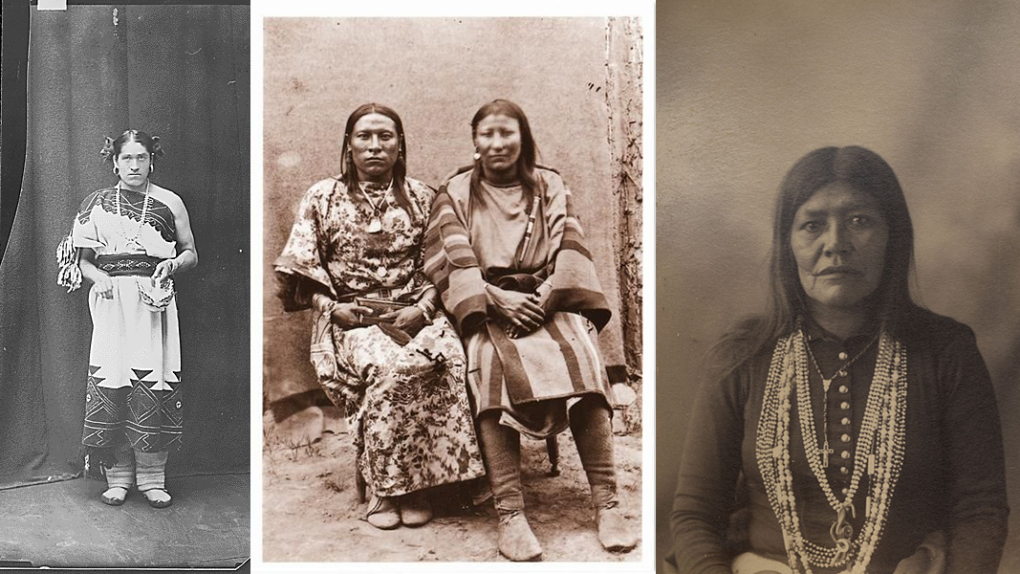
"caption": "We'wha (left), Osh-Tisch (center) and Dahteste (right). ",
"description": "We'wha (left), Osh-Tisch (center) and Dahteste (right). ",
"title": "two spirit cover image",
"credit": "John K. Hillers, Image Courtesy of: Smithsonian Institute/John H. Fouch/F.A. Rinehart, Image Courtsey of Omaha Public Library",
"status": "inherit",
"isLoading": false,
"fetchFailed": false
}
},
"audioPlayerReducer": {
"postId": "stream_live",
"isPaused": true,
"isPlaying": false,
"pfsActive": false,
"pledgeModalIsOpen": true,
"playerDrawerIsOpen": false,
"liveAudioPlayStartedAt": 0,
"liveAudioPlayContext": ""
},
"authorsReducer": {
"byline_arts_13863915": {
"type": "authors",
"id": "byline_arts_13863915",
"meta": {
"override": true
},
"slug": "byline_arts_13863915",
"name": "Emma Jacobs",
"isLoading": false
},
"byline_arts_13863681": {
"type": "authors",
"id": "byline_arts_13863681",
"meta": {
"override": true
},
"slug": "byline_arts_13863681",
"name": "Cory Turner",
"isLoading": false
},
"byline_arts_13863396": {
"type": "authors",
"id": "byline_arts_13863396",
"meta": {
"override": true
},
"slug": "byline_arts_13863396",
"name": "Hope Wabuke",
"isLoading": false
},
"byline_arts_13863277": {
"type": "authors",
"id": "byline_arts_13863277",
"meta": {
"override": true
},
"slug": "byline_arts_13863277",
"name": "Geoff Nunberg",
"isLoading": false
},
"byline_arts_13862425": {
"type": "authors",
"id": "byline_arts_13862425",
"meta": {
"override": true
},
"slug": "byline_arts_13862425",
"name": "Domenico Montanaro",
"isLoading": false
},
"byline_arts_13862313": {
"type": "authors",
"id": "byline_arts_13862313",
"meta": {
"override": true
},
"slug": "byline_arts_13862313",
"name": "Russell Contreras and Sally Ho, Associated Press",
"isLoading": false
},
"byline_arts_13862182": {
"type": "authors",
"id": "byline_arts_13862182",
"meta": {
"override": true
},
"slug": "byline_arts_13862182",
"name": "Nina Totenberg",
"isLoading": false
},
"byline_arts_13861567": {
"type": "authors",
"id": "byline_arts_13861567",
"meta": {
"override": true
},
"slug": "byline_arts_13861567",
"name": "Etelka Lehoczky",
"isLoading": false
},
"byline_arts_13861527": {
"type": "authors",
"id": "byline_arts_13861527",
"meta": {
"override": true
},
"slug": "byline_arts_13861527",
"name": "Colin Dwyer, Andrew Limbong",
"isLoading": false
},
"byline_arts_13845330": {
"type": "authors",
"id": "byline_arts_13845330",
"meta": {
"override": true
},
"slug": "byline_arts_13845330",
"name": "Samuel White Swan-Perkins",
"isLoading": false
},
"ralexandra": {
"type": "authors",
"id": "11242",
"meta": {
"index": "authors_1716337520",
"id": "11242",
"found": true
},
"name": "Rae Alexandra",
"firstName": "Rae",
"lastName": "Alexandra",
"slug": "ralexandra",
"email": "ralexandra@kqed.org",
"display_author_email": true,
"staff_mastheads": [],
"title": "Reporter/Producer",
"bio": "Rae Alexandra is a Reporter/Producer for KQED Arts & Culture, and the creator/author of the \u003ca href=\"https://www.kqed.org/arts/program/rebel-girls-from-bay-area-history\">Rebel Girls From Bay Area History\u003c/a> and \u003ca href=\"https://www.kqed.org/bizarrebayarea\">Bizarre Bay Area\u003c/a> series. Her debut book, \u003ca href=\"https://citylights.com/politics-current-events-history/unsung-heroines35-women-who-changed/\">Unsung Heroines: 35 Women Who Changed the Bay Area\u003c/a> was published by City Lights in March 2026. In 2023, Rae was awarded an SPJ Excellence in Journalism Award for Arts & Culture. Rae was born and raised in Wales and subsequently — even after two decades in Northern California — still uses phrases that regularly baffle her coworkers.",
"avatar": "https://secure.gravatar.com/avatar/edfee8176c80cc0a382b051190f5341997df378a934a5774dcb0977732dfd401?s=600&d=blank&r=g",
"twitter": null,
"bluesky": null,
"facebook": null,
"instagram": null,
"linkedin": null,
"sites": [
{
"site": "arts",
"roles": [
"subscriber"
]
},
{
"site": "news",
"roles": [
"subscriber"
]
},
{
"site": "pop",
"roles": [
"subscriber"
]
},
{
"site": "bayareabites",
"roles": [
"subscriber"
]
},
{
"site": "science",
"roles": [
"subscriber"
]
}
],
"headData": {
"title": "Rae Alexandra | KQED",
"description": "Reporter/Producer",
"ogImgSrc": "https://secure.gravatar.com/avatar/edfee8176c80cc0a382b051190f5341997df378a934a5774dcb0977732dfd401?s=600&d=blank&r=g",
"twImgSrc": "https://secure.gravatar.com/avatar/edfee8176c80cc0a382b051190f5341997df378a934a5774dcb0977732dfd401?s=600&d=blank&r=g"
},
"isLoading": false,
"link": "/author/ralexandra"
}
},
"pagesReducer": {
"arts_category_history": {
"type": "terms",
"id": "arts_7862",
"meta": {
"index": "terms_1716263798",
"site": "arts",
"id": "7862",
"score": 12.208633
},
"featImg": null,
"name": "History",
"description": null,
"taxonomy": "category",
"headData": {
"twImgId": null,
"twTitle": null,
"ogTitle": null,
"ogImgId": null,
"twDescription": null,
"description": null,
"title": "History Archives | KQED Arts",
"ogDescription": null
},
"ttid": 7874,
"slug": "history",
"isLoading": false,
"title": "History",
"pageMeta": {
"site": "arts",
"WpPageTemplate": "page-topic-editorial",
"currentPage": 33
},
"blocks": [
{
"blockName": "kqed/post-list",
"attrs": {
"layout": "cardArticle2",
"query": "posts/arts?category=history",
"seeMore": false,
"paginated": true,
"page": 33
}
},
{
"blockName": "kqed/ad"
}
]
}
},
"pfsSessionReducer": {},
"postsReducer": {
"stream_live": {
"type": "live",
"id": "stream_live",
"audioUrl": "https://streams.kqed.org/kqedradio",
"title": "Live Stream",
"excerpt": "Live Stream information currently unavailable.",
"link": "/radio",
"featImg": "",
"label": {
"name": "KQED Live",
"link": "/"
}
},
"stream_kqedNewscast": {
"type": "posts",
"id": "stream_kqedNewscast",
"audioUrl": "https://www.kqed.org/.stream/anon/radio/RDnews/newscast.mp3?_=1",
"title": "KQED Newscast",
"featImg": "",
"label": {
"name": "88.5 FM",
"link": "/"
}
},
"arts_13863411": {
"type": "posts",
"id": "arts_13863411",
"meta": {
"index": "posts_1716263798",
"site": "arts",
"id": "13863411",
"score": null,
"sort": [
1565786715000
]
},
"parent": 0,
"labelTerm": {
"site": "arts"
},
"blocks": [],
"publishDate": 1565786715,
"format": "standard",
"title": "How One Brutal Children's Book From 1845 Left Permanent Marks on Pop Culture",
"headTitle": "How One Brutal Children’s Book From 1845 Left Permanent Marks on Pop Culture | KQED",
"content": "\u003cp>It’s a collection of children’s stories so brutal, it almost outdoes the Brothers Grimm.\u003c/p>\n\u003cp>The tales of \u003cem>Der Struwwelpeter\u003c/em> by Heinrich Hoffman are short, sharp, shocking, and they’ve left a surprisingly deep mark on culture, even though most living Americans have never read them. Today, the astonishing content of \u003cem>Der Struwwelpeter\u003c/em> hasn’t only irreversibly impacted children’s literature—its influence can still be seen in movies, cartoons, TV shows, and a wealth of parodies.\u003c/p>\n\u003cfigure id=\"attachment_13863801\" class=\"wp-caption alignright\" style=\"max-width: 132px\">\u003cimg loading=\"lazy\" decoding=\"async\" class=\"size-full wp-image-13863801\" src=\"https://ww2.kqed.org/arts/wp-content/uploads/sites/2/2019/08/harriet.three_.thm_.jpg\" alt='\"The Dreadful Story of Harriet and the Matches.\"' width=\"132\" height=\"186\">\u003cfigcaption class=\"wp-caption-text\">‘The Dreadful Story of Harriet and the Matches.’\u003c/figcaption>\u003c/figure>\n\u003cp>To give you some idea of the savagery of the 10 stories in the 1845 collection, consider “The Dreadful Story of Harriet and the Matches,” about a little girl who accidentally sets herself on fire and burns to death while her pet cats watch. Then there’s “The Story of Little Suck-a-Thumb,” about a boy named Conrad who refuses to stop sucking his thumbs and subsequently watches them both severed by a creepy, long-legged home-invader.\u003c/p>\n\u003cp>In between are tales of comeuppance for characters committing surprisingly graphic animal cruelty (“Cruel Frederick”), racist harassment (“The Story of the Inky Boys” is definitely not woke by 2019 standards, but was considered progressive at the time), and the apparent dastardly sin of not watching where you’re going (“The Story of Johnny Head-in-Air”). In others, one little boy refuses to eat soup for a few days and subsequently starves to death, and another insists on going out for a walk in the rain and flies away in a storm, never to be seen again.\u003c/p>\n\u003cp>Despite the smörgåsbord of searing imagery in the book, the one that seems to stick most with people is that of “Shock-Headed Peter”—the \u003cem>Der Struwwelpeter\u003c/em> of the book’s title. Peter is a little boy publicly humiliated by his own slovenliness. He is depicted as crying and alone “with his nasty hair and hands.” Peter, especially out of context, is pretty damn scary.\u003c/p>\n\u003cfigure id=\"attachment_13863713\" class=\"wp-caption aligncenter\" style=\"max-width: 450px\">\u003cimg loading=\"lazy\" decoding=\"async\" class=\"size-full wp-image-13863713\" src=\"https://ww2.kqed.org/arts/wp-content/uploads/sites/2/2019/08/cf153154-d80c-11e6-8f8f-b8b9aedb36b4.jpg\" alt=\"Shock-Headed Peter, of 'Der Struwwelpeter'.\" width=\"450\" height=\"470\" srcset=\"https://cdn.kqed.org/wp-content/uploads/sites/2/2019/08/cf153154-d80c-11e6-8f8f-b8b9aedb36b4.jpg 450w, https://cdn.kqed.org/wp-content/uploads/sites/2/2019/08/cf153154-d80c-11e6-8f8f-b8b9aedb36b4-160x167.jpg 160w\" sizes=\"(max-width: 450px) 100vw, 450px\">\u003cfigcaption class=\"wp-caption-text\">Shock-Headed Peter, of ‘Der Struwwelpeter’.\u003c/figcaption>\u003c/figure>\n\u003cp>My introduction to\u003cem> Der Struwwelpeter\u003c/em> occurred purely because of this image, which I recently encountered on the sixth floor of the San Francisco Public Library, hanging in the SF History room. The panel featuring Peter’s image was created for the library’s 100th anniversary last year, and still regularly causes a stir. One librarian informed me that a woman recently walked into the room, saw Peter, screamed, then shouted “Get that thing out of here!”\u003c/p>\n\u003cp>[ad fullwidth]\u003c/p>\n\u003cp>It’s a response that might have appalled Heinrich Hoffman. Not only did the German physician originally write the collection for his 3-year-old son, he did so because he wanted his child to have something more light-hearted and humorous than anything else that was available at the time. (Hoffman originally titled the book \u003cem>Funny Stories and Droll Pictures… For Children Ages 3–6\u003c/em>.)\u003c/p>\n\u003cp>In the book \u003ca href=\"https://www.amazon.com/Struwwelpeter-Humor-Horror-Years-Later/dp/0739116649\" target=\"_blank\" rel=\"noopener\">\u003cem>Struwwelpeter: Humor or Horror?\u003c/em>\u003c/a> Barbara Smith Chalou explains:\u003c/p>\n\u003cblockquote>\u003cp>“Prior to the 1866 publication of Lewis Carroll’s landmark ‘\u003cem>Alice in Wonderland’ \u003c/em>… most Western children’s books were limited to instruction manuals, Bible passages, moral fables or cautionary tales … In ‘\u003cem>Der Struwwelpeter\u003c/em>,’ we find an intriguing mix of traditional elements with … certain components that were dramatically different than anything previously seen in children’s books. For example, [Hoffman’s] … brightly colored pictures… Nothing resembling this had existed on the market prior to 1845, the date of publication.”\u003c/p>\u003c/blockquote>\n\u003cp>\u003cem>Der Struwwelpeter, \u003c/em>then, was one of the world’s first picture books, which is why it quickly warranted \u003ca href=\"https://www.nypl.org/blog/2013/05/15/influence-struwwelpeter\">35 translations\u003c/a>—one of which was done \u003ca href=\"https://germanstories.vcu.edu/struwwel/twpete.html\" target=\"_blank\" rel=\"noopener\">by Mark Twain\u003c/a> in 1891—and helped to permanently transform how children’s entertainment was presented and enjoyed. What’s more, despite the inherent horror, its visuals have proved timeless. Without \u003cem>Der Struwwelpeter’\u003c/em>s “The Story of the Man That Went Out Shooting,” in which a hapless hunter has his gun turned on him by a wily hare, there is a good chance that Looney Toons might never have thought to give us a war between Elmer Fudd and Bugs Bunny.\u003c/p>\n\u003cp>It’s impossible not to see the parallels:\u003c/p>\n\u003cfigure id=\"attachment_13863825\" class=\"wp-caption aligncenter\" style=\"max-width: 400px\">\u003cimg loading=\"lazy\" decoding=\"async\" class=\"size-full wp-image-13863825\" src=\"https://ww2.kqed.org/arts/wp-content/uploads/sites/2/2019/08/014-1.jpg\" alt=\""The Story of the Man That Went Out Shooting" from 'Der Struwwelpeter.'\" width=\"400\" height=\"311\" srcset=\"https://cdn.kqed.org/wp-content/uploads/sites/2/2019/08/014-1.jpg 400w, https://cdn.kqed.org/wp-content/uploads/sites/2/2019/08/014-1-160x124.jpg 160w\" sizes=\"(max-width: 400px) 100vw, 400px\">\u003cfigcaption class=\"wp-caption-text\">“The Story of the Man That Went Out Shooting” from ‘Der Struwwelpeter.’\u003c/figcaption>\u003c/figure>\n\u003cfigure id=\"attachment_13863826\" class=\"wp-caption aligncenter\" style=\"max-width: 374px\">\u003cimg loading=\"lazy\" decoding=\"async\" class=\"size-full wp-image-13863826\" src=\"https://ww2.kqed.org/arts/wp-content/uploads/sites/2/2019/08/elmer_fudd_bugs_bunny.jpg\" alt=\"Elmer Fudd and Bugs Bunny in a battle of wits.\" width=\"374\" height=\"282\" srcset=\"https://cdn.kqed.org/wp-content/uploads/sites/2/2019/08/elmer_fudd_bugs_bunny.jpg 374w, https://cdn.kqed.org/wp-content/uploads/sites/2/2019/08/elmer_fudd_bugs_bunny-160x121.jpg 160w\" sizes=\"(max-width: 374px) 100vw, 374px\">\u003cfigcaption class=\"wp-caption-text\">Elmer Fudd and Bugs Bunny in a battle of wits. \u003ccite>(Looney Tunes)\u003c/cite>\u003c/figcaption>\u003c/figure>\n\u003cp>The dark humor inherent in \u003cem>Der Struwwelpeter\u003c/em> is also credited with directly influencing the work of beloved children’s authors including Roald Dahl, Lemony Snicket and Maurice Sendak—who once called \u003cem>Der Struwwelpeter\u003c/em> “one of the most beautiful books in the world.” When illustrator Bob Staake\u003ca href=\"https://www.npr.org/books/authors/138353746/bob-staake\" target=\"_blank\" rel=\"noopener\"> created his own version\u003c/a> in 2006, he said: “When I was given the book as a kid, I didn’t know if it was a joke or not, but my German parents weren’t laughing. The illustrations and stories just \u003ca href=\"https://bobstaake.com/struwwelpeter/artist.shtml\" target=\"_blank\" rel=\"noopener\">creeped me out\u003c/a> beyond words.”\u003c/p>\n\u003cp>Staake isn’t the only one—gothic artists Edward Gorey and Tim Burton are said to be heavily influenced too\u003ca href=\"https://www.npr.org/books/authors/138353746/bob-staake\" target=\"_blank\" rel=\"noopener\">.\u003c/a> When The Tiger Lillies toured their \u003ca href=\"https://observer.com/1999/11/your-thumbs-during-shockheaded-peter/\" target=\"_blank\" rel=\"noopener\">“junk opera,” \u003cem>Shockheaded Peter,\u003c/em>\u003c/a> in the ’90s, it was the aesthetics of Tim Burton that critics most commonly referenced in order to paint a picture for readers. Is it any wonder when Burton’s Edward Scissorhands bears such a striking resemblance to Shock-Headed Peter?\u003c/p>\n\u003cfigure id=\"attachment_13863857\" class=\"wp-caption aligncenter\" style=\"max-width: 800px\">\u003cimg loading=\"lazy\" decoding=\"async\" class=\"wp-image-13863857 size-medium\" src=\"https://ww2.kqed.org/arts/wp-content/uploads/sites/2/2019/08/scissorhands-800x743.jpg\" alt=\"Edward Scissorhands bears a striking resemblance to Shock-Headed Peter.\" width=\"800\" height=\"743\" srcset=\"https://cdn.kqed.org/wp-content/uploads/sites/2/2019/08/scissorhands-800x743.jpg 800w, https://cdn.kqed.org/wp-content/uploads/sites/2/2019/08/scissorhands-160x149.jpg 160w, https://cdn.kqed.org/wp-content/uploads/sites/2/2019/08/scissorhands-768x713.jpg 768w, https://cdn.kqed.org/wp-content/uploads/sites/2/2019/08/scissorhands-1020x947.jpg 1020w, https://cdn.kqed.org/wp-content/uploads/sites/2/2019/08/scissorhands-1200x1114.jpg 1200w, https://cdn.kqed.org/wp-content/uploads/sites/2/2019/08/scissorhands-1920x1782.jpg 1920w, https://cdn.kqed.org/wp-content/uploads/sites/2/2019/08/scissorhands.jpg 2048w\" sizes=\"(max-width: 800px) 100vw, 800px\">\u003cfigcaption class=\"wp-caption-text\">Edward Scissorhands bears a striking resemblance to Shock-Headed Peter.\u003c/figcaption>\u003c/figure>\n\u003cp>The macabre elements of the book have also been repeatedly referenced in both music—Rammstein’s \u003ca href=\"https://www.youtube.com/watch?v=-ButQO2fi4I\">“Hilf Mir”\u003c/a> is based on “Harriet and the Matches,” and the XTC track \u003ca href=\"https://www.youtube.com/watch?v=oqA28wFRvHA\">“Scissor Man”\u003c/a> is a direct reference to the thumb-severer—and in TV comedy, most notably with references to “The Story of Little Suck-a-Thumb” showing up \u003cem>Doctor Who\u003c/em>, \u003ca href=\"https://www.youtube.com/watch?v=OeIi4ni1LvY\">\u003cem>The Office\u003c/em>\u003c/a> and, most hilariously, \u003cem>Family Guy\u003c/em>.\u003c/p>\n\u003cp>https://www.youtube.com/watch?v=khOIOHcw4PI\u003c/p>\n\u003cp>\u003cem>Der Struwwelpeter\u003c/em>‘s historical influence runs even deeper. During World War II, the allies used the book to make fun of the Third Reich repeatedly, with one \u003ca href=\"http://parridigit.istitutoparri.eu/public/multimediale/1/Monografie/multimedia_source/STR/UW/STRUWWELHITLER.pdf\" target=\"_blank\" rel=\"noopener\">version by Robert and Peter Spence\u003c/a> transforming “Struwwelpeter” into “Struwwelhitler,” and “Cruel Frederick” into “Cruel Adolph.”\u003c/p>\n\u003cp>Another piece of historical satire came in 1975 with \u003ca href=\"https://www.amazon.com/Tricky-Dick-his-pals-Struwwelpeter/dp/0812904451\" target=\"_blank\" rel=\"noopener\">\u003cem>Tricky Dick and His Pals\u003c/em>\u003c/a>, designed to pointedly make a mockery of the Nixon administration. It opens with the lines “Look at this child, so clean and slick. He’s called Obnoxious Tricky Dick! He’d lie and cheat and hit and steal, and wouldn’t care how bad you’d feel,” and stories within the collection see Nixon getting bitten by a dog and shooting himself with his own gun.\u003c/p>\n\u003cfigure id=\"attachment_13863813\" class=\"wp-caption alignnone\" style=\"max-width: 800px\">\u003cimg loading=\"lazy\" decoding=\"async\" class=\"wp-image-13863813 size-medium\" src=\"https://ww2.kqed.org/arts/wp-content/uploads/sites/2/2019/08/hitler-dick-800x495.jpg\" alt=\"L: Robert and Philip Spence's war-time parody. R: 1974's 'Tricky Dick and his pals: Comical stories, all in the manner of Dr. Heinrich Hoffmann's Der Struwwelpeter' by Joseph Wortis.\" width=\"800\" height=\"495\" srcset=\"https://cdn.kqed.org/wp-content/uploads/sites/2/2019/08/hitler-dick-800x495.jpg 800w, https://cdn.kqed.org/wp-content/uploads/sites/2/2019/08/hitler-dick-160x99.jpg 160w, https://cdn.kqed.org/wp-content/uploads/sites/2/2019/08/hitler-dick-768x475.jpg 768w, https://cdn.kqed.org/wp-content/uploads/sites/2/2019/08/hitler-dick-1020x631.jpg 1020w, https://cdn.kqed.org/wp-content/uploads/sites/2/2019/08/hitler-dick-1200x743.jpg 1200w, https://cdn.kqed.org/wp-content/uploads/sites/2/2019/08/hitler-dick-1920x1188.jpg 1920w, https://cdn.kqed.org/wp-content/uploads/sites/2/2019/08/hitler-dick.jpg 2048w\" sizes=\"(max-width: 800px) 100vw, 800px\">\u003cfigcaption class=\"wp-caption-text\">L: Robert and Philip Spence’s war-time parody. R: 1974’s ‘Tricky Dick and his pals: Comical stories, all in the manner of Dr. Heinrich Hoffmann’s Der Struwwelpeter’ by Joseph Wortis.\u003c/figcaption>\u003c/figure>\n\u003cp>[ad floatright]\u003c/p>\n\u003cp>\u003cem>Der Struwwelpeter\u003c/em> is still incredibly easy to find today, whether that be in the form of the original book, updated \u003ca href=\"https://www.youtube.com/watch?v=p3QyMA-Pmk4\">animations\u003c/a> that tell the traditional stories, or in the influence it has left behind on other people’s creations. Whether or not it remains appropriate reading for modern-day children remains to be seen, but those that grew up with it are left with vivid memories. “My grandparents had a copy when I was a kid,” KQED’s Senior Social Media Strategist, Carly Severn, recently told me, smile quickly turning to a grimace. “It scared the everloving \u003cem>scheisse\u003c/em> out of me.”\u003c/p>\n\n",
"stats": {
"hasVideo": true,
"hasChartOrMap": false,
"hasAudio": false,
"hasPolis": false,
"wordCount": 1356,
"hasGoogleForm": false,
"hasGallery": false,
"hasHearkenModule": false,
"iframeSrcs": [],
"paragraphCount": 19
},
"modified": 1705022328,
"excerpt": "Despite 1845's 'Der Struwwelpeter' being full of short, sharp shocks, there are still elements of it left behind in today's entertainment for children—and adults.",
"headData": {
"twImgId": "",
"twTitle": "",
"ogTitle": "",
"ogImgId": "",
"twDescription": "",
"description": "Despite 1845's 'Der Struwwelpeter' being full of short, sharp shocks, there are still elements of it left behind in today's entertainment for children—and adults.",
"title": "How One Brutal Children's Book From 1845 Left Permanent Marks on Pop Culture | KQED",
"ogDescription": "",
"schema": {
"@context": "https://schema.org",
"@type": "Article",
"headline": "How One Brutal Children's Book From 1845 Left Permanent Marks on Pop Culture",
"datePublished": "2019-08-14T05:45:15-07:00",
"dateModified": "2024-01-11T17:18:48-08:00",
"image": "https://cdn.kqed.org/wp-content/uploads/2020/02/KQED-OG-Image@1x.png"
}
},
"guestAuthors": [],
"slug": "how-one-brutal-childrens-book-from-1845-left-permanent-marks-on-pop-culture",
"status": "publish",
"templateType": "standard",
"featuredImageType": "standard",
"sticky": false,
"path": "/arts/13863411/how-one-brutal-childrens-book-from-1845-left-permanent-marks-on-pop-culture",
"audioTrackLength": null,
"parsedContent": [
{
"type": "contentString",
"content": "\u003cdiv class=\"post-body\">\u003cp>\u003cp>It’s a collection of children’s stories so brutal, it almost outdoes the Brothers Grimm.\u003c/p>\n\u003cp>The tales of \u003cem>Der Struwwelpeter\u003c/em> by Heinrich Hoffman are short, sharp, shocking, and they’ve left a surprisingly deep mark on culture, even though most living Americans have never read them. Today, the astonishing content of \u003cem>Der Struwwelpeter\u003c/em> hasn’t only irreversibly impacted children’s literature—its influence can still be seen in movies, cartoons, TV shows, and a wealth of parodies.\u003c/p>\n\u003cfigure id=\"attachment_13863801\" class=\"wp-caption alignright\" style=\"max-width: 132px\">\u003cimg loading=\"lazy\" decoding=\"async\" class=\"size-full wp-image-13863801\" src=\"https://ww2.kqed.org/arts/wp-content/uploads/sites/2/2019/08/harriet.three_.thm_.jpg\" alt='\"The Dreadful Story of Harriet and the Matches.\"' width=\"132\" height=\"186\">\u003cfigcaption class=\"wp-caption-text\">‘The Dreadful Story of Harriet and the Matches.’\u003c/figcaption>\u003c/figure>\n\u003cp>To give you some idea of the savagery of the 10 stories in the 1845 collection, consider “The Dreadful Story of Harriet and the Matches,” about a little girl who accidentally sets herself on fire and burns to death while her pet cats watch. Then there’s “The Story of Little Suck-a-Thumb,” about a boy named Conrad who refuses to stop sucking his thumbs and subsequently watches them both severed by a creepy, long-legged home-invader.\u003c/p>\n\u003cp>In between are tales of comeuppance for characters committing surprisingly graphic animal cruelty (“Cruel Frederick”), racist harassment (“The Story of the Inky Boys” is definitely not woke by 2019 standards, but was considered progressive at the time), and the apparent dastardly sin of not watching where you’re going (“The Story of Johnny Head-in-Air”). In others, one little boy refuses to eat soup for a few days and subsequently starves to death, and another insists on going out for a walk in the rain and flies away in a storm, never to be seen again.\u003c/p>\n\u003cp>Despite the smörgåsbord of searing imagery in the book, the one that seems to stick most with people is that of “Shock-Headed Peter”—the \u003cem>Der Struwwelpeter\u003c/em> of the book’s title. Peter is a little boy publicly humiliated by his own slovenliness. He is depicted as crying and alone “with his nasty hair and hands.” Peter, especially out of context, is pretty damn scary.\u003c/p>\n\u003cfigure id=\"attachment_13863713\" class=\"wp-caption aligncenter\" style=\"max-width: 450px\">\u003cimg loading=\"lazy\" decoding=\"async\" class=\"size-full wp-image-13863713\" src=\"https://ww2.kqed.org/arts/wp-content/uploads/sites/2/2019/08/cf153154-d80c-11e6-8f8f-b8b9aedb36b4.jpg\" alt=\"Shock-Headed Peter, of 'Der Struwwelpeter'.\" width=\"450\" height=\"470\" srcset=\"https://cdn.kqed.org/wp-content/uploads/sites/2/2019/08/cf153154-d80c-11e6-8f8f-b8b9aedb36b4.jpg 450w, https://cdn.kqed.org/wp-content/uploads/sites/2/2019/08/cf153154-d80c-11e6-8f8f-b8b9aedb36b4-160x167.jpg 160w\" sizes=\"(max-width: 450px) 100vw, 450px\">\u003cfigcaption class=\"wp-caption-text\">Shock-Headed Peter, of ‘Der Struwwelpeter’.\u003c/figcaption>\u003c/figure>\n\u003cp>My introduction to\u003cem> Der Struwwelpeter\u003c/em> occurred purely because of this image, which I recently encountered on the sixth floor of the San Francisco Public Library, hanging in the SF History room. The panel featuring Peter’s image was created for the library’s 100th anniversary last year, and still regularly causes a stir. One librarian informed me that a woman recently walked into the room, saw Peter, screamed, then shouted “Get that thing out of here!”\u003c/p>\n\u003cp>\u003c/p>\u003c/div>",
"attributes": {
"named": {},
"numeric": []
}
},
{
"type": "component",
"content": "",
"name": "ad",
"attributes": {
"named": {
"label": "fullwidth"
},
"numeric": [
"fullwidth"
]
}
},
{
"type": "contentString",
"content": "\u003cdiv class=\"post-body\">\u003cp>\u003c/p>\n\u003cp>It’s a response that might have appalled Heinrich Hoffman. Not only did the German physician originally write the collection for his 3-year-old son, he did so because he wanted his child to have something more light-hearted and humorous than anything else that was available at the time. (Hoffman originally titled the book \u003cem>Funny Stories and Droll Pictures… For Children Ages 3–6\u003c/em>.)\u003c/p>\n\u003cp>In the book \u003ca href=\"https://www.amazon.com/Struwwelpeter-Humor-Horror-Years-Later/dp/0739116649\" target=\"_blank\" rel=\"noopener\">\u003cem>Struwwelpeter: Humor or Horror?\u003c/em>\u003c/a> Barbara Smith Chalou explains:\u003c/p>\n\u003cblockquote>\u003cp>“Prior to the 1866 publication of Lewis Carroll’s landmark ‘\u003cem>Alice in Wonderland’ \u003c/em>… most Western children’s books were limited to instruction manuals, Bible passages, moral fables or cautionary tales … In ‘\u003cem>Der Struwwelpeter\u003c/em>,’ we find an intriguing mix of traditional elements with … certain components that were dramatically different than anything previously seen in children’s books. For example, [Hoffman’s] … brightly colored pictures… Nothing resembling this had existed on the market prior to 1845, the date of publication.”\u003c/p>\u003c/blockquote>\n\u003cp>\u003cem>Der Struwwelpeter, \u003c/em>then, was one of the world’s first picture books, which is why it quickly warranted \u003ca href=\"https://www.nypl.org/blog/2013/05/15/influence-struwwelpeter\">35 translations\u003c/a>—one of which was done \u003ca href=\"https://germanstories.vcu.edu/struwwel/twpete.html\" target=\"_blank\" rel=\"noopener\">by Mark Twain\u003c/a> in 1891—and helped to permanently transform how children’s entertainment was presented and enjoyed. What’s more, despite the inherent horror, its visuals have proved timeless. Without \u003cem>Der Struwwelpeter’\u003c/em>s “The Story of the Man That Went Out Shooting,” in which a hapless hunter has his gun turned on him by a wily hare, there is a good chance that Looney Toons might never have thought to give us a war between Elmer Fudd and Bugs Bunny.\u003c/p>\n\u003cp>It’s impossible not to see the parallels:\u003c/p>\n\u003cfigure id=\"attachment_13863825\" class=\"wp-caption aligncenter\" style=\"max-width: 400px\">\u003cimg loading=\"lazy\" decoding=\"async\" class=\"size-full wp-image-13863825\" src=\"https://ww2.kqed.org/arts/wp-content/uploads/sites/2/2019/08/014-1.jpg\" alt=\""The Story of the Man That Went Out Shooting" from 'Der Struwwelpeter.'\" width=\"400\" height=\"311\" srcset=\"https://cdn.kqed.org/wp-content/uploads/sites/2/2019/08/014-1.jpg 400w, https://cdn.kqed.org/wp-content/uploads/sites/2/2019/08/014-1-160x124.jpg 160w\" sizes=\"(max-width: 400px) 100vw, 400px\">\u003cfigcaption class=\"wp-caption-text\">“The Story of the Man That Went Out Shooting” from ‘Der Struwwelpeter.’\u003c/figcaption>\u003c/figure>\n\u003cfigure id=\"attachment_13863826\" class=\"wp-caption aligncenter\" style=\"max-width: 374px\">\u003cimg loading=\"lazy\" decoding=\"async\" class=\"size-full wp-image-13863826\" src=\"https://ww2.kqed.org/arts/wp-content/uploads/sites/2/2019/08/elmer_fudd_bugs_bunny.jpg\" alt=\"Elmer Fudd and Bugs Bunny in a battle of wits.\" width=\"374\" height=\"282\" srcset=\"https://cdn.kqed.org/wp-content/uploads/sites/2/2019/08/elmer_fudd_bugs_bunny.jpg 374w, https://cdn.kqed.org/wp-content/uploads/sites/2/2019/08/elmer_fudd_bugs_bunny-160x121.jpg 160w\" sizes=\"(max-width: 374px) 100vw, 374px\">\u003cfigcaption class=\"wp-caption-text\">Elmer Fudd and Bugs Bunny in a battle of wits. \u003ccite>(Looney Tunes)\u003c/cite>\u003c/figcaption>\u003c/figure>\n\u003cp>The dark humor inherent in \u003cem>Der Struwwelpeter\u003c/em> is also credited with directly influencing the work of beloved children’s authors including Roald Dahl, Lemony Snicket and Maurice Sendak—who once called \u003cem>Der Struwwelpeter\u003c/em> “one of the most beautiful books in the world.” When illustrator Bob Staake\u003ca href=\"https://www.npr.org/books/authors/138353746/bob-staake\" target=\"_blank\" rel=\"noopener\"> created his own version\u003c/a> in 2006, he said: “When I was given the book as a kid, I didn’t know if it was a joke or not, but my German parents weren’t laughing. The illustrations and stories just \u003ca href=\"https://bobstaake.com/struwwelpeter/artist.shtml\" target=\"_blank\" rel=\"noopener\">creeped me out\u003c/a> beyond words.”\u003c/p>\n\u003cp>Staake isn’t the only one—gothic artists Edward Gorey and Tim Burton are said to be heavily influenced too\u003ca href=\"https://www.npr.org/books/authors/138353746/bob-staake\" target=\"_blank\" rel=\"noopener\">.\u003c/a> When The Tiger Lillies toured their \u003ca href=\"https://observer.com/1999/11/your-thumbs-during-shockheaded-peter/\" target=\"_blank\" rel=\"noopener\">“junk opera,” \u003cem>Shockheaded Peter,\u003c/em>\u003c/a> in the ’90s, it was the aesthetics of Tim Burton that critics most commonly referenced in order to paint a picture for readers. Is it any wonder when Burton’s Edward Scissorhands bears such a striking resemblance to Shock-Headed Peter?\u003c/p>\n\u003cfigure id=\"attachment_13863857\" class=\"wp-caption aligncenter\" style=\"max-width: 800px\">\u003cimg loading=\"lazy\" decoding=\"async\" class=\"wp-image-13863857 size-medium\" src=\"https://ww2.kqed.org/arts/wp-content/uploads/sites/2/2019/08/scissorhands-800x743.jpg\" alt=\"Edward Scissorhands bears a striking resemblance to Shock-Headed Peter.\" width=\"800\" height=\"743\" srcset=\"https://cdn.kqed.org/wp-content/uploads/sites/2/2019/08/scissorhands-800x743.jpg 800w, https://cdn.kqed.org/wp-content/uploads/sites/2/2019/08/scissorhands-160x149.jpg 160w, https://cdn.kqed.org/wp-content/uploads/sites/2/2019/08/scissorhands-768x713.jpg 768w, https://cdn.kqed.org/wp-content/uploads/sites/2/2019/08/scissorhands-1020x947.jpg 1020w, https://cdn.kqed.org/wp-content/uploads/sites/2/2019/08/scissorhands-1200x1114.jpg 1200w, https://cdn.kqed.org/wp-content/uploads/sites/2/2019/08/scissorhands-1920x1782.jpg 1920w, https://cdn.kqed.org/wp-content/uploads/sites/2/2019/08/scissorhands.jpg 2048w\" sizes=\"(max-width: 800px) 100vw, 800px\">\u003cfigcaption class=\"wp-caption-text\">Edward Scissorhands bears a striking resemblance to Shock-Headed Peter.\u003c/figcaption>\u003c/figure>\n\u003cp>The macabre elements of the book have also been repeatedly referenced in both music—Rammstein’s \u003ca href=\"https://www.youtube.com/watch?v=-ButQO2fi4I\">“Hilf Mir”\u003c/a> is based on “Harriet and the Matches,” and the XTC track \u003ca href=\"https://www.youtube.com/watch?v=oqA28wFRvHA\">“Scissor Man”\u003c/a> is a direct reference to the thumb-severer—and in TV comedy, most notably with references to “The Story of Little Suck-a-Thumb” showing up \u003cem>Doctor Who\u003c/em>, \u003ca href=\"https://www.youtube.com/watch?v=OeIi4ni1LvY\">\u003cem>The Office\u003c/em>\u003c/a> and, most hilariously, \u003cem>Family Guy\u003c/em>.\u003c/p>\u003c/p>\u003cp>\u003cspan class='utils-parseShortcode-shortcodes-__youtubeShortcode__embedYoutube'>\n \u003cspan class='utils-parseShortcode-shortcodes-__youtubeShortcode__embedYoutubeInside'>\n \u003ciframe\n loading='lazy'\n class='utils-parseShortcode-shortcodes-__youtubeShortcode__youtubePlayer'\n type='text/html'\n src='//www.youtube.com/embed/khOIOHcw4PI'\n title='//www.youtube.com/embed/khOIOHcw4PI'\n allowfullscreen='true'\n style='border:0;'>\u003c/iframe>\n \u003c/span>\n \u003c/span>\u003c/p>\u003cp>\u003cp>\u003cem>Der Struwwelpeter\u003c/em>‘s historical influence runs even deeper. During World War II, the allies used the book to make fun of the Third Reich repeatedly, with one \u003ca href=\"http://parridigit.istitutoparri.eu/public/multimediale/1/Monografie/multimedia_source/STR/UW/STRUWWELHITLER.pdf\" target=\"_blank\" rel=\"noopener\">version by Robert and Peter Spence\u003c/a> transforming “Struwwelpeter” into “Struwwelhitler,” and “Cruel Frederick” into “Cruel Adolph.”\u003c/p>\n\u003cp>Another piece of historical satire came in 1975 with \u003ca href=\"https://www.amazon.com/Tricky-Dick-his-pals-Struwwelpeter/dp/0812904451\" target=\"_blank\" rel=\"noopener\">\u003cem>Tricky Dick and His Pals\u003c/em>\u003c/a>, designed to pointedly make a mockery of the Nixon administration. It opens with the lines “Look at this child, so clean and slick. He’s called Obnoxious Tricky Dick! He’d lie and cheat and hit and steal, and wouldn’t care how bad you’d feel,” and stories within the collection see Nixon getting bitten by a dog and shooting himself with his own gun.\u003c/p>\n\u003cfigure id=\"attachment_13863813\" class=\"wp-caption alignnone\" style=\"max-width: 800px\">\u003cimg loading=\"lazy\" decoding=\"async\" class=\"wp-image-13863813 size-medium\" src=\"https://ww2.kqed.org/arts/wp-content/uploads/sites/2/2019/08/hitler-dick-800x495.jpg\" alt=\"L: Robert and Philip Spence's war-time parody. R: 1974's 'Tricky Dick and his pals: Comical stories, all in the manner of Dr. Heinrich Hoffmann's Der Struwwelpeter' by Joseph Wortis.\" width=\"800\" height=\"495\" srcset=\"https://cdn.kqed.org/wp-content/uploads/sites/2/2019/08/hitler-dick-800x495.jpg 800w, https://cdn.kqed.org/wp-content/uploads/sites/2/2019/08/hitler-dick-160x99.jpg 160w, https://cdn.kqed.org/wp-content/uploads/sites/2/2019/08/hitler-dick-768x475.jpg 768w, https://cdn.kqed.org/wp-content/uploads/sites/2/2019/08/hitler-dick-1020x631.jpg 1020w, https://cdn.kqed.org/wp-content/uploads/sites/2/2019/08/hitler-dick-1200x743.jpg 1200w, https://cdn.kqed.org/wp-content/uploads/sites/2/2019/08/hitler-dick-1920x1188.jpg 1920w, https://cdn.kqed.org/wp-content/uploads/sites/2/2019/08/hitler-dick.jpg 2048w\" sizes=\"(max-width: 800px) 100vw, 800px\">\u003cfigcaption class=\"wp-caption-text\">L: Robert and Philip Spence’s war-time parody. R: 1974’s ‘Tricky Dick and his pals: Comical stories, all in the manner of Dr. Heinrich Hoffmann’s Der Struwwelpeter’ by Joseph Wortis.\u003c/figcaption>\u003c/figure>\n\u003cp>\u003c/p>\u003c/div>",
"attributes": {
"named": {},
"numeric": []
}
},
{
"type": "component",
"content": "",
"name": "ad",
"attributes": {
"named": {
"label": "floatright"
},
"numeric": [
"floatright"
]
}
},
{
"type": "contentString",
"content": "\u003cdiv class=\"post-body\">\u003cp>\u003c/p>\n\u003cp>\u003cem>Der Struwwelpeter\u003c/em> is still incredibly easy to find today, whether that be in the form of the original book, updated \u003ca href=\"https://www.youtube.com/watch?v=p3QyMA-Pmk4\">animations\u003c/a> that tell the traditional stories, or in the influence it has left behind on other people’s creations. Whether or not it remains appropriate reading for modern-day children remains to be seen, but those that grew up with it are left with vivid memories. “My grandparents had a copy when I was a kid,” KQED’s Senior Social Media Strategist, Carly Severn, recently told me, smile quickly turning to a grimace. “It scared the everloving \u003cem>scheisse\u003c/em> out of me.”\u003c/p>\n\n\u003c/div>\u003c/p>",
"attributes": {
"named": {},
"numeric": []
}
}
],
"link": "/arts/13863411/how-one-brutal-childrens-book-from-1845-left-permanent-marks-on-pop-culture",
"authors": [
"11242"
],
"categories": [
"arts_73",
"arts_7862",
"arts_75"
],
"tags": [
"arts_928",
"arts_1683",
"arts_977"
],
"featImg": "arts_13863715",
"label": "arts"
},
"arts_13863952": {
"type": "posts",
"id": "arts_13863952",
"meta": {
"index": "posts_1716263798",
"site": "arts",
"id": "13863952",
"score": null,
"sort": [
1565736578000
]
},
"guestAuthors": [],
"slug": "heres-your-chance-to-see-and-transcribe-thousands-of-suffragist-letters",
"title": "Here's Your Chance to See (and Transcribe) Thousands of Suffragist Letters",
"publishDate": 1565736578,
"format": "standard",
"headTitle": "Here’s Your Chance to See (and Transcribe) Thousands of Suffragist Letters | KQED",
"labelTerm": {
"site": "arts"
},
"content": "\u003cp>If you’ve ever been curious about the day-to-day lives of America’s most beloved suffragists—their relationships to one another, how they spoke about the movement in private, and how they found strength in the struggle—the Library of Congress has a really special gift for you. Not only has it just uploaded its collection of letters, diaries and speeches by the likes of Susan B. Anthony, Elizabeth Cady Stanton and Anna E. Dickinson to the web, it’s \u003ca href=\"https://crowd.loc.gov/campaigns-topics/\" target=\"_blank\" rel=\"noopener\">asking for the public’s help in transcribing them\u003c/a>.\u003c/p>\n\u003cp>The idea behind the crowdsourcing project is to digitize these historic papers for future generations, make them easier to read, and facilitate the process of locating specific documents via simple word search. A brief glance at the pages demonstrates the current challenges associated with exploring them in their original state. (Turns out these legendary ladies were too busy smashing the patriarchy to dedicate more time to their penmanship.)\u003c/p>\n\u003cfigure id=\"attachment_13864019\" class=\"wp-caption aligncenter\" style=\"max-width: 1200px\">\u003cimg loading=\"lazy\" decoding=\"async\" src=\"https://ww2.kqed.org/arts/wp-content/uploads/sites/2/2019/08/ConstitutionNationalWomenSuffrage_1200.jpg\" alt=\"The Constitution of the National Women Suffrage Association and a 1872 letter from Susan B. Anthony, in the volume Correspondence, 1846-1905.\" width=\"1200\" height=\"773\" class=\"size-full wp-image-13864019\" srcset=\"https://cdn.kqed.org/wp-content/uploads/sites/2/2019/08/ConstitutionNationalWomenSuffrage_1200.jpg 1200w, https://cdn.kqed.org/wp-content/uploads/sites/2/2019/08/ConstitutionNationalWomenSuffrage_1200-160x103.jpg 160w, https://cdn.kqed.org/wp-content/uploads/sites/2/2019/08/ConstitutionNationalWomenSuffrage_1200-800x515.jpg 800w, https://cdn.kqed.org/wp-content/uploads/sites/2/2019/08/ConstitutionNationalWomenSuffrage_1200-768x495.jpg 768w, https://cdn.kqed.org/wp-content/uploads/sites/2/2019/08/ConstitutionNationalWomenSuffrage_1200-1020x657.jpg 1020w\" sizes=\"(max-width: 1200px) 100vw, 1200px\">\u003cfigcaption class=\"wp-caption-text\">The Constitution of the National Women Suffrage Association and a 1872 letter from Susan B. Anthony, in the volume Correspondence, 1846-1905. \u003ccite>(Courtesy of Library of Congress)\u003c/cite>\u003c/figcaption>\u003c/figure>\n\u003cfigure id=\"attachment_13864020\" class=\"wp-caption aligncenter\" style=\"max-width: 1200px\">\u003cimg loading=\"lazy\" decoding=\"async\" src=\"https://ww2.kqed.org/arts/wp-content/uploads/sites/2/2019/08/SusanBAnthonyDiary_1200.jpg\" alt=\"From Susan B. Anthony's papers, the first page of her 1873 diary.\" width=\"1200\" height=\"1042\" class=\"size-full wp-image-13864020\" srcset=\"https://cdn.kqed.org/wp-content/uploads/sites/2/2019/08/SusanBAnthonyDiary_1200.jpg 1200w, https://cdn.kqed.org/wp-content/uploads/sites/2/2019/08/SusanBAnthonyDiary_1200-160x139.jpg 160w, https://cdn.kqed.org/wp-content/uploads/sites/2/2019/08/SusanBAnthonyDiary_1200-800x695.jpg 800w, https://cdn.kqed.org/wp-content/uploads/sites/2/2019/08/SusanBAnthonyDiary_1200-768x667.jpg 768w, https://cdn.kqed.org/wp-content/uploads/sites/2/2019/08/SusanBAnthonyDiary_1200-1020x886.jpg 1020w\" sizes=\"(max-width: 1200px) 100vw, 1200px\">\u003cfigcaption class=\"wp-caption-text\">From Susan B. Anthony’s papers, the first page of her 1873 diary. \u003ccite>(Courtesy of Library of Congress)\u003c/cite>\u003c/figcaption>\u003c/figure>\n\u003cfigure id=\"attachment_13864021\" class=\"wp-caption aligncenter\" style=\"max-width: 1200px\">\u003cimg loading=\"lazy\" decoding=\"async\" src=\"https://ww2.kqed.org/arts/wp-content/uploads/sites/2/2019/08/SusanBAnthonyDiaryB_1200.jpg\" alt=\"Susan B. Anthony's diary entries for Jan. 20–21, 1877.\" width=\"1200\" height=\"953\" class=\"size-full wp-image-13864021\" srcset=\"https://cdn.kqed.org/wp-content/uploads/sites/2/2019/08/SusanBAnthonyDiaryB_1200.jpg 1200w, https://cdn.kqed.org/wp-content/uploads/sites/2/2019/08/SusanBAnthonyDiaryB_1200-160x127.jpg 160w, https://cdn.kqed.org/wp-content/uploads/sites/2/2019/08/SusanBAnthonyDiaryB_1200-800x635.jpg 800w, https://cdn.kqed.org/wp-content/uploads/sites/2/2019/08/SusanBAnthonyDiaryB_1200-768x610.jpg 768w, https://cdn.kqed.org/wp-content/uploads/sites/2/2019/08/SusanBAnthonyDiaryB_1200-1020x810.jpg 1020w\" sizes=\"(max-width: 1200px) 100vw, 1200px\">\u003cfigcaption class=\"wp-caption-text\">Susan B. Anthony’s diary entries for Jan. 20–21, 1877. \u003ccite>(Courtesy of Library of Congress)\u003c/cite>\u003c/figcaption>\u003c/figure>\n\u003cp>Currently, 2,820 volunteers are in the middle of working on 18,000 pages. They’ve already completed 6,781 of the documents, but there are more than 23,000 to go. You too can join in the task from the comfort of your own home, and feel like you’ve done your part for history. In their own time, suffragists asked for “Deeds, not words.” Finally, there’s a chance to give them both.\u003c/p>\n\u003cp>[ad fullwidth]\u003c/p>\u003cp>\u003c/p>\n",
"blocks": [],
"excerpt": "The Library of Congress has tens of thousands of pages from the diaries, letters and speeches of America's most beloved suffragists—and it needs your help to transcribe them.",
"status": "publish",
"parent": 0,
"modified": 1726766375,
"stats": {
"hasAudio": false,
"hasVideo": false,
"hasChartOrMap": false,
"iframeSrcs": [],
"hasGoogleForm": false,
"hasGallery": false,
"hasHearkenModule": false,
"hasPolis": false,
"paragraphCount": 5,
"wordCount": 315
},
"headData": {
"title": "Here's Your Chance to See (and Transcribe) Thousands of Suffragist Letters | KQED",
"description": "The Library of Congress has tens of thousands of pages from the diaries, letters and speeches of America's most beloved suffragists—and it needs your help to transcribe them.",
"ogTitle": "",
"ogDescription": "",
"ogImgId": "",
"twTitle": "",
"twDescription": "",
"twImgId": "",
"schema": {
"@context": "https://schema.org",
"@type": "Article",
"headline": "Here's Your Chance to See (and Transcribe) Thousands of Suffragist Letters",
"datePublished": "2019-08-13T15:49:38-07:00",
"dateModified": "2024-09-19T10:19:35-07:00",
"image": "https://cdn.kqed.org/wp-content/uploads/2020/02/KQED-OG-Image@1x.png"
}
},
"sticky": false,
"templateType": "standard",
"featuredImageType": "standard",
"path": "/arts/13863952/heres-your-chance-to-see-and-transcribe-thousands-of-suffragist-letters",
"audioTrackLength": null,
"parsedContent": [
{
"type": "contentString",
"content": "\u003cdiv class=\"post-body\">\u003cp>\u003cp>If you’ve ever been curious about the day-to-day lives of America’s most beloved suffragists—their relationships to one another, how they spoke about the movement in private, and how they found strength in the struggle—the Library of Congress has a really special gift for you. Not only has it just uploaded its collection of letters, diaries and speeches by the likes of Susan B. Anthony, Elizabeth Cady Stanton and Anna E. Dickinson to the web, it’s \u003ca href=\"https://crowd.loc.gov/campaigns-topics/\" target=\"_blank\" rel=\"noopener\">asking for the public’s help in transcribing them\u003c/a>.\u003c/p>\n\u003cp>The idea behind the crowdsourcing project is to digitize these historic papers for future generations, make them easier to read, and facilitate the process of locating specific documents via simple word search. A brief glance at the pages demonstrates the current challenges associated with exploring them in their original state. (Turns out these legendary ladies were too busy smashing the patriarchy to dedicate more time to their penmanship.)\u003c/p>\n\u003cfigure id=\"attachment_13864019\" class=\"wp-caption aligncenter\" style=\"max-width: 1200px\">\u003cimg loading=\"lazy\" decoding=\"async\" src=\"https://ww2.kqed.org/arts/wp-content/uploads/sites/2/2019/08/ConstitutionNationalWomenSuffrage_1200.jpg\" alt=\"The Constitution of the National Women Suffrage Association and a 1872 letter from Susan B. Anthony, in the volume Correspondence, 1846-1905.\" width=\"1200\" height=\"773\" class=\"size-full wp-image-13864019\" srcset=\"https://cdn.kqed.org/wp-content/uploads/sites/2/2019/08/ConstitutionNationalWomenSuffrage_1200.jpg 1200w, https://cdn.kqed.org/wp-content/uploads/sites/2/2019/08/ConstitutionNationalWomenSuffrage_1200-160x103.jpg 160w, https://cdn.kqed.org/wp-content/uploads/sites/2/2019/08/ConstitutionNationalWomenSuffrage_1200-800x515.jpg 800w, https://cdn.kqed.org/wp-content/uploads/sites/2/2019/08/ConstitutionNationalWomenSuffrage_1200-768x495.jpg 768w, https://cdn.kqed.org/wp-content/uploads/sites/2/2019/08/ConstitutionNationalWomenSuffrage_1200-1020x657.jpg 1020w\" sizes=\"(max-width: 1200px) 100vw, 1200px\">\u003cfigcaption class=\"wp-caption-text\">The Constitution of the National Women Suffrage Association and a 1872 letter from Susan B. Anthony, in the volume Correspondence, 1846-1905. \u003ccite>(Courtesy of Library of Congress)\u003c/cite>\u003c/figcaption>\u003c/figure>\n\u003cfigure id=\"attachment_13864020\" class=\"wp-caption aligncenter\" style=\"max-width: 1200px\">\u003cimg loading=\"lazy\" decoding=\"async\" src=\"https://ww2.kqed.org/arts/wp-content/uploads/sites/2/2019/08/SusanBAnthonyDiary_1200.jpg\" alt=\"From Susan B. Anthony's papers, the first page of her 1873 diary.\" width=\"1200\" height=\"1042\" class=\"size-full wp-image-13864020\" srcset=\"https://cdn.kqed.org/wp-content/uploads/sites/2/2019/08/SusanBAnthonyDiary_1200.jpg 1200w, https://cdn.kqed.org/wp-content/uploads/sites/2/2019/08/SusanBAnthonyDiary_1200-160x139.jpg 160w, https://cdn.kqed.org/wp-content/uploads/sites/2/2019/08/SusanBAnthonyDiary_1200-800x695.jpg 800w, https://cdn.kqed.org/wp-content/uploads/sites/2/2019/08/SusanBAnthonyDiary_1200-768x667.jpg 768w, https://cdn.kqed.org/wp-content/uploads/sites/2/2019/08/SusanBAnthonyDiary_1200-1020x886.jpg 1020w\" sizes=\"(max-width: 1200px) 100vw, 1200px\">\u003cfigcaption class=\"wp-caption-text\">From Susan B. Anthony’s papers, the first page of her 1873 diary. \u003ccite>(Courtesy of Library of Congress)\u003c/cite>\u003c/figcaption>\u003c/figure>\n\u003cfigure id=\"attachment_13864021\" class=\"wp-caption aligncenter\" style=\"max-width: 1200px\">\u003cimg loading=\"lazy\" decoding=\"async\" src=\"https://ww2.kqed.org/arts/wp-content/uploads/sites/2/2019/08/SusanBAnthonyDiaryB_1200.jpg\" alt=\"Susan B. Anthony's diary entries for Jan. 20–21, 1877.\" width=\"1200\" height=\"953\" class=\"size-full wp-image-13864021\" srcset=\"https://cdn.kqed.org/wp-content/uploads/sites/2/2019/08/SusanBAnthonyDiaryB_1200.jpg 1200w, https://cdn.kqed.org/wp-content/uploads/sites/2/2019/08/SusanBAnthonyDiaryB_1200-160x127.jpg 160w, https://cdn.kqed.org/wp-content/uploads/sites/2/2019/08/SusanBAnthonyDiaryB_1200-800x635.jpg 800w, https://cdn.kqed.org/wp-content/uploads/sites/2/2019/08/SusanBAnthonyDiaryB_1200-768x610.jpg 768w, https://cdn.kqed.org/wp-content/uploads/sites/2/2019/08/SusanBAnthonyDiaryB_1200-1020x810.jpg 1020w\" sizes=\"(max-width: 1200px) 100vw, 1200px\">\u003cfigcaption class=\"wp-caption-text\">Susan B. Anthony’s diary entries for Jan. 20–21, 1877. \u003ccite>(Courtesy of Library of Congress)\u003c/cite>\u003c/figcaption>\u003c/figure>\n\u003cp>Currently, 2,820 volunteers are in the middle of working on 18,000 pages. They’ve already completed 6,781 of the documents, but there are more than 23,000 to go. You too can join in the task from the comfort of your own home, and feel like you’ve done your part for history. In their own time, suffragists asked for “Deeds, not words.” Finally, there’s a chance to give them both.\u003c/p>\n\u003cp>\u003c/p>\u003c/div>",
"attributes": {
"named": {},
"numeric": []
}
},
{
"type": "component",
"content": "",
"name": "ad",
"attributes": {
"named": {
"label": "fullwidth"
},
"numeric": [
"fullwidth"
]
}
},
{
"type": "contentString",
"content": "\u003cdiv class=\"post-body\">\u003cp>\u003c/p>\u003cp>\u003c/p>\n\u003c/div>\u003c/p>",
"attributes": {
"named": {},
"numeric": []
}
}
],
"link": "/arts/13863952/heres-your-chance-to-see-and-transcribe-thousands-of-suffragist-letters",
"authors": [
"11242"
],
"categories": [
"arts_7862",
"arts_235"
],
"tags": [
"arts_1962",
"arts_8263"
],
"featImg": "arts_13863960",
"label": "arts"
},
"arts_13863915": {
"type": "posts",
"id": "arts_13863915",
"meta": {
"index": "posts_1716263798",
"site": "arts",
"id": "13863915",
"score": null,
"sort": [
1565701556000
]
},
"parent": 0,
"labelTerm": {
"site": "arts",
"term": 137
},
"blocks": [],
"publishDate": 1565701556,
"format": "standard",
"title": "Across Europe, Museums Rethink What to Do With Their African Art Collections",
"headTitle": "Across Europe, Museums Rethink What to Do With Their African Art Collections | KQED",
"content": "\u003cp>Early in the movie \u003cem>Black Panther\u003c/em>, a black visitor played by Michael B. Jordan confronts a white curator over African artifacts in a fictional British museum.\u003c/p>\n\u003cp>“How do you think your ancestors got these?” the visitor asks. “You think they paid a fair price? Or did they take it—like they took everything else?”\u003c/p>\n\u003cp>The visitor turns out to be the villain of the movie. But a similar (if less ultimately violent) discussion is happening in museums around the world over the volume of African art in their collections. Officials in Germany and \u003ca href=\"https://www.theartnewspaper.com/news/dutch-museums-take-initiative-to-repatriate-colonial-era-artefacts\">The Netherlands\u003c/a> have \u003ca href=\"https://www.cnn.com/2019/05/17/africa/germany-to-return-namibia-art-scli-intl/index.html\">announced plans to return\u003c/a> art and artifacts taken from Africa during the colonial period. And more museum staff are meeting on the topic across Europe.\u003c/p>\n\u003cp>In 2006, France’s Quai Branly museum lent a set of wooden statues and carved furniture to the country of Benin. Originally seized from the region by a French military expedition in 1892, they were housed in a Beninese museum called the Fondation Zinsou.\u003c/p>\n\u003cp>Marie-Cécile Zinsou, founder of the museum, says people lined up for 3 to 4 hours, and that visitors to the exhibition left lots of messages of gratitude in the visitors’ book.\u003c/p>\n\u003cp>[ad fullwidth]\u003c/p>\n\u003cp>But they also wondered: “Why do these objects have to go back in France, exactly?” Zinsou says. “People were really saying, ‘Do you think we could have them back for real, soon?'”\u003c/p>\n\u003cp>According to the most commonly cited figures from a 2007 UNESCO forum, 90% to 95% of sub-Saharan cultural artifacts are housed outside Africa. Many, like the works from Benin, were taken during the colonial period and ended up in museums across Europe and North America.\u003c/p>\n\u003cp>\u003ca href=\"https://www.npr.org/2018/09/26/649600217/where-human-zoos-once-stood-a-belgian-museum-now-faces-its-colonial-past\">At the Africa Museum in Belgium\u003c/a>, director Guido Gryseels says 85 percent of the museum’s collection comes from the Congo—the site of Belgium’s former colony in Central Africa.\u003c/p>\n\u003cp>“Some were brought by missionaries,” Gryseels says. “Others were brought by civil servants … also, some were resulting from military expeditions and sometimes even from plundering.”\u003c/p>\n\u003cp>For decades, Congolese leaders have asked for these objects to be returned. Most of their requests, and those by African countries to other museums, have been refused—with some exceptions, particularly for human remains.\u003c/p>\n\u003cp>But recent events in Europe have raised the possibility of repatriations at a much larger scale. In addition to the plans announced in Germany, last year French President Emmanuel Macron commissioned \u003ca href=\"http://restitutionreport2018.com/sarr_savoy_en.pdf\">a study of how much African art French museums are holding\u003c/a> and to make recommendations about what to do with it.\u003c/p>\n\u003cp>Senegalese economist Felwine Sarr is one of the study’s authors. “The problem is you can’t lend people an object that fundamentally belongs to them,” he says.\u003c/p>\n\u003cp>The study recommended the return of a wide range of objects taken during the colonial period by force—or where there’s simply no documentation of consent. The report got mixed reviews in France, where Sarr estimates there are at least 90,000 African items in museums.\u003c/p>\n\u003cp>The vast majority are in just one, the state-owned Quai Branly in Paris. Its director, Stéphane Martin, said in an \u003ca href=\"https://www.europe1.fr/emissions/C-est-arrive-demain/patrick-cohen-avec-michel-wieviorka-stephane-martin-jean-louis-fournier-et-jose-garcia-3807632\">interview with radio station Europe 1\u003c/a> that restitution shouldn’t be a dirty word,but that the report was too drastic: “Museums should not be the hostages of the unhappy history of colonialism,” he said.\u003c/p>\n\u003cp>The wrangling over where art comes from and where it belongs isn’t new. The most famous example is \u003ca href=\"https://www.npr.org/templates/story/story.php?storyId=113889188\">Greece’s longstanding dispute\u003c/a> with the British Museum over what the British call the Elgin marbles: sculptures from the Parthenon that have been at the London museum for almost 200 years.\u003c/p>\n\u003cfigure id=\"attachment_13863918\" class=\"wp-caption aligncenter\" style=\"max-width: 800px\">\u003cimg loading=\"lazy\" decoding=\"async\" class=\"size-medium wp-image-13863918\" src=\"https://ww2.kqed.org/arts/wp-content/uploads/sites/2/2019/08/elgin_slide-1fd63a026ac1222bb35f4bb78ff77f2f8f5122a9-s1500-c85-800x533.jpg\" alt=\"A tourist makes his way through classical sculptures from the Parthenon, also known as the Elgin marbles, at the British Museum in 2018.\" width=\"800\" height=\"533\" srcset=\"https://cdn.kqed.org/wp-content/uploads/sites/2/2019/08/elgin_slide-1fd63a026ac1222bb35f4bb78ff77f2f8f5122a9-s1500-c85-800x533.jpg 800w, https://cdn.kqed.org/wp-content/uploads/sites/2/2019/08/elgin_slide-1fd63a026ac1222bb35f4bb78ff77f2f8f5122a9-s1500-c85-160x107.jpg 160w, https://cdn.kqed.org/wp-content/uploads/sites/2/2019/08/elgin_slide-1fd63a026ac1222bb35f4bb78ff77f2f8f5122a9-s1500-c85-768x511.jpg 768w, https://cdn.kqed.org/wp-content/uploads/sites/2/2019/08/elgin_slide-1fd63a026ac1222bb35f4bb78ff77f2f8f5122a9-s1500-c85-1020x679.jpg 1020w, https://cdn.kqed.org/wp-content/uploads/sites/2/2019/08/elgin_slide-1fd63a026ac1222bb35f4bb78ff77f2f8f5122a9-s1500-c85-1200x799.jpg 1200w, https://cdn.kqed.org/wp-content/uploads/sites/2/2019/08/elgin_slide-1fd63a026ac1222bb35f4bb78ff77f2f8f5122a9-s1500-c85.jpg 1500w\" sizes=\"(max-width: 800px) 100vw, 800px\">\u003cfigcaption class=\"wp-caption-text\">A tourist makes his way through classical sculptures from the Parthenon, also known as the Elgin marbles, at the British Museum in 2018. \u003ccite>(Dan Kitwood/Getty Images)\u003c/cite>\u003c/figcaption>\u003c/figure>\n\u003cp>Alexander Herman of the Institute of Art and Law in the U.K. says that in 2002, a group of directors from major international museums issued a general declaration on the topic of restitution. He characterized it as “claiming we shouldn’t just be kowtowing to these claimant countries and giving everything back, and things need to be shared with a world audience, and we’re the best places where this can happen.”\u003c/p>\n\u003cp>That sentiment still lingers, he says—the Elgin marbles are still in the British Museum—but he does think that other fronts may be more open. For his part, Guido Gryseels of the Africa Museum in Belgium acknowledges that attitudes are changing.\u003c/p>\n\u003cp>“We are fully aware that it’s not normal that such a large part of the African cultural heritage is in Europe or in Western museums,” he says.\u003c/p>\n\u003cp>Gryssels says he’s in discussion with his counterpart in the Congo to return works.\u003c/p>\n\u003cp>In France, some press coverage has suggested returns could leave vacant shelves in French museums. Cécile Fromont, a French historian of Central African art, says that’s not going to happen. One way of thinking about it, she says, is that more African art can go on display.\u003c/p>\n\u003cp>“We are talking about hundreds of thousands of objects,” Fromont says. “As somebody who wants to champion the display and study of the expressive art of the African continent, if we can get more objects on view—in more settings, in more museums, in more places around the world—that sounds like a great solution.”\u003c/p>\n\u003cp>For now, those wooden objects from Benin are back at the Quai Branly. With a loan from the French Development Agency, \u003ca href=\"https://urldefense.proofpoint.com/v2/url?u=https-3A__www.france24.com_en_20190716-2Dbenin-2Dreadies-2Dreturn-2Dtreasures-2Dtaken-2Dfrance&d=DwMFaQ&c=E2nBno7hEddFhl23N5nD1Q&r=xbeNc8dbx9Jc1UjCGoBhfLkLI91Xa3ESLCRxFVZJ_LQ&m=X3H645VzoGkTIW4nXMbaJBnjwOC2_iDxXCMTB-kSbUs&s=uLE4rJkQZs67i84TnpsYTN1mQQ8RSiBrcwB7jW4hO1Y&e=\">Benin is constructing a new museum\u003c/a> to receive them, set to open in 2021.\u003c/p>\n\u003cp>In July, the French Minister of Culture Franck Riester said the government was prepared to send them on loan to Benin even sooner. But it will take an act of the French Parliament to release them from the Quai Branly’s collection definitively—and another law to allow for wider, permanent returns.\u003c/p>\n\u003cp>\u003c/p>\n\u003cp>\u003cem>Tom Cole edited this story for broadcast.\u003c/em>\u003c/p>\n\u003cdiv class=\"fullattribution\">\u003cem>Copyright 2019 NPR. To see more, visit \u003ca href=\"https://www.npr.org\" target=\"_blank\" rel=\"noopener\">NPR\u003c/a>.\u003c/em>\u003cimg decoding=\"async\" src=\"https://www.google-analytics.com/__utm.gif?utmac=UA-5828686-4&utmdt=Across+Europe%2C+Museums+Rethink+What+To+Do+With+Their+African+Art+Collections&utme=8(APIKey)9(MDAxOTAwOTE4MDEyMTkxMDAzNjczZDljZA004)\">\u003c/div>\n\n",
"stats": {
"hasVideo": false,
"hasChartOrMap": false,
"hasAudio": false,
"hasPolis": false,
"wordCount": 1047,
"hasGoogleForm": false,
"hasGallery": false,
"hasHearkenModule": false,
"iframeSrcs": [],
"paragraphCount": 26
},
"modified": 1705022337,
"excerpt": "Attitudes toward returning cultural artifacts, often looted during colonization, are changing. In countries like France, Germany and Belgium, the talk has turned to restitution and repatriation.",
"headData": {
"twImgId": "",
"twTitle": "",
"ogTitle": "",
"ogImgId": "",
"twDescription": "",
"description": "Attitudes toward returning cultural artifacts, often looted during colonization, are changing. In countries like France, Germany and Belgium, the talk has turned to restitution and repatriation.",
"title": "Across Europe, Museums Rethink What to Do With Their African Art Collections | KQED",
"ogDescription": "",
"schema": {
"@context": "https://schema.org",
"@type": "Article",
"headline": "Across Europe, Museums Rethink What to Do With Their African Art Collections",
"datePublished": "2019-08-13T06:05:56-07:00",
"dateModified": "2024-01-11T17:18:57-08:00",
"image": "https://cdn.kqed.org/wp-content/uploads/2020/02/KQED-OG-Image@1x.png"
}
},
"guestAuthors": [],
"slug": "across-europe-museums-rethink-what-to-do-with-their-african-art-collections",
"status": "publish",
"nprByline": "Emma Jacobs",
"sticky": false,
"nprImageAgency": "AFP/Getty Images",
"nprImageCredit": "Gerard Julien",
"path": "/arts/13863915/across-europe-museums-rethink-what-to-do-with-their-african-art-collections",
"audioTrackLength": null,
"parsedContent": [
{
"type": "contentString",
"content": "\u003cdiv class=\"post-body\">\u003cp>\u003cp>Early in the movie \u003cem>Black Panther\u003c/em>, a black visitor played by Michael B. Jordan confronts a white curator over African artifacts in a fictional British museum.\u003c/p>\n\u003cp>“How do you think your ancestors got these?” the visitor asks. “You think they paid a fair price? Or did they take it—like they took everything else?”\u003c/p>\n\u003cp>The visitor turns out to be the villain of the movie. But a similar (if less ultimately violent) discussion is happening in museums around the world over the volume of African art in their collections. Officials in Germany and \u003ca href=\"https://www.theartnewspaper.com/news/dutch-museums-take-initiative-to-repatriate-colonial-era-artefacts\">The Netherlands\u003c/a> have \u003ca href=\"https://www.cnn.com/2019/05/17/africa/germany-to-return-namibia-art-scli-intl/index.html\">announced plans to return\u003c/a> art and artifacts taken from Africa during the colonial period. And more museum staff are meeting on the topic across Europe.\u003c/p>\n\u003cp>In 2006, France’s Quai Branly museum lent a set of wooden statues and carved furniture to the country of Benin. Originally seized from the region by a French military expedition in 1892, they were housed in a Beninese museum called the Fondation Zinsou.\u003c/p>\n\u003cp>Marie-Cécile Zinsou, founder of the museum, says people lined up for 3 to 4 hours, and that visitors to the exhibition left lots of messages of gratitude in the visitors’ book.\u003c/p>\n\u003cp>\u003c/p>\u003c/div>",
"attributes": {
"named": {},
"numeric": []
}
},
{
"type": "component",
"content": "",
"name": "ad",
"attributes": {
"named": {
"label": "fullwidth"
},
"numeric": [
"fullwidth"
]
}
},
{
"type": "contentString",
"content": "\u003cdiv class=\"post-body\">\u003cp>\u003c/p>\n\u003cp>But they also wondered: “Why do these objects have to go back in France, exactly?” Zinsou says. “People were really saying, ‘Do you think we could have them back for real, soon?'”\u003c/p>\n\u003cp>According to the most commonly cited figures from a 2007 UNESCO forum, 90% to 95% of sub-Saharan cultural artifacts are housed outside Africa. Many, like the works from Benin, were taken during the colonial period and ended up in museums across Europe and North America.\u003c/p>\n\u003cp>\u003ca href=\"https://www.npr.org/2018/09/26/649600217/where-human-zoos-once-stood-a-belgian-museum-now-faces-its-colonial-past\">At the Africa Museum in Belgium\u003c/a>, director Guido Gryseels says 85 percent of the museum’s collection comes from the Congo—the site of Belgium’s former colony in Central Africa.\u003c/p>\n\u003cp>“Some were brought by missionaries,” Gryseels says. “Others were brought by civil servants … also, some were resulting from military expeditions and sometimes even from plundering.”\u003c/p>\n\u003cp>For decades, Congolese leaders have asked for these objects to be returned. Most of their requests, and those by African countries to other museums, have been refused—with some exceptions, particularly for human remains.\u003c/p>\n\u003cp>But recent events in Europe have raised the possibility of repatriations at a much larger scale. In addition to the plans announced in Germany, last year French President Emmanuel Macron commissioned \u003ca href=\"http://restitutionreport2018.com/sarr_savoy_en.pdf\">a study of how much African art French museums are holding\u003c/a> and to make recommendations about what to do with it.\u003c/p>\n\u003cp>Senegalese economist Felwine Sarr is one of the study’s authors. “The problem is you can’t lend people an object that fundamentally belongs to them,” he says.\u003c/p>\n\u003cp>The study recommended the return of a wide range of objects taken during the colonial period by force—or where there’s simply no documentation of consent. The report got mixed reviews in France, where Sarr estimates there are at least 90,000 African items in museums.\u003c/p>\n\u003cp>The vast majority are in just one, the state-owned Quai Branly in Paris. Its director, Stéphane Martin, said in an \u003ca href=\"https://www.europe1.fr/emissions/C-est-arrive-demain/patrick-cohen-avec-michel-wieviorka-stephane-martin-jean-louis-fournier-et-jose-garcia-3807632\">interview with radio station Europe 1\u003c/a> that restitution shouldn’t be a dirty word,but that the report was too drastic: “Museums should not be the hostages of the unhappy history of colonialism,” he said.\u003c/p>\n\u003cp>The wrangling over where art comes from and where it belongs isn’t new. The most famous example is \u003ca href=\"https://www.npr.org/templates/story/story.php?storyId=113889188\">Greece’s longstanding dispute\u003c/a> with the British Museum over what the British call the Elgin marbles: sculptures from the Parthenon that have been at the London museum for almost 200 years.\u003c/p>\n\u003cfigure id=\"attachment_13863918\" class=\"wp-caption aligncenter\" style=\"max-width: 800px\">\u003cimg loading=\"lazy\" decoding=\"async\" class=\"size-medium wp-image-13863918\" src=\"https://ww2.kqed.org/arts/wp-content/uploads/sites/2/2019/08/elgin_slide-1fd63a026ac1222bb35f4bb78ff77f2f8f5122a9-s1500-c85-800x533.jpg\" alt=\"A tourist makes his way through classical sculptures from the Parthenon, also known as the Elgin marbles, at the British Museum in 2018.\" width=\"800\" height=\"533\" srcset=\"https://cdn.kqed.org/wp-content/uploads/sites/2/2019/08/elgin_slide-1fd63a026ac1222bb35f4bb78ff77f2f8f5122a9-s1500-c85-800x533.jpg 800w, https://cdn.kqed.org/wp-content/uploads/sites/2/2019/08/elgin_slide-1fd63a026ac1222bb35f4bb78ff77f2f8f5122a9-s1500-c85-160x107.jpg 160w, https://cdn.kqed.org/wp-content/uploads/sites/2/2019/08/elgin_slide-1fd63a026ac1222bb35f4bb78ff77f2f8f5122a9-s1500-c85-768x511.jpg 768w, https://cdn.kqed.org/wp-content/uploads/sites/2/2019/08/elgin_slide-1fd63a026ac1222bb35f4bb78ff77f2f8f5122a9-s1500-c85-1020x679.jpg 1020w, https://cdn.kqed.org/wp-content/uploads/sites/2/2019/08/elgin_slide-1fd63a026ac1222bb35f4bb78ff77f2f8f5122a9-s1500-c85-1200x799.jpg 1200w, https://cdn.kqed.org/wp-content/uploads/sites/2/2019/08/elgin_slide-1fd63a026ac1222bb35f4bb78ff77f2f8f5122a9-s1500-c85.jpg 1500w\" sizes=\"(max-width: 800px) 100vw, 800px\">\u003cfigcaption class=\"wp-caption-text\">A tourist makes his way through classical sculptures from the Parthenon, also known as the Elgin marbles, at the British Museum in 2018. \u003ccite>(Dan Kitwood/Getty Images)\u003c/cite>\u003c/figcaption>\u003c/figure>\n\u003cp>Alexander Herman of the Institute of Art and Law in the U.K. says that in 2002, a group of directors from major international museums issued a general declaration on the topic of restitution. He characterized it as “claiming we shouldn’t just be kowtowing to these claimant countries and giving everything back, and things need to be shared with a world audience, and we’re the best places where this can happen.”\u003c/p>\n\u003cp>That sentiment still lingers, he says—the Elgin marbles are still in the British Museum—but he does think that other fronts may be more open. For his part, Guido Gryseels of the Africa Museum in Belgium acknowledges that attitudes are changing.\u003c/p>\n\u003cp>“We are fully aware that it’s not normal that such a large part of the African cultural heritage is in Europe or in Western museums,” he says.\u003c/p>\n\u003cp>Gryssels says he’s in discussion with his counterpart in the Congo to return works.\u003c/p>\n\u003cp>In France, some press coverage has suggested returns could leave vacant shelves in French museums. Cécile Fromont, a French historian of Central African art, says that’s not going to happen. One way of thinking about it, she says, is that more African art can go on display.\u003c/p>\n\u003cp>“We are talking about hundreds of thousands of objects,” Fromont says. “As somebody who wants to champion the display and study of the expressive art of the African continent, if we can get more objects on view—in more settings, in more museums, in more places around the world—that sounds like a great solution.”\u003c/p>\n\u003cp>For now, those wooden objects from Benin are back at the Quai Branly. With a loan from the French Development Agency, \u003ca href=\"https://urldefense.proofpoint.com/v2/url?u=https-3A__www.france24.com_en_20190716-2Dbenin-2Dreadies-2Dreturn-2Dtreasures-2Dtaken-2Dfrance&d=DwMFaQ&c=E2nBno7hEddFhl23N5nD1Q&r=xbeNc8dbx9Jc1UjCGoBhfLkLI91Xa3ESLCRxFVZJ_LQ&m=X3H645VzoGkTIW4nXMbaJBnjwOC2_iDxXCMTB-kSbUs&s=uLE4rJkQZs67i84TnpsYTN1mQQ8RSiBrcwB7jW4hO1Y&e=\">Benin is constructing a new museum\u003c/a> to receive them, set to open in 2021.\u003c/p>\n\u003cp>In July, the French Minister of Culture Franck Riester said the government was prepared to send them on loan to Benin even sooner. But it will take an act of the French Parliament to release them from the Quai Branly’s collection definitively—and another law to allow for wider, permanent returns.\u003c/p>\n\u003cp>\u003c/p>\n\u003cp>\u003cem>Tom Cole edited this story for broadcast.\u003c/em>\u003c/p>\n\u003cdiv class=\"fullattribution\">\u003cem>Copyright 2019 NPR. To see more, visit \u003ca href=\"https://www.npr.org\" target=\"_blank\" rel=\"noopener\">NPR\u003c/a>.\u003c/em>\u003cimg decoding=\"async\" src=\"https://www.google-analytics.com/__utm.gif?utmac=UA-5828686-4&utmdt=Across+Europe%2C+Museums+Rethink+What+To+Do+With+Their+African+Art+Collections&utme=8(APIKey)9(MDAxOTAwOTE4MDEyMTkxMDAzNjczZDljZA004)\">\u003c/div>\n\n\u003c/div>\u003c/p>",
"attributes": {
"named": {},
"numeric": []
}
}
],
"link": "/arts/13863915/across-europe-museums-rethink-what-to-do-with-their-african-art-collections",
"authors": [
"byline_arts_13863915"
],
"categories": [
"arts_1",
"arts_7862"
],
"affiliates": [
"arts_137"
],
"featImg": "arts_13863916",
"label": "arts_137"
},
"arts_13863681": {
"type": "posts",
"id": "arts_13863681",
"meta": {
"index": "posts_1716263798",
"site": "arts",
"id": "13863681",
"score": null,
"sort": [
1565613679000
]
},
"parent": 0,
"labelTerm": {
"site": "arts",
"term": 137
},
"blocks": [],
"publishDate": 1565613679,
"format": "standard",
"title": "'Jaws' Shark Gets His Bite Back: A Love Story",
"headTitle": "‘Jaws’ Shark Gets His Bite Back: A Love Story | KQED",
"content": "\u003cp>The first time I stuck my head into the mouth of a great white shark, I did not flinch. In fairness to the shark, named Bruce, he was old. And made of fiberglass, with chipped wooden teeth. That was nine years ago.\u003c/p>\n\u003cp>I found him in a Sun Valley, Calif., junk yard.\u003c/p>\n\u003cp>A few weeks ago, I did it all again. Same shark. Only this time, I broke a sweat and closed my eyes. Bruce had gotten a makeover. He now has row after row of razor-sharp teeth and a hauntingly deep, fleshy gullet.\u003c/p>\n\u003cfigure id=\"attachment_13863693\" class=\"wp-caption aligncenter\" style=\"max-width: 800px\">\u003cimg loading=\"lazy\" decoding=\"async\" class=\"size-medium wp-image-13863693\" src=\"https://ww2.kqed.org/arts/wp-content/uploads/sites/2/2019/08/190722b_145_slide-9bcae1171354f4ffc61d9ad1349660e65c1e8937-800x533.jpg\" alt=\"They're fake, right?\" width=\"800\" height=\"533\" srcset=\"https://cdn.kqed.org/wp-content/uploads/sites/2/2019/08/190722b_145_slide-9bcae1171354f4ffc61d9ad1349660e65c1e8937-800x533.jpg 800w, https://cdn.kqed.org/wp-content/uploads/sites/2/2019/08/190722b_145_slide-9bcae1171354f4ffc61d9ad1349660e65c1e8937-160x107.jpg 160w, https://cdn.kqed.org/wp-content/uploads/sites/2/2019/08/190722b_145_slide-9bcae1171354f4ffc61d9ad1349660e65c1e8937-768x512.jpg 768w, https://cdn.kqed.org/wp-content/uploads/sites/2/2019/08/190722b_145_slide-9bcae1171354f4ffc61d9ad1349660e65c1e8937-1020x680.jpg 1020w, https://cdn.kqed.org/wp-content/uploads/sites/2/2019/08/190722b_145_slide-9bcae1171354f4ffc61d9ad1349660e65c1e8937-1200x800.jpg 1200w, https://cdn.kqed.org/wp-content/uploads/sites/2/2019/08/190722b_145_slide-9bcae1171354f4ffc61d9ad1349660e65c1e8937-1920x1280.jpg 1920w, https://cdn.kqed.org/wp-content/uploads/sites/2/2019/08/190722b_145_slide-9bcae1171354f4ffc61d9ad1349660e65c1e8937.jpg 2048w\" sizes=\"(max-width: 800px) 100vw, 800px\">\u003cfigcaption class=\"wp-caption-text\">They’re fake, right? \u003ccite>(Troy Harvey/Courtesy of the Academy of Motion Picture Arts and Sciences)\u003c/cite>\u003c/figcaption>\u003c/figure>\n\u003cp>This isn’t just any fake shark. Bruce is a star: the last of his kind from the 1975 classic, \u003cem>Jaws\u003c/em>, with a devoted fanbase and a \u003ca href=\"https://www.facebook.com/Bruce-the-mechanical-shark-from-Jaws-56452762396/\">Facebook page\u003c/a>. And, when the Academy of Motion Picture Arts and Sciences opens its much-anticipated movie museum in Los Angeles next year, Bruce will hang in a place of honor.\u003c/p>\n\u003cp>Just when you thought it was safe to go near a museum.\u003c/p>\n\u003cp>[ad fullwidth]\u003c/p>\n\u003cp>The story of this fearsome 25-foot shark, his restoration, and how he made his way from movie royalty to a junkyard and, finally, to the Academy Museum of Motion Pictures is quite a fish tale. Only it’s all true.\u003c/p>\n\u003cp>\u003cstrong>‘I hope it works’\u003c/strong>\u003c/p>\n\u003cp>When \u003cem>Jaws\u003c/em> opened in the summer of 1975, audiences weren’t just terrified by its star shark. They were fascinated. Because the shark was, in reality, a remarkable feat of human engineering. A mechanical, man-made man-eater.\u003c/p>\n\u003cp>With Bruce’s help, the movie chewed through box office records. It became the highest-grossing film of all time and created the tentpole template—releasing big, high-concept films in hundreds of theaters during the summer—that studios use to this day. \u003cem>Jaws\u003c/em> was also a critical hit, earning an Academy Award nomination for Best Picture and winning Oscars for its score, editing and sound. It’s difficult to overstate the movie’s stamp on 1975 America.\u003c/p>\n\u003cp>Greg Nicotero, now a movie effects and make-up icon, remembers seeing \u003cem>Jaws\u003c/em> as a 12-year-old, with his mother.\u003c/p>\n\u003cp>“My mom tried to cover my eyes,” he says of the climactic scene when the shark devours the shark-hunter Quint, played by Robert Shaw. “She didn’t want me to see it because she was afraid it would traumatize me, and it did. In a good way.”\u003c/p>\n\u003cfigure id=\"attachment_13863694\" class=\"wp-caption alignright\" style=\"max-width: 200px\">\u003cimg loading=\"lazy\" decoding=\"async\" class=\"size-full wp-image-13863694\" src=\"https://ww2.kqed.org/arts/wp-content/uploads/sites/2/2019/08/undefined_custom-128321a7075a9b88c01e0c046e33c8aa5ca712a1.jpe\" alt=\"A 13-year-old Greg Nicotero, second from right, completes his pilgrimage to Universal Studios to see the last surviving Bruce.\" width=\"200\" height=\"266\" srcset=\"https://cdn.kqed.org/wp-content/uploads/sites/2/2019/08/undefined_custom-128321a7075a9b88c01e0c046e33c8aa5ca712a1.jpe 200w, https://cdn.kqed.org/wp-content/uploads/sites/2/2019/08/undefined_custom-128321a7075a9b88c01e0c046e33c8aa5ca712a1-160x213.jpe 160w\" sizes=\"(max-width: 200px) 100vw, 200px\">\u003cfigcaption class=\"wp-caption-text\">A 13-year-old Greg Nicotero, second from right, completes his pilgrimage to Universal Studios to see the last surviving Bruce. \u003ccite>(Courtesy of Greg Nicotero)\u003c/cite>\u003c/figcaption>\u003c/figure>\n\u003cp>For young Nicotero, \u003cem>Jaws\u003c/em> was a revelation.\u003c/p>\n\u003cp>“[It] was the movie that made me want to do special effects, because I was fascinated that there was a bunch of dudes hanging out that built this.”\u003c/p>\n\u003cp>“This” wasn’t just one shark but three, collectively nicknamed Bruce, after director Steven Spielberg’s lawyer, Bruce Ramer. And these “dudes” were a small crew of special effects craftsmen that began with production designer Joe Alves.\u003c/p>\n\u003cp>Spielberg and Alves had agreed: To shock audiences, the movie needed a full-size, monster shark that could swim, eat (people, of course) and survive filming in the saltwater off Martha’s Vineyard. But how to build it?\u003c/p>\n\u003cp>Remember, there were no digital effects in 1975. Scares didn’t come from a computer; they were built in a warehouse, out of rubber, plastic and wood. And, it turns out, lots of pneumatic hoses. Alves first took the job to Universal’s in-house effects team. But, he remembers, “when we talked to the effects people, they said, ‘We can’t do that. It’ll take a year, year-and-a-half.’ ”\u003c/p>\n\u003cp>Alves didn’t have that kind of time and turned to a special effects legend: the man behind the giant squid from \u003cem>20,000 Leagues Under The Sea\u003c/em>, Bob Mattey. Alves and Mattey had no time to waste. When \u003cem>Jaws\u003c/em>, the novel, became a best-seller, the studio rushed the film into production.\u003c/p>\n\u003cp>“When we went to Martha’s Vineyard, it was like, ‘I hope it works,’ ” remembers Roy Arbogast, who worked on the shark team and developed the sharks’ skin.\u003c/p>\n\u003cp>The film’s trio of man-made sharks worked well enough to terrify generations and break box office records. But they also broke down so often that the film spiraled over schedule and over budget. Studio executives were furious and feared the movie would flop.\u003c/p>\n\u003cp>“We were in deep trouble,” Alves told me. “The studio was reluctant to make the movie; they had no confidence in it.”\u003c/p>\n\u003cp>And so, when filming finally ended, with no sign of the film’s future success, the Bruces were abandoned, Alves said. “When we came back, they just dumped the sharks in the back lot, and they just rotted away.”\u003c/p>\n\u003cp>\u003cstrong>The last Bruce\u003c/strong>\u003c/p>\n\u003cfigure id=\"attachment_13863682\" class=\"wp-caption aligncenter\" style=\"max-width: 800px\">\u003cimg loading=\"lazy\" decoding=\"async\" class=\"size-medium wp-image-13863682\" src=\"https://ww2.kqed.org/arts/wp-content/uploads/sites/2/2019/08/tw1_8414_slide-87c298dee3b12b6217a5d7c22c3faffd75f144e9-800x533.jpg\" alt=\"\" width=\"800\" height=\"533\" srcset=\"https://cdn.kqed.org/wp-content/uploads/sites/2/2019/08/tw1_8414_slide-87c298dee3b12b6217a5d7c22c3faffd75f144e9-800x533.jpg 800w, https://cdn.kqed.org/wp-content/uploads/sites/2/2019/08/tw1_8414_slide-87c298dee3b12b6217a5d7c22c3faffd75f144e9-160x107.jpg 160w, https://cdn.kqed.org/wp-content/uploads/sites/2/2019/08/tw1_8414_slide-87c298dee3b12b6217a5d7c22c3faffd75f144e9-768x512.jpg 768w, https://cdn.kqed.org/wp-content/uploads/sites/2/2019/08/tw1_8414_slide-87c298dee3b12b6217a5d7c22c3faffd75f144e9-1020x680.jpg 1020w, https://cdn.kqed.org/wp-content/uploads/sites/2/2019/08/tw1_8414_slide-87c298dee3b12b6217a5d7c22c3faffd75f144e9-1200x800.jpg 1200w, https://cdn.kqed.org/wp-content/uploads/sites/2/2019/08/tw1_8414_slide-87c298dee3b12b6217a5d7c22c3faffd75f144e9-1920x1280.jpg 1920w, https://cdn.kqed.org/wp-content/uploads/sites/2/2019/08/tw1_8414_slide-87c298dee3b12b6217a5d7c22c3faffd75f144e9.jpg 2048w\" sizes=\"(max-width: 800px) 100vw, 800px\">\u003cfigcaption class=\"wp-caption-text\">Workers “sling” the last remaining shark cast from the original Jaws mold and lift it, by crane, to a nearby crate. After spending more than 25 years at a Los Angeles junkyard, “Bruce” is headed for a museum. \u003ccite>(Todd Wawrychuk/Courtesy of AMPAS)\u003c/cite>\u003c/figcaption>\u003c/figure>\n\u003cp>As a boy, Greg Nicotero was one of many fans who clamored to see the \u003cem>Jaws\u003c/em> sharks. But, even by the film’s release, the three original Bruces were beyond repair.\u003c/p>\n\u003cp>The studio had not, however, thrown away the mold that Alves, Mattey and their effects team had used to create the Bruces. So the studio quickly made an identical \u003cem>fourth\u003c/em> shark, out of fiberglass, and hung him by his tail for visitors to see at Universal Studios. The next year, 1976, Nicotero was one of countless tourists who posed for a photo next to this last Bruce. Little did he know their paths would cross again.\u003c/p>\n\u003cp>Bruce hung there at Universal Studios for 15 years, until he, like the film franchise he started, had begun to show his age. Around 1990, just a few years after Universal released the fourth installment, the forgettable \u003cem>Jaws: The Revenge\u003c/em>, the studio cut Bruce down, bundled him with a pile of wrecked stunt cars, and shipped him off to a nearby junkyard.\u003c/p>\n\u003cp>Junkyard owner, Sam Adlen, did not consider the shark junk. He knew immediately what he had, and mounted Bruce onto two tall, metal poles, in the middle of a small clutch of palm trees. And there Bruce would stay, for more than two decades, menacing a sea of scrap metal. One man’s private shark.\u003c/p>\n\u003cfigure id=\"attachment_13863683\" class=\"wp-caption aligncenter\" style=\"max-width: 800px\">\u003cimg loading=\"lazy\" decoding=\"async\" class=\"size-medium wp-image-13863683\" src=\"https://ww2.kqed.org/arts/wp-content/uploads/sites/2/2019/08/bruce_slide-8710c90f1e0c2ab638d7ff1ee2f222a43742c61f-800x533.jpg\" alt=\"The Academy Museum has accepted into its collection the sole surviving full-scale model of the 1975 'Jaws' shark, donated by Nathan Adlen.\" width=\"800\" height=\"533\" srcset=\"https://cdn.kqed.org/wp-content/uploads/sites/2/2019/08/bruce_slide-8710c90f1e0c2ab638d7ff1ee2f222a43742c61f-800x533.jpg 800w, https://cdn.kqed.org/wp-content/uploads/sites/2/2019/08/bruce_slide-8710c90f1e0c2ab638d7ff1ee2f222a43742c61f-160x107.jpg 160w, https://cdn.kqed.org/wp-content/uploads/sites/2/2019/08/bruce_slide-8710c90f1e0c2ab638d7ff1ee2f222a43742c61f-768x512.jpg 768w, https://cdn.kqed.org/wp-content/uploads/sites/2/2019/08/bruce_slide-8710c90f1e0c2ab638d7ff1ee2f222a43742c61f-1020x680.jpg 1020w, https://cdn.kqed.org/wp-content/uploads/sites/2/2019/08/bruce_slide-8710c90f1e0c2ab638d7ff1ee2f222a43742c61f-1200x800.jpg 1200w, https://cdn.kqed.org/wp-content/uploads/sites/2/2019/08/bruce_slide-8710c90f1e0c2ab638d7ff1ee2f222a43742c61f-1920x1280.jpg 1920w, https://cdn.kqed.org/wp-content/uploads/sites/2/2019/08/bruce_slide-8710c90f1e0c2ab638d7ff1ee2f222a43742c61f.jpg 2048w\" sizes=\"(max-width: 800px) 100vw, 800px\">\u003cfigcaption class=\"wp-caption-text\">The Academy Museum has accepted into its collection the sole surviving full-scale model of the 1975 ‘Jaws’ shark, donated by Nathan Adlen. \u003ccite>(Michael Palma/Courtesy of AMPAS)\u003c/cite>\u003c/figcaption>\u003c/figure>\n\u003cp>Like Greg Nicotero, I too was enthralled with the \u003cem>Jaws\u003c/em> sharks as a kid. I spent summers in the library, looking for old newspaper and magazine clippings about the Bruces. As a journalist, in 2010, I set out to find them, or what was left.\u003c/p>\n\u003cp>I went straight to director Steven Spielberg.\u003c/p>\n\u003cp>“The original Bruce—or Bruces—were all destroyed,” Spielberg’s spokesman, Marvin Levy, told me back then. “So there is no Bruce existing anywhere, nor any parts thereof.”\u003c/p>\n\u003cp>He didn’t hesitate. The Bruces, all of them, were gone.\u003c/p>\n\u003cp>It turns out, hardly anyone, including Spielberg, knew the story of Sam Adlen and that one last, fiberglass Bruce. But word had spread among the film’s most devoted fans, that a fourth shark was out there, somewhere.\u003c/p>\n\u003cp>In a junkyard, legend had it.\u003c/p>\n\u003cp>After scouring the San Fernando Valley, that’s where I finally found him. With the help of Sam’s son, Nathan, I climbed a ladder and first stuck my head inside Bruce’s mouth. He was in terrible shape after 35 years in the California sun. His gills were chipped, his skin cracked, his wooden teeth rotting.\u003c/p>\n\u003cp>But he was still, undoubtedly, Bruce. The massive dorsal. The tail as tall as a person.\u003c/p>\n\u003cp>When I \u003ca href=\"https://www.npr.org/templates/story/story.php?storyId=127370664\">reported all of this\u003c/a> in the summer of 2010, some \u003cem>Jaws\u003c/em> fans began making pilgrimages to the junkyard, hoping to catch a glimpse of the shark. Then, in 2016, when Nathan Adlen decided to close the business, \u003ca href=\"https://www.npr.org/2016/02/10/465462317/from-junkyard-to-museum-the-journey-of-a-jaws-shark\">he donated his father’s shark\u003c/a> to the forthcoming Academy Museum of Motion Pictures.\u003c/p>\n\u003cp>There was just one problem: Bruce was in desperate need of repair.\u003c/p>\n\u003cp>\u003cstrong>Bruce, meet Greg Nicotero\u003c/strong>\u003c/p>\n\u003cfigure id=\"attachment_13863697\" class=\"wp-caption aligncenter\" style=\"max-width: 800px\">\u003cimg loading=\"lazy\" decoding=\"async\" class=\"size-medium wp-image-13863697\" src=\"https://ww2.kqed.org/arts/wp-content/uploads/sites/2/2019/08/img_8972_custom-604511e6b520f7792d2fe3e85b35613b2c3c95f6-s1300-c85-800x599.jpg\" alt=\"Greg Nicotero risks his safety to sculpt a new mouth for the museum-bound Bruce. Notice the army of zombie heads on the floor to Nicotero's left, awaiting use for an episode of 'The Walking Dead'.\" width=\"800\" height=\"599\" srcset=\"https://cdn.kqed.org/wp-content/uploads/sites/2/2019/08/img_8972_custom-604511e6b520f7792d2fe3e85b35613b2c3c95f6-s1300-c85-800x599.jpg 800w, https://cdn.kqed.org/wp-content/uploads/sites/2/2019/08/img_8972_custom-604511e6b520f7792d2fe3e85b35613b2c3c95f6-s1300-c85-160x120.jpg 160w, https://cdn.kqed.org/wp-content/uploads/sites/2/2019/08/img_8972_custom-604511e6b520f7792d2fe3e85b35613b2c3c95f6-s1300-c85-768x575.jpg 768w, https://cdn.kqed.org/wp-content/uploads/sites/2/2019/08/img_8972_custom-604511e6b520f7792d2fe3e85b35613b2c3c95f6-s1300-c85-1020x764.jpg 1020w, https://cdn.kqed.org/wp-content/uploads/sites/2/2019/08/img_8972_custom-604511e6b520f7792d2fe3e85b35613b2c3c95f6-s1300-c85-1200x899.jpg 1200w, https://cdn.kqed.org/wp-content/uploads/sites/2/2019/08/img_8972_custom-604511e6b520f7792d2fe3e85b35613b2c3c95f6-s1300-c85.jpg 1300w\" sizes=\"(max-width: 800px) 100vw, 800px\">\u003cfigcaption class=\"wp-caption-text\">Greg Nicotero risks his safety to sculpt a new mouth for the museum-bound Bruce. Notice the army of zombie heads on the floor to Nicotero’s left, awaiting use for an episode of ‘The Walking Dead’. \u003ccite>(Courtesy of Greg Nicotero)\u003c/cite>\u003c/figcaption>\u003c/figure>\n\u003cp>In the years since Greg Nicotero’s mother covered his eyes during the terrifying climax of \u003cem>Jaws\u003c/em>, her son has become one of Hollywood’s go-to special effects and make-up artists and co-founded the award-winning KNB EFX Group. He is perhaps best known for his work breathing life into the dead on the hit television show, \u003cem>The Walking Dead\u003c/em>.\u003c/p>\n\u003cp>When Nicotero heard that the last Bruce was being donated, he eagerly reached out to the Academy Museum and volunteered to restore the shark.\u003c/p>\n\u003cp>“I think I was kind of born to do this,” Nicotero says of the restoration.\u003c/p>\n\u003cp>Bruce was driven on a flat-bed to Nicotero’s sprawling workshop in Chatsworth, Calif. For six months, Nicotero and his team worked tirelessly.\u003c/p>\n\u003cp>While hanging at Universal, Bruce had been painted repeatedly. “So we peeled all that [paint] off,” Nicotero says. “But then there were a billion little stress fractures in the whole thing. So we had to Dremel all the stress fractures out and then patch everything. It was a mess.”\u003c/p>\n\u003cp>To recreate Bruce’s spine-tingling jaws, Nicotero and his team taped huge photos of the original sharks to the workshop’s walls and used them for reference. Nicotero sculpted new gums and a gullet while studying a blown-up still of the originals. New teeth were created using the original molds. Even their placement is faithful to the earlier sharks.\u003c/p>\n\u003cp>“I mocked up where all the teeth went using all the reference photos,” Nicotero says. “How the teeth are angled—it’s very specific in terms of the ones that are laying back, the ones that are pointing straight up, the ones that are out.”\u003c/p>\n\u003cp>And, day by day, he says, “it would get closer and closer to looking like the shark that I remember.”\u003c/p>\n\u003cfigure id=\"attachment_13863687\" class=\"wp-caption aligncenter\" style=\"max-width: 698px\">\u003cimg loading=\"lazy\" decoding=\"async\" class=\"size-full wp-image-13863687\" src=\"https://ww2.kqed.org/arts/wp-content/uploads/sites/2/2019/08/jaws08_custom-bf33a5c65436db6dfed48e99eea31b659828538b.jpg\" alt=\"One of the original Bruces, staying dry above just some of the equipment needed to bring it to life.\" width=\"698\" height=\"665\" srcset=\"https://cdn.kqed.org/wp-content/uploads/sites/2/2019/08/jaws08_custom-bf33a5c65436db6dfed48e99eea31b659828538b.jpg 698w, https://cdn.kqed.org/wp-content/uploads/sites/2/2019/08/jaws08_custom-bf33a5c65436db6dfed48e99eea31b659828538b-160x152.jpg 160w\" sizes=\"(max-width: 698px) 100vw, 698px\">\u003cfigcaption class=\"wp-caption-text\">One of the original Bruces, staying dry above just some of the equipment needed to bring it to life. \u003ccite>(Courtesy of Jim Beller)\u003c/cite>\u003c/figcaption>\u003c/figure>\n\u003cp>Once finished, Greg Nicotero and the Academy Museum invited me to the workshop for a look, before Bruce heads to the museum. Joining us were some of Bruce’s oldest friends, Joe Alves, the film’s production designer, and Roy Arbogast, the now-retired effects artist who created the original sharks’ skin.\u003c/p>\n\u003cp>“I got goosebumps. I’m not kidding,” Arbogast says after going eye-to-eye with the newly restored Bruce.\u003c/p>\n\u003cp>“Where’s Roger? Did he hear that?” Nicotero says, practically giddy. He cranes his head, looking for the leader of his restoration team, Roger Baena. “Roy Arbogast has goosebumps!”\u003c/p>\n\u003cp>This project, Nicotero admits, was “a labor of love.”\u003c/p>\n\u003cp>Before I peer into Bruce’s mouth, and close my eyes, Arbogast and I study the old photos on the wall. In one, I point to a young man who appears to be using a heater on the shark’s gums. They’re wet with glue. Or saltwater. Or both.\u003c/p>\n\u003cp>“Is that you?” I ask.\u003c/p>\n\u003cp>“That’s me,” Arbogast says, shaking his head. “I’ll be darned. That’s me. I was such a young, handsome guy then.” He laughs.\u003c/p>\n\u003cfigure id=\"attachment_13863698\" class=\"wp-caption aligncenter\" style=\"max-width: 800px\">\u003cimg loading=\"lazy\" decoding=\"async\" class=\"size-medium wp-image-13863698\" src=\"https://ww2.kqed.org/arts/wp-content/uploads/sites/2/2019/08/190722b_056_slide-8e4d44afd423e820b2d2482279fc63ab5c72503d-s1300-c85-800x533.jpg\" alt=\"Jeffrey Kramer, Greg Nicotero, Bruce the Shark, Roger Baena, author Dennis Prince, Joe Alves and Roy Arbogast.\" width=\"800\" height=\"533\" srcset=\"https://cdn.kqed.org/wp-content/uploads/sites/2/2019/08/190722b_056_slide-8e4d44afd423e820b2d2482279fc63ab5c72503d-s1300-c85-800x533.jpg 800w, https://cdn.kqed.org/wp-content/uploads/sites/2/2019/08/190722b_056_slide-8e4d44afd423e820b2d2482279fc63ab5c72503d-s1300-c85-160x107.jpg 160w, https://cdn.kqed.org/wp-content/uploads/sites/2/2019/08/190722b_056_slide-8e4d44afd423e820b2d2482279fc63ab5c72503d-s1300-c85-768x512.jpg 768w, https://cdn.kqed.org/wp-content/uploads/sites/2/2019/08/190722b_056_slide-8e4d44afd423e820b2d2482279fc63ab5c72503d-s1300-c85-1020x679.jpg 1020w, https://cdn.kqed.org/wp-content/uploads/sites/2/2019/08/190722b_056_slide-8e4d44afd423e820b2d2482279fc63ab5c72503d-s1300-c85-1200x799.jpg 1200w, https://cdn.kqed.org/wp-content/uploads/sites/2/2019/08/190722b_056_slide-8e4d44afd423e820b2d2482279fc63ab5c72503d-s1300-c85.jpg 1300w\" sizes=\"(max-width: 800px) 100vw, 800px\">\u003cfigcaption class=\"wp-caption-text\">Jeffrey Kramer, Greg Nicotero, Bruce the Shark, Roger Baena, author Dennis Prince, Joe Alves and Roy Arbogast. \u003ccite>(Troy Harvey/Courtesy of the Academy of Motion Picture Arts and Sciences)\u003c/cite>\u003c/figcaption>\u003c/figure>\n\u003cp>Actor Jeffrey Kramer also drops by. He played the deputy to Roy Scheider’s police chief in \u003cem>Jaws\u003c/em> and \u003cem>Jaws 2\u003c/em>. Kramer remembers production began with him discovering the remains of the shark’s first victim on the beach.\u003c/p>\n\u003cp>“I was so nervous I could have thrown up on the beach,” Kramer says. “But what an experience. I mean, who knew, Joe?”\u003c/p>\n\u003cp>Kramer looks at Alves, then Arbogast. They all stare quietly at the shark that, after more than four decades, suddenly—once again—looks like those sharks of 1974, when these men were all much younger, their careers still ahead of them.\u003c/p>\n\u003cp>Before production fell behind schedule and the budget doubled.\u003c/p>\n\u003cp>Before\u003ca href=\"https://www.youtube.com/watch?v=ZvCI-gNK_y4\"> the famous music\u003c/a>.\u003c/p>\n\u003cp>Before the blockbuster.\u003c/p>\n\u003cp>[ad floatright]\u003c/p>\n\u003cp>“Who knew?” Kramer says, wistfully. “Who knew?”\u003c/p>\n\u003cdiv class=\"fullattribution\">\u003cem>Copyright 2019 NPR. To see more, visit \u003ca href=\"https://www.npr.org\">NPR\u003c/a>.\u003c/em>\u003cimg decoding=\"async\" src=\"https://www.google-analytics.com/__utm.gif?utmac=UA-5828686-4&utmdt=%27Jaws%27+Shark+Gets+His+Bite+Back%3A+A+Love+Story&utme=8(APIKey)9(MDAxOTAwOTE4MDEyMTkxMDAzNjczZDljZA004)\">\u003c/div>\n\n",
"stats": {
"hasVideo": false,
"hasChartOrMap": false,
"hasAudio": false,
"hasPolis": false,
"wordCount": 2230,
"hasGoogleForm": false,
"hasGallery": false,
"hasHearkenModule": false,
"iframeSrcs": [],
"paragraphCount": 61
},
"modified": 1705022353,
"excerpt": "The last replica shark from the 1975 classic blockbuster, 'Jaws', has gotten a facelift on his way to a new museum.",
"headData": {
"twImgId": "",
"twTitle": "",
"ogTitle": "",
"ogImgId": "",
"twDescription": "",
"description": "The last replica shark from the 1975 classic blockbuster, 'Jaws', has gotten a facelift on his way to a new museum.",
"title": "'Jaws' Shark Gets His Bite Back: A Love Story | KQED",
"ogDescription": "",
"schema": {
"@context": "https://schema.org",
"@type": "Article",
"headline": "'Jaws' Shark Gets His Bite Back: A Love Story",
"datePublished": "2019-08-12T05:41:19-07:00",
"dateModified": "2024-01-11T17:19:13-08:00",
"image": "https://cdn.kqed.org/wp-content/uploads/2020/02/KQED-OG-Image@1x.png"
}
},
"guestAuthors": [],
"slug": "jaws-shark-gets-his-bite-back-a-love-story",
"status": "publish",
"nprByline": "Cory Turner",
"sticky": false,
"nprImageAgency": "Courtesy of the Academy of Motion Picture Arts and Sciences",
"nprImageCredit": "Troy Harvey",
"path": "/arts/13863681/jaws-shark-gets-his-bite-back-a-love-story",
"audioTrackLength": null,
"parsedContent": [
{
"type": "contentString",
"content": "\u003cdiv class=\"post-body\">\u003cp>\u003cp>The first time I stuck my head into the mouth of a great white shark, I did not flinch. In fairness to the shark, named Bruce, he was old. And made of fiberglass, with chipped wooden teeth. That was nine years ago.\u003c/p>\n\u003cp>I found him in a Sun Valley, Calif., junk yard.\u003c/p>\n\u003cp>A few weeks ago, I did it all again. Same shark. Only this time, I broke a sweat and closed my eyes. Bruce had gotten a makeover. He now has row after row of razor-sharp teeth and a hauntingly deep, fleshy gullet.\u003c/p>\n\u003cfigure id=\"attachment_13863693\" class=\"wp-caption aligncenter\" style=\"max-width: 800px\">\u003cimg loading=\"lazy\" decoding=\"async\" class=\"size-medium wp-image-13863693\" src=\"https://ww2.kqed.org/arts/wp-content/uploads/sites/2/2019/08/190722b_145_slide-9bcae1171354f4ffc61d9ad1349660e65c1e8937-800x533.jpg\" alt=\"They're fake, right?\" width=\"800\" height=\"533\" srcset=\"https://cdn.kqed.org/wp-content/uploads/sites/2/2019/08/190722b_145_slide-9bcae1171354f4ffc61d9ad1349660e65c1e8937-800x533.jpg 800w, https://cdn.kqed.org/wp-content/uploads/sites/2/2019/08/190722b_145_slide-9bcae1171354f4ffc61d9ad1349660e65c1e8937-160x107.jpg 160w, https://cdn.kqed.org/wp-content/uploads/sites/2/2019/08/190722b_145_slide-9bcae1171354f4ffc61d9ad1349660e65c1e8937-768x512.jpg 768w, https://cdn.kqed.org/wp-content/uploads/sites/2/2019/08/190722b_145_slide-9bcae1171354f4ffc61d9ad1349660e65c1e8937-1020x680.jpg 1020w, https://cdn.kqed.org/wp-content/uploads/sites/2/2019/08/190722b_145_slide-9bcae1171354f4ffc61d9ad1349660e65c1e8937-1200x800.jpg 1200w, https://cdn.kqed.org/wp-content/uploads/sites/2/2019/08/190722b_145_slide-9bcae1171354f4ffc61d9ad1349660e65c1e8937-1920x1280.jpg 1920w, https://cdn.kqed.org/wp-content/uploads/sites/2/2019/08/190722b_145_slide-9bcae1171354f4ffc61d9ad1349660e65c1e8937.jpg 2048w\" sizes=\"(max-width: 800px) 100vw, 800px\">\u003cfigcaption class=\"wp-caption-text\">They’re fake, right? \u003ccite>(Troy Harvey/Courtesy of the Academy of Motion Picture Arts and Sciences)\u003c/cite>\u003c/figcaption>\u003c/figure>\n\u003cp>This isn’t just any fake shark. Bruce is a star: the last of his kind from the 1975 classic, \u003cem>Jaws\u003c/em>, with a devoted fanbase and a \u003ca href=\"https://www.facebook.com/Bruce-the-mechanical-shark-from-Jaws-56452762396/\">Facebook page\u003c/a>. And, when the Academy of Motion Picture Arts and Sciences opens its much-anticipated movie museum in Los Angeles next year, Bruce will hang in a place of honor.\u003c/p>\n\u003cp>Just when you thought it was safe to go near a museum.\u003c/p>\n\u003cp>\u003c/p>\u003c/div>",
"attributes": {
"named": {},
"numeric": []
}
},
{
"type": "component",
"content": "",
"name": "ad",
"attributes": {
"named": {
"label": "fullwidth"
},
"numeric": [
"fullwidth"
]
}
},
{
"type": "contentString",
"content": "\u003cdiv class=\"post-body\">\u003cp>\u003c/p>\n\u003cp>The story of this fearsome 25-foot shark, his restoration, and how he made his way from movie royalty to a junkyard and, finally, to the Academy Museum of Motion Pictures is quite a fish tale. Only it’s all true.\u003c/p>\n\u003cp>\u003cstrong>‘I hope it works’\u003c/strong>\u003c/p>\n\u003cp>When \u003cem>Jaws\u003c/em> opened in the summer of 1975, audiences weren’t just terrified by its star shark. They were fascinated. Because the shark was, in reality, a remarkable feat of human engineering. A mechanical, man-made man-eater.\u003c/p>\n\u003cp>With Bruce’s help, the movie chewed through box office records. It became the highest-grossing film of all time and created the tentpole template—releasing big, high-concept films in hundreds of theaters during the summer—that studios use to this day. \u003cem>Jaws\u003c/em> was also a critical hit, earning an Academy Award nomination for Best Picture and winning Oscars for its score, editing and sound. It’s difficult to overstate the movie’s stamp on 1975 America.\u003c/p>\n\u003cp>Greg Nicotero, now a movie effects and make-up icon, remembers seeing \u003cem>Jaws\u003c/em> as a 12-year-old, with his mother.\u003c/p>\n\u003cp>“My mom tried to cover my eyes,” he says of the climactic scene when the shark devours the shark-hunter Quint, played by Robert Shaw. “She didn’t want me to see it because she was afraid it would traumatize me, and it did. In a good way.”\u003c/p>\n\u003cfigure id=\"attachment_13863694\" class=\"wp-caption alignright\" style=\"max-width: 200px\">\u003cimg loading=\"lazy\" decoding=\"async\" class=\"size-full wp-image-13863694\" src=\"https://ww2.kqed.org/arts/wp-content/uploads/sites/2/2019/08/undefined_custom-128321a7075a9b88c01e0c046e33c8aa5ca712a1.jpe\" alt=\"A 13-year-old Greg Nicotero, second from right, completes his pilgrimage to Universal Studios to see the last surviving Bruce.\" width=\"200\" height=\"266\" srcset=\"https://cdn.kqed.org/wp-content/uploads/sites/2/2019/08/undefined_custom-128321a7075a9b88c01e0c046e33c8aa5ca712a1.jpe 200w, https://cdn.kqed.org/wp-content/uploads/sites/2/2019/08/undefined_custom-128321a7075a9b88c01e0c046e33c8aa5ca712a1-160x213.jpe 160w\" sizes=\"(max-width: 200px) 100vw, 200px\">\u003cfigcaption class=\"wp-caption-text\">A 13-year-old Greg Nicotero, second from right, completes his pilgrimage to Universal Studios to see the last surviving Bruce. \u003ccite>(Courtesy of Greg Nicotero)\u003c/cite>\u003c/figcaption>\u003c/figure>\n\u003cp>For young Nicotero, \u003cem>Jaws\u003c/em> was a revelation.\u003c/p>\n\u003cp>“[It] was the movie that made me want to do special effects, because I was fascinated that there was a bunch of dudes hanging out that built this.”\u003c/p>\n\u003cp>“This” wasn’t just one shark but three, collectively nicknamed Bruce, after director Steven Spielberg’s lawyer, Bruce Ramer. And these “dudes” were a small crew of special effects craftsmen that began with production designer Joe Alves.\u003c/p>\n\u003cp>Spielberg and Alves had agreed: To shock audiences, the movie needed a full-size, monster shark that could swim, eat (people, of course) and survive filming in the saltwater off Martha’s Vineyard. But how to build it?\u003c/p>\n\u003cp>Remember, there were no digital effects in 1975. Scares didn’t come from a computer; they were built in a warehouse, out of rubber, plastic and wood. And, it turns out, lots of pneumatic hoses. Alves first took the job to Universal’s in-house effects team. But, he remembers, “when we talked to the effects people, they said, ‘We can’t do that. It’ll take a year, year-and-a-half.’ ”\u003c/p>\n\u003cp>Alves didn’t have that kind of time and turned to a special effects legend: the man behind the giant squid from \u003cem>20,000 Leagues Under The Sea\u003c/em>, Bob Mattey. Alves and Mattey had no time to waste. When \u003cem>Jaws\u003c/em>, the novel, became a best-seller, the studio rushed the film into production.\u003c/p>\n\u003cp>“When we went to Martha’s Vineyard, it was like, ‘I hope it works,’ ” remembers Roy Arbogast, who worked on the shark team and developed the sharks’ skin.\u003c/p>\n\u003cp>The film’s trio of man-made sharks worked well enough to terrify generations and break box office records. But they also broke down so often that the film spiraled over schedule and over budget. Studio executives were furious and feared the movie would flop.\u003c/p>\n\u003cp>“We were in deep trouble,” Alves told me. “The studio was reluctant to make the movie; they had no confidence in it.”\u003c/p>\n\u003cp>And so, when filming finally ended, with no sign of the film’s future success, the Bruces were abandoned, Alves said. “When we came back, they just dumped the sharks in the back lot, and they just rotted away.”\u003c/p>\n\u003cp>\u003cstrong>The last Bruce\u003c/strong>\u003c/p>\n\u003cfigure id=\"attachment_13863682\" class=\"wp-caption aligncenter\" style=\"max-width: 800px\">\u003cimg loading=\"lazy\" decoding=\"async\" class=\"size-medium wp-image-13863682\" src=\"https://ww2.kqed.org/arts/wp-content/uploads/sites/2/2019/08/tw1_8414_slide-87c298dee3b12b6217a5d7c22c3faffd75f144e9-800x533.jpg\" alt=\"\" width=\"800\" height=\"533\" srcset=\"https://cdn.kqed.org/wp-content/uploads/sites/2/2019/08/tw1_8414_slide-87c298dee3b12b6217a5d7c22c3faffd75f144e9-800x533.jpg 800w, https://cdn.kqed.org/wp-content/uploads/sites/2/2019/08/tw1_8414_slide-87c298dee3b12b6217a5d7c22c3faffd75f144e9-160x107.jpg 160w, https://cdn.kqed.org/wp-content/uploads/sites/2/2019/08/tw1_8414_slide-87c298dee3b12b6217a5d7c22c3faffd75f144e9-768x512.jpg 768w, https://cdn.kqed.org/wp-content/uploads/sites/2/2019/08/tw1_8414_slide-87c298dee3b12b6217a5d7c22c3faffd75f144e9-1020x680.jpg 1020w, https://cdn.kqed.org/wp-content/uploads/sites/2/2019/08/tw1_8414_slide-87c298dee3b12b6217a5d7c22c3faffd75f144e9-1200x800.jpg 1200w, https://cdn.kqed.org/wp-content/uploads/sites/2/2019/08/tw1_8414_slide-87c298dee3b12b6217a5d7c22c3faffd75f144e9-1920x1280.jpg 1920w, https://cdn.kqed.org/wp-content/uploads/sites/2/2019/08/tw1_8414_slide-87c298dee3b12b6217a5d7c22c3faffd75f144e9.jpg 2048w\" sizes=\"(max-width: 800px) 100vw, 800px\">\u003cfigcaption class=\"wp-caption-text\">Workers “sling” the last remaining shark cast from the original Jaws mold and lift it, by crane, to a nearby crate. After spending more than 25 years at a Los Angeles junkyard, “Bruce” is headed for a museum. \u003ccite>(Todd Wawrychuk/Courtesy of AMPAS)\u003c/cite>\u003c/figcaption>\u003c/figure>\n\u003cp>As a boy, Greg Nicotero was one of many fans who clamored to see the \u003cem>Jaws\u003c/em> sharks. But, even by the film’s release, the three original Bruces were beyond repair.\u003c/p>\n\u003cp>The studio had not, however, thrown away the mold that Alves, Mattey and their effects team had used to create the Bruces. So the studio quickly made an identical \u003cem>fourth\u003c/em> shark, out of fiberglass, and hung him by his tail for visitors to see at Universal Studios. The next year, 1976, Nicotero was one of countless tourists who posed for a photo next to this last Bruce. Little did he know their paths would cross again.\u003c/p>\n\u003cp>Bruce hung there at Universal Studios for 15 years, until he, like the film franchise he started, had begun to show his age. Around 1990, just a few years after Universal released the fourth installment, the forgettable \u003cem>Jaws: The Revenge\u003c/em>, the studio cut Bruce down, bundled him with a pile of wrecked stunt cars, and shipped him off to a nearby junkyard.\u003c/p>\n\u003cp>Junkyard owner, Sam Adlen, did not consider the shark junk. He knew immediately what he had, and mounted Bruce onto two tall, metal poles, in the middle of a small clutch of palm trees. And there Bruce would stay, for more than two decades, menacing a sea of scrap metal. One man’s private shark.\u003c/p>\n\u003cfigure id=\"attachment_13863683\" class=\"wp-caption aligncenter\" style=\"max-width: 800px\">\u003cimg loading=\"lazy\" decoding=\"async\" class=\"size-medium wp-image-13863683\" src=\"https://ww2.kqed.org/arts/wp-content/uploads/sites/2/2019/08/bruce_slide-8710c90f1e0c2ab638d7ff1ee2f222a43742c61f-800x533.jpg\" alt=\"The Academy Museum has accepted into its collection the sole surviving full-scale model of the 1975 'Jaws' shark, donated by Nathan Adlen.\" width=\"800\" height=\"533\" srcset=\"https://cdn.kqed.org/wp-content/uploads/sites/2/2019/08/bruce_slide-8710c90f1e0c2ab638d7ff1ee2f222a43742c61f-800x533.jpg 800w, https://cdn.kqed.org/wp-content/uploads/sites/2/2019/08/bruce_slide-8710c90f1e0c2ab638d7ff1ee2f222a43742c61f-160x107.jpg 160w, https://cdn.kqed.org/wp-content/uploads/sites/2/2019/08/bruce_slide-8710c90f1e0c2ab638d7ff1ee2f222a43742c61f-768x512.jpg 768w, https://cdn.kqed.org/wp-content/uploads/sites/2/2019/08/bruce_slide-8710c90f1e0c2ab638d7ff1ee2f222a43742c61f-1020x680.jpg 1020w, https://cdn.kqed.org/wp-content/uploads/sites/2/2019/08/bruce_slide-8710c90f1e0c2ab638d7ff1ee2f222a43742c61f-1200x800.jpg 1200w, https://cdn.kqed.org/wp-content/uploads/sites/2/2019/08/bruce_slide-8710c90f1e0c2ab638d7ff1ee2f222a43742c61f-1920x1280.jpg 1920w, https://cdn.kqed.org/wp-content/uploads/sites/2/2019/08/bruce_slide-8710c90f1e0c2ab638d7ff1ee2f222a43742c61f.jpg 2048w\" sizes=\"(max-width: 800px) 100vw, 800px\">\u003cfigcaption class=\"wp-caption-text\">The Academy Museum has accepted into its collection the sole surviving full-scale model of the 1975 ‘Jaws’ shark, donated by Nathan Adlen. \u003ccite>(Michael Palma/Courtesy of AMPAS)\u003c/cite>\u003c/figcaption>\u003c/figure>\n\u003cp>Like Greg Nicotero, I too was enthralled with the \u003cem>Jaws\u003c/em> sharks as a kid. I spent summers in the library, looking for old newspaper and magazine clippings about the Bruces. As a journalist, in 2010, I set out to find them, or what was left.\u003c/p>\n\u003cp>I went straight to director Steven Spielberg.\u003c/p>\n\u003cp>“The original Bruce—or Bruces—were all destroyed,” Spielberg’s spokesman, Marvin Levy, told me back then. “So there is no Bruce existing anywhere, nor any parts thereof.”\u003c/p>\n\u003cp>He didn’t hesitate. The Bruces, all of them, were gone.\u003c/p>\n\u003cp>It turns out, hardly anyone, including Spielberg, knew the story of Sam Adlen and that one last, fiberglass Bruce. But word had spread among the film’s most devoted fans, that a fourth shark was out there, somewhere.\u003c/p>\n\u003cp>In a junkyard, legend had it.\u003c/p>\n\u003cp>After scouring the San Fernando Valley, that’s where I finally found him. With the help of Sam’s son, Nathan, I climbed a ladder and first stuck my head inside Bruce’s mouth. He was in terrible shape after 35 years in the California sun. His gills were chipped, his skin cracked, his wooden teeth rotting.\u003c/p>\n\u003cp>But he was still, undoubtedly, Bruce. The massive dorsal. The tail as tall as a person.\u003c/p>\n\u003cp>When I \u003ca href=\"https://www.npr.org/templates/story/story.php?storyId=127370664\">reported all of this\u003c/a> in the summer of 2010, some \u003cem>Jaws\u003c/em> fans began making pilgrimages to the junkyard, hoping to catch a glimpse of the shark. Then, in 2016, when Nathan Adlen decided to close the business, \u003ca href=\"https://www.npr.org/2016/02/10/465462317/from-junkyard-to-museum-the-journey-of-a-jaws-shark\">he donated his father’s shark\u003c/a> to the forthcoming Academy Museum of Motion Pictures.\u003c/p>\n\u003cp>There was just one problem: Bruce was in desperate need of repair.\u003c/p>\n\u003cp>\u003cstrong>Bruce, meet Greg Nicotero\u003c/strong>\u003c/p>\n\u003cfigure id=\"attachment_13863697\" class=\"wp-caption aligncenter\" style=\"max-width: 800px\">\u003cimg loading=\"lazy\" decoding=\"async\" class=\"size-medium wp-image-13863697\" src=\"https://ww2.kqed.org/arts/wp-content/uploads/sites/2/2019/08/img_8972_custom-604511e6b520f7792d2fe3e85b35613b2c3c95f6-s1300-c85-800x599.jpg\" alt=\"Greg Nicotero risks his safety to sculpt a new mouth for the museum-bound Bruce. Notice the army of zombie heads on the floor to Nicotero's left, awaiting use for an episode of 'The Walking Dead'.\" width=\"800\" height=\"599\" srcset=\"https://cdn.kqed.org/wp-content/uploads/sites/2/2019/08/img_8972_custom-604511e6b520f7792d2fe3e85b35613b2c3c95f6-s1300-c85-800x599.jpg 800w, https://cdn.kqed.org/wp-content/uploads/sites/2/2019/08/img_8972_custom-604511e6b520f7792d2fe3e85b35613b2c3c95f6-s1300-c85-160x120.jpg 160w, https://cdn.kqed.org/wp-content/uploads/sites/2/2019/08/img_8972_custom-604511e6b520f7792d2fe3e85b35613b2c3c95f6-s1300-c85-768x575.jpg 768w, https://cdn.kqed.org/wp-content/uploads/sites/2/2019/08/img_8972_custom-604511e6b520f7792d2fe3e85b35613b2c3c95f6-s1300-c85-1020x764.jpg 1020w, https://cdn.kqed.org/wp-content/uploads/sites/2/2019/08/img_8972_custom-604511e6b520f7792d2fe3e85b35613b2c3c95f6-s1300-c85-1200x899.jpg 1200w, https://cdn.kqed.org/wp-content/uploads/sites/2/2019/08/img_8972_custom-604511e6b520f7792d2fe3e85b35613b2c3c95f6-s1300-c85.jpg 1300w\" sizes=\"(max-width: 800px) 100vw, 800px\">\u003cfigcaption class=\"wp-caption-text\">Greg Nicotero risks his safety to sculpt a new mouth for the museum-bound Bruce. Notice the army of zombie heads on the floor to Nicotero’s left, awaiting use for an episode of ‘The Walking Dead’. \u003ccite>(Courtesy of Greg Nicotero)\u003c/cite>\u003c/figcaption>\u003c/figure>\n\u003cp>In the years since Greg Nicotero’s mother covered his eyes during the terrifying climax of \u003cem>Jaws\u003c/em>, her son has become one of Hollywood’s go-to special effects and make-up artists and co-founded the award-winning KNB EFX Group. He is perhaps best known for his work breathing life into the dead on the hit television show, \u003cem>The Walking Dead\u003c/em>.\u003c/p>\n\u003cp>When Nicotero heard that the last Bruce was being donated, he eagerly reached out to the Academy Museum and volunteered to restore the shark.\u003c/p>\n\u003cp>“I think I was kind of born to do this,” Nicotero says of the restoration.\u003c/p>\n\u003cp>Bruce was driven on a flat-bed to Nicotero’s sprawling workshop in Chatsworth, Calif. For six months, Nicotero and his team worked tirelessly.\u003c/p>\n\u003cp>While hanging at Universal, Bruce had been painted repeatedly. “So we peeled all that [paint] off,” Nicotero says. “But then there were a billion little stress fractures in the whole thing. So we had to Dremel all the stress fractures out and then patch everything. It was a mess.”\u003c/p>\n\u003cp>To recreate Bruce’s spine-tingling jaws, Nicotero and his team taped huge photos of the original sharks to the workshop’s walls and used them for reference. Nicotero sculpted new gums and a gullet while studying a blown-up still of the originals. New teeth were created using the original molds. Even their placement is faithful to the earlier sharks.\u003c/p>\n\u003cp>“I mocked up where all the teeth went using all the reference photos,” Nicotero says. “How the teeth are angled—it’s very specific in terms of the ones that are laying back, the ones that are pointing straight up, the ones that are out.”\u003c/p>\n\u003cp>And, day by day, he says, “it would get closer and closer to looking like the shark that I remember.”\u003c/p>\n\u003cfigure id=\"attachment_13863687\" class=\"wp-caption aligncenter\" style=\"max-width: 698px\">\u003cimg loading=\"lazy\" decoding=\"async\" class=\"size-full wp-image-13863687\" src=\"https://ww2.kqed.org/arts/wp-content/uploads/sites/2/2019/08/jaws08_custom-bf33a5c65436db6dfed48e99eea31b659828538b.jpg\" alt=\"One of the original Bruces, staying dry above just some of the equipment needed to bring it to life.\" width=\"698\" height=\"665\" srcset=\"https://cdn.kqed.org/wp-content/uploads/sites/2/2019/08/jaws08_custom-bf33a5c65436db6dfed48e99eea31b659828538b.jpg 698w, https://cdn.kqed.org/wp-content/uploads/sites/2/2019/08/jaws08_custom-bf33a5c65436db6dfed48e99eea31b659828538b-160x152.jpg 160w\" sizes=\"(max-width: 698px) 100vw, 698px\">\u003cfigcaption class=\"wp-caption-text\">One of the original Bruces, staying dry above just some of the equipment needed to bring it to life. \u003ccite>(Courtesy of Jim Beller)\u003c/cite>\u003c/figcaption>\u003c/figure>\n\u003cp>Once finished, Greg Nicotero and the Academy Museum invited me to the workshop for a look, before Bruce heads to the museum. Joining us were some of Bruce’s oldest friends, Joe Alves, the film’s production designer, and Roy Arbogast, the now-retired effects artist who created the original sharks’ skin.\u003c/p>\n\u003cp>“I got goosebumps. I’m not kidding,” Arbogast says after going eye-to-eye with the newly restored Bruce.\u003c/p>\n\u003cp>“Where’s Roger? Did he hear that?” Nicotero says, practically giddy. He cranes his head, looking for the leader of his restoration team, Roger Baena. “Roy Arbogast has goosebumps!”\u003c/p>\n\u003cp>This project, Nicotero admits, was “a labor of love.”\u003c/p>\n\u003cp>Before I peer into Bruce’s mouth, and close my eyes, Arbogast and I study the old photos on the wall. In one, I point to a young man who appears to be using a heater on the shark’s gums. They’re wet with glue. Or saltwater. Or both.\u003c/p>\n\u003cp>“Is that you?” I ask.\u003c/p>\n\u003cp>“That’s me,” Arbogast says, shaking his head. “I’ll be darned. That’s me. I was such a young, handsome guy then.” He laughs.\u003c/p>\n\u003cfigure id=\"attachment_13863698\" class=\"wp-caption aligncenter\" style=\"max-width: 800px\">\u003cimg loading=\"lazy\" decoding=\"async\" class=\"size-medium wp-image-13863698\" src=\"https://ww2.kqed.org/arts/wp-content/uploads/sites/2/2019/08/190722b_056_slide-8e4d44afd423e820b2d2482279fc63ab5c72503d-s1300-c85-800x533.jpg\" alt=\"Jeffrey Kramer, Greg Nicotero, Bruce the Shark, Roger Baena, author Dennis Prince, Joe Alves and Roy Arbogast.\" width=\"800\" height=\"533\" srcset=\"https://cdn.kqed.org/wp-content/uploads/sites/2/2019/08/190722b_056_slide-8e4d44afd423e820b2d2482279fc63ab5c72503d-s1300-c85-800x533.jpg 800w, https://cdn.kqed.org/wp-content/uploads/sites/2/2019/08/190722b_056_slide-8e4d44afd423e820b2d2482279fc63ab5c72503d-s1300-c85-160x107.jpg 160w, https://cdn.kqed.org/wp-content/uploads/sites/2/2019/08/190722b_056_slide-8e4d44afd423e820b2d2482279fc63ab5c72503d-s1300-c85-768x512.jpg 768w, https://cdn.kqed.org/wp-content/uploads/sites/2/2019/08/190722b_056_slide-8e4d44afd423e820b2d2482279fc63ab5c72503d-s1300-c85-1020x679.jpg 1020w, https://cdn.kqed.org/wp-content/uploads/sites/2/2019/08/190722b_056_slide-8e4d44afd423e820b2d2482279fc63ab5c72503d-s1300-c85-1200x799.jpg 1200w, https://cdn.kqed.org/wp-content/uploads/sites/2/2019/08/190722b_056_slide-8e4d44afd423e820b2d2482279fc63ab5c72503d-s1300-c85.jpg 1300w\" sizes=\"(max-width: 800px) 100vw, 800px\">\u003cfigcaption class=\"wp-caption-text\">Jeffrey Kramer, Greg Nicotero, Bruce the Shark, Roger Baena, author Dennis Prince, Joe Alves and Roy Arbogast. \u003ccite>(Troy Harvey/Courtesy of the Academy of Motion Picture Arts and Sciences)\u003c/cite>\u003c/figcaption>\u003c/figure>\n\u003cp>Actor Jeffrey Kramer also drops by. He played the deputy to Roy Scheider’s police chief in \u003cem>Jaws\u003c/em> and \u003cem>Jaws 2\u003c/em>. Kramer remembers production began with him discovering the remains of the shark’s first victim on the beach.\u003c/p>\n\u003cp>“I was so nervous I could have thrown up on the beach,” Kramer says. “But what an experience. I mean, who knew, Joe?”\u003c/p>\n\u003cp>Kramer looks at Alves, then Arbogast. They all stare quietly at the shark that, after more than four decades, suddenly—once again—looks like those sharks of 1974, when these men were all much younger, their careers still ahead of them.\u003c/p>\n\u003cp>Before production fell behind schedule and the budget doubled.\u003c/p>\n\u003cp>Before\u003ca href=\"https://www.youtube.com/watch?v=ZvCI-gNK_y4\"> the famous music\u003c/a>.\u003c/p>\n\u003cp>Before the blockbuster.\u003c/p>\n\u003cp>\u003c/p>\u003c/div>",
"attributes": {
"named": {},
"numeric": []
}
},
{
"type": "component",
"content": "",
"name": "ad",
"attributes": {
"named": {
"label": "floatright"
},
"numeric": [
"floatright"
]
}
},
{
"type": "contentString",
"content": "\u003cdiv class=\"post-body\">\u003cp>\u003c/p>\n\u003cp>“Who knew?” Kramer says, wistfully. “Who knew?”\u003c/p>\n\u003cdiv class=\"fullattribution\">\u003cem>Copyright 2019 NPR. To see more, visit \u003ca href=\"https://www.npr.org\">NPR\u003c/a>.\u003c/em>\u003cimg decoding=\"async\" src=\"https://www.google-analytics.com/__utm.gif?utmac=UA-5828686-4&utmdt=%27Jaws%27+Shark+Gets+His+Bite+Back%3A+A+Love+Story&utme=8(APIKey)9(MDAxOTAwOTE4MDEyMTkxMDAzNjczZDljZA004)\">\u003c/div>\n\n\u003c/div>\u003c/p>",
"attributes": {
"named": {},
"numeric": []
}
}
],
"link": "/arts/13863681/jaws-shark-gets-his-bite-back-a-love-story",
"authors": [
"byline_arts_13863681"
],
"categories": [
"arts_7862",
"arts_74",
"arts_75"
],
"tags": [
"arts_977"
],
"affiliates": [
"arts_137"
],
"featImg": "arts_13863692",
"label": "arts_137"
},
"arts_13863396": {
"type": "posts",
"id": "arts_13863396",
"meta": {
"index": "posts_1716263798",
"site": "arts",
"id": "13863396",
"score": null,
"sort": [
1565302480000
]
},
"parent": 0,
"labelTerm": {
"site": "arts",
"term": 137
},
"blocks": [],
"publishDate": 1565302480,
"format": "standard",
"title": "'When I Was White' Centers on the Formation of Race, Identity and Self",
"headTitle": "‘When I Was White’ Centers on the Formation of Race, Identity and Self | KQED",
"content": "\u003cp>When one thinks of American blackness, there is the unsaid ugly truth that nearly all American blacks who have descended from the historical African diaspora in America have one (or several) rapacious white slave owners in their family tree at some point.\u003c/p>\n\u003cp>Here, in the early days of the United States, was the invention of racism for economic necessity. From 1619 until 1865, white male Americans chose to breed a black enslaved workforce through the state-sanctioned rape of black women to build the new nation and support their white supremacist class. Race became the single unifying identifier—determining everything about one’s life starting with this most basic division: enslaved or free.\u003c/p>\n\u003cp>The American law was that the “condition of the child followed that of the mother,” backed up by the “one drop rule,” the legal framework that dictated even one drop of blackness made an individual black, never white. The idea of blackness as a pollutant, a taint that would erode the purity of whiteness, was seized by politicians around the world then—and now.\u003c/p>\n\u003cp>Because of this legacy of sexual violence and anti-blackness, black and white mixed individuals have long been considered black in America.\u003c/p>\n\u003cp>To a much larger degree than many people would like to admit, race still determines a vast part of one’s life—social networks and mobility, birth and other medical care, employment opportunities and so on. Indeed, there is an entire genre of literature and film, popularized in the late 18th and early 19th centuries, composed of blacks “passing” for white to avoid this racism. Some of the most famous examples are Nella Larsen’s 1929 novel, \u003cem>Passing; \u003c/em>James Weldon Johnson’s 1912 opus, \u003cem>The Autobiography of an Ex-Colored Man; \u003c/em>and the 1959 film \u003cem>The Imitation of Life\u003c/em>.\u003c/p>\n\u003cp>[ad fullwidth]\u003c/p>\n\u003cp>Sarah Valentine, the author of the memoir \u003cem>When I Was White,\u003c/em> did not choose to pass for white; her mother made the choice for her. So Valentine was raised as white by white parents in white middle-class communities—only to discover as a young woman that her biological father was actually black. As Valentine endeavors to explore what her new identity means to her, she searches for ways to connect to her blackness. For Valentine, learning that she is black is to reject whiteness; she cannot comprehend how the privileges of whiteness can be held hand in hand with the racism the black body is subject to.\u003c/p>\n\u003cp>Valentine has good reason to feel this way; her space of “passing” for white puts her in situations where, because they assume she is one of their own, she hears the racist things white people say when there are no black people around—starting with her own family. Valentine’s pain when her mother refuses to let her attend a school dance because her date is black, dismisses black people as lazy welfare spongers who live in the ghetto or bans Valentine from watching TV shows with black people is palpable.\u003c/p>\n\u003cp>Because of her white mother’s ongoing racism throughout her childhood, Valentine’s first understanding of blackness is as other—as negative, dangerous and wrong. “I got the message that black was undesirable,” Valentine writes.\u003c/p>\n\u003cp>\u003cimg loading=\"lazy\" decoding=\"async\" class=\"size-full wp-image-13863402 alignright\" src=\"https://ww2.kqed.org/arts/wp-content/uploads/sites/2/2019/08/9781250146755_custom-cd454d4a1310a04e7094e699513173647d738ac3-s600-c85.jpg\" alt=\"\" width=\"388\" height=\"600\" srcset=\"https://cdn.kqed.org/wp-content/uploads/sites/2/2019/08/9781250146755_custom-cd454d4a1310a04e7094e699513173647d738ac3-s600-c85.jpg 388w, https://cdn.kqed.org/wp-content/uploads/sites/2/2019/08/9781250146755_custom-cd454d4a1310a04e7094e699513173647d738ac3-s600-c85-160x247.jpg 160w\" sizes=\"(max-width: 388px) 100vw, 388px\">At the center of \u003cem>When I Was White\u003c/em> is this immensely complicated relationship between Valentine and her mother. As Valentine seeks to learn more about her biological father, her mother will only say: “Your father was a black man who raped me in college.” Valentine tries to reckon with this, seeking more information from her mother—and in the aftermath of her mother’s ever changing narrative of Valentine’s conception and constant refusals to answer Valentine’s questions, she seeks answers from her mother’s college friends as well. Valentine, torn between respecting her mother’s trauma and wanting to connect with her biological father, struggles to come to terms with the many layers of the situation, navigating the line between the importance of believing women’s accounts of rape and the awareness of the history of white women’s false rape accusations against black men as an excuse for lynching and other racial violence throughout American history.\u003c/p>\n\u003cp>Valentine is at her best when we see her sift through this history, creating well-crafted scenes that resonate with depth and emotional weight in a commitment to get to the truth—even if it paints her in a negative light. She reveals that everyone suspected she had black heritage—friends, teachers, even she herself—but to prevent jeopardizing her family dynamic, no one spoke of it. Scared, the young Valentine had also remained silent.\u003c/p>\n\u003cp>“I worried that acknowledging I was black and had a different father than the one I grew up with could shatter the unity of the family my parents had worked so hard to create,” Valentine writes. Indeed, after taking a DNA test and finding out they are not biologically related, the man Valentine knew as her father moved out of the home he shared with Valentine’s mother and into an apartment of his own 300 miles away.\u003c/p>\n\u003cp>Black and white biraciality in this country has long been understood as a type of blackness, and the presence of biracial individuals within blackness has added to the power of the black cultural block. Without biracial being considered black, for example, America would not yet have had its first black president.\u003c/p>\n\u003cp>But why, then, is biracial not also a type of white? If you look past the racist origins of the “one drop rule,” what happens to our thinking of racial duality?\u003c/p>\n\u003cp>One wonders: Why is this mutually exclusive? Why must Valentine choose either black or white? One wonders, too: If the author was Latina and black or Asian and black, would discovering her blackness mean losing her Latinx or Asian identity? We are beyond black and white, beyond the “one drop rule,” in American society. So, should our understanding of multiracial identity evolve too? Can it evolve?\u003c/p>\n\u003cp>Or is the history and continued presence of white supremacy in our culture so virulent that whiteness cannot be held in the same conversation as other multiracial identities?\u003c/p>\n\u003cp>These and other questions are tackled in \u003cem>When I Was White. \u003c/em>But in a larger sense, Valentine’s memoir documents an experience any black individual in the U.S. has had: From birth you have seen yourself as a normal human being, worthy of just as much respect and personhood as anyone in America. But then, upon that first pivotal experience with racism, you realize that in this society, because of your skin, you are seen as \u003cem>other;\u003c/em> because of your skin you are seen as \u003cem>less than \u003c/em>and treated accordingly—and always with the threat of violence against your body ready to rise.\u003c/p>\n\u003cp>As the United States continues to become more brown and black and less white—resulting in a xenophobic backlash against brown and black Americans and a nostalgia by some for white European immigrants—the ideas in \u003cem>When I Was White \u003c/em>become even more necessary. Here, quite simply, is a masterful explication on the formation of self and identity—of learning to trust yourself instead of the lies other people, no matter how close, tell you about who you are.\u003c/p>\n\u003chr>\n\u003cp>[ad floatright]\u003c/p>\n\u003cp>\u003cem>Hope Wabuke is a Ugandan-American poet, essayist and writer. She is a contributing editor for The Root and has written for \u003c/em>The Guardian, The Sun, Creative Nonfiction Magazine, The Daily Beast\u003cem> and \u003c/em>Salon,\u003cem> among others. \u003c/em>\u003c/p>\n\u003cdiv class=\"fullattribution\">\u003cem>Copyright 2019 NPR. To see more, visit \u003ca href=\"https://www.npr.org\">NPR\u003c/a>.\u003cimg decoding=\"async\" src=\"https://www.google-analytics.com/__utm.gif?utmac=UA-5828686-4&utmdt=%27When+I+Was+White%27+Centers+On+The+Formation+Of+Race%2C+Identity+And+Self+&utme=8(APIKey)9(MDAxOTAwOTE4MDEyMTkxMDAzNjczZDljZA004)\">\u003c/em>\u003c/div>\n\n",
"stats": {
"hasVideo": false,
"hasChartOrMap": false,
"hasAudio": false,
"hasPolis": false,
"wordCount": 1299,
"hasGoogleForm": false,
"hasGallery": false,
"hasHearkenModule": false,
"iframeSrcs": [],
"paragraphCount": 20
},
"modified": 1705022363,
"excerpt": "As the U.S. becomes more brown and black—resulting in a xenophobic backlash and nostalgia by some for white European immigrants—the ideas in Sarah Valentine's memoir become even more necessary.",
"headData": {
"twImgId": "",
"twTitle": "",
"ogTitle": "",
"ogImgId": "",
"twDescription": "",
"description": "As the U.S. becomes more brown and black—resulting in a xenophobic backlash and nostalgia by some for white European immigrants—the ideas in Sarah Valentine's memoir become even more necessary.",
"title": "'When I Was White' Centers on the Formation of Race, Identity and Self | KQED",
"ogDescription": "",
"schema": {
"@context": "https://schema.org",
"@type": "Article",
"headline": "'When I Was White' Centers on the Formation of Race, Identity and Self",
"datePublished": "2019-08-08T15:14:40-07:00",
"dateModified": "2024-01-11T17:19:23-08:00",
"image": "https://cdn.kqed.org/wp-content/uploads/2020/02/KQED-OG-Image@1x.png"
}
},
"guestAuthors": [],
"slug": "when-i-was-white-centers-on-the-formation-of-race-identity-and-self",
"status": "publish",
"nprApiLink": "http://api.npr.org/query?id=745484864&apiKey=MDAxOTAwOTE4MDEyMTkxMDAzNjczZDljZA004",
"nprByline": "Hope Wabuke",
"nprStoryDate": "Thu, 08 Aug 2019 08:13:00 -0400",
"nprLastModifiedDate": "Thu, 08 Aug 2019 14:15:37 -0400",
"sticky": false,
"nprHtmlLink": "https://www.npr.org/2019/08/08/745484864/when-i-was-white-centers-on-the-formation-of-race-identity-and-self?ft=nprml&f=745484864",
"nprImageAgency": "St. Martin's Press",
"nprStoryId": "745484864",
"nprRetrievedStory": "1",
"nprPubDate": "Thu, 08 Aug 2019 14:15:00 -0400",
"path": "/arts/13863396/when-i-was-white-centers-on-the-formation-of-race-identity-and-self",
"audioTrackLength": null,
"parsedContent": [
{
"type": "contentString",
"content": "\u003cdiv class=\"post-body\">\u003cp>\u003cp>When one thinks of American blackness, there is the unsaid ugly truth that nearly all American blacks who have descended from the historical African diaspora in America have one (or several) rapacious white slave owners in their family tree at some point.\u003c/p>\n\u003cp>Here, in the early days of the United States, was the invention of racism for economic necessity. From 1619 until 1865, white male Americans chose to breed a black enslaved workforce through the state-sanctioned rape of black women to build the new nation and support their white supremacist class. Race became the single unifying identifier—determining everything about one’s life starting with this most basic division: enslaved or free.\u003c/p>\n\u003cp>The American law was that the “condition of the child followed that of the mother,” backed up by the “one drop rule,” the legal framework that dictated even one drop of blackness made an individual black, never white. The idea of blackness as a pollutant, a taint that would erode the purity of whiteness, was seized by politicians around the world then—and now.\u003c/p>\n\u003cp>Because of this legacy of sexual violence and anti-blackness, black and white mixed individuals have long been considered black in America.\u003c/p>\n\u003cp>To a much larger degree than many people would like to admit, race still determines a vast part of one’s life—social networks and mobility, birth and other medical care, employment opportunities and so on. Indeed, there is an entire genre of literature and film, popularized in the late 18th and early 19th centuries, composed of blacks “passing” for white to avoid this racism. Some of the most famous examples are Nella Larsen’s 1929 novel, \u003cem>Passing; \u003c/em>James Weldon Johnson’s 1912 opus, \u003cem>The Autobiography of an Ex-Colored Man; \u003c/em>and the 1959 film \u003cem>The Imitation of Life\u003c/em>.\u003c/p>\n\u003cp>\u003c/p>\u003c/div>",
"attributes": {
"named": {},
"numeric": []
}
},
{
"type": "component",
"content": "",
"name": "ad",
"attributes": {
"named": {
"label": "fullwidth"
},
"numeric": [
"fullwidth"
]
}
},
{
"type": "contentString",
"content": "\u003cdiv class=\"post-body\">\u003cp>\u003c/p>\n\u003cp>Sarah Valentine, the author of the memoir \u003cem>When I Was White,\u003c/em> did not choose to pass for white; her mother made the choice for her. So Valentine was raised as white by white parents in white middle-class communities—only to discover as a young woman that her biological father was actually black. As Valentine endeavors to explore what her new identity means to her, she searches for ways to connect to her blackness. For Valentine, learning that she is black is to reject whiteness; she cannot comprehend how the privileges of whiteness can be held hand in hand with the racism the black body is subject to.\u003c/p>\n\u003cp>Valentine has good reason to feel this way; her space of “passing” for white puts her in situations where, because they assume she is one of their own, she hears the racist things white people say when there are no black people around—starting with her own family. Valentine’s pain when her mother refuses to let her attend a school dance because her date is black, dismisses black people as lazy welfare spongers who live in the ghetto or bans Valentine from watching TV shows with black people is palpable.\u003c/p>\n\u003cp>Because of her white mother’s ongoing racism throughout her childhood, Valentine’s first understanding of blackness is as other—as negative, dangerous and wrong. “I got the message that black was undesirable,” Valentine writes.\u003c/p>\n\u003cp>\u003cimg loading=\"lazy\" decoding=\"async\" class=\"size-full wp-image-13863402 alignright\" src=\"https://ww2.kqed.org/arts/wp-content/uploads/sites/2/2019/08/9781250146755_custom-cd454d4a1310a04e7094e699513173647d738ac3-s600-c85.jpg\" alt=\"\" width=\"388\" height=\"600\" srcset=\"https://cdn.kqed.org/wp-content/uploads/sites/2/2019/08/9781250146755_custom-cd454d4a1310a04e7094e699513173647d738ac3-s600-c85.jpg 388w, https://cdn.kqed.org/wp-content/uploads/sites/2/2019/08/9781250146755_custom-cd454d4a1310a04e7094e699513173647d738ac3-s600-c85-160x247.jpg 160w\" sizes=\"(max-width: 388px) 100vw, 388px\">At the center of \u003cem>When I Was White\u003c/em> is this immensely complicated relationship between Valentine and her mother. As Valentine seeks to learn more about her biological father, her mother will only say: “Your father was a black man who raped me in college.” Valentine tries to reckon with this, seeking more information from her mother—and in the aftermath of her mother’s ever changing narrative of Valentine’s conception and constant refusals to answer Valentine’s questions, she seeks answers from her mother’s college friends as well. Valentine, torn between respecting her mother’s trauma and wanting to connect with her biological father, struggles to come to terms with the many layers of the situation, navigating the line between the importance of believing women’s accounts of rape and the awareness of the history of white women’s false rape accusations against black men as an excuse for lynching and other racial violence throughout American history.\u003c/p>\n\u003cp>Valentine is at her best when we see her sift through this history, creating well-crafted scenes that resonate with depth and emotional weight in a commitment to get to the truth—even if it paints her in a negative light. She reveals that everyone suspected she had black heritage—friends, teachers, even she herself—but to prevent jeopardizing her family dynamic, no one spoke of it. Scared, the young Valentine had also remained silent.\u003c/p>\n\u003cp>“I worried that acknowledging I was black and had a different father than the one I grew up with could shatter the unity of the family my parents had worked so hard to create,” Valentine writes. Indeed, after taking a DNA test and finding out they are not biologically related, the man Valentine knew as her father moved out of the home he shared with Valentine’s mother and into an apartment of his own 300 miles away.\u003c/p>\n\u003cp>Black and white biraciality in this country has long been understood as a type of blackness, and the presence of biracial individuals within blackness has added to the power of the black cultural block. Without biracial being considered black, for example, America would not yet have had its first black president.\u003c/p>\n\u003cp>But why, then, is biracial not also a type of white? If you look past the racist origins of the “one drop rule,” what happens to our thinking of racial duality?\u003c/p>\n\u003cp>One wonders: Why is this mutually exclusive? Why must Valentine choose either black or white? One wonders, too: If the author was Latina and black or Asian and black, would discovering her blackness mean losing her Latinx or Asian identity? We are beyond black and white, beyond the “one drop rule,” in American society. So, should our understanding of multiracial identity evolve too? Can it evolve?\u003c/p>\n\u003cp>Or is the history and continued presence of white supremacy in our culture so virulent that whiteness cannot be held in the same conversation as other multiracial identities?\u003c/p>\n\u003cp>These and other questions are tackled in \u003cem>When I Was White. \u003c/em>But in a larger sense, Valentine’s memoir documents an experience any black individual in the U.S. has had: From birth you have seen yourself as a normal human being, worthy of just as much respect and personhood as anyone in America. But then, upon that first pivotal experience with racism, you realize that in this society, because of your skin, you are seen as \u003cem>other;\u003c/em> because of your skin you are seen as \u003cem>less than \u003c/em>and treated accordingly—and always with the threat of violence against your body ready to rise.\u003c/p>\n\u003cp>As the United States continues to become more brown and black and less white—resulting in a xenophobic backlash against brown and black Americans and a nostalgia by some for white European immigrants—the ideas in \u003cem>When I Was White \u003c/em>become even more necessary. Here, quite simply, is a masterful explication on the formation of self and identity—of learning to trust yourself instead of the lies other people, no matter how close, tell you about who you are.\u003c/p>\n\u003chr>\n\u003cp>\u003c/p>\u003c/div>",
"attributes": {
"named": {},
"numeric": []
}
},
{
"type": "component",
"content": "",
"name": "ad",
"attributes": {
"named": {
"label": "floatright"
},
"numeric": [
"floatright"
]
}
},
{
"type": "contentString",
"content": "\u003cdiv class=\"post-body\">\u003cp>\u003c/p>\n\u003cp>\u003cem>Hope Wabuke is a Ugandan-American poet, essayist and writer. She is a contributing editor for The Root and has written for \u003c/em>The Guardian, The Sun, Creative Nonfiction Magazine, The Daily Beast\u003cem> and \u003c/em>Salon,\u003cem> among others. \u003c/em>\u003c/p>\n\u003cdiv class=\"fullattribution\">\u003cem>Copyright 2019 NPR. To see more, visit \u003ca href=\"https://www.npr.org\">NPR\u003c/a>.\u003cimg decoding=\"async\" src=\"https://www.google-analytics.com/__utm.gif?utmac=UA-5828686-4&utmdt=%27When+I+Was+White%27+Centers+On+The+Formation+Of+Race%2C+Identity+And+Self+&utme=8(APIKey)9(MDAxOTAwOTE4MDEyMTkxMDAzNjczZDljZA004)\">\u003c/em>\u003c/div>\n\n\u003c/div>\u003c/p>",
"attributes": {
"named": {},
"numeric": []
}
}
],
"link": "/arts/13863396/when-i-was-white-centers-on-the-formation-of-race-identity-and-self",
"authors": [
"byline_arts_13863396"
],
"categories": [
"arts_73",
"arts_7862"
],
"affiliates": [
"arts_137"
],
"featImg": "arts_13863397",
"label": "arts_137"
},
"arts_13863277": {
"type": "posts",
"id": "arts_13863277",
"meta": {
"index": "posts_1716263798",
"site": "arts",
"id": "13863277",
"score": null,
"sort": [
1565202298000
]
},
"parent": 0,
"labelTerm": {
"site": "arts",
"term": 137
},
"blocks": [],
"publishDate": 1565202298,
"format": "standard",
"title": "Opinion: Even a Grammar Geezer Like Me Can Get Used to Gender Neutral Pronouns",
"headTitle": "Opinion: Even a Grammar Geezer Like Me Can Get Used to Gender Neutral Pronouns | KQED",
"content": "\u003cp>Letter-for-letter, no part of speech gets people more worked up than pronouns do. Linguistic history is dotted with eruptions of pronoun rage. Right now, the provocation is the gender-neutral pronouns that some nonbinary people have asked to be called by, so that they won’t have to be identified as “he” or “she.”\u003c/p>\n\u003cp>There are several of these in circulation. Some are new words, like “ze” and “co,” but some go back a ways—in fact, people have been proposing new gender-neutral pronouns for \u003ca href=\"https://www.english.illinois.edu/-people-/faculty/debaron/essays/epicene.htm\">150 years\u003c/a>, though none has ever caught on. But the most popular choice, and probably the most controversial one, is the familiar pronoun that people describe as the singular “they.”\u003c/p>\n\u003cp>You can see why people would pick “they.” In everyday speech we often use that pronoun for a single person, though only when the word or phrase it substitutes for—its antecedent, as it’s called—doesn’t refer to a specific individual. So we say, “Somebody lost their wallet,” or, “If a student fails, they have to retake the course.” Or the person we’re referring to may be simply unknown. Your daughter’s cell phone rings at the dinner table; you say, “Tell them you’ll call them back.” Male or female, one caller or several? The pronoun “they” is like, “whatever.”\u003c/p>\n\u003cp>That singular “they” goes back hundreds of years. \u003ca href=\"http://www.pemberley.com/janeinfo/austhlis.html#X2\">Jane Austen’s\u003c/a> novels are bristling with sentences like “No one can ever be in love more than once in their life.” But that use of the pronoun fell into disrepute in the 19\u003csup>th\u003c/sup> century, when grammarians condemned it as incorrect and proclaimed that the so-called generic “he” should be used instead. The idea is that when you write, “Every singer has his range,” the pronoun “his” refers to both men and women—or as they sometimes put it, “the \u003ca href=\"https://blogs.illinois.edu/view/25/300287\">masculine embraces the feminine\u003c/a>.”\u003c/p>\n\u003cp>When second-wave feminists protested in the 1970s that the generic “he” was sexist, they roused a storm of indignation. They were accused of \u003ca href=\"https://www.latimes.com/archives/la-xpm-1985-07-09-vw-8305-story.html\">emasculating\u003c/a> and \u003ca href=\"https://www.nytimes.com/1986/08/10/magazine/on-language-gender-benders.html\">neutering\u003c/a> the language. The chairman of the Harvard Linguistics Department charged that they were suffering from “\u003ca href=\"http://www.newyorker.com/magazine/2014/02/10/pronoun-envy\">pronoun envy\u003c/a>.” \u003ca href=\"https://www.nytimes.com/1995/10/29/magazine/on-language-proximity-talks.html\">William Safire\u003c/a> warned that to accept the use of “they” in place of “he” would be to “cave in to the radic-lib forces of usage permissiveness.”\u003c/p>\n\u003cp>[ad fullwidth]\u003c/p>\n\u003cp>In retrospect, those reactions betrayed the obtuseness that the psychologist Cordelia Fine calls “\u003ca href=\"https://wwnorton.com/books/Delusions-of-Gender\">delusions of gender\u003c/a>.” The fact is that the pronoun “he” is never gender-neutral. If Sting had sung, “If you love somebody, set him free,” it would have brought only a male to mind. What the language required was “set them free.”\u003c/p>\n\u003cp>The gender-neutral singular “they” has history, English grammar and gender equity on its side, and it’s gradually been \u003ca href=\"https://www.baltimoresun.com/opinion/columnists/mcintyre/87915039-132.html\">restored\u003c/a> to the written language. Schoolroom crotchets can be hard to let go of. But we’ve largely leveled the linguistic playing field—at least, “he” no longer takes precedence over “she.”\u003c/p>\n\u003cp>But that didn’t make any provision for the rainbow of nonbinary and nonconforming \u003ca href=\"https://www.nytimes.com/interactive/2019/06/28/us/pride-identity.html?searchResultPosition=1\">gender identities\u003c/a> that have risen into public awareness in recent years. The language still required us to choose between “he” and “she” to refer to a specific individual. The singular “they” initially sounded awkward here. We can say, “Somebody named Sandy was brushing their hair” where the pronoun replaces the nonspecific “somebody”—that’s been standard colloquial English for centuries. But when someone says just, “Sandy was brushing their hair,” you’re brought up short. Your first thought is that “they” must refer to some group of people whose hair Sandy was brushing.\u003c/p>\n\u003cp>But you can make this work if you tweak your internal grammar so that the pronoun “they” can refer to a specific individual. It takes some practice to get the hang of it, but the human language processing capacity is more adaptable than people realize, even for geezers like me. As I read through an \u003ca href=\"https://www.nytimes.com/2019/06/04/magazine/gender-nonbinary.html\">article\u003c/a> about a nonbinary person who uses “they,” “them” and “their,” the pronouns ultimately sort themselves out. In context, they’re rarely ambiguous, no more than any other pronoun: “Tracy should take better care of themself”; “Pat hasn’t made up their mind.”\u003c/p>\n\u003cp>That new use of “they” has passed muster with the AP’s \u003ca href=\"https://www.poynter.org/reporting-editing/2017/ap-style-change-singular-they-is-acceptable-in-limited-cases/\">style guide\u003c/a> and the \u003ca href=\"https://ahdictionary.com/word/search.html?q=they\">American Heritage Dictionary\u003c/a>. In theory, anyone can adopt it, whatever their gender identity. But we’ll still be using “he” and “she” to refer to most individuals who identify as male and female. You can introduce new gender-neutral terms without driving out the gendered ones. “Sibling” has been part of the everyday language for more than 50 years, but we can still talk about brothers and sisters. When someone says, “Taylor has a lot going for them,” it’s a fair bet that that’s the pronoun that Taylor prefers to be called by.\u003c/p>\n\u003cp>It’s not a lot to ask—just a small courtesy and sign of respect. In fact, the accommodations we’re being asked to make to nonbinary individuals are much less far-reaching than the \u003ca href=\"https://www.npr.org/books/titles/745283921/the-handbook-of-nonsexist-writing\">linguistic changes\u003c/a> that \u003ca href=\"https://public.oed.com/blog/resistance-fertile-language-borne-feminist-movement/\">feminists\u003c/a> called for 50 years ago. Yet the reactions this time have been even more vehement than they were back then.\u003c/p>\n\u003cp>\u003c/p>\n\u003cp>A fifth-grade teacher in \u003ca href=\"https://wapo.st/2YKHqyV\">Florida\u003c/a> whose preferred pronouns are “they,” “them” and “their” was removed from the classroom when some parents complained about exposing their children to the transgender lifestyle. When the diversity and inclusion office at the University of Tennessee at Knoxville published a guide to alternative pronouns in 2015, the state \u003ca href=\"https://www.mic.com/articles/142080/tennessee-budget-bill-bans-gender-neutral-pronouns-tramples-on-free-speech\">legislature\u003c/a> promptly defunded the center and barred the university from promoting the use of gender-neutral pronouns in the future. Like the classic episodes of pronoun rage in earlier eras, these aren’t about pronouns at all.\u003c/p>\n\u003cdiv class=\"fullattribution\">\u003cem>Copyright 2019 Fresh Air. To see more, visit \u003ca href=\"http://www.npr.org/programs/fresh-air/\">Fresh Air\u003c/a>.\u003cimg decoding=\"async\" src=\"https://www.google-analytics.com/__utm.gif?utmac=UA-5828686-4&utmdt=Opinion%3A+Even+A+Grammar+Geezer+Like+Me+Can+Get+Used+To+Gender+Neutral+Pronouns&utme=8(APIKey)9(MDAxOTAwOTE4MDEyMTkxMDAzNjczZDljZA004)\">\u003c/em>\u003c/div>\n\n",
"stats": {
"hasVideo": false,
"hasChartOrMap": false,
"hasAudio": false,
"hasPolis": false,
"wordCount": 1099,
"hasGoogleForm": false,
"hasGallery": false,
"hasHearkenModule": false,
"iframeSrcs": [],
"paragraphCount": 14
},
"modified": 1705022378,
"excerpt": "For anyone struggling to use \"they\" as a singular pronoun, linguist Geoff Nunberg says: Just practice. He believes human language processing capacity is far more adaptable than people realize.",
"headData": {
"twImgId": "",
"twTitle": "",
"ogTitle": "",
"ogImgId": "",
"twDescription": "",
"description": "For anyone struggling to use "they" as a singular pronoun, linguist Geoff Nunberg says: Just practice. He believes human language processing capacity is far more adaptable than people realize.",
"title": "Opinion: Even a Grammar Geezer Like Me Can Get Used to Gender Neutral Pronouns | KQED",
"ogDescription": "",
"schema": {
"@context": "https://schema.org",
"@type": "Article",
"headline": "Opinion: Even a Grammar Geezer Like Me Can Get Used to Gender Neutral Pronouns",
"datePublished": "2019-08-07T11:24:58-07:00",
"dateModified": "2024-01-11T17:19:38-08:00",
"image": "https://cdn.kqed.org/wp-content/uploads/2020/02/KQED-OG-Image@1x.png"
}
},
"guestAuthors": [],
"slug": "opinion-even-a-grammar-geezer-like-me-can-get-used-to-gender-neutral-pronouns",
"status": "publish",
"nprApiLink": "http://api.npr.org/query?id=744121321&apiKey=MDAxOTAwOTE4MDEyMTkxMDAzNjczZDljZA004",
"nprStoryDate": "Tue, 06 Aug 2019 13:26:00 -0400",
"excludeFromSiteSearch": "Include",
"nprLastModifiedDate": "Wed, 07 Aug 2019 01:45:55 -0400",
"nprHtmlLink": "https://www.npr.org/2019/08/06/744121321/even-a-grammar-geezer-like-me-can-get-used-to-gender-neutral-pronouns?ft=nprml&f=744121321",
"nprAudio": "https://ondemand.npr.org/anon.npr-mp3/npr/fa/2019/08/20190806_fa_02.mp3?orgId=427869011&topicId=1057&d=406&p=13&story=744121321&ft=nprml&f=744121321",
"nprImageAgency": "NPR",
"nprAudioM3u": "http://api.npr.org/m3u/1748769967-b16e13.m3u?orgId=427869011&topicId=1057&d=406&p=13&story=744121321&ft=nprml&f=744121321",
"nprStoryId": "744121321",
"nprByline": "Geoff Nunberg",
"sticky": false,
"audioTrackLength": 406,
"nprImageCredit": "LA Johnson",
"showOnAuthorArchivePages": "No",
"articleAge": "0",
"nprRetrievedStory": "1",
"nprPubDate": "Wed, 07 Aug 2019 01:45:00 -0400",
"path": "/arts/13863277/opinion-even-a-grammar-geezer-like-me-can-get-used-to-gender-neutral-pronouns",
"audioUrl": "https://ondemand.npr.org/anon.npr-mp3/npr/fa/2019/08/20190806_fa_02.mp3?orgId=427869011&topicId=1057&d=406&p=13&story=744121321&ft=nprml&f=744121321",
"parsedContent": [
{
"type": "contentString",
"content": "\u003cdiv class=\"post-body\">\u003cp>\u003cp>Letter-for-letter, no part of speech gets people more worked up than pronouns do. Linguistic history is dotted with eruptions of pronoun rage. Right now, the provocation is the gender-neutral pronouns that some nonbinary people have asked to be called by, so that they won’t have to be identified as “he” or “she.”\u003c/p>\n\u003cp>There are several of these in circulation. Some are new words, like “ze” and “co,” but some go back a ways—in fact, people have been proposing new gender-neutral pronouns for \u003ca href=\"https://www.english.illinois.edu/-people-/faculty/debaron/essays/epicene.htm\">150 years\u003c/a>, though none has ever caught on. But the most popular choice, and probably the most controversial one, is the familiar pronoun that people describe as the singular “they.”\u003c/p>\n\u003cp>You can see why people would pick “they.” In everyday speech we often use that pronoun for a single person, though only when the word or phrase it substitutes for—its antecedent, as it’s called—doesn’t refer to a specific individual. So we say, “Somebody lost their wallet,” or, “If a student fails, they have to retake the course.” Or the person we’re referring to may be simply unknown. Your daughter’s cell phone rings at the dinner table; you say, “Tell them you’ll call them back.” Male or female, one caller or several? The pronoun “they” is like, “whatever.”\u003c/p>\n\u003cp>That singular “they” goes back hundreds of years. \u003ca href=\"http://www.pemberley.com/janeinfo/austhlis.html#X2\">Jane Austen’s\u003c/a> novels are bristling with sentences like “No one can ever be in love more than once in their life.” But that use of the pronoun fell into disrepute in the 19\u003csup>th\u003c/sup> century, when grammarians condemned it as incorrect and proclaimed that the so-called generic “he” should be used instead. The idea is that when you write, “Every singer has his range,” the pronoun “his” refers to both men and women—or as they sometimes put it, “the \u003ca href=\"https://blogs.illinois.edu/view/25/300287\">masculine embraces the feminine\u003c/a>.”\u003c/p>\n\u003cp>When second-wave feminists protested in the 1970s that the generic “he” was sexist, they roused a storm of indignation. They were accused of \u003ca href=\"https://www.latimes.com/archives/la-xpm-1985-07-09-vw-8305-story.html\">emasculating\u003c/a> and \u003ca href=\"https://www.nytimes.com/1986/08/10/magazine/on-language-gender-benders.html\">neutering\u003c/a> the language. The chairman of the Harvard Linguistics Department charged that they were suffering from “\u003ca href=\"http://www.newyorker.com/magazine/2014/02/10/pronoun-envy\">pronoun envy\u003c/a>.” \u003ca href=\"https://www.nytimes.com/1995/10/29/magazine/on-language-proximity-talks.html\">William Safire\u003c/a> warned that to accept the use of “they” in place of “he” would be to “cave in to the radic-lib forces of usage permissiveness.”\u003c/p>\n\u003cp>\u003c/p>\u003c/div>",
"attributes": {
"named": {},
"numeric": []
}
},
{
"type": "component",
"content": "",
"name": "ad",
"attributes": {
"named": {
"label": "fullwidth"
},
"numeric": [
"fullwidth"
]
}
},
{
"type": "contentString",
"content": "\u003cdiv class=\"post-body\">\u003cp>\u003c/p>\n\u003cp>In retrospect, those reactions betrayed the obtuseness that the psychologist Cordelia Fine calls “\u003ca href=\"https://wwnorton.com/books/Delusions-of-Gender\">delusions of gender\u003c/a>.” The fact is that the pronoun “he” is never gender-neutral. If Sting had sung, “If you love somebody, set him free,” it would have brought only a male to mind. What the language required was “set them free.”\u003c/p>\n\u003cp>The gender-neutral singular “they” has history, English grammar and gender equity on its side, and it’s gradually been \u003ca href=\"https://www.baltimoresun.com/opinion/columnists/mcintyre/87915039-132.html\">restored\u003c/a> to the written language. Schoolroom crotchets can be hard to let go of. But we’ve largely leveled the linguistic playing field—at least, “he” no longer takes precedence over “she.”\u003c/p>\n\u003cp>But that didn’t make any provision for the rainbow of nonbinary and nonconforming \u003ca href=\"https://www.nytimes.com/interactive/2019/06/28/us/pride-identity.html?searchResultPosition=1\">gender identities\u003c/a> that have risen into public awareness in recent years. The language still required us to choose between “he” and “she” to refer to a specific individual. The singular “they” initially sounded awkward here. We can say, “Somebody named Sandy was brushing their hair” where the pronoun replaces the nonspecific “somebody”—that’s been standard colloquial English for centuries. But when someone says just, “Sandy was brushing their hair,” you’re brought up short. Your first thought is that “they” must refer to some group of people whose hair Sandy was brushing.\u003c/p>\n\u003cp>But you can make this work if you tweak your internal grammar so that the pronoun “they” can refer to a specific individual. It takes some practice to get the hang of it, but the human language processing capacity is more adaptable than people realize, even for geezers like me. As I read through an \u003ca href=\"https://www.nytimes.com/2019/06/04/magazine/gender-nonbinary.html\">article\u003c/a> about a nonbinary person who uses “they,” “them” and “their,” the pronouns ultimately sort themselves out. In context, they’re rarely ambiguous, no more than any other pronoun: “Tracy should take better care of themself”; “Pat hasn’t made up their mind.”\u003c/p>\n\u003cp>That new use of “they” has passed muster with the AP’s \u003ca href=\"https://www.poynter.org/reporting-editing/2017/ap-style-change-singular-they-is-acceptable-in-limited-cases/\">style guide\u003c/a> and the \u003ca href=\"https://ahdictionary.com/word/search.html?q=they\">American Heritage Dictionary\u003c/a>. In theory, anyone can adopt it, whatever their gender identity. But we’ll still be using “he” and “she” to refer to most individuals who identify as male and female. You can introduce new gender-neutral terms without driving out the gendered ones. “Sibling” has been part of the everyday language for more than 50 years, but we can still talk about brothers and sisters. When someone says, “Taylor has a lot going for them,” it’s a fair bet that that’s the pronoun that Taylor prefers to be called by.\u003c/p>\n\u003cp>It’s not a lot to ask—just a small courtesy and sign of respect. In fact, the accommodations we’re being asked to make to nonbinary individuals are much less far-reaching than the \u003ca href=\"https://www.npr.org/books/titles/745283921/the-handbook-of-nonsexist-writing\">linguistic changes\u003c/a> that \u003ca href=\"https://public.oed.com/blog/resistance-fertile-language-borne-feminist-movement/\">feminists\u003c/a> called for 50 years ago. Yet the reactions this time have been even more vehement than they were back then.\u003c/p>\n\u003cp>\u003c/p>\n\u003cp>A fifth-grade teacher in \u003ca href=\"https://wapo.st/2YKHqyV\">Florida\u003c/a> whose preferred pronouns are “they,” “them” and “their” was removed from the classroom when some parents complained about exposing their children to the transgender lifestyle. When the diversity and inclusion office at the University of Tennessee at Knoxville published a guide to alternative pronouns in 2015, the state \u003ca href=\"https://www.mic.com/articles/142080/tennessee-budget-bill-bans-gender-neutral-pronouns-tramples-on-free-speech\">legislature\u003c/a> promptly defunded the center and barred the university from promoting the use of gender-neutral pronouns in the future. Like the classic episodes of pronoun rage in earlier eras, these aren’t about pronouns at all.\u003c/p>\n\u003cdiv class=\"fullattribution\">\u003cem>Copyright 2019 Fresh Air. To see more, visit \u003ca href=\"http://www.npr.org/programs/fresh-air/\">Fresh Air\u003c/a>.\u003cimg decoding=\"async\" src=\"https://www.google-analytics.com/__utm.gif?utmac=UA-5828686-4&utmdt=Opinion%3A+Even+A+Grammar+Geezer+Like+Me+Can+Get+Used+To+Gender+Neutral+Pronouns&utme=8(APIKey)9(MDAxOTAwOTE4MDEyMTkxMDAzNjczZDljZA004)\">\u003c/em>\u003c/div>\n\n\u003c/div>\u003c/p>",
"attributes": {
"named": {},
"numeric": []
}
}
],
"link": "/arts/13863277/opinion-even-a-grammar-geezer-like-me-can-get-used-to-gender-neutral-pronouns",
"authors": [
"byline_arts_13863277"
],
"categories": [
"arts_2303",
"arts_7862",
"arts_75"
],
"tags": [
"arts_2767",
"arts_21792"
],
"affiliates": [
"arts_137"
],
"featImg": "arts_13863278",
"label": "arts_137"
},
"arts_13862425": {
"type": "posts",
"id": "arts_13862425",
"meta": {
"index": "posts_1716263798",
"site": "arts",
"id": "13862425",
"score": null,
"sort": [
1564427120000
]
},
"parent": 0,
"labelTerm": {
"site": "arts",
"term": 137
},
"blocks": [],
"publishDate": 1564427120,
"format": "standard",
"title": "Ruth Bader Ginsburg On Love And Other Things",
"headTitle": "Ruth Bader Ginsburg On Love And Other Things | KQED",
"content": "\u003cp>Finding love is not easy.\u003c/p>\n\u003cp>But Supreme Court Justice Ruth Bader Ginsburg counts herself among the lucky ones.\u003c/p>\n\u003cp>She had an epic marriage to her late husband, Marty Ginsburg, that has been detailed in many places (\u003ca href=\"https://www.npr.org/templates/story/story.php?storyId=128249680\">here\u003c/a>, \u003ca href=\"https://www.townandcountrymag.com/society/money-and-power/a26292252/ruth-bader-ginsburg-martin-husband-love-story-rbg/\">here \u003c/a>and \u003ca href=\"https://www.biography.com/news/ruth-bader-ginsburg-husband-marty-love-story\">here\u003c/a>), including the \u003ca href=\"https://www.rbgmovie.com/\">RBG documentary.\u003c/a>\u003c/p>\n\u003cp>But this past year tested Ginsburg in a new way without the love of her life. She was diagnosed with cancer for the third time in 20 years late last year, and it was the first time she has had to wage the fight without Marty.\u003c/p>\n\u003cp>“My first two cancer bouts — both colorectal cancer at Washington Hospital Center and pancreatic cancer at Sloan Kettering — Marty stayed with me,” \u003ca href=\"https://www.npr.org/744633713\">Ginsburg told NPR’s Nina Totenberg\u003c/a> in an interview on July 23. “He stayed with me in the hospital sleeping on an uncomfortable couch despite his bad back. And I knew that someone was there who really cared about me and would make sure that things didn’t go wrong.”\u003c/p>\n\u003cp>[aside postID='arts_13862182' hero='https://ww2.kqed.org/arts/wp-content/uploads/sites/2/2019/07/2019-07-23-rbg-shuang-01-4caed7196bf81612daab9a602174546fd22b9734-1020x765.jpg' target='_blank'] \u003c/p>\n\u003cp>Throughout his life, Marty, who was one of the preeminent tax lawyers in the country, was a principal booster of his wife. He played a behind-the-scenes lobbying role, for example, in her eventual appointment to the Supreme Court. He was even the principal cook for his wife and children in an era when most men took a back seat on domestic duties, and no one seemed to relish Ruth’s accomplishments more than Marty.\u003c/p>\n\u003cp>And he was always looking out for her, like that one time in the hospital when, without him there, Justice Ginsburg might have died.\u003c/p>\n\u003cp>“There was one day during [the] colon cancer bout when I was getting a blood transfusion, and Marty saw that something was very wrong,” Ginsburg said, “and he immediately yanked the needle out of me. It turned out that there was a mismatch not in the type of blood but in some antigen. I might not have lived it if he hadn’t been there.”\u003c/p>\n\u003cp>He encouraged her to go to a physical therapist. That famous exercise regimen of hers might not have happened were it not for Marty.\u003c/p>\n\u003cp>“I didn’t want to do it,” Ginsburg said. “I was exhausted, and Marty said, ‘You do it.’ And he was quite insistent about that. So, to have his loving care and yet his determination that I do what was necessary to heal faster, it was hard to be alone.”\u003c/p>\n\u003cp>When she was recovering from cancer twice before, Marty would cook for her, walk with her, read to her and make her laugh.\u003c/p>\n\u003cp>“Marty had a wonderful sense of humor, as you know,” Ginsburg said.\u003c/p>\n\u003cp>Ginsburg is reminded of Marty every day, especially, she said, when the newspaper arrives.\u003c/p>\n\u003cp>“He was my clipping service with \u003cem>The New York Times \u003c/em>and \u003cem>The [Washington] Post\u003c/em>,” she said. “I miss him every morning, because I have no one to go through the paper and pick out what I should read.”\u003c/p>\n\u003cp>Now with him gone, Justice Ginsburg cherishes Marty’s memory. But, to get by, she has dived into her work at the court.\u003c/p>\n\u003cp>“The work is really what saved me,” she said, “because I had to concentrate on reading the brief doing a draft of an opinion, and I knew that had to get done. So I had to get past whatever my aches and pains were. Just do the job.”\u003c/p>\n\u003cdiv class=\"fullattribution\">Copyright 2019 \u003ca href=\"https://www.npr.org\" target=\"_blank\" rel=\"noopener\">NPR\u003c/a>.\u003c/div>\n\u003cp>[ad fullwidth]\u003c/p>\n\u003cp>\u003c/p>\n",
"stats": {
"hasVideo": false,
"hasChartOrMap": false,
"hasAudio": false,
"hasPolis": false,
"wordCount": 623,
"hasGoogleForm": false,
"hasGallery": false,
"hasHearkenModule": false,
"iframeSrcs": [],
"paragraphCount": 19
},
"modified": 1705022455,
"excerpt": "\"I miss him every morning,\" the Supreme Court justice said of her late husband and booster, Marty, in an interview with NPR's Nina Totenberg.",
"headData": {
"twImgId": "",
"twTitle": "",
"ogTitle": "",
"ogImgId": "",
"twDescription": "",
"description": ""I miss him every morning," the Supreme Court justice said of her late husband and booster, Marty, in an interview with NPR's Nina Totenberg.",
"title": "Ruth Bader Ginsburg On Love And Other Things | KQED",
"ogDescription": "",
"schema": {
"@context": "https://schema.org",
"@type": "Article",
"headline": "Ruth Bader Ginsburg On Love And Other Things",
"datePublished": "2019-07-29T12:05:20-07:00",
"dateModified": "2024-01-11T17:20:55-08:00",
"image": "https://cdn.kqed.org/wp-content/uploads/2020/02/KQED-OG-Image@1x.png"
}
},
"guestAuthors": [],
"slug": "ruth-bader-ginsburg-on-love-and-other-things",
"status": "publish",
"nprApiLink": "http://api.npr.org/query?id=745411217&apiKey=MDAxOTAwOTE4MDEyMTkxMDAzNjczZDljZA004",
"nprByline": "Domenico Montanaro",
"nprStoryDate": "Sat, 27 Jul 2019 07:00:55 -0400",
"nprLastModifiedDate": "Sat, 27 Jul 2019 13:23:29 -0400",
"sticky": false,
"nprHtmlLink": "https://www.npr.org/2019/07/27/745411217/ruth-bader-ginsburg-on-love-and-other-things?ft=nprml&f=745411217",
"nprImageAgency": "AP",
"nprImageCredit": "Ed Bailey",
"nprStoryId": "745411217",
"nprRetrievedStory": "1",
"nprPubDate": "Sat, 27 Jul 2019 13:23:00 -0400",
"path": "/arts/13862425/ruth-bader-ginsburg-on-love-and-other-things",
"audioTrackLength": null,
"parsedContent": [
{
"type": "contentString",
"content": "\u003cdiv class=\"post-body\">\u003cp>\u003cp>Finding love is not easy.\u003c/p>\n\u003cp>But Supreme Court Justice Ruth Bader Ginsburg counts herself among the lucky ones.\u003c/p>\n\u003cp>She had an epic marriage to her late husband, Marty Ginsburg, that has been detailed in many places (\u003ca href=\"https://www.npr.org/templates/story/story.php?storyId=128249680\">here\u003c/a>, \u003ca href=\"https://www.townandcountrymag.com/society/money-and-power/a26292252/ruth-bader-ginsburg-martin-husband-love-story-rbg/\">here \u003c/a>and \u003ca href=\"https://www.biography.com/news/ruth-bader-ginsburg-husband-marty-love-story\">here\u003c/a>), including the \u003ca href=\"https://www.rbgmovie.com/\">RBG documentary.\u003c/a>\u003c/p>\n\u003cp>But this past year tested Ginsburg in a new way without the love of her life. She was diagnosed with cancer for the third time in 20 years late last year, and it was the first time she has had to wage the fight without Marty.\u003c/p>\n\u003cp>“My first two cancer bouts — both colorectal cancer at Washington Hospital Center and pancreatic cancer at Sloan Kettering — Marty stayed with me,” \u003ca href=\"https://www.npr.org/744633713\">Ginsburg told NPR’s Nina Totenberg\u003c/a> in an interview on July 23. “He stayed with me in the hospital sleeping on an uncomfortable couch despite his bad back. And I knew that someone was there who really cared about me and would make sure that things didn’t go wrong.”\u003c/p>\n\u003cp>\u003c/p>\u003c/div>",
"attributes": {
"named": {},
"numeric": []
}
},
{
"type": "component",
"content": "",
"name": "aside",
"attributes": {
"named": {
"postid": "arts_13862182",
"hero": "https://ww2.kqed.org/arts/wp-content/uploads/sites/2/2019/07/2019-07-23-rbg-shuang-01-4caed7196bf81612daab9a602174546fd22b9734-1020x765.jpg",
"target": "_blank",
"label": ""
},
"numeric": []
}
},
{
"type": "contentString",
"content": "\u003cdiv class=\"post-body\">\u003cp> \u003c/p>\n\u003cp>Throughout his life, Marty, who was one of the preeminent tax lawyers in the country, was a principal booster of his wife. He played a behind-the-scenes lobbying role, for example, in her eventual appointment to the Supreme Court. He was even the principal cook for his wife and children in an era when most men took a back seat on domestic duties, and no one seemed to relish Ruth’s accomplishments more than Marty.\u003c/p>\n\u003cp>And he was always looking out for her, like that one time in the hospital when, without him there, Justice Ginsburg might have died.\u003c/p>\n\u003cp>“There was one day during [the] colon cancer bout when I was getting a blood transfusion, and Marty saw that something was very wrong,” Ginsburg said, “and he immediately yanked the needle out of me. It turned out that there was a mismatch not in the type of blood but in some antigen. I might not have lived it if he hadn’t been there.”\u003c/p>\n\u003cp>He encouraged her to go to a physical therapist. That famous exercise regimen of hers might not have happened were it not for Marty.\u003c/p>\n\u003cp>“I didn’t want to do it,” Ginsburg said. “I was exhausted, and Marty said, ‘You do it.’ And he was quite insistent about that. So, to have his loving care and yet his determination that I do what was necessary to heal faster, it was hard to be alone.”\u003c/p>\n\u003cp>When she was recovering from cancer twice before, Marty would cook for her, walk with her, read to her and make her laugh.\u003c/p>\n\u003cp>“Marty had a wonderful sense of humor, as you know,” Ginsburg said.\u003c/p>\n\u003cp>Ginsburg is reminded of Marty every day, especially, she said, when the newspaper arrives.\u003c/p>\n\u003cp>“He was my clipping service with \u003cem>The New York Times \u003c/em>and \u003cem>The [Washington] Post\u003c/em>,” she said. “I miss him every morning, because I have no one to go through the paper and pick out what I should read.”\u003c/p>\n\u003cp>Now with him gone, Justice Ginsburg cherishes Marty’s memory. But, to get by, she has dived into her work at the court.\u003c/p>\n\u003cp>“The work is really what saved me,” she said, “because I had to concentrate on reading the brief doing a draft of an opinion, and I knew that had to get done. So I had to get past whatever my aches and pains were. Just do the job.”\u003c/p>\n\u003cdiv class=\"fullattribution\">Copyright 2019 \u003ca href=\"https://www.npr.org\" target=\"_blank\" rel=\"noopener\">NPR\u003c/a>.\u003c/div>\n\u003cp>\u003c/p>\u003c/div>",
"attributes": {
"named": {},
"numeric": []
}
},
{
"type": "component",
"content": "",
"name": "ad",
"attributes": {
"named": {
"label": "fullwidth"
},
"numeric": [
"fullwidth"
]
}
},
{
"type": "contentString",
"content": "\u003cdiv class=\"post-body\">\u003cp>\u003c/p>\n\u003cp>\u003c/p>\n\u003c/div>\u003c/p>",
"attributes": {
"named": {},
"numeric": []
}
}
],
"link": "/arts/13862425/ruth-bader-ginsburg-on-love-and-other-things",
"authors": [
"byline_arts_13862425"
],
"categories": [
"arts_7862",
"arts_235"
],
"tags": [
"arts_746",
"arts_1377",
"arts_596",
"arts_5826"
],
"affiliates": [
"arts_137"
],
"featImg": "arts_13862426",
"label": "arts_137"
},
"arts_13862313": {
"type": "posts",
"id": "arts_13862313",
"meta": {
"index": "posts_1716263798",
"site": "arts",
"id": "13862313",
"score": null,
"sort": [
1564239614000
]
},
"guestAuthors": [],
"slug": "sale-of-ebony-and-jet-photo-archives-sparks-both-relief-and-anxiety",
"title": "Sale of Ebony and Jet Photo Archives Sparks Both Relief and Anxiety",
"publishDate": 1564239614,
"format": "standard",
"headTitle": "Sale of Ebony and Jet Photo Archives Sparks Both Relief and Anxiety | KQED",
"labelTerm": {
"site": "arts"
},
"content": "\u003cp>The sale of the photo archive of Ebony and Jet magazines chronicling African American history is generating relief among some who worried the historic images may be lost.\u003c/p>\n\u003cp>But it’s also causing some to mourn since the images, including photos of Emmett Till in 1955 after he was killed and ones documenting the rise of the Rev. Martin Luther King Jr., won’t fully be in the hands an African American-owned entity. Ebony and Jet, for more than half a century, stood as the epitome of black-owned business.\u003c/p>\n\u003cp>“You have to do what you have to do,” Roy Douglas Malonson, publisher of the Houston-based \u003ca href=\"https://aframnews.com/\">African American News & Issues\u003c/a> newspaper, said. “But it’s sad because we lose control forever.”\u003c/p>\n\u003cp>The Ford Foundation, the John D. and Catherine T. McArthur Foundation, The J. Paul Getty Trust and the Andrew W. Mellon Foundation are buying the archive for $30 million as part of an auction to pay off secured creditors of Johnson Publishing Company.\u003c/p>\n\u003cp>[aside postID='arts_13854692' hero='https://ww2.kqed.org/wp-content/uploads/sites/2/2019/04/Kathleen-Cleaver-shown-in-a-film-from-the-Henry-J.-Williams-Jr.-Film-Collection.-Courtesy-African-American-Museum-Library-768x573.png' target='_blank']\u003c/p>\n\u003cp>Chicago-based Johnson Publishing, the owner of the archives and former publisher of the magazines, filed for Chapter 7 bankruptcy protection in April.\u003c/p>\n\u003cp>The foundations plan to donate the more than 4 million prints and negatives to the Smithsonian National Museum of African American History and Culture and the Getty Research Institute.\u003c/p>\n\u003cp>The Smithsonian is expected to be the public steward of what is considered one of the most significant collections of photographs cataloging African American life. Getty will be tasked with digitally preserving the trove, some of which remains a mystery.\u003c/p>\n\u003cp>The deal was shepherded by the presidents of the Ford and Mellon foundations. The two are among the nonprofit sector’s most prominent black leaders and are themselves a rarity in the near exclusively white world of big-money philanthropy.\u003c/p>\n\u003cp>Both Darren Walker and Elizabeth Alexander said the sale was important to them personally as African Americans.\u003c/p>\n\u003cp>“What it means to be in a position to be able to be helpful in safeguarding this treasure and our shared history overwhelms me with joy,” Alexander said. “It is very significant.”\u003c/p>\n\u003cp>[pullquote size='medium' align='right' citation='Adrienne Samuels Gibbs, a former staff of \u003cem>Ebony\u003c/em> magazine'] “It wasn’t about all poverty and suffering. It was about joy.”[/pullquote]\u003c/p>\n\u003cp>Besides black newspapers in cities across the nation, few media outlets dedicated resources to cover events and people connected to African American lifestyle and news as Ebony and Jet magazines. Ebony began publishing regularly just after the end of World War II while the smaller-sized Jet began in 1951 when African Americans in many regions still lived under racial segregation.\u003c/p>\n\u003cp>Adrienne Samuels Gibbs, a former Ebony magazine staffer, said Ebony and Jet dutifully captured the environment that African Americans were forced to endure over the years.\u003c/p>\n\u003cp>The collection of 4 million images chronicles the civil rights movement and the lives of prominent figures such as Miles Davis, Muhammad Ali, Nina Simone, and Coretta Scott King at her husband’s funeral. It was Jet in 1955 that published a photo of the open coffin of Emmett Till, showing the effects of the fatal beating the 14-year-old Chicago boy suffered at the hands of white men in Mississippi for allegedly whistling at a white woman.\u003c/p>\n\u003cp>Gibbs said the photos also show everyday black life — from children playing in city parks to elders praying at rural churches.\u003c/p>\n\u003cp>“It wasn’t about all poverty and suffering. It was about joy,” Gibbs said.\u003c/p>\n\u003cp>[aside postID='arts_13862274' hero='https://ww2.kqed.org/arts/wp-content/uploads/sites/2/2019/07/Jet_GettyImages-450349680-1020x680.jpg' target='_blank']\u003c/p>\n\u003cp>Ivey McClelland, 57, a musician in Albuquerque, New Mexico, said Ebony and Jet were found in every black home she knew while growing up in Los Angeles. “My uncle, bless his heart, had around 30 to 40 years’ worth of Jet magazines,” she said. “He got them for ‘The Beauty of the Week’.”\u003c/p>\n\u003cp>But McClelland said the magazines remained dear to her heart for their images connected to key moments in black history. She and her grandmother were in Michigan and Canada when the Watts Riots of 1965 erupted. The first still images she saw of her community in Los Angeles damaged by fires were in Jet, she said.\u003c/p>\n\u003cp>“My mother kept the special issues of Martin Luther King’s assassination,” McClelland said. “That’s why I hope these foundations save these archives and don’t do anything to appropriate the images.”\u003c/p>\n\u003cp>Yalanda Lattimore, the host of \u003ca href=\"https://podcasts.apple.com/us/podcast/buzz-it-or-bash-it-with-dryerbuzz/id1455650111\">“Buzz it or Bash It with DryerBuzz,”\u003c/a> an Atlanta-based podcast on black issues, said she has been warning listeners and readers of her blog that the archive was in trouble.\u003c/p>\n\u003cp>“It hurts my heart that Ebony had to sell these archives,” said Lattimore, 53. “But I’m glad foundations are involved. Foundations are the ones who help save archives connected to black history, so I’m hopeful.”\u003c/p>\n\u003cp>The foundations said whatever the future holds for the Ebony and Jet titles, they are thrilled to have helped secure the magazines’ legacy forever.\u003c/p>\n\u003cp>“The good news here is that this archive — regardless of the future success of the Johnson publications — will be successful. This archive will be the legacy of the Johnson Publishing Company,” Walker said.\u003c/p>\n\u003cp>[ad fullwidth]\u003c/p>\n\u003cp>\u003c/p>\n",
"blocks": [],
"excerpt": "The sale of the photo archive of Ebony and Jet magazines chronicling African American history is generating relief among some who worried the historic images may be lost. But it's also causing some to mourn the fact that the prints won't fully be in the hands of an African American-owned entity. ",
"status": "publish",
"parent": 0,
"modified": 1726766589,
"stats": {
"hasAudio": false,
"hasVideo": false,
"hasChartOrMap": false,
"iframeSrcs": [],
"hasGoogleForm": false,
"hasGallery": false,
"hasHearkenModule": false,
"hasPolis": false,
"paragraphCount": 27,
"wordCount": 962
},
"headData": {
"title": "Sale of Ebony and Jet Photo Archives Sparks Both Relief and Anxiety | KQED",
"description": "The sale of the photo archive of Ebony and Jet magazines chronicling African American history is generating relief among some who worried the historic images may be lost. But it's also causing some to mourn the fact that the prints won't fully be in the hands of an African American-owned entity. ",
"ogTitle": "",
"ogDescription": "",
"ogImgId": "",
"twTitle": "",
"twDescription": "",
"twImgId": "",
"schema": {
"@context": "https://schema.org",
"@type": "Article",
"headline": "Sale of Ebony and Jet Photo Archives Sparks Both Relief and Anxiety",
"datePublished": "2019-07-27T08:00:14-07:00",
"dateModified": "2024-09-19T10:23:09-07:00",
"image": "https://cdn.kqed.org/wp-content/uploads/2020/02/KQED-OG-Image@1x.png"
}
},
"sticky": false,
"nprByline": "Russell Contreras and Sally Ho, Associated Press",
"path": "/arts/13862313/sale-of-ebony-and-jet-photo-archives-sparks-both-relief-and-anxiety",
"audioTrackLength": null,
"parsedContent": [
{
"type": "contentString",
"content": "\u003cdiv class=\"post-body\">\u003cp>\u003cp>The sale of the photo archive of Ebony and Jet magazines chronicling African American history is generating relief among some who worried the historic images may be lost.\u003c/p>\n\u003cp>But it’s also causing some to mourn since the images, including photos of Emmett Till in 1955 after he was killed and ones documenting the rise of the Rev. Martin Luther King Jr., won’t fully be in the hands an African American-owned entity. Ebony and Jet, for more than half a century, stood as the epitome of black-owned business.\u003c/p>\n\u003cp>“You have to do what you have to do,” Roy Douglas Malonson, publisher of the Houston-based \u003ca href=\"https://aframnews.com/\">African American News & Issues\u003c/a> newspaper, said. “But it’s sad because we lose control forever.”\u003c/p>\n\u003cp>The Ford Foundation, the John D. and Catherine T. McArthur Foundation, The J. Paul Getty Trust and the Andrew W. Mellon Foundation are buying the archive for $30 million as part of an auction to pay off secured creditors of Johnson Publishing Company.\u003c/p>\n\u003cp>\u003c/p>\u003c/div>",
"attributes": {
"named": {},
"numeric": []
}
},
{
"type": "component",
"content": "",
"name": "aside",
"attributes": {
"named": {
"postid": "arts_13854692",
"hero": "https://ww2.kqed.org/wp-content/uploads/sites/2/2019/04/Kathleen-Cleaver-shown-in-a-film-from-the-Henry-J.-Williams-Jr.-Film-Collection.-Courtesy-African-American-Museum-Library-768x573.png",
"target": "_blank",
"label": ""
},
"numeric": []
}
},
{
"type": "contentString",
"content": "\u003cdiv class=\"post-body\">\u003cp>\u003c/p>\n\u003cp>Chicago-based Johnson Publishing, the owner of the archives and former publisher of the magazines, filed for Chapter 7 bankruptcy protection in April.\u003c/p>\n\u003cp>The foundations plan to donate the more than 4 million prints and negatives to the Smithsonian National Museum of African American History and Culture and the Getty Research Institute.\u003c/p>\n\u003cp>The Smithsonian is expected to be the public steward of what is considered one of the most significant collections of photographs cataloging African American life. Getty will be tasked with digitally preserving the trove, some of which remains a mystery.\u003c/p>\n\u003cp>The deal was shepherded by the presidents of the Ford and Mellon foundations. The two are among the nonprofit sector’s most prominent black leaders and are themselves a rarity in the near exclusively white world of big-money philanthropy.\u003c/p>\n\u003cp>Both Darren Walker and Elizabeth Alexander said the sale was important to them personally as African Americans.\u003c/p>\n\u003cp>“What it means to be in a position to be able to be helpful in safeguarding this treasure and our shared history overwhelms me with joy,” Alexander said. “It is very significant.”\u003c/p>\n\u003cp>\u003c/p>\u003c/div>",
"attributes": {
"named": {},
"numeric": []
}
},
{
"type": "component",
"content": " “It wasn’t about all poverty and suffering. It was about joy.”",
"name": "pullquote",
"attributes": {
"named": {
"size": "medium",
"align": "right",
"citation": "Adrienne Samuels Gibbs, a former staff of \u003cem>Ebony\u003c/em> magazine",
"label": ""
},
"numeric": []
}
},
{
"type": "contentString",
"content": "\u003cdiv class=\"post-body\">\u003cp>\u003c/p>\n\u003cp>Besides black newspapers in cities across the nation, few media outlets dedicated resources to cover events and people connected to African American lifestyle and news as Ebony and Jet magazines. Ebony began publishing regularly just after the end of World War II while the smaller-sized Jet began in 1951 when African Americans in many regions still lived under racial segregation.\u003c/p>\n\u003cp>Adrienne Samuels Gibbs, a former Ebony magazine staffer, said Ebony and Jet dutifully captured the environment that African Americans were forced to endure over the years.\u003c/p>\n\u003cp>The collection of 4 million images chronicles the civil rights movement and the lives of prominent figures such as Miles Davis, Muhammad Ali, Nina Simone, and Coretta Scott King at her husband’s funeral. It was Jet in 1955 that published a photo of the open coffin of Emmett Till, showing the effects of the fatal beating the 14-year-old Chicago boy suffered at the hands of white men in Mississippi for allegedly whistling at a white woman.\u003c/p>\n\u003cp>Gibbs said the photos also show everyday black life — from children playing in city parks to elders praying at rural churches.\u003c/p>\n\u003cp>“It wasn’t about all poverty and suffering. It was about joy,” Gibbs said.\u003c/p>\n\u003cp>\u003c/p>\u003c/div>",
"attributes": {
"named": {},
"numeric": []
}
},
{
"type": "component",
"content": "",
"name": "aside",
"attributes": {
"named": {
"postid": "arts_13862274",
"hero": "https://ww2.kqed.org/arts/wp-content/uploads/sites/2/2019/07/Jet_GettyImages-450349680-1020x680.jpg",
"target": "_blank",
"label": ""
},
"numeric": []
}
},
{
"type": "contentString",
"content": "\u003cdiv class=\"post-body\">\u003cp>\u003c/p>\n\u003cp>Ivey McClelland, 57, a musician in Albuquerque, New Mexico, said Ebony and Jet were found in every black home she knew while growing up in Los Angeles. “My uncle, bless his heart, had around 30 to 40 years’ worth of Jet magazines,” she said. “He got them for ‘The Beauty of the Week’.”\u003c/p>\n\u003cp>But McClelland said the magazines remained dear to her heart for their images connected to key moments in black history. She and her grandmother were in Michigan and Canada when the Watts Riots of 1965 erupted. The first still images she saw of her community in Los Angeles damaged by fires were in Jet, she said.\u003c/p>\n\u003cp>“My mother kept the special issues of Martin Luther King’s assassination,” McClelland said. “That’s why I hope these foundations save these archives and don’t do anything to appropriate the images.”\u003c/p>\n\u003cp>Yalanda Lattimore, the host of \u003ca href=\"https://podcasts.apple.com/us/podcast/buzz-it-or-bash-it-with-dryerbuzz/id1455650111\">“Buzz it or Bash It with DryerBuzz,”\u003c/a> an Atlanta-based podcast on black issues, said she has been warning listeners and readers of her blog that the archive was in trouble.\u003c/p>\n\u003cp>“It hurts my heart that Ebony had to sell these archives,” said Lattimore, 53. “But I’m glad foundations are involved. Foundations are the ones who help save archives connected to black history, so I’m hopeful.”\u003c/p>\n\u003cp>The foundations said whatever the future holds for the Ebony and Jet titles, they are thrilled to have helped secure the magazines’ legacy forever.\u003c/p>\n\u003cp>“The good news here is that this archive — regardless of the future success of the Johnson publications — will be successful. This archive will be the legacy of the Johnson Publishing Company,” Walker said.\u003c/p>\n\u003cp>\u003c/p>\u003c/div>",
"attributes": {
"named": {},
"numeric": []
}
},
{
"type": "component",
"content": "",
"name": "ad",
"attributes": {
"named": {
"label": "fullwidth"
},
"numeric": [
"fullwidth"
]
}
},
{
"type": "contentString",
"content": "\u003cdiv class=\"post-body\">\u003cp>\u003c/p>\n\u003cp>\u003c/p>\n\u003c/div>\u003c/p>",
"attributes": {
"named": {},
"numeric": []
}
}
],
"link": "/arts/13862313/sale-of-ebony-and-jet-photo-archives-sparks-both-relief-and-anxiety",
"authors": [
"byline_arts_13862313"
],
"categories": [
"arts_7862",
"arts_235",
"arts_75"
],
"tags": [
"arts_888",
"arts_7705",
"arts_4097",
"arts_1118",
"arts_2640",
"arts_3648",
"arts_596"
],
"featImg": "arts_13862351",
"label": "arts"
},
"arts_13862182": {
"type": "posts",
"id": "arts_13862182",
"meta": {
"index": "posts_1716263798",
"site": "arts",
"id": "13862182",
"score": null,
"sort": [
1564085586000
]
},
"parent": 0,
"labelTerm": {
"site": "arts",
"term": 137
},
"blocks": [],
"publishDate": 1564085586,
"format": "standard",
"title": "Justice Ginsburg: 'I Am Very Much Alive'",
"headTitle": "Justice Ginsburg: ‘I Am Very Much Alive’ | KQED",
"content": "\u003cp>Justice Ruth Bader Ginsburg said in an interview Tuesday that she does not favor proposals put forth by some Democratic presidential candidates who have advocated changing the number of Supreme Court justices if the Democrats win the presidency.\u003c/p>\n\u003cp>Ginsburg, who got herself in trouble criticizing candidate Donald Trump in 2016, this time was critical not of any particular Democratic contender, but of their proposals to offset President Trump’s two conservative appointments to the court.\u003c/p>\n\u003cp>“Nine seems to be a good number. It’s been that way for a long time,” she said, adding, “I think it was a bad idea when President Franklin Roosevelt tried to pack the court.”\u003c/p>\n\u003cp>Several Democratic candidates have indicated an openness, if they were to win the presidency, to adding to the number of justices on the Supreme Court to reduce the power of the current conservative majority. Some would also like to enact term limits for Supreme Court justices.\u003c/p>\n\u003cp>The term-limits proposal doesn’t worry Ginsburg because she sees it as unrealistic, given that the Constitution specifies life terms for federal judges and because, as she puts it, “Our Constitution is powerfully hard to amend.”\u003c/p>\n\u003cp>https://twitter.com/NPR/status/1154017100186443776\u003c/p>\n\u003cp>Indeed, it takes the votes of two-thirds of the Senate and the House, and three-quarters of the state legislatures.\u003c/p>\n\u003cp>But, in contrast, as Ginsburg notes, there is no fixed number of justices specified by the Constitution, and the court over the course of history has had as few as five justices and as many as 10.\u003c/p>\n\u003cp>Roosevelt’s proposal would have given him six additional Supreme Court appointments, expanding the court to 15 members. And Ginsburg sees any similar plan as very damaging to the court and the country.\u003c/p>\n\u003cp>“If anything would make the court look partisan,” she said, “it would be that — one side saying, ‘When we’re in power, we’re going to enlarge the number of judges, so we would have more people who would vote the way we want them to.’ ”\u003c/p>\n\u003cp>That impairs the idea of an independent judiciary, she said.\u003c/p>\n\u003cp>“We are blessed in the way no other judiciary in the world is,” she noted. “We have life tenure. The only way to get rid of a federal judge is by impeachment. Congress can’t retaliate by reducing our salary, so the safeguards for judicial independence in this country, I think, are as great or greater than anyplace else in the world.”\u003c/p>\n\u003cp>But the whole notion of the country’s independent judiciary hinges on public trust, she noted.\u003c/p>\n\u003cp>[pullquote size='medium' align='right' citation='Justice Ruth Bader Ginsburg on coping with her latest bout with cancer'] “The work is really what saved me.” [/pullquote]\u003c/p>\n\u003cp>“The court has no troops at its command,” Ginsburg pointed out, “doesn’t have the power of the purse, and yet time and again, when the courts say something, people accept it.”\u003c/p>\n\u003cp>She recalled \u003cem>Bush v. Gore\u003c/em>, the controversial case in which the Supreme Court stopped a Florida recount in the 2000 presidential election.\u003c/p>\n\u003cp>“I dissented from that decision,” Ginsburg said. “I thought it was unwise. A lot of people disagreed with it. And yet the day after the court rendered its decision, there were no riots in the streets. People adjusted to it. And life went on.”\u003c/p>\n\u003cp>Ginsburg’s interview with NPR was wide-ranging, discussing, among other things, her health. She has had three major bouts with cancer over the past 20 years. In 1999, she underwent surgery for colorectal cancer, followed by nine months of chemotherapy and radiation. In 2009, she underwent surgery for pancreatic cancer, and late last year, for lung cancer.\u003c/p>\n\u003cp>\u003cstrong>Outlasting the naysayers\u003c/strong>\u003c/p>\n\u003cp>Ginsburg’s iconic status with women, in particular, and her leadership of the liberal wing of the Supreme Court mean any health news involving the tiny, 86-year-old justice can cause something of a panic in certain quarters.\u003c/p>\n\u003cp>Ginsburg is not oblivious to health concerns, but she waves away worries about her future.\u003c/p>\n\u003cp>“There was a senator, I think it was after my pancreatic cancer, who announced with great glee that I was going to be dead within six months,” she recalled. “That senator, whose name I have forgotten, is now himself dead, and I,” she added with a smile, “am very much alive.”\u003c/p>\n\u003cp>That said, most cancer patients do worry. Some view one cancer, never mind three, as a sword of Damocles over their heads. So how does Ginsburg manage? She said she has followed the advice of the opera singer Marilyn Horne, who was asked about her pancreatic cancer diagnosis in 2005.\u003c/p>\n\u003cp>“And she said, ‘I will live,’ not that ‘I hope I live,’ or ‘I want to live,’ but ‘I will live.’ ”\u003c/p>\n\u003cp>But fighting cancer is wearing and hard. How does she manage her work?\u003c/p>\n\u003cp>“The work is really what saved me,” she said, “because I had to concentrate on reading the briefs, doing a draft of an opinion, and I knew it had to get done. So I had to get past whatever my aches and pains were just to do the job.”\u003c/p>\n\u003cp>\u003cstrong>Missing Marty\u003c/strong>\u003c/p>\n\u003cp>Her lung cancer last year, however, was the first time she did not have her beloved husband, Marty, with her. He died in 2010, and she said she misses him every day, maybe especially now.\u003c/p>\n\u003cp>Her children have visited frequently to lift her spirits, but her husband, she said, always was there before, taking care of her, sleeping next to her on some uncomfortable cot or couch in the hospital, despite his bad back.\u003c/p>\n\u003cp>He looked after her so completely that at one point, when she was getting a blood transfusion, he ripped out the IV because he noticed that one of the antigens did not match.\u003c/p>\n\u003cp>“I might not have lived if he hadn’t been there,” she said.\u003c/p>\n\u003cp>And then there were the more subtle ways that he buoyed her spirits and goaded her to do the physical therapy that she needed to get stronger again. Famous for his culinary skills, he would make meals for her. He would entertain her, reading her short stories, and he served as her news clipping service, she said.\u003c/p>\n\u003cp>He would find the articles in the newspaper that would interest and amuse her. With a wistful smile, she said, “I miss him every morning.”\u003c/p>\n\u003cp>She added, “I have no one to go through the papers and pick out what I should read.”\u003c/p>\n\u003cp>\u003cstrong>The late-Justice Stevens to Ginsburg: “Stay longer” than he did\u003c/strong>\u003c/p>\n\u003cp>The interview followed Ginsburg’s speech earlier in the day at the private funeral for Justice John Paul Stevens, who died July 16 at the age of 99.\u003c/p>\n\u003cp>Just days before, Ginsburg had been with him at a conference in Portugal.\u003c/p>\n\u003cp>Stevens retired from the court in 2010 at age 90, and, as the two traveled in a car together less than two weeks ago, Ginsburg told him her dream.\u003c/p>\n\u003cp>“I said that my dream is that I will stay at the court as long as he did,” she said. “And his immediate response was, ‘Stay longer!’ ”\u003c/p>\n\u003cp>\u003cstrong>Rebutting the partisan label for the Supreme Court\u003c/strong>\u003c/p>\n\u003cp>Like other members of the current Supreme Court, liberal and conservative alike, Ginsburg rebuts the notion that the court is a partisan institution.\u003c/p>\n\u003cp>Yes, it is definitely more conservative than she would like, and, yes, she has strong disagreements with some of her colleagues on some issues. But overall, she maintains that the justices are working well together.\u003c/p>\n\u003cp>She notes with a grin that President Trump’s two appointees to the court — Neil Gorsuch and Brett Kavanaugh — were law clerks in her early years as a justice. And she points out that this term she assigned each of them important opinions to write in cases where she was the senior justice in the majority and the chief justice was in dissent.\u003c/p>\n\u003cp>\u003cstrong>No “going back to old ways”\u003c/strong>\u003c/p>\n\u003cp>Interestingly, when the justice was asked to name her greatest accomplishments, she cited not her work on the court, but her work as a lawyer in the 1960s and ’70s, leading the legal fight for gender equality in the law.\u003c/p>\n\u003cp>Asked whether she worries that the current conservative court majority will retrench on questions of gender equality, she replied, “I don’t think there’s going to be any going back to old ways.”\u003c/p>\n\u003cp>And she noted that the late Justice Byron White, who was one of the two dissenters in \u003cem>Roe v. Wade\u003c/em>, the landmark case that made abortion legal in the United States, voted on her side in all the gender parity cases.\u003c/p>\n\u003cp>“The world has changed really in what women are doing,” she said, and there’s no going back.\u003c/p>\n\u003cp>\u003cstrong>Does she have any regrets? \u003c/strong>\u003c/p>\n\u003cp>Regrets? she asked, in amazement.\u003c/p>\n\u003cp>“I do think I was born under a very bright star,” she said. “I get out of law schools with top grades; no law firm in the city of New York will hire me; I end up with a teaching job and time to devote to evening out the rights of women and men.”\u003c/p>\n\u003cp>And on and on, Ginsburg thinks she has led a very lucky life.\u003c/p>\n\u003chr>\n\u003cp>\u003cem>\u003cstrong>Editor’s note: \u003c/strong>\u003c/em>\u003cem>The author interviewed Ginsburg in connection with a speech she will be giving before the American College of Surgeons. At that event, Ginsburg’s surgeon will be sworn in as the organization’s new president.\u003c/em>\u003c/p>\n\u003cdiv class=\"fullattribution\">Copyright 2019 \u003ca href=\"https://www.npr.org\">NPR\u003c/a>.\u003c/div>\n\u003cp>[ad fullwidth]\u003c/p>\n\u003cp>[ad floatright]\u003c/p>\n",
"stats": {
"hasVideo": false,
"hasChartOrMap": false,
"hasAudio": false,
"hasPolis": false,
"wordCount": 1661,
"hasGoogleForm": false,
"hasGallery": false,
"hasHearkenModule": false,
"iframeSrcs": [],
"paragraphCount": 54
},
"modified": 1705022483,
"excerpt": "The Supreme Court justice sat down for an interview with NPR's Nina Totenberg and said that despite battling cancer for a third time earlier this year, she's not going anywhere anytime soon.",
"headData": {
"twImgId": "",
"twTitle": "",
"ogTitle": "",
"ogImgId": "",
"twDescription": "",
"description": "The Supreme Court justice sat down for an interview with NPR's Nina Totenberg and said that despite battling cancer for a third time earlier this year, she's not going anywhere anytime soon.",
"title": "Justice Ginsburg: 'I Am Very Much Alive' | KQED",
"ogDescription": "",
"schema": {
"@context": "https://schema.org",
"@type": "Article",
"headline": "Justice Ginsburg: 'I Am Very Much Alive'",
"datePublished": "2019-07-25T13:13:06-07:00",
"dateModified": "2024-01-11T17:21:23-08:00",
"image": "https://cdn.kqed.org/wp-content/uploads/2020/02/KQED-OG-Image@1x.png"
}
},
"guestAuthors": [],
"slug": "justice-ginsburg-i-am-very-much-alive",
"status": "publish",
"nprApiLink": "http://api.npr.org/query?id=744633713&apiKey=MDAxOTAwOTE4MDEyMTkxMDAzNjczZDljZA004",
"nprStoryDate": "Wed, 24 Jul 2019 05:00:00 -0400",
"nprLastModifiedDate": "Thu, 25 Jul 2019 13:21:01 -0400",
"nprHtmlLink": "https://www.npr.org/2019/07/24/744633713/justice-ginsburg-i-am-very-much-alive?ft=nprml&f=744633713",
"nprAudio": "https://ondemand.npr.org/anon.npr-mp3/npr/me/2019/07/20190724_me_justice_ginsburg_i_am_very_much_alive.mp3?orgId=1&topicId=1014&d=277&p=3&story=744633713&ft=nprml&f=744633713",
"nprImageAgency": "Shuran Huang / NPR",
"nprAudioM3u": "http://api.npr.org/m3u/1744775967-5fab6a.m3u?orgId=1&topicId=1014&d=277&p=3&story=744633713&ft=nprml&f=744633713",
"nprStoryId": "744633713",
"nprByline": "Nina Totenberg",
"sticky": false,
"audioTrackLength": 277,
"nprRetrievedStory": "1",
"nprPubDate": "Thu, 25 Jul 2019 13:21:00 -0400",
"path": "/arts/13862182/justice-ginsburg-i-am-very-much-alive",
"audioUrl": "https://ondemand.npr.org/anon.npr-mp3/npr/me/2019/07/20190724_me_justice_ginsburg_i_am_very_much_alive.mp3?orgId=1&topicId=1014&d=277&p=3&story=744633713&ft=nprml&f=744633713",
"parsedContent": [
{
"type": "contentString",
"content": "\u003cdiv class=\"post-body\">\u003cp>\u003cp>Justice Ruth Bader Ginsburg said in an interview Tuesday that she does not favor proposals put forth by some Democratic presidential candidates who have advocated changing the number of Supreme Court justices if the Democrats win the presidency.\u003c/p>\n\u003cp>Ginsburg, who got herself in trouble criticizing candidate Donald Trump in 2016, this time was critical not of any particular Democratic contender, but of their proposals to offset President Trump’s two conservative appointments to the court.\u003c/p>\n\u003cp>“Nine seems to be a good number. It’s been that way for a long time,” she said, adding, “I think it was a bad idea when President Franklin Roosevelt tried to pack the court.”\u003c/p>\n\u003cp>Several Democratic candidates have indicated an openness, if they were to win the presidency, to adding to the number of justices on the Supreme Court to reduce the power of the current conservative majority. Some would also like to enact term limits for Supreme Court justices.\u003c/p>\n\u003cp>The term-limits proposal doesn’t worry Ginsburg because she sees it as unrealistic, given that the Constitution specifies life terms for federal judges and because, as she puts it, “Our Constitution is powerfully hard to amend.”\u003c/p>\u003c/p>\u003c/div>",
"attributes": {
"named": {},
"numeric": []
}
},
{
"type": "component",
"content": "",
"name": "singleTwitterStatus",
"attributes": {
"named": {
"id": "1154017100186443776"
},
"numeric": []
}
},
{
"type": "contentString",
"content": "\u003cdiv class=\"post-body\">\u003cp>\n\u003cp>Indeed, it takes the votes of two-thirds of the Senate and the House, and three-quarters of the state legislatures.\u003c/p>\n\u003cp>But, in contrast, as Ginsburg notes, there is no fixed number of justices specified by the Constitution, and the court over the course of history has had as few as five justices and as many as 10.\u003c/p>\n\u003cp>Roosevelt’s proposal would have given him six additional Supreme Court appointments, expanding the court to 15 members. And Ginsburg sees any similar plan as very damaging to the court and the country.\u003c/p>\n\u003cp>“If anything would make the court look partisan,” she said, “it would be that — one side saying, ‘When we’re in power, we’re going to enlarge the number of judges, so we would have more people who would vote the way we want them to.’ ”\u003c/p>\n\u003cp>That impairs the idea of an independent judiciary, she said.\u003c/p>\n\u003cp>“We are blessed in the way no other judiciary in the world is,” she noted. “We have life tenure. The only way to get rid of a federal judge is by impeachment. Congress can’t retaliate by reducing our salary, so the safeguards for judicial independence in this country, I think, are as great or greater than anyplace else in the world.”\u003c/p>\n\u003cp>But the whole notion of the country’s independent judiciary hinges on public trust, she noted.\u003c/p>\n\u003cp>\u003c/p>\u003c/div>",
"attributes": {
"named": {},
"numeric": []
}
},
{
"type": "component",
"content": " “The work is really what saved me.” ",
"name": "pullquote",
"attributes": {
"named": {
"size": "medium",
"align": "right",
"citation": "Justice Ruth Bader Ginsburg on coping with her latest bout with cancer",
"label": ""
},
"numeric": []
}
},
{
"type": "contentString",
"content": "\u003cdiv class=\"post-body\">\u003cp>\u003c/p>\n\u003cp>“The court has no troops at its command,” Ginsburg pointed out, “doesn’t have the power of the purse, and yet time and again, when the courts say something, people accept it.”\u003c/p>\n\u003cp>She recalled \u003cem>Bush v. Gore\u003c/em>, the controversial case in which the Supreme Court stopped a Florida recount in the 2000 presidential election.\u003c/p>\n\u003cp>“I dissented from that decision,” Ginsburg said. “I thought it was unwise. A lot of people disagreed with it. And yet the day after the court rendered its decision, there were no riots in the streets. People adjusted to it. And life went on.”\u003c/p>\n\u003cp>Ginsburg’s interview with NPR was wide-ranging, discussing, among other things, her health. She has had three major bouts with cancer over the past 20 years. In 1999, she underwent surgery for colorectal cancer, followed by nine months of chemotherapy and radiation. In 2009, she underwent surgery for pancreatic cancer, and late last year, for lung cancer.\u003c/p>\n\u003cp>\u003cstrong>Outlasting the naysayers\u003c/strong>\u003c/p>\n\u003cp>Ginsburg’s iconic status with women, in particular, and her leadership of the liberal wing of the Supreme Court mean any health news involving the tiny, 86-year-old justice can cause something of a panic in certain quarters.\u003c/p>\n\u003cp>Ginsburg is not oblivious to health concerns, but she waves away worries about her future.\u003c/p>\n\u003cp>“There was a senator, I think it was after my pancreatic cancer, who announced with great glee that I was going to be dead within six months,” she recalled. “That senator, whose name I have forgotten, is now himself dead, and I,” she added with a smile, “am very much alive.”\u003c/p>\n\u003cp>That said, most cancer patients do worry. Some view one cancer, never mind three, as a sword of Damocles over their heads. So how does Ginsburg manage? She said she has followed the advice of the opera singer Marilyn Horne, who was asked about her pancreatic cancer diagnosis in 2005.\u003c/p>\n\u003cp>“And she said, ‘I will live,’ not that ‘I hope I live,’ or ‘I want to live,’ but ‘I will live.’ ”\u003c/p>\n\u003cp>But fighting cancer is wearing and hard. How does she manage her work?\u003c/p>\n\u003cp>“The work is really what saved me,” she said, “because I had to concentrate on reading the briefs, doing a draft of an opinion, and I knew it had to get done. So I had to get past whatever my aches and pains were just to do the job.”\u003c/p>\n\u003cp>\u003cstrong>Missing Marty\u003c/strong>\u003c/p>\n\u003cp>Her lung cancer last year, however, was the first time she did not have her beloved husband, Marty, with her. He died in 2010, and she said she misses him every day, maybe especially now.\u003c/p>\n\u003cp>Her children have visited frequently to lift her spirits, but her husband, she said, always was there before, taking care of her, sleeping next to her on some uncomfortable cot or couch in the hospital, despite his bad back.\u003c/p>\n\u003cp>He looked after her so completely that at one point, when she was getting a blood transfusion, he ripped out the IV because he noticed that one of the antigens did not match.\u003c/p>\n\u003cp>“I might not have lived if he hadn’t been there,” she said.\u003c/p>\n\u003cp>And then there were the more subtle ways that he buoyed her spirits and goaded her to do the physical therapy that she needed to get stronger again. Famous for his culinary skills, he would make meals for her. He would entertain her, reading her short stories, and he served as her news clipping service, she said.\u003c/p>\n\u003cp>He would find the articles in the newspaper that would interest and amuse her. With a wistful smile, she said, “I miss him every morning.”\u003c/p>\n\u003cp>She added, “I have no one to go through the papers and pick out what I should read.”\u003c/p>\n\u003cp>\u003cstrong>The late-Justice Stevens to Ginsburg: “Stay longer” than he did\u003c/strong>\u003c/p>\n\u003cp>The interview followed Ginsburg’s speech earlier in the day at the private funeral for Justice John Paul Stevens, who died July 16 at the age of 99.\u003c/p>\n\u003cp>Just days before, Ginsburg had been with him at a conference in Portugal.\u003c/p>\n\u003cp>Stevens retired from the court in 2010 at age 90, and, as the two traveled in a car together less than two weeks ago, Ginsburg told him her dream.\u003c/p>\n\u003cp>“I said that my dream is that I will stay at the court as long as he did,” she said. “And his immediate response was, ‘Stay longer!’ ”\u003c/p>\n\u003cp>\u003cstrong>Rebutting the partisan label for the Supreme Court\u003c/strong>\u003c/p>\n\u003cp>Like other members of the current Supreme Court, liberal and conservative alike, Ginsburg rebuts the notion that the court is a partisan institution.\u003c/p>\n\u003cp>Yes, it is definitely more conservative than she would like, and, yes, she has strong disagreements with some of her colleagues on some issues. But overall, she maintains that the justices are working well together.\u003c/p>\n\u003cp>She notes with a grin that President Trump’s two appointees to the court — Neil Gorsuch and Brett Kavanaugh — were law clerks in her early years as a justice. And she points out that this term she assigned each of them important opinions to write in cases where she was the senior justice in the majority and the chief justice was in dissent.\u003c/p>\n\u003cp>\u003cstrong>No “going back to old ways”\u003c/strong>\u003c/p>\n\u003cp>Interestingly, when the justice was asked to name her greatest accomplishments, she cited not her work on the court, but her work as a lawyer in the 1960s and ’70s, leading the legal fight for gender equality in the law.\u003c/p>\n\u003cp>Asked whether she worries that the current conservative court majority will retrench on questions of gender equality, she replied, “I don’t think there’s going to be any going back to old ways.”\u003c/p>\n\u003cp>And she noted that the late Justice Byron White, who was one of the two dissenters in \u003cem>Roe v. Wade\u003c/em>, the landmark case that made abortion legal in the United States, voted on her side in all the gender parity cases.\u003c/p>\n\u003cp>“The world has changed really in what women are doing,” she said, and there’s no going back.\u003c/p>\n\u003cp>\u003cstrong>Does she have any regrets? \u003c/strong>\u003c/p>\n\u003cp>Regrets? she asked, in amazement.\u003c/p>\n\u003cp>“I do think I was born under a very bright star,” she said. “I get out of law schools with top grades; no law firm in the city of New York will hire me; I end up with a teaching job and time to devote to evening out the rights of women and men.”\u003c/p>\n\u003cp>And on and on, Ginsburg thinks she has led a very lucky life.\u003c/p>\n\u003chr>\n\u003cp>\u003cem>\u003cstrong>Editor’s note: \u003c/strong>\u003c/em>\u003cem>The author interviewed Ginsburg in connection with a speech she will be giving before the American College of Surgeons. At that event, Ginsburg’s surgeon will be sworn in as the organization’s new president.\u003c/em>\u003c/p>\n\u003cdiv class=\"fullattribution\">Copyright 2019 \u003ca href=\"https://www.npr.org\">NPR\u003c/a>.\u003c/div>\n\u003cp>\u003c/p>\u003c/div>",
"attributes": {
"named": {},
"numeric": []
}
},
{
"type": "component",
"content": "",
"name": "ad",
"attributes": {
"named": {
"label": "fullwidth"
},
"numeric": [
"fullwidth"
]
}
},
{
"type": "contentString",
"content": "\u003cdiv class=\"post-body\">\u003cp>\u003c/p>\n\u003cp>\u003c/p>\u003c/div>",
"attributes": {
"named": {},
"numeric": []
}
},
{
"type": "component",
"content": "",
"name": "ad",
"attributes": {
"named": {
"label": "floatright"
},
"numeric": [
"floatright"
]
}
},
{
"type": "contentString",
"content": "\u003cdiv class=\"post-body\">\u003cp>\u003c/p>\n\u003c/div>\u003c/p>",
"attributes": {
"named": {},
"numeric": []
}
}
],
"link": "/arts/13862182/justice-ginsburg-i-am-very-much-alive",
"authors": [
"byline_arts_13862182"
],
"categories": [
"arts_7862",
"arts_235"
],
"tags": [
"arts_6864",
"arts_7978",
"arts_5826",
"arts_1526",
"arts_7979",
"arts_6470"
],
"affiliates": [
"arts_137"
],
"featImg": "arts_13862183",
"label": "arts_137"
},
"arts_13861567": {
"type": "posts",
"id": "arts_13861567",
"meta": {
"index": "posts_1716263798",
"site": "arts",
"id": "13861567",
"score": null,
"sort": [
1563386840000
]
},
"guestAuthors": [],
"slug": "george-takei-recalls-time-in-an-american-internment-camp-in-they-called-us-enemy",
"title": "George Takei Recalls Time In An American Internment Camp In 'They Called Us Enemy'",
"publishDate": 1563386840,
"format": "aside",
"headTitle": "George Takei Recalls Time In An American Internment Camp In ‘They Called Us Enemy’ | KQED",
"labelTerm": {
"term": 137,
"site": "arts"
},
"content": "\u003cfigure id=\"attachment_13861576\" class=\"wp-caption alignright\" style=\"max-width: 800px\">\u003cimg loading=\"lazy\" decoding=\"async\" class=\"size-medium wp-image-13861576\" src=\"https://ww2.kqed.org/arts/wp-content/uploads/sites/2/2019/07/theycalledusenemy-cover-800x1158.jpeg\" alt=\"'They Called Us Enemy' by George Takei, Justin Eisinger, Steven Scott and Harmony Becker.\" width=\"800\" height=\"1158\">\u003cfigcaption class=\"wp-caption-text\">‘They Called Us Enemy’\u003cbr>by George Takei, Justin Eisinger, Steven Scott and Harmony Becker.\u003c/figcaption>\u003c/figure>\n\u003cp>“Shame is a cruel thing,” writes George Takei in \u003cem>They Called Us Enemy\u003c/em>, his new graphic novel about his childhood years in an American concentration camp during World War II. “It should rest on the perpetrators, but they don’t carry it the way the victims do.”\u003c/p>\n\u003cp>This irony becomes most evident at the conclusion of Takei’s book, where he depicts the U.S. government’s tardy attempts to establish a sense of collective shame about America’s wartime internment of Japanese Americans. “Here we admit a wrong: Here we reaffirm our commitment as a nation to equal justice under law,” President Reagan is shown saying in 1988. But no matter how polished his words — or how many zeros on the restitution check Takei receives in 1991 — such attempts at official remorse ring hollow. What the government did to Takei and some 120,000 other Japanese Americans can’t be undone, no matter how many speeches public officials deliver or how many checks they send.\u003c/p>\n\u003cp>The very structure of Takei’s narrative underlines this fact more than a political speech ever could. It’s young George’s point of view that shapes the story, imbuing it with childlike energy. Even as the Takeis are wrenched from their home, transported hundreds of miles and forced to live in camps, young George’s openness and curiosity are unflagging. His outlook provides a striking contrast to government officials’ stale attempts to explain, excuse and ultimately seek forgiveness for the evil they’ve done.\u003c/p>\n\u003cfigure id=\"attachment_13861572\" class=\"wp-caption aligncenter\" style=\"max-width: 800px\">\u003cimg loading=\"lazy\" decoding=\"async\" class=\"size-full wp-image-13861572\" src=\"https://ww2.kqed.org/arts/wp-content/uploads/sites/2/2019/07/takei3_custom.jpg\" alt=\"An image from 'They Called Us Enemy.'\" width=\"800\" height=\"247\" srcset=\"https://cdn.kqed.org/wp-content/uploads/sites/2/2019/07/takei3_custom.jpg 800w, https://cdn.kqed.org/wp-content/uploads/sites/2/2019/07/takei3_custom-160x49.jpg 160w, https://cdn.kqed.org/wp-content/uploads/sites/2/2019/07/takei3_custom-768x237.jpg 768w\" sizes=\"(max-width: 800px) 100vw, 800px\">\u003cfigcaption class=\"wp-caption-text\">An image from ‘They Called Us Enemy.’ \u003ccite>(Top Shelf Productions)\u003c/cite>\u003c/figcaption>\u003c/figure>\n\u003cp>In fact, despite the grimness of its subject matter, \u003cem>They Called Us Enemy\u003c/em> is a lively, vibrant book. After years spent acting on stage and screen (he’s best known for his role as \u003cem>Star Trek\u003c/em>‘s Lieutenant Sulu), Takei has clearly learned a lot about shaping and directing his audience’s emotions. He’s helped by his co-writers, Justin Eisinger and Steven Scott, and artist Harmony Becker. It’s a shame Becker’s artwork isn’t in color, but she provides a master class on what one can do in a black-and-white format. By incorporating textures ranging from fine hatching to Ben Day dots, she demonstrates how digitally created drawings can have all the dimensionality of work drafted on paper.\u003c/p>\n\u003cp>Becker also helps dramatize the contrast between George’s and his parents’ experiences of their ordeal. It’s spring of 1942 when Takei’s family is first taken from their Los Angeles home. Allowed to keep only what they can carry, Takei’s parents must sell off their belongings for next to nothing. At one point they’re forced to sleep in horses’ stalls, but George views this as an adventure: “We get to sleep where the horses slept! Fun!” For his parents, of course, it’s no such thing. “It was a devastating blow,” Takei writes. “They had worked so hard to buy a two-bedroom house and raise a family… Now we were crammed into a single, smelly horse stall.”\u003c/p>\n\u003cp>That’s the first of numerous occasions when young George’s innocence protects him. When everyone is forced to wear tags — “to keep track of us, like cattle” — he thinks it’s just another train ticket. “I saw people crying and couldn’t understand why,” he remembers. At one camp, another boy tells him the barbed wire is there to keep dinosaurs out. For Takei’s parents, meanwhile, it’s a constant struggle to maintain a sense of order and humanity. Takei’s father helps other families settle in and serves as a translator and mediator, while Takei’s mother sews clothes and makes curtains and rugs.\u003c/p>\n\u003cfigure id=\"attachment_13861573\" class=\"wp-caption aligncenter\" style=\"max-width: 800px\">\u003cimg loading=\"lazy\" decoding=\"async\" class=\"size-full wp-image-13861573\" src=\"https://ww2.kqed.org/arts/wp-content/uploads/sites/2/2019/07/takei4_custom.jpg\" alt=\"An image from 'They Called Us Enemy,' by George Takei. \" width=\"800\" height=\"246\" srcset=\"https://cdn.kqed.org/wp-content/uploads/sites/2/2019/07/takei4_custom.jpg 800w, https://cdn.kqed.org/wp-content/uploads/sites/2/2019/07/takei4_custom-160x49.jpg 160w, https://cdn.kqed.org/wp-content/uploads/sites/2/2019/07/takei4_custom-768x236.jpg 768w\" sizes=\"(max-width: 800px) 100vw, 800px\">\u003cfigcaption class=\"wp-caption-text\">An image from ‘They Called Us Enemy,’ by George Takei. \u003ccite>(Top Shelf Productions)\u003c/cite>\u003c/figcaption>\u003c/figure>\n\u003cp>The family’s ordeal doesn’t end in the camps. Once the Takeis are allowed to return to Los Angeles in 1945, they have to live on the street. Enrolled in public school, George endures discrimination from a racist teacher and begins to feel the shame his parents felt. “I was old enough by then to understand that camp was something like jail, but could not fully grasp what we had done to be sent there,” he remembers. As he grows up and becomes an actor, he fights a two-pronged battle: to overcome shame and to reconcile his experiences with America’s stated ideals.\u003c/p>\n\u003cp>It’s a struggle that can probably only be fully understood by a survivor of internment — and probably not by politicians seeking exculpation for acts of bureaucratic evil. But Takei hopes some of those politicians will try. He concludes \u003cem>They Called Us Enemy \u003c/em>with a critique of our current government’s policies treating certain people as “Enemy.”\u003c/p>\n\u003cp>Takei closes with a quote from President Obama saying, in part, that “history … must be a manual for how to avoid repeating the mistakes of the past.” It may be too late to undo what was done to Japanese Americans almost 70 years ago, but Takei suggests it’s not too late to learn from it.\u003c/p>\n\u003cp>\u003cem>Etelka Lehoczky has written about books for\u003c/em> The Atlantic, The Los Angeles Review of Books \u003cem>and\u003c/em> The New York Times. \u003cem>She tweets at\u003c/em> \u003ca href=\"https://urldefense.proofpoint.com/v2/url?u=https-3A__twitter.com_EtelkaL&d=DwMFaQ&c=E2nBno7hEddFhl23N5nD1Q&r=eDR3RhrQF9JBI8Rzx0SRPw&m=vR6dskFG6Pki76w8marL327xnaWSpIVAqnkFp2Pm3ak&s=Mdo8__hjawldjbQthelAboNsxAd-9SFUx24643NrlUM&e=\">@EtelkaL\u003c/a>.\u003c/p>\n\u003cdiv class=\"fullattribution\">Copyright 2019 \u003ca href=\"https://www.npr.org\">NPR\u003c/a>.\u003c/div>\n\u003cp>[ad fullwidth]\u003c/p>\n\u003cp>\u003c/p>\n",
"blocks": [],
"excerpt": "Through his graphic memoir, the 'Star Trek' actor-turned-author shows that while it may be too late to undo the WWII incarceration of Japanese Americans, it's not too late to learn from it.",
"status": "publish",
"parent": 0,
"modified": 1726766656,
"stats": {
"hasAudio": false,
"hasVideo": false,
"hasChartOrMap": false,
"iframeSrcs": [],
"hasGoogleForm": false,
"hasGallery": false,
"hasHearkenModule": false,
"hasPolis": false,
"paragraphCount": 12,
"wordCount": 963
},
"headData": {
"title": "George Takei Recalls Time In An American Internment Camp In 'They Called Us Enemy' | KQED",
"description": "Through his graphic memoir, the 'Star Trek' actor-turned-author shows that while it may be too late to undo the WWII incarceration of Japanese Americans, it's not too late to learn from it.",
"ogTitle": "",
"ogDescription": "",
"ogImgId": "",
"twTitle": "",
"twDescription": "",
"twImgId": "",
"schema": {
"@context": "https://schema.org",
"@type": "Article",
"headline": "George Takei Recalls Time In An American Internment Camp In 'They Called Us Enemy'",
"datePublished": "2019-07-17T11:07:20-07:00",
"dateModified": "2024-09-19T10:24:16-07:00",
"image": "https://cdn.kqed.org/wp-content/uploads/2020/02/KQED-OG-Image@1x.png"
}
},
"sticky": false,
"nprByline": "Etelka Lehoczky",
"nprImageAgency": "Top Shelf Productions",
"nprStoryId": "742558996",
"nprApiLink": "http://api.npr.org/query?id=742558996&apiKey=MDAxOTAwOTE4MDEyMTkxMDAzNjczZDljZA004",
"nprHtmlLink": "https://www.npr.org/2019/07/17/742558996/george-takei-recalls-time-in-an-american-internment-camp-in-they-called-us-enemy?ft=nprml&f=742558996",
"nprRetrievedStory": "1",
"nprPubDate": "Wed, 17 Jul 2019 11:13:00 -0400",
"nprStoryDate": "Wed, 17 Jul 2019 08:04:00 -0400",
"nprLastModifiedDate": "Wed, 17 Jul 2019 11:13:18 -0400",
"path": "/arts/13861567/george-takei-recalls-time-in-an-american-internment-camp-in-they-called-us-enemy",
"audioTrackLength": null,
"parsedContent": [
{
"type": "contentString",
"content": "\u003cdiv class=\"post-body\">\u003cp>\u003cfigure id=\"attachment_13861576\" class=\"wp-caption alignright\" style=\"max-width: 800px\">\u003cimg loading=\"lazy\" decoding=\"async\" class=\"size-medium wp-image-13861576\" src=\"https://ww2.kqed.org/arts/wp-content/uploads/sites/2/2019/07/theycalledusenemy-cover-800x1158.jpeg\" alt=\"'They Called Us Enemy' by George Takei, Justin Eisinger, Steven Scott and Harmony Becker.\" width=\"800\" height=\"1158\">\u003cfigcaption class=\"wp-caption-text\">‘They Called Us Enemy’\u003cbr>by George Takei, Justin Eisinger, Steven Scott and Harmony Becker.\u003c/figcaption>\u003c/figure>\n\u003cp>“Shame is a cruel thing,” writes George Takei in \u003cem>They Called Us Enemy\u003c/em>, his new graphic novel about his childhood years in an American concentration camp during World War II. “It should rest on the perpetrators, but they don’t carry it the way the victims do.”\u003c/p>\n\u003cp>This irony becomes most evident at the conclusion of Takei’s book, where he depicts the U.S. government’s tardy attempts to establish a sense of collective shame about America’s wartime internment of Japanese Americans. “Here we admit a wrong: Here we reaffirm our commitment as a nation to equal justice under law,” President Reagan is shown saying in 1988. But no matter how polished his words — or how many zeros on the restitution check Takei receives in 1991 — such attempts at official remorse ring hollow. What the government did to Takei and some 120,000 other Japanese Americans can’t be undone, no matter how many speeches public officials deliver or how many checks they send.\u003c/p>\n\u003cp>The very structure of Takei’s narrative underlines this fact more than a political speech ever could. It’s young George’s point of view that shapes the story, imbuing it with childlike energy. Even as the Takeis are wrenched from their home, transported hundreds of miles and forced to live in camps, young George’s openness and curiosity are unflagging. His outlook provides a striking contrast to government officials’ stale attempts to explain, excuse and ultimately seek forgiveness for the evil they’ve done.\u003c/p>\n\u003cfigure id=\"attachment_13861572\" class=\"wp-caption aligncenter\" style=\"max-width: 800px\">\u003cimg loading=\"lazy\" decoding=\"async\" class=\"size-full wp-image-13861572\" src=\"https://ww2.kqed.org/arts/wp-content/uploads/sites/2/2019/07/takei3_custom.jpg\" alt=\"An image from 'They Called Us Enemy.'\" width=\"800\" height=\"247\" srcset=\"https://cdn.kqed.org/wp-content/uploads/sites/2/2019/07/takei3_custom.jpg 800w, https://cdn.kqed.org/wp-content/uploads/sites/2/2019/07/takei3_custom-160x49.jpg 160w, https://cdn.kqed.org/wp-content/uploads/sites/2/2019/07/takei3_custom-768x237.jpg 768w\" sizes=\"(max-width: 800px) 100vw, 800px\">\u003cfigcaption class=\"wp-caption-text\">An image from ‘They Called Us Enemy.’ \u003ccite>(Top Shelf Productions)\u003c/cite>\u003c/figcaption>\u003c/figure>\n\u003cp>In fact, despite the grimness of its subject matter, \u003cem>They Called Us Enemy\u003c/em> is a lively, vibrant book. After years spent acting on stage and screen (he’s best known for his role as \u003cem>Star Trek\u003c/em>‘s Lieutenant Sulu), Takei has clearly learned a lot about shaping and directing his audience’s emotions. He’s helped by his co-writers, Justin Eisinger and Steven Scott, and artist Harmony Becker. It’s a shame Becker’s artwork isn’t in color, but she provides a master class on what one can do in a black-and-white format. By incorporating textures ranging from fine hatching to Ben Day dots, she demonstrates how digitally created drawings can have all the dimensionality of work drafted on paper.\u003c/p>\n\u003cp>Becker also helps dramatize the contrast between George’s and his parents’ experiences of their ordeal. It’s spring of 1942 when Takei’s family is first taken from their Los Angeles home. Allowed to keep only what they can carry, Takei’s parents must sell off their belongings for next to nothing. At one point they’re forced to sleep in horses’ stalls, but George views this as an adventure: “We get to sleep where the horses slept! Fun!” For his parents, of course, it’s no such thing. “It was a devastating blow,” Takei writes. “They had worked so hard to buy a two-bedroom house and raise a family… Now we were crammed into a single, smelly horse stall.”\u003c/p>\n\u003cp>That’s the first of numerous occasions when young George’s innocence protects him. When everyone is forced to wear tags — “to keep track of us, like cattle” — he thinks it’s just another train ticket. “I saw people crying and couldn’t understand why,” he remembers. At one camp, another boy tells him the barbed wire is there to keep dinosaurs out. For Takei’s parents, meanwhile, it’s a constant struggle to maintain a sense of order and humanity. Takei’s father helps other families settle in and serves as a translator and mediator, while Takei’s mother sews clothes and makes curtains and rugs.\u003c/p>\n\u003cfigure id=\"attachment_13861573\" class=\"wp-caption aligncenter\" style=\"max-width: 800px\">\u003cimg loading=\"lazy\" decoding=\"async\" class=\"size-full wp-image-13861573\" src=\"https://ww2.kqed.org/arts/wp-content/uploads/sites/2/2019/07/takei4_custom.jpg\" alt=\"An image from 'They Called Us Enemy,' by George Takei. \" width=\"800\" height=\"246\" srcset=\"https://cdn.kqed.org/wp-content/uploads/sites/2/2019/07/takei4_custom.jpg 800w, https://cdn.kqed.org/wp-content/uploads/sites/2/2019/07/takei4_custom-160x49.jpg 160w, https://cdn.kqed.org/wp-content/uploads/sites/2/2019/07/takei4_custom-768x236.jpg 768w\" sizes=\"(max-width: 800px) 100vw, 800px\">\u003cfigcaption class=\"wp-caption-text\">An image from ‘They Called Us Enemy,’ by George Takei. \u003ccite>(Top Shelf Productions)\u003c/cite>\u003c/figcaption>\u003c/figure>\n\u003cp>The family’s ordeal doesn’t end in the camps. Once the Takeis are allowed to return to Los Angeles in 1945, they have to live on the street. Enrolled in public school, George endures discrimination from a racist teacher and begins to feel the shame his parents felt. “I was old enough by then to understand that camp was something like jail, but could not fully grasp what we had done to be sent there,” he remembers. As he grows up and becomes an actor, he fights a two-pronged battle: to overcome shame and to reconcile his experiences with America’s stated ideals.\u003c/p>\n\u003cp>It’s a struggle that can probably only be fully understood by a survivor of internment — and probably not by politicians seeking exculpation for acts of bureaucratic evil. But Takei hopes some of those politicians will try. He concludes \u003cem>They Called Us Enemy \u003c/em>with a critique of our current government’s policies treating certain people as “Enemy.”\u003c/p>\n\u003cp>Takei closes with a quote from President Obama saying, in part, that “history … must be a manual for how to avoid repeating the mistakes of the past.” It may be too late to undo what was done to Japanese Americans almost 70 years ago, but Takei suggests it’s not too late to learn from it.\u003c/p>\n\u003cp>\u003cem>Etelka Lehoczky has written about books for\u003c/em> The Atlantic, The Los Angeles Review of Books \u003cem>and\u003c/em> The New York Times. \u003cem>She tweets at\u003c/em> \u003ca href=\"https://urldefense.proofpoint.com/v2/url?u=https-3A__twitter.com_EtelkaL&d=DwMFaQ&c=E2nBno7hEddFhl23N5nD1Q&r=eDR3RhrQF9JBI8Rzx0SRPw&m=vR6dskFG6Pki76w8marL327xnaWSpIVAqnkFp2Pm3ak&s=Mdo8__hjawldjbQthelAboNsxAd-9SFUx24643NrlUM&e=\">@EtelkaL\u003c/a>.\u003c/p>\n\u003cdiv class=\"fullattribution\">Copyright 2019 \u003ca href=\"https://www.npr.org\">NPR\u003c/a>.\u003c/div>\n\u003cp>\u003c/p>\u003c/div>",
"attributes": {
"named": {},
"numeric": []
}
},
{
"type": "component",
"content": "",
"name": "ad",
"attributes": {
"named": {
"label": "fullwidth"
},
"numeric": [
"fullwidth"
]
}
},
{
"type": "contentString",
"content": "\u003cdiv class=\"post-body\">\u003cp>\u003c/p>\n\u003cp>\u003c/p>\n\u003c/div>\u003c/p>",
"attributes": {
"named": {},
"numeric": []
}
}
],
"link": "/arts/13861567/george-takei-recalls-time-in-an-american-internment-camp-in-they-called-us-enemy",
"authors": [
"byline_arts_13861567"
],
"categories": [
"arts_73",
"arts_7862"
],
"tags": [
"arts_4672",
"arts_11323",
"arts_5422"
],
"affiliates": [
"arts_137"
],
"featImg": "arts_13861568",
"label": "arts_137"
},
"arts_13861527": {
"type": "posts",
"id": "arts_13861527",
"meta": {
"index": "posts_1716263798",
"site": "arts",
"id": "13861527",
"score": null,
"sort": [
1563320308000
]
},
"parent": 0,
"labelTerm": {
"site": "arts",
"term": 137
},
"blocks": [],
"publishDate": 1563320308,
"format": "aside",
"title": "'Go Back Where You Came From': The Long Rhetorical Roots Of Trump's Racist Tweets",
"headTitle": "‘Go Back Where You Came From’: The Long Rhetorical Roots Of Trump’s Racist Tweets | KQED",
"content": "\u003cfigure id=\"attachment_13861530\" class=\"wp-caption alignright\" style=\"max-width: 714px\">\u003cimg loading=\"lazy\" decoding=\"async\" class=\"size-full wp-image-13861530\" src=\"https://ww2.kqed.org/arts/wp-content/uploads/sites/2/2019/07/YouCanComeBack.jpg\" alt='\"You can go back to wherever you came from\" Editorial cartoon drawing shows \"L.B.J.\" standing on the back of a truck with another man labeled \"89th Congress\" who wields a hand truck for the removal of \"Immigration Snobbery\" from the Statue of Liberty.' width=\"714\" height=\"809\" srcset=\"https://cdn.kqed.org/wp-content/uploads/sites/2/2019/07/YouCanComeBack.jpg 714w, https://cdn.kqed.org/wp-content/uploads/sites/2/2019/07/YouCanComeBack-160x181.jpg 160w\" sizes=\"(max-width: 714px) 100vw, 714px\">\u003cfigcaption class=\"wp-caption-text\">Editorial cartoon drawing shows “L.B.J.” standing on the back of a truck with another man labeled “89th Congress” who wields a hand truck for the removal of “Immigration Snobbery” from the Statue of Liberty. \u003ccite>(Herbert Block, 1965 / Library of Congress)\u003c/cite>\u003c/figcaption>\u003c/figure>\n\u003cp>When President Trump \u003ca href=\"https://www.npr.org/2019/07/14/741630889/congresswomen-denounce-trump-tweets-telling-them-to-go-back-to-their-home-countr\">tweeted his racist remarks\u003c/a> Sunday, asking why certain Democratic congresswomen don’t just “go back and help fix the totally broken and crime infested places from which they came,” he did not just take aim at the \u003ca href=\"https://www.npr.org/2019/07/15/741771445/trump-continues-twitter-assault-on-4-minority-congresswomen\">four women of color\u003c/a> — three of whom were born in the U.S.\u003c/p>\n\u003cp>He did so using a taunt that has long, deeply entrenched roots in American history: Why don’t you just go back where you came from?\u003c/p>\n\u003cp>The question doesn’t always appear in those precise words, nor does it always surface in the same situations. And it doesn’t always get directed at the same groups of people — far from it, in fact. But more often than not, it conveys the same sentiment: You — and others like you — are not welcome here.\u003c/p>\n\u003cp>“There have been different phrases that have been used,” says \u003ca href=\"https://gspm.gwu.edu/dr-michael-cornfield\">Michael Cornfield\u003c/a>, a scholar of rhetoric at \u003ca href=\"https://gspm.gwu.edu/\">George Washington University\u003c/a>, “but the idea that we don’t have any more room for people, or those people don’t look like us, this is a long, ugly strain in American history.”\u003c/p>\n\u003cp>\u003ca href=\"https://www.uh.edu/class/english/people/faculty/wingard/\">Jennifer Wingard\u003c/a>, a University of Houston professor who has looked at rhetoric and immigrant communities, traces this sentiment at least to 1798, when the U.S. passed a series of laws — together known as the the \u003ca href=\"http://www.ushistory.org/us/19e.asp\">Alien and Sedition Acts\u003c/a> — that were aimed at making citizenship more difficult for immigrants and deportation easier for U.S. authorities to carry out.\u003c/p>\n\u003cp>“The legislation is actually constructed for the ability to remove immigrants who are saying things against the U.S. government,” she says, explaining that these laws were passed in a tumultuous political climate.\u003c/p>\n\u003cp>“We were starting to see different political parties and different politicians arguing for different ways that the government should be run. And it just happened that politically, they could try to maintain and try to withhold the status quo by putting it on the backs of immigrants.”\u003c/p>\n\u003cp>Those laws established a pattern, she says, that would resurface with new waves of immigration and new perceived threats — from the Great Famine in Ireland and the Spanish-American War to the Great Depression and the attacks on Sept. 11.\u003c/p>\n\u003cfigure id=\"attachment_13861531\" class=\"wp-caption aligncenter\" style=\"max-width: 800px\">\u003cimg loading=\"lazy\" decoding=\"async\" class=\"size-full wp-image-13861531\" src=\"https://ww2.kqed.org/arts/wp-content/uploads/sites/2/2019/07/loc1_custom-1326a615b4a7e8dc6bd2d95e37044709ae1a8755-s800-c85.jpg\" alt=\"This cartoon, published around 1855, reflects the pervasive anti-Catholic sentiment of the era — perhaps best epitomized by the rise of the Know-Nothings, a nativist political party. Catholics, led by the pope, are depicted as an invading force of foreigners, rebuffed by a man dressed like Uncle Sam, who likens them to the anti-Christ.\" width=\"800\" height=\"610\" srcset=\"https://cdn.kqed.org/wp-content/uploads/sites/2/2019/07/loc1_custom-1326a615b4a7e8dc6bd2d95e37044709ae1a8755-s800-c85.jpg 800w, https://cdn.kqed.org/wp-content/uploads/sites/2/2019/07/loc1_custom-1326a615b4a7e8dc6bd2d95e37044709ae1a8755-s800-c85-160x122.jpg 160w, https://cdn.kqed.org/wp-content/uploads/sites/2/2019/07/loc1_custom-1326a615b4a7e8dc6bd2d95e37044709ae1a8755-s800-c85-768x586.jpg 768w\" sizes=\"(max-width: 800px) 100vw, 800px\">\u003cfigcaption class=\"wp-caption-text\">This cartoon, published around 1855, reflects the pervasive anti-Catholic sentiment of the era — perhaps best epitomized by the rise of the Know-Nothings, a nativist political party. Catholics, led by the pope, are depicted as an invading force of foreigners, rebuffed by a man dressed like Uncle Sam, who likens them to the anti-Christ. \u003ccite>(Nathaniel Currier/Library of Congress)\u003c/cite>\u003c/figcaption>\u003c/figure>\n\u003cp>“Every wave of immigration that gets in sees the next wave as the threat. That is the wave that is now going to take the jobs, that is now going to take things away,” Wingard says. “The latest flow in is always the one that seems the most threatening.”\u003c/p>\n\u003cp>\u003ca href=\"https://www.american.edu/cas/faculty/akraut.cfm\">Alan Kraut\u003c/a>, a scholar at American University who is writing a history of anti-immigrant feeling in the U.S., says he saw this kind of thing play out firsthand when he was a child growing up in the Bronx.\u003c/p>\n\u003cp>“When kids had a fight in the street and the kids were from different ethnic groups, one kid would often say to the other: ‘You and your parents go back where you came from,’ ” Kraut recalls.\u003c/p>\n\u003cp>“You know, it could mean Brooklyn. But it could also mean go back where you came from — you know, Russian Jews who came to the United States, southern Italians who came to the United States, Puerto Ricans newly arrived,” he continues. “So when this came out of the mouth of this president who’s from Queens, it sounded almost like a child saying that in my memory on the streets of New York.”\u003c/p>\n\u003cp>The process renews often, Wingard says, and she says the sentiment remains steady even if the names of the targeted groups change.\u003c/p>\n\u003cfigure id=\"attachment_13861529\" class=\"wp-caption aligncenter\" style=\"max-width: 800px\">\u003cimg loading=\"lazy\" decoding=\"async\" class=\"size-full wp-image-13861529\" src=\"https://ww2.kqed.org/arts/wp-content/uploads/sites/2/2019/07/loc3_custom-cbfc43c027ddf4c9fce82d11e16a49e788e1f11e-s800-c85.jpg\" alt='A cartoon, published in 1891, titled \"Where the Blame Lies.\" shows a man gesturing toward a crowd of immigrants — including the \"German socialist,\" \"Italian brigand\" and \"English convict.\" The gesturing man tells a sagging Uncle Sam: \"If Immigration was properly Restricted you would no longer be troubled with Anarchy, Socialism, the Mafia and such kindred evils!\"' width=\"800\" height=\"520\" srcset=\"https://cdn.kqed.org/wp-content/uploads/sites/2/2019/07/loc3_custom-cbfc43c027ddf4c9fce82d11e16a49e788e1f11e-s800-c85.jpg 800w, https://cdn.kqed.org/wp-content/uploads/sites/2/2019/07/loc3_custom-cbfc43c027ddf4c9fce82d11e16a49e788e1f11e-s800-c85-160x104.jpg 160w, https://cdn.kqed.org/wp-content/uploads/sites/2/2019/07/loc3_custom-cbfc43c027ddf4c9fce82d11e16a49e788e1f11e-s800-c85-768x499.jpg 768w\" sizes=\"(max-width: 800px) 100vw, 800px\">\u003cfigcaption class=\"wp-caption-text\">A cartoon, published in 1891, titled “Where the Blame Lies.” shows a man gesturing toward a crowd of immigrants — including the “German socialist,” “Italian brigand” and “English convict.” The gesturing man tells a sagging Uncle Sam: “If Immigration was properly Restricted you would no longer be troubled with Anarchy, Socialism, the Mafia and such kindred evils!” \u003ccite>(Sackett & Wilhelms Litho. Co./Library of Congress)\u003c/cite>\u003c/figcaption>\u003c/figure>\n\u003cp>“There’s a fancy theoretical term — it’s called a palimpsest,” says \u003ca href=\"https://www.uh.edu/class/english/people/faculty/wingard/\">Jennifer Wingard\u003c/a>, a rhetoric scholar at the \u003ca href=\"https://www.uh.edu/\">University of Houston\u003c/a>. A palimpsest, she explains, is a text that has been erased and overwritten — but that nevertheless continues to bear many of the markings and meanings largely concealed beneath the new writing.\u003c/p>\n\u003cp>“They carry these sentiments that we have seen over centuries, but then they get repurposed for the current moment — and a phrase like that [racist taunt] becomes almost like a shorthand for anti-immigrant sentiment,” Wingard says. “You know, ‘go back where you came from’ is the same as ‘go back to your own country’ is the same as ‘you are not allowed here’ is the same as ‘no immigrants allowed.’ Yet it carries all of this historical shorthand with it.”\u003c/p>\n\u003cp>Cornfield says it’s partly the statement’s variability that makes it so powerful.\u003c/p>\n\u003cp>“It plays to the fear that somehow America is getting too full or that the mixing of ethnicities and races would somehow aggravate issues,” he says. “It’s a potent phrase and part of its potency is its ambiguity.”\u003c/p>\n\u003cp>It’s simplicity, too.\u003c/p>\n\u003cp>“When you use a phrase like this, you’re just asking people to forget about context and forget about policy choices,” he adds, “and just get angry at people who don’t look or sound like you do.”\u003c/p>\n\u003cp>\u003cem>Copyright 2019 NPR. To see more, visit \u003ca href=\"https://www.npr.org/\">NPR\u003c/a>.\u003c/em>\u003c/p>\n\u003cp>[ad fullwidth]\u003c/p>\n\u003cp>\u003c/p>\n",
"stats": {
"hasVideo": false,
"hasChartOrMap": false,
"hasAudio": false,
"hasPolis": false,
"wordCount": 1090,
"hasGoogleForm": false,
"hasGallery": false,
"hasHearkenModule": false,
"iframeSrcs": [],
"paragraphCount": 22
},
"modified": 1705022537,
"excerpt": "When the president told several new congresswomen of color to \"go back\" to where they came from, he borrowed nativist language about as old as the country itself. Here's a little history.",
"headData": {
"twImgId": "",
"twTitle": "",
"ogTitle": "",
"ogImgId": "",
"twDescription": "",
"description": "When the president told several new congresswomen of color to "go back" to where they came from, he borrowed nativist language about as old as the country itself. Here's a little history.",
"title": "'Go Back Where You Came From': The Long Rhetorical Roots Of Trump's Racist Tweets | KQED",
"ogDescription": "",
"schema": {
"@context": "https://schema.org",
"@type": "Article",
"headline": "'Go Back Where You Came From': The Long Rhetorical Roots Of Trump's Racist Tweets",
"datePublished": "2019-07-16T16:38:28-07:00",
"dateModified": "2024-01-11T17:22:17-08:00",
"image": "https://cdn.kqed.org/wp-content/uploads/2020/02/KQED-OG-Image@1x.png"
}
},
"guestAuthors": [],
"slug": "go-back-where-you-came-from-the-long-rhetorical-roots-of-trumps-racist-tweets",
"status": "publish",
"nprByline": "Colin Dwyer, Andrew Limbong",
"sticky": false,
"path": "/arts/13861527/go-back-where-you-came-from-the-long-rhetorical-roots-of-trumps-racist-tweets",
"audioTrackLength": null,
"parsedContent": [
{
"type": "contentString",
"content": "\u003cdiv class=\"post-body\">\u003cp>\u003cfigure id=\"attachment_13861530\" class=\"wp-caption alignright\" style=\"max-width: 714px\">\u003cimg loading=\"lazy\" decoding=\"async\" class=\"size-full wp-image-13861530\" src=\"https://ww2.kqed.org/arts/wp-content/uploads/sites/2/2019/07/YouCanComeBack.jpg\" alt='\"You can go back to wherever you came from\" Editorial cartoon drawing shows \"L.B.J.\" standing on the back of a truck with another man labeled \"89th Congress\" who wields a hand truck for the removal of \"Immigration Snobbery\" from the Statue of Liberty.' width=\"714\" height=\"809\" srcset=\"https://cdn.kqed.org/wp-content/uploads/sites/2/2019/07/YouCanComeBack.jpg 714w, https://cdn.kqed.org/wp-content/uploads/sites/2/2019/07/YouCanComeBack-160x181.jpg 160w\" sizes=\"(max-width: 714px) 100vw, 714px\">\u003cfigcaption class=\"wp-caption-text\">Editorial cartoon drawing shows “L.B.J.” standing on the back of a truck with another man labeled “89th Congress” who wields a hand truck for the removal of “Immigration Snobbery” from the Statue of Liberty. \u003ccite>(Herbert Block, 1965 / Library of Congress)\u003c/cite>\u003c/figcaption>\u003c/figure>\n\u003cp>When President Trump \u003ca href=\"https://www.npr.org/2019/07/14/741630889/congresswomen-denounce-trump-tweets-telling-them-to-go-back-to-their-home-countr\">tweeted his racist remarks\u003c/a> Sunday, asking why certain Democratic congresswomen don’t just “go back and help fix the totally broken and crime infested places from which they came,” he did not just take aim at the \u003ca href=\"https://www.npr.org/2019/07/15/741771445/trump-continues-twitter-assault-on-4-minority-congresswomen\">four women of color\u003c/a> — three of whom were born in the U.S.\u003c/p>\n\u003cp>He did so using a taunt that has long, deeply entrenched roots in American history: Why don’t you just go back where you came from?\u003c/p>\n\u003cp>The question doesn’t always appear in those precise words, nor does it always surface in the same situations. And it doesn’t always get directed at the same groups of people — far from it, in fact. But more often than not, it conveys the same sentiment: You — and others like you — are not welcome here.\u003c/p>\n\u003cp>“There have been different phrases that have been used,” says \u003ca href=\"https://gspm.gwu.edu/dr-michael-cornfield\">Michael Cornfield\u003c/a>, a scholar of rhetoric at \u003ca href=\"https://gspm.gwu.edu/\">George Washington University\u003c/a>, “but the idea that we don’t have any more room for people, or those people don’t look like us, this is a long, ugly strain in American history.”\u003c/p>\n\u003cp>\u003ca href=\"https://www.uh.edu/class/english/people/faculty/wingard/\">Jennifer Wingard\u003c/a>, a University of Houston professor who has looked at rhetoric and immigrant communities, traces this sentiment at least to 1798, when the U.S. passed a series of laws — together known as the the \u003ca href=\"http://www.ushistory.org/us/19e.asp\">Alien and Sedition Acts\u003c/a> — that were aimed at making citizenship more difficult for immigrants and deportation easier for U.S. authorities to carry out.\u003c/p>\n\u003cp>“The legislation is actually constructed for the ability to remove immigrants who are saying things against the U.S. government,” she says, explaining that these laws were passed in a tumultuous political climate.\u003c/p>\n\u003cp>“We were starting to see different political parties and different politicians arguing for different ways that the government should be run. And it just happened that politically, they could try to maintain and try to withhold the status quo by putting it on the backs of immigrants.”\u003c/p>\n\u003cp>Those laws established a pattern, she says, that would resurface with new waves of immigration and new perceived threats — from the Great Famine in Ireland and the Spanish-American War to the Great Depression and the attacks on Sept. 11.\u003c/p>\n\u003cfigure id=\"attachment_13861531\" class=\"wp-caption aligncenter\" style=\"max-width: 800px\">\u003cimg loading=\"lazy\" decoding=\"async\" class=\"size-full wp-image-13861531\" src=\"https://ww2.kqed.org/arts/wp-content/uploads/sites/2/2019/07/loc1_custom-1326a615b4a7e8dc6bd2d95e37044709ae1a8755-s800-c85.jpg\" alt=\"This cartoon, published around 1855, reflects the pervasive anti-Catholic sentiment of the era — perhaps best epitomized by the rise of the Know-Nothings, a nativist political party. Catholics, led by the pope, are depicted as an invading force of foreigners, rebuffed by a man dressed like Uncle Sam, who likens them to the anti-Christ.\" width=\"800\" height=\"610\" srcset=\"https://cdn.kqed.org/wp-content/uploads/sites/2/2019/07/loc1_custom-1326a615b4a7e8dc6bd2d95e37044709ae1a8755-s800-c85.jpg 800w, https://cdn.kqed.org/wp-content/uploads/sites/2/2019/07/loc1_custom-1326a615b4a7e8dc6bd2d95e37044709ae1a8755-s800-c85-160x122.jpg 160w, https://cdn.kqed.org/wp-content/uploads/sites/2/2019/07/loc1_custom-1326a615b4a7e8dc6bd2d95e37044709ae1a8755-s800-c85-768x586.jpg 768w\" sizes=\"(max-width: 800px) 100vw, 800px\">\u003cfigcaption class=\"wp-caption-text\">This cartoon, published around 1855, reflects the pervasive anti-Catholic sentiment of the era — perhaps best epitomized by the rise of the Know-Nothings, a nativist political party. Catholics, led by the pope, are depicted as an invading force of foreigners, rebuffed by a man dressed like Uncle Sam, who likens them to the anti-Christ. \u003ccite>(Nathaniel Currier/Library of Congress)\u003c/cite>\u003c/figcaption>\u003c/figure>\n\u003cp>“Every wave of immigration that gets in sees the next wave as the threat. That is the wave that is now going to take the jobs, that is now going to take things away,” Wingard says. “The latest flow in is always the one that seems the most threatening.”\u003c/p>\n\u003cp>\u003ca href=\"https://www.american.edu/cas/faculty/akraut.cfm\">Alan Kraut\u003c/a>, a scholar at American University who is writing a history of anti-immigrant feeling in the U.S., says he saw this kind of thing play out firsthand when he was a child growing up in the Bronx.\u003c/p>\n\u003cp>“When kids had a fight in the street and the kids were from different ethnic groups, one kid would often say to the other: ‘You and your parents go back where you came from,’ ” Kraut recalls.\u003c/p>\n\u003cp>“You know, it could mean Brooklyn. But it could also mean go back where you came from — you know, Russian Jews who came to the United States, southern Italians who came to the United States, Puerto Ricans newly arrived,” he continues. “So when this came out of the mouth of this president who’s from Queens, it sounded almost like a child saying that in my memory on the streets of New York.”\u003c/p>\n\u003cp>The process renews often, Wingard says, and she says the sentiment remains steady even if the names of the targeted groups change.\u003c/p>\n\u003cfigure id=\"attachment_13861529\" class=\"wp-caption aligncenter\" style=\"max-width: 800px\">\u003cimg loading=\"lazy\" decoding=\"async\" class=\"size-full wp-image-13861529\" src=\"https://ww2.kqed.org/arts/wp-content/uploads/sites/2/2019/07/loc3_custom-cbfc43c027ddf4c9fce82d11e16a49e788e1f11e-s800-c85.jpg\" alt='A cartoon, published in 1891, titled \"Where the Blame Lies.\" shows a man gesturing toward a crowd of immigrants — including the \"German socialist,\" \"Italian brigand\" and \"English convict.\" The gesturing man tells a sagging Uncle Sam: \"If Immigration was properly Restricted you would no longer be troubled with Anarchy, Socialism, the Mafia and such kindred evils!\"' width=\"800\" height=\"520\" srcset=\"https://cdn.kqed.org/wp-content/uploads/sites/2/2019/07/loc3_custom-cbfc43c027ddf4c9fce82d11e16a49e788e1f11e-s800-c85.jpg 800w, https://cdn.kqed.org/wp-content/uploads/sites/2/2019/07/loc3_custom-cbfc43c027ddf4c9fce82d11e16a49e788e1f11e-s800-c85-160x104.jpg 160w, https://cdn.kqed.org/wp-content/uploads/sites/2/2019/07/loc3_custom-cbfc43c027ddf4c9fce82d11e16a49e788e1f11e-s800-c85-768x499.jpg 768w\" sizes=\"(max-width: 800px) 100vw, 800px\">\u003cfigcaption class=\"wp-caption-text\">A cartoon, published in 1891, titled “Where the Blame Lies.” shows a man gesturing toward a crowd of immigrants — including the “German socialist,” “Italian brigand” and “English convict.” The gesturing man tells a sagging Uncle Sam: “If Immigration was properly Restricted you would no longer be troubled with Anarchy, Socialism, the Mafia and such kindred evils!” \u003ccite>(Sackett & Wilhelms Litho. Co./Library of Congress)\u003c/cite>\u003c/figcaption>\u003c/figure>\n\u003cp>“There’s a fancy theoretical term — it’s called a palimpsest,” says \u003ca href=\"https://www.uh.edu/class/english/people/faculty/wingard/\">Jennifer Wingard\u003c/a>, a rhetoric scholar at the \u003ca href=\"https://www.uh.edu/\">University of Houston\u003c/a>. A palimpsest, she explains, is a text that has been erased and overwritten — but that nevertheless continues to bear many of the markings and meanings largely concealed beneath the new writing.\u003c/p>\n\u003cp>“They carry these sentiments that we have seen over centuries, but then they get repurposed for the current moment — and a phrase like that [racist taunt] becomes almost like a shorthand for anti-immigrant sentiment,” Wingard says. “You know, ‘go back where you came from’ is the same as ‘go back to your own country’ is the same as ‘you are not allowed here’ is the same as ‘no immigrants allowed.’ Yet it carries all of this historical shorthand with it.”\u003c/p>\n\u003cp>Cornfield says it’s partly the statement’s variability that makes it so powerful.\u003c/p>\n\u003cp>“It plays to the fear that somehow America is getting too full or that the mixing of ethnicities and races would somehow aggravate issues,” he says. “It’s a potent phrase and part of its potency is its ambiguity.”\u003c/p>\n\u003cp>It’s simplicity, too.\u003c/p>\n\u003cp>“When you use a phrase like this, you’re just asking people to forget about context and forget about policy choices,” he adds, “and just get angry at people who don’t look or sound like you do.”\u003c/p>\n\u003cp>\u003cem>Copyright 2019 NPR. To see more, visit \u003ca href=\"https://www.npr.org/\">NPR\u003c/a>.\u003c/em>\u003c/p>\n\u003cp>\u003c/p>\u003c/div>",
"attributes": {
"named": {},
"numeric": []
}
},
{
"type": "component",
"content": "",
"name": "ad",
"attributes": {
"named": {
"label": "fullwidth"
},
"numeric": [
"fullwidth"
]
}
},
{
"type": "contentString",
"content": "\u003cdiv class=\"post-body\">\u003cp>\u003c/p>\n\u003cp>\u003c/p>\n\u003c/div>\u003c/p>",
"attributes": {
"named": {},
"numeric": []
}
}
],
"link": "/arts/13861527/go-back-where-you-came-from-the-long-rhetorical-roots-of-trumps-racist-tweets",
"authors": [
"byline_arts_13861527"
],
"categories": [
"arts_1",
"arts_7862",
"arts_235"
],
"tags": [
"arts_1753",
"arts_2640",
"arts_596"
],
"affiliates": [
"arts_137"
],
"featImg": "arts_13861529",
"label": "arts_137"
},
"arts_13845330": {
"type": "posts",
"id": "arts_13845330",
"meta": {
"index": "posts_1716263798",
"site": "arts",
"id": "13845330",
"score": null,
"sort": [
1542762751000
]
},
"guestAuthors": [],
"slug": "5-two-spirit-heroes-who-paved-the-way-for-todays-native-lgbtq-community",
"title": "5 Two-Spirit Heroes Who Paved the Way for Today's Native LGBTQ+ Community",
"publishDate": 1542762751,
"format": "standard",
"headTitle": "5 Two-Spirit Heroes Who Paved the Way for Today’s Native LGBTQ+ Community | KQED",
"labelTerm": {
"term": 22492,
"site": "arts"
},
"content": "\u003cp>In the 1990s, Indian Country (as we called it) was a very different place for Native Americans. Our rural communities were isolated, with communication limited to landlines and the mail. Cigarette and beer companies frequently sponsored our powwows, recycling was unheard of, and the entire Native scene portrayed itself as very straight. Not straight-\u003cem>laced\u003c/em>, per se, but really hetero.\u003c/p>\n\u003cp>The term “Two Spirit” for LGBTQ+ Native Americans didn’t exist yet, at least not outside Ojibwe Territory. As for the concept—let’s just say that there were plenty of MCs making \u003cem>winkte\u003c/em> (gay) jokes at the powwows I attended in the early ’90s. Still, in spite of prejudice, it was common knowledge that in “the old days,” most of our Nations accepted and honored gender fluidity.\u003c/p>\n\u003cp>I recall one of my elders sharing about a man from home who was \u003cem>that way\u003c/em>. “I don’t like it,” I remember her telling me as she braided me up for one of our dances, “but we love N. and so—not my way, mind you.” I don’t recall the rest of the conversation, but I understood her comments to mean that \u003cem>winkte\u003c/em> was not OK.\u003c/p>\n\u003cp>Fast forward a couple of decades, and \u003cem>wow\u003c/em>.\u003c/p>\n\u003cp>Not only did the Native-American population skyrocket in North America, but we’ve gone through a major shift in how Two Spirits are recognized and treated. Today, dozens of Two Spirit organizations exist across the United States and Canada (North Valley Two Spirits, represent!). We have several of our own powwows, 501c3s and models that help sustain and preserve the Two Spirit way of life.\u003c/p>\n\u003cp>[ad fullwidth]\u003c/p>\n\u003cp>To get a sense of where we are today, let’s take a look back at some of the original Two-Spirit heroes who helped light the way.\u003c/p>\n\u003cp>\u003cem>Please know that gender and pronouns can be fluid in Native America, so this article uses the gender-neutral pronoun “they,” plus male and female pronouns.\u003c/em>\u003c/p>\n\u003cfigure id=\"attachment_13845341\" class=\"wp-caption alignright\" style=\"max-width: 446px\">\u003cimg loading=\"lazy\" decoding=\"async\" class=\"size-full wp-image-13845341\" src=\"https://ww2.kqed.org/arts/wp-content/uploads/sites/2/2018/11/OshTisch_TwoSpirits.jpg\" alt=\"Osh Tisch and their spouse. \" width=\"446\" height=\"631\" srcset=\"https://cdn.kqed.org/wp-content/uploads/sites/2/2018/11/OshTisch_TwoSpirits.jpg 446w, https://cdn.kqed.org/wp-content/uploads/sites/2/2018/11/OshTisch_TwoSpirits-160x226.jpg 160w, https://cdn.kqed.org/wp-content/uploads/sites/2/2018/11/OshTisch_TwoSpirits-240x340.jpg 240w, https://cdn.kqed.org/wp-content/uploads/sites/2/2018/11/OshTisch_TwoSpirits-375x531.jpg 375w\" sizes=\"auto, (max-width: 446px) 100vw, 446px\">\u003cfigcaption class=\"wp-caption-text\">Osh Tisch and their spouse. \u003ccite>(John H. Fouch Retrieve from Montana: The Magazine of Western History Vol. 44, No. 2 (Spring, 1994), pp. 2-17 (JSTOR))\u003c/cite>\u003c/figcaption>\u003c/figure>\n\u003ch2>Osh-Tisch (Apsáalooke or Crow)\u003c/h2>\n\u003cp>Osh-Tisch was a keeper of the Badé tradition—a male-bodied person in the Crow community who lived their daily life in a feminine role. Earning their name “Finds Them And Kills Them” in a fight against the Lakota, Osh-Tisch was a revered member of the tribe who had a lodge, a family and was considered a leader among the Badé. By the 1880s, missionaries began the process of attempting to “whitemanize” the Crow. Obsessed with “The Code of Religious Offenses,” a moral directive that forbade non-Christian spiritual practices, they began persecuting Natives over their dating and marriage traditions, which were often in opposition to the Christian European standard of lifelong heterosexual monogamy. Throughout the 1920s, tribal members who refused to abandon their traditions were penalized or imprisoned and their families’ treaty rations were cut or denied.\u003c/p>\n\u003cp>It wasn’t long before Osh-Tisch and other Two Spirits became a target of the code and were imprisoned. But the Crow chiefs and warriors spoke out in support of Two Spirit values. They pushed hard against U.S. federal agents, ultimately gaining the Badés\u003cem>’\u003c/em> release.\u003c/p>\n\u003cfigure id=\"attachment_13845343\" class=\"wp-caption alignright\" style=\"max-width: 377px\">\u003cimg loading=\"lazy\" decoding=\"async\" class=\"size-full wp-image-13845343\" src=\"https://ww2.kqed.org/arts/wp-content/uploads/sites/2/2018/11/WeWha_TwoSpirit.gif\" alt=\"We'wha. \" width=\"377\" height=\"600\">\u003cfigcaption class=\"wp-caption-text\">We’wha. \u003ccite>(: John K. Hillers, Image Courtesy of: Smithsonian Institute. )\u003c/cite>\u003c/figcaption>\u003c/figure>\n\u003ch2>We’wha (Zuni)\u003c/h2>\n\u003cp>A Lhamana (Zuni Two Spirit) from the area that is now New Mexico, We’wha was born a male-bodied person who wore a mix of women’s and men’s clothing. They performed tasks that were typically divided by gender roles, distinguished as both a weaver and potter as well as a hunter and spiritual leader.\u003c/p>\n\u003cp>We’wha spoke English and struck up friendships with white outsiders, including the anthropologist Matilda Coxe Stevenson. They even traveled to Washington, D.C. in 1886 and met President Grover Cleveland. Largely perceived as a cisgender woman, We’wha became the toast of the town on this trip and gained a degree of national celebrity.\u003c/p>\n\u003cp>Things didn’t go as well for the Zuni tribe, however. Similar to the experiences of the Crow, Christian missionaries arrived at Zuni (modern-day New Mexico and Arizona) in 1877, intent on converting the community. The Lhamana were imprisoned and the Zuni fought for their eventual release.\u003c/p>\n\u003cp>After getting out of prison, We’wha walked 40 miles back to the reservation and returned to their former life: leading ceremonies, making pottery, weaving with the women and hunting with the men.\u003c/p>\n\u003cfigure id=\"attachment_13845344\" class=\"wp-caption alignright\" style=\"max-width: 377px\">\u003cimg loading=\"lazy\" decoding=\"async\" class=\"size-full wp-image-13845344\" src=\"https://ww2.kqed.org/arts/wp-content/uploads/sites/2/2018/11/Hastiin_TwoSpirits.jpg\" alt=\"Hastiin Klah.\" width=\"377\" height=\"463\" srcset=\"https://cdn.kqed.org/wp-content/uploads/sites/2/2018/11/Hastiin_TwoSpirits.jpg 377w, https://cdn.kqed.org/wp-content/uploads/sites/2/2018/11/Hastiin_TwoSpirits-160x196.jpg 160w\" sizes=\"auto, (max-width: 377px) 100vw, 377px\">\u003cfigcaption class=\"wp-caption-text\">Hastiin Klah. \u003ccite>(T. Harmon Parkhurst, Image Courtesy of Palace of the Governors Photo Archives, New Mexico History Museum, Santa Fe.)\u003c/cite>\u003c/figcaption>\u003c/figure>\n\u003ch2>Hastiin Klah (Diné)\u003c/h2>\n\u003cp>Hastiin Klah was a master sand painter, chanter, weaver and healer. There are four genders in Diné tradition and Klah was considered a Nádleehi (or “one who changes”)—an individual who exhibits the characteristics ascribed to the opposite sex. According to historical sources, Klah is believed to have been intersex.\u003c/p>\n\u003cp>Born in 1867, Klah represented the Bear Mountain area (now Fort Wingate, New Mexico) and was considered exceptional in a multitude of areas. As a youth, Klah had a gift for traditional chants, which often take days to correctly recite. He learned weaving from his mother and sister, and traveled across the U.S. to showcase these skills at the 1893 World’s Columbian Exposition in Chicago.\u003c/p>\n\u003cp>Klah single-handedly saved the Navajo weaving tradition in the face of religious persecution. In 1921, he met heiress Mary Cabot Wheelwright and the two became close friends. Together, they formed the Wheelwright Museum of the American Indian in Santa Fe. Klah was integral in the museum’s design, implementation and curation; he even blessed its grounds. He passed away before the museum opened in 1937.\u003c/p>\n\u003cfigure id=\"attachment_13845345\" class=\"wp-caption alignright\" style=\"max-width: 288px\">\u003cimg loading=\"lazy\" decoding=\"async\" class=\"size-full wp-image-13845345\" src=\"https://ww2.kqed.org/arts/wp-content/uploads/sites/2/2018/11/Lozen_Dahteste_CloseUp_TwoSpirits.jpg\" alt=\"Close-up of Lozen and Dahteste with Geronimo and fellow Apache Indian prisoners on their way to Florida by train (1886).\" width=\"288\" height=\"224\" srcset=\"https://cdn.kqed.org/wp-content/uploads/sites/2/2018/11/Lozen_Dahteste_CloseUp_TwoSpirits.jpg 288w, https://cdn.kqed.org/wp-content/uploads/sites/2/2018/11/Lozen_Dahteste_CloseUp_TwoSpirits-160x124.jpg 160w, https://cdn.kqed.org/wp-content/uploads/sites/2/2018/11/Lozen_Dahteste_CloseUp_TwoSpirits-240x187.jpg 240w\" sizes=\"auto, (max-width: 288px) 100vw, 288px\">\u003cfigcaption class=\"wp-caption-text\">Close-up of Lozen and Dahteste with Geronimo and fellow Apache Indian prisoners on their way to Florida by train (1886). \u003ccite>(Image Courtesy of State Archives of Florida, Florida Memory. )\u003c/cite>\u003c/figcaption>\u003c/figure>\n\u003ch2>Lozen and Dahteste (Chiricahua Apache)\u003c/h2>\n\u003cp>For 30 years, the U.S. Army attempted to capture Goyaałé (more widely known as Geronimo), a prominent Apache leader and medicine man. Among his band of warriors, two stand out: Lozen and Dahteste.\u003c/p>\n\u003cp>Lozen was the sister of Geronimo’s right-hand man, Victorio. She was among the fiercest warriors, a medicine woman gifted with powerful visions. Her strength in military strategy became apparent from an early age.\u003c/p>\n\u003cp>After her brother was killed in battle, a distraught Lozen exacted her revenge on the U.S. Army in true warrior fashion: returning to the warpath quickly, purposefully and with deadly results. At least four other Apache women aided Lozen’s campaign against the U.S. Army, but none like Dahteste. Dahteste was a scout, messenger and mediator. She was married and fought alongside her husband, but her “battle buddy,” Lozen, was always nearby.\u003c/p>\n\u003cp>In the 1880s, the U.S. Army negotiated the surrender of Geronimo and his people. Many Apache were sent to Florida and lived out the rest of their days in confinement at Fort Marion. Dahteste spent eight years as a prisoner of war at Fort Marion and 19 years at Fort Sill, Oklahoma. Upon her release, she relocated to Whitetail on the Mescalero Apache Reservation in New Mexico. She owned many sheep (a sign of wealth to many Southwestern tribes) and had a hired man to help keep them. She was often seen riding around the reservation in a pickup, dressed in full regalia. She outplayed everyone in baseball and lived in peace on Mescalero Reservation until her death in 1955.\u003c/p>\n\u003cp>Sadly, her friend and fellow warrior, Lozen, lived out the rest of her life in a very different way. She died of tuberculosis while imprisoned in Alabama, never returning to her homeland.\u003c/p>\n\u003cp>\u003cimg loading=\"lazy\" decoding=\"async\" class=\"aligncenter size-medium wp-image-12127869\" src=\"https://ww2.kqed.org/arts/wp-content/uploads/sites/2/2016/09/Q.Logo_.Break_-800x78.jpg\" alt=\"\" width=\"800\" height=\"78\" srcset=\"https://cdn.kqed.org/wp-content/uploads/sites/2/2016/09/Q.Logo_.Break_.jpg 800w, https://cdn.kqed.org/wp-content/uploads/sites/2/2016/09/Q.Logo_.Break_-400x39.jpg 400w, https://cdn.kqed.org/wp-content/uploads/sites/2/2016/09/Q.Logo_.Break_-768x75.jpg 768w\" sizes=\"auto, (max-width: 800px) 100vw, 800px\">\u003c/p>\n\u003cp>[ad floatright]\u003c/p>\n\u003cp>\u003cem>Samuel White Swan-Perkins is a freelance journalist who regularly contributes to The Huffington Post, Native News Online, Powwows.com and other media organizations. He’s a co-founder of the Indigenous Support Collaborative (ISCNC) and owner of White Swan-Perkins Cultural Consulting. Based in Butte County, California, Perkins continues indigenous traditions as a powwow singer and member of the Kiowa Gourd Dance Society.\u003c/em>\u003c/p>\n\n",
"blocks": [],
"excerpt": "The term 'Two Spirit' for LGBTQ+ Native Americans didn’t exist in the nineteenth century—but these 5 groundbreaking figures did.",
"status": "publish",
"parent": 0,
"modified": 1750189192,
"stats": {
"hasAudio": false,
"hasVideo": false,
"hasChartOrMap": false,
"iframeSrcs": [],
"hasGoogleForm": false,
"hasGallery": false,
"hasHearkenModule": false,
"hasPolis": false,
"paragraphCount": 25,
"wordCount": 1418
},
"headData": {
"title": "5 Two-Spirit Heroes Who Paved the Way for Today's Native LGBTQ+ Community | KQED",
"description": "The term 'Two Spirit' for LGBTQ+ Native Americans didn’t exist in the nineteenth century—but these 5 groundbreaking figures did.",
"ogTitle": "",
"ogDescription": "",
"ogImgId": "",
"twTitle": "",
"twDescription": "",
"twImgId": "",
"schema": {
"@context": "https://schema.org",
"@type": "Article",
"headline": "5 Two-Spirit Heroes Who Paved the Way for Today's Native LGBTQ+ Community",
"datePublished": "2018-11-20T17:12:31-08:00",
"dateModified": "2025-06-17T12:39:52-07:00",
"image": "https://cdn.kqed.org/wp-content/uploads/2020/02/KQED-OG-Image@1x.png"
}
},
"sticky": false,
"nprByline": "Samuel White Swan-Perkins",
"nprStoryId": "kqed-13845330",
"templateType": "standard",
"featuredImageType": "standard",
"excludeFromSiteSearch": "Include",
"showOnAuthorArchivePages": "No",
"articleAge": "0",
"path": "/arts/13845330/5-two-spirit-heroes-who-paved-the-way-for-todays-native-lgbtq-community",
"audioTrackLength": null,
"parsedContent": [
{
"type": "contentString",
"content": "\u003cdiv class=\"post-body\">\u003cp>\u003cp>In the 1990s, Indian Country (as we called it) was a very different place for Native Americans. Our rural communities were isolated, with communication limited to landlines and the mail. Cigarette and beer companies frequently sponsored our powwows, recycling was unheard of, and the entire Native scene portrayed itself as very straight. Not straight-\u003cem>laced\u003c/em>, per se, but really hetero.\u003c/p>\n\u003cp>The term “Two Spirit” for LGBTQ+ Native Americans didn’t exist yet, at least not outside Ojibwe Territory. As for the concept—let’s just say that there were plenty of MCs making \u003cem>winkte\u003c/em> (gay) jokes at the powwows I attended in the early ’90s. Still, in spite of prejudice, it was common knowledge that in “the old days,” most of our Nations accepted and honored gender fluidity.\u003c/p>\n\u003cp>I recall one of my elders sharing about a man from home who was \u003cem>that way\u003c/em>. “I don’t like it,” I remember her telling me as she braided me up for one of our dances, “but we love N. and so—not my way, mind you.” I don’t recall the rest of the conversation, but I understood her comments to mean that \u003cem>winkte\u003c/em> was not OK.\u003c/p>\n\u003cp>Fast forward a couple of decades, and \u003cem>wow\u003c/em>.\u003c/p>\n\u003cp>Not only did the Native-American population skyrocket in North America, but we’ve gone through a major shift in how Two Spirits are recognized and treated. Today, dozens of Two Spirit organizations exist across the United States and Canada (North Valley Two Spirits, represent!). We have several of our own powwows, 501c3s and models that help sustain and preserve the Two Spirit way of life.\u003c/p>\n\u003cp>\u003c/p>\u003c/div>",
"attributes": {
"named": {},
"numeric": []
}
},
{
"type": "component",
"content": "",
"name": "ad",
"attributes": {
"named": {
"label": "fullwidth"
},
"numeric": [
"fullwidth"
]
}
},
{
"type": "contentString",
"content": "\u003cdiv class=\"post-body\">\u003cp>\u003c/p>\n\u003cp>To get a sense of where we are today, let’s take a look back at some of the original Two-Spirit heroes who helped light the way.\u003c/p>\n\u003cp>\u003cem>Please know that gender and pronouns can be fluid in Native America, so this article uses the gender-neutral pronoun “they,” plus male and female pronouns.\u003c/em>\u003c/p>\n\u003cfigure id=\"attachment_13845341\" class=\"wp-caption alignright\" style=\"max-width: 446px\">\u003cimg loading=\"lazy\" decoding=\"async\" class=\"size-full wp-image-13845341\" src=\"https://ww2.kqed.org/arts/wp-content/uploads/sites/2/2018/11/OshTisch_TwoSpirits.jpg\" alt=\"Osh Tisch and their spouse. \" width=\"446\" height=\"631\" srcset=\"https://cdn.kqed.org/wp-content/uploads/sites/2/2018/11/OshTisch_TwoSpirits.jpg 446w, https://cdn.kqed.org/wp-content/uploads/sites/2/2018/11/OshTisch_TwoSpirits-160x226.jpg 160w, https://cdn.kqed.org/wp-content/uploads/sites/2/2018/11/OshTisch_TwoSpirits-240x340.jpg 240w, https://cdn.kqed.org/wp-content/uploads/sites/2/2018/11/OshTisch_TwoSpirits-375x531.jpg 375w\" sizes=\"auto, (max-width: 446px) 100vw, 446px\">\u003cfigcaption class=\"wp-caption-text\">Osh Tisch and their spouse. \u003ccite>(John H. Fouch Retrieve from Montana: The Magazine of Western History Vol. 44, No. 2 (Spring, 1994), pp. 2-17 (JSTOR))\u003c/cite>\u003c/figcaption>\u003c/figure>\n\u003ch2>Osh-Tisch (Apsáalooke or Crow)\u003c/h2>\n\u003cp>Osh-Tisch was a keeper of the Badé tradition—a male-bodied person in the Crow community who lived their daily life in a feminine role. Earning their name “Finds Them And Kills Them” in a fight against the Lakota, Osh-Tisch was a revered member of the tribe who had a lodge, a family and was considered a leader among the Badé. By the 1880s, missionaries began the process of attempting to “whitemanize” the Crow. Obsessed with “The Code of Religious Offenses,” a moral directive that forbade non-Christian spiritual practices, they began persecuting Natives over their dating and marriage traditions, which were often in opposition to the Christian European standard of lifelong heterosexual monogamy. Throughout the 1920s, tribal members who refused to abandon their traditions were penalized or imprisoned and their families’ treaty rations were cut or denied.\u003c/p>\n\u003cp>It wasn’t long before Osh-Tisch and other Two Spirits became a target of the code and were imprisoned. But the Crow chiefs and warriors spoke out in support of Two Spirit values. They pushed hard against U.S. federal agents, ultimately gaining the Badés\u003cem>’\u003c/em> release.\u003c/p>\n\u003cfigure id=\"attachment_13845343\" class=\"wp-caption alignright\" style=\"max-width: 377px\">\u003cimg loading=\"lazy\" decoding=\"async\" class=\"size-full wp-image-13845343\" src=\"https://ww2.kqed.org/arts/wp-content/uploads/sites/2/2018/11/WeWha_TwoSpirit.gif\" alt=\"We'wha. \" width=\"377\" height=\"600\">\u003cfigcaption class=\"wp-caption-text\">We’wha. \u003ccite>(: John K. Hillers, Image Courtesy of: Smithsonian Institute. )\u003c/cite>\u003c/figcaption>\u003c/figure>\n\u003ch2>We’wha (Zuni)\u003c/h2>\n\u003cp>A Lhamana (Zuni Two Spirit) from the area that is now New Mexico, We’wha was born a male-bodied person who wore a mix of women’s and men’s clothing. They performed tasks that were typically divided by gender roles, distinguished as both a weaver and potter as well as a hunter and spiritual leader.\u003c/p>\n\u003cp>We’wha spoke English and struck up friendships with white outsiders, including the anthropologist Matilda Coxe Stevenson. They even traveled to Washington, D.C. in 1886 and met President Grover Cleveland. Largely perceived as a cisgender woman, We’wha became the toast of the town on this trip and gained a degree of national celebrity.\u003c/p>\n\u003cp>Things didn’t go as well for the Zuni tribe, however. Similar to the experiences of the Crow, Christian missionaries arrived at Zuni (modern-day New Mexico and Arizona) in 1877, intent on converting the community. The Lhamana were imprisoned and the Zuni fought for their eventual release.\u003c/p>\n\u003cp>After getting out of prison, We’wha walked 40 miles back to the reservation and returned to their former life: leading ceremonies, making pottery, weaving with the women and hunting with the men.\u003c/p>\n\u003cfigure id=\"attachment_13845344\" class=\"wp-caption alignright\" style=\"max-width: 377px\">\u003cimg loading=\"lazy\" decoding=\"async\" class=\"size-full wp-image-13845344\" src=\"https://ww2.kqed.org/arts/wp-content/uploads/sites/2/2018/11/Hastiin_TwoSpirits.jpg\" alt=\"Hastiin Klah.\" width=\"377\" height=\"463\" srcset=\"https://cdn.kqed.org/wp-content/uploads/sites/2/2018/11/Hastiin_TwoSpirits.jpg 377w, https://cdn.kqed.org/wp-content/uploads/sites/2/2018/11/Hastiin_TwoSpirits-160x196.jpg 160w\" sizes=\"auto, (max-width: 377px) 100vw, 377px\">\u003cfigcaption class=\"wp-caption-text\">Hastiin Klah. \u003ccite>(T. Harmon Parkhurst, Image Courtesy of Palace of the Governors Photo Archives, New Mexico History Museum, Santa Fe.)\u003c/cite>\u003c/figcaption>\u003c/figure>\n\u003ch2>Hastiin Klah (Diné)\u003c/h2>\n\u003cp>Hastiin Klah was a master sand painter, chanter, weaver and healer. There are four genders in Diné tradition and Klah was considered a Nádleehi (or “one who changes”)—an individual who exhibits the characteristics ascribed to the opposite sex. According to historical sources, Klah is believed to have been intersex.\u003c/p>\n\u003cp>Born in 1867, Klah represented the Bear Mountain area (now Fort Wingate, New Mexico) and was considered exceptional in a multitude of areas. As a youth, Klah had a gift for traditional chants, which often take days to correctly recite. He learned weaving from his mother and sister, and traveled across the U.S. to showcase these skills at the 1893 World’s Columbian Exposition in Chicago.\u003c/p>\n\u003cp>Klah single-handedly saved the Navajo weaving tradition in the face of religious persecution. In 1921, he met heiress Mary Cabot Wheelwright and the two became close friends. Together, they formed the Wheelwright Museum of the American Indian in Santa Fe. Klah was integral in the museum’s design, implementation and curation; he even blessed its grounds. He passed away before the museum opened in 1937.\u003c/p>\n\u003cfigure id=\"attachment_13845345\" class=\"wp-caption alignright\" style=\"max-width: 288px\">\u003cimg loading=\"lazy\" decoding=\"async\" class=\"size-full wp-image-13845345\" src=\"https://ww2.kqed.org/arts/wp-content/uploads/sites/2/2018/11/Lozen_Dahteste_CloseUp_TwoSpirits.jpg\" alt=\"Close-up of Lozen and Dahteste with Geronimo and fellow Apache Indian prisoners on their way to Florida by train (1886).\" width=\"288\" height=\"224\" srcset=\"https://cdn.kqed.org/wp-content/uploads/sites/2/2018/11/Lozen_Dahteste_CloseUp_TwoSpirits.jpg 288w, https://cdn.kqed.org/wp-content/uploads/sites/2/2018/11/Lozen_Dahteste_CloseUp_TwoSpirits-160x124.jpg 160w, https://cdn.kqed.org/wp-content/uploads/sites/2/2018/11/Lozen_Dahteste_CloseUp_TwoSpirits-240x187.jpg 240w\" sizes=\"auto, (max-width: 288px) 100vw, 288px\">\u003cfigcaption class=\"wp-caption-text\">Close-up of Lozen and Dahteste with Geronimo and fellow Apache Indian prisoners on their way to Florida by train (1886). \u003ccite>(Image Courtesy of State Archives of Florida, Florida Memory. )\u003c/cite>\u003c/figcaption>\u003c/figure>\n\u003ch2>Lozen and Dahteste (Chiricahua Apache)\u003c/h2>\n\u003cp>For 30 years, the U.S. Army attempted to capture Goyaałé (more widely known as Geronimo), a prominent Apache leader and medicine man. Among his band of warriors, two stand out: Lozen and Dahteste.\u003c/p>\n\u003cp>Lozen was the sister of Geronimo’s right-hand man, Victorio. She was among the fiercest warriors, a medicine woman gifted with powerful visions. Her strength in military strategy became apparent from an early age.\u003c/p>\n\u003cp>After her brother was killed in battle, a distraught Lozen exacted her revenge on the U.S. Army in true warrior fashion: returning to the warpath quickly, purposefully and with deadly results. At least four other Apache women aided Lozen’s campaign against the U.S. Army, but none like Dahteste. Dahteste was a scout, messenger and mediator. She was married and fought alongside her husband, but her “battle buddy,” Lozen, was always nearby.\u003c/p>\n\u003cp>In the 1880s, the U.S. Army negotiated the surrender of Geronimo and his people. Many Apache were sent to Florida and lived out the rest of their days in confinement at Fort Marion. Dahteste spent eight years as a prisoner of war at Fort Marion and 19 years at Fort Sill, Oklahoma. Upon her release, she relocated to Whitetail on the Mescalero Apache Reservation in New Mexico. She owned many sheep (a sign of wealth to many Southwestern tribes) and had a hired man to help keep them. She was often seen riding around the reservation in a pickup, dressed in full regalia. She outplayed everyone in baseball and lived in peace on Mescalero Reservation until her death in 1955.\u003c/p>\n\u003cp>Sadly, her friend and fellow warrior, Lozen, lived out the rest of her life in a very different way. She died of tuberculosis while imprisoned in Alabama, never returning to her homeland.\u003c/p>\n\u003cp>\u003cimg loading=\"lazy\" decoding=\"async\" class=\"aligncenter size-medium wp-image-12127869\" src=\"https://ww2.kqed.org/arts/wp-content/uploads/sites/2/2016/09/Q.Logo_.Break_-800x78.jpg\" alt=\"\" width=\"800\" height=\"78\" srcset=\"https://cdn.kqed.org/wp-content/uploads/sites/2/2016/09/Q.Logo_.Break_.jpg 800w, https://cdn.kqed.org/wp-content/uploads/sites/2/2016/09/Q.Logo_.Break_-400x39.jpg 400w, https://cdn.kqed.org/wp-content/uploads/sites/2/2016/09/Q.Logo_.Break_-768x75.jpg 768w\" sizes=\"auto, (max-width: 800px) 100vw, 800px\">\u003c/p>\n\u003cp>\u003c/p>\u003c/div>",
"attributes": {
"named": {},
"numeric": []
}
},
{
"type": "component",
"content": "",
"name": "ad",
"attributes": {
"named": {
"label": "floatright"
},
"numeric": [
"floatright"
]
}
},
{
"type": "contentString",
"content": "\u003cdiv class=\"post-body\">\u003cp>\u003c/p>\n\u003cp>\u003cem>Samuel White Swan-Perkins is a freelance journalist who regularly contributes to The Huffington Post, Native News Online, Powwows.com and other media organizations. He’s a co-founder of the Indigenous Support Collaborative (ISCNC) and owner of White Swan-Perkins Cultural Consulting. Based in Butte County, California, Perkins continues indigenous traditions as a powwow singer and member of the Kiowa Gourd Dance Society.\u003c/em>\u003c/p>\n\n\u003c/div>\u003c/p>",
"attributes": {
"named": {},
"numeric": []
}
}
],
"link": "/arts/13845330/5-two-spirit-heroes-who-paved-the-way-for-todays-native-lgbtq-community",
"authors": [
"byline_arts_13845330"
],
"series": [
"arts_22492"
],
"categories": [
"arts_1",
"arts_7862"
],
"tags": [
"arts_1118",
"arts_3226",
"arts_3178",
"arts_596",
"arts_702"
],
"featImg": "arts_13845350",
"label": "arts_22492"
}
},
"podcastsReducer": {
"isFetching": false,
"fetchFailed": false,
"hasFetched": false,
"podcasts": {}
},
"radioProgramsReducer": {
"isFetching": false,
"fetchFailed": false,
"hasFetched": false,
"radioPrograms": {}
},
"radioSearchSegmentsReducer": {},
"programsReducer": {
"all-things-considered": {
"id": "all-things-considered",
"title": "All Things Considered",
"info": "Every weekday, \u003cem>All Things Considered\u003c/em> hosts Robert Siegel, Audie Cornish, Ari Shapiro, and Kelly McEvers present the program's trademark mix of news, interviews, commentaries, reviews, and offbeat features. Michel Martin hosts on the weekends.",
"airtime": "MON-FRI 1pm-2pm, 4:30pm-6:30pm\u003cbr />SAT-SUN 5pm-6pm",
"imageSrc": "https://cdn.kqed.org/wp-content/uploads/2024/04/All-Things-Considered-Podcast-Tile-360x360-1.jpg",
"officialWebsiteLink": "https://www.npr.org/programs/all-things-considered/",
"meta": {
"site": "news",
"source": "npr"
},
"link": "/radio/program/all-things-considered"
},
"american-suburb-podcast": {
"id": "american-suburb-podcast",
"title": "American Suburb: The Podcast",
"tagline": "The flip side of gentrification, told through one town",
"info": "Gentrification is changing cities across America, forcing people from neighborhoods they have long called home. Call them the displaced. Now those priced out of the Bay Area are looking for a better life in an unlikely place. American Suburb follows this migration to one California town along the Delta, 45 miles from San Francisco. But is this once sleepy suburb ready for them?",
"imageSrc": "https://cdn.kqed.org/wp-content/uploads/2024/04/American-Suburb-Podcast-Tile-703x703-1.jpg",
"officialWebsiteLink": "/news/series/american-suburb-podcast",
"meta": {
"site": "news",
"source": "kqed",
"order": 19
},
"link": "/news/series/american-suburb-podcast/",
"subscribe": {
"npr": "https://rpb3r.app.goo.gl/RBrW",
"apple": "https://itunes.apple.com/WebObjects/MZStore.woa/wa/viewPodcast?mt=2&id=1287748328",
"tuneIn": "https://tunein.com/radio/American-Suburb-p1086805/",
"rss": "https://ww2.kqed.org/news/series/american-suburb-podcast/feed/podcast",
"google": "https://podcasts.google.com/feed/aHR0cHM6Ly9mZWVkcy5tZWdhcGhvbmUuZm0vS1FJTkMzMDExODgxNjA5"
}
},
"baycurious": {
"id": "baycurious",
"title": "Bay Curious",
"tagline": "Exploring the Bay Area, one question at a time",
"info": "KQED’s new podcast, Bay Curious, gets to the bottom of the mysteries — both profound and peculiar — that give the Bay Area its unique identity. And we’ll do it with your help! You ask the questions. You decide what Bay Curious investigates. And you join us on the journey to find the answers.",
"imageSrc": "https://cdn.kqed.org/wp-content/uploads/2024/04/Bay-Curious-Podcast-Tile-703x703-1.jpg",
"imageAlt": "KQED Bay Curious",
"officialWebsiteLink": "/news/series/baycurious",
"meta": {
"site": "news",
"source": "kqed",
"order": 3
},
"link": "/podcasts/baycurious",
"subscribe": {
"apple": "https://podcasts.apple.com/us/podcast/bay-curious/id1172473406",
"npr": "https://www.npr.org/podcasts/500557090/bay-curious",
"rss": "https://ww2.kqed.org/news/category/bay-curious-podcast/feed/podcast",
"amazon": "https://music.amazon.com/podcasts/9a90d476-aa04-455d-9a4c-0871ed6216d4/bay-curious",
"stitcher": "https://www.stitcher.com/podcast/kqed/bay-curious",
"spotify": "https://open.spotify.com/show/6O76IdmhixfijmhTZLIJ8k"
}
},
"bbc-world-service": {
"id": "bbc-world-service",
"title": "BBC World Service",
"info": "The day's top stories from BBC News compiled twice daily in the week, once at weekends.",
"airtime": "MON-FRI 9pm-10pm, TUE-FRI 1am-2am",
"imageSrc": "https://cdn.kqed.org/wp-content/uploads/2024/04/BBC-World-Service-Podcast-Tile-360x360-1.jpg",
"officialWebsiteLink": "https://www.bbc.co.uk/sounds/play/live:bbc_world_service",
"meta": {
"site": "news",
"source": "BBC World Service"
},
"link": "/radio/program/bbc-world-service",
"subscribe": {
"apple": "https://itunes.apple.com/us/podcast/global-news-podcast/id135067274?mt=2",
"tuneIn": "https://tunein.com/radio/BBC-World-Service-p455581/",
"rss": "https://podcasts.files.bbci.co.uk/p02nq0gn.rss"
}
},
"californiareport": {
"id": "californiareport",
"title": "The California Report",
"tagline": "California, day by day",
"info": "KQED’s statewide radio news program providing daily coverage of issues, trends and public policy decisions.",
"imageSrc": "https://cdn.kqed.org/wp-content/uploads/2024/04/The-California-Report-Podcast-Tile-703x703-1.jpg",
"imageAlt": "KQED The California Report",
"officialWebsiteLink": "/californiareport",
"meta": {
"site": "news",
"source": "kqed",
"order": 8
},
"link": "/californiareport",
"subscribe": {
"apple": "https://podcasts.apple.com/us/podcast/kqeds-the-california-report/id79681292",
"amazon": "https://music.amazon.com/podcasts/26099305-72af-4542-9dde-ac1807fe36d5/kqed-s-the-california-report",
"npr": "https://www.npr.org/podcasts/432285393/the-california-report",
"stitcher": "https://www.stitcher.com/podcast/kqedfm-kqeds-the-california-report-podcast-8838",
"rss": "https://ww2.kqed.org/news/tag/tcram/feed/podcast"
}
},
"californiareportmagazine": {
"id": "californiareportmagazine",
"title": "The California Report Magazine",
"tagline": "Your state, your stories",
"info": "Every week, The California Report Magazine takes you on a road trip for the ears: to visit the places and meet the people who make California unique. The in-depth storytelling podcast from the California Report.",
"airtime": "FRI 4:30pm-5pm, 6:30pm-7pm, 11pm-11:30pm",
"imageSrc": "https://cdn.kqed.org/wp-content/uploads/2024/04/The-California-Report-Magazine-Podcast-Tile-703x703-1.jpg",
"imageAlt": "KQED The California Report Magazine",
"officialWebsiteLink": "/californiareportmagazine",
"meta": {
"site": "news",
"source": "kqed",
"order": 10
},
"link": "/californiareportmagazine",
"subscribe": {
"apple": "https://podcasts.apple.com/us/podcast/the-california-report-magazine/id1314750545",
"google": "https://podcasts.google.com/feed/aHR0cHM6Ly9mZWVkcy5tZWdhcGhvbmUuZm0vS1FJTkM3NjkwNjk1OTAz",
"npr": "https://www.npr.org/podcasts/564733126/the-california-report-magazine",
"stitcher": "https://www.stitcher.com/podcast/kqed/the-california-report-magazine",
"rss": "https://ww2.kqed.org/news/tag/tcrmag/feed/podcast"
}
},
"city-arts": {
"id": "city-arts",
"title": "City Arts & Lectures",
"info": "A one-hour radio program to hear celebrated writers, artists and thinkers address contemporary ideas and values, often discussing the creative process. Please note: tapes or transcripts are not available",
"imageSrc": "https://ww2.kqed.org/radio/wp-content/uploads/sites/50/2018/05/cityartsandlecture-300x300.jpg",
"officialWebsiteLink": "https://www.cityarts.net/",
"airtime": "SUN 1pm-2pm, TUE 10pm, WED 1am",
"meta": {
"site": "news",
"source": "City Arts & Lectures"
},
"link": "https://www.cityarts.net",
"subscribe": {
"tuneIn": "https://tunein.com/radio/City-Arts-and-Lectures-p692/",
"rss": "https://www.cityarts.net/feed/"
}
},
"closealltabs": {
"id": "closealltabs",
"title": "Close All Tabs",
"tagline": "Your irreverent guide to the trends redefining our world",
"info": "Close All Tabs breaks down how digital culture shapes our world through thoughtful insights and irreverent humor.",
"imageSrc": "https://cdn.kqed.org/wp-content/uploads/2025/02/CAT_2_Tile-scaled.jpg",
"imageAlt": "KQED Close All Tabs",
"officialWebsiteLink": "/podcasts/closealltabs",
"meta": {
"site": "news",
"source": "kqed",
"order": 1
},
"link": "/podcasts/closealltabs",
"subscribe": {
"apple": "https://podcasts.apple.com/us/podcast/close-all-tabs/id214663465",
"rss": "https://feeds.megaphone.fm/KQINC6993880386",
"amazon": "https://music.amazon.com/podcasts/92d9d4ac-67a3-4eed-b10a-fb45d45b1ef2/close-all-tabs",
"spotify": "https://open.spotify.com/show/6LAJFHnGK1pYXYzv6SIol6?si=deb0cae19813417c"
}
},
"code-switch-life-kit": {
"id": "code-switch-life-kit",
"title": "Code Switch / Life Kit",
"info": "\u003cem>Code Switch\u003c/em>, which listeners will hear in the first part of the hour, has fearless and much-needed conversations about race. Hosted by journalists of color, the show tackles the subject of race head-on, exploring how it impacts every part of society — from politics and pop culture to history, sports and more.\u003cbr />\u003cbr />\u003cem>Life Kit\u003c/em>, which will be in the second part of the hour, guides you through spaces and feelings no one prepares you for — from finances to mental health, from workplace microaggressions to imposter syndrome, from relationships to parenting. The show features experts with real world experience and shares their knowledge. Because everyone needs a little help being human.\u003cbr />\u003cbr />\u003ca href=\"https://www.npr.org/podcasts/510312/codeswitch\">\u003cem>Code Switch\u003c/em> offical site and podcast\u003c/a>\u003cbr />\u003ca href=\"https://www.npr.org/lifekit\">\u003cem>Life Kit\u003c/em> offical site and podcast\u003c/a>\u003cbr />",
"airtime": "SUN 9pm-10pm",
"imageSrc": "https://cdn.kqed.org/wp-content/uploads/2024/04/Code-Switch-Life-Kit-Podcast-Tile-360x360-1.jpg",
"meta": {
"site": "radio",
"source": "npr"
},
"link": "/radio/program/code-switch-life-kit",
"subscribe": {
"apple": "https://podcasts.apple.com/podcast/1112190608?mt=2&at=11l79Y&ct=nprdirectory",
"google": "https://podcasts.google.com/feed/aHR0cHM6Ly93d3cubnByLm9yZy9yc3MvcG9kY2FzdC5waHA_aWQ9NTEwMzEy",
"spotify": "https://open.spotify.com/show/3bExJ9JQpkwNhoHvaIIuyV",
"rss": "https://feeds.npr.org/510312/podcast.xml"
}
},
"commonwealth-club": {
"id": "commonwealth-club",
"title": "Commonwealth Club of California Podcast",
"info": "The Commonwealth Club of California is the nation's oldest and largest public affairs forum. As a non-partisan forum, The Club brings to the public airwaves diverse viewpoints on important topics. The Club's weekly radio broadcast - the oldest in the U.S., dating back to 1924 - is carried across the nation on public radio stations and is now podcasting. Our website archive features audio of our recent programs, as well as selected speeches from our long and distinguished history. This podcast feed is usually updated twice a week and is always un-edited.",
"airtime": "THU 10pm, FRI 1am",
"imageSrc": "https://cdn.kqed.org/wp-content/uploads/2024/04/Commonwealth-Club-Podcast-Tile-360x360-1.jpg",
"officialWebsiteLink": "https://www.commonwealthclub.org/podcasts",
"meta": {
"site": "news",
"source": "Commonwealth Club of California"
},
"link": "/radio/program/commonwealth-club",
"subscribe": {
"apple": "https://itunes.apple.com/us/podcast/commonwealth-club-of-california-podcast/id976334034?mt=2",
"google": "https://podcasts.google.com/feed/aHR0cDovL3d3dy5jb21tb253ZWFsdGhjbHViLm9yZy9hdWRpby9wb2RjYXN0L3dlZWtseS54bWw",
"tuneIn": "https://tunein.com/radio/Commonwealth-Club-of-California-p1060/"
}
},
"forum": {
"id": "forum",
"title": "Forum",
"tagline": "The conversation starts here",
"info": "KQED’s live call-in program discussing local, state, national and international issues, as well as in-depth interviews.",
"airtime": "MON-FRI 9am-11am, 10pm-11pm",
"imageSrc": "https://cdn.kqed.org/wp-content/uploads/2024/04/Forum-Podcast-Tile-703x703-1.jpg",
"imageAlt": "KQED Forum with Mina Kim and Alexis Madrigal",
"officialWebsiteLink": "/forum",
"meta": {
"site": "news",
"source": "kqed",
"order": 9
},
"link": "/forum",
"subscribe": {
"apple": "https://podcasts.apple.com/us/podcast/kqeds-forum/id73329719",
"google": "https://podcasts.google.com/feed/aHR0cHM6Ly9mZWVkcy5tZWdhcGhvbmUuZm0vS1FJTkM5NTU3MzgxNjMz",
"npr": "https://www.npr.org/podcasts/432307980/forum",
"stitcher": "https://www.stitcher.com/podcast/kqedfm-kqeds-forum-podcast",
"rss": "https://feeds.megaphone.fm/KQINC9557381633"
}
},
"freakonomics-radio": {
"id": "freakonomics-radio",
"title": "Freakonomics Radio",
"info": "Freakonomics Radio is a one-hour award-winning podcast and public-radio project hosted by Stephen Dubner, with co-author Steve Levitt as a regular guest. It is produced in partnership with WNYC.",
"imageSrc": "https://ww2.kqed.org/news/wp-content/uploads/sites/10/2018/05/freakonomicsRadio.png",
"officialWebsiteLink": "http://freakonomics.com/",
"airtime": "SUN 1am-2am, SAT 3pm-4pm",
"meta": {
"site": "radio",
"source": "WNYC"
},
"link": "/radio/program/freakonomics-radio",
"subscribe": {
"npr": "https://rpb3r.app.goo.gl/4s8b",
"apple": "https://itunes.apple.com/us/podcast/freakonomics-radio/id354668519",
"tuneIn": "https://tunein.com/podcasts/WNYC-Podcasts/Freakonomics-Radio-p272293/",
"rss": "https://feeds.feedburner.com/freakonomicsradio"
}
},
"fresh-air": {
"id": "fresh-air",
"title": "Fresh Air",
"info": "Hosted by Terry Gross, \u003cem>Fresh Air from WHYY\u003c/em> is the Peabody Award-winning weekday magazine of contemporary arts and issues. One of public radio's most popular programs, Fresh Air features intimate conversations with today's biggest luminaries.",
"airtime": "MON-FRI 7pm-8pm",
"imageSrc": "https://cdn.kqed.org/wp-content/uploads/2024/04/Fresh-Air-Podcast-Tile-360x360-1.jpg",
"officialWebsiteLink": "https://www.npr.org/programs/fresh-air/",
"meta": {
"site": "radio",
"source": "npr"
},
"link": "/radio/program/fresh-air",
"subscribe": {
"npr": "https://rpb3r.app.goo.gl/4s8b",
"apple": "https://itunes.apple.com/WebObjects/MZStore.woa/wa/viewPodcast?s=143441&mt=2&id=214089682&at=11l79Y&ct=nprdirectory",
"tuneIn": "https://tunein.com/radio/Fresh-Air-p17/",
"rss": "https://feeds.npr.org/381444908/podcast.xml"
}
},
"here-and-now": {
"id": "here-and-now",
"title": "Here & Now",
"info": "A live production of NPR and WBUR Boston, in collaboration with stations across the country, Here & Now reflects the fluid world of news as it's happening in the middle of the day, with timely, in-depth news, interviews and conversation. Hosted by Robin Young, Jeremy Hobson and Tonya Mosley.",
"airtime": "MON-THU 11am-12pm",
"imageSrc": "https://cdn.kqed.org/wp-content/uploads/2024/04/Here-And-Now-Podcast-Tile-360x360-1.jpg",
"officialWebsiteLink": "http://www.wbur.org/hereandnow",
"meta": {
"site": "news",
"source": "npr"
},
"link": "/radio/program/here-and-now",
"subsdcribe": {
"apple": "https://itunes.apple.com/WebObjects/MZStore.woa/wa/viewPodcast?mt=2&id=426698661",
"tuneIn": "https://tunein.com/radio/Here--Now-p211/",
"rss": "https://feeds.npr.org/510051/podcast.xml"
}
},
"hidden-brain": {
"id": "hidden-brain",
"title": "Hidden Brain",
"info": "Shankar Vedantam uses science and storytelling to reveal the unconscious patterns that drive human behavior, shape our choices and direct our relationships.",
"imageSrc": "https://ww2.kqed.org/radio/wp-content/uploads/sites/50/2018/05/hiddenbrain.jpg",
"officialWebsiteLink": "https://www.npr.org/series/423302056/hidden-brain",
"airtime": "SUN 7pm-8pm",
"meta": {
"site": "news",
"source": "NPR"
},
"link": "/radio/program/hidden-brain",
"subscribe": {
"apple": "https://itunes.apple.com/us/podcast/hidden-brain/id1028908750?mt=2",
"tuneIn": "https://tunein.com/podcasts/Science-Podcasts/Hidden-Brain-p787503/",
"rss": "https://feeds.npr.org/510308/podcast.xml"
}
},
"how-i-built-this": {
"id": "how-i-built-this",
"title": "How I Built This with Guy Raz",
"info": "Guy Raz dives into the stories behind some of the world's best known companies. How I Built This weaves a narrative journey about innovators, entrepreneurs and idealists—and the movements they built.",
"imageSrc": "https://ww2.kqed.org/news/wp-content/uploads/sites/10/2018/05/howIBuiltThis.png",
"officialWebsiteLink": "https://www.npr.org/podcasts/510313/how-i-built-this",
"airtime": "SUN 7:30pm-8pm",
"meta": {
"site": "news",
"source": "npr"
},
"link": "/radio/program/how-i-built-this",
"subscribe": {
"npr": "https://rpb3r.app.goo.gl/3zxy",
"apple": "https://itunes.apple.com/us/podcast/how-i-built-this-with-guy-raz/id1150510297?mt=2",
"tuneIn": "https://tunein.com/podcasts/Arts--Culture-Podcasts/How-I-Built-This-p910896/",
"rss": "https://feeds.npr.org/510313/podcast.xml"
}
},
"hyphenacion": {
"id": "hyphenacion",
"title": "Hyphenación",
"tagline": "Where conversation and cultura meet",
"info": "What kind of no sabo word is Hyphenación? For us, it’s about living within a hyphenation. Like being a third-gen Mexican-American from the Texas border now living that Bay Area Chicano life. Like Xorje! Each week we bring together a couple of hyphenated Latinos to talk all about personal life choices: family, careers, relationships, belonging … everything is on the table. ",
"imageSrc": "https://cdn.kqed.org/wp-content/uploads/2025/03/Hyphenacion_FinalAssets_PodcastTile.png",
"imageAlt": "KQED Hyphenación",
"officialWebsiteLink": "/podcasts/hyphenacion",
"meta": {
"site": "news",
"source": "kqed",
"order": 15
},
"link": "/podcasts/hyphenacion",
"subscribe": {
"apple": "https://podcasts.apple.com/us/podcast/hyphenaci%C3%B3n/id1191591838",
"spotify": "https://open.spotify.com/show/2p3Fifq96nw9BPcmFdIq0o?si=39209f7b25774f38",
"youtube": "https://www.youtube.com/c/kqedarts",
"amazon": "https://music.amazon.com/podcasts/6c3dd23c-93fb-4aab-97ba-1725fa6315f1/hyphenaci%C3%B3n",
"rss": "https://feeds.megaphone.fm/KQINC2275451163"
}
},
"jerrybrown": {
"id": "jerrybrown",
"title": "The Political Mind of Jerry Brown",
"tagline": "Lessons from a lifetime in politics",
"info": "The Political Mind of Jerry Brown brings listeners the wisdom of the former Governor, Mayor, and presidential candidate. Scott Shafer interviewed Brown for more than 40 hours, covering the former governor's life and half-century in the political game – and Brown has some lessons he'd like to share. ",
"imageSrc": "https://cdn.kqed.org/wp-content/uploads/2024/04/The-Political-Mind-of-Jerry-Brown-Podcast-Tile-703x703-1.jpg",
"imageAlt": "KQED The Political Mind of Jerry Brown",
"officialWebsiteLink": "/podcasts/jerrybrown",
"meta": {
"site": "news",
"source": "kqed",
"order": 18
},
"link": "/podcasts/jerrybrown",
"subscribe": {
"npr": "https://www.npr.org/podcasts/790253322/the-political-mind-of-jerry-brown",
"apple": "https://itunes.apple.com/us/podcast/id1492194549",
"rss": "https://ww2.kqed.org/news/series/jerrybrown/feed/podcast/",
"tuneIn": "http://tun.in/pjGcK",
"stitcher": "https://www.stitcher.com/podcast/kqed/the-political-mind-of-jerry-brown",
"spotify": "https://open.spotify.com/show/54C1dmuyFyKMFttY6X2j6r?si=K8SgRCoISNK6ZbjpXrX5-w",
"amazon": "https://music.amazon.com/podcasts/44420f75-3b0e-4301-ab3b-16da6b09e543/the-political-mind-of-jerry-brown"
}
},
"latino-usa": {
"id": "latino-usa",
"title": "Latino USA",
"airtime": "MON 1am-2am, SUN 6pm-7pm",
"info": "Latino USA, the radio journal of news and culture, is the only national, English-language radio program produced from a Latino perspective.",
"imageSrc": "https://ww2.kqed.org/radio/wp-content/uploads/sites/50/2018/04/latinoUsa.jpg",
"officialWebsiteLink": "http://latinousa.org/",
"meta": {
"site": "news",
"source": "npr"
},
"link": "/radio/program/latino-usa",
"subscribe": {
"npr": "https://rpb3r.app.goo.gl/xtTd",
"apple": "https://itunes.apple.com/WebObjects/MZStore.woa/wa/viewPodcast?s=143441&mt=2&id=79681317&at=11l79Y&ct=nprdirectory",
"tuneIn": "https://tunein.com/radio/Latino-USA-p621/",
"rss": "https://feeds.npr.org/510016/podcast.xml"
}
},
"marketplace": {
"id": "marketplace",
"title": "Marketplace",
"info": "Our flagship program, helmed by Kai Ryssdal, examines what the day in money delivered, through stories, conversations, newsworthy numbers and more. Updated Monday through Friday at about 3:30 p.m. PT.",
"airtime": "MON-FRI 4pm-4:30pm, MON-WED 6:30pm-7pm",
"imageSrc": "https://cdn.kqed.org/wp-content/uploads/2024/04/Marketplace-Podcast-Tile-360x360-1.jpg",
"officialWebsiteLink": "https://www.marketplace.org/",
"meta": {
"site": "news",
"source": "American Public Media"
},
"link": "/radio/program/marketplace",
"subscribe": {
"apple": "https://itunes.apple.com/WebObjects/MZStore.woa/wa/viewPodcast?s=143441&mt=2&id=201853034&at=11l79Y&ct=nprdirectory",
"tuneIn": "https://tunein.com/radio/APM-Marketplace-p88/",
"rss": "https://feeds.publicradio.org/public_feeds/marketplace-pm/rss/rss"
}
},
"masters-of-scale": {
"id": "masters-of-scale",
"title": "Masters of Scale",
"info": "Masters of Scale is an original podcast in which LinkedIn co-founder and Greylock Partner Reid Hoffman sets out to describe and prove theories that explain how great entrepreneurs take their companies from zero to a gazillion in ingenious fashion.",
"airtime": "Every other Wednesday June 12 through October 16 at 8pm (repeats Thursdays at 2am)",
"imageSrc": "https://cdn.kqed.org/wp-content/uploads/2024/04/Masters-of-Scale-Podcast-Tile-360x360-1.jpg",
"officialWebsiteLink": "https://mastersofscale.com/",
"meta": {
"site": "radio",
"source": "WaitWhat"
},
"link": "/radio/program/masters-of-scale",
"subscribe": {
"apple": "http://mastersofscale.app.link/",
"rss": "https://rss.art19.com/masters-of-scale"
}
},
"mindshift": {
"id": "mindshift",
"title": "MindShift",
"tagline": "A podcast about the future of learning and how we raise our kids",
"info": "The MindShift podcast explores the innovations in education that are shaping how kids learn. Hosts Ki Sung and Katrina Schwartz introduce listeners to educators, researchers, parents and students who are developing effective ways to improve how kids learn. We cover topics like how fed-up administrators are developing surprising tactics to deal with classroom disruptions; how listening to podcasts are helping kids develop reading skills; the consequences of overparenting; and why interdisciplinary learning can engage students on all ends of the traditional achievement spectrum. This podcast is part of the MindShift education site, a division of KQED News. KQED is an NPR/PBS member station based in San Francisco. You can also visit the MindShift website for episodes and supplemental blog posts or tweet us \u003ca href=\"https://twitter.com/MindShiftKQED\">@MindShiftKQED\u003c/a> or visit us at \u003ca href=\"/mindshift\">MindShift.KQED.org\u003c/a>",
"imageSrc": "https://cdn.kqed.org/wp-content/uploads/2024/04/Mindshift-Podcast-Tile-703x703-1.jpg",
"imageAlt": "KQED MindShift: How We Will Learn",
"officialWebsiteLink": "/mindshift/",
"meta": {
"site": "news",
"source": "kqed",
"order": 12
},
"link": "/podcasts/mindshift",
"subscribe": {
"apple": "https://podcasts.apple.com/us/podcast/mindshift-podcast/id1078765985",
"google": "https://podcasts.google.com/feed/aHR0cHM6Ly9mZWVkcy5tZWdhcGhvbmUuZm0vS1FJTkM1NzY0NjAwNDI5",
"npr": "https://www.npr.org/podcasts/464615685/mind-shift-podcast",
"stitcher": "https://www.stitcher.com/podcast/kqed/stories-teachers-share",
"spotify": "https://open.spotify.com/show/0MxSpNYZKNprFLCl7eEtyx"
}
},
"morning-edition": {
"id": "morning-edition",
"title": "Morning Edition",
"info": "\u003cem>Morning Edition\u003c/em> takes listeners around the country and the world with multi-faceted stories and commentaries every weekday. Hosts Steve Inskeep, David Greene and Rachel Martin bring you the latest breaking news and features to prepare you for the day.",
"airtime": "MON-FRI 3am-9am",
"imageSrc": "https://cdn.kqed.org/wp-content/uploads/2024/04/Morning-Edition-Podcast-Tile-360x360-1.jpg",
"officialWebsiteLink": "https://www.npr.org/programs/morning-edition/",
"meta": {
"site": "news",
"source": "npr"
},
"link": "/radio/program/morning-edition"
},
"onourwatch": {
"id": "onourwatch",
"title": "On Our Watch",
"tagline": "Deeply-reported investigative journalism",
"info": "For decades, the process for how police police themselves has been inconsistent – if not opaque. In some states, like California, these proceedings were completely hidden. After a new police transparency law unsealed scores of internal affairs files, our reporters set out to examine these cases and the shadow world of police discipline. On Our Watch brings listeners into the rooms where officers are questioned and witnesses are interrogated to find out who this system is really protecting. Is it the officers, or the public they've sworn to serve?",
"imageSrc": "https://cdn.kqed.org/wp-content/uploads/2024/04/On-Our-Watch-Podcast-Tile-703x703-1.jpg",
"imageAlt": "On Our Watch from NPR and KQED",
"officialWebsiteLink": "/podcasts/onourwatch",
"meta": {
"site": "news",
"source": "kqed",
"order": 11
},
"link": "/podcasts/onourwatch",
"subscribe": {
"apple": "https://podcasts.apple.com/podcast/id1567098962",
"google": "https://podcasts.google.com/feed/aHR0cHM6Ly9mZWVkcy5ucHIub3JnLzUxMDM2MC9wb2RjYXN0LnhtbD9zYz1nb29nbGVwb2RjYXN0cw",
"npr": "https://rpb3r.app.goo.gl/onourwatch",
"spotify": "https://open.spotify.com/show/0OLWoyizopu6tY1XiuX70x",
"tuneIn": "https://tunein.com/radio/On-Our-Watch-p1436229/",
"stitcher": "https://www.stitcher.com/show/on-our-watch",
"rss": "https://feeds.npr.org/510360/podcast.xml"
}
},
"on-the-media": {
"id": "on-the-media",
"title": "On The Media",
"info": "Our weekly podcast explores how the media 'sausage' is made, casts an incisive eye on fluctuations in the marketplace of ideas, and examines threats to the freedom of information and expression in America and abroad. For one hour a week, the show tries to lift the veil from the process of \"making media,\" especially news media, because it's through that lens that we see the world and the world sees us",
"airtime": "SUN 2pm-3pm, MON 12am-1am",
"imageSrc": "https://ww2.kqed.org/radio/wp-content/uploads/sites/50/2018/04/onTheMedia.png",
"officialWebsiteLink": "https://www.wnycstudios.org/shows/otm",
"meta": {
"site": "news",
"source": "wnyc"
},
"link": "/radio/program/on-the-media",
"subscribe": {
"apple": "https://itunes.apple.com/us/podcast/on-the-media/id73330715?mt=2",
"tuneIn": "https://tunein.com/radio/On-the-Media-p69/",
"rss": "http://feeds.wnyc.org/onthemedia"
}
},
"pbs-newshour": {
"id": "pbs-newshour",
"title": "PBS NewsHour",
"info": "Analysis, background reports and updates from the PBS NewsHour putting today's news in context.",
"airtime": "MON-FRI 3pm-4pm",
"imageSrc": "https://cdn.kqed.org/wp-content/uploads/2024/04/PBS-News-Hour-Podcast-Tile-360x360-1.jpg",
"officialWebsiteLink": "https://www.pbs.org/newshour/",
"meta": {
"site": "news",
"source": "pbs"
},
"link": "/radio/program/pbs-newshour",
"subscribe": {
"apple": "https://itunes.apple.com/us/podcast/pbs-newshour-full-show/id394432287?mt=2",
"tuneIn": "https://tunein.com/radio/PBS-NewsHour---Full-Show-p425698/",
"rss": "https://www.pbs.org/newshour/feeds/rss/podcasts/show"
}
},
"perspectives": {
"id": "perspectives",
"title": "Perspectives",
"tagline": "KQED's series of daily listener commentaries since 1991",
"info": "KQED's series of daily listener commentaries since 1991.",
"imageSrc": "https://cdn.kqed.org/wp-content/uploads/2025/01/Perspectives_Tile_Final.jpg",
"imageAlt": "KQED Perspectives",
"officialWebsiteLink": "/perspectives/",
"meta": {
"site": "radio",
"source": "kqed",
"order": 14
},
"link": "/perspectives",
"subscribe": {
"apple": "https://podcasts.apple.com/us/podcast/id73801135",
"npr": "https://www.npr.org/podcasts/432309616/perspectives",
"rss": "https://ww2.kqed.org/perspectives/category/perspectives/feed/",
"google": "https://podcasts.google.com/feed/aHR0cHM6Ly93dzIua3FlZC5vcmcvcGVyc3BlY3RpdmVzL2NhdGVnb3J5L3BlcnNwZWN0aXZlcy9mZWVkLw"
}
},
"planet-money": {
"id": "planet-money",
"title": "Planet Money",
"info": "The economy explained. Imagine you could call up a friend and say, Meet me at the bar and tell me what's going on with the economy. Now imagine that's actually a fun evening.",
"airtime": "SUN 3pm-4pm",
"imageSrc": "https://ww2.kqed.org/radio/wp-content/uploads/sites/50/2018/04/planetmoney.jpg",
"officialWebsiteLink": "https://www.npr.org/sections/money/",
"meta": {
"site": "news",
"source": "npr"
},
"link": "/radio/program/planet-money",
"subscribe": {
"npr": "https://rpb3r.app.goo.gl/M4f5",
"apple": "https://itunes.apple.com/us/podcast/planet-money/id290783428?mt=2",
"tuneIn": "https://tunein.com/podcasts/Business--Economics-Podcasts/Planet-Money-p164680/",
"rss": "https://feeds.npr.org/510289/podcast.xml"
}
},
"politicalbreakdown": {
"id": "politicalbreakdown",
"title": "Political Breakdown",
"tagline": "Politics from a personal perspective",
"info": "Political Breakdown is a new series that explores the political intersection of California and the nation. Each week hosts Scott Shafer and Marisa Lagos are joined with a new special guest to unpack politics -- with personality — and offer an insider’s glimpse at how politics happens.",
"airtime": "THU 6:30pm-7pm",
"imageSrc": "https://cdn.kqed.org/wp-content/uploads/2024/04/Political-Breakdown-2024-Podcast-Tile-703x703-1.jpg",
"imageAlt": "KQED Political Breakdown",
"officialWebsiteLink": "/podcasts/politicalbreakdown",
"meta": {
"site": "radio",
"source": "kqed",
"order": 5
},
"link": "/podcasts/politicalbreakdown",
"subscribe": {
"apple": "https://podcasts.apple.com/us/podcast/political-breakdown/id1327641087",
"amazon": "https://music.amazon.com/podcasts/e0c2d153-ad36-4c8d-901d-f1da6a724824/political-breakdown",
"npr": "https://www.npr.org/podcasts/572155894/political-breakdown",
"stitcher": "https://www.stitcher.com/podcast/kqed/political-breakdown",
"spotify": "https://open.spotify.com/show/07RVyIjIdk2WDuVehvBMoN",
"rss": "https://ww2.kqed.org/news/tag/political-breakdown/feed/podcast"
}
},
"possible": {
"id": "possible",
"title": "Possible",
"info": "Possible is hosted by entrepreneur Reid Hoffman and writer Aria Finger. Together in Possible, Hoffman and Finger lead enlightening discussions about building a brighter collective future. The show features interviews with visionary guests like Trevor Noah, Sam Altman and Janette Sadik-Khan. Possible paints an optimistic portrait of the world we can create through science, policy, business, art and our shared humanity. It asks: What if everything goes right for once? How can we get there? Each episode also includes a short fiction story generated by advanced AI GPT-4, serving as a thought-provoking springboard to speculate how humanity could leverage technology for good.",
"airtime": "SUN 2pm",
"imageSrc": "https://cdn.kqed.org/wp-content/uploads/2024/04/Possible-Podcast-Tile-360x360-1.jpg",
"officialWebsiteLink": "https://www.possible.fm/",
"meta": {
"site": "news",
"source": "Possible"
},
"link": "/radio/program/possible",
"subscribe": {
"apple": "https://podcasts.apple.com/us/podcast/possible/id1677184070",
"spotify": "https://open.spotify.com/show/730YpdUSNlMyPQwNnyjp4k"
}
},
"pri-the-world": {
"id": "pri-the-world",
"title": "PRI's The World: Latest Edition",
"info": "Each weekday, host Marco Werman and his team of producers bring you the world's most interesting stories in an hour of radio that reminds us just how small our planet really is.",
"airtime": "MON-FRI 2pm-3pm",
"imageSrc": "https://cdn.kqed.org/wp-content/uploads/2024/04/The-World-Podcast-Tile-360x360-1.jpg",
"officialWebsiteLink": "https://www.pri.org/programs/the-world",
"meta": {
"site": "news",
"source": "PRI"
},
"link": "/radio/program/pri-the-world",
"subscribe": {
"apple": "https://itunes.apple.com/us/podcast/pris-the-world-latest-edition/id278196007?mt=2",
"tuneIn": "https://tunein.com/podcasts/News--Politics-Podcasts/PRIs-The-World-p24/",
"rss": "http://feeds.feedburner.com/pri/theworld"
}
},
"radiolab": {
"id": "radiolab",
"title": "Radiolab",
"info": "A two-time Peabody Award-winner, Radiolab is an investigation told through sounds and stories, and centered around one big idea. In the Radiolab world, information sounds like music and science and culture collide. Hosted by Jad Abumrad and Robert Krulwich, the show is designed for listeners who demand skepticism, but appreciate wonder. WNYC Studios is the producer of other leading podcasts including Freakonomics Radio, Death, Sex & Money, On the Media and many more.",
"airtime": "SUN 12am-1am, SAT 2pm-3pm",
"imageSrc": "https://ww2.kqed.org/radio/wp-content/uploads/sites/50/2018/04/radiolab1400.png",
"officialWebsiteLink": "https://www.wnycstudios.org/shows/radiolab/",
"meta": {
"site": "science",
"source": "WNYC"
},
"link": "/radio/program/radiolab",
"subscribe": {
"apple": "https://itunes.apple.com/us/podcast/radiolab/id152249110?mt=2",
"tuneIn": "https://tunein.com/radio/RadioLab-p68032/",
"rss": "https://feeds.wnyc.org/radiolab"
}
},
"reveal": {
"id": "reveal",
"title": "Reveal",
"info": "Created by The Center for Investigative Reporting and PRX, Reveal is public radios first one-hour weekly radio show and podcast dedicated to investigative reporting. Credible, fact based and without a partisan agenda, Reveal combines the power and artistry of driveway moment storytelling with data-rich reporting on critically important issues. The result is stories that inform and inspire, arming our listeners with information to right injustices, hold the powerful accountable and improve lives.Reveal is hosted by Al Letson and showcases the award-winning work of CIR and newsrooms large and small across the nation. In a radio and podcast market crowded with choices, Reveal focuses on important and often surprising stories that illuminate the world for our listeners.",
"airtime": "SAT 4pm-5pm",
"imageSrc": "https://ww2.kqed.org/radio/wp-content/uploads/sites/50/2018/04/reveal300px.png",
"officialWebsiteLink": "https://www.revealnews.org/episodes/",
"meta": {
"site": "news",
"source": "npr"
},
"link": "/radio/program/reveal",
"subscribe": {
"apple": "https://itunes.apple.com/us/podcast/reveal/id886009669",
"tuneIn": "https://tunein.com/radio/Reveal-p679597/",
"rss": "http://feeds.revealradio.org/revealpodcast"
}
},
"rightnowish": {
"id": "rightnowish",
"title": "Rightnowish",
"tagline": "Art is where you find it",
"info": "Rightnowish digs into life in the Bay Area right now… ish. Journalist Pendarvis Harshaw takes us to galleries painted on the sides of liquor stores in West Oakland. We'll dance in warehouses in the Bayview, make smoothies with kids in South Berkeley, and listen to classical music in a 1984 Cutlass Supreme in Richmond. Every week, Pen talks to movers and shakers about how the Bay Area shapes what they create, and how they shape the place we call home.",
"imageSrc": "https://cdn.kqed.org/wp-content/uploads/2024/04/Rightnowish-Podcast-Tile-500x500-1.jpg",
"imageAlt": "KQED Rightnowish with Pendarvis Harshaw",
"officialWebsiteLink": "/podcasts/rightnowish",
"meta": {
"site": "arts",
"source": "kqed",
"order": 16
},
"link": "/podcasts/rightnowish",
"subscribe": {
"npr": "https://www.npr.org/podcasts/721590300/rightnowish",
"rss": "https://ww2.kqed.org/arts/programs/rightnowish/feed/podcast",
"apple": "https://podcasts.apple.com/us/podcast/rightnowish/id1482187648",
"stitcher": "https://www.stitcher.com/podcast/kqed/rightnowish",
"google": "https://podcasts.google.com/feed/aHR0cHM6Ly9mZWVkcy5tZWdhcGhvbmUuZm0vS1FJTkMxMjU5MTY3NDc4",
"spotify": "https://open.spotify.com/show/7kEJuafTzTVan7B78ttz1I"
}
},
"science-friday": {
"id": "science-friday",
"title": "Science Friday",
"info": "Science Friday is a weekly science talk show, broadcast live over public radio stations nationwide. Each week, the show focuses on science topics that are in the news and tries to bring an educated, balanced discussion to bear on the scientific issues at hand. Panels of expert guests join host Ira Flatow, a veteran science journalist, to discuss science and to take questions from listeners during the call-in portion of the program.",
"airtime": "FRI 11am-1pm",
"imageSrc": "https://cdn.kqed.org/wp-content/uploads/2024/04/Science-Friday-Podcast-Tile-360x360-1.jpg",
"officialWebsiteLink": "https://www.wnycstudios.org/shows/science-friday",
"meta": {
"site": "news",
"source": "npr"
},
"link": "/radio/program/science-friday",
"subscribe": {
"apple": "https://itunes.apple.com/WebObjects/MZStore.woa/wa/viewPodcast?s=143441&mt=2&id=73329284&at=11l79Y&ct=nprdirectory",
"tuneIn": "https://tunein.com/radio/Science-Friday-p394/",
"rss": "http://feeds.wnyc.org/science-friday"
}
},
"snap-judgment": {
"id": "snap-judgment",
"title": "Snap Judgment",
"tagline": "Real stories with killer beats",
"info": "The Snap Judgment radio show and podcast mixes real stories with killer beats to produce cinematic, dramatic radio. Snap's musical brand of storytelling dares listeners to see the world through the eyes of another. This is storytelling... with a BEAT!! Snap first aired on public radio stations nationwide in July 2010. Today, Snap Judgment airs on over 450 public radio stations and is brought to the airwaves by KQED & PRX.",
"airtime": "SAT 1pm-2pm, 9pm-10pm",
"imageSrc": "https://cdn.kqed.org/wp-content/uploads/2024/05/Snap-Judgment-Podcast-Tile-703x703-1.jpg",
"imageAlt": "KQED Snap Judgment",
"officialWebsiteLink": "https://snapjudgment.org",
"meta": {
"site": "arts",
"source": "kqed",
"order": 4
},
"link": "https://snapjudgment.org",
"subscribe": {
"apple": "https://podcasts.apple.com/us/podcast/snap-judgment/id283657561",
"npr": "https://www.npr.org/podcasts/449018144/snap-judgment",
"stitcher": "https://www.pandora.com/podcast/snap-judgment/PC:241?source=stitcher-sunset",
"spotify": "https://open.spotify.com/show/3Cct7ZWmxHNAtLgBTqjC5v",
"rss": "https://snap.feed.snapjudgment.org/"
}
},
"soldout": {
"id": "soldout",
"title": "SOLD OUT: Rethinking Housing in America",
"tagline": "A new future for housing",
"info": "Sold Out: Rethinking Housing in America",
"imageSrc": "https://cdn.kqed.org/wp-content/uploads/2024/04/Sold-Out-Podcast-Tile-703x703-1.jpg",
"imageAlt": "KQED Sold Out: Rethinking Housing in America",
"officialWebsiteLink": "/podcasts/soldout",
"meta": {
"site": "news",
"source": "kqed",
"order": 13
},
"link": "/podcasts/soldout",
"subscribe": {
"npr": "https://www.npr.org/podcasts/911586047/s-o-l-d-o-u-t-a-new-future-for-housing",
"apple": "https://podcasts.apple.com/us/podcast/introducing-sold-out-rethinking-housing-in-america/id1531354937",
"rss": "https://feeds.megaphone.fm/soldout",
"spotify": "https://open.spotify.com/show/38dTBSk2ISFoPiyYNoKn1X",
"stitcher": "https://www.stitcher.com/podcast/kqed/sold-out-rethinking-housing-in-america",
"tunein": "https://tunein.com/radio/SOLD-OUT-Rethinking-Housing-in-America-p1365871/"
}
},
"spooked": {
"id": "spooked",
"title": "Spooked",
"tagline": "True-life supernatural stories",
"info": "",
"imageSrc": "https://cdn.kqed.org/wp-content/uploads/2024/10/Spooked-Podcast-Tile-703x703-1.jpg",
"imageAlt": "KQED Spooked",
"officialWebsiteLink": "https://spookedpodcast.org/",
"meta": {
"site": "news",
"source": "kqed",
"order": 7
},
"link": "https://spookedpodcast.org/",
"subscribe": {
"apple": "https://podcasts.apple.com/us/podcast/spooked/id1279361017",
"npr": "https://www.npr.org/podcasts/549547848/snap-judgment-presents-spooked",
"spotify": "https://open.spotify.com/show/76571Rfl3m7PLJQZKQIGCT",
"rss": "https://feeds.simplecast.com/TBotaapn"
}
},
"tech-nation": {
"id": "tech-nation",
"title": "Tech Nation Radio Podcast",
"info": "Tech Nation is a weekly public radio program, hosted by Dr. Moira Gunn. Founded in 1993, it has grown from a simple interview show to a multi-faceted production, featuring conversations with noted technology and science leaders, and a weekly science and technology-related commentary.",
"airtime": "FRI 10pm",
"imageSrc": "https://cdn.kqed.org/wp-content/uploads/2024/04/Tech-Nation-Radio-Podcast-Tile-360x360-1.jpg",
"officialWebsiteLink": "http://technation.podomatic.com/",
"meta": {
"site": "science",
"source": "Tech Nation Media"
},
"link": "/radio/program/tech-nation",
"subscribe": {
"rss": "https://technation.podomatic.com/rss2.xml"
}
},
"ted-radio-hour": {
"id": "ted-radio-hour",
"title": "TED Radio Hour",
"info": "The TED Radio Hour is a journey through fascinating ideas, astonishing inventions, fresh approaches to old problems, and new ways to think and create.",
"airtime": "SUN 3pm-4pm, SAT 10pm-11pm",
"imageSrc": "https://ww2.kqed.org/radio/wp-content/uploads/sites/50/2018/04/tedRadioHour.jpg",
"officialWebsiteLink": "https://www.npr.org/programs/ted-radio-hour/?showDate=2018-06-22",
"meta": {
"site": "news",
"source": "npr"
},
"link": "/radio/program/ted-radio-hour",
"subscribe": {
"npr": "https://rpb3r.app.goo.gl/8vsS",
"apple": "https://itunes.apple.com/WebObjects/MZStore.woa/wa/viewPodcast?s=143441&mt=2&id=523121474&at=11l79Y&ct=nprdirectory",
"tuneIn": "https://tunein.com/radio/TED-Radio-Hour-p418021/",
"rss": "https://feeds.npr.org/510298/podcast.xml"
}
},
"thebay": {
"id": "thebay",
"title": "The Bay",
"tagline": "Local news to keep you rooted",
"info": "Host Devin Katayama walks you through the biggest story of the day with reporters and newsmakers.",
"imageSrc": "https://cdn.kqed.org/wp-content/uploads/2024/04/The-Bay-Podcast-Tile-703x703-1.jpg",
"imageAlt": "KQED The Bay",
"officialWebsiteLink": "/podcasts/thebay",
"meta": {
"site": "radio",
"source": "kqed",
"order": 2
},
"link": "/podcasts/thebay",
"subscribe": {
"apple": "https://podcasts.apple.com/us/podcast/the-bay/id1350043452",
"amazon": "https://music.amazon.com/podcasts/d800ea4c-7a2c-42f2-b861-edaf78a5db0b/the-bay",
"npr": "https://www.npr.org/podcasts/586725995/the-bay",
"stitcher": "https://www.stitcher.com/podcast/kqed/the-bay",
"spotify": "https://open.spotify.com/show/4BIKBKIujizLHlIlBNaAqQ",
"rss": "https://feeds.megaphone.fm/KQINC8259786327"
}
},
"thelatest": {
"id": "thelatest",
"title": "The Latest",
"tagline": "Trusted local news in real time",
"info": "",
"imageSrc": "https://cdn.kqed.org/wp-content/uploads/2025/05/The-Latest-2025-Podcast-Tile-703x703-1.jpg",
"imageAlt": "KQED The Latest",
"officialWebsiteLink": "/thelatest",
"meta": {
"site": "news",
"source": "kqed",
"order": 6
},
"link": "/thelatest",
"subscribe": {
"apple": "https://podcasts.apple.com/us/podcast/the-latest-from-kqed/id1197721799",
"npr": "https://www.npr.org/podcasts/1257949365/the-latest-from-k-q-e-d",
"spotify": "https://open.spotify.com/show/5KIIXMgM9GTi5AepwOYvIZ?si=bd3053fec7244dba",
"rss": "https://feeds.megaphone.fm/KQINC9137121918"
}
},
"theleap": {
"id": "theleap",
"title": "The Leap",
"tagline": "What if you closed your eyes, and jumped?",
"info": "Stories about people making dramatic, risky changes, told by award-winning public radio reporter Judy Campbell.",
"imageSrc": "https://cdn.kqed.org/wp-content/uploads/2024/04/The-Leap-Podcast-Tile-703x703-1.jpg",
"imageAlt": "KQED The Leap",
"officialWebsiteLink": "/podcasts/theleap",
"meta": {
"site": "news",
"source": "kqed",
"order": 17
},
"link": "/podcasts/theleap",
"subscribe": {
"apple": "https://podcasts.apple.com/us/podcast/the-leap/id1046668171",
"npr": "https://www.npr.org/podcasts/447248267/the-leap",
"stitcher": "https://www.stitcher.com/podcast/kqed/the-leap",
"spotify": "https://open.spotify.com/show/3sSlVHHzU0ytLwuGs1SD1U",
"rss": "https://ww2.kqed.org/news/programs/the-leap/feed/podcast"
}
},
"the-moth-radio-hour": {
"id": "the-moth-radio-hour",
"title": "The Moth Radio Hour",
"info": "Since its launch in 1997, The Moth has presented thousands of true stories, told live and without notes, to standing-room-only crowds worldwide. Moth storytellers stand alone, under a spotlight, with only a microphone and a roomful of strangers. The storyteller and the audience embark on a high-wire act of shared experience which is both terrifying and exhilarating. Since 2008, The Moth podcast has featured many of our favorite stories told live on Moth stages around the country. For information on all of our programs and live events, visit themoth.org.",
"airtime": "SAT 8pm-9pm and SUN 11am-12pm",
"imageSrc": "https://ww2.kqed.org/radio/wp-content/uploads/sites/50/2018/04/theMoth.jpg",
"officialWebsiteLink": "https://themoth.org/",
"meta": {
"site": "arts",
"source": "prx"
},
"link": "/radio/program/the-moth-radio-hour",
"subscribe": {
"apple": "https://itunes.apple.com/us/podcast/the-moth-podcast/id275699983?mt=2",
"tuneIn": "https://tunein.com/radio/The-Moth-p273888/",
"rss": "http://feeds.themoth.org/themothpodcast"
}
},
"the-new-yorker-radio-hour": {
"id": "the-new-yorker-radio-hour",
"title": "The New Yorker Radio Hour",
"info": "The New Yorker Radio Hour is a weekly program presented by the magazine's editor, David Remnick, and produced by WNYC Studios and The New Yorker. Each episode features a diverse mix of interviews, profiles, storytelling, and an occasional burst of humor inspired by the magazine, and shaped by its writers, artists, and editors. This isn't a radio version of a magazine, but something all its own, reflecting the rich possibilities of audio storytelling and conversation. Theme music for the show was composed and performed by Merrill Garbus of tUnE-YArDs.",
"airtime": "SAT 10am-11am",
"imageSrc": "https://cdn.kqed.org/wp-content/uploads/2024/04/The-New-Yorker-Podcast-Tile-360x360-1.jpg",
"officialWebsiteLink": "https://www.wnycstudios.org/shows/tnyradiohour",
"meta": {
"site": "arts",
"source": "WNYC"
},
"link": "/radio/program/the-new-yorker-radio-hour",
"subscribe": {
"apple": "https://itunes.apple.com/us/podcast/id1050430296",
"tuneIn": "https://tunein.com/podcasts/WNYC-Podcasts/New-Yorker-Radio-Hour-p803804/",
"rss": "https://feeds.feedburner.com/newyorkerradiohour"
}
},
"the-sam-sanders-show": {
"id": "the-sam-sanders-show",
"title": "The Sam Sanders Show",
"info": "One of public radio's most dynamic voices, Sam Sanders helped launch The NPR Politics Podcast and hosted NPR's hit show It's Been A Minute. Now, the award-winning host returns with something brand new, The Sam Sanders Show. Every week, Sam Sanders and friends dig into the culture that shapes our lives: what's driving the biggest trends, how artists really think, and even the memes you can't stop scrolling past. Sam is beloved for his way of unpacking the world and bringing you up close to fresh currents and engaging conversations. The Sam Sanders Show is smart, funny and always a good time.",
"airtime": "FRI 12-1pm AND SAT 11am-12pm",
"imageSrc": "https://cdn.kqed.org/wp-content/uploads/2025/11/The-Sam-Sanders-Show-Podcast-Tile-400x400-1.jpg",
"officialWebsiteLink": "https://www.kcrw.com/shows/the-sam-sanders-show/latest",
"meta": {
"site": "arts",
"source": "KCRW"
},
"link": "https://www.kcrw.com/shows/the-sam-sanders-show/latest",
"subscribe": {
"rss": "https://feed.cdnstream1.com/zjb/feed/download/ac/28/59/ac28594c-e1d0-4231-8728-61865cdc80e8.xml"
}
},
"the-splendid-table": {
"id": "the-splendid-table",
"title": "The Splendid Table",
"info": "\u003cem>The Splendid Table\u003c/em> hosts our nation's conversations about cooking, sustainability and food culture.",
"imageSrc": "https://cdn.kqed.org/wp-content/uploads/2024/04/The-Splendid-Table-Podcast-Tile-360x360-1.jpg",
"officialWebsiteLink": "https://www.splendidtable.org/",
"airtime": "SUN 10-11 pm",
"meta": {
"site": "radio",
"source": "npr"
},
"link": "/radio/program/the-splendid-table"
},
"this-american-life": {
"id": "this-american-life",
"title": "This American Life",
"info": "This American Life is a weekly public radio show, heard by 2.2 million people on more than 500 stations. Another 2.5 million people download the weekly podcast. It is hosted by Ira Glass, produced in collaboration with Chicago Public Media, delivered to stations by PRX The Public Radio Exchange, and has won all of the major broadcasting awards.",
"airtime": "SAT 12pm-1pm, 7pm-8pm",
"imageSrc": "https://ww2.kqed.org/radio/wp-content/uploads/sites/50/2018/04/thisAmericanLife.png",
"officialWebsiteLink": "https://www.thisamericanlife.org/",
"meta": {
"site": "news",
"source": "wbez"
},
"link": "/radio/program/this-american-life",
"subscribe": {
"apple": "https://itunes.apple.com/WebObjects/MZStore.woa/wa/viewPodcast?s=143441&mt=2&id=201671138&at=11l79Y&ct=nprdirectory",
"rss": "https://www.thisamericanlife.org/podcast/rss.xml"
}
},
"tinydeskradio": {
"id": "tinydeskradio",
"title": "Tiny Desk Radio",
"info": "We're bringing the best of Tiny Desk to the airwaves, only on public radio.",
"airtime": "SUN 8pm and SAT 9pm",
"imageSrc": "https://cdn.kqed.org/wp-content/uploads/2025/04/300x300-For-Member-Station-Logo-Tiny-Desk-Radio-@2x.png",
"officialWebsiteLink": "https://www.npr.org/series/g-s1-52030/tiny-desk-radio",
"meta": {
"site": "news",
"source": "npr"
},
"link": "/radio/program/tinydeskradio",
"subscribe": {
"rss": "https://feeds.npr.org/g-s1-52030/rss.xml"
}
},
"wait-wait-dont-tell-me": {
"id": "wait-wait-dont-tell-me",
"title": "Wait Wait... Don't Tell Me!",
"info": "Peter Sagal and Bill Kurtis host the weekly NPR News quiz show alongside some of the best and brightest news and entertainment personalities.",
"airtime": "SUN 10am-11am, SAT 11am-12pm, SAT 6pm-7pm",
"imageSrc": "https://cdn.kqed.org/wp-content/uploads/2024/04/Wait-Wait-Podcast-Tile-300x300-1.jpg",
"officialWebsiteLink": "https://www.npr.org/programs/wait-wait-dont-tell-me/",
"meta": {
"site": "news",
"source": "npr"
},
"link": "/radio/program/wait-wait-dont-tell-me",
"subscribe": {
"npr": "https://rpb3r.app.goo.gl/Xogv",
"apple": "https://itunes.apple.com/WebObjects/MZStore.woa/wa/viewPodcast?s=143441&mt=2&id=121493804&at=11l79Y&ct=nprdirectory",
"tuneIn": "https://tunein.com/radio/Wait-Wait-Dont-Tell-Me-p46/",
"rss": "https://feeds.npr.org/344098539/podcast.xml"
}
},
"weekend-edition-saturday": {
"id": "weekend-edition-saturday",
"title": "Weekend Edition Saturday",
"info": "Weekend Edition Saturday wraps up the week's news and offers a mix of analysis and features on a wide range of topics, including arts, sports, entertainment, and human interest stories. The two-hour program is hosted by NPR's Peabody Award-winning Scott Simon.",
"airtime": "SAT 5am-10am",
"imageSrc": "https://cdn.kqed.org/wp-content/uploads/2024/04/Weekend-Edition-Podcast-Tile-360x360-1.jpg",
"officialWebsiteLink": "https://www.npr.org/programs/weekend-edition-saturday/",
"meta": {
"site": "news",
"source": "npr"
},
"link": "/radio/program/weekend-edition-saturday"
},
"weekend-edition-sunday": {
"id": "weekend-edition-sunday",
"title": "Weekend Edition Sunday",
"info": "Weekend Edition Sunday features interviews with newsmakers, artists, scientists, politicians, musicians, writers, theologians and historians. The program has covered news events from Nelson Mandela's 1990 release from a South African prison to the capture of Saddam Hussein.",
"airtime": "SUN 5am-10am",
"imageSrc": "https://cdn.kqed.org/wp-content/uploads/2024/04/Weekend-Edition-Podcast-Tile-360x360-1.jpg",
"officialWebsiteLink": "https://www.npr.org/programs/weekend-edition-sunday/",
"meta": {
"site": "news",
"source": "npr"
},
"link": "/radio/program/weekend-edition-sunday"
}
},
"racesReducer": {},
"racesGenElectionReducer": {},
"racesGenElection2026Reducer": {},
"radioSchedulesReducer": {},
"listsReducer": {
"posts/arts?category=history": {
"isFetching": false,
"latestQuery": {
"from": 384,
"size": 12
},
"vitalsOnly": false,
"totalRequested": 12,
"isLoading": false,
"isLoadingMore": true,
"total": {
"value": 397,
"relation": "eq"
},
"items": [
"arts_13863411",
"arts_13863952",
"arts_13863915",
"arts_13863681",
"arts_13863396",
"arts_13863277",
"arts_13862425",
"arts_13862313",
"arts_13862182",
"arts_13861567",
"arts_13861527",
"arts_13845330"
],
"complete": true
}
},
"recallGuideReducer": {
"intros": {},
"policy": {},
"candidates": {}
},
"savedArticleReducer": {
"articles": [],
"status": {}
},
"newslettersReducer": {
"isFetching": false,
"fetchFailed": false,
"hasFetched": false,
"newsletters": {},
"isSubscribing": false,
"isUnsubscribing": false,
"subscribedNewsletters": {}
},
"termsReducer": {
"about": {
"name": "About",
"type": "terms",
"id": "about",
"slug": "about",
"link": "/about",
"taxonomy": "site"
},
"arts": {
"name": "Arts & Culture",
"grouping": [
"arts",
"pop",
"trulyca"
],
"description": "KQED Arts provides daily in-depth coverage of the Bay Area's music, art, film, performing arts, literature and arts news, as well as cultural commentary and criticism.",
"type": "terms",
"id": "arts",
"slug": "arts",
"link": "/arts",
"taxonomy": "site"
},
"artschool": {
"name": "Art School",
"parent": "arts",
"type": "terms",
"id": "artschool",
"slug": "artschool",
"link": "/artschool",
"taxonomy": "site"
},
"bayareabites": {
"name": "KQED food",
"grouping": [
"food",
"bayareabites",
"checkplease"
],
"parent": "food",
"type": "terms",
"id": "bayareabites",
"slug": "bayareabites",
"link": "/food",
"taxonomy": "site"
},
"bayareahiphop": {
"name": "Bay Area Hiphop",
"type": "terms",
"id": "bayareahiphop",
"slug": "bayareahiphop",
"link": "/bayareahiphop",
"taxonomy": "site"
},
"campaign21": {
"name": "Campaign 21",
"type": "terms",
"id": "campaign21",
"slug": "campaign21",
"link": "/campaign21",
"taxonomy": "site"
},
"careers": {
"name": "Careers",
"type": "terms",
"id": "careers",
"slug": "careers",
"link": "/careers",
"taxonomy": "site"
},
"checkplease": {
"name": "KQED food",
"grouping": [
"food",
"bayareabites",
"checkplease"
],
"parent": "food",
"type": "terms",
"id": "checkplease",
"slug": "checkplease",
"link": "/food",
"taxonomy": "site"
},
"education": {
"name": "Education",
"grouping": [
"education"
],
"type": "terms",
"id": "education",
"slug": "education",
"link": "/education",
"taxonomy": "site"
},
"elections": {
"name": "Elections",
"type": "terms",
"id": "elections",
"slug": "elections",
"link": "/elections",
"taxonomy": "site"
},
"events": {
"name": "Events",
"type": "terms",
"id": "events",
"slug": "events",
"link": "/events",
"taxonomy": "site"
},
"event": {
"name": "Event",
"alias": "events",
"type": "terms",
"id": "event",
"slug": "event",
"link": "/event",
"taxonomy": "site"
},
"filmschoolshorts": {
"name": "Film School Shorts",
"type": "terms",
"id": "filmschoolshorts",
"slug": "filmschoolshorts",
"link": "/filmschoolshorts",
"taxonomy": "site"
},
"food": {
"name": "KQED food",
"grouping": [
"food",
"bayareabites",
"checkplease"
],
"type": "terms",
"id": "food",
"slug": "food",
"link": "/food",
"taxonomy": "site"
},
"forum": {
"name": "Forum",
"relatedContentQuery": "posts/forum?",
"parent": "news",
"type": "terms",
"id": "forum",
"slug": "forum",
"link": "/forum",
"taxonomy": "site"
},
"futureofyou": {
"name": "Future of You",
"grouping": [
"science",
"futureofyou"
],
"parent": "science",
"type": "terms",
"id": "futureofyou",
"slug": "futureofyou",
"link": "/futureofyou",
"taxonomy": "site"
},
"jpepinheart": {
"name": "KQED food",
"relatedContentQuery": "posts/food,bayareabites,checkplease",
"parent": "food",
"type": "terms",
"id": "jpepinheart",
"slug": "jpepinheart",
"link": "/food",
"taxonomy": "site"
},
"liveblog": {
"name": "Live Blog",
"type": "terms",
"id": "liveblog",
"slug": "liveblog",
"link": "/liveblog",
"taxonomy": "site"
},
"livetv": {
"name": "Live TV",
"parent": "tv",
"type": "terms",
"id": "livetv",
"slug": "livetv",
"link": "/livetv",
"taxonomy": "site"
},
"lowdown": {
"name": "The Lowdown",
"relatedContentQuery": "posts/lowdown?",
"parent": "news",
"type": "terms",
"id": "lowdown",
"slug": "lowdown",
"link": "/lowdown",
"taxonomy": "site"
},
"mindshift": {
"name": "Mindshift",
"parent": "news",
"description": "MindShift explores the future of education by highlighting the innovative – and sometimes counterintuitive – ways educators and parents are helping all children succeed.",
"type": "terms",
"id": "mindshift",
"slug": "mindshift",
"link": "/mindshift",
"taxonomy": "site"
},
"news": {
"name": "News",
"grouping": [
"news",
"forum"
],
"type": "terms",
"id": "news",
"slug": "news",
"link": "/news",
"taxonomy": "site"
},
"newsletters": {
"name": "newsletters",
"type": "terms",
"id": "newsletters",
"slug": "newsletters",
"link": "/newsletters",
"taxonomy": "site"
},
"perspectives": {
"name": "Perspectives",
"parent": "radio",
"type": "terms",
"id": "perspectives",
"slug": "perspectives",
"link": "/perspectives",
"taxonomy": "site"
},
"podcasts": {
"name": "Podcasts",
"type": "terms",
"id": "podcasts",
"slug": "podcasts",
"link": "/podcasts",
"taxonomy": "site"
},
"pop": {
"name": "Pop",
"parent": "arts",
"type": "terms",
"id": "pop",
"slug": "pop",
"link": "/pop",
"taxonomy": "site"
},
"pressroom": {
"name": "Pressroom",
"type": "terms",
"id": "pressroom",
"slug": "pressroom",
"link": "/pressroom",
"taxonomy": "site"
},
"quest": {
"name": "Quest",
"parent": "science",
"type": "terms",
"id": "quest",
"slug": "quest",
"link": "/quest",
"taxonomy": "site"
},
"radio": {
"name": "Radio",
"grouping": [
"forum",
"perspectives"
],
"description": "Listen to KQED Public Radio – home of Forum and The California Report – on 88.5 FM in San Francisco, 89.3 FM in Sacramento, 88.3 FM in Santa Rosa and 88.1 FM in Martinez.",
"type": "terms",
"id": "radio",
"slug": "radio",
"link": "/radio",
"taxonomy": "site"
},
"root": {
"name": "KQED",
"image": "https://ww2.kqed.org/app/uploads/2020/02/KQED-OG-Image@1x.png",
"imageWidth": 1200,
"imageHeight": 630,
"headData": {
"title": "KQED | News, Radio, Podcasts, TV | Public Media for Northern California",
"description": "KQED provides public radio, television, and independent reporting on issues that matter to the Bay Area. We’re the NPR and PBS member station for Northern California."
},
"type": "terms",
"id": "root",
"slug": "root",
"link": "/root",
"taxonomy": "site"
},
"science": {
"name": "Science",
"grouping": [
"science",
"futureofyou"
],
"description": "KQED Science brings you award-winning science and environment coverage from the Bay Area and beyond.",
"type": "terms",
"id": "science",
"slug": "science",
"link": "/science",
"taxonomy": "site"
},
"stateofhealth": {
"name": "State of Health",
"parent": "science",
"type": "terms",
"id": "stateofhealth",
"slug": "stateofhealth",
"link": "/stateofhealth",
"taxonomy": "site"
},
"support": {
"name": "Support",
"type": "terms",
"id": "support",
"slug": "support",
"link": "/support",
"taxonomy": "site"
},
"thedolist": {
"name": "The Do List",
"parent": "arts",
"type": "terms",
"id": "thedolist",
"slug": "thedolist",
"link": "/thedolist",
"taxonomy": "site"
},
"trulyca": {
"name": "Truly CA",
"grouping": [
"arts",
"pop",
"trulyca"
],
"parent": "arts",
"type": "terms",
"id": "trulyca",
"slug": "trulyca",
"link": "/trulyca",
"taxonomy": "site"
},
"tv": {
"name": "TV",
"type": "terms",
"id": "tv",
"slug": "tv",
"link": "/tv",
"taxonomy": "site"
},
"voterguide": {
"name": "Voter Guide",
"parent": "elections",
"alias": "elections",
"type": "terms",
"id": "voterguide",
"slug": "voterguide",
"link": "/voterguide",
"taxonomy": "site"
},
"guiaelectoral": {
"name": "Guia Electoral",
"parent": "elections",
"alias": "elections",
"type": "terms",
"id": "guiaelectoral",
"slug": "guiaelectoral",
"link": "/guiaelectoral",
"taxonomy": "site"
},
"arts_category_history": {
"isLoading": true
},
"arts_7862": {
"type": "terms",
"id": "arts_7862",
"meta": {
"index": "terms_1716263798",
"site": "arts",
"id": "7862",
"found": true
},
"relationships": {},
"featImg": null,
"name": "History",
"description": null,
"taxonomy": "category",
"headData": {
"twImgId": null,
"twTitle": null,
"ogTitle": null,
"ogImgId": null,
"twDescription": null,
"description": null,
"title": "History Archives | KQED Arts",
"ogDescription": null
},
"ttid": 7874,
"slug": "history",
"isLoading": false,
"link": "/arts/category/history"
},
"arts_73": {
"type": "terms",
"id": "arts_73",
"meta": {
"index": "terms_1716263798",
"site": "arts",
"id": "73",
"found": true
},
"relationships": {},
"featImg": null,
"name": "Books",
"description": null,
"taxonomy": "category",
"headData": {
"twImgId": null,
"twTitle": null,
"ogTitle": null,
"ogImgId": null,
"twDescription": null,
"description": null,
"title": "Books Archives | KQED Arts",
"ogDescription": null
},
"ttid": 74,
"slug": "literature",
"isLoading": false,
"link": "/arts/category/literature"
},
"arts_75": {
"type": "terms",
"id": "arts_75",
"meta": {
"index": "terms_1716263798",
"site": "arts",
"id": "75",
"found": true
},
"relationships": {},
"featImg": null,
"name": "Pop Culture",
"description": null,
"taxonomy": "category",
"headData": {
"twImgId": null,
"twTitle": null,
"ogTitle": null,
"ogImgId": null,
"twDescription": null,
"description": null,
"title": "Pop Culture Archives | KQED Arts",
"ogDescription": null
},
"ttid": 76,
"slug": "popculture",
"isLoading": false,
"link": "/arts/category/popculture"
},
"arts_928": {
"type": "terms",
"id": "arts_928",
"meta": {
"index": "terms_1716263798",
"site": "arts",
"id": "928",
"found": true
},
"relationships": {},
"featImg": null,
"name": "books",
"description": null,
"taxonomy": "tag",
"headData": {
"twImgId": null,
"twTitle": null,
"ogTitle": null,
"ogImgId": null,
"twDescription": null,
"description": null,
"title": "books Archives | KQED Arts",
"ogDescription": null
},
"ttid": 946,
"slug": "books",
"isLoading": false,
"link": "/arts/tag/books"
},
"arts_1683": {
"type": "terms",
"id": "arts_1683",
"meta": {
"index": "terms_1716263798",
"site": "arts",
"id": "1683",
"found": true
},
"relationships": {},
"featImg": null,
"name": "childrens books",
"description": null,
"taxonomy": "tag",
"headData": {
"twImgId": null,
"twTitle": null,
"ogTitle": null,
"ogImgId": null,
"twDescription": null,
"description": null,
"title": "childrens books Archives | KQED Arts",
"ogDescription": null
},
"ttid": 1695,
"slug": "childrens-books",
"isLoading": false,
"link": "/arts/tag/childrens-books"
},
"arts_977": {
"type": "terms",
"id": "arts_977",
"meta": {
"index": "terms_1716263798",
"site": "arts",
"id": "977",
"found": true
},
"relationships": {},
"name": "Film",
"slug": "film",
"taxonomy": "tag",
"description": null,
"featImg": null,
"headData": {
"title": "Film Archives | KQED Arts",
"description": null,
"ogTitle": null,
"ogDescription": null,
"ogImgId": null,
"twTitle": null,
"twDescription": null,
"twImgId": null
},
"ttid": 995,
"isLoading": false,
"link": "/arts/tag/film"
},
"arts_235": {
"type": "terms",
"id": "arts_235",
"meta": {
"index": "terms_1716263798",
"site": "arts",
"id": "235",
"found": true
},
"relationships": {},
"featImg": null,
"name": "News",
"description": null,
"taxonomy": "category",
"headData": {
"twImgId": null,
"twTitle": null,
"ogTitle": null,
"ogImgId": null,
"twDescription": null,
"description": null,
"title": "News Archives | KQED Arts",
"ogDescription": null
},
"ttid": 236,
"slug": "news",
"isLoading": false,
"link": "/arts/category/news"
},
"arts_1962": {
"type": "terms",
"id": "arts_1962",
"meta": {
"index": "terms_1716263798",
"site": "arts",
"id": "1962",
"found": true
},
"relationships": {},
"featImg": null,
"name": "feminism",
"description": null,
"taxonomy": "tag",
"headData": {
"twImgId": null,
"twTitle": null,
"ogTitle": null,
"ogImgId": null,
"twDescription": null,
"description": null,
"title": "feminism Archives | KQED Arts",
"ogDescription": null
},
"ttid": 1974,
"slug": "feminism",
"isLoading": false,
"link": "/arts/tag/feminism"
},
"arts_8263": {
"type": "terms",
"id": "arts_8263",
"meta": {
"index": "terms_1716263798",
"site": "arts",
"id": "8263",
"found": true
},
"relationships": {},
"featImg": null,
"name": "women's rights",
"description": null,
"taxonomy": "tag",
"headData": {
"twImgId": null,
"twTitle": null,
"ogTitle": null,
"ogImgId": null,
"twDescription": null,
"description": null,
"title": "women's rights Archives | KQED Arts",
"ogDescription": null
},
"ttid": 8275,
"slug": "womens-rights",
"isLoading": false,
"link": "/arts/tag/womens-rights"
},
"arts_1": {
"type": "terms",
"id": "arts_1",
"meta": {
"index": "terms_1716263798",
"site": "arts",
"id": "1",
"found": true
},
"relationships": {},
"featImg": null,
"name": "Arts",
"description": null,
"taxonomy": "category",
"headData": {
"twImgId": null,
"twTitle": null,
"ogTitle": null,
"ogImgId": null,
"twDescription": null,
"description": null,
"title": "Arts Archives | KQED Arts",
"ogDescription": null
},
"ttid": 1,
"slug": "arts",
"isLoading": false,
"link": "/arts/category/arts"
},
"arts_137": {
"type": "terms",
"id": "arts_137",
"meta": {
"index": "terms_1716263798",
"site": "arts",
"id": "137",
"found": true
},
"relationships": {},
"featImg": "https://ww2.kqed.org/app/uploads/sites/2/2014/04/logo-npr-lg1.png",
"name": "NPR",
"description": null,
"taxonomy": "affiliate",
"headData": {
"twImgId": null,
"twTitle": null,
"ogTitle": null,
"ogImgId": null,
"twDescription": null,
"description": null,
"title": "NPR Archives | KQED Arts",
"ogDescription": null
},
"ttid": 138,
"slug": "npr",
"isLoading": false,
"link": "/arts/affiliate/npr"
},
"arts_74": {
"type": "terms",
"id": "arts_74",
"meta": {
"index": "terms_1716263798",
"site": "arts",
"id": "74",
"found": true
},
"relationships": {},
"featImg": null,
"name": "Movies",
"description": null,
"taxonomy": "category",
"headData": {
"twImgId": null,
"twTitle": null,
"ogTitle": null,
"ogImgId": null,
"twDescription": null,
"description": null,
"title": "Movies Archives | KQED Arts",
"ogDescription": null
},
"ttid": 75,
"slug": "movies",
"isLoading": false,
"link": "/arts/category/movies"
},
"arts_2303": {
"type": "terms",
"id": "arts_2303",
"meta": {
"index": "terms_1716263798",
"site": "arts",
"id": "2303",
"found": true
},
"relationships": {},
"featImg": null,
"name": "Commentary",
"description": null,
"taxonomy": "category",
"headData": {
"twImgId": null,
"twTitle": null,
"ogTitle": null,
"ogImgId": null,
"twDescription": null,
"description": null,
"title": "Commentary Archives | KQED Arts",
"ogDescription": null
},
"ttid": 2315,
"slug": "commentary",
"isLoading": false,
"link": "/arts/category/commentary"
},
"arts_2767": {
"type": "terms",
"id": "arts_2767",
"meta": {
"index": "terms_1716263798",
"site": "arts",
"id": "2767",
"found": true
},
"relationships": {},
"featImg": null,
"name": "commentary",
"description": null,
"taxonomy": "tag",
"headData": {
"twImgId": null,
"twTitle": null,
"ogTitle": null,
"ogImgId": null,
"twDescription": null,
"description": null,
"title": "commentary Archives | KQED Arts",
"ogDescription": null
},
"ttid": 2779,
"slug": "commentary",
"isLoading": false,
"link": "/arts/tag/commentary"
},
"arts_21792": {
"type": "terms",
"id": "arts_21792",
"meta": {
"index": "terms_1716263798",
"site": "arts",
"id": "21792",
"found": true
},
"relationships": {},
"featImg": null,
"name": "gbtq",
"description": null,
"taxonomy": "tag",
"headData": {
"twImgId": null,
"twTitle": null,
"ogTitle": null,
"ogImgId": null,
"twDescription": null,
"description": null,
"title": "gbtq Archives | KQED Arts",
"ogDescription": null
},
"ttid": 21804,
"slug": "gbtq",
"isLoading": false,
"link": "/arts/tag/gbtq"
},
"arts_746": {
"type": "terms",
"id": "arts_746",
"meta": {
"index": "terms_1716263798",
"site": "arts",
"id": "746",
"found": true
},
"relationships": {},
"featImg": null,
"name": "news",
"description": null,
"taxonomy": "tag",
"headData": {
"twImgId": null,
"twTitle": null,
"ogTitle": null,
"ogImgId": null,
"twDescription": null,
"description": null,
"title": "news Archives | KQED Arts",
"ogDescription": null
},
"ttid": 764,
"slug": "news-2",
"isLoading": false,
"link": "/arts/tag/news-2"
},
"arts_1377": {
"type": "terms",
"id": "arts_1377",
"meta": {
"index": "terms_1716263798",
"site": "arts",
"id": "1377",
"found": true
},
"relationships": {},
"featImg": null,
"name": "NPR",
"description": null,
"taxonomy": "tag",
"headData": {
"twImgId": null,
"twTitle": null,
"ogTitle": null,
"ogImgId": null,
"twDescription": null,
"description": null,
"title": "NPR Archives | KQED Arts",
"ogDescription": null
},
"ttid": 1389,
"slug": "npr",
"isLoading": false,
"link": "/arts/tag/npr"
},
"arts_596": {
"type": "terms",
"id": "arts_596",
"meta": {
"index": "terms_1716263798",
"site": "arts",
"id": "596",
"found": true
},
"relationships": {},
"featImg": null,
"name": "ntv",
"description": null,
"taxonomy": "tag",
"headData": {
"twImgId": null,
"twTitle": null,
"ogTitle": null,
"ogImgId": null,
"twDescription": null,
"description": null,
"title": "ntv Archives | KQED Arts",
"ogDescription": null
},
"ttid": 602,
"slug": "ntv",
"isLoading": false,
"link": "/arts/tag/ntv"
},
"arts_5826": {
"type": "terms",
"id": "arts_5826",
"meta": {
"index": "terms_1716263798",
"site": "arts",
"id": "5826",
"found": true
},
"relationships": {},
"featImg": null,
"name": "politics",
"description": null,
"taxonomy": "tag",
"headData": {
"twImgId": null,
"twTitle": null,
"ogTitle": null,
"ogImgId": null,
"twDescription": null,
"description": null,
"title": "politics Archives | KQED Arts",
"ogDescription": null
},
"ttid": 5838,
"slug": "politics",
"isLoading": false,
"link": "/arts/tag/politics"
},
"arts_888": {
"type": "terms",
"id": "arts_888",
"meta": {
"index": "terms_1716263798",
"site": "arts",
"id": "888",
"found": true
},
"relationships": {},
"featImg": null,
"name": "African American",
"description": null,
"taxonomy": "tag",
"headData": {
"twImgId": null,
"twTitle": null,
"ogTitle": null,
"ogImgId": null,
"twDescription": null,
"description": null,
"title": "African American Archives | KQED Arts",
"ogDescription": null
},
"ttid": 906,
"slug": "african-american",
"isLoading": false,
"link": "/arts/tag/african-american"
},
"arts_7705": {
"type": "terms",
"id": "arts_7705",
"meta": {
"index": "terms_1716263798",
"site": "arts",
"id": "7705",
"found": true
},
"relationships": {},
"featImg": null,
"name": "archives",
"description": null,
"taxonomy": "tag",
"headData": {
"twImgId": null,
"twTitle": null,
"ogTitle": null,
"ogImgId": null,
"twDescription": null,
"description": null,
"title": "archives Archives | KQED Arts",
"ogDescription": null
},
"ttid": 7717,
"slug": "archives",
"isLoading": false,
"link": "/arts/tag/archives"
},
"arts_4097": {
"type": "terms",
"id": "arts_4097",
"meta": {
"index": "terms_1716263798",
"site": "arts",
"id": "4097",
"found": true
},
"relationships": {},
"featImg": null,
"name": "black history",
"description": null,
"taxonomy": "tag",
"headData": {
"twImgId": null,
"twTitle": null,
"ogTitle": null,
"ogImgId": null,
"twDescription": null,
"description": null,
"title": "black history Archives | KQED Arts",
"ogDescription": null
},
"ttid": 4109,
"slug": "black-history",
"isLoading": false,
"link": "/arts/tag/black-history"
},
"arts_1118": {
"type": "terms",
"id": "arts_1118",
"meta": {
"index": "terms_1716263798",
"site": "arts",
"id": "1118",
"found": true
},
"relationships": {},
"featImg": null,
"name": "featured",
"description": null,
"taxonomy": "tag",
"headData": {
"twImgId": null,
"twTitle": null,
"ogTitle": null,
"ogImgId": null,
"twDescription": null,
"description": null,
"title": "featured Archives | KQED Arts",
"ogDescription": null
},
"ttid": 1135,
"slug": "featured",
"isLoading": false,
"link": "/arts/tag/featured"
},
"arts_2640": {
"type": "terms",
"id": "arts_2640",
"meta": {
"index": "terms_1716263798",
"site": "arts",
"id": "2640",
"found": true
},
"relationships": {},
"featImg": null,
"name": "history",
"description": null,
"taxonomy": "tag",
"headData": {
"twImgId": null,
"twTitle": null,
"ogTitle": null,
"ogImgId": null,
"twDescription": null,
"description": null,
"title": "history Archives | KQED Arts",
"ogDescription": null
},
"ttid": 2652,
"slug": "history",
"isLoading": false,
"link": "/arts/tag/history"
},
"arts_3648": {
"type": "terms",
"id": "arts_3648",
"meta": {
"index": "terms_1716263798",
"site": "arts",
"id": "3648",
"found": true
},
"relationships": {},
"featImg": null,
"name": "museums",
"description": null,
"taxonomy": "tag",
"headData": {
"twImgId": null,
"twTitle": null,
"ogTitle": null,
"ogImgId": null,
"twDescription": null,
"description": null,
"title": "museums Archives | KQED Arts",
"ogDescription": null
},
"ttid": 3660,
"slug": "museums",
"isLoading": false,
"link": "/arts/tag/museums"
},
"arts_6864": {
"type": "terms",
"id": "arts_6864",
"meta": {
"index": "terms_1716263798",
"site": "arts",
"id": "6864",
"found": true
},
"relationships": {},
"featImg": null,
"name": "hall of justice",
"description": null,
"taxonomy": "tag",
"headData": {
"twImgId": null,
"twTitle": null,
"ogTitle": null,
"ogImgId": null,
"twDescription": null,
"description": null,
"title": "hall of justice Archives | KQED Arts",
"ogDescription": null
},
"ttid": 6876,
"slug": "hall-of-justice",
"isLoading": false,
"link": "/arts/tag/hall-of-justice"
},
"arts_7978": {
"type": "terms",
"id": "arts_7978",
"meta": {
"index": "terms_1716263798",
"site": "arts",
"id": "7978",
"found": true
},
"relationships": {},
"featImg": null,
"name": "morning edition",
"description": null,
"taxonomy": "tag",
"headData": {
"twImgId": null,
"twTitle": null,
"ogTitle": null,
"ogImgId": null,
"twDescription": null,
"description": null,
"title": "morning edition Archives | KQED Arts",
"ogDescription": null
},
"ttid": 7990,
"slug": "morning-edition",
"isLoading": false,
"link": "/arts/tag/morning-edition"
},
"arts_1526": {
"type": "terms",
"id": "arts_1526",
"meta": {
"index": "terms_1716263798",
"site": "arts",
"id": "1526",
"found": true
},
"relationships": {},
"featImg": null,
"name": "prison",
"description": null,
"taxonomy": "tag",
"headData": {
"twImgId": null,
"twTitle": null,
"ogTitle": null,
"ogImgId": null,
"twDescription": null,
"description": null,
"title": "prison Archives | KQED Arts",
"ogDescription": null
},
"ttid": 1538,
"slug": "prison",
"isLoading": false,
"link": "/arts/tag/prison"
},
"arts_7979": {
"type": "terms",
"id": "arts_7979",
"meta": {
"index": "terms_1716263798",
"site": "arts",
"id": "7979",
"found": true
},
"relationships": {},
"featImg": null,
"name": "roe vs. wade",
"description": null,
"taxonomy": "tag",
"headData": {
"twImgId": null,
"twTitle": null,
"ogTitle": null,
"ogImgId": null,
"twDescription": null,
"description": null,
"title": "roe vs. wade Archives | KQED Arts",
"ogDescription": null
},
"ttid": 7991,
"slug": "roe-vs-wade",
"isLoading": false,
"link": "/arts/tag/roe-vs-wade"
},
"arts_6470": {
"type": "terms",
"id": "arts_6470",
"meta": {
"index": "terms_1716263798",
"site": "arts",
"id": "6470",
"found": true
},
"relationships": {},
"featImg": null,
"name": "supreme court",
"description": null,
"taxonomy": "tag",
"headData": {
"twImgId": null,
"twTitle": null,
"ogTitle": null,
"ogImgId": null,
"twDescription": null,
"description": null,
"title": "supreme court Archives | KQED Arts",
"ogDescription": null
},
"ttid": 6482,
"slug": "supreme-court",
"isLoading": false,
"link": "/arts/tag/supreme-court"
},
"arts_4672": {
"type": "terms",
"id": "arts_4672",
"meta": {
"index": "terms_1716263798",
"site": "arts",
"id": "4672",
"found": true
},
"relationships": {},
"featImg": null,
"name": "Asian American",
"description": null,
"taxonomy": "tag",
"headData": {
"twImgId": null,
"twTitle": null,
"ogTitle": null,
"ogImgId": null,
"twDescription": null,
"description": null,
"title": "Asian American Archives | KQED Arts",
"ogDescription": null
},
"ttid": 4684,
"slug": "asian-american",
"isLoading": false,
"link": "/arts/tag/asian-american"
},
"arts_11323": {
"type": "terms",
"id": "arts_11323",
"meta": {
"index": "terms_1716263798",
"site": "arts",
"id": "11323",
"found": true
},
"relationships": {},
"featImg": null,
"name": "celebrities",
"description": null,
"taxonomy": "tag",
"headData": {
"twImgId": null,
"twTitle": null,
"ogTitle": null,
"ogImgId": null,
"twDescription": null,
"description": null,
"title": "celebrities Archives | KQED Arts",
"ogDescription": null
},
"ttid": 11335,
"slug": "celebrities",
"isLoading": false,
"link": "/arts/tag/celebrities"
},
"arts_5422": {
"type": "terms",
"id": "arts_5422",
"meta": {
"index": "terms_1716263798",
"site": "arts",
"id": "5422",
"found": true
},
"relationships": {},
"featImg": null,
"name": "television",
"description": null,
"taxonomy": "tag",
"headData": {
"twImgId": null,
"twTitle": null,
"ogTitle": null,
"ogImgId": null,
"twDescription": null,
"description": null,
"title": "television Archives | KQED Arts",
"ogDescription": null
},
"ttid": 5434,
"slug": "television",
"isLoading": false,
"link": "/arts/tag/television"
},
"arts_1753": {
"type": "terms",
"id": "arts_1753",
"meta": {
"index": "terms_1716263798",
"site": "arts",
"id": "1753",
"found": true
},
"relationships": {},
"featImg": null,
"name": "Donald Trump",
"description": null,
"taxonomy": "tag",
"headData": {
"twImgId": null,
"twTitle": null,
"ogTitle": null,
"ogImgId": null,
"twDescription": null,
"description": null,
"title": "Donald Trump Archives | KQED Arts",
"ogDescription": null
},
"ttid": 1765,
"slug": "donald-trump",
"isLoading": false,
"link": "/arts/tag/donald-trump"
},
"arts_22492": {
"type": "terms",
"id": "arts_22492",
"meta": {
"index": "terms_1716263798",
"site": "arts",
"id": "22492",
"found": true
},
"relationships": {},
"name": "Trans Bay",
"slug": "trans-bay",
"taxonomy": "series",
"description": null,
"featImg": null,
"headData": {
"title": "Trans Bay | KQED Arts",
"description": null,
"ogTitle": null,
"ogDescription": null,
"ogImgId": null,
"twTitle": null,
"twDescription": null,
"twImgId": null
},
"ttid": 22504,
"isLoading": false,
"link": "/arts/series/trans-bay"
},
"arts_3226": {
"type": "terms",
"id": "arts_3226",
"meta": {
"index": "terms_1716263798",
"site": "arts",
"id": "3226",
"found": true
},
"relationships": {},
"name": "LGBTQ+",
"slug": "lgbtq",
"taxonomy": "tag",
"description": null,
"featImg": null,
"headData": {
"title": "LGBTQ+ | KQED Arts",
"description": null,
"ogTitle": null,
"ogDescription": null,
"ogImgId": null,
"twTitle": null,
"twDescription": null,
"twImgId": null
},
"ttid": 3238,
"isLoading": false,
"link": "/arts/tag/lgbtq"
},
"arts_3178": {
"type": "terms",
"id": "arts_3178",
"meta": {
"index": "terms_1716263798",
"site": "arts",
"id": "3178",
"found": true
},
"relationships": {},
"featImg": null,
"name": "native american",
"description": null,
"taxonomy": "tag",
"headData": {
"twImgId": null,
"twTitle": null,
"ogTitle": null,
"ogImgId": null,
"twDescription": null,
"description": null,
"title": "native american Archives | KQED Arts",
"ogDescription": null
},
"ttid": 3190,
"slug": "native-american",
"isLoading": false,
"link": "/arts/tag/native-american"
},
"arts_702": {
"type": "terms",
"id": "arts_702",
"meta": {
"index": "terms_1716263798",
"site": "arts",
"id": "702",
"found": true
},
"relationships": {},
"featImg": null,
"name": "transgender",
"description": null,
"taxonomy": "tag",
"headData": {
"twImgId": null,
"twTitle": null,
"ogTitle": null,
"ogImgId": null,
"twDescription": null,
"description": null,
"title": "transgender Archives | KQED Arts",
"ogDescription": null
},
"ttid": 713,
"slug": "transgender",
"isLoading": false,
"link": "/arts/tag/transgender"
}
},
"userPermissionsReducer": {
"wpLoggedIn": false
},
"eventsReducer": {},
"fssReducer": {},
"tvDailyScheduleReducer": {},
"tvWeeklyScheduleReducer": {},
"tvPrimetimeScheduleReducer": {},
"tvMonthlyScheduleReducer": {},
"userAccountReducer": {
"user": {
"email": null,
"emailStatus": "EMAIL_UNVALIDATED",
"loggedStatus": "LOGGED_OUT",
"loggingChecked": false,
"articles": [],
"firstName": null,
"lastName": null,
"phoneNumber": null,
"fetchingMembership": false,
"membershipError": false,
"memberships": [
{
"id": null,
"startDate": null,
"firstName": null,
"lastName": null,
"familyNumber": null,
"memberNumber": null,
"memberSince": null,
"expirationDate": null,
"pfsEligible": false,
"isSustaining": false,
"membershipLevel": "Prospect",
"membershipStatus": "Non Member",
"lastGiftDate": null,
"renewalDate": null,
"lastDonationAmount": null
}
]
},
"authModal": {
"isOpen": false,
"view": "LANDING_VIEW"
},
"error": null
},
"youthMediaReducer": {},
"checkPleaseReducer": {
"filterData": {
"region": {
"key": "Restaurant Region",
"filters": [
"Any Region"
]
},
"cuisine": {
"key": "Restaurant Cuisine",
"filters": [
"Any Cuisine"
]
}
},
"restaurantDataById": {},
"restaurantIdsSorted": [],
"error": null
},
"userAgentReducer": {
"userAgent": "Mozilla/5.0 AppleWebKit/537.36 (KHTML, like Gecko; compatible; ClaudeBot/1.0; +claudebot@anthropic.com)",
"isBot": true
},
"requestOutcomesReducer": {
"notFound": []
}
}