window.__IS_SSR__=true
window.__INITIAL_STATE__={
"attachmentsReducer": {
"audio_0": {
"type": "attachments",
"id": "audio_0",
"imgSizes": {
"kqedFullSize": {
"file": "https://ww2.kqed.org/news/wp-content/themes/KQED-unified/img/audio_bgs/background0.jpg"
}
}
},
"audio_1": {
"type": "attachments",
"id": "audio_1",
"imgSizes": {
"kqedFullSize": {
"file": "https://ww2.kqed.org/news/wp-content/themes/KQED-unified/img/audio_bgs/background1.jpg"
}
}
},
"audio_2": {
"type": "attachments",
"id": "audio_2",
"imgSizes": {
"kqedFullSize": {
"file": "https://ww2.kqed.org/news/wp-content/themes/KQED-unified/img/audio_bgs/background2.jpg"
}
}
},
"audio_3": {
"type": "attachments",
"id": "audio_3",
"imgSizes": {
"kqedFullSize": {
"file": "https://ww2.kqed.org/news/wp-content/themes/KQED-unified/img/audio_bgs/background3.jpg"
}
}
},
"audio_4": {
"type": "attachments",
"id": "audio_4",
"imgSizes": {
"kqedFullSize": {
"file": "https://ww2.kqed.org/news/wp-content/themes/KQED-unified/img/audio_bgs/background4.jpg"
}
}
},
"placeholder": {
"type": "attachments",
"id": "placeholder",
"imgSizes": {
"thumbnail": {
"file": "https://cdn.kqed.org/wp-content/uploads/2024/12/KQED-Default-Image-816638274-2000x1333-1-160x107.jpg",
"width": 160,
"height": 107,
"mimeType": "image/jpeg"
},
"medium": {
"file": "https://cdn.kqed.org/wp-content/uploads/2024/12/KQED-Default-Image-816638274-2000x1333-1-800x533.jpg",
"width": 800,
"height": 533,
"mimeType": "image/jpeg"
},
"medium_large": {
"file": "https://cdn.kqed.org/wp-content/uploads/2024/12/KQED-Default-Image-816638274-2000x1333-1-768x512.jpg",
"width": 768,
"height": 512,
"mimeType": "image/jpeg"
},
"large": {
"file": "https://cdn.kqed.org/wp-content/uploads/2024/12/KQED-Default-Image-816638274-2000x1333-1-1020x680.jpg",
"width": 1020,
"height": 680,
"mimeType": "image/jpeg"
},
"1536x1536": {
"file": "https://cdn.kqed.org/wp-content/uploads/2024/12/KQED-Default-Image-816638274-2000x1333-1-1536x1024.jpg",
"width": 1536,
"height": 1024,
"mimeType": "image/jpeg"
},
"fd-lrg": {
"file": "https://cdn.kqed.org/wp-content/uploads/2024/12/KQED-Default-Image-816638274-2000x1333-1-1536x1024.jpg",
"width": 1536,
"height": 1024,
"mimeType": "image/jpeg"
},
"fd-med": {
"file": "https://cdn.kqed.org/wp-content/uploads/2024/12/KQED-Default-Image-816638274-2000x1333-1-1020x680.jpg",
"width": 1020,
"height": 680,
"mimeType": "image/jpeg"
},
"fd-sm": {
"file": "https://cdn.kqed.org/wp-content/uploads/2024/12/KQED-Default-Image-816638274-2000x1333-1-800x533.jpg",
"width": 800,
"height": 533,
"mimeType": "image/jpeg"
},
"post-thumbnail": {
"file": "https://cdn.kqed.org/wp-content/uploads/2024/12/KQED-Default-Image-816638274-2000x1333-1-672x372.jpg",
"width": 672,
"height": 372,
"mimeType": "image/jpeg"
},
"twentyfourteen-full-width": {
"file": "https://cdn.kqed.org/wp-content/uploads/2024/12/KQED-Default-Image-816638274-2000x1333-1-1038x576.jpg",
"width": 1038,
"height": 576,
"mimeType": "image/jpeg"
},
"xxsmall": {
"file": "https://cdn.kqed.org/wp-content/uploads/2024/12/KQED-Default-Image-816638274-2000x1333-1-160x107.jpg",
"width": 160,
"height": 107,
"mimeType": "image/jpeg"
},
"xsmall": {
"file": "https://cdn.kqed.org/wp-content/uploads/2024/12/KQED-Default-Image-816638274-2000x1333-1-672x372.jpg",
"width": 672,
"height": 372,
"mimeType": "image/jpeg"
},
"small": {
"file": "https://cdn.kqed.org/wp-content/uploads/2024/12/KQED-Default-Image-816638274-2000x1333-1-672x372.jpg",
"width": 672,
"height": 372,
"mimeType": "image/jpeg"
},
"xlarge": {
"file": "https://cdn.kqed.org/wp-content/uploads/2024/12/KQED-Default-Image-816638274-2000x1333-1-1020x680.jpg",
"width": 1020,
"height": 680,
"mimeType": "image/jpeg"
},
"full-width": {
"file": "https://cdn.kqed.org/wp-content/uploads/2024/12/KQED-Default-Image-816638274-2000x1333-1-1920x1280.jpg",
"width": 1920,
"height": 1280,
"mimeType": "image/jpeg"
},
"guest-author-32": {
"file": "https://cdn.kqed.org/wp-content/uploads/2025/01/KQED-Default-Image-816638274-1333x1333-1-160x160.jpg",
"width": 32,
"height": 32,
"mimeType": "image/jpeg"
},
"guest-author-50": {
"file": "https://cdn.kqed.org/wp-content/uploads/2025/01/KQED-Default-Image-816638274-1333x1333-1-160x160.jpg",
"width": 50,
"height": 50,
"mimeType": "image/jpeg"
},
"guest-author-64": {
"file": "https://cdn.kqed.org/wp-content/uploads/2025/01/KQED-Default-Image-816638274-1333x1333-1-160x160.jpg",
"width": 64,
"height": 64,
"mimeType": "image/jpeg"
},
"guest-author-96": {
"file": "https://cdn.kqed.org/wp-content/uploads/2025/01/KQED-Default-Image-816638274-1333x1333-1-160x160.jpg",
"width": 96,
"height": 96,
"mimeType": "image/jpeg"
},
"guest-author-128": {
"file": "https://cdn.kqed.org/wp-content/uploads/2025/01/KQED-Default-Image-816638274-1333x1333-1-160x160.jpg",
"width": 128,
"height": 128,
"mimeType": "image/jpeg"
},
"detail": {
"file": "https://cdn.kqed.org/wp-content/uploads/2025/01/KQED-Default-Image-816638274-1333x1333-1-160x160.jpg",
"width": 160,
"height": 160,
"mimeType": "image/jpeg"
},
"kqedFullSize": {
"file": "https://cdn.kqed.org/wp-content/uploads/2024/12/KQED-Default-Image-816638274-2000x1333-1.jpg",
"width": 2000,
"height": 1333
}
}
},
"arts_13964066": {
"type": "attachments",
"id": "arts_13964066",
"meta": {
"index": "attachments_1716263798",
"site": "arts",
"id": "13964066",
"found": true
},
"title": "804a4477-f047-4f16-93da-a7dac02c9c5f",
"publishDate": 1726066002,
"status": "inherit",
"parent": 13964064,
"modified": 1726066048,
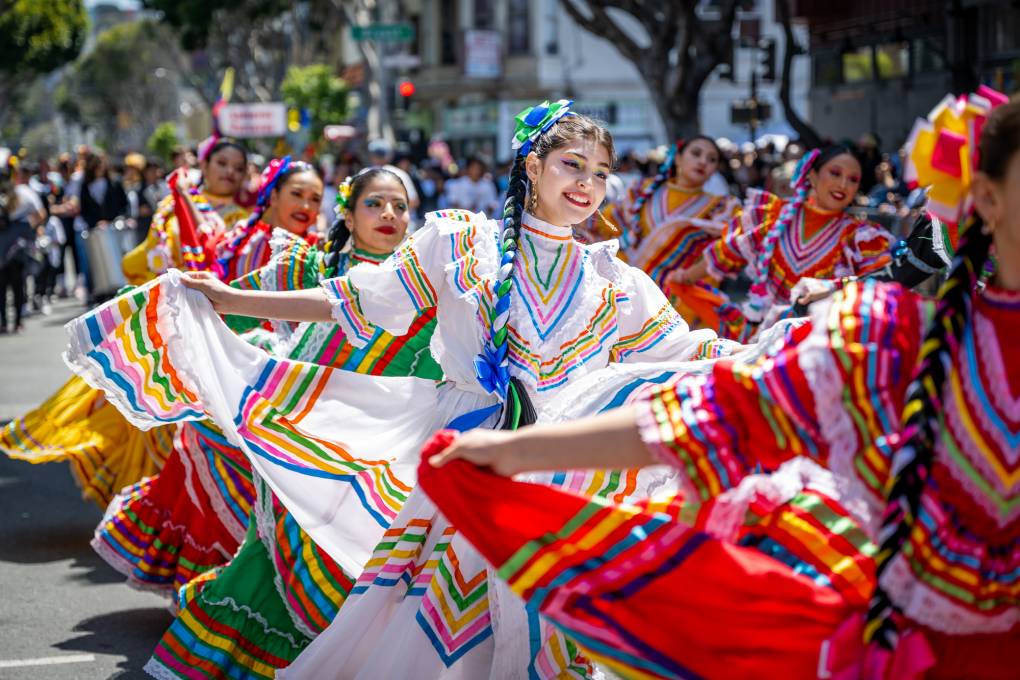
"caption": "Performances featuring folkloric dancers are a staple of many Hispanic Heritage Month celebrations. ",
"credit": "Beth LaBerge/KQED",
"altTag": null,
"description": null,
"imgSizes": {
"medium": {
"file": "https://cdn.kqed.org/wp-content/uploads/sites/2/2024/09/804a4477-f047-4f16-93da-a7dac02c9c5f-800x533.jpg",
"width": 800,
"height": 533,
"mimeType": "image/jpeg"
},
"large": {
"file": "https://cdn.kqed.org/wp-content/uploads/sites/2/2024/09/804a4477-f047-4f16-93da-a7dac02c9c5f-1020x680.jpg",
"width": 1020,
"height": 680,
"mimeType": "image/jpeg"
},
"thumbnail": {
"file": "https://cdn.kqed.org/wp-content/uploads/sites/2/2024/09/804a4477-f047-4f16-93da-a7dac02c9c5f-160x107.jpg",
"width": 160,
"height": 107,
"mimeType": "image/jpeg"
},
"medium_large": {
"file": "https://cdn.kqed.org/wp-content/uploads/sites/2/2024/09/804a4477-f047-4f16-93da-a7dac02c9c5f-768x512.jpg",
"width": 768,
"height": 512,
"mimeType": "image/jpeg"
},
"1536x1536": {
"file": "https://cdn.kqed.org/wp-content/uploads/sites/2/2024/09/804a4477-f047-4f16-93da-a7dac02c9c5f-1536x1024.jpg",
"width": 1536,
"height": 1024,
"mimeType": "image/jpeg"
},
"post-thumbnail": {
"file": "https://cdn.kqed.org/wp-content/uploads/sites/2/2024/09/804a4477-f047-4f16-93da-a7dac02c9c5f-672x372.jpg",
"width": 672,
"height": 372,
"mimeType": "image/jpeg"
},
"twentyfourteen-full-width": {
"file": "https://cdn.kqed.org/wp-content/uploads/sites/2/2024/09/804a4477-f047-4f16-93da-a7dac02c9c5f-1038x576.jpg",
"width": 1038,
"height": 576,
"mimeType": "image/jpeg"
},
"full-width": {
"file": "https://cdn.kqed.org/wp-content/uploads/sites/2/2024/09/804a4477-f047-4f16-93da-a7dac02c9c5f-1920x1280.jpg",
"width": 1920,
"height": 1280,
"mimeType": "image/jpeg"
},
"kqedFullSize": {
"file": "https://cdn.kqed.org/wp-content/uploads/sites/2/2024/09/804a4477-f047-4f16-93da-a7dac02c9c5f.jpg",
"width": 2000,
"height": 1333
}
},
"isLoading": false,
"fetchFailed": false
},
"arts_13962575": {
"type": "attachments",
"id": "arts_13962575",
"meta": {
"index": "attachments_1716263798",
"site": "arts",
"id": "13962575",
"found": true
},
"title": "Raygun of Team Australia competes during the B-Girls Round Robin Group at the Paris Olympics.",
"publishDate": 1723482256,
"status": "inherit",
"parent": 13962574,
"modified": 1723482357,
"caption": "Raygun of Team Australia \ncompetes during the B-Girls Round Robin Group \nat the Paris Olympics.",
"credit": "Elsa/Getty Images",
"altTag": "A white woman in green tracksuit contorts herself on the floor in front of a packed stadium.",
"description": null,
"imgSizes": {
"medium": {
"file": "https://cdn.kqed.org/wp-content/uploads/sites/2/2024/08/GettyImages-2166046752-800x496.jpg",
"width": 800,
"height": 496,
"mimeType": "image/jpeg"
},
"large": {
"file": "https://cdn.kqed.org/wp-content/uploads/sites/2/2024/08/GettyImages-2166046752-1020x632.jpg",
"width": 1020,
"height": 632,
"mimeType": "image/jpeg"
},
"thumbnail": {
"file": "https://cdn.kqed.org/wp-content/uploads/sites/2/2024/08/GettyImages-2166046752-160x99.jpg",
"width": 160,
"height": 99,
"mimeType": "image/jpeg"
},
"medium_large": {
"file": "https://cdn.kqed.org/wp-content/uploads/sites/2/2024/08/GettyImages-2166046752-768x476.jpg",
"width": 768,
"height": 476,
"mimeType": "image/jpeg"
},
"1536x1536": {
"file": "https://cdn.kqed.org/wp-content/uploads/sites/2/2024/08/GettyImages-2166046752-1536x951.jpg",
"width": 1536,
"height": 951,
"mimeType": "image/jpeg"
},
"2048x2048": {
"file": "https://cdn.kqed.org/wp-content/uploads/sites/2/2024/08/GettyImages-2166046752-2048x1269.jpg",
"width": 2048,
"height": 1269,
"mimeType": "image/jpeg"
},
"post-thumbnail": {
"file": "https://cdn.kqed.org/wp-content/uploads/sites/2/2024/08/GettyImages-2166046752-672x372.jpg",
"width": 672,
"height": 372,
"mimeType": "image/jpeg"
},
"twentyfourteen-full-width": {
"file": "https://cdn.kqed.org/wp-content/uploads/sites/2/2024/08/GettyImages-2166046752-1038x576.jpg",
"width": 1038,
"height": 576,
"mimeType": "image/jpeg"
},
"full-width": {
"file": "https://cdn.kqed.org/wp-content/uploads/sites/2/2024/08/GettyImages-2166046752-1920x1189.jpg",
"width": 1920,
"height": 1189,
"mimeType": "image/jpeg"
},
"kqedFullSize": {
"file": "https://cdn.kqed.org/wp-content/uploads/sites/2/2024/08/GettyImages-2166046752-scaled-e1723482366385.jpg",
"width": 1920,
"height": 1190
}
},
"isLoading": false,
"fetchFailed": false
},
"arts_13961652": {
"type": "attachments",
"id": "arts_13961652",
"meta": {
"index": "attachments_1716263798",
"site": "arts",
"id": "13961652",
"found": true
},
"title": "Garba_2000",
"publishDate": 1722031989,
"status": "inherit",
"parent": 13961580,
"modified": 1722033436,
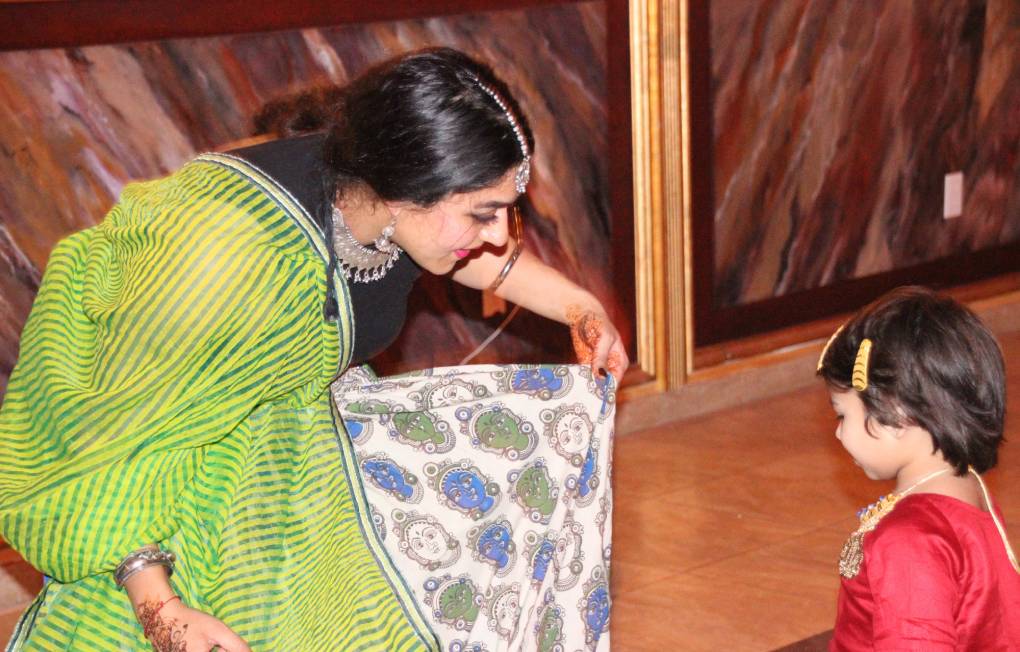
"caption": "Reetu Mody teaches her niece garba, highlighting the intergenerational aspect of the South Asian folk tradition.",
"credit": "Dilip Mody",
"altTag": "a woman performs a cultural dance with a child",
"description": null,
"imgSizes": {
"medium": {
"file": "https://cdn.kqed.org/wp-content/uploads/sites/2/2024/07/Garba_2000-800x512.jpg",
"width": 800,
"height": 512,
"mimeType": "image/jpeg"
},
"large": {
"file": "https://cdn.kqed.org/wp-content/uploads/sites/2/2024/07/Garba_2000-1020x652.jpg",
"width": 1020,
"height": 652,
"mimeType": "image/jpeg"
},
"thumbnail": {
"file": "https://cdn.kqed.org/wp-content/uploads/sites/2/2024/07/Garba_2000-160x102.jpg",
"width": 160,
"height": 102,
"mimeType": "image/jpeg"
},
"medium_large": {
"file": "https://cdn.kqed.org/wp-content/uploads/sites/2/2024/07/Garba_2000-768x491.jpg",
"width": 768,
"height": 491,
"mimeType": "image/jpeg"
},
"1536x1536": {
"file": "https://cdn.kqed.org/wp-content/uploads/sites/2/2024/07/Garba_2000-1536x982.jpg",
"width": 1536,
"height": 982,
"mimeType": "image/jpeg"
},
"post-thumbnail": {
"file": "https://cdn.kqed.org/wp-content/uploads/sites/2/2024/07/Garba_2000-672x372.jpg",
"width": 672,
"height": 372,
"mimeType": "image/jpeg"
},
"twentyfourteen-full-width": {
"file": "https://cdn.kqed.org/wp-content/uploads/sites/2/2024/07/Garba_2000-1038x576.jpg",
"width": 1038,
"height": 576,
"mimeType": "image/jpeg"
},
"full-width": {
"file": "https://cdn.kqed.org/wp-content/uploads/sites/2/2024/07/Garba_2000-1920x1228.jpg",
"width": 1920,
"height": 1228,
"mimeType": "image/jpeg"
},
"kqedFullSize": {
"file": "https://cdn.kqed.org/wp-content/uploads/sites/2/2024/07/Garba_2000.jpg",
"width": 2000,
"height": 1279
}
},
"isLoading": false,
"fetchFailed": false
},
"arts_13915254": {
"type": "attachments",
"id": "arts_13915254",
"meta": {
"index": "attachments_1716263798",
"site": "arts",
"id": "13915254",
"found": true
},
"parent": 13915237,
"imgSizes": {
"twentyfourteen-full-width": {
"file": "https://ww2.kqed.org/app/uploads/sites/2/2022/06/RS56872_002_KQED_SFPrideParade_06262022-qut-1038x576.jpg",
"width": 1038,
"mimeType": "image/jpeg",
"height": 576
},
"thumbnail": {
"file": "https://ww2.kqed.org/app/uploads/sites/2/2022/06/RS56872_002_KQED_SFPrideParade_06262022-qut-160x107.jpg",
"width": 160,
"mimeType": "image/jpeg",
"height": 107
},
"post-thumbnail": {
"file": "https://ww2.kqed.org/app/uploads/sites/2/2022/06/RS56872_002_KQED_SFPrideParade_06262022-qut-672x372.jpg",
"width": 672,
"mimeType": "image/jpeg",
"height": 372
},
"kqedFullSize": {
"file": "https://ww2.kqed.org/app/uploads/sites/2/2022/06/RS56872_002_KQED_SFPrideParade_06262022-qut.jpg",
"width": 1920,
"height": 1280
},
"large": {
"file": "https://ww2.kqed.org/app/uploads/sites/2/2022/06/RS56872_002_KQED_SFPrideParade_06262022-qut-1020x680.jpg",
"width": 1020,
"mimeType": "image/jpeg",
"height": 680
},
"1536x1536": {
"file": "https://ww2.kqed.org/app/uploads/sites/2/2022/06/RS56872_002_KQED_SFPrideParade_06262022-qut-1536x1024.jpg",
"width": 1536,
"mimeType": "image/jpeg",
"height": 1024
},
"medium": {
"file": "https://ww2.kqed.org/app/uploads/sites/2/2022/06/RS56872_002_KQED_SFPrideParade_06262022-qut-800x533.jpg",
"width": 800,
"mimeType": "image/jpeg",
"height": 533
},
"medium_large": {
"file": "https://ww2.kqed.org/app/uploads/sites/2/2022/06/RS56872_002_KQED_SFPrideParade_06262022-qut-768x512.jpg",
"width": 768,
"mimeType": "image/jpeg",
"height": 512
}
},
"publishDate": 1656345045,
"modified": 1656349127,
"caption": "Kai'lee Luckey (left) and Kaleonna Vang, both visiting from Sacramento, watch the San Francisco Pride Parade on June 26, 2022.",
"description": null,
"title": "RS56872_002_KQED_SFPrideParade_06262022-qut",
"credit": "Beth LaBerge/KQED",
"status": "inherit",
"altTag": null,
"isLoading": false,
"fetchFailed": false
},
"arts_13957384": {
"type": "attachments",
"id": "arts_13957384",
"meta": {
"index": "attachments_1716263798",
"site": "arts",
"id": "13957384",
"found": true
},
"parent": 0,
"imgSizes": {
"twentyfourteen-full-width": {
"file": "https://cdn.kqed.org/wp-content/uploads/sites/2/2024/05/240408-GERICAULT-MD-19-KQED-1--1038x576.jpg",
"width": 1038,
"mimeType": "image/jpeg",
"height": 576
},
"thumbnail": {
"file": "https://cdn.kqed.org/wp-content/uploads/sites/2/2024/05/240408-GERICAULT-MD-19-KQED-1--160x107.jpg",
"width": 160,
"mimeType": "image/jpeg",
"height": 107
},
"post-thumbnail": {
"file": "https://cdn.kqed.org/wp-content/uploads/sites/2/2024/05/240408-GERICAULT-MD-19-KQED-1--672x372.jpg",
"width": 672,
"mimeType": "image/jpeg",
"height": 372
},
"kqedFullSize": {
"file": "https://cdn.kqed.org/wp-content/uploads/sites/2/2024/05/240408-GERICAULT-MD-19-KQED-1-.jpg",
"width": 2000,
"height": 1333
},
"large": {
"file": "https://cdn.kqed.org/wp-content/uploads/sites/2/2024/05/240408-GERICAULT-MD-19-KQED-1--1020x680.jpg",
"width": 1020,
"mimeType": "image/jpeg",
"height": 680
},
"1536x1536": {
"file": "https://cdn.kqed.org/wp-content/uploads/sites/2/2024/05/240408-GERICAULT-MD-19-KQED-1--1536x1024.jpg",
"width": 1536,
"mimeType": "image/jpeg",
"height": 1024
},
"full-width": {
"file": "https://cdn.kqed.org/wp-content/uploads/sites/2/2024/05/240408-GERICAULT-MD-19-KQED-1--1920x1280.jpg",
"width": 1920,
"mimeType": "image/jpeg",
"height": 1280
},
"medium": {
"file": "https://cdn.kqed.org/wp-content/uploads/sites/2/2024/05/240408-GERICAULT-MD-19-KQED-1--800x533.jpg",
"width": 800,
"mimeType": "image/jpeg",
"height": 533
},
"medium_large": {
"file": "https://cdn.kqed.org/wp-content/uploads/sites/2/2024/05/240408-GERICAULT-MD-19-KQED-1--768x512.jpg",
"width": 768,
"mimeType": "image/jpeg",
"height": 512
}
},
"publishDate": 1715111196,
"modified": 1715111220,
"caption": "Gericault De La Rose in Oakland on Apr. 8, 2024.",
"description": null,
"title": "Gericault in Oakland on Apr. 8, 2024.",
"credit": "Martin Do Nascimento/KQED",
"status": "inherit",
"altTag": null,
"isLoading": false,
"fetchFailed": false
},
"arts_13956570": {
"type": "attachments",
"id": "arts_13956570",
"meta": {
"index": "attachments_1716263798",
"site": "arts",
"id": "13956570",
"found": true
},
"parent": 0,
"imgSizes": {
"twentyfourteen-full-width": {
"file": "https://cdn.kqed.org/wp-content/uploads/sites/2/2024/04/240422-LOCOBLOCO-54-BL-KQED-1038x576.jpg",
"width": 1038,
"mimeType": "image/jpeg",
"height": 576
},
"thumbnail": {
"file": "https://cdn.kqed.org/wp-content/uploads/sites/2/2024/04/240422-LOCOBLOCO-54-BL-KQED-160x107.jpg",
"width": 160,
"mimeType": "image/jpeg",
"height": 107
},
"post-thumbnail": {
"file": "https://cdn.kqed.org/wp-content/uploads/sites/2/2024/04/240422-LOCOBLOCO-54-BL-KQED-672x372.jpg",
"width": 672,
"mimeType": "image/jpeg",
"height": 372
},
"kqedFullSize": {
"file": "https://cdn.kqed.org/wp-content/uploads/sites/2/2024/04/240422-LOCOBLOCO-54-BL-KQED.jpg",
"width": 2000,
"height": 1333
},
"large": {
"file": "https://cdn.kqed.org/wp-content/uploads/sites/2/2024/04/240422-LOCOBLOCO-54-BL-KQED-1020x680.jpg",
"width": 1020,
"mimeType": "image/jpeg",
"height": 680
},
"1536x1536": {
"file": "https://cdn.kqed.org/wp-content/uploads/sites/2/2024/04/240422-LOCOBLOCO-54-BL-KQED-1536x1024.jpg",
"width": 1536,
"mimeType": "image/jpeg",
"height": 1024
},
"full-width": {
"file": "https://cdn.kqed.org/wp-content/uploads/sites/2/2024/04/240422-LOCOBLOCO-54-BL-KQED-1920x1280.jpg",
"width": 1920,
"mimeType": "image/jpeg",
"height": 1280
},
"medium": {
"file": "https://cdn.kqed.org/wp-content/uploads/sites/2/2024/04/240422-LOCOBLOCO-54-BL-KQED-800x533.jpg",
"width": 800,
"mimeType": "image/jpeg",
"height": 533
},
"medium_large": {
"file": "https://cdn.kqed.org/wp-content/uploads/sites/2/2024/04/240422-LOCOBLOCO-54-BL-KQED-768x512.jpg",
"width": 768,
"mimeType": "image/jpeg",
"height": 512
}
},
"publishDate": 1713977046,
"modified": 1713991606,
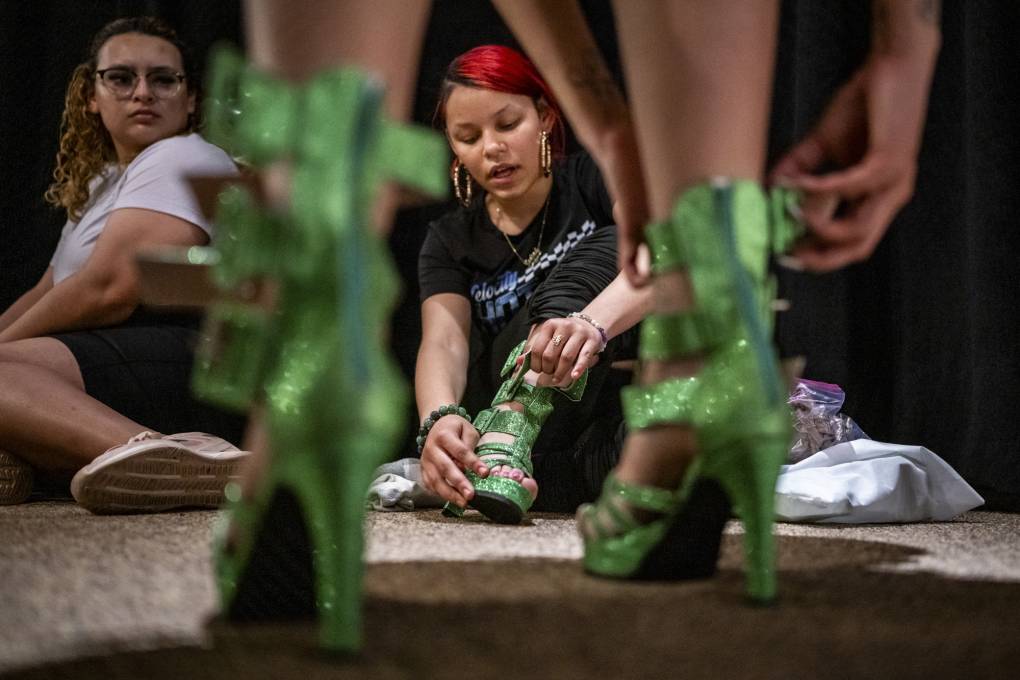
"caption": "Jediah Pratt (center), 15, tries on dance shoes during practice with Loco Bloco at Brava Theater in San Francisco on April 22, 2024, during preparations for their performance in Carnaval.",
"description": null,
"title": "240422-LOCOBLOCO-54-BL-KQED",
"credit": "Beth LaBerge/KQED",
"status": "inherit",
"altTag": "A young woman in black T-shirt and red dyed hair works on a costume, framed by two legs in green shoes.",
"isLoading": false,
"fetchFailed": false
},
"arts_13956434": {
"type": "attachments",
"id": "arts_13956434",
"meta": {
"index": "attachments_1716263798",
"site": "arts",
"id": "13956434",
"found": true
},
"parent": 13956359,
"imgSizes": {
"twentyfourteen-full-width": {
"file": "https://cdn.kqed.org/wp-content/uploads/sites/2/2024/04/025_KQEDArts_Oakland_AyodeleNzinga_07192021-1038x576.jpg",
"width": 1038,
"mimeType": "image/jpeg",
"height": 576
},
"thumbnail": {
"file": "https://cdn.kqed.org/wp-content/uploads/sites/2/2024/04/025_KQEDArts_Oakland_AyodeleNzinga_07192021-160x107.jpg",
"width": 160,
"mimeType": "image/jpeg",
"height": 107
},
"post-thumbnail": {
"file": "https://cdn.kqed.org/wp-content/uploads/sites/2/2024/04/025_KQEDArts_Oakland_AyodeleNzinga_07192021-672x372.jpg",
"width": 672,
"mimeType": "image/jpeg",
"height": 372
},
"kqedFullSize": {
"file": "https://cdn.kqed.org/wp-content/uploads/sites/2/2024/04/025_KQEDArts_Oakland_AyodeleNzinga_07192021.jpg",
"width": 1920,
"height": 1280
},
"large": {
"file": "https://cdn.kqed.org/wp-content/uploads/sites/2/2024/04/025_KQEDArts_Oakland_AyodeleNzinga_07192021-1020x680.jpg",
"width": 1020,
"mimeType": "image/jpeg",
"height": 680
},
"1536x1536": {
"file": "https://cdn.kqed.org/wp-content/uploads/sites/2/2024/04/025_KQEDArts_Oakland_AyodeleNzinga_07192021-1536x1024.jpg",
"width": 1536,
"mimeType": "image/jpeg",
"height": 1024
},
"medium": {
"file": "https://cdn.kqed.org/wp-content/uploads/sites/2/2024/04/025_KQEDArts_Oakland_AyodeleNzinga_07192021-800x533.jpg",
"width": 800,
"mimeType": "image/jpeg",
"height": 533
},
"medium_large": {
"file": "https://cdn.kqed.org/wp-content/uploads/sites/2/2024/04/025_KQEDArts_Oakland_AyodeleNzinga_07192021-768x512.jpg",
"width": 768,
"mimeType": "image/jpeg",
"height": 512
}
},
"publishDate": 1713902958,
"modified": 1713903009,
"caption": "Ayodele Nzinga stands in front of a photo of herself, a part of the project Story Windows, at PianoFight theater in Oakland on July 19, 2021.",
"description": "Ayodele Nzinga stands in front of a photo of herself, a part of the project Story Windows, at PianoFight theater in Oakland on July 19, 2021.",
"title": "Ayodele Nzinga stands in front of a photo of herself, a part of the project Story Windows, at PianoFight theater in Oakland on July 19, 2021.",
"credit": "(Beth LaBerge/KQED)",
"status": "inherit",
"altTag": "Ayodele Nzinga stands in front of a photo of herself, a part of the project Story Windows, at PianoFight theater in Oakland on July 19, 2021.",
"isLoading": false,
"fetchFailed": false
},
"arts_13956234": {
"type": "attachments",
"id": "arts_13956234",
"meta": {
"index": "attachments_1716263798",
"site": "arts",
"id": "13956234",
"found": true
},
"parent": 13956215,
"imgSizes": {
"twentyfourteen-full-width": {
"file": "https://cdn.kqed.org/wp-content/uploads/sites/2/2024/04/720p-25fps-master-edit.00_23_03_21.Still035-1038x576.png",
"width": 1038,
"mimeType": "image/png",
"height": 576
},
"thumbnail": {
"file": "https://cdn.kqed.org/wp-content/uploads/sites/2/2024/04/720p-25fps-master-edit.00_23_03_21.Still035-160x90.png",
"width": 160,
"mimeType": "image/png",
"height": 90
},
"post-thumbnail": {
"file": "https://cdn.kqed.org/wp-content/uploads/sites/2/2024/04/720p-25fps-master-edit.00_23_03_21.Still035-672x372.png",
"width": 672,
"mimeType": "image/png",
"height": 372
},
"kqedFullSize": {
"file": "https://cdn.kqed.org/wp-content/uploads/sites/2/2024/04/720p-25fps-master-edit.00_23_03_21.Still035.png",
"width": 1280,
"height": 720
},
"large": {
"file": "https://cdn.kqed.org/wp-content/uploads/sites/2/2024/04/720p-25fps-master-edit.00_23_03_21.Still035-1020x574.png",
"width": 1020,
"mimeType": "image/png",
"height": 574
},
"medium": {
"file": "https://cdn.kqed.org/wp-content/uploads/sites/2/2024/04/720p-25fps-master-edit.00_23_03_21.Still035-800x450.png",
"width": 800,
"mimeType": "image/png",
"height": 450
},
"medium_large": {
"file": "https://cdn.kqed.org/wp-content/uploads/sites/2/2024/04/720p-25fps-master-edit.00_23_03_21.Still035-768x432.png",
"width": 768,
"mimeType": "image/png",
"height": 432
}
},
"publishDate": 1713543118,
"modified": 1713543233,
"caption": "A still from Jen Liu’s ‘PINK SLIME CAESAR SHIFT: GOLD LOOP,’ 2020–2021; Single-channel HD video with sound, 27:58 minutes on infinite loop.",
"description": null,
"title": "720p 25fps master edit.00_23_03_21.Still035",
"credit": "Courtesy of the artist; Blindspot Gallery, Hong Kong; Upstream Gallery, Amsterdam",
"status": "inherit",
"altTag": "Person stands looking at phone, text below reads \"2: Be formless, shapeless, like water.\"",
"isLoading": false,
"fetchFailed": false
},
"arts_13951447": {
"type": "attachments",
"id": "arts_13951447",
"meta": {
"index": "attachments_1716263798",
"site": "arts",
"id": "13951447",
"found": true
},
"parent": 0,
"imgSizes": {
"twentyfourteen-full-width": {
"file": "https://cdn.kqed.org/wp-content/uploads/sites/2/2024/02/240201-TEXTILEARTIST-38-BL-KQED-1038x576.jpg",
"width": 1038,
"mimeType": "image/jpeg",
"height": 576
},
"thumbnail": {
"file": "https://cdn.kqed.org/wp-content/uploads/sites/2/2024/02/240201-TEXTILEARTIST-38-BL-KQED-160x107.jpg",
"width": 160,
"mimeType": "image/jpeg",
"height": 107
},
"post-thumbnail": {
"file": "https://cdn.kqed.org/wp-content/uploads/sites/2/2024/02/240201-TEXTILEARTIST-38-BL-KQED-672x372.jpg",
"width": 672,
"mimeType": "image/jpeg",
"height": 372
},
"kqedFullSize": {
"file": "https://cdn.kqed.org/wp-content/uploads/sites/2/2024/02/240201-TEXTILEARTIST-38-BL-KQED.jpg",
"width": 2000,
"height": 1333
},
"large": {
"file": "https://cdn.kqed.org/wp-content/uploads/sites/2/2024/02/240201-TEXTILEARTIST-38-BL-KQED-1020x680.jpg",
"width": 1020,
"mimeType": "image/jpeg",
"height": 680
},
"1536x1536": {
"file": "https://cdn.kqed.org/wp-content/uploads/sites/2/2024/02/240201-TEXTILEARTIST-38-BL-KQED-1536x1024.jpg",
"width": 1536,
"mimeType": "image/jpeg",
"height": 1024
},
"full-width": {
"file": "https://cdn.kqed.org/wp-content/uploads/sites/2/2024/02/240201-TEXTILEARTIST-38-BL-KQED-1920x1280.jpg",
"width": 1920,
"mimeType": "image/jpeg",
"height": 1280
},
"medium": {
"file": "https://cdn.kqed.org/wp-content/uploads/sites/2/2024/02/240201-TEXTILEARTIST-38-BL-KQED-800x533.jpg",
"width": 800,
"mimeType": "image/jpeg",
"height": 533
},
"medium_large": {
"file": "https://cdn.kqed.org/wp-content/uploads/sites/2/2024/02/240201-TEXTILEARTIST-38-BL-KQED-768x512.jpg",
"width": 768,
"mimeType": "image/jpeg",
"height": 512
}
},
"publishDate": 1706905122,
"modified": 1711047317,
"caption": "Oakland artist (center left) Maria A. Guzmán Capron stands with SF Ballet scenic artists (from left) Garrett Lowe, Robert Burg and David Dunn on top of a curtain drop mural Capron designed for 'Dos Mujeres.'",
"description": null,
"title": "240201-TEXTILEARTIST-38-BL-KQED",
"credit": "Beth LaBerge/KQED",
"status": "inherit",
"altTag": "Four people stand on large painted canvas on warehouse floor",
"isLoading": false,
"fetchFailed": false
},
"arts_13954721": {
"type": "attachments",
"id": "arts_13954721",
"meta": {
"index": "attachments_1716263798",
"site": "arts",
"id": "13954721",
"found": true
},
"parent": 13954716,
"imgSizes": {
"twentyfourteen-full-width": {
"file": "https://cdn.kqed.org/wp-content/uploads/sites/2/2024/03/SJD2023_FullSet-178_websize-1038x576.jpg",
"width": 1038,
"mimeType": "image/jpeg",
"height": 576
},
"thumbnail": {
"file": "https://cdn.kqed.org/wp-content/uploads/sites/2/2024/03/SJD2023_FullSet-178_websize-160x107.jpg",
"width": 160,
"mimeType": "image/jpeg",
"height": 107
},
"post-thumbnail": {
"file": "https://cdn.kqed.org/wp-content/uploads/sites/2/2024/03/SJD2023_FullSet-178_websize-672x372.jpg",
"width": 672,
"mimeType": "image/jpeg",
"height": 372
},
"kqedFullSize": {
"file": "https://cdn.kqed.org/wp-content/uploads/sites/2/2024/03/SJD2023_FullSet-178_websize.jpg",
"width": 1600,
"height": 1067
},
"large": {
"file": "https://cdn.kqed.org/wp-content/uploads/sites/2/2024/03/SJD2023_FullSet-178_websize-1020x680.jpg",
"width": 1020,
"mimeType": "image/jpeg",
"height": 680
},
"1536x1536": {
"file": "https://cdn.kqed.org/wp-content/uploads/sites/2/2024/03/SJD2023_FullSet-178_websize-1536x1024.jpg",
"width": 1536,
"mimeType": "image/jpeg",
"height": 1024
},
"medium": {
"file": "https://cdn.kqed.org/wp-content/uploads/sites/2/2024/03/SJD2023_FullSet-178_websize-800x534.jpg",
"width": 800,
"mimeType": "image/jpeg",
"height": 534
},
"medium_large": {
"file": "https://cdn.kqed.org/wp-content/uploads/sites/2/2024/03/SJD2023_FullSet-178_websize-768x512.jpg",
"width": 768,
"mimeType": "image/jpeg",
"height": 512
}
},
"publishDate": 1711409032,
"modified": 1711476904,
"caption": "A group of San Jose activists, artists and organizers gather for San Jose Day in 2023. ",
"description": null,
"title": "San Jose Day 2023",
"credit": "Alex Knowbody",
"status": "inherit",
"altTag": "a group of San Jose residents stand outside during a festival in their city",
"isLoading": false,
"fetchFailed": false
},
"arts_13951421": {
"type": "attachments",
"id": "arts_13951421",
"meta": {
"index": "attachments_1716263798",
"site": "arts",
"id": "13951421",
"found": true
},
"parent": 13950520,
"imgSizes": {
"twentyfourteen-full-width": {
"file": "https://cdn.kqed.org/wp-content/uploads/sites/2/2024/02/Jan-2024-1-1038x576.jpg",
"width": 1038,
"mimeType": "image/jpeg",
"height": 576
},
"thumbnail": {
"file": "https://cdn.kqed.org/wp-content/uploads/sites/2/2024/02/Jan-2024-1-160x90.jpg",
"width": 160,
"mimeType": "image/jpeg",
"height": 90
},
"post-thumbnail": {
"file": "https://cdn.kqed.org/wp-content/uploads/sites/2/2024/02/Jan-2024-1-672x372.jpg",
"width": 672,
"mimeType": "image/jpeg",
"height": 372
},
"kqedFullSize": {
"file": "https://cdn.kqed.org/wp-content/uploads/sites/2/2024/02/Jan-2024-1.jpg",
"width": 1920,
"height": 1080
},
"large": {
"file": "https://cdn.kqed.org/wp-content/uploads/sites/2/2024/02/Jan-2024-1-1020x574.jpg",
"width": 1020,
"mimeType": "image/jpeg",
"height": 574
},
"1536x1536": {
"file": "https://cdn.kqed.org/wp-content/uploads/sites/2/2024/02/Jan-2024-1-1536x864.jpg",
"width": 1536,
"mimeType": "image/jpeg",
"height": 864
},
"medium": {
"file": "https://cdn.kqed.org/wp-content/uploads/sites/2/2024/02/Jan-2024-1-800x450.jpg",
"width": 800,
"mimeType": "image/jpeg",
"height": 450
},
"medium_large": {
"file": "https://cdn.kqed.org/wp-content/uploads/sites/2/2024/02/Jan-2024-1-768x432.jpg",
"width": 768,
"mimeType": "image/jpeg",
"height": 432
}
},
"publishDate": 1706825208,
"modified": 1706825208,
"caption": null,
"description": null,
"title": "Jan 2024-1",
"credit": null,
"status": "inherit",
"altTag": null,
"isLoading": false,
"fetchFailed": false
},
"arts_13950969": {
"type": "attachments",
"id": "arts_13950969",
"meta": {
"index": "attachments_1716263798",
"site": "arts",
"id": "13950969",
"found": true
},
"parent": 13950961,
"imgSizes": {
"twentyfourteen-full-width": {
"file": "https://cdn.kqed.org/wp-content/uploads/sites/2/2024/01/KOOZA_04_Contorsion_0969-1038x576.jpeg",
"width": 1038,
"mimeType": "image/jpeg",
"height": 576
},
"thumbnail": {
"file": "https://cdn.kqed.org/wp-content/uploads/sites/2/2024/01/KOOZA_04_Contorsion_0969-160x107.jpeg",
"width": 160,
"mimeType": "image/jpeg",
"height": 107
},
"post-thumbnail": {
"file": "https://cdn.kqed.org/wp-content/uploads/sites/2/2024/01/KOOZA_04_Contorsion_0969-672x372.jpeg",
"width": 672,
"mimeType": "image/jpeg",
"height": 372
},
"kqedFullSize": {
"file": "https://cdn.kqed.org/wp-content/uploads/sites/2/2024/01/KOOZA_04_Contorsion_0969.jpeg",
"width": 1280,
"height": 854
},
"large": {
"file": "https://cdn.kqed.org/wp-content/uploads/sites/2/2024/01/KOOZA_04_Contorsion_0969-1020x681.jpeg",
"width": 1020,
"mimeType": "image/jpeg",
"height": 681
},
"medium": {
"file": "https://cdn.kqed.org/wp-content/uploads/sites/2/2024/01/KOOZA_04_Contorsion_0969-800x534.jpeg",
"width": 800,
"mimeType": "image/jpeg",
"height": 534
},
"medium_large": {
"file": "https://cdn.kqed.org/wp-content/uploads/sites/2/2024/01/KOOZA_04_Contorsion_0969-768x512.jpeg",
"width": 768,
"mimeType": "image/jpeg",
"height": 512
}
},
"publishDate": 1706207468,
"modified": 1706211222,
"caption": "Contortionists Sunderiya Jargalsaikhan, Ninjin Altankhuyag and Sender Enkhtur, all of Mongolia, perform in Cirque du Soleil's 'Kooza.'",
"description": null,
"title": "KOOZA_04_Contorsion_0969",
"credit": "Matt Beard & Bernard Letendre",
"status": "inherit",
"altTag": "Three women in leotards contorting their bodies into a balancing pose.",
"isLoading": false,
"fetchFailed": false
}
},
"audioPlayerReducer": {
"postId": "stream_live",
"isPaused": true,
"isPlaying": false,
"pfsActive": false,
"pledgeModalIsOpen": true,
"playerDrawerIsOpen": false,
"liveAudioPlayStartedAt": 0,
"liveAudioPlayContext": ""
},
"authorsReducer": {
"byline_arts_13962574": {
"type": "authors",
"id": "byline_arts_13962574",
"meta": {
"override": true
},
"slug": "byline_arts_13962574",
"name": "Noreen Nasir, Associated Press",
"isLoading": false
},
"byline_arts_13956554": {
"type": "authors",
"id": "byline_arts_13956554",
"meta": {
"override": true
},
"slug": "byline_arts_13956554",
"name": "Binnie Kenvin",
"isLoading": false
},
"shotchkiss": {
"type": "authors",
"id": "61",
"meta": {
"index": "authors_1716337520",
"id": "61",
"found": true
},
"name": "Sarah Hotchkiss",
"firstName": "Sarah",
"lastName": "Hotchkiss",
"slug": "shotchkiss",
"email": "shotchkiss@kqed.org",
"display_author_email": true,
"staff_mastheads": [
"arts"
],
"title": "Senior Editor",
"bio": "Sarah Hotchkiss is a San Francisco \u003ca href=\"http://www.sarahhotchkiss.com\">artist\u003c/a> and arts writer. In 2019, she received the Dorothea & Leo Rabkin Foundation grant for visual art journalism and in 2020 she received a Society of Professional Journalists, Northern California award for excellence in arts and culture reporting.",
"avatar": "https://secure.gravatar.com/avatar/bc662df144b3d27fd8b1b6f1c2a420d34e91e53154d411bb7ad353cc8b6cea8d?s=600&d=blank&r=g",
"twitter": null,
"bluesky": null,
"facebook": null,
"instagram": null,
"linkedin": null,
"sites": [
{
"site": "",
"roles": [
"editor"
]
},
{
"site": "arts",
"roles": [
"Contributor",
"administrator"
]
},
{
"site": "artschool",
"roles": [
"administrator"
]
},
{
"site": "news",
"roles": [
"editor"
]
},
{
"site": "pop",
"roles": [
"administrator"
]
},
{
"site": "bayareabites",
"roles": [
"editor"
]
},
{
"site": "spark",
"roles": [
"editor"
]
},
{
"site": "checkplease",
"roles": [
"editor"
]
}
],
"headData": {
"title": "Sarah Hotchkiss | KQED",
"description": "Senior Editor",
"ogImgSrc": "https://secure.gravatar.com/avatar/bc662df144b3d27fd8b1b6f1c2a420d34e91e53154d411bb7ad353cc8b6cea8d?s=600&d=blank&r=g",
"twImgSrc": "https://secure.gravatar.com/avatar/bc662df144b3d27fd8b1b6f1c2a420d34e91e53154d411bb7ad353cc8b6cea8d?s=600&d=blank&r=g"
},
"isLoading": false,
"link": "/author/shotchkiss"
},
"ralexandra": {
"type": "authors",
"id": "11242",
"meta": {
"index": "authors_1716337520",
"id": "11242",
"found": true
},
"name": "Rae Alexandra",
"firstName": "Rae",
"lastName": "Alexandra",
"slug": "ralexandra",
"email": "ralexandra@kqed.org",
"display_author_email": true,
"staff_mastheads": [],
"title": "Reporter/Producer",
"bio": "Rae Alexandra is a Reporter/Producer for KQED Arts & Culture, and the creator/author of the \u003ca href=\"https://www.kqed.org/arts/program/rebel-girls-from-bay-area-history\">Rebel Girls From Bay Area History\u003c/a> and \u003ca href=\"https://www.kqed.org/bizarrebayarea\">Bizarre Bay Area\u003c/a> series. Her debut book, \u003ca href=\"https://citylights.com/politics-current-events-history/unsung-heroines35-women-who-changed/\">Unsung Heroines: 35 Women Who Changed the Bay Area\u003c/a> was published by City Lights in March 2026. In 2023, Rae was awarded an SPJ Excellence in Journalism Award for Arts & Culture. Rae was born and raised in Wales and subsequently — even after two decades in Northern California — still uses phrases that regularly baffle her coworkers.",
"avatar": "https://secure.gravatar.com/avatar/edfee8176c80cc0a382b051190f5341997df378a934a5774dcb0977732dfd401?s=600&d=blank&r=g",
"twitter": null,
"bluesky": null,
"facebook": null,
"instagram": null,
"linkedin": null,
"sites": [
{
"site": "arts",
"roles": [
"subscriber"
]
},
{
"site": "news",
"roles": [
"subscriber"
]
},
{
"site": "pop",
"roles": [
"subscriber"
]
},
{
"site": "bayareabites",
"roles": [
"subscriber"
]
},
{
"site": "science",
"roles": [
"subscriber"
]
}
],
"headData": {
"title": "Rae Alexandra | KQED",
"description": "Reporter/Producer",
"ogImgSrc": "https://secure.gravatar.com/avatar/edfee8176c80cc0a382b051190f5341997df378a934a5774dcb0977732dfd401?s=600&d=blank&r=g",
"twImgSrc": "https://secure.gravatar.com/avatar/edfee8176c80cc0a382b051190f5341997df378a934a5774dcb0977732dfd401?s=600&d=blank&r=g"
},
"isLoading": false,
"link": "/author/ralexandra"
},
"aproehl": {
"type": "authors",
"id": "11296",
"meta": {
"index": "authors_1716337520",
"id": "11296",
"found": true
},
"name": "Ariana Proehl",
"firstName": "Ariana",
"lastName": "Proehl",
"slug": "aproehl",
"email": "aproehl@KQED.org",
"display_author_email": true,
"staff_mastheads": [
"news"
],
"title": "Culture Reporter, KQED",
"bio": "Ariana Proehl is a Culture Reporter and Host.",
"avatar": "https://secure.gravatar.com/avatar/c96b24567eb5bb3a4f8bb295ed53e232?s=600&d=blank&r=g",
"twitter": "ArianaProehl",
"facebook": null,
"instagram": null,
"linkedin": null,
"sites": [
{
"site": "arts",
"roles": []
},
{
"site": "news",
"roles": []
},
{
"site": "education",
"roles": []
},
{
"site": "forum",
"roles": []
}
],
"headData": {
"title": "Ariana Proehl | KQED",
"description": "Culture Reporter, KQED",
"ogImgSrc": "https://secure.gravatar.com/avatar/c96b24567eb5bb3a4f8bb295ed53e232?s=600&d=blank&r=g",
"twImgSrc": "https://secure.gravatar.com/avatar/c96b24567eb5bb3a4f8bb295ed53e232?s=600&d=blank&r=g"
},
"isLoading": false,
"link": "/author/aproehl"
},
"nvoynovskaya": {
"type": "authors",
"id": "11387",
"meta": {
"index": "authors_1716337520",
"id": "11387",
"found": true
},
"name": "Nastia Voynovskaya",
"firstName": "Nastia",
"lastName": "Voynovskaya",
"slug": "nvoynovskaya",
"email": "nvoynovskaya@kqed.org",
"display_author_email": false,
"staff_mastheads": [
"arts"
],
"title": "Editor and reporter",
"bio": "Nastia Voynovskaya is a reporter, editor and host at KQED Arts & Culture. She's been covering the arts in the Bay Area for over a decade, with a focus on music, queer culture, labor issues and grassroots organizing. She has edited KQED story series such as Trans Bay: A History of San Francisco's Gender-Diverse Community, and co-created KQED's Bay Area hip-hop history project, That's My Word. Nastia's work has been recognized by the Society of Professional Journalists and San Francisco Press Club. She regularly appears on podcasts and radio programs, including NPR's All Songs Considered, and hosts live events where music, culture and conversation meet.",
"avatar": "https://secure.gravatar.com/avatar/5025ee460e5a85d69ca20ea6c6f2f80d7e17795c828f61ea3aecfcd924e9042e?s=600&d=blank&r=g",
"twitter": null,
"bluesky": null,
"facebook": null,
"instagram": "https://www.instagram.com/nananastia/",
"linkedin": null,
"sites": [
{
"site": "",
"roles": [
"editor"
]
},
{
"site": "arts",
"roles": [
"administrator"
]
},
{
"site": "news",
"roles": [
"editor"
]
},
{
"site": "pop",
"roles": [
"administrator"
]
},
{
"site": "bayareabites",
"roles": [
"editor"
]
},
{
"site": "podcasts",
"roles": [
"editor"
]
},
{
"site": "hiphop",
"roles": [
"editor"
]
}
],
"headData": {
"title": "Nastia Voynovskaya | KQED",
"description": "Editor and reporter",
"ogImgSrc": "https://secure.gravatar.com/avatar/5025ee460e5a85d69ca20ea6c6f2f80d7e17795c828f61ea3aecfcd924e9042e?s=600&d=blank&r=g",
"twImgSrc": "https://secure.gravatar.com/avatar/5025ee460e5a85d69ca20ea6c6f2f80d7e17795c828f61ea3aecfcd924e9042e?s=600&d=blank&r=g"
},
"isLoading": false,
"link": "/author/nvoynovskaya"
},
"ogpenn": {
"type": "authors",
"id": "11491",
"meta": {
"index": "authors_1716337520",
"id": "11491",
"found": true
},
"name": "Pendarvis Harshaw",
"firstName": "Pendarvis",
"lastName": "Harshaw",
"slug": "ogpenn",
"email": "ogpenn@gmail.com",
"display_author_email": false,
"staff_mastheads": [
"arts"
],
"title": "Community Engagement Reporter",
"bio": "Pendarvis Harshaw is an educator, host and writer with KQED Arts.",
"avatar": "https://secure.gravatar.com/avatar/972b77ee8e3f346ae2b00622661187fbfabd059b5693bbdc1475ea7a722fd4cd?s=600&d=blank&r=g",
"twitter": null,
"bluesky": null,
"facebook": null,
"instagram": "ogpenn",
"linkedin": null,
"sites": [
{
"site": "arts",
"roles": [
"administrator"
]
},
{
"site": "news",
"roles": [
"editor"
]
},
{
"site": "bayareabites",
"roles": [
"author"
]
},
{
"site": "hiphop",
"roles": [
"editor"
]
}
],
"headData": {
"title": "Pendarvis Harshaw | KQED",
"description": "Community Engagement Reporter",
"ogImgSrc": "https://secure.gravatar.com/avatar/972b77ee8e3f346ae2b00622661187fbfabd059b5693bbdc1475ea7a722fd4cd?s=600&d=blank&r=g",
"twImgSrc": "https://secure.gravatar.com/avatar/972b77ee8e3f346ae2b00622661187fbfabd059b5693bbdc1475ea7a722fd4cd?s=600&d=blank&r=g"
},
"isLoading": false,
"link": "/author/ogpenn"
},
"btorres": {
"type": "authors",
"id": "11666",
"meta": {
"index": "authors_1716337520",
"id": "11666",
"found": true
},
"name": "Blanca Torres",
"firstName": "Blanca",
"lastName": "Torres",
"slug": "btorres",
"email": "btorres@kqed.org",
"display_author_email": true,
"staff_mastheads": [
"news"
],
"title": "Producer, Forum",
"bio": "Blanca Torres brings sharp news judgement and keen sense of lively conversation to her work as producer for Forum. She loves producing shows that leave listeners feeling like they heard distinctive voices, learned something new and gained a fresh perspective.\r\n\r\nShe joined KQED in January of 2020 after 16 years of working as a newspaper reporter most recently at the \u003cem>San Francisco Business Times,\u003c/em> where she wrote about real estate and economic development. Before that, she covered a variety of beats including crime, education, retail, workplace, the economy, consumer issues, and small business for the \u003cem>Contra Costa Times, Baltimore Sun\u003c/em> and\u003cem> The Seattle Times\u003c/em>. In addition to reporting, she worked as an editorial writer and columnist for the \u003cem>Seattle Times\u003c/em>. From 2017 to 2020, Blanca won a total of ten awards from the National Association of Real Estate Editors and won first place for land use reporting from the California News Publishers Association two years in a row. She is also a member and former board member for the National Association of Hispanic Journalists.\r\n\r\nA native of the Pacific Northwest, Blanca earned her bachelor's degree from Vanderbilt University in Nashville and a master's in fine arts in creative writing at Mills College. She lives in the East Bay with her family.",
"avatar": "https://secure.gravatar.com/avatar/50b49d19b14a1eed34f26ebf4681152cdd81574ed21851100871ccd29e578cdc?s=600&d=blank&r=g",
"twitter": "@blancawrites",
"bluesky": null,
"facebook": null,
"instagram": null,
"linkedin": null,
"sites": [
{
"site": "arts",
"roles": [
"editor"
]
},
{
"site": "news",
"roles": [
"editor"
]
},
{
"site": "forum",
"roles": [
"editor"
]
}
],
"headData": {
"title": "Blanca Torres | KQED",
"description": "Producer, Forum",
"ogImgSrc": "https://secure.gravatar.com/avatar/50b49d19b14a1eed34f26ebf4681152cdd81574ed21851100871ccd29e578cdc?s=600&d=blank&r=g",
"twImgSrc": "https://secure.gravatar.com/avatar/50b49d19b14a1eed34f26ebf4681152cdd81574ed21851100871ccd29e578cdc?s=600&d=blank&r=g"
},
"isLoading": false,
"link": "/author/btorres"
},
"achazaro": {
"type": "authors",
"id": "11748",
"meta": {
"index": "authors_1716337520",
"id": "11748",
"found": true
},
"name": "Alan Chazaro",
"firstName": "Alan",
"lastName": "Chazaro",
"slug": "achazaro",
"email": "agchazaro@gmail.com",
"display_author_email": true,
"staff_mastheads": [],
"title": "Food Writer and Reporter",
"bio": "Alan Chazaro is the author of \u003cem>This Is Not a Frank Ocean Cover Album\u003c/em> (Black Lawrence Press, 2019), \u003cem>Piñata Theory\u003c/em> (Black Lawrence Press, 2020), and \u003cem>Notes from the Eastern Span of the Bay Bridge\u003c/em> (Ghost City Press, 2021). He is a graduate of June Jordan’s Poetry for the People program at UC Berkeley and a former Lawrence Ferlinghetti Fellow at the University of San Francisco. He writes about sports, food, art, music, education, and culture while repping the Bay on \u003ca href=\"https://twitter.com/alan_chazaro\">Twitter\u003c/a> and \u003ca href=\"https://www.instagram.com/alan_chazaro/?hl=en\">Instagram\u003c/a> at @alan_chazaro.",
"avatar": "https://secure.gravatar.com/avatar/ea8b6dd970fc5c29e7a188e7d5861df7?s=600&d=blank&r=g",
"twitter": "alan_chazaro",
"facebook": null,
"instagram": null,
"linkedin": null,
"sites": [
{
"site": "arts",
"roles": [
"contributor"
]
},
{
"site": "news",
"roles": [
"editor"
]
}
],
"headData": {
"title": "Alan Chazaro | KQED",
"description": "Food Writer and Reporter",
"ogImgSrc": "https://secure.gravatar.com/avatar/ea8b6dd970fc5c29e7a188e7d5861df7?s=600&d=blank&r=g",
"twImgSrc": "https://secure.gravatar.com/avatar/ea8b6dd970fc5c29e7a188e7d5861df7?s=600&d=blank&r=g"
},
"isLoading": false,
"link": "/author/achazaro"
},
"omayeda": {
"type": "authors",
"id": "11872",
"meta": {
"index": "authors_1716337520",
"id": "11872",
"found": true
},
"name": "Olivia Cruz Mayeda",
"firstName": "Olivia Cruz",
"lastName": "Mayeda",
"slug": "omayeda",
"email": "omayeda@kqed.org",
"display_author_email": false,
"staff_mastheads": [],
"title": "Reporter",
"bio": "Olivia Cruz Mayeda is a journalist covering style, culture and reparations in the Bay Area, a place that has been home to her family for over 100 years. Her writing has also appeared in the \u003cem>San Francisco Chronicle\u003c/em> and \u003cem>El Tecolote\u003c/em>.",
"avatar": "https://secure.gravatar.com/avatar/a8c0baa30219ce1071a9474f4c14141f?s=600&d=blank&r=g",
"twitter": null,
"facebook": null,
"instagram": null,
"linkedin": null,
"sites": [
{
"site": "arts",
"roles": [
"contributor"
]
}
],
"headData": {
"title": "Olivia Cruz Mayeda | KQED",
"description": "Reporter",
"ogImgSrc": "https://secure.gravatar.com/avatar/a8c0baa30219ce1071a9474f4c14141f?s=600&d=blank&r=g",
"twImgSrc": "https://secure.gravatar.com/avatar/a8c0baa30219ce1071a9474f4c14141f?s=600&d=blank&r=g"
},
"isLoading": false,
"link": "/author/omayeda"
}
},
"pagesReducer": {
"arts_category_dance": {
"type": "terms",
"id": "arts_966",
"meta": {
"index": "terms_1716263798",
"site": "arts",
"id": "966",
"score": 12.286901
},
"featImg": null,
"name": "Dance",
"description": null,
"taxonomy": "category",
"headData": {
"twImgId": null,
"twTitle": null,
"ogTitle": null,
"ogImgId": null,
"twDescription": null,
"description": null,
"title": "Dance Archives | KQED Arts",
"ogDescription": null
},
"ttid": 984,
"slug": "dance",
"isLoading": false,
"title": "Dance",
"pageMeta": {
"site": "arts",
"WpPageTemplate": "page-topic-editorial",
"currentPage": 4
},
"blocks": [
{
"blockName": "kqed/post-list",
"attrs": {
"layout": "cardArticle2",
"query": "posts/arts?category=dance",
"seeMore": false,
"paginated": true,
"page": 4
}
},
{
"blockName": "kqed/ad"
}
]
}
},
"pfsSessionReducer": {},
"postsReducer": {
"stream_live": {
"type": "live",
"id": "stream_live",
"audioUrl": "https://streams.kqed.org/kqedradio",
"title": "Live Stream",
"excerpt": "Live Stream information currently unavailable.",
"link": "/radio",
"featImg": "",
"label": {
"name": "KQED Live",
"link": "/"
}
},
"stream_kqedNewscast": {
"type": "posts",
"id": "stream_kqedNewscast",
"audioUrl": "https://www.kqed.org/.stream/anon/radio/RDnews/newscast.mp3?_=1",
"title": "KQED Newscast",
"featImg": "",
"label": {
"name": "88.5 FM",
"link": "/"
}
},
"arts_13964064": {
"type": "posts",
"id": "arts_13964064",
"meta": {
"index": "posts_1716263798",
"site": "arts",
"id": "13964064",
"score": null,
"sort": [
1726067088000
]
},
"guestAuthors": [],
"slug": "hispanic-heritage-month-events-in-the-bay-area",
"title": "Hispanic Heritage Month Events In the Bay Area",
"publishDate": 1726067088,
"format": "standard",
"headTitle": "Hispanic Heritage Month Events In the Bay Area | KQED",
"labelTerm": {
"term": 140,
"site": "arts"
},
"content": "\u003cp>September has arrived, kicking off annual celebrations for Hispanic Heritage Month (Sept. 15–Oct. 15) commemorating the independence days of various Latin American countries. \u003c/p>\n\u003cp>Often billed as Fiestas Patrias, the community events typically feature musical and dance performances along with food and merchandise vendors. \u003c/p>\n\u003cp>This year, organizers in Richmond and San Pablo have teamed up for a parade stretching through both East Bay cities. In San Francisco, members of the Mexican diaspora will gather in front of City Hall for the annual El Grito celebration that commemorates the historic call for independence. \u003c/p>\n\u003cp>Here is a sampling of events throughout the Bay Area.\u003c/p>\n\u003cfigure id=\"attachment_13964065\" class=\"wp-caption aligncenter\" style=\"max-width: 1920px\">\u003cimg loading=\"lazy\" decoding=\"async\" src=\"https://cdn.kqed.org/wp-content/uploads/sites/2/2024/09/2023-Consul-Gral-Mex-Grito-de-Indep-SF-City-Hall-258-2-46.jpg\" alt=\"\" width=\"1920\" height=\"1280\" class=\"size-full wp-image-13964065\" srcset=\"https://cdn.kqed.org/wp-content/uploads/sites/2/2024/09/2023-Consul-Gral-Mex-Grito-de-Indep-SF-City-Hall-258-2-46.jpg 1920w, https://cdn.kqed.org/wp-content/uploads/sites/2/2024/09/2023-Consul-Gral-Mex-Grito-de-Indep-SF-City-Hall-258-2-46-800x533.jpg 800w, https://cdn.kqed.org/wp-content/uploads/sites/2/2024/09/2023-Consul-Gral-Mex-Grito-de-Indep-SF-City-Hall-258-2-46-1020x680.jpg 1020w, https://cdn.kqed.org/wp-content/uploads/sites/2/2024/09/2023-Consul-Gral-Mex-Grito-de-Indep-SF-City-Hall-258-2-46-160x107.jpg 160w, https://cdn.kqed.org/wp-content/uploads/sites/2/2024/09/2023-Consul-Gral-Mex-Grito-de-Indep-SF-City-Hall-258-2-46-768x512.jpg 768w, https://cdn.kqed.org/wp-content/uploads/sites/2/2024/09/2023-Consul-Gral-Mex-Grito-de-Indep-SF-City-Hall-258-2-46-1536x1024.jpg 1536w\" sizes=\"(max-width: 1920px) 100vw, 1920px\">\u003cfigcaption class=\"wp-caption-text\">Dancers at El Grito de Independencia de México in 2023, located in San Francisco’s Civic Center Plaza. \u003ccite>(El Grito SF)\u003c/cite>\u003c/figcaption>\u003c/figure>\n\u003cp>\u003cstrong>\u003ca href=\"https://elgritosf.com/en/home/\">Grito de Independencia de México\u003c/a>\u003c/strong>\u003cbr>\nWHEN: Sept. 15, 4–9 p.m.\u003cbr>\nWHERE: Civic Center Plaza, 335 McAllister St., San Francisco\u003cbr>\nWHAT: Activities, music, mariachi, ballet folklórico performances, lucha libre, a night market and food. \u003c/p>\n\u003cp>[ad fullwidth]\u003c/p>\n\u003cp>\u003cstrong>\u003ca href=\"https://www.redwoodcity.org/residents/redwood-city-events/cultural/fiestas-patrias\">Fiestas Patrias Redwood City\u003c/a>\u003c/strong>\u003cbr>\nWHEN: Sept. 15, 3–8 p.m.\u003cbr>\nWHERE: Courthouse Square, 2200 Broadway, Redwood City\u003cbr>\nWHAT: Live music and entertainment, authentic Mexican food, arts and crafts vendors, and a traditional flag ceremony conducted by Consul General de Mexico. \u003c/p>\n\u003cp>\u003cstrong>\u003ca href=\"https://solanoaidscoalition.org/calendar\">Fiestas Patrias in Vallejo\u003c/a>\u003c/strong>\u003cbr>\nWHEN: Sept. 14, 10 a.m.–5 p.m.\u003cbr>\nWHERE: 200 block of Georgia St., Vallejo\u003cbr>\nWHAT: Celebration of Mexican Independence Day and the independence of other Latin American countries. \u003c/p>\n\u003cp>\u003cstrong>\u003ca href=\"https://www.facebook.com/CincoDeMayoPeaceAndUnity\">Richmond and San Pablo Latin American Independence Day Parade\u003c/a>\u003c/strong>\u003cbr>\nWHEN: Sept. 14, 10 a.m.\u003cbr>\nWHERE: The parade route will start from the intersection of 23rd Street and Barrett Avenue in Richmond, and proceed north along 23rd Street to San Pablo Avenue in San Pablo.\u003cbr>\nWHAT: A celebration to honor the diverse Latin American communities of both cities, bringing together residents of all backgrounds.\u003c/p>\n\u003cp>\u003cstrong>\u003ca href=\"https://lutherburbankcenter.org/event/fiesta-de-independencia-24/\">Fiesta de Independencia\u003c/a>\u003c/strong>\u003cbr>\nWHEN: Sept. 15, 1–7 p.m.\u003cbr>\nWHERE: Luther Burbank Center for the Arts, 24 Mark West Springs Road, Santa Rosa\u003cbr>\nWHAT: Sonoma County’s largest Hispanic Heritage Month festival, with music, food, games, ballet folklórico, mariachi, a lowrider car show and more. Free.\u003c/p>\n\u003cp>\u003cstrong>\u003ca href=\"https://www.comitedefiestaspatrias.org/\">Mexican Independence Day Celebration\u003c/a>\u003c/strong>\u003cbr>\nWHEN: Sept. 15, 1–9 p.m.\u003cbr>\nWHERE: San Jose City Hall, 200 E. Santa Clara St., San Jose\u003cbr>\nWHAT: Food, crafts, live music, and other performances celebrating Mexican culture and traditions. El Grito, a reenactment of Mexico’s historic call for independence, is scheduled to perform at 7:30 p.m. \u003c/p>\n\u003cp>\u003cstrong>\u003ca href=\"https://unitycouncil.org/festival-latino/\">Festival Latino\u003c/a>\u003c/strong>\u003cbr>\nWHEN: Sept. 15, Noon–5 p.m.\u003cbr>\nWHERE: Todos Santos Plaza, 2175 Willow Pass Road, Concord\u003cbr>\nWHAT: Unity Council’s 3rd Annual Festival Latino is a free, outdoor festival featuring live music, games, ballet folklórico and Latin American artisans. \u003c/p>\n\u003cp>\u003cstrong>\u003ca href=\"https://www.eventbrite.com/e/afro-latinx-festival-iii-tickets-991387565897\">Afro Latinx Concert Series Festival\u003c/a> \u003c/strong>\u003cbr>\nWHEN: Sept. 21, Oct. 5 and Oct. 12\u003cbr>\nWHERE: Ruth Williams Opera House, 4705 3rd St., San Francisco\u003cbr>\nWHAT: A celebration of Afro-Latinx culture and music consisting of three concerts, hosted by Gina Madrid. The artist lineup includes Chuchito Valdés, La Dame Blanche, Oscar Ly and Rumbalu, and DJ Leydis. Tickets range in price from $18–$75 along with a “pay what you want” option. \u003c/p>\n\u003cp>\u003cstrong>\u003ca href=\"https://www.exploratorium.edu/visit/calendar/join-us-latinx-engineering-day\">Latinx+ Engineering Day at the Exploratorium\u003c/a>\u003c/strong>\u003cbr>\nWHEN: Sept. 28, 10 a.m.–5 p.m.\u003cbr>\nWHERE: The Exploratorium, Pier 15, San Francisco\u003cbr>\nWHAT: Visitors of all ages are invited to explore science, technology, engineering, and mathematics while learning about diverse pathways into STEM careers. The event will include interactive activities, hands-on exhibits, and a panel of professionals working in STEM fields.\u003c/p>\n\u003cp>\u003cstrong>\u003ca href=\"https://ticketon.com/en/event/gran-festival-viva-nicaragua-newark-ca-2024-09-22-zrq744wuntzv\">Viva Nicaragua Festival\u003c/a> \u003c/strong>\u003cbr>\nWHEN: Sept. 29, 10:30 a.m.\u003cbr>\nWHERE: Swiss Park, 5911 Mowry Ave., Newark\u003cbr>\nWHAT: An afternoon of tradition, culture, and music. Performers include La Cuneta, Carlos Mejia Godoy, Banda Blanca and Marimba Flor de Pino. Tickets are $30 for ages 10 and up. \u003c/p>\n\u003chr>\n\u003cp>\u003c/p>\n\u003cp>\u003cem>This story was reported for \u003ca href=\"https://www.kqed.org/newsletters/k-onda\">K Onda KQED\u003c/a>, a monthly newsletter focused on the Bay Area’s Latinx community. \u003ca href=\"https://www.kqed.org/newsletters/k-onda\">Click here to subscribe\u003c/a>.\u003c/em>\u003c/p>\n\n",
"blocks": [],
"excerpt": "Find annual celebrations with music, food, dance and tradition.",
"status": "publish",
"parent": 0,
"modified": 1726700632,
"stats": {
"hasAudio": false,
"hasVideo": false,
"hasChartOrMap": false,
"iframeSrcs": [],
"hasGoogleForm": false,
"hasGallery": false,
"hasHearkenModule": false,
"hasPolis": false,
"paragraphCount": 17,
"wordCount": 674
},
"headData": {
"title": "Hispanic Heritage Month Events In the Bay Area | KQED",
"description": "Find annual celebrations with music, food, dance and tradition.",
"ogTitle": "",
"ogDescription": "",
"ogImgId": "",
"twTitle": "",
"twDescription": "",
"twImgId": "",
"schema": {
"@context": "https://schema.org",
"@type": "Article",
"headline": "Hispanic Heritage Month Events In the Bay Area",
"datePublished": "2024-09-11T08:04:48-07:00",
"dateModified": "2024-09-18T16:03:52-07:00",
"image": "https://cdn.kqed.org/wp-content/uploads/2020/02/KQED-OG-Image@1x.png"
}
},
"sticky": false,
"nprStoryId": "kqed-13964064",
"templateType": "standard",
"featuredImageType": "standard",
"excludeFromSiteSearch": "Include",
"articleAge": "0",
"path": "/arts/13964064/hispanic-heritage-month-events-in-the-bay-area",
"audioTrackLength": null,
"parsedContent": [
{
"type": "contentString",
"content": "\u003cdiv class=\"post-body\">\u003cp>\u003cp>September has arrived, kicking off annual celebrations for Hispanic Heritage Month (Sept. 15–Oct. 15) commemorating the independence days of various Latin American countries. \u003c/p>\n\u003cp>Often billed as Fiestas Patrias, the community events typically feature musical and dance performances along with food and merchandise vendors. \u003c/p>\n\u003cp>This year, organizers in Richmond and San Pablo have teamed up for a parade stretching through both East Bay cities. In San Francisco, members of the Mexican diaspora will gather in front of City Hall for the annual El Grito celebration that commemorates the historic call for independence. \u003c/p>\n\u003cp>Here is a sampling of events throughout the Bay Area.\u003c/p>\n\u003cfigure id=\"attachment_13964065\" class=\"wp-caption aligncenter\" style=\"max-width: 1920px\">\u003cimg loading=\"lazy\" decoding=\"async\" src=\"https://cdn.kqed.org/wp-content/uploads/sites/2/2024/09/2023-Consul-Gral-Mex-Grito-de-Indep-SF-City-Hall-258-2-46.jpg\" alt=\"\" width=\"1920\" height=\"1280\" class=\"size-full wp-image-13964065\" srcset=\"https://cdn.kqed.org/wp-content/uploads/sites/2/2024/09/2023-Consul-Gral-Mex-Grito-de-Indep-SF-City-Hall-258-2-46.jpg 1920w, https://cdn.kqed.org/wp-content/uploads/sites/2/2024/09/2023-Consul-Gral-Mex-Grito-de-Indep-SF-City-Hall-258-2-46-800x533.jpg 800w, https://cdn.kqed.org/wp-content/uploads/sites/2/2024/09/2023-Consul-Gral-Mex-Grito-de-Indep-SF-City-Hall-258-2-46-1020x680.jpg 1020w, https://cdn.kqed.org/wp-content/uploads/sites/2/2024/09/2023-Consul-Gral-Mex-Grito-de-Indep-SF-City-Hall-258-2-46-160x107.jpg 160w, https://cdn.kqed.org/wp-content/uploads/sites/2/2024/09/2023-Consul-Gral-Mex-Grito-de-Indep-SF-City-Hall-258-2-46-768x512.jpg 768w, https://cdn.kqed.org/wp-content/uploads/sites/2/2024/09/2023-Consul-Gral-Mex-Grito-de-Indep-SF-City-Hall-258-2-46-1536x1024.jpg 1536w\" sizes=\"(max-width: 1920px) 100vw, 1920px\">\u003cfigcaption class=\"wp-caption-text\">Dancers at El Grito de Independencia de México in 2023, located in San Francisco’s Civic Center Plaza. \u003ccite>(El Grito SF)\u003c/cite>\u003c/figcaption>\u003c/figure>\n\u003cp>\u003cstrong>\u003ca href=\"https://elgritosf.com/en/home/\">Grito de Independencia de México\u003c/a>\u003c/strong>\u003cbr>\nWHEN: Sept. 15, 4–9 p.m.\u003cbr>\nWHERE: Civic Center Plaza, 335 McAllister St., San Francisco\u003cbr>\nWHAT: Activities, music, mariachi, ballet folklórico performances, lucha libre, a night market and food. \u003c/p>\n\u003cp>\u003c/p>\u003c/div>",
"attributes": {
"named": {},
"numeric": []
}
},
{
"type": "component",
"content": "",
"name": "ad",
"attributes": {
"named": {
"label": "fullwidth"
},
"numeric": [
"fullwidth"
]
}
},
{
"type": "contentString",
"content": "\u003cdiv class=\"post-body\">\u003cp>\u003c/p>\n\u003cp>\u003cstrong>\u003ca href=\"https://www.redwoodcity.org/residents/redwood-city-events/cultural/fiestas-patrias\">Fiestas Patrias Redwood City\u003c/a>\u003c/strong>\u003cbr>\nWHEN: Sept. 15, 3–8 p.m.\u003cbr>\nWHERE: Courthouse Square, 2200 Broadway, Redwood City\u003cbr>\nWHAT: Live music and entertainment, authentic Mexican food, arts and crafts vendors, and a traditional flag ceremony conducted by Consul General de Mexico. \u003c/p>\n\u003cp>\u003cstrong>\u003ca href=\"https://solanoaidscoalition.org/calendar\">Fiestas Patrias in Vallejo\u003c/a>\u003c/strong>\u003cbr>\nWHEN: Sept. 14, 10 a.m.–5 p.m.\u003cbr>\nWHERE: 200 block of Georgia St., Vallejo\u003cbr>\nWHAT: Celebration of Mexican Independence Day and the independence of other Latin American countries. \u003c/p>\n\u003cp>\u003cstrong>\u003ca href=\"https://www.facebook.com/CincoDeMayoPeaceAndUnity\">Richmond and San Pablo Latin American Independence Day Parade\u003c/a>\u003c/strong>\u003cbr>\nWHEN: Sept. 14, 10 a.m.\u003cbr>\nWHERE: The parade route will start from the intersection of 23rd Street and Barrett Avenue in Richmond, and proceed north along 23rd Street to San Pablo Avenue in San Pablo.\u003cbr>\nWHAT: A celebration to honor the diverse Latin American communities of both cities, bringing together residents of all backgrounds.\u003c/p>\n\u003cp>\u003cstrong>\u003ca href=\"https://lutherburbankcenter.org/event/fiesta-de-independencia-24/\">Fiesta de Independencia\u003c/a>\u003c/strong>\u003cbr>\nWHEN: Sept. 15, 1–7 p.m.\u003cbr>\nWHERE: Luther Burbank Center for the Arts, 24 Mark West Springs Road, Santa Rosa\u003cbr>\nWHAT: Sonoma County’s largest Hispanic Heritage Month festival, with music, food, games, ballet folklórico, mariachi, a lowrider car show and more. Free.\u003c/p>\n\u003cp>\u003cstrong>\u003ca href=\"https://www.comitedefiestaspatrias.org/\">Mexican Independence Day Celebration\u003c/a>\u003c/strong>\u003cbr>\nWHEN: Sept. 15, 1–9 p.m.\u003cbr>\nWHERE: San Jose City Hall, 200 E. Santa Clara St., San Jose\u003cbr>\nWHAT: Food, crafts, live music, and other performances celebrating Mexican culture and traditions. El Grito, a reenactment of Mexico’s historic call for independence, is scheduled to perform at 7:30 p.m. \u003c/p>\n\u003cp>\u003cstrong>\u003ca href=\"https://unitycouncil.org/festival-latino/\">Festival Latino\u003c/a>\u003c/strong>\u003cbr>\nWHEN: Sept. 15, Noon–5 p.m.\u003cbr>\nWHERE: Todos Santos Plaza, 2175 Willow Pass Road, Concord\u003cbr>\nWHAT: Unity Council’s 3rd Annual Festival Latino is a free, outdoor festival featuring live music, games, ballet folklórico and Latin American artisans. \u003c/p>\n\u003cp>\u003cstrong>\u003ca href=\"https://www.eventbrite.com/e/afro-latinx-festival-iii-tickets-991387565897\">Afro Latinx Concert Series Festival\u003c/a> \u003c/strong>\u003cbr>\nWHEN: Sept. 21, Oct. 5 and Oct. 12\u003cbr>\nWHERE: Ruth Williams Opera House, 4705 3rd St., San Francisco\u003cbr>\nWHAT: A celebration of Afro-Latinx culture and music consisting of three concerts, hosted by Gina Madrid. The artist lineup includes Chuchito Valdés, La Dame Blanche, Oscar Ly and Rumbalu, and DJ Leydis. Tickets range in price from $18–$75 along with a “pay what you want” option. \u003c/p>\n\u003cp>\u003cstrong>\u003ca href=\"https://www.exploratorium.edu/visit/calendar/join-us-latinx-engineering-day\">Latinx+ Engineering Day at the Exploratorium\u003c/a>\u003c/strong>\u003cbr>\nWHEN: Sept. 28, 10 a.m.–5 p.m.\u003cbr>\nWHERE: The Exploratorium, Pier 15, San Francisco\u003cbr>\nWHAT: Visitors of all ages are invited to explore science, technology, engineering, and mathematics while learning about diverse pathways into STEM careers. The event will include interactive activities, hands-on exhibits, and a panel of professionals working in STEM fields.\u003c/p>\n\u003cp>\u003cstrong>\u003ca href=\"https://ticketon.com/en/event/gran-festival-viva-nicaragua-newark-ca-2024-09-22-zrq744wuntzv\">Viva Nicaragua Festival\u003c/a> \u003c/strong>\u003cbr>\nWHEN: Sept. 29, 10:30 a.m.\u003cbr>\nWHERE: Swiss Park, 5911 Mowry Ave., Newark\u003cbr>\nWHAT: An afternoon of tradition, culture, and music. Performers include La Cuneta, Carlos Mejia Godoy, Banda Blanca and Marimba Flor de Pino. Tickets are $30 for ages 10 and up. \u003c/p>\n\u003chr>\n\u003cp>\u003c/p>\n\u003cp>\u003cem>This story was reported for \u003ca href=\"https://www.kqed.org/newsletters/k-onda\">K Onda KQED\u003c/a>, a monthly newsletter focused on the Bay Area’s Latinx community. \u003ca href=\"https://www.kqed.org/newsletters/k-onda\">Click here to subscribe\u003c/a>.\u003c/em>\u003c/p>\n\n\u003c/div>\u003c/p>",
"attributes": {
"named": {},
"numeric": []
}
}
],
"link": "/arts/13964064/hispanic-heritage-month-events-in-the-bay-area",
"authors": [
"11666"
],
"programs": [
"arts_140"
],
"categories": [
"arts_1",
"arts_966",
"arts_69",
"arts_235"
],
"tags": [
"arts_1256",
"arts_585"
],
"featImg": "arts_13964066",
"label": "arts_140"
},
"arts_13962574": {
"type": "posts",
"id": "arts_13962574",
"meta": {
"index": "posts_1716263798",
"site": "arts",
"id": "13962574",
"score": null,
"sort": [
1723485183000
]
},
"guestAuthors": [],
"slug": "raygun-australia-breakdancing-olympics-durag-paris-2024-viral-kangaroo-hop",
"title": "Cringy Moves and a White Girl’s Durag Raise Questions About Olympic Breaking",
"publishDate": 1723485183,
"format": "standard",
"headTitle": "Cringy Moves and a White Girl’s Durag Raise Questions About Olympic Breaking | KQED",
"labelTerm": {
"site": "arts"
},
"content": "\u003cp>From the Australian b-girl with the meme-worthy “kangaroo” dance move to the silver-medal winning Lithuanian in a durag, breaking’s Olympic debut had a few moments that raised questions from viewers about whether the essence of the hip-hop art form was captured at the Paris Games.\u003c/p>\n\u003cp>Rachael Gunn, or “b-girl Raygun,” a 36-year-old professor from Sydney, Australia, quickly achieved internet fame, but not necessarily for Olympic-level skill. Competing against some b-girls half her age, she was swept out of the round-robin stage without earning a single point, and her unconventional moves landed flat while failing to match the skill level of her foes.\u003c/p>\n\u003cp>[aside postid='arts_13961861']At one point, Gunn raised one leg while standing and leaned back with her arms bent toward her ears. At another, while laying on her side, she reached for her toes, flipped over and did it again in a move dubbed “the kangaroo.”\u003c/p>\n\u003cp>Gunn has a Ph.D. in cultural studies, and her LinkedIn page notes she is “interested in the cultural politics of breaking.”\u003c/p>\n\u003cp>“I was never going to beat these girls on what they do best — their power moves,” said Gunn. “What I bring is creativity.”\u003c/p>\n\u003cblockquote class=\"tiktok-embed\" cite=\"https://www.tiktok.com/@registeredclipz/video/7401992673608977665\" data-video-id=\"7401992673608977665\" style=\"max-width: 605px;min-width: 325px\">\n\u003csection> \u003ca target=\"_blank\" title=\"@registeredclipz\" href=\"https://www.tiktok.com/@registeredclipz?refer=embed\" rel=\"noopener\">@registeredclipz\u003c/a> \u003ca title=\"olympics\" target=\"_blank\" href=\"https://www.tiktok.com/tag/olympics?refer=embed\" rel=\"noopener\">#olympics\u003c/a> \u003ca title=\"olympics2024\" target=\"_blank\" href=\"https://www.tiktok.com/tag/olympics2024?refer=embed\" rel=\"noopener\">#olympics2024\u003c/a> \u003ca title=\"breakdance\" target=\"_blank\" href=\"https://www.tiktok.com/tag/breakdance?refer=embed\" rel=\"noopener\">#breakdance\u003c/a> \u003ca title=\"australia\" target=\"_blank\" href=\"https://www.tiktok.com/tag/australia?refer=embed\" rel=\"noopener\">#australia\u003c/a> \u003ca target=\"_blank\" title=\"♬ original sound - Registeredclipz\" href=\"https://www.tiktok.com/music/original-sound-7401992765594176273?refer=embed\" rel=\"noopener\">♬ original sound – Registeredclipz\u003c/a> \u003c/section>\n\u003c/blockquote>\n\u003cp> [tiktok]\u003c/p>\n\u003cp>[ad fullwidth]\u003c/p>\n\u003cp>Clips of her routine have gone viral on TikTok and elsewhere, and many cringed at her moves platformed on the Olympic stage as a representation of hip-hop and breaking culture.\u003c/p>\n\u003cp>“It’s almost like they are mocking the genre,” wrote one user on X.\u003c/p>\n\u003ch2>Some of it was ‘weird to see’\u003c/h2>\n\u003cp>Many Black viewers, in particular, called out Lithuania’s silver medalist b-girl Nicka, (legally named Dominika Banevič) for donning a durag during each of her battles. Durags, once worn by enslaved Africans to tie up their hair for work, are still worn by Black people to protect and style their hair. They became a fashionable symbol of Black pride in the 1960s and 1970s and, in the 1990s and early 2000s, also became a popular element of hip-hop style. But when worn by those who aren’t Black, durags can be seen as cultural appropriation. Banevič is white.\u003c/p>\n\u003cp>https://twitter.com/AUSTRALFrog/status/1822166945480798607\u003c/p>\n\u003cp>Actor Kevin Fredericks responded on Instagram to Banevič donning the headwear by saying it looked “weird to see somebody who don’t need it for protective style or waves to be rocking the durag.”\u003c/p>\n\u003cp>[aside postid='arts_13961542']The 17-year-old breaker ultimately won the silver medal after losing in the final to Japan’s b-girl Ami (Ami Yuasa).\u003c/p>\n\u003cp>For her part, Banevič has credited the breakers from the 1970s in the Bronx — the OGs — or “original gangsters” in hip-hop who created the dance — for her own success and breaking style.\u003c/p>\n\u003cp>“It’s a huge responsibility to represent and raise the bar every time for breaking because they did an amazing job. Big respect for the OGs and the pioneers that invented all those moves. Without them, it wouldn’t be possible,” she said. “Without them, breaking wouldn’t be where it is today. So I’m grateful for them.”\u003c/p>\n\u003ch2>Concerns over losing breaking’s roots\u003c/h2>\n\u003cp>Friday night’s slips “may have alienated too many new viewers to garner the anticipated response from our Olympic premiere,” said Zack Slusser, vice president of Breaking for Gold USA and USA Dance, in a text message to the Associated Press.\u003c/p>\n\u003cp>“We need to change the narrative from yesterday’s first impression of breaking as Olympic sport. There were significant organizational and governance shortcomings that could have been easily reconciled but, unfortunately, negatively impacted Breaking’s first touching point to a new global audience.”\u003c/p>\n\u003cp>[aside postid='arts_13962267']The challenge for Olympic organizers was to bring breaking and hip-hop culture to a mass audience, including many viewers who were skeptical about the dance form’s addition to the Olympic roster. Others feared the subculture being co-opted by officials, commercialized and put through a rigid judging structure, when the spirit of breaking has been rooted in local communities, centered around street battles, cyphers and block parties. Hip-hop was born as a youth culture within Black and brown communities in the Bronx as a way to escape strife and socio-economic struggles and make a statement of empowerment at a time when they were labeled as lost, lawless kids by New York politicians.\u003c/p>\n\u003cp>Refugee breaker Manizha Talash, or “b-girl Talash,” channeled that rebellious vibe by donning a “Free Afghan Women” cape during her pre-qualifier battle — a defiant and personal statement for a 21-year-old who fled her native Afghanistan to escape Taliban rule. Talash was quickly disqualified for violating the Olympics’ ban on political statements on the field of play.\u003c/p>\n\u003cfigure id=\"attachment_13962582\" class=\"wp-caption aligncenter\" style=\"max-width: 1920px\">\u003cimg loading=\"lazy\" decoding=\"async\" class=\"size-full wp-image-13962582\" src=\"https://cdn.kqed.org/wp-content/uploads/sites/2/2024/08/GettyImages-2166037532-scaled-e1723484370138.jpg\" alt='An athlete on an Olympic stage stands with her arms outstretched wearing a blue cape that says \"Free Afghan Women.\"' width=\"1920\" height=\"1238\">\u003cfigcaption class=\"wp-caption-text\">B-Girl Talash of Team of Refugee Olympic Team competes while wearing a outfit which reads “Free Afghan women” during the B-girls Pre-Qualifier at the Paris Olympic Games. \u003ccite>(Ezra Shaw/Getty Images)\u003c/cite>\u003c/figcaption>\u003c/figure>\n\u003cp>Both American b-girls were eliminated in Friday’s round-robin phase, a blow to the country representing the birthplace of hip-hop in what could be the discipline’s only Games appearance. B-girl Logistx (legal name Logan Edra) and b-girl Sunny (Sunny Choi) both ranked in the top 12 internationally but came up short of the quarterfinals.\u003c/p>\n\u003cp>\u003c/p>\n\u003cp>“Breaking for the Olympics has changed the way that some people are dancing,” said Choi, referring to some of the flashier moves and jam-packed routines. “Breaking changes over time. And maybe I’m just old-school and I don’t want to change … I think a lot of people in our community were a little bit afraid of that happening.”\u003c/p>\n\n",
"blocks": [],
"excerpt": "Australia's Raygun has taken the most heat on social media, but she wasn’t breakdancing’s only controversial moment.",
"status": "publish",
"parent": 0,
"modified": 1741726066,
"stats": {
"hasAudio": false,
"hasVideo": false,
"hasChartOrMap": false,
"iframeSrcs": [],
"hasGoogleForm": false,
"hasGallery": false,
"hasHearkenModule": false,
"hasPolis": false,
"paragraphCount": 21,
"wordCount": 1020
},
"headData": {
"title": "Olympic Breaking’s Messiest Moments at Paris 2024 | KQED",
"description": "Australia's Raygun has taken the most heat on social media, but she wasn’t breakdancing’s only controversial moment.",
"ogTitle": "Cringy Moves and a White Girl’s Durag Prompt Questions About Olympic Breaking",
"ogDescription": "",
"ogImgId": "",
"twTitle": "Cringy Moves and a White Girl’s Durag Prompt Questions About Olympic Breaking",
"twDescription": "",
"twImgId": "",
"socialTitle": "Olympic Breaking’s Messiest Moments at Paris 2024%%page%% %%sep%% KQED",
"schema": {
"@context": "https://schema.org",
"@type": "Article",
"headline": "Cringy Moves and a White Girl’s Durag Raise Questions About Olympic Breaking",
"datePublished": "2024-08-12T10:53:03-07:00",
"dateModified": "2025-03-11T13:47:46-07:00",
"image": "https://cdn.kqed.org/wp-content/uploads/2020/02/KQED-OG-Image@1x.png"
}
},
"sticky": false,
"nprByline": "Noreen Nasir, Associated Press",
"nprStoryId": "kqed-13962574",
"templateType": "standard",
"featuredImageType": "standard",
"excludeFromSiteSearch": "Include",
"showOnAuthorArchivePages": "No",
"articleAge": "0",
"path": "/arts/13962574/raygun-australia-breakdancing-olympics-durag-paris-2024-viral-kangaroo-hop",
"audioTrackLength": null,
"parsedContent": [
{
"type": "contentString",
"content": "\u003cdiv class=\"post-body\">\u003cp>\u003cp>From the Australian b-girl with the meme-worthy “kangaroo” dance move to the silver-medal winning Lithuanian in a durag, breaking’s Olympic debut had a few moments that raised questions from viewers about whether the essence of the hip-hop art form was captured at the Paris Games.\u003c/p>\n\u003cp>Rachael Gunn, or “b-girl Raygun,” a 36-year-old professor from Sydney, Australia, quickly achieved internet fame, but not necessarily for Olympic-level skill. Competing against some b-girls half her age, she was swept out of the round-robin stage without earning a single point, and her unconventional moves landed flat while failing to match the skill level of her foes.\u003c/p>\n\u003cp>\u003c/p>\u003c/div>",
"attributes": {
"named": {},
"numeric": []
}
},
{
"type": "component",
"content": "",
"name": "aside",
"attributes": {
"named": {
"postid": "arts_13961861",
"label": ""
},
"numeric": []
}
},
{
"type": "contentString",
"content": "\u003cdiv class=\"post-body\">\u003cp>At one point, Gunn raised one leg while standing and leaned back with her arms bent toward her ears. At another, while laying on her side, she reached for her toes, flipped over and did it again in a move dubbed “the kangaroo.”\u003c/p>\n\u003cp>Gunn has a Ph.D. in cultural studies, and her LinkedIn page notes she is “interested in the cultural politics of breaking.”\u003c/p>\n\u003cp>“I was never going to beat these girls on what they do best — their power moves,” said Gunn. “What I bring is creativity.”\u003c/p>\n\u003cblockquote class=\"tiktok-embed\" cite=\"https://www.tiktok.com/@registeredclipz/video/7401992673608977665\" data-video-id=\"7401992673608977665\" style=\"max-width: 605px;min-width: 325px\">\n\u003csection> \u003ca target=\"_blank\" title=\"@registeredclipz\" href=\"https://www.tiktok.com/@registeredclipz?refer=embed\" rel=\"noopener\">@registeredclipz\u003c/a> \u003ca title=\"olympics\" target=\"_blank\" href=\"https://www.tiktok.com/tag/olympics?refer=embed\" rel=\"noopener\">#olympics\u003c/a> \u003ca title=\"olympics2024\" target=\"_blank\" href=\"https://www.tiktok.com/tag/olympics2024?refer=embed\" rel=\"noopener\">#olympics2024\u003c/a> \u003ca title=\"breakdance\" target=\"_blank\" href=\"https://www.tiktok.com/tag/breakdance?refer=embed\" rel=\"noopener\">#breakdance\u003c/a> \u003ca title=\"australia\" target=\"_blank\" href=\"https://www.tiktok.com/tag/australia?refer=embed\" rel=\"noopener\">#australia\u003c/a> \u003ca target=\"_blank\" title=\"♬ original sound - Registeredclipz\" href=\"https://www.tiktok.com/music/original-sound-7401992765594176273?refer=embed\" rel=\"noopener\">♬ original sound – Registeredclipz\u003c/a> \u003c/section>\n\u003c/blockquote>\n\u003cp> \u003c/p>\u003c/div>",
"attributes": {
"named": {},
"numeric": []
}
},
{
"type": "component",
"content": "",
"name": "tiktok",
"attributes": {
"named": {
"label": ""
},
"numeric": []
}
},
{
"type": "contentString",
"content": "\u003cdiv class=\"post-body\">\u003cp>\u003c/p>\n\u003cp>\u003c/p>\u003c/div>",
"attributes": {
"named": {},
"numeric": []
}
},
{
"type": "component",
"content": "",
"name": "ad",
"attributes": {
"named": {
"label": "fullwidth"
},
"numeric": [
"fullwidth"
]
}
},
{
"type": "contentString",
"content": "\u003cdiv class=\"post-body\">\u003cp>\u003c/p>\n\u003cp>Clips of her routine have gone viral on TikTok and elsewhere, and many cringed at her moves platformed on the Olympic stage as a representation of hip-hop and breaking culture.\u003c/p>\n\u003cp>“It’s almost like they are mocking the genre,” wrote one user on X.\u003c/p>\n\u003ch2>Some of it was ‘weird to see’\u003c/h2>\n\u003cp>Many Black viewers, in particular, called out Lithuania’s silver medalist b-girl Nicka, (legally named Dominika Banevič) for donning a durag during each of her battles. Durags, once worn by enslaved Africans to tie up their hair for work, are still worn by Black people to protect and style their hair. They became a fashionable symbol of Black pride in the 1960s and 1970s and, in the 1990s and early 2000s, also became a popular element of hip-hop style. But when worn by those who aren’t Black, durags can be seen as cultural appropriation. Banevič is white.\u003c/p>\u003c/p>\u003c/div>",
"attributes": {
"named": {},
"numeric": []
}
},
{
"type": "component",
"content": "",
"name": "singleTwitterStatus",
"attributes": {
"named": {
"id": "1822166945480798607"
},
"numeric": []
}
},
{
"type": "contentString",
"content": "\u003cdiv class=\"post-body\">\u003cp>\n\u003cp>Actor Kevin Fredericks responded on Instagram to Banevič donning the headwear by saying it looked “weird to see somebody who don’t need it for protective style or waves to be rocking the durag.”\u003c/p>\n\u003cp>\u003c/p>\u003c/div>",
"attributes": {
"named": {},
"numeric": []
}
},
{
"type": "component",
"content": "",
"name": "aside",
"attributes": {
"named": {
"postid": "arts_13961542",
"label": ""
},
"numeric": []
}
},
{
"type": "contentString",
"content": "\u003cdiv class=\"post-body\">\u003cp>The 17-year-old breaker ultimately won the silver medal after losing in the final to Japan’s b-girl Ami (Ami Yuasa).\u003c/p>\n\u003cp>For her part, Banevič has credited the breakers from the 1970s in the Bronx — the OGs — or “original gangsters” in hip-hop who created the dance — for her own success and breaking style.\u003c/p>\n\u003cp>“It’s a huge responsibility to represent and raise the bar every time for breaking because they did an amazing job. Big respect for the OGs and the pioneers that invented all those moves. Without them, it wouldn’t be possible,” she said. “Without them, breaking wouldn’t be where it is today. So I’m grateful for them.”\u003c/p>\n\u003ch2>Concerns over losing breaking’s roots\u003c/h2>\n\u003cp>Friday night’s slips “may have alienated too many new viewers to garner the anticipated response from our Olympic premiere,” said Zack Slusser, vice president of Breaking for Gold USA and USA Dance, in a text message to the Associated Press.\u003c/p>\n\u003cp>“We need to change the narrative from yesterday’s first impression of breaking as Olympic sport. There were significant organizational and governance shortcomings that could have been easily reconciled but, unfortunately, negatively impacted Breaking’s first touching point to a new global audience.”\u003c/p>\n\u003cp>\u003c/p>\u003c/div>",
"attributes": {
"named": {},
"numeric": []
}
},
{
"type": "component",
"content": "",
"name": "aside",
"attributes": {
"named": {
"postid": "arts_13962267",
"label": ""
},
"numeric": []
}
},
{
"type": "contentString",
"content": "\u003cdiv class=\"post-body\">\u003cp>The challenge for Olympic organizers was to bring breaking and hip-hop culture to a mass audience, including many viewers who were skeptical about the dance form’s addition to the Olympic roster. Others feared the subculture being co-opted by officials, commercialized and put through a rigid judging structure, when the spirit of breaking has been rooted in local communities, centered around street battles, cyphers and block parties. Hip-hop was born as a youth culture within Black and brown communities in the Bronx as a way to escape strife and socio-economic struggles and make a statement of empowerment at a time when they were labeled as lost, lawless kids by New York politicians.\u003c/p>\n\u003cp>Refugee breaker Manizha Talash, or “b-girl Talash,” channeled that rebellious vibe by donning a “Free Afghan Women” cape during her pre-qualifier battle — a defiant and personal statement for a 21-year-old who fled her native Afghanistan to escape Taliban rule. Talash was quickly disqualified for violating the Olympics’ ban on political statements on the field of play.\u003c/p>\n\u003cfigure id=\"attachment_13962582\" class=\"wp-caption aligncenter\" style=\"max-width: 1920px\">\u003cimg loading=\"lazy\" decoding=\"async\" class=\"size-full wp-image-13962582\" src=\"https://cdn.kqed.org/wp-content/uploads/sites/2/2024/08/GettyImages-2166037532-scaled-e1723484370138.jpg\" alt='An athlete on an Olympic stage stands with her arms outstretched wearing a blue cape that says \"Free Afghan Women.\"' width=\"1920\" height=\"1238\">\u003cfigcaption class=\"wp-caption-text\">B-Girl Talash of Team of Refugee Olympic Team competes while wearing a outfit which reads “Free Afghan women” during the B-girls Pre-Qualifier at the Paris Olympic Games. \u003ccite>(Ezra Shaw/Getty Images)\u003c/cite>\u003c/figcaption>\u003c/figure>\n\u003cp>Both American b-girls were eliminated in Friday’s round-robin phase, a blow to the country representing the birthplace of hip-hop in what could be the discipline’s only Games appearance. B-girl Logistx (legal name Logan Edra) and b-girl Sunny (Sunny Choi) both ranked in the top 12 internationally but came up short of the quarterfinals.\u003c/p>\n\u003cp>\u003c/p>\n\u003cp>“Breaking for the Olympics has changed the way that some people are dancing,” said Choi, referring to some of the flashier moves and jam-packed routines. “Breaking changes over time. And maybe I’m just old-school and I don’t want to change … I think a lot of people in our community were a little bit afraid of that happening.”\u003c/p>\n\n\u003c/div>\u003c/p>",
"attributes": {
"named": {},
"numeric": []
}
}
],
"link": "/arts/13962574/raygun-australia-breakdancing-olympics-durag-paris-2024-viral-kangaroo-hop",
"authors": [
"byline_arts_13962574"
],
"categories": [
"arts_1",
"arts_966",
"arts_75",
"arts_13238"
],
"tags": [
"arts_22264",
"arts_22263",
"arts_3920"
],
"featImg": "arts_13962575",
"label": "arts"
},
"arts_13961580": {
"type": "posts",
"id": "arts_13961580",
"meta": {
"index": "posts_1716263798",
"site": "arts",
"id": "13961580",
"score": null,
"sort": [
1722032186000
]
},
"guestAuthors": [],
"slug": "garba-dance-festival-oakland-chinatown",
"title": "Oakland’s First Garba Dance Festival Arrives in Chinatown",
"publishDate": 1722032186,
"format": "standard",
"headTitle": "Oakland’s First Garba Dance Festival Arrives in Chinatown | KQED",
"labelTerm": {
"term": 140,
"site": "arts"
},
"content": "\u003cp>Garba (pronounced gehr-buh) is probably something you haven’t publicly encountered in Oakland before. That’s because, well, there isn’t really anywhere that it formally happens.\u003c/p>\n\u003cp>Reetu Mody, a second-generation Indian American who grew up in Concord, hopes to change that. For Mody, who was raised around garba (a subregional Indian and Pakistani dance), the group-style folk tradition represents the East Bay’s inner vibrancy. And she’s determined to introduce it to a wider audience with “BomBay to the Bay,” \u003ca href=\"https://oacc.cc/event/bombaytothebay/\">Oakland’s inaugural Garba Dance Festival\u003c/a>.\u003c/p>\n\u003cp>The city’s first ever garba festival will be hosted at the \u003ca href=\"https://www.instagram.com/oaklandasiancc/?hl=en\">Oakland Asian Cultural Center\u003c/a> (OACC) in Oakland’s Chinatown on Saturday, Aug. 3.\u003c/p>\n\u003cp>“[Garba] is the spirit of Oakland,” says Mody, a community organizer and attorney who applied for a grant and assembled the festival in her spare time with massive support from the OACC.\u003c/p>\n\u003cp>“This isn’t about performance. It isn’t just something you watch,” she says. “It’s a living thing and you connect with others. It’s about the group. You all dance into transcendence together.”\u003c/p>\n\u003cp>[ad fullwidth]\u003c/p>\n\u003cp>The folk dance is actively practiced around the world, and hails from South Asia. It unites all age groups, genders and skill levels through simultaneous dancing in concentric circles. Garba’s steps are relatively simple, and follow “teen tali,” a three-clap cadence that involves a step-cross-step pattern.\u003c/p>\n\u003cp>Mody asserts that the dance isn’t limited to any specific religious denomination, locale or cultural demographic. Instead, garba is a dance that is meant to be open and welcoming. She encourages attendees to dress in their own cultural attire.\u003c/p>\n\u003cp>Importantly, the Aug. 3 gathering centers on the liberation of all groups, as an anti-caste, \u003ca href=\"https://www.theguardian.com/world/2022/sep/20/what-is-hindu-nationalism-and-who-are-the-rss\">anti-Hindutva\u003c/a> event.\u003c/p>\n\u003cp>But garba isn’t just solely reserved for monumental occasions. Mody recalls her mother breaking into garba after eating a good meal just as often as guests might extemporaneously perform it at baby showers.\u003c/p>\n\u003cp>Mody points out that garba is more widely celebrated throughout the South Bay — citing Fremont, Union City, Milpitas, San Jose and Sunnyvale as hubs of Indian culture — but it’s not something she has noticed in Oakland, where she has intermittently lived for the past 13 years.\u003c/p>\n\u003cfigure id=\"attachment_13961624\" class=\"wp-caption alignright\" style=\"max-width: 1224px\">\u003cimg loading=\"lazy\" decoding=\"async\" class=\"size-full wp-image-13961624\" src=\"https://cdn.kqed.org/wp-content/uploads/sites/2/2024/07/Garba.jpg\" alt=\"a woman sits inside an elegant hallway while wearing festive attire\" width=\"1224\" height=\"1632\" srcset=\"https://cdn.kqed.org/wp-content/uploads/sites/2/2024/07/Garba.jpg 1224w, https://cdn.kqed.org/wp-content/uploads/sites/2/2024/07/Garba-800x1067.jpg 800w, https://cdn.kqed.org/wp-content/uploads/sites/2/2024/07/Garba-1020x1360.jpg 1020w, https://cdn.kqed.org/wp-content/uploads/sites/2/2024/07/Garba-160x213.jpg 160w, https://cdn.kqed.org/wp-content/uploads/sites/2/2024/07/Garba-768x1024.jpg 768w, https://cdn.kqed.org/wp-content/uploads/sites/2/2024/07/Garba-1152x1536.jpg 1152w\" sizes=\"(max-width: 1224px) 100vw, 1224px\">\u003cfigcaption class=\"wp-caption-text\">Reetu Mody sits at a garba while her hands dry with mehndi (body art). \u003ccite>(Dilip Mody)\u003c/cite>\u003c/figcaption>\u003c/figure>\n\u003cp>The event is arriving at an opportune moment for Oaklanders, as \u003ca href=\"https://www.kqed.org/forum/2010101906166/oakland-mayor-sheng-thao-confronts-onslaught-of-troubles\">the city’s political failings\u003c/a> and \u003ca href=\"https://www.kqed.org/news/11982386/what-the-as-temporary-move-to-sacramento-means-for-fans\">exodus of professional sports franchises\u003c/a> continue to take the headlines. Still, Mody says Oakland’s cultural offerings are unparalleled, and garba is merely a reflection of what the city’s diverse residents can offer to one another.\u003c/p>\n\u003cp>“We need to bring parts of our cultures that are portals to possibility, not portals to oppression,” she says. “You can only reach [transcendence] when moving together and being joyful together.\u003c/p>\n\u003cp>The festival will feature Madhvi on vocals, Asim Mehta on keyboards and Parimal Zaveri on percussion, \u003ca href=\"http://kampmusic.com/bio.htm\">local legends of garba from the 80s\u003c/a>. A large dhol — the traditional drum used for garba — will serve as a musical centerpiece.\u003c/p>\n\u003cp>Dance classes will be offered at the start of the festival for those interested in learning the steps; participation is strongly encouraged. As a culminating addition, an “Oakland step” will be created and performed on-site.\u003c/p>\n\u003cp>“Each city has to have its own step for the dance,” Mody says. “It’s not exactly dancing though. It’s playing. It’s playful by nature. You don’t dance garba; you play it.”\u003c/p>\n\u003chr>\n\u003cp>\u003ci>\u003ca href=\"https://oacc.cc/event/bombaytothebay/\">Garba Dance Festival\u003c/a> will take place at the Oakland Asian Cultural Center (388 Ninth Street, Suite 290), on Aug. 3, 2024, 5–10 p.m. The event is free with \u003ca href=\"https://oacc.cc/event/bombaytothebay/\">registration\u003c/a>. \u003c/i>\u003c/p>\n\u003cp>\u003c/p>\n\u003cp>\u003cem>Vendors, including \u003ca href=\"https://www.instagram.com/bandungbooks/?hl=en\">Bandung Books\u003c/a>, will be on site. \u003ca href=\"https://www.instagram.com/paisleyhennna/?hl=en\">Paisley Henna\u003c/a> will provide donation-based henna. All proceeds will go towards Palestine Legal and Middle Eastern Children’s Alliance to support their work in Gaza.\u003c/em>\u003c/p>\n\n",
"blocks": [],
"excerpt": "The Aug. 3 festival dedicated to the group folk dance welcomes all ages, genders and skill levels.",
"status": "publish",
"parent": 0,
"modified": 1726700955,
"stats": {
"hasAudio": false,
"hasVideo": false,
"hasChartOrMap": false,
"iframeSrcs": [],
"hasGoogleForm": false,
"hasGallery": false,
"hasHearkenModule": false,
"hasPolis": false,
"paragraphCount": 19,
"wordCount": 699
},
"headData": {
"title": "Oakland’s First Garba Dance Festival Arrives in Chinatown | KQED",
"description": "The Aug. 3 festival dedicated to the group folk dance welcomes all ages, genders and skill levels.",
"ogTitle": "",
"ogDescription": "",
"ogImgId": "",
"twTitle": "",
"twDescription": "",
"twImgId": "",
"schema": {
"@context": "https://schema.org",
"@type": "Article",
"headline": "Oakland’s First Garba Dance Festival Arrives in Chinatown",
"datePublished": "2024-07-26T15:16:26-07:00",
"dateModified": "2024-09-18T16:09:15-07:00",
"image": "https://cdn.kqed.org/wp-content/uploads/2020/02/KQED-OG-Image@1x.png"
}
},
"sticky": false,
"nprStoryId": "kqed-13961580",
"templateType": "standard",
"featuredImageType": "standard",
"excludeFromSiteSearch": "Include",
"articleAge": "0",
"path": "/arts/13961580/garba-dance-festival-oakland-chinatown",
"audioTrackLength": null,
"parsedContent": [
{
"type": "contentString",
"content": "\u003cdiv class=\"post-body\">\u003cp>\u003cp>Garba (pronounced gehr-buh) is probably something you haven’t publicly encountered in Oakland before. That’s because, well, there isn’t really anywhere that it formally happens.\u003c/p>\n\u003cp>Reetu Mody, a second-generation Indian American who grew up in Concord, hopes to change that. For Mody, who was raised around garba (a subregional Indian and Pakistani dance), the group-style folk tradition represents the East Bay’s inner vibrancy. And she’s determined to introduce it to a wider audience with “BomBay to the Bay,” \u003ca href=\"https://oacc.cc/event/bombaytothebay/\">Oakland’s inaugural Garba Dance Festival\u003c/a>.\u003c/p>\n\u003cp>The city’s first ever garba festival will be hosted at the \u003ca href=\"https://www.instagram.com/oaklandasiancc/?hl=en\">Oakland Asian Cultural Center\u003c/a> (OACC) in Oakland’s Chinatown on Saturday, Aug. 3.\u003c/p>\n\u003cp>“[Garba] is the spirit of Oakland,” says Mody, a community organizer and attorney who applied for a grant and assembled the festival in her spare time with massive support from the OACC.\u003c/p>\n\u003cp>“This isn’t about performance. It isn’t just something you watch,” she says. “It’s a living thing and you connect with others. It’s about the group. You all dance into transcendence together.”\u003c/p>\n\u003cp>\u003c/p>\u003c/div>",
"attributes": {
"named": {},
"numeric": []
}
},
{
"type": "component",
"content": "",
"name": "ad",
"attributes": {
"named": {
"label": "fullwidth"
},
"numeric": [
"fullwidth"
]
}
},
{
"type": "contentString",
"content": "\u003cdiv class=\"post-body\">\u003cp>\u003c/p>\n\u003cp>The folk dance is actively practiced around the world, and hails from South Asia. It unites all age groups, genders and skill levels through simultaneous dancing in concentric circles. Garba’s steps are relatively simple, and follow “teen tali,” a three-clap cadence that involves a step-cross-step pattern.\u003c/p>\n\u003cp>Mody asserts that the dance isn’t limited to any specific religious denomination, locale or cultural demographic. Instead, garba is a dance that is meant to be open and welcoming. She encourages attendees to dress in their own cultural attire.\u003c/p>\n\u003cp>Importantly, the Aug. 3 gathering centers on the liberation of all groups, as an anti-caste, \u003ca href=\"https://www.theguardian.com/world/2022/sep/20/what-is-hindu-nationalism-and-who-are-the-rss\">anti-Hindutva\u003c/a> event.\u003c/p>\n\u003cp>But garba isn’t just solely reserved for monumental occasions. Mody recalls her mother breaking into garba after eating a good meal just as often as guests might extemporaneously perform it at baby showers.\u003c/p>\n\u003cp>Mody points out that garba is more widely celebrated throughout the South Bay — citing Fremont, Union City, Milpitas, San Jose and Sunnyvale as hubs of Indian culture — but it’s not something she has noticed in Oakland, where she has intermittently lived for the past 13 years.\u003c/p>\n\u003cfigure id=\"attachment_13961624\" class=\"wp-caption alignright\" style=\"max-width: 1224px\">\u003cimg loading=\"lazy\" decoding=\"async\" class=\"size-full wp-image-13961624\" src=\"https://cdn.kqed.org/wp-content/uploads/sites/2/2024/07/Garba.jpg\" alt=\"a woman sits inside an elegant hallway while wearing festive attire\" width=\"1224\" height=\"1632\" srcset=\"https://cdn.kqed.org/wp-content/uploads/sites/2/2024/07/Garba.jpg 1224w, https://cdn.kqed.org/wp-content/uploads/sites/2/2024/07/Garba-800x1067.jpg 800w, https://cdn.kqed.org/wp-content/uploads/sites/2/2024/07/Garba-1020x1360.jpg 1020w, https://cdn.kqed.org/wp-content/uploads/sites/2/2024/07/Garba-160x213.jpg 160w, https://cdn.kqed.org/wp-content/uploads/sites/2/2024/07/Garba-768x1024.jpg 768w, https://cdn.kqed.org/wp-content/uploads/sites/2/2024/07/Garba-1152x1536.jpg 1152w\" sizes=\"(max-width: 1224px) 100vw, 1224px\">\u003cfigcaption class=\"wp-caption-text\">Reetu Mody sits at a garba while her hands dry with mehndi (body art). \u003ccite>(Dilip Mody)\u003c/cite>\u003c/figcaption>\u003c/figure>\n\u003cp>The event is arriving at an opportune moment for Oaklanders, as \u003ca href=\"https://www.kqed.org/forum/2010101906166/oakland-mayor-sheng-thao-confronts-onslaught-of-troubles\">the city’s political failings\u003c/a> and \u003ca href=\"https://www.kqed.org/news/11982386/what-the-as-temporary-move-to-sacramento-means-for-fans\">exodus of professional sports franchises\u003c/a> continue to take the headlines. Still, Mody says Oakland’s cultural offerings are unparalleled, and garba is merely a reflection of what the city’s diverse residents can offer to one another.\u003c/p>\n\u003cp>“We need to bring parts of our cultures that are portals to possibility, not portals to oppression,” she says. “You can only reach [transcendence] when moving together and being joyful together.\u003c/p>\n\u003cp>The festival will feature Madhvi on vocals, Asim Mehta on keyboards and Parimal Zaveri on percussion, \u003ca href=\"http://kampmusic.com/bio.htm\">local legends of garba from the 80s\u003c/a>. A large dhol — the traditional drum used for garba — will serve as a musical centerpiece.\u003c/p>\n\u003cp>Dance classes will be offered at the start of the festival for those interested in learning the steps; participation is strongly encouraged. As a culminating addition, an “Oakland step” will be created and performed on-site.\u003c/p>\n\u003cp>“Each city has to have its own step for the dance,” Mody says. “It’s not exactly dancing though. It’s playing. It’s playful by nature. You don’t dance garba; you play it.”\u003c/p>\n\u003chr>\n\u003cp>\u003ci>\u003ca href=\"https://oacc.cc/event/bombaytothebay/\">Garba Dance Festival\u003c/a> will take place at the Oakland Asian Cultural Center (388 Ninth Street, Suite 290), on Aug. 3, 2024, 5–10 p.m. The event is free with \u003ca href=\"https://oacc.cc/event/bombaytothebay/\">registration\u003c/a>. \u003c/i>\u003c/p>\n\u003cp>\u003c/p>\n\u003cp>\u003cem>Vendors, including \u003ca href=\"https://www.instagram.com/bandungbooks/?hl=en\">Bandung Books\u003c/a>, will be on site. \u003ca href=\"https://www.instagram.com/paisleyhennna/?hl=en\">Paisley Henna\u003c/a> will provide donation-based henna. All proceeds will go towards Palestine Legal and Middle Eastern Children’s Alliance to support their work in Gaza.\u003c/em>\u003c/p>\n\n\u003c/div>\u003c/p>",
"attributes": {
"named": {},
"numeric": []
}
}
],
"link": "/arts/13961580/garba-dance-festival-oakland-chinatown",
"authors": [
"11748"
],
"programs": [
"arts_140"
],
"categories": [
"arts_1",
"arts_966"
],
"tags": [
"arts_879",
"arts_1143",
"arts_16152",
"arts_585"
],
"featImg": "arts_13961652",
"label": "arts_140"
},
"arts_13960283": {
"type": "posts",
"id": "arts_13960283",
"meta": {
"index": "posts_1716263798",
"site": "arts",
"id": "13960283",
"score": null,
"sort": [
1719587853000
]
},
"guestAuthors": [],
"slug": "2024-san-francisco-pride-party-guide",
"title": "Your 2024 San Francisco Pride Party Guide",
"publishDate": 1719587853,
"format": "standard",
"headTitle": "Your 2024 San Francisco Pride Party Guide | KQED",
"labelTerm": {
"term": 140,
"site": "arts"
},
"content": "\u003cp>The gay high holy days are upon us as San Francisco prepares to host one of the biggest Pride celebrations on the globe. The draw for many is the star-studded, weekend-long \u003ca href=\"https://sfpride.org/\">SF Pride\u003c/a> celebration at Civic Center on June 29 and 30, which culminates in the parade on Sunday. For others, the highlight might be Friday’s more grassroots and protest-oriented \u003ca href=\"https://www.transmarch.org/\">Trans March\u003c/a> or Dyke Day at Dolores Park, where women and friends post up to picnic all afternoon. (Saturday’s official Dyke March is, unfortunately, \u003ca href=\"https://www.kqed.org/news/11992072/dyke-march-canceled-for-san-francisco-pride-organizers-say\">canceled this year\u003c/a>.) [aside postid='news_11991990,news_11992072,news_11990430']\u003c/p>\n\u003cp>Surrounding all these festivities are block parties, kickbacks, raves and ragers that literally go from morning to night throughout the weekend. To help you plan, here’s our handy guide of 10 parties you shouldn’t miss, with a mix of events catering to different music tastes, vibes and LGBTQ+ identities.\u003c/p>\n\u003cp>Keep in mind that each of the venues mentioned on this list has a stacked schedule all weekend long. If these parties aren’t your thing, check out the venues’ websites or your favorite DJ or drag queen’s Instagram for other events to choose from.\u003c/p>\n\u003cp>And word to the wise: Stay hydrated, \u003ca href=\"https://fentcheck.org/check-your-drugs-2\">test your party favors\u003c/a>, practice safer sex, take care of your friends and remember to have fun!\u003c/p>\n\u003cfigure id=\"attachment_13915276\" class=\"wp-caption aligncenter\" style=\"max-width: 1920px\">\u003cimg loading=\"lazy\" decoding=\"async\" class=\"size-full wp-image-13915276\" src=\"https://cdn.kqed.org/wp-content/uploads/sites/2/2022/06/RS56915_014_KQED_SFTransMarch_06242022-qut.jpg\" alt=\"\" width=\"1920\" height=\"1278\" srcset=\"https://cdn.kqed.org/wp-content/uploads/sites/2/2022/06/RS56915_014_KQED_SFTransMarch_06242022-qut.jpg 1920w, https://cdn.kqed.org/wp-content/uploads/sites/2/2022/06/RS56915_014_KQED_SFTransMarch_06242022-qut-800x533.jpg 800w, https://cdn.kqed.org/wp-content/uploads/sites/2/2022/06/RS56915_014_KQED_SFTransMarch_06242022-qut-1020x679.jpg 1020w, https://cdn.kqed.org/wp-content/uploads/sites/2/2022/06/RS56915_014_KQED_SFTransMarch_06242022-qut-160x107.jpg 160w, https://cdn.kqed.org/wp-content/uploads/sites/2/2022/06/RS56915_014_KQED_SFTransMarch_06242022-qut-768x511.jpg 768w, https://cdn.kqed.org/wp-content/uploads/sites/2/2022/06/RS56915_014_KQED_SFTransMarch_06242022-qut-1536x1022.jpg 1536w\" sizes=\"(max-width: 1920px) 100vw, 1920px\">\u003cfigcaption class=\"wp-caption-text\">The Trans March makes its way along Market Street to a rally on Turk and Taylor in San Francisco on June 24, 2022. \u003ccite>(Beth LaBerge/KQED)\u003c/cite>\u003c/figcaption>\u003c/figure>\n\u003ch2>\u003ca href=\"https://ticketstripe.com/bustinout24\">Bustin’ Out: Official Trans March After Party\u003c/a>\u003c/h2>\n\u003cp>\u003cem>Friday, June 28, 6 p.m.–Saturday, June 29, 1:30 a.m.\u003cbr>\nEl Rio, San Francisco\u003cbr>\n$25\u003c/em>\u003c/p>\n\u003cp>[ad fullwidth]\u003c/p>\n\u003cp>Friday’s annual Trans March feels like an organic gathering, true to Pride’s activist roots. With trans rights under attack nationwide, this pilgrimage from Dolores Park to the Tenderloin’s Transgender District is where gender-nonconforming people and allies take up space. Instead of corporate floats, you’ll find protest signs affirming the diversity of the gender spectrum and calling for equal rights to healthcare and housing. The annual Bustin’ Out afterparty at El Rio after the march is a benefit for Transgender Gender-Variant & Intersex Justice Project (TGIJP), an organization that fights prison abuses and supports formerly incarcerated trans people. DJ sets by Dreams, Succubus, Honeybear and Lady Ryan will turn up the energy, and there’ll be a designated chill zone next door at Mothership with music by Piano Rain and Del. San Francisco’s all-Black drag show, Reparations, will host performances. Presales have sold out, so getting there early to snag door tickets is a must.\u003c/p>\n\u003cfigure id=\"attachment_13936004\" class=\"wp-caption aligncenter\" style=\"max-width: 1288px\">\u003cimg loading=\"lazy\" decoding=\"async\" class=\"size-full wp-image-13936004\" src=\"https://cdn.kqed.org/wp-content/uploads/sites/2/2023/10/Cornelius.jpg\" alt=\"\" width=\"1288\" height=\"725\" srcset=\"https://cdn.kqed.org/wp-content/uploads/sites/2/2023/10/Cornelius.jpg 1288w, https://cdn.kqed.org/wp-content/uploads/sites/2/2023/10/Cornelius-800x450.jpg 800w, https://cdn.kqed.org/wp-content/uploads/sites/2/2023/10/Cornelius-1020x574.jpg 1020w, https://cdn.kqed.org/wp-content/uploads/sites/2/2023/10/Cornelius-160x90.jpg 160w, https://cdn.kqed.org/wp-content/uploads/sites/2/2023/10/Cornelius-768x432.jpg 768w\" sizes=\"(max-width: 1288px) 100vw, 1288px\">\u003cfigcaption class=\"wp-caption-text\">VivvyAnne ForeverMORE! \u003ccite>(Marcel Pardo Ariza)\u003c/cite>\u003c/figcaption>\u003c/figure>\n\u003ch2>\u003ca href=\"https://www.eventbrite.com/e/forever-queer-pride-dancing-and-drag-tickets-915617696177?\">Forever-Queer Pride Dancing and Drag\u003c/a>\u003c/h2>\n\u003cp>\u003cem>Friday, June 28, 9 p.m.–Saturday, June 29, 2 a.m.\u003cbr>\nThe Stud, San Francisco\u003cbr>\n$20\u003c/em>\u003c/p>\n\u003cp>Legendary queer bar The Stud recently reopened its doors in SoMa, and drag performer Vivvyanne ForeverMORE! is kicking off a new party during Pride weekend: Forever. With performances by Clutch the Pearls co-founder Churro Nomi, Princess co-host Lisa Frankenstein, Major Hammy, Hands and Britney Smearz, this event celebrates the experimental and off-kilter style of drag The Stud is known for. DJs Infinite Jess and JUMPR will keep the dance floor going all night.\u003c/p>\n\u003cfigure id=\"attachment_13960292\" class=\"wp-caption aligncenter\" style=\"max-width: 1024px\">\u003cimg loading=\"lazy\" decoding=\"async\" class=\"size-full wp-image-13960292\" src=\"https://cdn.kqed.org/wp-content/uploads/sites/2/2024/06/GettyImages-615333066.jpg\" alt=\"\" width=\"1024\" height=\"683\" srcset=\"https://cdn.kqed.org/wp-content/uploads/sites/2/2024/06/GettyImages-615333066.jpg 1024w, https://cdn.kqed.org/wp-content/uploads/sites/2/2024/06/GettyImages-615333066-800x534.jpg 800w, https://cdn.kqed.org/wp-content/uploads/sites/2/2024/06/GettyImages-615333066-1020x680.jpg 1020w, https://cdn.kqed.org/wp-content/uploads/sites/2/2024/06/GettyImages-615333066-160x107.jpg 160w, https://cdn.kqed.org/wp-content/uploads/sites/2/2024/06/GettyImages-615333066-768x512.jpg 768w\" sizes=\"(max-width: 1024px) 100vw, 1024px\">\u003cfigcaption class=\"wp-caption-text\">UNiiQU3 performs at Webster Hall Thursdays on March 24, 2016. \u003ccite>(Nicky Digital/Corbis via Getty Images)\u003c/cite>\u003c/figcaption>\u003c/figure>\n\u003ch2>\u003ca href=\"https://www.eventbrite.com/e/club-ablunt-presents-just-us-pride-2024-w-uniiqu3-tickets-912343874087?\">Club A.B.L.U.N.T. Presents: Pride with UNIIQU3\u003c/a>\u003c/h2>\n\u003cp>\u003cem>Friday, June 28, 10 p.m.–Saturday, June 29, 3 a.m.\u003cbr>\nMonarch, San Francisco\u003cbr>\n$20–$30\u003c/em>\u003c/p>\n\u003cp>UNIIQU3 has rocked massive festival stages, but CLUB A.B.L.U.N.T..’s pride party at Monarch offers the rare opportunity to experience her manic Jersey club beats in their optimal setting: while getting your life in a sweaty basement. This party’s stacked lineup features a dozen of the Bay’s top-tier DJs: experimental beatmaker Tomu DJ; Hard French founder Brown Amy; hyperpop connoisseur Freaky Emo; house music experts Charles Hawthorne and Floridawtr; and Black, who started A.B.L.U.N.T. (Asians, Blacks and Latins Uniting with Native Tribes), one of the first Bay Area parties to center queer people of color, back in the early ’90s. [aside postid='arts_13915614']\u003c/p>\n\u003ch2>\u003ca href=\"https://www.eventbrite.com/e/bearracuda-san-francisco-pride-2024-tickets-793750056787?\">Bearracuda\u003c/a>\u003c/h2>\n\u003cp>\u003cem>Friday, June 28, 9 p.m.–Saturday, June 29, 3 a.m.\u003cbr>\nPublic Works, San Francisco\u003cbr>\n$30–$60\u003c/em>\u003c/p>\n\u003cp>If you’re looking for a celebration of beefy and burly men, look no further than Bearracuda on Friday night. This bear-centric event will take over the 1,000-capacity nightclub Public Works — and it promises to be a full house. As far as dress code, underwear is encouraged, and there will be a place to check your clothes (not just your coat). DJs David Harness, Mateo Segade and Philip Grasso — plus go-go dancers — will keep the crowd moving to house beats all night. [aside postid='arts_13960094']\u003c/p>\n\u003ch2>\u003ca href=\"https://www.eventbrite.com/e/hella-gay-sf-pride-after-party-tickets-927530176727?\">Hella Gay Pride Dance Party\u003c/a>\u003c/h2>\n\u003cp>\u003ci>Saturday, June 29, 8 p.m.–Sunday, June 30, 2 a.m.\u003cbr>\nFirst Edition, Oakland\u003cbr>\n$10, $20\u003c/i>\u003c/p>\n\u003cp>Hella Gay was an Oakland queer party staple pre-pandemic, and it returns during Pride weekend at Oakland cocktail bar First Edition. East Bay dwellers now have a dance option that won’t have them scrambling to catch last BART or break the bank for an Uber from the City. DJs Homofongo, Kare Bear and Micahtron (who, full disclosure, booked me to DJ at First Edition once last year), will be spinning genre-bending sets of Afrobeats, dembow, house, hip-hop and more to get booties of all genders popping all night.\u003c/p>\n\u003cfigure id=\"attachment_13929153\" class=\"wp-caption aligncenter\" style=\"max-width: 2560px\">\u003cimg loading=\"lazy\" decoding=\"async\" class=\"size-full wp-image-13929153\" src=\"https://cdn.kqed.org/wp-content/uploads/sites/2/2023/05/Mahlae-Balenciaga-by-Fred-Rowe-Oaklash-2022-scaled.jpeg\" alt=\"a drag performer in high heel red boots laughs as she performs outside for a crowd\" width=\"2560\" height=\"1707\" srcset=\"https://cdn.kqed.org/wp-content/uploads/sites/2/2023/05/Mahlae-Balenciaga-by-Fred-Rowe-Oaklash-2022-scaled.jpeg 2560w, https://cdn.kqed.org/wp-content/uploads/sites/2/2023/05/Mahlae-Balenciaga-by-Fred-Rowe-Oaklash-2022-800x533.jpeg 800w, https://cdn.kqed.org/wp-content/uploads/sites/2/2023/05/Mahlae-Balenciaga-by-Fred-Rowe-Oaklash-2022-1020x680.jpeg 1020w, https://cdn.kqed.org/wp-content/uploads/sites/2/2023/05/Mahlae-Balenciaga-by-Fred-Rowe-Oaklash-2022-160x107.jpeg 160w, https://cdn.kqed.org/wp-content/uploads/sites/2/2023/05/Mahlae-Balenciaga-by-Fred-Rowe-Oaklash-2022-768x512.jpeg 768w, https://cdn.kqed.org/wp-content/uploads/sites/2/2023/05/Mahlae-Balenciaga-by-Fred-Rowe-Oaklash-2022-1536x1024.jpeg 1536w, https://cdn.kqed.org/wp-content/uploads/sites/2/2023/05/Mahlae-Balenciaga-by-Fred-Rowe-Oaklash-2022-2048x1365.jpeg 2048w, https://cdn.kqed.org/wp-content/uploads/sites/2/2023/05/Mahlae-Balenciaga-by-Fred-Rowe-Oaklash-2022-1920x1280.jpeg 1920w\" sizes=\"(max-width: 2560px) 100vw, 2560px\">\u003cfigcaption class=\"wp-caption-text\">Mahlae Balenciaga performs at Oaklash 2022. \u003ccite>(Fred Rowe)\u003c/cite>\u003c/figcaption>\u003c/figure>\n\u003ch2>\u003ca href=\"https://www.eventbrite.com/e/drag-vs-burlesque-pride-show-tickets-914988313677?aff=ebdssbdestsearch\">Drag vs. Burlesque\u003c/a>\u003c/h2>\n\u003cp>\u003cem>Saturday, June 29, 9 p.m.–Sunday, June 30, 2 a.m.\u003cbr>\nThe White Horse, Oakland\u003cbr>\nFree\u003c/em>\u003c/p>\n\u003cp>Helmed by Queer Fem Parties, Drag vs. Burlesque promises a night of pole dancing and drag with femme performers of color at the center, and a lineup that celebrates all shapes and sizes. Expect gravity-defying moves and lip sync numbers alike from Lici Louboutin Makaveli, Ashanti Altovese, Nani Panther, Mari V, Mahlae Balenciaga and Qozmo the Clown, plus music by DJ Fredie.\u003c/p>\n\u003cfigure id=\"attachment_13930600\" class=\"wp-caption aligncenter\" style=\"max-width: 1636px\">\u003cimg loading=\"lazy\" decoding=\"async\" class=\"size-full wp-image-13930600\" src=\"https://cdn.kqed.org/wp-content/uploads/sites/2/2023/06/Pink-Block-2022.png\" alt=\"a large street party with a pink stage and a crowd of people dancing in front of it\" width=\"1636\" height=\"1088\" srcset=\"https://cdn.kqed.org/wp-content/uploads/sites/2/2023/06/Pink-Block-2022.png 1636w, https://cdn.kqed.org/wp-content/uploads/sites/2/2023/06/Pink-Block-2022-800x532.png 800w, https://cdn.kqed.org/wp-content/uploads/sites/2/2023/06/Pink-Block-2022-1020x678.png 1020w, https://cdn.kqed.org/wp-content/uploads/sites/2/2023/06/Pink-Block-2022-160x106.png 160w, https://cdn.kqed.org/wp-content/uploads/sites/2/2023/06/Pink-Block-2022-768x511.png 768w, https://cdn.kqed.org/wp-content/uploads/sites/2/2023/06/Pink-Block-2022-1536x1021.png 1536w\" sizes=\"(max-width: 1636px) 100vw, 1636px\">\u003cfigcaption class=\"wp-caption-text\">The Pink Block party, 2022. \u003ccite>(Saylor Nedelman)\u003c/cite>\u003c/figcaption>\u003c/figure>\n\u003ch2>\u003ca href=\"https://www.eventbrite.com/e/polyglamorous-pink-block-2024-tickets-828178543317?\">Polyglamorous Pink Block Party\u003c/a>\u003c/h2>\n\u003cp>\u003cem>Saturday, June 29, 12 p.m.–Sunday, Jun3 30, 3 a.m.\u003cbr>\nThe Great Northern, San Francisco\u003cbr>\n$30–$110\u003c/em>\u003c/p>\n\u003cp>If you’re looking for rave vibes during Pride weekend, don’t sleep on the massive Polyglamorous block party. The all-day, all-night event boasts an enormous lineup of over 40 DJs and 12 drag performers. Daytime headliners include funky beat selector DJ Holographic, Scissor Sisters’ Ana Matronic and Olof Dreijer of The Knife; Massimiliano Pagliara — a driving force of Berlin’s disco revival — headlines after-dark festivities.\u003c/p>\n\u003cfigure id=\"attachment_13960303\" class=\"wp-caption aligncenter\" style=\"max-width: 1702px\">\u003cimg loading=\"lazy\" decoding=\"async\" class=\"size-full wp-image-13960303\" src=\"https://cdn.kqed.org/wp-content/uploads/sites/2/2024/06/GettyImages-923462530-scaled.jpg\" alt=\"\" width=\"1702\" height=\"2560\" srcset=\"https://cdn.kqed.org/wp-content/uploads/sites/2/2024/06/GettyImages-923462530-scaled.jpg 1702w, https://cdn.kqed.org/wp-content/uploads/sites/2/2024/06/GettyImages-923462530-800x1203.jpg 800w, https://cdn.kqed.org/wp-content/uploads/sites/2/2024/06/GettyImages-923462530-1020x1534.jpg 1020w, https://cdn.kqed.org/wp-content/uploads/sites/2/2024/06/GettyImages-923462530-160x241.jpg 160w, https://cdn.kqed.org/wp-content/uploads/sites/2/2024/06/GettyImages-923462530-768x1155.jpg 768w, https://cdn.kqed.org/wp-content/uploads/sites/2/2024/06/GettyImages-923462530-1021x1536.jpg 1021w, https://cdn.kqed.org/wp-content/uploads/sites/2/2024/06/GettyImages-923462530-1362x2048.jpg 1362w, https://cdn.kqed.org/wp-content/uploads/sites/2/2024/06/GettyImages-923462530-1920x2887.jpg 1920w\" sizes=\"(max-width: 1702px) 100vw, 1702px\">\u003cfigcaption class=\"wp-caption-text\">MTooray plays dhol at Central Park SummerStage during the Basement Bhangra 20th Anniversary celebration, New York, New York, August 6, 2017. \u003ccite>( Jack Vartoogian/Getty Images)\u003c/cite>\u003c/figcaption>\u003c/figure>\n\u003ch2>\u003ca href=\"https://www.tickettailor.com/events/soulovely/1230049\">Queer as in Uprising! Soulovely Pride Block Party\u003c/a>\u003c/h2>\n\u003cp>\u003cem>Sunday, June 30, 1–6 p.m.\u003cbr>\nVictory Hall & Parlor, San Francisco\u003cbr>\n$35–$45\u003c/em>\u003c/p>\n\u003cp>Oakland’s Soulovely crosses the bridge during Pride weekend for a daytime outdoor block party that centers queer and trans people of color. The theme? “Queer Liberation Combat Boots the House Down Drag.” That means boots, berets, shirts repping activist causes or dressing in whatever way speaks to your definition of queer resistance. Soulovely is known for a hyped dance floor and eclectic music selection, and headlining this event is DJ and percussionist MTOORAY of No Nazar, the touring party that highlights global beats of the Middle Eastern, South Asian and African diaspora. Charles Hawthorne and La Femme Papi round out the lineup with perreo, dembow, house and a spectrum of uplifting, rump-shaking sounds.\u003c/p>\n\u003cfigure id=\"attachment_13914979\" class=\"wp-caption aligncenter\" style=\"max-width: 1920px\">\u003cimg loading=\"lazy\" decoding=\"async\" class=\"size-full wp-image-13914979\" src=\"https://cdn.kqed.org/wp-content/uploads/sites/2/2022/06/178-JMPride21-PhotobyGooch_COVER.jpg\" alt=\"Crowd with drag queen and furry in dog costume at center\" width=\"1920\" height=\"1395\" srcset=\"https://cdn.kqed.org/wp-content/uploads/sites/2/2022/06/178-JMPride21-PhotobyGooch_COVER.jpg 1920w, https://cdn.kqed.org/wp-content/uploads/sites/2/2022/06/178-JMPride21-PhotobyGooch_COVER-800x581.jpg 800w, https://cdn.kqed.org/wp-content/uploads/sites/2/2022/06/178-JMPride21-PhotobyGooch_COVER-1020x741.jpg 1020w, https://cdn.kqed.org/wp-content/uploads/sites/2/2022/06/178-JMPride21-PhotobyGooch_COVER-160x116.jpg 160w, https://cdn.kqed.org/wp-content/uploads/sites/2/2022/06/178-JMPride21-PhotobyGooch_COVER-768x558.jpg 768w, https://cdn.kqed.org/wp-content/uploads/sites/2/2022/06/178-JMPride21-PhotobyGooch_COVER-1536x1116.jpg 1536w\" sizes=\"(max-width: 1920px) 100vw, 1920px\">\u003cfigcaption class=\"wp-caption-text\">Juanita MORE!’s Pride party in 2021. \u003ccite>(Gooch)\u003c/cite>\u003c/figcaption>\u003c/figure>\n\u003ch2>\u003ca href=\"https://www.eventbrite.com/e/juanita-more-pride-2024-celebrating-20-years-tickets-836331549177?\">Juanita MORE! Pride\u003c/a>\u003c/h2>\n\u003cp>\u003cem>Sunday, June 30, 12–7 p.m.\u003cbr>\n620 Jones, San Francisco\u003cbr>\n$60\u003c/em>\u003c/p>\n\u003cp>Local drag legend, DJ and activist Juanita MORE! knows how to throw a party with a purpose, and she’s personally raised more than a million dollars for local queer organizations with her events over the past three decades. This year, her annual Pride blowout benefits LYRIC Center for LGTBQQ+ Youth, which offers young people job and housing resources and social support. Expect a fabulous soiree with drag, drinks and dancing for a righteous cause. Online presales have ended but you can still grab tickets at the door or at these \u003ca href=\"https://www.instagram.com/p/C6y33BnxDgY/\">select San Francisco locations\u003c/a>.\u003c/p>\n\u003cfigure id=\"attachment_13960302\" class=\"wp-caption aligncenter\" style=\"max-width: 1024px\">\u003cimg loading=\"lazy\" decoding=\"async\" class=\"size-full wp-image-13960302\" src=\"https://cdn.kqed.org/wp-content/uploads/sites/2/2024/06/GettyImages-1909717219.jpg\" alt=\"\" width=\"1024\" height=\"682\" srcset=\"https://cdn.kqed.org/wp-content/uploads/sites/2/2024/06/GettyImages-1909717219.jpg 1024w, https://cdn.kqed.org/wp-content/uploads/sites/2/2024/06/GettyImages-1909717219-800x533.jpg 800w, https://cdn.kqed.org/wp-content/uploads/sites/2/2024/06/GettyImages-1909717219-1020x679.jpg 1020w, https://cdn.kqed.org/wp-content/uploads/sites/2/2024/06/GettyImages-1909717219-160x107.jpg 160w, https://cdn.kqed.org/wp-content/uploads/sites/2/2024/06/GettyImages-1909717219-768x512.jpg 768w\" sizes=\"(max-width: 1024px) 100vw, 1024px\">\u003cfigcaption class=\"wp-caption-text\">Amanda Tori Meating performs onstage during MTV RuPaul’s Drag Race Season 16 Premiere Extravaganza Presented by ViiV Healthcare at Hammerstein Ballroom on January 04, 2024 in New York City. \u003ccite>(Santiago Felipe/Getty Images for MTV)\u003c/cite>\u003c/figcaption>\u003c/figure>\n\u003ch2>\u003ca href=\"https://www.eventbrite.com/e/pride-sunday-w-amanda-tori-meating-hershii-liqcour-jete-tickets-913246223037?\">Pride Sunday with Amanda Tori Meating and Hershii Liqcour Jeté\u003c/a>\u003c/h2>\n\u003cp>\u003cem>Sunday, June 30, 8 p.m.–Monday, July 1, 2 a.m.\u003cbr>\nOasis, San Francisco\u003cbr>\n$20\u003c/em>\u003c/p>\n\u003cp>[ad floatright]\u003c/p>\n\u003cp>San Francisco’s premier drag club, Oasis, is doing it big on Pride Sunday. Whether you need an afterparty for the main celebration or a place to dance after sleeping off Saturday’s festivities, Oasis has a stacked lineup of drag performers lip syncing every half hour. The headliners are Amanda Tori Meating and Hershii Liqcour Jeté of \u003ci>RuPaul’s Drag Race\u003c/i> Season 16 fame, who’ll be heading to Oasis after they perform on the main SF Pride stage, plus local drags of all genders: Snaxx, Vera!, Kochina Rude, Lisa Frankenstein, Melanie Sparksss, Loma Prietta and Siri. Go-go dancers will shake it all night as DJ Rubella Spreads keeps the house and disco beats pumping.\u003c/p>\n\n",
"blocks": [],
"excerpt": "We’ve got 10 dance parties, drag shows and block parties for your weekend itinerary. ",
"status": "publish",
"parent": 0,
"modified": 1726701130,
"stats": {
"hasAudio": false,
"hasVideo": false,
"hasChartOrMap": false,
"iframeSrcs": [],
"hasGoogleForm": false,
"hasGallery": false,
"hasHearkenModule": false,
"hasPolis": false,
"paragraphCount": 26,
"wordCount": 1627
},
"headData": {
"title": "Your 2024 San Francisco Pride Party Guide | KQED",
"description": "We’ve got 10 dance parties, drag shows and block parties for your weekend itinerary. ",
"ogTitle": "",
"ogDescription": "",
"ogImgId": "",
"twTitle": "",
"twDescription": "",
"twImgId": "",
"schema": {
"@context": "https://schema.org",
"@type": "Article",
"headline": "Your 2024 San Francisco Pride Party Guide",
"datePublished": "2024-06-28T08:17:33-07:00",
"dateModified": "2024-09-18T16:12:10-07:00",
"image": "https://cdn.kqed.org/wp-content/uploads/2020/02/KQED-OG-Image@1x.png"
}
},
"sticky": false,
"nprStoryId": "kqed-13960283",
"templateType": "standard",
"featuredImageType": "standard",
"excludeFromSiteSearch": "Include",
"articleAge": "0",
"path": "/arts/13960283/2024-san-francisco-pride-party-guide",
"audioTrackLength": null,
"parsedContent": [
{
"type": "contentString",
"content": "\u003cdiv class=\"post-body\">\u003cp>\u003cp>The gay high holy days are upon us as San Francisco prepares to host one of the biggest Pride celebrations on the globe. The draw for many is the star-studded, weekend-long \u003ca href=\"https://sfpride.org/\">SF Pride\u003c/a> celebration at Civic Center on June 29 and 30, which culminates in the parade on Sunday. For others, the highlight might be Friday’s more grassroots and protest-oriented \u003ca href=\"https://www.transmarch.org/\">Trans March\u003c/a> or Dyke Day at Dolores Park, where women and friends post up to picnic all afternoon. (Saturday’s official Dyke March is, unfortunately, \u003ca href=\"https://www.kqed.org/news/11992072/dyke-march-canceled-for-san-francisco-pride-organizers-say\">canceled this year\u003c/a>.) \u003c/p>\u003c/div>",
"attributes": {
"named": {},
"numeric": []
}
},
{
"type": "component",
"content": "",
"name": "aside",
"attributes": {
"named": {
"postid": "news_11991990,news_11992072,news_11990430",
"label": ""
},
"numeric": []
}
},
{
"type": "contentString",
"content": "\u003cdiv class=\"post-body\">\u003cp>\u003c/p>\n\u003cp>Surrounding all these festivities are block parties, kickbacks, raves and ragers that literally go from morning to night throughout the weekend. To help you plan, here’s our handy guide of 10 parties you shouldn’t miss, with a mix of events catering to different music tastes, vibes and LGBTQ+ identities.\u003c/p>\n\u003cp>Keep in mind that each of the venues mentioned on this list has a stacked schedule all weekend long. If these parties aren’t your thing, check out the venues’ websites or your favorite DJ or drag queen’s Instagram for other events to choose from.\u003c/p>\n\u003cp>And word to the wise: Stay hydrated, \u003ca href=\"https://fentcheck.org/check-your-drugs-2\">test your party favors\u003c/a>, practice safer sex, take care of your friends and remember to have fun!\u003c/p>\n\u003cfigure id=\"attachment_13915276\" class=\"wp-caption aligncenter\" style=\"max-width: 1920px\">\u003cimg loading=\"lazy\" decoding=\"async\" class=\"size-full wp-image-13915276\" src=\"https://cdn.kqed.org/wp-content/uploads/sites/2/2022/06/RS56915_014_KQED_SFTransMarch_06242022-qut.jpg\" alt=\"\" width=\"1920\" height=\"1278\" srcset=\"https://cdn.kqed.org/wp-content/uploads/sites/2/2022/06/RS56915_014_KQED_SFTransMarch_06242022-qut.jpg 1920w, https://cdn.kqed.org/wp-content/uploads/sites/2/2022/06/RS56915_014_KQED_SFTransMarch_06242022-qut-800x533.jpg 800w, https://cdn.kqed.org/wp-content/uploads/sites/2/2022/06/RS56915_014_KQED_SFTransMarch_06242022-qut-1020x679.jpg 1020w, https://cdn.kqed.org/wp-content/uploads/sites/2/2022/06/RS56915_014_KQED_SFTransMarch_06242022-qut-160x107.jpg 160w, https://cdn.kqed.org/wp-content/uploads/sites/2/2022/06/RS56915_014_KQED_SFTransMarch_06242022-qut-768x511.jpg 768w, https://cdn.kqed.org/wp-content/uploads/sites/2/2022/06/RS56915_014_KQED_SFTransMarch_06242022-qut-1536x1022.jpg 1536w\" sizes=\"(max-width: 1920px) 100vw, 1920px\">\u003cfigcaption class=\"wp-caption-text\">The Trans March makes its way along Market Street to a rally on Turk and Taylor in San Francisco on June 24, 2022. \u003ccite>(Beth LaBerge/KQED)\u003c/cite>\u003c/figcaption>\u003c/figure>\n\u003ch2>\u003ca href=\"https://ticketstripe.com/bustinout24\">Bustin’ Out: Official Trans March After Party\u003c/a>\u003c/h2>\n\u003cp>\u003cem>Friday, June 28, 6 p.m.–Saturday, June 29, 1:30 a.m.\u003cbr>\nEl Rio, San Francisco\u003cbr>\n$25\u003c/em>\u003c/p>\n\u003cp>\u003c/p>\u003c/div>",
"attributes": {
"named": {},
"numeric": []
}
},
{
"type": "component",
"content": "",
"name": "ad",
"attributes": {
"named": {
"label": "fullwidth"
},
"numeric": [
"fullwidth"
]
}
},
{
"type": "contentString",
"content": "\u003cdiv class=\"post-body\">\u003cp>\u003c/p>\n\u003cp>Friday’s annual Trans March feels like an organic gathering, true to Pride’s activist roots. With trans rights under attack nationwide, this pilgrimage from Dolores Park to the Tenderloin’s Transgender District is where gender-nonconforming people and allies take up space. Instead of corporate floats, you’ll find protest signs affirming the diversity of the gender spectrum and calling for equal rights to healthcare and housing. The annual Bustin’ Out afterparty at El Rio after the march is a benefit for Transgender Gender-Variant & Intersex Justice Project (TGIJP), an organization that fights prison abuses and supports formerly incarcerated trans people. DJ sets by Dreams, Succubus, Honeybear and Lady Ryan will turn up the energy, and there’ll be a designated chill zone next door at Mothership with music by Piano Rain and Del. San Francisco’s all-Black drag show, Reparations, will host performances. Presales have sold out, so getting there early to snag door tickets is a must.\u003c/p>\n\u003cfigure id=\"attachment_13936004\" class=\"wp-caption aligncenter\" style=\"max-width: 1288px\">\u003cimg loading=\"lazy\" decoding=\"async\" class=\"size-full wp-image-13936004\" src=\"https://cdn.kqed.org/wp-content/uploads/sites/2/2023/10/Cornelius.jpg\" alt=\"\" width=\"1288\" height=\"725\" srcset=\"https://cdn.kqed.org/wp-content/uploads/sites/2/2023/10/Cornelius.jpg 1288w, https://cdn.kqed.org/wp-content/uploads/sites/2/2023/10/Cornelius-800x450.jpg 800w, https://cdn.kqed.org/wp-content/uploads/sites/2/2023/10/Cornelius-1020x574.jpg 1020w, https://cdn.kqed.org/wp-content/uploads/sites/2/2023/10/Cornelius-160x90.jpg 160w, https://cdn.kqed.org/wp-content/uploads/sites/2/2023/10/Cornelius-768x432.jpg 768w\" sizes=\"(max-width: 1288px) 100vw, 1288px\">\u003cfigcaption class=\"wp-caption-text\">VivvyAnne ForeverMORE! \u003ccite>(Marcel Pardo Ariza)\u003c/cite>\u003c/figcaption>\u003c/figure>\n\u003ch2>\u003ca href=\"https://www.eventbrite.com/e/forever-queer-pride-dancing-and-drag-tickets-915617696177?\">Forever-Queer Pride Dancing and Drag\u003c/a>\u003c/h2>\n\u003cp>\u003cem>Friday, June 28, 9 p.m.–Saturday, June 29, 2 a.m.\u003cbr>\nThe Stud, San Francisco\u003cbr>\n$20\u003c/em>\u003c/p>\n\u003cp>Legendary queer bar The Stud recently reopened its doors in SoMa, and drag performer Vivvyanne ForeverMORE! is kicking off a new party during Pride weekend: Forever. With performances by Clutch the Pearls co-founder Churro Nomi, Princess co-host Lisa Frankenstein, Major Hammy, Hands and Britney Smearz, this event celebrates the experimental and off-kilter style of drag The Stud is known for. DJs Infinite Jess and JUMPR will keep the dance floor going all night.\u003c/p>\n\u003cfigure id=\"attachment_13960292\" class=\"wp-caption aligncenter\" style=\"max-width: 1024px\">\u003cimg loading=\"lazy\" decoding=\"async\" class=\"size-full wp-image-13960292\" src=\"https://cdn.kqed.org/wp-content/uploads/sites/2/2024/06/GettyImages-615333066.jpg\" alt=\"\" width=\"1024\" height=\"683\" srcset=\"https://cdn.kqed.org/wp-content/uploads/sites/2/2024/06/GettyImages-615333066.jpg 1024w, https://cdn.kqed.org/wp-content/uploads/sites/2/2024/06/GettyImages-615333066-800x534.jpg 800w, https://cdn.kqed.org/wp-content/uploads/sites/2/2024/06/GettyImages-615333066-1020x680.jpg 1020w, https://cdn.kqed.org/wp-content/uploads/sites/2/2024/06/GettyImages-615333066-160x107.jpg 160w, https://cdn.kqed.org/wp-content/uploads/sites/2/2024/06/GettyImages-615333066-768x512.jpg 768w\" sizes=\"(max-width: 1024px) 100vw, 1024px\">\u003cfigcaption class=\"wp-caption-text\">UNiiQU3 performs at Webster Hall Thursdays on March 24, 2016. \u003ccite>(Nicky Digital/Corbis via Getty Images)\u003c/cite>\u003c/figcaption>\u003c/figure>\n\u003ch2>\u003ca href=\"https://www.eventbrite.com/e/club-ablunt-presents-just-us-pride-2024-w-uniiqu3-tickets-912343874087?\">Club A.B.L.U.N.T. Presents: Pride with UNIIQU3\u003c/a>\u003c/h2>\n\u003cp>\u003cem>Friday, June 28, 10 p.m.–Saturday, June 29, 3 a.m.\u003cbr>\nMonarch, San Francisco\u003cbr>\n$20–$30\u003c/em>\u003c/p>\n\u003cp>UNIIQU3 has rocked massive festival stages, but CLUB A.B.L.U.N.T..’s pride party at Monarch offers the rare opportunity to experience her manic Jersey club beats in their optimal setting: while getting your life in a sweaty basement. This party’s stacked lineup features a dozen of the Bay’s top-tier DJs: experimental beatmaker Tomu DJ; Hard French founder Brown Amy; hyperpop connoisseur Freaky Emo; house music experts Charles Hawthorne and Floridawtr; and Black, who started A.B.L.U.N.T. (Asians, Blacks and Latins Uniting with Native Tribes), one of the first Bay Area parties to center queer people of color, back in the early ’90s. \u003c/p>\u003c/div>",
"attributes": {
"named": {},
"numeric": []
}
},
{
"type": "component",
"content": "",
"name": "aside",
"attributes": {
"named": {
"postid": "arts_13915614",
"label": ""
},
"numeric": []
}
},
{
"type": "contentString",
"content": "\u003cdiv class=\"post-body\">\u003cp>\u003c/p>\n\u003ch2>\u003ca href=\"https://www.eventbrite.com/e/bearracuda-san-francisco-pride-2024-tickets-793750056787?\">Bearracuda\u003c/a>\u003c/h2>\n\u003cp>\u003cem>Friday, June 28, 9 p.m.–Saturday, June 29, 3 a.m.\u003cbr>\nPublic Works, San Francisco\u003cbr>\n$30–$60\u003c/em>\u003c/p>\n\u003cp>If you’re looking for a celebration of beefy and burly men, look no further than Bearracuda on Friday night. This bear-centric event will take over the 1,000-capacity nightclub Public Works — and it promises to be a full house. As far as dress code, underwear is encouraged, and there will be a place to check your clothes (not just your coat). DJs David Harness, Mateo Segade and Philip Grasso — plus go-go dancers — will keep the crowd moving to house beats all night. \u003c/p>\u003c/div>",
"attributes": {
"named": {},
"numeric": []
}
},
{
"type": "component",
"content": "",
"name": "aside",
"attributes": {
"named": {
"postid": "arts_13960094",
"label": ""
},
"numeric": []
}
},
{
"type": "contentString",
"content": "\u003cdiv class=\"post-body\">\u003cp>\u003c/p>\n\u003ch2>\u003ca href=\"https://www.eventbrite.com/e/hella-gay-sf-pride-after-party-tickets-927530176727?\">Hella Gay Pride Dance Party\u003c/a>\u003c/h2>\n\u003cp>\u003ci>Saturday, June 29, 8 p.m.–Sunday, June 30, 2 a.m.\u003cbr>\nFirst Edition, Oakland\u003cbr>\n$10, $20\u003c/i>\u003c/p>\n\u003cp>Hella Gay was an Oakland queer party staple pre-pandemic, and it returns during Pride weekend at Oakland cocktail bar First Edition. East Bay dwellers now have a dance option that won’t have them scrambling to catch last BART or break the bank for an Uber from the City. DJs Homofongo, Kare Bear and Micahtron (who, full disclosure, booked me to DJ at First Edition once last year), will be spinning genre-bending sets of Afrobeats, dembow, house, hip-hop and more to get booties of all genders popping all night.\u003c/p>\n\u003cfigure id=\"attachment_13929153\" class=\"wp-caption aligncenter\" style=\"max-width: 2560px\">\u003cimg loading=\"lazy\" decoding=\"async\" class=\"size-full wp-image-13929153\" src=\"https://cdn.kqed.org/wp-content/uploads/sites/2/2023/05/Mahlae-Balenciaga-by-Fred-Rowe-Oaklash-2022-scaled.jpeg\" alt=\"a drag performer in high heel red boots laughs as she performs outside for a crowd\" width=\"2560\" height=\"1707\" srcset=\"https://cdn.kqed.org/wp-content/uploads/sites/2/2023/05/Mahlae-Balenciaga-by-Fred-Rowe-Oaklash-2022-scaled.jpeg 2560w, https://cdn.kqed.org/wp-content/uploads/sites/2/2023/05/Mahlae-Balenciaga-by-Fred-Rowe-Oaklash-2022-800x533.jpeg 800w, https://cdn.kqed.org/wp-content/uploads/sites/2/2023/05/Mahlae-Balenciaga-by-Fred-Rowe-Oaklash-2022-1020x680.jpeg 1020w, https://cdn.kqed.org/wp-content/uploads/sites/2/2023/05/Mahlae-Balenciaga-by-Fred-Rowe-Oaklash-2022-160x107.jpeg 160w, https://cdn.kqed.org/wp-content/uploads/sites/2/2023/05/Mahlae-Balenciaga-by-Fred-Rowe-Oaklash-2022-768x512.jpeg 768w, https://cdn.kqed.org/wp-content/uploads/sites/2/2023/05/Mahlae-Balenciaga-by-Fred-Rowe-Oaklash-2022-1536x1024.jpeg 1536w, https://cdn.kqed.org/wp-content/uploads/sites/2/2023/05/Mahlae-Balenciaga-by-Fred-Rowe-Oaklash-2022-2048x1365.jpeg 2048w, https://cdn.kqed.org/wp-content/uploads/sites/2/2023/05/Mahlae-Balenciaga-by-Fred-Rowe-Oaklash-2022-1920x1280.jpeg 1920w\" sizes=\"(max-width: 2560px) 100vw, 2560px\">\u003cfigcaption class=\"wp-caption-text\">Mahlae Balenciaga performs at Oaklash 2022. \u003ccite>(Fred Rowe)\u003c/cite>\u003c/figcaption>\u003c/figure>\n\u003ch2>\u003ca href=\"https://www.eventbrite.com/e/drag-vs-burlesque-pride-show-tickets-914988313677?aff=ebdssbdestsearch\">Drag vs. Burlesque\u003c/a>\u003c/h2>\n\u003cp>\u003cem>Saturday, June 29, 9 p.m.–Sunday, June 30, 2 a.m.\u003cbr>\nThe White Horse, Oakland\u003cbr>\nFree\u003c/em>\u003c/p>\n\u003cp>Helmed by Queer Fem Parties, Drag vs. Burlesque promises a night of pole dancing and drag with femme performers of color at the center, and a lineup that celebrates all shapes and sizes. Expect gravity-defying moves and lip sync numbers alike from Lici Louboutin Makaveli, Ashanti Altovese, Nani Panther, Mari V, Mahlae Balenciaga and Qozmo the Clown, plus music by DJ Fredie.\u003c/p>\n\u003cfigure id=\"attachment_13930600\" class=\"wp-caption aligncenter\" style=\"max-width: 1636px\">\u003cimg loading=\"lazy\" decoding=\"async\" class=\"size-full wp-image-13930600\" src=\"https://cdn.kqed.org/wp-content/uploads/sites/2/2023/06/Pink-Block-2022.png\" alt=\"a large street party with a pink stage and a crowd of people dancing in front of it\" width=\"1636\" height=\"1088\" srcset=\"https://cdn.kqed.org/wp-content/uploads/sites/2/2023/06/Pink-Block-2022.png 1636w, https://cdn.kqed.org/wp-content/uploads/sites/2/2023/06/Pink-Block-2022-800x532.png 800w, https://cdn.kqed.org/wp-content/uploads/sites/2/2023/06/Pink-Block-2022-1020x678.png 1020w, https://cdn.kqed.org/wp-content/uploads/sites/2/2023/06/Pink-Block-2022-160x106.png 160w, https://cdn.kqed.org/wp-content/uploads/sites/2/2023/06/Pink-Block-2022-768x511.png 768w, https://cdn.kqed.org/wp-content/uploads/sites/2/2023/06/Pink-Block-2022-1536x1021.png 1536w\" sizes=\"(max-width: 1636px) 100vw, 1636px\">\u003cfigcaption class=\"wp-caption-text\">The Pink Block party, 2022. \u003ccite>(Saylor Nedelman)\u003c/cite>\u003c/figcaption>\u003c/figure>\n\u003ch2>\u003ca href=\"https://www.eventbrite.com/e/polyglamorous-pink-block-2024-tickets-828178543317?\">Polyglamorous Pink Block Party\u003c/a>\u003c/h2>\n\u003cp>\u003cem>Saturday, June 29, 12 p.m.–Sunday, Jun3 30, 3 a.m.\u003cbr>\nThe Great Northern, San Francisco\u003cbr>\n$30–$110\u003c/em>\u003c/p>\n\u003cp>If you’re looking for rave vibes during Pride weekend, don’t sleep on the massive Polyglamorous block party. The all-day, all-night event boasts an enormous lineup of over 40 DJs and 12 drag performers. Daytime headliners include funky beat selector DJ Holographic, Scissor Sisters’ Ana Matronic and Olof Dreijer of The Knife; Massimiliano Pagliara — a driving force of Berlin’s disco revival — headlines after-dark festivities.\u003c/p>\n\u003cfigure id=\"attachment_13960303\" class=\"wp-caption aligncenter\" style=\"max-width: 1702px\">\u003cimg loading=\"lazy\" decoding=\"async\" class=\"size-full wp-image-13960303\" src=\"https://cdn.kqed.org/wp-content/uploads/sites/2/2024/06/GettyImages-923462530-scaled.jpg\" alt=\"\" width=\"1702\" height=\"2560\" srcset=\"https://cdn.kqed.org/wp-content/uploads/sites/2/2024/06/GettyImages-923462530-scaled.jpg 1702w, https://cdn.kqed.org/wp-content/uploads/sites/2/2024/06/GettyImages-923462530-800x1203.jpg 800w, https://cdn.kqed.org/wp-content/uploads/sites/2/2024/06/GettyImages-923462530-1020x1534.jpg 1020w, https://cdn.kqed.org/wp-content/uploads/sites/2/2024/06/GettyImages-923462530-160x241.jpg 160w, https://cdn.kqed.org/wp-content/uploads/sites/2/2024/06/GettyImages-923462530-768x1155.jpg 768w, https://cdn.kqed.org/wp-content/uploads/sites/2/2024/06/GettyImages-923462530-1021x1536.jpg 1021w, https://cdn.kqed.org/wp-content/uploads/sites/2/2024/06/GettyImages-923462530-1362x2048.jpg 1362w, https://cdn.kqed.org/wp-content/uploads/sites/2/2024/06/GettyImages-923462530-1920x2887.jpg 1920w\" sizes=\"(max-width: 1702px) 100vw, 1702px\">\u003cfigcaption class=\"wp-caption-text\">MTooray plays dhol at Central Park SummerStage during the Basement Bhangra 20th Anniversary celebration, New York, New York, August 6, 2017. \u003ccite>( Jack Vartoogian/Getty Images)\u003c/cite>\u003c/figcaption>\u003c/figure>\n\u003ch2>\u003ca href=\"https://www.tickettailor.com/events/soulovely/1230049\">Queer as in Uprising! Soulovely Pride Block Party\u003c/a>\u003c/h2>\n\u003cp>\u003cem>Sunday, June 30, 1–6 p.m.\u003cbr>\nVictory Hall & Parlor, San Francisco\u003cbr>\n$35–$45\u003c/em>\u003c/p>\n\u003cp>Oakland’s Soulovely crosses the bridge during Pride weekend for a daytime outdoor block party that centers queer and trans people of color. The theme? “Queer Liberation Combat Boots the House Down Drag.” That means boots, berets, shirts repping activist causes or dressing in whatever way speaks to your definition of queer resistance. Soulovely is known for a hyped dance floor and eclectic music selection, and headlining this event is DJ and percussionist MTOORAY of No Nazar, the touring party that highlights global beats of the Middle Eastern, South Asian and African diaspora. Charles Hawthorne and La Femme Papi round out the lineup with perreo, dembow, house and a spectrum of uplifting, rump-shaking sounds.\u003c/p>\n\u003cfigure id=\"attachment_13914979\" class=\"wp-caption aligncenter\" style=\"max-width: 1920px\">\u003cimg loading=\"lazy\" decoding=\"async\" class=\"size-full wp-image-13914979\" src=\"https://cdn.kqed.org/wp-content/uploads/sites/2/2022/06/178-JMPride21-PhotobyGooch_COVER.jpg\" alt=\"Crowd with drag queen and furry in dog costume at center\" width=\"1920\" height=\"1395\" srcset=\"https://cdn.kqed.org/wp-content/uploads/sites/2/2022/06/178-JMPride21-PhotobyGooch_COVER.jpg 1920w, https://cdn.kqed.org/wp-content/uploads/sites/2/2022/06/178-JMPride21-PhotobyGooch_COVER-800x581.jpg 800w, https://cdn.kqed.org/wp-content/uploads/sites/2/2022/06/178-JMPride21-PhotobyGooch_COVER-1020x741.jpg 1020w, https://cdn.kqed.org/wp-content/uploads/sites/2/2022/06/178-JMPride21-PhotobyGooch_COVER-160x116.jpg 160w, https://cdn.kqed.org/wp-content/uploads/sites/2/2022/06/178-JMPride21-PhotobyGooch_COVER-768x558.jpg 768w, https://cdn.kqed.org/wp-content/uploads/sites/2/2022/06/178-JMPride21-PhotobyGooch_COVER-1536x1116.jpg 1536w\" sizes=\"(max-width: 1920px) 100vw, 1920px\">\u003cfigcaption class=\"wp-caption-text\">Juanita MORE!’s Pride party in 2021. \u003ccite>(Gooch)\u003c/cite>\u003c/figcaption>\u003c/figure>\n\u003ch2>\u003ca href=\"https://www.eventbrite.com/e/juanita-more-pride-2024-celebrating-20-years-tickets-836331549177?\">Juanita MORE! Pride\u003c/a>\u003c/h2>\n\u003cp>\u003cem>Sunday, June 30, 12–7 p.m.\u003cbr>\n620 Jones, San Francisco\u003cbr>\n$60\u003c/em>\u003c/p>\n\u003cp>Local drag legend, DJ and activist Juanita MORE! knows how to throw a party with a purpose, and she’s personally raised more than a million dollars for local queer organizations with her events over the past three decades. This year, her annual Pride blowout benefits LYRIC Center for LGTBQQ+ Youth, which offers young people job and housing resources and social support. Expect a fabulous soiree with drag, drinks and dancing for a righteous cause. Online presales have ended but you can still grab tickets at the door or at these \u003ca href=\"https://www.instagram.com/p/C6y33BnxDgY/\">select San Francisco locations\u003c/a>.\u003c/p>\n\u003cfigure id=\"attachment_13960302\" class=\"wp-caption aligncenter\" style=\"max-width: 1024px\">\u003cimg loading=\"lazy\" decoding=\"async\" class=\"size-full wp-image-13960302\" src=\"https://cdn.kqed.org/wp-content/uploads/sites/2/2024/06/GettyImages-1909717219.jpg\" alt=\"\" width=\"1024\" height=\"682\" srcset=\"https://cdn.kqed.org/wp-content/uploads/sites/2/2024/06/GettyImages-1909717219.jpg 1024w, https://cdn.kqed.org/wp-content/uploads/sites/2/2024/06/GettyImages-1909717219-800x533.jpg 800w, https://cdn.kqed.org/wp-content/uploads/sites/2/2024/06/GettyImages-1909717219-1020x679.jpg 1020w, https://cdn.kqed.org/wp-content/uploads/sites/2/2024/06/GettyImages-1909717219-160x107.jpg 160w, https://cdn.kqed.org/wp-content/uploads/sites/2/2024/06/GettyImages-1909717219-768x512.jpg 768w\" sizes=\"(max-width: 1024px) 100vw, 1024px\">\u003cfigcaption class=\"wp-caption-text\">Amanda Tori Meating performs onstage during MTV RuPaul’s Drag Race Season 16 Premiere Extravaganza Presented by ViiV Healthcare at Hammerstein Ballroom on January 04, 2024 in New York City. \u003ccite>(Santiago Felipe/Getty Images for MTV)\u003c/cite>\u003c/figcaption>\u003c/figure>\n\u003ch2>\u003ca href=\"https://www.eventbrite.com/e/pride-sunday-w-amanda-tori-meating-hershii-liqcour-jete-tickets-913246223037?\">Pride Sunday with Amanda Tori Meating and Hershii Liqcour Jeté\u003c/a>\u003c/h2>\n\u003cp>\u003cem>Sunday, June 30, 8 p.m.–Monday, July 1, 2 a.m.\u003cbr>\nOasis, San Francisco\u003cbr>\n$20\u003c/em>\u003c/p>\n\u003cp>\u003c/p>\u003c/div>",
"attributes": {
"named": {},
"numeric": []
}
},
{
"type": "component",
"content": "",
"name": "ad",
"attributes": {
"named": {
"label": "floatright"
},
"numeric": [
"floatright"
]
}
},
{
"type": "contentString",
"content": "\u003cdiv class=\"post-body\">\u003cp>\u003c/p>\n\u003cp>San Francisco’s premier drag club, Oasis, is doing it big on Pride Sunday. Whether you need an afterparty for the main celebration or a place to dance after sleeping off Saturday’s festivities, Oasis has a stacked lineup of drag performers lip syncing every half hour. The headliners are Amanda Tori Meating and Hershii Liqcour Jeté of \u003ci>RuPaul’s Drag Race\u003c/i> Season 16 fame, who’ll be heading to Oasis after they perform on the main SF Pride stage, plus local drags of all genders: Snaxx, Vera!, Kochina Rude, Lisa Frankenstein, Melanie Sparksss, Loma Prietta and Siri. Go-go dancers will shake it all night as DJ Rubella Spreads keeps the house and disco beats pumping.\u003c/p>\n\n\u003c/div>\u003c/p>",
"attributes": {
"named": {},
"numeric": []
}
}
],
"link": "/arts/13960283/2024-san-francisco-pride-party-guide",
"authors": [
"11387"
],
"programs": [
"arts_140"
],
"categories": [
"arts_1",
"arts_966",
"arts_69",
"arts_235"
],
"tags": [
"arts_10278",
"arts_3226",
"arts_5158",
"arts_7564",
"arts_585"
],
"featImg": "arts_13915254",
"label": "arts_140"
},
"arts_13956808": {
"type": "posts",
"id": "arts_13956808",
"meta": {
"index": "posts_1716263798",
"site": "arts",
"id": "13956808",
"score": null,
"sort": [
1714474830000
]
},
"parent": 0,
"labelTerm": {
"site": "arts"
},
"blocks": [],
"publishDate": 1714474830,
"format": "standard",
"title": "Is Bay Area Ballroom Doing Fashion Better Than Everyone Else?",
"headTitle": "Is Bay Area Ballroom Doing Fashion Better Than Everyone Else? | KQED",
"content": "\u003cp>\u003cem>\u003cstrong>Editor’s Note:\u003c/strong> Fit Check is a series about style and personal expression in the Bay Area. See other installments \u003ca href=\"https://www.kqed.org/arts/tag/fit-check\">here\u003c/a>.\u003c/em>\u003c/p>\n\u003cp>Gericault De La Rose — a.k.a. Bimbo Moschino — is glowing on a warm afternoon in April, twin butterflies fluttering around her in the garden behind her apartment. She’s in head-to-toe pastels, poised and Sailor Moon chic. [aside postid='arts_13952566']\u003c/p>\n\u003cp>When she first moved to Oakland from Chicago in 2021 to get her MFA at UC Berkeley, De La Rose didn’t feel this sure of herself. She didn’t have a community.\u003c/p>\n\u003cp>“I had to start over,” she says. “I literally cried every weekend.”\u003c/p>\n\u003cp>Unbeknownst to her, the revival of a queer subculture was just starting to pop off in her neighborhood. It would redefine her life in the Bay — and it was just a short walk from her front door.\u003c/p>\n\u003cp>[ad fullwidth]\u003c/p>\n\u003cp>One fall morning, while boredom-scrolling on Instagram in bed, she stopped on a flyer for a ballroom event at Soundwave Studios in Oakland.\u003c/p>\n\u003cp>“I was like, ‘Oh my god, Oakland has a ballroom scene?’” she remembers. “I went over by myself later that week.”\u003c/p>\n\u003cfigure id=\"attachment_13955603\" class=\"wp-caption aligncenter\" style=\"max-width: 2000px\">\u003cimg loading=\"lazy\" decoding=\"async\" class=\"size-full wp-image-13955603\" src=\"https://cdn.kqed.org/wp-content/uploads/sites/2/2024/04/240408-GERICAULT-MD-17-KQED.jpg\" alt=\"\" width=\"2000\" height=\"1333\" srcset=\"https://cdn.kqed.org/wp-content/uploads/sites/2/2024/04/240408-GERICAULT-MD-17-KQED.jpg 2000w, https://cdn.kqed.org/wp-content/uploads/sites/2/2024/04/240408-GERICAULT-MD-17-KQED-800x533.jpg 800w, https://cdn.kqed.org/wp-content/uploads/sites/2/2024/04/240408-GERICAULT-MD-17-KQED-1020x680.jpg 1020w, https://cdn.kqed.org/wp-content/uploads/sites/2/2024/04/240408-GERICAULT-MD-17-KQED-160x107.jpg 160w, https://cdn.kqed.org/wp-content/uploads/sites/2/2024/04/240408-GERICAULT-MD-17-KQED-768x512.jpg 768w, https://cdn.kqed.org/wp-content/uploads/sites/2/2024/04/240408-GERICAULT-MD-17-KQED-1536x1024.jpg 1536w, https://cdn.kqed.org/wp-content/uploads/sites/2/2024/04/240408-GERICAULT-MD-17-KQED-1920x1280.jpg 1920w\" sizes=\"(max-width: 2000px) 100vw, 2000px\">\u003cfigcaption class=\"wp-caption-text\">Oakland’s ballroom scene was where Gericault De La Rose found community. \u003ccite>(Martin do Nascimento/KQED)\u003c/cite>\u003c/figcaption>\u003c/figure>\n\u003cp>It was dark, and the music was pumping at full volume. De La Rose was wearing black tights, black short shorts, a tank top and Adidas Superstars. Her hair was long at the time, and she felt confident and elegant. The night began with the traditional “Legends, Statements, Stars” acknowledgements, which honor all the local ballroom icons who have paved the way.\u003c/p>\n\u003cp>Back then, even after years of being in the Chicago ballroom scene, De La Rose didn’t really know how to vogue. But she decided to join in anyway. That night, she got 10s from the judges for the first time in her life. [aside postid='arts_13913584']\u003c/p>\n\u003cp>De La Rose, who belongs to The Kiki House of Moschino, is part of a ballroom legacy that began in the ’70s and ’80s in New York City. Per tradition, De La Rose and her siblings compete against other houses in runway, vogue and other categories. Though ballroom has gotten mainstream attention and \u003ca href=\"https://www.kqed.org/arts/13934154/beyonce-review-levis-stadium-2023-renaissance-world-tour\">counts Beyoncé among its fans\u003c/a>, it remains a vital way for queer and gender-nonconforming people of color come together as \u003ca href=\"https://www.kqed.org/arts/13913584/oakland-to-all-ballroom-vogue-lgbtq-mental-health\">chosen families\u003c/a> in the face of societal rejection and other forms of adversity.\u003c/p>\n\u003cp>https://www.instagram.com/p/CuHppZLRufC/?hl=en&img_index=1\u003c/p>\n\u003cp>Ballroom was the first home De La Rose found in the Bay Area. It’s also been a space where she’s been able to explore her relationship with style as a trans woman of color.\u003c/p>\n\u003cp>“It was something that I really craved,” she said. “Because yeah, there’s a lot of queer spaces in Oakland, but a lot of them are white.”\u003c/p>\n\u003cfigure id=\"attachment_13956812\" class=\"wp-caption aligncenter\" style=\"max-width: 1707px\">\u003cimg loading=\"lazy\" decoding=\"async\" class=\"size-full wp-image-13956812\" src=\"https://cdn.kqed.org/wp-content/uploads/sites/2/2024/04/240408-GERICAULT-MD-08_qut-scaled.jpg\" alt=\"\" width=\"1707\" height=\"2560\" srcset=\"https://cdn.kqed.org/wp-content/uploads/sites/2/2024/04/240408-GERICAULT-MD-08_qut-scaled.jpg 1707w, https://cdn.kqed.org/wp-content/uploads/sites/2/2024/04/240408-GERICAULT-MD-08_qut-800x1200.jpg 800w, https://cdn.kqed.org/wp-content/uploads/sites/2/2024/04/240408-GERICAULT-MD-08_qut-1020x1530.jpg 1020w, https://cdn.kqed.org/wp-content/uploads/sites/2/2024/04/240408-GERICAULT-MD-08_qut-160x240.jpg 160w, https://cdn.kqed.org/wp-content/uploads/sites/2/2024/04/240408-GERICAULT-MD-08_qut-768x1152.jpg 768w, https://cdn.kqed.org/wp-content/uploads/sites/2/2024/04/240408-GERICAULT-MD-08_qut-1024x1536.jpg 1024w, https://cdn.kqed.org/wp-content/uploads/sites/2/2024/04/240408-GERICAULT-MD-08_qut-1365x2048.jpg 1365w\" sizes=\"(max-width: 1707px) 100vw, 1707px\">\u003cfigcaption class=\"wp-caption-text\">Gericault De La Rose appreciates personal style with a point of view. \u003ccite>(Martin Do Nascimento/KQED)\u003c/cite>\u003c/figcaption>\u003c/figure>\n\u003ch2>From normcore to Pokémon trainer\u003c/h2>\n\u003cp>De La Rose started medically transitioning when she was 25 years old. She says that before then, she didn’t really know what she was doing when it came to clothes.\u003c/p>\n\u003cp>“It was 100% giving Kohl’s,” she laughs. “Khakis, polo shirts — it was very normcore.”\u003c/p>\n\u003cp>But then something clicked, and an aesthetic fell into place.\u003c/p>\n\u003cp>“I was like, OK: pastels, pink,” she says. “I kind of just want to look like a Pokémon trainer, not gonna lie. Also Jules from \u003cem>Euphoria\u003c/em>.”\u003c/p>\n\u003cfigure id=\"attachment_13956810\" class=\"wp-caption aligncenter\" style=\"max-width: 1920px\">\u003cimg loading=\"lazy\" decoding=\"async\" class=\"size-full wp-image-13956810\" src=\"https://cdn.kqed.org/wp-content/uploads/sites/2/2024/04/240408-GERICAULT-MD-03_qut.jpg\" alt=\"\" width=\"1920\" height=\"1280\" srcset=\"https://cdn.kqed.org/wp-content/uploads/sites/2/2024/04/240408-GERICAULT-MD-03_qut.jpg 1920w, https://cdn.kqed.org/wp-content/uploads/sites/2/2024/04/240408-GERICAULT-MD-03_qut-800x533.jpg 800w, https://cdn.kqed.org/wp-content/uploads/sites/2/2024/04/240408-GERICAULT-MD-03_qut-1020x680.jpg 1020w, https://cdn.kqed.org/wp-content/uploads/sites/2/2024/04/240408-GERICAULT-MD-03_qut-160x107.jpg 160w, https://cdn.kqed.org/wp-content/uploads/sites/2/2024/04/240408-GERICAULT-MD-03_qut-768x512.jpg 768w, https://cdn.kqed.org/wp-content/uploads/sites/2/2024/04/240408-GERICAULT-MD-03_qut-1536x1024.jpg 1536w\" sizes=\"(max-width: 1920px) 100vw, 1920px\">\u003cfigcaption class=\"wp-caption-text\">Pastel colors are part of Gericault De La Rose’s signature look. \u003ccite>(Martin do Nascimento/KQED)\u003c/cite>\u003c/figcaption>\u003c/figure>\n\u003cp>De La Rose’s quintessential silhouette is a short pleated skirt, knee-high socks, chunky sneakers and legs for days. Her proclivity for the whimsically feminine shows up in her work as a visual artist, too. For her MFA thesis show at the Berkeley Art Museum and Pacific Film Archive, De La Rose made a \u003ca href=\"https://www.instagram.com/p/CvASvGbLDhw/?hl=en&img_index=1\">chandelier\u003c/a> out of draped pastel pink, purple, yellow and blue fabric meant to “capture the splendor of transformation.”\u003c/p>\n\u003cp>“For me, being trans was not wanting to be a secret anymore,” she says. “I want to be vibrant. I want to be seen.”\u003c/p>\n\u003cp>And when De La Rose is wearing an outfit that does all that, she feels “like the baddest bitch in the world.”\u003c/p>\n\u003cp>Still, clothes shopping as a trans woman comes with its challenges.\u003c/p>\n\u003cp>“Not all clothing brands are tailored to six-foot-tall women,” she explains. “It’s really hard for me to find pants that have a feminine cut, that accentuate the hips more.”\u003c/p>\n\u003cp>So De La Rose does what queer and trans folks have always done: alter, transform and experiment, needle and thread in hand.\u003c/p>\n\u003cfigure id=\"attachment_13955720\" class=\"wp-caption aligncenter\" style=\"max-width: 2000px\">\u003cimg loading=\"lazy\" decoding=\"async\" class=\"size-full wp-image-13955720\" src=\"https://cdn.kqed.org/wp-content/uploads/sites/2/2024/04/240408-GERICAULT-MD-11-KQED-1.jpg\" alt=\"\" width=\"2000\" height=\"1333\" srcset=\"https://cdn.kqed.org/wp-content/uploads/sites/2/2024/04/240408-GERICAULT-MD-11-KQED-1.jpg 2000w, https://cdn.kqed.org/wp-content/uploads/sites/2/2024/04/240408-GERICAULT-MD-11-KQED-1-800x533.jpg 800w, https://cdn.kqed.org/wp-content/uploads/sites/2/2024/04/240408-GERICAULT-MD-11-KQED-1-1020x680.jpg 1020w, https://cdn.kqed.org/wp-content/uploads/sites/2/2024/04/240408-GERICAULT-MD-11-KQED-1-160x107.jpg 160w, https://cdn.kqed.org/wp-content/uploads/sites/2/2024/04/240408-GERICAULT-MD-11-KQED-1-768x512.jpg 768w, https://cdn.kqed.org/wp-content/uploads/sites/2/2024/04/240408-GERICAULT-MD-11-KQED-1-1536x1024.jpg 1536w, https://cdn.kqed.org/wp-content/uploads/sites/2/2024/04/240408-GERICAULT-MD-11-KQED-1-1920x1280.jpg 1920w\" sizes=\"(max-width: 2000px) 100vw, 2000px\">\u003cfigcaption class=\"wp-caption-text\">For Gericault De La Rose, it’s all about unique details like her safety pin ‘baby’ earring. \u003ccite>(Martin do Nascimento/KQED)\u003c/cite>\u003c/figcaption>\u003c/figure>\n\u003ch2>The category is: best dressed\u003c/h2>\n\u003cp>“The best dressed people are in the ballroom scene, no shade,” De La Rose says. “Let’s say I go to the Castro, and I go to these gay clubs. It’s giving jeans, maybe a white T-shirt and maybe a black leather jacket, copy-pasted onto everyone.”\u003c/p>\n\u003cp>De La Rose doesn’t just mean in the Bay Area: Ballroom scenes are part of LGBTQ+ communities all over the world, with some of the most influential ones in Paris and New York.\u003c/p>\n\u003cp>So what makes ballroom folks more stylish?\u003c/p>\n\u003cp>“They know their brands, and they also know how to experiment with their silhouette,” she explains. “The spectrum of masculinity to femininity is all explored.”\u003c/p>\n\u003cp>In a world of binary clothes, ballroom folks have dreamt up looks that aren’t just new and custom. They can also compete.\u003c/p>\n\u003cp>“Everything is intentional,” she says. “Because the minute you step into ballroom, the competition starts.” [aside postid='arts_13951605']\u003c/p>\n\u003cp>That innovation at a high level is what sets ballroom apart. And you know it when you see it, says De La Rose. To get her point across, she pulls up a \u003ca href=\"https://www.instagram.com/p/Cs1SLGVRkoX/?hl=en&img_index=2\">photo of her ballroom mentor, Soho,\u003c/a> after a recent Oakland to All ball.\u003c/p>\n\u003cp>He’s in a look to turns heads: long, lime green leather gloves, a white tee printed with a pointy-eared Doberman, a midi cargo skirt and a crocheted, lime green balaclava with dozens of knitted tentacles cascading from chin to chest with the caption, “Urban Streetwear w/ a touch of Futurama Cunt 👽🛸.”\u003c/p>\n\u003cp>The outfit is stunning, daring and tells an otherworldly story. It’s a feast in texture alone. It’s the anti-copy paste. And it’s exactly what De La Rose is talking about.\u003c/p>\n\u003cp>De La Rose pulls up another photo, this one of her ballroom brother, Clover, in a look that masters layering and proportions.\u003c/p>\n\u003cp>[ad floatright]\u003c/p>\n\u003cp>“Creativity,” she says, zooming in. “Like, hello! You see what I mean?”\u003c/p>\n\n",
"stats": {
"hasVideo": false,
"hasChartOrMap": false,
"hasAudio": false,
"hasPolis": false,
"wordCount": 1227,
"hasGoogleForm": false,
"hasGallery": false,
"hasHearkenModule": false,
"iframeSrcs": [],
"paragraphCount": 35
},
"modified": 1715272313,
"excerpt": "Performer Bimbo Moschino offers her take on who’s giving normcore and who’s setting the standard.",
"headData": {
"twImgId": "",
"twTitle": "",
"ogTitle": "",
"ogImgId": "",
"twDescription": "",
"description": "Performer Bimbo Moschino offers her take on who’s giving normcore and who’s setting the standard.",
"title": "Is Bay Area Ballroom Doing Fashion Better Than Everyone Else? | KQED",
"ogDescription": "",
"schema": {
"@context": "https://schema.org",
"@type": "Article",
"headline": "Is Bay Area Ballroom Doing Fashion Better Than Everyone Else?",
"datePublished": "2024-04-30T04:00:30-07:00",
"dateModified": "2024-05-09T09:31:53-07:00",
"image": "https://cdn.kqed.org/wp-content/uploads/2020/02/KQED-OG-Image@1x.png"
}
},
"guestAuthors": [],
"slug": "fit-check-gericault-de-la-rose-bimbo-moschino-ballroom-fashion",
"status": "publish",
"templateType": "standard",
"excludeFromSiteSearch": "Include",
"featuredImageType": "standard",
"sticky": false,
"articleAge": "0",
"nprStoryId": "kqed-13956808",
"path": "/arts/13956808/fit-check-gericault-de-la-rose-bimbo-moschino-ballroom-fashion",
"audioTrackLength": null,
"parsedContent": [
{
"type": "contentString",
"content": "\u003cdiv class=\"post-body\">\u003cp>\u003cp>\u003cem>\u003cstrong>Editor’s Note:\u003c/strong> Fit Check is a series about style and personal expression in the Bay Area. See other installments \u003ca href=\"https://www.kqed.org/arts/tag/fit-check\">here\u003c/a>.\u003c/em>\u003c/p>\n\u003cp>Gericault De La Rose — a.k.a. Bimbo Moschino — is glowing on a warm afternoon in April, twin butterflies fluttering around her in the garden behind her apartment. She’s in head-to-toe pastels, poised and Sailor Moon chic. \u003c/p>\u003c/div>",
"attributes": {
"named": {},
"numeric": []
}
},
{
"type": "component",
"content": "",
"name": "aside",
"attributes": {
"named": {
"postid": "arts_13952566",
"label": ""
},
"numeric": []
}
},
{
"type": "contentString",
"content": "\u003cdiv class=\"post-body\">\u003cp>\u003c/p>\n\u003cp>When she first moved to Oakland from Chicago in 2021 to get her MFA at UC Berkeley, De La Rose didn’t feel this sure of herself. She didn’t have a community.\u003c/p>\n\u003cp>“I had to start over,” she says. “I literally cried every weekend.”\u003c/p>\n\u003cp>Unbeknownst to her, the revival of a queer subculture was just starting to pop off in her neighborhood. It would redefine her life in the Bay — and it was just a short walk from her front door.\u003c/p>\n\u003cp>\u003c/p>\u003c/div>",
"attributes": {
"named": {},
"numeric": []
}
},
{
"type": "component",
"content": "",
"name": "ad",
"attributes": {
"named": {
"label": "fullwidth"
},
"numeric": [
"fullwidth"
]
}
},
{
"type": "contentString",
"content": "\u003cdiv class=\"post-body\">\u003cp>\u003c/p>\n\u003cp>One fall morning, while boredom-scrolling on Instagram in bed, she stopped on a flyer for a ballroom event at Soundwave Studios in Oakland.\u003c/p>\n\u003cp>“I was like, ‘Oh my god, Oakland has a ballroom scene?’” she remembers. “I went over by myself later that week.”\u003c/p>\n\u003cfigure id=\"attachment_13955603\" class=\"wp-caption aligncenter\" style=\"max-width: 2000px\">\u003cimg loading=\"lazy\" decoding=\"async\" class=\"size-full wp-image-13955603\" src=\"https://cdn.kqed.org/wp-content/uploads/sites/2/2024/04/240408-GERICAULT-MD-17-KQED.jpg\" alt=\"\" width=\"2000\" height=\"1333\" srcset=\"https://cdn.kqed.org/wp-content/uploads/sites/2/2024/04/240408-GERICAULT-MD-17-KQED.jpg 2000w, https://cdn.kqed.org/wp-content/uploads/sites/2/2024/04/240408-GERICAULT-MD-17-KQED-800x533.jpg 800w, https://cdn.kqed.org/wp-content/uploads/sites/2/2024/04/240408-GERICAULT-MD-17-KQED-1020x680.jpg 1020w, https://cdn.kqed.org/wp-content/uploads/sites/2/2024/04/240408-GERICAULT-MD-17-KQED-160x107.jpg 160w, https://cdn.kqed.org/wp-content/uploads/sites/2/2024/04/240408-GERICAULT-MD-17-KQED-768x512.jpg 768w, https://cdn.kqed.org/wp-content/uploads/sites/2/2024/04/240408-GERICAULT-MD-17-KQED-1536x1024.jpg 1536w, https://cdn.kqed.org/wp-content/uploads/sites/2/2024/04/240408-GERICAULT-MD-17-KQED-1920x1280.jpg 1920w\" sizes=\"(max-width: 2000px) 100vw, 2000px\">\u003cfigcaption class=\"wp-caption-text\">Oakland’s ballroom scene was where Gericault De La Rose found community. \u003ccite>(Martin do Nascimento/KQED)\u003c/cite>\u003c/figcaption>\u003c/figure>\n\u003cp>It was dark, and the music was pumping at full volume. De La Rose was wearing black tights, black short shorts, a tank top and Adidas Superstars. Her hair was long at the time, and she felt confident and elegant. The night began with the traditional “Legends, Statements, Stars” acknowledgements, which honor all the local ballroom icons who have paved the way.\u003c/p>\n\u003cp>Back then, even after years of being in the Chicago ballroom scene, De La Rose didn’t really know how to vogue. But she decided to join in anyway. That night, she got 10s from the judges for the first time in her life. \u003c/p>\u003c/div>",
"attributes": {
"named": {},
"numeric": []
}
},
{
"type": "component",
"content": "",
"name": "aside",
"attributes": {
"named": {
"postid": "arts_13913584",
"label": ""
},
"numeric": []
}
},
{
"type": "contentString",
"content": "\u003cdiv class=\"post-body\">\u003cp>\u003c/p>\n\u003cp>De La Rose, who belongs to The Kiki House of Moschino, is part of a ballroom legacy that began in the ’70s and ’80s in New York City. Per tradition, De La Rose and her siblings compete against other houses in runway, vogue and other categories. Though ballroom has gotten mainstream attention and \u003ca href=\"https://www.kqed.org/arts/13934154/beyonce-review-levis-stadium-2023-renaissance-world-tour\">counts Beyoncé among its fans\u003c/a>, it remains a vital way for queer and gender-nonconforming people of color come together as \u003ca href=\"https://www.kqed.org/arts/13913584/oakland-to-all-ballroom-vogue-lgbtq-mental-health\">chosen families\u003c/a> in the face of societal rejection and other forms of adversity.\u003c/p>\u003c/p>\u003c/div>",
"attributes": {
"named": {},
"numeric": []
}
},
{
"type": "component",
"content": "",
"name": "instagramLink",
"attributes": {
"named": {
"instagramUrl": "https://www.instagram.com/p/CuHppZLRufC/?hl=en&img_index=1"
},
"numeric": []
}
},
{
"type": "contentString",
"content": "\u003cdiv class=\"post-body\">\u003cp>\u003cp>Ballroom was the first home De La Rose found in the Bay Area. It’s also been a space where she’s been able to explore her relationship with style as a trans woman of color.\u003c/p>\n\u003cp>“It was something that I really craved,” she said. “Because yeah, there’s a lot of queer spaces in Oakland, but a lot of them are white.”\u003c/p>\n\u003cfigure id=\"attachment_13956812\" class=\"wp-caption aligncenter\" style=\"max-width: 1707px\">\u003cimg loading=\"lazy\" decoding=\"async\" class=\"size-full wp-image-13956812\" src=\"https://cdn.kqed.org/wp-content/uploads/sites/2/2024/04/240408-GERICAULT-MD-08_qut-scaled.jpg\" alt=\"\" width=\"1707\" height=\"2560\" srcset=\"https://cdn.kqed.org/wp-content/uploads/sites/2/2024/04/240408-GERICAULT-MD-08_qut-scaled.jpg 1707w, https://cdn.kqed.org/wp-content/uploads/sites/2/2024/04/240408-GERICAULT-MD-08_qut-800x1200.jpg 800w, https://cdn.kqed.org/wp-content/uploads/sites/2/2024/04/240408-GERICAULT-MD-08_qut-1020x1530.jpg 1020w, https://cdn.kqed.org/wp-content/uploads/sites/2/2024/04/240408-GERICAULT-MD-08_qut-160x240.jpg 160w, https://cdn.kqed.org/wp-content/uploads/sites/2/2024/04/240408-GERICAULT-MD-08_qut-768x1152.jpg 768w, https://cdn.kqed.org/wp-content/uploads/sites/2/2024/04/240408-GERICAULT-MD-08_qut-1024x1536.jpg 1024w, https://cdn.kqed.org/wp-content/uploads/sites/2/2024/04/240408-GERICAULT-MD-08_qut-1365x2048.jpg 1365w\" sizes=\"(max-width: 1707px) 100vw, 1707px\">\u003cfigcaption class=\"wp-caption-text\">Gericault De La Rose appreciates personal style with a point of view. \u003ccite>(Martin Do Nascimento/KQED)\u003c/cite>\u003c/figcaption>\u003c/figure>\n\u003ch2>From normcore to Pokémon trainer\u003c/h2>\n\u003cp>De La Rose started medically transitioning when she was 25 years old. She says that before then, she didn’t really know what she was doing when it came to clothes.\u003c/p>\n\u003cp>“It was 100% giving Kohl’s,” she laughs. “Khakis, polo shirts — it was very normcore.”\u003c/p>\n\u003cp>But then something clicked, and an aesthetic fell into place.\u003c/p>\n\u003cp>“I was like, OK: pastels, pink,” she says. “I kind of just want to look like a Pokémon trainer, not gonna lie. Also Jules from \u003cem>Euphoria\u003c/em>.”\u003c/p>\n\u003cfigure id=\"attachment_13956810\" class=\"wp-caption aligncenter\" style=\"max-width: 1920px\">\u003cimg loading=\"lazy\" decoding=\"async\" class=\"size-full wp-image-13956810\" src=\"https://cdn.kqed.org/wp-content/uploads/sites/2/2024/04/240408-GERICAULT-MD-03_qut.jpg\" alt=\"\" width=\"1920\" height=\"1280\" srcset=\"https://cdn.kqed.org/wp-content/uploads/sites/2/2024/04/240408-GERICAULT-MD-03_qut.jpg 1920w, https://cdn.kqed.org/wp-content/uploads/sites/2/2024/04/240408-GERICAULT-MD-03_qut-800x533.jpg 800w, https://cdn.kqed.org/wp-content/uploads/sites/2/2024/04/240408-GERICAULT-MD-03_qut-1020x680.jpg 1020w, https://cdn.kqed.org/wp-content/uploads/sites/2/2024/04/240408-GERICAULT-MD-03_qut-160x107.jpg 160w, https://cdn.kqed.org/wp-content/uploads/sites/2/2024/04/240408-GERICAULT-MD-03_qut-768x512.jpg 768w, https://cdn.kqed.org/wp-content/uploads/sites/2/2024/04/240408-GERICAULT-MD-03_qut-1536x1024.jpg 1536w\" sizes=\"(max-width: 1920px) 100vw, 1920px\">\u003cfigcaption class=\"wp-caption-text\">Pastel colors are part of Gericault De La Rose’s signature look. \u003ccite>(Martin do Nascimento/KQED)\u003c/cite>\u003c/figcaption>\u003c/figure>\n\u003cp>De La Rose’s quintessential silhouette is a short pleated skirt, knee-high socks, chunky sneakers and legs for days. Her proclivity for the whimsically feminine shows up in her work as a visual artist, too. For her MFA thesis show at the Berkeley Art Museum and Pacific Film Archive, De La Rose made a \u003ca href=\"https://www.instagram.com/p/CvASvGbLDhw/?hl=en&img_index=1\">chandelier\u003c/a> out of draped pastel pink, purple, yellow and blue fabric meant to “capture the splendor of transformation.”\u003c/p>\n\u003cp>“For me, being trans was not wanting to be a secret anymore,” she says. “I want to be vibrant. I want to be seen.”\u003c/p>\n\u003cp>And when De La Rose is wearing an outfit that does all that, she feels “like the baddest bitch in the world.”\u003c/p>\n\u003cp>Still, clothes shopping as a trans woman comes with its challenges.\u003c/p>\n\u003cp>“Not all clothing brands are tailored to six-foot-tall women,” she explains. “It’s really hard for me to find pants that have a feminine cut, that accentuate the hips more.”\u003c/p>\n\u003cp>So De La Rose does what queer and trans folks have always done: alter, transform and experiment, needle and thread in hand.\u003c/p>\n\u003cfigure id=\"attachment_13955720\" class=\"wp-caption aligncenter\" style=\"max-width: 2000px\">\u003cimg loading=\"lazy\" decoding=\"async\" class=\"size-full wp-image-13955720\" src=\"https://cdn.kqed.org/wp-content/uploads/sites/2/2024/04/240408-GERICAULT-MD-11-KQED-1.jpg\" alt=\"\" width=\"2000\" height=\"1333\" srcset=\"https://cdn.kqed.org/wp-content/uploads/sites/2/2024/04/240408-GERICAULT-MD-11-KQED-1.jpg 2000w, https://cdn.kqed.org/wp-content/uploads/sites/2/2024/04/240408-GERICAULT-MD-11-KQED-1-800x533.jpg 800w, https://cdn.kqed.org/wp-content/uploads/sites/2/2024/04/240408-GERICAULT-MD-11-KQED-1-1020x680.jpg 1020w, https://cdn.kqed.org/wp-content/uploads/sites/2/2024/04/240408-GERICAULT-MD-11-KQED-1-160x107.jpg 160w, https://cdn.kqed.org/wp-content/uploads/sites/2/2024/04/240408-GERICAULT-MD-11-KQED-1-768x512.jpg 768w, https://cdn.kqed.org/wp-content/uploads/sites/2/2024/04/240408-GERICAULT-MD-11-KQED-1-1536x1024.jpg 1536w, https://cdn.kqed.org/wp-content/uploads/sites/2/2024/04/240408-GERICAULT-MD-11-KQED-1-1920x1280.jpg 1920w\" sizes=\"(max-width: 2000px) 100vw, 2000px\">\u003cfigcaption class=\"wp-caption-text\">For Gericault De La Rose, it’s all about unique details like her safety pin ‘baby’ earring. \u003ccite>(Martin do Nascimento/KQED)\u003c/cite>\u003c/figcaption>\u003c/figure>\n\u003ch2>The category is: best dressed\u003c/h2>\n\u003cp>“The best dressed people are in the ballroom scene, no shade,” De La Rose says. “Let’s say I go to the Castro, and I go to these gay clubs. It’s giving jeans, maybe a white T-shirt and maybe a black leather jacket, copy-pasted onto everyone.”\u003c/p>\n\u003cp>De La Rose doesn’t just mean in the Bay Area: Ballroom scenes are part of LGBTQ+ communities all over the world, with some of the most influential ones in Paris and New York.\u003c/p>\n\u003cp>So what makes ballroom folks more stylish?\u003c/p>\n\u003cp>“They know their brands, and they also know how to experiment with their silhouette,” she explains. “The spectrum of masculinity to femininity is all explored.”\u003c/p>\n\u003cp>In a world of binary clothes, ballroom folks have dreamt up looks that aren’t just new and custom. They can also compete.\u003c/p>\n\u003cp>“Everything is intentional,” she says. “Because the minute you step into ballroom, the competition starts.” \u003c/p>\u003c/div>",
"attributes": {
"named": {},
"numeric": []
}
},
{
"type": "component",
"content": "",
"name": "aside",
"attributes": {
"named": {
"postid": "arts_13951605",
"label": ""
},
"numeric": []
}
},
{
"type": "contentString",
"content": "\u003cdiv class=\"post-body\">\u003cp>\u003c/p>\n\u003cp>That innovation at a high level is what sets ballroom apart. And you know it when you see it, says De La Rose. To get her point across, she pulls up a \u003ca href=\"https://www.instagram.com/p/Cs1SLGVRkoX/?hl=en&img_index=2\">photo of her ballroom mentor, Soho,\u003c/a> after a recent Oakland to All ball.\u003c/p>\n\u003cp>He’s in a look to turns heads: long, lime green leather gloves, a white tee printed with a pointy-eared Doberman, a midi cargo skirt and a crocheted, lime green balaclava with dozens of knitted tentacles cascading from chin to chest with the caption, “Urban Streetwear w/ a touch of Futurama Cunt 👽🛸.”\u003c/p>\n\u003cp>The outfit is stunning, daring and tells an otherworldly story. It’s a feast in texture alone. It’s the anti-copy paste. And it’s exactly what De La Rose is talking about.\u003c/p>\n\u003cp>De La Rose pulls up another photo, this one of her ballroom brother, Clover, in a look that masters layering and proportions.\u003c/p>\n\u003cp>\u003c/p>\u003c/div>",
"attributes": {
"named": {},
"numeric": []
}
},
{
"type": "component",
"content": "",
"name": "ad",
"attributes": {
"named": {
"label": "floatright"
},
"numeric": [
"floatright"
]
}
},
{
"type": "contentString",
"content": "\u003cdiv class=\"post-body\">\u003cp>\u003c/p>\n\u003cp>“Creativity,” she says, zooming in. “Like, hello! You see what I mean?”\u003c/p>\n\n\u003c/div>\u003c/p>",
"attributes": {
"named": {},
"numeric": []
}
}
],
"link": "/arts/13956808/fit-check-gericault-de-la-rose-bimbo-moschino-ballroom-fashion",
"authors": [
"11872"
],
"categories": [
"arts_1",
"arts_966",
"arts_76",
"arts_235"
],
"tags": [
"arts_1696",
"arts_10278",
"arts_10422",
"arts_21953",
"arts_3226",
"arts_822"
],
"featImg": "arts_13957384",
"label": "arts"
},
"arts_13956554": {
"type": "posts",
"id": "arts_13956554",
"meta": {
"index": "posts_1716263798",
"site": "arts",
"id": "13956554",
"score": null,
"sort": [
1713993863000
]
},
"guestAuthors": [],
"slug": "loco-bloco-mission-district-carnaval-jediah-pratt",
"title": "The Drumbeat of Home: How Loco Bloco Keeps One Family Tethered to the Mission",
"publishDate": 1713993863,
"format": "standard",
"headTitle": "The Drumbeat of Home: How Loco Bloco Keeps One Family Tethered to the Mission | KQED",
"labelTerm": {
"site": "arts"
},
"content": "\u003cp>\u003cem>\u003cstrong>Editor’s note\u003c/strong>: This story is part of KQED’s \u003ca href=\"https://www.kqed.org/youthtakeover\">Youth Takeover\u003c/a>. Throughout the week of April 22-26, we’re publishing content by high school students from all over the Bay Area.\u003c/em>\u003c/p>\n\u003cp>The booming sounds can be heard in the Mission District all the way down the block. From inside a brightly painted building on 24th Street, upstairs at the Brava Theater Center, 20 drummers pound out a rhythm for nearly three dozen dancers, shaking the floor as they move. \u003cimg loading=\"lazy\" decoding=\"async\" class=\"alignright size-thumbnail wp-image-13956328\" src=\"https://cdn.kqed.org/wp-content/uploads/sites/2/2024/04/Binnie.headshot-160x190.jpg\" alt=\"\" width=\"160\" height=\"190\" srcset=\"https://cdn.kqed.org/wp-content/uploads/sites/2/2024/04/Binnie.headshot-160x190.jpg 160w, https://cdn.kqed.org/wp-content/uploads/sites/2/2024/04/Binnie.headshot.jpg 180w\" sizes=\"(max-width: 160px) 100vw, 160px\">\u003c/p>\n\u003cp>This is a typical weeknight rehearsal for \u003ca href=\"https://www.locoblocosf.org/\">Loco Bloco\u003c/a>, whose performers are currently working for hours on end to master intricate choreography and complex drum patterns for their performance at San Francisco’s massive \u003ca href=\"https://carnavalsanfrancisco.org/\">Carnaval celebration\u003c/a> in May.\u003c/p>\n\u003cp>A donations-based organization offering free dance and music classes to young people, Loco Bloco primarily serves the Latin and Afro-Latino communities in the Bay Area. Since its founding in 1994, Loco Bloco has influenced countless young participants, giving them a sense of community, stability and core values.\u003c/p>\n\u003cfigure id=\"attachment_13956568\" class=\"wp-caption aligncenter\" style=\"max-width: 2000px\">\u003cimg loading=\"lazy\" decoding=\"async\" class=\"size-full wp-image-13956568\" src=\"https://cdn.kqed.org/wp-content/uploads/sites/2/2024/04/240422-LOCOBLOCO-44-BL-KQED.jpg\" alt=\"\" width=\"2000\" height=\"1333\" srcset=\"https://cdn.kqed.org/wp-content/uploads/sites/2/2024/04/240422-LOCOBLOCO-44-BL-KQED.jpg 2000w, https://cdn.kqed.org/wp-content/uploads/sites/2/2024/04/240422-LOCOBLOCO-44-BL-KQED-800x533.jpg 800w, https://cdn.kqed.org/wp-content/uploads/sites/2/2024/04/240422-LOCOBLOCO-44-BL-KQED-1020x680.jpg 1020w, https://cdn.kqed.org/wp-content/uploads/sites/2/2024/04/240422-LOCOBLOCO-44-BL-KQED-160x107.jpg 160w, https://cdn.kqed.org/wp-content/uploads/sites/2/2024/04/240422-LOCOBLOCO-44-BL-KQED-768x512.jpg 768w, https://cdn.kqed.org/wp-content/uploads/sites/2/2024/04/240422-LOCOBLOCO-44-BL-KQED-1536x1024.jpg 1536w, https://cdn.kqed.org/wp-content/uploads/sites/2/2024/04/240422-LOCOBLOCO-44-BL-KQED-1920x1280.jpg 1920w\" sizes=\"(max-width: 2000px) 100vw, 2000px\">\u003cfigcaption class=\"wp-caption-text\">Antonio ‘Tico’ Dos Santos leads a Loco Bloco drum lesson at Brava Theater in San Francisco on April 22, 2024, to prepare for their performance in Carnaval. \u003ccite>(Beth LaBerge/KQED)\u003c/cite>\u003c/figcaption>\u003c/figure>\n\u003cp>A prime example of this is 15-year-old dancer Jediah Pratt, who began dancing with Loco Bloco when she was just 6 years old. When asked about the benefits of the program, she emphasizes the group’s tight-knit bond, and how much it means to her and her family since moving out of San Francisco with its rising costs. Now living an hour away, she says the program has kept her connected to the city where her family lived for generations.\u003c/p>\n\u003cfigure id=\"attachment_13956565\" class=\"wp-caption aligncenter\" style=\"max-width: 2000px\">\u003cimg loading=\"lazy\" decoding=\"async\" class=\"size-full wp-image-13956565\" src=\"https://cdn.kqed.org/wp-content/uploads/sites/2/2024/04/240422-LOCOBLOCO-31-BL-KQED.jpg\" alt=\"\" width=\"2000\" height=\"1333\" srcset=\"https://cdn.kqed.org/wp-content/uploads/sites/2/2024/04/240422-LOCOBLOCO-31-BL-KQED.jpg 2000w, https://cdn.kqed.org/wp-content/uploads/sites/2/2024/04/240422-LOCOBLOCO-31-BL-KQED-800x533.jpg 800w, https://cdn.kqed.org/wp-content/uploads/sites/2/2024/04/240422-LOCOBLOCO-31-BL-KQED-1020x680.jpg 1020w, https://cdn.kqed.org/wp-content/uploads/sites/2/2024/04/240422-LOCOBLOCO-31-BL-KQED-160x107.jpg 160w, https://cdn.kqed.org/wp-content/uploads/sites/2/2024/04/240422-LOCOBLOCO-31-BL-KQED-768x512.jpg 768w, https://cdn.kqed.org/wp-content/uploads/sites/2/2024/04/240422-LOCOBLOCO-31-BL-KQED-1536x1024.jpg 1536w, https://cdn.kqed.org/wp-content/uploads/sites/2/2024/04/240422-LOCOBLOCO-31-BL-KQED-1920x1280.jpg 1920w\" sizes=\"(max-width: 2000px) 100vw, 2000px\">\u003cfigcaption class=\"wp-caption-text\">Jediah Pratt (center right), 15, practices with a Loco Bloco dance group lead by artistic director Mayela Carrasco at Brava Theater in San Francisco on April 22, 2024, to prepare for their performance in Carnaval. \u003ccite>(Beth LaBerge/KQED)\u003c/cite>\u003c/figcaption>\u003c/figure>\n\u003cp>Jediah’s family has a long history with Loco Bloco. Her mother Ramona was introduced to the program by one of its founders, Jose Carrasco, when she was 11, and would watch rehearsals from the sidelines after school before joining in herself as a drummer.\u003c/p>\n\u003cp>[ad fullwidth]\u003c/p>\n\u003cp>Many years later, when Jediah was just 5, she saw the group perform — feathers, floats, colors and all — and begged her mom to join. In first grade, her wish came true, and she dutifully showed up to rehearsals, rain or shine. (Once, when a family member died, she remembers wanting to go to Loco Bloco rehearsal instead of their funeral.)\u003c/p>\n\u003cfigure id=\"attachment_13956564\" class=\"wp-caption aligncenter\" style=\"max-width: 2000px\">\u003cimg loading=\"lazy\" decoding=\"async\" class=\"size-full wp-image-13956564\" src=\"https://cdn.kqed.org/wp-content/uploads/sites/2/2024/04/240422-LOCOBLOCO-16-BL-KQED.jpg\" alt=\"\" width=\"2000\" height=\"1333\" srcset=\"https://cdn.kqed.org/wp-content/uploads/sites/2/2024/04/240422-LOCOBLOCO-16-BL-KQED.jpg 2000w, https://cdn.kqed.org/wp-content/uploads/sites/2/2024/04/240422-LOCOBLOCO-16-BL-KQED-800x533.jpg 800w, https://cdn.kqed.org/wp-content/uploads/sites/2/2024/04/240422-LOCOBLOCO-16-BL-KQED-1020x680.jpg 1020w, https://cdn.kqed.org/wp-content/uploads/sites/2/2024/04/240422-LOCOBLOCO-16-BL-KQED-160x107.jpg 160w, https://cdn.kqed.org/wp-content/uploads/sites/2/2024/04/240422-LOCOBLOCO-16-BL-KQED-768x512.jpg 768w, https://cdn.kqed.org/wp-content/uploads/sites/2/2024/04/240422-LOCOBLOCO-16-BL-KQED-1536x1024.jpg 1536w, https://cdn.kqed.org/wp-content/uploads/sites/2/2024/04/240422-LOCOBLOCO-16-BL-KQED-1920x1280.jpg 1920w\" sizes=\"(max-width: 2000px) 100vw, 2000px\">\u003cfigcaption class=\"wp-caption-text\">Jediah Pratt, 15, stands outside Brava Theater in San Francisco on April 22, 2024, before dance practice with the group Loco Bloco to prepare for Carnaval. \u003ccite>(Beth LaBerge/KQED)\u003c/cite>\u003c/figcaption>\u003c/figure>\n\u003cp>“She’s grown up with Loco Bloco, which I think is a beautiful thing,” says Ramona of her daughter. “I’ve asked over and over again, ‘Is this what you really want to do? Because you’re really good at it.’”\u003c/p>\n\u003cp>Three years ago, the closeness and familial bond of the program gave Jediah and her family a sense of stability after moving to Concord due to high costs and inflation. It was a difficult time, and her new home and school were vastly different from San Francisco. Yet Jediah and her three siblings still attended Loco Bloco every Monday and Wednesday.\u003c/p>\n\u003cfigure id=\"attachment_13956569\" class=\"wp-caption aligncenter\" style=\"max-width: 2000px\">\u003cimg loading=\"lazy\" decoding=\"async\" class=\"size-full wp-image-13956569\" src=\"https://cdn.kqed.org/wp-content/uploads/sites/2/2024/04/240422-LOCOBLOCO-48-BL-KQED.jpg\" alt=\"\" width=\"2000\" height=\"1333\" srcset=\"https://cdn.kqed.org/wp-content/uploads/sites/2/2024/04/240422-LOCOBLOCO-48-BL-KQED.jpg 2000w, https://cdn.kqed.org/wp-content/uploads/sites/2/2024/04/240422-LOCOBLOCO-48-BL-KQED-800x533.jpg 800w, https://cdn.kqed.org/wp-content/uploads/sites/2/2024/04/240422-LOCOBLOCO-48-BL-KQED-1020x680.jpg 1020w, https://cdn.kqed.org/wp-content/uploads/sites/2/2024/04/240422-LOCOBLOCO-48-BL-KQED-160x107.jpg 160w, https://cdn.kqed.org/wp-content/uploads/sites/2/2024/04/240422-LOCOBLOCO-48-BL-KQED-768x512.jpg 768w, https://cdn.kqed.org/wp-content/uploads/sites/2/2024/04/240422-LOCOBLOCO-48-BL-KQED-1536x1024.jpg 1536w, https://cdn.kqed.org/wp-content/uploads/sites/2/2024/04/240422-LOCOBLOCO-48-BL-KQED-1920x1280.jpg 1920w\" sizes=\"(max-width: 2000px) 100vw, 2000px\">\u003cfigcaption class=\"wp-caption-text\">Loco Bloco managing director Jose Carrasco leads a drum group during practice at Brava Theater in San Francisco on April 22, 2024, to prepare for their performance in Carnaval. \u003ccite>(Beth LaBerge/KQED)\u003c/cite>\u003c/figcaption>\u003c/figure>\n\u003cp>“Jediah is really the best,” said Jose Carrasco, now Loco Bloco’s managing director. “She has really developed into a beautiful artist, and through the years I’ve watched her blossom.” Jediah helps out with the younger kids and their stilts lessons, Carrasco is quick to point out, while Ramona spends her time drumming and volunteering for the program.\u003c/p>\n\u003cp>Two years ago, Jediah’s family moved to Fairfield, an hour away from San Francisco without traffic, where her routine and environment changed once again. She began high school in Fairfield this year, which she described as rough. She didn’t know anybody at first, and went to a school with thousands of kids and “fights every day on the schoolyard.”\u003c/p>\n\u003cfigure id=\"attachment_13956567\" class=\"wp-caption aligncenter\" style=\"max-width: 2000px\">\u003cimg loading=\"lazy\" decoding=\"async\" class=\"size-full wp-image-13956567\" src=\"https://cdn.kqed.org/wp-content/uploads/sites/2/2024/04/240422-LOCOBLOCO-35-BL-KQED.jpg\" alt=\"\" width=\"2000\" height=\"1333\" srcset=\"https://cdn.kqed.org/wp-content/uploads/sites/2/2024/04/240422-LOCOBLOCO-35-BL-KQED.jpg 2000w, https://cdn.kqed.org/wp-content/uploads/sites/2/2024/04/240422-LOCOBLOCO-35-BL-KQED-800x533.jpg 800w, https://cdn.kqed.org/wp-content/uploads/sites/2/2024/04/240422-LOCOBLOCO-35-BL-KQED-1020x680.jpg 1020w, https://cdn.kqed.org/wp-content/uploads/sites/2/2024/04/240422-LOCOBLOCO-35-BL-KQED-160x107.jpg 160w, https://cdn.kqed.org/wp-content/uploads/sites/2/2024/04/240422-LOCOBLOCO-35-BL-KQED-768x512.jpg 768w, https://cdn.kqed.org/wp-content/uploads/sites/2/2024/04/240422-LOCOBLOCO-35-BL-KQED-1536x1024.jpg 1536w, https://cdn.kqed.org/wp-content/uploads/sites/2/2024/04/240422-LOCOBLOCO-35-BL-KQED-1920x1280.jpg 1920w\" sizes=\"(max-width: 2000px) 100vw, 2000px\">\u003cfigcaption class=\"wp-caption-text\">Jediah Pratt, 15, talks with friends during Loco Bloco dance practice at Brava Theater in San Francisco on April 22, 2024, to prepare for their performance in Carnaval. \u003ccite>(Beth LaBerge/KQED)\u003c/cite>\u003c/figcaption>\u003c/figure>\n\u003cp>Still, every Monday and Wednesday at 5 p.m., Ramona drives the family down I-80 and through the city’s traffic to Loco Bloco, where Jediah and her siblings dance and drum for hours. They don’t get back home until 11 p.m. While it may sound strenuous, when asked about it, Jediah says, “I feel like everybody is kind of like family. Everyone knows everyone, and we’re always there for each other, looking out for each other.”\u003c/p>\n\u003cp>For this year’s Carnaval, Jediah is one of just two teens dancing with the adults. Though the rehearsals and dances are difficult, the hardest part of preparing for Carnaval is the costumes, she says. Each year the dancers are given costumes to decorate with rhinestones or other accouterments and make their own. Jediah recalls staying up until one a.m. the night before last year’s Carnaval, trying to finish her outfit and falling asleep with the hot glue gun in hand.\u003c/p>\n\u003cfigure id=\"attachment_13956563\" class=\"wp-caption aligncenter\" style=\"max-width: 2000px\">\u003cimg loading=\"lazy\" decoding=\"async\" class=\"size-full wp-image-13956563\" src=\"https://cdn.kqed.org/wp-content/uploads/sites/2/2024/04/240422-LOCOBLOCO-09-BL-KQED.jpg\" alt=\"\" width=\"2000\" height=\"1333\" srcset=\"https://cdn.kqed.org/wp-content/uploads/sites/2/2024/04/240422-LOCOBLOCO-09-BL-KQED.jpg 2000w, https://cdn.kqed.org/wp-content/uploads/sites/2/2024/04/240422-LOCOBLOCO-09-BL-KQED-800x533.jpg 800w, https://cdn.kqed.org/wp-content/uploads/sites/2/2024/04/240422-LOCOBLOCO-09-BL-KQED-1020x680.jpg 1020w, https://cdn.kqed.org/wp-content/uploads/sites/2/2024/04/240422-LOCOBLOCO-09-BL-KQED-160x107.jpg 160w, https://cdn.kqed.org/wp-content/uploads/sites/2/2024/04/240422-LOCOBLOCO-09-BL-KQED-768x512.jpg 768w, https://cdn.kqed.org/wp-content/uploads/sites/2/2024/04/240422-LOCOBLOCO-09-BL-KQED-1536x1024.jpg 1536w, https://cdn.kqed.org/wp-content/uploads/sites/2/2024/04/240422-LOCOBLOCO-09-BL-KQED-1920x1280.jpg 1920w\" sizes=\"(max-width: 2000px) 100vw, 2000px\">\u003cfigcaption class=\"wp-caption-text\">Jediah Pratt, 15, helps stilt walkers for the group Loco Bloco practice outside Brava Theater in San Francisco on April 22, 2024. \u003ccite>(Beth LaBerge/KQED)\u003c/cite>\u003c/figcaption>\u003c/figure>\n\u003cp>As Jediah continues to navigate the challenges of adjusting to a new environment and the demands of high school life, her dedication to Loco Bloco remains a testament to the power of community and art. Through Loco Bloco, she not only hones her skills as an artist but also cultivates resilience, perseverance, and a sense of belonging.\u003c/p>\n\u003cp>At the upcoming Carnaval performance, there’ll be drums, dancing and colorful costumes — and for Jediah, there’ll also be the enduring impact of cultural expression and the bonds forged through shared experiences.\u003c/p>\n\u003chr>\n\u003cp>\u003cem>Loco Bloco performs as part of this year’s San Francisco’s Carnaval, running May 25–26 in the Mission District. \u003ca href=\"https://carnavalsanfrancisco.org/\">Details here\u003c/a>. \u003c/em>\u003c/p>\n\u003cp>[ad floatright]\u003c/p>\n\u003cp>\u003cem>Binnie Kenvin is a Junior at University High School. She is passionate about screenwriting, dancing and playing bass, and loves to hang out with her three dogs. In the future she hopes to be a screenwriter. \u003c/em>\u003c/p>\n\n",
"blocks": [],
"excerpt": "As rehearsals heat up for this year's Carnaval, one 15-year-old dancer calls Loco Bloco 'like family.' ",
"status": "publish",
"parent": 0,
"modified": 1726770954,
"stats": {
"hasAudio": false,
"hasVideo": false,
"hasChartOrMap": false,
"iframeSrcs": [],
"hasGoogleForm": false,
"hasGallery": false,
"hasHearkenModule": false,
"hasPolis": false,
"paragraphCount": 19,
"wordCount": 1122
},
"headData": {
"title": "The Drumbeat of Home: How Loco Bloco Keeps One Family Tethered to the Mission | KQED",
"description": "As rehearsals heat up for this year's Carnaval, one 15-year-old dancer calls Loco Bloco 'like family.' ",
"ogTitle": "",
"ogDescription": "",
"ogImgId": "",
"twTitle": "",
"twDescription": "",
"twImgId": "",
"schema": {
"@context": "https://schema.org",
"@type": "Article",
"headline": "The Drumbeat of Home: How Loco Bloco Keeps One Family Tethered to the Mission",
"datePublished": "2024-04-24T14:24:23-07:00",
"dateModified": "2024-09-19T11:35:54-07:00",
"image": "https://cdn.kqed.org/wp-content/uploads/2020/02/KQED-OG-Image@1x.png"
}
},
"sticky": false,
"WpOldSlug": "the-drumbeat-of-home-how-loco-bloco-keeps-one-family-tethered-to-the-mission",
"nprByline": "Binnie Kenvin",
"nprStoryId": "kqed-13956554",
"templateType": "standard",
"featuredImageType": "standard",
"excludeFromSiteSearch": "Include",
"showOnAuthorArchivePages": "No",
"articleAge": "0",
"path": "/arts/13956554/loco-bloco-mission-district-carnaval-jediah-pratt",
"audioTrackLength": null,
"parsedContent": [
{
"type": "contentString",
"content": "\u003cdiv class=\"post-body\">\u003cp>\u003cp>\u003cem>\u003cstrong>Editor’s note\u003c/strong>: This story is part of KQED’s \u003ca href=\"https://www.kqed.org/youthtakeover\">Youth Takeover\u003c/a>. Throughout the week of April 22-26, we’re publishing content by high school students from all over the Bay Area.\u003c/em>\u003c/p>\n\u003cp>The booming sounds can be heard in the Mission District all the way down the block. From inside a brightly painted building on 24th Street, upstairs at the Brava Theater Center, 20 drummers pound out a rhythm for nearly three dozen dancers, shaking the floor as they move. \u003cimg loading=\"lazy\" decoding=\"async\" class=\"alignright size-thumbnail wp-image-13956328\" src=\"https://cdn.kqed.org/wp-content/uploads/sites/2/2024/04/Binnie.headshot-160x190.jpg\" alt=\"\" width=\"160\" height=\"190\" srcset=\"https://cdn.kqed.org/wp-content/uploads/sites/2/2024/04/Binnie.headshot-160x190.jpg 160w, https://cdn.kqed.org/wp-content/uploads/sites/2/2024/04/Binnie.headshot.jpg 180w\" sizes=\"(max-width: 160px) 100vw, 160px\">\u003c/p>\n\u003cp>This is a typical weeknight rehearsal for \u003ca href=\"https://www.locoblocosf.org/\">Loco Bloco\u003c/a>, whose performers are currently working for hours on end to master intricate choreography and complex drum patterns for their performance at San Francisco’s massive \u003ca href=\"https://carnavalsanfrancisco.org/\">Carnaval celebration\u003c/a> in May.\u003c/p>\n\u003cp>A donations-based organization offering free dance and music classes to young people, Loco Bloco primarily serves the Latin and Afro-Latino communities in the Bay Area. Since its founding in 1994, Loco Bloco has influenced countless young participants, giving them a sense of community, stability and core values.\u003c/p>\n\u003cfigure id=\"attachment_13956568\" class=\"wp-caption aligncenter\" style=\"max-width: 2000px\">\u003cimg loading=\"lazy\" decoding=\"async\" class=\"size-full wp-image-13956568\" src=\"https://cdn.kqed.org/wp-content/uploads/sites/2/2024/04/240422-LOCOBLOCO-44-BL-KQED.jpg\" alt=\"\" width=\"2000\" height=\"1333\" srcset=\"https://cdn.kqed.org/wp-content/uploads/sites/2/2024/04/240422-LOCOBLOCO-44-BL-KQED.jpg 2000w, https://cdn.kqed.org/wp-content/uploads/sites/2/2024/04/240422-LOCOBLOCO-44-BL-KQED-800x533.jpg 800w, https://cdn.kqed.org/wp-content/uploads/sites/2/2024/04/240422-LOCOBLOCO-44-BL-KQED-1020x680.jpg 1020w, https://cdn.kqed.org/wp-content/uploads/sites/2/2024/04/240422-LOCOBLOCO-44-BL-KQED-160x107.jpg 160w, https://cdn.kqed.org/wp-content/uploads/sites/2/2024/04/240422-LOCOBLOCO-44-BL-KQED-768x512.jpg 768w, https://cdn.kqed.org/wp-content/uploads/sites/2/2024/04/240422-LOCOBLOCO-44-BL-KQED-1536x1024.jpg 1536w, https://cdn.kqed.org/wp-content/uploads/sites/2/2024/04/240422-LOCOBLOCO-44-BL-KQED-1920x1280.jpg 1920w\" sizes=\"(max-width: 2000px) 100vw, 2000px\">\u003cfigcaption class=\"wp-caption-text\">Antonio ‘Tico’ Dos Santos leads a Loco Bloco drum lesson at Brava Theater in San Francisco on April 22, 2024, to prepare for their performance in Carnaval. \u003ccite>(Beth LaBerge/KQED)\u003c/cite>\u003c/figcaption>\u003c/figure>\n\u003cp>A prime example of this is 15-year-old dancer Jediah Pratt, who began dancing with Loco Bloco when she was just 6 years old. When asked about the benefits of the program, she emphasizes the group’s tight-knit bond, and how much it means to her and her family since moving out of San Francisco with its rising costs. Now living an hour away, she says the program has kept her connected to the city where her family lived for generations.\u003c/p>\n\u003cfigure id=\"attachment_13956565\" class=\"wp-caption aligncenter\" style=\"max-width: 2000px\">\u003cimg loading=\"lazy\" decoding=\"async\" class=\"size-full wp-image-13956565\" src=\"https://cdn.kqed.org/wp-content/uploads/sites/2/2024/04/240422-LOCOBLOCO-31-BL-KQED.jpg\" alt=\"\" width=\"2000\" height=\"1333\" srcset=\"https://cdn.kqed.org/wp-content/uploads/sites/2/2024/04/240422-LOCOBLOCO-31-BL-KQED.jpg 2000w, https://cdn.kqed.org/wp-content/uploads/sites/2/2024/04/240422-LOCOBLOCO-31-BL-KQED-800x533.jpg 800w, https://cdn.kqed.org/wp-content/uploads/sites/2/2024/04/240422-LOCOBLOCO-31-BL-KQED-1020x680.jpg 1020w, https://cdn.kqed.org/wp-content/uploads/sites/2/2024/04/240422-LOCOBLOCO-31-BL-KQED-160x107.jpg 160w, https://cdn.kqed.org/wp-content/uploads/sites/2/2024/04/240422-LOCOBLOCO-31-BL-KQED-768x512.jpg 768w, https://cdn.kqed.org/wp-content/uploads/sites/2/2024/04/240422-LOCOBLOCO-31-BL-KQED-1536x1024.jpg 1536w, https://cdn.kqed.org/wp-content/uploads/sites/2/2024/04/240422-LOCOBLOCO-31-BL-KQED-1920x1280.jpg 1920w\" sizes=\"(max-width: 2000px) 100vw, 2000px\">\u003cfigcaption class=\"wp-caption-text\">Jediah Pratt (center right), 15, practices with a Loco Bloco dance group lead by artistic director Mayela Carrasco at Brava Theater in San Francisco on April 22, 2024, to prepare for their performance in Carnaval. \u003ccite>(Beth LaBerge/KQED)\u003c/cite>\u003c/figcaption>\u003c/figure>\n\u003cp>Jediah’s family has a long history with Loco Bloco. Her mother Ramona was introduced to the program by one of its founders, Jose Carrasco, when she was 11, and would watch rehearsals from the sidelines after school before joining in herself as a drummer.\u003c/p>\n\u003cp>\u003c/p>\u003c/div>",
"attributes": {
"named": {},
"numeric": []
}
},
{
"type": "component",
"content": "",
"name": "ad",
"attributes": {
"named": {
"label": "fullwidth"
},
"numeric": [
"fullwidth"
]
}
},
{
"type": "contentString",
"content": "\u003cdiv class=\"post-body\">\u003cp>\u003c/p>\n\u003cp>Many years later, when Jediah was just 5, she saw the group perform — feathers, floats, colors and all — and begged her mom to join. In first grade, her wish came true, and she dutifully showed up to rehearsals, rain or shine. (Once, when a family member died, she remembers wanting to go to Loco Bloco rehearsal instead of their funeral.)\u003c/p>\n\u003cfigure id=\"attachment_13956564\" class=\"wp-caption aligncenter\" style=\"max-width: 2000px\">\u003cimg loading=\"lazy\" decoding=\"async\" class=\"size-full wp-image-13956564\" src=\"https://cdn.kqed.org/wp-content/uploads/sites/2/2024/04/240422-LOCOBLOCO-16-BL-KQED.jpg\" alt=\"\" width=\"2000\" height=\"1333\" srcset=\"https://cdn.kqed.org/wp-content/uploads/sites/2/2024/04/240422-LOCOBLOCO-16-BL-KQED.jpg 2000w, https://cdn.kqed.org/wp-content/uploads/sites/2/2024/04/240422-LOCOBLOCO-16-BL-KQED-800x533.jpg 800w, https://cdn.kqed.org/wp-content/uploads/sites/2/2024/04/240422-LOCOBLOCO-16-BL-KQED-1020x680.jpg 1020w, https://cdn.kqed.org/wp-content/uploads/sites/2/2024/04/240422-LOCOBLOCO-16-BL-KQED-160x107.jpg 160w, https://cdn.kqed.org/wp-content/uploads/sites/2/2024/04/240422-LOCOBLOCO-16-BL-KQED-768x512.jpg 768w, https://cdn.kqed.org/wp-content/uploads/sites/2/2024/04/240422-LOCOBLOCO-16-BL-KQED-1536x1024.jpg 1536w, https://cdn.kqed.org/wp-content/uploads/sites/2/2024/04/240422-LOCOBLOCO-16-BL-KQED-1920x1280.jpg 1920w\" sizes=\"(max-width: 2000px) 100vw, 2000px\">\u003cfigcaption class=\"wp-caption-text\">Jediah Pratt, 15, stands outside Brava Theater in San Francisco on April 22, 2024, before dance practice with the group Loco Bloco to prepare for Carnaval. \u003ccite>(Beth LaBerge/KQED)\u003c/cite>\u003c/figcaption>\u003c/figure>\n\u003cp>“She’s grown up with Loco Bloco, which I think is a beautiful thing,” says Ramona of her daughter. “I’ve asked over and over again, ‘Is this what you really want to do? Because you’re really good at it.’”\u003c/p>\n\u003cp>Three years ago, the closeness and familial bond of the program gave Jediah and her family a sense of stability after moving to Concord due to high costs and inflation. It was a difficult time, and her new home and school were vastly different from San Francisco. Yet Jediah and her three siblings still attended Loco Bloco every Monday and Wednesday.\u003c/p>\n\u003cfigure id=\"attachment_13956569\" class=\"wp-caption aligncenter\" style=\"max-width: 2000px\">\u003cimg loading=\"lazy\" decoding=\"async\" class=\"size-full wp-image-13956569\" src=\"https://cdn.kqed.org/wp-content/uploads/sites/2/2024/04/240422-LOCOBLOCO-48-BL-KQED.jpg\" alt=\"\" width=\"2000\" height=\"1333\" srcset=\"https://cdn.kqed.org/wp-content/uploads/sites/2/2024/04/240422-LOCOBLOCO-48-BL-KQED.jpg 2000w, https://cdn.kqed.org/wp-content/uploads/sites/2/2024/04/240422-LOCOBLOCO-48-BL-KQED-800x533.jpg 800w, https://cdn.kqed.org/wp-content/uploads/sites/2/2024/04/240422-LOCOBLOCO-48-BL-KQED-1020x680.jpg 1020w, https://cdn.kqed.org/wp-content/uploads/sites/2/2024/04/240422-LOCOBLOCO-48-BL-KQED-160x107.jpg 160w, https://cdn.kqed.org/wp-content/uploads/sites/2/2024/04/240422-LOCOBLOCO-48-BL-KQED-768x512.jpg 768w, https://cdn.kqed.org/wp-content/uploads/sites/2/2024/04/240422-LOCOBLOCO-48-BL-KQED-1536x1024.jpg 1536w, https://cdn.kqed.org/wp-content/uploads/sites/2/2024/04/240422-LOCOBLOCO-48-BL-KQED-1920x1280.jpg 1920w\" sizes=\"(max-width: 2000px) 100vw, 2000px\">\u003cfigcaption class=\"wp-caption-text\">Loco Bloco managing director Jose Carrasco leads a drum group during practice at Brava Theater in San Francisco on April 22, 2024, to prepare for their performance in Carnaval. \u003ccite>(Beth LaBerge/KQED)\u003c/cite>\u003c/figcaption>\u003c/figure>\n\u003cp>“Jediah is really the best,” said Jose Carrasco, now Loco Bloco’s managing director. “She has really developed into a beautiful artist, and through the years I’ve watched her blossom.” Jediah helps out with the younger kids and their stilts lessons, Carrasco is quick to point out, while Ramona spends her time drumming and volunteering for the program.\u003c/p>\n\u003cp>Two years ago, Jediah’s family moved to Fairfield, an hour away from San Francisco without traffic, where her routine and environment changed once again. She began high school in Fairfield this year, which she described as rough. She didn’t know anybody at first, and went to a school with thousands of kids and “fights every day on the schoolyard.”\u003c/p>\n\u003cfigure id=\"attachment_13956567\" class=\"wp-caption aligncenter\" style=\"max-width: 2000px\">\u003cimg loading=\"lazy\" decoding=\"async\" class=\"size-full wp-image-13956567\" src=\"https://cdn.kqed.org/wp-content/uploads/sites/2/2024/04/240422-LOCOBLOCO-35-BL-KQED.jpg\" alt=\"\" width=\"2000\" height=\"1333\" srcset=\"https://cdn.kqed.org/wp-content/uploads/sites/2/2024/04/240422-LOCOBLOCO-35-BL-KQED.jpg 2000w, https://cdn.kqed.org/wp-content/uploads/sites/2/2024/04/240422-LOCOBLOCO-35-BL-KQED-800x533.jpg 800w, https://cdn.kqed.org/wp-content/uploads/sites/2/2024/04/240422-LOCOBLOCO-35-BL-KQED-1020x680.jpg 1020w, https://cdn.kqed.org/wp-content/uploads/sites/2/2024/04/240422-LOCOBLOCO-35-BL-KQED-160x107.jpg 160w, https://cdn.kqed.org/wp-content/uploads/sites/2/2024/04/240422-LOCOBLOCO-35-BL-KQED-768x512.jpg 768w, https://cdn.kqed.org/wp-content/uploads/sites/2/2024/04/240422-LOCOBLOCO-35-BL-KQED-1536x1024.jpg 1536w, https://cdn.kqed.org/wp-content/uploads/sites/2/2024/04/240422-LOCOBLOCO-35-BL-KQED-1920x1280.jpg 1920w\" sizes=\"(max-width: 2000px) 100vw, 2000px\">\u003cfigcaption class=\"wp-caption-text\">Jediah Pratt, 15, talks with friends during Loco Bloco dance practice at Brava Theater in San Francisco on April 22, 2024, to prepare for their performance in Carnaval. \u003ccite>(Beth LaBerge/KQED)\u003c/cite>\u003c/figcaption>\u003c/figure>\n\u003cp>Still, every Monday and Wednesday at 5 p.m., Ramona drives the family down I-80 and through the city’s traffic to Loco Bloco, where Jediah and her siblings dance and drum for hours. They don’t get back home until 11 p.m. While it may sound strenuous, when asked about it, Jediah says, “I feel like everybody is kind of like family. Everyone knows everyone, and we’re always there for each other, looking out for each other.”\u003c/p>\n\u003cp>For this year’s Carnaval, Jediah is one of just two teens dancing with the adults. Though the rehearsals and dances are difficult, the hardest part of preparing for Carnaval is the costumes, she says. Each year the dancers are given costumes to decorate with rhinestones or other accouterments and make their own. Jediah recalls staying up until one a.m. the night before last year’s Carnaval, trying to finish her outfit and falling asleep with the hot glue gun in hand.\u003c/p>\n\u003cfigure id=\"attachment_13956563\" class=\"wp-caption aligncenter\" style=\"max-width: 2000px\">\u003cimg loading=\"lazy\" decoding=\"async\" class=\"size-full wp-image-13956563\" src=\"https://cdn.kqed.org/wp-content/uploads/sites/2/2024/04/240422-LOCOBLOCO-09-BL-KQED.jpg\" alt=\"\" width=\"2000\" height=\"1333\" srcset=\"https://cdn.kqed.org/wp-content/uploads/sites/2/2024/04/240422-LOCOBLOCO-09-BL-KQED.jpg 2000w, https://cdn.kqed.org/wp-content/uploads/sites/2/2024/04/240422-LOCOBLOCO-09-BL-KQED-800x533.jpg 800w, https://cdn.kqed.org/wp-content/uploads/sites/2/2024/04/240422-LOCOBLOCO-09-BL-KQED-1020x680.jpg 1020w, https://cdn.kqed.org/wp-content/uploads/sites/2/2024/04/240422-LOCOBLOCO-09-BL-KQED-160x107.jpg 160w, https://cdn.kqed.org/wp-content/uploads/sites/2/2024/04/240422-LOCOBLOCO-09-BL-KQED-768x512.jpg 768w, https://cdn.kqed.org/wp-content/uploads/sites/2/2024/04/240422-LOCOBLOCO-09-BL-KQED-1536x1024.jpg 1536w, https://cdn.kqed.org/wp-content/uploads/sites/2/2024/04/240422-LOCOBLOCO-09-BL-KQED-1920x1280.jpg 1920w\" sizes=\"(max-width: 2000px) 100vw, 2000px\">\u003cfigcaption class=\"wp-caption-text\">Jediah Pratt, 15, helps stilt walkers for the group Loco Bloco practice outside Brava Theater in San Francisco on April 22, 2024. \u003ccite>(Beth LaBerge/KQED)\u003c/cite>\u003c/figcaption>\u003c/figure>\n\u003cp>As Jediah continues to navigate the challenges of adjusting to a new environment and the demands of high school life, her dedication to Loco Bloco remains a testament to the power of community and art. Through Loco Bloco, she not only hones her skills as an artist but also cultivates resilience, perseverance, and a sense of belonging.\u003c/p>\n\u003cp>At the upcoming Carnaval performance, there’ll be drums, dancing and colorful costumes — and for Jediah, there’ll also be the enduring impact of cultural expression and the bonds forged through shared experiences.\u003c/p>\n\u003chr>\n\u003cp>\u003cem>Loco Bloco performs as part of this year’s San Francisco’s Carnaval, running May 25–26 in the Mission District. \u003ca href=\"https://carnavalsanfrancisco.org/\">Details here\u003c/a>. \u003c/em>\u003c/p>\n\u003cp>\u003c/p>\u003c/div>",
"attributes": {
"named": {},
"numeric": []
}
},
{
"type": "component",
"content": "",
"name": "ad",
"attributes": {
"named": {
"label": "floatright"
},
"numeric": [
"floatright"
]
}
},
{
"type": "contentString",
"content": "\u003cdiv class=\"post-body\">\u003cp>\u003c/p>\n\u003cp>\u003cem>Binnie Kenvin is a Junior at University High School. She is passionate about screenwriting, dancing and playing bass, and loves to hang out with her three dogs. In the future she hopes to be a screenwriter. \u003c/em>\u003c/p>\n\n\u003c/div>\u003c/p>",
"attributes": {
"named": {},
"numeric": []
}
}
],
"link": "/arts/13956554/loco-bloco-mission-district-carnaval-jediah-pratt",
"authors": [
"byline_arts_13956554"
],
"categories": [
"arts_1",
"arts_966",
"arts_76",
"arts_69",
"arts_235"
],
"tags": [
"arts_10342",
"arts_10278",
"arts_1257",
"arts_822",
"arts_1146",
"arts_4533"
],
"featImg": "arts_13956570",
"label": "arts"
},
"arts_13956359": {
"type": "posts",
"id": "arts_13956359",
"meta": {
"index": "posts_1716263798",
"site": "arts",
"id": "13956359",
"score": null,
"sort": [
1713982102000
]
},
"guestAuthors": [],
"slug": "rainin-grants-ayodele-nzinga-antoine-hunter-adrian-burrell-tnt-traysikel",
"title": "The Rainin Foundation Announces Its 2024 Fellows, Receiving $100,000 Each",
"publishDate": 1713982102,
"format": "standard",
"headTitle": "The Rainin Foundation Announces Its 2024 Fellows, Receiving $100,000 Each | KQED",
"labelTerm": {
"site": "arts"
},
"content": "\u003cp>The Kenneth Rainin Foundation announced its 2024 class of fellows on Wednesday, giving unrestricted grants of $100,000 each to three individual artists and one trio of creatives.\u003c/p>\n\u003cp>The list includes filmmaker \u003ca href=\"https://www.instagram.com/adrianlburrell/\" target=\"_blank\" rel=\"noopener\">Adrian L. Burrell\u003c/a>, dancer \u003ca href=\"https://www.danceforallbodies.org/antoinehunter\" target=\"_blank\" rel=\"noopener noreferrer\">Antoine Hunter, a.k.a. Purple Fire Crow\u003c/a>, poet and thespian \u003ca href=\"https://www.ayodelenzinga.com/\" target=\"_blank\" rel=\"noopener noreferrer\">Ayodele ‘WordSlanger’ Nzinga\u003c/a>, and the trio of Mike Arcega, Paolo Asuncion, and Rachel Lastimosa of the \u003ca href=\"https://arcega.us/section/501274-TNT%20Traysikel.html\" target=\"_blank\" rel=\"noopener\">TNT Traysikel\u003c/a> mobile art exhibition.\u003c/p>\n\u003cfigure id=\"attachment_13956437\" class=\"wp-caption aligncenter\" style=\"max-width: 800px\">\u003cimg loading=\"lazy\" decoding=\"async\" class=\"size-medium wp-image-13956437\" src=\"https://cdn.kqed.org/wp-content/uploads/sites/2/2024/04/b46deecd95380203a29c0adb7ee6ec25-800x621.jpg\" alt=\"TNT Traysikel, a roaming sculpture that represents the Filipino-American community, parked in front of the Golden Gate Bridge. \" width=\"800\" height=\"621\" srcset=\"https://cdn.kqed.org/wp-content/uploads/sites/2/2024/04/b46deecd95380203a29c0adb7ee6ec25-800x621.jpg 800w, https://cdn.kqed.org/wp-content/uploads/sites/2/2024/04/b46deecd95380203a29c0adb7ee6ec25-1020x792.jpg 1020w, https://cdn.kqed.org/wp-content/uploads/sites/2/2024/04/b46deecd95380203a29c0adb7ee6ec25-160x124.jpg 160w, https://cdn.kqed.org/wp-content/uploads/sites/2/2024/04/b46deecd95380203a29c0adb7ee6ec25-768x596.jpg 768w, https://cdn.kqed.org/wp-content/uploads/sites/2/2024/04/b46deecd95380203a29c0adb7ee6ec25-1536x1192.jpg 1536w, https://cdn.kqed.org/wp-content/uploads/sites/2/2024/04/b46deecd95380203a29c0adb7ee6ec25.jpg 1572w\" sizes=\"(max-width: 800px) 100vw, 800px\">\u003cfigcaption class=\"wp-caption-text\">TNT Traysikel, a roaming sculpture that represents the Filipino-American community, seen parked in front of the Golden Gate Bridge. \u003ccite>(Mark Baugh-Sasaki)\u003c/cite>\u003c/figcaption>\u003c/figure>\n\u003cp>When asked what it feels like to receive the award, Oakland Poet Laureate Ayodele Nzinga says: “Liberated… It affords me a tiny bit of security here in the Bay.”\u003c/p>\n\u003cp>A playwright and owner of the \u003ca href=\"https://www.kqed.org/arts/13933205/ayodele-nzinga-opens-curtain-at-bam-house-a-new-home-for-black-arts\" target=\"_blank\" rel=\"noopener\">BAM House\u003c/a> theatre, Nzinga has produced shows in Oakland for more than two decades. She founded the theatre company the Lower Bottom Playaz in 1999, and in 2021 was awarded the title of \u003ca href=\"https://www.npr.org/2021/07/15/1013730633/meet-oaklands-first-poet-laureate-dr-ayodele-wordslanger-nzinga\" target=\"_blank\" rel=\"noopener\">Oakland’s first Poet Laureate.\u003c/a>\u003c/p>\n\u003cp>“I spent most of the time as Poet Laureate hoping that I could stay in Oakland for the term of laureatecy,” says Nzinga, adding that the ability to “root” both personally and professionally is her biggest takeaway from the grant.\u003c/p>\n\u003cfigure id=\"attachment_13956481\" class=\"wp-caption aligncenter\" style=\"max-width: 1000px\">\u003cimg loading=\"lazy\" decoding=\"async\" class=\"size-full wp-image-13956481\" src=\"https://cdn.kqed.org/wp-content/uploads/sites/2/2024/04/0.jpg\" alt=\"\" width=\"1000\" height=\"1250\" srcset=\"https://cdn.kqed.org/wp-content/uploads/sites/2/2024/04/0.jpg 1000w, https://cdn.kqed.org/wp-content/uploads/sites/2/2024/04/0-800x1000.jpg 800w, https://cdn.kqed.org/wp-content/uploads/sites/2/2024/04/0-160x200.jpg 160w, https://cdn.kqed.org/wp-content/uploads/sites/2/2024/04/0-768x960.jpg 768w\" sizes=\"(max-width: 1000px) 100vw, 1000px\">\u003cfigcaption class=\"wp-caption-text\">Adrian L. Burrell. \u003ccite>(Dondre Stutley )\u003c/cite>\u003c/figcaption>\u003c/figure>\n\u003cp>Adrian L. Burrell echoes Nzinga’s plan to invest the funds into personal and professional development.\u003c/p>\n\u003cp>[ad fullwidth]\u003c/p>\n\u003cp>Burrell is a filmmaker, photographer and proud third-generation Oakland representative. He makes multimedia works comprised of his personal sojourns, family video archives and elements of Afrocentric spirituality. His work has received national acclaim; earlier this year, he was the recipient of \u003ca href=\"https://thegrio.com/2024/02/27/meet-adrian-burrell-the-first-recipient-of-thegrios-emerging-filmmaker-fellowship/\" target=\"_blank\" rel=\"noopener\">TheGrio’s Emerging Filmmaker Fellowship\u003c/a>.\u003c/p>\n\u003cp>But the Rainin Fellowship has special meaning to him. “It feels good to be supported by the soil,” Burrell says. As an independent artist, with no official gallery representation, he knows such recognition is rare.\u003c/p>\n\u003cp>“It’s been cool to be in a position where I can make my work and it touches people,” says Burrell, who will be at the \u003ca href=\"https://museumca.org/event/book-release-and-conversation-with-filmmaker-artist-and-author-adrian-burrell/\" target=\"_blank\" rel=\"noopener\">Oakland Museum of California\u003c/a> on May 4 for a Q&A about his book, \u003cem>Sugarcane & Lighting\u003c/em>, and a screening of his short film, \u003cem>The Saints Step in Kongo Time\u003c/em>. Burrell says support from local institutions is important: “That allows me to grow my practice, and continue to try to grow toward being a practicing sustainable artist.”\u003c/p>\n\u003cfigure id=\"attachment_13956558\" class=\"wp-caption aligncenter\" style=\"max-width: 1170px\">\u003cimg loading=\"lazy\" decoding=\"async\" class=\"wp-image-13956558 size-full\" src=\"https://cdn.kqed.org/wp-content/uploads/sites/2/2024/04/unnamed-1.jpg\" alt=\"Antoine Hunter (Purple Fire Crow) poses for a photo while wearing a golden-brown cloth draped over his upper body. \" width=\"1170\" height=\"1476\" srcset=\"https://cdn.kqed.org/wp-content/uploads/sites/2/2024/04/unnamed-1.jpg 1170w, https://cdn.kqed.org/wp-content/uploads/sites/2/2024/04/unnamed-1-800x1009.jpg 800w, https://cdn.kqed.org/wp-content/uploads/sites/2/2024/04/unnamed-1-1020x1287.jpg 1020w, https://cdn.kqed.org/wp-content/uploads/sites/2/2024/04/unnamed-1-160x202.jpg 160w, https://cdn.kqed.org/wp-content/uploads/sites/2/2024/04/unnamed-1-768x969.jpg 768w\" sizes=\"(max-width: 1170px) 100vw, 1170px\">\u003cfigcaption class=\"wp-caption-text\">Award-winning dancer Antoine ‘Purple Fire Crow’ Hunter. \u003ccite>(Mark Kitoaka)\u003c/cite>\u003c/figcaption>\u003c/figure>\n\u003cp>Sustainability, for self and community, are on the mind of dancer Antoine Hunter as he receives the fellowship. Hunter, also known as Purple Fire Crow, says when he learned about the award, he was hit with a mixture of emotion — joy and gratitude, as well as the “stress to stay the best human being I can be to support my community.” He was reminded, he says, of how there’s more work to do, as his goal is to open more doors for people to come after him.\u003c/p>\n\u003cp>An award winning-dancer and choreographer from Oakland, Hunter is Deaf and creates work for people living with disabilities. “This award is a milestone blessing that adds on the layer to the story of my career with the \u003ca href=\"https://www.realurbanjazzdance.com/\" target=\"_blank\" rel=\"noopener\">Urban Jazz Dance Company\u003c/a> (UJDC),” Hunter writes in an email. He adds that the fellowship is a way of recognizing the challenges faced by members of the Deaf and Disabled communities who are working to overcome ableism, and that it will deepen the impact of his work in the Bay Area arts community — “particularly in advocating for Deaf (and) Disabled folks of many kinds of artists, and promoting inclusivity in dance.”\u003c/p>\n\u003cfigure id=\"attachment_13956574\" class=\"wp-caption aligncenter\" style=\"max-width: 800px\">\u003cimg loading=\"lazy\" decoding=\"async\" class=\"wp-image-13956574 size-medium\" src=\"https://cdn.kqed.org/wp-content/uploads/sites/2/2024/04/unnamed-800x450.jpg\" alt=\"The TNT Traysikel trio and their three-wheeled vehicle. \" width=\"800\" height=\"450\" srcset=\"https://cdn.kqed.org/wp-content/uploads/sites/2/2024/04/unnamed-800x450.jpg 800w, https://cdn.kqed.org/wp-content/uploads/sites/2/2024/04/unnamed-1020x574.jpg 1020w, https://cdn.kqed.org/wp-content/uploads/sites/2/2024/04/unnamed-160x90.jpg 160w, https://cdn.kqed.org/wp-content/uploads/sites/2/2024/04/unnamed-768x432.jpg 768w, https://cdn.kqed.org/wp-content/uploads/sites/2/2024/04/unnamed-1536x864.jpg 1536w, https://cdn.kqed.org/wp-content/uploads/sites/2/2024/04/unnamed-2048x1152.jpg 2048w, https://cdn.kqed.org/wp-content/uploads/sites/2/2024/04/unnamed-1920x1080.jpg 1920w\" sizes=\"(max-width: 800px) 100vw, 800px\">\u003cfigcaption class=\"wp-caption-text\">The TNT Traysikel trio and their three-wheeled vehicle. \u003ccite>(Alvin Dizon)\u003c/cite>\u003c/figcaption>\u003c/figure>\n\u003cp>Mike Arcega of TNT Traysikel says the fellowship feels like validation for the group’s work. They created a vehicle that speaks to the culture of the Philippines and connects Filipino community members here in the Bay, and it’s paying off.\u003c/p>\n\u003cp>TNT Traysikel’s Rachel Lastimosa says the stipulation-free grant “signals that artists know what they’re doing, and that they know how to get the job done.” She adds that “the job” isn’t always about producing. “There’s more parts to being an artist that are very human — like housing, healthcare, childcare for example — that contribute to the work we do,” says Lastimosa. “It’s validating to get this sense of self-determination.” \u003c/p>\n\u003cp>Paolo Asuncion, the third member of TNT Traysikel, says the group plans on taking their vehicle on the road, connecting with Filipino communities in Stockton, Morro Bay and as far as \u003ca href=\"https://filipinola.com/st-malo/\" target=\"_blank\" rel=\"noopener\">Bayou St. Malo in Louisiana\u003c/a>.\u003c/p>\n\u003cp>\u003c/p>\n\u003cp>“The plan is to ride TNT across the states,” Asuncion says, “to collect stories from all of these people and to spread the joy outward from San Francisco Bay.” \u003c/p>\n\n",
"blocks": [],
"excerpt": "Three artists and one trio will receive the unrestricted grants, which one calls 'a milestone blessing.'",
"status": "publish",
"parent": 0,
"modified": 1726792398,
"stats": {
"hasAudio": false,
"hasVideo": false,
"hasChartOrMap": false,
"iframeSrcs": [],
"hasGoogleForm": false,
"hasGallery": false,
"hasHearkenModule": false,
"hasPolis": false,
"paragraphCount": 17,
"wordCount": 847
},
"headData": {
"title": "The Rainin Foundation Announces Its 2024 Fellows, Receiving $100,000 Each | KQED",
"description": "Three artists and one trio will receive the unrestricted grants, which one calls 'a milestone blessing.'",
"ogTitle": "",
"ogDescription": "",
"ogImgId": "",
"twTitle": "",
"twDescription": "",
"twImgId": "",
"schema": {
"@context": "https://schema.org",
"@type": "Article",
"headline": "The Rainin Foundation Announces Its 2024 Fellows, Receiving $100,000 Each",
"datePublished": "2024-04-24T11:08:22-07:00",
"dateModified": "2024-09-19T17:33:18-07:00",
"image": "https://cdn.kqed.org/wp-content/uploads/2020/02/KQED-OG-Image@1x.png"
}
},
"sticky": false,
"nprStoryId": "kqed-13956359",
"templateType": "standard",
"featuredImageType": "standard",
"excludeFromSiteSearch": "Include",
"articleAge": "0",
"path": "/arts/13956359/rainin-grants-ayodele-nzinga-antoine-hunter-adrian-burrell-tnt-traysikel",
"audioTrackLength": null,
"parsedContent": [
{
"type": "contentString",
"content": "\u003cdiv class=\"post-body\">\u003cp>\u003cp>The Kenneth Rainin Foundation announced its 2024 class of fellows on Wednesday, giving unrestricted grants of $100,000 each to three individual artists and one trio of creatives.\u003c/p>\n\u003cp>The list includes filmmaker \u003ca href=\"https://www.instagram.com/adrianlburrell/\" target=\"_blank\" rel=\"noopener\">Adrian L. Burrell\u003c/a>, dancer \u003ca href=\"https://www.danceforallbodies.org/antoinehunter\" target=\"_blank\" rel=\"noopener noreferrer\">Antoine Hunter, a.k.a. Purple Fire Crow\u003c/a>, poet and thespian \u003ca href=\"https://www.ayodelenzinga.com/\" target=\"_blank\" rel=\"noopener noreferrer\">Ayodele ‘WordSlanger’ Nzinga\u003c/a>, and the trio of Mike Arcega, Paolo Asuncion, and Rachel Lastimosa of the \u003ca href=\"https://arcega.us/section/501274-TNT%20Traysikel.html\" target=\"_blank\" rel=\"noopener\">TNT Traysikel\u003c/a> mobile art exhibition.\u003c/p>\n\u003cfigure id=\"attachment_13956437\" class=\"wp-caption aligncenter\" style=\"max-width: 800px\">\u003cimg loading=\"lazy\" decoding=\"async\" class=\"size-medium wp-image-13956437\" src=\"https://cdn.kqed.org/wp-content/uploads/sites/2/2024/04/b46deecd95380203a29c0adb7ee6ec25-800x621.jpg\" alt=\"TNT Traysikel, a roaming sculpture that represents the Filipino-American community, parked in front of the Golden Gate Bridge. \" width=\"800\" height=\"621\" srcset=\"https://cdn.kqed.org/wp-content/uploads/sites/2/2024/04/b46deecd95380203a29c0adb7ee6ec25-800x621.jpg 800w, https://cdn.kqed.org/wp-content/uploads/sites/2/2024/04/b46deecd95380203a29c0adb7ee6ec25-1020x792.jpg 1020w, https://cdn.kqed.org/wp-content/uploads/sites/2/2024/04/b46deecd95380203a29c0adb7ee6ec25-160x124.jpg 160w, https://cdn.kqed.org/wp-content/uploads/sites/2/2024/04/b46deecd95380203a29c0adb7ee6ec25-768x596.jpg 768w, https://cdn.kqed.org/wp-content/uploads/sites/2/2024/04/b46deecd95380203a29c0adb7ee6ec25-1536x1192.jpg 1536w, https://cdn.kqed.org/wp-content/uploads/sites/2/2024/04/b46deecd95380203a29c0adb7ee6ec25.jpg 1572w\" sizes=\"(max-width: 800px) 100vw, 800px\">\u003cfigcaption class=\"wp-caption-text\">TNT Traysikel, a roaming sculpture that represents the Filipino-American community, seen parked in front of the Golden Gate Bridge. \u003ccite>(Mark Baugh-Sasaki)\u003c/cite>\u003c/figcaption>\u003c/figure>\n\u003cp>When asked what it feels like to receive the award, Oakland Poet Laureate Ayodele Nzinga says: “Liberated… It affords me a tiny bit of security here in the Bay.”\u003c/p>\n\u003cp>A playwright and owner of the \u003ca href=\"https://www.kqed.org/arts/13933205/ayodele-nzinga-opens-curtain-at-bam-house-a-new-home-for-black-arts\" target=\"_blank\" rel=\"noopener\">BAM House\u003c/a> theatre, Nzinga has produced shows in Oakland for more than two decades. She founded the theatre company the Lower Bottom Playaz in 1999, and in 2021 was awarded the title of \u003ca href=\"https://www.npr.org/2021/07/15/1013730633/meet-oaklands-first-poet-laureate-dr-ayodele-wordslanger-nzinga\" target=\"_blank\" rel=\"noopener\">Oakland’s first Poet Laureate.\u003c/a>\u003c/p>\n\u003cp>“I spent most of the time as Poet Laureate hoping that I could stay in Oakland for the term of laureatecy,” says Nzinga, adding that the ability to “root” both personally and professionally is her biggest takeaway from the grant.\u003c/p>\n\u003cfigure id=\"attachment_13956481\" class=\"wp-caption aligncenter\" style=\"max-width: 1000px\">\u003cimg loading=\"lazy\" decoding=\"async\" class=\"size-full wp-image-13956481\" src=\"https://cdn.kqed.org/wp-content/uploads/sites/2/2024/04/0.jpg\" alt=\"\" width=\"1000\" height=\"1250\" srcset=\"https://cdn.kqed.org/wp-content/uploads/sites/2/2024/04/0.jpg 1000w, https://cdn.kqed.org/wp-content/uploads/sites/2/2024/04/0-800x1000.jpg 800w, https://cdn.kqed.org/wp-content/uploads/sites/2/2024/04/0-160x200.jpg 160w, https://cdn.kqed.org/wp-content/uploads/sites/2/2024/04/0-768x960.jpg 768w\" sizes=\"(max-width: 1000px) 100vw, 1000px\">\u003cfigcaption class=\"wp-caption-text\">Adrian L. Burrell. \u003ccite>(Dondre Stutley )\u003c/cite>\u003c/figcaption>\u003c/figure>\n\u003cp>Adrian L. Burrell echoes Nzinga’s plan to invest the funds into personal and professional development.\u003c/p>\n\u003cp>\u003c/p>\u003c/div>",
"attributes": {
"named": {},
"numeric": []
}
},
{
"type": "component",
"content": "",
"name": "ad",
"attributes": {
"named": {
"label": "fullwidth"
},
"numeric": [
"fullwidth"
]
}
},
{
"type": "contentString",
"content": "\u003cdiv class=\"post-body\">\u003cp>\u003c/p>\n\u003cp>Burrell is a filmmaker, photographer and proud third-generation Oakland representative. He makes multimedia works comprised of his personal sojourns, family video archives and elements of Afrocentric spirituality. His work has received national acclaim; earlier this year, he was the recipient of \u003ca href=\"https://thegrio.com/2024/02/27/meet-adrian-burrell-the-first-recipient-of-thegrios-emerging-filmmaker-fellowship/\" target=\"_blank\" rel=\"noopener\">TheGrio’s Emerging Filmmaker Fellowship\u003c/a>.\u003c/p>\n\u003cp>But the Rainin Fellowship has special meaning to him. “It feels good to be supported by the soil,” Burrell says. As an independent artist, with no official gallery representation, he knows such recognition is rare.\u003c/p>\n\u003cp>“It’s been cool to be in a position where I can make my work and it touches people,” says Burrell, who will be at the \u003ca href=\"https://museumca.org/event/book-release-and-conversation-with-filmmaker-artist-and-author-adrian-burrell/\" target=\"_blank\" rel=\"noopener\">Oakland Museum of California\u003c/a> on May 4 for a Q&A about his book, \u003cem>Sugarcane & Lighting\u003c/em>, and a screening of his short film, \u003cem>The Saints Step in Kongo Time\u003c/em>. Burrell says support from local institutions is important: “That allows me to grow my practice, and continue to try to grow toward being a practicing sustainable artist.”\u003c/p>\n\u003cfigure id=\"attachment_13956558\" class=\"wp-caption aligncenter\" style=\"max-width: 1170px\">\u003cimg loading=\"lazy\" decoding=\"async\" class=\"wp-image-13956558 size-full\" src=\"https://cdn.kqed.org/wp-content/uploads/sites/2/2024/04/unnamed-1.jpg\" alt=\"Antoine Hunter (Purple Fire Crow) poses for a photo while wearing a golden-brown cloth draped over his upper body. \" width=\"1170\" height=\"1476\" srcset=\"https://cdn.kqed.org/wp-content/uploads/sites/2/2024/04/unnamed-1.jpg 1170w, https://cdn.kqed.org/wp-content/uploads/sites/2/2024/04/unnamed-1-800x1009.jpg 800w, https://cdn.kqed.org/wp-content/uploads/sites/2/2024/04/unnamed-1-1020x1287.jpg 1020w, https://cdn.kqed.org/wp-content/uploads/sites/2/2024/04/unnamed-1-160x202.jpg 160w, https://cdn.kqed.org/wp-content/uploads/sites/2/2024/04/unnamed-1-768x969.jpg 768w\" sizes=\"(max-width: 1170px) 100vw, 1170px\">\u003cfigcaption class=\"wp-caption-text\">Award-winning dancer Antoine ‘Purple Fire Crow’ Hunter. \u003ccite>(Mark Kitoaka)\u003c/cite>\u003c/figcaption>\u003c/figure>\n\u003cp>Sustainability, for self and community, are on the mind of dancer Antoine Hunter as he receives the fellowship. Hunter, also known as Purple Fire Crow, says when he learned about the award, he was hit with a mixture of emotion — joy and gratitude, as well as the “stress to stay the best human being I can be to support my community.” He was reminded, he says, of how there’s more work to do, as his goal is to open more doors for people to come after him.\u003c/p>\n\u003cp>An award winning-dancer and choreographer from Oakland, Hunter is Deaf and creates work for people living with disabilities. “This award is a milestone blessing that adds on the layer to the story of my career with the \u003ca href=\"https://www.realurbanjazzdance.com/\" target=\"_blank\" rel=\"noopener\">Urban Jazz Dance Company\u003c/a> (UJDC),” Hunter writes in an email. He adds that the fellowship is a way of recognizing the challenges faced by members of the Deaf and Disabled communities who are working to overcome ableism, and that it will deepen the impact of his work in the Bay Area arts community — “particularly in advocating for Deaf (and) Disabled folks of many kinds of artists, and promoting inclusivity in dance.”\u003c/p>\n\u003cfigure id=\"attachment_13956574\" class=\"wp-caption aligncenter\" style=\"max-width: 800px\">\u003cimg loading=\"lazy\" decoding=\"async\" class=\"wp-image-13956574 size-medium\" src=\"https://cdn.kqed.org/wp-content/uploads/sites/2/2024/04/unnamed-800x450.jpg\" alt=\"The TNT Traysikel trio and their three-wheeled vehicle. \" width=\"800\" height=\"450\" srcset=\"https://cdn.kqed.org/wp-content/uploads/sites/2/2024/04/unnamed-800x450.jpg 800w, https://cdn.kqed.org/wp-content/uploads/sites/2/2024/04/unnamed-1020x574.jpg 1020w, https://cdn.kqed.org/wp-content/uploads/sites/2/2024/04/unnamed-160x90.jpg 160w, https://cdn.kqed.org/wp-content/uploads/sites/2/2024/04/unnamed-768x432.jpg 768w, https://cdn.kqed.org/wp-content/uploads/sites/2/2024/04/unnamed-1536x864.jpg 1536w, https://cdn.kqed.org/wp-content/uploads/sites/2/2024/04/unnamed-2048x1152.jpg 2048w, https://cdn.kqed.org/wp-content/uploads/sites/2/2024/04/unnamed-1920x1080.jpg 1920w\" sizes=\"(max-width: 800px) 100vw, 800px\">\u003cfigcaption class=\"wp-caption-text\">The TNT Traysikel trio and their three-wheeled vehicle. \u003ccite>(Alvin Dizon)\u003c/cite>\u003c/figcaption>\u003c/figure>\n\u003cp>Mike Arcega of TNT Traysikel says the fellowship feels like validation for the group’s work. They created a vehicle that speaks to the culture of the Philippines and connects Filipino community members here in the Bay, and it’s paying off.\u003c/p>\n\u003cp>TNT Traysikel’s Rachel Lastimosa says the stipulation-free grant “signals that artists know what they’re doing, and that they know how to get the job done.” She adds that “the job” isn’t always about producing. “There’s more parts to being an artist that are very human — like housing, healthcare, childcare for example — that contribute to the work we do,” says Lastimosa. “It’s validating to get this sense of self-determination.” \u003c/p>\n\u003cp>Paolo Asuncion, the third member of TNT Traysikel, says the group plans on taking their vehicle on the road, connecting with Filipino communities in Stockton, Morro Bay and as far as \u003ca href=\"https://filipinola.com/st-malo/\" target=\"_blank\" rel=\"noopener\">Bayou St. Malo in Louisiana\u003c/a>.\u003c/p>\n\u003cp>\u003c/p>\n\u003cp>“The plan is to ride TNT across the states,” Asuncion says, “to collect stories from all of these people and to spread the joy outward from San Francisco Bay.” \u003c/p>\n\n\u003c/div>\u003c/p>",
"attributes": {
"named": {},
"numeric": []
}
}
],
"link": "/arts/13956359/rainin-grants-ayodele-nzinga-antoine-hunter-adrian-burrell-tnt-traysikel",
"authors": [
"11491"
],
"categories": [
"arts_1",
"arts_73",
"arts_966",
"arts_74",
"arts_967",
"arts_70"
],
"tags": [
"arts_7624",
"arts_10278",
"arts_3590",
"arts_22105"
],
"featImg": "arts_13956434",
"label": "arts"
},
"arts_13956215": {
"type": "posts",
"id": "arts_13956215",
"meta": {
"index": "posts_1716263798",
"site": "arts",
"id": "13956215",
"score": null,
"sort": [
1713544938000
]
},
"parent": 0,
"labelTerm": {
"site": "arts",
"term": 140
},
"blocks": [],
"publishDate": 1713544938,
"format": "standard",
"title": "Your Phone is Haunted",
"headTitle": "Your Phone is Haunted | KQED",
"content": "\u003cp>Distance doesn’t really make the heart grow fonder. It makes it colder and harder. We can calculate that distance by our waning attention on events in faraway places, or our lack of curiosity about them. It’s present in our relationship to the objects that surround us, all of which have come \u003ci>from\u003c/i> somewhere and been made \u003ci>by\u003c/i> someone, but which we regard with indifference, as if they blipped into existence just for our use.\u003c/p>\n\u003cp>It’s this distance that artist \u003ca href=\"https://jenliu.info/\">Jen Liu\u003c/a> is trying to bridge — through video work, sculpture, painting, augmented reality and dance — by summoning the ghostly presence of South China’s labor activists and female electronics workers. “If you don’t see the labor, they don’t exist,” she said at \u003ca href=\"https://vimeo.com/886619818\">a recent screening\u003c/a> at California College of the Arts. “And then they don’t suffer and you don’t have to fight for them.”\u003c/p>\n\u003cfigure id=\"attachment_13956235\" class=\"wp-caption aligncenter\" style=\"max-width: 2500px\">\u003cimg loading=\"lazy\" decoding=\"async\" src=\"https://cdn.kqed.org/wp-content/uploads/sites/2/2024/04/2024_04_15_Slash4487.jpg\" alt=\"White gallery with large painting, sculptures in back and freestanding wall with embedded video screen\" width=\"2500\" height=\"1875\" class=\"size-full wp-image-13956235\" srcset=\"https://cdn.kqed.org/wp-content/uploads/sites/2/2024/04/2024_04_15_Slash4487.jpg 2500w, https://cdn.kqed.org/wp-content/uploads/sites/2/2024/04/2024_04_15_Slash4487-800x600.jpg 800w, https://cdn.kqed.org/wp-content/uploads/sites/2/2024/04/2024_04_15_Slash4487-1020x765.jpg 1020w, https://cdn.kqed.org/wp-content/uploads/sites/2/2024/04/2024_04_15_Slash4487-160x120.jpg 160w, https://cdn.kqed.org/wp-content/uploads/sites/2/2024/04/2024_04_15_Slash4487-768x576.jpg 768w, https://cdn.kqed.org/wp-content/uploads/sites/2/2024/04/2024_04_15_Slash4487-1536x1152.jpg 1536w, https://cdn.kqed.org/wp-content/uploads/sites/2/2024/04/2024_04_15_Slash4487-2048x1536.jpg 2048w, https://cdn.kqed.org/wp-content/uploads/sites/2/2024/04/2024_04_15_Slash4487-1920x1440.jpg 1920w\" sizes=\"(max-width: 2500px) 100vw, 2500px\">\u003cfigcaption class=\"wp-caption-text\">Installation view of ‘Jen Liu: GHOST__WORLD’ at / (Slash) in San Francisco. \u003ccite>(Courtesy of the artist; Blindspot Gallery, Hong Kong; Upstream Gallery, Amsterdam)\u003c/cite>\u003c/figcaption>\u003c/figure>\n\u003cp>Liu’s newest body of work, \u003ci>GHOST__WORLD\u003c/i>, has arrived in San Francisco as a Tanya Zimbardo-curated \u003ca href=\"https://www.slashart.org/ghost__world/\">solo show at /\u003c/a> (Slash) and two upcoming nights of \u003ca href=\"https://www.thelab.org/projects/2024/4/27/jen-liu-ghostworld\">dance performances at The Lab\u003c/a>. Informing each are Liu’s primary sources: first-hand interviews with electronics and e-waste workers, and a mixture of articles and documents, like “Precious Metals Investment Terms A to Z” and “Health Consequences of Exposure to E-Waste: A Systematic Review.”\u003c/p>\n\u003cp>If this all sounds heavy, well, it \u003ci>is\u003c/i>. But Liu also skillfully deploys tactics of humor and beauty. The / show, for instance, is filled with frogs. Last summer, people wearing inflatable “\u003ca href=\"https://knowyourmeme.com/memes/chinese-frog-mascot\">frog mother\u003c/a>” costumes began appearing in the streets of China, selling frog balloons, issuing crisp military salutes and performing Buster Keaton-esque acts of physical comedy, both for the benefit of in-person audiences and viral online shares. \u003c/p>\n\u003cp>Designed by an artist frustrated with her job prospects, the frog costume appealed to Liu as a way of tying together multiple interests: the trend of “\u003ca href=\"https://en.wiktionary.org/wiki/%E8%BA%BA%E5%B9%B3\">lying flat\u003c/a>,” China’s youth opting out of over-work and ambition; the precarity of economic prospects outside of factory work; and previous incarnations of political performance art. \u003c/p>\n\u003cfigure id=\"attachment_13956236\" class=\"wp-caption aligncenter\" style=\"max-width: 2000px\">\u003cimg loading=\"lazy\" decoding=\"async\" src=\"https://cdn.kqed.org/wp-content/uploads/sites/2/2024/04/AR_Glass_comp_2000.jpg\" alt=\"L: Image of hand holding phone in front of QR code, showing video on screen; R: blown glass on pedestal connected to glass on floor through black tube\" width=\"2000\" height=\"1316\" class=\"size-full wp-image-13956236\" srcset=\"https://cdn.kqed.org/wp-content/uploads/sites/2/2024/04/AR_Glass_comp_2000.jpg 2000w, https://cdn.kqed.org/wp-content/uploads/sites/2/2024/04/AR_Glass_comp_2000-800x526.jpg 800w, https://cdn.kqed.org/wp-content/uploads/sites/2/2024/04/AR_Glass_comp_2000-1020x671.jpg 1020w, https://cdn.kqed.org/wp-content/uploads/sites/2/2024/04/AR_Glass_comp_2000-160x105.jpg 160w, https://cdn.kqed.org/wp-content/uploads/sites/2/2024/04/AR_Glass_comp_2000-768x505.jpg 768w, https://cdn.kqed.org/wp-content/uploads/sites/2/2024/04/AR_Glass_comp_2000-1536x1011.jpg 1536w, https://cdn.kqed.org/wp-content/uploads/sites/2/2024/04/AR_Glass_comp_2000-1920x1263.jpg 1920w\" sizes=\"(max-width: 2000px) 100vw, 2000px\">\u003cfigcaption class=\"wp-caption-text\">L: Jen Liu, ‘GHOST__WORLD: AUGMENTED REALITY,’ 2024; R: Jen Liu, ‘GHOST__WORLD: FROGS,’ 2024. \u003ccite>(Courtesy of the artist; Blindspot Gallery, Hong Kong; Upstream Gallery, Amsterdam)\u003c/cite>\u003c/figcaption>\u003c/figure>\n\u003cp>QR codes on the show’s walls activate “embedded” videos with found social media footage of the frog mothers. (You may find yourself developing a different relationship to your phone during this show.) On the exhibition’s largest screen, a looping video cycles through several days in a CG marshland, frogs bobbing between air and water, one jumping onto the back of a plane before it flies off. Large-scale, wonderfully textured and loopily cartoonish paintings on paper merge all the imagery of the show into surreal depictions of frog eyes, an unfortunate Clippy, office-appropriate pumps and manicured nails. \u003c/p>\n\u003cp>[ad fullwidth]\u003c/p>\n\u003cp>In the back of the gallery, blown glass blobs resembling frog heads are linked with tubes that release atomized scents (“marshy swamp, popcorn, green apple, chainsaw, exhaust, etc.”). While I didn’t catch a whiff during my opening night visit, the gently steaming arrangement did suggest a science lab gone wrong. It’s an off-kilter tone that carries through to the show’s central work, the half-hour video \u003ci>PINK SLIME CAESAR SHIFT: GOLD LOOP\u003c/i>.\u003c/p>\n\u003cp>Made with a combination of CG animation and live action, \u003ci>GOLD LOOP\u003c/i> was filmed in futuristic settings in Dishui, China (about an hour outside of Shanghai), and Birmingham, UK. “In my head, they became like sister cities,” Liu says. “Again, development for who? For what? Beautiful geometric structures down to perfectly circular lakes, circular economies and circular design. But then it’s serving a kind of ghost population and creating all this toxicity for the real people.”\u003c/p>\n\u003cp>The video is haunted by circles and spheres. Chemicals depicted as gold balls are pulled out of mouths; other, larger spheres roll eerily across emptied-out architectural spaces. A woman lectures fellow workers about “circular economics” as they spin their pens. Throughout, heightened sound effects and pop songs lend the entire video a jokey edge that keeps viewers entranced, chuckling with both delight and discomfort.\u003c/p>\n\u003cfigure id=\"attachment_13956242\" class=\"wp-caption aligncenter\" style=\"max-width: 2560px\">\u003cimg loading=\"lazy\" decoding=\"async\" src=\"https://cdn.kqed.org/wp-content/uploads/sites/2/2024/04/Book_2-scaled.jpg\" alt=\"Two hands with green nails hold open a book against red surface\" width=\"2560\" height=\"1920\" class=\"size-full wp-image-13956242\" srcset=\"https://cdn.kqed.org/wp-content/uploads/sites/2/2024/04/Book_2-scaled.jpg 2560w, https://cdn.kqed.org/wp-content/uploads/sites/2/2024/04/Book_2-800x600.jpg 800w, https://cdn.kqed.org/wp-content/uploads/sites/2/2024/04/Book_2-1020x765.jpg 1020w, https://cdn.kqed.org/wp-content/uploads/sites/2/2024/04/Book_2-160x120.jpg 160w, https://cdn.kqed.org/wp-content/uploads/sites/2/2024/04/Book_2-768x576.jpg 768w, https://cdn.kqed.org/wp-content/uploads/sites/2/2024/04/Book_2-1536x1152.jpg 1536w, https://cdn.kqed.org/wp-content/uploads/sites/2/2024/04/Book_2-2048x1536.jpg 2048w, https://cdn.kqed.org/wp-content/uploads/sites/2/2024/04/Book_2-1920x1440.jpg 1920w\" sizes=\"(max-width: 2560px) 100vw, 2560px\">\u003cfigcaption class=\"wp-caption-text\">‘A BETTER LIFE FOR THE WORKERS (I),’ 2021. The book is a translation of Hong Kong-based NGO Worker Empowerment’s publication of the same title. Proceeds from sales go to Chinese labor organizers and activists. \u003ccite>(Courtesy of the artist; Blindspot Gallery, Hong Kong; Upstream Gallery, Amsterdam)\u003c/cite>\u003c/figcaption>\u003c/figure>\n\u003cp>My advice for all of the above is to block off a solid hour to spend looking at, listening to and thinking about \u003ci>GHOST__WORLD\u003c/i>. Be sure not to miss a shiny pink-covered copy of \u003ci>A Better Life for the Workers (1)\u003c/i>, a translated 2013 text that came out of discussions in a workers’ center in Shenzhen.\u003c/p>\n\u003cp>Then, you’ll be well-primed for The Lab on either April 27 or 28, when \u003ci>GHOST__WORLD: a performance for 4 dancers\u003c/i>, featuring Tracey Lindsay Chan, SanSan Kwan, Miche Wong and Áine Dorman, takes place. The performance touches on Chinese Lion Dance, the frog mothers’ synchronized routines, worker interviews and (wildcard!) those \u003ca href=\"https://www.youtube.com/watch?v=0eEG5LVXdKo&ab_channel=AngusLo\">Apple versus PC ads\u003c/a> from the mid-2000s.\u003c/p>\n\u003cp>Liu says the choreography, which she developed with the dancers, is driven by the sense that the body is missing from every stage of technology’s creation, production and use. “The body has been deeply sidelined, which leaves it open to exploitation,” she says. “These languages never leave the body. It’s just deeply repressed.”\u003c/p>\n\u003cp>\u003cem>GHOST__WORLD\u003c/em> asks: Once that repression creates enough distance, how do our hearts react? \u003c/p>\n\u003chr>\n\u003cp>\u003c/p>\n\u003cp>\u003ci>‘\u003ca href=\"https://www.slashart.org/ghost__world/\">Jen Liu: GHOST__WORLD\u003c/a>’ is on view at / (Slash, 1150 25th St., Building B, San Francisco) through Aug. 24, 2024. ‘\u003ca href=\"https://www.thelab.org/projects/2024/4/27/jen-liu-ghostworld\">GHOST__WORLD: a performance for 4 dancers\u003c/a>’ takes place at The Lab (2948 16th St., San Francisco) on April 27 at 7 p.m. and April 28 at 5 p.m.\u003c/i>\u003c/p>\n\n",
"stats": {
"hasVideo": false,
"hasChartOrMap": false,
"hasAudio": false,
"hasPolis": false,
"wordCount": 1057,
"hasGoogleForm": false,
"hasGallery": false,
"hasHearkenModule": false,
"iframeSrcs": [],
"paragraphCount": 16
},
"modified": 1713544938,
"excerpt": "In ‘GHOST__WORLD,’ Jen Liu summons the voices of China’s labor activists and electronics workers.",
"headData": {
"twImgId": "",
"twTitle": "Your Phone is Haunted",
"socialTitle": "Jen Liu’s ‘GHOST__WORLD’ Haunts Slash and The Lab %%page%% %%sep%% KQED",
"ogTitle": "Your Phone is Haunted",
"ogImgId": "",
"twDescription": "",
"description": "In ‘GHOST__WORLD,’ Jen Liu summons the voices of China’s labor activists and electronics workers.",
"title": "Jen Liu’s ‘GHOST__WORLD’ Haunts Slash and The Lab | KQED",
"ogDescription": "",
"schema": {
"@context": "https://schema.org",
"@type": "Article",
"headline": "Your Phone is Haunted",
"datePublished": "2024-04-19T09:42:18-07:00",
"dateModified": "2024-04-19T09:42:18-07:00",
"image": "https://cdn.kqed.org/wp-content/uploads/2020/02/KQED-OG-Image@1x.png"
}
},
"guestAuthors": [],
"slug": "jen-liu-ghost-world-slash-the-lab-review",
"status": "publish",
"templateType": "standard",
"excludeFromSiteSearch": "Include",
"featuredImageType": "standard",
"sticky": false,
"articleAge": "0",
"path": "/arts/13956215/jen-liu-ghost-world-slash-the-lab-review",
"audioTrackLength": null,
"parsedContent": [
{
"type": "contentString",
"content": "\u003cdiv class=\"post-body\">\u003cp>\u003cp>Distance doesn’t really make the heart grow fonder. It makes it colder and harder. We can calculate that distance by our waning attention on events in faraway places, or our lack of curiosity about them. It’s present in our relationship to the objects that surround us, all of which have come \u003ci>from\u003c/i> somewhere and been made \u003ci>by\u003c/i> someone, but which we regard with indifference, as if they blipped into existence just for our use.\u003c/p>\n\u003cp>It’s this distance that artist \u003ca href=\"https://jenliu.info/\">Jen Liu\u003c/a> is trying to bridge — through video work, sculpture, painting, augmented reality and dance — by summoning the ghostly presence of South China’s labor activists and female electronics workers. “If you don’t see the labor, they don’t exist,” she said at \u003ca href=\"https://vimeo.com/886619818\">a recent screening\u003c/a> at California College of the Arts. “And then they don’t suffer and you don’t have to fight for them.”\u003c/p>\n\u003cfigure id=\"attachment_13956235\" class=\"wp-caption aligncenter\" style=\"max-width: 2500px\">\u003cimg loading=\"lazy\" decoding=\"async\" src=\"https://cdn.kqed.org/wp-content/uploads/sites/2/2024/04/2024_04_15_Slash4487.jpg\" alt=\"White gallery with large painting, sculptures in back and freestanding wall with embedded video screen\" width=\"2500\" height=\"1875\" class=\"size-full wp-image-13956235\" srcset=\"https://cdn.kqed.org/wp-content/uploads/sites/2/2024/04/2024_04_15_Slash4487.jpg 2500w, https://cdn.kqed.org/wp-content/uploads/sites/2/2024/04/2024_04_15_Slash4487-800x600.jpg 800w, https://cdn.kqed.org/wp-content/uploads/sites/2/2024/04/2024_04_15_Slash4487-1020x765.jpg 1020w, https://cdn.kqed.org/wp-content/uploads/sites/2/2024/04/2024_04_15_Slash4487-160x120.jpg 160w, https://cdn.kqed.org/wp-content/uploads/sites/2/2024/04/2024_04_15_Slash4487-768x576.jpg 768w, https://cdn.kqed.org/wp-content/uploads/sites/2/2024/04/2024_04_15_Slash4487-1536x1152.jpg 1536w, https://cdn.kqed.org/wp-content/uploads/sites/2/2024/04/2024_04_15_Slash4487-2048x1536.jpg 2048w, https://cdn.kqed.org/wp-content/uploads/sites/2/2024/04/2024_04_15_Slash4487-1920x1440.jpg 1920w\" sizes=\"(max-width: 2500px) 100vw, 2500px\">\u003cfigcaption class=\"wp-caption-text\">Installation view of ‘Jen Liu: GHOST__WORLD’ at / (Slash) in San Francisco. \u003ccite>(Courtesy of the artist; Blindspot Gallery, Hong Kong; Upstream Gallery, Amsterdam)\u003c/cite>\u003c/figcaption>\u003c/figure>\n\u003cp>Liu’s newest body of work, \u003ci>GHOST__WORLD\u003c/i>, has arrived in San Francisco as a Tanya Zimbardo-curated \u003ca href=\"https://www.slashart.org/ghost__world/\">solo show at /\u003c/a> (Slash) and two upcoming nights of \u003ca href=\"https://www.thelab.org/projects/2024/4/27/jen-liu-ghostworld\">dance performances at The Lab\u003c/a>. Informing each are Liu’s primary sources: first-hand interviews with electronics and e-waste workers, and a mixture of articles and documents, like “Precious Metals Investment Terms A to Z” and “Health Consequences of Exposure to E-Waste: A Systematic Review.”\u003c/p>\n\u003cp>If this all sounds heavy, well, it \u003ci>is\u003c/i>. But Liu also skillfully deploys tactics of humor and beauty. The / show, for instance, is filled with frogs. Last summer, people wearing inflatable “\u003ca href=\"https://knowyourmeme.com/memes/chinese-frog-mascot\">frog mother\u003c/a>” costumes began appearing in the streets of China, selling frog balloons, issuing crisp military salutes and performing Buster Keaton-esque acts of physical comedy, both for the benefit of in-person audiences and viral online shares. \u003c/p>\n\u003cp>Designed by an artist frustrated with her job prospects, the frog costume appealed to Liu as a way of tying together multiple interests: the trend of “\u003ca href=\"https://en.wiktionary.org/wiki/%E8%BA%BA%E5%B9%B3\">lying flat\u003c/a>,” China’s youth opting out of over-work and ambition; the precarity of economic prospects outside of factory work; and previous incarnations of political performance art. \u003c/p>\n\u003cfigure id=\"attachment_13956236\" class=\"wp-caption aligncenter\" style=\"max-width: 2000px\">\u003cimg loading=\"lazy\" decoding=\"async\" src=\"https://cdn.kqed.org/wp-content/uploads/sites/2/2024/04/AR_Glass_comp_2000.jpg\" alt=\"L: Image of hand holding phone in front of QR code, showing video on screen; R: blown glass on pedestal connected to glass on floor through black tube\" width=\"2000\" height=\"1316\" class=\"size-full wp-image-13956236\" srcset=\"https://cdn.kqed.org/wp-content/uploads/sites/2/2024/04/AR_Glass_comp_2000.jpg 2000w, https://cdn.kqed.org/wp-content/uploads/sites/2/2024/04/AR_Glass_comp_2000-800x526.jpg 800w, https://cdn.kqed.org/wp-content/uploads/sites/2/2024/04/AR_Glass_comp_2000-1020x671.jpg 1020w, https://cdn.kqed.org/wp-content/uploads/sites/2/2024/04/AR_Glass_comp_2000-160x105.jpg 160w, https://cdn.kqed.org/wp-content/uploads/sites/2/2024/04/AR_Glass_comp_2000-768x505.jpg 768w, https://cdn.kqed.org/wp-content/uploads/sites/2/2024/04/AR_Glass_comp_2000-1536x1011.jpg 1536w, https://cdn.kqed.org/wp-content/uploads/sites/2/2024/04/AR_Glass_comp_2000-1920x1263.jpg 1920w\" sizes=\"(max-width: 2000px) 100vw, 2000px\">\u003cfigcaption class=\"wp-caption-text\">L: Jen Liu, ‘GHOST__WORLD: AUGMENTED REALITY,’ 2024; R: Jen Liu, ‘GHOST__WORLD: FROGS,’ 2024. \u003ccite>(Courtesy of the artist; Blindspot Gallery, Hong Kong; Upstream Gallery, Amsterdam)\u003c/cite>\u003c/figcaption>\u003c/figure>\n\u003cp>QR codes on the show’s walls activate “embedded” videos with found social media footage of the frog mothers. (You may find yourself developing a different relationship to your phone during this show.) On the exhibition’s largest screen, a looping video cycles through several days in a CG marshland, frogs bobbing between air and water, one jumping onto the back of a plane before it flies off. Large-scale, wonderfully textured and loopily cartoonish paintings on paper merge all the imagery of the show into surreal depictions of frog eyes, an unfortunate Clippy, office-appropriate pumps and manicured nails. \u003c/p>\n\u003cp>\u003c/p>\u003c/div>",
"attributes": {
"named": {},
"numeric": []
}
},
{
"type": "component",
"content": "",
"name": "ad",
"attributes": {
"named": {
"label": "fullwidth"
},
"numeric": [
"fullwidth"
]
}
},
{
"type": "contentString",
"content": "\u003cdiv class=\"post-body\">\u003cp>\u003c/p>\n\u003cp>In the back of the gallery, blown glass blobs resembling frog heads are linked with tubes that release atomized scents (“marshy swamp, popcorn, green apple, chainsaw, exhaust, etc.”). While I didn’t catch a whiff during my opening night visit, the gently steaming arrangement did suggest a science lab gone wrong. It’s an off-kilter tone that carries through to the show’s central work, the half-hour video \u003ci>PINK SLIME CAESAR SHIFT: GOLD LOOP\u003c/i>.\u003c/p>\n\u003cp>Made with a combination of CG animation and live action, \u003ci>GOLD LOOP\u003c/i> was filmed in futuristic settings in Dishui, China (about an hour outside of Shanghai), and Birmingham, UK. “In my head, they became like sister cities,” Liu says. “Again, development for who? For what? Beautiful geometric structures down to perfectly circular lakes, circular economies and circular design. But then it’s serving a kind of ghost population and creating all this toxicity for the real people.”\u003c/p>\n\u003cp>The video is haunted by circles and spheres. Chemicals depicted as gold balls are pulled out of mouths; other, larger spheres roll eerily across emptied-out architectural spaces. A woman lectures fellow workers about “circular economics” as they spin their pens. Throughout, heightened sound effects and pop songs lend the entire video a jokey edge that keeps viewers entranced, chuckling with both delight and discomfort.\u003c/p>\n\u003cfigure id=\"attachment_13956242\" class=\"wp-caption aligncenter\" style=\"max-width: 2560px\">\u003cimg loading=\"lazy\" decoding=\"async\" src=\"https://cdn.kqed.org/wp-content/uploads/sites/2/2024/04/Book_2-scaled.jpg\" alt=\"Two hands with green nails hold open a book against red surface\" width=\"2560\" height=\"1920\" class=\"size-full wp-image-13956242\" srcset=\"https://cdn.kqed.org/wp-content/uploads/sites/2/2024/04/Book_2-scaled.jpg 2560w, https://cdn.kqed.org/wp-content/uploads/sites/2/2024/04/Book_2-800x600.jpg 800w, https://cdn.kqed.org/wp-content/uploads/sites/2/2024/04/Book_2-1020x765.jpg 1020w, https://cdn.kqed.org/wp-content/uploads/sites/2/2024/04/Book_2-160x120.jpg 160w, https://cdn.kqed.org/wp-content/uploads/sites/2/2024/04/Book_2-768x576.jpg 768w, https://cdn.kqed.org/wp-content/uploads/sites/2/2024/04/Book_2-1536x1152.jpg 1536w, https://cdn.kqed.org/wp-content/uploads/sites/2/2024/04/Book_2-2048x1536.jpg 2048w, https://cdn.kqed.org/wp-content/uploads/sites/2/2024/04/Book_2-1920x1440.jpg 1920w\" sizes=\"(max-width: 2560px) 100vw, 2560px\">\u003cfigcaption class=\"wp-caption-text\">‘A BETTER LIFE FOR THE WORKERS (I),’ 2021. The book is a translation of Hong Kong-based NGO Worker Empowerment’s publication of the same title. Proceeds from sales go to Chinese labor organizers and activists. \u003ccite>(Courtesy of the artist; Blindspot Gallery, Hong Kong; Upstream Gallery, Amsterdam)\u003c/cite>\u003c/figcaption>\u003c/figure>\n\u003cp>My advice for all of the above is to block off a solid hour to spend looking at, listening to and thinking about \u003ci>GHOST__WORLD\u003c/i>. Be sure not to miss a shiny pink-covered copy of \u003ci>A Better Life for the Workers (1)\u003c/i>, a translated 2013 text that came out of discussions in a workers’ center in Shenzhen.\u003c/p>\n\u003cp>Then, you’ll be well-primed for The Lab on either April 27 or 28, when \u003ci>GHOST__WORLD: a performance for 4 dancers\u003c/i>, featuring Tracey Lindsay Chan, SanSan Kwan, Miche Wong and Áine Dorman, takes place. The performance touches on Chinese Lion Dance, the frog mothers’ synchronized routines, worker interviews and (wildcard!) those \u003ca href=\"https://www.youtube.com/watch?v=0eEG5LVXdKo&ab_channel=AngusLo\">Apple versus PC ads\u003c/a> from the mid-2000s.\u003c/p>\n\u003cp>Liu says the choreography, which she developed with the dancers, is driven by the sense that the body is missing from every stage of technology’s creation, production and use. “The body has been deeply sidelined, which leaves it open to exploitation,” she says. “These languages never leave the body. It’s just deeply repressed.”\u003c/p>\n\u003cp>\u003cem>GHOST__WORLD\u003c/em> asks: Once that repression creates enough distance, how do our hearts react? \u003c/p>\n\u003chr>\n\u003cp>\u003c/p>\n\u003cp>\u003ci>‘\u003ca href=\"https://www.slashart.org/ghost__world/\">Jen Liu: GHOST__WORLD\u003c/a>’ is on view at / (Slash, 1150 25th St., Building B, San Francisco) through Aug. 24, 2024. ‘\u003ca href=\"https://www.thelab.org/projects/2024/4/27/jen-liu-ghostworld\">GHOST__WORLD: a performance for 4 dancers\u003c/a>’ takes place at The Lab (2948 16th St., San Francisco) on April 27 at 7 p.m. and April 28 at 5 p.m.\u003c/i>\u003c/p>\n\n\u003c/div>\u003c/p>",
"attributes": {
"named": {},
"numeric": []
}
}
],
"link": "/arts/13956215/jen-liu-ghost-world-slash-the-lab-review",
"authors": [
"61"
],
"programs": [
"arts_140"
],
"categories": [
"arts_1",
"arts_966",
"arts_70"
],
"tags": [
"arts_5391",
"arts_879",
"arts_10278",
"arts_769",
"arts_585",
"arts_901"
],
"featImg": "arts_13956234",
"label": "arts_140"
},
"arts_13954510": {
"type": "posts",
"id": "arts_13954510",
"meta": {
"index": "posts_1716263798",
"site": "arts",
"id": "13954510",
"score": null,
"sort": [
1712001883000
]
},
"parent": 0,
"labelTerm": {
"site": "arts"
},
"blocks": [],
"publishDate": 1712001883,
"format": "standard",
"title": "The Artistry of SF Ballet’s ‘Dos Mujeres’ Begins at the Curtain",
"headTitle": "The Artistry of SF Ballet’s ‘Dos Mujeres’ Begins at the Curtain | KQED",
"content": "\u003cp>When audiences make their way into the War Memorial Opera House for San Francisco Ballet’s \u003ci>\u003ca href=\"https://www.sfballet.org/productions/dos-mujeres/\">Dos Mujeres\u003c/a>\u003c/i>, a double-bill presentation of Arielle Smith’s \u003ci>Carmen\u003c/i> (a world premiere) and Annabelle Lopez Ochoa’s \u003ci>Broken Wings\u003c/i>, they will rest their eyes upon a very different kind of curtain.\u003c/p>\n\u003cp>Instead of gold velvet drapery, they’ll be looking at a 30-by-60-foot mural on canvas, a hand-painted translation of a textile piece created by Oakland artist \u003ca href=\"https://www.instagram.com/mariaguzmancapron/\">Maria A. Guzmán Capron\u003c/a>.\u003c/p>\n\u003cp>Far in advance of opening night — with warehouse space at a premium — SF Ballet’s scenic artists put the finishing touches on the piece, before all 229 pounds of the painting were folded up to await its eventual unveiling on April 4. (Even this is a big to-do, involving scissor-lifts and hours of steaming.)\u003c/p>\n\u003cp>Walking across the painted canvas surface in early February, Capron was thrilled to take in the dense design of trompe-l’oeil patterns and colored stitching. “It is a wild experience because I never get to do that with my work, to feel really immersed by it,” she said. “It makes me feel more part of it in some way, like I am \u003ci>in\u003c/i> it.”\u003c/p>\n\u003cfigure id=\"attachment_13951445\" class=\"wp-caption aligncenter\" style=\"max-width: 2000px\">\u003cimg loading=\"lazy\" decoding=\"async\" class=\"size-full wp-image-13951445\" src=\"https://cdn.kqed.org/wp-content/uploads/sites/2/2024/02/240201-TEXTILEARTIST-21-BL-KQED.jpg\" alt=\"Two people talk, one gestures with arms in front of brightly painted large canvas on floor\" width=\"2000\" height=\"1333\" srcset=\"https://cdn.kqed.org/wp-content/uploads/sites/2/2024/02/240201-TEXTILEARTIST-21-BL-KQED.jpg 2000w, https://cdn.kqed.org/wp-content/uploads/sites/2/2024/02/240201-TEXTILEARTIST-21-BL-KQED-800x533.jpg 800w, https://cdn.kqed.org/wp-content/uploads/sites/2/2024/02/240201-TEXTILEARTIST-21-BL-KQED-1020x680.jpg 1020w, https://cdn.kqed.org/wp-content/uploads/sites/2/2024/02/240201-TEXTILEARTIST-21-BL-KQED-160x107.jpg 160w, https://cdn.kqed.org/wp-content/uploads/sites/2/2024/02/240201-TEXTILEARTIST-21-BL-KQED-768x512.jpg 768w, https://cdn.kqed.org/wp-content/uploads/sites/2/2024/02/240201-TEXTILEARTIST-21-BL-KQED-1536x1024.jpg 1536w, https://cdn.kqed.org/wp-content/uploads/sites/2/2024/02/240201-TEXTILEARTIST-21-BL-KQED-1920x1280.jpg 1920w\" sizes=\"(max-width: 2000px) 100vw, 2000px\">\u003cfigcaption class=\"wp-caption-text\">Capron talks with Charge Scenic Artist Robert Burg in the SF Ballet’s San Francisco scene shop in February 2024. \u003ccite>(Beth LaBerge/KQED)\u003c/cite>\u003c/figcaption>\u003c/figure>\n\u003cp>“That’s the way we feel about everything we work on,” agreed Robert Burg, charge scenic artist for SF Ballet. “There’s a very personal connection to the pieces we work on, especially the backdrops we paint.”\u003c/p>\n\u003cp>[ad fullwidth]\u003c/p>\n\u003cp>Burg, along with Scenic Artists David Dunn and Garrett Lowe, translated Capron’s 43-by-48-inch textile piece into mural form, tracing the images out in charcoal on paper, priming the massive stapled-down canvas, then creating stencils and special tools to more accurately capture the depth and texture of the original work.\u003c/p>\n\u003cp>The three men stood over the canvas for about a month, a print-out in one hand and a paintbrush attached to a long stick in the other, rendering cotton, satins and lace at a monumental scale.\u003c/p>\n\u003cp>One specially made tool, a notched foam roller, was the result of weeks of pondering how to get Capron’s stitches just right. “When we came up with the idea, it worked even better than we thought,” Burg said.\u003c/p>\n\u003cfigure id=\"attachment_13954565\" class=\"wp-caption aligncenter\" style=\"max-width: 1920px\">\u003cimg loading=\"lazy\" decoding=\"async\" class=\"size-full wp-image-13954565\" src=\"https://cdn.kqed.org/wp-content/uploads/sites/2/2024/03/240201-TextileArtist-23-BL_qut.jpg\" alt=\"circular foam roller with notches cut into it traces a dotted line across a painted canvas\" width=\"1920\" height=\"1280\" srcset=\"https://cdn.kqed.org/wp-content/uploads/sites/2/2024/03/240201-TextileArtist-23-BL_qut.jpg 1920w, https://cdn.kqed.org/wp-content/uploads/sites/2/2024/03/240201-TextileArtist-23-BL_qut-800x533.jpg 800w, https://cdn.kqed.org/wp-content/uploads/sites/2/2024/03/240201-TextileArtist-23-BL_qut-1020x680.jpg 1020w, https://cdn.kqed.org/wp-content/uploads/sites/2/2024/03/240201-TextileArtist-23-BL_qut-160x107.jpg 160w, https://cdn.kqed.org/wp-content/uploads/sites/2/2024/03/240201-TextileArtist-23-BL_qut-768x512.jpg 768w, https://cdn.kqed.org/wp-content/uploads/sites/2/2024/03/240201-TextileArtist-23-BL_qut-1536x1024.jpg 1536w\" sizes=\"(max-width: 1920px) 100vw, 1920px\">\u003cfigcaption class=\"wp-caption-text\">A scenic artist demonstrates how a foam roller was used to create the ‘stitching’ in Capron’s mural. \u003ccite>(Beth LaBerge/KQED)\u003c/cite>\u003c/figcaption>\u003c/figure>\n\u003cp>Dunn concurred: “It just was such a satisfying kind of way to finish.”\u003c/p>\n\u003cp>(“I always say, nobody ever loved a tool on a stick as much as David,” Burg said.)\u003c/p>\n\u003cp>The mural is a merger of the shop’s classic scenic art techniques and SF Ballet’s new direction under Artistic Director Tamara Rojo. “This is just a fun project for us because it’s a little outside of our usual scope of old architecture,” Burg said, describing their traditional fare as “somebody’s cottage or palace.”\u003c/p>\n\u003cp>“But our company is doing \u003ca href=\"https://www.kqed.org/arts/13950883/mere-mortals-sf-ballet-tamara-rojo-floating-points-aszure-barton\">a lot of unusual and new stuff these days\u003c/a>, which is wonderful because it’s about keeping the art alive,” he added.\u003c/p>\n\u003cp>Capron was given a video of rehearsals of \u003ci>Carmen\u003c/i>, and footage from previous performances of \u003ci>Broken Wings\u003c/i>. Her figures’ overlapping stance, tangled below and heart-shaped above, comes from \u003ci>Carmen\u003c/i>’s choreography. The swirl of flowers that surrounds them is an homage to the twirling skirts of the dancers in \u003ci>Broken Wings\u003c/i>, a ballet about the life of Frida Kahlo.\u003c/p>\n\u003cfigure id=\"attachment_13951444\" class=\"wp-caption aligncenter\" style=\"max-width: 2000px\">\u003cimg loading=\"lazy\" decoding=\"async\" class=\"size-full wp-image-13951444\" src=\"https://cdn.kqed.org/wp-content/uploads/sites/2/2024/02/240201-TEXTILEARTIST-11-BL-KQED.jpg\" alt=\"Print-outs of mural design propped on stand in front of the painted mural\" width=\"2000\" height=\"1333\" srcset=\"https://cdn.kqed.org/wp-content/uploads/sites/2/2024/02/240201-TEXTILEARTIST-11-BL-KQED.jpg 2000w, https://cdn.kqed.org/wp-content/uploads/sites/2/2024/02/240201-TEXTILEARTIST-11-BL-KQED-800x533.jpg 800w, https://cdn.kqed.org/wp-content/uploads/sites/2/2024/02/240201-TEXTILEARTIST-11-BL-KQED-1020x680.jpg 1020w, https://cdn.kqed.org/wp-content/uploads/sites/2/2024/02/240201-TEXTILEARTIST-11-BL-KQED-160x107.jpg 160w, https://cdn.kqed.org/wp-content/uploads/sites/2/2024/02/240201-TEXTILEARTIST-11-BL-KQED-768x512.jpg 768w, https://cdn.kqed.org/wp-content/uploads/sites/2/2024/02/240201-TEXTILEARTIST-11-BL-KQED-1536x1024.jpg 1536w, https://cdn.kqed.org/wp-content/uploads/sites/2/2024/02/240201-TEXTILEARTIST-11-BL-KQED-1920x1280.jpg 1920w\" sizes=\"(max-width: 2000px) 100vw, 2000px\">\u003cfigcaption class=\"wp-caption-text\">Print-outs of Capron’s textile collage sit on a table near a large-scale version made by scenic artists in the SF Ballet warehouse. \u003ccite>(Beth LaBerge/KQED)\u003c/cite>\u003c/figcaption>\u003c/figure>\n\u003cp>It’s fitting for a ballet about a visual artist to so involve the work of other visual artists. After the San Francisco Opera moved their scene shop to Burlingame, and American Conservatory Theater closed theirs, SF Ballet now runs the last scene shop in San Francisco, in a cavernous yet unassuming warehouse off Cesar Chavez Street.\u003c/p>\n\u003cp>The Ballet’s scenic artists are committed to their trade — and the responsibilities that come with this role, which involves painting the backdrops, built scenery, furniture and props for several new productions a year, along with maintenance on older productions being revived.\u003c/p>\n\u003cp>“Most of what we use to do this job are things we were able to purchase locally,” Dunn said. “Robert prioritizes that. We really are trying to support local businesses and the arts because we need them, right? And they need us.”\u003c/p>\n\u003cp>For Capron, this commission required releasing her work into a completely foreign process — very different from overseeing studio assistants. “They have so much knowledge already on their own that just the first time I came, I was like, ‘Oh, I feel in great hands,’ you know?” she said. “I don’t even feel like I have to worry in any way.”\u003c/p>\n\u003cp>On April 4, she plans to be in the Opera House audience, seeing her piece from its proper vantage point alongside her family. But as Burg warns, “It’s never going to look bigger to us than it does now.”\u003c/p>\n\u003cp>\u003cimg loading=\"lazy\" decoding=\"async\" class=\"aligncenter size-full wp-image-12127869\" src=\"https://cdn.kqed.org/wp-content/uploads/sites/2/2016/09/Q.Logo_.Break_.jpg\" alt=\"\" width=\"800\" height=\"78\" srcset=\"https://cdn.kqed.org/wp-content/uploads/sites/2/2016/09/Q.Logo_.Break_.jpg 800w, https://cdn.kqed.org/wp-content/uploads/sites/2/2016/09/Q.Logo_.Break_-400x39.jpg 400w, https://cdn.kqed.org/wp-content/uploads/sites/2/2016/09/Q.Logo_.Break_-768x75.jpg 768w\" sizes=\"(max-width: 800px) 100vw, 800px\">\u003c/p>\n\u003cp>\u003c/p>\n\u003cp>\u003ci>San Francisco Ballet’s ‘Dos Mujeres’ takes place at the War Memorial Opera House (301 Van Ness Ave., San Francisco) April 4–14. \u003ca href=\"https://www.sfballet.org/productions/dos-mujeres/\">Find tickets and more information here\u003c/a>.\u003c/i>\u003c/p>\n\n",
"stats": {
"hasVideo": false,
"hasChartOrMap": false,
"hasAudio": false,
"hasPolis": false,
"wordCount": 958,
"hasGoogleForm": false,
"hasGallery": false,
"hasHearkenModule": false,
"iframeSrcs": [],
"paragraphCount": 22
},
"modified": 1712001883,
"excerpt": "The ballet’s scenic artists translated Maria A. Guzmán Capron’s textile piece into a 30-by-60-foot mural. ",
"headData": {
"twImgId": "",
"twTitle": "",
"ogTitle": "",
"ogImgId": "",
"twDescription": "",
"description": "The ballet’s scenic artists translated Maria A. Guzmán Capron’s textile piece into a 30-by-60-foot mural. ",
"title": "The Artistry of SF Ballet’s ‘Dos Mujeres’ Begins at the Curtain | KQED",
"ogDescription": "",
"schema": {
"@context": "https://schema.org",
"@type": "Article",
"headline": "The Artistry of SF Ballet’s ‘Dos Mujeres’ Begins at the Curtain",
"datePublished": "2024-04-01T13:04:43-07:00",
"dateModified": "2024-04-01T13:04:43-07:00",
"image": "https://cdn.kqed.org/wp-content/uploads/2020/02/KQED-OG-Image@1x.png"
}
},
"guestAuthors": [],
"slug": "sf-ballet-dos-mujeres-maria-guzman-capron-scenic-artists",
"status": "publish",
"templateType": "standard",
"excludeFromSiteSearch": "Include",
"featuredImageType": "standard",
"sticky": false,
"articleAge": "0",
"path": "/arts/13954510/sf-ballet-dos-mujeres-maria-guzman-capron-scenic-artists",
"audioTrackLength": null,
"parsedContent": [
{
"type": "contentString",
"content": "\u003cdiv class=\"post-body\">\u003cp>\u003cp>When audiences make their way into the War Memorial Opera House for San Francisco Ballet’s \u003ci>\u003ca href=\"https://www.sfballet.org/productions/dos-mujeres/\">Dos Mujeres\u003c/a>\u003c/i>, a double-bill presentation of Arielle Smith’s \u003ci>Carmen\u003c/i> (a world premiere) and Annabelle Lopez Ochoa’s \u003ci>Broken Wings\u003c/i>, they will rest their eyes upon a very different kind of curtain.\u003c/p>\n\u003cp>Instead of gold velvet drapery, they’ll be looking at a 30-by-60-foot mural on canvas, a hand-painted translation of a textile piece created by Oakland artist \u003ca href=\"https://www.instagram.com/mariaguzmancapron/\">Maria A. Guzmán Capron\u003c/a>.\u003c/p>\n\u003cp>Far in advance of opening night — with warehouse space at a premium — SF Ballet’s scenic artists put the finishing touches on the piece, before all 229 pounds of the painting were folded up to await its eventual unveiling on April 4. (Even this is a big to-do, involving scissor-lifts and hours of steaming.)\u003c/p>\n\u003cp>Walking across the painted canvas surface in early February, Capron was thrilled to take in the dense design of trompe-l’oeil patterns and colored stitching. “It is a wild experience because I never get to do that with my work, to feel really immersed by it,” she said. “It makes me feel more part of it in some way, like I am \u003ci>in\u003c/i> it.”\u003c/p>\n\u003cfigure id=\"attachment_13951445\" class=\"wp-caption aligncenter\" style=\"max-width: 2000px\">\u003cimg loading=\"lazy\" decoding=\"async\" class=\"size-full wp-image-13951445\" src=\"https://cdn.kqed.org/wp-content/uploads/sites/2/2024/02/240201-TEXTILEARTIST-21-BL-KQED.jpg\" alt=\"Two people talk, one gestures with arms in front of brightly painted large canvas on floor\" width=\"2000\" height=\"1333\" srcset=\"https://cdn.kqed.org/wp-content/uploads/sites/2/2024/02/240201-TEXTILEARTIST-21-BL-KQED.jpg 2000w, https://cdn.kqed.org/wp-content/uploads/sites/2/2024/02/240201-TEXTILEARTIST-21-BL-KQED-800x533.jpg 800w, https://cdn.kqed.org/wp-content/uploads/sites/2/2024/02/240201-TEXTILEARTIST-21-BL-KQED-1020x680.jpg 1020w, https://cdn.kqed.org/wp-content/uploads/sites/2/2024/02/240201-TEXTILEARTIST-21-BL-KQED-160x107.jpg 160w, https://cdn.kqed.org/wp-content/uploads/sites/2/2024/02/240201-TEXTILEARTIST-21-BL-KQED-768x512.jpg 768w, https://cdn.kqed.org/wp-content/uploads/sites/2/2024/02/240201-TEXTILEARTIST-21-BL-KQED-1536x1024.jpg 1536w, https://cdn.kqed.org/wp-content/uploads/sites/2/2024/02/240201-TEXTILEARTIST-21-BL-KQED-1920x1280.jpg 1920w\" sizes=\"(max-width: 2000px) 100vw, 2000px\">\u003cfigcaption class=\"wp-caption-text\">Capron talks with Charge Scenic Artist Robert Burg in the SF Ballet’s San Francisco scene shop in February 2024. \u003ccite>(Beth LaBerge/KQED)\u003c/cite>\u003c/figcaption>\u003c/figure>\n\u003cp>“That’s the way we feel about everything we work on,” agreed Robert Burg, charge scenic artist for SF Ballet. “There’s a very personal connection to the pieces we work on, especially the backdrops we paint.”\u003c/p>\n\u003cp>\u003c/p>\u003c/div>",
"attributes": {
"named": {},
"numeric": []
}
},
{
"type": "component",
"content": "",
"name": "ad",
"attributes": {
"named": {
"label": "fullwidth"
},
"numeric": [
"fullwidth"
]
}
},
{
"type": "contentString",
"content": "\u003cdiv class=\"post-body\">\u003cp>\u003c/p>\n\u003cp>Burg, along with Scenic Artists David Dunn and Garrett Lowe, translated Capron’s 43-by-48-inch textile piece into mural form, tracing the images out in charcoal on paper, priming the massive stapled-down canvas, then creating stencils and special tools to more accurately capture the depth and texture of the original work.\u003c/p>\n\u003cp>The three men stood over the canvas for about a month, a print-out in one hand and a paintbrush attached to a long stick in the other, rendering cotton, satins and lace at a monumental scale.\u003c/p>\n\u003cp>One specially made tool, a notched foam roller, was the result of weeks of pondering how to get Capron’s stitches just right. “When we came up with the idea, it worked even better than we thought,” Burg said.\u003c/p>\n\u003cfigure id=\"attachment_13954565\" class=\"wp-caption aligncenter\" style=\"max-width: 1920px\">\u003cimg loading=\"lazy\" decoding=\"async\" class=\"size-full wp-image-13954565\" src=\"https://cdn.kqed.org/wp-content/uploads/sites/2/2024/03/240201-TextileArtist-23-BL_qut.jpg\" alt=\"circular foam roller with notches cut into it traces a dotted line across a painted canvas\" width=\"1920\" height=\"1280\" srcset=\"https://cdn.kqed.org/wp-content/uploads/sites/2/2024/03/240201-TextileArtist-23-BL_qut.jpg 1920w, https://cdn.kqed.org/wp-content/uploads/sites/2/2024/03/240201-TextileArtist-23-BL_qut-800x533.jpg 800w, https://cdn.kqed.org/wp-content/uploads/sites/2/2024/03/240201-TextileArtist-23-BL_qut-1020x680.jpg 1020w, https://cdn.kqed.org/wp-content/uploads/sites/2/2024/03/240201-TextileArtist-23-BL_qut-160x107.jpg 160w, https://cdn.kqed.org/wp-content/uploads/sites/2/2024/03/240201-TextileArtist-23-BL_qut-768x512.jpg 768w, https://cdn.kqed.org/wp-content/uploads/sites/2/2024/03/240201-TextileArtist-23-BL_qut-1536x1024.jpg 1536w\" sizes=\"(max-width: 1920px) 100vw, 1920px\">\u003cfigcaption class=\"wp-caption-text\">A scenic artist demonstrates how a foam roller was used to create the ‘stitching’ in Capron’s mural. \u003ccite>(Beth LaBerge/KQED)\u003c/cite>\u003c/figcaption>\u003c/figure>\n\u003cp>Dunn concurred: “It just was such a satisfying kind of way to finish.”\u003c/p>\n\u003cp>(“I always say, nobody ever loved a tool on a stick as much as David,” Burg said.)\u003c/p>\n\u003cp>The mural is a merger of the shop’s classic scenic art techniques and SF Ballet’s new direction under Artistic Director Tamara Rojo. “This is just a fun project for us because it’s a little outside of our usual scope of old architecture,” Burg said, describing their traditional fare as “somebody’s cottage or palace.”\u003c/p>\n\u003cp>“But our company is doing \u003ca href=\"https://www.kqed.org/arts/13950883/mere-mortals-sf-ballet-tamara-rojo-floating-points-aszure-barton\">a lot of unusual and new stuff these days\u003c/a>, which is wonderful because it’s about keeping the art alive,” he added.\u003c/p>\n\u003cp>Capron was given a video of rehearsals of \u003ci>Carmen\u003c/i>, and footage from previous performances of \u003ci>Broken Wings\u003c/i>. Her figures’ overlapping stance, tangled below and heart-shaped above, comes from \u003ci>Carmen\u003c/i>’s choreography. The swirl of flowers that surrounds them is an homage to the twirling skirts of the dancers in \u003ci>Broken Wings\u003c/i>, a ballet about the life of Frida Kahlo.\u003c/p>\n\u003cfigure id=\"attachment_13951444\" class=\"wp-caption aligncenter\" style=\"max-width: 2000px\">\u003cimg loading=\"lazy\" decoding=\"async\" class=\"size-full wp-image-13951444\" src=\"https://cdn.kqed.org/wp-content/uploads/sites/2/2024/02/240201-TEXTILEARTIST-11-BL-KQED.jpg\" alt=\"Print-outs of mural design propped on stand in front of the painted mural\" width=\"2000\" height=\"1333\" srcset=\"https://cdn.kqed.org/wp-content/uploads/sites/2/2024/02/240201-TEXTILEARTIST-11-BL-KQED.jpg 2000w, https://cdn.kqed.org/wp-content/uploads/sites/2/2024/02/240201-TEXTILEARTIST-11-BL-KQED-800x533.jpg 800w, https://cdn.kqed.org/wp-content/uploads/sites/2/2024/02/240201-TEXTILEARTIST-11-BL-KQED-1020x680.jpg 1020w, https://cdn.kqed.org/wp-content/uploads/sites/2/2024/02/240201-TEXTILEARTIST-11-BL-KQED-160x107.jpg 160w, https://cdn.kqed.org/wp-content/uploads/sites/2/2024/02/240201-TEXTILEARTIST-11-BL-KQED-768x512.jpg 768w, https://cdn.kqed.org/wp-content/uploads/sites/2/2024/02/240201-TEXTILEARTIST-11-BL-KQED-1536x1024.jpg 1536w, https://cdn.kqed.org/wp-content/uploads/sites/2/2024/02/240201-TEXTILEARTIST-11-BL-KQED-1920x1280.jpg 1920w\" sizes=\"(max-width: 2000px) 100vw, 2000px\">\u003cfigcaption class=\"wp-caption-text\">Print-outs of Capron’s textile collage sit on a table near a large-scale version made by scenic artists in the SF Ballet warehouse. \u003ccite>(Beth LaBerge/KQED)\u003c/cite>\u003c/figcaption>\u003c/figure>\n\u003cp>It’s fitting for a ballet about a visual artist to so involve the work of other visual artists. After the San Francisco Opera moved their scene shop to Burlingame, and American Conservatory Theater closed theirs, SF Ballet now runs the last scene shop in San Francisco, in a cavernous yet unassuming warehouse off Cesar Chavez Street.\u003c/p>\n\u003cp>The Ballet’s scenic artists are committed to their trade — and the responsibilities that come with this role, which involves painting the backdrops, built scenery, furniture and props for several new productions a year, along with maintenance on older productions being revived.\u003c/p>\n\u003cp>“Most of what we use to do this job are things we were able to purchase locally,” Dunn said. “Robert prioritizes that. We really are trying to support local businesses and the arts because we need them, right? And they need us.”\u003c/p>\n\u003cp>For Capron, this commission required releasing her work into a completely foreign process — very different from overseeing studio assistants. “They have so much knowledge already on their own that just the first time I came, I was like, ‘Oh, I feel in great hands,’ you know?” she said. “I don’t even feel like I have to worry in any way.”\u003c/p>\n\u003cp>On April 4, she plans to be in the Opera House audience, seeing her piece from its proper vantage point alongside her family. But as Burg warns, “It’s never going to look bigger to us than it does now.”\u003c/p>\n\u003cp>\u003cimg loading=\"lazy\" decoding=\"async\" class=\"aligncenter size-full wp-image-12127869\" src=\"https://cdn.kqed.org/wp-content/uploads/sites/2/2016/09/Q.Logo_.Break_.jpg\" alt=\"\" width=\"800\" height=\"78\" srcset=\"https://cdn.kqed.org/wp-content/uploads/sites/2/2016/09/Q.Logo_.Break_.jpg 800w, https://cdn.kqed.org/wp-content/uploads/sites/2/2016/09/Q.Logo_.Break_-400x39.jpg 400w, https://cdn.kqed.org/wp-content/uploads/sites/2/2016/09/Q.Logo_.Break_-768x75.jpg 768w\" sizes=\"(max-width: 800px) 100vw, 800px\">\u003c/p>\n\u003cp>\u003c/p>\n\u003cp>\u003ci>San Francisco Ballet’s ‘Dos Mujeres’ takes place at the War Memorial Opera House (301 Van Ness Ave., San Francisco) April 4–14. \u003ca href=\"https://www.sfballet.org/productions/dos-mujeres/\">Find tickets and more information here\u003c/a>.\u003c/i>\u003c/p>\n\n\u003c/div>\u003c/p>",
"attributes": {
"named": {},
"numeric": []
}
}
],
"link": "/arts/13954510/sf-ballet-dos-mujeres-maria-guzman-capron-scenic-artists",
"authors": [
"61"
],
"categories": [
"arts_1",
"arts_966",
"arts_70"
],
"tags": [
"arts_10278",
"arts_21890"
],
"featImg": "arts_13951447",
"label": "arts"
},
"arts_13954716": {
"type": "posts",
"id": "arts_13954716",
"meta": {
"index": "posts_1716263798",
"site": "arts",
"id": "13954716",
"score": null,
"sort": [
1711986334000
]
},
"guestAuthors": [],
"slug": "san-jose-day-returns-to-celebrate-the-408",
"title": "San Jose Day Returns to Celebrate the 408 in Japantown",
"publishDate": 1711986334,
"format": "standard",
"headTitle": "San Jose Day Returns to Celebrate the 408 in Japantown | KQED",
"labelTerm": {
"term": 140,
"site": "arts"
},
"content": "\u003cp>When Haley Cardamon interviewed \u003ca href=\"https://www.kqed.org/arts/13950855/underground-rap-playa-sht-political-joints-equipto-has-bars\">rapper and activist Equipto\u003c/a> in 2016, she was inspired by how hard he repped his hometown of San Francisco.\u003c/p>\n\u003cp>Cardamon — at the time a community college student running a local arts publication, \u003ca href=\"https://www.awesomefoundation.org/en/projects/80940-bay-area-creatives-klub-magazine\">\u003ci>B.A.C.K Magazine\u003c/i>\u003c/a> — learned from the Filipino lyricist about \u003ca href=\"https://www.kqed.org/arts/13895377/rightnowish-baghead-cerealforthekids\">415 Day\u003c/a>, a celebratory gathering for San Franciscans to uplift one another. The event officially debuted that same year at Dolores Park.\u003c/p>\n\u003cp>As someone born and raised in San Jose’s East Side and downtown neighborhoods, Cardamon realized the hometown she loved didn’t have any equivalent. “Girl, you could do it,” Cardamon recalls Equipto telling her.\u003c/p>\n\u003cp>That’s how San Jose Day, formerly known as 408 Day, was born, with its first iteration held downtown in 2017. It gained traction and continued annually until 2020, when the event was shut down by the pandemic. It made its return in 2023.\u003c/p>\n\u003cp>https://www.youtube.com/watch?v=j793qAWhjqA\u003c/p>\n\u003cp>[ad fullwidth]\u003c/p>\n\u003cp> \u003c/p>\n\u003cp>This year, the event is back and bigger than ever. Feeling reinvigorated, Cardamon believes San Jose is primed for a cultural renaissance.\u003c/p>\n\u003cp>“I’ll be honest, I don’t have a big interest in going to San Francisco and Oakland,” Cardamon says. “San Jose has so much going on. It’s very creative, and our culture has blossomed and grown in a way where people are collaborative and respectful of each other’s lanes. We survive in one of the toughest cities to make a living, and we hustle for each other.”\u003c/p>\n\u003cp>The 6th Annual San Jose Day will include live music, food vendors, Aztec and folklórico dancers, educational awareness groups, gallery artists and more. Among them, Cardamon is especially proud of the \u003ca href=\"https://siliconvalleydownsyndromenetwork.wildapricot.org/\">Silicon Valley Down Syndrome Network\u003c/a>, which is hosting a Japanese Taiko performance.\u003c/p>\n\u003cp>“I’m excited about that; I’ve never seen a festival host a special needs group of youth doing a performance,” says Cardamon. “And everyone’s getting paid. That’s special to me.”\u003c/p>\n\u003cfigure id=\"attachment_13954723\" class=\"wp-caption alignnone\" style=\"max-width: 1600px\">\u003cimg loading=\"lazy\" decoding=\"async\" class=\"size-full wp-image-13954723\" src=\"https://cdn.kqed.org/wp-content/uploads/sites/2/2024/03/SJD2023_FullSet-340_websize.jpg\" alt=\"a musical performer is on stage in front of a large audience in San Jose\" width=\"1600\" height=\"900\" srcset=\"https://cdn.kqed.org/wp-content/uploads/sites/2/2024/03/SJD2023_FullSet-340_websize.jpg 1600w, https://cdn.kqed.org/wp-content/uploads/sites/2/2024/03/SJD2023_FullSet-340_websize-800x450.jpg 800w, https://cdn.kqed.org/wp-content/uploads/sites/2/2024/03/SJD2023_FullSet-340_websize-1020x574.jpg 1020w, https://cdn.kqed.org/wp-content/uploads/sites/2/2024/03/SJD2023_FullSet-340_websize-160x90.jpg 160w, https://cdn.kqed.org/wp-content/uploads/sites/2/2024/03/SJD2023_FullSet-340_websize-768x432.jpg 768w, https://cdn.kqed.org/wp-content/uploads/sites/2/2024/03/SJD2023_FullSet-340_websize-1536x864.jpg 1536w\" sizes=\"(max-width: 1600px) 100vw, 1600px\">\u003cfigcaption class=\"wp-caption-text\">A San Jose performer captivates the crowd during San Jose Day in 2023. \u003ccite>(Alex Knowbody)\u003c/cite>\u003c/figcaption>\u003c/figure>\n\u003cp>Cardamon is a San Jose ride-or-die advocate. Having experienced housing insecurity during the 2008 recession in the city as a youth, she’s intimately familiar with the region’s struggles and the often inaccessible pathways for artists to thrive. That’s especially true in Silicon Valley, where tech innovation frequently eclipses the work of art innovators — both economically and culturally.\u003c/p>\n\u003cp>Like Cardamon herself, the event has roamed around San Jose’s diverse communities. It’s been held in the Gordon Biersch lot in downtown San Jose as well as the famed Mexican Heritage Plaza on Alum Rock Avenue. On April 6, \u003ca href=\"https://www.instagram.com/empire7studios/?hl=en\">Empire Seven Studios\u003c/a> in Japantown — \u003ca href=\"https://www.kqed.org/arts/13952476/san-jose-japantown-photo-night-cukui\">which has a bubbling creative scene\u003c/a> — hosts this year’s edition.\u003c/p>\n\u003cp>Having brought in more than 7,500 attendees last year, Cardamon feels a surging momentum in her city.\u003c/p>\n\u003cp>https://www.youtube.com/watch?v=X9cSIPpBz9Q\u003c/p>\n\u003cp> \u003c/p>\n\u003cp>“The energy was vividly euphoric and positive, so much love,” says Cardamon of last year’s festivities. “It was a pivotal moment for our event to know, and people were like ‘Oh shit, we’ve never heard of it before.’ We had over 98 artists involved. That made me realize I could do this. I want to give more of myself to this.”\u003c/p>\n\u003cp>Cardamon is in the process of finalizing her 501(c)(3) status as a nonprofit, and has also developed an arts and culture board to review applications for participating artists, vendors and community members.\u003c/p>\n\u003cp>Though not quite yet at the level of recognition as 415 Day or 510 Day, San Jose Day — in the hub of the Bay Area’s most populous county — is bound to keep growing. And as it does, Cardamon will be at the center, waving her San Jose flag.\u003c/p>\n\u003cp>\u003cimg loading=\"lazy\" decoding=\"async\" class=\"alignnone size-full wp-image-12127869\" src=\"https://cdn.kqed.org/wp-content/uploads/sites/2/2016/09/Q.Logo_.Break_.jpg\" alt=\"\" width=\"800\" height=\"78\" srcset=\"https://cdn.kqed.org/wp-content/uploads/sites/2/2016/09/Q.Logo_.Break_.jpg 800w, https://cdn.kqed.org/wp-content/uploads/sites/2/2016/09/Q.Logo_.Break_-400x39.jpg 400w, https://cdn.kqed.org/wp-content/uploads/sites/2/2016/09/Q.Logo_.Break_-768x75.jpg 768w\" sizes=\"(max-width: 800px) 100vw, 800px\">\u003c/p>\n\u003cp>\u003c/p>\n\u003cp>\u003ci>\u003ca href=\"https://www.sanjoseday.org/sjd2024\">San Jose Day\u003c/a> takes place on Saturday, April 6, from noon–6 p.m., at 525 N. 7th St., San Jose. Entry is free. \u003ca href=\"https://www.sanjoseday.org/sjd2024\">Details here\u003c/a>.\u003c/i>\u003c/p>\n\n",
"blocks": [],
"excerpt": "This year’s edition of the cultural festival takes place in San Jose’s thriving Japantown.",
"status": "publish",
"parent": 0,
"modified": 1726701788,
"stats": {
"hasAudio": false,
"hasVideo": true,
"hasChartOrMap": false,
"iframeSrcs": [],
"hasGoogleForm": false,
"hasGallery": false,
"hasHearkenModule": false,
"hasPolis": false,
"paragraphCount": 18,
"wordCount": 704
},
"headData": {
"title": "San Jose Day Returns to Celebrate the 408 in Japantown | KQED",
"description": "This year’s edition of the cultural festival takes place in San Jose’s thriving Japantown.",
"ogTitle": "",
"ogDescription": "",
"ogImgId": "",
"twTitle": "",
"twDescription": "",
"twImgId": "",
"schema": {
"@context": "https://schema.org",
"@type": "Article",
"headline": "San Jose Day Returns to Celebrate the 408 in Japantown",
"datePublished": "2024-04-01T08:45:34-07:00",
"dateModified": "2024-09-18T16:23:08-07:00",
"image": "https://cdn.kqed.org/wp-content/uploads/2020/02/KQED-OG-Image@1x.png"
}
},
"sticky": false,
"templateType": "standard",
"featuredImageType": "standard",
"excludeFromSiteSearch": "Include",
"articleAge": "0",
"path": "/arts/13954716/san-jose-day-returns-to-celebrate-the-408",
"audioTrackLength": null,
"parsedContent": [
{
"type": "contentString",
"content": "\u003cdiv class=\"post-body\">\u003cp>\u003cp>When Haley Cardamon interviewed \u003ca href=\"https://www.kqed.org/arts/13950855/underground-rap-playa-sht-political-joints-equipto-has-bars\">rapper and activist Equipto\u003c/a> in 2016, she was inspired by how hard he repped his hometown of San Francisco.\u003c/p>\n\u003cp>Cardamon — at the time a community college student running a local arts publication, \u003ca href=\"https://www.awesomefoundation.org/en/projects/80940-bay-area-creatives-klub-magazine\">\u003ci>B.A.C.K Magazine\u003c/i>\u003c/a> — learned from the Filipino lyricist about \u003ca href=\"https://www.kqed.org/arts/13895377/rightnowish-baghead-cerealforthekids\">415 Day\u003c/a>, a celebratory gathering for San Franciscans to uplift one another. The event officially debuted that same year at Dolores Park.\u003c/p>\n\u003cp>As someone born and raised in San Jose’s East Side and downtown neighborhoods, Cardamon realized the hometown she loved didn’t have any equivalent. “Girl, you could do it,” Cardamon recalls Equipto telling her.\u003c/p>\n\u003cp>That’s how San Jose Day, formerly known as 408 Day, was born, with its first iteration held downtown in 2017. It gained traction and continued annually until 2020, when the event was shut down by the pandemic. It made its return in 2023.\u003c/p>\u003c/p>\u003cp>\u003cspan class='utils-parseShortcode-shortcodes-__youtubeShortcode__embedYoutube'>\n \u003cspan class='utils-parseShortcode-shortcodes-__youtubeShortcode__embedYoutubeInside'>\n \u003ciframe\n loading='lazy'\n class='utils-parseShortcode-shortcodes-__youtubeShortcode__youtubePlayer'\n type='text/html'\n src='//www.youtube.com/embed/j793qAWhjqA'\n title='//www.youtube.com/embed/j793qAWhjqA'\n allowfullscreen='true'\n style='border:0;'>\u003c/iframe>\n \u003c/span>\n \u003c/span>\u003c/p>\u003cp>\u003cp>\u003c/p>\u003c/div>",
"attributes": {
"named": {},
"numeric": []
}
},
{
"type": "component",
"content": "",
"name": "ad",
"attributes": {
"named": {
"label": "fullwidth"
},
"numeric": [
"fullwidth"
]
}
},
{
"type": "contentString",
"content": "\u003cdiv class=\"post-body\">\u003cp>\u003c/p>\n\u003cp> \u003c/p>\n\u003cp>This year, the event is back and bigger than ever. Feeling reinvigorated, Cardamon believes San Jose is primed for a cultural renaissance.\u003c/p>\n\u003cp>“I’ll be honest, I don’t have a big interest in going to San Francisco and Oakland,” Cardamon says. “San Jose has so much going on. It’s very creative, and our culture has blossomed and grown in a way where people are collaborative and respectful of each other’s lanes. We survive in one of the toughest cities to make a living, and we hustle for each other.”\u003c/p>\n\u003cp>The 6th Annual San Jose Day will include live music, food vendors, Aztec and folklórico dancers, educational awareness groups, gallery artists and more. Among them, Cardamon is especially proud of the \u003ca href=\"https://siliconvalleydownsyndromenetwork.wildapricot.org/\">Silicon Valley Down Syndrome Network\u003c/a>, which is hosting a Japanese Taiko performance.\u003c/p>\n\u003cp>“I’m excited about that; I’ve never seen a festival host a special needs group of youth doing a performance,” says Cardamon. “And everyone’s getting paid. That’s special to me.”\u003c/p>\n\u003cfigure id=\"attachment_13954723\" class=\"wp-caption alignnone\" style=\"max-width: 1600px\">\u003cimg loading=\"lazy\" decoding=\"async\" class=\"size-full wp-image-13954723\" src=\"https://cdn.kqed.org/wp-content/uploads/sites/2/2024/03/SJD2023_FullSet-340_websize.jpg\" alt=\"a musical performer is on stage in front of a large audience in San Jose\" width=\"1600\" height=\"900\" srcset=\"https://cdn.kqed.org/wp-content/uploads/sites/2/2024/03/SJD2023_FullSet-340_websize.jpg 1600w, https://cdn.kqed.org/wp-content/uploads/sites/2/2024/03/SJD2023_FullSet-340_websize-800x450.jpg 800w, https://cdn.kqed.org/wp-content/uploads/sites/2/2024/03/SJD2023_FullSet-340_websize-1020x574.jpg 1020w, https://cdn.kqed.org/wp-content/uploads/sites/2/2024/03/SJD2023_FullSet-340_websize-160x90.jpg 160w, https://cdn.kqed.org/wp-content/uploads/sites/2/2024/03/SJD2023_FullSet-340_websize-768x432.jpg 768w, https://cdn.kqed.org/wp-content/uploads/sites/2/2024/03/SJD2023_FullSet-340_websize-1536x864.jpg 1536w\" sizes=\"(max-width: 1600px) 100vw, 1600px\">\u003cfigcaption class=\"wp-caption-text\">A San Jose performer captivates the crowd during San Jose Day in 2023. \u003ccite>(Alex Knowbody)\u003c/cite>\u003c/figcaption>\u003c/figure>\n\u003cp>Cardamon is a San Jose ride-or-die advocate. Having experienced housing insecurity during the 2008 recession in the city as a youth, she’s intimately familiar with the region’s struggles and the often inaccessible pathways for artists to thrive. That’s especially true in Silicon Valley, where tech innovation frequently eclipses the work of art innovators — both economically and culturally.\u003c/p>\n\u003cp>Like Cardamon herself, the event has roamed around San Jose’s diverse communities. It’s been held in the Gordon Biersch lot in downtown San Jose as well as the famed Mexican Heritage Plaza on Alum Rock Avenue. On April 6, \u003ca href=\"https://www.instagram.com/empire7studios/?hl=en\">Empire Seven Studios\u003c/a> in Japantown — \u003ca href=\"https://www.kqed.org/arts/13952476/san-jose-japantown-photo-night-cukui\">which has a bubbling creative scene\u003c/a> — hosts this year’s edition.\u003c/p>\n\u003cp>Having brought in more than 7,500 attendees last year, Cardamon feels a surging momentum in her city.\u003c/p>\u003c/p>\u003cp>\u003cspan class='utils-parseShortcode-shortcodes-__youtubeShortcode__embedYoutube'>\n \u003cspan class='utils-parseShortcode-shortcodes-__youtubeShortcode__embedYoutubeInside'>\n \u003ciframe\n loading='lazy'\n class='utils-parseShortcode-shortcodes-__youtubeShortcode__youtubePlayer'\n type='text/html'\n src='//www.youtube.com/embed/X9cSIPpBz9Q'\n title='//www.youtube.com/embed/X9cSIPpBz9Q'\n allowfullscreen='true'\n style='border:0;'>\u003c/iframe>\n \u003c/span>\n \u003c/span>\u003c/p>\u003cp>\u003cp> \u003c/p>\n\u003cp>“The energy was vividly euphoric and positive, so much love,” says Cardamon of last year’s festivities. “It was a pivotal moment for our event to know, and people were like ‘Oh shit, we’ve never heard of it before.’ We had over 98 artists involved. That made me realize I could do this. I want to give more of myself to this.”\u003c/p>\n\u003cp>Cardamon is in the process of finalizing her 501(c)(3) status as a nonprofit, and has also developed an arts and culture board to review applications for participating artists, vendors and community members.\u003c/p>\n\u003cp>Though not quite yet at the level of recognition as 415 Day or 510 Day, San Jose Day — in the hub of the Bay Area’s most populous county — is bound to keep growing. And as it does, Cardamon will be at the center, waving her San Jose flag.\u003c/p>\n\u003cp>\u003cimg loading=\"lazy\" decoding=\"async\" class=\"alignnone size-full wp-image-12127869\" src=\"https://cdn.kqed.org/wp-content/uploads/sites/2/2016/09/Q.Logo_.Break_.jpg\" alt=\"\" width=\"800\" height=\"78\" srcset=\"https://cdn.kqed.org/wp-content/uploads/sites/2/2016/09/Q.Logo_.Break_.jpg 800w, https://cdn.kqed.org/wp-content/uploads/sites/2/2016/09/Q.Logo_.Break_-400x39.jpg 400w, https://cdn.kqed.org/wp-content/uploads/sites/2/2016/09/Q.Logo_.Break_-768x75.jpg 768w\" sizes=\"(max-width: 800px) 100vw, 800px\">\u003c/p>\n\u003cp>\u003c/p>\n\u003cp>\u003ci>\u003ca href=\"https://www.sanjoseday.org/sjd2024\">San Jose Day\u003c/a> takes place on Saturday, April 6, from noon–6 p.m., at 525 N. 7th St., San Jose. Entry is free. \u003ca href=\"https://www.sanjoseday.org/sjd2024\">Details here\u003c/a>.\u003c/i>\u003c/p>\n\n\u003c/div>\u003c/p>",
"attributes": {
"named": {},
"numeric": []
}
}
],
"link": "/arts/13954716/san-jose-day-returns-to-celebrate-the-408",
"authors": [
"11748"
],
"programs": [
"arts_140"
],
"categories": [
"arts_1",
"arts_966",
"arts_69"
],
"tags": [
"arts_8167",
"arts_5684",
"arts_879",
"arts_14294",
"arts_1084",
"arts_3001",
"arts_2475",
"arts_585"
],
"featImg": "arts_13954721",
"label": "arts_140"
},
"arts_13950520": {
"type": "posts",
"id": "arts_13950520",
"meta": {
"index": "posts_1716263798",
"site": "arts",
"id": "13950520",
"score": null,
"sort": [
1707948014000
]
},
"guestAuthors": [],
"slug": "ruth-beckford-dance-black-panthers-free-breakfast-program",
"title": "The Dancer Who Helped Start the Black Panthers’ Free Breakfast Program",
"publishDate": 1707948014,
"format": "standard",
"headTitle": "The Dancer Who Helped Start the Black Panthers’ Free Breakfast Program | KQED",
"labelTerm": {},
"content": "\u003cp>[dropcap]I[/dropcap]n the late 1960s, an uncommonly energetic 43-year-old named Ruth Beckford was teaching an Afro-Haitian dance class in Oakland. A dancing pro since the age of eight, Beckford had a habit of taking a close personal interest in her students. She taught the youngest ones a combination of life skills and etiquette to set them up for bright futures. She encouraged teens and young women to love themselves and pursue their dreams. And when one of her students told Beckford about her involvement with the Black Panther Party, Beckford was keen to be of assistance with that, too.\u003c/p>\n\u003cp>The student in question was LaVerne Anderson, who happened to be the girlfriend of Huey P. Newton. Beckford began by accompanying Anderson to some of Newton’s 1968 trial dates. In September of that year, when the idea for the Panthers’ Free Breakfast for School Children Program first came up, it was Beckford who sprang into action and made it happen.\u003c/p>\n\u003cp>[aside postid='arts_13874853']Beckford had long been a parishioner at Oakland’s \u003ca href=\"https://staugepiscopal.org/\">St. Augustine’s Episcopal Church\u003c/a>, then situated at West and 27th Streets. Beckford approached her priest there, Father Earl A. Neil, to find out if St. Augustine’s was willing to host a daily program there to feed neighborhood kids. Father Neil agreed, and he and Beckford went about building a health code-safe kitchen and dining space, as well as a nutritionally balanced menu.\u003c/p>\n\u003cp>On the first day — a Monday in January 1969 — 11 children came to eat. By Friday, that number had swelled to 135. Beckford and Father Neil made such a success of the free breakfasts, the program was soon mandatory in all Black Panther chapters nationwide. It was also a shining example of Beckford’s ability to turn ideas into action, and to plant seeds that would one day create mighty forests. That’s something she had already been doing in her dance classes for 22 years before she got involved with the Panthers.\u003c/p>\n\u003cfigure id=\"attachment_13952106\" class=\"wp-caption aligncenter\" style=\"max-width: 1920px\">\u003cimg loading=\"lazy\" decoding=\"async\" class=\"size-full wp-image-13952106\" src=\"https://cdn.kqed.org/wp-content/uploads/sites/2/2024/02/GettyImages-939585344-scaled-e1707777665615.jpg\" alt=\"Several young Black boys, one of whom is wearing a suit, raise their hands to speak as they sit around a table, paper plates of food in front of them.\" width=\"1920\" height=\"1298\">\u003cfigcaption class=\"wp-caption-text\">The Black Panther Party’s Free Breakfast for Children program — like this one in New York City in 1969 — combined education and good nutrition. \u003ccite>(Bev Grant/ Getty Images)\u003c/cite>\u003c/figcaption>\u003c/figure>\n\u003cp>[dropcap]B[/dropcap]eckford was born on Dec. 7, 1925 in Oakland’s \u003ca href=\"https://localwiki.org/oakland/Providence_Hospital\">Providence Hospital\u003c/a> to a Jamaican father and a mother from Los Angeles. Beckford was the youngest of four — she had a big sister and a pair of twin brothers — and was raised on 38th Avenue and MacArthur Boulevard. She grew up in a household so supportive that, when they saw her kicking along to music in her crib as a baby, her parents pledged to get her into dance class as soon as she was old enough.\u003c/p>\n\u003cp>[ad fullwidth]\u003c/p>\n\u003cp>At three years old, Beckford began training in “every kind of dance,” her dedicated mom sewing all her costumes. It was clear from the beginning that the young girl was naturally gifted, and that dance was indeed her calling. By eight, she was a vaudeville dancer. By 14, she was teaching other children. At 17, she toured with the prestigious \u003ca href=\"https://www.kqed.org/arts/13899186/if-cities-could-dance-east-st-louis\">Katherine Dunham\u003c/a> Company, where she fully embraced African and Caribbean dance for the first time. Beckford loved the work but declined a seven-year contract from Dunham so she could attend UC Berkeley instead. (Dunham remained a mentor and friend for life, and Beckford taught in her New York dance school in 1953.)\u003c/p>\n\u003cp>[aside postID='arts_13926548,pop_102326,arts_13916612']During her studies, Beckford was the only Black dancer in UC Berkeley’s dance club, Orchesis. The experience prepared her for working in majority-white companies later on. In her 20s, as the only Black dancer with the \u003ca href=\"https://calisphere.org/item/8c65bcebbbc335b04faa0cd457e3ebd7/\">Anna Halprin and Welland Lathrop\u003c/a> modern dance company, Beckford said she could sometimes hear the audience gasp as she arrived on San Francisco’s Herbst Theatre stage.\u003c/p>\n\u003cp>Once Beckford had graduated with a modern dance degree, she was keen to serve her community while doing what she loved most. First, she started an annual modern dance showcase that ran for over a decade. Then in 1947, aged just 21, Beckford started the Oakland Recreation Modern Dance Department — the first city-funded dance classes in the United States — and remained project director there for 20 years. Beckford insisted the classes be free so that anyone, no matter their means, would be able to attend. By the time she left in 1967, the department was running 34 modern dance classes for 700 students of all ages and abilities.\u003c/p>\n\u003cp>Of the importance of this program, Beckford later stated: “My philosophy for the young girls was, I would get them in through dance, but my whole goal was to make them be strong, free spirits. The girls got a lot of doses of self-empowerment training, self-esteem training,” she said. “Out of the thousands of girls that I taught, I knew a few would be dancers, but they all had to become women. I wanted them all to be strong young ladies — and it worked.”\u003c/p>\n\u003cp>These relationships were so important to Beckford, she prioritized them over having children of her own. “I feel if I had had children,” she said in 2000, “I would not have been the mentor to the hundreds and hundreds of girls I mentored. I would give them all the attention. I would tell them they were special.”\u003c/p>\n\u003cp>From 1954 on, Beckford was also running her own company, the Ruth Beckford African Haitian Dance Company. Her understanding of traditional styles was so exhaustive, she was invited to choreograph a folk festival in Haiti in 1958. At home, her company’s performances — comprised of six dancers accompanied by three drummers — were unlike anything most dance fans had seen in the Bay Area before. For a start, the company was comprised entirely of Black dancers — a refreshing contrast to the companies Beckford had grown up in.\u003c/p>\n\u003cfigure id=\"attachment_13951198\" class=\"wp-caption aligncenter\" style=\"max-width: 1920px\">\u003cimg loading=\"lazy\" decoding=\"async\" class=\"wp-image-13951198 size-full\" src=\"https://cdn.kqed.org/wp-content/uploads/sites/2/2024/01/GettyImages-576842076-scaled-e1706578196329.jpg\" alt=\"A Black male dancer does the splits in mid-air, while two Black women dance either side of him.\" width=\"1920\" height=\"1516\">\u003cfigcaption class=\"wp-caption-text\">Students and members of Ruth Beckford’s dance group rehearse a number in Oakland. \u003ccite>(Ted Streshinsky/ CORBIS/ Corbis via Getty Images)\u003c/cite>\u003c/figcaption>\u003c/figure>\n\u003cp>[dropcap]A[/dropcap]fter Beckford retired from teaching in 1975, there was still no stopping her. She became an author, writing an autobiography, two cookbooks and a \u003ca href=\"https://www.jstor.org/stable/2784188\">Katherine Dunham biography\u003c/a>. She also co-authored \u003cem>\u003ca href=\"https://www.everand.com/book/502678421/The-Picture-Man-From-the-Collection-of-Bay-Area-Photographer-E-F-Joseph-1927-1979\">The Picture Man\u003c/a>,\u003c/em> about Black Bay Area photographer E.F. Joseph. Her final work, \u003ca href=\"https://www.amazon.com/Still-Groovin-Affirmations-Women-Second/dp/0829813373\">\u003cem>Still Groovin’\u003c/em>\u003c/a>, was a book of spiritual advice and affirmations aimed squarely at mature women. “Women are sort of out there by themselves,” she said, “and women have to mentor each other. My book is a tool to help them become stronger.”\u003c/p>\n\u003cp>\u003cem>Still Groovin’\u003c/em> wasn’t her only means of trying to empower her peers. Between 1984 and 1988, Beckford wrote a trilogy of plays titled \u003cspan style=\"font-weight: 400\">’\u003c/span>\u003cem>Tis the Morning of My Life\u003c/em>, about a woman named Roxie Youngblood who finds herself in a relationship with a much younger man. Beckford admitted the story was inspired by her own life.\u003c/p>\n\u003cp>[aside postid='pop_102855']“I have a different energy, I think, to most men my age,” she once explained. “As long as I have this energy, I’m going to use it and have fun with younger people. Younger men have the energy I have, and I feel mine is worthy of that.” On another occasion, she noted: “Older women are marrying younger men nowadays because they find they have much more in common.”\u003c/p>\n\u003cp>When a New York theater asked permission to stage her first play, Beckford agreed only if the original Bay Area cast could perform it. “It’s time for New York to see what the West Coast can do,” she insisted.\u003c/p>\n\u003cp>For a lot of people, co-founding the Black Panthers’ Free Breakfast program would have been the pinnacle achievement of a lifetime. That Beckford then went on to mentor generations of young Black women was a huge deal. And the sheer number of ways Beckford sought to be of service throughout her life is ultimately breathtaking.\u003c/p>\n\u003cp>She served on the Board of Oakland\u003cspan style=\"font-weight: 400\">’s\u003c/span> African American Museum and Library, where she also founded an oral history program. She counseled homeless people in Berkeley, and women in shelters and prisons around the state. She served on a dance panel at the National Endowment for the Arts and campaigned for better theater facilities in Oakland. She founded a women’s golf club. She even spent Thursday afternoons in the late 1990s volunteering in Jack London Square’s information booth so that she might pass on her passion for all things Oakland.\u003c/p>\n\u003cp>Ruth Beckford remained indefatigable (despite surviving five back surgeries and a hip replacement) until her death at age 93. Shortly before her passing on May 8, 2019, Beckford reflected on a life thoroughly well lived.\u003c/p>\n\u003cp>“I have a joyous life, I have a good time,” she said. “I choreographed my life. Step-by-step, year-by-year.”\u003c/p>\n\u003cp>\u003cimg loading=\"lazy\" decoding=\"async\" class=\"aligncenter size-medium wp-image-12127869\" src=\"https://ww2.kqed.org/arts/wp-content/uploads/sites/2/2016/09/Q.Logo_.Break_-800x78.jpg\" alt=\"\" width=\"800\" height=\"78\" srcset=\"https://cdn.kqed.org/wp-content/uploads/sites/2/2016/09/Q.Logo_.Break_.jpg 800w, https://cdn.kqed.org/wp-content/uploads/sites/2/2016/09/Q.Logo_.Break_-400x39.jpg 400w, https://cdn.kqed.org/wp-content/uploads/sites/2/2016/09/Q.Logo_.Break_-768x75.jpg 768w\" sizes=\"auto, (max-width: 800px) 100vw, 800px\">\u003c/p>\n\u003cp>\u003cem>To learn about other Rebel Girls from Bay Area History, visit the \u003ca href=\"https://www.kqed.org/rebelgirls\" target=\"_blank\" rel=\"noopener noreferrer\">Rebel Girls homepage\u003c/a>.\u003c/em>\u003c/p>\n\u003cp>[ad floatright]\u003c/p>\n\u003cp>\u003cem>A book celebrating women from the Rebel Girls series, \u003ca href=\"https://citylights.com/politics-current-events-history/unsung-heroines35-women-who-changed/\">‘Unsung Heroines: 35 Women Who Changed the Bay Area,’\u003c/a> is available now from City Lights.\u003c/em>\u003c/p>\n\n",
"blocks": [],
"excerpt": "Ruth Beckford used dance as a means to mentor thousands of young women in Oakland. She never stopped serving her community.",
"status": "publish",
"parent": 0,
"modified": 1787684124,
"stats": {
"hasAudio": false,
"hasVideo": false,
"hasChartOrMap": false,
"iframeSrcs": [],
"hasGoogleForm": false,
"hasGallery": false,
"hasHearkenModule": false,
"hasPolis": false,
"paragraphCount": 24,
"wordCount": 1569
},
"headData": {
"title": "The Dancer Who Helped Start the Black Panthers’ Free Breakfast Program | KQED",
"description": "Ruth Beckford used dance as a means to mentor thousands of young women in Oakland. She never stopped serving her community.",
"ogTitle": "",
"ogDescription": "",
"ogImgId": "",
"twTitle": "",
"twDescription": "",
"twImgId": "",
"schema": {
"@context": "https://schema.org",
"@type": "Article",
"headline": "The Dancer Who Helped Start the Black Panthers’ Free Breakfast Program",
"datePublished": "2024-02-14T14:00:14-08:00",
"dateModified": "2026-08-25T11:55:24-07:00",
"image": "https://cdn.kqed.org/wp-content/uploads/2020/02/KQED-OG-Image@1x.png"
}
},
"primaryCategory": {
"termId": 7862,
"slug": "history",
"name": "History"
},
"source": "Rebel Girls",
"sourceUrl": "https://www.kqed.org/rebelgirls",
"audioUrl": "https://traffic.omny.fm/d/clips/0af137ef-751e-4b19-a055-aaef00d2d578/ffca7e9f-6831-4[…]f-aaef00f5a073/6767ea25-cddc-42bd-baac-b12c0136bde8/audio.mp3",
"sticky": false,
"templateType": "standard",
"featuredImageType": "standard",
"excludeFromSiteSearch": "Include",
"articleAge": "0",
"path": "/arts/13950520/ruth-beckford-dance-black-panthers-free-breakfast-program",
"audioTrackLength": null,
"parsedContent": [
{
"type": "contentString",
"content": "\u003cdiv class=\"post-body\">\u003cp>\u003cp>\u003c/p>\u003cp>\u003cspan class=\"utils-parseShortcode-shortcodes-__dropcapShortcode__dropcap\">I\u003c/span>\u003c/p>\u003cp>n the late 1960s, an uncommonly energetic 43-year-old named Ruth Beckford was teaching an Afro-Haitian dance class in Oakland. A dancing pro since the age of eight, Beckford had a habit of taking a close personal interest in her students. She taught the youngest ones a combination of life skills and etiquette to set them up for bright futures. She encouraged teens and young women to love themselves and pursue their dreams. And when one of her students told Beckford about her involvement with the Black Panther Party, Beckford was keen to be of assistance with that, too.\u003c/p>\n\u003cp>The student in question was LaVerne Anderson, who happened to be the girlfriend of Huey P. Newton. Beckford began by accompanying Anderson to some of Newton’s 1968 trial dates. In September of that year, when the idea for the Panthers’ Free Breakfast for School Children Program first came up, it was Beckford who sprang into action and made it happen.\u003c/p>\n\u003cp>\u003c/p>\u003c/div>",
"attributes": {
"named": {},
"numeric": []
}
},
{
"type": "component",
"content": "",
"name": "aside",
"attributes": {
"named": {
"postid": "arts_13874853",
"label": ""
},
"numeric": []
}
},
{
"type": "contentString",
"content": "\u003cdiv class=\"post-body\">\u003cp>Beckford had long been a parishioner at Oakland’s \u003ca href=\"https://staugepiscopal.org/\">St. Augustine’s Episcopal Church\u003c/a>, then situated at West and 27th Streets. Beckford approached her priest there, Father Earl A. Neil, to find out if St. Augustine’s was willing to host a daily program there to feed neighborhood kids. Father Neil agreed, and he and Beckford went about building a health code-safe kitchen and dining space, as well as a nutritionally balanced menu.\u003c/p>\n\u003cp>On the first day — a Monday in January 1969 — 11 children came to eat. By Friday, that number had swelled to 135. Beckford and Father Neil made such a success of the free breakfasts, the program was soon mandatory in all Black Panther chapters nationwide. It was also a shining example of Beckford’s ability to turn ideas into action, and to plant seeds that would one day create mighty forests. That’s something she had already been doing in her dance classes for 22 years before she got involved with the Panthers.\u003c/p>\n\u003cfigure id=\"attachment_13952106\" class=\"wp-caption aligncenter\" style=\"max-width: 1920px\">\u003cimg loading=\"lazy\" decoding=\"async\" class=\"size-full wp-image-13952106\" src=\"https://cdn.kqed.org/wp-content/uploads/sites/2/2024/02/GettyImages-939585344-scaled-e1707777665615.jpg\" alt=\"Several young Black boys, one of whom is wearing a suit, raise their hands to speak as they sit around a table, paper plates of food in front of them.\" width=\"1920\" height=\"1298\">\u003cfigcaption class=\"wp-caption-text\">The Black Panther Party’s Free Breakfast for Children program — like this one in New York City in 1969 — combined education and good nutrition. \u003ccite>(Bev Grant/ Getty Images)\u003c/cite>\u003c/figcaption>\u003c/figure>\n\u003cp>\u003c/p>\u003cp>\u003cspan class=\"utils-parseShortcode-shortcodes-__dropcapShortcode__dropcap\">B\u003c/span>\u003c/p>\u003cp>eckford was born on Dec. 7, 1925 in Oakland’s \u003ca href=\"https://localwiki.org/oakland/Providence_Hospital\">Providence Hospital\u003c/a> to a Jamaican father and a mother from Los Angeles. Beckford was the youngest of four — she had a big sister and a pair of twin brothers — and was raised on 38th Avenue and MacArthur Boulevard. She grew up in a household so supportive that, when they saw her kicking along to music in her crib as a baby, her parents pledged to get her into dance class as soon as she was old enough.\u003c/p>\n\u003cp>\u003c/p>\u003c/div>",
"attributes": {
"named": {},
"numeric": []
}
},
{
"type": "component",
"content": "",
"name": "ad",
"attributes": {
"named": {
"label": "fullwidth"
},
"numeric": [
"fullwidth"
]
}
},
{
"type": "contentString",
"content": "\u003cdiv class=\"post-body\">\u003cp>\u003c/p>\n\u003cp>At three years old, Beckford began training in “every kind of dance,” her dedicated mom sewing all her costumes. It was clear from the beginning that the young girl was naturally gifted, and that dance was indeed her calling. By eight, she was a vaudeville dancer. By 14, she was teaching other children. At 17, she toured with the prestigious \u003ca href=\"https://www.kqed.org/arts/13899186/if-cities-could-dance-east-st-louis\">Katherine Dunham\u003c/a> Company, where she fully embraced African and Caribbean dance for the first time. Beckford loved the work but declined a seven-year contract from Dunham so she could attend UC Berkeley instead. (Dunham remained a mentor and friend for life, and Beckford taught in her New York dance school in 1953.)\u003c/p>\n\u003cp>\u003c/p>\u003c/div>",
"attributes": {
"named": {},
"numeric": []
}
},
{
"type": "component",
"content": "",
"name": "aside",
"attributes": {
"named": {
"postid": "arts_13926548,pop_102326,arts_13916612",
"label": ""
},
"numeric": []
}
},
{
"type": "contentString",
"content": "\u003cdiv class=\"post-body\">\u003cp>During her studies, Beckford was the only Black dancer in UC Berkeley’s dance club, Orchesis. The experience prepared her for working in majority-white companies later on. In her 20s, as the only Black dancer with the \u003ca href=\"https://calisphere.org/item/8c65bcebbbc335b04faa0cd457e3ebd7/\">Anna Halprin and Welland Lathrop\u003c/a> modern dance company, Beckford said she could sometimes hear the audience gasp as she arrived on San Francisco’s Herbst Theatre stage.\u003c/p>\n\u003cp>Once Beckford had graduated with a modern dance degree, she was keen to serve her community while doing what she loved most. First, she started an annual modern dance showcase that ran for over a decade. Then in 1947, aged just 21, Beckford started the Oakland Recreation Modern Dance Department — the first city-funded dance classes in the United States — and remained project director there for 20 years. Beckford insisted the classes be free so that anyone, no matter their means, would be able to attend. By the time she left in 1967, the department was running 34 modern dance classes for 700 students of all ages and abilities.\u003c/p>\n\u003cp>Of the importance of this program, Beckford later stated: “My philosophy for the young girls was, I would get them in through dance, but my whole goal was to make them be strong, free spirits. The girls got a lot of doses of self-empowerment training, self-esteem training,” she said. “Out of the thousands of girls that I taught, I knew a few would be dancers, but they all had to become women. I wanted them all to be strong young ladies — and it worked.”\u003c/p>\n\u003cp>These relationships were so important to Beckford, she prioritized them over having children of her own. “I feel if I had had children,” she said in 2000, “I would not have been the mentor to the hundreds and hundreds of girls I mentored. I would give them all the attention. I would tell them they were special.”\u003c/p>\n\u003cp>From 1954 on, Beckford was also running her own company, the Ruth Beckford African Haitian Dance Company. Her understanding of traditional styles was so exhaustive, she was invited to choreograph a folk festival in Haiti in 1958. At home, her company’s performances — comprised of six dancers accompanied by three drummers — were unlike anything most dance fans had seen in the Bay Area before. For a start, the company was comprised entirely of Black dancers — a refreshing contrast to the companies Beckford had grown up in.\u003c/p>\n\u003cfigure id=\"attachment_13951198\" class=\"wp-caption aligncenter\" style=\"max-width: 1920px\">\u003cimg loading=\"lazy\" decoding=\"async\" class=\"wp-image-13951198 size-full\" src=\"https://cdn.kqed.org/wp-content/uploads/sites/2/2024/01/GettyImages-576842076-scaled-e1706578196329.jpg\" alt=\"A Black male dancer does the splits in mid-air, while two Black women dance either side of him.\" width=\"1920\" height=\"1516\">\u003cfigcaption class=\"wp-caption-text\">Students and members of Ruth Beckford’s dance group rehearse a number in Oakland. \u003ccite>(Ted Streshinsky/ CORBIS/ Corbis via Getty Images)\u003c/cite>\u003c/figcaption>\u003c/figure>\n\u003cp>\u003c/p>\u003cp>\u003cspan class=\"utils-parseShortcode-shortcodes-__dropcapShortcode__dropcap\">A\u003c/span>\u003c/p>\u003cp>fter Beckford retired from teaching in 1975, there was still no stopping her. She became an author, writing an autobiography, two cookbooks and a \u003ca href=\"https://www.jstor.org/stable/2784188\">Katherine Dunham biography\u003c/a>. She also co-authored \u003cem>\u003ca href=\"https://www.everand.com/book/502678421/The-Picture-Man-From-the-Collection-of-Bay-Area-Photographer-E-F-Joseph-1927-1979\">The Picture Man\u003c/a>,\u003c/em> about Black Bay Area photographer E.F. Joseph. Her final work, \u003ca href=\"https://www.amazon.com/Still-Groovin-Affirmations-Women-Second/dp/0829813373\">\u003cem>Still Groovin’\u003c/em>\u003c/a>, was a book of spiritual advice and affirmations aimed squarely at mature women. “Women are sort of out there by themselves,” she said, “and women have to mentor each other. My book is a tool to help them become stronger.”\u003c/p>\n\u003cp>\u003cem>Still Groovin’\u003c/em> wasn’t her only means of trying to empower her peers. Between 1984 and 1988, Beckford wrote a trilogy of plays titled \u003cspan style=\"font-weight: 400\">’\u003c/span>\u003cem>Tis the Morning of My Life\u003c/em>, about a woman named Roxie Youngblood who finds herself in a relationship with a much younger man. Beckford admitted the story was inspired by her own life.\u003c/p>\n\u003cp>\u003c/p>\u003c/div>",
"attributes": {
"named": {},
"numeric": []
}
},
{
"type": "component",
"content": "",
"name": "aside",
"attributes": {
"named": {
"postid": "pop_102855",
"label": ""
},
"numeric": []
}
},
{
"type": "contentString",
"content": "\u003cdiv class=\"post-body\">\u003cp>“I have a different energy, I think, to most men my age,” she once explained. “As long as I have this energy, I’m going to use it and have fun with younger people. Younger men have the energy I have, and I feel mine is worthy of that.” On another occasion, she noted: “Older women are marrying younger men nowadays because they find they have much more in common.”\u003c/p>\n\u003cp>When a New York theater asked permission to stage her first play, Beckford agreed only if the original Bay Area cast could perform it. “It’s time for New York to see what the West Coast can do,” she insisted.\u003c/p>\n\u003cp>For a lot of people, co-founding the Black Panthers’ Free Breakfast program would have been the pinnacle achievement of a lifetime. That Beckford then went on to mentor generations of young Black women was a huge deal. And the sheer number of ways Beckford sought to be of service throughout her life is ultimately breathtaking.\u003c/p>\n\u003cp>She served on the Board of Oakland\u003cspan style=\"font-weight: 400\">’s\u003c/span> African American Museum and Library, where she also founded an oral history program. She counseled homeless people in Berkeley, and women in shelters and prisons around the state. She served on a dance panel at the National Endowment for the Arts and campaigned for better theater facilities in Oakland. She founded a women’s golf club. She even spent Thursday afternoons in the late 1990s volunteering in Jack London Square’s information booth so that she might pass on her passion for all things Oakland.\u003c/p>\n\u003cp>Ruth Beckford remained indefatigable (despite surviving five back surgeries and a hip replacement) until her death at age 93. Shortly before her passing on May 8, 2019, Beckford reflected on a life thoroughly well lived.\u003c/p>\n\u003cp>“I have a joyous life, I have a good time,” she said. “I choreographed my life. Step-by-step, year-by-year.”\u003c/p>\n\u003cp>\u003cimg loading=\"lazy\" decoding=\"async\" class=\"aligncenter size-medium wp-image-12127869\" src=\"https://ww2.kqed.org/arts/wp-content/uploads/sites/2/2016/09/Q.Logo_.Break_-800x78.jpg\" alt=\"\" width=\"800\" height=\"78\" srcset=\"https://cdn.kqed.org/wp-content/uploads/sites/2/2016/09/Q.Logo_.Break_.jpg 800w, https://cdn.kqed.org/wp-content/uploads/sites/2/2016/09/Q.Logo_.Break_-400x39.jpg 400w, https://cdn.kqed.org/wp-content/uploads/sites/2/2016/09/Q.Logo_.Break_-768x75.jpg 768w\" sizes=\"auto, (max-width: 800px) 100vw, 800px\">\u003c/p>\n\u003cp>\u003cem>To learn about other Rebel Girls from Bay Area History, visit the \u003ca href=\"https://www.kqed.org/rebelgirls\" target=\"_blank\" rel=\"noopener noreferrer\">Rebel Girls homepage\u003c/a>.\u003c/em>\u003c/p>\n\u003cp>\u003c/p>\u003c/div>",
"attributes": {
"named": {},
"numeric": []
}
},
{
"type": "component",
"content": "",
"name": "ad",
"attributes": {
"named": {
"label": "floatright"
},
"numeric": [
"floatright"
]
}
},
{
"type": "contentString",
"content": "\u003cdiv class=\"post-body\">\u003cp>\u003c/p>\n\u003cp>\u003cem>A book celebrating women from the Rebel Girls series, \u003ca href=\"https://citylights.com/politics-current-events-history/unsung-heroines35-women-who-changed/\">‘Unsung Heroines: 35 Women Who Changed the Bay Area,’\u003c/a> is available now from City Lights.\u003c/em>\u003c/p>\n\n\u003c/div>\u003c/p>",
"attributes": {
"named": {},
"numeric": []
}
}
],
"link": "/arts/13950520/ruth-beckford-dance-black-panthers-free-breakfast-program",
"authors": [
"11242"
],
"series": [
"arts_22303"
],
"categories": [
"arts_1",
"arts_966",
"arts_7862"
],
"tags": [
"arts_6775",
"arts_1346",
"arts_10278",
"arts_7408",
"arts_1143",
"arts_21841"
],
"featImg": "arts_13951421",
"label": "source_arts_13950520"
},
"arts_13950961": {
"type": "posts",
"id": "arts_13950961",
"meta": {
"index": "posts_1716263798",
"site": "arts",
"id": "13950961",
"score": null,
"sort": [
1706213249000
]
},
"parent": 0,
"labelTerm": {
"site": "arts",
"term": 140
},
"blocks": [],
"publishDate": 1706213249,
"format": "standard",
"title": "‘Kooza’ Is a Classic, Thrilling Cirque du Soleil Show, Now in San Francisco",
"headTitle": "‘Kooza’ Is a Classic, Thrilling Cirque du Soleil Show, Now in San Francisco | KQED",
"content": "\u003cp>First of all: \u003cem>the core strength\u003c/em>.\u003c/p>\n\u003cp>My goodness. It’s consistently jaw-dropping what Cirque du Soleil acrobats can do with their bodies and balance and flexibility. Just had to get that out of the way.\u003c/p>\n\u003cp>\u003ci>Kooza\u003c/i>, \u003ca href=\"https://www.cirquedusoleil.com/usa/san-francisco/kooza/buy-tickets?sc_campname=&gad_source=1&gclid=Cj0KCQiAqsitBhDlARIsAGMR1RgRDRdHkHZ1sPGGQeKxsj0YBnxEFuxY1Ka3orRdi8bU13ApORBAbXEaAo_0EALw_wcB\">now playing\u003c/a> in San Francisco through March 17 before heading to San Jose in April, is a classic Cirque du Soleil show in all the good ways: dazzling tricks and feats of strength, accompanied by a live band performing world music mashups, and interwoven with some old-fashioned clowning.\u003c/p>\n\u003cp>\u003ci>Kooza\u003c/i> was the first Cirque du Soleil show I ever attended. It was 2009, and I used my grad student discount (speaking of discounts, if you’re not picky about seat selection, you can almost always find \u003ca href=\"https://www.travelzoo.com/entertainment/san-francisco-northern-california/Save-25-Starting-this-week-Cirque-du-Soleil-in-Bay-Area-3071704/\">discounted tickets\u003c/a> on Travelzoo for select Cirque du Soleil dates). I remember the excitement, even before the show started, of being in a big-top tent.\u003c/p>\n\u003cfigure id=\"attachment_13950966\" class=\"wp-caption aligncenter\" style=\"max-width: 800px\">\u003cimg loading=\"lazy\" decoding=\"async\" class=\"size-medium wp-image-13950966\" src=\"https://cdn.kqed.org/wp-content/uploads/sites/2/2024/01/11_0398-1-800x534.jpeg\" alt=\"Three clowns in colorful clothes make funny faces.\" width=\"800\" height=\"534\" srcset=\"https://cdn.kqed.org/wp-content/uploads/sites/2/2024/01/11_0398-1-800x534.jpeg 800w, https://cdn.kqed.org/wp-content/uploads/sites/2/2024/01/11_0398-1-1020x681.jpeg 1020w, https://cdn.kqed.org/wp-content/uploads/sites/2/2024/01/11_0398-1-160x107.jpeg 160w, https://cdn.kqed.org/wp-content/uploads/sites/2/2024/01/11_0398-1-768x512.jpeg 768w, https://cdn.kqed.org/wp-content/uploads/sites/2/2024/01/11_0398-1.jpeg 1280w\" sizes=\"(max-width: 800px) 100vw, 800px\">\u003cfigcaption class=\"wp-caption-text\">The Clowns of Cirque du Soleil’s ‘Kooza.’ \u003ccite>(Matt Beard & Bernard Letendre)\u003c/cite>\u003c/figcaption>\u003c/figure>\n\u003cp>Cirque du Soleil and I go way back, to before that first live show. I first saw their acts on TV, when they aired as HBO specials in the late ’80s and early ’90s, before they became the massive, world-touring extravaganza of today. Today, they give me all the nostalgic feels; my sister and I collect show experiences like my nephew collects Pokémon cards.\u003c/p>\n\u003cp>[ad fullwidth]\u003c/p>\n\u003cp>So I was happy to revisit \u003ci>Kooza\u003c/i> 15 years later, and brought my 8-year old nephew along for his first Cirque experience. His favorite segment — mine too — was “The Wheel of Death,” which opened the second half of the show under red lighting, accompanied by ominous music. It was just the right amount of eerie-creepy.\u003c/p>\n\u003cfigure id=\"attachment_13950965\" class=\"wp-caption aligncenter\" style=\"max-width: 800px\">\u003cimg loading=\"lazy\" decoding=\"async\" class=\"size-medium wp-image-13950965\" src=\"https://cdn.kqed.org/wp-content/uploads/sites/2/2024/01/12_Wheel-of-Death_3107-800x534.jpeg\" alt=\"A costumed man leaps in the air above a cylinder contraption.\" width=\"800\" height=\"534\" srcset=\"https://cdn.kqed.org/wp-content/uploads/sites/2/2024/01/12_Wheel-of-Death_3107-800x534.jpeg 800w, https://cdn.kqed.org/wp-content/uploads/sites/2/2024/01/12_Wheel-of-Death_3107-1020x681.jpeg 1020w, https://cdn.kqed.org/wp-content/uploads/sites/2/2024/01/12_Wheel-of-Death_3107-160x107.jpeg 160w, https://cdn.kqed.org/wp-content/uploads/sites/2/2024/01/12_Wheel-of-Death_3107-768x512.jpeg 768w, https://cdn.kqed.org/wp-content/uploads/sites/2/2024/01/12_Wheel-of-Death_3107.jpeg 1280w\" sizes=\"(max-width: 800px) 100vw, 800px\">\u003cfigcaption class=\"wp-caption-text\">Performers Jimmy Ibarra Zapata and Angelo Lyezkysky Rodriguez of Colombia in ‘The Wheel of Death’ act of Cirque du Soleil’s ‘Kooza’. \u003ccite>(Matt Beard & Bernard Letendre)\u003c/cite>\u003c/figcaption>\u003c/figure>\n\u003cp>The clowns of \u003ci>Kooza\u003c/i> are another standout, a Three Stooges-style trio that kept my nephew laughing. There’s a moment where they pull an audience member on stage, and next thing you know, you’re cheerleading a miming improv session. (Thankfully, the person selected on the night I went was a great sport, with a good sense of humor.)\u003c/p>\n\u003cp>And if you’re wondering if Cirque is truly a place where any and all creativity can run free, just look at \u003ci>Kooza\u003c/i>’s costumes, designed by Marie Chantale Vaillancourt. A costume that’s part devil, jester and merman all at once? Why not? How about Día de los Muertos-meets-Beetlejuice-meets carnaval? Sure! It’s wacky, it’s the circus, it’s the vibe.\u003c/p>\n\u003cfigure id=\"attachment_13950968\" class=\"wp-caption aligncenter\" style=\"max-width: 800px\">\u003cimg loading=\"lazy\" decoding=\"async\" class=\"size-medium wp-image-13950968\" src=\"https://cdn.kqed.org/wp-content/uploads/sites/2/2024/01/11_Crooner_2822-800x534.jpeg\" alt=\"Performers in skeleton costumes with feather headdresses stand on stage.\" width=\"800\" height=\"534\" srcset=\"https://cdn.kqed.org/wp-content/uploads/sites/2/2024/01/11_Crooner_2822-800x534.jpeg 800w, https://cdn.kqed.org/wp-content/uploads/sites/2/2024/01/11_Crooner_2822-1020x681.jpeg 1020w, https://cdn.kqed.org/wp-content/uploads/sites/2/2024/01/11_Crooner_2822-160x107.jpeg 160w, https://cdn.kqed.org/wp-content/uploads/sites/2/2024/01/11_Crooner_2822-768x512.jpeg 768w, https://cdn.kqed.org/wp-content/uploads/sites/2/2024/01/11_Crooner_2822.jpeg 1280w\" sizes=\"(max-width: 800px) 100vw, 800px\">\u003cfigcaption class=\"wp-caption-text\">A scene from the ‘Skeleton Dance’ act of Cirque du Soleil’s ‘Kooza’. \u003ccite>(Matt Beard & Bernard Letendre)\u003c/cite>\u003c/figcaption>\u003c/figure>\n\u003cp>Not exactly notable in \u003ci>Kooza\u003c/i> are \u003ca href=\"https://open.spotify.com/album/7v5jSXpqcRMSTbospRZX8q\">the soundtrack\u003c/a> and the story, which centers on a sweet, naive clown looking for his place in the world. I’ve seen better, more cohesive storylines (the dreamy \u003ca href=\"https://www.cirquedusoleil.com/corteo\">\u003ci>Corteo\u003c/i>\u003c/a>, which ran last year at Oakland Arena, comes to mind). But do you go to a Cirque du Soleil show for the plot? Of course not.\u003c/p>\n\u003cp>So where does \u003ci>Kooza\u003c/i> rank among the handful of Cirque productions I’ve seen? It’s in the middle of the pack, but still worth a visit. Cirque du Soleil remains a solid brand that consistently produces moments where you think to yourself, “Oh, I know they’re not about to do\u003cem> that\u003c/em>…” Yet, indeed, they proceed to do \u003cem>that\u003c/em>. And it’s stunning.\u003c/p>\n\u003cp>\u003c/p>\n\u003cp>\u003ci>‘Kooza’ plays now through March 17 under the big top next to Oracle Park in San Francisco, and in San Jose from April 18–May 26. \u003ca href=\"https://www.cirquedusoleil.com//kooza?gad_source=1&gclid=Cj0KCQiAqsitBhDlARIsAGMR1RjzhemjVv_xzevc6GNpdLkbn-EdKl8-K7U6--Dka68mWNxR8h3L8PwaAvylEALw_wcB&gclsrc=aw.ds\">Details and ticket info here\u003c/a>.\u003c/i>\u003c/p>\n\n",
"stats": {
"hasVideo": false,
"hasChartOrMap": false,
"hasAudio": false,
"hasPolis": false,
"wordCount": 658,
"hasGoogleForm": false,
"hasGallery": false,
"hasHearkenModule": false,
"iframeSrcs": [],
"paragraphCount": 13
},
"modified": 1706549311,
"excerpt": "Revisiting 'Kooza' at San Francisco's Oracle Park, with its dazzling tricks and feats of strength.",
"headData": {
"twImgId": "",
"twTitle": "‘Kooza,’ Is a Classic, Thrilling Cirque du Soleil Show, Now in San Francisco",
"socialTitle": "Review: Cirque du Soleil's ‘Kooza’ in San Francisco Offers Classic Thrills %%page%% %%sep%% KQED",
"ogTitle": "‘Kooza,’ Is a Classic, Thrilling Cirque du Soleil Show, Now in San Francisco",
"ogImgId": "",
"twDescription": "",
"description": "Revisiting 'Kooza' at San Francisco's Oracle Park, with its dazzling tricks and feats of strength.",
"title": "Review: Cirque du Soleil's ‘Kooza’ in San Francisco Offers Classic Thrills | KQED",
"ogDescription": "",
"schema": {
"@context": "https://schema.org",
"@type": "Article",
"headline": "‘Kooza’ Is a Classic, Thrilling Cirque du Soleil Show, Now in San Francisco",
"datePublished": "2024-01-25T12:07:29-08:00",
"dateModified": "2024-01-29T09:28:31-08:00",
"image": "https://cdn.kqed.org/wp-content/uploads/2020/02/KQED-OG-Image@1x.png"
}
},
"guestAuthors": [],
"slug": "review-cirque-du-soliel-kooza-san-francisco",
"status": "publish",
"templateType": "standard",
"excludeFromSiteSearch": "Include",
"featuredImageType": "standard",
"sticky": false,
"articleAge": "0",
"path": "/arts/13950961/review-cirque-du-soliel-kooza-san-francisco",
"audioTrackLength": null,
"parsedContent": [
{
"type": "contentString",
"content": "\u003cdiv class=\"post-body\">\u003cp>\u003cp>First of all: \u003cem>the core strength\u003c/em>.\u003c/p>\n\u003cp>My goodness. It’s consistently jaw-dropping what Cirque du Soleil acrobats can do with their bodies and balance and flexibility. Just had to get that out of the way.\u003c/p>\n\u003cp>\u003ci>Kooza\u003c/i>, \u003ca href=\"https://www.cirquedusoleil.com/usa/san-francisco/kooza/buy-tickets?sc_campname=&gad_source=1&gclid=Cj0KCQiAqsitBhDlARIsAGMR1RgRDRdHkHZ1sPGGQeKxsj0YBnxEFuxY1Ka3orRdi8bU13ApORBAbXEaAo_0EALw_wcB\">now playing\u003c/a> in San Francisco through March 17 before heading to San Jose in April, is a classic Cirque du Soleil show in all the good ways: dazzling tricks and feats of strength, accompanied by a live band performing world music mashups, and interwoven with some old-fashioned clowning.\u003c/p>\n\u003cp>\u003ci>Kooza\u003c/i> was the first Cirque du Soleil show I ever attended. It was 2009, and I used my grad student discount (speaking of discounts, if you’re not picky about seat selection, you can almost always find \u003ca href=\"https://www.travelzoo.com/entertainment/san-francisco-northern-california/Save-25-Starting-this-week-Cirque-du-Soleil-in-Bay-Area-3071704/\">discounted tickets\u003c/a> on Travelzoo for select Cirque du Soleil dates). I remember the excitement, even before the show started, of being in a big-top tent.\u003c/p>\n\u003cfigure id=\"attachment_13950966\" class=\"wp-caption aligncenter\" style=\"max-width: 800px\">\u003cimg loading=\"lazy\" decoding=\"async\" class=\"size-medium wp-image-13950966\" src=\"https://cdn.kqed.org/wp-content/uploads/sites/2/2024/01/11_0398-1-800x534.jpeg\" alt=\"Three clowns in colorful clothes make funny faces.\" width=\"800\" height=\"534\" srcset=\"https://cdn.kqed.org/wp-content/uploads/sites/2/2024/01/11_0398-1-800x534.jpeg 800w, https://cdn.kqed.org/wp-content/uploads/sites/2/2024/01/11_0398-1-1020x681.jpeg 1020w, https://cdn.kqed.org/wp-content/uploads/sites/2/2024/01/11_0398-1-160x107.jpeg 160w, https://cdn.kqed.org/wp-content/uploads/sites/2/2024/01/11_0398-1-768x512.jpeg 768w, https://cdn.kqed.org/wp-content/uploads/sites/2/2024/01/11_0398-1.jpeg 1280w\" sizes=\"(max-width: 800px) 100vw, 800px\">\u003cfigcaption class=\"wp-caption-text\">The Clowns of Cirque du Soleil’s ‘Kooza.’ \u003ccite>(Matt Beard & Bernard Letendre)\u003c/cite>\u003c/figcaption>\u003c/figure>\n\u003cp>Cirque du Soleil and I go way back, to before that first live show. I first saw their acts on TV, when they aired as HBO specials in the late ’80s and early ’90s, before they became the massive, world-touring extravaganza of today. Today, they give me all the nostalgic feels; my sister and I collect show experiences like my nephew collects Pokémon cards.\u003c/p>\n\u003cp>\u003c/p>\u003c/div>",
"attributes": {
"named": {},
"numeric": []
}
},
{
"type": "component",
"content": "",
"name": "ad",
"attributes": {
"named": {
"label": "fullwidth"
},
"numeric": [
"fullwidth"
]
}
},
{
"type": "contentString",
"content": "\u003cdiv class=\"post-body\">\u003cp>\u003c/p>\n\u003cp>So I was happy to revisit \u003ci>Kooza\u003c/i> 15 years later, and brought my 8-year old nephew along for his first Cirque experience. His favorite segment — mine too — was “The Wheel of Death,” which opened the second half of the show under red lighting, accompanied by ominous music. It was just the right amount of eerie-creepy.\u003c/p>\n\u003cfigure id=\"attachment_13950965\" class=\"wp-caption aligncenter\" style=\"max-width: 800px\">\u003cimg loading=\"lazy\" decoding=\"async\" class=\"size-medium wp-image-13950965\" src=\"https://cdn.kqed.org/wp-content/uploads/sites/2/2024/01/12_Wheel-of-Death_3107-800x534.jpeg\" alt=\"A costumed man leaps in the air above a cylinder contraption.\" width=\"800\" height=\"534\" srcset=\"https://cdn.kqed.org/wp-content/uploads/sites/2/2024/01/12_Wheel-of-Death_3107-800x534.jpeg 800w, https://cdn.kqed.org/wp-content/uploads/sites/2/2024/01/12_Wheel-of-Death_3107-1020x681.jpeg 1020w, https://cdn.kqed.org/wp-content/uploads/sites/2/2024/01/12_Wheel-of-Death_3107-160x107.jpeg 160w, https://cdn.kqed.org/wp-content/uploads/sites/2/2024/01/12_Wheel-of-Death_3107-768x512.jpeg 768w, https://cdn.kqed.org/wp-content/uploads/sites/2/2024/01/12_Wheel-of-Death_3107.jpeg 1280w\" sizes=\"(max-width: 800px) 100vw, 800px\">\u003cfigcaption class=\"wp-caption-text\">Performers Jimmy Ibarra Zapata and Angelo Lyezkysky Rodriguez of Colombia in ‘The Wheel of Death’ act of Cirque du Soleil’s ‘Kooza’. \u003ccite>(Matt Beard & Bernard Letendre)\u003c/cite>\u003c/figcaption>\u003c/figure>\n\u003cp>The clowns of \u003ci>Kooza\u003c/i> are another standout, a Three Stooges-style trio that kept my nephew laughing. There’s a moment where they pull an audience member on stage, and next thing you know, you’re cheerleading a miming improv session. (Thankfully, the person selected on the night I went was a great sport, with a good sense of humor.)\u003c/p>\n\u003cp>And if you’re wondering if Cirque is truly a place where any and all creativity can run free, just look at \u003ci>Kooza\u003c/i>’s costumes, designed by Marie Chantale Vaillancourt. A costume that’s part devil, jester and merman all at once? Why not? How about Día de los Muertos-meets-Beetlejuice-meets carnaval? Sure! It’s wacky, it’s the circus, it’s the vibe.\u003c/p>\n\u003cfigure id=\"attachment_13950968\" class=\"wp-caption aligncenter\" style=\"max-width: 800px\">\u003cimg loading=\"lazy\" decoding=\"async\" class=\"size-medium wp-image-13950968\" src=\"https://cdn.kqed.org/wp-content/uploads/sites/2/2024/01/11_Crooner_2822-800x534.jpeg\" alt=\"Performers in skeleton costumes with feather headdresses stand on stage.\" width=\"800\" height=\"534\" srcset=\"https://cdn.kqed.org/wp-content/uploads/sites/2/2024/01/11_Crooner_2822-800x534.jpeg 800w, https://cdn.kqed.org/wp-content/uploads/sites/2/2024/01/11_Crooner_2822-1020x681.jpeg 1020w, https://cdn.kqed.org/wp-content/uploads/sites/2/2024/01/11_Crooner_2822-160x107.jpeg 160w, https://cdn.kqed.org/wp-content/uploads/sites/2/2024/01/11_Crooner_2822-768x512.jpeg 768w, https://cdn.kqed.org/wp-content/uploads/sites/2/2024/01/11_Crooner_2822.jpeg 1280w\" sizes=\"(max-width: 800px) 100vw, 800px\">\u003cfigcaption class=\"wp-caption-text\">A scene from the ‘Skeleton Dance’ act of Cirque du Soleil’s ‘Kooza’. \u003ccite>(Matt Beard & Bernard Letendre)\u003c/cite>\u003c/figcaption>\u003c/figure>\n\u003cp>Not exactly notable in \u003ci>Kooza\u003c/i> are \u003ca href=\"https://open.spotify.com/album/7v5jSXpqcRMSTbospRZX8q\">the soundtrack\u003c/a> and the story, which centers on a sweet, naive clown looking for his place in the world. I’ve seen better, more cohesive storylines (the dreamy \u003ca href=\"https://www.cirquedusoleil.com/corteo\">\u003ci>Corteo\u003c/i>\u003c/a>, which ran last year at Oakland Arena, comes to mind). But do you go to a Cirque du Soleil show for the plot? Of course not.\u003c/p>\n\u003cp>So where does \u003ci>Kooza\u003c/i> rank among the handful of Cirque productions I’ve seen? It’s in the middle of the pack, but still worth a visit. Cirque du Soleil remains a solid brand that consistently produces moments where you think to yourself, “Oh, I know they’re not about to do\u003cem> that\u003c/em>…” Yet, indeed, they proceed to do \u003cem>that\u003c/em>. And it’s stunning.\u003c/p>\n\u003cp>\u003c/p>\n\u003cp>\u003ci>‘Kooza’ plays now through March 17 under the big top next to Oracle Park in San Francisco, and in San Jose from April 18–May 26. \u003ca href=\"https://www.cirquedusoleil.com//kooza?gad_source=1&gclid=Cj0KCQiAqsitBhDlARIsAGMR1RjzhemjVv_xzevc6GNpdLkbn-EdKl8-K7U6--Dka68mWNxR8h3L8PwaAvylEALw_wcB&gclsrc=aw.ds\">Details and ticket info here\u003c/a>.\u003c/i>\u003c/p>\n\n\u003c/div>\u003c/p>",
"attributes": {
"named": {},
"numeric": []
}
}
],
"link": "/arts/13950961/review-cirque-du-soliel-kooza-san-francisco",
"authors": [
"11296"
],
"programs": [
"arts_140"
],
"categories": [
"arts_1",
"arts_966",
"arts_76",
"arts_967"
],
"tags": [
"arts_1707",
"arts_21894",
"arts_769",
"arts_1146",
"arts_585"
],
"featImg": "arts_13950969",
"label": "arts_140"
}
},
"podcastsReducer": {
"isFetching": false,
"fetchFailed": false,
"hasFetched": false,
"podcasts": {}
},
"radioProgramsReducer": {
"isFetching": false,
"fetchFailed": false,
"hasFetched": false,
"radioPrograms": {}
},
"radioSearchSegmentsReducer": {},
"programsReducer": {
"all-things-considered": {
"id": "all-things-considered",
"title": "All Things Considered",
"info": "Every weekday, \u003cem>All Things Considered\u003c/em> hosts Robert Siegel, Audie Cornish, Ari Shapiro, and Kelly McEvers present the program's trademark mix of news, interviews, commentaries, reviews, and offbeat features. Michel Martin hosts on the weekends.",
"airtime": "MON-FRI 1pm-2pm, 4:30pm-6:30pm\u003cbr />SAT-SUN 5pm-6pm",
"imageSrc": "https://cdn.kqed.org/wp-content/uploads/2024/04/All-Things-Considered-Podcast-Tile-360x360-1.jpg",
"officialWebsiteLink": "https://www.npr.org/programs/all-things-considered/",
"meta": {
"site": "news",
"source": "npr"
},
"link": "/radio/program/all-things-considered"
},
"american-suburb-podcast": {
"id": "american-suburb-podcast",
"title": "American Suburb: The Podcast",
"tagline": "The flip side of gentrification, told through one town",
"info": "Gentrification is changing cities across America, forcing people from neighborhoods they have long called home. Call them the displaced. Now those priced out of the Bay Area are looking for a better life in an unlikely place. American Suburb follows this migration to one California town along the Delta, 45 miles from San Francisco. But is this once sleepy suburb ready for them?",
"imageSrc": "https://cdn.kqed.org/wp-content/uploads/2024/04/American-Suburb-Podcast-Tile-703x703-1.jpg",
"officialWebsiteLink": "/news/series/american-suburb-podcast",
"meta": {
"site": "news",
"source": "kqed",
"order": 19
},
"link": "/news/series/american-suburb-podcast/",
"subscribe": {
"npr": "https://rpb3r.app.goo.gl/RBrW",
"apple": "https://itunes.apple.com/WebObjects/MZStore.woa/wa/viewPodcast?mt=2&id=1287748328",
"tuneIn": "https://tunein.com/radio/American-Suburb-p1086805/",
"rss": "https://ww2.kqed.org/news/series/american-suburb-podcast/feed/podcast",
"google": "https://podcasts.google.com/feed/aHR0cHM6Ly9mZWVkcy5tZWdhcGhvbmUuZm0vS1FJTkMzMDExODgxNjA5"
}
},
"baycurious": {
"id": "baycurious",
"title": "Bay Curious",
"tagline": "Exploring the Bay Area, one question at a time",
"info": "KQED’s new podcast, Bay Curious, gets to the bottom of the mysteries — both profound and peculiar — that give the Bay Area its unique identity. And we’ll do it with your help! You ask the questions. You decide what Bay Curious investigates. And you join us on the journey to find the answers.",
"imageSrc": "https://cdn.kqed.org/wp-content/uploads/2024/04/Bay-Curious-Podcast-Tile-703x703-1.jpg",
"imageAlt": "KQED Bay Curious",
"officialWebsiteLink": "/news/series/baycurious",
"meta": {
"site": "news",
"source": "kqed",
"order": 3
},
"link": "/podcasts/baycurious",
"subscribe": {
"apple": "https://podcasts.apple.com/us/podcast/bay-curious/id1172473406",
"npr": "https://www.npr.org/podcasts/500557090/bay-curious",
"rss": "https://ww2.kqed.org/news/category/bay-curious-podcast/feed/podcast",
"amazon": "https://music.amazon.com/podcasts/9a90d476-aa04-455d-9a4c-0871ed6216d4/bay-curious",
"stitcher": "https://www.stitcher.com/podcast/kqed/bay-curious",
"spotify": "https://open.spotify.com/show/6O76IdmhixfijmhTZLIJ8k"
}
},
"bbc-world-service": {
"id": "bbc-world-service",
"title": "BBC World Service",
"info": "The day's top stories from BBC News compiled twice daily in the week, once at weekends.",
"airtime": "MON-FRI 9pm-10pm, TUE-FRI 1am-2am",
"imageSrc": "https://cdn.kqed.org/wp-content/uploads/2024/04/BBC-World-Service-Podcast-Tile-360x360-1.jpg",
"officialWebsiteLink": "https://www.bbc.co.uk/sounds/play/live:bbc_world_service",
"meta": {
"site": "news",
"source": "BBC World Service"
},
"link": "/radio/program/bbc-world-service",
"subscribe": {
"apple": "https://itunes.apple.com/us/podcast/global-news-podcast/id135067274?mt=2",
"tuneIn": "https://tunein.com/radio/BBC-World-Service-p455581/",
"rss": "https://podcasts.files.bbci.co.uk/p02nq0gn.rss"
}
},
"californiareport": {
"id": "californiareport",
"title": "The California Report",
"tagline": "California, day by day",
"info": "KQED’s statewide radio news program providing daily coverage of issues, trends and public policy decisions.",
"imageSrc": "https://cdn.kqed.org/wp-content/uploads/2024/04/The-California-Report-Podcast-Tile-703x703-1.jpg",
"imageAlt": "KQED The California Report",
"officialWebsiteLink": "/californiareport",
"meta": {
"site": "news",
"source": "kqed",
"order": 8
},
"link": "/californiareport",
"subscribe": {
"apple": "https://podcasts.apple.com/us/podcast/kqeds-the-california-report/id79681292",
"amazon": "https://music.amazon.com/podcasts/26099305-72af-4542-9dde-ac1807fe36d5/kqed-s-the-california-report",
"npr": "https://www.npr.org/podcasts/432285393/the-california-report",
"stitcher": "https://www.stitcher.com/podcast/kqedfm-kqeds-the-california-report-podcast-8838",
"rss": "https://ww2.kqed.org/news/tag/tcram/feed/podcast"
}
},
"californiareportmagazine": {
"id": "californiareportmagazine",
"title": "The California Report Magazine",
"tagline": "Your state, your stories",
"info": "Every week, The California Report Magazine takes you on a road trip for the ears: to visit the places and meet the people who make California unique. The in-depth storytelling podcast from the California Report.",
"airtime": "FRI 4:30pm-5pm, 6:30pm-7pm, 11pm-11:30pm",
"imageSrc": "https://cdn.kqed.org/wp-content/uploads/2024/04/The-California-Report-Magazine-Podcast-Tile-703x703-1.jpg",
"imageAlt": "KQED The California Report Magazine",
"officialWebsiteLink": "/californiareportmagazine",
"meta": {
"site": "news",
"source": "kqed",
"order": 10
},
"link": "/californiareportmagazine",
"subscribe": {
"apple": "https://podcasts.apple.com/us/podcast/the-california-report-magazine/id1314750545",
"google": "https://podcasts.google.com/feed/aHR0cHM6Ly9mZWVkcy5tZWdhcGhvbmUuZm0vS1FJTkM3NjkwNjk1OTAz",
"npr": "https://www.npr.org/podcasts/564733126/the-california-report-magazine",
"stitcher": "https://www.stitcher.com/podcast/kqed/the-california-report-magazine",
"rss": "https://ww2.kqed.org/news/tag/tcrmag/feed/podcast"
}
},
"city-arts": {
"id": "city-arts",
"title": "City Arts & Lectures",
"info": "A one-hour radio program to hear celebrated writers, artists and thinkers address contemporary ideas and values, often discussing the creative process. Please note: tapes or transcripts are not available",
"imageSrc": "https://ww2.kqed.org/radio/wp-content/uploads/sites/50/2018/05/cityartsandlecture-300x300.jpg",
"officialWebsiteLink": "https://www.cityarts.net/",
"airtime": "SUN 1pm-2pm, TUE 10pm, WED 1am",
"meta": {
"site": "news",
"source": "City Arts & Lectures"
},
"link": "https://www.cityarts.net",
"subscribe": {
"tuneIn": "https://tunein.com/radio/City-Arts-and-Lectures-p692/",
"rss": "https://www.cityarts.net/feed/"
}
},
"closealltabs": {
"id": "closealltabs",
"title": "Close All Tabs",
"tagline": "Your irreverent guide to the trends redefining our world",
"info": "Close All Tabs breaks down how digital culture shapes our world through thoughtful insights and irreverent humor.",
"imageSrc": "https://cdn.kqed.org/wp-content/uploads/2025/02/CAT_2_Tile-scaled.jpg",
"imageAlt": "KQED Close All Tabs",
"officialWebsiteLink": "/podcasts/closealltabs",
"meta": {
"site": "news",
"source": "kqed",
"order": 1
},
"link": "/podcasts/closealltabs",
"subscribe": {
"apple": "https://podcasts.apple.com/us/podcast/close-all-tabs/id214663465",
"rss": "https://feeds.megaphone.fm/KQINC6993880386",
"amazon": "https://music.amazon.com/podcasts/92d9d4ac-67a3-4eed-b10a-fb45d45b1ef2/close-all-tabs",
"spotify": "https://open.spotify.com/show/6LAJFHnGK1pYXYzv6SIol6?si=deb0cae19813417c"
}
},
"code-switch-life-kit": {
"id": "code-switch-life-kit",
"title": "Code Switch / Life Kit",
"info": "\u003cem>Code Switch\u003c/em>, which listeners will hear in the first part of the hour, has fearless and much-needed conversations about race. Hosted by journalists of color, the show tackles the subject of race head-on, exploring how it impacts every part of society — from politics and pop culture to history, sports and more.\u003cbr />\u003cbr />\u003cem>Life Kit\u003c/em>, which will be in the second part of the hour, guides you through spaces and feelings no one prepares you for — from finances to mental health, from workplace microaggressions to imposter syndrome, from relationships to parenting. The show features experts with real world experience and shares their knowledge. Because everyone needs a little help being human.\u003cbr />\u003cbr />\u003ca href=\"https://www.npr.org/podcasts/510312/codeswitch\">\u003cem>Code Switch\u003c/em> offical site and podcast\u003c/a>\u003cbr />\u003ca href=\"https://www.npr.org/lifekit\">\u003cem>Life Kit\u003c/em> offical site and podcast\u003c/a>\u003cbr />",
"airtime": "SUN 9pm-10pm",
"imageSrc": "https://cdn.kqed.org/wp-content/uploads/2024/04/Code-Switch-Life-Kit-Podcast-Tile-360x360-1.jpg",
"meta": {
"site": "radio",
"source": "npr"
},
"link": "/radio/program/code-switch-life-kit",
"subscribe": {
"apple": "https://podcasts.apple.com/podcast/1112190608?mt=2&at=11l79Y&ct=nprdirectory",
"google": "https://podcasts.google.com/feed/aHR0cHM6Ly93d3cubnByLm9yZy9yc3MvcG9kY2FzdC5waHA_aWQ9NTEwMzEy",
"spotify": "https://open.spotify.com/show/3bExJ9JQpkwNhoHvaIIuyV",
"rss": "https://feeds.npr.org/510312/podcast.xml"
}
},
"commonwealth-club": {
"id": "commonwealth-club",
"title": "Commonwealth Club of California Podcast",
"info": "The Commonwealth Club of California is the nation's oldest and largest public affairs forum. As a non-partisan forum, The Club brings to the public airwaves diverse viewpoints on important topics. The Club's weekly radio broadcast - the oldest in the U.S., dating back to 1924 - is carried across the nation on public radio stations and is now podcasting. Our website archive features audio of our recent programs, as well as selected speeches from our long and distinguished history. This podcast feed is usually updated twice a week and is always un-edited.",
"airtime": "THU 10pm, FRI 1am",
"imageSrc": "https://cdn.kqed.org/wp-content/uploads/2024/04/Commonwealth-Club-Podcast-Tile-360x360-1.jpg",
"officialWebsiteLink": "https://www.commonwealthclub.org/podcasts",
"meta": {
"site": "news",
"source": "Commonwealth Club of California"
},
"link": "/radio/program/commonwealth-club",
"subscribe": {
"apple": "https://itunes.apple.com/us/podcast/commonwealth-club-of-california-podcast/id976334034?mt=2",
"google": "https://podcasts.google.com/feed/aHR0cDovL3d3dy5jb21tb253ZWFsdGhjbHViLm9yZy9hdWRpby9wb2RjYXN0L3dlZWtseS54bWw",
"tuneIn": "https://tunein.com/radio/Commonwealth-Club-of-California-p1060/"
}
},
"forum": {
"id": "forum",
"title": "Forum",
"tagline": "The conversation starts here",
"info": "KQED’s live call-in program discussing local, state, national and international issues, as well as in-depth interviews.",
"airtime": "MON-FRI 9am-11am, 10pm-11pm",
"imageSrc": "https://cdn.kqed.org/wp-content/uploads/2024/04/Forum-Podcast-Tile-703x703-1.jpg",
"imageAlt": "KQED Forum with Mina Kim and Alexis Madrigal",
"officialWebsiteLink": "/forum",
"meta": {
"site": "news",
"source": "kqed",
"order": 9
},
"link": "/forum",
"subscribe": {
"apple": "https://podcasts.apple.com/us/podcast/kqeds-forum/id73329719",
"google": "https://podcasts.google.com/feed/aHR0cHM6Ly9mZWVkcy5tZWdhcGhvbmUuZm0vS1FJTkM5NTU3MzgxNjMz",
"npr": "https://www.npr.org/podcasts/432307980/forum",
"stitcher": "https://www.stitcher.com/podcast/kqedfm-kqeds-forum-podcast",
"rss": "https://feeds.megaphone.fm/KQINC9557381633"
}
},
"freakonomics-radio": {
"id": "freakonomics-radio",
"title": "Freakonomics Radio",
"info": "Freakonomics Radio is a one-hour award-winning podcast and public-radio project hosted by Stephen Dubner, with co-author Steve Levitt as a regular guest. It is produced in partnership with WNYC.",
"imageSrc": "https://ww2.kqed.org/news/wp-content/uploads/sites/10/2018/05/freakonomicsRadio.png",
"officialWebsiteLink": "http://freakonomics.com/",
"airtime": "SUN 1am-2am, SAT 3pm-4pm",
"meta": {
"site": "radio",
"source": "WNYC"
},
"link": "/radio/program/freakonomics-radio",
"subscribe": {
"npr": "https://rpb3r.app.goo.gl/4s8b",
"apple": "https://itunes.apple.com/us/podcast/freakonomics-radio/id354668519",
"tuneIn": "https://tunein.com/podcasts/WNYC-Podcasts/Freakonomics-Radio-p272293/",
"rss": "https://feeds.feedburner.com/freakonomicsradio"
}
},
"fresh-air": {
"id": "fresh-air",
"title": "Fresh Air",
"info": "Hosted by Terry Gross, \u003cem>Fresh Air from WHYY\u003c/em> is the Peabody Award-winning weekday magazine of contemporary arts and issues. One of public radio's most popular programs, Fresh Air features intimate conversations with today's biggest luminaries.",
"airtime": "MON-FRI 7pm-8pm",
"imageSrc": "https://cdn.kqed.org/wp-content/uploads/2024/04/Fresh-Air-Podcast-Tile-360x360-1.jpg",
"officialWebsiteLink": "https://www.npr.org/programs/fresh-air/",
"meta": {
"site": "radio",
"source": "npr"
},
"link": "/radio/program/fresh-air",
"subscribe": {
"npr": "https://rpb3r.app.goo.gl/4s8b",
"apple": "https://itunes.apple.com/WebObjects/MZStore.woa/wa/viewPodcast?s=143441&mt=2&id=214089682&at=11l79Y&ct=nprdirectory",
"tuneIn": "https://tunein.com/radio/Fresh-Air-p17/",
"rss": "https://feeds.npr.org/381444908/podcast.xml"
}
},
"here-and-now": {
"id": "here-and-now",
"title": "Here & Now",
"info": "A live production of NPR and WBUR Boston, in collaboration with stations across the country, Here & Now reflects the fluid world of news as it's happening in the middle of the day, with timely, in-depth news, interviews and conversation. Hosted by Robin Young, Jeremy Hobson and Tonya Mosley.",
"airtime": "MON-THU 11am-12pm",
"imageSrc": "https://cdn.kqed.org/wp-content/uploads/2024/04/Here-And-Now-Podcast-Tile-360x360-1.jpg",
"officialWebsiteLink": "http://www.wbur.org/hereandnow",
"meta": {
"site": "news",
"source": "npr"
},
"link": "/radio/program/here-and-now",
"subsdcribe": {
"apple": "https://itunes.apple.com/WebObjects/MZStore.woa/wa/viewPodcast?mt=2&id=426698661",
"tuneIn": "https://tunein.com/radio/Here--Now-p211/",
"rss": "https://feeds.npr.org/510051/podcast.xml"
}
},
"hidden-brain": {
"id": "hidden-brain",
"title": "Hidden Brain",
"info": "Shankar Vedantam uses science and storytelling to reveal the unconscious patterns that drive human behavior, shape our choices and direct our relationships.",
"imageSrc": "https://ww2.kqed.org/radio/wp-content/uploads/sites/50/2018/05/hiddenbrain.jpg",
"officialWebsiteLink": "https://www.npr.org/series/423302056/hidden-brain",
"airtime": "SUN 7pm-8pm",
"meta": {
"site": "news",
"source": "NPR"
},
"link": "/radio/program/hidden-brain",
"subscribe": {
"apple": "https://itunes.apple.com/us/podcast/hidden-brain/id1028908750?mt=2",
"tuneIn": "https://tunein.com/podcasts/Science-Podcasts/Hidden-Brain-p787503/",
"rss": "https://feeds.npr.org/510308/podcast.xml"
}
},
"how-i-built-this": {
"id": "how-i-built-this",
"title": "How I Built This with Guy Raz",
"info": "Guy Raz dives into the stories behind some of the world's best known companies. How I Built This weaves a narrative journey about innovators, entrepreneurs and idealists—and the movements they built.",
"imageSrc": "https://ww2.kqed.org/news/wp-content/uploads/sites/10/2018/05/howIBuiltThis.png",
"officialWebsiteLink": "https://www.npr.org/podcasts/510313/how-i-built-this",
"airtime": "SUN 7:30pm-8pm",
"meta": {
"site": "news",
"source": "npr"
},
"link": "/radio/program/how-i-built-this",
"subscribe": {
"npr": "https://rpb3r.app.goo.gl/3zxy",
"apple": "https://itunes.apple.com/us/podcast/how-i-built-this-with-guy-raz/id1150510297?mt=2",
"tuneIn": "https://tunein.com/podcasts/Arts--Culture-Podcasts/How-I-Built-This-p910896/",
"rss": "https://feeds.npr.org/510313/podcast.xml"
}
},
"hyphenacion": {
"id": "hyphenacion",
"title": "Hyphenación",
"tagline": "Where conversation and cultura meet",
"info": "What kind of no sabo word is Hyphenación? For us, it’s about living within a hyphenation. Like being a third-gen Mexican-American from the Texas border now living that Bay Area Chicano life. Like Xorje! Each week we bring together a couple of hyphenated Latinos to talk all about personal life choices: family, careers, relationships, belonging … everything is on the table. ",
"imageSrc": "https://cdn.kqed.org/wp-content/uploads/2025/03/Hyphenacion_FinalAssets_PodcastTile.png",
"imageAlt": "KQED Hyphenación",
"officialWebsiteLink": "/podcasts/hyphenacion",
"meta": {
"site": "news",
"source": "kqed",
"order": 15
},
"link": "/podcasts/hyphenacion",
"subscribe": {
"apple": "https://podcasts.apple.com/us/podcast/hyphenaci%C3%B3n/id1191591838",
"spotify": "https://open.spotify.com/show/2p3Fifq96nw9BPcmFdIq0o?si=39209f7b25774f38",
"youtube": "https://www.youtube.com/c/kqedarts",
"amazon": "https://music.amazon.com/podcasts/6c3dd23c-93fb-4aab-97ba-1725fa6315f1/hyphenaci%C3%B3n",
"rss": "https://feeds.megaphone.fm/KQINC2275451163"
}
},
"jerrybrown": {
"id": "jerrybrown",
"title": "The Political Mind of Jerry Brown",
"tagline": "Lessons from a lifetime in politics",
"info": "The Political Mind of Jerry Brown brings listeners the wisdom of the former Governor, Mayor, and presidential candidate. Scott Shafer interviewed Brown for more than 40 hours, covering the former governor's life and half-century in the political game – and Brown has some lessons he'd like to share. ",
"imageSrc": "https://cdn.kqed.org/wp-content/uploads/2024/04/The-Political-Mind-of-Jerry-Brown-Podcast-Tile-703x703-1.jpg",
"imageAlt": "KQED The Political Mind of Jerry Brown",
"officialWebsiteLink": "/podcasts/jerrybrown",
"meta": {
"site": "news",
"source": "kqed",
"order": 18
},
"link": "/podcasts/jerrybrown",
"subscribe": {
"npr": "https://www.npr.org/podcasts/790253322/the-political-mind-of-jerry-brown",
"apple": "https://itunes.apple.com/us/podcast/id1492194549",
"rss": "https://ww2.kqed.org/news/series/jerrybrown/feed/podcast/",
"tuneIn": "http://tun.in/pjGcK",
"stitcher": "https://www.stitcher.com/podcast/kqed/the-political-mind-of-jerry-brown",
"spotify": "https://open.spotify.com/show/54C1dmuyFyKMFttY6X2j6r?si=K8SgRCoISNK6ZbjpXrX5-w",
"amazon": "https://music.amazon.com/podcasts/44420f75-3b0e-4301-ab3b-16da6b09e543/the-political-mind-of-jerry-brown"
}
},
"latino-usa": {
"id": "latino-usa",
"title": "Latino USA",
"airtime": "MON 1am-2am, SUN 6pm-7pm",
"info": "Latino USA, the radio journal of news and culture, is the only national, English-language radio program produced from a Latino perspective.",
"imageSrc": "https://ww2.kqed.org/radio/wp-content/uploads/sites/50/2018/04/latinoUsa.jpg",
"officialWebsiteLink": "http://latinousa.org/",
"meta": {
"site": "news",
"source": "npr"
},
"link": "/radio/program/latino-usa",
"subscribe": {
"npr": "https://rpb3r.app.goo.gl/xtTd",
"apple": "https://itunes.apple.com/WebObjects/MZStore.woa/wa/viewPodcast?s=143441&mt=2&id=79681317&at=11l79Y&ct=nprdirectory",
"tuneIn": "https://tunein.com/radio/Latino-USA-p621/",
"rss": "https://feeds.npr.org/510016/podcast.xml"
}
},
"marketplace": {
"id": "marketplace",
"title": "Marketplace",
"info": "Our flagship program, helmed by Kai Ryssdal, examines what the day in money delivered, through stories, conversations, newsworthy numbers and more. Updated Monday through Friday at about 3:30 p.m. PT.",
"airtime": "MON-FRI 4pm-4:30pm, MON-WED 6:30pm-7pm",
"imageSrc": "https://cdn.kqed.org/wp-content/uploads/2024/04/Marketplace-Podcast-Tile-360x360-1.jpg",
"officialWebsiteLink": "https://www.marketplace.org/",
"meta": {
"site": "news",
"source": "American Public Media"
},
"link": "/radio/program/marketplace",
"subscribe": {
"apple": "https://itunes.apple.com/WebObjects/MZStore.woa/wa/viewPodcast?s=143441&mt=2&id=201853034&at=11l79Y&ct=nprdirectory",
"tuneIn": "https://tunein.com/radio/APM-Marketplace-p88/",
"rss": "https://feeds.publicradio.org/public_feeds/marketplace-pm/rss/rss"
}
},
"masters-of-scale": {
"id": "masters-of-scale",
"title": "Masters of Scale",
"info": "Masters of Scale is an original podcast in which LinkedIn co-founder and Greylock Partner Reid Hoffman sets out to describe and prove theories that explain how great entrepreneurs take their companies from zero to a gazillion in ingenious fashion.",
"airtime": "Every other Wednesday June 12 through October 16 at 8pm (repeats Thursdays at 2am)",
"imageSrc": "https://cdn.kqed.org/wp-content/uploads/2024/04/Masters-of-Scale-Podcast-Tile-360x360-1.jpg",
"officialWebsiteLink": "https://mastersofscale.com/",
"meta": {
"site": "radio",
"source": "WaitWhat"
},
"link": "/radio/program/masters-of-scale",
"subscribe": {
"apple": "http://mastersofscale.app.link/",
"rss": "https://rss.art19.com/masters-of-scale"
}
},
"mindshift": {
"id": "mindshift",
"title": "MindShift",
"tagline": "A podcast about the future of learning and how we raise our kids",
"info": "The MindShift podcast explores the innovations in education that are shaping how kids learn. Hosts Ki Sung and Katrina Schwartz introduce listeners to educators, researchers, parents and students who are developing effective ways to improve how kids learn. We cover topics like how fed-up administrators are developing surprising tactics to deal with classroom disruptions; how listening to podcasts are helping kids develop reading skills; the consequences of overparenting; and why interdisciplinary learning can engage students on all ends of the traditional achievement spectrum. This podcast is part of the MindShift education site, a division of KQED News. KQED is an NPR/PBS member station based in San Francisco. You can also visit the MindShift website for episodes and supplemental blog posts or tweet us \u003ca href=\"https://twitter.com/MindShiftKQED\">@MindShiftKQED\u003c/a> or visit us at \u003ca href=\"/mindshift\">MindShift.KQED.org\u003c/a>",
"imageSrc": "https://cdn.kqed.org/wp-content/uploads/2024/04/Mindshift-Podcast-Tile-703x703-1.jpg",
"imageAlt": "KQED MindShift: How We Will Learn",
"officialWebsiteLink": "/mindshift/",
"meta": {
"site": "news",
"source": "kqed",
"order": 12
},
"link": "/podcasts/mindshift",
"subscribe": {
"apple": "https://podcasts.apple.com/us/podcast/mindshift-podcast/id1078765985",
"google": "https://podcasts.google.com/feed/aHR0cHM6Ly9mZWVkcy5tZWdhcGhvbmUuZm0vS1FJTkM1NzY0NjAwNDI5",
"npr": "https://www.npr.org/podcasts/464615685/mind-shift-podcast",
"stitcher": "https://www.stitcher.com/podcast/kqed/stories-teachers-share",
"spotify": "https://open.spotify.com/show/0MxSpNYZKNprFLCl7eEtyx"
}
},
"morning-edition": {
"id": "morning-edition",
"title": "Morning Edition",
"info": "\u003cem>Morning Edition\u003c/em> takes listeners around the country and the world with multi-faceted stories and commentaries every weekday. Hosts Steve Inskeep, David Greene and Rachel Martin bring you the latest breaking news and features to prepare you for the day.",
"airtime": "MON-FRI 3am-9am",
"imageSrc": "https://cdn.kqed.org/wp-content/uploads/2024/04/Morning-Edition-Podcast-Tile-360x360-1.jpg",
"officialWebsiteLink": "https://www.npr.org/programs/morning-edition/",
"meta": {
"site": "news",
"source": "npr"
},
"link": "/radio/program/morning-edition"
},
"onourwatch": {
"id": "onourwatch",
"title": "On Our Watch",
"tagline": "Deeply-reported investigative journalism",
"info": "For decades, the process for how police police themselves has been inconsistent – if not opaque. In some states, like California, these proceedings were completely hidden. After a new police transparency law unsealed scores of internal affairs files, our reporters set out to examine these cases and the shadow world of police discipline. On Our Watch brings listeners into the rooms where officers are questioned and witnesses are interrogated to find out who this system is really protecting. Is it the officers, or the public they've sworn to serve?",
"imageSrc": "https://cdn.kqed.org/wp-content/uploads/2024/04/On-Our-Watch-Podcast-Tile-703x703-1.jpg",
"imageAlt": "On Our Watch from NPR and KQED",
"officialWebsiteLink": "/podcasts/onourwatch",
"meta": {
"site": "news",
"source": "kqed",
"order": 11
},
"link": "/podcasts/onourwatch",
"subscribe": {
"apple": "https://podcasts.apple.com/podcast/id1567098962",
"google": "https://podcasts.google.com/feed/aHR0cHM6Ly9mZWVkcy5ucHIub3JnLzUxMDM2MC9wb2RjYXN0LnhtbD9zYz1nb29nbGVwb2RjYXN0cw",
"npr": "https://rpb3r.app.goo.gl/onourwatch",
"spotify": "https://open.spotify.com/show/0OLWoyizopu6tY1XiuX70x",
"tuneIn": "https://tunein.com/radio/On-Our-Watch-p1436229/",
"stitcher": "https://www.stitcher.com/show/on-our-watch",
"rss": "https://feeds.npr.org/510360/podcast.xml"
}
},
"on-the-media": {
"id": "on-the-media",
"title": "On The Media",
"info": "Our weekly podcast explores how the media 'sausage' is made, casts an incisive eye on fluctuations in the marketplace of ideas, and examines threats to the freedom of information and expression in America and abroad. For one hour a week, the show tries to lift the veil from the process of \"making media,\" especially news media, because it's through that lens that we see the world and the world sees us",
"airtime": "SUN 2pm-3pm, MON 12am-1am",
"imageSrc": "https://ww2.kqed.org/radio/wp-content/uploads/sites/50/2018/04/onTheMedia.png",
"officialWebsiteLink": "https://www.wnycstudios.org/shows/otm",
"meta": {
"site": "news",
"source": "wnyc"
},
"link": "/radio/program/on-the-media",
"subscribe": {
"apple": "https://itunes.apple.com/us/podcast/on-the-media/id73330715?mt=2",
"tuneIn": "https://tunein.com/radio/On-the-Media-p69/",
"rss": "http://feeds.wnyc.org/onthemedia"
}
},
"pbs-newshour": {
"id": "pbs-newshour",
"title": "PBS NewsHour",
"info": "Analysis, background reports and updates from the PBS NewsHour putting today's news in context.",
"airtime": "MON-FRI 3pm-4pm",
"imageSrc": "https://cdn.kqed.org/wp-content/uploads/2024/04/PBS-News-Hour-Podcast-Tile-360x360-1.jpg",
"officialWebsiteLink": "https://www.pbs.org/newshour/",
"meta": {
"site": "news",
"source": "pbs"
},
"link": "/radio/program/pbs-newshour",
"subscribe": {
"apple": "https://itunes.apple.com/us/podcast/pbs-newshour-full-show/id394432287?mt=2",
"tuneIn": "https://tunein.com/radio/PBS-NewsHour---Full-Show-p425698/",
"rss": "https://www.pbs.org/newshour/feeds/rss/podcasts/show"
}
},
"perspectives": {
"id": "perspectives",
"title": "Perspectives",
"tagline": "KQED's series of daily listener commentaries since 1991",
"info": "KQED's series of daily listener commentaries since 1991.",
"imageSrc": "https://cdn.kqed.org/wp-content/uploads/2025/01/Perspectives_Tile_Final.jpg",
"imageAlt": "KQED Perspectives",
"officialWebsiteLink": "/perspectives/",
"meta": {
"site": "radio",
"source": "kqed",
"order": 14
},
"link": "/perspectives",
"subscribe": {
"apple": "https://podcasts.apple.com/us/podcast/id73801135",
"npr": "https://www.npr.org/podcasts/432309616/perspectives",
"rss": "https://ww2.kqed.org/perspectives/category/perspectives/feed/",
"google": "https://podcasts.google.com/feed/aHR0cHM6Ly93dzIua3FlZC5vcmcvcGVyc3BlY3RpdmVzL2NhdGVnb3J5L3BlcnNwZWN0aXZlcy9mZWVkLw"
}
},
"planet-money": {
"id": "planet-money",
"title": "Planet Money",
"info": "The economy explained. Imagine you could call up a friend and say, Meet me at the bar and tell me what's going on with the economy. Now imagine that's actually a fun evening.",
"airtime": "SUN 3pm-4pm",
"imageSrc": "https://ww2.kqed.org/radio/wp-content/uploads/sites/50/2018/04/planetmoney.jpg",
"officialWebsiteLink": "https://www.npr.org/sections/money/",
"meta": {
"site": "news",
"source": "npr"
},
"link": "/radio/program/planet-money",
"subscribe": {
"npr": "https://rpb3r.app.goo.gl/M4f5",
"apple": "https://itunes.apple.com/us/podcast/planet-money/id290783428?mt=2",
"tuneIn": "https://tunein.com/podcasts/Business--Economics-Podcasts/Planet-Money-p164680/",
"rss": "https://feeds.npr.org/510289/podcast.xml"
}
},
"politicalbreakdown": {
"id": "politicalbreakdown",
"title": "Political Breakdown",
"tagline": "Politics from a personal perspective",
"info": "Political Breakdown is a new series that explores the political intersection of California and the nation. Each week hosts Scott Shafer and Marisa Lagos are joined with a new special guest to unpack politics -- with personality — and offer an insider’s glimpse at how politics happens.",
"airtime": "THU 6:30pm-7pm",
"imageSrc": "https://cdn.kqed.org/wp-content/uploads/2024/04/Political-Breakdown-2024-Podcast-Tile-703x703-1.jpg",
"imageAlt": "KQED Political Breakdown",
"officialWebsiteLink": "/podcasts/politicalbreakdown",
"meta": {
"site": "radio",
"source": "kqed",
"order": 5
},
"link": "/podcasts/politicalbreakdown",
"subscribe": {
"apple": "https://podcasts.apple.com/us/podcast/political-breakdown/id1327641087",
"amazon": "https://music.amazon.com/podcasts/e0c2d153-ad36-4c8d-901d-f1da6a724824/political-breakdown",
"npr": "https://www.npr.org/podcasts/572155894/political-breakdown",
"stitcher": "https://www.stitcher.com/podcast/kqed/political-breakdown",
"spotify": "https://open.spotify.com/show/07RVyIjIdk2WDuVehvBMoN",
"rss": "https://ww2.kqed.org/news/tag/political-breakdown/feed/podcast"
}
},
"possible": {
"id": "possible",
"title": "Possible",
"info": "Possible is hosted by entrepreneur Reid Hoffman and writer Aria Finger. Together in Possible, Hoffman and Finger lead enlightening discussions about building a brighter collective future. The show features interviews with visionary guests like Trevor Noah, Sam Altman and Janette Sadik-Khan. Possible paints an optimistic portrait of the world we can create through science, policy, business, art and our shared humanity. It asks: What if everything goes right for once? How can we get there? Each episode also includes a short fiction story generated by advanced AI GPT-4, serving as a thought-provoking springboard to speculate how humanity could leverage technology for good.",
"airtime": "SUN 2pm",
"imageSrc": "https://cdn.kqed.org/wp-content/uploads/2024/04/Possible-Podcast-Tile-360x360-1.jpg",
"officialWebsiteLink": "https://www.possible.fm/",
"meta": {
"site": "news",
"source": "Possible"
},
"link": "/radio/program/possible",
"subscribe": {
"apple": "https://podcasts.apple.com/us/podcast/possible/id1677184070",
"spotify": "https://open.spotify.com/show/730YpdUSNlMyPQwNnyjp4k"
}
},
"pri-the-world": {
"id": "pri-the-world",
"title": "PRI's The World: Latest Edition",
"info": "Each weekday, host Marco Werman and his team of producers bring you the world's most interesting stories in an hour of radio that reminds us just how small our planet really is.",
"airtime": "MON-FRI 2pm-3pm",
"imageSrc": "https://cdn.kqed.org/wp-content/uploads/2024/04/The-World-Podcast-Tile-360x360-1.jpg",
"officialWebsiteLink": "https://www.pri.org/programs/the-world",
"meta": {
"site": "news",
"source": "PRI"
},
"link": "/radio/program/pri-the-world",
"subscribe": {
"apple": "https://itunes.apple.com/us/podcast/pris-the-world-latest-edition/id278196007?mt=2",
"tuneIn": "https://tunein.com/podcasts/News--Politics-Podcasts/PRIs-The-World-p24/",
"rss": "http://feeds.feedburner.com/pri/theworld"
}
},
"radiolab": {
"id": "radiolab",
"title": "Radiolab",
"info": "A two-time Peabody Award-winner, Radiolab is an investigation told through sounds and stories, and centered around one big idea. In the Radiolab world, information sounds like music and science and culture collide. Hosted by Jad Abumrad and Robert Krulwich, the show is designed for listeners who demand skepticism, but appreciate wonder. WNYC Studios is the producer of other leading podcasts including Freakonomics Radio, Death, Sex & Money, On the Media and many more.",
"airtime": "SUN 12am-1am, SAT 2pm-3pm",
"imageSrc": "https://ww2.kqed.org/radio/wp-content/uploads/sites/50/2018/04/radiolab1400.png",
"officialWebsiteLink": "https://www.wnycstudios.org/shows/radiolab/",
"meta": {
"site": "science",
"source": "WNYC"
},
"link": "/radio/program/radiolab",
"subscribe": {
"apple": "https://itunes.apple.com/us/podcast/radiolab/id152249110?mt=2",
"tuneIn": "https://tunein.com/radio/RadioLab-p68032/",
"rss": "https://feeds.wnyc.org/radiolab"
}
},
"reveal": {
"id": "reveal",
"title": "Reveal",
"info": "Created by The Center for Investigative Reporting and PRX, Reveal is public radios first one-hour weekly radio show and podcast dedicated to investigative reporting. Credible, fact based and without a partisan agenda, Reveal combines the power and artistry of driveway moment storytelling with data-rich reporting on critically important issues. The result is stories that inform and inspire, arming our listeners with information to right injustices, hold the powerful accountable and improve lives.Reveal is hosted by Al Letson and showcases the award-winning work of CIR and newsrooms large and small across the nation. In a radio and podcast market crowded with choices, Reveal focuses on important and often surprising stories that illuminate the world for our listeners.",
"airtime": "SAT 4pm-5pm",
"imageSrc": "https://ww2.kqed.org/radio/wp-content/uploads/sites/50/2018/04/reveal300px.png",
"officialWebsiteLink": "https://www.revealnews.org/episodes/",
"meta": {
"site": "news",
"source": "npr"
},
"link": "/radio/program/reveal",
"subscribe": {
"apple": "https://itunes.apple.com/us/podcast/reveal/id886009669",
"tuneIn": "https://tunein.com/radio/Reveal-p679597/",
"rss": "http://feeds.revealradio.org/revealpodcast"
}
},
"rightnowish": {
"id": "rightnowish",
"title": "Rightnowish",
"tagline": "Art is where you find it",
"info": "Rightnowish digs into life in the Bay Area right now… ish. Journalist Pendarvis Harshaw takes us to galleries painted on the sides of liquor stores in West Oakland. We'll dance in warehouses in the Bayview, make smoothies with kids in South Berkeley, and listen to classical music in a 1984 Cutlass Supreme in Richmond. Every week, Pen talks to movers and shakers about how the Bay Area shapes what they create, and how they shape the place we call home.",
"imageSrc": "https://cdn.kqed.org/wp-content/uploads/2024/04/Rightnowish-Podcast-Tile-500x500-1.jpg",
"imageAlt": "KQED Rightnowish with Pendarvis Harshaw",
"officialWebsiteLink": "/podcasts/rightnowish",
"meta": {
"site": "arts",
"source": "kqed",
"order": 16
},
"link": "/podcasts/rightnowish",
"subscribe": {
"npr": "https://www.npr.org/podcasts/721590300/rightnowish",
"rss": "https://ww2.kqed.org/arts/programs/rightnowish/feed/podcast",
"apple": "https://podcasts.apple.com/us/podcast/rightnowish/id1482187648",
"stitcher": "https://www.stitcher.com/podcast/kqed/rightnowish",
"google": "https://podcasts.google.com/feed/aHR0cHM6Ly9mZWVkcy5tZWdhcGhvbmUuZm0vS1FJTkMxMjU5MTY3NDc4",
"spotify": "https://open.spotify.com/show/7kEJuafTzTVan7B78ttz1I"
}
},
"science-friday": {
"id": "science-friday",
"title": "Science Friday",
"info": "Science Friday is a weekly science talk show, broadcast live over public radio stations nationwide. Each week, the show focuses on science topics that are in the news and tries to bring an educated, balanced discussion to bear on the scientific issues at hand. Panels of expert guests join host Ira Flatow, a veteran science journalist, to discuss science and to take questions from listeners during the call-in portion of the program.",
"airtime": "FRI 11am-1pm",
"imageSrc": "https://cdn.kqed.org/wp-content/uploads/2024/04/Science-Friday-Podcast-Tile-360x360-1.jpg",
"officialWebsiteLink": "https://www.wnycstudios.org/shows/science-friday",
"meta": {
"site": "news",
"source": "npr"
},
"link": "/radio/program/science-friday",
"subscribe": {
"apple": "https://itunes.apple.com/WebObjects/MZStore.woa/wa/viewPodcast?s=143441&mt=2&id=73329284&at=11l79Y&ct=nprdirectory",
"tuneIn": "https://tunein.com/radio/Science-Friday-p394/",
"rss": "http://feeds.wnyc.org/science-friday"
}
},
"snap-judgment": {
"id": "snap-judgment",
"title": "Snap Judgment",
"tagline": "Real stories with killer beats",
"info": "The Snap Judgment radio show and podcast mixes real stories with killer beats to produce cinematic, dramatic radio. Snap's musical brand of storytelling dares listeners to see the world through the eyes of another. This is storytelling... with a BEAT!! Snap first aired on public radio stations nationwide in July 2010. Today, Snap Judgment airs on over 450 public radio stations and is brought to the airwaves by KQED & PRX.",
"airtime": "SAT 1pm-2pm, 9pm-10pm",
"imageSrc": "https://cdn.kqed.org/wp-content/uploads/2024/05/Snap-Judgment-Podcast-Tile-703x703-1.jpg",
"imageAlt": "KQED Snap Judgment",
"officialWebsiteLink": "https://snapjudgment.org",
"meta": {
"site": "arts",
"source": "kqed",
"order": 4
},
"link": "https://snapjudgment.org",
"subscribe": {
"apple": "https://podcasts.apple.com/us/podcast/snap-judgment/id283657561",
"npr": "https://www.npr.org/podcasts/449018144/snap-judgment",
"stitcher": "https://www.pandora.com/podcast/snap-judgment/PC:241?source=stitcher-sunset",
"spotify": "https://open.spotify.com/show/3Cct7ZWmxHNAtLgBTqjC5v",
"rss": "https://snap.feed.snapjudgment.org/"
}
},
"soldout": {
"id": "soldout",
"title": "SOLD OUT: Rethinking Housing in America",
"tagline": "A new future for housing",
"info": "Sold Out: Rethinking Housing in America",
"imageSrc": "https://cdn.kqed.org/wp-content/uploads/2024/04/Sold-Out-Podcast-Tile-703x703-1.jpg",
"imageAlt": "KQED Sold Out: Rethinking Housing in America",
"officialWebsiteLink": "/podcasts/soldout",
"meta": {
"site": "news",
"source": "kqed",
"order": 13
},
"link": "/podcasts/soldout",
"subscribe": {
"npr": "https://www.npr.org/podcasts/911586047/s-o-l-d-o-u-t-a-new-future-for-housing",
"apple": "https://podcasts.apple.com/us/podcast/introducing-sold-out-rethinking-housing-in-america/id1531354937",
"rss": "https://feeds.megaphone.fm/soldout",
"spotify": "https://open.spotify.com/show/38dTBSk2ISFoPiyYNoKn1X",
"stitcher": "https://www.stitcher.com/podcast/kqed/sold-out-rethinking-housing-in-america",
"tunein": "https://tunein.com/radio/SOLD-OUT-Rethinking-Housing-in-America-p1365871/"
}
},
"spooked": {
"id": "spooked",
"title": "Spooked",
"tagline": "True-life supernatural stories",
"info": "",
"imageSrc": "https://cdn.kqed.org/wp-content/uploads/2024/10/Spooked-Podcast-Tile-703x703-1.jpg",
"imageAlt": "KQED Spooked",
"officialWebsiteLink": "https://spookedpodcast.org/",
"meta": {
"site": "news",
"source": "kqed",
"order": 7
},
"link": "https://spookedpodcast.org/",
"subscribe": {
"apple": "https://podcasts.apple.com/us/podcast/spooked/id1279361017",
"npr": "https://www.npr.org/podcasts/549547848/snap-judgment-presents-spooked",
"spotify": "https://open.spotify.com/show/76571Rfl3m7PLJQZKQIGCT",
"rss": "https://feeds.simplecast.com/TBotaapn"
}
},
"tech-nation": {
"id": "tech-nation",
"title": "Tech Nation Radio Podcast",
"info": "Tech Nation is a weekly public radio program, hosted by Dr. Moira Gunn. Founded in 1993, it has grown from a simple interview show to a multi-faceted production, featuring conversations with noted technology and science leaders, and a weekly science and technology-related commentary.",
"airtime": "FRI 10pm",
"imageSrc": "https://cdn.kqed.org/wp-content/uploads/2024/04/Tech-Nation-Radio-Podcast-Tile-360x360-1.jpg",
"officialWebsiteLink": "http://technation.podomatic.com/",
"meta": {
"site": "science",
"source": "Tech Nation Media"
},
"link": "/radio/program/tech-nation",
"subscribe": {
"rss": "https://technation.podomatic.com/rss2.xml"
}
},
"ted-radio-hour": {
"id": "ted-radio-hour",
"title": "TED Radio Hour",
"info": "The TED Radio Hour is a journey through fascinating ideas, astonishing inventions, fresh approaches to old problems, and new ways to think and create.",
"airtime": "SUN 3pm-4pm, SAT 10pm-11pm",
"imageSrc": "https://ww2.kqed.org/radio/wp-content/uploads/sites/50/2018/04/tedRadioHour.jpg",
"officialWebsiteLink": "https://www.npr.org/programs/ted-radio-hour/?showDate=2018-06-22",
"meta": {
"site": "news",
"source": "npr"
},
"link": "/radio/program/ted-radio-hour",
"subscribe": {
"npr": "https://rpb3r.app.goo.gl/8vsS",
"apple": "https://itunes.apple.com/WebObjects/MZStore.woa/wa/viewPodcast?s=143441&mt=2&id=523121474&at=11l79Y&ct=nprdirectory",
"tuneIn": "https://tunein.com/radio/TED-Radio-Hour-p418021/",
"rss": "https://feeds.npr.org/510298/podcast.xml"
}
},
"thebay": {
"id": "thebay",
"title": "The Bay",
"tagline": "Local news to keep you rooted",
"info": "Host Devin Katayama walks you through the biggest story of the day with reporters and newsmakers.",
"imageSrc": "https://cdn.kqed.org/wp-content/uploads/2024/04/The-Bay-Podcast-Tile-703x703-1.jpg",
"imageAlt": "KQED The Bay",
"officialWebsiteLink": "/podcasts/thebay",
"meta": {
"site": "radio",
"source": "kqed",
"order": 2
},
"link": "/podcasts/thebay",
"subscribe": {
"apple": "https://podcasts.apple.com/us/podcast/the-bay/id1350043452",
"amazon": "https://music.amazon.com/podcasts/d800ea4c-7a2c-42f2-b861-edaf78a5db0b/the-bay",
"npr": "https://www.npr.org/podcasts/586725995/the-bay",
"stitcher": "https://www.stitcher.com/podcast/kqed/the-bay",
"spotify": "https://open.spotify.com/show/4BIKBKIujizLHlIlBNaAqQ",
"rss": "https://feeds.megaphone.fm/KQINC8259786327"
}
},
"thelatest": {
"id": "thelatest",
"title": "The Latest",
"tagline": "Trusted local news in real time",
"info": "",
"imageSrc": "https://cdn.kqed.org/wp-content/uploads/2025/05/The-Latest-2025-Podcast-Tile-703x703-1.jpg",
"imageAlt": "KQED The Latest",
"officialWebsiteLink": "/thelatest",
"meta": {
"site": "news",
"source": "kqed",
"order": 6
},
"link": "/thelatest",
"subscribe": {
"apple": "https://podcasts.apple.com/us/podcast/the-latest-from-kqed/id1197721799",
"npr": "https://www.npr.org/podcasts/1257949365/the-latest-from-k-q-e-d",
"spotify": "https://open.spotify.com/show/5KIIXMgM9GTi5AepwOYvIZ?si=bd3053fec7244dba",
"rss": "https://feeds.megaphone.fm/KQINC9137121918"
}
},
"theleap": {
"id": "theleap",
"title": "The Leap",
"tagline": "What if you closed your eyes, and jumped?",
"info": "Stories about people making dramatic, risky changes, told by award-winning public radio reporter Judy Campbell.",
"imageSrc": "https://cdn.kqed.org/wp-content/uploads/2024/04/The-Leap-Podcast-Tile-703x703-1.jpg",
"imageAlt": "KQED The Leap",
"officialWebsiteLink": "/podcasts/theleap",
"meta": {
"site": "news",
"source": "kqed",
"order": 17
},
"link": "/podcasts/theleap",
"subscribe": {
"apple": "https://podcasts.apple.com/us/podcast/the-leap/id1046668171",
"npr": "https://www.npr.org/podcasts/447248267/the-leap",
"stitcher": "https://www.stitcher.com/podcast/kqed/the-leap",
"spotify": "https://open.spotify.com/show/3sSlVHHzU0ytLwuGs1SD1U",
"rss": "https://ww2.kqed.org/news/programs/the-leap/feed/podcast"
}
},
"the-moth-radio-hour": {
"id": "the-moth-radio-hour",
"title": "The Moth Radio Hour",
"info": "Since its launch in 1997, The Moth has presented thousands of true stories, told live and without notes, to standing-room-only crowds worldwide. Moth storytellers stand alone, under a spotlight, with only a microphone and a roomful of strangers. The storyteller and the audience embark on a high-wire act of shared experience which is both terrifying and exhilarating. Since 2008, The Moth podcast has featured many of our favorite stories told live on Moth stages around the country. For information on all of our programs and live events, visit themoth.org.",
"airtime": "SAT 8pm-9pm and SUN 11am-12pm",
"imageSrc": "https://ww2.kqed.org/radio/wp-content/uploads/sites/50/2018/04/theMoth.jpg",
"officialWebsiteLink": "https://themoth.org/",
"meta": {
"site": "arts",
"source": "prx"
},
"link": "/radio/program/the-moth-radio-hour",
"subscribe": {
"apple": "https://itunes.apple.com/us/podcast/the-moth-podcast/id275699983?mt=2",
"tuneIn": "https://tunein.com/radio/The-Moth-p273888/",
"rss": "http://feeds.themoth.org/themothpodcast"
}
},
"the-new-yorker-radio-hour": {
"id": "the-new-yorker-radio-hour",
"title": "The New Yorker Radio Hour",
"info": "The New Yorker Radio Hour is a weekly program presented by the magazine's editor, David Remnick, and produced by WNYC Studios and The New Yorker. Each episode features a diverse mix of interviews, profiles, storytelling, and an occasional burst of humor inspired by the magazine, and shaped by its writers, artists, and editors. This isn't a radio version of a magazine, but something all its own, reflecting the rich possibilities of audio storytelling and conversation. Theme music for the show was composed and performed by Merrill Garbus of tUnE-YArDs.",
"airtime": "SAT 10am-11am",
"imageSrc": "https://cdn.kqed.org/wp-content/uploads/2024/04/The-New-Yorker-Podcast-Tile-360x360-1.jpg",
"officialWebsiteLink": "https://www.wnycstudios.org/shows/tnyradiohour",
"meta": {
"site": "arts",
"source": "WNYC"
},
"link": "/radio/program/the-new-yorker-radio-hour",
"subscribe": {
"apple": "https://itunes.apple.com/us/podcast/id1050430296",
"tuneIn": "https://tunein.com/podcasts/WNYC-Podcasts/New-Yorker-Radio-Hour-p803804/",
"rss": "https://feeds.feedburner.com/newyorkerradiohour"
}
},
"the-sam-sanders-show": {
"id": "the-sam-sanders-show",
"title": "The Sam Sanders Show",
"info": "One of public radio's most dynamic voices, Sam Sanders helped launch The NPR Politics Podcast and hosted NPR's hit show It's Been A Minute. Now, the award-winning host returns with something brand new, The Sam Sanders Show. Every week, Sam Sanders and friends dig into the culture that shapes our lives: what's driving the biggest trends, how artists really think, and even the memes you can't stop scrolling past. Sam is beloved for his way of unpacking the world and bringing you up close to fresh currents and engaging conversations. The Sam Sanders Show is smart, funny and always a good time.",
"airtime": "FRI 12-1pm AND SAT 11am-12pm",
"imageSrc": "https://cdn.kqed.org/wp-content/uploads/2025/11/The-Sam-Sanders-Show-Podcast-Tile-400x400-1.jpg",
"officialWebsiteLink": "https://www.kcrw.com/shows/the-sam-sanders-show/latest",
"meta": {
"site": "arts",
"source": "KCRW"
},
"link": "https://www.kcrw.com/shows/the-sam-sanders-show/latest",
"subscribe": {
"rss": "https://feed.cdnstream1.com/zjb/feed/download/ac/28/59/ac28594c-e1d0-4231-8728-61865cdc80e8.xml"
}
},
"the-splendid-table": {
"id": "the-splendid-table",
"title": "The Splendid Table",
"info": "\u003cem>The Splendid Table\u003c/em> hosts our nation's conversations about cooking, sustainability and food culture.",
"imageSrc": "https://cdn.kqed.org/wp-content/uploads/2024/04/The-Splendid-Table-Podcast-Tile-360x360-1.jpg",
"officialWebsiteLink": "https://www.splendidtable.org/",
"airtime": "SUN 10-11 pm",
"meta": {
"site": "radio",
"source": "npr"
},
"link": "/radio/program/the-splendid-table"
},
"this-american-life": {
"id": "this-american-life",
"title": "This American Life",
"info": "This American Life is a weekly public radio show, heard by 2.2 million people on more than 500 stations. Another 2.5 million people download the weekly podcast. It is hosted by Ira Glass, produced in collaboration with Chicago Public Media, delivered to stations by PRX The Public Radio Exchange, and has won all of the major broadcasting awards.",
"airtime": "SAT 12pm-1pm, 7pm-8pm",
"imageSrc": "https://ww2.kqed.org/radio/wp-content/uploads/sites/50/2018/04/thisAmericanLife.png",
"officialWebsiteLink": "https://www.thisamericanlife.org/",
"meta": {
"site": "news",
"source": "wbez"
},
"link": "/radio/program/this-american-life",
"subscribe": {
"apple": "https://itunes.apple.com/WebObjects/MZStore.woa/wa/viewPodcast?s=143441&mt=2&id=201671138&at=11l79Y&ct=nprdirectory",
"rss": "https://www.thisamericanlife.org/podcast/rss.xml"
}
},
"tinydeskradio": {
"id": "tinydeskradio",
"title": "Tiny Desk Radio",
"info": "We're bringing the best of Tiny Desk to the airwaves, only on public radio.",
"airtime": "SUN 8pm and SAT 9pm",
"imageSrc": "https://cdn.kqed.org/wp-content/uploads/2025/04/300x300-For-Member-Station-Logo-Tiny-Desk-Radio-@2x.png",
"officialWebsiteLink": "https://www.npr.org/series/g-s1-52030/tiny-desk-radio",
"meta": {
"site": "news",
"source": "npr"
},
"link": "/radio/program/tinydeskradio",
"subscribe": {
"rss": "https://feeds.npr.org/g-s1-52030/rss.xml"
}
},
"wait-wait-dont-tell-me": {
"id": "wait-wait-dont-tell-me",
"title": "Wait Wait... Don't Tell Me!",
"info": "Peter Sagal and Bill Kurtis host the weekly NPR News quiz show alongside some of the best and brightest news and entertainment personalities.",
"airtime": "SUN 10am-11am, SAT 11am-12pm, SAT 6pm-7pm",
"imageSrc": "https://cdn.kqed.org/wp-content/uploads/2024/04/Wait-Wait-Podcast-Tile-300x300-1.jpg",
"officialWebsiteLink": "https://www.npr.org/programs/wait-wait-dont-tell-me/",
"meta": {
"site": "news",
"source": "npr"
},
"link": "/radio/program/wait-wait-dont-tell-me",
"subscribe": {
"npr": "https://rpb3r.app.goo.gl/Xogv",
"apple": "https://itunes.apple.com/WebObjects/MZStore.woa/wa/viewPodcast?s=143441&mt=2&id=121493804&at=11l79Y&ct=nprdirectory",
"tuneIn": "https://tunein.com/radio/Wait-Wait-Dont-Tell-Me-p46/",
"rss": "https://feeds.npr.org/344098539/podcast.xml"
}
},
"weekend-edition-saturday": {
"id": "weekend-edition-saturday",
"title": "Weekend Edition Saturday",
"info": "Weekend Edition Saturday wraps up the week's news and offers a mix of analysis and features on a wide range of topics, including arts, sports, entertainment, and human interest stories. The two-hour program is hosted by NPR's Peabody Award-winning Scott Simon.",
"airtime": "SAT 5am-10am",
"imageSrc": "https://cdn.kqed.org/wp-content/uploads/2024/04/Weekend-Edition-Podcast-Tile-360x360-1.jpg",
"officialWebsiteLink": "https://www.npr.org/programs/weekend-edition-saturday/",
"meta": {
"site": "news",
"source": "npr"
},
"link": "/radio/program/weekend-edition-saturday"
},
"weekend-edition-sunday": {
"id": "weekend-edition-sunday",
"title": "Weekend Edition Sunday",
"info": "Weekend Edition Sunday features interviews with newsmakers, artists, scientists, politicians, musicians, writers, theologians and historians. The program has covered news events from Nelson Mandela's 1990 release from a South African prison to the capture of Saddam Hussein.",
"airtime": "SUN 5am-10am",
"imageSrc": "https://cdn.kqed.org/wp-content/uploads/2024/04/Weekend-Edition-Podcast-Tile-360x360-1.jpg",
"officialWebsiteLink": "https://www.npr.org/programs/weekend-edition-sunday/",
"meta": {
"site": "news",
"source": "npr"
},
"link": "/radio/program/weekend-edition-sunday"
}
},
"racesReducer": {},
"racesGenElectionReducer": {},
"racesGenElection2026Reducer": {},
"racesGenElection2026PresidentialReducer": {},
"radioSchedulesReducer": {},
"listsReducer": {
"posts/arts?category=dance": {
"isFetching": false,
"latestQuery": {
"from": 36,
"size": 12
},
"vitalsOnly": false,
"totalRequested": 12,
"isLoading": false,
"isLoadingMore": true,
"total": {
"value": 463,
"relation": "eq"
},
"items": [
"arts_13964064",
"arts_13962574",
"arts_13961580",
"arts_13960283",
"arts_13956808",
"arts_13956554",
"arts_13956359",
"arts_13956215",
"arts_13954510",
"arts_13954716",
"arts_13950520",
"arts_13950961"
],
"complete": true
}
},
"recallGuideReducer": {
"intros": {},
"policy": {},
"candidates": {}
},
"savedArticleReducer": {
"articles": [],
"status": {}
},
"newslettersReducer": {
"isFetching": false,
"fetchFailed": false,
"hasFetched": false,
"newsletters": {},
"isSubscribing": false,
"isUnsubscribing": false,
"subscribedNewsletters": {}
},
"termsReducer": {
"about": {
"name": "About",
"type": "terms",
"id": "about",
"slug": "about",
"link": "/about",
"taxonomy": "site"
},
"arts": {
"name": "Arts & Culture",
"grouping": [
"arts",
"pop",
"trulyca"
],
"description": "KQED Arts provides daily in-depth coverage of the Bay Area's music, art, film, performing arts, literature and arts news, as well as cultural commentary and criticism.",
"type": "terms",
"id": "arts",
"slug": "arts",
"link": "/arts",
"taxonomy": "site"
},
"artschool": {
"name": "Art School",
"parent": "arts",
"type": "terms",
"id": "artschool",
"slug": "artschool",
"link": "/artschool",
"taxonomy": "site"
},
"bayareabites": {
"name": "KQED food",
"grouping": [
"food",
"bayareabites",
"checkplease"
],
"parent": "food",
"type": "terms",
"id": "bayareabites",
"slug": "bayareabites",
"link": "/food",
"taxonomy": "site"
},
"bayareahiphop": {
"name": "Bay Area Hiphop",
"type": "terms",
"id": "bayareahiphop",
"slug": "bayareahiphop",
"link": "/bayareahiphop",
"taxonomy": "site"
},
"campaign21": {
"name": "Campaign 21",
"type": "terms",
"id": "campaign21",
"slug": "campaign21",
"link": "/campaign21",
"taxonomy": "site"
},
"careers": {
"name": "Careers",
"type": "terms",
"id": "careers",
"slug": "careers",
"link": "/careers",
"taxonomy": "site"
},
"checkplease": {
"name": "KQED food",
"grouping": [
"food",
"bayareabites",
"checkplease"
],
"parent": "food",
"type": "terms",
"id": "checkplease",
"slug": "checkplease",
"link": "/food",
"taxonomy": "site"
},
"education": {
"name": "Education",
"grouping": [
"education"
],
"type": "terms",
"id": "education",
"slug": "education",
"link": "/education",
"taxonomy": "site"
},
"elections": {
"name": "Elections",
"type": "terms",
"id": "elections",
"slug": "elections",
"link": "/elections",
"taxonomy": "site"
},
"events": {
"name": "Events",
"type": "terms",
"id": "events",
"slug": "events",
"link": "/events",
"taxonomy": "site"
},
"event": {
"name": "Event",
"alias": "events",
"type": "terms",
"id": "event",
"slug": "event",
"link": "/event",
"taxonomy": "site"
},
"filmschoolshorts": {
"name": "Film School Shorts",
"type": "terms",
"id": "filmschoolshorts",
"slug": "filmschoolshorts",
"link": "/filmschoolshorts",
"taxonomy": "site"
},
"food": {
"name": "KQED food",
"grouping": [
"food",
"bayareabites",
"checkplease"
],
"type": "terms",
"id": "food",
"slug": "food",
"link": "/food",
"taxonomy": "site"
},
"forum": {
"name": "Forum",
"relatedContentQuery": "posts/forum?",
"parent": "news",
"type": "terms",
"id": "forum",
"slug": "forum",
"link": "/forum",
"taxonomy": "site"
},
"futureofyou": {
"name": "Future of You",
"grouping": [
"science",
"futureofyou"
],
"parent": "science",
"type": "terms",
"id": "futureofyou",
"slug": "futureofyou",
"link": "/futureofyou",
"taxonomy": "site"
},
"jpepinheart": {
"name": "KQED food",
"relatedContentQuery": "posts/food,bayareabites,checkplease",
"parent": "food",
"type": "terms",
"id": "jpepinheart",
"slug": "jpepinheart",
"link": "/food",
"taxonomy": "site"
},
"liveblog": {
"name": "Live Blog",
"type": "terms",
"id": "liveblog",
"slug": "liveblog",
"link": "/liveblog",
"taxonomy": "site"
},
"livetv": {
"name": "Live TV",
"parent": "tv",
"type": "terms",
"id": "livetv",
"slug": "livetv",
"link": "/livetv",
"taxonomy": "site"
},
"lowdown": {
"name": "The Lowdown",
"relatedContentQuery": "posts/lowdown?",
"parent": "news",
"type": "terms",
"id": "lowdown",
"slug": "lowdown",
"link": "/lowdown",
"taxonomy": "site"
},
"mindshift": {
"name": "Mindshift",
"parent": "news",
"description": "MindShift explores the future of education by highlighting the innovative – and sometimes counterintuitive – ways educators and parents are helping all children succeed.",
"type": "terms",
"id": "mindshift",
"slug": "mindshift",
"link": "/mindshift",
"taxonomy": "site"
},
"news": {
"name": "News",
"grouping": [
"news",
"forum"
],
"type": "terms",
"id": "news",
"slug": "news",
"link": "/news",
"taxonomy": "site"
},
"newsletters": {
"name": "newsletters",
"type": "terms",
"id": "newsletters",
"slug": "newsletters",
"link": "/newsletters",
"taxonomy": "site"
},
"perspectives": {
"name": "Perspectives",
"parent": "radio",
"type": "terms",
"id": "perspectives",
"slug": "perspectives",
"link": "/perspectives",
"taxonomy": "site"
},
"podcasts": {
"name": "Podcasts",
"type": "terms",
"id": "podcasts",
"slug": "podcasts",
"link": "/podcasts",
"taxonomy": "site"
},
"pop": {
"name": "Pop",
"parent": "arts",
"type": "terms",
"id": "pop",
"slug": "pop",
"link": "/pop",
"taxonomy": "site"
},
"pressroom": {
"name": "Pressroom",
"type": "terms",
"id": "pressroom",
"slug": "pressroom",
"link": "/pressroom",
"taxonomy": "site"
},
"quest": {
"name": "Quest",
"parent": "science",
"type": "terms",
"id": "quest",
"slug": "quest",
"link": "/quest",
"taxonomy": "site"
},
"radio": {
"name": "Radio",
"grouping": [
"forum",
"perspectives"
],
"description": "Listen to KQED Public Radio – home of Forum and The California Report – on 88.5 FM in San Francisco, 89.3 FM in Sacramento, 88.3 FM in Santa Rosa and 88.1 FM in Martinez.",
"type": "terms",
"id": "radio",
"slug": "radio",
"link": "/radio",
"taxonomy": "site"
},
"root": {
"name": "KQED",
"image": "https://ww2.kqed.org/app/uploads/2020/02/KQED-OG-Image@1x.png",
"imageWidth": 1200,
"imageHeight": 630,
"headData": {
"title": "KQED | News, Radio, Podcasts, TV | Public Media for Northern California",
"description": "KQED provides public radio, television, and independent reporting on issues that matter to the Bay Area. We’re the NPR and PBS member station for Northern California."
},
"type": "terms",
"id": "root",
"slug": "root",
"link": "/root",
"taxonomy": "site"
},
"science": {
"name": "Science",
"grouping": [
"science",
"futureofyou"
],
"description": "KQED Science brings you award-winning science and environment coverage from the Bay Area and beyond.",
"type": "terms",
"id": "science",
"slug": "science",
"link": "/science",
"taxonomy": "site"
},
"stateofhealth": {
"name": "State of Health",
"parent": "science",
"type": "terms",
"id": "stateofhealth",
"slug": "stateofhealth",
"link": "/stateofhealth",
"taxonomy": "site"
},
"support": {
"name": "Support",
"type": "terms",
"id": "support",
"slug": "support",
"link": "/support",
"taxonomy": "site"
},
"thedolist": {
"name": "The Do List",
"parent": "arts",
"type": "terms",
"id": "thedolist",
"slug": "thedolist",
"link": "/thedolist",
"taxonomy": "site"
},
"trulyca": {
"name": "Truly CA",
"grouping": [
"arts",
"pop",
"trulyca"
],
"parent": "arts",
"type": "terms",
"id": "trulyca",
"slug": "trulyca",
"link": "/trulyca",
"taxonomy": "site"
},
"tv": {
"name": "TV",
"type": "terms",
"id": "tv",
"slug": "tv",
"link": "/tv",
"taxonomy": "site"
},
"voterguide": {
"name": "Voter Guide",
"parent": "elections",
"alias": "elections",
"type": "terms",
"id": "voterguide",
"slug": "voterguide",
"link": "/voterguide",
"taxonomy": "site"
},
"guiaelectoral": {
"name": "Guia Electoral",
"parent": "elections",
"alias": "elections",
"type": "terms",
"id": "guiaelectoral",
"slug": "guiaelectoral",
"link": "/guiaelectoral",
"taxonomy": "site"
},
"arts_category_dance": {
"isLoading": true
},
"arts_966": {
"type": "terms",
"id": "arts_966",
"meta": {
"index": "terms_1716263798",
"site": "arts",
"id": "966",
"found": true
},
"relationships": {},
"featImg": null,
"name": "Dance",
"description": null,
"taxonomy": "category",
"headData": {
"twImgId": null,
"twTitle": null,
"ogTitle": null,
"ogImgId": null,
"twDescription": null,
"description": null,
"title": "Dance Archives | KQED Arts",
"ogDescription": null
},
"ttid": 984,
"slug": "dance",
"isLoading": false,
"link": "/arts/category/dance"
},
"source_arts_13950520": {
"type": "terms",
"id": "source_arts_13950520",
"meta": {
"override": true
},
"name": "Rebel Girls",
"link": "https://www.kqed.org/rebelgirls",
"isLoading": false
},
"arts_140": {
"type": "terms",
"id": "arts_140",
"meta": {
"index": "terms_1716263798",
"site": "arts",
"id": "140",
"found": true
},
"relationships": {},
"name": "The Do List",
"slug": "the-do-list",
"taxonomy": "program",
"description": null,
"featImg": "https://cdn.kqed.org/wp-content/uploads/sites/2/2015/11/The-Do-LIst-logo-2014-horizontal-015.png",
"headData": {
"title": "The Do List Archives | KQED Arts",
"description": null,
"ogTitle": null,
"ogDescription": null,
"ogImgId": null,
"twTitle": null,
"twDescription": null,
"twImgId": null
},
"ttid": 141,
"isLoading": false,
"link": "/arts/program/the-do-list"
},
"arts_1": {
"type": "terms",
"id": "arts_1",
"meta": {
"index": "terms_1716263798",
"site": "arts",
"id": "1",
"found": true
},
"relationships": {},
"featImg": null,
"name": "Arts",
"description": null,
"taxonomy": "category",
"headData": {
"twImgId": null,
"twTitle": null,
"ogTitle": null,
"ogImgId": null,
"twDescription": null,
"description": null,
"title": "Arts Archives | KQED Arts",
"ogDescription": null
},
"ttid": 1,
"slug": "arts",
"isLoading": false,
"link": "/arts/category/arts"
},
"arts_69": {
"type": "terms",
"id": "arts_69",
"meta": {
"index": "terms_1716263798",
"site": "arts",
"id": "69",
"found": true
},
"relationships": {},
"featImg": null,
"name": "Music",
"description": null,
"taxonomy": "category",
"headData": {
"twImgId": null,
"twTitle": null,
"ogTitle": null,
"ogImgId": null,
"twDescription": null,
"description": null,
"title": "Music Archives | KQED Arts",
"ogDescription": null
},
"ttid": 70,
"slug": "music",
"isLoading": false,
"link": "/arts/category/music"
},
"arts_235": {
"type": "terms",
"id": "arts_235",
"meta": {
"index": "terms_1716263798",
"site": "arts",
"id": "235",
"found": true
},
"relationships": {},
"featImg": null,
"name": "News",
"description": null,
"taxonomy": "category",
"headData": {
"twImgId": null,
"twTitle": null,
"ogTitle": null,
"ogImgId": null,
"twDescription": null,
"description": null,
"title": "News Archives | KQED Arts",
"ogDescription": null
},
"ttid": 236,
"slug": "news",
"isLoading": false,
"link": "/arts/category/news"
},
"arts_1256": {
"type": "terms",
"id": "arts_1256",
"meta": {
"index": "terms_1716263798",
"site": "arts",
"id": "1256",
"found": true
},
"relationships": {},
"featImg": null,
"name": "Latino",
"description": null,
"taxonomy": "tag",
"headData": {
"twImgId": null,
"twTitle": null,
"ogTitle": null,
"ogImgId": null,
"twDescription": null,
"description": null,
"title": "Latino Archives | KQED Arts",
"ogDescription": null
},
"ttid": 1268,
"slug": "latino",
"isLoading": false,
"link": "/arts/tag/latino"
},
"arts_585": {
"type": "terms",
"id": "arts_585",
"meta": {
"index": "terms_1716263798",
"site": "arts",
"id": "585",
"found": true
},
"relationships": {},
"featImg": null,
"name": "thedolist",
"description": null,
"taxonomy": "tag",
"headData": {
"twImgId": null,
"twTitle": null,
"ogTitle": null,
"ogImgId": null,
"twDescription": null,
"description": null,
"title": "thedolist Archives | KQED Arts",
"ogDescription": null
},
"ttid": 590,
"slug": "thedolist",
"isLoading": false,
"link": "/arts/tag/thedolist"
},
"arts_21866": {
"type": "terms",
"id": "arts_21866",
"meta": {
"index": "terms_1716263798",
"site": "arts",
"id": "21866",
"found": true
},
"relationships": {},
"featImg": null,
"name": "Arts and Culture",
"description": null,
"taxonomy": "interest",
"headData": {
"twImgId": null,
"twTitle": null,
"ogTitle": null,
"ogImgId": null,
"twDescription": null,
"description": null,
"title": "Arts and Culture Archives | KQED Arts",
"ogDescription": null
},
"ttid": 21878,
"slug": "arts-and-culture",
"isLoading": false,
"link": "/arts/interest/arts-and-culture"
},
"arts_21871": {
"type": "terms",
"id": "arts_21871",
"meta": {
"index": "terms_1716263798",
"site": "arts",
"id": "21871",
"found": true
},
"relationships": {},
"featImg": null,
"name": "East Bay",
"description": null,
"taxonomy": "interest",
"headData": {
"twImgId": null,
"twTitle": null,
"ogTitle": null,
"ogImgId": null,
"twDescription": null,
"description": null,
"title": "East Bay Archives | KQED Arts",
"ogDescription": null
},
"ttid": 21883,
"slug": "east-bay",
"isLoading": false,
"link": "/arts/interest/east-bay"
},
"arts_21879": {
"type": "terms",
"id": "arts_21879",
"meta": {
"index": "terms_1716263798",
"site": "arts",
"id": "21879",
"found": true
},
"relationships": {},
"featImg": null,
"name": "Entertainment",
"description": null,
"taxonomy": "interest",
"headData": {
"twImgId": null,
"twTitle": null,
"ogTitle": null,
"ogImgId": null,
"twDescription": null,
"description": null,
"title": "Entertainment Archives | KQED Arts",
"ogDescription": null
},
"ttid": 21891,
"slug": "entertainment",
"isLoading": false,
"link": "/arts/interest/entertainment"
},
"arts_21870": {
"type": "terms",
"id": "arts_21870",
"meta": {
"index": "terms_1716263798",
"site": "arts",
"id": "21870",
"found": true
},
"relationships": {},
"featImg": null,
"name": "Events",
"description": null,
"taxonomy": "interest",
"headData": {
"twImgId": null,
"twTitle": null,
"ogTitle": null,
"ogImgId": null,
"twDescription": null,
"description": null,
"title": "Events Archives | KQED Arts",
"ogDescription": null
},
"ttid": 21882,
"slug": "events",
"isLoading": false,
"link": "/arts/interest/events"
},
"arts_21865": {
"type": "terms",
"id": "arts_21865",
"meta": {
"index": "terms_1716263798",
"site": "arts",
"id": "21865",
"found": true
},
"relationships": {},
"featImg": null,
"name": "Food and Drink",
"description": null,
"taxonomy": "interest",
"headData": {
"twImgId": null,
"twTitle": null,
"ogTitle": null,
"ogImgId": null,
"twDescription": null,
"description": null,
"title": "Food and Drink Archives | KQED Arts",
"ogDescription": null
},
"ttid": 21877,
"slug": "food-and-drink",
"isLoading": false,
"link": "/arts/interest/food-and-drink"
},
"arts_21873": {
"type": "terms",
"id": "arts_21873",
"meta": {
"index": "terms_1716263798",
"site": "arts",
"id": "21873",
"found": true
},
"relationships": {},
"featImg": null,
"name": "North Bay",
"description": null,
"taxonomy": "interest",
"headData": {
"twImgId": null,
"twTitle": null,
"ogTitle": null,
"ogImgId": null,
"twDescription": null,
"description": null,
"title": "North Bay Archives | KQED Arts",
"ogDescription": null
},
"ttid": 21885,
"slug": "north-bay",
"isLoading": false,
"link": "/arts/interest/north-bay"
},
"arts_21874": {
"type": "terms",
"id": "arts_21874",
"meta": {
"index": "terms_1716263798",
"site": "arts",
"id": "21874",
"found": true
},
"relationships": {},
"featImg": null,
"name": "Peninsula",
"description": null,
"taxonomy": "interest",
"headData": {
"twImgId": null,
"twTitle": null,
"ogTitle": null,
"ogImgId": null,
"twDescription": null,
"description": null,
"title": "Peninsula Archives | KQED Arts",
"ogDescription": null
},
"ttid": 21886,
"slug": "peninsula",
"isLoading": false,
"link": "/arts/interest/peninsula"
},
"arts_21859": {
"type": "terms",
"id": "arts_21859",
"meta": {
"index": "terms_1716263798",
"site": "arts",
"id": "21859",
"found": true
},
"relationships": {},
"featImg": null,
"name": "San Francisco",
"description": null,
"taxonomy": "interest",
"headData": {
"twImgId": null,
"twTitle": null,
"ogTitle": null,
"ogImgId": null,
"twDescription": null,
"description": null,
"title": "San Francisco Archives | KQED Arts",
"ogDescription": null
},
"ttid": 21871,
"slug": "san-francisco",
"isLoading": false,
"link": "/arts/interest/san-francisco"
},
"arts_21861": {
"type": "terms",
"id": "arts_21861",
"meta": {
"index": "terms_1716263798",
"site": "arts",
"id": "21861",
"found": true
},
"relationships": {},
"featImg": null,
"name": "South Bay",
"description": null,
"taxonomy": "interest",
"headData": {
"twImgId": null,
"twTitle": null,
"ogTitle": null,
"ogImgId": null,
"twDescription": null,
"description": null,
"title": "South Bay Archives | KQED Arts",
"ogDescription": null
},
"ttid": 21873,
"slug": "south-bay",
"isLoading": false,
"link": "/arts/interest/south-bay"
},
"arts_75": {
"type": "terms",
"id": "arts_75",
"meta": {
"index": "terms_1716263798",
"site": "arts",
"id": "75",
"found": true
},
"relationships": {},
"featImg": null,
"name": "Pop Culture",
"description": null,
"taxonomy": "category",
"headData": {
"twImgId": null,
"twTitle": null,
"ogTitle": null,
"ogImgId": null,
"twDescription": null,
"description": null,
"title": "Pop Culture Archives | KQED Arts",
"ogDescription": null
},
"ttid": 76,
"slug": "popculture",
"isLoading": false,
"link": "/arts/category/popculture"
},
"arts_13238": {
"type": "terms",
"id": "arts_13238",
"meta": {
"index": "terms_1716263798",
"site": "arts",
"id": "13238",
"found": true
},
"relationships": {},
"featImg": null,
"name": "Sports",
"description": null,
"taxonomy": "category",
"headData": {
"twImgId": null,
"twTitle": null,
"ogTitle": null,
"ogImgId": null,
"twDescription": null,
"description": null,
"title": "Sports Archives | KQED Arts",
"ogDescription": null
},
"ttid": 13250,
"slug": "sports",
"isLoading": false,
"link": "/arts/category/sports"
},
"arts_22264": {
"type": "terms",
"id": "arts_22264",
"meta": {
"index": "terms_1716263798",
"site": "arts",
"id": "22264",
"found": true
},
"relationships": {},
"name": "Australia",
"slug": "australia",
"taxonomy": "tag",
"description": null,
"featImg": null,
"headData": {
"title": "Australia Archives | KQED Arts",
"description": null,
"ogTitle": null,
"ogDescription": null,
"ogImgId": null,
"twTitle": null,
"twDescription": null,
"twImgId": null
},
"ttid": 22276,
"isLoading": false,
"link": "/arts/tag/australia"
},
"arts_22263": {
"type": "terms",
"id": "arts_22263",
"meta": {
"index": "terms_1716263798",
"site": "arts",
"id": "22263",
"found": true
},
"relationships": {},
"name": "breakdancing",
"slug": "breakdancing",
"taxonomy": "tag",
"description": null,
"featImg": null,
"headData": {
"title": "breakdancing Archives | KQED Arts",
"description": null,
"ogTitle": null,
"ogDescription": null,
"ogImgId": null,
"twTitle": null,
"twDescription": null,
"twImgId": null
},
"ttid": 22275,
"isLoading": false,
"link": "/arts/tag/breakdancing"
},
"arts_3920": {
"type": "terms",
"id": "arts_3920",
"meta": {
"index": "terms_1716263798",
"site": "arts",
"id": "3920",
"found": true
},
"relationships": {},
"featImg": null,
"name": "Olympics",
"description": null,
"taxonomy": "tag",
"headData": {
"twImgId": null,
"twTitle": null,
"ogTitle": null,
"ogImgId": null,
"twDescription": null,
"description": null,
"title": "Olympics Archives | KQED Arts",
"ogDescription": null
},
"ttid": 3932,
"slug": "olympics",
"isLoading": false,
"link": "/arts/tag/olympics"
},
"arts_879": {
"type": "terms",
"id": "arts_879",
"meta": {
"index": "terms_1716263798",
"site": "arts",
"id": "879",
"found": true
},
"relationships": {},
"featImg": null,
"name": "dance",
"description": "Covering dance events in the Bay Area and more.",
"taxonomy": "tag",
"headData": {
"twImgId": null,
"twTitle": null,
"ogTitle": null,
"ogImgId": null,
"twDescription": null,
"description": "Covering dance events in the Bay Area and more.",
"title": "dance Archives | KQED Arts",
"ogDescription": null
},
"ttid": 897,
"slug": "dance",
"isLoading": false,
"link": "/arts/tag/dance"
},
"arts_1143": {
"type": "terms",
"id": "arts_1143",
"meta": {
"index": "terms_1716263798",
"site": "arts",
"id": "1143",
"found": true
},
"relationships": {},
"featImg": null,
"name": "Oakland",
"description": null,
"taxonomy": "tag",
"headData": {
"twImgId": null,
"twTitle": null,
"ogTitle": null,
"ogImgId": null,
"twDescription": null,
"description": null,
"title": "Oakland Archives | KQED Arts",
"ogDescription": null
},
"ttid": 692,
"slug": "oakland",
"isLoading": false,
"link": "/arts/tag/oakland"
},
"arts_16152": {
"type": "terms",
"id": "arts_16152",
"meta": {
"index": "terms_1716263798",
"site": "arts",
"id": "16152",
"found": true
},
"relationships": {},
"featImg": null,
"name": "South Asian",
"description": null,
"taxonomy": "tag",
"headData": {
"twImgId": null,
"twTitle": null,
"ogTitle": null,
"ogImgId": null,
"twDescription": null,
"description": null,
"title": "South Asian Archives | KQED Arts",
"ogDescription": null
},
"ttid": 16164,
"slug": "south-asian",
"isLoading": false,
"link": "/arts/tag/south-asian"
},
"arts_21860": {
"type": "terms",
"id": "arts_21860",
"meta": {
"index": "terms_1716263798",
"site": "arts",
"id": "21860",
"found": true
},
"relationships": {},
"featImg": null,
"name": "Oakland",
"description": null,
"taxonomy": "interest",
"headData": {
"twImgId": null,
"twTitle": null,
"ogTitle": null,
"ogImgId": null,
"twDescription": null,
"description": null,
"title": "Oakland Archives | KQED Arts",
"ogDescription": null
},
"ttid": 21872,
"slug": "oakland",
"isLoading": false,
"link": "/arts/interest/oakland"
},
"arts_10278": {
"type": "terms",
"id": "arts_10278",
"meta": {
"index": "terms_1716263798",
"site": "arts",
"id": "10278",
"found": true
},
"relationships": {},
"featImg": null,
"name": "featured-arts",
"description": null,
"taxonomy": "tag",
"headData": {
"twImgId": null,
"twTitle": null,
"ogTitle": null,
"ogImgId": null,
"twDescription": null,
"description": null,
"title": "featured-arts Archives | KQED Arts",
"ogDescription": null
},
"ttid": 10290,
"slug": "featured-arts",
"isLoading": false,
"link": "/arts/tag/featured-arts"
},
"arts_3226": {
"type": "terms",
"id": "arts_3226",
"meta": {
"index": "terms_1716263798",
"site": "arts",
"id": "3226",
"found": true
},
"relationships": {},
"name": "LGBTQ+",
"slug": "lgbtq",
"taxonomy": "tag",
"description": null,
"featImg": null,
"headData": {
"title": "LGBTQ+ | KQED Arts",
"description": null,
"ogTitle": null,
"ogDescription": null,
"ogImgId": null,
"twTitle": null,
"twDescription": null,
"twImgId": null
},
"ttid": 3238,
"isLoading": false,
"link": "/arts/tag/lgbtq"
},
"arts_5158": {
"type": "terms",
"id": "arts_5158",
"meta": {
"index": "terms_1716263798",
"site": "arts",
"id": "5158",
"found": true
},
"relationships": {},
"name": "Pride",
"slug": "pride",
"taxonomy": "tag",
"description": null,
"featImg": null,
"headData": {
"title": "Pride | KQED Arts",
"description": null,
"ogTitle": null,
"ogDescription": null,
"ogImgId": null,
"twTitle": null,
"twDescription": null,
"twImgId": null
},
"ttid": 5170,
"isLoading": false,
"link": "/arts/tag/pride"
},
"arts_7564": {
"type": "terms",
"id": "arts_7564",
"meta": {
"index": "terms_1716263798",
"site": "arts",
"id": "7564",
"found": true
},
"relationships": {},
"name": "SF Pride",
"slug": "sf-pride",
"taxonomy": "tag",
"description": null,
"featImg": null,
"headData": {
"title": "SF Pride | KQED Arts",
"description": null,
"ogTitle": null,
"ogDescription": null,
"ogImgId": null,
"twTitle": null,
"twDescription": null,
"twImgId": null
},
"ttid": 7576,
"isLoading": false,
"link": "/arts/tag/sf-pride"
},
"arts_76": {
"type": "terms",
"id": "arts_76",
"meta": {
"index": "terms_1716263798",
"site": "arts",
"id": "76",
"found": true
},
"relationships": {},
"featImg": null,
"name": "Fashion/Design",
"description": null,
"taxonomy": "category",
"headData": {
"twImgId": null,
"twTitle": null,
"ogTitle": null,
"ogImgId": null,
"twDescription": null,
"description": null,
"title": "Fashion/Design Archives | KQED Arts",
"ogDescription": null
},
"ttid": 77,
"slug": "design",
"isLoading": false,
"link": "/arts/category/design"
},
"arts_1696": {
"type": "terms",
"id": "arts_1696",
"meta": {
"index": "terms_1716263798",
"site": "arts",
"id": "1696",
"found": true
},
"relationships": {},
"featImg": null,
"name": "fashion",
"description": null,
"taxonomy": "tag",
"headData": {
"twImgId": null,
"twTitle": null,
"ogTitle": null,
"ogImgId": null,
"twDescription": null,
"description": null,
"title": "fashion Archives | KQED Arts",
"ogDescription": null
},
"ttid": 1708,
"slug": "fashion",
"isLoading": false,
"link": "/arts/tag/fashion"
},
"arts_10422": {
"type": "terms",
"id": "arts_10422",
"meta": {
"index": "terms_1716263798",
"site": "arts",
"id": "10422",
"found": true
},
"relationships": {},
"featImg": null,
"name": "featured-news",
"description": null,
"taxonomy": "tag",
"headData": {
"twImgId": null,
"twTitle": null,
"ogTitle": null,
"ogImgId": null,
"twDescription": null,
"description": null,
"title": "featured-news Archives | KQED Arts",
"ogDescription": null
},
"ttid": 10434,
"slug": "featured-news",
"isLoading": false,
"link": "/arts/tag/featured-news"
},
"arts_21953": {
"type": "terms",
"id": "arts_21953",
"meta": {
"index": "terms_1716263798",
"site": "arts",
"id": "21953",
"found": true
},
"relationships": {},
"featImg": null,
"name": "Fit Check",
"description": null,
"taxonomy": "tag",
"headData": {
"twImgId": null,
"twTitle": null,
"ogTitle": null,
"ogImgId": null,
"twDescription": null,
"description": null,
"title": "Fit Check Archives | KQED Arts",
"ogDescription": null
},
"ttid": 21965,
"slug": "fit-check",
"isLoading": false,
"link": "/arts/tag/fit-check"
},
"arts_822": {
"type": "terms",
"id": "arts_822",
"meta": {
"index": "terms_1716263798",
"site": "arts",
"id": "822",
"found": true
},
"relationships": {},
"featImg": null,
"name": "photography",
"description": null,
"taxonomy": "tag",
"headData": {
"twImgId": null,
"twTitle": null,
"ogTitle": null,
"ogImgId": null,
"twDescription": null,
"description": null,
"title": "photography Archives | KQED Arts",
"ogDescription": null
},
"ttid": 840,
"slug": "photography",
"isLoading": false,
"link": "/arts/tag/photography"
},
"arts_10342": {
"type": "terms",
"id": "arts_10342",
"meta": {
"index": "terms_1716263798",
"site": "arts",
"id": "10342",
"found": true
},
"relationships": {},
"featImg": null,
"name": "editorspick",
"description": null,
"taxonomy": "tag",
"headData": {
"twImgId": null,
"twTitle": null,
"ogTitle": null,
"ogImgId": null,
"twDescription": null,
"description": null,
"title": "editorspick Archives | KQED Arts",
"ogDescription": null
},
"ttid": 10354,
"slug": "editorspick",
"isLoading": false,
"link": "/arts/tag/editorspick"
},
"arts_1257": {
"type": "terms",
"id": "arts_1257",
"meta": {
"index": "terms_1716263798",
"site": "arts",
"id": "1257",
"found": true
},
"relationships": {},
"featImg": null,
"name": "Mission District",
"description": null,
"taxonomy": "tag",
"headData": {
"twImgId": null,
"twTitle": null,
"ogTitle": null,
"ogImgId": null,
"twDescription": null,
"description": null,
"title": "Mission District Archives | KQED Arts",
"ogDescription": null
},
"ttid": 1269,
"slug": "mission-district",
"isLoading": false,
"link": "/arts/tag/mission-district"
},
"arts_1146": {
"type": "terms",
"id": "arts_1146",
"meta": {
"index": "terms_1716263798",
"site": "arts",
"id": "1146",
"found": true
},
"relationships": {},
"featImg": null,
"name": "San Francisco",
"description": null,
"taxonomy": "tag",
"headData": {
"twImgId": null,
"twTitle": null,
"ogTitle": null,
"ogImgId": null,
"twDescription": null,
"description": null,
"title": "San Francisco Archives | KQED Arts",
"ogDescription": null
},
"ttid": 701,
"slug": "san-francisco",
"isLoading": false,
"link": "/arts/tag/san-francisco"
},
"arts_4533": {
"type": "terms",
"id": "arts_4533",
"meta": {
"index": "terms_1716263798",
"site": "arts",
"id": "4533",
"found": true
},
"relationships": {},
"featImg": null,
"name": "Youth Takeover",
"description": null,
"taxonomy": "tag",
"headData": {
"twImgId": null,
"twTitle": null,
"ogTitle": null,
"ogImgId": null,
"twDescription": null,
"description": null,
"title": "Youth Takeover Archives | KQED Arts",
"ogDescription": null
},
"ttid": 4545,
"slug": "youth-takeover",
"isLoading": false,
"link": "/arts/tag/youth-takeover"
},
"arts_73": {
"type": "terms",
"id": "arts_73",
"meta": {
"index": "terms_1716263798",
"site": "arts",
"id": "73",
"found": true
},
"relationships": {},
"featImg": null,
"name": "Books",
"description": null,
"taxonomy": "category",
"headData": {
"twImgId": null,
"twTitle": null,
"ogTitle": null,
"ogImgId": null,
"twDescription": null,
"description": null,
"title": "Books Archives | KQED Arts",
"ogDescription": null
},
"ttid": 74,
"slug": "literature",
"isLoading": false,
"link": "/arts/category/literature"
},
"arts_74": {
"type": "terms",
"id": "arts_74",
"meta": {
"index": "terms_1716263798",
"site": "arts",
"id": "74",
"found": true
},
"relationships": {},
"featImg": null,
"name": "Movies",
"description": null,
"taxonomy": "category",
"headData": {
"twImgId": null,
"twTitle": null,
"ogTitle": null,
"ogImgId": null,
"twDescription": null,
"description": null,
"title": "Movies Archives | KQED Arts",
"ogDescription": null
},
"ttid": 75,
"slug": "movies",
"isLoading": false,
"link": "/arts/category/movies"
},
"arts_967": {
"type": "terms",
"id": "arts_967",
"meta": {
"index": "terms_1716263798",
"site": "arts",
"id": "967",
"found": true
},
"relationships": {},
"featImg": null,
"name": "Theater",
"description": null,
"taxonomy": "category",
"headData": {
"twImgId": null,
"twTitle": null,
"ogTitle": null,
"ogImgId": null,
"twDescription": null,
"description": null,
"title": "Theater Archives | KQED Arts",
"ogDescription": null
},
"ttid": 985,
"slug": "theater",
"isLoading": false,
"link": "/arts/category/theater"
},
"arts_70": {
"type": "terms",
"id": "arts_70",
"meta": {
"index": "terms_1716263798",
"site": "arts",
"id": "70",
"found": true
},
"relationships": {},
"featImg": null,
"name": "Visual Arts",
"description": null,
"taxonomy": "category",
"headData": {
"twImgId": null,
"twTitle": null,
"ogTitle": null,
"ogImgId": null,
"twDescription": null,
"description": null,
"title": "Visual Arts Archives | KQED Arts",
"ogDescription": null
},
"ttid": 71,
"slug": "visualarts",
"isLoading": false,
"link": "/arts/category/visualarts"
},
"arts_7624": {
"type": "terms",
"id": "arts_7624",
"meta": {
"index": "terms_1716263798",
"site": "arts",
"id": "7624",
"found": true
},
"relationships": {},
"featImg": null,
"name": "ayodele nzinga",
"description": null,
"taxonomy": "tag",
"headData": {
"twImgId": null,
"twTitle": null,
"ogTitle": null,
"ogImgId": null,
"twDescription": null,
"description": null,
"title": "ayodele nzinga Archives | KQED Arts",
"ogDescription": null
},
"ttid": 7636,
"slug": "ayodele-nzinga",
"isLoading": false,
"link": "/arts/tag/ayodele-nzinga"
},
"arts_3590": {
"type": "terms",
"id": "arts_3590",
"meta": {
"index": "terms_1716263798",
"site": "arts",
"id": "3590",
"found": true
},
"relationships": {},
"featImg": null,
"name": "grants",
"description": null,
"taxonomy": "tag",
"headData": {
"twImgId": null,
"twTitle": null,
"ogTitle": null,
"ogImgId": null,
"twDescription": null,
"description": null,
"title": "grants Archives | KQED Arts",
"ogDescription": null
},
"ttid": 3602,
"slug": "grants",
"isLoading": false,
"link": "/arts/tag/grants"
},
"arts_22105": {
"type": "terms",
"id": "arts_22105",
"meta": {
"index": "terms_1716263798",
"site": "arts",
"id": "22105",
"found": true
},
"relationships": {},
"featImg": null,
"name": "Rainin Foundation",
"description": null,
"taxonomy": "tag",
"headData": {
"twImgId": null,
"twTitle": null,
"ogTitle": null,
"ogImgId": null,
"twDescription": null,
"description": null,
"title": "Rainin Foundation Archives | KQED Arts",
"ogDescription": null
},
"ttid": 22117,
"slug": "rainin-foundation",
"isLoading": false,
"link": "/arts/tag/rainin-foundation"
},
"arts_21872": {
"type": "terms",
"id": "arts_21872",
"meta": {
"index": "terms_1716263798",
"site": "arts",
"id": "21872",
"found": true
},
"relationships": {},
"featImg": null,
"name": "Berkeley",
"description": null,
"taxonomy": "interest",
"headData": {
"twImgId": null,
"twTitle": null,
"ogTitle": null,
"ogImgId": null,
"twDescription": null,
"description": null,
"title": "Berkeley Archives | KQED Arts",
"ogDescription": null
},
"ttid": 21884,
"slug": "berkeley",
"isLoading": false,
"link": "/arts/interest/berkeley"
},
"arts_5391": {
"type": "terms",
"id": "arts_5391",
"meta": {
"index": "terms_1716263798",
"site": "arts",
"id": "5391",
"found": true
},
"relationships": {},
"featImg": null,
"name": "china",
"description": null,
"taxonomy": "tag",
"headData": {
"twImgId": null,
"twTitle": null,
"ogTitle": null,
"ogImgId": null,
"twDescription": null,
"description": null,
"title": "china Archives | KQED Arts",
"ogDescription": null
},
"ttid": 5403,
"slug": "china",
"isLoading": false,
"link": "/arts/tag/china"
},
"arts_769": {
"type": "terms",
"id": "arts_769",
"meta": {
"index": "terms_1716263798",
"site": "arts",
"id": "769",
"found": true
},
"relationships": {},
"featImg": null,
"name": "review",
"description": null,
"taxonomy": "tag",
"headData": {
"twImgId": null,
"twTitle": null,
"ogTitle": null,
"ogImgId": null,
"twDescription": null,
"description": null,
"title": "review Archives | KQED Arts",
"ogDescription": null
},
"ttid": 787,
"slug": "review",
"isLoading": false,
"link": "/arts/tag/review"
},
"arts_901": {
"type": "terms",
"id": "arts_901",
"meta": {
"index": "terms_1716263798",
"site": "arts",
"id": "901",
"found": true
},
"relationships": {},
"featImg": null,
"name": "visual art",
"description": null,
"taxonomy": "tag",
"headData": {
"twImgId": null,
"twTitle": null,
"ogTitle": null,
"ogImgId": null,
"twDescription": null,
"description": null,
"title": "visual art Archives | KQED Arts",
"ogDescription": null
},
"ttid": 919,
"slug": "visual-art",
"isLoading": false,
"link": "/arts/tag/visual-art"
},
"arts_21890": {
"type": "terms",
"id": "arts_21890",
"meta": {
"index": "terms_1716263798",
"site": "arts",
"id": "21890",
"found": true
},
"relationships": {},
"featImg": null,
"name": "sf ballet",
"description": null,
"taxonomy": "tag",
"headData": {
"twImgId": null,
"twTitle": null,
"ogTitle": null,
"ogImgId": null,
"twDescription": null,
"description": null,
"title": "sf ballet Archives | KQED Arts",
"ogDescription": null
},
"ttid": 21902,
"slug": "sf-ballet",
"isLoading": false,
"link": "/arts/tag/sf-ballet"
},
"arts_8167": {
"type": "terms",
"id": "arts_8167",
"meta": {
"index": "terms_1716263798",
"site": "arts",
"id": "8167",
"found": true
},
"relationships": {},
"featImg": null,
"name": "community",
"description": null,
"taxonomy": "tag",
"headData": {
"twImgId": null,
"twTitle": null,
"ogTitle": null,
"ogImgId": null,
"twDescription": null,
"description": null,
"title": "community Archives | KQED Arts",
"ogDescription": null
},
"ttid": 8179,
"slug": "community",
"isLoading": false,
"link": "/arts/tag/community"
},
"arts_5684": {
"type": "terms",
"id": "arts_5684",
"meta": {
"index": "terms_1716263798",
"site": "arts",
"id": "5684",
"found": true
},
"relationships": {},
"featImg": null,
"name": "craft",
"description": null,
"taxonomy": "tag",
"headData": {
"twImgId": null,
"twTitle": null,
"ogTitle": null,
"ogImgId": null,
"twDescription": null,
"description": null,
"title": "craft Archives | KQED Arts",
"ogDescription": null
},
"ttid": 5696,
"slug": "craft",
"isLoading": false,
"link": "/arts/tag/craft"
},
"arts_14294": {
"type": "terms",
"id": "arts_14294",
"meta": {
"index": "terms_1716263798",
"site": "arts",
"id": "14294",
"found": true
},
"relationships": {},
"featImg": null,
"name": "japantown",
"description": null,
"taxonomy": "tag",
"headData": {
"twImgId": null,
"twTitle": null,
"ogTitle": null,
"ogImgId": null,
"twDescription": null,
"description": null,
"title": "japantown Archives | KQED Arts",
"ogDescription": null
},
"ttid": 14306,
"slug": "japantown",
"isLoading": false,
"link": "/arts/tag/japantown"
},
"arts_1084": {
"type": "terms",
"id": "arts_1084",
"meta": {
"index": "terms_1716263798",
"site": "arts",
"id": "1084",
"found": true
},
"relationships": {},
"featImg": null,
"name": "San Jose",
"description": null,
"taxonomy": "tag",
"headData": {
"twImgId": null,
"twTitle": null,
"ogTitle": null,
"ogImgId": null,
"twDescription": null,
"description": null,
"title": "San Jose Archives | KQED Arts",
"ogDescription": null
},
"ttid": 1101,
"slug": "san-jose",
"isLoading": false,
"link": "/arts/tag/san-jose"
},
"arts_3001": {
"type": "terms",
"id": "arts_3001",
"meta": {
"index": "terms_1716263798",
"site": "arts",
"id": "3001",
"found": true
},
"relationships": {},
"featImg": null,
"name": "silicon valley",
"description": null,
"taxonomy": "tag",
"headData": {
"twImgId": null,
"twTitle": null,
"ogTitle": null,
"ogImgId": null,
"twDescription": null,
"description": null,
"title": "silicon valley Archives | KQED Arts",
"ogDescription": null
},
"ttid": 3013,
"slug": "silicon-valley",
"isLoading": false,
"link": "/arts/tag/silicon-valley"
},
"arts_2475": {
"type": "terms",
"id": "arts_2475",
"meta": {
"index": "terms_1716263798",
"site": "arts",
"id": "2475",
"found": true
},
"relationships": {},
"featImg": null,
"name": "South Bay",
"description": null,
"taxonomy": "tag",
"headData": {
"twImgId": null,
"twTitle": null,
"ogTitle": null,
"ogImgId": null,
"twDescription": null,
"description": null,
"title": "South Bay Archives | KQED Arts",
"ogDescription": null
},
"ttid": 2487,
"slug": "south-bay",
"isLoading": false,
"link": "/arts/tag/south-bay"
},
"arts_22303": {
"type": "terms",
"id": "arts_22303",
"meta": {
"index": "terms_1716263798",
"site": "arts",
"id": "22303",
"found": true
},
"relationships": {},
"name": "Rebel Girls from Bay Area History",
"slug": "rebelgirls",
"taxonomy": "series",
"description": null,
"featImg": null,
"headData": {
"title": "Rebel Girls from Bay Area History | KQED Arts",
"description": null,
"ogTitle": null,
"ogDescription": null,
"ogImgId": null,
"twTitle": null,
"twDescription": null,
"twImgId": null
},
"ttid": 22315,
"isLoading": false,
"link": "/arts/series/rebelgirls"
},
"arts_7862": {
"type": "terms",
"id": "arts_7862",
"meta": {
"index": "terms_1716263798",
"site": "arts",
"id": "7862",
"found": true
},
"relationships": {},
"featImg": null,
"name": "History",
"description": null,
"taxonomy": "category",
"headData": {
"twImgId": null,
"twTitle": null,
"ogTitle": null,
"ogImgId": null,
"twDescription": null,
"description": null,
"title": "History Archives | KQED Arts",
"ogDescription": null
},
"ttid": 7874,
"slug": "history",
"isLoading": false,
"link": "/arts/category/history"
},
"arts_6775": {
"type": "terms",
"id": "arts_6775",
"meta": {
"index": "terms_1716263798",
"site": "arts",
"id": "6775",
"found": true
},
"relationships": {},
"featImg": null,
"name": "black panther party",
"description": null,
"taxonomy": "tag",
"headData": {
"twImgId": null,
"twTitle": null,
"ogTitle": null,
"ogImgId": null,
"twDescription": null,
"description": null,
"title": "black panther party Archives | KQED Arts",
"ogDescription": null
},
"ttid": 6787,
"slug": "black-panther-party",
"isLoading": false,
"link": "/arts/tag/black-panther-party"
},
"arts_1346": {
"type": "terms",
"id": "arts_1346",
"meta": {
"index": "terms_1716263798",
"site": "arts",
"id": "1346",
"found": true
},
"relationships": {},
"featImg": null,
"name": "Black Panthers",
"description": null,
"taxonomy": "tag",
"headData": {
"twImgId": null,
"twTitle": null,
"ogTitle": null,
"ogImgId": null,
"twDescription": null,
"description": null,
"title": "Black Panthers Archives | KQED Arts",
"ogDescription": null
},
"ttid": 1358,
"slug": "black-panthers",
"isLoading": false,
"link": "/arts/tag/black-panthers"
},
"arts_7408": {
"type": "terms",
"id": "arts_7408",
"meta": {
"index": "terms_1716263798",
"site": "arts",
"id": "7408",
"found": true
},
"relationships": {},
"featImg": null,
"name": "modern dance",
"description": null,
"taxonomy": "tag",
"headData": {
"twImgId": null,
"twTitle": null,
"ogTitle": null,
"ogImgId": null,
"twDescription": null,
"description": null,
"title": "modern dance Archives | KQED Arts",
"ogDescription": null
},
"ttid": 7420,
"slug": "modern-dance",
"isLoading": false,
"link": "/arts/tag/modern-dance"
},
"arts_21841": {
"type": "terms",
"id": "arts_21841",
"meta": {
"index": "terms_1716263798",
"site": "arts",
"id": "21841",
"found": true
},
"relationships": {},
"featImg": null,
"name": "rebelgirls",
"description": null,
"taxonomy": "tag",
"headData": {
"twImgId": null,
"twTitle": null,
"ogTitle": null,
"ogImgId": null,
"twDescription": null,
"description": null,
"title": "rebelgirls Archives | KQED Arts",
"ogDescription": null
},
"ttid": 21853,
"slug": "rebelgirls",
"isLoading": false,
"link": "/arts/tag/rebelgirls"
},
"arts_1707": {
"type": "terms",
"id": "arts_1707",
"meta": {
"index": "terms_1716263798",
"site": "arts",
"id": "1707",
"found": true
},
"relationships": {},
"featImg": null,
"name": "Circus",
"description": null,
"taxonomy": "tag",
"headData": {
"twImgId": null,
"twTitle": null,
"ogTitle": null,
"ogImgId": null,
"twDescription": null,
"description": null,
"title": "Circus Archives | KQED Arts",
"ogDescription": null
},
"ttid": 1719,
"slug": "circus",
"isLoading": false,
"link": "/arts/tag/circus"
},
"arts_21894": {
"type": "terms",
"id": "arts_21894",
"meta": {
"index": "terms_1716263798",
"site": "arts",
"id": "21894",
"found": true
},
"relationships": {},
"featImg": null,
"name": "cirque du soliel",
"description": null,
"taxonomy": "tag",
"headData": {
"twImgId": null,
"twTitle": null,
"ogTitle": null,
"ogImgId": null,
"twDescription": null,
"description": null,
"title": "cirque du soliel Archives | KQED Arts",
"ogDescription": null
},
"ttid": 21906,
"slug": "cirque-du-soliel",
"isLoading": false,
"link": "/arts/tag/cirque-du-soliel"
}
},
"userPermissionsReducer": {
"wpLoggedIn": false
},
"eventsReducer": {},
"fssReducer": {},
"tvDailyScheduleReducer": {},
"tvWeeklyScheduleReducer": {},
"tvPrimetimeScheduleReducer": {},
"tvMonthlyScheduleReducer": {},
"userAccountReducer": {
"user": {
"email": null,
"emailStatus": "EMAIL_UNVALIDATED",
"loggedStatus": "LOGGED_OUT",
"loggingChecked": false,
"articles": [],
"firstName": null,
"lastName": null,
"phoneNumber": null,
"fetchingMembership": false,
"membershipError": false,
"memberships": [
{
"id": null,
"startDate": null,
"firstName": null,
"lastName": null,
"familyNumber": null,
"memberNumber": null,
"memberSince": null,
"expirationDate": null,
"pfsEligible": false,
"isSustaining": false,
"membershipLevel": "Prospect",
"membershipStatus": "Non Member",
"lastGiftDate": null,
"renewalDate": null,
"lastDonationAmount": null
}
]
},
"authModal": {
"isOpen": false,
"view": "LANDING_VIEW"
},
"error": null
},
"youthMediaReducer": {},
"checkPleaseReducer": {
"filterData": {
"region": {
"key": "Restaurant Region",
"filters": [
"Any Region"
]
},
"cuisine": {
"key": "Restaurant Cuisine",
"filters": [
"Any Cuisine"
]
}
},
"restaurantDataById": {},
"restaurantIdsSorted": [],
"error": null
},
"userAgentReducer": {
"userAgent": "Mozilla/5.0 AppleWebKit/537.36 (KHTML, like Gecko; compatible; ClaudeBot/1.0; +claudebot@anthropic.com)",
"isBot": true
},
"requestOutcomesReducer": {
"notFound": []
}
}