window.__IS_SSR__=true
window.__INITIAL_STATE__={
"attachmentsReducer": {
"audio_0": {
"type": "attachments",
"id": "audio_0",
"imgSizes": {
"kqedFullSize": {
"file": "https://ww2.kqed.org/news/wp-content/themes/KQED-unified/img/audio_bgs/background0.jpg"
}
}
},
"audio_1": {
"type": "attachments",
"id": "audio_1",
"imgSizes": {
"kqedFullSize": {
"file": "https://ww2.kqed.org/news/wp-content/themes/KQED-unified/img/audio_bgs/background1.jpg"
}
}
},
"audio_2": {
"type": "attachments",
"id": "audio_2",
"imgSizes": {
"kqedFullSize": {
"file": "https://ww2.kqed.org/news/wp-content/themes/KQED-unified/img/audio_bgs/background2.jpg"
}
}
},
"audio_3": {
"type": "attachments",
"id": "audio_3",
"imgSizes": {
"kqedFullSize": {
"file": "https://ww2.kqed.org/news/wp-content/themes/KQED-unified/img/audio_bgs/background3.jpg"
}
}
},
"audio_4": {
"type": "attachments",
"id": "audio_4",
"imgSizes": {
"kqedFullSize": {
"file": "https://ww2.kqed.org/news/wp-content/themes/KQED-unified/img/audio_bgs/background4.jpg"
}
}
},
"placeholder": {
"type": "attachments",
"id": "placeholder",
"imgSizes": {
"thumbnail": {
"file": "https://cdn.kqed.org/wp-content/uploads/2024/12/KQED-Default-Image-816638274-2000x1333-1-160x107.jpg",
"width": 160,
"height": 107,
"mimeType": "image/jpeg"
},
"medium": {
"file": "https://cdn.kqed.org/wp-content/uploads/2024/12/KQED-Default-Image-816638274-2000x1333-1-800x533.jpg",
"width": 800,
"height": 533,
"mimeType": "image/jpeg"
},
"medium_large": {
"file": "https://cdn.kqed.org/wp-content/uploads/2024/12/KQED-Default-Image-816638274-2000x1333-1-768x512.jpg",
"width": 768,
"height": 512,
"mimeType": "image/jpeg"
},
"large": {
"file": "https://cdn.kqed.org/wp-content/uploads/2024/12/KQED-Default-Image-816638274-2000x1333-1-1020x680.jpg",
"width": 1020,
"height": 680,
"mimeType": "image/jpeg"
},
"1536x1536": {
"file": "https://cdn.kqed.org/wp-content/uploads/2024/12/KQED-Default-Image-816638274-2000x1333-1-1536x1024.jpg",
"width": 1536,
"height": 1024,
"mimeType": "image/jpeg"
},
"fd-lrg": {
"file": "https://cdn.kqed.org/wp-content/uploads/2024/12/KQED-Default-Image-816638274-2000x1333-1-1536x1024.jpg",
"width": 1536,
"height": 1024,
"mimeType": "image/jpeg"
},
"fd-med": {
"file": "https://cdn.kqed.org/wp-content/uploads/2024/12/KQED-Default-Image-816638274-2000x1333-1-1020x680.jpg",
"width": 1020,
"height": 680,
"mimeType": "image/jpeg"
},
"fd-sm": {
"file": "https://cdn.kqed.org/wp-content/uploads/2024/12/KQED-Default-Image-816638274-2000x1333-1-800x533.jpg",
"width": 800,
"height": 533,
"mimeType": "image/jpeg"
},
"post-thumbnail": {
"file": "https://cdn.kqed.org/wp-content/uploads/2024/12/KQED-Default-Image-816638274-2000x1333-1-672x372.jpg",
"width": 672,
"height": 372,
"mimeType": "image/jpeg"
},
"twentyfourteen-full-width": {
"file": "https://cdn.kqed.org/wp-content/uploads/2024/12/KQED-Default-Image-816638274-2000x1333-1-1038x576.jpg",
"width": 1038,
"height": 576,
"mimeType": "image/jpeg"
},
"xxsmall": {
"file": "https://cdn.kqed.org/wp-content/uploads/2024/12/KQED-Default-Image-816638274-2000x1333-1-160x107.jpg",
"width": 160,
"height": 107,
"mimeType": "image/jpeg"
},
"xsmall": {
"file": "https://cdn.kqed.org/wp-content/uploads/2024/12/KQED-Default-Image-816638274-2000x1333-1-672x372.jpg",
"width": 672,
"height": 372,
"mimeType": "image/jpeg"
},
"small": {
"file": "https://cdn.kqed.org/wp-content/uploads/2024/12/KQED-Default-Image-816638274-2000x1333-1-672x372.jpg",
"width": 672,
"height": 372,
"mimeType": "image/jpeg"
},
"xlarge": {
"file": "https://cdn.kqed.org/wp-content/uploads/2024/12/KQED-Default-Image-816638274-2000x1333-1-1020x680.jpg",
"width": 1020,
"height": 680,
"mimeType": "image/jpeg"
},
"full-width": {
"file": "https://cdn.kqed.org/wp-content/uploads/2024/12/KQED-Default-Image-816638274-2000x1333-1-1920x1280.jpg",
"width": 1920,
"height": 1280,
"mimeType": "image/jpeg"
},
"guest-author-32": {
"file": "https://cdn.kqed.org/wp-content/uploads/2025/01/KQED-Default-Image-816638274-1333x1333-1-160x160.jpg",
"width": 32,
"height": 32,
"mimeType": "image/jpeg"
},
"guest-author-50": {
"file": "https://cdn.kqed.org/wp-content/uploads/2025/01/KQED-Default-Image-816638274-1333x1333-1-160x160.jpg",
"width": 50,
"height": 50,
"mimeType": "image/jpeg"
},
"guest-author-64": {
"file": "https://cdn.kqed.org/wp-content/uploads/2025/01/KQED-Default-Image-816638274-1333x1333-1-160x160.jpg",
"width": 64,
"height": 64,
"mimeType": "image/jpeg"
},
"guest-author-96": {
"file": "https://cdn.kqed.org/wp-content/uploads/2025/01/KQED-Default-Image-816638274-1333x1333-1-160x160.jpg",
"width": 96,
"height": 96,
"mimeType": "image/jpeg"
},
"guest-author-128": {
"file": "https://cdn.kqed.org/wp-content/uploads/2025/01/KQED-Default-Image-816638274-1333x1333-1-160x160.jpg",
"width": 128,
"height": 128,
"mimeType": "image/jpeg"
},
"detail": {
"file": "https://cdn.kqed.org/wp-content/uploads/2025/01/KQED-Default-Image-816638274-1333x1333-1-160x160.jpg",
"width": 160,
"height": 160,
"mimeType": "image/jpeg"
},
"kqedFullSize": {
"file": "https://cdn.kqed.org/wp-content/uploads/2024/12/KQED-Default-Image-816638274-2000x1333-1.jpg",
"width": 2000,
"height": 1333
}
}
},
"arts_13244129": {
"type": "attachments",
"id": "arts_13244129",
"meta": {
"index": "attachments_1716263798",
"site": "arts",
"id": "13244129",
"found": true
},
"parent": 13244123,
"imgSizes": {
"small": {
"file": "https://ww2.kqed.org/app/uploads/sites/2/2017/05/Robert-Moses-Kin-2017-Ensemble-1-photo-by-Steve-Disenhof-e1494978916842-520x287.jpg",
"width": 520,
"mimeType": "image/jpeg",
"height": 287
},
"twentyfourteen-full-width": {
"file": "https://ww2.kqed.org/app/uploads/sites/2/2017/05/Robert-Moses-Kin-2017-Ensemble-1-photo-by-Steve-Disenhof-e1494978916842-1038x576.jpg",
"width": 1038,
"mimeType": "image/jpeg",
"height": 576
},
"thumbnail": {
"file": "https://ww2.kqed.org/app/uploads/sites/2/2017/05/Robert-Moses-Kin-2017-Ensemble-1-photo-by-Steve-Disenhof-e1494978916842-160x88.jpg",
"width": 160,
"mimeType": "image/jpeg",
"height": 88
},
"fd-sm": {
"file": "https://ww2.kqed.org/app/uploads/sites/2/2017/05/Robert-Moses-Kin-2017-Ensemble-1-photo-by-Steve-Disenhof-e1494978916842-960x530.jpg",
"width": 960,
"mimeType": "image/jpeg",
"height": 530
},
"post-thumbnail": {
"file": "https://ww2.kqed.org/app/uploads/sites/2/2017/05/Robert-Moses-Kin-2017-Ensemble-1-photo-by-Steve-Disenhof-e1494978916842-672x372.jpg",
"width": 672,
"mimeType": "image/jpeg",
"height": 372
},
"xsmall": {
"file": "https://ww2.kqed.org/app/uploads/sites/2/2017/05/Robert-Moses-Kin-2017-Ensemble-1-photo-by-Steve-Disenhof-e1494978916842-375x207.jpg",
"width": 375,
"mimeType": "image/jpeg",
"height": 207
},
"kqedFullSize": {
"file": "https://ww2.kqed.org/app/uploads/sites/2/2017/05/Robert-Moses-Kin-2017-Ensemble-1-photo-by-Steve-Disenhof-e1494978916842.jpg",
"width": 2962,
"height": 1635
},
"large": {
"file": "https://ww2.kqed.org/app/uploads/sites/2/2017/05/Robert-Moses-Kin-2017-Ensemble-1-photo-by-Steve-Disenhof-e1494978916842-1020x563.jpg",
"width": 1020,
"mimeType": "image/jpeg",
"height": 563
},
"xlarge": {
"file": "https://ww2.kqed.org/app/uploads/sites/2/2017/05/Robert-Moses-Kin-2017-Ensemble-1-photo-by-Steve-Disenhof-e1494978916842-1180x651.jpg",
"width": 1180,
"mimeType": "image/jpeg",
"height": 651
},
"guest-author-50": {
"file": "https://ww2.kqed.org/app/uploads/sites/2/2017/05/Robert-Moses-Kin-2017-Ensemble-1-photo-by-Steve-Disenhof-e1494978916842-50x50.jpg",
"width": 50,
"mimeType": "image/jpeg",
"height": 50
},
"guest-author-96": {
"file": "https://ww2.kqed.org/app/uploads/sites/2/2017/05/Robert-Moses-Kin-2017-Ensemble-1-photo-by-Steve-Disenhof-e1494978916842-96x96.jpg",
"width": 96,
"mimeType": "image/jpeg",
"height": 96
},
"medium": {
"file": "https://ww2.kqed.org/app/uploads/sites/2/2017/05/Robert-Moses-Kin-2017-Ensemble-1-photo-by-Steve-Disenhof-e1494978916842-800x442.jpg",
"width": 800,
"mimeType": "image/jpeg",
"height": 442
},
"guest-author-64": {
"file": "https://ww2.kqed.org/app/uploads/sites/2/2017/05/Robert-Moses-Kin-2017-Ensemble-1-photo-by-Steve-Disenhof-e1494978916842-64x64.jpg",
"width": 64,
"mimeType": "image/jpeg",
"height": 64
},
"guest-author-32": {
"file": "https://ww2.kqed.org/app/uploads/sites/2/2017/05/Robert-Moses-Kin-2017-Ensemble-1-photo-by-Steve-Disenhof-e1494978916842-32x32.jpg",
"width": 32,
"mimeType": "image/jpeg",
"height": 32
},
"fd-lrg": {
"file": "https://ww2.kqed.org/app/uploads/sites/2/2017/05/Robert-Moses-Kin-2017-Ensemble-1-photo-by-Steve-Disenhof-e1494978916842-1920x1060.jpg",
"width": 1920,
"mimeType": "image/jpeg",
"height": 1060
},
"fd-med": {
"file": "https://ww2.kqed.org/app/uploads/sites/2/2017/05/Robert-Moses-Kin-2017-Ensemble-1-photo-by-Steve-Disenhof-e1494978916842-1180x651.jpg",
"width": 1180,
"mimeType": "image/jpeg",
"height": 651
},
"full-width": {
"file": "https://ww2.kqed.org/app/uploads/sites/2/2017/05/Robert-Moses-Kin-2017-Ensemble-1-photo-by-Steve-Disenhof-e1494978916842-1920x1060.jpg",
"width": 1920,
"mimeType": "image/jpeg",
"height": 1060
},
"detail": {
"file": "https://ww2.kqed.org/app/uploads/sites/2/2017/05/Robert-Moses-Kin-2017-Ensemble-1-photo-by-Steve-Disenhof-e1494978916842-150x150.jpg",
"width": 150,
"mimeType": "image/jpeg",
"height": 150
},
"medium_large": {
"file": "https://ww2.kqed.org/app/uploads/sites/2/2017/05/Robert-Moses-Kin-2017-Ensemble-1-photo-by-Steve-Disenhof-e1494978916842-768x424.jpg",
"width": 768,
"mimeType": "image/jpeg",
"height": 424
},
"guest-author-128": {
"file": "https://ww2.kqed.org/app/uploads/sites/2/2017/05/Robert-Moses-Kin-2017-Ensemble-1-photo-by-Steve-Disenhof-e1494978916842-128x128.jpg",
"width": 128,
"mimeType": "image/jpeg",
"height": 128
},
"xxsmall": {
"file": "https://ww2.kqed.org/app/uploads/sites/2/2017/05/Robert-Moses-Kin-2017-Ensemble-1-photo-by-Steve-Disenhof-e1494978916842-240x132.jpg",
"width": 240,
"mimeType": "image/jpeg",
"height": 132
}
},
"publishDate": 1494974740,
"modified": 1494978985,
"caption": "The dancers of Robert Moses' Kin in ‘Trick Bags/Trap Doors/Painted Corners’ at Dance Mission Theater.",
"description": "The dancers of Robert Moses' Kin in ‘Trick Bags/Trap Doors/Painted Corners’ at Dance Mission Theater.",
"title": "Robert Moses' Kin 2017, Ensemble 1, photo by Steve Disenhof",
"credit": "Photo: Steve Disenhof",
"status": "inherit",
"isLoading": false,
"fetchFailed": false
},
"arts_13207535": {
"type": "attachments",
"id": "arts_13207535",
"meta": {
"index": "attachments_1716263798",
"site": "arts",
"id": "13207535",
"found": true
},
"parent": 13201414,
"imgSizes": {
"small": {
"file": "https://ww2.kqed.org/app/uploads/sites/2/2017/05/Cast-of-Monsoon-Wedding-e1494527576793-520x293.jpg",
"width": 520,
"mimeType": "image/jpeg",
"height": 293
},
"twentyfourteen-full-width": {
"file": "https://ww2.kqed.org/app/uploads/sites/2/2017/05/Cast-of-Monsoon-Wedding-e1494527576793-1038x576.jpg",
"width": 1038,
"mimeType": "image/jpeg",
"height": 576
},
"thumbnail": {
"file": "https://ww2.kqed.org/app/uploads/sites/2/2017/05/Cast-of-Monsoon-Wedding-e1494527576793-160x90.jpg",
"width": 160,
"mimeType": "image/jpeg",
"height": 90
},
"fd-sm": {
"file": "https://ww2.kqed.org/app/uploads/sites/2/2017/05/Cast-of-Monsoon-Wedding-e1494527576793-960x540.jpg",
"width": 960,
"mimeType": "image/jpeg",
"height": 540
},
"post-thumbnail": {
"file": "https://ww2.kqed.org/app/uploads/sites/2/2017/05/Cast-of-Monsoon-Wedding-e1494527576793-672x372.jpg",
"width": 672,
"mimeType": "image/jpeg",
"height": 372
},
"xsmall": {
"file": "https://ww2.kqed.org/app/uploads/sites/2/2017/05/Cast-of-Monsoon-Wedding-e1494527576793-375x211.jpg",
"width": 375,
"mimeType": "image/jpeg",
"height": 211
},
"kqedFullSize": {
"file": "https://ww2.kqed.org/app/uploads/sites/2/2017/05/Cast-of-Monsoon-Wedding-e1494527576793.jpg",
"width": 4851,
"height": 2731
},
"large": {
"file": "https://ww2.kqed.org/app/uploads/sites/2/2017/05/Cast-of-Monsoon-Wedding-e1494527576793-1020x574.jpg",
"width": 1020,
"mimeType": "image/jpeg",
"height": 574
},
"xlarge": {
"file": "https://ww2.kqed.org/app/uploads/sites/2/2017/05/Cast-of-Monsoon-Wedding-e1494527576793-1180x664.jpg",
"width": 1180,
"mimeType": "image/jpeg",
"height": 664
},
"guest-author-50": {
"file": "https://ww2.kqed.org/app/uploads/sites/2/2017/05/Cast-of-Monsoon-Wedding-e1494527576793-50x50.jpg",
"width": 50,
"mimeType": "image/jpeg",
"height": 50
},
"guest-author-96": {
"file": "https://ww2.kqed.org/app/uploads/sites/2/2017/05/Cast-of-Monsoon-Wedding-e1494527576793-96x96.jpg",
"width": 96,
"mimeType": "image/jpeg",
"height": 96
},
"medium": {
"file": "https://ww2.kqed.org/app/uploads/sites/2/2017/05/Cast-of-Monsoon-Wedding-e1494527576793-800x450.jpg",
"width": 800,
"mimeType": "image/jpeg",
"height": 450
},
"guest-author-64": {
"file": "https://ww2.kqed.org/app/uploads/sites/2/2017/05/Cast-of-Monsoon-Wedding-e1494527576793-64x64.jpg",
"width": 64,
"mimeType": "image/jpeg",
"height": 64
},
"guest-author-32": {
"file": "https://ww2.kqed.org/app/uploads/sites/2/2017/05/Cast-of-Monsoon-Wedding-e1494527576793-32x32.jpg",
"width": 32,
"mimeType": "image/jpeg",
"height": 32
},
"fd-lrg": {
"file": "https://ww2.kqed.org/app/uploads/sites/2/2017/05/Cast-of-Monsoon-Wedding-e1494527576793-1920x1081.jpg",
"width": 1920,
"mimeType": "image/jpeg",
"height": 1081
},
"fd-med": {
"file": "https://ww2.kqed.org/app/uploads/sites/2/2017/05/Cast-of-Monsoon-Wedding-e1494527576793-1180x664.jpg",
"width": 1180,
"mimeType": "image/jpeg",
"height": 664
},
"full-width": {
"file": "https://ww2.kqed.org/app/uploads/sites/2/2017/05/Cast-of-Monsoon-Wedding-e1494527576793-1920x1081.jpg",
"width": 1920,
"mimeType": "image/jpeg",
"height": 1081
},
"detail": {
"file": "https://ww2.kqed.org/app/uploads/sites/2/2017/05/Cast-of-Monsoon-Wedding-e1494527576793-150x150.jpg",
"width": 150,
"mimeType": "image/jpeg",
"height": 150
},
"medium_large": {
"file": "https://ww2.kqed.org/app/uploads/sites/2/2017/05/Cast-of-Monsoon-Wedding-e1494527576793-768x432.jpg",
"width": 768,
"mimeType": "image/jpeg",
"height": 432
},
"guest-author-128": {
"file": "https://ww2.kqed.org/app/uploads/sites/2/2017/05/Cast-of-Monsoon-Wedding-e1494527576793-128x128.jpg",
"width": 128,
"mimeType": "image/jpeg",
"height": 128
},
"xxsmall": {
"file": "https://ww2.kqed.org/app/uploads/sites/2/2017/05/Cast-of-Monsoon-Wedding-e1494527576793-240x135.jpg",
"width": 240,
"mimeType": "image/jpeg",
"height": 135
}
},
"publishDate": 1494527471,
"modified": 1494527536,
"caption": "Cast of Monsoon Wedding, a world premiere musical at Berkeley Repertory Theater ",
"description": "Cast of Monsoon Wedding, a world premiere musical at Berkeley Repertory Theater ",
"title": "Cast of Monsoon Wedding, a world premiere musical at Berkeley Repertory Theater",
"credit": "Photo: Kevin Berne/Berkeley Rep",
"status": "inherit",
"isLoading": false,
"fetchFailed": false
},
"arts_13156035": {
"type": "attachments",
"id": "arts_13156035",
"meta": {
"index": "attachments_1716263798",
"site": "arts",
"id": "13156035",
"found": true
},
"parent": 13156028,
"imgSizes": {
"small": {
"file": "https://ww2.kqed.org/app/uploads/sites/2/2017/05/Scottish-Ballet-Streetcar-nightmare-e1493946396770-520x300.jpg",
"width": 520,
"mimeType": "image/jpeg",
"height": 300
},
"twentyfourteen-full-width": {
"file": "https://ww2.kqed.org/app/uploads/sites/2/2017/05/Scottish-Ballet-Streetcar-nightmare-e1493946396770-1038x576.jpg",
"width": 1038,
"mimeType": "image/jpeg",
"height": 576
},
"thumbnail": {
"file": "https://ww2.kqed.org/app/uploads/sites/2/2017/05/Scottish-Ballet-Streetcar-nightmare-e1493946396770-160x92.jpg",
"width": 160,
"mimeType": "image/jpeg",
"height": 92
},
"fd-sm": {
"file": "https://ww2.kqed.org/app/uploads/sites/2/2017/05/Scottish-Ballet-Streetcar-nightmare-e1493946396770-960x553.jpg",
"width": 960,
"mimeType": "image/jpeg",
"height": 553
},
"post-thumbnail": {
"file": "https://ww2.kqed.org/app/uploads/sites/2/2017/05/Scottish-Ballet-Streetcar-nightmare-e1493946396770-672x372.jpg",
"width": 672,
"mimeType": "image/jpeg",
"height": 372
},
"xsmall": {
"file": "https://ww2.kqed.org/app/uploads/sites/2/2017/05/Scottish-Ballet-Streetcar-nightmare-e1493946396770-375x216.jpg",
"width": 375,
"mimeType": "image/jpeg",
"height": 216
},
"kqedFullSize": {
"file": "https://ww2.kqed.org/app/uploads/sites/2/2017/05/Scottish-Ballet-Streetcar-nightmare-e1493946396770.jpg",
"width": 1353,
"height": 780
},
"large": {
"file": "https://ww2.kqed.org/app/uploads/sites/2/2017/05/Scottish-Ballet-Streetcar-nightmare-e1493946396770-1020x588.jpg",
"width": 1020,
"mimeType": "image/jpeg",
"height": 588
},
"xlarge": {
"file": "https://ww2.kqed.org/app/uploads/sites/2/2017/05/Scottish-Ballet-Streetcar-nightmare-e1493946396770-1180x680.jpg",
"width": 1180,
"mimeType": "image/jpeg",
"height": 680
},
"guest-author-50": {
"file": "https://ww2.kqed.org/app/uploads/sites/2/2017/05/Scottish-Ballet-Streetcar-nightmare-e1493946396770-50x50.jpg",
"width": 50,
"mimeType": "image/jpeg",
"height": 50
},
"guest-author-96": {
"file": "https://ww2.kqed.org/app/uploads/sites/2/2017/05/Scottish-Ballet-Streetcar-nightmare-e1493946396770-96x96.jpg",
"width": 96,
"mimeType": "image/jpeg",
"height": 96
},
"medium": {
"file": "https://ww2.kqed.org/app/uploads/sites/2/2017/05/Scottish-Ballet-Streetcar-nightmare-e1493946396770-800x461.jpg",
"width": 800,
"mimeType": "image/jpeg",
"height": 461
},
"guest-author-64": {
"file": "https://ww2.kqed.org/app/uploads/sites/2/2017/05/Scottish-Ballet-Streetcar-nightmare-e1493946396770-64x64.jpg",
"width": 64,
"mimeType": "image/jpeg",
"height": 64
},
"guest-author-32": {
"file": "https://ww2.kqed.org/app/uploads/sites/2/2017/05/Scottish-Ballet-Streetcar-nightmare-e1493946396770-32x32.jpg",
"width": 32,
"mimeType": "image/jpeg",
"height": 32
},
"fd-med": {
"file": "https://ww2.kqed.org/app/uploads/sites/2/2017/05/Scottish-Ballet-Streetcar-nightmare-e1493946396770-1180x680.jpg",
"width": 1180,
"mimeType": "image/jpeg",
"height": 680
},
"detail": {
"file": "https://ww2.kqed.org/app/uploads/sites/2/2017/05/Scottish-Ballet-Streetcar-nightmare-e1493946396770-150x150.jpg",
"width": 150,
"mimeType": "image/jpeg",
"height": 150
},
"medium_large": {
"file": "https://ww2.kqed.org/app/uploads/sites/2/2017/05/Scottish-Ballet-Streetcar-nightmare-e1493946396770-768x443.jpg",
"width": 768,
"mimeType": "image/jpeg",
"height": 443
},
"guest-author-128": {
"file": "https://ww2.kqed.org/app/uploads/sites/2/2017/05/Scottish-Ballet-Streetcar-nightmare-e1493946396770-128x128.jpg",
"width": 128,
"mimeType": "image/jpeg",
"height": 128
},
"xxsmall": {
"file": "https://ww2.kqed.org/app/uploads/sites/2/2017/05/Scottish-Ballet-Streetcar-nightmare-e1493946396770-240x138.jpg",
"width": 240,
"mimeType": "image/jpeg",
"height": 138
}
},
"publishDate": 1493865673,
"modified": 1493946450,
"caption": "Scottish Ballet presents ‘A Streetcar Named Desire’ at Cal Performances May 10-12.",
"description": "Scottish Ballet in ‘A Streetcar Named Desire’, coming to Cal Performances May 10-12.",
"title": "Scottish Ballet in ‘A Streetcar Named Desire’, coming to Cal Performances May 10-12.",
"credit": "Photo: Andy Ross",
"status": "inherit",
"isLoading": false,
"fetchFailed": false
},
"arts_13161483": {
"type": "attachments",
"id": "arts_13161483",
"meta": {
"index": "attachments_1716263798",
"site": "arts",
"id": "13161483",
"found": true
},
"parent": 13160227,
"imgSizes": {
"small": {
"file": "https://ww2.kqed.org/app/uploads/sites/2/2017/05/Oddisee-2-520x292.jpg",
"width": 520,
"mimeType": "image/jpeg",
"height": 292
},
"twentyfourteen-full-width": {
"file": "https://ww2.kqed.org/app/uploads/sites/2/2017/05/Oddisee-2-1038x576.jpg",
"width": 1038,
"mimeType": "image/jpeg",
"height": 576
},
"thumbnail": {
"file": "https://ww2.kqed.org/app/uploads/sites/2/2017/05/Oddisee-2-160x90.jpg",
"width": 160,
"mimeType": "image/jpeg",
"height": 90
},
"fd-sm": {
"file": "https://ww2.kqed.org/app/uploads/sites/2/2017/05/Oddisee-2-960x540.jpg",
"width": 960,
"mimeType": "image/jpeg",
"height": 540
},
"post-thumbnail": {
"file": "https://ww2.kqed.org/app/uploads/sites/2/2017/05/Oddisee-2-672x372.jpg",
"width": 672,
"mimeType": "image/jpeg",
"height": 372
},
"xsmall": {
"file": "https://ww2.kqed.org/app/uploads/sites/2/2017/05/Oddisee-2-375x211.jpg",
"width": 375,
"mimeType": "image/jpeg",
"height": 211
},
"kqedFullSize": {
"file": "https://ww2.kqed.org/app/uploads/sites/2/2017/05/Oddisee-2.jpg",
"width": 1400,
"height": 787
},
"large": {
"file": "https://ww2.kqed.org/app/uploads/sites/2/2017/05/Oddisee-2-1020x573.jpg",
"width": 1020,
"mimeType": "image/jpeg",
"height": 573
},
"xlarge": {
"file": "https://ww2.kqed.org/app/uploads/sites/2/2017/05/Oddisee-2-1180x663.jpg",
"width": 1180,
"mimeType": "image/jpeg",
"height": 663
},
"guest-author-50": {
"file": "https://ww2.kqed.org/app/uploads/sites/2/2017/05/Oddisee-2-50x50.jpg",
"width": 50,
"mimeType": "image/jpeg",
"height": 50
},
"guest-author-96": {
"file": "https://ww2.kqed.org/app/uploads/sites/2/2017/05/Oddisee-2-96x96.jpg",
"width": 96,
"mimeType": "image/jpeg",
"height": 96
},
"medium": {
"file": "https://ww2.kqed.org/app/uploads/sites/2/2017/05/Oddisee-2-800x450.jpg",
"width": 800,
"mimeType": "image/jpeg",
"height": 450
},
"guest-author-64": {
"file": "https://ww2.kqed.org/app/uploads/sites/2/2017/05/Oddisee-2-64x64.jpg",
"width": 64,
"mimeType": "image/jpeg",
"height": 64
},
"guest-author-32": {
"file": "https://ww2.kqed.org/app/uploads/sites/2/2017/05/Oddisee-2-32x32.jpg",
"width": 32,
"mimeType": "image/jpeg",
"height": 32
},
"fd-med": {
"file": "https://ww2.kqed.org/app/uploads/sites/2/2017/05/Oddisee-2-1180x663.jpg",
"width": 1180,
"mimeType": "image/jpeg",
"height": 663
},
"detail": {
"file": "https://ww2.kqed.org/app/uploads/sites/2/2017/05/Oddisee-2-150x150.jpg",
"width": 150,
"mimeType": "image/jpeg",
"height": 150
},
"medium_large": {
"file": "https://ww2.kqed.org/app/uploads/sites/2/2017/05/Oddisee-2-768x432.jpg",
"width": 768,
"mimeType": "image/jpeg",
"height": 432
},
"guest-author-128": {
"file": "https://ww2.kqed.org/app/uploads/sites/2/2017/05/Oddisee-2-128x128.jpg",
"width": 128,
"mimeType": "image/jpeg",
"height": 128
},
"xxsmall": {
"file": "https://ww2.kqed.org/app/uploads/sites/2/2017/05/Oddisee-2-240x135.jpg",
"width": 240,
"mimeType": "image/jpeg",
"height": 135
}
},
"publishDate": 1493934780,
"modified": 1493934838,
"caption": "Oddisee appears at the Regency Ballroom May 7",
"description": "Oddisee appears at the Regency Ballroom May 7",
"title": "Oddisee appears at the Regency Ballroom May 7",
"credit": "Photo: Courtesy of the artists",
"status": "inherit",
"isLoading": false,
"fetchFailed": false
},
"arts_13161692": {
"type": "attachments",
"id": "arts_13161692",
"meta": {
"index": "attachments_1716263798",
"site": "arts",
"id": "13161692",
"found": true
},
"parent": 13154513,
"imgSizes": {
"small": {
"file": "https://ww2.kqed.org/app/uploads/sites/2/2017/05/LinesGroup1-e1493938906894-520x293.jpg",
"width": 520,
"mimeType": "image/jpeg",
"height": 293
},
"twentyfourteen-full-width": {
"file": "https://ww2.kqed.org/app/uploads/sites/2/2017/05/LinesGroup1-e1493938906894-1038x576.jpg",
"width": 1038,
"mimeType": "image/jpeg",
"height": 576
},
"thumbnail": {
"file": "https://ww2.kqed.org/app/uploads/sites/2/2017/05/LinesGroup1-e1493938906894-160x90.jpg",
"width": 160,
"mimeType": "image/jpeg",
"height": 90
},
"fd-sm": {
"file": "https://ww2.kqed.org/app/uploads/sites/2/2017/05/LinesGroup1-e1493938906894-960x542.jpg",
"width": 960,
"mimeType": "image/jpeg",
"height": 542
},
"post-thumbnail": {
"file": "https://ww2.kqed.org/app/uploads/sites/2/2017/05/LinesGroup1-e1493938906894-672x372.jpg",
"width": 672,
"mimeType": "image/jpeg",
"height": 372
},
"xsmall": {
"file": "https://ww2.kqed.org/app/uploads/sites/2/2017/05/LinesGroup1-e1493938906894-375x212.jpg",
"width": 375,
"mimeType": "image/jpeg",
"height": 212
},
"kqedFullSize": {
"file": "https://ww2.kqed.org/app/uploads/sites/2/2017/05/LinesGroup1-e1493938906894.jpg",
"width": 5759,
"height": 3250
},
"large": {
"file": "https://ww2.kqed.org/app/uploads/sites/2/2017/05/LinesGroup1-e1493938906894-1020x576.jpg",
"width": 1020,
"mimeType": "image/jpeg",
"height": 576
},
"xlarge": {
"file": "https://ww2.kqed.org/app/uploads/sites/2/2017/05/LinesGroup1-e1493938906894-1180x666.jpg",
"width": 1180,
"mimeType": "image/jpeg",
"height": 666
},
"guest-author-50": {
"file": "https://ww2.kqed.org/app/uploads/sites/2/2017/05/LinesGroup1-e1493938906894-50x50.jpg",
"width": 50,
"mimeType": "image/jpeg",
"height": 50
},
"guest-author-96": {
"file": "https://ww2.kqed.org/app/uploads/sites/2/2017/05/LinesGroup1-e1493938906894-96x96.jpg",
"width": 96,
"mimeType": "image/jpeg",
"height": 96
},
"medium": {
"file": "https://ww2.kqed.org/app/uploads/sites/2/2017/05/LinesGroup1-e1493938906894-800x451.jpg",
"width": 800,
"mimeType": "image/jpeg",
"height": 451
},
"guest-author-64": {
"file": "https://ww2.kqed.org/app/uploads/sites/2/2017/05/LinesGroup1-e1493938906894-64x64.jpg",
"width": 64,
"mimeType": "image/jpeg",
"height": 64
},
"guest-author-32": {
"file": "https://ww2.kqed.org/app/uploads/sites/2/2017/05/LinesGroup1-e1493938906894-32x32.jpg",
"width": 32,
"mimeType": "image/jpeg",
"height": 32
},
"fd-lrg": {
"file": "https://ww2.kqed.org/app/uploads/sites/2/2017/05/LinesGroup1-e1493938906894-1920x1084.jpg",
"width": 1920,
"mimeType": "image/jpeg",
"height": 1084
},
"fd-med": {
"file": "https://ww2.kqed.org/app/uploads/sites/2/2017/05/LinesGroup1-e1493938906894-1180x666.jpg",
"width": 1180,
"mimeType": "image/jpeg",
"height": 666
},
"full-width": {
"file": "https://ww2.kqed.org/app/uploads/sites/2/2017/05/LinesGroup1-e1493938906894-1920x1084.jpg",
"width": 1920,
"mimeType": "image/jpeg",
"height": 1084
},
"detail": {
"file": "https://ww2.kqed.org/app/uploads/sites/2/2017/05/LinesGroup1-e1493938906894-150x150.jpg",
"width": 150,
"mimeType": "image/jpeg",
"height": 150
},
"medium_large": {
"file": "https://ww2.kqed.org/app/uploads/sites/2/2017/05/LinesGroup1-e1493938906894-768x433.jpg",
"width": 768,
"mimeType": "image/jpeg",
"height": 433
},
"guest-author-128": {
"file": "https://ww2.kqed.org/app/uploads/sites/2/2017/05/LinesGroup1-e1493938906894-128x128.jpg",
"width": 128,
"mimeType": "image/jpeg",
"height": 128
},
"xxsmall": {
"file": "https://ww2.kqed.org/app/uploads/sites/2/2017/05/LinesGroup1-e1493938906894-240x135.jpg",
"width": 240,
"mimeType": "image/jpeg",
"height": 135
}
},
"publishDate": 1493938755,
"modified": 1493938915,
"caption": "Lines Ballet at a dress rehearsal for 'Figures of Speech' about vanishing languages",
"description": "Lines Ballet at a dress rehearsal for 'Figures of Speech' about vanishing ",
"title": "Lines Ballet at a dress rehearsal for 'Figures of Speech' about vanishing languages",
"credit": "Photo: RJ Muna/Lines Ballet",
"status": "inherit",
"isLoading": false,
"fetchFailed": false
},
"arts_13108269": {
"type": "attachments",
"id": "arts_13108269",
"meta": {
"index": "attachments_1716263798",
"site": "arts",
"id": "13108269",
"found": true
},
"parent": 13108054,
"imgSizes": {
"small": {
"file": "https://ww2.kqed.org/app/uploads/sites/2/2017/04/Edge-6-e1493146015889-520x293.jpg",
"width": 520,
"mimeType": "image/jpeg",
"height": 293
},
"twentyfourteen-full-width": {
"file": "https://ww2.kqed.org/app/uploads/sites/2/2017/04/Edge-6-e1493146015889-1038x576.jpg",
"width": 1038,
"mimeType": "image/jpeg",
"height": 576
},
"thumbnail": {
"file": "https://ww2.kqed.org/app/uploads/sites/2/2017/04/Edge-6-e1493146015889-160x90.jpg",
"width": 160,
"mimeType": "image/jpeg",
"height": 90
},
"fd-sm": {
"file": "https://ww2.kqed.org/app/uploads/sites/2/2017/04/Edge-6-e1493146015889-960x540.jpg",
"width": 960,
"mimeType": "image/jpeg",
"height": 540
},
"post-thumbnail": {
"file": "https://ww2.kqed.org/app/uploads/sites/2/2017/04/Edge-6-e1493146015889-672x372.jpg",
"width": 672,
"mimeType": "image/jpeg",
"height": 372
},
"xsmall": {
"file": "https://ww2.kqed.org/app/uploads/sites/2/2017/04/Edge-6-e1493146015889-375x211.jpg",
"width": 375,
"mimeType": "image/jpeg",
"height": 211
},
"kqedFullSize": {
"file": "https://ww2.kqed.org/app/uploads/sites/2/2017/04/Edge-6-e1493146015889.jpg",
"width": 2048,
"height": 1152
},
"large": {
"file": "https://ww2.kqed.org/app/uploads/sites/2/2017/04/Edge-6-e1493146015889-1020x574.jpg",
"width": 1020,
"mimeType": "image/jpeg",
"height": 574
},
"xlarge": {
"file": "https://ww2.kqed.org/app/uploads/sites/2/2017/04/Edge-6-e1493146015889-1180x664.jpg",
"width": 1180,
"mimeType": "image/jpeg",
"height": 664
},
"guest-author-50": {
"file": "https://ww2.kqed.org/app/uploads/sites/2/2017/04/Edge-6-e1493146015889-50x50.jpg",
"width": 50,
"mimeType": "image/jpeg",
"height": 50
},
"guest-author-96": {
"file": "https://ww2.kqed.org/app/uploads/sites/2/2017/04/Edge-6-e1493146015889-96x96.jpg",
"width": 96,
"mimeType": "image/jpeg",
"height": 96
},
"medium": {
"file": "https://ww2.kqed.org/app/uploads/sites/2/2017/04/Edge-6-e1493146015889-800x450.jpg",
"width": 800,
"mimeType": "image/jpeg",
"height": 450
},
"guest-author-64": {
"file": "https://ww2.kqed.org/app/uploads/sites/2/2017/04/Edge-6-e1493146015889-64x64.jpg",
"width": 64,
"mimeType": "image/jpeg",
"height": 64
},
"guest-author-32": {
"file": "https://ww2.kqed.org/app/uploads/sites/2/2017/04/Edge-6-e1493146015889-32x32.jpg",
"width": 32,
"mimeType": "image/jpeg",
"height": 32
},
"fd-lrg": {
"file": "https://ww2.kqed.org/app/uploads/sites/2/2017/04/Edge-6-e1493146015889-1920x1080.jpg",
"width": 1920,
"mimeType": "image/jpeg",
"height": 1080
},
"fd-med": {
"file": "https://ww2.kqed.org/app/uploads/sites/2/2017/04/Edge-6-e1493146015889-1180x664.jpg",
"width": 1180,
"mimeType": "image/jpeg",
"height": 664
},
"full-width": {
"file": "https://ww2.kqed.org/app/uploads/sites/2/2017/04/Edge-6-e1493146015889-1920x1080.jpg",
"width": 1920,
"mimeType": "image/jpeg",
"height": 1080
},
"detail": {
"file": "https://ww2.kqed.org/app/uploads/sites/2/2017/04/Edge-6-e1493146015889-150x150.jpg",
"width": 150,
"mimeType": "image/jpeg",
"height": 150
},
"medium_large": {
"file": "https://ww2.kqed.org/app/uploads/sites/2/2017/04/Edge-6-e1493146015889-768x432.jpg",
"width": 768,
"mimeType": "image/jpeg",
"height": 432
},
"guest-author-128": {
"file": "https://ww2.kqed.org/app/uploads/sites/2/2017/04/Edge-6-e1493146015889-128x128.jpg",
"width": 128,
"mimeType": "image/jpeg",
"height": 128
},
"xxsmall": {
"file": "https://ww2.kqed.org/app/uploads/sites/2/2017/04/Edge-6-e1493146015889-240x135.jpg",
"width": 240,
"mimeType": "image/jpeg",
"height": 135
}
},
"publishDate": 1493145734,
"modified": 1493353445,
"caption": "(L to R) Adam Smith and Arletta Anderson in our in unison in their 'weather//body' at CounterPulse.",
"description": "(L to R) Adam Smith and Arletta Anderson in our in unison in their 'weather//body' at CounterPulse.",
"title": "Edge 6",
"credit": "Photo: Robbie Sweeny",
"status": "inherit",
"isLoading": false,
"fetchFailed": false
},
"arts_13089466": {
"type": "attachments",
"id": "arts_13089466",
"meta": {
"index": "attachments_1716263798",
"site": "arts",
"id": "13089466",
"found": true
},
"parent": 13088814,
"imgSizes": {
"small": {
"file": "https://ww2.kqed.org/app/uploads/sites/2/2017/04/PBO-Temple-Glory_By-Jeff-Phillips.-Sheehan-philponet-sweeney_smith-trego-e1492988432976-520x293.jpg",
"width": 520,
"mimeType": "image/jpeg",
"height": 293
},
"twentyfourteen-full-width": {
"file": "https://ww2.kqed.org/app/uploads/sites/2/2017/04/PBO-Temple-Glory_By-Jeff-Phillips.-Sheehan-philponet-sweeney_smith-trego-e1492988432976-1038x576.jpg",
"width": 1038,
"mimeType": "image/jpeg",
"height": 576
},
"thumbnail": {
"file": "https://ww2.kqed.org/app/uploads/sites/2/2017/04/PBO-Temple-Glory_By-Jeff-Phillips.-Sheehan-philponet-sweeney_smith-trego-e1492988432976-160x90.jpg",
"width": 160,
"mimeType": "image/jpeg",
"height": 90
},
"fd-sm": {
"file": "https://ww2.kqed.org/app/uploads/sites/2/2017/04/PBO-Temple-Glory_By-Jeff-Phillips.-Sheehan-philponet-sweeney_smith-trego-e1492988432976-960x541.jpg",
"width": 960,
"mimeType": "image/jpeg",
"height": 541
},
"post-thumbnail": {
"file": "https://ww2.kqed.org/app/uploads/sites/2/2017/04/PBO-Temple-Glory_By-Jeff-Phillips.-Sheehan-philponet-sweeney_smith-trego-e1492988432976-672x372.jpg",
"width": 672,
"mimeType": "image/jpeg",
"height": 372
},
"xsmall": {
"file": "https://ww2.kqed.org/app/uploads/sites/2/2017/04/PBO-Temple-Glory_By-Jeff-Phillips.-Sheehan-philponet-sweeney_smith-trego-e1492988432976-375x211.jpg",
"width": 375,
"mimeType": "image/jpeg",
"height": 211
},
"kqedFullSize": {
"file": "https://ww2.kqed.org/app/uploads/sites/2/2017/04/PBO-Temple-Glory_By-Jeff-Phillips.-Sheehan-philponet-sweeney_smith-trego-e1492988432976.jpg",
"width": 1981,
"height": 1116
},
"large": {
"file": "https://ww2.kqed.org/app/uploads/sites/2/2017/04/PBO-Temple-Glory_By-Jeff-Phillips.-Sheehan-philponet-sweeney_smith-trego-e1492988432976-1020x575.jpg",
"width": 1020,
"mimeType": "image/jpeg",
"height": 575
},
"xlarge": {
"file": "https://ww2.kqed.org/app/uploads/sites/2/2017/04/PBO-Temple-Glory_By-Jeff-Phillips.-Sheehan-philponet-sweeney_smith-trego-e1492988432976-1180x665.jpg",
"width": 1180,
"mimeType": "image/jpeg",
"height": 665
},
"guest-author-50": {
"file": "https://ww2.kqed.org/app/uploads/sites/2/2017/04/PBO-Temple-Glory_By-Jeff-Phillips.-Sheehan-philponet-sweeney_smith-trego-e1492988432976-50x50.jpg",
"width": 50,
"mimeType": "image/jpeg",
"height": 50
},
"guest-author-96": {
"file": "https://ww2.kqed.org/app/uploads/sites/2/2017/04/PBO-Temple-Glory_By-Jeff-Phillips.-Sheehan-philponet-sweeney_smith-trego-e1492988432976-96x96.jpg",
"width": 96,
"mimeType": "image/jpeg",
"height": 96
},
"medium": {
"file": "https://ww2.kqed.org/app/uploads/sites/2/2017/04/PBO-Temple-Glory_By-Jeff-Phillips.-Sheehan-philponet-sweeney_smith-trego-e1492988432976-800x451.jpg",
"width": 800,
"mimeType": "image/jpeg",
"height": 451
},
"guest-author-64": {
"file": "https://ww2.kqed.org/app/uploads/sites/2/2017/04/PBO-Temple-Glory_By-Jeff-Phillips.-Sheehan-philponet-sweeney_smith-trego-e1492988432976-64x64.jpg",
"width": 64,
"mimeType": "image/jpeg",
"height": 64
},
"guest-author-32": {
"file": "https://ww2.kqed.org/app/uploads/sites/2/2017/04/PBO-Temple-Glory_By-Jeff-Phillips.-Sheehan-philponet-sweeney_smith-trego-e1492988432976-32x32.jpg",
"width": 32,
"mimeType": "image/jpeg",
"height": 32
},
"fd-lrg": {
"file": "https://ww2.kqed.org/app/uploads/sites/2/2017/04/PBO-Temple-Glory_By-Jeff-Phillips.-Sheehan-philponet-sweeney_smith-trego-e1492988432976-1920x1082.jpg",
"width": 1920,
"mimeType": "image/jpeg",
"height": 1082
},
"fd-med": {
"file": "https://ww2.kqed.org/app/uploads/sites/2/2017/04/PBO-Temple-Glory_By-Jeff-Phillips.-Sheehan-philponet-sweeney_smith-trego-e1492988432976-1180x665.jpg",
"width": 1180,
"mimeType": "image/jpeg",
"height": 665
},
"full-width": {
"file": "https://ww2.kqed.org/app/uploads/sites/2/2017/04/PBO-Temple-Glory_By-Jeff-Phillips.-Sheehan-philponet-sweeney_smith-trego-e1492988432976-1920x1082.jpg",
"width": 1920,
"mimeType": "image/jpeg",
"height": 1082
},
"detail": {
"file": "https://ww2.kqed.org/app/uploads/sites/2/2017/04/PBO-Temple-Glory_By-Jeff-Phillips.-Sheehan-philponet-sweeney_smith-trego-e1492988432976-150x150.jpg",
"width": 150,
"mimeType": "image/jpeg",
"height": 150
},
"medium_large": {
"file": "https://ww2.kqed.org/app/uploads/sites/2/2017/04/PBO-Temple-Glory_By-Jeff-Phillips.-Sheehan-philponet-sweeney_smith-trego-e1492988432976-768x433.jpg",
"width": 768,
"mimeType": "image/jpeg",
"height": 433
},
"guest-author-128": {
"file": "https://ww2.kqed.org/app/uploads/sites/2/2017/04/PBO-Temple-Glory_By-Jeff-Phillips.-Sheehan-philponet-sweeney_smith-trego-e1492988432976-128x128.jpg",
"width": 128,
"mimeType": "image/jpeg",
"height": 128
},
"xxsmall": {
"file": "https://ww2.kqed.org/app/uploads/sites/2/2017/04/PBO-Temple-Glory_By-Jeff-Phillips.-Sheehan-philponet-sweeney_smith-trego-e1492988432976-240x135.jpg",
"width": 240,
"mimeType": "image/jpeg",
"height": 135
}
},
"publishDate": 1492822392,
"modified": 1493154939,
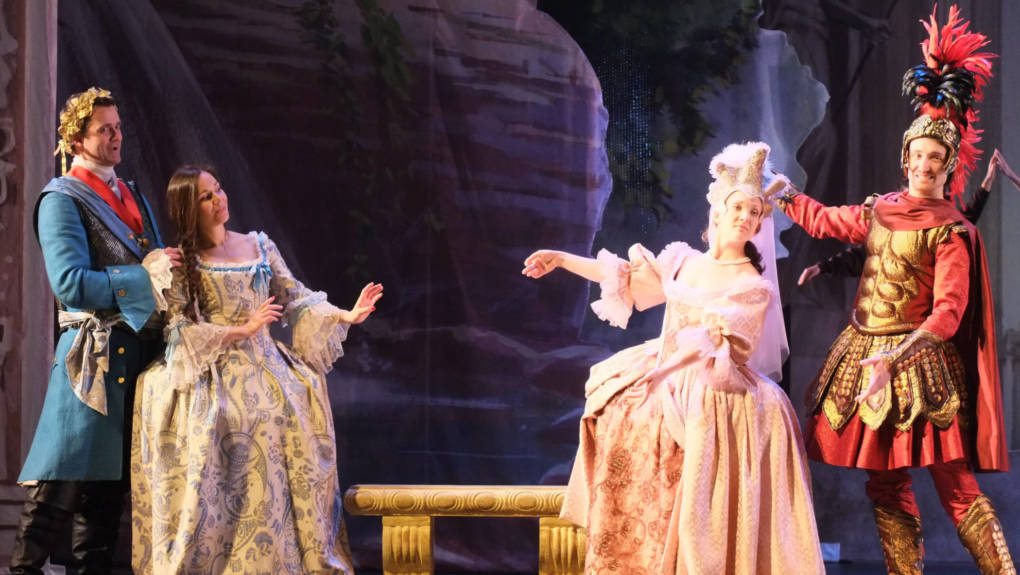
"caption": "A scene from ‘The Temple of Glory,' an 18th century French opera that carries a strong political message for U.S. audiences today. The work is being revived by the Philharmonia Baroque Orchestra and Cal Performances at the end of the month. ",
"description": "A scene from ‘The Temple of Glory,' an 18th century French opera that carries a strong political message for U.S. audiences today. The work is being revived by the Philharmonia Baroque Orchestra and Cal Performances at the end of the month. ",
"title": "The Temple of Glory",
"credit": "Photo: Jeff Phillips",
"status": "inherit",
"isLoading": false,
"fetchFailed": false
},
"arts_13088809": {
"type": "attachments",
"id": "arts_13088809",
"meta": {
"index": "attachments_1716263798",
"site": "arts",
"id": "13088809",
"found": true
},
"parent": 13087956,
"imgSizes": {
"small": {
"file": "https://ww2.kqed.org/app/uploads/sites/2/2017/04/rulan-dance-1920x1080-520x293.jpg",
"width": 520,
"mimeType": "image/jpeg",
"height": 293
},
"twentyfourteen-full-width": {
"file": "https://ww2.kqed.org/app/uploads/sites/2/2017/04/rulan-dance-1920x1080-1038x576.jpg",
"width": 1038,
"mimeType": "image/jpeg",
"height": 576
},
"thumbnail": {
"file": "https://ww2.kqed.org/app/uploads/sites/2/2017/04/rulan-dance-1920x1080-160x90.jpg",
"width": 160,
"mimeType": "image/jpeg",
"height": 90
},
"fd-sm": {
"file": "https://ww2.kqed.org/app/uploads/sites/2/2017/04/rulan-dance-1920x1080-960x540.jpg",
"width": 960,
"mimeType": "image/jpeg",
"height": 540
},
"post-thumbnail": {
"file": "https://ww2.kqed.org/app/uploads/sites/2/2017/04/rulan-dance-1920x1080-672x372.jpg",
"width": 672,
"mimeType": "image/jpeg",
"height": 372
},
"xsmall": {
"file": "https://ww2.kqed.org/app/uploads/sites/2/2017/04/rulan-dance-1920x1080-375x211.jpg",
"width": 375,
"mimeType": "image/jpeg",
"height": 211
},
"kqedFullSize": {
"file": "https://ww2.kqed.org/app/uploads/sites/2/2017/04/rulan-dance-1920x1080.jpg",
"width": 1920,
"height": 1080
},
"large": {
"file": "https://ww2.kqed.org/app/uploads/sites/2/2017/04/rulan-dance-1920x1080-1020x574.jpg",
"width": 1020,
"mimeType": "image/jpeg",
"height": 574
},
"xlarge": {
"file": "https://ww2.kqed.org/app/uploads/sites/2/2017/04/rulan-dance-1920x1080-1180x664.jpg",
"width": 1180,
"mimeType": "image/jpeg",
"height": 664
},
"guest-author-50": {
"file": "https://ww2.kqed.org/app/uploads/sites/2/2017/04/rulan-dance-1920x1080-50x50.jpg",
"width": 50,
"mimeType": "image/jpeg",
"height": 50
},
"guest-author-96": {
"file": "https://ww2.kqed.org/app/uploads/sites/2/2017/04/rulan-dance-1920x1080-96x96.jpg",
"width": 96,
"mimeType": "image/jpeg",
"height": 96
},
"medium": {
"file": "https://ww2.kqed.org/app/uploads/sites/2/2017/04/rulan-dance-1920x1080-800x450.jpg",
"width": 800,
"mimeType": "image/jpeg",
"height": 450
},
"guest-author-64": {
"file": "https://ww2.kqed.org/app/uploads/sites/2/2017/04/rulan-dance-1920x1080-64x64.jpg",
"width": 64,
"mimeType": "image/jpeg",
"height": 64
},
"guest-author-32": {
"file": "https://ww2.kqed.org/app/uploads/sites/2/2017/04/rulan-dance-1920x1080-32x32.jpg",
"width": 32,
"mimeType": "image/jpeg",
"height": 32
},
"fd-lrg": {
"file": "https://ww2.kqed.org/app/uploads/sites/2/2017/04/rulan-dance-1920x1080-1920x1080.jpg",
"width": 1920,
"mimeType": "image/jpeg",
"height": 1080
},
"fd-med": {
"file": "https://ww2.kqed.org/app/uploads/sites/2/2017/04/rulan-dance-1920x1080-1180x664.jpg",
"width": 1180,
"mimeType": "image/jpeg",
"height": 664
},
"full-width": {
"file": "https://ww2.kqed.org/app/uploads/sites/2/2017/04/rulan-dance-1920x1080-1920x1080.jpg",
"width": 1920,
"mimeType": "image/jpeg",
"height": 1080
},
"detail": {
"file": "https://ww2.kqed.org/app/uploads/sites/2/2017/04/rulan-dance-1920x1080-150x150.jpg",
"width": 150,
"mimeType": "image/jpeg",
"height": 150
},
"medium_large": {
"file": "https://ww2.kqed.org/app/uploads/sites/2/2017/04/rulan-dance-1920x1080-768x432.jpg",
"width": 768,
"mimeType": "image/jpeg",
"height": 432
},
"guest-author-128": {
"file": "https://ww2.kqed.org/app/uploads/sites/2/2017/04/rulan-dance-1920x1080-128x128.jpg",
"width": 128,
"mimeType": "image/jpeg",
"height": 128
},
"xxsmall": {
"file": "https://ww2.kqed.org/app/uploads/sites/2/2017/04/rulan-dance-1920x1080-240x135.jpg",
"width": 240,
"mimeType": "image/jpeg",
"height": 135
}
},
"publishDate": 1492809908,
"modified": 1492810343,
"caption": "Still from film short 'For Rulan Tangen To Dance Is To Live, To live Is To Dance'",
"description": "Still from film short 'For Rulan Tangen To Dance Is To Live, To live Is To Dance'",
"title": "rulan-dance-1920x1080",
"credit": "Courtesy of producer Claudia Escobar ",
"status": "inherit",
"isLoading": false,
"fetchFailed": false
},
"arts_13042977": {
"type": "attachments",
"id": "arts_13042977",
"meta": {
"index": "attachments_1716263798",
"site": "arts",
"id": "13042977",
"found": true
},
"parent": 13042536,
"imgSizes": {
"small": {
"file": "https://ww2.kqed.org/app/uploads/sites/2/2017/04/ARTS_RULAN_unwindNoBug-520x293.jpg",
"width": 520,
"mimeType": "image/jpeg",
"height": 293
},
"twentyfourteen-full-width": {
"file": "https://ww2.kqed.org/app/uploads/sites/2/2017/04/ARTS_RULAN_unwindNoBug-1038x576.jpg",
"width": 1038,
"mimeType": "image/jpeg",
"height": 576
},
"thumbnail": {
"file": "https://ww2.kqed.org/app/uploads/sites/2/2017/04/ARTS_RULAN_unwindNoBug-160x90.jpg",
"width": 160,
"mimeType": "image/jpeg",
"height": 90
},
"fd-sm": {
"file": "https://ww2.kqed.org/app/uploads/sites/2/2017/04/ARTS_RULAN_unwindNoBug-960x540.jpg",
"width": 960,
"mimeType": "image/jpeg",
"height": 540
},
"post-thumbnail": {
"file": "https://ww2.kqed.org/app/uploads/sites/2/2017/04/ARTS_RULAN_unwindNoBug-672x372.jpg",
"width": 672,
"mimeType": "image/jpeg",
"height": 372
},
"xsmall": {
"file": "https://ww2.kqed.org/app/uploads/sites/2/2017/04/ARTS_RULAN_unwindNoBug-375x211.jpg",
"width": 375,
"mimeType": "image/jpeg",
"height": 211
},
"kqedFullSize": {
"file": "https://ww2.kqed.org/app/uploads/sites/2/2017/04/ARTS_RULAN_unwindNoBug.jpg",
"width": 1920,
"height": 1080
},
"large": {
"file": "https://ww2.kqed.org/app/uploads/sites/2/2017/04/ARTS_RULAN_unwindNoBug-1020x574.jpg",
"width": 1020,
"mimeType": "image/jpeg",
"height": 574
},
"xlarge": {
"file": "https://ww2.kqed.org/app/uploads/sites/2/2017/04/ARTS_RULAN_unwindNoBug-1180x664.jpg",
"width": 1180,
"mimeType": "image/jpeg",
"height": 664
},
"guest-author-50": {
"file": "https://ww2.kqed.org/app/uploads/sites/2/2017/04/ARTS_RULAN_unwindNoBug-50x50.jpg",
"width": 50,
"mimeType": "image/jpeg",
"height": 50
},
"guest-author-96": {
"file": "https://ww2.kqed.org/app/uploads/sites/2/2017/04/ARTS_RULAN_unwindNoBug-96x96.jpg",
"width": 96,
"mimeType": "image/jpeg",
"height": 96
},
"medium": {
"file": "https://ww2.kqed.org/app/uploads/sites/2/2017/04/ARTS_RULAN_unwindNoBug-800x450.jpg",
"width": 800,
"mimeType": "image/jpeg",
"height": 450
},
"guest-author-64": {
"file": "https://ww2.kqed.org/app/uploads/sites/2/2017/04/ARTS_RULAN_unwindNoBug-64x64.jpg",
"width": 64,
"mimeType": "image/jpeg",
"height": 64
},
"guest-author-32": {
"file": "https://ww2.kqed.org/app/uploads/sites/2/2017/04/ARTS_RULAN_unwindNoBug-32x32.jpg",
"width": 32,
"mimeType": "image/jpeg",
"height": 32
},
"fd-lrg": {
"file": "https://ww2.kqed.org/app/uploads/sites/2/2017/04/ARTS_RULAN_unwindNoBug-1920x1080.jpg",
"width": 1920,
"mimeType": "image/jpeg",
"height": 1080
},
"fd-med": {
"file": "https://ww2.kqed.org/app/uploads/sites/2/2017/04/ARTS_RULAN_unwindNoBug-1180x664.jpg",
"width": 1180,
"mimeType": "image/jpeg",
"height": 664
},
"full-width": {
"file": "https://ww2.kqed.org/app/uploads/sites/2/2017/04/ARTS_RULAN_unwindNoBug-1920x1080.jpg",
"width": 1920,
"mimeType": "image/jpeg",
"height": 1080
},
"detail": {
"file": "https://ww2.kqed.org/app/uploads/sites/2/2017/04/ARTS_RULAN_unwindNoBug-150x150.jpg",
"width": 150,
"mimeType": "image/jpeg",
"height": 150
},
"medium_large": {
"file": "https://ww2.kqed.org/app/uploads/sites/2/2017/04/ARTS_RULAN_unwindNoBug-768x432.jpg",
"width": 768,
"mimeType": "image/jpeg",
"height": 432
},
"guest-author-128": {
"file": "https://ww2.kqed.org/app/uploads/sites/2/2017/04/ARTS_RULAN_unwindNoBug-128x128.jpg",
"width": 128,
"mimeType": "image/jpeg",
"height": 128
},
"xxsmall": {
"file": "https://ww2.kqed.org/app/uploads/sites/2/2017/04/ARTS_RULAN_unwindNoBug-240x135.jpg",
"width": 240,
"mimeType": "image/jpeg",
"height": 135
}
},
"publishDate": 1492035326,
"modified": 1492035326,
"caption": null,
"description": null,
"title": "ARTS_RULAN_unwindNoBug",
"credit": null,
"status": "inherit",
"isLoading": false,
"fetchFailed": false
},
"arts_13018676": {
"type": "attachments",
"id": "arts_13018676",
"meta": {
"index": "attachments_1716263798",
"site": "arts",
"id": "13018676",
"found": true
},
"parent": 13018237,
"imgSizes": {
"small": {
"file": "https://ww2.kqed.org/app/uploads/sites/2/2017/04/TREX_OCT_FLINT_2015-2356-e1491610068726_COVER-520x293.jpg",
"width": 520,
"mimeType": "image/jpeg",
"height": 293
},
"twentyfourteen-full-width": {
"file": "https://ww2.kqed.org/app/uploads/sites/2/2017/04/TREX_OCT_FLINT_2015-2356-e1491610068726_COVER-1038x576.jpg",
"width": 1038,
"mimeType": "image/jpeg",
"height": 576
},
"thumbnail": {
"file": "https://ww2.kqed.org/app/uploads/sites/2/2017/04/TREX_OCT_FLINT_2015-2356-e1491610068726_COVER-160x90.jpg",
"width": 160,
"mimeType": "image/jpeg",
"height": 90
},
"fd-sm": {
"file": "https://ww2.kqed.org/app/uploads/sites/2/2017/04/TREX_OCT_FLINT_2015-2356-e1491610068726_COVER-960x540.jpg",
"width": 960,
"mimeType": "image/jpeg",
"height": 540
},
"post-thumbnail": {
"file": "https://ww2.kqed.org/app/uploads/sites/2/2017/04/TREX_OCT_FLINT_2015-2356-e1491610068726_COVER-672x372.jpg",
"width": 672,
"mimeType": "image/jpeg",
"height": 372
},
"xsmall": {
"file": "https://ww2.kqed.org/app/uploads/sites/2/2017/04/TREX_OCT_FLINT_2015-2356-e1491610068726_COVER-375x211.jpg",
"width": 375,
"mimeType": "image/jpeg",
"height": 211
},
"kqedFullSize": {
"file": "https://ww2.kqed.org/app/uploads/sites/2/2017/04/TREX_OCT_FLINT_2015-2356-e1491610068726_COVER.jpg",
"width": 1152,
"height": 648
},
"large": {
"file": "https://ww2.kqed.org/app/uploads/sites/2/2017/04/TREX_OCT_FLINT_2015-2356-e1491610068726_COVER-1020x574.jpg",
"width": 1020,
"mimeType": "image/jpeg",
"height": 574
},
"guest-author-50": {
"file": "https://ww2.kqed.org/app/uploads/sites/2/2017/04/TREX_OCT_FLINT_2015-2356-e1491610068726_COVER-50x50.jpg",
"width": 50,
"mimeType": "image/jpeg",
"height": 50
},
"guest-author-96": {
"file": "https://ww2.kqed.org/app/uploads/sites/2/2017/04/TREX_OCT_FLINT_2015-2356-e1491610068726_COVER-96x96.jpg",
"width": 96,
"mimeType": "image/jpeg",
"height": 96
},
"medium": {
"file": "https://ww2.kqed.org/app/uploads/sites/2/2017/04/TREX_OCT_FLINT_2015-2356-e1491610068726_COVER-800x450.jpg",
"width": 800,
"mimeType": "image/jpeg",
"height": 450
},
"guest-author-64": {
"file": "https://ww2.kqed.org/app/uploads/sites/2/2017/04/TREX_OCT_FLINT_2015-2356-e1491610068726_COVER-64x64.jpg",
"width": 64,
"mimeType": "image/jpeg",
"height": 64
},
"guest-author-32": {
"file": "https://ww2.kqed.org/app/uploads/sites/2/2017/04/TREX_OCT_FLINT_2015-2356-e1491610068726_COVER-32x32.jpg",
"width": 32,
"mimeType": "image/jpeg",
"height": 32
},
"detail": {
"file": "https://ww2.kqed.org/app/uploads/sites/2/2017/04/TREX_OCT_FLINT_2015-2356-e1491610068726_COVER-150x150.jpg",
"width": 150,
"mimeType": "image/jpeg",
"height": 150
},
"medium_large": {
"file": "https://ww2.kqed.org/app/uploads/sites/2/2017/04/TREX_OCT_FLINT_2015-2356-e1491610068726_COVER-768x432.jpg",
"width": 768,
"mimeType": "image/jpeg",
"height": 432
},
"guest-author-128": {
"file": "https://ww2.kqed.org/app/uploads/sites/2/2017/04/TREX_OCT_FLINT_2015-2356-e1491610068726_COVER-128x128.jpg",
"width": 128,
"mimeType": "image/jpeg",
"height": 128
},
"xxsmall": {
"file": "https://ww2.kqed.org/app/uploads/sites/2/2017/04/TREX_OCT_FLINT_2015-2356-e1491610068726_COVER-240x135.jpg",
"width": 240,
"mimeType": "image/jpeg",
"height": 135
}
},
"publishDate": 1491610829,
"modified": 1491610969,
"caption": "Olympic Gold Medal Boxer Claressa \"T-Rex\" Shields, 20, at Gallo Boxing Gym in Lansing, Michigan; part of Zackary Canepari's 'Flint is a Place.'",
"description": "Olympic Gold Medal Boxer Claressa \"T-Rex\" Shields, 20, at Gallo Boxing Gym in Lansing, Michigan; part of Zackary Canepari's 'Flint is a Place.'",
"title": "TREX_OCT_FLINT_2015-2356-e1491610068726_COVER",
"credit": "Courtesy of Zackary Canepari",
"status": "inherit",
"isLoading": false,
"fetchFailed": false
},
"arts_12997924": {
"type": "attachments",
"id": "arts_12997924",
"meta": {
"index": "attachments_1716263798",
"site": "arts",
"id": "12997924",
"found": true
},
"parent": 12997920,
"imgSizes": {
"small": {
"file": "https://ww2.kqed.org/app/uploads/sites/2/2017/04/GHM16REH_ET35575-e1491346816936-520x293.jpg",
"width": 520,
"mimeType": "image/jpeg",
"height": 293
},
"thumbnail": {
"file": "https://ww2.kqed.org/app/uploads/sites/2/2017/04/GHM16REH_ET35575-e1491346816936-160x90.jpg",
"width": 160,
"mimeType": "image/jpeg",
"height": 90
},
"post-thumbnail": {
"file": "https://ww2.kqed.org/app/uploads/sites/2/2017/04/GHM16REH_ET35575-e1491346816936-672x372.jpg",
"width": 672,
"mimeType": "image/jpeg",
"height": 372
},
"xsmall": {
"file": "https://ww2.kqed.org/app/uploads/sites/2/2017/04/GHM16REH_ET35575-e1491346816936-375x212.jpg",
"width": 375,
"mimeType": "image/jpeg",
"height": 212
},
"kqedFullSize": {
"file": "https://ww2.kqed.org/app/uploads/sites/2/2017/04/GHM16REH_ET35575-e1491346816936.jpg",
"width": 734,
"height": 414
},
"guest-author-50": {
"file": "https://ww2.kqed.org/app/uploads/sites/2/2017/04/GHM16REH_ET35575-e1491346816936-50x50.jpg",
"width": 50,
"mimeType": "image/jpeg",
"height": 50
},
"guest-author-96": {
"file": "https://ww2.kqed.org/app/uploads/sites/2/2017/04/GHM16REH_ET35575-e1491346816936-96x96.jpg",
"width": 96,
"mimeType": "image/jpeg",
"height": 96
},
"medium": {
"file": "https://ww2.kqed.org/app/uploads/sites/2/2017/04/GHM16REH_ET35575-800x535.jpg",
"width": 800,
"mimeType": "image/jpeg",
"height": 535
},
"guest-author-64": {
"file": "https://ww2.kqed.org/app/uploads/sites/2/2017/04/GHM16REH_ET35575-e1491346816936-64x64.jpg",
"width": 64,
"mimeType": "image/jpeg",
"height": 64
},
"guest-author-32": {
"file": "https://ww2.kqed.org/app/uploads/sites/2/2017/04/GHM16REH_ET35575-e1491346816936-32x32.jpg",
"width": 32,
"mimeType": "image/jpeg",
"height": 32
},
"detail": {
"file": "https://ww2.kqed.org/app/uploads/sites/2/2017/04/GHM16REH_ET35575-e1491346816936-150x150.jpg",
"width": 150,
"mimeType": "image/jpeg",
"height": 150
},
"medium_large": {
"file": "https://ww2.kqed.org/app/uploads/sites/2/2017/04/GHM16REH_ET35575-768x514.jpg",
"width": 768,
"mimeType": "image/jpeg",
"height": 514
},
"guest-author-128": {
"file": "https://ww2.kqed.org/app/uploads/sites/2/2017/04/GHM16REH_ET35575-e1491346816936-128x128.jpg",
"width": 128,
"mimeType": "image/jpeg",
"height": 128
},
"xxsmall": {
"file": "https://ww2.kqed.org/app/uploads/sites/2/2017/04/GHM16REH_ET35575-e1491346816936-240x135.jpg",
"width": 240,
"mimeType": "image/jpeg",
"height": 135
}
},
"publishDate": 1491254279,
"modified": 1491346788,
"caption": "Members of San Francisco Ballet rehearse Myles Thatcher's 'Ghost In The Machine.'\n",
"description": "Members of San Francisco Ballet rehearse Myles Thatcher's 'Ghost In The Machine.'",
"title": "_ET35575",
"credit": "Photo: Erik Tomasson",
"status": "inherit",
"isLoading": false,
"fetchFailed": false
},
"arts_12973698": {
"type": "attachments",
"id": "arts_12973698",
"meta": {
"index": "attachments_1716263798",
"site": "arts",
"id": "12973698",
"found": true
},
"parent": 12967933,
"imgSizes": {
"small": {
"file": "https://ww2.kqed.org/app/uploads/sites/2/2017/03/IMG_6863-e1490829099100-520x293.jpg",
"width": 520,
"mimeType": "image/jpeg",
"height": 293
},
"twentyfourteen-full-width": {
"file": "https://ww2.kqed.org/app/uploads/sites/2/2017/03/IMG_6863-e1490829099100-1038x576.jpg",
"width": 1038,
"mimeType": "image/jpeg",
"height": 576
},
"thumbnail": {
"file": "https://ww2.kqed.org/app/uploads/sites/2/2017/03/IMG_6863-e1490829099100-160x90.jpg",
"width": 160,
"mimeType": "image/jpeg",
"height": 90
},
"fd-sm": {
"file": "https://ww2.kqed.org/app/uploads/sites/2/2017/03/IMG_6863-e1490829099100-960x541.jpg",
"width": 960,
"mimeType": "image/jpeg",
"height": 541
},
"post-thumbnail": {
"file": "https://ww2.kqed.org/app/uploads/sites/2/2017/03/IMG_6863-e1490829099100-672x372.jpg",
"width": 672,
"mimeType": "image/jpeg",
"height": 372
},
"xsmall": {
"file": "https://ww2.kqed.org/app/uploads/sites/2/2017/03/IMG_6863-e1490829099100-375x211.jpg",
"width": 375,
"mimeType": "image/jpeg",
"height": 211
},
"kqedFullSize": {
"file": "https://ww2.kqed.org/app/uploads/sites/2/2017/03/IMG_6863-e1490829099100.jpg",
"width": 2022,
"height": 1140
},
"large": {
"file": "https://ww2.kqed.org/app/uploads/sites/2/2017/03/IMG_6863-e1490829099100-1020x575.jpg",
"width": 1020,
"mimeType": "image/jpeg",
"height": 575
},
"xlarge": {
"file": "https://ww2.kqed.org/app/uploads/sites/2/2017/03/IMG_6863-e1490829099100-1180x665.jpg",
"width": 1180,
"mimeType": "image/jpeg",
"height": 665
},
"guest-author-50": {
"file": "https://ww2.kqed.org/app/uploads/sites/2/2017/03/IMG_6863-e1490829099100-50x50.jpg",
"width": 50,
"mimeType": "image/jpeg",
"height": 50
},
"guest-author-96": {
"file": "https://ww2.kqed.org/app/uploads/sites/2/2017/03/IMG_6863-e1490829099100-96x96.jpg",
"width": 96,
"mimeType": "image/jpeg",
"height": 96
},
"medium": {
"file": "https://ww2.kqed.org/app/uploads/sites/2/2017/03/IMG_6863-e1490829099100-800x451.jpg",
"width": 800,
"mimeType": "image/jpeg",
"height": 451
},
"guest-author-64": {
"file": "https://ww2.kqed.org/app/uploads/sites/2/2017/03/IMG_6863-e1490829099100-64x64.jpg",
"width": 64,
"mimeType": "image/jpeg",
"height": 64
},
"guest-author-32": {
"file": "https://ww2.kqed.org/app/uploads/sites/2/2017/03/IMG_6863-e1490829099100-32x32.jpg",
"width": 32,
"mimeType": "image/jpeg",
"height": 32
},
"fd-lrg": {
"file": "https://ww2.kqed.org/app/uploads/sites/2/2017/03/IMG_6863-e1490829099100-1920x1082.jpg",
"width": 1920,
"mimeType": "image/jpeg",
"height": 1082
},
"fd-med": {
"file": "https://ww2.kqed.org/app/uploads/sites/2/2017/03/IMG_6863-e1490829099100-1180x665.jpg",
"width": 1180,
"mimeType": "image/jpeg",
"height": 665
},
"full-width": {
"file": "https://ww2.kqed.org/app/uploads/sites/2/2017/03/IMG_6863-e1490829099100-1920x1082.jpg",
"width": 1920,
"mimeType": "image/jpeg",
"height": 1082
},
"detail": {
"file": "https://ww2.kqed.org/app/uploads/sites/2/2017/03/IMG_6863-e1490829099100-150x150.jpg",
"width": 150,
"mimeType": "image/jpeg",
"height": 150
},
"medium_large": {
"file": "https://ww2.kqed.org/app/uploads/sites/2/2017/03/IMG_6863-e1490829099100-768x433.jpg",
"width": 768,
"mimeType": "image/jpeg",
"height": 433
},
"guest-author-128": {
"file": "https://ww2.kqed.org/app/uploads/sites/2/2017/03/IMG_6863-e1490829099100-128x128.jpg",
"width": 128,
"mimeType": "image/jpeg",
"height": 128
},
"xxsmall": {
"file": "https://ww2.kqed.org/app/uploads/sites/2/2017/03/IMG_6863-e1490829099100-240x135.jpg",
"width": 240,
"mimeType": "image/jpeg",
"height": 135
}
},
"publishDate": 1490829022,
"modified": 1490829080,
"caption": "Lisa Kusanagi in '16 Day Return Policy', one of the pieces in this year's 'D.I.R.T. Festival'",
"description": "Lisa Kusanagi in '16 Day Return Policy', one of the pieces in this year's 'D.I.R.T. Festival'",
"title": "IMG_6863",
"credit": " Photo: Victor Blanco",
"status": "inherit",
"isLoading": false,
"fetchFailed": false
}
},
"audioPlayerReducer": {
"postId": "stream_live",
"isPaused": true,
"isPlaying": false,
"pfsActive": false,
"pledgeModalIsOpen": true,
"playerDrawerIsOpen": false,
"liveAudioPlayStartedAt": 0,
"liveAudioPlayContext": ""
},
"authorsReducer": {
"cmusiker": {
"type": "authors",
"id": "32",
"meta": {
"index": "authors_1716337520",
"id": "32",
"found": true
},
"name": "Cy Musiker",
"firstName": "Cy",
"lastName": "Musiker",
"slug": "cmusiker",
"email": "cmusiker@kqed.org",
"display_author_email": false,
"staff_mastheads": [],
"title": "KQED Contributor",
"bio": "Cy Musiker is a former co-host of The Do List and a former reporter covering the arts for KQED News and The California Report. He loves live performance, especially great theater, jazz, roots music, anything by Mahler. Cy has an MJ from UC Berkeley's School of Journalism, and got his BA from Hampshire College. His work has been recognized by the Society for Professional Journalists with their Sigma Delta Chi Award for Public Service in Journalism. When he can, Cy likes to swim in Tomales Bay, run with his dog in the East Bay Hills, and hike the Sierra.",
"avatar": "https://secure.gravatar.com/avatar/05eaba5c5696ce8f062e4ea2df428a43?s=600&d=blank&r=g",
"twitter": null,
"facebook": null,
"instagram": null,
"linkedin": null,
"sites": [
{
"site": "arts",
"roles": [
"Contributor",
"subscriber"
]
},
{
"site": "news",
"roles": [
"author"
]
},
{
"site": "bayareabites",
"roles": [
"contributor"
]
}
],
"headData": {
"title": "Cy Musiker | KQED",
"description": "KQED Contributor",
"ogImgSrc": "https://secure.gravatar.com/avatar/05eaba5c5696ce8f062e4ea2df428a43?s=600&d=blank&r=g",
"twImgSrc": "https://secure.gravatar.com/avatar/05eaba5c5696ce8f062e4ea2df428a43?s=600&d=blank&r=g"
},
"isLoading": false,
"link": "/author/cmusiker"
},
"ctiee": {
"type": "authors",
"id": "8660",
"meta": {
"index": "authors_1716337520",
"id": "8660",
"found": true
},
"name": "Charlise Tiee",
"firstName": "Charlise",
"lastName": "Tiee",
"slug": "ctiee",
"email": "snailwing@gmail.com",
"display_author_email": false,
"staff_mastheads": [],
"title": null,
"bio": "Bay Area-based writer and painter. Reviews performances of classical music and audience behavior at \u003ca href=\"http://operatattler.com\" target=\"_blank\">The Opera Tattler\u003c/a>.",
"avatar": "https://secure.gravatar.com/avatar/f1a0befa08b57c5871e7b99521309901?s=600&d=blank&r=g",
"twitter": null,
"facebook": null,
"instagram": null,
"linkedin": null,
"sites": [
{
"site": "arts",
"roles": [
"contributor"
]
}
],
"headData": {
"title": "Charlise Tiee | KQED",
"description": null,
"ogImgSrc": "https://secure.gravatar.com/avatar/f1a0befa08b57c5871e7b99521309901?s=600&d=blank&r=g",
"twImgSrc": "https://secure.gravatar.com/avatar/f1a0befa08b57c5871e7b99521309901?s=600&d=blank&r=g"
},
"isLoading": false,
"link": "/author/ctiee"
},
"jamedra": {
"type": "authors",
"id": "8661",
"meta": {
"index": "authors_1716337520",
"id": "8661",
"found": true
},
"name": "Jamedra Brown Fleischman",
"firstName": "Jamedra",
"lastName": "Brown Fleischman",
"slug": "jamedra",
"email": "jbrown@kqed.org",
"display_author_email": false,
"staff_mastheads": [],
"title": "KQED Contributor",
"bio": "Jamedra Brown Fleischman is the Social Media & Distribution Specialist for KQED Arts. In her spare time she enjoys most things mommyhood, fashion and pop culture.",
"avatar": "https://secure.gravatar.com/avatar/374f4a7f5b0565e3c4ef33664ec089eefcff922fee4f4d8c6d784e84f35d2558?s=600&d=blank&r=g",
"twitter": null,
"bluesky": null,
"facebook": null,
"instagram": null,
"linkedin": null,
"sites": [
{
"site": "arts",
"roles": [
"subscriber"
]
},
{
"site": "pop",
"roles": [
"subscriber"
]
},
{
"site": "about",
"roles": [
"subscriber"
]
},
{
"site": "education",
"roles": []
}
],
"headData": {
"title": "Jamedra Brown Fleischman | KQED",
"description": "KQED Contributor",
"ogImgSrc": "https://secure.gravatar.com/avatar/374f4a7f5b0565e3c4ef33664ec089eefcff922fee4f4d8c6d784e84f35d2558?s=600&d=blank&r=g",
"twImgSrc": "https://secure.gravatar.com/avatar/374f4a7f5b0565e3c4ef33664ec089eefcff922fee4f4d8c6d784e84f35d2558?s=600&d=blank&r=g"
},
"isLoading": false,
"link": "/author/jamedra"
},
"jwilkins": {
"type": "authors",
"id": "8668",
"meta": {
"index": "authors_1716337520",
"id": "8668",
"found": true
},
"name": "John Wilkins",
"firstName": "John",
"lastName": "Wilkins",
"slug": "jwilkins",
"email": "Johnrwilkins@aol.com",
"display_author_email": false,
"staff_mastheads": [],
"title": null,
"bio": "John Wilkins is the theater critic for KQED Arts. He was the Artistic Director of Last Planet Theatre for ten years and teaches in the Writing and Literature program at CCA. Follow him on Twitter @johnrwilkins2",
"avatar": "https://secure.gravatar.com/avatar/7798fcc8a10bee0e04387b724b492df7?s=600&d=blank&r=g",
"twitter": null,
"facebook": null,
"instagram": null,
"linkedin": null,
"sites": [
{
"site": "arts",
"roles": [
"subscriber"
]
}
],
"headData": {
"title": "John Wilkins | KQED",
"description": null,
"ogImgSrc": "https://secure.gravatar.com/avatar/7798fcc8a10bee0e04387b724b492df7?s=600&d=blank&r=g",
"twImgSrc": "https://secure.gravatar.com/avatar/7798fcc8a10bee0e04387b724b492df7?s=600&d=blank&r=g"
},
"isLoading": false,
"link": "/author/jwilkins"
},
"cescoda": {
"type": "authors",
"id": "11206",
"meta": {
"index": "authors_1716337520",
"id": "11206",
"found": true
},
"name": "Carla Escoda",
"firstName": "Carla",
"lastName": "Escoda",
"slug": "cescoda",
"email": "ballettothepeople@gmail.com",
"display_author_email": false,
"staff_mastheads": [],
"title": null,
"bio": "Carla can most often be found in theatres, airports and on airplanes, writing about dance and the arts for various websites whenever she can find wi-fi. Her blog Ballet to the People<\u003ca href=\"http://ballettothepeople.com/\" target=\"_blank\" rel=\"noreferrer\">http://\u003cwbr />ballettothepeople.com\u003c/a>> has become a street corner where dance-lovers enjoy loitering and plotting the revolution which will renew the populist roots of ballet.\r\n\u003cspan class=\"im\">\r\nIn her previous lives, Carla worked in scientific research, then in project finance in Asia. Prior to that, she trained as a ballet and modern dancer, and performed with the Yaledancers while getting her undergraduate degrees in Engineering and Applied Science and French Literature, and her graduate degree in Engineering.\u003c/span>",
"avatar": "https://secure.gravatar.com/avatar/3a012eb3749d4353e3e28aab414dd815?s=600&d=blank&r=g",
"twitter": null,
"facebook": null,
"instagram": null,
"linkedin": null,
"sites": [
{
"site": "arts",
"roles": [
"author"
]
}
],
"headData": {
"title": "Carla Escoda | KQED",
"description": null,
"ogImgSrc": "https://secure.gravatar.com/avatar/3a012eb3749d4353e3e28aab414dd815?s=600&d=blank&r=g",
"twImgSrc": "https://secure.gravatar.com/avatar/3a012eb3749d4353e3e28aab414dd815?s=600&d=blank&r=g"
},
"isLoading": false,
"link": "/author/cescoda"
},
"cescobar": {
"type": "authors",
"id": "11241",
"meta": {
"index": "authors_1716337520",
"id": "11241",
"found": true
},
"name": "Claudia Escobar",
"firstName": "Claudia",
"lastName": "Escobar",
"slug": "cescobar",
"email": "cescobar@kqed.org",
"display_author_email": false,
"staff_mastheads": [],
"title": "KQED Contributor",
"bio": "Tropical latin visual story teller extraordinaire! bread maker apprentice.",
"avatar": "https://secure.gravatar.com/avatar/39af590a0e19126bafbf121ec9d891a77a3d680061d7cc03d720efe706992707?s=600&d=blank&r=g",
"twitter": null,
"bluesky": null,
"facebook": null,
"instagram": null,
"linkedin": null,
"sites": [
{
"site": "arts",
"roles": [
"subscriber"
]
},
{
"site": "news",
"roles": [
"author"
]
}
],
"headData": {
"title": "Claudia Escobar | KQED",
"description": "KQED Contributor",
"ogImgSrc": "https://secure.gravatar.com/avatar/39af590a0e19126bafbf121ec9d891a77a3d680061d7cc03d720efe706992707?s=600&d=blank&r=g",
"twImgSrc": "https://secure.gravatar.com/avatar/39af590a0e19126bafbf121ec9d891a77a3d680061d7cc03d720efe706992707?s=600&d=blank&r=g"
},
"isLoading": false,
"link": "/author/cescobar"
}
},
"pagesReducer": {
"arts_category_dance": {
"type": "terms",
"id": "arts_966",
"meta": {
"index": "terms_1716263798",
"site": "arts",
"id": "966",
"score": 12.286945
},
"featImg": null,
"name": "Dance",
"description": null,
"taxonomy": "category",
"headData": {
"twImgId": null,
"twTitle": null,
"ogTitle": null,
"ogImgId": null,
"twDescription": null,
"description": null,
"title": "Dance Archives | KQED Arts",
"ogDescription": null
},
"ttid": 984,
"slug": "dance",
"isLoading": false,
"title": "Dance",
"pageMeta": {
"site": "arts",
"WpPageTemplate": "page-topic-editorial",
"currentPage": 24
},
"blocks": [
{
"blockName": "kqed/post-list",
"attrs": {
"layout": "cardArticle2",
"query": "posts/arts?category=dance",
"seeMore": false,
"paginated": true,
"page": 24
}
},
{
"blockName": "kqed/ad"
}
]
}
},
"pfsSessionReducer": {},
"postsReducer": {
"stream_live": {
"type": "live",
"id": "stream_live",
"audioUrl": "https://streams.kqed.org/kqedradio",
"title": "Live Stream",
"excerpt": "Live Stream information currently unavailable.",
"link": "/radio",
"featImg": "",
"label": {
"name": "KQED Live",
"link": "/"
}
},
"stream_kqedNewscast": {
"type": "posts",
"id": "stream_kqedNewscast",
"audioUrl": "https://www.kqed.org/.stream/anon/radio/RDnews/newscast.mp3?_=1",
"title": "KQED Newscast",
"featImg": "",
"label": {
"name": "88.5 FM",
"link": "/"
}
},
"arts_13244123": {
"type": "posts",
"id": "arts_13244123",
"meta": {
"index": "posts_1716263798",
"site": "arts",
"id": "13244123",
"score": null,
"sort": [
1495058439000
]
},
"parent": 0,
"labelTerm": {
"site": "arts"
},
"blocks": [],
"publishDate": 1495058439,
"format": "standard",
"title": "Robert Moses’ Kin Drops ‘Cultural Time Bombs’",
"headTitle": "Robert Moses’ Kin Drops ‘Cultural Time Bombs’ | KQED",
"content": "\u003cp>“When I’m through burying children, who will bury me?”\u003c/p>\n\u003cp>That’s the mournful chant that opens the latest offering from \u003ca href=\"https://www.robertmoseskin.org\">Robert Moses’ Kin\u003c/a>. Titled \u003ca href=\"https://www.robertmoseskin.org/performances\">\u003cem>Trick Bags/Trap Doors/Painted Corners\u003c/em>\u003c/a>, the three-part, evening-length collaboration between choreographer Robert Moses and guest choreographers Terence Marling and Latanya d. Tigner is billed as a reflection on the “cultural time bombs” created when children are raised to “buy into the ideas of colorblindness and meritocracy.”\u003c/p>\n\u003cp>Even without that precise and chilling backgrounder, the provocative score clearly situates the work in the divisive political landscape of today’s America. Yet the fabric of the triptych is woven so loosely that it doesn’t entirely hang together. The professed theme of raising children in an insidiously racist environment seems to give way to mysterious yet absorbing rituals of community.\u003c/p>\n\u003cfigure id=\"attachment_13244130\" class=\"wp-caption aligncenter\" style=\"max-width: 800px\">\u003cimg loading=\"lazy\" decoding=\"async\" class=\"wp-image-13244130 size-medium\" src=\"https://ww2.kqed.org/arts/wp-content/uploads/sites/2/2017/05/Robert-Moses-Kin-2017-Crystaldawn-Bell-with-Norma-Fong-and-Dazaun-Soleyn-photo-by-Victor-Talledos-800x1111.jpg\" alt=\"Crystal dawn Bell with Norma Fong and Dazaun Soleyn\" width=\"800\" height=\"1111\" srcset=\"https://cdn.kqed.org/wp-content/uploads/sites/2/2017/05/Robert-Moses-Kin-2017-Crystaldawn-Bell-with-Norma-Fong-and-Dazaun-Soleyn-photo-by-Victor-Talledos-800x1111.jpg 800w, https://cdn.kqed.org/wp-content/uploads/sites/2/2017/05/Robert-Moses-Kin-2017-Crystaldawn-Bell-with-Norma-Fong-and-Dazaun-Soleyn-photo-by-Victor-Talledos-160x222.jpg 160w, https://cdn.kqed.org/wp-content/uploads/sites/2/2017/05/Robert-Moses-Kin-2017-Crystaldawn-Bell-with-Norma-Fong-and-Dazaun-Soleyn-photo-by-Victor-Talledos-768x1067.jpg 768w, https://cdn.kqed.org/wp-content/uploads/sites/2/2017/05/Robert-Moses-Kin-2017-Crystaldawn-Bell-with-Norma-Fong-and-Dazaun-Soleyn-photo-by-Victor-Talledos-1020x1417.jpg 1020w, https://cdn.kqed.org/wp-content/uploads/sites/2/2017/05/Robert-Moses-Kin-2017-Crystaldawn-Bell-with-Norma-Fong-and-Dazaun-Soleyn-photo-by-Victor-Talledos-1920x2667.jpg 1920w, https://cdn.kqed.org/wp-content/uploads/sites/2/2017/05/Robert-Moses-Kin-2017-Crystaldawn-Bell-with-Norma-Fong-and-Dazaun-Soleyn-photo-by-Victor-Talledos-1180x1639.jpg 1180w, https://cdn.kqed.org/wp-content/uploads/sites/2/2017/05/Robert-Moses-Kin-2017-Crystaldawn-Bell-with-Norma-Fong-and-Dazaun-Soleyn-photo-by-Victor-Talledos-960x1334.jpg 960w, https://cdn.kqed.org/wp-content/uploads/sites/2/2017/05/Robert-Moses-Kin-2017-Crystaldawn-Bell-with-Norma-Fong-and-Dazaun-Soleyn-photo-by-Victor-Talledos-240x333.jpg 240w, https://cdn.kqed.org/wp-content/uploads/sites/2/2017/05/Robert-Moses-Kin-2017-Crystaldawn-Bell-with-Norma-Fong-and-Dazaun-Soleyn-photo-by-Victor-Talledos-375x521.jpg 375w, https://cdn.kqed.org/wp-content/uploads/sites/2/2017/05/Robert-Moses-Kin-2017-Crystaldawn-Bell-with-Norma-Fong-and-Dazaun-Soleyn-photo-by-Victor-Talledos-520x722.jpg 520w\" sizes=\"(max-width: 800px) 100vw, 800px\">\u003cfigcaption class=\"wp-caption-text\">Crystal dawn Bell with Norma Fong and Dazaun Soleyn. \u003ccite>(Photo: Victor Talledos)\u003c/cite>\u003c/figcaption>\u003c/figure>\n\u003cp>Moses choreographs the opening section of the triptych to a score crafted by recording artist/drummer PC Muñoz. It features parts of the soundtrack from \u003cem>The New York Times\u003c/em> mini-documentary \u003cem>\u003ca href=\"https://www.nytimes.com/2015/12/01/opinion/a-conversation-with-black-women-on-race.html?_r=0\">A Conversation with Black Women on Race\u003c/a>\u003c/em> and a glorious, pulsating song tinged with gospel, Latin American and West African rhythms titled “DIRT,” performed by the Oakland-based a cappella ensemble \u003ca href=\"http://sovoso.com/\">SoVoSó\u003c/a>.\u003c/p>\n\u003cp>Moses does not use movement to reenact the spoken narrative elements in the soundtrack that touch on violence, lynchings, and subtler acts of racism. Instead, the choreographer punctuates them with finely drawn anguish, irony and humor.\u003c/p>\n\u003cp>[ad fullwidth]\u003c/p>\n\u003cp>In the bare-bones black box of the intimate \u003ca href=\"http://www.dancemission.com/\" target=\"_blank\" rel=\"noopener noreferrer\">Dance Mission Theater\u003c/a>, six Robert Moses’ Kin dancers and 17 guest performers clad in simple white street wear undertake brief solos, duos and trios, emerging from a melee of bodies reminiscent of busy city streets and buzzing information highways. In one electrifying sequence, dancer Dazaun Soleyn twists and hurtles through a crowd of people oblivious to his suffering.\u003c/p>\n\u003cfigure id=\"attachment_13244127\" class=\"wp-caption aligncenter\" style=\"max-width: 800px\">\u003cimg loading=\"lazy\" decoding=\"async\" class=\"wp-image-13244127 size-medium\" src=\"https://ww2.kqed.org/arts/wp-content/uploads/sites/2/2017/05/Robert-Moses-Kin-2017-Norma-Fong-and-Dazaun-Soleyn-photo-by-Steve-Disenhof-800x759.jpg\" alt=\"Norma Fong and Dazaun Soleyn \" width=\"800\" height=\"759\" srcset=\"https://cdn.kqed.org/wp-content/uploads/sites/2/2017/05/Robert-Moses-Kin-2017-Norma-Fong-and-Dazaun-Soleyn-photo-by-Steve-Disenhof-800x759.jpg 800w, https://cdn.kqed.org/wp-content/uploads/sites/2/2017/05/Robert-Moses-Kin-2017-Norma-Fong-and-Dazaun-Soleyn-photo-by-Steve-Disenhof-160x152.jpg 160w, https://cdn.kqed.org/wp-content/uploads/sites/2/2017/05/Robert-Moses-Kin-2017-Norma-Fong-and-Dazaun-Soleyn-photo-by-Steve-Disenhof-768x728.jpg 768w, https://cdn.kqed.org/wp-content/uploads/sites/2/2017/05/Robert-Moses-Kin-2017-Norma-Fong-and-Dazaun-Soleyn-photo-by-Steve-Disenhof-1020x967.jpg 1020w, https://cdn.kqed.org/wp-content/uploads/sites/2/2017/05/Robert-Moses-Kin-2017-Norma-Fong-and-Dazaun-Soleyn-photo-by-Steve-Disenhof-1920x1821.jpg 1920w, https://cdn.kqed.org/wp-content/uploads/sites/2/2017/05/Robert-Moses-Kin-2017-Norma-Fong-and-Dazaun-Soleyn-photo-by-Steve-Disenhof-1180x1119.jpg 1180w, https://cdn.kqed.org/wp-content/uploads/sites/2/2017/05/Robert-Moses-Kin-2017-Norma-Fong-and-Dazaun-Soleyn-photo-by-Steve-Disenhof-960x910.jpg 960w, https://cdn.kqed.org/wp-content/uploads/sites/2/2017/05/Robert-Moses-Kin-2017-Norma-Fong-and-Dazaun-Soleyn-photo-by-Steve-Disenhof-240x228.jpg 240w, https://cdn.kqed.org/wp-content/uploads/sites/2/2017/05/Robert-Moses-Kin-2017-Norma-Fong-and-Dazaun-Soleyn-photo-by-Steve-Disenhof-375x356.jpg 375w, https://cdn.kqed.org/wp-content/uploads/sites/2/2017/05/Robert-Moses-Kin-2017-Norma-Fong-and-Dazaun-Soleyn-photo-by-Steve-Disenhof-520x493.jpg 520w\" sizes=\"(max-width: 800px) 100vw, 800px\">\u003cfigcaption class=\"wp-caption-text\">Norma Fong and Dazaun Soleyn \u003ccite>(Photo: Steve Disenhof)\u003c/cite>\u003c/figcaption>\u003c/figure>\n\u003cp>In the second section of the triptych, Marling enlists Dutch baroque composer Johannes Schenck, Japanese new age music, and Moondog’s brash symphonic “Theme” to color a somewhat trite spoken-word recording about those whom society brands outsiders.\u003c/p>\n\u003cp>In the third and closing section, Tigner dispenses with a soundscape altogether; the dancers’ syncopated footfalls and occasional chanting provide the only accompaniment to her choreography, which suggests a stalwart struggle against invisible forces of oppression.\u003c/p>\n\u003cp>As a whole, the work seems to champion the individual and paint the resilience of a community. The juicy, poetic dance language – remarkably unified between the three choreographers – feels innate to each of the performers, while also amplifying and exalting the differences between them. The wide range of physiques and skin tones in this seemingly tight-knit company make a powerful statement of inclusivity. With its hints of martial arts, ballet, folk and street dance, the choreography defies tidy classification. The individual dancers defy classification, too.\u003c/p>\n\u003cfigure id=\"attachment_13244128\" class=\"wp-caption aligncenter\" style=\"max-width: 800px\">\u003cimg loading=\"lazy\" decoding=\"async\" class=\"wp-image-13244128 size-medium\" src=\"https://ww2.kqed.org/arts/wp-content/uploads/sites/2/2017/05/Robert-Moses-Kin-2017-Crystaldawn-Bell-and-Norma-Fong-rehearse-with-Robert-Moses-photo-by-Steve-Disenhof-800x534.jpg\" alt=\"Robert Moses rehearses Crystaldawn Bell and Norma Fong \" width=\"800\" height=\"534\" srcset=\"https://cdn.kqed.org/wp-content/uploads/sites/2/2017/05/Robert-Moses-Kin-2017-Crystaldawn-Bell-and-Norma-Fong-rehearse-with-Robert-Moses-photo-by-Steve-Disenhof-800x534.jpg 800w, https://cdn.kqed.org/wp-content/uploads/sites/2/2017/05/Robert-Moses-Kin-2017-Crystaldawn-Bell-and-Norma-Fong-rehearse-with-Robert-Moses-photo-by-Steve-Disenhof-160x107.jpg 160w, https://cdn.kqed.org/wp-content/uploads/sites/2/2017/05/Robert-Moses-Kin-2017-Crystaldawn-Bell-and-Norma-Fong-rehearse-with-Robert-Moses-photo-by-Steve-Disenhof-768x513.jpg 768w, https://cdn.kqed.org/wp-content/uploads/sites/2/2017/05/Robert-Moses-Kin-2017-Crystaldawn-Bell-and-Norma-Fong-rehearse-with-Robert-Moses-photo-by-Steve-Disenhof-1020x681.jpg 1020w, https://cdn.kqed.org/wp-content/uploads/sites/2/2017/05/Robert-Moses-Kin-2017-Crystaldawn-Bell-and-Norma-Fong-rehearse-with-Robert-Moses-photo-by-Steve-Disenhof-1920x1281.jpg 1920w, https://cdn.kqed.org/wp-content/uploads/sites/2/2017/05/Robert-Moses-Kin-2017-Crystaldawn-Bell-and-Norma-Fong-rehearse-with-Robert-Moses-photo-by-Steve-Disenhof-1180x787.jpg 1180w, https://cdn.kqed.org/wp-content/uploads/sites/2/2017/05/Robert-Moses-Kin-2017-Crystaldawn-Bell-and-Norma-Fong-rehearse-with-Robert-Moses-photo-by-Steve-Disenhof-960x641.jpg 960w, https://cdn.kqed.org/wp-content/uploads/sites/2/2017/05/Robert-Moses-Kin-2017-Crystaldawn-Bell-and-Norma-Fong-rehearse-with-Robert-Moses-photo-by-Steve-Disenhof-240x160.jpg 240w, https://cdn.kqed.org/wp-content/uploads/sites/2/2017/05/Robert-Moses-Kin-2017-Crystaldawn-Bell-and-Norma-Fong-rehearse-with-Robert-Moses-photo-by-Steve-Disenhof-375x250.jpg 375w, https://cdn.kqed.org/wp-content/uploads/sites/2/2017/05/Robert-Moses-Kin-2017-Crystaldawn-Bell-and-Norma-Fong-rehearse-with-Robert-Moses-photo-by-Steve-Disenhof-520x347.jpg 520w\" sizes=\"(max-width: 800px) 100vw, 800px\">\u003cfigcaption class=\"wp-caption-text\">Robert Moses rehearses Crystaldawn Bell and Norma Fong \u003ccite>(Photo: Steve Disenhof)\u003c/cite>\u003c/figcaption>\u003c/figure>\n\u003cp>A quality they all share is a sense of living on a knife edge: the dancers make split-second shifts from boxing jabs to sweeping lyrical gestures; they whirl on a dime, shudder and quake, and negotiate turf issues with wordless wit and diplomacy. They offer pop-up shelters for each other within the curves of an outstretched limb or an arched back, and execute bodily contact with grave, tender precision.\u003c/p>\n\u003cp>[vimeo 216087066 w=640 h=360]\u003c/p>\n\u003cp> \u003c/p>\n\u003cp>One of the most arresting sequences happens at the close of Moses’ section. As the music dies down, the commanding dancer Jill Breckenridge continues to hold court with the rest of the ensemble at her feet. Her magnificent solo is both a lament and a call to arms. Breckenridge pitches forward daringly and flicks one leg behind her, as if to warn any enemies lurking on the perimeter not to mess with her tribe.\u003c/p>\n\u003cp>\u003cimg loading=\"lazy\" decoding=\"async\" class=\"aligncenter size-full wp-image-12127869\" src=\"https://ww2.kqed.org/arts/wp-content/uploads/sites/2/2016/09/Q.Logo_.Break_.jpg\" alt=\"\" width=\"800\" height=\"78\" srcset=\"https://cdn.kqed.org/wp-content/uploads/sites/2/2016/09/Q.Logo_.Break_.jpg 800w, https://cdn.kqed.org/wp-content/uploads/sites/2/2016/09/Q.Logo_.Break_-400x39.jpg 400w, https://cdn.kqed.org/wp-content/uploads/sites/2/2016/09/Q.Logo_.Break_-768x75.jpg 768w\" sizes=\"(max-width: 800px) 100vw, 800px\">\u003c/p>\n\u003cp>\u003c/p>\n\u003cp>\u003cem>Robert Moses’ Kin in ‘Trick Bags/Trap Doors/Painted Corners’ runs for a final weekend from Friday, May 19, to Sunday, May 21, at Dance Mission Theater in San Francisco. See \u003ca href=\"https://www.robertmoseskin.org/performances\">here\u003c/a> for more information.\u003c/em>\u003c/p>\n\n",
"stats": {
"hasVideo": true,
"hasChartOrMap": false,
"hasAudio": false,
"hasPolis": false,
"wordCount": 714,
"hasGoogleForm": false,
"hasGallery": false,
"hasHearkenModule": false,
"iframeSrcs": [],
"paragraphCount": 16
},
"modified": 1705030632,
"excerpt": "The San Francisco company’s intriguing latest work explores the divisive political landscape of today’s America.",
"headData": {
"twImgId": "",
"twTitle": "",
"ogTitle": "",
"ogImgId": "",
"twDescription": "",
"description": "The San Francisco company’s intriguing latest work explores the divisive political landscape of today’s America.",
"title": "Robert Moses’ Kin Drops ‘Cultural Time Bombs’ | KQED",
"ogDescription": "",
"schema": {
"@context": "https://schema.org",
"@type": "Article",
"headline": "Robert Moses’ Kin Drops ‘Cultural Time Bombs’",
"datePublished": "2017-05-17T15:00:39-07:00",
"dateModified": "2024-01-11T19:37:12-08:00",
"image": "https://cdn.kqed.org/wp-content/uploads/2020/02/KQED-OG-Image@1x.png"
}
},
"guestAuthors": [],
"slug": "robert-moses-kin-drops-cultural-time-bombs",
"status": "publish",
"sticky": false,
"path": "/arts/13244123/robert-moses-kin-drops-cultural-time-bombs",
"audioTrackLength": null,
"parsedContent": [
{
"type": "contentString",
"content": "\u003cdiv class=\"post-body\">\u003cp>\u003cp>“When I’m through burying children, who will bury me?”\u003c/p>\n\u003cp>That’s the mournful chant that opens the latest offering from \u003ca href=\"https://www.robertmoseskin.org\">Robert Moses’ Kin\u003c/a>. Titled \u003ca href=\"https://www.robertmoseskin.org/performances\">\u003cem>Trick Bags/Trap Doors/Painted Corners\u003c/em>\u003c/a>, the three-part, evening-length collaboration between choreographer Robert Moses and guest choreographers Terence Marling and Latanya d. Tigner is billed as a reflection on the “cultural time bombs” created when children are raised to “buy into the ideas of colorblindness and meritocracy.”\u003c/p>\n\u003cp>Even without that precise and chilling backgrounder, the provocative score clearly situates the work in the divisive political landscape of today’s America. Yet the fabric of the triptych is woven so loosely that it doesn’t entirely hang together. The professed theme of raising children in an insidiously racist environment seems to give way to mysterious yet absorbing rituals of community.\u003c/p>\n\u003cfigure id=\"attachment_13244130\" class=\"wp-caption aligncenter\" style=\"max-width: 800px\">\u003cimg loading=\"lazy\" decoding=\"async\" class=\"wp-image-13244130 size-medium\" src=\"https://ww2.kqed.org/arts/wp-content/uploads/sites/2/2017/05/Robert-Moses-Kin-2017-Crystaldawn-Bell-with-Norma-Fong-and-Dazaun-Soleyn-photo-by-Victor-Talledos-800x1111.jpg\" alt=\"Crystal dawn Bell with Norma Fong and Dazaun Soleyn\" width=\"800\" height=\"1111\" srcset=\"https://cdn.kqed.org/wp-content/uploads/sites/2/2017/05/Robert-Moses-Kin-2017-Crystaldawn-Bell-with-Norma-Fong-and-Dazaun-Soleyn-photo-by-Victor-Talledos-800x1111.jpg 800w, https://cdn.kqed.org/wp-content/uploads/sites/2/2017/05/Robert-Moses-Kin-2017-Crystaldawn-Bell-with-Norma-Fong-and-Dazaun-Soleyn-photo-by-Victor-Talledos-160x222.jpg 160w, https://cdn.kqed.org/wp-content/uploads/sites/2/2017/05/Robert-Moses-Kin-2017-Crystaldawn-Bell-with-Norma-Fong-and-Dazaun-Soleyn-photo-by-Victor-Talledos-768x1067.jpg 768w, https://cdn.kqed.org/wp-content/uploads/sites/2/2017/05/Robert-Moses-Kin-2017-Crystaldawn-Bell-with-Norma-Fong-and-Dazaun-Soleyn-photo-by-Victor-Talledos-1020x1417.jpg 1020w, https://cdn.kqed.org/wp-content/uploads/sites/2/2017/05/Robert-Moses-Kin-2017-Crystaldawn-Bell-with-Norma-Fong-and-Dazaun-Soleyn-photo-by-Victor-Talledos-1920x2667.jpg 1920w, https://cdn.kqed.org/wp-content/uploads/sites/2/2017/05/Robert-Moses-Kin-2017-Crystaldawn-Bell-with-Norma-Fong-and-Dazaun-Soleyn-photo-by-Victor-Talledos-1180x1639.jpg 1180w, https://cdn.kqed.org/wp-content/uploads/sites/2/2017/05/Robert-Moses-Kin-2017-Crystaldawn-Bell-with-Norma-Fong-and-Dazaun-Soleyn-photo-by-Victor-Talledos-960x1334.jpg 960w, https://cdn.kqed.org/wp-content/uploads/sites/2/2017/05/Robert-Moses-Kin-2017-Crystaldawn-Bell-with-Norma-Fong-and-Dazaun-Soleyn-photo-by-Victor-Talledos-240x333.jpg 240w, https://cdn.kqed.org/wp-content/uploads/sites/2/2017/05/Robert-Moses-Kin-2017-Crystaldawn-Bell-with-Norma-Fong-and-Dazaun-Soleyn-photo-by-Victor-Talledos-375x521.jpg 375w, https://cdn.kqed.org/wp-content/uploads/sites/2/2017/05/Robert-Moses-Kin-2017-Crystaldawn-Bell-with-Norma-Fong-and-Dazaun-Soleyn-photo-by-Victor-Talledos-520x722.jpg 520w\" sizes=\"(max-width: 800px) 100vw, 800px\">\u003cfigcaption class=\"wp-caption-text\">Crystal dawn Bell with Norma Fong and Dazaun Soleyn. \u003ccite>(Photo: Victor Talledos)\u003c/cite>\u003c/figcaption>\u003c/figure>\n\u003cp>Moses choreographs the opening section of the triptych to a score crafted by recording artist/drummer PC Muñoz. It features parts of the soundtrack from \u003cem>The New York Times\u003c/em> mini-documentary \u003cem>\u003ca href=\"https://www.nytimes.com/2015/12/01/opinion/a-conversation-with-black-women-on-race.html?_r=0\">A Conversation with Black Women on Race\u003c/a>\u003c/em> and a glorious, pulsating song tinged with gospel, Latin American and West African rhythms titled “DIRT,” performed by the Oakland-based a cappella ensemble \u003ca href=\"http://sovoso.com/\">SoVoSó\u003c/a>.\u003c/p>\n\u003cp>Moses does not use movement to reenact the spoken narrative elements in the soundtrack that touch on violence, lynchings, and subtler acts of racism. Instead, the choreographer punctuates them with finely drawn anguish, irony and humor.\u003c/p>\n\u003cp>\u003c/p>\u003c/div>",
"attributes": {
"named": {},
"numeric": []
}
},
{
"type": "component",
"content": "",
"name": "ad",
"attributes": {
"named": {
"label": "fullwidth"
},
"numeric": [
"fullwidth"
]
}
},
{
"type": "contentString",
"content": "\u003cdiv class=\"post-body\">\u003cp>\u003c/p>\n\u003cp>In the bare-bones black box of the intimate \u003ca href=\"http://www.dancemission.com/\" target=\"_blank\" rel=\"noopener noreferrer\">Dance Mission Theater\u003c/a>, six Robert Moses’ Kin dancers and 17 guest performers clad in simple white street wear undertake brief solos, duos and trios, emerging from a melee of bodies reminiscent of busy city streets and buzzing information highways. In one electrifying sequence, dancer Dazaun Soleyn twists and hurtles through a crowd of people oblivious to his suffering.\u003c/p>\n\u003cfigure id=\"attachment_13244127\" class=\"wp-caption aligncenter\" style=\"max-width: 800px\">\u003cimg loading=\"lazy\" decoding=\"async\" class=\"wp-image-13244127 size-medium\" src=\"https://ww2.kqed.org/arts/wp-content/uploads/sites/2/2017/05/Robert-Moses-Kin-2017-Norma-Fong-and-Dazaun-Soleyn-photo-by-Steve-Disenhof-800x759.jpg\" alt=\"Norma Fong and Dazaun Soleyn \" width=\"800\" height=\"759\" srcset=\"https://cdn.kqed.org/wp-content/uploads/sites/2/2017/05/Robert-Moses-Kin-2017-Norma-Fong-and-Dazaun-Soleyn-photo-by-Steve-Disenhof-800x759.jpg 800w, https://cdn.kqed.org/wp-content/uploads/sites/2/2017/05/Robert-Moses-Kin-2017-Norma-Fong-and-Dazaun-Soleyn-photo-by-Steve-Disenhof-160x152.jpg 160w, https://cdn.kqed.org/wp-content/uploads/sites/2/2017/05/Robert-Moses-Kin-2017-Norma-Fong-and-Dazaun-Soleyn-photo-by-Steve-Disenhof-768x728.jpg 768w, https://cdn.kqed.org/wp-content/uploads/sites/2/2017/05/Robert-Moses-Kin-2017-Norma-Fong-and-Dazaun-Soleyn-photo-by-Steve-Disenhof-1020x967.jpg 1020w, https://cdn.kqed.org/wp-content/uploads/sites/2/2017/05/Robert-Moses-Kin-2017-Norma-Fong-and-Dazaun-Soleyn-photo-by-Steve-Disenhof-1920x1821.jpg 1920w, https://cdn.kqed.org/wp-content/uploads/sites/2/2017/05/Robert-Moses-Kin-2017-Norma-Fong-and-Dazaun-Soleyn-photo-by-Steve-Disenhof-1180x1119.jpg 1180w, https://cdn.kqed.org/wp-content/uploads/sites/2/2017/05/Robert-Moses-Kin-2017-Norma-Fong-and-Dazaun-Soleyn-photo-by-Steve-Disenhof-960x910.jpg 960w, https://cdn.kqed.org/wp-content/uploads/sites/2/2017/05/Robert-Moses-Kin-2017-Norma-Fong-and-Dazaun-Soleyn-photo-by-Steve-Disenhof-240x228.jpg 240w, https://cdn.kqed.org/wp-content/uploads/sites/2/2017/05/Robert-Moses-Kin-2017-Norma-Fong-and-Dazaun-Soleyn-photo-by-Steve-Disenhof-375x356.jpg 375w, https://cdn.kqed.org/wp-content/uploads/sites/2/2017/05/Robert-Moses-Kin-2017-Norma-Fong-and-Dazaun-Soleyn-photo-by-Steve-Disenhof-520x493.jpg 520w\" sizes=\"(max-width: 800px) 100vw, 800px\">\u003cfigcaption class=\"wp-caption-text\">Norma Fong and Dazaun Soleyn \u003ccite>(Photo: Steve Disenhof)\u003c/cite>\u003c/figcaption>\u003c/figure>\n\u003cp>In the second section of the triptych, Marling enlists Dutch baroque composer Johannes Schenck, Japanese new age music, and Moondog’s brash symphonic “Theme” to color a somewhat trite spoken-word recording about those whom society brands outsiders.\u003c/p>\n\u003cp>In the third and closing section, Tigner dispenses with a soundscape altogether; the dancers’ syncopated footfalls and occasional chanting provide the only accompaniment to her choreography, which suggests a stalwart struggle against invisible forces of oppression.\u003c/p>\n\u003cp>As a whole, the work seems to champion the individual and paint the resilience of a community. The juicy, poetic dance language – remarkably unified between the three choreographers – feels innate to each of the performers, while also amplifying and exalting the differences between them. The wide range of physiques and skin tones in this seemingly tight-knit company make a powerful statement of inclusivity. With its hints of martial arts, ballet, folk and street dance, the choreography defies tidy classification. The individual dancers defy classification, too.\u003c/p>\n\u003cfigure id=\"attachment_13244128\" class=\"wp-caption aligncenter\" style=\"max-width: 800px\">\u003cimg loading=\"lazy\" decoding=\"async\" class=\"wp-image-13244128 size-medium\" src=\"https://ww2.kqed.org/arts/wp-content/uploads/sites/2/2017/05/Robert-Moses-Kin-2017-Crystaldawn-Bell-and-Norma-Fong-rehearse-with-Robert-Moses-photo-by-Steve-Disenhof-800x534.jpg\" alt=\"Robert Moses rehearses Crystaldawn Bell and Norma Fong \" width=\"800\" height=\"534\" srcset=\"https://cdn.kqed.org/wp-content/uploads/sites/2/2017/05/Robert-Moses-Kin-2017-Crystaldawn-Bell-and-Norma-Fong-rehearse-with-Robert-Moses-photo-by-Steve-Disenhof-800x534.jpg 800w, https://cdn.kqed.org/wp-content/uploads/sites/2/2017/05/Robert-Moses-Kin-2017-Crystaldawn-Bell-and-Norma-Fong-rehearse-with-Robert-Moses-photo-by-Steve-Disenhof-160x107.jpg 160w, https://cdn.kqed.org/wp-content/uploads/sites/2/2017/05/Robert-Moses-Kin-2017-Crystaldawn-Bell-and-Norma-Fong-rehearse-with-Robert-Moses-photo-by-Steve-Disenhof-768x513.jpg 768w, https://cdn.kqed.org/wp-content/uploads/sites/2/2017/05/Robert-Moses-Kin-2017-Crystaldawn-Bell-and-Norma-Fong-rehearse-with-Robert-Moses-photo-by-Steve-Disenhof-1020x681.jpg 1020w, https://cdn.kqed.org/wp-content/uploads/sites/2/2017/05/Robert-Moses-Kin-2017-Crystaldawn-Bell-and-Norma-Fong-rehearse-with-Robert-Moses-photo-by-Steve-Disenhof-1920x1281.jpg 1920w, https://cdn.kqed.org/wp-content/uploads/sites/2/2017/05/Robert-Moses-Kin-2017-Crystaldawn-Bell-and-Norma-Fong-rehearse-with-Robert-Moses-photo-by-Steve-Disenhof-1180x787.jpg 1180w, https://cdn.kqed.org/wp-content/uploads/sites/2/2017/05/Robert-Moses-Kin-2017-Crystaldawn-Bell-and-Norma-Fong-rehearse-with-Robert-Moses-photo-by-Steve-Disenhof-960x641.jpg 960w, https://cdn.kqed.org/wp-content/uploads/sites/2/2017/05/Robert-Moses-Kin-2017-Crystaldawn-Bell-and-Norma-Fong-rehearse-with-Robert-Moses-photo-by-Steve-Disenhof-240x160.jpg 240w, https://cdn.kqed.org/wp-content/uploads/sites/2/2017/05/Robert-Moses-Kin-2017-Crystaldawn-Bell-and-Norma-Fong-rehearse-with-Robert-Moses-photo-by-Steve-Disenhof-375x250.jpg 375w, https://cdn.kqed.org/wp-content/uploads/sites/2/2017/05/Robert-Moses-Kin-2017-Crystaldawn-Bell-and-Norma-Fong-rehearse-with-Robert-Moses-photo-by-Steve-Disenhof-520x347.jpg 520w\" sizes=\"(max-width: 800px) 100vw, 800px\">\u003cfigcaption class=\"wp-caption-text\">Robert Moses rehearses Crystaldawn Bell and Norma Fong \u003ccite>(Photo: Steve Disenhof)\u003c/cite>\u003c/figcaption>\u003c/figure>\n\u003cp>A quality they all share is a sense of living on a knife edge: the dancers make split-second shifts from boxing jabs to sweeping lyrical gestures; they whirl on a dime, shudder and quake, and negotiate turf issues with wordless wit and diplomacy. They offer pop-up shelters for each other within the curves of an outstretched limb or an arched back, and execute bodily contact with grave, tender precision.\u003c/p>\n\u003cp>\u003c/p>\u003c/div>",
"attributes": {
"named": {},
"numeric": []
}
},
{
"type": "component",
"content": "",
"name": "vimeo",
"attributes": {
"named": {
"w": "640",
"h": "360",
"label": "216087066"
},
"numeric": [
"216087066"
]
}
},
{
"type": "contentString",
"content": "\u003cdiv class=\"post-body\">\u003cp>\u003c/p>\n\u003cp> \u003c/p>\n\u003cp>One of the most arresting sequences happens at the close of Moses’ section. As the music dies down, the commanding dancer Jill Breckenridge continues to hold court with the rest of the ensemble at her feet. Her magnificent solo is both a lament and a call to arms. Breckenridge pitches forward daringly and flicks one leg behind her, as if to warn any enemies lurking on the perimeter not to mess with her tribe.\u003c/p>\n\u003cp>\u003cimg loading=\"lazy\" decoding=\"async\" class=\"aligncenter size-full wp-image-12127869\" src=\"https://ww2.kqed.org/arts/wp-content/uploads/sites/2/2016/09/Q.Logo_.Break_.jpg\" alt=\"\" width=\"800\" height=\"78\" srcset=\"https://cdn.kqed.org/wp-content/uploads/sites/2/2016/09/Q.Logo_.Break_.jpg 800w, https://cdn.kqed.org/wp-content/uploads/sites/2/2016/09/Q.Logo_.Break_-400x39.jpg 400w, https://cdn.kqed.org/wp-content/uploads/sites/2/2016/09/Q.Logo_.Break_-768x75.jpg 768w\" sizes=\"(max-width: 800px) 100vw, 800px\">\u003c/p>\n\u003cp>\u003c/p>\n\u003cp>\u003cem>Robert Moses’ Kin in ‘Trick Bags/Trap Doors/Painted Corners’ runs for a final weekend from Friday, May 19, to Sunday, May 21, at Dance Mission Theater in San Francisco. See \u003ca href=\"https://www.robertmoseskin.org/performances\">here\u003c/a> for more information.\u003c/em>\u003c/p>\n\n\u003c/div>\u003c/p>",
"attributes": {
"named": {},
"numeric": []
}
}
],
"link": "/arts/13244123/robert-moses-kin-drops-cultural-time-bombs",
"authors": [
"11206"
],
"categories": [
"arts_966"
],
"tags": [
"arts_1118",
"arts_596",
"arts_769"
],
"featImg": "arts_13244129",
"label": "arts"
},
"arts_13201414": {
"type": "posts",
"id": "arts_13201414",
"meta": {
"index": "posts_1716263798",
"site": "arts",
"id": "13201414",
"score": null,
"sort": [
1494547223000
]
},
"guestAuthors": [],
"slug": "cy-and-suzies-picks-attending-a-wedding-biting-back-at-oppression-and-goin-way-out-west",
"title": "Cy and Suzie's Picks: Attending a Wedding, Biting Back at Oppression, and Goin' Way Out West",
"publishDate": 1494547223,
"format": "audio",
"headTitle": "Cy and Suzie’s Picks: Attending a Wedding, Biting Back at Oppression, and Goin’ Way Out West | KQED",
"labelTerm": {
"term": 140,
"site": "arts"
},
"content": "\u003cp>\u003cstrong>KQED’s Cy Musiker and Suzie Racho share their picks for great events around the Bay Area this week.\u003c/strong>\u003c/p>\n\u003cp>This is one of those weeks where it’s so hard to choose our picks, with an excess of terrific shows. The New Century Chamber Orchestra is finishing its 25th season, and saying goodbye to its music director and lead violinist Nadja Salerno-Sonnenberg, who leaves to teach full-time. Details \u003ca href=\"http://ncco.org/concert-tickets/2016-2017-season/\" target=\"_blank\" rel=\"noopener noreferrer\">here\u003c/a>. Word for Word, which has had a string of terrific shows, is working its stories-into-plays-magic with \u003cem>Smut\u003c/em> by Alan Bennett (\u003cem>History Boys\u003c/em>). Details \u003ca href=\"http://www.zspace.org/aboutwordforword/\" target=\"_blank\" rel=\"noopener noreferrer\">here\u003c/a>. And the Yerba Buena Center for the Arts welcomes back MacArthur “Genius” choreographer Kyle Abraham for the world premiere of the YBCA-commissioned \u003cem>Dearest Home. \u003c/em>Details \u003ca href=\"https://www.ybca.org/whats-on/dearest-home?gclid=CM2B1OmY5tMCFQ5EfgodIgEKUg\" target=\"_blank\" rel=\"noopener noreferrer\">here\u003c/a>\u003cem>.\u003c/em> On to the show.\u003c/p>\n\u003cp>https://www.youtube.com/watch?v=CULSrvkzBfc\u003c/p>\n\u003cp>\u003cstrong>May 15\u003c/strong>: \u003ca href=\"https://www.martystuart.net/\" target=\"_blank\" rel=\"noopener noreferrer\">Marty Stuart \u003c/a>is a great example of how country musicians keep pushing the limits of tradition. With his kick-ass band, the Fabulous Superlatives, Stuart has made an album of country-western psychedelia, with songs about the desert, cowboys, little green pills and little green men (no kidding). There are tips of the stylistic hat to Johnny Cash (Stuart once played in his band), the Bakersfield sound, and even the Grateful Dead. The album was produced by Mike Campbell, who often works with Tom Petty and the Heartbreakers, and partly recorded at Capitol Records, where Glen Campbell made “Wichita Lineman” and the Beach Boys recorded \u003cem>Pet Sounds. \u003c/em>The show at the Freight and Salvage May 15 is sold out, so get there early for standing room. Details \u003ca href=\"http://thefreight.org/marty-stuart-0\" target=\"_blank\" rel=\"noopener noreferrer\">here\u003c/a>. \u003cem> \u003c/em>\u003c/p>\n\u003cp>https://www.youtube.com/watch?v=TpSpnPAQc6A\u003c/p>\n\u003cp>[ad fullwidth]\u003c/p>\n\u003cp>\u003cstrong>May 12-13\u003c/strong>: \u003ca href=\"http://seandorseydance.com/\" target=\"_blank\" rel=\"noopener noreferrer\">Sean Dorsey \u003c/a>is a transgender choreographer and dancer with an all-male ensemble, so he has men partnering and lifting men, and they move beautifully. His \u003ca href=\"http://www.sfgate.com/performance/article/Sean-Dorsey-s-Missing-Generation-a-powerful-6265816.php\" target=\"_blank\" rel=\"noopener noreferrer\">\u003cem>The Missing Generation\u003c/em>\u003c/a> from a few years ago\u003ci> (\u003c/i>about the AIDS epidemic) was a revelation. Now he’s created a series of new short dances he’s calling \u003cem>Boys Bite Back \u003c/em>aimed at President Trump, full of what he says is anger, sass and “a lot of humor.” The program is a preview of a major new piece scheduled for next spring called \u003cem>Boys in Trouble\u003c/em>. Boys \u003cem>will\u003c/em> be boys. Details for the show running May 12-13 at Z Space are \u003ca href=\"http://www.zspace.org/sean-dorsey-2017\" target=\"_blank\" rel=\"noopener noreferrer\">here\u003c/a>.\u003c/p>\n\u003cfigure id=\"attachment_13201631\" class=\"wp-caption aligncenter\" style=\"max-width: 349px\">\u003cimg loading=\"lazy\" decoding=\"async\" class=\"size-full wp-image-13201631\" src=\"https://ww2.kqed.org/arts/wp-content/uploads/sites/2/2017/05/Stockhausens-Stimmung-e1494454292688.jpg\" alt=\"A page from an edition of Stockhausen's 'Stimmung'\" width=\"349\" height=\"256\" srcset=\"https://cdn.kqed.org/wp-content/uploads/sites/2/2017/05/Stockhausens-Stimmung-e1494454292688.jpg 349w, https://cdn.kqed.org/wp-content/uploads/sites/2/2017/05/Stockhausens-Stimmung-e1494454292688-160x117.jpg 160w, https://cdn.kqed.org/wp-content/uploads/sites/2/2017/05/Stockhausens-Stimmung-e1494454292688-240x176.jpg 240w\" sizes=\"(max-width: 349px) 100vw, 349px\">\u003cfigcaption class=\"wp-caption-text\">A page from an edition of Stockhausen’s ‘Stimmung.’ \u003ccite>(Photo: Courtesy of VOSV)\u003c/cite>\u003c/figcaption>\u003c/figure>\n\u003cp>\u003cstrong>May 13 and 21\u003c/strong>: \u003ca href=\"http://www.karlheinzstockhausen.org/\" target=\"_blank\" rel=\"noopener noreferrer\">Karlheinz Stockhausen \u003c/a>influenced the Beatles (\u003ca href=\"https://www.theguardian.com/music/2015/dec/26/beatles-revolution-9-stockhausen-hymnen-avant-garde-pop\" target=\"_blank\" rel=\"noopener noreferrer\">“Revolution 9”\u003c/a>), and wrote some of the most eccentric electronic music of the 20th century, focusing on the way space and amplification shapes sound. His 1968 piece \u003ca href=\"https://www.youtube.com/watch?v=3hPkJW95jsw\" target=\"_blank\" rel=\"noopener noreferrer\">\u003cem>Stimmung, \u003c/em>\u003c/a>for six voices and microphones, may be his most alluring and meditative work. The lyrics (in German) are drawn from the days of the week, the names of gods, and erotic poetry that Stockhausen wrote to his wife. The choristers sing more than one pitch at a time, creating weird phase shifts and oscillations. Give \u003ca href=\"http://www.voices-sv.org/\" target=\"_blank\" rel=\"noopener noreferrer\">Voices of Silicon Valley (VOSV)\u003c/a> full credit for giving this piece its first performance in the Bay Area since 1974. They’ve received permission to boost the number of singers, and VOSV is working with Stanford’s Center for Computer Research in Music and Acoustics on these shows, so the sound should be both meticulous and mesmerizing. Also on the bill is a performance of the very lively Congolese Mass \u003cem>Missa Luba\u003c/em>, famous for its use in the \u003ca href=\"https://www.youtube.com/watch?v=EvaeADC4-E8\" target=\"_blank\" rel=\"noopener noreferrer\">Malcolm McDowell film \u003c/a>\u003cem>If… \u003c/em>Details for the two performances of \u003cem>Stimmung\u003c/em> in San Francisco (at St. Elizabeth Catholic Church) and Mountain View (at Tateuchi Hall) in Mountain View are \u003ca href=\"http://www.voices-sv.org/\" target=\"_blank\" rel=\"noopener noreferrer\">here.\u003c/a>\u003c/p>\n\u003cfigure id=\"attachment_13207536\" class=\"wp-caption aligncenter\" style=\"max-width: 800px\">\u003cimg loading=\"lazy\" decoding=\"async\" class=\"size-medium wp-image-13207536\" src=\"https://ww2.kqed.org/arts/wp-content/uploads/sites/2/2017/05/Cast-of-Monsoon-Wedding-2-e1494527933759-800x496.jpg\" alt=\"Cast of Monsoon Wedding, a world premiere musical at Berkeley Repertory Theater\" width=\"800\" height=\"496\" srcset=\"https://cdn.kqed.org/wp-content/uploads/sites/2/2017/05/Cast-of-Monsoon-Wedding-2-e1494527933759-800x496.jpg 800w, https://cdn.kqed.org/wp-content/uploads/sites/2/2017/05/Cast-of-Monsoon-Wedding-2-e1494527933759-160x99.jpg 160w, https://cdn.kqed.org/wp-content/uploads/sites/2/2017/05/Cast-of-Monsoon-Wedding-2-e1494527933759-768x476.jpg 768w, https://cdn.kqed.org/wp-content/uploads/sites/2/2017/05/Cast-of-Monsoon-Wedding-2-e1494527933759-1020x632.jpg 1020w, https://cdn.kqed.org/wp-content/uploads/sites/2/2017/05/Cast-of-Monsoon-Wedding-2-e1494527933759-1920x1190.jpg 1920w, https://cdn.kqed.org/wp-content/uploads/sites/2/2017/05/Cast-of-Monsoon-Wedding-2-e1494527933759-1180x732.jpg 1180w, https://cdn.kqed.org/wp-content/uploads/sites/2/2017/05/Cast-of-Monsoon-Wedding-2-e1494527933759-960x595.jpg 960w, https://cdn.kqed.org/wp-content/uploads/sites/2/2017/05/Cast-of-Monsoon-Wedding-2-e1494527933759-240x149.jpg 240w, https://cdn.kqed.org/wp-content/uploads/sites/2/2017/05/Cast-of-Monsoon-Wedding-2-e1494527933759-375x233.jpg 375w, https://cdn.kqed.org/wp-content/uploads/sites/2/2017/05/Cast-of-Monsoon-Wedding-2-e1494527933759-520x322.jpg 520w\" sizes=\"(max-width: 800px) 100vw, 800px\">\u003cfigcaption class=\"wp-caption-text\">Cast of Monsoon Wedding, a world premiere musical at Berkeley Repertory Theater. \u003ccite>(Photo: Kevin Berne/Berkeley Rep)\u003c/cite>\u003c/figcaption>\u003c/figure>\n\u003cp>\u003cstrong>May 5-June 25:\u003c/strong> Director Mira Nair is remaking her 2002 \u003ca href=\"https://www.youtube.com/watch?v=eaP-UrmS6Ww\" target=\"_blank\" rel=\"noopener noreferrer\">movie \u003c/a>\u003ca href=\"https://www.youtube.com/watch?v=eaP-UrmS6Ww\" target=\"_blank\" rel=\"noopener noreferrer\">\u003cem>Monsoon Wedding\u003c/em>\u003c/a> into a musical, opening this week at Berkeley Repertory Theater. The film, about an arranged marriage in India, touches on class and race, holding onto tradition in a changing world, and family. I talked to Nair in Berkeley this week, and she said the stage musical also gets a new subplot about the \u003ca href=\"http://kashmirreader.com/2017/05/02/ideological-regression-india/\" target=\"_blank\" rel=\"noopener noreferrer\">violent divisions between Hindus and Muslims in India\u003c/a>, a timely subject for American audiences. “It [the strife in India] has come in a real tide of people building walls between each other, whether it is religion or it’s white versus black, and that insularity and that xenophobia that comes with this new era in America. So it was a chance to weave in that love is love. Really love has always been broken by borders, but love will triumph.” Berkeley Rep has become an important place to try out musicals headed for New York (\u003cem>Amelie\u003c/em>, and \u003cem>American Idiot\u003c/em>). Expect the same for this international effort. I can’t wait. Details \u003ca href=\"https://www.berkeleyrep.org/season/1617/10662.asp\" target=\"_blank\" rel=\"noopener noreferrer\">here.\u003c/a> And click on the audio above to hear more of my interview with Nair.\u003c/p>\n\u003cp>https://www.youtube.com/watch?v=T6X8Qf6fe-4\u003c/p>\n\u003cp>\u003cstrong>May 17 and 23:\u003c/strong> \u003cem>L.A. Takedown\u003c/em> was a made-for-TV movie by director Michael Mann, and it’s also a terrific L.A. band. You may note the bandleader Aaron Olson didn’t bother with lyrics for the song in the video above, and that’s because he’s all about great rhythm sections and guitar solos. The sound has been described as “\u003cem>Baywatch\u003c/em> Krautrock.” L.A. Takedown’s first album was one song for 40-plus minutes. This new album (and the touring septet) works in a tighter format, but those guitar solos are just brilliant. Details for the show by L.A. Takedown (with former Bay Area bandleader Bart Davenport opening) at Oakland’s Starline Social Club are \u003ca href=\"http://www.ticketfly.com/event/1446325-l-takedown-oakland/\" target=\"_blank\" rel=\"noopener noreferrer\">here\u003c/a>. And for their show at San Francisco’s Swedish American Hall, look \u003ca href=\"http://www.ticketfly.com/event/1446318-l-takedown-san-francisco/\" target=\"_blank\" rel=\"noopener noreferrer\">here\u003c/a>.\u003c/p>\n\u003cp>https://www.youtube.com/watch?v=KEe7nYTw_Ik\u003c/p>\n\u003cp>\u003cstrong>May 12 and 13:\u003c/strong> \u003ca href=\"http://www.mazjobrani.com/\" target=\"_blank\" rel=\"noopener noreferrer\">Maz Jobrani\u003c/a> is a regular on \u003cem>Wait Wait… Don’t Tell Me! \u003c/em>and on \u003ca href=\"http://www.cbs.com/shows/superior-donuts/\" target=\"_blank\" rel=\"noopener noreferrer\">Superior Donuts\u003c/a>, is a TED talker, and very funny, even when he’s joking about the way America treats immigrants and Muslim-Americans like him. He should feel right at home here in the Bay Area liberal bubble. Details for his Cobb’s Comedy Club show are \u003ca href=\"http://www.cobbscomedy.com/\" target=\"_blank\" rel=\"noopener noreferrer\">here.\u003c/a>\u003c/p>\n\u003cp>[ad floatright]\u003c/p>\n\u003cp>\u003cimg loading=\"lazy\" decoding=\"async\" class=\"aligncenter size-full wp-image-12127869\" src=\"https://ww2.kqed.org/arts/wp-content/uploads/sites/2/2016/09/Q.Logo_.Break_.jpg\" alt=\"\" width=\"800\" height=\"78\" srcset=\"https://cdn.kqed.org/wp-content/uploads/sites/2/2016/09/Q.Logo_.Break_.jpg 800w, https://cdn.kqed.org/wp-content/uploads/sites/2/2016/09/Q.Logo_.Break_-400x39.jpg 400w, https://cdn.kqed.org/wp-content/uploads/sites/2/2016/09/Q.Logo_.Break_-768x75.jpg 768w\" sizes=\"(max-width: 800px) 100vw, 800px\">\u003c/p>\n\n",
"blocks": [],
"excerpt": "On The Do List this week, we talk to 'Monsoon Wedding' director Mira Nair, and discuss Voices of Silicon Valley, Marty Stuart, L.A. Takedown and more.",
"status": "publish",
"parent": 0,
"modified": 1726785644,
"stats": {
"hasAudio": false,
"hasVideo": true,
"hasChartOrMap": false,
"iframeSrcs": [],
"hasGoogleForm": false,
"hasGallery": false,
"hasHearkenModule": false,
"hasPolis": false,
"paragraphCount": 11,
"wordCount": 1094
},
"headData": {
"title": "Cy and Suzie's Picks: Attending a Wedding, Biting Back at Oppression, and Goin' Way Out West | KQED",
"description": "On The Do List this week, we talk to 'Monsoon Wedding' director Mira Nair, and discuss Voices of Silicon Valley, Marty Stuart, L.A. Takedown and more.",
"ogTitle": "",
"ogDescription": "",
"ogImgId": "",
"twTitle": "",
"twDescription": "",
"twImgId": "",
"schema": {
"@context": "https://schema.org",
"@type": "Article",
"headline": "Cy and Suzie's Picks: Attending a Wedding, Biting Back at Oppression, and Goin' Way Out West",
"datePublished": "2017-05-11T17:00:23-07:00",
"dateModified": "2024-09-19T15:40:44-07:00",
"image": "https://cdn.kqed.org/wp-content/uploads/2020/02/KQED-OG-Image@1x.png"
}
},
"audioUrl": "https://www.kqed.org/.stream/anon/radio//2017/05/TheDoListforMay12thincludinganinterviewwithMiraNair.mp3",
"guestFields": "0",
"sticky": false,
"path": "/arts/13201414/cy-and-suzies-picks-attending-a-wedding-biting-back-at-oppression-and-goin-way-out-west",
"audioTrackLength": null,
"parsedContent": [
{
"type": "contentString",
"content": "\u003cdiv class=\"post-body\">\u003cp>\u003cp>\u003cstrong>KQED’s Cy Musiker and Suzie Racho share their picks for great events around the Bay Area this week.\u003c/strong>\u003c/p>\n\u003cp>This is one of those weeks where it’s so hard to choose our picks, with an excess of terrific shows. The New Century Chamber Orchestra is finishing its 25th season, and saying goodbye to its music director and lead violinist Nadja Salerno-Sonnenberg, who leaves to teach full-time. Details \u003ca href=\"http://ncco.org/concert-tickets/2016-2017-season/\" target=\"_blank\" rel=\"noopener noreferrer\">here\u003c/a>. Word for Word, which has had a string of terrific shows, is working its stories-into-plays-magic with \u003cem>Smut\u003c/em> by Alan Bennett (\u003cem>History Boys\u003c/em>). Details \u003ca href=\"http://www.zspace.org/aboutwordforword/\" target=\"_blank\" rel=\"noopener noreferrer\">here\u003c/a>. And the Yerba Buena Center for the Arts welcomes back MacArthur “Genius” choreographer Kyle Abraham for the world premiere of the YBCA-commissioned \u003cem>Dearest Home. \u003c/em>Details \u003ca href=\"https://www.ybca.org/whats-on/dearest-home?gclid=CM2B1OmY5tMCFQ5EfgodIgEKUg\" target=\"_blank\" rel=\"noopener noreferrer\">here\u003c/a>\u003cem>.\u003c/em> On to the show.\u003c/p>\u003c/p>\u003cp>\u003cspan class='utils-parseShortcode-shortcodes-__youtubeShortcode__embedYoutube'>\n \u003cspan class='utils-parseShortcode-shortcodes-__youtubeShortcode__embedYoutubeInside'>\n \u003ciframe\n loading='lazy'\n class='utils-parseShortcode-shortcodes-__youtubeShortcode__youtubePlayer'\n type='text/html'\n src='//www.youtube.com/embed/CULSrvkzBfc'\n title='//www.youtube.com/embed/CULSrvkzBfc'\n allowfullscreen='true'\n style='border:0;'>\u003c/iframe>\n \u003c/span>\n \u003c/span>\u003c/p>\u003cp>\u003cp>\u003cstrong>May 15\u003c/strong>: \u003ca href=\"https://www.martystuart.net/\" target=\"_blank\" rel=\"noopener noreferrer\">Marty Stuart \u003c/a>is a great example of how country musicians keep pushing the limits of tradition. With his kick-ass band, the Fabulous Superlatives, Stuart has made an album of country-western psychedelia, with songs about the desert, cowboys, little green pills and little green men (no kidding). There are tips of the stylistic hat to Johnny Cash (Stuart once played in his band), the Bakersfield sound, and even the Grateful Dead. The album was produced by Mike Campbell, who often works with Tom Petty and the Heartbreakers, and partly recorded at Capitol Records, where Glen Campbell made “Wichita Lineman” and the Beach Boys recorded \u003cem>Pet Sounds. \u003c/em>The show at the Freight and Salvage May 15 is sold out, so get there early for standing room. Details \u003ca href=\"http://thefreight.org/marty-stuart-0\" target=\"_blank\" rel=\"noopener noreferrer\">here\u003c/a>. \u003cem> \u003c/em>\u003c/p>\u003c/p>\u003cp>\u003cspan class='utils-parseShortcode-shortcodes-__youtubeShortcode__embedYoutube'>\n \u003cspan class='utils-parseShortcode-shortcodes-__youtubeShortcode__embedYoutubeInside'>\n \u003ciframe\n loading='lazy'\n class='utils-parseShortcode-shortcodes-__youtubeShortcode__youtubePlayer'\n type='text/html'\n src='//www.youtube.com/embed/TpSpnPAQc6A'\n title='//www.youtube.com/embed/TpSpnPAQc6A'\n allowfullscreen='true'\n style='border:0;'>\u003c/iframe>\n \u003c/span>\n \u003c/span>\u003c/p>\u003cp>\u003cp>\u003c/p>\u003c/div>",
"attributes": {
"named": {},
"numeric": []
}
},
{
"type": "component",
"content": "",
"name": "ad",
"attributes": {
"named": {
"label": "fullwidth"
},
"numeric": [
"fullwidth"
]
}
},
{
"type": "contentString",
"content": "\u003cdiv class=\"post-body\">\u003cp>\u003c/p>\n\u003cp>\u003cstrong>May 12-13\u003c/strong>: \u003ca href=\"http://seandorseydance.com/\" target=\"_blank\" rel=\"noopener noreferrer\">Sean Dorsey \u003c/a>is a transgender choreographer and dancer with an all-male ensemble, so he has men partnering and lifting men, and they move beautifully. His \u003ca href=\"http://www.sfgate.com/performance/article/Sean-Dorsey-s-Missing-Generation-a-powerful-6265816.php\" target=\"_blank\" rel=\"noopener noreferrer\">\u003cem>The Missing Generation\u003c/em>\u003c/a> from a few years ago\u003ci> (\u003c/i>about the AIDS epidemic) was a revelation. Now he’s created a series of new short dances he’s calling \u003cem>Boys Bite Back \u003c/em>aimed at President Trump, full of what he says is anger, sass and “a lot of humor.” The program is a preview of a major new piece scheduled for next spring called \u003cem>Boys in Trouble\u003c/em>. Boys \u003cem>will\u003c/em> be boys. Details for the show running May 12-13 at Z Space are \u003ca href=\"http://www.zspace.org/sean-dorsey-2017\" target=\"_blank\" rel=\"noopener noreferrer\">here\u003c/a>.\u003c/p>\n\u003cfigure id=\"attachment_13201631\" class=\"wp-caption aligncenter\" style=\"max-width: 349px\">\u003cimg loading=\"lazy\" decoding=\"async\" class=\"size-full wp-image-13201631\" src=\"https://ww2.kqed.org/arts/wp-content/uploads/sites/2/2017/05/Stockhausens-Stimmung-e1494454292688.jpg\" alt=\"A page from an edition of Stockhausen's 'Stimmung'\" width=\"349\" height=\"256\" srcset=\"https://cdn.kqed.org/wp-content/uploads/sites/2/2017/05/Stockhausens-Stimmung-e1494454292688.jpg 349w, https://cdn.kqed.org/wp-content/uploads/sites/2/2017/05/Stockhausens-Stimmung-e1494454292688-160x117.jpg 160w, https://cdn.kqed.org/wp-content/uploads/sites/2/2017/05/Stockhausens-Stimmung-e1494454292688-240x176.jpg 240w\" sizes=\"(max-width: 349px) 100vw, 349px\">\u003cfigcaption class=\"wp-caption-text\">A page from an edition of Stockhausen’s ‘Stimmung.’ \u003ccite>(Photo: Courtesy of VOSV)\u003c/cite>\u003c/figcaption>\u003c/figure>\n\u003cp>\u003cstrong>May 13 and 21\u003c/strong>: \u003ca href=\"http://www.karlheinzstockhausen.org/\" target=\"_blank\" rel=\"noopener noreferrer\">Karlheinz Stockhausen \u003c/a>influenced the Beatles (\u003ca href=\"https://www.theguardian.com/music/2015/dec/26/beatles-revolution-9-stockhausen-hymnen-avant-garde-pop\" target=\"_blank\" rel=\"noopener noreferrer\">“Revolution 9”\u003c/a>), and wrote some of the most eccentric electronic music of the 20th century, focusing on the way space and amplification shapes sound. His 1968 piece \u003ca href=\"https://www.youtube.com/watch?v=3hPkJW95jsw\" target=\"_blank\" rel=\"noopener noreferrer\">\u003cem>Stimmung, \u003c/em>\u003c/a>for six voices and microphones, may be his most alluring and meditative work. The lyrics (in German) are drawn from the days of the week, the names of gods, and erotic poetry that Stockhausen wrote to his wife. The choristers sing more than one pitch at a time, creating weird phase shifts and oscillations. Give \u003ca href=\"http://www.voices-sv.org/\" target=\"_blank\" rel=\"noopener noreferrer\">Voices of Silicon Valley (VOSV)\u003c/a> full credit for giving this piece its first performance in the Bay Area since 1974. They’ve received permission to boost the number of singers, and VOSV is working with Stanford’s Center for Computer Research in Music and Acoustics on these shows, so the sound should be both meticulous and mesmerizing. Also on the bill is a performance of the very lively Congolese Mass \u003cem>Missa Luba\u003c/em>, famous for its use in the \u003ca href=\"https://www.youtube.com/watch?v=EvaeADC4-E8\" target=\"_blank\" rel=\"noopener noreferrer\">Malcolm McDowell film \u003c/a>\u003cem>If… \u003c/em>Details for the two performances of \u003cem>Stimmung\u003c/em> in San Francisco (at St. Elizabeth Catholic Church) and Mountain View (at Tateuchi Hall) in Mountain View are \u003ca href=\"http://www.voices-sv.org/\" target=\"_blank\" rel=\"noopener noreferrer\">here.\u003c/a>\u003c/p>\n\u003cfigure id=\"attachment_13207536\" class=\"wp-caption aligncenter\" style=\"max-width: 800px\">\u003cimg loading=\"lazy\" decoding=\"async\" class=\"size-medium wp-image-13207536\" src=\"https://ww2.kqed.org/arts/wp-content/uploads/sites/2/2017/05/Cast-of-Monsoon-Wedding-2-e1494527933759-800x496.jpg\" alt=\"Cast of Monsoon Wedding, a world premiere musical at Berkeley Repertory Theater\" width=\"800\" height=\"496\" srcset=\"https://cdn.kqed.org/wp-content/uploads/sites/2/2017/05/Cast-of-Monsoon-Wedding-2-e1494527933759-800x496.jpg 800w, https://cdn.kqed.org/wp-content/uploads/sites/2/2017/05/Cast-of-Monsoon-Wedding-2-e1494527933759-160x99.jpg 160w, https://cdn.kqed.org/wp-content/uploads/sites/2/2017/05/Cast-of-Monsoon-Wedding-2-e1494527933759-768x476.jpg 768w, https://cdn.kqed.org/wp-content/uploads/sites/2/2017/05/Cast-of-Monsoon-Wedding-2-e1494527933759-1020x632.jpg 1020w, https://cdn.kqed.org/wp-content/uploads/sites/2/2017/05/Cast-of-Monsoon-Wedding-2-e1494527933759-1920x1190.jpg 1920w, https://cdn.kqed.org/wp-content/uploads/sites/2/2017/05/Cast-of-Monsoon-Wedding-2-e1494527933759-1180x732.jpg 1180w, https://cdn.kqed.org/wp-content/uploads/sites/2/2017/05/Cast-of-Monsoon-Wedding-2-e1494527933759-960x595.jpg 960w, https://cdn.kqed.org/wp-content/uploads/sites/2/2017/05/Cast-of-Monsoon-Wedding-2-e1494527933759-240x149.jpg 240w, https://cdn.kqed.org/wp-content/uploads/sites/2/2017/05/Cast-of-Monsoon-Wedding-2-e1494527933759-375x233.jpg 375w, https://cdn.kqed.org/wp-content/uploads/sites/2/2017/05/Cast-of-Monsoon-Wedding-2-e1494527933759-520x322.jpg 520w\" sizes=\"(max-width: 800px) 100vw, 800px\">\u003cfigcaption class=\"wp-caption-text\">Cast of Monsoon Wedding, a world premiere musical at Berkeley Repertory Theater. \u003ccite>(Photo: Kevin Berne/Berkeley Rep)\u003c/cite>\u003c/figcaption>\u003c/figure>\n\u003cp>\u003cstrong>May 5-June 25:\u003c/strong> Director Mira Nair is remaking her 2002 \u003ca href=\"https://www.youtube.com/watch?v=eaP-UrmS6Ww\" target=\"_blank\" rel=\"noopener noreferrer\">movie \u003c/a>\u003ca href=\"https://www.youtube.com/watch?v=eaP-UrmS6Ww\" target=\"_blank\" rel=\"noopener noreferrer\">\u003cem>Monsoon Wedding\u003c/em>\u003c/a> into a musical, opening this week at Berkeley Repertory Theater. The film, about an arranged marriage in India, touches on class and race, holding onto tradition in a changing world, and family. I talked to Nair in Berkeley this week, and she said the stage musical also gets a new subplot about the \u003ca href=\"http://kashmirreader.com/2017/05/02/ideological-regression-india/\" target=\"_blank\" rel=\"noopener noreferrer\">violent divisions between Hindus and Muslims in India\u003c/a>, a timely subject for American audiences. “It [the strife in India] has come in a real tide of people building walls between each other, whether it is religion or it’s white versus black, and that insularity and that xenophobia that comes with this new era in America. So it was a chance to weave in that love is love. Really love has always been broken by borders, but love will triumph.” Berkeley Rep has become an important place to try out musicals headed for New York (\u003cem>Amelie\u003c/em>, and \u003cem>American Idiot\u003c/em>). Expect the same for this international effort. I can’t wait. Details \u003ca href=\"https://www.berkeleyrep.org/season/1617/10662.asp\" target=\"_blank\" rel=\"noopener noreferrer\">here.\u003c/a> And click on the audio above to hear more of my interview with Nair.\u003c/p>\u003c/p>\u003cp>\u003cspan class='utils-parseShortcode-shortcodes-__youtubeShortcode__embedYoutube'>\n \u003cspan class='utils-parseShortcode-shortcodes-__youtubeShortcode__embedYoutubeInside'>\n \u003ciframe\n loading='lazy'\n class='utils-parseShortcode-shortcodes-__youtubeShortcode__youtubePlayer'\n type='text/html'\n src='//www.youtube.com/embed/T6X8Qf6fe-4'\n title='//www.youtube.com/embed/T6X8Qf6fe-4'\n allowfullscreen='true'\n style='border:0;'>\u003c/iframe>\n \u003c/span>\n \u003c/span>\u003c/p>\u003cp>\u003cp>\u003cstrong>May 17 and 23:\u003c/strong> \u003cem>L.A. Takedown\u003c/em> was a made-for-TV movie by director Michael Mann, and it’s also a terrific L.A. band. You may note the bandleader Aaron Olson didn’t bother with lyrics for the song in the video above, and that’s because he’s all about great rhythm sections and guitar solos. The sound has been described as “\u003cem>Baywatch\u003c/em> Krautrock.” L.A. Takedown’s first album was one song for 40-plus minutes. This new album (and the touring septet) works in a tighter format, but those guitar solos are just brilliant. Details for the show by L.A. Takedown (with former Bay Area bandleader Bart Davenport opening) at Oakland’s Starline Social Club are \u003ca href=\"http://www.ticketfly.com/event/1446325-l-takedown-oakland/\" target=\"_blank\" rel=\"noopener noreferrer\">here\u003c/a>. And for their show at San Francisco’s Swedish American Hall, look \u003ca href=\"http://www.ticketfly.com/event/1446318-l-takedown-san-francisco/\" target=\"_blank\" rel=\"noopener noreferrer\">here\u003c/a>.\u003c/p>\u003c/p>\u003cp>\u003cspan class='utils-parseShortcode-shortcodes-__youtubeShortcode__embedYoutube'>\n \u003cspan class='utils-parseShortcode-shortcodes-__youtubeShortcode__embedYoutubeInside'>\n \u003ciframe\n loading='lazy'\n class='utils-parseShortcode-shortcodes-__youtubeShortcode__youtubePlayer'\n type='text/html'\n src='//www.youtube.com/embed/KEe7nYTw_Ik'\n title='//www.youtube.com/embed/KEe7nYTw_Ik'\n allowfullscreen='true'\n style='border:0;'>\u003c/iframe>\n \u003c/span>\n \u003c/span>\u003c/p>\u003cp>\u003cp>\u003cstrong>May 12 and 13:\u003c/strong> \u003ca href=\"http://www.mazjobrani.com/\" target=\"_blank\" rel=\"noopener noreferrer\">Maz Jobrani\u003c/a> is a regular on \u003cem>Wait Wait… Don’t Tell Me! \u003c/em>and on \u003ca href=\"http://www.cbs.com/shows/superior-donuts/\" target=\"_blank\" rel=\"noopener noreferrer\">Superior Donuts\u003c/a>, is a TED talker, and very funny, even when he’s joking about the way America treats immigrants and Muslim-Americans like him. He should feel right at home here in the Bay Area liberal bubble. Details for his Cobb’s Comedy Club show are \u003ca href=\"http://www.cobbscomedy.com/\" target=\"_blank\" rel=\"noopener noreferrer\">here.\u003c/a>\u003c/p>\n\u003cp>\u003c/p>\u003c/div>",
"attributes": {
"named": {},
"numeric": []
}
},
{
"type": "component",
"content": "",
"name": "ad",
"attributes": {
"named": {
"label": "floatright"
},
"numeric": [
"floatright"
]
}
},
{
"type": "contentString",
"content": "\u003cdiv class=\"post-body\">\u003cp>\u003c/p>\n\u003cp>\u003cimg loading=\"lazy\" decoding=\"async\" class=\"aligncenter size-full wp-image-12127869\" src=\"https://ww2.kqed.org/arts/wp-content/uploads/sites/2/2016/09/Q.Logo_.Break_.jpg\" alt=\"\" width=\"800\" height=\"78\" srcset=\"https://cdn.kqed.org/wp-content/uploads/sites/2/2016/09/Q.Logo_.Break_.jpg 800w, https://cdn.kqed.org/wp-content/uploads/sites/2/2016/09/Q.Logo_.Break_-400x39.jpg 400w, https://cdn.kqed.org/wp-content/uploads/sites/2/2016/09/Q.Logo_.Break_-768x75.jpg 768w\" sizes=\"(max-width: 800px) 100vw, 800px\">\u003c/p>\n\n\u003c/div>\u003c/p>",
"attributes": {
"named": {},
"numeric": []
}
}
],
"link": "/arts/13201414/cy-and-suzies-picks-attending-a-wedding-biting-back-at-oppression-and-goin-way-out-west",
"authors": [
"32"
],
"programs": [
"arts_140"
],
"categories": [
"arts_1",
"arts_966",
"arts_69",
"arts_235",
"arts_967"
],
"tags": [
"arts_1118",
"arts_1006",
"arts_596",
"arts_626"
],
"featImg": "arts_13207535",
"label": "arts_140"
},
"arts_13156028": {
"type": "posts",
"id": "arts_13156028",
"meta": {
"index": "posts_1716263798",
"site": "arts",
"id": "13156028",
"score": null,
"sort": [
1494270038000
]
},
"parent": 0,
"labelTerm": {
"site": "arts"
},
"blocks": [],
"publishDate": 1494270038,
"format": "standard",
"title": "American Theater Classic 'Streetcar Named Desire' Makes Great Ballet",
"headTitle": "American Theater Classic ‘Streetcar Named Desire’ Makes Great Ballet | KQED",
"content": "\u003cp>In an era when ballet companies struggle to bolster audiences for an art form that is considered by many to be elitist and out of touch, attempts to commission exciting new story ballets have often proven to be expensive failures. The \u003ca href=\"https://www.scottishballet.co.uk/\" target=\"_blank\" rel=\"noopener\">Scottish Ballet\u003c/a>’s riveting retelling through dance of Tennessee Williams’ \u003cem>\u003ca href=\"https://www.scottishballet.co.uk/event/streetcar-usa\" target=\"_blank\" rel=\"noopener\">A Streetcar Named Desire\u003c/a>\u003c/em> is a rare exception.\u003c/p>\n\u003cp>Having met with an enthusiastic reception on an initial U.S. tour in 2015, this inventive work, created by Colombian-Belgian choreographer Annabelle Lopez Ochoa, now comes to the West Coast. Bay Area audiences will be able to catch the show, presented by \u003ca href=\"http://calperformances.org/performances/2016-17/dance/scottish-ballet-a-streetcar-named-desire.php\" target=\"_blank\" rel=\"noopener\">Cal Performances,\u003c/a> at Zellerbach Hall in Berkeley from Wednesday, May 10 through Friday, May 12.\u003c/p>\n\u003cp>\u003ciframe loading=\"lazy\" title=\"Scottish Ballet: A Streetcar Named Desire Trailer\" width=\"500\" height=\"281\" src=\"https://www.youtube.com/embed/WSWPa0EDlDg?feature=oembed\" frameborder=\"0\" allow=\"accelerometer; autoplay; clipboard-write; encrypted-media; gyroscope; picture-in-picture; web-share\" allowfullscreen>\u003c/iframe>\u003c/p>\n\u003cp>I \u003ca href=\"http://www.huffingtonpost.com/carla-escoda/scottish-ballets-erotic-s_b_7253406.html\" target=\"_blank\" rel=\"noopener\">reviewed\u003c/a> \u003cem>Streetcar\u003c/em> for the \u003ca href=\"http://www.huffingtonpost.com/\" target=\"_blank\" rel=\"noopener\">\u003cem>Huffington Post\u003c/em> \u003c/a>when the Scots brought it to Chicago’s Harris Theater two seasons ago. Lopez Ochoa worked with stage director Nancy Meckler to fill in Blanche DuBois’ backstory and chronicle the series of volatile relationships that steadily unhinged her.\u003c/p>\n\u003cp>Key to painting the psychological portraits of Blanche and her sister Stella was the depiction of the assorted sexual encounters that in Williams’ 1947 play take place offstage or are referred to only glancingly. Lopez Ochoa handles this with deftness and imagination – a welcome departure from the usual one-note portrayals of sex in contemporary ballet.\u003c/p>\n\u003cp>[ad fullwidth]\u003c/p>\n\u003cp>Weaving popular dance styles into classical ballet, against a vivid jazz-inflected score by Peter Salem, the choreographer evokes both the glories and the seediness of New Orleans’ French Quarter, showing off the technical and dramatic virtuosity of these dancers.\u003c/p>\n\u003cfigure id=\"attachment_13156037\" class=\"wp-caption aligncenter\" style=\"max-width: 800px\">\u003cimg loading=\"lazy\" decoding=\"async\" class=\"wp-image-13156037 size-medium\" src=\"https://ww2.kqed.org/arts/wp-content/uploads/sites/2/2017/05/Scottish-Ballet-2-credit-courtesy-e1493945905466-800x433.jpg\" alt=\"Scottish Ballet in ‘A Streetcar Named Desire’, coming to Cal Performances May 10-12.\" width=\"800\" height=\"433\" srcset=\"https://cdn.kqed.org/wp-content/uploads/sites/2/2017/05/Scottish-Ballet-2-credit-courtesy-e1493945905466-800x433.jpg 800w, https://cdn.kqed.org/wp-content/uploads/sites/2/2017/05/Scottish-Ballet-2-credit-courtesy-e1493945905466-160x87.jpg 160w, https://cdn.kqed.org/wp-content/uploads/sites/2/2017/05/Scottish-Ballet-2-credit-courtesy-e1493945905466-768x416.jpg 768w, https://cdn.kqed.org/wp-content/uploads/sites/2/2017/05/Scottish-Ballet-2-credit-courtesy-e1493945905466-1020x553.jpg 1020w, https://cdn.kqed.org/wp-content/uploads/sites/2/2017/05/Scottish-Ballet-2-credit-courtesy-e1493945905466-1180x639.jpg 1180w, https://cdn.kqed.org/wp-content/uploads/sites/2/2017/05/Scottish-Ballet-2-credit-courtesy-e1493945905466-960x520.jpg 960w, https://cdn.kqed.org/wp-content/uploads/sites/2/2017/05/Scottish-Ballet-2-credit-courtesy-e1493945905466-240x130.jpg 240w, https://cdn.kqed.org/wp-content/uploads/sites/2/2017/05/Scottish-Ballet-2-credit-courtesy-e1493945905466-375x203.jpg 375w, https://cdn.kqed.org/wp-content/uploads/sites/2/2017/05/Scottish-Ballet-2-credit-courtesy-e1493945905466-520x282.jpg 520w, https://cdn.kqed.org/wp-content/uploads/sites/2/2017/05/Scottish-Ballet-2-credit-courtesy-e1493945905466.jpg 1425w\" sizes=\"(max-width: 800px) 100vw, 800px\">\u003cfigcaption class=\"wp-caption-text\">Scottish Ballet in ‘A Streetcar Named Desire’, coming to Cal Performances May 10-12. \u003ccite>(Photo: Andy Ross)\u003c/cite>\u003c/figcaption>\u003c/figure>\n\u003cp>The smallish Scottish Ballet operates on a budget of just under $8 million. Despite its lean resources, the organization appears to have cracked the challenge of creating what I like to call “sustainable ballet.”\u003c/p>\n\u003cp>Avoiding the massive, ruinously expensive productions that many companies feel obliged to put on to bring in larger crowds, the company produces adventurous programming and reaches for wider audiences with its “\u003ca href=\"https://www.scottishballet.co.uk/event/digital-season\">digital season\u003c/a>” – a series of short films that experiment with newer technologies like virtual reality (VR) and 360° filmmaking.\u003c/p>\n\u003cp>Scottish Ballet’s footprint in the community further extends to two additional performance companies with distinct missions – one for elder dancers and one for students aged 15-21. These multiple platforms also give voice to a number of female choreographers, who as a group are \u003ca href=\"http://www.dancemagazine.com/can-we-all-please-acknowledge-ballets-sexism-problem-already-2376775181.html\">sorely under-represented\u003c/a> in the ballet world, but who often have different things to say than the men.\u003c/p>\n\u003cp>\u003ciframe loading=\"lazy\" title=\"Scottish Ballet: What Dreams We Have\" width=\"500\" height=\"281\" src=\"https://www.youtube.com/embed/y5PhGga2cWo?feature=oembed\" frameborder=\"0\" allow=\"accelerometer; autoplay; clipboard-write; encrypted-media; gyroscope; picture-in-picture; web-share\" allowfullscreen>\u003c/iframe>\u003c/p>\n\u003cp>Overall, this heterogeneous approach strikes me as a smart way of deploying limited resources to build audiences while invigorating the art form.\u003c/p>\n\u003cp>The emphasis on imaginative storytelling, such as can be seen in stage productions like \u003cem>Streetcar\u003c/em> and the organization’s digital offerings, fully leverages the dramatic instincts of the dancers, both on stage and on film.\u003c/p>\n\u003cp>For example, the company’s collaborations with poets, photographers and other artists aim to put dance, as the company’s artistic director Christopher Hampson puts it, “in the service of another art form, where dance is not necessarily the primary art.” The results are often mysterious, quirky, and uniquely beautiful.\u003c/p>\n\u003cfigure id=\"attachment_13156036\" class=\"wp-caption aligncenter\" style=\"max-width: 800px\">\u003cimg loading=\"lazy\" decoding=\"async\" class=\"wp-image-13156036 size-medium\" src=\"https://ww2.kqed.org/arts/wp-content/uploads/sites/2/2017/05/Scottish-Ballet-Streetcar-trio-e1493946011895-800x451.jpg\" alt=\"Another scene from ‘A Streetcar Named Desire’\" width=\"800\" height=\"451\" srcset=\"https://cdn.kqed.org/wp-content/uploads/sites/2/2017/05/Scottish-Ballet-Streetcar-trio-e1493946011895-800x451.jpg 800w, https://cdn.kqed.org/wp-content/uploads/sites/2/2017/05/Scottish-Ballet-Streetcar-trio-e1493946011895-160x90.jpg 160w, https://cdn.kqed.org/wp-content/uploads/sites/2/2017/05/Scottish-Ballet-Streetcar-trio-e1493946011895-768x433.jpg 768w, https://cdn.kqed.org/wp-content/uploads/sites/2/2017/05/Scottish-Ballet-Streetcar-trio-e1493946011895-1020x575.jpg 1020w, https://cdn.kqed.org/wp-content/uploads/sites/2/2017/05/Scottish-Ballet-Streetcar-trio-e1493946011895-1920x1082.jpg 1920w, https://cdn.kqed.org/wp-content/uploads/sites/2/2017/05/Scottish-Ballet-Streetcar-trio-e1493946011895-1180x665.jpg 1180w, https://cdn.kqed.org/wp-content/uploads/sites/2/2017/05/Scottish-Ballet-Streetcar-trio-e1493946011895-960x541.jpg 960w, https://cdn.kqed.org/wp-content/uploads/sites/2/2017/05/Scottish-Ballet-Streetcar-trio-e1493946011895-240x135.jpg 240w, https://cdn.kqed.org/wp-content/uploads/sites/2/2017/05/Scottish-Ballet-Streetcar-trio-e1493946011895-375x211.jpg 375w, https://cdn.kqed.org/wp-content/uploads/sites/2/2017/05/Scottish-Ballet-Streetcar-trio-e1493946011895-520x293.jpg 520w\" sizes=\"(max-width: 800px) 100vw, 800px\">\u003cfigcaption class=\"wp-caption-text\">Another scene from ‘A Streetcar Named Desire’ \u003ccite>(Photo: Andy Ross)\u003c/cite>\u003c/figcaption>\u003c/figure>\n\u003cp>Topicality is also key to the company’s recipe. Hampson is interested in creating stories through dance that, as he puts it, “have a place in our time.” \u003cem>Streetcar, \u003c/em>for instance, takes a hard look at patriarchy’s toll on the female psyche within the frame of a mid-20\u003csup>th\u003c/sup> century classic Southern tragedy.\u003c/p>\n\u003cp>With its moody score, its sensuous melding of classic and contemporary dance vocabularies, and its taut, minimalist design – an ingenious set constructed largely of wooden packing crates – the production\u003cem> \u003c/em>packs a wallop and seems to be on track to become a classic.\u003c/p>\n\u003cp>\u003cimg loading=\"lazy\" decoding=\"async\" class=\"aligncenter size-full wp-image-12127869\" src=\"https://ww2.kqed.org/arts/wp-content/uploads/sites/2/2016/09/Q.Logo_.Break_.jpg\" alt=\"\" width=\"800\" height=\"78\" srcset=\"https://cdn.kqed.org/wp-content/uploads/sites/2/2016/09/Q.Logo_.Break_.jpg 800w, https://cdn.kqed.org/wp-content/uploads/sites/2/2016/09/Q.Logo_.Break_-400x39.jpg 400w, https://cdn.kqed.org/wp-content/uploads/sites/2/2016/09/Q.Logo_.Break_-768x75.jpg 768w\" sizes=\"(max-width: 800px) 100vw, 800px\">\u003c/p>\n\u003cp>\u003c/p>\n\u003cp>\u003cem>‘A Streetcar Named Desire’ runs from Wednesday, May 10 through Friday, May 12 at Zellerbach Hall in Berkeley. Tickets and information \u003ca href=\"http://calperformances.org/performances/2016-17/dance/scottish-ballet-a-streetcar-named-desire.php\" target=\"_blank\" rel=\"noopener\">here\u003c/a>.\u003c/em>\u003c/p>\n\n",
"stats": {
"hasVideo": true,
"hasChartOrMap": false,
"hasAudio": false,
"hasPolis": false,
"wordCount": 716,
"hasGoogleForm": false,
"hasGallery": false,
"hasHearkenModule": false,
"iframeSrcs": [],
"paragraphCount": 19
},
"modified": 1705030720,
"excerpt": "Cal Performances presents Scottish Ballet's gripping take on Tennessee Williams' Southern tragedy.",
"headData": {
"twImgId": "",
"twTitle": "",
"ogTitle": "",
"ogImgId": "",
"twDescription": "",
"description": "Cal Performances presents Scottish Ballet's gripping take on Tennessee Williams' Southern tragedy.",
"title": "American Theater Classic 'Streetcar Named Desire' Makes Great Ballet | KQED",
"ogDescription": "",
"schema": {
"@context": "https://schema.org",
"@type": "Article",
"headline": "American Theater Classic 'Streetcar Named Desire' Makes Great Ballet",
"datePublished": "2017-05-08T12:00:38-07:00",
"dateModified": "2024-01-11T19:38:40-08:00",
"image": "https://cdn.kqed.org/wp-content/uploads/2020/02/KQED-OG-Image@1x.png"
}
},
"guestAuthors": [],
"slug": "american-theater-classic-streetcar-named-desire-makes-great-ballet",
"status": "publish",
"sticky": false,
"path": "/arts/13156028/american-theater-classic-streetcar-named-desire-makes-great-ballet",
"audioTrackLength": null,
"parsedContent": [
{
"type": "contentString",
"content": "\u003cdiv class=\"post-body\">\u003cp>\u003cp>In an era when ballet companies struggle to bolster audiences for an art form that is considered by many to be elitist and out of touch, attempts to commission exciting new story ballets have often proven to be expensive failures. The \u003ca href=\"https://www.scottishballet.co.uk/\" target=\"_blank\" rel=\"noopener\">Scottish Ballet\u003c/a>’s riveting retelling through dance of Tennessee Williams’ \u003cem>\u003ca href=\"https://www.scottishballet.co.uk/event/streetcar-usa\" target=\"_blank\" rel=\"noopener\">A Streetcar Named Desire\u003c/a>\u003c/em> is a rare exception.\u003c/p>\n\u003cp>Having met with an enthusiastic reception on an initial U.S. tour in 2015, this inventive work, created by Colombian-Belgian choreographer Annabelle Lopez Ochoa, now comes to the West Coast. Bay Area audiences will be able to catch the show, presented by \u003ca href=\"http://calperformances.org/performances/2016-17/dance/scottish-ballet-a-streetcar-named-desire.php\" target=\"_blank\" rel=\"noopener\">Cal Performances,\u003c/a> at Zellerbach Hall in Berkeley from Wednesday, May 10 through Friday, May 12.\u003c/p>\n\u003cp>\u003ciframe loading=\"lazy\" title=\"Scottish Ballet: A Streetcar Named Desire Trailer\" width=\"500\" height=\"281\" src=\"https://www.youtube.com/embed/WSWPa0EDlDg?feature=oembed\" frameborder=\"0\" allow=\"accelerometer; autoplay; clipboard-write; encrypted-media; gyroscope; picture-in-picture; web-share\" allowfullscreen>\u003c/iframe>\u003c/p>\n\u003cp>I \u003ca href=\"http://www.huffingtonpost.com/carla-escoda/scottish-ballets-erotic-s_b_7253406.html\" target=\"_blank\" rel=\"noopener\">reviewed\u003c/a> \u003cem>Streetcar\u003c/em> for the \u003ca href=\"http://www.huffingtonpost.com/\" target=\"_blank\" rel=\"noopener\">\u003cem>Huffington Post\u003c/em> \u003c/a>when the Scots brought it to Chicago’s Harris Theater two seasons ago. Lopez Ochoa worked with stage director Nancy Meckler to fill in Blanche DuBois’ backstory and chronicle the series of volatile relationships that steadily unhinged her.\u003c/p>\n\u003cp>Key to painting the psychological portraits of Blanche and her sister Stella was the depiction of the assorted sexual encounters that in Williams’ 1947 play take place offstage or are referred to only glancingly. Lopez Ochoa handles this with deftness and imagination – a welcome departure from the usual one-note portrayals of sex in contemporary ballet.\u003c/p>\n\u003cp>\u003c/p>\u003c/div>",
"attributes": {
"named": {},
"numeric": []
}
},
{
"type": "component",
"content": "",
"name": "ad",
"attributes": {
"named": {
"label": "fullwidth"
},
"numeric": [
"fullwidth"
]
}
},
{
"type": "contentString",
"content": "\u003cdiv class=\"post-body\">\u003cp>\u003c/p>\n\u003cp>Weaving popular dance styles into classical ballet, against a vivid jazz-inflected score by Peter Salem, the choreographer evokes both the glories and the seediness of New Orleans’ French Quarter, showing off the technical and dramatic virtuosity of these dancers.\u003c/p>\n\u003cfigure id=\"attachment_13156037\" class=\"wp-caption aligncenter\" style=\"max-width: 800px\">\u003cimg loading=\"lazy\" decoding=\"async\" class=\"wp-image-13156037 size-medium\" src=\"https://ww2.kqed.org/arts/wp-content/uploads/sites/2/2017/05/Scottish-Ballet-2-credit-courtesy-e1493945905466-800x433.jpg\" alt=\"Scottish Ballet in ‘A Streetcar Named Desire’, coming to Cal Performances May 10-12.\" width=\"800\" height=\"433\" srcset=\"https://cdn.kqed.org/wp-content/uploads/sites/2/2017/05/Scottish-Ballet-2-credit-courtesy-e1493945905466-800x433.jpg 800w, https://cdn.kqed.org/wp-content/uploads/sites/2/2017/05/Scottish-Ballet-2-credit-courtesy-e1493945905466-160x87.jpg 160w, https://cdn.kqed.org/wp-content/uploads/sites/2/2017/05/Scottish-Ballet-2-credit-courtesy-e1493945905466-768x416.jpg 768w, https://cdn.kqed.org/wp-content/uploads/sites/2/2017/05/Scottish-Ballet-2-credit-courtesy-e1493945905466-1020x553.jpg 1020w, https://cdn.kqed.org/wp-content/uploads/sites/2/2017/05/Scottish-Ballet-2-credit-courtesy-e1493945905466-1180x639.jpg 1180w, https://cdn.kqed.org/wp-content/uploads/sites/2/2017/05/Scottish-Ballet-2-credit-courtesy-e1493945905466-960x520.jpg 960w, https://cdn.kqed.org/wp-content/uploads/sites/2/2017/05/Scottish-Ballet-2-credit-courtesy-e1493945905466-240x130.jpg 240w, https://cdn.kqed.org/wp-content/uploads/sites/2/2017/05/Scottish-Ballet-2-credit-courtesy-e1493945905466-375x203.jpg 375w, https://cdn.kqed.org/wp-content/uploads/sites/2/2017/05/Scottish-Ballet-2-credit-courtesy-e1493945905466-520x282.jpg 520w, https://cdn.kqed.org/wp-content/uploads/sites/2/2017/05/Scottish-Ballet-2-credit-courtesy-e1493945905466.jpg 1425w\" sizes=\"(max-width: 800px) 100vw, 800px\">\u003cfigcaption class=\"wp-caption-text\">Scottish Ballet in ‘A Streetcar Named Desire’, coming to Cal Performances May 10-12. \u003ccite>(Photo: Andy Ross)\u003c/cite>\u003c/figcaption>\u003c/figure>\n\u003cp>The smallish Scottish Ballet operates on a budget of just under $8 million. Despite its lean resources, the organization appears to have cracked the challenge of creating what I like to call “sustainable ballet.”\u003c/p>\n\u003cp>Avoiding the massive, ruinously expensive productions that many companies feel obliged to put on to bring in larger crowds, the company produces adventurous programming and reaches for wider audiences with its “\u003ca href=\"https://www.scottishballet.co.uk/event/digital-season\">digital season\u003c/a>” – a series of short films that experiment with newer technologies like virtual reality (VR) and 360° filmmaking.\u003c/p>\n\u003cp>Scottish Ballet’s footprint in the community further extends to two additional performance companies with distinct missions – one for elder dancers and one for students aged 15-21. These multiple platforms also give voice to a number of female choreographers, who as a group are \u003ca href=\"http://www.dancemagazine.com/can-we-all-please-acknowledge-ballets-sexism-problem-already-2376775181.html\">sorely under-represented\u003c/a> in the ballet world, but who often have different things to say than the men.\u003c/p>\n\u003cp>\u003ciframe loading=\"lazy\" title=\"Scottish Ballet: What Dreams We Have\" width=\"500\" height=\"281\" src=\"https://www.youtube.com/embed/y5PhGga2cWo?feature=oembed\" frameborder=\"0\" allow=\"accelerometer; autoplay; clipboard-write; encrypted-media; gyroscope; picture-in-picture; web-share\" allowfullscreen>\u003c/iframe>\u003c/p>\n\u003cp>Overall, this heterogeneous approach strikes me as a smart way of deploying limited resources to build audiences while invigorating the art form.\u003c/p>\n\u003cp>The emphasis on imaginative storytelling, such as can be seen in stage productions like \u003cem>Streetcar\u003c/em> and the organization’s digital offerings, fully leverages the dramatic instincts of the dancers, both on stage and on film.\u003c/p>\n\u003cp>For example, the company’s collaborations with poets, photographers and other artists aim to put dance, as the company’s artistic director Christopher Hampson puts it, “in the service of another art form, where dance is not necessarily the primary art.” The results are often mysterious, quirky, and uniquely beautiful.\u003c/p>\n\u003cfigure id=\"attachment_13156036\" class=\"wp-caption aligncenter\" style=\"max-width: 800px\">\u003cimg loading=\"lazy\" decoding=\"async\" class=\"wp-image-13156036 size-medium\" src=\"https://ww2.kqed.org/arts/wp-content/uploads/sites/2/2017/05/Scottish-Ballet-Streetcar-trio-e1493946011895-800x451.jpg\" alt=\"Another scene from ‘A Streetcar Named Desire’\" width=\"800\" height=\"451\" srcset=\"https://cdn.kqed.org/wp-content/uploads/sites/2/2017/05/Scottish-Ballet-Streetcar-trio-e1493946011895-800x451.jpg 800w, https://cdn.kqed.org/wp-content/uploads/sites/2/2017/05/Scottish-Ballet-Streetcar-trio-e1493946011895-160x90.jpg 160w, https://cdn.kqed.org/wp-content/uploads/sites/2/2017/05/Scottish-Ballet-Streetcar-trio-e1493946011895-768x433.jpg 768w, https://cdn.kqed.org/wp-content/uploads/sites/2/2017/05/Scottish-Ballet-Streetcar-trio-e1493946011895-1020x575.jpg 1020w, https://cdn.kqed.org/wp-content/uploads/sites/2/2017/05/Scottish-Ballet-Streetcar-trio-e1493946011895-1920x1082.jpg 1920w, https://cdn.kqed.org/wp-content/uploads/sites/2/2017/05/Scottish-Ballet-Streetcar-trio-e1493946011895-1180x665.jpg 1180w, https://cdn.kqed.org/wp-content/uploads/sites/2/2017/05/Scottish-Ballet-Streetcar-trio-e1493946011895-960x541.jpg 960w, https://cdn.kqed.org/wp-content/uploads/sites/2/2017/05/Scottish-Ballet-Streetcar-trio-e1493946011895-240x135.jpg 240w, https://cdn.kqed.org/wp-content/uploads/sites/2/2017/05/Scottish-Ballet-Streetcar-trio-e1493946011895-375x211.jpg 375w, https://cdn.kqed.org/wp-content/uploads/sites/2/2017/05/Scottish-Ballet-Streetcar-trio-e1493946011895-520x293.jpg 520w\" sizes=\"(max-width: 800px) 100vw, 800px\">\u003cfigcaption class=\"wp-caption-text\">Another scene from ‘A Streetcar Named Desire’ \u003ccite>(Photo: Andy Ross)\u003c/cite>\u003c/figcaption>\u003c/figure>\n\u003cp>Topicality is also key to the company’s recipe. Hampson is interested in creating stories through dance that, as he puts it, “have a place in our time.” \u003cem>Streetcar, \u003c/em>for instance, takes a hard look at patriarchy’s toll on the female psyche within the frame of a mid-20\u003csup>th\u003c/sup> century classic Southern tragedy.\u003c/p>\n\u003cp>With its moody score, its sensuous melding of classic and contemporary dance vocabularies, and its taut, minimalist design – an ingenious set constructed largely of wooden packing crates – the production\u003cem> \u003c/em>packs a wallop and seems to be on track to become a classic.\u003c/p>\n\u003cp>\u003cimg loading=\"lazy\" decoding=\"async\" class=\"aligncenter size-full wp-image-12127869\" src=\"https://ww2.kqed.org/arts/wp-content/uploads/sites/2/2016/09/Q.Logo_.Break_.jpg\" alt=\"\" width=\"800\" height=\"78\" srcset=\"https://cdn.kqed.org/wp-content/uploads/sites/2/2016/09/Q.Logo_.Break_.jpg 800w, https://cdn.kqed.org/wp-content/uploads/sites/2/2016/09/Q.Logo_.Break_-400x39.jpg 400w, https://cdn.kqed.org/wp-content/uploads/sites/2/2016/09/Q.Logo_.Break_-768x75.jpg 768w\" sizes=\"(max-width: 800px) 100vw, 800px\">\u003c/p>\n\u003cp>\u003c/p>\n\u003cp>\u003cem>‘A Streetcar Named Desire’ runs from Wednesday, May 10 through Friday, May 12 at Zellerbach Hall in Berkeley. Tickets and information \u003ca href=\"http://calperformances.org/performances/2016-17/dance/scottish-ballet-a-streetcar-named-desire.php\" target=\"_blank\" rel=\"noopener\">here\u003c/a>.\u003c/em>\u003c/p>\n\n\u003c/div>\u003c/p>",
"attributes": {
"named": {},
"numeric": []
}
}
],
"link": "/arts/13156028/american-theater-classic-streetcar-named-desire-makes-great-ballet",
"authors": [
"11206"
],
"categories": [
"arts_966"
],
"tags": [
"arts_1119",
"arts_1118",
"arts_596",
"arts_769"
],
"featImg": "arts_13156035",
"label": "arts"
},
"arts_13160227": {
"type": "posts",
"id": "arts_13160227",
"meta": {
"index": "posts_1716263798",
"site": "arts",
"id": "13160227",
"score": null,
"sort": [
1493942410000
]
},
"guestAuthors": [],
"slug": "cy-and-gabes-picks-a-rapper-on-a-journey-raining-banjos-and-a-farewell",
"title": "Cy and Gabe's Picks: A Rapper on a Journey, Raining Banjos, and a Farewell",
"publishDate": 1493942410,
"format": "audio",
"headTitle": "Cy and Gabe’s Picks: A Rapper on a Journey, Raining Banjos, and a Farewell | KQED",
"labelTerm": {
"site": "arts"
},
"content": "\u003cp>\u003cstrong>KQED’s Cy Musiker and Gabe Meline share their picks for great events around the Bay Area this week.\u003c/strong>\u003c/p>\n\u003cp>Our entertainment cup spills over this week with stuff we couldn’t quite fit on the show. Smuin Ballet finishes its season with a world premiere by choreographer Trey McIntyre and a piece by the Bay Area’s Amy Siewert — details for the show are \u003ca href=\"http://www.smuinballet.org/buy-tickets-201617-season/dance-series-02/\" target=\"_blank\" rel=\"noopener\">here\u003c/a>. Also, the brilliant clarinetist \u003ca href=\"https://www.anatcohen.com/\" target=\"_blank\" rel=\"noopener\">Anat Cohen\u003c/a> does a string of shows at \u003ca href=\"https://www.sfjazz.org/events/2016-17/0505/mary-stallings\" target=\"_blank\" rel=\"noopener\">SFJAZZ\u003c/a>, Santa Cruz’s \u003ca href=\"http://kuumbwajazz.ticketfly.com/event/1451110-anat-cohen-trio-brasileiro-santa-cruz/\" target=\"_blank\" rel=\"noopener\">Kuumbwa\u003c/a>, and San Jose’s Cafe Stritch. Details for those shows are \u003ca href=\"https://www.anatcohen.com/schedule/\" target=\"_blank\" rel=\"noopener\">here\u003c/a>.\u003c/p>\n\u003cp>And now, onto the show.\u003c/p>\n\u003cp>https://www.youtube.com/watch?list=PL_C6KeCoAO6PG1vIKN0l7qppM-5QUX3Xo&v=-DgIqy7u-GU\u003c/p>\n\u003cp>\u003cstrong>May 7 – Oct. 29\u003c/strong>: The \u003ca href=\"https://ybgfestival.org/\" target=\"_blank\" rel=\"noopener\">Yerba Buena G\u003c/a>\u003ca href=\"https://ybgfestival.org/\" target=\"_blank\" rel=\"noopener\">arden Festival\u003c/a> takes its civic responsibilities seriously, with a terrific lineup of free (\u003cstrong>CHEAP THRILL!\u003c/strong>) Sunday afternoon shows from now till the fall. Arturo O’Farrill and the Afro Latin Jazz Orchestra kicks things off with its danceable rhythms, and look for Kitka Women’s Vocal Ensemble, Michael Doucet and Tom Rigney with Flambeau, Circus Bella, Linda Tillery, AXIS Dance Company and many others in the weeks to come. And looking ahead, \u003ca href=\"https://www.sterngrove.org/\" target=\"_blank\" rel=\"noopener\">Stern Grove \u003c/a>opens its free concert season June 25 with Kool and the Gang, and Quinn Deveaux. We are so lucky. Details for the Yerba Buena Garden Festival are \u003ca href=\"https://ybgfestival.org/\" target=\"_blank\" rel=\"noopener\">here.\u003c/a>\u003c/p>\n\u003cfigure id=\"attachment_13160782\" class=\"wp-caption aligncenter\" style=\"max-width: 750px\">\u003cimg loading=\"lazy\" decoding=\"async\" class=\"wp-image-13160782 size-full\" src=\"https://ww2.kqed.org/arts/wp-content/uploads/sites/2/2017/05/Wendy-Goldberg-Art-2-e1493928381851.jpg\" alt=\"A painting by San Anselmo artist Wendy Goldberg, who is showing her work during Marin Open Studios May 6-7\" width=\"750\" height=\"525\" srcset=\"https://cdn.kqed.org/wp-content/uploads/sites/2/2017/05/Wendy-Goldberg-Art-2-e1493928381851.jpg 750w, https://cdn.kqed.org/wp-content/uploads/sites/2/2017/05/Wendy-Goldberg-Art-2-e1493928381851-160x112.jpg 160w, https://cdn.kqed.org/wp-content/uploads/sites/2/2017/05/Wendy-Goldberg-Art-2-e1493928381851-240x168.jpg 240w, https://cdn.kqed.org/wp-content/uploads/sites/2/2017/05/Wendy-Goldberg-Art-2-e1493928381851-375x263.jpg 375w, https://cdn.kqed.org/wp-content/uploads/sites/2/2017/05/Wendy-Goldberg-Art-2-e1493928381851-520x364.jpg 520w\" sizes=\"(max-width: 750px) 100vw, 750px\">\u003cfigcaption class=\"wp-caption-text\">A painting by San Anselmo artist Wendy Goldberg, who is showing her work during Marin Open Studios May 6-7 \u003ccite>(Photo: Courtesy of Wendy Goldberg)\u003c/cite>\u003c/figcaption>\u003c/figure>\n\u003cp>\u003cstrong>May 6 – May 21\u003c/strong>: Two more free events are the Marin and Silicon Valley Open Studios. This is a chance to hang out with some of the best artists in the Bay Area, and as Gabe noted, we’re all excited about farm to table food in the Bay Area. How about artist studio direct to your living room wall. If we want artists to live and thrive in the Bay Area, we’d better be willing to buy their art. Details for Marin Open Studios this weekend are \u003ca href=\"https://marinopenstudios.org/\" target=\"_blank\" rel=\"noopener\">here.\u003c/a> Silicon Valley Open Studios is a bit more complicated, with three weekends featuring different towns. Details are \u003ca href=\"http://www.svos.org/\" target=\"_blank\" rel=\"noopener\">here.\u003c/a>\u003c/p>\n\u003cp>[ad fullwidth]\u003c/p>\n\u003cp>https://www.youtube.com/watch?v=88_jAJ-MduU\u003c/p>\n\u003cp>\u003cstrong>May 7\u003c/strong>: D.C.’s Amir Mohamed el Khalifa is also known as Oddisee, and on his new album, \u003cem>The Iceberg,\u003c/em> he’s rapping over a trio of live musicians that’s got a 50’s Blue Note jazz vibe. Oddisee told SF Weekly he doesn’t like the term “conscious rap,” but it’s the best way to describe his lyrics, which are influenced by Eric B. & Rakim, A Tribe Called Quest and others. His new album’s title is in reference to the phrase “tip of the iceberg” because there’s more there than you can see at first. Gabe compared him to Chance the Rapper, and we both think he’s terrific. Details for Oddisee’s show at the Regency Ballroom in San Francisco are \u003ca href=\"http://www.theregencyballroom.com/events/detail/329546\" target=\"_blank\" rel=\"noopener\">here.\u003c/a>\u003c/p>\n\u003cp>https://www.youtube.com/watch?v=2cxnzcsHuKM\u003c/p>\n\u003cp>\u003cstrong>Continuing through May 7: \u003c/strong>I’m doing a bit of compare and contrast here for two solo shows. \u003ca href=\"http://www.complicite.org/index.php\" target=\"_blank\" rel=\"noopener\">Simon McBurney\u003c/a> is getting a lot of attention for his one man play, \u003cem>The Encounter,\u003c/em> at the Curran in San Francisco. McBurney brilliantly transports the audience deep into the Amazon jungle on an existential journey with a \u003ca href=\"http://www.nationalgeographic.com/magazine/plus/lost-and-found/amazon-encounter-explorer-photographer/\" target=\"_blank\" rel=\"noopener\">National Geographic photographer \u003c/a>using binaural sound technology that puts his voice right inside the heads of the headphone wearing audience. There’s some great moments early on, and the technology is a wonder, but the storytelling falls a bit flat well before the end, and I was left wondering if the audio gadgetry just gets in McBurney’s way. Its run ends on Sunday. Details \u003ca href=\"https://sfcurran.com/shows/the-encounter\" target=\"_blank\" rel=\"noopener\">here.\u003c/a>\u003c/p>\n\u003cp>https://www.youtube.com/watch?v=qId01X0MxLI\u003c/p>\n\u003cp>\u003cstrong>Continuing through May 27:\u003c/strong> Meanwhile, across the Bay, \u003ca href=\"https://www.revealnews.org/\" target=\"_blank\" rel=\"noopener\">\u003cem>Reveal\u003c/em>\u003c/a> host \u003ca href=\"http://revealradio.org/about/about-the-host/\" target=\"_blank\" rel=\"noopener\">Al Letson\u003c/a> is performing his one man show \u003cem>Summer in Sanctuary\u003c/em>, which is about teaching creative writing to a group of poor, mostly black kids at a summer camp. Letson tells his story with nothing more than a couple of slides, his lyrical poems, and by channeling the kids themselves. Yet Letson takes us far deeper than McBurney does into his story, and he does it with more heart. Details for \u003cem>Summer in Sanctuary\u003c/em> at the Marsh in Berkeley are \u003ca href=\"https://themarsh.org/summer_sanctuary/al-letson-berkeley/\" target=\"_blank\" rel=\"noopener\">here\u003c/a>.\u003c/p>\n\u003cp>https://www.youtube.com/watch?v=YPPXQTef1hY\u003c/p>\n\u003cp>\u003cstrong>May 5\u003c/strong>: If San Francisco’s \u003ca href=\"http://www.sfpride.org/\" target=\"_blank\" rel=\"noopener\">LGBT Pride Parade\u003c/a> has a soundtrack, a lot of people might assume it’s got a disco beat. But this year, the parade will get a dose of bluegrass twang. \u003ca href=\"https://www.cbaweb.org/\" target=\"_blank\" rel=\"noopener\">The California Bluegrass Association\u003c/a> is sponsoring a float, and there’s a fundraiser on Friday to pay for it. Ted Kuster and fiddle player Brandon Godman (once fired from a bluegrass band because he was gay) talked the association into the effort, despite the fact that some thought the parade is too political. “I’ve always joked,” Godman told me the other day, “that when I came out of the closet I didn’t throw away my Bill Monroe CD’s and replace him with Beyoncé. I grew up listening to fiddle playing on cassette tapes, and I was that geek. And I’ll probably never change. So for me that’s the victory. Dispelling that myth of bluegrass doesn’t fit into a box, LGBTQ doesn’t fit into a box. Stop trying to put people in boxes.” There’s a terrific lineup for this show that includes Kathy Kallick, Laurie Lewis, Tom Rozum, Molly Tuttle Godman (who plays a mean fiddle) and others. As Gabe said, it’s raining banjos. Details \u003ca href=\"http://www.ashkenaz.com/eventcalendar/2017/5/5/bluegrass-pride-featuring-kathy-kallick-molly-tuttle-thompsonia-tom-bekeny-and-more\" target=\"_blank\" rel=\"noopener\">here. \u003c/a>\u003c/p>\n\u003cp>https://www.youtube.com/watch?v=7ReW0jJkag8\u003c/p>\n\u003cp>\u003cstrong>May 9:\u003c/strong> We had just time for Gabe to do a shoutout for \u003ca href=\"http://pjharvey.net/\" target=\"_blank\" rel=\"noopener\">PJ Harvey\u003c/a>, who doesn’t tour very often, but is a massive talent. She’s at the Masonic in San Francisco, and Gabe was surprised to find the show hadn’t sold out, so we couldn’t resist featuring it as well. Details for PJ Harvey at the Masonic are \u003ca href=\"http://sfmasonic.com/event/pj-harvey/\" target=\"_blank\" rel=\"noopener\">here\u003c/a>.\u003c/p>\n\u003cfigure id=\"attachment_13161481\" class=\"wp-caption aligncenter\" style=\"max-width: 800px\">\u003cimg loading=\"lazy\" decoding=\"async\" class=\"size-medium wp-image-13161481\" src=\"https://ww2.kqed.org/arts/wp-content/uploads/sites/2/2017/05/DoList15-130-e1493933225389-800x466.jpg\" alt=\"David Wiegand co-hosting a Do List Live event at the Chapel in 2015\" width=\"800\" height=\"466\" srcset=\"https://cdn.kqed.org/wp-content/uploads/sites/2/2017/05/DoList15-130-e1493933225389-800x466.jpg 800w, https://cdn.kqed.org/wp-content/uploads/sites/2/2017/05/DoList15-130-e1493933225389-160x93.jpg 160w, https://cdn.kqed.org/wp-content/uploads/sites/2/2017/05/DoList15-130-e1493933225389-768x448.jpg 768w, https://cdn.kqed.org/wp-content/uploads/sites/2/2017/05/DoList15-130-e1493933225389-960x560.jpg 960w, https://cdn.kqed.org/wp-content/uploads/sites/2/2017/05/DoList15-130-e1493933225389-240x140.jpg 240w, https://cdn.kqed.org/wp-content/uploads/sites/2/2017/05/DoList15-130-e1493933225389-375x219.jpg 375w, https://cdn.kqed.org/wp-content/uploads/sites/2/2017/05/DoList15-130-e1493933225389-520x303.jpg 520w, https://cdn.kqed.org/wp-content/uploads/sites/2/2017/05/DoList15-130-e1493933225389.jpg 995w\" sizes=\"(max-width: 800px) 100vw, 800px\">\u003cfigcaption class=\"wp-caption-text\">David Wiegand co-hosting a Do List Live event at the Chapel in 2015 \u003ccite>(Photo: Courtesy of KQED)\u003c/cite>\u003c/figcaption>\u003c/figure>\n\u003cp>I have the sad duty of saying goodbye to my co-host David Wiegand. He’s left the Do List after an amazing run. David, producer \u003ca href=\"http://www.kqed.org/radio/about/staff/suzie-racho.jsp\" target=\"_blank\" rel=\"noopener\">Suzie Racho\u003c/a> and I co-created The Do List nine years ago, and David’s been the rock on which we’ve built this show. He’s always had a keen eye for great art, whether it was challenging as hell, or made us cry, or just brought us joy and laughter. You can still find \u003ca href=\"http://www.sfchronicle.com/author/david-wiegand/\" target=\"_blank\" rel=\"noopener\">David in the Datebook\u003c/a> section of the San Francisco Chronicle. That being said — David, thanks a lot for all the good radio.\u003c/p>\n\u003cp>[ad floatright]\u003c/p>\n\u003cp>\u003cimg loading=\"lazy\" decoding=\"async\" class=\"aligncenter size-full wp-image-12904247\" src=\"https://ww2.kqed.org/arts/wp-content/uploads/sites/2/2017/03/Q.Logo_.Break_-400x39.jpg\" alt=\"Q.Logo_.Break_-400x39\" width=\"400\" height=\"39\" srcset=\"https://cdn.kqed.org/wp-content/uploads/sites/2/2017/03/Q.Logo_.Break_-400x39.jpg 400w, https://cdn.kqed.org/wp-content/uploads/sites/2/2017/03/Q.Logo_.Break_-400x39-160x16.jpg 160w, https://cdn.kqed.org/wp-content/uploads/sites/2/2017/03/Q.Logo_.Break_-400x39-240x23.jpg 240w, https://cdn.kqed.org/wp-content/uploads/sites/2/2017/03/Q.Logo_.Break_-400x39-375x37.jpg 375w\" sizes=\"(max-width: 400px) 100vw, 400px\">\u003c/p>\n\n",
"blocks": [],
"excerpt": "The Do List's Cy Musiker and Gabe Meline feature open studios, rapper Oddisee, and bluegrass pride ",
"status": "publish",
"parent": 0,
"modified": 1726785652,
"stats": {
"hasAudio": false,
"hasVideo": true,
"hasChartOrMap": false,
"iframeSrcs": [],
"hasGoogleForm": false,
"hasGallery": false,
"hasHearkenModule": false,
"hasPolis": false,
"paragraphCount": 14,
"wordCount": 1198
},
"headData": {
"title": "Cy and Gabe's Picks: A Rapper on a Journey, Raining Banjos, and a Farewell | KQED",
"description": "The Do List's Cy Musiker and Gabe Meline feature open studios, rapper Oddisee, and bluegrass pride ",
"ogTitle": "",
"ogDescription": "",
"ogImgId": "",
"twTitle": "",
"twDescription": "",
"twImgId": "",
"schema": {
"@context": "https://schema.org",
"@type": "Article",
"headline": "Cy and Gabe's Picks: A Rapper on a Journey, Raining Banjos, and a Farewell",
"datePublished": "2017-05-04T17:00:10-07:00",
"dateModified": "2024-09-19T15:40:52-07:00",
"image": "https://cdn.kqed.org/wp-content/uploads/2020/02/KQED-OG-Image@1x.png"
}
},
"audioUrl": "http:www.kqed.org/.stream/anon/radio//2017/05/TheDoList20170505.mp3",
"guestFields": "0",
"sticky": false,
"path": "/arts/13160227/cy-and-gabes-picks-a-rapper-on-a-journey-raining-banjos-and-a-farewell",
"audioTrackLength": null,
"parsedContent": [
{
"type": "contentString",
"content": "\u003cdiv class=\"post-body\">\u003cp>\u003cp>\u003cstrong>KQED’s Cy Musiker and Gabe Meline share their picks for great events around the Bay Area this week.\u003c/strong>\u003c/p>\n\u003cp>Our entertainment cup spills over this week with stuff we couldn’t quite fit on the show. Smuin Ballet finishes its season with a world premiere by choreographer Trey McIntyre and a piece by the Bay Area’s Amy Siewert — details for the show are \u003ca href=\"http://www.smuinballet.org/buy-tickets-201617-season/dance-series-02/\" target=\"_blank\" rel=\"noopener\">here\u003c/a>. Also, the brilliant clarinetist \u003ca href=\"https://www.anatcohen.com/\" target=\"_blank\" rel=\"noopener\">Anat Cohen\u003c/a> does a string of shows at \u003ca href=\"https://www.sfjazz.org/events/2016-17/0505/mary-stallings\" target=\"_blank\" rel=\"noopener\">SFJAZZ\u003c/a>, Santa Cruz’s \u003ca href=\"http://kuumbwajazz.ticketfly.com/event/1451110-anat-cohen-trio-brasileiro-santa-cruz/\" target=\"_blank\" rel=\"noopener\">Kuumbwa\u003c/a>, and San Jose’s Cafe Stritch. Details for those shows are \u003ca href=\"https://www.anatcohen.com/schedule/\" target=\"_blank\" rel=\"noopener\">here\u003c/a>.\u003c/p>\n\u003cp>And now, onto the show.\u003c/p>\u003c/p>\u003cp>\u003cspan class='utils-parseShortcode-shortcodes-__youtubeShortcode__embedYoutube'>\n \u003cspan class='utils-parseShortcode-shortcodes-__youtubeShortcode__embedYoutubeInside'>\n \u003ciframe\n loading='lazy'\n class='utils-parseShortcode-shortcodes-__youtubeShortcode__youtubePlayer'\n type='text/html'\n src='//www.youtube.com/embed/-DgIqy7u-GU'\n title='//www.youtube.com/embed/-DgIqy7u-GU'\n allowfullscreen='true'\n style='border:0;'>\u003c/iframe>\n \u003c/span>\n \u003c/span>\u003c/p>\u003cp>\u003cp>\u003cstrong>May 7 – Oct. 29\u003c/strong>: The \u003ca href=\"https://ybgfestival.org/\" target=\"_blank\" rel=\"noopener\">Yerba Buena G\u003c/a>\u003ca href=\"https://ybgfestival.org/\" target=\"_blank\" rel=\"noopener\">arden Festival\u003c/a> takes its civic responsibilities seriously, with a terrific lineup of free (\u003cstrong>CHEAP THRILL!\u003c/strong>) Sunday afternoon shows from now till the fall. Arturo O’Farrill and the Afro Latin Jazz Orchestra kicks things off with its danceable rhythms, and look for Kitka Women’s Vocal Ensemble, Michael Doucet and Tom Rigney with Flambeau, Circus Bella, Linda Tillery, AXIS Dance Company and many others in the weeks to come. And looking ahead, \u003ca href=\"https://www.sterngrove.org/\" target=\"_blank\" rel=\"noopener\">Stern Grove \u003c/a>opens its free concert season June 25 with Kool and the Gang, and Quinn Deveaux. We are so lucky. Details for the Yerba Buena Garden Festival are \u003ca href=\"https://ybgfestival.org/\" target=\"_blank\" rel=\"noopener\">here.\u003c/a>\u003c/p>\n\u003cfigure id=\"attachment_13160782\" class=\"wp-caption aligncenter\" style=\"max-width: 750px\">\u003cimg loading=\"lazy\" decoding=\"async\" class=\"wp-image-13160782 size-full\" src=\"https://ww2.kqed.org/arts/wp-content/uploads/sites/2/2017/05/Wendy-Goldberg-Art-2-e1493928381851.jpg\" alt=\"A painting by San Anselmo artist Wendy Goldberg, who is showing her work during Marin Open Studios May 6-7\" width=\"750\" height=\"525\" srcset=\"https://cdn.kqed.org/wp-content/uploads/sites/2/2017/05/Wendy-Goldberg-Art-2-e1493928381851.jpg 750w, https://cdn.kqed.org/wp-content/uploads/sites/2/2017/05/Wendy-Goldberg-Art-2-e1493928381851-160x112.jpg 160w, https://cdn.kqed.org/wp-content/uploads/sites/2/2017/05/Wendy-Goldberg-Art-2-e1493928381851-240x168.jpg 240w, https://cdn.kqed.org/wp-content/uploads/sites/2/2017/05/Wendy-Goldberg-Art-2-e1493928381851-375x263.jpg 375w, https://cdn.kqed.org/wp-content/uploads/sites/2/2017/05/Wendy-Goldberg-Art-2-e1493928381851-520x364.jpg 520w\" sizes=\"(max-width: 750px) 100vw, 750px\">\u003cfigcaption class=\"wp-caption-text\">A painting by San Anselmo artist Wendy Goldberg, who is showing her work during Marin Open Studios May 6-7 \u003ccite>(Photo: Courtesy of Wendy Goldberg)\u003c/cite>\u003c/figcaption>\u003c/figure>\n\u003cp>\u003cstrong>May 6 – May 21\u003c/strong>: Two more free events are the Marin and Silicon Valley Open Studios. This is a chance to hang out with some of the best artists in the Bay Area, and as Gabe noted, we’re all excited about farm to table food in the Bay Area. How about artist studio direct to your living room wall. If we want artists to live and thrive in the Bay Area, we’d better be willing to buy their art. Details for Marin Open Studios this weekend are \u003ca href=\"https://marinopenstudios.org/\" target=\"_blank\" rel=\"noopener\">here.\u003c/a> Silicon Valley Open Studios is a bit more complicated, with three weekends featuring different towns. Details are \u003ca href=\"http://www.svos.org/\" target=\"_blank\" rel=\"noopener\">here.\u003c/a>\u003c/p>\n\u003cp>\u003c/p>\u003c/div>",
"attributes": {
"named": {},
"numeric": []
}
},
{
"type": "component",
"content": "",
"name": "ad",
"attributes": {
"named": {
"label": "fullwidth"
},
"numeric": [
"fullwidth"
]
}
},
{
"type": "contentString",
"content": "\u003cdiv class=\"post-body\">\u003cp>\u003c/p>\u003c/p>\u003cp>\u003cspan class='utils-parseShortcode-shortcodes-__youtubeShortcode__embedYoutube'>\n \u003cspan class='utils-parseShortcode-shortcodes-__youtubeShortcode__embedYoutubeInside'>\n \u003ciframe\n loading='lazy'\n class='utils-parseShortcode-shortcodes-__youtubeShortcode__youtubePlayer'\n type='text/html'\n src='//www.youtube.com/embed/88_jAJ-MduU'\n title='//www.youtube.com/embed/88_jAJ-MduU'\n allowfullscreen='true'\n style='border:0;'>\u003c/iframe>\n \u003c/span>\n \u003c/span>\u003c/p>\u003cp>\u003cp>\u003cstrong>May 7\u003c/strong>: D.C.’s Amir Mohamed el Khalifa is also known as Oddisee, and on his new album, \u003cem>The Iceberg,\u003c/em> he’s rapping over a trio of live musicians that’s got a 50’s Blue Note jazz vibe. Oddisee told SF Weekly he doesn’t like the term “conscious rap,” but it’s the best way to describe his lyrics, which are influenced by Eric B. & Rakim, A Tribe Called Quest and others. His new album’s title is in reference to the phrase “tip of the iceberg” because there’s more there than you can see at first. Gabe compared him to Chance the Rapper, and we both think he’s terrific. Details for Oddisee’s show at the Regency Ballroom in San Francisco are \u003ca href=\"http://www.theregencyballroom.com/events/detail/329546\" target=\"_blank\" rel=\"noopener\">here.\u003c/a>\u003c/p>\u003c/p>\u003cp>\u003cspan class='utils-parseShortcode-shortcodes-__youtubeShortcode__embedYoutube'>\n \u003cspan class='utils-parseShortcode-shortcodes-__youtubeShortcode__embedYoutubeInside'>\n \u003ciframe\n loading='lazy'\n class='utils-parseShortcode-shortcodes-__youtubeShortcode__youtubePlayer'\n type='text/html'\n src='//www.youtube.com/embed/2cxnzcsHuKM'\n title='//www.youtube.com/embed/2cxnzcsHuKM'\n allowfullscreen='true'\n style='border:0;'>\u003c/iframe>\n \u003c/span>\n \u003c/span>\u003c/p>\u003cp>\u003cp>\u003cstrong>Continuing through May 7: \u003c/strong>I’m doing a bit of compare and contrast here for two solo shows. \u003ca href=\"http://www.complicite.org/index.php\" target=\"_blank\" rel=\"noopener\">Simon McBurney\u003c/a> is getting a lot of attention for his one man play, \u003cem>The Encounter,\u003c/em> at the Curran in San Francisco. McBurney brilliantly transports the audience deep into the Amazon jungle on an existential journey with a \u003ca href=\"http://www.nationalgeographic.com/magazine/plus/lost-and-found/amazon-encounter-explorer-photographer/\" target=\"_blank\" rel=\"noopener\">National Geographic photographer \u003c/a>using binaural sound technology that puts his voice right inside the heads of the headphone wearing audience. There’s some great moments early on, and the technology is a wonder, but the storytelling falls a bit flat well before the end, and I was left wondering if the audio gadgetry just gets in McBurney’s way. Its run ends on Sunday. Details \u003ca href=\"https://sfcurran.com/shows/the-encounter\" target=\"_blank\" rel=\"noopener\">here.\u003c/a>\u003c/p>\u003c/p>\u003cp>\u003cspan class='utils-parseShortcode-shortcodes-__youtubeShortcode__embedYoutube'>\n \u003cspan class='utils-parseShortcode-shortcodes-__youtubeShortcode__embedYoutubeInside'>\n \u003ciframe\n loading='lazy'\n class='utils-parseShortcode-shortcodes-__youtubeShortcode__youtubePlayer'\n type='text/html'\n src='//www.youtube.com/embed/qId01X0MxLI'\n title='//www.youtube.com/embed/qId01X0MxLI'\n allowfullscreen='true'\n style='border:0;'>\u003c/iframe>\n \u003c/span>\n \u003c/span>\u003c/p>\u003cp>\u003cp>\u003cstrong>Continuing through May 27:\u003c/strong> Meanwhile, across the Bay, \u003ca href=\"https://www.revealnews.org/\" target=\"_blank\" rel=\"noopener\">\u003cem>Reveal\u003c/em>\u003c/a> host \u003ca href=\"http://revealradio.org/about/about-the-host/\" target=\"_blank\" rel=\"noopener\">Al Letson\u003c/a> is performing his one man show \u003cem>Summer in Sanctuary\u003c/em>, which is about teaching creative writing to a group of poor, mostly black kids at a summer camp. Letson tells his story with nothing more than a couple of slides, his lyrical poems, and by channeling the kids themselves. Yet Letson takes us far deeper than McBurney does into his story, and he does it with more heart. Details for \u003cem>Summer in Sanctuary\u003c/em> at the Marsh in Berkeley are \u003ca href=\"https://themarsh.org/summer_sanctuary/al-letson-berkeley/\" target=\"_blank\" rel=\"noopener\">here\u003c/a>.\u003c/p>\u003c/p>\u003cp>\u003cspan class='utils-parseShortcode-shortcodes-__youtubeShortcode__embedYoutube'>\n \u003cspan class='utils-parseShortcode-shortcodes-__youtubeShortcode__embedYoutubeInside'>\n \u003ciframe\n loading='lazy'\n class='utils-parseShortcode-shortcodes-__youtubeShortcode__youtubePlayer'\n type='text/html'\n src='//www.youtube.com/embed/YPPXQTef1hY'\n title='//www.youtube.com/embed/YPPXQTef1hY'\n allowfullscreen='true'\n style='border:0;'>\u003c/iframe>\n \u003c/span>\n \u003c/span>\u003c/p>\u003cp>\u003cp>\u003cstrong>May 5\u003c/strong>: If San Francisco’s \u003ca href=\"http://www.sfpride.org/\" target=\"_blank\" rel=\"noopener\">LGBT Pride Parade\u003c/a> has a soundtrack, a lot of people might assume it’s got a disco beat. But this year, the parade will get a dose of bluegrass twang. \u003ca href=\"https://www.cbaweb.org/\" target=\"_blank\" rel=\"noopener\">The California Bluegrass Association\u003c/a> is sponsoring a float, and there’s a fundraiser on Friday to pay for it. Ted Kuster and fiddle player Brandon Godman (once fired from a bluegrass band because he was gay) talked the association into the effort, despite the fact that some thought the parade is too political. “I’ve always joked,” Godman told me the other day, “that when I came out of the closet I didn’t throw away my Bill Monroe CD’s and replace him with Beyoncé. I grew up listening to fiddle playing on cassette tapes, and I was that geek. And I’ll probably never change. So for me that’s the victory. Dispelling that myth of bluegrass doesn’t fit into a box, LGBTQ doesn’t fit into a box. Stop trying to put people in boxes.” There’s a terrific lineup for this show that includes Kathy Kallick, Laurie Lewis, Tom Rozum, Molly Tuttle Godman (who plays a mean fiddle) and others. As Gabe said, it’s raining banjos. Details \u003ca href=\"http://www.ashkenaz.com/eventcalendar/2017/5/5/bluegrass-pride-featuring-kathy-kallick-molly-tuttle-thompsonia-tom-bekeny-and-more\" target=\"_blank\" rel=\"noopener\">here. \u003c/a>\u003c/p>\u003c/p>\u003cp>\u003cspan class='utils-parseShortcode-shortcodes-__youtubeShortcode__embedYoutube'>\n \u003cspan class='utils-parseShortcode-shortcodes-__youtubeShortcode__embedYoutubeInside'>\n \u003ciframe\n loading='lazy'\n class='utils-parseShortcode-shortcodes-__youtubeShortcode__youtubePlayer'\n type='text/html'\n src='//www.youtube.com/embed/7ReW0jJkag8'\n title='//www.youtube.com/embed/7ReW0jJkag8'\n allowfullscreen='true'\n style='border:0;'>\u003c/iframe>\n \u003c/span>\n \u003c/span>\u003c/p>\u003cp>\u003cp>\u003cstrong>May 9:\u003c/strong> We had just time for Gabe to do a shoutout for \u003ca href=\"http://pjharvey.net/\" target=\"_blank\" rel=\"noopener\">PJ Harvey\u003c/a>, who doesn’t tour very often, but is a massive talent. She’s at the Masonic in San Francisco, and Gabe was surprised to find the show hadn’t sold out, so we couldn’t resist featuring it as well. Details for PJ Harvey at the Masonic are \u003ca href=\"http://sfmasonic.com/event/pj-harvey/\" target=\"_blank\" rel=\"noopener\">here\u003c/a>.\u003c/p>\n\u003cfigure id=\"attachment_13161481\" class=\"wp-caption aligncenter\" style=\"max-width: 800px\">\u003cimg loading=\"lazy\" decoding=\"async\" class=\"size-medium wp-image-13161481\" src=\"https://ww2.kqed.org/arts/wp-content/uploads/sites/2/2017/05/DoList15-130-e1493933225389-800x466.jpg\" alt=\"David Wiegand co-hosting a Do List Live event at the Chapel in 2015\" width=\"800\" height=\"466\" srcset=\"https://cdn.kqed.org/wp-content/uploads/sites/2/2017/05/DoList15-130-e1493933225389-800x466.jpg 800w, https://cdn.kqed.org/wp-content/uploads/sites/2/2017/05/DoList15-130-e1493933225389-160x93.jpg 160w, https://cdn.kqed.org/wp-content/uploads/sites/2/2017/05/DoList15-130-e1493933225389-768x448.jpg 768w, https://cdn.kqed.org/wp-content/uploads/sites/2/2017/05/DoList15-130-e1493933225389-960x560.jpg 960w, https://cdn.kqed.org/wp-content/uploads/sites/2/2017/05/DoList15-130-e1493933225389-240x140.jpg 240w, https://cdn.kqed.org/wp-content/uploads/sites/2/2017/05/DoList15-130-e1493933225389-375x219.jpg 375w, https://cdn.kqed.org/wp-content/uploads/sites/2/2017/05/DoList15-130-e1493933225389-520x303.jpg 520w, https://cdn.kqed.org/wp-content/uploads/sites/2/2017/05/DoList15-130-e1493933225389.jpg 995w\" sizes=\"(max-width: 800px) 100vw, 800px\">\u003cfigcaption class=\"wp-caption-text\">David Wiegand co-hosting a Do List Live event at the Chapel in 2015 \u003ccite>(Photo: Courtesy of KQED)\u003c/cite>\u003c/figcaption>\u003c/figure>\n\u003cp>I have the sad duty of saying goodbye to my co-host David Wiegand. He’s left the Do List after an amazing run. David, producer \u003ca href=\"http://www.kqed.org/radio/about/staff/suzie-racho.jsp\" target=\"_blank\" rel=\"noopener\">Suzie Racho\u003c/a> and I co-created The Do List nine years ago, and David’s been the rock on which we’ve built this show. He’s always had a keen eye for great art, whether it was challenging as hell, or made us cry, or just brought us joy and laughter. You can still find \u003ca href=\"http://www.sfchronicle.com/author/david-wiegand/\" target=\"_blank\" rel=\"noopener\">David in the Datebook\u003c/a> section of the San Francisco Chronicle. That being said — David, thanks a lot for all the good radio.\u003c/p>\n\u003cp>\u003c/p>\u003c/div>",
"attributes": {
"named": {},
"numeric": []
}
},
{
"type": "component",
"content": "",
"name": "ad",
"attributes": {
"named": {
"label": "floatright"
},
"numeric": [
"floatright"
]
}
},
{
"type": "contentString",
"content": "\u003cdiv class=\"post-body\">\u003cp>\u003c/p>\n\u003cp>\u003cimg loading=\"lazy\" decoding=\"async\" class=\"aligncenter size-full wp-image-12904247\" src=\"https://ww2.kqed.org/arts/wp-content/uploads/sites/2/2017/03/Q.Logo_.Break_-400x39.jpg\" alt=\"Q.Logo_.Break_-400x39\" width=\"400\" height=\"39\" srcset=\"https://cdn.kqed.org/wp-content/uploads/sites/2/2017/03/Q.Logo_.Break_-400x39.jpg 400w, https://cdn.kqed.org/wp-content/uploads/sites/2/2017/03/Q.Logo_.Break_-400x39-160x16.jpg 160w, https://cdn.kqed.org/wp-content/uploads/sites/2/2017/03/Q.Logo_.Break_-400x39-240x23.jpg 240w, https://cdn.kqed.org/wp-content/uploads/sites/2/2017/03/Q.Logo_.Break_-400x39-375x37.jpg 375w\" sizes=\"(max-width: 400px) 100vw, 400px\">\u003c/p>\n\n\u003c/div>\u003c/p>",
"attributes": {
"named": {},
"numeric": []
}
}
],
"link": "/arts/13160227/cy-and-gabes-picks-a-rapper-on-a-journey-raining-banjos-and-a-farewell",
"authors": [
"32"
],
"categories": [
"arts_1",
"arts_966",
"arts_69",
"arts_235",
"arts_967",
"arts_70"
],
"tags": [
"arts_1118",
"arts_1006",
"arts_596",
"arts_626"
],
"featImg": "arts_13161483",
"label": "arts"
},
"arts_13154513": {
"type": "posts",
"id": "arts_13154513",
"meta": {
"index": "posts_1716263798",
"site": "arts",
"id": "13154513",
"score": null,
"sort": [
1493924416000
]
},
"parent": 0,
"labelTerm": {
"site": "arts"
},
"blocks": [],
"publishDate": 1493924416,
"format": "standard",
"title": "The Crisis of Vanishing Languages Explained in the Idioms of Dance",
"headTitle": "The Crisis of Vanishing Languages Explained in the Idioms of Dance | KQED",
"content": "\u003cp>There are more than 6,000 languages spoken around the world. But about every two weeks, one of them dies.\u003c/p>\n\u003cp>\u003ca href=\"http://bobholman.com/\" target=\"_blank\" rel=\"noopener\">Bob Holman\u003c/a>, a poet and filmmaker who made a \u003ca href=\"http://www.languagemattersfilm.com/\" target=\"_blank\" rel=\"noopener\">documentary about endangered languages\u003c/a> ranging from Basque (spoken in northern Spain) to the Hawaiian dialect of Ni’ihau calls this onrush of linguistic extinction “a global crisis of massive proportions.”\u003c/p>\n\u003cp>“A language is an encyclopedia of the life that’s lived in that culture, in that part of the world,” Holman says. “To lose all these languages is to lose that original vitality of being in that place on earth.”\u003c/p>\n\u003cp>About a year ago, Holman’s work caught the attention of San Francisco choreographer \u003ca href=\"https://www.linesballet.org/\" target=\"_blank\" rel=\"noopener\">Alonzo King\u003c/a>, who has a history of working with unlikely collaborators on projects for his dance company, LINES Ballet.\u003c/p>\n\u003cp>King sees language itself as a form of dance, “Listen to the way people talk, the way we’re putting emphasis,” he says. “There are voices that are erotic, there are voices that are cerebral, all of those are templates and colors.”\u003c/p>\n\u003cfigure id=\"attachment_13161688\" class=\"wp-caption aligncenter\" style=\"max-width: 800px\">\u003cimg loading=\"lazy\" decoding=\"async\" class=\"size-medium wp-image-13161688\" src=\"https://ww2.kqed.org/arts/wp-content/uploads/sites/2/2017/05/YujinKimRobbBeresford-800x533.jpg\" alt=\"Yujin Kim and Robb Beresford at a dress rehearsal for Alonzo King Lines Ballet 'Figures of Speech'\" width=\"800\" height=\"533\" srcset=\"https://cdn.kqed.org/wp-content/uploads/sites/2/2017/05/YujinKimRobbBeresford-800x533.jpg 800w, https://cdn.kqed.org/wp-content/uploads/sites/2/2017/05/YujinKimRobbBeresford-160x107.jpg 160w, https://cdn.kqed.org/wp-content/uploads/sites/2/2017/05/YujinKimRobbBeresford-768x512.jpg 768w, https://cdn.kqed.org/wp-content/uploads/sites/2/2017/05/YujinKimRobbBeresford-1020x680.jpg 1020w, https://cdn.kqed.org/wp-content/uploads/sites/2/2017/05/YujinKimRobbBeresford-1920x1280.jpg 1920w, https://cdn.kqed.org/wp-content/uploads/sites/2/2017/05/YujinKimRobbBeresford-1180x787.jpg 1180w, https://cdn.kqed.org/wp-content/uploads/sites/2/2017/05/YujinKimRobbBeresford-960x640.jpg 960w, https://cdn.kqed.org/wp-content/uploads/sites/2/2017/05/YujinKimRobbBeresford-240x160.jpg 240w, https://cdn.kqed.org/wp-content/uploads/sites/2/2017/05/YujinKimRobbBeresford-375x250.jpg 375w, https://cdn.kqed.org/wp-content/uploads/sites/2/2017/05/YujinKimRobbBeresford-520x347.jpg 520w\" sizes=\"(max-width: 800px) 100vw, 800px\">\u003cfigcaption class=\"wp-caption-text\">Yujin Kim and Robb Beresford at a dress rehearsal for Alonzo King Lines Ballet ‘Figures of Speech’ \u003ccite>(Photo: RJ Muna/Lines Ballet)\u003c/cite>\u003c/figcaption>\u003c/figure>\n\u003cp>King’s new work, \u003cem>\u003ca href=\"https://www.linesballet.org/performances/spring-season/\" target=\"_blank\" rel=\"noopener\">Figures of Speech\u003c/a>, \u003c/em>is based on Holman’s work. It features a score in which music mixes with poetry spoken in 12 languages on the verge of vanishing. These include Native American tongues like Ohlone and Maidu (both once spoken by California Indian tribes), Cheyenne and Comanche (plains Indians), Ladino (the language of Sephardic Jews), and Basque.\u003c/p>\n\u003cp>[ad fullwidth]\u003c/p>\n\u003cp>“The principal thing is to communicate ideas,” King says. “The dancer is using her body to create ideas.”\u003c/p>\n\u003cp>This doesn’t exactly explain how King designs the movement of a dance about a vanishing language. When he hears a word in Maidu or Basque, does King see a dance step? It’s hard to tell, as King’s attempt to communicate his dance-making process using regular English words is as engaging as it is esoteric.\u003c/p>\n\u003cp>“If I said to you ‘flower,’ that first has to be an idea in my head, called the causal world,” King says. “Then I take it into a vibration, which is energy. That’s called the astral world. And then I bring it into physical form, concrete. And that’s what we call this world. The natural world.”\u003c/p>\n\u003cfigure id=\"attachment_13154518\" class=\"wp-caption aligncenter\" style=\"max-width: 800px\">\u003cimg loading=\"lazy\" decoding=\"async\" class=\"size-medium wp-image-13154518\" src=\"https://ww2.kqed.org/arts/wp-content/uploads/sites/2/2017/05/011-e1493854693274-800x451.jpg\" alt=\"Members of Alonzo King Lines Ballet rehearse their new piece 'Figures of Speech'\" width=\"800\" height=\"451\" srcset=\"https://cdn.kqed.org/wp-content/uploads/sites/2/2017/05/011-e1493854693274-800x451.jpg 800w, https://cdn.kqed.org/wp-content/uploads/sites/2/2017/05/011-e1493854693274-160x90.jpg 160w, https://cdn.kqed.org/wp-content/uploads/sites/2/2017/05/011-e1493854693274-768x433.jpg 768w, https://cdn.kqed.org/wp-content/uploads/sites/2/2017/05/011-e1493854693274-1020x575.jpg 1020w, https://cdn.kqed.org/wp-content/uploads/sites/2/2017/05/011-e1493854693274-1920x1083.jpg 1920w, https://cdn.kqed.org/wp-content/uploads/sites/2/2017/05/011-e1493854693274-1180x665.jpg 1180w, https://cdn.kqed.org/wp-content/uploads/sites/2/2017/05/011-e1493854693274-960x541.jpg 960w, https://cdn.kqed.org/wp-content/uploads/sites/2/2017/05/011-e1493854693274-240x135.jpg 240w, https://cdn.kqed.org/wp-content/uploads/sites/2/2017/05/011-e1493854693274-375x211.jpg 375w, https://cdn.kqed.org/wp-content/uploads/sites/2/2017/05/011-e1493854693274-520x293.jpg 520w\" sizes=\"(max-width: 800px) 100vw, 800px\">\u003cfigcaption class=\"wp-caption-text\">Members of Alonzo King LINES Ballet rehearse their new piece about dying languages, ‘Figures of Speech.’ \u003ccite>(Photo: Cy Musiker/KQED)\u003c/cite>\u003c/figcaption>\u003c/figure>\n\u003cp>In rehearsal for \u003cem>Figures of Speech\u003c/em>, King directs the dancers in what’s become the LINES Ballet style, mixing classical poses with a contemporary dance physicality. He’s a burly man, but moves with grace as he shows the dancers what he wants — more oomph in one solo, a particular twist in another.\u003c/p>\n\u003cp>At one moment, a dancer bends at the waist and extends her arms, tracing a circle on the floor. The movement is a reference, perhaps, to how the disappearance of languages is a global crisis.\u003c/p>\n\u003cp>But trying to analyze the language of dance too closely, King says, “is to cut off real understanding.”\u003c/p>\n\u003cp>“Dance is thought, made visible,” King says. “And every language is a consciousness.”\u003c/p>\n\u003cp>https://www.youtube.com/watch?v=jTzMNNvgKAo\u003c/p>\n\u003cp>Which brings us back to Holman, who says King brilliantly communicates abstract ideas derived from their conversations about language.\u003c/p>\n\u003cp>“I’m a poet,” Holman says. “If poets don’t have language, what are we going to use to write our poems with?”\u003c/p>\n\u003cp>And how will we make, King might say, our dances?\u003c/p>\n\u003cp>\u003cimg loading=\"lazy\" decoding=\"async\" class=\"aligncenter size-medium wp-image-12127869\" src=\"https://ww2.kqed.org/arts/wp-content/uploads/sites/2/2016/09/Q.Logo_.Break_-800x78.jpg\" alt=\"Q.Logo.Break\" width=\"800\" height=\"78\" srcset=\"https://cdn.kqed.org/wp-content/uploads/sites/2/2016/09/Q.Logo_.Break_.jpg 800w, https://cdn.kqed.org/wp-content/uploads/sites/2/2016/09/Q.Logo_.Break_-400x39.jpg 400w, https://cdn.kqed.org/wp-content/uploads/sites/2/2016/09/Q.Logo_.Break_-768x75.jpg 768w\" sizes=\"(max-width: 800px) 100vw, 800px\">\u003c/p>\n\u003cp>\u003c/p>\n\u003cp>\u003cem>Alonzo King LINES Ballet performs ‘Figures of Speech’ at Yerba Buena Center for the Arts in San Francisco, running Thursday, May 4, through Sunday, May 14. Tickets and more information \u003ca href=\"https://www.linesballet.org/performances/spring-season/\" target=\"_blank\" rel=\"noopener\">here.\u003c/a>\u003c/em>\u003c/p>\n\n",
"stats": {
"hasVideo": true,
"hasChartOrMap": false,
"hasAudio": false,
"hasPolis": false,
"wordCount": 683,
"hasGoogleForm": false,
"hasGallery": false,
"hasHearkenModule": false,
"iframeSrcs": [],
"paragraphCount": 20
},
"modified": 1705030748,
"excerpt": "Alonzo King LINES Ballet's new work, 'Figures of Speech,' aims to capture through movement the global crisis of disappearing tongues. ",
"headData": {
"twImgId": "",
"twTitle": "",
"ogTitle": "",
"ogImgId": "",
"twDescription": "",
"description": "Alonzo King LINES Ballet's new work, 'Figures of Speech,' aims to capture through movement the global crisis of disappearing tongues. ",
"title": "The Crisis of Vanishing Languages Explained in the Idioms of Dance | KQED",
"ogDescription": "",
"schema": {
"@context": "https://schema.org",
"@type": "Article",
"headline": "The Crisis of Vanishing Languages Explained in the Idioms of Dance",
"datePublished": "2017-05-04T12:00:16-07:00",
"dateModified": "2024-01-11T19:39:08-08:00",
"image": "https://cdn.kqed.org/wp-content/uploads/2020/02/KQED-OG-Image@1x.png"
}
},
"guestAuthors": [],
"slug": "the-crisis-of-vanishing-languages-explained-in-the-idioms-of-dance",
"status": "publish",
"sticky": false,
"path": "/arts/13154513/the-crisis-of-vanishing-languages-explained-in-the-idioms-of-dance",
"audioTrackLength": null,
"parsedContent": [
{
"type": "contentString",
"content": "\u003cdiv class=\"post-body\">\u003cp>\u003cp>There are more than 6,000 languages spoken around the world. But about every two weeks, one of them dies.\u003c/p>\n\u003cp>\u003ca href=\"http://bobholman.com/\" target=\"_blank\" rel=\"noopener\">Bob Holman\u003c/a>, a poet and filmmaker who made a \u003ca href=\"http://www.languagemattersfilm.com/\" target=\"_blank\" rel=\"noopener\">documentary about endangered languages\u003c/a> ranging from Basque (spoken in northern Spain) to the Hawaiian dialect of Ni’ihau calls this onrush of linguistic extinction “a global crisis of massive proportions.”\u003c/p>\n\u003cp>“A language is an encyclopedia of the life that’s lived in that culture, in that part of the world,” Holman says. “To lose all these languages is to lose that original vitality of being in that place on earth.”\u003c/p>\n\u003cp>About a year ago, Holman’s work caught the attention of San Francisco choreographer \u003ca href=\"https://www.linesballet.org/\" target=\"_blank\" rel=\"noopener\">Alonzo King\u003c/a>, who has a history of working with unlikely collaborators on projects for his dance company, LINES Ballet.\u003c/p>\n\u003cp>King sees language itself as a form of dance, “Listen to the way people talk, the way we’re putting emphasis,” he says. “There are voices that are erotic, there are voices that are cerebral, all of those are templates and colors.”\u003c/p>\n\u003cfigure id=\"attachment_13161688\" class=\"wp-caption aligncenter\" style=\"max-width: 800px\">\u003cimg loading=\"lazy\" decoding=\"async\" class=\"size-medium wp-image-13161688\" src=\"https://ww2.kqed.org/arts/wp-content/uploads/sites/2/2017/05/YujinKimRobbBeresford-800x533.jpg\" alt=\"Yujin Kim and Robb Beresford at a dress rehearsal for Alonzo King Lines Ballet 'Figures of Speech'\" width=\"800\" height=\"533\" srcset=\"https://cdn.kqed.org/wp-content/uploads/sites/2/2017/05/YujinKimRobbBeresford-800x533.jpg 800w, https://cdn.kqed.org/wp-content/uploads/sites/2/2017/05/YujinKimRobbBeresford-160x107.jpg 160w, https://cdn.kqed.org/wp-content/uploads/sites/2/2017/05/YujinKimRobbBeresford-768x512.jpg 768w, https://cdn.kqed.org/wp-content/uploads/sites/2/2017/05/YujinKimRobbBeresford-1020x680.jpg 1020w, https://cdn.kqed.org/wp-content/uploads/sites/2/2017/05/YujinKimRobbBeresford-1920x1280.jpg 1920w, https://cdn.kqed.org/wp-content/uploads/sites/2/2017/05/YujinKimRobbBeresford-1180x787.jpg 1180w, https://cdn.kqed.org/wp-content/uploads/sites/2/2017/05/YujinKimRobbBeresford-960x640.jpg 960w, https://cdn.kqed.org/wp-content/uploads/sites/2/2017/05/YujinKimRobbBeresford-240x160.jpg 240w, https://cdn.kqed.org/wp-content/uploads/sites/2/2017/05/YujinKimRobbBeresford-375x250.jpg 375w, https://cdn.kqed.org/wp-content/uploads/sites/2/2017/05/YujinKimRobbBeresford-520x347.jpg 520w\" sizes=\"(max-width: 800px) 100vw, 800px\">\u003cfigcaption class=\"wp-caption-text\">Yujin Kim and Robb Beresford at a dress rehearsal for Alonzo King Lines Ballet ‘Figures of Speech’ \u003ccite>(Photo: RJ Muna/Lines Ballet)\u003c/cite>\u003c/figcaption>\u003c/figure>\n\u003cp>King’s new work, \u003cem>\u003ca href=\"https://www.linesballet.org/performances/spring-season/\" target=\"_blank\" rel=\"noopener\">Figures of Speech\u003c/a>, \u003c/em>is based on Holman’s work. It features a score in which music mixes with poetry spoken in 12 languages on the verge of vanishing. These include Native American tongues like Ohlone and Maidu (both once spoken by California Indian tribes), Cheyenne and Comanche (plains Indians), Ladino (the language of Sephardic Jews), and Basque.\u003c/p>\n\u003cp>\u003c/p>\u003c/div>",
"attributes": {
"named": {},
"numeric": []
}
},
{
"type": "component",
"content": "",
"name": "ad",
"attributes": {
"named": {
"label": "fullwidth"
},
"numeric": [
"fullwidth"
]
}
},
{
"type": "contentString",
"content": "\u003cdiv class=\"post-body\">\u003cp>\u003c/p>\n\u003cp>“The principal thing is to communicate ideas,” King says. “The dancer is using her body to create ideas.”\u003c/p>\n\u003cp>This doesn’t exactly explain how King designs the movement of a dance about a vanishing language. When he hears a word in Maidu or Basque, does King see a dance step? It’s hard to tell, as King’s attempt to communicate his dance-making process using regular English words is as engaging as it is esoteric.\u003c/p>\n\u003cp>“If I said to you ‘flower,’ that first has to be an idea in my head, called the causal world,” King says. “Then I take it into a vibration, which is energy. That’s called the astral world. And then I bring it into physical form, concrete. And that’s what we call this world. The natural world.”\u003c/p>\n\u003cfigure id=\"attachment_13154518\" class=\"wp-caption aligncenter\" style=\"max-width: 800px\">\u003cimg loading=\"lazy\" decoding=\"async\" class=\"size-medium wp-image-13154518\" src=\"https://ww2.kqed.org/arts/wp-content/uploads/sites/2/2017/05/011-e1493854693274-800x451.jpg\" alt=\"Members of Alonzo King Lines Ballet rehearse their new piece 'Figures of Speech'\" width=\"800\" height=\"451\" srcset=\"https://cdn.kqed.org/wp-content/uploads/sites/2/2017/05/011-e1493854693274-800x451.jpg 800w, https://cdn.kqed.org/wp-content/uploads/sites/2/2017/05/011-e1493854693274-160x90.jpg 160w, https://cdn.kqed.org/wp-content/uploads/sites/2/2017/05/011-e1493854693274-768x433.jpg 768w, https://cdn.kqed.org/wp-content/uploads/sites/2/2017/05/011-e1493854693274-1020x575.jpg 1020w, https://cdn.kqed.org/wp-content/uploads/sites/2/2017/05/011-e1493854693274-1920x1083.jpg 1920w, https://cdn.kqed.org/wp-content/uploads/sites/2/2017/05/011-e1493854693274-1180x665.jpg 1180w, https://cdn.kqed.org/wp-content/uploads/sites/2/2017/05/011-e1493854693274-960x541.jpg 960w, https://cdn.kqed.org/wp-content/uploads/sites/2/2017/05/011-e1493854693274-240x135.jpg 240w, https://cdn.kqed.org/wp-content/uploads/sites/2/2017/05/011-e1493854693274-375x211.jpg 375w, https://cdn.kqed.org/wp-content/uploads/sites/2/2017/05/011-e1493854693274-520x293.jpg 520w\" sizes=\"(max-width: 800px) 100vw, 800px\">\u003cfigcaption class=\"wp-caption-text\">Members of Alonzo King LINES Ballet rehearse their new piece about dying languages, ‘Figures of Speech.’ \u003ccite>(Photo: Cy Musiker/KQED)\u003c/cite>\u003c/figcaption>\u003c/figure>\n\u003cp>In rehearsal for \u003cem>Figures of Speech\u003c/em>, King directs the dancers in what’s become the LINES Ballet style, mixing classical poses with a contemporary dance physicality. He’s a burly man, but moves with grace as he shows the dancers what he wants — more oomph in one solo, a particular twist in another.\u003c/p>\n\u003cp>At one moment, a dancer bends at the waist and extends her arms, tracing a circle on the floor. The movement is a reference, perhaps, to how the disappearance of languages is a global crisis.\u003c/p>\n\u003cp>But trying to analyze the language of dance too closely, King says, “is to cut off real understanding.”\u003c/p>\n\u003cp>“Dance is thought, made visible,” King says. “And every language is a consciousness.”\u003c/p>\u003c/p>\u003cp>\u003cspan class='utils-parseShortcode-shortcodes-__youtubeShortcode__embedYoutube'>\n \u003cspan class='utils-parseShortcode-shortcodes-__youtubeShortcode__embedYoutubeInside'>\n \u003ciframe\n loading='lazy'\n class='utils-parseShortcode-shortcodes-__youtubeShortcode__youtubePlayer'\n type='text/html'\n src='//www.youtube.com/embed/jTzMNNvgKAo'\n title='//www.youtube.com/embed/jTzMNNvgKAo'\n allowfullscreen='true'\n style='border:0;'>\u003c/iframe>\n \u003c/span>\n \u003c/span>\u003c/p>\u003cp>\u003cp>Which brings us back to Holman, who says King brilliantly communicates abstract ideas derived from their conversations about language.\u003c/p>\n\u003cp>“I’m a poet,” Holman says. “If poets don’t have language, what are we going to use to write our poems with?”\u003c/p>\n\u003cp>And how will we make, King might say, our dances?\u003c/p>\n\u003cp>\u003cimg loading=\"lazy\" decoding=\"async\" class=\"aligncenter size-medium wp-image-12127869\" src=\"https://ww2.kqed.org/arts/wp-content/uploads/sites/2/2016/09/Q.Logo_.Break_-800x78.jpg\" alt=\"Q.Logo.Break\" width=\"800\" height=\"78\" srcset=\"https://cdn.kqed.org/wp-content/uploads/sites/2/2016/09/Q.Logo_.Break_.jpg 800w, https://cdn.kqed.org/wp-content/uploads/sites/2/2016/09/Q.Logo_.Break_-400x39.jpg 400w, https://cdn.kqed.org/wp-content/uploads/sites/2/2016/09/Q.Logo_.Break_-768x75.jpg 768w\" sizes=\"(max-width: 800px) 100vw, 800px\">\u003c/p>\n\u003cp>\u003c/p>\n\u003cp>\u003cem>Alonzo King LINES Ballet performs ‘Figures of Speech’ at Yerba Buena Center for the Arts in San Francisco, running Thursday, May 4, through Sunday, May 14. Tickets and more information \u003ca href=\"https://www.linesballet.org/performances/spring-season/\" target=\"_blank\" rel=\"noopener\">here.\u003c/a>\u003c/em>\u003c/p>\n\n\u003c/div>\u003c/p>",
"attributes": {
"named": {},
"numeric": []
}
}
],
"link": "/arts/13154513/the-crisis-of-vanishing-languages-explained-in-the-idioms-of-dance",
"authors": [
"32"
],
"categories": [
"arts_966"
],
"tags": [
"arts_879",
"arts_1119",
"arts_1118",
"arts_596"
],
"featImg": "arts_13161692",
"label": "arts"
},
"arts_13108054": {
"type": "posts",
"id": "arts_13108054",
"meta": {
"index": "posts_1716263798",
"site": "arts",
"id": "13108054",
"score": null,
"sort": [
1493305214000
]
},
"guestAuthors": [],
"slug": "counterpulse-pushes-performers-to-the-edge-in-a-good-way",
"title": "CounterPulse Pushes Performers to the Edge — In a Good Way",
"publishDate": 1493305214,
"format": "standard",
"headTitle": "CounterPulse Pushes Performers to the Edge — In a Good Way | KQED",
"labelTerm": {
"site": "arts"
},
"content": "\u003cp>Sometimes you wonder about the souls of theaters. \u003ca href=\"http://counterpulse.org\" target=\"_blank\" rel=\"noopener\">CounterPulse\u003c/a> certainly has a fascinating one. The San Francisco performing arts organization’s audiences, the way they commission and produce work, and the general vibe before and after performances feel at odds, in a good way, with how most performance is presented and consumed in the Bay Area.\u003c/p>\n\u003cp>You can certainly sense the company’s vision in the two pieces that comprise its “\u003ca href=\"http://counterpulse.org/event/edge-residency-2017/\" target=\"_blank\" rel=\"noopener\">2017 Edge Residency\u003c/a>,” a program dedicated to the development of work that slips somewhere between dance, theater, performance, and social advocacy.\u003c/p>\n\u003cp>Scarlett Cushion’s \u003cem>The Bell in the Blood\u003c/em> begins with dancer Hien Huynh in a yellow duster collecting tickets at the door. He performs an elaborate and ornate bow for each audience member as they enter the theater. Once there, it appears that the performance has been humming along for some time: Aaron Kierbel gently plays the drums; Iu-Hui Chua contorts her body in a series of poses that seem more animal than human; and Todd Thomas Brown plays the bass behind the audience. The melody is gentle. But Brown plays at a volume that rumbles through your body, making you feel like you are peacefully on edge.\u003c/p>\n\u003cfigure id=\"attachment_13108057\" class=\"wp-caption aligncenter\" style=\"max-width: 800px\">\u003cimg loading=\"lazy\" decoding=\"async\" class=\"size-medium wp-image-13108057\" src=\"https://ww2.kqed.org/arts/wp-content/uploads/sites/2/2017/04/Edge-5-e1493144679270-800x450.jpg\" alt=\"Todd Thomas Brown speaks of the mysteries of his backpack in Scarlett Cushion's 'The Bell in the Blood' at CounterPulse.\" width=\"800\" height=\"450\" srcset=\"https://cdn.kqed.org/wp-content/uploads/sites/2/2017/04/Edge-5-e1493144679270-800x450.jpg 800w, https://cdn.kqed.org/wp-content/uploads/sites/2/2017/04/Edge-5-e1493144679270-160x90.jpg 160w, https://cdn.kqed.org/wp-content/uploads/sites/2/2017/04/Edge-5-e1493144679270-768x432.jpg 768w, https://cdn.kqed.org/wp-content/uploads/sites/2/2017/04/Edge-5-e1493144679270-1020x574.jpg 1020w, https://cdn.kqed.org/wp-content/uploads/sites/2/2017/04/Edge-5-e1493144679270-1920x1080.jpg 1920w, https://cdn.kqed.org/wp-content/uploads/sites/2/2017/04/Edge-5-e1493144679270-1180x664.jpg 1180w, https://cdn.kqed.org/wp-content/uploads/sites/2/2017/04/Edge-5-e1493144679270-960x540.jpg 960w, https://cdn.kqed.org/wp-content/uploads/sites/2/2017/04/Edge-5-e1493144679270-240x135.jpg 240w, https://cdn.kqed.org/wp-content/uploads/sites/2/2017/04/Edge-5-e1493144679270-375x211.jpg 375w, https://cdn.kqed.org/wp-content/uploads/sites/2/2017/04/Edge-5-e1493144679270-520x293.jpg 520w, https://cdn.kqed.org/wp-content/uploads/sites/2/2017/04/Edge-5-e1493144679270.jpg 2048w\" sizes=\"(max-width: 800px) 100vw, 800px\">\u003cfigcaption class=\"wp-caption-text\">Todd Thomas Brown speaks of the mysteries of his backpack in Scarlett Cushion’s ‘The Bell in the Blood’ at CounterPulse. \u003ccite>(Photo: Robbie Sweeny)\u003c/cite>\u003c/figcaption>\u003c/figure>\n\u003cp>Perhaps because we’re used to dancers being the center of attention and bassists providing the support, it’s a little surprising when Brown strolls down the stairs next to us, and tells us about a little problem he’s been thinking about. He holds up a nifty REI backpack he bought four and a half months ago and asks: “How is it that I know everything that’s in here, but that I’ve lived in my body for over four decades and I know almost nothing of what’s in it?” It’s a nice beginning, though the writing could be pared some, and highlights the way the artists involved shift in and out of the limelight.\u003c/p>\n\u003cp>At one point, Kierbel plays the drums on a moving platform, as the others spin him around with ropes tied to the platform and their waists. Neither the rope metaphor nor the story of Kierbel’s feckless grandfathers fully succeeds. But the way the performers work together certainly does. A lot of dance and performance is star-driven. It’s as if the burning center of the work is in the vision of one person. With Scarlett Cushion, the pleasure is in the collective.\u003c/p>\n\u003cp>[ad fullwidth]\u003c/p>\n\u003cp>Even the highlight of the piece — Huynh’s unforgettable story of his parents’ love and his propulsive yet feathery-light dancing — erupts from what feels like a group dream of survival. By the end of the evening, these four disparate talents have somehow managed to turn Marx’s old dictum of farce following tragedy into an aesthetic principal, and joyfully so. How wonderful that they should realize a kind of goofy utopia by working together as equals. \u003cem>The Bell in the Blood\u003c/em> is a little rough around the edges, but it’s always compelling and surprising.\u003c/p>\n\u003cfigure id=\"attachment_13108267\" class=\"wp-caption aligncenter\" style=\"max-width: 800px\">\u003cimg loading=\"lazy\" decoding=\"async\" class=\"size-medium wp-image-13108267\" src=\"https://ww2.kqed.org/arts/wp-content/uploads/sites/2/2017/04/Edge-14-e1493145515932-800x450.jpg\" alt=\"Hien Huynh spirals through the air in Scarlett Cushion's 'The Bell in the Blood' at CounterPulse.\" width=\"800\" height=\"450\" srcset=\"https://cdn.kqed.org/wp-content/uploads/sites/2/2017/04/Edge-14-e1493145515932-800x450.jpg 800w, https://cdn.kqed.org/wp-content/uploads/sites/2/2017/04/Edge-14-e1493145515932-160x90.jpg 160w, https://cdn.kqed.org/wp-content/uploads/sites/2/2017/04/Edge-14-e1493145515932-768x432.jpg 768w, https://cdn.kqed.org/wp-content/uploads/sites/2/2017/04/Edge-14-e1493145515932-1020x574.jpg 1020w, https://cdn.kqed.org/wp-content/uploads/sites/2/2017/04/Edge-14-e1493145515932-1920x1080.jpg 1920w, https://cdn.kqed.org/wp-content/uploads/sites/2/2017/04/Edge-14-e1493145515932-1180x664.jpg 1180w, https://cdn.kqed.org/wp-content/uploads/sites/2/2017/04/Edge-14-e1493145515932-960x540.jpg 960w, https://cdn.kqed.org/wp-content/uploads/sites/2/2017/04/Edge-14-e1493145515932-240x135.jpg 240w, https://cdn.kqed.org/wp-content/uploads/sites/2/2017/04/Edge-14-e1493145515932-375x211.jpg 375w, https://cdn.kqed.org/wp-content/uploads/sites/2/2017/04/Edge-14-e1493145515932-520x293.jpg 520w, https://cdn.kqed.org/wp-content/uploads/sites/2/2017/04/Edge-14-e1493145515932.jpg 2048w\" sizes=\"(max-width: 800px) 100vw, 800px\">\u003cfigcaption class=\"wp-caption-text\">Hien Huynh spirals through the air in Scarlett Cushion’s ‘The Bell in the Blood’ at CounterPulse. \u003ccite>(Photo: Robbie Sweeny)\u003c/cite>\u003c/figcaption>\u003c/figure>\n\u003cp>In the more assured and off-handedly ambitious second piece of the evening, \u003cem>weather//body\u003c/em>, Arletta Anderson and Adam Smith achieve a kind of mystical relationship with theatrical space and time. Watching performers set up the stage is rarely riveting, but as Anderson and Smith go about placing their props and getting their lighting just right, you can feel an intensity of purpose in the calm and precision of their house management. Even while adjusting an onstage amp, they seem to have us just where they want us.\u003c/p>\n\u003cp>So before you can register Smith’s electric guitar-playing and Anderson’s posing across the stage, they’ve begun. The performers state their names, the day, date, and time of the performance, and then the stage blacks out. The next light we see is Anderson swinging an LED around in a circle, while Smith produces a soundscape of reverb and feedback. It’s a simple and beautiful effect, the arc of the light only visible as it spins around in front of us. And then Smith quits playing and we just hear the spinning light, which goes on for quite a while.\u003c/p>\n\u003cfigure id=\"attachment_13108272\" class=\"wp-caption aligncenter\" style=\"max-width: 800px\">\u003cimg loading=\"lazy\" decoding=\"async\" class=\"size-medium wp-image-13108272\" src=\"https://ww2.kqed.org/arts/wp-content/uploads/sites/2/2017/04/Edge-4-e1493146757122-800x450.jpg\" alt=\"(L to R) Arletta Anderson and Adam Smith run and walk and run and walk and run and walk for a long time in 'weather//body' at CounterPulse.\" width=\"800\" height=\"450\" srcset=\"https://cdn.kqed.org/wp-content/uploads/sites/2/2017/04/Edge-4-e1493146757122-800x450.jpg 800w, https://cdn.kqed.org/wp-content/uploads/sites/2/2017/04/Edge-4-e1493146757122-160x90.jpg 160w, https://cdn.kqed.org/wp-content/uploads/sites/2/2017/04/Edge-4-e1493146757122-768x432.jpg 768w, https://cdn.kqed.org/wp-content/uploads/sites/2/2017/04/Edge-4-e1493146757122-1020x574.jpg 1020w, https://cdn.kqed.org/wp-content/uploads/sites/2/2017/04/Edge-4-e1493146757122-1920x1080.jpg 1920w, https://cdn.kqed.org/wp-content/uploads/sites/2/2017/04/Edge-4-e1493146757122-1180x664.jpg 1180w, https://cdn.kqed.org/wp-content/uploads/sites/2/2017/04/Edge-4-e1493146757122-960x540.jpg 960w, https://cdn.kqed.org/wp-content/uploads/sites/2/2017/04/Edge-4-e1493146757122-240x135.jpg 240w, https://cdn.kqed.org/wp-content/uploads/sites/2/2017/04/Edge-4-e1493146757122-375x211.jpg 375w, https://cdn.kqed.org/wp-content/uploads/sites/2/2017/04/Edge-4-e1493146757122-520x293.jpg 520w, https://cdn.kqed.org/wp-content/uploads/sites/2/2017/04/Edge-4-e1493146757122.jpg 2048w\" sizes=\"(max-width: 800px) 100vw, 800px\">\u003cfigcaption class=\"wp-caption-text\">(L to R) Arletta Anderson and Adam Smith run and walk and run and walk and run and walk for a long time in ‘weather//body’ at CounterPulse. \u003ccite>(Photo: Robbie Sweeny)\u003c/cite>\u003c/figcaption>\u003c/figure>\n\u003cp>It’s a mesmerizing effect and one of many bits in \u003cem>weather//body\u003c/em> that arrest and reshape our perceptions of the empty space before us. At one point, Anderson and Smith walk across the stage on the diagonal and then run back to the other side — again, and again, and again. Their ability to repeat the same action is astounding. And when that action begins to vary in the slightest bit, the changes are explosive.\u003c/p>\n\u003cp>We aren’t just watching, but also hearing what repetition does to the performers bodies, the way their breathing starts to deepen and expand as the physical toll of all that repeated movement begins to wear on them. The simplicity of the image, like a mathematical equation, is offset by the daunting nature of its execution. Even though nothing much is happening, it feels as if the world is all before us.\u003c/p>\n\u003cp>When Anderson drops a series of tiny lights on the ground while Smith plays, she suddenly resembles a God strolling among the stars. I heard a number of people gasp at what they were seeing. This might be the most stunning special effect of the year, as well as the least expensive.\u003c/p>\n\u003cfigure id=\"attachment_13108266\" class=\"wp-caption aligncenter\" style=\"max-width: 800px\">\u003cimg loading=\"lazy\" decoding=\"async\" class=\"size-medium wp-image-13108266\" src=\"https://ww2.kqed.org/arts/wp-content/uploads/sites/2/2017/04/edge-12-e1493145083587-800x450.jpg\" alt=\"Adam Smith plays the guitar while Arletta Anderson dances through the universe in 'weather//body' at CounterPulse.\" width=\"800\" height=\"450\" srcset=\"https://cdn.kqed.org/wp-content/uploads/sites/2/2017/04/edge-12-e1493145083587-800x450.jpg 800w, https://cdn.kqed.org/wp-content/uploads/sites/2/2017/04/edge-12-e1493145083587-160x90.jpg 160w, https://cdn.kqed.org/wp-content/uploads/sites/2/2017/04/edge-12-e1493145083587-768x432.jpg 768w, https://cdn.kqed.org/wp-content/uploads/sites/2/2017/04/edge-12-e1493145083587-1020x574.jpg 1020w, https://cdn.kqed.org/wp-content/uploads/sites/2/2017/04/edge-12-e1493145083587-1920x1080.jpg 1920w, https://cdn.kqed.org/wp-content/uploads/sites/2/2017/04/edge-12-e1493145083587-1180x664.jpg 1180w, https://cdn.kqed.org/wp-content/uploads/sites/2/2017/04/edge-12-e1493145083587-960x540.jpg 960w, https://cdn.kqed.org/wp-content/uploads/sites/2/2017/04/edge-12-e1493145083587-240x135.jpg 240w, https://cdn.kqed.org/wp-content/uploads/sites/2/2017/04/edge-12-e1493145083587-375x211.jpg 375w, https://cdn.kqed.org/wp-content/uploads/sites/2/2017/04/edge-12-e1493145083587-520x293.jpg 520w, https://cdn.kqed.org/wp-content/uploads/sites/2/2017/04/edge-12-e1493145083587.jpg 2048w\" sizes=\"(max-width: 800px) 100vw, 800px\">\u003cfigcaption class=\"wp-caption-text\">Adam Smith plays the guitar while Arletta Anderson dances through the universe in ‘weather//body’ at CounterPulse. \u003ccite>(Photo: Robbie Sweeny)\u003c/cite>\u003c/figcaption>\u003c/figure>\n\u003cp>In the end, of course, they clean everything up and exit the stage in the most pedestrian way you can imagine. There’s Anderson sitting upstage diddling away on Smith’s guitar, her atonal twinkling more Morse code than music, as Smith sweeps up all the beauty that was before her like some janitor of the soul. In a piece that begins with the performers setting the stage, they end up leaving a clean and empty one.\u003c/p>\n\u003cp>That’s a task normally reserved for stagehands after the audience leaves. But under Anderson and Smith’s austere vision of the world, the housekeeping too becomes a moment of great mystery. Again, simple actions are rarely this riveting.\u003c/p>\n\u003cp>\u003cimg loading=\"lazy\" decoding=\"async\" class=\"aligncenter size-medium wp-image-12127869\" src=\"https://ww2.kqed.org/arts/wp-content/uploads/sites/2/2016/09/Q.Logo_.Break_-800x78.jpg\" alt=\"Q.Logo.Break\" width=\"800\" height=\"78\" srcset=\"https://cdn.kqed.org/wp-content/uploads/sites/2/2016/09/Q.Logo_.Break_.jpg 800w, https://cdn.kqed.org/wp-content/uploads/sites/2/2016/09/Q.Logo_.Break_-400x39.jpg 400w, https://cdn.kqed.org/wp-content/uploads/sites/2/2016/09/Q.Logo_.Break_-768x75.jpg 768w\" sizes=\"(max-width: 800px) 100vw, 800px\">\u003c/p>\n\u003cp>[ad floatright]\u003c/p>\n\u003cp>\u003cem>The 2017 Edge Residency runs through Saturday Apr. 29 at CounterPulse in San Francisco. For tickets and information click \u003ca href=\"http://counterpulse.org/event/edge-residency-2017/\" target=\"_blank\" rel=\"noopener\">here\u003c/a>.\u003c/em>\u003c/p>\n\n",
"blocks": [],
"excerpt": "The company's '2017 Edge Residency' is dedicated to the development of work that slips somewhere between dance, theater, performance, and social advocacy.",
"status": "publish",
"parent": 0,
"modified": 1726701302,
"stats": {
"hasAudio": false,
"hasVideo": false,
"hasChartOrMap": false,
"iframeSrcs": [],
"hasGoogleForm": false,
"hasGallery": false,
"hasHearkenModule": false,
"hasPolis": false,
"paragraphCount": 17,
"wordCount": 1188
},
"headData": {
"title": "CounterPulse Pushes Performers to the Edge — In a Good Way | KQED",
"description": "The company's '2017 Edge Residency' is dedicated to the development of work that slips somewhere between dance, theater, performance, and social advocacy.",
"ogTitle": "",
"ogDescription": "",
"ogImgId": "",
"twTitle": "",
"twDescription": "",
"twImgId": "",
"schema": {
"@context": "https://schema.org",
"@type": "Article",
"headline": "CounterPulse Pushes Performers to the Edge — In a Good Way",
"datePublished": "2017-04-27T08:00:14-07:00",
"dateModified": "2024-09-18T16:15:02-07:00",
"image": "https://cdn.kqed.org/wp-content/uploads/2020/02/KQED-OG-Image@1x.png"
}
},
"sticky": false,
"path": "/arts/13108054/counterpulse-pushes-performers-to-the-edge-in-a-good-way",
"audioTrackLength": null,
"parsedContent": [
{
"type": "contentString",
"content": "\u003cdiv class=\"post-body\">\u003cp>\u003cp>Sometimes you wonder about the souls of theaters. \u003ca href=\"http://counterpulse.org\" target=\"_blank\" rel=\"noopener\">CounterPulse\u003c/a> certainly has a fascinating one. The San Francisco performing arts organization’s audiences, the way they commission and produce work, and the general vibe before and after performances feel at odds, in a good way, with how most performance is presented and consumed in the Bay Area.\u003c/p>\n\u003cp>You can certainly sense the company’s vision in the two pieces that comprise its “\u003ca href=\"http://counterpulse.org/event/edge-residency-2017/\" target=\"_blank\" rel=\"noopener\">2017 Edge Residency\u003c/a>,” a program dedicated to the development of work that slips somewhere between dance, theater, performance, and social advocacy.\u003c/p>\n\u003cp>Scarlett Cushion’s \u003cem>The Bell in the Blood\u003c/em> begins with dancer Hien Huynh in a yellow duster collecting tickets at the door. He performs an elaborate and ornate bow for each audience member as they enter the theater. Once there, it appears that the performance has been humming along for some time: Aaron Kierbel gently plays the drums; Iu-Hui Chua contorts her body in a series of poses that seem more animal than human; and Todd Thomas Brown plays the bass behind the audience. The melody is gentle. But Brown plays at a volume that rumbles through your body, making you feel like you are peacefully on edge.\u003c/p>\n\u003cfigure id=\"attachment_13108057\" class=\"wp-caption aligncenter\" style=\"max-width: 800px\">\u003cimg loading=\"lazy\" decoding=\"async\" class=\"size-medium wp-image-13108057\" src=\"https://ww2.kqed.org/arts/wp-content/uploads/sites/2/2017/04/Edge-5-e1493144679270-800x450.jpg\" alt=\"Todd Thomas Brown speaks of the mysteries of his backpack in Scarlett Cushion's 'The Bell in the Blood' at CounterPulse.\" width=\"800\" height=\"450\" srcset=\"https://cdn.kqed.org/wp-content/uploads/sites/2/2017/04/Edge-5-e1493144679270-800x450.jpg 800w, https://cdn.kqed.org/wp-content/uploads/sites/2/2017/04/Edge-5-e1493144679270-160x90.jpg 160w, https://cdn.kqed.org/wp-content/uploads/sites/2/2017/04/Edge-5-e1493144679270-768x432.jpg 768w, https://cdn.kqed.org/wp-content/uploads/sites/2/2017/04/Edge-5-e1493144679270-1020x574.jpg 1020w, https://cdn.kqed.org/wp-content/uploads/sites/2/2017/04/Edge-5-e1493144679270-1920x1080.jpg 1920w, https://cdn.kqed.org/wp-content/uploads/sites/2/2017/04/Edge-5-e1493144679270-1180x664.jpg 1180w, https://cdn.kqed.org/wp-content/uploads/sites/2/2017/04/Edge-5-e1493144679270-960x540.jpg 960w, https://cdn.kqed.org/wp-content/uploads/sites/2/2017/04/Edge-5-e1493144679270-240x135.jpg 240w, https://cdn.kqed.org/wp-content/uploads/sites/2/2017/04/Edge-5-e1493144679270-375x211.jpg 375w, https://cdn.kqed.org/wp-content/uploads/sites/2/2017/04/Edge-5-e1493144679270-520x293.jpg 520w, https://cdn.kqed.org/wp-content/uploads/sites/2/2017/04/Edge-5-e1493144679270.jpg 2048w\" sizes=\"(max-width: 800px) 100vw, 800px\">\u003cfigcaption class=\"wp-caption-text\">Todd Thomas Brown speaks of the mysteries of his backpack in Scarlett Cushion’s ‘The Bell in the Blood’ at CounterPulse. \u003ccite>(Photo: Robbie Sweeny)\u003c/cite>\u003c/figcaption>\u003c/figure>\n\u003cp>Perhaps because we’re used to dancers being the center of attention and bassists providing the support, it’s a little surprising when Brown strolls down the stairs next to us, and tells us about a little problem he’s been thinking about. He holds up a nifty REI backpack he bought four and a half months ago and asks: “How is it that I know everything that’s in here, but that I’ve lived in my body for over four decades and I know almost nothing of what’s in it?” It’s a nice beginning, though the writing could be pared some, and highlights the way the artists involved shift in and out of the limelight.\u003c/p>\n\u003cp>At one point, Kierbel plays the drums on a moving platform, as the others spin him around with ropes tied to the platform and their waists. Neither the rope metaphor nor the story of Kierbel’s feckless grandfathers fully succeeds. But the way the performers work together certainly does. A lot of dance and performance is star-driven. It’s as if the burning center of the work is in the vision of one person. With Scarlett Cushion, the pleasure is in the collective.\u003c/p>\n\u003cp>\u003c/p>\u003c/div>",
"attributes": {
"named": {},
"numeric": []
}
},
{
"type": "component",
"content": "",
"name": "ad",
"attributes": {
"named": {
"label": "fullwidth"
},
"numeric": [
"fullwidth"
]
}
},
{
"type": "contentString",
"content": "\u003cdiv class=\"post-body\">\u003cp>\u003c/p>\n\u003cp>Even the highlight of the piece — Huynh’s unforgettable story of his parents’ love and his propulsive yet feathery-light dancing — erupts from what feels like a group dream of survival. By the end of the evening, these four disparate talents have somehow managed to turn Marx’s old dictum of farce following tragedy into an aesthetic principal, and joyfully so. How wonderful that they should realize a kind of goofy utopia by working together as equals. \u003cem>The Bell in the Blood\u003c/em> is a little rough around the edges, but it’s always compelling and surprising.\u003c/p>\n\u003cfigure id=\"attachment_13108267\" class=\"wp-caption aligncenter\" style=\"max-width: 800px\">\u003cimg loading=\"lazy\" decoding=\"async\" class=\"size-medium wp-image-13108267\" src=\"https://ww2.kqed.org/arts/wp-content/uploads/sites/2/2017/04/Edge-14-e1493145515932-800x450.jpg\" alt=\"Hien Huynh spirals through the air in Scarlett Cushion's 'The Bell in the Blood' at CounterPulse.\" width=\"800\" height=\"450\" srcset=\"https://cdn.kqed.org/wp-content/uploads/sites/2/2017/04/Edge-14-e1493145515932-800x450.jpg 800w, https://cdn.kqed.org/wp-content/uploads/sites/2/2017/04/Edge-14-e1493145515932-160x90.jpg 160w, https://cdn.kqed.org/wp-content/uploads/sites/2/2017/04/Edge-14-e1493145515932-768x432.jpg 768w, https://cdn.kqed.org/wp-content/uploads/sites/2/2017/04/Edge-14-e1493145515932-1020x574.jpg 1020w, https://cdn.kqed.org/wp-content/uploads/sites/2/2017/04/Edge-14-e1493145515932-1920x1080.jpg 1920w, https://cdn.kqed.org/wp-content/uploads/sites/2/2017/04/Edge-14-e1493145515932-1180x664.jpg 1180w, https://cdn.kqed.org/wp-content/uploads/sites/2/2017/04/Edge-14-e1493145515932-960x540.jpg 960w, https://cdn.kqed.org/wp-content/uploads/sites/2/2017/04/Edge-14-e1493145515932-240x135.jpg 240w, https://cdn.kqed.org/wp-content/uploads/sites/2/2017/04/Edge-14-e1493145515932-375x211.jpg 375w, https://cdn.kqed.org/wp-content/uploads/sites/2/2017/04/Edge-14-e1493145515932-520x293.jpg 520w, https://cdn.kqed.org/wp-content/uploads/sites/2/2017/04/Edge-14-e1493145515932.jpg 2048w\" sizes=\"(max-width: 800px) 100vw, 800px\">\u003cfigcaption class=\"wp-caption-text\">Hien Huynh spirals through the air in Scarlett Cushion’s ‘The Bell in the Blood’ at CounterPulse. \u003ccite>(Photo: Robbie Sweeny)\u003c/cite>\u003c/figcaption>\u003c/figure>\n\u003cp>In the more assured and off-handedly ambitious second piece of the evening, \u003cem>weather//body\u003c/em>, Arletta Anderson and Adam Smith achieve a kind of mystical relationship with theatrical space and time. Watching performers set up the stage is rarely riveting, but as Anderson and Smith go about placing their props and getting their lighting just right, you can feel an intensity of purpose in the calm and precision of their house management. Even while adjusting an onstage amp, they seem to have us just where they want us.\u003c/p>\n\u003cp>So before you can register Smith’s electric guitar-playing and Anderson’s posing across the stage, they’ve begun. The performers state their names, the day, date, and time of the performance, and then the stage blacks out. The next light we see is Anderson swinging an LED around in a circle, while Smith produces a soundscape of reverb and feedback. It’s a simple and beautiful effect, the arc of the light only visible as it spins around in front of us. And then Smith quits playing and we just hear the spinning light, which goes on for quite a while.\u003c/p>\n\u003cfigure id=\"attachment_13108272\" class=\"wp-caption aligncenter\" style=\"max-width: 800px\">\u003cimg loading=\"lazy\" decoding=\"async\" class=\"size-medium wp-image-13108272\" src=\"https://ww2.kqed.org/arts/wp-content/uploads/sites/2/2017/04/Edge-4-e1493146757122-800x450.jpg\" alt=\"(L to R) Arletta Anderson and Adam Smith run and walk and run and walk and run and walk for a long time in 'weather//body' at CounterPulse.\" width=\"800\" height=\"450\" srcset=\"https://cdn.kqed.org/wp-content/uploads/sites/2/2017/04/Edge-4-e1493146757122-800x450.jpg 800w, https://cdn.kqed.org/wp-content/uploads/sites/2/2017/04/Edge-4-e1493146757122-160x90.jpg 160w, https://cdn.kqed.org/wp-content/uploads/sites/2/2017/04/Edge-4-e1493146757122-768x432.jpg 768w, https://cdn.kqed.org/wp-content/uploads/sites/2/2017/04/Edge-4-e1493146757122-1020x574.jpg 1020w, https://cdn.kqed.org/wp-content/uploads/sites/2/2017/04/Edge-4-e1493146757122-1920x1080.jpg 1920w, https://cdn.kqed.org/wp-content/uploads/sites/2/2017/04/Edge-4-e1493146757122-1180x664.jpg 1180w, https://cdn.kqed.org/wp-content/uploads/sites/2/2017/04/Edge-4-e1493146757122-960x540.jpg 960w, https://cdn.kqed.org/wp-content/uploads/sites/2/2017/04/Edge-4-e1493146757122-240x135.jpg 240w, https://cdn.kqed.org/wp-content/uploads/sites/2/2017/04/Edge-4-e1493146757122-375x211.jpg 375w, https://cdn.kqed.org/wp-content/uploads/sites/2/2017/04/Edge-4-e1493146757122-520x293.jpg 520w, https://cdn.kqed.org/wp-content/uploads/sites/2/2017/04/Edge-4-e1493146757122.jpg 2048w\" sizes=\"(max-width: 800px) 100vw, 800px\">\u003cfigcaption class=\"wp-caption-text\">(L to R) Arletta Anderson and Adam Smith run and walk and run and walk and run and walk for a long time in ‘weather//body’ at CounterPulse. \u003ccite>(Photo: Robbie Sweeny)\u003c/cite>\u003c/figcaption>\u003c/figure>\n\u003cp>It’s a mesmerizing effect and one of many bits in \u003cem>weather//body\u003c/em> that arrest and reshape our perceptions of the empty space before us. At one point, Anderson and Smith walk across the stage on the diagonal and then run back to the other side — again, and again, and again. Their ability to repeat the same action is astounding. And when that action begins to vary in the slightest bit, the changes are explosive.\u003c/p>\n\u003cp>We aren’t just watching, but also hearing what repetition does to the performers bodies, the way their breathing starts to deepen and expand as the physical toll of all that repeated movement begins to wear on them. The simplicity of the image, like a mathematical equation, is offset by the daunting nature of its execution. Even though nothing much is happening, it feels as if the world is all before us.\u003c/p>\n\u003cp>When Anderson drops a series of tiny lights on the ground while Smith plays, she suddenly resembles a God strolling among the stars. I heard a number of people gasp at what they were seeing. This might be the most stunning special effect of the year, as well as the least expensive.\u003c/p>\n\u003cfigure id=\"attachment_13108266\" class=\"wp-caption aligncenter\" style=\"max-width: 800px\">\u003cimg loading=\"lazy\" decoding=\"async\" class=\"size-medium wp-image-13108266\" src=\"https://ww2.kqed.org/arts/wp-content/uploads/sites/2/2017/04/edge-12-e1493145083587-800x450.jpg\" alt=\"Adam Smith plays the guitar while Arletta Anderson dances through the universe in 'weather//body' at CounterPulse.\" width=\"800\" height=\"450\" srcset=\"https://cdn.kqed.org/wp-content/uploads/sites/2/2017/04/edge-12-e1493145083587-800x450.jpg 800w, https://cdn.kqed.org/wp-content/uploads/sites/2/2017/04/edge-12-e1493145083587-160x90.jpg 160w, https://cdn.kqed.org/wp-content/uploads/sites/2/2017/04/edge-12-e1493145083587-768x432.jpg 768w, https://cdn.kqed.org/wp-content/uploads/sites/2/2017/04/edge-12-e1493145083587-1020x574.jpg 1020w, https://cdn.kqed.org/wp-content/uploads/sites/2/2017/04/edge-12-e1493145083587-1920x1080.jpg 1920w, https://cdn.kqed.org/wp-content/uploads/sites/2/2017/04/edge-12-e1493145083587-1180x664.jpg 1180w, https://cdn.kqed.org/wp-content/uploads/sites/2/2017/04/edge-12-e1493145083587-960x540.jpg 960w, https://cdn.kqed.org/wp-content/uploads/sites/2/2017/04/edge-12-e1493145083587-240x135.jpg 240w, https://cdn.kqed.org/wp-content/uploads/sites/2/2017/04/edge-12-e1493145083587-375x211.jpg 375w, https://cdn.kqed.org/wp-content/uploads/sites/2/2017/04/edge-12-e1493145083587-520x293.jpg 520w, https://cdn.kqed.org/wp-content/uploads/sites/2/2017/04/edge-12-e1493145083587.jpg 2048w\" sizes=\"(max-width: 800px) 100vw, 800px\">\u003cfigcaption class=\"wp-caption-text\">Adam Smith plays the guitar while Arletta Anderson dances through the universe in ‘weather//body’ at CounterPulse. \u003ccite>(Photo: Robbie Sweeny)\u003c/cite>\u003c/figcaption>\u003c/figure>\n\u003cp>In the end, of course, they clean everything up and exit the stage in the most pedestrian way you can imagine. There’s Anderson sitting upstage diddling away on Smith’s guitar, her atonal twinkling more Morse code than music, as Smith sweeps up all the beauty that was before her like some janitor of the soul. In a piece that begins with the performers setting the stage, they end up leaving a clean and empty one.\u003c/p>\n\u003cp>That’s a task normally reserved for stagehands after the audience leaves. But under Anderson and Smith’s austere vision of the world, the housekeeping too becomes a moment of great mystery. Again, simple actions are rarely this riveting.\u003c/p>\n\u003cp>\u003cimg loading=\"lazy\" decoding=\"async\" class=\"aligncenter size-medium wp-image-12127869\" src=\"https://ww2.kqed.org/arts/wp-content/uploads/sites/2/2016/09/Q.Logo_.Break_-800x78.jpg\" alt=\"Q.Logo.Break\" width=\"800\" height=\"78\" srcset=\"https://cdn.kqed.org/wp-content/uploads/sites/2/2016/09/Q.Logo_.Break_.jpg 800w, https://cdn.kqed.org/wp-content/uploads/sites/2/2016/09/Q.Logo_.Break_-400x39.jpg 400w, https://cdn.kqed.org/wp-content/uploads/sites/2/2016/09/Q.Logo_.Break_-768x75.jpg 768w\" sizes=\"(max-width: 800px) 100vw, 800px\">\u003c/p>\n\u003cp>\u003c/p>\u003c/div>",
"attributes": {
"named": {},
"numeric": []
}
},
{
"type": "component",
"content": "",
"name": "ad",
"attributes": {
"named": {
"label": "floatright"
},
"numeric": [
"floatright"
]
}
},
{
"type": "contentString",
"content": "\u003cdiv class=\"post-body\">\u003cp>\u003c/p>\n\u003cp>\u003cem>The 2017 Edge Residency runs through Saturday Apr. 29 at CounterPulse in San Francisco. For tickets and information click \u003ca href=\"http://counterpulse.org/event/edge-residency-2017/\" target=\"_blank\" rel=\"noopener\">here\u003c/a>.\u003c/em>\u003c/p>\n\n\u003c/div>\u003c/p>",
"attributes": {
"named": {},
"numeric": []
}
}
],
"link": "/arts/13108054/counterpulse-pushes-performers-to-the-edge-in-a-good-way",
"authors": [
"8668"
],
"categories": [
"arts_966",
"arts_967"
],
"tags": [
"arts_1118",
"arts_596",
"arts_769"
],
"featImg": "arts_13108269",
"label": "arts"
},
"arts_13088814": {
"type": "posts",
"id": "arts_13088814",
"meta": {
"index": "posts_1716263798",
"site": "arts",
"id": "13088814",
"score": null,
"sort": [
1493218852000
]
},
"parent": 0,
"labelTerm": {
"site": "arts"
},
"blocks": [],
"publishDate": 1493218852,
"format": "standard",
"title": "Obscure French Opera Calls Trump's Leadership Skills into Question",
"headTitle": "Obscure French Opera Calls Trump’s Leadership Skills into Question | KQED",
"content": "\u003cp>Opera has always been a means for voicing political dissent. Mozart’s \u003cem>The Marriage of Figaro\u003c/em> criticized the aristocracy. Verdi’s operas reflected on Italy’s struggle for independence. John Adams wrote a whole opera about Nixon’s 1972 visit to China.\u003c/p>\n\u003cp>\u003ca href=\"http://ww2.kqed.org/arts/2017/01/18/first-100-days-art-in-the-age-of-trump/\">\u003cimg loading=\"lazy\" decoding=\"async\" class=\"alignright size-full wp-image-12667846\" src=\"https://ww2.kqed.org/arts/wp-content/uploads/sites/2/2017/01/100Days_300x300z-1.jpg\" alt=\"100Days_300x300z\" width=\"300\" height=\"300\" srcset=\"https://cdn.kqed.org/wp-content/uploads/sites/2/2017/01/100Days_300x300z-1.jpg 300w, https://cdn.kqed.org/wp-content/uploads/sites/2/2017/01/100Days_300x300z-1-160x160.jpg 160w, https://cdn.kqed.org/wp-content/uploads/sites/2/2017/01/100Days_300x300z-1-240x240.jpg 240w, https://cdn.kqed.org/wp-content/uploads/sites/2/2017/01/100Days_300x300z-1-32x32.jpg 32w, https://cdn.kqed.org/wp-content/uploads/sites/2/2017/01/100Days_300x300z-1-50x50.jpg 50w, https://cdn.kqed.org/wp-content/uploads/sites/2/2017/01/100Days_300x300z-1-64x64.jpg 64w, https://cdn.kqed.org/wp-content/uploads/sites/2/2017/01/100Days_300x300z-1-96x96.jpg 96w, https://cdn.kqed.org/wp-content/uploads/sites/2/2017/01/100Days_300x300z-1-128x128.jpg 128w, https://cdn.kqed.org/wp-content/uploads/sites/2/2017/01/100Days_300x300z-1-150x150.jpg 150w\" sizes=\"(max-width: 300px) 100vw, 300px\">\u003c/a>\u003c/p>\n\u003cp>Even a frilly Baroque opera-ballet like 18th century composer Jean-Philippe Rameau’s \u003cem>The Temple of Glory\u003c/em> (\u003cem>Le Temple de la Gloire\u003c/em>) uses history to weigh in on current events.\u003c/p>\n\u003cp>Nicholas McGegan is conducting the Bay Area’s \u003ca href=\"https://philharmonia.org/1617-season/rameau/\" target=\"_blank\" rel=\"noopener\">Philharmonia Baroque Orchestra and Chorale\u003c/a> in a rare production of the obscure French work in collaboration with \u003ca href=\"https://calperformances.org/performances/2016-17/world-premieres/philharmonia-baroque-orchestra-rameau-le-temple-de-la-gloire.php\" target=\"_blank\" rel=\"noopener\">Cal Performances\u003c/a> at the end of the month. “It’s really about what makes a good leader, which is topical,” McGegan says of the allegorical work’s particular relevance to U.S. audiences today.\u003c/p>\n\u003cfigure id=\"attachment_13088821\" class=\"wp-caption aligncenter\" style=\"max-width: 800px\">\u003cimg loading=\"lazy\" decoding=\"async\" class=\"wp-image-13088821 size-medium\" src=\"https://ww2.kqed.org/arts/wp-content/uploads/sites/2/2017/04/Rameau-soloists-with-Nicholas-McGegan-e1492815244407-800x450.jpg\" alt=\"Nicholas McGegan and Soloists\" width=\"800\" height=\"450\" srcset=\"https://cdn.kqed.org/wp-content/uploads/sites/2/2017/04/Rameau-soloists-with-Nicholas-McGegan-e1492815244407-800x450.jpg 800w, https://cdn.kqed.org/wp-content/uploads/sites/2/2017/04/Rameau-soloists-with-Nicholas-McGegan-e1492815244407-160x90.jpg 160w, https://cdn.kqed.org/wp-content/uploads/sites/2/2017/04/Rameau-soloists-with-Nicholas-McGegan-e1492815244407-768x432.jpg 768w, https://cdn.kqed.org/wp-content/uploads/sites/2/2017/04/Rameau-soloists-with-Nicholas-McGegan-e1492815244407-1020x574.jpg 1020w, https://cdn.kqed.org/wp-content/uploads/sites/2/2017/04/Rameau-soloists-with-Nicholas-McGegan-e1492815244407-1920x1081.jpg 1920w, https://cdn.kqed.org/wp-content/uploads/sites/2/2017/04/Rameau-soloists-with-Nicholas-McGegan-e1492815244407-1180x664.jpg 1180w, https://cdn.kqed.org/wp-content/uploads/sites/2/2017/04/Rameau-soloists-with-Nicholas-McGegan-e1492815244407-960x540.jpg 960w, https://cdn.kqed.org/wp-content/uploads/sites/2/2017/04/Rameau-soloists-with-Nicholas-McGegan-e1492815244407-240x135.jpg 240w, https://cdn.kqed.org/wp-content/uploads/sites/2/2017/04/Rameau-soloists-with-Nicholas-McGegan-e1492815244407-375x211.jpg 375w, https://cdn.kqed.org/wp-content/uploads/sites/2/2017/04/Rameau-soloists-with-Nicholas-McGegan-e1492815244407-520x293.jpg 520w, https://cdn.kqed.org/wp-content/uploads/sites/2/2017/04/Rameau-soloists-with-Nicholas-McGegan-e1492815244407.jpg 2027w\" sizes=\"(max-width: 800px) 100vw, 800px\">\u003cfigcaption class=\"wp-caption-text\">Conductor Nicholas McGegan with soloists for ‘The Temple of Glory.’ \u003ccite>(Photo: Philharmonia Baroque Orchestra)\u003c/cite>\u003c/figcaption>\u003c/figure>\n\u003cp>The satirical libretto, by Voltaire, follows what happens when a variety of different kings try to enter Apollo’s “Temple of Glory” — a bower for heroes guarded by the Muses. Two of the monarchs are barred for brutality and drunkenness. The third, Trajan, is allowed in for his generosity — he lets five conquered kings go — and insists on making the temple a bastion of inclusivity, “each rank, each sex, each age.”\u003c/p>\n\u003cp>[ad fullwidth]\u003c/p>\n\u003cp>Supposedly, when Voltaire asked Louis XV “Is Trajan happy?” after the 1745 premiere, he was answered only with a chilling silence. “The opera was meant as a lesson in kingship,” McGegan says. “It is not enough to win battles; real heroes act a certain way. Unsurprisingly, the king did not enjoy being lectured on how to rule.”\u003c/p>\n\u003cp>The opera clearly cut too close for Louis XV. Though the monarch is known as “the well-loved,” his reign was riddled with financial crises, lost wars, fights with judges, and clashes between religions. Described as weak and adolescent, Louis XV was not much of a leader, spending much of his time chasing women and hunting. The French Revolution came only 15 years after his death.\u003c/p>\n\u003cp>\u003ciframe loading=\"lazy\" title=\"Rameau - Le Temple De La Gloire, Opéra-Ballet 1745\" width=\"500\" height=\"375\" src=\"https://www.youtube.com/embed/we6vxXQ9hwo?feature=oembed\" frameborder=\"0\" allow=\"accelerometer; autoplay; clipboard-write; encrypted-media; gyroscope; picture-in-picture; web-share\" allowfullscreen>\u003c/iframe>\u003c/p>\n\u003cp>The opera was not a success and Rameau insisted on a rewrite of \u003cem>The Temple of Glory\u003c/em> less critical of leadership styles and more focused on love. Voltaire was ejected from the court and went on to write \u003cem>Candide\u003c/em>, perhaps his most politically incendiary work.\u003c/p>\n\u003cp>The Cal Performances production represents the first time modern audiences will get to experience the work in its original, unbowdlerized form. Those that attend the performances at Zellerbach Hall may see a parallel between the opera’s sly attempt to school the reigning monarch in the art of sensible leadership and John Oliver’s hilarious “Catheter Cowboy” ads aimed at educating President Donald Trump about everything from healthcare to sexual harassment.\u003c/p>\n\u003cp>https://www.youtube.com/watch?v=XigGuGQkObo\u003c/p>\n\u003cp>The opera may also help put things into perspective when you consider the fact that Louis XV, with a temperament unsuited for leadership, reigned for more than 50 years. That certainly makes the next four to eight here feel a little more bearable, and belies the myth that everything was better in the past.\u003c/p>\n\u003cp>\u003cimg loading=\"lazy\" decoding=\"async\" class=\"aligncenter size-medium wp-image-12127869\" src=\"https://ww2.kqed.org/arts/wp-content/uploads/sites/2/2016/09/Q.Logo_.Break_-800x78.jpg\" alt=\"Q.Logo.Break\" width=\"800\" height=\"78\" srcset=\"https://cdn.kqed.org/wp-content/uploads/sites/2/2016/09/Q.Logo_.Break_.jpg 800w, https://cdn.kqed.org/wp-content/uploads/sites/2/2016/09/Q.Logo_.Break_-400x39.jpg 400w, https://cdn.kqed.org/wp-content/uploads/sites/2/2016/09/Q.Logo_.Break_-768x75.jpg 768w\" sizes=\"(max-width: 800px) 100vw, 800px\">\u003c/p>\n\u003cp>\u003c/p>\n\u003cp>\u003cem>‘The Temple of Glory’ runs Friday, Apr. 28–Sunday, Apr. 30 at Zellerbach Hall on the UC Berkeley campus. For tickets and information, click \u003ca href=\"https://calperformances.org/performances/2016-17/world-premieres/philharmonia-baroque-orchestra-rameau-le-temple-de-la-gloire.php\" target=\"_blank\" rel=\"noopener\">here\u003c/a>.\u003c/em>\u003c/p>\n\n",
"stats": {
"hasVideo": true,
"hasChartOrMap": false,
"hasAudio": false,
"hasPolis": false,
"wordCount": 581,
"hasGoogleForm": false,
"hasGallery": false,
"hasHearkenModule": false,
"iframeSrcs": [],
"paragraphCount": 15
},
"modified": 1705030847,
"excerpt": "Jean-Philippe Rameau and Voltaire's allegorical work uses mythology to weigh in on current events—and the opera's original version is getting its first full production since 1745, in Berkeley.",
"headData": {
"twImgId": "",
"twTitle": "",
"ogTitle": "",
"ogImgId": "",
"twDescription": "",
"description": "Jean-Philippe Rameau and Voltaire's allegorical work uses mythology to weigh in on current events—and the opera's original version is getting its first full production since 1745, in Berkeley.",
"title": "Obscure French Opera Calls Trump's Leadership Skills into Question | KQED",
"ogDescription": "",
"schema": {
"@context": "https://schema.org",
"@type": "Article",
"headline": "Obscure French Opera Calls Trump's Leadership Skills into Question",
"datePublished": "2017-04-26T08:00:52-07:00",
"dateModified": "2024-01-11T19:40:47-08:00",
"image": "https://cdn.kqed.org/wp-content/uploads/2020/02/KQED-OG-Image@1x.png"
}
},
"guestAuthors": [],
"slug": "obscure-french-opera-calls-trumps-leadership-skills-into-question",
"status": "publish",
"sticky": false,
"path": "/arts/13088814/obscure-french-opera-calls-trumps-leadership-skills-into-question",
"audioTrackLength": null,
"parsedContent": [
{
"type": "contentString",
"content": "\u003cdiv class=\"post-body\">\u003cp>\u003cp>Opera has always been a means for voicing political dissent. Mozart’s \u003cem>The Marriage of Figaro\u003c/em> criticized the aristocracy. Verdi’s operas reflected on Italy’s struggle for independence. John Adams wrote a whole opera about Nixon’s 1972 visit to China.\u003c/p>\n\u003cp>\u003ca href=\"http://ww2.kqed.org/arts/2017/01/18/first-100-days-art-in-the-age-of-trump/\">\u003cimg loading=\"lazy\" decoding=\"async\" class=\"alignright size-full wp-image-12667846\" src=\"https://ww2.kqed.org/arts/wp-content/uploads/sites/2/2017/01/100Days_300x300z-1.jpg\" alt=\"100Days_300x300z\" width=\"300\" height=\"300\" srcset=\"https://cdn.kqed.org/wp-content/uploads/sites/2/2017/01/100Days_300x300z-1.jpg 300w, https://cdn.kqed.org/wp-content/uploads/sites/2/2017/01/100Days_300x300z-1-160x160.jpg 160w, https://cdn.kqed.org/wp-content/uploads/sites/2/2017/01/100Days_300x300z-1-240x240.jpg 240w, https://cdn.kqed.org/wp-content/uploads/sites/2/2017/01/100Days_300x300z-1-32x32.jpg 32w, https://cdn.kqed.org/wp-content/uploads/sites/2/2017/01/100Days_300x300z-1-50x50.jpg 50w, https://cdn.kqed.org/wp-content/uploads/sites/2/2017/01/100Days_300x300z-1-64x64.jpg 64w, https://cdn.kqed.org/wp-content/uploads/sites/2/2017/01/100Days_300x300z-1-96x96.jpg 96w, https://cdn.kqed.org/wp-content/uploads/sites/2/2017/01/100Days_300x300z-1-128x128.jpg 128w, https://cdn.kqed.org/wp-content/uploads/sites/2/2017/01/100Days_300x300z-1-150x150.jpg 150w\" sizes=\"(max-width: 300px) 100vw, 300px\">\u003c/a>\u003c/p>\n\u003cp>Even a frilly Baroque opera-ballet like 18th century composer Jean-Philippe Rameau’s \u003cem>The Temple of Glory\u003c/em> (\u003cem>Le Temple de la Gloire\u003c/em>) uses history to weigh in on current events.\u003c/p>\n\u003cp>Nicholas McGegan is conducting the Bay Area’s \u003ca href=\"https://philharmonia.org/1617-season/rameau/\" target=\"_blank\" rel=\"noopener\">Philharmonia Baroque Orchestra and Chorale\u003c/a> in a rare production of the obscure French work in collaboration with \u003ca href=\"https://calperformances.org/performances/2016-17/world-premieres/philharmonia-baroque-orchestra-rameau-le-temple-de-la-gloire.php\" target=\"_blank\" rel=\"noopener\">Cal Performances\u003c/a> at the end of the month. “It’s really about what makes a good leader, which is topical,” McGegan says of the allegorical work’s particular relevance to U.S. audiences today.\u003c/p>\n\u003cfigure id=\"attachment_13088821\" class=\"wp-caption aligncenter\" style=\"max-width: 800px\">\u003cimg loading=\"lazy\" decoding=\"async\" class=\"wp-image-13088821 size-medium\" src=\"https://ww2.kqed.org/arts/wp-content/uploads/sites/2/2017/04/Rameau-soloists-with-Nicholas-McGegan-e1492815244407-800x450.jpg\" alt=\"Nicholas McGegan and Soloists\" width=\"800\" height=\"450\" srcset=\"https://cdn.kqed.org/wp-content/uploads/sites/2/2017/04/Rameau-soloists-with-Nicholas-McGegan-e1492815244407-800x450.jpg 800w, https://cdn.kqed.org/wp-content/uploads/sites/2/2017/04/Rameau-soloists-with-Nicholas-McGegan-e1492815244407-160x90.jpg 160w, https://cdn.kqed.org/wp-content/uploads/sites/2/2017/04/Rameau-soloists-with-Nicholas-McGegan-e1492815244407-768x432.jpg 768w, https://cdn.kqed.org/wp-content/uploads/sites/2/2017/04/Rameau-soloists-with-Nicholas-McGegan-e1492815244407-1020x574.jpg 1020w, https://cdn.kqed.org/wp-content/uploads/sites/2/2017/04/Rameau-soloists-with-Nicholas-McGegan-e1492815244407-1920x1081.jpg 1920w, https://cdn.kqed.org/wp-content/uploads/sites/2/2017/04/Rameau-soloists-with-Nicholas-McGegan-e1492815244407-1180x664.jpg 1180w, https://cdn.kqed.org/wp-content/uploads/sites/2/2017/04/Rameau-soloists-with-Nicholas-McGegan-e1492815244407-960x540.jpg 960w, https://cdn.kqed.org/wp-content/uploads/sites/2/2017/04/Rameau-soloists-with-Nicholas-McGegan-e1492815244407-240x135.jpg 240w, https://cdn.kqed.org/wp-content/uploads/sites/2/2017/04/Rameau-soloists-with-Nicholas-McGegan-e1492815244407-375x211.jpg 375w, https://cdn.kqed.org/wp-content/uploads/sites/2/2017/04/Rameau-soloists-with-Nicholas-McGegan-e1492815244407-520x293.jpg 520w, https://cdn.kqed.org/wp-content/uploads/sites/2/2017/04/Rameau-soloists-with-Nicholas-McGegan-e1492815244407.jpg 2027w\" sizes=\"(max-width: 800px) 100vw, 800px\">\u003cfigcaption class=\"wp-caption-text\">Conductor Nicholas McGegan with soloists for ‘The Temple of Glory.’ \u003ccite>(Photo: Philharmonia Baroque Orchestra)\u003c/cite>\u003c/figcaption>\u003c/figure>\n\u003cp>The satirical libretto, by Voltaire, follows what happens when a variety of different kings try to enter Apollo’s “Temple of Glory” — a bower for heroes guarded by the Muses. Two of the monarchs are barred for brutality and drunkenness. The third, Trajan, is allowed in for his generosity — he lets five conquered kings go — and insists on making the temple a bastion of inclusivity, “each rank, each sex, each age.”\u003c/p>\n\u003cp>\u003c/p>\u003c/div>",
"attributes": {
"named": {},
"numeric": []
}
},
{
"type": "component",
"content": "",
"name": "ad",
"attributes": {
"named": {
"label": "fullwidth"
},
"numeric": [
"fullwidth"
]
}
},
{
"type": "contentString",
"content": "\u003cdiv class=\"post-body\">\u003cp>\u003c/p>\n\u003cp>Supposedly, when Voltaire asked Louis XV “Is Trajan happy?” after the 1745 premiere, he was answered only with a chilling silence. “The opera was meant as a lesson in kingship,” McGegan says. “It is not enough to win battles; real heroes act a certain way. Unsurprisingly, the king did not enjoy being lectured on how to rule.”\u003c/p>\n\u003cp>The opera clearly cut too close for Louis XV. Though the monarch is known as “the well-loved,” his reign was riddled with financial crises, lost wars, fights with judges, and clashes between religions. Described as weak and adolescent, Louis XV was not much of a leader, spending much of his time chasing women and hunting. The French Revolution came only 15 years after his death.\u003c/p>\n\u003cp>\u003ciframe loading=\"lazy\" title=\"Rameau - Le Temple De La Gloire, Opéra-Ballet 1745\" width=\"500\" height=\"375\" src=\"https://www.youtube.com/embed/we6vxXQ9hwo?feature=oembed\" frameborder=\"0\" allow=\"accelerometer; autoplay; clipboard-write; encrypted-media; gyroscope; picture-in-picture; web-share\" allowfullscreen>\u003c/iframe>\u003c/p>\n\u003cp>The opera was not a success and Rameau insisted on a rewrite of \u003cem>The Temple of Glory\u003c/em> less critical of leadership styles and more focused on love. Voltaire was ejected from the court and went on to write \u003cem>Candide\u003c/em>, perhaps his most politically incendiary work.\u003c/p>\n\u003cp>The Cal Performances production represents the first time modern audiences will get to experience the work in its original, unbowdlerized form. Those that attend the performances at Zellerbach Hall may see a parallel between the opera’s sly attempt to school the reigning monarch in the art of sensible leadership and John Oliver’s hilarious “Catheter Cowboy” ads aimed at educating President Donald Trump about everything from healthcare to sexual harassment.\u003c/p>\u003c/p>\u003cp>\u003cspan class='utils-parseShortcode-shortcodes-__youtubeShortcode__embedYoutube'>\n \u003cspan class='utils-parseShortcode-shortcodes-__youtubeShortcode__embedYoutubeInside'>\n \u003ciframe\n loading='lazy'\n class='utils-parseShortcode-shortcodes-__youtubeShortcode__youtubePlayer'\n type='text/html'\n src='//www.youtube.com/embed/XigGuGQkObo'\n title='//www.youtube.com/embed/XigGuGQkObo'\n allowfullscreen='true'\n style='border:0;'>\u003c/iframe>\n \u003c/span>\n \u003c/span>\u003c/p>\u003cp>\u003cp>The opera may also help put things into perspective when you consider the fact that Louis XV, with a temperament unsuited for leadership, reigned for more than 50 years. That certainly makes the next four to eight here feel a little more bearable, and belies the myth that everything was better in the past.\u003c/p>\n\u003cp>\u003cimg loading=\"lazy\" decoding=\"async\" class=\"aligncenter size-medium wp-image-12127869\" src=\"https://ww2.kqed.org/arts/wp-content/uploads/sites/2/2016/09/Q.Logo_.Break_-800x78.jpg\" alt=\"Q.Logo.Break\" width=\"800\" height=\"78\" srcset=\"https://cdn.kqed.org/wp-content/uploads/sites/2/2016/09/Q.Logo_.Break_.jpg 800w, https://cdn.kqed.org/wp-content/uploads/sites/2/2016/09/Q.Logo_.Break_-400x39.jpg 400w, https://cdn.kqed.org/wp-content/uploads/sites/2/2016/09/Q.Logo_.Break_-768x75.jpg 768w\" sizes=\"(max-width: 800px) 100vw, 800px\">\u003c/p>\n\u003cp>\u003c/p>\n\u003cp>\u003cem>‘The Temple of Glory’ runs Friday, Apr. 28–Sunday, Apr. 30 at Zellerbach Hall on the UC Berkeley campus. For tickets and information, click \u003ca href=\"https://calperformances.org/performances/2016-17/world-premieres/philharmonia-baroque-orchestra-rameau-le-temple-de-la-gloire.php\" target=\"_blank\" rel=\"noopener\">here\u003c/a>.\u003c/em>\u003c/p>\n\n\u003c/div>\u003c/p>",
"attributes": {
"named": {},
"numeric": []
}
}
],
"link": "/arts/13088814/obscure-french-opera-calls-trumps-leadership-skills-into-question",
"authors": [
"8660"
],
"categories": [
"arts_966",
"arts_69",
"arts_967"
],
"tags": [
"arts_1642",
"arts_1119",
"arts_1118",
"arts_596"
],
"featImg": "arts_13089466",
"label": "arts"
},
"arts_13087956": {
"type": "posts",
"id": "arts_13087956",
"meta": {
"index": "posts_1716263798",
"site": "arts",
"id": "13087956",
"score": null,
"sort": [
1492813841000
]
},
"parent": 0,
"labelTerm": {
"site": "arts"
},
"blocks": [],
"publishDate": 1492813841,
"format": "image",
"title": "Ready, Set, Dance: Kick Off Bay Area Dance Week with Our Video Playlist",
"headTitle": "Ready, Set, Dance: Kick Off Bay Area Dance Week with Our Video Playlist | KQED",
"content": "\u003cp>You don’t need us to tell you that the Bay Area is a hotbed for creativity — but it’s particularly true in the medium of dance.\u003c/p>\n\u003cp>In honor of \u003ca href=\"http://bayareadance.org/\" target=\"_blank\" rel=\"noopener\">Bay Area Dance Week\u003c/a>, a 10-day celebration running April 21–30, we’ve curated a few of our most memorable videos. Watch dancers swoop and soar on the cliffs of Marin; meet Antione Hunter, a dancer empowering the deaf community; see how Oakland turfers marry their craft with ballet; watch the co-founder of Dance Brigade reflect on 40 years of artivism, and more.\u003c/p>\n\u003cp>Once you’re inspired, learn how you can take part in \u003ca href=\"http://bayareadance.org/\">free dance workshops\u003c/a> throughout the week.\u003c/p>\n\u003cp>\u003cimg loading=\"lazy\" decoding=\"async\" class=\"aligncenter size-thumbnail wp-image-12127869\" src=\"https://ww2.kqed.org/arts/wp-content/uploads/sites/2/2016/09/Q.Logo_.Break_-400x39.jpg\" alt=\"Q.Logo.Break\" width=\"160\" height=\"16\" srcset=\"https://cdn.kqed.org/wp-content/uploads/sites/2/2016/09/Q.Logo_.Break_-400x39.jpg 400w, https://cdn.kqed.org/wp-content/uploads/sites/2/2016/09/Q.Logo_.Break_.jpg 800w, https://cdn.kqed.org/wp-content/uploads/sites/2/2016/09/Q.Logo_.Break_-768x75.jpg 768w\" sizes=\"(max-width: 160px) 100vw, 160px\">\u003c/p>\n\u003cp>\u003ci>To see more videos from KQED Arts, visit \u003ca href=\"https://ww2.kqed.org/arts/videos/\" target=\"_blank\" rel=\"noopener\">our video page\u003c/a>.\u003c/i>\u003c/p>\n\u003cp>[ad fullwidth]\u003c/p>\n\u003cp>\u003c/p>\n\u003cp>\u003c!-- iframe plugin v.4.3 wordpress.org/plugins/iframe/ -->\u003cbr>\n\u003ciframe loading=\"lazy\" class=\"hzframe\" src=\"https://huzzaz.com/proembed/kqed-arts-dance-week?layout=side\" width=\"100%\" height=\"0\" frameborder=\"0\" allowfullscreen=\"allowfullscreen\" allowtransparency=\"true\" scrolling=\"yes\">\u003c/iframe>\u003cbr>\n[huzzaz_js]\u003c/p>\n\n",
"stats": {
"hasVideo": false,
"hasChartOrMap": true,
"hasAudio": false,
"hasPolis": false,
"wordCount": 132,
"hasGoogleForm": false,
"hasGallery": false,
"hasHearkenModule": false,
"iframeSrcs": [
"https://huzzaz.com/proembed/kqed-arts-dance-week"
],
"paragraphCount": 8
},
"modified": 1705030879,
"excerpt": "Watch some of KQED Arts' most memorable dance videos—and let your own inspiration take flight.",
"headData": {
"twImgId": "",
"twTitle": "",
"ogTitle": "",
"ogImgId": "",
"twDescription": "",
"description": "Watch some of KQED Arts' most memorable dance videos—and let your own inspiration take flight.",
"title": "Ready, Set, Dance: Kick Off Bay Area Dance Week with Our Video Playlist | KQED",
"ogDescription": "",
"schema": {
"@context": "https://schema.org",
"@type": "Article",
"headline": "Ready, Set, Dance: Kick Off Bay Area Dance Week with Our Video Playlist",
"datePublished": "2017-04-21T15:30:41-07:00",
"dateModified": "2024-01-11T19:41:19-08:00",
"image": "https://cdn.kqed.org/wp-content/uploads/2020/02/KQED-OG-Image@1x.png"
}
},
"guestAuthors": [],
"slug": "ready-set-dance-kick-off-bay-area-dance-week-with-our-video-playlist",
"status": "publish",
"sticky": false,
"path": "/arts/13087956/ready-set-dance-kick-off-bay-area-dance-week-with-our-video-playlist",
"audioTrackLength": null,
"parsedContent": [
{
"type": "contentString",
"content": "\u003cdiv class=\"post-body\">\u003cp>\u003cp>You don’t need us to tell you that the Bay Area is a hotbed for creativity — but it’s particularly true in the medium of dance.\u003c/p>\n\u003cp>In honor of \u003ca href=\"http://bayareadance.org/\" target=\"_blank\" rel=\"noopener\">Bay Area Dance Week\u003c/a>, a 10-day celebration running April 21–30, we’ve curated a few of our most memorable videos. Watch dancers swoop and soar on the cliffs of Marin; meet Antione Hunter, a dancer empowering the deaf community; see how Oakland turfers marry their craft with ballet; watch the co-founder of Dance Brigade reflect on 40 years of artivism, and more.\u003c/p>\n\u003cp>Once you’re inspired, learn how you can take part in \u003ca href=\"http://bayareadance.org/\">free dance workshops\u003c/a> throughout the week.\u003c/p>\n\u003cp>\u003cimg loading=\"lazy\" decoding=\"async\" class=\"aligncenter size-thumbnail wp-image-12127869\" src=\"https://ww2.kqed.org/arts/wp-content/uploads/sites/2/2016/09/Q.Logo_.Break_-400x39.jpg\" alt=\"Q.Logo.Break\" width=\"160\" height=\"16\" srcset=\"https://cdn.kqed.org/wp-content/uploads/sites/2/2016/09/Q.Logo_.Break_-400x39.jpg 400w, https://cdn.kqed.org/wp-content/uploads/sites/2/2016/09/Q.Logo_.Break_.jpg 800w, https://cdn.kqed.org/wp-content/uploads/sites/2/2016/09/Q.Logo_.Break_-768x75.jpg 768w\" sizes=\"(max-width: 160px) 100vw, 160px\">\u003c/p>\n\u003cp>\u003ci>To see more videos from KQED Arts, visit \u003ca href=\"https://ww2.kqed.org/arts/videos/\" target=\"_blank\" rel=\"noopener\">our video page\u003c/a>.\u003c/i>\u003c/p>\n\u003cp>\u003c/p>\u003c/div>",
"attributes": {
"named": {},
"numeric": []
}
},
{
"type": "component",
"content": "",
"name": "ad",
"attributes": {
"named": {
"label": "fullwidth"
},
"numeric": [
"fullwidth"
]
}
},
{
"type": "contentString",
"content": "\u003cdiv class=\"post-body\">\u003cp>\u003c/p>\n\u003cp>\u003c/p>\n\u003cp>\u003c!-- iframe plugin v.4.3 wordpress.org/plugins/iframe/ -->\u003cbr>\n\u003ciframe loading=\"lazy\" class=\"hzframe\" src=\"https://huzzaz.com/proembed/kqed-arts-dance-week?layout=side\" width=\"100%\" height=\"0\" frameborder=\"0\" allowfullscreen=\"allowfullscreen\" allowtransparency=\"true\" scrolling=\"yes\">\u003c/iframe>\u003cbr>\n[huzzaz_js]\u003c/p>\n\n\u003c/div>\u003c/p>",
"attributes": {
"named": {},
"numeric": []
}
}
],
"link": "/arts/13087956/ready-set-dance-kick-off-bay-area-dance-week-with-our-video-playlist",
"authors": [
"8661"
],
"categories": [
"arts_1",
"arts_966"
],
"tags": [
"arts_879",
"arts_1118",
"arts_596",
"arts_1007"
],
"featImg": "arts_13088809",
"label": "arts"
},
"arts_13042536": {
"type": "posts",
"id": "arts_13042536",
"meta": {
"index": "posts_1716263798",
"site": "arts",
"id": "13042536",
"score": null,
"sort": [
1492036625000
]
},
"guestAuthors": [],
"slug": "for-rulan-tangen-to-dance-is-to-live-to-live-is-to-dance",
"title": "For Rulan Tangen, To Dance Is To Live, To Live Is To Dance",
"publishDate": 1492036625,
"format": "video",
"headTitle": "For Rulan Tangen, To Dance Is To Live, To Live Is To Dance | KQED",
"labelTerm": {
"site": "arts"
},
"content": "\u003cp>In 2004, after surviving a battle with cancer, dancer and choreographer Rulan Tangen started \u003ca href=\"http://www.dancingearth.org\" target=\"_blank\" rel=\"noopener\">Dancing Earth Creations\u003c/a>, a dance company committed to exploring indigenous rituals and movements that reflect contemporary native people.\u003c/p>\n\u003cp>“I wanted to create dances that would serve as this purposeful ritual for life itself,” says Tangen, who began specializing in ballet, modern dance, and powwow at an early age.\u003c/p>\n\u003cp>Within a couple years, Tangen and her choreography were recognized by \u003cem>Dance Magazine\u003c/em> as “25 to Watch.”\u003c/p>\n\u003cp>Watch Tangen and a company of Bay Area dancers perform her piece “Treaty Making: We Stand Together” against the backdrop of Mission district streets and San Francisco’s scenic Crissy Field. The piece was commissioned and originally staged for the Dance Mission Theater’s \u003ca href=\"http://www.dancemission.com/programs/down_and_dirty.html\" target=\"_blank\" rel=\"noopener\">D.I.R.T. Festival\u003c/a> earlier this month.\u003c/p>\n\u003cp>\u003cstrong>Watch more from the Unwind Video Collection\u003c/strong>\u003c/p>\n\u003cp>[ad fullwidth]\u003c/p>\n\u003cp>\u003c/p>\n\u003cp>\u003c!-- iframe plugin v.4.3 wordpress.org/plugins/iframe/ -->\u003cbr>\n\u003ciframe loading=\"lazy\" class=\"hzframe\" src=\"https://huzzaz.com/proembed/unwind-2?layout=grid&vpp=12&search=1&titleoverlay=1\" height=\"0\" width=\"100%\" frameborder=\"0\" allowtransparency=\"true\" scrolling=\"yes\">\u003c/iframe>\u003cbr>\n[huzzaz_js]\u003c/p>\n\n",
"blocks": [],
"excerpt": "Dancer and choreographer Rulan Tangen creates movements and rituals that reflect contemporary native people -- against the backdrop of San Francisco scenery.",
"status": "publish",
"parent": 0,
"modified": 1726701311,
"stats": {
"hasAudio": false,
"hasVideo": false,
"hasChartOrMap": true,
"iframeSrcs": [
"https://huzzaz.com/proembed/unwind-2"
],
"hasGoogleForm": false,
"hasGallery": false,
"hasHearkenModule": false,
"hasPolis": false,
"paragraphCount": 8,
"wordCount": 151
},
"headData": {
"title": "For Rulan Tangen, To Dance Is To Live, To Live Is To Dance | KQED",
"description": "Dancer and choreographer Rulan Tangen creates movements and rituals that reflect contemporary native people -- against the backdrop of San Francisco scenery.",
"ogTitle": "",
"ogDescription": "",
"ogImgId": "",
"twTitle": "",
"twDescription": "",
"twImgId": "",
"schema": {
"@context": "https://schema.org",
"@type": "Article",
"headline": "For Rulan Tangen, To Dance Is To Live, To Live Is To Dance",
"datePublished": "2017-04-12T15:37:05-07:00",
"dateModified": "2024-09-18T16:15:11-07:00",
"image": "https://cdn.kqed.org/wp-content/uploads/2020/02/KQED-OG-Image@1x.png"
}
},
"videoEmbed": "https://vimeo.com/212972753",
"sticky": false,
"path": "/arts/13042536/for-rulan-tangen-to-dance-is-to-live-to-live-is-to-dance",
"audioTrackLength": null,
"parsedContent": [
{
"type": "contentString",
"content": "\u003cdiv class=\"post-body\">\u003cp>\u003cp>In 2004, after surviving a battle with cancer, dancer and choreographer Rulan Tangen started \u003ca href=\"http://www.dancingearth.org\" target=\"_blank\" rel=\"noopener\">Dancing Earth Creations\u003c/a>, a dance company committed to exploring indigenous rituals and movements that reflect contemporary native people.\u003c/p>\n\u003cp>“I wanted to create dances that would serve as this purposeful ritual for life itself,” says Tangen, who began specializing in ballet, modern dance, and powwow at an early age.\u003c/p>\n\u003cp>Within a couple years, Tangen and her choreography were recognized by \u003cem>Dance Magazine\u003c/em> as “25 to Watch.”\u003c/p>\n\u003cp>Watch Tangen and a company of Bay Area dancers perform her piece “Treaty Making: We Stand Together” against the backdrop of Mission district streets and San Francisco’s scenic Crissy Field. The piece was commissioned and originally staged for the Dance Mission Theater’s \u003ca href=\"http://www.dancemission.com/programs/down_and_dirty.html\" target=\"_blank\" rel=\"noopener\">D.I.R.T. Festival\u003c/a> earlier this month.\u003c/p>\n\u003cp>\u003cstrong>Watch more from the Unwind Video Collection\u003c/strong>\u003c/p>\n\u003cp>\u003c/p>\u003c/div>",
"attributes": {
"named": {},
"numeric": []
}
},
{
"type": "component",
"content": "",
"name": "ad",
"attributes": {
"named": {
"label": "fullwidth"
},
"numeric": [
"fullwidth"
]
}
},
{
"type": "contentString",
"content": "\u003cdiv class=\"post-body\">\u003cp>\u003c/p>\n\u003cp>\u003c/p>\n\u003cp>\u003c!-- iframe plugin v.4.3 wordpress.org/plugins/iframe/ -->\u003cbr>\n\u003ciframe loading=\"lazy\" class=\"hzframe\" src=\"https://huzzaz.com/proembed/unwind-2?layout=grid&vpp=12&search=1&titleoverlay=1\" height=\"0\" width=\"100%\" frameborder=\"0\" allowtransparency=\"true\" scrolling=\"yes\">\u003c/iframe>\u003cbr>\n[huzzaz_js]\u003c/p>\n\n\u003c/div>\u003c/p>",
"attributes": {
"named": {},
"numeric": []
}
}
],
"link": "/arts/13042536/for-rulan-tangen-to-dance-is-to-live-to-live-is-to-dance",
"authors": [
"11241"
],
"categories": [
"arts_966",
"arts_235"
],
"tags": [
"arts_879",
"arts_1118",
"arts_3178",
"arts_596",
"arts_3130",
"arts_1007"
],
"featImg": "arts_13042977",
"label": "arts"
},
"arts_13018237": {
"type": "posts",
"id": "arts_13018237",
"meta": {
"index": "posts_1716263798",
"site": "arts",
"id": "13018237",
"score": null,
"sort": [
1491610985000
]
},
"guestAuthors": [],
"slug": "sixteen-northern-california-scholars-and-artists-win-guggenheim-fellowships",
"title": "Sixteen Northern California Scholars and Artists Win Guggenheim Fellowships",
"publishDate": 1491610985,
"format": "standard",
"headTitle": "Sixteen Northern California Scholars and Artists Win Guggenheim Fellowships | KQED",
"labelTerm": {
"site": "arts"
},
"content": "\u003cp>\u003ca href=\"http://www.gf.org/news/foundation-news/fellowship-awards-in-the-united-states-and-canada-2017/\" target=\"_blank\" rel=\"noopener\">The Guggenheim Foundation\u003c/a> today named its 2017 fellows, and 16 are from Northern California, including \u003ca href=\"http://circozero.org/about/\" target=\"_blank\" rel=\"noopener\">Keith Hennessy\u003c/a>, a San Francisco choreographer.\u003c/p>\n\u003cp>“It’s pretty dramatic. It’s pretty exciting. We did apply for it, so we knew it was possible,” he says.\u003c/p>\n\u003cp>Hennessy and the other fellows, all what the Guggenheim Foundation calls “advanced professionals,” will get about $50,000 in an unrestricted grant.\u003c/p>\n\u003cfigure id=\"attachment_13018670\" class=\"wp-caption aligncenter\" style=\"max-width: 800px\">\u003cimg loading=\"lazy\" decoding=\"async\" class=\"size-medium wp-image-13018670\" src=\"https://ww2.kqed.org/arts/wp-content/uploads/sites/2/2017/04/Keith-Hennessy-Head-Shot-800x530.jpg\" alt=\"Dancer and choreographer Keith Hennessy\" width=\"800\" height=\"530\" srcset=\"https://cdn.kqed.org/wp-content/uploads/sites/2/2017/04/Keith-Hennessy-Head-Shot-800x530.jpg 800w, https://cdn.kqed.org/wp-content/uploads/sites/2/2017/04/Keith-Hennessy-Head-Shot-160x106.jpg 160w, https://cdn.kqed.org/wp-content/uploads/sites/2/2017/04/Keith-Hennessy-Head-Shot-768x508.jpg 768w, https://cdn.kqed.org/wp-content/uploads/sites/2/2017/04/Keith-Hennessy-Head-Shot-960x636.jpg 960w, https://cdn.kqed.org/wp-content/uploads/sites/2/2017/04/Keith-Hennessy-Head-Shot-240x159.jpg 240w, https://cdn.kqed.org/wp-content/uploads/sites/2/2017/04/Keith-Hennessy-Head-Shot-375x248.jpg 375w, https://cdn.kqed.org/wp-content/uploads/sites/2/2017/04/Keith-Hennessy-Head-Shot-520x344.jpg 520w, https://cdn.kqed.org/wp-content/uploads/sites/2/2017/04/Keith-Hennessy-Head-Shot.jpg 1000w\" sizes=\"(max-width: 800px) 100vw, 800px\">\u003cfigcaption class=\"wp-caption-text\">Dancer and choreographer Keith Hennessy \u003ccite>(Photo: Courtesy of Keith Hennessy)\u003c/cite>\u003c/figcaption>\u003c/figure>\n\u003cp>Other Bay Area recipients include scholars in the fields of computer science and psychology, and \u003ca href=\"http://music.berkeley.edu/people/cindy-cox/\" target=\"_blank\" rel=\"noopener\">U.C. Berkeley Professor and composer Cindy Cox\u003c/a>.\u003c/p>\n\u003cp>\u003ca href=\"https://music.stanford.edu/people/jesse-rodin\" target=\"_blank\" rel=\"noopener\">Jesse Rodin\u003c/a>, an associate professor at Stanford, also won a Guggenheim. He’s a specialist in late medieval and renaissance music, and leads a vocal ensemble that recently released a recording of music by Guillaume Du Fay. Rodin was amazed to discover that his grandfather won a Guggenheim in 1929.\u003c/p>\n\u003cp>[ad fullwidth]\u003c/p>\n\u003cp>“Practically speaking,” Rodin says, “the fellowship means more time to work on my scholarship, and it brings visibility to the music I’m studying.”\u003c/p>\n\u003cp>Berkeley filmmaker \u003ca href=\"http://www.canepariphoto.com/\" target=\"_blank\" rel=\"noopener\">Zackary Canepari\u003c/a> says the money is critical to support his project \u003ca href=\"https://www.facebook.com/flintisaplace/\" target=\"_blank\" rel=\"noopener\">\u003cem>Flint is a Place\u003c/em>\u003c/a>, a web series he started five years ago about Flint, Michigan, mixing film, photography, poetry, found objects, and news stories.\u003c/p>\n\u003cp>“It’s an incredible honor,” Canepari said by phone from Flint. “This is an experimental documentary project, and being independent, finding funding is always the name of the game. So being awarded a Guggenheim Fellowship just provides so many opportunities to maintain the creative focus of the project, and be able to find an audience for it.”\u003c/p>\n\u003cfigure id=\"attachment_13018667\" class=\"wp-caption aligncenter\" style=\"max-width: 1380px\">\u003cimg loading=\"lazy\" decoding=\"async\" class=\"size-full wp-image-13018667\" src=\"https://ww2.kqed.org/arts/wp-content/uploads/sites/2/2017/04/police_trip-e1491609553208.jpg\" alt=\"Police in Flint Michigan, part of Guggenheim Fellowship winner Zackary Canepari's project 'Flint is a Place.'\" width=\"1380\" height=\"393\" srcset=\"https://cdn.kqed.org/wp-content/uploads/sites/2/2017/04/police_trip-e1491609553208.jpg 1380w, https://cdn.kqed.org/wp-content/uploads/sites/2/2017/04/police_trip-e1491609553208-160x46.jpg 160w, https://cdn.kqed.org/wp-content/uploads/sites/2/2017/04/police_trip-e1491609553208-800x228.jpg 800w, https://cdn.kqed.org/wp-content/uploads/sites/2/2017/04/police_trip-e1491609553208-768x219.jpg 768w, https://cdn.kqed.org/wp-content/uploads/sites/2/2017/04/police_trip-e1491609553208-1020x290.jpg 1020w, https://cdn.kqed.org/wp-content/uploads/sites/2/2017/04/police_trip-e1491609553208-1180x336.jpg 1180w, https://cdn.kqed.org/wp-content/uploads/sites/2/2017/04/police_trip-e1491609553208-960x273.jpg 960w, https://cdn.kqed.org/wp-content/uploads/sites/2/2017/04/police_trip-e1491609553208-240x68.jpg 240w, https://cdn.kqed.org/wp-content/uploads/sites/2/2017/04/police_trip-e1491609553208-375x107.jpg 375w, https://cdn.kqed.org/wp-content/uploads/sites/2/2017/04/police_trip-e1491609553208-520x148.jpg 520w\" sizes=\"(max-width: 1380px) 100vw, 1380px\">\u003cfigcaption class=\"wp-caption-text\">Police in Flint Michigan, part of Guggenheim Fellowship winner Zackary Canepari’s project ‘Flint is a Place.’ \u003ccite>(Courtesy of Zackary Canepari)\u003c/cite>\u003c/figcaption>\u003c/figure>\n\u003cp>Hennessy, on the other hand, says he’s not going to spend the money on his work. “This money just goes into my rainy day try-not-to-have-a-disaster-when-I’m-an-old-person fund,” says Hennessy, who is 58.\u003c/p>\n\u003cp>\u003c/p>\n\u003cp>“The real value of the Guggenheim is the brand,” Hennessy adds. “The word Guggenheim means ruling class power. So when you get that brand attached to you, a whole bunch of people think you’ve arrived or that you’re important. And that’s what I would hope would help me in future projects.”\u003c/p>\n\n",
"blocks": [],
"excerpt": "The Guggenheim Foundation honors 16 Northern California scholars and artists, including choreographer Keith Hennessy.",
"status": "publish",
"parent": 0,
"modified": 1726785682,
"stats": {
"hasAudio": false,
"hasVideo": false,
"hasChartOrMap": false,
"iframeSrcs": [],
"hasGoogleForm": false,
"hasGallery": false,
"hasHearkenModule": false,
"hasPolis": false,
"paragraphCount": 12,
"wordCount": 419
},
"headData": {
"title": "Sixteen Northern California Scholars and Artists Win Guggenheim Fellowships | KQED",
"description": "The Guggenheim Foundation honors 16 Northern California scholars and artists, including choreographer Keith Hennessy.",
"ogTitle": "",
"ogDescription": "",
"ogImgId": "",
"twTitle": "",
"twDescription": "",
"twImgId": "",
"schema": {
"@context": "https://schema.org",
"@type": "Article",
"headline": "Sixteen Northern California Scholars and Artists Win Guggenheim Fellowships",
"datePublished": "2017-04-07T17:23:05-07:00",
"dateModified": "2024-09-19T15:41:22-07:00",
"image": "https://cdn.kqed.org/wp-content/uploads/2020/02/KQED-OG-Image@1x.png"
}
},
"sticky": false,
"path": "/arts/13018237/sixteen-northern-california-scholars-and-artists-win-guggenheim-fellowships",
"audioTrackLength": null,
"parsedContent": [
{
"type": "contentString",
"content": "\u003cdiv class=\"post-body\">\u003cp>\u003cp>\u003ca href=\"http://www.gf.org/news/foundation-news/fellowship-awards-in-the-united-states-and-canada-2017/\" target=\"_blank\" rel=\"noopener\">The Guggenheim Foundation\u003c/a> today named its 2017 fellows, and 16 are from Northern California, including \u003ca href=\"http://circozero.org/about/\" target=\"_blank\" rel=\"noopener\">Keith Hennessy\u003c/a>, a San Francisco choreographer.\u003c/p>\n\u003cp>“It’s pretty dramatic. It’s pretty exciting. We did apply for it, so we knew it was possible,” he says.\u003c/p>\n\u003cp>Hennessy and the other fellows, all what the Guggenheim Foundation calls “advanced professionals,” will get about $50,000 in an unrestricted grant.\u003c/p>\n\u003cfigure id=\"attachment_13018670\" class=\"wp-caption aligncenter\" style=\"max-width: 800px\">\u003cimg loading=\"lazy\" decoding=\"async\" class=\"size-medium wp-image-13018670\" src=\"https://ww2.kqed.org/arts/wp-content/uploads/sites/2/2017/04/Keith-Hennessy-Head-Shot-800x530.jpg\" alt=\"Dancer and choreographer Keith Hennessy\" width=\"800\" height=\"530\" srcset=\"https://cdn.kqed.org/wp-content/uploads/sites/2/2017/04/Keith-Hennessy-Head-Shot-800x530.jpg 800w, https://cdn.kqed.org/wp-content/uploads/sites/2/2017/04/Keith-Hennessy-Head-Shot-160x106.jpg 160w, https://cdn.kqed.org/wp-content/uploads/sites/2/2017/04/Keith-Hennessy-Head-Shot-768x508.jpg 768w, https://cdn.kqed.org/wp-content/uploads/sites/2/2017/04/Keith-Hennessy-Head-Shot-960x636.jpg 960w, https://cdn.kqed.org/wp-content/uploads/sites/2/2017/04/Keith-Hennessy-Head-Shot-240x159.jpg 240w, https://cdn.kqed.org/wp-content/uploads/sites/2/2017/04/Keith-Hennessy-Head-Shot-375x248.jpg 375w, https://cdn.kqed.org/wp-content/uploads/sites/2/2017/04/Keith-Hennessy-Head-Shot-520x344.jpg 520w, https://cdn.kqed.org/wp-content/uploads/sites/2/2017/04/Keith-Hennessy-Head-Shot.jpg 1000w\" sizes=\"(max-width: 800px) 100vw, 800px\">\u003cfigcaption class=\"wp-caption-text\">Dancer and choreographer Keith Hennessy \u003ccite>(Photo: Courtesy of Keith Hennessy)\u003c/cite>\u003c/figcaption>\u003c/figure>\n\u003cp>Other Bay Area recipients include scholars in the fields of computer science and psychology, and \u003ca href=\"http://music.berkeley.edu/people/cindy-cox/\" target=\"_blank\" rel=\"noopener\">U.C. Berkeley Professor and composer Cindy Cox\u003c/a>.\u003c/p>\n\u003cp>\u003ca href=\"https://music.stanford.edu/people/jesse-rodin\" target=\"_blank\" rel=\"noopener\">Jesse Rodin\u003c/a>, an associate professor at Stanford, also won a Guggenheim. He’s a specialist in late medieval and renaissance music, and leads a vocal ensemble that recently released a recording of music by Guillaume Du Fay. Rodin was amazed to discover that his grandfather won a Guggenheim in 1929.\u003c/p>\n\u003cp>\u003c/p>\u003c/div>",
"attributes": {
"named": {},
"numeric": []
}
},
{
"type": "component",
"content": "",
"name": "ad",
"attributes": {
"named": {
"label": "fullwidth"
},
"numeric": [
"fullwidth"
]
}
},
{
"type": "contentString",
"content": "\u003cdiv class=\"post-body\">\u003cp>\u003c/p>\n\u003cp>“Practically speaking,” Rodin says, “the fellowship means more time to work on my scholarship, and it brings visibility to the music I’m studying.”\u003c/p>\n\u003cp>Berkeley filmmaker \u003ca href=\"http://www.canepariphoto.com/\" target=\"_blank\" rel=\"noopener\">Zackary Canepari\u003c/a> says the money is critical to support his project \u003ca href=\"https://www.facebook.com/flintisaplace/\" target=\"_blank\" rel=\"noopener\">\u003cem>Flint is a Place\u003c/em>\u003c/a>, a web series he started five years ago about Flint, Michigan, mixing film, photography, poetry, found objects, and news stories.\u003c/p>\n\u003cp>“It’s an incredible honor,” Canepari said by phone from Flint. “This is an experimental documentary project, and being independent, finding funding is always the name of the game. So being awarded a Guggenheim Fellowship just provides so many opportunities to maintain the creative focus of the project, and be able to find an audience for it.”\u003c/p>\n\u003cfigure id=\"attachment_13018667\" class=\"wp-caption aligncenter\" style=\"max-width: 1380px\">\u003cimg loading=\"lazy\" decoding=\"async\" class=\"size-full wp-image-13018667\" src=\"https://ww2.kqed.org/arts/wp-content/uploads/sites/2/2017/04/police_trip-e1491609553208.jpg\" alt=\"Police in Flint Michigan, part of Guggenheim Fellowship winner Zackary Canepari's project 'Flint is a Place.'\" width=\"1380\" height=\"393\" srcset=\"https://cdn.kqed.org/wp-content/uploads/sites/2/2017/04/police_trip-e1491609553208.jpg 1380w, https://cdn.kqed.org/wp-content/uploads/sites/2/2017/04/police_trip-e1491609553208-160x46.jpg 160w, https://cdn.kqed.org/wp-content/uploads/sites/2/2017/04/police_trip-e1491609553208-800x228.jpg 800w, https://cdn.kqed.org/wp-content/uploads/sites/2/2017/04/police_trip-e1491609553208-768x219.jpg 768w, https://cdn.kqed.org/wp-content/uploads/sites/2/2017/04/police_trip-e1491609553208-1020x290.jpg 1020w, https://cdn.kqed.org/wp-content/uploads/sites/2/2017/04/police_trip-e1491609553208-1180x336.jpg 1180w, https://cdn.kqed.org/wp-content/uploads/sites/2/2017/04/police_trip-e1491609553208-960x273.jpg 960w, https://cdn.kqed.org/wp-content/uploads/sites/2/2017/04/police_trip-e1491609553208-240x68.jpg 240w, https://cdn.kqed.org/wp-content/uploads/sites/2/2017/04/police_trip-e1491609553208-375x107.jpg 375w, https://cdn.kqed.org/wp-content/uploads/sites/2/2017/04/police_trip-e1491609553208-520x148.jpg 520w\" sizes=\"(max-width: 1380px) 100vw, 1380px\">\u003cfigcaption class=\"wp-caption-text\">Police in Flint Michigan, part of Guggenheim Fellowship winner Zackary Canepari’s project ‘Flint is a Place.’ \u003ccite>(Courtesy of Zackary Canepari)\u003c/cite>\u003c/figcaption>\u003c/figure>\n\u003cp>Hennessy, on the other hand, says he’s not going to spend the money on his work. “This money just goes into my rainy day try-not-to-have-a-disaster-when-I’m-an-old-person fund,” says Hennessy, who is 58.\u003c/p>\n\u003cp>\u003c/p>\n\u003cp>“The real value of the Guggenheim is the brand,” Hennessy adds. “The word Guggenheim means ruling class power. So when you get that brand attached to you, a whole bunch of people think you’ve arrived or that you’re important. And that’s what I would hope would help me in future projects.”\u003c/p>\n\n\u003c/div>\u003c/p>",
"attributes": {
"named": {},
"numeric": []
}
}
],
"link": "/arts/13018237/sixteen-northern-california-scholars-and-artists-win-guggenheim-fellowships",
"authors": [
"32"
],
"categories": [
"arts_1",
"arts_966",
"arts_69",
"arts_235",
"arts_70"
],
"tags": [
"arts_1448",
"arts_596"
],
"featImg": "arts_13018676",
"label": "arts"
},
"arts_12997920": {
"type": "posts",
"id": "arts_12997920",
"meta": {
"index": "posts_1716263798",
"site": "arts",
"id": "12997920",
"score": null,
"sort": [
1491418838000
]
},
"parent": 0,
"labelTerm": {
"site": "arts"
},
"blocks": [],
"publishDate": 1491418838,
"format": "standard",
"title": "SF Ballet Dancer-Choreographer Responds to Political Climate",
"headTitle": "SF Ballet Dancer-Choreographer Responds to Political Climate | KQED",
"content": "\u003cp>\u003cb>\u003c/b>\u003cspan style=\"font-weight: 400\">26-year-old San Francisco Ballet (SF Ballet) dancer Myles Thatcher is whipping his second major piece for the company into shape for its world premiere this week. Thatcher says \u003c/span>\u003ca href=\"https://www.sfballet.org/season/repertory/program-07\" target=\"_blank\" rel=\"noopener\">\u003ci>\u003cspan style=\"font-weight: 400\">Ghost in the Machine \u003c/span>\u003c/i>\u003c/a>\u003cspan style=\"font-weight: 400\">is meant to reflect community lost and gained, and is deeply influenced by the current political and social climate. \u003c/span>\u003c/p>\n\u003cp>\u003ca href=\"http://ww2.kqed.org/arts/2017/01/18/first-100-days-art-in-the-age-of-trump/\">\u003cimg loading=\"lazy\" decoding=\"async\" class=\"alignright size-full wp-image-12667846\" src=\"https://ww2.kqed.org/arts/wp-content/uploads/sites/2/2017/01/100Days_300x300z-1.jpg\" alt=\"100Days_300x300z\" width=\"300\" height=\"300\" srcset=\"https://cdn.kqed.org/wp-content/uploads/sites/2/2017/01/100Days_300x300z-1.jpg 300w, https://cdn.kqed.org/wp-content/uploads/sites/2/2017/01/100Days_300x300z-1-160x160.jpg 160w, https://cdn.kqed.org/wp-content/uploads/sites/2/2017/01/100Days_300x300z-1-240x240.jpg 240w, https://cdn.kqed.org/wp-content/uploads/sites/2/2017/01/100Days_300x300z-1-32x32.jpg 32w, https://cdn.kqed.org/wp-content/uploads/sites/2/2017/01/100Days_300x300z-1-50x50.jpg 50w, https://cdn.kqed.org/wp-content/uploads/sites/2/2017/01/100Days_300x300z-1-64x64.jpg 64w, https://cdn.kqed.org/wp-content/uploads/sites/2/2017/01/100Days_300x300z-1-96x96.jpg 96w, https://cdn.kqed.org/wp-content/uploads/sites/2/2017/01/100Days_300x300z-1-128x128.jpg 128w, https://cdn.kqed.org/wp-content/uploads/sites/2/2017/01/100Days_300x300z-1-150x150.jpg 150w\" sizes=\"(max-width: 300px) 100vw, 300px\">\u003c/a>\u003c/p>\n\u003cp>\u003cspan style=\"font-weight: 400\">“The heightened combative and adversarial atmosphere in this piece mirrors our polarized political atmosphere today,” Thatcher says of his thinking behind the abstract work, whose score was created by famed American composer Michael Nyman.\u003c/span>\u003c/p>\n\u003cp>\u003cspan style=\"font-weight: 400\">His first work for the company, \u003c/span>\u003ca href=\"http://www.huffingtonpost.com/carla-escoda/the-august-san-francisco-ballet-spotlights-young-dance-maker_b_6762946.html\">\u003ci>\u003cspan style=\"font-weight: 400\">Manifesto\u003c/span>\u003c/i>\u003c/a>\u003cspan style=\"font-weight: 400\">, created in 2015, was revealing of his fellow dancers, of individual personalities and the nature of their camaraderie. He says his new work is also very much an ensemble piece, but one with an arc around finding, “the vulnerability to share experiences with others, to find solace in community.” \u003c/span>\u003c/p>\n\u003cfigure id=\"attachment_12997922\" class=\"wp-caption aligncenter\" style=\"max-width: 800px\">\u003cimg loading=\"lazy\" decoding=\"async\" class=\"wp-image-12997922 size-medium\" src=\"https://ww2.kqed.org/arts/wp-content/uploads/sites/2/2017/04/MAN15REP_ET39432-800x535.jpg\" alt=\"San Francisco Ballet in Myles Thatcher's 2015 Manifesto.\" width=\"800\" height=\"535\">\u003cfigcaption class=\"wp-caption-text\">San Francisco Ballet in Myles Thatcher’s 2015 Manifesto. \u003ccite>(Photo: Erik Tomasson)\u003c/cite>\u003c/figcaption>\u003c/figure>\n\u003cp>\u003cspan style=\"font-weight: 400\">“I feel grateful for this bubble I live in,” Thatcher says. He says he is deeply troubled by the new administration’s failure to display what he considers, “fundamental human respect for people – especially people with disabilities, transgender people, and women.” Among Thatcher’s friends, many of whom are also artists, he says “the anger is palpable.” Together they’ve marched on the streets. “I have privilege,” he says. “I will never know the struggles of minorities. It’s important for me to know when to speak up, but also when not to, because I can’t presume to know these struggles. But I can be an ally; I can do my part to be supportive.”\u003c/span>\u003c/p>\n\u003cp>[ad fullwidth]\u003c/p>\n\u003cp>\u003cspan style=\"font-weight: 400\">In this uneasy climate, Thatcher feels an added urgency to make work that reaches beyond the classical dance “bubble.”\u003c/span> \u003cspan style=\"font-weight: 400\">“The structural problem with ballet is that we as a community are still trying to figure out how to take it outside of the theater, where it costs from $40 to $300 to see a show, and outside of the metropolitan area,” Thatcher says.\u003c/span>\u003c/p>\n\u003cp>\u003ca href=\"https://www.youtube.com/watch?v=6NS98KKDQtM\">https://www.youtube.com/watch?v=6NS98KKDQtM\u003c/a>\u003c/p>\n\u003cp>\u003cspan style=\"font-weight: 400\">It’s rare for a major ballet company such as the SF Ballet to offer one of its own company members a shot at creating dances rather than only performing in them. The past two seasons have been a whirlwind for Thatcher, whisking him away from San Francisco for long stretches after Russian choreographer Alexei Ratmansky chose him as his mentee in the prestigious \u003c/span>\u003ca href=\"http://www.rolexmentorprotege.com/pairing/2014-2015/alexei_ratmansky_and_myles_thatcher\">\u003cspan style=\"font-weight: 400\">Rolex Mentor & Protégé Arts Initiative\u003c/span>\u003c/a>\u003cspan style=\"font-weight: 400\">. Commissions from the \u003c/span>\u003ca href=\"https://www.youtube.com/watch?v=yN6irb_QhmU\">\u003cspan style=\"font-weight: 400\">Joffrey Ballet\u003c/span>\u003c/a>\u003cspan style=\"font-weight: 400\"> and \u003c/span>\u003ca href=\"https://www.nytimes.com/2015/10/02/arts/dance/review-new-york-city-ballet-gives-a-dance-form-a-makeover.html\">\u003cspan style=\"font-weight: 400\">New York City Ballet\u003c/span>\u003c/a>\u003cspan style=\"font-weight: 400\"> quickly followed. \u003c/span>\u003c/p>\n\u003cp>\u003cspan style=\"font-weight: 400\">This season, in addition to setting his new work on the SF Ballet company, he’s been cast in every performance to date, which includes five role debuts. Yet when Thatcher sat down to chat with KQED, none of this seemed daunting. He seemed relaxed, unruffled and quietly confident.\u003c/span>\u003c/p>\n\u003cfigure id=\"attachment_13003410\" class=\"wp-caption aligncenter\" style=\"max-width: 800px\">\u003cimg loading=\"lazy\" decoding=\"async\" class=\"size-medium wp-image-13003410\" src=\"https://ww2.kqed.org/arts/wp-content/uploads/sites/2/2017/04/GHM16REH_ET35309-800x535.jpg\" alt=\"Myles Thatcher during rehearsal of 'Ghost In The Machine'\" width=\"800\" height=\"535\">\u003cfigcaption class=\"wp-caption-text\">Myles Thatcher during rehearsal of ‘Ghost In The Machine’ \u003ccite>(Photo: Erik Tomasson)\u003c/cite>\u003c/figcaption>\u003c/figure>\n\u003cp>\u003cb>With one more week till opening night, how do you feel about \u003c/b>\u003cb>\u003ci>Ghost \u003c/i>\u003c/b>\u003cb>at the moment? Have you turned to anyone for feedback?\u003c/b>\u003c/p>\n\u003cp>\u003cspan style=\"font-weight: 400\">Helgi Tomasson, artistic director of the San Francisco Ballet, has given me a lot of room to make artistic decisions. He’s very hands-off. I sent a video to Alexei Ratmansky and he had some good feedback. But there’s nothing better than stepping away from a piece for eight months and then coming back to it, which I did. My problem is that I always want to stuff too much into a ballet. Editing is the hardest thing. What I need to work on now is building authentic emotional cues between the dancers. Sometimes this is tricky, because we are so used to ballet mime.\u003c/span>\u003c/p>\n\u003cp>\u003cb>You’re in a rare situation: an emerging artist who’s received tremendous recognition at a young age, and whose voice is being heard in major cities. Do you feel a sense of responsibility, that you have to stand up for others?\u003c/b>\u003c/p>\n\u003cp>\u003cspan style=\"font-weight: 400\">I do. I think there are areas to be explored to make ballet less of an elitist thing. In the studio, I try to change things I don’t like about the art form, these archaic gender stereotypes of ballet, like calling women “girls”, and the man has to be a hero and the damsel has to be saved. \u003c/span>\u003c/p>\n\u003cfigure id=\"attachment_13003413\" class=\"wp-caption aligncenter\" style=\"max-width: 800px\">\u003cimg loading=\"lazy\" decoding=\"async\" class=\"size-medium wp-image-13003413\" src=\"https://ww2.kqed.org/arts/wp-content/uploads/sites/2/2017/04/GHM16REH_ET35634-800x535.jpg\" alt=\"‘San Francisco Ballet rehearses Miles Thatcher's ‘Ghost In The Machine.’\" width=\"800\" height=\"535\">\u003cfigcaption class=\"wp-caption-text\">‘San Francisco Ballet rehearses Miles Thatcher’s ‘Ghost In The Machine.’ \u003ccite>(Photo: Erik Tomasson)\u003c/cite>\u003c/figcaption>\u003c/figure>\n\u003cp>\u003cspan style=\"font-weight: 400\">There are a lot of things I like to incorporate into my work even though it’s not a blatant message, to try and steer against those stereotypes, to set a precedent for how we should organize ourselves and how we should behave in the ballet studio.\u003c/span>\u003c/p>\n\u003cp>\u003cb>How did your values develop?\u003c/b>\u003c/p>\n\u003cp>\u003cspan style=\"font-weight: 400\">I feel really fortunate with the family I was born into. I was comfortable — or as comfortable as one can feel — coming out to them. There’s a lot of shame embedded by society in being LGBT; even the fact that we’re forced to come out at all is bizarre. I had a really hard time in public school in Pennsylvania. I was bullied – never in a physical way, but I remember getting death threats. There was no support in the classroom. That really defined for me how I choose to treat people. And how I need to be sensitive to other people’s struggles, especially those of children. That’s what attracted me to the art form. It was a way out. It was a way to express myself. I was always a very creative kid and my public school experience on top of all of that really turned me off. Ballet was something I could sink my teeth into that was physically active, that was artistic and structured. I was an athletic kid but I didn’t like the aggression that was encouraged in team sports. I’m more competitive with myself than with others.\u003c/span>\u003c/p>\n\u003cp>\u003cimg loading=\"lazy\" decoding=\"async\" class=\"aligncenter size-medium wp-image-12127869\" src=\"https://ww2.kqed.org/arts/wp-content/uploads/sites/2/2016/09/Q.Logo_.Break_-800x78.jpg\" alt=\"Q.Logo.Break\" width=\"800\" height=\"78\" srcset=\"https://cdn.kqed.org/wp-content/uploads/sites/2/2016/09/Q.Logo_.Break_.jpg 800w, https://cdn.kqed.org/wp-content/uploads/sites/2/2016/09/Q.Logo_.Break_-400x39.jpg 400w, https://cdn.kqed.org/wp-content/uploads/sites/2/2016/09/Q.Logo_.Break_-768x75.jpg 768w\" sizes=\"(max-width: 800px) 100vw, 800px\">\u003c/p>\n\u003cp>[ad floatright]\u003c/p>\n\u003cp>\u003cem>Myles Thatcher’s ‘Ghost in the Machine’ runs Wednesday, Apr.5 through Tuesday, Apr. 18 as part of SF Ballet’s Program 7 at the War Memorial Opera House in San Francisco. Tickets and information \u003ca href=\"https://www.sfballet.org/season/repertory/program-07\" target=\"_blank\" rel=\"noopener\">here\u003c/a>.\u003c/em>\u003c/p>\n\n",
"stats": {
"hasVideo": false,
"hasChartOrMap": false,
"hasAudio": false,
"hasPolis": false,
"wordCount": 1082,
"hasGoogleForm": false,
"hasGallery": false,
"hasHearkenModule": false,
"iframeSrcs": [],
"paragraphCount": 19
},
"modified": 1705031040,
"excerpt": "Myles Thatcher’s ‘Ghost in the Machine’ is influenced by the new administration’s failure to display what the dancer and budding choreographer considers, “fundamental human respect for people – especially people with disabilities, transgender people, and women.” ",
"headData": {
"twImgId": "",
"twTitle": "",
"ogTitle": "",
"ogImgId": "",
"twDescription": "",
"description": "Myles Thatcher’s ‘Ghost in the Machine’ is influenced by the new administration’s failure to display what the dancer and budding choreographer considers, “fundamental human respect for people – especially people with disabilities, transgender people, and women.” ",
"title": "SF Ballet Dancer-Choreographer Responds to Political Climate | KQED",
"ogDescription": "",
"schema": {
"@context": "https://schema.org",
"@type": "Article",
"headline": "SF Ballet Dancer-Choreographer Responds to Political Climate",
"datePublished": "2017-04-05T12:00:38-07:00",
"dateModified": "2024-01-11T19:44:00-08:00",
"image": "https://cdn.kqed.org/wp-content/uploads/2020/02/KQED-OG-Image@1x.png"
}
},
"guestAuthors": [],
"slug": "sf-ballet-dancer-choreographer-responds-to-political-climate",
"status": "publish",
"sticky": false,
"path": "/arts/12997920/sf-ballet-dancer-choreographer-responds-to-political-climate",
"audioTrackLength": null,
"parsedContent": [
{
"type": "contentString",
"content": "\u003cdiv class=\"post-body\">\u003cp>\u003cp>\u003cb>\u003c/b>\u003cspan style=\"font-weight: 400\">26-year-old San Francisco Ballet (SF Ballet) dancer Myles Thatcher is whipping his second major piece for the company into shape for its world premiere this week. Thatcher says \u003c/span>\u003ca href=\"https://www.sfballet.org/season/repertory/program-07\" target=\"_blank\" rel=\"noopener\">\u003ci>\u003cspan style=\"font-weight: 400\">Ghost in the Machine \u003c/span>\u003c/i>\u003c/a>\u003cspan style=\"font-weight: 400\">is meant to reflect community lost and gained, and is deeply influenced by the current political and social climate. \u003c/span>\u003c/p>\n\u003cp>\u003ca href=\"http://ww2.kqed.org/arts/2017/01/18/first-100-days-art-in-the-age-of-trump/\">\u003cimg loading=\"lazy\" decoding=\"async\" class=\"alignright size-full wp-image-12667846\" src=\"https://ww2.kqed.org/arts/wp-content/uploads/sites/2/2017/01/100Days_300x300z-1.jpg\" alt=\"100Days_300x300z\" width=\"300\" height=\"300\" srcset=\"https://cdn.kqed.org/wp-content/uploads/sites/2/2017/01/100Days_300x300z-1.jpg 300w, https://cdn.kqed.org/wp-content/uploads/sites/2/2017/01/100Days_300x300z-1-160x160.jpg 160w, https://cdn.kqed.org/wp-content/uploads/sites/2/2017/01/100Days_300x300z-1-240x240.jpg 240w, https://cdn.kqed.org/wp-content/uploads/sites/2/2017/01/100Days_300x300z-1-32x32.jpg 32w, https://cdn.kqed.org/wp-content/uploads/sites/2/2017/01/100Days_300x300z-1-50x50.jpg 50w, https://cdn.kqed.org/wp-content/uploads/sites/2/2017/01/100Days_300x300z-1-64x64.jpg 64w, https://cdn.kqed.org/wp-content/uploads/sites/2/2017/01/100Days_300x300z-1-96x96.jpg 96w, https://cdn.kqed.org/wp-content/uploads/sites/2/2017/01/100Days_300x300z-1-128x128.jpg 128w, https://cdn.kqed.org/wp-content/uploads/sites/2/2017/01/100Days_300x300z-1-150x150.jpg 150w\" sizes=\"(max-width: 300px) 100vw, 300px\">\u003c/a>\u003c/p>\n\u003cp>\u003cspan style=\"font-weight: 400\">“The heightened combative and adversarial atmosphere in this piece mirrors our polarized political atmosphere today,” Thatcher says of his thinking behind the abstract work, whose score was created by famed American composer Michael Nyman.\u003c/span>\u003c/p>\n\u003cp>\u003cspan style=\"font-weight: 400\">His first work for the company, \u003c/span>\u003ca href=\"http://www.huffingtonpost.com/carla-escoda/the-august-san-francisco-ballet-spotlights-young-dance-maker_b_6762946.html\">\u003ci>\u003cspan style=\"font-weight: 400\">Manifesto\u003c/span>\u003c/i>\u003c/a>\u003cspan style=\"font-weight: 400\">, created in 2015, was revealing of his fellow dancers, of individual personalities and the nature of their camaraderie. He says his new work is also very much an ensemble piece, but one with an arc around finding, “the vulnerability to share experiences with others, to find solace in community.” \u003c/span>\u003c/p>\n\u003cfigure id=\"attachment_12997922\" class=\"wp-caption aligncenter\" style=\"max-width: 800px\">\u003cimg loading=\"lazy\" decoding=\"async\" class=\"wp-image-12997922 size-medium\" src=\"https://ww2.kqed.org/arts/wp-content/uploads/sites/2/2017/04/MAN15REP_ET39432-800x535.jpg\" alt=\"San Francisco Ballet in Myles Thatcher's 2015 Manifesto.\" width=\"800\" height=\"535\">\u003cfigcaption class=\"wp-caption-text\">San Francisco Ballet in Myles Thatcher’s 2015 Manifesto. \u003ccite>(Photo: Erik Tomasson)\u003c/cite>\u003c/figcaption>\u003c/figure>\n\u003cp>\u003cspan style=\"font-weight: 400\">“I feel grateful for this bubble I live in,” Thatcher says. He says he is deeply troubled by the new administration’s failure to display what he considers, “fundamental human respect for people – especially people with disabilities, transgender people, and women.” Among Thatcher’s friends, many of whom are also artists, he says “the anger is palpable.” Together they’ve marched on the streets. “I have privilege,” he says. “I will never know the struggles of minorities. It’s important for me to know when to speak up, but also when not to, because I can’t presume to know these struggles. But I can be an ally; I can do my part to be supportive.”\u003c/span>\u003c/p>\n\u003cp>\u003c/p>\u003c/div>",
"attributes": {
"named": {},
"numeric": []
}
},
{
"type": "component",
"content": "",
"name": "ad",
"attributes": {
"named": {
"label": "fullwidth"
},
"numeric": [
"fullwidth"
]
}
},
{
"type": "contentString",
"content": "\u003cdiv class=\"post-body\">\u003cp>\u003c/p>\n\u003cp>\u003cspan style=\"font-weight: 400\">In this uneasy climate, Thatcher feels an added urgency to make work that reaches beyond the classical dance “bubble.”\u003c/span> \u003cspan style=\"font-weight: 400\">“The structural problem with ballet is that we as a community are still trying to figure out how to take it outside of the theater, where it costs from $40 to $300 to see a show, and outside of the metropolitan area,” Thatcher says.\u003c/span>\u003c/p>\n\u003cp>\u003ca href=\"https://www.youtube.com/watch?v=6NS98KKDQtM\">https://www.youtube.com/watch?v=6NS98KKDQtM\u003c/a>\u003c/p>\n\u003cp>\u003cspan style=\"font-weight: 400\">It’s rare for a major ballet company such as the SF Ballet to offer one of its own company members a shot at creating dances rather than only performing in them. The past two seasons have been a whirlwind for Thatcher, whisking him away from San Francisco for long stretches after Russian choreographer Alexei Ratmansky chose him as his mentee in the prestigious \u003c/span>\u003ca href=\"http://www.rolexmentorprotege.com/pairing/2014-2015/alexei_ratmansky_and_myles_thatcher\">\u003cspan style=\"font-weight: 400\">Rolex Mentor & Protégé Arts Initiative\u003c/span>\u003c/a>\u003cspan style=\"font-weight: 400\">. Commissions from the \u003c/span>\u003ca href=\"https://www.youtube.com/watch?v=yN6irb_QhmU\">\u003cspan style=\"font-weight: 400\">Joffrey Ballet\u003c/span>\u003c/a>\u003cspan style=\"font-weight: 400\"> and \u003c/span>\u003ca href=\"https://www.nytimes.com/2015/10/02/arts/dance/review-new-york-city-ballet-gives-a-dance-form-a-makeover.html\">\u003cspan style=\"font-weight: 400\">New York City Ballet\u003c/span>\u003c/a>\u003cspan style=\"font-weight: 400\"> quickly followed. \u003c/span>\u003c/p>\n\u003cp>\u003cspan style=\"font-weight: 400\">This season, in addition to setting his new work on the SF Ballet company, he’s been cast in every performance to date, which includes five role debuts. Yet when Thatcher sat down to chat with KQED, none of this seemed daunting. He seemed relaxed, unruffled and quietly confident.\u003c/span>\u003c/p>\n\u003cfigure id=\"attachment_13003410\" class=\"wp-caption aligncenter\" style=\"max-width: 800px\">\u003cimg loading=\"lazy\" decoding=\"async\" class=\"size-medium wp-image-13003410\" src=\"https://ww2.kqed.org/arts/wp-content/uploads/sites/2/2017/04/GHM16REH_ET35309-800x535.jpg\" alt=\"Myles Thatcher during rehearsal of 'Ghost In The Machine'\" width=\"800\" height=\"535\">\u003cfigcaption class=\"wp-caption-text\">Myles Thatcher during rehearsal of ‘Ghost In The Machine’ \u003ccite>(Photo: Erik Tomasson)\u003c/cite>\u003c/figcaption>\u003c/figure>\n\u003cp>\u003cb>With one more week till opening night, how do you feel about \u003c/b>\u003cb>\u003ci>Ghost \u003c/i>\u003c/b>\u003cb>at the moment? Have you turned to anyone for feedback?\u003c/b>\u003c/p>\n\u003cp>\u003cspan style=\"font-weight: 400\">Helgi Tomasson, artistic director of the San Francisco Ballet, has given me a lot of room to make artistic decisions. He’s very hands-off. I sent a video to Alexei Ratmansky and he had some good feedback. But there’s nothing better than stepping away from a piece for eight months and then coming back to it, which I did. My problem is that I always want to stuff too much into a ballet. Editing is the hardest thing. What I need to work on now is building authentic emotional cues between the dancers. Sometimes this is tricky, because we are so used to ballet mime.\u003c/span>\u003c/p>\n\u003cp>\u003cb>You’re in a rare situation: an emerging artist who’s received tremendous recognition at a young age, and whose voice is being heard in major cities. Do you feel a sense of responsibility, that you have to stand up for others?\u003c/b>\u003c/p>\n\u003cp>\u003cspan style=\"font-weight: 400\">I do. I think there are areas to be explored to make ballet less of an elitist thing. In the studio, I try to change things I don’t like about the art form, these archaic gender stereotypes of ballet, like calling women “girls”, and the man has to be a hero and the damsel has to be saved. \u003c/span>\u003c/p>\n\u003cfigure id=\"attachment_13003413\" class=\"wp-caption aligncenter\" style=\"max-width: 800px\">\u003cimg loading=\"lazy\" decoding=\"async\" class=\"size-medium wp-image-13003413\" src=\"https://ww2.kqed.org/arts/wp-content/uploads/sites/2/2017/04/GHM16REH_ET35634-800x535.jpg\" alt=\"‘San Francisco Ballet rehearses Miles Thatcher's ‘Ghost In The Machine.’\" width=\"800\" height=\"535\">\u003cfigcaption class=\"wp-caption-text\">‘San Francisco Ballet rehearses Miles Thatcher’s ‘Ghost In The Machine.’ \u003ccite>(Photo: Erik Tomasson)\u003c/cite>\u003c/figcaption>\u003c/figure>\n\u003cp>\u003cspan style=\"font-weight: 400\">There are a lot of things I like to incorporate into my work even though it’s not a blatant message, to try and steer against those stereotypes, to set a precedent for how we should organize ourselves and how we should behave in the ballet studio.\u003c/span>\u003c/p>\n\u003cp>\u003cb>How did your values develop?\u003c/b>\u003c/p>\n\u003cp>\u003cspan style=\"font-weight: 400\">I feel really fortunate with the family I was born into. I was comfortable — or as comfortable as one can feel — coming out to them. There’s a lot of shame embedded by society in being LGBT; even the fact that we’re forced to come out at all is bizarre. I had a really hard time in public school in Pennsylvania. I was bullied – never in a physical way, but I remember getting death threats. There was no support in the classroom. That really defined for me how I choose to treat people. And how I need to be sensitive to other people’s struggles, especially those of children. That’s what attracted me to the art form. It was a way out. It was a way to express myself. I was always a very creative kid and my public school experience on top of all of that really turned me off. Ballet was something I could sink my teeth into that was physically active, that was artistic and structured. I was an athletic kid but I didn’t like the aggression that was encouraged in team sports. I’m more competitive with myself than with others.\u003c/span>\u003c/p>\n\u003cp>\u003cimg loading=\"lazy\" decoding=\"async\" class=\"aligncenter size-medium wp-image-12127869\" src=\"https://ww2.kqed.org/arts/wp-content/uploads/sites/2/2016/09/Q.Logo_.Break_-800x78.jpg\" alt=\"Q.Logo.Break\" width=\"800\" height=\"78\" srcset=\"https://cdn.kqed.org/wp-content/uploads/sites/2/2016/09/Q.Logo_.Break_.jpg 800w, https://cdn.kqed.org/wp-content/uploads/sites/2/2016/09/Q.Logo_.Break_-400x39.jpg 400w, https://cdn.kqed.org/wp-content/uploads/sites/2/2016/09/Q.Logo_.Break_-768x75.jpg 768w\" sizes=\"(max-width: 800px) 100vw, 800px\">\u003c/p>\n\u003cp>\u003c/p>\u003c/div>",
"attributes": {
"named": {},
"numeric": []
}
},
{
"type": "component",
"content": "",
"name": "ad",
"attributes": {
"named": {
"label": "floatright"
},
"numeric": [
"floatright"
]
}
},
{
"type": "contentString",
"content": "\u003cdiv class=\"post-body\">\u003cp>\u003c/p>\n\u003cp>\u003cem>Myles Thatcher’s ‘Ghost in the Machine’ runs Wednesday, Apr.5 through Tuesday, Apr. 18 as part of SF Ballet’s Program 7 at the War Memorial Opera House in San Francisco. Tickets and information \u003ca href=\"https://www.sfballet.org/season/repertory/program-07\" target=\"_blank\" rel=\"noopener\">here\u003c/a>.\u003c/em>\u003c/p>\n\n\u003c/div>\u003c/p>",
"attributes": {
"named": {},
"numeric": []
}
}
],
"link": "/arts/12997920/sf-ballet-dancer-choreographer-responds-to-political-climate",
"authors": [
"11206"
],
"categories": [
"arts_966"
],
"tags": [
"arts_1642",
"arts_1119",
"arts_1118",
"arts_596"
],
"featImg": "arts_12997924",
"label": "arts"
},
"arts_12967933": {
"type": "posts",
"id": "arts_12967933",
"meta": {
"index": "posts_1716263798",
"site": "arts",
"id": "12967933",
"score": null,
"sort": [
1490900430000
]
},
"guestAuthors": [],
"slug": "d-i-r-t-festival-resists-land-grab-and-trump-agenda",
"title": "‘D.I.R.T Festival’ Resists Land Grab and Trump Agenda",
"publishDate": 1490900430,
"format": "standard",
"headTitle": "‘D.I.R.T Festival’ Resists Land Grab and Trump Agenda | KQED",
"labelTerm": {
"term": 140,
"site": "arts"
},
"content": "\u003cp>With Dance Mission Theater losing its longstanding home on 24th Street as the inexorable gentrification of the Mission district marches on, the third annual \u003ca href=\"http://www.dancemission.com/programs/down_and_dirty.html\" target=\"_blank\" rel=\"noopener\">\u003cem>D.I.R.T. Festival of Dance in Revolt(ing) Times\u003c/em>\u003c/a>, a political dance festival hosted by Dance Mission, is taking its theme of “Holding Our Ground” seriously.\u003c/p>\n\u003cp>\u003ca href=\"http://ww2.kqed.org/arts/2017/01/18/first-100-days-art-in-the-age-of-trump/\" target=\"_blank\" rel=\"noopener\">\u003cimg loading=\"lazy\" decoding=\"async\" class=\"alignright size-full wp-image-12667846\" src=\"https://ww2.kqed.org/arts/wp-content/uploads/sites/2/2017/01/100Days_300x300z-1.jpg\" alt=\"100Days_300x300z\" width=\"300\" height=\"300\" srcset=\"https://cdn.kqed.org/wp-content/uploads/sites/2/2017/01/100Days_300x300z-1.jpg 300w, https://cdn.kqed.org/wp-content/uploads/sites/2/2017/01/100Days_300x300z-1-160x160.jpg 160w, https://cdn.kqed.org/wp-content/uploads/sites/2/2017/01/100Days_300x300z-1-240x240.jpg 240w, https://cdn.kqed.org/wp-content/uploads/sites/2/2017/01/100Days_300x300z-1-32x32.jpg 32w, https://cdn.kqed.org/wp-content/uploads/sites/2/2017/01/100Days_300x300z-1-50x50.jpg 50w, https://cdn.kqed.org/wp-content/uploads/sites/2/2017/01/100Days_300x300z-1-64x64.jpg 64w, https://cdn.kqed.org/wp-content/uploads/sites/2/2017/01/100Days_300x300z-1-96x96.jpg 96w, https://cdn.kqed.org/wp-content/uploads/sites/2/2017/01/100Days_300x300z-1-128x128.jpg 128w, https://cdn.kqed.org/wp-content/uploads/sites/2/2017/01/100Days_300x300z-1-150x150.jpg 150w\" sizes=\"(max-width: 300px) 100vw, 300px\">\u003c/a>\u003c/p>\n\u003cp>The theme speaks eloquently not just to the issue of real estate, but also to that of political resistance. If the performance I attended last weekend — barely 24 hours after the defeat of the Trump Administration’s bid to “repeal and replace” Obamacare, and the same day a “Make America Great Again” (MAGA) rally in southern California turned violent — is anything to go by, the mood at \u003cem>D.I.R.T.\u003c/em> this coming weekend will be equally strident and feisty.\u003c/p>\n\u003cp>The diverse artists assembled for \u003cem>D.I.R.T.\u003c/em> channel their own anger, fears, frustrations and joys into physical acts – some of provocative beauty. These deserve a life beyond that afforded by the brief, small-scale festival. Though much of the program would very likely make the MAGA crowd see red.\u003c/p>\n\u003cfigure id=\"attachment_12967939\" class=\"wp-caption aligncenter\" style=\"max-width: 800px\">\u003cimg loading=\"lazy\" decoding=\"async\" class=\"wp-image-12967939 size-medium\" src=\"https://ww2.kqed.org/arts/wp-content/uploads/sites/2/2017/03/DM-Shoot-MArch-26th-2016-Dexandro-2017_0427-e1490732920354-800x484.jpg\" alt=\"Dexandro "D" Montalvo's 'Repealed' \" width=\"800\" height=\"484\" srcset=\"https://cdn.kqed.org/wp-content/uploads/sites/2/2017/03/DM-Shoot-MArch-26th-2016-Dexandro-2017_0427-e1490732920354-800x484.jpg 800w, https://cdn.kqed.org/wp-content/uploads/sites/2/2017/03/DM-Shoot-MArch-26th-2016-Dexandro-2017_0427-e1490732920354-160x97.jpg 160w, https://cdn.kqed.org/wp-content/uploads/sites/2/2017/03/DM-Shoot-MArch-26th-2016-Dexandro-2017_0427-e1490732920354-768x464.jpg 768w, https://cdn.kqed.org/wp-content/uploads/sites/2/2017/03/DM-Shoot-MArch-26th-2016-Dexandro-2017_0427-e1490732920354-1020x616.jpg 1020w, https://cdn.kqed.org/wp-content/uploads/sites/2/2017/03/DM-Shoot-MArch-26th-2016-Dexandro-2017_0427-e1490732920354-1920x1160.jpg 1920w, https://cdn.kqed.org/wp-content/uploads/sites/2/2017/03/DM-Shoot-MArch-26th-2016-Dexandro-2017_0427-e1490732920354-1180x713.jpg 1180w, https://cdn.kqed.org/wp-content/uploads/sites/2/2017/03/DM-Shoot-MArch-26th-2016-Dexandro-2017_0427-e1490732920354-960x580.jpg 960w, https://cdn.kqed.org/wp-content/uploads/sites/2/2017/03/DM-Shoot-MArch-26th-2016-Dexandro-2017_0427-e1490732920354-240x145.jpg 240w, https://cdn.kqed.org/wp-content/uploads/sites/2/2017/03/DM-Shoot-MArch-26th-2016-Dexandro-2017_0427-e1490732920354-375x227.jpg 375w, https://cdn.kqed.org/wp-content/uploads/sites/2/2017/03/DM-Shoot-MArch-26th-2016-Dexandro-2017_0427-e1490732920354-520x314.jpg 520w, https://cdn.kqed.org/wp-content/uploads/sites/2/2017/03/DM-Shoot-MArch-26th-2016-Dexandro-2017_0427-e1490732920354.jpg 2007w\" sizes=\"(max-width: 800px) 100vw, 800px\">\u003cfigcaption class=\"wp-caption-text\">Dexandro “D” Montalvo’s ‘Repealed’ \u003ccite>(Photo: Andy Mogg)\u003c/cite>\u003c/figcaption>\u003c/figure>\n\u003cp>With a work titled \u003cem>Repealed\u003c/em>, choreographer Dexandro “D” Montalvo plunges into the healthcare fracas, to the sonorities of industrial techno interspersed with recent soundbytes from the likes of senators Elizabeth Warren and Bernie Sanders denouncing the Republicans’ travesty of a healthcare proposal.\u003c/p>\n\u003cp>[ad fullwidth]\u003c/p>\n\u003cp>Montalvo’s dancers enact a community struggling to care for each other as, one by one, they fall ill. Remarkably, even when racked with consumption, they manage the most physically heroic moves – whipping pirouettes and nervy group lifts. The community is decimated at the end. The outcome suggests that the lifeline furnished by the Trump Administration’s failure to repeal and replace is tenuous, and that what Americans have now by way of healthcare coverage remains broken.\u003c/p>\n\u003cp>Environmental issues and tribal rights are at the heart of a couple of other works in this year’s festival. In \u003cem>In the Name of Her\u003c/em>, choreographer and dancer Natalie Aceves responds to President Trump’s signing of an executive order clearing the way for the Dakota Access oil pipeline. The fiery piece which Aceves created for herself, Kaley Isabella and Jillian Hibbert, unspools against the potent backdrop of video clips documenting the struggles of indigenous populations. The work elegantly weaves in shards of poetry read by Aimee Suzara, tying the destruction of Philippine watersheds to American colonization and militarization from the turn of the 20th century.\u003c/p>\n\u003cfigure id=\"attachment_12967937\" class=\"wp-caption aligncenter\" style=\"max-width: 800px\">\u003cimg loading=\"lazy\" decoding=\"async\" class=\"wp-image-12967937 size-medium\" src=\"https://ww2.kqed.org/arts/wp-content/uploads/sites/2/2017/03/Stephanie-Bastos-by-Robbie-Sweeney-e1490732993961-800x451.jpg\" alt=\"Stephanie Bastos in Millicent Johnnie's 'Spoken Once' \" width=\"800\" height=\"451\" srcset=\"https://cdn.kqed.org/wp-content/uploads/sites/2/2017/03/Stephanie-Bastos-by-Robbie-Sweeney-e1490732993961-800x451.jpg 800w, https://cdn.kqed.org/wp-content/uploads/sites/2/2017/03/Stephanie-Bastos-by-Robbie-Sweeney-e1490732993961-160x90.jpg 160w, https://cdn.kqed.org/wp-content/uploads/sites/2/2017/03/Stephanie-Bastos-by-Robbie-Sweeney-e1490732993961-768x433.jpg 768w, https://cdn.kqed.org/wp-content/uploads/sites/2/2017/03/Stephanie-Bastos-by-Robbie-Sweeney-e1490732993961-1020x574.jpg 1020w, https://cdn.kqed.org/wp-content/uploads/sites/2/2017/03/Stephanie-Bastos-by-Robbie-Sweeney-e1490732993961-1920x1081.jpg 1920w, https://cdn.kqed.org/wp-content/uploads/sites/2/2017/03/Stephanie-Bastos-by-Robbie-Sweeney-e1490732993961-1180x665.jpg 1180w, https://cdn.kqed.org/wp-content/uploads/sites/2/2017/03/Stephanie-Bastos-by-Robbie-Sweeney-e1490732993961-960x541.jpg 960w, https://cdn.kqed.org/wp-content/uploads/sites/2/2017/03/Stephanie-Bastos-by-Robbie-Sweeney-e1490732993961-240x135.jpg 240w, https://cdn.kqed.org/wp-content/uploads/sites/2/2017/03/Stephanie-Bastos-by-Robbie-Sweeney-e1490732993961-375x211.jpg 375w, https://cdn.kqed.org/wp-content/uploads/sites/2/2017/03/Stephanie-Bastos-by-Robbie-Sweeney-e1490732993961-520x293.jpg 520w, https://cdn.kqed.org/wp-content/uploads/sites/2/2017/03/Stephanie-Bastos-by-Robbie-Sweeney-e1490732993961.jpg 2017w\" sizes=\"(max-width: 800px) 100vw, 800px\">\u003cfigcaption class=\"wp-caption-text\">Stephanie Bastos in Millicent Johnnie’s ‘Spoken Once’ \u003ccite>(Photo: Robbie Sweeney)\u003c/cite>\u003c/figcaption>\u003c/figure>\n\u003cp>Threats to Mother Earth also appear in Millicent Johnnie’s \u003cem>Spoken Once\u003c/em>, a solo for Stephanie Bastos, who swoops impetuously across the floor, her arms like an eagle’s wings as she hovers over sacred spaces. The dancer is missing the lower part of one leg, but that merely keeps her flight patterns low to the ground. At the wistful close, she examines her hands gravely, as if counting her fingers.\u003c/p>\n\u003cp>A third political theme at this year’s festival is women’s rights. Lisa Kusanagi’s \u003cem>16 Day Return Policy\u003c/em> is an indictment of misogyny by way of a strip-tease gone terribly wrong. Draped in a gold poncho and plowing through an inventory of flirtatious poses and facial expressions, Kusanagi jams her middle finger into her mouth, then her big toe. She turns her back on the audience and shimmies out of her panties from under the poncho.\u003c/p>\n\u003cfigure id=\"attachment_12967936\" class=\"wp-caption aligncenter\" style=\"max-width: 800px\">\u003cimg loading=\"lazy\" decoding=\"async\" class=\"wp-image-12967936 size-medium\" src=\"https://ww2.kqed.org/arts/wp-content/uploads/sites/2/2017/03/Evans-Bibene_DIRT-by-Kimara-Dixon-e1490733084634-800x451.jpg\" alt=\"Chris Evans and Byb Chanel Bibene \" width=\"800\" height=\"451\" srcset=\"https://cdn.kqed.org/wp-content/uploads/sites/2/2017/03/Evans-Bibene_DIRT-by-Kimara-Dixon-e1490733084634-800x451.jpg 800w, https://cdn.kqed.org/wp-content/uploads/sites/2/2017/03/Evans-Bibene_DIRT-by-Kimara-Dixon-e1490733084634-160x90.jpg 160w, https://cdn.kqed.org/wp-content/uploads/sites/2/2017/03/Evans-Bibene_DIRT-by-Kimara-Dixon-e1490733084634-768x433.jpg 768w, https://cdn.kqed.org/wp-content/uploads/sites/2/2017/03/Evans-Bibene_DIRT-by-Kimara-Dixon-e1490733084634-1020x575.jpg 1020w, https://cdn.kqed.org/wp-content/uploads/sites/2/2017/03/Evans-Bibene_DIRT-by-Kimara-Dixon-e1490733084634-960x541.jpg 960w, https://cdn.kqed.org/wp-content/uploads/sites/2/2017/03/Evans-Bibene_DIRT-by-Kimara-Dixon-e1490733084634-240x135.jpg 240w, https://cdn.kqed.org/wp-content/uploads/sites/2/2017/03/Evans-Bibene_DIRT-by-Kimara-Dixon-e1490733084634-375x211.jpg 375w, https://cdn.kqed.org/wp-content/uploads/sites/2/2017/03/Evans-Bibene_DIRT-by-Kimara-Dixon-e1490733084634-520x293.jpg 520w, https://cdn.kqed.org/wp-content/uploads/sites/2/2017/03/Evans-Bibene_DIRT-by-Kimara-Dixon-e1490733084634.jpg 1149w\" sizes=\"(max-width: 800px) 100vw, 800px\">\u003cfigcaption class=\"wp-caption-text\">Chris Evans and Byb Chanel Bibene \u003ccite>(Photo: Kimara Dixon)\u003c/cite>\u003c/figcaption>\u003c/figure>\n\u003cp>With many winks over her shoulder, she blithely traipses upstage, continuing to shed more panties along the way in a steady rhythm, leaving a trail of rainbow-colored underwear in her wake. This extraordinary performance takes a grim turn when Kusanagi cowers under the poncho and creeps and stumbles forward, her hair draped over her face. The performer’s undulating finger continues to beckon potential customers, like an aged street beggar.\u003c/p>\n\u003cp>When Kusanagi finally uncovers her face, only the whites of her eyes are visible, and the lighting lends her an inhuman pallor. The “show” over, she emerges naked from the poncho, dignified and erect, and walks slowly upstage into the deepening gloom. She’s just another woman used, discarded, and forgotten.\u003c/p>\n\u003cp>Next weekend’s audience can look forward to a slew of equally prescient work, ranging from Maurya Kerr and tinypistol’s \u003cem>anthem : two\u003c/em>, described as a “defiant and sorrowful refutation of America’s ‘national’ anthem” to Jory Horn’s focus on issues around cultural assimilation and the lives of children of refugees. (Horn’s parents fled the Khmer Rouge.)\u003c/p>\n\u003cfigure id=\"attachment_12967938\" class=\"wp-caption aligncenter\" style=\"max-width: 800px\">\u003cimg loading=\"lazy\" decoding=\"async\" class=\"wp-image-12967938 size-medium\" src=\"https://ww2.kqed.org/arts/wp-content/uploads/sites/2/2017/03/Viver-Brasil-by-Linda-Udin-e1490733141155-800x451.jpg\" alt=\"Rachel Hernandez of Viver Brasil \" width=\"800\" height=\"451\" srcset=\"https://cdn.kqed.org/wp-content/uploads/sites/2/2017/03/Viver-Brasil-by-Linda-Udin-e1490733141155-800x451.jpg 800w, https://cdn.kqed.org/wp-content/uploads/sites/2/2017/03/Viver-Brasil-by-Linda-Udin-e1490733141155-160x90.jpg 160w, https://cdn.kqed.org/wp-content/uploads/sites/2/2017/03/Viver-Brasil-by-Linda-Udin-e1490733141155-768x433.jpg 768w, https://cdn.kqed.org/wp-content/uploads/sites/2/2017/03/Viver-Brasil-by-Linda-Udin-e1490733141155-1020x575.jpg 1020w, https://cdn.kqed.org/wp-content/uploads/sites/2/2017/03/Viver-Brasil-by-Linda-Udin-e1490733141155-1920x1083.jpg 1920w, https://cdn.kqed.org/wp-content/uploads/sites/2/2017/03/Viver-Brasil-by-Linda-Udin-e1490733141155-1180x666.jpg 1180w, https://cdn.kqed.org/wp-content/uploads/sites/2/2017/03/Viver-Brasil-by-Linda-Udin-e1490733141155-960x542.jpg 960w, https://cdn.kqed.org/wp-content/uploads/sites/2/2017/03/Viver-Brasil-by-Linda-Udin-e1490733141155-240x135.jpg 240w, https://cdn.kqed.org/wp-content/uploads/sites/2/2017/03/Viver-Brasil-by-Linda-Udin-e1490733141155-375x212.jpg 375w, https://cdn.kqed.org/wp-content/uploads/sites/2/2017/03/Viver-Brasil-by-Linda-Udin-e1490733141155-520x293.jpg 520w, https://cdn.kqed.org/wp-content/uploads/sites/2/2017/03/Viver-Brasil-by-Linda-Udin-e1490733141155.jpg 1996w\" sizes=\"(max-width: 800px) 100vw, 800px\">\u003cfigcaption class=\"wp-caption-text\">Rachel Hernandez of Viver Brasil \u003ccite>(Photo: Linda Udin)\u003c/cite>\u003c/figcaption>\u003c/figure>\n\u003cp>The ground may be shifting under Dance Mission Theater’s feet. But the venue’s audience has a passionate following for \u003cem>D.I.R.T.\u003c/em> and a myriad other programs that nurture the varied artistic voices of the Bay Area’s resistance.\u003c/p>\n\u003cp>\u003cimg loading=\"lazy\" decoding=\"async\" class=\"aligncenter size-medium wp-image-12127869\" src=\"https://ww2.kqed.org/arts/wp-content/uploads/sites/2/2016/09/Q.Logo_.Break_-800x78.jpg\" alt=\"Q.Logo.Break\" width=\"800\" height=\"78\" srcset=\"https://cdn.kqed.org/wp-content/uploads/sites/2/2016/09/Q.Logo_.Break_.jpg 800w, https://cdn.kqed.org/wp-content/uploads/sites/2/2016/09/Q.Logo_.Break_-400x39.jpg 400w, https://cdn.kqed.org/wp-content/uploads/sites/2/2016/09/Q.Logo_.Break_-768x75.jpg 768w\" sizes=\"(max-width: 800px) 100vw, 800px\">\u003c/p>\n\u003cp>\u003c/p>\n\u003cp>\u003cem>D.I.R.T. Festival of Dance in Revolt(ing) Times\u003c/em> runs through Sunday, Apr. 2 at Dance Mission Theater in San Francisco. For tickets and information, please click \u003ca href=\"http://www.dancemission.com/programs/down_and_dirty.html\" target=\"_blank\" rel=\"noopener\">here\u003c/a>.\u003c/p>\n\n",
"blocks": [],
"excerpt": "With Dance Mission Theater losing its current home to gentrification, the third annual 'D.I.R.T. Festival of Dance in Revolt(ing) Times' is taking this year’s theme of ‘Holding Our Ground’ seriously.",
"status": "publish",
"parent": 0,
"modified": 1726704304,
"stats": {
"hasAudio": false,
"hasVideo": false,
"hasChartOrMap": false,
"iframeSrcs": [],
"hasGoogleForm": false,
"hasGallery": false,
"hasHearkenModule": false,
"hasPolis": false,
"paragraphCount": 17,
"wordCount": 901
},
"headData": {
"title": "‘D.I.R.T Festival’ Resists Land Grab and Trump Agenda | KQED",
"description": "With Dance Mission Theater losing its current home to gentrification, the third annual 'D.I.R.T. Festival of Dance in Revolt(ing) Times' is taking this year’s theme of ‘Holding Our Ground’ seriously.",
"ogTitle": "",
"ogDescription": "",
"ogImgId": "",
"twTitle": "",
"twDescription": "",
"twImgId": "",
"schema": {
"@context": "https://schema.org",
"@type": "Article",
"headline": "‘D.I.R.T Festival’ Resists Land Grab and Trump Agenda",
"datePublished": "2017-03-30T12:00:30-07:00",
"dateModified": "2024-09-18T17:05:04-07:00",
"image": "https://cdn.kqed.org/wp-content/uploads/2020/02/KQED-OG-Image@1x.png"
}
},
"sticky": false,
"path": "/arts/12967933/d-i-r-t-festival-resists-land-grab-and-trump-agenda",
"audioTrackLength": null,
"parsedContent": [
{
"type": "contentString",
"content": "\u003cdiv class=\"post-body\">\u003cp>\u003cp>With Dance Mission Theater losing its longstanding home on 24th Street as the inexorable gentrification of the Mission district marches on, the third annual \u003ca href=\"http://www.dancemission.com/programs/down_and_dirty.html\" target=\"_blank\" rel=\"noopener\">\u003cem>D.I.R.T. Festival of Dance in Revolt(ing) Times\u003c/em>\u003c/a>, a political dance festival hosted by Dance Mission, is taking its theme of “Holding Our Ground” seriously.\u003c/p>\n\u003cp>\u003ca href=\"http://ww2.kqed.org/arts/2017/01/18/first-100-days-art-in-the-age-of-trump/\" target=\"_blank\" rel=\"noopener\">\u003cimg loading=\"lazy\" decoding=\"async\" class=\"alignright size-full wp-image-12667846\" src=\"https://ww2.kqed.org/arts/wp-content/uploads/sites/2/2017/01/100Days_300x300z-1.jpg\" alt=\"100Days_300x300z\" width=\"300\" height=\"300\" srcset=\"https://cdn.kqed.org/wp-content/uploads/sites/2/2017/01/100Days_300x300z-1.jpg 300w, https://cdn.kqed.org/wp-content/uploads/sites/2/2017/01/100Days_300x300z-1-160x160.jpg 160w, https://cdn.kqed.org/wp-content/uploads/sites/2/2017/01/100Days_300x300z-1-240x240.jpg 240w, https://cdn.kqed.org/wp-content/uploads/sites/2/2017/01/100Days_300x300z-1-32x32.jpg 32w, https://cdn.kqed.org/wp-content/uploads/sites/2/2017/01/100Days_300x300z-1-50x50.jpg 50w, https://cdn.kqed.org/wp-content/uploads/sites/2/2017/01/100Days_300x300z-1-64x64.jpg 64w, https://cdn.kqed.org/wp-content/uploads/sites/2/2017/01/100Days_300x300z-1-96x96.jpg 96w, https://cdn.kqed.org/wp-content/uploads/sites/2/2017/01/100Days_300x300z-1-128x128.jpg 128w, https://cdn.kqed.org/wp-content/uploads/sites/2/2017/01/100Days_300x300z-1-150x150.jpg 150w\" sizes=\"(max-width: 300px) 100vw, 300px\">\u003c/a>\u003c/p>\n\u003cp>The theme speaks eloquently not just to the issue of real estate, but also to that of political resistance. If the performance I attended last weekend — barely 24 hours after the defeat of the Trump Administration’s bid to “repeal and replace” Obamacare, and the same day a “Make America Great Again” (MAGA) rally in southern California turned violent — is anything to go by, the mood at \u003cem>D.I.R.T.\u003c/em> this coming weekend will be equally strident and feisty.\u003c/p>\n\u003cp>The diverse artists assembled for \u003cem>D.I.R.T.\u003c/em> channel their own anger, fears, frustrations and joys into physical acts – some of provocative beauty. These deserve a life beyond that afforded by the brief, small-scale festival. Though much of the program would very likely make the MAGA crowd see red.\u003c/p>\n\u003cfigure id=\"attachment_12967939\" class=\"wp-caption aligncenter\" style=\"max-width: 800px\">\u003cimg loading=\"lazy\" decoding=\"async\" class=\"wp-image-12967939 size-medium\" src=\"https://ww2.kqed.org/arts/wp-content/uploads/sites/2/2017/03/DM-Shoot-MArch-26th-2016-Dexandro-2017_0427-e1490732920354-800x484.jpg\" alt=\"Dexandro "D" Montalvo's 'Repealed' \" width=\"800\" height=\"484\" srcset=\"https://cdn.kqed.org/wp-content/uploads/sites/2/2017/03/DM-Shoot-MArch-26th-2016-Dexandro-2017_0427-e1490732920354-800x484.jpg 800w, https://cdn.kqed.org/wp-content/uploads/sites/2/2017/03/DM-Shoot-MArch-26th-2016-Dexandro-2017_0427-e1490732920354-160x97.jpg 160w, https://cdn.kqed.org/wp-content/uploads/sites/2/2017/03/DM-Shoot-MArch-26th-2016-Dexandro-2017_0427-e1490732920354-768x464.jpg 768w, https://cdn.kqed.org/wp-content/uploads/sites/2/2017/03/DM-Shoot-MArch-26th-2016-Dexandro-2017_0427-e1490732920354-1020x616.jpg 1020w, https://cdn.kqed.org/wp-content/uploads/sites/2/2017/03/DM-Shoot-MArch-26th-2016-Dexandro-2017_0427-e1490732920354-1920x1160.jpg 1920w, https://cdn.kqed.org/wp-content/uploads/sites/2/2017/03/DM-Shoot-MArch-26th-2016-Dexandro-2017_0427-e1490732920354-1180x713.jpg 1180w, https://cdn.kqed.org/wp-content/uploads/sites/2/2017/03/DM-Shoot-MArch-26th-2016-Dexandro-2017_0427-e1490732920354-960x580.jpg 960w, https://cdn.kqed.org/wp-content/uploads/sites/2/2017/03/DM-Shoot-MArch-26th-2016-Dexandro-2017_0427-e1490732920354-240x145.jpg 240w, https://cdn.kqed.org/wp-content/uploads/sites/2/2017/03/DM-Shoot-MArch-26th-2016-Dexandro-2017_0427-e1490732920354-375x227.jpg 375w, https://cdn.kqed.org/wp-content/uploads/sites/2/2017/03/DM-Shoot-MArch-26th-2016-Dexandro-2017_0427-e1490732920354-520x314.jpg 520w, https://cdn.kqed.org/wp-content/uploads/sites/2/2017/03/DM-Shoot-MArch-26th-2016-Dexandro-2017_0427-e1490732920354.jpg 2007w\" sizes=\"(max-width: 800px) 100vw, 800px\">\u003cfigcaption class=\"wp-caption-text\">Dexandro “D” Montalvo’s ‘Repealed’ \u003ccite>(Photo: Andy Mogg)\u003c/cite>\u003c/figcaption>\u003c/figure>\n\u003cp>With a work titled \u003cem>Repealed\u003c/em>, choreographer Dexandro “D” Montalvo plunges into the healthcare fracas, to the sonorities of industrial techno interspersed with recent soundbytes from the likes of senators Elizabeth Warren and Bernie Sanders denouncing the Republicans’ travesty of a healthcare proposal.\u003c/p>\n\u003cp>\u003c/p>\u003c/div>",
"attributes": {
"named": {},
"numeric": []
}
},
{
"type": "component",
"content": "",
"name": "ad",
"attributes": {
"named": {
"label": "fullwidth"
},
"numeric": [
"fullwidth"
]
}
},
{
"type": "contentString",
"content": "\u003cdiv class=\"post-body\">\u003cp>\u003c/p>\n\u003cp>Montalvo’s dancers enact a community struggling to care for each other as, one by one, they fall ill. Remarkably, even when racked with consumption, they manage the most physically heroic moves – whipping pirouettes and nervy group lifts. The community is decimated at the end. The outcome suggests that the lifeline furnished by the Trump Administration’s failure to repeal and replace is tenuous, and that what Americans have now by way of healthcare coverage remains broken.\u003c/p>\n\u003cp>Environmental issues and tribal rights are at the heart of a couple of other works in this year’s festival. In \u003cem>In the Name of Her\u003c/em>, choreographer and dancer Natalie Aceves responds to President Trump’s signing of an executive order clearing the way for the Dakota Access oil pipeline. The fiery piece which Aceves created for herself, Kaley Isabella and Jillian Hibbert, unspools against the potent backdrop of video clips documenting the struggles of indigenous populations. The work elegantly weaves in shards of poetry read by Aimee Suzara, tying the destruction of Philippine watersheds to American colonization and militarization from the turn of the 20th century.\u003c/p>\n\u003cfigure id=\"attachment_12967937\" class=\"wp-caption aligncenter\" style=\"max-width: 800px\">\u003cimg loading=\"lazy\" decoding=\"async\" class=\"wp-image-12967937 size-medium\" src=\"https://ww2.kqed.org/arts/wp-content/uploads/sites/2/2017/03/Stephanie-Bastos-by-Robbie-Sweeney-e1490732993961-800x451.jpg\" alt=\"Stephanie Bastos in Millicent Johnnie's 'Spoken Once' \" width=\"800\" height=\"451\" srcset=\"https://cdn.kqed.org/wp-content/uploads/sites/2/2017/03/Stephanie-Bastos-by-Robbie-Sweeney-e1490732993961-800x451.jpg 800w, https://cdn.kqed.org/wp-content/uploads/sites/2/2017/03/Stephanie-Bastos-by-Robbie-Sweeney-e1490732993961-160x90.jpg 160w, https://cdn.kqed.org/wp-content/uploads/sites/2/2017/03/Stephanie-Bastos-by-Robbie-Sweeney-e1490732993961-768x433.jpg 768w, https://cdn.kqed.org/wp-content/uploads/sites/2/2017/03/Stephanie-Bastos-by-Robbie-Sweeney-e1490732993961-1020x574.jpg 1020w, https://cdn.kqed.org/wp-content/uploads/sites/2/2017/03/Stephanie-Bastos-by-Robbie-Sweeney-e1490732993961-1920x1081.jpg 1920w, https://cdn.kqed.org/wp-content/uploads/sites/2/2017/03/Stephanie-Bastos-by-Robbie-Sweeney-e1490732993961-1180x665.jpg 1180w, https://cdn.kqed.org/wp-content/uploads/sites/2/2017/03/Stephanie-Bastos-by-Robbie-Sweeney-e1490732993961-960x541.jpg 960w, https://cdn.kqed.org/wp-content/uploads/sites/2/2017/03/Stephanie-Bastos-by-Robbie-Sweeney-e1490732993961-240x135.jpg 240w, https://cdn.kqed.org/wp-content/uploads/sites/2/2017/03/Stephanie-Bastos-by-Robbie-Sweeney-e1490732993961-375x211.jpg 375w, https://cdn.kqed.org/wp-content/uploads/sites/2/2017/03/Stephanie-Bastos-by-Robbie-Sweeney-e1490732993961-520x293.jpg 520w, https://cdn.kqed.org/wp-content/uploads/sites/2/2017/03/Stephanie-Bastos-by-Robbie-Sweeney-e1490732993961.jpg 2017w\" sizes=\"(max-width: 800px) 100vw, 800px\">\u003cfigcaption class=\"wp-caption-text\">Stephanie Bastos in Millicent Johnnie’s ‘Spoken Once’ \u003ccite>(Photo: Robbie Sweeney)\u003c/cite>\u003c/figcaption>\u003c/figure>\n\u003cp>Threats to Mother Earth also appear in Millicent Johnnie’s \u003cem>Spoken Once\u003c/em>, a solo for Stephanie Bastos, who swoops impetuously across the floor, her arms like an eagle’s wings as she hovers over sacred spaces. The dancer is missing the lower part of one leg, but that merely keeps her flight patterns low to the ground. At the wistful close, she examines her hands gravely, as if counting her fingers.\u003c/p>\n\u003cp>A third political theme at this year’s festival is women’s rights. Lisa Kusanagi’s \u003cem>16 Day Return Policy\u003c/em> is an indictment of misogyny by way of a strip-tease gone terribly wrong. Draped in a gold poncho and plowing through an inventory of flirtatious poses and facial expressions, Kusanagi jams her middle finger into her mouth, then her big toe. She turns her back on the audience and shimmies out of her panties from under the poncho.\u003c/p>\n\u003cfigure id=\"attachment_12967936\" class=\"wp-caption aligncenter\" style=\"max-width: 800px\">\u003cimg loading=\"lazy\" decoding=\"async\" class=\"wp-image-12967936 size-medium\" src=\"https://ww2.kqed.org/arts/wp-content/uploads/sites/2/2017/03/Evans-Bibene_DIRT-by-Kimara-Dixon-e1490733084634-800x451.jpg\" alt=\"Chris Evans and Byb Chanel Bibene \" width=\"800\" height=\"451\" srcset=\"https://cdn.kqed.org/wp-content/uploads/sites/2/2017/03/Evans-Bibene_DIRT-by-Kimara-Dixon-e1490733084634-800x451.jpg 800w, https://cdn.kqed.org/wp-content/uploads/sites/2/2017/03/Evans-Bibene_DIRT-by-Kimara-Dixon-e1490733084634-160x90.jpg 160w, https://cdn.kqed.org/wp-content/uploads/sites/2/2017/03/Evans-Bibene_DIRT-by-Kimara-Dixon-e1490733084634-768x433.jpg 768w, https://cdn.kqed.org/wp-content/uploads/sites/2/2017/03/Evans-Bibene_DIRT-by-Kimara-Dixon-e1490733084634-1020x575.jpg 1020w, https://cdn.kqed.org/wp-content/uploads/sites/2/2017/03/Evans-Bibene_DIRT-by-Kimara-Dixon-e1490733084634-960x541.jpg 960w, https://cdn.kqed.org/wp-content/uploads/sites/2/2017/03/Evans-Bibene_DIRT-by-Kimara-Dixon-e1490733084634-240x135.jpg 240w, https://cdn.kqed.org/wp-content/uploads/sites/2/2017/03/Evans-Bibene_DIRT-by-Kimara-Dixon-e1490733084634-375x211.jpg 375w, https://cdn.kqed.org/wp-content/uploads/sites/2/2017/03/Evans-Bibene_DIRT-by-Kimara-Dixon-e1490733084634-520x293.jpg 520w, https://cdn.kqed.org/wp-content/uploads/sites/2/2017/03/Evans-Bibene_DIRT-by-Kimara-Dixon-e1490733084634.jpg 1149w\" sizes=\"(max-width: 800px) 100vw, 800px\">\u003cfigcaption class=\"wp-caption-text\">Chris Evans and Byb Chanel Bibene \u003ccite>(Photo: Kimara Dixon)\u003c/cite>\u003c/figcaption>\u003c/figure>\n\u003cp>With many winks over her shoulder, she blithely traipses upstage, continuing to shed more panties along the way in a steady rhythm, leaving a trail of rainbow-colored underwear in her wake. This extraordinary performance takes a grim turn when Kusanagi cowers under the poncho and creeps and stumbles forward, her hair draped over her face. The performer’s undulating finger continues to beckon potential customers, like an aged street beggar.\u003c/p>\n\u003cp>When Kusanagi finally uncovers her face, only the whites of her eyes are visible, and the lighting lends her an inhuman pallor. The “show” over, she emerges naked from the poncho, dignified and erect, and walks slowly upstage into the deepening gloom. She’s just another woman used, discarded, and forgotten.\u003c/p>\n\u003cp>Next weekend’s audience can look forward to a slew of equally prescient work, ranging from Maurya Kerr and tinypistol’s \u003cem>anthem : two\u003c/em>, described as a “defiant and sorrowful refutation of America’s ‘national’ anthem” to Jory Horn’s focus on issues around cultural assimilation and the lives of children of refugees. (Horn’s parents fled the Khmer Rouge.)\u003c/p>\n\u003cfigure id=\"attachment_12967938\" class=\"wp-caption aligncenter\" style=\"max-width: 800px\">\u003cimg loading=\"lazy\" decoding=\"async\" class=\"wp-image-12967938 size-medium\" src=\"https://ww2.kqed.org/arts/wp-content/uploads/sites/2/2017/03/Viver-Brasil-by-Linda-Udin-e1490733141155-800x451.jpg\" alt=\"Rachel Hernandez of Viver Brasil \" width=\"800\" height=\"451\" srcset=\"https://cdn.kqed.org/wp-content/uploads/sites/2/2017/03/Viver-Brasil-by-Linda-Udin-e1490733141155-800x451.jpg 800w, https://cdn.kqed.org/wp-content/uploads/sites/2/2017/03/Viver-Brasil-by-Linda-Udin-e1490733141155-160x90.jpg 160w, https://cdn.kqed.org/wp-content/uploads/sites/2/2017/03/Viver-Brasil-by-Linda-Udin-e1490733141155-768x433.jpg 768w, https://cdn.kqed.org/wp-content/uploads/sites/2/2017/03/Viver-Brasil-by-Linda-Udin-e1490733141155-1020x575.jpg 1020w, https://cdn.kqed.org/wp-content/uploads/sites/2/2017/03/Viver-Brasil-by-Linda-Udin-e1490733141155-1920x1083.jpg 1920w, https://cdn.kqed.org/wp-content/uploads/sites/2/2017/03/Viver-Brasil-by-Linda-Udin-e1490733141155-1180x666.jpg 1180w, https://cdn.kqed.org/wp-content/uploads/sites/2/2017/03/Viver-Brasil-by-Linda-Udin-e1490733141155-960x542.jpg 960w, https://cdn.kqed.org/wp-content/uploads/sites/2/2017/03/Viver-Brasil-by-Linda-Udin-e1490733141155-240x135.jpg 240w, https://cdn.kqed.org/wp-content/uploads/sites/2/2017/03/Viver-Brasil-by-Linda-Udin-e1490733141155-375x212.jpg 375w, https://cdn.kqed.org/wp-content/uploads/sites/2/2017/03/Viver-Brasil-by-Linda-Udin-e1490733141155-520x293.jpg 520w, https://cdn.kqed.org/wp-content/uploads/sites/2/2017/03/Viver-Brasil-by-Linda-Udin-e1490733141155.jpg 1996w\" sizes=\"(max-width: 800px) 100vw, 800px\">\u003cfigcaption class=\"wp-caption-text\">Rachel Hernandez of Viver Brasil \u003ccite>(Photo: Linda Udin)\u003c/cite>\u003c/figcaption>\u003c/figure>\n\u003cp>The ground may be shifting under Dance Mission Theater’s feet. But the venue’s audience has a passionate following for \u003cem>D.I.R.T.\u003c/em> and a myriad other programs that nurture the varied artistic voices of the Bay Area’s resistance.\u003c/p>\n\u003cp>\u003cimg loading=\"lazy\" decoding=\"async\" class=\"aligncenter size-medium wp-image-12127869\" src=\"https://ww2.kqed.org/arts/wp-content/uploads/sites/2/2016/09/Q.Logo_.Break_-800x78.jpg\" alt=\"Q.Logo.Break\" width=\"800\" height=\"78\" srcset=\"https://cdn.kqed.org/wp-content/uploads/sites/2/2016/09/Q.Logo_.Break_.jpg 800w, https://cdn.kqed.org/wp-content/uploads/sites/2/2016/09/Q.Logo_.Break_-400x39.jpg 400w, https://cdn.kqed.org/wp-content/uploads/sites/2/2016/09/Q.Logo_.Break_-768x75.jpg 768w\" sizes=\"(max-width: 800px) 100vw, 800px\">\u003c/p>\n\u003cp>\u003c/p>\n\u003cp>\u003cem>D.I.R.T. Festival of Dance in Revolt(ing) Times\u003c/em> runs through Sunday, Apr. 2 at Dance Mission Theater in San Francisco. For tickets and information, please click \u003ca href=\"http://www.dancemission.com/programs/down_and_dirty.html\" target=\"_blank\" rel=\"noopener\">here\u003c/a>.\u003c/p>\n\n\u003c/div>\u003c/p>",
"attributes": {
"named": {},
"numeric": []
}
}
],
"link": "/arts/12967933/d-i-r-t-festival-resists-land-grab-and-trump-agenda",
"authors": [
"11206"
],
"programs": [
"arts_140"
],
"categories": [
"arts_966"
],
"tags": [
"arts_1642",
"arts_1118",
"arts_596",
"arts_769"
],
"featImg": "arts_12973698",
"label": "arts_140"
}
},
"podcastsReducer": {
"isFetching": false,
"fetchFailed": false,
"hasFetched": false,
"podcasts": {}
},
"radioProgramsReducer": {
"isFetching": false,
"fetchFailed": false,
"hasFetched": false,
"radioPrograms": {}
},
"radioSearchSegmentsReducer": {},
"programsReducer": {
"all-things-considered": {
"id": "all-things-considered",
"title": "All Things Considered",
"info": "Every weekday, \u003cem>All Things Considered\u003c/em> hosts Robert Siegel, Audie Cornish, Ari Shapiro, and Kelly McEvers present the program's trademark mix of news, interviews, commentaries, reviews, and offbeat features. Michel Martin hosts on the weekends.",
"airtime": "MON-FRI 1pm-2pm, 4:30pm-6:30pm\u003cbr />SAT-SUN 5pm-6pm",
"imageSrc": "https://cdn.kqed.org/wp-content/uploads/2024/04/All-Things-Considered-Podcast-Tile-360x360-1.jpg",
"officialWebsiteLink": "https://www.npr.org/programs/all-things-considered/",
"meta": {
"site": "news",
"source": "npr"
},
"link": "/radio/program/all-things-considered"
},
"american-suburb-podcast": {
"id": "american-suburb-podcast",
"title": "American Suburb: The Podcast",
"tagline": "The flip side of gentrification, told through one town",
"info": "Gentrification is changing cities across America, forcing people from neighborhoods they have long called home. Call them the displaced. Now those priced out of the Bay Area are looking for a better life in an unlikely place. American Suburb follows this migration to one California town along the Delta, 45 miles from San Francisco. But is this once sleepy suburb ready for them?",
"imageSrc": "https://cdn.kqed.org/wp-content/uploads/2024/04/American-Suburb-Podcast-Tile-703x703-1.jpg",
"officialWebsiteLink": "/news/series/american-suburb-podcast",
"meta": {
"site": "news",
"source": "kqed",
"order": 19
},
"link": "/news/series/american-suburb-podcast/",
"subscribe": {
"npr": "https://rpb3r.app.goo.gl/RBrW",
"apple": "https://itunes.apple.com/WebObjects/MZStore.woa/wa/viewPodcast?mt=2&id=1287748328",
"tuneIn": "https://tunein.com/radio/American-Suburb-p1086805/",
"rss": "https://ww2.kqed.org/news/series/american-suburb-podcast/feed/podcast",
"google": "https://podcasts.google.com/feed/aHR0cHM6Ly9mZWVkcy5tZWdhcGhvbmUuZm0vS1FJTkMzMDExODgxNjA5"
}
},
"baycurious": {
"id": "baycurious",
"title": "Bay Curious",
"tagline": "Exploring the Bay Area, one question at a time",
"info": "KQED’s new podcast, Bay Curious, gets to the bottom of the mysteries — both profound and peculiar — that give the Bay Area its unique identity. And we’ll do it with your help! You ask the questions. You decide what Bay Curious investigates. And you join us on the journey to find the answers.",
"imageSrc": "https://cdn.kqed.org/wp-content/uploads/2024/04/Bay-Curious-Podcast-Tile-703x703-1.jpg",
"imageAlt": "KQED Bay Curious",
"officialWebsiteLink": "/news/series/baycurious",
"meta": {
"site": "news",
"source": "kqed",
"order": 3
},
"link": "/podcasts/baycurious",
"subscribe": {
"apple": "https://podcasts.apple.com/us/podcast/bay-curious/id1172473406",
"npr": "https://www.npr.org/podcasts/500557090/bay-curious",
"rss": "https://ww2.kqed.org/news/category/bay-curious-podcast/feed/podcast",
"amazon": "https://music.amazon.com/podcasts/9a90d476-aa04-455d-9a4c-0871ed6216d4/bay-curious",
"stitcher": "https://www.stitcher.com/podcast/kqed/bay-curious",
"spotify": "https://open.spotify.com/show/6O76IdmhixfijmhTZLIJ8k"
}
},
"bbc-world-service": {
"id": "bbc-world-service",
"title": "BBC World Service",
"info": "The day's top stories from BBC News compiled twice daily in the week, once at weekends.",
"airtime": "MON-FRI 9pm-10pm, TUE-FRI 1am-2am",
"imageSrc": "https://cdn.kqed.org/wp-content/uploads/2024/04/BBC-World-Service-Podcast-Tile-360x360-1.jpg",
"officialWebsiteLink": "https://www.bbc.co.uk/sounds/play/live:bbc_world_service",
"meta": {
"site": "news",
"source": "BBC World Service"
},
"link": "/radio/program/bbc-world-service",
"subscribe": {
"apple": "https://itunes.apple.com/us/podcast/global-news-podcast/id135067274?mt=2",
"tuneIn": "https://tunein.com/radio/BBC-World-Service-p455581/",
"rss": "https://podcasts.files.bbci.co.uk/p02nq0gn.rss"
}
},
"californiareport": {
"id": "californiareport",
"title": "The California Report",
"tagline": "California, day by day",
"info": "KQED’s statewide radio news program providing daily coverage of issues, trends and public policy decisions.",
"imageSrc": "https://cdn.kqed.org/wp-content/uploads/2024/04/The-California-Report-Podcast-Tile-703x703-1.jpg",
"imageAlt": "KQED The California Report",
"officialWebsiteLink": "/californiareport",
"meta": {
"site": "news",
"source": "kqed",
"order": 8
},
"link": "/californiareport",
"subscribe": {
"apple": "https://podcasts.apple.com/us/podcast/kqeds-the-california-report/id79681292",
"amazon": "https://music.amazon.com/podcasts/26099305-72af-4542-9dde-ac1807fe36d5/kqed-s-the-california-report",
"npr": "https://www.npr.org/podcasts/432285393/the-california-report",
"stitcher": "https://www.stitcher.com/podcast/kqedfm-kqeds-the-california-report-podcast-8838",
"rss": "https://ww2.kqed.org/news/tag/tcram/feed/podcast"
}
},
"californiareportmagazine": {
"id": "californiareportmagazine",
"title": "The California Report Magazine",
"tagline": "Your state, your stories",
"info": "Every week, The California Report Magazine takes you on a road trip for the ears: to visit the places and meet the people who make California unique. The in-depth storytelling podcast from the California Report.",
"airtime": "FRI 4:30pm-5pm, 6:30pm-7pm, 11pm-11:30pm",
"imageSrc": "https://cdn.kqed.org/wp-content/uploads/2024/04/The-California-Report-Magazine-Podcast-Tile-703x703-1.jpg",
"imageAlt": "KQED The California Report Magazine",
"officialWebsiteLink": "/californiareportmagazine",
"meta": {
"site": "news",
"source": "kqed",
"order": 10
},
"link": "/californiareportmagazine",
"subscribe": {
"apple": "https://podcasts.apple.com/us/podcast/the-california-report-magazine/id1314750545",
"google": "https://podcasts.google.com/feed/aHR0cHM6Ly9mZWVkcy5tZWdhcGhvbmUuZm0vS1FJTkM3NjkwNjk1OTAz",
"npr": "https://www.npr.org/podcasts/564733126/the-california-report-magazine",
"stitcher": "https://www.stitcher.com/podcast/kqed/the-california-report-magazine",
"rss": "https://ww2.kqed.org/news/tag/tcrmag/feed/podcast"
}
},
"city-arts": {
"id": "city-arts",
"title": "City Arts & Lectures",
"info": "A one-hour radio program to hear celebrated writers, artists and thinkers address contemporary ideas and values, often discussing the creative process. Please note: tapes or transcripts are not available",
"imageSrc": "https://ww2.kqed.org/radio/wp-content/uploads/sites/50/2018/05/cityartsandlecture-300x300.jpg",
"officialWebsiteLink": "https://www.cityarts.net/",
"airtime": "SUN 1pm-2pm, TUE 10pm, WED 1am",
"meta": {
"site": "news",
"source": "City Arts & Lectures"
},
"link": "https://www.cityarts.net",
"subscribe": {
"tuneIn": "https://tunein.com/radio/City-Arts-and-Lectures-p692/",
"rss": "https://www.cityarts.net/feed/"
}
},
"closealltabs": {
"id": "closealltabs",
"title": "Close All Tabs",
"tagline": "Your irreverent guide to the trends redefining our world",
"info": "Close All Tabs breaks down how digital culture shapes our world through thoughtful insights and irreverent humor.",
"imageSrc": "https://cdn.kqed.org/wp-content/uploads/2025/02/CAT_2_Tile-scaled.jpg",
"imageAlt": "KQED Close All Tabs",
"officialWebsiteLink": "/podcasts/closealltabs",
"meta": {
"site": "news",
"source": "kqed",
"order": 1
},
"link": "/podcasts/closealltabs",
"subscribe": {
"apple": "https://podcasts.apple.com/us/podcast/close-all-tabs/id214663465",
"rss": "https://feeds.megaphone.fm/KQINC6993880386",
"amazon": "https://music.amazon.com/podcasts/92d9d4ac-67a3-4eed-b10a-fb45d45b1ef2/close-all-tabs",
"spotify": "https://open.spotify.com/show/6LAJFHnGK1pYXYzv6SIol6?si=deb0cae19813417c"
}
},
"code-switch-life-kit": {
"id": "code-switch-life-kit",
"title": "Code Switch / Life Kit",
"info": "\u003cem>Code Switch\u003c/em>, which listeners will hear in the first part of the hour, has fearless and much-needed conversations about race. Hosted by journalists of color, the show tackles the subject of race head-on, exploring how it impacts every part of society — from politics and pop culture to history, sports and more.\u003cbr />\u003cbr />\u003cem>Life Kit\u003c/em>, which will be in the second part of the hour, guides you through spaces and feelings no one prepares you for — from finances to mental health, from workplace microaggressions to imposter syndrome, from relationships to parenting. The show features experts with real world experience and shares their knowledge. Because everyone needs a little help being human.\u003cbr />\u003cbr />\u003ca href=\"https://www.npr.org/podcasts/510312/codeswitch\">\u003cem>Code Switch\u003c/em> offical site and podcast\u003c/a>\u003cbr />\u003ca href=\"https://www.npr.org/lifekit\">\u003cem>Life Kit\u003c/em> offical site and podcast\u003c/a>\u003cbr />",
"airtime": "SUN 9pm-10pm",
"imageSrc": "https://cdn.kqed.org/wp-content/uploads/2024/04/Code-Switch-Life-Kit-Podcast-Tile-360x360-1.jpg",
"meta": {
"site": "radio",
"source": "npr"
},
"link": "/radio/program/code-switch-life-kit",
"subscribe": {
"apple": "https://podcasts.apple.com/podcast/1112190608?mt=2&at=11l79Y&ct=nprdirectory",
"google": "https://podcasts.google.com/feed/aHR0cHM6Ly93d3cubnByLm9yZy9yc3MvcG9kY2FzdC5waHA_aWQ9NTEwMzEy",
"spotify": "https://open.spotify.com/show/3bExJ9JQpkwNhoHvaIIuyV",
"rss": "https://feeds.npr.org/510312/podcast.xml"
}
},
"commonwealth-club": {
"id": "commonwealth-club",
"title": "Commonwealth Club of California Podcast",
"info": "The Commonwealth Club of California is the nation's oldest and largest public affairs forum. As a non-partisan forum, The Club brings to the public airwaves diverse viewpoints on important topics. The Club's weekly radio broadcast - the oldest in the U.S., dating back to 1924 - is carried across the nation on public radio stations and is now podcasting. Our website archive features audio of our recent programs, as well as selected speeches from our long and distinguished history. This podcast feed is usually updated twice a week and is always un-edited.",
"airtime": "THU 10pm, FRI 1am",
"imageSrc": "https://cdn.kqed.org/wp-content/uploads/2024/04/Commonwealth-Club-Podcast-Tile-360x360-1.jpg",
"officialWebsiteLink": "https://www.commonwealthclub.org/podcasts",
"meta": {
"site": "news",
"source": "Commonwealth Club of California"
},
"link": "/radio/program/commonwealth-club",
"subscribe": {
"apple": "https://itunes.apple.com/us/podcast/commonwealth-club-of-california-podcast/id976334034?mt=2",
"google": "https://podcasts.google.com/feed/aHR0cDovL3d3dy5jb21tb253ZWFsdGhjbHViLm9yZy9hdWRpby9wb2RjYXN0L3dlZWtseS54bWw",
"tuneIn": "https://tunein.com/radio/Commonwealth-Club-of-California-p1060/"
}
},
"forum": {
"id": "forum",
"title": "Forum",
"tagline": "The conversation starts here",
"info": "KQED’s live call-in program discussing local, state, national and international issues, as well as in-depth interviews.",
"airtime": "MON-FRI 9am-11am, 10pm-11pm",
"imageSrc": "https://cdn.kqed.org/wp-content/uploads/2024/04/Forum-Podcast-Tile-703x703-1.jpg",
"imageAlt": "KQED Forum with Mina Kim and Alexis Madrigal",
"officialWebsiteLink": "/forum",
"meta": {
"site": "news",
"source": "kqed",
"order": 9
},
"link": "/forum",
"subscribe": {
"apple": "https://podcasts.apple.com/us/podcast/kqeds-forum/id73329719",
"google": "https://podcasts.google.com/feed/aHR0cHM6Ly9mZWVkcy5tZWdhcGhvbmUuZm0vS1FJTkM5NTU3MzgxNjMz",
"npr": "https://www.npr.org/podcasts/432307980/forum",
"stitcher": "https://www.stitcher.com/podcast/kqedfm-kqeds-forum-podcast",
"rss": "https://feeds.megaphone.fm/KQINC9557381633"
}
},
"freakonomics-radio": {
"id": "freakonomics-radio",
"title": "Freakonomics Radio",
"info": "Freakonomics Radio is a one-hour award-winning podcast and public-radio project hosted by Stephen Dubner, with co-author Steve Levitt as a regular guest. It is produced in partnership with WNYC.",
"imageSrc": "https://ww2.kqed.org/news/wp-content/uploads/sites/10/2018/05/freakonomicsRadio.png",
"officialWebsiteLink": "http://freakonomics.com/",
"airtime": "SUN 1am-2am, SAT 3pm-4pm",
"meta": {
"site": "radio",
"source": "WNYC"
},
"link": "/radio/program/freakonomics-radio",
"subscribe": {
"npr": "https://rpb3r.app.goo.gl/4s8b",
"apple": "https://itunes.apple.com/us/podcast/freakonomics-radio/id354668519",
"tuneIn": "https://tunein.com/podcasts/WNYC-Podcasts/Freakonomics-Radio-p272293/",
"rss": "https://feeds.feedburner.com/freakonomicsradio"
}
},
"fresh-air": {
"id": "fresh-air",
"title": "Fresh Air",
"info": "Hosted by Terry Gross, \u003cem>Fresh Air from WHYY\u003c/em> is the Peabody Award-winning weekday magazine of contemporary arts and issues. One of public radio's most popular programs, Fresh Air features intimate conversations with today's biggest luminaries.",
"airtime": "MON-FRI 7pm-8pm",
"imageSrc": "https://cdn.kqed.org/wp-content/uploads/2024/04/Fresh-Air-Podcast-Tile-360x360-1.jpg",
"officialWebsiteLink": "https://www.npr.org/programs/fresh-air/",
"meta": {
"site": "radio",
"source": "npr"
},
"link": "/radio/program/fresh-air",
"subscribe": {
"npr": "https://rpb3r.app.goo.gl/4s8b",
"apple": "https://itunes.apple.com/WebObjects/MZStore.woa/wa/viewPodcast?s=143441&mt=2&id=214089682&at=11l79Y&ct=nprdirectory",
"tuneIn": "https://tunein.com/radio/Fresh-Air-p17/",
"rss": "https://feeds.npr.org/381444908/podcast.xml"
}
},
"here-and-now": {
"id": "here-and-now",
"title": "Here & Now",
"info": "A live production of NPR and WBUR Boston, in collaboration with stations across the country, Here & Now reflects the fluid world of news as it's happening in the middle of the day, with timely, in-depth news, interviews and conversation. Hosted by Robin Young, Jeremy Hobson and Tonya Mosley.",
"airtime": "MON-THU 11am-12pm",
"imageSrc": "https://cdn.kqed.org/wp-content/uploads/2024/04/Here-And-Now-Podcast-Tile-360x360-1.jpg",
"officialWebsiteLink": "http://www.wbur.org/hereandnow",
"meta": {
"site": "news",
"source": "npr"
},
"link": "/radio/program/here-and-now",
"subsdcribe": {
"apple": "https://itunes.apple.com/WebObjects/MZStore.woa/wa/viewPodcast?mt=2&id=426698661",
"tuneIn": "https://tunein.com/radio/Here--Now-p211/",
"rss": "https://feeds.npr.org/510051/podcast.xml"
}
},
"hidden-brain": {
"id": "hidden-brain",
"title": "Hidden Brain",
"info": "Shankar Vedantam uses science and storytelling to reveal the unconscious patterns that drive human behavior, shape our choices and direct our relationships.",
"imageSrc": "https://ww2.kqed.org/radio/wp-content/uploads/sites/50/2018/05/hiddenbrain.jpg",
"officialWebsiteLink": "https://www.npr.org/series/423302056/hidden-brain",
"airtime": "SUN 7pm-8pm",
"meta": {
"site": "news",
"source": "NPR"
},
"link": "/radio/program/hidden-brain",
"subscribe": {
"apple": "https://itunes.apple.com/us/podcast/hidden-brain/id1028908750?mt=2",
"tuneIn": "https://tunein.com/podcasts/Science-Podcasts/Hidden-Brain-p787503/",
"rss": "https://feeds.npr.org/510308/podcast.xml"
}
},
"how-i-built-this": {
"id": "how-i-built-this",
"title": "How I Built This with Guy Raz",
"info": "Guy Raz dives into the stories behind some of the world's best known companies. How I Built This weaves a narrative journey about innovators, entrepreneurs and idealists—and the movements they built.",
"imageSrc": "https://ww2.kqed.org/news/wp-content/uploads/sites/10/2018/05/howIBuiltThis.png",
"officialWebsiteLink": "https://www.npr.org/podcasts/510313/how-i-built-this",
"airtime": "SUN 7:30pm-8pm",
"meta": {
"site": "news",
"source": "npr"
},
"link": "/radio/program/how-i-built-this",
"subscribe": {
"npr": "https://rpb3r.app.goo.gl/3zxy",
"apple": "https://itunes.apple.com/us/podcast/how-i-built-this-with-guy-raz/id1150510297?mt=2",
"tuneIn": "https://tunein.com/podcasts/Arts--Culture-Podcasts/How-I-Built-This-p910896/",
"rss": "https://feeds.npr.org/510313/podcast.xml"
}
},
"hyphenacion": {
"id": "hyphenacion",
"title": "Hyphenación",
"tagline": "Where conversation and cultura meet",
"info": "What kind of no sabo word is Hyphenación? For us, it’s about living within a hyphenation. Like being a third-gen Mexican-American from the Texas border now living that Bay Area Chicano life. Like Xorje! Each week we bring together a couple of hyphenated Latinos to talk all about personal life choices: family, careers, relationships, belonging … everything is on the table. ",
"imageSrc": "https://cdn.kqed.org/wp-content/uploads/2025/03/Hyphenacion_FinalAssets_PodcastTile.png",
"imageAlt": "KQED Hyphenación",
"officialWebsiteLink": "/podcasts/hyphenacion",
"meta": {
"site": "news",
"source": "kqed",
"order": 15
},
"link": "/podcasts/hyphenacion",
"subscribe": {
"apple": "https://podcasts.apple.com/us/podcast/hyphenaci%C3%B3n/id1191591838",
"spotify": "https://open.spotify.com/show/2p3Fifq96nw9BPcmFdIq0o?si=39209f7b25774f38",
"youtube": "https://www.youtube.com/c/kqedarts",
"amazon": "https://music.amazon.com/podcasts/6c3dd23c-93fb-4aab-97ba-1725fa6315f1/hyphenaci%C3%B3n",
"rss": "https://feeds.megaphone.fm/KQINC2275451163"
}
},
"jerrybrown": {
"id": "jerrybrown",
"title": "The Political Mind of Jerry Brown",
"tagline": "Lessons from a lifetime in politics",
"info": "The Political Mind of Jerry Brown brings listeners the wisdom of the former Governor, Mayor, and presidential candidate. Scott Shafer interviewed Brown for more than 40 hours, covering the former governor's life and half-century in the political game – and Brown has some lessons he'd like to share. ",
"imageSrc": "https://cdn.kqed.org/wp-content/uploads/2024/04/The-Political-Mind-of-Jerry-Brown-Podcast-Tile-703x703-1.jpg",
"imageAlt": "KQED The Political Mind of Jerry Brown",
"officialWebsiteLink": "/podcasts/jerrybrown",
"meta": {
"site": "news",
"source": "kqed",
"order": 18
},
"link": "/podcasts/jerrybrown",
"subscribe": {
"npr": "https://www.npr.org/podcasts/790253322/the-political-mind-of-jerry-brown",
"apple": "https://itunes.apple.com/us/podcast/id1492194549",
"rss": "https://ww2.kqed.org/news/series/jerrybrown/feed/podcast/",
"tuneIn": "http://tun.in/pjGcK",
"stitcher": "https://www.stitcher.com/podcast/kqed/the-political-mind-of-jerry-brown",
"spotify": "https://open.spotify.com/show/54C1dmuyFyKMFttY6X2j6r?si=K8SgRCoISNK6ZbjpXrX5-w",
"amazon": "https://music.amazon.com/podcasts/44420f75-3b0e-4301-ab3b-16da6b09e543/the-political-mind-of-jerry-brown"
}
},
"latino-usa": {
"id": "latino-usa",
"title": "Latino USA",
"airtime": "MON 1am-2am, SUN 6pm-7pm",
"info": "Latino USA, the radio journal of news and culture, is the only national, English-language radio program produced from a Latino perspective.",
"imageSrc": "https://ww2.kqed.org/radio/wp-content/uploads/sites/50/2018/04/latinoUsa.jpg",
"officialWebsiteLink": "http://latinousa.org/",
"meta": {
"site": "news",
"source": "npr"
},
"link": "/radio/program/latino-usa",
"subscribe": {
"npr": "https://rpb3r.app.goo.gl/xtTd",
"apple": "https://itunes.apple.com/WebObjects/MZStore.woa/wa/viewPodcast?s=143441&mt=2&id=79681317&at=11l79Y&ct=nprdirectory",
"tuneIn": "https://tunein.com/radio/Latino-USA-p621/",
"rss": "https://feeds.npr.org/510016/podcast.xml"
}
},
"marketplace": {
"id": "marketplace",
"title": "Marketplace",
"info": "Our flagship program, helmed by Kai Ryssdal, examines what the day in money delivered, through stories, conversations, newsworthy numbers and more. Updated Monday through Friday at about 3:30 p.m. PT.",
"airtime": "MON-FRI 4pm-4:30pm, MON-WED 6:30pm-7pm",
"imageSrc": "https://cdn.kqed.org/wp-content/uploads/2024/04/Marketplace-Podcast-Tile-360x360-1.jpg",
"officialWebsiteLink": "https://www.marketplace.org/",
"meta": {
"site": "news",
"source": "American Public Media"
},
"link": "/radio/program/marketplace",
"subscribe": {
"apple": "https://itunes.apple.com/WebObjects/MZStore.woa/wa/viewPodcast?s=143441&mt=2&id=201853034&at=11l79Y&ct=nprdirectory",
"tuneIn": "https://tunein.com/radio/APM-Marketplace-p88/",
"rss": "https://feeds.publicradio.org/public_feeds/marketplace-pm/rss/rss"
}
},
"masters-of-scale": {
"id": "masters-of-scale",
"title": "Masters of Scale",
"info": "Masters of Scale is an original podcast in which LinkedIn co-founder and Greylock Partner Reid Hoffman sets out to describe and prove theories that explain how great entrepreneurs take their companies from zero to a gazillion in ingenious fashion.",
"airtime": "Every other Wednesday June 12 through October 16 at 8pm (repeats Thursdays at 2am)",
"imageSrc": "https://cdn.kqed.org/wp-content/uploads/2024/04/Masters-of-Scale-Podcast-Tile-360x360-1.jpg",
"officialWebsiteLink": "https://mastersofscale.com/",
"meta": {
"site": "radio",
"source": "WaitWhat"
},
"link": "/radio/program/masters-of-scale",
"subscribe": {
"apple": "http://mastersofscale.app.link/",
"rss": "https://rss.art19.com/masters-of-scale"
}
},
"mindshift": {
"id": "mindshift",
"title": "MindShift",
"tagline": "A podcast about the future of learning and how we raise our kids",
"info": "The MindShift podcast explores the innovations in education that are shaping how kids learn. Hosts Ki Sung and Katrina Schwartz introduce listeners to educators, researchers, parents and students who are developing effective ways to improve how kids learn. We cover topics like how fed-up administrators are developing surprising tactics to deal with classroom disruptions; how listening to podcasts are helping kids develop reading skills; the consequences of overparenting; and why interdisciplinary learning can engage students on all ends of the traditional achievement spectrum. This podcast is part of the MindShift education site, a division of KQED News. KQED is an NPR/PBS member station based in San Francisco. You can also visit the MindShift website for episodes and supplemental blog posts or tweet us \u003ca href=\"https://twitter.com/MindShiftKQED\">@MindShiftKQED\u003c/a> or visit us at \u003ca href=\"/mindshift\">MindShift.KQED.org\u003c/a>",
"imageSrc": "https://cdn.kqed.org/wp-content/uploads/2024/04/Mindshift-Podcast-Tile-703x703-1.jpg",
"imageAlt": "KQED MindShift: How We Will Learn",
"officialWebsiteLink": "/mindshift/",
"meta": {
"site": "news",
"source": "kqed",
"order": 12
},
"link": "/podcasts/mindshift",
"subscribe": {
"apple": "https://podcasts.apple.com/us/podcast/mindshift-podcast/id1078765985",
"google": "https://podcasts.google.com/feed/aHR0cHM6Ly9mZWVkcy5tZWdhcGhvbmUuZm0vS1FJTkM1NzY0NjAwNDI5",
"npr": "https://www.npr.org/podcasts/464615685/mind-shift-podcast",
"stitcher": "https://www.stitcher.com/podcast/kqed/stories-teachers-share",
"spotify": "https://open.spotify.com/show/0MxSpNYZKNprFLCl7eEtyx"
}
},
"morning-edition": {
"id": "morning-edition",
"title": "Morning Edition",
"info": "\u003cem>Morning Edition\u003c/em> takes listeners around the country and the world with multi-faceted stories and commentaries every weekday. Hosts Steve Inskeep, David Greene and Rachel Martin bring you the latest breaking news and features to prepare you for the day.",
"airtime": "MON-FRI 3am-9am",
"imageSrc": "https://cdn.kqed.org/wp-content/uploads/2024/04/Morning-Edition-Podcast-Tile-360x360-1.jpg",
"officialWebsiteLink": "https://www.npr.org/programs/morning-edition/",
"meta": {
"site": "news",
"source": "npr"
},
"link": "/radio/program/morning-edition"
},
"onourwatch": {
"id": "onourwatch",
"title": "On Our Watch",
"tagline": "Deeply-reported investigative journalism",
"info": "For decades, the process for how police police themselves has been inconsistent – if not opaque. In some states, like California, these proceedings were completely hidden. After a new police transparency law unsealed scores of internal affairs files, our reporters set out to examine these cases and the shadow world of police discipline. On Our Watch brings listeners into the rooms where officers are questioned and witnesses are interrogated to find out who this system is really protecting. Is it the officers, or the public they've sworn to serve?",
"imageSrc": "https://cdn.kqed.org/wp-content/uploads/2024/04/On-Our-Watch-Podcast-Tile-703x703-1.jpg",
"imageAlt": "On Our Watch from NPR and KQED",
"officialWebsiteLink": "/podcasts/onourwatch",
"meta": {
"site": "news",
"source": "kqed",
"order": 11
},
"link": "/podcasts/onourwatch",
"subscribe": {
"apple": "https://podcasts.apple.com/podcast/id1567098962",
"google": "https://podcasts.google.com/feed/aHR0cHM6Ly9mZWVkcy5ucHIub3JnLzUxMDM2MC9wb2RjYXN0LnhtbD9zYz1nb29nbGVwb2RjYXN0cw",
"npr": "https://rpb3r.app.goo.gl/onourwatch",
"spotify": "https://open.spotify.com/show/0OLWoyizopu6tY1XiuX70x",
"tuneIn": "https://tunein.com/radio/On-Our-Watch-p1436229/",
"stitcher": "https://www.stitcher.com/show/on-our-watch",
"rss": "https://feeds.npr.org/510360/podcast.xml"
}
},
"on-the-media": {
"id": "on-the-media",
"title": "On The Media",
"info": "Our weekly podcast explores how the media 'sausage' is made, casts an incisive eye on fluctuations in the marketplace of ideas, and examines threats to the freedom of information and expression in America and abroad. For one hour a week, the show tries to lift the veil from the process of \"making media,\" especially news media, because it's through that lens that we see the world and the world sees us",
"airtime": "SUN 2pm-3pm, MON 12am-1am",
"imageSrc": "https://ww2.kqed.org/radio/wp-content/uploads/sites/50/2018/04/onTheMedia.png",
"officialWebsiteLink": "https://www.wnycstudios.org/shows/otm",
"meta": {
"site": "news",
"source": "wnyc"
},
"link": "/radio/program/on-the-media",
"subscribe": {
"apple": "https://itunes.apple.com/us/podcast/on-the-media/id73330715?mt=2",
"tuneIn": "https://tunein.com/radio/On-the-Media-p69/",
"rss": "http://feeds.wnyc.org/onthemedia"
}
},
"pbs-newshour": {
"id": "pbs-newshour",
"title": "PBS NewsHour",
"info": "Analysis, background reports and updates from the PBS NewsHour putting today's news in context.",
"airtime": "MON-FRI 3pm-4pm",
"imageSrc": "https://cdn.kqed.org/wp-content/uploads/2024/04/PBS-News-Hour-Podcast-Tile-360x360-1.jpg",
"officialWebsiteLink": "https://www.pbs.org/newshour/",
"meta": {
"site": "news",
"source": "pbs"
},
"link": "/radio/program/pbs-newshour",
"subscribe": {
"apple": "https://itunes.apple.com/us/podcast/pbs-newshour-full-show/id394432287?mt=2",
"tuneIn": "https://tunein.com/radio/PBS-NewsHour---Full-Show-p425698/",
"rss": "https://www.pbs.org/newshour/feeds/rss/podcasts/show"
}
},
"perspectives": {
"id": "perspectives",
"title": "Perspectives",
"tagline": "KQED's series of daily listener commentaries since 1991",
"info": "KQED's series of daily listener commentaries since 1991.",
"imageSrc": "https://cdn.kqed.org/wp-content/uploads/2025/01/Perspectives_Tile_Final.jpg",
"imageAlt": "KQED Perspectives",
"officialWebsiteLink": "/perspectives/",
"meta": {
"site": "radio",
"source": "kqed",
"order": 14
},
"link": "/perspectives",
"subscribe": {
"apple": "https://podcasts.apple.com/us/podcast/id73801135",
"npr": "https://www.npr.org/podcasts/432309616/perspectives",
"rss": "https://ww2.kqed.org/perspectives/category/perspectives/feed/",
"google": "https://podcasts.google.com/feed/aHR0cHM6Ly93dzIua3FlZC5vcmcvcGVyc3BlY3RpdmVzL2NhdGVnb3J5L3BlcnNwZWN0aXZlcy9mZWVkLw"
}
},
"planet-money": {
"id": "planet-money",
"title": "Planet Money",
"info": "The economy explained. Imagine you could call up a friend and say, Meet me at the bar and tell me what's going on with the economy. Now imagine that's actually a fun evening.",
"airtime": "SUN 3pm-4pm",
"imageSrc": "https://ww2.kqed.org/radio/wp-content/uploads/sites/50/2018/04/planetmoney.jpg",
"officialWebsiteLink": "https://www.npr.org/sections/money/",
"meta": {
"site": "news",
"source": "npr"
},
"link": "/radio/program/planet-money",
"subscribe": {
"npr": "https://rpb3r.app.goo.gl/M4f5",
"apple": "https://itunes.apple.com/us/podcast/planet-money/id290783428?mt=2",
"tuneIn": "https://tunein.com/podcasts/Business--Economics-Podcasts/Planet-Money-p164680/",
"rss": "https://feeds.npr.org/510289/podcast.xml"
}
},
"politicalbreakdown": {
"id": "politicalbreakdown",
"title": "Political Breakdown",
"tagline": "Politics from a personal perspective",
"info": "Political Breakdown is a new series that explores the political intersection of California and the nation. Each week hosts Scott Shafer and Marisa Lagos are joined with a new special guest to unpack politics -- with personality — and offer an insider’s glimpse at how politics happens.",
"airtime": "THU 6:30pm-7pm",
"imageSrc": "https://cdn.kqed.org/wp-content/uploads/2024/04/Political-Breakdown-2024-Podcast-Tile-703x703-1.jpg",
"imageAlt": "KQED Political Breakdown",
"officialWebsiteLink": "/podcasts/politicalbreakdown",
"meta": {
"site": "radio",
"source": "kqed",
"order": 5
},
"link": "/podcasts/politicalbreakdown",
"subscribe": {
"apple": "https://podcasts.apple.com/us/podcast/political-breakdown/id1327641087",
"amazon": "https://music.amazon.com/podcasts/e0c2d153-ad36-4c8d-901d-f1da6a724824/political-breakdown",
"npr": "https://www.npr.org/podcasts/572155894/political-breakdown",
"stitcher": "https://www.stitcher.com/podcast/kqed/political-breakdown",
"spotify": "https://open.spotify.com/show/07RVyIjIdk2WDuVehvBMoN",
"rss": "https://ww2.kqed.org/news/tag/political-breakdown/feed/podcast"
}
},
"possible": {
"id": "possible",
"title": "Possible",
"info": "Possible is hosted by entrepreneur Reid Hoffman and writer Aria Finger. Together in Possible, Hoffman and Finger lead enlightening discussions about building a brighter collective future. The show features interviews with visionary guests like Trevor Noah, Sam Altman and Janette Sadik-Khan. Possible paints an optimistic portrait of the world we can create through science, policy, business, art and our shared humanity. It asks: What if everything goes right for once? How can we get there? Each episode also includes a short fiction story generated by advanced AI GPT-4, serving as a thought-provoking springboard to speculate how humanity could leverage technology for good.",
"airtime": "SUN 2pm",
"imageSrc": "https://cdn.kqed.org/wp-content/uploads/2024/04/Possible-Podcast-Tile-360x360-1.jpg",
"officialWebsiteLink": "https://www.possible.fm/",
"meta": {
"site": "news",
"source": "Possible"
},
"link": "/radio/program/possible",
"subscribe": {
"apple": "https://podcasts.apple.com/us/podcast/possible/id1677184070",
"spotify": "https://open.spotify.com/show/730YpdUSNlMyPQwNnyjp4k"
}
},
"pri-the-world": {
"id": "pri-the-world",
"title": "PRI's The World: Latest Edition",
"info": "Each weekday, host Marco Werman and his team of producers bring you the world's most interesting stories in an hour of radio that reminds us just how small our planet really is.",
"airtime": "MON-FRI 2pm-3pm",
"imageSrc": "https://cdn.kqed.org/wp-content/uploads/2024/04/The-World-Podcast-Tile-360x360-1.jpg",
"officialWebsiteLink": "https://www.pri.org/programs/the-world",
"meta": {
"site": "news",
"source": "PRI"
},
"link": "/radio/program/pri-the-world",
"subscribe": {
"apple": "https://itunes.apple.com/us/podcast/pris-the-world-latest-edition/id278196007?mt=2",
"tuneIn": "https://tunein.com/podcasts/News--Politics-Podcasts/PRIs-The-World-p24/",
"rss": "http://feeds.feedburner.com/pri/theworld"
}
},
"radiolab": {
"id": "radiolab",
"title": "Radiolab",
"info": "A two-time Peabody Award-winner, Radiolab is an investigation told through sounds and stories, and centered around one big idea. In the Radiolab world, information sounds like music and science and culture collide. Hosted by Jad Abumrad and Robert Krulwich, the show is designed for listeners who demand skepticism, but appreciate wonder. WNYC Studios is the producer of other leading podcasts including Freakonomics Radio, Death, Sex & Money, On the Media and many more.",
"airtime": "SUN 12am-1am, SAT 2pm-3pm",
"imageSrc": "https://ww2.kqed.org/radio/wp-content/uploads/sites/50/2018/04/radiolab1400.png",
"officialWebsiteLink": "https://www.wnycstudios.org/shows/radiolab/",
"meta": {
"site": "science",
"source": "WNYC"
},
"link": "/radio/program/radiolab",
"subscribe": {
"apple": "https://itunes.apple.com/us/podcast/radiolab/id152249110?mt=2",
"tuneIn": "https://tunein.com/radio/RadioLab-p68032/",
"rss": "https://feeds.wnyc.org/radiolab"
}
},
"reveal": {
"id": "reveal",
"title": "Reveal",
"info": "Created by The Center for Investigative Reporting and PRX, Reveal is public radios first one-hour weekly radio show and podcast dedicated to investigative reporting. Credible, fact based and without a partisan agenda, Reveal combines the power and artistry of driveway moment storytelling with data-rich reporting on critically important issues. The result is stories that inform and inspire, arming our listeners with information to right injustices, hold the powerful accountable and improve lives.Reveal is hosted by Al Letson and showcases the award-winning work of CIR and newsrooms large and small across the nation. In a radio and podcast market crowded with choices, Reveal focuses on important and often surprising stories that illuminate the world for our listeners.",
"airtime": "SAT 4pm-5pm",
"imageSrc": "https://ww2.kqed.org/radio/wp-content/uploads/sites/50/2018/04/reveal300px.png",
"officialWebsiteLink": "https://www.revealnews.org/episodes/",
"meta": {
"site": "news",
"source": "npr"
},
"link": "/radio/program/reveal",
"subscribe": {
"apple": "https://itunes.apple.com/us/podcast/reveal/id886009669",
"tuneIn": "https://tunein.com/radio/Reveal-p679597/",
"rss": "http://feeds.revealradio.org/revealpodcast"
}
},
"rightnowish": {
"id": "rightnowish",
"title": "Rightnowish",
"tagline": "Art is where you find it",
"info": "Rightnowish digs into life in the Bay Area right now… ish. Journalist Pendarvis Harshaw takes us to galleries painted on the sides of liquor stores in West Oakland. We'll dance in warehouses in the Bayview, make smoothies with kids in South Berkeley, and listen to classical music in a 1984 Cutlass Supreme in Richmond. Every week, Pen talks to movers and shakers about how the Bay Area shapes what they create, and how they shape the place we call home.",
"imageSrc": "https://cdn.kqed.org/wp-content/uploads/2024/04/Rightnowish-Podcast-Tile-500x500-1.jpg",
"imageAlt": "KQED Rightnowish with Pendarvis Harshaw",
"officialWebsiteLink": "/podcasts/rightnowish",
"meta": {
"site": "arts",
"source": "kqed",
"order": 16
},
"link": "/podcasts/rightnowish",
"subscribe": {
"npr": "https://www.npr.org/podcasts/721590300/rightnowish",
"rss": "https://ww2.kqed.org/arts/programs/rightnowish/feed/podcast",
"apple": "https://podcasts.apple.com/us/podcast/rightnowish/id1482187648",
"stitcher": "https://www.stitcher.com/podcast/kqed/rightnowish",
"google": "https://podcasts.google.com/feed/aHR0cHM6Ly9mZWVkcy5tZWdhcGhvbmUuZm0vS1FJTkMxMjU5MTY3NDc4",
"spotify": "https://open.spotify.com/show/7kEJuafTzTVan7B78ttz1I"
}
},
"science-friday": {
"id": "science-friday",
"title": "Science Friday",
"info": "Science Friday is a weekly science talk show, broadcast live over public radio stations nationwide. Each week, the show focuses on science topics that are in the news and tries to bring an educated, balanced discussion to bear on the scientific issues at hand. Panels of expert guests join host Ira Flatow, a veteran science journalist, to discuss science and to take questions from listeners during the call-in portion of the program.",
"airtime": "FRI 11am-1pm",
"imageSrc": "https://cdn.kqed.org/wp-content/uploads/2024/04/Science-Friday-Podcast-Tile-360x360-1.jpg",
"officialWebsiteLink": "https://www.wnycstudios.org/shows/science-friday",
"meta": {
"site": "news",
"source": "npr"
},
"link": "/radio/program/science-friday",
"subscribe": {
"apple": "https://itunes.apple.com/WebObjects/MZStore.woa/wa/viewPodcast?s=143441&mt=2&id=73329284&at=11l79Y&ct=nprdirectory",
"tuneIn": "https://tunein.com/radio/Science-Friday-p394/",
"rss": "http://feeds.wnyc.org/science-friday"
}
},
"snap-judgment": {
"id": "snap-judgment",
"title": "Snap Judgment",
"tagline": "Real stories with killer beats",
"info": "The Snap Judgment radio show and podcast mixes real stories with killer beats to produce cinematic, dramatic radio. Snap's musical brand of storytelling dares listeners to see the world through the eyes of another. This is storytelling... with a BEAT!! Snap first aired on public radio stations nationwide in July 2010. Today, Snap Judgment airs on over 450 public radio stations and is brought to the airwaves by KQED & PRX.",
"airtime": "SAT 1pm-2pm, 9pm-10pm",
"imageSrc": "https://cdn.kqed.org/wp-content/uploads/2024/05/Snap-Judgment-Podcast-Tile-703x703-1.jpg",
"imageAlt": "KQED Snap Judgment",
"officialWebsiteLink": "https://snapjudgment.org",
"meta": {
"site": "arts",
"source": "kqed",
"order": 4
},
"link": "https://snapjudgment.org",
"subscribe": {
"apple": "https://podcasts.apple.com/us/podcast/snap-judgment/id283657561",
"npr": "https://www.npr.org/podcasts/449018144/snap-judgment",
"stitcher": "https://www.pandora.com/podcast/snap-judgment/PC:241?source=stitcher-sunset",
"spotify": "https://open.spotify.com/show/3Cct7ZWmxHNAtLgBTqjC5v",
"rss": "https://snap.feed.snapjudgment.org/"
}
},
"soldout": {
"id": "soldout",
"title": "SOLD OUT: Rethinking Housing in America",
"tagline": "A new future for housing",
"info": "Sold Out: Rethinking Housing in America",
"imageSrc": "https://cdn.kqed.org/wp-content/uploads/2024/04/Sold-Out-Podcast-Tile-703x703-1.jpg",
"imageAlt": "KQED Sold Out: Rethinking Housing in America",
"officialWebsiteLink": "/podcasts/soldout",
"meta": {
"site": "news",
"source": "kqed",
"order": 13
},
"link": "/podcasts/soldout",
"subscribe": {
"npr": "https://www.npr.org/podcasts/911586047/s-o-l-d-o-u-t-a-new-future-for-housing",
"apple": "https://podcasts.apple.com/us/podcast/introducing-sold-out-rethinking-housing-in-america/id1531354937",
"rss": "https://feeds.megaphone.fm/soldout",
"spotify": "https://open.spotify.com/show/38dTBSk2ISFoPiyYNoKn1X",
"stitcher": "https://www.stitcher.com/podcast/kqed/sold-out-rethinking-housing-in-america",
"tunein": "https://tunein.com/radio/SOLD-OUT-Rethinking-Housing-in-America-p1365871/"
}
},
"spooked": {
"id": "spooked",
"title": "Spooked",
"tagline": "True-life supernatural stories",
"info": "",
"imageSrc": "https://cdn.kqed.org/wp-content/uploads/2024/10/Spooked-Podcast-Tile-703x703-1.jpg",
"imageAlt": "KQED Spooked",
"officialWebsiteLink": "https://spookedpodcast.org/",
"meta": {
"site": "news",
"source": "kqed",
"order": 7
},
"link": "https://spookedpodcast.org/",
"subscribe": {
"apple": "https://podcasts.apple.com/us/podcast/spooked/id1279361017",
"npr": "https://www.npr.org/podcasts/549547848/snap-judgment-presents-spooked",
"spotify": "https://open.spotify.com/show/76571Rfl3m7PLJQZKQIGCT",
"rss": "https://feeds.simplecast.com/TBotaapn"
}
},
"tech-nation": {
"id": "tech-nation",
"title": "Tech Nation Radio Podcast",
"info": "Tech Nation is a weekly public radio program, hosted by Dr. Moira Gunn. Founded in 1993, it has grown from a simple interview show to a multi-faceted production, featuring conversations with noted technology and science leaders, and a weekly science and technology-related commentary.",
"airtime": "FRI 10pm",
"imageSrc": "https://cdn.kqed.org/wp-content/uploads/2024/04/Tech-Nation-Radio-Podcast-Tile-360x360-1.jpg",
"officialWebsiteLink": "http://technation.podomatic.com/",
"meta": {
"site": "science",
"source": "Tech Nation Media"
},
"link": "/radio/program/tech-nation",
"subscribe": {
"rss": "https://technation.podomatic.com/rss2.xml"
}
},
"ted-radio-hour": {
"id": "ted-radio-hour",
"title": "TED Radio Hour",
"info": "The TED Radio Hour is a journey through fascinating ideas, astonishing inventions, fresh approaches to old problems, and new ways to think and create.",
"airtime": "SUN 3pm-4pm, SAT 10pm-11pm",
"imageSrc": "https://ww2.kqed.org/radio/wp-content/uploads/sites/50/2018/04/tedRadioHour.jpg",
"officialWebsiteLink": "https://www.npr.org/programs/ted-radio-hour/?showDate=2018-06-22",
"meta": {
"site": "news",
"source": "npr"
},
"link": "/radio/program/ted-radio-hour",
"subscribe": {
"npr": "https://rpb3r.app.goo.gl/8vsS",
"apple": "https://itunes.apple.com/WebObjects/MZStore.woa/wa/viewPodcast?s=143441&mt=2&id=523121474&at=11l79Y&ct=nprdirectory",
"tuneIn": "https://tunein.com/radio/TED-Radio-Hour-p418021/",
"rss": "https://feeds.npr.org/510298/podcast.xml"
}
},
"thebay": {
"id": "thebay",
"title": "The Bay",
"tagline": "Local news to keep you rooted",
"info": "Host Devin Katayama walks you through the biggest story of the day with reporters and newsmakers.",
"imageSrc": "https://cdn.kqed.org/wp-content/uploads/2024/04/The-Bay-Podcast-Tile-703x703-1.jpg",
"imageAlt": "KQED The Bay",
"officialWebsiteLink": "/podcasts/thebay",
"meta": {
"site": "radio",
"source": "kqed",
"order": 2
},
"link": "/podcasts/thebay",
"subscribe": {
"apple": "https://podcasts.apple.com/us/podcast/the-bay/id1350043452",
"amazon": "https://music.amazon.com/podcasts/d800ea4c-7a2c-42f2-b861-edaf78a5db0b/the-bay",
"npr": "https://www.npr.org/podcasts/586725995/the-bay",
"stitcher": "https://www.stitcher.com/podcast/kqed/the-bay",
"spotify": "https://open.spotify.com/show/4BIKBKIujizLHlIlBNaAqQ",
"rss": "https://feeds.megaphone.fm/KQINC8259786327"
}
},
"thelatest": {
"id": "thelatest",
"title": "The Latest",
"tagline": "Trusted local news in real time",
"info": "",
"imageSrc": "https://cdn.kqed.org/wp-content/uploads/2025/05/The-Latest-2025-Podcast-Tile-703x703-1.jpg",
"imageAlt": "KQED The Latest",
"officialWebsiteLink": "/thelatest",
"meta": {
"site": "news",
"source": "kqed",
"order": 6
},
"link": "/thelatest",
"subscribe": {
"apple": "https://podcasts.apple.com/us/podcast/the-latest-from-kqed/id1197721799",
"npr": "https://www.npr.org/podcasts/1257949365/the-latest-from-k-q-e-d",
"spotify": "https://open.spotify.com/show/5KIIXMgM9GTi5AepwOYvIZ?si=bd3053fec7244dba",
"rss": "https://feeds.megaphone.fm/KQINC9137121918"
}
},
"theleap": {
"id": "theleap",
"title": "The Leap",
"tagline": "What if you closed your eyes, and jumped?",
"info": "Stories about people making dramatic, risky changes, told by award-winning public radio reporter Judy Campbell.",
"imageSrc": "https://cdn.kqed.org/wp-content/uploads/2024/04/The-Leap-Podcast-Tile-703x703-1.jpg",
"imageAlt": "KQED The Leap",
"officialWebsiteLink": "/podcasts/theleap",
"meta": {
"site": "news",
"source": "kqed",
"order": 17
},
"link": "/podcasts/theleap",
"subscribe": {
"apple": "https://podcasts.apple.com/us/podcast/the-leap/id1046668171",
"npr": "https://www.npr.org/podcasts/447248267/the-leap",
"stitcher": "https://www.stitcher.com/podcast/kqed/the-leap",
"spotify": "https://open.spotify.com/show/3sSlVHHzU0ytLwuGs1SD1U",
"rss": "https://ww2.kqed.org/news/programs/the-leap/feed/podcast"
}
},
"the-moth-radio-hour": {
"id": "the-moth-radio-hour",
"title": "The Moth Radio Hour",
"info": "Since its launch in 1997, The Moth has presented thousands of true stories, told live and without notes, to standing-room-only crowds worldwide. Moth storytellers stand alone, under a spotlight, with only a microphone and a roomful of strangers. The storyteller and the audience embark on a high-wire act of shared experience which is both terrifying and exhilarating. Since 2008, The Moth podcast has featured many of our favorite stories told live on Moth stages around the country. For information on all of our programs and live events, visit themoth.org.",
"airtime": "SAT 8pm-9pm and SUN 11am-12pm",
"imageSrc": "https://ww2.kqed.org/radio/wp-content/uploads/sites/50/2018/04/theMoth.jpg",
"officialWebsiteLink": "https://themoth.org/",
"meta": {
"site": "arts",
"source": "prx"
},
"link": "/radio/program/the-moth-radio-hour",
"subscribe": {
"apple": "https://itunes.apple.com/us/podcast/the-moth-podcast/id275699983?mt=2",
"tuneIn": "https://tunein.com/radio/The-Moth-p273888/",
"rss": "http://feeds.themoth.org/themothpodcast"
}
},
"the-new-yorker-radio-hour": {
"id": "the-new-yorker-radio-hour",
"title": "The New Yorker Radio Hour",
"info": "The New Yorker Radio Hour is a weekly program presented by the magazine's editor, David Remnick, and produced by WNYC Studios and The New Yorker. Each episode features a diverse mix of interviews, profiles, storytelling, and an occasional burst of humor inspired by the magazine, and shaped by its writers, artists, and editors. This isn't a radio version of a magazine, but something all its own, reflecting the rich possibilities of audio storytelling and conversation. Theme music for the show was composed and performed by Merrill Garbus of tUnE-YArDs.",
"airtime": "SAT 10am-11am",
"imageSrc": "https://cdn.kqed.org/wp-content/uploads/2024/04/The-New-Yorker-Podcast-Tile-360x360-1.jpg",
"officialWebsiteLink": "https://www.wnycstudios.org/shows/tnyradiohour",
"meta": {
"site": "arts",
"source": "WNYC"
},
"link": "/radio/program/the-new-yorker-radio-hour",
"subscribe": {
"apple": "https://itunes.apple.com/us/podcast/id1050430296",
"tuneIn": "https://tunein.com/podcasts/WNYC-Podcasts/New-Yorker-Radio-Hour-p803804/",
"rss": "https://feeds.feedburner.com/newyorkerradiohour"
}
},
"the-sam-sanders-show": {
"id": "the-sam-sanders-show",
"title": "The Sam Sanders Show",
"info": "One of public radio's most dynamic voices, Sam Sanders helped launch The NPR Politics Podcast and hosted NPR's hit show It's Been A Minute. Now, the award-winning host returns with something brand new, The Sam Sanders Show. Every week, Sam Sanders and friends dig into the culture that shapes our lives: what's driving the biggest trends, how artists really think, and even the memes you can't stop scrolling past. Sam is beloved for his way of unpacking the world and bringing you up close to fresh currents and engaging conversations. The Sam Sanders Show is smart, funny and always a good time.",
"airtime": "FRI 12-1pm AND SAT 11am-12pm",
"imageSrc": "https://cdn.kqed.org/wp-content/uploads/2025/11/The-Sam-Sanders-Show-Podcast-Tile-400x400-1.jpg",
"officialWebsiteLink": "https://www.kcrw.com/shows/the-sam-sanders-show/latest",
"meta": {
"site": "arts",
"source": "KCRW"
},
"link": "https://www.kcrw.com/shows/the-sam-sanders-show/latest",
"subscribe": {
"rss": "https://feed.cdnstream1.com/zjb/feed/download/ac/28/59/ac28594c-e1d0-4231-8728-61865cdc80e8.xml"
}
},
"the-splendid-table": {
"id": "the-splendid-table",
"title": "The Splendid Table",
"info": "\u003cem>The Splendid Table\u003c/em> hosts our nation's conversations about cooking, sustainability and food culture.",
"imageSrc": "https://cdn.kqed.org/wp-content/uploads/2024/04/The-Splendid-Table-Podcast-Tile-360x360-1.jpg",
"officialWebsiteLink": "https://www.splendidtable.org/",
"airtime": "SUN 10-11 pm",
"meta": {
"site": "radio",
"source": "npr"
},
"link": "/radio/program/the-splendid-table"
},
"this-american-life": {
"id": "this-american-life",
"title": "This American Life",
"info": "This American Life is a weekly public radio show, heard by 2.2 million people on more than 500 stations. Another 2.5 million people download the weekly podcast. It is hosted by Ira Glass, produced in collaboration with Chicago Public Media, delivered to stations by PRX The Public Radio Exchange, and has won all of the major broadcasting awards.",
"airtime": "SAT 12pm-1pm, 7pm-8pm",
"imageSrc": "https://ww2.kqed.org/radio/wp-content/uploads/sites/50/2018/04/thisAmericanLife.png",
"officialWebsiteLink": "https://www.thisamericanlife.org/",
"meta": {
"site": "news",
"source": "wbez"
},
"link": "/radio/program/this-american-life",
"subscribe": {
"apple": "https://itunes.apple.com/WebObjects/MZStore.woa/wa/viewPodcast?s=143441&mt=2&id=201671138&at=11l79Y&ct=nprdirectory",
"rss": "https://www.thisamericanlife.org/podcast/rss.xml"
}
},
"tinydeskradio": {
"id": "tinydeskradio",
"title": "Tiny Desk Radio",
"info": "We're bringing the best of Tiny Desk to the airwaves, only on public radio.",
"airtime": "SUN 8pm and SAT 9pm",
"imageSrc": "https://cdn.kqed.org/wp-content/uploads/2025/04/300x300-For-Member-Station-Logo-Tiny-Desk-Radio-@2x.png",
"officialWebsiteLink": "https://www.npr.org/series/g-s1-52030/tiny-desk-radio",
"meta": {
"site": "news",
"source": "npr"
},
"link": "/radio/program/tinydeskradio",
"subscribe": {
"rss": "https://feeds.npr.org/g-s1-52030/rss.xml"
}
},
"wait-wait-dont-tell-me": {
"id": "wait-wait-dont-tell-me",
"title": "Wait Wait... Don't Tell Me!",
"info": "Peter Sagal and Bill Kurtis host the weekly NPR News quiz show alongside some of the best and brightest news and entertainment personalities.",
"airtime": "SUN 10am-11am, SAT 11am-12pm, SAT 6pm-7pm",
"imageSrc": "https://cdn.kqed.org/wp-content/uploads/2024/04/Wait-Wait-Podcast-Tile-300x300-1.jpg",
"officialWebsiteLink": "https://www.npr.org/programs/wait-wait-dont-tell-me/",
"meta": {
"site": "news",
"source": "npr"
},
"link": "/radio/program/wait-wait-dont-tell-me",
"subscribe": {
"npr": "https://rpb3r.app.goo.gl/Xogv",
"apple": "https://itunes.apple.com/WebObjects/MZStore.woa/wa/viewPodcast?s=143441&mt=2&id=121493804&at=11l79Y&ct=nprdirectory",
"tuneIn": "https://tunein.com/radio/Wait-Wait-Dont-Tell-Me-p46/",
"rss": "https://feeds.npr.org/344098539/podcast.xml"
}
},
"weekend-edition-saturday": {
"id": "weekend-edition-saturday",
"title": "Weekend Edition Saturday",
"info": "Weekend Edition Saturday wraps up the week's news and offers a mix of analysis and features on a wide range of topics, including arts, sports, entertainment, and human interest stories. The two-hour program is hosted by NPR's Peabody Award-winning Scott Simon.",
"airtime": "SAT 5am-10am",
"imageSrc": "https://cdn.kqed.org/wp-content/uploads/2024/04/Weekend-Edition-Podcast-Tile-360x360-1.jpg",
"officialWebsiteLink": "https://www.npr.org/programs/weekend-edition-saturday/",
"meta": {
"site": "news",
"source": "npr"
},
"link": "/radio/program/weekend-edition-saturday"
},
"weekend-edition-sunday": {
"id": "weekend-edition-sunday",
"title": "Weekend Edition Sunday",
"info": "Weekend Edition Sunday features interviews with newsmakers, artists, scientists, politicians, musicians, writers, theologians and historians. The program has covered news events from Nelson Mandela's 1990 release from a South African prison to the capture of Saddam Hussein.",
"airtime": "SUN 5am-10am",
"imageSrc": "https://cdn.kqed.org/wp-content/uploads/2024/04/Weekend-Edition-Podcast-Tile-360x360-1.jpg",
"officialWebsiteLink": "https://www.npr.org/programs/weekend-edition-sunday/",
"meta": {
"site": "news",
"source": "npr"
},
"link": "/radio/program/weekend-edition-sunday"
}
},
"racesReducer": {},
"racesGenElectionReducer": {},
"racesGenElection2026Reducer": {},
"racesGenElection2026PresidentialReducer": {},
"radioSchedulesReducer": {},
"listsReducer": {
"posts/arts?category=dance": {
"isFetching": false,
"latestQuery": {
"from": 276,
"size": 12
},
"vitalsOnly": false,
"totalRequested": 12,
"isLoading": false,
"isLoadingMore": true,
"total": {
"value": 463,
"relation": "eq"
},
"items": [
"arts_13244123",
"arts_13201414",
"arts_13156028",
"arts_13160227",
"arts_13154513",
"arts_13108054",
"arts_13088814",
"arts_13087956",
"arts_13042536",
"arts_13018237",
"arts_12997920",
"arts_12967933"
],
"complete": true
}
},
"recallGuideReducer": {
"intros": {},
"policy": {},
"candidates": {}
},
"savedArticleReducer": {
"articles": [],
"status": {}
},
"newslettersReducer": {
"isFetching": false,
"fetchFailed": false,
"hasFetched": false,
"newsletters": {},
"isSubscribing": false,
"isUnsubscribing": false,
"subscribedNewsletters": {}
},
"termsReducer": {
"about": {
"name": "About",
"type": "terms",
"id": "about",
"slug": "about",
"link": "/about",
"taxonomy": "site"
},
"arts": {
"name": "Arts & Culture",
"grouping": [
"arts",
"pop",
"trulyca"
],
"description": "KQED Arts provides daily in-depth coverage of the Bay Area's music, art, film, performing arts, literature and arts news, as well as cultural commentary and criticism.",
"type": "terms",
"id": "arts",
"slug": "arts",
"link": "/arts",
"taxonomy": "site"
},
"artschool": {
"name": "Art School",
"parent": "arts",
"type": "terms",
"id": "artschool",
"slug": "artschool",
"link": "/artschool",
"taxonomy": "site"
},
"bayareabites": {
"name": "KQED food",
"grouping": [
"food",
"bayareabites",
"checkplease"
],
"parent": "food",
"type": "terms",
"id": "bayareabites",
"slug": "bayareabites",
"link": "/food",
"taxonomy": "site"
},
"bayareahiphop": {
"name": "Bay Area Hiphop",
"type": "terms",
"id": "bayareahiphop",
"slug": "bayareahiphop",
"link": "/bayareahiphop",
"taxonomy": "site"
},
"campaign21": {
"name": "Campaign 21",
"type": "terms",
"id": "campaign21",
"slug": "campaign21",
"link": "/campaign21",
"taxonomy": "site"
},
"careers": {
"name": "Careers",
"type": "terms",
"id": "careers",
"slug": "careers",
"link": "/careers",
"taxonomy": "site"
},
"checkplease": {
"name": "KQED food",
"grouping": [
"food",
"bayareabites",
"checkplease"
],
"parent": "food",
"type": "terms",
"id": "checkplease",
"slug": "checkplease",
"link": "/food",
"taxonomy": "site"
},
"education": {
"name": "Education",
"grouping": [
"education"
],
"type": "terms",
"id": "education",
"slug": "education",
"link": "/education",
"taxonomy": "site"
},
"elections": {
"name": "Elections",
"type": "terms",
"id": "elections",
"slug": "elections",
"link": "/elections",
"taxonomy": "site"
},
"events": {
"name": "Events",
"type": "terms",
"id": "events",
"slug": "events",
"link": "/events",
"taxonomy": "site"
},
"event": {
"name": "Event",
"alias": "events",
"type": "terms",
"id": "event",
"slug": "event",
"link": "/event",
"taxonomy": "site"
},
"filmschoolshorts": {
"name": "Film School Shorts",
"type": "terms",
"id": "filmschoolshorts",
"slug": "filmschoolshorts",
"link": "/filmschoolshorts",
"taxonomy": "site"
},
"food": {
"name": "KQED food",
"grouping": [
"food",
"bayareabites",
"checkplease"
],
"type": "terms",
"id": "food",
"slug": "food",
"link": "/food",
"taxonomy": "site"
},
"forum": {
"name": "Forum",
"relatedContentQuery": "posts/forum?",
"parent": "news",
"type": "terms",
"id": "forum",
"slug": "forum",
"link": "/forum",
"taxonomy": "site"
},
"futureofyou": {
"name": "Future of You",
"grouping": [
"science",
"futureofyou"
],
"parent": "science",
"type": "terms",
"id": "futureofyou",
"slug": "futureofyou",
"link": "/futureofyou",
"taxonomy": "site"
},
"jpepinheart": {
"name": "KQED food",
"relatedContentQuery": "posts/food,bayareabites,checkplease",
"parent": "food",
"type": "terms",
"id": "jpepinheart",
"slug": "jpepinheart",
"link": "/food",
"taxonomy": "site"
},
"liveblog": {
"name": "Live Blog",
"type": "terms",
"id": "liveblog",
"slug": "liveblog",
"link": "/liveblog",
"taxonomy": "site"
},
"livetv": {
"name": "Live TV",
"parent": "tv",
"type": "terms",
"id": "livetv",
"slug": "livetv",
"link": "/livetv",
"taxonomy": "site"
},
"lowdown": {
"name": "The Lowdown",
"relatedContentQuery": "posts/lowdown?",
"parent": "news",
"type": "terms",
"id": "lowdown",
"slug": "lowdown",
"link": "/lowdown",
"taxonomy": "site"
},
"mindshift": {
"name": "Mindshift",
"parent": "news",
"description": "MindShift explores the future of education by highlighting the innovative – and sometimes counterintuitive – ways educators and parents are helping all children succeed.",
"type": "terms",
"id": "mindshift",
"slug": "mindshift",
"link": "/mindshift",
"taxonomy": "site"
},
"news": {
"name": "News",
"grouping": [
"news",
"forum"
],
"type": "terms",
"id": "news",
"slug": "news",
"link": "/news",
"taxonomy": "site"
},
"newsletters": {
"name": "newsletters",
"type": "terms",
"id": "newsletters",
"slug": "newsletters",
"link": "/newsletters",
"taxonomy": "site"
},
"perspectives": {
"name": "Perspectives",
"parent": "radio",
"type": "terms",
"id": "perspectives",
"slug": "perspectives",
"link": "/perspectives",
"taxonomy": "site"
},
"podcasts": {
"name": "Podcasts",
"type": "terms",
"id": "podcasts",
"slug": "podcasts",
"link": "/podcasts",
"taxonomy": "site"
},
"pop": {
"name": "Pop",
"parent": "arts",
"type": "terms",
"id": "pop",
"slug": "pop",
"link": "/pop",
"taxonomy": "site"
},
"pressroom": {
"name": "Pressroom",
"type": "terms",
"id": "pressroom",
"slug": "pressroom",
"link": "/pressroom",
"taxonomy": "site"
},
"quest": {
"name": "Quest",
"parent": "science",
"type": "terms",
"id": "quest",
"slug": "quest",
"link": "/quest",
"taxonomy": "site"
},
"radio": {
"name": "Radio",
"grouping": [
"forum",
"perspectives"
],
"description": "Listen to KQED Public Radio – home of Forum and The California Report – on 88.5 FM in San Francisco, 89.3 FM in Sacramento, 88.3 FM in Santa Rosa and 88.1 FM in Martinez.",
"type": "terms",
"id": "radio",
"slug": "radio",
"link": "/radio",
"taxonomy": "site"
},
"root": {
"name": "KQED",
"image": "https://ww2.kqed.org/app/uploads/2020/02/KQED-OG-Image@1x.png",
"imageWidth": 1200,
"imageHeight": 630,
"headData": {
"title": "KQED | News, Radio, Podcasts, TV | Public Media for Northern California",
"description": "KQED provides public radio, television, and independent reporting on issues that matter to the Bay Area. We’re the NPR and PBS member station for Northern California."
},
"type": "terms",
"id": "root",
"slug": "root",
"link": "/root",
"taxonomy": "site"
},
"science": {
"name": "Science",
"grouping": [
"science",
"futureofyou"
],
"description": "KQED Science brings you award-winning science and environment coverage from the Bay Area and beyond.",
"type": "terms",
"id": "science",
"slug": "science",
"link": "/science",
"taxonomy": "site"
},
"stateofhealth": {
"name": "State of Health",
"parent": "science",
"type": "terms",
"id": "stateofhealth",
"slug": "stateofhealth",
"link": "/stateofhealth",
"taxonomy": "site"
},
"support": {
"name": "Support",
"type": "terms",
"id": "support",
"slug": "support",
"link": "/support",
"taxonomy": "site"
},
"thedolist": {
"name": "The Do List",
"parent": "arts",
"type": "terms",
"id": "thedolist",
"slug": "thedolist",
"link": "/thedolist",
"taxonomy": "site"
},
"trulyca": {
"name": "Truly CA",
"grouping": [
"arts",
"pop",
"trulyca"
],
"parent": "arts",
"type": "terms",
"id": "trulyca",
"slug": "trulyca",
"link": "/trulyca",
"taxonomy": "site"
},
"tv": {
"name": "TV",
"type": "terms",
"id": "tv",
"slug": "tv",
"link": "/tv",
"taxonomy": "site"
},
"voterguide": {
"name": "Voter Guide",
"parent": "elections",
"alias": "elections",
"type": "terms",
"id": "voterguide",
"slug": "voterguide",
"link": "/voterguide",
"taxonomy": "site"
},
"guiaelectoral": {
"name": "Guia Electoral",
"parent": "elections",
"alias": "elections",
"type": "terms",
"id": "guiaelectoral",
"slug": "guiaelectoral",
"link": "/guiaelectoral",
"taxonomy": "site"
},
"arts_category_dance": {
"isLoading": true
},
"arts_966": {
"type": "terms",
"id": "arts_966",
"meta": {
"index": "terms_1716263798",
"site": "arts",
"id": "966",
"found": true
},
"relationships": {},
"featImg": null,
"name": "Dance",
"description": null,
"taxonomy": "category",
"headData": {
"twImgId": null,
"twTitle": null,
"ogTitle": null,
"ogImgId": null,
"twDescription": null,
"description": null,
"title": "Dance Archives | KQED Arts",
"ogDescription": null
},
"ttid": 984,
"slug": "dance",
"isLoading": false,
"link": "/arts/category/dance"
},
"arts_1118": {
"type": "terms",
"id": "arts_1118",
"meta": {
"index": "terms_1716263798",
"site": "arts",
"id": "1118",
"found": true
},
"relationships": {},
"featImg": null,
"name": "featured",
"description": null,
"taxonomy": "tag",
"headData": {
"twImgId": null,
"twTitle": null,
"ogTitle": null,
"ogImgId": null,
"twDescription": null,
"description": null,
"title": "featured Archives | KQED Arts",
"ogDescription": null
},
"ttid": 1135,
"slug": "featured",
"isLoading": false,
"link": "/arts/tag/featured"
},
"arts_596": {
"type": "terms",
"id": "arts_596",
"meta": {
"index": "terms_1716263798",
"site": "arts",
"id": "596",
"found": true
},
"relationships": {},
"featImg": null,
"name": "ntv",
"description": null,
"taxonomy": "tag",
"headData": {
"twImgId": null,
"twTitle": null,
"ogTitle": null,
"ogImgId": null,
"twDescription": null,
"description": null,
"title": "ntv Archives | KQED Arts",
"ogDescription": null
},
"ttid": 602,
"slug": "ntv",
"isLoading": false,
"link": "/arts/tag/ntv"
},
"arts_769": {
"type": "terms",
"id": "arts_769",
"meta": {
"index": "terms_1716263798",
"site": "arts",
"id": "769",
"found": true
},
"relationships": {},
"featImg": null,
"name": "review",
"description": null,
"taxonomy": "tag",
"headData": {
"twImgId": null,
"twTitle": null,
"ogTitle": null,
"ogImgId": null,
"twDescription": null,
"description": null,
"title": "review Archives | KQED Arts",
"ogDescription": null
},
"ttid": 787,
"slug": "review",
"isLoading": false,
"link": "/arts/tag/review"
},
"arts_140": {
"type": "terms",
"id": "arts_140",
"meta": {
"index": "terms_1716263798",
"site": "arts",
"id": "140",
"found": true
},
"relationships": {},
"name": "The Do List",
"slug": "the-do-list",
"taxonomy": "program",
"description": null,
"featImg": "https://cdn.kqed.org/wp-content/uploads/sites/2/2015/11/The-Do-LIst-logo-2014-horizontal-015.png",
"headData": {
"title": "The Do List Archives | KQED Arts",
"description": null,
"ogTitle": null,
"ogDescription": null,
"ogImgId": null,
"twTitle": null,
"twDescription": null,
"twImgId": null
},
"ttid": 141,
"isLoading": false,
"link": "/arts/program/the-do-list"
},
"arts_1": {
"type": "terms",
"id": "arts_1",
"meta": {
"index": "terms_1716263798",
"site": "arts",
"id": "1",
"found": true
},
"relationships": {},
"featImg": null,
"name": "Arts",
"description": null,
"taxonomy": "category",
"headData": {
"twImgId": null,
"twTitle": null,
"ogTitle": null,
"ogImgId": null,
"twDescription": null,
"description": null,
"title": "Arts Archives | KQED Arts",
"ogDescription": null
},
"ttid": 1,
"slug": "arts",
"isLoading": false,
"link": "/arts/category/arts"
},
"arts_69": {
"type": "terms",
"id": "arts_69",
"meta": {
"index": "terms_1716263798",
"site": "arts",
"id": "69",
"found": true
},
"relationships": {},
"featImg": null,
"name": "Music",
"description": null,
"taxonomy": "category",
"headData": {
"twImgId": null,
"twTitle": null,
"ogTitle": null,
"ogImgId": null,
"twDescription": null,
"description": null,
"title": "Music Archives | KQED Arts",
"ogDescription": null
},
"ttid": 70,
"slug": "music",
"isLoading": false,
"link": "/arts/category/music"
},
"arts_235": {
"type": "terms",
"id": "arts_235",
"meta": {
"index": "terms_1716263798",
"site": "arts",
"id": "235",
"found": true
},
"relationships": {},
"featImg": null,
"name": "News",
"description": null,
"taxonomy": "category",
"headData": {
"twImgId": null,
"twTitle": null,
"ogTitle": null,
"ogImgId": null,
"twDescription": null,
"description": null,
"title": "News Archives | KQED Arts",
"ogDescription": null
},
"ttid": 236,
"slug": "news",
"isLoading": false,
"link": "/arts/category/news"
},
"arts_967": {
"type": "terms",
"id": "arts_967",
"meta": {
"index": "terms_1716263798",
"site": "arts",
"id": "967",
"found": true
},
"relationships": {},
"featImg": null,
"name": "Theater",
"description": null,
"taxonomy": "category",
"headData": {
"twImgId": null,
"twTitle": null,
"ogTitle": null,
"ogImgId": null,
"twDescription": null,
"description": null,
"title": "Theater Archives | KQED Arts",
"ogDescription": null
},
"ttid": 985,
"slug": "theater",
"isLoading": false,
"link": "/arts/category/theater"
},
"arts_1006": {
"type": "terms",
"id": "arts_1006",
"meta": {
"index": "terms_1716263798",
"site": "arts",
"id": "1006",
"found": true
},
"relationships": {},
"featImg": null,
"name": "guide",
"description": null,
"taxonomy": "tag",
"headData": {
"twImgId": null,
"twTitle": null,
"ogTitle": null,
"ogImgId": null,
"twDescription": null,
"description": null,
"title": "guide Archives | KQED Arts",
"ogDescription": null
},
"ttid": 1023,
"slug": "guide",
"isLoading": false,
"link": "/arts/tag/guide"
},
"arts_626": {
"type": "terms",
"id": "arts_626",
"meta": {
"index": "terms_1716263798",
"site": "arts",
"id": "626",
"found": true
},
"relationships": {},
"featImg": null,
"name": "the-do-list-featured",
"description": null,
"taxonomy": "tag",
"headData": {
"twImgId": null,
"twTitle": null,
"ogTitle": null,
"ogImgId": null,
"twDescription": null,
"description": null,
"title": "the-do-list-featured Archives | KQED Arts",
"ogDescription": null
},
"ttid": 634,
"slug": "the-do-list-featured",
"isLoading": false,
"link": "/arts/tag/the-do-list-featured"
},
"arts_1119": {
"type": "terms",
"id": "arts_1119",
"meta": {
"index": "terms_1716263798",
"site": "arts",
"id": "1119",
"found": true
},
"relationships": {},
"featImg": null,
"name": "feature",
"description": null,
"taxonomy": "tag",
"headData": {
"twImgId": null,
"twTitle": null,
"ogTitle": null,
"ogImgId": null,
"twDescription": null,
"description": null,
"title": "feature Archives | KQED Arts",
"ogDescription": null
},
"ttid": 1136,
"slug": "feature",
"isLoading": false,
"link": "/arts/tag/feature"
},
"arts_70": {
"type": "terms",
"id": "arts_70",
"meta": {
"index": "terms_1716263798",
"site": "arts",
"id": "70",
"found": true
},
"relationships": {},
"featImg": null,
"name": "Visual Arts",
"description": null,
"taxonomy": "category",
"headData": {
"twImgId": null,
"twTitle": null,
"ogTitle": null,
"ogImgId": null,
"twDescription": null,
"description": null,
"title": "Visual Arts Archives | KQED Arts",
"ogDescription": null
},
"ttid": 71,
"slug": "visualarts",
"isLoading": false,
"link": "/arts/category/visualarts"
},
"arts_879": {
"type": "terms",
"id": "arts_879",
"meta": {
"index": "terms_1716263798",
"site": "arts",
"id": "879",
"found": true
},
"relationships": {},
"featImg": null,
"name": "dance",
"description": "Covering dance events in the Bay Area and more.",
"taxonomy": "tag",
"headData": {
"twImgId": null,
"twTitle": null,
"ogTitle": null,
"ogImgId": null,
"twDescription": null,
"description": "Covering dance events in the Bay Area and more.",
"title": "dance Archives | KQED Arts",
"ogDescription": null
},
"ttid": 897,
"slug": "dance",
"isLoading": false,
"link": "/arts/tag/dance"
},
"arts_1642": {
"type": "terms",
"id": "arts_1642",
"meta": {
"index": "terms_1716263798",
"site": "arts",
"id": "1642",
"found": true
},
"relationships": {},
"featImg": null,
"name": "#100daysart",
"description": null,
"taxonomy": "tag",
"headData": {
"twImgId": null,
"twTitle": null,
"ogTitle": null,
"ogImgId": null,
"twDescription": null,
"description": null,
"title": "#100daysart Archives | KQED Arts",
"ogDescription": null
},
"ttid": 1654,
"slug": "100daysart",
"isLoading": false,
"link": "/arts/tag/100daysart"
},
"arts_1007": {
"type": "terms",
"id": "arts_1007",
"meta": {
"index": "terms_1716263798",
"site": "arts",
"id": "1007",
"found": true
},
"relationships": {},
"featImg": null,
"name": "video",
"description": null,
"taxonomy": "tag",
"headData": {
"twImgId": null,
"twTitle": null,
"ogTitle": null,
"ogImgId": null,
"twDescription": null,
"description": null,
"title": "video Archives | KQED Arts",
"ogDescription": null
},
"ttid": 1024,
"slug": "video",
"isLoading": false,
"link": "/arts/tag/video"
},
"arts_3178": {
"type": "terms",
"id": "arts_3178",
"meta": {
"index": "terms_1716263798",
"site": "arts",
"id": "3178",
"found": true
},
"relationships": {},
"featImg": null,
"name": "native american",
"description": null,
"taxonomy": "tag",
"headData": {
"twImgId": null,
"twTitle": null,
"ogTitle": null,
"ogImgId": null,
"twDescription": null,
"description": null,
"title": "native american Archives | KQED Arts",
"ogDescription": null
},
"ttid": 3190,
"slug": "native-american",
"isLoading": false,
"link": "/arts/tag/native-american"
},
"arts_3130": {
"type": "terms",
"id": "arts_3130",
"meta": {
"index": "terms_1716263798",
"site": "arts",
"id": "3130",
"found": true
},
"relationships": {},
"featImg": null,
"name": "unwind",
"description": null,
"taxonomy": "tag",
"headData": {
"twImgId": null,
"twTitle": null,
"ogTitle": null,
"ogImgId": null,
"twDescription": null,
"description": null,
"title": "unwind Archives | KQED Arts",
"ogDescription": null
},
"ttid": 3142,
"slug": "unwind",
"isLoading": false,
"link": "/arts/tag/unwind"
},
"arts_1448": {
"type": "terms",
"id": "arts_1448",
"meta": {
"index": "terms_1716263798",
"site": "arts",
"id": "1448",
"found": true
},
"relationships": {},
"featImg": null,
"name": "art wire",
"description": null,
"taxonomy": "tag",
"headData": {
"twImgId": null,
"twTitle": null,
"ogTitle": null,
"ogImgId": null,
"twDescription": null,
"description": null,
"title": "art wire Archives | KQED Arts",
"ogDescription": null
},
"ttid": 1460,
"slug": "art-wire",
"isLoading": false,
"link": "/arts/tag/art-wire"
}
},
"userPermissionsReducer": {
"wpLoggedIn": false
},
"eventsReducer": {},
"fssReducer": {},
"tvDailyScheduleReducer": {},
"tvWeeklyScheduleReducer": {},
"tvPrimetimeScheduleReducer": {},
"tvMonthlyScheduleReducer": {},
"userAccountReducer": {
"user": {
"email": null,
"emailStatus": "EMAIL_UNVALIDATED",
"loggedStatus": "LOGGED_OUT",
"loggingChecked": false,
"articles": [],
"firstName": null,
"lastName": null,
"phoneNumber": null,
"fetchingMembership": false,
"membershipError": false,
"memberships": [
{
"id": null,
"startDate": null,
"firstName": null,
"lastName": null,
"familyNumber": null,
"memberNumber": null,
"memberSince": null,
"expirationDate": null,
"pfsEligible": false,
"isSustaining": false,
"membershipLevel": "Prospect",
"membershipStatus": "Non Member",
"lastGiftDate": null,
"renewalDate": null,
"lastDonationAmount": null
}
]
},
"authModal": {
"isOpen": false,
"view": "LANDING_VIEW"
},
"error": null
},
"youthMediaReducer": {},
"checkPleaseReducer": {
"filterData": {
"region": {
"key": "Restaurant Region",
"filters": [
"Any Region"
]
},
"cuisine": {
"key": "Restaurant Cuisine",
"filters": [
"Any Cuisine"
]
}
},
"restaurantDataById": {},
"restaurantIdsSorted": [],
"error": null
},
"userAgentReducer": {
"userAgent": "Mozilla/5.0 AppleWebKit/537.36 (KHTML, like Gecko; compatible; ClaudeBot/1.0; +claudebot@anthropic.com)",
"isBot": true
},
"requestOutcomesReducer": {
"notFound": []
}
}